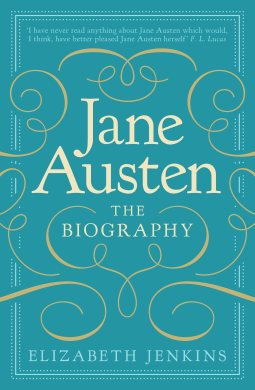
Elizabeth Jenkins Jane Austen: The Biography August Books, July 2025.
Thank you, NetGalley, for providing me with this uncorrected proof for review.
Elizabeth Jenkins is a writer I have admired since reading The Hare and the Tortoise. True to form, there is much to admire in her biography of Jane Austen. However, its meandering pace and byways into allusions that seem to just take Jenkins’ fancy, although on rereading can be attributed to her wide understanding of Austen, her family, society and experiences, make this a challenging read. Part of the challenge can be attributed to the initial, almost undemanding, introduction. Beginning with a description of the eighteenth-century city landscape and comparing it with today’s, with its remaining glimpses of past grandeur makes easy reading. It is also beautiful reading, until the almost jarring introduction of social commentary. At the same time this remains familiar ground to the contemporary reader, after all, it is rare that social issues are absent from modern works. And fairly soon we come to the familiar territory of biography. Steventon, the rectory, and Jane’s father, the Reverand George Austen, his children, and his wife. The sons, Cassandra, and at last, Jane. None of the family information is unusual, none of the description of the Austen’s early lives suggests that this biography will be different.
However, Elizabeth Jenkins’ literary knowledge and own writing of fiction has a strong impact on the biography, presenting at once a delight and a challenge. Perhaps Jenkins recognises the difficulty she poses when in Chapter 7 she warns that she is writing no simple biography. Jenkins’ discussion of Mrs Ann Radcliffe’s Mysteries of Udolpho is instructive. She describes the discursive course the reader must navigate to the novel’s conclusion. This, Jenkins suggests, will create more problems for the modern reader than for Radcliffe’s contemporary audience. This is possibly an acknowledgement that in her own weaving from Walpole’s home at Strawberry Hill to Radcliffe’s Udolpho connection with Northanger Abbey, she is also taking her reader on a discursive course. Her dedication to reflecting upon asides and ideas is prominent throughout the biography, together with more recognisable biographical features. See Books: Reviews for the complete review.
Jane Austen Celebrations
This year marks celebrations for Jane Austen, who was born 250 years ago on December 16th. Celebrating this milestone has taken a variety of forms – a plethora of books and articles have been published; there is a multitude of festivals, literary, costumed, plays and musical performances taking place in the UK.
Jane Austen related books reviewed in past blogs
Some of the books about Jane Austen that I have reviewed in this blog, and on Goodreads, NetGalley and Barnes and Noble include the following:
Susan, A Jane Austen Prequel, Alice McVeigh, Warleigh Hall Press, 2021.Harriet A Jane Austen Variation, Alice McVeigh Warleigh Hall Press, 2021.
A Visitor’s Guide to Jane Austen’s England, Sue Wilkes, Pen & Sword
History, 2019 and 2021 by CPI Group (UK) Ltd, Croydon, CRO 4YY.
An A-Z of Jane Austen, Michael Creaney, Bloomsbury Academic, 2022.
Jane Austen A Literary Celebrity, Peter J. Leithart, Nelson Books, Thomas
Nelson, August 2022.
The Dark Side of Jane Austen’s World, Angela Youngman, Pen & Sword
History, Pen & Sword |Pen & Sword History, August 2024.
Jane Austen: Daddy’s Girl The Life and Influence of The Revd George
Austen, Zöe Wheddon Pen & Sword Pen & Sword History, March 2024.
Jane Austen’s The History of England Writings from Her Youth, Jane
Austen Dover Publications, October 2024.
Jane Austen’s Favourite Brother, Henry, Dr Christopher Herbert, Pen &
Sword| Pen & Sword History, May 2025.
Jane Austen: The Biography, Elizabeth Jenkins, August Books, July 2025.
Brilliant and Bold Presentations on Jane Austen
An episode of the monthly zoom meeting, Brilliant & Bold, presented by Dr Jocelynne Scutt, featured two talks and discussion about Jane Austen. This can be found on Jocelynne Scutt’s Facebook site, 6 July 2025. See also my article “Jane Austen Was She a Troublesome Writer?” (Further Commentary and Articles arising from Books* and continued longer articles as noted in the blog. and Blog posted 9th April 2025) on which I based part of my talk. The second part referred to the books about Jane Austen reviewed in this blog (see list above). An important part of my talk in reference to Lady Susan, Sense and Sensibility and Persuasion were the following quotes:
Children
Lady Susan includes a host of negative feelings and attitudes by Lady Susan toward her daughter. However, these are couched in such circuitous language and meaning that to fully enjoy the mother’s abandonment of any maternal feelings they must be read in context.
Sense and Sensibility
“Conversation however was not wanted, for Sir John was very chatty, and Lady Middleton had taken the wise precaution of bringing with her their eldest child, a fine little boy about six years old, by which means there was one subject always to be recurred to by the ladies in case of extremity, for they had to enquire his name and age, admire his beauty, and ask him questions which his mother answered for him, while he hung about her and held down his head, to the great surprise of her ladyship, who wondered at his being so shy before company, as he could make noise enough at home. On every formal visit a child ought to be of the party, by way of provision for discourse. In the present case it took up ten minutes to determine whether the boy were most like his father or mother, and in what particular he resembled either, for of course every body differed, and every body was astonished at the opinion of the others. An opportunity was soon to be given to the Dashwoods of debating on the rest of the children, as Sir John would not leave.”
“But unfortunately in bestowing these embraces, [upon the child] a pin in her ladyship’s head dress slightly scratching the child’s neck, produced from this pattern of gentleness such violent screams, as could hardly be outdone by any creature professedly noisy. The mother’s consternation was excessive; but it could not surpass the alarm of the Miss Steeles, and every thing was done by all three, in so critical an emergency, which affection could suggest as likely to assuage the agonies of the little sufferer. She was seated in her mother’s lap, covered with kisses, her wound bathed with lavender-water, by one of the Miss Steeles, who was on her knees to attend her, and her mouth stuffed with sugar plums by the other. With such a reward for her tears, the child was too wise to cease crying. She still screamed and sobbed lustily, kicked her two brothers for offering to touch her, and all their united soothings were ineffectual till Lady Middleton luckily remembering that in a scene of similar distress last week, some apricot marmalade had been successfully applied for a bruised temple, the same remedy was eagerly proposed for this unfortunate scratch, and a slight intermission of screams in the young lady on hearing it, gave them reason to hope that it would not be rejected. — She was carried out of the room therefore in her mother’s arms, in quest of this medicine, and as the two boys chose to follow, though earnestly entreated by their mother to stay behind, the four young ladies were left in a quietness which the room had not known for many hours. “Poor little creatures!” said Miss Steele, as soon as they were gone. “It might have been a very sad accident.” “Yet I hardly know how,” cried Marianne, “unless it had been under totally different circumstances. But this is the usual way of”
When the ladies withdrew to the drawing-room after dinner, this poverty [of elegant or spirited] conversation was particularly evident, for the gentlemen HAD supplied the discourse with some variety — the variety of politics, inclosing land, and breaking horses — but then it was all over; and one subject only engaged the ladies till coffee came in, which was the comparative heights of Harry Dashwood, and Lady Middleton’s second son William, who were nearly of the same age. Had both the children been there, the affair might have been determined too”
And from Persuasion
“Another minute brought another addition. The younger boy, a remarkable stout, forward child, of two years old, having got the door opened for him by someone without, made his determined appearcnce among them, and went straight to the sofa to see what was going on, and put in his claim to anything good that might be giving away.
There being nothing to eat, he could only have some play; and as his aunt would not let him tease his sick brother, he began to fasten himself upon her. as she knelt, in such a way that, as busy as she was about Charles, she could not shake him off. She spoke to him, ordered, entreated, and insisted in vain. Once she did contrive to push him away, but the boy had the greater pleasure in getting upon her back again directly. “Walter,” said she, “get down this moment. You are extremely troublesome. I am very angry with you.” “Walter,” cried Charles Hayter, “why do you not do as you are bid? Do not you hear your aunt speak? Come to me, Walter, come to cousin Charles.” But not a bit did Walter stir. In another moment, however, she found herself in the state of being released from him; someone was taking him from her, though he had bent down her head so much, that his little sturdy hands were unfastened from around her neck, and he was resolutely borne away…
Relationships, and Marriage in particular – economics not love or friendship
“Half the sum of attraction, on either side, might have been enough, for he had nothing to do, and she had hardly anybody to love; but the encounter of such lavish recommendations could not fail. They were gradually acquainted, and when acquainted, rapidly and deeply in love. It would be difficult to say which had seen highest”
“A woman of seven and twenty”, said Marianne, after pausing a moment, “can never hope to feel or inspire affection again, and if her home be uncomfortable, or her fortune small, I can suppose that she might bring herself to submit to the offices of a nurse, for the sake of provision and security of a wife. In his marrying such a woman therefore there would be nothing unsuitable. It would be a compact of convenience, and the world would be satisfied. In my eyes it would be no marriage at all, but that would be nothing. To me it would seem only a commercial exchange, in which each wished to be benefited at the expense of the other.”
“…you seem to me to be surrounded with difficulties, and you will have need of all your mutual affection to support you under them. Mr. Ferrars, I believe, is entirely dependent on his mother.” “He has only two thousand pounds of his own; it would be madness to marry upon that…”
“It will be one better match for your sister. Two thousand a year without debt or drawback — except the little love-child, indeed; aye, I had forgot her; but she may be ‘prenticed out at a small cost, and then what does it signify? Delaford is a nice place, I can tell you; exactly what I call a nice old fashioned place, full of comforts and conveniences; quite shut in with great garden walls that are covered with the best fruit-trees in the country; and such a mulberry tree in one corner! Lord! how Charlotte and I did stuff the only time we were there! Then, there is a dove-cote, some delightful stew-ponds, and a very pretty canal; and every thing, in short, that one could wish for; and moreover, it is close to the church…”
“His manners to THEM, though calm, were perfectly kind; to Mrs. Jennings, most attentively civil; and on Colonel Brandon’s coming in soon after himself, he eyed him with a curiosity which seemed to say, that he only wanted to know him to be rich, to be equally civil to HIM.”
“Lord Morton, with thirty thousand pounds. A very desirable connection on both sides, and I have not a doubt of its taking place in time. A thousand a-year is a great deal for a mother to give away, to make over for ever; but Mrs. Ferrars has a noble spirit.”
“I question whether Marianne NOW, will marry a man worth more than five or six hundred a-year, at the utmost, and I am very much deceived if YOU do not do better.”
“…in Miss Morton he would have a woman of higher rank and larger fortune — and enforced the assertion, by observing that Miss Morton was the daughter of a nobleman with thirty thousand pounds, while Miss Dashwood was only the daughter of a private gentleman with no more than THREE; but when she found that, though perfectly admitting the truth of her representation, he was by no means inclined to be guided by it…” (here, Elinor does seem to be chosen for love by Edward Ferrars, against his mother’s wishes and advice).
“The whole of Lucy’s behaviour in the affair, and the prosperity which crowned it, therefore, may be held forth as a most encouraging instance of what an earnest, an unceasing attention to self-interest, however its progress may be apparently obstructed, will do in securing every advantage of fortune, with no other sacrifice than that of time and conscience. When Robert first sought her acquaintance, and privately visited her in Bartlett’s Buildings, it was only with the view imputed to him by his brother. He merely meant to persuade her to give up the engagement; and as there could be nothing to overcome but the affection of both, he naturally expected that one or two interviews would settle the matter.”
“John Dashwood was greatly astonished; but his nature was calm, not open to provocation, and he never wished to offend anybody, especially anybody of good fortune.”
“…I suppose, from your manner of speaking, it must be the same to Miss Morton whether she marry Edward or Robert.” “Certainly, there can be no difference; for Robert will now to all intents and purposes be considered as the eldest son — and as to anything else, they are both very agreeable young men: I do not know that one is superior to the other.” Elinor said no more, and John was also for a short time silent.

Associate Professor, Elizabeth Irwin, gave particular attention to Pride and Prejudice and referred to the voice over, with which the television series made in 1995, begins: “It is a truth universally acknowledged that a single man in possession of a good fortune, must be in want of a wife.” This is the famous opening line which suggests that a wealthy single man is always in need of a wife. That is, that it is in the man’s interest to have a wife. However, in the series Elizabeth Bennet enunciates Austen’s observation. As Elizabeth Irwin noted, this is a blurring of the female authorial voice with the fictional female who marries at the end of the book. However, where Austen’s irony permeates the paragraphs after the quote, the television series misses this aspect of Austen’s work. If the irony was to be ignored, and the phrase supposed to reflect the aspirations of the characters instead, what might have been the response, including recognition of men’s equal (if different) need for marriage if the line had been given to a male character? The equivalent of Elizabeth would be Darcy. However, what of Mr. Bennet? What a come down for this insufferable man this would have been!
I cannot recall whether the line was used in this way in the film made in 2005. However, the following is of interest in thinking about the male/female aspiration to marry.
From Wikipedia, the free encyclopedia
Pride & Prejudice is a 2005 historical romantic drama film directed by Joe Wright, in his feature directorial debut, and based on Jane Austen‘s 1813 novel…
Screenwriter Deborah Moggach initially attempted to make her script as faithful to the novel as possible, writing from Elizabeth’s perspective while preserving much of the original dialogue…Moggach’s first draft was closest to Austen’s book, but later versions excised storylines and characters. Moggach initially wrote all scenes from Elizabeth’s point of view in keeping with the novel; she later set a few scenes from a male perspective, such as when Bingley practices his marriage proposal, to “show Darcy and Bingley being close” and to indicate Darcy was a “human being instead of being stuck up”.
The Conversation UK (republished under Creative Commons)
For Jane Austen and her heroines, walking was more than a pastime – it was a form of resistance
Story by Nada Saadaoui, PhD Candidate in English Literature, University of Cumbria
In Pride and Prejudice (1813), when heroine Elizabeth Bennet arrives at Netherfield Park with “her petticoat six inches deep in mud”, she walks not only through the fields of Hertfordshire, but into one of literature’s most memorable images of women’s independence.
Her decision to walk alone, “above her ankles in dirt”, is met with horror. “What could she mean by it?” sneers Miss Bingley. “It seems to me to show an abominable sort of conceited independence.” And yet, in that walk – unaccompanied, unfashionable, unbothered – Elizabeth reveals more about her spirit and autonomy than any parlour conversation could.
For Austen’s heroines, independence – however “abominable” – often begins on foot. Elizabeth may be the most iconic of Austen’s pedestrians, but she is far from alone. Across Austen’s novels, women are constantly in motion: walking through country lanes, walled gardens, shrubberies, city streets and seaside resorts.
These are not idle excursions. They are socially legible acts, shaped by class, decorum, and gender – yet often quietly resistant to them.
This article is part of a series commemorating the 250th anniversary of Jane Austen’s birth. Despite having published only six books, she is one of the best-known authors in history. These articles explore the legacy and life of this incredible writer.
Fanny Price, the often underestimated heroine of Mansfield Park (1814), is typically seen as timid and passive. Yet beneath her reserved exterior lies a quiet but determined spirit.
“She takes her own independent walk whenever she can”, remarks Mrs Norris disapprovingly. “She certainly has a little spirit of secrecy, and independence, and nonsense about her.” Austen’s choice of “nonsense” here is revealing: Fanny’s desire for solitude and self-direction is not revolutionary, but it is gently subversive. In a world offering women little room for self-assertion, her steps become acts of resistance.
When Jane Fairfax, constrained by class and circumstance in Emma (1815), declines a carriage ride, she asserts: “I would rather walk … quick walking will refresh me.” It’s a seemingly modest decision, but one layered with significance. To walk is to control your own movement, to maintain autonomy and resist the genteel suffocation of being constantly observed or helped.
In Persuasion (1817), Anne Elliot’s story shows walking as a path to renewal. Reserved and long burdened by regret, Anne finds restoration in the coastal air of Lyme Regis. As she walks along the Cobb, Austen notes that “she was looking remarkably well … having the bloom and freshness of youth restored by the fine wind … and by the animation of eye which it had also produced”.
Her emotional reawakening is framed as a physical one. Walking becomes not only therapeutic but transformative – a way back to herself.
Not all of Austen’s walks are reflective or restorative. Some are decidedly social. Lydia and Kitty Bennet’s frequent walks to Meryton in Pride and Prejudice, for example, are driven as much by shopping as by the hope of romantic encounters.
Austen notes the “most convenient distance” of the village, where “their eyes were immediately wandering up in the street in quest of the officers”. These girls were more interested in uniforms than in bonnets.
Yet even this behaviour hints at something subtler. For young, unmarried women, shopping and social errands were among the few socially sanctioned reasons to move independently through public space. These excursions offered moments of visibility, mobility, and the possibility of courtship – however frivolously pursued.
Catherine Morland of Northanger Abbey (1817), a devoted reader of gothic fiction, fuses her walks with imagination. As she strolls along the Avon River with the Tilneys, she muses: “It always puts me in mind of the country that Emily and her father travelled through in The Mysteries of Udolpho.” Walking becomes an act of imaginative projection, where the boundaries between fiction and reality blur in the mind of a heroine learning to navigate both the world and herself.
Jane Austen the walker
Austen’s fiction draws much of its vitality from her own experiences. She was, by her own admission, a “desperate walker”, rarely deterred by weather, terrain or propriety.
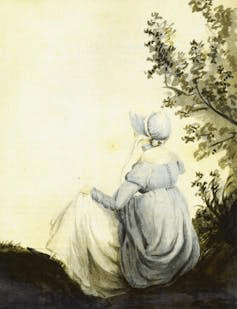
A watercolour of Jane Austen by her sister Cassandra, showing her looking out to sea. It was painted while they were on holiday in Lyme Regis in 1804.Wiki Commons© The Conversation UK
Her letters, written from Bath, Steventon, Chawton and elsewhere, capture the physicality and pleasure of walking in vivid, often playful detail. These glimpses into her daily life reveal not only her attachment to movement but also the quiet autonomy it afforded her.
In 1805, Austen writes from Bath: “Yesterday was a busy day with me, or at least with my feet & my stockings; I was walking almost all day long.” Several years later, in 1813, she reports with unmistakable relief: “I walked to Alton, & dirt excepted, found it delightful … before I set out we were visited by several callers, all of whom my mother was glad to see, & I very glad to escape.”
Perhaps most revealing is an earlier letter from December 1798, in which Austen describes a rare solitary excursion: “I enjoyed the hard black frosts of last week very much, & one day while they lasted walked to Deane by myself. I do not know that I ever did such a thing in my life before.” The comment registers the novelty and boldness of a woman walking alone.
In an age where walking is once again praised for its physical and mental benefits, Austen’s fiction reminds us that these virtues are not new. Her characters have been walking for centuries – through mud, across class boundaries and against expectation.
They walk in pursuit of clarity, connection, escape and self-hood. Their steps – measured or impulsive, solitary or social – mark turning points in their lives. And in a world designed to keep them stationary, their walking remains a radical act.
This article features references to books that have been included for editorial reasons, and may contain links to bookshop.org. If you click on one of the links and go on to buy something from this website, The Conversation UK may earn a commission.
Nada Saadaoui does not work for, consult, own shares in or receive funding from any company or organisation that would benefit from this article, and has disclosed no relevant affiliations beyond their academic appointment.
Relevant quotes from Sense and Sensibility:
“Is there a felicity in the world,” said Marianne, “superior to this? — Margaret, we will walk here at least two hours.”
“One consolation however remained for them, to which the exigence of the moment gave more than its usual propriety; it was that of running with all possible speed down the steep side of the hill which led immediately to their garden gate.”
Beyond the bonnets: Jane Austen’s working women finally get their place in the spotlight
Exhibition looks at housekeepers, maids and governesses who ‘enable the lives of the heroines and heroes’
After Elizabeth Bennet walked 3 miles across fields to visit her sick sister, the heroine of Pride and Prejudice came in for scandalised criticism of her “blowsy” hair and petticoats “six inches deep in mud”.
What of the women who restored Elizabeth’s hair to coiffed curls and washed the filthy petticoats? Jane Austen’s novels include mentions of working women, such as housekeepers, maids and governesses, but now an exhibition puts their stories in the spotlight.
Beyond the Bonnets: Working Women in Jane Austen’s Novels is being shown by the Hampshire Cultural Trust as part of celebrations marking the 250th anniversary of the author’s birth. It features working women in Austen’s home county of Hampshire in the Georgian era, pairing voiced extracts from her novels and letters with dozens of objects illustrating their daily lives.
“Working women were not the centre, the lead characters, in Austen’s novels, but they do play an important role, and sometimes develop the plot,” said Kathleen Palmer, the exhibition’s curator. “They enable the lives of the heroines and heroes. The bustling towns and stately homes wouldn’t function without these women.”
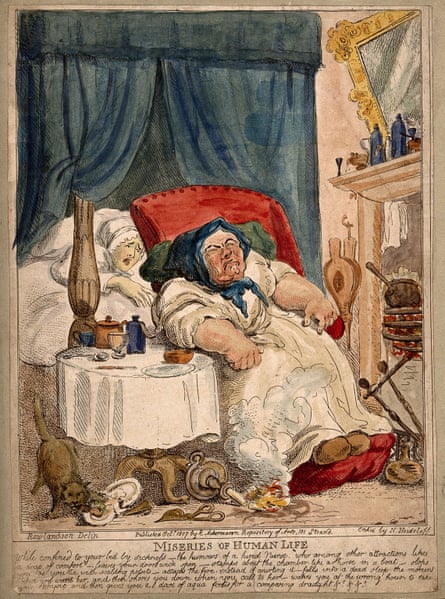
Through the lens of Austen’s life and her lesser-known characters, the exhibition focuses on three key areas of work in the 18th century: domestic service, education and childcare, and trade.
Stories include that of Susannah Sackree, a nursemaid to the 11 children of Austen’s brother Edward, and later the family’s housekeeper. She worked for the family until her death at the age of 89. Unusually, the family commissioned a portrait of her, and described her on her memorial stone as a “faithful servant and friend” and “beloved nurse”.
Another real-life character in the exhibition is Mary Martin, who ran an inn in Basingstoke and organised monthly balls attended by Austen and her sister Cassandra. Martin later ran a draper’s shop, complete with a circulating library. “Then we find Mrs Whitby in (Austen‘s unfinished novel) Sanditon running a circulating library. So Austen was pulling people that she came across into her novels,” said Palmer.

Martin ran the inn after her husband’s death. Another woman forced by bereavement to step into the world of work was Ann Freeman, who took over her late husband’s business as a glazier and built it into a successful enterprise employing several men.
In comparison, the lives of domestic servants were more restricted, both by their workload and by their terms of employment. Maids were usually hired for about £8 a year, with accommodation, meals and sometimes clothing included. They were under contract, which meant leaving their employment without permission could result in a fine or imprisonment in the County Bridewell prison in Winchester where hard labour awaited them.
Domestic tasks such as laundry were onerous, with clothes, bed linen and other household items washed by hand. “It meant hauling water, boiling the cottons and linens, washing them with pungent lye soap, which burnt the skin, rinsing the clothes in clean water, which meant hauling more water from the well or a nearby stream, twisting the cloths to remove as much water as possible, hanging the clothes to dry, and then praying that rain would stay away long enough for the sun to perform its duty as a dryer,” according to the website Jane Austen’s World.
- Beyond the Bonnets: Working Women in Jane Austen’s Novels is at the Arc in Winchester, 26 July until 2 November, and the Willis museum in Basingstoke, 12 November until 22 February.
Why Jane Austen is definitely not just for girls – from The Conversation UK and republished under Creative Commons.
In my former life as a teacher, I once had a job interview in which I was asked how I dealt with the problem of teaching Jane Austen to boys.
Having had experience of this situation, I confidently told my interviewer (a maths teacher) that the “problem” they were assuming didn’t actually exist, and that it was perfectly possible to teach Austen’s novels to mixed-sex classes with successful results. My answer was met by barely veiled scepticism – and suffice to say, I didn’t get the job.
But where did this popular perception come from? Austen’s genius has been recognised from the earliest days of the development of a canon of English literature, and has never really fallen out of fashion. So it might seem odd that the suitability of her work for a co-educational class is the subject of genuine debate.

This article is part of a series commemorating the 250th anniversary of Jane Austen’s birth. Despite having published only six books, she is one of the best-known authors in history. These articles explore the legacy and life of this incredible writer.
The increasingly intertwined associations of Austen’s literature with the many (often excellent) adaptations of her work may not help the matter, with screen retellings often foregrounding the love stories and losing much of the ironic tone that characterises Austen’s narrative style.
The myriad repackaged editions of her novels that adorn bookshelves with pastel-toned floral designs, or images of anonymous portraits of passive young women, also do little to challenge the popular perception of these books as stories for women and girls.
Finally, and perhaps most troublingly, is the still-commonly held notion that stories with a female protagonist do not have wide-ranging appeal and must be consigned to a “niche interest” bracket. Male-led stories, in contrast, have long been considered to hold universal relevance for audiences.
This last point is a bigger issue concerning the publishing and entertainment industries, so I will largely park this one. But I will point out that, as others have argued in relation to Austen’s work, the classroom is an excellent place to start countering the assumptions of the “everyman” male experience, in contrast to the “special interest” attitude to female perspectives.
With regards to the teaching of Austen’s novels, drawing on my experiences both as a scholar and as a teacher, I believe her novels can speak to young readers of different genders and from diverse backgrounds.
Money, power and inequality
Addressing the ways in which Austen’s novels tend to be packaged, I asked my students, typically aged 16-18, to explore the ideas at the heart of the novels by redesigning the book covers to better reflect these themes.
The flowers and passive young women were gone. The redesigned book covers often focused on the idea of wealth, through pictures of differing piles of money, or power, such as the image of imbalanced scales to symbolise the unequal societies inhabited by Austen’s characters.
Because, as much as they are love stories, Austen’s heroines typically achieve their “happy endings” against a backdrop of money worries, power struggles, familial tension and gendered social hierarchies. While her novels are rightly celebrated for highlighting the unequal treatment of the sexes during her lifetime, it is reductive to see this as their sole contribution to social commentary.
Take Austen’s last completed novel, Persuasion. Here, Anne Elliot – over the hill at the ripe old age of 27 – begins the novel by rueing her broken engagement to Captain Wentworth, which she had been persuaded to break off eight years earlier due to his lack of fortune.
While the narrative focus is on Anne, who is left to regret her choice and wonder whether she will ever be able to escape her odious father and siblings, the broken-hearted Wentworth, who reappears in Anne’s life shortly after the start of the novel, is at least as much a victim of the situation as Anne herself.
At its heart, this is a story of a young woman who allowed herself to be persuaded to make a bad choice, and a young man who, through no fault of his own, was deemed not good enough due to his lack of wealth. The experiences of these characters, although they are older than the average school student, are highly relatable and sympathetic to many teenagers, who may well have experienced meddling family members or unfair judgments of their own.
Take also Northanger Abbey, in which fanciful Catherine Morland mixes fact and fiction and imagines the titular abbey to be a site of gothic intrigue, only to discover that the real horror derives from a controlling patriarch and his sexually predatory oldest son.
Here again, the novel cleverly makes the point that social inequalities, and the choices of those motivated by their love of money and power, are the real darkness at the heart of Austen’s society.
In my experience, students of all genders have been able to appreciate and relate to Northanger Abbey’s depictions of the loss of innocence, class inequality, and the experience of being subject to the sometimes obscure decisions of more powerful individuals.
Austen’s works, far from being the simple love stories of popular perception, are also razor-sharp satires of social and gendered inequalities. Full of witty observations and universally relatable experiences, there is a reason for the consistent popularity of her writing 250 years after her birth.
To fail to recognise this in the classroom is to do a disservice to all our students, as well as to Austen herself.
Cindy Lou has the special menu at Trev’s, Dickson
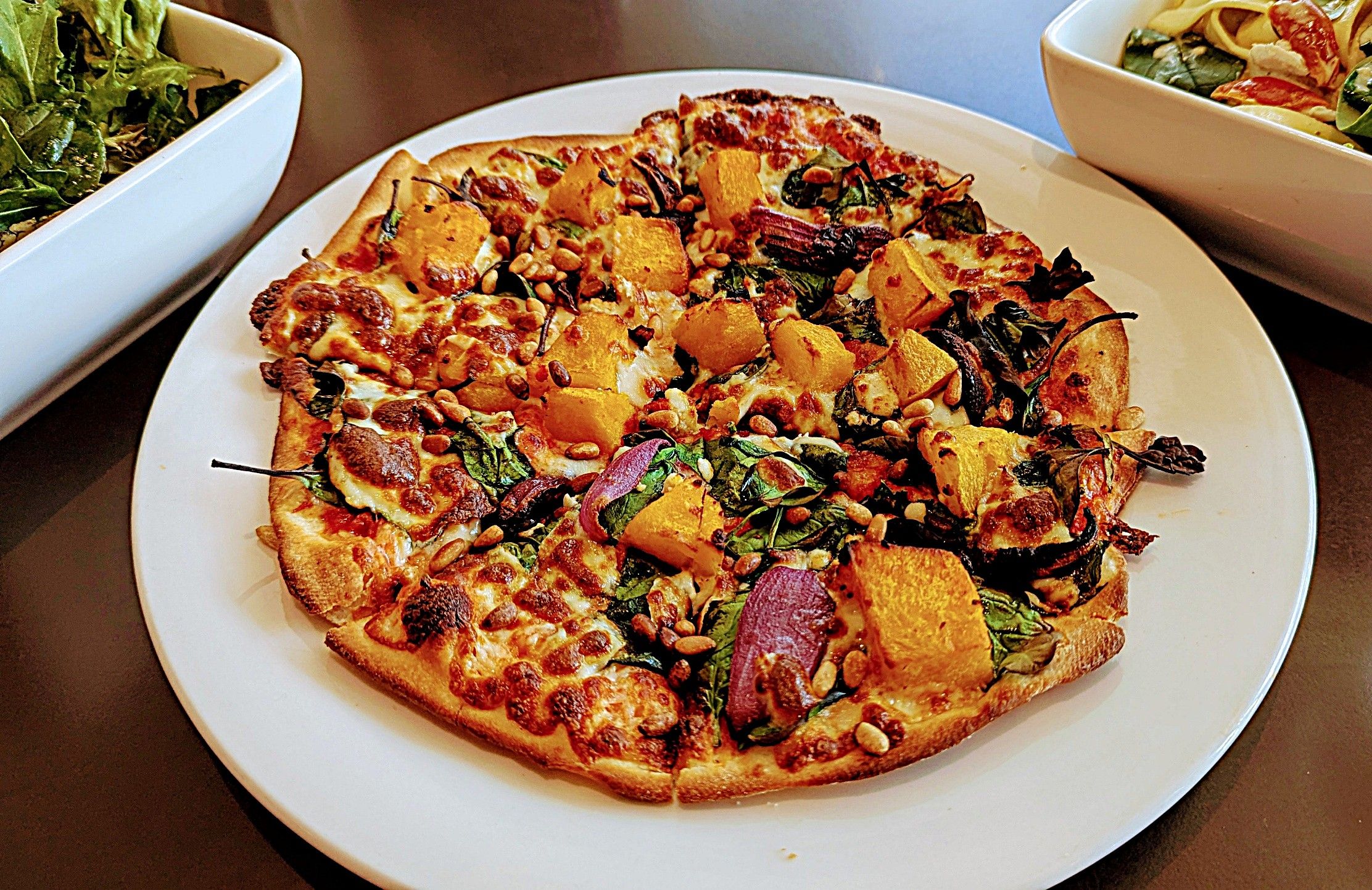
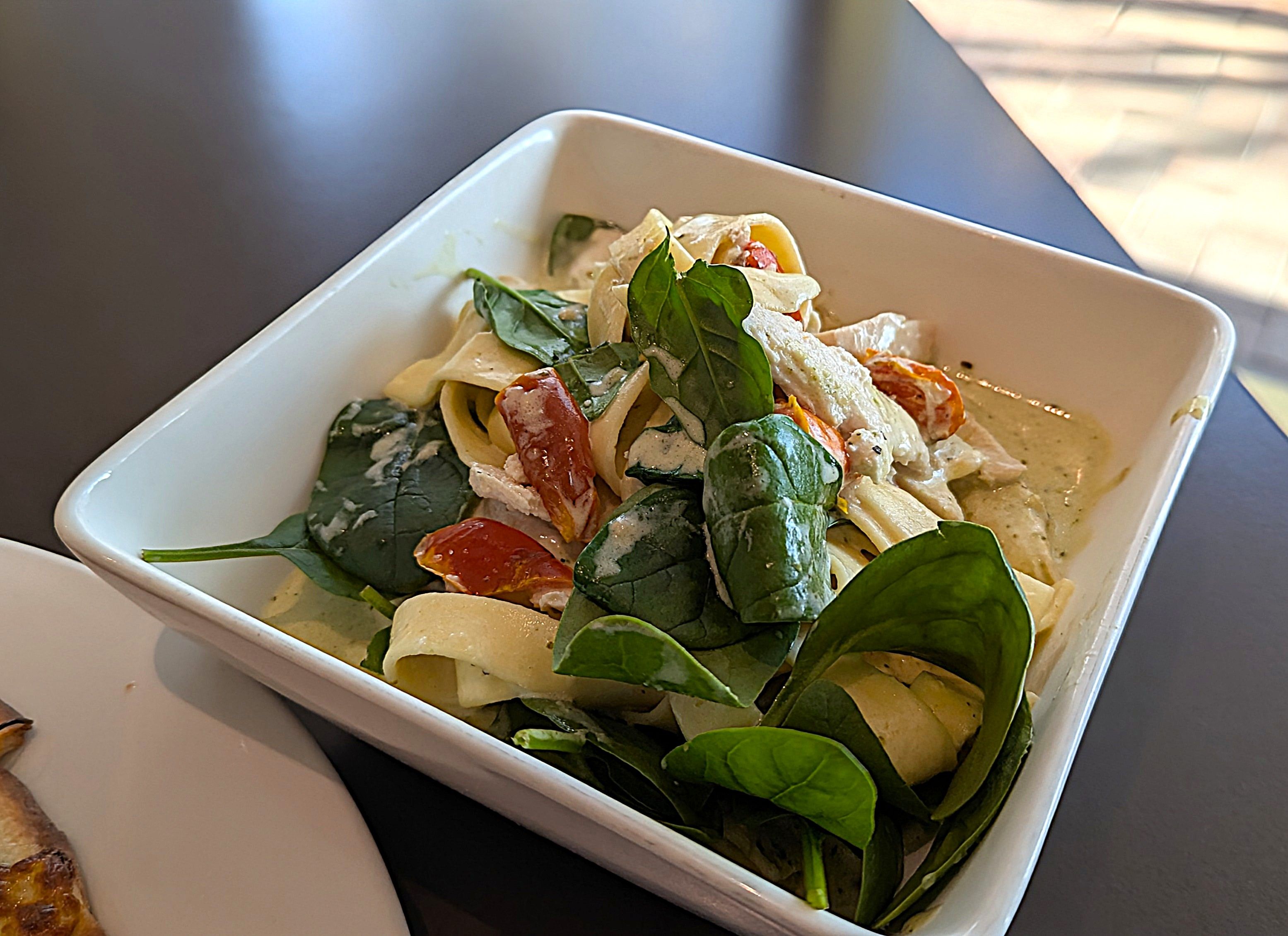
Trev’s is a casual dining place, with a menu with a wide range of choice. The staff are friendly, the atmosphere warm, and this has been a favourite restaurant for breakfast, lunch and dinner. On this occasion, we chose the special menu for two – a choice of pizza, a choice of pasta, a green salad and two entrees – mozzarella sticks and haloumi pops. There was far too much, and we took the pizza home. The outdoor seating is lovely on a warm day. However, with 7 degrees temperature outside we decided upon indoors.






I remember this from History of Art classes many years ago. Not many students would have imagined that they would be able to see it. Now it will be in London at the British Museum next year. I must organise to be there in 2026 even though I have to miss out this year.
From The Conversation UK:
Will you be heading to see the Bayeux tapestry when it visits the British Musuem in London next year? Its first trip to British shores since it was created and sent to France nearly 1,000 years ago is bound to generate much excitement. But it’s not just the countries either side of the Channel that have historically been fascinated by the 11th century embroidery – and the Nazis displayed a particular interest.
Earlier this year, a fragment of the Bayeux tapestry was discovered in German archives. To explain how it ended up there, historian of early medieval art Millie Horton-Insch tells the story of the Nazis’ “Special Operation Bayeux”, an attempt to use the tapestry to demonstrate what their twisted ideology viewed as the supremacy of the so-called Aryan race.
British Politics
New Statesman , 9 July 2025
Keir Starmer has time to turn this around
There is an upside to making so many mistakes – No 10 can learn from them.
By Andrew Marr
A country only changes direction when the behaviour of its people does. Margaret Thatcher believed this. She is the principal protagonist of the new Adam Curtis BBC documentary series Shifty, a collage analysis of modern Britain reviewed in the New Statesman last week.
In it, Curtis shows her at the depths of the monetarism chaos, telling her party they must think in terms of several parliaments: “We have to move this country in a new direction; to change the way we look at things; to create a wholly new attitude of mind… To shake off the self-doubt induced by decades of dependence on the state as master and not as servant.”
I am not advocating Thatcherism which, during that period, gutted and demolished so many great British companies and industries that might have survived to this day, hollowing out towns and communities which have still not recovered. But there are two things for Keir Starmer’s team to think about in what feels like a crisis that, though very different, is as profound. The first is to keep focused on the middle distance during a blur of terrible headlines and weekly chaos. Real change takes time. Starmer feels this himself, exuding an unearthly private calm as he recites the long-term investments being made, and better prospects for British firms in sectors threatened by tariffs.
It’s almost a “calm down, kids” mood. Leaders are often seen as strange quasi-parents. Thatcher was the revered-or-evil mother, chivvying us along or depriving us of milk. Starmer is the slightly distant father, increasingly derided by his rebel children. But even as he’s told he is too unpopular in the polls to survive, he is thinking of at least a decade to change the country.
He believes we are not broken. We are just a bit too poor. With more money and the dignity, over time, of a better car parked outside the house and a better holiday next year, everything will feel different. That’s it. That’s his vision.
But here is where the more important lesson begins. As in the 1980s, our problems are more structural. Not enough of us are working, and those who are are not working productively enough. We have become entitled. Our communities are fissured by mutual dislike, fear and suspicion. This is a social crisis.
And that, in turn, I think explains the otherwise bizarre loathing of Starmer, a decent, serious and empathetic man. He loves meeting people in their workplaces and at home and recently invited hundreds who had helped inform his politics during his tours around the country back to Downing Street to thank them. I can’t think of another prime minister who has done that. Yet he is not addressing, calling out, naming and providing answers to those deeper, corrosive problems. And angry, unsettled people hate him for that.
The collapse of the welfare bill is an excellent example of what has gone wrong. A system designed for those in wheelchairs, or with severe disabilities that might make it hard to wash, or move around, or dress, has been steadily expanded – particularly since the pandemic – to provide cash for people who are not working because they are depressed, stressed or anxious.
A better, more urgent national leadership would have challenged the country, challenged us, about this: is it right? Real reform would have started a year ago with the Prime Minister relentlessly trying to start a national conversation about benefits, challenging campaigners, engaging MPs, and only then bringing forward “back to work” reform plans.
This is not what happened. Disability groups were left in the dark and became increasingly suspicious. MPs were brushed aside. And in the end, the changes did not make logical sense. In many cases the personal independence payments had kept people in work. The belief spread that Starmer, Rachel Reeves and the Work and Pensions Secretary, Liz Kendall, were going after wheelchair users and those in chronic pain – even some Labour MPs thought that.
Bloodied water under the bridge? The most recent argument, about cuts to special educational needs and disabilities (Send), feels very similar. The way things are going, I predict another government retreat (though details on any changes to Send provision are not expected to be released until later this year), not only because, as my colleague Rachel Cunliffe has explained, MPs get accustomed to the habit of rebellion, but also because there is an imbalance in the public argument.
On the one hand, there are highly articulate, media-savvy voices, campaigning groups and a new far-left group forming around Jeremy Corbyn, with already-suspicious voters at their backs; on the other, there are voiceless civil servants and not particularly articulate ministers. Well, you can see how this is likely to go.
There is an equivalent conversation to be had – which isn’t being had – about migration and the changing make-up of the country. The government is conducting an inquiry into anti-Muslim hatred. Its terms of reference include that any definition of Islamophobia “must be compatible with…freedom of speech and expression – which includes the right to criticise, express dislike of, or insult religions”. That ought to comfort those (such as me) who would resolutely oppose a new back-door blasphemy law that singled out criticism of Islam as somehow more heinous than that of, for instance, Christianity, Judaism or Hinduism.
But because neither Starmer nor any other senior government minister wants to make a big explicit argument about the place of Islam in a fundamentally post-Christian country, conspiracy theories swirl and curdle. As ever, it’s about language, finding the right words, catching attention, winning arguments and wanting to change behaviour, even when it’s hard, even when it’s among minority communities.
What we might call “the Tragedy of Rachel’s Tears” has weakened Starmer. It weakens him because it provides an unforgettable image of a flailing administration and because it forces him to guarantee her job throughout this parliament. That, in turn, makes it even harder to break from previous orthodoxy on taxation – which, as the New Statesman argued last issue, is essential.
But this could be a strengthening moment, too. Starmer privately accepts he needs a far better relationship with his parliamentary party. I hope he is beginning a journey that persuades him parliamentary politics is not a disease but a necessity.
Beyond that, I hope he is starting to understand there are fundamental things wrong in the country which will require more radical politics, and far bolder, sharper public language. More on migration and communities; more on crime; more on Europe; more on tax and fairness. Money in our pocket is not the only solution.
To achieve the fresh start that is now so plainly and obviously needed, Starmer needs more instinctively political people around him. Morgan McSweeney is a brilliant and loyal operator, but he can’t do everything. The cabinet needs to step up and start to operate as a political council. There are some exceptional ministerial and back-bench talents that need to be tutored, brought in and listened to harder.
The author and former policy wonk Torsten Bell, for instance, is a future chancellor – if he can be shaped into the political beast he’d need to be. If Starmer is looking for help with a clearer narrative, I’d recommend his battle-hardened Trade Minister, Douglas Alexander. And the Scottish parliamentary party is brimming with underused, potentially helpful talent.
Because – in a final throwback to that early Thatcher speech – there is a lot of time left, plus what is, still, a majority most previous prime ministers would have given all their teeth for.
It is a bit early to be writing them off. The government has done good work. It’s also been far too bad at politics, too inarticulate. It has been raw, and inexperienced. It’s made bad mistakes. But the only truly lethal mistake is not to learn from them.
Docu-drama: This England, an eight-part television series is worth watching, although it is harrowing.
This England (TV series)
This England (originally titled This Sceptred Isle) is a British docudrama television miniseries written by Michael Winterbottom and Kieron Quirke. It depicts the first wave of the COVID-19 pandemic in the United Kingdom based on testimonies of people in the Boris Johnson administration, on the various intergovernmental advisory groups (including the Scientific Advisory Group for Emergencies), and in other affected British institutions such as care homes and hospitals.[1][2] It premiered on Sky Atlantic and Now on 28 September 2022.[3] Kenneth Branagh stars as Boris Johnson, and Ophelia Lovibond as Carrie Symonds.
Background
Boris Johnson wins a landslide victory in the December 2019 general election under the Get Brexit Done slogan, but within a few months faces the COVID-19 pandemic in the United Kingdom, for which he is ultimately hospitalised, and the birth of his first child with his then partner Carrie Symonds.[1]
Production
The miniseries was announced in June 2020 as This Sceptred Isle.[5] It was co-written by Michael Winterbottom and Kieron Quirke.[6] Kenneth Branagh‘s casting as Boris Johnson was announced in January 2021. The series was produced by Fremantle, Passenger and Revolution Films,[5] with Richard Brown of Passenger and Melissa Parmenter of Revolution Films serving as executive producers.[7]
All episodes were originally set to be directed by Winterbottom,[6] but after the miniseries began filming in February 2021,[8] Winterbottom stepped down from directing in March, reportedly due to health issues. He was replaced by Julian Jarrold.[9] Tim Shipman, political editor of The Sunday Times, acted as a consultant. In March 2021, Ophelia Lovibond and Simon Paisley Day joined the cast as Carrie Symonds and Dominic Cummings.[10]
In 2022, it was announced that Sky had changed the title from This Sceptred Isle to This England. Both phrases are taken from the same passage in Shakespeare’s Richard II.[11] The miniseries was set to premiere on 21 September 2022;[12] however on 9 September 2022 the premiere was pushed back to 28 September 2022, in respect of the UK period of mourning for the late Queen Elizabeth II.[13]
Reception
The series received mixed reviews,[14] with some British critics feeling that it was too soon for such a drama.[15][16][17] The Independent said: “here comes the show that precisely nobody was asking for”.[18] The New York Times said it “debuted with solid ratings” and said, “It adds up to a heartbreaking depiction of the pressure on health workers, and the fear, pain and often lonely deaths of those hooked up to ventilators”.[19] The Times praised the series and called it “An impressive enterprise but not an easy watch”.[20] The Irish Times said “If you can stomach the material, this show is hugely watchable”.[21]
Branagh was praised for his performance,[17] with The Times calling it mesmerising.[22] The Guardian and New Statesman felt the series was overly sympathethic to Johnson, as well as sanitised and detached from the front line experience.[23][24][25] The NME praised the series, but said that the format “takes some getting used to” as it oscillates between harrowing scenes in hospitals to events that resemble the 2005 BBC political satire The Thick of It.[26]
References
- “Kenneth Branagh transforms into Boris Johnson in uncanny first-look photo for new coronavirus drama”. Sky News. 25 February 2021. Archived from the original on 25 February 2021. Retrieved 25 February 2021.
- “Boris Johnson and Covid dramatised in This England: ‘People might say we went too easy on him'”. Financial Times. 20 September 2022.
- “Sky Shifting ‘This England’ Launch Date By One Week To Respect UK Period Of Mourning”. Deadline. 9 September 2022. Retrieved 23 September 2022.
- Glancy, Josh. “Kenneth Branagh on playing Boris: ‘He has a certain loneliness'”.
- Ravindran, Manori (25 February 2021). “See First Photo of Kenneth Branagh as Boris Johnson”. Variety. Archived from the original on 25 February 2021. Retrieved 25 February 2021.
- “Kenneth Branagh to play Boris Johnson in TV drama about Covid crisis”. The Guardian. 23 January 2021. Archived from the original on 25 February 2021. Retrieved 25 February 2021.
- Kanter, Jake (16 November 2020). “Michael Winterbottom’s Revolution Films Inks First-Look Deal With Fremantle”. Deadline. Archived from the original on 1 February 2021. Retrieved 25 February 2021.
- “Sky Drops First Look at Kenneth Branagh as British PM Boris Johnson in ‘This Sceptred Isle'”. Deadline. 25 February 2021. Archived from the original on 9 July 2021. Retrieved 30 June 2021.
- “Michael Winterbottom Takes Break from Directing COVID TV Drama ‘This Sceptred Isle’ Due to Ill Health”. The Hollywood Reporter. 24 March 2021. Archived from the original on 9 July 2021. Retrieved 30 June 2021.
- Kanter, Jake (3 March 2021). “Ophelia Lovibond, Simon Paisley Day Join Sky’s UK Covid Crisis Series ‘This Sceptred Isle’ As Carrie Symonds & Dominic Cummings”. Deadline. Archived from the original on 3 March 2021. Retrieved 4 March 2021.
- “Michael Winterbottom says Boris Johnson series ‘This England’ not revised after partygate revelations”.
- “Boris Johnson Drama ‘This England’ Starring Kenneth Branagh Sells to 88 Territories”. 18 August 2022. Retrieved 23 September 2022.
- “Sky Shifting ‘This England’ Launch Date by One Week to Respect UK Period of Mourning”. 9 September 2022. Retrieved 23 September 2022.
- “This England: Critics mixed over Kenneth Branagh’s portrayal of Boris Johnson”. BBC News. 30 September 2022. Retrieved 4 October 2022.
- Einav, Dan (28 September 2022). “This England, Sky Atlantic review — Boris Johnson pandemic drama is both premature and dated ★★★☆☆”. Financial Times. Retrieved 4 October 2022.
- Ellen, Barbara (2 October 2022). “The week in TV: This England; Make Me Prime Minister; Inside Man; Industry”. The Guardian. Retrieved 4 October 2022.
- Armstrong, Neil (28 September 2022). “This England review: Boris Johnson drama is ‘too soon’ ★★★☆☆”. BBC Culture. Retrieved 4 October 2022.
- Hilton, Nick (29 September 2022). “This England is a Covid drama that should be avoided like the plague ★★☆☆☆”. Independent.co.uk. Retrieved 4 October 2022.
- Lander, Mark (30 September 2022). “Britain Wonders, Is It Too Soon to Dramatize the Pandemic?”. The New York Times. Retrieved 4 October 2022.
- Fay, Liam (2 October 2022). “This England review — Behind the scenes as Boris unravels ★★★★☆”. The Times. Retrieved 4 October 2022.
- Power, Ed (28 September 2022). “This England review: If you can stomach the material, this show is hugely watchable. ★★★★☆”. The Irish Times. Retrieved 4 October 2022.
- Mideley, Carol (27 September 2022). “This England review — Kenneth Branagh’s portrayal of Boris Johnson is mesmerising ★★★★☆”. Retrieved 4 October 2022.
- Cook, Rachel (28 September 2022). “Michael Winterbottom’s This England is odd and oddly repellent”. Retrieved 4 October 2022.
- Mangan, Lucy (28 September 2022). “This England review – so sympathetic to Boris Johnson it is absolutely bananas. ★★☆☆☆”. The Guardian. Retrieved 4 October 2022.
- Dacombe, Rod (29 September 2022). “I will never forget the brutal realities of the pandemic – This England brushes them aside”. The Guardian. Retrieved 8 February 2023.
- Mottram, James (28 September 2022). “‘This England’ review: Kenneth Branagh and the big, blond buffoon. ★★★★☆”. NME. Retrieved 4 October 2022.
External links
- This England at IMDb
- This England at Rotten Tomatoes
- This England Sky official trailer
An interesting read about British politics is The Prime Ministers We Never Had: Success and Failure from Butler to Corbyn, Atlantic Books, 2021. Steve Richards considers the circumstances (personal and political), personalities, experience and aspirations of women and men, Conservative and Labour, who might, but did not, become a British Prime Minister. Beginning with Rab Butler, he considers Roy Jenkins, Barbara Castle, Denis Healey, Neil Kinnock, Michael Heseltine, Michael Portillo, Ken Clarke, David and Ed Miliband, and ends with Jeremy Corbyn. At the same time as providing detailed analysis of those who failed to become PM, there is plenty of information about some of those who did, and a general political history of the periods in which these almost stars failed.
I would give it only a 3* rating if reviewing it. However, it is an easy way to consume some British political history.
Corbyn’s new party – is it happening and could it damage Labour?
5 July 2025 Sam Francis Political reporter; Iain Watson Political correspondent
High profile left winger Zarah Sultana has quit Labour and vowed to launch a new political party with Jeremy Corbyn.
That, however, seems to have come as news to him.
In a social media post, the former Labour leader congratulated Sultana on her “principled decision” to leave and said he was “delighted that she will help us build a real alternative”.
But he said “the democratic foundations of a new kind of political party” were still taking shape and discussions were “ongoing”.
Sultana appears to have jumped the gun, taking not just Corbyn but others involved in the project by surprise.
But that does not mean it is not happening.
There is no name yet – Arise and The Collective have been bandied about. Corbyn is thought to like the phrase “Real Change”, but not necessarily as a party name.
No timetable for a launch has been agreed, although there has been talk of fielding candidates at next May’s local elections.
But all of those involved in the project believe there is a huge gap in the market to the left of Sir Keir Starmer’s Labour Party, with millions of potential votes up for grabs.
Are they right?
And what would the arrival of a new socialist party mean for the Greens who have scooped up many left-wing voters in recent times – not to mention the Labour Party itself?
It is very difficult to assess support for a party that does not yet exist, has no leader and no policies.
Pollsters More In Common recently tested the sort of support a party to the left of Labour would have – specifically one led by Jeremy Corbyn.
Their research suggested it could pick up 10% of the vote – reducing Labour’s standing by three points but far more dramatically eating in to support for the Greens, which would fall from 9% to 5% in the polls.
Notably, a Corbyn-led party could become the country’s most popular party among 18- to 24-year-olds with 32% of the vote.
Former Corbyn aide Andrew Murray said Sir Keir Starmer had “created the space” for a party to Labour’s left by ruthlessly expelling left wingers from the party and dropping his leadership campaign promises.
Speaking to GB News’s Choppers Podcast, Murray said Labour’s 2017 vote – 3.2 million more than Sir Keir’s in 2024 – showed the scale of potential support for a new left-wing party.
Thousands of votes had leaked away from the Tories to Reform UK at last year’s election, he added, and “there are similarly huge numbers of people who regard themselves as progressives and are looking for something different.”
American Politics
From Raw Story
‘Who’s going to milk the cows?’ Dairy farmers hit by Trump’s deportations
Jennifer Bowers Bahney May 23, 2025 5:02PM ET
Dairy farmers who voted for President Donald Trump are worried there will be no one around to milk the cows now that the administration is cracking down on “otherwise law-abiding immigrants in the country illegally,” The Boston Globe reported.
Farmers in Vermont told the Globe they voted for Trump because they liked his tough talk on quelling immigration and closing the border. Things are different now that ICE is coming for their workers.
“All the dairy farmers who voted for Trump were under the impression they weren’t going to come on farms and take our guys,” one farmer said. “It’s happening more than we’d like. It’s scaring the farming community and we’re like, ‘This wasn’t supposed to happen.’”
Oh dear. They thought it was all going to happen to someone else. And, despite this evidence to the contrary, according to the perceptive comments below, probably will continue to do so.
Jess Piper Jul 14 Jess Piper from The View from Rural Missouri <jesspiper@substack.com>
The Epstein Files Fallout Will Not Touch Him
And I am very sorry to say that…
When he said he could shoot someone on 5th Avenue, and not lose any voters, he was telling the truth. He’s leading a cult and doing what every cult leader does: whatever he wants, including telling his supporters for years that he would release the Epstein files and the dirt on high-level pedophiles, only to reverse it and tell them to stop talking about the Epstein files.
Here’s the deal: they will stop talking about it. Give it a month.
I have seen several folks on the left post about how angry Trump supporters are about the non-release of the Epstein files. How MAGA will defect because they were lied to.
The right has been frothing at the mouth about a file or list of names of folks who were caught red-handed with Jeffrey Epstein. On his plane or on his island or at his parties or known to frequently be in the company of Jeffrey Epstein.
There is anger on the right about the Epstein mess, but it’s not trickling down to the everyday Trump supporter.
The people who are mad and posting rants and burning their Trump hats and claiming they are done with MAGA are influencers. They are likely angry, but the reason they have such outbursts is because they are paid for views. It’s outrage, but it’s also a paycheck. Don’t think for a minute that the influencer is the regular MAGA voter.
I know because I talk to MAGA voters every day. I am related to them. They don’t listen to influencers if the message doesn’t align with what Trump says.
You know how much Trump likes to post his random thoughts several times a day? That isn’t accidental. He needs to speak directly to his folks to keep them in line. They need to hear from their strongman leader to stay on course. Trump can control their thoughts and emotions when he speaks directly to them. He can pressure them to conform to his lies. He can remind them that there is no questioning him.
No criticism. No critical thinking.
I recently asked a Trump supporter what he thought of the non-release of the Epstein files that Trump promised. He said it was a cover-up. It’s not Trump’s fault, but it is likely Pam Bondi’s fault.
Blame a woman. As old as time.
It’s the deep state. It’s Biden. It’s the Clintons. It’s Soros. It’s the ever-present evil Democratic child-abusing and child-eating cabal.
If your eyes rolled into the back of your head reading those lines, think how hard it was to listen to them and write them verbatim. Makes my head hurt and my fingers numb.
So, what’s going on here? Why would Trump supporters talk incessantly about the Epstein files and his jailhouse suicide and the wealthy men who abused little children and then just shake their heads at the news that the files were no longer files — in fact, there were no files?
They are indoctrinated.
Here is a question I am asked by people who haven’t had direct contact with a Trump voter: Why won’t the Epstein mess change their minds? How can we flip them? What message can we bring to a Trump voter to change their thinking?
I’m going to say this as gently as I can: You can’t. You can’t change a three-time Trump voter.
Think about this: Why can’t you just knock on your Catholic neighbor’s door and convert them to Mormonism? Why can’t I talk my Baptist mom into being an atheist? Because religion is often tied up with someone’s identity.
And so is Trumpism.
While a practicing Baptist, I had a Jehovah’s Witness knock on my door. I opened my door and listening politely and then told her thank you for stopping by and never thought about what she said at my door or the doctrine or the literature she left with me. I was not interested, and I already had my faith and a community behind my faith.
At the time, I knew I was right and she was wrong.
This essay is not to say that religions are cults or mock any faith or make any implication in that manner. Not in the least. I am not trying to offend, nor would I ever make that assumption about a religious faith. I have the sweetest and kindest friends who are faithful and devoted and selfless warriors.
They practice their religion by feeding the poor and standing in front of ICE and marching for justice.
Trumpism is not a religion, but it has become such an identity for Trump voters that it has evolved (devolved) into their de facto religion. They have swapped the basic tenets of their Christian Bible with the Republican agenda and Trump.
They believe in deporting immigrants while their religious text states, “When a foreigner resides among you in your land, do not mistreat them. The foreigner residing among you must be treated as your native-born. Love them as yourself,”—Leviticus 19:33–34
They look down on the poor and defund their safety nets while their Bible says, “Whoever oppresses the poor shows contempt for their Maker, but whoever is kind to the needy honors God.” — Proverbs 14:31
They praise wealth and celebrate the 1% while Jesus said, “Sell your possessions and give to the poor. Provide purses for yourselves that will not wear out, a treasure in heaven that will not be exhausted, where no thief comes near and no moth destroys. For where your treasure is, there your heart will be also.” — Luke 12:32-34
They worship and idolize Trump as their savior while their text warns, “Those who pay regard to vain idols forsake their hope of steadfast love.” —Jonah 2:8

Illustration by Marco Ventura for Rolling Stone.
That is why the non-release of the Epstein lists or tapes or files will not sway a true Trump follower. They worship him, and they already know the worst about him.
They know he mocks those with disabilities. They know he grabs women by the p*ssy. They know he said he’d date his daughter. They know he walked in on naked young women backstage during pageants. They know he cheated on all of his wives. They know he doesn’t pay his bills and stiffs those who work for him. They know he lies on a daily basis.
They know he has 34 felonies and a sexual abuse conviction.
They already know all of the worst, and even if the Epstein files were released, and his name were at the top, there would be a reason. Or they would make one up.
The bad news is that even if a MAGA did go off the rails and read a few books and articles and find that they couldn’t support Trump, there is no reason to think they would vote for a Democrat. MAGA supporters have been taught for decades that there is nothing worse than a Democrat — even an atheist is preferable to a Democrat, and that’s saying a lot.
The good news is that MAGA people make up 52% of the Republican Party. Just over half. The other 48% of Republicans and all of the Independents and all of the Democrats combined well outnumber them.
We are the majority.
Breaking someone away from a cult is one of the most difficult things you can imagine. My hope lies in reaching the apathetic.
When knocking doors, for every Trump door I avoid, I knock two more.
I have knocked doors that weren’t on my list to engage with people who weren’t registered to vote. Those who have never participated in democracy. Those who aren’t paying attention or feel helpless and therefore disengage.
These are the folks we can reach.
We have to stop handwringing over people who are lost. The Trumpers aren’t going to vote for Democrats because a list of pedophiles wasn’t released to them.
Focus on the apathetic. Focus on enlarging our base.
Forget the thrice-voting Trump folks.
~Jess

 Robin's Room