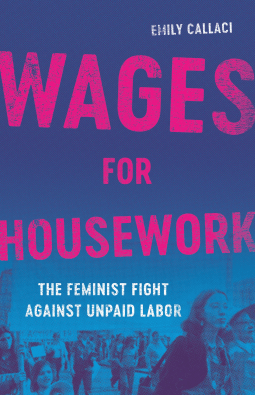
Emily Callaci Wages for Housework The Feminist Fight Against Unpaid Labor Basic Books | Seal Press, March 2025.
Thankyou, NetGalley, for providing me with this uncorrected proof for review.
Emily Callaci has brought together five activists for whom wages for housework was a part of their feminist work for improving women’s lives. It is important to recognise that this is what the movement sought to do, and to come to the writings, and Callaci’s introduction and commentary, with this understanding. It is also vital to acknowledge that wages for housework as an effort to address the unequal burden placed on women who might work outside the home, and then work unpaid inside the home, was complex. The women in this collection have addressed the complexities, making an important contribution to the history of the women’s movement, as well as making salient points in a debate that remains the subject of research today – who does most of the housework?
The collection is noteworthy for its inclusion of working class and black women, together with discussion of the middle-class nature of many of the 1970s feminist conferences and gatherings. Of particular note is Selma James’ work, including reference to the documentary, Women Talking, and her appearance at Ruskin College for the National Women’s Liberation Movement. Mariarosa Dalla Costa’s story begins sadly. Hoping to hear her voice on a tape, access won with great difficulty, Callaci was subjected to a male commentator’s reflections, and a small contribution by Dalla costa.
Fortunately, this brief appearance belies the material Callaci was able to garner though further investigation, including discussion with Dalla Costa and a marvellously detailed description of her stage appearance in a working-class area in Venice. See Books: Reviews for the complete review.
Zoe Fairbairns – Benefits
1984 came and went
This lecture, first given at University of Alcala, Spain, in May 2000, was published in: The Road from George Orwell, His Achievement and Legacy edited by Alberto Lazaro (Peter Lang, 2001) https://zoefairbairns.co.uk/1984-came-and-went/
Fairbairns raises some pertinent issues regarding wages for housework. As well as referring to the diverse opinions within the women’s movement she clarifies who was to be paid -women at home looking after children – and who was to make the payment – the government. The payment was aimed at providing women caring for children and doing the housework financial independence from their husbands.
Fairbairns says that some feminists supported women at home having the same access to financial independence as those in the paid workforce. However, others disagreed, suggesting that this payment would confirm wone in their position as those who should care for the children and housework, making it impossible for them to easily find other alternatives to this role.
Zoe Fairbairns saw the merit in both positions, saying: ‘Being on both sides is not a very comfortable position to be in ideologically, but it is the perfect posture from which to write a novel.’
The article discusses the government role in providing benefits at the time of writing the novel and the impact that had on both her novel and the way in which women and men were considered by the government – the old ‘breadwinner’ debate.
It is such a pity that I cannot provide the article as it is under copyright to the publishers of The Road from George Orwell, His Achievement and Legacy. However, the link will get you there, and to further information about Zoe Fairbairns’ work – a valuable link indeed. The novel Fairbairns wrote, and which is not only an excellent read, but pertinent to the book I have reviewed this week, is Fairbairns, Zoe Benefits 1979. London: Virago Press. 1998 Nottingham, Five Leaves.
Other novels by Zoe Fairbairns are: Closing London: Methuen, 1987; Here Today London: Methuen, 1984; Other Names London: Michael Joseph, 1998; and Stand We at Last London: Virago Press, 1983.
Another review of Wages for Housework by Emily Callaci appears in The Evening Standard, and is republished below.
Wages for Housework by Emily Callaci, Review: should women get paid for domestic chores?
Story by Harriet Addison • 1w • 3 min read
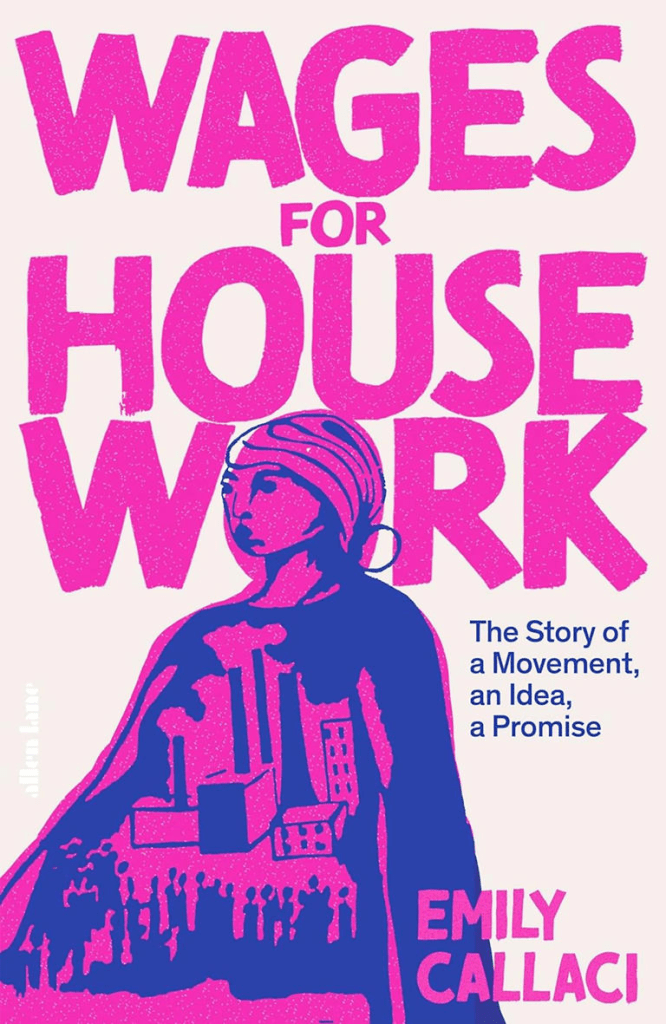
Housework is unbelievably boring. Time can always be better spent reading a book, staring out of the window, lying on the floor… Literally anything. But, does it count as work? Should it be paid for? In the 1970s, a group of women became fed up with a life of enforced domesticity, and decided that at the very least, if they must do it, they should be paid for it. “We want wages for every dirty toilet, every indecent assault, every painful childbirth, every cup of coffee and every smile”. A new book by historian Emily Callaci called Wages for Housework, tells the story of the group of feminists who created and drove this eponymous movement.
The women who started the Wages for Housework (WFH 1.0) campaign — who were small in number; never more than a few dozen members — had serious influence, even though many fellow feminists at the time dismissed them as cranks. This group believed that running the home, without financial gain, was exploitation of women. That there were two men who benefited from every woman stuck working for free in the home: their husband, the worker — and his employer. “Housework is the most essential part of the capitalist system”, Callaci explains. “When women are financially dependent on male breadwinners, the bosses have leverage against those men.” The campaign was of course not quite as simple as just being paid for housework.
I was rapidly persuaded that ‘Wages for housework’ was really just a punchy slogan for the real goal
I started off scoffing that of course housework shouldn’t be done for financial gain; just think about what would happen if we invited KPIs and performance-based bonuses into our houses. No wonder the second-wave feminists of the period didn’t support it – it would surely keep women stuck in the home for longer, at a time when they were trying to break out of it. But I was rapidly persuaded otherwise, that ‘Wages for housework’ was really just a punchy slogan for the real goal: to bring about a reassessment not just of enforced domesticity but of global capitalism. Or was it? Sadly, the messily constructed arguments make this book a real struggle to read.
Possibly it’s a book that works better when you dip in and out, rather than try and read it as a whole
Some chapters are like wading through mud, a list of facts to digest. By the end of the first, about one of the WFH founders, the clearly brilliant and fierce feminist Selma James, I was distracted by a dustball in the corner of the room. By the end of the second, about her fellow campaigner, the influential activist Mariarosa Dalla Costa, I couldn’t stop staring at a mark on the wall. Then a coffee machine that needed a clean. The irony!
This is no reflection on the message of the movement itself, or the people who drove it, or the incredible reach it had. This book, and the women whose story it tells, is about much more than the campaign itself. These women also fought against racism, and classism, and the entire construct of the capitalist society. James, a black American women, understood that the demands of the UK Women’s Liberation Movement in the 70s focussed too narrowly on middle-class white women. She knew that it was not the job itself which was liberating, it was the money.
Possibly it’s a book that works better when you dip in and out, rather than try and read it as a whole. It bounces around like a rabbit on hot coals. The structure, and the arguments, are meandering, the narrative incoherent. I didn’t take to the writing. It’s a shame that it’s so hard to follow, when the points are fundamentally interesting. It would have benefited from being half as long.
I’m glad it’s been written, I learnt an awful lot, and I’m sure serious fans of feminist theory will see it to the end. It’s a worthy movement which deserves its place in history, and their reach stretched (and stretches) far beyond its slogan. I’m just not sure that this book does.
Wages for Housework, Emily Callaci, Penguin, £25

Coreen Derifield We Were Still Ladies Gender and Industrial Unionism in the Midwest after World War II University of Iowa Press, July 2025.
Thank you, NetGalley, for providing me with this uncorrected proof for review.
The combination of a wealth of industrial information with a focus on women’s work, comments from women about their work and their relationships at work, and the integrity of the writing – warm but never missing a precise description or analysis of the events – makes this a work to read with enjoyment as well as to absorb new information.
Chapter 1, The Industrial Development of Iowa, provides a detailed background to the work, social environment, and industrial opportunities that women were eventually to join. Eventually, because as well as their own soil searching, they contended with expectations of wives and mothers. This is fully taken up in Out of the Home and into the Workplace and The Crucible of the Workplace. Union history with its emphasis on male members and their rights as workers and the ‘breadwinners’ (a familiar history this, of course) is laid bare in its sexism, but also its concern about the way in which society operated, with its gender roles clearly outlined. The latter, of course, so much more easily emulated if economic reality did not force some women into paid work. Negotiating Gender Roles in the Union, An Education in Workplace Rights and Encounters with Feminism are excellent chapters, concentrating on analysis as well as evoking the situations faced day to day by women in the workplace. See Books: Reviews for the complete review.
National Gallery of Australia
On this occasion we visited the general exhibitions.

The Kulata Tjuta Project was one of these. The cultural maintenance project was established in 2010 and shares the skills of carving and making the punu kulata (wooden spear) across generations. A small group of Tjilpi (senior Anangu men) from Tjala Arts in Amata, South Australia, sought to ensure that traditional knowledge and cultural connections were nourished and preserved. The group has expanded to 100 from across the Anangu Pitjantjara Yankunytjatjara Lands and is now a monumental collaborative project which joins the voices of senior and younger artists to speak of cultural resilience, continuity, and identity. *
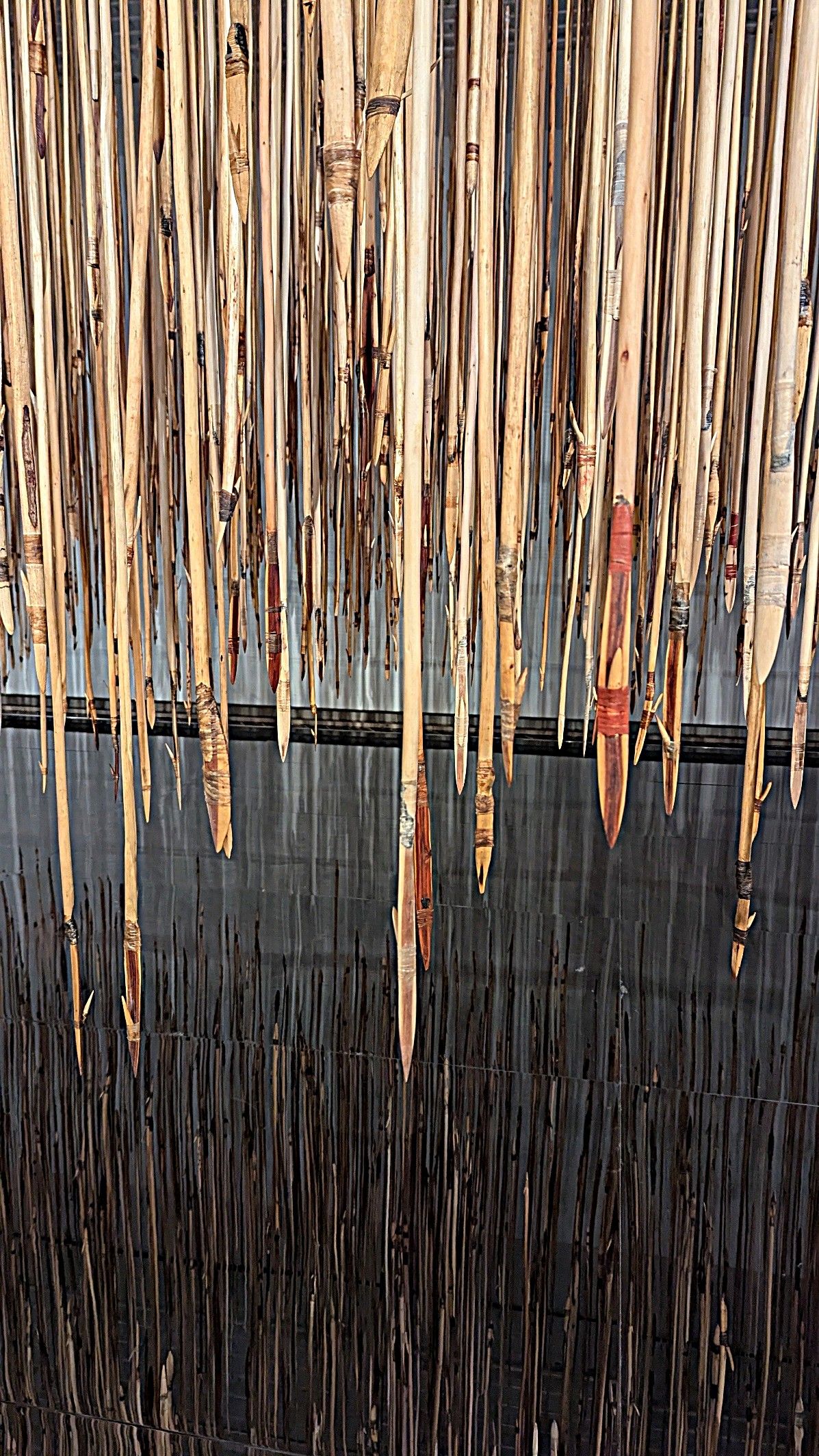
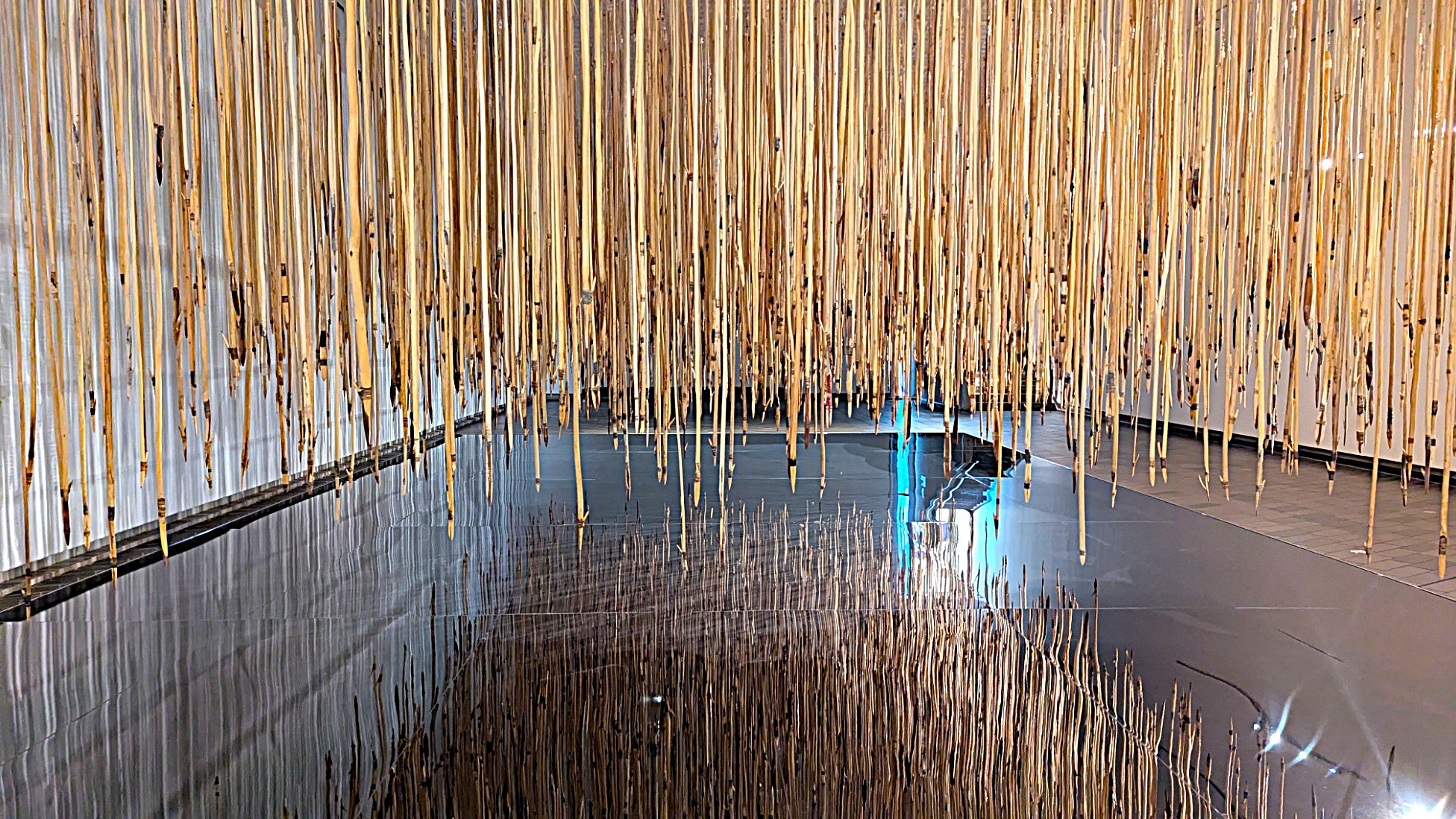

*Edited, signage for artwork.
A walk around the gallery –

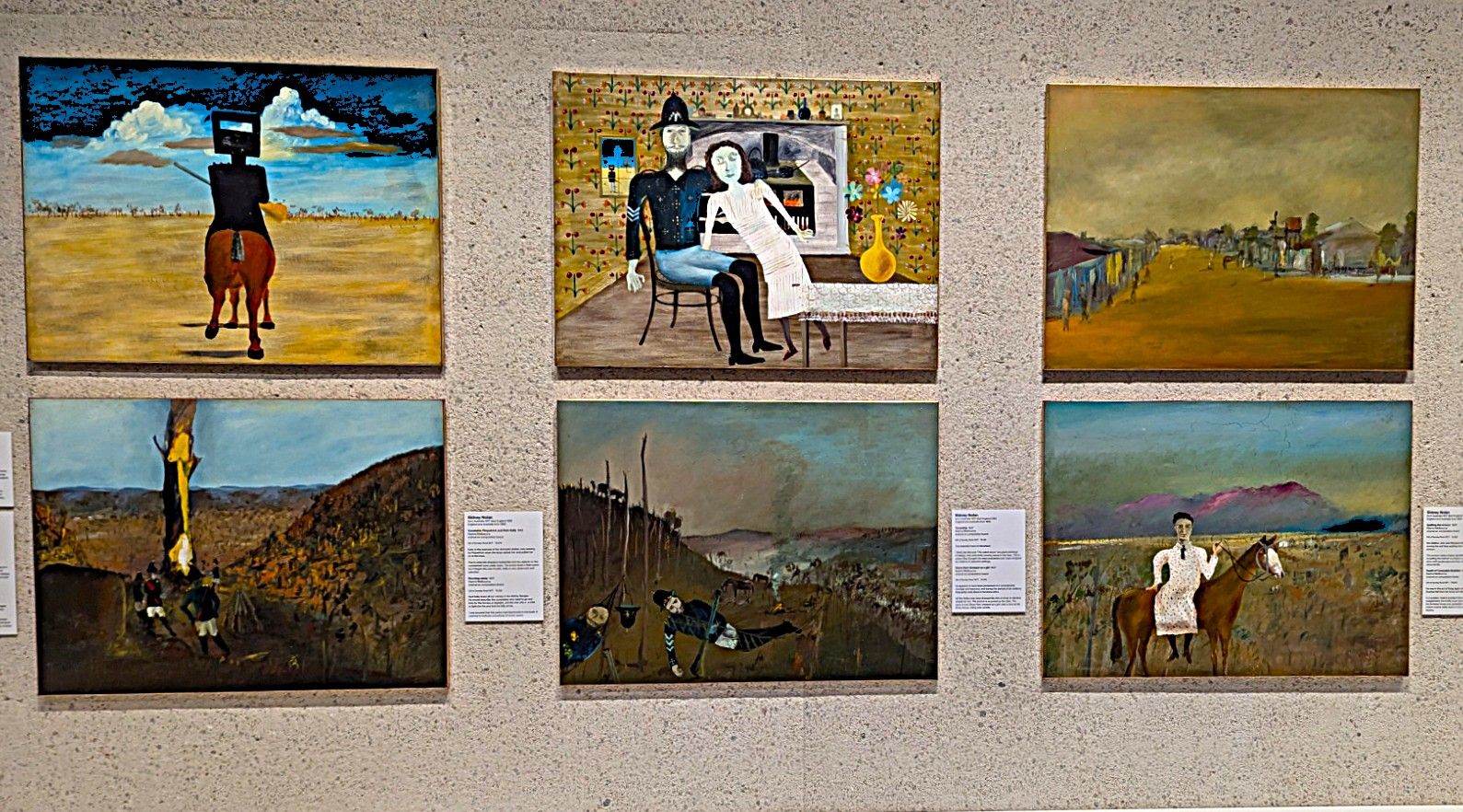

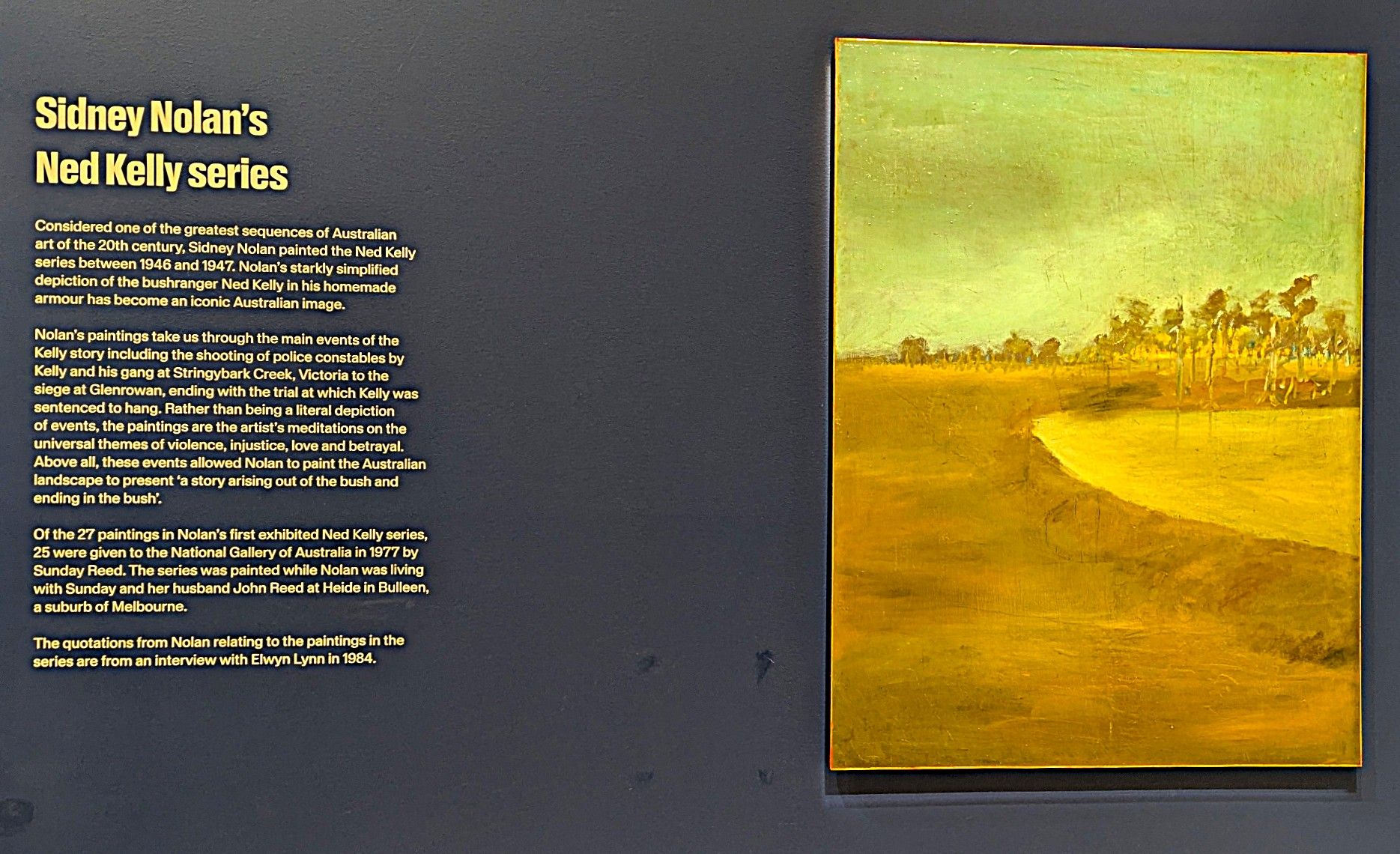


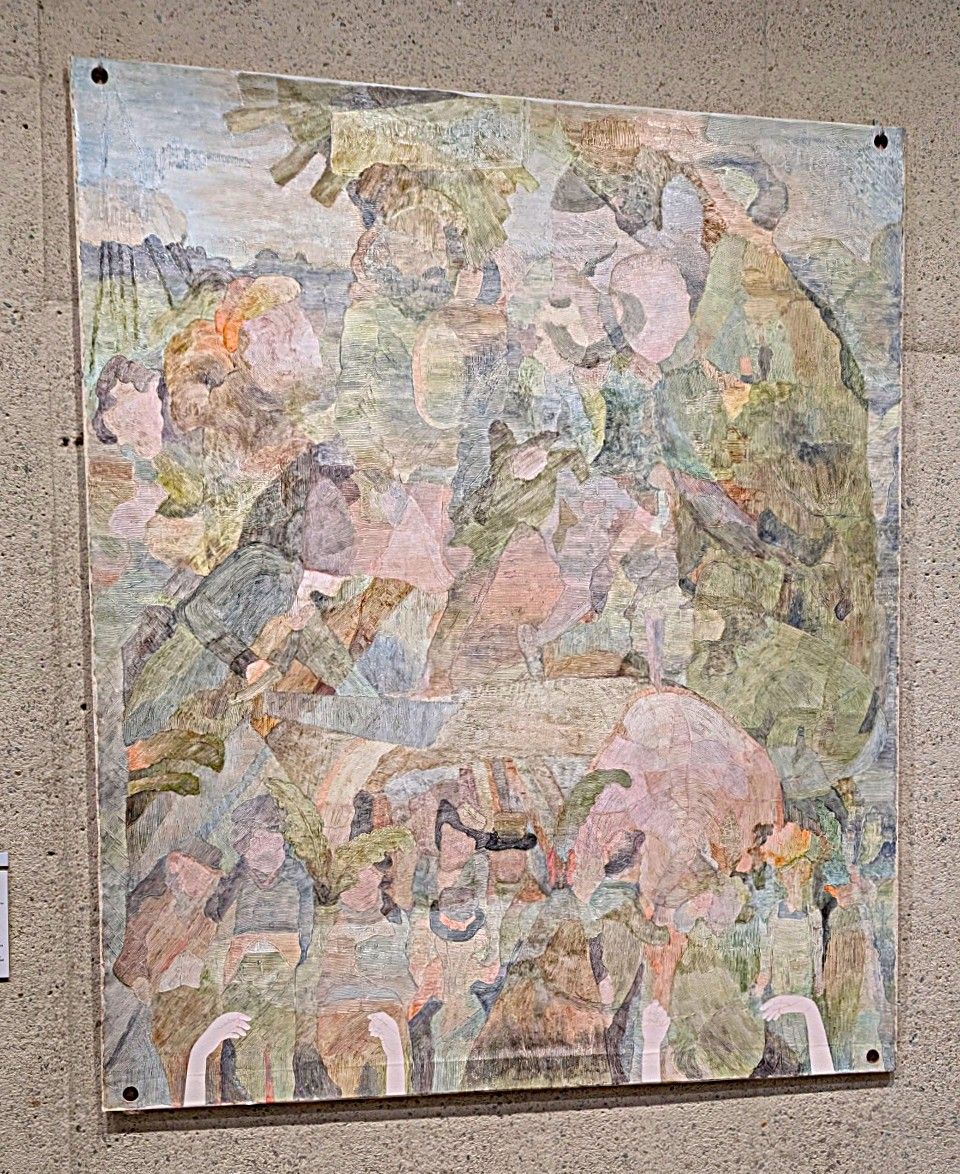
Rather different representations…


Connie Francis was the voice of a generation and the soundtrack of post-war America*
Story by Leigh Carriage, Southern Cross University
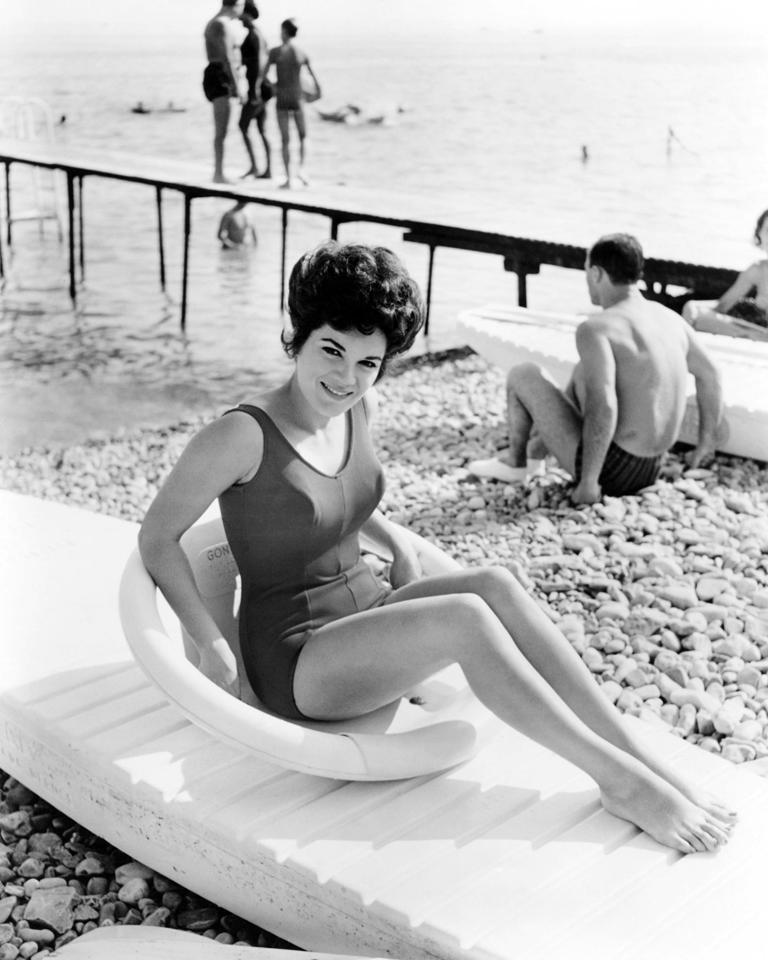
Connie Francis dominated the music charts in the late 1950s and early 1960s with hits like Stupid Cupid, Pretty Little Baby and Don’t Break the Heart That Loves You.
The pop star, author and actor has died at 87, and will be remembered for recording the soundtrack songs of post-World War II America.
Francis was born Concetta Rosa Maria Franconero in Newark, New Jersey, to Italian immigrant parents. At a very early age, Francis was encouraged to take accordion and singing lessons, compete in talent shows, and later she would perform occasionally on the children’s production Star Time Kids on NBC, remaining there until she was 17.
Within these early recordings you can hear her style begin to develop: her tone, great pitching, her versatility in vocal range. Her vocal delivery is technically controlled and stylistically structured, often nuanced – and even at this early stage demonstrating such power coupled with an adaptability for a broad range of repertoire.
At 17, Francis signed a contract with MGM Records.
One of her early recordings was the song Who’s Sorry Now?, written by Ted Snyder with lyrics by Bert Kalmar and Harry Ruby in 1923. Her version was released in 1957 and struggled to get noticed.
The following year, Francis appeared with the ballad on American Bandstand. This performance exposed Francis’ talent for interpretation and her ability to bridge the teen and adult fanbase.
The song would become a hit.
It’s useful to listen to the original version to gain more insight into Francis’ vocal approach and styling. The original is an instrumental song of its time, with light whimsical call and response motives in a foxtrot feel.
But in Francis’ version, she demonstrates her ability to revitalise a late 1950s pop music aesthetic. In an emotional delivery she croons her own rendition, with the country styling elements of Patsy Cline.
The voice of a generation
Following Who’s Sorry Now?, Stupid Cupid (1958), Where The Boys Are (1960, the titular song of a feature film starring Francis) and Lipstick on Your Collar (1959) became the soundtrack songs of post-war America.
Francis was supported with songs penned by the some of the best songwriters from the Brill Building, a creative collective in Manhattan that housed professional songwriters, working with staff writers Edna Lewis and George Goehring.
In 1960, Francis released her hit Everybody’s Somebody’s Fool written by Jack Keller and Howard Greenfield. It was a teeny-bopper classic, and she became the first women to top the Billboard Hot 100.
Styled after some of the other greats of the time – such as Frank Sinatra (1915–98), Dean Martin (1917–95) and Louis Prima (1910–70) – Francis’ performance on the Ed Sullivan show highlighted her connection to her Italian heritage and ability to draw from a broad repertoire.
On the show, she performed Mama and La Paloma. Each performance is very carefully styled, a thoughtful approach to dynamics, sung in both English and Italian.
Don’t Break the Heart That Loves You, a number one hit from 1962, features Francis’ gorgeous crooning harmonies. Then, the song breaks down into an earnest spoken part and finishes with a powerful belted vocal part of long notes.
The song is full of confidence and hope.
Away from the microphone
Francis had two key roles in films, starring in Where the Boys Are (1960) and the comedy Follow the Boys (1963).
She was an author of two books. The second, Who’s Sorry Now?, became a New York Times bestseller.
Francis was involved with humanitarian causes. She was particularly involved with Women Against Rape, following her own violent rape in 1974, and the Valour Victims Assistance Legal Organisation, dedicated to supporting the legal rights of crime victims. A lesser known song in her repertoire, fitting to include here, is her version of Born Free from 1968.
As a singer, Francis worked at her craft and transitioned effortlessly from one genre to another, performing for over five decades. She will be remembered as a trailblazing solo artist, leaving a strong legacy in popular music culture.
She was the voice of one generation when she was a star. And in her final year she became the voice of a new generation as Pretty Little Baby, released in 1962, went viral on TikTok, with more than 1.4 million videos using her voice to share stories of their lives.
Leigh Carriage does not work for, consult, own shares in or receive funding from any company or organisation that would benefit from this article, and has disclosed no relevant affiliations beyond their academic appointment.
*Where the Boys Are must have been one of the silliest songs ever. Thank goodness the post war women listening did not take it too heart in most cases. Lipstick on Your Collar at least had some spirit.
Made Up Stories, Kindling Pictures announce television adaptation of Sally Hepworth’s ‘The Soulmate’
Sean Slatter·NewsProductionTV & Streaming ·July 16, 2025

From left are Katie Amos, Imogen Banks, Asher Keddie, Bruna Papandrea, and Steve Hutensky.
Made Up Stories will team up with creator and producer Imogen Banks and Strife collaborator Asher Keddie to adapt Australian author Sally Hepworth’s novel The Soulmate for television.
The 2022 novel follows married couple Pippa and Gabe, who have two sweet young daughters, a supportive family, and a picturesque cliffside home, which would have been idyllic had the tall beachside cliffs not become so popular among those wishing to end their lives. Gabe has become somewhat of a local hero since they moved to the cliff house, talking seven people down from stepping off the edge. But when Gabe fails to save the eighth, a mysterious woman named Amanda, a sordid web of secrets begins to unravel, pushing bonds of loyalty and love to the brink.
Announced as part of this year’s Future Vision Summit, the television adaptation will be produced by Papandrea, Steve Hutensky, and Katie Amos for Made Up Stories alongside Banks for Kindling Pictures, Keddie, Hepworth, Rob Weisbach, and Fiona Seres, who also serves as writer and showrunner.
This is the second collaboration between Hepworth and Made Up Stories, after the production company announced it was optioning her ninth novel, Darling Girls, last year.
Hepworth said she was pleased to continue her creative relationship with the Made Up Stories team.
“There’s a kind of magic in finding creative partners who are as passionate about your story as you are. That’s what I’ve found with Bruna, Steve, Katie, and the team at Made Up Stories,” he said.
“I’m so excited to be collaborating with them, and with Imogen, Asher, Rob, and Fiona, to adapt The Soulmate – a novel that strives to dig deep into the layered, complicated truths about marriage, loyalty, and the secrets we keep from the people we love most.”
In Our Garden

Welcome back to Country: PM’s big statement as parliament opens
Peter Dutton claimed the Welcome to Country ceremony was “overdone”. Now the PM has opened the 48th Parliament with a big statement.
Samantha Maiden@samanthamaiden
Anthony Albanese has clapped back at critics of Welcome to Country ceremonies praising the practice as a “powerful” reminder that Australians are stronger together.
As Parliament prepares to sit for the first time since the election, Mr Albanese has delivered to rebuke to ex-Liberal leader Peter Dutton,
Mr Dutton spent the dying days of the campaign whinging about the ceremony and claiming it was “overdone.”
After securing a huge majority, the Prime Minister has made it clear he strongly supports the cultural practice.
“The welcome to country is such a powerful way to begin a new parliament,’’ Mr Albanese said.
“Like a lot of the more positive things about our nation, we shouldn’t take it for granted. This ceremony didn’t take place until 2007 and was controversial in 2007.
“It is not controversial today. Nor should it be.”
Mr Albanese said it was a “respectful” way of beginning the 48th Parliament.
“What a welcome to country does is holds out like a hand warmly and graciously extended. An opportunity for us to embrace and to show a profound love of home and country,’’ he said.
“It is a reminder as well of why we all belong here together, that we are stronger together and we belong.

The ceremony outside parliament.
“We keep walking, together. With every step, we feel the echoes through history, the footsteps nearly a century distant from us now of every First Nations person who trekked to the opening of the first
Parliament House down the hill.
“The footsteps of the members of the stolen generations who came to this place 17 years ago now to hear the words that they needed to hear “I’m sorry”.
Former Liberal leader Peter Dutton famously boycotted the National Apology to the Stolen Generations in 2008. He later apologised years later.
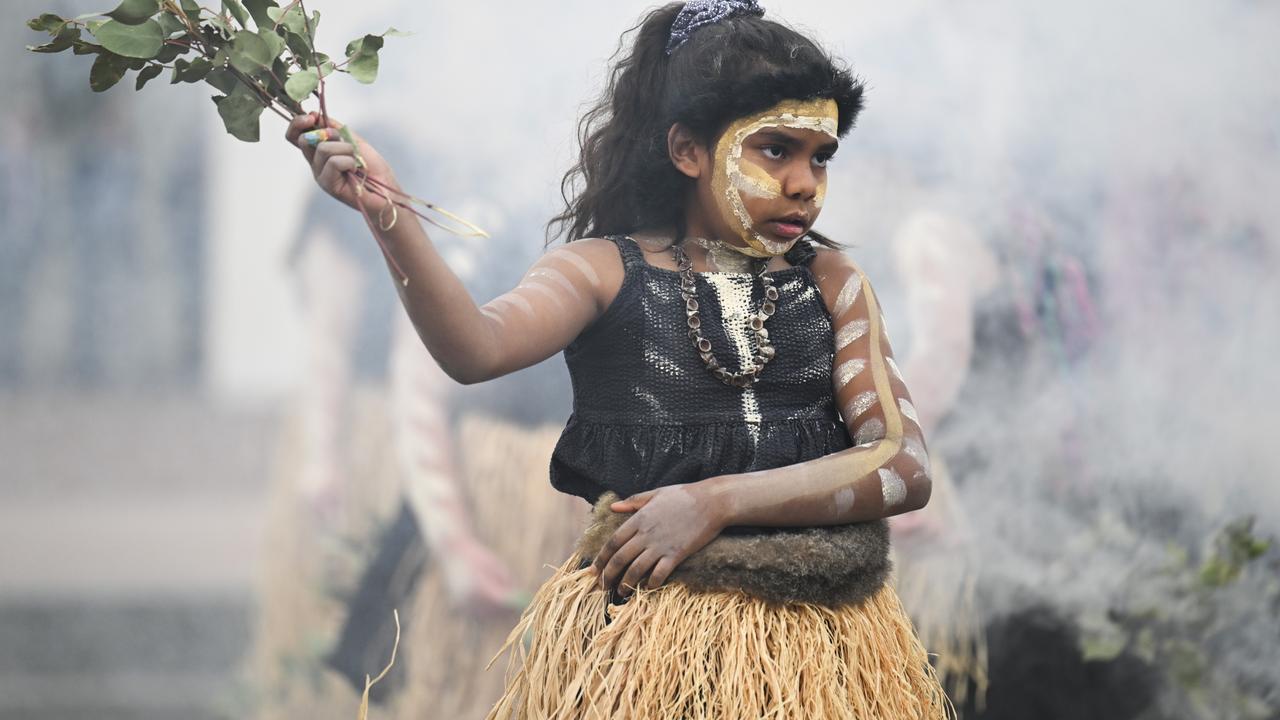
An Indigenous dancer at the Smoking ceremony to start the 48th parliament at Parliament House in Canberra. Picture: NewsWire / Martin Ollman
“Uttered by an Australian Prime Minister on behalf of the Australian nation. That was a day of catharsis, built on courage and grace,’’ Mr Albanese said of Kevin Rudd’s apology.
“Ultimately, it was a day of togetherness and a reminder of our great potential and promise as a nation.”
Liberal frontbencher Jacinta Nampijinpa Price and Peter Dutton have previously backed scaling back the use of Welcome to Country ceremonies, with Senator Price warning people are “sick if it”.
Speaking at a Voice to parliament No campaign event in 2023, former Prime Minister Tony Abbott also said he is “getting a little bit sick of Welcomes to Country because it belongs to all of us, not just to some of us”.

Prime Minister Anthony Albanese and son Nathan attend a smoking ceremony to start the 48th parliament at Parliament House in Canberra. Picture: NewsWire / Martin Ollman
“And I’m getting a little bit tired of seeing the flag of some of us flown equally with the flag of all of us,’’ he said.
“And I just think that the longer this goes on, the more divisive and the more difficult and the more dangerous that it’s getting now.”
Senator Price has described the tradition as “divisive”.
“There is no problem with acknowledging our history, but rolling out these performances before every sporting event or public gathering is definitely divisive,” she said.
“It’s not welcoming, it’s telling non-Indigenous Australians ‘this isn’t your country’ and that’s wrong. We are all Australians and we share this great land.”
She said “around the country” there were some people whose “only role, their only source of income, is delivering Welcome to Country”.
“Everyone’s getting sick of Welcome to Country,’’ she said.
It is instructive to see the way in which the Australian people voted, and a graphic showing the seats currently held in the 48th Parliament
House of Representatives
There are 150 seats in the lower house (House of Representatives) and a party requires 76 seats to govern in its own right.
The representation of parties in the Parliament is as follows:


 Robin's Room