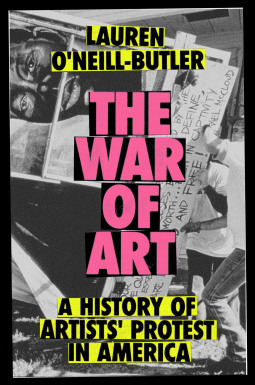
Lauren O’Neill-Butler The War of Art A History of Artists’ Protest In America Verso Books (US)|Verso, June 2025
Thank you, NetGalley, for providing me with this uncorrected proof for review.
This is a huge undertaking, with its dense rollcall of information, detailed discussions of various artists, their motivation, and the application of this to their work. The density, and the multitude of ideas and information made this a difficult read. Rather than what I expected, a lively interpretation of the causes embraced by the artists, their successes and failures, the impact of the political environment at the government and community level, and the type of art that artists used to achieve their aims, I felt overwhelmed. So many of these issues are canvassed, but the way in which various strands are muted by the over serious nature of the writing and extraneous detail (or so it seems) makes understanding them difficult.
Where O’Neill – Butler excels is in giving a voice to relatively unknown artists and their work. Again, the mountain of detail needs to be surmounted, but an avid interrogator of this will find valuable material. It just takes some work, and a determination to follow the trails.See Books: Reviews for the complete review.
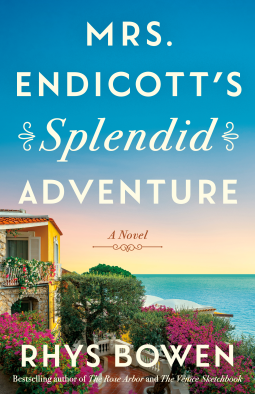
Rhys Bowen Mrs. Endicott’s Splendid Adventure Lake Union Publishing, August 2025.
Thank you, NetGalley, for providing me with this uncorrected proof for review.
I was tempted into reading my first Rhys Bowen novel because of the title. It is reminiscent of the work by some British women novelists writing from the 1930s to the 1960s. There is a particular charm about some of this literature, with its weaving together main female characters who seemingly mildly demand their independence with a well-developed plot which includes gentle humour. Although Rhys Bowen is writing in 2025, her depiction of one such character, Mrs Endicott, in a plot that moves from divorce in an English village to a village in France, portraying the competing demands of old and new friends, war and the sinister arrival of German troops in what has appeared to be a haven, has the appeal of this earlier work. See Books: Reviews for the complete review.
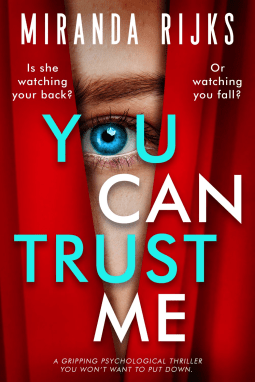
Miranda Rijks You Can Trust Me Inkubator Books, July 2025.
Thank you, NetGalley, for providing me with this uncorrected proof for review.
Mothers and daughters, husbands and wives, friends – all are dancing around each other in this novel of twists and surprises, comic moments, and nefarious activities. Relationships are duplicitous, criminal activity is rife and lies are an integral part of the friendships and partnerships. None of the characters is sympathetic. However, at the same time, their various manipulations are intriguing enough to read to the end of the novel. See Books: Reviews for the remainder of this short review.
Canberra Art Exhibition

CÉZANNE TO GIACOMETTI Until 21 Sep | Ticketed, under 18s free
Only six weeks left to see Cézanne to Giacometti. Don’t miss the Gallery’s winter exhibition featuring artists who have influenced and changed the course of twentieth-century art, with over 80 works from the Museum Berggruen in Berlin alongside works from the national collection.
Cézanne to Giacometti is exclusive to Kamberri/Canberra.
Free entry for visitors under 18 thanks to our supporters, including Principal Patron Tim Fairfax AC, Exhibition Patrons and donors to the 2024 Annual Appeal.
Kids & families
Play and create in a dedicated interactive space by artist Sanné Mestrom.
Shop & read
Visit the Art Store at the Gallery to browse the illustrated publication and an exclusive product range inspired by the exhibition.
Visit the international art galleries to experience new acquisitions including Edvard Munch’s Man with horse and Balloon Venus Dolni Vestonice (Yellow), a gleaming 2.7m-high sculpture made of highly polished stainless steel, by American artist Jeff Koons.
Know My Name: Global presents works by women artists who have pushed the limits of artistic practice from the 1960s to the present day, including Judy Chicago, Tracey Emin and Jenny Holzer.
Special Events
Art Talks Fridays
Join artists, curators and experts in exploring the collection and exhibitions during free lunchtime talks each Friday. Listen to past talks online.
ART TOGETHER WITH LAUREN BERKOWITZS 30 Aug
Join artist Lauren Berkowitz to reimagine materials left over from transporting and presenting works of art at the National Gallery.
LEARNING & OPPORTUNITIES
For First Nations Arts and Culture professionals, applications for the Dhiraamalang: First Nations Arts Leadership Program open 18 August for the 12-day residency of cultural and professional development this December.
For art students in Year 10 or equivalent, the National Summer Art Scholarship applications open this week. The Scholarship includes artist-led creative workshops and studio visits and behind-the-scenes experiences at the National Gallery.
For teachers, artists and cultural practitioners, early bird tickets are now available for the National Visual Art Education Conference presented in conjunction with After the Rain, the 5th National Indigenous Art Triennial. Find more professional learning opportunities here.
Australian Politics
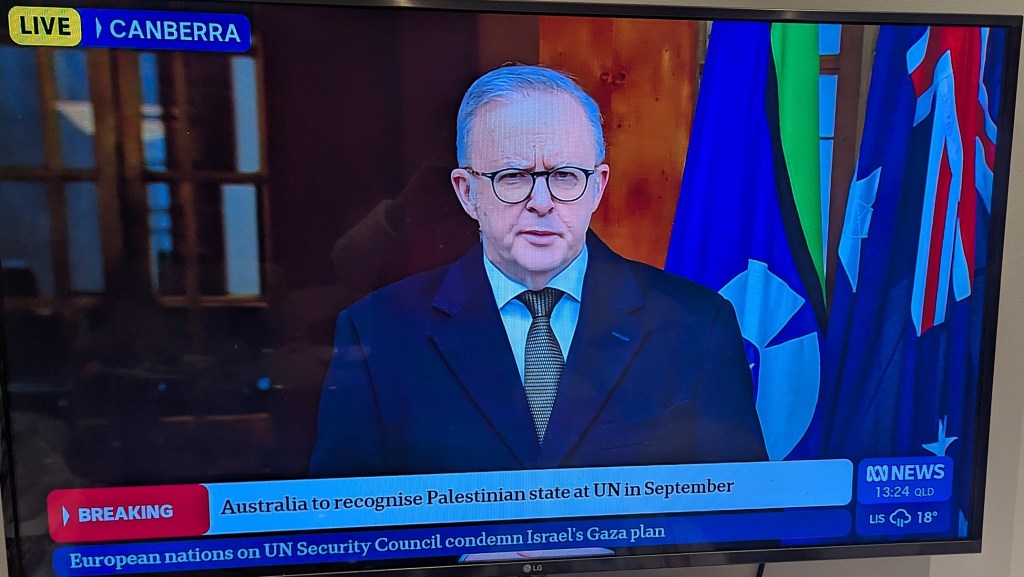
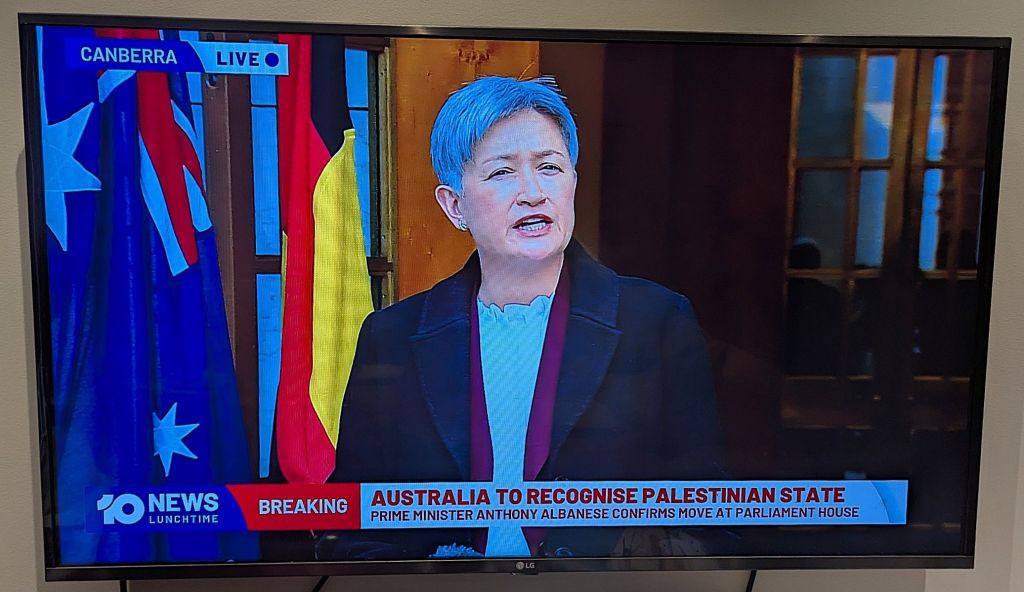

Blocking social media to the kids will save us all
Yesterday, I announced our Government is going to create a new minimum age for access to social media. We will bring this legislation into Parliament before the end of the year. This is all about supporting parents and protecting children.
I know there are many Mums and Dads who have been pushing for change in this area and this newspaper has run a strong campaign in support of them. The South Australian Government has been doing important work as well but at the end of the day, this in an issue that crosses state borders. It’s a national challenge that requires national leadership. That’s what our Government is stepping up to deliver.
As parents, we love our children and we worry about them. We do everything we can to keep our kids safe and to help them grow up happy, confident and comfortable with who they are.
Wherever I go in Australia, I know one of the biggest things worrying Mums and Dads is the impact social media is having on their children’s wellbeing.
There’s no going back to a world without technology and the internet has given all of us access to a world of knowledge and culture that can be such a force for good. Buttoo often, social media isn’t social at all. Instead, it’s used as a weapon for bullies, a platform for peer pressure, a driver of anxiety, a vehicle for scammers and, worst of all, a tool for online predators.
Like anything, as we get older most of us get better at spotting the fakes and the risks and we build up the resilience to ignore the nastiness. We get to know that our followers aren’t necessarily our friends and we learn not to measure ourselves against the unattainable standards of curated images.
All of this is tough for young adults and it’s much harder for children. What’s more, parents feel they are working without a map. No previous generation has grown up with smartphones and social media as part of their daily life. Parents are worried about where all this leads and they’re looking to us to help.
That’s why we’re working with the eSafety Commissioner to help parents talk to their children about being safe online and partnering with the Alannah and Madeleine Foundation to fund digital literacy programs in every school in Australia.
Of course, parents already have the option of banningphones or particular social media platforms for their children. But when they do they are up against the powerful force of peer pressure and no-one wants to make their child the odd one out.
Setting a new national minimum age for social media also sets a new community standard. It takes pressure off parents and teachers and backs them with theauthority of government and the law. Changing the dynamic in the schoolyard is crucial to making lasting change in behaviour.
We all know that technology moves fast. I’m sure there will be people who make it a priority to find or make ways around these new laws, some might succeed.None of that is an excuse for inaction. After all, there are plenty of young people who find ways to get alcohol before they turn 18 but no-one is saying we should lower the drinking age.
Government may not be able to protect every child from every threat on social media but we do have a responsibility to do everything we can, to help as many young Australians as we can.
I want young Australians to grow up playing outside with their friends, on the footy field, in the swimming pool, trying every sport that grabs their interest, discovering music and art, being confident and happy in the classroom and at home. Gaining and growing from real experiences, with real people.
Lawrence Wilson Art Gallery, until 30 Aug
QUEENSLANDSkywhales Across Australia
Horizon Festival, Caloundra, 17 Aug
NEW SOUTH WALESOlive Cotton and her contemporaries Hawkesbury Regional Art Gallery, 22 Aug – 19 Oct
Clarice Beckett: Paintings from the National Collection Wagga Wagga Regional Gallery, Until 7 Sep
We want children to have their childhood. We want parents to have peace of mind. That’s what a minimum age for safer social media will help achieve.
Our Government understands people are under pressure with the cost of living and we’re acting to help.
We know parents are worried about social media and we’re stepping up to help.
That’s what our Government does. We listen, we act, we deliver change that makes a positive difference for all Australians
Tech giants fail to tackle heinous crimes against children
Savannah Meacham
Aug 06, 2025, updated Aug 06, 2025Share
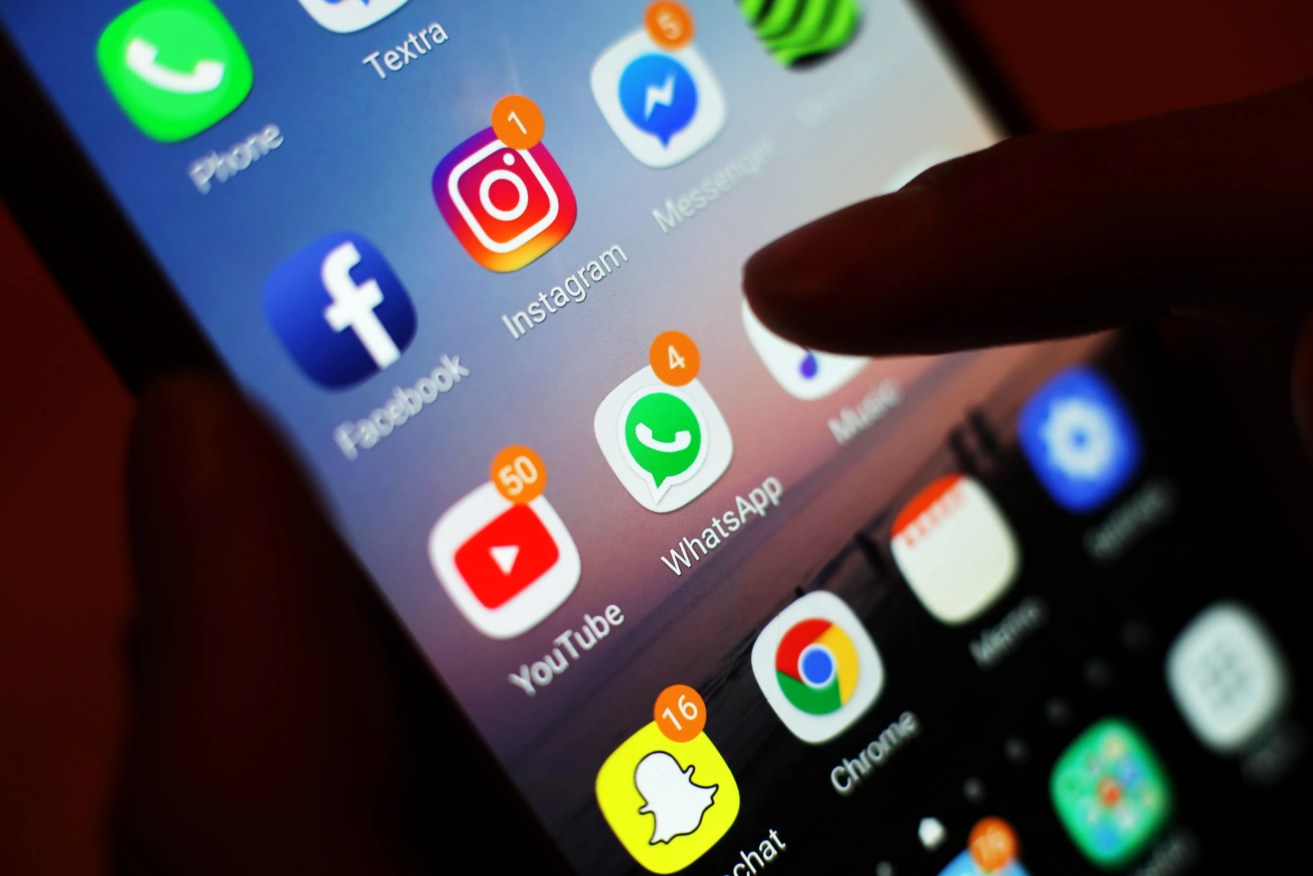
There were a few positive improvements with Discord, Microsoft and WhatsApp Photo: AAP
Tech giants have been slammed for failing to crack down on online child sexual abuse material after a safety watchdog raised the alarm about ongoing failures.
But one of those mega-companies has refuted the claim and that it is successfully removing child abuse content, saying the watchdog focused on metrics over performance.
An eSafety report has revealed Apple, Google, Meta, Microsoft, Discord, WhatsApp, Snapchat and Skype are still not doing enough to stop online child sexual abuse even after three years of calls for action.
The watchdog reports Apple and Google’s YouTube were not tracking the number of user reports about child sexual abuse, nor could they say how long it took to respond to the allegations.
The companies also did not provide their number of trust and safety staff to the watchdog.
Child justice advocates slammed the tech giants for their lack of reporting that leaves the true rate of online sexual abuse in the dark.
“They’ve had all these years of warning to say this is unacceptable and continue to have the same safety gaps and shortcomings from past reports,” International Justice Mission Australia chief executive David Braga said.
“We’re talking about crimes here against children,” he added.
eSafety Commissioner Julie Inman Grant said the tech companies’ failure to detail how many reports they received indicates a winding back of content moderation and safety policies.
“What worries me is when companies say, ‘We can’t tell you how many reports we’ve received’ … that’s bollocks, they’ve got the technology,” she told ABC Radio.
It comes as YouTube argues against being included in a social media ban for Australians under 16 years of age on the basis that it is not a social media platform, but rather is often used as an educational resource.
Google has claimed it has been leading the industry fight against child sexual abuse “since day one” to remove the content from its platforms.
“eSafety’s comments are rooted in reporting metrics, not online safety performance,” the spokesperson said.
“More than 99 per cent of all child sexual exploitation or abuse content on YouTube is proactively detected and removed by our robust automated systems before it is flagged or viewed,” they said.
“Our focus remains on outcomes and detecting and removing child sexual exploitation or abuse on YouTube.”
The commission’s latest findings come three years after it uncovered that the platforms were not proactively detecting stored abuse material or using measures to find live-streams of child harm.
The latest report also criticises some platforms for not deploying tools to detect live-streams of child sex abuse, and others for not using the comparison technique called hash matching to detect and remove previously identified illicit content.
Some platforms also fail to use language analysis to detect grooming or sexual extortion, it found.
Justice advocates want the federal government to legislate digital duty of care laws that would make platforms take reasonable steps to prevent foreseeable harms.
“Digital duty of care would put the onus back onto the technology companies to make sure that the products that they provide, the way they design their business model, don’t facilitate the online sexual exploitation of children,” Mr Braga said.
Another watchdog report is due in 2026 with updates from the tech giants.
1800 RESPECT 1800 737 732
National Sexual Abuse and Redress Support Service 1800 211 028
Lifeline 131 114
Kids Helpline 1800 55 1800 (for people aged 5 to 25)
-AAP
A FREE subscription to The New Daily arrives every morning and evening. Subscribe The New Daily is a trusted source of national news and information and is provided free for all Australians. Read our editorial charter.

Paul Bongiorno Calls for justice in Gaza and progress on Closing the Gap
Neither Anthony Albanese nor any of his ministers joined last Sunday’s “March for Humanity” across Sydney Harbour Bridge, which garnered international attention. Instead, the prime minister and a group of his senior cabinet colleagues attended Australia’s largest Indigenous cultural gathering in north-east Arnhem Land.
Both events, however, pose almost intractable challenges for the prime minister: the protesters’ demand to bring peace to the starving population in Gaza and Garma’s call for a closing of the persistent gap of disadvantage suffered by Australia’s First Peoples, particularly in remote areas.
Whether it was 90,000, as the police initially estimated, or closer to 300,000, as organisers claimed, last weekend’s march in pouring rain was one of the biggest anti-war protests seen since the Vietnam War five decades ago.
It left no doubt that the Gaza conflict is a real issue for Australians, who are demanding their government involve itself even more than it has.
Many called for increased sanctions on Israel, a call rejected by the prime minister, who says we already have imposed sanctions on militant settlers who have attacked Palestinians on the West Bank, as well as on two of the Netanyahu government’s “most extreme” ministers.
Foreign Affairs Minister Penny Wong announced on Monday that the government was committing a further $20 million from the emergency fund set aside in the budget to contribute to aid in Gaza. This brings Australia’s contribution to about $130 million for humanitarian relief to be delivered by agencies on the ground.
Wong says Australia has consistently been part of the international call for Israel “to allow a full and immediate resumption of aid to Gaza, in line with the binding orders of the International Court of Justice”.
The peace movement of the early 1970s was provoked in no small way by contemporaneous pictures of the conflict beamed nightly onto Australian television screens.
The scenes in Gaza, 50 years later, are having even more impact, with images flashed around the world in real time and in colour. The transmission of this horror began with Hamas terrorists on October 7, 2023, broadcasting their killing of Israelis, the destruction of their homes and the abduction of entire families.
The impact has only deepened in the intervening 22 months, with the mounting toll of death and the reporting of destruction and starvation. In light of this, Wong says she was not surprised by the size of the weekend protests.
On ABC Radio she said the marches in Sydney and Melbourne “do reflect the broad Australian community’s horror at what is going on in the Middle East and the desire for peace and a ceasefire, which is what the government is seeking”.
The news midweek that Israeli Prime Minister Benjamin Netanyahu was planning to extend military operations for a complete takeover of the Gaza Strip was, in Wong’s view, even more reason for Australia and the international community to use recognition of Palestinian statehood to create “a pathway to a two-state solution”.
“There is a risk there will be no Palestine left to recognise,” she says.
Wong says this pathway should be part of the peace process and there is no chance of freeing the remaining hostages unless the war ends. This is an increasing imperative in light of Hamas releasing a video of two of them clearly starving to death.
The foreign affairs minister says this call for an immediate, permanent ceasefire is the view of 600 former Israeli security officials who have written publicly to Netanyahu, and also to United States President Donald Trump, urging him to intervene.
These former officials include previous chiefs of Israel’s Mossad intelligence agency and the military, who believe Hamas no longer poses a strategic threat to Israel.
The Coalition has parted company with Wong and the dissenting Israeli assessment, insisting Hamas must surrender and the hostages be freed before discussions of Palestinian recognition can progress.
There is concern among Liberals that the leadership is getting the tone of its response wrong and that uncritical support of the Netanyahu government is unwarranted and out of sync with public opinion.
On Monday Opposition Leader Sussan Ley finally admitted “there is hunger and starvation in Gaza”.
Ley’s reluctance to appear too sympathetic to the Palestinian cause, according to a close ally, is a response to a “dirt sheet” put out by Angus Taylor’s camp in the lead-up to the leadership contest, accusing her of being “anti-Israel and pro-Palestine”.
Privately, ministers are pessimistic that Netanyahu is susceptible to any outside pressure, except for whatever President Trump can be persuaded to exert. They are hoping the building momentum for a significant vote at the United Nations in September will at the very least draw a line on Israel’s expansionist ambitions.Wong says she was not surprised by the size of the weekend protests … She said the marches in Sydney and Melbourne “do reflect the broad Australian community’s horror at what is going on in the Middle East and the desire for peace and a ceasefire, which is what the government is seeking”.
Albanese has been working tirelessly behind the scenes, his office revealing this week that the prime minister discussed the Gaza situation with United Nations Secretary-General António Guterres late last week.
On Tuesday the prime minister spoke with President Mahmoud Abbas of the Palestinian Authority, which had joined significant Arab states in calling for the disarming of Hamas and the release of the hostages.
This was followed by a call with French President Emmanuel Macron, who is leading the charge for unconditional Palestinian recognition. They discussed getting aid to civilians in Gaza and, according to the briefing note, “their longstanding support for a two-state solution”.
At time of writing, Albanese was still waiting for Netanyahu to take a call. Former minister for foreign affairs Bob Carr, who joined the Sydney Harbour Bridge march, said if Albanese wanted to tell his Israeli counterpart that Australia supports a two-state solution, “he is wasting his breath” because Netanyahu opposes it.
There is only so much Australia can do in responding to the Middle East conflict. There are greater expectations for the government to improve the lot of Indigenous citizens, a task that gains a greater focus at the annual Garma Festival in the Northern Territory.
On Saturday, a croaky Albanese announced what he called a new economic partnership with Indigenous communities and agencies across the country. This First Nations Economic Empowerment Alliance would play a crucial role in administering programs, advising governments and assisting native title-holders to advocate for their rights.
An innovative education initiative would take technical and further education classes to remote communities, training tradespeople in the skills needed for construction and maintenance of homes and business premises. There was $31 million for mobile TAFE and $70 million to “get First Nations clean energy projects up and running”.
Albanese noted more Indigenous health workers and educators were coming through, but he said the latest Productivity Commission report on Closing the Gap showed only four of the 19 targets were on track to be met.
Without naming Peter Dutton or Senator Jacinta Nampijinpa Price, Albanese attacked those “who choose the cheap politics of division over the patient work of lasting change and who seek to turn the grace and generosity of a Welcome to Country … into a political weapon”.
Albanese said, “Culture wars are a dry gully – they offer us nothing, they lead us nowhere.”
Ley declined an invitation to the festival. The Coalition, she says, was represented by a senior member in shadow attorney-general Julian Leeser. Leeser showed moral courage in quitting Dutton’s front bench to support the “Yes” vote in the referendum.
Instead, Ley spent four days in the remote Kimberley region of Western Australia, visiting Indigenous communities with her shadow minister for Indigenous Australians, Kerrynne Liddle. Liddle took the role after Ley moved Price to the defence industry portfolio after the election.
The government is bemused by the “coincidental” timing of Ley’s trip, but it was also clearly designed to send a message that the Coalition is under new management. Ley distanced herself from the Western Australian Liberal division, which was pursuing the culture wars at their state conference, and said she was interested in practical outcomes.
After her WA visit, Ley said the Albanese government “is mismanaging Indigenous policy”. Aboriginal leaders at Garma had a different view, echoing the criticism of Senator Lidia Thorpe in blaming the NT’s Country Liberal Party government.
Thorpe wants the government to review its 80 per cent funding of the Territory budget, especially in light of its new tough-on-crime laws targeting Indigenous youth.
These punitive laws have led to a significant increase in the incarceration rates of Aboriginal people. Nearly 90 per cent of adult prisoners and almost 100 per cent of youth detainees in the Northern Territory identify as Aboriginal or Torres Strait Islander.
Darwin-based Aboriginal leader Thomas Mayo says Chief Minister Lia Finocchiaro is “worse than Trump”, ignoring expert advice and implementing policies that exacerbate problems for Indigenous communities.
Finocchiaro says she has a mandate to deliver Territorians safe streets and that frontline workers deserve the protection of hitherto banned spit hoods.
Minister for Indigenous Australians Malarndirri McCarthy say she is listening to the complaints and has concerns about the direction of the NT government, which could undo years of youth justice reform efforts.
The minister is seeking a meeting with Finocchiaro. While the federal government has the power to override Territory legislation and could cut funding, this is a perilous political path. The history of federal intervention in the Territory is far from a happy or productive one.
It’s a precedent that cuts both ways. Canberra should respect the democratic will of the self-governing territory and the chief minister should take note of the Howard government’s failed, punitive intervention.
The calls everywhere this week were ones for justice.
This article was first published in the print edition of The Saturday Paper on August 8, 2025 as “The march on the bridge”.
The Saturday PaperThe MonthlyAustralian Foreign Affairs
John Hewson August 9 – 15, 2025 | No. 562
Albanese’s long game is paying off
The consequences of the Trump tariff policies seem to finally be coming to a head. Economic figures from the United States suggest that not only has inflation begun to climb again, but that jobs growth has slumped, with steep downward revisions to recent months’ figures. Included in the July jobs report was confirmation that many industries, including manufacturing and construction, have essentially stopped hiring.
Donald Trump’s response, unsurprisingly perhaps, was to fire the head of the Bureau of Labor Statistics (BLS). In two of several related rants on his platform, Truth Social, Trump posted: “In my opinion, today’s Jobs Numbers were RIGGED in order to make the Republicans, and ME, look bad” and “The Economy is BOOMING under ‘TRUMP’ ”.
This in turn sparked concerns among economists about the ongoing integrity of the data that the central bank relies on to set interest rates. It’s a concern that can now be added to the increasing likelihood that the US president will – if not directly, then through his constant criticism – force the Federal Reserve chair to step down. Alongside his attacks on the BLS chief Erika McEntarfer was yet another reference to the Fed’s failure to cut interest rates, declaring that “Jerome ‘Too Late’ Powell should also be put ‘out to pasture.’ ”
Meanwhile, Trump’s trade policy continues its erratic course. Much media coverage and commentary has been attempting to make sense of the various deals governments around the world have struck to secure Trump’s favour and some finalisation of their rates.
US trade representative Jamieson Greer now says the recently announced tariff levels are likely to stay in place. They are higher than expected for most countries: 39 per cent for Switzerland, 35 per cent on many goods from Canada, 50 per cent for Brazil, 25 per cent for India, 20 per cent for Taiwan and so on, all by executive order. The European Union’s recent agreement will apparently see its rate from April halved to 15 per cent, equalling the tariff on German cars, which will drop from 25 per cent, but the levies are still far more punitive than what existed before this administration. Meanwhile, Trump’s orders still face legal challenges as to whether the president actually has the power to so easily sideline congress on global trade policy.
It is important to give credit where genuine credit is due, by recognising the success of the Albanese government’s patient, professional and focused diplomacy, mostly conducted behind closed doors.
Many countries remain bewildered as to the logic behind Trump’s decisions. What a pointless exercise. It’s clear that logic has played no part. His misguided economic decisions seem merely the products of his prejudice and desire for revenge.
Trump himself has over time expressed three main objectives, as I see it: boosting government revenue, redressing trade imbalances and rejuvenating industries. Unfortunately, Trump doesn’t run on evidence or value any lessons learnt from the past, but rather seems intent on setting successive and meaningless deadlines and generally bullying governments to join his game and play by his rules. Many did, seeking meetings with Trump and/or his officials very publicly, achieving little if any improvement in their positions but enduring various degrees of humiliation in what has been little better than a global circus.It is important to give credit where genuine credit is due, by recognising the success of the Albanese government’s patient, professional and focused diplomacy, mostly conducted behind closed doors.
In the midst of this, it is important to give credit where genuine credit is due, by recognising the success of the Albanese government’s patient, professional and focused diplomacy, mostly conducted behind closed doors. This achieved the initially most favourable tariff rate of 10 per cent, which was then sustained through Trump’s various tantrums and iterations. This was achieved by very effective engagement by Ambassador Kevin Rudd and the Department of Foreign Affairs and Trade team starting late last year and then through the turn of this year. Their strategy has emphasised our free trade agreement with the US, and its positive trade balance with Australia, in the context of what has been an important alliance between our two countries, consistently respected by changing governments over decades.
That the Coalition remains unable to give credit where credit’s due really is a missed opportunity to show strength regarding good policy. Albanese’s achievement with his calm approach was also even more significant given the sustained pressure from our current opposition and its Murdoch media supporters continually demanding the prime minister rush over to the US to bend a knee in a face-to-face meeting with Trump. They kept banging that drum, hoping Albanese would go and be insulted, as so many others have been. The current members seem more keen to parrot Sky News demands to drop everything to make a “deal” with Trump, while offering no detail of what sort of deal he should aim to achieve. What else would the Coalition be prepared to give up to meet with Trump, with what trade-offs? At what cost? How can they ignore that Trump has form in not turning up for even scheduled meetings, as happened with both former prime minister Malcolm Turnbull, who was left sitting in a hotel lobby, and Albanese, who attended the G7 summit in good faith. Moreover, what would be the opposition’s intentions regarding the protection of Australia’s Pharmaceutical Benefits Scheme, which American lobbyists and Republican senators have expressed a particular interest in hobbling?
In Australia, we need to understand the volatility and uncertainty that is President Trump. We have to mature beyond the simplicity of believing we share common values and objectives with the US. Evidently with Trump in charge this is no longer possible. He has demonstrated he doesn’t believe in free trade, nor in the international rules-based order that remains fundamental to who we are as a nation and to the image we want to project to the world. We have to take every opportunity to demonstrate our independence and to preserve our sovereignty.
This is clearly what Anthony Albanese has been about.
The Coalition has basically continued to attempt to paint Albanese as a weak leader. I can’t help but wonder in what direction and how the Coalition could have evolved without the coercion and dark energy of Sky News. Sadly, we can’t know, and hope for better times.
The opposition is deluded if they’re imagining they would do better than this government in talks with the US, and some recent statements by the likes of Angus Taylor, Jane Hume and others should be a cause for particular concern. Taylor as shadow defence minister has all but pushed the Coalition to a joint commitment with the US to the security of Taiwan. Taylor is inclined to buckle to pressure from the US to declare what we would do in the event of a war with China, and seems all too willing to commit the hoped-for AUKUS submarines to that purpose. Opposition Leader Sussan Ley obviously had hoped that in giving him the defence portfolio he could be effectively sidelined after his very poor performances as energy minister in the Morrison government and as shadow treasurer under Dutton. But it appears Taylor has ambitions for a Taylor government and is already positioning himself to that end. Sussan, he’s never gonna be a team player.
Another issue the media and opposition have run to complicate Albanese’s task with trade relations has been to criticise his visit to China. It cannot be denied that the prime minister’s China trip was a success, further cementing the significance of our economic relationship with our largest trading partner. It was also important as a base for further trade development. The government has put considerable effort into further trade diversification as opportunities flow from the effects of Trump’s tariffs on others.
The Albanese government has also had to tread a fairly delicate line between trade and defence issues, in particular the way AUKUS is discussed and further negotiated. How embarrassing is it that Scott Morrison has recently played the role as sort of a pretend ambassador, briefing the US congress on how best to deal with China, when his relationship with China was such that neither he nor any of his ministers could pick up a phone to their counterparts. This, of course, had catastrophic consequences. Scott Morrison is hardly one to give advice on matters of international diplomacy, and it would be dangerous to allow him to drift on to explain the significance of AUKUS to a joint security commitment with the US. Our nation can’t afford to have the delicate balance that seems to have been achieved over recent months derailed so unnecessarily.
Ironically, the Trump review of our submarines deal, and the delay in releasing its findings, has given the government time to consider how best to handle the issue. Public sentiment in Australia has moved strongly against such a one-sided deal in favour of the US, given its cost and the compromise of our sovereignty. Not wanting confrontation with our major trading partner, China, it is imperative that our government makes it clear to the US we will resist any further involvement as part of the American war machine.
In this regard, Australia’s political leaders across the aisle need to accept that Trump’s America is a bigger threat to the West than China.
This article was first published in the print edition of The Saturday Paper on August 9, 2025 as “Albanese’s long game is paying off”.
American Politics
Joyce Vance Civil Discourse
Joyce Vance has said this about George Orwell’s 1984: which is the first Civil Discourse book club read. If you missed the original post, read about it here.
If you’ve started reading—I wasn’t able to wait and listened to the first chapter while walking on the beach this week—I’d love to know what you’re thinking. I had to stop and listen to this line a second time: “It was a bright cold day in April, and the clocks were striking thirteen.“
Winston Smith’s world is not right. And it’s not just the macro-political picture. It’s the little things, like the impossible time the clock is striking. You have a sense early on that he lives in a distorted reality. I’m struck again by the ability of fiction to drive home political themes in subtle but effective ways, by how much better we can understand the peril of our own time through this lens.
The book resonates heavily with me in this moment, and I’m sure it will with all of you, too. As you begin reading, we can start chatting about it here.
We are in this together,
Joyce Vance
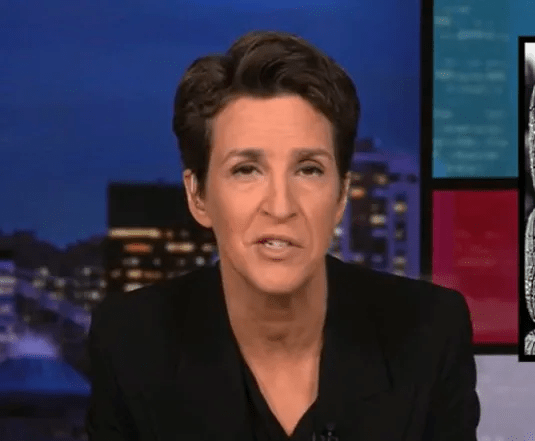
Rachel Maddow Shows Why No-One Should Cave To Trump’s Bogus Lawsuits
Before Trump started suing media companies that offended him for any reason, there was Devin Nunes, the now chief officer of Trump Media, who sued Rachel Maddow for defamation, and Nunes lost.
Jason Easley Aug 6∙Preview READ IN APP
After Rachel Maddow did segments on her MSNBC show talking about Devin Nunes and the Russia scandal, Nunes, who was then a member of Congress, sued Maddow for defamation in 2021.Instead of doing what so many large media companies and high-priced talents did when Donald Trump sued them for defamation in 2024, Rachel Maddow and NBC/Universal fought the case, and a funny thing happened.
Maddow and NBC won.
Reuters reported: In a 24-page decision, Castel said Nunes, a longtime supporter of U.S. President Donald Trump, failed to show Maddow was aware of a July 2020 article in Politico saying the FBI had received the package.The judge found no clear and convincing evidence that Maddow had a “high degree of awareness of probable falsity,” or any evidence that “defendant’s admitted political bias caused defendant to act with a reckless disregard of the truth.”
Nunes’ lawyers and Trump Media did not immediately respond on Monday to requests for comment. Lawyers for NBCUniversal did not immediately respond to similar requests.
There should not have been anything unusual about this outcome. Maddow and NBC did what media companies used to do when faced with bogus defamation lawsuits from subjects of stories.
They fought the case.
PoliticusUSA is independent media that needs your help. Please support our work by becoming a subscriber. Subscribe here
Australian music pioneer, Col Joye, dies
Edited from a story by AAP reporters
Musician, entertainer and entrepreneur Col Joye has died aged 89, after a career that earned him dozens of gold and platinum records, studded with successive number one hits… Col Joye and the Joyboys were the first Australian rock band to reach the American Billboard chart in 1959, touring the US with Billy Thorpe and The Aztecs in the mid-1960s and early 70s.
Joye also toured Vietnam with singer Little Pattie to entertain Australian troops, most famously on August 18, 1966, at Nui Dat when the Battle of Long Tan began nearby. They also visited injured soldiers in hospital after the battle.
Beatlemania impacted Joye’s success, and it was not until 1973 he made another number one single: Heaven Is My Woman’s Love.
In 1983, Joye was awarded the Order of Australia for his work as an entertainer and his philanthropic work. In 1988 Joye was inducted into the ARIA Hall of Fame. The ABC series Long Way to the Top (2001) noted his star power and honoured his career…
Australian singer and songwriter Normie Rowe told the ABC on Wednesday that Joye was one of his idols.
“Col was in my psyche right throughout my entire life. I watched him and I thought, ‘if I’m going to be a singer, that’s the sort of singer I want to be’.”
Sue Milliken named Cinema Pioneer of the Year (edited)
Jackie Keast· AwardsFilmNews August 5, 2025
Veteran producer Sue Milliken will be named Cinema Pioneer of the Year this November, recognised for a career that has helped shape Australia’s screen sector for more than five decades.
Awarded by the Society of Australian Cinema Pioneers, the honour acknowledges not just Milliken’s filmography but her behind-the-scenes influence across funding, governance and policy…
Milliken’s career began in the 1960s, working in continuity on projects such as Skippy. By the following decade, she had carved a path as an independent producer.
Her body of work encompassesThe Odd Angry Shot, The Fringe Dwellers, Black Robe, Sirens, Dating the Enemy, Paradise Road, My Brother Jack, Ladies In Black, which she co-wrote with director Bruce Beresford, and 66 episodes of TV series Farscape.
She also helped usher many more projects to screen via completion guarantor Film Finances, which she represented in Australia from 1980 to 2009, delivering more than $2 billion of production.
She chaired the Australian Film Commission during the mid-90s, helping establish its Indigenous Branch with then CEO Cathy Robinson, and has served on various boards including Screenwest and Screen Producers Australia, where she is a founding member and former president.
Her perspectives on the industry can be seen in her three books: Selective Memory, her memoir; There’s a Fax from Bruce, a collection of correspondence with Bruce Beresford; and a guide to producing, written with Andrena Finlay, Producing for the Screen.
The Cinema Pioneer of the Year award sits alongside a host of other honours for Milliken, who was appointed Officer of the Order of Australia in 2008 for her services to the industry. She is also a recipient of the Longford Lyell Award, a Lifetime Achievement Award from the Australian International Movie Convention and the Chauvel Award from the Gold Coast Film Festival…
Could you write a story in 300 words?

Mslexia <postbag@mslexia.co.uk> Friday 8 August 2025


What kind of writer are you?
I’ve always thought of myself as a poet – and a performer more than anything – but when I read Martha Lane’s piece on flash fiction in issue 103 of Mslexia, it made me wonder… could I write flash?
Maybe you’ll feel the same. I’ve included the entire article below so you can see for yourself.
If you’ve never tried your hand at the form, Martha’s piece might be a game changer – packed with practical advice, surprising insights, and just enough intrigue to make you pick up your pen and give it a go.
And if you find yourself feeling flashy? Our Flash Fiction Competition is open until 22 September. So if you’ve got a brilliant 300-word story, now’s the time to get it down.
I’m not allowed to enter, but I promise you – it’s well worth the price of admission. Place in the top four and you’ll be passing around a copy of Mslexia this Christmas, showing off your published work. Imagine that.
Lucy x
From Aesop’s fables to Ernest Hemingway’s famous ‘For sale: baby shoes, never worn’, flash fiction has always been a part of our storytelling landscape. And given the wealth of new literary zines publishing the genre, it looks like it’s here to stay. These up-and-coming platforms, alongside existing well-established outlets, mean an increasing number of opportunities for flash writers to get their stories showcased and read.
In the next three issues of Mslexia, I will delve into how to make your flash stories as good as they can be – finding ideas, making titles work hard for you, and creating endings that linger in your readers’ minds. Finally I’ll look at how to navigate (possibly even enjoy) the rollercoaster ride of flash publishing and how to build on your success once you’ve found a home for your work. But first, a little introduction into the big wide world of the tiniest stories.
Flash fiction is essentially any story told in under 1,000 words. But there’s so much more to these little gems than their word count. Flashes are succinct stories that get straight to the heart of things. There’s no time for meandering, no space for backstories, minor characters or complicated world building: just intense flashes in the pan. Don’t be put off by this brevity though; flash fiction can tackle themes that are just as profound as those posed by novels: lost love, parenthood, grief and betrayal, to name just a few.
Flash fiction’s superpower is its scope and flexibility. As well as being used to tackle big topics and emotions, it is in a much better position than novels and longer short stories to explore those fascinating quirks of human existence that can’t be sustained for a longer narrative. Why banging your funny bone or a paper cut hurts more than some medical procedures; why we never seem to remember why we walked into a room; the irony of enforcing screentime rules on our kids from behind our phones; the fact house flies hum in the F key – those little moments that we might share over the water cooler but couldn’t expand into a TED Talk.
What makes flash so enjoyable? The answer is concision. The aspect of flash that makes it so daunting to write is precisely what makes these stories so satisfying to read. Inciting incident, drama, conclusion – all in under four minutes? Yes please.
So what stories work best for the genre? Flash fictions are often about emotionally draining things: grief and loss, trauma and heartbreak. The level of intensity that a writer can maintain – and a reader can take – in a short word count is much higher than in a longer form. In that sense, flash is similar to poetry. Indeed, flash is probably as close to poetry as prose can get, and relies on many poetic techniques to make it sing. Rhythm, rhyme and repetition can all be your friends when writing flash.
And what doesn’t work? It’s unlikely that a historical saga or epic adventure would work in a flash – though I’m not saying you shouldn’t try. The best stories are those that zoom in on a specific moment – a realisation, a turning point for your main character. You don’t have enough words for preamble or explanation. Your story should start with action, no matter how low-key that action is. For me the most memorable flashes are those that take an oblique approach to their subject matter; or in which the techniques chosen by the writer make a story we’ve all heard before seem fresh and new.
Where do writers go wrong? Flash fiction shouldn’t be a vignette or descriptive exercise. It must be a complete story; you can be obtuse and lyrical, but there must be plot, movement and change, however minimal. Sometimes writers tackle a plot that is too complicated for a flash fiction; some stories simply can’t be condensed into the maximum word count without losing the essence of what they intend. And the most beautiful emotive words will be wasted if the pacing is wrong and the ending rushed. The best way to avoid these errors is practise; you won’t really find out which stories work until you write them.
While flash fiction is a very constrained form, its meanings are anything but. Some burn bright like pop art, while others are impressionist paintings, providing just enough information for the reader to conjure an image. The fun for the writer is choosing how much to give away, and how far to push an image – my advice is to push it a bit further than you think it can go! This push and pull between the reader and writer, how much the writer is willing to reveal, is what makes flash so great.
ENTER HERE
The Conversation UK The Daily
As Donald Trump tries yet again to force Vladimir Putin closer to some kind of peace negotiation, one strong bargaining chip is the unexpected power of Ukraine’s drone campaign. New research shows these drone attacks have had a far-reaching impact, forcing Russia to move its air defences, stoking fuel price rises and costing Moscow around US$700 million in just a few months.
President Volodymyr Zelensky’s calls for a ceasefire are now underpinned by this added threat Ukraine is able to pose – something Putin would not have predicted at the beginning of the war.

 Robin's Room