
Aaron Poochigian Four Walks in Central Park A Poetic Guide to the Park Familius, September 2025.
Thank you, NetGalley, for providing me with this uncorrected proof for review.
I had mixed feelings about the writing style when I began reading Four Walks in Central Park. However, I became captivated by the way in which Aaron Poochigian brings Central Park to life, although I found his style idiosyncratic. Both the writing, and the material is distinctive, making this book more than a wander through the Park with attention to the familiar. Under Poochigian’s hand memorials, vegetation, sites, and cafes become interesting places to visit as well as a memorial to the Park’s architect, Frederick Olmsted. There are digressions into political and social commentary, and memorable observations about literary and other figures. The four walks include well known sites, and many (at least to me, unknown locations).
Each of the four walks is covered in one chapter, and the sites to visit are listed in the table of contents. The narratives woven around the sites can be read to enhance the walks – or, ignored if what you want is a photo opportunity or to enjoy the plant and animal life. However, I wish that this book had been available on the occasions on which I walked in Central Park. And to return to the animal life, look for the black swans with which any Australian is familiar. Although they become part of the poetry and visual effects in the Park, they are not native to America and their capture in the 1800s could have joined some of the other poignant stories with which the four walks abound. See Books: Reviews for the complete review.

The Shakespeare Garden’s Hidden Bench©Image Credit: Deposit Photos
Behind the well-known garden lies a secluded bench inscribed with lines from ‘A Midsummer Night’s Dream.’ Local writers often claim this spot for peaceful afternoon work sessions. The bench faces west, offering perfect sunset views through the garden’s archway. Medieval herbs mentioned in Shakespeare’s plays grow nearby.

The Pool’s Hidden Grotto©Image Credit: DepositPhotos
A concealed path leads to this natural rock formation overlooking quiet water. Local photographers capture stunning morning mist rising from the pool. Winter reveals ice formations rarely seen elsewhere in the park.
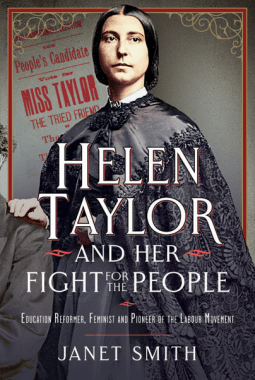
Dr Janet Smith Helen Taylor and Her Fight for the People Education Reformer, Feminist and Pioneer of the Labour Movement Pen & Sword | Pen and Sword History, June 2025.
Thank you, NetGalley and Pen and Sword, for providing me with this uncorrected proof for review.
Janet Smith has amassed a spectacular amount of information. Not only does Helen Taylor, largely unknown, come to life but so much more is gleaned about her mother, Harriet Taylor (later, Stuart Mill) and her stepfather, John Stuart Mill. This is an immensely engaging book. The content is inspiring, in its volume, the range of topics and the enthusiasm with which Smith investigates long held beliefs about Helen Taylor, to show another side to this formidable and remarkable woman. Although the writing is less dynamic than my experience with Pen and Sword publications, its accessibility is intact – the content is such a driving force that this non-fiction book could be classed a ‘page turner.’
There are three parts, covering Helen Taylor’s early years as the daughter of Harriet Taylor, separated from her husband, and close friend of John Stuart Mill; her public life after the death of her mother, John Stuart Mill, and her good friend, Kate Amberly; and the years between 1886 and her death in 1907. See Books: Reviews for the complete review.

Stephanie Kline Raising the Tudors Motherhood in Sixteenth-Century England Pen & Sword | Pen & Sword History, June 2025.
Thank you, NetGalley and Pen & Sword, for providing me with this uncorrected proof for review.
Although there are detailed sightings as well as glimpses of the Tudors with whom we have become familiar, this book is about the many other mothers of varying ranks, wealth, and contributors to the economy and social structure in the Tudor period. Stephanie Kline provides an insightful narrative about these women; their male counterparts; and the medical system, its philosophies and implementation in a patriarchal world. Her acknowledgement, early in the book, of the material she has used is a bonus – no searching to find out if the information that vies with ‘common knowledge’ can be verified. We know that she has used primary sources. As we read, we can also see how she has used them to valuable effect. This is an instructive, engaging, and valuable read, providing information about the period Kline covers and importantly, raising questions and responses about mothering that extend beyond the Tudor world.
The first part of the book is a mine of information about the medical ideas and practices that informed doctors and midwives and their patients in the Tudor period. It is not particularly unusual to find that women were seen as secondary to men but is fascinating to learn about the detail. It is unusual to be told that in this period, pregnant women’s husbands were advised by the medical profession to be dutiful. An example of a husband not fulfilling his role in preparation for the birth is in a letter from the wife to her husband’s mother expressing concern. A later example shows a father conveying his distress that his daughter is not being adequately cared for. It is also remarkable to be shown that the numbers of women dying in childbirth was not the picture we have been led to believe (although the increase after the introduction of male physicians to replace midwives makes familiar reading). Kline has the research to challenge understood ideas about motherhood and medicine. At the same time, her work supports much of what has been understood of the period and the treatment of women. An important outcome of reading these chapters is recognising that significant opportunities for further understandings of the past exist, Kline’s research serving a doubly valuable purpose. See Books: Reviews for the complete review.
Canberra Writers Festival
Global Stars at 2025 Canberra Writers Festival
We’re getting closer to releasing the full 2025 festival lineup, but for now, here is a sneak peak at international writers appearing at CWF2025!
Dream State: In Conversation with Eric Puchner
Tuesday 7 October | 6pm National Library of Australia
Join internationally acclaimed American novelist Eric Puchner as he visits Canberra for a special event centred around his latest novel, Dream State – an instant New York Times Bestseller and Oprah Book Club Pick!
In Dream State, Puchner has delivered a compelling love triangle set against the panoramic Montana skyline. Written with tart humour and heart, this book follows friendship, marriage, and and the march of climate change, as events of an impulsive summer reverberate across fifty years and span generations.
Puchner’s book launched earlier this year to much acclaim:
“A gorgeous, gripping epic…being hailed by some as the next great American novel.” – BBC (“40 of The Most Exciting Books to Read in 2025”)
‘The kind of book you don’t want to put down’ Oprah Winfrey
‘Puchner’s writing is almost flawless… moving, funny and utterly engrossing’ The Times
Renowned for the sheer beauty of his sentences and immersive storytelling, Puchner has earned numerous prestigious accolades, including as a winner of a California Book Award, Award in Literature from the American Academy of Arts and Letters and as a finalist for the PEN/Faulkner Award.
Don’t miss this unique opportunity to hear Eric Puchner in conversation with Artistic Director of the Canberra Writers Festival, Andra Putnis.

Girl on Girl: Modern Misogyny Gone Global
Fri 17 Oct 6:00 PM Louie | Verity Lane Markets General Admission 60 Mins
What have decades of reality TV, social media, porn and the beauty industry done to women and feminism around the world? Here from the UK, Pulitzer-nominated journalist and author Sophie Gilbert delves into the complex landscape of modern misogyny in her latest book Girl on Girl: How Pop Culture Turned a Generation of Women Against Themselves.
Women are saturated in a beauty culture based on male desire and all-pervasive pornography. Through media and advertising, they’re warned not to be too edgy, too assertive, or too angry. Women are being pitted against themselves and each other in service of the male gaze.
Sophie will be in conversation with much-loved Canberra journalist and author, Virginia Haussegger, who has just emerged from an extensive period of research with her explosive work Unfinished Revolution: The Feminist Fightback. Together they will take a birds-eye view of where women find themselves.
Sophie Gilbert is a staff writer at the Atlantic, where she writes about television, books, and popular culture. She was a finalist for the 2022 Pulitzer Prize in Criticism and has previously written for the New York Times, Washington Post, the New Republic, and the Brooklyn Rail. She lives in London.
Grief and Glamour in Hollywood: In Conversation with Griffin Dunne
Saturday 25 October | 1.30pm Verity Lane Markets
Griffin Dunne grew up in the glamorous, fantastical world of 1980s Hollywood, surrounded by celebrities – with Joan Didion an aunt and Carrie Fisher as his best friend. He was once even saved from drowning by Sean Connery. He went on to build his own exciting career as a Hollywood actor, director and producer.
But amongst the drugs, debauchery, and hilariously bad film business decisions, Griffin and his family experience horrific loss: his twenty-two-year-old sister, Dominique, a rising star, brutally strangled by her ex-boyfriend. This event led to one of the most infamous public trials of the decade.
The Friday Afternoon Club is no mere celebrity memoir. It is a family story and searing portrait of life and loss in the made-up, but all-too-real world of Hollywood. Over from the U.S., Griffin’s conversation with Australia’s master of the stage and author of The Empress Murders, Toby Schmitz, will be jaw-dropping.
GINSIGHTS: Kelly Rimmer Thursday 21 August | 6pm Big River, 1 Dairy Road Fyshwick
CWF Partners Big River Distilling Co, Paperchain Bookstore and MARION welcome guest author Kelly Rimmer.
Kelly writes historical and contemporary fiction, including The Warsaw Orphan, The Things We Cannot Say, The Secret Daughter, and The Paris Agent and has sold more than 2 million books. Her books have been translated into dozens of languages and have appeared on bestseller lists around the world, including the New York Times, Wall Street Journal, and USA Today. The central character, Fiona Winslow, is intent on restoring a dilapidated country mansion on her family’s estate. When a book, The Midnight Estate, catches her attention, Fiona is plunged into a tale that mirrors her own life – a story of love, loss and betrayal. She dismisses the similarities as coincidence, but as she’s drawn deeper into the story, the lines between fiction and reality blur, and Fiona must ask herself: how well does she know her family?
Cindy Lou becomes a lady who lunches
Courgette
‘Ladies who lunch’ has always sounded rather derogatory, suggesting that those who do so have nothing better to do with their lives. My riposte is – how could anything have been better than the delightful lunch I had at Courgette with two women friends? Celebrating an 80th birthday was only one feature of the lunch. To the food later, but importantly it was clear that these three women had far more in their lives than lunching, but were very happy to add doing so to their vast repertoire of activities. Travelling, political activity and serious discussion and debate, singing in a choir, reading, writing, gardening, mothering and grand mothering, partying and dancing, walking dogs…so much, and time remaining in these busy women’s lives to enjoy Courgette’s food, friendly and efficient service, lovely ambience and some special treats as well as our chosen meals.
The ash butter and rolls is one of my favourites – and we given a serve of butter each. Then to entrees – the duck and quail, scallops, and tomato and burrata were delicious. With our main course – stuffed courgette blossoms and mushrooms for the three of us – we were served a complimentary pureed potato side. Forgoing dessert was easy, as the coffees arrived with a chocolate, and then came the birthday treat of berries, gelato and mousse.

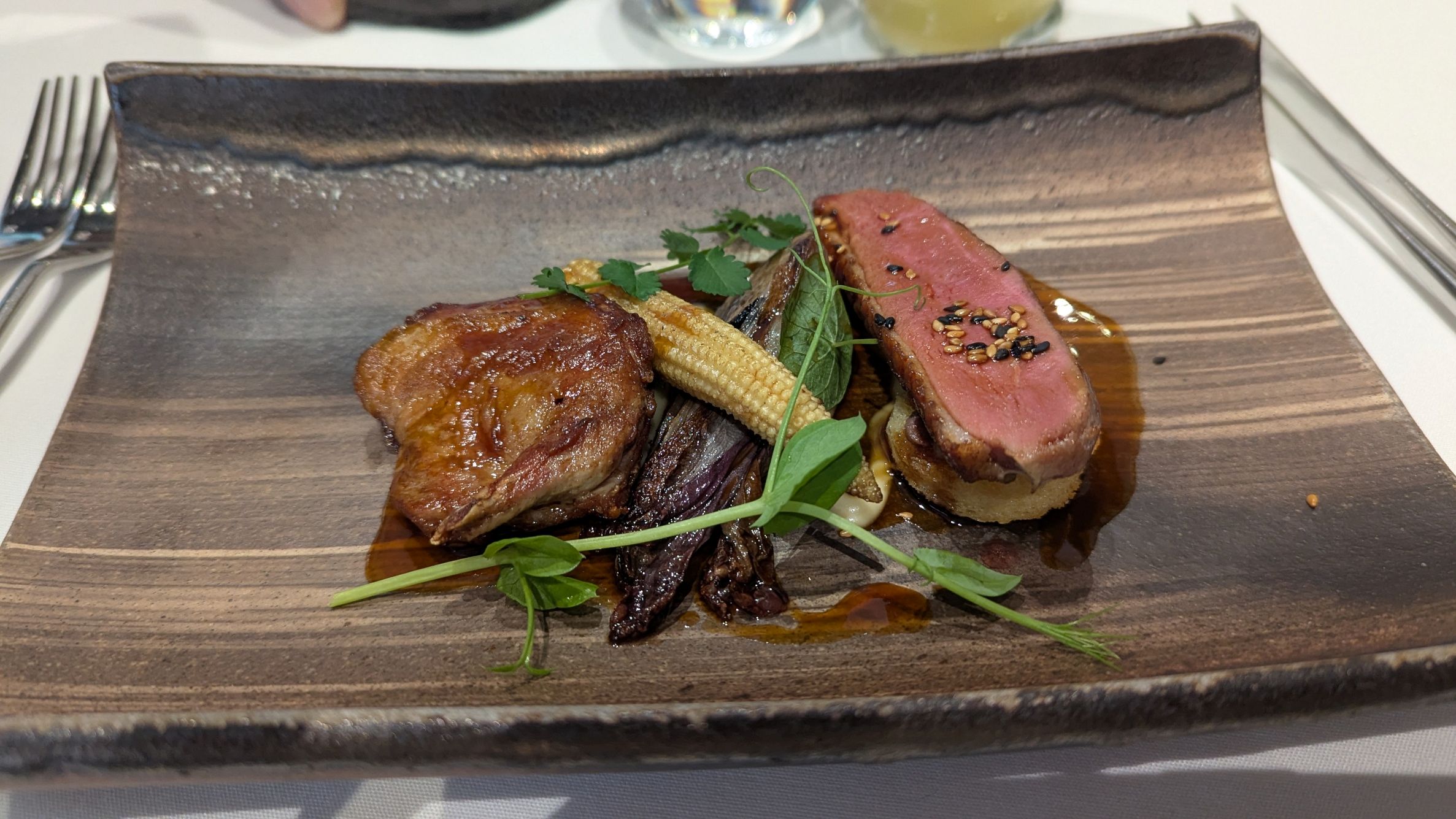





China House at Erindale
The menu is extensive, featuring choices from ‘Old fashion’, ‘Gluten Free’, ‘Vegetarian’, ‘House Favourites’, and a wide range of dishes that are exciting and different. Why I didn’t take a photo of the fantastic aubergine, tofu and mushroom dish I do not understand. As delightful as it was, it certainly didn’t disappear before I could do so. However, the other dishes we shared appear below.
The service was friendly and efficient, the dishes hot and full of flavour, and the atmosphere lively.





Legendary movie critic David Stratton dies
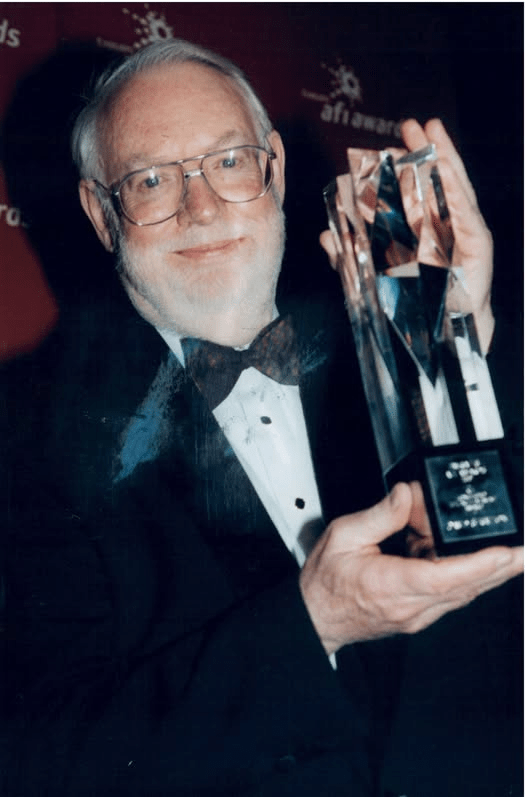
SBS Australia and SBS On Demand
David: “It’s rubbish from start to finish.”
Margaret: “It’s one of the best films of the year.”
Only The Movie Show could give us moments like this.
Vale David Stratton.
The New Daily Aug 14, 2025, updated Aug 14, 2025
Respected and loved Australian movie critic David Stratton, 85, has died, his family announced on Thursday afternoon.
Stratton reviewed thousands of films with co-presenter Margaret Pomeranz on The Movie Show on SBS and At the Movies for ABC TV as well as in print.
His family said he died peacefully in hospital near his home in the Blue Mountains.
“David’s passion for film, commitment to Australian cinema, and generous spirit touched countless lives,” said his family in a statement.
“He was adored as a husband, father, grand and great grand father and admired friend.
“David’s family would like to express their heartfelt gratitude for the overwhelming support from friends, colleagues, and the public recently and across his lifetime.”
Stratton, a Member of the Order of Australia, was considered a national treasure.
Prime Minister Anthony Albanese led an outpouring of tributes.
“With dry humour and sharp insight, David Stratton shared his love of film with our country,” said Albanese.
“All of us who tuned in to At the Movies respected him for his deep knowledge and for the gentle and generous way he passed it on. May he rest in peace.”
ABC radio veteran and known atheist Phillip Adams posted on X: “Vale David Stratton. Old friend and colleague now reviewing movies for the Almighty.”
Stratton retired in 2023 because of ill health, after a celebrated career as a film critic, writer, educator and historian that spanned 57 years.
An English migrant who arrived in Australia as a “ten pound Pom” in 1963, Stratton worked for SBS from 1980 as their film consultant and introduced the SBS Cinema Classics on Sunday nights.
His best-known role was co-hosting the long-running SBS TV program The Movie Show with Margaret Pomeranz, from 1986 to 2004, when they moved to the ABC to co-host At the Movies with Margaret and David.
They retired from the show in 2014.
He wrote six books and lectured in film history at the University of Sydney’s Centre for Continuing Education until 2023.
He also served as a jury member at many prestigious international film festivals throughout his career.
Stratton’s life was the focus of the documentary A Cinematic Life, which opened in 2017.
“It’s set in a period of Hollywood history that I find fascinating … And I grew up at a time when there was a new musical just about every week,” he said.
“All the popular songs that we were listening to – that’s where they came from. It was before the arrival of rock’n’roll and Elvis Presley and Bill Haley and all that sort of stuff.”

Stratton’s experience interviewing Gene Kelly, aka Singin’ in the Rain‘s Don Lockwood, also proved to be a defining moment in his career as a film critic.
“One of the most interesting days of my life was the one I spent with Gene Kelly at his home.
“He was so friendly and so kind and I was just this young and impoverished film critic doing an interview with this great entertainer … And he was lovely. We literally spent a whole day at his house and he made sandwiches and I just recorded him talking away.”
Stratton’s family issued a special request to moviegoers, asking that they celebrate his “remarkable life and legacy” by watching their favourite movie, or David’s favourite movie, Singin’ In the Rain.
Details of a public memorial service are expected to be announced soon.
-with AAP
Australian Politics
Bob McMullan
Labor vulnerable nowhere in particular, everywhere in general
The best attempt at a post-election pendulum was published recently by Dr Kevin Bonham, who also did a terrific job explaining developments during the preference count in the recent Tasmanian election.
Of course it shows the remarkable scale of the 2025 Labor victory and the consequent scale of the Liberal challenge in 2028.
But we all knew that, although it is useful to have it defined more specifically.
For example, Bonham’s pendulum shows that there would need to be a more than 6% swing against the government before it loses its majority. A 6.06% swing would see Labor lose 18 seats, but retain its majority as it would still have 76 seats.
The coalition would become the largest party (assuming it stays together) after a 7.2% swing and would require a massive 8.9% swing to gain a majority.
Behind the statistics is another story. The breadth of the Labor victory.
Except for the National Party heartland, the ALP won everywhere. The Liberals lost everywhere. A look behind the figures show the strength of the Labor vote in previously Liberal heartland. For example, Bonham and Ben Raue in his excellent website, The Tally Room, both estimate that on a two-party-preferred analysis Labor would have won Bradfield which has always been the safest of Liberal seats. It was in fact the bluest of blue-ribbon seats for the Liberals but not only have they lost the seat to an Independent, they would probably have lost it in a direct contest with Labor. This is an indication of the magnitude of the challenge the Liberals face in regaining the previously safe seats they have lost to Teal candidates. This problem is exacerbated by the National Party’s continuing love affair with climate denialism.
Looked at on a State-by -state basis, the result is equally remarkable.
There was a swing to the ALP in every state and territory except the Northern Territory. The swings ranged from -1.29 in the NT to 9.01 in Tasmania. More significantly, Labor won more than 55% of the two-party preferred vote in every state except Queensland, in which they won 49.42%, a swing of 3.47 in their historically weakest state. This suggests the Liberals need to have a strategy for the whole country rather than targeting any particular state or region, while the Labor Party needs to defend on a similarly broad basis.
This is reinforced when the character of the seats in contest based on the pendulum are analysed.
Of the 18 seats it would take to reduce the ALP to a mere 76 seats, according to the AEC nomenclature, 3 are inner city, 10 are outer metropolitan 2 are provincial and 3 are rural.
In fact, although I understand the rationale for the AEC’s classifications I don’t always agree with their conclusions. The three Labor “marginals” which the AEC call rural are Gilmore, Leichardt and McEwen. I would consider each of them to be more realistically classified as regional or provincial. Leichardt is a very large electorate on Cape York peninsula, but its heart is the major regional city of Cairns. Gilmore is on the South Coast pf New South Wales and based around the major centre of Nowra. McEwen includes outer Melbourne suburbs as well as many small to medium towns. In voting pattern it tends to reflect outer-metropolitan rather than other rural divisions
In addition Labor would need to defend Melbourne, Wills and Brisbane from potential threats from the Greens.
The combined impact of this assessment is that Labor has to prioritise the defence of 6 inner metropolitan seats, 10 outer metropolitan seats and 6 regional or provincial seats. That means defending everywhere.
But it also means the Liberals have to seek seats everywhere, in Teal seats, and seats across the range of regions and demographics.
In fact, they will have to campaign everywhere but in the National Party seats which will have no possible impact on any federal election in the next decade.
For the Liberal Party this is a strategic challenge. Realistically they need to start with a two-election strategy while seeking opportunities to do better than that should the Labor government falter. However, it is never sustainable in a major party to concede that it will take two elections to win. Therefore, they will need some refined strategic and tactical thinking.
For the government, while this is a nice problem to have, it is a strategic challenge in terms of electoral priority setting.
There are also big decisions for the Greens, Teals and other House Independents, but it is unlikely that their decisions will affect the overall outcome of the next election, although they could have a significant impact in a number of seats.
In broad terms the two major parties face a similar strategic challenge. Needing to win everywhere (or defend everywhere) creates a resource allocation and priority setting challenge.
However, having seats to defend everywhere is far preferable to having too few anywhere.
Of course, there are other very significant factors arising from the last election, such as the Liberals crisis in support amongst younger voters and women.
The low primary vote for both major parties is also a point of shared vulnerability.
Policy issues and international economic and geo-strategic events will play a big part in determining any election.
However, all these factors will play out in the lead up to 2028 against a backdrop of the strategic and tactical issues arising from the comprehensive nature of Labor’s 2025 victory.
First published in Pearls and Irritations.
Australian Labor Party Facebook Post 16 August 2025.
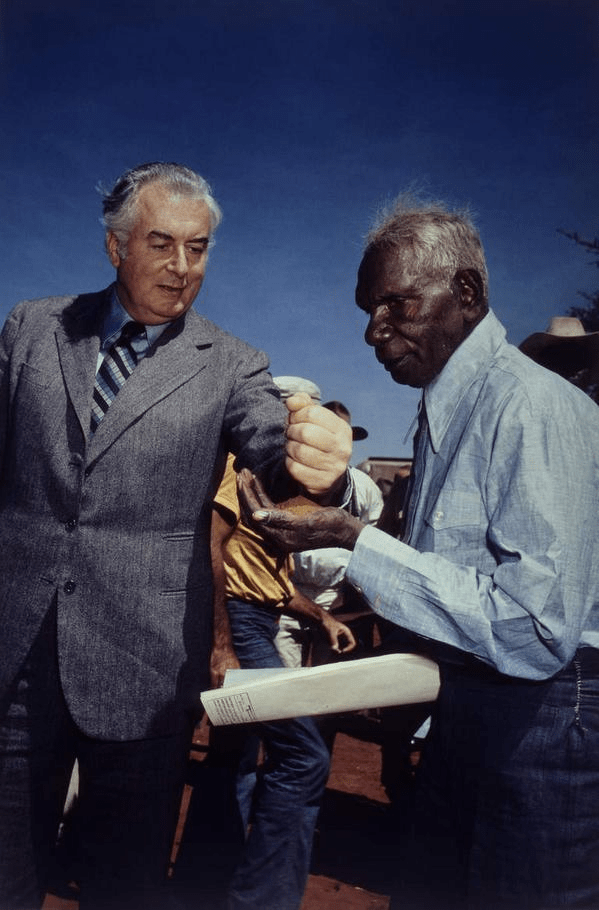
On this day 50 years ago, Gough Whitlam and Vincent Lingiari made history. In returning land to the Gurindji people, it marked the first time an Australian Prime Minister acknowledged Aboriginal land rights.
American Politics
What the 7 key swing states think of Trump after 200 days in office©Metro
Story by Steve Charnock
The latest data from Civiqs appears to reflect spreading voter disquiet in the states that decided the 2024 election (and will most likely to decide the next one too). The current approval ratings for the seven swing states are as follows…
Arizona • Approve: 45% • Disapprove: 52% • Neither approve nor disapprove: 3%
Georgia • Approve: 43% • Disapprove: 52% • Neither approve nor disapprove: 5%
Michigan • Approve: 43% • Disapprove: 53% • Neither approve nor disapprove: 4%
Nevada • Approve: 47% • Disapprove: 49% • Neither approve nor disapprove: 4%
North Carolina • Approve: 44% • Disapprove: 53% • Neither approve nor disapprove: 3%
Pennsylvania • Approve: 45% • Disapprove: 52% • Neither approve nor disapprove: 4%
Wisconsin • Approve: 46% • Disapprove: 51% • Neither approve nor disapprove: 3%
As we can see from the figures, there is no longer a single swing state that has a higher approval rate than disapproval rate for Trump. In six of the seven key states, over half of those people quizzed replied that they were not in favour of how President Trump has conducted his second presidency so far.
Even with approval lagging, some pro-Trump voters still cite specific wins – whether on border enforcement, regulatory rollbacks or foreign affairs. Yet frustration amongst Trump’s voter base is building too. Now, the numbers seem to suggest, that a fair few Trump supporters are changing their tone.
In terms of data, perhaps the best compare and contrast figures out there are how those in the seven swing states actually voted back in 2024. In this and the next slide we can see the US presidential election results from last year…
Arizona • Trump: 52% • Harris: 47%
Georgia • Trump: 51% • Harris: 49%
Michigan • Trump: 50% • Harris: 48%
Nevada • Trump: 51% • Harris: 47%
North Carolina • Trump: 51% • Harris: 48%
Pennsylvania • Trump: 50% • Harris: 49%
Wisconsin • Trump: 50% • Harris: 49%
As we can see, Trump narrowly won in all seven. Recent approval ratings, as we’ve just explored, aren’t as kind. With the mid-terms approaching, it’s bound to be cause for some concern in the White House.
Heather Cox Richardson from Letters from an American <heathercoxrichardson@substack.com>
August 14, 2025
Today, flanked by California’s Democratic elected officials and union leaders, California governor Gavin Newsom responded to Trump’s attempt to strongarm the Texas legislature into redistricting the state to give Trump the five additional congressional representatives to which he feels “entitled.” Newsom announced that California will hold a special election on November 4 for voters to consider redistricting their state temporarily if Texas redistricts, so that California can neutralize Trump’s rigging of the state of Texas. The plan would only go into effect if Texas—or any of the other states pressured by Trump to redistrict to get more votes—launches its mid-decade redistricting that is transparently designed to help resurrect the Republicans’ prospects for 2026 and 2028. (My emphasis)
After years of criticism that Democrats have not fought hard enough against Republicans’ manipulation of the system to amass power, the California plan, along with Newsom’s announcement of it, flips the script. The plan leverages Democrats’ control of the most populous state in the Union to warn Republicans to back away from their attempt to rig the 2026 election.At the same time, the plan’s authors protected against claims that they were themselves trying to rig the game: the plan goes into effect only if Republicans push through their new maps, and it declares that the state still supports the use of fair, nonpartisan redistricting commissions nationwide, a system Republicans oppose.
Newsom’s announcement of the plan continued a shift in Democratic rhetoric from defense to offense. After years of Trump and Republicans attacking California, Newsom celebrated his state and the principles it reflects. “We are in Los Angeles, the most diverse city, in the most diverse county, in the most diverse state, in the world’s most diverse democracy,” he said. “And I’ve long believed that the world looks to us…to see…it’s possible to live together and advance together and prosper together across every conceivable and imaginable difference. What makes L.A. great, what makes California great, and what makes the United States of America great—is that…we don’t tolerate our diversity, we celebrate our diversity, and it’s a point of pride, because we’re all in this together,” he said.
California has the population of 21 smaller states combined, he pointed out, and the fourth largest economy in the world. Pushing back on the trope that says, “Don’t mess with Texas,” Newsom warned: “Don’t mess with the great Golden State.” In a reference to the 1846 California Republic, also known as the “Bear Flag Republic”—a history captured by the California grizzly bear on the state’s flag—Newsom echoed the words of Representative Adam Schiff (D-CA) when he added: “Donald Trump, you have poked the bear, and we will punch back.”Newsom emphasized that democracy is under siege by Trump and his MAGA loyalists, a point illustrated by the fact that officials had sent more than a dozen masked and armed Border Patrol agents to the Japanese American National Museum in the Little Tokyo neighborhood of Los Angeles, where Newsom was speaking. Some of the agents were carrying rifles. A Border Patrol chief, Gregory Bovino, made it clear the agents were there to intimidate state officials, saying: ““We’re here making Los Angeles a safer place, since we don’t have politicians who can do that. We do that ourselves.”
Trump “doesn’t play by a different set of rules,” Newsom said. “He doesn’t believe in the rules. And as a consequence, we need to disabuse ourselves of the way things have been done…. We have got to meet fire with fire…. So that’s what this is about. It’s not complicated. We’re doing this in reaction to a president of the United States that called a sitting governor of the state of Texas and said, find me five seats…. We can’t stand back and watch this democracy disappear, district by district all across this country…. We need to be firm in our resolve. We need to push back.” He called this moment “a break the glass moment for our democracy, for our nation.”
Newsom called for Americans to “[w]ake up to what Donald Trump is doing…. Wake up to the assault on institutions and knowledge and history. Wake up to his war on science, public health, his war against the American people. This is a guy who lays claim to want to get a Nobel Prize sitting there and bending his knee to Mr. Putin.”
“We do have agency,” Newsom reminded his audience. “We’re not bystanders in this world. We can shape the future.” Noting that “this time requires us to act anew, not just think anew,” Newsom nodded to President Abraham Lincoln’s famous call from 1862: “The dogmas of the quiet past, are inadequate to the stormy present. The occasion is piled high with difficulty, and we must rise—with the occasion. As our case is new, so we must think anew, and act anew. We must disenthrall ourselves, and then we shall save our country.”
Newsom’s team has been garnering attention lately by trolling Trump on social media, taunting the president with grandiose, jerky, all-caps posts that mimic Trump’s own. *Today, Newsom continued that taunting by pointing out that Trump wants to rig the district maps because he knows his party is going to lose the midterms. Newsom called Trump “a failed president” and pointed to Trump’s dispatch of the Border Patrol to intimidate the people in attendance at the event as proof Trump is “weak…broken, someone whose weakness is masquerading as his strength…. The most unpopular president in modern history.”On a day in which a new report this morning from the Bureau of Labor Statistics showed flashing red lights over inflation caused by Trump’s tariffs, Newsom trolled Trump by echoing the president’s triumphant promise that April 2, when he announced those tariffs, was “Liberation Day. Newsom called today’s announcement “Liberation Day in the State of California.”
When a reporter asked Newsom whether his mimicry of Trump’s social media posts is a strategy, he replied: “I hope it’s a wake up call…. If you’ve got issues with what I’m putting out. You sure as hell should have concerns about what he’s putting out as president…. But I think the deeper question is, how have we allowed the normalization of his tweets through social posts over the course of the last many years to go without similar scrutiny and notice.”
In a press release about the event, Newsom’s office emphasized that Democratic leaders from across the country have been launching similar broadsides against Trump’s push for redistricting, quoting Arizona Senator Ruben Gallego, Michigan Senator Elissa Slotkin, New York governor Kathy Hochul, New Jersey governor Phil Murphy, and Illinois governor J.B. Pritzker.
After the events, Newsom’s press office posted on social media: “DONALD IS FINISHED—HE IS NO LONGER “HOT.” FIRST THE HANDS (SO TINY) AND NOW ME—GAVIN C. NEWSOM—HAVE TAKEN AWAY HIS “STEP.” MANY ARE SAYING HE CAN’T EVEN DO THE “BIG STAIRS” ON AIR FORCE ONE ANYMORE—USES THE LITTLE BABY STAIRS NOW. SAD! TOMORROW HE’S GOT HIS “MEETING” WITH PUTIN IN “RUSSIA.” NOBODY CARES. ALL THE TELEVISION CAMERAS ARE ON ME, AMERICA’S FAVORITE GOVERNOR. EVEN LOW-RATINGS LAURA INGRAM (EDITS THE TAPES!) CAN’T STOP TALKING ABOUT MY BEAUTIFUL MAPS. YOU’RE WELCOME FOR LIBERATION DAY, AMERICA! DONNIE J MISSED “THE DEADLINE” (WHOOPS!) AND NOW I RUN THE SHOW. THANK YOU FOR YOUR ATTENTION TO THIS MATTER! —GCN”.*
The office followed that post up with one that recalled Trump’s February 2025 reference to himself as a king, a reference that likely referred to a decades-old puff piece that called Trump “the king of New York.” After a popular outcry at Trump’s apparent claim to a throne, the White House followed up with an AI-generated image of the cover of what appeared to be Time magazine showing Trump wearing a crown in front of the New York City skyline with the legend “Long live the king.”
Newsom’s version replaced Trump’s image with his own, symbolically taking over turf that at the height of his popularity Trump considered his own. It declared: “A SUCCESSFUL LIBERATION DAY! THANK YOU!”—
Notes:https://abcnews.go.com/Politics/newsom-make-announcement-redistricting-after-threatening-end-trumps/story?id=124651447https://www.gov.ca.gov/2025/08/14/governor-newsom-launches-statewide-response-to-trump-rigging-texas-elections/https://www.nytimes.com/2025/08/14/us/newsom-la-immigration-agents.htmlhttps://www.nytimes.com/2025/02/19/us/politics/trump-king-image.htmlhttps://www.snopes.com/fact-check/white-house-post-trump-as-king/https://bellanyc.com/the-king-of-new-york-donald-trump/https://www.presidency.ucsb.edu/documents/second-annual-message-9YouTube:watch?v=9xshWDUr_fAX:GovPressOffice/status/1956179690449985876GovPressOffice/status/1956196831261851887
*

Heather Cox Richardson from Letters from an American <heathercoxrichardson@substack.com> August 17, 2025
On the heels of President Donald J. Trump’s Friday meeting with Russia’s president Vladimir Putin in Anchorage, Alaska, Trump will meet with Ukraine’s president Volodymyr Zelensky Monday afternoon at the White House. According to Barak Ravid of Axios, Trump called Zelensky from Air Force One on the way home from Alaska. Secretary of State Marco Rubio and White House special envoy Steve Witkoff were also on the hour-long call. The leaders of the European Commission, Finland, France, Germany, Italy, the North Atlantic Treaty Organization (NATO), and the United Kingdom then joined the call for another half hour.
In the call, Trump embraced Putin’s view of the conflict, telling Zelensky and European leaders that Putin does not want a ceasefire. Trump indicated that he is abandoning his own demand for a ceasefire and adopting Putin’s position that negotiations should take place without one. Zelensky insists on a ceasefire before negotiations. After the call, Trump posted on social media that “it was determined by all that the best way to end the horrific war between Russia and Ukraine is to go directly to a Peace Agreement, which would end the war, and not a mere Ceasefire Agreement, which often times do not hold up.” “All” is doing a lot of work in that sentence: it appears to mean Putin, with the possible agreement now of Trump.
Key unanswered questions from Friday’s summit were why it ended so abruptly, with the cancellation of a planned luncheon and more discussions, and why Trump immediately told Fox News Channel personality Sean Hannity, “Because of what happened today, I think I don’t have to think about [further sanctions on Russia] now. I may have to think about it in two weeks or three weeks or something, but we don’t have to think about that right now.”
The abrupt cancellation could mean that U.S. officials sent Putin packing without lunch because he would not agree to a ceasefire. But it seems worth keeping on the table that Trump has recently exhibited both an inability to focus on any topic, and a need to live in a carefully constructed world that ignores reality and assures him he is the best and the brightest. A high-stakes meeting with principals about a very real situation might have been too much for him to manage for a full day. (My emphasis)
At the press conference following the summit, NBC News White House correspondent Peter Alexander reported that what struck him was “the looks on the faces of a lot of the American delegation here. Karoline Leavitt…, Steve Witkoff, who came into the room, then left quickly, then came back in. Leavitt appeared to be a bit stressed out, anxious. Their eyes were wide, almost ashen at times.”
At 8:31 this morning, Trump posted one word, “bela,” on his social media account. California governor Gavin Newsom’s social media account, which has been trolling Trump by imitating his boastful, insulting, all-caps posts, wrote: “We broke Donald Trump.”
As of midday Sunday, there appeared to be no mention of the Alaska meeting on the State Department’s website, although it has been updated since Friday to acknowledge Indonesia Independence Day and the Gabonese Republic National Day.
What is clear from the summit, though, is that Trump and Putin badly miscalculated the nature of power in democracies.
It has seemed since 2016 that Putin believed that if he could drive a wedge between the U.S., NATO countries, and other allies, which together have defended a rules-based international order since 1949, he could break that order. Then, absent the system that worked to keep big countries from invading smaller ones, he could take over parts of Ukraine and possibly other countries around Russia. Together, Putin and Trump have gone a long way toward aligning the U.S. government with Putin and other authoritarians. In his first term, Trump talked of leaving NATO, but those in his administration who understood the nature of power prevented him. Now he is operating without those professionals and has shifted the U.S. to a foreign policy that is fraying our relationships with other countries.But U.S. strength in international relations has always been its relationships, and with the U.S. withdrawing from its traditional democratic alliances, others are strengthening their relationships without the U.S. Today, at a meeting with Zelensky in Brussels, European Commission president Ursula von der Leyen stressed that international borders cannot be changed by force. She called for Ukraine to become “a steel porcupine, indigestible for potential invaders.” French president Emmanuel Macron said that Ukraine’s borders must be honored and that “if we show weakness today in front of Russia, we are laying the ground for future conflict.”
These allies are standing together against Putin and, if necessary, against Trump. Von der Leyen will accompany Zelensky to a meeting at the White House on Monday. So will French president Emmanuel Macron, Italian prime minister Giorgia Meloni, German chancellor Friedrich Merz, NATO secretary general Mark Rutte, United Kingdom prime minister Keir Starmer, and Finnish president Alexander Stubb.
National security scholar Tom Nichols noted on social media that it “suggests something went very wrong in Alaska if this many European leaders are coming to Washington on short notice.”
Trump has misunderstood the nature of power in a democracy at home, too. Rather than building domestic coalitions to support the government, he is overseeing the takeover of the government by a radical minority that seems to think the way to build power is for the government to attack its own people.
The administration’s defunding of scientific research, medical care, environmental protection, food safety and security, and emergency management all threaten Americans’ health, safety, and security. Its attacks on history and education, as well as its firing of women and racial and gender minorities, seem designed to drive wedges among Americans. Its incarceration and disappearing of undocumented migrants both creates an “other” for Trump loyalists to hate and provides a warning of what could happen to the regime’s opponents.
Now, under the guise of fighting crime, the administration has quite literally turned guns on the American people.
On June 7, Trump deployed 700 Marines to Los Angeles and federalized 4,100 California National Guard personnel after scattered protests of immigration raids. Administration officials argue that the troops were not engaged in law enforcement but were simply protecting federal agents. California governor Gavin Newsom sued the administration to limit the use of the military in Los Angeles. In the trial, held last week, lawyers for the federal government said troops can protect federal agents wherever they go, effectively asserting that there are no limits to how a president can use troops domestically despite the 1878 Posse Comitatus Act saying the opposite.
That deployment was so deeply unpopular that, as Shawn Hubler of the New York Times reported in July, of the 72 soldiers whose enlistment was set to expire during the deployment, two had already left and 55 said they would not extend their service: a 21% retention rate when the normal retention rate is 60%. One told Hubler: “This is not what the military of our country was designed to do, at all.”
But if Trump’s deployments of troops in states can be challenged under the Posse Comitatus Act, that’s a harder call in Washington, D.C., which is overseen by Congress. There, the president controls the National Guard—in contrast to what Trump claimed in 2021—and so did not need additional authority. In addition, the 1973 Home Rule Act that established limited self-government in the city provided that the president could take control of the police department there. Trump is the first to do so.
On Monday, August 11, Trump announced he was placing the Washington, D.C., police department under federal control and deploying National Guard troops there. He asserted that violent crime in the city is “getting worse” and in an executive order claimed that “crime is out of control” in the city.
This is a transparently manufactured excuse to enable the administration to take over a Democratic city with troops they control. In fact, crime in Washington, D.C., has been trending downward for decades and violent crime is now, according to the Department of Justice’s own statistics, at a 30-year low. There is also the sticky little problem of the fact that Trump pardoned about 1,500 of those convicted of crimes for their participation in the riot of January 6, 2021, and that under his direction, the Department of Justice dismissed all pending cases against the remaining January 6 defendants. Many of those defendants attacked police officers.
More generally, the administration seems to be encouraging violence rather than shunning it. As Anna Merlan of Mother Jones reported on Friday, the White House, Immigration and Customs Enforcement, and the Department of Homeland Security joke on social media about cruelty and torture, suggesting it’s fun to hurt people. They are sanitizing and popularizing state violence. Trump’s pardoning of drug trafficker Ross Ulbricht, sentenced to life in prison, and his welcome to the U.S. of a man convicted of killing three people in Spain suggest the president’s support for “law and order” is coverage for his own political ends.
MAGA’s violent rhetoric is bearing fruit in the shooting of two prominent Minnesota state lawmakers and their spouses in early June, killing two. Then, on August 8, a Georgia man who blamed the covid-19 vaccine for making him depressed and suicidal fired more than 180 shots into the Atlanta headquarters of the Centers for Disease Control and Prevention, killing police officer David Rose, a 33-year-old former Marine.
Yesterday the Republican governors of West Virginia, South Carolina, and Ohio all said they would send National Guard troops to Washington, D.C., to support Trump’s takeover of the city. They will be funded by the federal government—that is, our tax dollars. Journalist Philip Bump illustrated that the true goal of the forces in the city has little to do with actual crime rates by running the numbers. He showed that 43 cities in the states sending troops to Washington, D.C., have higher rates of violent crime than the capital does.
The Trump administration is launching a classic authoritarian project, attempting to take over a country through division and fear. But they badly misunderstand the nature of power. If they succeed, they will control a badly diminished United States of America, one that has fallen to the level of a country like Russia, far from the powerhouse it was when we recognized that the extraordinary strength of our nation always came not from force, but from alliances.
There is one thing Trump’s military deployments against the American people have accomplished though: media mentions of the Epstein files have plummeted.—
Notes:https://www.axios.com/2025/08/16/trump-zelensky-meet-white-house-putin-summithttps://www.wsj.com/world/europe/trump-tells-europeans-he-is-open-to-u-s-security-guarantees-in-ukraine-347892f6https://www.state.gov/newsroom/https://kyivindependent.com/international-borders-cannot-be-changed-by-force-von-der-leyen-says-in-brussels-ahead-of-trump-meeting/https://www.justice.gov/usao-dc/pr/violent-crime-dc-hits-30-year-lowhttps://www.pbump.net/o/more-people-in-ohio-need-protection-from-violent-crime-than-do-people-in-d-c/?shttps://www.whitehouse.gov/presidential-actions/2025/01/granting-pardons-and-commutation-of-sentences-for-certain-offenses-relating-to-the-events-at-or-near-the-united-states-capitol-on-january-6-2021/https://www.motherjones.com/politics/2025/08/trump-administration-propaganda/https://www.cbsnews.com/news/national-guard-los-angeles-deployment-trial-day-3/https://www.nytimes.com/2025/07/16/us/trump-national-guard-california.htmlhttps://www.usatoday.com/story/news/politics/2025/08/13/trump-dc-police-national-guard/85622174007/https://www.bbc.com/news/articles/cz7e0jve875ohttps://www.nytimes.com/2025/07/24/world/americas/trump-venezuela-convicted-murderer-swap.htmlhttps://www.justice.gov/opa/pr/after-two-day-manhunt-suspect-charged-shooting-two-minnesota-lawmakers-and-their-spouseshttps://www.pbs.org/newshour/nation/in-cdc-attack-man-fired-180-shots-breaking-150-windowshttps://www.wrdw.com/2025/08/17/atlanta-officer-killed-cdc-shooting-be-laid-rest-friday-family-says/https://thehill.com/homenews/administration/5457056-trump-bela-post-mystery/https://www.cnn.com/politics/live-news/trump-putin-meeting-news-08-15-25#cmedkl3jk00053b6uswo6bdj5https://abc7.com/post/russia-ukraine-war-trump-zelenskyy-meeting-happen-monday-putin-secured-no-peace-agreement/17555667/
Moving The Window
Joyce Vance from Civil Discourse <joycevance@substack.com> Unsubscribe
Forwarded this email? Subscribe here for more
Moving The WindowJoyce VanceAug 17
Tonight’s piece runs longer than I like to, especially on a Saturday night, but the issues are serious, and incumbent upon us all to stay caught up. Thanks for being here and for reading Civil Discourse. If it helps you understand these issues better, I hope you’ll share it with friends and consider subscribing if you don’t already.
The Overton Window is a model that describes the range of policies considered acceptable at a given time by the public and policymakers. It’s the spectrum of ideas that are legitimate, feasible choices, and anything that falls outside of the window is considered too extreme for serious consideration. For instance, the idea of deploying the National Guard, or even the military, on American streets to control the local population is something we would have considered far outside of the Window for decades.
Think of what Donald Trump is doing in the District of Columbia in these terms. He’s made up a crisis—a wave of crime that doesn’t exist. The law in the District is different from how it is elsewhere because of limited home rule and a law that was drafted, at least arguably, to give the president alone the ability to declare an emergency that would permit control of local law enforcement. Trump tried it in Los Angeles, but ran into issues, like the Governor’s objection and the Posse Comitatus Act, which prevents direct law enforcement by the Guard and the military. But in the District of Columbia, Trump has asserted the ability to seize control of the Metropolitan Police for at least thirty days and longstanding DOJ interpretation of the law says Posse Comitatus doesn’t apply in D.C.
Trump is using the quasi-federal status of the District to socialize the idea that he can: make up an emergency and no one can challenge his thinking seize control of local law enforcement use the National Guard for direct law enforcement purpose.
For the casual observer of American politics, he’s creating a new normal and shifting the Overton Window to include a presidential takeover of American cities.
Next stop, Los Angeles, Baltimore, Oakland, New York and Chicago, all cities Trump said were “bad, very bad,” without explanation. All cities where the law is less friendly to a Trump takeover than it is in the nation’s capital. But Trump has been more than willing to brazen it out in court and live to fight in the Supreme Court, where he hopes for, and has frequently been rewarded with, a decision that hands over more power to the unitary executive. To be able to last out the appeal, Trump needs to make sure that the public isn’t so outraged that he has to pull back. Hence, the need to move the Overton Window.
A potential pitfall for Trump is that outside D.C., he’ll need to convince courts, where his moves will certainly be challenged, that his determination of an emergency or other condition necessary to allow him to interfere with state and local control is not reviewable. Since his first day in office, when he declared an emergency at the border, Trump has been relying on that notion, that contrary to the checks and balances the Founding Fathers set up, any decision he makes that there is a national emergency can’t be challenged in the courts. Then, he declared an emergency that permitted him to make the (false) claim that the Venezuelan drug cartel Tren de Aragua was invading the United States, which set up his inhumane deportations of people to CECOT prison in El Salvador without due process. Most recently, it has been tariffs, predicated on the claim that “foreign trade and economic practices” have led to a “national emergency.” In each instance, Trump has faked an emergency, while pushing the courts to say that they cannot review his decisions. So far, the lower federal courts seem to be skeptical. At some point, that issue will make its way to the Supreme Court. If SCOTUS lets him get away with that, our position becomes that much more precarious.
Understood this way, what’s happening this weekend in the District of Columbia is a matter that should concern all of us. We cannot afford to let the Overton Window move. Our conversations with the people around us matter and it’s a moment where we need to make real the spectre of armed and masked troops marching through our streets—not just those in other people’s neighborhoods.
Last week, we discussed how small of a force the D.C. National Guard is. There are reports that early this week, National Guard troops from other states, Trump-friendly red states like West Virginia, Ohio, and South Carolina, will arrive to assist in whatever it is that Trump thinks he’s doing—surely not fighting crime, since these troops aren’t trained to do that. If Trump wanted to help reduce crime, he’d be funding data-driven best practices that are shown to work and that have, in fact, been bringing down crime in the District, as then-interim U.S. Attorney Ed Martin announced Trump had done during his first 100 days in office. Make sure you point out the incredible hypocrisy by Trump when he justifies his actions by claiming crime is out of control.The most important news is that Americans are not giving way to Trump. As the pictures sent to me by protestors show, people were out in the District of Columbia today, refusing to be intimidated by a president who wants to convince us that sending out masked law enforcement agents and armed troops on the streets of the nation’s capital, and any other city for that matter, is within his power. It is not. We will not tolerate his creeping totalitarianism. We are not obligated to accept his power play or make any of this easy for him, as he takes a well-worn page from every authoritarian’s playbook. We are not that country and he is not a king—nor a dictator.On Friday, Judge Ana Cecilia Reyes, born in Uruguay and appointed to the district court in D.C. by Joe Biden in 2023, wasted no time in scheduling a hearing after the District filed a lawsuit challenging Trump’s attempt to exceed the power granted by the home rule law in his attempt to take over the Metropolitan Police. The previous night, Attorney General Pam Bondi tried to replace the D.C. Chief with the head of the DEA.You have to like a judge who has this picture of herself with her pup on Wikipedia and reportedly brings her dog to work. Such a breath of fresh air during an administration where the president has no pets and the Secretary of DHS admitted that she shot hers.Judge Reyes began the hearing by clarifying that she was not holding an evidentiary hearing and would not get into issues that would require development of the facts, like whether there was actually an emergency or a legitimate federal purpose behind Trump’s takeover. For purposes of the hearing, she assumed that Trump was correct on those points, saying she would go into them this coming week if necessary, before delving into the legal issues surrounding Trump’s order.In the end, Attorney General Pam Bondi backed down, agreeing to let Metropolitan Police Department Chief Pamela Smith continue to run the Department’s day-to-day operations under Mayor Muriel Bowser’s orders. She wrenched a concession from the district, directing Bowser to order the police department to assist in federal immigration enforcement. There is likely another legal confrontation coming where that process may conflict with laws passed by the District, which is a sanctuary city.And as for Trump’s claim that he was worried about crime? Chief Smith wrote in an affidavit accompanying the District’s lawsuit that, “If effectuated, the Bondi Order would upend the command structure of MPD, endangering the safety of the public and law enforcement officers alike.” Imagine your local police department being run by the attorney general or his designee instead of the people who know your city and its needs the best. We’ve come full circle to where we started: Trump is making up the need for any of this. It’s about moving the Overton Window to give him the opportunity to seize more power, in more places, in a distinctly un-American fashion.We shouldn’t forget about what was on the front pages before Trump started all of this and his embarrassing knee-bending exercise with Putin in Alaska on Friday. Trump has something to hide. And, apparently, he’s willing to take some hits to try and knock it off the public’s radar screen. Let’s not let anyone forget about it: Trump could release the Epstein files tomorrow.
We’re in this together,
Joyce
Mslexia Writing Competitions
MSLEXIA NOVEL COMPETITION
Imagine the doors that could open for you if Bernardine Evaristo chose your manuscript as this year’s winner! Open to women who are not yet published as novelists, to novels of at least 50,000 words in any genre for adult or young adult readers. Just submit your first 5,000 words to be in with a chance of winning £5,000, manuscript feedback, pitch training and editor intros. It’s a life-changing prize – this could be your year.
Deadline: 22 Sep
Entry fee: £26
Enter here
MSLEXIA SHORT STORY COMPETITION
Size is never an issue for us! Our annual short story comp is super-duper flexible – we want your short fiction of up to 3,000 words on any theme you fancy. Judged by Eley Williams, the top prize is a nifty £3,000, with the top four entries appearing in Mslexia magazine, plus the top twelve entries will be published in our anthology Best Women’s Short Fiction 2025. That’s publication sorted for you!
Deadline: 22 Sep
Entry fee: £12
Enter here MSLEXIA FLASH FICTION COMPETITION
Last one, we promise. Our flash fic category is judged by Amanda Saint, with the winner landing £500 plus publication. The top four entrants will be published in Mslexia and Best Women’s Short Fiction 2025 – alongside all the other finalists! Just sharpen your finest micro fiction of up to 300 words to enter.
Deadline: 22 Sep
Submission fee: £6
Enter here

 Robin's Room