
Janet Few A History of Women’s Work The Evolution of Women’s Working Lives Pen & Sword | Pen & Sword History, May 12025.
Thank you, NetGalley and Pen & Sword publishing for providing me with this uncorrected proof for review.
This is a dense, detailed, and absorbing history of women’s work. It is a valuable contribution to understanding women’s work, the impact on their health, their family, their old age, and their society. In a history such as this, familiar stories, such as the Bryant and May match factory women’s rebellion and demands for safer working conditions have their place. So too, do the stories about which little if any information has previously been published. One of the satisfactions in reading this book lies in this mix. Not only is there the evolution of the title, but the book demonstrates the evolution of access to information about women’s work, and interest in the gamut of tasks that occupied women’s lives from childhood to old age. Largely, the writing relies on the detail for its energy, rather than a style that is as easily accessible as some Pen & Sword publications. However, the inclusion of engaging stories is appealing, and where the information is delivered without these, Few’s ability to develop a strong understanding of women’s working lives is considerable.
So many of women’s professions, working environments, tasks and responsibilities are covered it is worth listing a few to provide a flavour of the material. There are chapters on working with textiles (clothing the family, factory work, glove making, buttons and lacemaking) munitions workers, straw plaiting, the fishing industry, prostitution, medical matters such as herbal knowledge, midwifery and childbirth, dairy work, and shop working. Women’s work during wartime and the fight for women’s suffrage provide broader aspects of women’s work and their social as well as economic aspirations. Some chapters are dedicated to women’s stories, and these are an excellent read. Others include anecdotal evidence about individual women and their responses to their environment – work, domestic and the wider life in a village or city. Legislation and trade union activity is discussed. The material on teaching and learning covers so much – the discriminatory practices and beliefs that hampered women, their domestic responsibilities and the lack of facilities and recognition when they completed educational hurdles.
There are some wonderful graphics, for example a poster inciting retribution for poor treatment of suffragists – ‘Down with Asquith Death to Tyrants – as well as informative pictures of various working conditions, machinery, many of the items referred to in the text and some of the women who feature in the book. These are richly described. There are notes to each chapter and an index. Janet Few has provided a wonderful source of information about women’s work, and even more engagingly, insight into the women themselves.*
*The complete review appears here as this book is relevant to some of the following material.

Kerry Fisher Whose Side Are You On? Bookouture, August 2025.
Thank you, NetGalley, for providing me with this uncorrected proof for review.
Kerry Fisher is so adept at combining humour, drama, heartbreak and, for the reader, conflicting loyalties. For, as for the characters in the novel, whose side should we be on? Phillipa, Andrew, Jackie and Ian are long term friends who holiday together, celebrate together, and look on joyfully as their daughters, Scarlett, and Abigail also bond. Like Jackie and Phillipa, whose friendship is of over fifty years duration, it is expected that the two will continue this history.
However, Phillipa is tired of Andrew and secretly contemplating divorce. Thirty-year-old Scarlett has had numerous failed liaisons and is ready for a loving supportive relationship. Abigail is planning her wedding, complete with her father walking her down the aisle in a white concoction, and Scarlett as her bridesmaid. Jackie is to make the wedding cake and support Phillipa through the planning and celebration. Andrew and Ian are, as usual in Phillipa and Jackie’s relationship, the source of frustration, loving criticism and humorous asides. However, hovering over the interactions between the friends is Phillipa’s determination to change the foursome’s future. Dogging Jackie is her own thirty-year-old secret, partly known only to Ian and wholly known to Phillipa. See Books: Reviews for the complete review.
American Politics – Labor Day
August 31, 2025
Heather Cox Richardson from Letters from an American <heathercoxrichardson@substack.com> Unsubscribe
August 31, 2025Heather Cox RichardsonSep 1
Almost one hundred and forty-three years ago, on September 5, 1882, workers in New York City celebrated the first Labor Day holiday with a parade. The parade almost didn’t happen: there was no band, and no one wanted to start marching without music. Once the Jewelers Union of Newark Two showed up with musicians, the rest of the marchers, eventually numbering between 10,000 and 20,000 men and women, fell in behind them to parade through lower Manhattan. At noon, when they reached the end of the route, the march broke up and the participants listened to speeches, drank beer, and had picnics. Other workers joined them.
Their goal was to emphasize the importance of workers in the industrializing economy and to warn politicians that they could not be ignored. Less than 20 years before, northern men had fought a war to defend a society based on free labor and had, they thought, put in place a government that would support the ability of all hardworking men to rise to prosperity.
By 1882, though, factories and the fortunes they created had swung the government toward men of capital, and workingmen worried they would lose their rights if they didn’t work together. A decade before, the Republican Party, which had formed to protect free labor, had thrown its weight behind Wall Street. By the 1880s, even the staunchly Republican Chicago Tribune complained about the links between business and government: “Behind every one of half of the portly and well-dressed members of the Senate can be seen the outlines of some corporation interested in getting or preventing legislation,” it wrote. The Senate, Harper’s Weekly noted, was “a club of rich men.”
The workers marching in New York City carried banners saying: “Labor Built This Republic and Labor Shall Rule It,” “Labor Creates All Wealth,” “No Land Monopoly,” “No Money Monopoly,” “Labor Pays All Taxes,” “The Laborer Must Receive and Enjoy the Full Fruit of His Labor,” ‘Eight Hours for a Legal Day’s Work,” and “The True Remedy Is Organization and the Ballot.”
The New York Times denied that workers were any special class in the United States, saying that “[e]very one who works with his brain, who applies accumulated capital to industry, who directs or facilitates the operations of industry and the exchange of its products, is just as truly a laboring man as he who toils with his hands…and each contributes to the creation of wealth and the payment of taxes and is entitled to a share in the fruits of labor in proportion to the value of his service in the production of net results.”
In other words, the growing inequality in the country was a function of the greater value of bosses than their workers, and the government could not possibly adjust that equation. The New York Daily Tribune scolded the workers for holding a political—even a “demagogical”—event. “It is one thing to organize a large force of…workingmen…when they are led to believe that the demonstration is purely non-partisan; but quite another thing to lead them into a political organization….”Two years later, workers helped to elect Democrat Grover Cleveland to the White House. A number of Republicans crossed over to support the reformer, afraid that, as he said, “The gulf between employers and the employed is constantly widening, and classes are rapidly forming, one comprising the very rich and powerful, while in another are found the toiling poor…. Corporations, which should be the carefully restrained creatures of the law and the servants of the people, are fast becoming the people’s masters.”
In 1888, Cleveland won the popular vote by about 100,000 votes, but his Republican opponent, Benjamin Harrison, won in the Electoral College. Harrison promised that his would be “A BUSINESS MAN’S ADMINISTRATION” and said that “before the close of the present Administration business men will be thoroughly well content with it….”Businessmen mostly were, but the rest of the country wasn’t. In November 1892 a Democratic landslide put Cleveland back in office, along with the first Democratic Congress since before the Civil War. As soon as the results of the election became apparent, the Republicans declared that the economy would collapse. Harrison’s administration had been “beyond question the best business administration the country has ever seen,” one businessmen’s club insisted, so losing it could only be a calamity. “The Republicans will be passive spectators,” the Chicago Tribune noted. “It will not be their funeral.” People would be thrown out of work, but “[p]erhaps the working classes of the country need such a lesson….”
As investors rushed to take their money out of the U.S. stock market, the economy collapsed a few days before Cleveland took office in early March 1893. Trying to stabilize the economy by enacting the proposals capitalists wanted, Cleveland and the Democratic Congress had to abandon many of the pro-worker policies they had promised, and the Supreme Court struck down the rest (including the income tax).
They could, however, support Labor Day and its indication of workers’ political power. On June 28, 1894, Cleveland signed Congress’s bill making Labor Day a legal holiday.
In Chicago the chair of the House Labor Committee, Lawrence McGann (D-IL), told the crowd gathered for the first official observance: “Let us each Labor day, hold a congress and formulate propositions for the amelioration of the people. Send them to your Representatives with your earnest, intelligent indorsement [sic], and the laws will be changed.”—
”—Notes:https://www.dol.gov/general/laborday/history-dazeNew York Times, September 6, 1882, p. 8.New York Times, September 6, 1882, p. 4.New York Daily Tribune, September 7, 1882, p. 4.https://blogs.loc.gov/law/files/2011/09/S-730.pdfhttps://history.house.gov/Historical-Highlights/1851-1900/The-first-Labor-Day/Share
Australian Politics – women’s work, Labor Day

Katy Gallagher: To mark the final parliamentary sitting week of the year, I’m excited to share with you this special edition newsletter to tell you about some of the important bills that have passed the parliament this year.
We’ve passed over 280 bills in the Senate alone, so this certainly isn’t an exhaustive list, but here are some of the highlights-
*2. As the Minister for Women, I was thrilled to be part of the team that helped get our bill over the line to pay superannuation on Commonwealth paid parental leave. This is a change that we know will help close the gap in retirement incomes that currently exists between men and women.
3. On that note, we also passed a bill to expand paid parental leave to a full six months. This legislation delivers on recommendations from our Jobs and Skills Summit and the Employment White Paper, ensuring that working women and families have the security and support necessary to adjust to life with a newborn or adopted child.
4. At the beginning of the year, we passed the landmark Same Job, Same Pay and Closing the Loopholes bills. This legislation addresses critical gaps in employment laws that have long disadvantaged feminised industries, ensuring big businesses can no longer undercut the pay and workplace rights of working Australians. These new laws strengthen job security for workers and prevent the use of unethical tactics to undermine negotiated wages and conditions.
5. We didn’t just reform employment laws — we’ve also taken action to address the historic undervaluing of critical, women-dominated sectors, acknowledging the essential contributions these workers make to our community. Aged care workers have received a pay increase of up to 13.5%, while early childhood educators and carers have seen wages rise by 3.75%, and will begin receiving pay increases under supported bargaining of 10% in the first year and 15% in the second year from December.
 |
Let your friends and family know they can get my updates too by signing up here.
And don’t forget to follow me on social media:**
*Included are the bills that resonate with the women’s work theme in the first book I reviewed.
**The symbols did not copy, but Katy can be followed on – X, Facebook. Linked In and Instagram.
Labour Day in Australia
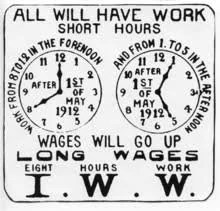
Labour Day is celebrated on various dates in the Australian states. Labour Day is also often referred to as May Day around the world. Internationally it is celebrated on 1 May and is known as International Workers’ Day in more than 80 countries. International Workers’ Day traces its international routes back to the 1886 Haymarket affair in Chicago, USA. The universal significance is that, across the world, the eight-hour day is considered the fairest working hours in a day for people in any industry.

Today, Labour Day in Australia is known as Eight-Hour Day in Tasmania and May Day in the Northern Territory. It is always on a Monday, creating a long weekend. Marches or parades only usually occur in Queensland now, and not always there depending on the state government at the time.
In the early 19th century, most labourers worked 10- or 12-hour days for six days each week. The 1850s brought a strong push for better conditions. A significant part of the push began in 1855 in Sydney. On 21 April 1856, in Melbourne, the stonemasons workers staged a well-organised protest. They downed tools and walked to Parliament House with other members of the building trade. Their fight was for an eight-hour day, effectively a 48-hour week to replace the 60-hour week. The government agreed to an eight-hour day for workers employed on public works, with no loss of pay.
The win was a world first but did not end all labour problems. Many working conditions were harsh and demanding, and women were paid a lot less than men. But the victory for the eight-hour day was significant and several hundred building workers marched in a parade in May 1856 to celebrate their win.
Tinsmiths, bootmakers, tailors, metal workers and stonemasons were amongst many of workers’ groups that protested and fought for better working conditions across the country. Over the next two decades, one by one, the states brought in the eight-hour-day although the working week was still officially six days until 1948 when it was changed to five days.
Wage Rage for Equal Pay

Chapter 16, Alarums and Excursions: Fictions, Fallacies and Fancies, covers just the type of material I love. Beginning with quotes from Ruth Parks’ Missus and Dorothy Hewitt’s Bobin Up, this chapter is a delightful read – as well as almost a horror story. After all, when Park writes:
Knowing she had no means of support and was desperate for work, the manager offered her less than the single girls, who were receiving only half the male rate anyway. The pittance was enough for food, but not for lodging. Jossie set her teeth and accepted it.
And as if this were not enough, Hewitt’s stark comment:
There’s a name for men who live off women.
Mary Parker’s ‘oh, such commonplace story’ (p.366) such a graphic and heartrending recall of women’s parlous position as depicted in Come in Spinner introduces yet another of the challenges to women receiving equal pay. Come in Spinner provides much more material, interspersed with non-fiction events such as the National Wage Case 1988, Maternity Leave Cases and Family and Parental and Leave Cases, Equal Opportunity Cases, the Nurses Comparable Worth Case 1985 -1986, Equal Pay Cases 1969 and 1972, the Minimum Wage Case 1974, National Wages Cases 1983 and 1988, books such as The Dialectic of Sex and Exiles at Home and newspaper articles. But, back to the fiction: Ride on Stranger, The Fortunes of Richard Mahoney, My Brilliant Career Goes Bung, Fugitive Anne: A Romance of the Unexplored Bush, Up the Murray, A Marked Man, The Three Miss Kings, Sisters, The Bond of Wedlock, The White Topee, My Brilliant Career – all have their place in Jocelynne Scutt’s Wage Rage for Equal Pay.
This is not an easy read, but this ingenious weaving together of fact and fiction makes an exceptional chapter.
Equal Pay Day 2025
1 July 2025
August 19 is the national Equal Pay Day 2025. The day marks the end of the 50 additional days into the new financial year that women in Australia need to work to earn the same pay, on average, as men.
This year’s theme is “How does your employer measure up? When’s your Equal Pay Day?”
This year, you can work out the individual Equal Pay Day for your workplace.
That is, how many extra days women must work from the end of the financial to earn the same, on average, as men. And if you work in one of the 8% of workplaces that has a gender pay gap in favour of women, you can see how many extra days men need to work, to earn the same amount, on average as women.
How is the national Equal Pay Day calculated?
WGEA uses the Australian Bureau of Statistics (ABS) average weekly earnings trend data to calculate the number of days after the end of financial year that women have to work to be paid the same as the average man. This is our national Equal Pay Day.
In February, the ABS reported its average weekly earnings for men and women from November 2024.
Men working full time earned $2072.70, while women earned $1,826.40 per week on average. That’s a difference $246.30 every week and $12,807.60 every year.
At the average rate of pay for women, this is the equivalent of over seven weeks additional work (50 days).
The Equal Pay Day campaign will run for 50 days, until Equal Pay Day on 19th August.
It’s important to note the ABS figures are base salary and full-time employees only. They do not include bonuses, superannuation or overtime – which men are more likely to earn – or the salaries of Australians working part-time.
WGEA recommends using your workplace’s average total remuneration gender pay gap in the Equal Pay Day Calculator to calculate individual workplace Equal Pay Days. Your employer total remuneration gender pay gap includes base salary and additional payments, and so is the best way to calculate your workplace’s equal pay day.
WGEA research has identified three main contributors to Australia’s gender pay gap: gender discrimination; care, family responsibilities and workforce participation; and gender segregation by job type and industry.
What is your employer doing to address the issues that drive your workplace’s gender pay gap?
Early union activity union activity by Australian Labor Party women: Excerpts from Labor Women: Political Housekeepers or Politicians? Robin Joyce
Leaders’ roles and activities are usually, although not always, easy to follow. Jean Beadle was one woman whose career in the labour movement was well known. However, other women involved in the Western Australian labour movement, comprising the Australian Labor Party and unions, appear only in minutes, newspaper stories, lists of meetings attended and positions held in these organisations…
Women were also active in the trade unions, mostly coming to prominence in the 1920s, with Cecilia Shelley standing out in her capacity as long term secretary and organiser in the Hotel and Restaurant Employees Union. She was also involved with the ALP and Labor Women’s Organisations. However, other women also filled important positions in union executives but have been largely ignored. By 1928 sixty-two trustee positions had been held by women, twenty-one vice-president positions and twelve positions as president or chair. Women had been treasurers twenty-five times. In the 1920s two women were active in the Cleaners, Caretakers and Lift Attendants Union as secretary, one, Sylvia Donaldson later becoming an Inspector of factories in 1923. Ivy Pirani followed her husband as secretary of the Hospital and Asylum Employees union in 1923 and retained the position until the 1930s. May grace and Helen McEntrye were secretary of the Goldfields Hotel and Restaurant Employees Union in the late 1920s. Annie Warren became secretary of the South West Clothing Trade Union after a stint as treasurer.
Many other women are likely to have remained invisible but not inactive. There is little reason to suppose that they were of an inferior capacity to those given a voice through Labor Women’s souvenir journals, minutes and their papers submitted to the Battye Library. The main difference between those closely associated with the Labor Women’s Organisations and those who remained linked only to mainstream politics or union activity is that Labor women’s activities exposed them to feminist ideology through contact with interstate and overseas feminists and their publications. Women in the labour movement in the 1900s in Western Australia were indeed political activists in the labour movement, party and unions. Although some were housekeepers, it is clear that many had no time to bake a scone or lift a teapot. The myth that so many women did the latter, and none were accepting scones and tea after an arduous day campaigning, needs to be unremittingly challenged. It is a myth that not only deprives those early women of justice, but establishes the idea that the labour movement women activists have no or short term history or one that is peopled by only a small number of individuals. Setting the record straight is hard because of the paucity of material, but not impossible.
Labor Women: Political Housekeepers or Politicians? was originally published in Australian Women and the Political System, Marian Simms, Cheshire Longman, Melbourne, 1984.
Quote from Labor Women: Political Housekeepers or Politicians?
We are enthroned in the hearts of men; that is why men use us and pay us half the wages, but we don’t want to be enthroned in men’s hearts under these conditions.
Jean Beadle, Western Australian Labor activist speaking in 1909.

Kath Mazzella OAM
Gynaecological health awareness champion
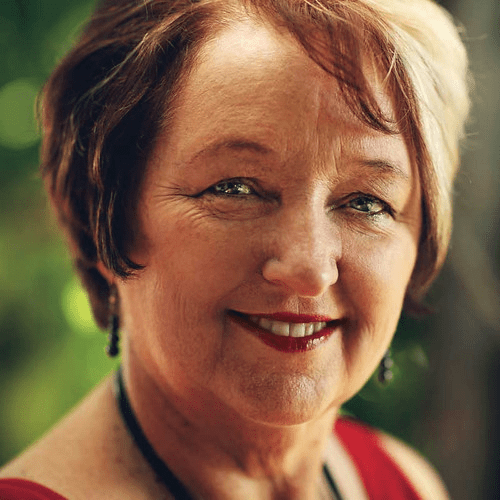
Facing a radical gynaecological cancer diagnosis at the age of 39, Kathleen Mazzella was convinced she was alone. In her search to find someone else facing the same experience, Kath placed an ad in Woman’s Day, receiving 38 responses from women all over Australia who felt the same sense of isolation and embarrassment. Determined to connect and empower other women, and to reduce the stigma and squeamishness around women’s health, Kath established the Perth-based Gynaecological Awareness Information Network. Since then, Kath has become a voice for the millions of Australian women managing polycystic ovaries, endometriosis, fibroids, menopause, sexually transmitted infections, hysterectomies and more. At the core of her work is a straight-talking message: embarrassment around gynaecological issues risks lives. Kath breaks down the social stigma by sharing her journey and challenges, and promoting a positive preventative message. Twenty-two years after her initial diagnosis, Kath has not only survived, but thrived and dedicated her life to ensuring no other woman and families suffers in silence through her International Gynaecological Awareness Day campaign. In 2018 she was awarded WA Senior Australian of the Year.
Blossoms and birds – spring in Canberra







 Robin's Room