
Jane Caro Lyrebird Allen & Unwin, April 2025.*
Thank you, NetGalley, for providing me with this uncorrected proof for review.
A lyrebird’s cry in a lonely bush site echoes a desperate woman’s cry for help. It is overheard by a student, who aware of its possible significance, takes her recording to the police. With no body, and no respect for Jessica Weston’s theory, the case remains unresolved. Twenty years later a body is found at the site and Jessica, now Associate Professor, and retired Megan Blaxland brought back for the new inquiry, together are determined to solve the case.
Caro makes superb use of features of the Australian bush – the loneliness, silence, foliage and undergrowth, and its beauty which hides a heinous crime. Her commitment to caring for the environment is made through engaging characters, the exposition becoming an integral part of the social commentary which provides a thoughtful background to solving the crime.
Characterisation is a strong feature of this novel, Megan Blaxland becoming a figure who would make excellent returning character. However, she is not alone in being a well-developed personality. Caro achieves complexity in her characters by weaving their flaws together with positive characteristics. At the same time, a sense of chill surrounds even the friendliest of interactions. This is a crime that, despite the possibility of wider ramifications has a small town, claustrophobic feel about it, the bush and the lyre bird’s lonely song playing a sinister part in achieving this.
This is the first of Jane Caro’s novels that I have read, although I follow her shorter contributions in the media. I found Caro’s combination of good story telling, social commentary, and a complex crime to be solved very inviting and look forward to reading her past and future work.
*I have posted this review in its entirety here, and it also appears at Books: Reviews .

Amy Blumenfeld Such Good People Spark Press, July 2025.
Thank you, NetGalley, for providing me with this uncorrected proof for review.
April and Rudy become childhood friends, and their families replicate this closeness. April and Rudy’s lives take different paths as young adults, but they and their families remain close. When April invites Rudy to join her at a college event the result is disastrous. Rudy prevents her being assaulted by another guest who later dies. Rudy is arrested and gaoled. April moves on, marrying and having a family. One focus of the novel celebrates the closeness that the families maintain despite these changes. Another is Rudy’s release from prison and the impact it has on April, her husband and children, and less immediately, the journalist who was also present at the college event.
Although I finished this book, there were times that the language really grated, and I was tempted to stop reading. For example, ‘tresses’ for hair, ‘atop’ on occasions when a simple ‘on’ would do, and ‘pertain’ instead of ‘about.’ At times April’s responses were also jarring. She is introduced as the wife of an aspiring politician, but when a journalist phones, rather than query the reason, she provides a host of information about herself, her husband, family, and their activities. This seems more in keeping with the young student about whose past the journalist is calling rather than a mature woman in a political world. April continues to make unrealistic choices, demonstrating her care and concern for her childhood friend Rudy, but at times overlooking her current responsibilities. On the positive side, telling the story from April’s, Rudy’s and Jillian’s perspectives helps with characterisation, develops a story line that demonstrates the importance and depth of the childhood friendship, and its continuation into young adulthood, as well offering reasons for as Jillian’s complicated reactions to events. The complete review appears at Books: Reviews
American Politics
Joyce Vance from Civil Discourse <joycevance@substack.com>
Forwarded this email? Subscribe here for more
Forgetting the Survivors Joyce Vance Sep 1
Everyone but the survivors—the people who deserve it the most—seems to be the focus of the renewed interest in Jeffrey Epstein. Politics, prurience, and curiosity about which political and pop culture figures might be mentioned in the files have dominated media coverage while people on both sides of the aisle clamor for the release of information gathered by the government as it prepared to prosecute Epstein and Ghislaine Maxwell.
This week, some of the survivors will meet privately with members of the House Oversight Committee, and there may be some public testimony. The survivors have been critical of the administration’s handling of the situation, but no one seems to be listening to them. Imagine having been victimized by these people and then having to listen to the shameful “interview” by Deputy Attorney General Todd Blanche, who let Maxwell whitewash her conduct. Blanche, who was not on the prosecution team that tried the case, failed to challenge Maxwell, who was convicted by a jury of sex trafficking, when she claimed she never saw “underage women” (many of us would call them “girls”) being abused. Blanche even fed her lines when she faltered.
No one should be surprised that a convicted criminal, sentenced to 20 years in prison, would claim she never did anything wrong—especially when her conviction is still on appeal and the government is holding out the prospect of transfer to a much more hospitable prison setting than the one she was in. What’s appalling is that no one at the Justice Department or in the administration seems to have considered the survivors when they released the video and the transcript, or, for that matter, when they gave Maxwell favorable treatment, moving her from a federal prison in Florida to a minimum-security prison camp in Texas just days after the interview with Blanche. The Justice Department, which the Bureau of Prisons is a component of, offered no explanation for the unprecedented transfer of a convicted sex offender, but it seemed to come in exchange for saying Donald Trump hadn’t done anything criminal.
“Trump was always very cordial and very kind to me. And I just want to say that I find — I — I admire his extraordinary achievement in becoming the President now. And I like him, and I’ve always liked him. So that is the sum and substance of my entire relationship with him,” Maxwell said in the interview. Trump couldn’t have asked for anything better. Maxwell seems to have understood the importance of playing to the audience of one when you want something.
The Trump Justice Department has not spoken with any of the survivors as part of its review of the prosecutions. Maxwell’s trial took place during the Biden administration. The lead trial lawyer, coincidentally, was former FBI Director Jim Comey’s daughter, Maurene. She was fired by the Trump administration in July, with no reason given.
On Wednesday, there will be a nonpartisan rally on The Hill in Washington, D.C., participated in by groups that work to end human trafficking and to support survivors.
Rachel Foster, a cofounder of World Without Exploitation, an advocacy group for survivors of trafficking, explained why the rally on Wednesday is so important, why the focus should be on survivors, and what this repeated victimization is doing to them: “That is the focus of our coming together on Wednesday — to listen to those who were exploited by Epstein and Maxwell and have suffered decades long harm. These women have been omitted and silenced for too long. They are gathering to speak out about what justice means to them, and it’s not leniency or a pardon for the one perpetrator who has been held accountable for the egregious and predatory crimes she committed.”
Former federal prosecutor and Westchester County DA Mimi Rocah put it like this, “the real victims—over 1,000 by this DOJ’s own statement—have been further traumatized by allowing Maxwell this platform to spew her falsehoods. And, just as important, some of the most important cases that federal prosecutors bring–sex trafficking and child sexual enticement and abuse cases—will no doubt be jeopardized. Because who would trust a DOJ that orchestrates such a travesty of justice.”
When survivors of crimes are ignored, we should ask the question: Why is this happening? Here, the answer seems simple; the Trump administration is playing politics, not doing justice. They offered to release the Epstein files, a promise they haven’t delivered on, without talking with the survivors first and hearing their views. Epstein didn’t care about the people he exploited. Maxwell still doesn’t. And this administration and its Justice Department, the people charged with that duty under law, don’t either.
This week, a number of Epstein and Maxwell survivors will be coming out in public for the first time, and many who have never done so before will speak out. This is the power of being in community and finding courage and solidarity. When the survivors speak, we should all listen.
We’re in this together,
Joyce
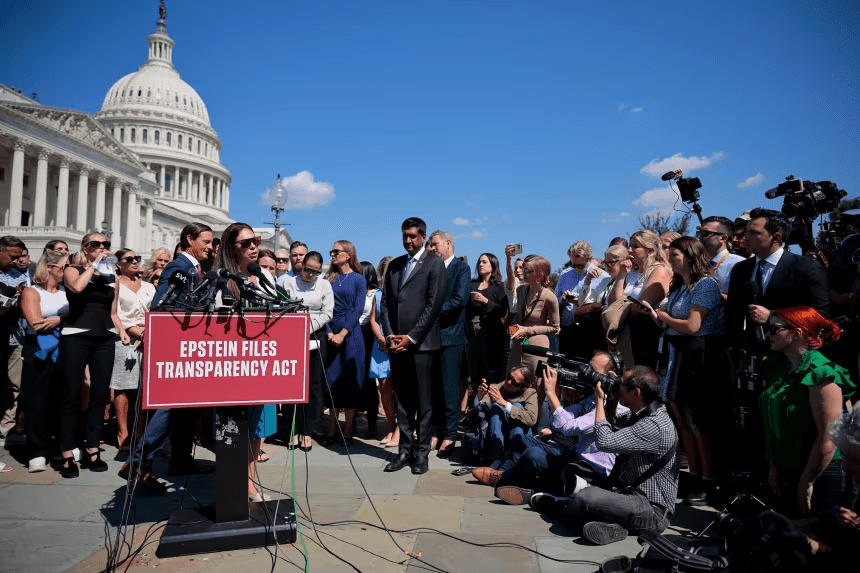
Haley Robson answers reporters’ questions during a news conference with other alleged victims of disgraced financier and sex trafficker Jeffrey Epstein, outside the US Capitol on September 3, 2025.
Chip Somodevilla/Getty Images
Heathercoxrichardson@substack.com>
Forwarded this email? Subscribe here for more
September 5, 2025Heather Cox RichardsonSep 6
Today President Donald J. Trump signed an executive order to rename the Department of Defense as the Department of War, although the 1947 abandonment of the Department of War name was not simply a matter of substituting a new name for the original one. In 1947, to bring order and efficiency to U.S. military forces, Congress renamed the Department of War as the Department of the Army, then brought it, together with the Department of the Navy and a new Department of the Air Force, into a newly established “National Military Establishment” overseen by the secretary of defense.
In 1949, Congress replaced the National Military Establishment name, whose initials sounded unfortunately like “enemy,” with Department of Defense. The new name emphasized that the Allied Powers of World War II would join together to focus on deterring wars by standing against offensive wars launched by big countries against their smaller neighbors. Although Trump told West Point graduates this year that “[t]he military’s job is to dominate any foe and annihilate any threat to America, anywhere, anytime, and any place,” in fact, the stated mission of the Department of Defense is “to provide the military forces needed to deter war and ensure our nation’s security.”As Amanda Castro and Hannah Parry of Newsweek note, in August, Trump said he wanted the change because “Defense is too defensive…we want to be offensive too if we have to be.” By law, Congress must approve the change, which Politico estimates will cost billions of dollars, although Trump said: “I’m sure Congress will go along if we need that. I don’t think we even need that.” By this evening, nameplates and signage bearing the new name had gone up in government offices and the URL for the Defense Department website had been changed to war [dot] gov.
Secretary of Defense Pete Hegseth has pushed the change because he sees it as part of his campaign to spread a “warrior ethos” at the Pentagon. Today he said the name change was part of “restoring intentionality to the use of force…. We’re going to go on offense, not just on defense. Maximum lethality, not tepid legality, violent effect, not politically correct. We’re going to raise up warriors, not just defenders. So this War Department, Mr. President, just like America, is back.”In 1947, when the country dropped the “War Department” name, the chief of staff of the U.S. Army—the highest-ranking officer on active duty—was five-star general Dwight D. Eisenhower. It is unusual for anyone to suggest that Eisenhower, who led the Allied troops in World War II, was insufficiently committed to military strength. Indeed, the men who changed the name to “Defense Department” and tried to create a rules-based international order did so precisely because war was not a game to them. Having seen the carnage of war not just on the battlefield but among civilians who faced firebombing, death camps, homelessness, starvation, and the obscenity of atomic weapons, they hoped to find a way to make sure insecure, power-hungry men could not start another war easily.
The Movement Conservatives who took over the Republican Party in the 1980s leaned heavily on a mythologized image of the American cowboy as a strong, independent individual who wanted nothing from the government but to be left alone. That image supported decades of attacks on the modern government as “socialism,” and it has now metastasized in the MAGA movement to suggest that the men in charge of the government should be able to do whatever they want.
Just what that looks like was made clear on Wednesday when the Trump administration launched a strike on a boat carrying 11 civilians it claimed were smuggling drugs. Covering the story, the New York Times reported that “Pentagon officials were still working Wednesday on what legal authority they would tell the public was used to back up the extraordinary strike in international waters.”
Today, David Philipps and Matthew Cole reported another military strike approved by Trump in his first term that was previously undisclosed. In the New York Times, they reported that in early 2019, Trump okayed a Navy SEAL mission to plant an electronic device in North Korea. The plan went awry when their activity near the shore attracted a civilian fishing boat with two or three men diving for shellfish. The SEALs killed the men on the boat, punctured their lungs with knives so the bodies would sink, abandoned the mission, and returned to base.
The administration never notified the Gang of Eight, the eight leaders of Congress who must be briefed on intelligence activities unless the president thinks it is essential to limit access to information about a covert operation. The Gang of Eight is made up of the leaders of both parties in each chamber of Congress, as well as the chairs and ranking minority members of the intelligence committee of each chamber.
Military officials appear concerned that Trump might continue to send personnel into precarious missions. Those who were involved in or knew about the North Korea mission said they were speaking up now because they are worried that such failures are often hidden and that if the public only hears about successful operations, “they may underestimate the extreme risks American forces undertake.”
Trump’s promise that his demonstrations of strength would make the U.S. a leader on the international stage is also falling apart. Barak Ravid and Dave Lawler of Axios reported that in a conversation yesterday with European Union leaders, Trump backed away from his promises to increase pressure on Russia to stop its war against Ukraine and instead told the leaders they must do it themselves.Also yesterday, the Financial Times reported that the administration will no longer help to fund military training and infrastructure in Estonia, Lithuania, and Latvia, Baltic nations vulnerable to Russian incursions. National security scholar Tom Nichols commented: “I am adamant about people not falling prey to conspiracy theories about Trump and the Russians, but this is a classic moment where it’s understandable to ask: If the Russians owned him, how would his actions be any different?”
The administration has not briefed Congress on the change.
Earlier this week, on September 3, leaders Xi Jinping of China, Vladimir Putin of Russia, Kim Jong Un of North Korea, and Alexander Lukashenko of Belarus met in Beijing to celebrate the anniversary of the formal surrender of Japan and the end of World War II. The day before, Putin described Xi as a dear friend and said the ties between the two leaders are at an “unprecedented level.”
Trump did not appear to take the meeting well. He posted at Xi, reminding him of “the massive amount of support and ‘blood’ that the United States of America gave to China in order to help it to secure its FREEDOM from a very unfriendly foreign invader” and adding: “Please give my warmest regards to Vladimir Putin, and Kim Jong Un, as you conspire against the United States of America. PRESIDENT DONALD J. TRUMP”
India’s president, Narendra Modi, also met with Xi this week as Beijing continued to push the idea that it is now the head of a new world order. Trump responded: “Looks like we’ve lost India and Russia to deepest, darkest, China. May they have a long and prosperous future together!”Reality is also intruding on the Republicans’ insistence that only they know how to run the economy.
Although Trump inherited a booming economy, he insisted that it was actually in terrible shape and that his tariffs would bring back manufacturing and make life better for those left behind by 40 years of economic policy that concentrated wealth at the top of society.
In fact, data released Tuesday show that U.S. manufacturing has contracted for six straight months. Economic journalist Catherine Rampell noted that the U.S. has fewer manufacturing jobs today than it had before the beginning of the coronavirus pandemic in 2020. The country has lost 78,000 manufacturing jobs this year. Seventy-two percent of Texas manufacturers say the tariffs are hurting their businesses. Only 3.7% think the tariffs are helping them.
Yesterday’s immigration raid on a Hyundai Motor battery plant in Georgia is unlikely to send a reassuring message to manufacturers. U.S. agents arrested 475 individuals, more than 300 of whom were South Korean nationals. Included in the sweep were business travelers. In August, Hyundai said it would invest $26 billion in the U.S. through 2028.Today’s new jobs report, the first since Trump fired the previous director of the Bureau of Labor Statistics (BLS) after accusing her of rigging the numbers for political reasons, was poor. It showed that the U.S. added just 22,000 jobs in August, far below the expected 75,000, while the jobs numbers for June and July were revised downward by 21,000 jobs. The numbers show that the economy is faltering.Just before the report was due to be released, the BLS website went down, an unfortunate reminder that the bureau is in turmoil. Today Em Steck and Andrew Kaczynski of CNN confirmed and expanded an August story by David Gilbert of Wired revealing what appears to be an old Twitter account belonging to E.J. Antoni, Trump’s pick to run the BLS. The account posted conspiracy theories and sexist, racist, and homophobic attacks, and parrotted Trump’s talking points.
Last night, when asked if he would trust today’s job numbers, Trump answered: “Well, we’re going to have to see what the numbers, I don’t know, they come out tomorrow. But the real numbers that I’m talking about are going to be whatever it is. But, uh, will be in a year from now when these monstrous huge beautiful places they’re palaces of genius and when they start opening up. You’re seeing, I think you’ll see job numbers that are absolutely incredible. Right now it’s a lot of construction numbers, but you’re going to see job numbers like our country has never seen before.”—
Notes:https://www.newsweek.com/trump-department-war-hegseth-defense-order-live-updates-2125101https://www.nytimes.com/2025/09/03/us/politics/hegseth-venezuela-drug-strike.htmlhttps://www.nytimes.com/2025/09/05/us/navy-seal-north-korea-trump-2019.htmlhttps://www.axios.com/2025/09/04/trump-zelensky-call-ukraine-russia-peace-talkshttps://www.washingtonpost.com/national-security/2025/09/04/trump-europe-security-russia-ukraine/https://www.cnn.com/2025/09/02/world/video/china-military-parade-xi-putin-kim-digvidhttps://www.bbc.com/news/articles/c78z2p6gg1zohttps://www.bbc.com/news/articles/cr4e4ngvvnrohttps://www.reuters.com/world/china/modi-says-russia-india-stand-together-even-difficult-times-2025-09-01/https://www.reuters.com/world/china/trump-says-india-russia-appear-lost-deepest-darkest-china-2025-09-05/https://finance.yahoo.com/news/us-manufacturing-activity-contracts-for-sixth-straight-month-in-august-its-survival-151934968.htmlhttps://www.msnbc.com/opinion/msnbc-opinion/trump-tariffs-economy-manufacturing-ism-rcna228790https://www.wsj.com/us-news/u-s-arrests-hundreds-in-raid-at-hyundai-plant-construction-site-in-georgia-4e150febhttps://abcnews.go.com/Business/bls-set-release-1st-jobs-report-trump-fired/story?id=125249122https://www.politico.com/news/2025/09/04/white-house-pentagon-department-of-war-00545673https://www.axios.com/2025/09/05/trump-jobs-report-august-bls-website-outagehttps://thehill.com/homenews/administration/5486849-live-updates-trump-jobs-report-white-house/https://www.wired.com/story/twitter-ej-antoni-trump-bls-conspiracy-theories-epstein-covid-election-denial/https://www.cnn.com/2025/09/05/politics/kfile-ej-antoni-bureau-of-labor-statistics-twitter-account-vishttps://www.independent.co.uk/news/world/americas/us-politics/trump-west-point-address-dei-immigration-b2757275.htmlhttps://www.war.gov/About/Bluesky:justinwolfers.bsky.social/post/3ly3pb4lxf227crampell.bsky.social/post/3ly3pzg6rf22xliveadivinelife.bsky.social/post/3lxwiq6kw6y2rgtconway.bsky.social/post/3ly3kpkqvls2qyouranonjd.bsky.social/post/3lxx2y5ml6c27thebulwark.com/post/3ly2ebqsk5c22atrupar.com/post/3ly4ignwtyd2bnbcnews.com/post/3ly4secg6cb2h
A Mighty Girl – Facebook site
Happy 71st birthday to Ruby Bridges! Ruby was only six when she walked through a vicious mob toward William Frantz Elementary School on November 14, 1960. As Ruby became one of the first Black children to desegregate an all-White elementary school in the South, four U.S. Marshals surrounded her to protect the small girl as protesters hurled objects and racial slurs at her.
One woman held up a Black doll in a coffin, shaking it as Ruby passed. Another threatened to poison her. Federal Marshal Charles Burks, who escorted her that day, would never forget what he witnessed: “For a little girl six years old going into a strange school with four strange deputy marshals, a place she had never been before, she showed a lot of courage. She never cried. She didn’t whimper. She just marched along like a little soldier. We were all very proud of her.”
Inside William Frantz, an apocalyptic silence replaced the chaos. White parents had withdrawn their children overnight rather than have them attend school with a Black first-grader. The hallways stood empty, classroom after classroom abandoned. That first day, the chaos was so intense that Ruby and her mother Lucille spent the entire day in the principal’s office, unable to even reach a classroom. On the second day, Ruby finally made it to Room 112, where she met the only teacher who had volunteered to teach her after her colleagues refused: Barbara Henry, a 28-year-old from Boston.
The next day, the wall of White resistance showed its first crack. Methodist minister Lloyd Anderson Foreman walked his five-year-old daughter Pam into the school through a gauntlet of curses and threats from the angry mob, declaring, “I simply want the privilege of taking my child to school.” Within days, a handful of other White parents followed his lead. Though the protests began to subside, these children were kept in separate classrooms. Ruby could hear voices in the hallway again — proof the school was slowly returning to life.
For the entire year, however, Ruby remained alone with Mrs. Henry, who taught her as if addressing a full class, maintaining the fiction of normalcy while federal marshals guarded an empty playground during recess. When someone called threatening to poison Ruby’s lunch, the six-year-old began eating only food brought from home, sealed and checked by her mother. When she came back for second grade, the mob was gone. Other Black students had enrolled. White children filled the classrooms again.
The Bridges family paid a devastating price for their courage. Ruby’s father Abon lost his job at the gas station the day after she entered William Frantz. Her sharecropping grandparents were evicted from Mississippi land they’d worked for decades. Local grocery stores turned the family away. Federal marshals had to guard their home against nighttime threats. Through it all, Ruby kept walking through that mob each morning. Years later, she would recall what her mother Lucille had told her: “You’re going to school today, and you’re going for all of us.”
Today, on her 71st birthday, Ruby Bridges reflects on that year with remarkable grace. “I now know that experience comes to us for a purpose, and if we follow the guidance of the spirit within us, we will probably find that the purpose is a good one.” She founded the Ruby Bridges Foundation to promote tolerance through education, transforming her trauma into purpose.
“Racism is a grown-up disease,” she says, “and we must stop using our children to spread it.” In 2011, she stood in the White House as President Obama unveiled Norman Rockwell’s painting “The Problem We All Live With” — the image of a little girl in a white dress who showed a nation what courage looks like.
If you’d like to share Ruby Bridge’s inspiring story with children, we highly recommend the picture book “The Story Of Ruby Bridges” for ages 4 to 8 (https://www.amightygirl.com/the-story-of-ruby-bridges), the early chapter book “Ruby Bridges Goes to School” for ages 5 to 8 (https://www.amightygirl.com/ruby-bridges-goes-to-school), and the memoir that Ruby Bridges wrote for ages 8 to 12 entitled “Through My Eyes” (https://www.amightygirl.com/through-my-eyes).
Ruby Bridges is the author of the picture book “I Am Ruby Bridges” for ages 4 to 8 (https://www.amightygirl.com/i-am-ruby-bridges) and a book connecting today’s activism with her own childhood experiences for ages 10 and up “This Is Your Time” for ages 10 and up (https://www.amightygirl.com/this-is-your-time)
There is also an inspiring film about her story called “Ruby Bridges” for viewers 7 and up at https://www.amightygirl.com/ruby-bridges
For books for all ages about more courageous girls and women of the U.S. Civil Rights Movement for children and teens, check out our blog post on “50 Inspiring Books on Girls & Women of the Civil Rights Movement” at https://www.amightygirl.com/blog?p=11177
For our favorite t-shirt celebrating fierce Mighty Girls like Ruby Bridges, check out the “Though She Be But Little She Is Fierce” t-shirt — available in a variety of styles and colors for all ages at https://www.amightygirl.com/fierce-t-shirt
British Politics
Tom Watson’s Newsletter
Tom Watson <tomwatsonofficial@substack.com> Unsubscribe
Forwarded this email? Subscribe here for more
Why the country still needs her voice and why Labour no longer needs a deputy leader. Sep 6
Angela Rayner has resigned. She should be Labour’s last ever deputy leader.
I am heartbroken for her. Angela’s life tells a bigger story about Britain. A childhood on a Stockport council estate, a mum at sixteen, night shifts in care, a union rep who learned how to organise and to speak for those who are not heard, an MP who fought her constituents’ corner, a minister who became Deputy Prime Minister. This is the long route to public service, earned the hard way, and it commands respect.
In government she brought a voice rooted in experience. She spoke as people speak. Long before office she said that ideology never put food on her table; it is the kind of sentence that cuts through because it comes from a life lived close to the edge. Many of her former colleagues are able administrators who keep the machine moving; Angela added something rarer, a felt understanding of the dignity of work and the worth of every person.
The events are painful and the weather is still rough. She has taken responsibility and stepped down. Politics moves at speed; the human rhythm is slower. The diary loses its weight, friends call, colleagues carry on, the work feels far away. I have known enough of public life to recognise that moment and I want her to know that reach does not vanish with office. It can be redirected and it can do good.
What comes next must be hers to decide, not mine to dictate. Yet if she chooses to put her energy where her life gives her authority, she can move the country: better pay and standards for paid carers, a serious advance for young carers who shoulder adult burdens too soon, adult literacy for families who were left behind, skills and second chances that open real paths and community power in places that feel forgotten. She belongs in front of a camera when it serves the cause. The public already trusts her to speak plainly and to listen well.
Now the institutional point. The role of deputy leader invites theatre without remit. It duplicates authority and muddies accountability. It tempts every faction to see a second power base where there should be clear lines of responsibility. At a time when the economy demands focus and steadiness, we should retire the title. Change our rules for who fronts the party when the leader is unavailable, empower a party chair with published objectives. Less parade, more purpose.
Those who remain in cabinet will go on with the hard graft of governing and many will do it well. None of that diminishes what set Angela apart: the ease with which she can walk into any room, listen hard and draw out the truth of people’s lives. That is a kind of leadership the country still needs.
I have a hunch the best is yet to come from Angie Rayner. And she is about to learn that you resign as a deputy leader but you can never resign as an ex-deputy leader.
Tom Watson’s Newsletter is a reader-supported publication. To receive new posts and support my work, consider becoming a free or paid subscriber.
Australian Politics
The Saturday Paper
Dennis Glover
The seven lessons of Nazi history
Occasionally something happens that turns our collective minds to history. That happened this week when Nazis dominated Australian headlines for possibly the first time since the end of World War II.
Australia’s Nazis are rattling the cage, trying to transform themselves from a secretive, mask-wearing sect into a political movement that influences our political ideas and controls the streets through violence. Their leader – bald-headed, dark-shirted, with a statement-making moustache – is staring at us defiantly from our newsfeeds and front pages.
Some might say they’re just a micro-cult of idiots; ignore them and they will go away. Thirty years ago, perhaps, but not now.
To understand why this has changed, we only need to look at the state of the world. Nazi-inspired agitators may be few in number, but they are casting a giant shadow through their explosive ideas and aggressive tactics, which are rapidly being copied by more mainstream politicians who should know better. This is how Nazis have always operated and likely always will. Like all ultra-radical movements that don’t have to deal with messy political realities or worry about the truth, their words and actions have a clarity that is easily understood and has strong appeal to the frustrated, impatient, unheard and unhinged. In Germany, France and Italy, parties inspired by Nazis – or with actual historical roots in Nazism and fascism – are either in power or threatening to achieve it. In the United States, Nazi-like groups were prominently involved in the assault on the Capitol on January 6, 2021.
Let’s not call them neo-Nazis because there’s nothing new about them. Look at how they dress, their violent street tactics, the way they openly admire Adolf Hitler, call themselves his followers, talk of racial purity (white Australians are “thoroughbreds”) and deny the Holocaust. They are Nazis, and proud of it.
To combat them we should look to history and especially to the mistakes our grandparents and great-grandparents made in combatting the original Nazis.
What can history tell us?
Lesson 1. We must not be complacent, kidding ourselves that these Nazis will disappear if we ignore them. From little things, big things grow. These people are always potentially dangerous – and we are at the moment of maximum danger as they look to build a movement that can influence the mainstream. There were only about 40 of them at the Melbourne rally, but look how easily they took control of a directionless crowd. We may think they can’t get bigger; history says otherwise.
Lesson 2. Beware unexpected catastrophes. Nazis – much like other authoritarians such as Russian President Vladimir Putin – are waiting for catastrophic events to favour them.
In the 1928 elections at the Reichstag, the Weimar-era German parliament, Hitler’s Nazi Party won just 2.6 per cent of the vote. They were an irrelevancy, or so most thought. Then in 1929 came the Great Depression. As Germany descended into political gloom, the Nazis were able to pose as national saviours, offering a simple and appealing message of national redemption. They provided a voice for the voiceless, a conspiracy theory to explain the catastrophe, and enemies to blame. How familiar does this sound, as our own Nazis rail about imaginary violations of their freedom of speech, denounce immigration as the cause of every problem and vent against recent migrants and Indigenous Australians? They may not gain the same level of influence as Hitler’s Nazis, but they can spread hatred and wreak havoc.
In 1930, the Nazi vote increased sevenfold to 18.3 per cent. In July 1932, it roughly doubled again to 37.3 per cent. Six months later, the party was in power.
Lesson 3. Don’t underestimate them. Much of the analysis and rhetoric about today’s Nazis seems wrong. They look like bumptious fools, and their leader comes across as an aggressive, breathless try-hard, screeching idiotic statements free of facts. But Hitler and his Brownshirts were laughed at, too. We must stop calling them “cowards”. This is comforting but delusional. Male courage, political violence and endless struggle is one of the strongest defining characteristics of Nazism – then and now. They are tough and nasty and unafraid, and it’s better to acknowledge this and accept they are dangerous.
In 1930, the Nazi vote increased sevenfold to 18.3 per cent. In July 1932, it roughly doubled again to 37.3 per cent. Six months later, the party was in power.
Lesson 4. Never acknowledge that they may have a point. I’ve lost count of the number of callers to talkback radio this week who have said things like: “I hold no truck for Nazis and fascists, but you’ve got to admit they have a point about immigration and the direction of the country.” While politicians may think it clever to try to wean people away from extremists by acknowledging their discontent, this only provides legitimacy for dangerous ideas. The mainstream conservative establishment in Germany was complicit in this by waving through the persecution of Jews.
Lesson 5. Nazis can’t be co-opted or controlled. Many believe Hitler came to power through the popular vote, but that’s not the case. He never received much more than a third of the vote. He was put in power by establishment politicians, businessmen and media moguls, who believed they could make him chancellor, pack his cabinet withmoderating influences and steal his voters. A year later, some of these geniuses were dead.
Any politician who thinks it’s a smart tactic to share platforms with Nazis, or go soft on criticising them or their supporters, is a fool. Hitler’s aim was always to supplant the mainstream conservative parties, not assist their re-election campaigns. His tactics caused chaos in the conservative parties – something the Victorian Liberals might profitably ponder, given that much of their current internal misery can be traced back to the appearance of Hitler-saluting Nazis at a Liberal MP-organised rally on the steps of Victoria’s Parliament House in 2023. Today’s Nazis likely don’t give a damn about the Coalition; they want to destroy it. Maybe they already have.
Lesson 6. Don’t give them an even break. In 1923, Hitler attempted a coup in Munich, aiming to take over the government of Bavaria and march on Berlin to seize power, just as fascist leader Benito Mussolini had succeeded in doing in Italy the previous year. It failed and Hitler was arrested and tried for insurrection. Instead of being given the death penalty he was given a comfortable prison cell where he wrote Mein Kampf before he was released early and his party re-legalised. Had he simply been made to serve out his full term of imprisonment, he wouldn’t have been around to take political advantage of the Great Depression, and World War II might not have happened. The failure to prosecute and jail Donald Trump after his assault on the Capitol should be sufficient proof that history repeats.Like all ultra-radical movements that don’t have to deal withLike all ultra-radical movements that don’t have to deal with messy political realities or worry about the truth, their words and actions have a clarity that is easily understood and has strong appeal to the frustrated, impatient, unheard and unhinged.
The temptation is to say we shouldn’t jail these homebred Nazis or their leader because it’s what they want, or because while we may disagree with them, they deserve their freedom of speech, or because they are expressing popular beliefs. This is nonsense. These Nazis, like the original Nazis, would regard this as weakness – certainly a courtesy they would never extend were the jackboot on the other foot. Common sense tells us that when Nazis brazenly commit crime, they should be penalised to the full extent of the law, because anything less will only embolden and enable them to come back for more.
We got a glimpse of this in Melbourne this week. After the completion of the rally, the Nazis were free to leave, seemingly unwatched. And what did they do? They staged their pogrom at Camp Sovereignty, where they allegedly battered First Nations women. Two days later, their leader interrupted a press conference by Victorian Premier Jacinta Allan, and was finally handcuffed and arrested outside the Melbourne Magistrates’ Court along with two associates in relation to the Camp Sovereignty incident. The Nazis mean our community nothing but harm, and believing the promises they may make to moderate their behaviour is naive. After 1923, Hitler claimed to be a changed man – until he got into power.
Lesson 7. Nazis and similar extremists can succeed in influencing politics here in Australia. If it can happen in Europe, America and Britain, where Nazi-inspired rioters last year attempted to burn down a refugee hostel – it can happen here. All it needs is a spark and it can spread. The Great Depression may not happen again, but in this era of pandemics, trade wars and major military conflict, it’s not too difficult to imagine a scenario that might propel these Nazis, or their evil ideas, to greater prominence.
Historians have called Australia’s democracy a laboratory. The current moment is a laboratory-like opportunity to learn from the mistakes of the long-ago past and stop these Nazis before their movement grows and ideas spread. Europe and the United States failed to do this; we mustn’t. Let’s be part of the solution to the global spread of Nazis and their ideas.
This article was first published in the print edition of The Saturday Paper on September 6, 2025 as “The seven lessons of Nazi history”.
Kath Mazzella OAM – Red Knickers Day
MP Dave Kelly MP placed 60 pairs of red knickers for Gynaecological health awareness day today on politicians’ chairs. This was placed on the Premier Roger Cook’s chair today. Hope he liked the surprise. X Kath Mazzella OAM



Barbara Pym
A favourite Barbara Pym – well-worn copies, full of notes in the margins, yellow stickers as reminders…
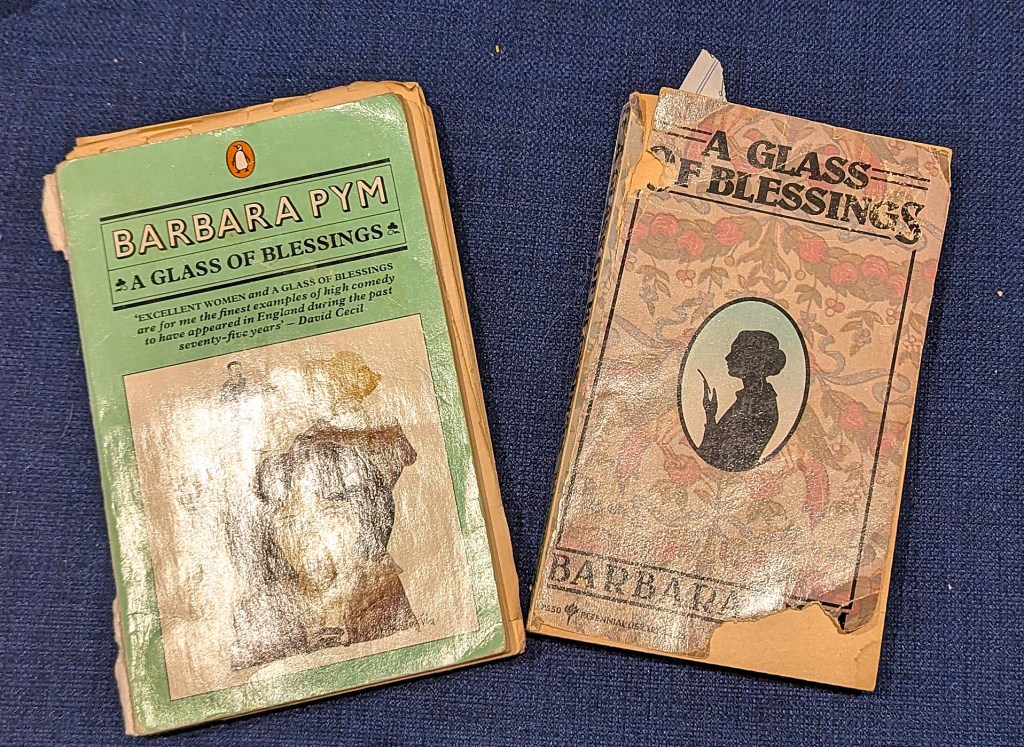
The article, “Paradise Regained: the reopening of Simpsons “, appeared in my inbox, and I immediately thought of Barbara Pym’s A Glass of Blessings where Wilmet’s visions of meat in domed trollies feature against the very prosaic meals that are her regular fare on outings Piers. Wilmet, and A Glass of Blessings, was a wonderful recall. The chess players have been mainly edited out below, but the idea of Simpson’s -in-the-Strand opening again resonates warmly. As the idea did for Wilmet, who is observing a rather more substantial admirer than Piers:
I leaned back in my chair, well satisfied, both with my drink in such pleasant surroundings and with his devotion…I began to imagine future luncheons in town, the great joints of meat being wheeled up to the table in an unending procession, the chef standing deferentially with carving implements poised…(A Glass of Blessings, first published 1958)

Paradise regained: the reopening of Simpson’s
by Raymond Keene| @raykeene| @GM_RayKeene
Simpson’s-in-the-Strand is due to reopen this autumn after being closed for five years, ever since the Covid pandemic. For nearly two centuries, Simpson’s Grand Cigar Divan (as it was originally known) has been a landmark for chess players. The excitement is not least present with the new proprietor, the celebrated restaurateur Jeremy King. Here are his thoughts on the reopening:
“I was kept enthusiastic by the sheer pleasure of the number of inquiries I receive daily in the restaurants: ‘When is Simpson’s opening?’ – ‘Will you keep the Trolleys?’ etc – which taught us just how immense the anticipation is and kept us determined. Although after a period of thinking that we would never get the project over the line, there was a very telling moment when I returned to the site one day… I was showing around my friend, hotelier & restaurateur David and as we toured the building, he kept rather quiet, just gently nodding and hardly saying a word. To the extent that when we had finished the tour, he continued to be taciturn and I had assumed he didn’t like it or think a good idea, until he turned to me and said very firmly: ‘Jeremy, this is ***** FANTASTIC!’ And as is so often the case, seeing it through the eyes of others makes the case all the more compelling – rather like seeing our home City through new eyes does too.”…In spite of such history, the dining room that has seen more grandmasters than any other is Simpson’s. In the nineteenth century it was the world’s leading chess club. Its roast beef and lamb, carved from silver trolleys, were as famous as the games played upstairs. The chessboard at the top of the main staircase still commemorates the likes of Staunton, Anderssen, Morphy, Steinitz and Lasker. I played there myself on my fiftieth birthday and had my name added to the plaque.
Simpson’s was the scene of the Immortal Game in 1851, won by Anderssen. The game was so striking that messengers were sent down the Strand to telegraph the moves to chess fans in Paris. Sir Arthur Conan Doyle regularly visited Simpson’s: he may have modelled the appearance of his Professor Challenger on the world champion Wilhelm Steinitz, who played there often…
Simpson’s will soon open its doors again. The roast beef will return. And perhaps, upstairs, so will the chess…
Secret London
The Oldest Surviving Bridge In London Is Around 850 Years Old – And It Doesn’t Even Technically Cross The River Thames
This picturesque bridge dates all the way back to the 12th century, making it the oldest surviving bridge in the whole city.
Katie Forge – Staff Writer • 8 September, 2025

London isn’t particularly thin on the ground in the bridge department. There are a plethora of picture-perfect pathways linking the separate sides of our city, ranging from tiny and twee to enormous and elaborate. And we Londoners can be pretty darn passionate about which of them we think is the best.
But whilst the subject of popularity may be up for debate; something that is undisputable is which of London’s abundance of bridges is the oldest. And that, my friends, would be Clattern Bridge.
Clattern Bridge
Now, I know it’s highly likely that you’ve never even heard of Clattern Bridge. But, fear not, folks – I’m here to tell you all about it. Picturesquely perched over in Kingston, this historic hidden gem is actually one of the oldest surviving bridges in the whole country. And – unlike most London bridges – it doesn’t technically cross the River Thames; it crosses the River Hogsmill (a tributary of the Thames, just before it flows into the main river).

The ancient artefact dates all the way back to 1175, and features some rather impressive medieval masonry. The lower part of the bridge consists of three arches, made of local stone – and the structure was declared an ancient monument in 1938. Clattern Bridge now proudly boasts both a shiny, blue plaque, and Grade I listed status. Not bad going, hey?
Clattern Bridge has been widened a couple of times over the years, but not a great deal has changed about it in the last 850 years. Well, aside from the way in which people most commonly venture across it. The bridge was named after the sound made by the horses hooves that frequently trotted across it. Nowadays, I can’t imagine it receives quite as much hoof-fall.

 Robin's Room