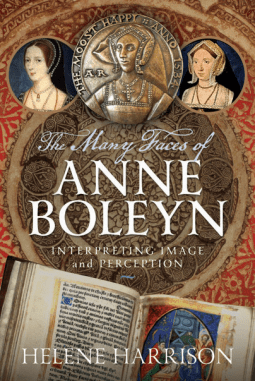
Helene Harrison The Many Faces of Anne Boleyn Interpreting Image and Perception Pen & Sword | Pen & Sword History, July 2025.
Thank you, NetGalley and Pen & Sword for providing me with this uncorrected proof for review.
Helene Harrison’s forensic approach to discovering Anne Boleyn is a remarkable enterprise, and one that provides a welcome addition to the myriads of interpretations that have already been written. Harrison’s perceptiveness is an asset in considering the immense range of sources she investigates. These are primary and secondary sources, all of which she appraises with almost a gimlet eye. Her understanding of other writers’ and film/television makers’ interpretations is acute, critical at times, but recognising the importance of others’ contribution to creating an understanding of this elusive woman. That Anne Boleyn is elusive can, of course, be questioned. After all, she has been the subject of so many books, films, and television series. However, where so much has been partisan, it is useful to try to stand back, look at the material and, as Harrison has done, investigate. See Books: Reviews for the complete review.
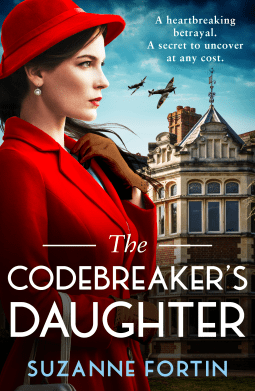
Suzann Fortin The Codebreaker’s Daughter Embla Books, July 2025.
Thank you, NetGalley, for providing me with this uncorrected proof for review.
The Codebreaker’s Daughter is not just another book in which women’s impact on the work at Bletchley Park is central to the plot. Hana is a Japanese speaker and an expert at solving puzzles that involve language skills. These she perfects with her father over cross word puzzles, and it is this relationship and her linguistic skills that bring her into Bletchley Park, a world of secrets and danger. See Books: Reviews for the complete review.
As I review so many books published by Pen and Sword, and find them valuable sources of topics that often highlight feminist themes, I thought it worthwhile publishing the following information about the publisher, although it refers only briefly to the social history themes that I find so gratifying. It is interesting that the publisher is renowned for its military historical titles, an imprint taken over from Leo Cooper, husband of Jilly Cooper.
Pen and Sword Publications
The origin of Pen and Sword Books is closely linked with its sister company, the Barnsley Chronicle; one of the UK’s oldest provincial newspapers – established in 1858 – and one of the few weeklies still in private ownership.
The first books published by the company were in response to public demand following of a series of articles published in the newspaper:- Dark Peak Aircraft Wrecks told the story of crash sites in the Dark Peak area of the Peak District National Park, and a further weekly feature on the history of two Kitchener battalions, known as the Barnsley Pals, aroused a thirst for more information. Over the years these books have been reprinted a number of times and have collectively sold around 20,000 copies.
Following on from the success of Dark Peak Wrecks and Barnsley Pals books, a number of local history paperbacks were produced along with a series of battlefield guide books. Battleground Europe proved immediately successful and as more and more titles were produced the company made the decision to launch a book publishing arm of the group.
The company acquired the Leo Cooper military history imprint and “Pen and Sword” was born. Leo Cooper, the husband of the famous novelist Jilly, had established a strong reputation for publishing military history titles and had some famous books in his list. With the Leo Cooper imprint and its backlist, Pen and Sword became established as one of the UK’s leading military history publishers.
Over recent years Pen and Sword has continued to grow and has added new imprints to its core area of military history, as well as publishing the majority of its catalogue digitally in eBook format. Pen and Sword specializes in all areas of military history, naval and maritime, aviation, local history, genealogy, social history, transport, discovery and exploration, archaeology, nostalgia and true crime. In 2017, a new lifestyle imprint named White Owl was launched, which publishes books on areas such as health and diet, hobbies and sport, gardening and wildlife and space.
With over 350 books published every year, Pen and Sword has established itself as a specialist book publisher.

© 2025 Pen and Sword Books. All Rights Reserved.
US Contact Info
Pen and Sword Books
c/o Casemate Publishers,
1950 Lawrence Road
Havertown, PA 19083
t: (610) 853-9131
e: casemate@casematepublishers.com
Tracey Emin’s Largest-Ever Exhibition Is Landing In London Next Year – And It Will Display ‘My Bed’ As Well As Never-Before-Seen Pieces
‘A Second Life’ is Tracey Emin’s largest exhibition, and you’ll be able to catch it when it lands at London’s Tate Modern in February.
Jack Saddler – Senior Staff Writer • 8 September, 2025

Tracey Emin’s career has spanned over 40 years, and her work makes her one of the recognisable names in contemporary British art. And her achievements are to be recognised with her largest-ever exhibition, which lands at London’s Tate Modern next year.
Titled Tracey Emin: A Second Life, the giant exhibition opens at the Tate at the start of next year, with a mix of her most well-known pieces as well as works that have never been shown to the public before.
Tracey Emin: A Second Life at the Tate Modern
Running at the Tate Modern between February 26 – August 31, 2026, Tracey Emin’s landmark A Second Life exhibition shows more than 90 works, with many you’ll likely recognise, including the two pieces that are at the heart of the exhibition, Exorcism of the Last Painting I Ever Made 1996 and the Turner Prize-nominated My Bed 1998, which documents the artist’s ‘recovery from an alcohol-fuelled breakdown’. Elsewhere in the exhibition, you’ll see works from Emin from the 2020s, including her I Followed You Until The End 2023 statue stood outside the Tate.
At the beginning of the exhibition, visitors will see pieces from her first solo exhibition, My Major Retrospective, featuring tiny photographs of her paintings she completed at art school, as well as her six-minute video storytelling piece, Why I Never Became A Dancer 1995, which recounts her time growing up in Margate.
The title of the exhibition references Emin addressing her own ‘second life’, with the artist addressing her experience of cancer, surgery, and disability in the exhibition, with her sculpture Ascension 2024 exploring her relationship with her body following surgeries for bladder cancer, which is also adressed with stills from a new documentary that will premiere at the Tate that shows the stoma and urostomy bag Emin now lives with.
Speaking on the exhibition, Dame Tracey Emin said: “I’m very excited about having a show at Tate Modern. For me, it’s one of the greatest international contemporary art museums in the world and it’s here in London. I feel this show, titled ‘A second Life’, will be a bench mark for me. A moment in my life when I look back and go forward. A true celebration of living.”
‘Tracey Emin: A Second Life’ is landing at the Tate Modern on February 26, 2026 and will run until August 31, 2026. Find out more about it here.

Steve Shirley countered sexism by founding her own company
The refugee, entrepreneur and philanthropist died on August 9th, aged 91
She learned the ropes pretty fast at Computer Developments Ltd. In 1959, she had to. Not so much the coding, with paper and pencil at her desk, until it could be punched up and sent to the computer; to anyone as fond of maths as she was, that was just fun. No, she also learned to stand against the wall in case a male colleague tried to pinch her bottom. And if she wanted to make a sensible point at a meeting, and was bluntly told it was nothing to do with her, she had to silently accept it. The day after that particular slight, however, she handed in her notice and decided to create a company herself. One just for women.
Stephanie Shirley knew exactly what she wanted. A company employing university-educated women, who were otherwise laid off when they got married or became pregnant. A job, coding and inputting data, which they could do from home, with flexible hours and on piecework, to allow for looking after children or elderly parents. A company without the top-down “Do this, jump here” attitude of male bosses, but instead working in teams, eventually with shared ownership. She called it “Freelance Programmers”, and it would sell software.
That in itself caused male sniggering. No one would buy software in 1962; it was given away free with hardware. And of course no one would buy it from a woman. Try again, dear. (You could always recognise ambitious women, she said, because their heads were flat from being patted patronisingly.) Nonetheless, she started her company from her dining table with a mere £6 in capital. By the 1990s, when it was floated, it employed 8,500 people; by 2000 it was valued at $3bn. Its management-control protocols had been adopted by NATO, and it had programmed the black-box flight recorder for Concorde. As for the woman with her back against the wall, by 2017 she was a dame and a Companion of Honour, both for services to IT and for giving away the fortune she had made.
Much of that success lay in cunning. Because married female graduates were ignored by male employers, she had her pick of the best, all mustard-keen to work, and needing only a telephone to get started. Of 300 employees initially recruited, 297 were women. She disguised the scattered, domestic character of her workforce by offering fixed prices. When male clients called, she played a tape recording of efficient typing down the line to suggest a busy office, not her kitchen. Wiliest of all, she began to sign off letters to potential clients not as “Stephanie” but as “Steve”. That was her family nickname, one she liked much better, and responses shot up when she began to use it. So did her delight when, having arranged a meeting, she would walk into a room full of men who were expecting a he, not a she. When they had recovered from assuming she had come to make their tea, they increasingly agreed to do business with her.
This was not the first time she had changed her name. Before she married Derek Shirley in 1959, she was Stephanie Brook. But before that she was Vera Buchthal, who had arrived at Liverpool Street station in 1939, five years old and crying for her lost favourite doll, as one of 10,000 mostly Jewish children brought to England from Germany and Austria under the Kindertransport programme. That start in life marked her ever afterwards. Because kind people had saved her, she was going to make very sure that hers was a life worth saving. She would fritter none of it away.
That was why she snubbed the chance of university, though she was so brilliant at mathematics that she had to go to a boys’ school to study it properly. Instead she took a degree in it after six years of evening classes, while she worked at Dollis Hill Research Centre. (Another personal ambition was never to be poor again.) At Dollis Hill she helped devise electronic telephone exchanges and worked on Ernie, the computer that randomly chose the winning holders of Premium Bonds. At CDL she found even more rewarding work, developing software for the ICT 1301, one of the first mass-produced transistor computers. She created and moulded “Flossie” almost as if it were a child.
Coping with a real child, though, could be much more problematic. She seemed to have perfected the brand-new idea of work-life balance (helped, in her case, by a wonderfully encouraging husband). But it rapidly became impossible. Her only child Giles, at first a contented baby, suddenly at two and a half stopped talking and became unmanageable. He was diagnosed as severely autistic. At puberty he developed epilepsy, and became so violent that more than once she considered family suicide. For years she struggled with depression, even as her company boomed.
The tragedy of Giles convinced her that money was no use if it simply sat there. It had to be spread about. Before she retired in 1993 she therefore gave most of her stake in the company to her staff, ultimately making 70 millionaires. With much of the rest she gradually set up centres where autistic young people like Giles could be cared for, understood, even prepared for work, in an atmosphere as loving as she had tried to give him. The first, a supported living centre called Autism at Kingwood, opened in 1994 with Giles as the first resident. He died only four years later of an epileptic seizure, but he was happy there.
Most of her money went to autism causes, including Autistica and the National Autistic Society. But she did not forget her first love, computing. In 2001 she became a founding donor of the Oxford Internet Institute, which was set up to consider its social and ethical implications. Too many people, she believed, were afraid of new tech. She embraced it wholeheartedly, AI and all; so should they. The only thing to fear was wasting time, for who knew what opportunities might open up tomorrow? One day she had been playing in Vienna, the next on a train, the next on a ship to a new land; one day the butt of a roomful of men, the next her own master, undaunted, and climbing to the top of the tree. ■
The article above appeared in the Obituary section of the print edition under the headline “Steve Shirley” From the September 6th, 2025, edition.
Recollect – Bill and Bev Wood Exhibition

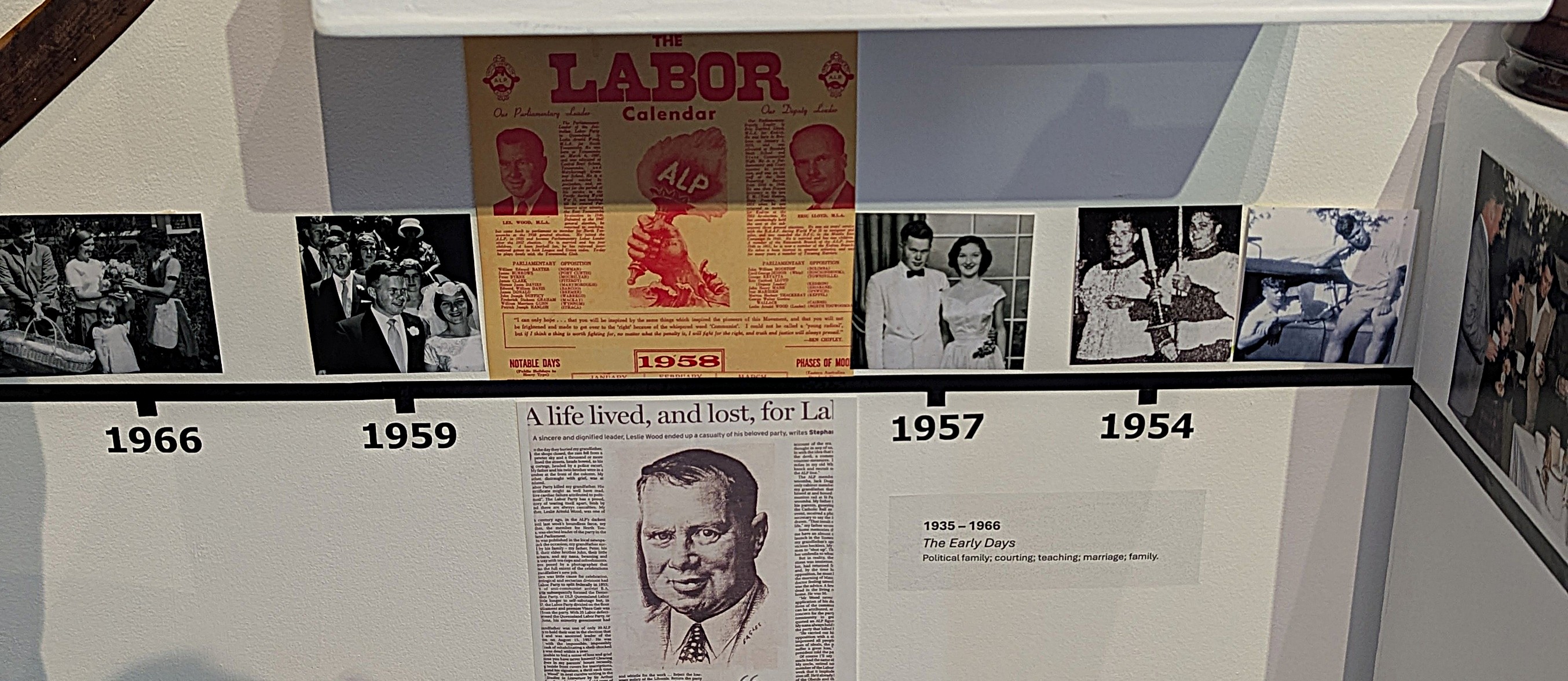
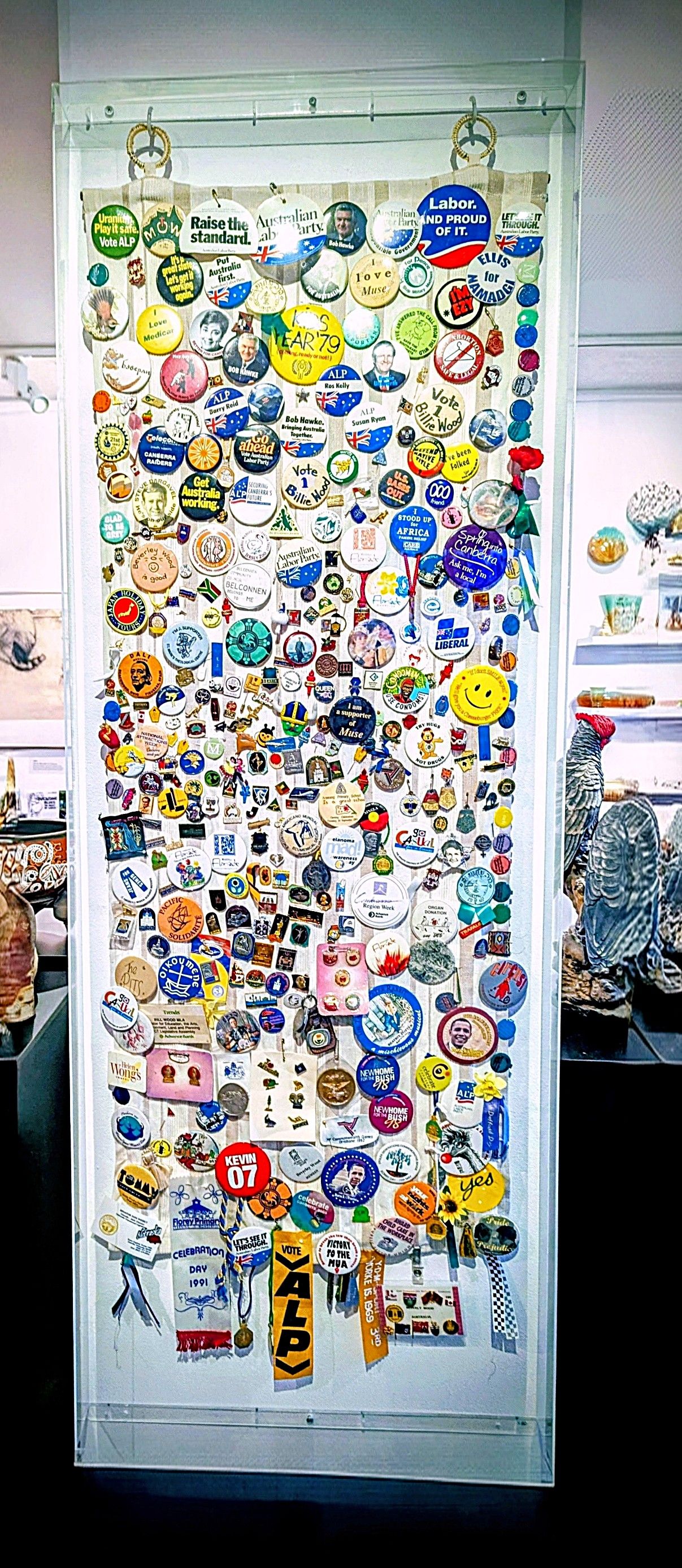
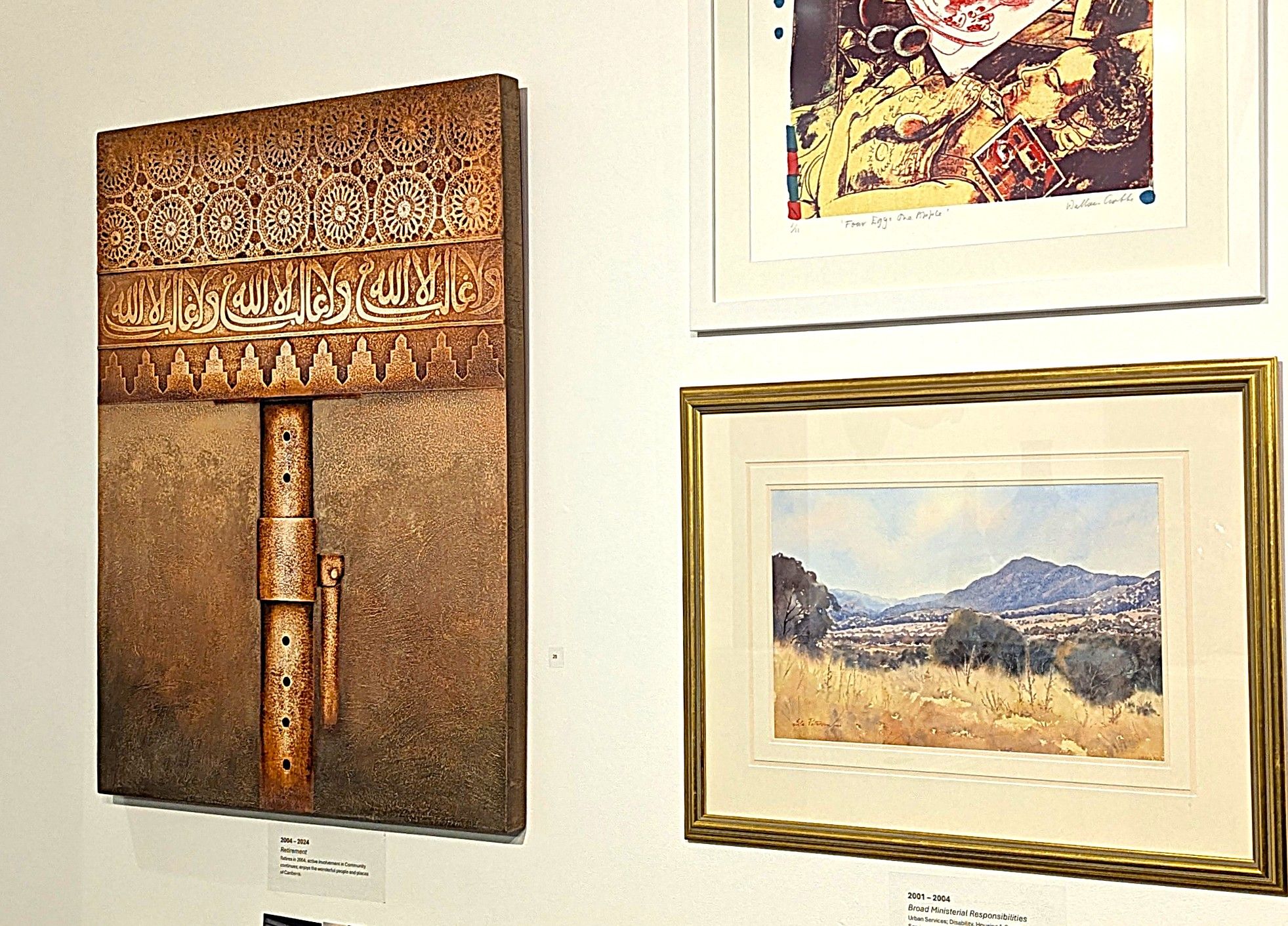
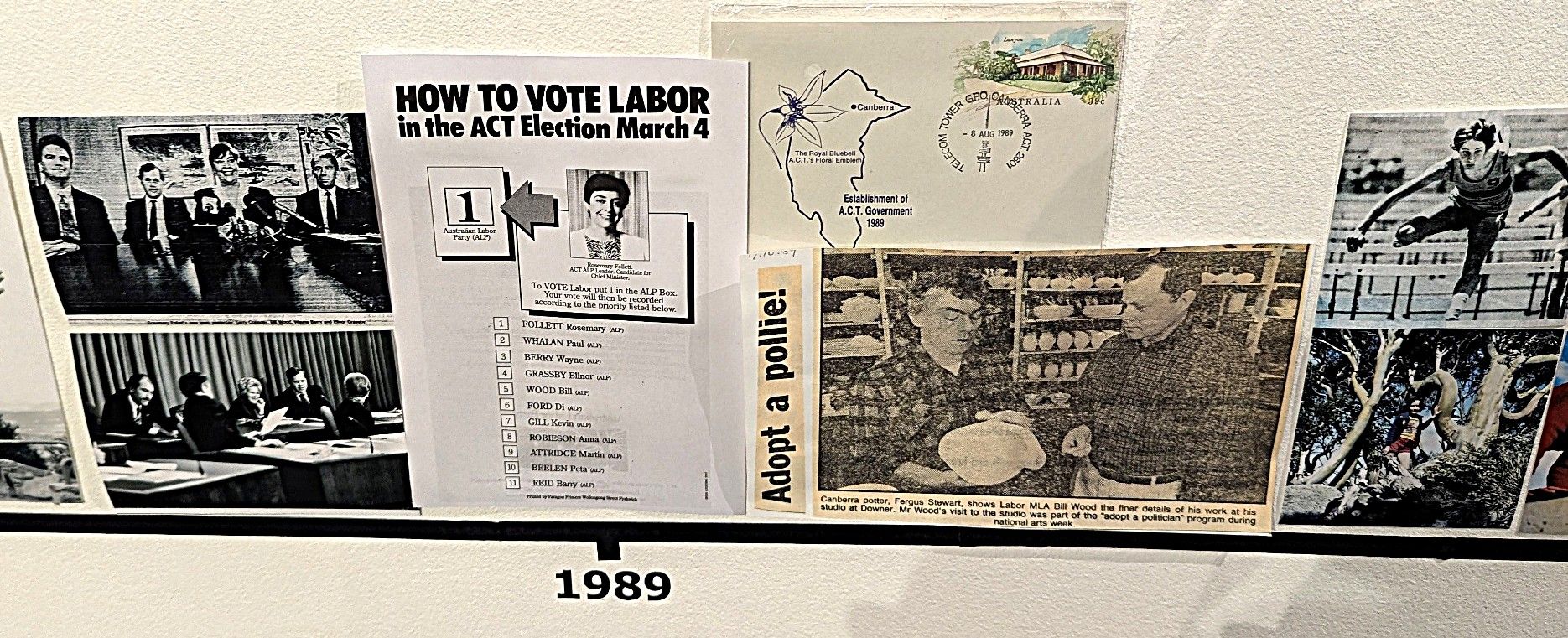
Bob McMullan launched this splendid exhibition. The art collection was exciting in its variety and connections to Canberra artists, and Bill and Beverly’s wide range of activities throughout Bill’s time in the ACT House of Assembly. Somehow, whatever these responsibilities beyond Bill’s commitment to the arts may have encompassed, art and adding to their collection found a place. As well as the art, a timeline of photographs and a collection of political badges, made a collection well worth visiting.


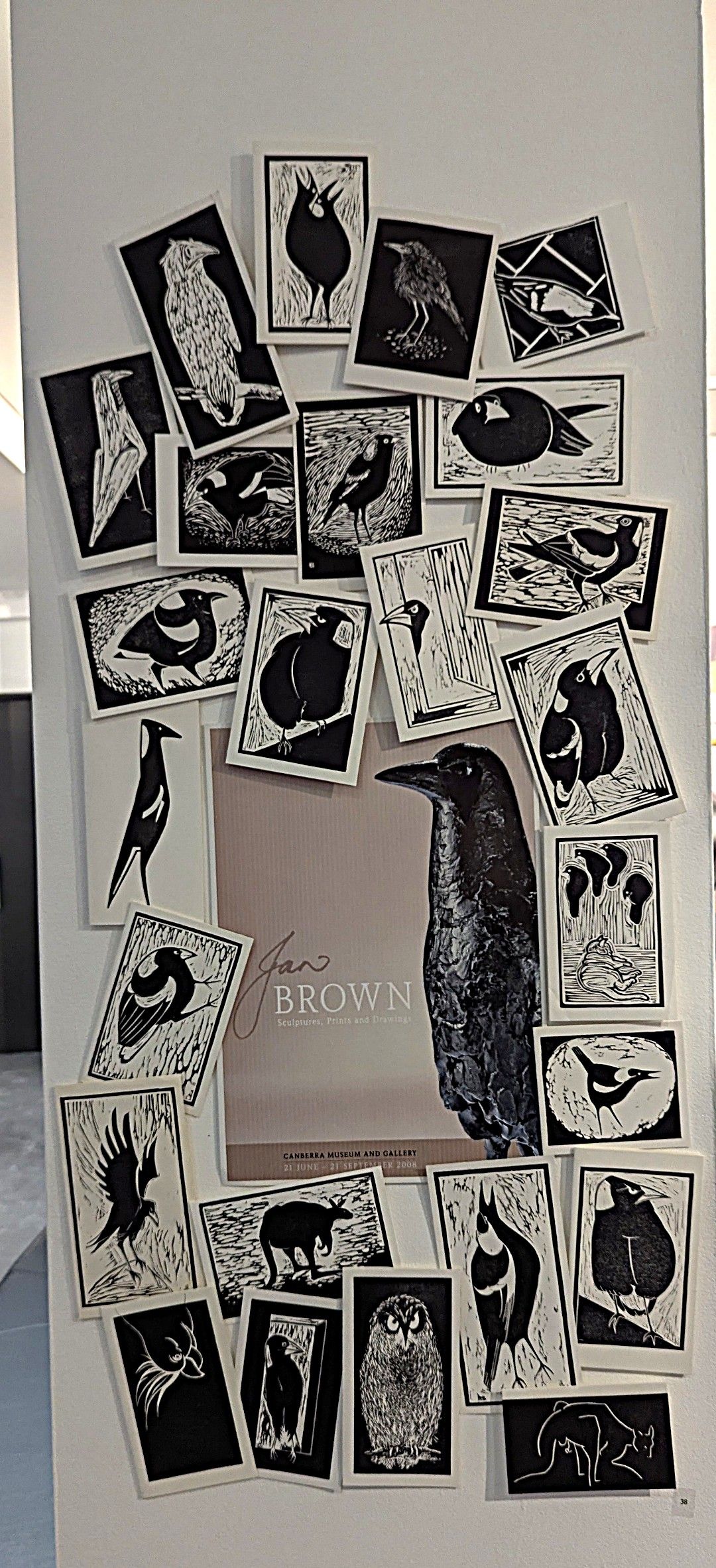








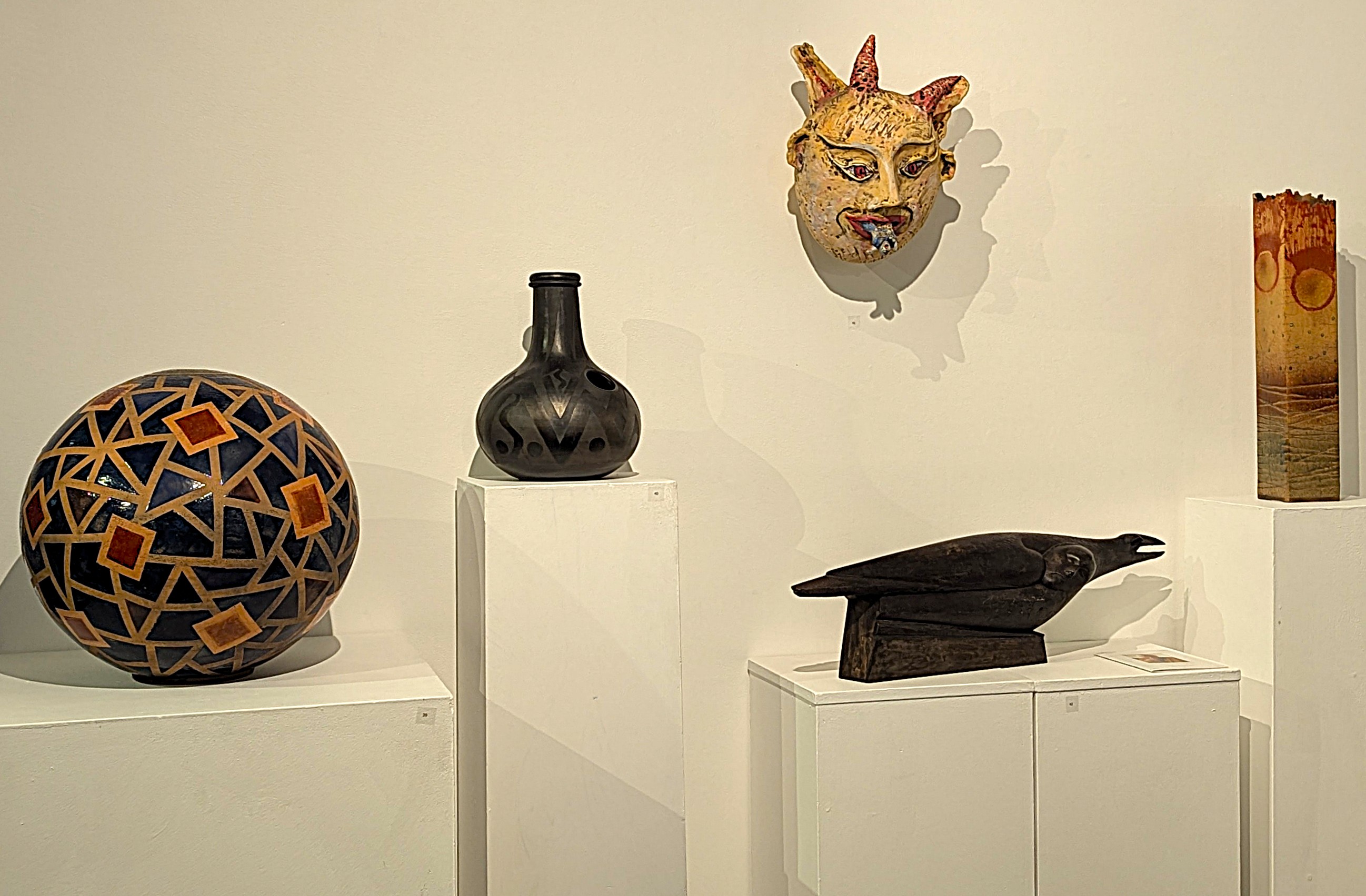
Thank you, Beverly Wood, for providing me with the photo of Rocking Rooster by Catherine Nix.
American Politics
Heather Cox Richardson from Letters from an American <heathercoxrichardson@substack.com> September 14, 2025
President Donald J. Trump has been trying to remove Federal Reserve governor Lisa Cook from the board of governors, alleging she lied on a mortgage application by claiming two homes as primary residences, which could garner a lower interest rate. Yesterday Chris Prentice and Marisa Taylor of Reuters reported that documents show that, in fact, Cook told the lender who provided a mortgage that a property in Georgia for which she was obtaining a loan would be a “vacation home.”
It appears the documents that director of the Federal Housing Finance Agency Bill Pulte used to accuse her of mortgage fraud were standardized forms that her personal application specifying the house was a second home overrode. It also appears that Cook never applied for a primary residence tax exemption for the Georgia home and that she referred to the home on official documents as a “2nd home.”
In contrast, Reuters reported last week that unlike Cook, Pulte’s own father and stepmother claimed primary residence tax exemptions for two homes in different states. When that news broke, one of the towns in which they reside removed their primary residence exemption and charged them for back taxes.
Trump hoped to use the allegations against Cook to advance his control of the Federal Reserve. Now the revelation that those allegations appear to be false highlights the degree to which this administration is attempting to achieve control of the country by pushing a false narrative and getting what its officers want before reality catches up. Senator Joe McCarthy (R-WI) pioneered this technique in the 1950s when he would grab media attention with outrageous statements and outright lies that destroyed lives, then flit to the next target, leaving fact checkers panting in his wake. By the time they proved he was lying, the news cycle had leaped far ahead, and the corrections got nowhere near the attention the lies had.While McCarthy eventually went down in disgrace, the right wing adopted his techniques of controlling politics by creating a narrative. Spin turned into a narrative that denigrated opponents as anti-American, and then into the attempt to construct a fictional world that they could make real so long as they could convince voters to believe in it. In 2004, a senior advisor to President George W. Bush told journalist Ron Suskind that people like him—Suskind—lived in “the reality-based community”: they believed people could find solutions based on their observations and careful study of discernable reality. But, the aide continued, such a worldview was obsolete.“
That’s not the way the world really works anymore,” the aide said. “We are an empire now, and when we act, we create our own reality. And while you’re studying that reality—judiciously, as you will—we’ll act again, creating other new realities, which you can study too, and that’s how things will sort out. We’re history’s actors…and you, all of you, will be left to just study what we do.”
But once you have untethered the political narrative from reality, you are at the mercy of anyone who can commandeer that narrative.
In the wake of the murder of right-wing activist Charlie Kirk in Utah on Wednesday, the radical right is working to distort the country’s understanding of what happened. Long before any information emerged about who the shooter was, the president and prominent right-wing figures claimed that “the Left,” or Democrats, or just “THEY,” had assassinated Kirk.
White House deputy chief of staff Stephen Miller posted an attack on his political opponents on social media: “There is an ideology that has steadily been growing in this country which hates everything that is good, righteous and beautiful and celebrates everything that is warped, twisted and depraved. It is an ideology at war with family and nature. It is envious, malicious, and soulless. It is an ideology that looks upon the perfect family with bitter rage while embracing the serial criminal with tender warmth. Its adherents organize constantly to tear down and destroy every mark of grace and beauty while lifting up everything monstrous and foul. It is an ideology that leads, always, inevitably and willfully, to violence—violence against those [who] uphold order, who uphold faith, who uphold family, who uphold all that is noble and virtuous in this world. It is an ideology whose one unifying thread is the insatiable thirst for destruction.”
But in fact, the alleged shooter was not someone on the left. The alleged killer, Tyler Robinson, is a young white man from a Republican, gun enthusiast family, who appears to have embraced the far right, disliking Kirk for being insufficiently radical.
Rather than grappling with reality, right-wing figures are using Kirk’s murder to prop up their fictional world. Briefly, they claimed Robinson had been “radicalized” in college. Then, when it turned out he had spent only a single semester at a liberal arts college before going to trade school, MAGA pivoted to attack those who allegedly had celebrated Kirk’s death on social media.This morning, Miller posted: “In recent days we have learned just how many Americans in positions of authority—child services, law clerks, hospital nurses, teachers, gov[ernmen]t workers, even [Department of Defense] employees—have been deeply and violently radicalized. The consequence of a vast, organized ecosystem of indoctrination.”
Today, billionaire Elon Musk, who just months ago was a key figure in the White House, reposted a spreadsheet of “people who’ve said vile things” about Kirk’s murder. Over the list, he wrote: “They are the ones poisoning the minds of our children.” “So far, teachers and professors are by far the most represented,” the author of the list wrote.
Across the country, educators have been suspended or fired for posting opinions on social media that commented on Kirk’s death in ways officials deemed inappropriate. Legal analyst Asha Rangappa noted that “Americans are being conditioned to be snitches on their fellow citizens who don’t toe a party line on what is ‘allowed’ to be expressed. And employers are going along. It’s the new secret police.”
The deliberate attempt to create a narrative centering around “us” and “them” and to mobilize violence against that other was on display today when Musk told a giant anti-immigrant rally in the United Kingdom: “You’re in a fundamental situation here…where whether you choose violence or not, violence is coming to you. You either fight back or you die. You either fight back or you die. And that’s the truth.”
Of course, that is not the truth. It is a classic case of dividing the world into friends and enemies—a tactic suggested by Nazi political theorist Carl Schmitt—and inciting violence against newly identified enemies by claiming it is imperative to preempt them from using violence against your friends. Miller has vowed to use the power of the government not against the far right, where the violence that killed Kirk appears to have originated, but against MAGA’s political enemies. Flipping victims and offenders, he called his political opponents “domestic terrorists” and warned: “[T]he power of law enforcement under President Trump’s leadership will be used to find you, will be used to take away your money, take away your power, and, if you’ve broken the law, to take away your freedom.”
Where that kind of rhetoric takes a society showed on the Fox News Channel’s Fox & Friends Friday, when host Brian Kilmeade suggested the way to address homelessness was through “involuntary lethal injection. Or something. Just kill them.” When asked “why did we have to get to this point,” he answered: “we’re not voting for the right people.”
And that’s the heart of it. The radical right is frustrated because a majority continues to oppose them. According to Elliott Morris of Strength in Numbers, Trump’s job approval rating is just 42.3% with 53.6% disapproving, and more people disapprove of all of his policies than approve of them. Unable to control the country through the machinery of democracy when it operates fairly and afraid voters will turn them out in 2026, Republicans are working to make the system even more rigged than it already is: just yesterday, Missouri lawmakers approved a mid-decade gerrymander to turn one of the state’s two Democratic seats into a Republican one.
Right now, Trump and his loyalists control all three branches of government, but Trump is not delivering what his supporters believe his fictional vision of his presidency promised. Trump telegraphed great strength and vowed he could end Russia’s war against Ukraine with a single phone call, for example. When he failed to get any buy-in at all from Russia’s president Vladimir Putin for his proposals, Trump threatened to impose strong new sanctions against Russia. This afternoon he backed away from that altogether, saying he would issue sanctions on Russia only after all NATO nations stopped buying oil from Russia and placed 50% to 100% tariffs on China. “This is not TRUMP’S WAR (it would never have started if I was President!), it is Biden’s and Zelenskyy’s WAR,” he posted.This latest retreat from his threats against Russia after all his previous empty threats makes Trump’s claims of strength ring hollow. Russia is increasing its attacks on Ukraine, and today NATO member Romania scrambled jets when a Russian drone breached its airspace. Polish and NATO aircraft were deployed today to protect Polish airspace as well.
As Trump’s narrative falters on this and so many other fronts, MAGA is moving to the violence of the far right to achieve what he cannot. In that, they are fueled by the right-wing disinformation machine that is whitewashing Kirk’s racism, sexism, and attacks on those he disagreed with and instead portraying Kirk simply as a Christian motivational speaker attacked by a rabid left wing. Trump’s vow to award Kirk the nation’s highest civilian honor, the Presidential Medal of Freedom, posthumously reinforces that image.
The refusal of Republican lawmakers to challenge MAGA’s creation of its own reality has opened the way for believers to try to put that world into place through violence. Their victory would end the rule of law on which the United States was founded and base the government on the whims of an authoritarian cabal.
It would make the United States a country in which people who stand in the way of the regime—people like Lisa Cook—would be at the mercy of hostile officials who allege they are committing crimes in order to get rid of them.—
Notes:https://www.reuters.com/world/us/fed-governor-cook-declared-her-atlanta-property-vacation-home-documents-show-2025-09-12/https://www.reuters.com/world/us/bill-pulte-accused-fed-governor-lisa-cook-fraud-his-relatives-filed-housing-2025-09-05/https://kyivindependent.com/romania-scrambles-jets-poland-closes-airport-over-russian-drone-alerts/https://www.wsj.com/world/these-charts-show-how-putin-is-defying-trump-by-escalating-airstrikes-on-ukraine-f7eee47b?mod=hp_lead_pos5https://www.politico.com/news/2025/08/26/clearly-a-low-moment-u-s-india-relationship-sours-as-new-tariffs-kick-in-00527196https://www.motherjones.com/politics/2025/09/stephen-miller-charlie-kirk-tyler-robinson-extreme-rhetoric-id/https://www.gelliottmorris.com/p/datahttps://www.npr.org/2025/09/12/nx-s1-5537977/redistricting-midterms-trump-missourihttps://www.nbcnews.com/politics/donald-trump/trump-says-will-posthumously-award-charlie-kirk-presidential-medal-fre-rcna230581Bluesky:atrupar.com/post/3lypzw476j723wartranslated.bsky.social/post/3lypphezqak2spaleofuture.bsky.social/post/3lyqfcyxgjk2ajsweetli.bsky.social/post/3lyqs7kehqc22asharangappa.bsky.social/post/3lyre7fpuzc2hthe-ronin.bsky.social/post/3lypnusdo5s2hclairewillett.bsky.social/post/3lyqpmvctj225

Playwright and dramaturg Tom Wright – whose adaptation TROY is on at Malthouse Theatre – loves the ephemeral nature of his chosen art form. By Anna Snoekstra.
Playwright Tom Wright on the purpose of creativity
“I was swimming alone at Whale Beach and I got caught in a rip and died,” playwright Tom Wright tells me. He didn’t really die on that beach 25 years ago – after all, he is zooming with me from a tiny back room at Malthouse Theatre, where he is in rehearsals with director Ian Michael for the production of TROY.
“In my personal mythology, I died,” he explains. “I somehow managed not to panic and floated my way into safer waters. I got back to the beach and my legs were like jelly and I crawled, literally crawled, back to my towel. I wasn’t pompous enough to think that I’d been returned for a purpose or any of that Hollywood stuff.”
Wright’s near-death experience reinforced his decision to live “an irresponsible life”. He is highly aware that he comes from security and privilege and decided that to live without assets or property was the ultimate privilege.
“I’ve lived as a grasshopper and not enough as an ant,” he says. “That came from a sense of this precariousness of what it is to be alive and what it is to share and make. It made me feel like, oh yes, it’s all right. Everything now is just a bonus.”
TROY is Wright’s seventh retelling of a classical text – others include The Odyssey, The Women of Troy, Oresteia and The Lost Echo – and it’s easy to see how mythic narratives frame his experience of the world.
Wright is artistic associate at Belvoir St Theatre in Sydney but considers himself a “Melburnian in exile”. His family has been in Victoria since the 1840s, and he was brought up in Russell Street in the CBD in the late 1960s. “My father had grown up on an apple orchard in regional Victoria and as the result of an accident, could no longer run the property,” he says. “Something like Dick Whittington, he had to come to the city to make his living. My mother came from an old Melbourne family full of socialists and radical theorists. Their curiosity and their citizenship were instinctive and tribal. You know, I’ve been away from Melbourne for nearly a quarter of a century, but the bluestone runs deeply in my veins.”
Comparing Melbourne with Sydney, Wright quotes late Australian playwright Jack Hibberd, who observed the differences between Australia’s largest cities. “Sydney was founded by the English in the cultural sense; even its penal convict relationship is an English thing,” Wright says. “It’s also more English in the sense that it’s mercantile, obsessed with trade, obsessed with value, obsessed with your role in the marketplace.
“Because of the gold rush and a whole range of different things, Melbourne is a Scots–Irish city. It comes from the Celtic diaspora more than the Anglo diaspora.” Wright believes Melbourne to be a hard nut to crack if you weren’t born here, and says it can be highly unwelcoming to outsiders.
In Sydney, he says, no one cares what school you went to or who your grandfather was. “They just want your value in terms of your ability to make money. And it’s great when you’re exciting and on the way up the mountain, but it’s deeply lonely when you’re on the other side. Whereas Melbourne, your tribe and the group of friends that you make in your vital decades remain your soulmates for the rest of your life. It’s a deeply safe space, at its best. I’m always happy when I come home. The sky feels familiar.”
Wright’s family valued curiosity above creativity. This is a value he still carries with him. He prizes articulacy, believing it to be the most generous trait you can have. While we speak, Wright works hard to decentralise himself from the narrative. He talks at length about director Ian Michael, about the nature of theatre in Australia, about war, privilege and cultural memory. He quotes famous plays, directors and poets many times. But getting him talking about his childhood, or journey as a writer, is difficult.
I can tell that the dodging and weaving is intentional on his part. His interests lie in the work he’s creating and the voices he is attempting to put centrestage through his retellings. I ask him about his growth as a creative – he thinks the word “creative” is overused. He quotes King Lear – “nothing will come of nothing” – and says that he doesn’t create, he reimagines.
He tells me he didn’t set out to be a playwright. He fell into theatre, first acting and then dramaturgy, because his girlfriend was studying it. “It’s the classic manifestation of privilege,” he says. “I cannot emphasise enough the privilege of being a multigenerational, white, English-speaking Australian and the safety that it gives you. Although I was the first person in my family to go to university, I never felt unworthy.” “People think that the purpose of being creative is to live forever, but you’ll end up just a forgotten statue battered by the desert winds.”
Although his family was uninterested in his burgeoning career on the stage, Wright’s deep sense of security never faltered. His career unfolded naturally, beginning with one-man shows monologuing death row cases and evolving with a long-term collaborative relationship with Barrie Kosky that culminated in an eight-hour production of Ovid’s Metamorphoses. He is now one of the country’s most acclaimed playwrights: his work tours the globe and has earnt him multiple Helpmann and Green Room awards as well as the Nick Enright Prize for Playwriting.
“When I was a young man, I callously thought that I was ‘lucky’, to use that great Australian word,” he says. “Now I realise I wasn’t lucky, I was privileged. But it took me a long time to see that. Sometimes I wonder about over-articulate white men in our society and their endless obsession with how smart they are. It feels to me like pages of the newspaper and the internet, or any social forum, are just full of men who have been conditioned by thousands of years to be listened to, still insisting on their right to be right. I’d like my right to be wrong.”
Listening is one thing, hearing is another, he says. “I feel like I’m getting better at hearing when I do listen.”
This connects to a broader shift in contemporary Australian theatre. “At the moment, it strikes me that we’re going through a phase where the director fulfils a facilitator role more than a visionary role,” he says. Wright sees a shift away from the idea of the auteurist visionary director, largely because of mistrust around the ego and power imbalances that often come with it.
In its place, a collaborative model of theatre is thriving, allowing rooms to be safer, more communicative and diverse. Wright is all for this model, finding the shift “exciting”. However, he is also aware that something can be lost, because there are fewer opportunities for people who genuinely want to go out on a limb. “So we’re making better, general quality work, but I would suggest that we’re possibly making fewer productions that are genuinely extraordinary,” he says. “Sometimes you pay for your cultural safety with cultural timidity. And at the moment, I feel like we’re going through a consolidation of what it is to be a nation, what it is to write plays, what it is to make theatre.”
In Wright’s view, Ian Michael, the director of TROY, possesses that genuinely extraordinary visionary quality. Michael originally worked in the box office at Malthouse, selling tickets to previous plays of Wright’s. After a swift career rise, he directed a revival of Wright’s adaptation of Joan Lindsay’s Picnic at Hanging Rock at Sydney Theatre Company, and Wright is thrilled to be working with him again.
“As a Noongar man and as an emerging leader in the Noongar and Indigenous communities across the country, Ian’s work cannot escape the prism of a postcolonial discourse,” Wright says. “TROY is a piece about Ukraine and it’s a piece about Gaza, but it never mentions them. It’s about war. It’s thinking philosophically about what war is and how war works for us, inside our stories and inside our mythologies.”
Wright believes there is great power in the act of retelling myths. He sees it as a way for Australians to learn about themselves as a nation: their strengths, weaknesses and prejudices. But he says that as an immature postcolonial society, Australia struggles with its retellings.
“We either get cultural cringe and try to be like the northern hemisphere model of what it is to make art and literature, and we imitate that,” he says. “It feels like we’re still trapped in that cycle and will be until our reconciliation project moves further on. Or we get adolescent in our insistence on our own novelty. And neither of these options feel particularly satisfactory to me. So, I like the mythic and I like the historical and I like the act of retelling, as opposed to telling.”
Wright respects the art of theatre as an act of resistance against capitalism. He loves its ephemeral nature. “It strikes me that we live in an age where everything is commodified. Our lives and our memories and our intellectual property and the data of our phones is now something that’s passed around in a marketplace,” he says. “But there are occasionally some moments where genuine community can still take place, where a group of people in the city can sit in a darkened room and hear again a story from thousands of years ago, and no one can really commodify that moment.
“The fact that it’s very hard to make money out of theatre is its curse and its blessing. It resists being continually colonised by neo-capitalism. Yes, obviously there are people making money out of commercial theatre, but I’m talking about these kinds of moments. And again, this is the Melburnian in me coming out, is that I value the way in which, in this day and age, frankly, going to a show on a Wednesday night in St Kilda and in the rain is active resistance. You pay your money, but the money barely covers the cost of what it is. No one’s going to come along and say, I love this, I’m going to purchase it. I’m going to package it up and sell 46,000 editions a day. Theatre is very hard to make a mass art form, and that’s one of its great things.”
Wright often thinks about “Ozymandias”, Percy Bysshe Shelley’s famous poem in which a traveller describes a ruined statue in a huge, empty desert. The traveller can see in the half-buried form that the sculptor had skill, and notices on the pedestal the inscription: My name is Ozymandias, King of Kings; / look on my Works, ye Mighty, and despair! “People think that the purpose of being creative is to live forever,” Wright says, “but you’ll end up just a forgotten statue battered by the desert winds.”
He tells me about speaking to students at the National Institute of Dramatic Art (NIDA) about his work. He mentions his and Kosky’s The Lost Echo, of which he is still immensely proud, as well as other work from the period that he considers deep failures. “One thing these shows have in common now is that not only have the students never seen them, but they also weren’t even born then,” he says. “Theatre is just ice blocks on a frying pan.”
This article was first published in the print edition of The Saturday Paper on September 13, 2025 as “Wright to be wrong”.
Cindy Lou snacks at Hello in Campbell
Hello is a delightful cafe for breakfast, lunch, or coffees. With the friendly service, birdlife (even some plovers – the first I’ve seen at a coffee shop), pleasant coffees and good menu, with indoor and outdoor seating this is a real find. The menu includes breakfast dishes, specials such as a delicious soup, pastas and a lamb pie, and regulars as fancy as a Lebanese lamb burger with Tzatziki.
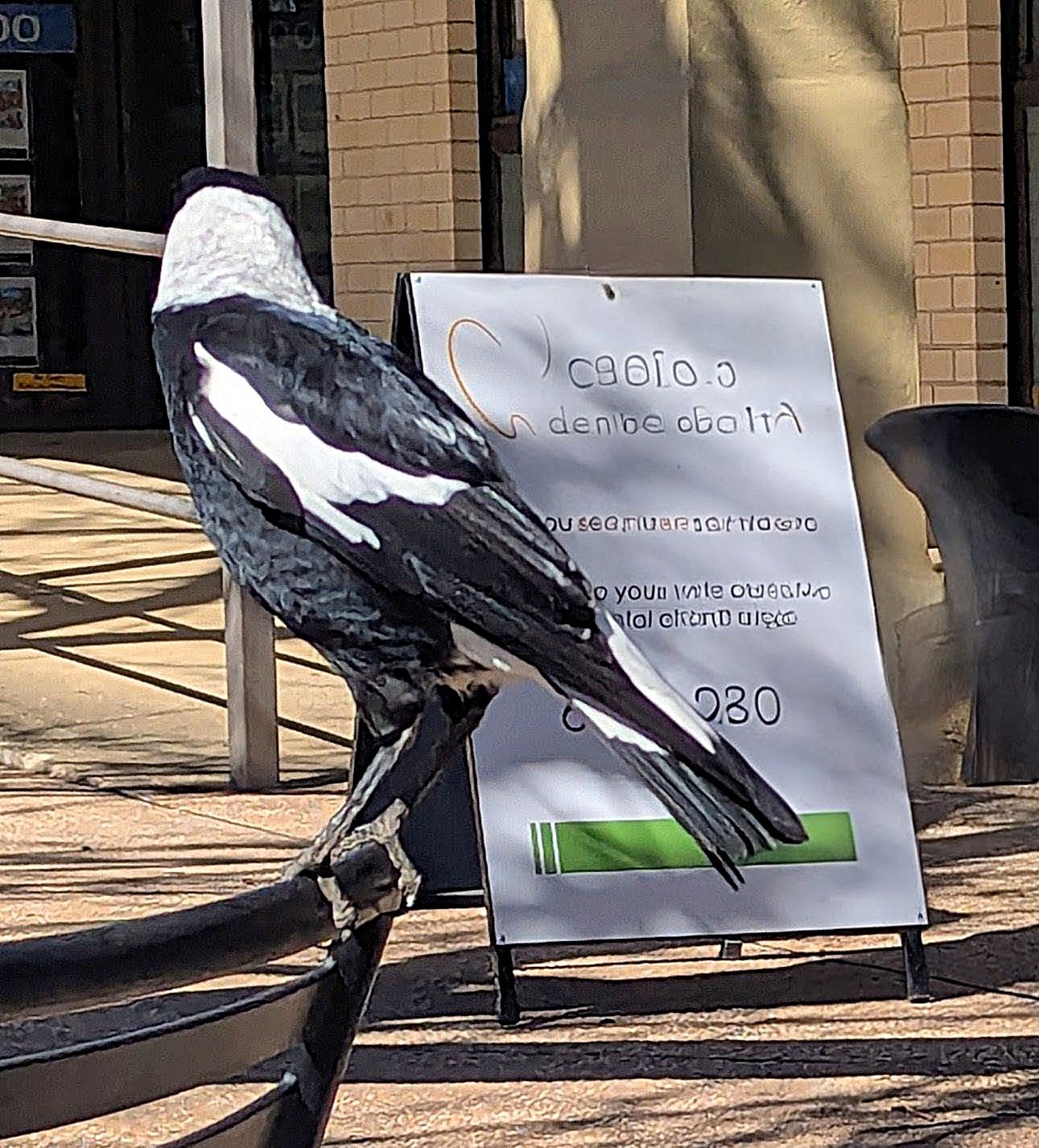


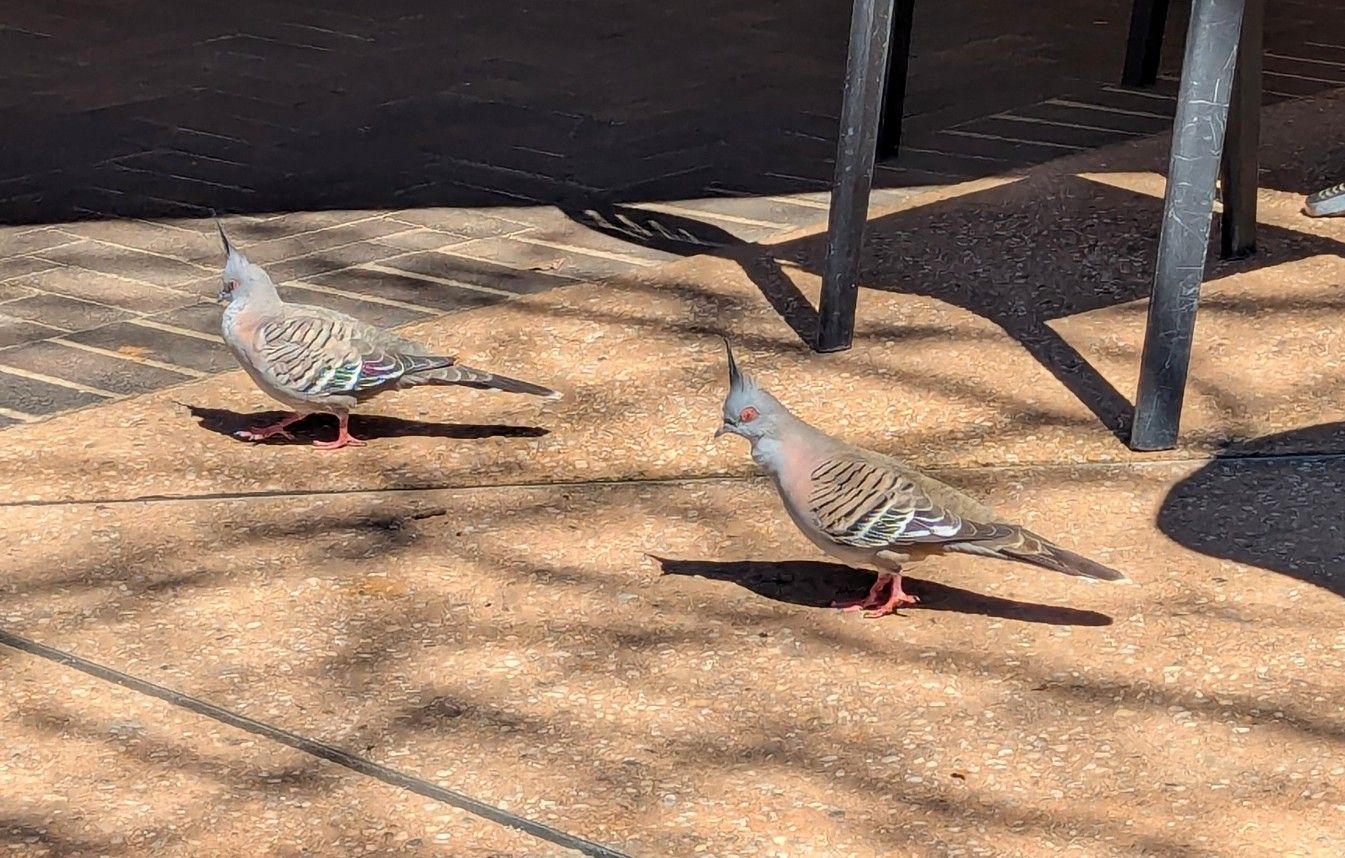



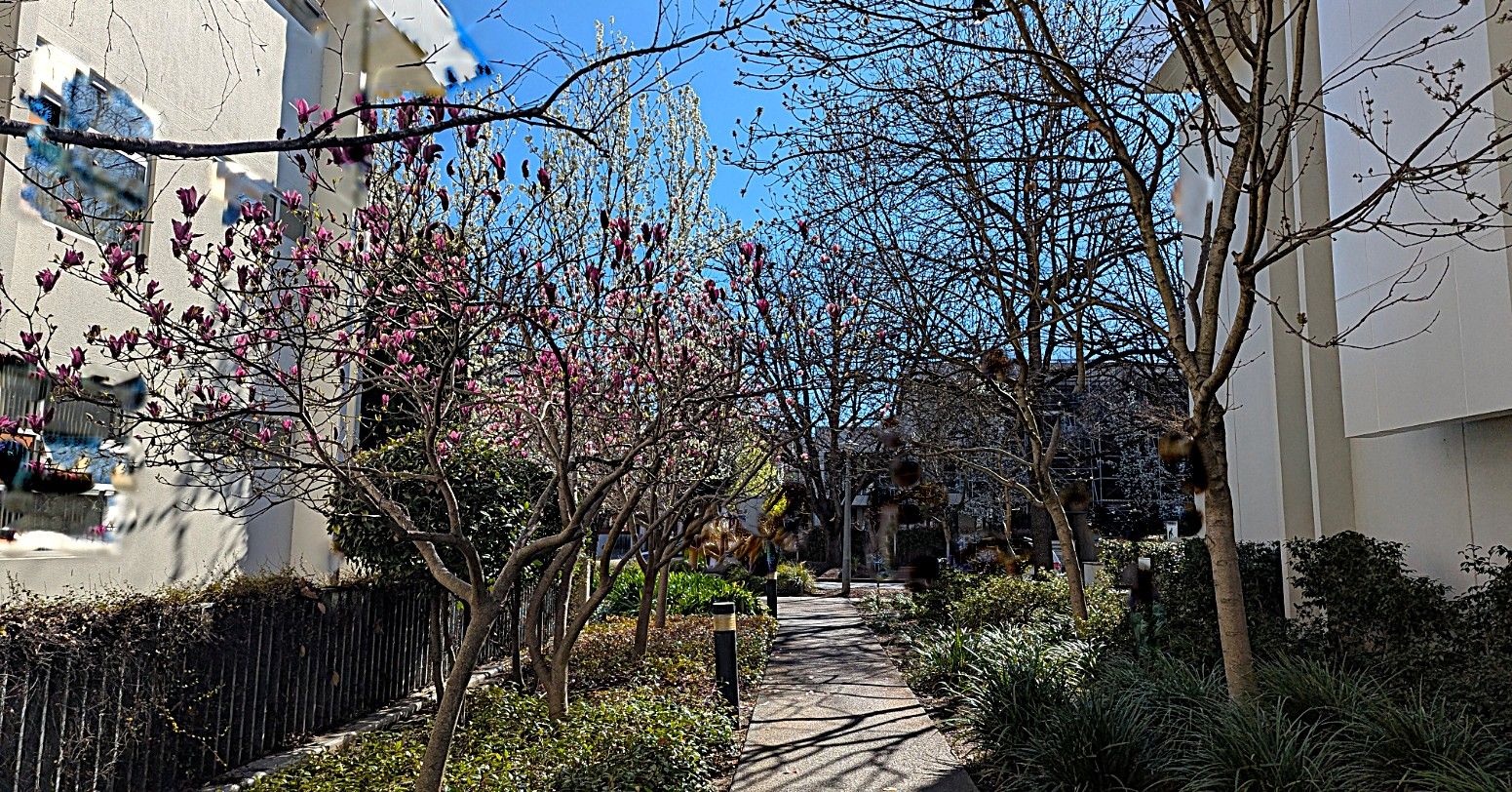
Spring – the Manchurian pears look magnificent whether the sky is blue or gloomy. One lone daffodil! And the grape hyacinths are now appearing.






Brilliant & Bold
Brilliant & Bold, a zoom meeting held monthly by Dr Jocelynne Scutt was, this month, addressed by Benju Oli.
Benju is a registered nurse and women’s health advocate from Nepal and now resides in Australia. She has worked in Nepal and Dubai coordinating and advising families in line with her philosophy: “Empowering hearts, inspiring leaders, nurturing change.”
Benju has experienced firsthand women’s distinct struggles as well as their strength, resilience, and leadership. She has organised and been a key participant in international webinars about women’s leadership and empowerment. Ever proud of her roots, Benju adores her nation, Nepal, and is determined to motivate women to take up leadership roles.
Benju Oli used her broad experience to talk about the new leadership in Nepal. Discussion ranged very freely across countries, cultures and influences.
The information below provided the core to discussion.
Brilliant & Bold! Global Discussion Sunday 14 September:
What constitutes leadership? Should women emulate ‘male’ leadership or what is stereotypically considered masculine – assertive, linear-orientated, exercising power without any or little consultation with subordinates? Or is there a different way of approaching leadership – more consultative, taking into account the views of others, operating as a team – even ‘first among equals’. Do women run the risk of being seen as ‘weak’ or ‘not leadership material’ if they do not follow the ‘top down’ approach? What about negotiations with other leaders. Say one is leader of a country or nation-state negotiating with the leader of another country or nation-state: does the known character of the latter impact on how a leader should go about her (or his) job?
Following Benju Oli’s address, I found the following article:
Published by – Washington Post WorldView
By Praveen Kumar Yadav, Karishma Mehrotra and Supriya Kumar with Sammy Westfall
Young Nepalis brought down the government. Now they need a plan.
KATHMANDU, Nepal — A week before massive protests forced the resignation of Nepal’s prime minister, Tanuja Pande was hunched over her phone in Kathmandu, furiously typing in the comments section of a TikTok video.
The clip showed Nepal’s political elites flaunting their wealth — “flexing,” as she put it — contrasted with images of ordinary Nepalis departing for the Gulf, where most eke out a meager living as manual laborers.
For Pande, a 24-year-old lawyer, the video hit close to home. In her hometown of Damak, in eastern Nepal, most people in her parents’ generation went abroad to work. Back at home, she said, there aren’t enough schools and hospitals are underfunded.
Her thoughts returned to the video on Sept. 4, when the government abruptly banned dozens of social media apps, including WhatsApp, Signal and Instagram. To Pande and other young Nepalis, it was seen as a direct assault on their civic space, and a way of cutting off their connection to the country’s 2 million-strong diaspora.“We were sitting on gunpowder — and the social media shutdown ignited it,” said Devesh Jha, a Nepalese political analyst.
In a little over a week, grassroots protests over corruption would spiral into deadly violence, thrusting this small Himalayan nation into a new period of instability.
The groundswell was led by activists like Pande, who launched Gen.ZNepal, a scrappy Instagram collective that quickly grew to 30,000 followers and racked up almost 13 million views. Members used VPNs to get around the government ban and began organizing.
“This is not outrage against a particular party or leader,” Pande said in an interview on local television. “This is against the entire system.”
On Sunday, the day before their planned rally, Pande and 25 other young Nepalis met at the protest venue to discuss logistics: permissions, water supplies, fliers. “It was nothing much bigger than that,” she said.
They were on the cusp of a generational revolt, even if they didn’t know it yet. At 9 a.m. on Monday, nearly 4,000 people converged at the Maitighar Mandala monument in the heart of Kathmandu. They danced to patriotic songs and held up homemade signs: “our memes, our rules” and “this generation won’t tolerate what our parents tolerated.”
“It was really peaceful,” she said. “It was beautiful.” Thirty-six hours later, the government was gone and the capital was in flames.
The uprising was just the latest in a series of youth-led movements across South Asia that have risen up to challenge the status quo, taking down governments from Dhaka to Colombo. “What happened in Bangladesh, Sri Lanka and most recently in Indonesia inspired us to raise our voices for Nepal,” said Amrit Kumar Mishra, a 28-year-old lawyer and protester who filed a Supreme Court petition against the social media ban.
Monday’s unrest quickly spread beyond the capital. “These same politicians were in power when I was a child, and now, at 22, they are still there — unchanged, unaccountable, and corrupt,” said Ranjana Kami, who protested in the western city of Dang. In her area, she said, local fixers with political connections demand bribes for basic tasks, such as giving out citizenship certificates.
Asal Kumar Dahal, 19, who joined the protests after seeing posts on social media, said he was sick of pervasive corruption. His well-connected friend obtained a driver’s license in a week, he said, while he has been mired in bureaucracy.
Nepal is one of the most corrupt countries in the world, according to Transparency International, ranking 107 out of 180 nations. “Corruption was endemic, and so was the impunity against leaders,” said Amish Raj Mulmi, a Nepali author.
By midday Monday, the crowd in Kathmandu began to shift, according to Pande and other young protesters, and the celebratory atmosphere turned darker. Pande noticed strangers, often older men, pushing into the crowd. “I was scared of the new faces,” she said. She fired off an Instagram warning — leave immediately — and went straight home.
“Then it just spiraled,” said Pranaya Rana, a journalist who was covering the protests for Kalam Weekly, an online publication. When protesters forced their way into a restricted area, witnesses said, security forces opened fire on them with live ammunition, rubber bullets and tear gas.
“When I close my eyes, I can still see the people running scared, screaming,” said Dahal.
On Tuesday, in an effort to restore calm, the government lifted the social media ban and Prime Minister K.P. Sharma Oli resigned. Pande and other Gen Z leaders called off plans for more protests. But the chaos had taken on a life of its own. Mobs roamed the streets armed with iron rods and knives, looting businesses and attacking police officers.
By dusk, the violence reached the heart of the state. Shirtless men clambered atop the gates of Singha Durbar, an administrative palace, waving the national flag. Chanting protesters surged into parliament. Smoke choked the sky.
Nepal’s parliament, the Supreme Court, political offices, hotels and media houses were torched that day as army tanks rumbled past. A former prime minister’s wife was critically injured when rioters set fire to her home. At least 51 people were killed over two days, police said, and hundreds more wounded, according to hospital officials.
“Buildings can be rebuilt,” said Mulmi. “But the idea of the Nepali state itself has been put into doubt.”
“Gen Z has achieved their goals, but at a very, very large cost to the country,” said Rana, the journalist.
Pande bristled at suggestions that her movement was responsible for the bloodshed. “What happened on September 9 was not by us,” she said Wednesday, after taking part in negotiations with the army. “They are trying to dirty our movement.”
Kathmandu is a city in shock. Banks and police stations were shuttered on Wednesday. In some neighborhoods, volunteers swept rubble from the streets. Across Nepal, people are reckoning with how the country arrived at this moment — and what comes next.
Nepal emerged from civil war in 2006 after a brutal, years-long Maoist insurgency. Political progress was halting; governments came and went. A popular movement that began in 2006 led to abolition of the monarchy in 2008. It took seven years and two constituent assemblies to adopt a constitution, which enshrined federalism and secularism. When Oli first rose to power in 2015, a new generation was “promised a new Nepal,” Rana said.
But “we never experienced those changes in practice,” said Mishra, the lawyer.
One in 5 Nepalis live below the poverty line and nearly half survive on less than $6.85 a day, according to the World Bank. Almost a quarter of young people are unemployed, and remittances account for nearly a third of GDP. As migration separated families and drained Nepal of skilled labor, the children of government ministers showed off their lavish lifestyles online.
“The anti-corruption mood came because the wealth gap is widening,” said Mulmi.
In March, thousands rallied in Kathmandu for the restoration of the monarchy under former king Gyanendra. Now, Gen Z protesters fear they are trying to co-opt the uprising.
When the Nepali Army Chief allowed a pro-monarchy figure into talks on Wednesday, the protesters left the table immediately, they said. Army spokesperson Raja Ram Basnet declined to comment. “We are currently focused on maintaining law and order,” he told The Washington Post.
On Friday, one of protesters’ key demands was met when former chief justice Sushila Karki was sworn in as caretaker leader, making her the country’s first female prime minister. After taking the oath of office, she called for new elections in six months.
Many protesters support Balendra Shah, Kathmandu’s rapper turned mayor, whose songs about inequality and government ineptitude helped propel him to power. But for those on the front lines of the country’s sudden political transition, the future looms large and uncertain.
“I don’t think the Gen Z really has a plan,” said Jha. Even Pande admitted: “We are confused right now.”
The Tyranny of Structurelessness
During the discussion on leadership, the following article, ‘The Tyranny of Structurelessness’ was raised, and well worth (re-)reading.
ORIGINAL INTRODUCTION
“During the years in which the women’s liberation movement has been taking shape, a great emphasis has been placed on what are called leaderless,
structureless groups as the main form of the movement. The source of this idea was a natural reaction against the overstructured society in which most of us found ourselves, the inevitable control this gave others over our lives, and the continual elitism of the Left and similar groups among those who were supposedly fighting this over-structuredness.
The idea of ‘structurelessness’, however, has moved from a healthy counter to
these tendencies to becoming a goddess in its own right. The idea is as little examined as the term is much used, but it has become an intrinsic and unquestioned part of women’s liberation ideology. For the early development of the movement this did not much matter. It early defined its main method as conscious ness-raising, and the ‘structureless rap group’ was an excellent means to this end. Its looseness and informality encouraged participation in discussion and the often supportive atmosphere elicited personal insight. If nothing more concrete than personal insight ever resulted from these groups, that did not much matter, because their purpose did not really extend beyond this.
The basic problems didn’t appear until individual rap groups exhausted the virtues of consciousness-raising and decided they wanted to do some- thing more specific. At this point they usually floundered because most groups were unwilling to change their structure when they changed their task. Women had thoroughly accepted the idea of ‘structurelessness’ without realising the limitations of its uses. People would try to use the ‘structureless’ group and the informal conference for purposes for which they were unsuitable out of a blind belief that no other means could possibly be anything but oppressive.
If the movement is to move beyond these elementary stages of development, it will have to disabuse itself of some of its prejudices about organisation and structure. There is nothing inherently bad about either of these. They can be and often are misused, but to reject them out of hand because they are misused is to deny ourselves the necessary tools to further development. We need to understand why ‘structurelessness’ does not work…”
International Anarchist Pl‘ The Tyranny of Structurelessness’, by Jo Freeman, was first printed by the women’s liberation movement, USA, in 1970. It was reprinted in Berkeley Journal of Sociology in 1970 and later issued as a pamphlet by Agitprop in 1972. It was again issued as a pamphlet by the Leeds wom en’s group of the Organisation of Revolutionary Anarchists (ORA) and then re- printed by the Kingston group of the Anarchist Workers’ Association (AWA). It was later Published jointly by Dark Star Press and Rebel Press in 1984 in a pamphlet called ‘Untying the Knot – Feminism, Anarchism & Organisation’, with the printing done by Aldgate Press [84b Whitechapel High St, London E1]. Around 1996 this text was placed on the web at http://www.tigerden.com/~berios/tos.txt . This edition is based on a that text with US spellings switched to British ones. See Further Commentary and Articles arising from Books* and continued longer articles as noted in the blog. for the complete article.
‘Just doing his job’: Albanese government backs ABC reporter blasted by Trump
Story by Adam Vidler
The Albanese government has thrown its support behind an Australian journalist who was subjected to a spray and threat from US President Donald Trump.
ABC journalist John Lyons, on assignment for the program Four Corners, quizzed Trump on his business dealings while in office, asking if it was “appropriate” for a sitting president to be engaged in so much personal commerce.
“My kids are running the business,” Trump said, before asking where Lyons was from.
“The Australians. You’re hurting Australia, right? In my opinion, you are hurting Australia very much right now,” Trump said.
“And they want to get along with me. You know, your leader is coming over to see me very soon. I’m going to tell them about you. You set a very bad tone.”
The Trump administration continued the criticism online after posting a video of the exchange on an official White House account with the caption: ”POTUS smacks down a rude foreign Fake News loser (many such cases).”
The Trump family has been involved in numerous business undertakings arguably bolstered by the patriarch’s presidential status, including golf course deals and cryptocurrency launches, since the start of Trump’s second term.
Speaking on camera for the ABC later this morning, Lyons addressed the clash.
“If our job as journalists is to hold truth to power, then surely asking legitimate questions politely to the president of the United States should be acceptable, but in this day and age now, it’s not,” he said.
He referenced Donald Trump’s US$15 billion ($22.4 billion) lawsuit announced against the New York Times yesterday, saying it was all part of his “war on the media”.
Lyons defended his questions as fair, research-based, and politely conveyed.
Asked whether he had been banned from White House grounds, he said it would be a “very dark day” if that was the case.
“I don’t think we’ve yet reached that point though,” he said.
It’s a controversy that has been raised since Trump was first elected president and refused to divest himself of his business interests while in office.
When asked about the exchange at a press conference this afternoon, Treasurer Jim Chalmers said Lyons was “just doing his job”.
“I respect the ABC and I respect its independence, and that extends to not second-guessing the questions asked legitimately by journalists at press conferences,” he said.
“Journalists have a job to do, and as far as I can tell, that journalist was just doing his job in Washington DC.
 Robin's Room