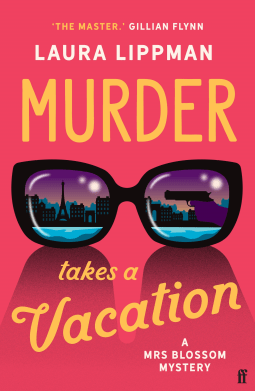
Laura Lippman Murder Takes a Vacation A Mrs Blossom Mystery, Faber and Faber Ltd, August 2025.
Thank you, NetGalley, for providing me with this uncorrected proof for review.
Mrs Blossom holds the fears of many whose route to the back of a plane is accompanied by the overwhelming feeling that they will not be welcome in the tiny space to be shared with other passengers. On this occasion, arriving early at check in as usual, she is rewarded with an upgrade. Her unfamiliar feeling of wellbeing on a plane is enhanced by her meeting with handsome and caring fellow passenger. However, this will be the last time she is afforded such a comfortable state of mind. The flight lands in Heathrow too late for her to make her connection to a Paris where she is to join her friend to cruise through France.
Muriel Blossom is a wonderful character with her amalgam of fears about her appearance and age, her robust willingness to put her detection skills to use and her interactions with the people she meets. At times she inclined to think the worst of them; at others she is keen to befriend a fellow traveller. At the same time as she is interacting with new acquaintances, her friendship with the multiple marrying Elinor is joyful, accepting and warm, painting this relationship as ideal, depicting everything a woman’s friendship should be.
There is enough ‘bite’ in this novel to avoid it being a ‘cozy’ mystery. Laura Lippman has brought Mrs Blossom, female friendships, humour, detection and intrigue together to make an extremely satisfying read. As in Dream Girl (2021) Lipmann’s Tess Monaghan takes second place to a new character and story line. Murder Takes a Vacation poses a successful interaction with Lippman’s famous character and a secondary character from Another Thing to Fall (2008). Lippmann’s ability to deliver a plot that, while providing only glimpses of Tess Monaghan, is again triumphant.

Jane Corry The Stranger in Room Six Penguin General UK -Fig Tree, Hamish Hamilton, Viking Penguin Life, Penguin Business, Penguin, June 2025.
Thank you, NetGalley, for providing me with this uncorrected proof for review.
This novel is difficult to put down, so much so, that I read it over a day with only enforced pauses. It begins with an intriguing prologue, and the pace after the gunshot at its conclusion only becomes faster. The stranger in room six begins the story telling. However, the main thrust of the narrative belongs to Belinda and Mabel. Belinda is a carer at Sunnyside Home for the Young at Heart; Mabel is an elderly resident. Belinda’s story begins fifteen years previously as she dispassionately observes her husband. Mabel begins her story during World War 2 with a tragedy that brings her as a fifteen-year-old to The Rectory, now Sunnyside. Both women have secrets, and both tell their stories with a mixture of satisfaction, relief, and trepidation. Their companiable story telling becomes dangerous when the stranger begins to impose her will on the information that is being gathered. See Books: Reviews for the complete review.

Thank you, NetGalley, for providing me with this uncorrected proof for review.
I thoroughly enjoyed reading the publishers’ accounts of their commitment to The Strand, and Alexander McCall’s Foreword. All demonstrated the enthusiasm and exactitude with which the short stories were chosen and the significance of the publication. I have mixed feelings about the short stories, some of which I found extremely clever as well as readable; others I did not warm to; and I missed being able to read an example of a modern Agatha Christie with its signatory clues that fox the most insightful reader. See Books: Reviews for the complete review.
Australian Politics

September 20 – 26, 2025 | No. 568
John Hewson The unravelling of the Liberal Party
Clearly, not everyone saw delusion in Jacinta Nampijinpa Price’s run for, and subsequent attacks on, the Liberal leadership.
Her actions have been embraced by the Murdoch mob, in particular the excitable team at Sky News. She is backed as ever by right-wing advocacy group Advance, and think tanks such as the Institute of Public Affairs and the Centre for Independent Studies.
The rush of blood to the conservative media’s head was triggered by Price’s recent statements about Indian migrants and her refusal to properly apologise, and then her failure to publicly support Sussan Ley as the Coalition leader, which led to her justifiable ouster from the shadow ministry.
Many, both within and beyond Canberra’s political sphere, see the senator for what she has been since entering politics – a negative, divisive and disloyal force, and particularly so since she ditched the Nationals and joined the Liberal Party. Her political ambitions really took flight with the prominent role she played – employed to full effect by former opposition leader Peter Dutton – in opposing the Indigenous Voice to Parliament referendum. Dutton then endorsed her aspirations with a role in his election campaign. It quickly soured, given her lack of political substance and her ill-considered utterances about MAGA and other Trumpist lines.
It was hard to explain her appointment to the shadow ministry in the first place – especially taking into account her controversial time on the Alice Springs Town Council. Price is not a team player – it’s always her career first, then the party. Moreover, she has no particular policy expertise or experience, certainly none to justify the defence industries portfolio she was given. I suppose Ley felt she had to give Price something, given the brouhaha with which she arrived, and the leader probably felt the new recruit would work better with Angus Taylor, given their declared leadership alliance and friendship. It was surely a strategic miscalculation, as it’s possible Taylor knows even less about the defence portfolio – having never contributed significantly on the most relevant issues.
Ley has at least now been able to correct the poor initial decision to appoint Price to the front bench.
With her comment on “mass migration”, Price was obviously seeking to capitalise on the anti-immigration sentiment of the recent marches and protests taking place both here and overseas. She did however, once again, show very poor judgement and a lack of compassion towards Indian migrants, whose support the Liberals will need in both city and country seats at future elections.
It was insensitive and demeaning to assume that Indians vote as a coordinated, homogeneous block. Perhaps the strong skew polling firm RedBridge Group noted among the community towards Labor at the last election owed to Dutton’s racism and generally poor campaign? These communities deserve respect, not cheap political shots.I imagine the other aspiring leaders – Hastie, Taylor or Tim Wilson spring to mind – are happy to let Price go on destabilising from the back bench. They are just sitting back like spiders in a web, waiting for their moment to strike.
Price’s attack on Indian migrants rekindled memories of the party’s mishandling of Chinese–Australian voters that cost it dearly in the past couple of elections. The electorate can infer from these incidents that there is a deep-seated racism in the Coalition. This point was made forcibly by the Gillard government’s trade minister Craig Emerson recently, as he suggested that these conservative parties “offer cover for bigots”. I fear this is closer to the mark than we’d care to believe. It’s worth noting that Price was speaking outside her portfolio, to which she had given completely inadequate attention – with all that’s going on, she could have issued a press release on defence every day, cheered on by her friends in the media.
This has been a destabilising episode for Ley, stirring talk of a challenge by the end of this year. I believe it is most unfortunate that Ley hasn’t been afforded a clear opportunity to do the job. I accept she hasn’t been inspirational or strategic but, like countless before her, she deserves a genuine chance. That said, if she wants to survive politically, she will need to do better than the anti-government, anti-welfare and amorphous speech she delivered at the think tank CEDA this week.
The current Coalition needs to learn the importance of discipline and teamwork rather than engaging in this persistent navel gazing.
The party’s sluggishness in conducting its policy reviews, and in announcing any new strategic direction or clear positions on so many pressing national issues, has created the image of a rudderless group more absorbed by internal squabbles than good policy. There has been a complete shambles over issues such as immigration, climate change and net zero, the latter ignoring the substance of the recently released climate risk assessment. The contribution of Andrew Hastie this week, in suggesting he would leave the front bench if the party sticks with its climate target, could not have been more ill-considered or ill-timed.
This Coalition is sadly and obviously not in any condition to govern – a fact clearly reflected in its devastating polls. Anthony Albanese would win again if an election were held now, and probably even more definitively. The primary vote for the Coalition in the most recent Newspoll collapsed to 27 per cent – the worst result in the poll’s history since 1985. The Labor primary vote was steady at 36 per cent, giving the government a commanding 58-42 two-party preferred lead, which is Albanese’s biggest margin since taking office.
This latest Price saga was likely an important contributor to the slide in the polls. Ley was seen to be slow in responding, especially given the clear breach of cabinet responsibilities. Ley waited surprisingly long to call on Price to apologise to the Indian diaspora, which in the end she had to do herself. Price became a particularly shambolic element of an unfolding Liberal mess, despite her protection team, led by former prime minister Tony Abbott – who last week described Price in this paper as “one of the few Liberal MPs with a proven ability to provide national leadership” – and his former chief of staff, Peta Credlin. One Liberal MP told The Sydney Morning Herald that Credlin’s soft interviews on Sky News are Price’s “safe space”.
The constraints on Ley and therefore her performance need to be recognised. She beat Taylor by only a small margin of four votes – depending in part on the support of senators whose parliamentary time has now ended. She also allowed the unsuccessful candidate for Bradfield to vote. Unfortunately, Ley’s staff are seemingly quite inexperienced, and closely associated with Alex Hawke, who apparently runs her office. This is a clear disadvantage given his history of factionalism in the New South Wales party, and broader ambitions. Price alleged that Hawke berated her staff, generating a heated argument, rather than Ley calling directly.
Ley is also disadvantaged by Abbott running amok across factions in the NSW party. He was instrumental in Price’s transfer from the Nationals. He is also clearly behind her ambitions, which to Abbott would mean building a hard-right conservative force in our politics, channelling the likes of Britain’s Nigel Farage, talked up by the cheer squad of Andrew Bolt, Rowan Dean and Paul Murray.
Ley’s reshuffle again emphasises an important weakness of the current Liberal Party, namely the absence of genuine talent with significant professional standing. Those days seem long gone as the party is simply not attracting such people – a sharp contrast with the candidates drawn to the independents movement. As a result, the shadow cabinet is appointed mostly on political and geographic considerations, meaning that inexperienced members have to learn on the job, forced to perform without particular compassion and commitment. For example, Price’s complex role combining defence industry and personnel with cybersecurity and science has been split between Melissa Price of Western Australia and Claire Chandler of Tasmania. It was also bordering on ridiculous to add Senator James Paterson to the leadership team. As the party’s campaign spokesman in the election, he showed an inability to expand on or explain the statements by the leaders.
I am sure, nevertheless, that Ley will expect, and hopefully get, more loyalty and discipline from her new team than she was getting before.
Even if the current leader were to be spilt, I don’t believe, given Jacinta Price’s total sellout of Indigenous Australia, that she could or should win, or indeed ever be given any meaningful portfolio in the future. Changing the jockey won’t make a winner if the horse is crook.
Three leadership challenges remain, for whoever is in the role. First, achieving genuine unity within the party and the Coalition. Second, policy credibility. Third, deep organisational reform. All three require consistent, coordinated and focused hard work with all back- and frontbenchers making their essential contributions. Sadly, as things stand, these efforts are not yet being made.
I imagine the other aspiring leaders – Hastie, Taylor or Tim Wilson spring to mind – are happy to let Price go on destabilising from the back bench. They are just sitting back like spiders in a web, waiting for their moment to strike.
This article was first published in the print edition of The Saturday Paper on September 20, 2025 as “Price checked”.
The Guardian
Australia could be a ‘dumping ground’ for goods made for us with forced labour, anti-slavery tsar warns
Exclusive: Chris Evans says ‘blind spots’ in modern slavery laws means few prosecutions occur and some companies are ‘taking the mickey’ in their approach to reporting
Ben Doherty Mon 1 Sep 2025 12.25 AEST
Australia’s modern slavery laws are among the weakest in the developed world and the country risks becoming a “dumping ground” for goods made with forced labour, Australia’s first anti-slavery commissioner has said.
In a wide-ranging interview with Guardian Australia, the commissioner, Chris Evans – a former Labor senator and minister – said there were “blind spots” in Australia’s efforts that risked the country becoming a global laggard.
“Not only are we not keeping up to the standard of acceptable corporate responsibility,” he said of Australia’s Modern Slavery Act, “but we’re also now running the risk of being a dumping ground because of the fact that we have the lowest level of prevention of goods made with forced labour coming into our country.”
His comments come as a report by the UN special rapporteur on contemporary forms of slavery argued that migrants and vulnerable minorities “slip through the cracks” to be exploited in Australia.
The attorney general, Michelle Rowland, described modern slavery as “abhorrent” and said the government was committed to combating it.
Evans said jurisdictions comparable to Australia, including the US, Canada, or – soon – the EU had introduced import bans on goods made with, or strongly suspected of being made with, forced labour. No such ban exists in Australia.
Australia has one of the “weakest regimes in dealing with forced labour”, Evans said, arguing that companies making goods with forced labour on warning lists, and excluded from markets such as US, Canada or Europe, would seek to export to countries without import bans.
“We’re [Australia] at risk of becoming a dumping ground for goods that are designed for … wealthy western countries, but which may have serious issues with forced labour in their supply chains.”
Australia’s other most pressing “blind spot” was in low rates of identification and prosecution of offences occurring inside Australia, he said.
“Some people like to comfort themselves by thinking, well, that means we don’t have much of a problem here, but … that’s nonsense: what it means is we haven’t been very good at … identifying those people who are being exploited and secondly … there are real issues about prosecutions in Australia and the amount of time it takes to get a case to court.”
Walk Free’s Global Slavery Index estimates that there are about 41,000 people held in modern slavery in Australia.
The Guardian requested statistics from the commonwealth director of public prosecutions on modern slavery prosecutions. Data provided to the UN office of drugs and crime shows that in 2023 – the latest figures available – 352 people were “brought into formal contact with the police and/or criminal justice system because they have been suspected of, arrested for, or cautioned for trafficking in persons”.
Five people were prosecuted. Zero were convicted.
Evans said Australia’s Modern Slavery Act, introduced in 2018, was “light-touch” legislation and Australia had failed to progress from that “first tentative step”.
The act mandates only that companies turning over more than $100m a year issue modern slavery reports: it imposes no obligations to address risks.
There are no penalties for failing to report and no penalties for substandard reporting. It’s estimated that between 400 and 1,000 companies who are obliged to report on modern slavery in their practices or supply chains are refusing to do so.
Some companies are reporting comprehensively, Evans said: “Others quite frankly are taking the mickey, by putting in two pages of ‘we oppose modern slavery’ and that’s been regarded as sufficient to pass muster.”s
He argued that Australia’s modern slavery laws needed to move from a reporting mandate to a “due diligence” model, where companies were required to act to prevent modern slavery in their supply chains or business practices.
Evans said the introduction of penalties was similarly overdue.
In 2023 the former ombudsman Prof John McMillan led a review of Australia’s Modern Slavery Act. He found “no hard evidence that the Modern Slavery Act … has yet caused meaningful change for people living in conditions of modern slavery”.
Among his 30 recommendations was that the act be updated to include: an obligation that companies must address modern slavery risks in their supply chains; penalties for companies that fail to comply; and high-risk declarations for regions, factories or suppliers.
The government did not respond until December 2024 – accepting in full, part or principle 25 of the 30 recommendations – but many have not been implemented. The government released a consultation paper in July.
Rowland said Australia had “strong laws and a comprehensive response to combat modern slavery practices, such as human trafficking, slavery, and slavery-like practices”.
“The Albanese government is committed to continuing our efforts to strengthen our response,” she said.
This month the UN special rapporteur Prof Tomoya Obokata said he was “seriously concerned by the treatments of temporary migrant workers in Australia”, reporting “disturbing, sometimes very serious, patterns of exploitative practices by employers, labour hire companies and migration agents”.
Obokata highlighted the exploitation of asylum seekers and refugees; people with disabilities; temporary migrant workers such as those on the Pacific Australia labour mobility scheme (particularly those who had “disengaged” from it and were outside its protections); domestic workers in diplomatic households; and students visa-holders.
He said vulnerable and marginalised people were let down by Australia’s “patchwork” laws.
The government will respond to Obokata’s report at the human rights council in September.
I know Canberrans are passionate about protecting our climate by reducing emissions and transitioning our energy grid to renewables as quickly as possible.
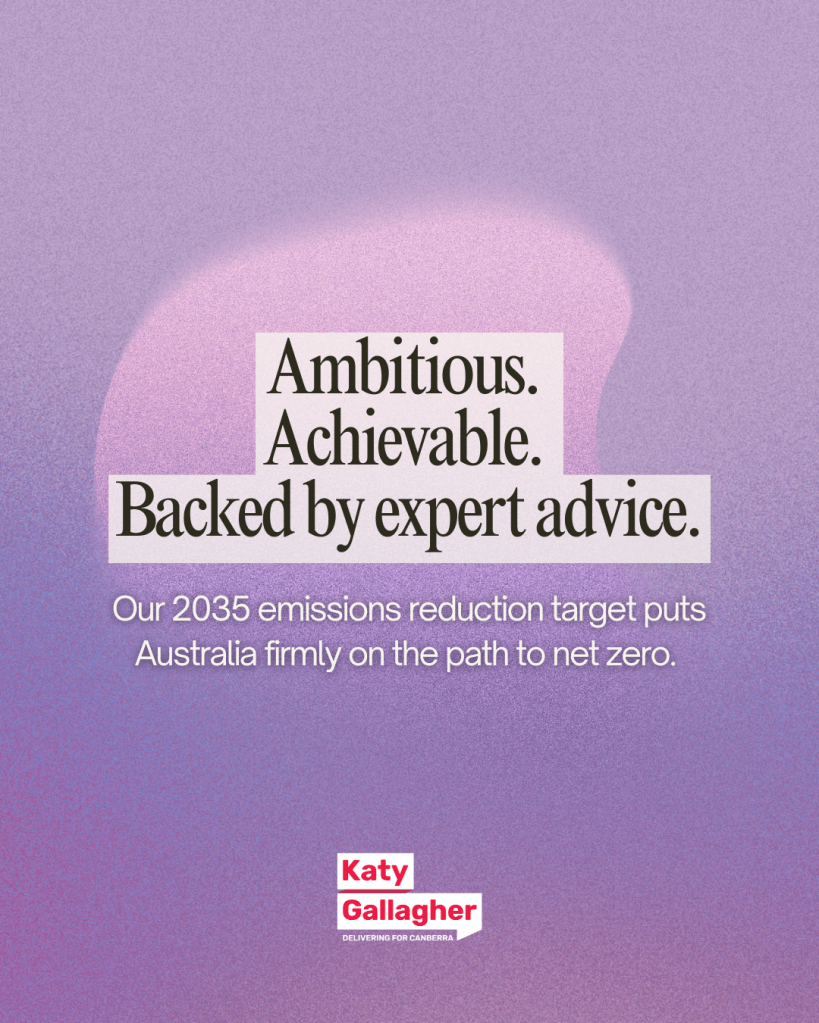
That’s why I am excited to share with you that today, the Albanese Labor Government has taken another strong step forward on climate action by announcing an ambitious and achievable 2035 emissions reduction target of 62 – 70%.
This target range is based on expert advice including from the Climate Change Authority and puts Australia firmly on the path to net zero while protecting households and businesses from the burden of higher costs.
Today’s announcement isn’t just a target, it also includes a detailed Net Zero Plan which outlines exactly how we plan to achieve our target while also providing businesses and renewables investors the certainty that they need so they can play their key role in decarbonising our economy past 2030.
The Plan demonstrates how Australia can transition while:
- growing the economy
- reducing cost pressures on households and businesses
- creating new jobs.
The Plan also identifies five priorities to guide our transition to net zero:
- Clean electricity across the economy.
- Lowering emissions by electrification and efficiency.
- Expanding clean fuel use.
- Accelerating new technologies.
- Net carbon removals scaled up.
If you’re interested, you can read the Net Zero Plan or check out the finer detail in the sector emissions reductions plans we have released today here.
In our first three years in government, we’ve increased wind and solar capacity by 45%, enough to power over 6 million households, but we aren’t done yet. Now we’ll build on that success and pick up the pace.
We know that renewables are the cheapest form of new energy and today we’ve made another down payment to supercharge their rollout. We’ve announced $2 billion to deliver even more renewables and we are also setting up a new $5 billion Net Zero Fund to help industry do the heavy lifting in moving to clean energy.
Our responsibility as a government for all Australians is to balance ambition with practical delivery to cut emissions, create jobs and keep downward pressure on household bills. That’s exactly what this target does.
The target is affordable and achievable but most importantly, its ambitious. We are up for doing the hard work that comes on the other side of announcing this target because our future generations deserve that from us.
Only Labor leads from the front on climate action and renewable energy investment right across Australia, and today’s plan builds on our commitment to deliver climate action in a meaningful and responsible way.
Thanks for taking the time to read about this significant announcement and I look forward to engaging with Canberrans about this target and our broader plans to deliver net zero by 2050.

Political Cartoons Australia’s post
David Pope

Carrick Ryan posted on Facebook, referring back to his previous commentary on PM Anthony Albanese and the failure to meet with President Donald Trump…
Since I wrote this, Republican Congressmen and Women have threatened Australia with “consequences” for its recognition of Palestine, Department of Defence officials leaked private correspondence to the media in an effort to disrupt Albanese’s meeting with Xi, and Trump has threatened an Australian reporter… so no, I don’t think Australians have any interest in our Prime Minister being humiliated in the Oval Office any time soon…
Carrick Ryan
13 July Facebook·
Albanese has tried to speak to Trump, and Trump has so far made no accommodation for him.
Personally, I don’t think the Australian people really want this meeting to happen.
I think they’ve seen Trump humiliate his allies in the Oval Office, they’ve seen him demonstrate his ignorance and disrespect towards every nationality he’s ever spoken about other than his own.
We don’t want to cringe as we watch our Prime Minister feature in one of the mad king’s moments of lunacy, or be used as a prop for some ulterior political motive.
We don’t want to have to see our representatives grovel at Nero’s court, and pretend that we can see the emperor’s clothes too. We don’t want to dignify this circus.
Because even if we did all that, what would it achieve?
Do we expect Trump to be swayed by reason? Are we appealing to his conscience? Even if he suddenly changed his mind, could we ever trust his capricious mood swings and unpredictable policy on the go? Would anything he say mean anything later?
Trump placed tariffs on our nation despite the fact the US has a trade surplus with us. Defying the entire justification he has provided for this stupefying global trade war.
He could have easily utilised our example to demonstrate his fairness to the world, and absolved us as one of the few who buy more from America than they sell… but he chose not to. He chose to punish the nation that has followed the US into every one of their wars since WWII.
So no… we don’t want to send someone to Washington to go and kiss the ring…
…instead, we shall speak to Beijing.
We’re not looking for new friends, but we’re still trying to figure out who our enemies are.
British Politics
The Conversation:
This week the UK news cycle has been dominated by the state visit of the US president, Donald Trump. Many of us will have held our breath. Not so much for the duration of Trump’s stay at Windsor Castle. But the summit with the prime minister and the press conference which followed were pregnant with the possibility for gaffes or discord. Trump seemed so dreamily charmed by his time with the Royals that he appeared to be benevolence itself. Sighs of relief all round at Chequers this weekend, one can only assume.

How I tracked the biggest hidden sources of forever chemical pollution in UK rivers – new study
Published here under Creative Commons licence.
Published: September 19, 2025 7.17pm AEST

Disclosure statement
Patrick Byrne receives funding from the Natural Environment Research Council.
The amount of toxic “forever chemicals” flowing into the River Mersey in north-west England has reached some of the highest levels recorded anywhere in the world.
My team’s research links much of this contamination to old landfills, waste facilities and past industrial activity. Even if these chemicals were banned tomorrow, they would continue polluting our rivers for decades, possibly centuries.
But there is a path forward. We’ve developed a new method to track and prioritise the largest sources for clean-up, giving regulators a clearer picture of where to act first.
Per- and polyfluoroalkyl substances (PFAS), more commonly known as “forever chemicals”, are a large family of human-made chemicals found in everyday products like food packaging, water-repellent clothes and fire-fighting foams. They are valued for their ability to resist very high temperatures and to repel water and oil, but these same properties make them extremely persistent.
Once released, some PFAS could take thousands of years to break down. They accumulate in the environment, build up – with different compounds accumulating at different rates – inside the bodies of wildlife and people, and have been associated with harms to health. The most studied types have been linked to cancers, hormone disruption and immune system problems.
Last year, my research team discovered that the amount of two potentially cancer-causing PFAS chemicals washing off the land and into the Mersey was among the highest in the world. In our follow-on research, we travelled upstream to try and locate where these PFAS are coming from. But with hundreds of potential PFAS sources, how do we isolate the largest ones?
The secret is measuring something called the PFAS load – the total amount of PFAS flowing through the river at a given point, rather than just the concentration in the water.
Here’s why that matters: a small stream can have high concentrations but carry only a small total amount, while a large river with lower concentrations can be transporting far more PFAS overall. If we only look at concentration, we risk missing the really heavy polluters.
By measuring PFAS loads at multiple points along the Mersey system, we could see exactly where the largest increases occurred. That told us both the location and the scale of PFAS inputs.
We detected PFAS chemicals at 97% of our sample sites, even in supposedly pristine streams draining from the Peak District national park. But the big breakthroughs came when we matched the largest PFAS load increases to specific areas.
PFBS (a type of PFAS) was coming in huge amounts from land draining old landfills in the Glaze Brook watershed near Leigh, west of Manchester. PFOA, a globally banned and cancer-causing PFAS, appeared to originate from a waste management facility on the River Roch, north of Manchester. PFOS, another banned PFAS, was entering the River Bollin, with strong evidence pointing to historic firefighting foam use at Manchester Airport.
What’s most striking to me is that all these sources are rooted in the past – old landfills, waste sites or historic industrial use. These chemicals are no longer in production, but they are still escaping into the environment, decades later.
This is where PFAS load measurements make a real difference. Instead of chasing the highest concentrations – which might lead to cleaning up small streams that contribute little overall – we can target the sites releasing the largest total amounts of PFAS into our rivers.
It’s a simple idea with major implications. In a world where environmental regulators face tight budgets and limited monitoring capacity, knowing exactly which sites are the biggest sources is vital.
The Mersey is just one example. Around the world, PFAS contamination follows a similar pattern: numerous potential sources scattered across the landscape, many of them historical. The chemicals’ extreme persistence means they will continue cycling through rivers, soils and wildlife for generations unless active steps are taken to remove or contain them.
Our latest study shows that measuring PFAS load can help solve one of the toughest challenges in managing chemical pollution: working out where to start. By identifying and prioritising the biggest sources, regulators have a realistic chance of reducing the flow of forever chemicals into our rivers – and perhaps one day, making that nickname a little less true.
Liverpool John Moores University provides funding as a member of The Conversation UK.
American Politics

Paper Clip Protest Sep 20
On Thursday, E. Jean Carroll started it: Paper Clip Protest.
“Comely Reader! I suggest we all start wearing the paper clip. Subtler than a red hat, more powerful as a CONNECTION,” she wrote, explaining they were also worn during World War II as a sign of resistance against the Nazis.
Norwegian teachers and students wore paper clips to signal their opposition to Nazi occupation. They attached them to their lapels and wore them as jewelry, a symbol of solidarity binding them together as paper clips did with papers. It was a quiet act of defiance, expressing that Norwegians remained united against Nazi rule.
Friday, when I signed on to tape the #SistersInLaw Podcast, Jill Wine Banks had a clip delicately attached to the collar of her shirt. It made me smile. In that moment, I knew E. Jean was onto something. Our defiance can and must be loud and public at this point. But the quiet symbol of solidarity on someone’s collar when you walk into a crowded room? Genius. And much better than a red hat.
You probably have a paper clip in your desk or junk drawer that you can put on straight away. You can be a subtle signal of support for people who need that right now. You can be a conservation starter. Jill tells me she’s having special paper clips made for the occasion—very fitting for a woman known for wearing pins—and has promised to send me one.
Small efforts can bear fruit when we’re all in on them. I’m going to find a paper clip before I head out to the farmers’ market.
We’re in this together,
Joyce


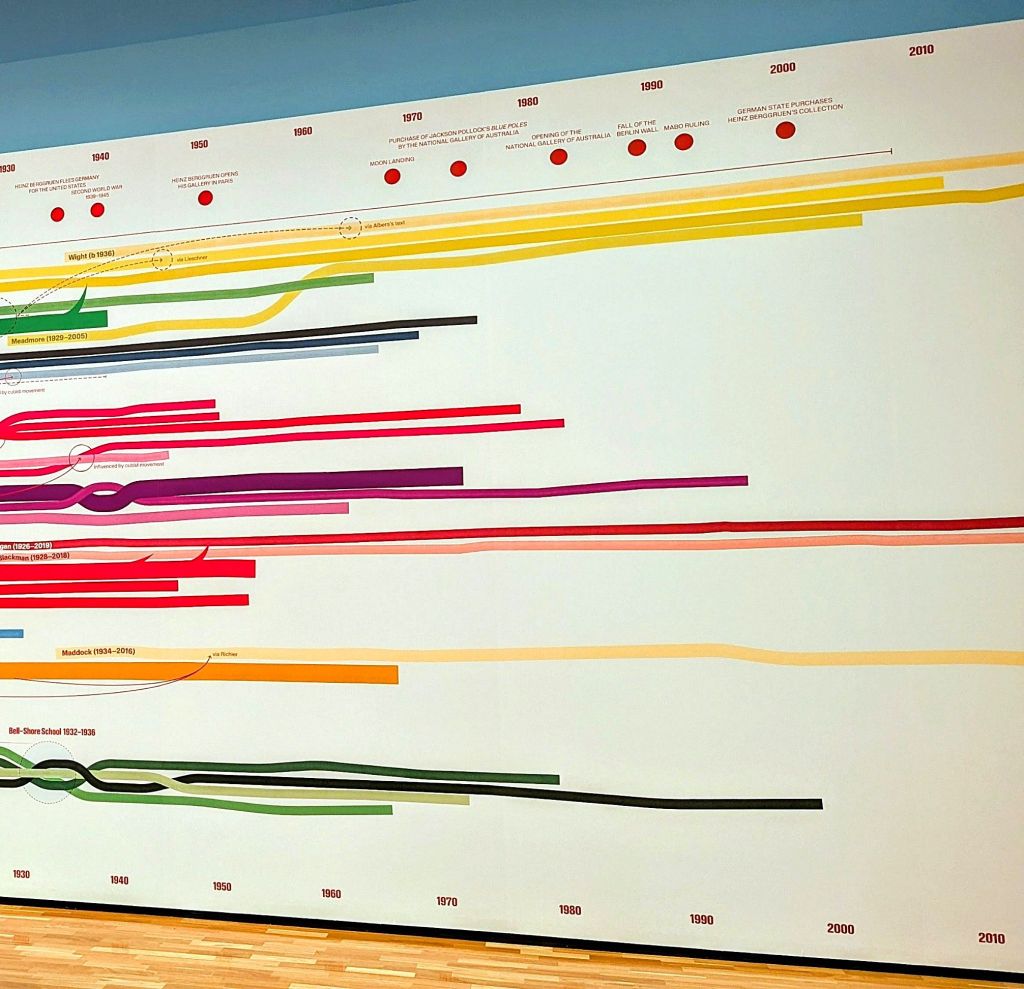


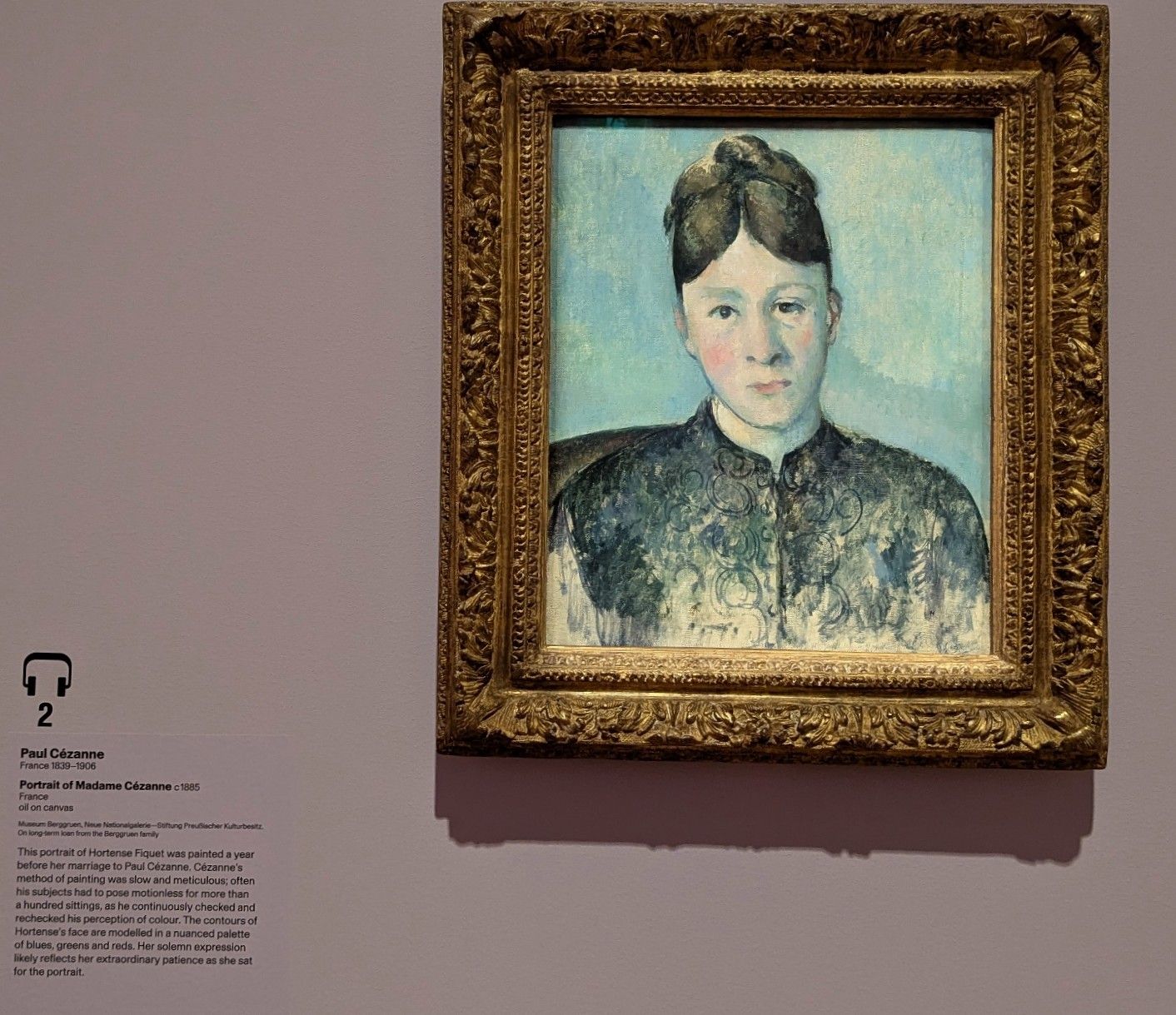



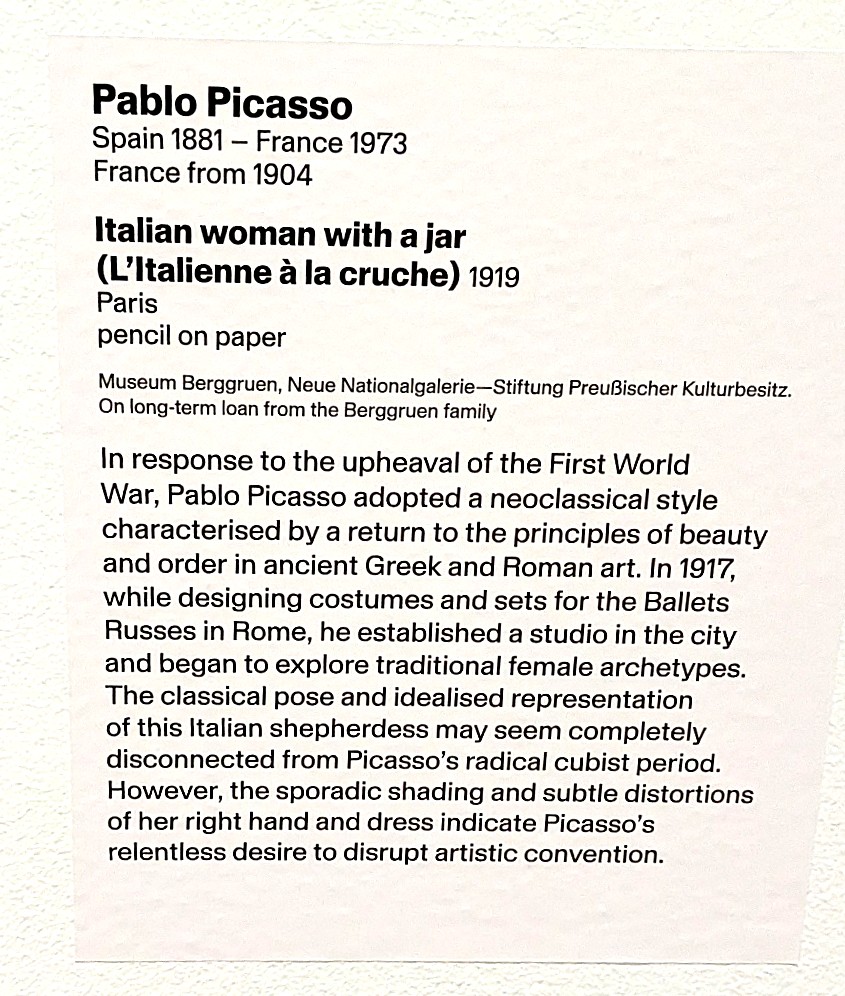
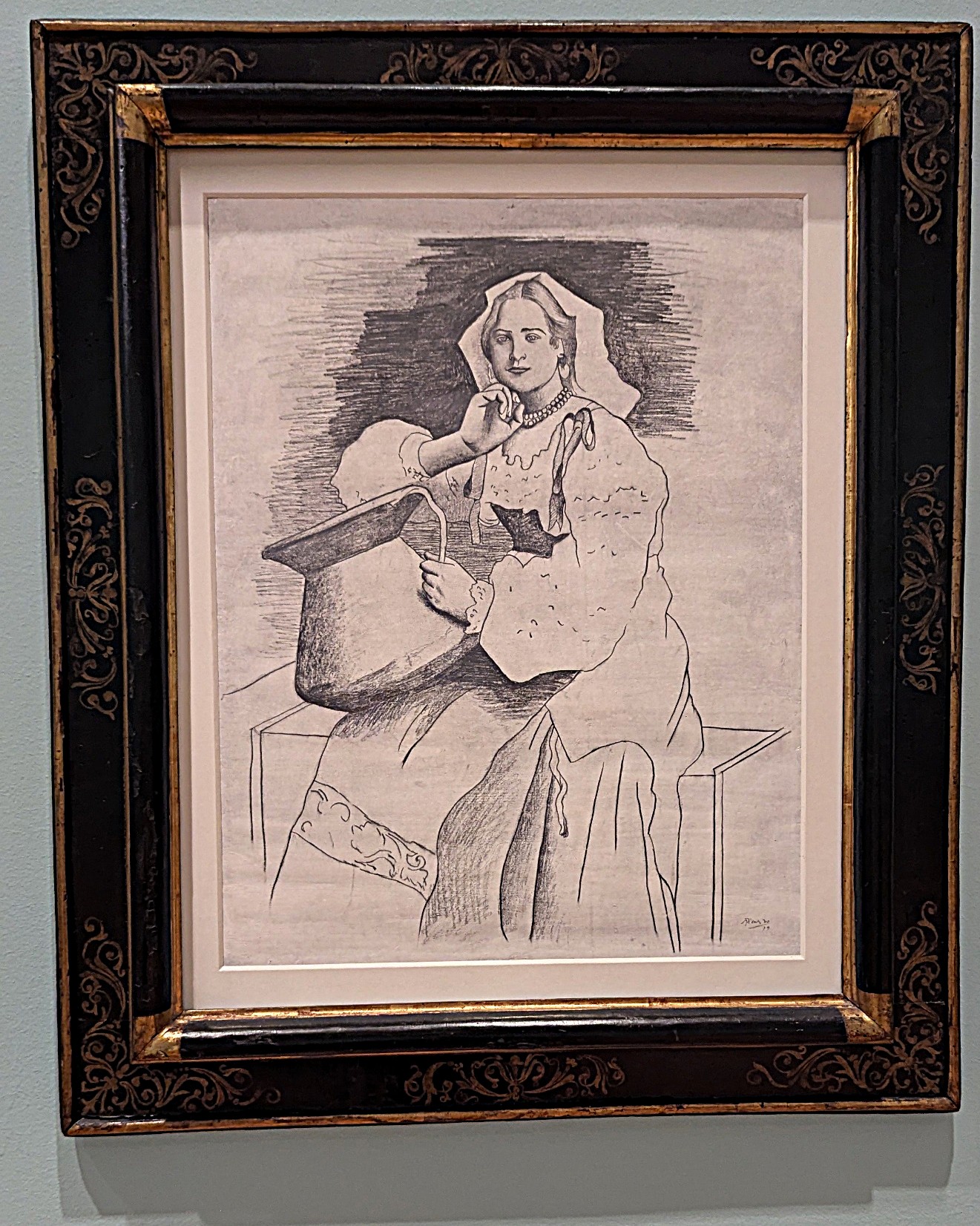
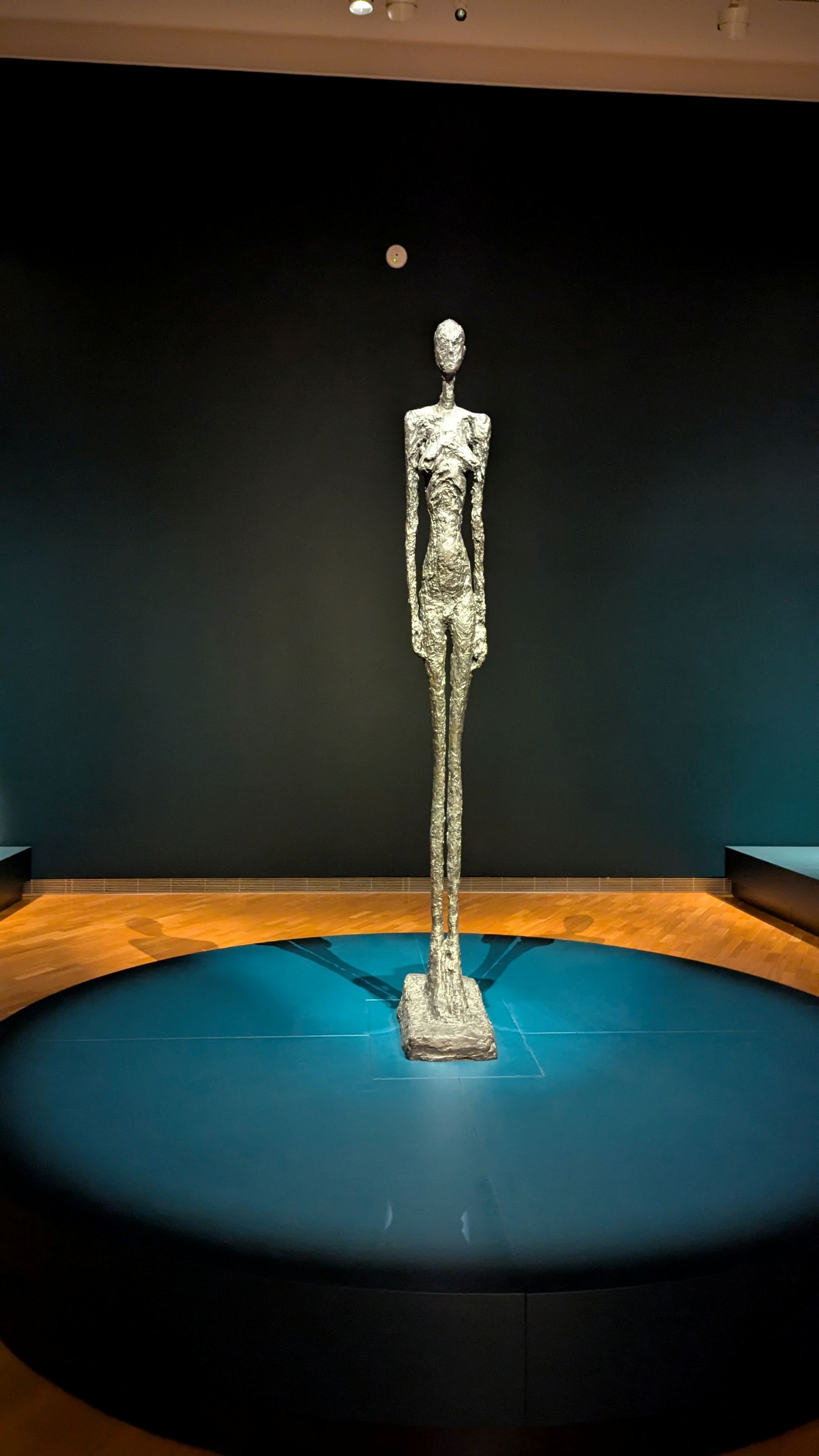
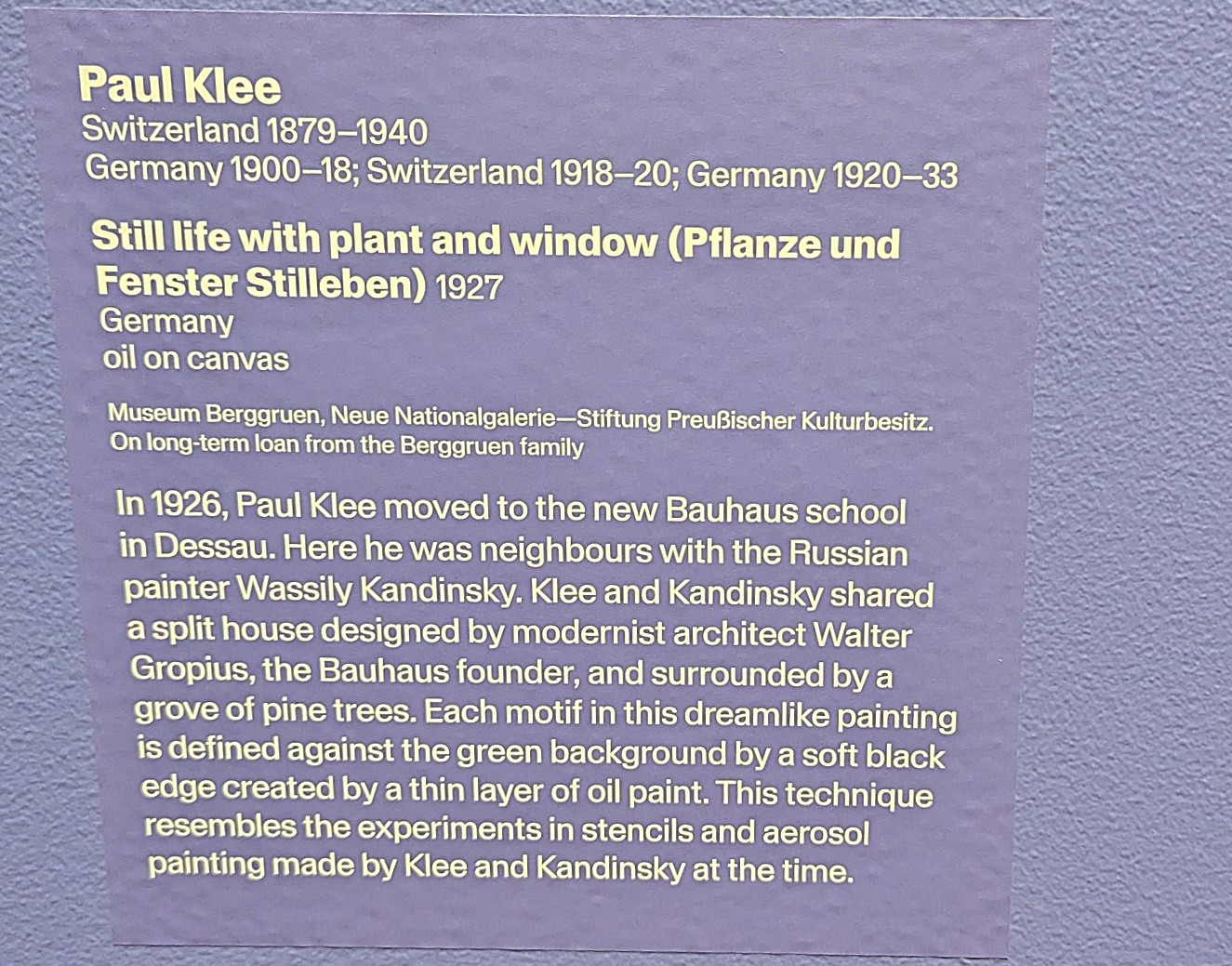
Pablo Picasso Portrait of a Woman 1940, also known as Portrait of Dora Marr Royan, France – oil on paper on canvas





Cindy Lou enjoys her return to 86
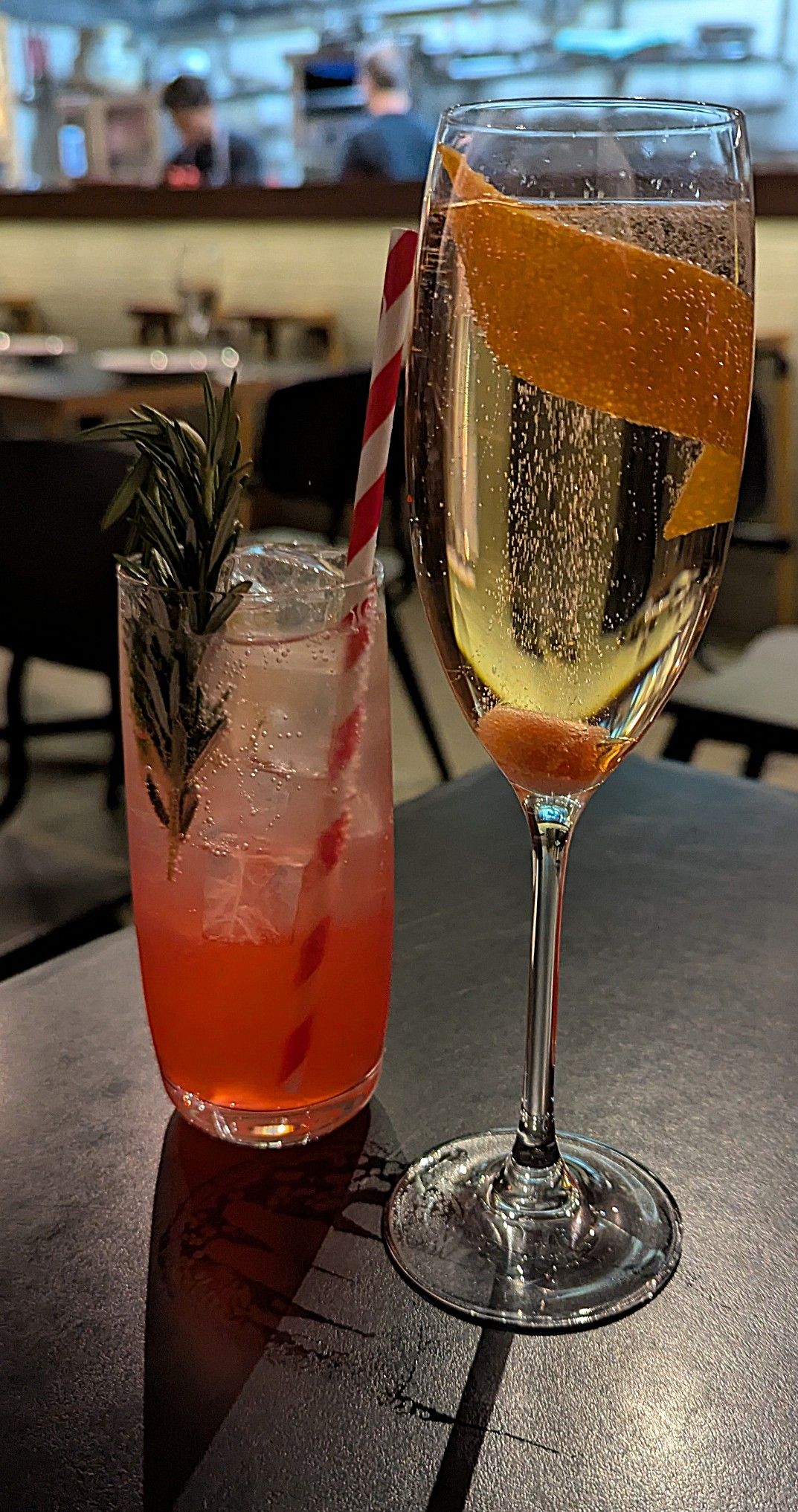
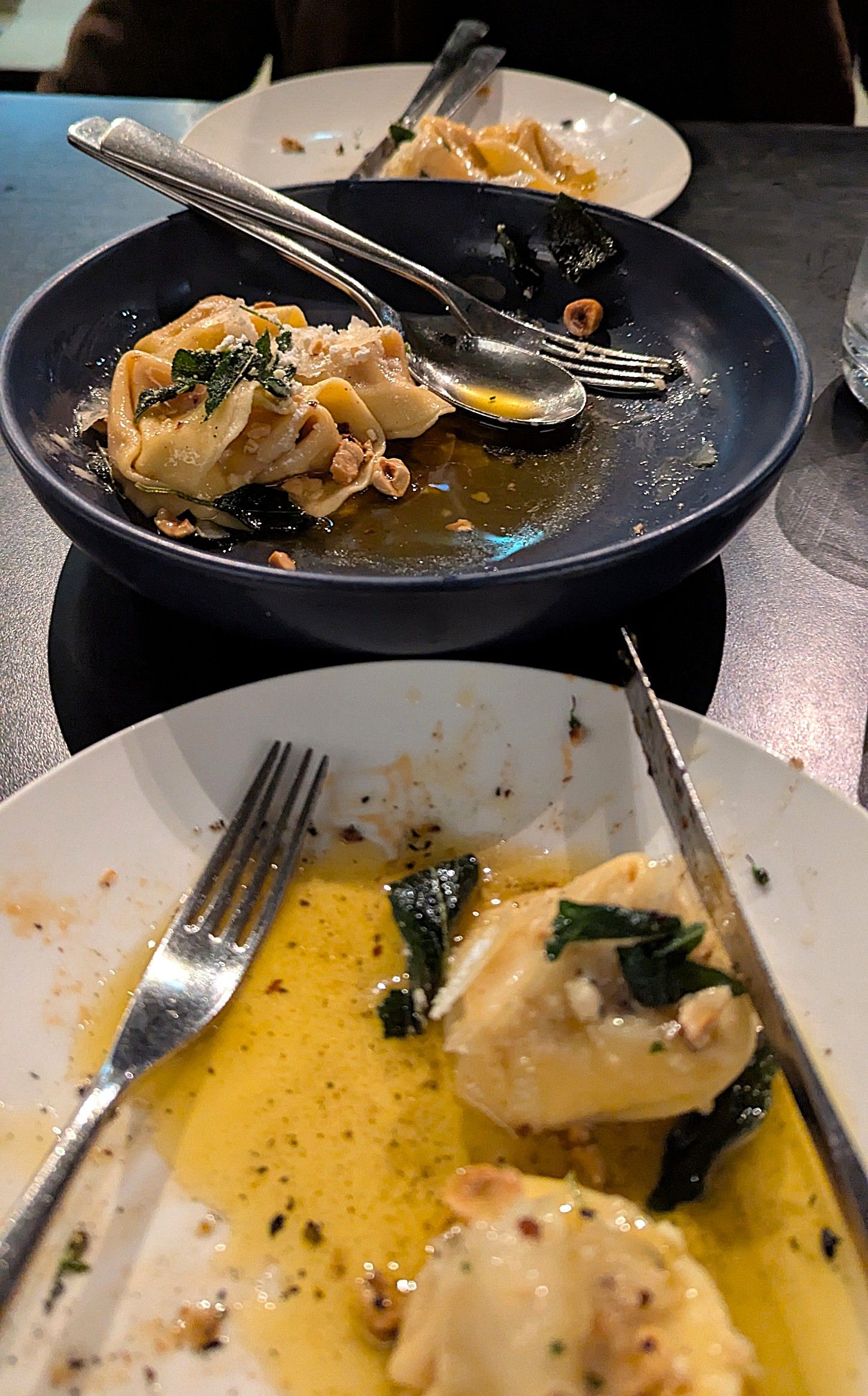
I t seems so long since I ate at 86 – far too long, and I shall certainly not leave so much time before my next visit. I forgot to photograph the delicious, charred corn with togarashi cream and parmesan, but managed to photograph the remainder of the meal before it was devoured. It was a favourite menu – fragrant crispy eggplant with sichuan chilli caramel, pumpkin tortellini with burnt butter and sage sauce, and broccolini with hazel nuts. And, the delightful orange blossom cocktail was back.



Cindy Lou likes Ginger and Spice for its lunch menu – something familiar and something new
Eggplant, potato and capsicum


Sweet and sour chicken
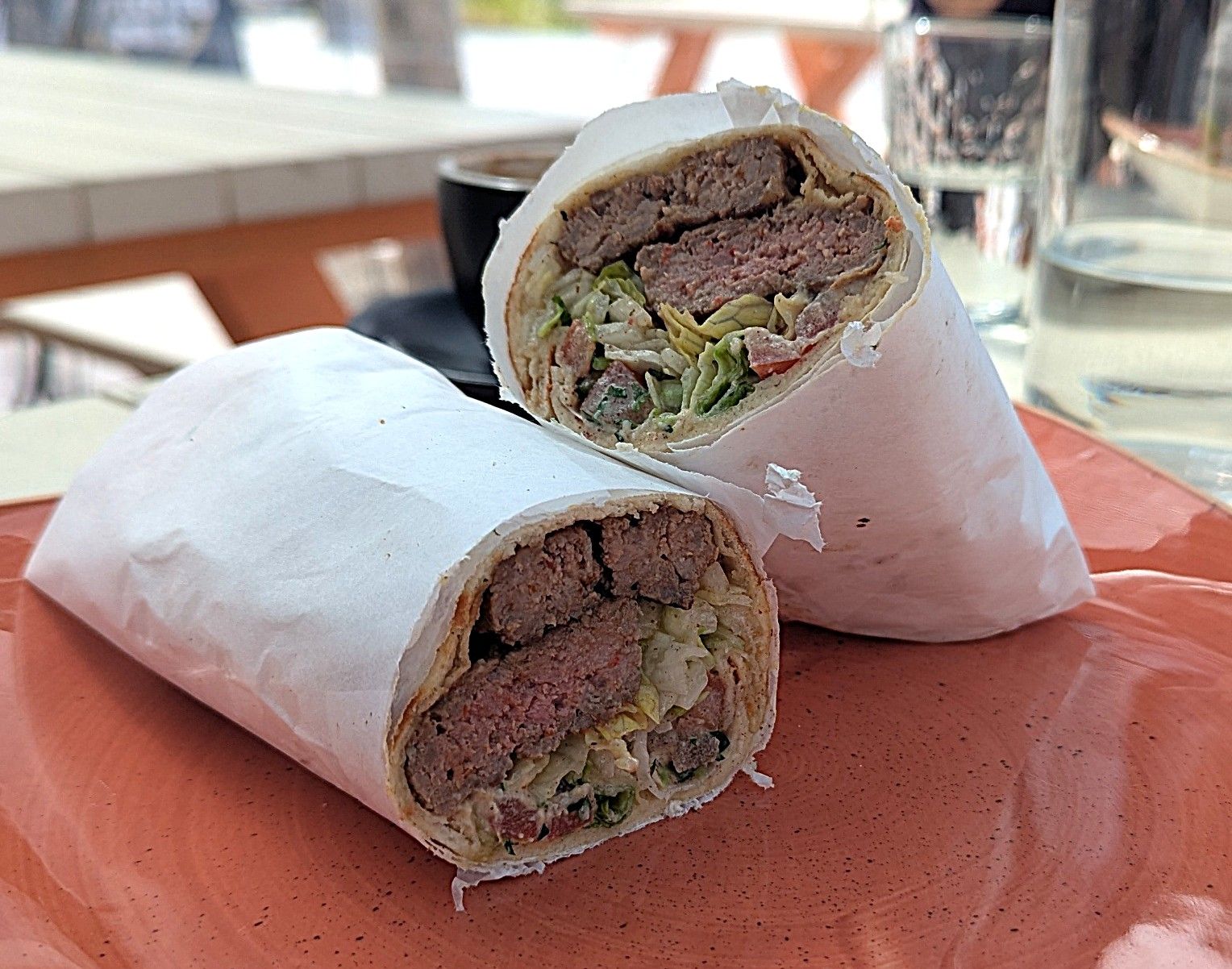
Kebaba is a casual Turkish outdoor cafe in Civic. Today we had zucchini fritters and a kebab.

Tonight, I was at Llewellyn Hall and wanted to add the story below before posting.
John Galloway PAINTER AM
Mozart’s Requiem performed by the Canberra Symphony Orchestra was dedicated to John Painter AM. A moving speech was made before the performance. I was fortunate in knowing John as a lovely, gentle neighbour as well as the man of the accolades he so deservedly received in the speech.


Obituary from the Sydney Morning Herald
John Galloway Painter AM, one of Australia’s most esteemed musical figures, died peacefully surrounded by close family on September 13 at the age of 92. John retained his easy sense of humour and gentlemanly nature throughout the short illness leading to his death.
John’s express wishes were for a direct committal with no funeral service.
A tribute concert will be held at the Sydney Conservatorium of Music on Sunday October 12 at 3pm. Tickets will be available from Wednesday September 24 through the Conservatorium’s online box office.
Published by The Sydney Morning Herald on Sep. 20, 2025.
 Robin's Room