
Mark Splitstone, Für Elise, Girl Friday Productions | Amalgam Books, May 2025.
Thank you, NetGalley, for providing me with this uncorrected proof for review.
Für Elise is sensitive and thoughtful, written in a deceptively simple style which is at times almost stilted. However, it is this writing style that is the key to the cleverness of the novel. Hans’s and Elise’s relationship is stilted, at its beginning when both are shy young musicians meeting through their music in Dresden and later when Hans returns after years in a Russian POW camp. The dissonance continues in their coming from markedly different social environments and is accentuated through their living in a city renowned for its beauty, and the impact of war upon that beauty. Dresden’s destruction is reflected in the couple’s relationship which is also broken by the war. When Hans leaves Dresden to fight for Germany for a vision he only haltingly follows he is damaged by his experiences. So, too, is Elise.
Throughout the novel Nazi ideology also creates dissonance ranging from quiet, short comments and questioning between the two as they forge a relationship to the more vigorous questioning by Hans’s father. The hesitant, questioning acknowledgement that they all live in a world of fear, irrational bigotry and demands, at the same time as going about their lives as members of families, a workplace or school, and a social environment is also portrayed not only by the content by the writing.
Hans is a sensitive and shy musician; Elise is a little more forthcoming. Their relationship eventually prospers despite the problems of social differences. However, when Hans returns from Russia, he recognises that he and Elise need to find a way back to each other. Their lives in communist Germany, east of the wall are contrasted with that of Hans’s POW friend who chose to go to the West. Sometimes familiarity is not the answer, and the development of Hans’s and Elise’s relationship in the rubble of Dresden recognises this. See the complete review at Books: Reviews.

Minka Kent, The Perfect Roommate, Thomas & Mercer, June 2025.
Thank you, NetGalley, for providing me with this uncorrected proof for review.
The Perfect Roommate cleverly combines a crime with reflection on social mores that define character and class. Although none of the characters is particularly appealing, they are interesting enough to maintain the focus that is the strength of any plot – keeping readers wondering about what happens next. In addition, there is unexpected warmth between characters, some honest, some not so honest. Nevertheless, the depiction of relationships, while being a device to provide motivation to the characters, is a thoughtful way to sharpen the portrayal of the roommates, Meadow and Lauren; their parents, Lauren’s friends, Tessa and Thayer, and Elisabeth, Meadow’s employer/friend and her husband, Professor Bristowe. Set in a university town, it could be expected that the students have their minds on their future careers. For others this is not the case at all. See the complete review at Books: Reviews.
British Politics

LABOUR LIST – journal of the British Labour Party
‘Is feminism “back” at the Foreign Office?’

Dorothy Sang
25th September, 2025, 6:00 am
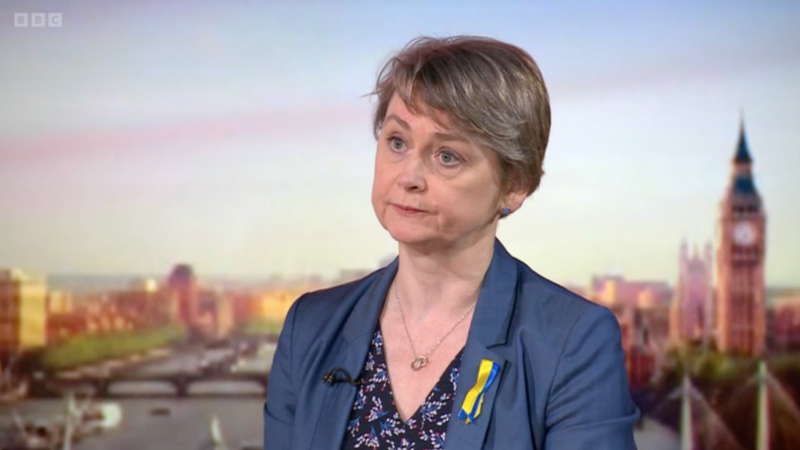
Yvette Cooper’s appointment as Foreign Secretary presents a critical moment for the UK – a chance to revive leadership on women’s rights and gender equality at a time when both are under assault globally. The last few years have shown how political choices can actively undermine progress, and the importance of a strong UK response.
Geopolitics have rocked our security and economic landscape, and what seemed like a resolute stance and prioritisation on gender equality at the beginning of Labour’s premiership, has very quickly unravelled. During his time overseeing aid and foreign policy priorities, David Lammy presided over cuts to the UK aid budget and a de-prioritisation of gender equality within the remaining funds. While understanding these decisions were not lightly taken, they are also not abstract. They will directly jeopardise women’s rights organisations, the very groups delivering life-saving services and advocating for systemic change in some of the world’s most challenging contexts. From Afghanistan to Sudan, from Gaza to climate-affected communities in Nepal and Bangladesh, women and girls are facing the erosion of the support structures that uphold their rights and give them a chance to survive and thrive.
These decisions were made despite polling commissioned by CARE International UK that showed public support for funding women and girls’ rights remains strong, even in a context of cuts. By contrast, the decisions made under Lammy’s Foreign Office, reflect both a detachment from this public sentiment and the longstanding evidence of what works. Reducing the aid budget and deprioritising gender equality undermines the UK’s credibility as a defender of rights, diminishes its global impact, and signals a retreat from the principled leadership the world has come to expect.
Enter Yvette Cooper. Her career demonstrates both experience and a sustained commitment to women’s leadership. She has written extensively on amplifying women’s voices and the power of women to transform communities. But let’s be clear – being a feminist in principle is not the same as being a feminist in practice. Cooper now has the tools, portfolio, and opportunity to translate feminist principles into action; to protect and expand funding for women’s rights organisations, integrate women’s leadership into humanitarian responses, and use UK diplomacy to push back against anti-rights actors globally.
Why does this matter? Because the rise in global misogyny and the growth of anti-rights actors is not just a social issue – it is a threat to global stability and security. Just as climate denial and anti-vaccine movements undermine public safety and international cooperation, attacks on women’s rights erode democratic institutions, fuel polarisation, and drive violence. Feminism in foreign policy is not optional; it is central to peace, resilience, and global stability.
The stakes could not be higher. A recent UN Women survey revealed that nearly half of women’s organisations working in crisis-affected areas risk shutting down within six months due to declining global aid. These are organisations that run life-saving services, provide legal and psychosocial support, and advocate for systemic change in countries where governments may be indifferent – or worse – to women’s rights. Without urgent intervention, decades of progress will be reversed.
The question now is whether, under Cooper, the UK will step up or continue to step aside. Feminism at the Foreign Office is not about slogans or token gestures. It is about principled, evidence-based leadership that recognises women and girls as drivers of change, not passive recipients of aid. It is being resolute that advancing gender equality is not just about women and girls, but about levelling up entire societies, unlocking progress and prosperity for all. It’s about shedding the notion that women’s rights is a fringe issue for the ‘woke’ – and instead reclaiming Britian’s proud legacy as the birthplace of the suffragette movement and decades of feminist
activism. It is about demonstrating, through the UK’s money, power and influence, that Britain will not abandon its commitments at a time when the world is watching.
Critically, Cooper must act with urgency. As the new Foreign Secretary, she has the opportunity to turn the tide. To restore funding, champion women’s leadership, and ensure that gender equality is woven into every corner of UK foreign and development policy. This is not a small ask. It will require political courage, strategic thinking, and the ability to navigate a world increasingly hostile to feminist progress. But it is achievable, and it is essential.
For those of us working alongside women’s rights organisations across the Global South, the message is clear: we are ready to work in partnership, but we need the UK to lead, not retreat. Standing with women and girls in crises is not charity. It is a strategic, evidence-based, and morally imperative approach that strengthens communities, bolsters stability, and reasserts the UK’s role as a global leader.
Yvette Cooper has a chance to make this moment count. The world – and millions of women and girls – will be watching.
Tom Watson Newsletter September 25, 2025
Tom Watson <tomwatsonofficial@substack.com>
Watching The Hack, remembering the fear
Tennant, Jones and Carlyle deliver; the show stirs old memories but skirts the hardest questions on accountability.
There is so much I want to tell you about ITV’s new drama, The Hack. It covers two stories that are linked by police corruption and tabloid criminality. I played a small role in investigating the scandal. I could tell you about the fear of retribution, the bewilderment as the scandal grew or the bleakly comic moments that happened along the way.
In the end, there is only one question that matters: Does Keir Starmer have courage?
Will he protect the Metropolitan police if it chooses to investigate a cover up? Will he back a contempt of Parliament inquiry to test new evidence that the company broke rules and undermined a Select Committee inquiry?
Or does he want it all to go away and, like so many before him, reach a venal accommodation with Murdoch’s lawbreaking company?
A story in this week’s Mail on Sunday may give you the answer. Political Editor Glen Owen claims, and I quote, “Morgan McSweeney lobbied organisers of the Donald Trump state banquet in order to secure an invitation for Rupert Murdoch, No 10 sources have said.” If you do not know him, Morgan is the Prime Minister’s chief of staff and closest adviser. He is having a difficult week but as far as I can see, he hasn’t denied the story.
Anyway, The Hack.
The Hack is gripping. Jack Thorne runs twin tracks, the Guardian investigation led by Nick Davies and the Met thread led by DCS Dave Cook, that converge on tabloid criminality and police corruption. David Tennant is sharp and restless as Davies. Toby Jones gives Alan Rusbridger quiet authority. Robert Carlyle brings flinty resolve to Cook. When the drama plays it straight, it has pace, purpose and moral clout. Dan Ryan plays the Brummie version of me. In case you’re asking, yes, I did find it a bit weird.
What I missed was the constant sense of threat we felt at the time, the fear. The drama glances at intimidation, legal muscle and cold, quiet warnings, but only in passing. Nor does it ask the obvious questions: why is Rebekah Brooks still chief executive of the UK arm of Murdoch’s company, and what does that say about accountability?
Still, if you want a good drama with excellent performances, I recommend it.
Australian Politics
PM addresses UN on climate, global action and Security Council seat

The New Daily
Sep 25, 2025, updated Sep 25, 2025
Prime Minister Anthony Albanese has used his debut speech to the United Nations to renew Australia’s bid for a seat on the UN Security Council.
Pushing the case for Australia, Albanese said the Security Council was a platform for middle powers and small nations to “voice – and achieve – our aspirations”.
“That is why Australia is seeking a place on the UN Security Council in 2029-30,” said Albanese on Thursday (AEST).
The security council bid, which was first launched by the Turnbull government in 2015, is supported by the Coalition.
But Opposition Leader Sussan Ley and foreign spokeswoman Michaelia Cash warned it could not detract from addressing pressures Australians faced at home.
“The Coalition will always back Australia’s national interest and we stand ready to work with the government in any way we can to help support Australia’s bid for a seat at the table,” they said in a statement.
US President Donald Trump has been leaning on America’s allies to pull more of their weight on the world stage amid a perception they are too reliant on US support.
Amid increasing US isolationism, Albanese warned that America could not be relied upon to uphold the international rules-based order on its own.
“The creation of the international rules-based order owes much to the post-war leadership of the United States of America,” Albanese told the UN General Assembly in New York.
“For the region Australia calls home, that stability has underpinned a generational economic transformation.
“But we cannot ask — and should not expect — any one nation to uphold the rules or guarantee the security on which all of us depend.”
Australia last had a non-permanent seat on the council in the 2013-2014 term — its fifth since the first UN session in 1946.
In a wide-ranging speech, Albanese also exhorted the world’s nations to co-operate with more action on climate change and peacekeeping.
Albanese called for an end to conflict in Gaza and Ukraine, and alleviating poverty and inequality.
His appeal for greater international co-operation comes with the US under Trump increasingly vacating its space as global leader and the rules-based order threatened by the rise of authoritarianism and regional conflict.
Albanese’s speech came a day after Trump delivered a fiery tirade in the same room, lambasting nations like Australia that have recognised Palestinian statehood and telling European leaders: “Your countries are going to hell.”
Trump has leaned on America’s allies to pull more of their weight on the world stage amid a perception they are too reliant on US support. Australia has so far resisted calls to lift defence spending from about 2 per cent to 3.5 per cent of gross domestic product.
The issue could be on the agenda when Albanese sits down with Trump in Washington on October 20, after months of back-and-forth to secure a face-to-face meeting.
The White House talks were announced before Albanese briefly met Trump and posed for a selfie with him at a reception for world leaders on Wednesday.
Albanese described their interaction as a “very warm and engaging chat”.
He said Australia was investing in defence, development and diplomacy in the Indo-Pacific region, where the US has entrusted it to stave off growing Chinese influence.
He said Papua New Guinea would soon become Australia’s newest ally, despite a recent bid to sign a mutual defence treaty unravelling during independence anniversary celebrations.
All nations, including middle and smaller powers like Australia, had to maintain faith in the institution of the UN by ensuring its principles were backed up with deeds, Albanese said.
“If the United Nations steps back, we all lose ground,” he said.
“If we give people reason to doubt the value of co-operation, then the risk of conflict becoming the default option grows.
“If we allow any nation to imagine itself outside the rules, or above them, then the sovereignty of every nation is eroded.”
Albanese urged the world to embrace clean energy, called for a ceasefire and release of hostages in Gaza, and supported the Coalition of the Willing’s efforts to secure peace for Ukraine on their terms.
But there was no mention of the pivotal AUKUS deal with the US and Britain, under which Australia is supposed to get US-made nuclear submarines.
The US is reviewing the three-country agreement to ensure it aligns with Trump’s “America first” agenda.
Albanese is due to meet his Sri Lankan counterpart and potentially sit down with Turkey’s strongman leader, Recep Tayyip Erdogan, on his last full day in the US. He then flies to London to meet British counterpart Keir Starmer and the King.
-with AAP
Bob McMullan
Could the Teals win Senate seats in an expanded parliament?
Important discussions are taking place within the government and before the Joint Standing Committee on Electoral Matters about increasing the size of the federal parliament.
I support increasing the size of the Senate representation of the states to 14 each with consequential changes to the size of the House of Representatives.
Such a large increase is caused by the nexus provision in the constitution which requires the House to be twice the size of the State Senate representation.
This remains one of the most counter-productive clauses in the Constitution, but that is an issue for another day.
However, any increased size of State Senate representation will have potential consequences for subsequent elections as it will significantly reduce the quota of votes required to elect a Senator.
It should make it easier for the Greens, One Nation and Jacquie Lambie to maintain their seats, although it will not necessarily enhance their chances of increasing their Senate numbers.
Given the upsurge in House votes for the Teals (that is, candidates supported by Climate 200) in every state it raises the question of the senate prospects of similar candidates.
The data shows that if the Teals make the right decisions and commit some resources it is possible, even likely, that the they could win several Senate seats.
Let’s look at the data from the last election and then at the decisions the Teals and their backers would need to make to bring this about.
In most of the mainland states the number of first preference votes won by Climate 200 backed candidates suggest that it is an achievable task to gain at least half a quota in an election for a seven seat Senate election. Once over half a quota the Teal-backed candidate would be favorite to win a seat.
In NSW the candidates supported by Climate 200 won 272,872 primary votes in the 11 House seats they contested in 2025. The 6th candidate elected to the Senate in NSW in 2025 was the One Nation candidate who won 302,438 votes or 0.42 quotas. A mere 1000 votes from each of the 35 seats Teal candidates did not contest in 2025 would see a Teal Senate election candidate with at least 307.000 votes or 0.45 Quotas. This would put the Teal Senate candidate ahead of One Nation for the 6th position and would certainly suggest a very good chance of winning one of 7 available seats in an enlarged parliament.
Nothing can be certain about future elections, but it is clear that there is a possible pathway to success for a Teal Senate candidate in NSW.
The situation in Victoria is a little more complex but should still be promising for a Teal Senate candidate in the right circumstances.
The 6th candidate elected in Victoria at the last election was a 3rd Labor candidate elected on 2.43 quotas. The 8 Teal candidates won 215,006 votes in their House seats which would have be sufficient to gain 0.40 of a quota in the Senate. Approximately 2500 votes per electorate in the remaining 30 seats would have led to 0.5 quotas. The highest vote for an unsuccessful party in the Victorian Senate election in 2025 was 0.31 quotas for One Nation. This would suggest a strong Teal candidate would be the favorite to win a 7th Senate seat in Victoria.
In Queensland the task would be more difficult although not impossible, but in WA and SA it might be slightly easier than in the larger states. The votes won by Kate Chaney in Curtin and Climate 200 supported candidates in seats like Forrest would be encouraging for a potential Teal Senate candidate in Western Australia. Although no Teal was elected in South Australia, the vote in Grey for example, in which the Climate 200 candidate won 18745 votes suggest a strong candidate would have a good chance in the Senate in South Australia, particularly given the parlous state of the South Australian Liberal party.
Tasmania is harder to judge because of the Lambie factor, but for seven seats in Tasmania the quota would be very small, almost certainly less than 50000 votes. The performance of Andrew Wilkie in Clark and Peter George in Franklin suggests this should be achievable for a strong Teal candidate.
I also support increased Senate representation for the Territories. Given David Pocock’s success and the continuing failure of the Liberals to appeal to ACT voters this could create a further opportunity for a Senate success for a Teal candidate.
So, it is obviously possible for a Teal candidate to win one or more Senate seats at the next election. It would be possible, but more difficult, even if the size of the parliament is not increased.
What would they need to do?
The data makes it important that Teal candidates run in more, preferably all seats. This could be based on only notional campaigns in many seats because very few votes should be necessary in the more difficult seats.
The ACT experience suggests that high profile candidates would also be a distinct advantage. They don’t all need to be David Pocock, but they would need to attract attention in the seats without strong House candidates.
What would not be necessary is a party structure. The current informal processes should be sufficient if the level of support can be maintained.
I am not advocating that Climate 200 and the Teals should take this step
That is up to them and has risks as well as benefits.
However, the current state of the Liberal party in every state and the low level of support for the Nationals in most states make it an intriguing possibility.
Cindy Lou in Sydney
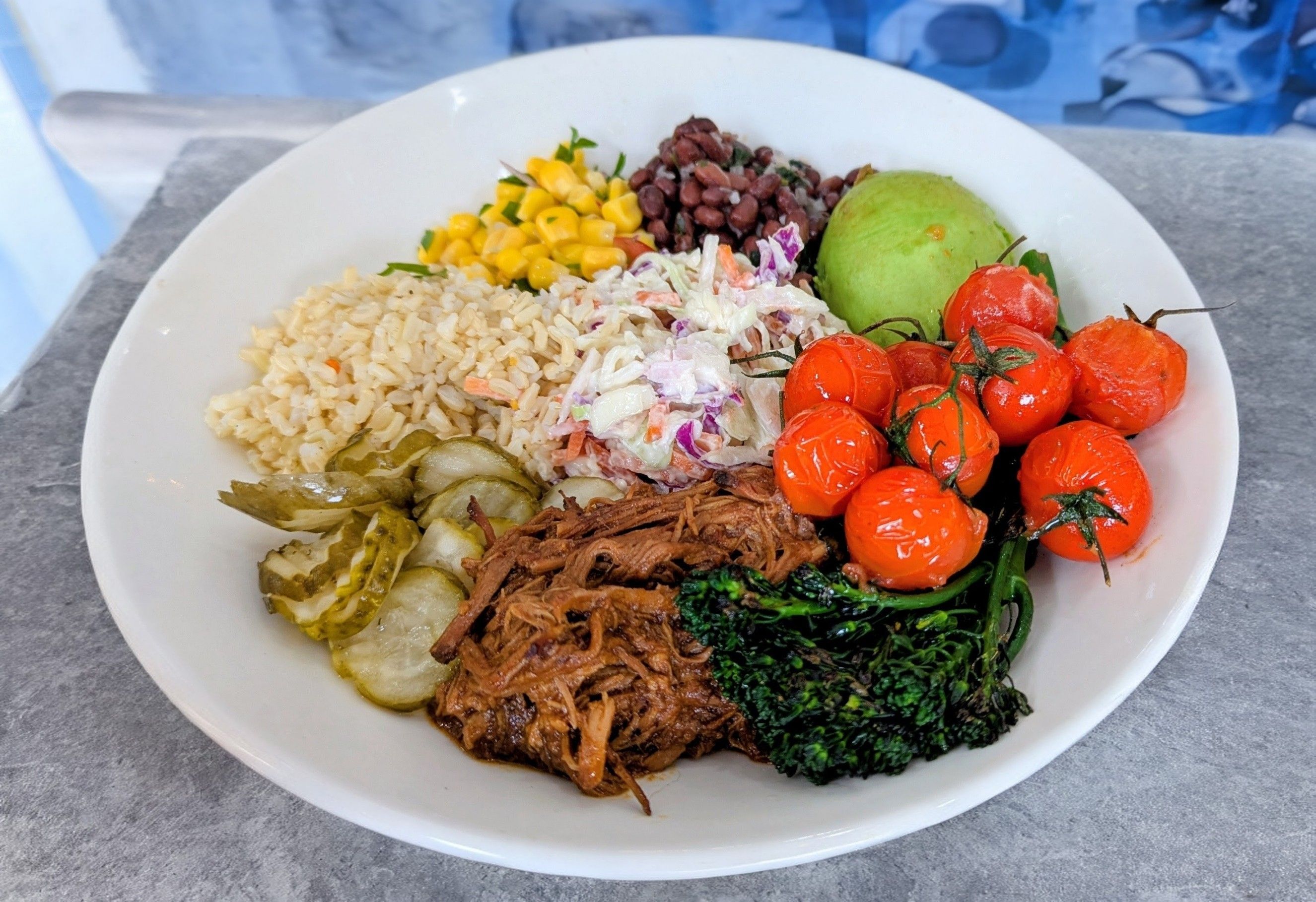
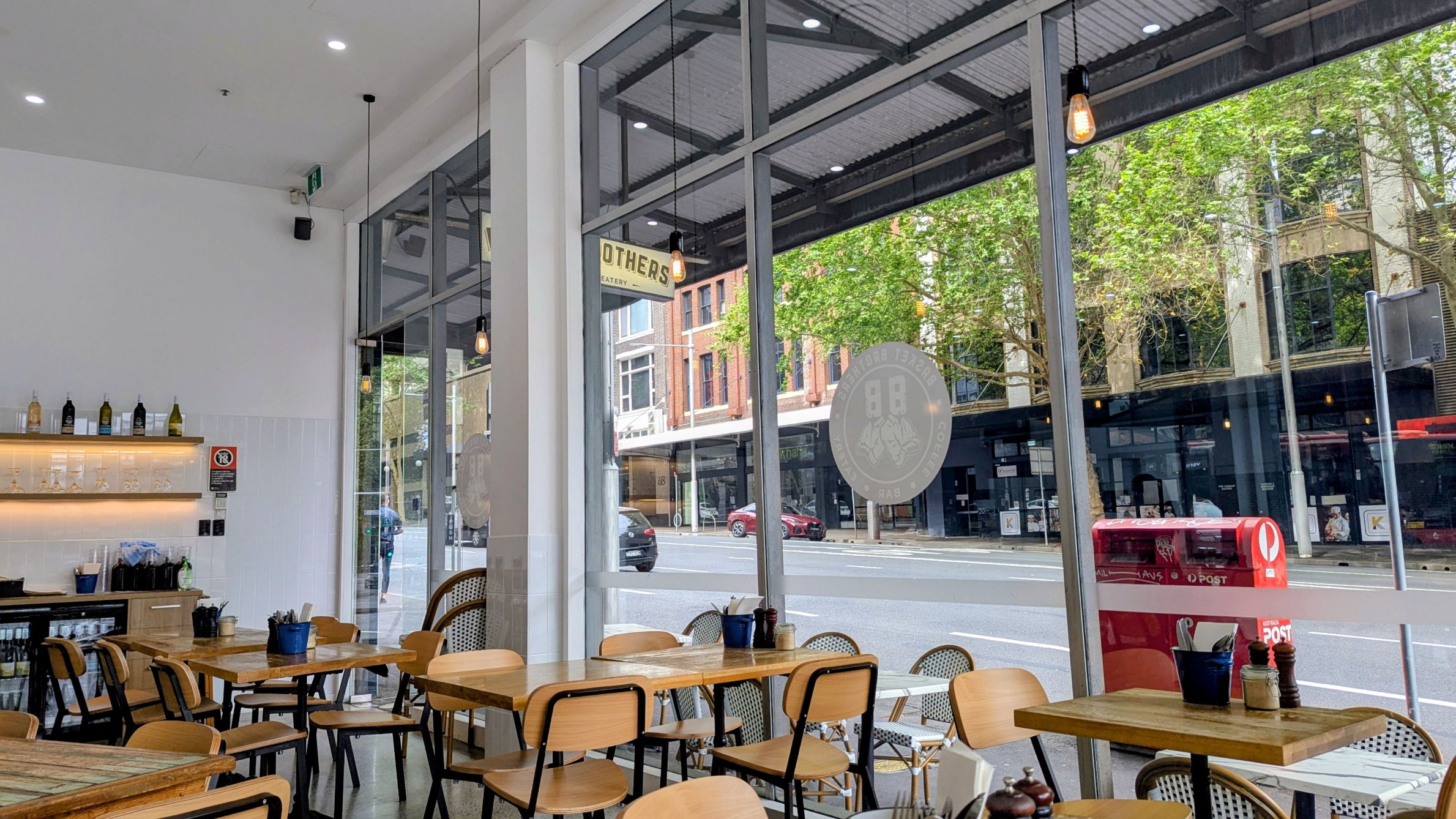
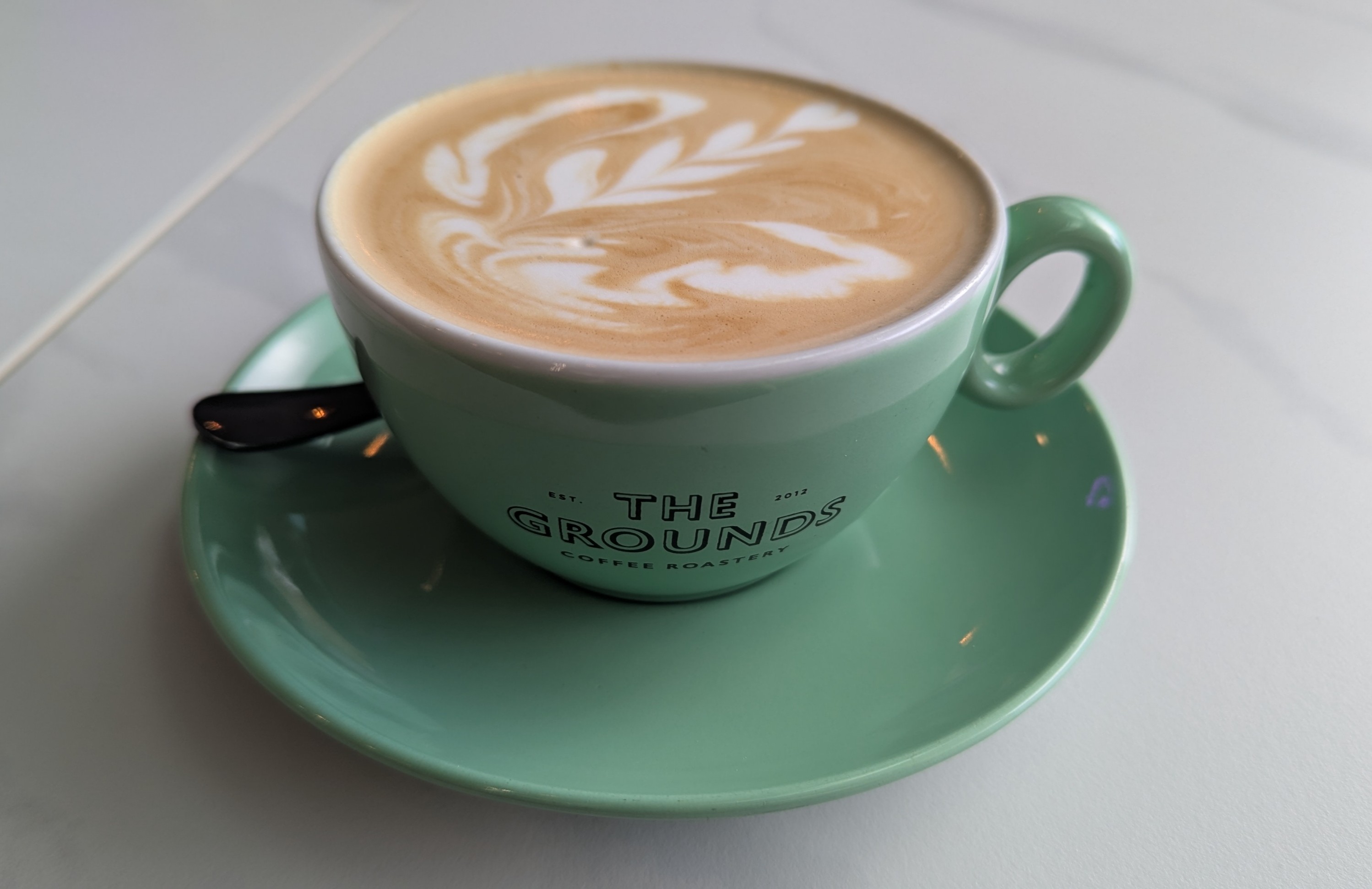
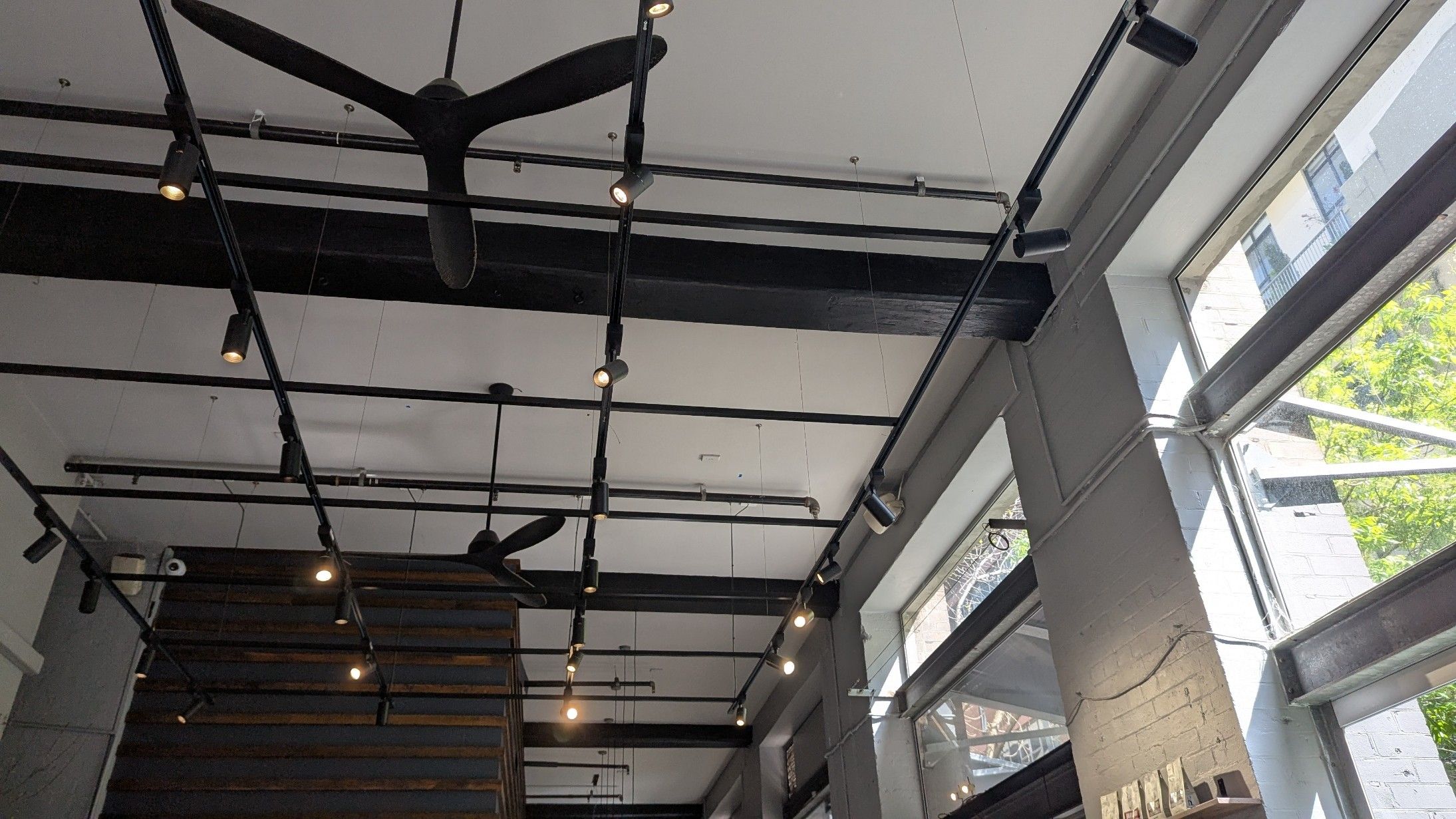
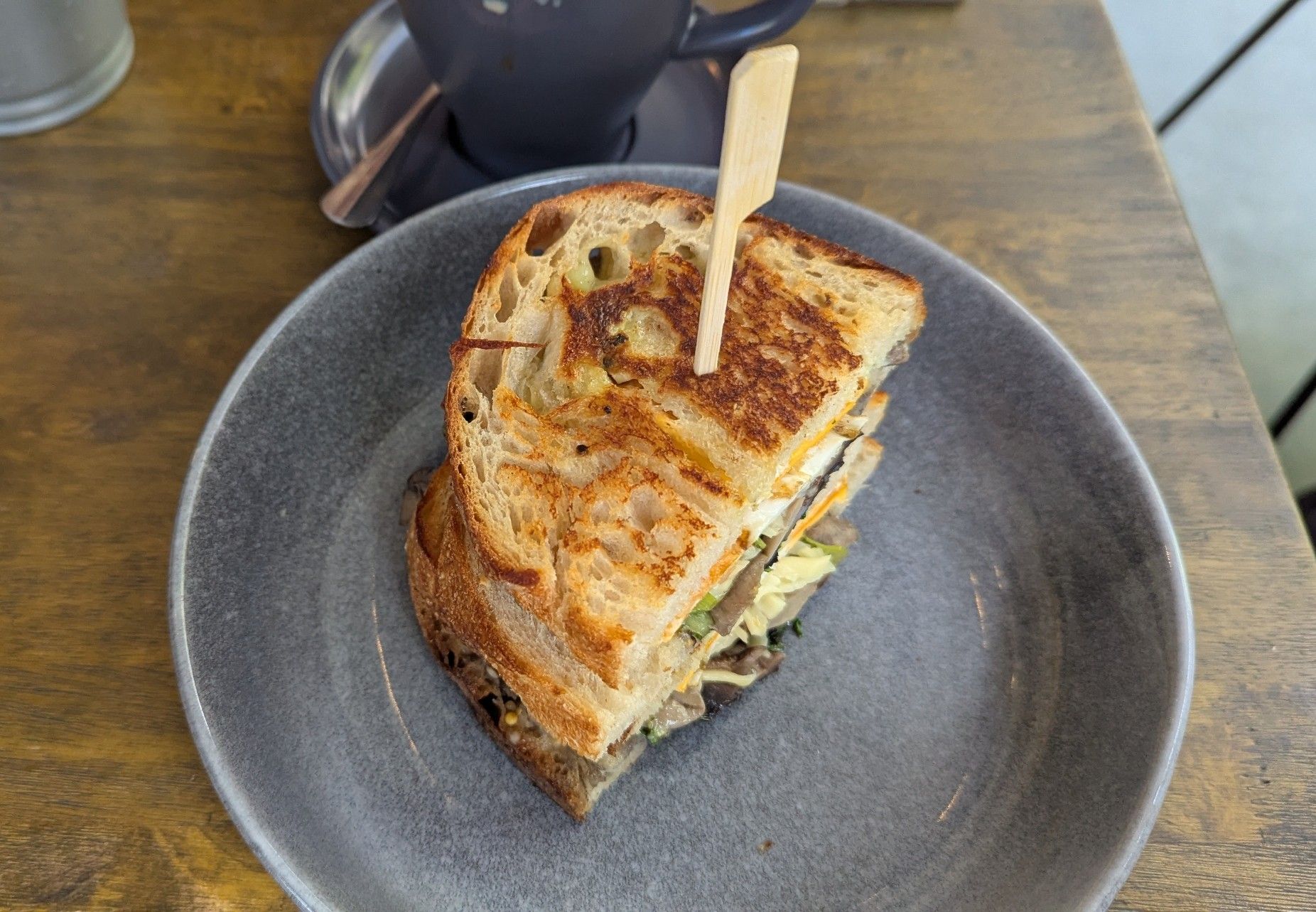
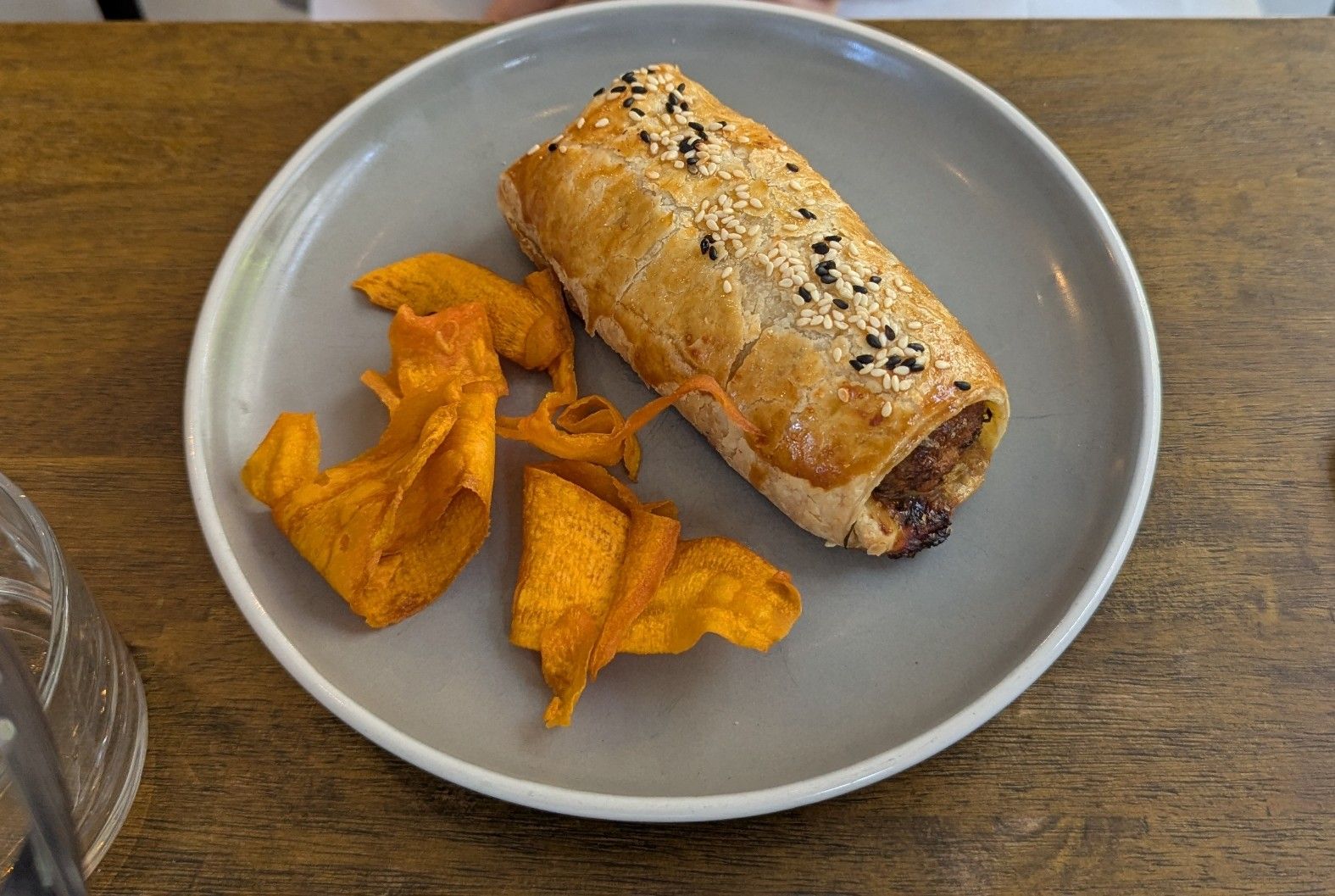
Sydney abounds in coffee and breakfast places, and some of the really nice ones are near where we stay, or close to venues we visited, such as The Roslyn Packer Theatre – Basket Brothers (brisket bowl and chicken tacos after arrival, lovely service), 8 Ounce (great toast – two grain slices with lots of butter and vegemite, terrific service, excellent prices) Toast (pork and fennel roll, mushroom toasty, good menu efficiency and smiles), Brix Beans (great coffee, good service, nice choice of food, but on this occasion, coffee was enough).




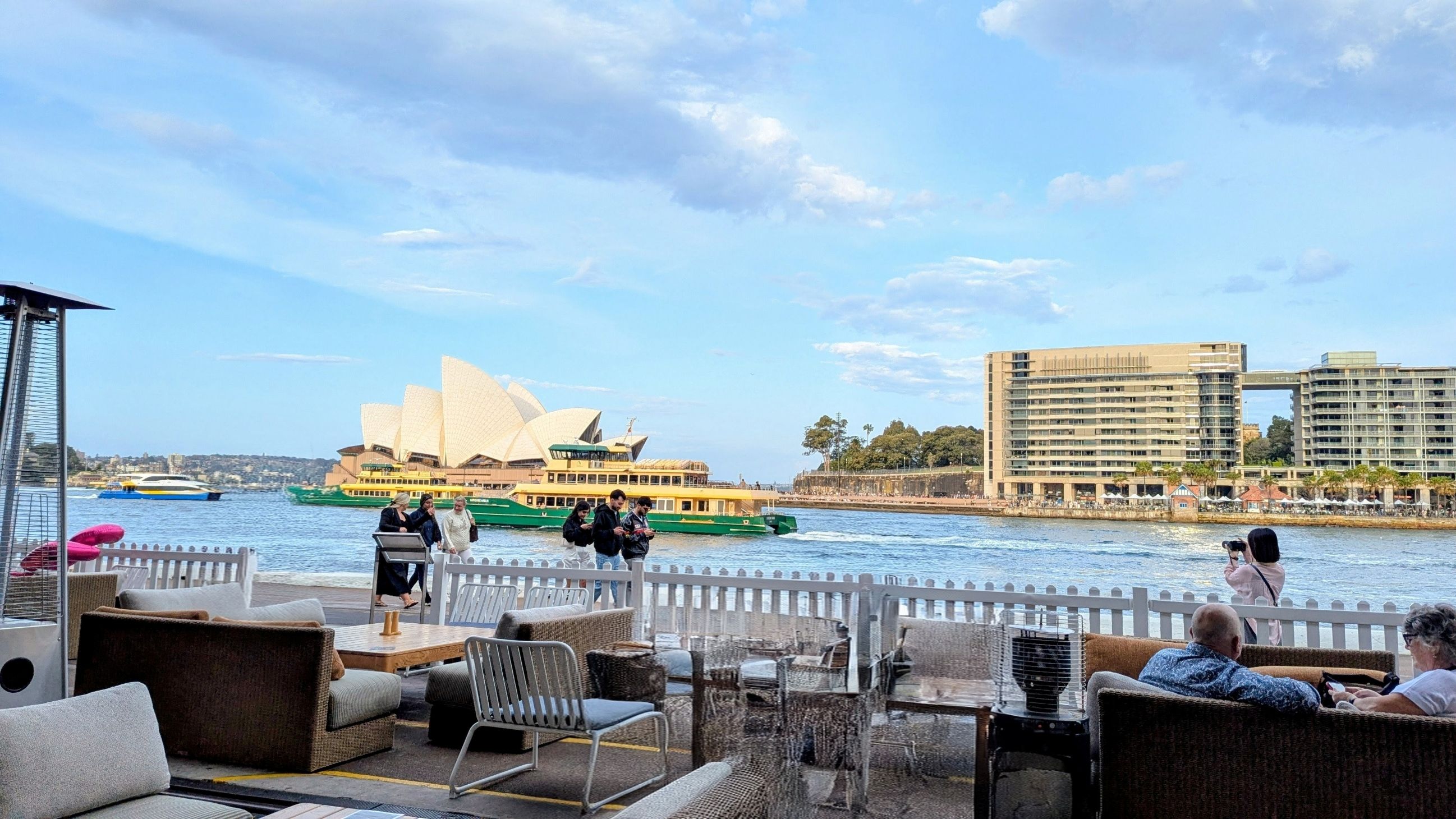
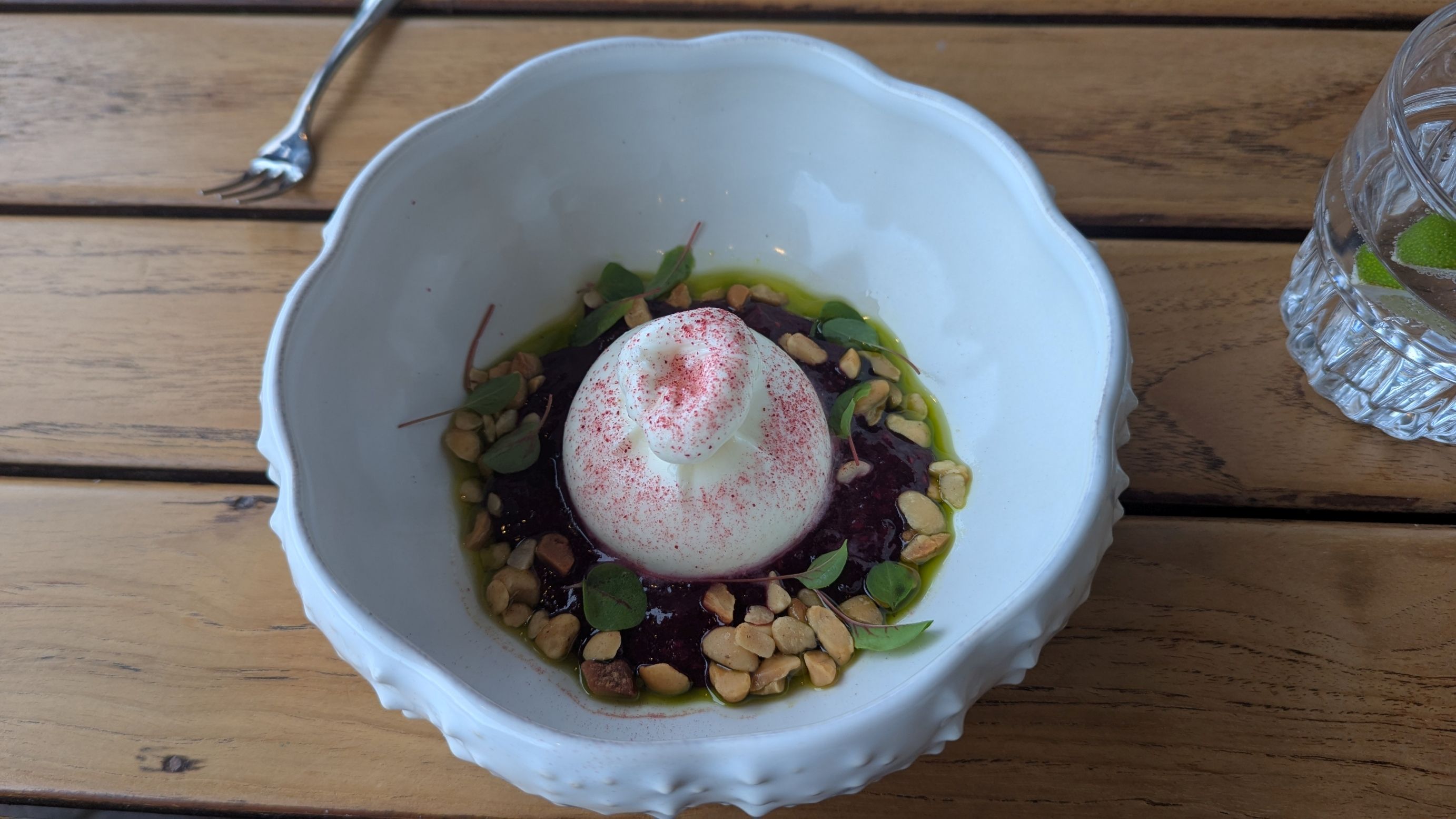
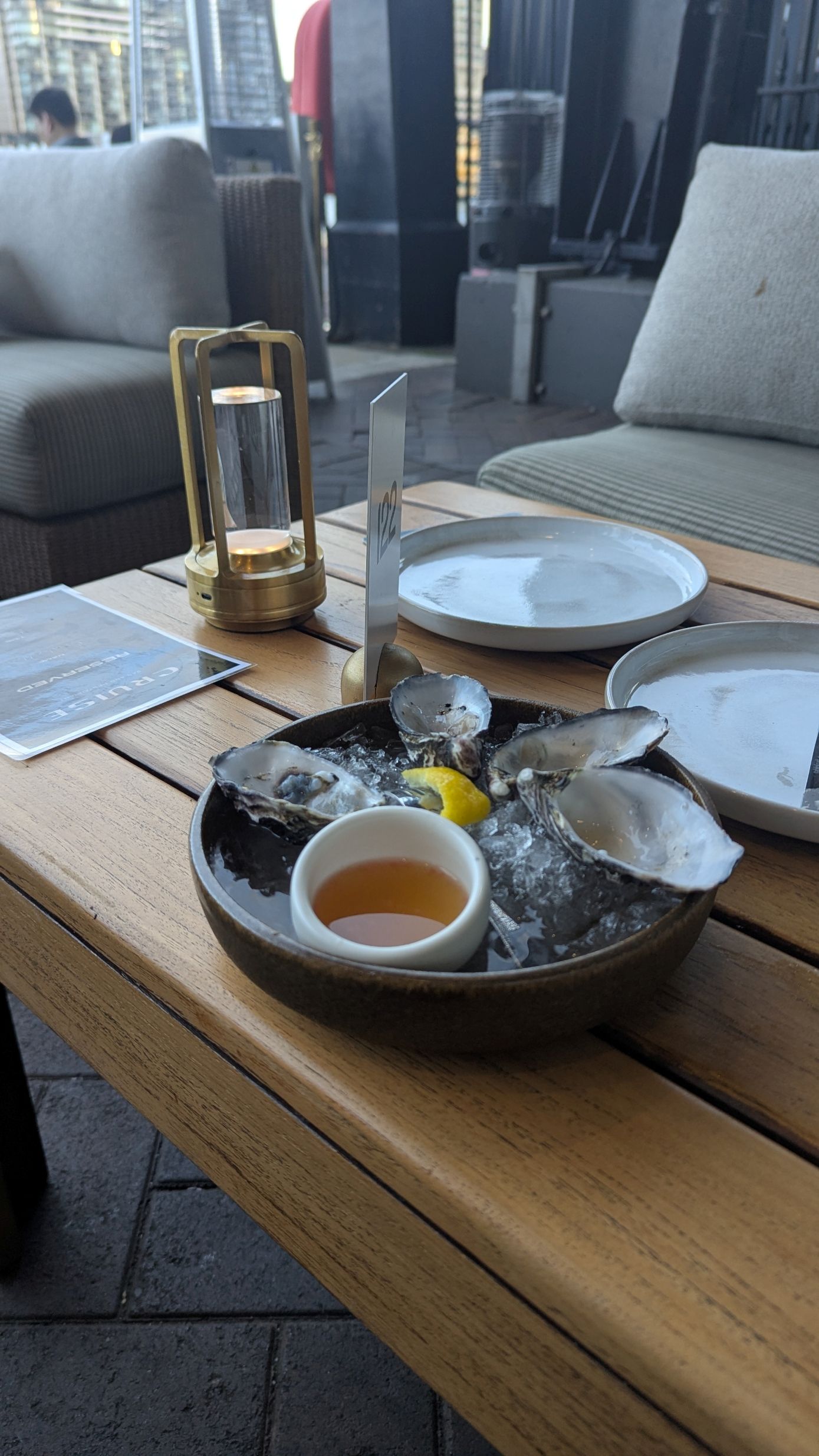
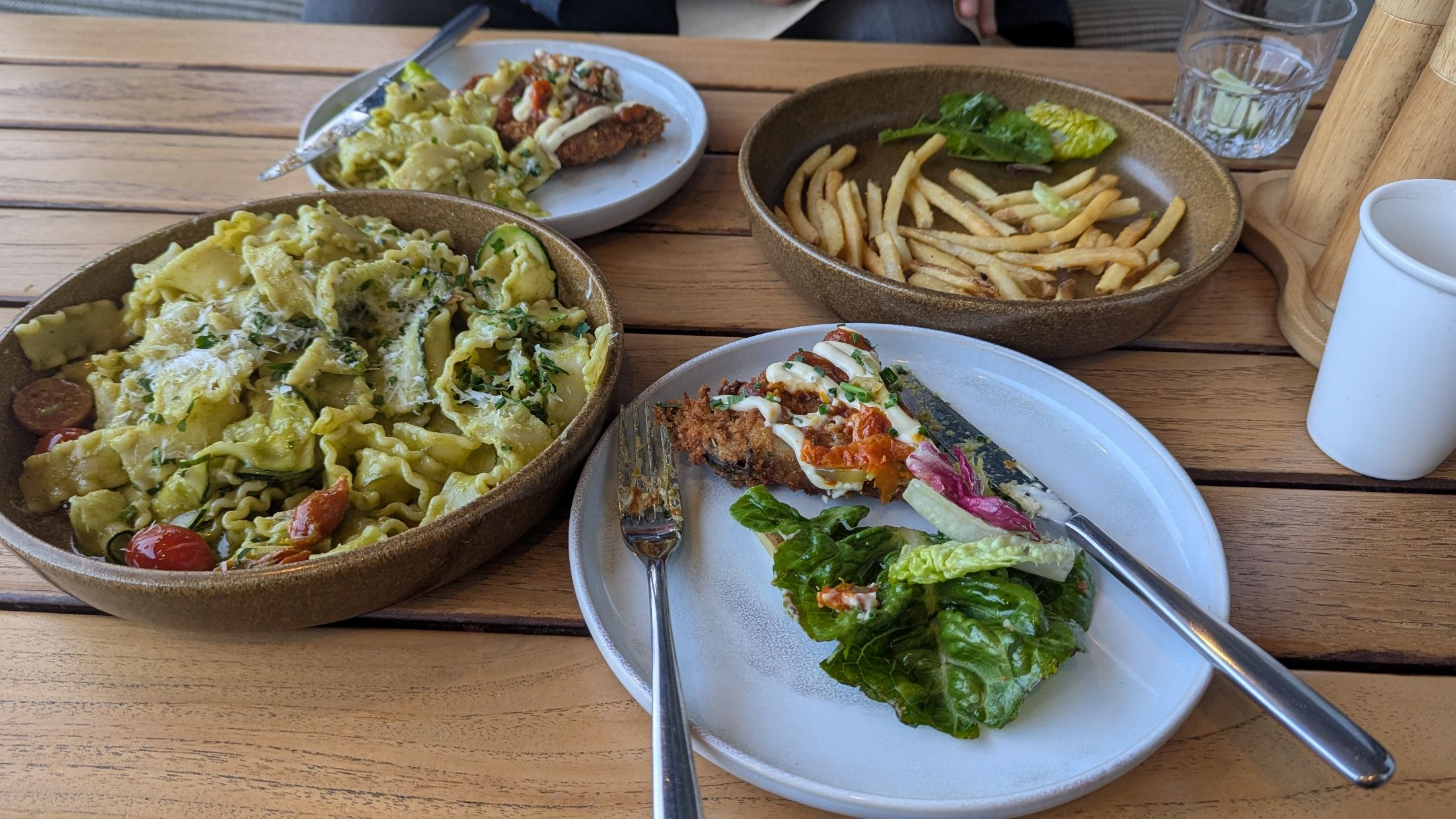
Two excellent finds – Cruise on the harbour, the opposite side to the opera house; and at the NSW Art Gallery new building. Cruise offers indoor and out door seating, and we chose the comfortable outdoor lounges. The service is terrific, the menu is varied and from our experience served in generous portions and delicious. The venue and the dishes will be on our list for a return visit. The oysters were $7 each instead of the $7.50 and more at other nearby restaurants. The eggplant and pasta dishes made excellent sharing dishes.



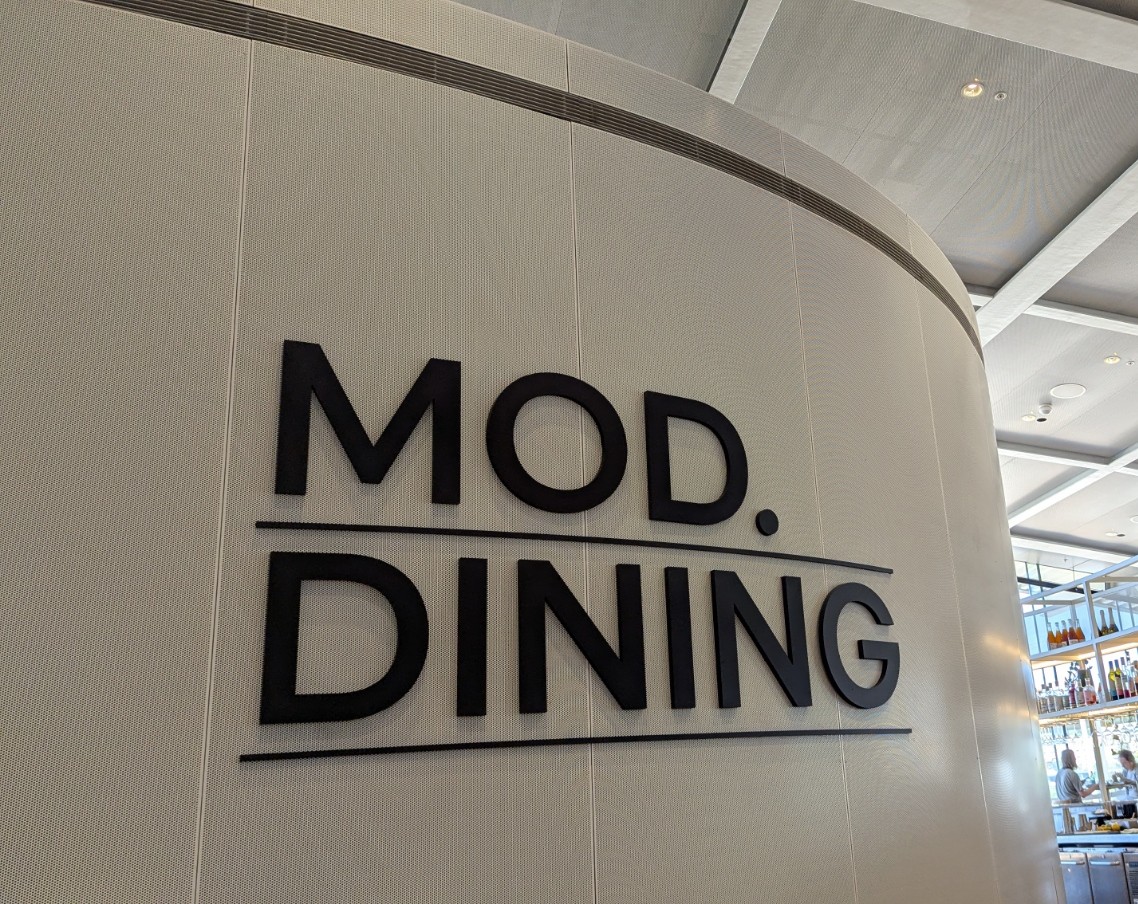
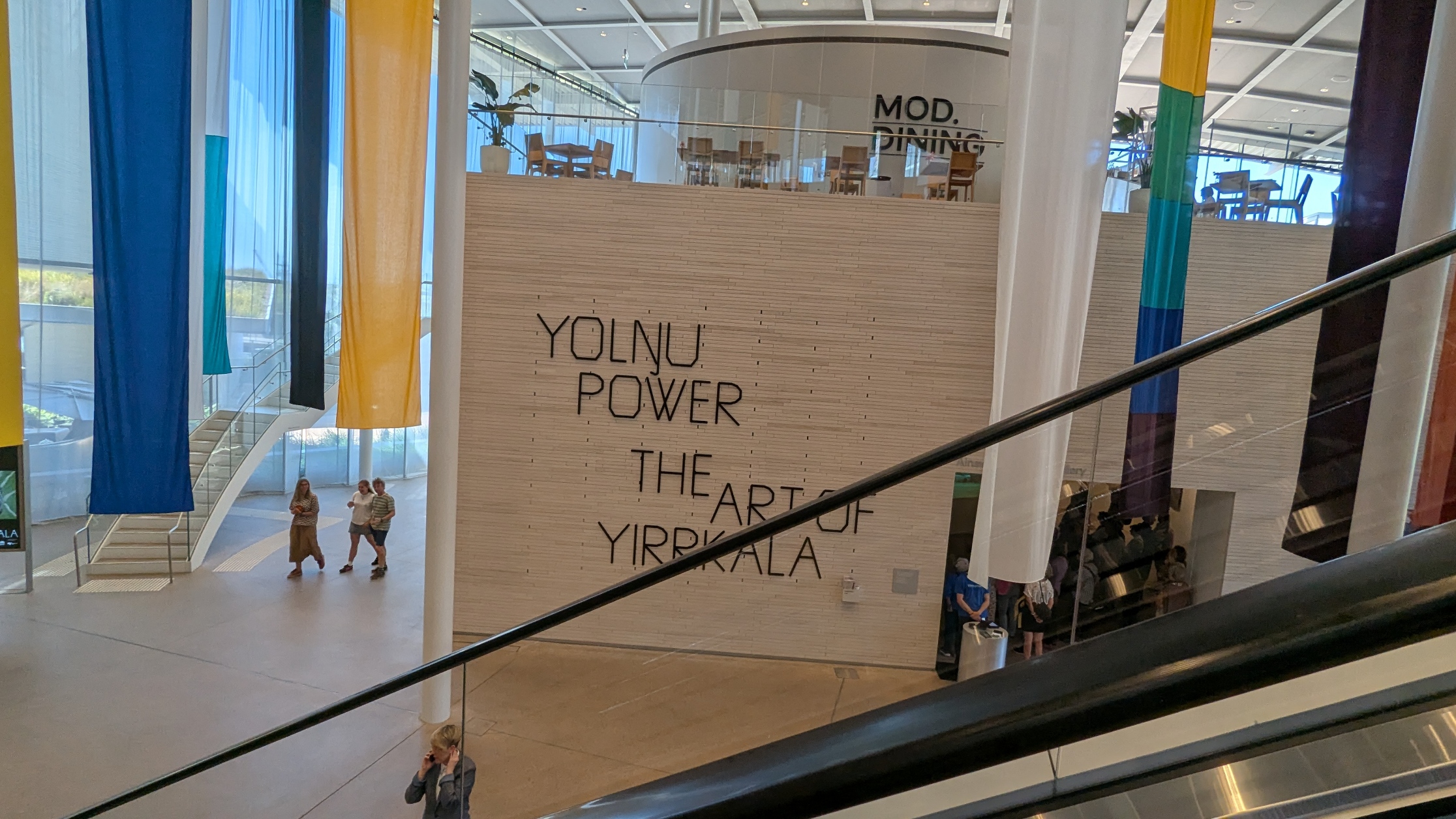
Mod. Dining at the gallery was another restaurant to which we would happily return. The seating is indoors but the building is light and airy. The menu is another plus, and it was easy to share the sate chicken skewers, and crispy eggplant. With these we chose jasmine rice. Another dish that looked very appetising was the pumpkin salad. The beverage menu was extensive, and we had jasmine and ginger tea.
Both restaurants are on our list for the next time we visit Sydney.


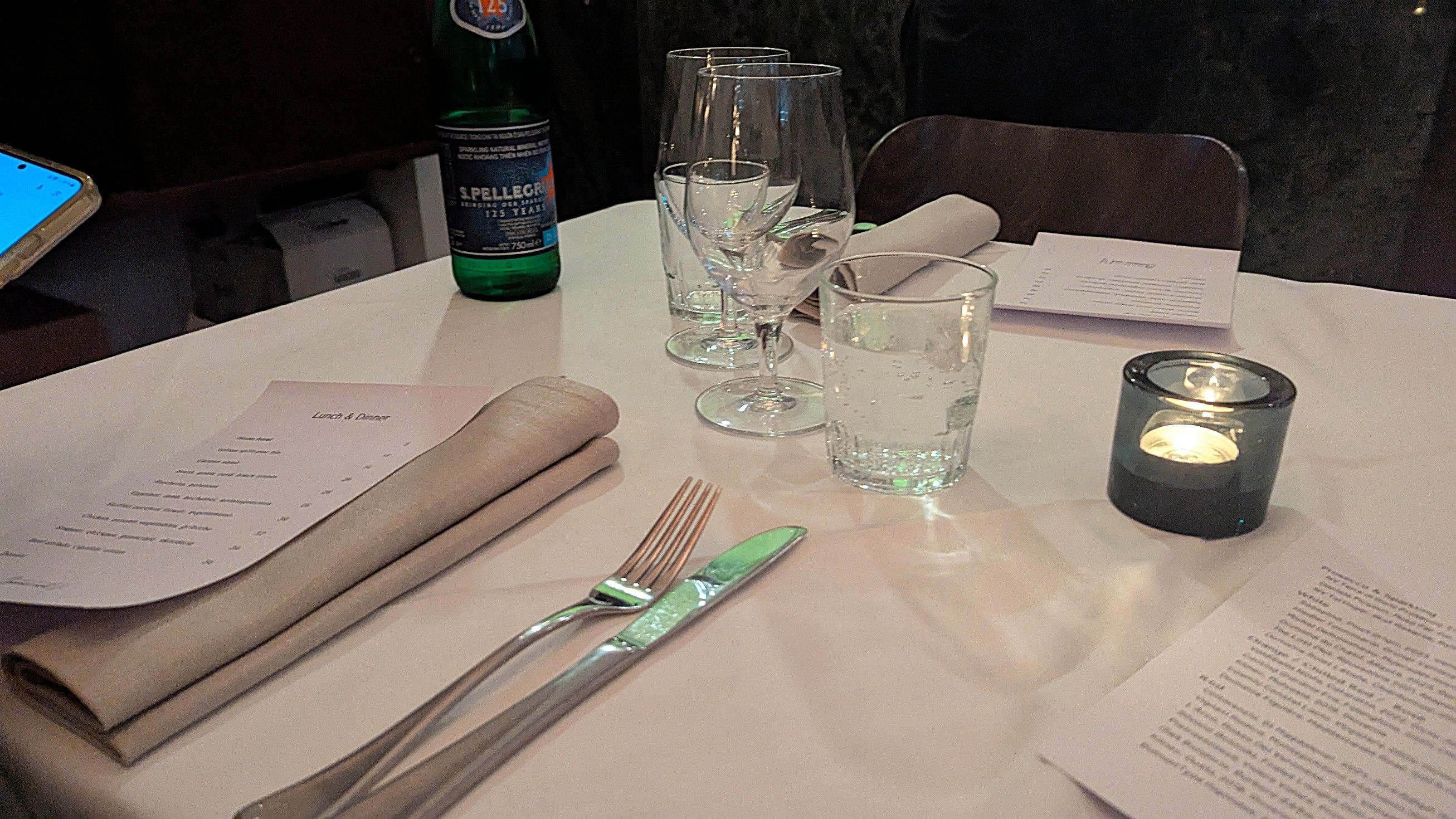
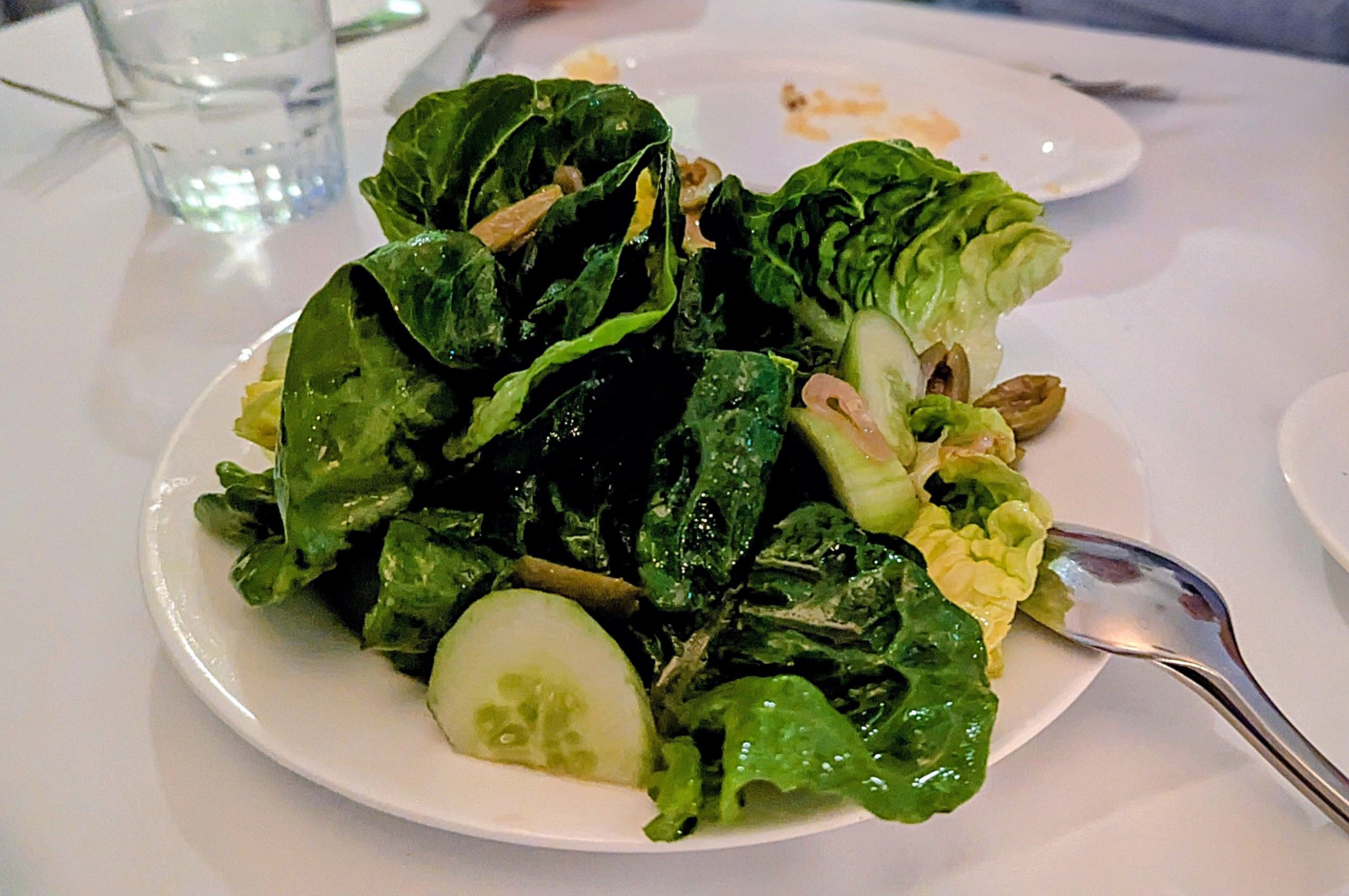
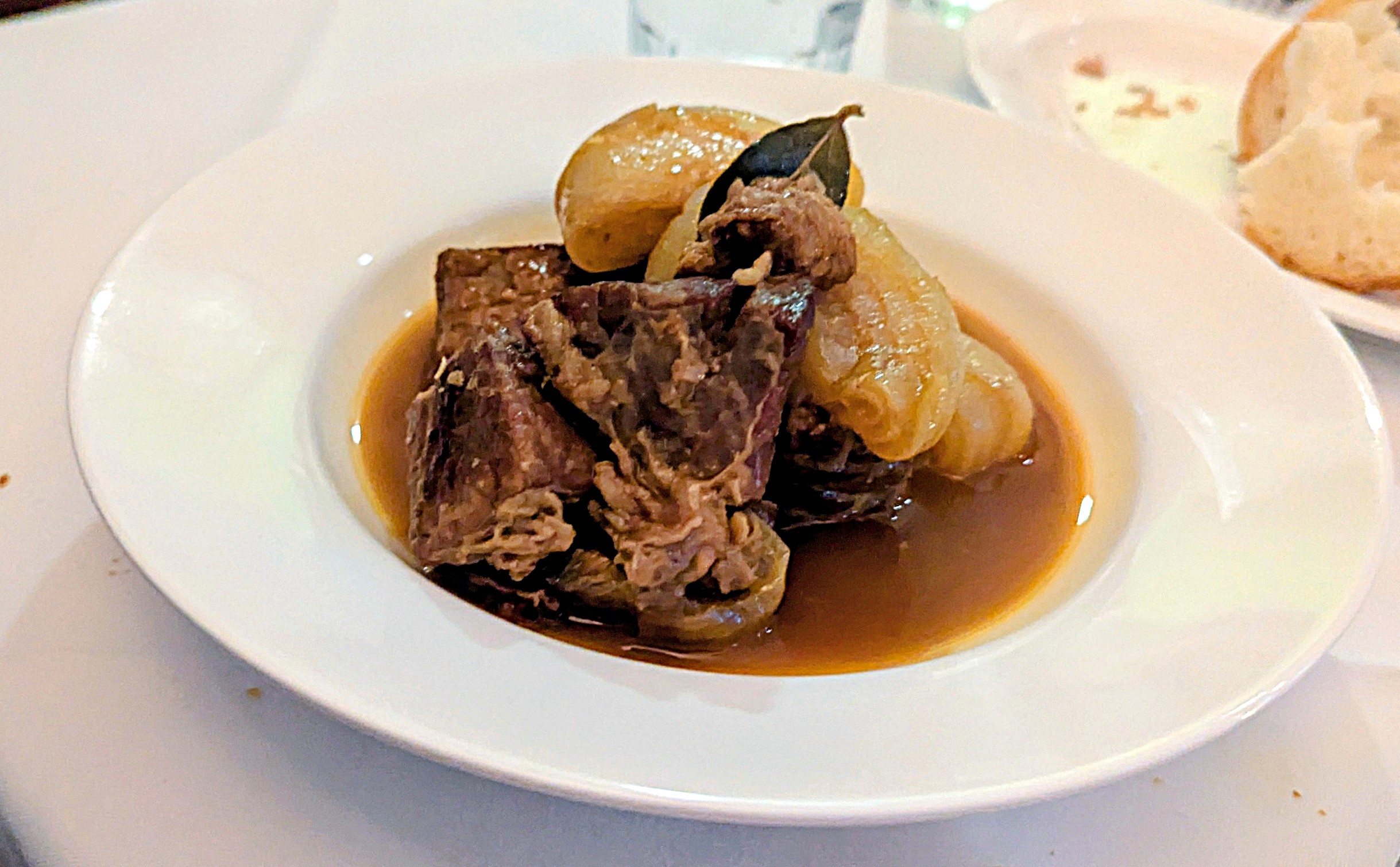
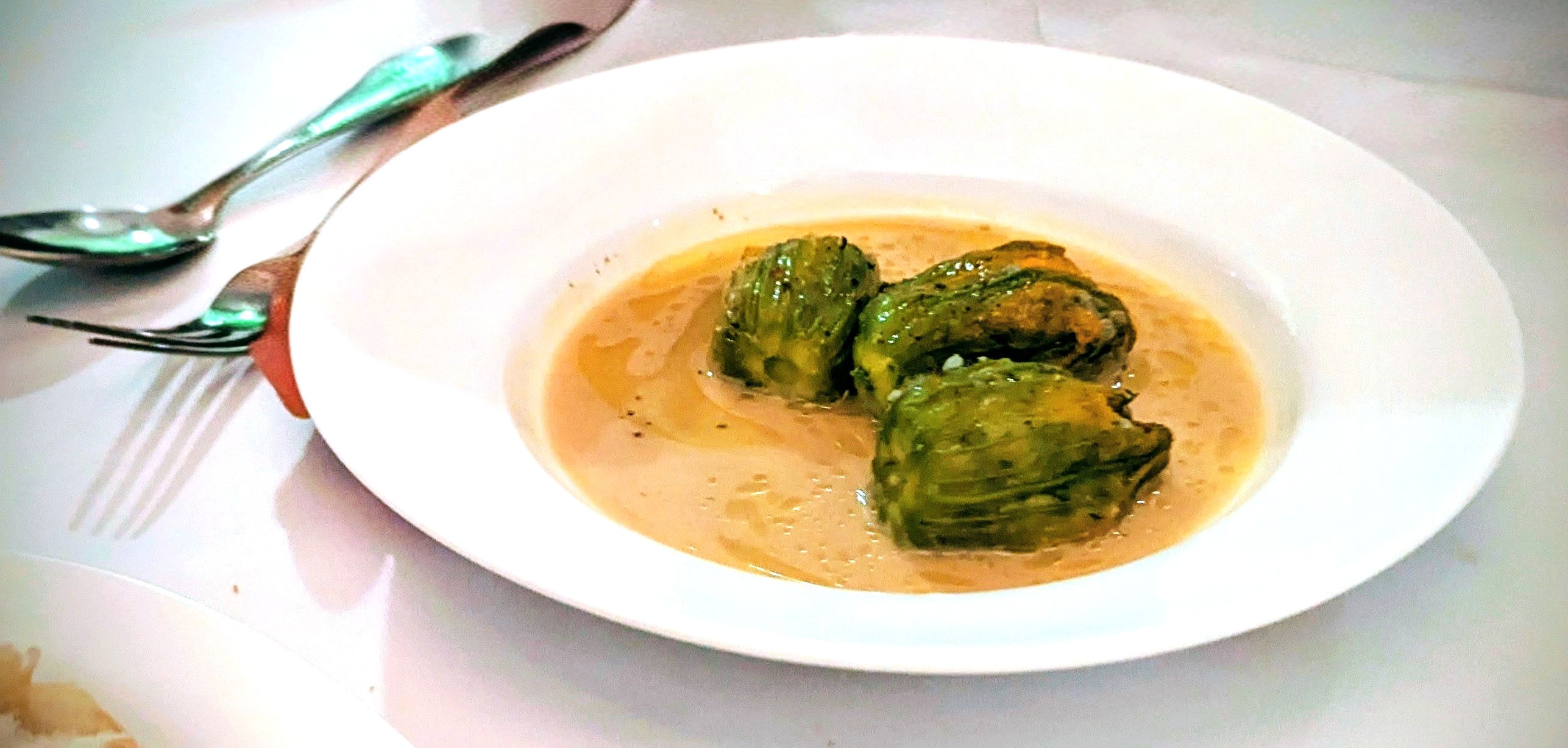
On our last night in Sydney, we ate at Clarence and V, a tiny restaurant in Clarence Street. Although the restaurant was quite noisy, the table size and shape made conversation relatively easy. The food was delicious and very reasonably priced. We shared a salad (crisp, crisp lettuce, cucumber and olive slices) and split yellow pea dip with large pieces of fresh crusty white bread. The meals we chose were eggplant with lamb, courgette flowers with a lovely sauce, fish with a delicious lentil accompaniment (replacing beef cheeks which did not appeal to me) and beef and crushed potatoes. The servings are small, but the flavours are big. The dessert was delicious – and sharing between two was a good decision. Mint tea was served at the end of the meal. The service was friendly and helpful, and the mint tea was really appreciated. i would return.






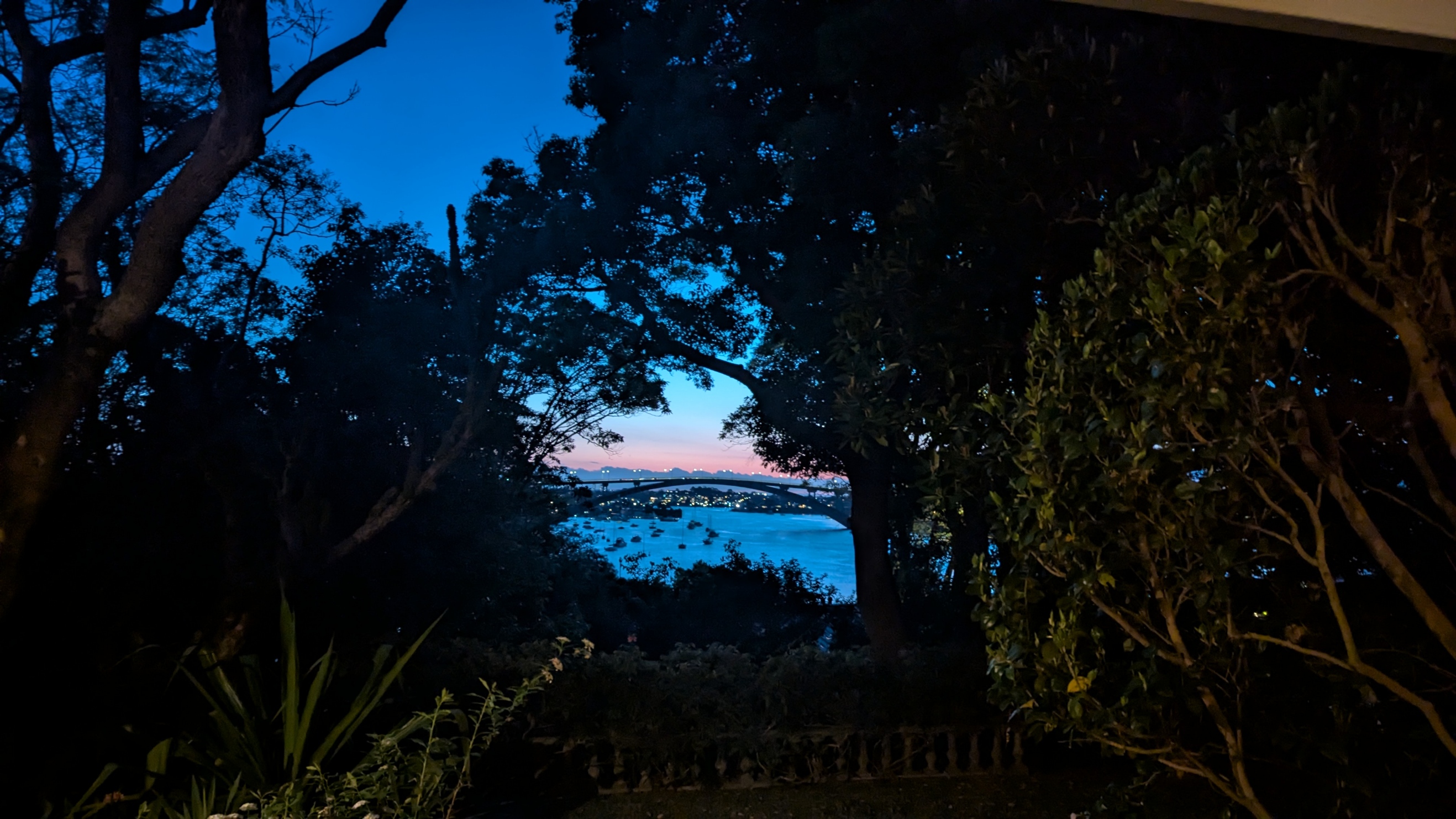
One evening we went to dinner a ferry trip from Circular Quay. We didn’t see the sunset, but the ride affords views of the Harbour Bridge and the Opera House. Upon arriving at our destination, the sky through the tress was a delightful accompaniment to drinks on the balcony.



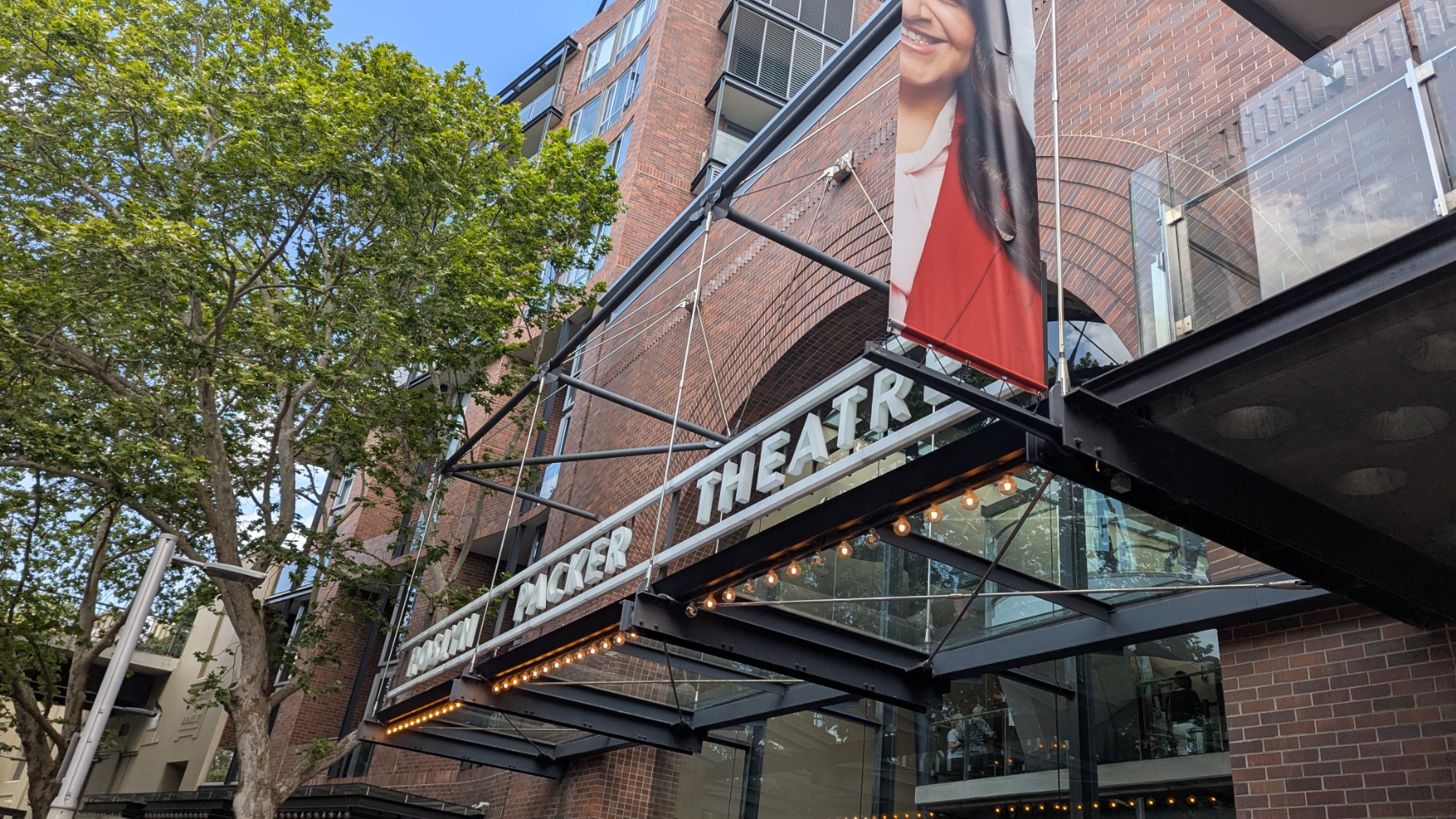
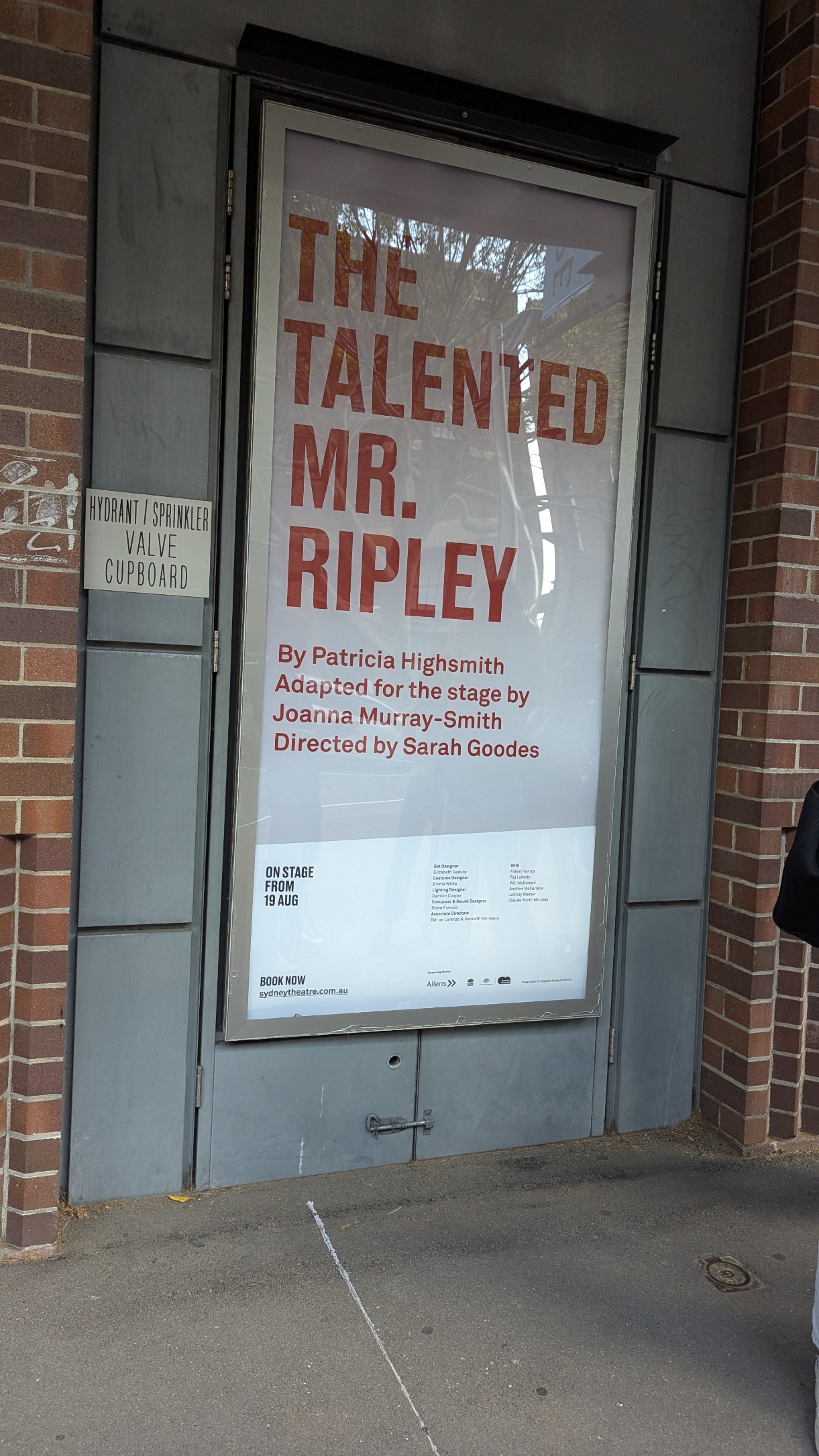
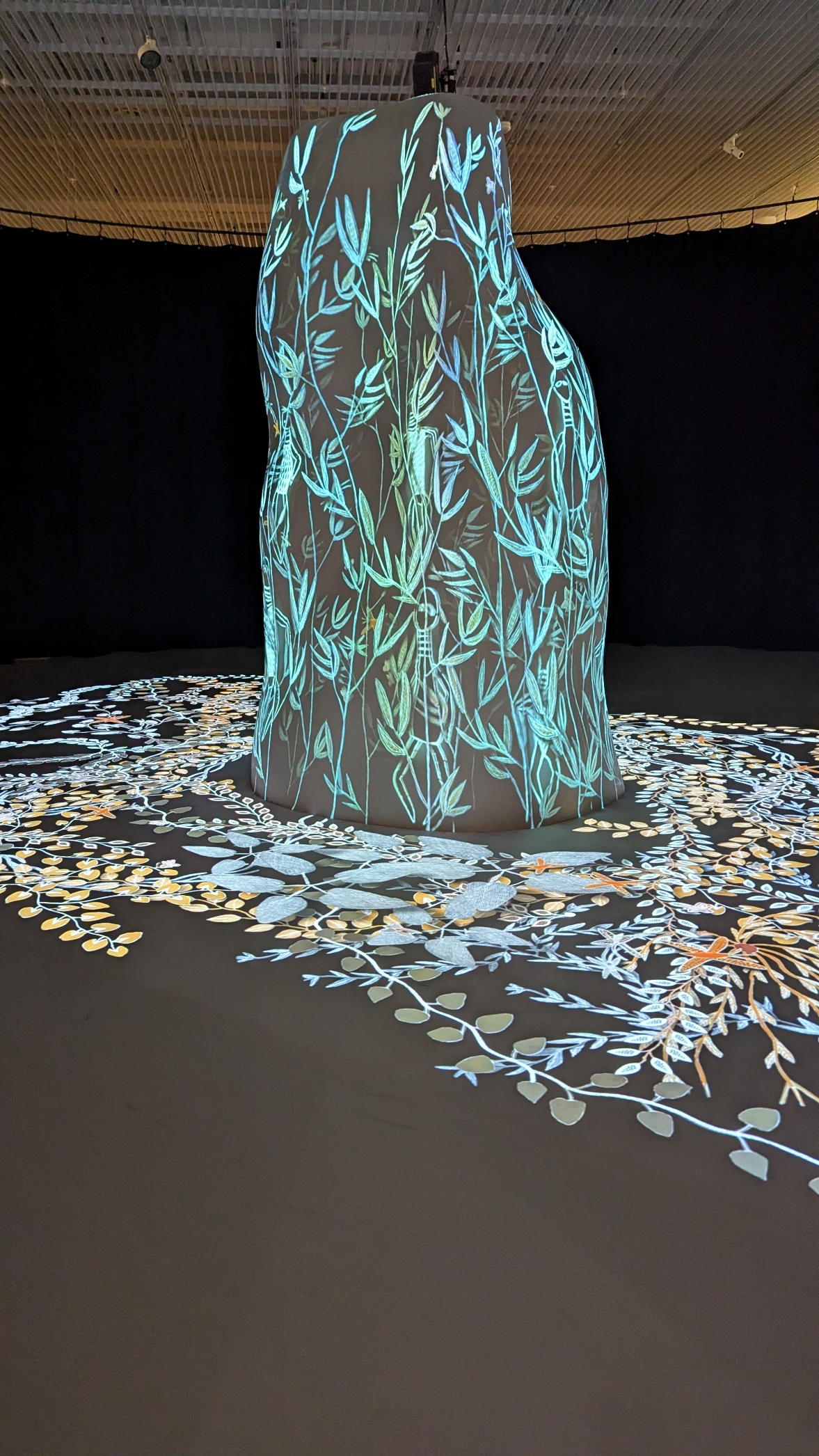
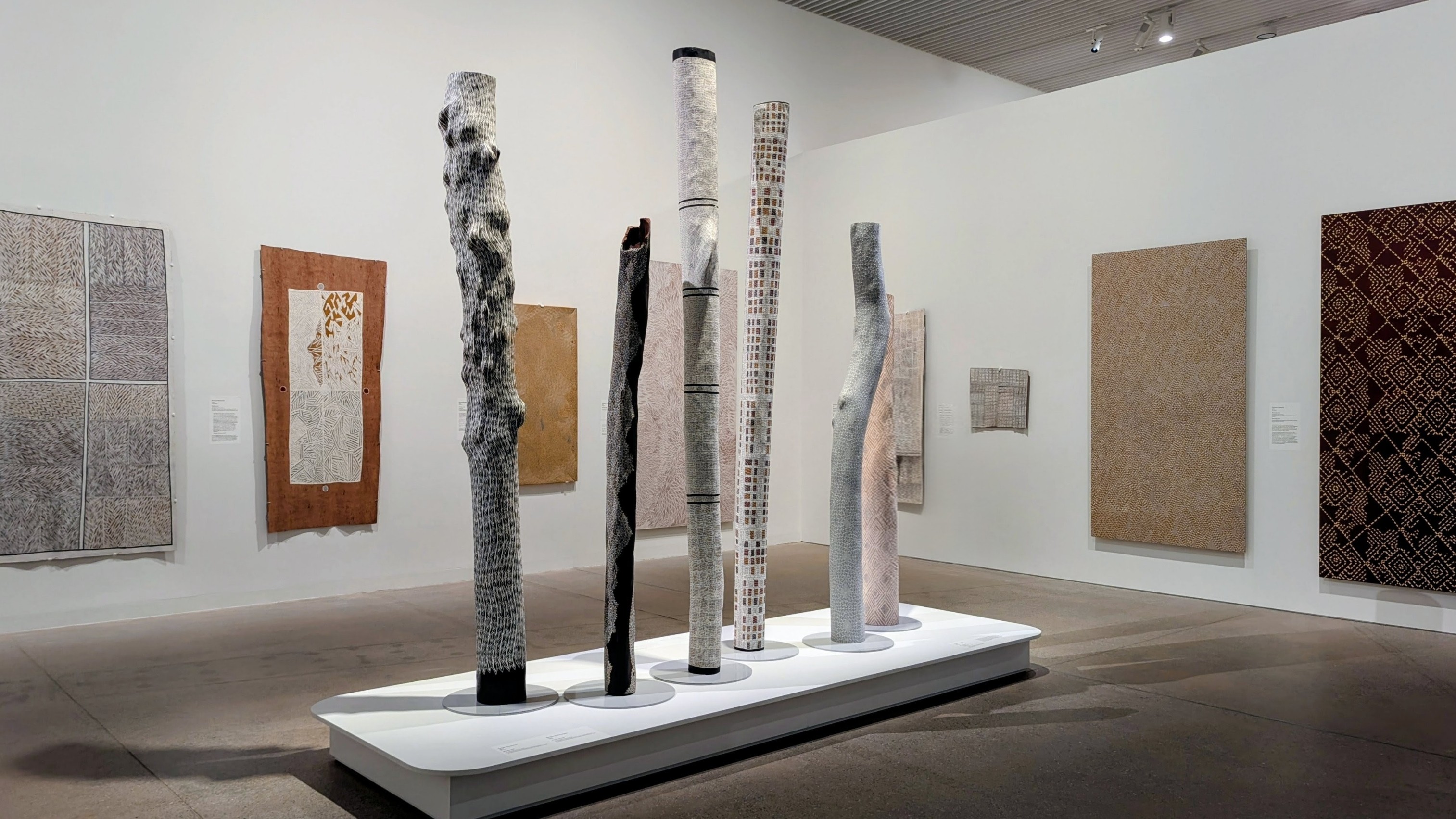
Next week’s blog will include the magnificent exhibition Yolŋu power: the art of Yirrkala at the Art Gallery of NSW, and the excellent adaptation of Patricia Highsmith’s novel, The Talented Mr Ripley, at the Roslyn Packer Theatre.
 Robin's Room