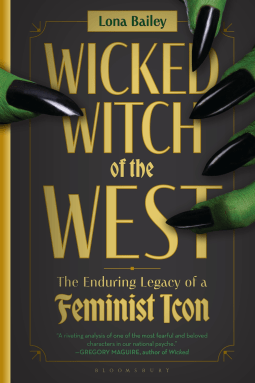
Lona Bailey Wicked Witch of the West The Enduring Legacy of a Feminist Icon Bloomsbury Academic, October 2025.
Thank you, NetGalley and Bloomsbury Academic for providing me with this uncorrected proof for review.
Lona Bailey has produced a tremendously readable account of the feminist underpinnings of the wicked witch of the west, and more. This is not to suggest that the book is not an academic exercise; it has all the accoutrements of academic work – citations, an index, a bibliography, and of course is based on an immense amount of research. Where enthusiasm for a topic meets academic excellence and engaging writing, a reader is fortunate. I felt more than fortunate when reading Wicked Witch of the West The Enduring Legacy of a Feminist Icon. Bailey combines such academic excellence and engaging writing around a topic that has been an enduring interest. Popular culture, feminism, the Wicked Witch of the West in her various manifestations, from The Wizard of Oz to the musical, Wicked, further novels and television programs are gathered to produce an engrossing study. I read the book over a day and, happily woke during the night to continue to the end. This is a thoroughly enthralling read.
Bailey begins with Frank Baum’s novel, The Wonderful Wizard of Oz, in which the wicked witch is not the green visaged apparition of the film fame. This is a particularly illuminating chapter, with its reflections on why villains may be appealing, and the powerful aspects of the wicked witch of the west. Baum’s witch becomes the source of analysis of the feminist aspects of the witch, the appearance of the original, the actor who played her years later and the changes to her appearance that took place, as well as events on the set of The Wizard of Oz. The latter is very illuminating indeed. So, too is the discussion of Baum’s background and speculation on his intentions on developing this character. See Books: Reviews for the complete review.
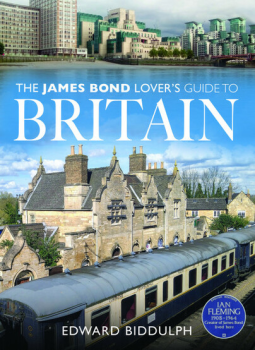
Edward Biddulph, The James Bond Lover’s Guide to Britain, Pen & Sword | White Owl, October 2025.
Thank you, NetGalley and Pen & Sword, for providing me with this uncorrected proof for review.
Guides to travelling around Britain with a purpose are always attractive and The James Bond Lover’s Guide to Britain is abundantly so. Following James Bond resonates with suggestions of spies, drama, duplicity, and death, and in his discussion of the films as well as the locations Edward Biddulph has imbued his guide with enough of the James Bond aura to tempt Bond enthusiasts. He makes the point that there are over 150 Bond related British sites, including principal locations as well as stand ins for overseas settings, in almost all Bond films and Ian Fleming’s novels. A surprising thought, and one which adds to the enticing nature of this guide. However, the guide could also appeal to those who are just keen to give their travels a focus and, as Biddulph tells it, Bond is a figure who can carry readers all over Britain. To travel with a purpose from Scotland to Cornwall is an intriguing prospect enhanced by Biddulph’s archaeological investigation of the sites, maps and archives that provide historical information about where Bond ventured in a rather different landscape from the modern one that readers will follow. Further, for the person who is not necessarily a huge Bond fan Biddulph shows that many of the Bond sites coincide with those that any tourist may want to visit – restaurants, historic houses, museums, and other attractions. He states that the book reflects his interests of history, archaeology, and cuisine – some universal interests there! See Books: Reviews for the complete review.
Australian Politics
Launch of ‘Gough Whitlam: The Vista of the New’
Speech : Transcript:Check against delivery: Friday 24 October 2025 Sydney

The Hon Anthony Albanese MP
Prime Minister of Australia
I acknowledge the traditional owners of the land on which we meet and I pay my respects to their elders past, present and emerging.
It is a great honour to be with you all for the launch of an outstanding new addition to Australian political biography and indeed Australian history.
Among many distinguished guests, can I acknowledge all the members of the Whitlam family joining us here today.
Including Tony Whitlam, who I learned from this book was very nearly blessed with the name ‘Justinian Dovey Whitlam’ to achieve what Gough called a ‘crescendo effect’.
The tremendous interest surrounding this book speaks for Gough Whitlam’s powerful and enduring hold on the affections and imaginations of so many Australians.
Not just the true believers who have ‘maintained their enthusiasm’.
But all of us whose aspirations, communities and lives have been shaped by the Whitlam legacy.
All of us who have drawn inspiration from Gough’s essential optimism.
From his determination to liberate the talents and uplift the horizons of our citizens, through access to free education and universal healthcare.
From his reimagining of Australia’s place in the world.
From his assertion of equality for women: in our economy, our laws and our society.
From his leadership on land rights.
And from his defining belief that it is the mission of Labor Governments to reject the ‘habits and fears of the past’ and seize the opportunities of the future.
For any author to put forward a new account of the life of such a figure, is an act of real courage.
Especially when you consider that the first three people to write about the Whitlam Government in depth were Laurie Oakes, Graham Freudenberg and Gough Whitlam himself.
Think about that trio.
One of Australia’s best journalists.
Australia’s greatest political speechwriter.
And the Prime Minister at the epicentre of events.
It is a profound credit to Troy Bramston that his work not only belongs in such esteemed company – it actually adds to the picture those giants have painted.
Laurie Oakes gave us a portrait of a new-generation Australian politician, on the march to the Prime Ministership.
Graham Freudenberg wrote about Gough with the deep admiration and affection that characterised Ted Sorensen’s reflections on John F. Kennedy
And – in The Truth of the Matter – Gough was striving above all to set the record straight.
At the distance of 50 years, this book takes us beyond the consuming passions of those immediate political struggles.
And true to its title, offers us a ‘Vista of the New’.
Of course, the fresh insights in these pages are only possible because of the years of research that have been poured into this book.
Troy writes about the staff on Gough’s 1969 election campaign having to haul around a huge trunk filled with volumes of Hansard and a vast accumulation of newspaper clippings and index cards of policy proposals.
That’s also how I picture Troy’s process: part author, part archaeologist.
Sifting through a near-century of correspondence and archival material, as well as years of interviews he has undertaken with so many Labor legends, including, Gough himself.
If you want to know which registry office Gough’s grandmother was married in, or what his primary school maths report was like, or read extracts from the letters he wrote to Margaret during the war, all of that is in here.
But this book is more than the sum of its many parts, more than a mere catalogue or chronology.
In offering us a comprehensive account of Gough’s life before politics and a thoughtful examination of what drew him to parliament and the road he followed to the leadership, we gain a deeper understanding of the forces that shaped his character.
Growing up in Canberra, believing in the value and honour of public service.
His political awakening under Curtin and the 1944 referendum that inspired a lifetime obsession with reforming the Constitution.
His mastery of the House of Representatives, a reflection of his deep respect for that institution.
And that shyness some took as diffidence, which made him something of a solitary individual among the collective.
All this matters.
Because as the accounts of Cabinet and Caucus make clear, perhaps more than any other Government in Australian history, the Whitlam Government was made in its leader’s image.
It bore the imprint of its Prime Minister’s personality, in all its mercurial brilliance and all its crash-through-or-crash courage.
Paul Keating, who makes many insightful contributions to this book, once remarked that he gave more speeches about the Second World War than any Australian Prime Minister since John Curtin.
This was because his four years as PM, almost exactly tracked Curtin’s four years, half a century apart.
In reflecting on all those 50 year anniversaries, Keating said he felt:
“In the lee of Curtin’s trajectory”.
And that this enriched his understanding of the twists and turns of the Pacific war.
For my colleagues and me, our time in office has tracked the 50 year anniversary of the Whitlam Government.
On the 2nd of December 2022, I had the honour of being there in Cabramatta, as a Labor Prime Minister, for the opening of the newly-restored Whitlam family home.
The suburban backyard where people celebrated the ‘It’s Time’ victory, in the community that powered Gough’s passion for urban renewal.
When I travelled to China for the first time as Prime Minister in November 2023, that important step in the deliberate and patient stabilisation of our relationship also marked fifty years since Whitlam’s historic visit.
Penny Wong and I visited Beijing’s Temple of Heaven, the scene of that famous photo of Gough putting his ear to the curve of the Echo Wall.
That was our way of upholding the wisdom of that Chinese proverb: “when drinking water, do not forget those who dug the well.”
When we hosted the leaders of every member of ASEAN at a special summit in Melbourne in 2024, we commemorated a half-century of Australian partnership – an essential element of our engagement in the fastest growing region of the world in human history.
And last month in Port Moresby, we celebrated the golden jubilee of Papua New Guinean independence.
Just as Gough famously declared that independence for PNG ‘was an idea whose time had come’ I was proud to say to Prime Minister Marape that elevating our relationship with PNG to the status of an alliance was an idea whose time had come.
Each of those milestones – and so many more – inspire us and they remind us that Labor Governments are always at our best, when we build to last.
As I said in the House of Representatives, 11 years ago this week, when we came together as a Parliament to pay tribute to the life and service of Gough Whitlam:
“The legacy of our political contribution can be judged by its permanency.”
I do want to make this very personal point.
I love biographies but this is the first Prime Ministerial biography I have read while holding the title, it therefore became a very dynamic and intellectually challenging experience.
There is wisdom in here.
Do not ignore warning signs, engage and respect colleagues.
Understand the dialectical implications of decisions, and be orderly in your decision-making.
This book holds real, ‘contemporary relevance’ for anyone interested in politics or government or Australia’s place in the world.
And while The Vista of the New deals with the injustice of the Dismissal in a characteristically thorough way, importantly, it does not limit itself by looking at Gough Whitlam’s legacy purely through that prism.
It doesn’t diminish the performance of that Labor Government by dealing only with the drama and deception that brought about its downfall.
In the preface to this book, Troy recounts a moving moment in 2013 when Gough said to him:
“I want to be remembered as an achiever, not as a martyr”
This book honours that hope.
This is an account of profound achievements.
And its publication represents a significant achievement too.
It is my great pleasure to wish Gough Whitlam: The Vista of the New, all the very best.
PM&C acknowledges the traditional owners and custodians of country throughout Australia and acknowledges their continuing connection to land, water and community. We pay our respects to the people, the cultures and the elders past, present and emerging.
How the star of lost silent film Jewelled Nights went from the limelight to selling sweets for cinemagoers
- By Susan Oong
- Sat 25 OctSaturday 25 October
In short:
Tasmania’s early mining days were immortalised on screen in the 1925 film Jewelled Nights by Australia’s first Hollywood star, Louise Lovely, who hoped to take Tasmania to the world stage.
The silent film was a screen adaptation of a popular romance novel by Marie Bjelke-Petersen, the aunt of former Queensland premier Joh Bjelke-Petersen.
What’s next?
The silent film has inspired an art installation at this year’s The Unconformity festival, held at Queenstown. The artist is seeking a permanent home for the work.
It has been nearly 100 years to the day that Tasmania’s remote and rugged west coast played backdrop to an ambitious film project led by a Hollywood silent film starlet.
Considered a lost classic of Australian cinema, Jewelled Nights was mostly shot at Savage River, deep in the bush at an alluvial mine site.
At the time of its release, it was billed to be the making of Hobart as the “Hollywood of the south”, but its production ran overtime, the budget overblown and its star never went on to make another film.
As for Jewelled Nights, only remnants of the silent film remains.
The film’s restorer, Bernard Lloyd, previously said filming at that location would have been an extraordinary feat at the time.
“There was no road then, no track there and so to bring this film crew down there, two hours down the gully and then back out again each day, it was a huge ask with the weather, the snakes,”
Mr Lloyd said.
The film featured leading lady Louise Lovely, an Australian darling who had starred in about 50 Hollywood films, mostly by major production companies Universal, Goldwyn Picture Company and 20th Century Fox.
Film historians have said Lovely was the first Australian actress to find success in America.
Marie Bjelke-Petersen — a prolific romance writer considered the Danielle Steele of her time — asked Lovely to star in and produce the film adaptation of one of her books.
At the time, both Lovely and Bjelke-Petersen were celebrities in their respective fields.
In an interview, Lovely said: “Everyone said that good pictures could not be made in Australia. I have set out to prove that they can.”
Following its premiere in Melbourne in October 1925, Jewelled Nights reportedly screened to 350,000 people, more than a third of the city’s population at the time.
Its box office success propelled Tasmania and its dramatic landscape onto the big screen.
But now, only fragments of the silent film remain.
Film’s intrigue inspires artwork
The film’s allure has led local Tasmanian artist Jacqueline Dortmans on a deep dive.
Her installation at this year’s The Unconformity festival in Queenstown on Tasmania’s west coast was a homage to the film and Bjelke-Petersen.
“The biggest mystery for me is the film, having been lost, there’s no way to know how Louise Lovely [and her co-producer] told the story,”
Dortmans said.
“We can draw on the book, which tells the story clearly, but what’s unclear is how they told the story in silent film.
“Silent film is not that well understood as a format.
“When you look at other silent films you recognise that they have this way of delivering a punch line just through a couple of words on a screen.”
Dortmans said she leant heavily into that formula to convey her Jewelled Nights piece, a three-part journey into the book’s setting, the script and its creators.
“It celebrates not just the achievements of Louise Lovely with the film, and the history that the film and book is grounded in, which is the osmiridium mining, but Marie Bjelke-Petersen as a person who is someone who should be more known in the Tasmanian context,” she said.
“She was very forensic in her research.
“She spent time at Savage River and 19 Mile Creek talking to miners and gathering the information to allow her to write with quite impressive accuracy.”
Tasmanian mineral needed for fountain pens
The Jewelled Nights story begins with the fountain pen.
At the turn of last century, Tasmania was the world’s only mined source of osmiridium, a mineral needed for the production of fountain pen nibs.
For years, gold prospectors on the Savage River system thought of the alloy as a nuisance as they panned for the more precious mineral. But, later, as osmiridium’s value was realised, it fetched prices higher than gold.
Miners quickly switched their alluvial techniques of gold panning to the search for osmiridium.
They worked streams by diverting water onto dry beds through stone wall channels and dams, many of which survive today.
Rough huts were also set up to house the temporary workforce, including prospector Jos Hancock’s, at Flea Flat, which featured prominently in the film.
These early mining sites, Burnt Spur and Flea Flat, have recently secured permanent heritage listing with the Tasmanian Heritage Council.
In its submission for heritage recognition, the mines were described as presenting “intact archaeological examples of alluvial mining features” and having a “special association with pioneering Australian actor and entrepreneur Louise Lovely”.
Speaking on ABC Radio Hobart, historian Nic Haygarth said of the location:
“Marie Bjelke-Petersen had this idea that Tasmania should be a second Hollywood as it had the wonderful scenery.
“She was a great advocate for Tasmania’s rainforests and the scenery of the west coast.”
Tasmania’s wildness critical to film
At its heart, Jewelled Nights was a love story.
One where Tasmania’s brooding landscape and expansive skies played a role in maintaining the romantic tension between the cross-dressing lead female and the miner she falls in love with.At home with Louise Lovely
Listen to Chris Wisbey as he explores the house and garden of the former silent film star.
The lead character, Melbourne socialite Elaine Fleetwood, flees to the osmiridium mines of distant Tasmania after leaving her groom at the altar.
There, she dresses as a man in order to work the mines as she has heard there were riches to be made.
But as film restorer Bernard Lloyd said:
“On the mining fields, she finds something much more valuable — true love.”
When it opened, the film was well received by audiences.
But Lovely’s dream of putting Tasmania in the world film scene was crushed after the movie ran dramatically over budget.
“They had a budget of 8,000 pounds, and they only got 5,000 pounds back,” Mr Haygarth said.
Today, that would be a return of $500,000 from a $800,000 investment.
“That pretty much scuppered the deal. There were plans to make two more films, but it was pretty much the end of this idea of making Tasmania a second Hollywood.”
It proved to be Lovely’s final role.
She lived the last 32 years of her life in Tasmania, and some may remember her as the the lady who ran, with her husband, the lolly shop beside the Prince of Wales Theatre on Macquarie Street in Hobart.
Dortmans said following The Unconformity festival she would search for a permanent home for the artefacts she has amassed for the artwork.
What remains of the film screens regularly at Queenstown’s Gaiety Theatre.
“I dived deeply into silent film,” Dortmans said.
“There’s a confronting statistic that 90 per cent of all silent films are lost. Jewelled Nights is just one of many films that have been lost.”
American Politics
Why Trump Turned to the Sewer
The president’s disturbing, excremental propaganda campaign
Lieutenant Colonel Harald Jäger was in charge of a Berlin Wall checkpoint on the evening of November 9, 1989, when a garbled televised press conference convinced thousands of East Berliners that they were allowed to cross into West Germany. People ran to the checkpoint. They started shouting at Jäger, telling him to open the barrier, even though no one had told him about any changes.
Still, “when I saw the masses of East German citizens there, I knew they were in the right,” he told an interviewer, many years later. In another interview, he recalled, “At the moment it became so clear to me … the stupidity, the lack of humanity. I finally said to myself: ‘Kiss my arse. Now I will do what I think is right.’” He opened the barrier and people started walking through.
Had these events taken place a few months earlier, Jäger might have kept the barrier shut. But the “masses of East German citizens” who had spent that autumn marching against dictatorship in East Berlin, Leipzig, and other East German cities had shaped his understanding of events. Watching them, he understood that most of his countrymen opposed the regime and hated the Wall. If everyone was against it, he no longer wanted to defend it.
Quinta Jurecic: Resistance is cringe—but it’s also effective
The differences between the “No Kings” demonstrations that took place across the United States on Saturday and the East German protests 36 years ago are too numerous to list. I saw no riot police at the protest I watched in Washington, D.C. Nor did the demonstrations in the autumn of 1989 feature animal costumes, cute homemade signs, or people dancing the Macarena. But they shared at least one goal: to remind the government’s supporters and enablers that the public is unhappy. The majority of Americans object to President Donald Trump’s politicization of justice, his militarization of ICE, and his usurpation of congressional power. Eventually some of those presidential supporters and enablers might, like Jäger the border guard, be persuaded to side with the majority and help bring this assault on the rule of law to an end.
The people in the White House know this too, and they reacted accordingly. Trump, the successor to George Washington and Abraham Lincoln, posted an AI-created video of himself as a fighter pilot, wearing a crown, flying over an American city, and dumping shit onto American protesters. The point was not subtle: Trump wanted to mock and smear millions of Americans, literally depicting them covered in excrement, precisely so that none of his own supporters would want to join them.
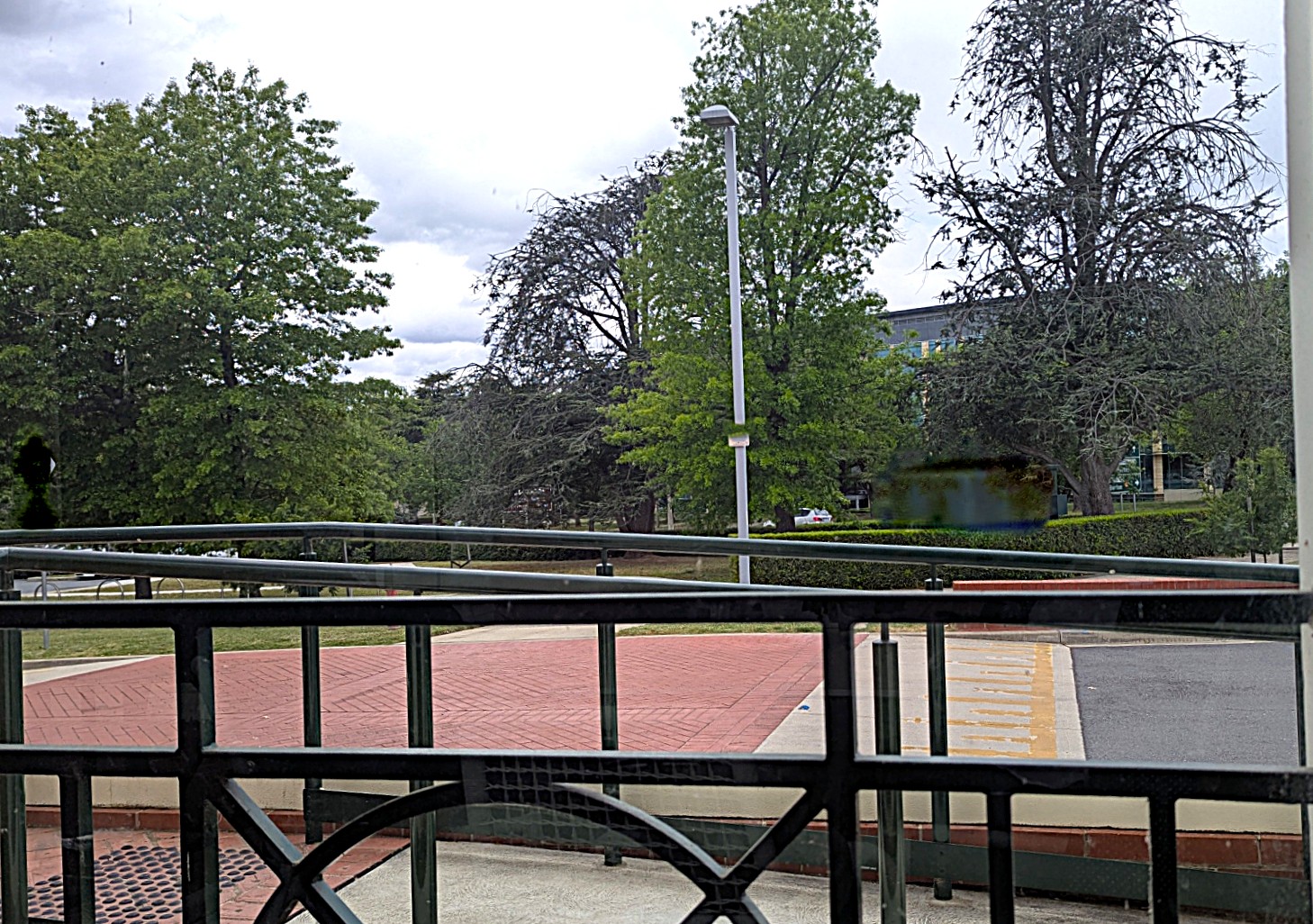
Cindy Lou eats with friends at The Constitution, the cafe at the National Archives of Australia
This is an easy place to enjoy a meal, with its varied menu, good coffees and a range of pastries. There is a need for more staff training as the service was friendly rather than efficient. However, the whole experience was pleasant, from the easy parking, scenery, and generous delicious meals. Although we were unable to visit the exhibitions on this occasion, The Constitution is a cafe to which I shall return, with plenty of time to see the other features offered at the Archives.


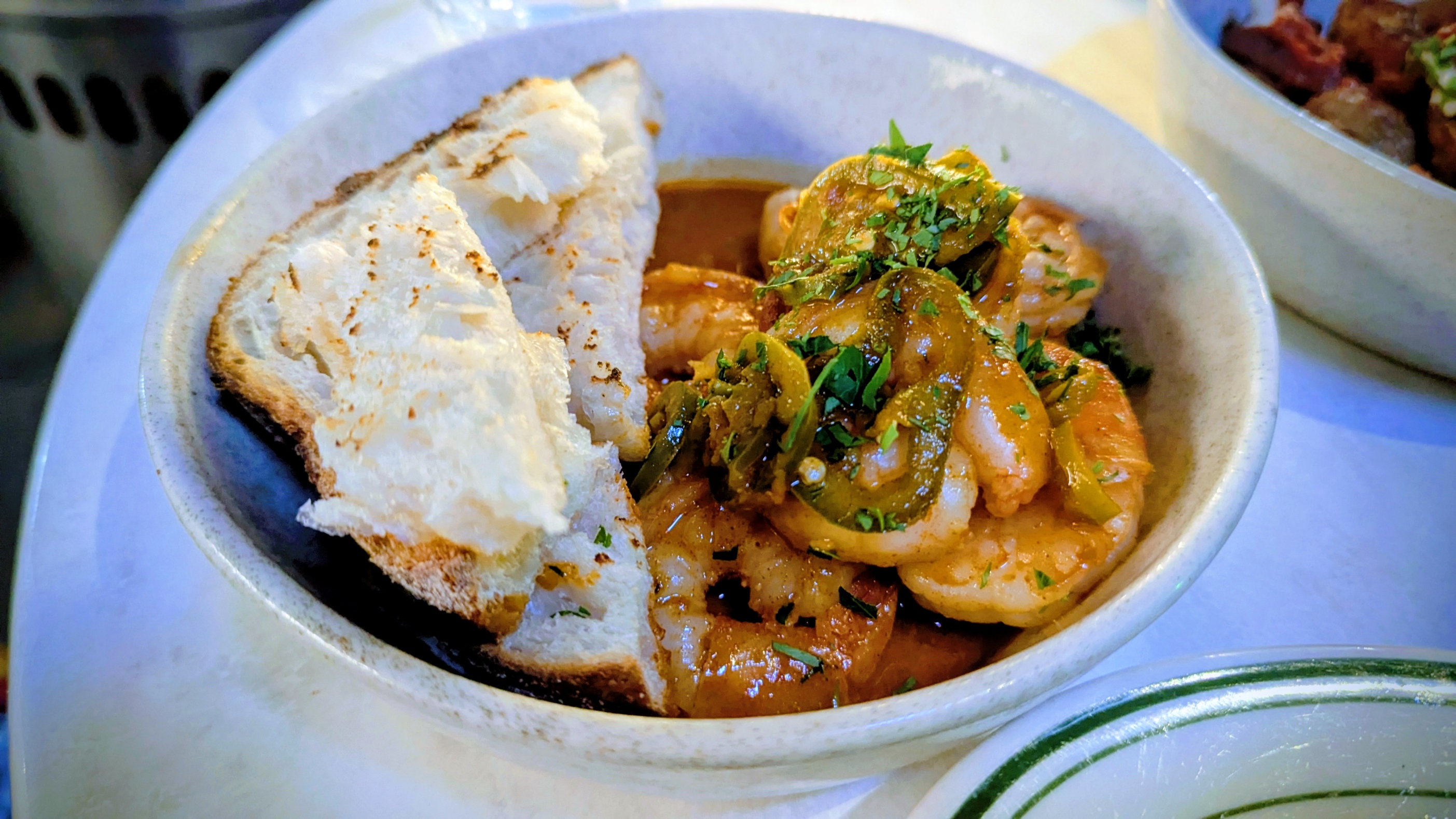
A Spanish meal in Melbourne for Cindy Lou
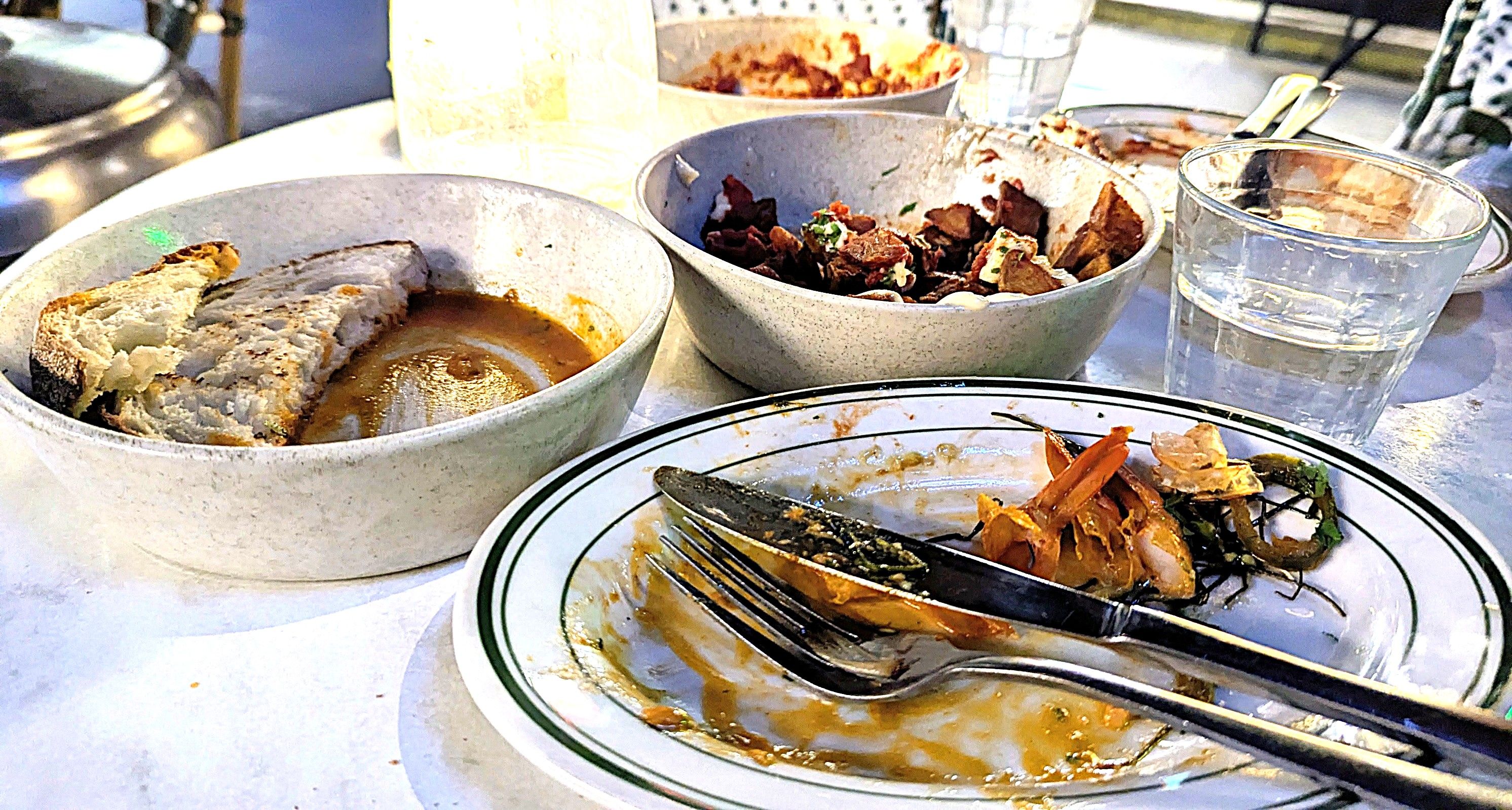
Degrave’s is in one of Melbourne’s lanes, near Flinders Street Station. It has a lovely atmosphere and great staff. The food was generous and flavoursome, but not to the level of the wonderful experiences we had at La Tasca in London. And Spanish food in Spain is another story, particularly when travelling with English friends for whom Spain was almost a second home. Nevertheless, I would eat there again for the atmosphere and the delicious leeks in particular.


A Statue Of Bridget Jones Is Being Unveiled In Leicester Square Soon – As The Iconic Character Becomes The Latest Addition To London’s Free-To-Visit Sculpture Trail
One of the most captivatingly chaotic characters in movie history is being immortalised in the form of a shiny new statue in the heart of London.
Katie Forge – Staff Writer • 27 October, 2025
It’s been almost a quarter of a century since Bridget Jones first graced our cinema screens, woefully wailing ‘All By Myself‘ in her living room. And now, four films (and countless questionable decisions) later, our beloved Bridget is being immortalised in the form of a shiny new statue that’s mere moments away from being unveiled.
The statue in question has been designed by London-based studio, 3D Eye, and will feature the popular protagonist (portrayed by Oscar-winning actress, Renée Zellweger) in all her perfectly imperfect glory.
The sculpture will be permanently perched in the heart of Leicester Square, and is being revealed on November 17 at an unveiling ceremony. Renée Zellweger is set to be in attendance along with some of her Bridget Jones: Mad About the Boy co-stars, Sally Phillips, Chiwetal Ejiofor, and Leo Woodall.
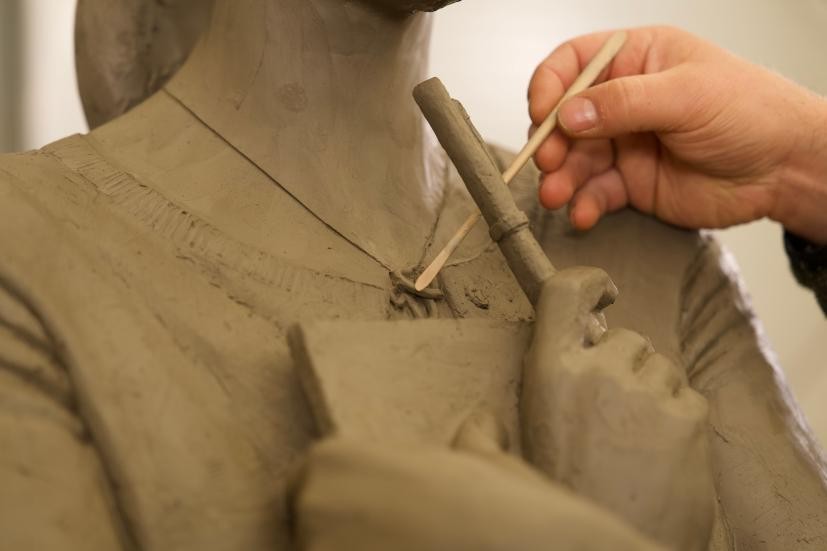
A teaser image has been revealed. And whilst we don’t know the age at which the character is set to be depicted, we do know that the statue will be wearing a necklace with a ‘D’ pendant, and clutching Bridget’s signature diary and pen.
Scenes in the Square
The showstopping statue is landing in London, courtesy of Leicester Square’s on-going sculpture trail, ‘Scenes in the Square’. Bridget Jones will be the first rom-com character to have earnt themselves a sought-after spot on the trail’s star-studded line-up. The free-to-visit trail is filled to the brim of cinematic icons. Bridget Jones will join the likes of Paddington Bear, Mary Poppins, Harry Potter, Batman, Gene Kelly, and Indiana Jones.
Helen Fielding, author of the Bridget Jones books, comments: “For Bridget to be honoured as a British Icon with her own statue alongside Paddington Bear, Mary Poppins and Admiral Lord Nelson (alright, he’s down the road a bit!) is a huge thrill and reason for everyone to raise a glass of Chardonnay to being ‘just as you are.’ I am touched and delighted for Bridget and Renée and hope that Bridget’s Mummy Pants will ensure a sleek silhouette for this exciting statue unveiling.”
Michael Morris, director of Bridget Jones: Mad About the Boy, says: “Bridget has always belonged to London – her mess, her magic, her heart. To see her immortalised here, in the middle of the city she’s stumbled through and loved so fiercely, feels like the perfect love letter to her and to everyone who’s ever cheered her on.”
 Robin's Room
Dear RobinThanks for sharing Albo’s speech
LikeLike
I thought that the speech was terrific. I also appreciated being forwarded it by another adept politician.
LikeLike