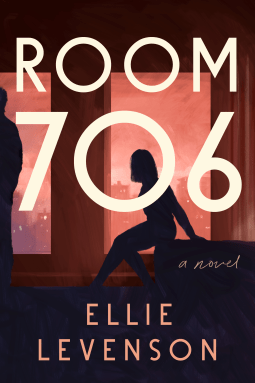
Ellie Levenson Room 706 Zando | SJP Lit, January 2026.
Thank you, NetGalley, for providing me with this uncorrected proof for review.
This is Kate’s story – her childhood and young adulthood, and the impact of marriage and motherhood are seen through Kate’s recall as she waits in room 706 in a London hotel. She is not alone. James, her older married lover has emerged from the bathroom when Kate sees the news on the television: their hotel is under terrorist attack. The terrorists’ flag hangs outside leaving the media and security forces under no illusion that they are a group known to show no mercy to their hostages. That a past bombing of a building under siege was ineffectual does not reduce the menace Kate and James experience in room 706; nor is Vic, Kate’s husband to whom she texts early in her plight, unaware of the danger. He remains vigilant in helping her overcome her fears through the hours of incarceration. See Books: Reviews for the complete review.
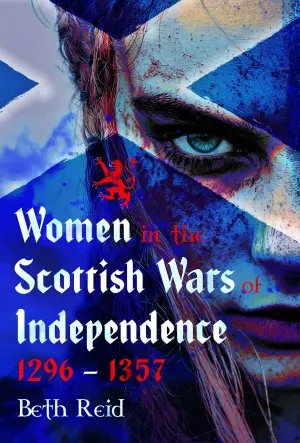
Beth Reid Women in the Scottish Wars of Independence 1296–1357 Pen & Sword |Pen & Sword History, June 2025.
Thank you, Net Galley and Pen & Sword, for providing me with this uncorrected proof for review.
Beth Reid’s introduction is a clear exposition of her aims, at the same time as presenting the nucleus of the arguments she makes, and suggestions for further research and writing on the topic. The book is divided into three parts – Women in Politics, Women in Captivity, and Women in Warfare. Immediately Reid demonstrates her capacity to grasp the essential elements of each and apply them to the women who grace these pages. The women she is writing about will be treated in their capacity as actors in the field rather than in their domestic roles. She outlines the two phases of the Scottish Wars of Independence, ensuring that even in this brief account she refers to the nuanced nature of the wars, rather than the populist view of antagonism between England and Scotland. Although the resources featuring women are limited, her narrative history with its focus on women provides yet another example of the importance of writing women into history. The previews are useful and what follows fulfils their promise.Books: Reviews

Olapeju Simoyan Girls Become Doctors and Much More Inspiring Stories of Women in Medicine Victory Editing NetGalley Co-op, September 2025.
Thank you, NetGalley, for providing me with this uncorrected proof for review.
This book presents a refreshing range of stories, told by the author. The object of illustrating the wide range of activities that women whose first profession is medicine pursue, support and mentor is something that is new. Rather than contribute only to the literature that shows women’s fortitude in entering ‘men’s’ professions and excelling there, Olapeju Simoyan has brought a further perspective to such women’s lives and their aspirations. For a patient, the realisation that the professional woman she may face during times of great stress, or even for a perfunctory visit to the surgery, has a range of interests, enhances the professional face. The stories told here raise the possibility that other women doctors replicate them and their diverse interests. See Books: Reviews for the complete review.
American Politics
Bob McMullan
Charting trump’s decline
There has been a significant and measurable decline in Americans’ assessment of President Trump.
I am not referring to his mental decline. Many have commented on his rambling speeches and press conferences and his apparent pattern of falling asleep during meetings. But I am not equipped to assess the reality of allegations of mental decline.
I am not even referring to apparent signs of physical decline. The mystery MRI has not been explained. Swollen ankles, bruised hands and other signs may be significant, but there is not sufficient evidence to draw a conclusion from this distance.
Rather, I am referring to the incontrovertible evidence of decline in the level of voter support for Donald Trump so early in his second term.
The early election results certainly point to a serious problem for Republicans. In the recent round of elections, it was not just the resounding victories for Democrat candidates in the big contests for Governor of Virginia and New Jersey and the Mayor of New York city but also a staggering array of victories in election contests for school boards and a broad range of other less important positions across the country.
However, the more compelling and measurable evidence about future prospects can be found in the analysis of voter approval ratings overall and in key policy areas.
The absolute polling numbers are bad for Trump.
The trend should be even more alarming to his team.
Since July Trump’s overall approval rating as measured by the Real Clear Politics Poll of Polls has been in negative territory. It currently stands at -13.1%.
The alarming trend for him is a story of continuing decline in approval from -3.3% at 7 July to -6 at 16 August, -6.1% on 12 September and -13.1% at 23rd November.
The decline can also be seen in some of the most politically significant policy areas. It is not uniform, as you would not expect it to be, but there are noticeable negative trends in some of the most significant and politically sensitive policy areas.
The most outstanding numbers can be found in the assessments of Trump’s performance in handling inflation. This is significant because inflation is widely regarded as among the most potent election deciding issues in most western countries. including in Trump’s 2024 victory.
In July voters had a negative perception of Trump’s handling of inflation by more than 19%. This was a really bad assessment, but it has continued to get worse. By November the measure was negative more than 25%!
After regularly attempting to turn the numbers around by asserting that prices were actually falling the recent removal of tariffs on food as a response to concerns about prices is a very significant backdown and an indication of deep concern in the administration about consumer prices.
The underlying significance of the tariff cuts, as they convey the clear reality that Trump’s assertion that tariffs will not increase prices because they will be paid by foreign suppliers is utterly bogus, may be missed by average voters, but it is a very significant backdown for the President.
A similar pattern of decline in approval from bad to even worse can be seen in the numbers for economic policy, foreign policy in general, and his handling of Russia/Ukraine in particular. (It is important to note that these numbers pre-date the recent “peace initiative”).
It is important to note that the very controversial issue of immigration, which was central to Trump’s 2024 election campaign and represents much of the public face of the administration also reflects declining approval. However, the decline is smaller, from -2% to -3.7%, and the absolute number is much less negative than most other areas.
There are two policy areas which do not fit with this overall assessment.
One, Trump’s handling of crime reflects the decline in approval seen elsewhere, but his November net approval rating was 0, not negative.
The one area in which Trump’s approval ratings have very significantly improved is his handling of the Israel/ Hamas conflict. From July to September the approval rating fell from -7.4% to -13.4%. However, by 23 November approval of his handling of this issue had improved to +2.8%.
It is clear that this improved assessment on the Middle East has not been sufficient to outweigh the various factors contributing to an overall very significant decline in support.
What is the significance of this measurable decline?
First, it suggests that the Democrats should have a very good chance of winning control of the House of Representatives next November and an outside chance of winning control of the Senate. I don’t take very seriously the attempted gerrymanders. I suspect that there is a very real chance that this effort will backfire.
Second, the decline and its possible electoral consequences in 2026 may well lead to further fraying of the MAGA universe.
Third, it suggests that Trump will not win a third term. I am confident that if he thinks he could win Trump will endeavour to manufacture a case for a third term. I have seen Steve Bannon’s confident assertion that Trump ’28 will definitely happen. The reason I don’t believe it will happen is that unless the Democrats perform spectacularly badly in the House from 2026 or err in their selection of a presidential candidate I don’t think Trump can win an election in 2028 if he was to run.
That is a glimmer of light at the end of a long dark tunnel.
Heather Cox Richardson from Letters from an American <heathercoxrichardson@substack.com>
Forwarded this email? Subscribe here for more November 25, 2025
Last week, a poll conducted for Global EV Alliance, made up of electric vehicle driver associations around the world, found that 52% of Americans would avoid buying a Tesla for political reasons.
Tesla chief executive officer Elon Musk pumped more than $290 million into electing President Donald J. Trump and supporting the Republicans in 2024. After taking office, Trump named Musk to head the “Department of Government Efficiency,” a group that slashed through government programs and fired civil servants.
In response, protesters organized “Tesla Takedowns,” gathering at Tesla dealerships to urge people not to buy the vehicles. The protests spread internationally. In March, Trump advertised Teslas on the South Lawn of the White House to try to help slumping sales, to no avail.
In September, consumers flexed their muscle over parent company Disney’s suspension of Jimmy Kimmel’s late night talk show on ABC after pressure from Federal Communications Commission chair Brendan Carr over Kimmel’s comments following the murder of right-wing activist Charlie Kirk. About three million subscribers canceled Disney+ in September, while Hulu, which Disney owns, lost 4.1 million. Monthly cancellations previously had averaged 1.2 million and 1.9 million, respectively. While not all of those cancellations could be chalked up to consumer anger over Kimmel’s suspension—Disney subscription prices went up at around the same time—Kimmel was back on the air in five days.
Every day, I am struck by all the ways in which we are reliving the 1890s.In that era too, consumers organized, using their buying power to affect politics. As the first general secretary of the National Consumers League, Florence Kelley, put it: “To live means to buy, to buy means to have power, to have power means to have responsibility.”
After the Civil War, an economic boom in the North combined with the loss of young men in the war to make education more accessible to young white women. By 1870, girls made up the majority of high school graduates. Fewer than 2% of college-age Americans went to college; women made up 21% of that group. Away from the confines of home, these privileged young women studied social problems and the means of addressing them while they developed friendships with like-minded classmates.
In the mid-1880s, those women began to experiment with using their talents and newfound friendships to repair the nation’s social fabric that had been torn by urbanization and industrialization. To recreate a web of social responsibility in the growing industrial cities, young middle-class women moved into ethnic working-class neighborhoods to minister to the people living there. Jane Addams, who opened Chicago’s Hull-House with Ellen Gates Starr in 1889, rejected the idea of a nation divided by haves and have-nots. She believed that all individuals were fundamentally interconnected. “Hull-House was soberly opened on the theory that the dependence of classes on each other is reciprocal,” Addams later wrote.
The people who lived in these “settlement houses” dedicated themselves to filing down the sharp edges of industrialization, with its tenement housing, low wages, long hours, child labor, and disease, along with polluted air and water and unregulated food. They turned their education to addressing the immediate problems in front of them, collecting statistics to build a larger picture of the social costs of industrialization, and lobbying government officials and businessmen to improve the condition of workers, especially women and children.
They soon discovered a different lever for change.
In the midterm election of 1890, politicians recognized the power of women to swing the vote for or against a political party. When Republicans got shellacked, their leaders blamed women, who were increasingly the family shoppers, for urging their husbands to vote against the party that had forced through the McKinley Tariff of that year, raising tariff rates and thus raising consumer prices. Thomas Reed, the Republican speaker of the House, complained the party had been defeated by “the Shopping Woman.”
Historian Kathy Peiss notes that between 1885 and 1910, the six women’s magazines known as the “big six” were founded, including Ladies Home Journal, McCall’s, and Good Housekeeping. By 1895, advertisements were strategically placed near recipes throughout the magazines, and brand names were scattered through their stories, a recognition of women’s role as shoppers.
Increasingly, reform-minded women were turning to women’s roles as consumers to reshape American industrialism. They came to believe that the “ultimate responsibility” for poor conditions “lodge[s] in the consumer.” Leveraging the power of consumption could force employers to pay higher wages, establish better conditions, and protect workers. In 1891, Josephine Shaw Lowell, whose brother Robert Gould Shaw had commanded Black soldiers in the Massachusetts 54th in the 1863 Second Battle of Fort Wagner, helped to form the Consumer’s League of the City of New York (CLCNY), patterned after a similar English organization, to rally consumers to support better conditions for the workers who made the goods they bought.
In 1899, Lowell and Jane Addams founded the National Consumers League, with Florence Kelley at its head. The organization worked to combat child labor and poor working conditions and, in an era when milk was commonly adulterated with chalk and formaldehyde and candies were decorated with lead paint, lobbied for government regulation of food and drugs.
Today, the relationship between consumption and reform has taken on heightened meaning after the Tesla and the Disney boycotts. The day after Thanksgiving is the start of the holiday shopping season, and like their predecessors of a century ago, reformers are focusing on consumers’ power to push back on the policies of the Trump administration, launching a campaign they call “We Ain’t Buying It.” “We aren’t just consumers; we’re community builders,” their website says. “We’re driving the change we want to see, and demanding respect.”
As Joy-Ann Reid put it in an Instagram video: “Dear retailers who’ve decided you don’t like diversity, equity, and inclusion, or you really love ICE and you have no problem with them busting into your establishments to drag people away: Here’s the thing. We ain’t buying it. I mean, for real, for real, we ain’t buyin’ it.”
She explained: “We’re gonna spend our money with businesses who actually respect our dollars, respect our communities, and respect our diversity, equity, and inclusion. We are going to buy from people who respect immigrants, who respect immigrants’ rights, and respect freedom and liberty. We are going to buy from establishments that respect our right to vote and our right to live in a free society. And if you ain’t that, we ain’t buying it.”
“Let’s show them our power,” she told listeners. “Let’s show them what we can do together.”—
Notes:https://www.cnn.com/2025/02/01/politics/elon-musk-2024-election-spending-millionshttps://www.msn.com/en-xl/africa/kenya/study-finds-41-of-ev-drivers-would-avoid-tesla-over-politics/ar-AA1QFM05https://www.nbcnews.com/tech/elon-musk/trump-musk-tesla-white-house-showroom-buys-car-rcna195905https://www.theguardian.com/us-news/2025/sep/18/jimmy-kimmel-protest-disney-abc-burbankhttps://www.nytimes.com/2025/10/20/business/media/disney-subscription-cancellations-kimmel.htmlhttps://variety.com/2025/tv/news/jimmy-kimmel-returns-late-night-disney-tuesday-1236525670/https://www.albany.edu/jmmh/vol1no1/peiss-text.htmlJane Addams, Twenty Years at Hull-House (The Macmillan Company, 1912), at: https://digital.library.upenn.edu/women/addams/hullhouse/hullhouse.html, p. 227.https://weaintbuyingit.com/Instagram:p/DRMD3B1DeHs/Bluesky:peggystuart.bsky.social/post/3m6fsaf2j7s2wterilg.bsky.social/post/3m6fsd5hogc2q
Cindy Lou enjoys her first meal at Azima
This restaurant, complete with Lebanese chef, is a wonderful find. We chose a hommos Beiruti w/ Onion, Parsley, Cumin, Tomato dip with bread, with much more bread on offer, and a vegetarian platter. The vegetarian items were generous and varied – fried cauliflower, beetroot humous, the best eggplant I have eaten since a meal in Izmir, pickled vegetables, potato harra, tabouli, falafel and another dip with the amount of chili that makes it delicious rather than inedible. Mint tea and a delicious mint lemonade accompanied the meal. We needed to take a box away – and plan a family dinner there in the near future.





Australian Politics

Anthony Albanese and Jodie Haydon wed in secret, private ceremony at The Lodge
Inside Prime Minister Anthony Albanese’s wedding to Jodie Haydon
“Did I see my life panning out this way? Absolutely not”

It’s not every day that there is a wedding at The Lodge.
In fact, until Anthony Albanese and Jodie Haydon tied the knot there on November 29, the site had never hosted such an occasion, with this being the first time an Australian Prime Minister has wed while in office.
Under a bright and sunny Canberra sky, the bride, 46, made her way down the grassy aisle at the official residence of the Prime Minister in a contemporary long-sleeved gown from Sydney’s Romance Was Born label, which was embroidered with Australian natives.
Carrying a bouquet of yellow roses, white orchids and eucalyptus leaves, the financial advisor was accompanied by her parents, Bill and Pauline, to the tune of Ben Folds’ song ‘The Luckiest’.

Having given his speech writer the day off, Albanese, 62, pledged vows that he’d prepared himself.
“We are absolutely delighted to share our love and commitment to spending our future lives together, in front of our family and closest friends,” the newlyweds shared in a statement afterwards.
Who attended Anthony Albanese’s wedding?
The big day was an intimate affair with just 80 members of their families and close friends in attendance. Treasurer Jim Chalmers, Finance Minister Katy Gallagher and Foreign Affairs Minister Penny Wong also watched on.

How did Anthony Albanese meet Jodie Haydon?
The fairytale romance between the pair started in 2020 when they met at a function and bonded over their love of the South Sydney Rugby League Club. Albanese told 60 Minutes she “had him at “‘up the Rabbitohs!’”
The PM proposed to Haydon on the balcony at the Lodge on Valentine’s Day in February 2024, with a bespoke ring from Nicola Cerrrone he designed for the occasion.
While celebrities and foreign world leaders failed to make the cut, Anthony’s dog Toto was the ring bearer. The sweet cavoodle donned a white lace dress that matched with Haydon’s niece Ella, 5, who was her flower girl.
During their reception, the pair shared their first dance to Frank Sinatra’s ‘The Way You Look Tonight’. Anthony’s son Nathan, who he shares with ex-wife Carmel Tebbutt, gave a speech.
The couple is understood to have paid for the nuptials themselves. They spent the days following their “I do’s” honeymooning at an undisclosed location within Australia.
During their years together, Jodie has accompanied Anthony across the world.
Jodie was hosted at the White House by then US President Joe Biden and his wife Jill. She was also a guest at the coronation of King Charles in 2023.
She also previously taken on roles associated with being the partner of the Prime Minister such as being the Patron of the National Portrait Gallery, which will now likely increase.
“Did I see my life panning out this way? Absolutely not,” she told 60 Minutes.

Opposition Leader Sussan Ley weighs in on Prime Minister Anthony Albanese and Jodie Hayton’s wedding.
“I wish Anthony and Jodie every happiness,” Ms Ley told Sky News Political Editor Andrew Clennell.
“A wedding day is a very special day indeed.

Nationals’ leader David Littleproud said he was happy to see the PM tie the knot, noting that Ms Haydon was already representing the nation by Albanese’s side. “It’s great to see the PM has someone who loves him and will be with him. It is a tough and lonely job, let alone prime minister,” he told ABC’s Insiders “Jodie has already stepped up on the international stage and represented us in such a classy way for some time and now they’ve solidified their partnership with marriage, and I think good on him.
Labor strikes deal with Greens to overhaul environment laws

Ronald MizenPolitical correspondent
Nov 27, 2025 – 9.36am
Prime Minister Anthony Albanese has struck an eleventh-hour deal with the Greens to pass Labor’s overhaul of Australia’s environment laws before parliament breaks for the summer recess.
Albanese and Environment Minister Murray Watt on Thursday morning outlined a series of concessions to the Greens to strengthen protection of native forests and bushland, and to carve out fossil fuel projects from fast-track and national interest approval pathways.
Under the changes, regional forestry agreements in NSW and Tasmania and high-risk agricultural land clearing will be brought under the Environment Protection and Biodiversity Conservation Act from July 1, 2027.
The move will anger farmers and some forestry groups, but Labor tried to sweeten the deal with a $300 million forestry fund, which Albanese said would deliver a “bigger” and more sustainable logging industry.
Outside the EPBC Act, the Greens also secured an additional $50 million for the public broadcaster ABC to produce Australian content.
The prime minister also revealed that a series of changes would be made to appease business concerns.
Specifically, the government will make clearer a power that would allow the minister to kill off projects that are deemed to have “unacceptable impacts” before they are fully assessed.
Labor will also impose stricter conditions on the powers of a new National Environmental Protection Agency, imposing a 14-day limit on stop-work orders and requiring the NEPA to have more evidence before such orders can be imposed.
It will also clarify the definitions for a clause that requires projects to have a “net gain” for the environment.
The new NEPA will come into effect from July 1, 2026, and the government hopes to have agreements in place with states by thethat will allow them to assess projects against state and federal standards concurrently.
The unacceptable impacts test and net gain test will come into effect from July 1, 2027.
“When we came to government, we promised we would reform Australia’s broken environmental laws,” Albanese told a press conference in Canberra. “Today, we deliver that promise … These sensible, responsible and balanced laws are good for business and good for the environment.”
But the Coalition will attack Labor for carving out gas projects from the new national interest test.
Greens leader Larissa Waters said her party was “determined to get shit done” and the deal with Labor was a sign of that.
However, she criticised Labor for refusing to make carbon emissions part of the considerations for whether a project should be approved. Under the current proposal, projects that produce more than 100,000 tonnes of emissions each year have to report their emissions profile and abatement strategies, but these do not form part of the assessment process.
“The government refused to include climate considerations in the act, and that is why we need Greens in parliament, and that is what we will keep fighting for,” Waters said. “Our laws should protect us from the climate crisis, and we will keep pushing on that.”
The Australian Financial Review on Wednesday revealed that Waters and the Greens environment spokeswoman, Sarah Hanson-Young, were meeting with Albanese to hash out the final terms of an agreement.
The new laws seek to accelerate approval of major projects such as renewables and housing, while also giving a national environmental protection agency powers to prevent the destruction of nature and to punish lawbreakers with fines of up to $825 million or a percentage of revenue based on any damage caused.
The government on Tuesday released 11 amendments it was willing to make to get the laws passed through the Senate, where Labor does not hold a majority and needs either Coalition or Greens votes for legislative changes.
Sources familiar with negotiations but not authorised to speak publicly were insisting late Wednesday that a deal could be with the Greens or the Coalition, and it would go down to the wire.
Staffers from all sides were working well into Wednesday night, with many skipping Christmas parties. The Coalition was still sending proposed changes at 10pm, according to sources.
Opposition Leader Sussan Ley on Tuesday demanded to elevate negotiations to the leader level, but Albanese said she had rejected his request to meet in person to talk about a deal.
“I offered to meet with Sussan Ley, and that wasn’t taken up,” Albanese said, though this was refuted by the Coalition.
Ronald Mizen is the Financial Review’s political correspondent, reporting from the press gallery at Parliament House, Canberra. Connect with Ronald on Twitter. Email Ronald at ronald.mizen@afr.comSave


Paul Bongiorno
Inside Murray Watt’s environmental deal
Parliament’s last sitting week for the year was an intense guessing game, as Environment Minister Murray Watt haggled with competing sides on how best to reform Australia’s environment laws.
Watt had put everything on the line politically, creating a deadline to finalise what was in fact a five-year journey to reach a destination everybody agreed was needed, namely the implementation of recommendations proposed by businessman Graeme Samuel after his review of a framework that had been in place for 25 years.
Watt, the ebullient Queenslander, who has become Anthony Albanese’s chief fixer, delivered the government a significant win after convincing the 10 Greens he needed in the Senate that the perfect no longer needed to be the enemy of the good.
The demands of the Greens’ environmental protections lead negotiator, Sarah Hanson-Young, weren’t quite as robust as some of her colleagues would have liked, but, in the end, Hanson-Young viewed the amended bill as a vast improvement on the version that was originally presented.
Coal and gas projects would no longer be fast-tracked and, critically, there was significantly less delay in ending the logging of native forests. There was also more protection of the natural environment and endangered species.
Earlier in the week, Opposition Leader Sussan Ley suspected Watt and Albanese were about to do what she described as a “dirty deal” with the Greens. Her concerns were principally over the fate of natural gas projects, which she claims are essential to providing affordable energy.
The Coalition was most unhappy about the proposed environment protection agency and its ability to heavily fine industry for flouting environmental safeguards.
This was a key recommendation of the Samuel Review and gives Australia for the first time what Albanese says is a strong independent regulator. Samuel told the prime minister he is elated his reforms have finally been implemented.Watt had put everything on the line politically, creating a deadline to finalise what was in fact a five-year journey to reach a destination everybody agreed was needed, namely the implementation of recommendations proposed by businessman Graeme Samuel after his review of a framework that had been in place for 25 years.
The truth is the Coalition was struggling to present consistent demands. Watt says he was dealing not only with shadow minister Angie Bell but also with “multiple Coalition frontbenchers” who had come to him with their own thoughts. It was “quite difficult to then work out who was the actual negotiator and what is their position”. He said he had meetings with Coalition representatives who would say they’ve “got their final list of demands, and then we meet with someone else, and they’ve got other demands”.
Watt bristled at Ley’s criticism of him for “mismanag[ing] this entire process” and, she says, endangering the resources sector that is critical for “our national income”.
Watt says the reformed Environment Protection and Biodiversity Conservation Act strikes the right balance between conservation and project developments, which includes housing.
During the tense negotiations this week senior ministers were very nervous about concluding a deal with a fractious Coalition. One cited the Carbon Pollution Reduction Scheme in 2009, signed off by then Liberal leader Malcolm Turnbull. Ultimately, that deal was broken, the leader was dumped and the vote failed in parliament.
That has not been Ley’s fate, although the parliamentary year ends with her being regarded as a seat warmer, waiting for one of her conservative rivals to strike.
Things are much more settled under the leadership of Larissa Waters in the Greens party room. A cabinet minister observed:
“The Greens all have their say in their party room, but they trust their negotiator, Hanson-Young, and once they have made a decision, stick with it.” The Greens insisted more notice be taken of the potential climate change impact of any environmental or development projects, a view with considerable support, according to the latest Essential Report.
However, the Coalition’s abandonment of the net zero target and the rise of support for One Nation, an even more strident critic of climate science and action, appears to have taken a toll. Polling shows an erosion in the number of Australians who accept climate change is happening and caused by human activity. It now stands at 53 per cent, down from a high of 64 per cent eight years ago.
According to the same poll, 36 per cent of people believe Australia is not doing enough to address climate, against 20 per cent who think it is doing too much.
The opposition seems hell-bent on representing this minority. Rather than welcome Climate Change and Energy Minister Chris Bowen taking an active international role as president of policy negotiations for next year’s COP31 in Türkiye, advancing the net zero target set in Paris in 2015, it accuses him of abandoning his portfolio responsibilities.
On Monday, the Coalition came up with the glib phrase that Bowen was now a “part-time minister, full-time president”.
Of course, this is a ridiculous characterisation of the position. Bowen cited a number of examples of ministers in other countries simultaneously carrying out their COP roles while retaining their domestic portfolios. He told parliament that to suggest his new role is a full-time job “is a complete and utter invention, it is a fantasy”.
Ley’s first question to the prime minister on Monday scoffed at government claims that Bowen’s role gave “unprecedented influence” on important international emissions reduction efforts. “Why isn’t this part-time minister, full-time president” using his “unprecedented” influence to lower energy bills for Australians, she asked. The cynicism is breathtaking.
Albanese accused the opposition of “talking Australia down” and ditching bipartisan support for Australians playing key international roles, such as former Liberal finance minister Mathias Cormann, who is now the secretary-general of the Organisation for Economic Co-operation and Development. Cormann has been reappointed for a second term, with the government’s support.
Albanese accused the Coalition of failing to address energy shortages and price rises when in government and said their current plan would lead to higher prices because of its negative impact on investment in cheaper renewable energy projects.
The opposition’s other refrain for the week was to ask the government, repeatedly, “When will energy prices come down?” It is a question they cannot themselves answer in regard to their “affordable energy plans”.
Everyone knows the transition to renewables is unavoidably expensive, made worse by almost a decade of Coalition government doing nothing to replace ageing coal-fired power stations.
Ministers avoided providing assurances of early price relief, although Bowen did point to the successful home battery uptake and the way solar panels substantially cut electricity costs for households.
Midweek the new, expanded basket of goods and services included in the monthly consumer price index showed a 0.0 per cent change. That owed more to the fact it was the first in the new series than anything else. More worrying was the annual rate to October rose 3.8 per cent. In Question Time, the opposition avoided tackling Treasurer Jim Chalmers and directed its sole question on the rise in the cost of living to Albanese. It was a curious strategy that suggests it is gun-shy of Chalmers.
Ley reminded the prime minister that earlier in the year he had “promised the Australian people” the country had “turned the corner on inflation” and that the treasurer assured them the government had “inflation under control”.
Albanese is acutely aware of the potency of living costs for voters and accepted that the latest figures “confirm” households are still facing pressures. He noted the withdrawal of state energy subsidies was a contributing factor, but said his government was focused on relief measures and wanted to give assistance.
Chalmers said any decision to continue federal energy bill relief will be made closer to the midyear fiscal review but they can’t be a “permanent feature”. Blunting the opposition’s criticism was its failure at the May election to support the rebates and tax cuts.
Speaking at the National Press Club, shadow treasurer Ted O’Brien attempted to distance the survivors in the Coalition from its ill-fated election policies. He is promising tax cuts next time. His press club address was widely seen as an audition to keep his job should there be a change of leader in the new year.
Cost-of-living issues weren’t worrying Pauline Hanson on Monday night when she served Barnaby Joyce wagyu steaks that retail for about $145 a kilogram. Making the steaks more delicious for both politicians, no doubt, was the fact they came from Gina Rinehart’s cattle company.
Admiration for Australia’s richest person is only one of the things the two right-wing rabble-rousers have in common.
Why Joyce is continuing his flirtation with One Nation and its leader after Hanson’s disgraceful repeat of her burqa stunt in the Senate has his Nationals colleagues shaking their heads. She donned the garment after the Senate refused to allow her motion to ban Muslim face coverings.
This outraged the Senate, particularly its Muslim members. When the Senate resolved to eject Hanson from the chamber, she refused to leave, causing a two-hour suspension of proceedings.
This contempt of the chamber led to Labor, the Greens and some of the cross bench voting to suspend her from the Senate for seven days – a rare event – and from representing the Senate on parliamentary delegations.
The government’s Senate leader, Penny Wong, said Hanson had “been parading prejudice as protest for decades”. Unrepentant, the Queensland senator says she will run again and “the people will judge me at the next election”.
Joyce quit the Nationals on Thursday to sit as an independent for the rest of this term. He is widely expected to head One Nation’s New South Wales Senate ticket at the next election.
This article was first published in the print edition of The Saturday Paper on November 28, 2025 as “Murray Watt’s environmental factors training”.
Some highlights coming up in 2026
Katherine Mansfield: Stories of Love. Live online course March-April 2026.
Join us for a new course on Katherine Mansfield (1888-1923), one of the greatest short story writers of the twentieth century. In this course, we will explore her stories about love, its many shapes and its hopes, disappointments, and betrayals.
Six sessions, weekly on Thursdays, 19 March to 23 April 2026, 6.00-8.00 pm British Summer Time. Further information and booking page.
• Shakespeare and Euripides: Romance Plays
Live online course with Cambridge scholars Dr Fred Parker and Dr Jan Parker. Tuesdays, weekly, 20 January to 24 February 2026, 6.00-8.00 pm UK time. Live online.
We will study Shakespeare’s Pericles, All’s Well that Ends Well, The Winter’s Tale and The Tempest; plus Euripides’ Alcestis and Ion. A rare chance to study these brilliant, intriguing plays together.
• Toni Morrison Course. A new course studying four novels by Nobel Prize winning writer Toni Morrison. May-June 2026
• Literary Gardens. We repeat this hugely popular course which studies gardens in literature from Alice in Wonderland to The Waste Land. January-March 2026.
• Doris Lessing: Women and Destiny. We repeat this superb course on four powerful novels by Doris Lessing. September-October 2026.
There are many other online courses coming up; please see our website for details.

Dervla McTiernan’s email are always interesting. This is part of her most recent:
I’ve been telling you the story of the writing of my new novel. I started off, in September, telling you about the three ideas I sent to my editors way back in February 2024, and then last month I told you which idea my editors had chosen (the same idea you had chosen by overwhelming majority!)*
Obviously, once the idea is nailed down, I have to go off and write the book. In this case, I wrote three drafts before I sent the book off to my editors.
So … what did they think? And what did I do from there? Here’s a bit of a step by step of how I like to edit a book, starting from my editors’ notes.
Let’s start with an extract from the notes sent by my editors. I’ve redacted any key information here that would run the risk of spoiling the book for you.


My first step after I receive the editorial letter is usually to go for a long walk (or three) and really think about how I want readers to feel when they read this book, from the beginning to the end. Then I write my own summary of the notes, in my own words. At this point I’m often making decisions about how I’m going to fix any problems my editors have identified. Here’s part of the summary I made for the edit of this book:

My next step is to do a chapter-by-chapter breakdown. This is where I break out the specific changes that need to be made to every chapter to give effect to the changes I’ve decided need to be made to the book, based on the editorial notes and the decisions I’ve made. I’m sharing this so that you can see the format, but obviously here I’ve really had to redact a lot, or risk ruining this book for you.

And the last step is to do a daily work plan that lays out all the work and when I’m going to do it, right up to my deadline.
After that, I get down to the writing. First in my notebook (there’s just something about pen and paper that helps the ideas flow), and then back into Scrivener when I’m fully warmed up. After that, I get down to the writing. First in my notebook (there’s just something about pen and paper that helps the ideas flow), and then back into Scrivener when I’m fully warmed up.
This is what the layout of my Scrivener project will usually look like when I’m really getting into the edit. The label colour on the far right tells me the status of the chapter. Green is done, red means a full rewrite is needed, and orange a lighter rewrite.

And that’s it! When the book is finished (again) I compile the Scrivener manuscript into a Word document, and share it with my editors. For this book, we did three rounds of edits before we were all really satisfied and happy to send the book into copyediting. That’s a LOT of work, but for me, it’s the only way I can put this book in your hands, knowing I’ve done everything I can for the characters and for you as a reader.
*Dervla McTiernan’s previous email provided recipients with a list of three possibilities for her next novel. People voted on these.
British playwright Tom Stoppard, who won Oscar for ‘Shakespeare in Love,’ dead at 88
By Max Saltman

Tom Stoppard speaks at The Hay Festival in Wales in June 2010. David Levenson/Getty Images
The award-winning British playwright and screenwriter Tom Stoppard has died, according to his talent agency United Agents. He was 88.
Stoppard, who was born in Czechoslovakia, was perhaps best known in the US for his Oscar-winning screenplay for the 1998 film “Shakespeare in Love,” which he co-wrote with Marc Norman.
More recently, he won his fifth Tony Award in 2023 for his play “Leopoldstadt.” He won his first Tony in 1968 for “Rosencrantz and Guildenstern Are Dead,” his metatheatrical spin on “Hamlet.”
Norman told CNN in an email that Stoppard was “a joy to work with.”
“He understood that Shakespeare, that icon, was an entertainer just like we were, and that spirit drove our screenplay,” Norman said. “My thoughts go out to his family.”
In a statement posted to its website, United Agents said: “We are deeply saddened to announce that our beloved client and friend, Tom Stoppard, has died peacefully at home in Dorset, surrounded by his family.
“He will be remembered for his works, for their brilliance and humanity, and for his wit, his irreverence, his generosity of spirit and his profound love of the English language,” the statement continued. “It was an honor to work with Tom and to know him.”
King Charles III, whose mother Queen Elizabeth knighted Stoppard in 1997, said in a statement Saturday that he and Queen Camilla were “deeply saddened to learn of the death of one of our greatest writers, Sir Tom Stoppard.”
“A dear friend who wore his genius lightly, he could, and did, turn his pen to any subject, challenging, moving and inspiring his audiences, borne from his own personal history,” Charles wrote. “We send our most heartfelt sympathy to his beloved family. Let us all take comfort in his immortal line: ‘Look on every exit as being an entrance somewhere else.’”
Born Tomas Straussler in Zlin, in what is now the Czech Republic, Stoppard was from a secular Jewish family who fled the Nazi invasion of the country in 1939, first to Singapore, then to Australia and India. Many of Stoppard’s extended family members were murdered in the Holocaust.
After young Tomas’ father died when the Japanese sank his boat off the Singaporean coast, his mother married an Englishman, Kenneth Stoppard, and the family moved to the United Kingdom. Tomas Straussler became Tom Stoppard.
Stoppard, who briefly worked as a journalist before his success in theatre, had a wide oevre. Alongside his many plays, he wrote radio dramas, satirical films like Terry Gilliam’s “Brazil,” as well as film adaptations of books, including his 2012 screenplay for “Anna Karenina” and his 1987 adaptation of JG Ballard’s roman-a-clef “Empire of the Sun.”
The playwright wrote in a 2024 essay published by the Huntington Theatre company that while he was born a Czech Jew, his life in Britain and his English stepfather had turned him into an “honorary Englishman.”
“I knew I was – used to be Czech, but I didn’t feel Czech,” Stoppard wrote. “I felt about as English as you could get.”
Later in life, Stoppard began to explore his personal history through his work. His most recent play, “Leopoldstadt,” traces a Jewish family in Vienna from the 1890s through World War II, obliquely referencing his family’s story.
“It’s been at the back of my mind,” Stoppard said of his family history in a 2022 interview. “It’s something I’ve never used. It felt like unfinished business.”
CNN’s Max Foster contributed.
See review of Hermione Lee Tom Stoppard A Life Knopf Doubleday Publishing Group, 23 Feb 2021, on my blog of 2 March 2022.
Tom Stoppard’s Ordinary Magic
Henry Oliver from The Common Reader <commonreader@substack.com>inbox
Subscribe here for more
Tom Stoppard’s Ordinary Magic“The ordinary-sized stuff which is our lives…”Henry Oliver Nov 30
And so a genius is dead. Tom Stoppard was the most accomplished English playwright since George Bernard Shaw. He had more memorable wit, ideas, and drama in every page than most writers manage in a lifetime. He revived the artful art, the conscious artifice of theatre, drawing into his circle of dramatic magic all the oppositional forces of the modern stage and summoning from them something greater than had been imagined possible. He was the true impresario, able to enchant with words that seemed so plain and expected, one was always truly shocked at how unexpected he made them. He could do everything from absurdism to glee, from the philosophical to the zany.
Stoppard’s genius was to make a confluence of the highbrow and the lowbrow. Jumpers is a satire of academic philosophy, written in the sort of dialogue critics inevitably call dazzlingly clever; but it contains a set of gymnasts, who make human pyramids on stage, and, at one point, the philosopher opens the door with half his face covered in shaving cream with a tortoise under his arm and a bow and arrow in his hand.
Such moments are the essence of farce, which demands the question: “how did we get here?” See Television,Film and Popular Culture: Comments for the complete article.

 Robin's Room