
Stephen Rötzsch Thomas Disney’s Animated Classics A Comprehensive Guide Pen & Sword| White owl, September 2025.
Thank you, NetGalley and Pen & Sword for providing me with this uncorrected proof for review.
Snow White features throughout this book, beginning with the author having received the video as a present, watching it almost under duress, and later becoming an admirer. This admiration is based on the craft exhibited in producing the film, and its role in introducing the wonderful world of cartoon artistry that moves the narrative along, chapter to chapter. The development of Walt Disney’s animated works is traced from its beginning, with particular attention to Disney’s involvement until his death in 1966 and the impact of new leaders. Cartooning provides the backbone to the narrative, alongside the host of elements that are essential to generating Disney’s work. Many of the shorter works and films are described in detail. This book is a funny, informative, and nostalgic ode to Disney’s animated classics.
At the same time as telling the story of Disney, his close colleagues, the broad range of workers responsible for producing the works, and the films themselves, there are some personal interjections – some a little awkward, others warm and humorous, and yet others breathing a strong waft of nostalgia at the same time as acknowledging the value of remakes that abandon racist aspects of the older versions. See Books: Reviews for the complete review.

Margo Donohue Fever The Complete History of Saturday Night Fever Kensington Publishing, August 2025.
Thank you, NetGalley, for providing me with this uncorrected proof for review.
This is a magnificently detailed account of the personnel, cultural environment, and film history that brought into being Saturday Night Fever. Overwhelming at times, this book is worth returning to repeatedly, for anyone interested in the film, but also for students of film history. Saturday Night Fever was produced in two versions. One was suitable for a wider audience, the other was grittier, an honest account of the Brooklyn world in Tony Manero swung his paint can as he walked to work in the opening scene. For me, the fall from the Brooklyn Bridge was a focal point of the film. Grease, also starring John Travolta and produced a year later, like Saturday Night Fever, had a captivating soundtrack, which sometimes leads to thinking of the films in tandem. However, this is misleading. Grease was delightful and easy viewing. Saturday Night Fever was not, and Margo Donohue’s history shows how it was saved from becoming only the lighter version. See Books: Reviews for the complete review.
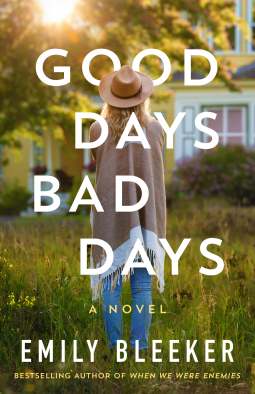
Emily Bleeker Good Days Bad Days Lake Union Publishing, October 2025.
Thank you, NetGalley, for providing me with this uncorrected proof for review.
Emily Bleeker’s novel resonates well beyond its conclusion. She has packed so much into this story of a woman seeking her past, and an explanation for her banishment from her home as a teenager. Charlotte returns home at her father’s request to clear it of the hoarding that has always been her mother’s priority. Greg’s has been in enabling and protecting Betty, leaving Charlotte with questions, an inability to forgive her parents and self-protection that impacts her own mothering.
This novel moves between protagonists and time. Charlotte, known now as Charlie and to her parents in the past as Lottie, begins the story. Her return home and the immensity of Betty’s hoarding, visiting Betty who is now in care for her dementia and, while trying to clear her childhood home of the accumulation of years of belongings, assembling their history is a compelling and poignant story. In this narrative Charlotte’s own family life is also questioned, alongside her negative feelings about her parents. Her feelings toward her father who put her mother and her hoarding first fluctuate, as do those toward Betty for whom a good day in medical terms means rejection of Charlie, and a bad day the appearance of Betty who sees Charlie as Laura a friend from the past with whom she can exchange giggling discussions of girlhood. She finds comfort in the Betty for whom she is no longer the daughter that destroyed their family. Greg’s recall of the past is enlightening – about his relationship with Betty, his daughter and his history which encompasses both Betty’s television past, and his own. See Books: Reviews for the complete review.
American Politics
The Hoax of Christmas Present
Meidas+ <meidastouch@substack.com> Unsubscribe
Forwarded this email? Subscribe here for more
Polling and focus group data show voters across parties feel crushed by rising costs, even as Trump dismisses affordability concerns as a “hoax” that contradicts Americans’ lived reality.
MeidasTouch Network and Margie Omero Dec 13
Guest article by Margie Omero, a principal at the Democratic polling firm GBAO
President Trump is known for having a pretty deceptive relationship with the truth. He calls things hoaxes that are true, and calls things true that are hoaxes. His latest claim is affordability is a “hoax” – but polls show he couldn’t be more wrong. It doesn’t matter how you ask it – voters are deeply, acutely worried about costs. It’s by far the top issue voters say Washington should work on.
Almost half – even a plurality of Trump voters – say the cost of living is “the worst I can remember it ever being.” And digging deeper, voters feel squeezed across the board; on housing, utility prices, food, and health care, over 70% say the cost of each is going up. Economic indicators confirm voters’ perceptions; consumer confidence is down, the lowest level since April, while inflation continues to climb.
Yet Trump’s declaration America is in a “golden age,” where people are “doing better than you’ve ever done” – is completely at odds with voters’ reality. Two-thirds of Americans feel the country is “on the wrong track,” including three in ten (29%) Republicans. Gallup found just 21% think the economy is going well.
Come the holidays, these struggles seem likely to get even worse. Navigator Research shows nearly half of Americans (47%) plan to cut back for the holidays. And Gallup’s Economic Confidence Index has dropped to a 17-month low, with sharply lower holiday spending than predicted a few short months ago.
Focus groups bring to light this widespread national sourness. In groups I’ve conducted over the last few months for AARP, Navigator, and others, people have vivid examples of how they’re trying to save money, like using buy-now-pay-later apps to afford dog food, considering moving to another state to better afford utility bills, renting out part of their house through AirBnB, selling off many of their possessions, buying and selling Pokemon cards, or even moving in with an ex-boyfriend.
This economic pessimism mirrors Trump’s own downturn. His Trump’s ratings on the economy have fallen dramatically since he took office, across polling outlets. Clear majorities – of both Democrats and Republicans – say “inflation and the cost of living” should be Washington’s top priority – the top in a long list of 22 items (respondents could pick five). Yet when given the same list, and asked which were Trump’s and Congressional Republicans’ top five priorities, inflation ranked 8th.When Trump does have policies allegedly aimed at addressing the economy and inflation, Americans say they are more worried than not. Majorities are concerned about tariffs, or about cuts to Medicaid and SNAP, and more oppose repealing Obamacare than support it.
With this backdrop, it’s no wonder Trump’s own voters are turning on him. Navigator Research shows a steady, sizable share of Trump voters (about 15% of them) say they “regret” their vote, with even more saying they are “disappointed” in him. There are enough Trump regretters to impact the 2026 midterms, either by voting Democratic or staying home altogether. We’ve already seen this in action this year in Democratic overperformance in races across the country.
By shouting things like “our prices are coming down tremendously,” Trump is telling voters to “reject the evidence of their eyes and ears.” But this is 2025, not 1984, and voters aren’t buying it. There’s only one real “con job” right now, and it’s not Americans’ worries about affordability.
By: Margie Omero, Principal at the Democratic polling firm GBAO, has nearly 30 years studying public opinion. Her clients have included Senator Ruben Gallego (AZ), Governors Tony Evers (WI) and Laura Kelly (KS), and organizations like AARP, Navigator Research, the New York Times Opinion Page, and American Bridge’s Working Class Project.

The Washington Post
The outlines of a sustainable Ukraine peace deal inch into view
Trump’s tilt toward Russia isn’t helping, but there’s still a path to a reasonable endgame. December 9, 2025
Here’s a simple description of what peace should look like in Ukraine: a sovereign nation, its borders protected by international security guarantees, that is part of the European Union and rebuilding its economy with big investments from the United States and Europe.
The best of The Post’s opinions and commentary, in your inbox every morning
For all President Donald Trump’s hardball negotiating tactics, and his inexplicable sympathy for the Russian aggressor, such a deal seems to be getting closer, according to what I’m hearing from American, Ukrainian and European officials.
Trump could still blow it by squeezing President Volodymyr Zelensky and his European supporters so hard they choose to fight on despite the awful cost. That would be bad for everyone. This is a moment for Trump to reassure Ukraine and Europe, not try to bludgeon them into a settlement.
Trump’s tilt toward the Kremlin in the National Security Strategy released by the White House last week has complicated negotiations. He seems to want to stand equidistant between a democratic Europe and an autocratic Russia, “to mitigate the risk of conflict between Russia and European states,” the document says. That evenhandedness between friend and foe makes no sense, strategically or morally — and it genuinely worries Europe.
Despite this shaky foundation, the Trump peace effort has some promise. U.S. negotiators Jared Kushner and Steve Witkoff are business tycoons, not diplomats. But they seem to recognize that the best protection for Ukraine is a combination of binding security guarantees and future economic prosperity. And they know the package will fail unless Zelensky can sell it to a brave but exhausted country.
The negotiating package involves three documents, a Ukrainian official told me: the peace plan, security guarantees and an economic recovery plan. The talks are far from over, with Ukraine and European supporters planning to release a joint set of amendments Wednesday. But here are some of the ideas being explored, as described to me this week by U.S. and Ukrainian officials:
• Ukraine would join the European Union as early as 2027. This rapid accession worries some E.U. powers. But the Trump administration thinks it can overcome opposition from Hungary, which has been Kyiv’s biggest E.U. opponent. Membership would foster trade and investment. But perhaps most important, it would force Ukraine to control its pernicious culture of corruption in state-owned businesses.
At bottom, this war has been about whether Ukraine can become a European country. President Vladimir Putin detests that idea, with his mystical belief in the oneness of Russia and Ukraine. Quick E.U. membership for Kyiv looks to me like victory.
• The United States would provide what are described as “Article 5-like” security guarantees to protect Ukraine if Russia violates the pact. Ukraine wants the U.S. to sign such an agreement and have Congress ratify it; European nations would sign separate security guarantees. A U.S.-Ukrainian working group is exploring how the details would work — and how fast Ukraine and its allies could respond to any Russian breach.
The reliability of the U.S. guarantees is arguably undermined by language in the National Security Strategy that seems to erode the NATO alliance, on which the guarantees are modeled. But the Trump team says it’s committed to continuing U.S. intelligence support for Ukraine, which is the sine qua non of security.
• Ukraine’s sovereignty would be protected from any Russian veto. But negotiators still seem to be struggling with delicate issues like limits on Ukraine’s army. There’s talk of raising an initial U.S. proposal for a 600,000-soldier army to 800,000, which is roughly what Ukraine would have anyway, postwar. But Kyiv refuses any formal constitutional cap, as Russia wants. Whatever the nominal size of the army, officials say there might be supplements like the national guard or other support forces
• A demilitarized zone would be established along the entire ceasefire line, all the way from the Donetsk province in the northeast to the Zaporizhzhia and Kherson regions in the south. Behind this DMZ would be a deeper zone in which heavy weapons would be excluded. This line would be closely monitored, much like the DMZ that divides North and South Korea.
• “Land swaps” are an inescapable part of the deal, but Ukraine and the U.S. are still haggling over how the lines would be drawn. Russia demands Ukraine give up the roughly 25 percent of Donetsk it still holds; the Trump team argues that Ukraine is likely to lose much of that in battle over the next six months, in any event, and should make concessions now to spare casualties.
U.S. negotiators have tried various formulas to make this concession more palatable for Zelensky. One idea is that the withdrawal zone would be demilitarized. Zelensky insisted Monday that he has “no legal right” to cede territory to Russia. One way to finesse this issue is the Korea model — to this day, South Korea claims a legal right to the entire peninsula and North Korea asserts the same.
• The Zaporizhzhia nuclear power plant, the largest in Europe, would no longer be under Russian occupation. Negotiators are discussing the possibility that the United States might take over running the facility. Strange as it may sound, that appeals to some Ukrainian officials because it would provide an American tripwire against Russian aggression.
• The Trump administration would seek to foster investment and economic development in Ukraine. One source of funds would be the more than $200 billion in Russian assets now frozen in Europe. Trump’s negotiators already proposed making $100 billion of that stash available to Ukraine for reparations. The amount might be increased.
A more durable engine for reconstruction would be U.S. investment. U.S. officials are talking with Larry Fink, chief executive of the financial giant BlackRock, about reviving its plan for a Ukraine Development Fund that would attract $400 billion for reconstruction. The World Bank would also be involved.
Trump, to be sure, wants similar investment and reconstruction initiatives for Russia. The premise for Kushner and Witkoff, both devout capitalists, is that countries that trade and prosper don’t make war. The rise of Nazi Germany in the 1930s confounds that optimism, as does the growing menace of China today. But it’s still a reasonable formula.
Rather than trying to squeeze Zelensky into a deal, the Trump negotiators should work with European allies to create a package of security guarantees and economic incentives that’s attractive enough that Ukrainians would be willing to swallow the bitter pill of giving up the slice of Donetsk that Russia has failed to conquer. Otherwise, Ukrainians will keep fighting.
The biggest mistake Trump can make is to insist that it’s now or never. Diplomacy doesn’t work that way, and good business doesn’t, either. As Trump observed several decades ago, “The worst thing you can possibly do in a deal is seem desperate to make it. That makes the other guy smell blood, and then you’re dead.”
Trump should make a reasonable deal that will last. Otherwise, he might end up with nothing, and this miserable conflict could enter an even more destructive phase.
The need for serious people to lead a country
Heather Cox Richardson from Letters from an American <heathercoxrichardson@substack.com>
Forwarded this email? Subscribe here for more December 15, 2025Heather Cox Richardson Dec 16
“For the last couple of months, Senator Rumson has suggested that being president of this country was to a certain extent about character. And although I have not been willing to engage in his attacks on me, I’ve been here three years and three days. And I can tell you, without hesitation, being president of this country is entirely about character.”
In 1995 the late Rob Reiner— who, along with his wife Michele Singer Reiner, lost his life yesterday— directed The American President, written by Aaron Sorkin. In the film, President Andrew Shepherd, a widower, is facing a challenge from Republican presidential hopeful Senator Bob Rumson, who attacks Shepherd by focusing on the activist past of the woman he is dating, lawyer and lobbyist Sydney Ellen Wade.The final scene of the film is a speech by the president rejecting the pretended patriotism of his partisan attacker, who is cynically manipulating voters to gain power. It is a meditation on what it means to be the president of the United States.“
For the record, yes, I am a card-carrying member of the ACLU,” Shepherd says to reporters at a press conference, “but the more important question is, why aren’t you, Bob? Now, this is an organization whose sole purpose is to defend the Bill of Rights, so it naturally begs the question, why would a senator, his party’s most powerful spokesman, and a candidate for president choose to reject upholding the Constitution?”
“America isn’t easy. America is advanced citizenship. You’ve got to want it bad, ‘cause it’s gonna put up a fight. It’s gonna say: You want free speech? Let’s see you acknowledge a man whose words make your blood boil, who’s standing center stage and advocating at the top of his lungs that which you would spend a lifetime opposing at the top of yours. You want to claim this land as a land of the free? Then the symbol of your country cannot just be a flag. The symbol also has to be one of its citizens exercising his right to burn that flag in protest. Now, show me that. Defend that, celebrate that in your classrooms. Then you can stand up and sing about the land of the free.”
“I’ve known Bob Rumson for years, and I’ve been operating under the assumption that the reason Bob devotes so much time and energy to shouting at the rain was that he simply didn’t get it. Well, I was wrong. Bob’s problem isn’t that he doesn’t get it. Bob’s problem is that he can’t sell it. We have serious problems to solve, and we need serious people to solve them. And whatever your particular problem is, I promise you, Bob Rumson is not the least bit interested in solving it. He is interested in two things, and two things only, making you afraid of it and telling you who’s to blame for it.
“That, ladies and gentlemen, is how you win elections.”
“We’ve got serious problems, and we need serious people. And if you want to talk about character, Bob, you better come at me with more than a burning flag and a membership card.… This is a time for serious people, Bob, and your 15 minutes are up.”
Australian Politics

Anthony Albanese condemns Bondi Beach terror attack as ‘act of evil antisemitism’
Story by Clare Armstrong
Anthony Albanese has condemned the Bondi Beach terror attack as an “act of evil antisemitism” targeting Australia’s Jewish community, declaring the nation will never submit to “division, violence or hatred”.
The prime minister vowed to “eradicate” the hate that fuelled the deadly mass shooting at a Chanukah by the Sea event on Sunday evening and defended his government’s response to rising antisemitism in Australia.
“The evil that was unleashed at Bondi Beach today is beyond anyone’s worst nightmare,” he said.
Fifteen victims plus one of the two gunmen were killed in the attack and a further 38 were injured after two men opened fire at a park near Bondi Beach, where people were gathered to celebrate the first day of Hanukkah.
Speaking in Canberra after calling an urgent meeting of cabinet’s National Security Committee (NSC), Mr Albanese said he believed a “moment of national unity” would arise from the “vile act of violence” and Australians would embrace Jewish members of the community.
“There are nights that tear at the nation’s soul. In this moment of darkness, we must be each other’s light,” he said.
“An attack on Jewish Australians is an attack on every Australian, and every Australian tonight will be like me, devastated by this attack on our way of life.”
Mr Albanese said his first thoughts were with Australians in the “terrible early hours of their grief”, for those injured, and the first responders and members of the public who rushed to help as the attack unfolded.
“We have seen Australians today run toward danger in order to help others,” he said.
“These Australians are heroes and their bravery has saved lives.”
Mr Albanese said Australia stood with its Jewish community and he reaffirmed its right to be “proud of who you are and what you believe”.
“You should never have had to endure the loss that you have suffered today,” he said.
“You should never know the fear that you know.”
At the NSC meeting on Sunday, ASIO director-general Mike Burgess briefed senior ministers on the security situation in the wake of the attack.
Mr Burgess advised Australia’s terror threat level remained at “probable” — the third highest of five possible ratings — meaning there was a 50 per cent chance of an attack in the next 12 months.
He said ASIO was assisting police with their ongoing investigation, as well as looking into the identities of the attackers.
“We’ll be looking to see if there’s anyone in the community that has similar intent,” he said.
“It’s important to stress at this point, we have no indications to that fact, but that is something we have active investigations on.”
Australian Federal Police acting deputy commissioner for national security Nigel Ryan said the declaration of the Bondi attack as a terror incident triggered “specialist powers” for the investigation.
Mr Albanese said his government took antisemitism “seriously” and “continued to take all the advice from the security agencies” on the issue.
In July the federal government released its initial response to a report by Australia’s antisemitism special envoy Jillian Segal to combat antisemitism. However, it is still considering the recommendations.
Asked if the attack would impact those considerations, Mr Albanese said the government was “continuing to work” on the issues raised, including a request for additional funding for security.
“This is an incredibly tough time for the community to deal with this. It’s important that they don’t deal with it alone,” he said.
Following the attack on Sunday, Ms Segal released a statement saying the “worst fear” of the Australian Jewish community had become a reality.
“This did not come without warning,” she said.
“An attack on a peaceful Jewish celebration is an attack on our national character and our way of life. Australia must defend both.”
There has been an outpouring of support from politicians and public figures, with Governor-General Sam Mostyn saying Australians were in “shock, distress and sadness”.
King Charles said he and Queen Camilla were “appalled and saddened by the most dreadful antisemitic terrorist attack on Jewish people attending Chanukah celebration at Bondi Beach”.
“Our hearts go out to everyone who has been affected so dreadfully, including the police officers who were injured while protecting members of their community. We commend the police, emergency services and members of the public whose heroic actions no doubt prevented even greater horror and tragedy.”
Opposition Leader Sussan Ley said Australians were in “deep mourning” over the “hateful violence” that struck at Bondi.
“My heart is with Australia’s Jewish community tonight, particularly those in the eastern suburbs of Sydney — people I know well,” she said.
Greens leader senator Larissa Waters said the targeting of the Jewish community was “reprehensible and intolerable”.
“My heart is with the Jewish community who are grieving loved ones, and feeling rocked and fearful,” she said.
Independent MP Allegra Spender, whose electorate of Wentworth includes Bondi, said this was “not the Australia that we know and love”.
“This is horrifying,” she said.
Former prime minister Tony Abbott described the events as an “absolute atrocity” and “massive escalation of the hatred directed at Australia’s Jewish community”.
NSW senator Dave Sharma, a former ambassador to Israel, labelled the attack an “appalling and grotesque act of violence seemingly directed at our Jewish community”.
Hero Bondi bystander undergoes surgery to remove bullets
Ahmed el Ahmed, the hero bystander who helped disarm one of the Bondi gunmen, is recovering in St George Hospital.
December 15, 2025 — 2.45pm
Ahmed Al Ahmed was caught on dramatic footage sneaking up on one of the terrorists and wrestling away his rifle. The shopkeeper engaged in a brief scuffle, ultimately overpowering the gunman and taking the weapon. As the attacker lay on the ground, Al Ahmed momentarily aimed the gun at him but chose not to fire. The gunman staggered away, and Al Ahmed calmly set the rifle against a tree. Moments later, he was injured when another gunman on a nearby bridge opened fire, wounding his hand and shoulder. The unarmed civilian, aided by a passer-by who hurled a rock at the fleeing attacker, is now recovering from surgery.
Aussies rush to give blood after horror of Bondi attacks

The New Daily
Dec 15, 2025, updated Dec 15, 2025
Australians have responded in huge numbers after the Australian Red Cross and NSW Premier Chris Minns issued an urgent plea for more blood donations following Sunday’s Bondi terror attack.
The toll from the shooting rose to 16, including a 10-year-old girl and a 40-year-old man, who both died in hospital on Monday.
One of the shooters, 50-year-old Sajid Akram was also killed. The other, his 24-year-old son Naveed Akram, is among the injured in hospital.
There are another 41 people in hospitals across Sydney, including eight in critical conditions.
On Monday – after it was revealed hospitals were operating at a trauma level – Minns urged people across NSW to give blood if they could.
“If you’re looking for something practical to do, you could give blood,” he said.
“We saw extraordinary scenes from NSW hospitals last night, emergency departments at the drop of a hat were in the process of saving scores of lives.
“They did an incredible job but they need your help. They need blood and if you’re thinking about doing an act of public service in the coming 24 hours, I urge you to contact the Red Cross and do that piece of public-mindedness, that piece of public spiritedness.”
Sydneysiders rushed to respond, with the wait to donate at Red Cross Lifeblood’s Town Hall centre leaping to two hours before lunchtime on Monday.
“We are taking as much as we can,” centre manager Edgar Parica told The Sydney Morning Herald.
Minns said later on Monday the “massive lines” and record level of inquiry were encouraging.
“Please be patient if you like to make that act of civic duty, but it’s warmly welcomed and it will go to a good cause,” he said.
Lifeblood’s website had also crashed.
Those outside NSW can also help. Lifeblood executive director of donor experience Cath Stone said it had issued “several life-threatening orders” after the shootings.
“Due to the additional blood needs in Sydney, Lifeblood is transferring blood products from multiple states to support the need in NSW,” she said.
Donors with type O blood are specifically needed.

‘Toughen these up’: PM flags law changes after Bondi
Elsewhere, Prime Minister Anthony Albanese was to host an emergency meeting of national cabinet following the terror attacks.
It will follow a meeting of the national security committee, made up of Albanese, senior ministers and representatives from AFP and ASIO, on Monday afternoon.
“What we saw yesterday was an act of pure evil, an act of antisemitism, an act of terrorism on our shores in an iconic Australian location,” he said on Monday.
Albanese did not directly respond to criticisms from Israeli Prime Minister Benjamin Netanyahu who accused the government of “doing nothing to stop the spread of antisemitism in Australia”.
Special envoy against antisemitism Jillian Segal said the messaging and education about Jewish hatred and how it harmed the community has not been sufficient.
“Unfortunately, I have to say that I’ve been holding my breath, fearing that something like this would happen, because it hasn’t come without warning,” she told ABC radio.
Albanese said Monday was a moment for national unity, and vowed to stamp out antisemitism.
Labor MP Josh Burns, who is Jewish, said legislative responses were not the only means way to do that, and that there had been a legitimisation of targeting institutions and the community.
“This is something that, especially on the progressive side of politics, we need to confront head on,” he told the ABC.
Former Liberal treasurer Josh Frydenberg said the terror attack was a tragedy of unimaginable proportions and criticised Albanese’s “hollow words”.
“Who is going to be accountable for this? Who is going to take personal responsibility for this,” he told Sky News.
“It starts with our Prime Minister, and it goes down through his ministers and everybody of responsibility, who has failed in their public duty to protect our citizens.”
Foreign Minister Penny Wong spoke to her Israeli counterpart Gideon Sa’ar, who told her of Israel’s “pain and sorrow over the deadly anti-Semitic terrorist attack”.
Vigil in London pays tribute to Bondi attack victims
Mathilde Grandjean
Dec 15, 2025, updated Dec 15, 2025

Attendees at the vigil cheered for a “hero” who was filmed tackling a gunman. Photo: AAP
About 100 people have gathered at a vigil outside Australia House in London to pay tribute to the victims of a terrorist attack at Bondi Beach in Sydney.
At least 16 people, including a British-born rabbi, have died and 38 were injured when two terrorist gunmen targeted a Jewish celebration at Bondi on Sunday.
Yisroel Lew, a rabbi at Chabad of Bloomsbury and Marylebone, spoke at the gathering organised by Stop the Hate UK on Sunday night.
“Just a small amount of light, a small good deed, can drive away a long darkness and that has always been the Jewish response, that remains our response,” Lew said.
“After hearing what happened this morning, the first thought was: how can we get more light, how can we bring more light into the world, how can we have more Hanukkah events?

Anthony Albanese
Tonight and over the coming days, we are holding the Jewish community close.
For the 8 nights of Chanukah, Jewish families around the world fill their windows with light – something that has been passed down through generations.
Tonight, I am lighting a candle in solidarity with the Australian Jewish community.
Because when antisemitism and hate rears its ugly head, we don’t shy away.
We will confront the darkness with light. Together.
Penny Wong – Senator for SA’s post

The Prime Minister encouraged all Australians to light a candle tonight to honour those killed in the horrific terror attack at Bondi Beach.
Chanukah, which features the lighting of candles across eight nights is meant to be a festival of hope, resilience and light triumphing over darkness.
We stand together to reject terrorism, antisemitism and violence.
And we stand with the Jewish community as we mourn those lost and hope for those injured – including emergency services and community members who have shown us the best of Australia.
Candles in Canberra





Flag announcement: Bondi Beach Incident, 14 December 2025
At the request of the Prime Minister, the Hon Anthony Albanese MP, flags across Australia are to be flown at half-mast to honour the victims of the tragic events at Bondi Beach, Sydney, on 14 December 2025.
As a mark of mourning and respect and in accordance with protocol, the Australian National Flag should be flown at half-mast on Monday, 15 December 2025 from all buildings and establishments occupied by Australian Government departments and affiliated agencies. Other organisations are welcome to participate…
Your assistance is appreciated.
Commonwealth Flag Officer
Annabel Crabb

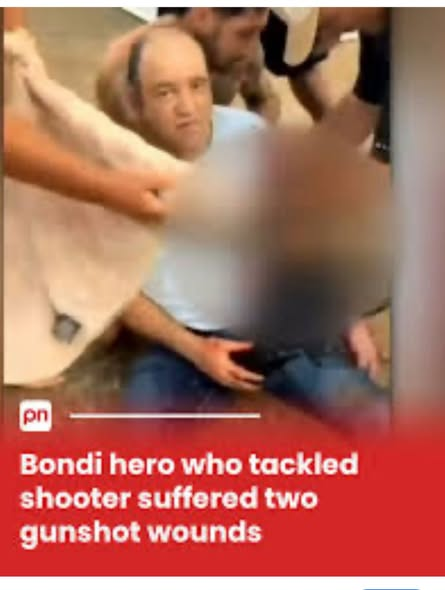
Please please please let these be the images that define us today. A blood donation site groaning under immense traffic. A man putting himself in harm’s way for the sake of strangers. A surf life saver sprinting barefoot to the scene with supplies. There will be so many of these big and small moments, most of them unseen, unrecorded, the daily ephemera of human interactions that are not defined or inspired by symbols, secular hatreds, demagogues of one stripe or another. We shouldn’t look away from these things or the evils that unspool from organised hatred. Not for a second. But neither should we let them overwhelm the warmer, truer thing, which is disorganised, impulsive human decency. Because otherwise we’ll go mad.
Love, love, love to all who are suffering.


Rabbi Jeff Kamins and Bilal Rauf, advisor to the Australian National Imams Council, embraced at the vigil. (ABC News: Kris Flanders)
Vogue December 15, 2025
7 of Rob Reiner’s Greatest Films
By Anna Grace Lee and Emma Specter
Across the span of his decades-long career in Hollywood, Rob Reiner directed a host of beloved films—the kind you watch again and again, finding something new in them each time.
As a director, Reiner had immense creative range, from his feature directorial debut mockumentary This is Spinal Tap to the coming-of-age drama Stand By Me to the Oscar-nominated courtroom thriller A Few Good Men to the iconic romantic comedy When Harry Met Sally… and beyond. But what united his work was its deep humanity: a heartfelt humor and tenderness that coursed through each story regardless of genre.
As we mourn the tragic recent deaths of Reiner and Michele Singer Reiner, his wife of 36 years, we look back on some of the many culture-defining films from the Emmy-winning actor and director’s career.
This Is Spinal Tap (1984)
Reiner’s feature directorial debut, This is Spinal Tap, is a mockumentary comedy film that follows Spinal Tap, a once-great English heavy metal band, as they embark on a U.S. tour to promote their new album. Known for its spot-on satire of rock documentaries and iconic quotes, Reiner picked up the story again in 2025, with Spinal Tap II: The End Continues. – Anna Grace Lee
Stand By Me (1986)
Based on a Stephen King novella, Stand By Me stars Wil Wheaton, River Phoenix, Corey Feldman, and Jerry O’Connell as four friends who set out to find the body of a boy who was hit by a train. It captures the bittersweet in-between of being a kid, taking place on Labor Day weekend in 1959, as the boys are about to start junior high. As Gordie says, “I never had any friends later on like the ones I had when I was 12. Jesus, does anyone?” – A.G.L.
The Princess Bride (1987)
Full of endlessly quotable lines, The Princess Bride is a fairytale adventure comedy that follows Buttercup, one of the world’s most beautiful women, and her one true love, Wesley, as he must rescue her from a forced marriage to an evil prince. – A.G.L.
When Harry Met Sally (1989)
Written by Nora Ephron, When Harry Met Sally… is one of the best romantic comedies of all time. Harry and Sally are friends who meet on a cross-country drive from college at the University of Chicago to New York City, and later become something much more. Known for its iconic Katz’s Delicatessen scene (in which Reiner’s real-life mother, the actress Estelle Reiner, delivers the much-repeated line, “I’ll have what she’s having”), it’s simply a perfect film. It is also the genesis of another love story: that of Reiner and his wife, Michele. They met on the set of the film, and falling in love with her inspired Reiner to change the ending of the film so that Harry and Sally would end up together. – A.G.L.
Misery (1990)
It’s never easy to adapt a bestselling book into a film that captures what made the original so popular, but Reiner more than completed that assignment with his 1990 adaptation of Stephen King’s 1987 novel Misery. A screenplay by William Goldman and a star-making turn from Kathy Bates as sadistic stalker Annie Wilkes made this psychological horror film iconic, but none of it would have come together into such a chilling portrait of fandom gone wrong without Reiner’s subtle yet increasingly tension-laden direction. – Emma Specter
A Few Good Men (1992)
This legal drama is best known for being one of Aaron Sorkin’s earliest and most popular projects (indeed, the 1992 film was an adaptation of Sorkin’s 1989 play of the same name), but it also launched a partnership between Sorkin and Reiner that continued three years later when Reiner signed on to direct Sorkin’s political rom-com The American President. Upon rewatching A Few Good Men, it’s easy to see why the two men worked so well together; Sorkin’s dialogic pyrotechnics are offset by the genuine curiosity about human behavior and group dynamics that Reiner displayed behind the camera. – E.S.
Flipped (2010)
This late-aughts love story about two neighbors missing—and then finding—their moment for romance was yet another example of Reiner’s facility with the romantic-comedy genre. Although it didn’t receive the kind of universal acclaim that When Harry Met Sally did (to be fair, what film ever could?), Flipped saw a resurgence in popularity in recent years as viewers came to appreciate its naturalistic dialogue and credit it with cult-favorite status. – E.S.

 Robin's Room