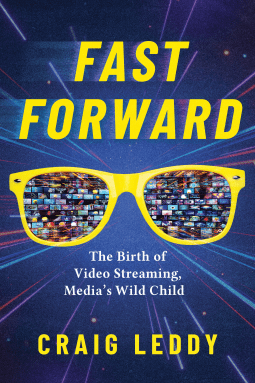
Craig Leddy Fast Forward The Birth of Video Streaming, Media’s Wild Child Köehler Books, September 2025.
Thank you, NetGalley, for providing me with this uncorrected proof for review.
In the 1960s I read Ernie Kovac’s TV Medium Rare. It was an amusing insight into television in its early days of male executives, beauty pageants and traditional families with women playing subordinate roles. However, it also fostered the notion that progress was vital, would occur, and that excellence in television was an admirable aspiration. The novel was an extremely readable, and exciting – television was new and there were mysteries to be unravelled. Fast Forward is about another innovation in screen communication through programming. Although it is non-fiction, so has none of the advantages of creating a fictional story that carries the reader through a myriad of technical information, it is engaging. A person versed in technology would find it less demanding than I. However, I was reminded of that early story of aspiration and was pleased to rejoin it over thirty years later.
In the story of the aspiration to build an interactive network, the narrative unearths, debates, and describes digital, broadband, and streaming research and implementation. Disaster is never far from the aspiration, and at times overtakes the ‘Digital Warriors’, as one chapter is titled. Much of the narrative is not too challenging. However, some of the detail is certainly for the technologically educated.
Exciting titles, including the previously mentioned, ‘Digital Warriors’, not only enhance the text, but promote the legitimate image that this is the story of an adventure. ‘The Race Begins’, ‘Under Siege’, ‘Launch Day’ and the ‘Oh Jesus Switch’, ‘From the Ashes’ and ‘Blind Faith’ are fine descriptors of the content. ‘Doom and Redemption’ is an excellent chapter in which today’s technology – smart TVs, laptops, iPads, game players, and streaming devices – brings to even the most technologically challenged much appreciated familiarity. See Books: Reviews for the complete review.

Bruce Belland, Icons, Idols and Idiots of Hollywood – My Adventures in America’s First Boy Band, Bear Manor Media July 2023.
Thank you NetGalley for this uncorrected proof for review.
Bruce Belland’s story of the Four Preps, named in haste during their first public appearance, is a delightful, informative and inspiring read. I say inspiring because it is the story of young people who followed their first love, being members of a band producing popular chart worthy music, recognition that their aspirations had to change, and willingness to do so …and again, successfully. Their journey from meeting at Hollywood High School, through their development as chart favourites, to the advent of The Beatles and new music styles which resulted group’s break up in 1969 and move into other professions, is wonderfully told by Bruce Belland. Belland seems to be a mixture of humility; self-confidence verging on arrogance; self-awareness and the concomitant self-deprecation; and 1950s sexism, later tempered by awareness so that he recognises this and talks of feminism. He is an excellent storyteller and communicator, and this, together with the intelligence which shines throughout this work makes Icons, Idols and Idiots of Hollywood – My Adventures in America’s First Boy Band a worthy read, even if you have never heard of “26 Miles”.
The book is arranged well, with the band’s story taking up a major part of the work, with minor asides to the young men’s personal lives. These form the later part of the book, given their due as a memoir to their partners, failed and successful marriages, health issues, and the deaths of Bellamy’s long-time companions in The Four Preps. Here the details of the lives the band members made for themselves after The Four Preps disbanded also make fascinating stories. They certainly were successes after their glory days on the popular music charts. These stories, while less detailed, fraught and exciting than their early successes demonstrate the men’s willingness to relinquish a dream that served them well and move into other lives – something that is never easy to do. It is Bellamy’s ability to weave a story that remains positive, while showing all the pitfalls and problems, which make this a unique read. See Books: Reviews for the complete review.

Kerry Wilkinson Tag, You’re It Bookouture, January 2026.
Thank you, NetGalley, for providing me with this uncorrected proof for review.
Any number of novels have been set in the confines of a reality television program. This is one of the best. Kerry Wilkinson has established a believable scenario for the television game, and for the secrets that are eventually untangled. Jessie is the keeper of several secrets, from the beginning of the game to the end. Her character is developed through her participation in the game, her relationships with the other participants, and her inner reflections. Other characters become friends (maybe), people to avoid or actively dislike, people about whom, while glances are exchanged, Jessie remains wary.
Alliances form and fall apart as the game proceeds. The dominant mindset during eliminations quickly becomes ‘anyone but me’. While the cash prize is a major motivator, so too is each contestant’s desire to stay in the game and assert control over the competition and the others. For some, personal motives for participating govern behaviour. The subtlety with which these elements are concealed—despite the presence of clues—evokes Agatha Christie’s remarkable skill in constructing such narratives. See Books: Reviews for the complete review.
American Politics
Heather Cox Richardson from Letters from an American <heathercoxrichardson@substack.com> 24 January 2026
Forwarded this email? Subscribe here for more
This morning, on a street in Minneapolis, at least seven federal agents tackled and then shot and killed Alex Jeffrey Pretti, a 37-year-old ICU nurse for the local VA hospital.
Video from the scene shows Pretti directing traffic on a street out of an area with agents around, then trying to help another person get up after she had been pushed to the ground by the agents. The agents then surround Pretti and shoot pepper spray into his face, then pull him to the ground from behind and hit him as he appears to be trying to keep his head off the ground. An agent appears to take a gun out of Pretti’s waistband during the struggle, then turns and leaves with it. A shot then stops Pretti’s movements, appearing to kill him, before nine more shots ring out, apparently as agents continued to fire into his body.
It looked like an execution.
After he was dead, the agents walked away, apparently making no effort to preserve the crime scene, which people on the street later tried to secure by walling it off with trash bins.
As journalist Philip Bump noted, administration officials didn’t even pretend to wait for more information before jumping straight to “the opponent of the state deserved it.”
Mitch Smith of the New York Times reported that federal agents have blocked state investigators from the scene. Drew Evans of the Minnesota Bureau of Criminal Apprehension, a statewide investigations team that specializes in police shootings, told reporters his agency had obtained a search warrant—a rare step—but the federal government still refused them access.
Tonight, in a lawsuit against Homeland Security secretary Kristi Noem and other administration officials, Minnesota attorney general Keith Ellison asked a judge for a temporary restraining order to prevent DHS agents from destroying evidence related to the shooting. The suit noted the “astonishing” departure from normal investigations, seemingly trying not to preserve evidence but to destroy it. A judge, who was appointed to the bench by Trump, immediately granted the restraining order, barring the administration from “destroying or altering evidence” concerning the killing.
Ernesto Londoño of the New York Times reported that federal officials also “have refused to disclose the identities of federal agents involved in Saturday’s shooting, as well as the names of federal agents who have shot people in recent days.”
Minnesota police have refused to obey the federal officers, though. Local law enforcement has been talking to witnesses and finding videos of the shooting. Minneapolis police chief Brian O’Hara said at a press conference: “Our demand today is for those federal agencies that are operating in our city to do so with the same discipline, humanity, and integrity that effective law enforcement in this country demands. We urge everyone to remain peaceful.”
The Department of Homeland Security (DHS) has said that it, rather than the FBI, will investigate the shooting. But, as Alex Witt of MS NOW noted, DHS had already issued a statement about the shooting, which falsely asserted that Pretti had “approached US Border Patrol officers with a 9 mm semi-automatic handgun” and that he “violently resisted” as “officers attempted to disarm” him. The statement continued that “an agent fired defensive shots” and added that Pretti “also had 2 magazines and no ID—this looks like a situation where an individual wanted to do maximum damage and massacre law enforcement.”
“So,” Witt noted, “they’re gonna be investigating that which they’ve already issued a summary about…. It would seem that it’s a closed book?”After repeatedly being exposed as liars over previous accusations against those they have shot, the Department of Homeland Security has so little credibility that Witt is not the only journalist calling out the federal agents for lying. Devon Lum of the New York Times wrote: “Videos on social media that were verified by The New York Times contradict the Department of Homeland Security’s account of the fatal shooting of a man by federal agents in Minneapolis on Saturday morning.“
The Department of Homeland Security said the episode began after a man approached Border Patrol agents with a handgun and they tried to disarm him. But footage from the scene shows the man was holding a phone in his hand, not a gun, when federal agents took him to the ground and shot him.”
But lying to the American people is the only option for the administration when we can, once again, all see what happened with our own eyes. Pretti did have a permit for a concealed handgun and appeared to have carried the gun with him, although witnesses say he never reached for it. Tonight Noem doubled down on the lie, saying again: “This looks like a situation where an individual arrived at the scene to inflict maximum damage on individuals and to kill law enforcement.”
When the Democratic Party’s social media account posted: “ICE agents shot and killed another person in Minneapolis this morning. Get ICE out of Minnesota NOW,” White House deputy chief of staff Stephen Miller replied: “A would-be assassin tried to murder federal law enforcement and the official Democrat account sides with the terrorists.” The Democrats’ social media account responded: “You’re a f*cking liar with blood on your hands.”
Miller continued to bang that drum. When Senator Chris Murphy (D-CT) said that “ICE must leave Minneapolis” and that “Congress should not fund this version of ICE—this is seeking confirmation, chaos, and dystopia,” Miller responded: “An assassin tried to murder federal agents and this is your response.” When Minnesota Senator Amy Klobuchar similarly decried the killing, Miller responded: “A domestic terrorist tried to assassinate federal law enforcement and this is your response? You and the state’s entire Democrat leadership team have been flaming the flames of insurrection for the singular purpose of stopping the deportation of illegals who invaded the country.”
Miller is a white nationalist, who has recommended others read a dystopian novel in which people of color “invade” Europe and destroy “Western civilization.” Those who support immigration are, in the book’s telling, enemies who are abetting an “invasion”—a word Miller relies on—that is destroying the culture of white countries. They are working for the “enemy.”
In the wake of Pretti’s shooting, Attorney General Pam Bondi wrote to Minnesota governor Tim Walz to suggest he could “bring back law and order to Minnesota” if he handed over the state’s voter rolls to the Department of Justice. As Jacob Knutson of Democracy Docket noted, she explicitly tied the administration’s violence in the state to its determination to get its hands on voters’ personal data before the 2026 election. Minnesota has voted for the Democratic candidate running against Trump in the past three presidential elections, but he insists that he really has won the state each time.
As G. Elliott Morris of Strength in Numbers wrote: Republicans could stop this at any time they wanted to.“
All it would take to end the murder of American citizens by an untrained government goon squad is 16 Republicans in Congress voting with Dem[ocrat]s to defund ICE (or 23 to impeach and remove Trump—3 in House & 20 in Senate). That’s it. 23 Americans can vote for the public and end all of this.”
Morris also pointed out that in December, Trump’s approval rating was negative in 40 states, including 10 he won in 2024. That covers 30 seats currently held by Republicans. Pretti’s shooting will likely erode Trump’s support further. Tonight, even right-wing podcaster Tim Pool reacted to Pretti’s killing by noting that it looked as if the agent had disarmed Pretti before the other agents shot him. “I don’t see Trump winning this one,” Pool commented.
The funding bill for DHS is effectively dead in the Senate, as Democrats have said they will not support any more funding for DHS. Tonight, Senate minority leader Chuck Schumer (D-NY) told reporters: “Senate Democrats will not provide the votes to proceed to the appropriations bill if the DHS funding bill is included.” But the July law the Republicans call the One Big Beautiful Bill Act poured nearly $191 billion into DHS through September 30, 2029, with almost $75 billion going to ICE and $67 billion going to Customs and Border Protection (FEMA, the Federal Emergency Management Agency, got just $2.9 billion).
Representative Seth Moulton (D-MA) had more to say: “What we just saw this morning on the streets of Minneapolis is another outright murder by federal officials. And let me just be clear, those federal ICE officers are absolute cowards. I am a Marine veteran standing here telling you to your face they are unprofessional, pathetic cowards. Because if a Marine, an 18 year old Marine, did that in Iraq in the middle of a war zone, he would be court martialed because it is murder. And you pathetic little cowards who have to wear face masks because you’re so damn scared, couldn’t even effectively wrestle a guy [to] the ground, so you needed to shoot him? This is why ICE needs to be prosecuted. Yeah, I voted to defund it, but ICE, you need to be prosecuted, and Director [Todd] Lyons, who’s running ICE right now, I hope you’re hearing this from this Marine to you. You guys are criminal thugs. You need to be held accountable to law if you think you can enforce it, and you need to be prosecuted right now.”
Just hours after the killing of Alex Pretti, agents pinned U.S. citizen Matthew James Allen to the street while he screamed: “I have done nothing at all. My name is Matthew James…Allen. I’m a United States citizen…. You’re gonna kill me! Is that what you want? You want to kill me? You want to kill me on the street? You’re going to have to f*cking kill me! I have done nothing wrong.” Nearby, his sobbing wife screamed: “Stop please! Stop!! Please!! We were just running away from the gas. That’s all we were doing.”
“We all know the poem,” Blue Missouri executive director Jess Piper wrote, “and there is no shade of white that will save you from this murderous regime.”
Tonight, Susan and Michael Pretti, the parents of Alex Jeffrey Pretti, issued a statement: “We are heartbroken but also very angry,” they said.“ Alex was a kindhearted soul who cared deeply for his family and friends and also the American veterans whom he cared for as an ICU nurse at the Minneapolis VA hospital. Alex wanted to make a difference in this world. Unfortunately, he will not be with us to see his impact.
“I do not throw around the ‘hero’ term lightly. However, his last thought and act was to protect a woman. The sickening lies told about our son by the administration are reprehensible and disgusting. Alex is clearly not holding a gun when attacked by Trump’s murdering and cowardly ICE thugs. He had his phone in his right hand and his empty left hand is raised above his head while trying to protect the woman ICE just pushed down, all while being pepper sprayed.
“Please get the truth out about our son. He was a good man.”— See Further Commentary and Articles arising from Books* and continued longer articles as noted in the blog. for the notes.
BREAKING: National Youth Poet Laureate Amanda Gorman *composes a powerful poem about the tragic murder of Alex Pretti at the hands of Trump’s masked enforcers.
Gorman is well known for writing and delivering her poem “The Hill We Climb” at President Joe Biden’s inauguration and previously penned a poem about the killing of Renee Good.
“For Alex Jeffrey Pretti”
Murdered by I.C.E. January 24, 2026
by Amanda Gorman
We wake with
no words, just woe
& wound. Our own country shoot
ing us in the back is not just brutal
ity; it’s jarring betrayal; not enforcement,
but execution. A message: Love your people & you
will die. Yet our greatest threat isn’t the outsiders
among us, but those among us who never look
within. Fear not the those without papers, but those
without conscience. Know that to care intensively,
united, is to carry both pain-dark horror for today
& a profound, daring hope for tomorrow. We can feel
we have nothing to give, & still belove this world wait
ing, trembling to change. If we cannot find words, may
we find the will; if we ever lose hope, may we never lose our
humanity. The only undying thing is mercy, the courage to open
ourselves like doors, hug our neighbor,
& save one more bright, impossible life
*See my blog, 28 July 2021, for a review of biography of Amanda Gorman, Work Up: The Life of Amanda Gorman by Marc Shapiro, Avenue Books, 2021.
British Politics
Tom Watson’s Newsletter
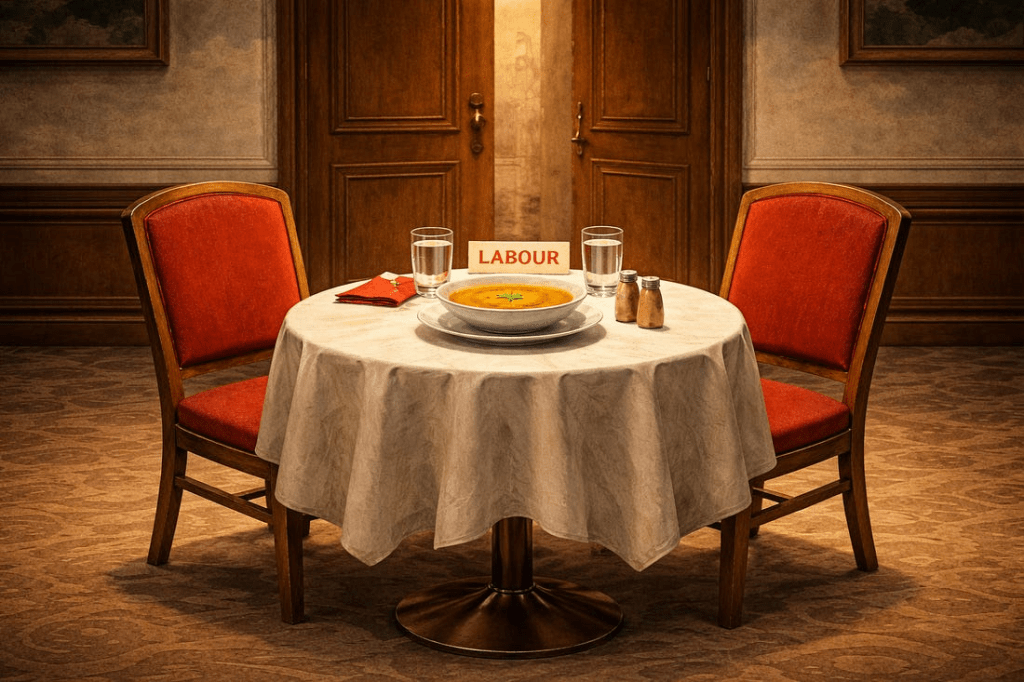
Andy Burnham’s Coup? The case for taking soup and avoiding fights
Jan 25, 2026
“I have never taken part in a coup against any leader of the Labour Party and I am not going to start now.”
Andy Burnham, Morning Star, June 2016
Break bread, take soup, make friends
I remember the day Jeremy Corbyn won the Labour leadership and Andy Burnham did not. I had been quietly looking forward to being Andy’s deputy. I thought we could have worked well together: modernising campaigning, dragging the party machine into the digital age and helping him connect with voters we had lost over the previous decade. I liked him very much and still do. Instead, history took a different turn, as it so often does in Labour politics.
What most people with experience, scar tissue and a working knowledge of how Labour rows tend to metastasise want from this latest episode is disarmingly simple. Andy Burnham and Keir Starmer should meet. In person. In a room. With chairs. That Keir is Prime Minister does not remove the light administrative obligation of also leading the Labour Party. They should talk. They should break bread. Preferably eat something neutral, a soup perhaps, that commits them to a working together plan. Lucy Powell would be an ideal facilitator, partly because she is good at this sort of thing and partly because, well, who else is going to do it?
If that conversation flourishes, Andy should then be allowed to make his case to Labour members in Gorton and Denton. In particular, he should explain how he intends to honour the pledge he made a decade ago, when he was one of the few shadow cabinet members who stayed put after more than half the shadow cabinet resigned, including Keir Starmer and Lucy Powell. That moment also created the vacancy that Angela Rayner stepped into. Labour politics, like geology, is shaped by sudden ruptures followed by long periods of ironic denial.
Members in Greater Manchester would also want answers to a more prosaic question. How would Andy guarantee that the byelection to replace him would be won and paid for? Optimism is a fine quality but it does not, on its own, cover printing costs.
At present, this feels less like a careful search for the best person to represent the people of Gorton and Denton and more like a power struggle conducted through briefing, counter briefing and the competitive rewriting of recent history.
If Andy were to pass the NEC panel, be selected by members and then elected by voters, I would be genuinely pleased to see him working as a minister alongside Keir Starmer and the rest of the team. Stranger things have happened. Quite a lot of them, in fact, and often very recently.
Is that utopian? Possibly. But pessimism has had a long run in Labour politics lately and has not always worn well.
Tom Watson
Tom Watson’s suggested soup and talk did not take place, and Andy Burnam was refused the right to stand. Watson has followed up this decision in his next newsletter.
A small adjustment to democracy
Tom Watson <tomwatsonofficial@substack.com> Mon 26 Jan, 20:03
Forwarded this email? Subscribe here for more
Why Andy Burnham cannot stand, Dave Nellist must not and everyone agrees this was handled very seriously.J
There is a brisk trade on X in democratic outrage. On Sunday, demand was high. That outrage was inevitable. If I were an officer of the NEC, I would not have handled it in quite this way.
The latest scandal concerns the blocking Andy Burnham from standing in a by-election. This is being treated as a unique constitutional offence. A never-before-seen innovation in political wrongdoing. Democracy, we are told, has been rejected in favour of cowardice.
History, irritatingly, refuses to cooperate.
Because while Labour has been busy asking Andy to remain exactly where he is, Jeremy Corbyn’s new party has been doing something remarkably similar. Former Labour MP Dave Nellist has been barred from standing for the executive of Jeremy’s party, which for the avoidance of doubt is called Your Party.
This was done democratically. Centrally. With great seriousness.
Dave Nellist is not an unfamiliar figure. He is a veteran of the Militant Tendency. A Coventry councillor. A former MP. A man so steeped in revolutionary socialist authenticity that, if there were a Mount Rushmore of the genre, he would be chiselled in somewhere between Rosa Luxemburg and Leon Trotsky.
Nevertheless, unsuitable. No vote. No argument. No tedious involvement of members. Just a decision. Taken by people who understand democracy very well and therefore know when to protect it from itself. This has prompted a remarkable silence.
John McDonnell has not intervened, as he has in Andy’s case. He has not warned of cowardice. He has not explained that denying members a say accelerates anyone’s political demise. He has not taken to the airwaves. On this particular outrage, he is observing a period of dignified silence.
Apparently, some stitch-ups are more equal than others. To be fair to John, he is not a member of Your Party. It is, however, generously populated by his political allies, which may help explain the sudden discovery that not every internal democracy crisis requires immediate commentary.
In left politics there appears to be a hierarchy of outrage. When Labour does it, it is authoritarianism. When Jeremy Corbyn’s party does it, it is administrative tidying.
Speaking of tidiness, Your Party’s branding deserves praise. It now appears to be branded with two subheads, The Many and For A People’s Party, with Jeremy’s trademark strategic clarity and decisiveness fully on display. Members voted for the name and then, in a spirit of inclusivity, kept the runners up on the second and third lines.
Jeremy himself has had a busy week. He appeared on Newsnight in solidarity with Venezuela, entirely in his happy place, before restricting socialists from standing for his own party’s executive, which, if you will forgive me, was a very Hugo Chávez way of doing things. Under Jeremy, the grassroots are always sovereign. Until, of course, they choose the wrong candidate.
Meanwhile, in the North West of England, flatbed trucks are being checked for roadworthiness. Placards are being laminated. Chants are being practised. Emergency resolutions are circulating by email. The operation to save Andy is in full swing. He will be sanguine about it all. After all, there is always another by-election down the road and they cannot say no forever.
Yet the decision, everyone agrees, is final. Until it isn’t. Because decisions in the Labour Party are always final, except when they change, which they often do, sometimes quietly, sometimes overnight and sometimes after someone notices that next week is beginning to look awkward.
If it were me, I wouldn’t have rushed this. I would have spoken to Andy first, established his intentions and secured some clarity about his ambitions. Perhaps even struck a deal. We owed him that much. Instead, we chose a public rebuke of one of our strongest, if occasionally tricksy, assets. Andy is a big boy. He knew exactly what he was doing. He applied for a role he could reasonably assume he was not going to get, which is not unknown in Labour politics. He can give as good as he gets. He will be an MP sooner rather than later. And it is rarely a mistake to pick up the phone.
Tom Watson’s Newsletter is a reader-supported publication. To receive new posts and support my work, consider becoming a free or paid subscriber to Tom Watson’s Newsletter.
Politics Essential: What blocking Burnham means for PM

BBC News <bbc@email.bbc.co.uk>
Politics Essential  Iain Watson (edited)
Political correspondent
Hello, and welcome to Politics Essential. Sir Keir Starmer has defended the decision to block Andy Burnham from standing in an upcoming by-election, saying it would “avoid an unnecessary mayoral election”. I’ll get into that in a moment.
Elsewhere, Suella Braverman has become the latest Tory to defect to Reform, saying she feels like she’s “come home”. And Home Secretary Shabana Mahmood is setting out a shake-up of the police – read more about what we’re expecting will be included here. Send your questions and suggestions for the newsletter to politicsessential@bbc.co.uk…
Burnham said he was fully focused on his current job. Credit: ReutersBurnham strongly hinted on social media yesterday that the Gorton and Denton seat in Greater Manchester could be lost without him as the Labour candidate. Today he was more conciliatory – calling on the party’s MPs to “come and help” whoever is chosen to run in the by-election.
The argument by Labour’s leadership – that if he had been allowed to stand and won the seat, it would be politically risky and financially costly to fight a bigger by-election for Greater Manchester mayor – can’t be dismissed as a mere manoeuvre.
But as a very senior party figure told me: “No one is convinced that Andy was coming back to Westminster as a team player – the last thing we should do is allow this psychodrama.” In other words, the bigger concern was the prospect of endless leadership speculation. Or worse, an actual challenge.
There was an inevitable backlash. Insiders say it is slightly worse than anticipated, but way less than feared. So far key “soft left” figures that argued against blocking Burnham – including former deputy leader Angela Rayner – have not joined more left-wing voices in calling for the decision to be overturned. Indeed should Rayner decide she does want to challenge for the top job in future, arguing for party democracy won’t have done her any harm.
Wes Streeting’s own leadership ambitions were controversially denounced by allies of the PM last year. So removing Burnham may reduce but not remove leadership speculation.
Starmer still faces a short-term risk. The by-election will be held at the end of next month. Labour wants to get on with it to stop opponents digging in. But holding the seat will be a challenge.
No one will now know if Burnham would have made the difference between success and failure. But if the seat is lost, Starmer could be blamed.
And the currently muted voices of some of his internal critics will grow louder, as defeat would not bode well for crucial elections in Scotland, Wales and parts of England in May.
Australian politics
Ged Kearney’s post

This week parliament had not one, but two very special little visitors 
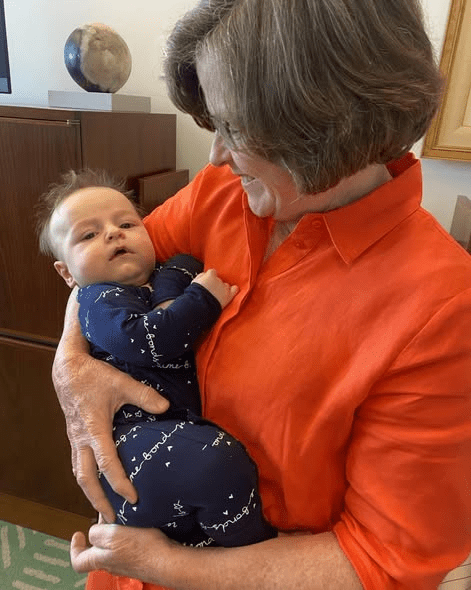
It was such a joy meeting beautiful baby Lilah Purcell, and so lovely seeing Georgie and Josh together with her: genuine, caring co-parenting at its best.
And it was just as special to meet Alicia Payne’s gorgeous little baby Joseph  Anyone who knows me knows how much I love babies. These cuddles truly brightened my week in parliament
26 January 2026:
Moderate Liberals: The difference between Opposition and Government.
There’s been chatter about a potential National Party/One Nation Coalition. On paper it sounds like “the Right regrouping.” In practice, it’s a permanent knife-fight, because both parties draw from the same geographic and demographic pools…regional and outer-regional Australia, older voters, lower-density communities.
One thing is guaranteed: this arrangement would be missing the only Centre-Right party that can actually govern in Australia, the Liberals. They’re the only ones with an ideological footing that can win in big cities.
Australia is one of the most urbanised countries on earth. We are not the United States, and we’re not even the UK. Federal government is won and lost in metropolitan Australia, especially in the outer suburbs and the major city rings where the numbers are.
So if anyone is sniffing around for an electoral strategy that can win from the Centre-Right, the answer isn’t doubling down on a regional-populist coalition that cannibalises itself. The answer is consulting, finally, the moderates within the Liberal Party. They were the only reason the former Coalition had any meaningful foothold in inner-urban Australia, and without that urban bridge, the path to government narrows to goats trail.
PM’s forceful message to new citizens as Australia Day marred by Nazi chants (edited)

January 26, 2026
Anthony Albanese delivered a forceful Australia Day message to new citizens, warning that respect for democracy and shared values is not optional, in a major speech delivered in the aftermath of the Islamic State-inspired Bondi terror attack and amid an increasingly heated national debate over immigration.
At the national citizenship ceremony in Canberra, the prime minister diverted from his prepared remarks to tell new Australians: “It’s the respect for our common humanity that defines Australia. Hope, not fear, optimism, not negativity, and indeed, unity, not division – that is the Australia of 2026 that you are pledging to be a part of.”

Quoting former Labor prime minister Ben Chifley, he said migrants had arrived in a country where “democracy is not just a platitude, but something which is practised”.
Albanese framed citizenship as a civic obligation rather than a cultural badge, saying: “Whether we are Australian by birth or by choice, we all share the opportunity, the privilege and also the responsibility of being part of something quite extraordinary.”
His speech came as Australia’s capital cities erupted with Invasion Day protests and March for Australia rallies, highlighting deep divisions over race, immigration and national identity. In Brisbane, One Nation leader Pauline Hanson used her time at the March for Australia rally to attack migration policies, dismiss climate change and position herself as the defender of “true” Australian values…
ors urged young people to “mobilise to fight Pauline” as polling showed One Nation support at record highs.
with Julius Dennis and Patrick Begley

Australian Prime Minister Anthony Albanese is in Timor-Leste today, making his first official visit.
Known in English as East Timor, Timor-Leste is one of Australia’s closest neighbours.
The countries have shared interests in everything from fishing to biosecurity.
Australia’s foreign policy has consistently identified Timor-Leste as a country of “fundamental importance”.
It’s in Australia’s interests that Timor-Leste is successful and stable.
Challenges in Timor-Leste
Timor-Leste faces significant challenges.
Despite being about 700 kilometres from Darwin, the United Nations considers it one of the world’s least developed countries. Its per person GDP is $1,502, compared to Australia’s $64,604.
In many ways, the period since Timor-Leste gained independence in 2002 is the first opportunity its people have had to shape their destiny.
Timor-Leste endured centuries as a Portuguese colony before political turmoil in Portugal caused it to drop its colonies in 1975.
Then, a declaration of independence was followed by annexation and 24 years of occupation by Indonesia.
Now it is full of hope as a new democratic nation with a rapidly growing youth population.
But it needs support. One in two children under five are stunted – not getting enough nutrition to grow in their early years – which will have lifetime effects on their health, education and productivity.
Encouragingly, a recent external review of Australia’s development cooperation program shows evidence that long-term partnerships are paying off, with local civil society organisations in Timor-Leste steadily strengthening their capacity over time.
Why visit now?
Timor-Leste is right in the middle of what President José Ramos Horta describes as “a crucial period for the future of our nation”.
Revenue from oil and gas fields has dried up. Past profits were saved in a petroleum fund, but that may soon be depleted.
Timor-Leste’s economy is not growing fast enough to create youth jobs.
However, Timor-Leste has just joined the Association of Southeast Asian Nations (ASEAN) after a long process, with hopes it will open up economic opportunities.
When I visited last year, Malaysian Prime Minister Anwar Ibrahim was in town talking up the potential of trade links.
Australia also needs to prepare for eventual political change in Timor-Leste.
Until now, top political posts have been held by those who fought for independence. At some point there will be a generational transfer of power.
There was some political unrest last year in the form of student protests against politicians perceived to be granting themselves perks.
Australia does not want democratic regression or a failed state on its doorstep.
What’s on the agenda?
Not much information has been released ahead of Albanese’s visit.
We know the prime minister will be meeting with Ramos Horta and Prime Minister Xanana Gusmão.
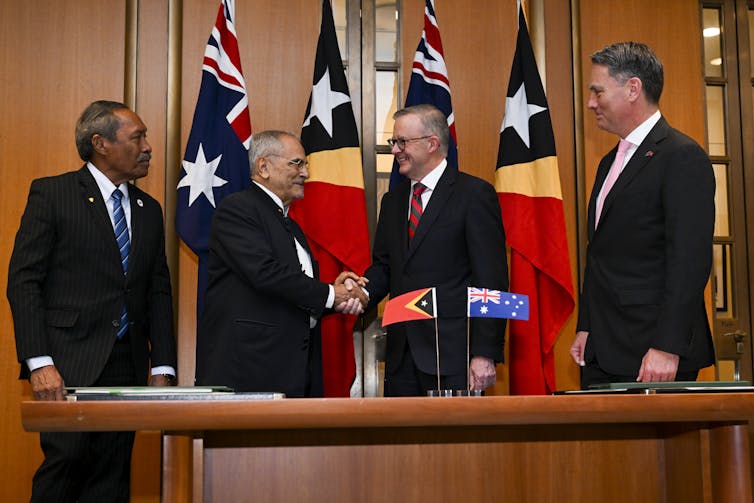
He will be addressing parliament, which he describes as an honour.
The fact Albanese will be receiving Timor-Leste’s highest civilian award suggests the mood will be positive.
The biggest news would be if there are any further developments on the Greater Sunrise gas field, located in the Timor Sea, about 450km northwest of Darwin.
This A$50 billion project has not yet been developed due to disagreement over whether processing would take place in Darwin or Dili, Timor-Leste’s capital.
It is not expected to be a focus of the visit.
Other big news would be an enhanced security treaty.
Given concerns about China’s security cooperation with countries in the region, Australia has signed significant security agreements in the past year with Tuvalu, Nauru, Papua New Guinea and Indonesia.
But the prime minister has been at pains to stress this visit is not about China.
More likely it could be celebrating and expanding things that are going well. One example is the Pacific Australia Labour Mobility scheme which enables Timorese workers to come to Australia to develop skills and earn money.
Another is the New Colombo Plan which supports young Australians to study and immerse themselves in the region. This has just been extended to Timor-Leste in 2026.
It may be there is nothing new from the visit, just a clear statement of how seriously Australia takes the relationship with Timor-Leste.
It may be as simple – and as important – as that.
Beyond government
The Timor Leste-Australia relationship has a lot of buy-in beyond the federal government.
Across Australia, there are friendship groups that raise funds for schools in Timor-Leste or sell Timorese coffee through local councils.
I’ve met Australians who came to Timor-Leste as students and are still there.
A great example is the MP for Darwin, Luke Gosling, who will be accompanying the prime minister on the visit.
After his Army service in the peacekeeping mission that led to Timor-Leste’s independence, he established a volunteer charity to build schools, provide running water and deliver maternal health care.
It’s important to keep these sorts of initiatives going and to extend them. The needs in Timor-Leste are so great that individual Australians can have a huge impact.
Surprisingly, given the complicated history between the two countries, most Timorese seem to have a real sense of friendship with Australia.
Having a neighbour that is stable, prosperous and friendly is something that is well worth our prime minister’s time.
Copyright © 2010–2026, The Conversation Media Group Ltd
From Facebook Post – Sisters in Crime Australia

The Famous Five reign. In October, my sister Marg sent me a Famous Five shoulder bag for my birthday. I warned her that some Sisters in Crime might kill me for it. And yesterday, I went with her daughter Emily to an op shop in Brisbane, which had just received a collection of the 21 novels in the series – 20 in the box set plus one. The staff were terribly excited to see my bag and basically persuaded me that I was fated to purchase the lot. So I did. I also explained how I could speak for an hour on how buying the second in the series, Five Go Adventuring Again, from Doran’s Newsagency in Gympie for 9/6 with money I had earned from writing letters to the children’s page of The Gympie Times, had set the trajectory for my life – spending all my money on books, being obsessed with crime writing and fighting Fascists, and earning my living by writing. I actually haven’t read all the books in the series – my tiny country town outside Gympie didn’t have a library – and now I intend to make up for it. I hope this augurs well for 2026. Posted by Carmel Shute
After reading this post I did a little research on this well-known writer about whom I had heard little over the last few years. I found the following – more Enid Blyton. What a wonderful find, after all the years of criticism about her . See my blog, 2 November 2022, of for a review of Nadia Cohen The Real Enid Blyton Pen & Sword, Pen & Sword History 30 Oct 2022 and comments on The Sea of Adventure in my blog of 19 June 2024.


Hall of Fame Carmel Shute
Lifetime Achievement Awardee, 2016

Full Recognition Speech
Delivered by Lindy Cameron
CO-CONVENOR of SISTERS IN CRIME
Once upon a time – back in the middle of last century – a little girl in a tiny Queensland town earned enough money writing to the children’s pages of the Gympie Times to buy her very first book.
This does not mean her childhood, until then, had been devoid of literature. For – while it is true that Brooloo didn’t get electricity until 1965 – this little redhead grew up surrounded by the books beloved by her mother and schoolteacher father.
BUT her decision, at the tender age of nine, on just how to spend that 9/6 created a monster – of the kind that no doubt inhabits every person in this room.
It’s ok though – apparently it’s not hoarding if there’s a good Latin word for it.
Unbeknownst to that fledgling bibliophile however – the book she chose unleashed a different kind of demon.
For – as every girl (and a few boys) of a certain age can testify – it’s a truth universally acknowledged that a woman in possession of the Famous Five grows up to live a life of mystery and crime.
Sure she’s got a degree in history, was a member of the Communist Party, a union organiser at the ABC, and spent too many years writing speeches and media releases for people who couldn’t write their own…
BUT all of that was done purely and simply to earn money to feed her addiction.
From Enid Blyton in 1964 to Emma Viskic in 2016, Carmel Shute has nourished her very soul with murder, mystery and mayhem.
She goes to bed every night with serial killers, cops and private eyes; her weekends are spent at crime scenes with dead bodies and in morgues with forensic specialists, and she holidays with sleuths and detectives as they chase clues and red herrings.
In the beginning – Miss Marple & Harriet Vane aside – most of the stories that brightened her days and nights were written by gentlemen about gentleman, by blokes about blokes, or dicks about dicks.
Until the late 1970s when something extraordinary happened.
There was a seismic shift in the world of crime fiction – no doubt provoked by a little thing called feminism; but is was a shift which transformed Carmel Shute’s life forever; and which, in turn, changed the lives of untold Australian readers and writers:
WOMEN’S crime writing became a THING – a really really big thing.
Suddenly, it seemed, there were women walking those mean streets – not as victims or femme fatales, but as cops and detectives and loner private eyes with their own empty fridges and bottles of bourbon.
By 1987 there enough modern women creating modern female crime fighters that Sara Paretsky, one of the godmothers of this new crime wave, helped form an American organisation to promote the advancement, recognition and professional development of women crime writers.
When Carmel visited North America in 1990 she interviewed some of her favourite crime writers – including Sara Paretsky Katherine V Forrest and Sue Grafton – and in 1991 produced a documentary for Radio National’s feminist program, the ‘Coming Out Show’ about Sisters in Crime in the US.
During that program Carmel, somewhat innocently, offered to send listeners a copy of a feminist crime bibliography. As a result, the ABC was swamped with 176 calls and letters; a record for Radio National at the time.
As the aforementioned bibliography did not actually exist, Carmel joined forces with some like-minded friends – four in fact – to create that list and, more significantly, plot the formation of an Australian version of Sisters in Crime.
Carmel’s original Famous Five soon became the Excellent Eight and, with a tweak on the American organisation’s reason for being – that of a force for women writers – this small band of Melbourne crime fiction buffs formed an organisation for women readers of women’s crime and mystery.
In truth there were very few women writing crime in this country at the time – so anything else would’ve been difficult.
Sisters in Crime Australia was launched with a debate on Sunday 22 September 1991 at the Democritus Club in Carlton, as part of the Feminist Book Fortnight.
An audience of around 70 turned up to hear Carmel, Kerry Greenwood, Alison Litter and Mary Anne Metcalf debate whether ‘feminist crime fiction confronted the hard-boiled head on’.
Forty women joined that day – and the rest they say is history.
Carmel is the only one of the Excellent Eight still standing – as a convenor of our fabulous organisation. But do not think for a minute it’s because she sold her socialist soul to cling to the reins of an organisation she helped build.
In fact, it’s probably because of the Red-red blood that runs in her veins, and the feminism that guides her every move, that this organisation has been the unqualified success it has.
Carmel is without doubt the heart and soul of Sisters in Crime; it is not a trite thing to say that without her drive and passion and hard work and yes – her sheer bloody mindedness – in working to achieve the goals we set for ourselves 25 years ago that we continue to do so.
We are a collective; a group of women who work for and with other women to enhance the standing of women who write the books we love; and ensure that whenever are wherever we gather to celebrate the sheer fabulousness of women’s crime writing that, above all, we have fun.
In retrospect I now see one of Carmel’s great strengths is finagling people; luring willing flies into her web of intrigue and mystery; getting us to not only join in but volunteer – for life.
I was there at the Democritus Club in 1991. I didn’t know anyone else there that day and although I’d never joined anythingin my life, I became a Sister in Crime because it looked like fun. A few events later, I tentatively put up my hand to help produce the Sisters’ newsletter; then, lo and behold, a couple of years later I found myself again unable to say no to Carmel, when she invited me to be a Convenor.
And here I am on this stage – one-month shy of 25 years since that gathering at the Democritus Club – a founding member, still a Convenor and now Vice President, and celebrating the extraordinary person who did in fact change my life.
Being a reading member of Sisters in Crime for a quarter of a century has been a joy and a pleasure; being a female Australian crime writer supported by Sisters in Crime has been priceless; and being a Convenor of Sister in Crime alongside Carmel has been the best thing I ever volunteered for.
And, despite the love and time and energy that all current and past convenors have bled into our organisation over the years, most of us would agree that without Carmel we would not have achieved all that we have; in fact, without her, we may not even have lasted this long.
Carmel has a tendency, I believe, to accept people with open arms if they meet at least one of the following criteria: you have a worldview where the word Comrade is the synonym for mate; you’re a fan of any crime fiction – though a passion for women’s crime gets you a gold star; or you’re a Trekker.
In the case of the latter, it was discovered in 1996 that six of the then-nine convenors had to make it home from our regular planning meetings in time to watch the new series of Star Trek: The Next Generation. We not-so Secret Six, subsequently formed a sub-group of Sisters in Crime called Sisters in Space.
So forgive me for using a bit of techno-babble from a whole other genre and fandom to finish up.
It is my great honour to present the Australian Crime Writers Association Lifetime Achievement Award to Carmel Shute – the Warp Drive of Sisters in Crime Australia.

 Robin's Room