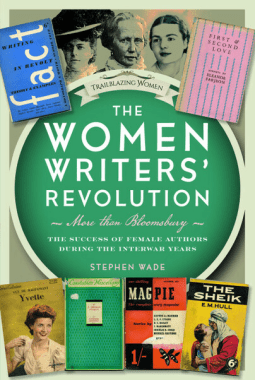
Stephen Wade The Women Writers’ Revolution: More than Bloomsbury The Success of Female Authors during the Interwar Years Pen & Sword | Pen & Sword History, January 2025.
Thank you NetGalley and Pen & Sword for providing me with this uncorrected proof for review.
Although a heavier read than many Pen & Sword publications this one carried me along because of the detailed and exciting material. This is a wonderful book, revealing so much about women writers in the interwar years, well known and lesser-known women, and even those who seemed to have disappeared. There is so much context, and there are also detailed references to male writers, as well as the Bloomsbury writers. However, the real legends of the book, the women writers about some of whom we know little, those who performed the revolution of Wade’s title, are there in full force. This is an exciting read, and one I relished from beginning to end.
Networking and the role of women’s clubs (one providing access to less wealthy women through lower fees) and providing commentary to newspapers, and women seeking reviews of their writing, is an intriguing topic. Networking, it becomes clear, is not an innovation at all! Magazines edited by women provided another source of access for women writers, and these are given a place in the narrative. Following the first chapter is one that resonates with domestic stories becoming professional success – or a series of rejections. ‘Becoming a Woman Writer’ includes such stories, the rise of Mills and Boon publishing, what publishers wanted – and what they received, readership and the types of publishing companies that encouraged women writers, how women learnt to write and have their manuscripts accepted. See Books: Reviews for the complete review.
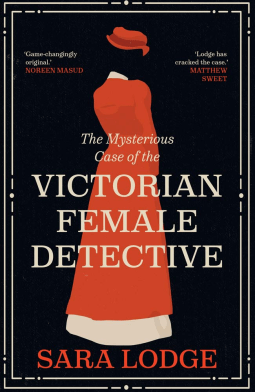
Sara Lodge The Mysterious Case of the Victorian Female Detective Yale University Press, November 2024.
Thank you, NetGalley, for providing me with this uncorrected proof for review.
The combination of a history of the female detective as a working part of the police force during the Victorian era, and her depiction in fictional accounts of the time makes for a fascinating read. Questions that immediately come to mind, and are answered include – how active were the real women detectives? What were their roles? Did they capture criminals or leave that to the male detectives? Were they courageous and killed on duty? What was the attitude in the police force and wider society towards these women active on behalf of law enforcement? And then, moving on to consider how these women detectives and the cases they worked on in the real world were depicted in fiction, there are more questions. Did fiction portray women’s contributions in an exaggerated form or were they always seen as secondary to those of men? Were any fictional characters based on real women and their activities? What did fiction say about women detectives and how did this impact the audience for these novels?
Sara Lodge answers these questions in this stimulating read which blends so much information about the police force and women’s role in it, the depiction of women detectives in fiction and the social conditions which were so vividly described in print – fictional and factual. At the same time as being an academic work, with copious citations, an amazing bibliography and index, Lodge has produced a great read. See Books: Reviews for the complete review.
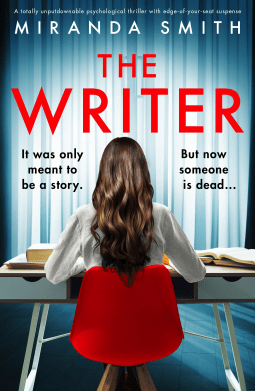
Miranda Smith The Writer Bookouture, April 2024.
Thank you, NetGalley, for providing me with this uncorrected proof for review.
Miranda Smith has written a well plotted novel, and amongst so many psychological thrillers where twists (flawed or not) appear to be the main source of attention, the ones she has developed are clever, make sense, and are a seamless part of the narrative. This is not to say that they are unsurprising, they are, but frequently a writer appears to introduce twists that are so illogical it can only be surmised that they are fulfilling the requirements of the genre rather than developing a narrative that is satisfying. Miranda Smith manages the genre with dexterity. So, while there are surprises, there are also clues for the astute reader.
The characters resonate, both as writers and through the fiction they present to the small group that meets weekly. When their backstories are told, a further dimension of each woman is cleverly added to the narrative. The relationships between the women as writers and later as women with universal problems are well drawn. In comparison, the backstory and feelings exhibited by Becca, the narrator, seem obsessive, and almost questionable. Are her concerns valid? Is the nonchalance exhibited by the police to whom she voices her concerns a suitable response? See Books: Reviews for the complete review.
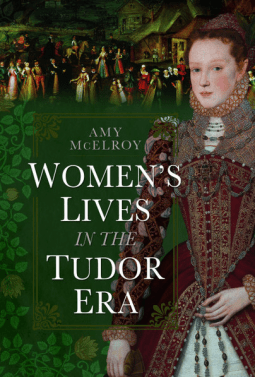
Amy McElroy Women’s Lives in the Tudor Era Pen & Sword, March 2024.
Thank you, NetGalley and Pen & Sword, for providing me with this uncorrected proof for review.
Amy McElroy’s book makes an excellent contribution to knowledge about women’s lives in the Tudor era. She does not make the mistake of omitting the information about the more well-known female figures. Instead, there is an engaging back and forth between women’s lives as they were lived at court, those who served them, and those whose work and lives contributed to the society in which the exceptional figures of history raised their heads to occasionally join the more well-known history of their male counterparts. Yes, a great deal more is known about the royal women and those at court, but Amy McElroy makes their lives even more available in this work. However, where she really excels is in the wealth of research she has undertaken to make other women’s lives in this period more accessible. See Books: Reviews for the complete review.
Australian Politics

16 February 2025
Albanese Government clamping down on foreign purchase of established homes and land banking
Joint media release with
The Hon Jim Chalmers MP
Treasurer
The Albanese Government will ban foreign investors from buying established homes for at least two years and crack down on foreign land banking.
We’re coming at this housing challenge from every responsible angle.
This is all about easing pressure on our housing market at the same time as we build more homes.
These initiatives are a small but important part of our already big and broad housing agenda which is focused on boosting supply and helping more people into homes.
It’s a minor change, but a meaningful one because we know that every effort helps in addressing the housing challenge we’ve inherited.
We’re banning foreign purchases of established dwellings from 1 April 2025, until 31 March 2027. A review will be undertaken to determine whether it should be extended beyond this point.
The ban will mean Australians will be able to buy homes that would have otherwise been bought by foreign investors.
Until now, foreign investors have generally been barred from buying existing property except in limited circumstances, such as when they come to live here for work or study.
From 1 April 2025, foreign investors (including temporary residents and foreign‑owned companies) will no longer be able to purchase an established dwelling in Australia while the ban is in place unless an exception applies.
These limited exceptions will include investments that significantly increase housing supply or support the availability of housing supply, and for the Pacific Australia Labour Mobility (PALM) scheme.
We will also bolster the Australian Taxation Office’s (ATO) foreign investment compliance team to enforce the ban and enhance screening of foreign investment proposals relating to residential property by providing $5.7 million over 4 years from 2025–26.
This will ensure that the ban and exemptions are complied with and tough enforcement action is taken for any non‑compliance.
Alongside the temporary ban on foreign purchases of established dwellings, we will tackle land banking by foreign investors.
We’re cracking down on land banking by foreign investors to free up land to build more homes more quickly.
Foreign investors are subject to development conditions when they acquire vacant land in Australia to ensure that it is put to productive use within reasonable timeframes.
The Government is focused on making sure these rules are complied with and identifying any investors who are acquiring vacant land, not developing it while prices rise and then selling it for a profit.
This activity breaks the rules and results in delays to the development of essential residential housing and commercial developments.
We are providing the ATO and Treasury $8.9 million over four years from 2025–26 and $1.9 million ongoing from 2029–30 to implement an audit program and enhance their compliance approach to target land banking by foreign investors.
Foreign investors that have already acquired or are proposing to acquire vacant residential or non‑residential land will be subject to heightened scrutiny by the ATO and Treasury to ensure they comply with development conditions.
A temporary ban on foreign purchases of established dwellings, strengthened compliance activity by the ATO to enforce the ban, and an enhanced compliance approach by both the ATO and Treasury to discourage land banking by foreign investors will help ensure that foreign investment in housing is in our national interest.
The ATO and Treasury will publish updated policy guidance prior to the commencement of these changes.
These initiatives are an important part of the Albanese Government’s $32 billion Homes for Australia plan.
We’re investing more in housing than any government in history.
Peter Dutton and the Coalition have promised to cut tens of billions from housing and to halt construction on thousands of new homes by scrapping Labor’s Housing Australia Future Fund.
The housing crisis would only get worse under Peter Dutton.
The contrast is clear – Labor is all about more homes, the Liberals are all about more cuts.
We’ll continue to do everything we can to ease pressure on the housing market and build more homes, more quickly, in more parts of Australia.
Canadian Politics
Carney’s Canada
The high-profile banker turned prime minister is following through on his strategy of resistance
Jonathan Malloy Ottawa 4 February 2026 2694 words
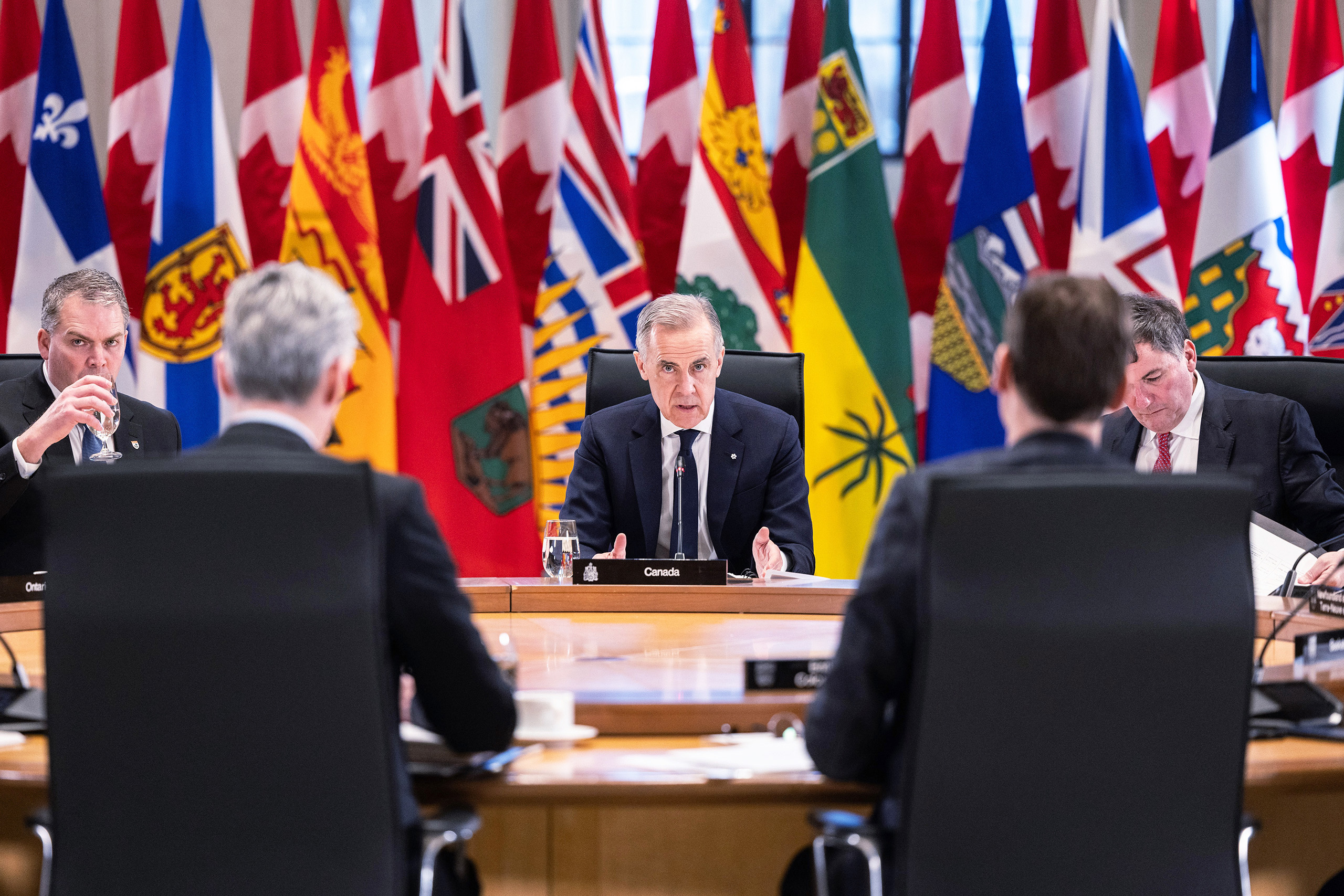
Serious business: Mark Carney meeting last Thursday with provincial premiers at Canada’s Council of the Federation meeting in Ottawa. Government of British Columbia
Mark Carney is a serious man. Prime minister of Canada for just under a year, he is overwhelmingly preoccupied with responding to the upheavals of the second Trump administration. The tone of the prime minister’s office has drastically shifted from the mood encouraged by his predecessor Justin Trudeau. Carney has reportedly banned open-necked collars in favour of ties for men, and can be brusque and volatile with subordinates. He dresses in sombre dark suits with white shirts and unremarkable ties, eschewing the colourful socks of his predecessor. Even his leisure is focused; in September, he ran a half-marathon.
He also thinks big. His government is prioritising large infrastructure projects to increase Canadian economic autonomy, and the prime ministerial jet regularly wings its way overseas. In one seven-day period in January, he signed a trade deal in China, pitched investors in Qatar, and stopped at Davos to give a speech. And in that speech he captured headlines around the world by arguing the rules-based order on which international relations has been based since 1945 is fading and “comfortable assumptions” about prosperity and security are no longer valid.
The Trump administration has overturned rules and conventions around the world, but the effects feel particularly intimate in Canada. The proximate American border means the United States is a day-to-day reality for Canadians. Thousands of trucks carry tariff-free goods back and forth every day; just-in-time manufacturing supply chains straddle the border. At this frigid time of year, sun-seeking Canadian tourists flock to Florida and Arizona. While the border has gradually thickened since 9/11 — before which passports weren’t needed — crossing it for business or leisure remains a familiar routine for most Canadians.
This familiarity has been upended in two ways. One is Trump’s love of tariffs. His 2018 renegotiation of the US–Mexico–Canada free trade agreement, or USMCA, seemed arduous at the time; now Canada is desperate to retain that deal. As with all the administration’s trade policies, it is almost futile to list its ever-changing barrage of tariff announcements affecting Canada over the past year, nor to explain the logic behind most of them and how they fit with the USMCA.
The opening shot was Trump’s November 2024 announcement of 25 per cent tariffs on goods from Canada and Mexico. Since then numerous tariff announcements have been made and variously postponed, withdrawn or extended, the only clear result being uncertainty among Canadian exporters and general chaos and confusion.
The second upset is even more vague. Although it didn’t come up in his first administration, Trump now regularly flirts with annexing Canada, referring to it as the fifty-first state and striking at the greatest perennial fear in Canadian hearts. The seriousness of this project is never clear — it is often pointed out that it is not in the interest of Trump’s Republican Party to add tens of millions of likely Democratic voters — but the abstract implication is obvious: a lack of respect for Canadian sovereignty, whether or not its territory is occupied.
Into this uproar stepped Mark Carney. His predecessor Justin Trudeau was already on the political ropes in 2024; after nine years in power, the last five in minority governments, his poll numbers were anaemic. His Liberals were losing safe seats in by-elections, and memoirs were emerging from former ministers with little good to say about the boss. The country had lost enthusiasm for a celebrity prime minister who seemed unaware the love affair was over and refused to move on.
Canadian prime ministers are very hard to overthrow internally, but the second coming of Trump finally did the trick, creating a crisis atmosphere and missteps by Trudeau that triggered the resignation of his long-loyal deputy prime minister, Chrystia Freeland. Recognising the ride was over, Trudeau announced last 6 January his intention to step down.
This created opportunity for Carney. The Canadian-born former Goldman Sachs employee with an Oxford economics doctorate — a man who has served as governor of both the Bank of Canada and the Bank of England — had made little secret of his political ambitions. But while a regular at Liberal Party gatherings in recent years, Carney hesitated to take the plunge, and seemed only interested in starting at the top. The party had previously turned to an expatriate novice as leader: Michael Ignatieff, the Canadian-born public intellectual who had spent almost all his adult life in Britain. Tagged by his opponents as “Just Visiting,” Ignatieff led the party to its worst-ever defeat in 2011.
While Carney had a more substantive record of actually running things and had returned to Ottawa in 2020 after completing his term at the Bank of England, his golden resume gave little sense of his actual political skills, and he sometimes looked like any other of the many business titans who are convinced they could easily run the country if they didn’t have to waste time with parties and elections. Only through a very unusual set of circumstances could one imagine Prime Minister Carney.
And so here we are.
Carney’s assuming the prime ministership as an entry-level position was assisted not only by Trump but also by his party’s perilous parliamentary standing. An imminent vote of non-confidence and ominous polls were suggesting a wipeout. Under these circumstances most Trudeau ministers declined to run for leader, leaving only recent ex-minister Freeland and two others. Carney blew this group away on 9 March with 86 per cent of the party’s mass-membership vote. Sworn in as a seatless prime minister, he soon called an election for 28 April.
The party slightly improved its seat count in that election to just short of a majority, a reversal from the blowout expected under Trudeau. While tasting political success — including winning a suburban Ottawa constituency for himself — Carney now had to turn to the real task: responding to the double-barrelled American threat against trade and Canadian sovereignty itself.
Two general philosophies have developed about how to deal with the Trump administration, both in Canada and internationally. The first is to wait out the storm, confident that bluster is often just talk, tensions will ease, deals are still plentiful, and all the fuss will one day pass. But the second is that everything has changed, that Canada and the rest of the world can no longer anchor their foreign, trade and defence policies to the whims of a few swing votes in Wisconsin and Ohio.
Carney is decisively in the second camp. “The old relationship we had with the United States — based on deepening integration of our economies and tight security and military cooperation — is over,” he said soon after taking office. In the April election Carney adopted the ice hockey term “Elbows Up,” indicating he was ready to fight. In May, he invited Charles III to make a hurried trip to Canada to read the throne speech, the first royal reading since 1977, and the most symbolic way possible to emphasise Canada is not the United States.
His government boosted defence spending in response to Trump’s pressures on NATO countries to spend more, but directed it in non-American directions, and the government is now entertaining submarine bids from Germany and Korea and taking a serious look at cancelling Canada’s current order for American F-35 jets in favour of Sweden’s Gripen.
Carney also turned his gaze internationally in other ways, seeking new friends. By coincidence Canada was scheduled to host the G7 summit last June; while the guest list has been expanded in previous years, Carney took the opportunity to invite Anthony Albanese to pop by, along with the leaders of Mexico, India, Brazil, South Africa, South Korea and Ukraine; with Indonesia, Saudi Arabia, and the United Arab Emirates declining with regret.
And while Trump’s 2024 tariff threat frightened Justin Trudeau enough to prompt a frantic impromptu flight to Mar-a-Lago, Carney did not rise to Trump’s bait in the same way, ignoring or downplaying presidential provocations and showing less interest in putting the relationship back together. In turn his early hustle and mettle appeared to impress Trump, who at least initially addressed him by his correct title rather than “Governor,” as he regularly termed Trudeau.
To move Canada away from its dependence on American trade, the Carney government announced a new focus on “major projects” — such as pipelines, mining developments, and container terminals to accelerate Canadian exports — fast-tracking approvals and reducing regulatory delays. But much of that red tape was linked to environmental assessments and concerns, and Carney had built his post-banking career primarily as an environmental capitalist, leading climate-related investments and task forces and writing a lengthy book, Value(s), that questioned the modern market economy.
Now those earlier views have been paused or thrown out, depending on one’s perspective. The Liberal Party of Canada, the last great centrist catch-all party, has long been noted for its opportunistic instincts, but the flip from Trudeau to Carney remains breathtaking.
On his first day in office Carney curbed the consumer carbon tax, a Trudeau centrepiece that the opposition Conservatives had targeted with great success. In November, he parsed his words in declining to say Canada still had an explicit feminist foreign policy — another top Trudeau jewel. The low priority on environmental concerns under the new regime drove Stephen Guilbeault, a Trudeau-era minister, to resign from cabinet in September, with other reports of grumbling in the caucus. But Carney insists he has not changed his values: “I’m the same me. I’m focused on the same issues.” According to him, it’s merely a case of implementing change pragmatically.
Still, redirecting a century of trade in response to American policies isn’t easy. The quest to diversify markets is a perennial chestnut in Canadian trade policy, seen in John Diefenbaker’s attempt in the 1960s to reverse back to prioritising Britain and the Commonwealth, Pierre Trudeau’s “Third Option” in the 1970s, and Jean Chretien’s 1990s “Team Canada” trade missions to China and elsewhere. None of these made significant dents when the world’s largest and most dynamic economy was right next door. Instead, the 1988 Canada–US Free Trade Agreement and later NAFTA locked Canada in closer with preferential access, and Canada fought hard to retain this with the 2018 USMCA.
Trade challenges affect the vast Canadian economy in different ways. The Trump tariffs and threat to abandon the USMCA particularly threaten the manufacturing province of Ontario, which houses all the country’s auto assembly plants and other goods producers most at risk from Trump’s America-first policies. Energy-rich Alberta, by contrast, exports significant oil to the United States; though this is now possibly at risk from renewed Venezuelan competition, the province, often considered the most American part of Canada, has fewer trade fears.
In September, Ontario premier Doug Ford, always a colourful figure, poured a bottle of Crown Royal rye whisky onto the ground at a press conference, angered by the company’s plans to move some production from Ontario to the United States, and in January announced Crown Royal would be removed from government liquor stores entirely. But this sparked protests from the premiers of Manitoba and Quebec, where Crown Royal jobs remain.
Ontario’s Ford is a generally unpredictable maverick whose behaviour contrasts with Carney’s cool approach; in October his government ran ads in the United States featuring a Ronald Reagan speech decrying tariffs. The ads so enraged Trump that he called off formal trade talks with Canada, which remain suspended.
Still, Carney seems willing to make tough choices and tradeoffs in his quest to redirect the Canadian economy away from the United States. The centrepiece of his January trip to China was an agreement to lift the current 100 per cent tariffs on a limited number of Chinese-made electric vehicles into Canada, a policy that had been in lockstep with the United States. (The change immediately led to grumbling from Ford, worried about his auto sector.) In return, the Chinese lifted their own retaliatory tariffs on commodities like western Canadian canola and lobster from the Atlantic coast. Saskatchewan premier Scott Moe sat happily beside Carney in Beijing.
Other challenges are more thorny. While Carney is busy circling the globe, his party’s lack of a parliamentary majority means the rest of his legislative agenda back home is modest and stalled, and his Liberals are neck-in-neck in the polls with the opposition Conservatives. And while the standing joke a year ago was that Donald Trump had managed to bring the country together more effectively than any Canadian politician, regional tensions beyond trade are alive and well. Alberta, which has never felt it gets sufficient respect, is moving toward a referendum on separating from Canada; in Quebec the Parti Québécois, which initiated sovereignty referendums in 1980 and 1995, is leading in the polls for this year’s provincial election.
Still, Carney’s grand mission is assisted by the lack of obvious alternatives. Conservative leader Pierre Poilievre, who was poised a year ago for a huge majority against Trudeau, has struggled to come up with a clear Trump policy. He did increase the Tory vote in the April election, but he lost his own seat and was preoccupied for much of the Canadian autumn by two defections from his caucus to the Liberals and a looming leadership review. Trump offers him little to work with — once calling him “not a MAGA guy” — and must straddle camps: one November poll found Conservative supporters divided exactly 50–50 in their approval of Trump. (Two per cent of Liberal supporters approved of Trump.)
Poilievre’s strategy is to remind voters that not so long ago they greatly disliked Carney’s party, and to change the conversation to the general cost of living pressures and lack of opportunity that existed before Trump came back on the scene. Just last week Poilievre easily won his party leadership review with 87 per cent support. But among voters as a whole, Carney’s approval rating far exceeds his.
Not long ago, Denmark was in a territorial dispute with Canada. The countries had long disagreed over ownership of Hans Island, a tiny Arctic outpost between Greenland and Canada’s Ellesmere Island. For several decades, contingents from Denmark and Canada made alternating visits to the island, with a tradition of leaving behind a bottle of Gammel Dansk liquor or Canadian Club rye respectively to signal ownership. The matter was finally resolved in 2022 by dividing the island roughly in half.
Now, in 2026, Trump’s very different approach to Greenland, devoid of good-natured humour and exchanges of alcohol, and the American intervention in Venezuela and proclamation of the “Donroe Doctrine” have moved Canada’s concerns back from tariff worries to sovereignty itself. In January Trump resumed using his memes of stars-and-stripes covering the Canadian map, and his accelerated disdain for NATO and allies — including disparaging the contributions of Canada, Denmark and others in Afghanistan — was a reminder that his disruptions went well beyond trade.
It was in this context that Carney made his Davos speech. Without mentioning the president by name, he delivered a graduate seminar on great power rivalry, emphasising “we are in the midst of a rupture, not a transition” and calling for solidarity among middle powers — another perennial Canadian theme. His most provocative passage evoked a Vaclav Havel essay about people turning a blind eye to communism, unable or unwilling to acknowledge the reality of what was really going on.
“The powerful have their power,” Carney said. “But we have something too — the capacity to stop pretending, to name reality, to build our strength at home and to act together. That is Canada’s path.” Trump predictably reacted negatively in his own Davos speech the next day and again began titling Carney as “Governor.” When US treasury secretary Scott Bessent claimed that Carney recanted some of his “unfortunate remarks” in a subsequent phone call with the president, Carney responded: “I meant what I said in Davos.”
Another Canadian prime minister was in the audience for Carney’s remarks: Justin Trudeau, accompanied by his partner of the past year, American pop star Katy Perry. Trudeau also gave a speech at Davos, though it attracted little notice. Instead, all eyes were on the serious man from Canada. •
Jonathan Malloy
Jonathan Malloy holds the Bell Chair in Canadian Parliamentary Democracy at Carleton University in Ottawa.
Topics: Canada | politics | trade | United States
American Politics
Could Trump Really “Take Over” the Midterm Elections?
Robert Reich <robertreich@substack.com
The short answer is no, but he will try.
Here’s his strategy. Robert Reich Feb 3
During an extended monologue about immigration on a podcast released yesterday by Dan Bongino, Trump’s former deputy F.B.I. director, Trump called for Republican officials to “take over” voting procedures in 15 states. (He didn’t say which 15, but the context was obvious: He was talking about states he lost in 2020 that are dominated by Democrats.)Trump asserted there are “states that are so crooked … that I won that show I didn’t win,” and again baselessly claimed that undocumented immigrants were allowed to vote illegally in 2020. “The Republicans should say, ‘We want to take over,’” he said. “We should take over the voting, the voting in at least many — 15 places. The Republicans ought to nationalize the voting.”
Trump then teased that there will be “some interesting things come out” of Georgia.
We all remember Trump trolling for “enough” votes in Georgia to reverse the outcome in 2020. Last week, the FBI executed a search warrant at a warehouse in Fulton County, Georgia (at the heart of right-wing conspiracy theories about the 2020 election) authorizing agents to seize all physical ballots from the 2020 election, voting machine tabulator tapes, images produced during the ballot count and voter rolls from that year.
The day after the Georgia search, Tulsi Gabbard, Director of National Intelligence, met with some of those FBI agents — reportedly at Trump’s personal request. Trump himself, on speaker phone, asked questions about their investigation.
This isn’t Georgia in Russia. This is the state of Georgia in America. What the hell is Gabbard — who’s supposed to be worried about foreign meddling in our elections —doing in our Georgia?
It doesn’t seem accidental that Pam Bondi’s “Weaponization Working Group” also convened yesterday, and pushed the Justice Department for “results in the next two months.” The Working Group’s goal is to figure out “how to reenergize probes” into federal and local officials who investigated Trump’s actions.
My friends, you know what’s going on as well as I do.
Trump is justifiably worried about the 2026 midterms. His polls are tanking. The Epstein files aren’t looking good. The economy is shitty. At this rate, Democrats are likely to sweep both chambers of Congress.
If that happens, starting in January 2027 Trump will face a constant barrage of hearings, inquiries, and even (as he’s said several times) impeachment votes. It’s not a stretch to predict that the Senate might convict him of impeachable offenses — in which case he’s out on his ass.
So Trump figures that now is the time — some nine and a half months before the midterm elections — to get Bondi’s Justice Department, the FBI, and even Gabbard’s national intelligence apparatus geared up for a “take over” of state voting.
Recall that in August, while complaining in a Truth Social post about mail-in voting, Trump said he would sign an executive order that would “help bring HONESTY” to this year’s midterm elections. Trump posted: “Remember, the states are merely an ‘agent’ for the Federal Government in counting and tabulating the votes. They must do what the Federal Government, as represented by the President of the United States, tells them, FOR THE GOOD OF OUR COUNTRY, to do.”Hello?
Let’s pause for a moment to consider the United States Constitution. It gives states — not the federal government — the power over elections. States, in turn, have delegated much of the actual work to county and municipal officials in thousands of precincts across the country.
While Congress has exercised some power over elections — creating a national Election Day, requiring states to ensure that voter rolls are accurate, and outlawing discrimination in voting (the Supreme Court has already eviscerated Section 5 of the Voting Rights Act and seems now on the verge of gutting Section 2) — states run elections under their own laws and procedures.
Would Trump’s Republican lackeys in Congress go along with a putative “takeover” of state election processes that “nationalized” the voting?Some might, but not nearly enough. Their margins in the House and Senate are too small, many of them are already fighting for re-election in districts or states that are shifting against Trump, and in recent weeks several have voted contrary to what Trump wanted (i.e. the Epstein files).Could Trump merely declare a takeover by Executive Order? He could try, but not even his pliant Supreme Court would go along with it.
So what’s he up to?
Think a many-pronged strategy involving Justice, FBI, CIA, and also Homeland Security and possibly the Department of Defense.Imagine that over the next nine and a half months Bondi, Patel, Gabbard, Noem, and Hegseth all get to work — with the objective of causing enough Americans to worry about voting in the midterms, or doubt that their votes will count in the midterms, that they don’t bother.
There’ll be a steady drum-beat of allegations and investigations into voting, accompanied FBI and Justice Department seizures of voter rolls — and by ICE and Border Patrol raids — all centered on American cities where most Democratic voters live.
Is it too far-fetched to believe that this is Trump’s strategy — bypassing Congress and the Supreme Court — using the investigative and enforcement arms of the executive branch to intimidate Democratic voters or cause them to become so cynical about the whole process that they don’t vote?
I do. And the appropriate response is to fight back. Democratic leaders must say over and over again: You have a right to vote. Trump can’t take it away. Your vote counts. This is your country. And they must sue the hell out of the Trump regime.
Secret London
Are you enjoying Secret London?You can subscribe here to receive the latest news and events from us every Monday, and join our growing community of London lovers!
This Stunning Fairytale Fortress Is One Of The Most Picturesque And Romantic Ancient Monuments In Britain – And It’s Just 90 Minutes From London
Drenched in fascinating history; this magical medieval castle should be immediately added to your must-visit list.
Katie Forge – Staff Writer • 28 January, 2026
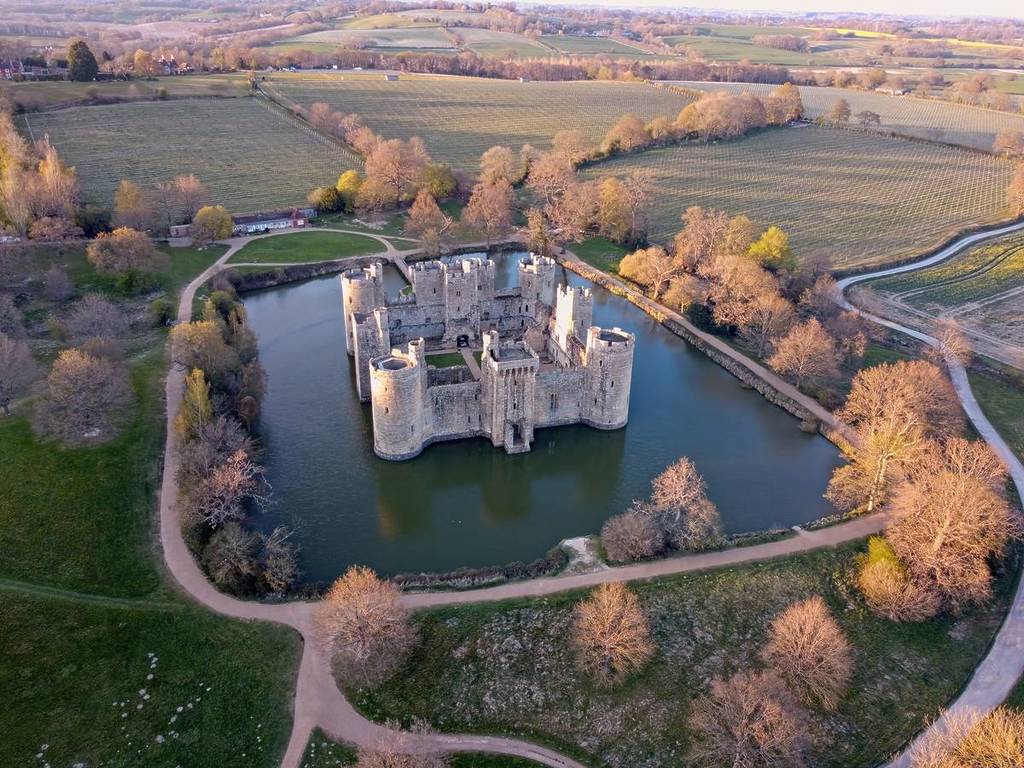
If it isn’t just me that finds the idea of escaping the chaos of the capital and spending the day reenacting a scene fit for a fairytale incredibly appealing, please allow me to point you in the rather enchanting direction of Robertsbridge. Because that, my friends, is where you’ll find the jaw-droppingly gorgeous Bodiam Castle; a medieval fortress, surrounded almost entirely by water, which – quite literally – looks like it’s been plucked from the pages of a children’s storybook.
Bodiam Castle
Picture-perfectly perched just 90 minutes from London; this 14th century castle certainly has its fair share of stories to tell. Bodiam Castle was built back in 1385 by Sir Edward Dalyngrigge (a former knight of King Edward III), and its original purpose was to defend the area against invasion during the Hundred Years War. The possession of the fortress passed through many hands over the following years, until it was eventually left in ruins following the Civil War.
In the early 20th century, Bodiam Castle was snapped up by Lord Curzon (a prominent British statesman at the time), and he worked with an architect to repair the castle’s structure and preserve the ruins. Upon Curzon’s death, the castle was plonked in the reliable hands of the National Trust, and – well… the rest is history, really.
Visiting Bodiam Castle
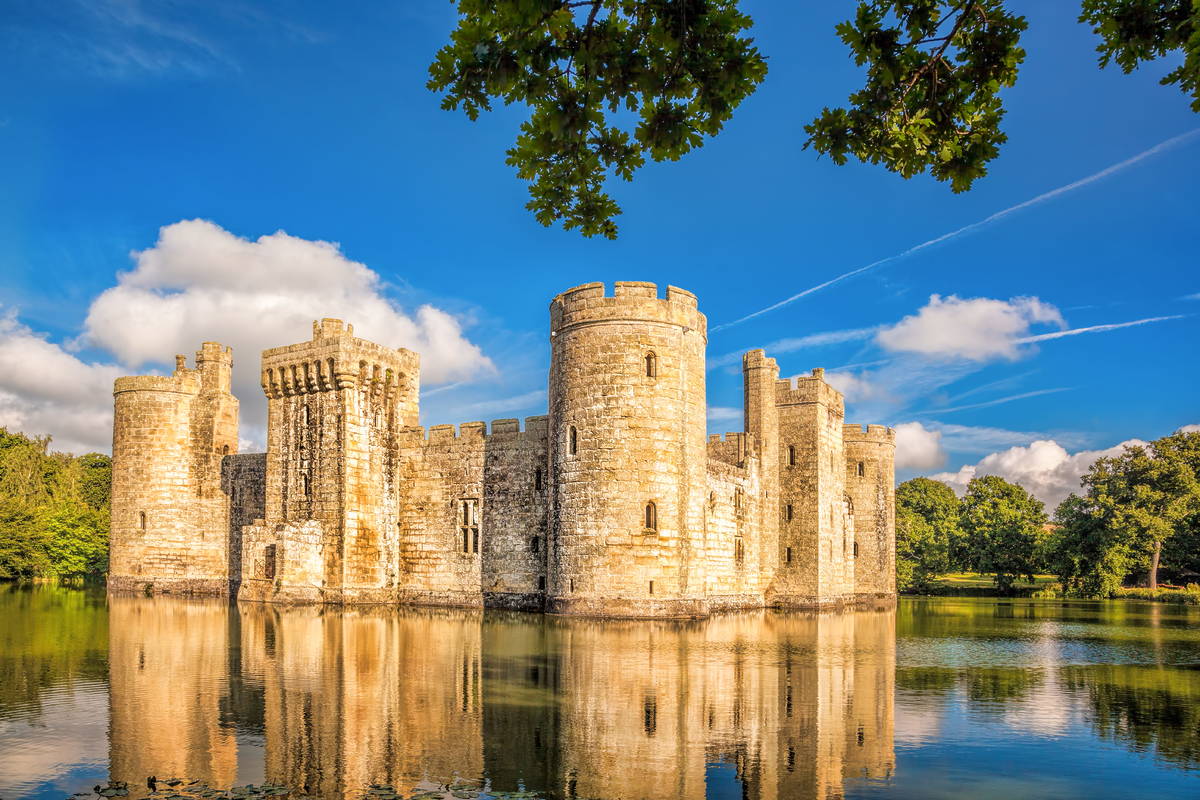
Hailed one of the most romantic and picturesque ancient monuments in Britain; Bodiam Castle is well-worth a visit. Although much of the castle’s interior is lost, you can still take a peek inside once you actually manage to make it over to the castle. It’s almost entirely surrounded by a huge moat, and is only accessible via a long bridge that crosses to an original medieval stone platform. Stepping inside the castle is like travelling back in time, and visitors can climb the towers, walk the walls, and get up close and personal with many original features that have survived to tell the tale.
The Article https://www.thearticle.com/?force_home=1
Why do we love police procedurals?
After tea in the late 1940s, Dick Barton, Special Agent, solving crimes and saving Britain with much derring-do, was on the BBC Radio Light Programme. In 1954, the 10-inch television brought Sherlock Holmes into the sitting room from Baker Street, and a year later the kindly constable Dixon of Dock Green from London’s East End. Policing got rougher in the 1960s with Z-cars. By the 1990s, detectives were getting above themselves, with Morse listening to classical music and frequenting Oxford university, or the immaculate Poirot exposing posh villains. You could also watch Maigret, Commissaire in the Parisian Brigade Criminelle, catching sundry French criminals.
For as long as the medium has existed, police procedurals have been as much part of British TV as football. They have a distinctive formal structure: predictable set-piece moments raising expectations and players with defined roles. There’s the police chief trying to close the case, the ill-matched pair of cops who grow in mutual respect, the corrupt detective taking back-handers or the honest detective taken off the case, only to solve it. These days the sleuths are as likely to be American or Continental as British, but the plot lines remain the same. With Line of Duty, The Killing, Patience and many other series, you could join the investigations any evening of the week.
The procedural’s formulary, like Evensong’s, is predictable, comforting and contains moral messages. And you are safely at home on the sofa, ready for surprises, though aware, more or less, of what’s coming next. If you don’t know, you haven’t watched enough. Take opening scenes. The purpose of showing an expanse of water, river, lake or sea is to allow the camera to close in on a body being washed up, floating face downwards. A body face upwards, especially in swimming pools, indicates recreation, corrupt company and the promise of scant bikinis. Recreation by joggers in parks, woods or countryside will inevitably be spoilt; a leg or hand carelessly sticking out of the ground or grass ends any chance of achieving their personal best. If jogging with a dog, it’s a certainty the dog will disappear barking into the bushes. And it’s not because of a rabbit. Dogs have much to complain about their parts, often getting drugged or killed for barking out of turn. Though some receive a lot of patting, usually a sign that a character is a good guy.
Contemporary police dramas have found new ways to signal which character is good and which bad. The detective used to look fondly at their child at bedtime, tuck them up, and gently shut the bedroom door. That was a really good guy about to have a hard time before things came right. If an American, he was likely to get shot. Or the child was going to be kidnapped. Or both. But today we know the detective is a good person if he or she has a parent with dementia, visits them in the care home and is a dutiful son or daughter. All good domestic signals.
After the discovery of the body, alone or with a subordinate, the lead detective arrives, establishing the all-important police hierarchy. The lifting of the blue-and-white tapes and the ceremonial ducking under are followed by complaints that junior uniformed police have allowed contamination of the crime scene. This is extras’ big moment: to look sheepish.
The next set-piece, the morgue, features the ritual with the forensic pathologist pulling down the white sheet that covers the corpse to reveal an actor with a remarkable ability not to blink. In case you’re not convinced the body on the trolley is dead, there often follows a funeral or burial scene with someone standing at a distance from the action: either a mystery figure or the detective. All very predictable.
But fear not, the creative spirit of TV or cinema isn’t dead — not yet. After the preliminaries, it’s time for intensive detective work – and for some viewers, beset by flash-backs and red-herrings, to lose track of the plot. Time for countless murder investigators to develop their different characters through varied, but mostly miserable, relationships. It’s a poor show if the hero isn’t estranged from his daughter, divorced, alcoholic, extremely grumpy or, more recently, putting autistic skills to good use. Female detectives are specially burdened, often dealing with a disrupted work-life balance, caring for rebellious teenagers and fathers with dementia. Visits to care homes fill dull moments between action. Dona Leon’s contented, connubial Venetian Commissario Brunetti, with his academic wife who makes tasty Italian family meals, reached German TV and Amazon Prime, the exception that proves the rule.
We now expect certain scenes to involve modern police kit: helicopters, drone shots, CCTV replays, mobile phones which ring at critical moments, and laptops. In fact, we know a computer geek, preferably hairy and dishevelled, will be needed to make a crucial discovery. But cars remain very important. People cuffed, or having buddy conversations, are endlessly getting in and out of them, when they are not being blown up in them. Though cars are still petrol-driven. No shoot-outs while recharging – yet. Chases are still indispensable to the action, ideally with spectacular crashes along the way.
A less pleasant innovation is the toilet scene featuring much unzipping in the Men’s. The Back Alley, complete with dustbins, once the number one venue for fights, is being replaced by the Toilet. Women detectives spot women suspects hiding guns in cisterns or changing their clothes behind lavatory doors. Or vomiting. Someone being sick demonstrates they’re hungover, or afraid, or upset. Directors need to pull the plug on such excesses of realism.
So all praise to Brendan Gleeson’s Bill Hodges, a retired cop tracking down the damaged, psychopathic killer, Brady Hartsfield, in Mr. Mercedes, based faultlessly on Stephen King’s spooky trilogy, now streaming on Netflix. Mr. Mercedes partly cracks the mold. (Spoiler alert.) The opening scene is a view of a crowd queuing in line for employment, not a lake or forest in sight. A stolen car is the murder weapon. Hodges is pursued (unsuccessfully) by the amorous widow next door. He has a pet tortoise. His police buddy Peter dies of natural causes but he’s helped by two captivating young people, Jerome and Holly, who befriend him and do his laptop tracking. The killer’s mum is poisoned. Jerome’s dog is spared. Several characters have premonitions. In the just-in-time ending Hodges finds the killer but has a heart attack, flagged for several episodes, and is unable to arrest him.
But there are also the set-pieces. A car that blows up. A preternaturally clever villain. Hodges, overweight, unfit, grumpy but charming, courageous and kind, is fixated on an unsolved case and conducts an off-piste investigation. He’s alienated from his daughter, drinks a lot and lives on his own. Brian Gleeson is Bill Hodges just as Alec Guiness was, and always will be, John le Carré’s Smiley.
What is the appeal of these dramas? They provide an hour or so of relative predictability in a world where we don’t know what’s going to happen next, a world overtaken by darkness, dominated by powerful autocrats with scant regard for human life. Watching, we enter another world where the good cop, or private eye, sleuth, or journalist, with their multiple quirks and defects, some like ours, defy the odds to defeat the clever murderous villain. What’s not to like? In the police procedural at least, there is justice after all.
Where is The Bill in this article? Surely it deserved a mention?
Henry Oliver from The Common Reader <commonreader@substack.com>
| Subscribe here The Common Reader Hermione Lee: Tom Stoppard. “…0:0056:57 Listen now Hermione Lee: Tom Stoppard. “It’s Wanting to Know That Makes Us Matter” Shaw, Turgenev, Eliot, Beckett, rehearsals, politics, rehearsals, Carey, Woolf, Brian Moore. Henry Oliver Feb 4 |
Hermione Lee: Tom Stoppard. “It’s Wanting to Know That Makes Us Matter” Henry Oliver, February 4, 2026.
Hermione Lee is the renowned biographer of Virginia Woolf, Edith Wharton, Penelope Fitzgerald, and, most recently, Tom Stoppard. *Stoppard died at the end of last year, so Hermione and I talked about the influence of Shaw and Eliot and Coward on his work, the recent production of The Invention of Love, the role of ideas in Stoppard’s writing, his writing process, rehearsals, revivals, movies. We also talked about John Carey, Brian Moore, Virginia Woolf as a critic. Hermione is Emeritus Professor of English Literature at the University of Oxford. Her life of Anita Brooker will be released in September.
Transcript
Henry Oliver: Today I have the great pleasure of talking to Professor Dame Hermione Lee. Hermione was the first woman to be appointed Goldsmiths’ Professor of English Literature at the University of Oxford, and she is the most renowned and admired living English biographer. She wrote a seminal life of Virginia Woolf. She’s written splendid books about people like Willa Cather, Edith Wharton, and my own favorite, Penelope Fitzgerald. And most recently she has been the biographer of Tom Stoppard, and I believe this year she has a new book coming out about Anita Brookner. Hermione, welcome.
Hermione Lee: Thank you very much.
Oliver: We’re mostly going to talk about Tom Stoppard because he, sadly, just died. But I might have a few questions about your broader career at the end. So tell me first how Shavian is Stoppard’s work?
Lee: He would reply “very close Shavian,” when asked that question. I think there are similarities. There are obviously similarities in the delighting forceful intellectual play, and you see that very much in Jumpers where after all the central character is a philosopher, a bit of a bonkers philosopher, but still a very rational one.
And you see it in someone like Henry, the playwright in The Real Thing, who always has an answer to every argument. He may be quite wrong, but he is full of the sort of zest of argument, the passion for argument. And I think that kind of delight in making things intellectually clear and the pleasure in argument is very Shavian.
Where I think they differ and where I think is really more like Chekov, or more like Beckett or more in his early work, the dialogues in T. S. Elliot, and less like Shaw is in a kind of underlying strangeness or melancholy or sense of fate or sense of mortality that rings through almost all the plays, even the very, very funny ones. And I don’t think I find that in Shaw. My prime reading time for Shaw was between 15 and 19, when I thought that Shaw was the most brilliant grownup that one could possibly be listening to, and I think now I feel less impressed by him and a bit more impatient with him.
And I also think that Shaw is much more in the business of resolving moral dilemmas. So in something like Arms and the Man or Man and Superman, you will get a kind of resolution, you will get a sort of sense of this is what we’re meant to be agreeing with.
Whereas I think quite often one of the fascinating things about Stoppard is the way that he will give all sides of the question; he will embody all sides of the question. And I think his alter ego there is not Shaw, but the character of Turgenev in The Coast of Utopia, who is constantly being nagged by his radical political friends to make his mind up and to have a point of view and come down on one side or the other. And Turgenev says, I take every point of view.
Oliver: I must confess, I find The Coast of Utopia a little dull compared to Stoppard’s other work.
Lee: It’s long. Yes. I don’t find it dull. But I think it may be a play to read possibly more than a play to see now. And you’re never going to get it put on again anyway because the cast is too big. And who’s going to put on a nine-hour free play, 50 people cast about 19th-century Russian revolutionaries? Nobody, I would think.
But I find it very absorbing actually. And partly because I’m so interested in Isaiah Berlin, who is a very strong presence in the anti-utopianism of those plays. But that’s a matter of opinion.
Oliver: No. I like Berlin. One thing about Stoppard that’s un-Shavian is that he says his plays begin as a noise or an image or a scene, and then we think of him as this very thinking writer. But is he really more of an intuitive writer?
Lee: I think it’s a terribly good question. I think it gets right at the heart of the matter, and I think it’s both. Sorry, I sound like Turgenev, not making my mind up. But yes, there is an image or there is an idea, or there are often two ideas, as it were, the birth of quantum physics and 18th-century landscape gardening. Who else but Stoppard would put those two things in one play, Arcadia, and have you think about both at once. See Further Commentary and Articles arising from Books* and continued longer articles as noted in the blog. for the complete interview.
*See my review of Hermione Lee: Tom Stoppard. “It’s Wanting to Know That Makes Us Matter” in my blog, 2 March, 2022.

 Robin's Room