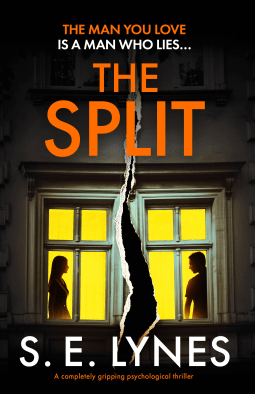
S.E. Lynes The Split Bookouture, March 2024.
Thank you, NetGalley, for providing me with this uncorrected proof for review.
S.E. Lynes has cleverly combined a thriller with elements of character study and examination of the way relationships can develop or crumble under pressure. These elements are woven together so seamlessly that the plot, as complex as it may appear at times, follows a rational progress as a marriage breaks down. Questions arise from the beginning of the novel when compromising photographs of her husband, Will, and an attractive woman are sent to Jessica. They have been married for seven years, are in their forties, and have a school age son and daughter for whom Will is the major carer while Jessica is a high-flying businesswoman. The prologue suggests that Jessica will be particularly vulnerable to the import of the photographs – and her reaction fulfills this prediction. She immediately verbally and physically assaults the just awakening Will.
Will’s characterisation is that of a man easily swayed by people and events, while being a stalwart father, loving husband and sensitive life coach. Superficially, Jessica is stronger, but her reliance on her mother and best friend, Lena, as the crisis in her marriage deepens, demonstrates Jessica’s vulnerability. Will’s vulnerability also becomes more apparent as he begins to rely heavily on a recently met friend, an aggressive lawyer, and his sense of injustice. He, too, is impacted by his mother. However, unlike the support Jessica receives from hers, Will’s mothers remembered admonishments further serve to undermine his self-confidence and fulfil his sense of grievance. See Books: Reviews for the complete review.
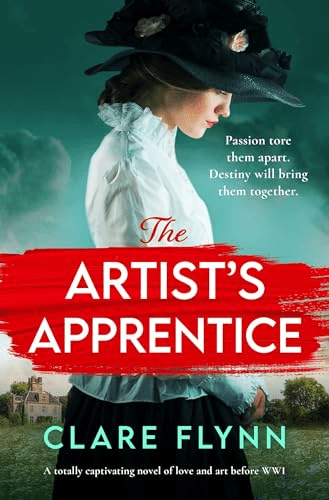
Clare Flynn The Artist’s Apprentice Storm Publishing, February 2024.
Thank you, NetGalley, for this uncorrected proof for review.
This is the first of Clare Flynn’s novels that I have read. There is a lot to admire, for example the range of political and feminist issues that are covered in this essentially romantic novel. However, although I found the novel a good read, engaging, with interesting characters, I cannot give the writing an entirely positive response. Despite that, I am pleased to have had the opportunity to read this example of this popular author’s work and would like to know what happens to the main protagonists in the follow up, The Artist’s Wife.
The novel begins in January 1908 at Alice’s home, Dalton Hall, in Surrey. Alice is sketching in the frost on her window and must take diversionary action so that her lateness to breakfast goes unnoticed. Taking in the mail to effect this, Alice is confronted with an envelope addressed in writing that makes her uneasy. It is an invitation from the American born wife of a newly rich neighbour, Cutler, inviting them to tea. Lord Dalton is pleased; his wife, unaware of the financial reason for her husband’s enthusiasm, is not. Alice is wary. Her brother, Victor, supports his father – he has prospects of joining the profitable Cutler firm of stockbrokers.
From this beginning, deftly sketching the outward reasons for the proposed relationship, a more ominous story begins to emerge. Alice and the proposed marriage between her and the older Cutler son appear to be the crucial protagonists in the debates that arise over women’s position, their role in preserving family fortunes through marriage, and their lack of independence in choosing a partner. Behind this story is another that will become pivotal in deciding Alice’s future. See Books: Reviews for the complete review.
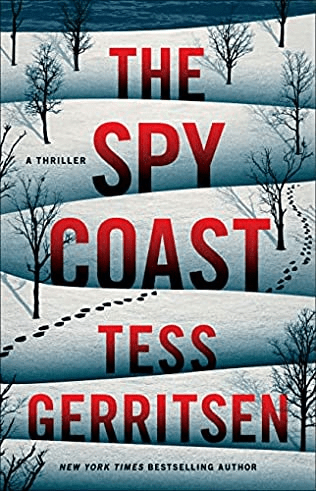
Tess Gerritsen The Spy Coast Thomas & Mercer, November 2023.
Thank you, NetGalley, for providing me with this uncorrected proof for review.
I am so pleased to have returned to reading Tess Gerritsen’s work after having neglected to do so for a while. This novel was an excellent move back to enjoying her work, and I look forward to reading and rereading her Rizzoli and Isles series. The Spy Coast is different but retains Gerritsen’s ability to draw characters whose stories are tempting to follow, a good plot and a satisfactory resolution.
The first chapter introduces Diana whose life has changed from being ‘the golden girl’ to one who dyes her blonde to ‘dead-mouse brown’ to escape a threat. With such a description how can we not want to know more! Diana is on the run, but should she evoke sympathy? In chapter 2 Maggie is introduced. Rather than living in the salubrious apartment in Paris in which Diana, when introduced resided, Maggie is in a field contemplating blood, feathers and revenge for her killed chickens. Is it she with whom one should sympathise? See Books: Reviews for the complete review.
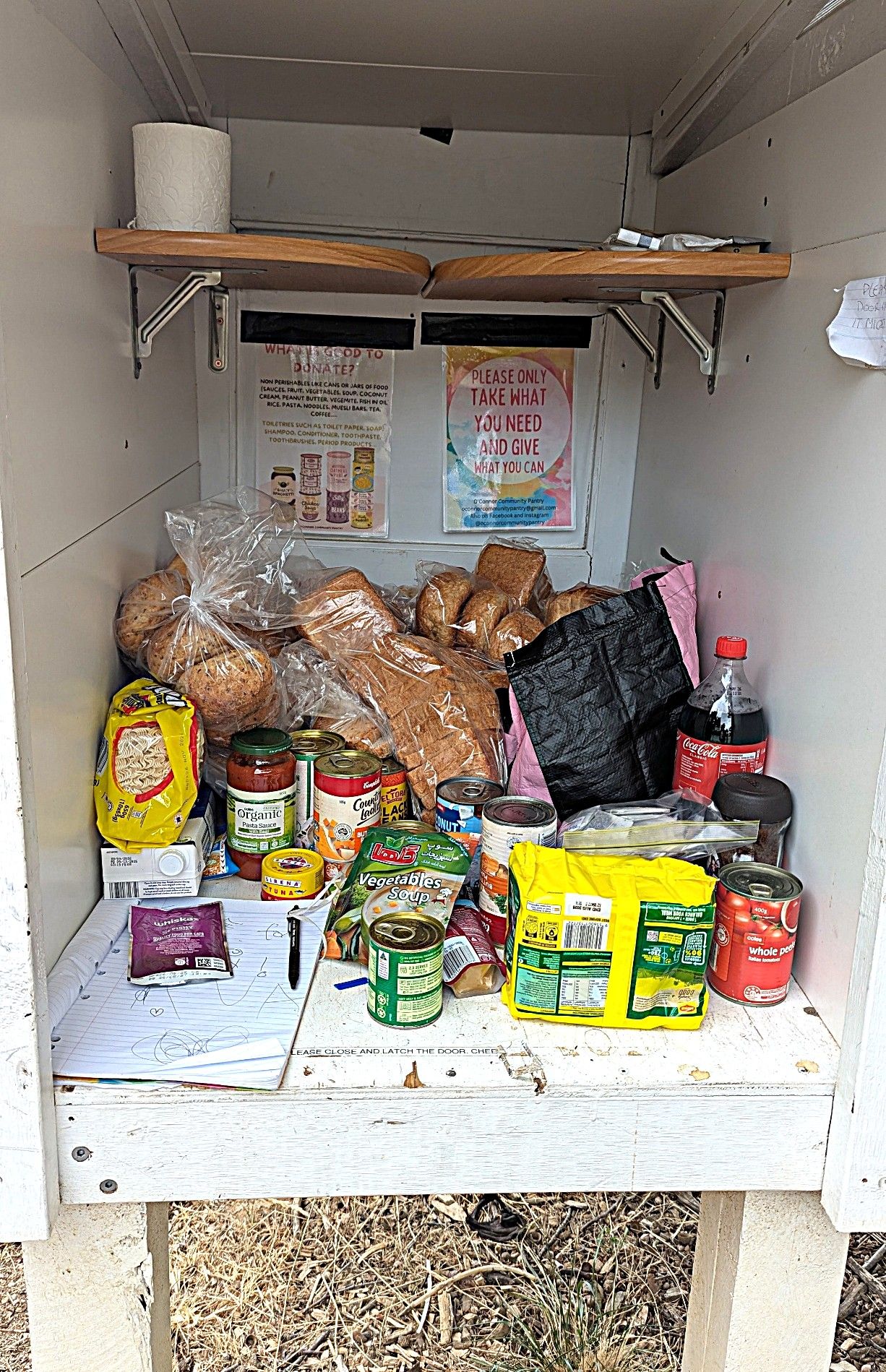
Community pantries
This is a great innovation, with community pantries now appearing in several suburbs. The bread that can be seen in this one, in O’Connor, comes from a bakery in Curtin. The other goods are brought to the pantry by members of the community. People make notes in the book provided, including thanks for supplying items and suggestions as to what would be appreciated and appropriate.

British Politics
‘Ban revenge porn or be blocked’, PM says to tech giants
LabourList <accounts@labourlist.org> Unsubscribe
By Daniel Green Bluesky / WhatsApp / X / TikTok / email us / newsletter signup
Starmer takes fight to social media firms Those of you still on X (formerly Twitter) would have, like me, been pretty disgusted last month when thousands of images were generated by Elon Musk’s AI chatbot Grok of deepfake nudes or of suggestive images of women without their consent.
Although the Prime Minister’s tough stance then saw Musk restrict its ability to produce such grotesque images, Starmer is going one step further to prevent such a situation from happening again – telling social media firms and pornography websites they will have 48 hours to remove any deepfake nudes or ‘revenge porn’, or face being banned in the UK.
Writing in The Guardian today, the Prime Minister calls violence against women and girls a “national emergency”, requiring an “immediate and uncompromising response”. “We are putting tech companies on notice. The burden of tackling abuse must no longer fall on victims. It must fall on perpetrators – and on the companies that enable harm.”
At a time when the Prime Minister’s judgement has been called into question over his appointment of Peter Mandelson as US ambassador, Starmer’s focus on challenging online misogyny and abuse can also be seen as a move to address the concern of some in the PLP of a ‘boy’s club’ in Whitehall.
“I am determined to transform the culture of government: to challenge the structures that still marginalise women’s voices. And it’s why I believe simply counting how many women hold senior roles is not enough. What matters is whether their views carry weight and lead to change.”
After surviving his most challenging week as Prime Minister, Keir Starmer is continuing to prove he still has the mettle for the top job and the drive to take on the Wild West of social media.
Australian Politics
ABC News
#ANALYSIS: In the past few days, in a series of largely ignored milestones overshadowed by news of Angus Taylor’s new frontbench, Albanese overtook Scott Morrison and John Curtin to become the 12th-longest serving prime minister.
MoreSearch the ABCStart typing for suggestions, press enter to search, or choose from a list of options below.Log in
Should Labor do its own refresh after Angus Taylor’s Liberal ‘rebrand’? By Jacob Greber
Three months from now, Anthony Albanese’s government begins its fifth year in office.
In the past few days, in a series of largely ignored milestones overshadowed by news of Angus Taylor’s new frontbench, Albanese overtook Scott Morrison and John Curtin to become the 12th-longest serving prime minister.
A little under six months from now, he’s due to leapfrog Paul Keating. By November, after he sails past Ben Chifley, Albanese would become second only to Bob Hawke as the longest continuously serving Labor PM.
How time flies when you’re having fun…
How does Albanese get to nine years?
The future is by definition unknowable but history suggests Labor is nearing the mid-point of what might become a big entry in history’s list of longest stints in office.
Under Tony Abbott, Malcolm Turnbull and Scott Morrison the last Coalition government clocked up eight years and eight months.
John Howard held on for more than 11 years, while Bob Hawke and Paul Keating managed 13 years.
Based on current polling and the trajectory of centre-right politics, there’s every reason to assume Albanese can win a third term in May 2028.
All things being equal — famous last words in politics — you’d have to say he has a clear runway to rack up at least nine years in the Lodge by 2031.
How he gets there is another question.
There’s plenty of criticism that the prime minister and his team are not using their political dominance to full effect, that there’s a dearth of policy ambition.
This criticism is not always fair — given the things Labor has done in its first four years, including starting the energy transition, treaty-making with allies in the region, the recognition of a Palestinian state, and movement in welfare spending. A much sounder record than its harshest critics will ever recognise.
But that has not changed the fact that many say this falls short.
A call for reform
Whether it’s economists, tax specialists, the business community, or social and welfare advocacy groups, the calls for boldness are constant.
They warn that without reform, the economy will continue a slow drift to mediocrity.
Former Reserve Bank governor Philip Lowe was merely the latest to add his voice, telling The Australian Financial Review’s Patrick Durkin this week that government handouts are fine in the “normal course of events” but add to inflation when there’s little productivity growth or capacity in the economy.
“I hope the government turns out to be more ambitious than it currently looks like it will be because if it doesn’t and productivity growth remains weak, the supply capacity of the economy will remain weak,” Lowe said.
Lowe copped a slap-down the next day from the prime minister and Treasurer, who intimated the former governor was bitter about not being reappointed in 2023.
The prime minister went further, shrugging Lowe off as something of a nobody.
“Phil Lowe the footballer, former Manly player, or former RBA governor? You know … you have people who are exes, who get their name in the paper. I haven’t seen his comments,” the prime minister said.
Lowe is patently no fan of the government’s fiscal strategy, but dismissing him as a know-nothing has-been — rather than addressing the substance of his criticism — is a shabby look.
For his part, it’s unlikely Lowe is all that bothered by the political heat.
Labor figures who want to dismiss him as some kind of partisan player might find it interesting that during the Morrison government, the Coalition was not all that enamoured of Lowe. Liberals regularly complained to this columnist that he was ineffective and unhelpful.
Back then, perhaps, he was just doing his job as an independent economist. Now, he’s speaking his mind about an area he’s familiar with.
How the government’s reactiveness plays out to criticism about the direction of the political economy is being closely watched by supporters and critics alike.
Taylor’s new team
If nothing else, Angus Taylor’s rise this month to the leadership of the Liberal Party and the rollout of a new front bench is a reminder that nothing stays static in politics for long.
Presentation-wise, Taylor has delivered a much-needed refresh for the Coalition, elevating younger millennials and women to positions of prominence.
Standing alongside Jane Hume was Tim Wilson, 45, and Clare Chandler, 35, highlighting that Taylor and his team wanted to emphasise generational change.
For a party that has for too long been seen as dominated by “old blokes” — notwithstanding the last nine months under Sussan Ley — the new line-up is an appeal to lost voters.
“I know there’s so many great Liberal women out there that have been reticent about politics for all sorts of reasons… and I want them to join the Liberal Party, get involved, and ultimately stand for pre-selection and stand for election,” said Taylor.
“Any watching today, please join up. We want more great women in the Liberal Party.” Angus Taylor unveils shadow ministry
An appeal and a rebranding exercise in one. And like all re-branding efforts, early perceptions may not translate into success in the polls or ballot box.
Liberals in NSW, the ACT and Victoria in particular have tried many times to fix their problems by swapping leaders.
The only place where it has worked in the last few years is in Queensland, where the LNP is a single Coalition “brand”.
Pollster Kos Samaras cautions that flipping leaders is a “ritual” from a lost era.
“The problem conservative politics is facing isn’t a leader. It’s them,” he said on Friday, after a Newspoll of South Australian voters showed Labor’s primary at 44 per cent, One Nation on 24 per cent, the Liberals with 14 per cent and the Greens on 12 per cent.
One student of polls reckons it’s so bad for the Coalition that Labor could technically walk away with every seat in the state if those numbers play out on election day next month.
Back to Samaras: “We’ve seen the same underlying pattern in Victoria, across multiple polls: fragmentation of the two-party system, a right split between a shrinking mainstream Liberal brand and a growing populist challenger, and a political map where preferences, tactical voting, and micro-geographies matter more than ever.”
American Politics


The Declaration of Independence still defines America’s purpose, writes Jon Meacham
The document was written for America’s most challenging moments

Jan 6th 2026|6 min readListen to this story
IN THE BEGINNING, no one paid all that much attention to it—and, if they did, they were not particularly impressed. Now scriptural, the Declaration of Independence’s most famous sentence—“We hold these truths to be self-evident, that all men are created equal…”—was drafted by Thomas Jefferson and edited by Benjamin Franklin in the crowded hours of the Second Continental Congress in the summer of 1776. John Adams, jealous of Jefferson’s celebrity as its main author, claimed there was “not an idea in it but what had been hackneyed in Congress for two years before”. Even Jefferson admitted that the object was “not to find out new principles, or new arguments, never before thought of…but to place before mankind the common sense of the subject” as an “expression of the American mind”. Reviews could be harsh. In England, Jeremy Bentham dismissed the Declaration as “contemptible and extravagant”. Samuel Johnson put his finger on colonial hypocrisy with a penetrating question: “How is it that we hear the loudest yelps for liberty among the drivers of Negroes?”
And yet since its signing the Declaration has served as a kind of north star for Americans, especially in hours of strife. “I have said that the Declaration of Independence is the ring-bolt to the chain of your nation’s destiny; so, indeed, I regard it,” Frederick Douglass said in 1852. “The principles contained in that instrument are saving principles. Stand by those principles, be true to them on all occasions, in all places, against all foes, and at whatever cost.” That a man who had escaped enslavement and was not included in the Declaration’s assertion that “all men are created equal” could hail that crucial American document even amid the darkness of the antebellum order is testimony to its power and possibilities.
What explains the Declaration’s potency? I think Americans are drawn to it for the same reasons human beings are so often drawn to sacred scripture, which tends to be effective insofar as it offers readers and listeners an understanding of the origins, course and destiny of life. Commandment and covenant, the Declaration is the biblical base of America’s civic religion, offering precept and promise. We return to it in remembrance of battles won—beginning with the Revolutionary War itself—and to arm ourselves for battles still to come.
It is our oldest assertion of national aspiration, an articulation of the principle for which a disparate group of New World colonies chose to take on the world’s mightiest empire in armed struggle. The causes of the American revolution were varied, and not all were noble. Independence was declared after years of battles over power and money in the wake of the Seven Years’ War, when London assumed a larger burden in defending its American colonies. “The Americans have made a discovery, or think they have made one, that we mean to oppress them,” Edmund Burke remarked in 1769. “We have made a discovery, or think we have made one, that they intend to rise in rebellion against us…We know not how to advance; they know not how to retreat.” By the summer of 1776—after Lord Dunmore, the British governor of Virginia, had promised freedom to any enslaved person who rose against the colonists—war had come. Yet for all of the American limitations on who was included in the Declaration’s assertion of equality, the ideal of individual liberty, an inheritance from the British tradition, was—and is—at the heart of the national experiment.
And when that experiment is under stress, the Declaration has proven useful in defining national problems and inspiring popular effort to solve those problems. In the same way the Gospel of John linked the Christian story of a divine Jesus to the familiar Genesis account of creation by evoking the phrase “In the beginning”, American leaders from Douglass and Abraham Lincoln to Franklin D. Roosevelt and Martin Luther King Jr have found Jefferson’s words essential in framing the present in terms of the past.
Lincoln probably first encountered the text of the Declaration in William Grimshaw’s popular “History of the United States”, published in 1820; in his first major public speech, to the Young Men’s Lyceum in Springfield, Illinois, in 1838, he spoke of the sanctity of the founding; and in 1859, on the eve of his presidential campaign, he described the Declaration and its major author with reverence. “All honor to Jefferson—to the man who, in the concrete pressure of a struggle for national independence by a single people”, Lincoln wrote, “had the coolness, forecast, and capacity to introduce into a merely revolutionary document, an abstract truth, applicable to all men and all times, and so to embalm it there, that to-day, and in all coming days, it shall be a rebuke and a stumbling-block to the very harbingers of re-appearing tyranny and oppression.” At Gettysburg in 1863, Lincoln brilliantly grounded the Union cause not in the prose of the constitution but in the poetry of the Declaration: “Four score and seven years ago our fathers brought forth on this continent, a new nation, conceived in Liberty, and dedicated to the proposition that all men are created equal.” One could debate the constitution, which was the means of America. Lincoln’s rhetorical gamble—which he won—was that one could not question the purpose of America, which, in this rendering, was Jefferson’s “proposition”.
Eighty years later, amid a global war against totalitarianism, Franklin D. Roosevelt turned to the Declaration to clarify Allied aims. On April 13th 1943, Roosevelt dedicated the Jefferson Memorial on the Tidal Basin in Washington by linking Jefferson and the American Revolution with himself and the second world war. “He faced the fact that men who will not fight for liberty can lose it,” Roosevelt said. “We, too, have faced that fact. He lived in a world in which freedom of conscience and freedom of mind were battles still to be fought through—not principles already accepted of all men. We, too, have lived in such a world. He loved peace and loved liberty—yet on more than one occasion he was forced to choose between them. We, too, have been compelled to make that choice.”
And Jefferson supplied Martin Luther King Jr with the substance of the things hoped for. “I have a dream”, King intoned at the March on Washington for Jobs and Freedom in 1963, “that one day this nation will rise up and live out the true meaning of its creed: We hold these truths to be self-evident, that all men are created equal.” There, in the midst of the 20th century, in the heat of a freedom movement, King—like Lincoln and Roosevelt before him—could find no clearer articulation, no better summary of the American promise, than Jefferson’s ancient words.
In our own illiberal hour, the Declaration offers a measure of hope—which has always been part of the point. “The assertion that ‘all men are created equal’ was of no practical use in effecting our separation from Great Britain; and it was placed in the Declaration, nor for that, but for future use,” Lincoln remarked in 1857. “Its authors…knew the proneness of prosperity to breed tyrants, and they meant when such should re-appear in this fair land and commence their vocation they should find left for them at least one hard nut to crack.” As it was in the beginning, so it remains. ■
Jon Meacham holds the Rogers Chair in the American Presidency at Vanderbilt University. He has written biographies of Thomas Jefferson, Andrew Jackson and Abraham Lincoln.
Cindy Lou finds a great eating spot for lunch
Super Sweet has indoor and outdoor seating, most of which was filled when we lunched there on Monday. On an earlier occasion we have had some very pleasant coffees, but the cool drinks were very tempting on a hot day. We had an iced yuzu lemonade and a yuzu lemonade espresso. The Shakshuka was very good, and the Katsu curry bowl with prawns was delicious.








February 21 – 27, 2026 | No. 588
Marcia Langton: What should a writers’ festival be?
There are cultural events that entertain, and there are rare ones that reorganise how a society encounters ideas. The Jaipur Literature Festival is the latter. Founded in 2006 by Namita Gokhale, William Dalrymple and Sanjoy Roy at Diggi Palace, the festival draws hundreds of thousands of people in person and tens of millions online.
Yet its magnetism lies not in scale alone. It rests on a curatorial philosophy that treats ideas as public life – dynamic, contested, interdisciplinary and sensorial. Books are catalysts for encounters – between novelists, political analysts, historians, scientists, politicians, economists and technologists.
The grace of the festival, as Gokhale puts it, is not softness but confidence in the public’s capacity for complexity. The authors, their books and their ideas are paramount. The festival does not succeed because it offers limitless free speech; it succeeds because its founders and an enormous team of moderators, volunteers and cultural practitioners practice intelligent, compelling, cogent curation.
Its freedom is constructed as a negotiated cultural common, where brilliance thrives because of orchestration. This is not an open mic of outrage nor a bureaucratically sanitised forum. It is a designed intellectual ecosystem where excellence, disagreement and complexity are actively cultivated.
This is the paradox contemporary culture often refuses to confront: scale produces influence; influence attracts power; and only strong curatorial leadership can keep ideas central rather than subordinated to chaos or institutional fear. William Dalrymple’s history factory, as I call it, was ever-present, and his presentations thrilling.
The contrast with Australia could not be clearer. The collapse of two writers’ festivals in Australia – Adelaide Writers’ Week, the country’s oldest, and the Bendigo Writers Festival – following mass boycotts by scheduled speakers after board and sponsor censorship, will drive cash-strapped festivals to ensure that speakers are safe and conversations are pre-approved.
In Australia, controversy is treated as an institutional failure rather than cultural vitality. The result is a narrowing of ambition, purpose and the place of literature in our society. The door is opened to mediocrity. In this climate, festivals will increasingly resemble risk-managed civic programming: cautious, polite, predictable.
Jaipur’s success rests precisely on refusing that timidity by engineering and curating a genuinely complex program.
One of the festival’s strengths is its capacity to elevate literary excellence while situating it within urgent social realities. Among the most compelling presences this year was Banu Mushtaq, whose collection Heart Lamp, translated by Deepa Bhasthi, won the International Booker Prize in 2025.
Mushtaq’s stories explore patriarchy, caste and class with emotional precision. They are shaped by decades of legal advocacy for Muslim women in southern India. As she explained, “The pain, suffering and helpless lives of these women create a deep emotional response within me, compelling me to write.”
Her prominence was not tokenism but recognition of intellectual authority: literature as lived social intervention.
Equally arresting was the presence of Richard Flanagan, Australia’s own Booker Prize winner, who appeared in two sessions centred on his 2023 memoir, Question 7. Written in a rush after a mistaken diagnosis of early dementia, the book is less nostalgia than a reckoning with mortality; it is art with meaning, not dogma and not despair.
Literature and fiction influenced the atomic age, he observed, asking us to resist digital despair by turning to books, poetry and everyday acts of goodness. The questions that matter most are irrational and emotional. He has answered by making his legacy a meditation on life with meaning found in love. This is his answer to Chekhov’s question 7.
The festival’s capacity for intellectual theatre was perhaps most vividly embodied by Stephen Fry, whose session on the history of Troy wove classical scholarship with wit, narrative and moral inquiry. Fry demonstrated what Jaipur curators and audiences understand: that serious ideas need not be solemn to be profound. They can dazzle, entertain and educate simultaneously.
Another kind of star power appeared in the form of Viswanathan Anand, India’s first chess grandmaster, who drew vast crowds of children and adults alike. Anand warned the children gathered around him against reliance on “ready-made solutions” from artificial intelligence, emphasising disciplined practice, resilience and learning from defeat. In a festival dominated by literary discourse, his presence reinforced Jaipur’s interdisciplinary ethos – intelligence as lived practice rather than abstract performance.
This breadth of ambition throws into relief the crisis engulfing Australian literary institutions. In her reporting on the collapse of the Bendigo Writers Festival, journalist Rosemary Sorensen documented historian Clare Wright’s critique of La Trobe University, accusing it of “looking at the wrong risks” and lacking “moral courage”. The university’s requirement for speakers to comply with its anti-racism plan, which includes anti-Semitism, after complaints about Randa Abdel-Fattah’s appearance triggered a boycott that led to the festival’s cancellation.
In Australia, controversy is treated as an institutional failure rather than cultural vitality. The result is a narrowing of ambition, purpose and the place of literature in our society. The door is opened to mediocrity.
La Trobe University and City of Greater Bendigo agreed on a code of conduct for all participants, which included compliance with the university’s anti-racism plan and its contested definition of anti-Semitism, after complaints about Randa Abdel-Fattah’s scheduled appearance. This triggered the mass boycott by speakers that ended the festival.
These were not eruptions of excessive free speech but failures of institutional courage. Under decades of tightening public funding and growing dependence on sponsorship, Australian festivals have adopted a managerial logic in which controversy equals reputational risk and ideas become liabilities.
The contemporary obsession with free speech absolutism obscures the real work of culture. Unstructured openness is not a curatorial philosophy; it is abdication. Yet bureaucratic censorship is equally corrosive. Between these poles lies what Jaipur demonstrates: freedom sustained through rigorous, informed, courageous curation.
Critics have rightly complicated the Jaipur story. Its success has drawn it closer to corporate capital, elite social worlds and political power, including affinities with India’s ruling establishment. Marginalised voices risk being crowded out; sponsorship increasingly shapes visibility. Yet this does not reveal hypocrisy so much as the political economy of cultural influence. Scale produces power; power attracts interests; and only strong leadership can keep ideas central rather than subordinated to spectacle or fear.
Jaipur does not pretend neutrality. It selects excellence. Its debates feel alive because disagreement is anchored in knowledge rather than the performance of outrage. Passion coexists with depth. This is why it can host global conversations on geopolitics, religion, economics and culture at a scale Australia has never attempted.
It is difficult to imagine any Australian writers’ festival currently exercising comparable cultural authority.
I thought about this as I attended sessions on the Indian constitution, free speech and legal reform. I later learnt that Indian children are required to study the Indian constitution in secondary school, and this explained the packed tents, enthusiasm and robust debates about constitutional and legal reform in the multiethnic, multi-religious nation that emerged from the violent partition, its impacts still vividly felt today by so many.
I thought about this while listening to Fara Dabhoiwala discuss his book What is Free Speech: The History of a Dangerous Idea, which steers us away from simplistic ideas of absolute free speech. This is particularly relevant in an age of ever-reducing knowledge of historical suppression and censorship, rapacious social media platforms, AI and endless digital slop, and harmful disinformation spread by extremely bad actors intent on undermining democracies and human rights worldwide.
In pre-modern times, before the printing press, unbridled speech was a crime in many societies. Words were regarded as dangerous weapons and regulated by custom, laws, religion and hierarchies. Dabhoiwala makes the point that “even if you disapprove of them, any flourishing culture is going to be full of lies, bullshit and offensive language … Each of these may be tolerable or even appropriate … It is also perfectly reasonable to oppose utterances that you believe to be seriously harmful, and to argue that these shouldn’t qualify as ‘free speech’.”
I was scheduled to speak on the last day of the festival with Rashmi Narzary, an award-winning Bodo writer from Assam. The session was titled “The Old Ways”, which we transformed into presentations on our respective books about our present-day Indigenous cultures, customs, arts, history and Indigenous knowledge, moderated by Georgina Godwin.
I feared the title would box us into that peculiar sociocentric past tense that dominant societies use to dismiss Indigenous peoples and local, traditional minorities. However, that is not the nature of Jaipur.
Narzary represents one group – an Indigenous or ethnic group, scheduled as a tribe under Indian laws but in any case one of the many minorities in north-east India, in the rich, complex societies of the valleys of the Tibeto-Burman region, linguistically and culturally diverse and, most of all, resilient.
She wore an exquisite handwoven outfit with the distinctive patterns unique to her Bodo people. She mentioned it as she described the villages in her region and how they maintain their culture.
I spoke after her and tried to engage her in a conversation about how works like hers and mine, which document Indigenous knowledge and culture, serve as evidence of our peoples’ existence and tools for their cultural survival. Our marginality became visible; not just history, politics, borders, encapsulation by modern states, but how we are intellectually on the edges of core ideas about civilisation and nations.
The lesson is not that Australia should imitate Jaipur’s scale or ignore its contradictions. It is that sustainable literary culture requires stable funding that reduces fear-driven government and sponsorship control. Festivals need boards committed to artistic courage rather than reputational management; curators empowered to stage complexity rather than neutralise it, to seek excellence rather than outrage; and renewed faith in audiences’ intellectual resilience.
Freedom of expression is not protected by gag clauses, cancellations or bureaucratic caution. It is protected by institutions willing to stand behind ideas.
The Jaipur Literature Festival proves that literature can be mass public culture without being dumbed down; that power and ideas can co-exist without collapsing into spectacle; and that curated excellence is the precondition of vibrant democratic life.
Australia’s recent festival implosions reveal the cost of abandoning those principles. The tragedy is not the absence of great writers and thinkers, it is the erosion of institutional boldness and Australian literary and intellectual culture. If Australian literary life is to recover its public relevance, it must move beyond both free-speech theatrics and managerial timidity – and once again trust ideas to do the work of democracy.
That is the reform our cultural future now urgently demands.
This article was first published in the print edition of The Saturday Paper on February 21, 2026 as “What should a writers’ festival be?”.

 Robin's Room