
Scott Ryan The Last Decade of Cinema Black Chateau Fayetteville Mafia Press, June 2024.
Thank you, NetGalley, for providing me with this uncorrected proof for review.
Scott Ryan has a distinct writing style that carries this serious, perceptive and analytical approach to a decade of film with a firm grasp of the need to engage with his audience. At the same time he ensures that he maintains the obligation he has imposed on himself to utter raw truths. His fidelity to exposing the failings that largely mar the aftermath of 1990s film underlies the way in which he approaches his prime aim. The responsibility he feels for the task he has set himself – bringing the sheer wonder of 1990s film to a large audience – is demonstrated by the choices he makes, the language he uses, the additional material and his tenacity in acquiring relevant interviews.
Ryan chooses the films that fit his criteria – but then, oh joy, he adds a supplementary list that could have equally been chosen. He also adds ten films from the immediately previous decade, and the one after that demonstrating that some films that meet his criteria do fall outside the strict period he gave himself for the bulk of the book. The films are supplemented by some excellent interviews – a tribute to his thoroughness in getting the best for to meet the challenge he set for himself; notes for each chapter; a comprehensive index; and informative acknowledgements. See Books: Reviews for the complete review.
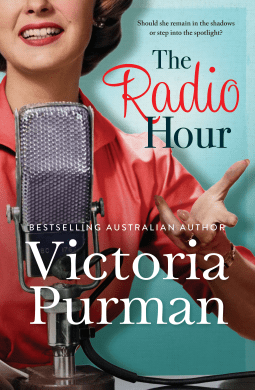
Victoria Purman The Radio Hour Harlequin Australia, HQ & Mira, 2024.
Thank you, NetGalley, for providing me with this uncorrected proof for review.
The Radio Hour is an absolute delight. Victoria Purman’s skill in writing historical fiction is just one of them. The way in which she weaves historical information throughout a plot that depicts Australian Broadcasting Commission radio in the 1950s, while also delving into the past, is thoroughly engaging. Purnam’s skill is formidable – so rarely is historical fiction written with such excellent attention to the adage ‘show, don’t tell’ that this book really stands out. ‘Show don’t tell’ is usually used in relation to writing film scripts, so for the writer of a novel to be able to slip the facts into the narrative so seamlessly is special. Together with a meticulous historical narrative which deals with serious issues there are charming (and not so charming) characters, a simple but effective story line and humour.
Each chapter is introduced with a precis of the events that will take place. This device is reminiscent of the way in which the radio serial that is to become the focus of the plot is introduced. It will follow the familiar Blue Hills to which audiences all over Australia listened as it was played in its 1.00 and evening timeslots on each weekday. In chapter 1 Miss Martha Berry, who has been filling in for a secretary who is on holiday, is advised that she will be working for a new radio producer. Quentin Quinn is to be the writer and producer of As the Sun Sets. See Books: Reviews for the complete review.

M J Trow History vs Hollywood How the Past is Filmed Pen & Sword, Pen & Sword History, March 2024.
M J Trow has written a book full of interest to anyone who enjoys films with an historical bent. Perhaps they will be disappointed to learn from History vs Hollywood How the past is Filmed that so much in these ‘historical’ films is erroneous, from major problems of fact, flawed depictions of costume and event details and poor representation by actors who bear little resemblance to those they are supposed to portray. However, is this book offering much more? Perhaps, of course, what is offered is enough. However, I would have liked more analysis, some other experts noted if Halliwell has been supplanted as the film buff’s ‘go to’ reference, and less freewheeling chapter content.
There are constant references to ‘Halliwell’ author of Film goers Companion (1965) and Halliwell’s film Guide (1977). However, there is no information other than his name, about this critic who so often meets with Trow’s ire. Although Trow’s opinion is often supported by reference to the films and subject of critique, there are no citations other than the title of the films and names of the actors. Halliwell’s reference works have been referred to as requiring that ‘one should look up for a moment to admire the quite astonishing combination of industry and authority in one man which has brought them into existence.’ (Wikipedia) Alternative views are also cited, with Halliwell being seen as both an expert and having a limited perspective. With this reputation further analysis of why Trow usually disagrees with his assessments would be revealing. See Books: Reviews for the complete review.
Pamela Denoon Lecture 2026: Gender, Peace and Security Panel
Thursday 26 March, 6 for 6:30pm start
The Gender, Peace and Security agenda provides a useful pathway for navigating uncertain times and its effective implementation will help ensure stable international relations, peace and security. Our expert panel will help unpack issues at this turning point in human history. Caroline Millar has extensive international security expertise, including as the former Australian Ambassador to the European Union, NATO, Belgium and Luxembourg. Elise Stephenson is the Deputy Director at the Global Institute for Women’s leadership at the ANU. Bina D’Costa is a Professor at the Department of International Relations, Coral Bell School of Asia-Pacific Affairs at the ANU. Asha Clementi is one of the principals of the Persephone Network, founder of Girls Run the World and 2022 ACT Young Women of the Year.
Light refreshments provided.
Register here
Presented by the National Foundation for Australian Women and the ANU Gender Institute.
First Nations Women Leaders in Public Policy Lecture 2026 Thursday 12 March, 6-7:45pm
This event explores the leadership of First Nations women in shaping public policy within and beyond government, highlighting lived experience and leadership in practice.
Justice Louise Taylor is a Kamilaroi woman and the first Aboriginal woman in Australia to be appointed to a superior court. Catherine Liddle is an Arrernte/Luritja woman from Central Australia and a leading advocate in upholding the rights of Aboriginal and Torres Strait Islander people, influencing and driving positive change. Dr Lisa Conway is a Yorta Yorta woman who has worked in the Australian Public Service for around 20 years.
Register here
Cindy Lou enjoys food and torrents of rain in Sydney
Pellegrino
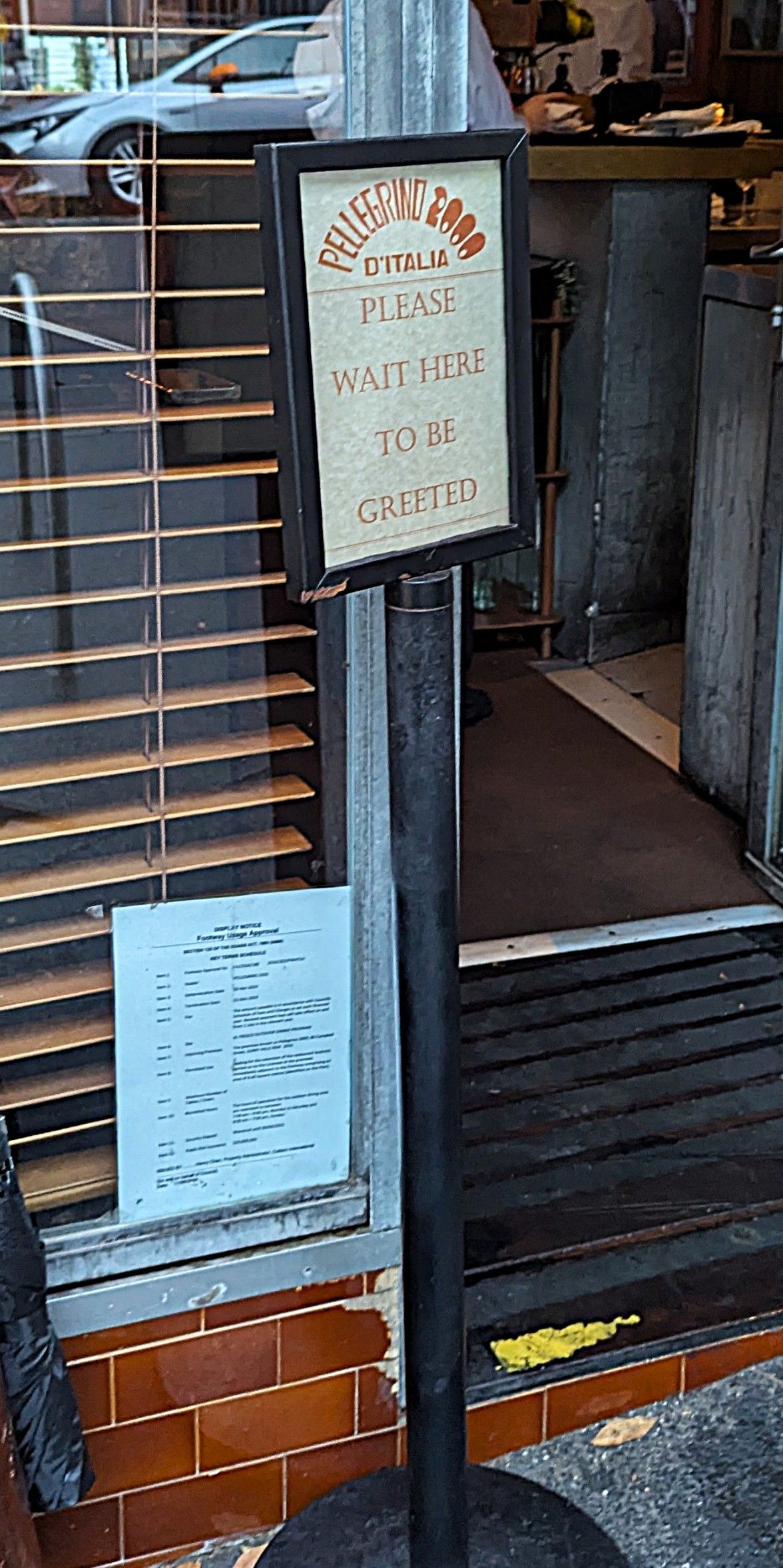
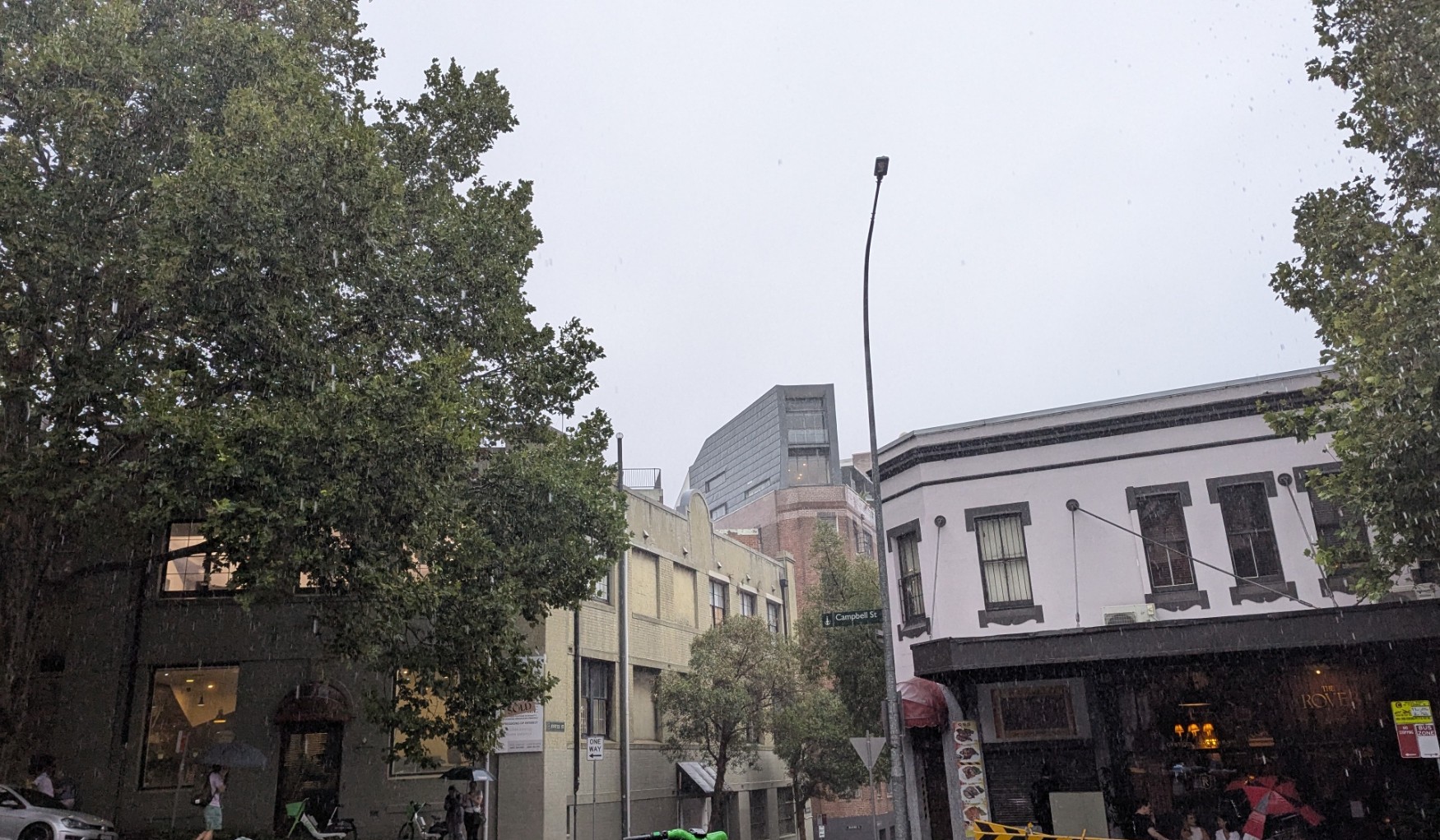
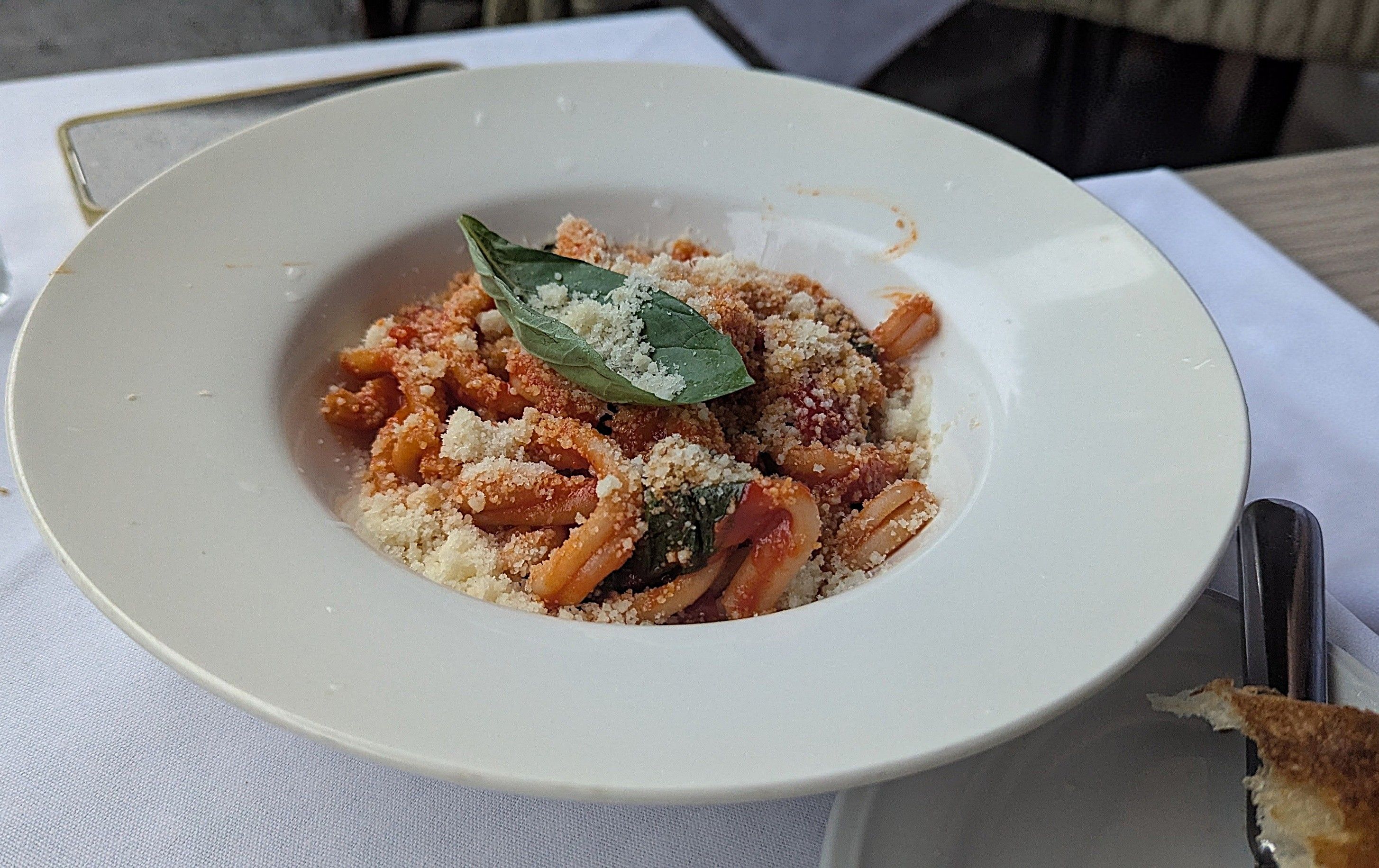
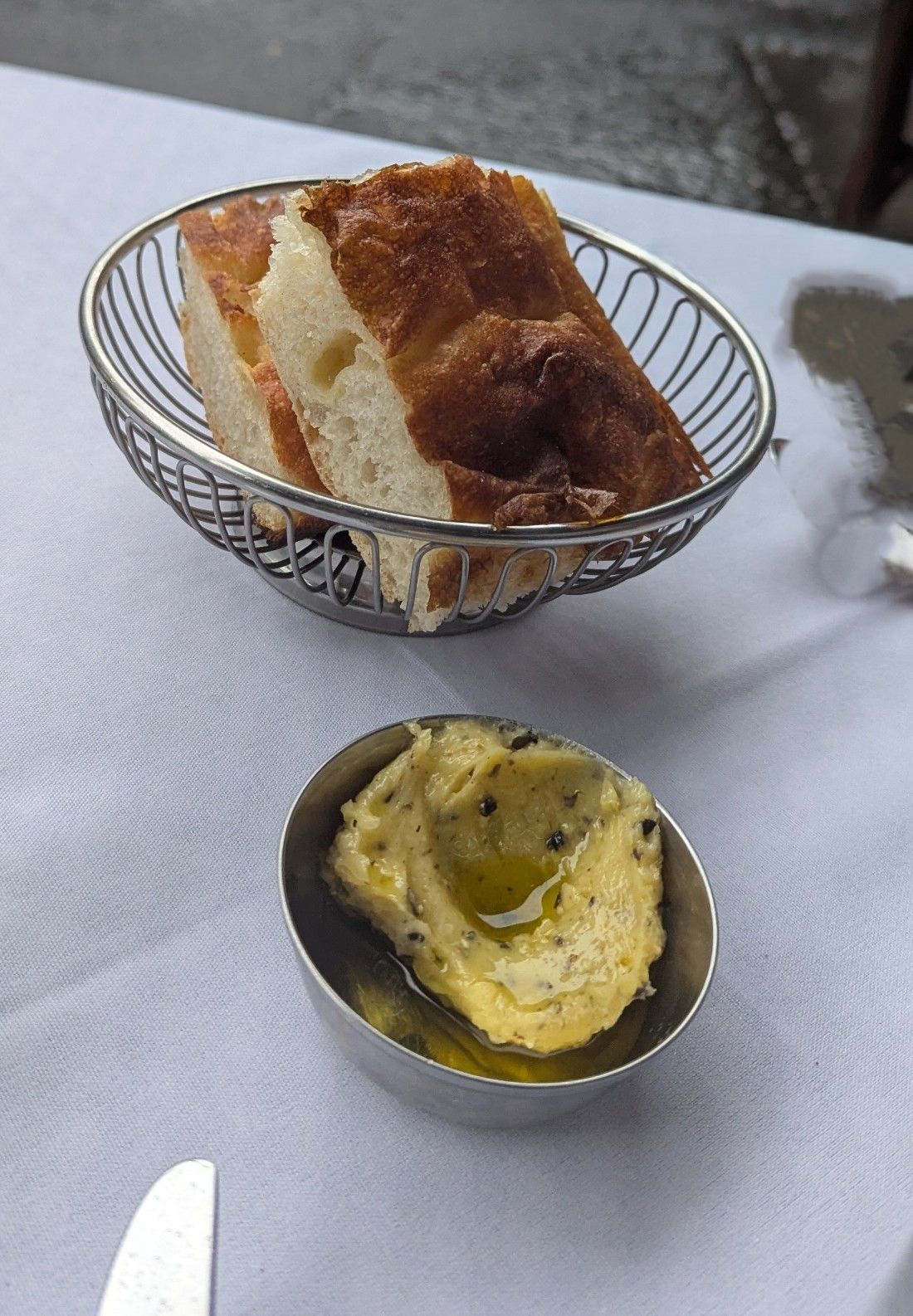
Our first meal in Sydney was accompanied by a walk to the close by Pellegrino, an Italian restaurant of good repute. As we had not booked, and the restaurant was full inside, we decided to chance the possibility of rain – and were happy to sit outside. The good reputation was borne out by the pleasant service, accomplished by a waiter who ventured through the rain to ensure our comfort and enjoyment of the food. We ended up in an island of water, eating delicious hot focaccia and the accompanying truffle, parmesan butter, followed by very good pastas. The Pomodoro sauce was pronounced excellent, and my ravioli were filled to the brim with prawns. The brown butter sage sauce was plentiful and flavoursome. Good coffees completed a very good meal, followed by a walk through the torrents which was only accomplished by removing our shoes – a rather bohemian beginning to my birthday weekend away.



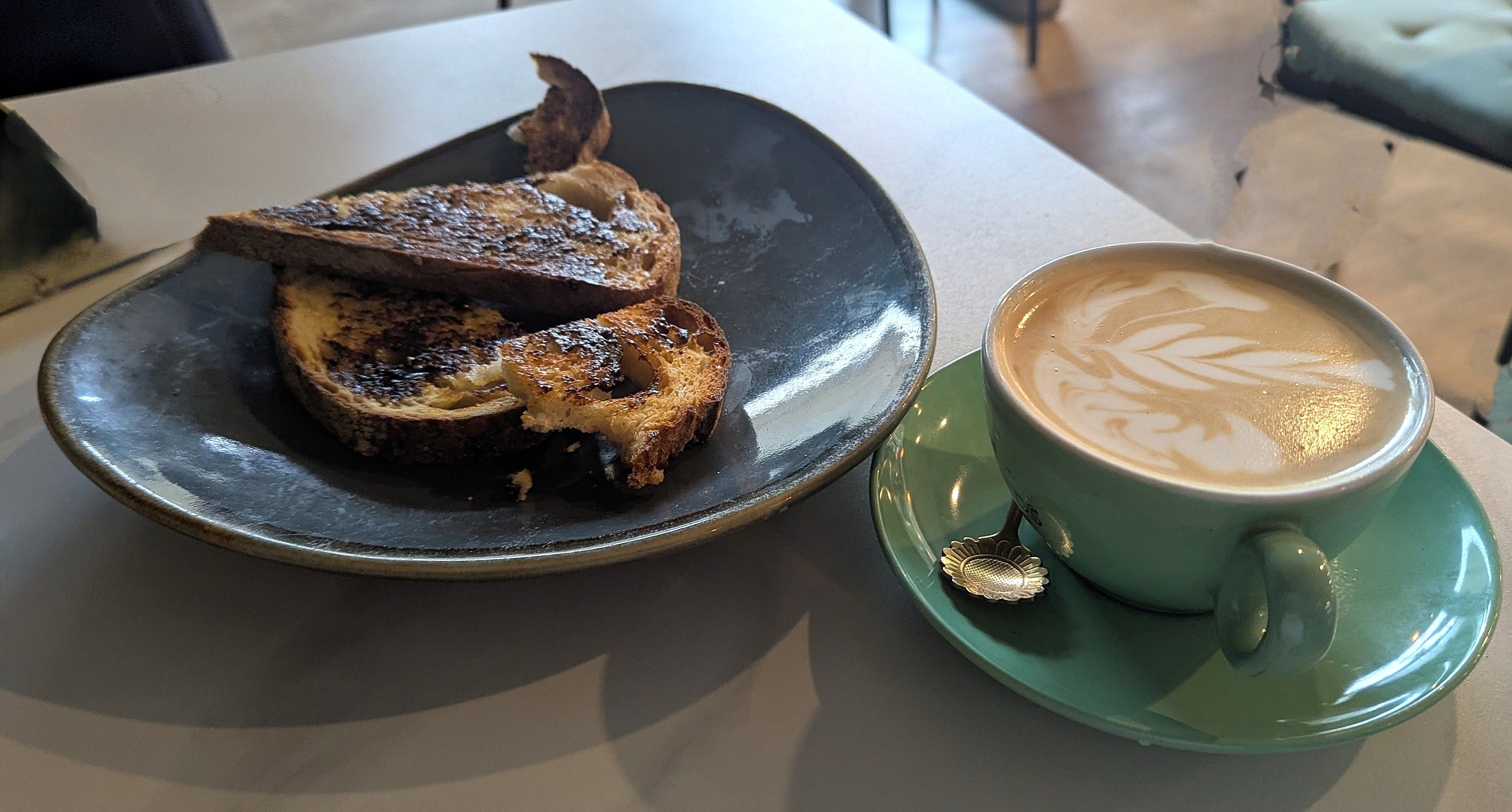
Toast and vegemite for breakfast at our usual coffee place close by – Eight Ounce Café



Cindy Lou enjoys a gloomy day at Delicado and a sunny morning at Toast
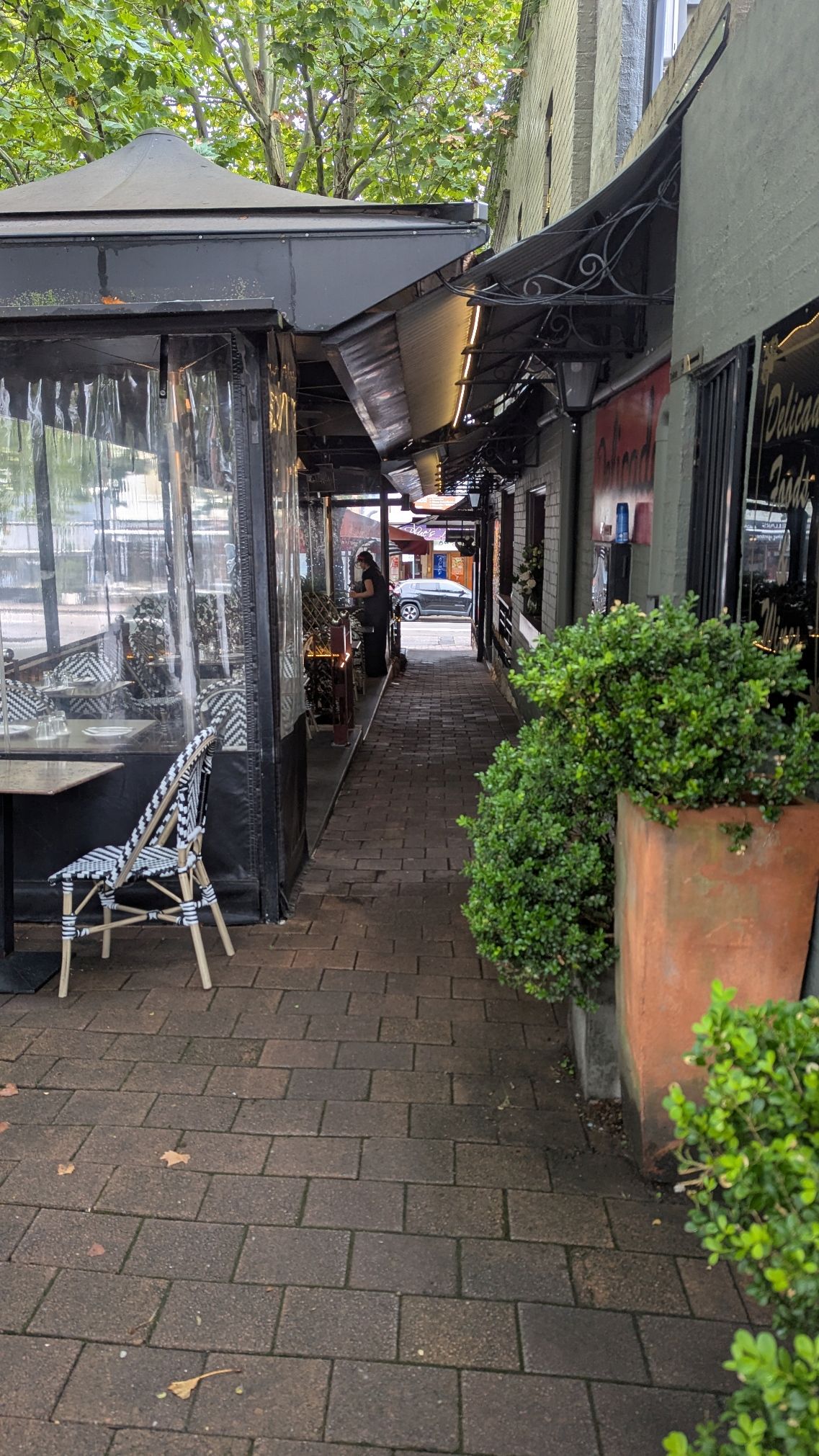
Delicado is a wonderful venue, with outdoor seating protected from the elements – no floods around our feet, although the day was gloomy and it rained just after we finished lunch. The menu is extensive, and the service friendly. We had 7 tapas dishes – one too many, but each was a pleasant contribution to a great lunch with friends. Some items were particularly delicious. The whitebait was a standout, the patatas gravas large and flavoursome, the croquettes and arancini accompanied by pleasant dips and salad. The haloumi was a generous and filling dish, nicely resented and very good indeed. Black and green olives were numerous. The albondigas was in a tasty enough sauce but the meatballs could have been smaller.







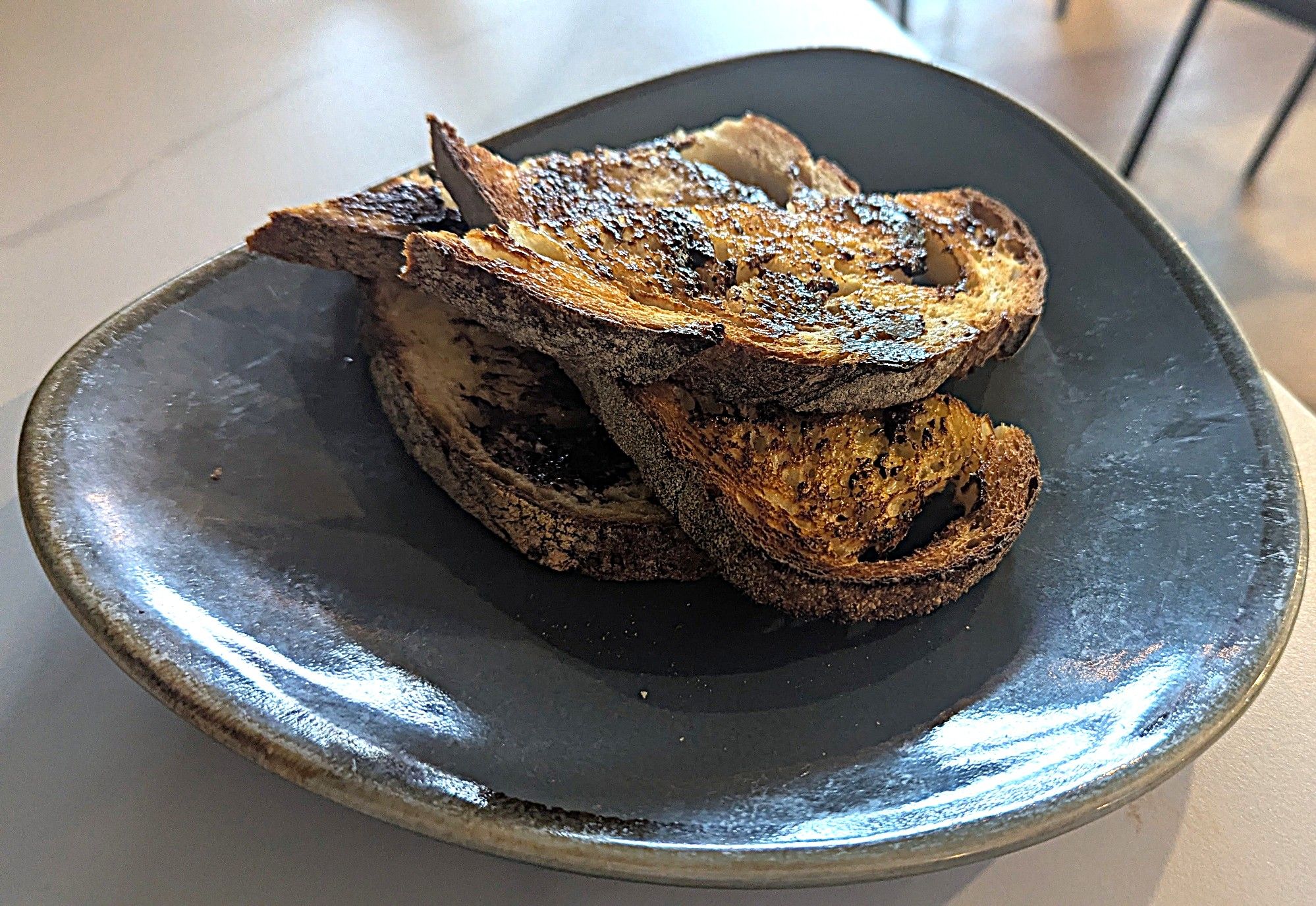
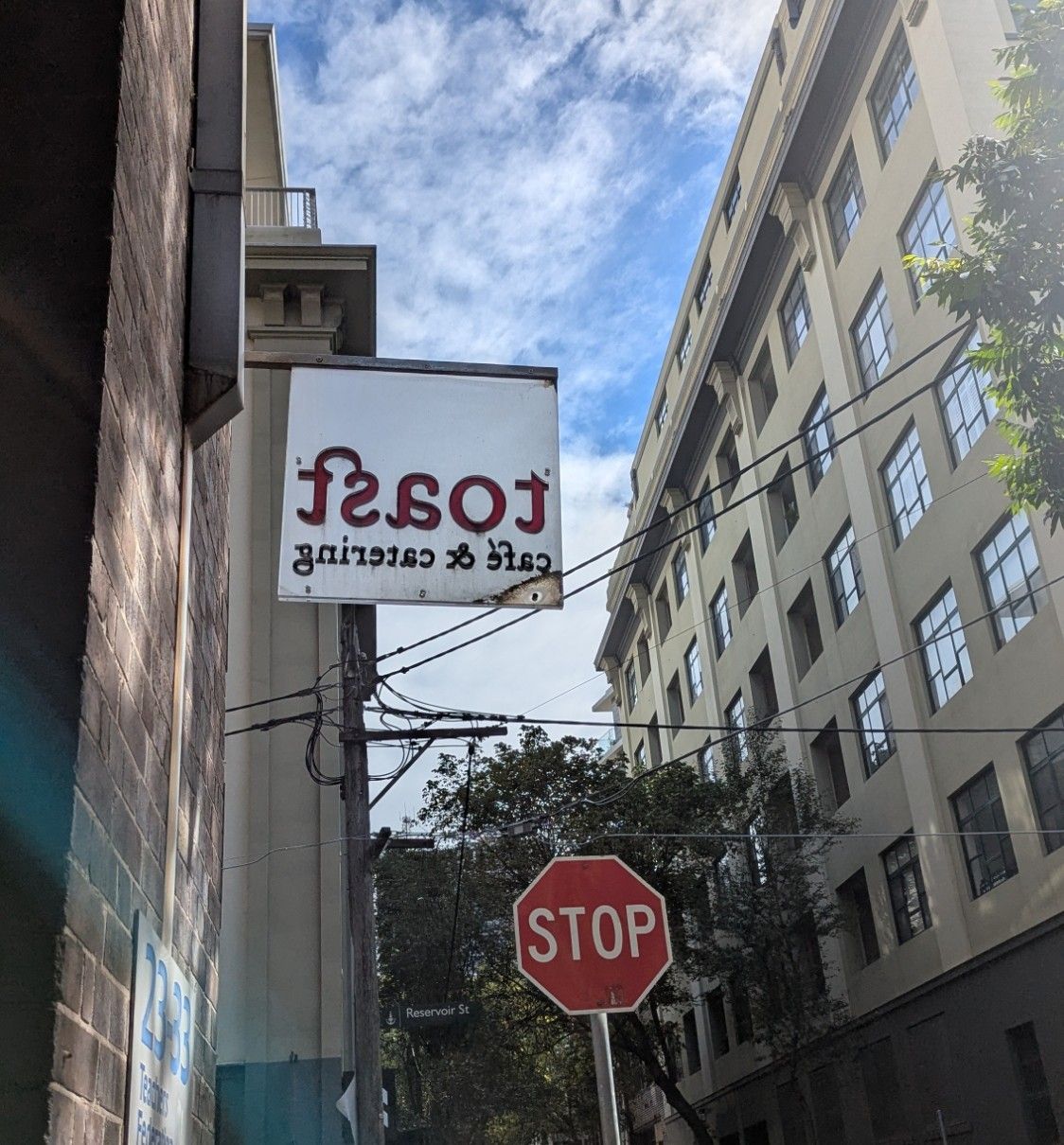
Toast is an excellent breakfast/brunch/lunch venue with indoor and outdoor seating. It was sunny, so no flooded footpath as was the case on Friday night. The menu is excellent with so many choices there, and in the glass display case inside. The service is friendly and very efficient. We chose two dishes and shared them. Unfortunately, the presentation is mine after sharing, instead of the elegant dishes served originally. The sharing worked well – it was a delicious late breakfast.





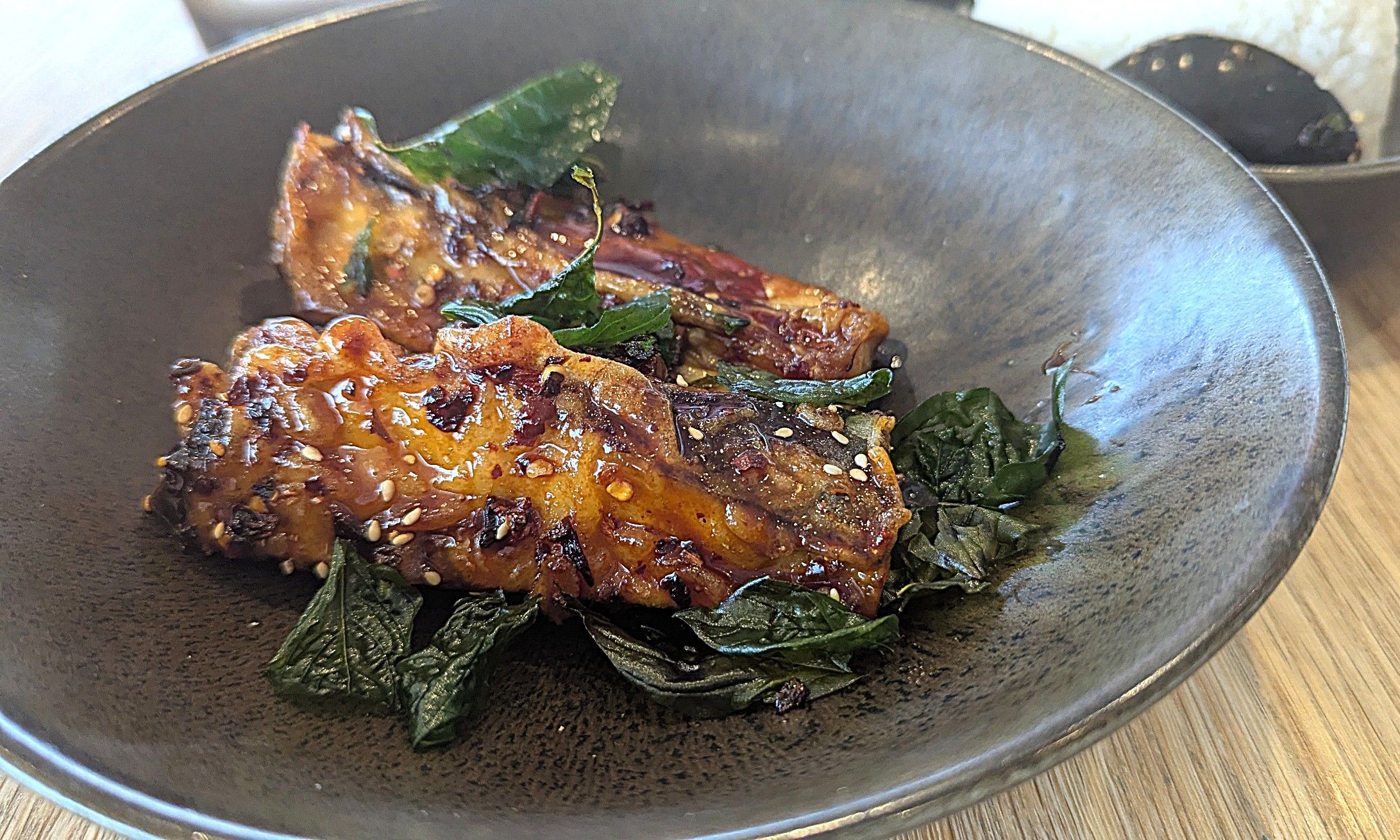
MOD at the Gallery of New South Wales is an attractive venue in the new building beside the one with which we are all so familiar. The menu is Asian inspired, and there are some catches for anyone allergic to seafood. This was dealt with deftly on this occasion so that the sate sauce with the chicken skewers was served by the side. A good idea, but the chicken skewers really need the usual treatment. However, they were succulent, and the sauce from the egg plant dish was a good accompaniment. This dish is the star of the menu. The prawn dumplings were flavoursome, but difficult to manipulate with the chopsticks – I just ended up looking inelegant. We also had the pickled vegetables, and the wonderfully addictive edamame beans. The rice was nicely cooked and a good accompaniment to the delicious sauces. Unfortunately, the service was quite erratic, and although we were happy to spend time over the meal, it did take a rather long time for the second course to arrive. An ordered drink did not arrive until ordered again. I shall return as I love the food but…






While in Sydney I do more than eat. Next week my visit to the gallery and attending the marvellous Art at the Roslyn Packer Theatre will be featured.
Australian Politics
Pearls and Irritations
John Menadue’s Public Policy Journal
How Australia should fix capital gains tax
The 50 per cent capital gains tax discount departs from the original purpose of taxing real gains, entrenches inequality and unfairly advantages wealth over work.
When Paul Keating introduced Capital Gains Tax in 1985, he achieved one of the great tax equity and integrity reforms in Australia’s history.
He introduced the tax based on the principle that only real capital gains, that is gains after taking account of inflation, should be liable to taxation.
That principle was right then; it remains right today.
Unfortunately, the implementation of the indexation of the original cost to account for inflation became complex and unwieldy. Accountants understood it, but taxpayers didn’t.
The case for simplification was strong.
Peter Costello articulated the case for simplification well in 1999, but his implementation of the simplification was absurd.
By introducing a one-off 50 per cent discount after the capital item has been held for twelve months, he created a significant distortion and reduced the equity of the original Keating reform.
How does it make sense to pay 100 per cent tax on an item if you sell it in the twelfth month after purchase but only 50 per cent in the thirteenth month?
And for many years the seller will gain an unreasonable and unjustifiable advantage over wage and salary earners who pay tax on all their income.
The Grattan Institute has calculated, based on government data, that the CGT discount mainly benefits the already wealthy. The wealthiest 20 per cent of Australians receive nearly 90 per cent of the CGT discount.
The Institute, in a Senate Committee submission, also argues that the discount is a big reason why older Australians pay a lower tax rate on their income than younger Australians still working.
This is an important matter of intergenerational equity without looking at the implications of the CGT discount on housing.
What should Costello have done?
The best option would have been to introduce a sliding scale of discount based on the RBA’s target for inflation.
This could be 2.5 to 3 per cent per annum, or of you want to put a little allowance to take into account the occasional overshooting of the target band it could be as high as 5 per cent.
This would have meant taxpayers paying tax on the current rate of 100 per cent of their capital gain in the first year, 95 per cent in year two etc. It would still have been possible to have stopped the discount at 50 per cent in the tenth year and thereafter or to have gone on to 25 per cent after 15 years.
However, it is too late to revert to that option. It would mean increasing the discount for some with no discernible benefit.
But there are feasible ways forward.
We could go back to indexation, but nobody wants to see unnecessary complexity introduced into the tax system.
A possible variant of the better initial proposition would be to scale the discount down from 50 per cent to 25 per cent over five years and maintaining it at 25 per cent thereafter, however long the asset is held.
I have no idea what reform, if any, the Treasurer is considering to CGT. It will take political courage to take on the vested interests who benefit from the current excessive discount.
You can assume that the wealthy beneficiaries will not give up their benefit easily. And they will once again seek to conscript the poor in their defence. “Mum and dad” investors will be front and centre of the arguments, hiding the fact that the principal beneficiaries, the wealthiest investors will be hiding behind them.
Early indications are that the Liberals will support maintaining the current excessive discount. I assume their donors may insist upon it.
Logic and equity both point in the same direction: a discount based on real gains not an artificial excessive discount which distorts investment decisions and robs hard working and younger taxpayers.
That can be the basis for a compelling argument, but it will not be an easy political contest to win.
The views expressed in this article may or may not reflect those of Pearls and Irritations.
Bob McMullan
Bob McMullan was State Secretary of the Australian Labor Party and National Secretary as well as a Senator, MP and Cabinet Minister.
Social Cohesion and Shared Humanity
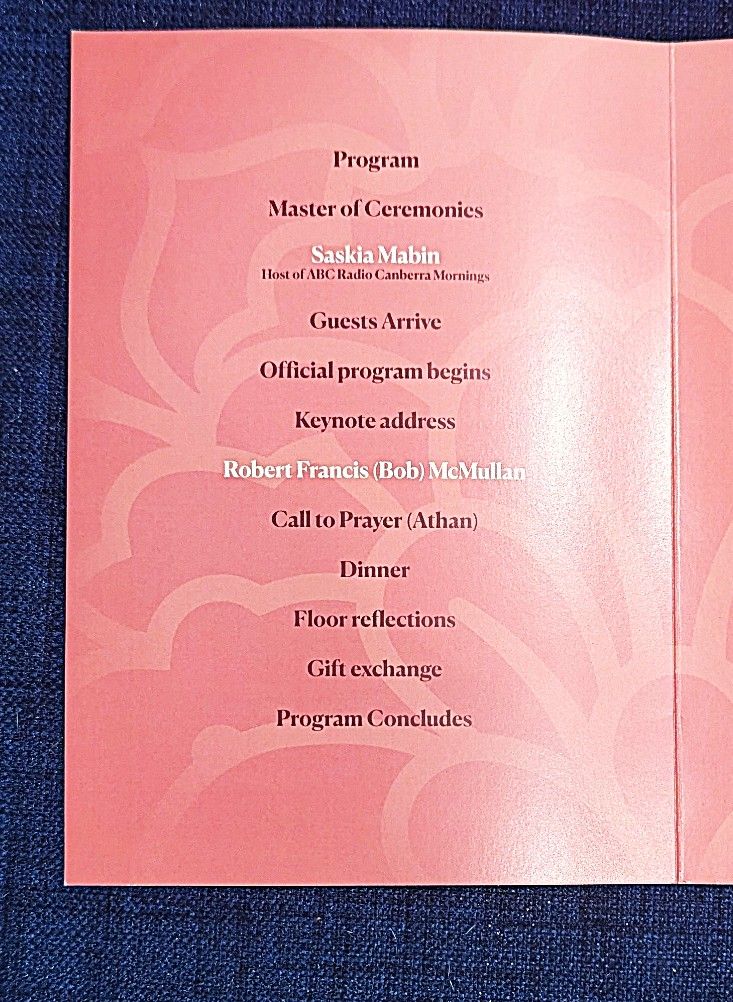
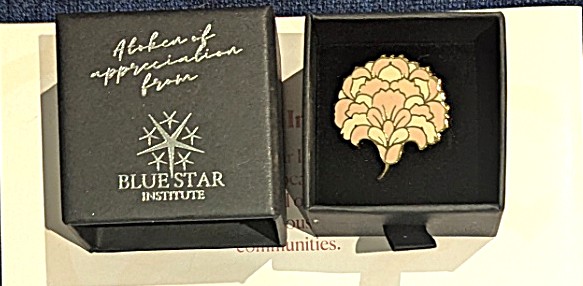
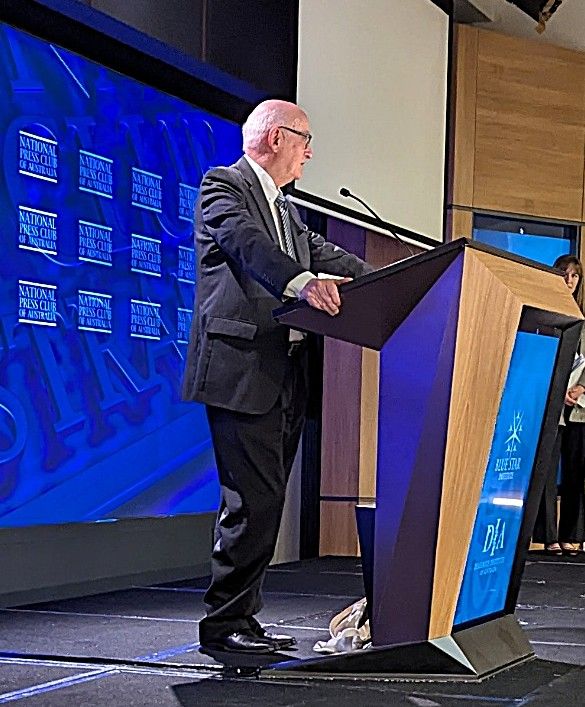
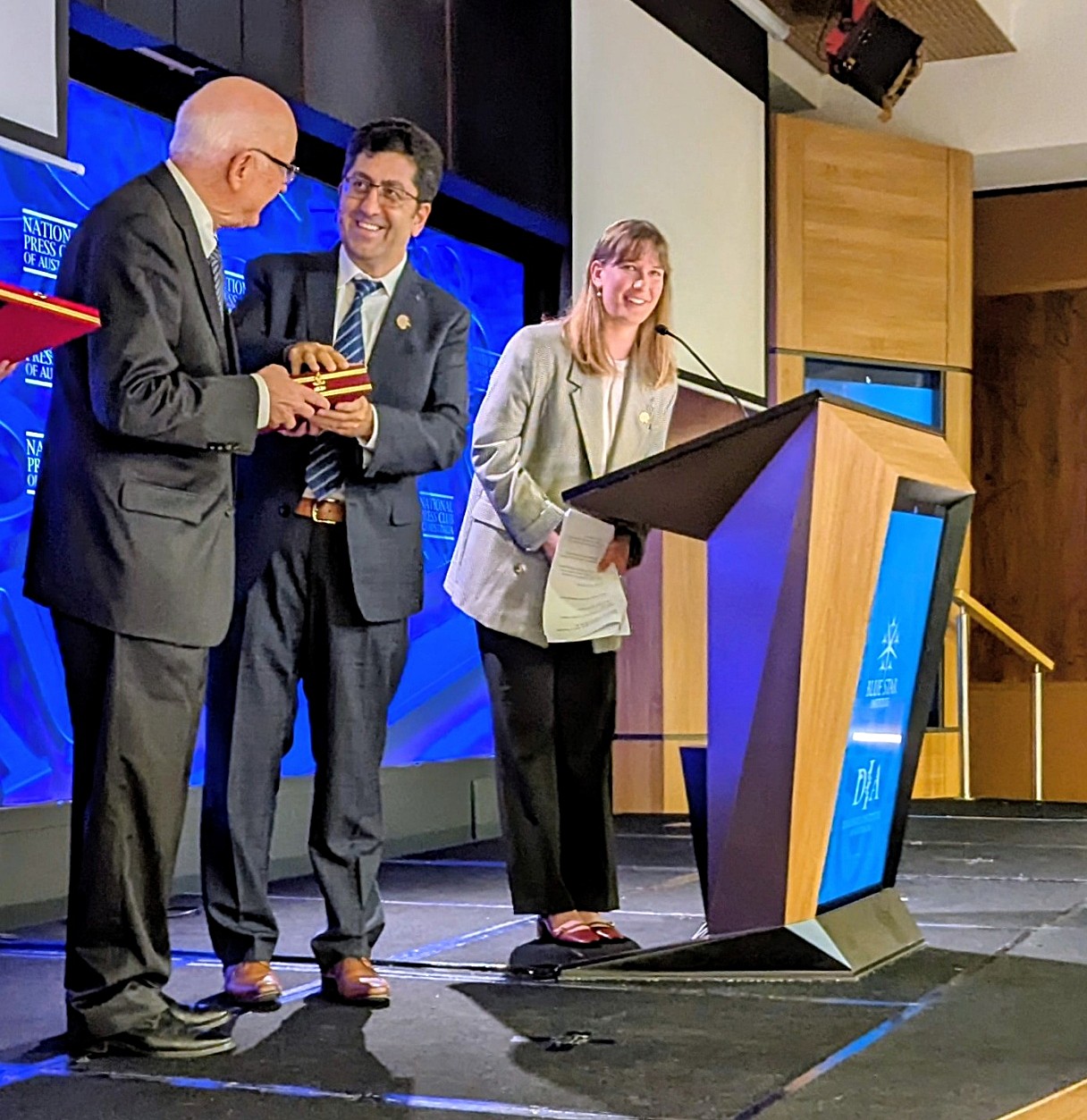
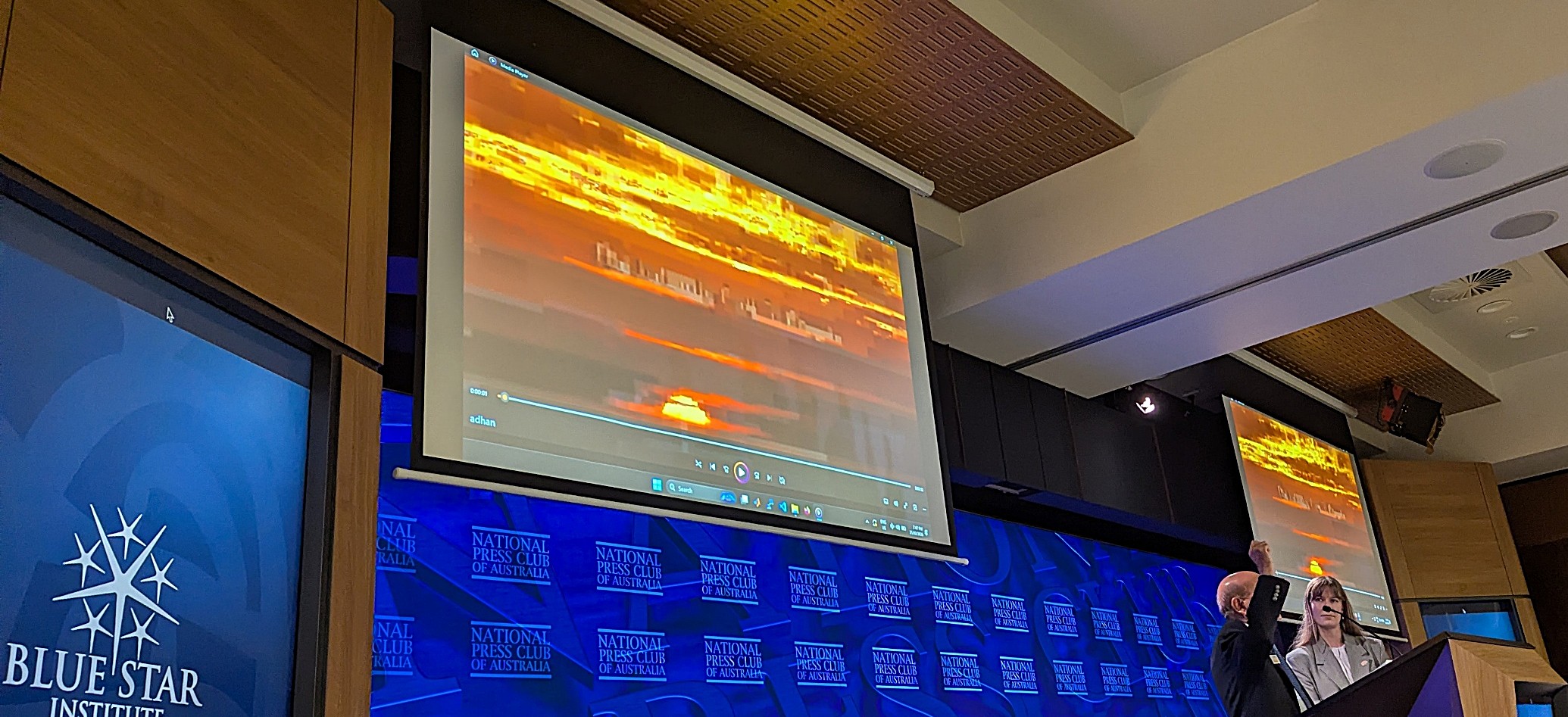
The Blue Star Institute held its annual Canberra dinner recently and Bob McMullan made the keynote address. The Bluestar Institute was formerly known as Bluestar Intercultural Centre and was founded in 2009 by local Hizmet Movement volunteers with the goal of promoting dialogue between different religious, ethnic and cultural communities. The dinner was an example of the success of the movement with representation from a broad range of religious, ethnic and cultural communities. It was a wonderful evening, and I am looking forward to joining this large group of people committed to social cohesion on future occasions.
British Politics
A party can lose and still learn nothing
Tom Watson <tomwatsonofficial@substack.com>
Subscribe here for more
I had a day off. It was a mistake.I got to see and hear every response to the election result in Gorton and Denton. All the briefings and demands and score settling and tears and joy and agony and despondency. It was like watching a party conduct its own autopsy while the body was still twitching on the TV studio sofa.
But by far the worst piece of analysis, delivered to a broadcaster by a “high placed Labour source”, was this: we lost because Labour’s immigration policy was too punitive.
Oh, for fuck’s sake. Sam Coates of Sky News went on air and told the nation, words to that effect, that young Muslim men deserted Labour because Labour’s new immigration policy on earned citizenship had alienated them. Somewhere in a regional party office a pointy head with a lanyard looked up from his spreadsheet and said, “Yes. That’s it. That’s why we lost Manchester.” And everyone else was either too sleep-deprived or too frightened to tell the truth, which is that this is a glib excuse that would not get you a pass in GCSE politics. Sam Coates will defend himself by saying he was only repeating what a senior Labour source was telling him, and that is fair enough. But other than his disastrous review of Neil Diamond at Glastonbury in 2008, he normally has better antennae for accuracy. Sometimes the job is not just to relay the briefing but to smell it first.
If young Muslim men left Labour to vote Green yesterday it had nothing to do with Labour’s immigration policy and everything to do with Gaza. This is not complicated. The Green Party did not win Gorton and Denton because of the quality of their policy platform or the depth of their thinking on immigration reform. They won it because they had the cynicism to wrap themselves in a flag of conscience on the one issue that mattered most to a community in pain, and Labour handed them the match. Let us not dress this up. The Greens ran a single-issue campaign on Gaza with the discipline of a military operation and the moral certainty of people who will never have to govern. It worked. That does not make it admirable. It makes it effective, which in politics is a different thing entirely.
The other strain of post-match delirium is the claim that we would have won the by-election if only Andy Burnham had been the candidate.No, we would not. Andy dodged disaster yesterday. The gap was too big. Look at it.Hannah Spencer took Gorton and Denton with 40.7 per cent of the vote. Reform’s Matt Goodwin came second on 28.7 per cent. Labour’s Angeliki Stogia, a very good candidate, trailed in on 25.4 per cent. The combined Conservative and Labour vote was 27.3 per cent. For the first time in modern parliamentary history neither Labour nor the Conservatives finished in the top two. The Tories got 1.9 per cent.A few people have unkindly blamed former MP Andrew Gwynne for this result. Whatever Andrew did in his WhatsApp groups, he can be very confident he is not the reason Labour lost yesterday, and I hope he knows that.I also hear anecdotally from campaigners that while most Conservative supporters defected to Reform, a chunk went Green, not out of love for net zero but out of fear of a Reform MP and a wobble in the local housing market. Nothing says modern Conservatism like voting Green to keep the drama in Clacton.
The Conservatives have reached that special stage of political decline where novelty candidates sit on the same rung as them. When your candidate is trading vote share with Sir Oink a Lot you are not a serious party any more. You are a cautionary tale for what can happen to Labour if we do not get our act together fast.
Not even the reincarnation of Clement Attlee, with a full social media team and a TikTok strategy slicker than Hannah Spencer’s, could have won yesterday. Lucy Powell, our magnificent deputy leader, threw the kitchen sink at this by election. Seasoned hands will know she headed a vote collapse and I mean she stopped us sliding to a humiliating sub five thousand votes. The team worked every voter they could find. She led well, and the result was comfortably better than Labour’s national standing. It was still nowhere near enough.
The luckiest man in the UK today is Andy Burnham. I suspect he knows it. I hope he knows it, because he is a good man and he gave this campaign his all. Had Keir Starmer and the eight other members of Labour’s National Executive had the good grace to let him stand, we would now be watching the mayor of Greater Manchester give a concession speech in a leisure centre at four in the morning. The narrative would not be “Labour blocked its best candidate”. It would be “Labour’s best candidate got hammered”. That is a different headline and a considerably worse one.
Those who have spent the past year hoping that Andy’s return to Parliament would solve everything are now in some difficulty, because I cannot see a single seat that Labour could hold at a by election in the foreseeable future. A turnaround in the polls would change that, but turnarounds take time.
The first bad take was immigration. The second was that Andy Burnham would have won it. The third is that the lesson is Labour must be more Green, which is to say more left. Several union general secretaries and hard-left public intellectuals have been vociferous about this today and Richard Burgon has been especially loud. I hate criticising Richard because I love the man, mainly because of his consistent and unwavering devotion to that most specialist niche of music creation, that most rarefied and exquisite pinnacle of artistic expression, that is the genre of heavy metal. For this he carries my deepest respect. But honestly, he needs to squidge the doughnuts out of his ears and get real.
This “shift left” vibe will not do us much good. It takes a one off by-election and forces it into an ideological story, as if voters were choosing a manifesto rather than registering anger, identity and tactical intent. This contest was driven by at least three dynamics at once: Gaza as a high salience issue for a chunk of voters, the usual anti incumbent drift that hits parties in government, and tactical behaviour aimed at blocking Reform. If you blend those into one verdict, you misread the result.
It also mistakes the Green vote for a simple leftward preference. In by elections, Minor parties often assemble a temporary coalition of protest voters, identity voters and signal senders, which can look like a governing majority until polling day is over. Then it dissolves the moment the country starts asking a different question, who runs the place.
If Labour wants a usable lesson, it is not to cosplay as a party of permanent protest. It is to rebuild a credible moral economy and a visible programme for living standards. That probably starts with a root and branch review of arm’s length regulation, so the state stops outsourcing accountability to quangos with no grip and no bite. Then appoint a minister for standards of living, with the authority to coordinate enforcement across departments and regulators, and with a simple job description: take on the bad actors, the selfish minority, who do not play by the rules, and make the economy work for the little guys and gals again. This should very directly have small business and freelancers at the heart of it.
Many of today’s commentators also forget to put some basics into their daft analysis Parties of government have a very bad strike rate at holding seats when they are in power. This is not news. This is not even analysis. It is a fact so old it should have its own blue plaque on the wall of Professor John Curtice’s study.
Here I am going to blow my own trombone and show you a chart. I was involved in several of the wins in the Blair and Brown years. The party had a habit of making me campaign manager for the ones they expected to lose, on the theory that if someone had to stand in front of the cameras and explain a defeat it might as well be me. Several of those seats held. The assumption was often wrong. I was often stubborn. The two things may be connected.
Big Health warning with this chart. I have used AI to generate these numbers, so they may not be 100 per cent accurate. I will check against the actual figures next week and amend if necessary.
Finally, Cheer up Labour friends. We are not halfway through this parliament and there is a long way to go. And at a general election, honestly it is only a hunch, but based on fifty years of living through them, I think most people will not want Zac Polanski to be our Prime Minister.
Don’t get mad at me for saying this. It is just my hunch.
Labour loses to its left
LabourList <accounts@labourlist.org> Friday 27 February 2026
By Emma Burnell Bluesky / WhatsApp / X / TikTok / email us / newsletter signup
A gory night for Labour So, let’s start with the good news – Reform UK does not have a new MP. Matt Goodwin suffered a bad loss.
At the start of this campaign it was very much felt that Reform could easily take this seat. Perhaps we’re now seeing that the ‘teal wave’, which had been seemingly unstoppable for so long, may have in fact crested. However, that’s about all the electoral good news for Labour today (though we do have our usual round up of how Labour is delivering in government). Coming third in a seat that we’d previously held by over 13,000 votes is going to raise inevitable questions for Labour’s leadership and strategy. In particular, their relentless focus on Labour to Reform switchers – which has opened up space to Labour’s left which the Green Party capitalised on to devastating effect last night to win their fifth MP and first in the north of England.
Some realism will be needed when asking these questions. First of all, midterm by-elections do tend to produce results that are unfavourable to the sitting government – especially one that is unpopular. Secondly, it will be reasonable to argue that there has not yet been time for the things Labour has done right to bear fruit. None of which is to argue that last night’s result was inevitable.
The most obvious question this morning is would Labour have done better if Andy Burnham had been the candidate? That is to take nothing away from Labour’s Angeliki Stogia who fought a very positive, very energetic campaign. But the Greater Manchester Mayor’s popularity, especially when contrasted with the UK Labour Government overall, is significant. Could running this popular figurehead have made Labour the more obvious ‘stop Reform’ choice? Obviously nobody can prove a counterfactual, but some reports from the doorstep show that people were saying that they would have voted for Burnham but could not vote for Labour more broadly. Even this inevitably leads to even tougher questions.
If Burnham had won, that would have created an expensive and difficult by-election for that Greater Manchester mayoralty. Is the calculation, therefore, that it was better to risk this mid-term by-election loss in order to prevent putting that mayoralty at risk of being run by populists of the left or the right? That is the case that Keir Starmer will have to make. He made it known that he led from the front in blocking Andy Burnham’s candidacy. Therefore, he will need to make the argument that this was the right thing to do for the party overall in a long-term strategic approach even if it might have been the wrong tactic in Gorton and Denton.
Let’s be blunt – the circumstances of this by-election could not have been worse for Labour. Not only had the whole campaign started with a high profile internal row over Burnham’s candidacy but throughout the short campaign one news story has dominated – that of the relationship of Peter Mandelson with Jeffrey Epstein and Mandelson’s influence with senior figures in Keir Starmer’s government. This row has already resulted in the loss of a number of staff from Number 10 including Starmer’s right hand man Morgan McSweeney. Many of these were also figures who were largely involved in trying to bring the Party to particularly focus on those Labour to Reform switchers at the expense of leaving our left flank exposed. With them leaving, that may already be changing, but that doesn’t mean that there aren’t lessons still to be learned.
When I was speaking to our reporter James Tibbitts before the result came in last night, he said that one thing that had clearly struck him was the internal unity that had been displayed in Gorton and Denton. People working from across the factions of the party to get behind the candidate and to pull positively in the same direction. Now, obviously, this result is not what any of those people wanted. But that energy, that working together rather than fighting each other may well be a key part of turning around Labour’s fortunes going forward. If we simply make this a chance to attack the leadership and revive internal fights, we might lose something very precious and very fragile that Labour members started to rebuild on those doorsteps.
However, if we also mistake the need for unity for a need for blind loyalty, we will fail to have the difficult conversations about where, how and why Labour is getting things wrong. Both unquestioning loyalty and factional infighting are blind alleys.
Instead, Labour must continue to work in the spirit of unity but to do so with honesty and transparency and encourage a discussion between all of the parts of the party; a discussion where all feel as valued and energised as they did on those doorsteps yesterday. All find a way to feel part of what is being built enabling them to pull in the same direction and to work to make this Labour government a success in policy, political, electoral and cultural terms. There’s still time to do that, but the clock is ticking. LabourList will continue to provide a platform for all those wishing to discuss all things Labour in that spirit of honesty, togetherness and transparency.
For today, we want to thank the thousands of activists who hit the doorsteps in Gorton and Denton. We want to thank Angeliki Stogia for running an incredible and positive campaign and we want to thank you, our readers, for ensuring that LabourList is the space that Labour needs to ensure that we can be a robust, forward-looking, positive and energised party. We saw defeat last night and it hurts. But underneath that we may also have seen positive signs of things to come. Let’s build on that.
American Politics
Heather Cox Richardson from Letters from an American <heathercoxrichardson@substack.com> Tuesday 3 March 2026
Forwarded this email? Subscribe here for more
The Economist’s Middle East correspondent Gregg Carlstrom noted that Trump appears to be workshopping the causes for his attacks on Iran and his goals for the war by talking to journalists.
As Meidas Touch summarized Carlstrom’s argument, he said: “[Trump] doesn’t sound convinced by any of it. He’s throwing spaghetti at the wall. Ultimately I suspect he just wants to say he ‘solved’ a problem that has vexed every American president since Jimmy Carter. But there’s no clear idea what that looks like and no plan for how to get there. And there are plenty of possible scenarios in which Trump declares victory and leaves the region with an absolute mess.”
Matt Gertz of Media Matters noted today that Trump, who watches the Fox News Channel consistently, appears to have shaped his attack on Iran in response to encouragement from FNC hosts. Gertz recalled that for decades, the FNC hosts Trump trusts the most have called for military strikes on Iran.
Last June, FNC personalities Sean Hannity, Mark Levin, and Brian Kilmeade urged Trump to bomb Iran and then lavished praise on him when he did. Hannity said the bombing would “go down in history as one of the great military victories.”
In the past weeks, Gertz wrote, the same figures have been urging Trump to attack. But their goal appeared to be the bombing itself. They expected an easy victory, without defining what that might look like. According to Kilmeade, the U.S. would “lose credibility forever” if it didn’t hit Iran. On Friday morning, Kilmeade said: “I hope the president chooses to go at it. We have been looking at these headlines for 47 years, and we have an opportunity to end it. And this president likes to make history.”
On Friday night, Levin told Hannity: “This president knows right from wrong. He knows good from evil. He knows that this regime is a death cult. And he knows that there’s only really two countries that are prepared and willing to put an end to this. We don’t need to put up with their crap. It’s time to put it to an end.”
On Saturday, after Trump had started the bombing, Levin said: “Donald Trump did what nobody else could do for half a century. How do you like that? And you know why he did it? Because he loves his country.”Trump’s strikes on Iran could have had something to do with the increasing heat over the Epstein files or his fury that the Supreme Court struck down his tariff walls, which were central not only to his economic program but also to his pressure on foreign governments and companies to do his bidding. Possibly he was responding to pressure from Israel’s prime minister Benjamin Netanyahu or Saudi crown prince Mohammed bin Salman, or both.
Whatever their immediate trigger, the strikes fall in line with the ideology of cowboy individualism that began to take over the Republican Party in the 1980s and which, under Trump, has turned into brutal displays of dominance. The old idea of a cowboy from rural America who cuts through the government bureaucracy that threatens his livelihood by coddling racial minorities and women has curdled into the notion that a leader can do whatever it takes, including violence, to force opponents to submit to his will.
In foreign affairs, that means smashing the international alliances built after World War II. One of the crowning achievements of that international order is the United Nations, constructed to maintain international peace and security by creating organizations that could provide a forum for diplomacy and stop countries from attacking each other. The U.S. currently owes the U.N. nearly $4 billion in unpaid dues as Trump seeks to replace the organization with his own “Board of Peace” that he alone controls. This month, the U.S. holds the presidency of the U.N. Security Council, enabling it to set the agenda. Today, Trump sent First Lady Melania Trump to chair the meeting, the first time a presidential spouse has done so.Another of the crowning achievements of the post–World War II international order is the Geneva Conventions, which define the legal treatment of noncombatants in war. In his confirmation hearings, Defense Secretary Pete Hegseth refused to tell Senator Angus King (I-ME), who pressed him on the issue, that he would uphold the Geneva Conventions.
In the ideology that honors violent domination, Trump’s bombing Iran without regard for the Constitution or international law, when no president before him had done so, proves his strength. Hegseth illustrated that idea this morning when he said: “For forty-seven long years, the expansionist and Islamist regime in Tehran has waged a savage, one-sided war against America.” Hegseth, who was a Fox News Channel weekend host before becoming secretary of defense, tried to turn the administration’s military operation into a heroic stand in a silent war that had lasted for two generations.
Claiming the U.S. attacks on Iran that started this conflagration were defensive, rather than offensive, Hegseth claimed: “We didn’t start this war, but under President Trump we are finishing it…. It took the 47th president, a fighter who always puts America first, to finally draw the line after 47 years of Iranian belligerence. He reminded the world, as he has time and time again…[i]f you kill Americans, if you threaten Americans anywhere on Earth, we will hunt you down, without apology and without hesitation, and we will kill you.”
Hegseth celebrated Israel and its strikes alongside the U.S., while he condemned “so many of our traditional allies who wring their hands and clutch their pearls, hemming and hawing about the use of force. America, regardless of what so-called international institutions say, is unleashing the most lethal and precise air power campaign in history…. No stupid rules of engagement, no nation-building quagmire, no democracy-building exercise, no politically correct wars. We fight to win, and we don’t waste time or lives.”In this ideology, the dominance itself is the point: there is no other endgame.But this ideology was always based on a myth that played well on television. Three days into the attack on Iran, there is increasing scrutiny of the assertions from government officials. According to Dustin Volz, Alexander Ward, and Lara Seligman of the Wall Street Journal, lawmakers and experts say those assertions are “incomplete, unsubstantiated, or flat-out wrong.”
And as the conflagration spreads, taking the lives of now six of our military personnel, the administration is now discovering that the American people would like to know why we are engaged in what appears to be a war of choice, and why this approach to the world is better than the one that kept us safe for 80 years.
Today the State Department told U.S. citizens to leave Gulf states immediately because of “serious safety risks,” “using available commercial transportation.” But many of the airports in the region are closed, some because they have been hit in the fighting. Representative Ted Lieu (D-CA) posted on social media: “Dear [Secretary of State Marco Rubio]: You told Americans to depart now via commercial means when you know many airports/airspace are closed. YOU MUST IMMEDIATELY SCHEDULE U.S. GOVERNMENT EVACUATION FLIGHTS FOR THE STRANDED AMERICANS IN DANGER. Maybe you should have thought of a frickin’ plan first.”
Retired Major General Randy Manner, who is currently stranded in the United Arab Emirates, told CNN: “It seems to me that the purpose and mission have been shifting over the past few days and the past few weeks. Initially, it was to ensure that they could not continue to develop nuclear weapons. Now it’s about regime change, and then there’s so many things that are being piled onto the mission list, it almost seems like someone googled it before the brief, to throw everything…in the kitchen sink into it. So it’s a little bit disconcerting.
“And, in fact, one of the small things that does matter to tens of thousands of people here, as well as to their families: It’s a little bit disheartening and a little bit envious to hear that the BBC has announced that the U.K. government is actually arranging transport for the British citizens to be able to extract them, whereas here, for us as Americans, we feel abandoned. The State Departments have talked to two embassy personnel, two different embassies. They are in survival mode, quite frankly, because as we know, the administration reduced their budgets by almost one half over the past year. So this is a difficult situation for people who are not used to being in a combat situation. And that, of course, is, quite frankly, probably 99% of the travelers that are here.”
Former paratrooper and Army Ranger Representative Jason Crow (D-CO) also had something to say about the reality of war. “I learned, years ago, that when elites like Donald Trump bang the war drums and pound their chests in Washington, D.C., and talk about sending troops into the ground or into combat, he’s not talking about his kids. He’s not talking about all of his minions’ kids. He is talking about kids like me and the people that I grew up [with] in working-class areas, rural places around the country that have to pick up rifles, jump in the tanks or helicopters, and…do the tough work. Well, America is over it. America is over the three trillion dollars we’ve spent. The quagmires of failed nation building. The sending of our sons and daughters and brothers and sisters to enrich oil executives. America is over endless adventurism using our military. Because they want their infrastructure rebuilt. They want quality affordable healthcare. They want to be able to afford groceries. They want to be able to afford a home. They want to be able to send their kids to school.”—
Notes: https://www.mediamatters.org/us-iran-relations/iran-most-consequential-test-fox-trump-feedback-loop-yethttps://www.ms.now/morning-joe/watch/secy-hegseth-we-didn-t-start-this-war-but-under-trump-we-are-finishing-it-2490021443843https://apnews.com/article/un-us-budget-dues-trump-payment-7d68c072d470f989006b7d674ba85aaahttps://www.pressherald.com/2025/01/21/king-votes-against-hegseth-for-defense-secretary/https://www.pressherald.com/2025/01/14/king-questions-hegseth-during-contentious-hearing/https://www.wsj.com/world/middle-east/trumps-case-for-war-with-iran-faces-growing-scrutiny-96648cb9https://www.wsj.com/world/middle-east/iran-is-shooting-at-some-of-the-worlds-busiest-airports-bb660b8ehttps://apnews.com/article/iran-us-international-law-war-aggression-6f0b57efff5e62e5c8fbc1acca4a3199X:atrupar/status/2028544448532013284allenanalysis/status/2028627916393939016tedlieu/status/2028617022394044427Bluesky:meidastouch.com/post/3mg3lfpaxlk2aiwillnotbesilenced.bsky.social/post/3mg43xmo4b22p

Rachel Maddow Fans ·
Steve Eskey ·27 February at 08:23 ·
SECRETARY CLINTON’S OPENING STATEMENT TO THE HOUSE OVERSIGHT AND GOVERNMENT REFORM COMMITTEE FEBRUARY 26, 2026
Mr. Chairman, Ranking Member, Members of the Committee… as a former Senator, I have respect for legislative oversight and I expect its exercise, as do the American people, to be principled and fearless in pursuit of truth and accountability.
As we all know, however, too often Congressional investigations are partisan political theater, which is an abdication of duty and an insult to the American people.
The Committee justified its subpoena to me based on its assumption that I have information regarding the investigations into the criminal activities of Jeffrey Epstein and Ghislaine Maxwell. Let me be as clear as I can. I do not.
As I stated in my sworn declaration on January 13, I had no idea about their criminal activities. I do not recall ever encountering Mr. Epstein. I never flew on his plane or visited his island, homes or offices. I have nothing to add to that.
Like every decent person, I have been horrified by what we have learned about their crimes. It’s unfathomable that Mr. Epstein initially got a slap on the wrist in 2008, which allowed him to continue his predatory practices for another decade.
Mr. Chairman, your investigation is supposed to be assessing the federal government’s handling of the investigations and prosecutions of Epstein and his crimes. You subpoenaed eight law enforcement officials, all of whom ran the Department of Justice or directed the FBI when Epstein’s crimes were investigated and prosecuted. Of those eight, only one appeared before the Committee. Five of the six former attorneys general were allowed to submit brief statements stating they had no information to provide.
You have held zero public hearings, refused to allow the media to attend them, including today, despite espousing the need for transparency on dozens of occasions.
You have made little effort to call the people who show up most prominently in the Epstein files. And when you did, not a single Republican Member showed up for Les Wexner’s
This institutional failure is designed to protect one political party and one public official, rather than to seek truth and justice for the victims and survivors, as well as the public who also want to get to the bottom of this matter. My heart breaks for the survivors. And I am furious on their behalf.
I have spent my life advocating for women and girls. I have worked hard to stop the terrible abuses so many women and girls face here and around the world, including human trafficking, forced labor, and sexual slavery. For too long, these have been largely invisible crimes or not treated as crimes at all. But the survivors are real and they are entitled to better.
In Southeast Asia, I met girls as young as twelve years old who were forced into prostitution and raped repeatedly. Some were dying of AIDS. In Eastern Europe, I met mothers who told me how they lost daughters to trafficking and did not know where to turn. In settings around the world, I met survivors trying to rebuild their lives and help rescue others – with little support from people in power, who too often turned a blind eye and a cold shoulder.
If you are new to this issue, let me tell you: Jeffrey Epstein was a heinous individual, but he’s far from alone. This is not a one-off tabloid sensation or a political scandal.
It’s a global scourge with an unimaginable human toll.
My work combatting sex trafficking goes back to my days as First Lady. I worked to pass the first federal legislation against trafficking and was proud that my husband signed the Trafficking Victims Protection Act, which increased support for survivors and gave prosecutors better tools for going after traffickers.
As Secretary of State, I appointed a former federal prosecutor, Lou CdeBaca, to ramp up our global antitrafficking efforts. I oversaw nearly 170 anti-trafficking programs in 70 nations and directly pressed foreign leaders to crack down on trafficking networks in their countries. Every year we published a global report to shine a light on abuses.
The findings of those reports triggered sanctions on countries failing to make progress, so they became a powerful diplomatic tool to drive concrete action.
I insisted that the United States be included in the report for the first time ever in
2011. Because we must hold ourselves not just to the same standard as the rest of the world but to an even higher one. Sex trafficking and modern slavery should have no place in America. None.
Infuriatingly, the Trump Administration gutted the Trafficking in Persons Office at the State Department, cutting more than 70 percent of the career civil and foreign service experts who worked so hard to prevent trafficking crimes. The annual trafficking report, required by law, was delayed for months. The message from the Trump Administration to the American people and the world could not be clearer: combatting human trafficking is no longer an American priority under the Trump White House.
That is a tragedy. It’s a scandal. It deserves vigorous investigation and oversight.
A committee endeavoring to stopping human trafficking would seek to understand what specific steps are needed to fix a system that allowed Epstein to get away with his crimes in 2008.
A committee run by elected officials with a commitment to transparency would ensure the full release of all the files.
It would ensure that the lawful redactions of those files protected the victims and survivors, not powerful men and political allies.
It would get to the bottom of reports that DOJ withheld FBI interviews in which a survivor accuses President Trump of heinous crimes.
It would subpoena anyone who asked on which night there would be the “wildest party” on Epstein’s island.
It would demand testimony from prosecutors in Florida and New York about why they gave Epstein a sweetheart deal and chose not to pursue others who may have been implicated.
It would demand that Secretary Rubio and Attorney General Bondi testify about why this administration is abandoning survivors and playing into the hands of traffickers.
It would seek out officers on the front lines of this fight and ask them what support they need.
It would put forth legislation to provide more resources and force this administration to act.
But that’s not happening.
Instead, you have compelled me to testify, fully aware that I have no knowledge that would assist your investigation, in order to distract attention from President Trump’s actions and to cover them up despite legitimate calls for answers.
If this Committee is serious about learning the truth about Epstein’s trafficking crimes, it would not rely on press gaggles to get answers from our current president on his involvement; it would ask him directly under oath about the tens of thousands of times he shows up in the Epstein files.
If the majority was serious, it would not waste time on fishing expeditions. There is too much that needs to be done.
What is being held back? Who is being protected? And why the cover-up?
My challenge to you, Mr. Chairman, Members of the Committee, is the same challenge I put to myself throughout my long service to this nation. How to be worthy of the trust the American people have given you. They expect statesmanship, not gamesmanship. Leading, not grandstanding. They expect you to use your power to get to the truth and to do more to help survivors of Epstein’s crimes as well as the millions more who are victims of sex trafficking.

 Robin's Room