
M.L. Stedman A Far-flung Life Penguin Random House Australia| Penguin eBooks (AU Adult), March 2026.
Thank you, NetGalley, for providing me with this uncorrected proof for review.
I found M. L. Stedman’s The Light Between Oceans a stunning, poignant read. A Far-flung Life is both, and more. The writing is beautiful, the plotting refined, characterisation excellent, and the description of the Australian environment, superb. The MacBride family, Phil and Lorna, and their children Warren, Rosie and Matt gain their livelihood from Meredith Downs, a Western Australian sheep station. As the male MacBrides travel through the bush, their truck full of sheep, and miles from any ocean, their ownership of a boat, housed in a towering shed on the property is the first hint that this is an outback Australian family whose lives may be unusual. However, familiar aspects of life on the land also rule the MacBride’s lives. Warren, as the eldest son will inherit the station when Phil retires and Matt and Rosie must find other futures. Matt’s seems assured – he is excelling at a prestigious boarding school in Perth and feels that he can do anything, including sailing the boat. Rosie, although also at a prestigious boarding school in Perth, does not have the same prospects. Not only is she less academic, but it is also understood that she will marry another station owner and follow in Lorna’s footsteps. The world is not open to her, nor is independence. The unique responses she devises provide both possibilities and vulnerability. This trip, with its evocative depiction of the surrounds, foliage, wildlife, the road, the sky, will change the MacBride’s lives.
Moral dilemmas impact a family suffering grief and markedly changed circumstances. The morality imposed by country life and small compact communities, conflicts between the law and understanding of the shortcomings of the legal system, together with figures in authority choosing one path or the other are explored. Characters whose flaws and courage under immense challenge are also examined. Even seemingly minor characters are so well developed that their aims and concerns become strong threads that help weave the story together into a remarkable narrative that pulses with feeling.
At the same time as being a novel in which the characters evoke interest, sympathy and, at times censure, A Far-flung Life explores historical changes in Western Australia. The first chapters describe life when pastoral properties associated with small country towns dominated, going back into the past that the MacBrides enjoyed, to the events of 1958 when the novel begins, and the immediate aftermath, through the years up to the introduction of mining exploration in the late 1960s to the 1970s and then again in the 1980s. There are reflections on the 1890s goldrushes and the immigration associated with these, the ‘boom and bust’ nature of the economy, a possible connection with Kew Gardens which serves as a reminder of the British heritage of some Australian settlers and the scourge of asbestos mining recalling other waves of immigration.
An immense novel of tragedy, tenderness, courage and memorable characters and events, this also becomes a domestic story where the MacBrides and their wider family overcome setbacks. Quietly they go about their business on the land and with each other, eventually making assured choices and judgements that resonate with the rhythms of the land on which they dwell.

Julia Wagner Hester Street Bloomsbury Academic, October 2025.
Thank you, NetGalley and Bloomsbury Academic, for this uncorrected proof for review.
This inspiring book provides the blueprint for three studies – analysis of a film; analysis of the depiction of a group that is the focus of a work of art; and detailed analysis of the film that is the topic of the book – Hester Street. It is worth considering the broad sweeping value of Julia Wagner’s Hester Street to each of these studies. The first two aspects demonstrate the value of Wagner’s work to creating a measure for analysing any artistic endeavour and depictions of groups within those works. That is, Hester Street might not be the film that you want to analyse but provides excellent tools for evaluating any film. Similarly, studies of groups will benefit from the detailed work undertaken in this text. It is a stellar source for studying much creative work. And that is before approaching the topic of the book, the analysis of Hester Street, the film.
Chapters cover topics such as the way in which visual and spoken language conveyed historical information; how immigration impacted on perspectives in Hester Street; the symbolic values associated with costume and ritual; and the relative freedom Jews experienced in America, using Yiddish widely as well broadening their cultural pursuits through this increased freedom, depicted through descriptions of individual characters. The last chapter, discussing reviews of the film, was a standout in its detail and forbearance. The reviews provide such an insight into the understandings that coloured the way in which the film was assessed. That some reviewers felt quite able to exhibit their antisemitism and sexism provided a look into a world in which such egregious utterances seemed to be acceptable.
There are notes, a bibliography, and photographs. The thorough analysis benefits both general studies and the specific examination of Hester Street, making the book an outstanding resource. Through the last chapter, what is a dedicated analysis of Hester Street became a more broadly focussed look at the environment in which it was shaped. What a gem this book is!
Australian Politics
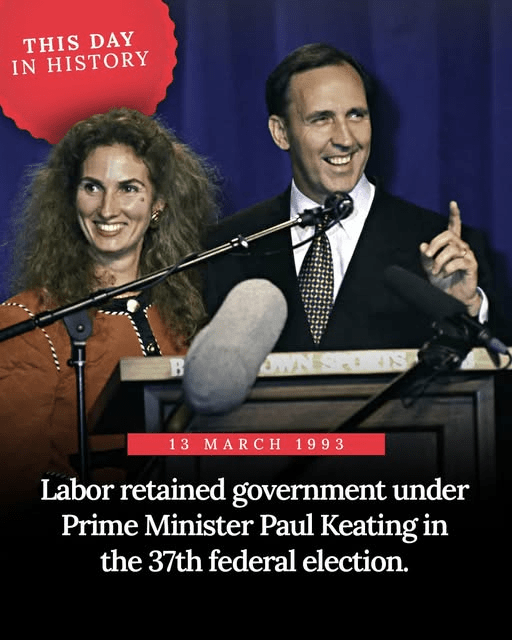
Thank Paul Keating for creating Superannuation !!
Labor appears set to reform capital gains tax discount after parliamentary inquiry findings*
Report reveals the Howard-era settings are helping fuel intergenerational inequality in Australia’s housing market.
Labor has given one of its strongest signals yet the capital gains tax discount will be reworked in the May budget, with a parliamentary inquiry finding the Howard-era settings are helping fuel intergenerational inequality in Australia’s housing market.
A Greens-led parliamentary inquiry said the 50% discount “skewed the ownership of housing away from owner-occupiers and towards investors”.
“The benefits of the capital gains tax discount are also unequally distributed, with implications for income and wealth inequality and intergenerational inequality,” the report released on Tuesday found.
The treasurer, Jim Chalmers, has signalled a willingness to make changes to the discount, introduced in 1999 for assets held for more than a year.
Along with negative gearing rules, the discount has been blamed for promoting housing as an investment mechanism for wealthier Australians over the rights of would-be first time buyers.
Labor members on the committee linked possible changes to government work already under way ahead of the 12 May budget and last year’s economic reform roundtable, which promised to address intergenerational inequality in the tax system.
Treasury is modelling changes that could see the discount reduced to 33% for housing investors, while retaining the current 50% rate for shares and other investments.
The Greens Treasury spokesperson, Nick McKim, used the report to argue Labor’s majority and the Greens balance of power in the Senate represented an opportunity for the government to pass ambitious tax reform in the current parliament. In the report, he noted when the discount was established, 57% of 30 to 34-year-olds owned property. That figure has since dropped to 50%.
“The [discount] means that if you go to work as a teacher, a bartender or software developer you pay double the amount of tax than someone who received the same amount of money taking advantage of soaring property prices by buying and selling investment properties,” McKim said.
“It means that someone who speculates on housing pays a lower rate of tax than the carpenters, plumbers and electricians who actually build the houses.”
Chalmers said he would be briefed on the report’s findings in coming days, stressing budget decisions would be made by cabinet.
“It will no doubt identify some issues which are familiar to us,” he said.
“But I’ll read it, of course, I will. I’ve said that the government’s policies haven’t changed in this area. Any further steps will be a matter for the cabinet.”
Coalition senators strongly rejected calls for change however.
“If Labor pursues changes to the CGT discount, it will be another simplistic and one-dimensional response that sidesteps the central problem in housing, that not enough homes are being built,” Liberals Andrew Bragg and Dave Sharma said in a statement.
“The real answer to housing affordability is more supply, not another Labor housing gimmick.”
Independent senator David Pocock used the report to suggest Labor had “overlearned” the lessons of its 2016 and 2019 election defeats, when changes to CGT and negative gearing were rejected by voters.
Pocock recommended removing the discount for properties bought after 1 July this year, with a new 25% discount introduced for new homes. He called for negative gearing arrangements to be limited to a single investment property.
Research released last week by the Australian Council of Social Services found the five highest earning electorates nationally capture 22% of all CGT discount expenditure, against just 1.6% for the bottom 10 electorates.
A tax white paper released by the Sydney independent Allegra Spender this month argued for reducing the CGT discount to 30% as part of wider reform package that would allow major cuts to income taxes.
*See March 4, 2025, blog where Bob McMullan’s article on capital gains tax How Australia should fix capital gains tax appears. The article was also published in Pearls and Irritations.
American Politics
This is an old story, but the analysis is worth repeating here. In the meantime, the case against Mark Kelly has been blocked.
The Atlantic Daily <newsletters@theatlantic.com>


David A. Graham Staff writer
The Pentagon’s move to demote Senator Mark Kelly for accurately saying that troops should refuse illegal orders is a pernicious form of political bullying.
One indicator of a polity’s health is whether a citizen can be punished merely for telling the truth about the law. The signs for American democracy are not good.
This morning, Defense Secretary Pete Hegseth announced that he has begun the process to demote Mark Kelly, a retired Navy captain and NASA astronaut, and reduce his pension pay. The operative facts here, naturally, are not Kelly’s past service but his current rank and service: a Democrat serving in the U.S. Senate and a political adversary of President Donald Trump.
“Six weeks ago, Senator Mark Kelly—and five other members of Congress—released a reckless and seditious video that was clearly intended to undermine good order and military discipline,” Hegseth wrote on X this morning. He cited two articles of the Uniform Code of Military Justice; Kelly, unlike the other five, holds retired military status, which makes him subject to sanctions from the Defense Department.
What Hegseth did not cite was what Kelly and his colleagues actually said in the video, and for good reason. Doing so would expose the absurdity of the charge and the abuse of power involved in the attempt to demote him. “Our laws are clear: You can refuse illegal orders,” Kelly said. No one in the Trump administration has disputed that this is true. A more agile or even-keeled administration would have smoothly dismissed the video as irrelevant: This is true, but of course we would never issue an illegal order. (As Kelly and his lawyers have noted, Hegseth has cited the same law about disobeying illegal orders in the past.) Instead, Trump and his aides threw a fit, dubbing the Democrats the “Seditious Six.”
One possible reason for the frantic response became apparent quickly. Not only have U.S. forces been conducting likely unlawful strikes on boats in the Caribbean; late last year, several news sources reported new details about the first attack, in which the initial strike had not killed all those aboard the boat, so a second strike was ordered. The Pentagon’s own Law of War Manual for service members states that “orders to fire upon the shipwrecked would be clearly illegal.” This revelation made the video from Kelly and company not just hypothetical but directly relevant. It also put Hegseth on the defensive, even among Republican members of Congress, and he quickly shifted blame to Admiral Mitch Bradley, who commanded the operation.
In contrast to the language in the Law of War Manual, the UCMJ articles upon which Hegseth rests his decision to discipline Kelly are vague, involving “conduct unbecoming an officer and a gentleman” and “all disorders and neglects to the prejudice of good order and discipline in the armed forces.” As my colleague Tom Nichols has noted, these provisions might apply to Hegseth’s own admitted behavior while in uniform. Punishing Kelly is extremely pernicious political retaliation. It also ought to be embarrassing to Hegseth, though he seems as impervious to shame as his boss.
The censure is appealable in the next 30 days, and Kelly vowed to fight it. (If it goes through, it could cost him roughly $1,000 a month in pay, per Politico.) “My rank and retirement are things that I earned through my service and sacrifice for this country. I got shot at. I missed holidays and birthdays. I commanded a space shuttle mission while my wife,” former Representative Gabby Giffords, “recovered from a gunshot wound to the head—all while proudly wearing the American flag on my shoulder,” he said in a statement on X. “If Pete Hegseth, the most unqualified Secretary of Defense in our country’s history, thinks he can intimidate me with a censure or threats to demote me or prosecute me, he still doesn’t get it.”
Kelly is one of several critics of Trump to be targeted by the administration in the past year. The administration has repeatedly sought to indict New York Attorney General Letitia James and former FBI Director James Comey; launched investigations into a major Democratic fundraising platform and prominent politicians including Senator Adam Schiff; and used administration policy to bully states that don’t fully cooperate with Trump—most recently vetoing a bipartisan bill on a Colorado water project, apparently as punishment for the state’s refusal to free a former local official who backed up Trump’s false claims of voter fraud.
Despite Kelly’s defiance, his attempted demotion sends a message, even if it ultimately doesn’t come to pass. Kelly has the resources and political support to fight for his views, and he’ll get plenty of prominent backers. But if a notable figure like Kelly can be punished, how can any ordinary soldier or sailor who is currently serving hope to refuse an illegal order without facing serious personal consequences?
Members of the armed forces, and retirees like Kelly, are particularly susceptible to Hegseth’s abuse of power, because they can be punished by the Defense Department internally. But the chilling effect does not end with those who are serving or have served, or with the particular question of illegal orders. The administration has told the other five Democrats that it is investigating them as well. The core belief underlying all of this is as plain as it is dangerous: Criticizing Donald Trump and defending the rule of law is sedition.
Judge blocks Pentagon from downgrading Sen. Mark Kelly’s military rank, pay*
By Jacob Rosen,Sarah N. Lynch Updated on: February 12, 2026 / 8:08 PM EST / CBS News
A federal judge on Thursday blocked the Pentagon from downgrading the military retirement rank and pay of Democratic Sen. Mark Kelly of Arizona, finding that the government had “trampled on Senator Kelly’s First Amendment freedoms.”…
U.S. District Judge Richard Leon’s order prohibits the Defense Department and the Trump administration from taking any adverse action against Kelly to reduce his retirement rank and pay.
“This Court has all it needs to conclude that Defendants have trampled on Senator Kelly’s First Amendment freedoms and threatened the constitutional liberties of millions of military retirees,” Leon wrote. “After all, as Bob Dylan famously said, ‘You don’t need a weatherman to know which way the wind blows.'”
Defense Secretary Pete Hegseth wrote on social media that the ruling would be “immediately appealed.”
Leon’s ruling comes a month after Kelly sued Hegseth, arguing that he was the target of “extreme rhetoric and punitive retribution” by the Trump administration.
Kelly asked Leon to set aside Hegseth’s recent moves to demote him and cut his military pension, and to block the enforcement of any punishment against him.
Leon’s decision came two days after federal prosecutors in U.S. Attorney Jeanine Pirro’s office failed to secure an indictment against Kelly and the other Democratic lawmakers who appeared in the video. Prosecutors had hoped to charge them with violating a federal law that makes it a crime to counsel or cause “insubordination, disloyalty, mutiny, or reversal of duty” by military members, sources previously told CBS News…
The Defense Department said in December it was escalating its review into a command investigation. Hegseth then announced that the Pentagon had “initiated retirement grade determination proceedings” that could result in a “reduction in his retired grade” and “a corresponding reduction in retired pay.” Hegseth also said he issued a formal letter to censure Kelly, citing his “reckless misconduct.”
In a statement, Kelly said Leon’s order “made clear that Pete Hegseth violated the constitution when he tried to punish me for something I said. But this case was never just about me. This administration was sending a message to millions of retired veterans that they too can be censured or demoted just for speaking out. That’s why I couldn’t let it stand.”
“I also know that this might not be over yet, because this President and this administration do not know how to admit when they’re wrong,” Kelly continued. “One thing is for sure: however hard the Trump administration may fight to punish me and silence others, I will fight ten times harder. This is too important.”
CBS News has reached out to the Defense Department for comment. The Justice Department declined to comment.
At a recent court hearing, Leon grilled the Justice Department and expressed strong reservations about the Pentagon’s efforts. Active-duty military officers typically face limitations on their right to free speech to promote discipline and obedience, but the military is now seeking to extend those limits to retired service members like Kelly.
“That’s never been done,” Leon told Justice Department attorney John Bailey during the Feb. 3 hearing, adding that the government did not have a single case to support the argument.
“You’re asking me to do something that the Supreme Court has never done,” Leon said. “That’s a bit of a stretch, is it not?”
In his ruling on Thursday, Leon reiterated those concerns again.
“Secretary Hegseth relies on the well-established doctrine that military servicemembers enjoy less vigorous First Amendment protections given the fundamental obligation for obedience and discipline in the armed forces,” Leon wrote.
“Unfortunately for Secretary Hegseth, no court has ever extended those principles to retired servicemembers, much less a retired servicemember serving in Congress and exercising oversight responsibility over the military. This Court will not be the first to do so!”
Eleanor Watson contributed to this report.
*This report has been edited to omit the information that is available in the Atlantic article. The story below suggests that Kelly isundaunted!


Sen. Mark Kelly Says ‘A Random Group Of People Off the Street’ Could Do A Better Job With Iran War Than Trump Administration
by Tristan Butts March 9, 2026, 8:14 pm
Sen. Mark Kelly (D-Arizona) held nothing back when discussing President Donald Trump‘s recent war efforts with Iran…
“I’m thinking, you could pick a random group of people off the street tonight here in Washington, D.C. — just a random group — and they could probably do a better job than our government is doing right now with this,” Kelly said while discussing the events with MS NOW’s Jen Psaki.
“They don’t have a goal, there’s no strategic plan, there’s no timeline, and what this is likely to lead to is, again, a long war with a lot of dead Americans and no rationale for how this is helping the American people,” the senator continued.
“We have a president that I have serious concerns about whether he understands his role here,” the Arizona senator said.
Kelly has been a staunch critic of Trump’s Operation Epic Fury, especially since it was confirmed that six American soldiers were killed during Iranian counterstrikes.
The Arizona senator is a former U.S. Navy pilot and a current member of the Senate Armed Services Committee.
Heather Cox Richardson from Letters from an American <heathercoxrichardson@substack.com>March 17, 2026
Forwarded this email? Subscribe here for more March 17, 2026 Heather Cox Richardson Mar 18
Yesterday, President Donald J. Trump continued to demand that other countries help the U.S. reopen the Strait of Hormuz for tanker traffic, but one by one, they declined. It is a dangerous business, and since Trump launched the war without consulting anyone, they don’t seem inclined to help him out of the mess he created. For his part, Trump has told reporters that “numerous countries” have told him “they’re on their way” to help enable ships to transit the strait, but he has also threatened to leave the North Atlantic Treaty Organization (NATO) over allies’ unwillingness to help clear the strait.
Trump has never articulated a clear reason for the war, but Israeli prime minister Benjamin Netanyahu and Israeli officials have opened another front in Lebanon, saying they intend to destroy the terror infrastructure there as they did in Gaza. So far, Israel’s recent operations in Lebanon have killed more than 850 people and displaced at least 800,000.Thomas Grove, Milàn Czerny, and Benoit Faucon of the Wall Street Journal reported today that Russia has expanded its efforts to keep Iran in the fight against the U.S. and Israel, offering more intelligence sharing and military cooperation. Russia is providing drone components and satellite imagery that enables Iran to strike U.S. troops and radar systems. The reporters say that “Russia is trying to keep its closest Middle Eastern partner in the fight against U.S. and Israeli military might and prolong a war that is benefiting Russia militarily and economically.”
Meanwhile, Iran has been moving its own ships through the strait and appears to be willing to allow passage through for countries that are willing to negotiate with it. If that practice becomes widespread, prices on oil will ease, making it harder for Iran to keep up pressure on the U.S. and Israel.Oil is now selling at more than $100 a barrel, up from about $70 a barrel before the U.S. and Israeli strikes on Iran that began on February 28, and gas prices have risen by at least $0.70 a gallon since then. As David Goldman of CNN reports, Iran’s ability to stop most traffic through the Strait of Hormuz threatens not just about 20% of the world’s oil supply as well as natural gas. About 20% of the world’s fertilizer also passes through the strait, which will affect crops for this year’s growing season. It will also limit helium—necessary for the cooling process when making silicon chips and cooling medical equipment—and aluminum.
Anna Kramer of NOTUS reported today that last fall the Trump administration cut all the State Department staffers from the Bureau of Energy Resources who were in charge of maintaining diplomatic contacts with foreign energy bureaus and Middle East gas and oil companies. Those laid off included the only expert in tracking sanctioned oil tankers, and the person in charge of coordinating with the international agency that manages releases of oil reserves around the world to address crises.
“There was never any handover or transition. There was no formal handover of contacts or anything like that. We were all just let go,” one former State Department energy official told Kramer. Those trying to work on energy issues with the U.S. government after their departure could not find any contacts.Nine former members of the bureau told Kramer it seems clear the administration did not prepare for a global oil crisis. Trump’s claim that “nobody expected” Iran to hit other countries in the Middle East supports their statement because, as they told Kramer, previous administrations planned for exactly that scenario.
Judd Legum of Popular Information explained today that the administration decommissioned the last of its four minesweeper ships in September. Based in Bahrain, the vessels were equipped to find and destroy both moored and bottom mines. They were supposed to be replaced with new systems that use unmanned vehicles, but those have so far been unreliable, and the systems apparently have not been deployed. Legum points out that starting a military operation without anti-mining ships in the region to protect traffic through the Strait of Hormuz illustrates how poorly officials planned.
According to Aaron Rupar of Public Notice, Representative Eric Swalwell (D-CA) observed that Trump “has more plans for the ballroom he’s trying to build at the East Wing than anything he’s gonna do next in the Middle East.”The fact that Trump’s allies in the White House are backing away from the war, talking to journalists like Politico’s Megan Messerly for a piece published today, suggests they see this conflict as a political disaster. Sources told Messerly they hoped the strikes would be quick, removing Iran’s leader much as Trump’s Venezuela strikes did in January. They said they thought Trump’s vagueness on objectives would let him declare victory whenever he wanted to.Now, though, the sources told Messerly, they think Trump “no longer controls how, or when, the war ends.” One told her: “We clearly just kicked [Iran’s] ass in the field, but, to a large extent, they hold the cards now. They decide how long we’re involved—and they decide if we put boots on the ground. And it doesn’t seem to me that there’s a way around that, if we want to save face.” Another warned that officials in the White House “need to worry about an unraveling.”
The sense that Trump has dragged the U.S. into a war in the Middle East is splitting MAGA leadership. Isolationists who supported Trump’s claims of being “America First” and ending long foreign wars are turning on those supporting Trump’s Iranian incursion, and their attacks on social media have become deeply personal. They seem to be trying to hive their supporters off from Trump to coalesce around an even more extreme white nationalism that highlights antisemitism.Today Joe Kent, a staunch Trump ally, resigned as director of the National Counterterrorism Center, saying that he supported “the values and the foreign policies” Trump had campaigned on but that he “cannot in good conscience support the ongoing war in Iran. Iran posed no imminent threat to our nation, and it is clear that we started this war due to pressure from Israel and its powerful American lobby.”
Although Kent is correct that U.S. intelligence assessed that Iran posed no imminent threat to the U.S., both the White House and House speaker Mike Johnson (R-LA) pushed back aggressively on Kent’s statements, trying to justify their Iran entanglement.Johnson said, “We all understood that there was clearly an imminent threat that Iran was very close to the enrichment of nuclear capability and they were building missiles at a pace no one in the region could keep up with.” Trump seemed to try to blame former president Barack Obama for the crisis, telling reporters today that “if I didn’t terminate Obama’s horrible deal that he made…, you would have had a nuclear war four years ago. You would have had…nuclear holocaust, and you would have had it again if we didn’t bomb the site.”
Trump told reporters he thought Kent was a “nice guy” but “very weak on security,” and that he didn’t know Kent well.Yesterday Trump told reporters that a former president told him, “I wish I did what you did” in attacking Iran. He added, “I don’t want to get into ‘who,’ I don’t want to get him into trouble,” although he said it wasn’t former president George W. Bush and also implied it was a Democrat. Chris Cameron of the New York Times reported that those close to all former Democratic presidents—Bill Clinton, Barack Obama, and Joseph R. Biden—deny that they said any such thing or that they have had any contact with Trump lately.
This morning, Trump posted on social media: “Because of the fact that we have had such Military Success, we no longer ‘need,’ or desire, the NATO Countries’ assistance—WE NEVER DID! Likewise, Japan, Australia, or South Korea. In fact, speaking as President of the United States of America, by far the Most Powerful Country Anywhere in the World, WE DO NOT NEED THE HELP OF ANYONE!”
Meanwhile, Trump appears to be attempting to remove the leadership of Cuba. Frances Robles, Edward Wong, and Annie Correal of the New York Times reported yesterday that U.S. officials want to force Cuban president Miguel Díaz-Canel from power but will leave the next steps up to the Cuban people. The reporters note such a move might enable Trump to declare a victory. The U.S. has cut off the oil that feeds Cuba’s energy grid, forcing it to collapse.Yesterday, Trump told reporters: “I do believe I’ll be the honor of, having the honor of taking Cuba. That’d be good,” he said. “That’s a big honor. Taking Cuba, in some form, yeah, taking Cuba. I mean, whether I free it, take it. I think I could do anything I want with it, if you want to know the truth. They’re a very, uh, weakened nation right now.”
Trump’s team has blamed the media for what he insists are unfair reports about the Iran conflict. He has also gone after the Supreme Court, complaining on Sunday about its ruling that his tariffs were unconstitutional, but also complaining that the justices permitted Biden to be inaugurated, continuing to insist—in the face of all evidence to the contrary—that the 2020 presidential election was stolen. He insisted that “[t]his completely inept and embarrassing Court” is “hurting our Country, and will continue to do so. All I can do, as President, is call them out for their bad behavior!” Trump called the court “little more than a weaponized and unjust Political Organization.”
Trump’s pressure on the court over his claims of political weaponization and the 2020 presidential election seems designed to enlist their support for his claims that the 2026 election was rigged if voters choose Democratic majorities in the House and/or the Senate. Trump told House members in January that if the Republicans don’t retain control of the House, he will be impeached.Trump and his loyalists insist that Congress must pass the Safeguard American Voter Eligibility (SAVE) America Act to prevent Democrats from stealing the 2026 election, with Trump posting on social media today: “The Save America Act is one of the most IMPORTANT & CONSEQUENTIAL pieces of legislation in the history of Congress, and America itself. NO MORE RIGGED ELECTIONS! Voter I.D., Proof of Citizenship, No Rigged Mail-In Voting….”
The Republicans won the House, the Senate, and the presidency in 2024, making it hard to argue that Republicans cannot win without new voting rules, but as G. Elliot Morris of Strength in Numbers noted today, since then Trump has lost the working-class white voters and Latino voters who put him in office. Republicans could woo them back but instead are trying to push voters off the rolls by demanding proof of citizenship to vote.It is already illegal for noncitizens to vote in federal elections—such voting is vanishingly rare— and states, which run elections, already require ID. According to the Brennan Center for Justice and the University of Maryland’s Center for Democracy and Civic Engagement, Trump’s demand that voters provide proof of citizenship—a passport or a birth certificate and matching REAL ID—when registering to vote and again at the polls would cut as many as 21 million voters off the rolls.To push the measure through the Senate, Republicans will have to kill the filibuster that requires 60 votes to move a bill forward from debate. Trump is demanding Senate majority leader John Thune (R-SD) make that change to Senate rules, but Thune and less-MAGA Republicans don’t want to. Republicans say they want to debate the measure so that Democrats will be forced to defend their objection to it, but already the fight seems to be shaping up as between Republicans eager to pass a voter suppression bill to support Trump, and those willing to protect voters as well as their own voices in the Senate.Tonight the Senate voted to take up the measure.—
Notes:https://www.notus.org/trump-white-house/trump-doge-cuts-middle-eastern-oil-gas-criseshttps://tradingeconomics.com/commodity/brent-crude-oil
Cindy Lou eats in Perth
A few days in Perth meant eating out. The best meal was at my sister-in-law’s where we ate too much but enjoyed ourselves. I was pleased to be able to eat the food that I often only see in photographs on Facebook placed by her admiring (and very fortunate) children.
Eating out in Joondalup brought us the familiar toast and vegemite/peanut paste which was comforting.


We also came upon a market one evening, which was a change from restaurants. Eating outside in Perth is pleasant – on this occasion it was not too hot, and of course it was quite different from enforced (Leah) outside eating in Canberra in the cold. The chicken sate skewers and salad were flavoursome and generous. The curry was also a good choice, but not as delicious as the curries served the previous day.






And then there is Dome! Fortunately, this chain is not in Canberra, so the honeycomb chocolate latte is a one off. It was $1 cheaper than the fruit drink beside it, but that is its only virtue. It tasted wonderful. I did not eat all the chips with my fish tacos. The tomato and halloumi bruschetta was very good.




The Booker Prize Foundation – Eight Booker Prize-nominated books that celebrate ‘spinster lit’
From Victorian Britain to contemporary Ukraine, these books feature unmarried women who, in their own unique ways, push back against the social rules and sexism that constrain them
Written by Emily Facoory
Publication date and time:Published February 12, 2026
Unmarried women – so-called ‘spinsters’ – have often been represented unkindly in books, portrayed as undesirable and lonely. Finding a husband and having children – if the tacit rules of 20th century life were to be believed – were the rites of passage for any self-regarding woman. Those who followed a different path were considered by the more traditional members of society to have been ‘left on the shelf’.
Looking back through a modern lens, however, it’s clear that readers have reclaimed the word as a sub-genre of its own; ‘spinster lit’ can be seen as an attempt to challenge misconceptions about the lives of unmarried, often middle-aged women, especially in the mid-to-late 20th century.
Online blogs and forums suggest that Booker-nominated author Barbara Pym has been crowned the ‘queen of spinster lit’, as her novels often include unmarried female characters who have rich and vibrant lives. Camilla Nelson, writing in the Conversation, described Pym’s spinsters as ‘consistently fulfilled and satisfying’, while Ginny Hogan, writing in Electric Literature, said, ‘I see in her characters spinsters of the type I aspire to be: incisive, busy, and fine with or without a partner. Pym was ahead of her time in pointing out how inglorious coupledom was. So ahead, in fact, that we haven’t yet caught up to her.’
Although many of us still find ourselves under pressure to find a partner and start a family, it has become socially acceptable to stay single for longer. According to statistics from Our World in Data, ‘Of the women born in 1940 in the UK, more than 90% were married by age 30… Meanwhile, among those born in 1990, only about 29% of women were married by age 30.’
As the annual fervour around Valentine’s Day builds once more, we thought it was time to celebrate some of the spinsters who play starring roles in Booker-nominated novels. These are unattached women who push up against social and romantic mores, and are ultimately striving to find a way to live on their own terms, whether that’s in England in the 1850s, the Netherlands in the late 1940s, or contemporary Ukraine on the verge of war.
The list: Rhine Journey by Ann Schlee; A Green Equinox by Elizabeth Mavor; Quartet in Autumn by Barbara Pym; Hotel du Luc by Anita Brookner; Drive Your Plow Over the Bones of the Dead by Olga Tokarczuk, translated by Antonia Lloyd-Jones; The Safekeep by Yael van der Wouden; Endling by Maria Reva; Creation Lake by Rachel Kushner.
Endling by Maria Reva
Longlisted for the Booker Prize in 2025, Endling revolves around three Ukrainian women caught up in the marriage industry, earning money from men seeking Ukrainian wives.
Unbothered by love and relationships, Yeva is a scientist travelling across the country, desperately trying to save multiple rare species of snails. She meets two sisters, Nastia and Sol, who have been inspired by their activist mother to expose the marriage industry’s exploitative nature. Containing bizarre kidnapping plots and subverting the damsel in distress stereotype, Endling follows the three determined women as they journey through a nation on the verge of war.
According to Akhila Ramnarayan, writing in Frontline, ‘You cannot help but marvel at Reva’s stunningly original premise, her rapidly paced, oh-so-dexterous prose, and her ability to animate a truly unforgettable constellation of misfits. The three female protagonists are distinctly etched, their initial reservations about one another melting into prickly, tender loyalty, even trust, as the novel progresses.’

 Robin's Room