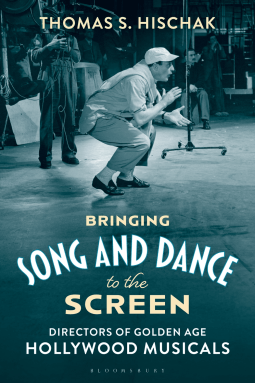
Thomas S. Hischak Bringing Song and Dance to the Screen
Directors of Golden Age Hollywood Musicals Bloomsbury Academic, October 2025.
Thank you, NetGalley and Bloomsbury Academic for providing me with this uncorrected proof for review.
The tone, the language, the content: all lead the reader on a remarkable journey through musicals in the Golden Age of cinema, both screen originals and adaptations. Thomas S. Hischak’s Bringing Song and Dance to the Screen Directors of Golden Age Hollywood Musicals is an immensely readable, formidably knowledgeable book. It made me want to expand my experience of the genre which Hischak shows can be fun, smart, engrossing and, at times, flawed. When commenting on the latter, Hischak’s language is wonderfully frank and so slyly witty that the musical that receives such treatment remains appealing despite its honestly revealed flaws. As a reader newly interested in this genre, although familiar with some of the most well-known actors, music, and lyrics, I found this an engaging study, almost a romp, through the stories associated with getting musicals onto the screen. It is a book that is a pleasure to read, as well as an expert contribution to a thoughtful analysis of musicals and their adaption to the screen. See Books: Reviews for the complete review.

Valerie Keogh The New Neighbour Boldwood Books, March 2026.
Thank you, NetGalley and Boldwood Books, for this uncorrected proof for review.
For the first time since I began reading Valerie Keogh’s books, I am disappointed. I see Keogh as one of the foremost writers who have perfected the twist, characters who on first sight are unappealing but because they are complex eventually become those whose stories are worth pursuing, and plotting that is logical but exciting. Unfortunately, on this occasion, I found it hard to feel drawn to the main character, Chloe, and although the twists were logical outcomes of the plot and there are glimpses of Keogh’s usual flair, for me the novel failed to meet her usual standard… [I have added the last paragraph of the review here, to provide a fair assessment of Keogh’s work].
However, shall I let my disappointment with this novel impact on my appreciation for Valerie Keogh’s past work, and the work I hope that she will produce in the future? Certainly not. Keogh is too fine a writer of this genre to cast aside and I look forward her next novel. See the complete review at Books: Reviews.
Perth trip
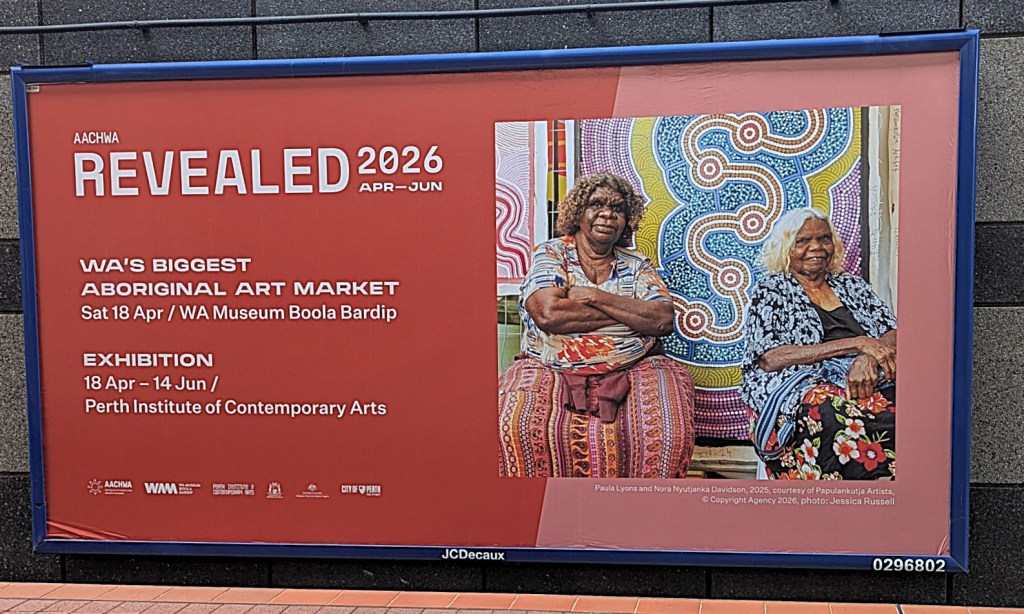
An interesting exhibition to be held the WA Museum
Rhoda Roberts AO, Indigenous leader in arts, culture and media, dies aged 66
By the Indigenous Affairs Team’s Stephanie Boltje
A guiding force in Australia’s arts scene and the woman who coined the term “Welcome to Country”, Aunty Rhoda Roberts AO has died at the age of 66.
WARNING: Aboriginal and Torres Strait Islander viewers are warned that this story includes images of an Indigenous person who has died. The ABC has been given permission to include her name and image.
The Widjabul Wieybal woman of the Bundjalung Nation dedicated much of her life to creating spaces for First Nations creatives to be front and centre in some of Australia’s biggest festivals and events.
Roberts accomplished many firsts, including as the first Aboriginal host on mainstream television, the inaugural head of Indigenous programming at the Sydney Opera House and SBS’s first Elder-in-residence.
Born with innate talent to nurture people, her career ranged from nursing, creative director, acting, festival director, producer and cultural adviser.
At the end of 2025, she was diagnosed with cancer.
Growing up on Country
Raised in Lismore in the Northern Rivers region of NSW on Bundjalung Country, Rhoda was born a twin in the big Roberts family.
Culture remained central to her life; her great-grandfather was the “last fully initiated man of the Bundjalung”. Her family defied government policies of the time to maintain its cultural knowledge, including dance and language.
Born to an Aboriginal father and a non-Indigenous mother, Roberts said her parents married at a time when they needed to get permission from the Protection Board.
“My mother had the view that it didn’t matter what colour a child was, it was all about their kinship and where they fitted and if you gave them the tools of life then life could be hunky dory.”
Roberts’s father Frank Roberts junior was a pastor and an activist, and she recalled her mother, Muriel, as artistic and an avid reader.
In a 1997 interview with Margaret Throsby, Roberts revealed the racism she and her family were subjected to in the Lismore community.
“We had colour bars in coffee shops … you could go in and buy it, but you couldn’t sit at the restaurant.
“The swimming pool was a good example, you could go and swim at the school carnival, but you certainly couldn’t go on weekends.”
Despite the segregation and discrimination, her parents taught her to “defy” the naysayers.
Roberts said a comment her father made after seeing her reaction to a racist joke by another child stuck with her into adulthood.
“He said, ‘The black isn’t going to go away, you can do anything you want in the world.’
“From that day I thought, ‘Oh yeah, I will fight it.”
From nursing to the stage
Roberts dreamed of being a writer and journalist, but that path would take a detour.
“I just wanted to play the violin, become a journalist and write books. That was my dream, but of course that wasn’t possible in Lismore in the 70s,” she told ABC’s Conversations.
Instead, she was persuaded to take up nursing. She acquired the necessary caring skills young, having been a hospital volunteer, also known as “candy striper”.
“In those days they didn’t take Aboriginals into the three-year general nurses’ training. They would only take you in to be a nurses aid, and I didn’t want to be a nurses aid,” she said of Lismore hospital.
Her mother convinced a matron in Sydney, who had initially refused to take Roberts on, that she had another offer.
“I had to prove to those people that I could become a general nurse,” Roberts said.
After nursing in London she returned to Australia and decided to give acting a go at Brian Syron’s acting studio, and toured the nation in theatre productions.
Seeing the need for better Indigenous representation in the arts, she co-founded a theatre company called the Aboriginal National Theatre Trust.
Throughout it all her father’s advice to give back to the community stayed with her, and she volunteered at Radio Redfern.
“He always said to my sister and I, ‘The reason you are here, my Bundjalung princesses, is because you are of service to your people,'” she told Mamamia.
Roberts became the first Aboriginal host on mainstream television on SBS’s First in Line with Michael Johnson, and later the first Indigenous presenter on a prime-time current affairs program, Vox Populi.
She hosted Deadly Sounds for 21 years, and wrote, produced and edited documentaries including SBS’s In the Gutter? No Way in 1991.
On the ABC she presented the radio show Awaye! and hosted television programs A Sense of Place and A World of Difference.
Aboriginal culture on the world stage
Roberts’s role in the Sydney Olympics would be pivotal in the trajectory of her career.
In 1997 she became the director of the Festival of the Dreaming in the lead-up to the Olympic Games.
She was also creative director of the Indigenous component of the Games’s opening ceremony called the Awakening.
Despite facing some backlash at the time, she was determined to put “artists up front where they belong”.
“The festival gave us the opportunity to invite non-Indigenous Australians into a very rare insight of Indigenous culture through music, theatre, dance, literature, film and the visual arts in a way that had never ever been seen before,” she told the ABC’s Speaking Out.
“No-one had seen Aboriginal Australia and they saw it in all its diversity, with our brothers and sisters from the Torres Strait. They saw the diversity of who we were and who we are, but they saw the excellence of our dance and our story.”
As artistic director of the Festival of the Dreaming, she saw an opportunity to show how First Nations people “host” people coming into their lands.
The idea was inspired by another of Roberts’s uncles who had offered to “sing that Country” during Nimbin’s Aquarius festival in 1973.
“To me that was the first ‘Welcome’. And he set a precedent that we should be welcoming people onto our Country,” she said.
While it was a protocol that had been observed for generations, formalising the practice in the arts scene and coining the term “Welcome to Country” was revolutionary.
“Everyone kept trying to correct it, ‘Welcome to the Country’ or ‘our Country’, and I said, ‘It’s not ours. We live with it.’ So that’s how it became Welcome to Country,” she told the ABC’s Indigenous Affairs Team in late 2025.
“It makes people feel special. It’s a bit like, if I’m going turn up at your house, I’m going to bring a good bottle of shiraz and a bunch of flowers. It’s good manners.”
The ceremony has transformed into Calling Country — heard every New Year’s Eve on Sydney Harbour, and for which Roberts was artistic director.
Changing the way people celebrated Indigenous talent
In 2012 the Sydney Opera House created a role dedicated to her talent.
As the first head of Indigenous programming, she saw the establishment of First Nations events such as the Dance Rites competition, hosted the podcast Deadly Voices from the House, and oversaw the illumination of Aboriginal artwork on the iconic sails, Badu Gili.
“I have to remind people … that it is the first performing arts centre in this country — and indeed the world — that had a dedicated First Nations head of programming,” she said.
Her cultural and artistic advice has guided festivals across Australia including Vivid Sydney, Sydney’s News Year’s Eve celebrations, Parrtjima in Mparntwe Alice Springs, Shine on Gimuy in Cairns, as well as Boomerang at the Bluesfest in NSW.
“I have people across the country, our senior boss men and women, who culturally trust me with their stories, they trust me with their art,” she said.
“That’s pretty huge and I get to work with that every day.”
Family heartbreak
Just before her 21st birthday, her twin, Lois, was in a car accident that resulted in brain damage.
Although Roberts never thought of becoming a mother, in 1994 she took on the caring responsibilities for Lois’s daughter Emily.
At that time, she was married to the late actor Bill Hunter.
While Roberts was leading the Festival of the Dreaming at 38 years old, Lois went missing.
She said her concerns were dismissed by police at the time, and she recalled being told that her sister had gone “walkabout”.
Six months later Lois was found by a bushwalker in the Whian Whian State Forest. She had been kidnapped and murdered.
The story of Roberts’s devastation was told in the documentary A Sister’s Love, directed by Ivan Sen.
Roberts spoke of the heartbreak her family went through with the tragic loss of her twin sister in 1998 and the lack of justice that followed. She described her period of grieving as “losing a part of herself”.
Roberts told Conversations with Richard Fidler that she felt a sense of survivor’s guilt.
“I am so lucky and fortunate that I have wonderful children, I have wonderful family, I come from the oldest living culture.
“I have all that connection and then I’m able to keep myself on an even keel, I guess, because I can throw everything back into the passion I have for the arts and the work I do.”
Later life
Roberts was a playwright and, despite being diagnosed with a rare type of ovarian cancer, continued to be a presence on stage.
She was determined that “our ‘Rocky’ story” — that of her cousin Frank Roberts, the first Aboriginal man to represent Australia at the Olympics — would take its rightful place in the history books.
She penned her one-woman play My Cousin Frank about how the young man from Cubawee came to compete as a boxer in the 1964 Tokyo Games.
In December, her supporters fundraised and organised a private surprise event at the Sydney Opera House to celebrate her life and contribution to the arts.
An Elder-in-Residence at SBS, she returned to the public broadcaster that gave her the big break in journalism.
Giving back to her community, she was also the cultural lead for the Koori Mail based in Lismore — an Aboriginal-owned newspaper that was her father’s dream.
Her advice has shaped many boards, and she is a multi-award winner for her contributions to the arts. These include the Helpmann Awards’ Sue Nattrass Award, a Deadly Award for Broadcasting, and an Order of Australia in 2016.
A true trailblazer, her influence on how First Nations creatives are recognised and celebrated will have a long legacy.
Prime Minister Anthony Albanese said Roberts’s generosity “enriched Australians’ lives” and “enlarged our nation’s understanding”.
“Rhoda made it easier for others to not just follow in her footsteps, but to continue the journey after her final one. That is power of her legacy and through it, Rhoda will always be with us.”
Minister for Indigenous Australians Malarndirri McCarthy said Roberts was a confidante and mentor to her during her time as a journalist in the 1990s.
“I will treasure our final conversation recently about how First Nations people are now everywhere in the arts and media sectors, in front of and behind cameras and on stage.”
Roberts is survived by her partner Stephen and her children, Jack, Sarah and Emily.
Australian Politics
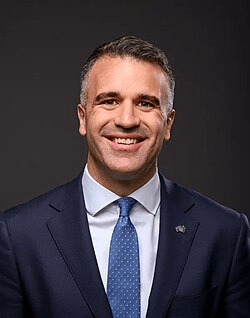
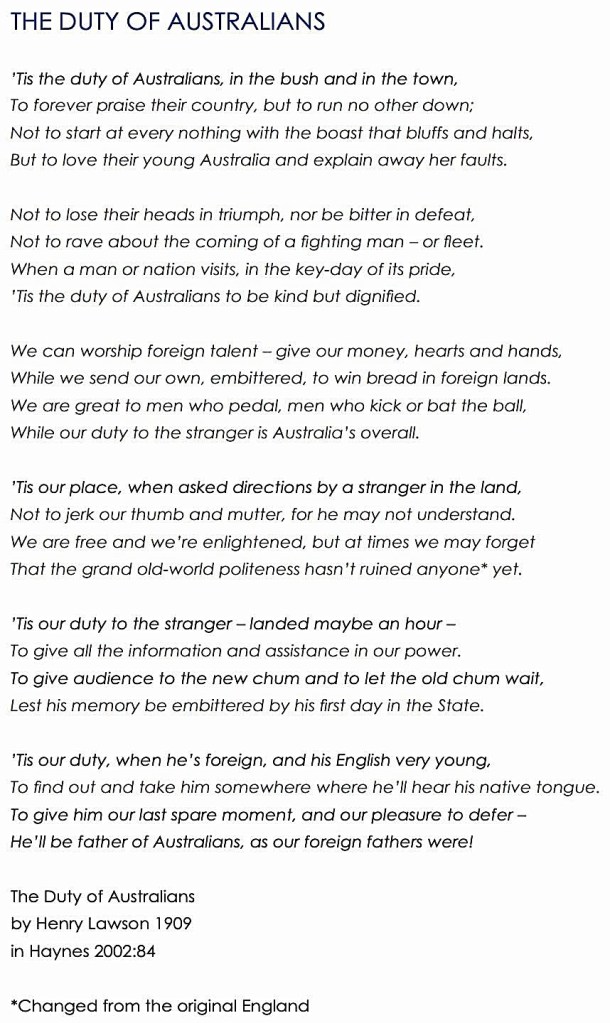
The poem recited by Peter Malinauskas, the South Australian Premier, in his victory speech was “The Duty of Australians” by Henry Lawson.
Davenport is one of the cleanest examples of what has happened tonight in SA.
This was once Liberal suburbia. Middle class, mortgage belt, family households, separate homes, multiple cars in the driveway. ABS Census data shows 47.4% of occupied dwellings are owned with a mortgage, 77.6% are family households, 92.9% are separate houses, and 67.1% of households have two or more motor vehicles. It is also more educated than the old Liberal base.
And that is exactly why Davenport matters.
Labor has now turned a seat it only cracked in 2022 into safe Labor territory. The educated middle has stayed with Labor, while the protest vote on the Right has peeled away to One Nation. The Liberals have been squeezed so badly they are running fourth. In a seat that once represented suburban Liberal stability, they are now barely relevant.
This is the new fracture in Australian politics. The educated classes are not automatically drifting conservative just because they are middle class. In places like Davenport, they are proving willing to back Labor, while the angrier, anti-system vote is parking elsewhere. The result is a Liberal Party being hollowed out from both ends: losing educated suburban voters to Labor and losing its harder edge to One Nation.
Davenport used to be a Liberal seat. Tonight, it looks like a warning about the future.





American Politics
March 18, 2026
Heather Cox Richardson from Letters from an American <heathercoxrichardson@substack.com> Inbox
Forwarded this email? Subscribe here for more
I was intending to take tonight off, but there’s big news—I mean, aside from all the other big news—that I want to make sure gets attention.
Back on February 23, Daniel Ruetenik, Pat Milton, and Cara Tabachnick of CBS News reported on a newly uncovered document in the Epstein files showing that beginning in December 2010 under the Obama administration, the U.S. Drug Enforcement Agency (DEA) was running an investigation of Jeffrey Epstein and fourteen other people for drug trafficking, prostitution, and money laundering. The document showed the investigation, called “Chain Reaction,” was still underway in 2015. But the investigation disappeared, although the document suggested that it was a significant investigation and that the government was on the verge of indictments.
As soon as the story broke, Senator Ron Wyden of Oregon, the top-ranking Democrat on the Senate Finance Committee, said: “It appears Epstein was involved in criminal activity that went way beyond pedophilia and sex trafficking, which makes it even more outrageous that [Attorney General] Pam Bondi is sitting on several million unreleased files.”Wyden has been investigating the finances behind Epstein’s criminal sex-trafficking organization: it was his investigation that turned up the information that JPMorgan Chase neglected to report more than $1 billion in suspicious financial transactions linked to Epstein. Wyden has pushed hard for Treasury Secretary Scott Bessent to produce the records of those suspicious transactions for the Senate Finance Committee, but Bessent refuses.On February 25, two days after the story of the DEA investigation broke, Wyden wrote to Terrance C. Cole, administrator of the DEA, noting that “[t]he fact that Epstein was under investigation by the DOJ’s [organized crime drug enforcement] task force suggests that there was ample evidence indicating that Epstein was engaged in heavy drug trafficking and prostitution as part of cross-border criminal conspiracy. This is incredibly disturbing and raises serious questions as to how this investigation by the DEA was handled.”
He noted that Epstein and the fourteen co-conspirators were never charged for drug trafficking or financial crimes, and wrote: “I am concerned that the DEA and DOJ during the first Trump Administration moved to terminate this investigation in order to protect pedophiles.” He also noted that the heavy redactions in the document appear to go far beyond anything authorized by the Epstein Files Transparency Act and that since the document was not classified, “there is no reason to withhold an unredacted version of this document from the U.S. Congress.”Wyden asked Cole to produce a number of documents by March 13, 2026, including an unredacted copy of the memo in the files, information about what triggered the investigation, what types of drugs Epstein and his fourteen associates were buying or selling, when Operation Chain Reaction concluded and what was its result, why no one was charged, and why the names of the fourteen co-conspirators were redacted.
Today Wyden sent a letter to Deputy Attorney General Todd Blanche, Trump’s former personal lawyer, saying: “It is my understanding that shortly after I requested an unredacted copy” of the document in the Epstein files, the Department of Justice “stepped in to prevent DEA from complying with my request. According to a confidential tip received by my staff, DEA Administrator Terry Cole was ready to provide an unredacted copy of the memorandum, but you stepped in to prevent him from doing so. My staff inquired with the DEA about the status of the production of this document and the DEA responded by directing questions to your office.”
The letter continued: “Your alleged interference in this matter is highly disturbing, not just because it continues the DOJ’s long-running obstruction of my investigation, but also because of your bizarrely favorable treatment of Ghislaine Maxwell, one of Epstein’s closest criminal associates. I should not have to explain the significance of the fact that Epstein was a target of [this high-level DEA] investigation. It suggests the government had ample evidence indicating he was engaged in large scale drug trafficking and prostitution as part of cross-border criminal conspiracy and that Epstein was likely pumping his victims, including underage girls, with incapacitating drugs to facilitate abuse. I am at a loss to understand why you are blocking further investigation of this matter.”Noting that the document in the files was “clearly marked as ‘unclassified’ at the top of every single page,” Wyden noted: “There is absolutely no reason to withhold an unredacted version of this document from the U.S. Congress.” He added: “In order to assist my investigation into this matter, I demand that you immediately authorize the release of this document.”
Wyden also posted today on social media: “HUGE: Deputy Attorney General Todd Blanche—Trump’s former personal lawyer who was also responsible for Ghislaine Maxwell’s transfer to a cushy club fed—has intervened to block the DEA from providing details of a mysterious Epstein investigation to my Finance Committee team…. This is stunning interference. The document I’m after literally says ‘unclassified’ at the top. The investigation it details is closed. Given Blanche’s close personal ties to Donald Trump, this reeks of a continued coverup to protect key names in the Trump administration.”
Wyden’s post echoes the September 13, 2019, letter from then-chair of the House Intelligence Committee Adam Schiff (D-CA) to Acting Director of National Intelligence Joseph Maguire, in which Schiff called out Maguire for illegally withholding a whistleblower complaint.
In that 2019 letter, Schiff warned: “The Committee can only conclude…that the serious misconduct at issue involves the President of the United States and/or other senior White House or Administration officials. This raises grave concerns that your office, together with the Department of Justice and possibly the White House, are engaged in an unlawful effort to protect the President and conceal from the Committee information related to his possible ‘serious or flagrant’ misconduct, abuse of power, or violation of law.”
Schiff was right: the whistleblower had flagged Trump’s July 2019 phone call with newly elected Ukraine president Volodymyr Zelensky, demanding Zelensky smear Joe Biden’s son Hunter before Trump would release the money Congress had appropriated for Ukraine to fight off the Russian invasion that had begun in 2014. That information led to the story that Trump’s White House was running its own secret operation in Ukraine, apart from the State Department, for Trump’s own benefit. That story led to Trump’s first impeachment by the House of Representatives for abuse of power and obstruction of Congress.Schiff was the lead impeachment manager of the impeachment trial in the Senate, and in his closing argument, he implored Senate Republicans to bring accountability to “a man without character.”
“You will not change him. You cannot constrain him. He is who he is. Truth matters little to him. What’s right matters even less, and decency matters not at all.”“You can’t trust this president to do the right thing. Not for one minute, not for one election, not for the sake of our country,” Schiff said. “You just can’t. He will not change and you know it.” “A man without character or ethical compass will never find his way.”
Axios AM
1 big thing: America’s next class war — AI fluency
Anthropic just dropped the most granular data yet on who’s actually using AI and how — and the findings should rattle anyone thinking the AI gains will be evenly distributed, Jim VandeHei and Mike Allen write in a new “Behind the Curtain” column.
It won’t. In fact, it’s creating a new form of economic inequality: AI fluency. Why it matters: The Anthropic data, out this morning, reveals something subtler and more consequential than the “robots take your job” narrative.
The real divide isn’t between people who use AI and people who don’t. It’s between experienced AI users and newcomers to AI. AI continues to pose a serious risk to any automatable jobs, which Anthropic CEO Dario Amodei has warned could wipe out half of entry-level white-collar work.
Two workflow categories doubled in prevalence between November and February: automated sales and outreach, and automated trading.But AI will also be a growing threat to casual or unsophisticated users who fall behind their more AI-savvy peers, regardless of role or level.”Much of the discussion focuses on how AI is something that happens to you,” Peter McCrory, Anthropic’s head of economics, told us from the company’s headquarters in San Francisco.
“This analysis shows you can develop skills that make you better at getting value out of Claude or whatever large language model you want to use.” Some context: Anthropic’s new report, “Anthropic Economic Index: Learning Curves,” studied over 1 million conversations on the company’s Claude platform last month.
The headline finding: Experienced AI users get better results out of an AI model than newcomers. And the gap isn’t explained by what tasks they’re doing, what country they’re in, or what model they’re using.People who’ve used Claude for six months or more have a 10% higher success rate in their conversations with AI. “The longer you’ve been using it, the stronger this effect,” McCrory says. Adoption of Claude in hypereducated Washington, D.C., is four times the adoption rate you’d expect for a city of its size.
Globally, inequality in usage has persisted since Anthropic’s last report, in January, in the 20 higher-income countries with the most Claude use.
That’s a skills gap hardening into a class gap in real time. But you can escape it by experimenting, getting comfortable, getting deft, getting fluent.Anthropic’s researchers are candid that this could be early-adopter selection bias or survivorship — maybe sophisticated users simply signed up first.
But Anthropic’s finding certainly mirrors our personal experience. Between the lines: People think of AI as a tool, when you should think of it as a never-before-imagined toolbox — it allows you to not just automate a boring task, but stretch your abilities across most things you touch at work. But only once you start to master prompts, and pushback, and persistence when unsatisfying or unilluminating answers come back.Jim started using the models like most — like a search engine. But then they became his best researcher … then idea stress-tester … then builder of prototypes for new businesses. He’s basically at the six-month mark Anthropic describes, and discovering new use cases every week. You have to move up the AI proficiency ladder. Using a large language model as a search engine or copy editor is dumb AI. Even having it draft emails for you is like having a celebrity chef boil your water.
The report divides tasks into “automation” (do this task) and “augmentation” — more polished, sophisticated inputs like using the LLM as a thought partner that spits out ideas and feedback, or writes a business plan, or stress-tests a business plan, or coaches and teaches you.Think how much more valuable AI dexterity will make you to your current organization — or how much more marketable it’ll make you to a future employer. The big picture: This report lands in the middle of the most anxious era Americans have experienced about AI and jobs since OpenAI’s ChatGPT moment after the model’s release in late 2022.An NBC News poll from earlier this month found that 57% of registered voters believe AI’s risks outweigh its benefits.
Only 26% have positive feelings about the technology — a net favorability lower than that of any other topic polled, except the Democratic Party and Iran. (AI was two points less popular than ICE.)AI users are getting better, while AI anxiety surges and the job market deteriorates. It’s a reality that Washington isn’t confronting with consistency and seriousness.Washington is debating AI in the abstract: Should we regulate it, should we race China, should we worry about superintelligence?But the Anthropic report makes the near-term problem concrete: Signs of a two-tier workforce are already emerging. And neither party has a plan for people on the wrong side of it.
What Anthropic found in observing real-world use: Skilled AI users are getting better at collaborating with Claude to do a wide variety of work, not just automate specific activities.The bottom line: The people already using AI for high-value work may pull further ahead, with real implications for who captures the economic benefits of this technology.
If you’re not an early adopter, today’s your chance. Watch our “Behind the Curtain” YouTube, “The AI Gap.” (Executive producer: Jimmy Shelton)Explore the data … Share this column.

1 big thing: America’s next class war — AI fluency
FINAL CALL FOR PAPERS
Our 34th annual conference coincides with the centenary of the founding of The Women’s Library, and provides the perfect opportunity to celebrate this unique resource, as well as 100 years of women’s history. The Women’s Library is the oldest and largest library in Britain devoted to the history of women’s campaigning and activism and encompasses a library, an archive and a museum. Founded in 1926 as the Library of the London Society for Women’s Service, it became the Fawcett Library in 1953 and was renamed The Women’s Library in 2002. It has moved several times, finding permanent residence at the LSE in 2013.
We welcome submissions that fit within the library’s centenary years, 1926-2026. While these may be connected, directly or indirectly, to material that is held in The Women’s Library collections, this is not a prerequisite. Possible topics of interest might include, but are certainly not limited to:· Women and Suffrage, campaigning in public and political life· Women, prostitution and trafficking· Women and work· Women and sport· Women, welfare, social security and the family· Women and refugees· Women’s print media· Black and Asian Women· Women and philanthropy· Feminism and Religion· Women’s Liberation Movement· Women and the Environment· Women and Internationalism· LGBT+ including, for example Gay Liberation Front, Christian Voices Coming Out
We invite submissions of 150 – 200 word abstracts for 15 minute papers which take a critical look at the chosen area of history. Proposals are welcomed from scholars working at all levels, including those without an institutional affiliation, and from those working outside academia, in heritage, for example, or in other historically linked sectors
All submissions must be on the form which is downloadable here and emailed to: whnconference2026@gmail.com by 30 April 2026.
We are offering a limited number of bursaries to support postgraduates, early career scholars, those not affiliated to a university (therefore not eligible for university funding towards academic conferences) and those with extenuating circumstances. Further information on the bursaries available can be found in the newsletter below (Upcoming competitions, scholarships and internships section), and application form is downloadable here.

 Robin's Room