
Clare Mackintosh, The Butler, Podium Entertainment, June 2026.
Thank you, NetGalley, for providing me with this uncorrected proof for review.
The Butler sets a pace that is quite different from Clare Mackintosh’s previous novels, and I had to adapt to the pace and tone. Once having done so, I was impressed with this writer’s ability to craft an engaging narrative in a new (to me) style. The butler, Baxter, has recently had to put himself on the market for short term engagements. This makes him vulnerable to his agent and her demands – he must provide information to her on his current employer, Alec Prescott. A glamourous setting in a mansion, complete with swimming pool, in Cannes provides the background to intrigue, infidelity, and eventual murder. Baxter, warming to his Hercule Poirot role investigates and solves the mystery.
Baxter’s arrival at the villa is preceded with excellent characterisation – he is a figure to whom I immediately warmed – and a jolt to the senses: noisy music, broken glass, dirty dishes, upturned furniture, and a couple dancing on an expensive table. Each character is introduced with their public and personal personas developed to provide the maximum appeal – or its opposite. The young characters’ development in the short time they are at the villa – Jade’s secret and Carter Prescott’s reaction, Red’s arrogant pickpocketing and her vulnerability and even Kaitlyn’s stereotypical attraction to an older man – is contrasted with the jaded presence of the older inhabitants. Interaction between possible competitors is often comic at the same time as cutting. Clues to the murderer are provided with Agatha Christie seeming ambiguity. However, like Christie, Mackintosh is honest in her cues. Likewise, the plotting is smart, the character development works so that challenging characters logically progress to those for whom there is sympathy, and the solution is sound.
I always enjoy Clare Mackintosh’s work, and The Butler is no different. It is an enjoyable read and a successful diversion from earlier works. This novel provides the possibility of exciting teamwork between Baxter and Red, which I hope will be an outcome of their sympathetically wrought relationship in The Butler.
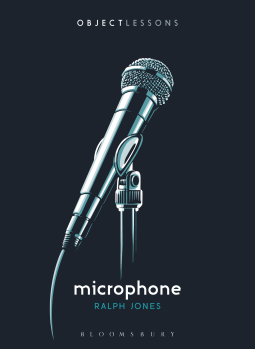
Ralph Jones Microphone Bloomsbury Academic, April 2026.
Thank you, NetGalley and Bloomsbury Academic, for providing me with this uncorrected proof for review.
Microphone is yet another successful contribution to the Object Lessons publications. It takes a historical approach, beginning with the early efforts to record sound, touching on The Jazz Singer as an example of sound being applied to song in films, through successful and unsuccessful attempts to be the first to patent new innovations in the long line of changes, to arrive at today’s expanded use of microphones. Some of the competition between inventors, patent seekers and innovators has already been explored. However, Ralph Jones has developed this part of the discussion with further information, in a readily accessible form – the information becomes a narrative that sets the scene for the excitement of discovering the way in which the microphone was developed, the ways in which it has been used, and making the familiarity of todays’ use part of an historical adventure.
The first chapter headings take us straight into conferences, meetings, and anywhere that a microphone is an important addition to getting an idea across to an audience. Could there be a microphone without ‘Is This Thing On?’ or ‘Testing, Testing’? More intriguing is ‘Hear Some Evil’ and here we move into the realm of eavesdropping, some nefarious, some a safety provision, others a source of entertainment in televised programs. Political events and war are covered; the telephone; the power that emanates from being the person with the microphone and the way in which the microphone has given that power to anyone whose podcast (of which there are so many) is successful.
There are photos, notes, and an index. The last is a rich source, demonstrating the wide-ranging information in this small book of knowledge. Although I admire the publication in general, and have enjoyed some of the individual books immensely, I have found this one of the most engrossing. The historical narrative is fluid, the integration of events and ideas enhances the history rather than interrupting the flow, and the writing is especially captivating.

Amy M. Kleppner Oceans to Cross Amelia Earhart’s Extraordinary Life and Her Fight for Women’s Rights Bloomsbury Academic, March 2026.
Thank you, NetGalley and Bloomsbury Academic for this uncorrected proof for review.
Amy M. Kleppner with Laurie Calkhaven reads the title page, and here the story of a family whose commitment to giving Amelia Earheart a biography which provides not only a warm family thread through the analysis, the adventures, and passions of Amelia Earhart, but a polished work begins. Amy M. Klepper is the last surviving member of Amelia Earhart’s family who knew her. She is the daughter of Muriel, Amelia’s sister, and grew up with an aunt she recalls so vividly as someone who is far more than the mystery of her disappearance. Laurie Calkhaven revised and edited the work. Amy’s son, Bram Kleppner, also contributed with his perceptive insight into the author, adding to the uniqueness with which Amelia Earhart’s story unfolds in this biography.
Amelia Earhart’s work to gain her qualifications and acceptance, and the journeys with which she honoured these endeavours is engaging. The emphasis on Earhart’s commitment to women’s equality and her work in that area, is also well covered. This includes the perceptive examination of her accepting a passenger role on a flight across the Atlantic, demonstrating that women could undertake such flights. This, when she must have dearly preferred to spend her time flying rather than being a passenger, is a tribute to her sincerity in representing a broad range of women’s rights. In this case she was ensuring that women who were never to be aviators, but would want the freedom to travel, were represented. It is examples of Amy Klepper’s deep understanding of her aunt, and ability to adopt a broad feminist perspective, which makes this biography so special.
The work includes previously unpublished photos from the family collection. The selected bibliography, notes for each chapter, and an index fulfill the academic requirements. But this biography is far more. Bram Kleppner’s epilogue which establishes Amy Kleppner’s familiarity, affection and admiration for her aunt underlines the importance of her personal influence on the work. In addition, Amy Kleppner’s own efforts pursuing women’s rights and racial justice, her physical endeavours such as her bicycle ride from Boston to Quebec City and climbing the forty-six peaks of the Adirondacks, link her closely to the mindset of the woman about whom she writes. Her birthday celebrations with challenging feats, like a 100-mile hike in England at eighty and retracing Odysseus’s voyage at ninety-two, further underscore her kinship with Amelia Earhart.
This is an engaging work, full of detail, but most importantly, resonates with understanding and affinity with its subject.
British Politics
Labour List – Emily Thornberry Keir Hardie Lecture in full

Emily Thornberry MP
I am so honoured to have been invited to speak here today and to have the opportunity to reflect on the values of our first leader, Keir Hardie, and to ask what his vision demands of the Labour Party today.
It was a hundred and twenty years ago that our movement chose its first leader: a man called Keir. And in the 1906 General Election, under our Labour name, that young party won 29 seats in Parliament.
Today, another Keir leads our family, and at the last General Election the British people placed their trust in us on a scale that our founder could never have imagined.
We now have over 400 MPs. We have come a long, long way.
People call it a “historic” victory. And they are absolutely right. We stood on a Labour platform, and the British public gifted us a majority on an extraordinary scale. But they expect something in return. And they expect what we said we would give, which was change. That’s what we promised. And that’s what we have to deliver.
So far so good. But it’s not is it?
Here we are today, with that thumping great majority, with that clear mandate to do big things, really shake things up. And yet, we seem to be wrestling with something really quite troubling.
We seem to be wrestling with a crisis of identity, a crisis of confidence.
It’s as if we started to question what it means to be a Labour Party, to be a Labour Government.
And the public are furious with us about that.
Insecurity in government isn’t just poor politics, it’s dangerous. Because when a government doesn’t know what it stands for, it risks squandering the hope and goodwill of the great many people who trusted us to do better. To be better.
We cannot afford to be insecure, to be unsure of ourselves.
We cannot waste this opportunity, this opportunity to enact generational change, to show Britain what a Labour government driven by Labour values really means.
So, we must ask ourselves: Who are we? What are we fighting for?
I think in moments like this, it helps to remember where we’ve come from. In order to know who we are, and where we’re going next.
Because when we understand where we’ve come from, when we understand the principles upon which we’ve built this movement, we can see more clearly what we need to do.
Today, I want to talk in particular about Labour’s place in the world. About our Internationalism.
Everyone always says “oh we’re Labour. We’re such great internationalists”
But what does that mean? What does it really mean?
Well, I think it means believing in something both very simple and yet very radical.
It comes from believing that whoever you are, wherever you come from, you have a place in our socialist movement. And that we are all equal brothers and sisters.
That when you join Labour, you become part of something bigger than yourself.
But it goes much further. We believe that spirit of solidarity goes beyond borders. Keir Hardie saw that working people were working people wherever in the world they came from across the world.
It means recognising that we all have far more in common than we have that divides us.
We might have different eye colour.
We might have different skin colour.
We might call our God a different name.
We might speak a different language.
We might wear strange exotic hats.
But fundamentally, fundamentally at the level that really matters, we are all the same.
That’s our internationalism. That’s what it means. And it comes from our socialist origins to the progressive politics we practise today. There has always been something fundamentally internationalist about the Labour Party.
And history bears that out.
It was a Labour Prime Minister – Clem Attlee – who helped establish the United Nations and declared that the world should never again descend into the horrors of war. And that’s what it means to be Labour.
It was a Labour Foreign Secretary – Ernest Bevin – who helped create NATO, ensuring that Britain and its allies could defend peace in an uncertain world. And do it together. All for one and one for all. And that’s what it means to be Labour.
And it was a Labour minister – Barbara Castle – who, working with the Fabians, helped establish the Office for Overseas Development, because she understood that helping people thousands of miles away isn’t charity. It’s solidarity. And that’s what it means to be Labour.
So alright. We are a party of internationalists.
But how does that history, those values, help guide us through the crossroads we face today?
Well, it reminds us that there are certain things that Labour has always rejected.
We reject the idea that our prosperity should ever be built on the exploitation of others.
We reject what Keir Hardie called the “plunder and butchery” of imperialism.
And we reject the notion that the suffering of a stranger somehow means less than the suffering of a neighbour.
Hardie understood this.
Or more truthfully, he learnt this on his world tour. Where he travelled India and South Africa as the first leader of the Labour Party. And he learnt along the way that Labour was not just about the miner in the Rhondda Valley, or the dock worker in East London, or the millworker in Lanarkshire.
It was a movement for all those fighting for dignity, security and a better life.
He learnt that Labour is a family borne of class but driven by values. Values of solidarity, and empathy.
And I suspect no one in this room would disagree with those instincts. Those Labour instincts remain good ones. And they remain true.
They are beliefs to be proud of and they should remain the moral compass which guides us today. Our light in darkness.
But let’s be honest. It is easy to say these things. It is easy to celebrate these values. But values are meaningless if we do not deliver on them.
So, we believe all these things. What are we prepared to do about it?
Well, in the last two weeks, I think we may have seen those values in action.
Our leader – the younger Keir that is – was confronted with precisely the kind of moment that tests a government. That reveals what exactly a government is prepared to stand up for. It was a true test of the mettle of a leader.
When the pressure came, our Prime Minister made clear that this Labour government should stand up for what is right.
He made clear that Britain should not be drawn into war for war’s sake.
A war with no clear purpose.
A war that is contrary to law.
If people are going to die, either bravely and willingly as combatants, or just because they were in the way, like a little girl’s school, they deserve to know why they have to die.
And Keir has held that line.
And let’s be honest, it’s not easy for Prime Minister to do that. It’s not easy for a Prime Minister when you’ve got the Americans breathing down your neck. They are close friends and allies and we rely on the US for defence and security, although that reliance is mutual.
But just as Harold Wilson refused to send British troops to fight in Vietnam, this Labour government knows that we have principles that we are not prepared to violate. Unlike the Tories, we stuck to our guns and said we have values that define who we are. It is the first time that a British Prime Minister has said no to an American President since the 1960s.
So no Mr President. We say no.
And with every passing day, I think we see just how important that decision actually was. How hard it was, and how pivotal it has been for this second Keir.
Because the pressure did not come only from the United States.
It came from the press.
It came from the Opposition Benches.
It came from the armchair generals beating their chests and roaring us on into war.
We forget it now but just two weeks ago, the drumbeat was relentless: The claim that Britain had to fall in line, that refusing to do so would somehow place us on the “wrong side” of the Americans. And how difficult and dangerous that would be for our country.
I think it took real courage for the Government to resist that kind of pressure.
But once you stand firm and say so, something remarkable happens – the fog clears. And suddenly the path becomes obvious.
Of course we had to stand up for what was right. Of course we can’t be involved in attacking another country, no matter how hateful their regime is. And no one is apologising for Iran, but where is it going to end? What is the plan? And who is going to decide when that plan has been fulfilled, that we have done everything we wanted to do in that war, if we don’t have a clear idea what we’re going to do before we get involved?
The answer had to be no.
Unlike many of our founding fathers and mothers, not many of us in the Labour Party are pacifists these days. But we cannot agree to violence and the loss of life without either the agreement of the international community, or the real need for self-defence. That’s the law. And that’s what’s right.
Of course we had to put principles before pressure.
And looking back you can see this is exactly the kind of courage Keir Hardie displayed when he stood so firmly against the First World War.
When he was ridiculed.
When he was called unpatriotic.
When he was spat at in the street.
But history proved him right.
Hardie was such a relentless advocate for peace that the outbreak of war very much killed him. But I think what he said in the weeks before the First World War tells us a lot about what it means to be an internationalist Labour Party.
He told Parliament: “Our honour is said to be involved in entering into the war. That is always the excuse.”
He went on: “I suppose our honour was involved in the Crimean war, and who today justifies it? Our honour was involved in the Boer War, how many today will justify it?”
Let’s update that. Let’s change Crimea to Iraq. Let’s change Boer War to Libya.
He concluded: “If we are led into this war, we shall look back in wonder and amazement at the flimsy reasons which induced the Government to take part in it.”
More than a century later, those words still ring true.
So, the lesson for us today is simple.
Standing by Labour values may not always be easy in the moment. But when we do it – when we hold our nerve – we discover that is exactly what we should do. This is where Labour belongs. This is who we are. This is what it means to govern according to our principles.
And look how Labour’s internationalism, our belief in treating others with respect, as brothers and sisters, has helped our standing in the world.
Just think back a couple of years. Back to the depths of Brexit.
When Britain was a laughing stock.
When people openly mocked us. They mocked the politicians that were supposed to represent us.
We had David Davis turning up for Brexit negotiations without any notes. I mean really. The arrogance. The entitlement.
We had Boris Johnson making everything into some silly little game, some chance for him to just show off, when real working people paid the price for his incompetence.
We had Dominic Raab deciding he’d sit on a beach in Greece while Kabul fell to the Taliban, rather than get up and do something about it.
The politicians who represented Britain on the world stage let us down, and our credibility vanished. People didn’t know what Britain stood for anymore. And neither did we as a country.
These people said they were patriots, but I think real patriotism doesn’t need to brag. It needs to be comfortable with itself, it needs to believe in itself, it needs to be strong.
And we were so far away from that.
But look at the difference we have made in the last 18 months.
Under Labour, Britain is once again a serious player on the world stage. And we are doing it on our terms. On Labour terms.
We are a force for good.
We back international law because we know it is right.
We back strong partnerships because we know we are better together.
We back fighting for peace because we know it’s a hell of a lot easier to get into a war than it is to get out of one.
I have to say, I found it deeply disturbing to see Kemi Badenoch and her Shadow Attorney General arguing that we should simply ignore international law if we didn’t like it and commit our troops to unlawful action.
That when the Americans asked us to jump our response, they thought, should be: “how high, Mr President?”
She said that our troops were “just hanging around,” when they were bravely defending our partners and bases from incoming fire.
It’s disgraceful.
Sending our young men and women to war is one of the most solemn decisions any government can ever make. And the eagerness of the Tories and Reform to trample over the UN Charter, to ignore the legal protections Britain helped write and to embrace what is essentially the law of the jungle – that should trouble every one of us. They are the alternative.
Under Labour, we will not let our country be seduced by self-serving populists who are prepared to put our country’s security on the line.
Under Labour, we will not be afraid to do what is right, no matter how loud the warmongers shout.
Under Labour, we will never again forget who we are and what we are fighting for.
Getting ourselves into the right place internationally at a time of war, is no small thing.
But we need to show that same strength, the same vision, the same clarity of principle when it comes to our domestic policy.
If we do that, if we stay true to our values and our principles then I know we are going to be alright.
And more than that, we will take the country along with us.
It’s about understanding the nervousness people feel when they believe there is no control of our borders without falling into the trap of being unfair and cruel to vulnerable people who come here seeking safety and a better life.
It’s about being brave when it comes to tackling the crisis in social care. Because we know in our hearts we are never going to fix the NHS without being bold and ambitious and finally, finally ensuring the elderly, disabled, and vulnerable have the care they need to live in dignity and to keep them healthy.
Yes, some of these things look really difficult, but we need to take a deep breath, listen to our hearts, listen to who we are, and take action.
How many people here think we should be standing up for our children and protecting them from the addictive nature of social media? Or protecting people from the vile abuse they suffer online?
How many people here think we should be doing something about the manipulative algorithms feeding us all of this hate, and division, or disinformation? Or the blatant use of bots to promote hatred by hijacking the algorithms and supporting the Right?
Exactly.
We just have to go for it.
We have to be brave, and bold, and go for it.
We know it’s about time we updated our laws to give equal rights to couples who are not married. By not updating the law, we are not protecting marriage, we’re just disadvantaging children, the majority of whose parents are not married in Britain these days. And we’re disadvantaging women who believe being a “common-law wife” gives you some sort of rights. It doesn’t. It doesn’t give you anything.
We know it’s about time we had a proper green revolution so people can actually afford their heating bills.
But we can’t do that unless our homes are insulated properly and unless we build the pylons to get the clean energy to where it is needed. We can’t secure a warm future for people while most of us, 73% of us across the country, and 84% here in Merthyr, still rely on gas. We have to change that. It’s going to take a lot. We have to do it. We are Labour
We cannot continue to be unsure about ourselves. We have to say: people have got to have heating they can afford and we just have to get it done. We are in power. We have a big majority. We are Labour.
I’m not saying Britain is broken. I don’t believe it is. But I am saying we have to sort this out, and we can sort this out.
We can only do it though, with a Labour government that believes in itself, that knows where it comes from, and that is willing to be a bit braver, a bit louder, a bit prouder.
If we are not sufficiently clear and confident, if all we have to offer the country is something which seems a bit timid, a bit boring, a bit managerial, if Labour is no longer a moral crusade, then what are we? Not much.
And we make the populists even more attractive.
Because if we can’t be clear about what we stand for, we are in trouble.
But if we can be clear and if we can be positive and we can be passionate: then we win.
Because we have the truth on our side. We have the arguments that stack up. We have a vision that makes sense. And we have a plan.
The problem with populists, whether it’s Reform or the Greens or Plaid, is that they just say what they think people want to hear.
It’s never about knowing the cost of delivering it. Or how they’re going to do it. Or what the consequences will be. They never think that through.
Of course, we do. Trouble is, sometimes it seems like that’s all we do. And we forget the reason why we’re doing it, what the essence of the plan is and where we want to go.
We’ve spent so much time talking about the cost, about next steps. And yes, of course we must do that because we are a responsible party of power.
But we also need to be able to look people in the eye and say: we know where we’re going, that things are going to be alright. Stick with us, and we can sort things out together.
Because if we don’t, people will just turn to the Farage’s, the Polanski’s, the ap Iorwerth’s. The snake-oil salesmen. Whatever their names are, we see them. They are prepared in their vanity and glibness, to make us all poorer, to make us all more divided.
I think that lately, we could be forgiven for thinking that all our passion, and beliefs, and confidence in our Labour values, had been beaten out of us. But our Labour values are still here. They’re still here in our hearts. They haven’t gone anywhere. We just have to rediscover it.
We have a duty to take advantage of this massive chance the public has given us to transform our country.
To be as brave as Keir Hardie was.
To be as bold as Keir Hardie dreamed.
To be Labour, as Keir Hardie envisaged.
And to show Britain what a strong Labour government, grounded in proud, Labour values, can truly achieve.
Thank you.
Australian Politics
Prime Minister Anthony Albanese: Address to the Nation
1 April 2026
My fellow Australians.
By nature, we’re an optimistic country.
But I understand that right now it’s hard to be positive.
The war in the Middle East has caused the biggest spike in petrol and diesel prices in history.
Australia is not an active participant in this war.
But all Australians are paying higher prices because of it.
I know that you’re seeing this at the servo and at the supermarket.
And I understand farmers and truckies, small businesses and families are doing it tough.
And the reality is, the economic shocks caused by this war will be with us for months.
Tonight, I want to speak directly with you about what the Government is doing to shield Australia in these uncertain times.
And also, what all of us can do to help our country and help each other in the period ahead.
On Monday, National Cabinet adopted the National Fuel Security Plan.
Leaders from both sides of politics, from right around the country, working together to keep Australia moving.
Making sure that we are prepared.
So that if the global situation gets worse and our fuel supplies are seriously disrupted over the long term, we can co-ordinate the next steps together.
Today, we cut the fuel excise in half.
Cutting the tax on every litre of petrol, by 26 cents.
Those savings have started showing up at your petrol station.
For our truckies, we have cut the Heavy Vehicle Road User Charge to zero.
Both these measures will be in place for the next three months.
We are working to bring the price of fuel down.
To make more fuel here and to keep it onshore.
And get more fuel here – using our strong trading relationships with our region to bring more petrol, diesel and fertiliser to Australia.
Now, it’s the Australian way that people want to do their bit – and there are simple ways that you can.
You should go about your business and your life, as normal.
Enjoy your Easter.
If you’re hitting the road, don’t take more fuel than you need – just fill up like you normally would.
Think of others in your community, in the bush and in critical industries.
And over coming weeks, if you can switch to catching the train or bus or tram to work, do so.
That builds our reserves and it saves fuel for people who have no choice but to drive.
Farmers and miners and tradies who need diesel, every single day.
And all those shift workers and nurses, who do so much for our country.
The months ahead may not be easy.
I want to be upfront about that.
No government can promise to eliminate the pressures that this war is causing.
I can promise we will do everything we can to protect Australia from the worst of it.
These are uncertain times.
But I am absolutely certain of this: we will deal with these global challenges, the Australian way.
Working together – and looking after each other.
As we always have.
Thank you and good evening.
American Politics
Anti-Trump rallies pop up in thousands of U.S. cities for ‘No Kings’ protest
Published Sat, Mar 28 20266:28 AM EDT


Demonstrators march near the Lincoln Memorial after crossing the Memorial Bridge during the “No Kings” national day of protest in Washington, D.C., on March 28, 2026. Aaron Schwartz | Afp | Getty Images
Demonstrators decrying U.S. President Donald Trump’s aggressive deportation efforts, war in Iran and other policies took to city streets across the country on Saturday in the third round of the “No Kings” rallies.
More than 3,200 events were planned in all 50 states. The two previous No Kings events attracted millions of participants.
In Minnesota, a flashpoint in Trump’s crackdown on illegal immigration, a massive rally was held outside the state capitol building in Saint Paul. Many in the crowd there held aloft posters bearing photos of Renee Good and Alex Pretti, whom federal immigration officers fatally shot in Minneapolis this year.
Minnesota Governor Tim Walz, the Democratic vice presidential nominee in 2024, told the crowd that their resistance to Trump and his policies makes them “the heart and soul” of everything good about the U.S.
“They call us radicals,” Walz said. “You’re damn right we’ve been radicalized — radicalized by compassion, radicalized by decency, radicalized by due process, radicalized by democracy, and radicalized to do all we can to oppose authoritarianism.”
U.S. Senator Bernie Sanders of Vermont, a Trump critic who sought the Democratic presidential nomination in 2016 and 2020, was another speaker at the event in Minnesota. Musician Bruce Springsteen also appeared and performed his song “Streets of Minneapolis” — a ballad that blasts Trump’s immigration crackdown and laments the deaths of Good and Pretti.
“We will not allow this country to descend into authoritarianism or oligarchy in America,” said Sanders, an independent. “We, the people, will rule.”

Times Square “No Kings” National Day of Protest in New York on March 28, 2026. Charly Triballeau | Afp | Getty Images
Other large rallies took place in New York, Dallas, Los Angeles, Philadelphia and Washington, but two-thirds of the events were happening outside major cities, a nearly 40% jump for smaller communities from the movement’s first mobilization last June, organizers said.
In New York, a crowd that police estimated at tens of thousands stretched more than 10 blocks in midtown Manhattan. Actor Robert De Niro, one of the organizers, said that no president before Trump has posed “such an existential threat to our freedoms and security.”
Holly Bemiss, 54, said she and other New York rally attendees were acting in the same spirit as her ancestors who fought in the American Revolution.
“We fought against having kings, and we fought for freedom,” she said. “We’re just doing it again.”
On the National Mall in Washington, the crowd chanted pro-democracy slogans and held anti-Trump signs. Outside one high-rise assisted-living center in Chevy Chase, Maryland, a group of elderly people in wheelchairs held signs encouraging passing cars to “Resist tyranny,” “Honk if you want democracy,” and “Dump Trump.”

“No Kings” protest against U.S. President Donald Trump’s administration policies, in St. Paul, Minnesota, on March 28, 2026.
Tim Evans | Reuters
Thousands attended a Dallas event that had clashes between No Kings demonstrators and counterprotest groups, including one led by Enrique Tarrio, the former leader of the far-right organization the Proud Boys.
Minor scuffles erupted when counterprotesters blocked streets. Dallas police eventually made several arrests.
Trump’s policies have galvanized the opposition, Dallas protester Chris Brendel said.
“One thing I’ll give Trump credit for is mobilizing the dissenters. … I can’t stand by and be silent anymore simply because of my boys and their friends and the future,” Brendel said.
Trump’s approval rating has fallen to 36%, its lowest point since his return to the White House, according to a Reuters/Ipsos poll.
A spokesperson for the National Republican Congressional Committee criticized Democratic politicians and candidates for supporting the rallies.
“These Hate America Rallies are where the far-left’s most violent, deranged fantasies get a microphone and House Democrats get their marching orders,” spokesperson Mike Marinella said in a statement.
Marching ahead of midterms
With midterm elections later this year in the U.S., organizers say they have seen a surge in the number of people organizing anti-Trump events and registering to participate in deeply Republican states like Idaho, Wyoming, Montana and Utah.

No Kings Houston Protest, Texas, on March 28, 2026, in Houston.
Marcus Ingram | Getty Images Entertainment | Getty Images
Competitive suburban areas that have helped decide national elections are seeing “huge” increases in interest, said Leah Greenberg, co-founder of Indivisible, the group that started the No Kings movement last year and led planning of Saturday’s events. She cited examples in Pennsylvania’s Bucks and Delaware counties, East Cobb and Forsyth in Georgia, and Scottsdale and Chandler in Arizona.
A call to action against Iran war
The No Kings movement launched last year on Trump’s birthday, June 14, drew an estimated 4 million to 6 million people across roughly 2,100 sites nationwide. The second mobilization in October involved an estimated 7 million participants in more than 2,700 cities, according to a crowdsourcing analysis published by prominent data journalist G. Elliott Morris.
That October event was largely fueled by a backlash against a government shutdown, an aggressive crackdown by federal immigration authorities, and the deployment of National Guard troops to major cities.
Saturday’s events come amid what organizers said was a call to action against the bombardment of Iran by the U.S. and Israel, a conflict that is now four weeks old.
Morgan Taylor, 45, attended the Washington protest with her 12-year-old son, and said she was enraged by Trump’s military action in Iran, which she called a “stupid war.”
“Nobody’s attacking us,” Taylor said. “We don’t need to be there.”

No Kings, No Clowns
| Joyce Vance from Civil Discourse <joycevance@substack.com> |
The signs were epic this morning in Freeport, Maine, where I’m hanging out with my kid for the weekend. (Thanks for failing to fund TSA, GOP.) It was 19 degrees at 8 a.m. when the rally, which lined Main St. with hundreds of people, lots of young people and kids among them, kicked off.

There was lots of friendly horn honking, smiles over clever signs, and coffee from Dunkin’. And it made me feel good to be an American.

People understood the assignment.

Some of the signs offered painful clarity.

I went with a friend who made this brilliant sign.

And we saw this guy, who reminded us that saving democracy can actually be fun. Because if we lose our ability to take joy in being with friends and neighbors, our ability to laugh, then what’s the point?

I know many of you are out now or will have a chance to get out later today. Be proud of yourselves and what we are doing. While we celebrate today, we also need to grow the awareness that it can’t just be one day, that we’re at a tipping point that requires all of us to get involved and do the hard work of democracy that is ahead of us. I remain optimistic that we can do it—even Alabama is going full force today.

The question is, what are we going to do tomorrow, and the day after that, and so on until people who value democracy prevail in the midterm elections and we can start to restore our institutions? It’s time to make your plans.
We’re in this together,
Joyce
Sunday thought: Turning Yesterday’s Solidarity into Political Power
Robert Reich <robertreich@substack.com Forwarded this email? Subscribe here for more
Sunday thought: Turning Yesterday’s Solidarity into Political Power
Where We Go From Here Robert Reich Mar 29
Friends,Yesterday, millions of us once again affirmed the foundation of the common good.Across America, people showed their solidarity — in opposition to Trump’s ill-considered war in Iran, with immigrants being targeted by ICE and Border Patrol agents, with current and former public officials whom Trump is prosecuting, with the students and universities whose freedom to learn and speak continues to be threatened by Trump, in favor of the earth and stopping climate change, and with every American who’s determined to reject dictatorship.
But how do we turn yesterday’s solidarity into political power?Three suggestions. All depend on our working with activists we already know, added to those we met yesterday, and the activism of our local Indivisible chapter and other groups we participate in.
1. Target vulnerable Republican senators and House members. Either get them to switch parties or become independents who caucus with Democrats, or flip their seats.
Republican majorities are razor-thin in both chambers, and some Republicans who represent purple districts and states are struggling to keep their Republican supporters behind them. (They’re also struggling with their own consciences in continuing to support Trump’s authoritarian fascism.)
In the House, according to the Democratic Congressional Campaign Committee and political analysts, the following Republican members are considered particularly vulnerable.
Arizona: David Schweikert (AZ-01), Eli Crane (AZ-02), Juan Ciscomani (AZ-06).California: David Valadao (CA-22), Young Kim (CA-40), Ken Calvert (CA-41), Mike Garcia (CA-27).Colorado: Gabe Evans (CO-08).Florida: Cory Mills (FL-07), Anna Paulina Luna (FL-13), María Elvira Salazar (FL-27).Iowa: Mariannette Miller-Meeks (IA-01), Ashley Hinson (IA-02), Zach Nunn (IA-03).Michigan: Bill Huizenga (MI-04), Tom Barrett (MI-07).Nebraska: Don Bacon (NE-02).New Jersey: Thomas H. Kean Jr. (NJ-07).New York: Mike Lawler (NY-17), Anthony D’Esposito (NY-04), Brandon Williams (NY-22).Pennsylvania: Brian Fitzpatrick (PA-01), Ryan Mackenzie (PA-07), Rob Bresnahan Jr. (PA-08), Scott Perry (PA-10).Wisconsin: Bryan Steil (WI-01), Derrick Van Orden (WI-03).
In the Senate, these Republicans are considered vulnerable.Maine: Susan Collins.Texas: John Cornyn.Louisiana: Bill Cassidy.2. Begin organizing and mobilizing now to get out the vote for November’s midterm elections — aiming for Democratic takeovers of both chambers of Congress by wide margins, which will severely limit what Trump can do after January 2027.
The key will be to get out the vote. Make a plan. Use phone trees. Write postcards. Arrange transportation for people who need it.
Since January 2025, Democrats have won special elections in districts Trump won in 2024, and by an average margin of 12 percentage points better than he did. Just this past Tuesday, Democrats outperformed Trump in three special state legislative elections in Florida, even flipping the home district of Trump’s Mar-a-Lago.Meanwhile, Trump’s polls continue to tank. In the new Reuters/Ipsos poll, only 36 percent approve of his performance while 62 percent disapprove, a new record low for Trump. In the latest Quinnipiac poll, 38 percent approve of him; 56 percent disapprove. Even the latest Fox News poll shows Trump approval at only 41 percent; disapproval at 59 percent; and fully 58 percent of Americans opposing U.S. military action in Iran.
All this augers well for the midterms, but there’s no substitute for concrete planning to get out the vote — identifying likely Democratic voters, making sure they’re registered and motivated, and helping them get to the polls (or, assuming it’s still legal, making sure they mail their ballots in, in time).
3. Root out and challenge any Trump Republican attempt to intimidate likely Democratic voters or manipulate the election process.
It’s important that neither Trump nor his state lapdogs diminish the turnout of likely Democratic voters in the weeks leading up to the November midterms — by stationing ICE or Border Patrol agents near polling places, interfering with the counting or certifying of ballots, or altering laws and rules to make it harder to vote.
If you have any reason to be concerned about these tactics, check in with your state and local party officials and election officials. Make sure they’re being as vigilant as they need to be. If they’re concerned and cannot assure you that we will have a free and fair election, urge them to challenge what’s occurring in the federal courts.
Or alert your local chapter of the American Civil Liberties Union. Visit the ACLU’s affiliate map website to locate one of the 54 state-level offices, which often have local chapters underneath them. (You can search by state to find nearby chapters, which handle local advocacy, events, and volunteer engagement.)
**If you were inspired by yesterday’s No Kings Day demonstration, know that millions of others were, too. Let’s build on that inspiration by turning it into concrete political action to take back power from Trump and his treacherous regime.
Dinner with Miss Pym set to sell out at St. Luke’s Church in Sea Cliff
Posted March 27, 2026

Live adaptations of Barbara Pym novels act as a fundraiser for St. Luke’s Episcopal Church. Courtesy Dan DiPietro
Between 90 and 100 community members are expected to pack the parish hall at St. Luke’s Episcopal Church on Saturday for a dramatization of Barbara Pym’s “Crampton Hodnet.” The dinner and performance event will serve as a fundraiser for the church as it looks to begin renovations.
Sea Cliff residents Dan DiPietro and Fred Stroppel have adapted scenes from the Pym novel to be read by the village’s performance troupe that participates in other annual events like the Sea Cliff Civic Association’s Scrooge Stroll and James Joyce Jaunt.
DiPietro and Stroppel began dramatizing Pym novels during the shutdown due to the Covid-19 pandemic. DiPietro is part of the Barbara Pym Society, which meets for conferences in Massachusetts. *When the society was forced to cancel its conferences during the pandemic, DiPietro adapted scenes to be performed and filmed by actors in their own homes in the United States and England. Stroppel edited together their performances and posted the videos on YouTube.
Stroppel said that actors had different ideas of what direction to take with their performances.
“The actual filming, it was just interesting, and it’s funny,” he said, “because nobody really matched up.”
After three videos which garnered thousands of views, they decided to transition to live performances at St. Luke’s. The first was in November of 2024 and the second in January of 2025.
“Crampton Hodnet” was the first novel DiPietro and Stroppel adapted for a video. The comedy is set in North Oxford, England in the 1930s. It follows multiple characters as they become entangled in various romantic situations.
“I think it’s Pym’s funniest novel,” DiPietro said. “Others might agree or not agree.”
DiPietro writes the scenes before Stroppel, who has a background in screenwriting, reviews them. He then makes some changes to allow scenes to work better on stage. DiPietro explained how preparing to perform at St. Luke’s differs from making a YouTube video.
“There still was work involved in moving it from a film version to a live performance,” he said. “We dropped one of the subplots because it would have created too large a cast for the space.”
The performers have had several rehearsals, and Friday night will be their dress rehearsal. Stroppel and DiPietro both said that rehearsals have gone well.
“It’s a very relaxed group of people,” Stroppel said. “We know them all. They’re all friends, and so there’s not a lot of stress involved.”
In addition to the performance, attendees will be provided dinner catered by longtime Sea Cliff resident Lisa Harir and desserts from local business Sleepy Jean’s Bake Co. There will also be a music trivia contest based on music connected to the performance. Trivia winners will receive prizes.
At $75 per person, ticket proceeds will go toward renovations at St. Luke’s. Last year’s event was also a fundraiser for the church, with the money going toward operating costs.
Renovations will include installing air conditioning in the parish hall and improving accessibility.
“The basic idea here,” said The Rev. Jesse Lebus, the rector of St. Luke’s, “is that we’re trying to improve hospitality.”
Lebus, who acted in last year’s Pym adaptation, explained that lacking air conditioning makes it very difficult to use the parish hall in the summer because the space gets too hot. One event he noted as getting disrupted by the heat is the senior lunch program run by the Sea Cliff Senior Outreach Network.
He added that while there is not yet a timeline for construction, an architect has been chosen and plans have been proposed.
“Anything we can do to help (St. Luke’s) achieve that goal is worth the effort,” Stoppel said. “So, I’m looking forward to it.”
*The Barbara Pym Society Conferences also meet in Oxford at Barbara Pym’s former college, St Hilda’s.
Jane Austen Course
Live online
Join us for a new course on Jane Austen’s Families with Tom Zille, University of Cambridge.
Lecture list
• Dependants: Sense and Sensibility (1811)• The Family Circle: Pride and Prejudice (1813)• Distant Relations: Mansfield Park (1814)• The Smooth Surface of Family Union: Persuasion (1818)
Saturdays, fortnightly, 11 April to 23 May 2026, 6.00-8.00 British Summer Time. 
Cambridge Literary Festival
You might also be interested in the annual A Room of One’s Own lecture hosted by our friends at the Cambridge Literary Festival. This year the lecture will be given by novelist, playwright and poet Deborah Levy on Sunday 26 April. A commemorative pamphlet containing the lecture is included in the ticket price. Details on the CLF website.
Best wishes,Trudi
Dr Trudi Tate
Director, Literature Cambridge
Cindy Lou eats in Perth
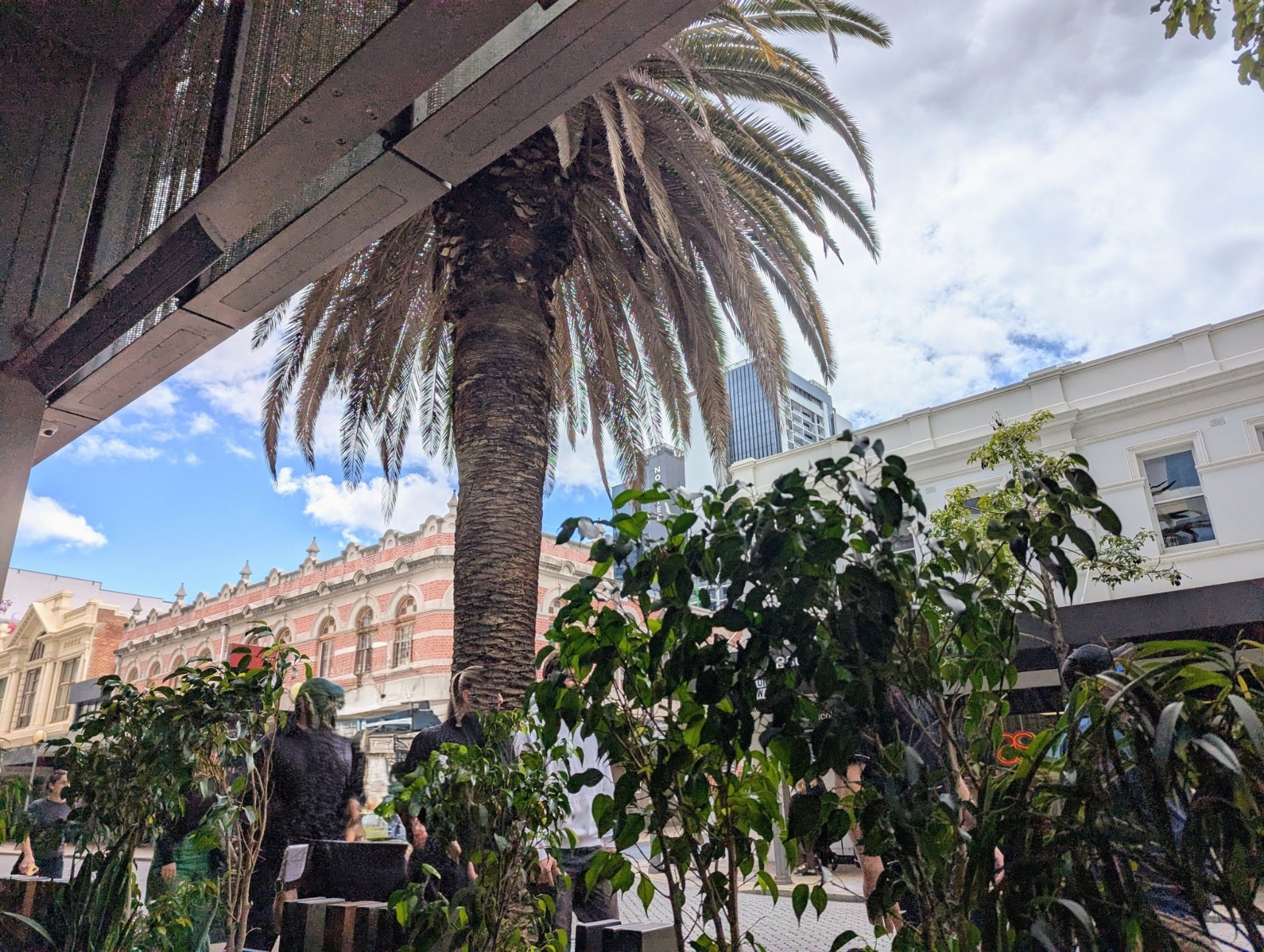
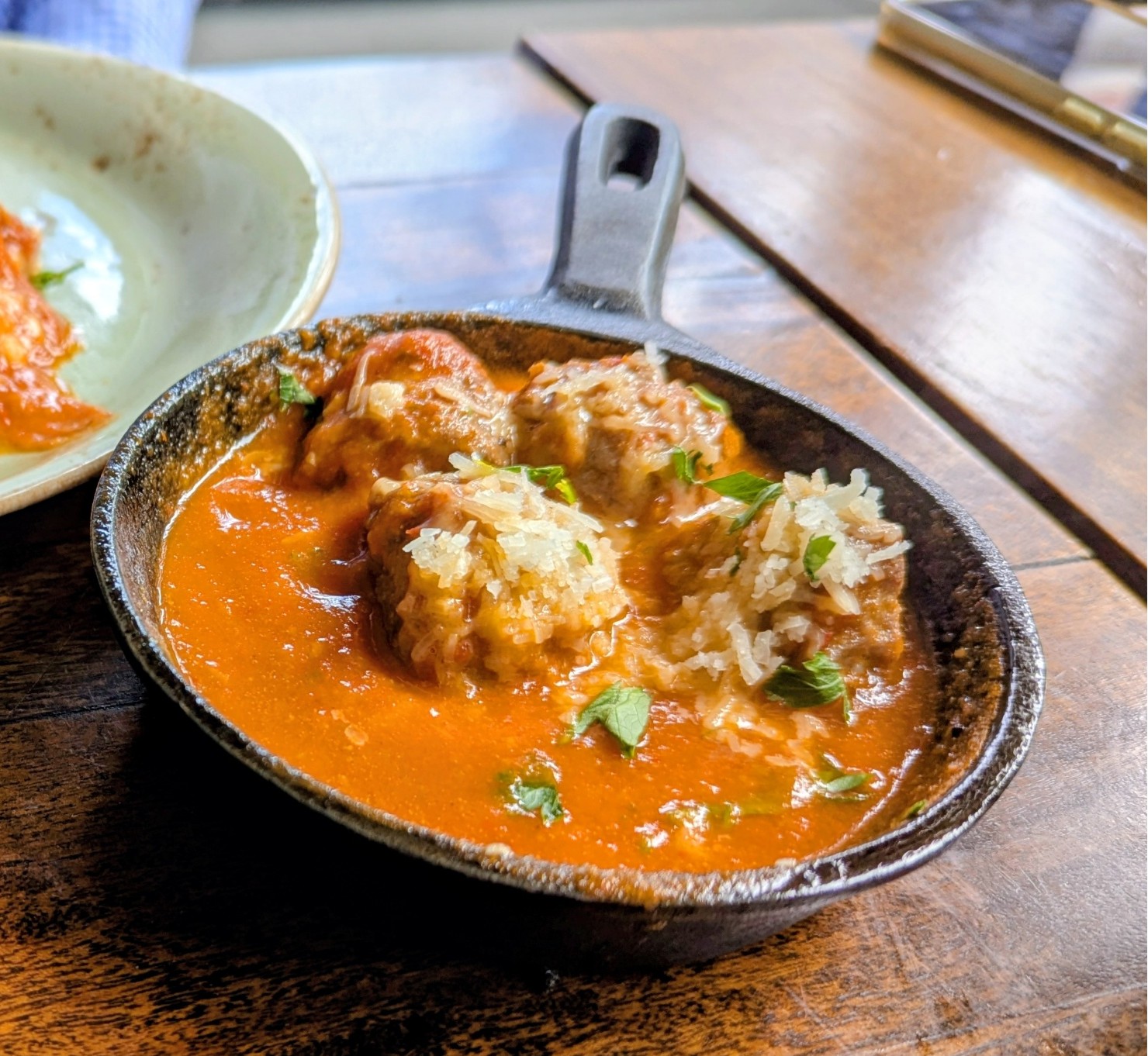
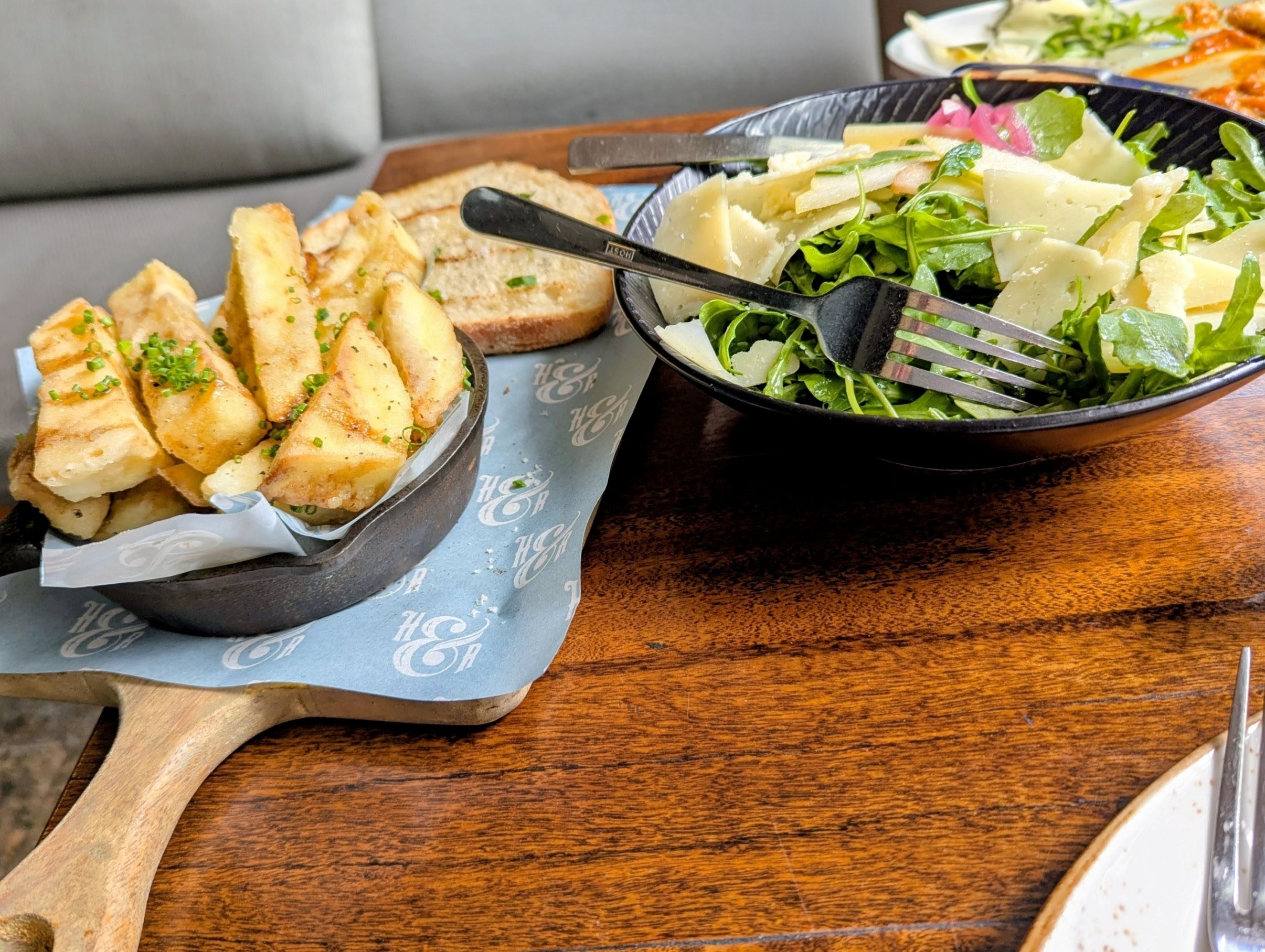
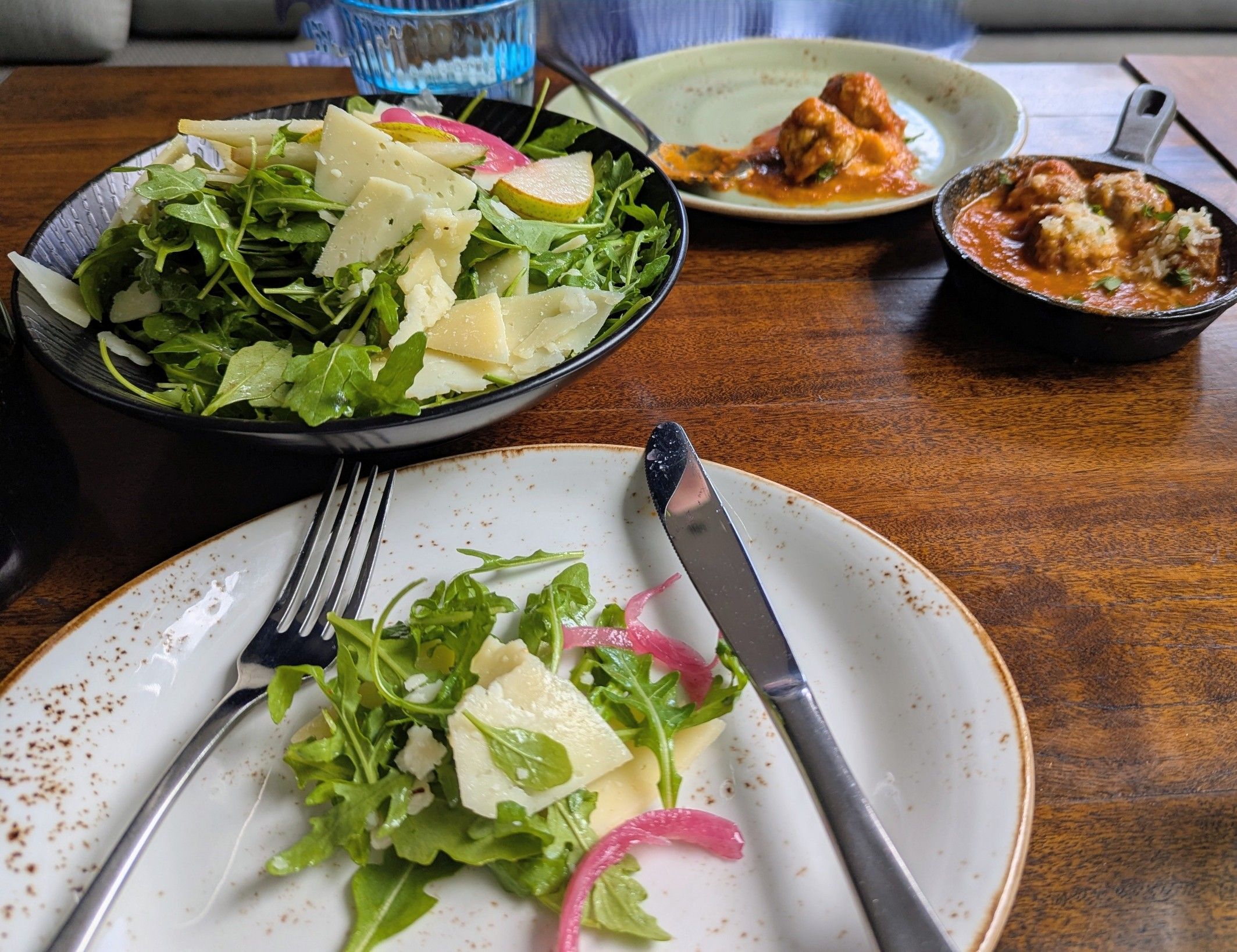
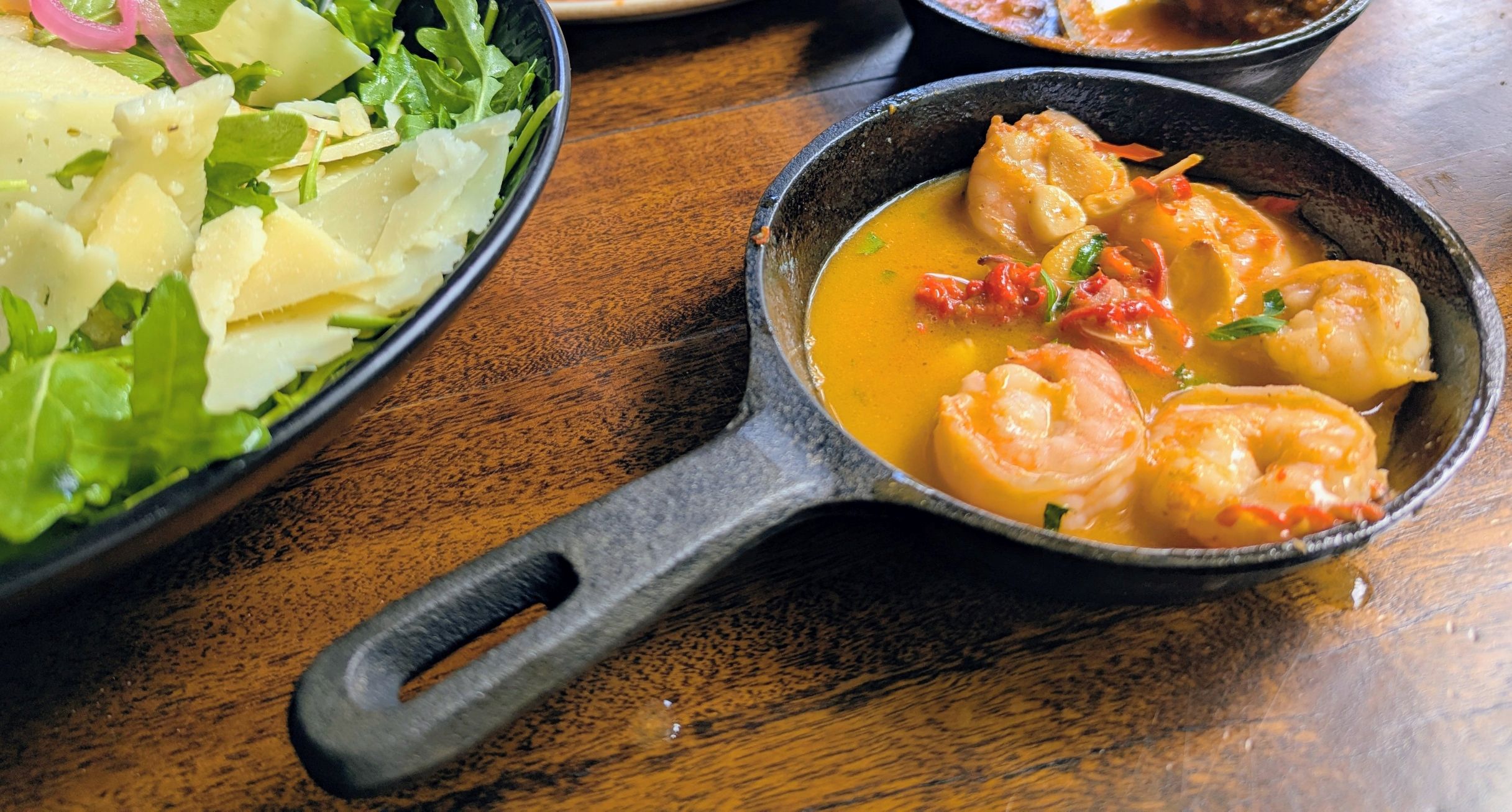
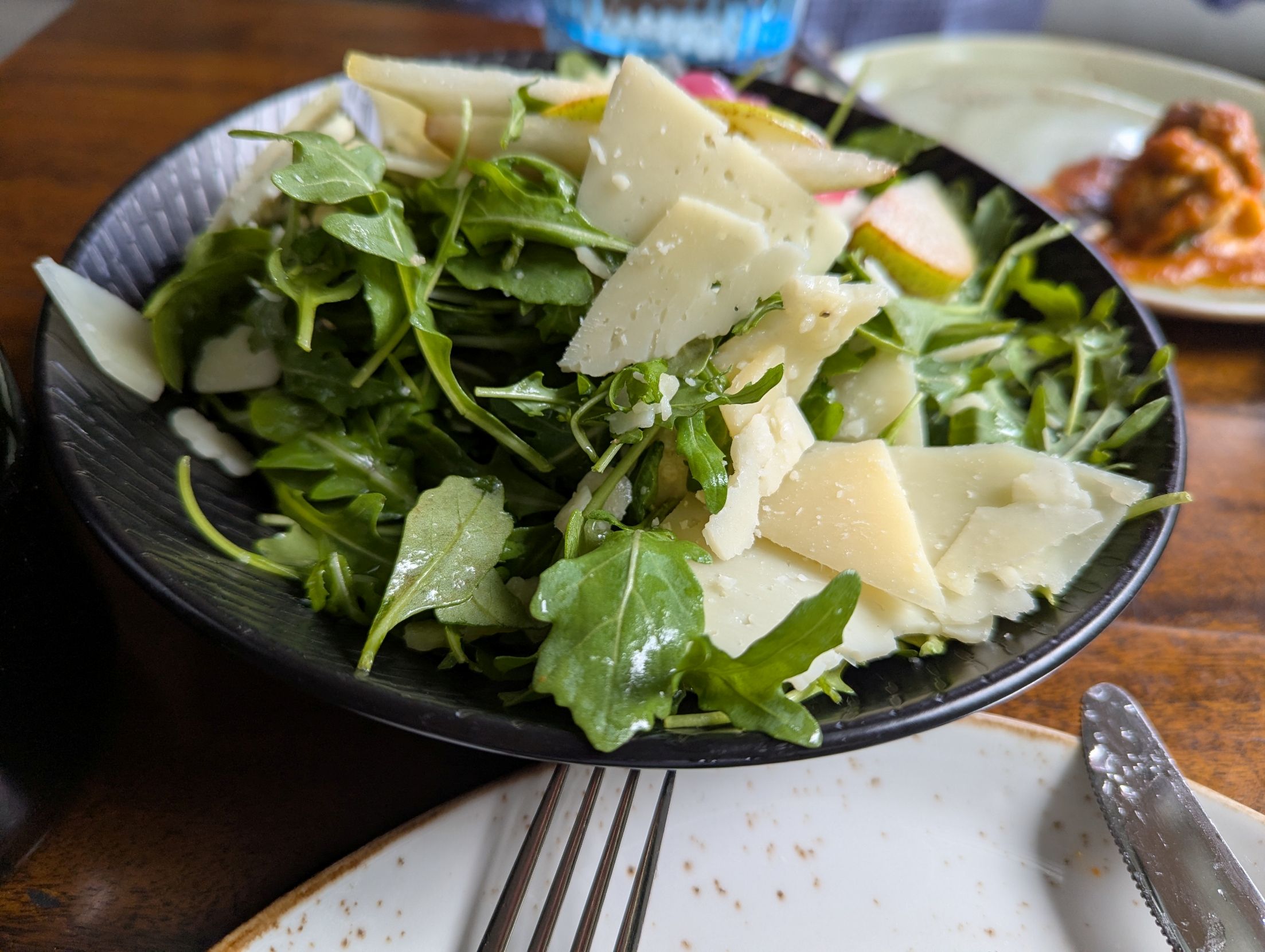
H&R has an excellent tapas selection. The choices we made were delicious, generous and ones we would choose again – gambas with a wonderful sauce – the chili did not overpower; albondigas – more authentic than we have found elsewhere; crisp and succulent eggplant; a huge Manchego cheese, pear and rocket salad: grilled sough dough; coffees and a custard tart with cinnamon.
The service was friendly and efficient, the seating comfortable (inside and outside available) and the setting in the heart of the city with shielding foliage.


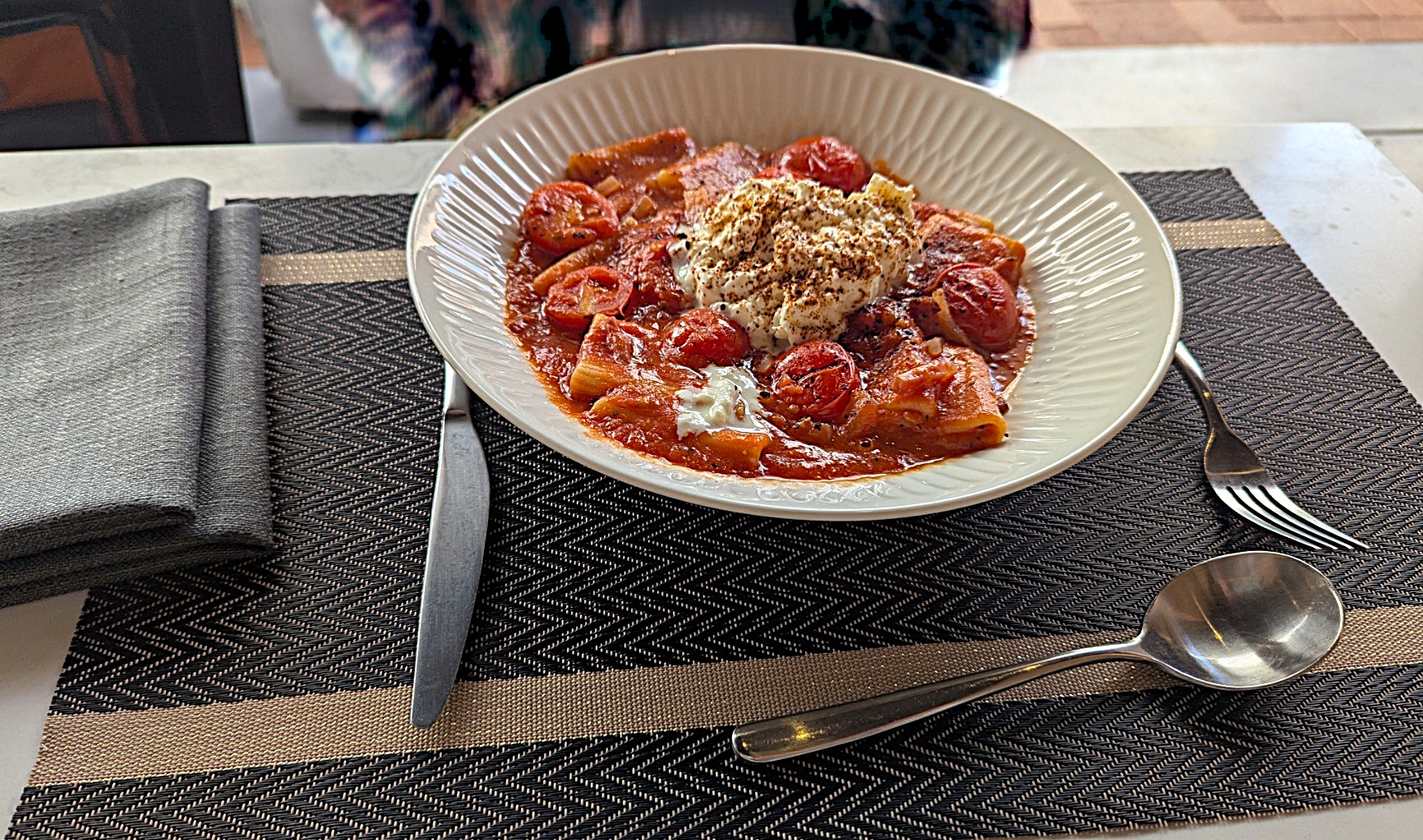
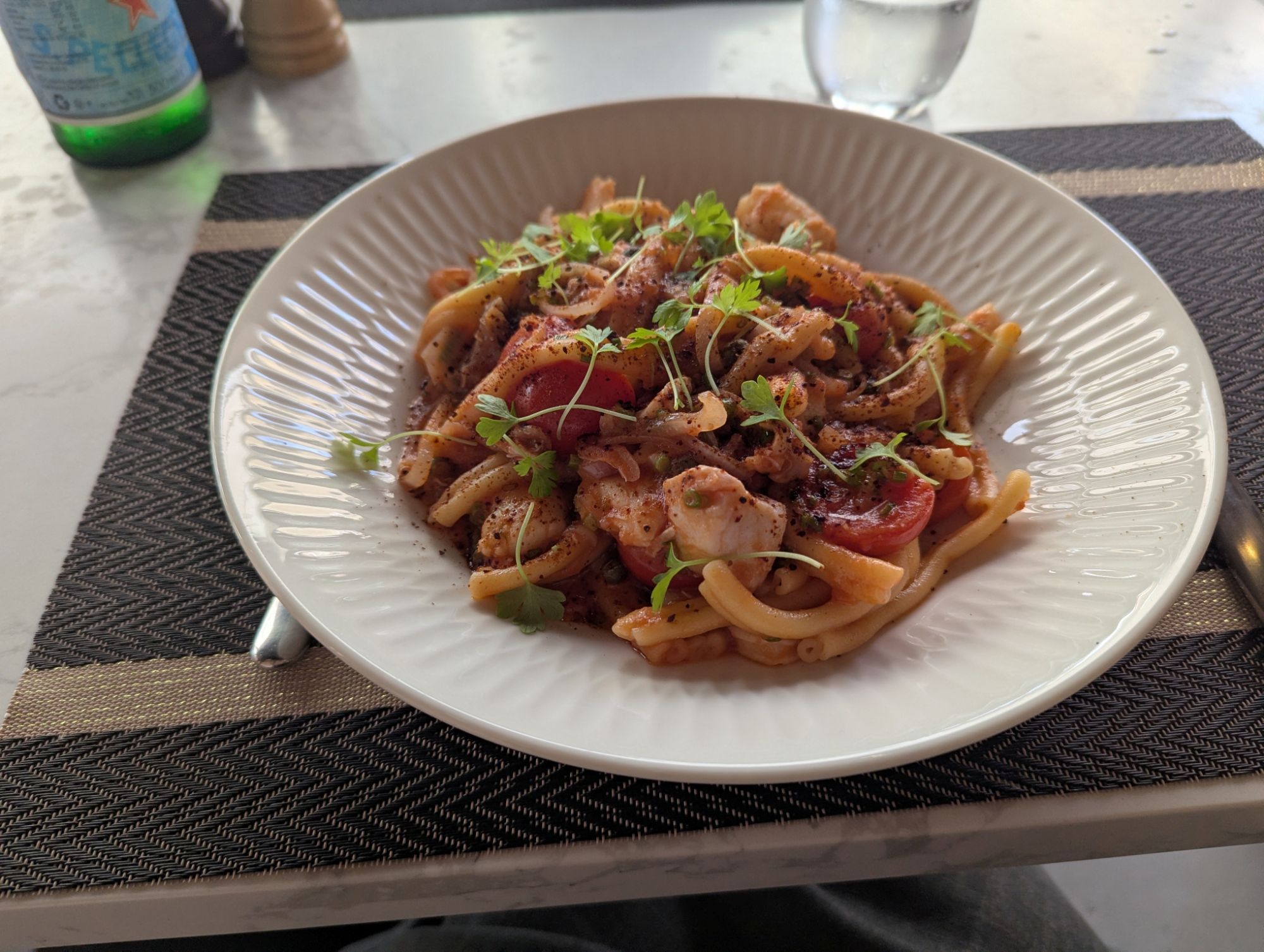
Heathcote is now the setting for an art gallery, art and craft workshops, and a lovely restaurant. All with views over the Swan River. We had a delicious pasta and coffee meal at Tucci. The pasta primavera was resplendent with seafood and the Pasta with tomatoes and burrata, an excellent choice too. The service was good, the setting beautiful, and the seating comfortable.

 Robin's Room