Alice Hoffman The Witches of Cambridge Simon & Schuster (Australia) | Scribner UK, September 2026.
Thank you NetGalley and Simon & Schuster for providing me with this uncorrected proof for review.
I was interested in The Witches of Cambridge as an example of historical fiction that would complement the non-fiction texts I have read about the treatment of women designated as witches. Like these texts, Alice Hoffman adopts a feminist perspective which is woven adroitly throughout the novel. I describe this work as a novel, because, contrary to my expectations and preference, The Witches of Cambridge is essentially a work of fiction, which includes some historical information. For lovers of Hoffman’s previous novels on this topic, The Witches of Cambridge will be another success. I am less interested in the fictionalisation of weavers of witchcraft than the political, social and economic environment that made women vulnerable to being determined to be witches. However, this novel drew me in, with its gentle pace, introduction of sharp observations which draw parallels between acceptable male behaviour and female behaviour that merits censure and frequently death, and its setting in Radcliffe in the 1950s.
Ava and Laura meet at Radcliffe but their typical start – in a dormitory with curfew at 10.00 and other rules that impede their freedom and individuality – is overturned when they are admitted to Lilith House. Traditional relationships between men and women students are followed in conjunction with references to supernatural powers, the fascination they hold, the challenges they exercise and the desires they foster. These are in conflict, with some characters embracing them and others denying their presence. The Mather family and its connections to Harvard feature, bringing this facet of historical reality into the narrative.
Hoffman has deftly combined historical information through known figures; attitudes to women accused of witchcraft and additional discrimination through real and fictionalised procedures at Harvard and Radcliffe; and fiction through characters who, while not always appealing, have engaging stories to tell. Although I am not an enthusiast of Hoffman’s concentration on witchcraft and magic and chose this work for its possible historical contribution to non-fiction texts on the subject, I found this an interesting read and can appreciate its appeal to her usual followers. *
*My earlier reviews on this topic are on my blog, NetGalley and Good Reads, and include: Lona Bailey Wicked Witch of the West The Enduring Legacy of a Feminist Icon and John Callow The Last Witches of England A Tragedy of Sorcery and Superstition (review appears on December 15, 2021).
Louise Willder The Book Was Better The Triumphs and Travesties of Book to Film Adaptation Oneworld Publications, October 2026.
Thank you, NetGalley, for providing me with this uncorrected proof for review.
So often heard, so often demonstrating a misunderstanding of the role and mode of the two different performances…and sometimes so right! Louise Wilder covers these attitudes towards books and their film versions in this thoroughly engaging book. She expresses her opinions forthrightly, sometimes bolstering them with analysis; at others leaving the reader to disagree, or sigh with relief that someone sees it their way without holding forth about how making a film is different from writing a book, both are valid, etc. As I am so often in the holding forth camp it was rather refreshing to read an opinion so strongly held that such arguments are totally pointless. But there is more. Sometimes Louise Wilder has determined that the film is better than the book! And at others, that both are awful. What an exhilarating read this makes The Book Was Better The Triumphs and Travesties of Book to Film Adaptation.
The introduction raises the question of ownership Does the book belong to …the author? the readers? the scriptwriters? the director? the actors? With the controversy over costuming, exemplified by the recent iteration of Wuthering Heights the question could even be asked as to whether a book belongs to the costume designer. Chapter headings provide some clues to the dimensions covered in the book: They Made Jane Austen for Dummies; They Destroyed My Childhood…; They Sexed It Up!..; Did They Actually Read the Book?…; They Sanitised it…; They Ruined the Ending…; Faithless and Fabulous…; From Short to Mighty…; The Book Was Not Better…; Dreams on Screen…; Happy Like Murderers…; Stories About Stories…; Misery: Writers Go to Hollywood; Perfect Book, Perfect Film…; Silly Book, Silly Film…;The Unfilmables…: The Unwatchables…; A Bonus Christmas Special. I have omitted the film titles that appear after the statement in the title – readers of this review might want to add their own. Some are surprises; others are not. Many will capture a reader’s attention and foster a rethink of even strongly held opinions.
I thoroughly enjoyed fulminating against opinions I considered mistaken, agreeing unrestrainedly with those that supported my views, and pondering on others, some books and films of which I had neither read nor seen. The Book Was Better The Triumphs and Travesties of Book to Film Adaptation is a great deal of fun to read. However, it also provides a thoughtful analysis of a phenomenon that creates so much debate.
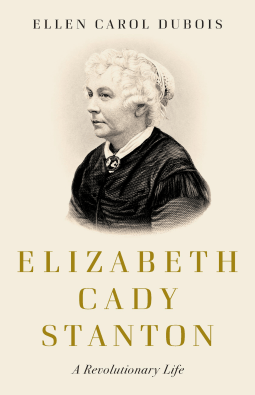
Ellen Carol DuBois Elizabeth Cady Stanton A Revolutionary Life Basic Books, March 2026.
Thank you, NetGalley, for providing me with this uncorrected proof for review.
Ellen Carol DuBois has written a biography that rings with authenticity about a woman whose values raise questions alongside the respect she merits. The latter outweighs the questions, and the well-deserved adulation Elizabeth Cady Stanton receives is strengthened by DuBois’ early discussion of the flaws in some of Stanton’s approaches. DuBois’ introduction is an excellent read, providing a thoughtful approach to the way in which she addresses Cady Stanton’s life, and the way in which she lived her life: not faultless, but courageous and vital in the fight for women’s equality.
In the early chapters the family background and the American political, economic and social environment are merged. They provide a critical and detailed account of the period over the American Revolution, with which I have only recently familiarised myself through the Ken Burns documentary on that topic. In DuBois’ account the written word also develops into an engaging narrative. Elizabeth’s place in the family, and the death of her remaining brother also make interesting reading. Rather than proselytise, DuBois reflects upon Elizbeth’s reaction to the environment created by his death and her father’s reaction, her relationship with her spirited sister, and the future direction of Elizabeth’s activism. The pattern thus established, creates a fusion of elements that provide a pattern throughout the book, with a history of the abolition of slavery, women’s education and property rights and feminist ideas and action becoming as engrossing as their application in Elizabeth Cady Stanton’s in everyday life.
Ellen DuBois acknowledges that her dependence on Elizabeth Cady Stanton’s diaries may lead to some errors about interpretation of events or even when they occurred. However, she makes a good argument for her sources. She also refers to those that suggest an alternative date for events, or even an interpretation of these. I found this an enlightening approach and enjoyed considering why the differences in recall might have occurred. For example, Cady Stanton placed her change in attitude to religion far earlier than a friend’s recall of their discussion of religious questions many years later. How human this makes both women! And so does acknowledgement of the different strains of thought and action that pursued the radical movements Cady Stanton endorsed, influenced and took in the directions she found satisfactory. These disruptions to any radical movement make familiar reading, and have been experienced by most people involved, whether it be the 1880s or the 2000s. The honesty around such disagreements gives the narrative a flavour of authenticity – so many similarly involved readers will have been there.
The epilogue takes up the immediate reaction to her death, and her legacy. It maintains the narrative of a woman whose beliefs were radical, valuable and created a following, together with the reaction to her stances and reserve from some who might be expected to be allies. For example, she was barely mentioned in the fifth volume of the History of Woman Suffrage, contrasting with the accolades poured upon her by socialist papers. Du Bois does an excellent job of describing the years following her death, and the divergence of ideas about the reputation which should follow her, as exemplified by the fight over her memory by suffragists and her family.
The acknowledgements are a pleasure to read, recognising as they do DuBois students’ contribution to her persistence with this biography and detailing much of the material she used. There are notes for each chapter, an additional bibliography, and a short account of the author.

Richard L. Schur Suits A Cultural History Bloomsbury Academic, November 2026
Thank you, NetGalley and Bloomsbury Academic, for this uncorrected proof for review.
As a lover of legal dramas such as Picket Fences, Boston Legal, Ally McBeal and The Practice, I was immediately drawn to this history of a legal drama that, on my limited viewing, I saw as different. I had picked up on Rachel’s aspirations and her work to achieve status in the firm and liked this theme. I had also noted the relationship between mentor and mentee, Harvey and Mike. A theme that raised ethical issues but also provided a quirky element to the drama. I was aware that the legal cases conducted by this firm portrayed less commitment to social justice than the legal dramas with which I was familiar. Richard L. Schur led me into appreciation of a different genre of legal drama, and for that I am grateful. Expansion of my cultural landscape through his close examination of Suits was a thoroughly energising experience.
Important in this examination was the broad approach that included information about a wide range of legal dramas. Schur’s examination of Law and Order, with its myriad of offshoots, attention to current issues and stories and consideration of many aspects of the legal process was an excellent introduction to understanding the American legal landscape as depicted in television programming. The programs with which I was familiar also had their place in drawing the cultural and legal landscape in which the examination of Suits took precedence.
Suits A Cultural History is a valuable text, concentrating as it does on the firm, the human relationships, and the personal aspirations of the lawyers represented. It adds as much to understanding the cultural, economic and political landscape in which it became a popular legal program, largely defying the precedence given to dedication to social justice portrayed in other legal dramas.
Three chapters, covering the legal television landscape, are thick in detail, but engaging. Of these, Hope and Nostalgia: American Culture in the 2010s, is particularly absorbing and leads successfully into the chapters that concentrate on analysing Suits: its production history; the way in which women and men are depicted, and later, race; the aesthetic, leading into the chapters in which Suits is so successfully shown to have created its own field within television legal dramas – Ambition, Success, and Power in Suits, and Moral Talk in an Amoral Universe; and, last, an absorbing consideration of the Suits legal firm as family.
Suits A Cultural History is a thorough analysis of a television legal drama that is quite gripping in its marshalling of facts, theory and cultural links to a set of prevailing social and domestic values. By placing this program into the social context of other legal dramas Schur has portrayed a valuable contrast with those with social justice as their motivating force. He has been successful in demonstrating the way in which Suits has fitted into a social environment that has, perhaps, needed it. The book is enhanced by the appendix in which the storylines for some episodes of Suits (including the final episode) are found. There are notes for each chapter and a wonderful bibliography which provides a wealth of additional reading, and an index.
Elizabeth Imlay Charlotte Brontë’s Psyche A Close Reading of ‘Jane Eyre’ Aurora Metro Books|River Light Press, May 2026.
Thank you, NetGalley, for providing me with this uncorrected proof for review.
Elizabeth Imlay has adapted her earlier publication to consider the decrease in classical education. The result remains an exciting analysis of Jane Eyre, where Imlay’s classical interpretation is approached with rigour but made easier for strangers to this field. Her use of mythological references is more familiar territory, and I found what could have been a difficult read, one that I enjoyed immensely while learning a new approach to Charlotte Brontë’s work. Coming to Jane Eyre anew was an educative process, as I have been so committed to the feminist analysis with which I feel comfortable, and finding the novel wanting. Imlay also has a feminist approach but seen through classical and mythological interpretation of the text it opens up the potential to a new feminist spirit with which to understand the novel.
Imlay suggests rereading Jane Eyre before approaching her work and this is good advice. Having read the early chapters of Charlotte Brontë’s Psyche A Close Reading of ‘Jane Eyre’ I was pleased to consider the novel from Imlay’s perspective as I read. This was an enlightening process, as can be the case when approaching literature with new perceptions. This process was rather like the rereading of texts from a wholly feminist outlook which has been a significant endeavour since the 1970s. How immensely literature classes studying Jane Eyre, or indeed any of the Brontë sisters’ works, would benefit from adopting Elizabeth Imlay’s Charlotte Brontë’s Psyche A Close Reading of ‘Jane Eyre’ as a starting point for analysis.
While Part 1 concentrates on Jane and the novel, Part 2 focusses on Charlotte Brontë. This text provides engaging analysis of Charlotte’s relationship to Jane and significantly, Bertha. Each of the other characters in the novel are shown to have some relationship with Charlotte, while Imlay avoids depicting Jane Eyre as a biographical work. At the same time, the discussion of Charlotte’s creative instinct, the repression of this creativity she suffered because of her economic situation, support of her siblings and advice from a friend and religious aunt is instructive about the lives the writing sisters and Branwell lived. The bibliography includes books owned or believed owned by the family contributing further to an understanding of the family and the scholarly environment in which they wrote.
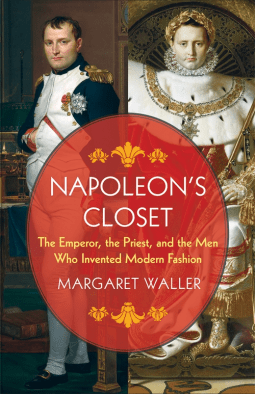
Margaret Waller Napoleon’s Closet The Emperor, the Priest, and the Men Who Invented Modern Fashion Columbia University Press, August 2026.
Thank you, NetGalley, for providing me with this uncorrected proof for review.
I began this book several times, finding it dense and the somewhat specialist language difficult to navigate. However, Napoleon’s Closet The Emperor, the Priest, and the Men Who Invented Modern Fashion does deserve pursuing, as I found when I finished reading. So, a difficult read, but worth it as the concepts are valuable in themselves, as well as being relevant to feminist thought in general. Fashion is a good starting point in unravelling the narrative, and familiarity with Napoleon is helpful. The priest is a less well-known character, but his profession is not, and this again assists in coming to the complex material with some understanding. The preface provides a winning start, with some of the ideas that underpin the text. It ends on a strong note that suggests that the narrative will demonstrate the unique ways in which oppression can be challenged.
A tool that Margaret Waller might have adopted to provide the non-academic/specialist reader with the capacity to navigate the text more easily is recognition that specialist language though valuable and relevant in an academic text needed also speak to a broader audience. The concept for the book deserves that audience. There is value in the lengthy acknowledgments as they provide clues to the subject matter, research and method. However, the introduction is a mixture of very readable material and that which creates a barrier between the reader and the narrative. This is a pattern throughout the text.
Chapter headings demonstrate the appeal of the ideas and material: Boys, Culottes, and Cassocks; Boys to Men: Training and Clothing the Elite; Fashioning Uniform Men for the French Revolution; Makeovers: Men, Regimes, Magazines; The Emperor’s Triumph and Disgrace; and Afterlives. There are lengthy and detailed notes and bibliography, and an index.
For the reader versed in the language and ideas that are Waller’s forte, I can see what a stimulating and informative read this must be. As a reader with familiarity with Napoleon and his era based on the language of historical study I found some ideal moments in reading Napoleon’s Closet The Emperor, the Priest, and the Men Who Invented Modern Fashion. I appreciated that I was able to find the time to return to the book and enjoy what it could offer such a reader. So, for me a difficult read, but worth the effort.
Linda Green If I Had My Time Again Boldwood, 2026.
That this novel was an antidote to the serious work reviewed above, might seem unusual when considering the title and the warning in the Author’s Note that experiences such as death, suicide and still birth are covered. However, both the explanation and the narrative, which includes comic moments, reflective discussion of serious topics and redemption make this a thoughtful and witty read. The immediate setting is a motel where Jules, Emily, and Carl meet in the basement with the organisers of their post death experiences, Suzi and Faz. They will be driven to their out of motel experiences, their homes and funerals in Halifax and Bristol, by sympathetic taxi driver, Majud, and filmed by End Credits.
Jules, Emily, and Carl tell their stories, edit their favourite childhood film, and have the opportunity to make a Director’s Cut of the films of their lives. There is a proviso: no-one may be brought back to life. The stories introduce experiences, cultural events and movements, family dynamics, social commentary and changing community standards and ideas. Jules, Emily, and Carl are at times judgemental, kind, demanding and sad. They are complex characters, who elicit understanding, despair, and judgement from their companions, the motel and film staff, and the reader.
Linda Green has combined engaging characters, damaging experiences, and humour in an absorbing novel. She ends with a series of questions, possibly for a book group read. They are also questions that together with the Author’s Note and explanation about the language some of her characters use demonstrate Green’s concerns with her readers. I found If I Had My Time Again profoundly sad in parts, but also deliciously funny.
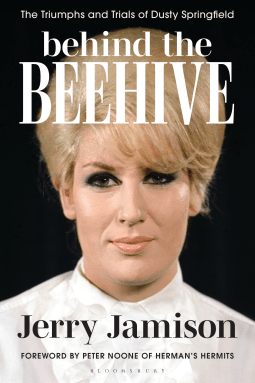
Jerry Jamison Behind the Beehive The Triumphs and Trials of Dusty Springfield Bloomsbury Academic, October 2026.Thank you, NetGalley, for providing me with this uncorrected proof for review.
Jerry Jamison acknowledges the difficulties of researching this biography and in a Note from the Author at the beginning, and in an afterword, has described these, and detailed the research undertaken and sources used. As there are no citations throughout the narrative, this material is reassuring. The extensive bibliography provides more support for the accuracy of the work. Peter Noone of Herman’s Hermits Forword provides another layer of authenticity to the depiction of Dusty Springfield’s life. Jamison states that he wants the book to be accessible, while maintaining the integrity of the researched material.
Dusty Springfield’s triumphs make a more palatable story than that of her ‘trials’. While her background as a plain child in what appears to be a dysfunctional family bears much of the responsibility for her problems, it is also clear that the lifestyle associated with her success had an impact. Jameson’s story of this part of her life skilfully combines the heartrending nature of addiction, instability and wilfulness with Springfield’s well depicted charm and vivacity. To be able to conjure up sympathy and regard for Dusty Springfield even in her most damaging moments is a major accomplishment.
Jamison has woven an absorbing history of the period through his attention to the aspirations and triumphs of Dusty Springfield’s contemporaries as well as doing justice to her phenomenal successes. Although this is the story of failures as well as those successes it would be surprising if this accessible and engaging biography does not lead to readers searching for her tracks – I certainly have and found them.
Dervla McTiernan Three Reasons for Revenge HarperCollins Publishers Australia | HarperCollins AU, April 2026.
Thank you, NetGalley, for providing me with this uncorrected proof for review.
Dervla McTiernan is a writer I follow, and on this occasion my interest was piqued by her early engagement with readers about the novel which was to become Three Reasons for Revenge. In an email she described three possible novel scenarios from which prospective readers could choose one. Further emails discussed some of her approaches to the chosen novel. However, true to her ability to adroitly manoeuvre plot, characterisation and locations none of this early material provided the slightest of clues to the outcome. Once again Dervla McTiernan has produced a novel that, while providing plenty of twists and turns, is also a successful work of logical advancement of plot and characterisation.*
A gentle prologue, children on the beach playing and feeding mussels to fish and crabs, introduces Renee and Margaux. And yet, is this image truly benign? As the sun sinks over the ocean, they hesitatingly return home. In contrast to the initial scenes, early chapters introduce an unrelentingly gritty environment as Detective Sergeant Judith Lee interviews sexual assault victim Alexis Turner. Linking Judith with her interviewee, is her boss’ comment upon her bruised face. Following this, he makes a personal comment when he refers to Judith’s neglect of her mother’s phone calls. Consequently, early in the novel the possible links between police, families and victims through public experience and private relationships are uncovered.
McTiernan makes an initial return to a more comfortable location when Judith questions Doctor Walker in his home; his wife Vanessa returns after anchoring her morning television show; and a courier arrives with a gothic wrapped parcel. It is a USB accompanied by an opaque message. More beautifully wrapped parcels, complete with similarly opaque notes, are sent to various characters, auguring catastrophic events for their recipients. Judith’s past impacts her investigations as she interacts with friends, her co-workers and suspects.
Police investigations provide only one thread in this gripping work which lays bare the impact of childhood damage, malice, and the importance of female friendship. Another thread is the depiction of different domestic environments, McTiernan deftly weaving together positive and negative aspects of partnerships, marriage and parenting with social commentary. Further, complexity in characterisation is compounded by depicting police, suspects, victims and perpetrator in both domestic and working environments.
Three Reasons for Revenge could be read as simply a mystery, with Detective Sergeant Judith Lee’s investigation and resolution of the crimes a satisfactory conclusion. However, it is also valuable social commentary, raising the issues of domestic violence, gender issues in the workplace, and the wide ranging and lasting impact of trauma. Judith Lee is an appealing character, and it would be good to see her reappearance in another Derval McTiernan novel of this calibre.
*See Blog, 27 August 2025.
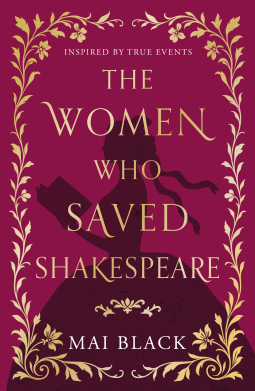
Mai Black The Women Who Saved Shakespeare The Book Guild, May 2026.
Thank you, NetGalley for providing me with this uncorrected proof for review.
Mai Black describes her debut work, The Women Who Saved Shakespeare, as a novel. It has all the markings of a good novel – engaging characters; conflict, including family relationships; a central challenge with obstacles to be overcome by the protagonists; and interrogation of class and gender inequality. At the same time, it benefits from being based on an intriguing historical reality, which Black describes in an Author’s Note. The Shakespeare Ladies Club formed in 1736 to re-establish Shakespeare’s reputation as a playwright of merit. The Club met until 1741, only one of the women led literary societies in London at the time. Four years later, Eliza Haywood noted in The Female Spectator, that ‘some ladies’ had rescued Shakespeare, demonstrating that although short lived, the club served its purpose.
Elizabeth Boyd, around whose family the narrative revolves, is an ideal focus for the class and gender inequalities that permeated and controlled the society in which she wished to read and enjoy Shakespeare, meet with friends and make her living from writing untrammelled by the expectation that she marry, and be quiet until she did so. Eizabeth’s life is juxtaposed with that of her male twin, a clever device which subtly demonstrates the vast difference in male and female children’s and later, adult, expectations. Charles also has a more egregious role to play, and his behaviour influences Elizabeth’s adult private and public lives. He personifies male control of women at the time, unmitigated by any ostensibly positive qualities. Elizabeth cannot do as she pleases. Her twin is free to behave badly. That class does not rule out gender discrimination is shown when Elizabeth meets with aristocratic women friends. The importance of sisterhood is neatly made in this context. When such encounters take place with husbands present, relationships between the women are damaged, requiring understanding and forgiveness.
Quotations from Shakespeare’s plays abound, so that his work can be appreciated along with the women’s determination to ensure that it regains favour. Elizabeth’s writing and publishing ambitions as a paid professional is contrasted with the women’s work on behalf of Shakespeare. References to one published woman writer, Elizabeth Hayward are instructive.
The women’s work to ensure that Shakespeare’s language and words are not mutilated resonates with contemporary rewriting of eminent texts. So too, does Black’s quiet, but strongly conveyed argument against an actor blacking his face to play Othello. These links with contemporary concerns enhance Black’s compelling narrative, in which she adeptly combines historical and fictional events and characters. Her description of the context in which Elizabeth Boyd and her contemporaries worked, conveys a broader social history of the time than that of the Club, while maintaining the women’s work on Shakespeare’s rehabilitation in London theatres during the mid -1700s theatres at its core.
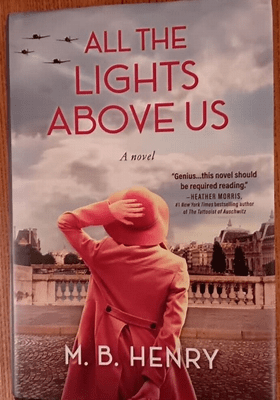
MB Henry All the Lights Above Us Alcove Press 2021.
Thank you, NetGalley for providing me with this uncorrected proof.
My first reaction to All the Lights Above Us was admiration for the cleverness with which M B Henry relates the political, personal, and military drama of June 5 to June 7, 1944. The narrative follows the events of the day before and following D Day in their horrors, passion, courage, foolishness, treachery, and self-deception through the experiences of five women. Flora, Adelaide, and Emilia are in Caen, France; Mildred in Berlin, Germany; and Theda in Portsmouth, England. Their stories are largely independent of each other, although Flora’s and Emilia’s stories converge in the last hours of the invasion of France by the Allies. This coming together is another intelligent device, not only providing a conclusion to Flora’s story, but adding to the characterisation of Emilia. Each woman’s story is told in short, but strong chapters, evoking their past, developing characterisation, and moving the story forward. This story is full of event, emotion, and social commentary, its impact makes it seem as though we have been with the women for far longer. As I stated at the beginning – so clever.
Other features of the novel should not be underestimated. While narrating relatively easily envisioned events that are familiar through historical works, nonfiction and fiction, M B Henry gives them additional impact through several means.
She ensures that the reader becomes aware of the discrimination against women that has brought most of the women to their current situation. While Mildred’s story does not reflect the discrimination that has impacted so heavily on Flora, Adelaide, Emilia and Theda, her persona is linked strongly to the way in which a woman may rely heavily on appearance and a male mentor to accomplish her aims. While not defending Emilia’s behaviour, Henry gives her story a background that explains the trap made for women such as her in Hitler’s Germany. Adelaide’s mothering role is complex. Although from a different country, experience, and period, like Theda she has been surrounded by arguments about what a ‘real’ woman should be. Flora is confronted daily with examples of discrimination based on her gender.
Importantly, Henry’s concern with that broader theme does not undercut her attention to developing her characters, with only three days in which to illustrate their reactions to world shattering events. Where she uses background information to fill out her characters this is done smoothly without interrupting the narrative of the present. Small events are used to highlight large issues, particularly so in Theda’s story.
Each woman’s story is carried through, from the background that has brought her to her situation on D Day, to her experiences throughout the invasion, and to completion. Possibly the tying up of ends might seem a little contrived. However, once again Henry has worked to fulfil her mission, that is, using D Day as the time in which she must tell the women’s stories and establish possibilities for each of them. These endings all ring true, considering two important features of the book. They rely on the way in which each woman has been depicted; the way in which each woman has demonstrated her strengths and weaknesses throughout the narrative. The drawing together of events assumes little beyond the initial impact of D Day, except possibly in one case where the events based on a real person suggest some likely possibilities. However, the overall impression is that Henry’s characters’ stories reflect the way in which those who welcomed the success of D Day had to imagine an end before they could go on for the remainder of the war.
The descriptions of the wounded in Theda’s hospital; the drowned parachutists observed by Adelaide; the torture and shootings to which Emilia is a witness; Flora’s experiences as a member of the resistance; and Mildred’s knowledge of her own perfidy are disturbing images. Henry has momentarily put these aside for a short time by establishing completion for each of the characters. Whatever the future possibilities, Henry has given both her characters and readers a taste of the breathing space that reflects a likely reality at the time.
With its short strong chapters, convincing and intriguing characters, and commitment to developing a short period of time into a persuasive depiction of a real event, this novel is an engrossing read.
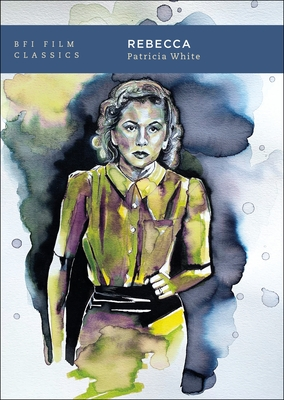
Patricia White Rebecca BFI Bloomsbury Publishing Plc London and New York, 2021.
Thank you to NetGalley for providing me with this uncorrected proof in exchange for an honest review.
I was thrilled to receive this thorough interpretation of Rebecca, a film with which I have grappled, and the novel with which I became reacquainted during a tour of Cornwall visiting locations with which Daphne Du Maurier was associated. A visit the Daphne Du Maurier Literary Centre in Fowey dedicated to her and her writing provided me with a wealth of information to which I shall gladly add this book. I have also read Sally Beauman’s afterword to the Virago Modern Classics with great interest. Rebecca, the novel, and Rebecca, the film, have been interpreted in Patricia White’s book. However, I must be honest and acknowledge that I feel more sympathetic to Sally Beauman’s commentary on the novel than I do with the glimpses White provides of her interpretation of the Du Maurier original. At the same time, I feel that it is possible to consider the film and the novel separately, and in doing so, find White’s understanding of Alfred Hitchcock’s portrayal of Du Maurier’s work, persuasive.
White’s use of authors familiar to me through women’s studies’ interpretation of texts was a pleasant feature. These include Tania Modleski, Teresa de Laurentis, Susan Gubar and Sandra M. Gilbert, Alison Light, Laura Mulvey, Mary Ann Doane, Desley Deacon and Janice A. Radway. It was also interesting to see the links made with Phantom Thread, the 2017 film – setting me thinking about that again. Of course, there are also the familiar film world images looming as large as Hitchcock, Gone With the Wind, David O. Selznick, the cast and crew members of Rebecca, discussions about casting, lighting, sets, the British Director transported to America and its impact on both, the impact of Hollywood morality on the novel’s clarity about de Winter’s guilt and Mrs de Winter’s complicity – all the paraphernalia of the world of film. Most importantly, there are so many pertinent photographs. I cannot labour this point too much: each image is integral to the written text, drawing the reader into the film world of Rebecca, and away from what they might think about the novel. This book is essentially demanding that we enter the film, and interpret the world thus presented as the real Rebecca realm.
Patricia White deals deftly with the role of the second Mrs de Winter by referring to her as ‘I’ throughout. She argues well for that device – I has no ‘fixed identity except in “the present instance of discourse”’; she is not the only Mrs de Winter; she declares ‘I am Mrs de Winter now’. White declares: ‘I call her I. I do this to signal the identification the viewer is encouraged to feel for this character and to echo the theme of possession’. She makes a strong and detailed case for the lesbian theme that she feels underlies the women’s relationships in the novel and was ever present in Hitchcock’s film. The way and why of the current de Winters’ ability and necessity to evade the impact of the culpability for Rebecca’s death in the film version is explained, not only in outlining necessary compliance with the Production Code Administration but discussing the way in which the film dealt with these requirements.
Could Rebecca the film be studied and interpreted without recourse to Patricia White’s Rebecca? I think that it would be difficult. There are insights that White lays out and must be examined, whatever the decision on whether these conform with a viewer’s own interpretation of Rebecca. As well as the overarching value of this part of the text there are also the delightful pieces of information conveyed through notes between the participants in bringing the film to fruition. An indifferent researcher would not have found these or recognised their value in drawing the reader into the story of filming Rebecca. Although the bibliography was not available in this uncorrected proof, the citations demonstrate the use of a range of material that is encouraging to the academic reader.
Further comments on Daphne Du Maurier’s work.
I have had the good fortune to read The Daphne Du Maurier Companion edited by Helen Taylor (Virago 2012) since reading My Cousin Rachel many years ago. I recall feeling uncomfortable at the self satisfied men in the novel, Ambrose Ashley and, after his death, his nephew, Phillip. Rachel, is an enigmatic figure, perhaps her character intensified by ones own limited imagination and world knowledge. At least that is the excuse I use for my 16 year old self on my first reading of this novel. Rachel’s adviser, Rianaldi can be read as sinister in comparison with the two English men. But is this du Maurier’s intention? Is he, as Sally Beaumont in the Companion, suggests part of a male conspiracy that women have to endure, as Rachel has to endure/manipulate/ murder – which is it? her husband and then her cousin by marriage?
A review of the current film version of My Cousin Rachel appears to suggest that there is an answer to this question in the film. If so, the film is taking great liberties with du Maurier’s work. There is no answer in the novel. That is its compelling feature and why, upon re-reading the novel, I have given it 5 stars. It is a novel that benefits from using imaginative and investigative skills while attempting to go beyond ones own cultural and sexist prejudices. du Maurier is not the writer of romantic or gothic novels who was fortunate to have some of her work treated by a directorial giant but a thoughtful writer, well beyond the prejudices and small mindedness of her era – a giant herself.
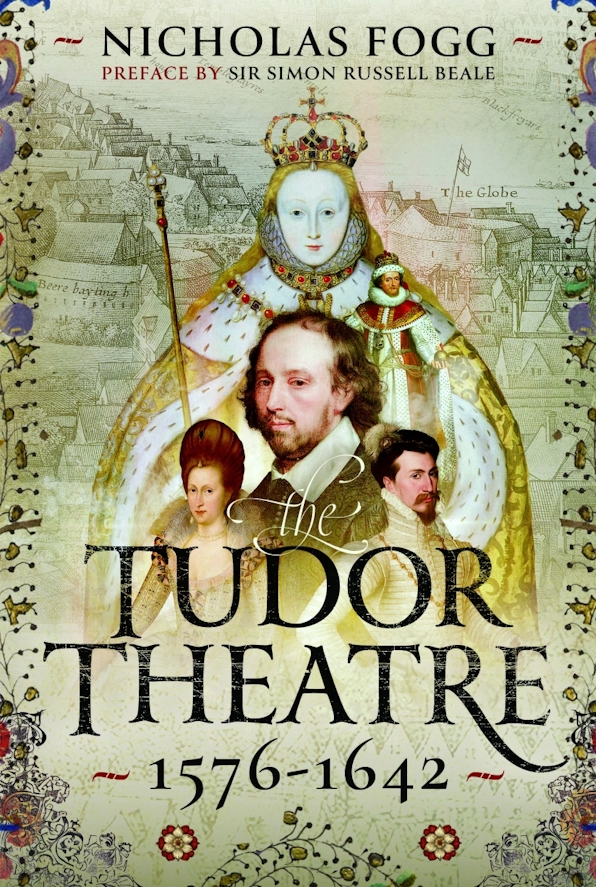
Nicholas Fogg The Tudor Theatre 1576-1642 Pen & Sword, January 2026.
Thank you, Net Galley, for providing me with this uncorrected proof for review.
Nicholas Fogg has brought so much to the history of the Tudor theatre in its golden age. Visiting The Globe on the South Bank, or Stratford-Upon-Avon and attending the Royal Shakespeare Theatre are pleasures not to be missed. But how much more alluring they are after having read The Tudor Theatre. For this book, as much as it gives the Lord Chamberlain’s Men and Shakespeare their due, is far more. So many playwrights, forms of theatre, types of building or space, locations, audiences, patrons, and acting groups come alive. So too, do the entrepreneurs who saw the theatre as a business proposition – some excelling at making it pay, others failing miserably. One story is that of a businessperson with brewing interests combining this with the needs of theatre goers by providing sustenance for thirsty audiences. It is stories such as these that demonstrate Fogg’s attention to detail, enthusiasm for his subject, and his determination that readers of this book will become likewise involved.
The book cleverly meshes speculation, for example drawing the possibility that Shakespeare observed or was involved in theatrical scenarios described by Fogg, and vigorously researched material. The connections between the familiar and largely unknown information are not only enlightening but makes the reader an audience, part of the world of the Tudor theatre. Chapters invoking the sumptuous nature of the Tudor theatre jostle with those such as the ominous ‘Where the Infectious Pestilence did Reign’ and a familiar understanding of theatre in this period, ‘Inconveniences and Misrule’. Ending with a chapter that discusses the authorship of plays of the period, goes into detail about some of the works, reflecting the ideas on the stage and the social environment.
The Tudor Theatre 1576-1642 is a delight. Combining the familiar with the less well known, speculation based in research that brings the Tudor theatre and Shakespeare’s world to life, and a remarkable array of sources Nicholas Fogg has produced a significant work. There are detailed notes, a bibliography, an index, and a host of illustrations.

Dr Christopher Herbert Jane Austen’s Favourite Brother, Henry Pen & Sword | Pen & Sword History, May 2025.
Thank you, NetGalley, for providing me with this uncorrected proof for review.
Christoher Herbert’s history employs one of the most useful strategies when dealing with a subject for whom the material is sparse. In this case, there is an abundance of material about Jane Austen who has been the subject of so many biographies. However, Herbert does not rely solely on this, adroitly using his independent research and bolstering it with material that sets the context for events that are not recorded. He also uses the more conventional way of contributing to research when dealing with a writer – studying the author’s work for clues. In this case, both Jane and Henry Austen’s writing. This is a work of substance, accessible writing, a broad history of the time and social mores, and an intriguing insight into Henry and his family, including Jane for whom it becomes clear, Henry was indeed her favourite brother.
There are wonderfully comic passages – the discussion of studying at Oxford and Cambridge in the period was delightful. Less attractive is the recognition of the family’s slavery connections. However, these topics and a multitude of others, including reference to Austen’s novels, provide a picture of the father of these two affectionate siblings. Valuable information about the way in which the siblings were raised and educated and the ideas that permeated their lives, is also afforded though reference to Cassandra Leigh’s background. A Thomas Gainsborough painting also provides information about the society in which the siblings were raised – a society in which Jethro Tull’s invention was a part, for example. Although wider changes in society may not feature in Austen’s novels, Herbert provides a picture that demonstrates her choice of background was one of many available to her.
Herbert’s detailed Austen family background then makes way for details about Henry and the profession and life he chose. A rebellion? A well-considered change in direction? Henry’s essays are deployed to help answer these and other questions about Henry’s life. Again, comic touches are laid side by side by more serious aspects, keeping the narrative lively and accessible. Although Herbert concludes that questions remain about Henry Austen, this work shows that his commitment to publication of Jane Austen’s work is a defining feature of the relationship between the two. It also, within the constraints Herbert acknowledges, is an absorbing study of a period, a family, and a sibling relationship.
The volume is complete with illustrations and photographs, which while at times repeat those in other works of the Austens’ world, seem particularly fine even in my kindle edition. There are an index and detailed notes for each chapter.
Dandy Smith The Wrong Daughter embla books, Bonnier Books UK, 2024.
The Wrong Daughter began well – a typical domestic thriller, with potential. The prologue introduces two sisters, ten and thirteen, who are home alone with money to order pizza for dinner. They live in a safe suburb, with the shops nearby and an enticing forest behind the house. Together they shop for their evening meal and eat it in a sun-drenched field on their way home from purchasing bread, ham, and cheese – the excursion far from the home delivered pizza their parents thought they should have. When they return home, the pyjama clad girls eat popcorn and watch television. A stranger watches from the forest.
Caitlin sees Olivia kidnapped, obeying her sign to remain silent. Fearful, she does not call the prominently displayed emergency numbers. As an adult Caitlin’s every action is to redeem this failing – to placate her parents she becomes a teacher rather than study art and travel. She even contemplates marriage. Despite her reluctance to commit to a date, and her prospective in laws dislike, she uses her fiancés name. This ploy is to hide her identity as the sister of a kidnapped teenager although it is years in the past. Alongside Caitlin’s story is that of Eleanor and her brother Heath, caught in a damaging relationship with each other and their uncle.
Both narratives are absorbing as the complexity of the relationships between family, lovers, and friendships are developed. Both have loss at their centre. Loss is a particularly complex theme for Caitin and her family as they are initially impacted by Olivia’s disappearance, and then her reappearance changes the dynamic. The impact of Olivia’s return is particularly complex: there are both positive and negative aspects which must be grappled with. Her behaviour is sometimes questionable, and family and friends’ reactions to Caitlin’s concerns are not necessarily positive. This part of the book works well. Eleanor’s environment also reflects that of a captured person, gradually feeling her way to independence. As uncomfortable as some of this narrative is, while it remains a study of human relationships, it is an effective adjunct to the main narrative.
However, as Caitlin resolves to fulfill her own wishes the narrative stumbles. The twist is a disappointing and, while at times predictable, a disjointed ending to the novel. It needed significant paring back, in contrast with some of the earlier lengthy narrative that escapes censure because it has a role in exposing imperfections in seemingly positive relationships. What began as a domestic thriller with potential became mired in an additional plot that could have been sharper and more in keeping with the early empathetic emphasis on the impact and damage to the characters in keeping with the early empathetic emphasis on the impact and damage to the characters imposed by loss.
Victoria Purman The Marriage Trap Harlequin Australia, HQ (Fiction, Non Fiction, YA) & MIRA | HQ, April 2026
Thank you, NetGalley, for providing me with this uncorrected proof for review.
I regret having come late to Victoria Purman’s historical fiction, and of the many books she has published I have read only two: The Radio Hour and The Marriage Trap. They both feature a limited number of characters, none of whom is a public figure. However, each is recognisable as representing someone whose story might dovetail easily into the reader’s experience or a group whose story demands to be told. While never neglecting her characters’ individual experiences, Purman weaves around them an absorbing social, economic, and political commentary which reflects Australia’s past. In reading The Marriage Trap this has been an immediate past, with enticing reminders of events with which I am relatively familiar. For younger readers, the narrative is likely to be astonishing at times, with glimmerings of recognition that provide them with the tools to understand their older relatives and the social environment with which they grappled. The Marriage Trap is followed by an insightful acknowledgment of the political changes which have taken place since the setting of this book, which takes place from 1960 to the early 1970s.
Olive, Cathy, and Evelyn are the main protagonists; the introduction of effective birth control, ‘the pill’, is the theme. Olive is a committed Catholic, whose marriage to Len includes dealing with his mother, widow of a Methodist Minister. The weekly Sunday roast is accompanied by her unappreciated lectures on how young women should behave. Cathy is unrepentantly resistant to them; Evelyn is rather in awe. But then, Evelyn at ten is rather in awe of many things – Cathy’s boyfriend, Ringo Starr, and words. The dictionary is Evelyn’s constant companion and adds information as well as gentle humour to the narrative.
Pregnancy, in and out of marriage, for Olive and Cathy is unexpected and the limits it imposes on them are subtly observed. Cathy’s marriage, two children and the end to her career foster her determination that Evelyn will not go into adulthood with as little knowledge as she had – and it becomes clear, as little as Olive knew about her body and ‘the change.’ For Evelyn, many years younger than her siblings, was an unwanted pregnancy resulting from Olive’s lack of knowledge, and her doctor’s incapacity to give her the information she needed. The same doctor, the agreeable old family doctor of Cathy’s childhood, becomes a sinister figure in her search for birth control as offered by the miraculous pill straightforwardly available to her non-Catholic friends.
Along side this central theme are so many other responses to the changes that were taking place in Australia in the 1960s and 70s. The Beatles’ music, and then that of the Rolling Stones and the former groups’ Australian visit are so important to Evelyn and her friends that some defy school attendance to see them. Cathy and her friends picnic with their children, discuss birth control and make the best of their lives as wives and mothers. However, Purnam provides glimmers of possibilities without retreating from a severe look at women’s lives in these years. Olive has none of these advantages, her life is consumed by marriage, her children, and, until the importance of birth control is brought home to her forcefully and devastatingly, the church.
Purnam’s characterisation is striking, her storytelling engaging and informative, and she addresses significant themes. Her historical fiction offers readers insightful narratives about Australian society at the same time as delivering absorbing books that beg to be read.
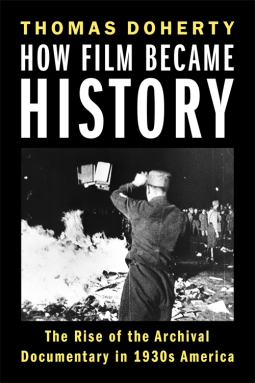
Thomas Doherty How Film Became History The Rise of the Archival Documentary in 1930s America Columbia University Press, April 2026.
Thank you, NetGalley, for providing me with this uncorrected proof for review.
This is a beautifully written narrative of an achievement that has made historical events accessible. This accessibility is reflected in Doherty’s writing, from the story about the early Russian influence on the form arising from the lack of current material to the vast amount that was available by the 1930s. By then a variety of sources were universally recognised for their value, and Doherty’s story draws us into the almost magical way in which raw material became documentaries – some propaganda, some authentic, some accepted into ‘picture houses’ and some denied to the public because of censorship. Although Thomas Doherty refers to well-known films, he also introduces largely unknown material, and in doing so makes another contribution to the knowledge about archival documentaries.
The story of documentaries becoming vehicles for exploring and reporting major political issues is not only exciting, but instructive. Doherty is a master at identifying the complications of censorship and detecting political propaganda plus contrasting it with politically astute and useful material. He also introduces vital discussion of the value of less obviously politically motivated information and its role in treating an audience to easily digested historical research. He is disarmingly honest about the way in which manipulated archival material could be manipulated to take in even the wariest researcher such as himself in a first encounter with one reenactment. The lengthy and detailed story is fascinating. It not only raises historical nature of alarm about reenactments, a well-worn debate about historical ‘truth,’ but the way in which historians work.
Example after intriguing example of the work Doherty has studied for this book follow. Once again, it is necessary to reiterate how engaging is the text, how it continues to raise ethical questions, such as the impact of digital improvements made to original footage, the role of those who conserve and restore, and provides a sound education to readers on how they might interrogate the material that has evolved to produce one aspect of American history.
There are notes to each of the chapters: a Prologue; Newsreels in the Morgue, Four years of Visible Hell in Seventy Seven Minutes, The Search for Cornelius Vanderbilt Jr.’s Hitler’s Reign of Terror (1934), Max Eastman and Herbert Axelbank’s Tsar to Lenin (1937), The Movies Turn Introspective and A Good Deal of Newsreel Content Belongs on the Marquee. In this uncorrected proof there is no bibliography. However, given the extensive notes referencing events, key figures, and ideas from diverse sources, it promises to be both fascinating and informative, reflecting the narrative Thomas Doherty unfolds in How Film Became History The Rise of the Archival Documentary in 1930s America.
 Robin's Room