
Book Reviews: added this week are the following books, reviewed for NetGalley, and previously published on Good Reads, Twitter and Linked In. They are a departure from the books reviewed for Women’s History Month, although there will be more reviews relevant to the principles of that month throughout the year.
Angela Youngman, The Dark Side of Alice in Wonderland, Pen & Sword History Yorkshire, 2021. I was thrilled about the book, and grateful to NetGalley for giving me the opportunity to review it.
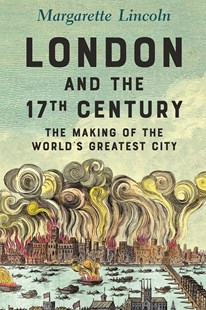
Margarette Lincoln London and the Seventeenth Century The Making of the World’s Greatest City, Yale University Press, 2021. London is established as a great city, with a colourful history impacting upon its citizens at all levels.

Michelle Higgs, Visitor’s Guide to Victorian England, Pen & Sword Social, February 2021. Michelle Higgs has written a guide to Victorian England that provides a colourful and accessible addition to information about that era.
Continue reading here for full reviews – Books: Reviews
Writing and Publishing

Joanna Penn was a speaker at a seminar run over two days by The Guardian, several years ago. As I was living in London I attended the seminar, and was impressed by her enthusiasm and professionalism. The seminar considered many aspects of writing, travel, journalism, non-fiction and fiction, and publishing – trade and self publishing. Joanna Penn spoke of her own experiences, including the garage full of books that she has remaining from her days of publishing with a trade publisher. This experience encouraged her to look further. She now self-publishes books on writing and publishing and a produces a website that publishes other experts’ articles on writing.
An short excerpt from a lengthy article received from Joanna follows:
Are you struggling to discover where to go next with your book? Author and editor Christina Kaye shares her tips for plotting and outlining that will help you get your words onto the page.
Christina Kaye’s comments on plotting: Plotting doesn’t mean you have to type out your entire plot, chapter by chapter (though, it’s a possibility – more on outlines later). We’re simply talking about plotting out your novel to avoid major issues you might not even know you have until you’ve typed THE END, and an agent, publisher, or editor points them out.
So what do we mean by plotting, then?
Plotting, when you boil it down, refers to getting all your ducks in a row before you begin writing your novel. It’s the process of predetermining your characters (and fully developing then ahead of time), your setting (and mapping it out before you start), and plot/subplots (and deciding your story arc in advance).

During author coaching (where writers hire us to work with them as they write their manuscript), we recommend authors start big and work their way inward. The very first and most crucial step in the plotting process is to determine what you want to happen during the three major acts of your novel. What are we referring to?
The 3 Act Method
This is a method of structuring a novel into three distinct acts (essentially, a beginning, middle, and end). There are different variations of this method, and of course, it’s only one way of working out your story.
In some, all three acts are divided equally into exact thirds. In others, Act 2 encompasses the biggest (middle) section of the book, while Acts 1 and 3 act as bookends (for lack of a better term).
Regardless of how you choose to split yours up, the concept is essentially the same across the board. There are certain aspects included in each act, and by following this simple method, an author can ensure they are covering all the crucial bases.
Let’s break it down, act by act.
We recommend starting a new document in whatever word processing software you feel most at ease with and type out Act 1, Act 2, and Act 3. Then, under each heading, make a list of the following plot points to cover within each:
Act 1 – Welcome to the Protagonist’s World
Introduction – we meet the protagonist and her life as she knew it before the conflict arises
Example – Gone Girl, Nick
Setting – set the stage and tell the reader all about the protagonist’s surroundings and everyday life
Motivation – tell us what makes the protagonist get out of bed each day, what drives them
Inciting incident – the catalyst that sets the protagonist’s adventure in motion and pushes them to action
Call to adventure – the protagonist is compelled (internally or externally) to take action in some way
Decisive action – protagonist makes the decision on her chosen route toward the resolution
Act 2 – Introducing…the Conflict!
New world – protagonist sets out on a (literal or figurative) journey to a “new world”
Breaktime – allow the protagonist to get a break from the conflict, enjoy their new surroundings
Midpoint – this will dramatically change the protagonist (usually when we meet antagonist)
Consequences – the immediate fallout/reaction to the protagonist’s choice/change/decision
And…Action – protagonist must take action to resolve the problem presented at the midpoint
Roadblock – things don’t go according to plan, consequences for protagonist ensue
Perseverance – the protagonist decides to push through to the end, consequences be damned
Act 3 – Finally, We Have Resolution
Trials – protagonist faces difficult situations (trials) never experienced before now
Twist/Pinch – something unexpected happens that makes things worse, protagonist’s darkest moment
The Ultimate Battle – protagonist and antagonist face off for a final battle where winner takes all
The Winner Is… – battle is over, protagonist triumphs, antagonist is defeated, conflict is overcome
Resolution – show us the protagonist’s reaction to the ultimate battle and its outcome
Once you’ve jotted down (or typed out) your notes on each point of each act, this is where the fun begins.
This is where you can decide whether to pants it and start writing your story or to continue plotting by creating a more detailed, chapter-by-chapter outline first, then writing your story.
Subplots
It’s not enough to have your “main” plot planned out. When we say “main” plot, we’re referring to the direct journey your protagonist will travel from the beginning of the book until the end.
For example, think about the book (and blockbuster movie) The Notebook. The main plot is that Ally and Noah fall in love at a young age, they struggle with the pressures society puts on the different classes they were raised in, and (spoiler alert) they find their way back to each other, despite the odds.

However, there were subplots throughout the story that added complexity and tension that your story-at-hand may be lacking. In The Notebook, Ally’s subplot is her relationship with her parents and her fiancé Lon, whom she’s about to marry, even though she still loves Noah.
And Noah’s subplot involves his father and the house he wants to build for Ally, despite financial setbacks and his tour in the war. Think about how these “smaller” storylines not only made the story complex, but they wove together with the main plot to add tension and dynamics which might not have been there otherwise.
When trying to determine your subplot(s), think about what your protagonist (and even antagonist) can be dealing with in their “normal” life to make their journey more complex. Once you have a few ideas jotted down, try to find ways to interweave those subplots into the main plot. It won’t work if they don’t all connect and serve a purpose.
Now that you have all your main ideas and subplots planned out, it’s time to either begin writing (pantsers) or to write your detailed outline (plotters).
Let’s assume you want to write a chapter by chapter outline. Here’s how we recommend writing an effective, detailed outline.
Outlining
Outlining can come in handy if the author is worried about plot holes, timeline inconsistencies, or failing to deliver on promises. If you choose to create a chapter outline first, we recommend spreadsheets. Spreadsheets were created by angels, in our opinions.
Column 1 – Chapter number
Column 2 – Events that transpire in that chapter (in one brief sentence)
And so on…
It’s that easy. Start with chapter one. In the second column, type out a short sentence of what you envision happening in your opening chapter.
What is the protagonist doing when we meet her? Do this row by row, chapter by chapter, constantly referring to your Three-Act Outline and ensuring you’re covering all the crucial points along the way.
If you get stuck…stop. You can always come back to your outline later as the story further develops in that wonderfully talented brain of yours.
What now?

When you’ve gotten as far as you can in your outline…when you’ve finished your outline…or even if you decided not to outline, here are some key issues you want to try to address as you write, which will keep your pacing tight, your story flowing smoothly, and your structure in-tact, all while creating amazing characters in an unforgettable setting doing amazingly unique things.
Sounds a bit overwhelming, doesn’t it? Don’t get stressed. You can do this. Just make sure you cover all the following bases as you write: [only the topic headings appear below ]
Chapter Length; Sentence Structure/Cadence;Word Choice
Just remember…readers don’t read books to be impressed with your ability to use five-dollar-words or “flowery” language. They don’t care that you have an impressive vocabulary that rivals Ralph Waldo Emerson himself. They simply want to be transported into your story and to step out of their own worlds, if only for a few moments.
We hope these tools will help you structure your novel and plot your story in a way that you feel more confident about your book. But if we could offer one final piece of advice, it’s this. Read, research, and practice.

If your first book never finds success, don’t give up! Keep writing. You will get better with each book.
It’s like any other art form. You must practice to sharpen your skills. If you were a piano player, you wouldn’t just play the instrument once a month, would you? So treat your craft the same. Practice regularly. Write something. And keep writing. Never give up.
Christina Kaye is an award-winning suspense author and the co-owner/editor of Top Shelf Editing, an elite editing service created for authors by authors. And if you want to join a negativity-free, promo-free authors’ group where you can share and receive tons of industry insider tips, tricks, and advice, join our Facebook group, Creative Authors Network. Listen to Christina’s podcast, Write Your Best Book, every Friday to learn helpful advice from industry pros on writing, editing, publishing, and marketing your books – available wherever you listen to podcasts.
Voting in America: the Georgia changes
One interpretation was presented graphically on Morning Joe MSNBC, as follows:


However, Heather Cox Richardson has this to say:
From Cox Richardson’s American Letter, reproduced on Facebook, 3 April, 2021.

… the lasting story today is the one that will hang over everything until it is resolved: the attempt of Republican legislators in 43 states to suppress voting with what are now 361 voter suppression bills across the country. Today Major League Baseball announced it was pulling the 2021 All-Star Game and the MLB draft from Georgia in response to the state’s new voter suppression law, passed last week. The announcement drew fury from Republican officials. They attacked MLB’s move by as a product of “cancel culture and woke political activists.” Georgia Governor Brian Kemp and Georgia House Speaker David Ralston released a statement blaming “this attack on our state” on President Biden and voting rights activist Stacey Abrams and insisting that the bill in fact expands, rather than contracts, the right to vote. Ralston said that “Stacey Abrams’ leftist lies have stolen the All-Star Game from Georgia…. But Georgia will not be bullied by socialists and their sympathizers.” Republican politicians also piled on at the national level. Representative Buddy Carter (R-GA) tweeted that MLB was “[t]otally caving to the lies of the Left” and called for a baseball boycott. Senator Tom Cotton (R-AR) called it “a cowardly boycott based on a lie.” Then Representative Jeff Duncan (R-SC) called for Congress to retaliate against MLB with a law to remove MLB’s antitrust exception. The former president urged his supporters to “boycott baseball” and the companies that do not support Georgia’s new voter suppression bill. But journalists Nick Corasaniti and Reid J. Epstein of the New York Times today reviewed the new 98-page Georgia voting law and had one primary takeaway: “The Republican legislature and governor have made a breathtaking assertion of partisan power in elections, making absentee voting harder and creating restrictions and complications in the wake of narrow losses to Democrats.” Sixteen key provisions hamper the right to vote, especially in the urban and suburban counties that vote Democratic, or take power away from state and local election officials—like the secretary of state, who refused to throw the election to Trump in 2020—and give it to partisan legislators. If it’s true that the Georgia law is no big deal, Democracy Docket founder and election law defender Marc Elias asked, “why are three separate Republican Party Committees spending money intervening in court to defend it—claiming that if the law is struck down it will disadvantage the [Republicans] in elections?” MLB’s decision was actually not prompted by Stacey Abrams, who rejected calls for a boycott and urged companies not to leave the state but to stay and fight for voting rights. She tweeted that she was “disappointed” that MLB would move the All-Star Game “but proud of their stance on voting rights.” Former House Speaker John Boehner, who presided over the House during the Republican wave of 2010, published a preview of his forthcoming book that makes some sense of the Republican attempt to divert attention to Abrams. He says that the rise of the internet meant that by 2010, Republican lawmakers were taking their orders from internet media websites and the Fox News Channel, their only aim to keep viewers engaged and cash flowing. The Republican focus on media, rather than policy, has mushroomed until lawmakers are now reduced to talking about Dr. Seuss and the Potato Head clan rather than answering the needs of voters, with no policy besides “owning the libs.” And now they are trying to pin the decisions of MLB on the “socialist” Stacey Abrams, a voting-rights advocate, rather than on the Georgia Republican legislature’s open attempt to undermine democracy.
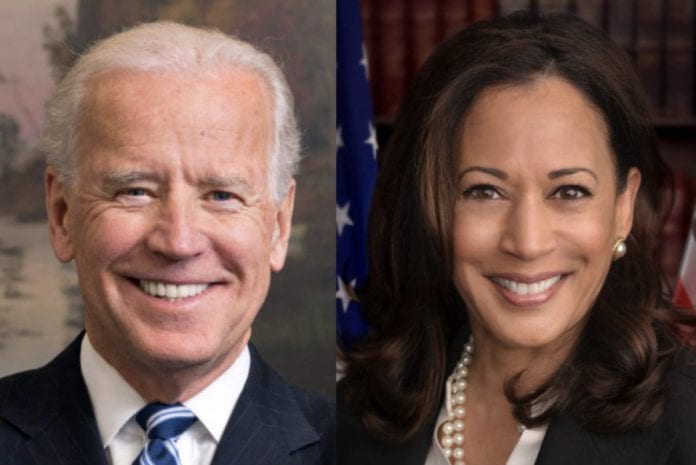
President Joe Biden says:
More Americans voted in the 2020 elections than any election in our nation’s history. In Georgia we saw this most historic demonstration of the power of the vote twice – in November and then again in the runoff election for the U.S. Senate seats in January. Recount after recount and court case after court case upheld the integrity and outcome of a clearly free, fair, and secure democratic process. Yet instead of celebrating the rights of all Georgians to vote or winning campaigns on the merits of their ideas, Republicans in the state instead rushed through an un-American law to deny people the right to vote. This law, like so many others being pursued by Republicans in statehouses across the country is a blatant attack on the Constitution and good conscience. Among the outrageous parts of this new state law, it ends voting hours early so working people can’t cast their vote after their shift is over. It adds rigid restrictions on casting absentee ballots that will effectively deny the right to vote to countless voters. And it makes it a crime to provide water to voters while they wait in line – lines Republican officials themselves have created by reducing the number of polling sites across the state, disproportionately in Black neighborhoods. This is Jim Crow in the 21st Century. It must end. We have a moral and Constitutional obligation to act. I once again urge Congress to pass the For the People Act and the John Lewis Voting Rights Advancement Act to make it easier for all eligible Americans access the ballot box and prevent attacks on the sacred right to vote. And I will take my case to the American people – including Republicans who joined the broadest coalition of voters ever in this past election to put country before party. If you have the best ideas, you have nothing to hide. Let the people vote.

 Robin's Room
I’m very interested to read the Dark Side of Alice book, having read your great review – and, of course, Alice being a personal favourite of mine!
LikeLike
I’m glad that you liked the review. My feeling is that Alice in Wonderland should not be spoilt for readers who want to read about all the issues raised in Dark Side of Alice. This writer has deftly woven material that certainly gives Alice readers pause, but does not impose upon our love for the work.
LikeLike