Book Reviews this week cover two fiction and three non-fiction books. One non-fiction book is about writing, so I have included an interview between Joanna Penn and Orna Ross about their research methods and application. They also briefly mention ‘writers’ block’ , an issue raised by the reviewed book by J. Michael Straczynski, Becoming A Writer, Staying A Writer. I was really pleased to be able to read Make Your Own Board Game, A Complete Guide to Designing, Building, and Playing Your Own Tabletop Game in advance as it coincided with my youngest grandchild’s creation of yet another innovative board game. Behind The Red Door by Louise Claire Johnson is another non-fiction book reviewed this week.
Louise Claire Johnson Behind The Red Door, Gatekeeper Press, 2021.

Reading a book that makes connections between characters and time where none of those connections is contrived or awkward is a real pleasure. Perhaps this is a simple observation, but so many writers do not have the capacity to use this device effectively. Louise Claire Johnson is a talented writer who has woven the stories of two incredible women, the politics of business and feminism, the draw of family, love and awakening to her real ambitions for her life into a book that is a pure joy to read.

Jane Corry The Lies We Tell Penguin Books 2021

Jane Corry brings her skills with characterisation into full play with this study of two people whose family backgrounds, guilt and lies impact on each other, their friends, and eventually, their child. At the same time each is treated as an individual, Corry places Tom and Sarah into stereotypical traditional roles: the demanding and critical father versus the ever forgiving and compliant mother. It is in these roles that they and their son Freddie, the three main characters, are introduced. Freddie is late home, despite Sarah’s negotiating an earlier curfew. The scene begins in the bedroom, packed boxes are evidence of a move, and Tom sees Freddie’s lateness as just more evidence that he cannot be trusted. The evidence of a move from what has been the family home suggests upheaval, but no-one can imagine the enormity of what it will encompass until Freddie arrives home, with devastating news.
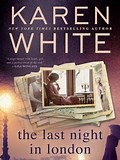
Karen White, Last Night in London, Simon&Schuster, 2021

The prologue, set in London during the blitz, with dust, embers and buildings falling around a woman carrying a valise, determined to get to her destination despite planes bombing Oxford Street is wonderfully realised. The woman is hurt but will not stay in the shelter in which she leaves the occupant of the valise, a baby. She is left in a park, imagining ocean sounds, uttering a supplication, which the last line suggests will not be granted.
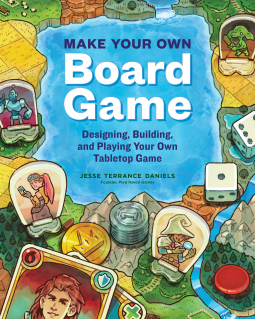
Jesse Terrance Daniels, Make Your Own Board Game, A Complete Guide to Designing, Building, and Playing Your Own Tabletop Game, Storey Publishing, LLC, 15 February 2022.

 Daniels begins by describing the strategic features, nature of skills required, rewards and penalties embodied in familiar games, past, enduring, and current. In short, what makes games work to keep people engaged. The chapters are illustrated, with some fascinating examples of many-sided dice, past games boards intermingled with graphics of new games, and players. It is difficult to assess the attractiveness of the illustrations, as they appear on my kindle in permutations of grey. However, they are effective in that they are linked to the text and illustrate the longevity, popularity and inventiveness of the games described by Daniels.

J. Michael Straczynski Becoming A Writer, Staying A Writer, BenBella Books, Inc. Dallas, TX, copyright @2021 Synthetic Worlds, Ltd. Becoming A Writer, Staying A Writer is replete with ideas; some criticisms of various methods used to teach writing; an insight into the life of a writer, with its pinnacles and troughs; and J. Michael Straczynski’s experiences with which he imparts his knowledge. I have an overwhelming feeling of appreciation for his zest in equipping writers with thoughtful ideas and tools for meeting the challenges confronting anyone who wants to be a writer and maintain that status. At the same time, I have some criticisms and see this book as part of a writer’s source of advice, rather than a perfect guide.
The Joanna Penn interview with Orna Ross that appears below is a useful adjunct to Becoming A Writer, Staying A Writer.
Joanna Penn, The Creative Penn:
The transcript below provides selected/edited quotes for Joanna Penn’s interview with Orna Ross. You can find the ALLi Podcast on your favorite podcast app or on SelfPublishingAdvice.org. You can find Orna Ross at www.OrnaRoss.com [There’s an introductory section. The discussion on research starts at 07:58 mins.]
The discussion covers the following topics:
- Why is research so important — for fiction and non-fiction?
- Research of memory
- Following your curiosity. Write what you’re interested in, not necessarily what you know.
- Researching with books, films/TV, YouTube, podcasts and other media
- Research in person — traveling, interviewing people, plus surveys and your community
- How much you need to research — and when to stop
- Credit and attribution
Why is research so important for authors?
Joanna Penn: Okay. So, let’s get into the topic for today, which is how to research your book, but we’re going to start with why research is so important anyway, because I feel like there’s a bit of, “Oh, but you should create from your brain,” like that’s all you need is your brain and here comes a book off the page. But Orna, why don’t you start, why do you think research is so important?
Orna Ross: I have a quote there that I really like from Robert McKee who’s, I think you’ve done his courses?
Joanna Penn: Famous in screenwriting circles, really.
Orna Ross: For his screenwriting advice, exactly. And he has a brilliant book called Story, which I found really useful. And I often find screenwriting books are really good on story. He has a great quote about research, Do research, he says. Two words. It’s an order. “Feed your talent is the number one reason, and research not only wins the war on cliche, it’s the key to victory over fear and its cousin, depression.“
I think that kind of sums up the whole thing… without going outside ourselves, we don’t know where we fall in our own tradition. We don’t know what’s been done before, whether we’re repeating something, and maybe less well than somebody’s already done it.
It’s also really important, I feel personally, for filling the creative well. The idea that you would not research either fiction, non-fiction, or poetry sometimes. I mean, sometimes poetry is the exception, and it does just come, kind of, fully formed from the brain, but generally from other reading or something else…
Joanna Penn: For me, I think a lot of people say, Oh, I’ve got writer’s block, whereas actually a lot of the time it’s because they don’t know enough detail, or they don’t know enough about a situation.
So for example, Day of the Martyr, ARKANE thriller #12, I have a book title and I know it will be about the relics of Thomas Becket, but I don’t know enough about Thomas Becket and the medieval relics in the church, and where they might be now. So, I might have an idea, but then I have to go find out the detail. If I try and write that book from my own head, I might be able to write a bit, but could I write a whole novel? No, I couldn’t.…
I just cannot even imagine writing a book without researching.
Even things like fantasy, so I know people are like, Oh, but I’m writing about a magical kingdom. But as we know, one of the most famous fantasy series is, I guess George R.R. Martin, with what became the Game of Thrones TV show is based on history. And a lot of fantasy is taken from history. Tolkien was inspired by the Icelandic sagas and the Norse sagas and things like that.
So, don’t be afraid to research, I think that’s important.
But Orna, what do you say to people who are worried about research in case they plagiarize or steal ideas, all of this?
Orna Ross: Yeah, I just think it’s a false fear. It can really lead to cliche, because you think you’re having an original thought, and then if you haven’t researched it, you don’t realize. The other thing that happens, I think, is the specific sort of details that make something ring true, you need to research to get that.
I write historical fiction, so not researching is simply not an option. You absolutely have to, and if anything, the problem is, something we’ll talk about a little bit later in the show, which is about when to stop and not getting overloaded.
But the other thing you hear writers talking about a lot is the moment when it seems like the book got up and started to write itself. Ironically, that’s what happens when the research is good enough, when you’ve filled in enough of the details through research, and working, and thinking, because research isn’t just, and again we’ll talk about this in a minute, it isn’t just what you do in the library, it’s also actively researching your imagination and your memory as well…
Joanna Penn: Yeah, I mean, how can you sustain it? I’m up to 34 or something, how do you sustain it?
The other thing is, to me, people say, “Oh, write what you know,” and I don’t even know where I heard it, but it’s not write what you know, it’s write what you’re interested in, which is why a lot of my thrillers come back to religious relics, because I just can’t find them interesting enough. So, I’m always reading about religious relics and going to, like there’s an exhibition at the British museum coming up on Becket. So, for me, that write what you’re interested in, that’s what drives me to a book.
Orna Ross: Write what you want to know!
How can authors research their book?
Joanna Penn: Yes! Write what you want to know and what gives you an excuse to research.
So, I think that moves us on into the next section, which is how to research. So, why don’t you start, how do you research?
Orna Ross: So, of research as being divided in three in my mind. So, there is research of other books, if you like, what we typically think of as research in the old days, what you’d go off to the library to do, and now you go onto the internet to do as well. You have a quote here, “Books are made out of books,” by Cormac McCarthy, and I really love that, that’s absolutely right. So, there’s that, and for me, that’s all about good notes, just taking good notes. At the beginning, not knowing where you’re going with it necessarily, watching for that tug of interest that sometimes is mysterious, and at the same time, actually looking up stuff that you know you need to know.
And then there is the research of the memory, which for me, I activate through free writing. I sit down and actively ask myself the question, how does this book connect to something that’s happened in my memory? Because generally, if we want to write a book, there is something in there from way back when that interests us.
And again, looking for that tug of energy that tells you there’s something going on there, but free writing very often generates a lot of material. So, I’ll just keep writing as fast as I can, not necessarily knowing what’s going to come out of the memories.
And then I also do what I think of as, and they’re not all together, these are all on different days, research of the imagination. Again, using a free writing technique where I’ll actively go in and think my way into the character’s actual sensory experience.
So, go through a day in their life, or a scene that I already know is going to be in the book. Some of these details do make their way into the book. Not all do, and you have to, I think, not worry too much about waste at the beginning, and just get whatever you get. And then there is a logical sorting process that happens in the writing.
Joanna Penn: I don’t do that at all. This is what’s so great. But I do agree with this, I think this tug of interest or curiosity, I think that is so key and I feel like it’s something we lose touch with. I certainly felt that I wasn’t creative when I had a day job, back in the day, in IT and I didn’t know what I was curious about. I knew I like reading thrillers to drown my day job at lunchtime and on the train, but I didn’t know what might interest me about things to write about.
Tapping into curiosity is a muscle….
Joanna Penn: Do you remember? In 2012, we actually met on Twitter, everyone. We are a classic friendship, started on Twitter, and continued in the London library when we just bumped into each other. I used to go to the London Library and get books from the stack, and now I tend to order a lot of them.
I order physical books a lot of the time that just tug at me, and then I have them on my shelves. A lot of them are very visual books, for example, I’ll buy books from museums with lots of images in, and that really sparks things. I’m quite a visual writer, but certainly, obviously online libraries, and things like that.
Or even using things that are in other books, like Frankenstein, you know, Mary Shelley, a lot of people riff-off that. I’m just reading a feminist version of Beowulf at the moment, have you seen this? It’s just come out. So, they’ve taken Beowulf, obviously, which is way out of copyright, like a thousand years out of copyright, and riffing off that. So, that’s another way of using a book. I wrote A Thousand Fiendish Angels based off Dante’s Inferno.

So, it’s actually taking a book and mining a book for ideas, but again, those are all out of copyright, and we’re going to come to citations, and things like that. But what about a non-fiction, Orna, what do you do for nonfiction?
Orna Ross: Well, obviously that does tend to happen much more in number one, which is the researching other the books, kind of thing. I think it’s important, as well as thinking of books, there are lots of other ways that you can get the kinds of details that you’re looking for. So, documentary, TV, podcasts. There are lots and lots of ways of finding what you need to know.
I generally begin a non-fiction book with some intensive Google research, just search engine research, see what comes up. Blog posts are really useful as well. Back to fiction, again, one of my main sources, as a historical novelist, is local newspapers, and they really good for getting the tone, the voice, the sound of the period, as well as the strange, weird, and wonderful things that happened, that are slightly different from our time, that really bring a period alive…
Joanna Penn: Okay. Well, some of the other things I do, certainly documentaries, films, YouTube videos. For example, for End of Days, I watched loads of Appalachian snake handling church videos.

I wrote a whole scene, but literally I will just type out what I hear, what people say, and I’ll use the way they speak as dialogue and description…
And then news, I read a lot of news, I just can’t seem to break the addiction. I read a lot of different newspapers, and Map of the Impossible came from the discovery of a map on the wall of an Egyptian tomb. And it was laid out like an adventure, like an actual map. There were these certain, you know, big bat things, and then there was a snake thing, and they had to get through. I was like, that’s the plot of a, sort of, a journey through the underworld. So, I nicked that. You can definitely nick plot from the walls of Egyptian tombs — there is nothing wrong with that!
Also travel, this is the reason I’m writing a book about Becket, because the only place I’ve been in the last year is Canterbury, which is where he was martyred, but most of my fiction is based on my travel.
So, my last novel, Tree of Life, we went to Amsterdam, and this is what I do, I go looking for a story. So, we went to Amsterdam and I knew I would find an idea somewhere, and I thought it would be in this esoteric library, that Dan Brown had been to, and I was like, Oh, I’m bound to find an idea there. But no, after that, we went to this synagogue, the Portuguese synagogue in Amsterdam, and I was like, what is this? How is there a Portuguese synagogue in Amsterdam? That question, why, why is this? And they had a book there called, Jewish Pirates of the Caribbean, and I was like, this is the story, like seriously? And so, I bought the book and then, apologies to them, I had to burn it down in my book…
Orna Ross: I think back to that point of everybody being so different, when you mentioned news media there, for me, that just leaves me completely cold. It has to be yesterday’s news before my imagination is activated. I don’t know why that is, but that just is the way it is. My imagination wouldn’t be activated by a modern news story or modern news media. Even though I would see a story, like a little thing that happened in a courtroom or something, and I would say, that’s a really great novel plot, but it would never go anywhere. Something about the past needs to happen.
The other thing that I find really good, and I think you said you don’t like to do, is interviewing people. So, I will actually, and almost everybody-
Joanna Penn: Talk to someone?!
Orna Ross: Yes, I like talking to people. So, pretty much everybody will give you an interview if you want to talk to them about their favorite topic, is my experience. They just love doing that, and it nearly always yields something that you wouldn’t get yourself any other way, I feel.
Also, I think what happens for me in conversations is the things that people don’t want to talk about, the gaps, or the secrets, or the things that are too painful to discuss, maybe. Then I’m off. So, I think the point is, you have to do whatever activates your imagination. It’s not as simple as just get the facts, something else has to be going on for it to be something that’s going to have the energy to take you through the writing of it, turning it from just an experience or an interesting thing into something that’s going to fuel a whole book.
Joanna Penn: Just one more thing. So, I don’t like talking to people, but I do surveys. So, I did a survey for The Healthy Writer, and a lot of quotes went into the book. I did a survey for How to Make a Living With Your Writing, and again, quotes into the book, and it inspires other chapters. And, of course, I get permissions and everything and I quote people when I put them in the acknowledgements and all of that. So, you can definitely do surveys. If you have an audience that you’re writing for, like I do, and I’m going to do this with the shadow book once I know what I’m doing, I will do another survey to get more ideas, because people often have ideas that you don’t have, and they’re very happy to share…
Orna Ross: Definitely don’t neglect your own community. Sometimes we can forget what a rich source it is. Certainly, the ALLi self-publishing books would be nothing without ALLi members. I mean, they’re just absolutely packed with member testimony. So, it’s important to remember that.
Joanna Penn: Okay. So, briefly you mentioned that you use Evernote, and I tried Evernote. In fact, I still pay for it, I think, and I just can’t use it, but I use notebooks and I also use Scrivener.
I’ve got about 20 different Scrivener files right now of projects that I’m not actively working on, but ideas. And then I might just, for example, I watched a documentary a few weeks ago and I wrote notes and I stuck them in Scrivener, because I may or may not write that book and those notes are there, so I might come back to it. But for me, it is Scrivener.
I put it in the research folder and then what I do with every book I write, if it’s Kindle I highlight things and export the PDF and put that in Scrivener. If it’s paper, I underline things and then I type up my notes, and we’ll come to crediting in a minute, but I’m very careful with making sure I keep track of all my sources. And then I know if it’s in quotation marks, then it is a quote. And if it’s not in quotation marks, it’s my thoughts about whatever it was.
Converting research into words written
Joanna Penn: So, you talked a bit about it. Is there anything else you want to talk about in terms of turning the research into words?
Orna Ross: I think, again, just in terms of the research of memory and imagination, to have a capturing device, be it a notebook, be it Evernote, or Scrivener, or whatever, or both, because yes, I also use notebooks, but whatever you use to capture your research, keep it by your bed, because I always get my best ideas when I wake up in the morning.
So, I need to keep it close, and somebody gave me that tip years ago, but it’s one of the best tips I ever got. So, if it is a notebook, just have the notebook and pen by your bed, or if it’s your phone, you can put it into Scrivener, put it into Evernote, whatever it is,
But to remember that sometimes, again, when it comes to the active research of the imagination, activating the imagination, activating the memory, that is research also.
Joanna Penn: And I don’t do that either. But just to say to people, it comes for me when I sit down to do my work at my desk, rather than in the middle of the night or anything. So again, there aren’t any rules about this, we’re just sharing our experiences.
How much research should you do, and when should you stop?
Joanna Penn: So, big question. How much research do you need and when do you stop?
Orna Ross: Oh, well now. Don’t do what I do! I have to now be so strict with myself because, I mean, one of my past jobs was actually as a historian. So, I love research, in other words. Of course research is easier, isn’t it?
It’s much easier to just enjoy going around reading other people’s stuff and imagining this and that and the rest and make notes, which don’t have to be actually knocked into structured chapters and things. So, I actually now have to have some sorts of first draft in place before I let myself do the research, and I think though that this is not something I could have done at the beginning, but it’s something that I’m trying to train myself into doing now, because I just go too widely, and I forget what I’m there for, and I need to be put back in…
Joanna Penn: Oh, that’s interesting. I feel with nonfiction, but like I said, I know I’ve done enough when I know exactly what they’re saying, so the amount of underlining or the amount of highlighting will reduce with every book I write.
So, with the shadow book, I’ve now read about 15 books on the Jungian shadow, and now I’m like, yeah, I know what this is. So, now I’m looking at their references, and finding other aspects from other books, but I feel like I’m getting into a point where I need to start writing more and then I can maybe do some more research.
But with fiction, I basically don’t stop. I’m a discovery writer mainly, so with Day of the Martyr, Thomas Becket, I don’t know what it is yet. It’s not a historical novel about the murder of Becket, it’s a modern-day thriller that is somehow based around a relic. So, I’ve written a lot of relic thrillers before, so I need something new, but I know that by researching it and going into research in some way, I’m going to find an idea, but I will stop that kind of research once I actually get the story idea.
Once I get it and I get a couple of key settings, physical settings, then I’ll write some scenes and then I’ll do more detailed research. So, for example, with Tree of Life, I had to research somebody running through the middle of downtown Rio de Janeiro and figure out how they would get up to that big Jesus, you know, Jesus, the Redeemer, Christ, the Redeemer on the hill.

So, I had to go into Google maps and figure out all of the physical movements, and I didn’t need to do that until I was writing that scene, and then I needed to do that.
So for me, I feel like the research is on several levels. One is the big theme or the big story, and then at the bottom level it’s figuring out those little details as you actually write the chapters.
Orna Ross: Yeah, I think that’s very fair to say, and the more clarity you can get around which of those you’re working on, the better, to avoid the confusion factor.
So, in one you’re looking to activate/stimulate imagination, and in the other you’re looking to get in and out as quickly as possible with some information, just to fill a gap or to give you a sense of some sort of sensory detail or whatever.
Joanna Penn: In terms of just when to stop, I would say, if you don’t know when to stop, a word count may have something to do it. If you’re looking to write a 70,000-word novel and you’ve got 70,000 words of research notes, I’d say you’re probably on the wrong side of the balance!
Orna Ross: I’d have 140,000!
Joanna Penn: Exactly. We’ve talked about starting energy, I feel like research is part of starting energy. It can be really great, and then the pushing through energy is stop researching and do the writing.
Orna Ross: Yeah, absolutely, and go from there.
How to credit and attribute your research?
Joanna Penn: Okay. So, let’s talk about crediting and attributing. So, for nonfiction, for me, I never do anything academicy or footnotey, because I feel like that just doesn’t work for ebooks, and it definitely doesn’t work for audio books.
And I feel like people who, at the moment, are a little bit obsessed about footnotes and doing that kind of thing, have not thought about the various ways that people read. Even print books, I had a friend and his whole story had footnotes on every page, it was part of the device, and the thing is, you know how small people print traditionally published books or even indie books, if you print the font too small, your footnotes are even tinier, and it was just impossible for any person with normal vision to read.
So, for me, I don’t do footnotes or indexing, what I do is in the appendix, I will have a list of sources by chapter. In the ebook, I will hyperlink to a particular thing, and in the appendix I will list the references by chapter. And then in the audiobook, I say, you can get the appendices in a downloadable file if you go to this page, they don’t have to put their email or anything, but it means that they can get that. And I also obviously put, you can get all these other things as well. So, I think to me, that’s the best way of doing it, but I realize that you’re more au fait with more academic type of books. What do you think with non-fiction?
Orna Ross: Obviously, if you’re talking about a scholarly academic text, then your references are really key to the publication, because that’s just how academic publishing works.
So, you have to have extremely careful footnotes and then notes about, not just the author name and the book title, but the year of publication, which edition it was, where it was published, all that kind of stuff goes into your end notes.
But for everybody else now, the great thing about having the internet is you can have very minimal kinds of references, if they are completely necessary. Only in, I would say on average how-to nonfiction, and so on. So, obviously if you’re quoting somebody, then you need to let people know that you have quoted them, and where they could find more from that quote, but you can make that really simple.
I do my formatting, as I know you do also, with Vellum, and Vellum has an end note facility. So, you can just get your end notes at the end of the chapter, which I think is a much more friendly way to do it. You just have a few end notes on each, instead of a lengthy attribution with everything at the end of the actual quote itself, just a discreet number, and then if you want to follow it through, then you can.
And I think what you’re aiming to do is just two things, to credit the person whose words you have used, and if the reader wants to know more, just making it easy for them to do that.
So, obviously in eBooks hyperlinks, great. The tricky thing then is getting your print references, which will have to be different in the print edition to work as a print references, but keeping it really simple, and recognizing that in the old days, you had to give a whole load of information because you wanted to make sure that people found the right book, the right edition of the book, and all that kind of stuff. But these days with, the internet, it’s all much easier. So, keep it simple, I would say.
Joanna Penn: I’d also say that you can credit ideas without having to have a direct quote. For example, I might say, founder of the Alliance of Independent Authors, Orna Ross, talks about free writing as part of her creative process. And I haven’t directly quoted you in that way, but I am referencing you as the person with, and I know that’s not your original idea either, but it’s where I heard it from. And I think that’s important too. I feel like people obsess about individual quotes, but it should also be the ideas that you might have heard from other people.
And the other thing is this, there’s nothing wrong with this. I feel like there’s a resistance to that, but again, there’s nothing new under the sun. We are taking ideas from around us and putting our own spin on them, and what I like about the indie author community, always have, is the generosity and we quote each other, we list each other’s books in our back matter, and in fact, I will email people and say, I want to quote you in my book, what have you got?
I got an early version of your Creative Self-Publishing, because I was like, “Orna, I need to quote you in my book, give me your latest book so I can quote you,” because this is also part of our ecosystem. Because what happens is someone finds my book and then they say, ‘Oh look, Joanna thought this book was useful’ and they go and buy that book. And as we’ve said, we’re a self-sustaining industry. People never just buy one book; they’re going to buy loads of books. So, what you want to do is help other people through quoting them and referencing their work.
So, in terms of fiction, I always do an author’s note, and I include the books I’ve read, the places I went to, the exhibitions I’ve been to, and I may occasionally, Morgan Sierra might say, Carl Jung said, in a kind of pithy way, but normally there won’t be any attribution within the text. It will be in the author’s note. What do you do about fiction?
Orna Ross: Yeah, acknowledgements, I think, but again it is a tricky thing, and it very much depends on the length of the book, the amount of references, the amount of research you’ve done, and also sometimes you don’t know where your ideas came from. Sometimes you do, but sometimes you’re carrying something, and it’s come to you and it wasn’t an official note, it’s something you picked up somewhere along the way in other reading or whatever.
I think the main thing is, if anybody has had a significant impact on your book, they do deserve that acknowledgement.
Then the second thing is to keep in mind that the reader benefits. I think some writers sometimes think they have to, that it’s almost like a sign of weakness, like they have to have all the ideas themselves, or it’s not a good book, and that’s not true. It’s actually, the confident author has no problem giving credit where it’s due, saying where they came across an idea. It might be a term.
There are all sorts of ways in which we are nurtured and fed by other authors, and to acknowledge that as much as it is possible. Also, readers love these background details, and you can also, if there isn’t room in the book and you don’t want to have pages and pages at the back of your book, you can have a page on your website where you go into considerable detail. I’ve seen lots of authors who really go into a lot of detail about their research on their own website. If your reader likes that sort of thing, they really like it, so it can be a good way to do it too.
Joanna Penn: Well, it’s kind of why I’ve started my Books and Travel website and podcast, in order to bring that. I did a whole show on Oxford: Decadence, Discipline, and Dreaming Spires.

I went to Oxford and my ARKANE main character Morgan Sierra has an office in Oxford, and I feel like I’m bringing out my research more and more in writing stuff around my research, and I will probably be doing some non-fiction books around aspects of research.
We’ve seen, for example, Neil Gaiman wrote a book on Norse myths. Val McDermid, who’s a crime writer here in the UK has a book on forensics. So, you can turn your research into other products, I think that’s actually important too. There are actually ways you can monetize it.
How to use quotes within the bounds of ‘fair use’
One more question, we’re almost out of time, which is, some people might be worried about using a quote from a book. Obviously, fair use is when you can take, for example, I might use one line quote from the Bible, even the NIV version and say, okay, that’s fine, because it’s one line in millions. Whereas I won’t use one line from the lyric of a pop song, because it’s a very short thing and I’ll get into trouble. So, what do you think about that? How do we use quotes?
Orna Ross: Yeah, it’s laid out very clearly for us in copyright law. So, both here in the UK and in the US, it’s called fair use in one place and fair dealing in another, I can never remember which is which, but it’s made very clear to us what is allowable and what is not in terms of fair use. Essentially, you don’t rip the heart and soul out of a work. As you said, if you were to take two or three lines out of a song, then that’s just probably not on, or a short poem, but if it’s a longer piece of work, that’s absolutely fine.
So, there’s a bit of common sense here. And again, I think, if you’re keeping your two things up, credit where credit is due, and facilitating the reader, if you keep those two things in mind, then I think you won’t go too far wrong.
Joanna Penn: Definitely, and I think just generally beware of poetry and lyrics, and you’re probably fine with anything that’s a full-length book.
Orna Ross: Yes, I think that’s probably a good rule of thumb. There is a movement now with showing more research, and what you’re talking about there in terms of showing more as you’re going along, so am I and so are authors, and I think this is part of the creator being the publisher and the creator wanting to tip the hat at other creators.
So, in the same way that we, as publishers, are much more forthright in crediting the other creation professionals that helped to make the book, like the designers and the editors and so on, being more public about our research is part of that movement too, I think.
Joanna Penn: Good stuff. So anything else on research? I think that’s probably it.
Orna Ross: Just know when to start and know when to stop.
Joanna Penn: Yes, and the book is the point. The research is super fun, but the book is the point. So, happy writing,
Orna Ross: and happy publishing. Have a great month. Bye, bye.
The post How To Research Your Book with Joanna Penn and Orna Ross first appeared on The Creative Penn.
Lorrae Desmond, so well known as Shirley Gilroy from A Country Practice, died on the 23rd May, aged 91. A Country Podcast has made a special edition with Shane Porteous. Television: Comments
New post on Women’s Film and Television History Network – UK/Ireland
100 Years of Women at the BBC – Event Videoby sarahlouisesmythIn 2022, one hundred years will have passed since the formation of the British Broadcasting Company, later to become the pioneering public service broadcaster best known as the BBC.On Friday 7th May 2021, Critical Studies in Television and Edge Hill University Institute for Social Responsibility hosted an event exploring one specific aspect of the BBC’s history: its relationship with women.The event can now be watched in full in the below video.For more information about this event, click here. This free site is ad-supported. Learn more

Cindy Lou at the Opera Bar
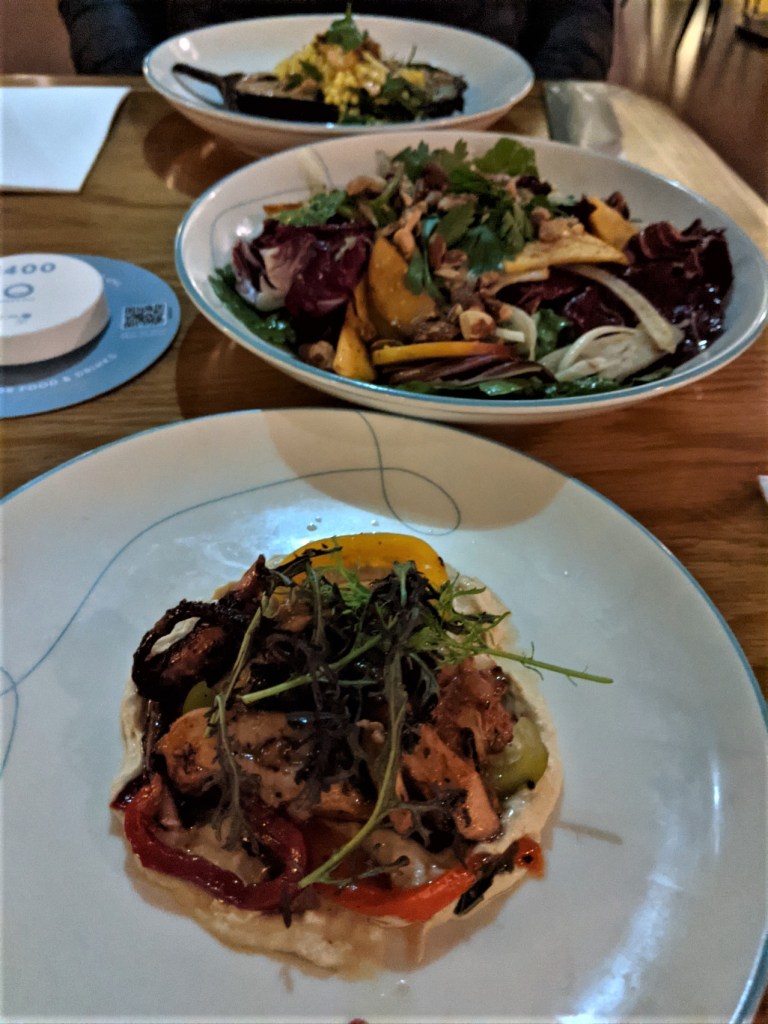
Although the Opera Bar was extremely busy the night I visited, service was prompt and pleasant. My request to avoid the (to me) loud music outside was immediately met with the offer to eat inside. A good start to the evening.
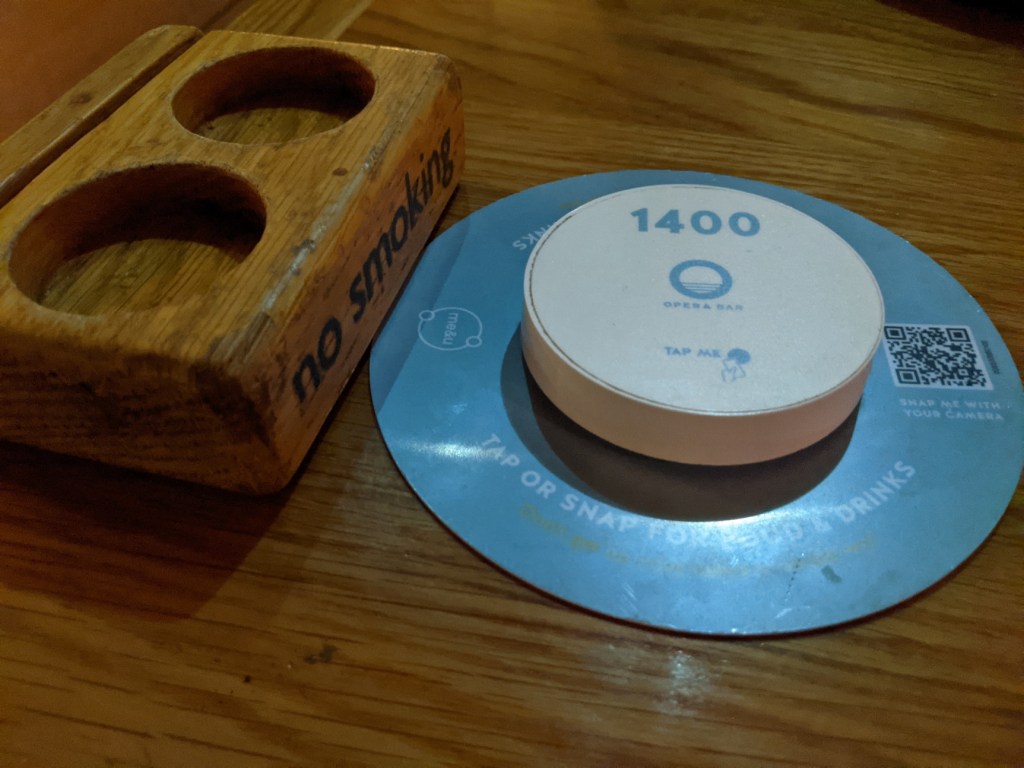
I am new to this version of the restaurant on the lower concourse, below the more familiar venues on the upper concourse that open onto the habour. The Opera Bar comprises a lengthy venue outside, and a fairly large one with inside seating. The menu is located at the several access points along the outside venue, making it easy to read and decide on whether the food is for you. As it was cold there were fires lit at strategic points. We chose the Opera Bar as it offered the range of light meals that we wanted on this occasion.
The menu is small but innovative. I particularly liked the grilled octopus, with charred capsicum and on humous. The shared a salad was a delightful medley of fennel, peach and radicchio.
Service was pleasant and prompt, ordering from the bar was no problem and the meal was served to the table.
 Robin's Room
Lorrae Desmond certainly lived a very interesting life. Because Toni Lamond, Helen Reddy & Lorrae Desmond had/have similar facial features & such wonderful entertainment attributes, I always assumed the 3 were related, (only Toni & Helen were).
Wonderful to see, at last, the attention given to women in Film & TV. “Perry Mason” 60s was first TV series to have a Woman Executive Producer – Gail Patrick Jackson – a lawyer by profession but the “world” was too ignorant (still is to some extent) to accept a female lawyer!
“Gunsmoke” 50s + 60s Katherine Hide – first woman script writer – the “world” was too ignorant to accept a female writer, esp. of a Western type series – although “Gunsmoke” was/is not the “typical”, macho Western. Numerous scripts involve wife abuse, child abuse, questioned the Death penalty, questioned racial & ethnic prejudice.
To me, Women definitely boardened the value of TV.
Appreciate the information given in robrjo6.
LikeLike
To quote the marvellous Jen Psaki, there is a great deal to unpack in your comments. I might have known about Toni Lamond and Helen Reddy, but can’t recall. Thank you for alerting me to this relationship. I only know Lorrae Desmond through her role as Shirley. She was a great character, certainly she stopped Frank from his most egregious conservativism. I like the idea of glitter for her memorial service! Your comments on women on television deserve more than my quick response. I’ll come back to them. Thank you so much for commenting.
LikeLike
Oh dear, I’ve responded to the wrong comment. I’ll get back re women and television. I must have missed your earliesr comment, and am so sorry.
LikeLike
I am really interested in your knowledge of the women involved in television in roles that usually do not gain publicity. I have just reviewed a book They Make Movies, in which the behind the camera roles appear to be men only!!! I was not impressed with the book at all. I particularly like the discussions we have had in the past about “Gunsmoke”. I have a request in for a book on women in Westerns, but I think that I will not be successful in getting it, unfortunately. We could have had a really productive discussion after reading that.
LikeLike