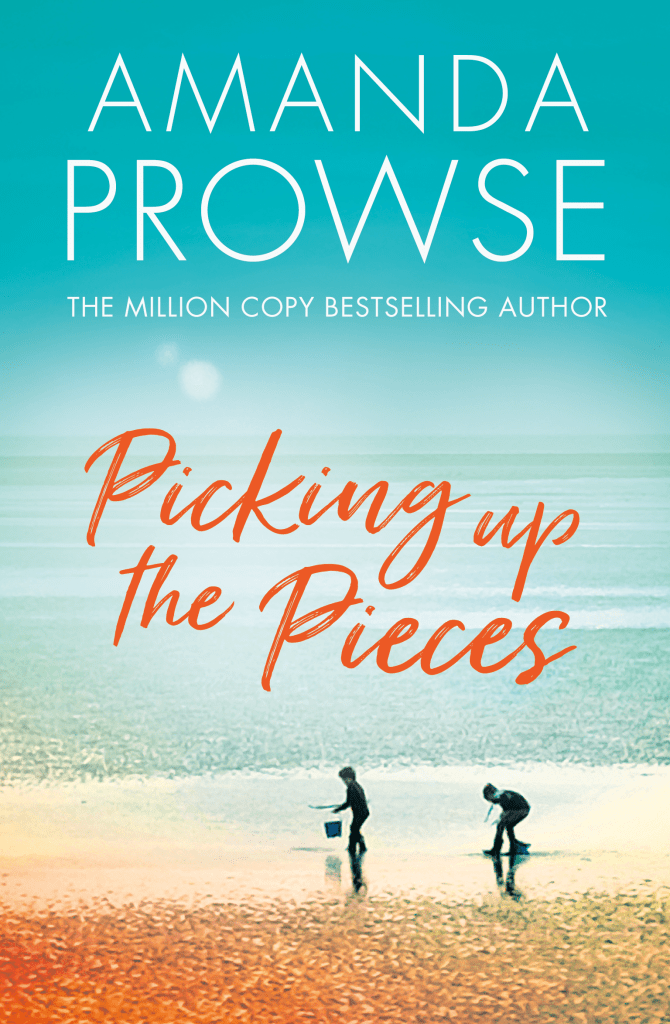
Amanda Prowse Picking up the Pieces Amazon Publishing UK, Lake Union Publishing 2023.
Thank you NetGalley for providing me with this uncorrected proof for review.
Amanda Prowse writes novels that are readable, have some engaging characters, and often include some social commentary. Generally, I am happy to read them, providing as they do a pleasant whiling away of an afternoon or two. However, Picking up the Pieces provides quite a lot more than usual. Every plot line is charged with issues that demand thinking though, each character has something new to say as the narrative progresses, and the satisfying ending is woven so well from what has come before that it provides a genuine outcome for the characters. Rather than being predictable and contrived to achieve a happy ending based on wishful thinking the narrative remains realistic and thoughtful to its conclusion. Books: Reviews
There are two articles after the Covid in Canberra report. Bob McMullan writes about the Greens’ performance in the recent Victorian Assembly elections – what was its true character? The biography of Shirley Hazzard reviewed by Gail Jones makes interesting reading in an article from The Conversation.
New Covid cases in Canberra this week number 3,018, with 81 people in hospital. One life was lost.
Bob McMullan
Greens’ performance in the recent Victorian assembly election

It is worthwhile to assess the true character of the performance of the Greens in the recent Victorian Legislative assembly election.
On election night there was too much spin about “greenslides” and failure to acknowledge the extent of the impact of the Liberals’ decision to preference the Greens ahead of Labor.
This is not to say that there were not some definite positives for the Greens about the result. Just that a balanced view would show some strengths and weaknesses and some opportunities and challenges going forward.
Overall, the Greens achieved a modest 0.8% swing towards them across the 88 Assembly seats. This is not great, but better than any of the other major parties, and in an election where minor parties and Independents were eating into the vote of all three major parties in the metropolitan area this was a solid if unspectacular result.
The 11.5% which the Greens received in the Legislative Assembly election is not as good as the 13.7% they received in the recent federal election. This should not be a cause for great concern, but the party leadership should critically analyse the reasons for the decline.
When looked at on a seat-by-seat basis the results are definitely mixed. In some seats they obviously did very well, in others their relatively poor performance was disguised by the flow of Liberal Party preferences.
Two seats which the Greens already held showed really strong performances. In Brunswick, the sitting member received more than 43% of the primary vote and with minor party preferences would have won comfortably irrespective of Liberal Party preferences. In Prahran, the contest between the three major parties is always interesting, but on this occasion the Green candidate led clearly on the primary vote and the Labor candidate came third, so the Green incumbent won decisively.
It is hard to see how the Labor Party could threaten these two seats so long as the party is in power unless some extraordinary local or candidate factors intervene.
However, the outcome in the other seats which the Greens appeared to target is more complex.
In Melbourne, a seat which the Greens retained with a significant majority, the margin is almost entirely due to Liberal preferences. If the Liberals had preferenced Labor, as they are likely to do next time, the result would have been on a knife edge, with a serious risk the Greens could have lost the seat.
The seat the Greens gained from Labor, Richmond, is a similar story. The Greens polled 34.7% while the ALP polled 32.8%. If the Liberals had directed their preferences to Labor, the majority of their 18.8% would have flowed accordingly, resulting in a clear Labor win.
The new incumbent in Richmond may establish her position in a manner similar to Brunswick, or they may face a distinct challenge, as is likely to also confront the member for Melbourne.
It is hard to believe that the Liberals will follow the same strategy as last election with their preferences. If they do not both these Green-held seats will be at risk.
In all the other seats under consideration as Green targets in 2022, the Greens were only competitive on the basis of the Liberal Party’s preference decision. In Footscray, Pascoe Vale, and Preston the Labor Party two-party preferred vote would have been over 60% if the Labor candidates had received Liberal Party preferences. In Albert Park, the new candidate won with more than 60% of the two-party-preferred vote and the Green candidate received only 20% of the primary vote.
It is possible that the Liberal party will direct preferences to the Greens again in 2026. It is too far away to predict confidently. However, if their strategy is aimed at winning the middle-ground I would expect them to preference Labor. If they do then only two Greens seats are likely to be safe, two will be likely to face a strong challenge and all their other targets seem out of reach.

This article was first published in Pearls and Irritations.
The Conversation
Shirley Hazzard Biography
Article republished under Creative Commons licence.

From dysfunction and provincialism to an elegant literary life: Gail Jones reviews the ‘brilliant’ first biography of Shirley Hazzard

Professor, Writing and Society Research Centre, Western Sydney UniversityProfileArticlesActivity
Gail Jones is Professor of Writing at Western Sydney University and author of two books of short stories and eight novels, the. most recent of which is Our Shadows (Text 2020) She has lived and worked in India, Italy, China, USA, France and Germany and her works have been widely translated.
Published: December 14, 2022 6.02am AEDT
When Shirley Hazzard received the National Book Award in 2003 for The Great Fire in the Marriot Ballroom in Times Square, the other guest of honour was Stephen King, who was there to receive a Medal for Distinguished Contribution to American Letters. The contrast of acclamations and models of value could not have been more profound. King took the opportunity to speak of popularity and populism as the marks of literary success; Hazzard feistily defended reading across time, the nuanced experiences literature affords, and the private and complex pleasures that are irreducible to sales, fame or notoriety.
Shirley Hazzard: A Writing Life – Brigitta Olubas (Hachette).

Hazzard’s stance serves as an exemplar of literary integrity. Her life itself defends the right to be unfashionable, the value of learning and heterodox opinion, and the wish to preserve, in the space of the “literary”, erudition, complexity, and what might be called the private mystery of any reading encounter.
As the opening of an extraordinarily rich and detailed biography, the anecdote also signals a kind of structural intelligence in the construction of a life story: the biographer working, as a novelist might, to recognise those odd moments in which the self shows its plenitude. This story begins with the centrality of symbolic others to the construction of “character” and the social moments in which personal value is called upon bravely to declare itself.
Brigitta Olubas’s Shirley Hazzard: A Writing Life is a brilliant achievement. In her fastidiously detailed account, Olubas exceeds “mere” detail for an aesthetic which honours time’s rearrangement through obsession, projection and a livelier narrative understanding.
Her style reads at times like a Hazzard echo. There are moments in which the syntax and cadence, in particular, are so like that of her subject that Olubas is asserting another biographical dimension: amplification through the elective affinity of style. This is particularly the case in the novel’s closing chapter, an affecting elegy crafted beautifully in the silence of memorialisation.
Discord and sorrow
Born in Sydney in 1931, Shirley Hazzard was a willing and relieved exile from the age of 16, but she was also dogged by both the opportunity and the misery of her putative Australianness.
In part, this was because her early family life was one of discord and dysfunction. Her father was a philandering alcoholic, her mother “manic depressive”, and her nation provincialissimo (to use her own description from an interview with Paris Review in 2005). Her only sibling, sister Valerie, was radically estranged. The shared circumstance of an unhappy childhood did not overcome their opposing temperaments, nor Hazzard’s powerful need to renounce her disappointing family.
Without judgment, Olubas tracks the ghastly business of a lifetime of family sorrow through a massive archive of saved letters and diary fragments. Hazzard’s dealings with her “troublesome” mother are compounded, self-protective, and at times cruelly dismissive. At one stage, her mother’s care was entirely in the hands of Elizabeth Harrower, a fellow novelist, who took on the role with a selfless love of which Hazzard seemed incapable. Olubas retains throughout a poise of devotion to the complications and contradictions of her subject, and to what must have been Hazzard’s vexed, if repressed, knowledge of failure in her filial role.
In 1947, Hazzard’s father Rex took a job in Hong Kong, journeying with his family by way of Kure in Japan. A single brief tour by army jeep of Hiroshima, then a fixated attachment to Alexis Vedeniapine, a 32-year-old British army officer in Hong Kong, provided Hazzard with an image repertoire and an arc of longing and that would last until her death in 2016.
Vedeniapine was a Russian raised in Shanghai, who longed for his mother and sister. After traumatic wartime experiences and his own dislocations, he wanted to be a farmer and cultivate his own garden. He left for rural England; Hazzard’s family returned temporarily to Australia, after Valerie contracted tuberculosis. Still a teenager, Hazzard gave herself over to an inner drama of romantic torment, which she replayed throughout her life. The excruciating abjection of the future novelist makes for difficult reading. She pleads, accuses, displays her own misery in histrionic appeals.

Though affianced, a marriage does not eventuate. “Alec” maintains his distance and Hazzard repeatedly cancels her promised journey to join him. She moves instead to New York, where she works in a secretarial role at the United Nations, and then, in an existential coup de foudre, to Naples for a year’s commission in an office whose purpose was to supply UN peacekeeping forces in the Suez.
At 25, Hazzard feels at last an adult. In her view of Vesuvius, the Bay of Naples and post-war Neapolitan ruins, she discovers an emotional objective-correlative and a confirmation that grandeur, even ruined, is found in modes of life that contest, rather than confirm, the conventions of her origin nation (or indeed, of any nation).
Olubas’s detailed account of the early rhapsody of Italy, its challenge, its recalibration, its enticing high-cultural poetry and layered antiquity, establishes how attachments to place ground the literary imagination, and how the attention demanded by other places might generate stylistic innovation. The sections on Italy are among the best in the book.
Olubas’s readings of Hazzard’s Italian novels, The Evening of the Holiday (1966) and The Bay of Noon (1970), also move deftly to consider how literary knowledge is continuous with located sensibility, and how intricately personalised such knowledge might be. For readers who may have disregarded the early novellas as practice pieces or, worse, affectations of a yet-to-be-realised novelistic skill, Olubas establishes their delicacy, insight, and fit-for-purpose completion. Each of these small texts is preoccupied with time and the role of art in transfiguring the shreds of a life.
A rich intellectual companionship
At the same time, Olubas is aware of iterations and reiterations. The pattern of torment, distance, and falling for older, inaccessible (often married) men culminated in 1963, when Hazzard met Francis Steegmuller at a party in New York hosted by her friend Muriel Spark.
Steegmuller was 25 years her senior, depressive, grieving, a wealthy widower and art collector, who very likely preferred men. A literary éminence grise in New York, he had already authored 14 books, including acclaimed biographies of Flaubert and Maupassant. He was a prodigious critic, translator and scholarly Francophile. The highly-strung and immensely gifted Hazzard, still largely unpublished, met in this man the prospect of an elegant literary life. When they married, after her entreaties and his initial vacillation and resistance, they established, over time, a rich intellectual companionship. An entire world of connections and friendships was opened by Steegmuller’s reputation and Hazzard’s social energies.
This meant almost constant travel, shuttling between Manhattan and Europe, especially Italy and France, and enjoying a writing life that did not have the burden of needing to work for an income. Steegmuller owned a gold-coloured Rolls Royce, which he garaged in Switzerland, and employed loyal Italian drivers to take the couple as required to various destinations, especially Capri.

The marriage offered, in short, conditions that enabled Hazzard to flourish as a writer. Even towards the end of Steegmuller’s life (he died at 88 in 1994), they were travelling three to four times a year between New York and Capri, staying in luxurious hotels, taking their meals in restaurants, living in a manner unknown to all but a privileged few. Their circle of close friends included a who’s who of the New York scene, as well as European connections that consolidated and affirmed their literary lives. Most touching among these, perhaps, was the link with Bill Maxwell, the distinguished editor, whose eloquent and fond letters of support for Hazzard and her writing are quoted throughout the book.
Hazzard was also emboldened to criticise her former employer, the UN. She played a role in exposing the Nazi affiliations of Secretary-General Waldheim and the demoralisation of its staff after the Secretariat removed its support for an Amnesty International conference on torture. The title of one of her essays, The Patron Saint of the UN is Pontius Pilate, makes clear her tough critique. She was not an apolitical aesthete, as her critics like to suppose, but someone engaged in civic prosecution, conscientious and difficult, on an international scale.
The major novels
Hazzard is most cherished for the distinctive achievement of her two major novels, The Transit of Venus (1980) and The Great Fire (2003). The Transit of Venus won the National Book Critics Circle Award in the United States and instant fame for its author.

Two adult Australian sisters, Caroline (Caro) and Grace Bell, arrive in England burdened with a vicious and maddening guardian, Dora, whom Hazzard memorably stated was a version of her mother: “a destroyer who sees herself as a perpetual victim”. The novel follows both sisters, but concentrates on Caro and the theme of doomed love.
Declaring The Transit of Venus “undeniably a masterpiece”, Olubas then uses the word melodrama (or melodramatic), five times in the next two paragraphs. Hazzard’s allegiance to a register and a set of devices generally regarded as counter to high-literary fiction has been the casual weapon of the novel’s critics. Yet there is a wonderful argument here about how such devices, like prolepsis, might serve a moral project.
Olubas considers the narrative acts by which chance and fatedness are taken seriously as components of love, and the apparent paradox of a flexible, alert and often astonishing style in tension with a “drama” of structural concealments and misrecognitions. The text’s verbal wit and affective power work with what she calls “dramatic reversals and contradictions, themselves generated by ignorance, the costs of not knowing”.
This is scrupulous even-handedness. It yields a cleverly compressed and original reading of what a lesser critic might take as aesthetic error. Olubas’s scholarship is marked by her willingness to concede and assiduously contextualise the range of criticisms the novel received. She draws attention to the bewilderment of Australian critics: their apparent anxiety that ornate style and transnational themes might have a role in Australian literature, that our revered plain-speaking and nationalist provincialism might be somehow under threat from expatriate intelligence and forensic skill.
The Great Fire was also widely celebrated, even as it was initially regarded with suspicion in Australia. The story of Helen Driscoll, a 16-year-old-girl, falling for Leith, a 32-year-old war hero and son of a much-acclaimed writer, it recapitulates Hazzard’s own story, but in an elevated tone and with a redemptive conclusion.

Just as Caro, the heroine of The Transit of Venus, is relieved of her loneliness and secretarial penury by a millionaire Manhattanite, so in The Great Fire there is a powerful drive to avow that romance is the paradigmatic meaning within plot, and that exceptional women, like Hazzard herself, will find justification for their existence in love. This is always a form of romantic love; families, children, animals and places (with the exception of Italy) figure less in Hazzard’s reckoning.
But there is another element here: literature itself as a love-object and a means to further romance. It might be argued that the difficulty of The Great Fire is not its implausibly idealised romance, but the relegation of historical suffering to a Turneresque backdrop. Olubas implies that the Hong Kong section of the novel, with its anguished but particularised colonial impediments, is more impressive than the vague sighs and hand touching of the Hiroshima section.
With both novels, Olubas traces how memories of an Australian childhood operate at the level of trope and obsession. Hazzard sees the long prospect (even within a single life) as the basis of epic ambition and understanding – not nostalgia, exactly, but a backwards view that requires artistic reconstruction and reparation.
One of the most fascinating aspects of this immersive biography is the way it attends to Hazzard’s literary constitution: her love of Auden and Hardy, her reverence for Leopardi and Virgil (it was no accident that she lived close to the tombs of both in Italy), her ability to charm others by recitation and the ornamentation of a shared moment with a bon mot or a line of verse.
Proud of her recitations, a voluble speaker (“not a listener”, as one friend complained), Hazzard had classicist and in some ways anachronistic tastes. She disdained the contemporary for the canonical reassurance of Byron, Pope and Flaubert. She read The Odyssey and Shakespeare aloud to Steegmuller as his life waned. Such details lend private dignity and tenderness to a marriage so much in the social whirl. When Hazzard describes her husband’s fall on an escalator in terms of the abyss facing Hector before his encounter with Achilles, there is a sense of how this scale of reference ennobles and fortifies her deepest feelings.
In The Transit of Venus, when Caro sees New York skyscrapers obstructing the sun “as the mountains of the Taygetus bring early dark down to Sparta”, her reference recalls what Hazzard considered the “timeless” scale of literary sensibility. This is an idiosyncratic classicism, internalised as a refutation of the shabby modernity of the everyday. It is also one deserving of respect and due regard to the demands a very singular and exceptionally talented writer. In this task, Olubas’s biography pays worthy tribute.


Oh goody, I’m looking for some great reads for the holiday season – I’ll add the Amanda Prowse to the to-read list!
LikeLike