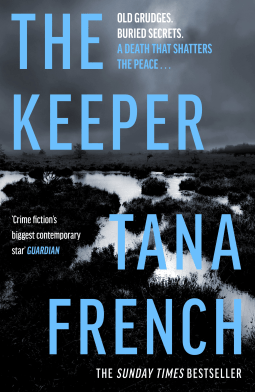
Tana French The Keeper Penguin General UK – Fig Tree, Hamish Hamilton, Viking, Penguin Life, Penguin Business | Viking, April 2026.
Thank you, NetGalley, for providing me with this uncorrected proof for review.
The Keeper returns to Cal, Lena and Trey and sundry other characters in Ardnakelty, with much of the emphasis on the village and its values. French takes what seems to be an inordinate amount of time in establishing the background to the village, the long-term characters’ motivations and values and the relationships, open and hidden that underpin the way in which decisions are made in this small enclosed social environment.
The initial chapters of the novel progressed at a slow pace; with characters whose introspection and dialogue were not particularly engaging. Although the emphasis is necessary for understanding the resolution offered at the end of the novel, it did little to foster a connection with the protagonists. Unlike my enthusiasm for the way in which Cal’s, Trey’s and Lena’s narratives were woven in The Hunter, the previous novel in this series, I felt distanced from the main characters in The Keeper. See Books: Reviews for the complete review.
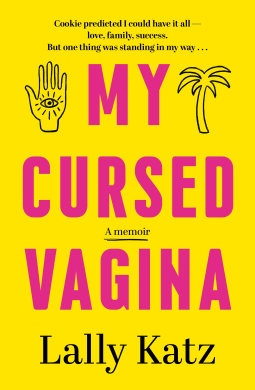
Lally Katz My Cursed Vagina A Memoir, Allen & Unwin, February 2026.
Thank you, NetGalley, for providing me with this uncorrected proof for review.
In her acknowledgements, Lally Katz expresses gratitude to three of her teachers for helping her recognise her potential as a writer. I was a colleague of one of those teachers. So, while I did not have Lally Katz in any of my classes, I heard a great deal about this vibrant writer who was seen as an honour to teach. The teachers’ accolades highlighted her notable talent and the enthusiasm she brought to her classes. Lally was a young woman with superb creative skills. It is no surprise that she has become an esteemed playwright, and now she has written this poignant, funny, sad, and raw memoir. It depicts an absorbing journey from which is difficult to disengage: one more page must be read, another anecdote considered, Lally must be given another chance to defy the curse, and one more story in which she does not. Success or not, what she does achieve lives in the memory. The writing is a joy, the story immense, and Lally Katz’s outlook one of courage, humour, and enthusiasm. Her memoir is a monument to a woman who loves her life, its despairing and happy moments, those which are life giving, and those that are so challenging that the potential for damage threatens.
Lally Katz moved from Miami, USA to Canberra, Australia as a child, spending her pioneering creative years in Australia, with successfully staged plays Australia wide and internationally. In 2010 she is thirty-two, and in America on a Churchill Fellowship, and it is with this memory she begins her memoir. However, the central theme is the impact of her visit to a psychic whose dire prediction provides the name for the memoir and much of its action. Her title and honesty with which she approaches her life takes the reader through love affairs; sexual encounters, successful and otherwise; herpes; miscarriages and birth. Some of the stories are humorous, some are transparently not. However, all are engaging and incredibly human. Many are exploits that can only be imagined – some of us do not have Katz’s courage and headlong approach to living.
This is a memoir to be read, cried over, laughed with, and admired. I am thrilled to have been able to meet this vibrant and courageous woman, who was once a student I passed in a school corridor and heard about in the staff room, if only once again second hand though her writing. Lally Katz’s memoir is one to be savoured.
The Canberra Page’s post on Facebook raises questions about the value of maintaining old buildings.
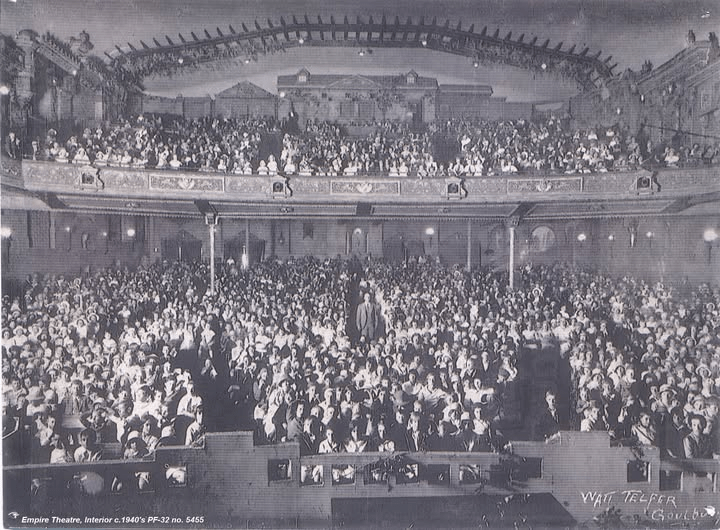
Goulburn’s Empire Theatre in its heyday, around 1940. The audience numbered into the thousands for what could have been a play, concert or some other special event. Built in 1914 in the style of Sydney’s Capitol Theatre, it closed in 1967 and was later demolished to make way for a motel and then a shopping centre.
Photo: Goulburn Mulwaree Library. Goulburn
An interesting photo, and a pity to see the building demolished. However, the negativity of the Facebook comments, particularly toward young people who seem to be being blamed for the shopping centre (they dare to use it as a meeting place, it seems) is egregious.
Note, the Sydney Capitol Theatre remains so it is possible to see similar architecture. According to Wikipedia, it cost over $30 million for reconstruction in 1995. See the edited information from Wikipedia below.
The Capitol Theatre is a heritage-listed theatre located at 3–15 Campbell Street, Haymarket, in the Sydney central business district, Australia. It was designed by Henry Eli White and John Eberson and built from 1893 to 1928. The property was added to the New South Wales State Heritage Register on 2 April 1999.[2][3] The former circus venue, atmospheric theatre and market venue is owned by Capitol Theatre Management Pty Limited, a wholly owned subsidiary of Foundation Theatres Pty Limited,[1] which also owns the Sydney Lyric.[4]…
The current theatre was designed by R. H. Broderick. It was intended as a hippodrome for arena theatre and featured stone cornices, terra-cotta capitals, rosettes and tiled panels. The architect Henry White turned the interior into a movie palace in 1927, creating the effect of an internal Italian garden or piazza. It also featured an internal imitation courtyard which is the only one surviving in Sydney. The building is listed on the Register of the National Estate.[8] The Capitol Theatre was an “atmospheric” picture palace for many years, but went through a dark period in the 1970s and 1980s. In 1995, Capitol Theatre underwent a massive two-year reconstruction costing over $30 million.[9]
Australian Politics
Labor’s hate laws pass despite a divided Coalition
By political reporter Tom Crowley and chief digital political correspondent Clare Armstrong Tue 20 Jan
In short:
The federal government’s new hate laws have passed the parliament after Labor struck a deal with the Liberals.
The National Party broke ranks with its Coalition partner by voting against the bill.
The bill passed the Senate late on Tuesday night.
The federal government has passed new laws targeting hate groups with support from the Liberals, while the Nationals voted against it.
The Coalition failed to settle a formal joint position on the legislation, with the Nationals abstaining during the vote in the lower house and later resolving to oppose the bill when it reached the Senate.
Liberal senator Alex Antic also crossed the floor, voting against the rest of his party.
Prime Minister Anthony Albanese and Opposition Leader Sussan Ley on Monday agreed on a set of changes to Labor’s proposal to ban groups deemed to spread hate, such as Hizb ut-Tahrir and Neo-Nazis.
The Nationals moved several amendments in the Senate — including a push to set up a Senate inquiry examining the laws — but none succeed, and they voted against the bill.
It is not clear what impact this would have on shadow cabinet solidarity, which requires all Coalition frontbenchers to vote in line with any formally resolved positions.
In a statement, Nationals leader David Littleproud said: “This decision does not reflect on the relationship within the Coalition”.
“The Coalition has secured significant improvements to the legislation, but the Nationals’ party room has concluded that more time is required to more fully examine and test the bill before it is finalised,”
he said.
Amendments secured by the Coalition aim to address concerns that the broad drafting of the bill could restrict freedom of speech.
The updated bill, which passed through the lower house on Tuesday, now mentions “the promotion of violence” in the definition of a hate group.
Ms Ley said the Liberals had “stepped up to fix legislation that the Albanese government badly mishandled” and that the final agreement was “narrowed, strengthened and properly focused on keeping Australians safe”.
The Liberal and National party rooms did not hold a meeting to agree on a joint position, as per usual practice.
Labor’s suite of gun reforms passed the Senate on Tuesday night with support from the Greens, further tightening Australia’s strict gun controls and paving the way for a national gun buyback scheme.
Ley delays announcement amid uncertainty about Nats
Early on Tuesday morning, Mr Leeser told ABC Radio National Ms Ley would hold a press conference to present the agreement, and Home Affairs spokesperson Jonathon Duniam strongly hinted that the Liberals had reached a deal with Labor.
That press conference did not occur, but on the floor of parliament, Mr Leeser said the Liberal Party had made “the choice to be constructive, to pass this legislation as a step in the right direction”.
Mr Wallace said the opposition supported the bill “in principle” despite what he described an “omnishambles” of a process.
Labor had already made substantial changes to its plans to win Coalition support on the bill, drafted in response to the Bondi terror attack, dropping a contentious new criminal offence for hate promotion over the weekend.
But Nationals senator Matt Canavan has voiced concerns shared by colleagues privately about whether groups other than violent extremists could be covered by the laws.
Senator Duniam said on Tuesday morning it was “rubbish” to suggest that “pro-life groups or church groups” could be covered and spoke favourably of the position agreed with Labor.
Liberal MPs gathered to discuss the draft laws at a party room meeting in Canberra on Monday evening after Opposition Leader Sussan Ley and Prime Minister Anthony Albanese met to hash out an agreement.
“We have a parliament here full of people with human decency who want to see good happen, not bad. These laws will go a long way to doing that,” he said.
Attorney-General Michelle Rowland said the laws were tightly focused and would not “trespass onto legitimate free speech”.
“It does not seek to capture lawful debate, robust criticism, religious discussion or genuine political advocacy. It does not target legitimate comedy, satire or artistic expression,” she said.
The bill sets out a process for designating hate groups, which includes input from intelligence and law enforcement and requires that the opposition leader be briefed.
Unlike in the initial draft, the version presented by Ms Rowland would see that briefings occurred for both for new listings and de-listings, addressing another Coalition concern.
The operation of the laws would be subject to review every two years by the Parliamentary Joint Committee on Intelligence and Security.
The bill also proposes tougher powers for the home affairs minister to deport those who spread hate, which the Coalition has indicated support for.
British Politics
Tom Watson <tomwatsonofficial@substack.com>
Forwarded this email? Subscribe here for more
Jenrick’s mistake about Conservatism
Why the Conservative Party has survived worse than thisJan 15 READ IN APP In 1834, the Conservative Party was founded to govern a changing nation without surrendering to political hysteria. It emerged with the publication of the Tamworth Manifesto, drafted by Sir Robert Peel at a moment when Britain stood on the brink of rupture. Peel’s aim was not radicalism but continuity, secured through prudence and restraint.
That founding purpose is worth recalling amid the current excitement over Robert Jenrick and his defection to Reform UK. We are told, with customary breathlessness, that this represents an existential threat to the Conservatives, a mortal wound inflicted on one of the oldest political parties in the democratic world. Such claims betray a thin understanding of history.
Tom Watson’s Newsletter is a reader-supported publication. To receive new posts and support my work, consider becoming a free or paid subscriber.
Peel’s Conservatism was explicit about what it rejected. In the Tamworth Manifesto he pledged to address proved abuses and the redress of real grievances while warning against “a perpetual vortex of agitation.” This was not a decorative phrase. It was the moral core of Conservatism. To a Conservative, politics conducted as agitation corrodes authority and undermines public trust. Reform, to be legitimate, had to be justified and anchored in institutions capable of surviving it. Conservatism could be said to be a theory of imperfection.
Jenrick’s assertion that the Conservatives have betrayed their principles collapses under that standard. His rhetoric substitutes grievance for judgement. It treats compromise as weakness and constraint as treachery.The Conservative Party has endured precisely because it has resisted such temptations. It has survived schisms over free trade, empire, Europe and the welfare state. It has survived because it understood that its duty was not to mirror every passing anger but to preserve the authority of the state while adapting it to circumstance.
Peel would have recognised Jenrick’s betrayal as an abandonment of Conservatism. Peel sort to reform our polity. Farage and Jenrick seek to deform it.
If this episode proves anything, it is not the fragility of the Conservative Party but the intellectual weakness of those who misunderstand it.
I have a strong hunch about today’s defection. Jenrick’s betrayal may mark the first day of a Conservative revival after the chaos left by the departure of Cameron and Osborne a decade ago. I’ll still fight them all the way to the ballot box but Labour cannot afford to misunderstand what’s gone on today.
If it is true to its founding principle, the Conservative Party will not be undone by those who confuse agitation with conviction. Jenrick the betrayer may have saved the party he has just abandoned and undermined the great replacement theory of Nigel Farage.
Tom Watson’s Newsletter is a reader-supported publication. To receive new posts and support my work, consider becoming a free or paid subscriber.
American Politics

Joyce Vance from Civil Discourse <joycevance@substack.com> January 18 2026
It’s The Cynicism
It seems to be everywhere you look, across the political spectrum. Far too many people don’t believe in anything anymore. They’ve lost faith in everything: our institutions, our values, and even each other. We’ve become a country of cynics.
One of the first posts I saw this morning on social media was about a well-documented instance where a Minnesota family’s six children were hospitalized after their minivan filled with smoke and tear gas fired by federal agents. Below the news report, someone had dismissed it in the comments: “I don’t believe it.” That was it. No explanation, nothing that cast doubt on the reporting. Just a rejection.
A little bit further down, someone had written about diminishing confidence in the Justice Department. A commentator wrote, “Did anyone believe in that anyway?”
We have become a nation of skeptics, of cynics. We are jaded. It’s all around us.
In her essay, Truth and Politics, Hannah Arendt wrote, “The result of a consistent and total substitution of lies for factual truth is not that the lie will now be accepted as truth and truth be defamed as a lie, but that the sense by which we take our bearings in the real world—and the category of truth versus falsehood is among the mental means to this end—is being destroyed.”
The President spews lies so constantly and so casually that it’s easy to understand how people can lose their bearings. It’s an assumption that Trump lies, not something unusual. That’s the President of the United States!
One manifestation of the lies we’ve become so inured to is the destruction of confidence in our elections. Trump has lied for so long about voter fraud, about non-citizens voting (the evidence does not back that claim up), about voting machines, about stolen elections, that it has permeated the national consciousness and even when people see through the lies, a miasma of distrust for the entire process remains. And of course, it’s not just elections.
Who benefits from a loss of faith in our institutions and in our ability to come out on the other end of this national nightmare with an intact republic? It’s not hard to see. It’s the man who enjoys upsetting the balance of power guarded by NATO because he wants to own Greenland. The man who tears down the East Wing. The man who won’t release the Epstein Files.
At this stage, Trump no longer cares if people believe his lies. He just needs the chaos they generate and the absence of shared truths, shared facts, in our country. People who can no longer discern what’s true from what’s false lose their moral compasses, like the agents who are now shooting at the people they took an oath to protect and serve. It all benefits a leader who wants to take authoritarian control of a democracy.
Giving up your belief in how things should be is dangerous.
I’m not suggesting everyone should have blind faith in our institutions, far from it at this point. But we need to be aware of what’s broken and needs mending without getting stuck on it. Instead of succumbing to cynicism, let’s stay focused on what we can do, even the small things.
Be kind, share joy. Register to vote and make sure everyone around you does, too. We know what this is going to take, but we have to stop the spread of cynicism around us. We’ve come too far in the last year to accept Trump’s success as inevitable.
In the coming week, we will mark the one-year anniversary of the second Trump administration. Find your own way to protest it. Donate to a food bank. Help a neighbor out, or help someone you’ve never met but have empathy for. Sign up to work at a polling place, or decide to run for office. There is so much that we can do. What we cannot afford to do is to let a man who thinks of no one but himself win.

This year is the 250th anniversary of our country’s founding. In the Declaration of Independence, wise men wrote, “We hold these truths to be self-evident, that all men are created equal, that they are endowed by their Creator with certain unalienable Rights, that among these are Life, Liberty and the pursuit of Happiness.” As wise people, we understand how important these words are; they are not just words children memorize and recite. Let’s make them our living, breathing truth as we watch what’s happening in Minneapolis and elsewhere. Let’s gently remind the cynics of what’s possible and get them off of the sidelines, where they are dragging others down. Life, Liberty, and the pursuit of Happiness.
We’re in this together,
Joyce
Heather Cox Richardson’s post
January 18, 2026 (Sunday)
You hear sometimes, now that we know the sordid details of the lives of some of our leading figures, that America has no heroes left.
When I was writing a book about the Wounded Knee Massacre where heroism was pretty thin on the ground, I gave that a lot of thought. And I came to believe that heroism is neither being perfect, nor doing something spectacular. In fact, it’s just the opposite: it’s regular, flawed human beings choosing to put others before themselves, even at great cost, even if no one will ever know, even as they realize the walls might be closing in around them.
It means sitting down the night before D-Day and writing a letter praising the troops and taking all the blame for the next day’s failure upon yourself in case things went wrong, as General Dwight D. Eisenhower did.
It means writing in your diary that you “still believe that people are really good at heart,” even while you are hiding in an attic from the men who are soon going to kill you, as Anne Frank did.
It means signing your name to the bottom of the Declaration of Independence in bold script, even though you know you are signing your own death warrant should the British capture you, as John Hancock did.
It means defending your people’s right to practice a religion you don’t share, even though you know you are becoming a dangerously visible target, as Sitting Bull did.
Sometimes it just means sitting down, even when you are told to stand up, as Rosa Parks did.
None of those people woke up one morning and said to themselves that they were about to do something heroic. It’s just that when they had to, they did what was right.
On April 3, 1968, the night before the Reverend Doctor Martin Luther King Jr. was assassinated by a white supremacist, he gave a speech in support of sanitation workers in Memphis, Tennessee. Since 1966, King had tried to broaden the civil rights movement for racial equality into a larger movement for economic justice. He joined the sanitation workers in Memphis, who were on strike after years of bad pay and such dangerous conditions that two men had been crushed to death in garbage compactors.
After his friend Ralph Abernathy introduced him to the crowd, King had something to say about heroes: “As I listened to Ralph Abernathy and his eloquent and generous introduction and then thought about myself, I wondered who he was talking about.”
Dr. King told the audience that if God had let him choose any era in which to live, he would have chosen the one in which he had landed. “Now, that’s a strange statement to make,” King went on, “because the world is all messed up. The nation is sick. Trouble is in the land; confusion all around…. But I know, somehow, that only when it is dark enough, can you see the stars.” Dr. King said that he felt blessed to live in an era when people had finally woken up and were working together for freedom and economic justice.
He knew he was in danger as he worked for a racially and economically just America. “I don’t know what will happen now. We’ve got some difficult days ahead. But it doesn’t matter…because I’ve been to the mountaintop…. Like anybody, I would like to live a long life…. But I’m not concerned about that now. I just want to do God’s will. And He’s allowed me to go up to the mountain. And I’ve looked over. And I’ve seen the promised land. I may not get there with you. But I want you to know tonight, that we, as a people, will get to the promised land!”
People are wrong to say that we have no heroes left.
Just as they have always been, they are all around us, choosing to do the right thing, no matter what.
Wishing us all a day of peace for Martin Luther King Jr. Day 2026.
Notes: Dr. King’s final speech: https://abcnews.go.com/…/martin-luther-kings…/story…
Trump’s Letter to Norway Should Be the Last Straw
Will Republicans in Congress ever step in? By Anne Applebaum
January 19, 2026, 9:11 AM ET
Let me begin by quoting, in full, a letter that the president of the United States of America sent yesterday to the prime minister of Norway, Jonas Gahr Støre. The text was forwarded by the White House National Security Council to ambassadors in Washington, and was clearly intended to be widely shared. Here it is:
Dear Jonas:
Considering your Country decided not to give me the Nobel Peace Prize for having stopped 8 Wars PLUS, I no longer feel an obligation to think purely of Peace, although it will always be predominant, but can now think about what is good and proper for the United States of America. Denmark cannot protect that land from Russia or China, and why do they have a “right of ownership” anyway? There are no written documents, it’s only a boat that landed there hundreds of years ago, but we had boats landing there, also. I have done more for NATO than any person since its founding, and now, NATO should do something for the United States. The World is not secure unless we have Complete and Total Control of Greenland. Thank you! President DJT
One could observe many things about this document. One is the childish grammar, including the strange capitalizations (“Complete and Total Control”). Another is the loose grasp of history. Donald Trump did not end eight wars. Greenland has been Danish territory for centuries. Its residents are Danish citizens who vote in Danish elections. There are many “written documents” establishing Danish sovereignty in Greenland, including some signed by the United States. In his second term, Trump has done nothing for NATO—an organization that the U.S. created and theoretically leads, and that has only ever been used in defense of American interests. If the European members of NATO have begun spending more on their own defense (budgets to which the U.S. never contributed), that’s because of the threat they feel from Russia.
Yet what matters isn’t the specific phrases, but the overall message: Donald Trump now genuinely lives in a different reality, one in which neither grammar nor history nor the normal rules of human interaction now affect him. Also, he really is maniacally, unhealthily obsessive about the Nobel Prize. The Norwegian Nobel Committee, not the Norwegian government and certainly not the Danish government, determines the winner of that prize. Yet Trump now not only blames Norway for failing to give it to him, but is using it as a justification for an invasion of Greenland.
Think about where this is leading. One possibility, anticipated this morning by financial markets, is a damaging trade war. Another is an American military occupation of Greenland. Try to imagine it: The U.S. Marines arrive in Nuuk, the island’s capital. Perhaps they kill some Danes; perhaps some American soldiers die too. And then what? If the invaders were Russians, they would arrest all of the politicians, put gangsters in charge, shoot people on the street for speaking Danish, change school curricula, and carry out a fake referendum to rubber-stamp the conquest. Is that the American plan too? If not, then what is it? This would not be the occupation of Iraq, which was difficult enough. U.S. troops would need to force Greenlanders, citizens of a treaty ally, to become American against their will.
For the past year, American allies around the world have tried very hard to find a theory that explains Trump’s behavior. Isolationism, neo-imperialism, and patrimonialism are all words that have been thrown around. But in the end, the president himself defeats all attempts to describe a “Trump doctrine.” He is locked into a world of his own, determined to “win” every encounter, whether in an imaginary competition for the Nobel Peace Prize or a protest from the mother of small children objecting to his masked, armed paramilitary in Minneapolis. These contests matter more to him than any long-term strategy. And of course, the need to appear victorious matters much more than Americans’ prosperity and well-being.
The people around Trump could find ways to stop him, as some did in his first term, but they seem too corrupt or too power-hungry to try. That leaves Republicans in Congress as the last barrier. They owe it to the American people, and to the world, to stop Trump from acting out his fantasy in Greenland and doing permanent damage to American interests. He is at risk of alienating friends in not only Europe but also India, whose leader he also snubbed for failing to nominate him for a Nobel Prize, as well as South Korea, Japan, Australia. Years of careful diplomacy, billions of dollars in trade, are now at risk because senators and representatives who know better have refused to use the powers they have to block him. Now is the time.
Anne Applebaum is a staff writer at The Atlantic.
Greenland? Monty Python would have a field day Robert Reich Jan 19 2026
Robert Reich <robertreich@substack.com> Forwarded this email? Subscribe here for more
Friends,
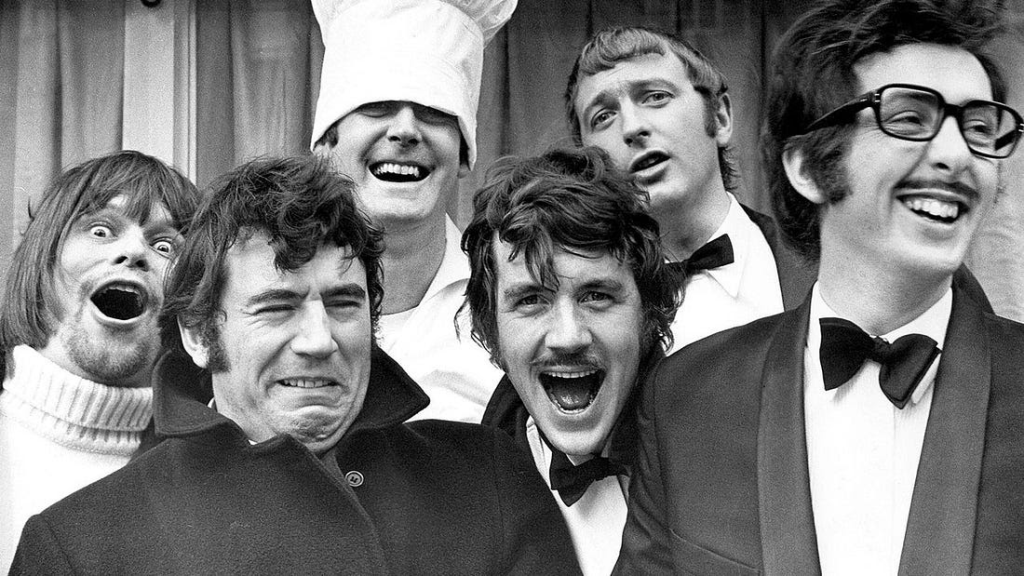
It could be a Monty Python skit from forty years ago: A demented U.S. president demands the Nobel Peace Prize (which he initially spells “Noble”), after converting the name of the Department of Defense to the Department of War, sending troops into American cities, threatening Canada, and abducting the president of a Latin American country by force.
When he doesn’t get the Prize, he says he’s no longer in favor of peace and decides to invade Greenland. When Greenland refuses him, and Denmark and the rest of Europe make a fuss, he goes into a rage, raises tariffs on Europe (which are really import taxes that cost Americans dearly) and threatens war on NATO. The president of Russia is delighted.
Can’t you see it? Eric Idle plays the American president — full of himself and utterly off his rocker. John Cleese is the hapless Latin American president who’s abducted. Terry Gilliam is the incredulous head of Greenland. Terry Jones plays the righteous leader of Denmark, and Michael Palin the whacky but triumphant president of Russia.
The Monty Python team was so funny because they came up with completely absurd situations, handled them with deadpan seriousness, and stretched them to the limits.
But this particular situation isn’t funny. It’s actually happening. And Trump is truly, tragically, frighteningly out of his mind.


| David A. Graham Staff writer |
When Donald Trump returned to office, I thought that there wasn’t much more to learn about him. But the president’s recent follow-through on his threats represents a real shift.
Donald Trump retains the ability to shock; the day he loses that, he will, like the biblical Samson—another man notable for his coiffure—lose his power entirely. When Trump started his second term as president a year ago, however, I doubted whether there was much more to learn about how his mind works. Even before he’d entered politics, Trump was overexposed. Since then, he has become the most scrutinized person in the world. His tendencies and foibles are well known to voters, politicians, and world leaders.
Yet in breaking one of his most entrenched patterns, he has provided perhaps the biggest surprise of the past year. During his first term, Trump was defined by his tendency to back down in any negotiation or fight: As I put it in a May 2018 article, he almost always folded, agreeing to concessions whether he was negotiating on trade with China or a budget resolution with Senate Democrats. More recently, though, he’s been following through, no matter how aberrant his ideas. The exact reason for this is difficult to pin down, though it likely includes the fact that he has more experience under his belt, fewer prudent voices in his ear, and a lame duck’s liberation from having to worry about reelection. In any case, his new determination is forcing countries around the world to reassess how to deal with him.
Nowhere is this so clear right now as with Trump’s continued pressure to acquire Greenland. In the wee hours of this morning, Trump went on a social-media spree, posting (among other things) an illustration of himself, Secretary of State Marco Rubio, and J. D. Vance planting a U.S. flag in Greenland. European leaders seem to slowly be coming to the conclusion that this isn’t just a feint.
When the president began making noise about taking the Danish territory early last year, many observers were baffled but not necessarily all that concerned—an impulse reinforced when the matter receded from Trump’s attention in the months that followed. They also had a long track record to draw on. In May 2017, I wrote that “foreign leaders have realized Trump is a pushover.” This held true for adversaries (China) and allies (Taiwan, NATO) alike throughout his first term.
It was especially true for rivals such as Russia and North Korea. Trump talked a fierce game—promising “fire and fury” for Pyongyang, for example—but his counterparts understood that despite his insistence that he was a master dealmaker, all they needed was to get him to a negotiating table. “Faced with a tough decision, the president has consistently blinked, giving in to his opponents,” I wrote in my 2018 article.
This pattern was clear enough that when Trump refused to concede the 2020 election, even his allies were dismissive. “What is the downside for humoring him for this little bit of time?” a senior Republican official told The Washington Post in November 2020. “It’s not like he’s plotting how to prevent Joe Biden from taking power on January 20.” That was exactly what he was doing, however ham-handedly. The effort to subvert the election was also a warning of things to come.
Even so, Trump’s return to office initially suggested more of the same tendency to back down. This past May (why is it always May?), I wrote about Wall Street’s “TACO trade”—short for “Trump Always Chickens Out”—in which stock traders bet against the president following through on tariff threats and then profiting when he folded and markets went up. And they were right, to an extent: Although Trump did impose extensive tariffs, the eventual levels were much lower than initially announced, thanks in part to lobbying by foreign governments. Trump’s resolve remains weak in some areas; he’s swung wildly on Ukraine and Russia, his position shifting depending on whom he last spoke to.
But in other ways, the pattern has started to break. Just ask Nicolás Maduro, who reportedly rejected negotiated exile in Turkey, perhaps wagering that Trump would never actually launch a military strike on Venezuela to capture him. It was a bad bet. Now Trump seems energized and has turned his attention to Greenland. U.S. allies—or people who until recently thought of themselves as allies—are scrambling to figure out how to react. Can they draw things out long enough for Trump to lose interest? Can they appease him somehow? Or do they need, as Eliot Cohen argued in The Atlantic this past weekend, to show a willingness to resist the United States militarily?
Trump is acting emboldened domestically too. He is once again threatening to invoke the Insurrection Act to deploy troops to Minneapolis, where he seems determined to immiserate the entire city. Before his first term, Trump had threatened to prosecute political rivals, but he was stymied by his aides during his presidency. This time, he’s going through with it. In a New Yorker profile this week of Representative LaMonica McIver, a New Jersey Democrat charged with assault for a fracas at an ICE facility, Representative Lateefah Simon, a California Democrat, said, “Typically, we would say, ‘Oh, they’re just trying to scare her.’” But this is much more than fearmongering: “They’re actively litigating this case,” Simon noted. (McIver has pleaded not guilty.)
Signs of new resistance have started to emerge in parallel with Trump’s newfound resolve. Republican members of Congress have begun pushing back—far less than one would expect even in a normal presidency, but more than in Trump’s previous term or in the early days of this one. They were able to force his hand on the Epstein files, though whether they have the courage to hold him to account for slow-walking the files’ release is not yet clear.
As my colleague Anne Applebaum wrote yesterday, Congress will need to do much more to halt any Greenland fiasco. Foreign leaders will need to take a harder line too. When Trump was a pushover, it was more understandable, if not wiser, to wonder, What is the downside of humoring him? Now the downsides are clear and dangerous.
Birthdays at Courgette – Cindy Lou enjoys the food without an increase in years (on this occasion)











Cindy Lou joins friends for a casual meal at Trev’s at Dickson
The halloumi pops and potato bread were great starters. Some of the main meals were a disappointment, although the lamb shoulder was as good as always. The accompanying pumpkin, rocket, walnuts and fetta salad was delicious.




The Conversation January 20, 2026
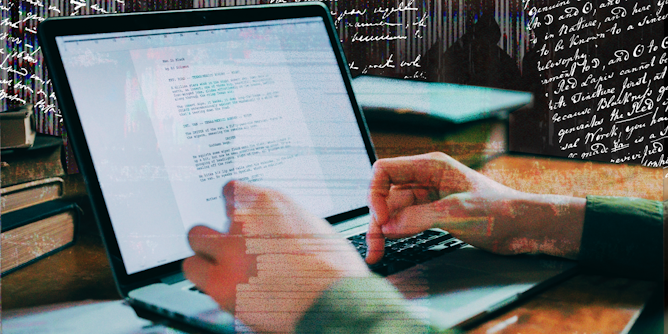
Would you use AI to break writer’s block? We asked 5 experts
Nicola Redhouse, The University of Melbourne; Ariella Van Luyn, University of New England; Christopher Rees, University of New England; Sally Breen, Griffith University, and Seth Robinson, The University of Melbourne
A publishing giant believes AI can help break writers’ block. We asked 5 creative writing experts if they’d use it that way – and the range of results surprised us.
Authors
- Nicola RedhouseLecturer, Publishing and Editing, The University of Melbourne
- Ariella Van LuynSenior Lecturer in Creative Writing, University of New England
- Christopher ReesPhD, Creative Writing, University of New England
- Sally BreenAssociate Professor in Creative Writing, Griffith University
- Seth RobinsonLecturer, Professional Communications, Public Humanities & Creative Writing, The University of Melbourne
Disclosure statement
The authors do not work for, consult, own shares in or receive funding from any company or organisation that would benefit from this article, and have disclosed no relevant affiliations beyond their academic appointment.
Republished from The Conversation under –

The founder and chief executive of Bloomsbury Publishing, responsible for blockbuster romantasy author Sarah J. Maas and literary heavyweights like George Saunders, has suggested AI “will probably help creativity” – including by helping authors defeat writer’s block.
“AI gets them going and writes the first paragraph, or first chapter, and gets them back in the zone,” he said.
We asked five creative writing experts, including authors who’ve published memoirs, novels and short stories, what they think. Would they use AI to break writer’s block?
Their answers – which ranged from “a hard no” to innovative reasons for “yes” – were illuminating, complicated and often surprising.
No
AI is fundamentally missing a capacity to make unique associative connections at a level of meaning, idea and word, which are the life force of good writing.
Nicola Redhouse
Nicola Redhouse lectures in publishing and editing at University of Melbourne, and has published a memoir.
I wouldn’t use AI to generate text or to give me ideas for plot or structure. AI is fundamentally missing a capacity to make unique associative connections at a level of meaning, idea and word, which are the life force of good writing. Without the input of my specific experience and inner life, my writing could be anyone’s writing.
As poet Anne Carson said: “The things you think of to link are not in your control. It’s just who you are, bumping into the world. But how you link them is what shows the nature of your mind.”
I am especially interested in the apparently insignificant noise in the writer’s mind, even in the deadness of writer’s block, that offers rich, unexpected links. Without the specificity of that personal noise, writing and story gains the curiously (and offputtingly) bland quality AI seems to be so good at.
I don’t see a creative problem with trying AI-generated prompts in the face of writer’s block – but I do have an ethical problem with those prompts being scraped from real people’s labour, time and creative thinking, without acknowledgement.
Yes
I am using text-to-image AI to help generate ideas for my neo-Victorian Gothic novel. For me, the tool is both a research method and an accessibility aid.
Christopher Rees
Christopher Rees is completing a creative writing PhD at the University of New England.
Living with a chronic illness has changed my relationship with writing. While I can still remember the “before” times, brain fog and aphantasia now limit my ability to visualise my fictional worlds. However, genres like the Gothic rely on symbolic density, such as liminal architecture, supernatural motifs and the sublime terror of nature, to address cultural anxieties.
So, as part of my creative writing PhD, I am using text-to-image AI to help generate ideas for my neo-Victorian Gothic novel. For me, the tool is both a research method and an accessibility aid.
I found that by prompting public domain illustrators such as Randolph Caldecott (known for his gently satirical late 19th-century drawings), I could explore the period’s visual communication to see how behaviour, satire and atmosphere shift when placed in new contexts.
I also use the hallucinations in the AI outputs to subvert the turn-of-the-century Gothic’s outdated assumptions about non-normative minds and bodies, and to reimagine the story world from a neurodivergent perspective. The technology is helping me find my voice again.
No
LLMs have been trained on … stolen works. They’re not capable of generating anything truly original, so any prompt they gave would just be rehashing that piracy – and, in a way, making you complicit.
Seth Robinson
Seth Robinson is a lecturer in professional communications, public humanities and creative writing at University of Melbourne. He is also a novelist and producer.
Right now, this is a hard no. It’s about the ethical implications of using large language models (LLMs), in terms of both climate change and the theft of intellectual and creative works used to train them.
Because LLMs have been trained on those stolen works, they’re not capable of generating anything truly original, so any prompt they gave would just be rehashing that piracy – and, in a way, making you complicit.
I think ten or 20 years from now, if artists, philosophers and scientists were involved in their development – and these ethical issues could be addressed – then these programs might evolve and offer real chances for creativity and collaboration.
That’s the utopian vision the tech companies are selling us now, but the reality is it would have to be a very different program, designed by a different, more diverse group of people.
Yes
I don’t just use generative AI to break writer’s block, I speak back to it … A fascinating, if uneasy, collaboration.
Sally Breen
Sally Breen is associate professor in creative writing at Griffith University and the author of a memoir and a novel.
I don’t just use generative AI to break writer’s block, I speak back to it.
In 2023, I participated in Slow Down Time, a collaborative art-making project curated by Mitch Goodwin, exploring the relationship between text, image and machine. Twenty-two authors submitted two prompts and the AI created images from our words. We responded. A call-and-answer translation game between writers and machines.
I went to war. Asking the AI in second person (as if it might be a sentient thing) why it had taken my words about a hotel hook-up into the loneliness of corporate land, and taken my punk rally cry into a post-apocalypse where people have televisions for heads.
Eerily, all the characters – the men in hoodies, the dystopian heroines, the street kids and babies stuck inside the televisions – had eyes the exact same shade of blue as mine. The first four letters of my name were splayed across the t-shirt of a teary-eyed young guy at the end of the world.
A fascinating, if uneasy, collaboration. I wondered: is the darkness in the algorithm, or is it in me?
Yes
Only after I’d exhausted other possibilities. I’m prepared to refine the text generated and I want to think about the differences between humans and machines.
Ariella van Luyn
Ariella van Luyn is senior lecturer in creative writing, University of New England. She has published a novel and short stories.
Yes, but only after I’d exhausted other possibilities. I’m prepared to refine the text generated and I want to think about the differences between humans and machines.
Author Jeanette Winterson says engaging with AI-generated materials can change the way writers think about the nature of consciousness. When I talk to characters on character.ai, I experiment with the emotional engagement with fictional constructs that mimic real people – just as I ask readers to do in my fiction. So, AI-generated text can help think through ideas of how we think, feel, connect and relate.
Many other ways of breaking writer’s block – like reading, researching and free writing – are less risky and costly, though.
AI’s automatically generated text may replicate existing writing and biases, while every writer has their own unique, embodied experiences to draw on. Crucially, some writers’ life experiences, such as those from marginalised backgrounds, aren’t visible in the existing data sets. AI texts won’t provide these inspirational stories. So, writers need to refine and intervene.

 Robin's Room
Quickly skimmed the lally katz and the bit about the demolished theatre replaced by shopping centre! of course an irony is that these malls/shopping centres are absolutely on the way out, at least in the us and there is evidence of ditto in london! the australian who is westfield – andrew something? friend of paul K … made pots but hopefully is out of it as westfield does seem to be losing the shopping centres/malls though I suppose the real estate is worth ££££ $$$$$ millions so he will not lose out!!! will say something on facebook when I see yours on there – i don’t mean about andrew, keating etc … the memoir! don’t worry about reply – rushing!
LikeLike
Thank you for commenting. I think Goulburn would have quite a modest replacement for the beautiful building. I was cross that young people were being criticised. Also, I doubt that another 30 m would have been available for a similar building to the one in Sydney!
LikeLike