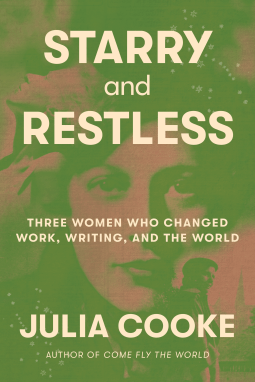
Julia Cooke Starry and Restless Three Women Who Changed Work, Writing, and the World Farrar, Straus and Giroux, February 2026.
Thank you, NetGalley, for providing me with this uncorrected proof for review.
I read Julia Cooke’s Come Fly the World and was thoroughly engaged. Starry and Restless Three Women Who Changed Work, Writing, and the World is even more impressive. This book stands out for its valuable insights and compelling storytelling about three remarkable women. It is one of the most valuable and engrossing books on my bookshelf; an engaging work to return to frequently; a story written by yet another amazing woman who has, with this work, brought together feminist understanding, dedication to thoughtful detail of the worlds in which Rebecca West, Martha Gellhorn and Mickey (Emily) Hahn worked, developed loving and complex relationships with women and men, became parents, and came to grips with their own feelings, faults, virtues and challenges.
The book is in four parts; Stranger Even to Myself; The Urgency of Geography; Never Do Your Own Housework; and The Most Powerful Magic I Knew. Each woman features in all the sections, with their location and the year providing the framework. In 1936-37 Rebecca West is in Yugoslavia; Mickey Hahn on her way to China; and Martha Gellhorn in Spain. The narrative spans the years from this period through the 1940s to the early 1950s and locations as varied as China, Cuba, England, Hong Kong, New York, Italy, Germany, the United States, Mexico, Taiwan and South Africa. The woman journalist is introduced after a prologue featuring Mickey Hahn on a journey to the Belgian Congo, a gun wrapped in a silk blouse. See Books: Reviews for the complete review.
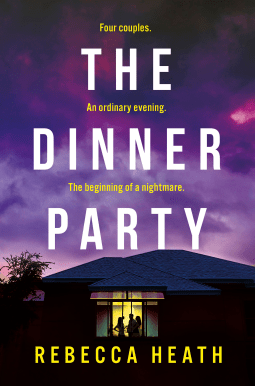
Rebecca Heath The Dinner Party Aria & Aries, Head of Zeus — an Aries Book Jan 2024.
The Dinner Party is a gripping domestic thriller, at its core, a missing baby. Forty years after the dinner party that was in progress when Megan Callaghan disappeared Ruby is making a podcast as part of a renewed effort to find her. The domestic nature of the past and present are very much in evidence, Ruby’s grandmother was at the dinner party, as was Billie’s whose mother, Amanda is missing child’s sister, and was with her in the house when she disappeared. One of the men responsible for checking the sleeping children of the dinner guests, her grandfather, is now in a secured unit in a care home. His wife is dead. Billie’s other grandparents are alive and remain part of the community in which Megan vanished. Eve, Billie’s sister, is married to one of their childhood friends. Trish, the wife of couple at whose home the dinner party took place is still a presence: she is part of the Callaghan family business and Billie’s godmother. Into this environment comes Donna – claiming to be the missing Megan. Amanda readily and lovingly accepts her. Billie does not, even when Eve makes it clear she is content with Donna’s explanations.
The story is told through Billie, Trish and Barbara from the dinner party, and Ruby’s podcast. The latter moves from the past to the present, interviewing all those still able and willing to contribute to the podcast. Trish tells the story of the evening through her experiences, contributing to the belief that all was not what it seemed between neighbours who periodically entertained at dinner parties, had children at the same school, and were part of a community in the past and now, often through the podcast. See Books: Reviews for the complete review.
I was fortunate to find more of Rebecca Heath’s work – The Last Encore fulfilled my expectations of her work.
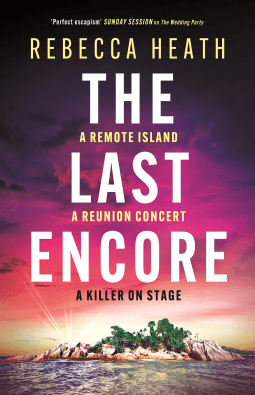
Rebecca Heath The Last Encore Aria & Aries, January 2026.
Thank you, NetGalley, for providing me with this uncorrected proof for review.
Rebecca Heath places a group of unpleasant people on an island off the coast of Australia where the environment, a mix of beauty and fear invoking landscapes, plays its part in exposing duplicity and brutality. The past, eighteen years before, hovers uneasily above the present. The once famous Cedrics Band, with its demise the result of the death of its lead singer and guitarist, reunites. But this is an uneasy reunion. None of those involved, whether past members of the band, spouses or the couple hosting the event at their previously burnt-out resort appears to be innocent of the murder referred to in the prologue.
Someone is now set on another murder in revenge. At the beginning of the novel, and in its early progression, this does not seem to be a problem. A mystery is there to be solved, but the protagonists excite no sympathy. The person set on revenge for Jonny’s murder and the culprit could be any of the cast. Do we care who murdered Jonny Rake, dead at twenty-two? Are we invested in any of the characters? Bullying Bruce and his complicit and calculating partner, Florence? Weak, and alcoholic Adam who hated his brother? Slimy, greedy former band manager, ‘Bugsy’ Malone? Niggling couple, Lara, playing extensively to the cameras, but also taking her own photos, and former band member, the enigmatic Edward? Arrogant former drummer, and Jonny’s best friend, Dylan? Ivy St Fleur and her daughter Malone, Jonny’s ex and daughter? The pretentious and controlling Marco D’Angelo, director of the film that is to be made of the reunion, or his unpleasant and compliant wife, Connie? See Books: Reviews for the complete review.
Martha Gellhorn (Starry and Restless, see above review) has been the subject of several Facebook posts recently:
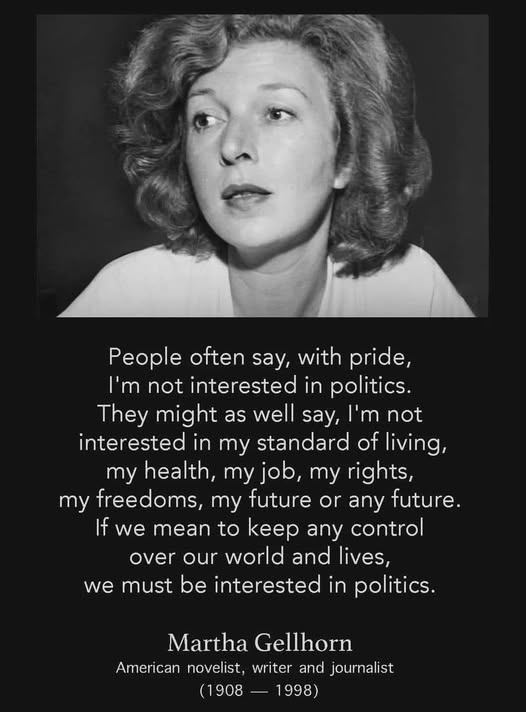
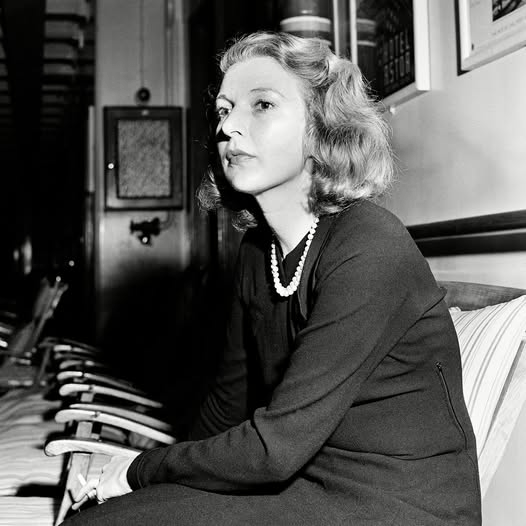
“I took only one suitcase, and a cosmetics case for medicines but I was worried about books. Solitude is all right with books, awful without.”
― Martha Ellis Gellhorn (8 November 1908 – 15 February 1998)
Virago Modern Classics Readers’ posts
Virago Modern Classics Readers
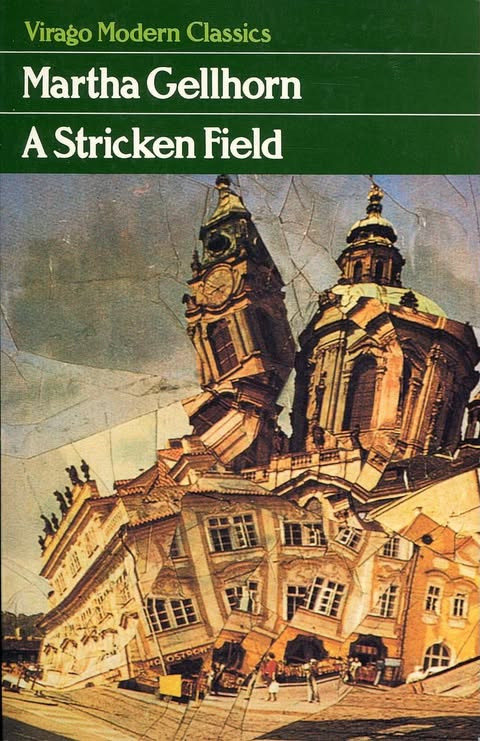
‘If you could leave and know the terror and confusion was ended; if you could leave, and others who did not leave could remain behind in safety …’
Mary Douglas, an assured American, arrives in Prague in October of 1938, the days of disintegration following the Munich Pact, to find the city on the brink of blackout, transformed by fear. As the Gestapo net spreads wider, countless refugees – from Austria, Germany, Sudetenland – are forced to return: for many this will mean torture, concentration camp, death. In her hotel Mary greets other journalists who like herself, cover international disasters and depart, their detachment intact. But through her friend Rita, a German refugee, Mary becomes passionately involved with the plight of the hunted victims of Nazi rule.
First published in 1940, this powerful novel, written from the author’s own experience, is a compelling record of one of the darkest moments of Europe’s history, and of the heroism of those who resisted the insane brutality of fascism.
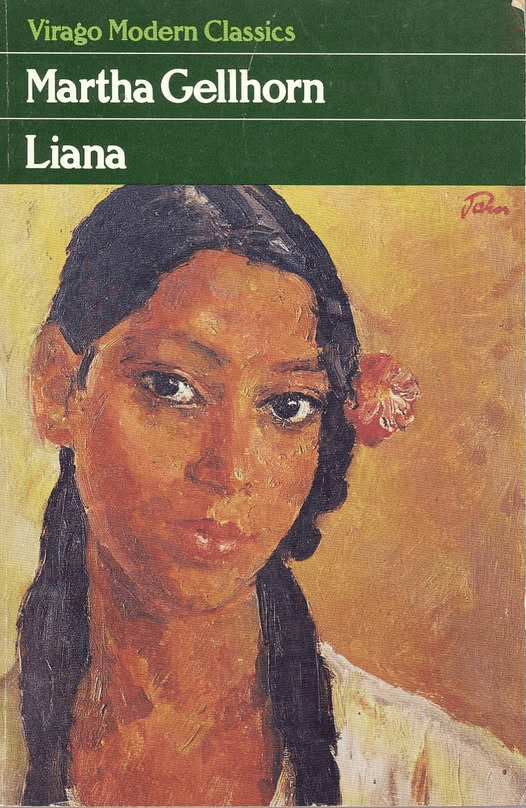
“It was a terrific year for talk. But through it all the talk would come back to Marc Royer and Liana. That subject never failed; it belonged to the island entirely. Everyone asked everyone else, during that whole year, why Marc Royer had married her”
The year is 1940. France has fallen to the Germans, but on the tiny French Caribbean island of Saint Boniface nothing absorbs the inhabitants more than the news of wealthy Marc Royer’s marriage to the young mulatto, Liana. Marc himself is impervious to the scandal – Liana, after all, is “something he had bought for use when he could not have what he loved” – but for Liana the price of becoming a “white wife” is alienation both from her own people and from those whom, for a time, she tries to emulate. Only with Pierre, her teacher, does she feel herself free, but he is white, and a man, and in the end knows where his allegiances lie.
Liana does not have that certainty and in this disturbing novel about the sadness and inhumanity of oppression, her plight speaks to us as powerfully today as when Liana was first published in 1944.
Australian Politics
With their first female leader gone, can the Liberals shake their ‘women problem’?
Senior Liberals say Sussan Ley’s removal was about polling, not gender. But experts warn it may reinforce doubts about the party’s appeal to women.
With the Liberals’ first female leader, Sussan Ley, dumped after less than a year at the helm, experts say the party has done little to shake its perceived “women problem”.
But senior party figures insist gender had nothing to do with Ley’s removal, instead blaming dire polling and looming electoral oblivion.
Ley became the Liberal Party’s first female leader in its 80-year history after the Coalition’s landslide defeat at the May 2025 election. A moderate, she narrowly defeated conservative frontbencher Angus Taylor 29 votes to 25.
Nine months later, she was ousted and replaced by Taylor, who secured a decisive 34 to 17 victory after several of Ley’s key backers switched sides.
On Friday morning, before Ley was ousted, NT senator Jacinta Nampijinpa Price said any attempt to frame a leadership change around gender would amount to “identity politics”.
“Frankly, Australians can see through this nonsense. Leadership is not about gender — it is about competence,” she said on social media.
She pointed to the Coalition’s primary vote falling from about 31 per cent at the election to 18 per cent in recent polling, arguing the party was “bleeding votes to One Nation”.
Victorian senator and key Liberal power-broker James Paterson was among the first to publicly back Taylor’s leadership bid, also pointing to recent opinion polls.
“Political leaders are judged on their performance, not their gender,” he said.
‘A classic case of the glass cliff’
While Ley’s detractors rejected the idea that the leadership spill reflected a broader issue for women, some experts argued her removal risked reinforcing long-standing concerns among female voters.
Michelle Ryan, director of the Global Institute for Women’s Leadership at the Australian National University, told SBS News Ley’s elevation was a “classic case of the glass cliff”.
Ryan was among the first researchers to coin the term that describes women being promoted during times of crisis, when the risk of failure is high.
“Coming in after the worst electoral performance in history … the fact that she’s now been pushed out after such a short time sort of illustrates the precarity,” she said.
The day she was elected Liberal leader, Ley said she didn’t accept that she was facing a “glass cliff”, saying her agenda was broader than gender.
Tony Barry, a former senior Liberal staffer and now director of RedBridge Group — which conducts polling and political research — said the party faced an entrenched perception problem around gender.
“The problem for the Liberal Party is there’s an existing prejudice amongst voters,” he said.
“They do have a women problem, whether that’s real and whether that’s fair or not, that is the perception.
“The events of the last week are at risk of reinforcing that.”
He said Labor didn’t have the same issue, despite Julia Gillard being knifed as leader because the party had a high representation of female MPs.
Blair Williams, a politics lecturer at the University of NSW Canberra, said the Liberals’ gender problem was threefold: Under-representation in parliament, declining support among female voters and what she described as a “toxic blokey culture”.
She said accusations of bullying and sexual assault over the past decade had contributed to a culture many women viewed as unwelcoming.
“Young women, gen Z, Millennials, they are not voting for the Liberals,” she said.
“It’s a competition between Labor and the Greens at this point for those votes. You really do see a pretty dire scenario if they don’t get their act together when it comes to women.”
Women under-represented in Liberal ranks
Despite setting targets more than a decade ago for equal gender representation by 2025, both the Liberals and their Coalition partner, the Nationals, have fallen short.
Women make up just 33 per cent of Liberal MPs. Among the Nationals, a little over a quarter of MPs are female. Neither party has adopted gender quotas.
By contrast, Labor reached 50 per cent female representation in 2022. After its landslide victory at last year’s election, its caucus rose to 56 per cent women, and 12 of its 23 cabinet portfolios were held by women.
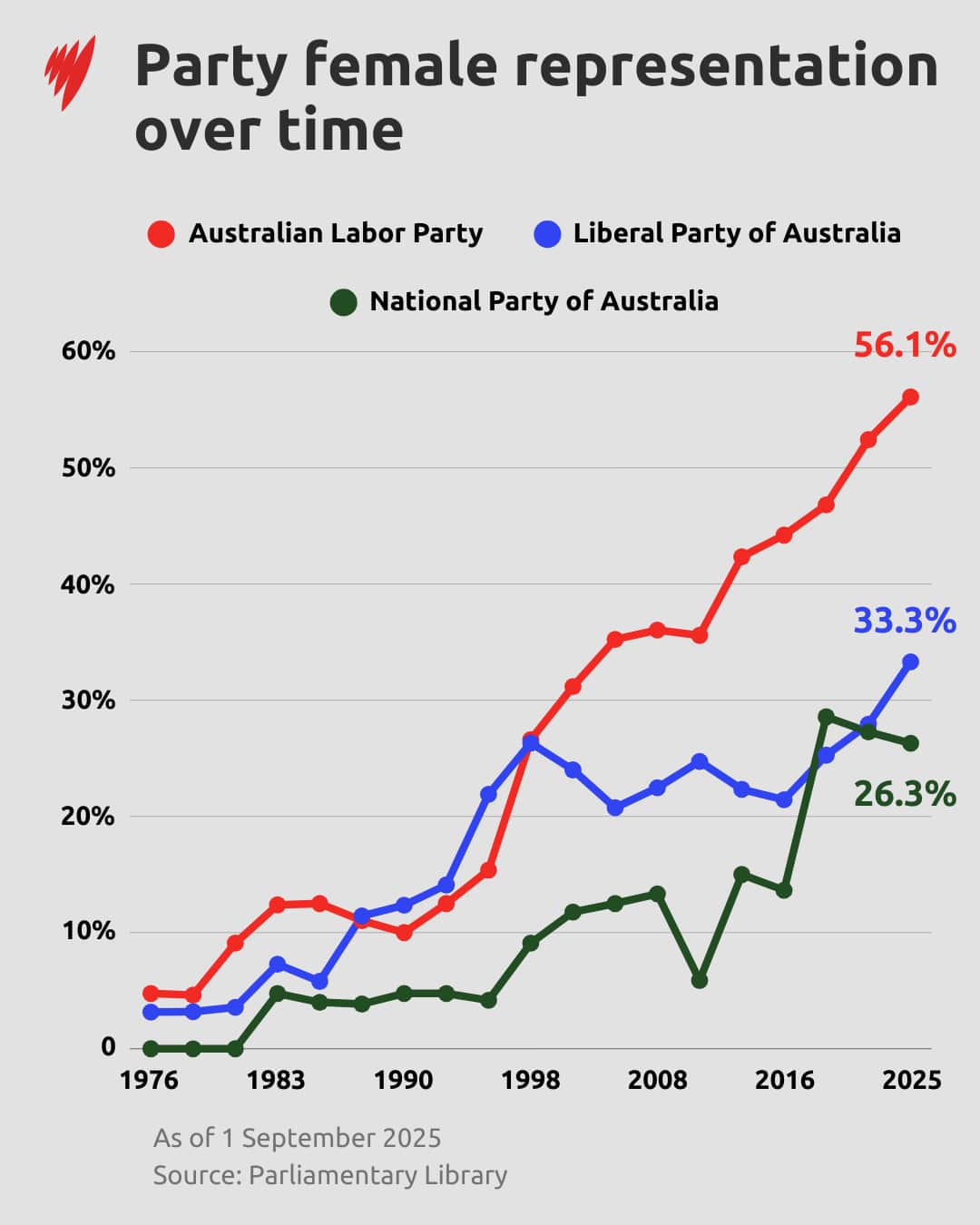
Labor introduced a 35 per cent quota for female MPs in 1994, later moving to a “40:40:20” model requiring no fewer than 40 per cent of seats be held by men or women, with the remaining 20 per cent open to either gender.
In June last year, Taylor said a “crusade” was needed to involve more women in the Liberal party, but he remained opposed to gender quotas, arguing they “subvert democratic processes”.
“I think there are better ways of achieving this … mentoring, recruitment, support is the way to make sure you have talented people,” he told ABC Radio National.
Catharine Lumby, expert in media and gender studies at the University of Sydney, said quotas could be implemented while still setting “high bars for achievement”.
“Those two things can coexist,” she told SBS News.
“The fact that there’s a resistance to quotas tells you there’s a deep-seated cultural issue in the Liberal Party.”
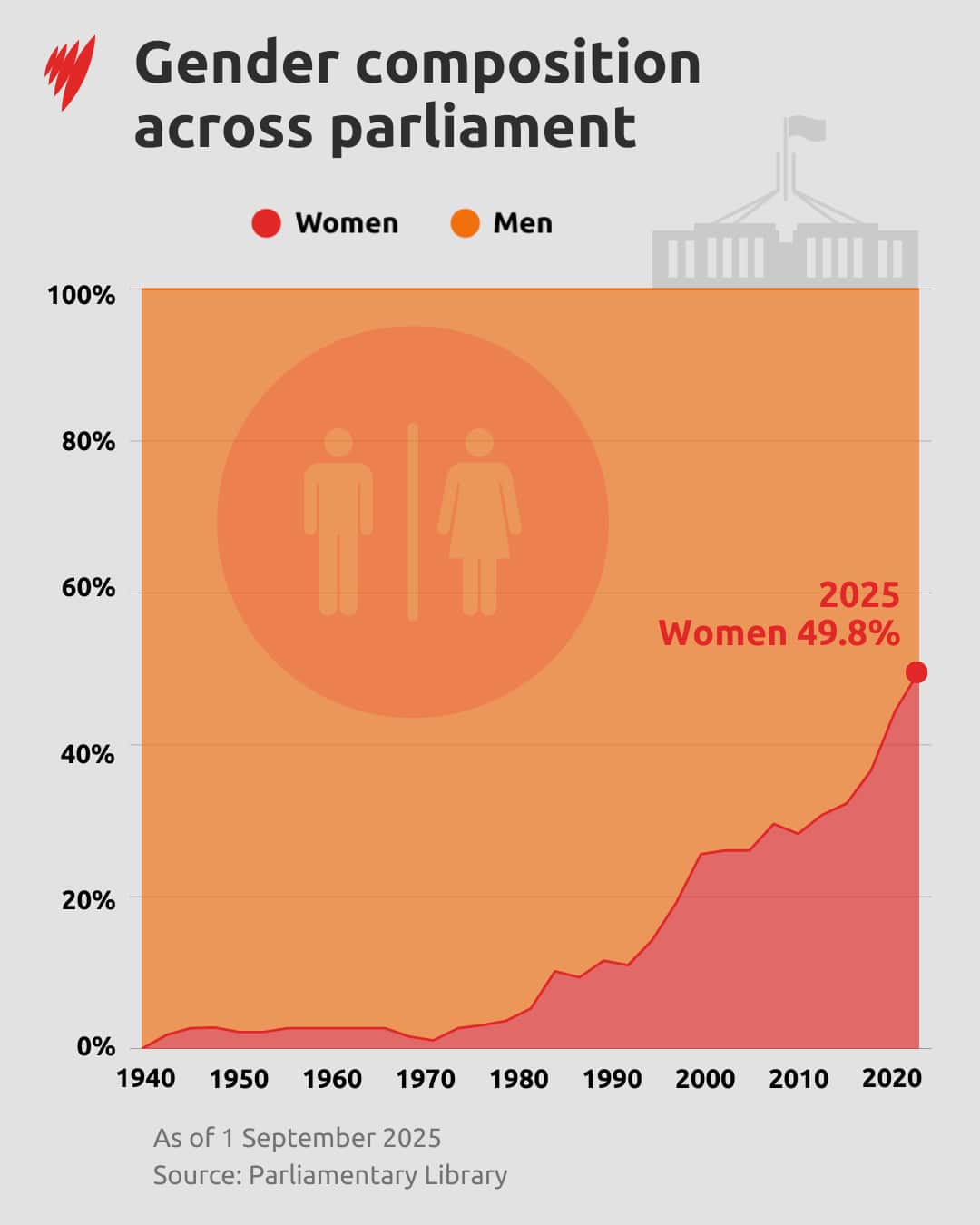
Williams said the Liberal Party needed a clear policy platform that spoke to women if it wanted to attract support, noting its proposal to end work-from-home for public servants, which it took to the last election and was later dumped, was particularly unappealing.
“It’s not just about who your leader is, it’s about what does the party actually stand for … how can they actually relate to a changing generation of Australians and especially Australian women?” she said.
Barry said all political parties benefited from diversity.
“Putting mostly gen X white men around a table doesn’t bring about diversity of opinion and viewpoints, and that’s a dangerous thing for any political party,” he said.
“It means that you’re representing a small base as opposed to the majority.”
‘Totally un-Australian’: Canavan joins backlash against Hanson

The New Daily
Feb 18, 2026, updated Feb 18, 2026Share
Pauline Hanson has faced a chorus of criticism, including from Matt Canavan Photos: AAP
One Nation leader Pauline Hanson has partially backtracked – partially – on her latest inflammatory anti-Muslim comments, as conservative senator Matt Canavan declared they were “un-Australian” and showed she was not a fit leader.
Hanson said in an interview on Monday there were “no good Muslims”, while also suggesting future generations would suffer if more followers of the religion were allowed into Australia.
“I’ve got no time for the radical Islam,” Hanson told Sky News in the interview. “Their religion concerns me because what it says in the Quran, they hate westerners.
“You say, ‘Oh well, there’s good Muslims out there’. Well I’m sorry, how can you tell me there are good Muslims?”
The comments were strongly rejected by Islamic faith groups, as well as by Labor and coalition politicians.
When pressed about her comments on Wednesday, the Queensland senator backtracked on her remarks about there being no good Muslims.
“No, I don’t genuinely believe that,” she told ABC TV, adding that a non-practising Muslim woman had run for election for One Nation.
“If I’ve offended anyone out there that doesn’t believe in Sharia law or multiple marriages or wants to bring ISIS brides in or people from Gaza who believes in the caliphate… then I apologise to you for my comment.
“But in general, that’s what they want: a world caliphate and I’m not going to apologise.”
Nationals senator Canavan, also from the political right, has added his voice to the condemnation of Hanson’s original comments, describing them as divisive and inflammatory.
“It’s un-Australian, totally un-Australian, for someone to say that of those 800,000 Australians who are Muslim, there’s no good people among them,” he told Nine’s Today show.
Canavan said the One Nation leader had gone “too far”.
“It is just not something that I think is part of our country.”
NSW Premier Chris Minns and Mayor of Sydney’s Canterbury-Bankstown council are among other leaders who have criticised the firebrand senator’s original comments.
Race Discrimination Commissioner Giridharan Sivaraman urged Hanson to apologise, saying “comments that single out and diminish any community have real and lasting impacts”.
“Words that stigmatise and devalue people do not strengthen our society,” Sivaraman said in a statement on Wednesday.
“They increase fear, deepen division, and intensify pain and harm that many in our communities have experienced for far too long.”
The commission added: “To those who speak about the importance of social cohesion: you cannot build it by isolating, belittling, or casting suspicion on an entire group of Australians. Unity starts with respect.”
Australian National Imams Council president Shadi Alsuleiman said Hanson’s comments reflected a serious misunderstanding of Islam and the Muslim community.
“For many years, she has made inaccurate and harmful statements based on misinformation rather than genuine engagement,” he told AAP.
“Muslims have contributed positively to the growth and advancement of this nation and continue to do so with pride and commitment.”
Hanson dismissed the criticism from Islamic groups.
“Of course they’re going to say that, but I’ve heard more hateful things coming out of the mouths of imams giving their sermons on the streets of Sydney, and other places in Australia, but nothing’s been said about that,” she said.
Senator Hanson used her maiden speech to the Senate in 2016 to claim Australia was being “swamped by Muslims”, a repeat of her 1996 speech to parliament’s lower house about Australia “being swamped by Asians”.
More recently, she drew widespread condemnation when she wore a burqa in the senate.
One Nation has been out-performing the coalition in recent surveys, although that has changed since a change of Liberal leadership to Angus Taylor.
The latest Roy Morgan survey showed a bump in support for the Liberals and Nationals on Taylor’s first weekend as leader, and a drop for Pauline Hanson’s party.
Primary support for the Coalition was up 3.5 per cent to 23.5 per cent, and One Nation down 3.5 per cent to 21.5 per cent.
–with AAP
Australian Labor Party
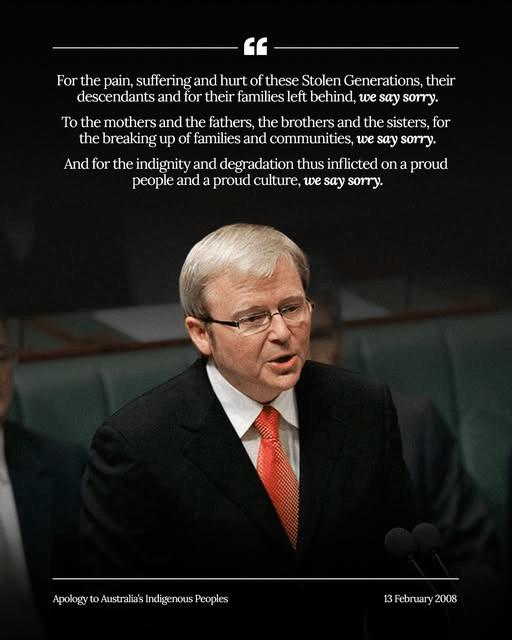
On this day in 2008, Prime Minister Kevin Rudd delivered a historic apology to Indigenous Australians and the Stolen Generations.
The Apology acknowledges that the laws and policies of successive governments had resulted in the forced removal of Aboriginal and Torres Strait Islander children from their families and ‘inflicted profound grief, suffering and loss on these our fellow Australians’.
American Politics

Joyce Vance from Civil Discourse <joycevance@substack.com> of 34,915
Context Matters: Trump Administration Summons Secretaries of State
And the context for this one isn’t promising.
Joyce Vance Feb 17
Despite Donald Trump’s claim earlier this month, U.S. states are not agents for the federal government in elections. State officials don’t work for him.
Trump said it as part and parcel of his stab at getting Republicans to take over state elections—Trump said they should be “nationalized.” I don’t know why the federal government doesn’t do them anyway,” he said, adding that it’s a “disgrace” how “horribly” some states run elections. Anyone who has been watching knows what this is about. It’s more of the same from the candidate who asked state officials in Georgia to find him 11,780 votes so he could overturn the result in an election that he lost. With Trump, his complaints about others are always projection: He wants to make sure he can steal the midterm elections if his party loses, and no better way to do them than to get election administration out of pesky officials who insist on doing a fair count.
Hence Trump’s appeal to “nationalize” elections. He wants to take control.
That context makes it particularly interesting that federal agency “election partners” from FBI, DOJ, DHS, the Postal Inspection Service, and The Election Assistance Commission “invited” election officials from across the country to a briefing on “preparations” for the midterms. Secretaries of state and local officials run each state’s election. Not the president. While they might coordinate with their local U.S. Attorney(s) in advance of an election, a nationwide call like this is unprecedented, particularly in the absence of a credible, identified threat from a foreign country that would require, say, cyber intelligence coordination.
The call is being organized for February 25. No one seems to know precisely what it’s about. But Trump’s claim that majority Black/Democratic counties, like Fulton County, Georgia, aren’t fit to run elections, and they should be taken over by Republican interests, is a pretty good bet.
The email invite is signed off on by Kellie M. Hardiman, who identifies her role as “FBI Election Executive,” a position I have not heard of previously. As a career federal prosecutor and a U.S. Attorney for eight years during the Obama administration, and as someone whose responsibilities included election protection, I’m fairly familiar with DOJ’s internal architecture for this work. NBC reported that one state election official said that “No one has heard of this person — and we’re all wondering what an ‘FBI Election Executive’ is.”
NBC also reported that “An FBI spokesperson said in a statement Friday: ‘The Election Executive is not a new role. There have been designated executives in previous election cycles to take point on coordinating election related matters and speaking on behalf of the FBI.” This is not completely out of bounds. DOJ doesn’t get involved in deciding who won a specific election, but they do investigate claims of fraud (there have been exceptionally few successful prosecutions, and when they are brought, for the most part, they seem to involve fraud on behalf of Republican candidates). There are meetings among state and federal partners in advance of elections. But it feels different in a cycle where the president is openly seeking greater control and making false claims about fraud where elections are run by his political opponents. And most of DOJ’s election protection work, at least in Democratic administrations, involves pushing back against voter suppression (like this case). Those are civil cases and the FBI and other law enforcement agencies do not get involved in them.
Hardiman wrote to state election officials that the FBI and other federal agencies “would like to invite you to a call where we can discuss our preparations for the cycle, as well as updates and resources we can provide to you and your staff.” State officials are concerned.
NPR correspondent Miles Parks put it like this: “President Trump wanted a bigger role in local processes. Just two months into his second term, he signed an executive order aimed at adding new voting restrictions, for instance. Most of that has been blocked by the courts at this point. But he also – his administration laid off much of the election security staff at the Department of Homeland Security. And I was talking about all of that with the secretary of state of Minnesota, Steve Simon, who’s a Democrat, and he said the idea of federal interference is on election officials’ minds as they game plan out every scenario.” Following the execution of a search warrant on election officials in Fulton County, Georgia, based on old, disproven claims of elections fraud, a bipartisan group of “more than a dozen election officials” told Politico “they fear Trump is laying the groundwork to undermine results still months away.”
Chief among those concerns is the risk of federal troops or an executive branch agency like ICE being deployed to the polls, which could easily intimidate voters who have watched ICE indiscriminately arrest people and put them into deportation proceedings, only checking their immigration status after the fact (more here). But that is the sort of move that would be likely to provoke nationwide outrage. Don’t expect it to be the Trump administration’s only move.
Trump began issuing executive orders designed to make it more difficult for Americans to register and vote as soon as he took office. The SAVE Act is circulating in the Senate (we discussed it recently here). And the administration has been seeking states’ voter rolls, which could provide it with fodder for making wholesale challenges, and permitting private parties in states to do so too, forcing individual voters to go on the defensive and prove they are eligible to vote and disrupting state proceedings. That is most definitely not the kind of burden that should be imposed on Americans’ fundamental rights.
Trump has said that Atlanta and other cities with Democratic strongholds as seeing “horrible corruption on elections.” “The federal government should not allow that,” he said Tuesday. “The federal government should get involved. These are agents of the federal government to count the votes. If they can’t count the votes legally and honestly, then somebody else should take over.”
Last April, a federal judge enjoined Trump from enforcing his executive order on voting. She wrote, “A president cannot make new law or devise new authority for himself—by executive order or otherwise. He may only wield those powers granted to him by Congress or by the Constitution.” She pointed out that “our Constitution entrusts Congress and the states — not the President — with the authority to regulate federal elections.”
Presidents do not get to dictate the rules in our elections. But to ensure this election is free and fair, it appears that state election officials, along with federal judges, will have to keep the president in check. They will have to keep him for usurping power that is not properly his, as he has done on so many other occasions. Do you know who your secretary of state (they have different titles in some states) is?
Maine’s Secretary of State Shenna Bellows told me, “In any other year, the invitation might seem innocuous, but in the context of Trump’s assault on the rule of law and threats to elections, the odd invitation raises concerns. I’ll be attending with skepticism.”
Here is a list of election officials in every state. If you aren’t already, get familiar with yours. And make sure they know you’ll be watching how they handle the meeting on February 25. Call them or send them a letter in the next day or two, letting them know that you know Donald Trump isn’t entitled to “nationalize” our elections and you expect them to uphold the law.
Thanks for supporting Civil Discourse. Your paid subscriptions make the newsletter possible!
We’re in this together,
Joyce
The Oldest Pub In England Is Just An Hour Away From London – It’s Home To Medieval Décor, Hearty Pub Food, And Even A Ghostly Visitor Or Two
While a lot of pubs around the country boast some impressive pedigree, this boozer has the strongest claim to being the oldest pub in England.
Sam Barker – Staff Writer • 9 February, 2026
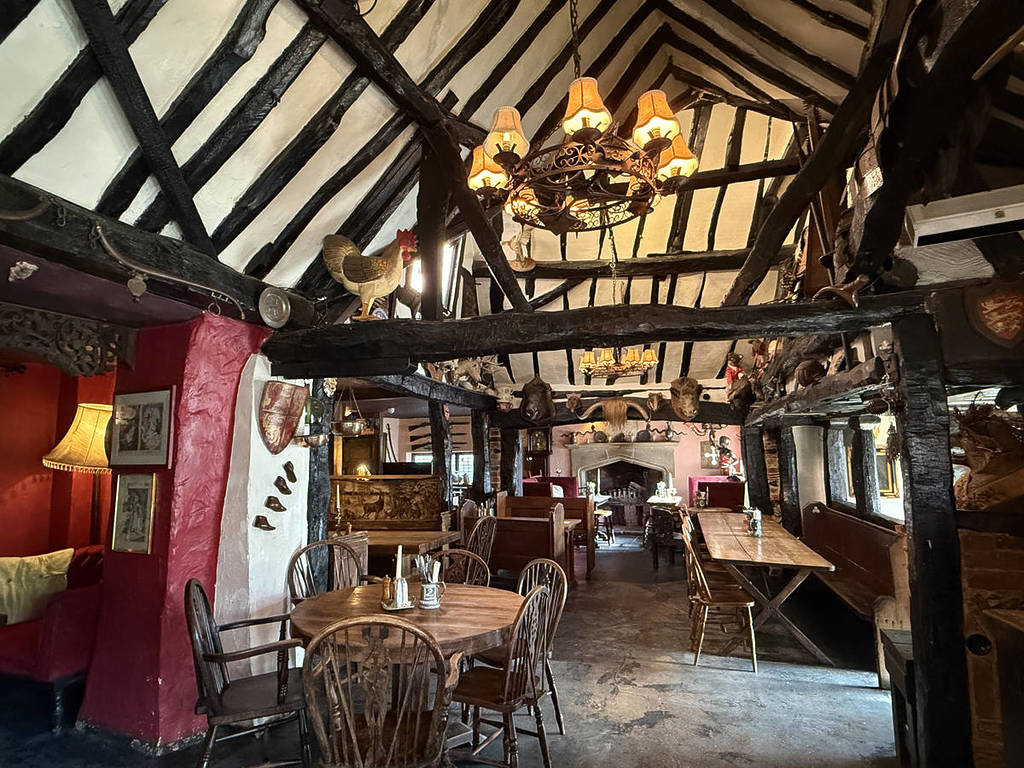
In a country with England’s lengthy history, storied pub culture, and historic landmarks around every corner, you can bet that England is home to some pretty ancient pubs. And many of them make some pretty wild claims to having been around for 100s or 1,000s of years. But just an hour from London, you’ll find a stunning community boozer that has perhaps the strongest argument in its favour for being the oldest pub in England: The Royal Standard of England.
The pub traces its origins all the way back to 1100, but the first recorded instance of the venue dates to 1213, when it was known as The Ship. Its current identity dates to 1663, when King Charles II gave the pub the title of The Royal Standard of England. All that to say, it has an impressive history regardless of whether or not it truly is the oldest pub in the country.
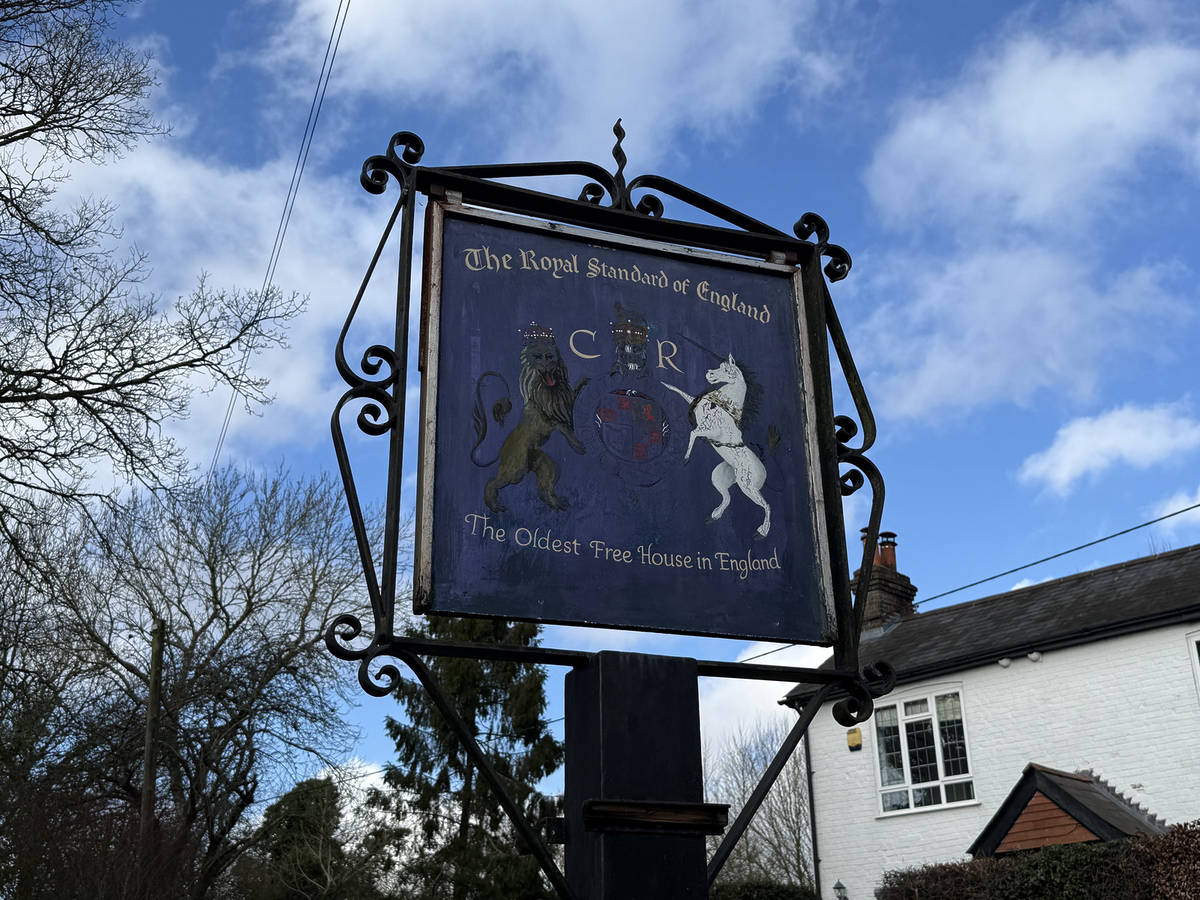
And you can feel that history as soon as you step inside. The modern world is all but left outside as you step through the doors into a pub full of Medieval touches, hanging beams, and fireplaces. Candles light up the tables around you as dusk approaches, and you can feel the weight of history all around you. You might even be visited by some of the characters from the pub’s past! (Keep an ear out in the car park, and you might hear the sound of a ghostly drum from a drummer boy who was killed in the Civil War).
The Royal Standard of England
Lest you think this is little more than a tourist attraction dressed up as a pub, this is a proper neighbourhood boozer. The decor and history inside make the space feel warm and cosy, without seeming like a movie set. Although, ironically, the pub has been the setting for quite a lot of movies and TV shows, such as Hot Fuzz, The Theory of Everything, and Afterlife. There’s even a chicken pie on the menu named for Midsomer Murders, which has shot in the pub numerous times.
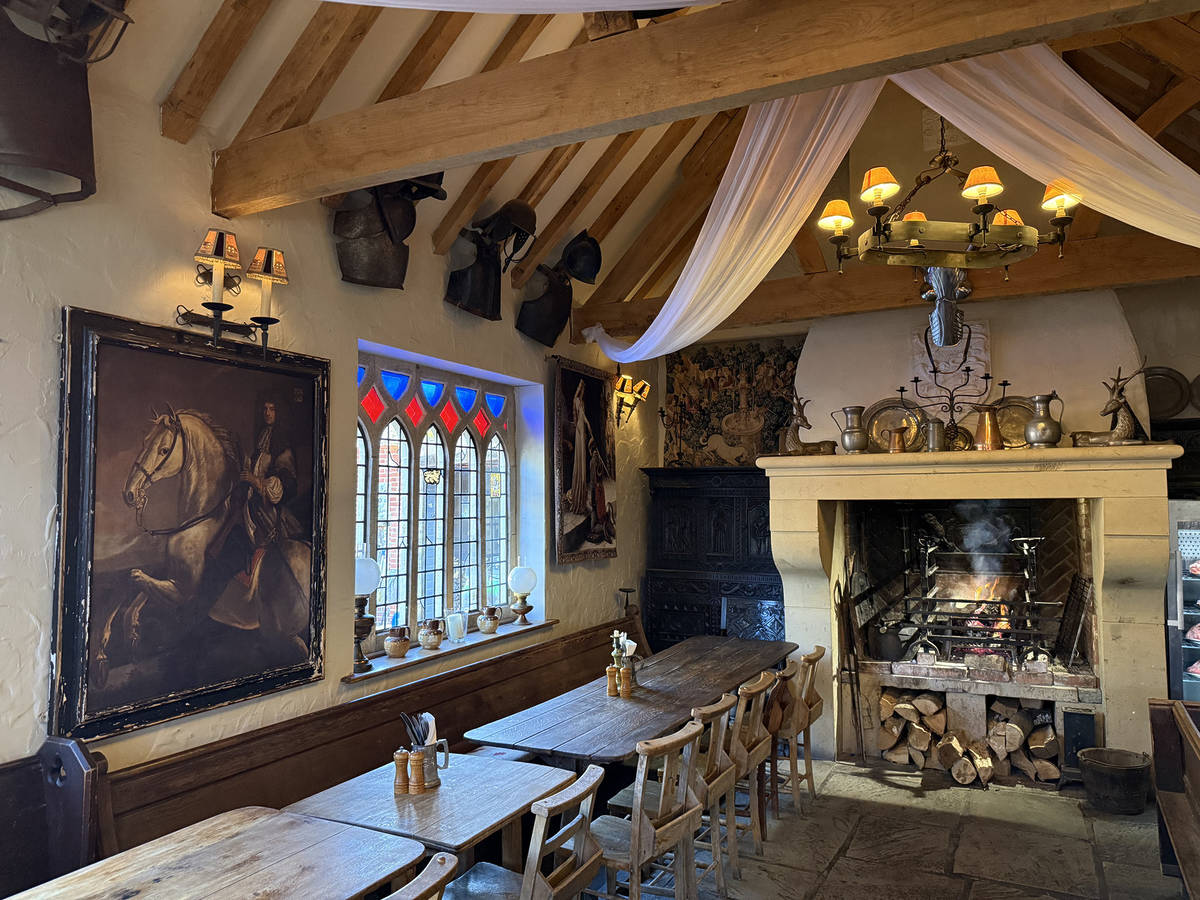
Visitors can expect plenty of local ales to sip on and hearty, warming pub food to match the cosy environs. And the pub is a popular spot for a Sunday Roast, with plenty of people walking from all around to reward themselves with a slap-up meal in the pub.
Is it really the oldest pub in England?
Well, it might be! It’s hard to verify with any degree of accuracy which pub in England is actually the oldest in the country. But The Royal Standard of England makes a damn good claim for the title. Ye Olde Fighting Cocks in St Albans also makes a claim for the title, and once held a Guinness World Record for being the oldest pub in England. But that record was later revoked, as it proved impossible to verify.
Another pub, or inn rather, that makes a claim for the title is Ye Olde Trip to Jerusalem in Nottingham. They’ve even printed ‘the oldest inn in England’ across the outside wall above their door. But while the pub clearly boasts some impressive history, there don’t appear to be sufficient records to date the pub appropriately far into the past.

The Royal Standard of England traces its origins back to the Saxon and Germanic settlers. The site, thanks to its natural spring water, was a brewing ground for King Alfred’s West Saxons. The first official record of the pub is from 1213. Back then, it was officially recorded as The Ship Inn, serving the Royal deer hunts.
As if that wasn’t enough, their website is actually ‘theoldestpub.com’. And who are we to argue with that? Either way, the pub is still a brilliant spot to visit. It’s packed full of history, novelty, and charm.
📍 The Royal Standard of England, Forty Green, Beaconsfield, HP9 1XT.
🚂 30 minutes on the train from London Marylebone, plus a half-hour walk.
🚗 The pub boasts a large car park for visitors, and is a 15-minute drive from the M40 (Junction 2).
Cindy Lou’s snack at Edgars
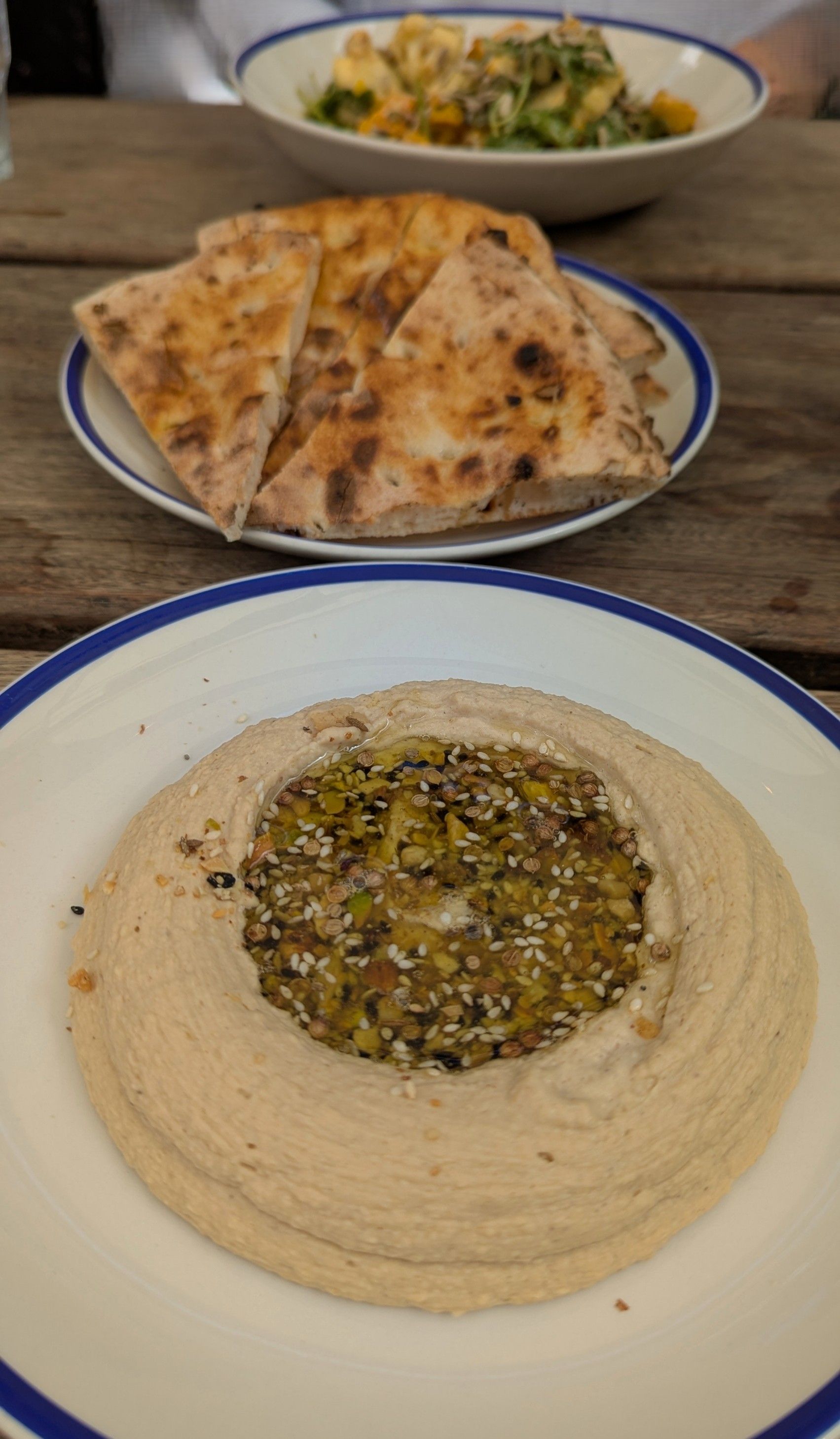
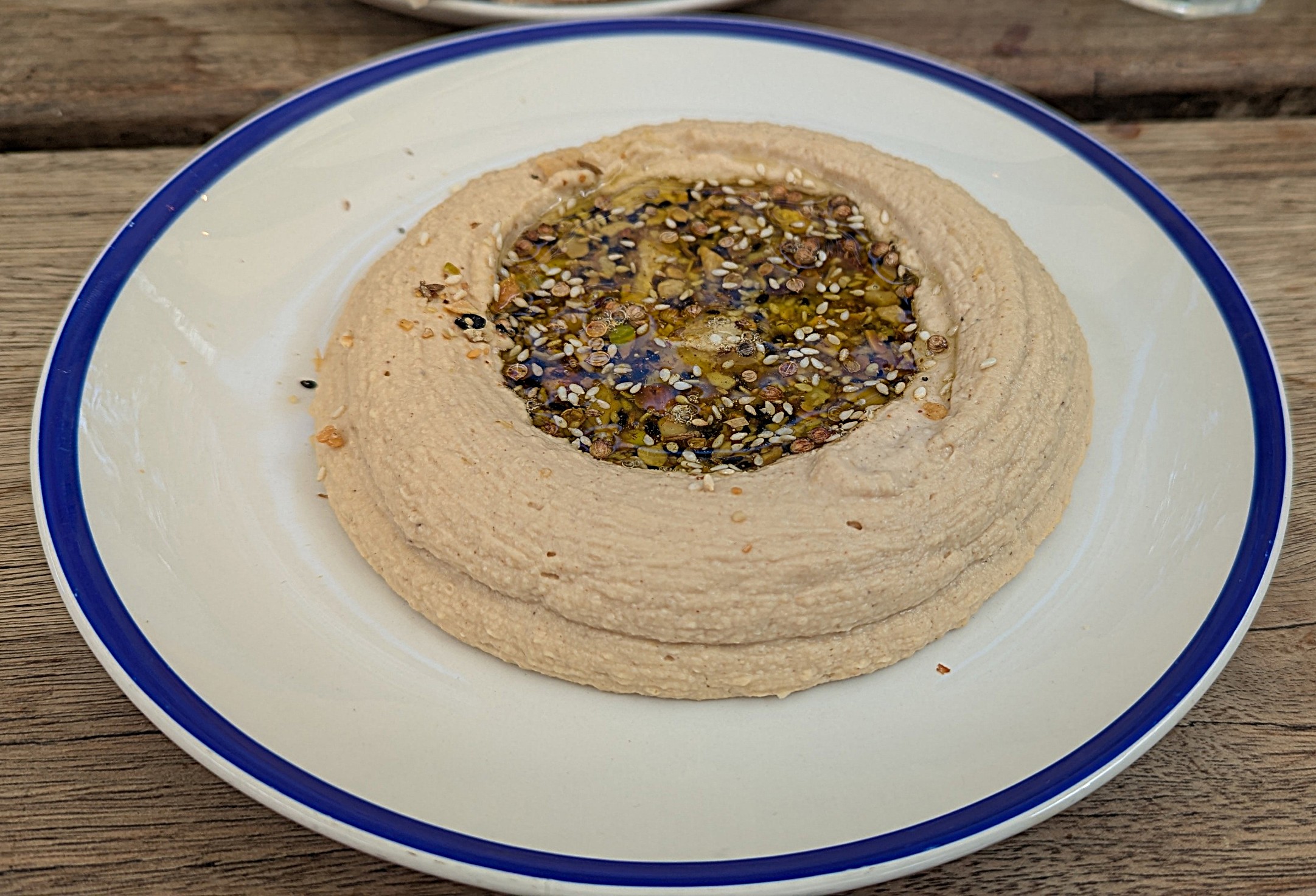
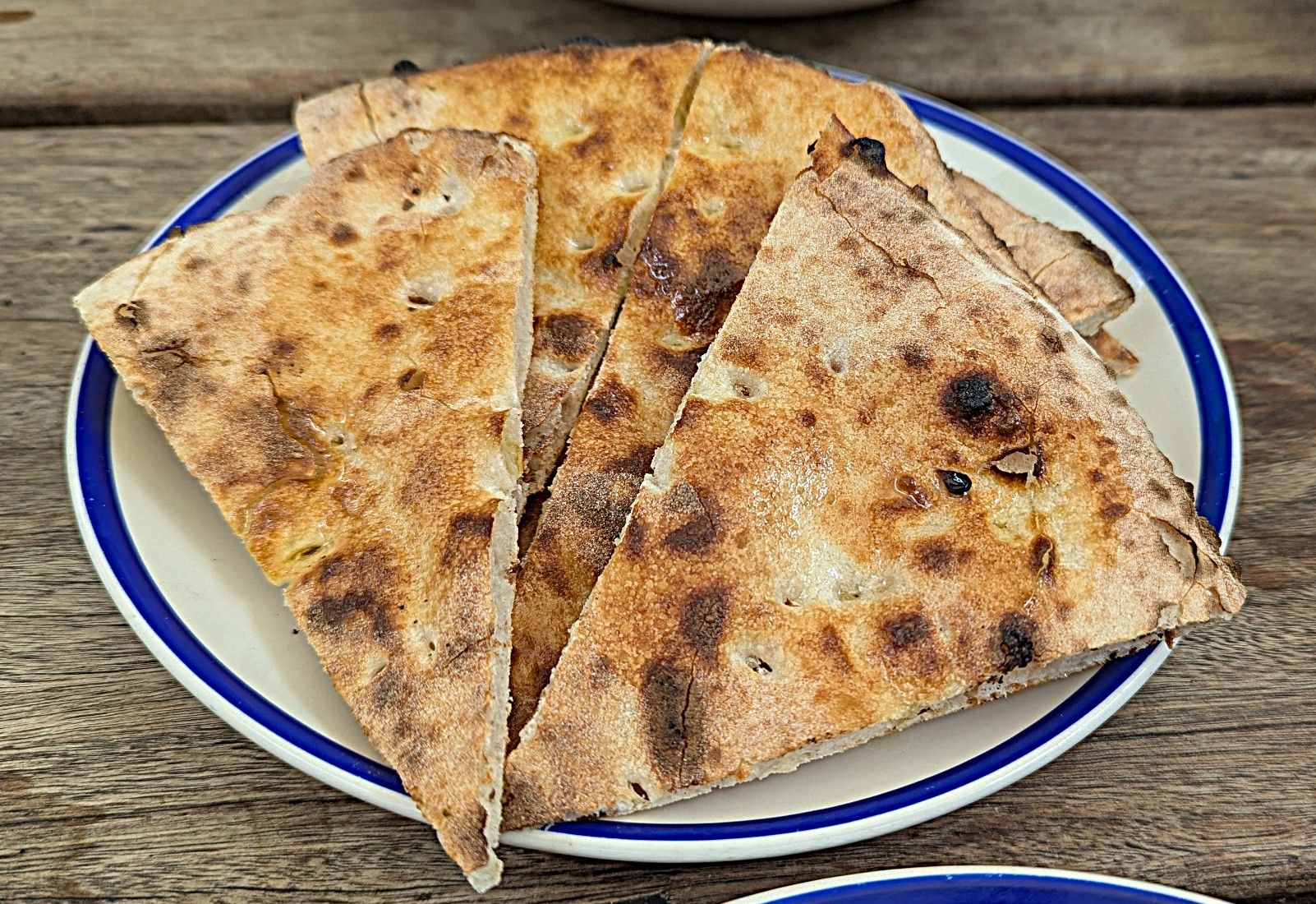
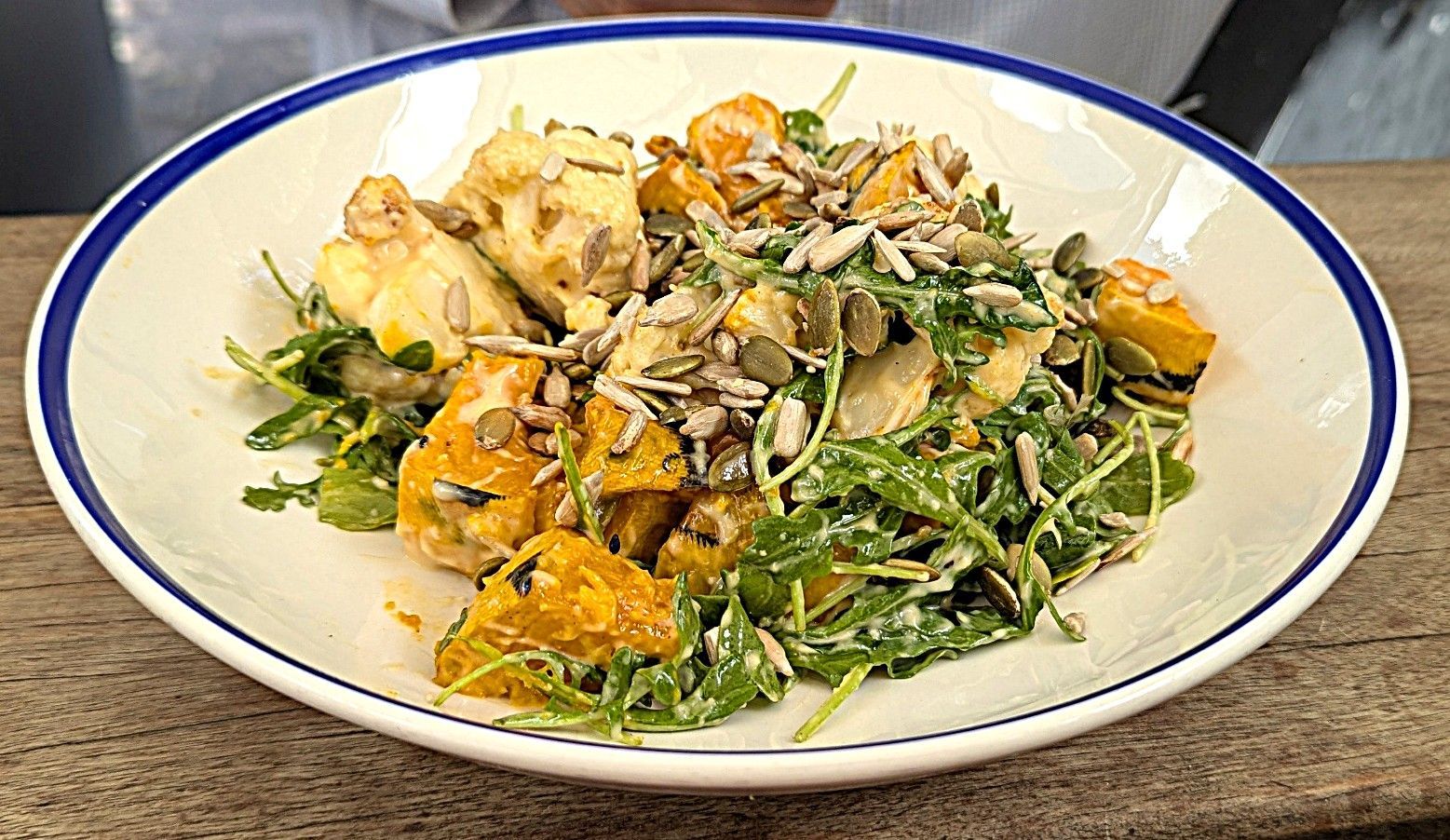
Edgars is such an easy place to eat – pleasant service, a varied menu, indoor or outdoor seating and warm in winter and fans in summer. We had a cauliflower flavoursome salad, crisp pitta bread and delicious humous.
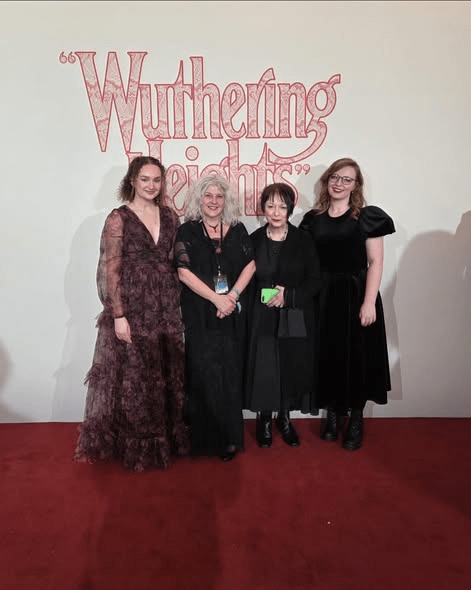
Brontë Parsonage Museum is with Warner Bros. and Wuthering Heights Movie. 7 February at 02:03 ·
Last night we exchanged bonnets for ball gowns at the London premiere of Emerald Fennell’s “Wuthering Heights” in Leicester Square. 
Thank you to Wuthering Heights Movie and Warner Bros. for inviting us along!
Read about how Margot Robbie’s red carpet look was inspired by Charlotte Brontë’s bracelet here: bronte.org.uk/news/charlotte-brontes-bracelet
Nikki Gemmell’s post– review of “Wuthering Heights”
My darlings, some news …
I’m now the chief film critic of The Australian newspaper. First woman in the role, ever, and stepping into some very big shoes here (gulp.) Thank you to Stephen R, David S and Evan W. Never imagined I’d one day be handed this amazing gift of a job.
And so a whole new world has opened up around my other writing. I’ve been a screenwriter for the past couple of years (stay tuned for some exciting news,) as well as a novelist for 30 years, and story is my thing. So fricken excited to be diving into this new world. Change, risk, feels exhilarating.
And here my darlings is my review of Wuthering Heights.
In praise of boundary pushing. Persistence. And fearless women who risk, creatively.
I think a woman’s creative success lies in her ability to endure, as much as anything. To keep on going, despite the very strong headwinds coming at her. So I applaud Emerald for keeping on going with her gleeful audacity and her irreverent, deeply thoughtful provocation … and can’t wait to see what she tackles next. Five stars.
My first five-star review: I inhaled Wuthering Heights with my groin
In Emerald Fennell’s hands we get the essence of women-directed sex. Sex through the female gaze. What women actually want. It’s dark. It’s filthy. Brace yourselves…
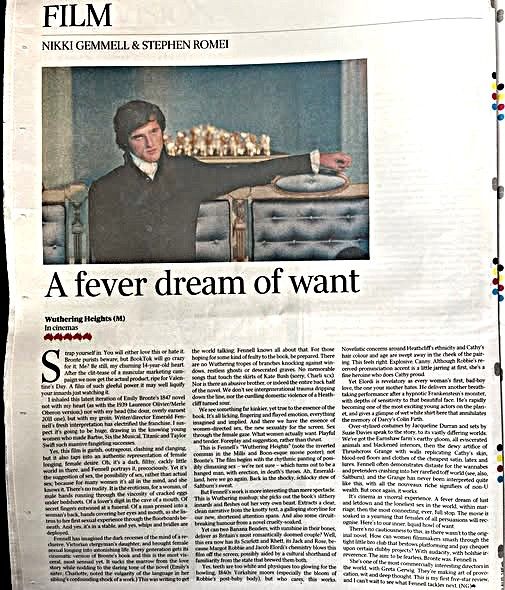
I am sorry – no-one I know subscribes to The Australian, so we’ll all have to make do with this.
ABC Arts
Margot Robbie and Jacob Elordi sizzle, but Wuthering Heights isn’t quite the full Brontë By Luke Goodsell 10 February 2026
Is 19th-century Gothic romance back? Is Emily Brontë brat? What would Wuthering Heights look like if the spooky, intergenerational melodrama — all those howling winds and pleading ghosts — were replaced with heaving bosoms and sub/Dom bondage?
Fast facts about Wuthering Heights
What: Oscar-winning filmmaker Emerald Fennell’s loose adaptation of Emily Brontë’s classic, a tale of secret passion between a mysterious outsider and a girl who marries into a wealthy family
Starring: Margot Robbie, Jacob Elordi, Hong Chau, Shazad Latif, Alison Oliver, Martin Clunes, Charlotte Mellington, Owen Cooper
Director: Emerald Fennell
Where: In cinemas February 12
Likely to make you feel: Hot and bothered, but not quite satisfied
Oscar-winning British filmmaker Emerald Fennell (Promising Young Woman; Saltburn) is no stranger to provocation, and her new Charli xcx-scored adaptation of Brontë’s 1847 classic already has everyone losing their minds over the liberties being taken with the beloved source material.
From Jacob Elordi’s casting as the novel’s racially ambiguous Heathcliff to executive producer Margot Robbie taking on tempestuous teenager Catherine Earnshaw, the film’s scare quotes — this is “Wuthering Heights”, the film’s marketing insists — have been working overtime to remind the audience that this is but one woman’s riff on the story.
“I wanted to make something that made me feel like I felt when I first read it, which means that it’s an emotional response to something. It’s, like, primal, sexual,” Fennell, who first read the book at 14, told the BBC.
True to her word, the writer-director’s Wuthering Heights — sorry, “Wuthering Heights” — is the kind of fanfic fever dream that feels ripped from the cover of some lurid pulp imprint, full of Gothic spires, crashing thunder, strained bodices and torrid coupling.
Sex and death
Right from the movie’s opening seconds, with what sounds like a mounting orgasm slowly revealed to be the dying gasp of a man on the gallows, Fennell has sex and death on the brain.
Watching on is young Catherine Earnshaw (a spirited Charlotte Mellington), the mischievous moppet of Wuthering Heights, a gloomy homestead on the Yorkshire moors that has seen better days.
When Cathy’s father (Martin Clunes), busy frittering away what’s left of the family wealth (and his teeth) on booze and gambling, brings home a mysterious young urchin (Adolescence’s Owen Cooper) from one of his ill-fated trips, Cathy names the orphan Heathcliff.
Roaming and rambling across the moors, the wild-eyed Cathy and Heathcliff quickly become inseparable, and quickly grow up — with a glow-up — into Queensland’s finest, Margot Robbie and Jacob Elordi.
Elordi has always had a cruel, brooding quality barely disguised by his matinee idol looks, and his physicality makes for a suitably dark and stormy Heathcliff — even if he appears to have taken some accent lessons from the Gallagher brothers.
Robbie, meanwhile, plays the unhinged Cathy closer to upwardly mobile rom-com heroine or naughty Disney princess — the kind who spends her days masturbating on the moors or peeping on stable-hands engaged in sweaty bondage sessions in the farmhouse.
Days away from the release of Emerald Fennell’s highly anticipated adaptation of Emily Brontë’s classic novel, critics and fans alike are still fighting about text fidelity in the comments.
Heathcliff and Cathy’s burgeoning, windswept romance is cut short by the arrival of new neighbours at nearby Thrushcross Grange, an opulent mansion with ruby-red halls and Beauty and the Beast-style candelabra holders that Barbie would deem too garish.
And its barmy new residents — the swarthy textile merchant Edgar Linton (Shazad Latif) and his borderline-idiot ward Isabella (poor Alison Oliver, giving it her all) — wouldn’t be out of place at Fennell’s Saltburn.
With a scorned Heathcliff banishing himself abroad, Edgar has soon married Cathy and installed her at his palace with her longtime confidante and housekeeper, Nelly (Hong Chau). (Having the two main actors of colour portray the romantic villain and the meddling help, respectively, is certainly a curious choice on Fennell’s part.)
It’s a marriage of social convenience rather than true love, at least from Cathy’s perspective. Fennell takes her cues less from Brontë than her own Saltburn in these early passages, playing the author’s class anxieties and patriarchal entanglements closer to farce — almost as though playing anything without a layer of irony might confuse a modern audience.
By contrast, Heathcliff’s swooning return and his secret affair with the married Cathy, is the movie’s sweet spot. It’s the best representation of Fennell’s idea of Brontë as slumber-party ur-text, a sexual awakening unraveled by torchlight under the covers.
Pinterest-perfect
Robbie and Elordi summon their movie-star charisma, Fennell shows off her talent for hot and heavy close-ups, and Charli’s songs trill eerily from some auto-tuned teen bedroom of the future.
Even the director’s goofier choices — like revealing Heathcliff’s silver tooth in a moment of supposed intensity — feel like loving doodles from a schoolgirl’s fantasy of the novel.
Sure, every frame looks more or less designed for a mood board, but the film’s old-school movie look — shot in 35mm VistaVision by Saltburn cinematographer Linus Sandgren — is undeniably ravishing, particularly coupled with production design that’s equal parts Black Narcissus, Bram Stoker’s Dracula and Stevie Nicks music videos. It’s tactile and sensuous.
For all her stylistic exertion, though — all those squelching slugs and runny eggs and sweat glistening on skin — Fennell can’t get to the essence of a story that’s always been more of a haunting than a romance, nor conjure up something sufficiently radical to make it her own.
As magnetic as Elordi and Robbie are as performers, no amount of steamy montages can quite convince us that they’re souls entwined in the cosmos, the kind of supernatural pairing whose whims seemed to command the elements — one of the reasons Kate Bush’s Wuthering Heights remains undefeated as the greatest adaptation of the novel; a feat it achieves in all of four minutes and 29 seconds.
Still, Fennell’s Wuthering Heights is most definitely her own, and if you want to see Jacob Elordi hoisting up Margot Robbie by the bodice with one hand — and let’s face it, who doesn’t — her lurid, lusty adaptation may well satisfy your Valentine’s Day craving. Hooting and hollering at this hot mess is all part of the fun.
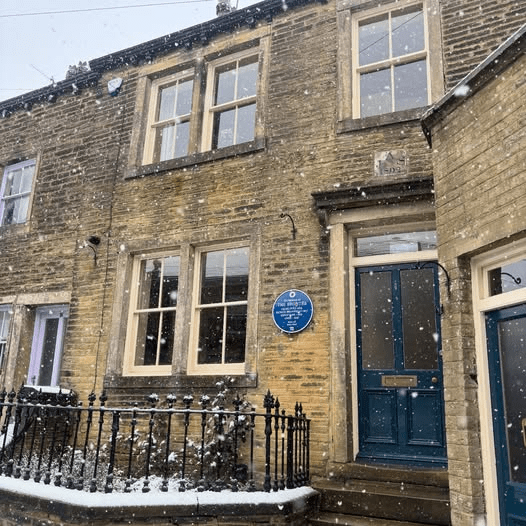
Brontë Birthplace ·Follow
What perfect day for the release of the Wuthering Heights, and a trip to the place where it all began. Neither rain, snow, or endless fog will close our doors – pop by for a tour and a cuppa today from 12pm – 3pm.
Isn’t this a marvellous idea!
WOMEN’S HISTORY MONTH EDIT-a-thon at Cambridge Library – 15th March 2026
Event by Central Library, Cambridge and Cambridgeshire Libraries
7 Lion Yard, CB2 3QD Cambridge, United Kingdom
Public · Anyone on or off Facebook
Join us in the Cambridgeshire Collection and learn to create or improve Wikipedia entries about local women’s history!
Learn how you can contribute to Wikipedia, the free, online encyclopedia, written and maintained by a community of volunteers. To celebrate Women’s History Month, we’ll be editing entries about women with a historical connection to Cambridgeshire. We’ll have a list of suggested articles to work on, but if you have something that you’d like to edit please do bring that too!
A trainer from Wikimedia UK will help you learn to edit Wikipedia and you get started on your Wikipedia editing journey. This workshop is suitable for beginners and those with experience alike. Whether you’re new to Wikipedia or would like to brush up your skills, this session is perfect for you – we’ll provide training at the beginning of the session. More experienced editors who’d like to come along are also very welcome!
This event is free and everybody is welcome. No special skills are needed. Come with your curiosity! Book your free place via Eventbrite: https://www.eventbrite.co.uk/…/womens-history-month…
The event will take place in the Cambridgeshire Collection on the 3rd floor of Cambridge Central Library, which is wheelchair accessible. There is a baby change and accessible toilet on site. There is Blue Badge holder parking at the Grand Arcade parking.
For full details of Central Library’s facilities, please visit our website: https://info.cambridgeshire.gov.uk/…/service.page…

 Robin's Room
Oh dear, the photos from Edgars went wrong somehow. There was a lovely cauliflower salad that I omitted. Once again, because of my lack of expertise with the camera I shall have to go out to a meal again…86 and Edgars so far.
LikeLike