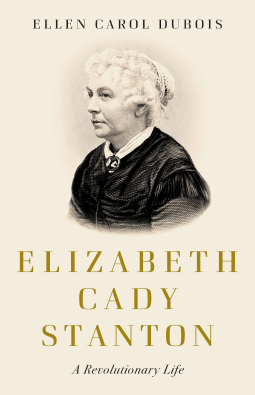
Ellen Carol DuBois Elizabeth Cady Stanton A Revolutionary Life Basic Books, March 2026.
Thank you, NetGalley, for providing me with this uncorrected proof for review.
Ellen Carol DuBois has written a biography that rings with authenticity about a woman whose values raise questions alongside the respect she merits. The latter outweighs the questions, and the well-deserved adulation Elizabeth Cady Stanton receives is strengthened by DuBois’ early discussion of the flaws in some of Stanton’s approaches. DuBois’ introduction is an excellent read, providing a thoughtful approach to the way in which she addresses Cady Stanton’s life, and the way in which she lived her life: not faultless, but courageous and vital in the fight for women’s equality.
In the early chapters the family background and the American political, economic and social environment are merged. They provide a critical and detailed account of the period over the American Revolution, with which I have only recently familiarised myself through the Ken Burns documentary on that topic. In DuBois’ account the written word also develops into an engaging narrative. Elizabeth’s place in the family, and the death of her remaining brother also make interesting reading. Rather than proselytise, DuBois reflects upon Elizbeth’s reaction to the environment created by his death and her father’s reaction, her relationship with her spirited sister, and the future direction of Elizabeth’s activism. The pattern thus established, creates a fusion of elements that provide a pattern throughout the book, with a history of the abolition of slavery, women’s education and property rights and feminist ideas and action becoming as engrossing as their application in Elizabeth Cady Stanton’s in everyday life.
Ellen DuBois acknowledges that her dependence on Elizabeth Cady Stanton’s diaries may lead to some errors about interpretation of events or even when they occurred. However, she makes a good argument for her sources. She also refers to those that suggest an alternative date for events, or even an interpretation of these. I found this an enlightening approach and enjoyed considering why the differences in recall might have occurred. For example, Cady Stanton placed her change in attitude to religion far earlier than a friend’s recall of their discussion of religious questions many years later. How human this makes both women! And so does acknowledgement of the different strains of thought and action that pursued the radical movements Cady Stanton endorsed, influenced and took in the directions she found satisfactory. These disruptions to any radical movement make familiar reading, and have been experienced by most people involved, whether it be the 1880s or the 2000s. The honesty around such disagreements gives the narrative a flavour of authenticity – so many similarly involved readers will have been there.
The epilogue takes up the immediate reaction to her death, and her legacy. It maintains the narrative of a woman whose beliefs were radical, valuable and created a following, together with the reaction to her stances and reserve from some who might be expected to be allies. For example, she was barely mentioned in the fifth volume of the History of Woman Suffrage, contrasting with the accolades poured upon her by socialist papers. Du Bois does an excellent job of describing the years following her death, and the divergence of ideas about the reputation which should follow her, as exemplified by the fight over her memory by suffragists and her family.
The acknowledgements are a pleasure to read, recognising as they do DuBois students’ contribution to her persistence with this biography and detailing much of the material she used. There are notes for each chapter, an additional bibliography, and a short account of the author.
Cindy Lou at Amara Canberra
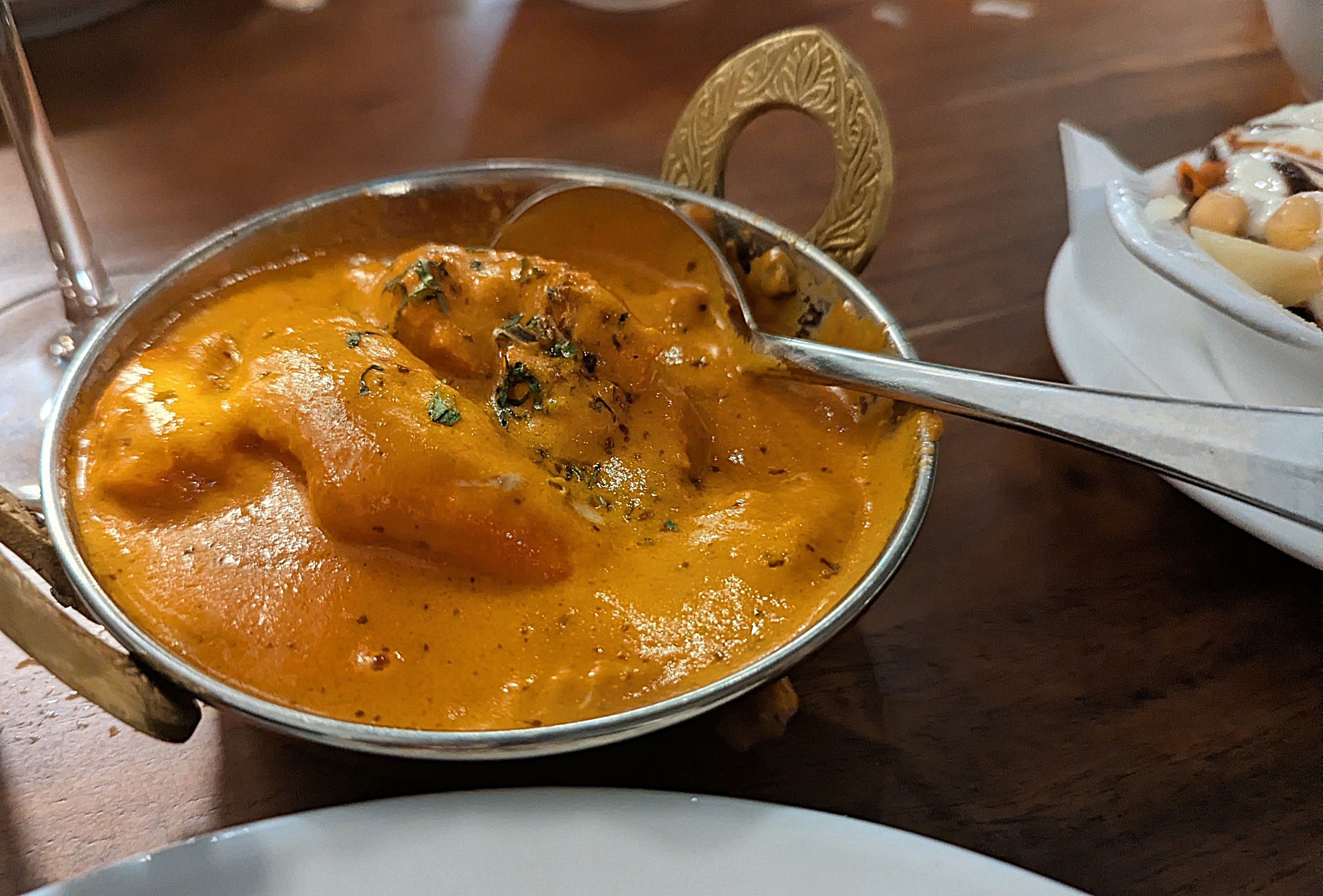
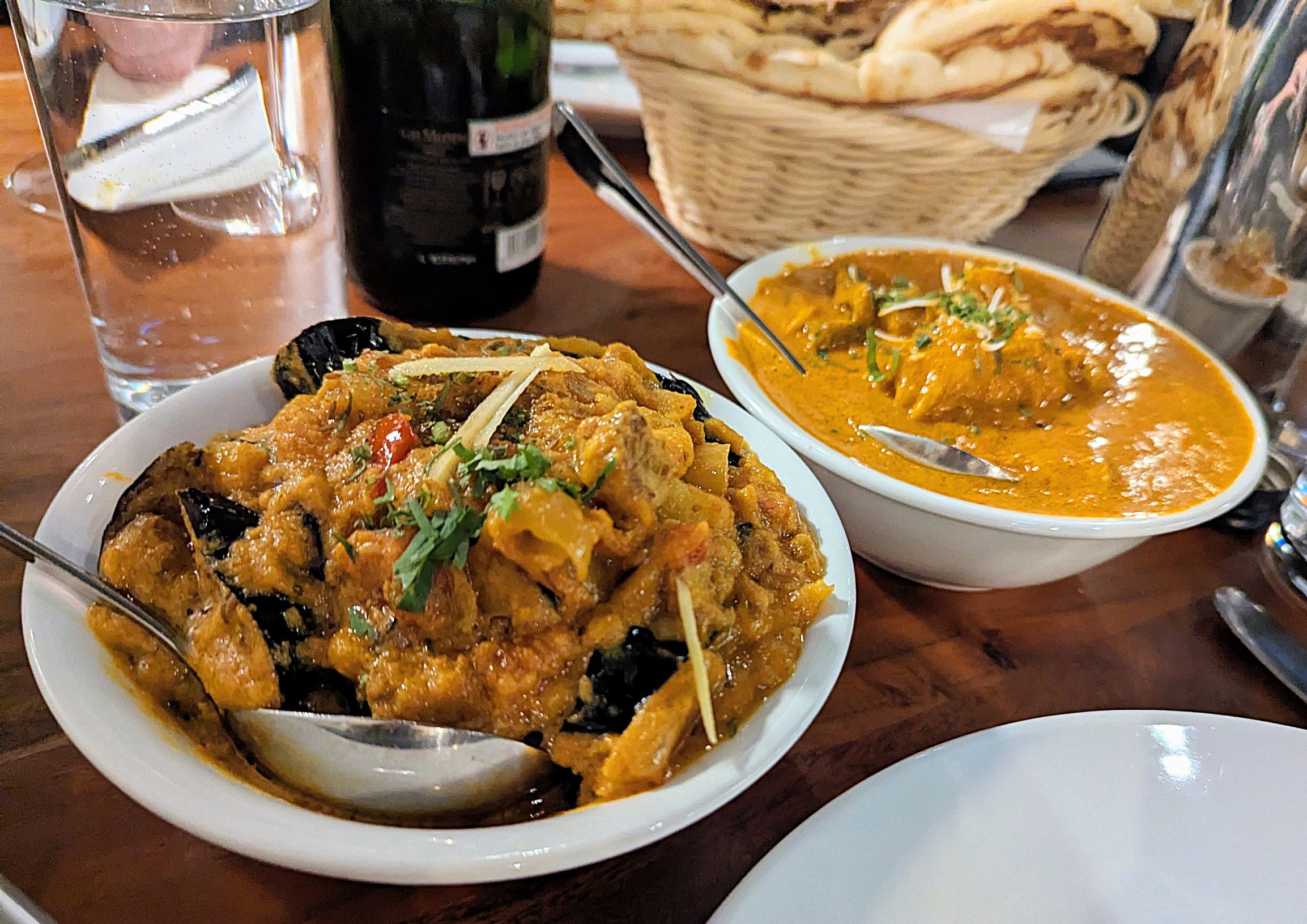
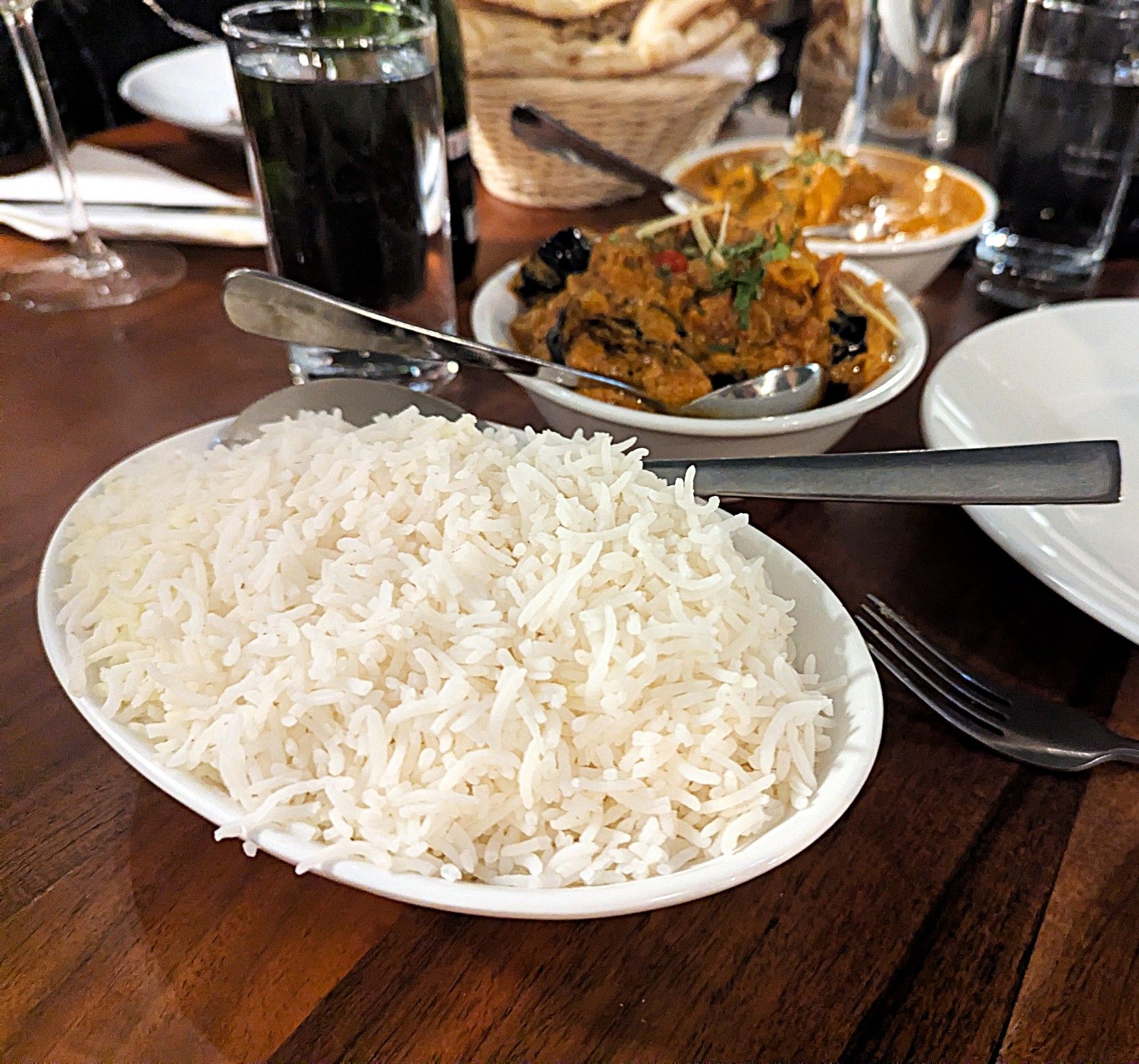
Cindy Lou had one of the best Indian meals ever at Amara. The service was friendly and efficient. Each dish, well presented, arrived in time for us to enjoy the complexity of flavours as we chose. There was no lengthy waiting, but also, we were able to relax and talk over the remnants. These were very difficult to resist, so another visit in the near future is a must. The butter chicken was mild and delicious; my mouthful of the Goan fish curry certainly met my expectations based on my companions’ enthusiasm for the dish (it was too hot for me to have more); the eggplant dish was a splendid accompaniment, as was the beautifully presented spinach chaat; the rice was fluffy and plentiful; and the naan excellent. The stars of the meal were the dosai – mini, as the large would have been a meal in itself. My Masala dosai had just enough heat to enhance the filling. The crepe was the best I have seen in this dish – thin and crisp.



Australian and American Politics
Opinion
The PM’s transactional strategy trumps the president

Bruce Wolpe Senior fellow at the US Studies Centre and former political staffer
August 19, 2026 — 5:00am
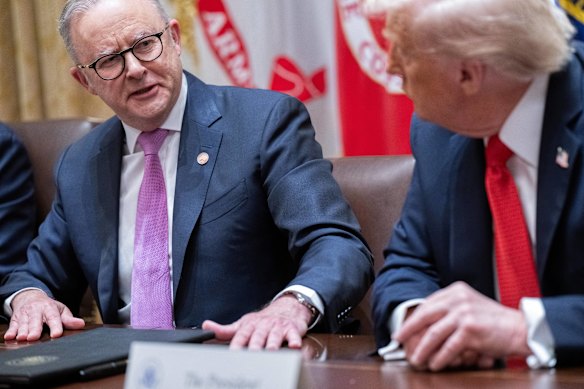
Prime Minister Anthony Albanese has had a tough five weeks in trying to manage “melongate”. He may well heed the advice of James Massola, chief political commentator of this masthead, to forge a “strategic retreat” when a nasty issue undercuts the PM’s standing and authority. But that is not the case when it comes to how the PM deals with President Donald Trump. Albanese has deliberately decided that it is in Australia’s interests to pursue and lock in granular transactional engagements that will not only continue 100 years of mateship (coined by Joe Hockey, a former ambassador to the US) and the 74-year-old ANZUS alliance, but will also keep Australia out of harm’s way on Trump’s chessboard.
Trump has inflicted significant pain on Australia with his vicious wielding of punitive tariffs with virtually every nation the United States does business with. Trump has shredded the US-Australia Free Trade Agreement – a pact that spurred economic growth in both countries. Trump’s Iran war compounds the damage to Australia’s economy.
As Trump has exercised his America First agenda across the globe, he has alienated the leaders of America’s strongest allies. They have hit back directly at Trump, both rhetorically and with aggressive policies designed to blunt the Trump tariffs and remain economically competitive.
Canada’s Mark Carney (US trade talks are “nasty”), France’s Emmanuel Macron (Trump does not have a “serious” approach on Iran), Italy’s Giorgia Meloni (Trump’s “constant, unprovoked attacks”), Japan’s Sanae Takaichi (“rolled her eyes” at Trump’s remarks on Pearl Harbour), Denmark’s Mette Frederiksen (stop “threatening” Greenland), Germany’s Friedrich Merz (Iran had “humiliated” the US), and many other leaders have bridled at Trump’s mean language towards them.
Hostility flares on all fronts. This is not Australia’s posture.
When Trump starts trade wars, the PM firmly declares Australia is innocent and floods the policy and political channels in Washington, from the White House to the Congress, with rock solid evidence that the tariffs are unjustified and must be wound back. There is no threat of retaliation. Instead, Australia keeps grinding away.
In the war with Iran, when Trump asked if Australia would join a European armada to clear the Strait of Hormuz, the answer was a low-decibel decline, with no judgments publicly expressed about how Trump is prosecuting the war. Trump has twice said he is “not happy” that Australia would not participate. But Trump did not make it a defining moment in the alliance.
With continuing speculation that AUKUS could sink of its own weight, according to Albanese, Trump has expressed “full steam ahead” on the partnership. If there are make-or-break issues such as the production schedule, they are not at the Oval Office level.
The secret of the PM’s success is in how the relationship is conducted. It is not a relationship dependent on meetings in the White House, but on calls embroidered with friendship. Last week’s call was a classic. There was no advance word it was scheduled. It was reportedly a long conversation. They exchanged views on the key issues of the moment, from Iran to tariffs. The PM supports Trump’s insistence that Iran not possess a nuclear weapon. Albanese flagged China’s aggressive posture towards Australia. They discussed critical minerals and new Australian boom towns to supply them.
The PM said they even discussed a few personal issues. This offers a new level of insight into the relationship.
The call reflected solid work by ambassador Greg Moriarty, and a warm reception for incoming US ambassador David Brat.
Albanese’s transactional posture trumps the dynamics that European and Asian allies are pursuing with this president.
There will be further tension points. The Big Tech bros are coming down hard on the News Bargaining Incentive. They have more power and reach into the Oval Office than Australia has. But even if the outcome is adverse to Australia, it will not, under this government, be a make-or-break issue for the alliance.
After November’s US midterm elections, the countdown on Trump’s limited tenure as president accelerates. On the PM’s watch, the landscape will tilt more towards Australia’s favour.
The PM’s frame for engagement with Trump is transactional, not existential. That is the ballgame of his choosing with the US. Relative to the rest of the Western democracies, Australia is winning.
Bruce Wolpe is a senior fellow at the University of Sydney’s United States Studies Centre. He has served on the Democratic staff in the US Congress and as chief of staff to former prime minister Julia Gillard.
The Opinion newsletter is a weekly wrap of views that will challenge, champion and inform your own. Sign up here.
The Latest Writing Opportunities 
IMslexia <postbag@mslexia.co.uk> Unsubscribenbox

Welcome to August’s wave of hot competitions and submission opportunities! *
It’s hard to believe, but there will be a time when you won’t be sweltering in your shorts and unable to think. When that time comes, if you’re a poet looking to learn craft skills, we’ve got just the thing…
Introducing Women’s Writing Days: Poetry
If you want to spend the autumn shaping your ideas into poetry, or learning how to revise the poetry you’ve already written, this is the Writing Day for you.
Award-winning poet and tutor Hannah Lowe will guide you through the complete evolution of a new poem: from first spark to finished draft.
You’ll leave the day with :First drafts of three completely new poems
A set of craft techniques you can apply to your future poetry.
A revised and polished draft of one of your new poems.
Spend the morning discovering new work, and devote your afternoon to deepening and refining it. One day, £100, are you interested? I WANT A DAY OF POETRY
*NB -Mslexia is UK based. Here in Australia, we are enjoying winter moving into spring. The following projects can be undertaken here, unlike the UK based poetry session in person above.
BLUE PENCIL
The BPA Short Story Award is a competition created to discover emerging voices. It’s open to unrepresented writers anywhere in the world. All you need is a complete short story of up to 2,500 words. Previously published or prize-winning short stories are accepted, provided the author retains publication rights. This year’s judges are literary agent Corissa Hollenbeck, and Sussie Anie, author of the award-winning novel To Fill a Yellow House. Top prize is £1,000 and agent introduction.
Deadline: 13 Sep Entry fee: £22* Enter here
MOTH NATURE WRITING PRIZE
The Moth Nature Writing Prize aims to encourage and celebrate the art of nature writing. It is awarded annually to unpublished pieces of prose or poetry which best combine exceptional literary merit with an exploration of the writer’s relationship with the natural world. Open to unpublished work of less than 4,000 words, you could win €1,000 and a week at The Moth Retreat in Ireland!
Deadline: 30 Sep Entry fee: €16
*Enter here
SEARCHLIGHT NOVEL PRIZE
Are you an unagented YA or children’s author with a standout novel for readers aged under 18? Then this one’s for you. Send the first 3,000 words, an intriguing pitch, and a one‑page synopsis that explains what the novel is about. If you make the shortlist, you’ll be invited to submit the full manuscript or at least 30,000 words if the novel is still a work in progress. For chapter books aimed at readers of seven or older, simply submit the complete story! First prize is £1,000, a one-to-one with an agent and your pitch is sent to a wide network of literary agents actively seeking new talent.
Deadline: 30 Sep Entry fee: £24
Enter here
FREEDOM FROM TORTURE
This worthwhile org is hosting their biennial poetry competition, which will be judged by the eminent novelist, poet and Booker Prize winner Alan Hollinghurst and Poet Rachael Allen. This year’s theme is Worlds into Words, ‘inspired by the journeys people carry within them’. Poems can be submitted from anywhere in the world, in any style, with a length limit of 40 lines, and must be original, unpublished work.
Deadline: 9 Oct Entry fee: £5 Enter here *
MSLEXIA NOVEL COMPETITION
Open to women who are not yet published as novelists, to novels of at least 50,000 words in any genre for adult or young adult readers. Just submit your first 5,000 words on entry to be in with a chance of winning £5,000, plus manuscript feedback, pitch training and an exclusive invitation to a private party in London, where you can rub shoulders with agents and editors who are hungry to publish new voices.
Deadline: 21 SepEntry fee: £28
Enter here
SKRIB Your novel deserves more than a messy doc.
Somewhere between the notebook, the sticky notes and the twelve open tabs, your story is waiting to be finished. Skrib is a writing studio built for novelists, poets and screenwriters: one place to plan, draft and finish your book. Map every chapter, character and plot thread on an open canvas, write beside it in a clean, distraction-free editor, and keep research, notes and every past draft in one searchable library. And when you are stuck, a Companion that already knows your work helps you find the next move: it suggests, you decide. Prefer no AI at all? Choose Purist and keep the whole studio. Every word stays yours, and your manuscript exports cleanly to .docx, EPUB or screenplay formats.
Mslexia readers write free for a month: start at skrib.com/mslexia with promo code MSLEXIA26.
*SKRIB – From your first idea to your final draft
MSLEXIA FLASH FICTION
For the sharp and swift, we’ve got our smallest word count but big prizes can still be won. Our flash fiction category is judged by Sherrie Flick, with the winner landing £1,000 plus publication in Mslexia Issue 112 alongside all the other finalists! Eight additional shortlistees will receive £50, plus publication in Mslexia’s ebook anthology Best Women’s Short Fiction 2026 alongside our winner and finalists. Just send us your micro fiction of up to 300 words on any subject to enter.
Deadline: 21 Sep Entry fee: £8
Enter here
UNCERTAIN STORIES
Uncertain Stories exists to promote short stories, and they welcome submissions from both new and established authors. They are currently looking for unpublished submissions of between 1,000-15,000 words for their Anthology series. And they pay! Just make sure to give yourself plenty of time to submit, as there’s a lengthy submission form to fill in.
Deadline: 30 Sep Submission fee: £5
RAIN TAXI
Rain Taxi is a magazine and literary organization that fosters engagement with innovative writing through programs and publications. Their quarterly print journal Rain Taxi Review of Books (and its accompanying online edition) is an award-winning advocate for literature, and is open to submissions of new/forthcoming books for review consideration. You need to send them a physical copy of your book – but if selected this is a major boost for your writing.
Submission fee: Free
MSLEXIA SHORT STORY COMPETITION
Our annual short story comp is super flexible – we want your unpublished short fiction of up to 3,000 words on any theme. Judged by Ingrid Persaud, the top prize is £3,000, three additional finalists will each receive £150, and all four winning entries are published in Issue 112 of Mslexia. Plus, the top twelve entries receive £75 and will be published in our anthology Best Women’s Short Fiction 2026. So many chances for publication – this is a must-enter for all short story writers.
Deadline: 21 Sep Entry fee: £14
Enter here
FOLDING ROCK
This magazine is dedicated to the best new writing in, from and connected to Wales. If that sounds like you, send your best short fiction or creative nonfiction of between 2,000 and 4,000 words. They offer a generous £360 fee for each piece selected for publication!
Deadline: 1 Dec Submission fee: Free
Info here
| * These listings were sponsored by friends of Mslexia who particularly want to hear from you. |
 Copyright (C) 2026 Mslexia. All rights reserved. Copyright (C) 2026 Mslexia. All rights reserved.You are receiving this email because you have signed up to receive information about Writing Opportunities with Mslexia. We will never pass your details on to anybody else. You can unsubscribe from Mslexia emails at any time using the links at the foot of this email. Our mailing address is: Mslexia P O BOX 656 Newcastle Upon Tyne, Tyne And Wear NE99 1PZ United Kingdom |
*It is worth mentioning Jeanne Sarson & Linda MacDonald in this context they are — Co‑founders of PA NST (Persons Against Non‑State Torture) a Canadian feminist human‑rights organisation dedicated to naming, documenting, and challenging non‑state torture — especially torture perpetrated against women and girls in domestic, familial, trafficking, and ritualised contexts.
Their work is survivor‑centred, long‑term, and internationally respected.
See: Women Unsilenced: Our Refusal to Let Torture‑Traffickers Win, 2021, University of Toronto Press and their most recent work: Healing, 2026, Freisenpress for Women Unsilenced.
Jeanne and Linda often appear on Jocelynne Scutt’s monthly zoom meeting, Brilliant and Bold.

Secret London
London’s oldest surviving house is the only residential home in the city to have survived the Great Fire of London – and Winston Churchill’s signature is etched into one of the window panes
Having survived blazes, blitzes, and bulldozing, this historic house in Farringdon is thought to be the oldest in the city.

Katie Forge Staff Writer 12 August, 2026
The streets and structures of London are filled to the brim with almost 2000 years of history. And with something outrageously old to ogle at every turn, it’s tricky to know which of the city’s spots boast the lengthiest backstories of all. Especially as – well… as far as I’m aware, none of us were actually there when the foundations of the capital were being laid. But a house that puts forward a pretty convincing case for being the oldest in London can be found over in Farringdon in the form of 41-42 Cloth Fair. So, grab yourself a cuppa, folks – because it’s time for another highly not particularly anticipated Secret London history lesson.
41-42 Cloth Fair
Tucked away down a rather surreptitious side street near Smithfield is 41-42 Cloth Fair. This pair of houses is thought by many to be the oldest residential dwelling in the City of London, having survived the likes of blazes, blitzes, and bulldozing.
The house in question is located right by St Bartholomew the Great church (which just so happens to be the oldest church in London – but perhaps a bit more on that another day, hey?). A block of 11 buildings were constructed along Cloth Fair between 1597 and 1614 and 41-42 is the only building that has survived to tell the tale.