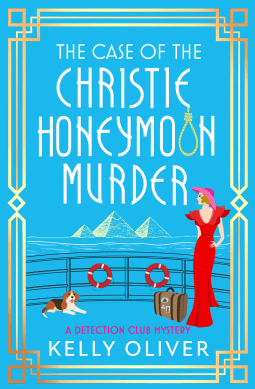
Kelly Oliver The Case of the Christie Honeymoon Murder (The Detection Club Book 5) Boldwood Books, September 2026.
Thank you, NetGalley, for providing me with this uncorrected proof for review.
Kelly Oliver has an excellent vehicle for her lovely writing style. While familiar figures such as Agatha Christie and Dorothy L. Sayers move in and out of the narrative (and in this novel Max Mallowan appears too), the possible romance between Eliza Baker and Theo Sharp begins to blossom, withers and recovers, delightful Queenie snuffles and seeks titbits…and, of course, a murder takes place and is investigated, the engaging narrative with brilliant descriptions of the surroundings and entertaining characterisation is flawless.
On this occasion, Eliza is prevailed upon by her sister Jane, MI5 agent, to travel on the honeymoon cruise of the newly wed Mallowans. Under suspicion of being involved in an espionage conspiracy, Agatha Christie is under investigation. The reason for such suspicion? The plot of Christie’s Seven Dials Mystery. However, it is a murder that is central to the narrative, with suspicion landing on the close circle accompanying the victim, Sir Richard Hardwicke.
Eliza’s investigations, her relationship with Theo, and one of her employers at the Detection Club, Agatha Christie, and of course, Queenie, are well drawn. Eliza’s background and Theo’s are juxtaposed, creating a personal background to the relationships in the Hardwicke circle where Hardwicke controls his environment creating various levels of anguish and anger in his family and ghost writer.
The murder is well plotted, Eliza’s successful result well-conceived, and the moving forward of relationships familiar from previous books in the series pleasing. Hopefully, there will be more novels in this series with its engaging characters, vibrant descriptions, and not least, the glimpses of the women detective writers.
 Spotlight on Black British History

We Were There by Lanre Bakare A captivating account of the overlooked and unexplored history of Black Britain beyond London. READ MORE

Part of the Story by Margaret Busby Essays, writings and reflections from Britain’s first Black woman publisher. READ MORE

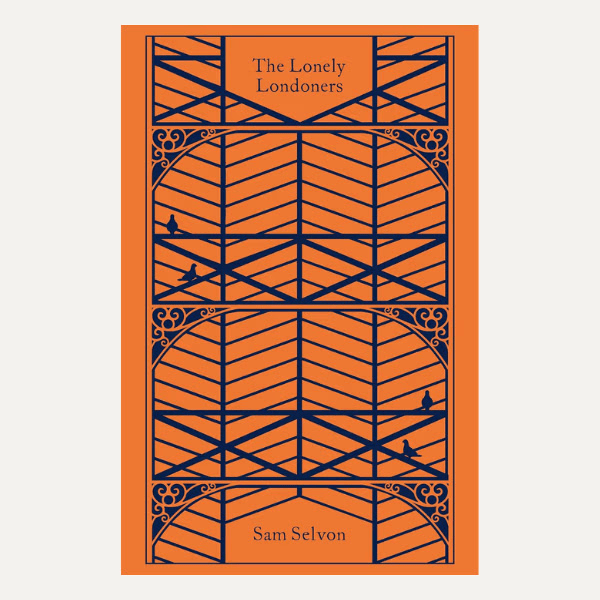
The Lonely Londoners by Sam Selvon A devastating, funny, and unforgettable work of literature that reflects the experiences of the Windrush generation. READ MORE
Special connection to country for Warmun’s two Lester Prize portrait finalists
By Giulia Bertoglio and Mietta Adams ABC Kimberly
Dwayne Jessell hunches over, studying the lines his brother-in-law Troy Drill is tracing with grass dipped in ochre.
He nods in approval.
“It’s very good,” Jessell says.
The two Gija men are both from Warmun, a small community in Western Australia’s remote north east, 3,000 kilometres north of Perth and 1,000km south of Darwin.
It has one shop, a dusty airstrip, a few boab trees, and two finalists in one of Australia’s most prestigious portraiture prizes.
It’s Jessell’s second time as a Lester Prize finalist, while emerging artist Drill is making his debut.
The style of their self-portraits is unique, but both reflect the artists’ deep connection to their country, culture and community.
Jessell tears up, and apologises, as he talks about what the recognition means.
“It made me proud,” he says.
“Not only for myself but for my community and the people of this great Gija Country.”
Carrying the old people’s dream
Jessell’s father, Jack Britten, a co-founder of the Warmun Art Centre, taught him to paint.
“I was watching him paint while I was playing around with my bike,” he says.
“My dad thought I wasn’t paying attention … but I kept a lot in my head.”
Both artists see their work as continuing the legacy of friends, family and neighbours who came before them.
“They used to paint outside the old building here, the old post office,” Jessell says.
“From then on, things were good for this place, until it became a proper art corporation.”
Challenging history for cultural hub
The centre attracted a significant following after its opening in 1998.
But the building and its artworks were hit hard by floods that inundated Warmun in 2011.
While the flood was devastating, Jessell says the Gija community showed its strength in its response.
“That’s why we get these arts centres — to remind the younger generation to know where they stand,” he said.
“To never forget who they are as an Aboriginal person and never lose that dream, never lose our culture, our law and our country.”
A community, a family
Troy Drill says Jessell and the other older artists at the centre are a constant source of help and encouragement.
“The first time I came here, I didn’t know nothing about painting; they told me ‘have a try, I’ll show you’,” he says.
Drill says the centre offers a safe place to create and learn, but also connect.
“We have good times, sometimes bad, then we keep on working,” he said.
“It’s just like a little family around here.”
“I know I’m blessed because of my old man and my people around here who work alongside me.”
Unique artistic movement
Even in the Kimberley heat — temperatures in town routinely hit the high 30s at this time of year — Warmun artists paint together outside.
While Jessell’s prize-contending self portrait is a linoprint, he, Drill and many other local artists work predominantly with ochre.
The natural earth pigment is extracted the old fashioned way, from the surrounding hills with crowbars, water and a bucket.
University of Western Australia art history expert Darren Jorgensen said the body of ochre paintings produced from Warmun has had a distinct contribution to world art.
“Warmun has the most distinctive history of all the Aboriginal art movements in Western Australia,” Professor Jorgensen said.
“The colours in the Kimberley are rich and bright and vibrant. They’re the colours of red and brown and the white from underneath the rivers.
“To this day, they’re really the only art centre across Australia that’s exclusively working with ochre.”
He said Warmun’s ochre painting and portrayals of Purnululu (The Bungle Bungles) were unique, carrying similar significance to Arnhem Land’s bark paintings, or the dot painting style pioneered by artists in the Northern Territory.
Both Jessell and Drill say the defining features of their Lester Prize’s self-portraits reflect the landscape around them.
Jessell says the stripes on the hills and creases of the skin were one, speaking to both identity and geography.
“It represents who we are, where we come from, and the land our old people walked before us, the marks, you can see it on the hill.”
The $50,000 Lester Prize winner will be announced on Friday in Perth.

An Intriguing Exhibit on Shakespeare and Black Women
The Folger looks into some under-explored history.
Written by Briana Thomas | Published on October 5, 2026
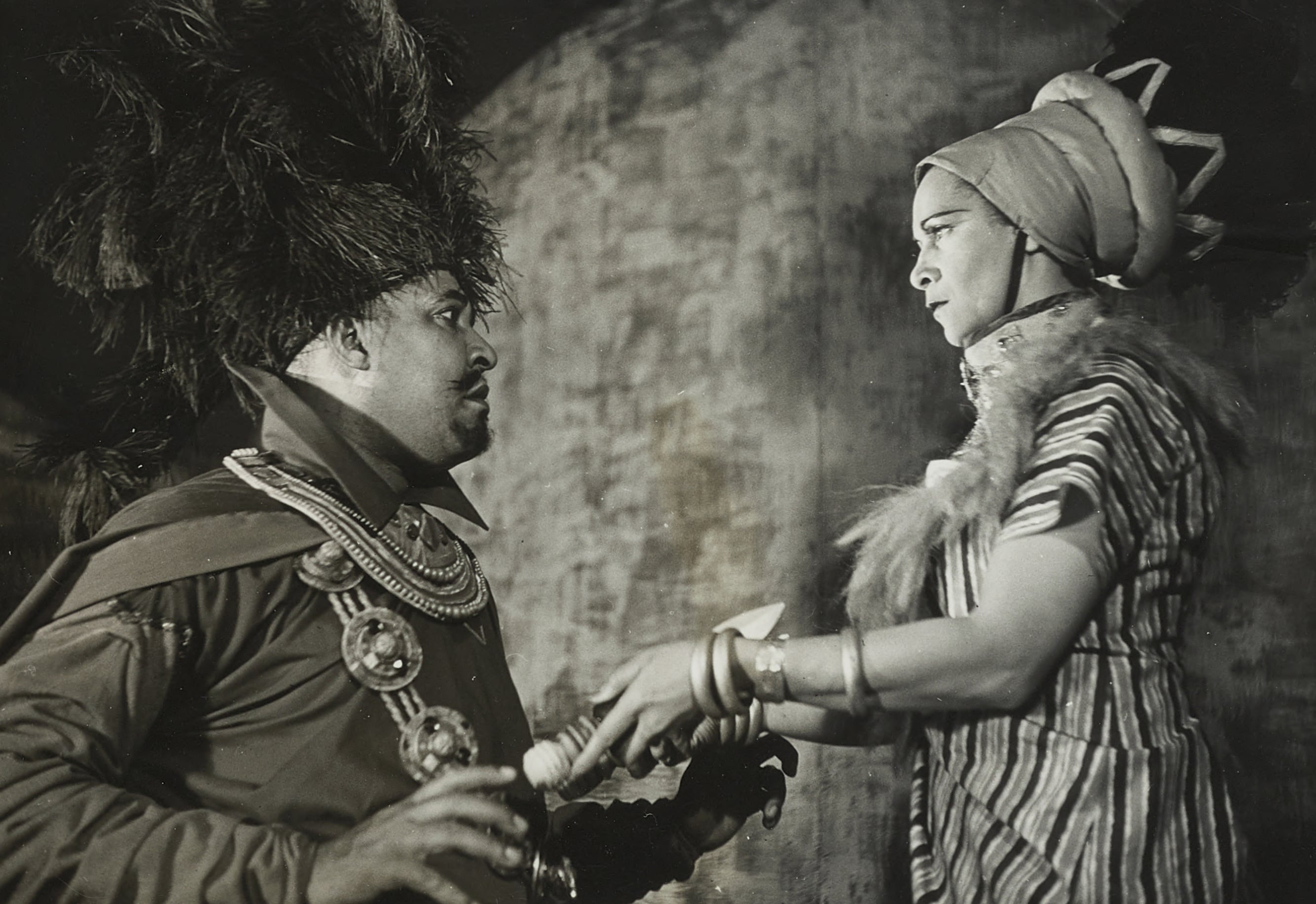
Photograph courtesy of Library of Congress.
William Shakespeare’s Sonnet 130—the one beginning, “My mistress’ eyes are nothing like the sun”—is one of his best-known and most beloved poems. A satire challenging the way conventional European poetry described women, it has sparked literary debates, class discussions, and, most recently, Folger Shakespeare Library’s new exhibition, “To Hear Her Speak: Black Women and Shakespeare.”
Named after another line from that sonnet, the free exhibit—which opens October 16 and runs until May 2—explores how Black women have engaged with Shakespeare’s work over hundreds of years through literature, performance art, fashion, and activism. Patricia Akhimie, the show’s curator, spent two years developing the library’s most expansive temporary exhibition since its 2024 gallery renovation, with the help of six research fellows and a team of assistants. The result is a collection of nearly 100 objects, including playbills, rare photographs, vintage diaries, a famous Jet magazine cover, and visually striking stage costumes. It’s all organized chronologically across four sections in the Folger’s Stuart and Mimi Rose Rare Book and Manuscript Exhibition Hall. “There’s a longstanding myth that Shakespeare’s London was not a particularly diverse place, that Shakespeare wouldn’t have interacted with Black people,” says Akhimie, who also runs the Folger Institute, the library’s scholarship-and-research wing. “It’s just not true.”
The proof is stitched into each section of “To Hear Her Speak,” starting with a map marking where Black women worked and lived in London during the Bard’s time. Interactive displays and other tools let visitors hear and see the stories of Black women, including an accompanying audio guide featuring Shakespearean actress Adjoa Andoh. In one gallery, a rare display of pioneering African American poet Phillis Wheatley’s handwritten copybook invites viewers into a conversation about slavery, while another room transports them into the future of performance art with celebrity designer Melissa Simon-Hartman’s metallic gold-winged Afrofuturist costume, which was used in a Royal Shakespeare Company production of Much Ado About Nothing.
At one point, visitors can sit inside a recreated New York City living room modeled after the 1950s home of playwright and civil-rights activist Lorraine Hansberry. Here, a television broadcasts archival footage of thought leaders Toni Morrison and Maya Angelou admiring and examining Shakespeare’s legacy.
For Baltimore textile artist Suzanne Coley, “To Hear Her Speak” provides a chance to reach an audience that might not otherwise encounter her work. Coley’s embroidered book bindings offer a notable contemporary component. Black women, she says, “have been speaking, but too often in sotto voce, or hushed voices. This exhibition gives us the opportunity to lift those voices so they can be heard and, in my case, seen.”
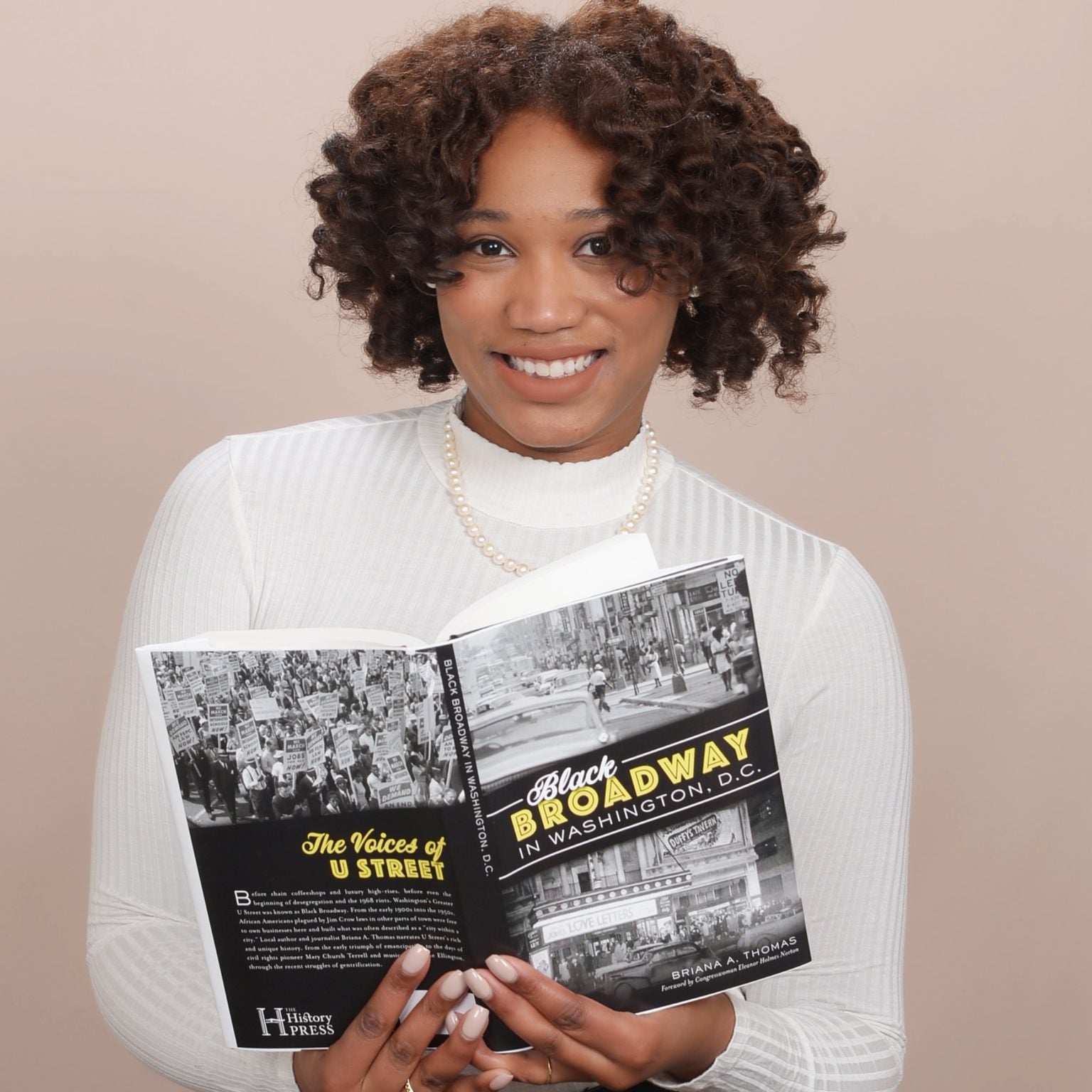
Briana A. Thomas is a local journalist, historian, and tour guide who specializes in the research of D.C. history and culture. She is the author of the Black history book, Black Broadway in Washington, D.C., a story that was first published in Washingtonian in 2016.
American Politics
Bob McMullan
Four weeks to go until US mid-term elections
Nate Cohn, a political analyst with the New York Times made a telling statement this week: “If the polls are exactly right, Democrats would take the Senate with room to spare.”
He is not one to make such statements lightly.
He is, of course, statistically correct. If the final result reflects the current polling averages in Real Clear Politics the Democrats would win Georgia; North Carolina; New Hampshire; Maine; Michigan; Ohio; Texas; Alaska and Iowa. In addition to those currently held and the safe seats in contest this time this would give the Democrats 53 seats out of 100. “Room to spare”. And indeed, this might happen. Many forecasting websites suggest something similar.
But Nate Cohn also does not pretend to know if the polls will be right this time.
A quick look at the range of recent poll results suggests a need for caution.
I have done an exercise by taking the best and the worst recent polls in the key states rather than merely taking the averages. Averages are very useful but can be misleading. The range of variation in the various poll results can be instructive.
Georgia and North Carolina
In these two states, the best and the worst recent results both have Democrat candidates winning by at least 4-5%. It is not surprising that Republicans have withdrawn their central support from their candidate in North Carolina. Nothing short of a catastrophe will prevent Roy Cooper and Jon Ossofff winning.
Texas and Ohio
Remarkably, these two recent strongholds for Republicans also show that even the worst polls for the Democrat candidates have them ahead, although only marginally. These results make me more confident about these two states, although the flood of money against James Talarico in Texas is truly remarkable. These two should be considered probable Democrat victories. Given the held seats, safe seats and the two above, these two should take the Democrats to 48.
New Hampshire and Minnesota
These are two states where the Democrats are defending the seats of retiring Democrat Senators. Polling averages suggest both Chris Pappas in New Hampshire and Peggy Flanagan in Minnesota should win, but at least one poll for each of them has the result tied. Two to keep an eye on. The Democrats obviously need to retain both to stay at 48 if previous results go as suggested.
Maine, Michigan, Alaska and Iowa
These are the four states which appear to be balanced most precariously.
As Nate Cohn noted, the polling averages suggest the Democrats are favorites to win all of them. Betting markets suggest a similar story.
However, a breakdown of the polling numbers suggests a more nuanced situation.
In all these seats the most favorable polling has the Democrat ahead by a range of 4-8%. On the other hand, the least favorable poll in each case has them all losing by a range of 2-5%. This level of variation is not surprising; polling is an inexact science. What it does suggest is the remaining four weeks of campaigning will be crucial.
Kansas, South Carolina, Nebraska and Florida
At the start of the campaign no-one expected any of these to be in serious contention. But they all are, although to varying degrees.
Clearly, Kansas is the best option for Democrats. Kansas has not elected a Democrat Senator since 1932 but a combination of Trump’s unpopularity and an attractive Democrat candidate mean the current situation suggests a very close race. The incumbent Republican senator, Roger Marshall leads on the polling averages by about 1-2%. At least one reputable poll has the Democrat, Adam Hamilton in the lead! Watch this space. None of the others look as close. South Carolina has come into the equation since the Republicans chose an apparently weak candidate and the Democrat candidate, Annie Andrews is now running her close. But so far nothing suggests Ms. Andrews is in the lead.
I believe Nebraska and Florida are out of reach but in each case, there has been at least one reputable poll which has had the Democrat candidate at least tied for the lead.
(As a matter of interest, the contest for Governor of Florida looks very interesting. I have not studied it closely but reports suggest it will be close.)
The final point to make for this week is that early polling is picking up pace. Millions of votes have already been cast and more early-in-person voting starts each week. This means the impact of a late change, in either direction, will be less important than might have been the case in previous elections.
On balance, the Democrats look almost certain to win control of the House, not least because some of the Republican gerrymandering has backfired, and still have a reasonable chance of winning control of the Senate.
This is quite remarkable given how adverse the state breakdown was for this round of mid-term elections. There are still millions of dollars being spent and millions of votes to be cast but Democrats and their supporters should have an interesting night on the first Tuesday in November.

Another Bad Day in Court for Trump
Joyce Vance from Civil Discourse <joycevance@substack.com> Unsubscribe
Today, as Trump was busy trying (and failing) to convince his own people that “affordability” is a word made up by Democrats, the courts were having a field day with him.
First up was the dismissal of the charges against Davey Hearn, the Olympian Trump tried to scapegoat for the problems he himself created at the Reflecting Pool. D.C. Superior Court Judge Todd Edelman dismissed the indictment with prejudice, in a 26-page written order, as the defendant’s lawyers, Norm Eisen among them, requested. The Judge had the discretion to dismiss the charges without prejudice, which would have given the government an opportunity to refile its charges at a later date. But in clear censure of how loose and fast prosecutors played with the evidence in this case—they knew, for instance, that a contractor said the coating on the pool was peeling a week before Hearn’s visit—the Judge dismissed the case with prejudice. The government is done.
Judge Edelman wrote, “Given the process that led to the Indictment in this case, Mr. Hearn and the public cannot view the promise that a future grand jury would protect him against a meritless, politically driven prosecution at some point in the future as anything short of facetious.” He concluded, “in the exceptional circumstances posed by this case, the government has no right to retain the ability to compound the errors it has already made, or even to threaten to do so, at Mr. Hearn’s expense.” The White House had no comment. And truly, there was nothing for them to say in the face of the damning and forthright criticism the Judge had of their case: “Within a month, the government recognized that its prosecution lacked merit. It reached this conclusion not because it had misidentified Mr. Hearn as the perpetrator of the alleged act, but because no crime had occurred: the observed damage to the Reflecting Pool was due to a contractor’s ‘rushed and botched’ installation of the lining while conducting renovations, and Mr. Hearn’s actions had no effect on the value of the Pool.”
Meanwhile, on the other side of the country in Seattle, a federal judge ruled in favor of Roger Rogoff, the U.S. Attorney appointed by the court pursuant to the Vacancy Reform Act when Trump failed to confirm a candidate within the time period he was permitted to keep an interim appointee in place. Instead of abiding by the law, the Trump administration’s response was to fire Rogoff as soon as the judges appointed him. Rogoff sued and got his hearing in court today. It did not go well for the administration.
The Judge booted the Trump appointee and denied the Justice Department’s request that he stay his order. If Trump wants the U.S. Attorney of his choice, then he needs to put forward a nominee and have him or her Senate confirmed. Until then, unless a higher court rules to the contrary, the local court has the ability to appoint an acting U.S. Attorney to serve.
Obama U.S. Attorney in the Western District of Washington, Jenny Durkan told me, “The ruling was an important win for the Constitution, and the power of Congress and the Courts. The Rule of Law is most important when the powerful try to disregard it.” Her Republican predecessor, John McKay, put it like this, “This decision is a thorough rebuke of President Trump and his blatant disregard of the Senate’s Constitutional role to advise and consent to appointments of US Attorneys.” Bipartisan agreement!
On appeal, the administration is likely to argue that Congress violated the separation of powers when it gave courts the ability to appoint. But there is a strong argument in the law’s favor: Without it, presidents could freely bypass the constitutional requirement that their appointees be confirmed by the Senate.
In Minneapolis, Renee Good’s family sued the government. Their lawyers issued the following statement: “Renee’s death was not an accident. It was the predictable result of a coordinated campaign by senior officials in this administration to target Minnesotans of Somali or Hispanic origin and silence anyone who dared to raise their voice in protest.”
There are two separate civil cases: The first is a case against the United States under the Federal Tort Claims Act, and it alleges that federal agents were responsible for Good’s wrongful death, as well as committing battery, assault, false imprisonment, emotional distress, and acting with negligence.
The second, brought in part under a civil rights statute, specifically names Jonathon Ross, the ICE officer who shot and killed Good, as well as other federal officials who were serving at the time of her death, including White House deputy chief of staff Stephen Miller and former Homeland Security Secretary Kristi Noem, alleging her death was part of a conspiracy to deny undocumented people’s rights.
The Federal Tort Claims Act is a difficult statute to recover under, and the courts have narrowed its application over the years. The second lawsuit is what is commonly referred to as a “1983 action.” The statute in question, 42 U.S. Code § 1983 allows individuals to sue the government for deprivation of rights. If these cases make it to the discovery phase—the government will file immediate motions to dismiss for failure to state a legally recognizable claim—the information it would be forced to give up and the types of officials who would be exposed to depositions could make this a revelatory legal exercise and not a welcome one for Trump administration officials.
The federal judge hearing the Broadview 6 case in Chicago, April Perry, has opened a “fact finding” process to determine whether the U.S. attorney’s office intentionally misled her in that case. It’s an exceedingly unusual step, and it could result in contempt proceedings or other sanctions depending on what she determines, including the possibility of criminal contempt.
The case involves indictments brought by the U.S. Attorney in Chicago against six anti-ICE protestors in September 2025. But the case fell apart. First there were allegations it was a selective, politically motivated prosecution. Then the Trump-appointed U.S. Attorney, Andrew Boutros, was forced to dismiss the case when evidence of serious grand jury misconduct emerged. He appeared in court to ask for the dismissal with prejudice before telling the judge that what the defendants did, protesting, was “unacceptable in a civilized society.”
The Judge, a former federal prosecutor herself, cautioned Boutros at the time that he wasn’t helping himself out by making a statement like that about the defendants after conceding the case against them should be dismissed. She warned that there could be sanctions down the road. Today, she set that process in motion.
All in all, it was a tough day, and deservedly so, in court for the Trump administration. Yes, ultimately, some of these cases go to the Supreme Court, which has been Trump-friendly to say the least. But not every case reaches the Supreme Court and not every bit of accountability the lower courts create can be undone there. The Hearn case exposed Trump’s rants that domestic terrorists were responsible for the damage to the Reflecting Pool as lies. Nothing can undo the truth.
That’s a lot of cases to keep track of in just one day. But the unprecedented deluge is proof of just how off the rails the Trump presidency is. He has no regard for the Constitution, the rule of law, or for people who are not satisfying his goals and aims. Increasingly, Trump supporters, like Republicans in Congress who are out of their jobs because of him or businessmen who are being strangled by his tariffs, are being forced to acknowledge the truth. That’s why we’re seeing Trump’s support in the polls unravel.
Even as he fights cancer, even after Trump’s personal attacks on him, Joe is not giving up. Neither can we, no matter how fast the news comes at us some days. [The video associated with this quote cannot be reproduced here].
It is slow and painstaking, this work of following all of these developments carefully and sharing the truth about them. But the hard work is paying off, polls across the country say so. I hope that Civil Discourse makes you feel more capable of doing the hard work democracy is demanding of us right now. Thanks for being here with me.
We’re in this together, Joyce
Cindy Lou at the Civic Pub
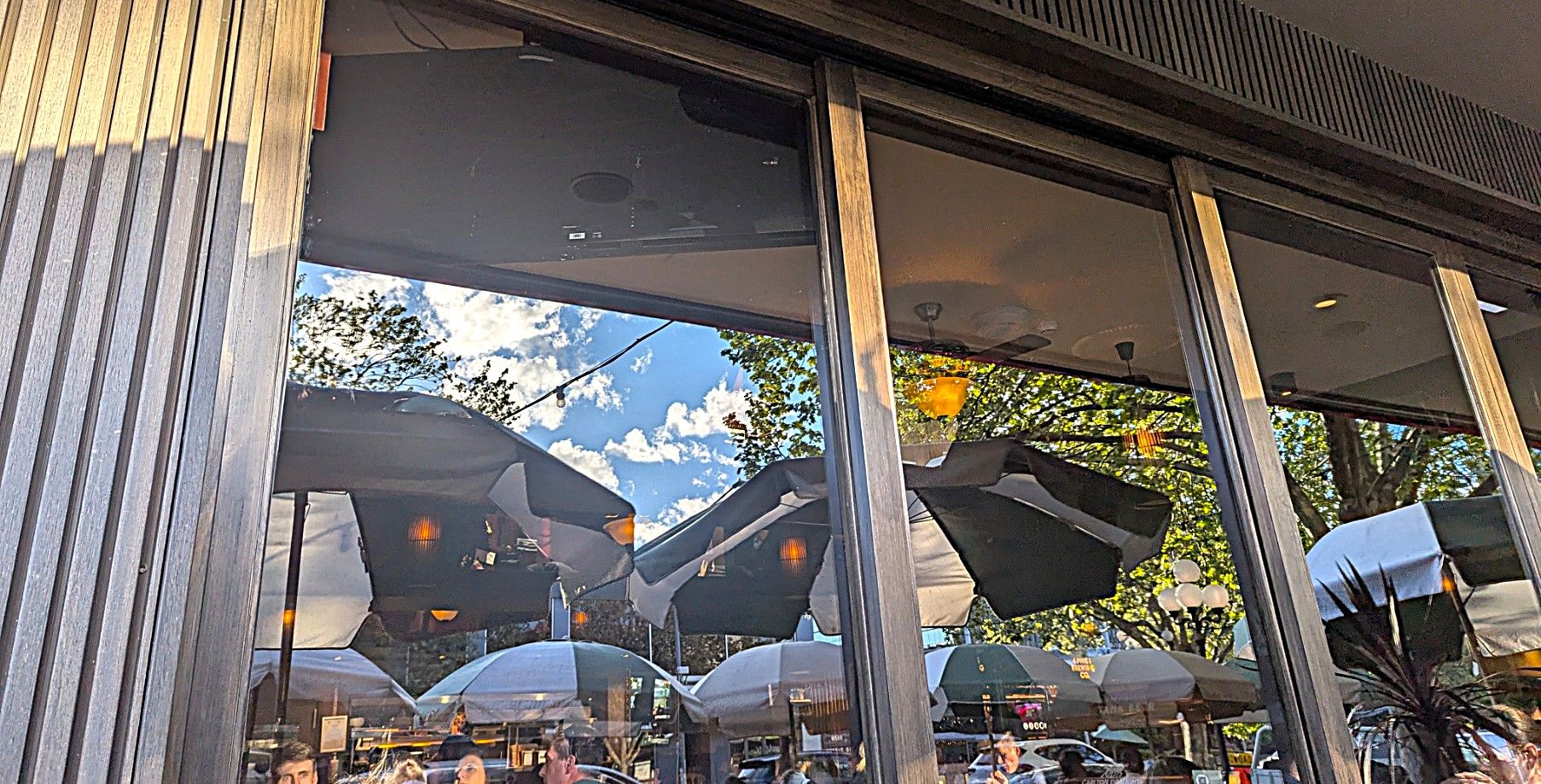
The dogs were welcome – always a good sign. What huge meals! However, they were quite flavoursome, and the chips were excellent (alas). Service was friendly, and, although not particularly fast, good enough for this occasion – a casual meal at a familiar Canberra spot. Meals we ordered, from the fairly extensive and innovative menu (the oysters and a bowl of mussels were tempting), were a pork chop with a delicious chutney and greens; a chicken burger and chips; the chicken and avocado meal; and fish and chips with coleslaw and tartare.