Both books reviewed this week were provided to me by NetGalley in exchange for an honest review.
Daniel Talbot In Love With Movies Columbia University Press 2022
Daniel Talbot’s In Love With Movies is a delight, from the first chapters about the early years in independent theatres; though Those Who Made Me Laugh in Part 2; Part 3 which, in Unsung Film Pioneers, covers collectors, early distributors and exhibitors; part 4, Acquisitions is an engrossing wander through some of the films shown in Talbot’s theatres; Directors In My Life, enumerates those such as Yasujiro Ozu, Nagisa Oshima, Ousmane Sembene, Roberto Rossellini, Jean-Luc Gordar, Rainer Werner Fassbinder, Wim Wenders, and Werner Herzog; Parts 6, 7, 8 and 9 with ‘a memory project’, includes more directors, Criteria and Reflections; Portraits, including friends and legendary a film critic, in Part 10; followed by more on independent theatres in Upper West Side Cinemas; and an epilogue written by Toby Talbot who edited the book. There are excerpts from Dan Talbot’s Festival Notes, an interview between Talbot and Stanley Kauffmann, and an intriguingly titled, Dreams on My Screen. Books: Reviews
George Thomas Clark They Make Movies BooksGoSocial 2021
They Make Movies is a combination of fiction, real events, and interpretations of the protagonists’ attitude towards the films in which they appeared or directed. Some of the events are seemingly told by the subject of the chapter, others appear to be based on reality or the author’s interpretation, described as if they are addressed directly by the subject. The stories are told with humour and, at times, sharp impact. The process is clever, providing researched topics and events, with the aid of fictional devices. Authenticity is supported by the list of film sources, although there are no footnotes to disturb the flow of the account – or to clarify what material is accurate and what might be fictional. As exciting as this presentation could be, I found that I could not warm to the execution of this style in They Make Movies, although some of the observations are well made. Books: Reviews
The information which appears after the Canberra Covid report: masks for Covid 19; UK Tory leadership, Tom Watson; Trump and presidency – a startling admission; Bob McMullan – a thoughtful article on the US Senate mid term elections, first of a series; Democrats and fundraising; Cindy Lou has coffee in a paper cup.
Covid in Canberra since the end of lockdown
Parrots in a tree, seen from my balcony, on a Canberra winter’s day.
Vaccinations – 80.6% : 1 dose, ages 5 – 11; 69.4 % 2 doses, ages 5 – 11; 97.4 % 2 doses , aged 5+; 77.5% boosters, making 3 doses , aged 16+. The rules for boosters have recently changed, and pharmacy waiting times have increased as people take advantage of the availability of additional doses of vaccine for the expanded age groups. Fourth dose take up is not as yet being recorded.
14 July – New cases reported, 1,367; people in hospital, 137; people in ICU 5; people ventilated, 3.
15 July – New cases reported, 1,208; people in hospital, 135; people in ICU, 4; and 3 ventilated.
16 July – 1,104 new cases; 4 people in ICU; and 3 people ventilated. 17 July – 956 new cases; 167 people in hospital; 6 people in ICU; and 3 people ventilated. 18 July – 887 new cases; 171 people in hospital; 5 people in ICU; and 3 people ventilated. 19 July – 1,221 new cases; 170 people in hospital; 6 in ICU; and 3 ventilated. 20 July – 961 new cases; 160 people in hospital; 4 in ICU; and 2 ventilated.
I noticed that more people are wearing masks in shopping centres today. The photobelow looks even better.
I disappoint myself being glued to Twitter. Two and a half years after leaving Parliament, a Tory leadership race has reduced me to scrolling an iPhone for news a thousand times a day.
It looks like Penny Mordaunt is doing so well that her ministerial colleagues can’t afford to let her get on the ballot paper. As the current rules only allow Conservative party members a choice between two candidates, backroom deals will trade votes to squeeze her out. If I were Rishi Sunak, that’s what I’d be doing.
For election strategists, Penny Mordaunt is to Boris Johnson what Cillit Bang was to Mr Muscle. He sacked her from the Cabinet. She owes him little loyalty. Vote Penny? Bang, and the dirt is gone.
To voters, she’s a blank canvass. She can paint a fresh and new picture of conservative Britain. As she doesn’t have much of a record, she offers an unprecedented opportunity for the Conservatives to renew in office that it looks like they’re about to squander.
My former parliamentary colleagues in Labour will be praying for a Rishi Sunak/Liz Truss run-off this week.
* why the asterisk in the subject line?
The fresh new start argument also applies to Tom Tugendhat but looking at his numbers, he is doubtful to make the cut. It’s a pity because he is a brave and honourable man. **
**Tom Tugendhat (along with Kemi Badenoch) has now been eliminated, and the race has been reduced to three candidates, Penny Mordaunt, Rishi Sunak and Liz Truss.
What ?
And now for a thoughtful article about American politics! This is the first of a series about the mid-term elections.
Trump may save the Democrat’s Senate bacon in November.
Bob McMullan
Bob McMullan
All the signs point to a disastrous result for the Democrats in the House of Representatives in the mid-terms in November.
Inflation, the unpopularity of the president and the usual mid-term set-back for the incumbent President’s party should combine to deliver a comfortable majority for the Republicans in the House. After all, the Democrats have only the slimmest of majorities to begin with.
The extent to which the reaction to the Supreme Court decision in overturning Roe vs Wade will change the electoral equation in the House is unknowable at this stage but may prove to be a mitigating factor in November. This may reduce the losses but it is very hard to see the Democrats holding on in the House.
However, the Senate may paint a different picture. In the state-wide races like Senate seats (and Governor’s races) candidates are more exposed and their merits count for more. And Trump has delivered some candidates of very doubtful quality which should give the Democrats a chance to hang on and perhaps even to make gains.
By way of background, the 100 member Senate is currently split 50/50 with the Vice president having a casting vote. In 2022 35 Senate seats are up for election. It would normally be only 34 but a Senator from Oklahoma is retiring early even though he is only 86!
Of the 35 seats in contest the Republicans hold 21 and the Democrats 14. This means that the continuing Senators are 36 Democrats and 29 Republicans. However, many of the Republican held seats up for election this year are rock solid Republican strongholds, including the special election in Oklahoma.
The influential Cook Report suggests as many as 16 of the 21 Republican seats can be considered safe. This is substantially correct, but there may be interesting issues to watch in four of the “safe” seats.
This would mean 12 certain extra seats, taking the Republicans to 41.
The other four usually safe seats are Iowa, Missouri, Utah and Alaska. In Iowa, the Senator seeking re-election for a six year term, Senator Grassley, will be 89 on election day and 95 at the end of the term he is seeking! Early polling was very strong for Grassley but since the Democrat primary in which they chose Michael Franken the most recent polling has seen the gap narrowing. It is difficult to see Grassley losing but it will be worth watching on the night.
In Missouri the problem the Republicans have is a potentially very controversial candidate. Eric Greitjens is a previous Governor who lost office as a result of a series of scandals. At the moment he is leading in the polls for the August 2 primary, although only narrowly. His potential candidature has mobilized senior Republicans in the state to support an Independent Republican. It would not be unprecedented for the Republicans to lose the Senate seat in Missouri due to the selection of an unacceptable candidate. Should Greitjens win the primary it will be another worth watching on the night.
In Utah the interest is generated by a strong Independent candidate, Evan McMullin. He has managed to persuade the Democrats not to run for the seat and as a consequence has an outside chance of beating the incumbent Republican, Mike Lee. Lee was an early critic of Trump but signed on to the “Big Lie” about the stolen election.
The Alaska Senate election is interesting because it is a contest between Lisa Murkowski, a Republican who voted to impeach Trump, and a Trump loyalist Kelly Tshibaka. The interesting question is, should Murkowski lose the primary will she still contest the election as an Independent or take advantage of new voting system in Alaska which will allow the top four candidates in the primary ballot to compete in a ranked choice election in November. I think Murkowski is most likely to win in November.
Should any of these potential Independents win they would not necessarily deprive the Republicans of a majority but they would create more opportunities for negotiation about legislation and appointments. Nevertheless, the wise thing to do is assume that the Republicans will win all four seats in one way or the other. This would take them to 45 seats.
The Democrats have 42 “safe seats” and four others they are likely to win: Illinois; Colorado; Connecticut and Washington state. If we assume that the Republicans are likely to win 45 seats and the Democrats 46, that leaves 9 to be fought over:
Arizona (D) Georgia (D) New Hampshire (D) Nevada (D) Pennsylvania(R) Wisconsin (R) North Carolina(R) Ohio (R) and Florida (R).
I intend to assess the prospects in each of these states and follow-up on them and any other developments of interest in the Senate race on a regular basis.
Arizona Trump’s support for Blake Masters as Republican candidate for the Arizona Senate seat appears to be a blessing for the Democrat incumbent Mark Kelly. The primary will be held on 2 August but polling suggests Masters is leading the internal Republican race by about 7%. However, he does not appear to be the strongest candidate for the general election. At this stage the polling suggests that Kelly is leading Masters by 9-10%. This would be a very difficult gap to close by November.
Georgia The situation here is similar. Herschel Walker, the Trump endorsed Senate candidate, staggers from one crisis to another. This does not mean he cannot win in what is still a slightly Republican state but it makes it harder for the Republicans than it otherwise would be. A recent poll had the Democrat incumbent Senator Raphael Warnock, ahead by 10%. This is an outlier and probably wrong. The RCP average of polls has Warnock ahead by 1-2%. Given the numerous vulnerabilities of Walker I think Warnock has a better than even chance of pulling off another unlikely victory.
New Hampshire The situation in New Hampshire is not clear. The Republican primary is not until September and there is no current sign that I have seen of a Trump-endorsed candidate in the field, The incumbent Democrat Senator, Maggie Hassan, is a former Governor and seems a strong candidate. She won very narrowly last time but should win this time unless national trends count too strongly against her. The lack of a Republican candidate means there in no useful polling data to serve as a guide to the likely outcome. Such current data as there is suggests Hassan is ahead of any of the Republican contenders by more than 4%, but this is likely to change once the candidate becomes clear.
Nevada The Republicans seem to have selected a reasonably good candidate in Nevada in Adam Laxalt to run against the incumbent Democrat Senator Catherine Cortez Masto. Recent polling suggests Cortez Masto has her nose in front but it is likely to be a close contest in November.
Pennsylvania Pennsylvania is another state where Trump’s influence in the Republican primary has opened the door for the Democrats to have a chance of making a gain in the Senate. Trump supported Dr Oz, because he always said nice things about him in his (Oz’s) TV programs! Oz is handicapped by the impression, probably true, that he actually comes from New Jersey, and the extreme positions he had to take up to win the Trump endorsement and then to win the primary. Early polling has the Democrat candidate, John Fetterman, ahead by between 4 and 9%. This would be a gain for the Democrats because the retiring Senator is a Republican. The key question is whether the national trends will be sufficient to enable Oz to close the gap.
Wisconsin The opportunity for the Democrats in Wisconsin is generated by the apparent weakness of the incumbent Republican Senator, Ron Johnson. His approval numbers are very low (37%) and he does not poll well against any of the Democrat alternative candidates. The Democrats will choose their candidate on August 9 and there does not appear to be a clear favorite. They all poll well enough against Johnson to suggest a close race in November. It is hard to believe that an incumbent Republican Senator could lose in the electoral climate in the USA in 2022, but if anyone can do it Ron Johnson can.
North Carolina The Senate contest in North Carolina is close at the moment between the Republican candidate Ted Budd and the Democrat Cheri Beasley. However, Budd has been consistently ahead by between 3 and 4%. Despite the narrow margin and some signs of improved prospects for the Democrats in recent national polls it is not clear what path to victory Ms. Beasley has. The incumbent Republican Senator is retiring.
Ohio Ohio is a state which is going steadily more Republican but in which the Democrats have an opportunity to make a Senate gain in 2022. With the retirement of popular Republican Senator Portman and the subsequent decision to choose a Trump backed candidate, JD Vance, the Democrat Tim Ryan is currently leading in some polls and is competitive in all of them. It would be a surprise if Ryan were to win in 2022 but it appears to be a realistic possibility.
Florida It is hard to see incumbent Republican senator, Marco Rubio, being beaten, Trump won Florida easily and Ron de Santis is running for re-election as Governor which should help the Republican turnout. However, intelligent observers suggest that it is a seat to watch and the Democrats have put up a strong candidate in Val Deemings. Current polling has Rubio ahead by at least 5% and up to 9%.
The Democrats have to win four of these nine states to maintain their 50/50 status which would enable them to continue to use the Vice-President’s casting vote. As they are currently leading in five of the states the evidence suggests that Donald Trump’s control of the Republican party has given the Democrats a realistic chance of maintaining Senate control from 2022-2024.
Some good news for Democrats
Cindy Lou comments on a casual coffee and delicious bread
While I waited for my Indian take away (by the way, the advertised 10% deduction for pick up is not operating although advertised on the menu) I had a coffee and delicious savoury sweet bread close by.
Simple seating, trays and tongs for collecting your bread, pleasant coffee in a takeaway cup – a nice place to wait for your takeaway.
And certainly a great place to collect all sorts of delightful treats…
M.L. Stedman A Far-flung Life Penguin Random House Australia| Penguin eBooks (AU Adult), March 2026.
Thank you, NetGalley, for providing me with this uncorrected proof for review.
I found M. L. Stedman’s The Light Between Oceans a stunning, poignant read. A Far-flung Life is both, and more. The writing is beautiful, the plotting refined, characterisation excellent, and the description of the Australian environment, superb. The MacBride family, Phil and Lorna, and their children Warren, Rosie and Matt gain their livelihood from Meredith Downs, a Western Australian sheep station. As the male MacBrides travel through the bush, their truck full of sheep, and miles from any ocean, their ownership of a boat, housed in a towering shed on the property is the first hint that this is an outback Australian family whose lives may be unusual. However, familiar aspects of life on the land also rule the MacBride’s lives. Warren, as the eldest son will inherit the station when Phil retires and Matt and Rosie must find other futures. Matt’s seems assured – he is excelling at a prestigious boarding school in Perth and feels that he can do anything, including sailing the boat. Rosie, although also at a prestigious boarding school in Perth, does not have the same prospects. Not only is she less academic, but it is also understood that she will marry another station owner and follow in Lorna’s footsteps. The world is not open to her, nor is independence. The unique responses she devises provide both possibilities and vulnerability. This trip, with its evocative depiction of the surrounds, foliage, wildlife, the road, the sky, will change the MacBride’s lives.
Moral dilemmas impact a family suffering grief and markedly changed circumstances. The morality imposed by country life and small compact communities, conflicts between the law and understanding of the shortcomings of the legal system, together with figures in authority choosing one path or the other are explored. Characters whose flaws and courage under immense challenge are also examined. Even seemingly minor characters are so well developed that their aims and concerns become strong threads that help weave the story together into a remarkable narrative that pulses with feeling.
At the same time as being a novel in which the characters evoke interest, sympathy and, at times censure, A Far-flung Life explores historical changes in Western Australia. The first chapters describe life when pastoral properties associated with small country towns dominated, going back into the past that the MacBrides enjoyed, to the events of 1958 when the novel begins, and the immediate aftermath, through the years up to the introduction of mining exploration in the late 1960s to the 1970s and then again in the 1980s. There are reflections on the 1890s goldrushes and the immigration associated with these, the ‘boom and bust’ nature of the economy, a possible connection with Kew Gardens which serves as a reminder of the British heritage of some Australian settlers and the scourge of asbestos mining recalling other waves of immigration.
An immense novel of tragedy, tenderness, courage and memorable characters and events, this also becomes a domestic story where the MacBrides and their wider family overcome setbacks. Quietly they go about their business on the land and with each other, eventually making assured choices and judgements that resonate with the rhythms of the land on which they dwell.
Julia Wagner Hester Street Bloomsbury Academic, October 2025.
Thank you, NetGalley and Bloomsbury Academic, for this uncorrected proof for review.
This inspiring book provides the blueprint for three studies – analysis of a film; analysis of the depiction of a group that is the focus of a work of art; and detailed analysis of the film that is the topic of the book – Hester Street. It is worth considering the broad sweeping value of Julia Wagner’s Hester Street to each of these studies. The first two aspects demonstrate the value of Wagner’s work to creating a measure for analysing any artistic endeavour and depictions of groups within those works. That is, Hester Street might not be the film that you want to analyse but provides excellent tools for evaluating any film. Similarly, studies of groups will benefit from the detailed work undertaken in this text. It is a stellar source for studying much creative work. And that is before approaching the topic of the book, the analysis of Hester Street, the film.
Chapters cover topics such as the way in which visual and spoken language conveyed historical information; how immigration impacted on perspectives in Hester Street; the symbolic values associated with costume and ritual; and the relative freedom Jews experienced in America, using Yiddish widely as well broadening their cultural pursuits through this increased freedom, depicted through descriptions of individual characters. The last chapter, discussing reviews of the film, was a standout in its detail and forbearance. The reviews provide such an insight into the understandings that coloured the way in which the film was assessed. That some reviewers felt quite able to exhibit their antisemitism and sexism provided a look into a world in which such egregious utterances seemed to be acceptable.
There are notes, a bibliography, and photographs. The thorough analysis benefits both general studies and the specific examination of Hester Street, making the book an outstanding resource. Through the last chapter, what is a dedicated analysis of Hester Street became a more broadly focussed look at the environment in which it was shaped. What a gem this book is!
Australian Politics
Thank Paul Keating for creating Superannuation !!
Labor appears set to reform capital gains tax discount after parliamentary inquiry findings*
Report reveals the Howard-era settings are helping fuel intergenerational inequality in Australia’s housing market.
Labor has given one of its strongest signals yet the capital gains tax discount will be reworked in the May budget, with a parliamentary inquiry finding the Howard-era settings are helping fuel intergenerational inequality in Australia’s housing market.
A Greens-led parliamentary inquiry said the 50% discount “skewed the ownership of housing away from owner-occupiers and towards investors”.
“The benefits of the capital gains tax discount are also unequally distributed, with implications for income and wealth inequality and intergenerational inequality,” the report released on Tuesday found.
The treasurer, Jim Chalmers, has signalled a willingness to make changes to the discount, introduced in 1999 for assets held for more than a year.
Along with negative gearing rules, the discount has been blamed for promoting housing as an investment mechanism for wealthier Australians over the rights of would-be first time buyers.
Labor members on the committee linked possible changes to government work already under way ahead of the 12 May budget and last year’s economic reform roundtable, which promised to address intergenerational inequality in the tax system.
Treasury is modelling changes that could see the discount reduced to 33% for housing investors, while retaining the current 50% rate for shares and other investments.
The Greens Treasury spokesperson, Nick McKim, used the report to argue Labor’s majority and the Greens balance of power in the Senate represented an opportunity for the government to pass ambitious tax reform in the current parliament. In the report, he noted when the discount was established, 57% of 30 to 34-year-olds owned property. That figure has since dropped to 50%.
“The [discount] means that if you go to work as a teacher, a bartender or software developer you pay double the amount of tax than someone who received the same amount of money taking advantage of soaring property prices by buying and selling investment properties,” McKim said.
“It means that someone who speculates on housing pays a lower rate of tax than the carpenters, plumbers and electricians who actually build the houses.”
Chalmers said he would be briefed on the report’s findings in coming days, stressing budget decisions would be made by cabinet.
“It will no doubt identify some issues which are familiar to us,” he said.
“But I’ll read it, of course, I will. I’ve said that the government’s policies haven’t changed in this area. Any further steps will be a matter for the cabinet.”
Coalition senators strongly rejected calls for change however.
“If Labor pursues changes to the CGT discount, it will be another simplistic and one-dimensional response that sidesteps the central problem in housing, that not enough homes are being built,” Liberals Andrew Bragg and Dave Sharma said in a statement.
“The real answer to housing affordability is more supply, not another Labor housing gimmick.”
Independent senator David Pocock used the report to suggest Labor had “overlearned” the lessons of its 2016 and 2019 election defeats, when changes to CGT and negative gearing were rejected by voters.
Pocock recommended removing the discount for properties bought after 1 July this year, with a new 25% discount introduced for new homes. He called for negative gearing arrangements to be limited to a single investment property.
Research released last week by the Australian Council of Social Services found the five highest earning electorates nationally capture 22% of all CGT discount expenditure, against just 1.6% for the bottom 10 electorates.
A tax white paper released by the Sydney independent Allegra Spender this month argued for reducing the CGT discount to 30% as part of wider reform package that would allow major cuts to income taxes.
*See March 4, 2025, blog where Bob McMullan’s article on capital gains tax How Australia should fix capital gains tax appears. The article was also published in Pearls and Irritations.
American Politics
This is an old story, but the analysis is worth repeating here. In the meantime, the case against Mark Kelly has been blocked.
The Pentagon’s move to demote Senator Mark Kelly for accurately saying that troops should refuse illegal orders is a pernicious form of political bullying.
One indicator of a polity’s health is whether a citizen can be punished merely for telling the truth about the law. The signs for American democracy are not good.
This morning, Defense Secretary Pete Hegseth announced that he has begun the process to demote Mark Kelly, a retired Navy captain and NASA astronaut, and reduce his pension pay. The operative facts here, naturally, are not Kelly’s past service but his current rank and service: a Democrat serving in the U.S. Senate and a political adversary of President Donald Trump.
“Six weeks ago, Senator Mark Kelly—and five other members of Congress—released a reckless and seditious video that was clearly intended to undermine good order and military discipline,” Hegseth wrote on X this morning. He cited two articles of the Uniform Code of Military Justice; Kelly, unlike the other five, holds retired military status, which makes him subject to sanctions from the Defense Department.
What Hegseth did not cite was what Kelly and his colleagues actually said in the video, and for good reason. Doing so would expose the absurdity of the charge and the abuse of power involved in the attempt to demote him. “Our laws are clear: You can refuse illegal orders,” Kelly said. No one in the Trump administration has disputed that this is true. A more agile or even-keeled administration would have smoothly dismissed the video as irrelevant: This is true, but of course we would never issue an illegal order. (As Kelly and his lawyers have noted, Hegseth has cited the same law about disobeying illegal orders in the past.) Instead, Trump and his aides threw a fit, dubbing the Democrats the “Seditious Six.”
One possible reason for the frantic response became apparent quickly. Not only have U.S. forces been conducting likely unlawful strikes on boats in the Caribbean; late last year, several newssources reported new details about the first attack, in which the initial strike had not killed all those aboard the boat, so a second strike was ordered. The Pentagon’s own Law of War Manual for service members states that “orders to fire upon the shipwrecked would be clearly illegal.” This revelation made the video from Kelly and company not just hypothetical but directly relevant. It also put Hegseth on the defensive, even among Republican members of Congress, and he quickly shifted blame to Admiral Mitch Bradley, who commanded the operation.
In contrast to the language in the Law of War Manual, the UCMJ articles upon which Hegseth rests his decision to discipline Kelly are vague, involving “conduct unbecoming an officer and a gentleman” and “all disorders and neglects to the prejudice of good order and discipline in the armed forces.” As my colleague Tom Nichols has noted, these provisions might apply to Hegseth’s own admitted behavior while in uniform. Punishing Kelly is extremely pernicious political retaliation. It also ought to be embarrassing to Hegseth, though he seems as impervious to shame as his boss.
The censure is appealable in the next 30 days, and Kelly vowed to fight it. (If it goes through, it could cost him roughly $1,000 a month in pay, per Politico.) “My rank and retirement are things that I earned through my service and sacrifice for this country. I got shot at. I missed holidays and birthdays. I commanded a space shuttle mission while my wife,” former Representative Gabby Giffords, “recovered from a gunshot wound to the head—all while proudly wearing the American flag on my shoulder,” he said in a statement on X. “If Pete Hegseth, the most unqualified Secretary of Defense in our country’s history, thinks he can intimidate me with a censure or threats to demote me or prosecute me, he still doesn’t get it.”
Kelly is one of several critics of Trump to be targeted by the administration in the past year. The administration has repeatedly sought to indict New York Attorney General Letitia James and former FBI Director James Comey; launched investigations into a major Democratic fundraising platform and prominent politicians including Senator Adam Schiff; and used administration policy to bully states that don’t fully cooperate with Trump—most recently vetoing a bipartisan bill on a Colorado water project, apparently as punishment for the state’s refusal to free a former local official who backed up Trump’s false claims of voter fraud.
Despite Kelly’s defiance, his attempted demotion sends a message, even if it ultimately doesn’t come to pass. Kelly has the resources and political support to fight for his views, and he’ll get plenty of prominent backers. But if a notable figure like Kelly can be punished, how can any ordinary soldier or sailor who is currently serving hope to refuse an illegal order without facing serious personal consequences?
Members of the armed forces, and retirees like Kelly, are particularly susceptible to Hegseth’s abuse of power, because they can be punished by the Defense Department internally. But the chilling effect does not end with those who are serving or have served, or with the particular question of illegal orders. The administration has told the other five Democrats that it is investigating them as well. The core belief underlying all of this is as plain as it is dangerous: Criticizing Donald Trump and defending the rule of law is sedition.
Judge blocks Pentagon from downgrading Sen. Mark Kelly’s military rank, pay*
By Jacob Rosen,Sarah N. Lynch Updated on: February 12, 2026 / 8:08 PM EST / CBS News
A federal judge on Thursday blocked the Pentagon from downgrading the military retirement rank and pay of Democratic Sen. Mark Kelly of Arizona, finding that the government had “trampled on Senator Kelly’s First Amendment freedoms.”…
U.S. District Judge Richard Leon’s order prohibits the Defense Department and the Trump administration from taking any adverse action against Kelly to reduce his retirement rank and pay.
“This Court has all it needs to conclude that Defendants have trampled on Senator Kelly’s First Amendment freedoms and threatened the constitutional liberties of millions of military retirees,” Leon wrote. “After all, as Bob Dylan famously said, ‘You don’t need a weatherman to know which way the wind blows.'”
Defense Secretary Pete Hegseth wrote on social media that the ruling would be “immediately appealed.”
Leon’s ruling comes a month after Kelly sued Hegseth, arguing that he was the target of “extreme rhetoric and punitive retribution” by the Trump administration.
Kelly asked Leon to set aside Hegseth’s recent moves to demote him and cut his military pension, and to block the enforcement of any punishment against him.
Leon’s decision came two days after federal prosecutors in U.S. Attorney Jeanine Pirro’s office failed to secure an indictment against Kelly and the other Democratic lawmakers who appeared in the video. Prosecutors had hoped to charge them with violating a federal law that makes it a crime to counsel or cause “insubordination, disloyalty, mutiny, or reversal of duty” by military members, sources previously told CBS News…
The Defense Department said in December it was escalating its review into a command investigation. Hegseth then announced that the Pentagon had “initiated retirement grade determination proceedings” that could result in a “reduction in his retired grade” and “a corresponding reduction in retired pay.” Hegseth also said he issued a formal letter to censure Kelly, citing his “reckless misconduct.”
In a statement, Kelly said Leon’s order “made clear that Pete Hegseth violated the constitution when he tried to punish me for something I said. But this case was never just about me. This administration was sending a message to millions of retired veterans that they too can be censured or demoted just for speaking out. That’s why I couldn’t let it stand.”
“I also know that this might not be over yet, because this President and this administration do not know how to admit when they’re wrong,” Kelly continued. “One thing is for sure: however hard the Trump administration may fight to punish me and silence others, I will fight ten times harder. This is too important.”
CBS News has reached out to the Defense Department for comment. The Justice Department declined to comment.
At a recent court hearing, Leon grilled the Justice Department and expressed strong reservations about the Pentagon’s efforts. Active-duty military officers typically face limitations on their right to free speech to promote discipline and obedience, but the military is now seeking to extend those limits to retired service members like Kelly.
“That’s never been done,” Leon told Justice Department attorney John Bailey during the Feb. 3 hearing, adding that the government did not have a single case to support the argument.
“You’re asking me to do something that the Supreme Court has never done,” Leon said. “That’s a bit of a stretch, is it not?”
In his ruling on Thursday, Leon reiterated those concerns again.
“Secretary Hegseth relies on the well-established doctrine that military servicemembers enjoy less vigorous First Amendment protections given the fundamental obligation for obedience and discipline in the armed forces,” Leon wrote.
“Unfortunately for Secretary Hegseth, no court has ever extended those principles to retired servicemembers, much less a retired servicemember serving in Congress and exercising oversight responsibility over the military. This Court will not be the first to do so!”
Sen. Mark Kelly (D-Arizona) held nothing back when discussing President Donald Trump‘s recent war efforts with Iran…
“I’m thinking, you could pick a random group of people off the street tonight here in Washington, D.C. — just a random group — and they could probably do a better job than our government is doing right now with this,” Kelly said while discussing the events with MS NOW’s Jen Psaki.
“They don’t have a goal, there’s no strategic plan, there’s no timeline, and what this is likely to lead to is, again, a long war with a lot of dead Americans and no rationale for how this is helping the American people,” the senator continued.
“We have a president that I have serious concerns about whether he understands his role here,” the Arizona senator said.
Kelly has been a staunch critic of Trump’s Operation Epic Fury, especially since it was confirmed that six American soldiers were killed during Iranian counterstrikes.
The Arizona senator is a former U.S. Navy pilot and a current member of the Senate Armed Services Committee.
Heather Cox Richardson from Letters from an American <heathercoxrichardson@substack.com>March 17, 2026
Yesterday, President Donald J. Trump continued to demand that other countries help the U.S. reopen the Strait of Hormuz for tanker traffic, but one by one, they declined. It is a dangerous business, and since Trump launched the war without consulting anyone, they don’t seem inclined to help him out of the mess he created. For his part, Trump has told reporters that “numerous countries” have told him “they’re on their way” to help enable ships to transit the strait, but he has also threatened to leave the North Atlantic Treaty Organization (NATO) over allies’ unwillingness to help clear the strait.
Trump has never articulated a clear reason for the war, but Israeli prime minister Benjamin Netanyahu and Israeli officials have opened another front in Lebanon, saying they intend to destroy the terror infrastructure there as they did in Gaza. So far, Israel’s recent operations in Lebanon have killed more than 850 people and displaced at least 800,000.Thomas Grove, Milàn Czerny, and Benoit Faucon of the Wall Street Journal reported today that Russia has expanded its efforts to keep Iran in the fight against the U.S. and Israel, offering more intelligence sharing and military cooperation. Russia is providing drone components and satellite imagery that enables Iran to strike U.S. troops and radar systems. The reporters say that “Russia is trying to keep its closest Middle Eastern partner in the fight against U.S. and Israeli military might and prolong a war that is benefiting Russia militarily and economically.”
Meanwhile, Iran has been moving its own ships through the strait and appears to be willing to allow passage through for countries that are willing to negotiate with it. If that practice becomes widespread, prices on oil will ease, making it harder for Iran to keep up pressure on the U.S. and Israel.Oil is now selling at more than $100 a barrel, up from about $70 a barrel before the U.S. and Israeli strikes on Iran that began on February 28, and gas prices have risen by at least $0.70 a gallon since then. As David Goldman of CNN reports, Iran’s ability to stop most traffic through the Strait of Hormuz threatens not just about 20% of the world’s oil supply as well as natural gas. About 20% of the world’s fertilizer also passes through the strait, which will affect crops for this year’s growing season. It will also limit helium—necessary for the cooling process when making silicon chips and cooling medical equipment—and aluminum.
Anna Kramer of NOTUS reported today that last fall the Trump administration cut all the State Department staffers from the Bureau of Energy Resources who were in charge of maintaining diplomatic contacts with foreign energy bureaus and Middle East gas and oil companies. Those laid off included the only expert in tracking sanctioned oil tankers, and the person in charge of coordinating with the international agency that manages releases of oil reserves around the world to address crises.
“There was never any handover or transition. There was no formal handover of contacts or anything like that. We were all just let go,” one former State Department energy official told Kramer. Those trying to work on energy issues with the U.S. government after their departure could not find any contacts.Nine former members of the bureau told Kramer it seems clear the administration did not prepare for a global oil crisis. Trump’s claim that “nobody expected” Iran to hit other countries in the Middle East supports their statement because, as they told Kramer, previous administrations planned for exactly that scenario.
Judd Legum of Popular Information explained today that the administration decommissioned the last of its four minesweeper ships in September. Based in Bahrain, the vessels were equipped to find and destroy both moored and bottom mines. They were supposed to be replaced with new systems that use unmanned vehicles, but those have so far been unreliable, and the systems apparently have not been deployed. Legum points out that starting a military operation without anti-mining ships in the region to protect traffic through the Strait of Hormuz illustrates how poorly officials planned.
According to Aaron Rupar of Public Notice, Representative Eric Swalwell (D-CA) observed that Trump “has more plans for the ballroom he’s trying to build at the East Wing than anything he’s gonna do next in the Middle East.”The fact that Trump’s allies in the White House are backing away from the war, talking to journalists like Politico’s Megan Messerly for a piece published today, suggests they see this conflict as a political disaster. Sources told Messerly they hoped the strikes would be quick, removing Iran’s leader much as Trump’s Venezuela strikes did in January. They said they thought Trump’s vagueness on objectives would let him declare victory whenever he wanted to.Now, though, the sources told Messerly, they think Trump “no longer controls how, or when, the war ends.” One told her: “We clearly just kicked [Iran’s] ass in the field, but, to a large extent, they hold the cards now. They decide how long we’re involved—and they decide if we put boots on the ground. And it doesn’t seem to me that there’s a way around that, if we want to save face.” Another warned that officials in the White House “need to worry about an unraveling.”
The sense that Trump has dragged the U.S. into a war in the Middle East is splitting MAGA leadership. Isolationists who supported Trump’s claims of being “America First” and ending long foreign wars are turning on those supporting Trump’s Iranian incursion, and their attacks on social media have become deeply personal. They seem to be trying to hive their supporters off from Trump to coalesce around an even more extreme white nationalism that highlights antisemitism.Today Joe Kent, a staunch Trump ally, resigned as director of the National Counterterrorism Center, saying that he supported “the values and the foreign policies” Trump had campaigned on but that he “cannot in good conscience support the ongoing war in Iran. Iran posed no imminent threat to our nation, and it is clear that we started this war due to pressure from Israel and its powerful American lobby.”
Although Kent is correct that U.S. intelligence assessed that Iran posed no imminent threat to the U.S., both the White House and House speaker Mike Johnson (R-LA) pushed back aggressively on Kent’s statements, trying to justify their Iran entanglement.Johnson said, “We all understood that there was clearly an imminent threat that Iran was very close to the enrichment of nuclear capability and they were building missiles at a pace no one in the region could keep up with.” Trump seemed to try to blame former president Barack Obama for the crisis, telling reporters today that “if I didn’t terminate Obama’s horrible deal that he made…, you would have had a nuclear war four years ago. You would have had…nuclear holocaust, and you would have had it again if we didn’t bomb the site.”
Trump told reporters he thought Kent was a “nice guy” but “very weak on security,” and that he didn’t know Kent well.Yesterday Trump told reporters that a former president told him, “I wish I did what you did” in attacking Iran. He added, “I don’t want to get into ‘who,’ I don’t want to get him into trouble,” although he said it wasn’t former president George W. Bush and also implied it was a Democrat. Chris Cameron of the New York Times reported that those close to all former Democratic presidents—Bill Clinton, Barack Obama, and Joseph R. Biden—deny that they said any such thing or that they have had any contact with Trump lately.
This morning, Trump posted on social media: “Because of the fact that we have had such Military Success, we no longer ‘need,’ or desire, the NATO Countries’ assistance—WE NEVER DID! Likewise, Japan, Australia, or South Korea. In fact, speaking as President of the United States of America, by far the Most Powerful Country Anywhere in the World, WE DO NOT NEED THE HELP OF ANYONE!”
Meanwhile, Trump appears to be attempting to remove the leadership of Cuba. Frances Robles, Edward Wong, and Annie Correal of the New York Times reported yesterday that U.S. officials want to force Cuban president Miguel Díaz-Canel from power but will leave the next steps up to the Cuban people. The reporters note such a move might enable Trump to declare a victory. The U.S. has cut off the oil that feeds Cuba’s energy grid, forcing it to collapse.Yesterday, Trump told reporters: “I do believe I’ll be the honor of, having the honor of taking Cuba. That’d be good,” he said. “That’s a big honor. Taking Cuba, in some form, yeah, taking Cuba. I mean, whether I free it, take it. I think I could do anything I want with it, if you want to know the truth. They’re a very, uh, weakened nation right now.”
Trump’s team has blamed the media for what he insists are unfair reports about the Iran conflict. He has also gone after the Supreme Court, complaining on Sunday about its ruling that his tariffs were unconstitutional, but also complaining that the justices permitted Biden to be inaugurated, continuing to insist—in the face of all evidence to the contrary—that the 2020 presidential election was stolen. He insisted that “[t]his completely inept and embarrassing Court” is “hurting our Country, and will continue to do so. All I can do, as President, is call them out for their bad behavior!” Trump called the court “little more than a weaponized and unjust Political Organization.”
Trump’s pressure on the court over his claims of political weaponization and the 2020 presidential election seems designed to enlist their support for his claims that the 2026 election was rigged if voters choose Democratic majorities in the House and/or the Senate. Trump told House members in January that if the Republicans don’t retain control of the House, he will be impeached.Trump and his loyalists insist that Congress must pass the Safeguard American Voter Eligibility (SAVE) America Act to prevent Democrats from stealing the 2026 election, with Trump posting on social media today: “The Save America Act is one of the most IMPORTANT & CONSEQUENTIAL pieces of legislation in the history of Congress, and America itself. NO MORE RIGGED ELECTIONS! Voter I.D., Proof of Citizenship, No Rigged Mail-In Voting….”
The Republicans won the House, the Senate, and the presidency in 2024, making it hard to argue that Republicans cannot win without new voting rules, but as G. Elliot Morris of Strength in Numbers noted today, since then Trump has lost the working-class white voters and Latino voters who put him in office. Republicans could woo them back but instead are trying to push voters off the rolls by demanding proof of citizenship to vote.It is already illegal for noncitizens to vote in federal elections—such voting is vanishingly rare— and states, which run elections, already require ID. According to the Brennan Center for Justice and the University of Maryland’s Center for Democracy and Civic Engagement, Trump’s demand that voters provide proof of citizenship—a passport or a birth certificate and matching REAL ID—when registering to vote and again at the polls would cut as many as 21 million voters off the rolls.To push the measure through the Senate, Republicans will have to kill the filibuster that requires 60 votes to move a bill forward from debate. Trump is demanding Senate majority leader John Thune (R-SD) make that change to Senate rules, but Thune and less-MAGA Republicans don’t want to. Republicans say they want to debate the measure so that Democrats will be forced to defend their objection to it, but already the fight seems to be shaping up as between Republicans eager to pass a voter suppression bill to support Trump, and those willing to protect voters as well as their own voices in the Senate.Tonight the Senate voted to take up the measure.—
A few days in Perth meant eating out. The best meal was at my sister-in-law’s where we ate too much but enjoyed ourselves. I was pleased to be able to eat the food that I often only see in photographs on Facebook placed by her admiring (and very fortunate) children.
Eating out in Joondalup brought us the familiar toast and vegemite/peanut paste which was comforting.
We also came upon a market one evening, which was a change from restaurants. Eating outside in Perth is pleasant – on this occasion it was not too hot, and of course it was quite different from enforced (Leah) outside eating in Canberra in the cold. The chicken sate skewers and salad were flavoursome and generous. The curry was also a good choice, but not as delicious as the curries served the previous day.
And then there is Dome! Fortunately, this chain is not in Canberra, so the honeycomb chocolate latte is a one off. It was $1 cheaper than the fruit drink beside it, but that is its only virtue. It tasted wonderful. I did not eat all the chips with my fish tacos. The tomato and halloumi bruschetta was very good.
The Booker Prize Foundation – Eight Booker Prize-nominated books that celebrate ‘spinster lit’
From Victorian Britain to contemporary Ukraine, these books feature unmarried women who, in their own unique ways, push back against the social rules and sexism that constrain them
Written by Emily Facoory
Publication date and time:Published February 12, 2026
Unmarried women – so-called ‘spinsters’ – have often been represented unkindly in books, portrayed as undesirable and lonely. Finding a husband and having children – if the tacit rules of 20th century life were to be believed – were the rites of passage for any self-regarding woman. Those who followed a different path were considered by the more traditional members of society to have been ‘left on the shelf’.
Looking back through a modern lens, however, it’s clear that readers have reclaimed the word as a sub-genre of its own; ‘spinster lit’ can be seen as an attempt to challenge misconceptions about the lives of unmarried, often middle-aged women, especially in the mid-to-late 20th century.
Online blogs and forums suggest that Booker-nominated author Barbara Pym has been crowned the ‘queen of spinster lit’, as her novels often include unmarried female characters who have rich and vibrant lives. Camilla Nelson, writing in the Conversation, described Pym’s spinsters as ‘consistently fulfilled and satisfying’, while Ginny Hogan, writing in Electric Literature, said, ‘I see in her characters spinsters of the type I aspire to be: incisive, busy, and fine with or without a partner. Pym was ahead of her time in pointing out how inglorious coupledom was. So ahead, in fact, that we haven’t yet caught up to her.’
Although many of us still find ourselves under pressure to find a partner and start a family, it has become socially acceptable to stay single for longer. According to statistics from Our World in Data, ‘Of the women born in 1940 in the UK, more than 90% were married by age 30… Meanwhile, among those born in 1990, only about 29% of women were married by age 30.’
As the annual fervour around Valentine’s Day builds once more, we thought it was time to celebrate some of the spinsters who play starring roles in Booker-nominated novels. These are unattached women who push up against social and romantic mores, and are ultimately striving to find a way to live on their own terms, whether that’s in England in the 1850s, the Netherlands in the late 1940s, or contemporary Ukraine on the verge of war.
Longlisted for the Booker Prize in 2025, Endling revolves around three Ukrainian women caught up in the marriage industry, earning money from men seeking Ukrainian wives.
Unbothered by love and relationships, Yeva is a scientist travelling across the country, desperately trying to save multiple rare species of snails. She meets two sisters, Nastia and Sol, who have been inspired by their activist mother to expose the marriage industry’s exploitative nature. Containing bizarre kidnapping plots and subverting the damsel in distress stereotype, Endling follows the three determined women as they journey through a nation on the verge of war.
According to Akhila Ramnarayan, writing in Frontline, ‘You cannot help but marvel at Reva’s stunningly original premise, her rapidly paced, oh-so-dexterous prose, and her ability to animate a truly unforgettable constellation of misfits. The three female protagonists are distinctly etched, their initial reservations about one another melting into prickly, tender loyalty, even trust, as the novel progresses.’
Amanda Reynolds The Screenwriter Boldwood Books, January 2024
Thank you, NetGalley, for providing me with this uncorrected proof for review.
This title attracted me and, although unattracted to Reynold’s Close to Me in its televised form, suggests that potentially I have found a new source of entertaining psychological thrillers. The Screenwriter has the added attraction of including social commentary together with the staples of this genre, mystery, devious characters and some intriguing plotting. In this novel, scrutiny of the Hollywood world as the MeToo movement has become part of its public discourse, is woven into the plotting and characterisation.
A prologue introduces Blythe Hopper who, upon looking out of her tower in her home in Hampstead, sees a spire of smoke arising from her garden. Headache forgotten along with the insults she has had to endure from a young journalist and mixed reminisces about her marriage, she hastens downstairs, runs through the kitchen where signs of a fight are apparent, is unable to locate keys to the locked back door, finds instead a gun and …
A month later Marnie Wilde arrives to be Blythe’s ghost writer. She is desperate for the work, for personal as well as financial reasons. Both explain her preparedness to suffer the disagreeable behaviour of Blythe and her business manager, Ludo Villander, the unsavoury accommodation to which she is banished from the well-appointed house, the poor-quality food prepared in a dirty kitchen and numerous rules to which she must adhere. However, lest one feels too sorry for Marnie she is also a less than sympathetic character, with her slovenly appearance, propensity to self-sabotage, and her endless consumption of alcohol. See Books: Reviews for the complete review.
Oliver Lewis The Orwell Tour Travels through the life and work of George Orwell Icon Books, Sep 2023.
Thank you, NetGalley, for providing me with this uncorrected proof for review.
Travel to places such as Wigan, Catalonia, Paris, Motihari and Marrakesh referencing Orwell’s novels and insights into the author and his writing – what more could a reader want? That George Orwell was born in Northern India and died in Sutton Courtenay is intriguing in itself – and what happened in between is a story adroitly woven by Oliver Lewis in The Orwell Tour Travels through the life and work of George Orwell.
I enjoyed the pleasure that Lewis so clearly finds in writing about Orwell, associated locations, and indeed in his own approach to the subject. The enthusiasm Lewis feels permeates the book and I felt drawn into a life and places about which I knew something, but little in comparison with Lewis. Unlike Oliver Lewis, I have not read most of Orwell’s work, as I recall from many years back only the two most well-known, Animal Farm and 1984, and Homage to Catalonia and The Road to Wigan Pier. I also came newly to the many places Lewis visits. This does not matter, he unfailingly provides a picture that draws upon the written work, Orwell’s character and the countries from which Orwell took his inspiration. See Books: Reviews for the complete review.
International Women’s Day
Archives at the Art Gallery of NSW
Los Angeles Review of Books
Reading (and Shopping) with Angela McRobbie
A reflection on the Birmingham School cultural studies scholar’s vision of girlhood.
THE PREEMINENT SOCIOLOGIST and cultural theorist Stuart Hall once wrote that, “as an area of serious historical work, the study of popular culture is like the study of labour history and its institutions. To declare an interest in it is to correct a major imbalance, to mark a significant oversight.” I was awakened to Hall’s ideas—the way that racial, class, and gender relations are present at every level of culture—as an undergraduate student in a British art school in the mid- to late noughties. It was Professor Angela McRobbie, one of Hall’s discerning acolytes, who gathered up his ideas and shaped them into something tangible for me as a young woman. I was first introduced to McRobbie when she took to the lectern at Goldsmiths College—which was her academic home then, and mine as an undergraduate student. Nearly two decades have passed, but her perfectly straight white hair, cut into a severe bob, her agile reading glasses propped low on the ridge of her nose, and her Glaswegian hilt are impressed upon my memory. These largely superficial details are important; McRobbie would be the one to teach me this. Her demeanor was angular but not severe, and she had a cool seriousness about her, one that she powerfully applied to “unserious” subject matter: teenage girls’ magazines, British drum and bass, vintage clothes, and shopping. After the lecture, we were split into seminar groups; I spent a blissful hour with one of McRobbie’s PhD students dissecting a Beyoncé video. Textual analysis was not new to me, but its application to my own girlish and fluctuating life experience—what McRobbie called “girls’ culture”—was revelatory.
I had arrived at Goldsmiths a few years before, despondent and apathetic. Like most middle-class kids of my generation, it felt like the only real options presented to me were university or something definitively vocational. Without an aptitude for science or maths but with a vague facility for words, I applied for courses across the humanities. In 2000, Prime Minister Tony Blair’s New Labour became determined to get 50 percent of young people into degree courses, transforming the university from a place of academic rigor and defined outcomes into what McRobbie calls “a mass social and cultural experience,” predicated on a new kind of cultural economy and knowledge but often lacking any clear direction, of which I was an exemplar. By the time I arrived at university, Blair was already losing favor, and unlike the Cool Britannia of the 1990s, the subsequent decade appeared wishy-washy, culturally ill-defined, endlessly unsure of itself. This is also how I felt personally: I was neither a winklepicker-wearing indie rock devotee, a Home Counties boho “rah” (public school–educated and probably horsey), or a middle-class “scally” from the fine art course. I watched as the R & B of the nineties and early noughties faded into something saccharine and poppy, and as the goths and indie kids hybridized into the unpointed, directionless aesthetic of “indie sleaze.”
It turned out there was a way to make sense of all this. The disaffection and fleetingness of youth was the stuff of cultural studies as I would come to understand it. As a discipline, cultural studies occupied a liminal space between sociology and English literature and was defined by research subjects “not considered legitimate” enough for either, as McRobbie puts it. McRobbie found her professional and critical start as a discerning acolyte of Hall, the Jamaican-born British founder of the Centre for Contemporary Cultural Studies in Birmingham, known to most as the Birmingham School. By McRobbie’s definition, the Birmingham School was not just a mode of thought or a body of research but also a moment in time, in the mid- to late seventies, when pop culture entered academia and became a legitimate subject of study. Hall authored or edited a number of seminal texts (most notably 1976’s Resistance Through Rituals:Youth Subcultures in Post-War Britain, co-edited with Tony Jefferson, and 1978’s Policing the Crisis:Mugging, the State, and Law and Order, co-authored with Jefferson, Chas Critcher, John Clarke, and Brian Roberts) on the intersection of race and class, and was, perhaps reductively, crowned the “godfather of multiculturalism.” As McRobbie, who was studying under Hall at the time, puts it, he positioned “race [as] the ‘modality’ through which class was lived.”Thoughclass was central to Hall’s thinking, he considered it “both as lived experience and as an abstract category within Marxist thought,” according to McRobbie, “a category formed through the struggle for domination.”
While Hall’s brilliance was in bringing race into conversation with class, McRobbie brought class into conversation with gender, which, like race, complied with forms of domination. Since those early days with Hall, McRobbie has spent her academic career evolving the field of cultural studies by refracting it through her own experiences as both a feminist and a native of Glasgow, Scotland—“a staunchly working-class city,” she writes, though she grew up middle-class.Like her, I grew up middle-class, surrounded by music and magazines that were quietly predicated on constraining—through the production of images and ideals—the very social groups to which they were marketed. The social groups McRobbie was most interested in were girls and young working-class women, subjects she explored in her early research on Jackie,a British girls’ magazinethat ran between 1964 and 1993. For McRobbie, Jackie peddled an “ideology which deals with the construction of teenage ‘femininity’”—precisely the kind she sought to deconstruct. She does so by centralizing the teenage experience in her research, legitimizing it as an area of study, and then reimaging the time-space of teenage life as liminal and potentially radical. Operating between school years and working years, parental jurisdiction and the autonomy of adulthood, teenagers elude institutional control—which is perhaps why cultural studies has returned to them so often—as they loiter at the edges of playing fields or lounge in bedrooms. The peripheral space they occupy is particularly appealing to teenage girls, McRobbie writes, who as children and adults are confined to “safe” domestic spaces associated with femininity.
McRobbie’s early research into Jackie orbits a central theme and sets a precedent for her later work: “the seeming invisibility of girls and, alongside this, the permutations of representation when they became visible,” which largely focus on romance, love, and domesticity. I was one of many girls—generations of them—to whom, and for whom, and about whom McRobbie was speaking in her wide-ranging essays on secondhand shopping and bedroom culture. Although I have not returned to McRobbie’s work often, she is there every time I pull on the thread of some interrogatory idea. It was McRobbie who introduced me to the “cultural capital” of Pierre Bourdieu, the semiology of Roland Barthes, and the gender theory of Judith Butler. A desire to turn my material surroundings—clothes and surfaces, ecology, cultural phenomena—into a vehicle for exploring broader conceptual questions was born from McRobbie’s ideas, both in the classroom and in books like The Uses of Cultural Studies (2005). This was feminism that I could grip on to, with tangible near real-time examples.
McRobbie’s latest book,Feminism, Young Women and Cultural Studies: Birmingham Essays from 1975 Onwards (2024), was prompted by her departure from her full-time teaching position and research post at Goldsmiths in 2020. It traces McRobbie’s thinking about young women and class from the beginning of her career as a scholar and critic to the present moment. It is a book of two halves, beginning with four recent essays by McRobbie looking back at her earlier writing. The new essays provide a contemporary context for her early work on the “seemingly innocent and highly popular” world of girls’ magazines, the “capitalization” of subcultures, the “scripted” sexuality presented to girls by popular music, and the “social hierarchy” of vintage clothing, once deemed derogatorily as castoffs. The second half of the book is composed of the earlier essays, which begin in 1975, when McRobbie was “a post-graduate student and a young mother” living in the working-class neighborhood of Selly Oak in Birmingham, and span two decades, ending with “Rethinking ‘Moral Panic’ for Multi-Mediated Social Worlds,” written with Sarah L. Thornton in 1995. She notes that she chose these seven essays because she found that they “still resonated” with her students all these years later. The pieces also amount to a set of persistent themes that continue to occupy McRobbie, loosely aligning with her time at the Birmingham School.
Like most academics, McRobbie has a tendency toward formula, but the book’s tidy division of old and new material turns out to be a useful frame for those intervening years and fits pleasingly with my own chronology. The period from the tail end of second-wave feminism through the mid-noughties when I was at university to the present is a time McRobbie urges us to fill with our own lived experience: permitting us to reflect on those viscous years of teenage rebellion, as well as the veneer of young womanhood. This, I think, is the driver behind much of McRobbie’s research: how, she asks, do we get young women to actively consume and challenge culture? “Our own subjectivity can often add to the force of research,” she writes. “Why should we not be able to admit how we absorb ideas and apply them”—she continues in “The Politics of Feminist Research: Between Talk, Text and Action” (1981)—be it at the pub with friends, or in bed with lovers? In this polemic essay, she writes that “to maintain a continual flow of ideas, a cross-fertilisation of analysis and an ongoing exchange of descriptions, experiences and feelings, we need words.” See Further Commentary and Articles arising from Books* and continued longer articles as noted in the blog. for the complete article.
Rose Higham-Stainton is a writer whose work explores gender and art-making and is published by Los Angeles Review of Books, Apollo, TANK, Flash Art, Texte zur Kunst, The White Review, Art Monthly, Bricks from the Kiln, and Worms Magazine,among others. She has written several chapbooks, and her debut book, Limn the Distance, came out with JOAN Publishing in 2023.
LARB publishes daily without a paywall as part of our mission to make rigorous, incisive, and engaging writing on every aspect of literature, culture, and the arts freely accessible to the public. Help us continue this work with your tax-deductible donation today! Donate
More Than A Magazine, A Movement
America’s Founding Feminists: Rewriting America’s Origin Story
On the eve of America’s 250th anniversary, Ms. reclaims the revolution by centering the women and gender-nonconforming people whose words, labor and resistance built—and keep rebuilding—democracy.
Nettrice Gaskins, Founding Feminists. (2026)
Two hundred and fifty years ago, a new nation came into being. Amid the hard-fought war for independence against the British Crown, certain leading men residing in its 13 colonies came together to sign off on a document proclaiming, “All men are created equal.”
The document would be called the Declaration of Independence—authored by Thomas Jefferson and signed by 56 men now recognized as the nation’s founding fathers, immortalized in John Trumbull’s painting that hangs in the rotunda of the U.S. Capitol.
They had exchanged ideas about liberty, justice, at the height of this Age of Reason; they even thought to add a statement to abolish slavery. However, they eventually decided against it, given the lucrative profits that came from the chattel institution as slaveholding individuals. And the comfort of their domestic abodes, which fell under the purview of their wives and servants, rarely induced a sense of reciprocity and full equality for the ones enabling their material surroundings.
A statue of George Washington in front of the painting Declaration of Independence by John Trumbull in the U.S. Capitol rotunda. (Matt McClain / The Washington Post via Getty Images)
One of the signees—John Adams (who would later serve as the nation’s vice president before succeeding George Washington, the first president of the United States)—had received admonition from his wife Abigail Adams to “remember the ladies” in their declarations for freedom and equality; however, one woman at least ensured that her name would be included on the document: Mary Katherine Goddard from Baltimore, the first woman postmaster in the colonies, printed the official documents and added her name at the bottom in typeset.
Interestingly, Goddard is rarely remembered (if at all) as founding mother in her own right—in contrast to, say, Betsy Ross, whose more feminine, domestic role in sewing the first flag of the new nation secured her position in national memory. However, Goddard’s bold addition of her name to the Declaration of Independence is a prime example of how women throughout history persist and insist on their inclusion. In families. In communities. Even in nation building. Sometimes she held a pen to write her inclusion into existence, even if she remained anonymous or hid under a man’s name (a gender transition of sorts).
… There is no nation without women at its core, ready to advance beyond the strictures and limits of gender and its attending intersections, even if they had to redefine their roles and strive beyond societal expectations
When she did use her own name—“written by herself”—as the enslaved poet Phillis Wheatley did, some dared to question her skill and prowess to call herself, let alone nations and worlds, into being. Despite the restrictions of slavery, Wheatley found freedom first through the pen before her eventual manumission.
And when the enslaved woman could not write—indeed, deprived of this literacy by law, so potent was the knowledge it could produce—she still left a record of her existence. In the Pulitzer-Prize-winning novel Beloved by wordsmith master and Nobel laureate Toni Morrison, the former slave Sethe lamented, “I made the ink”—those indigo marks set to paper that made legible the means of her raced and gendered oppression.
Reaching through history to rescue the obscure women discounted as political subjects, Morrison did with fiction what other feminist historians like Gerda Lerner, Deborah Gray White, Paula Gunn Allen, Darlene Clark Hine, Paula J. Giddings, Kate Clifford Larson, Catherine Clinton, Annette Gordon-Reed, Stephanie M. H. Camp, Martha S. Jones, Keisha N. Blain and Edda Fields-Black, among others, had done with facts and evidence. They told the simple truth that there is no nation without women at its core, ready to advance beyond the strictures and limits of gender and its attending intersections, even if they had to redefine their roles and strive beyond societal expectations.
Such an anniversary—set during a time of immense backlash against the progress made in advancing gender equality, racial justice, and various inclusions across gender diversity, sexual orientation, the differently abled and aged, religious, national and ethnic groups—invites a reckoning with this democratic project that began as a work in progress. We have yet to complete it (even after 250 years) in the quest for a “more perfect union.”
We especially have an opportunity through this series to address these issues from a feminist framework, examining the past to better understand our present and to plan more inclusive visions for our collective future.
So, we ask: What did freedom and equality mean for those in the past—especially when co-existing alongside chattel slavery, Indigenous dispossession, women’s subordination and class hierarchies. And what will it mean 250 years from now, or even 50 years from now?
Because the Declaration of Independence left a record stating the potential of equality—regardless of the status of the author and signees as enslavers with unfettered access to both wives and bondspeople in their possessions—it set for the nation a vision of what it could be.
This is the vision that made room for the eventual abolition of slavery and women’s voting rights, even if civil rights leaders like the Reverend Dr. Martin Luther King Jr. chastised the nation for delivering a “promissory note” that African Americans could not deposit when widespread discrimination on the basis of race rendered the Declaration of Independence null and void.
The First Amendment to the U.S. Constitution—which grants freedom of speech, freedom of religion, freedom of the press and freedom of the right to assemble—gave way to additional amendments, as the growing nation moved towards the promise of equality, with the passage of the 13th Amendment abolishing slavery, the 14th granting birthright citizenship and equal protection under the law, the 19th granting women the right to vote, and the yet-to-be ratified Equal Rights Amendment, penned by suffragist Alice Paul, that would establish gender equality across all spheres.
This existing foundation also made it possible to expand other rights into law: from the Americans with Disabilities Act, to marriage equality across sexual orientations, the latter recognized by the U.S. Supreme Court.
That these rights could still be chipped away—based on the election or appointment of individuals invested less in democracy and more in demagoguery—demonstrate that freedom and equality cannot be taken for granted. We must work toward their promise as “we the people” (or “we the women,” according to Nora O’Donnell) are still very much a work in progress.
In her seminal work, Our Declaration, Danielle Allen declares, “The Declaration of Independence matters because it helps us see that we cannot have freedom without equality.”
We are still, 250 years later, striving for these twin goals. This series helps us to look back at the journey and determine the best direction to take us toward the fulfillment of these goals.
Why “Founding Feminists”?
With its focus on women’s history, the series could easily have been titled America’s “Founding Mothers.” Except some women are not invested in motherhood—at least not the biological kind. History shows that such women have existed across the different eras.
In this series, historian Jen Manion writes of individuals like Jemima Wilkinson who—the same year that the nation came into being—changed their gender identity to take on a genderless persona with a new name: the Public Universal Friend. Revolutions don’t just spawn new nations but new ways of embracing individual freedoms.
Do such historical figures qualify as “feminists” instead of “mothers”?
The word “feminist” did not even exist until the 19th century—as was first used in French to describe someone of a feminine appearance or who exhibited feminine behavior. The word has evolved overtime to describe a person advocating for gender equality—whether this takes on a liberal edge, such as advancing social and political reforms, or the more radical efforts to dismantle systems of power altogether in the weakening and eventual elimination of patriarchy.
Therefore, the term “founding feminist” risks being anachronistic, given our return to the women—those born or transitioned as such—living at a time before the word formulated its political meaning.
Indeed, in the series, Oneida Wolf Clan member Michelle Schenandoah argues that the Haudenosaunee, who based their societal structure around matrilineage and subsequently spawned the democracy we now celebrate today, predates feminism since their gender-based egalitarianism is the standard, not the outlaw status that surrounds feminism within patriarchal societies.
Yet how could we not define those Haudenosaunee as “founding feminists,” given the blueprints they provided to those who found their way on the soil of Turtle Island? Paula Gunn Allen reminds us, “Hardly anyone in America speculates that the constitutional system of government might be as much a product of American Indian ideas and practices as of colonial American and Anglo-European revolutionary fervor.”
In the same essay, Allen recounts the great rebellion of Haudenosaunee women who organized a women’s strike (or sex strike) in 1600 when men started asserting their authority, then gained back their veto powers over wars and conflicts (a North American version of Lysistrata the ancient Greek playwright Aristophanes wrote about and that exists in different versions in more contemporary times—think of the efforts of the Women of Liberia Mass Action for Peace, spearheaded by Nobel Peace Laureate Leymah Gbowee, which brought an end to Liberia’s Civil War in 2003).
The first recognized women’s protest on the North American continent occurred in the same vicinity of Seneca Falls, N.Y., which launched the first women’s rights convention in 1848. That the great liberator Harriet Tubman would settle her life in freedom less than 30 miles away in Auburn, N.Y., suggests that such feminist lineage is more than coincidental.
These time loops connect us through the past, present and future. If only we remember.
Feminist Formations in a Time of Revolution
As Allen suggests, these early Indigenous influences provide “the same vision repeated over and over by radical thinkers of Europe and America, from Francois Villon to John Locke, from William Shakespeare to Thomas Jefferson, from Karl Marx to Friedrich Engels…”
The Age of Reason, or Enlightenment, which imagined social contracts, natural rights and equality beyond divine monarchical rule, flourished in the wake of European contact with the Americas. Will we remember the “founding feminists” who planted these democratic seeds?
Some of our founding feminists also wrote letters, like Abigail Adams, or manifestos—as occurred across the Atlantic with French abolitionist feminist Olympe de Gouges and her Declaration of the Rights of Woman and of the Female Citizen (1791) and English abolitionist feminist Mary Wollstonecraft with A Vindication of the Rights of Women during this Age of Reason and Revolutions. They wrote specifically at the height of the French Revolution, triggered after France’s support of the American Revolution, which left the country financially bankrupt.
Other founding feminists presided over religious ceremonies, like the Vodou mambo—sometimes identified as Cecile Fatiman—who helped to ignite the enslaved uprising on the island of San Domingue, which became known as the Haitian Revolution (or the War for Haitian Independence). That this uprising took place in 1791 while European women simultaneously issued feminist statements suggests a transatlantic relational bond that must be interrogated for their cross-racial feminist potential, which extends to other women breaking their chains—such as Solitude, the Guadeloupean rebel (recently commemorated in Paris with a monument in 2022) who resisted slavery’s return on the Caribbean island in 1802 after Napoleon issued its reinstatement post-Revolution.
In the Founding Feminists series, historian Vanessa M. Holden notes how founding feminists also left their mark through freedom-seeking actions, such as those Black women who escaped slavery during the Revolutionary War period, from Elizabeth Freeman who successfully sued for her freedom, to enslaved Black women running to the British lines on the promise of freedom, to Ona Judge who boldly fled from her enslavement by George and Martha Washington.
In our myth-making national narratives, few will remember Judge’s history alongside President George Washington.
Washington and Lafayette at Mount Vernon, 1784 (The Home of Washington after the War), 1859. Artist Thomas Pritchard Rossiter. (Heritage Images via Getty Images and Metropolitan Museum of Art)
In their 1859 painting of Washington at his home in Mount Vernon, which hangs at the Metropolitan Museum of Art, Thomas Pritchard Rossiter and Louis Remy Mignot establish the raced and gendered hierarchies: Washington and Lafayette standing at the divide between the private sphere of home and the public sphere of the exterior yard, while the white women and girl child are seated within the domestic realm, the Black woman in a literal lowered position on the ground, alongside the pet dog, while she tends to the white boy child—the latter in the yard and prepared to explore the public sphere, in comparison to his sister on the verandah consigned to her eventual domestic status.
The painting appeared at a time of great political divide between pro-slavery and anti-slavery advocates, two years before the start of the Civil War. The painting creates by contrast the domestic tranquility of women—both free and enslaved—knowing their “rightful place.”
Even then, the painters could not imagine the existence of an Ona Judge, who when the moment came, chose freedom for herself by running away with the help of the free Black community in Philadelphia, as Holden documents. It is this imagination—once called an “imperial queen” by Phillis Wheatley (Peters), as Dana Ellen Murphy reminds us in her essay for the series—that artist Nettrice Gaskins galvanizes with some generative AI technological enhancements to conjure the series frontispiece artwork, Founding Feminists.
(Nettrice Gaskins)
Having captured a similar portrait rendering Harriet Tubman among the stars for her 200th birthday in our previous series for The Harriet Tubman Bicentennial Project, Gaskins reconfigures Trumbull’s painting to reimagine those originally excluded now having a literal seat at the table.
A Phillis-like writer sits at the center while an Indigenous woman and a Betsy Ross-like woman sewing the US flag take a seat at either end. The vision imagines a multiracial collective of women—including an Asian woman whose complicated inclusion in the U.S., from the spectacle of Afong Moy, to the exclusion of Chinese women in the Page Act of 1875, to Patsy Mink breaking barriers as the first woman of color elected to Congress who also authored Title IX, perpetually questions the meanings of national belonging.
These imagined women—less the “imperial queens” of Phillis Wheatley’s imagination and more the “democratic divas” of our contemporary digital dreams—assemble in a bold vision of what has already existed and what must continue as we build on the foundations they have already laid.
The series, launching at the start of Women’s History Month, unfolds over two months, and features 12 articles.
We begin with Schenandoah’s “Haudenosaunee Governance: Matrilineal Legacies and Democracy from Turtle Island,” which recognizes the Indigenous roots of U.S. democracy and argues that it is incomplete precisely because of its “foundational omission” of the values outlined among the matrilineal Clan nations, notably “women, children, all genders and peoples, the natural world, and the generations yet to come.”
Following is Allyson M. Poska’s article on the legacy of Spanish-speaking women, who settled on the continent more than half a century before the establishment of English settlements, a history that contradicts the targeted deportations of Latinas currently taking place and that reminds us this is “their country too,” as was already heightened with Bad Bunny’s halftime show earlier this year, and before him, Lin-Manuel Miranda’s literal recasting of the founding fathers through the multiracial hip-hop generation in his Broadway musical Hamilton.
Charles Upchurch’s “Claiming the Revolution: Sexual Politics and 1776” provides the wider historical context for the development of the Revolutionary period and how it generated new ideas about gender and sexuality, while Murphy ruminates on the poetic legacy and “imagination” of Phillis Wheatley (Peters), who became the first African American of any gender to publish a book of poetry.
Jacqueline Beatty explores how women of the period petitioned for their rights, using the language of traditional femininity, and argues for its radical potential—rather than its retrenchment.
Manion, as previously mentioned, examines “queer possibilities” during the era, when those born as women found opportunities to change genders and engage in same-sex relationships at a time when social upheavals allowed for social change.
Holden examines these themes of freedom through the history of Black women changing their status from enslaved to free.
Jessina Emmert looks specifically at the legacy of Sally Hemings—the enslaved mother of six of Thomas Jefferson’s children—and argues for her status as the nation’s Founding Mother because of the “reproductive governance” she exercised to ensure the freedom of her children, if not for herself, thereby putting into practice the goals of freedom about which her enslaver emphatically wrote.
Manisha Sinha, author of the award-wining The Slave’s Cause, details “The Abolitionist Origins of American Feminism,” while Anne Anlin Cheng explores “The Curious Case of Afong Moy,” a pop-culture figure believed to be the first Chinese woman to enter the United States. A conversation with feminist disability studies scholar Rosemarie Garland-Thomson examines the significance of making the category of “disability” visible in these histories, and Nimisha Barton, a historian on the subject of diversity, equity and inclusion, closes out the series with a reminder that our own contemporary period of regression is an echo of the past in “Educating Women: A History of Elevation—and Backlash.”
In all, the series articles illuminate and interrogate the meanings of inclusion across the intersections of gender, race, class, sexuality, nationality, and disability among other social factors. They reveal untold stories and re-examine the more well-known ones. They center those who otherwise were excluded from the original documents founding this nation. In this way, they help us to commemorate the feminist foundations on which a more inclusive feminist democratic future can emerge.
Other features include a timeline, public syllabus and interactive haiku. The public haiku is included to invite readers to imagine what our future will be, beginning with the opening line “Fifty years from now…” Does U.S. democracy have another 250 years, or have we reached a point of no return as “strongman” politics with fascistic tendencies advance globally? How might we recapture a different vision as we move forward during this semiquincentennial?
A political cartoon from 1897 once depicted a “Future Inauguration,” articulating the fears of the supposed logical outcome of the women’s suffrage movement: one in which women have assumed positions of power while men are busy taking care of the children. (The horror!)
A political cartoon, “An Inauguration of the Future,” shows the effects of the women’s suffrage movement, which include a female president, female soldiers and military commanders, and a man carrying a crying baby, 1897. (Stock Montage / Getty Images)
As dated as this vision seems, such fears recirculated when the nation came close to electing a woman for president of the United States—first with Hilary Rodham Clinton who won the popular vote back in 2016, then with Kamala Harris who won 75 million votes in 2024 but came up short, both losing to a man who ran on openly sexist and racist campaigns. These fears, therefore, hardly seem outdated, as we are currently where we are because the nation failed to imagine and trust women’s leadership.
We certainly have made ardent strides in the past 250 years, but where we go from here is anyone’s guess. Let us hope that we remember and recall the founding feminists who left us a guide as we plan our next moves for this ongoing and unfolding democracy.
8 Female Gothic Writers Who Inspired Modern Horror
From Mary Shelley to Louisa May Alcott, these women writers helped shape the horror genre.
A little over two centuries before Guillermo del Toro’s 2025 film adaptation of Frankenstein starring Jacob Elordi and Mia Goth came to the big screen, Mary Shelley set her mind to writing a ghost story.
What emerged was Frankenstein, an iconic contribution to horror literature that has inspired countless adaptations and spinoffs and has, safe to say, left a permanent mark on the horror genre. Shelley is far from the only woman whose work has shaped modern horror, though. Countless women across time have allowed their imaginations to spin dark and terrifying stories, and these are just a few of the most influential to do just that.
Radcliffe was an English novelist best known for being one of the pioneers of the Gothic genre, which is generally defined as literature suffused with a feeling of dread, mystique, and terror.
Radcliffe anonymously published her first two novels, The Castles of Athlin and Dunbayne (1789) and A Sicilian Romance (1790). Her third novel, The Romance of the Forest (1791), shot her to fame, but her novel The Mysteries of Udolpho (1794) made her a literary icon in England.
This novel follows a character named Emily St. Aubert as she undergoes a great number of cruelties. Most of the story takes place in the grim and macabre castle of Udolpho, and haunted, mysterious castles and crumbling, labyrinthine architecture would become hallmarks of the Gothic genre in the decades to come.
Radcliffe was known for her Romantic sensibilities and her artistic, poetic approach to writing dark and disturbing stories. Her work influenced everyone from Lord Byron and Mary Shelley to Jane Austen, and helped shape Romanticism and horror on the whole. Today, her books are widely beloved for their strong female heroines and their pervasive, atmospheric sense of decay and misery, expressed through images like ruined castles that clearly reflect characters’ distress.
In her essay entitled “On the Supernatural in Poetry,” Radcliffe explained her approach to writing by defining the differences between horror and terror. “Terror and horror are so far opposite, that the first expands the soul, and awakens the faculties to a high degree of life; the other contracts, freezes, and nearly annihilates them,” she wrote. Her books certainly fall into the realm of terror, and helped to inspire countless psychological, artful Gothic fiction and film projects.
Mary Shelley
Portrait of ‘Frankenstein’ author Mary Wollstonecraft Shelley | Culture Club/GettyImages
In 1816, an 18-year-old Mary Shelley accompanied her future husband, Percy Shelley, to Lake Geneva to visit Lord Byron. In order to entertain themselves amid an unusually dreary, cold, and stormy summer, Byron challenged his guests to write ghost stories.
Soon after, Shelley began to write Frankenstein,which was meant to be a short story. Fortunately, it blossomed into a novel that still stands as a centerpiece of horror literature and is also often called the world’s first science fiction novel. The book tells the story of Victor Frankenstein, a young scientist who assembles a monster, only to greatly regret his creation later. Frankenstein has generated countless adaptations and also helped shape future genres like sci-fi horror and body horror, and it has even had an impact on actual medical science.
Shirley Jackson
Shirley Jackson’s unsettling Gothic masterpieces include the macabreThe Haunting of Hill House, the stunningly violent short story “The Lottery,”and the chilling We Have Always Lived in the Castle. While Jackson didn’t receive extensive critical acclaim in her lifetime, her work has gone on to leave an indelible impact on horror and popular culture.
“The Lottery,” a short story published in The New Yorker in 1948 about a group of townspeople who participate in a sacrificial rite, went on to influence similar narratives from The Hunger Games to The Wicker Man. Jackson’s novels also added scope and depth to the haunted house archetype, a particularly common staple in modern horror, as she utilized ruined, crumbling manors as metaphors for the declining psyches and oppressive lives of her typically female protagonists.
Charlotte Perkins Gilman
Black-and-white portrait of author Charlotte Perkins Gilman | Heritage Images/GettyImages
Charlotte Perkins Gilman was a feminist and leading contributor to the women’s rights movement in the United States in the late 1800s. She was also a writer best known for her short story “The Yellow Wallpaper,” which depicted a wealthy housewife’s mental unraveling.
The story became a Gothic classic upon its publication, and is filled with classic Gothic themes, from a gigantic and isolating home to a sense of claustrophobia and impending doom. It has also retroactively been read as an indictment of Victorian patriarchy and a society that shut women away to “rest” when they were displaying signs of unhappiness. The story helped pioneer psychological horror and the use of unreliable narrators, and also served as a powerful early example of a horror story embedded with social critiques.
Daphne du Maurier
Daphne Du Maurier | TV Times/GettyImages
Daphne du Maurier’s 1938 classic Rebecca tells the story of a woman haunted by the specter of her new husband’s first wife, Rebecca. It takes place in a typical Gothic setting—the sprawling and atmospheric manor Manderley—and tells a story of jealousy, lies, and mental decline. Rebecca was an early and seminal entry in the “domestic horror” pantheon perfected by Shirley Jackson, and it embodied a modern, non-supernatural kind of horror where ghosts only exist in memory but still manage to wreak havoc on the living. It helped shape the modern suspense genre as well, showing how the simplest domestic moments can be filled with ominousness in the hands of the right writer.
Other celebrated works by Du Maurier include the novels Jamaica Inn and Frenchman’s Creek and the short story “The Birds,” which inspired Alfred Hitchcock’s film of the same name. She was also a playwright who detested being called a “romantic” writer, instead preferring her work to be looped firmly into the realm of Gothic and psychological literature.
Emily Brontë
Black-and-white sketch of Emily Brontë | Culture Club/GettyImages
While Emily Brontë’s Wuthering Heightsmight typically be branded as a romance novel, the story is actually quite filled with elements of Gothic horror. From the windswept moors and dreary manor that gives the novel its name to the tortured, haunted character of Heathcliff, the novel is every bit as much of a horror story as it is a romance.
Brontë is believed to have drawn inspiration from the crumbling, ghost story-shrouded manor homes she explored while growing up on the English moors, and the atmosphere of dreariness and dread that pervades Wuthering Heights helped shape modern tales of disturbed romance and obsession. The novel also helped earn stories with elements of Gothic horror their place in the literary canon.
American Novelist Louisa May Alcott at a Desk | Bettmann/GettyImages
Louisa May Alcott
Louisa May Alcott may be best known for her decidedly un-horrific Little Women, but she also wrote a number of Gothic short stories and novels under the pseudonym A. M. Barnard, some of which include Lost in a Pyramid, Behind a Mask, and the short story “The Abbott’s Ghost.”
Alcott mostly wrote these stories to support her family early in her career, and like many female writers of the time, she used a male pen name. Her stories depict unruly, often unlikable women, and helped provide an early blueprint for future morally gray, complex, rebellious, and even villainous women in horror, such as those featured by Gillian Flynn and in films like Robert Eggers’s The Witch. “Lost in a Pyramid” is also one of the first known Gothic takes on the classic mummy’s curse story in American literature.
Anne Rice
Anne Rice | Gene Shaw/GettyImages
Anne Rice’s Interview with the Vampirechanged horror forever, adding a sophisticated twist to vampire stories by giving monstrous characters scope and psychological depth. The novel is considered a cornerstone of modern Gothic fiction, and it has influenced the entire pantheon of modern vampire stories, from Twilight to True Blood and beyond, by creating the archetype of the glamorous, philosophical vampire.
Rice’s 37 books also explored everything from witchcraft to werewolves, and she put her signature spin on all of them and ultimately helped cement the modern horror trend of telling monster stories through a nuanced and distinctly human lens.
Female writers and readers have been challenging the patriarchy for more than 200 years
Roberta Garret
Published: March 5, 2026
Disclosure statement
Roberta Garrett does not work for, consult, own shares in or receive funding from any company or organisation that would benefit from this article, and has disclosed no relevant affiliations beyond their academic appointment.
Emerald Fennell’s film adaptation of Wuthering Heights has been pulling in the crowds recently, which is quite a feat in troubled times for cinema. Published in 1847, Emily Brontë’s tale of psycho-sexual power dynamics is just one of many enduring female-authored 19th century novels exploring female sexuality and desire for autonomy. These characters existed within a system that allowed women few education or career opportunities.
The ever-popular work of canonical British female writers such as Jane Austen, the (other) Brontë sisters and George Eliot were very different in style and tone. But they also draw attention to various forms of gender inequality.
Their novels focused on issues such as inheritance and property laws, the pressure on young women to marry for financial security, the sexual double standard and the lack of career prospects for women. In doing so, they gave voice to the frustrations of an expanding female readership in the 19th century.
The work of these and lesser-known female authors was crucial in shaping and fuelling public debates on what was referred to in the mid-Victorian period as “the woman question” (women’s right to vote). It later became the first-wave feminist movement in the late 19th and early 20th century.
The emergence of two inventive new literary forms in the early 20th century were key. One was modernism and the other the new printed paperback; both were intertwined with the expansion of women’s concerns and desires in the social and cultural sphere.
Modernism saw the burgeoning of experimental female writers such as Virginia Woolf and Jean Rhys in the 1920s. Then came popular genres such as mass market romance and what is now described as “cosy” crime fiction in the 1930s. Women writers and readers were creating spaces in high art and mass culture that centred female experience and domestic and personal life from the beginning of the 20th century.
The second wave
Given the importance of novels and reading to the history of feminist struggle, it is not surprising that second-wave feminism drew heavily on women’s literary heritage. This saw the publication of landmark academic studies of women’s writing such as Elaine Showalter’s A Literature of Their Own (1977), and Sandra Gilbert and Susan Guber’s The Madwoman in the Attic (1979). And with them came the proliferation of university courses on women’s writing.
The 1960s and 1970s also witnessed the birth of polemical feminist bestsellers. This included Germaine Greer’s The Female Eunuch (1970) and “consciousness raising” popular novels, such as The Woman’s Room (1977) by Marilyn French.
In the 1970s and 1980s, a more diverse group of feminist writers came on the scene. Writers like Margaret Atwood, Angela Carter, Alice Walker, Audre Lorde, Toni Morrison, Octavia Butler and Rita Mae Brown, continued to shape and expand the political and cultural scope and influence of women’s writing into queer, black and postmodernist forms.
Bookgroups, BookTok and the feminist novel
In our own era, while men are reading fewer and fewer novels, female writers and readers are keeping the world of fiction alive. Aside from being the major purchasers of fiction, women are far more likely to enhance and socialise their literary interests. Local book groups and online review and recommendation communities such as Booktok are popular spaces for exploring new literature.
They are also the driving force in the creation and consumption of successful new literary cycles. For example, one of the publishing success stories of the last ten years in English language fiction was the female-centred psychological thriller/domestic noir crime novel. This included the likes of Gone Girl (2014), The Girl on the Train (2016), Big Little Lies (2017) and The Housemaid.
As feminist literary critics have pointed out, not only are these novels predominantly written and narrated by women. Through widespread circulation and screen adaptations, they have also continued to bring to light key gender and power issues such as coercive control, domestic violence and the murder of women. At the lighter end of the spectrum, the recent explosion of “romantasy” fiction (a romance-fantasy hybrid) focuses on female desire and pleasure.
The boundary between literary and genre fiction is becoming increasingly blurred. But contemporary female writers such as Rachel Cusk, Bernadine Evaristo, Anna Burns and Eimear McBride continue to produce innovations in style and form. And younger female writers of “rage” and “sad girl” novels like Ottessa Moshfegh, Oyinkan Braithwaite, Rachel Yoder, Raven Leilani and Aria Aber are not afraid to explore edgy and unsettling accounts of women’s experience.
In life-writing, creative non-fiction and autofiction, women’s stories have also proliferated. Post #MeToo bestsellers such as Acts of Desperation (2022) by Meghan Nolan, and Three Women (2020) by Lisa Taddeo, tearing down comfortable myths of equality and exposing the persisting inequalities in women’s personal relationships.
For more than two centuries, women’s writing has not only reflected the constraints of patriarchy but actively challenged and reshaped them. As long as women continue to write, read and reimagine the world through fiction, novel reading will remain a vital site of feminist resistance and possibility.
This article features references to books that have been included for editorial reasons, and may contain links to bookshop.org; if you click on one of the links and go on to buy something, The Conversation UK may earn a commission.
Australian Politics
Progress for women doesn’t happen by chance. It happens by choice.
And the incredible women in our Labor government are helping drive that progress every day. That’s why I’m proud to lead Australia’s first government with the majority of women.
Cheaper child care. Extending paid parental leave with super applied on top. 33 endo and pelvic pain clinics. Making contraception and menopause medicines cheaper.
And this week, closing the gender pay gap to a new record low.
There’s more to do – and we’ll keep working every day to deliver progress for women.
Art at the Roslyn Packer Theatre, Sydney
All the reviews are positive, as are the comments from the audience members recorded on Facebook. This was a fantastic show- marvellous actors, a great script, a good set…and a stunning painting.
After seeing the role of a painting in the play, and such a painting, with the discussion it inspired, it seemed appropriate to record this piece of art … first in my photographs of some of the exhibitions at the gallery.
The Art Galley of New South Wales
Difficult women are in the news lately, and there has been a lively debate on Facebook on the subject. I was pleased to see this photo in the exhibition, and am making clear where I stand …I hope that I can be recognised in that tiny figure in the Trouble Maker frame!
Myth of the Western man (White man’s burden)1992 Artist Gordon Bennett Australia 1955 – 03 Jun 2014
1788 Colony established. Flag raised.*
1796 First legally sanctioned massacre of Aboriginal people – Hawkesbury River area – troops sent from Parramatta.
1799 – First murder trial of five whites for the murder of two Aboriginal boys – found guilty but released – pardoned three years later.
1802 – Pemulwuy killed and decapitated, his head sent to England.
1803 – First colony established in Tasmania
1804 – First massacre of Aboriginal people in Tasmania, at Risdon Cove.
1813 – Blaxland, Wentworth and Lawson cross the Blue Mountains into Wiradjuri land.
1824 – Massacres of Wiradjuri people.
1838 – Myall Creek massacre in northern New South Wales. First white man hung – against public opinion and in a retrial after acquitted in first trial – for the murder of Aboriginal people. This creates a climate of secrecy around further murders.
1857 – Yeeman people (near Roma, Queensland) massacred.
1861 – Largest massacre of whites by Aboriginal people in reprisal for hundreds of Aboriginal deaths, at Cullin-la-Ringo Station, Queensland by the Kairi people.
1869 – Tasmania, William Lanney – touted as the last Aboriginal male – died. His grave is looted and skeleton stolen.
1876 – Tasmania, Truganini – touted as the last Aboriginal female – died. Her skeleton is put on display (against her last wishes) in the Tasmanian Museum.
1928 – Coniston massacre in the Northern Territory, near Yuendumu. Those responsible vindicated in an official (cover up) inquiry ending 7 February 1929.
1971 – Yirrkala, Gove Peninsula, land rights thrown out of court.
1972 – Aboriginal Tent Embassy set up in Canberra. Gough Whitlam elected and Blue Poles by Jackson Pollack purchased for Australia (public outraged).
1976 – Truganini’s bones cremated and her ashes dispersed in the wind.
1992 – Mabo case is won – Terra Nullius overturned.* These dates appear on the painting and are not clear in my photograph. They are worth recording here, with information from the Art Gallery of NSW site.
Thank you, NetGalley, for providing me with this uncorrected proof for review.
Scott Ryan has a distinct writing style that carries this serious, perceptive and analytical approach to a decade of film with a firm grasp of the need to engage with his audience. At the same time he ensures that he maintains the obligation he has imposed on himself to utter raw truths. His fidelity to exposing the failings that largely mar the aftermath of 1990s film underlies the way in which he approaches his prime aim. The responsibility he feels for the task he has set himself – bringing the sheer wonder of 1990s film to a large audience – is demonstrated by the choices he makes, the language he uses, the additional material and his tenacity in acquiring relevant interviews.
Ryan chooses the films that fit his criteria – but then, oh joy, he adds a supplementary list that could have equally been chosen. He also adds ten films from the immediately previous decade, and the one after that demonstrating that some films that meet his criteria do fall outside the strict period he gave himself for the bulk of the book. The films are supplemented by some excellent interviews – a tribute to his thoroughness in getting the best for to meet the challenge he set for himself; notes for each chapter; a comprehensive index; and informative acknowledgements. See Books: Reviews for the complete review.
Victoria Purman The Radio Hour Harlequin Australia, HQ & Mira, 2024.
Thank you, NetGalley, for providing me with this uncorrected proof for review.
The Radio Hour is an absolute delight. Victoria Purman’s skill in writing historical fiction is just one of them. The way in which she weaves historical information throughout a plot that depicts Australian Broadcasting Commission radio in the 1950s, while also delving into the past, is thoroughly engaging. Purnam’s skill is formidable – so rarely is historical fiction written with such excellent attention to the adage ‘show, don’t tell’ that this book really stands out. ‘Show don’t tell’ is usually used in relation to writing film scripts, so for the writer of a novel to be able to slip the facts into the narrative so seamlessly is special. Together with a meticulous historical narrative which deals with serious issues there are charming (and not so charming) characters, a simple but effective story line and humour.
Each chapter is introduced with a precis of the events that will take place. This device is reminiscent of the way in which the radio serial that is to become the focus of the plot is introduced. It will follow the familiar Blue Hills to which audiences all over Australia listened as it was played in its 1.00 and evening timeslots on each weekday. In chapter 1 Miss Martha Berry, who has been filling in for a secretary who is on holiday, is advised that she will be working for a new radio producer. Quentin Quinn is to be the writer and producer of As the Sun Sets. See Books: Reviews for the complete review.
M J Trow History vs Hollywood How the Past is Filmed Pen & Sword, Pen & Sword History, March 2024.
M J Trow has written a book full of interest to anyone who enjoys films with an historical bent. Perhaps they will be disappointed to learn from History vs Hollywood How the past is Filmed that so much in these ‘historical’ films is erroneous, from major problems of fact, flawed depictions of costume and event details and poor representation by actors who bear little resemblance to those they are supposed to portray. However, is this book offering much more? Perhaps, of course, what is offered is enough. However, I would have liked more analysis, some other experts noted if Halliwell has been supplanted as the film buff’s ‘go to’ reference, and less freewheeling chapter content.
There are constant references to ‘Halliwell’ author of Film goers Companion (1965) and Halliwell’s film Guide (1977). However, there is no information other than his name, about this critic who so often meets with Trow’s ire. Although Trow’s opinion is often supported by reference to the films and subject of critique, there are no citations other than the title of the films and names of the actors. Halliwell’s reference works have been referred to as requiring that ‘one should look up for a moment to admire the quite astonishing combination of industry and authority in one man which has brought them into existence.’ (Wikipedia) Alternative views are also cited, with Halliwell being seen as both an expert and having a limited perspective. With this reputation further analysis of why Trow usually disagrees with his assessments would be revealing. See Books: Reviews for the complete review.
Pamela Denoon Lecture 2026: Gender, Peace and Security Panel
Thursday 26 March, 6 for 6:30pm start
The Gender, Peace and Security agenda provides a useful pathway for navigating uncertain times and its effective implementation will help ensure stable international relations, peace and security. Our expert panel will help unpack issues at this turning point in human history. Caroline Millar has extensive international security expertise, including as the former Australian Ambassador to the European Union, NATO, Belgium and Luxembourg. Elise Stephenson is the Deputy Director at the Global Institute for Women’s leadership at the ANU. Bina D’Costa is a Professor at the Department of International Relations, Coral Bell School of Asia-Pacific Affairs at the ANU. Asha Clementi is one of the principals of the Persephone Network, founder of Girls Run the World and 2022 ACT Young Women of the Year. Light refreshments provided. Register here Presented by the National Foundation for Australian Women and the ANU Gender Institute.
First Nations Women Leaders in Public Policy Lecture 2026 Thursday 12 March, 6-7:45pm
This event explores the leadership of First Nations women in shaping public policy within and beyond government, highlighting lived experience and leadership in practice.
Justice Louise Taylor is a Kamilaroi woman and the first Aboriginal woman in Australia to be appointed to a superior court. Catherine Liddle is an Arrernte/Luritja woman from Central Australia and a leading advocate in upholding the rights of Aboriginal and Torres Strait Islander people, influencing and driving positive change. Dr Lisa Conway is a Yorta Yorta woman who has worked in the Australian Public Service for around 20 years. Register here
Cindy Lou enjoys food and torrents of rain in Sydney
Pellegrino
Our first meal in Sydney was accompanied by a walk to the close by Pellegrino, an Italian restaurant of good repute. As we had not booked, and the restaurant was full inside, we decided to chance the possibility of rain – and were happy to sit outside. The good reputation was borne out by the pleasant service, accomplished by a waiter who ventured through the rain to ensure our comfort and enjoyment of the food. We ended up in an island of water, eating delicious hot focaccia and the accompanying truffle, parmesan butter, followed by very good pastas. The Pomodoro sauce was pronounced excellent, and my ravioli were filled to the brim with prawns. The brown butter sage sauce was plentiful and flavoursome. Good coffees completed a very good meal, followed by a walk through the torrents which was only accomplished by removing our shoes – a rather bohemian beginning to my birthday weekend away.
Toast and vegemite for breakfast at our usual coffee place close by – Eight OunceCafé
Cindy Lou enjoys a gloomy day at Delicado and a sunny morning at Toast
Delicado is a wonderful venue, with outdoor seating protected from the elements – no floods around our feet, although the day was gloomy and it rained just after we finished lunch. The menu is extensive, and the service friendly. We had 7 tapas dishes – one too many, but each was a pleasant contribution to a great lunch with friends. Some items were particularly delicious. The whitebait was a standout, the patatas gravas large and flavoursome, the croquettes and arancini accompanied by pleasant dips and salad. The haloumi was a generous and filling dish, nicely resented and very good indeed. Black and green olives were numerous. The albondigas was in a tasty enough sauce but the meatballs could have been smaller.
Toast is an excellent breakfast/brunch/lunch venue with indoor and outdoor seating. It was sunny, so no flooded footpath as was the case on Friday night. The menu is excellent with so many choices there, and in the glass display case inside. The service is friendly and very efficient. We chose two dishes and shared them. Unfortunately, the presentation is mine after sharing, instead of the elegant dishes served originally. The sharing worked well – it was a delicious late breakfast.
MOD at the Gallery of New South Wales is an attractive venue in the new building beside the one with which we are all so familiar. The menu is Asian inspired, and there are some catches for anyone allergic to seafood. This was dealt with deftly on this occasion so that the sate sauce with the chicken skewers was served by the side. A good idea, but the chicken skewers really need the usual treatment. However, they were succulent, and the sauce from the egg plant dish was a good accompaniment. This dish is the star of the menu. The prawn dumplings were flavoursome, but difficult to manipulate with the chopsticks – I just ended up looking inelegant. We also had the pickled vegetables, and the wonderfully addictive edamame beans. The rice was nicely cooked and a good accompaniment to the delicious sauces. Unfortunately, the service was quite erratic, and although we were happy to spend time over the meal, it did take a rather long time for the second course to arrive. An ordered drink did not arrive until ordered again. I shall return as I love the food but…
While in Sydney I do more than eat. Next week my visit to the gallery and attending the marvellous Art at the Roslyn Packer Theatre will be featured.
The 50 per cent capital gains tax discount departs from the original purpose of taxing real gains, entrenches inequality and unfairly advantages wealth over work.
When Paul Keating introduced Capital Gains Tax in 1985, he achieved one of the great tax equity and integrity reforms in Australia’s history.
He introduced the tax based on the principle that only real capital gains, that is gains after taking account of inflation, should be liable to taxation.
That principle was right then; it remains right today.
Unfortunately, the implementation of the indexation of the original cost to account for inflation became complex and unwieldy. Accountants understood it, but taxpayers didn’t.
The case for simplification was strong.
Peter Costello articulated the case for simplification well in 1999, but his implementation of the simplification was absurd.
By introducing a one-off 50 per cent discount after the capital item has been held for twelve months, he created a significant distortion and reduced the equity of the original Keating reform.
How does it make sense to pay 100 per cent tax on an item if you sell it in the twelfth month after purchase but only 50 per cent in the thirteenth month?
And for many years the seller will gain an unreasonable and unjustifiable advantage over wage and salary earners who pay tax on all their income.
The Grattan Institute has calculated, based on government data, that the CGT discount mainly benefits the already wealthy. The wealthiest 20 per cent of Australians receive nearly 90 per cent of the CGT discount.
The Institute, in a Senate Committee submission, also argues that the discount is a big reason why older Australians pay a lower tax rate on their income than younger Australians still working.
This is an important matter of intergenerational equity without looking at the implications of the CGT discount on housing.
What should Costello have done?
The best option would have been to introduce a sliding scale of discount based on the RBA’s target for inflation.
This could be 2.5 to 3 per cent per annum, or of you want to put a little allowance to take into account the occasional overshooting of the target band it could be as high as 5 per cent.
This would have meant taxpayers paying tax on the current rate of 100 per cent of their capital gain in the first year, 95 per cent in year two etc. It would still have been possible to have stopped the discount at 50 per cent in the tenth year and thereafter or to have gone on to 25 per cent after 15 years.
However, it is too late to revert to that option. It would mean increasing the discount for some with no discernible benefit.
But there are feasible ways forward.
We could go back to indexation, but nobody wants to see unnecessary complexity introduced into the tax system.
A possible variant of the better initial proposition would be to scale the discount down from 50 per cent to 25 per cent over five years and maintaining it at 25 per cent thereafter, however long the asset is held.
I have no idea what reform, if any, the Treasurer is considering to CGT. It will take political courage to take on the vested interests who benefit from the current excessive discount.
You can assume that the wealthy beneficiaries will not give up their benefit easily. And they will once again seek to conscript the poor in their defence. “Mum and dad” investors will be front and centre of the arguments, hiding the fact that the principal beneficiaries, the wealthiest investors will be hiding behind them.
Early indications are that the Liberals will support maintaining the current excessive discount. I assume their donors may insist upon it.
Logic and equity both point in the same direction: a discount based on real gains not an artificial excessive discount which distorts investment decisions and robs hard working and younger taxpayers.
That can be the basis for a compelling argument, but it will not be an easy political contest to win.
The views expressed in this article may or may not reflect those of Pearls and Irritations.
Bob McMullan
Bob McMullan was State Secretary of the Australian Labor Party and National Secretary as well as a Senator, MP and Cabinet Minister.
Social Cohesion and Shared Humanity
The Blue Star Institute held its annual Canberra dinner recently and Bob McMullan made the keynote address. The Bluestar Institute was formerly known as Bluestar Intercultural Centre and was founded in 2009 by local Hizmet Movement volunteers with the goal of promoting dialogue between different religious, ethnic and cultural communities. The dinner was an example of the success of the movement with representation from a broad range of religious, ethnic and cultural communities. It was a wonderful evening, and I am looking forward to joining this large group of people committed to social cohesion on future occasions.
I had a day off. It was a mistake.I got to see and hear every response to the election result in Gorton and Denton. All the briefings and demands and score settling and tears and joy and agony and despondency. It was like watching a party conduct its own autopsy while the body was still twitching on the TV studio sofa.
But by far the worst piece of analysis, delivered to a broadcaster by a “high placed Labour source”, was this: we lost because Labour’s immigration policy was too punitive.
Oh, for fuck’s sake. Sam Coates of Sky News went on air and told the nation, words to that effect, that young Muslim men deserted Labour because Labour’s new immigration policy on earned citizenship had alienated them. Somewhere in a regional party office a pointy head with a lanyard looked up from his spreadsheet and said, “Yes. That’s it. That’s why we lost Manchester.” And everyone else was either too sleep-deprived or too frightened to tell the truth, which is that this is a glib excuse that would not get you a pass in GCSE politics. Sam Coates will defend himself by saying he was only repeating what a senior Labour source was telling him, and that is fair enough. But other than his disastrous review of Neil Diamond at Glastonbury in 2008, he normally has better antennae for accuracy. Sometimes the job is not just to relay the briefing but to smell it first.
If young Muslim men left Labour to vote Green yesterday it had nothing to do with Labour’s immigration policy and everything to do with Gaza. This is not complicated. The Green Party did not win Gorton and Denton because of the quality of their policy platform or the depth of their thinking on immigration reform. They won it because they had the cynicism to wrap themselves in a flag of conscience on the one issue that mattered most to a community in pain, and Labour handed them the match. Let us not dress this up. The Greens ran a single-issue campaign on Gaza with the discipline of a military operation and the moral certainty of people who will never have to govern. It worked. That does not make it admirable. It makes it effective, which in politics is a different thing entirely.
The other strain of post-match delirium is the claim that we would have won the by-election if only Andy Burnham had been the candidate.No, we would not. Andy dodged disaster yesterday. The gap was too big. Look at it.Hannah Spencer took Gorton and Denton with 40.7 per cent of the vote. Reform’s Matt Goodwin came second on 28.7 per cent. Labour’s Angeliki Stogia, a very good candidate, trailed in on 25.4 per cent. The combined Conservative and Labour vote was 27.3 per cent. For the first time in modern parliamentary history neither Labour nor the Conservatives finished in the top two. The Tories got 1.9 per cent.A few people have unkindly blamed former MP Andrew Gwynne for this result. Whatever Andrew did in his WhatsApp groups, he can be very confident he is not the reason Labour lost yesterday, and I hope he knows that.I also hear anecdotally from campaigners that while most Conservative supporters defected to Reform, a chunk went Green, not out of love for net zero but out of fear of a Reform MP and a wobble in the local housing market. Nothing says modern Conservatism like voting Green to keep the drama in Clacton.
The Conservatives have reached that special stage of political decline where novelty candidates sit on the same rung as them. When your candidate is trading vote share with Sir Oink a Lot you are not a serious party any more. You are a cautionary tale for what can happen to Labour if we do not get our act together fast.
Not even the reincarnation of Clement Attlee, with a full social media team and a TikTok strategy slicker than Hannah Spencer’s, could have won yesterday. Lucy Powell, our magnificent deputy leader, threw the kitchen sink at this by election. Seasoned hands will know she headed a vote collapse and I mean she stopped us sliding to a humiliating sub five thousand votes. The team worked every voter they could find. She led well, and the result was comfortably better than Labour’s national standing. It was still nowhere near enough.
The luckiest man in the UK today is Andy Burnham. I suspect he knows it. I hope he knows it, because he is a good man and he gave this campaign his all. Had Keir Starmer and the eight other members of Labour’s National Executive had the good grace to let him stand, we would now be watching the mayor of Greater Manchester give a concession speech in a leisure centre at four in the morning. The narrative would not be “Labour blocked its best candidate”. It would be “Labour’s best candidate got hammered”. That is a different headline and a considerably worse one.
Those who have spent the past year hoping that Andy’s return to Parliament would solve everything are now in some difficulty, because I cannot see a single seat that Labour could hold at a by election in the foreseeable future. A turnaround in the polls would change that, but turnarounds take time.
The first bad take was immigration. The second was that Andy Burnham would have won it. The third is that the lesson is Labour must be more Green, which is to say more left. Several union general secretaries and hard-left public intellectuals have been vociferous about this today and Richard Burgon has been especially loud. I hate criticising Richard because I love the man, mainly because of his consistent and unwavering devotion to that most specialist niche of music creation, that most rarefied and exquisite pinnacle of artistic expression, that is the genre of heavy metal. For this he carries my deepest respect. But honestly, he needs to squidge the doughnuts out of his ears and get real.
This “shift left” vibe will not do us much good. It takes a one off by-election and forces it into an ideological story, as if voters were choosing a manifesto rather than registering anger, identity and tactical intent. This contest was driven by at least three dynamics at once: Gaza as a high salience issue for a chunk of voters, the usual anti incumbent drift that hits parties in government, and tactical behaviour aimed at blocking Reform. If you blend those into one verdict, you misread the result.
It also mistakes the Green vote for a simple leftward preference. In by elections, Minor parties often assemble a temporary coalition of protest voters, identity voters and signal senders, which can look like a governing majority until polling day is over. Then it dissolves the moment the country starts asking a different question, who runs the place.
If Labour wants a usable lesson, it is not to cosplay as a party of permanent protest. It is to rebuild a credible moral economy and a visible programme for living standards. That probably starts with a root and branch review of arm’s length regulation, so the state stops outsourcing accountability to quangos with no grip and no bite. Then appoint a minister for standards of living, with the authority to coordinate enforcement across departments and regulators, and with a simple job description: take on the bad actors, the selfish minority, who do not play by the rules, and make the economy work for the little guys and gals again. This should very directly have small business and freelancers at the heart of it.
Many of today’s commentators also forget to put some basics into their daft analysis Parties of government have a very bad strike rate at holding seats when they are in power. This is not news. This is not even analysis. It is a fact so old it should have its own blue plaque on the wall of Professor John Curtice’s study.
Here I am going to blow my own trombone and show you a chart. I was involved in several of the wins in the Blair and Brown years. The party had a habit of making me campaign manager for the ones they expected to lose, on the theory that if someone had to stand in front of the cameras and explain a defeat it might as well be me. Several of those seats held. The assumption was often wrong. I was often stubborn. The two things may be connected.
Big Health warning with this chart. I have used AI to generate these numbers, so they may not be 100 per cent accurate. I will check against the actual figures next week and amend if necessary.
Finally, Cheer up Labour friends. We are not halfway through this parliament and there is a long way to go. And at a general election, honestly it is only a hunch, but based on fifty years of living through them, I think most people will not want Zac Polanski to be our Prime Minister.
Don’t get mad at me for saying this. It is just my hunch.
Labour loses to its left
LabourList <accounts@labourlist.org> Friday 27 February 2026
A gory night for LabourSo, let’s start with the good news – Reform UK does not have a new MP. Matt Goodwin suffered a bad loss.
At the start of this campaign it was very much felt that Reform could easily take this seat. Perhaps we’re now seeing that the ‘teal wave’, which had been seemingly unstoppable for so long, may have in fact crested. However, that’s about all the electoral good news for Labour today (though we do have our usual round up of how Labour is delivering in government). Coming third in a seat that we’d previously held by over 13,000 votes is going to raise inevitable questions for Labour’s leadership and strategy. In particular, their relentless focus on Labour to Reform switchers – which has opened up space to Labour’s left which the Green Party capitalised on to devastating effect last night to win their fifth MP and first in the north of England.
Some realism will be needed when asking these questions. First of all, midterm by-elections do tend to produce results that are unfavourable to the sitting government – especially one that is unpopular. Secondly, it will be reasonable to argue that there has not yet been time for the things Labour has done right to bear fruit. None of which is to argue that last night’s result was inevitable.
The most obvious question this morning is would Labour have done better if Andy Burnham had been the candidate? That is to take nothing away from Labour’s Angeliki Stogia who fought a very positive, very energetic campaign. But the Greater Manchester Mayor’s popularity, especially when contrasted with the UK Labour Government overall, is significant. Could running this popular figurehead have made Labour the more obvious ‘stop Reform’ choice? Obviously nobody can prove a counterfactual, but some reports from the doorstep show that people were saying that they would have voted for Burnham but could not vote for Labour more broadly. Even this inevitably leads to even tougher questions.
If Burnham had won, that would have created an expensive and difficult by-election for that Greater Manchester mayoralty. Is the calculation, therefore, that it was better to risk this mid-term by-election loss in order to prevent putting that mayoralty at risk of being run by populists of the left or the right? That is the case that Keir Starmer will have to make. He made it known that he led from the front in blocking Andy Burnham’s candidacy. Therefore, he will need to make the argument that this was the right thing to do for the party overall in a long-term strategic approach even if it might have been the wrong tactic in Gorton and Denton.
Let’s be blunt – the circumstances of this by-election could not have been worse for Labour. Not only had the whole campaign started with a high profile internal row over Burnham’s candidacy but throughout the short campaign one news story has dominated – that of the relationship of Peter Mandelson with Jeffrey Epstein and Mandelson’s influence with senior figures in Keir Starmer’s government. This row has already resulted in the loss of a number of staff from Number 10 including Starmer’s right hand man Morgan McSweeney. Many of these were also figures who were largely involved in trying to bring the Party to particularly focus on those Labour to Reform switchers at the expense of leaving our left flank exposed. With them leaving, that may already be changing, but that doesn’t mean that there aren’t lessons still to be learned.
When I was speaking to our reporter James Tibbitts before the result came in last night, he said that one thing that had clearly struck him was the internal unity that had been displayed in Gorton and Denton. People working from across the factions of the party to get behind the candidate and to pull positively in the same direction. Now, obviously, this result is not what any of those people wanted. But that energy, that working together rather than fighting each other may well be a key part of turning around Labour’s fortunes going forward. If we simply make this a chance to attack the leadership and revive internal fights, we might lose something very precious and very fragile that Labour members started to rebuild on those doorsteps.
However, if we also mistake the need for unity for a need for blind loyalty, we will fail to have the difficult conversations about where, how and why Labour is getting things wrong. Both unquestioning loyalty and factional infighting are blind alleys.
Instead, Labour must continue to work in the spirit of unity but to do so with honesty and transparency and encourage a discussion between all of the parts of the party; a discussion where all feel as valued and energised as they did on those doorsteps yesterday. All find a way to feel part of what is being built enabling them to pull in the same direction and to work to make this Labour government a success in policy, political, electoral and cultural terms. There’s still time to do that, but the clock is ticking. LabourList will continue to provide a platform for all those wishing to discuss all things Labour in that spirit of honesty, togetherness and transparency.
For today, we want to thank the thousands of activists who hit the doorsteps in Gorton and Denton. We want to thank Angeliki Stogia for running an incredible and positive campaign and we want to thank you, our readers, for ensuring that LabourList is the space that Labour needs to ensure that we can be a robust, forward-looking, positive and energised party.We saw defeat last night and it hurts. But underneath that we may also have seen positive signs of things to come. Let’s build on that.
American Politics
Heather Cox Richardson from Letters from an American <heathercoxrichardson@substack.com> Tuesday 3 March 2026
The Economist’s Middle East correspondent Gregg Carlstrom noted that Trump appears to be workshopping the causes for his attacks on Iran and his goals for the war by talking to journalists.
As Meidas Touch summarized Carlstrom’s argument, he said: “[Trump] doesn’t sound convinced by any of it. He’s throwing spaghetti at the wall. Ultimately I suspect he just wants to say he ‘solved’ a problem that has vexed every American president since Jimmy Carter. But there’s no clear idea what that looks like and no plan for how to get there. And there are plenty of possible scenarios in which Trump declares victory and leaves the region with an absolute mess.”
Matt Gertz of Media Matters noted today that Trump, who watches the Fox News Channel consistently, appears to have shaped his attack on Iran in response to encouragement from FNC hosts. Gertz recalled that for decades, the FNC hosts Trump trusts the most have called for military strikes on Iran.
Last June, FNC personalities Sean Hannity, Mark Levin, and Brian Kilmeade urged Trump to bomb Iran and then lavished praise on him when he did. Hannity said the bombing would “go down in history as one of the great military victories.”
In the past weeks, Gertz wrote, the same figures have been urging Trump to attack. But their goal appeared to be the bombing itself. They expected an easy victory, without defining what that might look like. According to Kilmeade, the U.S. would “lose credibility forever” if it didn’t hit Iran. On Friday morning, Kilmeade said: “I hope the president chooses to go at it. We have been looking at these headlines for 47 years, and we have an opportunity to end it. And this president likes to make history.”
On Friday night, Levin told Hannity: “This president knows right from wrong. He knows good from evil. He knows that this regime is a death cult. And he knows that there’s only really two countries that are prepared and willing to put an end to this. We don’t need to put up with their crap. It’s time to put it to an end.”
On Saturday, after Trump had started the bombing, Levin said: “Donald Trump did what nobody else could do for half a century. How do you like that? And you know why he did it? Because he loves his country.”Trump’s strikes on Iran could have had something to do with the increasing heat over the Epstein files or his fury that the Supreme Court struck down his tariff walls, which were central not only to his economic program but also to his pressure on foreign governments and companies to do his bidding. Possibly he was responding to pressure from Israel’s prime minister Benjamin Netanyahu or Saudi crown prince Mohammed bin Salman, or both.
Whatever their immediate trigger, the strikes fall in line with the ideology of cowboy individualism that began to take over the Republican Party in the 1980s and which, under Trump, has turned into brutal displays of dominance. The old idea of a cowboy from rural America who cuts through the government bureaucracy that threatens his livelihood by coddling racial minorities and women has curdled into the notion that a leader can do whatever it takes, including violence, to force opponents to submit to his will.
In foreign affairs, that means smashing the international alliances built after World War II. One of the crowning achievements of that international order is the United Nations, constructed to maintain international peace and security by creating organizations that could provide a forum for diplomacy and stop countries from attacking each other. The U.S. currently owes the U.N. nearly $4 billion in unpaid dues as Trump seeks to replace the organization with his own “Board of Peace” that he alone controls. This month, the U.S. holds the presidency of the U.N. Security Council, enabling it to set the agenda. Today, Trump sent First Lady Melania Trump to chair the meeting, the first time a presidential spouse has done so.Another of the crowning achievements of the post–World War II international order is the Geneva Conventions, which define the legal treatment of noncombatants in war. In his confirmation hearings, Defense Secretary Pete Hegseth refused to tell Senator Angus King (I-ME), who pressed him on the issue, that he would uphold the Geneva Conventions.
In the ideology that honors violent domination, Trump’s bombing Iran without regard for the Constitution or international law, when no president before him had done so, proves his strength. Hegseth illustrated that idea this morning when he said: “For forty-seven long years, the expansionist and Islamist regime in Tehran has waged a savage, one-sided war against America.” Hegseth, who was a Fox News Channel weekend host before becoming secretary of defense, tried to turn the administration’s military operation into a heroic stand in a silent war that had lasted for two generations.
Claiming the U.S. attacks on Iran that started this conflagration were defensive, rather than offensive, Hegseth claimed: “We didn’t start this war, but under President Trump we are finishing it…. It took the 47th president, a fighter who always puts America first, to finally draw the line after 47 years of Iranian belligerence. He reminded the world, as he has time and time again…[i]f you kill Americans, if you threaten Americans anywhere on Earth, we will hunt you down, without apology and without hesitation, and we will kill you.”
Hegseth celebrated Israel and its strikes alongside the U.S., while he condemned “so many of our traditional allies who wring their hands and clutch their pearls, hemming and hawing about the use of force. America, regardless of what so-called international institutions say, is unleashing the most lethal and precise air power campaign in history…. No stupid rules of engagement, no nation-building quagmire, no democracy-building exercise, no politically correct wars. We fight to win, and we don’t waste time or lives.”In this ideology, the dominance itself is the point: there is no other endgame.But this ideology was always based on a myth that played well on television. Three days into the attack on Iran, there is increasing scrutiny of the assertions from government officials. According to Dustin Volz, Alexander Ward, and Lara Seligman of the Wall Street Journal, lawmakers and experts say those assertions are “incomplete, unsubstantiated, or flat-out wrong.”
And as the conflagration spreads, taking the lives of now six of our military personnel, the administration is now discovering that the American people would like to know why we are engaged in what appears to be a war of choice, and why this approach to the world is better than the one that kept us safe for 80 years.
Today the State Department told U.S. citizens to leave Gulf states immediately because of “serious safety risks,” “using available commercial transportation.” But many of the airports in the region are closed, some because they have been hit in the fighting. Representative Ted Lieu (D-CA) posted on social media: “Dear [Secretary of State Marco Rubio]: You told Americans to depart now via commercial means when you know many airports/airspace are closed. YOU MUST IMMEDIATELY SCHEDULE U.S. GOVERNMENT EVACUATION FLIGHTS FOR THE STRANDED AMERICANS IN DANGER. Maybe you should have thought of a frickin’ plan first.”
Retired Major General Randy Manner, who is currently stranded in the United Arab Emirates, told CNN: “It seems to me that the purpose and mission have been shifting over the past few days and the past few weeks. Initially, it was to ensure that they could not continue to develop nuclear weapons. Now it’s about regime change, and then there’s so many things that are being piled onto the mission list, it almost seems like someone googled it before the brief, to throw everything…in the kitchen sink into it. So it’s a little bit disconcerting.
“And, in fact, one of the small things that does matter to tens of thousands of people here, as well as to their families: It’s a little bit disheartening and a little bit envious to hear that the BBC has announced that the U.K. government is actually arranging transport for the British citizens to be able to extract them, whereas here, for us as Americans, we feel abandoned. The State Departments have talked to two embassy personnel, two different embassies. They are in survival mode, quite frankly, because as we know, the administration reduced their budgets by almost one half over the past year. So this is a difficult situation for people who are not used to being in a combat situation. And that, of course, is, quite frankly, probably 99% of the travelers that are here.”
Former paratrooper and Army Ranger Representative Jason Crow (D-CO) also had something to say about the reality of war. “I learned, years ago, that when elites like Donald Trump bang the war drums and pound their chests in Washington, D.C., and talk about sending troops into the ground or into combat, he’s not talking about his kids. He’s not talking about all of his minions’ kids. He is talking about kids like me and the people that I grew up [with] in working-class areas, rural places around the country that have to pick up rifles, jump in the tanks or helicopters, and…do the tough work. Well, America is over it. America is over the three trillion dollars we’ve spent. The quagmires of failed nation building. The sending of our sons and daughters and brothers and sisters to enrich oil executives. America is over endless adventurism using our military. Because they want their infrastructure rebuilt. They want quality affordable healthcare. They want to be able to afford groceries. They want to be able to afford a home. They want to be able to send their kids to school.”—
SECRETARY CLINTON’S OPENING STATEMENT TO THE HOUSE OVERSIGHT AND GOVERNMENT REFORM COMMITTEE FEBRUARY 26, 2026
Mr. Chairman, Ranking Member, Members of the Committee… as a former Senator, I have respect for legislative oversight and I expect its exercise, as do the American people, to be principled and fearless in pursuit of truth and accountability.
As we all know, however, too often Congressional investigations are partisan political theater, which is an abdication of duty and an insult to the American people.
The Committee justified its subpoena to me based on its assumption that I have information regarding the investigations into the criminal activities of Jeffrey Epstein and Ghislaine Maxwell. Let me be as clear as I can. I do not.
As I stated in my sworn declaration on January 13, I had no idea about their criminal activities. I do not recall ever encountering Mr. Epstein. I never flew on his plane or visited his island, homes or offices. I have nothing to add to that.
Like every decent person, I have been horrified by what we have learned about their crimes. It’s unfathomable that Mr. Epstein initially got a slap on the wrist in 2008, which allowed him to continue his predatory practices for another decade.
Mr. Chairman, your investigation is supposed to be assessing the federal government’s handling of the investigations and prosecutions of Epstein and his crimes. You subpoenaed eight law enforcement officials, all of whom ran the Department of Justice or directed the FBI when Epstein’s crimes were investigated and prosecuted. Of those eight, only one appeared before the Committee. Five of the six former attorneys general were allowed to submit brief statements stating they had no information to provide.
You have held zero public hearings, refused to allow the media to attend them, including today, despite espousing the need for transparency on dozens of occasions.
You have made little effort to call the people who show up most prominently in the Epstein files. And when you did, not a single Republican Member showed up for Les Wexner’s
This institutional failure is designed to protect one political party and one public official, rather than to seek truth and justice for the victims and survivors, as well as the public who also want to get to the bottom of this matter. My heart breaks for the survivors. And I am furious on their behalf.
I have spent my life advocating for women and girls. I have worked hard to stop the terrible abuses so many women and girls face here and around the world, including human trafficking, forced labor, and sexual slavery. For too long, these have been largely invisible crimes or not treated as crimes at all. But the survivors are real and they are entitled to better.
In Southeast Asia, I met girls as young as twelve years old who were forced into prostitution and raped repeatedly. Some were dying of AIDS. In Eastern Europe, I met mothers who told me how they lost daughters to trafficking and did not know where to turn. In settings around the world, I met survivors trying to rebuild their lives and help rescue others – with little support from people in power, who too often turned a blind eye and a cold shoulder.
If you are new to this issue, let me tell you: Jeffrey Epstein was a heinous individual, but he’s far from alone. This is not a one-off tabloid sensation or a political scandal.
It’s a global scourge with an unimaginable human toll.
My work combatting sex trafficking goes back to my days as First Lady. I worked to pass the first federal legislation against trafficking and was proud that my husband signed the Trafficking Victims Protection Act, which increased support for survivors and gave prosecutors better tools for going after traffickers.
As Secretary of State, I appointed a former federal prosecutor, Lou CdeBaca, to ramp up our global antitrafficking efforts. I oversaw nearly 170 anti-trafficking programs in 70 nations and directly pressed foreign leaders to crack down on trafficking networks in their countries. Every year we published a global report to shine a light on abuses.
The findings of those reports triggered sanctions on countries failing to make progress, so they became a powerful diplomatic tool to drive concrete action.
I insisted that the United States be included in the report for the first time ever in
2011. Because we must hold ourselves not just to the same standard as the rest of the world but to an even higher one. Sex trafficking and modern slavery should have no place in America. None.
Infuriatingly, the Trump Administration gutted the Trafficking in Persons Office at the State Department, cutting more than 70 percent of the career civil and foreign service experts who worked so hard to prevent trafficking crimes. The annual trafficking report, required by law, was delayed for months. The message from the Trump Administration to the American people and the world could not be clearer: combatting human trafficking is no longer an American priority under the Trump White House.
That is a tragedy. It’s a scandal. It deserves vigorous investigation and oversight.
A committee endeavoring to stopping human trafficking would seek to understand what specific steps are needed to fix a system that allowed Epstein to get away with his crimes in 2008.
A committee run by elected officials with a commitment to transparency would ensure the full release of all the files.
It would ensure that the lawful redactions of those files protected the victims and survivors, not powerful men and political allies.
It would get to the bottom of reports that DOJ withheld FBI interviews in which a survivor accuses President Trump of heinous crimes.
It would subpoena anyone who asked on which night there would be the “wildest party” on Epstein’s island.
It would demand testimony from prosecutors in Florida and New York about why they gave Epstein a sweetheart deal and chose not to pursue others who may have been implicated.
It would demand that Secretary Rubio and Attorney General Bondi testify about why this administration is abandoning survivors and playing into the hands of traffickers.
It would seek out officers on the front lines of this fight and ask them what support they need.
It would put forth legislation to provide more resources and force this administration to act.
But that’s not happening.
Instead, you have compelled me to testify, fully aware that I have no knowledge that would assist your investigation, in order to distract attention from President Trump’s actions and to cover them up despite legitimate calls for answers.
If this Committee is serious about learning the truth about Epstein’s trafficking crimes, it would not rely on press gaggles to get answers from our current president on his involvement; it would ask him directly under oath about the tens of thousands of times he shows up in the Epstein files.
If the majority was serious, it would not waste time on fishing expeditions. There is too much that needs to be done.
What is being held back? Who is being protected? And why the cover-up?
My challenge to you, Mr. Chairman, Members of the Committee, is the same challenge I put to myself throughout my long service to this nation. How to be worthy of the trust the American people have given you. They expect statesmanship, not gamesmanship. Leading, not grandstanding. They expect you to use your power to get to the truth and to do more to help survivors of Epstein’s crimes as well as the millions more who are victims of sex trafficking.
Thank you, NetGalley, for providing me with this uncorrected proof for review.
Scott Ryan has a distinct writing style that carries this serious, perceptive and analytical approach to a decade of film with a firm grasp of the need to engage with his audience. At the same time he ensures that he maintains the obligation he has imposed on himself to utter raw truths. His fidelity to exposing the failings that largely mar the aftermath of 1990s film underlies the way in which he approaches his prime aim. The responsibility he feels for the task he has set himself – bringing the sheer wonder of 1990s film to a large audience – is demonstrated by the choices he makes, the language he uses, the additional material and his tenacity in acquiring relevant interviews.
Ryan chooses the films that fit his criteria – but then, oh joy, he adds a supplementary list that could have equally been chosen. He also adds ten films from the immediately previous decade, and the one after that demonstrating that some films that meet his criteria do fall outside the strict period he gave himself for the bulk of the book. The films are supplemented by some excellent interviews – a tribute to his thoroughness in getting the best for to meet the challenge he set for himself; notes for each chapter; a comprehensive index; and informative acknowledgements. See Books: Reviews for the complete review.
Victoria Purman The Radio Hour Harlequin Australia, HQ & Mira, 2024.
Thank you, NetGalley, for providing me with this uncorrected proof for review.
The Radio Hour is an absolute delight. Victoria Purman’s skill in writing historical fiction is just one of them. The way in which she weaves historical information throughout a plot that depicts Australian Broadcasting Commission radio in the 1950s, while also delving into the past, is thoroughly engaging. Purnam’s skill is formidable – so rarely is historical fiction written with such excellent attention to the adage ‘show, don’t tell’ that this book really stands out. ‘Show don’t tell’ is usually used in relation to writing film scripts, so for the writer of a novel to be able to slip the facts into the narrative so seamlessly is special. Together with a meticulous historical narrative which deals with serious issues there are charming (and not so charming) characters, a simple but effective story line and humour.
Each chapter is introduced with a precis of the events that will take place. This device is reminiscent of the way in which the radio serial that is to become the focus of the plot is introduced. It will follow the familiar Blue Hills to which audiences all over Australia listened as it was played in its 1.00 and evening timeslots on each weekday. In chapter 1 Miss Martha Berry, who has been filling in for a secretary who is on holiday, is advised that she will be working for a new radio producer. Quentin Quinn is to be the writer and producer of As the Sun Sets. See Books: Reviews for the complete review.
M J Trow History vs Hollywood How the Past is Filmed Pen & Sword, Pen & Sword History, March 2024.
M J Trow has written a book full of interest to anyone who enjoys films with an historical bent. Perhaps they will be disappointed to learn from History vs Hollywood How the past is Filmed that so much in these ‘historical’ films is erroneous, from major problems of fact, flawed depictions of costume and event details and poor representation by actors who bear little resemblance to those they are supposed to portray. However, is this book offering much more? Perhaps, of course, what is offered is enough. However, I would have liked more analysis, some other experts noted if Halliwell has been supplanted as the film buff’s ‘go to’ reference, and less freewheeling chapter content.
There are constant references to ‘Halliwell’ author of Film goers Companion (1965) and Halliwell’s film Guide (1977). However, there is no information other than his name, about this critic who so often meets with Trow’s ire. Although Trow’s opinion is often supported by reference to the films and subject of critique, there are no citations other than the title of the films and names of the actors. Halliwell’s reference works have been referred to as requiring that ‘one should look up for a moment to admire the quite astonishing combination of industry and authority in one man which has brought them into existence.’ (Wikipedia) Alternative views are also cited, with Halliwell being seen as both an expert and having a limited perspective. With this reputation further analysis of why Trow usually disagrees with his assessments would be revealing. See Books: Reviews for the complete review.
Pamela Denoon Lecture 2026: Gender, Peace and Security Panel
Thursday 26 March, 6 for 6:30pm start
The Gender, Peace and Security agenda provides a useful pathway for navigating uncertain times and its effective implementation will help ensure stable international relations, peace and security. Our expert panel will help unpack issues at this turning point in human history. Caroline Millar has extensive international security expertise, including as the former Australian Ambassador to the European Union, NATO, Belgium and Luxembourg. Elise Stephenson is the Deputy Director at the Global Institute for Women’s leadership at the ANU. Bina D’Costa is a Professor at the Department of International Relations, Coral Bell School of Asia-Pacific Affairs at the ANU. Asha Clementi is one of the principals of the Persephone Network, founder of Girls Run the World and 2022 ACT Young Women of the Year. Light refreshments provided. Register here Presented by the National Foundation for Australian Women and the ANU Gender Institute.
First Nations Women Leaders in Public Policy Lecture 2026 Thursday 12 March, 6-7:45pm
This event explores the leadership of First Nations women in shaping public policy within and beyond government, highlighting lived experience and leadership in practice.
Justice Louise Taylor is a Kamilaroi woman and the first Aboriginal woman in Australia to be appointed to a superior court. Catherine Liddle is an Arrernte/Luritja woman from Central Australia and a leading advocate in upholding the rights of Aboriginal and Torres Strait Islander people, influencing and driving positive change. Dr Lisa Conway is a Yorta Yorta woman who has worked in the Australian Public Service for around 20 years. Register here
Cindy Lou enjoys food and torrents of rain in Sydney
Pellegrino
Our first meal in Sydney was accompanied by a walk to the close by Pellegrino, an Italian restaurant of good repute. As we had not booked, and the restaurant was full inside, we decided to chance the possibility of rain – and were happy to sit outside. The good reputation was borne out by the pleasant service, accomplished by a waiter who ventured through the rain to ensure our comfort and enjoyment of the food. We ended up in an island of water, eating delicious hot focaccia and the accompanying truffle, parmesan butter, followed by very good pastas. The Pomodoro sauce was pronounced excellent, and my ravioli were filled to the brim with prawns. The brown butter sage sauce was plentiful and flavoursome. Good coffees completed a very good meal, followed by a walk through the torrents which was only accomplished by removing our shoes – a rather bohemian beginning to my birthday weekend away.
Toast and vegemite for breakfast at our usual coffee place close by – Eight OunceCafé
Cindy Lou enjoys a gloomy day at Delicado and a sunny morning at Toast
Delicado is a wonderful venue, with outdoor seating protected from the elements – no floods around our feet, although the day was gloomy and it rained just after we finished lunch. The menu is extensive, and the service friendly. We had 7 tapas dishes – one too many, but each was a pleasant contribution to a great lunch with friends. Some items were particularly delicious. The whitebait was a standout, the patatas gravas large and flavoursome, the croquettes and arancini accompanied by pleasant dips and salad. The haloumi was a generous and filling dish, nicely resented and very good indeed. Black and green olives were numerous. The albondigas was in a tasty enough sauce but the meatballs could have been smaller.
Toast is an excellent breakfast/brunch/lunch venue with indoor and outdoor seating. It was sunny, so no flooded footpath as was the case on Friday night. The menu is excellent with so many choices there, and in the glass display case inside. The service is friendly and very efficient. We chose two dishes and shared them. Unfortunately, the presentation is mine after sharing, instead of the elegant dishes served originally. The sharing worked well – it was a delicious late breakfast.
MOD at the Gallery of New South Wales is an attractive venue in the new building beside the one with which we are all so familiar. The menu is Asian inspired, and there are some catches for anyone allergic to seafood. This was dealt with deftly on this occasion so that the sate sauce with the chicken skewers was served by the side. A good idea, but the chicken skewers really need the usual treatment. However, they were succulent, and the sauce from the egg plant dish was a good accompaniment. This dish is the star of the menu. The prawn dumplings were flavoursome, but difficult to manipulate with the chopsticks – I just ended up looking inelegant. We also had the pickled vegetables, and the wonderfully addictive edamame beans. The rice was nicely cooked and a good accompaniment to the delicious sauces. Unfortunately, the service was quite erratic, and although we were happy to spend time over the meal, it did take a rather long time for the second course to arrive. An ordered drink did not arrive until ordered again. I shall return as I love the food but…
While in Sydney I do more than eat. Next week my visit to the gallery and attending the marvellous Art at the Roslyn Packer Theatre will be featured.
The 50 per cent capital gains tax discount departs from the original purpose of taxing real gains, entrenches inequality and unfairly advantages wealth over work.
When Paul Keating introduced Capital Gains Tax in 1985, he achieved one of the great tax equity and integrity reforms in Australia’s history.
He introduced the tax based on the principle that only real capital gains, that is gains after taking account of inflation, should be liable to taxation.
That principle was right then; it remains right today.
Unfortunately, the implementation of the indexation of the original cost to account for inflation became complex and unwieldy. Accountants understood it, but taxpayers didn’t.
The case for simplification was strong.
Peter Costello articulated the case for simplification well in 1999, but his implementation of the simplification was absurd.
By introducing a one-off 50 per cent discount after the capital item has been held for twelve months, he created a significant distortion and reduced the equity of the original Keating reform.
How does it make sense to pay 100 per cent tax on an item if you sell it in the twelfth month after purchase but only 50 per cent in the thirteenth month?
And for many years the seller will gain an unreasonable and unjustifiable advantage over wage and salary earners who pay tax on all their income.
The Grattan Institute has calculated, based on government data, that the CGT discount mainly benefits the already wealthy. The wealthiest 20 per cent of Australians receive nearly 90 per cent of the CGT discount.
The Institute, in a Senate Committee submission, also argues that the discount is a big reason why older Australians pay a lower tax rate on their income than younger Australians still working.
This is an important matter of intergenerational equity without looking at the implications of the CGT discount on housing.
What should Costello have done?
The best option would have been to introduce a sliding scale of discount based on the RBA’s target for inflation.
This could be 2.5 to 3 per cent per annum, or of you want to put a little allowance to take into account the occasional overshooting of the target band it could be as high as 5 per cent.
This would have meant taxpayers paying tax on the current rate of 100 per cent of their capital gain in the first year, 95 per cent in year two etc. It would still have been possible to have stopped the discount at 50 per cent in the tenth year and thereafter or to have gone on to 25 per cent after 15 years.
However, it is too late to revert to that option. It would mean increasing the discount for some with no discernible benefit.
But there are feasible ways forward.
We could go back to indexation, but nobody wants to see unnecessary complexity introduced into the tax system.
A possible variant of the better initial proposition would be to scale the discount down from 50 per cent to 25 per cent over five years and maintaining it at 25 per cent thereafter, however long the asset is held.
I have no idea what reform, if any, the Treasurer is considering to CGT. It will take political courage to take on the vested interests who benefit from the current excessive discount.
You can assume that the wealthy beneficiaries will not give up their benefit easily. And they will once again seek to conscript the poor in their defence. “Mum and dad” investors will be front and centre of the arguments, hiding the fact that the principal beneficiaries, the wealthiest investors will be hiding behind them.
Early indications are that the Liberals will support maintaining the current excessive discount. I assume their donors may insist upon it.
Logic and equity both point in the same direction: a discount based on real gains not an artificial excessive discount which distorts investment decisions and robs hard working and younger taxpayers.
That can be the basis for a compelling argument, but it will not be an easy political contest to win.
The views expressed in this article may or may not reflect those of Pearls and Irritations.
Bob McMullan
Bob McMullan was State Secretary of the Australian Labor Party and National Secretary as well as a Senator, MP and Cabinet Minister.
Social Cohesion and Shared Humanity
The Blue Star Institute held its annual Canberra dinner recently and Bob McMullan made the keynote address. The Bluestar Institute was formerly known as Bluestar Intercultural Centre and was founded in 2009 by local Hizmet Movement volunteers with the goal of promoting dialogue between different religious, ethnic and cultural communities. The dinner was an example of the success of the movement with representation from a broad range of religious, ethnic and cultural communities. It was a wonderful evening, and I am looking forward to joining this large group of people committed to social cohesion on future occasions.
I had a day off. It was a mistake.I got to see and hear every response to the election result in Gorton and Denton. All the briefings and demands and score settling and tears and joy and agony and despondency. It was like watching a party conduct its own autopsy while the body was still twitching on the TV studio sofa.
But by far the worst piece of analysis, delivered to a broadcaster by a “high placed Labour source”, was this: we lost because Labour’s immigration policy was too punitive.
Oh, for fuck’s sake. Sam Coates of Sky News went on air and told the nation, words to that effect, that young Muslim men deserted Labour because Labour’s new immigration policy on earned citizenship had alienated them. Somewhere in a regional party office a pointy head with a lanyard looked up from his spreadsheet and said, “Yes. That’s it. That’s why we lost Manchester.” And everyone else was either too sleep-deprived or too frightened to tell the truth, which is that this is a glib excuse that would not get you a pass in GCSE politics. Sam Coates will defend himself by saying he was only repeating what a senior Labour source was telling him, and that is fair enough. But other than his disastrous review of Neil Diamond at Glastonbury in 2008, he normally has better antennae for accuracy. Sometimes the job is not just to relay the briefing but to smell it first.
If young Muslim men left Labour to vote Green yesterday it had nothing to do with Labour’s immigration policy and everything to do with Gaza. This is not complicated. The Green Party did not win Gorton and Denton because of the quality of their policy platform or the depth of their thinking on immigration reform. They won it because they had the cynicism to wrap themselves in a flag of conscience on the one issue that mattered most to a community in pain, and Labour handed them the match. Let us not dress this up. The Greens ran a single-issue campaign on Gaza with the discipline of a military operation and the moral certainty of people who will never have to govern. It worked. That does not make it admirable. It makes it effective, which in politics is a different thing entirely.
The other strain of post-match delirium is the claim that we would have won the by-election if only Andy Burnham had been the candidate.No, we would not. Andy dodged disaster yesterday. The gap was too big. Look at it.Hannah Spencer took Gorton and Denton with 40.7 per cent of the vote. Reform’s Matt Goodwin came second on 28.7 per cent. Labour’s Angeliki Stogia, a very good candidate, trailed in on 25.4 per cent. The combined Conservative and Labour vote was 27.3 per cent. For the first time in modern parliamentary history neither Labour nor the Conservatives finished in the top two. The Tories got 1.9 per cent.A few people have unkindly blamed former MP Andrew Gwynne for this result. Whatever Andrew did in his WhatsApp groups, he can be very confident he is not the reason Labour lost yesterday, and I hope he knows that.I also hear anecdotally from campaigners that while most Conservative supporters defected to Reform, a chunk went Green, not out of love for net zero but out of fear of a Reform MP and a wobble in the local housing market. Nothing says modern Conservatism like voting Green to keep the drama in Clacton.
The Conservatives have reached that special stage of political decline where novelty candidates sit on the same rung as them. When your candidate is trading vote share with Sir Oink a Lot you are not a serious party any more. You are a cautionary tale for what can happen to Labour if we do not get our act together fast.
Not even the reincarnation of Clement Attlee, with a full social media team and a TikTok strategy slicker than Hannah Spencer’s, could have won yesterday. Lucy Powell, our magnificent deputy leader, threw the kitchen sink at this by election. Seasoned hands will know she headed a vote collapse and I mean she stopped us sliding to a humiliating sub five thousand votes. The team worked every voter they could find. She led well, and the result was comfortably better than Labour’s national standing. It was still nowhere near enough.
The luckiest man in the UK today is Andy Burnham. I suspect he knows it. I hope he knows it, because he is a good man and he gave this campaign his all. Had Keir Starmer and the eight other members of Labour’s National Executive had the good grace to let him stand, we would now be watching the mayor of Greater Manchester give a concession speech in a leisure centre at four in the morning. The narrative would not be “Labour blocked its best candidate”. It would be “Labour’s best candidate got hammered”. That is a different headline and a considerably worse one.
Those who have spent the past year hoping that Andy’s return to Parliament would solve everything are now in some difficulty, because I cannot see a single seat that Labour could hold at a by election in the foreseeable future. A turnaround in the polls would change that, but turnarounds take time.
The first bad take was immigration. The second was that Andy Burnham would have won it. The third is that the lesson is Labour must be more Green, which is to say more left. Several union general secretaries and hard-left public intellectuals have been vociferous about this today and Richard Burgon has been especially loud. I hate criticising Richard because I love the man, mainly because of his consistent and unwavering devotion to that most specialist niche of music creation, that most rarefied and exquisite pinnacle of artistic expression, that is the genre of heavy metal. For this he carries my deepest respect. But honestly, he needs to squidge the doughnuts out of his ears and get real.
This “shift left” vibe will not do us much good. It takes a one off by-election and forces it into an ideological story, as if voters were choosing a manifesto rather than registering anger, identity and tactical intent. This contest was driven by at least three dynamics at once: Gaza as a high salience issue for a chunk of voters, the usual anti incumbent drift that hits parties in government, and tactical behaviour aimed at blocking Reform. If you blend those into one verdict, you misread the result.
It also mistakes the Green vote for a simple leftward preference. In by elections, Minor parties often assemble a temporary coalition of protest voters, identity voters and signal senders, which can look like a governing majority until polling day is over. Then it dissolves the moment the country starts asking a different question, who runs the place.
If Labour wants a usable lesson, it is not to cosplay as a party of permanent protest. It is to rebuild a credible moral economy and a visible programme for living standards. That probably starts with a root and branch review of arm’s length regulation, so the state stops outsourcing accountability to quangos with no grip and no bite. Then appoint a minister for standards of living, with the authority to coordinate enforcement across departments and regulators, and with a simple job description: take on the bad actors, the selfish minority, who do not play by the rules, and make the economy work for the little guys and gals again. This should very directly have small business and freelancers at the heart of it.
Many of today’s commentators also forget to put some basics into their daft analysis Parties of government have a very bad strike rate at holding seats when they are in power. This is not news. This is not even analysis. It is a fact so old it should have its own blue plaque on the wall of Professor John Curtice’s study.
Here I am going to blow my own trombone and show you a chart. I was involved in several of the wins in the Blair and Brown years. The party had a habit of making me campaign manager for the ones they expected to lose, on the theory that if someone had to stand in front of the cameras and explain a defeat it might as well be me. Several of those seats held. The assumption was often wrong. I was often stubborn. The two things may be connected.
Big Health warning with this chart. I have used AI to generate these numbers, so they may not be 100 per cent accurate. I will check against the actual figures next week and amend if necessary.
Finally, Cheer up Labour friends. We are not halfway through this parliament and there is a long way to go. And at a general election, honestly it is only a hunch, but based on fifty years of living through them, I think most people will not want Zac Polanski to be our Prime Minister.
Don’t get mad at me for saying this. It is just my hunch.
Labour loses to its left
LabourList <accounts@labourlist.org> Friday 27 February 2026
A gory night for LabourSo, let’s start with the good news – Reform UK does not have a new MP. Matt Goodwin suffered a bad loss.
At the start of this campaign it was very much felt that Reform could easily take this seat. Perhaps we’re now seeing that the ‘teal wave’, which had been seemingly unstoppable for so long, may have in fact crested. However, that’s about all the electoral good news for Labour today (though we do have our usual round up of how Labour is delivering in government). Coming third in a seat that we’d previously held by over 13,000 votes is going to raise inevitable questions for Labour’s leadership and strategy. In particular, their relentless focus on Labour to Reform switchers – which has opened up space to Labour’s left which the Green Party capitalised on to devastating effect last night to win their fifth MP and first in the north of England.
Some realism will be needed when asking these questions. First of all, midterm by-elections do tend to produce results that are unfavourable to the sitting government – especially one that is unpopular. Secondly, it will be reasonable to argue that there has not yet been time for the things Labour has done right to bear fruit. None of which is to argue that last night’s result was inevitable.
The most obvious question this morning is would Labour have done better if Andy Burnham had been the candidate? That is to take nothing away from Labour’s Angeliki Stogia who fought a very positive, very energetic campaign. But the Greater Manchester Mayor’s popularity, especially when contrasted with the UK Labour Government overall, is significant. Could running this popular figurehead have made Labour the more obvious ‘stop Reform’ choice? Obviously nobody can prove a counterfactual, but some reports from the doorstep show that people were saying that they would have voted for Burnham but could not vote for Labour more broadly. Even this inevitably leads to even tougher questions.
If Burnham had won, that would have created an expensive and difficult by-election for that Greater Manchester mayoralty. Is the calculation, therefore, that it was better to risk this mid-term by-election loss in order to prevent putting that mayoralty at risk of being run by populists of the left or the right? That is the case that Keir Starmer will have to make. He made it known that he led from the front in blocking Andy Burnham’s candidacy. Therefore, he will need to make the argument that this was the right thing to do for the party overall in a long-term strategic approach even if it might have been the wrong tactic in Gorton and Denton.
Let’s be blunt – the circumstances of this by-election could not have been worse for Labour. Not only had the whole campaign started with a high profile internal row over Burnham’s candidacy but throughout the short campaign one news story has dominated – that of the relationship of Peter Mandelson with Jeffrey Epstein and Mandelson’s influence with senior figures in Keir Starmer’s government. This row has already resulted in the loss of a number of staff from Number 10 including Starmer’s right hand man Morgan McSweeney. Many of these were also figures who were largely involved in trying to bring the Party to particularly focus on those Labour to Reform switchers at the expense of leaving our left flank exposed. With them leaving, that may already be changing, but that doesn’t mean that there aren’t lessons still to be learned.
When I was speaking to our reporter James Tibbitts before the result came in last night, he said that one thing that had clearly struck him was the internal unity that had been displayed in Gorton and Denton. People working from across the factions of the party to get behind the candidate and to pull positively in the same direction. Now, obviously, this result is not what any of those people wanted. But that energy, that working together rather than fighting each other may well be a key part of turning around Labour’s fortunes going forward. If we simply make this a chance to attack the leadership and revive internal fights, we might lose something very precious and very fragile that Labour members started to rebuild on those doorsteps.
However, if we also mistake the need for unity for a need for blind loyalty, we will fail to have the difficult conversations about where, how and why Labour is getting things wrong. Both unquestioning loyalty and factional infighting are blind alleys.
Instead, Labour must continue to work in the spirit of unity but to do so with honesty and transparency and encourage a discussion between all of the parts of the party; a discussion where all feel as valued and energised as they did on those doorsteps yesterday. All find a way to feel part of what is being built enabling them to pull in the same direction and to work to make this Labour government a success in policy, political, electoral and cultural terms. There’s still time to do that, but the clock is ticking. LabourList will continue to provide a platform for all those wishing to discuss all things Labour in that spirit of honesty, togetherness and transparency.
For today, we want to thank the thousands of activists who hit the doorsteps in Gorton and Denton. We want to thank Angeliki Stogia for running an incredible and positive campaign and we want to thank you, our readers, for ensuring that LabourList is the space that Labour needs to ensure that we can be a robust, forward-looking, positive and energised party.We saw defeat last night and it hurts. But underneath that we may also have seen positive signs of things to come. Let’s build on that.
American Politics
Heather Cox Richardson from Letters from an American <heathercoxrichardson@substack.com> Tuesday 3 March 2026
The Economist’s Middle East correspondent Gregg Carlstrom noted that Trump appears to be workshopping the causes for his attacks on Iran and his goals for the war by talking to journalists.
As Meidas Touch summarized Carlstrom’s argument, he said: “[Trump] doesn’t sound convinced by any of it. He’s throwing spaghetti at the wall. Ultimately I suspect he just wants to say he ‘solved’ a problem that has vexed every American president since Jimmy Carter. But there’s no clear idea what that looks like and no plan for how to get there. And there are plenty of possible scenarios in which Trump declares victory and leaves the region with an absolute mess.”
Matt Gertz of Media Matters noted today that Trump, who watches the Fox News Channel consistently, appears to have shaped his attack on Iran in response to encouragement from FNC hosts. Gertz recalled that for decades, the FNC hosts Trump trusts the most have called for military strikes on Iran.
Last June, FNC personalities Sean Hannity, Mark Levin, and Brian Kilmeade urged Trump to bomb Iran and then lavished praise on him when he did. Hannity said the bombing would “go down in history as one of the great military victories.”
In the past weeks, Gertz wrote, the same figures have been urging Trump to attack. But their goal appeared to be the bombing itself. They expected an easy victory, without defining what that might look like. According to Kilmeade, the U.S. would “lose credibility forever” if it didn’t hit Iran. On Friday morning, Kilmeade said: “I hope the president chooses to go at it. We have been looking at these headlines for 47 years, and we have an opportunity to end it. And this president likes to make history.”
On Friday night, Levin told Hannity: “This president knows right from wrong. He knows good from evil. He knows that this regime is a death cult. And he knows that there’s only really two countries that are prepared and willing to put an end to this. We don’t need to put up with their crap. It’s time to put it to an end.”
On Saturday, after Trump had started the bombing, Levin said: “Donald Trump did what nobody else could do for half a century. How do you like that? And you know why he did it? Because he loves his country.”Trump’s strikes on Iran could have had something to do with the increasing heat over the Epstein files or his fury that the Supreme Court struck down his tariff walls, which were central not only to his economic program but also to his pressure on foreign governments and companies to do his bidding. Possibly he was responding to pressure from Israel’s prime minister Benjamin Netanyahu or Saudi crown prince Mohammed bin Salman, or both.
Whatever their immediate trigger, the strikes fall in line with the ideology of cowboy individualism that began to take over the Republican Party in the 1980s and which, under Trump, has turned into brutal displays of dominance. The old idea of a cowboy from rural America who cuts through the government bureaucracy that threatens his livelihood by coddling racial minorities and women has curdled into the notion that a leader can do whatever it takes, including violence, to force opponents to submit to his will.
In foreign affairs, that means smashing the international alliances built after World War II. One of the crowning achievements of that international order is the United Nations, constructed to maintain international peace and security by creating organizations that could provide a forum for diplomacy and stop countries from attacking each other. The U.S. currently owes the U.N. nearly $4 billion in unpaid dues as Trump seeks to replace the organization with his own “Board of Peace” that he alone controls. This month, the U.S. holds the presidency of the U.N. Security Council, enabling it to set the agenda. Today, Trump sent First Lady Melania Trump to chair the meeting, the first time a presidential spouse has done so.Another of the crowning achievements of the post–World War II international order is the Geneva Conventions, which define the legal treatment of noncombatants in war. In his confirmation hearings, Defense Secretary Pete Hegseth refused to tell Senator Angus King (I-ME), who pressed him on the issue, that he would uphold the Geneva Conventions.
In the ideology that honors violent domination, Trump’s bombing Iran without regard for the Constitution or international law, when no president before him had done so, proves his strength. Hegseth illustrated that idea this morning when he said: “For forty-seven long years, the expansionist and Islamist regime in Tehran has waged a savage, one-sided war against America.” Hegseth, who was a Fox News Channel weekend host before becoming secretary of defense, tried to turn the administration’s military operation into a heroic stand in a silent war that had lasted for two generations.
Claiming the U.S. attacks on Iran that started this conflagration were defensive, rather than offensive, Hegseth claimed: “We didn’t start this war, but under President Trump we are finishing it…. It took the 47th president, a fighter who always puts America first, to finally draw the line after 47 years of Iranian belligerence. He reminded the world, as he has time and time again…[i]f you kill Americans, if you threaten Americans anywhere on Earth, we will hunt you down, without apology and without hesitation, and we will kill you.”
Hegseth celebrated Israel and its strikes alongside the U.S., while he condemned “so many of our traditional allies who wring their hands and clutch their pearls, hemming and hawing about the use of force. America, regardless of what so-called international institutions say, is unleashing the most lethal and precise air power campaign in history…. No stupid rules of engagement, no nation-building quagmire, no democracy-building exercise, no politically correct wars. We fight to win, and we don’t waste time or lives.”In this ideology, the dominance itself is the point: there is no other endgame.But this ideology was always based on a myth that played well on television. Three days into the attack on Iran, there is increasing scrutiny of the assertions from government officials. According to Dustin Volz, Alexander Ward, and Lara Seligman of the Wall Street Journal, lawmakers and experts say those assertions are “incomplete, unsubstantiated, or flat-out wrong.”
And as the conflagration spreads, taking the lives of now six of our military personnel, the administration is now discovering that the American people would like to know why we are engaged in what appears to be a war of choice, and why this approach to the world is better than the one that kept us safe for 80 years.
Today the State Department told U.S. citizens to leave Gulf states immediately because of “serious safety risks,” “using available commercial transportation.” But many of the airports in the region are closed, some because they have been hit in the fighting. Representative Ted Lieu (D-CA) posted on social media: “Dear [Secretary of State Marco Rubio]: You told Americans to depart now via commercial means when you know many airports/airspace are closed. YOU MUST IMMEDIATELY SCHEDULE U.S. GOVERNMENT EVACUATION FLIGHTS FOR THE STRANDED AMERICANS IN DANGER. Maybe you should have thought of a frickin’ plan first.”
Retired Major General Randy Manner, who is currently stranded in the United Arab Emirates, told CNN: “It seems to me that the purpose and mission have been shifting over the past few days and the past few weeks. Initially, it was to ensure that they could not continue to develop nuclear weapons. Now it’s about regime change, and then there’s so many things that are being piled onto the mission list, it almost seems like someone googled it before the brief, to throw everything…in the kitchen sink into it. So it’s a little bit disconcerting.
“And, in fact, one of the small things that does matter to tens of thousands of people here, as well as to their families: It’s a little bit disheartening and a little bit envious to hear that the BBC has announced that the U.K. government is actually arranging transport for the British citizens to be able to extract them, whereas here, for us as Americans, we feel abandoned. The State Departments have talked to two embassy personnel, two different embassies. They are in survival mode, quite frankly, because as we know, the administration reduced their budgets by almost one half over the past year. So this is a difficult situation for people who are not used to being in a combat situation. And that, of course, is, quite frankly, probably 99% of the travelers that are here.”
Former paratrooper and Army Ranger Representative Jason Crow (D-CO) also had something to say about the reality of war. “I learned, years ago, that when elites like Donald Trump bang the war drums and pound their chests in Washington, D.C., and talk about sending troops into the ground or into combat, he’s not talking about his kids. He’s not talking about all of his minions’ kids. He is talking about kids like me and the people that I grew up [with] in working-class areas, rural places around the country that have to pick up rifles, jump in the tanks or helicopters, and…do the tough work. Well, America is over it. America is over the three trillion dollars we’ve spent. The quagmires of failed nation building. The sending of our sons and daughters and brothers and sisters to enrich oil executives. America is over endless adventurism using our military. Because they want their infrastructure rebuilt. They want quality affordable healthcare. They want to be able to afford groceries. They want to be able to afford a home. They want to be able to send their kids to school.”—
SECRETARY CLINTON’S OPENING STATEMENT TO THE HOUSE OVERSIGHT AND GOVERNMENT REFORM COMMITTEE FEBRUARY 26, 2026
Mr. Chairman, Ranking Member, Members of the Committee… as a former Senator, I have respect for legislative oversight and I expect its exercise, as do the American people, to be principled and fearless in pursuit of truth and accountability.
As we all know, however, too often Congressional investigations are partisan political theater, which is an abdication of duty and an insult to the American people.
The Committee justified its subpoena to me based on its assumption that I have information regarding the investigations into the criminal activities of Jeffrey Epstein and Ghislaine Maxwell. Let me be as clear as I can. I do not.
As I stated in my sworn declaration on January 13, I had no idea about their criminal activities. I do not recall ever encountering Mr. Epstein. I never flew on his plane or visited his island, homes or offices. I have nothing to add to that.
Like every decent person, I have been horrified by what we have learned about their crimes. It’s unfathomable that Mr. Epstein initially got a slap on the wrist in 2008, which allowed him to continue his predatory practices for another decade.
Mr. Chairman, your investigation is supposed to be assessing the federal government’s handling of the investigations and prosecutions of Epstein and his crimes. You subpoenaed eight law enforcement officials, all of whom ran the Department of Justice or directed the FBI when Epstein’s crimes were investigated and prosecuted. Of those eight, only one appeared before the Committee. Five of the six former attorneys general were allowed to submit brief statements stating they had no information to provide.
You have held zero public hearings, refused to allow the media to attend them, including today, despite espousing the need for transparency on dozens of occasions.
You have made little effort to call the people who show up most prominently in the Epstein files. And when you did, not a single Republican Member showed up for Les Wexner’s
This institutional failure is designed to protect one political party and one public official, rather than to seek truth and justice for the victims and survivors, as well as the public who also want to get to the bottom of this matter. My heart breaks for the survivors. And I am furious on their behalf.
I have spent my life advocating for women and girls. I have worked hard to stop the terrible abuses so many women and girls face here and around the world, including human trafficking, forced labor, and sexual slavery. For too long, these have been largely invisible crimes or not treated as crimes at all. But the survivors are real and they are entitled to better.
In Southeast Asia, I met girls as young as twelve years old who were forced into prostitution and raped repeatedly. Some were dying of AIDS. In Eastern Europe, I met mothers who told me how they lost daughters to trafficking and did not know where to turn. In settings around the world, I met survivors trying to rebuild their lives and help rescue others – with little support from people in power, who too often turned a blind eye and a cold shoulder.
If you are new to this issue, let me tell you: Jeffrey Epstein was a heinous individual, but he’s far from alone. This is not a one-off tabloid sensation or a political scandal.
It’s a global scourge with an unimaginable human toll.
My work combatting sex trafficking goes back to my days as First Lady. I worked to pass the first federal legislation against trafficking and was proud that my husband signed the Trafficking Victims Protection Act, which increased support for survivors and gave prosecutors better tools for going after traffickers.
As Secretary of State, I appointed a former federal prosecutor, Lou CdeBaca, to ramp up our global antitrafficking efforts. I oversaw nearly 170 anti-trafficking programs in 70 nations and directly pressed foreign leaders to crack down on trafficking networks in their countries. Every year we published a global report to shine a light on abuses.
The findings of those reports triggered sanctions on countries failing to make progress, so they became a powerful diplomatic tool to drive concrete action.
I insisted that the United States be included in the report for the first time ever in
2011. Because we must hold ourselves not just to the same standard as the rest of the world but to an even higher one. Sex trafficking and modern slavery should have no place in America. None.
Infuriatingly, the Trump Administration gutted the Trafficking in Persons Office at the State Department, cutting more than 70 percent of the career civil and foreign service experts who worked so hard to prevent trafficking crimes. The annual trafficking report, required by law, was delayed for months. The message from the Trump Administration to the American people and the world could not be clearer: combatting human trafficking is no longer an American priority under the Trump White House.
That is a tragedy. It’s a scandal. It deserves vigorous investigation and oversight.
A committee endeavoring to stopping human trafficking would seek to understand what specific steps are needed to fix a system that allowed Epstein to get away with his crimes in 2008.
A committee run by elected officials with a commitment to transparency would ensure the full release of all the files.
It would ensure that the lawful redactions of those files protected the victims and survivors, not powerful men and political allies.
It would get to the bottom of reports that DOJ withheld FBI interviews in which a survivor accuses President Trump of heinous crimes.
It would subpoena anyone who asked on which night there would be the “wildest party” on Epstein’s island.
It would demand testimony from prosecutors in Florida and New York about why they gave Epstein a sweetheart deal and chose not to pursue others who may have been implicated.
It would demand that Secretary Rubio and Attorney General Bondi testify about why this administration is abandoning survivors and playing into the hands of traffickers.
It would seek out officers on the front lines of this fight and ask them what support they need.
It would put forth legislation to provide more resources and force this administration to act.
But that’s not happening.
Instead, you have compelled me to testify, fully aware that I have no knowledge that would assist your investigation, in order to distract attention from President Trump’s actions and to cover them up despite legitimate calls for answers.
If this Committee is serious about learning the truth about Epstein’s trafficking crimes, it would not rely on press gaggles to get answers from our current president on his involvement; it would ask him directly under oath about the tens of thousands of times he shows up in the Epstein files.
If the majority was serious, it would not waste time on fishing expeditions. There is too much that needs to be done.
What is being held back? Who is being protected? And why the cover-up?
My challenge to you, Mr. Chairman, Members of the Committee, is the same challenge I put to myself throughout my long service to this nation. How to be worthy of the trust the American people have given you. They expect statesmanship, not gamesmanship. Leading, not grandstanding. They expect you to use your power to get to the truth and to do more to help survivors of Epstein’s crimes as well as the millions more who are victims of sex trafficking.
Thank you, NetGalley, for providing me with this uncorrected proof for review.
S.E. Lynes has cleverly combined a thriller with elements of character study and examination of the way relationships can develop or crumble under pressure. These elements are woven together so seamlessly that the plot, as complex as it may appear at times, follows a rational progress as a marriage breaks down. Questions arise from the beginning of the novel when compromising photographs of her husband, Will, and an attractive woman are sent to Jessica. They have been married for seven years, are in their forties, and have a school age son and daughter for whom Will is the major carer while Jessica is a high-flying businesswoman. The prologue suggests that Jessica will be particularly vulnerable to the import of the photographs – and her reaction fulfills this prediction. She immediately verbally and physically assaults the just awakening Will.
Will’s characterisation is that of a man easily swayed by people and events, while being a stalwart father, loving husband and sensitive life coach. Superficially, Jessica is stronger, but her reliance on her mother and best friend, Lena, as the crisis in her marriage deepens, demonstrates Jessica’s vulnerability. Will’s vulnerability also becomes more apparent as he begins to rely heavily on a recently met friend, an aggressive lawyer, and his sense of injustice. He, too, is impacted by his mother. However, unlike the support Jessica receives from hers, Will’s mothers remembered admonishments further serve to undermine his self-confidence and fulfil his sense of grievance. See Books: Reviews for the complete review.
Clare Flynn The Artist’s Apprentice Storm Publishing, February 2024.
Thank you, NetGalley, for this uncorrected proof for review.
This is the first of Clare Flynn’s novels that I have read. There is a lot to admire, for example the range of political and feminist issues that are covered in this essentially romantic novel. However, although I found the novel a good read, engaging, with interesting characters, I cannot give the writing an entirely positive response. Despite that, I am pleased to have had the opportunity to read this example of this popular author’s work and would like to know what happens to the main protagonists in the follow up, The Artist’s Wife.
The novel begins in January 1908 at Alice’s home, Dalton Hall, in Surrey. Alice is sketching in the frost on her window and must take diversionary action so that her lateness to breakfast goes unnoticed. Taking in the mail to effect this, Alice is confronted with an envelope addressed in writing that makes her uneasy. It is an invitation from the American born wife of a newly rich neighbour, Cutler, inviting them to tea. Lord Dalton is pleased; his wife, unaware of the financial reason for her husband’s enthusiasm, is not. Alice is wary. Her brother, Victor, supports his father – he has prospects of joining the profitable Cutler firm of stockbrokers.
From this beginning, deftly sketching the outward reasons for the proposed relationship, a more ominous story begins to emerge. Alice and the proposed marriage between her and the older Cutler son appear to be the crucial protagonists in the debates that arise over women’s position, their role in preserving family fortunes through marriage, and their lack of independence in choosing a partner. Behind this story is another that will become pivotal in deciding Alice’s future. See Books: Reviews for the complete review.
Tess Gerritsen The Spy Coast Thomas & Mercer, November 2023.
Thank you, NetGalley, for providing me with this uncorrected proof for review.
I am so pleased to have returned to reading Tess Gerritsen’s work after having neglected to do so for a while. This novel was an excellent move back to enjoying her work, and I look forward to reading and rereading her Rizzoli and Isles series. The Spy Coast is different but retains Gerritsen’s ability to draw characters whose stories are tempting to follow, a good plot and a satisfactory resolution.
The first chapter introduces Diana whose life has changed from being ‘the golden girl’ to one who dyes her blonde to ‘dead-mouse brown’ to escape a threat. With such a description how can we not want to know more! Diana is on the run, but should she evoke sympathy? In chapter 2 Maggie is introduced. Rather than living in the salubrious apartment in Paris in which Diana, when introduced resided, Maggie is in a field contemplating blood, feathers and revenge for her killed chickens. Is it she with whom one should sympathise? See Books: Reviews for the complete review.
Community pantries
This is a great innovation, with community pantries now appearing in several suburbs. The bread that can be seen in this one, in O’Connor, comes from a bakery in Curtin. The other goods are brought to the pantry by members of the community. People make notes in the book provided, including thanks for supplying items and suggestions as to what would be appreciated and appropriate.
British Politics
‘Ban revenge porn or be blocked’, PM says to tech giants
Starmer takes fight to social media firmsThose of you still on X (formerly Twitter) would have, like me, been pretty disgusted last month when thousands of images were generated by Elon Musk’s AI chatbot Grok of deepfake nudes or of suggestive images of women without their consent.
Although the Prime Minister’s tough stance then saw Musk restrict its ability to produce such grotesque images, Starmer is going one step further to prevent such a situation from happening again – telling social media firms and pornography websites they will have 48 hours to remove any deepfake nudes or ‘revenge porn’, or face being banned in the UK.
Writing in The Guardian today, the Prime Minister calls violence against women and girls a “national emergency”, requiring an “immediate and uncompromising response”. “We are putting tech companies on notice. The burden of tackling abuse must no longer fall on victims. It must fall on perpetrators – and on the companies that enable harm.”
At a time when the Prime Minister’s judgement has been called into question over his appointment of Peter Mandelson as US ambassador, Starmer’s focus on challenging online misogyny and abuse can also be seen as a move to address the concern of some in the PLP of a ‘boy’s club’ in Whitehall.
“I am determined to transform the culture of government: to challenge the structures that still marginalise women’s voices. And it’s why I believe simply counting how many women hold senior roles is not enough. What matters is whether their views carry weight and lead to change.”
After surviving his most challenging week as Prime Minister, Keir Starmer is continuing to prove he still has the mettle for the top job and the drive to take on the Wild West of social media.
#ANALYSIS: In the past few days, in a series of largely ignored milestones overshadowed by news of Angus Taylor’s new frontbench, Albanese overtook Scott Morrison and John Curtin to become the 12th-longest serving prime minister.
MoreSearch the ABCStart typing for suggestions, press enter to search, or choose from a list of options below.Log in
Should Labor do its own refresh after Angus Taylor’s Liberal ‘rebrand’?By Jacob Greber
Prime Minister Anthony Albanese makes a virtue of having had so few cabinet reshuffles. ( ABC News: Matt Roberts )
Three months from now, Anthony Albanese’s government begins its fifth year in office.
In the past few days, in a series of largely ignored milestones overshadowed by news of Angus Taylor’s new frontbench, Albanese overtook Scott Morrison and John Curtin to become the 12th-longest serving prime minister.
A little under six months from now, he’s due to leapfrog Paul Keating. By November, after he sails past Ben Chifley, Albanese would become second only to Bob Hawke as the longest continuously serving Labor PM.
How time flies when you’re having fun…
How does Albanese get to nine years?
The future is by definition unknowable but history suggests Labor is nearing the mid-point of what might become a big entry in history’s list of longest stints in office.
Under Tony Abbott, Malcolm Turnbull and Scott Morrison the last Coalition government clocked up eight years and eight months.
John Howard held on for more than 11 years, while Bob Hawke and Paul Keating managed 13 years.
Based on current polling and the trajectory of centre-right politics, there’s every reason to assume Albanese can win a third term in May 2028.
All things being equal — famous last words in politics — you’d have to say he has a clear runway to rack up at least nine years in the Lodge by 2031.
How he gets there is another question.
There’s plenty of criticism that the prime minister and his team are not using their political dominance to full effect, that there’s a dearth of policy ambition.
This criticism is not always fair — given the things Labor has done in its first four years, including starting the energy transition, treaty-making with allies in the region, the recognition of a Palestinian state, and movement in welfare spending. A much sounder record than its harshest critics will ever recognise.
But that has not changed the fact that many say this falls short.
A call for reform
Whether it’s economists, tax specialists, the business community, or social and welfare advocacy groups, the calls for boldness are constant.
They warn that without reform, the economy will continue a slow drift to mediocrity.
Former Reserve Bank governor Philip Lowe was merely the latest to add his voice, telling The Australian Financial Review’s Patrick Durkin this week that government handouts are fine in the “normal course of events” but add to inflation when there’s little productivity growth or capacity in the economy.
“I hope the government turns out to be more ambitious than it currently looks like it will be because if it doesn’t and productivity growth remains weak, the supply capacity of the economy will remain weak,” Lowe said.
Lowe copped a slap-down the next day from the prime minister and Treasurer, who intimated the former governor was bitter about not being reappointed in 2023.
The prime minister went further, shrugging Lowe off as something of a nobody.
“Phil Lowe the footballer, former Manly player, or former RBA governor? You know … you have people who are exes, who get their name in the paper. I haven’t seen his comments,” the prime minister said.
Lowe is patently no fan of the government’s fiscal strategy, but dismissing him as a know-nothing has-been — rather than addressing the substance of his criticism — is a shabby look.
For his part, it’s unlikely Lowe is all that bothered by the political heat.
Labor figures who want to dismiss him as some kind of partisan player might find it interesting that during the Morrison government, the Coalition was not all that enamoured of Lowe. Liberals regularly complained to this columnist that he was ineffective and unhelpful.
Back then, perhaps, he was just doing his job as an independent economist. Now, he’s speaking his mind about an area he’s familiar with.
How the government’s reactiveness plays out to criticism about the direction of the political economy is being closely watched by supporters and critics alike.
Taylor’s new team
If nothing else, Angus Taylor’s rise this month to the leadership of the Liberal Party and the rollout of a new front bench is a reminder that nothing stays static in politics for long.
Presentation-wise, Taylor has delivered a much-needed refresh for the Coalition, elevating younger millennials and women to positions of prominence.
Standing alongside Jane Hume was Tim Wilson, 45, and Clare Chandler, 35, highlighting that Taylor and his team wanted to emphasise generational change.
For a party that has for too long been seen as dominated by “old blokes” — notwithstanding the last nine months under Sussan Ley — the new line-up is an appeal to lost voters.
“I know there’s so many great Liberal women out there that have been reticent about politics for all sorts of reasons… and I want them to join the Liberal Party, get involved, and ultimately stand for pre-selection and stand for election,” said Taylor.
An appeal and a rebranding exercise in one. And like all re-branding efforts, early perceptions may not translate into success in the polls or ballot box.
Liberals in NSW, the ACT and Victoria in particular have tried many times to fix their problems by swapping leaders.
The only place where it has worked in the last few years is in Queensland, where the LNP is a single Coalition “brand”.
Pollster Kos Samaras cautions that flipping leaders is a “ritual” from a lost era.
“The problem conservative politics is facing isn’t a leader. It’s them,” he said on Friday, after a Newspoll of South Australian voters showed Labor’s primary at 44 per cent, One Nation on 24 per cent, the Liberals with 14 per cent and the Greens on 12 per cent.
One student of polls reckons it’s so bad for the Coalition that Labor could technically walk away with every seat in the state if those numbers play out on election day next month.
Back to Samaras: “We’ve seen the same underlying pattern in Victoria, across multiple polls: fragmentation of the two-party system, a right split between a shrinking mainstream Liberal brand and a growing populist challenger, and a political map where preferences, tactical voting, and micro-geographies matter more than ever.”
American Politics
The Declaration of Independence still defines America’s purpose, writes Jon Meacham
The document was written for America’s most challenging moments
Illustration: Dan Williams
Jan 6th 2026|6 min readListen to this story
IN THE BEGINNING, no one paid all that much attention to it—and, if they did, they were not particularly impressed. Now scriptural, the Declaration of Independence’s most famous sentence—“We hold these truths to be self-evident, that all men are created equal…”—was drafted by Thomas Jefferson and edited by Benjamin Franklin in the crowded hours of the Second Continental Congress in the summer of 1776. John Adams, jealous of Jefferson’s celebrity as its main author, claimed there was “not an idea in it but what had been hackneyed in Congress for two years before”. Even Jefferson admitted that the object was “not to find out new principles, or new arguments, never before thought of…but to place before mankind the common sense of the subject” as an “expression of the American mind”. Reviews could be harsh. In England, Jeremy Bentham dismissed the Declaration as “contemptible and extravagant”. Samuel Johnson put his finger on colonial hypocrisy with a penetrating question: “How is it that we hear the loudest yelps for liberty among the drivers of Negroes?”
And yet since its signing the Declaration has served as a kind of north star for Americans, especially in hours of strife. “I have said that the Declaration of Independence is the ring-bolt to the chain of your nation’s destiny; so, indeed, I regard it,” Frederick Douglass said in 1852. “The principles contained in that instrument are saving principles. Stand by those principles, be true to them on all occasions, in all places, against all foes, and at whatever cost.” That a man who had escaped enslavement and was not included in the Declaration’s assertion that “all men are created equal” could hail that crucial American document even amid the darkness of the antebellum order is testimony to its power and possibilities.
What explains the Declaration’s potency? I think Americans are drawn to it for the same reasons human beings are so often drawn to sacred scripture, which tends to be effective insofar as it offers readers and listeners an understanding of the origins, course and destiny of life. Commandment and covenant, the Declaration is the biblical base of America’s civic religion, offering precept and promise. We return to it in remembrance of battles won—beginning with the Revolutionary War itself—and to arm ourselves for battles still to come.
It is our oldest assertion of national aspiration, an articulation of the principle for which a disparate group of New World colonies chose to take on the world’s mightiest empire in armed struggle. The causes of the American revolution were varied, and not all were noble. Independence was declared after years of battles over power and money in the wake of the Seven Years’ War, when London assumed a larger burden in defending its American colonies. “The Americans have made a discovery, or think they have made one, that we mean to oppress them,” Edmund Burke remarked in 1769. “We have made a discovery, or think we have made one, that they intend to rise in rebellion against us…We know not how to advance; they know not how to retreat.” By the summer of 1776—after Lord Dunmore, the British governor of Virginia, had promised freedom to any enslaved person who rose against the colonists—war had come. Yet for all of the American limitations on who was included in the Declaration’s assertion of equality, the ideal of individual liberty, an inheritance from the British tradition, was—and is—at the heart of the national experiment.
And when that experiment is under stress, the Declaration has proven useful in defining national problems and inspiring popular effort to solve those problems. In the same way the Gospel of John linked the Christian story of a divine Jesus to the familiar Genesis account of creation by evoking the phrase “In the beginning”, American leaders from Douglass and Abraham Lincoln to Franklin D. Roosevelt and Martin Luther King Jr have found Jefferson’s words essential in framing the present in terms of the past.
Lincoln probably first encountered the text of the Declaration in William Grimshaw’s popular “History of the United States”, published in 1820; in his first major public speech, to the Young Men’s Lyceum in Springfield, Illinois, in 1838, he spoke of the sanctity of the founding; and in 1859, on the eve of his presidential campaign, he described the Declaration and its major author with reverence. “All honor to Jefferson—to the man who, in the concrete pressure of a struggle for national independence by a single people”, Lincoln wrote, “had the coolness, forecast, and capacity to introduce into a merely revolutionary document, an abstract truth, applicable to all men and all times, and so to embalm it there, that to-day, and in all coming days, it shall be a rebuke and a stumbling-block to the very harbingers of re-appearing tyranny and oppression.” At Gettysburg in 1863, Lincoln brilliantly grounded the Union cause not in the prose of the constitution but in the poetry of the Declaration: “Four score and seven years ago our fathers brought forth on this continent, a new nation, conceived in Liberty, and dedicated to the proposition that all men are created equal.” One could debate the constitution, which was the means of America. Lincoln’s rhetorical gamble—which he won—was that one could not question the purpose of America, which, in this rendering, was Jefferson’s “proposition”.
Eighty years later, amid a global war against totalitarianism, Franklin D. Roosevelt turned to the Declaration to clarify Allied aims. On April 13th 1943, Roosevelt dedicated the Jefferson Memorial on the Tidal Basin in Washington by linking Jefferson and the American Revolution with himself and the second world war. “He faced the fact that men who will not fight for liberty can lose it,” Roosevelt said. “We, too, have faced that fact. He lived in a world in which freedom of conscience and freedom of mind were battles still to be fought through—not principles already accepted of all men. We, too, have lived in such a world. He loved peace and loved liberty—yet on more than one occasion he was forced to choose between them. We, too, have been compelled to make that choice.”
And Jefferson supplied Martin Luther King Jr with the substance of the things hoped for. “I have a dream”, King intoned at the March on Washington for Jobs and Freedom in 1963, “that one day this nation will rise up and live out the true meaning of its creed: We hold these truths to be self-evident, that all men are created equal.” There, in the midst of the 20th century, in the heat of a freedom movement, King—like Lincoln and Roosevelt before him—could find no clearer articulation, no better summary of the American promise, than Jefferson’s ancient words.
In our own illiberal hour, the Declaration offers a measure of hope—which has always been part of the point. “The assertion that ‘all men are created equal’ was of no practical use in effecting our separation from Great Britain; and it was placed in the Declaration, nor for that, but for future use,” Lincoln remarked in 1857. “Its authors…knew the proneness of prosperity to breed tyrants, and they meant when such should re-appear in this fair land and commence their vocation they should find left for them at least one hard nut to crack.” As it was in the beginning, so it remains. ■
Jon Meacham holds the Rogers Chair in the American Presidency at Vanderbilt University. He has written biographies of Thomas Jefferson, Andrew Jackson and Abraham Lincoln.
Cindy Lou finds a great eating spot for lunch
Super Sweet has indoor and outdoor seating, most of which was filled when we lunched there on Monday. On an earlier occasion we have had some very pleasant coffees, but the cool drinks were very tempting on a hot day. We had an iced yuzu lemonade and a yuzu lemonade espresso. The Shakshuka was very good, and the Katsu curry bowl with prawns was delicious.
Marcia Langton: What should a writers’ festival be?
There are cultural events that entertain, and there are rare ones that reorganise how a society encounters ideas. The Jaipur Literature Festival is the latter. Founded in 2006 by Namita Gokhale, William Dalrymple and Sanjoy Roy at Diggi Palace, the festival draws hundreds of thousands of people in person and tens of millions online.
Yet its magnetism lies not in scale alone. It rests on a curatorial philosophy that treats ideas as public life – dynamic, contested, interdisciplinary and sensorial. Books are catalysts for encounters – between novelists, political analysts, historians, scientists, politicians, economists and technologists.
The grace of the festival, as Gokhale puts it, is not softness but confidence in the public’s capacity for complexity. The authors, their books and their ideas are paramount. The festival does not succeed because it offers limitless free speech; it succeeds because its founders and an enormous team of moderators, volunteers and cultural practitioners practice intelligent, compelling, cogent curation.
Its freedom is constructed as a negotiated cultural common, where brilliance thrives because of orchestration. This is not an open mic of outrage nor a bureaucratically sanitised forum. It is a designed intellectual ecosystem where excellence, disagreement and complexity are actively cultivated.
This is the paradox contemporary culture often refuses to confront: scale produces influence; influence attracts power; and only strong curatorial leadership can keep ideas central rather than subordinated to chaos or institutional fear. William Dalrymple’s history factory, as I call it, was ever-present, and his presentations thrilling.
The contrast with Australia could not be clearer. The collapse of two writers’ festivals in Australia – Adelaide Writers’ Week, the country’s oldest, and the Bendigo Writers Festival – following mass boycotts by scheduled speakers after board and sponsor censorship, will drive cash-strapped festivals to ensure that speakers are safe and conversations are pre-approved.
In Australia, controversy is treated as an institutional failure rather than cultural vitality. The result is a narrowing of ambition, purpose and the place of literature in our society. The door is opened to mediocrity. In this climate, festivals will increasingly resemble risk-managed civic programming: cautious, polite, predictable.
Jaipur’s success rests precisely on refusing that timidity by engineering and curating a genuinely complex program.
One of the festival’s strengths is its capacity to elevate literary excellence while situating it within urgent social realities. Among the most compelling presences this year was Banu Mushtaq, whose collection Heart Lamp, translated by Deepa Bhasthi, won the International Booker Prize in 2025.
Mushtaq’s stories explore patriarchy, caste and class with emotional precision. They are shaped by decades of legal advocacy for Muslim women in southern India. As she explained, “The pain, suffering and helpless lives of these women create a deep emotional response within me, compelling me to write.”
Her prominence was not tokenism but recognition of intellectual authority: literature as lived social intervention.
Equally arresting was the presence of Richard Flanagan, Australia’s own Booker Prize winner, who appeared in two sessions centred on his 2023 memoir, Question 7. Written in a rush after a mistaken diagnosis of early dementia, the book is less nostalgia than a reckoning with mortality; it is art with meaning, not dogma and not despair.
Literature and fiction influenced the atomic age, he observed, asking us to resist digital despair by turning to books, poetry and everyday acts of goodness. The questions that matter most are irrational and emotional. He has answered by making his legacy a meditation on life with meaning found in love. This is his answer to Chekhov’s question 7.
The festival’s capacity for intellectual theatre was perhaps most vividly embodied by Stephen Fry, whose session on the history of Troy wove classical scholarship with wit, narrative and moral inquiry. Fry demonstrated what Jaipur curators and audiences understand: that serious ideas need not be solemn to be profound. They can dazzle, entertain and educate simultaneously.
Another kind of star power appeared in the form of Viswanathan Anand, India’s first chess grandmaster, who drew vast crowds of children and adults alike. Anand warned the children gathered around him against reliance on “ready-made solutions” from artificial intelligence, emphasising disciplined practice, resilience and learning from defeat. In a festival dominated by literary discourse, his presence reinforced Jaipur’s interdisciplinary ethos – intelligence as lived practice rather than abstract performance.
This breadth of ambition throws into relief the crisis engulfing Australian literary institutions. In her reporting on the collapse of the Bendigo Writers Festival, journalist Rosemary Sorensen documented historian Clare Wright’s critique of La Trobe University, accusing it of “looking at the wrong risks” and lacking “moral courage”. The university’s requirement for speakers to comply with its anti-racism plan, which includes anti-Semitism, after complaints about Randa Abdel-Fattah’s appearance triggered a boycott that led to the festival’s cancellation.
In Australia, controversy is treated as an institutional failure rather than cultural vitality. The result is a narrowing of ambition, purpose and the place of literature in our society. The door is opened to mediocrity.
La Trobe University and City of Greater Bendigo agreed on a code of conduct for all participants, which included compliance with the university’s anti-racism plan and its contested definition of anti-Semitism, after complaints about Randa Abdel-Fattah’s scheduled appearance. This triggered the mass boycott by speakers that ended the festival.
These were not eruptions of excessive free speech but failures of institutional courage. Under decades of tightening public funding and growing dependence on sponsorship, Australian festivals have adopted a managerial logic in which controversy equals reputational risk and ideas become liabilities.
The contemporary obsession with free speech absolutism obscures the real work of culture. Unstructured openness is not a curatorial philosophy; it is abdication. Yet bureaucratic censorship is equally corrosive. Between these poles lies what Jaipur demonstrates: freedom sustained through rigorous, informed, courageous curation.
Critics have rightly complicated the Jaipur story. Its success has drawn it closer to corporate capital, elite social worlds and political power, including affinities with India’s ruling establishment. Marginalised voices risk being crowded out; sponsorship increasingly shapes visibility. Yet this does not reveal hypocrisy so much as the political economy of cultural influence. Scale produces power; power attracts interests; and only strong leadership can keep ideas central rather than subordinated to spectacle or fear.
Jaipur does not pretend neutrality. It selects excellence. Its debates feel alive because disagreement is anchored in knowledge rather than the performance of outrage. Passion coexists with depth. This is why it can host global conversations on geopolitics, religion, economics and culture at a scale Australia has never attempted.
It is difficult to imagine any Australian writers’ festival currently exercising comparable cultural authority.
I thought about this as I attended sessions on the Indian constitution, free speech and legal reform. I later learnt that Indian children are required to study the Indian constitution in secondary school, and this explained the packed tents, enthusiasm and robust debates about constitutional and legal reform in the multiethnic, multi-religious nation that emerged from the violent partition, its impacts still vividly felt today by so many.
I thought about this while listening to Fara Dabhoiwala discuss his book What is Free Speech: The History of a Dangerous Idea, which steers us away from simplistic ideas of absolute free speech. This is particularly relevant in an age of ever-reducing knowledge of historical suppression and censorship, rapacious social media platforms, AI and endless digital slop, and harmful disinformation spread by extremely bad actors intent on undermining democracies and human rights worldwide.
In pre-modern times, before the printing press, unbridled speech was a crime in many societies. Words were regarded as dangerous weapons and regulated by custom, laws, religion and hierarchies. Dabhoiwala makes the point that “even if you disapprove of them, any flourishing culture is going to be full of lies, bullshit and offensive language … Each of these may be tolerable or even appropriate … It is also perfectly reasonable to oppose utterances that you believe to be seriously harmful, and to argue that these shouldn’t qualify as ‘free speech’.”
I was scheduled to speak on the last day of the festival with Rashmi Narzary, an award-winning Bodo writer from Assam. The session was titled “The Old Ways”, which we transformed into presentations on our respective books about our present-day Indigenous cultures, customs, arts, history and Indigenous knowledge, moderated by Georgina Godwin.
I feared the title would box us into that peculiar sociocentric past tense that dominant societies use to dismiss Indigenous peoples and local, traditional minorities. However, that is not the nature of Jaipur.
Narzary represents one group – an Indigenous or ethnic group, scheduled as a tribe under Indian laws but in any case one of the many minorities in north-east India, in the rich, complex societies of the valleys of the Tibeto-Burman region, linguistically and culturally diverse and, most of all, resilient.
She wore an exquisite handwoven outfit with the distinctive patterns unique to her Bodo people. She mentioned it as she described the villages in her region and how they maintain their culture.
I spoke after her and tried to engage her in a conversation about how works like hers and mine, which document Indigenous knowledge and culture, serve as evidence of our peoples’ existence and tools for their cultural survival. Our marginality became visible; not just history, politics, borders, encapsulation by modern states, but how we are intellectually on the edges of core ideas about civilisation and nations.
The lesson is not that Australia should imitate Jaipur’s scale or ignore its contradictions. It is that sustainable literary culture requires stable funding that reduces fear-driven government and sponsorship control. Festivals need boards committed to artistic courage rather than reputational management; curators empowered to stage complexity rather than neutralise it, to seek excellence rather than outrage; and renewed faith in audiences’ intellectual resilience.
Freedom of expression is not protected by gag clauses, cancellations or bureaucratic caution. It is protected by institutions willing to stand behind ideas.
The Jaipur Literature Festival proves that literature can be mass public culture without being dumbed down; that power and ideas can co-exist without collapsing into spectacle; and that curated excellence is the precondition of vibrant democratic life.
Australia’s recent festival implosions reveal the cost of abandoning those principles. The tragedy is not the absence of great writers and thinkers, it is the erosion of institutional boldness and Australian literary and intellectual culture. If Australian literary life is to recover its public relevance, it must move beyond both free-speech theatrics and managerial timidity – and once again trust ideas to do the work of democracy.
That is the reform our cultural future now urgently demands.
This article was first published in the print edition of The Saturday Paper on February 21, 2026 as “What should a writers’ festival be?”.
Julia Cooke Starry and Restless Three Women Who Changed Work, Writing, and the World Farrar, Straus and Giroux, February 2026.
Thank you, NetGalley, for providing me with this uncorrected proof for review.
I read Julia Cooke’s Come Fly the World and was thoroughly engaged. Starry and Restless Three Women Who Changed Work, Writing, and the World is even more impressive. This book stands out for its valuable insights and compelling storytelling about three remarkable women. It is one of the most valuable and engrossing books on my bookshelf; an engaging work to return to frequently; a story written by yet another amazing woman who has, with this work, brought together feminist understanding, dedication to thoughtful detail of the worlds in which Rebecca West, Martha Gellhorn and Mickey (Emily) Hahn worked, developed loving and complex relationships with women and men, became parents, and came to grips with their own feelings, faults, virtues and challenges.
The book is in four parts; Stranger Even to Myself; The Urgency of Geography; Never Do Your Own Housework; and The Most Powerful Magic I Knew. Each woman features in all the sections, with their location and the year providing the framework. In 1936-37 Rebecca West is in Yugoslavia; Mickey Hahn on her way to China; and Martha Gellhorn in Spain. The narrative spans the years from this period through the 1940s to the early 1950s and locations as varied as China, Cuba, England, Hong Kong, New York, Italy, Germany, the United States, Mexico, Taiwan and South Africa. The woman journalist is introduced after a prologue featuring Mickey Hahn on a journey to the Belgian Congo, a gun wrapped in a silk blouse. See Books: Reviews for the complete review.
Rebecca Heath The Dinner PartyAria & Aries, Head of Zeus — an Aries Book Jan 2024.
The Dinner Party is a gripping domestic thriller, at its core, a missing baby. Forty years after the dinner party that was in progress when Megan Callaghan disappeared Ruby is making a podcast as part of a renewed effort to find her. The domestic nature of the past and present are very much in evidence, Ruby’s grandmother was at the dinner party, as was Billie’s whose mother, Amanda is missing child’s sister, and was with her in the house when she disappeared. One of the men responsible for checking the sleeping children of the dinner guests, her grandfather, is now in a secured unit in a care home. His wife is dead. Billie’s other grandparents are alive and remain part of the community in which Megan vanished. Eve, Billie’s sister, is married to one of their childhood friends. Trish, the wife of couple at whose home the dinner party took place is still a presence: she is part of the Callaghan family business and Billie’s godmother. Into this environment comes Donna – claiming to be the missing Megan. Amanda readily and lovingly accepts her. Billie does not, even when Eve makes it clear she is content with Donna’s explanations.
The story is told through Billie, Trish and Barbara from the dinner party, and Ruby’s podcast. The latter moves from the past to the present, interviewing all those still able and willing to contribute to the podcast. Trish tells the story of the evening through her experiences, contributing to the belief that all was not what it seemed between neighbours who periodically entertained at dinner parties, had children at the same school, and were part of a community in the past and now, often through the podcast. See Books: Reviews for the complete review.
I was fortunate to find more of Rebecca Heath’s work – The Last Encore fulfilled my expectations of her work.
Rebecca Heath The Last Encore Aria & Aries, January 2026.
Thank you, NetGalley, for providing me with this uncorrected proof for review.
Rebecca Heath places a group of unpleasant people on an island off the coast of Australia where the environment, a mix of beauty and fear invoking landscapes, plays its part in exposing duplicity and brutality. The past, eighteen years before, hovers uneasily above the present. The once famous Cedrics Band, with its demise the result of the death of its lead singer and guitarist, reunites. But this is an uneasy reunion. None of those involved, whether past members of the band, spouses or the couple hosting the event at their previously burnt-out resort appears to be innocent of the murder referred to in the prologue.
Someone is now set on another murder in revenge. At the beginning of the novel, and in its early progression, this does not seem to be a problem. A mystery is there to be solved, but the protagonists excite no sympathy. The person set on revenge for Jonny’s murder and the culprit could be any of the cast. Do we care who murdered Jonny Rake, dead at twenty-two? Are we invested in any of the characters? Bullying Bruce and his complicit and calculating partner, Florence? Weak, and alcoholic Adam who hated his brother? Slimy, greedy former band manager, ‘Bugsy’ Malone? Niggling couple, Lara, playing extensively to the cameras, but also taking her own photos, and former band member, the enigmatic Edward? Arrogant former drummer, and Jonny’s best friend, Dylan? Ivy St Fleur and her daughter Malone, Jonny’s ex and daughter? The pretentious and controlling Marco D’Angelo, director of the film that is to be made of the reunion, or his unpleasant and compliant wife, Connie? See Books: Reviews for the complete review.
Martha Gellhorn (Starry and Restless, see above review) has been the subject of several Facebook posts recently:
“I took only one suitcase, and a cosmetics case for medicines but I was worried about books. Solitude is all right with books, awful without.”
― Martha Ellis Gellhorn (8 November 1908 – 15 February 1998)
‘If you could leave and know the terror and confusion was ended; if you could leave, and others who did not leave could remain behind in safety …’
Mary Douglas, an assured American, arrives in Prague in October of 1938, the days of disintegration following the Munich Pact, to find the city on the brink of blackout, transformed by fear. As the Gestapo net spreads wider, countless refugees – from Austria, Germany, Sudetenland – are forced to return: for many this will mean torture, concentration camp, death. In her hotel Mary greets other journalists who like herself, cover international disasters and depart, their detachment intact. But through her friend Rita, a German refugee, Mary becomes passionately involved with the plight of the hunted victims of Nazi rule.
First published in 1940, this powerful novel, written from the author’s own experience, is a compelling record of one of the darkest moments of Europe’s history, and of the heroism of those who resisted the insane brutality of fascism.
“It was a terrific year for talk. But through it all the talk would come back to Marc Royer and Liana. That subject never failed; it belonged to the island entirely. Everyone asked everyone else, during that whole year, why Marc Royer had married her”
The year is 1940. France has fallen to the Germans, but on the tiny French Caribbean island of Saint Boniface nothing absorbs the inhabitants more than the news of wealthy Marc Royer’s marriage to the young mulatto, Liana. Marc himself is impervious to the scandal – Liana, after all, is “something he had bought for use when he could not have what he loved” – but for Liana the price of becoming a “white wife” is alienation both from her own people and from those whom, for a time, she tries to emulate. Only with Pierre, her teacher, does she feel herself free, but he is white, and a man, and in the end knows where his allegiances lie.
Liana does not have that certainty and in this disturbing novel about the sadness and inhumanity of oppression, her plight speaks to us as powerfully today as when Liana was first published in 1944.
Australian Politics
With their first female leader gone, can the Liberals shake their ‘women problem’?
Senior Liberals say Sussan Ley’s removal was about polling, not gender. But experts warn it may reinforce doubts about the party’s appeal to women.
With the Liberals’ first female leader, Sussan Ley, dumped after less than a year at the helm, experts say the party has done little to shake its perceived “women problem”.
But senior party figures insist gender had nothing to do with Ley’s removal, instead blaming dire polling and looming electoral oblivion.
Ley became the Liberal Party’s first female leader in its 80-year history after the Coalition’s landslide defeat at the May 2025 election. A moderate, she narrowly defeated conservative frontbencher Angus Taylor 29 votes to 25.
Nine months later, she was ousted and replaced by Taylor, who secured a decisive 34 to 17 victory after several of Ley’s key backers switched sides.
On Friday morning, before Ley was ousted, NT senator Jacinta Nampijinpa Price said any attempt to frame a leadership change around gender would amount to “identity politics”.
“Frankly, Australians can see through this nonsense. Leadership is not about gender — it is about competence,” she said on social media.
She pointed to the Coalition’s primary vote falling from about 31 per cent at the election to 18 per cent in recent polling, arguing the party was “bleeding votes to One Nation”.
Victorian senator and key Liberal power-broker James Paterson was among the first to publicly back Taylor’s leadership bid, also pointing to recent opinion polls.
“Political leaders are judged on their performance, not their gender,” he said.
‘A classic case of the glass cliff’
While Ley’s detractors rejected the idea that the leadership spill reflected a broader issue for women, some experts argued her removal risked reinforcing long-standing concerns among female voters.
Michelle Ryan, director of the Global Institute for Women’s Leadership at the Australian National University, told SBS News Ley’s elevation was a “classic case of the glass cliff”.
Ryan was among the first researchers to coin the term that describes women being promoted during times of crisis, when the risk of failure is high.
“Coming in after the worst electoral performance in history … the fact that she’s now been pushed out after such a short time sort of illustrates the precarity,” she said.
The day she was elected Liberal leader, Ley said she didn’t accept that she was facing a “glass cliff”, saying her agenda was broader than gender.
Tony Barry, a former senior Liberal staffer and now director of RedBridge Group — which conducts polling and political research — said the party faced an entrenched perception problem around gender.
“The problem for the Liberal Party is there’s an existing prejudice amongst voters,” he said.
“They do have a women problem, whether that’s real and whether that’s fair or not, that is the perception.
“The events of the last week are at risk of reinforcing that.”
He said Labor didn’t have the same issue, despite Julia Gillard being knifed as leader because the party had a high representation of female MPs.
Blair Williams, a politics lecturer at the University of NSW Canberra, said the Liberals’ gender problem was threefold: Under-representation in parliament, declining support among female voters and what she described as a “toxic blokey culture”.
She said accusations of bullying and sexual assault over the past decade had contributed to a culture many women viewed as unwelcoming.
“Young women, gen Z, Millennials, they are not voting for the Liberals,” she said.
“It’s a competition between Labor and the Greens at this point for those votes. You really do see a pretty dire scenario if they don’t get their act together when it comes to women.”
Women under-represented in Liberal ranks
Despite setting targets more than a decade ago for equal gender representation by 2025, both the Liberals and their Coalition partner, the Nationals, have fallen short.
Women make up just 33 per cent of Liberal MPs. Among the Nationals, a little over a quarter of MPs are female. Neither party has adopted gender quotas.
By contrast, Labor reached 50 per cent female representation in 2022. After its landslide victory at last year’s election, its caucus rose to 56 per cent women, and 12 of its 23 cabinet portfolios were held by women.
Source: SBS News
Labor introduced a 35 per cent quota for female MPs in 1994, later moving to a “40:40:20” model requiring no fewer than 40 per cent of seats be held by men or women, with the remaining 20 per cent open to either gender.
In June last year, Taylor said a “crusade” was needed to involve more women in the Liberal party, but he remained opposed to gender quotas, arguing they “subvert democratic processes”.
“I think there are better ways of achieving this … mentoring, recruitment, support is the way to make sure you have talented people,” he told ABC Radio National.
Catharine Lumby, expert in media and gender studies at the University of Sydney, said quotas could be implemented while still setting “high bars for achievement”.
“Those two things can coexist,” she told SBS News.
“The fact that there’s a resistance to quotas tells you there’s a deep-seated cultural issue in the Liberal Party.”
Source: SBS News
Williams said the Liberal Party needed a clear policy platform that spoke to women if it wanted to attract support, noting its proposal to end work-from-home for public servants, which it took to the last election and was later dumped, was particularly unappealing.
“It’s not just about who your leader is, it’s about what does the party actually stand for … how can they actually relate to a changing generation of Australians and especially Australian women?” she said.
Barry said all political parties benefited from diversity.
“Putting mostly gen X white men around a table doesn’t bring about diversity of opinion and viewpoints, and that’s a dangerous thing for any political party,” he said.
“It means that you’re representing a small base as opposed to the majority.”
‘Totally un-Australian’: Canavan joins backlash against Hanson
The New Daily Feb 18, 2026, updated Feb 18, 2026Share
Pauline Hanson has faced a chorus of criticism, including from Matt Canavan Photos: AAP
One Nation leader Pauline Hanson has partially backtracked – partially – on her latest inflammatory anti-Muslim comments, as conservative senator Matt Canavan declared they were “un-Australian” and showed she was not a fit leader.
“I’ve got no time for the radical Islam,” Hanson told Sky News in the interview. “Their religion concerns me because what it says in the Quran, they hate westerners.
“You say, ‘Oh well, there’s good Muslims out there’. Well I’m sorry, how can you tell me there are good Muslims?”
The comments were strongly rejected by Islamic faith groups, as well as by Labor and coalition politicians.
When pressed about her comments on Wednesday, the Queensland senator backtracked on her remarks about there being no good Muslims.
“No, I don’t genuinely believe that,” she told ABC TV, adding that a non-practising Muslim woman had run for election for One Nation.
“If I’ve offended anyone out there that doesn’t believe in Sharia law or multiple marriages or wants to bring ISIS brides in or people from Gaza who believes in the caliphate… then I apologise to you for my comment.
“But in general, that’s what they want: a world caliphate and I’m not going to apologise.”
Nationals senator Canavan, also from the political right, has added his voice to the condemnation of Hanson’s original comments, describing them as divisive and inflammatory.
“It’s un-Australian, totally un-Australian, for someone to say that of those 800,000 Australians who are Muslim, there’s no good people among them,” he told Nine’s Today show.
Canavan said the One Nation leader had gone “too far”.
“It is just not something that I think is part of our country.”
NSW Premier Chris Minns and Mayor of Sydney’s Canterbury-Bankstown council are among other leaders who have criticised the firebrand senator’s original comments.
Race Discrimination Commissioner Giridharan Sivaraman urged Hanson to apologise, saying “comments that single out and diminish any community have real and lasting impacts”.
“Words that stigmatise and devalue people do not strengthen our society,” Sivaraman said in a statement on Wednesday.
“They increase fear, deepen division, and intensify pain and harm that many in our communities have experienced for far too long.”
The commission added: “To those who speak about the importance of social cohesion: you cannot build it by isolating, belittling, or casting suspicion on an entire group of Australians. Unity starts with respect.”
Australian National Imams Council president Shadi Alsuleiman said Hanson’s comments reflected a serious misunderstanding of Islam and the Muslim community.
“For many years, she has made inaccurate and harmful statements based on misinformation rather than genuine engagement,” he told AAP.
“Muslims have contributed positively to the growth and advancement of this nation and continue to do so with pride and commitment.”
Hanson dismissed the criticism from Islamic groups.
“Of course they’re going to say that, but I’ve heard more hateful things coming out of the mouths of imams giving their sermons on the streets of Sydney, and other places in Australia, but nothing’s been said about that,” she said.
Senator Hanson used her maiden speech to the Senate in 2016 to claim Australia was being “swamped by Muslims”, a repeat of her 1996 speech to parliament’s lower house about Australia “being swamped by Asians”.
On this day in 2008, Prime Minister Kevin Rudd delivered a historic apology to Indigenous Australians and the Stolen Generations.
The Apology acknowledges that the laws and policies of successive governments had resulted in the forced removal of Aboriginal and Torres Strait Islander children from their families and ‘inflicted profound grief, suffering and loss on these our fellow Australians’.
American Politics
Joyce Vance from Civil Discourse <joycevance@substack.com> of 34,915
Context Matters: Trump Administration Summons Secretaries of State
Despite Donald Trump’s claim earlier this month, U.S. states are not agents for the federal government in elections. State officials don’t work for him.
Trump said it as part and parcel of his stab at getting Republicans to take over state elections—Trump said they should be “nationalized.” I don’t know why the federal government doesn’t do them anyway,” he said, adding that it’s a “disgrace” how “horribly” some states run elections. Anyone who has been watching knows what this is about. It’s more of the same from the candidate who asked state officials in Georgia to find him 11,780 votes so he could overturn the result in an election that he lost. With Trump, his complaints about others are always projection: He wants to make sure he can steal the midterm elections if his party loses, and no better way to do them than to get election administration out of pesky officials who insist on doing a fair count.
Hence Trump’s appeal to “nationalize” elections. He wants to take control.
That context makes it particularly interesting that federal agency “election partners” from FBI, DOJ, DHS, the Postal Inspection Service, and The Election Assistance Commission “invited” election officials from across the country to a briefing on “preparations” for the midterms. Secretaries of state and local officials run each state’s election. Not the president. While they might coordinate with their local U.S. Attorney(s) in advance of an election, a nationwide call like this is unprecedented, particularly in the absence of a credible, identified threat from a foreign country that would require, say, cyber intelligence coordination.
The call is being organized for February 25. No one seems to know precisely what it’s about. But Trump’s claim that majority Black/Democratic counties, like Fulton County, Georgia, aren’t fit to run elections, and they should be taken over by Republican interests, is a pretty good bet.
The email invite is signed off on by Kellie M. Hardiman, who identifies her role as “FBI Election Executive,” a position I have not heard of previously. As a career federal prosecutor and a U.S. Attorney for eight years during the Obama administration, and as someone whose responsibilities included election protection, I’m fairly familiar with DOJ’s internal architecture for this work. NBC reported that one state election official said that “No one has heard of this person — and we’re all wondering what an ‘FBI Election Executive’ is.”
NBC also reported that “An FBI spokesperson said in a statement Friday: ‘The Election Executive is not a new role. There have been designated executives in previous election cycles to take point on coordinating election related matters and speaking on behalf of the FBI.” This is not completely out of bounds. DOJ doesn’t get involved in deciding who won a specific election, but they do investigate claims of fraud (there have been exceptionally few successful prosecutions, and when they are brought, for the most part, they seem to involve fraud on behalf of Republican candidates). There are meetings among state and federal partners in advance of elections. But it feels different in a cycle where the president is openly seeking greater control and making false claims about fraud where elections are run by his political opponents. And most of DOJ’s election protection work, at least in Democratic administrations, involves pushing back against voter suppression (like this case). Those are civil cases and the FBI and other law enforcement agencies do not get involved in them.
Hardiman wrote to state election officials that the FBI and other federal agencies “would like to invite you to a call where we can discuss our preparations for the cycle, as well as updates and resources we can provide to you and your staff.” State officials are concerned.
NPR correspondent Miles Parks put it like this: “President Trump wanted a bigger role in local processes. Just two months into his second term, he signed an executive order aimed at adding new voting restrictions, for instance. Most of that has been blocked by the courts at this point. But he also – his administration laid off much of the election security staff at the Department of Homeland Security. And I was talking about all of that with the secretary of state of Minnesota, Steve Simon, who’s a Democrat, and he said the idea of federal interference is on election officials’ minds as they game plan out every scenario.” Following the execution of a search warrant on election officials in Fulton County, Georgia, based on old, disproven claims of elections fraud, a bipartisan group of “more than a dozen election officials” told Politico “they fear Trump is laying the groundwork to undermine results still months away.”
Chief among those concerns is the risk of federal troops or an executive branch agency like ICE being deployed to the polls, which could easily intimidate voters who have watched ICE indiscriminately arrest people and put them into deportation proceedings, only checking their immigration status after the fact (more here). But that is the sort of move that would be likely to provoke nationwide outrage. Don’t expect it to be the Trump administration’s only move.
Trump began issuing executive orders designed to make it more difficult for Americans to register and vote as soon as he took office. The SAVE Act is circulating in the Senate (we discussed it recently here). And the administration has been seeking states’ voter rolls, which could provide it with fodder for making wholesale challenges, and permitting private parties in states to do so too, forcing individual voters to go on the defensive and prove they are eligible to vote and disrupting state proceedings. That is most definitely not the kind of burden that should be imposed on Americans’ fundamental rights.
Trump has said that Atlanta and other cities with Democratic strongholds as seeing “horrible corruption on elections.” “The federal government should not allow that,” he said Tuesday. “The federal government should get involved. These are agents of the federal government to count the votes. If they can’t count the votes legally and honestly, then somebody else should take over.”
Last April, a federal judge enjoined Trump from enforcing his executive order on voting. She wrote, “A president cannot make new law or devise new authority for himself—by executive order or otherwise. He may only wield those powers granted to him by Congress or by the Constitution.” She pointed out that “our Constitution entrusts Congress and the states — not the President — with the authority to regulate federal elections.”
Presidents do not get to dictate the rules in our elections. But to ensure this election is free and fair, it appears that state election officials, along with federal judges, will have to keep the president in check. They will have to keep him for usurping power that is not properly his, as he has done on so many other occasions. Do you know who your secretary of state (they have different titles in some states) is?
Maine’s Secretary of State Shenna Bellows told me, “In any other year, the invitation might seem innocuous, but in the context of Trump’s assault on the rule of law and threats to elections, the odd invitation raises concerns. I’ll be attending with skepticism.”
Here is a list of election officials in every state. If you aren’t already, get familiar with yours. And make sure they know you’ll be watching how they handle the meeting on February 25. Call them or send them a letter in the next day or two, letting them know that you know Donald Trump isn’t entitled to “nationalize” our elections and you expect them to uphold the law.
Thanks for supporting Civil Discourse. Your paid subscriptions make the newsletter possible!
We’re in this together,
Joyce
The Oldest Pub In England Is Just An Hour Away From London – It’s Home To Medieval Décor, Hearty Pub Food, And Even A Ghostly Visitor Or Two
While a lot of pubs around the country boast some impressive pedigree, this boozer has the strongest claim to being the oldest pub in England.
In a country with England’s lengthy history, storied pub culture, and historic landmarks around every corner, you can bet that England is home to some pretty ancient pubs. And many of them make some pretty wild claims to having been around for 100s or 1,000s of years. But just an hour from London, you’ll find a stunning community boozer that has perhaps the strongest argument in its favour for being the oldest pub in England: The Royal Standard of England.
The pub traces its origins all the way back to 1100, but the first recorded instance of the venue dates to 1213, when it was known as The Ship. Its current identity dates to 1663, when King Charles II gave the pub the title of The Royal Standard of England. All that to say, it has an impressive history regardless of whether or not it truly is the oldest pub in the country.
Credit: Thomas Louis Angelo Forte
And you can feel that history as soon as you step inside. The modern world is all but left outside as you step through the doors into a pub full of Medieval touches, hanging beams, and fireplaces. Candles light up the tables around you as dusk approaches, and you can feel the weight of history all around you. You might even be visited by some of the characters from the pub’s past! (Keep an ear out in the car park, and you might hear the sound of a ghostly drum from a drummer boy who was killed in the Civil War).
The Royal Standard of England
Lest you think this is little more than a tourist attraction dressed up as a pub, this is a proper neighbourhood boozer. The decor and history inside make the space feel warm and cosy, without seeming like a movie set. Although, ironically, the pub has been the setting for quite a lot of movies and TV shows, such as Hot Fuzz, The Theory of Everything, and Afterlife. There’s even a chicken pie on the menu named for Midsomer Murders, which has shot in the pub numerous times.
Credit: Thomas Louis Angelo Forte
Visitors can expect plenty of local ales to sip on and hearty, warming pub food to match the cosy environs. And the pub is a popular spot for a Sunday Roast, with plenty of people walking from all around to reward themselves with a slap-up meal in the pub.
Is it really the oldest pub in England?
Well, it might be! It’s hard to verify with any degree of accuracy which pub in England is actually the oldest in the country. But The Royal Standard of England makes a damn good claim for the title. Ye Olde Fighting Cocks in St Albans also makes a claim for the title, and once held a Guinness World Record for being the oldest pub in England. But that record was later revoked, as it proved impossible to verify.
Another pub, or inn rather, that makes a claim for the title is Ye Olde Trip to Jerusalem in Nottingham. They’ve even printed ‘the oldest inn in England’ across the outside wall above their door. But while the pub clearly boasts some impressive history, there don’t appear to be sufficient records to date the pub appropriately far into the past.
Credit: Ye Olde Trip To Jerusalem
The Royal Standard of England traces its origins back to the Saxon and Germanic settlers. The site, thanks to its natural spring water, was a brewing ground for King Alfred’s West Saxons. The first official record of the pub is from 1213. Back then, it was officially recorded as The Ship Inn, serving the Royal deer hunts.
As if that wasn’t enough, their website is actually ‘theoldestpub.com’. And who are we to argue with that? Either way, the pub is still a brilliant spot to visit. It’s packed full of history, novelty, and charm.
📍 The Royal Standard of England, Forty Green, Beaconsfield, HP9 1XT. 🚂 30 minutes on the train from London Marylebone, plus a half-hour walk. 🚗 The pub boasts a large car park for visitors, and is a 15-minute drive from the M40 (Junction 2).
Cindy Lou’s snack at Edgars
Edgars is such an easy place to eat – pleasant service, a varied menu, indoor or outdoor seating and warm in winter and fans in summer. We had a cauliflower flavoursome salad, crisp pitta bread and delicious humous.
Nikki Gemmell’s post– review of “Wuthering Heights”
My darlings, some news …
I’m now the chief film critic of The Australian newspaper. First woman in the role, ever, and stepping into some very big shoes here (gulp.) Thank you to Stephen R, David S and Evan W. Never imagined I’d one day be handed this amazing gift of a job.
And so a whole new world has opened up around my other writing. I’ve been a screenwriter for the past couple of years (stay tuned for some exciting news,) as well as a novelist for 30 years, and story is my thing. So fricken excited to be diving into this new world. Change, risk, feels exhilarating.
And here my darlings is my review of Wuthering Heights.
In praise of boundary pushing. Persistence. And fearless women who risk, creatively.
I think a woman’s creative success lies in her ability to endure, as much as anything. To keep on going, despite the very strong headwinds coming at her. So I applaud Emerald for keeping on going with her gleeful audacity and her irreverent, deeply thoughtful provocation … and can’t wait to see what she tackles next. Five stars.
My first five-star review: I inhaled Wuthering Heights with my groin
In Emerald Fennell’s hands we get the essence of women-directed sex. Sex through the female gaze. What women actually want. It’s dark. It’s filthy. Brace yourselves…
I am sorry – no-one I know subscribes to The Australian, so we’ll all have to make do with this.
ABC Arts
Margot Robbie and Jacob Elordi sizzle, but Wuthering Heights isn’t quite the full Brontë By Luke Goodsell 10 February 2026
Despite electric performances, Wuthering Heights can’t quite capture the magic of the original story. (Supplied: Universal/Warner Bros)
Is 19th-century Gothic romance back? Is Emily Brontë brat? What would Wuthering Heights look like if the spooky, intergenerational melodrama — all those howling winds and pleading ghosts — were replaced with heaving bosoms and sub/Dom bondage?
Fast facts about Wuthering Heights
What: Oscar-winning filmmaker Emerald Fennell’s loose adaptation of Emily Brontë’s classic, a tale of secret passion between a mysterious outsider and a girl who marries into a wealthy family
Starring: Margot Robbie, Jacob Elordi, Hong Chau, Shazad Latif, Alison Oliver, Martin Clunes, Charlotte Mellington, Owen Cooper
Director: Emerald Fennell
Where: In cinemas February 12
Likely to make you feel: Hot and bothered, but not quite satisfied
Oscar-winning British filmmaker Emerald Fennell (Promising Young Woman; Saltburn) is no stranger to provocation, and her new Charli xcx-scored adaptation of Brontë’s 1847 classic already has everyone losing their minds over the liberties being taken with the beloved source material.
From Jacob Elordi’s casting as the novel’s racially ambiguous Heathcliff to executive producer Margot Robbie taking on tempestuous teenager Catherine Earnshaw, the film’s scare quotes — this is “Wuthering Heights”, the film’s marketing insists — have been working overtime to remind the audience that this is but one woman’s riff on the story.
“I wanted to make something that made me feel like I felt when I first read it, which means that it’s an emotional response to something. It’s, like, primal, sexual,” Fennell, who first read the book at 14, told the BBC.
True to her word, the writer-director’s Wuthering Heights — sorry, “Wuthering Heights” — is the kind of fanfic fever dream that feels ripped from the cover of some lurid pulp imprint, full of Gothic spires, crashing thunder, strained bodices and torrid coupling.
Sex and death
Right from the movie’s opening seconds, with what sounds like a mounting orgasm slowly revealed to be the dying gasp of a man on the gallows, Fennell has sex and death on the brain.
Watching on is young Catherine Earnshaw (a spirited Charlotte Mellington), the mischievous moppet of Wuthering Heights, a gloomy homestead on the Yorkshire moors that has seen better days.
When Cathy’s father (Martin Clunes), busy frittering away what’s left of the family wealth (and his teeth) on booze and gambling, brings home a mysterious young urchin (Adolescence’s Owen Cooper) from one of his ill-fated trips, Cathy names the orphan Heathcliff.
Fennell has said the inverted commas around her film’s title represent that it’s her teenage interpretation of Wuthering Heights. (Supplied: Universal/Warner Bros)
Roaming and rambling across the moors, the wild-eyed Cathy and Heathcliff quickly become inseparable, and quickly grow up — with a glow-up — into Queensland’s finest, Margot Robbie and Jacob Elordi.
Elordi has always had a cruel, brooding quality barely disguised by his matinee idol looks, and his physicality makes for a suitably dark and stormy Heathcliff — even if he appears to have taken some accent lessons from the Gallagher brothers.
Robbie, meanwhile, plays the unhinged Cathy closer to upwardly mobile rom-com heroine or naughty Disney princess — the kind who spends her days masturbating on the moors or peeping on stable-hands engaged in sweaty bondage sessions in the farmhouse.
Days away from the release of Emerald Fennell’s highly anticipated adaptation of Emily Brontë’s classic novel, critics and fans alike are still fighting about text fidelity in the comments.
Heathcliff and Cathy’s burgeoning, windswept romance is cut short by the arrival of new neighbours at nearby Thrushcross Grange, an opulent mansion with ruby-red halls and Beauty and the Beast-style candelabra holders that Barbie would deem too garish.
And its barmy new residents — the swarthy textile merchant Edgar Linton (Shazad Latif) and his borderline-idiot ward Isabella (poor Alison Oliver, giving it her all) — wouldn’t be out of place at Fennell’s Saltburn.
With a scorned Heathcliff banishing himself abroad, Edgar has soon married Cathy and installed her at his palace with her longtime confidante and housekeeper, Nelly (Hong Chau). (Having the two main actors of colour portray the romantic villain and the meddling help, respectively, is certainly a curious choice on Fennell’s part.)
It’s a marriage of social convenience rather than true love, at least from Cathy’s perspective. Fennell takes her cues less from Brontë than her own Saltburn in these early passages, playing the author’s class anxieties and patriarchal entanglements closer to farce — almost as though playing anything without a layer of irony might confuse a modern audience.
By contrast, Heathcliff’s swooning return and his secret affair with the married Cathy, is the movie’s sweet spot. It’s the best representation of Fennell’s idea of Brontë as slumber-party ur-text, a sexual awakening unraveled by torchlight under the covers.
Cathy’s bedroom walls were designed to look like Margot Robbie’s skin, using photograph’s of Robbie’s arm and skin-toned latex. (Supplied: Universal/Warner Bros)
Pinterest-perfect
Robbie and Elordi summon their movie-star charisma, Fennell shows off her talent for hot and heavy close-ups, and Charli’s songs trill eerily from some auto-tuned teen bedroom of the future.
Even the director’s goofier choices — like revealing Heathcliff’s silver tooth in a moment of supposed intensity — feel like loving doodles from a schoolgirl’s fantasy of the novel.
Sure, every frame looks more or less designed for a mood board, but the film’s old-school movie look — shot in 35mm VistaVision by Saltburn cinematographer Linus Sandgren — is undeniably ravishing, particularly coupled with production design that’s equal parts Black Narcissus, Bram Stoker’s Dracula and Stevie Nicks music videos. It’s tactile and sensuous.
For all her stylistic exertion, though — all those squelching slugs and runny eggs and sweat glistening on skin — Fennell can’t get to the essence of a story that’s always been more of a haunting than a romance, nor conjure up something sufficiently radical to make it her own.
As magnetic as Elordi and Robbie are as performers, no amount of steamy montages can quite convince us that they’re souls entwined in the cosmos, the kind of supernatural pairing whose whims seemed to command the elements — one of the reasons Kate Bush’s Wuthering Heights remains undefeated as the greatest adaptation of the novel; a feat it achieves in all of four minutes and 29 seconds.
Still, Fennell’s Wuthering Heights is most definitely her own, and if you want to see Jacob Elordi hoisting up Margot Robbie by the bodice with one hand — and let’s face it, who doesn’t — her lurid, lusty adaptation may well satisfy your Valentine’s Day craving. Hooting and hollering at this hot mess is all part of the fun.
What perfect day for the release of the Wuthering Heights, and a trip to the place where it all began. Neither rain, snow, or endless fog will close our doors – pop by for a tour and a cuppa today from 12pm – 3pm.
Isn’t this a marvellous idea!
WOMEN’S HISTORY MONTH EDIT-a-thon at Cambridge Library – 15th March 2026
Join us in the Cambridgeshire Collection and learn to create or improve Wikipedia entries about local women’s history!
Learn how you can contribute to Wikipedia, the free, online encyclopedia, written and maintained by a community of volunteers. To celebrate Women’s History Month, we’ll be editing entries about women with a historical connection to Cambridgeshire. We’ll have a list of suggested articles to work on, but if you have something that you’d like to edit please do bring that too!
A trainer from Wikimedia UK will help you learn to edit Wikipedia and you get started on your Wikipedia editing journey. This workshop is suitable for beginners and those with experience alike. Whether you’re new to Wikipedia or would like to brush up your skills, this session is perfect for you – we’ll provide training at the beginning of the session. More experienced editors who’d like to come along are also very welcome!
The event will take place in the Cambridgeshire Collection on the 3rd floor of Cambridge Central Library, which is wheelchair accessible. There is a baby change and accessible toilet on site. There is Blue Badge holder parking at the Grand Arcade parking.
Elizabeth Strout Tell Me Everything Penguin General UK (Fig Tree, Hamish Hamilton, Viking, Penguin Life, Penguin Business, Viking) September 2024.
Thank you, NetGalley, for providing me with this uncorrected proof for review.
Elizabeth Strout brings magic to her work and Tell Me Everything is no different. Bob Burgess and Margaret Estaver live in Maine. The enchantment of Maine’s autumn colours interspersed with prosaic and sometimes graphic detail is the setting for their marriage, their large house in which they cook together, and the security this couple, a lawyer and a Unitarian minister, provide the community. Olive Kitterage, ninety, knows the couple, sympathises with Bob’s sad past, is not fond of Margaret and has suffered through the pandemic. Lucy Barton, also from previous novels, is an important character, although mostly inconspicuous in the larger community apart for walking with Bob along the river. As autumn breaks into splendour, Olive decides to tell her story to Lucy.
Here Lucy Barton becomes a character whose relationship with Bob Burgess and Margaret Estaver meanders through the story told by Olive Kitterage. There is delicious detail in their meetings, from their surrounds, appearance and the stories that are shared through their relationship. Love is the overwhelming theme, and aspects of love permeate the conversations and interactions. At the same time as Olive Kitterage tells her story to Lucy Barton, each is observing and understanding more about the relationships around them. Bob Burgess and Margaret Estaver are also thinking about their understandings of love.
Elizabeth Strout has such an alive way of writing. Lively is not the right word, that her narrative is alive, so alive, immediate and fascinating is the overwhelming feeling I have from reading her work. I read her novels for that as well as the stories she weaves that concurrently engage, compel and dance away from any prosaic understanding. Strout’s work is a joy to read, and I always look forward to enjoining with her conversations on the page.
Jane Loeb Rubin In the Hands of Women Level Best Books, Independent Book publishers Association (IBPA), Members’ Titles, May 2023.
Thank you, NetGalley, for providing me with this uncorrected proof for review.
In the Hands of Womenis set in New York in the early 1900s, with Hannah Isaacson, a MD in obstetrics as the central character. Not only does she suffer from discrimination against women, but antisemitism. Her public life is centred around the hospital in which she works, the prison in which she is wrongly incarcerated and her activism on behalf of women. Hannah Isaacson also has a private life in which the sexist nature of women and men’s relationships is depicted through her friendships with women and relationships with men. Her family life is also an important feature of the novel, driving an even greater understanding of the medical practices Isaacson sought to improve in relation to childbirth. Abortion, and the laws surrounding it, as well as the personal impact of abortion make graphic reading.
Hannah and her family are engaging characters, strong, supportive and warm. They are fictional, but one has her genesis in a family member. Other characters are taken from real life – John Hopkins Trustees, Mrs Garret and Mrs Thompson; New York State governors, Higgins and Hughes; and Margaret Sanger, an advocate for women. Loeb Rubin attests that the political climate and medical situation that she depicts have their basis in fact. She has researched widely, referring to the non-fiction material and research staff of museums and libraries that assisted her at the end of the novel in a bibliography and acknowledgements. See Books: Reviews for the complete review.
Within a year after Barbara Pym published her penultimate novel, The Sweet Dove Died, Margaret Thatcher would assume office as prime minister of the United Kingdom. In retrospect, these two events seem not unrelated. The 1978 novel marks a shift in the British writer’s career; published shortly after her return to print after a 15-year hiatus, The Sweet Dove Died ditches the comic tone of Pym’s earlier work for a set of themes that dominated her final novels: nostalgia, festering traditionalism, the feeling of outmodedness—concerns, in other words, gathered from her measured observation of a society on whose discontents Thatcher would soon capitalize.
Thatcher rose to power on the back of a campaign to Make Britain Great Again—a promise to reverse the previous two decades of austerity, imperial contraction, and stagnating modernization. By 1979, the country was undeniably in decline—not just materially but on a more ineffable level, too. Divested of the unifying effect of global superpower status, the increasingly dis-United Kingdom’s common identity was now an open, and anxious, question. What would ensure the shared future of the nation? For Thatcher and her ilk, the answer (at least rhetorically) lay in conjuring an ideal imperial past and the fantasies of Merrie England that went with it: the Crown, the Empire, green pastures and trout runs, the 12th of August, upstairs and downstairs, overseas plantations, and Gloucester cheese. With one hand, Thatcher’s government rolled out staunchly anti-traditional monetarist policies; with the other, it stoked a reactionary fantasy of once and future greatness. If Thatcher’s neoliberal solutions—privatization, deregulation, reduced public spending—helped spur a modest economic recovery, their more memorable consequence was to gut the social and built landscape of the UK. Slashed pensions, political polarization, and crumbling infrastructure were the hallmarks of an administration whose disastrous attempt at warmongering in the Falkland Islands was rivaled only by its attrition of trade unions at home.
If the economic well-being of the British citizen could not be recovered, at least some distracting totems from days of yore could be. In 1980, months of debate over the preservation of historic properties led to the National Heritage Act, which, as Lords Mawbry and Stourton then explained it to the House of Lords, was “a memorial to everything in the past always”—insofar as those things were landed estates. Heritage was a cottage industry, too: This moment saw the ascendancy of the period drama, substantiated in a spate of Merchant Ivory films and ITV’s hugely successful Brideshead Revisited adaptation. A British Rail promotion advertised a limited run of “historical” train carriages with the slogan, “In the high speed world of today it’s nice to have a quick look back.”
These kinds of sentiments would almost certainly appeal to Leonora Eyre, the nostalgia-clotted heroine of Pym’s The Sweet Dove Died. For Leonora, an inveterate collector of Victorian memorabilia, history and consumption seem to go hand in hand. The sight of an enamel paperweight is enough to send her into raptures about how one wishes “to have lived in those days.”
As with Pym’s other novels, The Sweet Dove Died renders with wry humor the foibles and contradictions of a culture of manners—the art of the polite insult, the ludicrous arbitrariness of custom. Unlike Pym’s early works, however, The Sweet Dove Died raises the suspicion that the mores of British polite society might, after all, be neither charming nor well-meaning.
It is in this novel that Pym’s social comedy bends hardest toward social critique. Leonora acts as an avatar for the incipient politics of heritage: “an archaic figure trapped in Britain’s past successes,” as Perry Anderson once described the country’s postwar society. While it’s never been the most popular of Pym’s works, The Sweet Dove Died is the most searching: It captures Pym’s ambivalent reflections on a cultural landscape that she both profited from and yet clearly saw through.
Between 1950 and 1961, Pym published six novels, all alike in their subject matter; the characteristically quaint Pym novel, as Michael Gorra once wrote, “takes place across a middle-class tea table.” Her subjects were literally parochial: the men and women (but mostly women) of white, High Church Anglican communities in provincial Southern England. Of her 11 published novels, eight feature protagonists we might call spinsters; they are often engaged, or soon to be, by novel’s end, but only three are married when we meet them. Pym’s women are employed in vague, bookish professions that, if not entirely remunerative, allow them ample time to pursue extracurriculars—Jell-O molds, parish luncheons. Tea, of course. They live in humdrum corners of postwar London, or leafy suburban villages just beyond it, where they fall into relationships with curates, vicars, and the occasional civil servant. “Mild, kindly looks and spectacles” are what Pym’s characters expect from love—and what Pym’s readers love to expect in her work.
While Pym’s themes across the first half of her career were remarkably consistent, critical favor proved less so. Her would-be seventh novel,An Unsuitable Attachment, was dismissed by her publisher in 1963 as being insufficiently contemporary—the tea parties now no longer quaint but simply out-of-date—after which she remained unpublished for 14 years. Then both Philip Larkin and Lord David Cecil heralded Pym as the “most underrated writer” of the century in a 1977 article for the Times Literary Supplement, bringing to her works widespread critical and popular acclaim. She earned a nomination for the Booker Prize and published three more novels—The Sweet Dove Died among them—before her death in 1980. Pym, one might argue, was both the beneficiary and the unwitting conscript of the new culture of nostalgia.
If Pym’s early characters are objects of nostalgia, they aren’t necessarily guilty of it—perhaps because they’re so firmly of their time. The same can’t be said of Leonora, whose Victorian fantasies and Edwardian attitudes are increasingly at odds with the present: Now “everyone [is] so young, the girls appallingly badly dressed, all talking too loudly in order to make themselves heard above the background of pop music.” She yearns for a time when her hair still had its color, when “servants were still humble and devoted.”
In the first chapter, Leonora has lunch with Humphrey Boyce, an antiques dealer, and James, his nephew and trainee. The group has only just met, the Boyces having saved Leonora from fainting at a rare books auction. Humphrey is attracted to her; James is too, “in the way that a young man might sometimes be to a woman old enough to be his mother.” Leonora recognizes Humphrey’s attention but has her sights on the more naïve, manipulable James. This meeting sets off a mess of entanglements: Leonora balances Humphrey’s interest in her with her own attempts to keep hold of James as he’s courted first by a graduate student named Phoebe and later by a guileful American, Ned.
Much of the novel takes place within the home. As with her relationships, Leonora’s flat is arranged meticulously—aquamarine paper tissues on the bureau, a Victorian flower book open in the foyer. “Somehow I feel they’re me,” she says. This comparison is more apt than Leonora might like to admit, for Pym wants us to see her as an artifact herself: patinated surfaces disguising a hollow interior. At different moments, Leonora is described as “a piece of Meissen without flaw”; “hardly human, like a sort of fossil”; and “some old fragile object.” Sometimes the comparisons are overwrought, but they drive home the point that Leonora is precious about her age. Her favorite mirror, an antique, makes her look “fascinating and ageless.” There’s a flaw in the glass that creates this effect, but it’s permissible because it massages over her perceived flaws—“the lines where there had been none before.” The analogy here, obvious to everyone but Leonora herself, pertains to the incommensurability of the ideal image and reality, maybe too with the way the ills of the past reproduce themselves in the present. Leonora’s way of seeing the world—or rather, her way of seeing what she wants to and willfully ignoring the rest—is, quite literally, distorted.
Like any good conservative, Leonora defines her life in the negative: as a reaction against. Frozen dinners, corduroy, the “cosiness of women friends,” fluorescent lighting—these are some of the things she condemns. One suspects that the characters who populate Pym’s other works would earn from Leonora the accusation of being “hopelessly middle class.” She finds persons with disabilities “too upsetting,” the elderly both “boring and physically repellent”—though Leonora herself, Pym frequently reminds us, is approaching the autumn of her own life.
The trick of Pym’s deft, multifocal narration is to expose Leonora’s perspective as ridiculous. In one early chapter, she and James go for a predinner stroll. The garden they choose for this occasion evokes for Leonora fantastical visions of “some giardino or jardin—perhaps the Estufa Fria in Lisbon.” James is more clear-eyed on the matter: “He would have preferred to sink into a chair with a drink at his elbow rather than traipse round the depressing park with its formal flowerbeds and evil-faced statue—a sort of debased Peter Pan—at one end and the dusty grass and trees at the other.” The typical attention to detail here and Pym’s strong sense of humor, barely contained, are inseparable.
It’s due to a “streak of perverseness,” Humphrey thinks, that Leonora prefers the attentions of James to his own. But if it’s perversity, it’s not the sexual sort, or not the kind involving actual sex. Reflecting on her romantic past, Leonora wonders, “had there ever really been passion, or even emotion? One or two tearful scenes in bed—for she had never enjoyed that kind of thing—and now it was such a relief that one didn’t have to worry anymore.”
No, Leonora’s real predilection is for control. “All one’s relationships have to be perfect of their kind,” she says. Predictably few are capable of meeting this standard, though Leonora works hard to ensure that those of her circle who aren’t up to snuff are at least in her obeisance. When James begins sleeping with Phoebe, Leonora furtively moves him into her spare apartment in order to better keep an eye on him. The casualty of this arrangement is less Phoebe herself than Leonora’s now-former tenant, the elderly Mrs. Fox, whose senility and “dingy Jacobean curtains” threaten to disrupt the façade of Leonora’s home life. “One will simply have to get rid of her.”
Though Leonora is able to successfully dispense with Phoebe, she finds a worthy rival for James’s affections in Ned, whose glittering personality “mak[es] Leonora seem no more than an aging overdressed woman.” Nonetheless, after Ned moves on, James crawls back to Leonora for comfort. “People do change,” she tells him—“one sees it all the time.” James, ever the font of wisdom, replies: “But not us, Leonora.” This seems precisely the problem.
Heritage discourse promises a frictionless engagement with “the past” without the baggage of history. Yet The Sweet Dove Dieddramatizes the ways in which the rosy world of British heritage, with its country houses and social graces, cannot be abstracted from the material relations of exploitation that made this way of life available in the first place. Jed Esty has written that the feeling of decline often involves not only a politics of nostalgic nationalism but a “cultural attachment to obsolete modes of production”—the “golden era” of postwar manufacturing, in the case of the United States, and of imperial expropriation and slavery, in the British context. Pym is not shy about making this connection. Leonora’s fondness for the cultural relics of Victorian England bleeds quickly into a straightforward fantasy of empire, as when she imagines herself “as a beauty of the Deep South being handed from her carriage, or as a white settler.”
Historical reality often has little to do with the romantic visions of the past we conjure. This is a distinction built into the architecture of Pym’s fiction. As much as the world she renders is beloved for its rosy quaintness, her novels themselves are scarcely nostalgic for a time gone by. Modernity’s creep reveals itself in the mumblings of characters about austerity, the jeans-wearing readership of The New Statesman, and the increasing popularity of Heinz beans. The world Pym’s characters remember is on its way out, and for the most part they meet the future with ambivalence, observing curiously its loosening class hierarchies and evolving fashions. By her final novel, A Few Green Leaves (1980), the local manor seat has been sold off to an absentee businessman. Of this change, one character remarks, “all that patronage and paternalism or whatever you like to call it has been swept away, and a good thing too.” Doe-eyed traditionalists may run amok, but they’re often the object of Pym’s satire—none more than Leonora.
Still, it’s clear that, for many, the pleasure of reading Pym lies in the fantasy her novels seem to inspire. In 2008, Alida Becker wrote, “If I want literary diversion come September, I guess I’ll have to escape into the fiction of the past. At the moment, I’m leaning toward the acerbic and resolutely small-scale…. If I’m feeling kindlier, a Barbara Pym or two.” Another critic described her fiction as “an escape to a little world of England.” Like the country B&B, Pym’s novels offer the shallow reader a chance to visit the artifacts of the recent past.
These sentiments were just as present in 1979. Philip Larkin championed her fiction for its focus on what he called “ordinary sane people doing ordinary sane things…[in] the tradition of Jane Austen and Trollope.” Larkin qualified this statement later by writing that “not everyone yearns to read about S[outh] Africa or Negro homosexuals.”
Nostalgia, Pym knew, devolves quickly into nativism. This is not to exonerate Pym on the virtue of her awareness of cultural politics—an awareness that did not preclude her close collaboration with Larkin. At the same time, in her writing, her commitment is to the keen observation of social phenomena—at first, the homespun rituals of a fading culture, and later, the reactionary politics taking shape in response to that loss. For all its light-heartedness, The Sweet Dove Died’s greatest effect is less comic than horrific, achieved in the moments when Leonora’s fantasy of Victorian culture gives way to the material relations always underlying it.
It’s not difficult to imagine the reproof that Humphrey levels at Leonora for these reveries being directed at some of Pym’s critics and readers, too. “My dear Leonora,” he cautions, “you’d have found it most disagreeable, you have this romantic view of the past—and of the present too.” Leonora promptly returns to her crème de menthe.
Another pleasant interlude before we move on to politics.
Women in Italy dining together.
British Politics
LabourList <accounts@labourlist.org> Thursday 5 February 2026
Starmer at PMQs echoes Boris Johnson’s death throes
Yesterday marked 19 months since that landslide election victory that saw Labour return to power. I remember Starmer addressing supporters the following morning, talking of a “burden removed from the shoulders of this great nation” and returning “politics to public service”. It was truly a hopeful moment – that we could move past the disappointment and despair of the Tory era and usher in a new start for our country. And yet, 19 months on from that great day, where are we? Starmer, who promised to “restore respect to politics”, admitted in Parliament he had been aware of Mandelson’s friendship with Epstein during the ambassador vetting process – and appointed him regardless.
MPs have been reported as saying that scenes in Parliament yesterday were reminiscent of the Chris Pincher affair that eventually brought down Boris Johnson. And all of this while the party fights to hold onto a seat in Greater Manchester as the forces of populism on the right and left circle like vultures, not to mention campaigns for councils across England and the devolved nations. Some MPs have said that the Prime Minister was “advised badly”, not so subtly putting the blame at Morgan McSweeney’s door. This saga is the latest blot on his record, especially after claims he was behind briefings against Wes Streeting. However, as leader of the country, the buck always stops with the Prime Minister.
Surely the continuing relationship Mandelson maintained with Epstein after his conviction should have been disqualifying enough for any role in public office, even in the absence of all the information that has now come to light. How Starmer and those around him came to the opposite conclusion is beyond me. This is only the latest example of where Starmer has demonstrated a lack of political nous, with a series of self-inflicted wounds from multiple U-turns after spending considerable political capital defending contentious policies, from changes to inheritance tax for farmers to digital ID. Even as he tried to clear up the mess from Mandelson, Starmer was only spared an embarrassing Commons defeat by the intervention of Angela Rayner.
In the Commons yesterday, the Prime Minister said he felt betrayed for what Mandelson had done to the country, Parliament and the Labour Party. For what it’s worth, I feel betrayed by Keir Starmer – for tarnishing the party’s reputation with this ill-thought-through appointment, a reputation that he had spent four years bringing out of the gutter after that dismal night in 2019.
A sea of bad decisions coming from Number 10 have drowned out all the positive measures the government has taken. Starmer has taken the rare opportunity afforded by a Labour government with a sizeable majority and squandered it. Decisions made by this Prime Minister will cost councillors, MSPs and MSs their jobs in just over three months’ time without a change of course. Commentators and many Labour MPs have taken to the media to question whether Keir Starmer and Morgan McSweeney can weather this storm, with the Prime Minister said to be in crisis talks with his senior team. The deathly silence of the Labour benches during PMQs yesterday was extremely telling.
Labour has genuinely changed the country in ways that will have lasting effects, but the party is – and has always been – bigger than the person at the top. If Keir Starmer has become a distraction from this good work, it is perfectly reasonable for MPs, councillors or members knocking on doorsteps across the country to raise the questions they are asking. I write this with a great deal of melancholy – Starmer does come across as a man in politics for all the right reasons, but as Prime Minister has been found wanting.
But a question that remains unanswered is no doubt on the minds of many Labour MPs today – if not Starmer, then who?
I don’t want to talk about it
LabourList <accounts@labourlist.org Friday 6 February 2026
How you broke our hearts…I would like nothing more than to focus on all the good things Labour is doing. The Employment Rights Act; the Warm Homes Plan; the Child Poverty Strategy; the strategy to tackle violence against women and girls; building social housing; Great British Energy; Great British Railways; scrapping the two child benefit cap.
I want to tell you what a great speech Keir Starmer made yesterday where he talked about Pride in Place and raised his eyes to the horizon beyond this vital project to give one of the clearest and best articulations of what this government’s agenda is that I have heard for some time. It was a speech that genuinely moved me. It reminded me once again of why having a Labour government matters.
It is our job at LabourList to bring you the good news about Labour delivering in office and we take great pride in doing it.
But the only reason we can be trusted when we report on the good that Labour is doing in government is that we are also clear-eyed when things are not good. When things are bad we have to say so. Not out of a sense of journalistic muckraking or political troublemaking. Not because we are following the herd or want to be in with the cool kids. We do so because we owe it to the government and party we support and the readers who support us to be honest. It is our job to report on what the Party is talking about, what those covering the party are talking about and what we, the Labour members and activists who also work at LabourList are talking about. It is our job to report on, analyse and aid understanding of the Labour Party. That means all aspects of it.
So we have to talk about the first half of that speech – an apology to the victims of Epstein who were once again sidelined and ignored by those in power. We have to cover the horrific actions of Peter Mandelson and the ongoing fallout from them. We have to ask the questions everyone is asking about the judgement of those who endangered their own project by being cavalier about what was already known about Mandelson and too willing to take a very risky bet there was nothing more to come. We have to talk about the culture that allowed that risk to be downplayed.
Because when Keir Starmer says “no one is above accountability” that includes his accountability to Labour members – from MPs to Councillors to lowly leaflet deliverer like myself. And LabourList is a part of that accountability. There are so many things in terms of policy that the government is getting right. There is so much being done that will change lives in the immediate and long term. We want to be able to dedicate our time to talking about them. But we can only do that if the mistakes stop overshadowing the achievements. We can only do that if the narrative becomes more powerful than the negative. We will continue to write about the good the government is doing. We will continue to report on the hard work of Labour politicians and campaigners at all levels up and down the country. And you can trust that we mean it because we do not look away from the hard truths. However much we wish we could.
American Politics
They Aren’t Acting Like They Might Lose
Open Letters, from Anne Applebaum <anneapplebaum@substack.com>
Last December, my Atlantic colleague David Graham argued that Donald Trump’s plan to subvert the midterms is already underway He updated his article here, last week, because this is an evolving story. When Trump talks about “nationalizing elections,” when he sends the FBI to raid a Georgia election center, when he and his minions talk constantly about non-citizens voting, something that is extraordinarily rare, pay attention. They are telling us that they are planning to distort the playing field, or to sully the result.
Elections are the topic of the fifth episode of this season of Autocracy in America. We start with Dawn Baldwin Gibson, a pastor in New Bern, North Carolina. She’s one of more than 60,000 North Carolina voters who had the legitimacy of their vote challenged in 2024. It might surprise many other Americans to know that your vote can be questioned after you have cast it, but it happened to her, and she is determined not to let it happen again:
“My maternal grandfather, Frederick Douglas Fisher—both of his parents were slaves. He believed in being a part of the American democracy process, and that process was voting, and that we, as his children and grandchildren, had a responsibility to show up and vote, and so there was a great pride in that. And to know that we are now in a time where we are seeing our votes being challenged, it is our responsibility. The breaking down of democracy is not going to happen on our watch. This is our time, where history will look back and say, In 2025, there were people that stood and said: “I will be seen. I will be heard, and my vote will count.”
I also talked to Stacey Abrams, whose work has helped me understand that voter suppression isn’t a single thing or a law, but rather a thousand little cuts and changes, maybe designed to discourage just a few voters, but which can make a big difference when elections are as close as ours. Abrams founded Fair Fight, the voting-rights organization, and she twice ran for governor of Georgia. She’s also the lead organizer of a campaign to fight authoritarianism called the 10 Steps Campaign. She points out that the arguments we are having about gerrymandering have some new aspects:We have never had a president of the United States explicitly state that the line should be redrawn, not based on population, but based on voter outcome. And when you do that, when you decide that the districts are not designed to allow voters to elect their leaders, it is designed to allow leaders to elect their voters—that is a shift of power, and it is exactly what redistricting is designed to preclude.We also talked about how ICE might be used on election day (we recorded our conversation before Steve Bannon explicitly called for ICE to “surround the polls come November) as well as the takeover of TikTok and other tactics that could be used, or are being used, to shape the outcome. This was her conclusion:We could win. But we are very, very, very likely to lose if we keep treating this as business as usual. This is not about whether this Democrat wins or that Republican wins. This is about whether democracy wins or authoritarianism wins.Listen or read the transcript here, on the Atlantic website. You can also find the audio on your favorite podcast platform: Apple Podcasts | Spotify | YouTube | Overcast | Pocket Casts
Author: Adrian Beaumont Election Analyst (Psephologist) at The Conversation; and Honorary Associate, School of Mathematics and Statistics, The University of Melbourne
Disclosure statement
Adrian Beaumont does not work for, consult, own shares in or receive funding from any company or organisation that would benefit from this article, and has disclosed no relevant affiliations beyond their academic appointment.
Republished under:
The South Australian state election will be held on March 21. Preferential voting will be used to elect members for all 47 single-member lower house seats. This is the same system as used for federal House of Representatives elections.
Some Australian conservatives are advocating Australia return to first past the post (FPTP), but a conservative government introduced preferential voting in 1918 to stop vote splitting between two conservative parties. Right-wing preferences helped the Coalition maintain its grip on power from 1949 to 1972. Preferential voting is far superior to FPTP.
After Labor’s landslide at the May 2025 federal election, some right-wingers have complained that preferential voting gave Labor too many seats. They want Australia to revert to FPTP, where there are no preferences. In FPTP, the candidate with the most votes wins the seat.
National primary votes at the election were 34.6% Labor, 31.8% Coalition, 12.2% Greens, 6.4% One Nation and 15.0% for all Others. After preferences, Labor defeated the Coalition by 55.2–44.8 and won 94 of the 150 House of Representatives seats (63% of seats). In both two-party and seat share, this was Labor’s biggest win since 1943.
While Labor’s margin expanded after preferences, they won the national primary vote by 2.8%. Analyst Kevin Bonham said that on primary votes, Labor would have won 86 seats to 57 for the Coalition (actual 94 to 43). Labor’s primary votes were much more efficiently distributed than the Coalition’s.
Labor won a disproportionate seat share at the election, but this occurs with single-member systems, particularly with a blowout result. Those complaining about Labor’s big majority should advocate switching to proportional representation, not FPTP.
Start your day with evidence-based news.
The United Kingdom 2024 election was held using FPTP. Labour won 411 of the 650 seats (63% of seats) on 33.7% of the national vote. This occurred primarily because Labour’s vote share was ten points ahead of the second placed Conservatives.
A brief history of preferential voting in Australia
Prior to 1918, federal elections used FPTP. In 1918, there was a byelection for Swan that was contested by the Nationalists (a predecessor of the Liberals), the Country Party (a predecessor of the Nationals) and Labor.
Labor won this byelection with 34.4%, to 31.4% for the Country Party and 29.6% for the Nationalists. With the combined vote for the two conservative options adding to 61.0%, it was clear a different system would have given the Country Party the win.
After this byelection, the Nationalist government introduced preferential voting, resulting in Labor losing the Corangamite byelection in 1918 to a Victorian Farmers candidate by 56.3–43.7, despite Labor winning the primary vote by 42.5–26.4 with 22.9% for the Nationalists.
Originally preferential voting was introduced to allow the two conservative parties (now Liberals and Nationals) to compete against each other without splitting the conservative vote and giving Labor wins it didn’t deserve. There are still “three-cornered” contests now where the Liberals, Nationals and Labor all contest the same seat.
This Wikipedia page gives national primary votes for Labor, the Coalition and all Others, the Labor and Coalition estimated two-party share and House seats won by Labor, Coalition and others at elections from 1910 to 2022.
Until the 1990s, the combined primary votes for the major parties was around 90% in most elections. This means that other than in three-cornered contests, preferences had limited impact. There were high Other votes in 1931, ‘34, ’40 and ’43, with the first three cases due to a Labor split (New South Wales Lang Labor).
In the first two of these cases, Labor was far behind on primary votes and made up some ground on preferences, but the Coalition still won easily. In 1940, Labor trailed by 3.7% on primary votes but won the two-party vote by 50.3–49.7. However, the Coalition formed government with the support of two independents until those independents sided with Labor in 1941.
In 1943, there was a split within the Coalition, and other preferences favoured the Coalition, reducing Labor’s primary vote lead of 26.9 points to 16.4 points after preferences.
In 1955, a Labor faction split from Labor and became the Democratic Labor Party (DLP), directing preferences to the Coalition. From 1955 until the DLP’s demise in 1974, it dominated the third party vote, and so overall preferences in this period assisted the Coalition.
The DLP helped the Coalition to have the longest period of one-party government from 1949 to 1972. Labor was estimated to have won the two-party vote in 1954, 1961 and 1969, but the Coalition won a majority of House seats.
Since 1987, preferences have favoured Labor, allowing it to overturn primary vote deficits to win the two-party vote in 1987, 2010 and 2022. First the Democrats and then the Greens assisted Labor after preferences. One Nation’s first rise at the 1998 election didn’t stop overall preferences from favouring Labor.
The only time Labor formed government while losing the two-party vote occurred in 1990, when they won a majority of seats despite losing by 50.1–49.9. Labor lost the election in 1998, even though it won the two-party vote by 51.0–49.0.
Some recent polls have One Nation surging into second place behind Labor, ahead of the Coalition. On current polling, there are more right-wing sources of preferences than left-wing sources, so overall preference flows could favour the right at the next federal election, whether it’s One Nation or the Coalition that benefits most.
In early elections, some seats were often uncontested, meaning only one candidate nominated for that seat. No votes were counted in such seats, so national primary votes will be distorted by the exclusion of these seats.
Why preferential voting is superior to FPTP
At the 2025 election, Labor’s Ali France defeated Liberal leader Peter Dutton in his seat of Dickson by 56.0–44.0. But Dutton had more primary votes than France, winning 34.7% of the primary vote to 33.6% for France, with 12.2% for a teal independent, 7.6% for the Greens and 4.2% for One Nation.
FPTP gives a massive benefit to the side of politics (left or right) that has its vote more concentrated with one party or candidate. In the two 1918 byelections, the left vote was concentrated with Labor, and in Dickson 2025 the right vote was concentrated with Dutton. Preferential voting is far fairer by allowing all candidates’ votes to eventually count.
In FPTP, many voters need to choose between supporting the candidate they most prefer even if that candidate is uncompetitive, and voting for the candidate best placed to keep someone they dislike out. Votes for uncompetitive candidates are effectively wasted in FPTP.
Labor may have won Dickson under FPTP as some of the teal and Greens voters would probably have voted for Labor tactically to beat Dutton. But voters shouldn’t need to make these choices.
Parliaments require majorities to function. The party winning the most seats does not necessarily form government, for example Labour formed government after the 2017 New Zealand election even though the conservative National won the most seats.
In the UK, the Conservatives needed to form alliances with other parties after winning the most seats but not a majority at the 2010 and 2017 elections. Preferential voting is closer to parliamentary systems than FPTP.
Australian Labor Party’s post
Joan Child was elected to the Melbourne seat of Henty in 1974, becoming the first female Labor member of the House of Representatives, and only the fourth woman ever elected to the House. She was Australia’s first female Speaker of the house of Representatives. Joan Child died in 2013, aged 91.
I wanted to kick off my newsletters this year with some genuinely exciting news – Labor’s $792 million women’s health package turns one this week, and it’s already making a real difference in women’s lives.
Across the country, 660,000 women have saved more than $73 million since we made contraceptives, endo and menopause medication cheaper last year.
Here in Canberra alone, more than 16,000 women have benefitted, saving a combined $1.64 million on 46,000 cheaper prescriptions.
Australian women deserve to have their health issues taken seriously and treated as a priority. That’s why this package included important changes to make Medicare work better for women – from new Medicare items to higher rebates for essential care.
Since our changes came into effect:71,000 women have accessed a Medicare-covered menopause health assessment An additional 430,000 services to help women with complex gynaecological conditions like endometriosis, polycystic ovary syndrome (PCOS) and chronic pelvic painAnd all 33 of our Endo and Pelvic Pain Clinics are up and running right around the country, including one here in Canberra. We’ll keep building on the progress in 2026.
Since January 1, PBS medicines are now just $25 – the lowest price since 2004.
And we’re also developing national clinical guidelines for perimenopause and menopause, along with Australia’s first national awareness campaign to better support women and the health professionals who care for them.
For too long, women have told us they faced the same barriers again and again – healthcare that was too expensive or too hard to access, and a system that too often didn’t listen.
We’ve changed that by backing these reforms with real investment, delivering women more choice, lower costs and better access to services and treatments.
I’d love to hear from you if you’ve got feedback on this policy or anything else we’re working on!
Katy Gallagher Senator for the ACT
Cindy Lou has coffee at Creamery & Co
We were choosing one cake to share…but alas, it was close to closing time, so a wonderful surprise was brought to our table with the generous and delicious coffees.
Cindy Lou also went to 86, but forgot her phone, so although the food looked marvellous and was as delicious as usual – no photos. Another booking will be made. On this occasion we feasted on the chicken parfait with rhubarb jam, a delicious salad of tomato, peach, plum and basil leaves with a sauce catering to a fish allergy (the usual sauce is dashi, which the couple next to us pronounced excellent), our favourite Schezwan eggplant and another favourite, the pumpkin tortellini in a burnt butter and sage sauce.
Stephen Wade The Women Writers’ Revolution: More than Bloomsbury The Success of Female Authors during the Interwar YearsPen & Sword | Pen & Sword History, January 2025.
Thank you NetGalley and Pen & Sword for providing me with this uncorrected proof for review.
Although a heavier read than many Pen & Sword publications this one carried me along because of the detailed and exciting material. This is a wonderful book, revealing so much about women writers in the interwar years, well known and lesser-known women, and even those who seemed to have disappeared. There is so much context, and there are also detailed references to male writers, as well as the Bloomsbury writers. However, the real legends of the book, the women writers about some of whom we know little, those who performed the revolution of Wade’s title, are there in full force. This is an exciting read, and one I relished from beginning to end.
Networking and the role of women’s clubs (one providing access to less wealthy women through lower fees) and providing commentary to newspapers, and women seeking reviews of their writing, is an intriguing topic. Networking, it becomes clear, is not an innovation at all! Magazines edited by women provided another source of access for women writers, and these are given a place in the narrative. Following the first chapter is one that resonates with domestic stories becoming professional success – or a series of rejections. ‘Becoming a Woman Writer’ includes such stories, the rise of Mills and Boon publishing, what publishers wanted – and what they received, readership and the types of publishing companies that encouraged women writers, how women learnt to write and have their manuscripts accepted. See Books: Reviews for the complete review.
Sara Lodge The Mysterious Case of the Victorian Female Detective Yale University Press, November 2024.
Thank you, NetGalley, for providing me with this uncorrected proof for review.
The combination of a history of the female detective as a working part of the police force during the Victorian era, and her depiction in fictional accounts of the time makes for a fascinating read. Questions that immediately come to mind, and are answered include – how active were the real women detectives? What were their roles? Did they capture criminals or leave that to the male detectives? Were they courageous and killed on duty? What was the attitude in the police force and wider society towards these women active on behalf of law enforcement? And then, moving on to consider how these women detectives and the cases they worked on in the real world were depicted in fiction, there are more questions. Did fiction portray women’s contributions in an exaggerated form or were they always seen as secondary to those of men? Were any fictional characters based on real women and their activities? What did fiction say about women detectives and how did this impact the audience for these novels?
Sara Lodge answers these questions in this stimulating read which blends so much information about the police force and women’s role in it, the depiction of women detectives in fiction and the social conditions which were so vividly described in print – fictional and factual. At the same time as being an academic work, with copious citations, an amazing bibliography and index, Lodge has produced a great read. See Books: Reviews for the complete review.
Miranda Smith The Writer Bookouture, April 2024.
Thank you, NetGalley, for providing me with this uncorrected proof for review.
Miranda Smith has written a well plotted novel, and amongst so many psychological thrillers where twists (flawed or not) appear to be the main source of attention, the ones she has developed are clever, make sense, and are a seamless part of the narrative. This is not to say that they are unsurprising, they are, but frequently a writer appears to introduce twists that are so illogical it can only be surmised that they are fulfilling the requirements of the genre rather than developing a narrative that is satisfying. Miranda Smith manages the genre with dexterity. So, while there are surprises, there are also clues for the astute reader.
The characters resonate, both as writers and through the fiction they present to the small group that meets weekly. When their backstories are told, a further dimension of each woman is cleverly added to the narrative. The relationships between the women as writers and later as women with universal problems are well drawn. In comparison, the backstory and feelings exhibited by Becca, the narrator, seem obsessive, and almost questionable. Are her concerns valid? Is the nonchalance exhibited by the police to whom she voices her concerns a suitable response? See Books: Reviews for the complete review.
Amy McElroy Women’s Lives in the Tudor Era Pen & Sword, March 2024.
Thank you, NetGalley and Pen & Sword, for providing me with this uncorrected proof for review.
Amy McElroy’s book makes an excellent contribution to knowledge about women’s lives in the Tudor era. She does not make the mistake of omitting the information about the more well-known female figures. Instead, there is an engaging back and forth between women’s lives as they were lived at court, those who served them, and those whose work and lives contributed to the society in which the exceptional figures of history raised their heads to occasionally join the more well-known history of their male counterparts. Yes, a great deal more is known about the royal women and those at court, but Amy McElroy makes their lives even more available in this work. However, where she really excels is in the wealth of research she has undertaken to make other women’s lives in this period more accessible. See Books: Reviews for the complete review.
Australian Politics
16 February 2025
Albanese Government clamping down on foreign purchase of established homes and land banking
Joint media release with The Hon Jim Chalmers MP Treasurer
The Albanese Government will ban foreign investors from buying established homes for at least two years and crack down on foreign land banking.
We’re coming at this housing challenge from every responsible angle.
This is all about easing pressure on our housing market at the same time as we build more homes.
These initiatives are a small but important part of our already big and broad housing agenda which is focused on boosting supply and helping more people into homes.
It’s a minor change, but a meaningful one because we know that every effort helps in addressing the housing challenge we’ve inherited.
We’re banning foreign purchases of established dwellings from 1 April 2025, until 31 March 2027. A review will be undertaken to determine whether it should be extended beyond this point.
The ban will mean Australians will be able to buy homes that would have otherwise been bought by foreign investors.
Until now, foreign investors have generally been barred from buying existing property except in limited circumstances, such as when they come to live here for work or study.
From 1 April 2025, foreign investors (including temporary residents and foreign‑owned companies) will no longer be able to purchase an established dwelling in Australia while the ban is in place unless an exception applies.
These limited exceptions will include investments that significantly increase housing supply or support the availability of housing supply, and for the Pacific Australia Labour Mobility (PALM) scheme.
We will also bolster the Australian Taxation Office’s (ATO) foreign investment compliance team to enforce the ban and enhance screening of foreign investment proposals relating to residential property by providing $5.7 million over 4 years from 2025–26.
This will ensure that the ban and exemptions are complied with and tough enforcement action is taken for any non‑compliance.
Alongside the temporary ban on foreign purchases of established dwellings, we will tackle land banking by foreign investors.
We’re cracking down on land banking by foreign investors to free up land to build more homes more quickly.
Foreign investors are subject to development conditions when they acquire vacant land in Australia to ensure that it is put to productive use within reasonable timeframes.
The Government is focused on making sure these rules are complied with and identifying any investors who are acquiring vacant land, not developing it while prices rise and then selling it for a profit.
This activity breaks the rules and results in delays to the development of essential residential housing and commercial developments.
We are providing the ATO and Treasury $8.9 million over four years from 2025–26 and $1.9 million ongoing from 2029–30 to implement an audit program and enhance their compliance approach to target land banking by foreign investors.
Foreign investors that have already acquired or are proposing to acquire vacant residential or non‑residential land will be subject to heightened scrutiny by the ATO and Treasury to ensure they comply with development conditions.
A temporary ban on foreign purchases of established dwellings, strengthened compliance activity by the ATO to enforce the ban, and an enhanced compliance approach by both the ATO and Treasury to discourage land banking by foreign investors will help ensure that foreign investment in housing is in our national interest.
The ATO and Treasury will publish updated policy guidance prior to the commencement of these changes.
These initiatives are an important part of the Albanese Government’s $32 billion Homes for Australia plan.
We’re investing more in housing than any government in history.
Peter Dutton and the Coalition have promised to cut tens of billions from housing and to halt construction on thousands of new homes by scrapping Labor’s Housing Australia Future Fund.
The housing crisis would only get worse under Peter Dutton.
The contrast is clear – Labor is all about more homes, the Liberals are all about more cuts.
We’ll continue to do everything we can to ease pressure on the housing market and build more homes, more quickly, in more parts of Australia.
Serious business: Mark Carney meeting last Thursday with provincial premiers at Canada’s Council of the Federation meeting in Ottawa. Government of British Columbia
Mark Carney is a serious man. Prime minister of Canada for just under a year, he is overwhelmingly preoccupied with responding to the upheavals of the second Trump administration. The tone of the prime minister’s office has drastically shifted from the mood encouraged by his predecessor Justin Trudeau. Carney has reportedly banned open-necked collars in favour of ties for men, and can be brusque and volatile with subordinates. He dresses in sombre dark suits with white shirts and unremarkable ties, eschewing the colourful socks of his predecessor. Even his leisure is focused; in September, he ran a half-marathon.
He also thinks big. His government is prioritising large infrastructure projects to increase Canadian economic autonomy, and the prime ministerial jet regularly wings its way overseas. In one seven-day period in January, he signed a trade deal in China, pitched investors in Qatar, and stopped at Davos to give a speech. And in that speech he captured headlines around the world by arguing the rules-based order on which international relations has been based since 1945 is fading and “comfortable assumptions” about prosperity and security are no longer valid.
The Trump administration has overturned rules and conventions around the world, but the effects feel particularly intimate in Canada. The proximate American border means the United States is a day-to-day reality for Canadians. Thousands of trucks carry tariff-free goods back and forth every day; just-in-time manufacturing supply chains straddle the border. At this frigid time of year, sun-seeking Canadian tourists flock to Florida and Arizona. While the border has gradually thickened since 9/11 — before which passports weren’t needed — crossing it for business or leisure remains a familiar routine for most Canadians.
This familiarity has been upended in two ways. One is Trump’s love of tariffs. His 2018 renegotiation of the US–Mexico–Canada free trade agreement, or USMCA, seemed arduous at the time; now Canada is desperate to retain that deal. As with all the administration’s trade policies, it is almost futile to list its ever-changing barrage of tariff announcements affecting Canada over the past year, nor to explain the logic behind most of them and how they fit with the USMCA.
The opening shot was Trump’s November 2024 announcement of 25 per cent tariffs on goods from Canada and Mexico. Since then numerous tariff announcements have been made and variously postponed, withdrawn or extended, the only clear result being uncertainty among Canadian exporters and general chaos and confusion.
The second upset is even more vague. Although it didn’t come up in his first administration, Trump now regularly flirts with annexing Canada, referring to it as the fifty-first state and striking at the greatest perennial fear in Canadian hearts. The seriousness of this project is never clear — it is often pointed out that it is not in the interest of Trump’s Republican Party to add tens of millions of likely Democratic voters — but the abstract implication is obvious: a lack of respect for Canadian sovereignty, whether or not its territory is occupied.
Into this uproar stepped Mark Carney. His predecessor Justin Trudeau was already on the political ropes in 2024; after nine years in power, the last five in minority governments, his poll numbers were anaemic. His Liberals were losing safe seats in by-elections, and memoirs were emerging from former ministers with little good to say about the boss. The country had lost enthusiasm for a celebrity prime minister who seemed unaware the love affair was over and refused to move on.
Canadian prime ministers are very hard to overthrow internally, but the second coming of Trump finally did the trick, creating a crisis atmosphere and missteps by Trudeau that triggered the resignation of his long-loyal deputy prime minister, Chrystia Freeland. Recognising the ride was over, Trudeau announced last 6 January his intention to step down.
This created opportunity for Carney. The Canadian-born former Goldman Sachs employee with an Oxford economics doctorate — a man who has served as governor of both the Bank of Canada and the Bank of England — had made little secret of his political ambitions. But while a regular at Liberal Party gatherings in recent years, Carney hesitated to take the plunge, and seemed only interested in starting at the top. The party had previously turned to an expatriate novice as leader: Michael Ignatieff, the Canadian-born public intellectual who had spent almost all his adult life in Britain. Tagged by his opponents as “Just Visiting,” Ignatieff led the party to its worst-ever defeat in 2011.
While Carney had a more substantive record of actually running things and had returned to Ottawa in 2020 after completing his term at the Bank of England, his golden resume gave little sense of his actual political skills, and he sometimes looked like any other of the many business titans who are convinced they could easily run the country if they didn’t have to waste time with parties and elections. Only through a very unusual set of circumstances could one imagine Prime Minister Carney.
And so here we are.
Carney’s assuming the prime ministership as an entry-level position was assisted not only by Trump but also by his party’s perilous parliamentary standing. An imminent vote of non-confidence and ominous polls were suggesting a wipeout. Under these circumstances most Trudeau ministers declined to run for leader, leaving only recent ex-minister Freeland and two others. Carney blew this group away on 9 March with 86 per cent of the party’s mass-membership vote. Sworn in as a seatless prime minister, he soon called an election for 28 April.
The party slightly improved its seat count in that election to just short of a majority, a reversal from the blowout expected under Trudeau. While tasting political success — including winning a suburban Ottawa constituency for himself — Carney now had to turn to the real task: responding to the double-barrelled American threat against trade and Canadian sovereignty itself.
Two general philosophies have developed about how to deal with the Trump administration, both in Canada and internationally. The first is to wait out the storm, confident that bluster is often just talk, tensions will ease, deals are still plentiful, and all the fuss will one day pass. But the second is that everything has changed, that Canada and the rest of the world can no longer anchor their foreign, trade and defence policies to the whims of a few swing votes in Wisconsin and Ohio.
Carney is decisively in the second camp. “The old relationship we had with the United States — based on deepening integration of our economies and tight security and military cooperation — is over,” he said soon after taking office. In the April election Carney adopted the ice hockey term “Elbows Up,” indicating he was ready to fight. In May, he invited Charles III to make a hurried trip to Canada to read the throne speech, the first royal reading since 1977, and the most symbolic way possible to emphasise Canada is not the United States.
His government boosted defence spending in response to Trump’s pressures on NATO countries to spend more, but directed it in non-American directions, and the government is now entertaining submarine bids from Germany and Korea and taking a serious look at cancelling Canada’s current order for American F-35 jets in favour of Sweden’s Gripen.
Carney also turned his gaze internationally in other ways, seeking new friends. By coincidence Canada was scheduled to host the G7 summit last June; while the guest list has been expanded in previous years, Carney took the opportunity to invite Anthony Albanese to pop by, along with the leaders of Mexico, India, Brazil, South Africa, South Korea and Ukraine; with Indonesia, Saudi Arabia, and the United Arab Emirates declining with regret.
And while Trump’s 2024 tariff threat frightened Justin Trudeau enough to prompt a frantic impromptu flight to Mar-a-Lago, Carney did not rise to Trump’s bait in the same way, ignoring or downplaying presidential provocations and showing less interest in putting the relationship back together. In turn his early hustle and mettle appeared to impress Trump, who at least initially addressed him by his correct title rather than “Governor,” as he regularly termed Trudeau.
To move Canada away from its dependence on American trade, the Carney government announced a new focus on “major projects” — such as pipelines, mining developments, and container terminals to accelerate Canadian exports — fast-tracking approvals and reducing regulatory delays. But much of that red tape was linked to environmental assessments and concerns, and Carney had built his post-banking career primarily as an environmental capitalist, leading climate-related investments and task forces and writing a lengthy book, Value(s), that questioned the modern market economy.
Now those earlier views have been paused or thrown out, depending on one’s perspective. The Liberal Party of Canada, the last great centrist catch-all party, has long been noted for its opportunistic instincts, but the flip from Trudeau to Carney remains breathtaking.
On his first day in office Carney curbed the consumer carbon tax, a Trudeau centrepiece that the opposition Conservatives had targeted with great success. In November, he parsed his words in declining to say Canada still had an explicit feminist foreign policy — another top Trudeau jewel. The low priority on environmental concerns under the new regime drove Stephen Guilbeault, a Trudeau-era minister, to resign from cabinet in September, with other reports of grumbling in the caucus. But Carney insists he has not changed his values: “I’m the same me. I’m focused on the same issues.” According to him, it’s merely a case of implementing change pragmatically.
Still, redirecting a century of trade in response to American policies isn’t easy. The quest to diversify markets is a perennial chestnut in Canadian trade policy, seen in John Diefenbaker’s attempt in the 1960s to reverse back to prioritising Britain and the Commonwealth, Pierre Trudeau’s “Third Option” in the 1970s, and Jean Chretien’s 1990s “Team Canada” trade missions to China and elsewhere. None of these made significant dents when the world’s largest and most dynamic economy was right next door. Instead, the 1988 Canada–US Free Trade Agreement and later NAFTA locked Canada in closer with preferential access, and Canada fought hard to retain this with the 2018 USMCA.
Trade challenges affect the vast Canadian economy in different ways. The Trump tariffs and threat to abandon the USMCA particularly threaten the manufacturing province of Ontario, which houses all the country’s auto assembly plants and other goods producers most at risk from Trump’s America-first policies. Energy-rich Alberta, by contrast, exports significant oil to the United States; though this is now possibly at risk from renewed Venezuelan competition, the province, often considered the most American part of Canada, has fewer trade fears.
In September, Ontario premier Doug Ford, always a colourful figure, poured a bottle of Crown Royal rye whisky onto the ground at a press conference, angered by the company’s plans to move some production from Ontario to the United States, and in January announced Crown Royal would be removed from government liquor stores entirely. But this sparked protests from the premiers of Manitoba and Quebec, where Crown Royal jobs remain.
Ontario’s Ford is a generally unpredictable maverick whose behaviour contrasts with Carney’s cool approach; in October his government ran ads in the United States featuring a Ronald Reagan speech decrying tariffs. The ads so enraged Trump that he called off formal trade talks with Canada, which remain suspended.
Still, Carney seems willing to make tough choices and tradeoffs in his quest to redirect the Canadian economy away from the United States. The centrepiece of his January trip to China was an agreement to lift the current 100 per cent tariffs on a limited number of Chinese-made electric vehicles into Canada, a policy that had been in lockstep with the United States. (The change immediately led to grumbling from Ford, worried about his auto sector.) In return, the Chinese lifted their own retaliatory tariffs on commodities like western Canadian canola and lobster from the Atlantic coast. Saskatchewan premier Scott Moe sat happily beside Carney in Beijing.
Other challenges are more thorny. While Carney is busy circling the globe, his party’s lack of a parliamentary majority means the rest of his legislative agenda back home is modest and stalled, and his Liberals are neck-in-neck in the polls with the opposition Conservatives. And while the standing joke a year ago was that Donald Trump had managed to bring the country together more effectively than any Canadian politician, regional tensions beyond trade are alive and well. Alberta, which has never felt it gets sufficient respect, is moving toward a referendum on separating from Canada; in Quebec the Parti Québécois, which initiated sovereignty referendums in 1980 and 1995, is leading in the polls for this year’s provincial election.
Still, Carney’s grand mission is assisted by the lack of obvious alternatives. Conservative leader Pierre Poilievre, who was poised a year ago for a huge majority against Trudeau, has struggled to come up with a clear Trump policy. He did increase the Tory vote in the April election, but he lost his own seat and was preoccupied for much of the Canadian autumn by two defections from his caucus to the Liberals and a looming leadership review. Trump offers him little to work with — once calling him “not a MAGA guy” — and must straddle camps: one November poll found Conservative supporters divided exactly 50–50 in their approval of Trump. (Two per cent of Liberal supporters approved of Trump.)
Poilievre’s strategy is to remind voters that not so long ago they greatly disliked Carney’s party, and to change the conversation to the general cost of living pressures and lack of opportunity that existed before Trump came back on the scene. Just last week Poilievre easily won his party leadership review with 87 per cent support. But among voters as a whole, Carney’s approval rating far exceeds his.
Not long ago, Denmark was in a territorial dispute with Canada. The countries had long disagreed over ownership of Hans Island, a tiny Arctic outpost between Greenland and Canada’s Ellesmere Island. For several decades, contingents from Denmark and Canada made alternating visits to the island, with a tradition of leaving behind a bottle of Gammel Dansk liquor or Canadian Club rye respectively to signal ownership. The matter was finally resolved in 2022 by dividing the island roughly in half.
Now, in 2026, Trump’s very different approach to Greenland, devoid of good-natured humour and exchanges of alcohol, and the American intervention in Venezuela and proclamation of the “Donroe Doctrine” have moved Canada’s concerns back from tariff worries to sovereignty itself. In January Trump resumed using his memes of stars-and-stripes covering the Canadian map, and his accelerated disdain for NATO and allies — including disparaging the contributions of Canada, Denmark and others in Afghanistan — was a reminder that his disruptions went well beyond trade.
It was in this context that Carney made his Davos speech. Without mentioning the president by name, he delivered a graduate seminar on great power rivalry, emphasising “we are in the midst of a rupture, not a transition” and calling for solidarity among middle powers — another perennial Canadian theme. His most provocative passage evoked a Vaclav Havel essay about people turning a blind eye to communism, unable or unwilling to acknowledge the reality of what was really going on.
“The powerful have their power,” Carney said. “But we have something too — the capacity to stop pretending, to name reality, to build our strength at home and to act together. That is Canada’s path.” Trump predictably reacted negatively in his own Davos speech the next day and again began titling Carney as “Governor.” When US treasury secretary Scott Bessent claimed that Carney recanted some of his “unfortunate remarks” in a subsequent phone call with the president, Carney responded: “I meant what I said in Davos.”
Another Canadian prime minister was in the audience for Carney’s remarks: Justin Trudeau, accompanied by his partner of the past year, American pop star Katy Perry. Trudeau also gave a speech at Davos, though it attracted little notice. Instead, all eyes were on the serious man from Canada. •
During an extended monologue about immigration on a podcast released yesterday by Dan Bongino, Trump’s former deputy F.B.I. director, Trump called for Republican officials to “take over” voting procedures in 15 states. (He didn’t say which 15, but the context was obvious: He was talking about states he lost in 2020 that are dominated by Democrats.)Trump asserted there are “states that are so crooked … that I won that show I didn’t win,” and again baselessly claimed that undocumented immigrants were allowed to vote illegally in 2020. “The Republicans should say, ‘We want to take over,’” he said. “We should take over the voting, the voting in at least many — 15 places. The Republicans ought to nationalize the voting.”
Trump then teased that there will be “some interesting things come out” of Georgia.
We all remember Trump trolling for “enough” votes in Georgia to reverse the outcome in 2020. Last week, the FBI executed a search warrant at a warehouse in Fulton County, Georgia (at the heart of right-wing conspiracy theories about the 2020 election) authorizing agents to seize all physical ballots from the 2020 election, voting machine tabulator tapes, images produced during the ballot count and voter rolls from that year.
The day after the Georgia search, Tulsi Gabbard, Director of National Intelligence, met with some of those FBI agents — reportedly at Trump’s personal request. Trump himself, on speaker phone, asked questions about their investigation.
This isn’t Georgia in Russia. This is the state of Georgia in America. What the hell is Gabbard — who’s supposed to be worried about foreign meddling in our elections —doing in our Georgia?
It doesn’t seem accidental that Pam Bondi’s “Weaponization Working Group” also convened yesterday, and pushed the Justice Department for “results in the next two months.” The Working Group’s goal is to figure out “how to reenergize probes” into federal and local officials who investigated Trump’s actions.
My friends, you know what’s going on as well as I do.
Trump is justifiably worried about the 2026 midterms. His polls are tanking. The Epstein files aren’t looking good. The economy is shitty. At this rate, Democrats are likely to sweep both chambers of Congress.
If that happens, starting in January 2027 Trump will face a constant barrage of hearings, inquiries, and even (as he’s said several times) impeachment votes. It’s not a stretch to predict that the Senate might convict him of impeachable offenses — in which case he’s out on his ass.
So Trump figures that now is the time — some nine and a half months before the midterm elections — to get Bondi’s Justice Department, the FBI, and even Gabbard’s national intelligence apparatus geared up for a “take over” of state voting.
Recall that in August, while complaining in a Truth Social post about mail-in voting, Trump said he would sign an executive order that would “help bring HONESTY” to this year’s midterm elections. Trump posted: “Remember, the states are merely an ‘agent’ for the Federal Government in counting and tabulating the votes. They must do what the Federal Government, as represented by the President of the United States, tells them, FOR THE GOOD OF OUR COUNTRY, to do.”Hello?
Let’s pause for a moment to consider the United States Constitution. It gives states — not the federal government — the power over elections. States, in turn, have delegated much of the actual work to county and municipal officials in thousands of precincts across the country.
While Congress has exercised some power over elections — creating a national Election Day, requiring states to ensure that voter rolls are accurate, and outlawing discrimination in voting (the Supreme Court has already eviscerated Section 5 of the Voting Rights Act and seems now on the verge of gutting Section 2) — states run elections under their own laws and procedures.
Would Trump’s Republican lackeys in Congress go along with a putative “takeover” of state election processes that “nationalized” the voting?Some might, but not nearly enough. Their margins in the House and Senate are too small, many of them are already fighting for re-election in districts or states that are shifting against Trump, and in recent weeks several have voted contrary to what Trump wanted (i.e. the Epstein files).Could Trump merely declare a takeover by Executive Order? He could try, but not even his pliant Supreme Court would go along with it.
So what’s he up to?
Think a many-pronged strategy involving Justice, FBI, CIA, and also Homeland Security and possibly the Department of Defense.Imagine that over the next nine and a half months Bondi, Patel, Gabbard, Noem, and Hegseth all get to work — with the objective of causing enough Americans to worry about voting in the midterms, or doubt that their votes will count in the midterms, that they don’t bother.
There’ll be a steady drum-beat of allegations and investigations into voting, accompanied FBI and Justice Department seizures of voter rolls — and by ICE and Border Patrol raids — all centered on American cities where most Democratic voters live.
Is it too far-fetched to believe that this is Trump’s strategy — bypassing Congress and the Supreme Court — using the investigative and enforcement arms of the executive branch to intimidate Democratic voters or cause them to become so cynical about the whole process that they don’t vote?
I do. And the appropriate response is to fight back. Democratic leaders must say over and over again: You have a right to vote. Trump can’t take it away. Your vote counts. This is your country. And they must sue the hell out of the Trump regime.
Secret London
Are you enjoying Secret London?You can subscribe here to receive the latest news and events from us every Monday, and join our growing community of London lovers!
This Stunning Fairytale Fortress Is One Of The Most Picturesque And Romantic Ancient Monuments In Britain – And It’s Just 90 Minutes From London
Drenched in fascinating history; this magical medieval castle should be immediately added to your must-visit list.
If it isn’t just me that finds the idea of escaping the chaos of the capital and spending the day reenacting a scene fit for a fairytale incredibly appealing, please allow me to point you in the rather enchanting direction of Robertsbridge. Because that, my friends, is where you’ll find the jaw-droppingly gorgeous Bodiam Castle; a medieval fortress, surrounded almost entirely by water, which – quite literally – looks like it’s been plucked from the pages of a children’s storybook.
Bodiam Castle
Picture-perfectly perched just 90 minutes from London; this 14th century castle certainly has its fair share of stories to tell. Bodiam Castle was built back in 1385 by Sir Edward Dalyngrigge (a former knight of King Edward III), and its original purpose was to defend the area against invasion during the Hundred Years War. The possession of the fortress passed through many hands over the following years, until it was eventually left in ruins following the Civil War.
In the early 20th century, Bodiam Castle was snapped up by Lord Curzon (a prominent British statesman at the time), and he worked with an architect to repair the castle’s structure and preserve the ruins. Upon Curzon’s death, the castle was plonked in the reliable hands of the National Trust, and – well… the rest is history, really.
Credit: Tomas Marek, Shutterstock
Visiting Bodiam Castle
Hailed one of the most romantic and picturesque ancient monuments in Britain; Bodiam Castle is well-worth a visit. Although much of the castle’s interior is lost, you can still take a peek inside once you actually manage to make it over to the castle. It’s almost entirely surrounded by a huge moat, and is only accessible via a long bridge that crosses to an original medieval stone platform. Stepping inside the castle is like travelling back in time, and visitors can climb the towers, walk the walls, and get up close and personal with many original features that have survived to tell the tale.
After tea in the late 1940s, Dick Barton, Special Agent, solving crimes and saving Britain with much derring-do, was on the BBC Radio Light Programme. In 1954, the 10-inch television brought Sherlock Holmes into the sitting room from Baker Street, and a year later the kindly constable Dixon of Dock Green from London’s East End. Policing got rougher in the 1960s with Z-cars. By the 1990s, detectives were getting above themselves, with Morse listening to classical music and frequenting Oxford university, or the immaculate Poirot exposing posh villains. You could also watch Maigret, Commissaire in the Parisian Brigade Criminelle, catching sundry French criminals.
For as long as the medium has existed, police procedurals have been as much part of British TV as football. They have a distinctive formal structure: predictable set-piece moments raising expectations and players with defined roles. There’s the police chief trying to close the case, the ill-matched pair of cops who grow in mutual respect, the corrupt detective taking back-handers or the honest detective taken off the case, only to solve it. These days the sleuths are as likely to be American or Continental as British, but the plot lines remain the same. With Line of Duty, The Killing, Patience and many other series, you could join the investigations any evening of the week.
The procedural’s formulary, like Evensong’s, is predictable, comforting and contains moral messages. And you are safely at home on the sofa, ready for surprises, though aware, more or less, of what’s coming next. If you don’t know, you haven’t watched enough. Take opening scenes. The purpose of showing an expanse of water, river, lake or sea is to allow the camera to close in on a body being washed up, floating face downwards. A body face upwards, especially in swimming pools, indicates recreation, corrupt company and the promise of scant bikinis. Recreation by joggers in parks, woods or countryside will inevitably be spoilt; a leg or hand carelessly sticking out of the ground or grass ends any chance of achieving their personal best. If jogging with a dog, it’s a certainty the dog will disappear barking into the bushes. And it’s not because of a rabbit. Dogs have much to complain about their parts, often getting drugged or killed for barking out of turn. Though some receive a lot of patting, usually a sign that a character is a good guy.
Contemporary police dramas have found new ways to signal which character is good and which bad. The detective used to look fondly at their child at bedtime, tuck them up, and gently shut the bedroom door. That was a really good guy about to have a hard time before things came right. If an American, he was likely to get shot. Or the child was going to be kidnapped. Or both. But today we know the detective is a good person if he or she has a parent with dementia, visits them in the care home and is a dutiful son or daughter. All good domestic signals.
After the discovery of the body, alone or with a subordinate, the lead detective arrives, establishing the all-important police hierarchy. The lifting of the blue-and-white tapes and the ceremonial ducking under are followed by complaints that junior uniformed police have allowed contamination of the crime scene. This is extras’ big moment: to look sheepish.
The next set-piece, the morgue, features the ritual with the forensic pathologist pulling down the white sheet that covers the corpse to reveal an actor with a remarkable ability not to blink. In case you’re not convinced the body on the trolley is dead, there often follows a funeral or burial scene with someone standing at a distance from the action: either a mystery figure or the detective. All very predictable.
But fear not, the creative spirit of TV or cinema isn’t dead — not yet. After the preliminaries, it’s time for intensive detective work – and for some viewers, beset by flash-backs and red-herrings, to lose track of the plot. Time for countless murder investigators to develop their different characters through varied, but mostly miserable, relationships. It’s a poor show if the hero isn’t estranged from his daughter, divorced, alcoholic, extremely grumpy or, more recently, putting autistic skills to good use. Female detectives are specially burdened, often dealing with a disrupted work-life balance, caring for rebellious teenagers and fathers with dementia. Visits to care homes fill dull moments between action. Dona Leon’s contented, connubial Venetian Commissario Brunetti, with his academic wife who makes tasty Italian family meals, reached German TV and AmazonPrime, the exception that proves the rule.
We now expect certain scenes to involve modern police kit: helicopters, drone shots, CCTV replays, mobile phones which ring at critical moments, and laptops. In fact, we know a computer geek, preferably hairy and dishevelled, will be needed to make a crucial discovery. But cars remain very important. People cuffed, or having buddy conversations, are endlessly getting in and out of them, when they are not being blown up in them. Though cars are still petrol-driven. No shoot-outs while recharging – yet. Chases are still indispensable to the action, ideally with spectacular crashes along the way.
A less pleasant innovation is the toilet scene featuring much unzipping in the Men’s. The Back Alley, complete with dustbins, once the number one venue for fights, is being replaced by the Toilet. Women detectives spot women suspects hiding guns in cisterns or changing their clothes behind lavatory doors. Or vomiting. Someone being sick demonstrates they’re hungover, or afraid, or upset. Directors need to pull the plug on such excesses of realism.
So all praise to Brendan Gleeson’s Bill Hodges, a retired cop tracking down the damaged, psychopathic killer, Brady Hartsfield, in Mr. Mercedes, based faultlessly on Stephen King’s spooky trilogy, now streaming on Netflix. Mr. Mercedes partly cracks the mold. (Spoiler alert.) The opening scene is a view of a crowd queuing in line for employment, not a lake or forest in sight. A stolen car is the murder weapon. Hodges is pursued (unsuccessfully) by the amorous widow next door. He has a pet tortoise. His police buddy Peter dies of natural causes but he’s helped by two captivating young people, Jerome and Holly, who befriend him and do his laptop tracking. The killer’s mum is poisoned. Jerome’s dog is spared. Several characters have premonitions. In the just-in-time ending Hodges finds the killer but has a heart attack, flagged for several episodes, and is unable to arrest him.
But there are also the set-pieces. A car that blows up. A preternaturally clever villain. Hodges, overweight, unfit, grumpy but charming, courageous and kind, is fixated on an unsolved case and conducts an off-piste investigation. He’s alienated from his daughter, drinks a lot and lives on his own. Brian Gleeson is Bill Hodges just as Alec Guiness was, and always will be, John le Carré’s Smiley.
What is the appeal of these dramas? They provide an hour or so of relative predictability in a world where we don’t know what’s going to happen next, a world overtaken by darkness, dominated by powerful autocrats with scant regard for human life. Watching, we enter another world where the good cop, or private eye, sleuth, or journalist, with their multiple quirks and defects, some like ours, defy the odds to defeat the clever murderous villain. What’s not to like? In the police procedural at least, there is justice after all.
Where is The Bill in this article? Surely it deserved a mention?
Henry Oliver from The Common Reader <commonreader@substack.com>
Hermione Lee: Tom Stoppard. “It’s Wanting to Know That Makes Us Matter” Henry Oliver, February 4, 2026.
Hermione Lee is the renowned biographer of Virginia Woolf, Edith Wharton, Penelope Fitzgerald, and, most recently, Tom Stoppard. *Stoppard died at the end of last year, so Hermione and I talked about the influence of Shaw and Eliot and Coward on his work, the recent production of The Invention of Love, the role of ideas in Stoppard’s writing, his writing process, rehearsals, revivals, movies. We also talked about John Carey, Brian Moore, Virginia Woolf as a critic. Hermione is Emeritus Professor of English Literature at the University of Oxford. Her life of Anita Brooker will be released in September.
Transcript
Henry Oliver: Today I have the great pleasure of talking to Professor Dame Hermione Lee. Hermione was the first woman to be appointed Goldsmiths’ Professor of English Literature at the University of Oxford, and she is the most renowned and admired living English biographer. She wrote a seminal life of Virginia Woolf. She’s written splendid books about people like Willa Cather, Edith Wharton, and my own favorite, Penelope Fitzgerald. And most recently she has been the biographer of Tom Stoppard, and I believe this year she has a new book coming out about Anita Brookner. Hermione, welcome.
Hermione Lee: Thank you very much.
Oliver: We’re mostly going to talk about Tom Stoppard because he, sadly, just died. But I might have a few questions about your broader career at the end. So tell me first how Shavian is Stoppard’s work?
Lee: He would reply “very close Shavian,” when asked that question. I think there are similarities. There are obviously similarities in the delighting forceful intellectual play, and you see that very much in Jumpers where after all the central character is a philosopher, a bit of a bonkers philosopher, but still a very rational one.
And you see it in someone like Henry, the playwright in The Real Thing, who always has an answer to every argument. He may be quite wrong, but he is full of the sort of zest of argument, the passion for argument. And I think that kind of delight in making things intellectually clear and the pleasure in argument is very Shavian.
Where I think they differ and where I think is really more like Chekov, or more like Beckett or more in his early work, the dialogues in T. S. Elliot, and less like Shaw is in a kind of underlying strangeness or melancholy or sense of fate or sense of mortality that rings through almost all the plays, even the very, very funny ones. And I don’t think I find that in Shaw. My prime reading time for Shaw was between 15 and 19, when I thought that Shaw was the most brilliant grownup that one could possibly be listening to, and I think now I feel less impressed by him and a bit more impatient with him.
And I also think that Shaw is much more in the business of resolving moral dilemmas. So in something like Arms and the Man or Man and Superman, you will get a kind of resolution, you will get a sort of sense of this is what we’re meant to be agreeing with.
Whereas I think quite often one of the fascinating things about Stoppard is the way that he will give all sides of the question; he will embody all sides of the question. And I think his alter ego there is not Shaw, but the character of Turgenev in The Coast of Utopia, who is constantly being nagged by his radical political friends to make his mind up and to have a point of view and come down on one side or the other. And Turgenev says, I take every point of view.
Oliver: I must confess, I find The Coast of Utopia a little dull compared to Stoppard’s other work.
Lee: It’s long. Yes. I don’t find it dull. But I think it may be a play to read possibly more than a play to see now. And you’re never going to get it put on again anyway because the cast is too big. And who’s going to put on a nine-hour free play, 50 people cast about 19th-century Russian revolutionaries? Nobody, I would think.
But I find it very absorbing actually. And partly because I’m so interested in Isaiah Berlin, who is a very strong presence in the anti-utopianism of those plays. But that’s a matter of opinion.
Oliver: No. I like Berlin. One thing about Stoppard that’s un-Shavian is that he says his plays begin as a noise or an image or a scene, and then we think of him as this very thinking writer. But is he really more of an intuitive writer?
Lee: I think it’s a terribly good question. I think it gets right at the heart of the matter, and I think it’s both. Sorry, I sound like Turgenev, not making my mind up. But yes, there is an image or there is an idea, or there are often two ideas, as it were, the birth of quantum physics and 18th-century landscape gardening. Who else but Stoppard would put those two things in one play, Arcadia, and have you think about both at once. See Further Commentary and Articles arising from Books* and continued longer articles as noted in the blog. for the complete interview.
*See my review of Hermione Lee: Tom Stoppard. “It’s Wanting to Know That Makes Us Matter” in my blog, 2 March, 2022.
Craig Leddy Fast Forward The Birth of Video Streaming, Media’s Wild Child Köehler Books, September 2025.
Thank you, NetGalley, for providing me with this uncorrected proof for review.
In the 1960s I read Ernie Kovac’s TV Medium Rare. It was an amusing insight into television in its early days of male executives, beauty pageants and traditional families with women playing subordinate roles. However, it also fostered the notion that progress was vital, would occur, and that excellence in television was an admirable aspiration. The novel was an extremely readable, and exciting – television was new and there were mysteries to be unravelled. Fast Forward is about another innovation in screen communication through programming. Although it is non-fiction, so has none of the advantages of creating a fictional story that carries the reader through a myriad of technical information, it is engaging. A person versed in technology would find it less demanding than I. However, I was reminded of that early story of aspiration and was pleased to rejoin it over thirty years later.
In the story of the aspiration to build an interactive network, the narrative unearths, debates, and describes digital, broadband, and streaming research and implementation. Disaster is never far from the aspiration, and at times overtakes the ‘Digital Warriors’, as one chapter is titled. Much of the narrative is not too challenging. However, some of the detail is certainly for the technologically educated. Exciting titles, including the previously mentioned, ‘Digital Warriors’, not only enhance the text, but promote the legitimate image that this is the story of an adventure. ‘The Race Begins’, ‘Under Siege’, ‘Launch Day’ and the ‘Oh Jesus Switch’, ‘From the Ashes’ and ‘Blind Faith’ are fine descriptors of the content. ‘Doom and Redemption’ is an excellent chapter in which today’s technology – smart TVs, laptops, iPads, game players, and streaming devices – brings to even the most technologically challenged much appreciated familiarity. See Books: Reviews for the complete review.
Thank you NetGalley for this uncorrected proof for review.
Bruce Belland’s story of the Four Preps, named in haste during their first public appearance, is a delightful, informative and inspiring read. I say inspiring because it is the story of young people who followed their first love, being members of a band producing popular chart worthy music, recognition that their aspirations had to change, and willingness to do so …and again, successfully. Their journey from meeting at Hollywood High School, through their development as chart favourites, to the advent of The Beatles and new music styles which resulted group’s break up in 1969 and move into other professions, is wonderfully told by Bruce Belland. Belland seems to be a mixture of humility; self-confidence verging on arrogance; self-awareness and the concomitant self-deprecation; and 1950s sexism, later tempered by awareness so that he recognises this and talks of feminism. He is an excellent storyteller and communicator, and this, together with the intelligence which shines throughout this work makes Icons, Idols and Idiots of Hollywood – My Adventures in America’s First Boy Band a worthy read, even if you have never heard of “26 Miles”.
The book is arranged well, with the band’s story taking up a major part of the work, with minor asides to the young men’s personal lives. These form the later part of the book, given their due as a memoir to their partners, failed and successful marriages, health issues, and the deaths of Bellamy’s long-time companions in The Four Preps. Here the details of the lives the band members made for themselves after The Four Preps disbanded also make fascinating stories. They certainly were successes after their glory days on the popular music charts. These stories, while less detailed, fraught and exciting than their early successes demonstrate the men’s willingness to relinquish a dream that served them well and move into other lives – something that is never easy to do. It is Bellamy’s ability to weave a story that remains positive, while showing all the pitfalls and problems, which make this a unique read. See Books: Reviews for the complete review.
Kerry Wilkinson Tag, You’re It Bookouture, January 2026.
Thank you, NetGalley, for providing me with this uncorrected proof for review.
Any number of novels have been set in the confines of a reality television program. This is one of the best. Kerry Wilkinson has established a believable scenario for the television game, and for the secrets that are eventually untangled. Jessie is the keeper of several secrets, from the beginning of the game to the end. Her character is developed through her participation in the game, her relationships with the other participants, and her inner reflections. Other characters become friends (maybe), people to avoid or actively dislike, people about whom, while glances are exchanged, Jessie remains wary.
Alliances form and fall apart as the game proceeds. The dominant mindset during eliminations quickly becomes ‘anyone but me’. While the cash prize is a major motivator, so too is each contestant’s desire to stay in the game and assert control over the competition and the others. For some, personal motives for participating govern behaviour. The subtlety with which these elements are concealed—despite the presence of clues—evokes Agatha Christie’s remarkable skill in constructing such narratives. See Books: Reviews for the complete review.
American Politics
Heather Cox Richardson from Letters from an American <heathercoxrichardson@substack.com> 24 January 2026
This morning, on a street in Minneapolis, at least seven federal agents tackled and then shot and killed Alex Jeffrey Pretti, a 37-year-old ICU nurse for the local VA hospital.
Video from the scene shows Pretti directing traffic on a street out of an area with agents around, then trying to help another person get up after she had been pushed to the ground by the agents. The agents then surround Pretti and shoot pepper spray into his face, then pull him to the ground from behind and hit him as he appears to be trying to keep his head off the ground. An agent appears to take a gun out of Pretti’s waistband during the struggle, then turns and leaves with it. A shot then stops Pretti’s movements, appearing to kill him, before nine more shots ring out, apparently as agents continued to fire into his body.
It looked like an execution.
After he was dead, the agents walked away, apparently making no effort to preserve the crime scene, which people on the street later tried to secure by walling it off with trash bins.
As journalist Philip Bump noted, administration officials didn’t even pretend to wait for more information before jumping straight to “the opponent of the state deserved it.”
Mitch Smith of the New York Times reported that federal agents have blocked state investigators from the scene. Drew Evans of the Minnesota Bureau of Criminal Apprehension, a statewide investigations team that specializes in police shootings, told reporters his agency had obtained a search warrant—a rare step—but the federal government still refused them access.
Tonight, in a lawsuit against Homeland Security secretary Kristi Noem and other administration officials, Minnesota attorney general Keith Ellison asked a judge for a temporary restraining order to prevent DHS agents from destroying evidence related to the shooting. The suit noted the “astonishing” departure from normal investigations, seemingly trying not to preserve evidence but to destroy it. A judge, who was appointed to the bench by Trump, immediately granted the restraining order, barring the administration from “destroying or altering evidence” concerning the killing.
Ernesto Londoño of the New York Times reported that federal officials also “have refused to disclose the identities of federal agents involved in Saturday’s shooting, as well as the names of federal agents who have shot people in recent days.”
Minnesota police have refused to obey the federal officers, though. Local law enforcement has been talking to witnesses and finding videos of the shooting. Minneapolis police chief Brian O’Hara said at a press conference: “Our demand today is for those federal agencies that are operating in our city to do so with the same discipline, humanity, and integrity that effective law enforcement in this country demands. We urge everyone to remain peaceful.”
The Department of Homeland Security (DHS) has said that it, rather than the FBI, will investigate the shooting. But, as Alex Witt of MS NOW noted, DHS had already issued a statement about the shooting, which falsely asserted that Pretti had “approached US Border Patrol officers with a 9 mm semi-automatic handgun” and that he “violently resisted” as “officers attempted to disarm” him. The statement continued that “an agent fired defensive shots” and added that Pretti “also had 2 magazines and no ID—this looks like a situation where an individual wanted to do maximum damage and massacre law enforcement.”
“So,” Witt noted, “they’re gonna be investigating that which they’ve already issued a summary about…. It would seem that it’s a closed book?”After repeatedly being exposed as liars over previous accusations against those they have shot, the Department of Homeland Security has so little credibility that Witt is not the only journalist calling out the federal agents for lying. Devon Lum of the New York Times wrote: “Videos on social media that were verified by The New York Times contradict the Department of Homeland Security’s account of the fatal shooting of a man by federal agents in Minneapolis on Saturday morning.“
The Department of Homeland Security said the episode began after a man approached Border Patrol agents with a handgun and they tried to disarm him. But footage from the scene shows the man was holding a phone in his hand, not a gun, when federal agents took him to the ground and shot him.”
But lying to the American people is the only option for the administration when we can, once again, all see what happened with our own eyes. Pretti did have a permit for a concealed handgun and appeared to have carried the gun with him, although witnesses say he never reached for it. Tonight Noem doubled down on the lie, saying again: “This looks like a situation where an individual arrived at the scene to inflict maximum damage on individuals and to kill law enforcement.”
When the Democratic Party’s social media account posted: “ICE agents shot and killed another person in Minneapolis this morning. Get ICE out of Minnesota NOW,” White House deputy chief of staff Stephen Miller replied: “A would-be assassin tried to murder federal law enforcement and the official Democrat account sides with the terrorists.” The Democrats’ social media account responded: “You’re a f*cking liar with blood on your hands.”
Miller continued to bang that drum. When Senator Chris Murphy (D-CT) said that “ICE must leave Minneapolis” and that “Congress should not fund this version of ICE—this is seeking confirmation, chaos, and dystopia,” Miller responded: “An assassin tried to murder federal agents and this is your response.” When Minnesota Senator Amy Klobuchar similarly decried the killing, Miller responded: “A domestic terrorist tried to assassinate federal law enforcement and this is your response? You and the state’s entire Democrat leadership team have been flaming the flames of insurrection for the singular purpose of stopping the deportation of illegals who invaded the country.”
Miller is a white nationalist, who has recommended others read a dystopian novel in which people of color “invade” Europe and destroy “Western civilization.” Those who support immigration are, in the book’s telling, enemies who are abetting an “invasion”—a word Miller relies on—that is destroying the culture of white countries. They are working for the “enemy.”
In the wake of Pretti’s shooting, Attorney General Pam Bondi wrote to Minnesota governor Tim Walz to suggest he could “bring back law and order to Minnesota” if he handed over the state’s voter rolls to the Department of Justice. As Jacob Knutson of Democracy Docket noted, she explicitly tied the administration’s violence in the state to its determination to get its hands on voters’ personal data before the 2026 election. Minnesota has voted for the Democratic candidate running against Trump in the past three presidential elections, but he insists that he really has won the state each time.
As G. Elliott Morris of Strength in Numbers wrote: Republicans could stop this at any time they wanted to.“
All it would take to end the murder of American citizens by an untrained government goon squad is 16 Republicans in Congress voting with Dem[ocrat]s to defund ICE (or 23 to impeach and remove Trump—3 in House & 20 in Senate). That’s it. 23 Americans can vote for the public and end all of this.”
Morris also pointed out that in December, Trump’s approval rating was negative in 40 states, including 10 he won in 2024. That covers 30 seats currently held by Republicans. Pretti’s shooting will likely erode Trump’s support further. Tonight, even right-wing podcaster Tim Pool reacted to Pretti’s killing by noting that it looked as if the agent had disarmed Pretti before the other agents shot him. “I don’t see Trump winning this one,” Pool commented.
The funding bill for DHS is effectively dead in the Senate, as Democrats have said they will not support any more funding for DHS. Tonight, Senate minority leader Chuck Schumer (D-NY) told reporters: “Senate Democrats will not provide the votes to proceed to the appropriations bill if the DHS funding bill is included.” But the July law the Republicans call the One Big Beautiful Bill Act poured nearly $191 billion into DHS through September 30, 2029, with almost $75 billion going to ICE and $67 billion going to Customs and Border Protection (FEMA, the Federal Emergency Management Agency, got just $2.9 billion).
Representative Seth Moulton (D-MA) had more to say: “What we just saw this morning on the streets of Minneapolis is another outright murder by federal officials. And let me just be clear, those federal ICE officers are absolute cowards. I am a Marine veteran standing here telling you to your face they are unprofessional, pathetic cowards. Because if a Marine, an 18 year old Marine, did that in Iraq in the middle of a war zone, he would be court martialed because it is murder. And you pathetic little cowards who have to wear face masks because you’re so damn scared, couldn’t even effectively wrestle a guy [to] the ground, so you needed to shoot him? This is why ICE needs to be prosecuted. Yeah, I voted to defund it, but ICE, you need to be prosecuted, and Director [Todd] Lyons, who’s running ICE right now, I hope you’re hearing this from this Marine to you. You guys are criminal thugs. You need to be held accountable to law if you think you can enforce it, and you need to be prosecuted right now.”
Just hours after the killing of Alex Pretti, agents pinned U.S. citizen Matthew James Allen to the street while he screamed: “I have done nothing at all. My name is Matthew James…Allen. I’m a United States citizen…. You’re gonna kill me! Is that what you want? You want to kill me? You want to kill me on the street? You’re going to have to f*cking kill me! I have done nothing wrong.” Nearby, his sobbing wife screamed: “Stop please! Stop!! Please!! We were just running away from the gas. That’s all we were doing.”
“We all know the poem,” Blue Missouri executive director Jess Piper wrote, “and there is no shade of white that will save you from this murderous regime.”
Tonight, Susan and Michael Pretti, the parents of Alex Jeffrey Pretti, issued a statement: “We are heartbroken but also very angry,” they said.“ Alex was a kindhearted soul who cared deeply for his family and friends and also the American veterans whom he cared for as an ICU nurse at the Minneapolis VA hospital. Alex wanted to make a difference in this world. Unfortunately, he will not be with us to see his impact.
“I do not throw around the ‘hero’ term lightly. However, his last thought and act was to protect a woman. The sickening lies told about our son by the administration are reprehensible and disgusting. Alex is clearly not holding a gun when attacked by Trump’s murdering and cowardly ICE thugs. He had his phone in his right hand and his empty left hand is raised above his head while trying to protect the woman ICE just pushed down, all while being pepper sprayed.
BREAKING: National Youth Poet Laureate Amanda Gorman *composes a powerful poem about the tragic murder of Alex Pretti at the hands of Trump’s masked enforcers.
Gorman is well known for writing and delivering her poem “The Hill We Climb” at President Joe Biden’s inauguration and previously penned a poem about the killing of Renee Good.
“For Alex Jeffrey Pretti”
Murdered by I.C.E. January 24, 2026
by Amanda Gorman
We wake with
no words, just woe
& wound. Our own country shoot
ing us in the back is not just brutal
ity; it’s jarring betrayal; not enforcement,
but execution. A message: Love your people & you
will die. Yet our greatest threat isn’t the outsiders
among us, but those among us who never look
within. Fear not the those without papers, but those
without conscience. Know that to care intensively,
united, is to carry both pain-dark horror for today
& a profound, daring hope for tomorrow. We can feel
we have nothing to give, & still belove this world wait
ing, trembling to change. If we cannot find words, may
we find the will; if we ever lose hope, may we never lose our
humanity. The only undying thing is mercy, the courage to open
ourselves like doors, hug our neighbor,
& save one more bright, impossible life
*See my blog, 28 July 2021, for a review of biography of Amanda Gorman, Work Up: The Life of Amanda Gorman by Marc Shapiro, Avenue Books, 2021.
British Politics
Tom Watson’s Newsletter
Andy Burnham’s Coup?The case for taking soup and avoiding fights
Jan 25, 2026
“I have never taken part in a coup against any leader of the Labour Party and I am not going to start now.”
Andy Burnham, Morning Star, June 2016
Break bread, take soup, make friends
I remember the day Jeremy Corbyn won the Labour leadership and Andy Burnham did not. I had been quietly looking forward to being Andy’s deputy. I thought we could have worked well together: modernising campaigning, dragging the party machine into the digital age and helping him connect with voters we had lost over the previous decade. I liked him very much and still do. Instead, history took a different turn, as it so often does in Labour politics.
What most people with experience, scar tissue and a working knowledge of how Labour rows tend to metastasise want from this latest episode is disarmingly simple. Andy Burnham and Keir Starmer should meet. In person. In a room. With chairs. That Keir is Prime Minister does not remove the light administrative obligation of also leading the Labour Party. They should talk. They should break bread. Preferably eat something neutral, a soup perhaps, that commits them to a working together plan. Lucy Powell would be an ideal facilitator, partly because she is good at this sort of thing and partly because, well, who else is going to do it?
If that conversation flourishes, Andy should then be allowed to make his case to Labour members in Gorton and Denton. In particular, he should explain how he intends to honour the pledge he made a decade ago, when he was one of the few shadow cabinet members who stayed put after more than half the shadow cabinet resigned, including Keir Starmer and Lucy Powell. That moment also created the vacancy that Angela Rayner stepped into. Labour politics, like geology, is shaped by sudden ruptures followed by long periods of ironic denial.
Members in Greater Manchester would also want answers to a more prosaic question. How would Andy guarantee that the byelection to replace him would be won and paid for? Optimism is a fine quality but it does not, on its own, cover printing costs.
At present, this feels less like a careful search for the best person to represent the people of Gorton and Denton and more like a power struggle conducted through briefing, counter briefing and the competitive rewriting of recent history.
If Andy were to pass the NEC panel, be selected by members and then elected by voters, I would be genuinely pleased to see him working as a minister alongside Keir Starmer and the rest of the team. Stranger things have happened. Quite a lot of them, in fact, and often very recently.
Is that utopian? Possibly. But pessimism has had a long run in Labour politics lately and has not always worn well.
Tom Watson
Tom Watson’s suggested soup and talk did not take place, and Andy Burnam was refused the right to stand. Watson has followed up this decision in his next newsletter.
A small adjustment to democracy
Tom Watson <tomwatsonofficial@substack.com> Mon 26 Jan, 20:03
Why Andy Burnham cannot stand, Dave Nellist must not and everyone agrees this was handled very seriously.J
There is a brisk trade on X in democratic outrage. On Sunday, demand was high. That outrage was inevitable. If I were an officer of the NEC, I would not have handled it in quite this way.
The latest scandal concerns the blocking Andy Burnham from standing in a by-election. This is being treated as a unique constitutional offence. A never-before-seen innovation in political wrongdoing. Democracy, we are told, has been rejected in favour of cowardice.
History, irritatingly, refuses to cooperate.
Because while Labour has been busy asking Andy to remain exactly where he is, Jeremy Corbyn’s new party has been doing something remarkably similar. Former Labour MP Dave Nellist has been barred from standing for the executive of Jeremy’s party, which for the avoidance of doubt is called Your Party.
This was done democratically. Centrally. With great seriousness.
Dave Nellist is not an unfamiliar figure. He is a veteran of the Militant Tendency. A Coventry councillor. A former MP. A man so steeped in revolutionary socialist authenticity that, if there were a Mount Rushmore of the genre, he would be chiselled in somewhere between Rosa Luxemburg and Leon Trotsky.
Nevertheless, unsuitable. No vote. No argument. No tedious involvement of members. Just a decision. Taken by people who understand democracy very well and therefore know when to protect it from itself. This has prompted a remarkable silence.
John McDonnell has not intervened, as he has in Andy’s case. He has not warned of cowardice. He has not explained that denying members a say accelerates anyone’s political demise. He has not taken to the airwaves. On this particular outrage, he is observing a period of dignified silence.
Apparently, some stitch-ups are more equal than others. To be fair to John, he is not a member of Your Party. It is, however, generously populated by his political allies, which may help explain the sudden discovery that not every internal democracy crisis requires immediate commentary.
In left politics there appears to be a hierarchy of outrage. When Labour does it, it is authoritarianism. When Jeremy Corbyn’s party does it, it is administrative tidying.
Speaking of tidiness, Your Party’s branding deserves praise. It now appears to be branded with two subheads, The Many and For A People’s Party, with Jeremy’s trademark strategic clarity and decisiveness fully on display. Members voted for the name and then, in a spirit of inclusivity, kept the runners up on the second and third lines.
Jeremy himself has had a busy week. He appeared on Newsnight in solidarity with Venezuela, entirely in his happy place, before restricting socialists from standing for his own party’s executive, which, if you will forgive me, was a very Hugo Chávez way of doing things. Under Jeremy, the grassroots are always sovereign. Until, of course, they choose the wrong candidate.
Meanwhile, in the North West of England, flatbed trucks are being checked for roadworthiness. Placards are being laminated. Chants are being practised. Emergency resolutions are circulating by email. The operation to save Andy is in full swing. He will be sanguine about it all. After all, there is always another by-election down the road and they cannot say no forever.
Yet the decision, everyone agrees, is final. Until it isn’t. Because decisions in the Labour Party are always final, except when they change, which they often do, sometimes quietly, sometimes overnight and sometimes after someone notices that next week is beginning to look awkward.
If it were me, I wouldn’t have rushed this. I would have spoken to Andy first, established his intentions and secured some clarity about his ambitions. Perhaps even struck a deal. We owed him that much. Instead, we chose a public rebuke of one of our strongest, if occasionally tricksy, assets. Andy is a big boy. He knew exactly what he was doing. He applied for a role he could reasonably assume he was not going to get, which is not unknown in Labour politics. He can give as good as he gets. He will be an MP sooner rather than later. And it is rarely a mistake to pick up the phone.
Tom Watson’s Newsletter is a reader-supported publication. To receive new posts and support my work, consider becoming a free or paid subscriber to Tom Watson’s Newsletter.
Politics Essential: What blocking Burnham means for PM
BBC News <bbc@email.bbc.co.uk>
Politics Essential Iain Watson (edited)
Political correspondent Hello, and welcome to Politics Essential. Sir Keir Starmer has defended the decision to block Andy Burnham from standing in an upcoming by-election, saying it would “avoid an unnecessary mayoral election”. I’ll get into that in a moment.
Elsewhere, Suella Braverman has become the latest Tory to defect to Reform, saying she feels like she’s “come home”. And Home Secretary Shabana Mahmood is setting out a shake-up of the police – read more about what we’re expecting will be included here. Send your questions and suggestions for the newsletter to politicsessential@bbc.co.uk…
Burnham said he was fully focused on his current job. Credit: ReutersBurnham strongly hinted on social media yesterday that the Gorton and Denton seat in Greater Manchester could be lost without him as the Labour candidate. Today he was more conciliatory – calling on the party’s MPs to “come and help” whoever is chosen to run in the by-election. The argument by Labour’s leadership – that if he had been allowed to stand and won the seat, it would be politically risky and financially costly to fight a bigger by-election for Greater Manchester mayor – can’t be dismissed as a mere manoeuvre.
But as a very senior party figure told me: “No one is convinced that Andy was coming back to Westminster as a team player – the last thing we should do is allow this psychodrama.” In other words, the bigger concern was the prospect of endless leadership speculation. Or worse, an actual challenge. There was an inevitable backlash. Insiders say it is slightly worse than anticipated, but way less than feared. So far key “soft left” figures that argued against blocking Burnham – including former deputy leader Angela Rayner – have not joined more left-wing voices in calling for the decision to be overturned. Indeed should Rayner decide she does want to challenge for the top job in future, arguing for party democracy won’t have done her any harm.
Wes Streeting’s own leadership ambitions were controversially denounced by allies of the PM last year. So removing Burnham may reduce but not remove leadership speculation. Starmer still faces a short-term risk. The by-election will be held at the end of next month. Labour wants to get on with it to stop opponents digging in. But holding the seat will be a challenge.
No one will now know if Burnham would have made the difference between success and failure. But if the seat is lost, Starmer could be blamed. And the currently muted voices of some of his internal critics will grow louder, as defeat would not bode well for crucial elections in Scotland, Wales and parts of England in May.
Australian politics
Ged Kearney’s post
This week parliament had not one, but two very special little visitors
It was such a joy meeting beautiful baby Lilah Purcell, and so lovely seeing Georgie and Josh together with her: genuine, caring co-parenting at its best.
And it was just as special to meet Alicia Payne’s gorgeous little baby Joseph Anyone who knows me knows how much I love babies. These cuddles truly brightened my week in parliament
Moderate Liberals: The difference between Opposition and Government.
There’s been chatter about a potential National Party/One Nation Coalition. On paper it sounds like “the Right regrouping.” In practice, it’s a permanent knife-fight, because both parties draw from the same geographic and demographic pools…regional and outer-regional Australia, older voters, lower-density communities.
One thing is guaranteed: this arrangement would be missing the only Centre-Right party that can actually govern in Australia, the Liberals. They’re the only ones with an ideological footing that can win in big cities.
Australia is one of the most urbanised countries on earth. We are not the United States, and we’re not even the UK. Federal government is won and lost in metropolitan Australia, especially in the outer suburbs and the major city rings where the numbers are.
So if anyone is sniffing around for an electoral strategy that can win from the Centre-Right, the answer isn’t doubling down on a regional-populist coalition that cannibalises itself. The answer is consulting, finally, the moderates within the Liberal Party. They were the only reason the former Coalition had any meaningful foothold in inner-urban Australia, and without that urban bridge, the path to government narrows to goats trail.
PM’s forceful message to new citizens as Australia Day marred by Nazi chants (edited)
Anthony Albanese delivered a forceful Australia Day message to new citizens, warning that respect for democracy and shared values is not optional, in a major speech delivered in the aftermath of the Islamic State-inspired Bondi terror attack and amid an increasingly heated national debate over immigration.
At the national citizenship ceremony in Canberra, the prime minister diverted from his prepared remarks to tell new Australians: “It’s the respect for our common humanity that defines Australia. Hope, not fear, optimism, not negativity, and indeed, unity, not division – that is the Australia of 2026 that you are pledging to be a part of.”
Prime Minister Anthony Albanese after the national citizenship and flag raising ceremony in Canberra.Alex Ellinghausen
Quoting former Labor prime minister Ben Chifley, he said migrants had arrived in a country where “democracy is not just a platitude, but something which is practised”.
Albanese framed citizenship as a civic obligation rather than a cultural badge, saying: “Whether we are Australian by birth or by choice, we all share the opportunity, the privilege and also the responsibility of being part of something quite extraordinary.”
His speech came as Australia’s capital cities erupted with Invasion Day protests and March for Australia rallies, highlighting deep divisions over race, immigration and national identity. In Brisbane, One Nation leader Pauline Hanson used her time at the March for Australia rally to attack migration policies, dismiss climate change and position herself as the defender of “true” Australian values…
ors urged young people to “mobilise to fight Pauline” as polling showed One Nation support at record highs.
with Julius Dennis and Patrick Begley
Australian Prime Minister Anthony Albanese is in Timor-Leste today, making his first official visit.
Known in English as East Timor, Timor-Leste is one of Australia’s closest neighbours.
The countries have shared interests in everything from fishing to biosecurity.
Australia’s foreign policy has consistently identified Timor-Leste as a country of “fundamental importance”.
It’s in Australia’s interests that Timor-Leste is successful and stable.
Challenges in Timor-Leste
Timor-Leste faces significant challenges.
Despite being about 700 kilometres from Darwin, the United Nations considers it one of the world’s least developed countries. Its per person GDP is $1,502, compared to Australia’s $64,604.
In many ways, the period since Timor-Leste gained independence in 2002 is the first opportunity its people have had to shape their destiny.
Encouragingly, a recent external review of Australia’s development cooperation program shows evidence that long-term partnerships are paying off, with local civil society organisations in Timor-Leste steadily strengthening their capacity over time.
However, Timor-Leste has just joined the Association of Southeast Asian Nations (ASEAN) after a long process, with hopes it will open up economic opportunities.
The biggest news would be if there are any further developments on the Greater Sunrise gas field, located in the Timor Sea, about 450km northwest of Darwin.
This A$50 billion project has not yet been developed due to disagreement over whether processing would take place in Darwin or Dili, Timor-Leste’s capital.
Other big news would be an enhanced security treaty.
Given concerns about China’s security cooperation with countries in the region, Australia has signed significant security agreements in the past year with Tuvalu, Nauru, Papua New Guinea and Indonesia.
But the prime minister has been at pains to stress this visit is not about China.
More likely it could be celebrating and expanding things that are going well. One example is the Pacific Australia Labour Mobility scheme which enables Timorese workers to come to Australia to develop skills and earn money.
The Timor Leste-Australia relationship has a lot of buy-in beyond the federal government.
Across Australia, there are friendship groups that raise funds for schools in Timor-Leste or sell Timorese coffee through local councils.
I’ve met Australians who came to Timor-Leste as students and are still there.
A great example is the MP for Darwin, Luke Gosling, who will be accompanying the prime minister on the visit.
After his Army service in the peacekeeping mission that led to Timor-Leste’s independence, he established a volunteer charity to build schools, provide running water and deliver maternal health care.
The Famous Five reign. In October, my sister Marg sent me a Famous Five shoulder bag for my birthday. I warned her that some Sisters in Crime might kill me for it. And yesterday, I went with her daughter Emily to an op shop in Brisbane, which had just received a collection of the 21 novels in the series – 20 in the box set plus one. The staff were terribly excited to see my bag and basically persuaded me that I was fated to purchase the lot. So I did. I also explained how I could speak for an hour on how buying the second in the series, Five Go Adventuring Again, from Doran’s Newsagency in Gympie for 9/6 with money I had earned from writing letters to the children’s page of The Gympie Times, had set the trajectory for my life – spending all my money on books, being obsessed with crime writing and fighting Fascists, and earning my living by writing. I actually haven’t read all the books in the series – my tiny country town outside Gympie didn’t have a library – and now I intend to make up for it. I hope this augurs well for 2026. Posted by Carmel Shute
After reading this post I did a little research on this well-known writer about whom I had heard little over the last few years. I found the following – more Enid Blyton. What a wonderful find, after all the years of criticism about her .See my blog, 2 November 2022, of for a review of Nadia Cohen The Real Enid BlytonPen & Sword, Pen & Sword History 30 Oct 2022 and comments on The Sea of Adventure in my blog of 19 June 2024.
Hall of Fame Carmel Shute
Lifetime Achievement Awardee, 2016
Full Recognition Speech
Delivered by Lindy Cameron CO-CONVENOR of SISTERS IN CRIME
Once upon a time – back in the middle of last century – a little girl in a tiny Queensland town earned enough money writing to the children’s pages of the Gympie Times to buy her very first book.
This does not mean her childhood, until then, had been devoid of literature. For – while it is true that Brooloo didn’t get electricity until 1965 – this little redhead grew up surrounded by the books beloved by her mother and schoolteacher father.
BUT her decision, at the tender age of nine, on just how to spend that 9/6 created a monster – of the kind that no doubt inhabits every person in this room.
It’s ok though – apparently it’s not hoarding if there’s a good Latin word for it.
Unbeknownst to that fledgling bibliophile however – the book she chose unleashed a different kind of demon.
For – as every girl (and a few boys) of a certain age can testify – it’s a truth universally acknowledged that a woman in possession of the Famous Five grows up to live a life of mystery and crime.
Sure she’s got a degree in history, was a member of the Communist Party, a union organiser at the ABC, and spent too many years writing speeches and media releases for people who couldn’t write their own…
BUT all of that was done purely and simply to earn money to feed her addiction.
From Enid Blyton in 1964 to Emma Viskic in 2016, Carmel Shute has nourished her very soul with murder, mystery and mayhem.
She goes to bed every night with serial killers, cops and private eyes; her weekends are spent at crime scenes with dead bodies and in morgues with forensic specialists, and she holidays with sleuths and detectives as they chase clues and red herrings.
In the beginning – Miss Marple & Harriet Vane aside – most of the stories that brightened her days and nights were written by gentlemen about gentleman, by blokes about blokes, or dicks about dicks.
Until the late 1970s when something extraordinary happened.
There was a seismic shift in the world of crime fiction – no doubt provoked by a little thing called feminism; but is was a shift which transformed Carmel Shute’s life forever; and which, in turn, changed the lives of untold Australian readers and writers:
WOMEN’S crime writing became a THING – a really really big thing.
Suddenly, it seemed, there were women walking those mean streets – not as victims or femme fatales, but as cops and detectives and loner private eyes with their own empty fridges and bottles of bourbon.
By 1987 there enough modern women creating modern female crime fighters that Sara Paretsky, one of the godmothers of this new crime wave, helped form an American organisation to promote the advancement, recognition and professional development of women crime writers.
When Carmel visited North America in 1990 she interviewed some of her favourite crime writers – including Sara Paretsky Katherine V Forrest and Sue Grafton – and in 1991 produced a documentary for Radio National’s feminist program, the ‘Coming Out Show’ about Sisters in Crime in the US.
During that program Carmel, somewhat innocently, offered to send listeners a copy of a feminist crime bibliography. As a result, the ABC was swamped with 176 calls and letters; a record for Radio National at the time.
As the aforementioned bibliography did not actually exist, Carmel joined forces with some like-minded friends – four in fact – to create that list and, more significantly, plot the formation of an Australian version of Sisters in Crime.
Carmel’s original Famous Five soon became the Excellent Eight and, with a tweak on the American organisation’s reason for being – that of a force for women writers – this small band of Melbourne crime fiction buffs formed an organisation for women readers of women’s crime and mystery.
In truth there were very few women writing crime in this country at the time – so anything else would’ve been difficult.
Sisters in Crime Australia was launched with a debate on Sunday 22 September 1991 at the Democritus Club in Carlton, as part of the Feminist Book Fortnight.
An audience of around 70 turned up to hear Carmel, Kerry Greenwood, Alison Litter and Mary Anne Metcalf debate whether ‘feminist crime fiction confronted the hard-boiled head on’.
Forty women joined that day – and the rest they say is history.
Carmel is the only one of the Excellent Eight still standing – as a convenor of our fabulous organisation. But do not think for a minute it’s because she sold her socialist soul to cling to the reins of an organisation she helped build.
In fact, it’s probably because of the Red-red blood that runs in her veins, and the feminism that guides her every move, that this organisation has been the unqualified success it has.
Carmel is without doubt the heart and soul of Sisters in Crime; it is not a trite thing to say that without her drive and passion and hard work and yes – her sheer bloody mindedness – in working to achieve the goals we set for ourselves 25 years ago that we continue to do so.
We are a collective; a group of women who work for and with other women to enhance the standing of women who write the books we love; and ensure that whenever are wherever we gather to celebrate the sheer fabulousness of women’s crime writing that, above all, we have fun.
In retrospect I now see one of Carmel’s great strengths is finagling people; luring willing flies into her web of intrigue and mystery; getting us to not only join in but volunteer – for life.
I was there at the Democritus Club in 1991. I didn’t know anyone else there that day and although I’d never joined anythingin my life, I became a Sister in Crime because it looked like fun. A few events later, I tentatively put up my hand to help produce the Sisters’ newsletter; then, lo and behold, a couple of years later I found myself again unable to say no to Carmel, when she invited me to be a Convenor.
And here I am on this stage – one-month shy of 25 years since that gathering at the Democritus Club – a founding member, still a Convenor and now Vice President, and celebrating the extraordinary person who did in fact change my life.
Being a reading member of Sisters in Crime for a quarter of a century has been a joy and a pleasure; being a female Australian crime writer supported by Sisters in Crime has been priceless; and being a Convenor of Sister in Crime alongside Carmel has been the best thing I ever volunteered for.
And, despite the love and time and energy that all current and past convenors have bled into our organisation over the years, most of us would agree that without Carmel we would not have achieved all that we have; in fact, without her, we may not even have lasted this long.
Carmel has a tendency, I believe, to accept people with open arms if they meet at least one of the following criteria: you have a worldview where the word Comrade is the synonym for mate; you’re a fan of any crime fiction – though a passion for women’s crime gets you a gold star; or you’re a Trekker.
In the case of the latter, it was discovered in 1996 that six of the then-nine convenors had to make it home from our regular planning meetings in time to watch the new series of Star Trek: The Next Generation. We not-so Secret Six, subsequently formed a sub-group of Sisters in Crime called Sisters in Space.
So forgive me for using a bit of techno-babble from a whole other genre and fandom to finish up.
It is my great honour to present the Australian Crime Writers Association Lifetime Achievement Award to Carmel Shute – the Warp Drive of Sisters in Crime Australia.














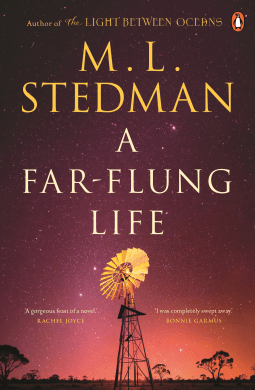

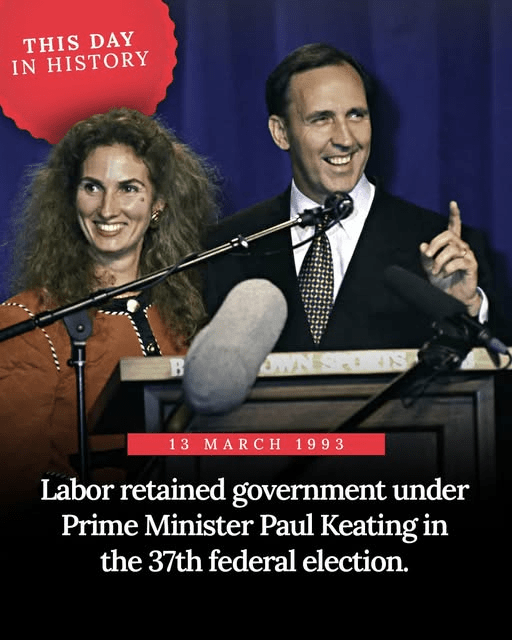




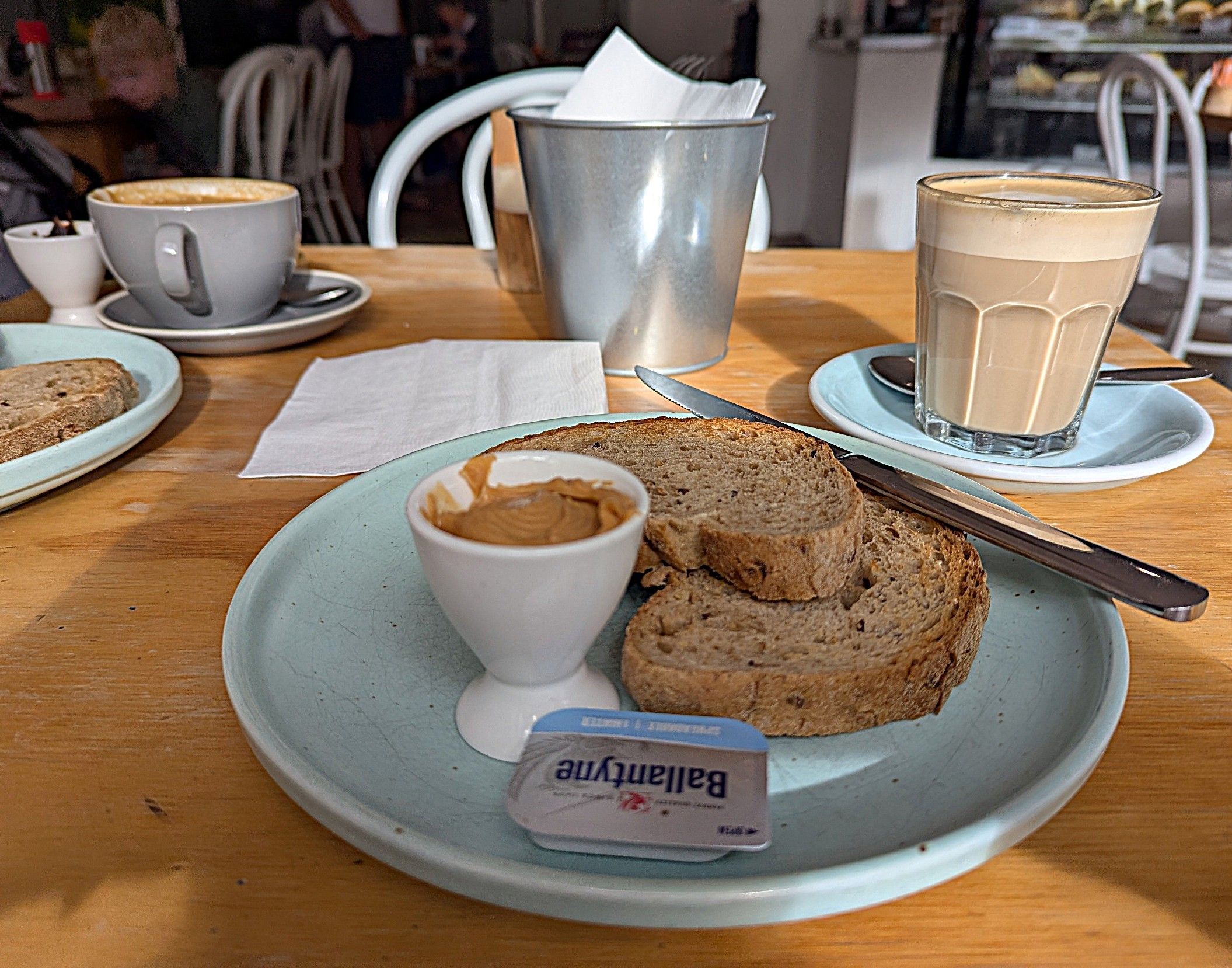



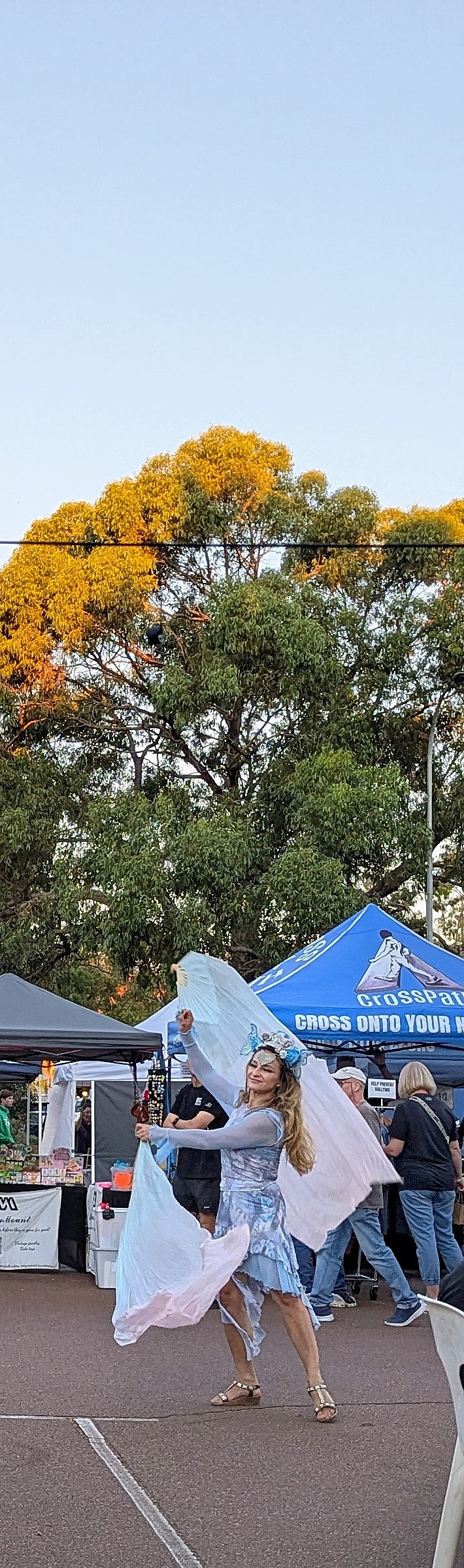




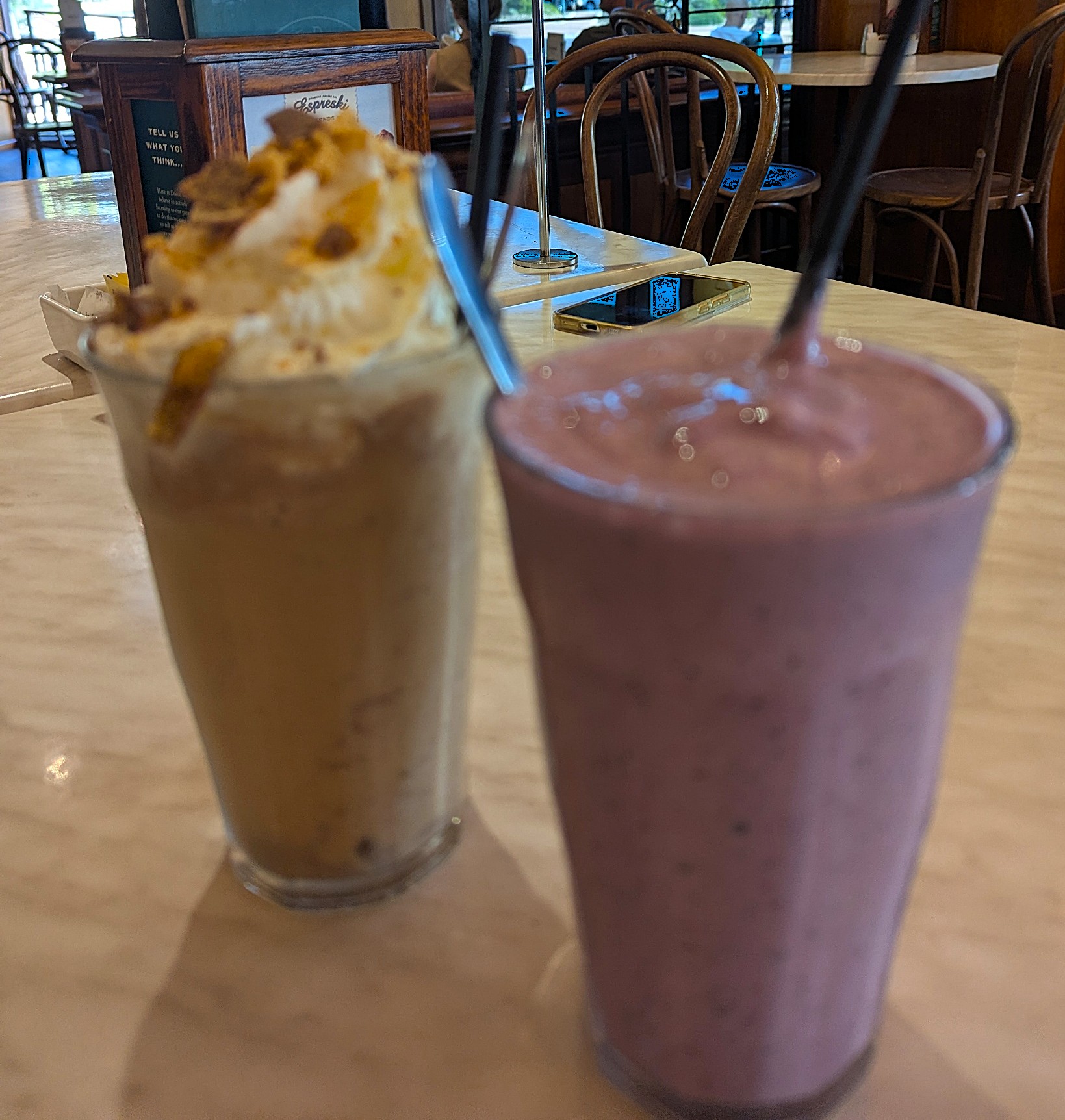




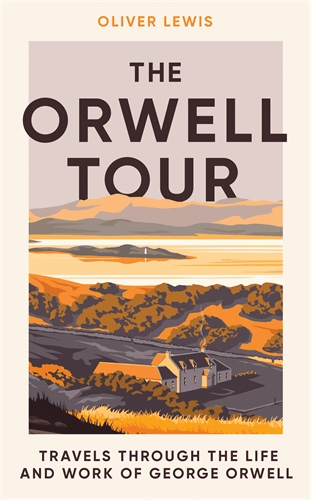
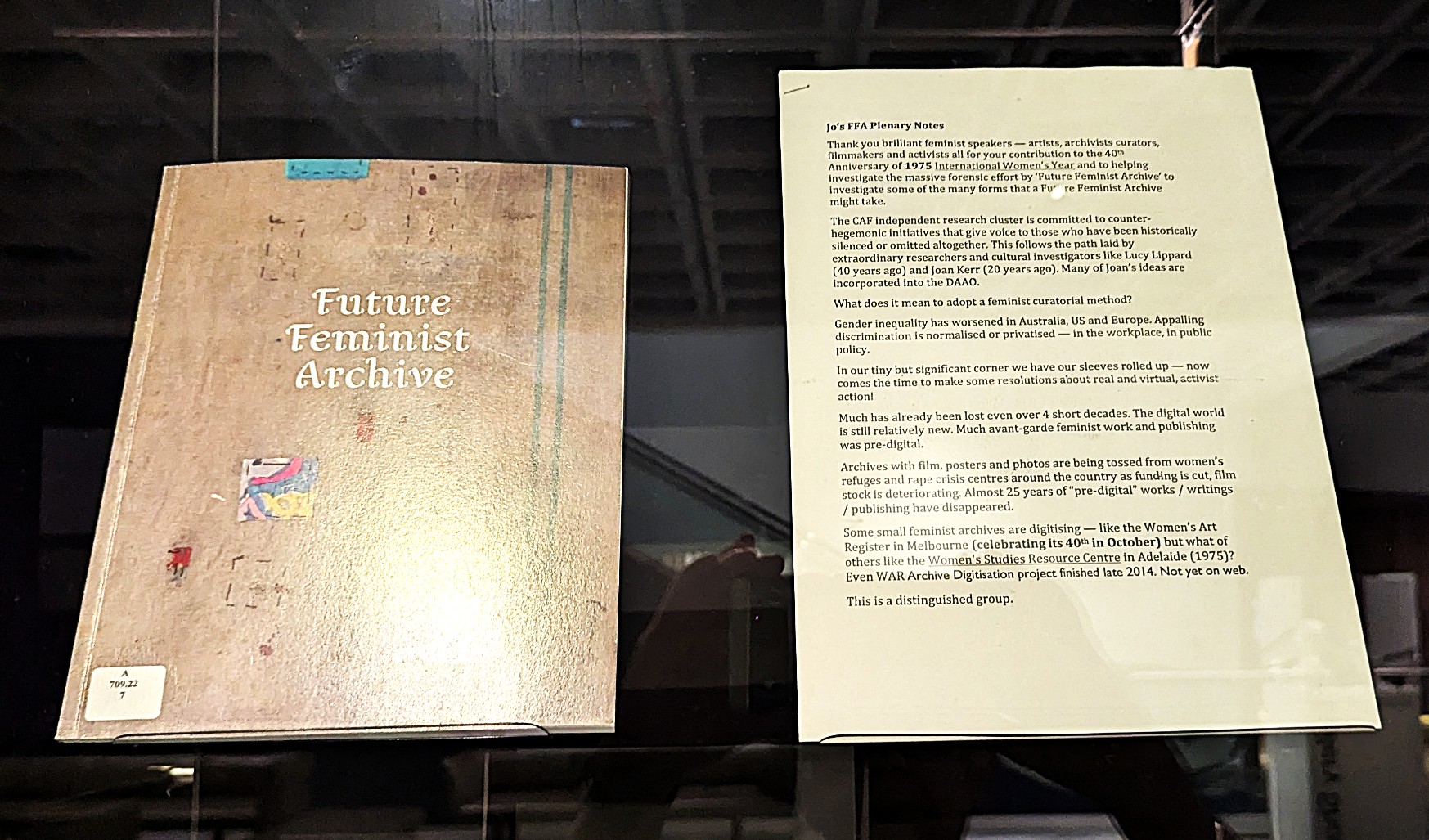


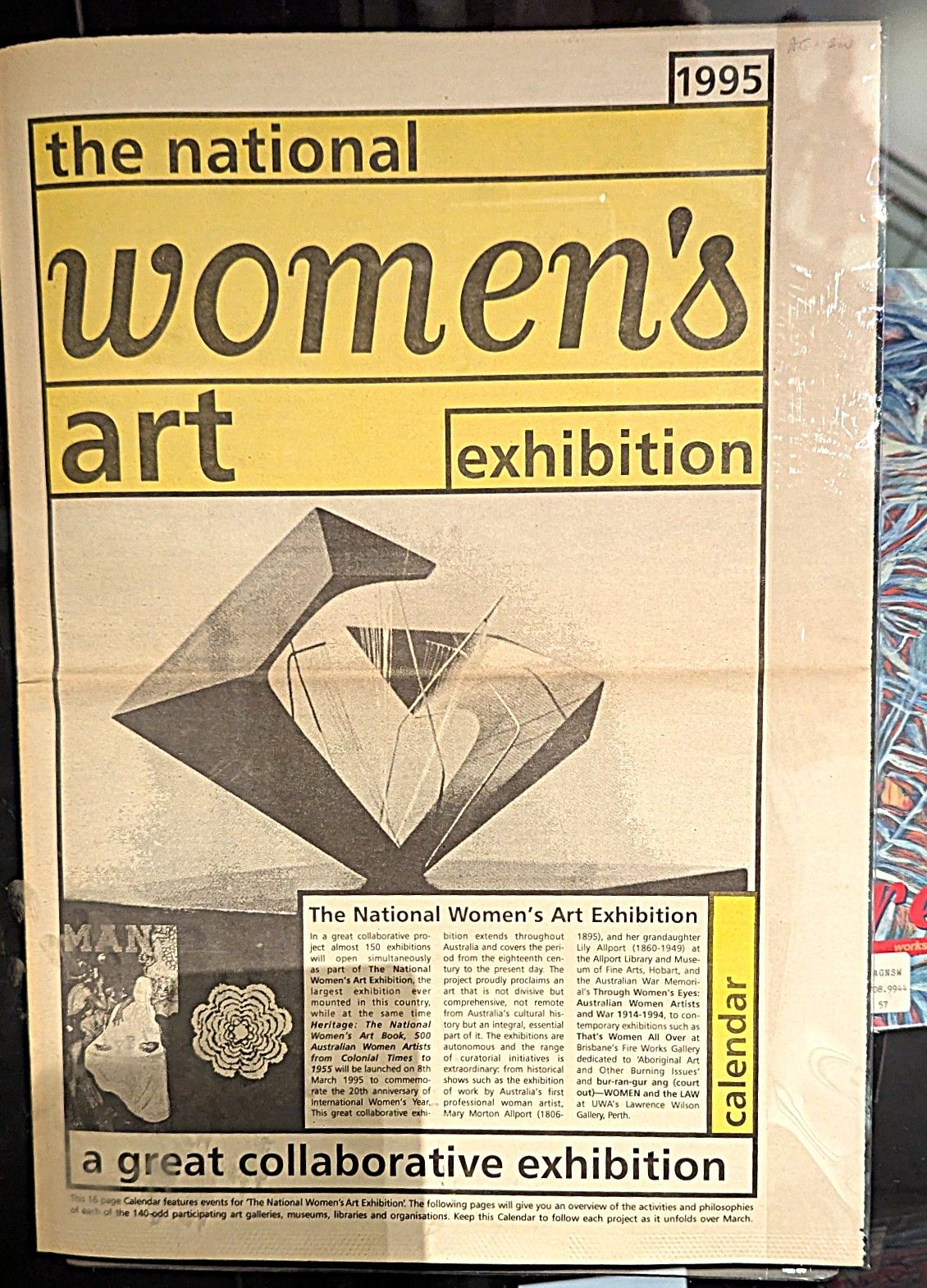


:quality(75)/https%3A%2F%2Fassets.lareviewofbooks.org%2Fuploads%2FFeminism%2C%20Young%20Women%2C%20and%20Cultural%20Studies.jpg)





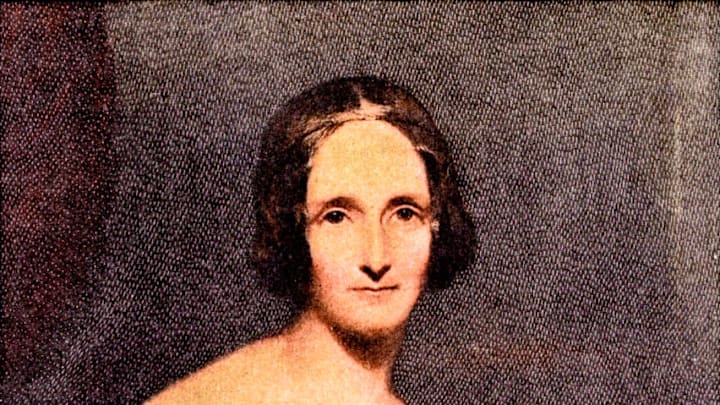


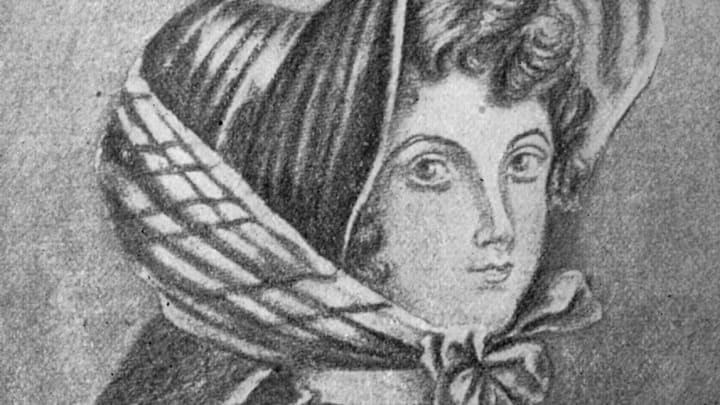
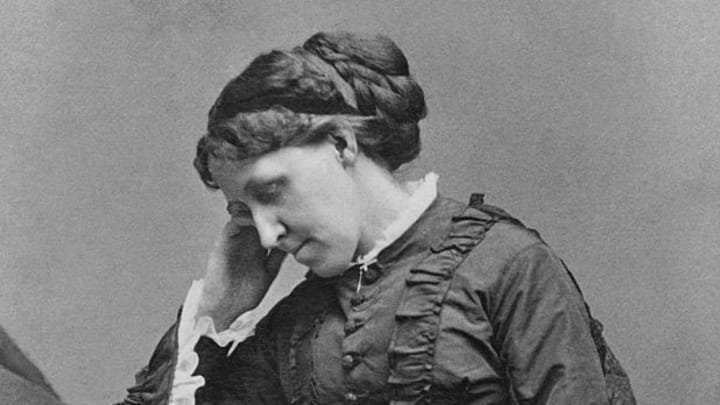


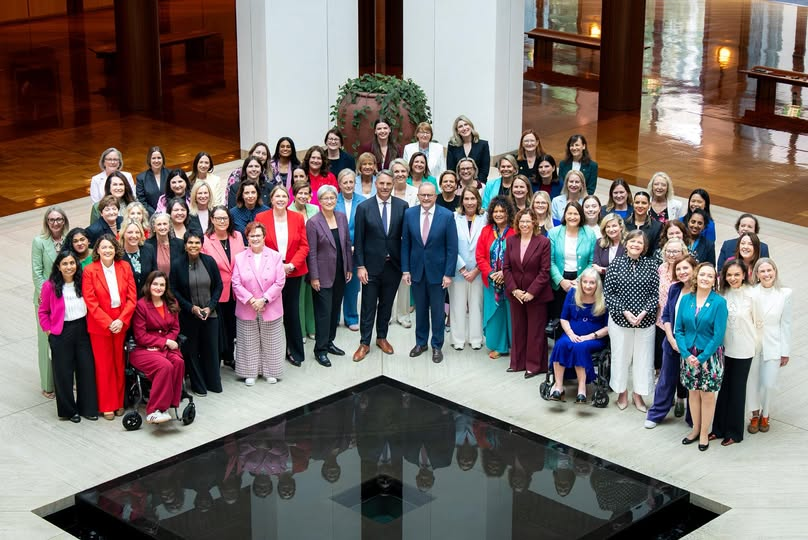




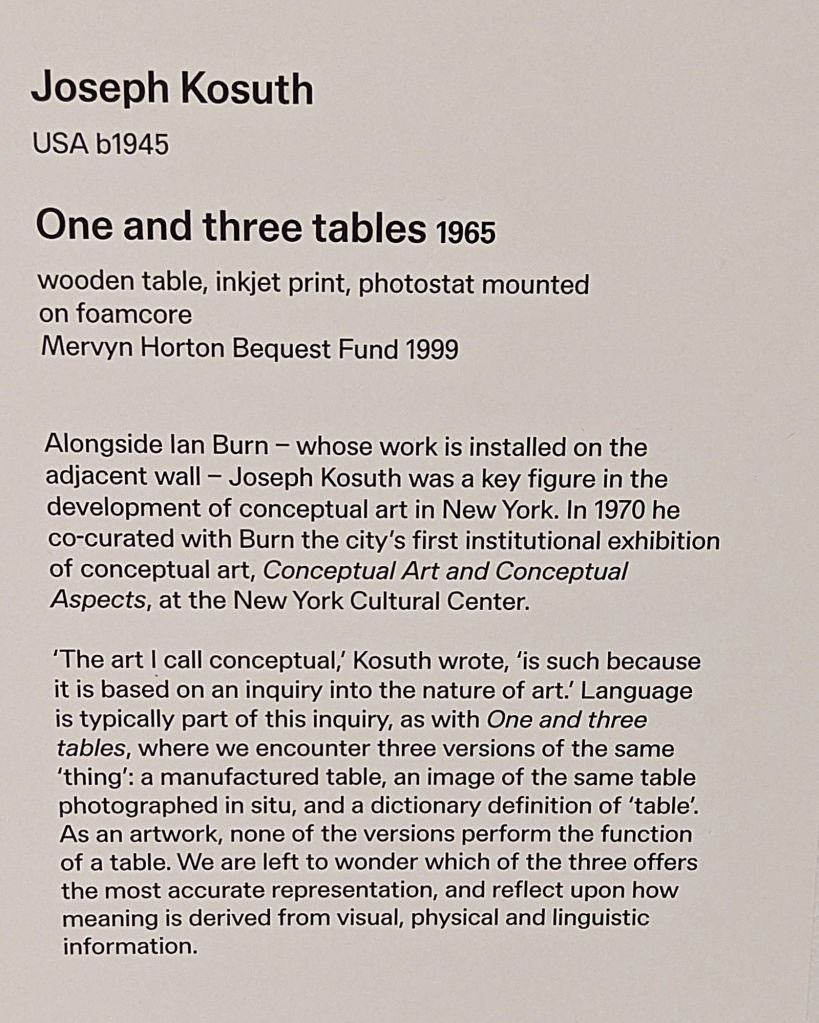


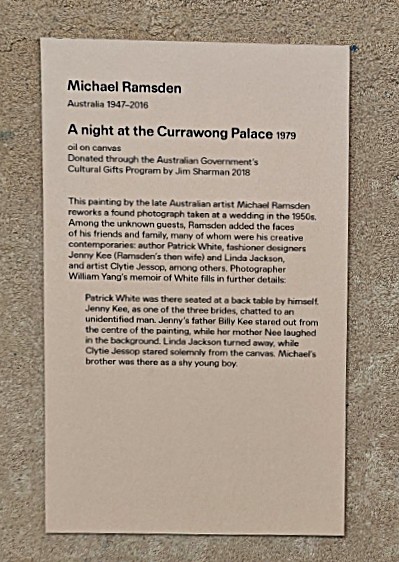
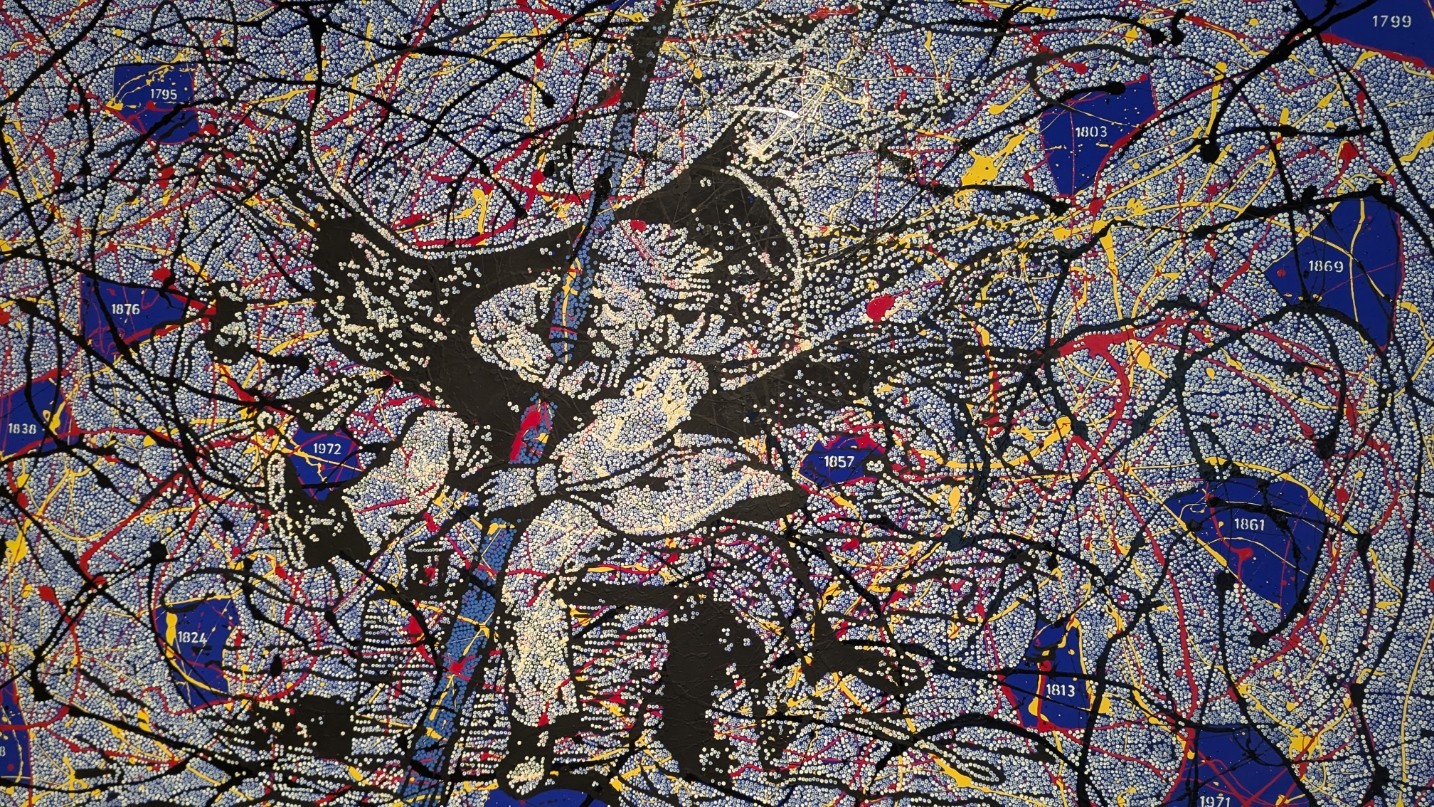


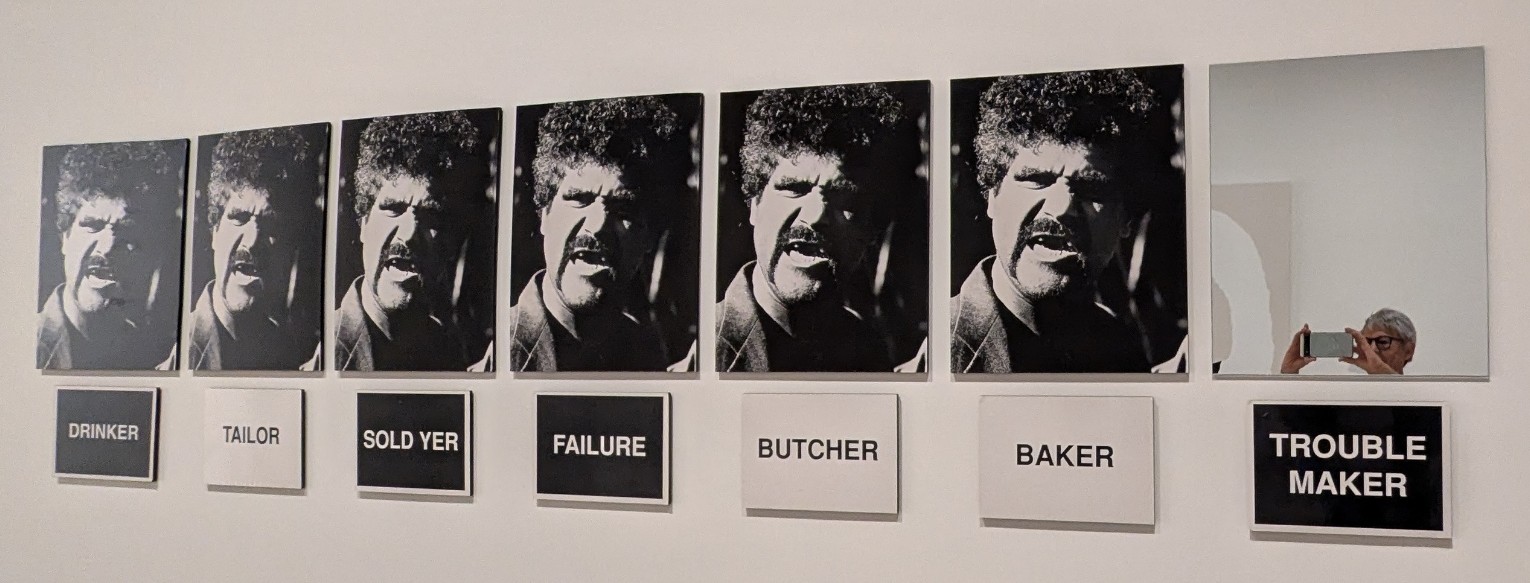


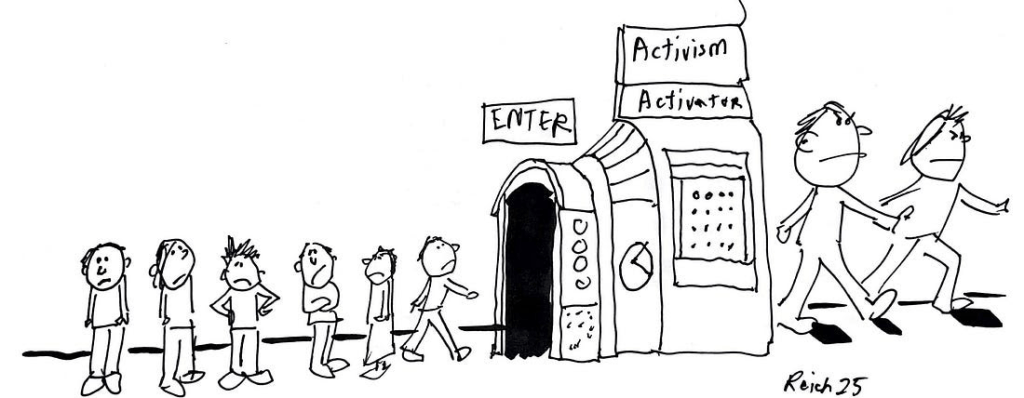


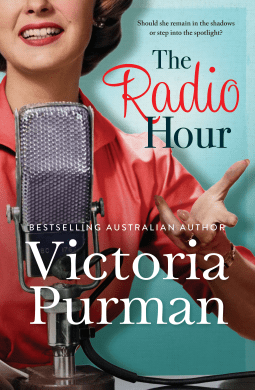


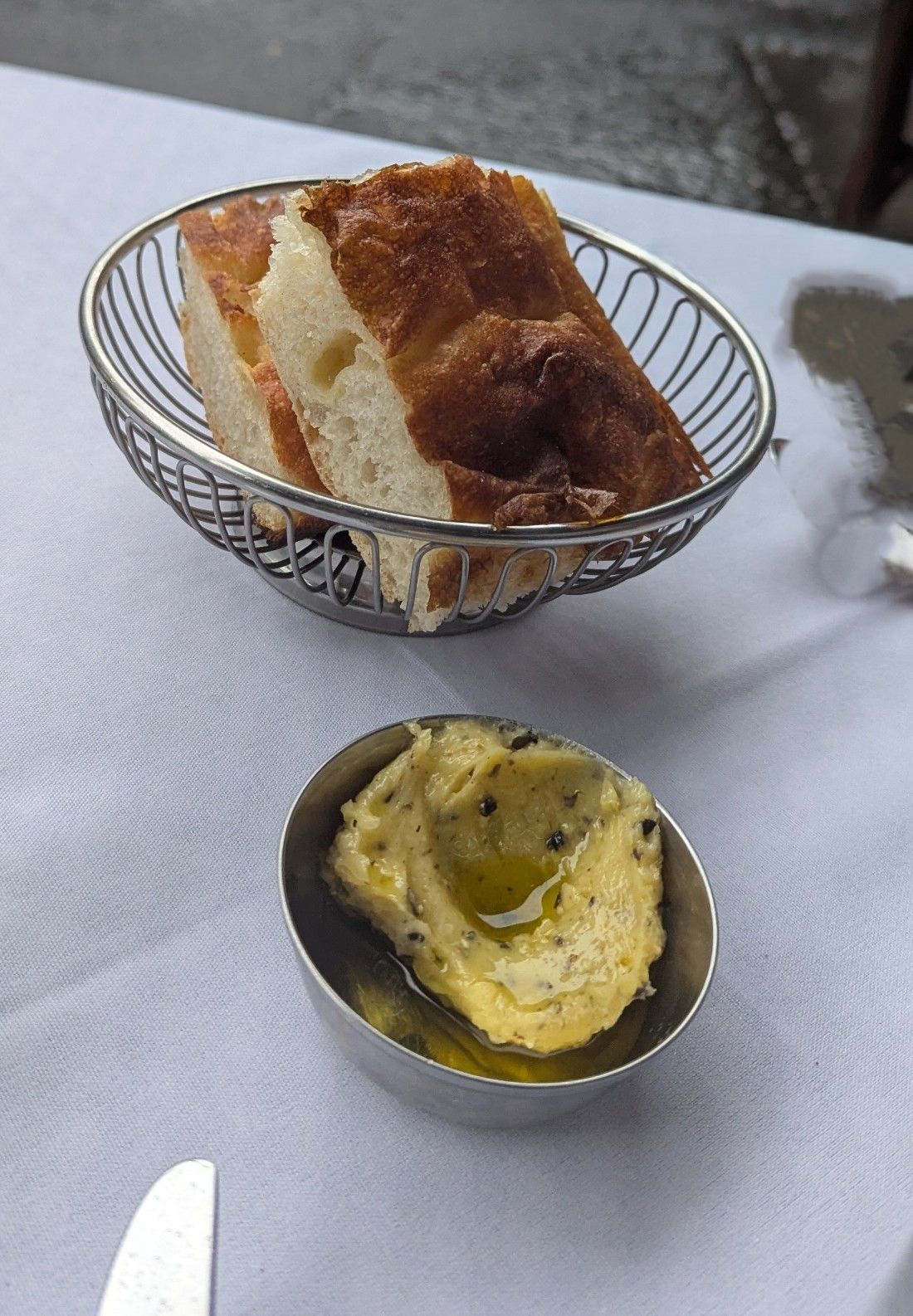


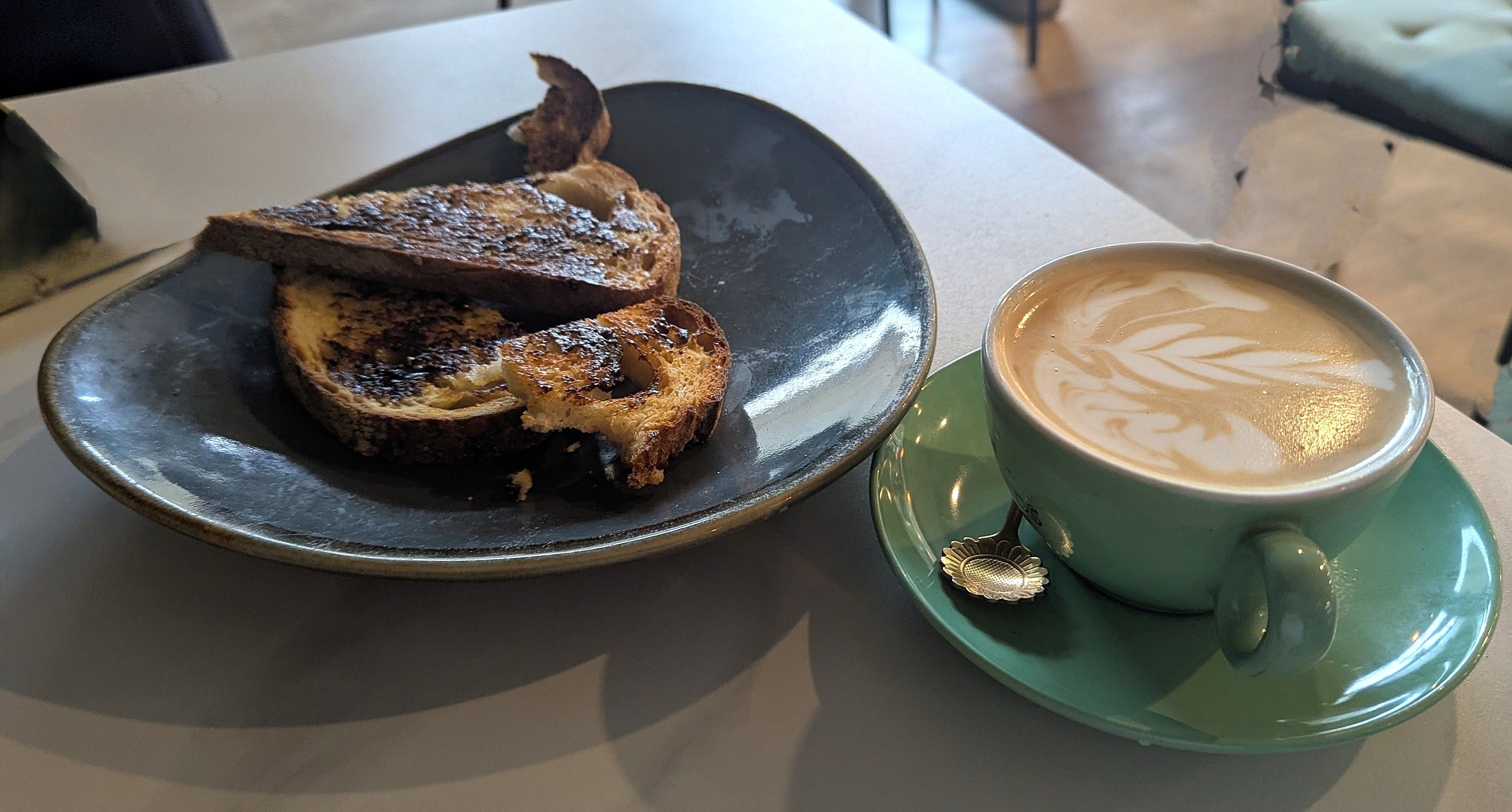

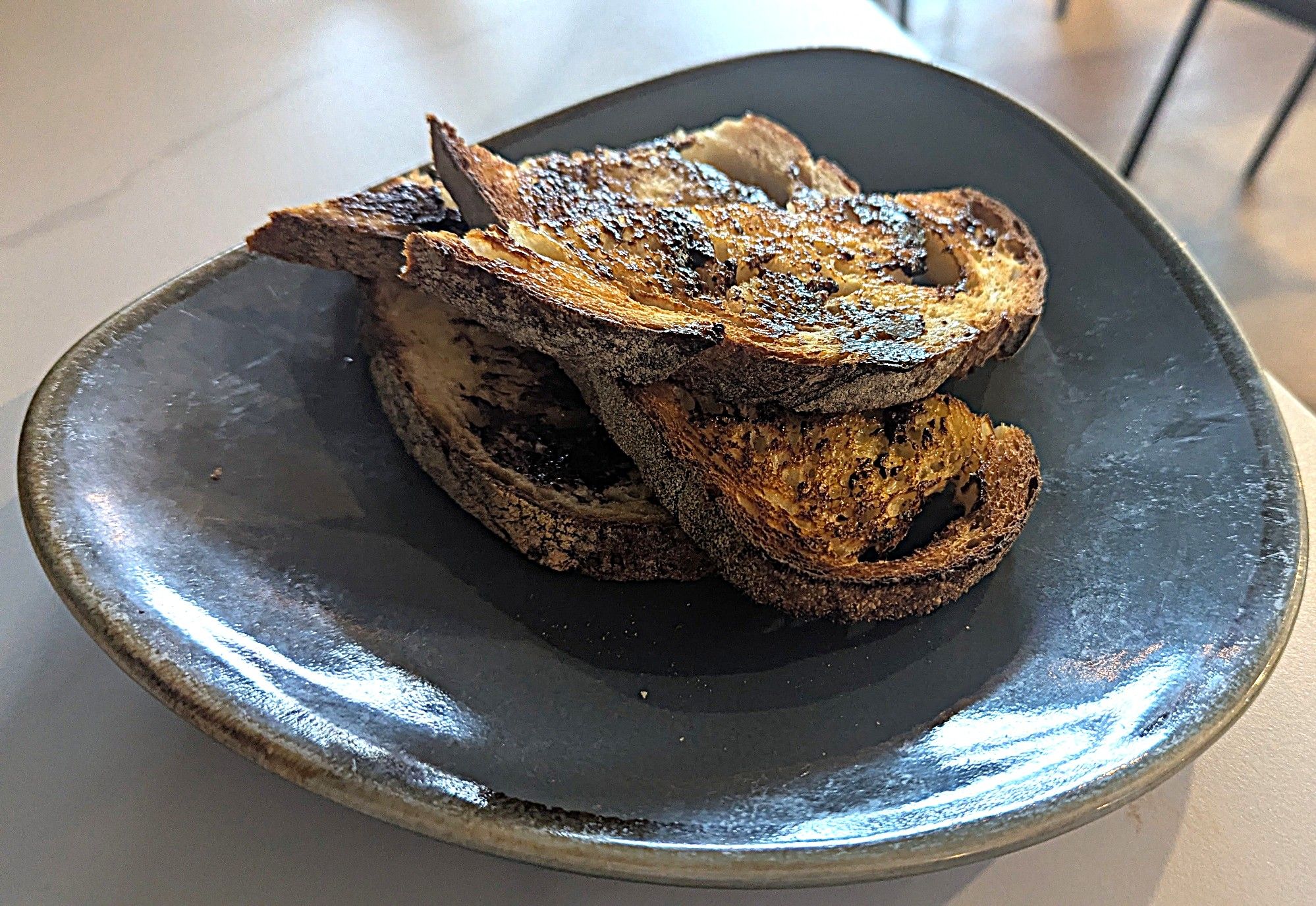







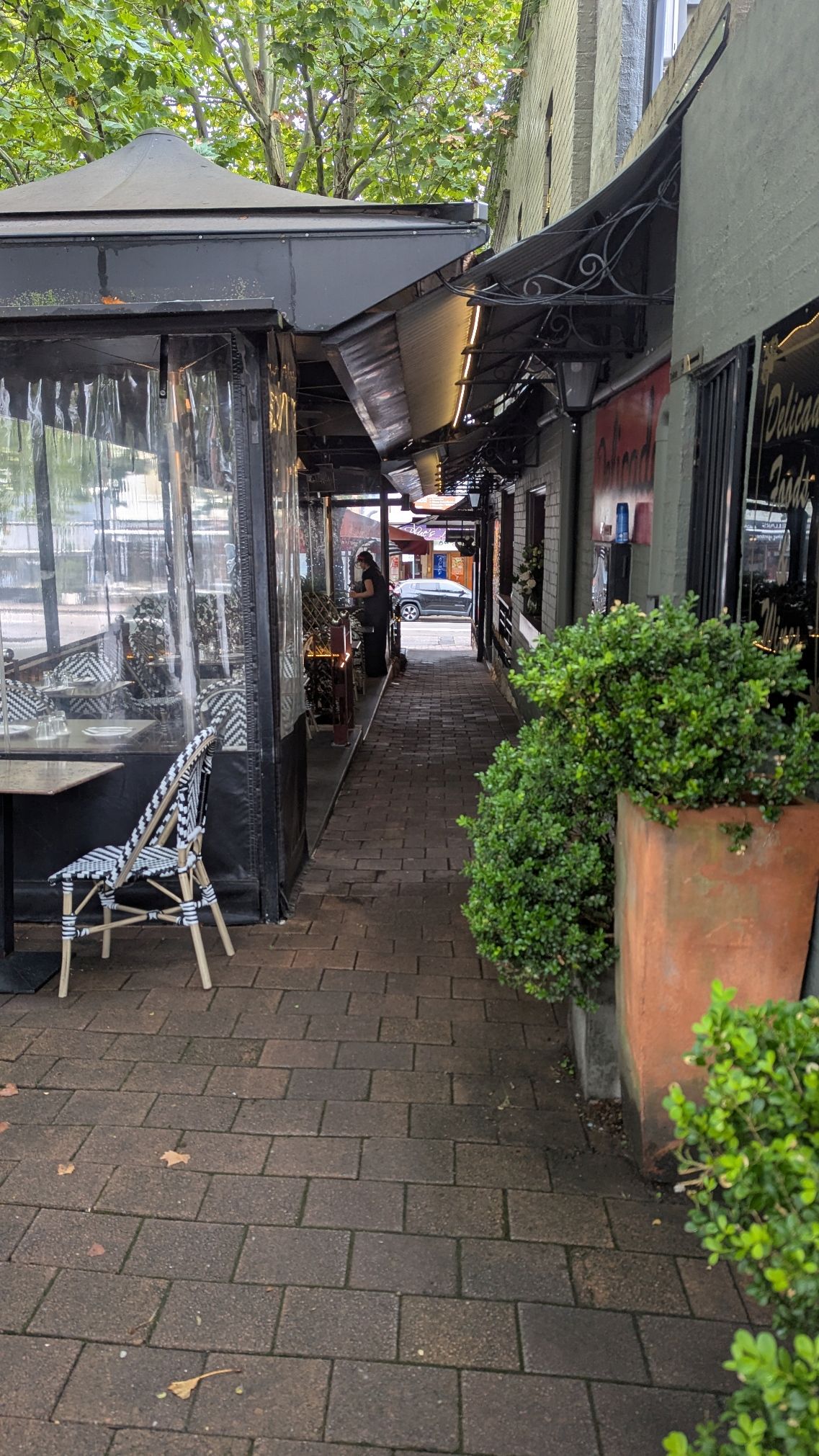














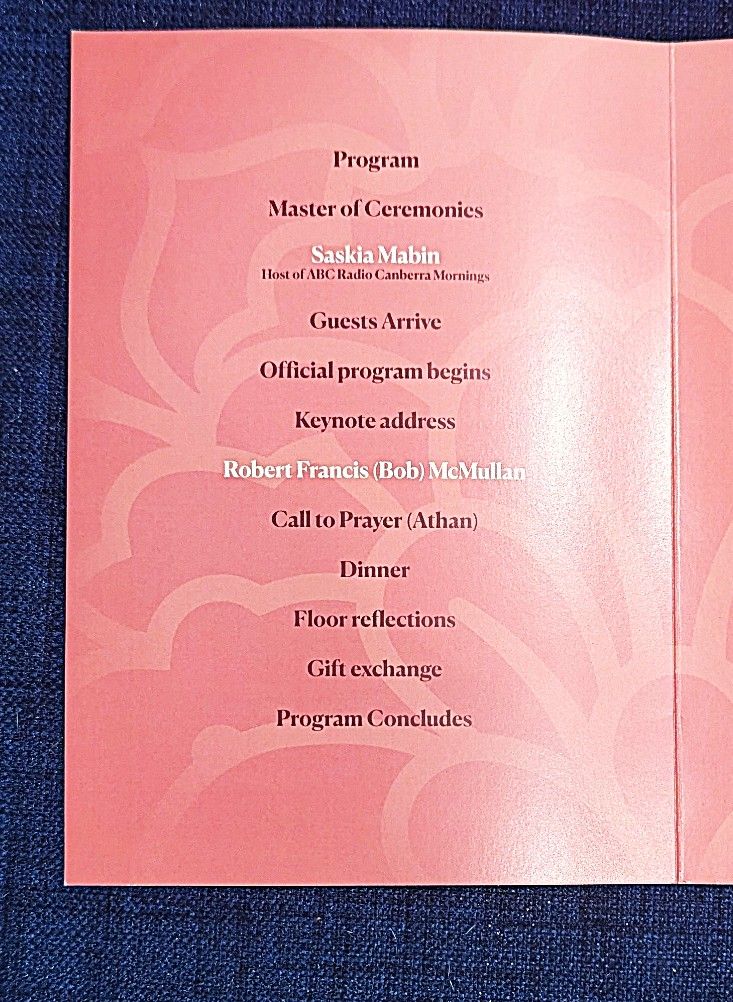


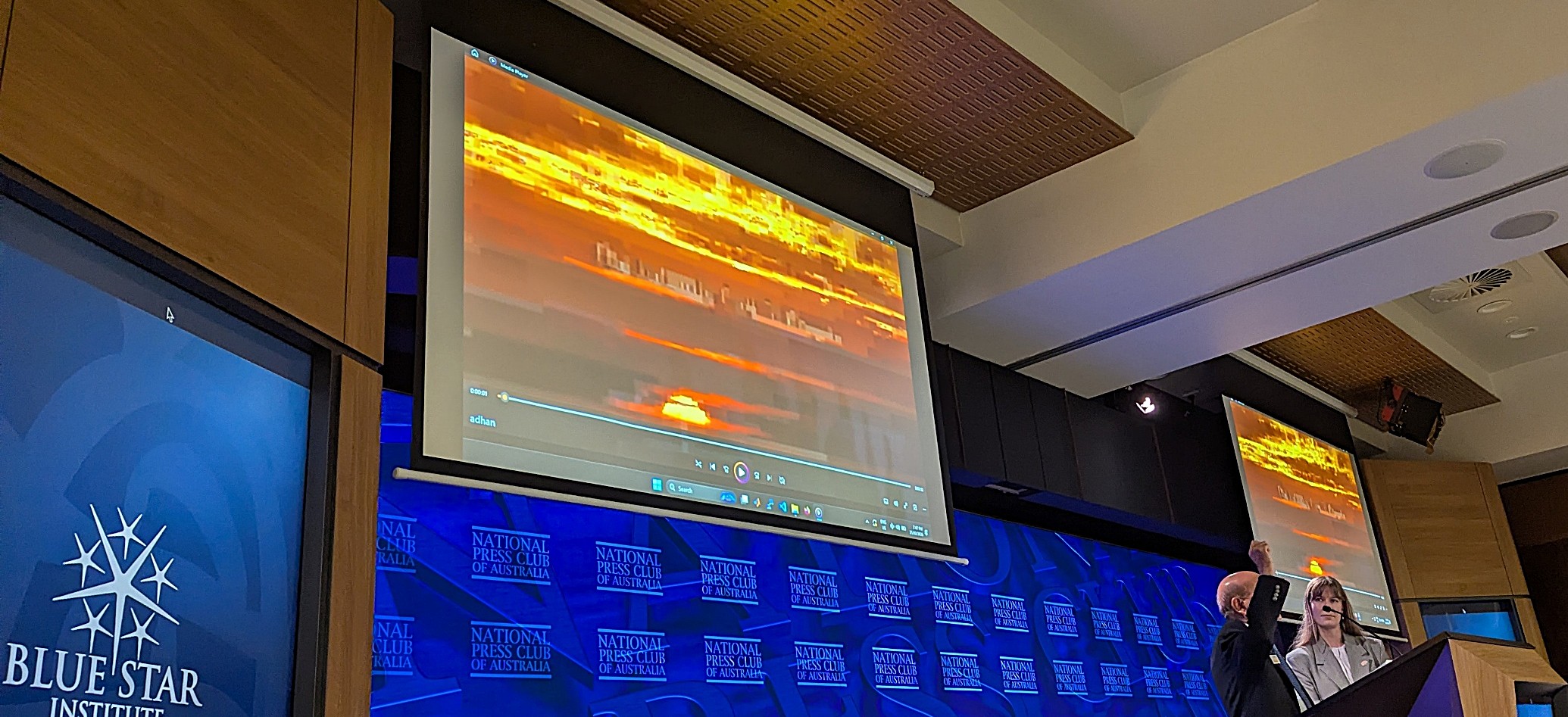


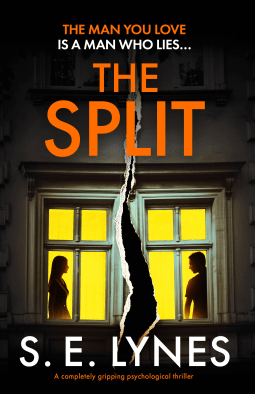














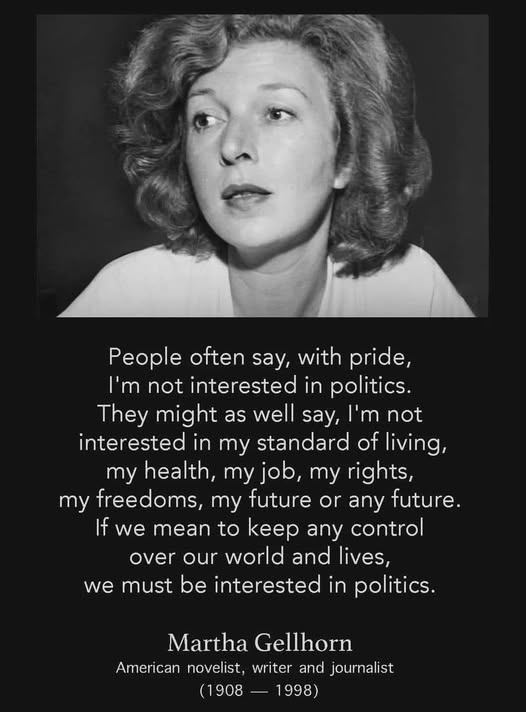



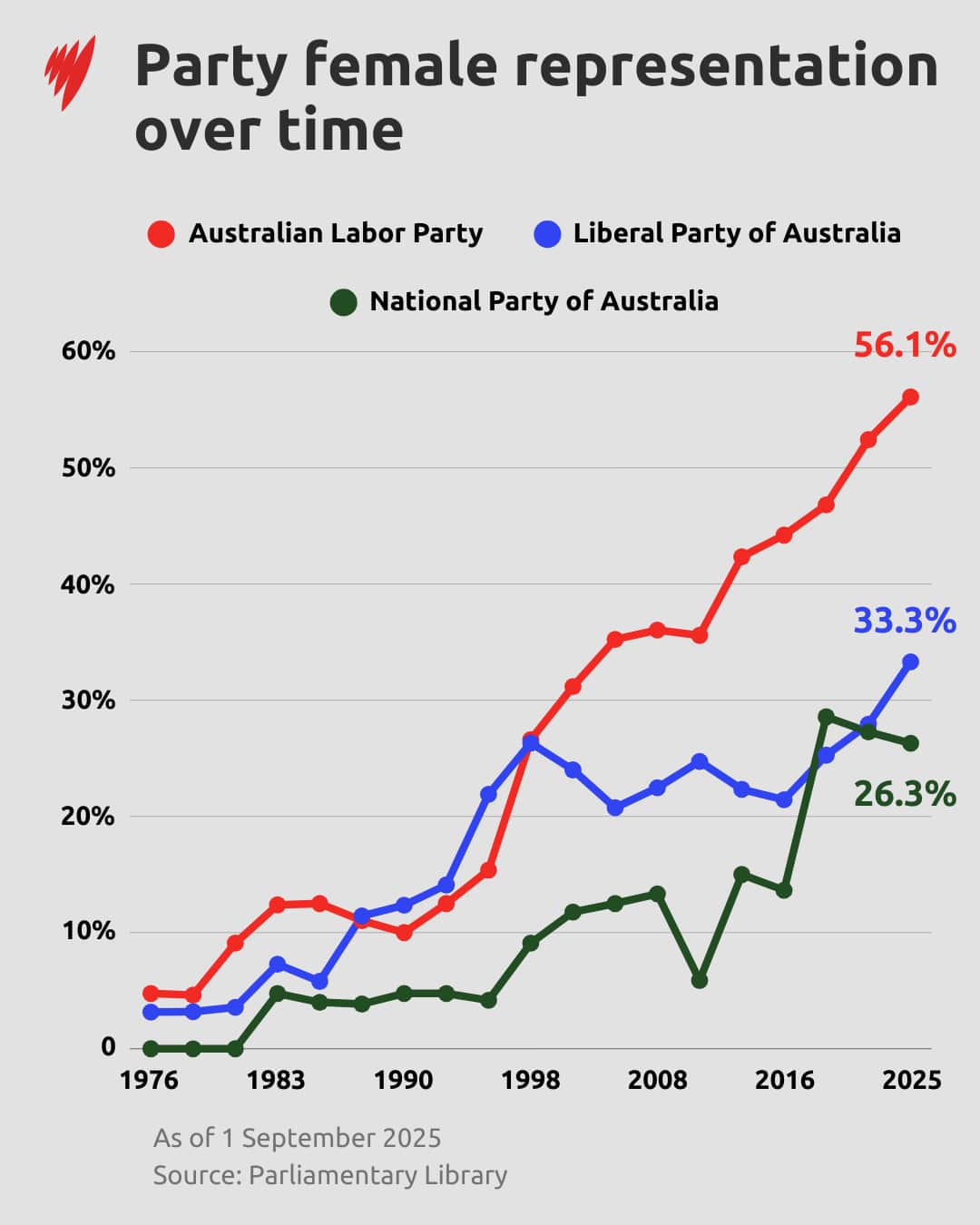
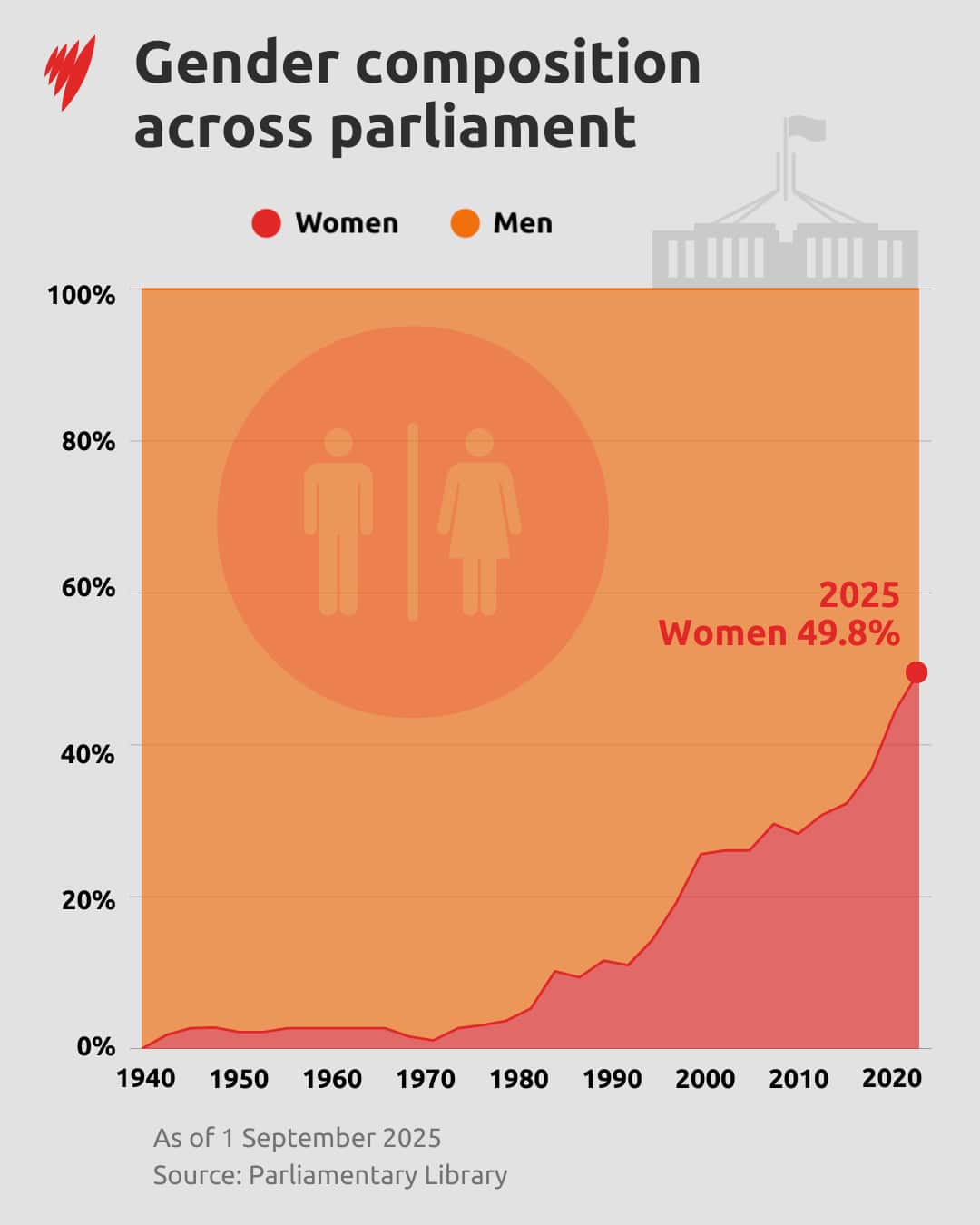










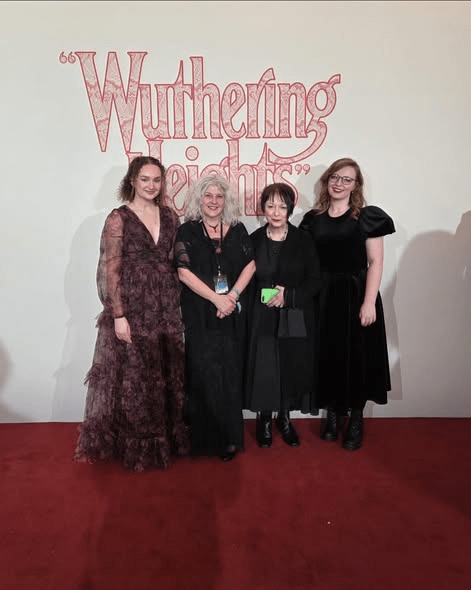

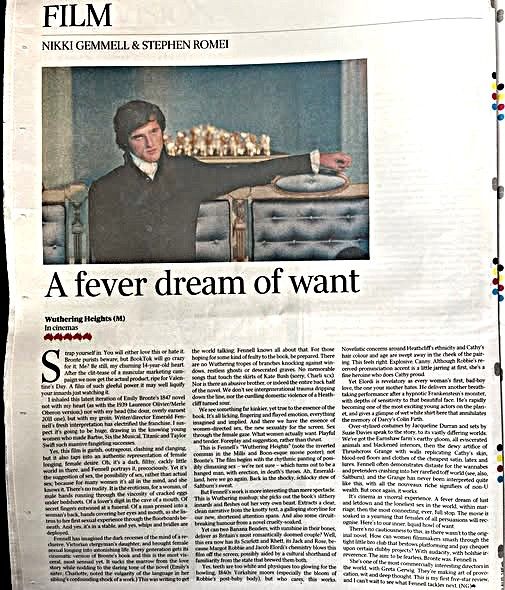



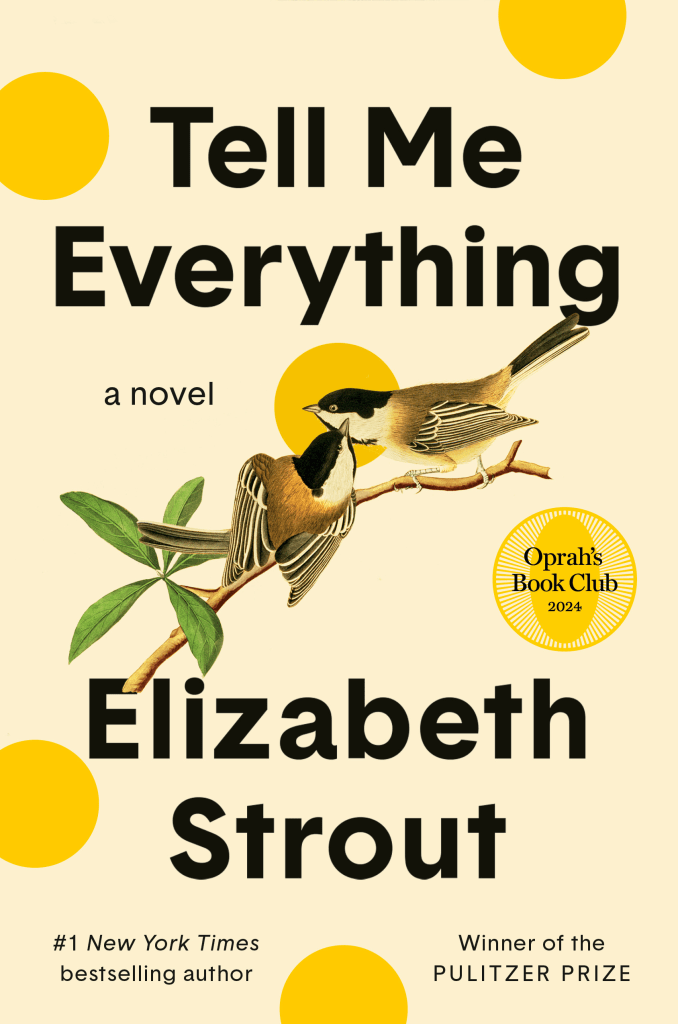

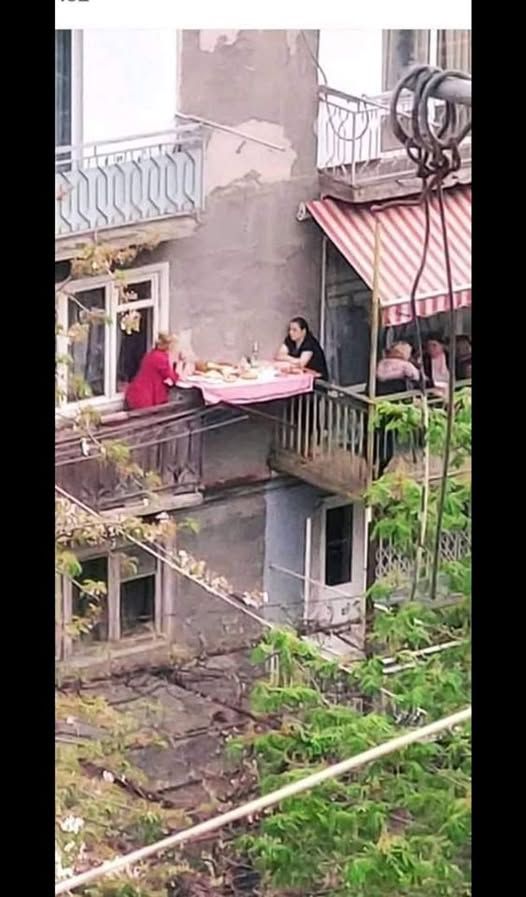
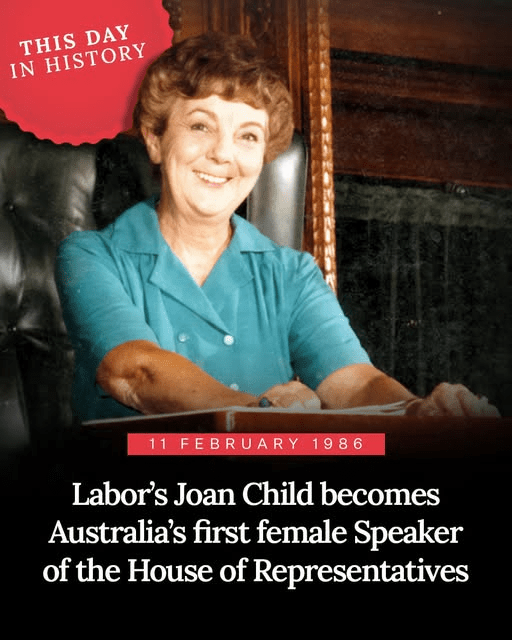





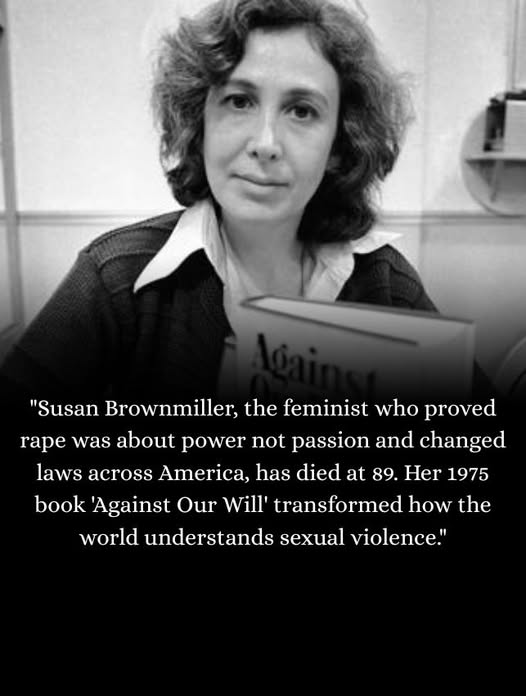

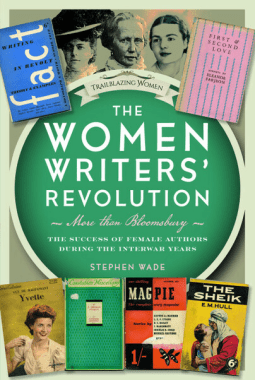

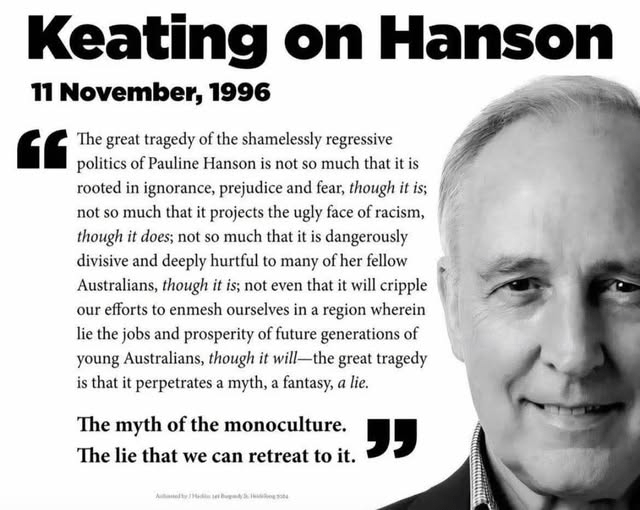
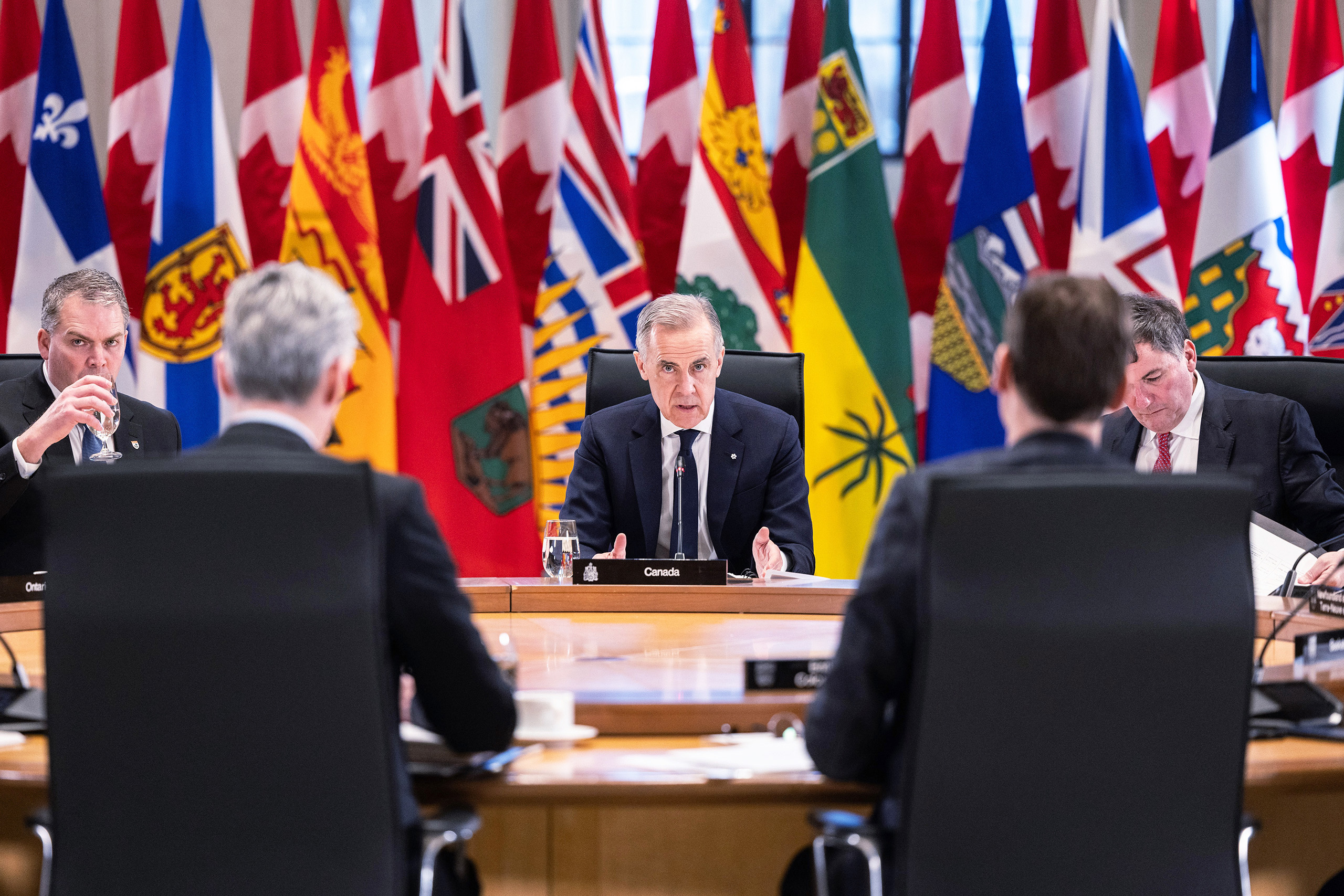




 Iain Watson (edited)

 Anyone who knows me knows how much I love babies. These cuddles truly brightened my week in parliament


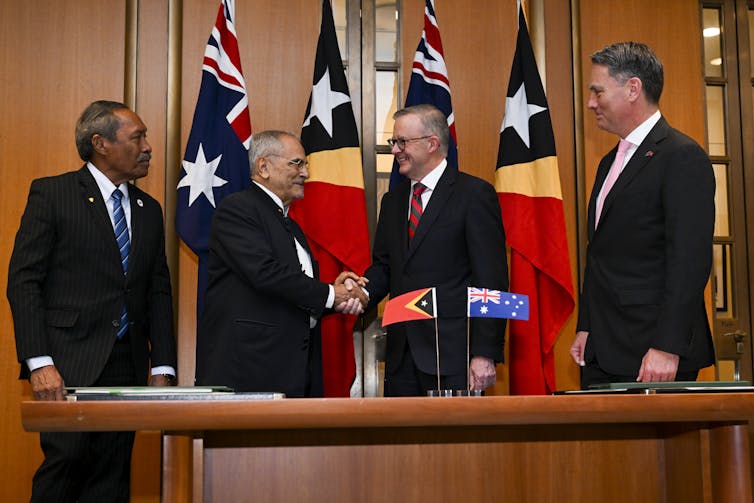
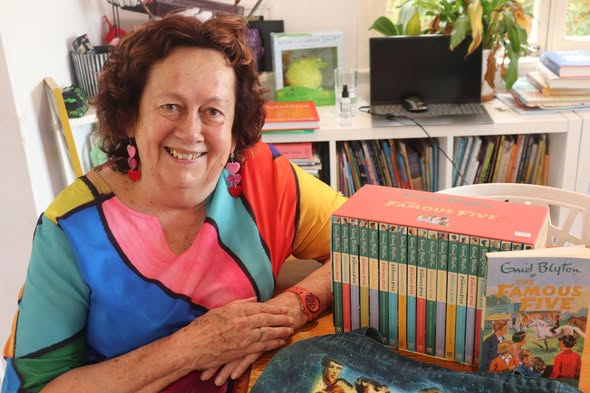




 Robin's Room
