Week beginning January 21 2026.

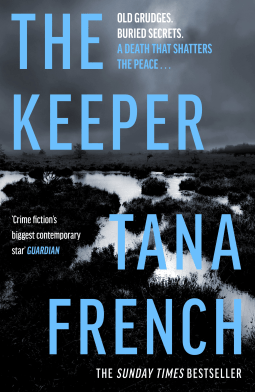
Tana French The Keeper Penguin General UK – Fig Tree, Hamish Hamilton, Viking, Penguin Life, Penguin Business | Viking, April 2026. 

Thank you, NetGalley, for providing me with this uncorrected proof for review.

The Keeper returns to Cal, Lena and Trey and sundry other characters in Ardnakelty, with much of the emphasis on the village and its values. French takes what seems to be an inordinate amount of time in establishing the background to the village, the long-term characters’ motivations and values and the relationships, open and hidden that underpin the way in which decisions are made in this small enclosed social environment.

The initial chapters of the novel progressed at a slow pace; with characters whose introspection and dialogue were not particularly engaging. Although the emphasis is necessary for understanding the resolution offered at the end of the novel, it did little to foster a connection with the protagonists. Unlike my enthusiasm for the way in which Cal’s, Trey’s and Lena’s narratives were woven in The Hunter, the previous novel in this series, I felt distanced from the main characters in The Keeper. See Books: Reviews for the complete review.
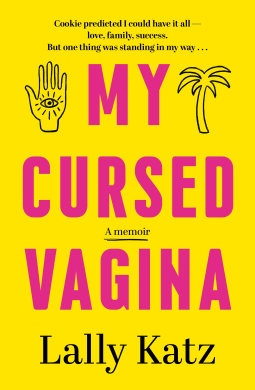
Lally Katz My Cursed Vagina A Memoir, Allen & Unwin, February 2026.

Thank you, NetGalley, for providing me with this uncorrected proof for review.

In her acknowledgements, Lally Katz expresses gratitude to three of her teachers for helping her recognise her potential as a writer. I was a colleague of one of those teachers. So, while I did not have Lally Katz in any of my classes, I heard a great deal about this vibrant writer who was seen as an honour to teach. The teachers’ accolades highlighted her notable talent and the enthusiasm she brought to her classes. Lally was a young woman with superb creative skills. It is no surprise that she has become an esteemed playwright, and now she has written this poignant, funny, sad, and raw memoir. It depicts an absorbing journey from which is difficult to disengage: one more page must be read, another anecdote considered, Lally must be given another chance to defy the curse, and one more story in which she does not. Success or not, what she does achieve lives in the memory. The writing is a joy, the story immense, and Lally Katz’s outlook one of courage, humour, and enthusiasm. Her memoir is a monument to a woman who loves her life, its despairing and happy moments, those which are life giving, and those that are so challenging that the potential for damage threatens.

Lally Katz moved from Miami, USA to Canberra, Australia as a child, spending her pioneering creative years in Australia, with successfully staged plays Australia wide and internationally. In 2010 she is thirty-two, and in America on a Churchill Fellowship, and it is with this memory she begins her memoir. However, the central theme is the impact of her visit to a psychic whose dire prediction provides the name for the memoir and much of its action. Her title and honesty with which she approaches her life takes the reader through love affairs; sexual encounters, successful and otherwise; herpes; miscarriages and birth. Some of the stories are humorous, some are transparently not. However, all are engaging and incredibly human. Many are exploits that can only be imagined –  some of us do not have Katz’s courage and headlong approach to living.

This is a memoir to be read, cried over, laughed with, and admired. I am thrilled to have been able to meet this vibrant and courageous woman, who was once a student I passed in a school corridor and heard about in the staff room, if only once again second hand though her writing. Lally Katz’s memoir is one to be savoured.

The Canberra Page’s post on Facebook raises questions about the value of maintaining old buildings.
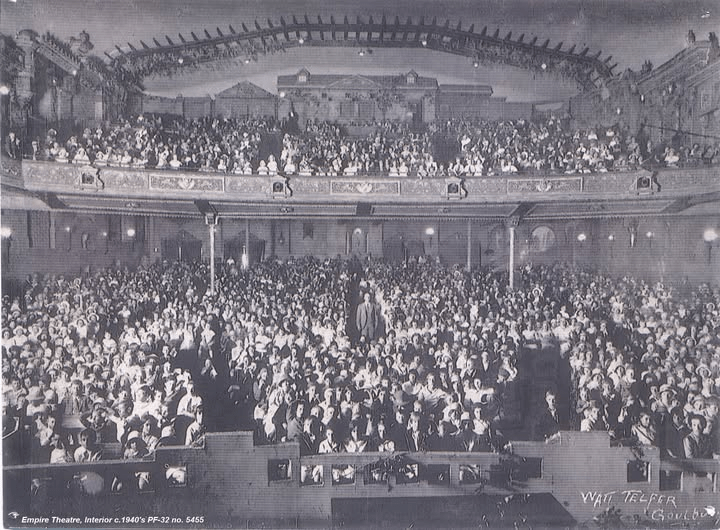
Goulburn’s Empire Theatre in its heyday, around 1940. The audience numbered into the thousands for what could have been a play, concert or some other special event. Built in 1914 in the style of Sydney’s Capitol Theatre, it closed in 1967 and was later demolished to make way for a motel and then a shopping centre.

Photo: Goulburn Mulwaree Library. Goulburn

An interesting photo, and a pity to see the building demolished. However, the negativity of the Facebook comments, particularly toward young people who seem to be being blamed for the shopping centre (they dare to use it as a meeting place, it seems) is egregious.

Note, the Sydney Capitol Theatre remains so it is possible to see similar architecture. According to Wikipedia, it cost over $30 million for reconstruction in 1995. See the edited information from Wikipedia below.

The Capitol Theatre is a heritage-listed theatre located at 3–15 Campbell Street, Haymarket, in the Sydney central business district, Australia. It was designed by Henry Eli White and John Eberson and built from 1893 to 1928. The property was added to the New South Wales State Heritage Register on 2 April 1999.[2][3] The former circus venue, atmospheric theatre and market venue is owned by Capitol Theatre Management Pty Limited, a wholly owned subsidiary of Foundation Theatres Pty Limited,[1] which also owns the Sydney Lyric.[4]

The current theatre was designed by R. H. Broderick. It was intended as a hippodrome for arena theatre and featured stone cornices, terra-cotta capitals, rosettes and tiled panels. The architect Henry White turned the interior into a movie palace in 1927, creating the effect of an internal Italian garden or piazza. It also featured an internal imitation courtyard which is the only one surviving in Sydney. The building is listed on the Register of the National Estate.[8] The Capitol Theatre was an “atmospheric” picture palace for many years, but went through a dark period in the 1970s and 1980s. In 1995, Capitol Theatre underwent a massive two-year reconstruction costing over $30 million.[9]

Australian Politics

Labor’s hate laws pass despite a divided Coalition

By political reporter Tom Crowley and chief digital political correspondent Clare Armstrong Tue 20 Jan

In short:

The federal government’s new hate laws have passed the parliament after Labor struck a deal with the Liberals.

The National Party broke ranks with its Coalition partner by voting against the bill. 

The bill passed the Senate late on Tuesday night. 

The federal government has passed new laws targeting hate groups with support from the Liberals, while the Nationals voted against it. 

The Coalition failed to settle a formal joint position on the legislation, with the Nationals abstaining during the vote in the lower house and later resolving to oppose the bill when it reached the Senate.

Liberal senator Alex Antic also crossed the floor, voting against the rest of his party. 

Prime Minister Anthony Albanese and Opposition Leader Sussan Ley on Monday agreed on a set of changes to Labor’s proposal to ban groups deemed to spread hate, such as Hizb ut-Tahrir and Neo-Nazis.

The Nationals moved several amendments in the Senate — including a push to set up a Senate inquiry examining the laws — but none succeed, and they voted against the bill. 

It is not clear what impact this would have on shadow cabinet solidarity, which requires all Coalition frontbenchers to vote in line with any formally resolved positions.

In a statement, Nationals leader David Littleproud said: “This decision does not reflect on the relationship within the Coalition”. 

“The Coalition has secured significant improvements to the legislation, but the Nationals’ party room has concluded that more time is required to more fully examine and test the bill before it is finalised,”

he said.

Amendments secured by the Coalition aim to address concerns that the broad drafting of the bill could restrict freedom of speech.

The updated bill, which passed through the lower house on Tuesday, now mentions “the promotion of violence” in the definition of a hate group.

Ms Ley said the Liberals had “stepped up to fix legislation that the Albanese government badly mishandled” and that the final agreement was “narrowed, strengthened and properly focused on keeping Australians safe”.

The Liberal and National party rooms did not hold a meeting to agree on a joint position, as per usual practice.

Labor’s suite of gun reforms passed the Senate on Tuesday night with support from the Greens, further tightening Australia’s strict gun controls and paving the way for a national gun buyback scheme. 

Ley delays announcement amid uncertainty about Nats

Early on Tuesday morning, Mr Leeser told ABC Radio National Ms Ley would hold a press conference to present the agreement, and Home Affairs spokesperson Jonathon Duniam strongly hinted that the Liberals had reached a deal with Labor.

That press conference did not occur, but on the floor of parliament, Mr Leeser said the Liberal Party had made “the choice to be constructive, to pass this legislation as a step in the right direction”.

Mr Wallace said the opposition supported the bill “in principle” despite what he described an “omnishambles” of a process.

Labor had already made substantial changes to its plans to win Coalition support on the bill, drafted in response to the Bondi terror attack, dropping a contentious new criminal offence for hate promotion over the weekend.

But Nationals senator Matt Canavan has voiced concerns shared by colleagues privately about whether groups other than violent extremists could be covered by the laws.

Senator Duniam said on Tuesday morning it was “rubbish” to suggest that “pro-life groups or church groups” could be covered and spoke favourably of the position agreed with Labor.

Liberal MPs gathered to discuss the draft laws at a party room meeting in Canberra on Monday evening after Opposition Leader Sussan Ley and Prime Minister Anthony Albanese met to hash out an agreement.

“We have a parliament here full of people with human decency who want to see good happen, not bad. These laws will go a long way to doing that,” he said.

Attorney-General Michelle Rowland said the laws were tightly focused and would not “trespass onto legitimate free speech”.

“It does not seek to capture lawful debate, robust criticism, religious discussion or genuine political advocacy. It does not target legitimate comedy, satire or artistic expression,” she said.

The bill sets out a process for designating hate groups, which includes input from intelligence and law enforcement and requires that the opposition leader be briefed.

Unlike in the initial draft, the version presented by Ms Rowland would see that briefings occurred for both for new listings and de-listings, addressing another Coalition concern.

The operation of the laws would be subject to review every two years by the Parliamentary Joint Committee on Intelligence and Security.

The bill also proposes tougher powers for the home affairs minister to deport those who spread hate, which the Coalition has indicated support for.

British Politics

Tom Watson <tomwatsonofficial@substack.com>

Forwarded this email? Subscribe here for more

Jenrick’s mistake about Conservatism

Why the Conservative Party has survived worse than thisJan 15 READ IN APP In 1834, the Conservative Party was founded to govern a changing nation without surrendering to political hysteria. It emerged with the publication of the Tamworth Manifesto, drafted by Sir Robert Peel at a moment when Britain stood on the brink of rupture. Peel’s aim was not radicalism but continuity, secured through prudence and restraint.

That founding purpose is worth recalling amid the current excitement over Robert Jenrick and his defection to Reform UK. We are told, with customary breathlessness, that this represents an existential threat to the Conservatives, a mortal wound inflicted on one of the oldest political parties in the democratic world. Such claims betray a thin understanding of history.

Tom Watson’s Newsletter is a reader-supported publication. To receive new posts and support my work, consider becoming a free or paid subscriber.

Peel’s Conservatism was explicit about what it rejected. In the Tamworth Manifesto he pledged to address proved abuses and the redress of real grievances while warning against “a perpetual vortex of agitation.” This was not a decorative phrase. It was the moral core of Conservatism. To a Conservative, politics conducted as agitation corrodes authority and undermines public trust. Reform, to be legitimate, had to be justified and anchored in institutions capable of surviving it. Conservatism could be said to be a theory of imperfection.

Jenrick’s assertion that the Conservatives have betrayed their principles collapses under that standard. His rhetoric substitutes grievance for judgement. It treats compromise as weakness and constraint as treachery.The Conservative Party has endured precisely because it has resisted such temptations. It has survived schisms over free trade, empire, Europe and the welfare state. It has survived because it understood that its duty was not to mirror every passing anger but to preserve the authority of the state while adapting it to circumstance.

Peel would have recognised Jenrick’s betrayal as an abandonment of Conservatism. Peel sort to reform our polity. Farage and Jenrick seek to deform it.

If this episode proves anything, it is not the fragility of the Conservative Party but the intellectual weakness of those who misunderstand it.

I have a strong hunch about today’s defection. Jenrick’s betrayal may mark the first day of a Conservative revival after the chaos left by the departure of Cameron and Osborne a decade ago. I’ll still fight them all the way to the ballot box but Labour cannot afford to misunderstand what’s gone on today.

If it is true to its founding principle, the Conservative Party will not be undone by those who confuse agitation with conviction. Jenrick the betrayer may have saved the party he has just abandoned and undermined the great replacement theory of Nigel Farage.

Tom Watson’s Newsletter is a reader-supported publication. To receive new posts and support my work, consider becoming a free or paid subscriber.

American Politics

Joyce Vance from Civil Discourse <joycevance@substack.com> January 18 2026

It’s The Cynicism

It seems to be everywhere you look, across the political spectrum. Far too many people don’t believe in anything anymore. They’ve lost faith in everything: our institutions, our values, and even each other. We’ve become a country of cynics.

One of the first posts I saw this morning on social media was about a well-documented instance where a Minnesota family’s six children were hospitalized after their minivan filled with smoke and tear gas fired by federal agents. Below the news report, someone had dismissed it in the comments: “I don’t believe it.” That was it. No explanation, nothing that cast doubt on the reporting. Just a rejection.

A little bit further down, someone had written about diminishing confidence in the Justice Department. A commentator wrote, “Did anyone believe in that anyway?”

We have become a nation of skeptics, of cynics. We are jaded. It’s all around us.

In her essay, Truth and Politics, Hannah Arendt wrote, “The result of a consistent and total substitution of lies for factual truth is not that the lie will now be accepted as truth and truth be defamed as a lie, but that the sense by which we take our bearings in the real world—and the category of truth versus falsehood is among the mental means to this end—is being destroyed.”

The President spews lies so constantly and so casually that it’s easy to understand how people can lose their bearings. It’s an assumption that Trump lies, not something unusual. That’s the President of the United States!

One manifestation of the lies we’ve become so inured to is the destruction of confidence in our elections. Trump has lied for so long about voter fraud, about non-citizens voting (the evidence does not back that claim up), about voting machines, about stolen elections, that it has permeated the national consciousness and even when people see through the lies, a miasma of distrust for the entire process remains. And of course, it’s not just elections.

Who benefits from a loss of faith in our institutions and in our ability to come out on the other end of this national nightmare with an intact republic? It’s not hard to see. It’s the man who enjoys upsetting the balance of power guarded by NATO because he wants to own Greenland. The man who tears down the East Wing. The man who won’t release the Epstein Files.

At this stage, Trump no longer cares if people believe his lies. He just needs the chaos they generate and the absence of shared truths, shared facts, in our country. People who can no longer discern what’s true from what’s false lose their moral compasses, like the agents who are now shooting at the people they took an oath to protect and serve. It all benefits a leader who wants to take authoritarian control of a democracy.

Giving up your belief in how things should be is dangerous.

I’m not suggesting everyone should have blind faith in our institutions, far from it at this point. But we need to be aware of what’s broken and needs mending without getting stuck on it. Instead of succumbing to cynicism, let’s stay focused on what we can do, even the small things.

Be kind, share joy. Register to vote and make sure everyone around you does, too. We know what this is going to take, but we have to stop the spread of cynicism around us. We’ve come too far in the last year to accept Trump’s success as inevitable.

In the coming week, we will mark the one-year anniversary of the second Trump administration. Find your own way to protest it. Donate to a food bank. Help a neighbor out, or help someone you’ve never met but have empathy for. Sign up to work at a polling place, or decide to run for office. There is so much that we can do. What we cannot afford to do is to let a man who thinks of no one but himself win.

refer to caption
The Declaration of Independence

This year is the 250th anniversary of our country’s founding. In the Declaration of Independence, wise men wrote, “We hold these truths to be self-evident, that all men are created equal, that they are endowed by their Creator with certain unalienable Rights, that among these are Life, Liberty and the pursuit of Happiness.” As wise people, we understand how important these words are; they are not just words children memorize and recite. Let’s make them our living, breathing truth as we watch what’s happening in Minneapolis and elsewhere. Let’s gently remind the cynics of what’s possible and get them off of the sidelines, where they are dragging others down. Life, Liberty, and the pursuit of Happiness.

We’re in this together,

Joyce

Heather Cox Richardson’s post

January 18, 2026 (Sunday)

You hear sometimes, now that we know the sordid details of the lives of some of our leading figures, that America has no heroes left.

When I was writing a book about the Wounded Knee Massacre where heroism was pretty thin on the ground, I gave that a lot of thought. And I came to believe that heroism is neither being perfect, nor doing something spectacular. In fact, it’s just the opposite: it’s regular, flawed human beings choosing to put others before themselves, even at great cost, even if no one will ever know, even as they realize the walls might be closing in around them.

It means sitting down the night before D-Day and writing a letter praising the troops and taking all the blame for the next day’s failure upon yourself in case things went wrong, as General Dwight D. Eisenhower did.

It means writing in your diary that you “still believe that people are really good at heart,” even while you are hiding in an attic from the men who are soon going to kill you, as Anne Frank did.

It means signing your name to the bottom of the Declaration of Independence in bold script, even though you know you are signing your own death warrant should the British capture you, as John Hancock did.

It means defending your people’s right to practice a religion you don’t share, even though you know you are becoming a dangerously visible target, as Sitting Bull did.

Sometimes it just means sitting down, even when you are told to stand up, as Rosa Parks did.

None of those people woke up one morning and said to themselves that they were about to do something heroic. It’s just that when they had to, they did what was right.

On April 3, 1968, the night before the Reverend Doctor Martin Luther King Jr. was assassinated by a white supremacist, he gave a speech in support of sanitation workers in Memphis, Tennessee. Since 1966, King had tried to broaden the civil rights movement for racial equality into a larger movement for economic justice. He joined the sanitation workers in Memphis, who were on strike after years of bad pay and such dangerous conditions that two men had been crushed to death in garbage compactors.

After his friend Ralph Abernathy introduced him to the crowd, King had something to say about heroes: “As I listened to Ralph Abernathy and his eloquent and generous introduction and then thought about myself, I wondered who he was talking about.”

Dr. King told the audience that if God had let him choose any era in which to live, he would have chosen the one in which he had landed. “Now, that’s a strange statement to make,” King went on, “because the world is all messed up. The nation is sick. Trouble is in the land; confusion all around…. But I know, somehow, that only when it is dark enough, can you see the stars.” Dr. King said that he felt blessed to live in an era when people had finally woken up and were working together for freedom and economic justice.

He knew he was in danger as he worked for a racially and economically just America. “I don’t know what will happen now. We’ve got some difficult days ahead. But it doesn’t matter…because I’ve been to the mountaintop…. Like anybody, I would like to live a long life…. But I’m not concerned about that now. I just want to do God’s will. And He’s allowed me to go up to the mountain. And I’ve looked over. And I’ve seen the promised land. I may not get there with you. But I want you to know tonight, that we, as a people, will get to the promised land!”

People are wrong to say that we have no heroes left.

Just as they have always been, they are all around us, choosing to do the right thing, no matter what.

Wishing us all a day of peace for Martin Luther King Jr. Day 2026.

Heather Cox Richardson

Notes: Dr. King’s final speech: https://abcnews.go.com/…/martin-luther-kings…/story…

Trump’s Letter to Norway Should Be the Last Straw

Will Republicans in Congress ever step in? By Anne Applebaum

January 19, 2026, 9:11 AM ET

Let me begin by quoting, in full, a letter that the president of the United States of America sent yesterday to the prime minister of Norway, Jonas Gahr Støre. The text was forwarded by the White House National Security Council to ambassadors in Washington, and was clearly intended to be widely shared. Here it is:

Dear Jonas:

Considering your Country decided not to give me the Nobel Peace Prize for having stopped 8 Wars PLUS, I no longer feel an obligation to think purely of Peace, although it will always be predominant, but can now think about what is good and proper for the United States of America. Denmark cannot protect that land from Russia or China, and why do they have a “right of ownership” anyway? There are no written documents, it’s only a boat that landed there hundreds of years ago, but we had boats landing there, also. I have done more for NATO than any person since its founding, and now, NATO should do something for the United States. The World is not secure unless we have Complete and Total Control of Greenland. Thank you! President DJT

One could observe many things about this document. One is the childish grammar, including the strange capitalizations (“Complete and Total Control”). Another is the loose grasp of history. Donald Trump did not end eight wars. Greenland has been Danish territory for centuries. Its residents are Danish citizens who vote in Danish elections. There are many “written documents” establishing Danish sovereignty in Greenland, including some signed by the United States. In his second term, Trump has done nothing for NATO—an organization that the U.S. created and theoretically leads, and that has only ever been used in defense of American interests. If the European members of NATO have begun spending more on their own defense (budgets to which the U.S. never contributed), that’s because of the threat they feel from Russia.

Think about where this is leading. One possibility, anticipated this morning by financial markets, is a damaging trade war. Another is an American military occupation of Greenland. Try to imagine it: The U.S. Marines arrive in Nuuk, the island’s capital. Perhaps they kill some Danes; perhaps some American soldiers die too. And then what? If the invaders were Russians, they would arrest all of the politicians, put gangsters in charge, shoot people on the street for speaking Danish, change school curricula, and carry out a fake referendum to rubber-stamp the conquest. Is that the American plan too? If not, then what is it? This would not be the occupation of Iraq, which was difficult enough. U.S. troops would need to force Greenlanders, citizens of a treaty ally, to become American against their will.

For the past year, American allies around the world have tried very hard to find a theory that explains Trump’s behavior. Isolationism, neo-imperialism, and patrimonialism are all words that have been thrown around. But in the end, the president himself defeats all attempts to describe a “Trump doctrine.” He is locked into a world of his own, determined to “win” every encounter, whether in an imaginary competition for the Nobel Peace Prize or a protest from the mother of small children objecting to his masked, armed paramilitary in Minneapolis. These contests matter more to him than any long-term strategy. And of course, the need to appear victorious matters much more than Americans’ prosperity and well-being.

About the Author :

Anne Applebaum is a staff writer at The Atlantic.

Greenland? Monty Python would have a field day Robert Reich Jan 19 2026

Robert Reich <robertreich@substack.com> Forwarded this email? Subscribe here for more
Friends,

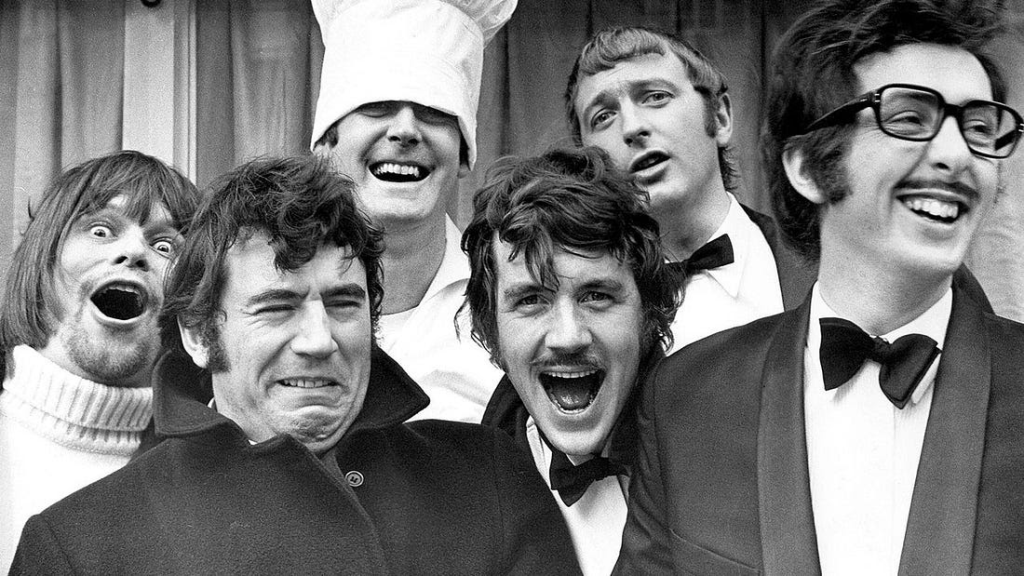
It could be a Monty Python skit from forty years ago: A demented U.S. president demands the Nobel Peace Prize (which he initially spells “Noble”), after converting the name of the Department of Defense to the Department of War, sending troops into American cities, threatening Canada, and abducting the president of a Latin American country by force.

When he doesn’t get the Prize, he says he’s no longer in favor of peace and decides to invade Greenland. When Greenland refuses him, and Denmark and the rest of Europe make a fuss, he goes into a rage, raises tariffs on Europe (which are really import taxes that cost Americans dearly) and threatens war on NATO. The president of Russia is delighted.

Can’t you see it? Eric Idle plays the American president — full of himself and utterly off his rocker. John Cleese is the hapless Latin American president who’s abducted. Terry Gilliam is the incredulous head of Greenland. Terry Jones plays the righteous leader of Denmark, and Michael Palin the whacky but triumphant president of Russia.

The Monty Python team was so funny because they came up with completely absurd situations, handled them with deadpan seriousness, and stretched them to the limits.

But this particular situation isn’t funny. It’s actually happening. And Trump is truly, tragically, frighteningly out of his mind.

Tuesday, January 20, 2026
David A. Graham Staff writer

When Donald Trump returned to office, I thought that there wasn’t much more to learn about him. But the president’s recent follow-through on his threats represents a real shift.

Donald Trump retains the ability to shock; the day he loses that, he will, like the biblical Samson—another man notable for his coiffure—lose his power entirely. When Trump started his second term as president a year ago, however, I doubted whether there was much more to learn about how his mind works. Even before he’d entered politics, Trump was overexposed. Since then, he has become the most scrutinized person in the world. His tendencies and foibles are well known to voters, politicians, and world leaders.

Yet in breaking one of his most entrenched patterns, he has provided perhaps the biggest surprise of the past year. During his first term, Trump was defined by his tendency to back down in any negotiation or fight: As I put it in a May 2018 article, he almost always folded, agreeing to concessions whether he was negotiating on trade with China or a budget resolution with Senate Democrats. More recently, though, he’s been following through, no matter how aberrant his ideas. The exact reason for this is difficult to pin down, though it likely includes the fact that he has more experience under his belt, fewer prudent voices in his ear, and a lame duck’s liberation from having to worry about reelection. In any case, his new determination is forcing countries around the world to reassess how to deal with him.

Nowhere is this so clear right now as with Trump’s continued pressure to acquire Greenland. In the wee hours of this morning, Trump went on a social-media spree, posting (among other things) an illustration of himself, Secretary of State Marco Rubio, and J. D. Vance planting a U.S. flag in Greenland. European leaders seem to slowly be coming to the conclusion that this isn’t just a feint.

When the president began making noise about taking the Danish territory early last year, many observers were baffled but not necessarily all that concerned—an impulse reinforced when the matter receded from Trump’s attention in the months that followed. They also had a long track record to draw on. In May 2017, I wrote that “foreign leaders have realized Trump is a pushover.” This held true for adversaries (China) and allies (Taiwan, NATO) alike throughout his first term.

It was especially true for rivals such as Russia and North Korea. Trump talked a fierce game—promising “fire and fury” for Pyongyang, for example—but his counterparts understood that despite his insistence that he was a master dealmaker, all they needed was to get him to a negotiating table. “Faced with a tough decision, the president has consistently blinked, giving in to his opponents,” I wrote in my 2018 article.

This pattern was clear enough that when Trump refused to concede the 2020 election, even his allies were dismissive. “What is the downside for humoring him for this little bit of time?” a senior Republican official told The Washington Post in November 2020. “It’s not like he’s plotting how to prevent Joe Biden from taking power on January 20.” That was exactly what he was doing, however ham-handedly. The effort to subvert the election was also a warning of things to come.

Even so, Trump’s return to office initially suggested more of the same tendency to back down. This past May (why is it always May?), I wrote about Wall Street’s “TACO trade”—short for “Trump Always Chickens Out”—in which stock traders bet against the president following through on tariff threats and then profiting when he folded and markets went up. And they were right, to an extent: Although Trump did impose extensive tariffs, the eventual levels were much lower than initially announced, thanks in part to lobbying by foreign governments. Trump’s resolve remains weak in some areas; he’s swung wildly on Ukraine and Russia, his position shifting depending on whom he last spoke to.

But in other ways, the pattern has started to break. Just ask Nicolás Maduro, who reportedly rejected negotiated exile in Turkey, perhaps wagering that Trump would never actually launch a military strike on Venezuela to capture him. It was a bad bet. Now Trump seems energized and has turned his attention to Greenland. U.S. allies—or people who until recently thought of themselves as allies—are scrambling to figure out how to react. Can they draw things out long enough for Trump to lose interest? Can they appease him somehow? Or do they need, as Eliot Cohen argued in The Atlantic this past weekend, to show a willingness to resist the United States militarily?

Trump is acting emboldened domestically too. He is once again threatening to invoke the Insurrection Act to deploy troops to Minneapolis, where he seems determined to immiserate the entire city. Before his first term, Trump had threatened to prosecute political rivals, but he was stymied by his aides during his presidency. This time, he’s going through with it. In a New Yorker profile this week of Representative LaMonica McIver, a New Jersey Democrat charged with assault for a fracas at an ICE facility, Representative Lateefah Simon, a California Democrat, said, “Typically, we would say, ‘Oh, they’re just trying to scare her.’” But this is much more than fearmongering: “They’re actively litigating this case,” Simon noted. (McIver has pleaded not guilty.)

Signs of new resistance have started to emerge in parallel with Trump’s newfound resolve. Republican members of Congress have begun pushing back—far less than one would expect even in a normal presidency, but more than in Trump’s previous term or in the early days of this one. They were able to force his hand on the Epstein files, though whether they have the courage to hold him to account for slow-walking the files’ release is not yet clear.

As my colleague Anne Applebaum wrote yesterday, Congress will need to do much more to halt any Greenland fiasco. Foreign leaders will need to take a harder line too. When Trump was a pushover, it was more understandable, if not wiser, to wonder, What is the downside of humoring him? Now the downsides are clear and dangerous.

Birthdays at Courgette – Cindy Lou enjoys the food without an increase in years (on this occasion)


Cindy Lou joins friends for a casual meal at Trev’s at Dickson

The halloumi pops and potato bread were great starters. Some of the main meals were a disappointment, although the lamb shoulder was as good as always. The accompanying pumpkin, rocket, walnuts and fetta salad was delicious.


The Conversation January 20, 2026

Would you use AI to break writer’s block? We asked 5 experts

Nicola RedhouseThe University of MelbourneAriella Van LuynUniversity of New EnglandChristopher ReesUniversity of New EnglandSally BreenGriffith University, and Seth RobinsonThe University of Melbourne

A publishing giant believes AI can help break writers’ block. We asked 5 creative writing experts if they’d use it that way – and the range of results surprised us.

Authors
  1. Nicola RedhouseLecturer, Publishing and Editing, The University of Melbourne
  2. Ariella Van LuynSenior Lecturer in Creative Writing, University of New England
  3. Christopher ReesPhD, Creative Writing, University of New England
  4. Sally BreenAssociate Professor in Creative Writing, Griffith University
  5. Seth RobinsonLecturer, Professional Communications, Public Humanities & Creative Writing, The University of Melbourne
Disclosure statement

The authors do not work for, consult, own shares in or receive funding from any company or organisation that would benefit from this article, and have disclosed no relevant affiliations beyond their academic appointment.

Republished from The Conversation under –

CC BY ND

The founder and chief executive of Bloomsbury Publishing, responsible for blockbuster romantasy author Sarah J. Maas and literary heavyweights like George Saunders, has suggested AI “will probably help creativity” – including by helping authors defeat writer’s block.

“AI gets them going and writes the first paragraph, or first chapter, and gets them back in the zone,” he said.

We asked five creative writing experts, including authors who’ve published memoirs, novels and short stories, what they think. Would they use AI to break writer’s block?

Their answers – which ranged from “a hard no” to innovative reasons for “yes” – were illuminating, complicated and often surprising.

No

AI is fundamentally missing a capacity to make unique associative connections at a level of meaning, idea and word, which are the life force of good writing.

Nicola Redhouse's avatar

Nicola Redhouse

Nicola Redhouse lectures in publishing and editing at University of Melbourne, and has published a memoir.

I wouldn’t use AI to generate text or to give me ideas for plot or structure. AI is fundamentally missing a capacity to make unique associative connections at a level of meaning, idea and word, which are the life force of good writing. Without the input of my specific experience and inner life, my writing could be anyone’s writing.

As poet Anne Carson said: “The things you think of to link are not in your control. It’s just who you are, bumping into the world. But how you link them is what shows the nature of your mind.”

I am especially interested in the apparently insignificant noise in the writer’s mind, even in the deadness of writer’s block, that offers rich, unexpected links. Without the specificity of that personal noise, writing and story gains the curiously (and offputtingly) bland quality AI seems to be so good at.

I don’t see a creative problem with trying AI-generated prompts in the face of writer’s block – but I do have an ethical problem with those prompts being scraped from real people’s labour, time and creative thinking, without acknowledgement.

Yes

I am using text-to-image AI to help generate ideas for my neo-Victorian Gothic novel. For me, the tool is both a research method and an accessibility aid.

Christopher Rees's avatar

Christopher Rees

Christopher Rees is completing a creative writing PhD at the University of New England.

Living with a chronic illness has changed my relationship with writing. While I can still remember the “before” times, brain fog and aphantasia now limit my ability to visualise my fictional worlds. However, genres like the Gothic rely on symbolic density, such as liminal architecture, supernatural motifs and the sublime terror of nature, to address cultural anxieties.

So, as part of my creative writing PhD, I am using text-to-image AI to help generate ideas for my neo-Victorian Gothic novel. For me, the tool is both a research method and an accessibility aid.

I found that by prompting public domain illustrators such as Randolph Caldecott (known for his gently satirical late 19th-century drawings), I could explore the period’s visual communication to see how behaviour, satire and atmosphere shift when placed in new contexts.

I also use the hallucinations in the AI outputs to subvert the turn-of-the-century Gothic’s outdated assumptions about non-normative minds and bodies, and to reimagine the story world from a neurodivergent perspective. The technology is helping me find my voice again.

No

LLMs have been trained on … stolen works. They’re not capable of generating anything truly original, so any prompt they gave would just be rehashing that piracy – and, in a way, making you complicit.

Seth Robinson's avatar

Seth Robinson

Seth Robinson is a lecturer in professional communications, public humanities and creative writing at University of Melbourne. He is also a novelist and producer.

Right now, this is a hard no. It’s about the ethical implications of using large language models (LLMs), in terms of both climate change and the theft of intellectual and creative works used to train them.

Because LLMs have been trained on those stolen works, they’re not capable of generating anything truly original, so any prompt they gave would just be rehashing that piracy – and, in a way, making you complicit.

I think ten or 20 years from now, if artists, philosophers and scientists were involved in their development – and these ethical issues could be addressed – then these programs might evolve and offer real chances for creativity and collaboration.

That’s the utopian vision the tech companies are selling us now, but the reality is it would have to be a very different program, designed by a different, more diverse group of people.

Yes

I don’t just use generative AI to break writer’s block, I speak back to it … A fascinating, if uneasy, collaboration.

Sally Breen's avatar

Sally Breen

Sally Breen is associate professor in creative writing at Griffith University and the author of a memoir and a novel.

I don’t just use generative AI to break writer’s block, I speak back to it.

In 2023, I participated in Slow Down Time, a collaborative art-making project curated by Mitch Goodwin, exploring the relationship between text, image and machine. Twenty-two authors submitted two prompts and the AI created images from our words. We responded. A call-and-answer translation game between writers and machines.

I went to war. Asking the AI in second person (as if it might be a sentient thing) why it had taken my words about a hotel hook-up into the loneliness of corporate land, and taken my punk rally cry into a post-apocalypse where people have televisions for heads.

Eerily, all the characters – the men in hoodies, the dystopian heroines, the street kids and babies stuck inside the televisions – had eyes the exact same shade of blue as mine. The first four letters of my name were splayed across the t-shirt of a teary-eyed young guy at the end of the world.

A fascinating, if uneasy, collaboration. I wondered: is the darkness in the algorithm, or is it in me?

Yes

Only after I’d exhausted other possibilities. I’m prepared to refine the text generated and I want to think about the differences between humans and machines.

Ariella van Luyn's avatar

Ariella van Luyn

Ariella van Luyn is senior lecturer in creative writing, University of New England. She has published a novel and short stories.

Yes, but only after I’d exhausted other possibilities. I’m prepared to refine the text generated and I want to think about the differences between humans and machines.

Author Jeanette Winterson says engaging with AI-generated materials can change the way writers think about the nature of consciousness. When I talk to characters on character.ai, I experiment with the emotional engagement with fictional constructs that mimic real people – just as I ask readers to do in my fiction. So, AI-generated text can help think through ideas of how we think, feel, connect and relate.

Many other ways of breaking writer’s block – like reading, researching and free writing – are less risky and costly, though.

AI’s automatically generated text may replicate existing writing and biases, while every writer has their own unique, embodied experiences to draw on. Crucially, some writers’ life experiences, such as those from marginalised backgrounds, aren’t visible in the existing data sets. AI texts won’t provide these inspirational stories. So, writers need to refine and intervene.

Week beginning January 14 2026

Julia Golding The Austen Intrigue Book 4 of Regency Secrets, HarperCollins UK, One More Chapter | One More Chapter, November 2025.

Thank you, NetGalley, for providing me with this uncorrected proof for review.

I have mixed feelings about this novel – the Jane Austen link was interesting, the European political and historical background informative and easily understood, and the two main characters, Dora Fitz-Pennington and Jacob Sandys introduce complexities of class, friendships, and professional background. However, there are also some jarring moments which conflict with the measured writing that seems relevant to the period.


Each book in the series, of which this is the fourth, introduces a historical character who assists in the investigations that Fitz-Pennington and Sandys encounter in their detective agency. Jane Austen’s brother, Henry and his wife, Eliza also feature. The first chapter is set in the Austen household, providing a background to their lives – Henry a successful banker and Jane, an unacknowledged writer, but very acknowledged spinster of uncertain age move from this family circle into the path of murder. Henry Austen’s reputation and bank is to be saved by the investigation; Jane Austen, assisting the investigation at his command, is to be first perceived as an irritating spinster who lies about her background and then recognised as the writer of Sense and Sensibility, which Fitz-Pennington reads avidly in a night. See Books: Reviews for the complete review.


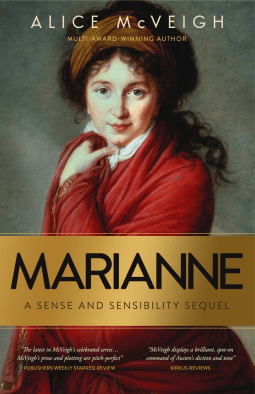
Alice McVeigh Marianne A Sense and Sensibility Sequel Warleigh Hall Press | Independent Book Publishers Association (IBPA), Members’ Titles, October 2025.

Thank you NetGalley and Alice McVeigh for providing me with this uncorrected proof for review.

This series has been a joy to read from the first novel, a wonderful encounter with the young woman who was to become Austen’s Lady Susan, Susan, A Jane Austen Prequel. McVeigh has never moved away from her meticulous rendering of Austen’s language and time and the introduction of credible events: her novels are clearly the end point of not only research, but an enduring knowledge and love for Austen’s work. Marianne A Sense and Sensibility Sequel is particularly elegant in its weaving together characters from several Austen novels – Sense and Sensibility, Mansfield Park, Emma, Lady Susan, Pride and Prejudice and Northanger Abbey.

Marianne Brandon is widowed at twenty – a sad state that does not prevent her from romantic musings, tinged with regret, wrath, and self-delusion about the young men she encounters throughout the novel. Her truly foolish and romantic persona is adopted by Margaret, her younger sister. Margaret’s romantic musings are fully developed in her diary in which she reflects upon her attempts to write a novel. This adds to the humour in the narrative, as well as being reminiscent of Northanger Abbey. There are other delightful reminders of Austen’s fine hand in Willoughby’s self-justification for his treatment of Marianne which recalls the conversation between her aunt and uncle in Sense and Sensibility. Although in this novel, John redeems himself by providing something for the sisters in his will, Willoughby’s self-justification is a potent reminder of the past impoverishment of the sisters that led to his decision to abandon Marianne.

Is Jane Austen’s work so well reflected in Alice McVeigh’s that she is replaced, her own novels unnecessary reading? No, because that is far too high a demand to make of any writer whose work is a variation on another’s. However, does McVeigh capture the essence of Austen so well that we can return to her world through these new novels? I believe that there can be only a resounding yes to that query. In this latest work McVeigh has given us Marianne, a more thoughtful character, but retaining much of her younger, impetuous self. She has also provided other characters with a past that rings true, and a future that is a pleasure to see revealed.

Dr Christopher Herbert Jane Austen’s Favourite Brother, Henry Pen & Sword | Pen & Sword History, May 2025.

Thank you, NetGalley, for providing me with this uncorrected proof for review.

Christoher Herbert’s history employs one of the most useful strategies when dealing with a subject for whom the material is sparse. In this case, there is an abundance of material about Jane Austen who has been the subject of so many biographies. However, Herbert does not rely solely on this, adroitly using his independent research and bolstering it with material that sets the context for events that are not recorded. He also uses the more conventional way of contributing to research when dealing with a writer – studying the author’s work for clues. In this case, both Jane and Henry Austen’s writing. This is a work of substance, accessible writing, a broad history of the time and social mores, and an intriguing insight into Henry and his family, including Jane for whom it becomes clear, Henry was indeed her favourite brother.

There are wonderfully comic passages – the discussion of studying at Oxford and Cambridge in the period was delightful. Less attractive is the recognition of the family’s slavery connections. However, these topics and a multitude of others, including reference to Austen’s novels, provide a picture of the father of these two affectionate siblings. See Books: Reviews for the complete review.

American Politics

Jeff Jacoby’s Arguable: From two Egyptian midwives to Martin Luther King

The Boston Globe <newsletters@bostonglobe.com>Tuesday, January 13, 2026

By Jeff Jacoby, Globe Opinion columnist 

New to Arguable? Click here to subscribe. Follow me on X

From two midwives in Egypt to Martin Luther King Around the corner from my home in Brookline, Mass., is the William Ingersoll Bowditch House at 9 Toxteth Street. In the 1840s and 1850s, the house was a “station” on the Underground Railroad, part of the elaborate network of secret routes and safe havens that helped 100,000 or more enslaved Black Americans in the United States escape to freedom in the decades before the Civil War. The Underground Railroad, a great collaborative effort in defense of liberty, was also a massive campaign of civil disobedience at a time when federal law made it a crime to assist freedom seekers fleeing bondage. That means that everyone involved in the Underground Railroad was a lawbreaker — and a moral champion.

I pass that house regularly, and often find myself thinking about the Americans who sheltered refugees there. They knew the law (Bowditch was a lawyer) and understood the penalties they risked by flouting it — prosecution, heavy fines, imprisonment. They did it anyway, because their conscience gave them no choice. The Fugitive Slave Act was lawful, duly enacted by Congress and signed by the president. But it was also profoundly unjust, and the men and women of the Underground Railroad recognized a higher obligation than obedience to such a law.

They were not the first to face that dilemma.

The tradition of righteous lawbreaking reaches back far beyond antebellum America. The earliest recorded acts of civil disobedience were committed by three women, whose stories are told in the opening chapters of the book of Exodus. They came from opposite ends of ancient Egypt’s social ladder. Two were lowly midwives named Shifra and Puah. The third was a princess, the daughter of Ramesses II, the most powerful pharaoh in Egyptian history. 

Their tales begin with a genocidal decree. Pharaoh, alarmed by the growing population of his enslaved Hebrews, orders Shifra and Puah to kill every newborn Hebrew boy they deliver. But the women cannot bring themselves to follow such orders. As Exodus 1 relates: “The midwives feared God; they did not do as the king of Egypt commanded them, but they let the boys live.” 

When summoned to explain their disobedience, they offer Pharaoh a transparently absurd excuse: Hebrew women give birth so quickly that the babies arrive before the midwives can get there. Their defiance is not merely courageous but bold to the point of mockery.

This happened in the 13th century BCE, millennia before any theory of civil disobedience existed. The notion of universal human rights was unknown. Yet Shifra and Puah instinctively grasped a principle that would not be codified for many centuries — that some orders are so immoral they must not be obeyed, regardless of who issues them or what punishment disobedience might bring. The text says simply that the women “feared God”— they had a conscience that wouldn’t let them commit murder, even under direct command from the most powerful ruler on earth.

Then, in Exodus 2, comes another act of defiance, equally remarkable.

The serene setting of The Finding of Moses, painted by Nicholas Poussin in 1638, belies the gravity of the civil disobedience it portrays: Pharaoh’s daughter openly defying her tyrannical father’s order to drown all Hebrew baby boys. (Wikimedia) Pharaoh, thwarted by the midwives, issues a public edict, binding on every Egyptian: All male Hebrew newborns are to be drowned in the Nile. One Hebrew mother hides her infant son as long as she can, then sets him afloat in a basket, hoping desperately that someone might rescue him.

Someone does, and it turns out to be the daughter of Pharaoh himself. She finds the baby, realizes immediately that he’s a Hebrew, and decides to save him anyway. Her handmaids, witnessing this defiance, must surely have warned her of the risk. Yet she stands her ground. Indeed, the princess doesn’t simply rescue the child in secret — she adopts him openly and raises him in the royal palace, in direct violation of her father’s genocidal decree.

As the late Rabbi Jonathan Sacks observed, to get a sense of the magnitude of her act, replace the phrase “Pharaoh’s daughter” with “Hitler’s daughter” or “Stalin’s daughter.” In refusing to assist a homicidal regime into whose highest ranks she was born, she demonstrated that even in the heart of darkness, moral courage is possible.

These women — the midwives and the princess — had nothing in common except their refusal to participate in evil. They acted without the benefit of historical precedent or political theory. But they set the pattern for all those who would choose to fight unjust laws by breaking them and accepting the consequences — people like Rosa Parks, Henry David Thoreau, Mahatma Gandhi, Oskar Schindler, the Soviet refuseniks, Bowditch and the Underground Railroad abolitionists, and the Dutch couple who helped hide Anne Frank and her family.

Next week, Americans will honor the life and legacy of Martin Luther King Jr., whose commitment to civil disobedience in the cause of racial justice made him one of the 20th century’s towering figures. As a Baptist minister, King was of course familiar with the legacy of moral courage that stretches back to Shifra, Puah, and Pharaoh’s daughter. His writings and speeches contain many biblical references, and his philosophy of nonviolent resistance rested on the same foundation as the ancient midwives’: There is a law higher than human law, and decent people must sometimes choose between obedience and justice.

In his renowned “Letter from Birmingham Jail,” written in 1963 while imprisoned for organizing a nonviolent march against segregation, King addressed white clergymen who had criticized him for defying an injunction banning civil rights protests. He drew a crucial distinction between just and unjust orders, arguing that “one has a moral responsibility to disobey unjust laws.” But unlike those who simply buck authority, King insisted that genuine civil disobedience requires accepting the penalty. “One who breaks an unjust law must do so openly, lovingly, and with a willingness to accept the penalty,” he wrote. “I submit that an individual who breaks a law that conscience tells him is unjust, and who willingly accepts the penalty of imprisonment in order to arouse the conscience of the community over its injustice, is in reality expressing the highest respect for law.” 

This was no license for lawlessness or violence. King explicitly rejected both. Those who sat down at lunch counters, who marched in the streets, who refused to move to the back of the bus — they weren’t anarchists or revolutionaries. On the contrary, King argued, they were standing up for America’s deepest values, carrying the nation “back to those great wells of democracy which were dug deep by the Founding Fathers.”

In truth, they were reaching back even further — back to the midwives of Egypt who stood before the most powerful ruler of their age and said no. Back to the princess who defied her own father’s genocidal decree. Back to the first people in recorded history who understood that conscience can demand disobedience, and that such disobedience represents not a rejection of law but its highest expression.

This ancient principle is once again a live issue. Last month, six Democratic members of Congress, all military veterans, released a video reminding active-duty service members of their legal obligation under the Uniform Code of Military Justice to refuse unlawful orders. That is hardly a novel or partisan claim. It is settled military law, codified after the Nuremberg trials in order to prevent “just following orders” from serving as a defense for atrocities. The principle is taught at every service academy and appears in every military legal handbook.

Yet the video provoked an unhinged response. In a series of characteristically over-the-top posts, President Trump claimed the lawmakers had committed “SEDITIOUS BEHAVIOR, punishable by DEATH!” Secretary of Defense Pete Hegseth has moved to deprive one of the legislators, Senator Mark Kelly, of his rank and pension as a retired Navy captain. Ironically, Hegseth himself said in a 2016 video that US troops “won’t follow unlawful orders” and that “if you’re doing something that is completely unlawful and ruthless, then there is a consequence for that.” Kelly now faces the prospect of significant financial penalties for saying essentially the same thing.

But the principle endures because it is true: Obedience to human authority has limits. Shifra and Puah understood this without legal theory. Pharaoh’s daughter acted on it at enormous personal risk. The conductors of the Underground Railroad staked their freedom on it. King gave his life for it. And in our generation, too, men and women must decide whether they will uphold this inheritance or abandon it.

As Americans prepare to honor Martin Luther King Jr.’s legacy, it is worth remembering that his commitment to civil disobedience was neither abstract nor comfortable. It meant jail cells and death threats, beatings and bombs. But King believed, as the Egyptian midwives believed 33 centuries earlier, that some laws must be violated and some orders refused.

The Bowditch House still stands on a quiet residential street, long after the law it defied has been consigned to ignominy. The people who sheltered fugitives there did not know how history would judge them; they only knew what they could not do. That is how moral progress usually begins — not with certainty, but with refusal. That is how it must continue, whenever law demands what conscience forbids.

Should ICE Agents Be Able To Wear Masks?

Joyce Vance from Civil Discourse <joycevance@substack.com>

Forwarded this email? Subscribe here for more

Should ICE Agents Be Able To Wear Masks?Joyce VanceJan 14 

Protect and serve. That’s supposed to be the job. What could be further from that than masked agents roaming American streets in packs, refusing to identify themselves, and terrorizing—there is no other word for it at this point—American citizens? Early on, the excuse for wearing masks was that it was necessary to protect the agents. From what? There were reports that they were being doxxed, which no one in law enforcement likes to deal with. But they’re the ones assaulting and killing people, which is far more problematic. Back in July, the Acting Director of ICE, Todd Lyons, said that he did not encourage agents to use masks but would continue to let them wear them in the field “if that’s a tool they need to keep them and their families safe.” Now masks and gaiters are emblematic of ICE agents and their colleagues from CBP (Customs and Border Protection) doing immigration work in places like Minneapolis.

You don’t routinely see the FBI or U.S. Marshals out doing their jobs with masks on. There is literally no legitimate reason for ICE and Customs Border Patrol (CBP) to continue to operate this way during immigration “enforcement actions,” especially in light of the recent history of documented abuses. Anonymity accelerates that kind of behavior. It tells the agents they aren’t accountable for violating people’s civil rights.

There has been concern about the kind of people the administration is rushing into service in ICE and as deportation officers. Congressional Democrats are asking for information on whether hiring includes now-pardoned Jan. 6 defendants.

The overwhelming majority of federal law enforcement agents I worked with during my 25-year career at DOJ were men and women who were committed to following the law themselves while protecting their communities and prosecuting crimes. They believed citizens had constitutional rights. There’s no reason for the sudden change, a world where an agent shoots and kills a woman for no good reason, except that the current leadership in the White House and at DHS is willing to tolerate, if not encourage, what we’re now seeing. There are people ripped out of their cars, homes entered without a judicial warrant, agents who treat American citizens like they have no rights. This administration dishonors the service of the federal agents who spent their careers committed to constitutional policing.

Law enforcement officers are trained to de-escalate tense situations. Instead, we’re watching ICE agents act like the accelerant to a smoldering fire. The administration’s take on the failure of agents to behave like the good guys they’re supposed to be isn’t to put a stop to it. Instead, they revel in the Gestapo-like images of doors being busted downschool kids being knocked to the ground, and peaceful protesters being hit with pepper spray. So, it’s up to someone else to stop it.

The state of training at ICE is unclear, as new agents are rapidly hired and deployed. But what we’re seeing is troubling.

Some states have tried passing laws to prohibit masking.

California passed SB 627 (the “No Secret Police Act”) in late 2025, restricting law enforcement, including federal agents, from using extreme face coverings like ski masks during operations, effective Jan 1, 2026. There are logical exemptions to protect officer safety and the identity of undercover operatives. California Governor Gavin Newsom said at the time, “This is about the secret police. We’re not North Korea, Mr. President. We’re not the Soviet Union. This is the United States of America.”

The language of the bill explains that “facial coverings limit the visibility of facial expressions, which are essential components of nonverbal communication. In high-stress or emotionally charged interactions, the inability to read an officer’s expression may lead to misinterpretation of tone or intent, increasing the risk of conflict escalation” and that “the visibility of an officer’s face is vital for promoting transparency, facilitating communication, and building trust between law enforcement agencies and the communities they serve.” It also points out that “when officers are not readily identifiable, it increases the risk of impersonation by unauthorized individuals, which further undermines public trust, endangers public safety, and hinders legitimate law enforcement operations.”

But the Constitution protects federal supremacy, and the predictable challenge to the law from DOJ ensued in November 2025, arguing that the measure infringes on federal authority and endangers agent safety in an environment of accelerating threats made against them. California agreed it would not enforce the law until a judge had the opportunity to rule on the federal government’s request for a preliminary injunction. The concession was viewed as “a tactical decision by the state, speeding the court proceedings toward a conclusion while avoiding a temporary restraining order that likely would have prevented the law from taking effect in the meantime.” A preliminary injunction hearing is scheduled to take place this week.

Rep Eric Swalwell told me exactly this in an interview on Friday, adding defunding ICE, an end to immunity and more support for state prosecutions of criminal agents: newrepublic.com/article/2051...Mon, 12 Jan 2026 14:01:58 GMT View on Bluesky

Law enforcement can adapt to measures that prohibit masking except when necessary (as in SWAT operations or for undercover agents). Although federal law doesn’t contain any restrictions on wearing masks, in 2022, the Secret Service and the Park Police agreed to wear badges and identify themselves in public, as a result of the debacle in Lafayette Square during the first Trump administration, when rubber bulletstear gas, and flash bangs were used on peaceful protestors. Federal agents and police cleared the Square to facilitate Trump’s desire for a photo opportunity at St. John’s Church.

Whether or not the California law passes constitutional muster, its rationale is strong. In a moment where the focus should be on de-escalating tension between federal agents and communities, masks are making it worse. It would be a simple measure and a show of good faith toward communities like Minneapolis to end their use. That the administration won’t take even that simple step tells you all you need to know about where this is headed.Thanks for being here with me at Civil Discourse. I appreciate your support. Paid subscriptions make the work and resources that go into the newsletter possible and allow us to expand the community of people who believe it’s our duty as citizens to participate in our democracy.

We’re in this together, Joyce

British Politics

Fiona Hill: “The UK needs to think of its own sovereignty” *

The foreign policy expert on spheres of influence and what America First really means

By Megan Gibson

Fiona Hill knows more than almost anyone just how fraught this geopolitical moment is. The British-born Russia expert not only served as an adviser to presidents George W Bush, Barack Obama and Donald Trump, she also sat on the US’s National Security Council until 2019. Later that year, she became a star witness in Congress’s impeachment inquiry over Trump’s relationship with Russia ahead of the 2020 presidential election.

More recently, as people scrambled for information in the immediate aftermath of the US’s strikes in Venezuela, a 2019 deposition resurfaced in which Hill detailed a “strange swap arrangement” that Russia was floating at the time. According to the proposal, Russia suggested it would cede its interests in Venezuela if the US would abandon Ukraine. Hill spoke to the New Statesman about that proposal, the return of the Monroe Doctrine and the prospect of a US attack on Europe.  

Megan Gibson: Your 2019 deposition has gained a lot of attention in recent days. When you gave the deposition it was well before the full-scale invasion of Ukraine, but was the revelation of the swap proposal picked up on at the time?

Fiona Hill: It wasn’t really. That’s why it’s probably resonated in such a major way now, because people are looking back for explanations. What we have to do is cast ourselves back to that first Trump administration in 2019. You just had another election in Venezuela. Maduro had absolutely, clearly lost. At that point, the US was part of a much larger discussion about how to persuade Maduro to give up power, to leave and to put a coalition government to place that would then start that process of putting Venezuela on a different footing. There were a lot of European countries [involved], including the UK, Italy, Spain, Colombia, Mexico, Brazil. There was a question about where Maduro would go, and that was certainly not off to the Southern District Court of New York. The idea was that like many former dictators, he’d find somewhere to go. In the midst of all of this there are also rumours spreading around that the US might basically try to topple Maduro.

The Russians had vested interests: they’d been using Venezuela as a launchpad for all kinds of disinformation in the Spanish language. They’re still playing up all these old leftist connections from the Soviet period, and there’s oil. So the Russians had specialists they put in place basically to help Maduro push back against the possibility of a US invasion.

Meanwhile, you’ve got some Russian officials basically saying, “Perhaps if [we left you to] focus on Venezuela, then you could basically butt out of whatever it is that you think you’re doing in Ukraine.” I had hints dropped – that nudge-nudge, wink-wink kind of approach – by the Russian ambassador to the US at the time, Anatoly Antonov. But the proposal was not picked up at that point, even by people within the [first] Trump administration, because the people at the time who were interested in the demise of Maduro were not interested in doing a swap for Ukraine.

But was there anyone in the first administration who seemed especially intrigued by the prospect of a return to the Monroe Doctrine?

Well, there were certainly plenty of people talking about it. I would say that our Secretary of State, Marco Rubio – at that point he was in the Senate – was then making very strong comments about the importance of the US playing a more forceful role in its hemisphere. Now we seem to have gone back to an old role, or even an expansion of an old role of the US throwing its weight around. I’m not sure that’s really what, at the time, Rubio had in mind. But there certainly were plenty of people who wanted to see the end of Maduro. The Russians, of course, knew that, and they kept making all these comments about Cuba as well.

And now we see Trump is talking about attacking Cuba, as well as attacking Colombia and Mexico, and annexing Greenland. Were these countries part of the Russian conversation back then?

No, of course not. Greenland was already emerging as a fixation of Trump’s, but it wasn’t linked at that point to any larger idea of dominating the Western hemisphere. It was more about the risks of China muscling in. Look, the president is saying there’s all these ships from China and Russia around Greenland – no, there is not. Remember, Greenland is part of Nato and the US has had bases in Greenland since the 1950s. It [already] plays an important role in North Atlantic security, which is recognised by the Danes, by the Greenlanders themselves and Canada, Norway and the UK. Perhaps rudimentary fragments were there in that period around 2019 or so but they weren’t then taking the shape of: “I can do whatever I want in the Western hemisphere. It’s my domain.”

How concerned should the residents of Greenland – and Europe – be now?

They should be very concerned. You had Katie Miller – the wife of Stephen Miller, Trump’s chief adviser – putting out on X a picture of Greenland with the US map [overlaid]. Is this trolling? Obviously, but it’s also got some real menace behind it.

It’s the kind of thing we expect from the Russians. It’s intimidation.

It all depends how this plays out in Venezuela. Spheres of influence might be all nice and neat and great for historians to talk about, but they rarely go uncontested. The US is not the overlord of every country in Latin and South America in the way that it might have been. Brazil is a major power, it’s got options. Other countries are not as weak as Venezuela is. Are Canadians really going to just go along with anything that is pushed upon them? We can see from recent events in Ukraine and elsewhere that when people are put under a lot of pressure, some of them decide to fight back.

Should we take Trump at his word that this is a return of the Monroe Doctrine and that he’s simply seizing command of his backyard? Could it be part of a wider attempt at asserting US supremacy?

I don’t think these things have to be mutually exclusive. The National Security Strategy makes things very clear that the Western hemisphere is now the focal point but what is our vision for the region other than: “We own this, and everyone else can keep out”? Now Europe is a secondary consideration and so is the Middle East. Everyone is at pains to say that China is still a major priority, which doesn’t suggest that leaving the whole of Asia to President Xi is entirely on thecards.

[But] there’s a whole wide world out there [to push back] – not just Brazil but India, South Africa, Indonesia, Japan, South Korea, all kinds of other countries that were not in the picture during the Cold War. This is a totally different place, the world we live in now, than it was 80 years ago, 40 years, 30 years, or even 20 years ago. It’s much more complicated, and I’m not so sure how much Trump is going to be able to throw his weight around.

His second term has recast a lot of thinking about Trump as an isolationist and what America First means exactly. Do his actions align with any recognisable doctrine? Or is it a mistake to think that he has one?

Well, there’s lots of people around him who have recognisable doctrines. But with Trump, it’s about him and it’s about his perceptions. A lot of this is personal whim. He is a pattern-breaker. That’s why he’s so successful, actually, because people expect all kinds of things from him and then he often does things they weren’t expecting at all.

He says he is America First – no, he’s himself first. Anywhere [he sees the opportunity to gain] some benefit for him and his own extended business interests, then you can be sure he’ll take it if he thinks he can get away with it. [So they] put pressure on Denmark, put pressure on Europeans because Europe doesn’t have any leverage. Wherever he can leverage something – and this is exactly what Putin and the Russians do – he will leverage it.

How much of this foreign policy comes down to Trump’s own pursuit of self-enrichment?

Oh, it’s a lot about that. And enrichment isn’t just in monetary terms. It’s in terms of the mantle of power and his own status. It’s about his ego, and renaming everything after him. I’m sure Venezuela will now have some new appendage attached to it [bearing Trump’s name].

So it’s his legacy?

I don’t think he’s really interested in legacy. He wants the accolades in real time because he won’t be around to enjoy them when he is dead. Putin and Xi are somewhat different because they see themselves as the inheritors of great history – millennia-long [history] in the case of China. For Trump, it is just Trump. He completely trashes every other American leader – he doesn’t have a good word for any of them.

Is China more likely to launch its own military operation in Taiwan after Venezuela? Does it figure at all into the calculation?

Well, it basically removes any moral high ground that the US – or anybody else, frankly, if they don’t push back against this – would have. The Russians already have made all these cases about Zelensky not being legitimate, for example, and [guilty of] all kinds of corruption. In the case of Taiwan, could we start to see some kind of manufacturing about rogue behaviour [to justify an invasion]? That might give them an excuse, but perhaps they don’t even need that. But [the Venezuela strike] removes the ability for others to push back against it.

The idea of spheres of influence where Russia looks after its patch, China has its patch and the US has the Western hemisphere – it leaves Europe a bit adrift…

It’s somebody else’s patch.

Exactly. But Marco Rubio has always been hawkish on China and Russia, and thus quite supportive of Taiwan and Europe compared to other figures in the administration – like JD Vance. Rubio seems to be ascendant within the administration at the moment, so how do you think he’ll influence these various geopolitical calculations?

It’s really hard to say. Rubio might be ascendant on this issue, but he certainly hasn’t been in the case of Ukraine or in the Middle East. [Latin America] is an issue that he is deeply familiar with. On the other issues – Europe, the larger geopolitical landscape – he’s extraordinarily well versed. But can he have that same impact? I’m not so sure.

And if the Russians are thinking of trade-offs, then you’ve got people like Vance and others who do not want to see any more support for Ukraine or Europe. You look at the people who helped put together that National Security Strategy: itdoesn’t necessarily bode well for any kind of coherence here. What it does suggest is that it’s just gonna be this tug of war, all the time. If I were sitting in London and Europe, I’d be getting my own act together.

You helped write the UK’s Strategic Defence Review, so you have more insight than almost anyone on where Britain falls short. At the moment, how great of a concern are British capabilities?

They are of concern. And all of Europe and Canada is probably feeling quite discomforted at the moment as well. It was never a great idea: 80 years of the US dominating European security and everybody just basically acquiescing to that because they believed they were dealing with a benevolent country. It was always inevitable that the US at some point was going to say, enough.

So what we should be doing is really taking a long, hard look – as we tried to do in the Strategic Defence Review – at our own security position. Who is it that we should be working most closely with? In the review you will see there was a lot of advocation of focusing on the European security front. In the period that we were finishing it in March of last year, it was just prior to the whole blow-up at the 2025 Munich Security Conference, and there was still the idea that the US would remain a major bilateral partner. But this is a place that’s in a constant amount of flux. The UK, like other European neighbours, needs to re-engage with Canada, Denmark and Greenland and Norway, all the Scandinavian countries, [as part] of a multifaceted security realm in the North Atlantic, the North Sea, the northern part of Europe. The UK also has overseas interest and it has to take care of themas well.

But it has to do that in conjunction with others. It’s fair to say, and some people will disagree, but Brexit was a colossal mistake because it assumed a benign security environment. And I’m sorry, you could have foreseen these kinds of things happening. Making yourself entirely dependent on the US at a time when the world was changing dramatically was a strategic blunder. The world was changing [then] and it’s well and truly changed now. The UK will have to work very closely with its other allies to figure out how to address this, and we need a national conversation. It doesn’t mean [saying], “We’re gonna be under attack any second now from the Russians pouring over this border, land, sea, or air.” But we’re in a real predicament and we haven’t taken care of our critical national infrastructure. We also have to think about the informational and propaganda environment that we’re in: it’s informational warfare, which the Russians are winning all the time, and frankly, the United States is engaging now with the same degrees of hostile propaganda. The UK needs to think of its own sovereignty as other countries do.

Would you have liked to see a stronger initial reaction from European leaders and Keir Starmer to what happened in Venezuela?

[It’s important to make] it clear that there have been violations of international law and process here, and recognising that the UK and Europe and others cannot be complicit in this. Do they have to tread very carefully? Absolutely. And they better start thinking about what they are going to do about Panama. What about Greenland? What about Canada?

We also have to see what happens. There’s always a rush [to think] the world is ending here. I’m probably contributing to that somewhat by some of the things I’m laying out. But I’m going to pause here [to note that] the US doesn’t exist in a vacuum. It will get pushback. Some of that pushback could well come from the UK and other European allies, and Canada basically saying “no”. Everybody has agency. This is not going to be a linear triumphal march from Venezuela to [the US dominating] everything else.

Back to the idea of Russia and the US swapping Venezuela for Ukraine: if you are Zelensky at this moment, how worried should you be?

Pretty worried. But it seems to be more par for the course for poor Zelensky. There’s been all kinds of pressure on Ukraine [already] to give up territory. We’ve been dealing with all of that for the last several months, but it really does undercut the US as an honest broker. I think the Ukrainians were already quite aware of this. It just means we’re in a territory where the Russians double and triple down. Trump says all the time: “Ukraine’s a little country.” It’s not actually a little country, it’s a big country. But [in Trump’s mind] it belongs in the sphere of Russia, where might makes right.

This is an edited extract from a longer interview. Hear the full conversation on the New Statesman’s Daily Politics podcast, below.

[Further reading: America’s imperial fights are not necessarily ours]

  • See my review of Fiona Hill’s autobiography, There is Nothing For You Here in my blog October 2021.

Listen to the New Statesman podcast

The Sydney Morning Herald Rob Harris and Matthew Knott

Updated January 8, 2026 — 7.57pmfirst published at 4.31pm

‘I’ve taken the time to reflect’: Anthony Albanese bows to intense pressure, announces antisemitism royal commission

An unprecedented royal commission will probe the explosion of antisemitism and a deterioration in social cohesion following the worst terror attack in the nation’s history after the federal government caved to three weeks of fierce calls from the victims’ families, public figures, the opposition and some within Labor to hold a federal inquiry.

Prime Minister Anthony Albanese stared down last-minute resistance from prominent Jewish Australians, including former treasurer Josh Frydenberg, by appointing former High Court justice Virginia Bell to lead the national inquiry, who has been asked to complete her inquiry and report by the end of the year.

He said the inquiry would address four key areas: investigating the nature and prevalence of antisemitism; making recommendations to assist law enforcement or to control immigration and security agencies to tackle antisemitism; examining the circumstances surrounding the Bondi terrorist attack on December 14; and examining ways to strengthen social cohesion and counter the spread of ideological and religiously motivated extremism in Australia.

“I’ve taken the time to reflect, to meet with leaders in the Jewish community, and most importantly, I’ve met with many of the families of victims and survivors of that horrific attack,” Albanese said after constantly rejecting calls for weeks to hold a national inquiry. “They’ve had their lives and worlds shattered … I’ve shed tears with them. I want to thank people for those honest and open-hearted conversations.”

He said it became clear to him that a federal royal commission was needed into the broader issue rather that a NSW-based inquiry because antisemitism was not confined between “the Tweed River and the Murray”. Following Albanese’s announcement, the NSW government confirmed its planned inquiry would no longer proceed.

Albanese said the inquiry would not be “a drawn-out process”, and the government has asked Bell to deliver her final report before December 14. The commissioner has also been directed not to prejudice any future criminal proceedings against 24-year-old gunman Naveed Akram, who faces 59 charges, including 15 counts of murder.

Pressed later on whether the backdown had made him appear weak, Albanese told the ABC’s 7.30: “I think that people expressing their views is a good thing. Governments should be open to listening, and we have done that.”

Despite refusing to publicly commit to a royal commission in the weeks since the terror attack, Albanese said the government had been working on the details of the royal commission for some time.

The government was determined to avoid a “half-hearted” announcement of intention that only fuelled more speculation, he said.

Former senior public servant Dennis Richardson’s existing work examining the roles of the security and intelligence agencies will be incorporated into the commission. Richardson will support Bell’s inquiry and deliver an interim report by April.

The four key terms of the Royal Commission on Antisemitism and Social Cohesion
  1. Investigate the prevalence of antisemitism in Australia, including how it is driven by religious and ideologically motivated extremism and radicalisation
  2. Help law enforcement and security agencies tackle antisemitism, including through training organisations on how to respond to antisemitic conduct
  3. Examine the circumstances surrounding the Bondi terrorist attack
  4. Make any other recommendations that could strengthen social cohesion and counter the spread of extremism

The Islamic State-inspired attack on a Jewish festival event at Bondi on December 14 left 15 people dead and more than 40 injured.

Hitting out at critics within his own left-wing political base, who believe the role of Israel’s assault on the Gaza Strip in October 2023 are to blame for the uptick in antisemitic acts and violence, Albanese said he was determined that he wanted to build social cohesion, and not tear it apart.

“I don’t want a royal commission into whether we provide a solution on Gaza or on the Middle East,” he said.

“That’s not the role of a royal commission … Australians want two things. When it comes to the Middle East, they want it to stop – they want peace for Israelis and Palestinians. But the other thing that they want is for conflict to not be brought here.”

The commission will also examine the adequacy of law enforcement, border, immigration and security agency responses to antisemitism and make recommendations to strengthen social cohesion and counter ideological and religious radicalisation.

Albanese said Bell’s experience would allow the commission to meaningfully examine the impact of antisemitism on the daily lives of Jewish Australians without providing a platform for hatred.

“This royal commission is the right format, the right duration and the right terms of reference to deliver the right outcome for our national unity and our national security,” Albanese said.

Opposition Leader Sussan Ley criticised Albanese for taking three weeks to agree to hold a federal investigation, saying: “This will forever be the Commonwealth royal commission Anthony Albanese was forced to have. Few issues in Australian history have united such a broad and credible coalition against a sitting prime minister.”

Ley said the decision to appoint a single commissioner showed Albanese still failed “to grasp the gravity of the issues at stake”.

The Coalition had called for three royal commissioners to be appointed: a former judge, a person with lived experience of antisemitism and a national security expert.

Frydenberg, now chairman of Goldman Sachs Australia, said following the announcement that the commission must be fiercely independent, rigorous, trusted and transparent.

“The bar is high. The stakes are higher,” he said in a post on X. “It is a tragic reality that antisemitism has become normalised in Australia. It is a cancer that must be rooted out.”

The Zionist Federation of Australia welcomed the establishment of the royal commission as a “necessary and important step” and praised the scope of its terms of reference.

“The work now is to ensure the commission is able to examine all relevant issues fully and rigorously, so it can follow the evidence wherever it leads and deliver practical reforms that strengthen the safety and wellbeing of Jewish Australians and the broader community,” the federation’s president, Jeremy Liebler, said.

Executive Council of Australian Jewry President Daniel Aghion said the government had made the right decision by heeding the calls made by the Jewish community and the families affected by the shootings.

Related Article
Virginia Bell has been flagged by Labor figures as in the frame to lead a potential royal commission.
Virginia Bell
Who is Virginia Bell, the former justice who will lead the Bondi royal commission?

“We are especially grateful to the eminent artists, lawyers, business leaders, sporting legends, political figures, women’s organisations and other groups who added their powerful voices to this call.”

Aghion said the executive council would cooperate fully Bell with as commissioner and “make every effort to ensure that the full force of the community’s views and experiences of antisemitism in various sectors of society are brought to the forefront of the inquiry”.

Jewish leaders had earlier warned Albanese against appointing Bell amid concerns over her previous High Court ruling in favour of public protest as an act of political expression, while others said she could be viewed as an overly political choice after Labor appointed her in 2022 to probe Scott Morrison’s multiple ministries.

Asked directly about the criticisms of Bell, Albanese said there had been a range of views but there was “no one of the stature of Virginia Bell”, adding her background in the criminal law would be critical, and she was “widely respected right across the board”.

A Jewish community leader said that, while there had been some disquiet about Bell’s perceived close ties to Labor, criticism of the government’s response to the Bondi massacre would simmer down. “Now the decision has been made, everyone will do their best to support it,” the community leader said.

Albanese had been subjected to three weeks of pressure both publicly and, increasingly, internally after he suggested a royal commission was not best placed to deal with national security issues and risked giving a platform to antisemitic hate speech.

After several interventions, he this week changed his message, opening the door to calls for a royal commission which had come from the families of Bondi victims, national and state Jewish community groups, more than 200 senior members of the Australian Bar, more than 100 captains of industry, the Business Council of Australia, the Law Council of Australia, Catholic bishops, prominent sports stars and three Labor backbenchers.

Albanese said Israeli President Isaac Herzog was still formally invited to visit the country in coming weeks despite opposition from pro-Palestinian advocates in Labor’s rank and file.

The AI revolution is here. Will the economy survive the transition?

The Substack Post <post+unstacked@substack.com> 10 January 2026

Forwarded this email? Subscribe here for more

The AI revolution is here. Will the economy survive the transition?

The man who predicted the 2008 crash, Anthropic’s co-founder, and a leading AI podcaster jump into a Google doc to debate the future of AI—and, possibly, our lives.

Michael BurryDwarkesh PatelPatrick McKenzie, and Jack Clark

Michael Burry called the subprime mortgage crisis when everyone else was buying in. Now he’s watching trillions pour into AI infrastructure, and he’s skeptical. Jack Clark is the co-founder of Anthropic, one of the leading AI labs racing to build the future. Dwarkesh Patel has interviewed everyone from Mark Zuckerberg to Tyler Cowen about where this is all headed. We put them in a Google doc with Patrick McKenzie moderating and asked: Is AI the real deal, or are we watching a historic misallocation of capital unfold in real time?

The story of AI

Patrick McKenzie: You’ve been hired as a historian of the past few years. Succinctly narrate what has been built since Attention Is All You Need. What about 2025 would surprise an audience in 2017? What predictions of well-informed people have not been borne out? Tell the story as you would to someone in your domain—research, policy, or markets.

Jack Clark: Back in 2017, most people were betting that the path to a truly general-purpose system would come from training agents from scratch on a curriculum of increasingly hard tasks, and through this, create a generally capable system. This was present in the research projects from all the major labs, like DeepMind and OpenAI, trying to train superhuman players in games like Starcraft, Dota 2, and AlphaGo. I think of this as basically a “tabula rasa” bet—start with a blank agent and bake it in some environment(s) until it becomes smart. Of course, as we all know now, this didn’t actually lead to general intelligences—but it did lead to superhuman agents within the task distribution they were trained on. At this time, people had started experimenting with a different approach, doing large-scale training on datasets and trying to build models that could predict and generate from these distributions. This ended up working extremely well, and was accelerated by two key things: the Transformer framework from Attention Is All You Need, which made this type of large-scale pre-training much more efficient, and the roughly parallel development of “Scaling Laws,” or the basic insight that you could model out the relationship between capabilities of pre-trained models and the underlying resources (data, compute) you pour into them. By combining Transformers and the Scaling Laws insights, a few people correctly bet that you could get general-purpose systems by massively scaling up the data and compute. Now, in a very funny way, things are coming full circle: people are starting to build agents again, but this time, they’re imbued with all the insights that come from pre-trained models. A really nice example of this is the SIMA 2 paper from DeepMind, where they make a general-purpose agent for exploring 3D environments, and it piggybacks on an underlying pre-trained Gemini model. Another example is Claude Code, which is a coding agent that derives its underlying capabilities from a big pre-trained model.

Patrick: Due to large language models (LLMs) being programmable and widely available, including open source software (OSS) versions that are more limited but still powerful relative to 2017, we’re now at the point where no further development on AI capabilities (or anything else interesting) will ever need to be built on a worse cognitive substrate than what we currently have. This “what you see today is the floor, not the ceiling” is one of the things I think best understood by insiders and worst understood by policymakers and the broader world. Every future Starcraft AI has already read The Art of War in the original Chinese, unless its designers assess that makes it worse at defending against Zerg rushes.

Jack: Yes, something we say often to policymakers at Anthropic is “This is the worst it will ever be!” and it’s really hard to convey to them just how important that ends up being. The other thing which is unintuitive is how quickly capabilities improve—one current example is how many people are currently playing with Opus 4.5 in Claude Code and saying some variation of “Wow, this stuff is so much better than it was before.” If you last played with LLMs in November, you’re now wildly miscalibrated about the frontier.

Michael Burry: From my perspective, in 2017, AI wasn’t LLMs. AI was artificial general intelligence (AGI). I think people didn’t think of LLMs as being AI back then. I mean, I grew up on science fiction books, and they predict a lot, but none of them pictured “AI” as something like a search-intensive chatbot.For Attention Is All You Need and its introduction of the transformer model, these were all Google engineers using Tensor, and back in the mid-teens, AI was not a foreign concept. Neural networks, machine learning startups were common, and AI was mentioned a lot in meetings. Google had the large language model already, but it was internal. One of the biggest surprises to me is that Google wasn’t leading this the whole way given its Search and Android dominance, both with the chips and the software. Another surprise is that I thought application-specific integrated circuits (ASICs) would be adopted far earlier, and small language models (SLMs) would be adopted far earlier. That Nvidia has continued to be the chip for AI this far into inference is shocking. The biggest surprise to me is that ChatGPT kicked off the spending boom. The use cases for ChatGPT have generally been limited from the start—search, students cheating, and coding. Now there are better LLMs for coding. But it was a chatbot that kicked off trillions in spending. Speaking of that spending, I thought one of the best moments of Dwarkesh’s interview with Satya Nadella was the acknowledgement that all the big software companies are hardware companies now, capital-intensive, and I am not sure the analysts following them even know what maintenance capital expenditure is.

Dwarkesh Patel: Great points. It is quite surprising how non-durable leads in AI so far have been. Of course, in 2017, Google was far and away ahead. A couple years ago, OpenAI seemed way ahead of the pack. There is some force (potentially talent poaching, rumor mills, or reverse engineering) which has so far neutralized any runaway advantages a single lab might have had. Instead, the big three keep rotating around the podium every few months. I’m curious whether “recursive superintelligence” would actually be able to change this, or whether we should just have a prior and strong competition forever.

For the remainder of this lengthy discussion see Further Commentary and Articles arising from Books* and continued longer articles as noted in the blog.

Week beginning January 7 2026

Clara Bow Clara Bow My Story Histria Books|Histria A&E, February 2026.

Thank you, NetGalley, for providing me with this uncorrected proof for review.

The introduction is a joy to read – beautifully written, informative, and sensitive to the star whose story is told in the following pages. This too, is informative. Not only is it the story of a young woman whose distinctive appearance and behaviour questioned roles for women in both silent and talkie movies, but the story of that industry. To see the change from the silent era to advances in film technology through the way in which Clara Bow approached the changes, and succeeded, is a valuable way of learning this story as well as that of a remarkably engaging star. See Books: Reviews for the complete review.

Bonnie Clevering with Jason Clevering Continuity by Bonnie Clevering: Life Beyond the Credits, Punctuate Press, September 2025.

Thank you, NetGalley, for providing me with this uncorrected proof for review.

Continuity combines Clevering’s personal and public lives so skilfully that she not only provides an engaging story of her own life but advances the value of the roles of those whose credits pass quickly at the end of the film – often when an audience is streaming out of the cinema. Her voice throughout, talking about her domestic life, her various jobs, in and out of films, and dealing with actors is authentically that of a woman of integrity, thoughtfulness and self-awareness. I began feeling that this book was a little slow, but soon could not put it down. Continuity is a wonderful read, about a fascinating industry and Bonny Clevering’s role in it, as well as engaging with someone I began to admire. See Books: Reviews for the complete review.

Australian Politics

Paul Bongiorno
Inside Murray Watt’s environmental deal

Parliament’s last sitting week for the year was an intense guessing game, as Environment Minister Murray Watt haggled with competing sides on how best to reform Australia’s environment laws.

Watt had put everything on the line politically, creating a deadline to finalise what was in fact a five-year journey to reach a destination everybody agreed was needed, namely the implementation of recommendations proposed by businessman Graeme Samuel after his review of a framework that had been in place for 25 years.

Watt, the ebullient Queenslander, who has become Anthony Albanese’s chief fixer, delivered the government a significant win after convincing the 10 Greens he needed in the Senate that the perfect no longer needed to be the enemy of the good.

The demands of the Greens’ environmental protections lead negotiator, Sarah Hanson-Young, weren’t quite as robust as some of her colleagues would have liked, but, in the end, Hanson-Young viewed the amended bill as a vast improvement on the version that was originally presented.

Coal and gas projects would no longer be fast-tracked and, critically, there was significantly less delay in ending the logging of native forests. There was also more protection of the natural environment and endangered species.

Earlier in the week, Opposition Leader Sussan Ley suspected Watt and Albanese were about to do what she described as a “dirty deal” with the Greens. Her concerns were principally over the fate of natural gas projects, which she claims are essential to providing affordable energy.

The Coalition was most unhappy about the proposed environment protection agency and its ability to heavily fine industry for flouting environmental safeguards.

This was a key recommendation of the Samuel Review and gives Australia for the first time what Albanese says is a strong independent regulator. Samuel told the prime minister he is elated his reforms have finally been implemented.Watt had put everything on the line politically, creating a deadline to finalise what was in fact a five-year journey to reach a destination everybody agreed was needed, namely the implementation of recommendations proposed by businessman Graeme Samuel after his review of a framework that had been in place for 25 years.

The truth is the Coalition was struggling to present consistent demands. Watt says he was dealing not only with shadow minister Angie Bell but also with “multiple Coalition frontbenchers” who had come to him with their own thoughts. It was “quite difficult to then work out who was the actual negotiator and what is their position”. He said he had meetings with Coalition representatives who would say they’ve “got their final list of demands, and then we meet with someone else, and they’ve got other demands”.

Watt bristled at Ley’s criticism of him for “mismanag[ing] this entire process” and, she says, endangering the resources sector that is critical for “our national income”.

Watt says the reformed Environment Protection and Biodiversity Conservation Act strikes the right balance between conservation and project developments, which includes housing.

During the tense negotiations this week senior ministers were very nervous about concluding a deal with a fractious Coalition. One cited the Carbon Pollution Reduction Scheme in 2009, signed off by then Liberal leader Malcolm Turnbull. Ultimately, that deal was broken, the leader was dumped and the vote failed in parliament.

That has not been Ley’s fate, although the parliamentary year ends with her being regarded as a seat warmer, waiting for one of her conservative rivals to strike.

Things are much more settled under the leadership of Larissa Waters in the Greens party room. A cabinet minister observed:
“The Greens all have their say in their party room, but they trust their negotiator, Hanson-Young, and once they have made a decision, stick with it.” The Greens insisted more notice be taken of the potential climate change impact of any environmental or development projects, a view with considerable support, according to the latest Essential Report.

However, the Coalition’s abandonment of the net zero target and the rise of support for One Nation, an even more strident critic of climate science and action, appears to have taken a toll. Polling shows an erosion in the number of Australians who accept climate change is happening and caused by human activity. It now stands at 53 per cent, down from a high of 64 per cent eight years ago.

According to the same poll, 36 per cent of people believe Australia is not doing enough to address climate, against 20 per cent who think it is doing too much.

The opposition seems hell-bent on representing this minority. Rather than welcome Climate Change and Energy Minister Chris Bowen taking an active international role as president of policy negotiations for next year’s COP31 in Türkiye, advancing the net zero target set in Paris in 2015, it accuses him of abandoning his portfolio responsibilities.

On Monday, the Coalition came up with the glib phrase that Bowen was now a “part-time minister, full-time president”.

Of course, this is a ridiculous characterisation of the position. Bowen cited a number of examples of ministers in other countries simultaneously carrying out their COP roles while retaining their domestic portfolios. He told parliament that to suggest his new role is a full-time job “is a complete and utter invention, it is a fantasy”.

Ley’s first question to the prime minister on Monday scoffed at government claims that Bowen’s role gave “unprecedented influence” on important international emissions reduction efforts. “Why isn’t this part-time minister, full-time president” using his “unprecedented” influence to lower energy bills for Australians, she asked. The cynicism is breathtaking.

Albanese accused the opposition of “talking Australia down” and ditching bipartisan support for Australians playing key international roles, such as former Liberal finance minister Mathias Cormann, who is now the secretary-general of the Organisation for Economic Co-operation and Development. Cormann has been reappointed for a second term, with the government’s support.

Albanese accused the Coalition of failing to address energy shortages and price rises when in government and said their current plan would lead to higher prices because of its negative impact on investment in cheaper renewable energy projects.

The opposition’s other refrain for the week was to ask the government, repeatedly, “When will energy prices come down?” It is a question they cannot themselves answer in regard to their “affordable energy plans”.

Everyone knows the transition to renewables is unavoidably expensive, made worse by almost a decade of Coalition government doing nothing to replace ageing coal-fired power stations.

Ministers avoided providing assurances of early price relief, although Bowen did point to the successful home battery uptake and the way solar panels substantially cut electricity costs for households.

Midweek the new, expanded basket of goods and services included in the monthly consumer price index showed a 0.0 per cent change. That owed more to the fact it was the first in the new series than anything else. More worrying was the annual rate to October rose 3.8 per cent. In Question Time, the opposition avoided tackling Treasurer Jim Chalmers and directed its sole question on the rise in the cost of living to Albanese. It was a curious strategy that suggests it is gun-shy of Chalmers.

Ley reminded the prime minister that earlier in the year he had “promised the Australian people” the country had “turned the corner on inflation” and that the treasurer assured them the government had “inflation under control”.

Albanese is acutely aware of the potency of living costs for voters and accepted that the latest figures “confirm” households are still facing pressures. He noted the withdrawal of state energy subsidies was a contributing factor, but said his government was focused on relief measures and wanted to give assistance.

Chalmers said any decision to continue federal energy bill relief will be made closer to the midyear fiscal review but they can’t be a “permanent feature”. Blunting the opposition’s criticism was its failure at the May election to support the rebates and tax cuts.

Speaking at the National Press Club, shadow treasurer Ted O’Brien attempted to distance the survivors in the Coalition from its ill-fated election policies. He is promising tax cuts next time. His press club address was widely seen as an audition to keep his job should there be a change of leader in the new year.

Cost-of-living issues weren’t worrying Pauline Hanson on Monday night when she served Barnaby Joyce wagyu steaks that retail for about $145 a kilogram. Making the steaks more delicious for both politicians, no doubt, was the fact they came from Gina Rinehart’s cattle company.

Admiration for Australia’s richest person is only one of the things the two right-wing rabble-rousers have in common.

Why Joyce is continuing his flirtation with One Nation and its leader after Hanson’s disgraceful repeat of her burqa stunt in the Senate has his Nationals colleagues shaking their heads. She donned the garment after the Senate refused to allow her motion to ban Muslim face coverings.

This outraged the Senate, particularly its Muslim members. When the Senate resolved to eject Hanson from the chamber, she refused to leave, causing a two-hour suspension of proceedings.

This contempt of the chamber led to Labor, the Greens and some of the cross bench voting to suspend her from the Senate for seven days – a rare event – and from representing the Senate on parliamentary delegations.

The government’s Senate leader, Penny Wong, said Hanson had “been parading prejudice as protest for decades”. Unrepentant, the Queensland senator says she will run again and “the people will judge me at the next election”.

Joyce quit the Nationals on Thursday to sit as an independent for the rest of this term. He is widely expected to head One Nation’s New South Wales Senate ticket at the next election.

This article was first published in the print edition of The Saturday Paper on November 28, 2025 as “Murray Watt’s environmental factors training”.

Kos Samaras (Lobbyist, Consultant, Pollster) Facebook post

A tragedy, yes. A vote converter, maybe but not in the direction some conservatives are hoping for.

Let’s be blunt, the campaign against Albanese, won’t shift the Labor vote in any meaningful way, and it won’t flip Australians who preference Labor ahead of the Liberals.

Yes, plenty of Labor-leaning voters may hold grave concerns about the federal government’s response to the Bondi massacre. And yes, many also believe the Jewish community has carried an unbearable weight of hurt and trauma over the last two years. But the key question isn’t whether they’re angry. It’s who they blame, and whether that anger is strong enough to make them cross tribal lines.

That’s where the modern electorate matters. We’re in an era of psychological sorting: voters are increasingly clustered into ideological ecosystems with their own media, moral cues, social networks, and “good vs bad” political identities. In that world, switching from Labor to Liberal isn’t just a good versus bad cop contest. For many voters it feels like an identity rupture. So when a crisis hits, most people don’t jump across the aisle, they move within their bloc, or they disengage if they are unhappy with the response.

The May 3, 2025 federal election was a live case study. When progressive voters believed the Greens were drifting too close to ugly fringes, including tolerating, excusing, or courting antisemitic currents, they didn’t stampede to the Coalition. They consolidated around Labor. The most symbolic proof: Labor won Melbourne.

So if Labor takes damage over Bondi, it won’t show up as a great Liberal conversion. It’ll show up as within-bloc consequences:

1. Softer enthusiasm and a nastier internal critique. This issue will make Labor’s vote softer but critically the softness is not a red v blue thing.

2. A fraction of Labor voters parking their vote elsewhere on first preferences, while still preferencing Labor ahead of Liberal.

3. In my personal opinion, the most likely long term outcome here. Disengagement, cynicism, switching off. Which is a critical issue for those within the Jewish community and their supporters. The loud noise by conservatives and others, could actually just turn people off because it’s coming across as ultra partisan.

France targets Australia-style social media ban for children next year

Draft bill to be submitted for legal checks as France aims to follow Australia’s world-first ban on platforms including Facebook, Snapchat and YouTube

Angelique Chrisafis in Paris Thu 1 Jan 2026 02.31

France intends to follow Australia and ban social media platforms for children from the start of the 2026 academic year.

A draft bill preventing under-15s from using social media will be submitted for legal checks and is expected to be debated in parliament early in the new year.

The French president, Emmanuel Macron, has made it clear in recent weeks that he wants France to swiftly follow Australia’s world-first ban on social media platforms for under-16s, which came into force in December. It includes Facebook, Snapchat, TikTok and YouTube.

Le Monde and France Info reported on Wednesday that a draft bill was now complete and contained two measures: a ban on social media for under-15s and a ban on mobile phones in high schools, where 15- to 18-year-olds study. Phones have already been banned in primary and middle schools.

The bill will be submitted to France’s Conseil d’État for legal review in the coming days. Education unions will also look at the proposed high-school ban on phones.

The government wants the social media ban to come into force from September 2026.

Le Monde reported the text of the draft bill cited “the risks of excessive screen use by teenagers”, including the dangers of being exposed to inappropriate social media content, online bullying, and altered sleep patterns. The bill states the need to “protect future generations” from dangers that threaten their ability to thrive and live together in a society with shared values.

Will other countries follow Australia’s social media ban for under-16s?Read more

Earlier this month, Macron confirmed at a public debate in Saint Malo that he wanted a social media ban for young teenagers. He said there was “consensus being shaped” on the issue after Australia introduced its ban. “The more screen time there is, the more school achievement drops … the more screen time there is, the more mental health problems go up,” he said.

He used the analogy of a teenager getting into a Formula One racing car before they had learned to drive. “If a child is in a Formula One car and they turn on the engine, I don’t want them to win the race, I just want them to get out of the car. I want them to learn the highway code first, and to ensure the car works, and to teach them to drive in a different car.”

Several other countries are considering social media bans for under-15s after Australia’s ban including Denmark, whose government hopes to introduce a ban in 2026, and Norway. Malaysia is also planning a social media ban for under-16s from 2026. In the UK, the Labour government has not ruled out a ban, saying “nothing is off the table” but any ban must be “based on robust evidence”.

Anne Le Hénanff, the French minister in charge of digital development and artificial intelligence, told Le Parisien this month that the social media ban for under-15s was a government priority, and that the bill would be “short and compatible with European law”, namely the EU’s Digital Services Act (DSA) – regulation intended to combat hateful speech, misinformation and disinformation.

The social media ban is part of Macron’s attempt to shape his legacy as he enters his difficult final year as president with a divided parliament.

On 23 December, last-minute legislation was passed to keep the government in business into January after parliament failed to agree a full budget for 2026. Attempts to agree a budget will resume next month.

French parliamentary inquiry into TikTok’s psychological effects concluded in September that the platform was like a “slow poison” to children. The co-head of the inquiry, the centrist lawmaker Laure Miller, told France Info that TikTok was an “ocean of harmful content” that was very visible to children through algorithms that kept them in a bubble. TikTok responded that it was being unfairly scapegoated for “industry-wide and societal challenges”.

The French parliament report recommended more broadly that children under 15 in France should be banned entirely from using social media, and those between 15 and 18 should face a night-time “digital curfew”, meaning social media would be made unavailable to them between 10pm and 8am.

The inquiry was set up after a 2024 French lawsuit against TikTok by seven families who accused it of exposing their children to content that was pushing them towards ending their lives.

American Politics

Meidas Touch

Jack Smith, Special Prosecutor, testifies to Congress

Smith: For nearly three decades I have been a career prosecutor. I have served during both Republican and Democratic administrations and I’ve been guided by those principles in every role I’ve held. I continued to honor those principles when I was appointed to serve as special counsel in November of 2022.

The decision to bring charges against President Trump was mine, but the basis for those charges rests entirely with President Trump and his actions, as alleged in the indictments returned by grand juries in two different districts.

Our investigation developed proof beyond a reasonable doubt that President Trump engaged in a criminal scheme to overturn the results of the 2020 election and to prevent the lawful transfer of power.

Our investigation also developed powerful evidence that showed that President Trump willfully retained highly classified documents after he left office in January of 2021, storing them at his social club, including in a ballroom and a bathroom. He then repeatedly tried to obstruct justice to conceal his continued retention of those documents.

I remain grateful for the counsel, judgment, and advice of my team as I executed my responsibilities. I am both saddened and angered that President Trump has sought revenge against career prosecutors, FBI agents, and support staff simply for doing their jobs and for having worked on those cases. These dedicated public servants are the best of us, and they have been wrongly vilified and improperly dismissed from their jobs.

I made my decisions in the investigation without regard to President Trump’s political association, activities, beliefs, or candidacy in the 2024 Presidential election. We took our actions based on the facts and the law, the very lessons I learned early in my career as a prosecutor. We followed Justice Department policies and observed legal requirements.

The timing and speed of our work reflects the strength of the evidence and our confidence that we would have secured convictions at trial. If asked whether to prosecute a former President based on the same facts today, I would do so regardless of whether that President was a Republican or a Democrat.

Joyce Vance from Civil Discourse <joycevance@substack.com> 

Forwarded this email? Subscribe here for more

Year’s End 2025

A year of resistance Joyce Vance Dec 31 

To mark the final day of 2025, I wanted to share some of my favorite columns from the last year, in hopes that you’ll have time to peruse them here and there over the holiday and the weekend. They are favorites in the sense that they remind me of where we’ve been this past year, the ups and the downs. They are favorites because many of them represent events I’d forgotten in the utter deluge that we endured in 2025, and those reminders are important. They are also favorites because they help me understand how incredibly strong and capable of action we—people who believe in democracy—are. We made it through the devastation of the early days following Trump’s election and inauguration. Early on, there was dawning awareness that it was, in fact, a coup. And now, we’re seriously into the fight to save democracy.

Last year, at this point in time, I wrote to you, “I can’t offer the message of hope and accomplishment I would have liked to be sharing today. The simple truth is that we lost the election, and Donald Trump’s reelection says some devastating things about our country. But I remain hopeful that we can all stick together and get important work done. I still think that civil discourse is the path forward, even though our progress as a nation is not linear.” As it turned out, I wrote a book that used our legal and political history to demonstrate the strength of our institutions and our path forward if we were willing to commit to it. And, we have. Those words ring truer today than ever.At the end of this year, we can look back and see that, as difficult as it was, we are rising to the challenge. We are already in the fight for free and fair elections in 2026, when so much will be on the line. Democracy demands citizen participation, and that means, as painful as it can be at times, we have to stay well-informed and well-educated. We must, to borrow a sports metaphor, keep our heads in the game.

That said, here are some columns that stand out for me as I think about the past year:

January Trump’s Day One Executive Orders How to Push Back Where is this leading?

February A Big Fire Hose Is It Really A Coup? Welcome to the Fight

March Let’s Be Honest About The State Of The Union Deportations: It’s not where it starts, it’s where it ends Wisconsin And, Strangely, Alabama

April Why We Have Due Process Rule of Law?

May Stand Up to the Bully Hamburger Mary’s Goes to the 11th Circuit

June “We are a democracy. But we can lose that democracy.” How We Keep Our Democracy

July Why We Don’t Politicize the Military

August Living in 1984Trump’s “Truth” About Voting Moving the Window

September Paper Clip Protest On Political Violence

October When they Bukele the Courts Are We the Nazis Now?

November What the Frogs Know Quiet Piggy

December Trump on Women The Absence of Decency

As I was reading through old columns and thinking about what the future has in store for us, the House Judiciary Committee had other plans for the last day of the year. They chose this low point in the news cycle, when few people are paying attention, to dump the transcript and video of Jack Smith’s behind-closed-doors testimony on Capitol Hill earlier this month. The transcript runs to 255 pages, and I’ll be taking time over the next few days to digest it so we can discuss. But if you’d like to get a head start on your own, the transcript can be found here. Smith testified that he believed he had proof beyond a reasonable doubt of Trump’s guilt in both the January 6 case and the classified documents prosecution. He told members of the Committee, “If asked whether to prosecute a former president based on the same facts today, I would do so regardless of whether that president was a Republican or a Democrat.”

2026 is going to be the year that democracy strikes back. And we’re all going to be a part of that! Thanks for your support of Civil Discourse. If you aren’t already a member of our community, I hope you’ll join us. I appreciate your comments, your emails, and the conversations I was lucky enough to have with so many of you during my book tour. I’m confident that no matter the man in the White House, we will bring meaning and renewal to our country’s 250th anniversary in the new year.

We’re in this together,

Joyce

A great argument for London in winter, from Secret London.

You Can Sail Through London Inside A Floating Igloo This Winter – And Feast On Delicious Fondue Whilst You’re On Board

Having drifted onto London’s igloo scene last winter, Skuna’s floating igloos are back for another year of festive fun and fondue.

 Katie Forge – Staff Writer

The season to be jolly is very nearly upon us, so it’s time to start jam-packing our diaries with festive fun and frolics. And where better for our seasonal socialising to take place than inside a cosy igloo? Each and every year, a plethora of igloos pop-up across the city, meaning that we’re pretty spoilt for choice. We’ve got rooftop igloos, riverside igloos, and some really rather ravishing igloos. But if it’s a unique winter experience that you’re after, allow us to point you in the direction of London’s only floating igloos.

That’s right, folks: London’s dreamy drifting domes have returned to the capital’s waters, and Londoners can, once again, embark on an aquatic adventure on board a cosy floating igloo this winter.

The Guardian

VV Ganeshananthan and Naomi Klein win the 2024 Women’s prize for fiction and non-fiction.
VV Ganeshananthan and Naomi Klein win the 2024 Women’s prize for fiction and non-fiction. Photograph: Matt Crossick/PA Media Assignments/PA

Thursday briefing: Thirty years of the Women’s prize for fiction – have male novelists been edged out?

In today’s newsletter: As the literary award marks its 30th anniversary, the debate about whether it is relevant when women dominate bestsellers list has resurfaced

Aamna Mohdin Thu 1 Jan 2026 17.45 AEDT Share

Good morning, and happy new year! While there are many exciting celebrations in 2026, for me, none is more special than the 30th anniversary of the Women’s prize for fiction.

Formerly the Orange, and then Baileys prize, this annual award for the best novel in English by a woman was founded in 1996 to rectify a glaring absence: the all-male 1991 Booker prize shortlist.

Times have thankfully changed. The Booker hasn’t seen an all-male shortlist in 20 years, while sensations like Sally Rooney and Elena Ferrante have paved the way for stories centering the complexities of women’s lives. Today, heavyweights like Margaret Atwood, Zadie Smith, Hilary Mantel, and Bernardine Evaristo share the spotlight with zeitgeist-capturing talents like Ottessa Moshfegh, Elif Batuman, Raven Leilani, and Megan Nolan. Together, they have ensured some of fiction’s most exciting developments are distinctly female-led.

Yet, this success has sparked a heated debate: is the male novelist being pushed out? When David Szalay won the Booker last year for his novel Flesh, this newspaper noted that novels of “female interiority” have dominated the past decade, making stories about young men hard to find.

But is that true? And what seismic changes have there been between now and when the Women’s prize was founded? Today, I speak to Catherine Taylor, a critic who has worked in the industry since 1992 and author of The Stirrings: A Memoir in Northern Time. That’s after the headlines.

In depth: ‘I had to ask permission to write my dissertation on Virginia Woolf’

Amid the 2021 Sally Rooney fervor, which followed the publication of her third novel, a question began to surface regarding the scarcity of young, male writers. A widely discussed article in Dazed asked where these writers had gone and what their absence meant for the publishing world. This was followed by a New York Times piece in 2024, exploring the “disappearance of literary men,” and, in 2025, this culminated in the announcement of a new literary press that would initially focus on male novelists, to find successors to the likes of Martin Amis and Salman Rushdie.

But in the early 1990s, when Catherine Taylor left university and moved to London to do a postgraduate degree, the situation was completely reversed. “All the books were written by Martin Amis,” she jokes. “It was very male-dominated. The atmosphere was about how there needs to be a redress on what was being commissioned, what was coming out and what was not being recognised.”

She recalls specific successful female writers, citing breakout hits like Donna Tartt’s The Secret History and Rachel Cusk’s Saving Agnes. However, she notes that several other now well-known names, including Hilary Mantel and Beryl Bainbridge, faced difficulties gaining recognition at the time.

It was a difficult time for women in literature. “When I studied English at university at the end of the 80s, the only female writers on my curriculum were two of the Brontë sisters, George Eliot, and Jane Austen. And I had to ask permission to write my dissertation on Virginia Woolf,” Taylor says.


A slow-moving revolution

So how did we go from a dearth of female authors 30 years ago, to women consistently on the bestseller list and winning the biggest literary awards? It was a slow process, Taylor tells me.

“It wasn’t an overnight change,” she says, pointing to the work of the Women’s prize as being particularly effective at championing fiction writers, and nonfiction writers.

“I remember being at a Women’s prize event 15 years ago, and a male literary editor, I’m not going to name him, said ‘this shortlist is almost good enough for the Booker’,” she tells me. “It was very patronising. When Penelope Fitzgerald won the Booker prize with her novel Offshore in 1979, she was described as a ‘lady novelist’. It’s extraordinary to think about this happening throughout my adult life.”

There was also an important evolution of publishing and commissioning, Taylor adds. “The Women’s prize, in terms of winners, was very white when it started out. But as it’s gone on, publishing and appetites have changed. Younger women are coming into publishing and commissioning the books that they want to read, which are much more representative of the world and of readers as well.”


Female domination?

Margaret Atwood and Bernardine Evaristo jointly win the Booker prize for Fiction in 2019.
Margaret Atwood and Bernardine Evaristo jointly win the Booker prize for Fiction in 2019. Photograph: Simon Dawsolandscape (5:4) 1653 × 1323 ABCn/Reuters

While Taylor applauded the extraordinary efforts that have gone to rebalancing gender disparities in publishing, she pushed back on the idea that we have now reached a saturation point when it comes to women’s writing.skip past newsletter promotion

When we talk about who’s writing books, it is important to look at how many men and women actually read fiction. According to NielsenIQ BookData, women made up 63% of the fiction books bought in the UK in 2023. But they weren’t just picking up more novels, they were buying more books overall, constituting 58% of all book purchases in 2024. Men do come out ahead when looking at nonfiction, buying 55% compared to the 45% bought by women.

In fact, research commissioned by the Women’s prize in 2024 showed that while women read books by women and men equally, men “overwhelmingly reject” books written by women in favour of male authors. The organisation said the research demonstrated that their mission was just as relevant today as it was when they were founded.


The struggle continues

When I asked Taylor what zeitgeisty novels written about women’s “interior lives” say about women today, she objected to the use of the word interior.

“Nobody calls men’s writing interior or inward when they’re writing about male subjects,” Taylor says.

“Why is it seen that women are writing domestic books?” she says. “Somebody described Samantha Harvey’s book Orbital as quiet. This is an extraordinary book about how human beings are interconnected and how they’re isolated, by using the situation that they’re in – they’re in space. You can’t really get more external.”

Taylor’s own memoir, The Stirrings, was set in the 1980s when she was a teenager, and at the time she thought she was being quite explicit. But she has been so excited by how bold women’s writing is today. “I really love that women are writing about their desires and their needs and the way that they’re interpreting the world through the body and the mind,” Taylor says.

She adds: “Men have used women in novels as objects or as subjects, but in a very one-dimensional way for as long as I have been reading contemporary fiction. Men have also used women’s novels as springboards for their own. I love Martin Amis’s writing. He’s an absolutely brilliant writer sentence by sentence, but I don’t think he would have written London Fields if he hadn’t read The Driver’s Seat by Muriel Spark. And I don’t think he would have written Time’s Arrow if he hadn’t read his stepmother Elizabeth Jane Howard’s book The Long View.”

Taylor says that after Howard’s death, some headlines reduced her to merely being “Martin Amis’ stepmother.” Her obituary in the Guardian echoed this sentiment, observing that she “suffered a certain condescension from literary editors as a writer of ‘women’s novels’.” It’s worth noting that Amis himself went on to credit both Howard and Jane Austen as hugely influential literary figures.

“Why is it seen as interior when we’re talking about things that matter to us?” continues Taylor. “In a world where women and human rights are being rolled back daily, why can we not talk about all these things that have oppressed and continued to oppress and also interest us?”

Week beginning December 31 2025

Martin Edwards Miss Winter in the Library with a Knife Aria & Aries, September 2025.

Thank you, NetGalley, for providing me with this uncorrected proof for review.

Miss Winter in the Library with a Knife – how could any player of Cluedo resist reading this book? And then, when it becomes clear that Martin Edwards has produced a pure example of a Golden Age detective story, the result is unquestionable. It must be read. With murder mystery game within murder mystery, this novel is an amalgam of engaging storytelling, clear plotting, a blend of subtle and sharp characterisation, and a feast for the reader-investigator. One story line is the game devised by the hosts, the Midwinter Trust; the other is what happens to the six guests; their hosts, the four Midwinter Trust members; and the two staff members, a chef, and a chauffeur. The guests have a great deal resting upon their success at solving the mystery as each has suffered a severe decline in their career, prospects and hope for the future.

The reader-investigator has two mysteries to unravel – the game, and the events that occur over the freezing Christmas at Midwinter Village. The guests must solve the puzzles they are given. The reader also has an option to do so as they are provided in Bonus Puzzle Content throughout the book. Puzzles and written material provide plenty of clues. The clues to the mystery in which guests, staff and Trust members become embroiled are, as with any skilled Golden Age mystery, scattered throughout the text. At the end of the book these are presented politely to the reader – politely in that even with my poor showing in deduction I did not feel too foolish. See Books: Reviews for the complete review.

.

Alison Stockham Let Her Go Boldwood Books, November 2025.

Thank you, NetGalley and Boldwood Books, for this uncorrected proof for review.

Let Her Go is an engrossing mixture of psychological thriller and a compelling insight into the behaviour of a stalker, its impact on those pursued and on the stalker themselves. Hannah, Libby, and Matt have been a close-knit threesome since their university days, and into Libby and Matt’s marriage. Hannah is Libby’s best friend, and will do anything for her, anything to protect her…anything to keep her by her side. Matt does not miss out on Hannah’s support either – she refers to herself as his second wife, while keeping well within the bounds of fidelity to her and Libby’s friendship. With the prologue, in which Libby is threatened at gunpoint in a burglary at her favourite expensive shop, their lives change, with Libby disappearing, Matt seemingly secretive about her whereabouts, and Hannah becoming increasingly distressed about his behaviour and the loss of her friend, compounded by her unsatisfactory relationships at work and with other acquaintances.

The claustrophobic nature of Hannah’s ruminations and actions becomes increasingly difficult to navigate. At the same time, there is enough interaction with Matt raising questions and reminders of the closeness of Hannah and Libby’s friendship to maintain the mounting tension – what has happened to Libby? Is Hannah right to pursue her feelings of concern about her withdrawal of friendship? Is she unreasonable, or is her behaviour validated by the long-term friendship and past? What is the explanation of Libby’s behaviour? These questions mount, with Hannah’s various interactions with friends and family raising more questions. The twists and turns in this novel are plausible at the same time as creating further speculation about the characters’ motivations and conduct. See Books: Reviews for the complete review.

A great start to Christmas Day – coffee at Kopiku

We all enjoyed our coffee, avoiding the lovely meals that we could see others consuming -Indonesian and Australian breakfasts – as we were preparing for our generous Christmas lunch.

This time we had breakfast, on another sunny day in Canberra.

News & Media

Now released short film: Gossip!

East Anglia, 1584. When a young woman goes into labour a group of women, led by the local midwife, guide her through the trials of labour. But as they celebrate the safe arrival of new life, a greater danger arrives at the door.

Directed and co-written by Hannah Renton, and now part of Birth Rites Collection, Gossip tells the untold story of witches as they really were – midwives, healers, women with knowledge and power. The film has been made available online for the first time from 11 December, in partnership with the Birth Rites Collection, the world’s first contemporary art collection dedicated to childbirth.

The film is now available to watch worldwide on Vimeo on demand: here. The Birth Rites Collection is committed to making art accessible and inclusive. We are asking for a symbolic £1.99 fee, with all proceeds going directly to support the artist and our public programmes.

Call for Papers for ‘Women, Money, and Markets; Crisis and Resilience (1650-1950)’, the 2026 Annual Conference held by The Foundling Museum

The conference will be held at the Foundling Museum, London (U.K.) Friday and Saturday, June 12-13, 2026.

We invite submissions for our 9th interdisciplinary conference exploring how women’s interactions with money, markets, and finance have shaped, and been shaped by, economic crises, financial literacy practices, and strategies for resilience across time and borders. This year, we especially welcome reflections on how evolving political landscapes reshape economic power, knowledge access, and inclusion. womenmoneymarkets.co.uk.

We will be celebrating the publication of our first edited collection, Women, Money, and Markets: Uncovering the Invisible Hands of the Economy (Boydell & Brewer, 2026).

Possible areas of interest include but are not limited to:

Material Culture and Financial Activism;

Drawing inspiration from The Foundling Hospital’s archives, how material items, including sewing/knitting, tokens, calendars, etc., were used by women to teach, learn, or execute financial skills, especially when formal institutions excluded them; how artifacts—e.g. pocketbooks, receipts, letters, teaching pamphlets—help to reveal financial practices that women adopted when formal systems were under threat or failed.

Resilience in Marginalisation;

Women’s survival strategies, real or fictional—e.g. cooperatives, informal credit, communal aid—in the face of systemic exclusion from formal markets, such as through –

Literature, Media, and Representation;

Historical and fictional portrayals of women’s money agency, and financial roles during economic collapses or shifts.

Comparative and Cross-Cultural Dimensions;

Global case studies comparing diverse legal and economic environments, from colonial economies to more recent policy changes.

Differences and commonalities in how women in different societies responded to economic marginalisation or inclusion

Surviving Economic and Political Backlash;

Fictional depictions of women exhibiting financial ingenuity against barriers, or amidst repression, particularly when legal safeguards are weakened.

Women’s resilience practices during discriminatory regimes or policy rollbacks. How women acquired, deployed, or withheld financial knowledge during periods of political and economic upheaval.

Submission Guidelines

How diminished legal protections have disrupted women’s financial agency.

Abstracts: Up to 300 words for individual papers.

Panel Proposals: Include abstracts (≤300 words each) for up to three speakers.

·Formats: Individual papers, panels, or roundtable discussions.

Submit to: Enquiries to Dr. Emma Newport at e.newport@sussex.ac.uk. Submissions via Google Form in link here Deadline January 15, 2026

American Politics

Joyce Vance from Civil Discourse <joycevance@substack.com> Tue 30 Dec, 17:04

Forwarded this email? Subscribe here for more

Inherent Contempt

It’s quicker than going to court, like Congress can, to enforce a subpoena in a civil case. It doesn’t involve referring a case to DOJ, which can (and almost always does when the executive branch is concerned) decline to prosecute a criminal contempt. Inherent contempt is the third type of contempt power Congress possesses—not used since 1935. But Congress used it repeatedly before the civil and criminal contempt laws were passed.

It’s an understatement at this point to say that both Democrats and Republicans in Congress aren’t happy with how Attorney General Pam Bondi is “complying” with the Epstein Files Transparency Act. It’s not just the botched production of documents; it’s also her failure to comply with deadlines, the incomplete production, and the heavily redacted releases, which seem to be offering protection to some of the powerful men who spent time with Jeffrey Epstein, which the Act explicitly prohibits.

House Democrat Ro Khanna and Republican Thomas Massie are leading the charge for the House to bring inherent contempt charges against Bondi, to force her to comply with the law.

Although inherent contempt doesn’t have a constitutional basis, the Supreme Court has repeatedly held it’s an essential part of Congress’s essential legislative powers. In 1927, in McGrain v. Daugherty, the Supreme Court ruled on a case where the brother of a former attorney general received a subpoena for testimony and records from a Senate committee. But he refused to comply, not just once, but twice, so the Senate issued a warrant for his arrest using its inherent contempt power. Daugherty went to court, and the Supreme Court held that Congress has the power to enforce compliance with its subpoenas “to obtain information in aid of the legislative function.” That’s inherent contempt.“Each house of Congress has power, through its own process, to compel a private individual to appear before it or one of its committees and give testimony needed to enable it efficiently to exercise a legislative function belonging to it under the Constitution,” the Court held. It found that there was support for inherent contempt as “in long practice of the houses separately, and in repeated Acts of Congress, all amounting to a practical construction of the Constitution.”

Khanna and Massey understand that if they seek civil enforcement, they’ll end up tied up in court. DOJ is not going to bring a criminal contempt case against Trump’s attorney general. Using inherent contempt, although it’s a throwback to almost one hundred years ago, permits them to go straight to holding Bondi accountable if a majority in the House will vote for it—something that remains to be seen and may well turn on how strong public opinion is on the issue. The House doesn’t even need the Senate’s approval to do it.

Inherent contempt has traditionally been used to put offenders in jail, but there is support for the view that it can also be used to impose fines, which is what’s under discussion here—Bondi could be fined $5000 a day, each day, for as long as DOJ fails to comply with the Epstein Files Transparency Action. In an 1821 Supreme Court case, Anderson v. Dunn, the Court suggested that Congress should use “the least possible power adequate to the end proposed,” when invoking inherent contempt. While that may be imprisonment in the case of a person who refused to testify, in a case like this one involving failure to comply with a law, there is a solid argument that a few is the “least possible power” Congress could bring to bear to force a recalcitrant attorney general into compliance.

Whether Bondi would respond is uncertain, perhaps even unlikely, but inherent contempt would be a modest first step toward getting the administration to comply with the law and release the files. If it failed, it would be easier to justify a more serious step like impeaching Bondi, particularly if the public is determined to see the files released. At the end of the day, Bondi has a law license to worry about. The cautionary tale of state bars that disbarred lawyers like Rudy Giuliani who strayed too far from their ethical obligations as lawyers in service of Trump during his first term should weigh heavily on anyone who hopes to have a future, post-Trump.

Inherent contempt “has been described as ‘unseemly,’ cumbersome, time-consuming, and relatively ineffective, especially for a modern Congress with a heavy legislative workload that would be interrupted by a trial at the bar.” Commentators have suggested that’s why it hasn’t been used since 1935. But in the unique circumstance the country now finds itself in, it may be that Congress should decline to let the perfect be the enemy of the good, and reemploy this practicable solution to what otherwise appears to be an intractable problem. Epstein’s survivors deserve justice. Right now, that’s up to Congress.

Thank you for being here with me at Civil Discourse. Writing the newsletter takes time, care, and decades of experience to sort through the noise and explain what actually matters for our democracy. If being part of a thoughtful, engaged community matters to you, I hope you’ll become a paid subscriber. It’s what makes this work possible.

We’re in this together, Joyce

Trump’s Staggering Betrayal Of The Great American Project, More Kennedy Center Cancellations, The 5th Anniversary of January 6th

Simon Rosenberg December 30

Morning all. Got a few things for you today…..

Steve Rattner’s very worthwhile Annual Year in Charts for the NYT (gift link) has this this encouraging look at Gallup data over time:

Here’s our latest look at the weekly Economist/YouGov tracker:

House Democratic Leader Hakeem Jeffries sent the following letter to his colleagues yesterday:

Dear Colleague:

I write with respect to the upcoming solemn anniversary of the January 6th brutal attack on the Capitol. Nearly five years ago, a violent mob incited by Donald Trump attempted to halt the peaceful transfer of power. As a result of the extraordinary bravery of the men and women of the U.S. Capitol Police and other law enforcement professionals, the treacherous effort to prevent certification of the results of the 2020 presidential election failed.

However, the cost was profound. More than 140 heroic police officers were seriously injured and many suffered lasting physical and psychological trauma. Several tragically lost their lives. In the years since that disgraceful day, far-right Republicans in Congress have repeatedly attempted to rewrite history and whitewash the events of January 6th. Our country has been indelibly scarred.

Donald Trump promised to lower the high cost of living on day one of his presidency. One year later, costs are out of control, America is too expensive and Republicans believe that the affordability crisis is a hoax. They have done nothing to lower costs for everyday Americans, but are gutting healthcare and enacted massive tax breaks for their billionaire donors.

The toxic priorities of the Republican Party are clear. On day one of his second term, President Trump issued blanket pardons and commutations to the nearly 1,600 individuals charged in connection with the January 6th attack, including hundreds of violent felons who brutally assaulted law enforcement officers. Several of those individuals have been charged with new crimes throughout the country, putting the safety of the American people in jeopardy. A troubling number of the criminals pardoned by Donald Trump have been arrested for child molestation, sexual assault and kidnapping. Republicans own the failed economy, their broken promise to lower costs and the crime spree the dangerous criminals pardoned by the President have visited on our country.

We must never forget the horrors of January 6th and will continue to honor the brave law enforcement officers who were injured and lost their lives defending the rule of law in the United States. To that end, on the fifth anniversary of that fateful day, led by the Honorable Bennie Thompson and the Members of the January 6th Select Committee, House Democrats will hold a special hearing that will commence at 10:00 a.m.

At the hearing, we will examine ongoing threats to free and fair elections posed by an out-of-control Trump administration, expose the election deniers who hold high-level positions of significance in the executive branch and detail the threats to public safety posed by the hundreds of violent felons who were pardoned on the President’s first day in office. We will also present a panel of Members who wish to share their personal experiences from that horrific day. If you wish to testify, please contact Emily Berrett by 12:00 p.m. ET on Friday, January 2.

Thank you for your leadership and I look forward to our continued work in the new year to make life better for the American people.

Australian Politics

PM Anthony Albanese: We’re responding to the Bondi antisemitic terror attack with unity and urgency, not division and delay.

PM Anthony Albanese: To the doctors, nurses and medical staff across Sydney, thank you.

After Bondi, you’ve been caring for those injured, comforting families and saving lives.

In the darkest moments, your strength and compassion have shone through.

Australia is deeply grateful.

Anthony Albanese announces terms for Richardson review of Bondi terrorist attack.

(By Brianna Morris-Grant, ABC)

Prime Minister Anthony Albanese has announced the terms of an independent review of the Bondi Beach terror attack, resisting calls for a royal commission by victim’s families.

The review, led by Dennis Richardson AC, will examine the actions of Australia’s federal law enforcement and intelligence agencies leading up to the attack that claimed the lives of 15 people, including a 10-year-old child.

Seventeen families of those injured and killed in the attack signed a plea on Monday calling for a royal commission.

Their letter demanded “answers and solutions”, asking why “clear warning signs were ignored”.

The independent review will assess whether multiple agencies — including the Australian Security Intelligence Organisation (ASIO) and the Australia Federal Police — operated as effectively as possible prior to the attack.

Mr Albanese said his “heart breaks” for the families of those affected.

“Just over two weeks ago, antisemitic terrorists tried to tear our country apart, but our country is stronger than these cowards,” he said.

“They went to Bondi Beach to unleash mass murder against our Jewish community. We need to respond with unity and urgency rather than division and delay.”

Review to be given ‘full access’ to materials for Bondi inquiry

The review was slated to be completed and published in April.

Mr Albanese and other federal officials had expressed concerns about the length of time a royal commission would take and the potential platforming of antisemitism during the process.

Mr Richardson, the former head of ASIO and of the departments of defence and foreign affairs, has led earlier reviews into the intelligence community and sections of home affairs.

Mr Albanese’s announcement followed another meeting of the National Security Committee in Canberra.

“Mr Richardson will assess whether Commonwealth agencies performed to maximum effectiveness,” he said.

“He will consider what these agencies knew about the alleged offenders before the attack, the information sharing between Commonwealth agencies and between Commonwealth and state agencies.”

The review will also consider what judgements agencies made and if there were additional measures that could have prevented the attack.

“Mr Richardson will [have] full access to all material he considers may be relevant to his inquiry,” Mr Albanese said.

“Departments and agencies will cooperate fully with the review and provide assistance in the form of documents, data, material and meetings.”

He added parliament would resume in 2026 to consider legislation “as soon as possible”.

Royal commission would ‘revive some of the worst examples of antisemitism’… [the opposing views are canvassed below].

Albanese sorry but rejects royal commission, as Labor MPs break ranks

Paul Karp

Paul Karp NSW political correspondent

Updated Dec 22, 2025 – 4.17pm,first published at 9.42am

Two Labor MPs have broken ranks to call for a national inquiry into the Bondi terror attack, including the issue of Islamic extremism, joining Jewish Australian groups to demand more action at the federal level.

Despite the calls from Ed Husic and Mike Freelander, Prime Minister Anthony Albanese dug in further on Monday against the idea, arguing a NSW royal commission and narrower federal review would be enough.

Anthony Albanese attends a Jewish community vigil at Bondi Beach on Sunday. Edwina Pickles

Freelander told The Australian Financial Review that the attack, which killed 15 people and one Islamic State-inspired terrorism gunman, raised “national issues and the national government needs to be the one dealing with it”.

Ed Husic, the first Muslim cabinet minister before he was dumped from the ministry in May, called for a royal commission to find out “how this happened [and] what we can do to root out extremism whichever form it comes in”.

“I’ve previously said I don’t care if it’s Islamist or far-right extremism, anything that presents a threat to Australians must be confronted,” he said.

“I’d be concerned that federal agencies might feel that they wouldn’t have the ability to participate fully in a state-based inquiry. Let’s remove the uncertainty and have a proper and thorough look at this.”

Prime Minister Anthony Albanese has been heckled as he arrived at Bondi Beach for the candlelight vigil.

Albanese has supported a NSW royal commission and set up a federal inquiry into intelligence agencies and law enforcement to be run by the Department of Prime Minister and Cabinet and former public servant Dennis Richardson.

On Monday, Albanese told reporters in Canberra he did not favour a federal royal commission because he wanted to act with “urgency and unity, not division and delay”.

“As prime minister, I feel the weight of responsibility for an atrocity that happened whilst I’m prime minister,” he said. “And I’m sorry for what the Jewish community and our nation as a whole has experienced. The government will work every day to protect Jewish Australians.”

Attorney-General Michelle Rowland and Home Affairs Minister Tony Burke outlined a series of measures, including making it easier to cancel visas, a new offence of inciting hatred and the creation of an aggravated offence targeting adults who seek to influence and radicalise children.

Earlier, the former treasurer Josh Frydenberg labelled the Richardson review a cop out, and Opposition Leader Sussan Ley proposed terms for a broader federal royal commission, including into antisemitism and the effectiveness of the Albanese government’s response.

Freelander, the member for Macarthur in south-western Sydney, said: “The general feeling in my electorate is people want to see all levels of government – state, local, and federal – work together try and get some answers about the event that happened at Bondi.”

“That has changed us forever. We need to bury the dead, we then need to look at how to rationally approach all the issues across all levels of government.”

Asked about Albanese’s assurance that federal authorities would co-operate with the planned NSW royal commission, Freelander replied: “I’m not sure what that means, what authority a state royal commission would have, and how far that co-operation would go.”

“It seems to me that there are national issues, so the national government needs to be the one dealing with it. Sure, there are state and local government issues as well, so all levels of government need to work together.

“But surely, there are deep operational issues, security issues, even philosophical issues about what we do with Muslim extremists … that certainly has to be a national inquiry.”

NSW Board of Jewish Deputies president David Ossip and Executive Council of Australian Jewry president Daniel Aghion used their contributions at a Bondi terror attack memorial on Sunday to call for a royal commission.

Ossip said it “cannot be disputed” that a federal royal commission was needed. “In a more just world, we wouldn’t be trying to pick up the pieces and understand how last week took place.”

“How, after two years of escalating antisemitism and warnings from the Jewish community and ASIO that lives were going to be lost, that the terrorist attack still took place?” he said.

“Because, while we are all in shock and deeply sad, we are not surprised. We feared and suspected that this moment was coming.”

Aghion said that “every level of government from the federal government down and every sector of society must take the necessary steps to make us all safe”.

“One necessary step is, as David Ossip has already said, and I thank him for the courage to say it, a Commonwealth royal commission.”

Former High Court chief justice Robert French has said in a statement that there is a “moral imperative” to inquire into the “surreal evil” of the Bondi attack, and a Commonwealth royal commission would be most effective.

At a press conference on Monday, Ley said, “The Jewish community made it abundantly clear they want a Commonwealth royal commission into this attack and into the hideous antisemitism that has been allowed to fester in this country.”

Opposition education spokesman Julian Leeser said the departmental review into the Bondi attack was “another attempt at deflecting and minimising the Jew hate that has been allowed to go on in this country”.

But Albanese said the Coalition’s proposed terms of reference – which include education, the arts, culture, and migration – amounted to an inquiry into “the whole functioning of Australia”.

“What we need to do is to work immediately. That is what the Richardson review will do. And in addition to that, it will feed into the inquiry, which hasn’t been announced in NSW,” he said. “The idea that we would have multiple royal commissions as well as a review running at the same time is going to simply delay action.”

Earlier on Monday, NSW Premier Chris Minns confirmed the state royal commission would examine federal agencies, including spy agency ASIO, describing it as a “comprehensive investigation” into the Bondi attack.

Week beginning 24 December 2025

Kristen Lopez, Popcorn Disabilities, Bloomsbury Academic, November 2025.

Thank you, NetGalley and Bloomsbury Academic, for providing me with this uncorrected proof for review.

Prepare to question your responses to disability, not only as depicted in the films that are discussed, but also in relation to friends and strangers with a disability and government and non-government disability policies. Kristen Lopez has opened a discussion that, while concentrating on films, raises questions about a broad range of issues related to disability. In doing so, Lopez has created a narrative that is superbly knowable about numerous films. Some are obviously relevant; others raise important questions that conflict with understood meanings about disability and its depiction. It is the range of examples, the preparedness to see positive aspects amongst the dross, and to succinctly criticise the latter that gives this book its gravitas. I sometimes felt offended, after all I have some knowledge of the issues. Or so I thought! But this is another strength of Lopez’s work. Questioning one’s own responses to the films and her ideas is a valuable tool for making the most of the information in Popcorn Disabilities.

Some of the chapter titles provide useful clues to the issues Lopez sees in the films she describes. ‘Silent Saints and Tragic Monsters’ immediately reminds anyone who has seen films that include disability of the way in which people with disabilities have been portrayed. Why? Is the question such a reader and film goer must ask. ‘War and the rise of the Bitter Cripple’, again, an easily recognisable trope. In contrast, ‘Black and Disabled’ raises no such recognition. Again, why? ‘Disabled Horror and the Horror of Disability’ is such a profoundly distressing image, and so too, are the realities raised in the chapter. ‘Pretty Disabilities’ the opposite image to that in the previous chapter, also casts a wide swathe through audience reception of characters with a disability in films. As an audience can we acknowledge our own feelings about disability and the ‘costume’ it wears to placate us? See Books: Reviews for the complete review.

Australian Politics

Opinion

Australian hearts are shattered – and some would-be leaders have broken them further*

Amy Remeikis
Dec 20, 2025, updated Dec 19, 2025

Opposition Leader Sussan Ley and frontbenchers Andrew Bragg, Julian Leeser and Jonathon Duniam at Bondi Beach.

Opposition Leader Sussan Ley and frontbenchers Andrew Bragg, Julian Leeser and Jonathon Duniam at Bondi Beach. Photo: AAP

There is no denying Australia’s sense of safety has been shattered. There is no denying antisemitism exists in Australia and that the fears of the Jewish community have been horrifically realised in a way that perhaps we will never recover from.

There is no denying that in the days and months to come we will learn more about what could, should and didn’t happen to prevent what was supposed to be an unimaginable tragedy in Australia.

Jewish fears of an attack have been very real, with schools, synagogues, sporting and religious events requiring additional security. There are few communities (Muslims an exception) that would ever understand the cultural and psychological impacts of that. For Jewish people, last Sunday’s massacre came on top of those effects.

But there is also no denying that rather than try to promote unity, healing and a national stand against all forms of hate, some have sought to exploit that tragedy amid a completely unprecedented moment in Australian political history.

Never before has there been an opposition that has blamed a government for an act of terror and mass murder. Before Sunday, the rule for both major political parties was to place national unity ahead of any political gain.

In modern political history, Labor has been in opposition when Australia has experienced these nation-shaking acts. It has, in response, held firm to whatever line the Coalition government of the day was promoting.

This included in 1996, when Labor immediately pledged supportfor the Howard government’s gun laws; 2002, when then-Labor leader Simon Crean travelled with John Howard to Indonesia after the Bali bombings that killed 202 people, including 88 Australians.

In 2005, Kim Beazley followed Howard’s denial of reality and refused to label the Cronulla race riots as “racist”, as Howard had immediately responded by saying “I do not accept that there is underlying racism in this country. I have always taken a more optimistic view of the character of the Australian people”. The thinking at the time was that political unity was more important than sparking a political fight. Even if it meant denying an all-too-obvious reality.

After the 2014 Lindt Cafe siege, where two of the 18 hostages held by Man Haron Monis were killed after a 16-hour stand-off with police, Bill Shorten gave full support to Tony Abbott.

In 2019, when a right-wing Australian extremist murdered 51 Muslims at two mosques in New Zealand, Labor did not jump to question the government’s inaction on what had been growing security agency concerns about the right-wing threat in Australia.

Never has there been a time where politics has been played so blatantly, so openly at the expense of a terrified, traumatised community and the wider nation at large.

On social media, Aaron Smith has already comprehensively debunked some of the claims made by former Coalition Kooyong MP Josh Frydenberg, who announced his political comeback in the midst of a grief-stricken, but factually incorrect, speech in Bondi.

Sussan Ley immediately jumped to questioning what “values” migrants had brought to Australia, a continuation of a line she launched in November in the latest bid to save her political skin.
Andrew Hastie, now considered the most likely Liberal leadership contender, was more blunt in his interview on Sky News, declaring: “The real question is, who are we letting into our country?”

The hateful, radicalised man who led Sunday’s abhorrent terror attack, moved to Australia from India 27 years ago, when Howard was prime minister. His son, who has been charged with terror offences, was born in Australia.

There were migrants who lost their lives on Bondi Beach on December 14, including a Holocaust survivor. Ahmed al-Ahmed is a migrant who risked his life disarming a gunman. Reuven Morrison, a migrant, lost his life saving others by throwing bricks at the gunman, giving people precious minutes and seconds to get away. Russian Jewish couple Boris and Sofia Gurman died trying to stop the attack before it started.

The question isn’t “who are we letting into our country?”, it’s “why are we letting grasping politicians spread further hate and division?”.

Howard has always accepted the plaudits of being the man who changed Australia’s gun laws, even as his stated plan was never fully implemented (like the national gun register). But he proved he was willing to burn that legacy by labelling a rational response to a deadly attack – the tightening of gun laws – a “distraction”.

Howard launched his attack despite admitting in the very same press conference he was “not aware” of what national cabinet had decided on gun laws, “apart from a brief dot-point presentation as I left an interview at the Sky studio”.

Ley has been cheered on in the media for equating the hundreds of thousands of Australians who marched against a genocide with the Bondi terror attack against the Jewish community.

No rational, compassionate person would argue that antisemitism isn’t an issue in Australia, or that there have not been people who have used the legitimate criticism of Israel’s actions against Palestinians as cover to target Jewish people for being Jewish.

But to claim that protesting a genocide (a finding supported by the United Nations, genocide scholars and experts and every major humanitarian organisation) is akin to bearing responsibility for Sunday’s terror attack is to break with reality.

To claim that recognising the state of Palestine, in common with the majority of world nations, means the Albanese government has blood on its hands, is beyond rationality.

And no one, despite the breathless coverage, has been able to explain how a further crackdown on universities would have thwarted two disturbed men who had, at least from the reporting, no known contact with universities.

Accusations began flying before any information was known, with fingers immediately being pointed where it best served established interests.

Jewish voices urging for an end to the false equation and for unity have been largely ignored, as has another former prime minister, Malcolm Turnbull, who has also urged unity.

There is no going back to where we were before December 14. Not only was Australia’s shaky sense of safety irrevocably shattered, the social contract Australians relied on their politicians to uphold, to place the nation’s needs above politics, has been destroyed by the Coalition.

How any of this helps Australia’s Jewish community, let alone the nation as a whole, is apparently not something they care to ask themselves.

Amy Remeikis is a contributing editor for The New Daily and chief political analyst for The Australia Institute

*The quotes have been omitted. They can be seen on x.

From a thoughtful Facebook post by Mick Farley

In the nine days since the Bondi mass shooting, almost every part of this tragedy has been dragged into someone’s political narrative. The victims, the community, the memorial, even the grief itself, all pulled apart and repurposed for point‑scoring.

All except one thing.

𝗔𝗻𝘁𝗵𝗼𝗻𝘆 𝗔𝗹𝗯𝗮𝗻𝗲𝘀𝗲’𝘀 𝗿𝗲𝗮𝗰𝘁𝗶𝗼𝗻.

I don’t vote for his party, so this isn’t about political alignment. It’s about conduct. While others have used the grief of a shattered community to advance their own agendas, the Prime Minister has been the only public figure who hasn’t tried to weaponise this moment.

He didn’t centre himself.

He didn’t retaliate when he was booed.

He didn’t escalate.

He didn’t redirect the grief toward a geopolitical argument.

He didn’t turn a memorial for victims of a mass shooting into a platform for anything other than respect.

In a week where almost everyone else has tried to claim this tragedy for their own purposes, 𝗵𝗶𝘀 𝗿𝗲𝘀𝘁𝗿𝗮𝗶𝗻𝘁 𝗵𝗮𝘀 𝗯𝗲𝗲𝗻 𝘁𝗵𝗲 𝗼𝗻𝗹𝘆 𝗻𝗼𝗻‑𝗽𝗼𝗹𝗶𝘁𝗶𝗰𝗶𝘀𝗲𝗱 𝗿𝗲𝘀𝗽𝗼𝗻𝘀𝗲. And that restraint, that refusal to exploit a community’s pain, has shown more genuine concern for the victims than any of the loud, opportunistic commentary that’s followed.

𝗧𝗿𝘂𝘁𝗵 𝗺𝗮𝘁𝘁𝗲𝗿𝘀, 𝗲𝘃𝗲𝗻 𝘄𝗵𝗲𝗻 𝗶𝘁’𝘀 𝗶𝗻𝗰𝗼𝗻𝘃𝗲𝗻𝗶𝗲𝗻𝘁.

𝗗𝗶𝗴𝗻𝗶𝘁𝘆 𝗺𝗮𝘁𝘁𝗲𝗿𝘀, 𝗲𝘃𝗲𝗻 𝘄𝗵𝗲𝗻 𝗶𝘁’𝘀 𝘂𝗻𝗽𝗼𝗽𝘂𝗹𝗮𝗿.

Sometimes leadership is measured not by what someone says, but by what they refuse to turn into a spectacle.

#australia#humanity#AnthonyAlbanese#Albo#BondiBeach#jewishaustraliansAnthony Albanese#peace

American Politics

From: TRENDING US SHOWS, Facebook post

THE RETURN OF IDEALISM: “THE WEST WING” TRIUMPHANTLY RECLAIMS THE OVAL OFFICE!

In an era of political chaos and fractured narratives, the news we’ve all been waiting for has finally broken! The West Wing is making a triumphant return to our screens, serving as a powerful beacon of idealism in a world that needs it more than ever! 📺✨

Original creator Aaron Sorkin is reportedly back at the helm, bringing his signature rapid-fire dialogue and unwavering belief in the power of public service. 🕵️‍♂️ But this isn’t just a nostalgic trip; the revival promises to tackle the complex challenges of 2025 with the same intellect and heart that made the original a global phenomenon. 🤐 Fans are buzzing: which iconic cast members are returning to the halls of the White House? 😱 Can the “Bartlet spirit” survive in today’s digital age? As the nation watches, this series is set to prove that leadership and integrity never go out of style!

I am enjoying watching The West Wing as an antidote to the current American political scene. Lawrence O’Donnel, who wrote some episodes, and also appeared in one, showed the reunion of the actors celebrating the 25th anniversary. This was held at the White House when Joe Biden was President.

I also enjoyed reading and reviewing Joshua Stein, The Binge Watcher’s Guide to The West Wing Seasons One and Two, Riverdale Avenue Books The Binge Watcher’s Guide, August 2024.

Reading The Binge Watcher’s Guide to The West Wing while also watching the 2024 Democratic National Convention could not have been more propitious. At the same time Joshua Stein deftly outlines the real stories associated with some of the episodes, the way in which he points to criticisms of some of the positions held by President Clinton and demonstrates the demeaning way in which women were treated, thereby undermining the dream that this series seemed to portray, another possibility of a better West Wing is unfurling in Chicago at the Democratic National Convention. Together with the enthusiasm, joy, abounding optimism and inspiring speeches, there are words of caution and solid understanding of what it means to govern, to adopt the mantle of responsibilities of the presidency and West Wing staffers.

These realities are worth thinking about when reading The Binge Watcher’s Guide to the West Wing. As Michelle Obama opined, people running for office are not perfect, and cannot be expected to be. Committed Democrats must continue to work to win office, regardless of how well their contribution is acknowledged and publicly appreciated. Everyone cannot expect perfection from others – there is no time for pettiness. In this instance, she and others cautioned that working for Kamala Harris and Tim Walz to become President and Vice President is too important for such minor concerns. In short, the dream and essential reality being offered by this team must be supported. So, at the same time as reading that our West Wing heroes and heroines can be less than perfect, that the president’s ideals and policy initiatives are not always the height of integrity, and squirming at the way in which women’s contributions and lives are not valued it is also worth maintaining the wonder with which we watched The West Wing in our unadulterated enthusiasm to believe in a better political way and integrity beyond that possible in an environment in which to introduce worthwhile polices winning is necessary.

The forward explains the writer’s purpose and his belief about what politics is and what it should be. He began writing in 2015 and is informed by the political events of 2016. There is a section on The West Wing 25 years later, that includes President Joe Biden’s decision not to run for a second term of the presidency. Each chapter covers one or more episodes. The introduction to Season 1 includes the Reagan quote about the problem of government, the cynicism invoked by that idea and The West Wing as a reaction. Before setting out the details of each episode, the introduction highlights some of the issues that will be covered and Stein’s responses to these.

The book is well organised, with enough information to provide the main storylines, the subtexts, whether these were based on some real event and both the episode arch and the contribution the episode made to the longer-term dramatic arches. Details of the personnel such as the major characters; recurring characters; and the production staff covering the creator and writer, the director and producer, executive producer, the musician and composer of the West Wing theme, and other major contributors to the production staff are included. Recurring plot lines are listed. References to ‘Sorkinisms’, in reference to the creator and writer are a feature of the book. The detail in each chapter covering one or more episodes makes a wonderful read, as do Stein’s comments and the references to the moral and political imperatives associated with each event.

Reading The Binge Watcher’s Guide to the West Wing Seasons One and Two was an engaging return to the series which to date I have watched twice. With this book’s illumination of events that I might have seen differently I look forward to watching The West Wing again. In particular, the term ‘patriot’ used by Ainslie (a Republican staff member) about her Democratic Party colleagues now resonates more strongly with me, as an Australian reader who was new to the term then but has now heard it used almost unremittingly in the context of current American politics. Ainslie’s observation was prescient, suggesting that although The West Wing may not have worn well in some ways, it still has something to say that is worthwhile. Joshua Stein’s book makes a valuable contribution to understanding the series and is important in the current American political environment. It is also engaging, fun and a temptation to sentimental reminiscences – yes, a thoroughly enjoyable read. Thank you, Joshua Stein.

International Women’s Writing Online Conference

Jocelynne Scutt sent me the following about an interesting online conference, Registration is open and all are welcome.

Registration Open: International Women’s Writing Online Conference

“Women’s Writing Association” <womenswritingassociation@gmail.com>

Thursday 15th to Friday 16th January 2026

This online conference will be an interdisciplinary, cross-period, and global exploration of the role and impact of women’s writing, which is dedicated to the discussion of a broad range of women’s writing from any time, period, and place. We will discuss the popular and the literary; bestsellers and genres; poetry and prose; screen and script; writing for games and digital spaces; creative non-fiction; life-writing, biography, and memoir; and journalism and other forms of cultural production.

We will be thinking and talking about the pasts, presents, and futures of women’s writing on a global scale. We will explore women’s voices and artistic practices; the changing landscape of and about women’s writing; forms and mediums; the archival and the digital; textual and sexual politics; resistance and re-imaginings; interventions and intersections; and all of this across a wide range of disciplines, time periods, and texts.

We hope you will join us for this exciting event, which will bring together scholars, researchers, students, and enthusiasts to share their research, insights, and perspectives in an open and inclusive atmosphere.


Please register on one of the following links, which will also give you free membership of the new International Women’s Writing Association for 2025-26:

Full fee

International Women’s Writing Online Conference 15th – 16th January 2026 | Falmouth University

PGR/Unwaged

International Women’s Writing Online Conference 15th – 16th January 2026 (PGR) | Falmouth University

Excerpts from Dervla McTiernan’s email – more on her forthcoming book

In October we talked about the very first spark of the book (and you voted for your favourite idea … which, thankfully, was Three Boxes!), in November I took you through the edit, and this month we’ve reached the strange alchemy of covers, titles and blurbs.

Titles are everything.

Covers are everything too.

And then there’s the blurb (or cover copy, as it is sometimes called) … a few hundred words to explain a 100,000-word novel. A tiny smudge of a description that will hopefully (and oh that’s a small word for such big feelings!) make you, the reader, excited to read.

Here’s mine:

Someone’s been watching. Someone’s been waiting.

Alexis Turner walks into the police station to report an assault. By the end of the day, she is nowhere to be found.

Soon after she disappears, three identical packages arrive at three very different doors: a respected psychologist’s home, a socialite’s mansion, and a struggling single father’s run-down apartment. Inside, each gift is perfectly tailored to its recipient — and each will tear apart the life of its intended victim.

Detective Sergeant Judith Lee is smart and experienced, but this is no ordinary case. Someone with intimate knowledge of their targets is orchestrating these attacks. Someone who knows exactly how to hurt each victim where they’re most vulnerable. And she’s convinced that somehow, it connects back to Alexis Turner.

As she races to uncover the connection between three seemingly unrelated people, Judith discovers she’s no longer just investigating the game – she’s being forced to play.

God, it’s both terrifying and exciting to be sending that out into the world. What do you think? Does it match the original idea? I think it’s pretty close, though Judith wasn’t in my mind when I started out. If you picked this book up in a book shop, would you want to read it?

After the blurb, of course, comes the cover and the title.

As you know, I’ve been calling the book either Three Boxes, or The Box Book, both of which are very much working titles. I tend to put off the process of choosing a title for as long as possible, because it’s so difficult.

Together, a title and a cover need to convey: genre, tone, story

It is amazingly hard to come up with a title and a cover design that will do all of that. The cover needs to tell you what genre it is, so it needs to be similar to other covers, but it needs to be different enough that you, the reader, will notice it, and it needs to shout enough about the story that you, the reader, will want to pick it up! And the title needs to be cool and fresh and tell you something about the story and not be the same title as the hundreds of thousands of titles that have come before. Oof!

For this book, we’re going to have one cover for the US, Canada, Ireland and the UK, and a very different cover for Australia and New Zealand. It’s a little too soon to show you the Australia / New Zealand cover, but I’m excited to be able to share with you what’s happening in the US and Canada, as well as in the UK and Ireland.

I can’t tell you how many versions of various covers we went through before we landed on this. It probably looks deceptively simple, but believe me, every element of this cover has been considered and debated and revised about ten times. I think it’s the right cover for the US/Canada and Ireland/UK right now, and it hits all of the key elements (genre, tone and story)

But I’m curious about your thoughts! First of all, how important is a cover and a title to you when you buy a book? When was the last time you picked up a book in a book shop from an author who was totally new to you, on the strength of the cover alone? And what does my US cover say to you, about this book? Do you think it’s a good fit for the story I’ve been telling you about? Vote in the poll, or drop me an email and let me know.

Click here to vote in the poll!

In January I’ll be able to show you the Australian / New Zealand cover, which is very different, and it will be interesting to hear your thoughts on which one you prefer.

Cindy Lou wanders into Civic and finds a fun Mexican restaurant

Fonda is certainly not Wahaca, the Mexican restaurant I visited in Paddington Square a couple of years ago. However, it has a charm of its own – lovely staff, pleasant seating, even though it is on a busy corner, and food which is flavoursome and plentiful. And, it is very reasonably priced. I enjoyed the evening.

Creamery & Co

This is a pleasant coffee shop in Gunghalin. The staff are friendly and made my coffee to perfection. There is a good range of pastries, but the ricotta and spinach roll was my choice on this occasion.

Christmas Eve at The Duxton

A snack at The Duxton was a nice pre-Christmas Day occasion. It was sunny with a slight breeze; the service was quick and the food just right.

Week beginning 17 December 2025

Stephen Rötzsch Thomas Disney’s Animated Classics A Comprehensive Guide Pen & Sword| White owl, September 2025.

Thank you, NetGalley and Pen & Sword for providing me with this uncorrected proof for review.

Snow White features throughout this book, beginning with the author having received the video as a present, watching it almost under duress, and later becoming an admirer. This admiration is based on the craft exhibited in producing the film, and its role in introducing the wonderful world of cartoon artistry that moves the narrative along, chapter to chapter. The development of Walt Disney’s animated works is traced from its beginning, with particular attention to Disney’s involvement until his death in 1966 and the impact of new leaders. Cartooning provides the backbone to the narrative, alongside the host of elements that are essential to generating Disney’s work. Many of the shorter works and films are described in detail. This book is a funny, informative, and nostalgic ode to Disney’s animated classics.

At the same time as telling the story of Disney, his close colleagues, the broad range of workers responsible for producing the works, and the films themselves, there are some personal interjections – some a little awkward, others warm and humorous, and yet others breathing a strong waft of nostalgia at the same time as acknowledging the value of remakes that abandon racist aspects of the older versions. See Books: Reviews for the complete review.

Margo Donohue Fever The Complete History of Saturday Night Fever Kensington Publishing, August 2025.

Thank you, NetGalley, for providing me with this uncorrected proof for review.

This is a magnificently detailed account of the personnel, cultural environment, and film history that brought into being Saturday Night Fever. Overwhelming at times, this book is worth returning to repeatedly, for anyone interested in the film, but also for students of film history. Saturday Night Fever was produced in two versions. One was suitable for a wider audience, the other was grittier, an honest account of the Brooklyn world in Tony Manero swung his paint can as he walked to work in the opening scene. For me, the fall from the Brooklyn Bridge was a focal point of the film. Grease, also starring John Travolta and produced a year later, like Saturday Night Fever, had a captivating soundtrack, which sometimes leads to thinking of the films in tandem. However, this is misleading. Grease was delightful and easy viewing. Saturday Night Fever was not, and Margo Donohue’s history shows how it was saved from becoming only the lighter version. See Books: Reviews for the complete review.

Emily Bleeker Good Days Bad Days Lake Union Publishing, October 2025.

Thank you, NetGalley, for providing me with this uncorrected proof for review.

Emily Bleeker’s novel resonates well beyond its conclusion. She has packed so much into this story of a woman seeking her past, and an explanation for her banishment from her home as a teenager. Charlotte returns home at her father’s request to clear it of the hoarding that has always been her mother’s priority. Greg’s has been in enabling and protecting Betty, leaving Charlotte with questions, an inability to forgive her parents and self-protection that impacts her own mothering.

This novel moves between protagonists and time. Charlotte, known now as Charlie and to her parents in the past as Lottie, begins the story. Her return home and the immensity of Betty’s hoarding, visiting Betty who is now in care for her dementia and, while trying to clear her childhood home of the accumulation of years of belongings, assembling their history is a compelling and poignant story. In this narrative Charlotte’s own family life is also questioned, alongside her negative feelings about her parents. Her feelings toward her father who put her mother and her hoarding first fluctuate, as do those toward Betty for whom a good day in medical terms means rejection of Charlie, and a bad day the appearance of Betty who sees Charlie as Laura a friend from the past with whom she can exchange giggling discussions of girlhood.  She finds comfort in the Betty for whom she is no longer the daughter that destroyed their family. Greg’s recall of the past is enlightening – about his relationship with Betty, his daughter and his history which encompasses both Betty’s television past, and his own. See Books: Reviews for the complete review.

American Politics

The Hoax of Christmas Present

Meidas+ <meidastouch@substack.com> Unsubscribe

Forwarded this email? Subscribe here for more

Polling and focus group data show voters across parties feel crushed by rising costs, even as Trump dismisses affordability concerns as a “hoax” that contradicts Americans’ lived reality.

MeidasTouch Network and Margie Omero Dec 13 

Guest article by Margie Omero, a principal at the Democratic polling firm GBAO

President Trump is known for having a pretty deceptive relationship with the truth. He calls things hoaxes that are true, and calls things true that are hoaxes. His latest claim is affordability is a “hoax” – but polls show he couldn’t be more wrong. It doesn’t matter how you ask it – voters are deeply, acutely worried about costs. It’s by far the top issue voters say Washington should work on. 

Almost half – even a plurality of Trump voters – say the cost of living is “the worst I can remember it ever being.” And digging deeper, voters feel squeezed across the board; on housing, utility prices, food, and health care, over 70% say the cost of each is going up. Economic indicators confirm voters’ perceptions; consumer confidence is down, the lowest level since April, while inflation continues to climb.

Yet Trump’s declaration America is in a “golden age,” where people are “doing better than you’ve ever done” – is completely at odds with voters’ reality. Two-thirds of Americans feel the country is “on the wrong track,” including three in ten (29%) Republicans. Gallup found just 21% think the economy is going well.

Come the holidays, these struggles seem likely to get even worse. Navigator Research shows nearly half of Americans (47%) plan to cut back for the holidays. And Gallup’s Economic Confidence Index has dropped to a 17-month low, with sharply lower holiday spending than predicted a few short months ago.

Focus groups bring to light this widespread national sourness. In groups I’ve conducted over the last few months for AARPNavigator, and others, people have vivid examples of how they’re trying to save money, like using buy-now-pay-later apps to afford dog food, considering moving to another state to better afford utility bills, renting out part of their house through AirBnB, selling off many of their possessions, buying and selling Pokemon cards, or even moving in with an ex-boyfriend.

This economic pessimism mirrors Trump’s own downturn. His Trump’s ratings on the economy have fallen dramatically since he took office, across polling outletsClear majorities – of both Democrats and Republicans – say “inflation and the cost of living” should be Washington’s top priority – the top in a long list of 22 items (respondents could pick five). Yet when given the same list, and asked which were Trump’s and Congressional Republicans’ top five priorities, inflation ranked 8th.When Trump does have policies allegedly aimed at addressing the economy and inflation, Americans say they are more worried than not. Majorities are concerned about tariffs, or about cuts to Medicaid and SNAP, and more oppose repealing Obamacare than support it.

With this backdrop, it’s no wonder Trump’s own voters are turning on him. Navigator Research shows a steady, sizable share of Trump voters (about 15% of them) say they “regret” their vote, with even more saying they are “disappointed” in him. There are enough Trump regretters to impact the 2026 midterms, either by voting Democratic or staying home altogether. We’ve already seen this in action this year in Democratic overperformance in races across the country.

By shouting things like “our prices are coming down tremendously,” Trump is telling voters to “reject the evidence of their eyes and ears.” But this is 2025, not 1984, and voters aren’t buying it. There’s only one real “con job” right now, and it’s not Americans’ worries about affordability.

By: Margie Omero, Principal at the Democratic polling firm GBAO, has nearly 30 years studying public opinion. Her clients have included Senator Ruben Gallego (AZ), Governors Tony Evers (WI) and Laura Kelly (KS), and organizations like AARP, Navigator Research, the New York Times Opinion Page, and American Bridge’s Working Class Project.

The Washington Post

Opinion David Ignatius

The outlines of a sustainable Ukraine peace deal inch into view

Trump’s tilt toward Russia isn’t helping, but there’s still a path to a reasonable endgame. December 9, 2025

Here’s a simple description of what peace should look like in Ukraine: a sovereign nation, its borders protected by international security guarantees, that is part of the European Union and rebuilding its economy with big investments from the United States and Europe.

The best of The Post’s opinions and commentary, in your inbox every morning

For all President Donald Trump’s hardball negotiating tactics, and his inexplicable sympathy for the Russian aggressor, such a deal seems to be getting closer, according to what I’m hearing from American, Ukrainian and European officials.

Trump could still blow it by squeezing President Volodymyr Zelensky and his European supporters so hard they choose to fight on despite the awful cost. That would be bad for everyone. This is a moment for Trump to reassure Ukraine and Europe, not try to bludgeon them into a settlement.

Trump’s tilt toward the Kremlin in the National Security Strategy released by the White House last week has complicated negotiations. He seems to want to stand equidistant between a democratic Europe and an autocratic Russia, “to mitigate the risk of conflict between Russia and European states,” the document says. That evenhandedness between friend and foe makes no sense, strategically or morally — and it genuinely worries Europe.

Despite this shaky foundation, the Trump peace effort has some promise. U.S. negotiators Jared Kushner and Steve Witkoff are business tycoons, not diplomats. But they seem to recognize that the best protection for Ukraine is a combination of binding security guarantees and future economic prosperity. And they know the package will fail unless Zelensky can sell it to a brave but exhausted country.

The negotiating package involves three documents, a Ukrainian official told me: the peace plan, security guarantees and an economic recovery plan. The talks are far from over, with Ukraine and European supporters planning to release a joint set of amendments Wednesday. But here are some of the ideas being explored, as described to me this week by U.S. and Ukrainian officials:

• Ukraine would join the European Union as early as 2027. This rapid accession worries some E.U. powers. But the Trump administration thinks it can overcome opposition from Hungary, which has been Kyiv’s biggest E.U. opponent. Membership would foster trade and investment. But perhaps most important, it would force Ukraine to control its pernicious culture of corruption in state-owned businesses.

At bottom, this war has been about whether Ukraine can become a European country. President Vladimir Putin detests that idea, with his mystical belief in the oneness of Russia and Ukraine. Quick E.U. membership for Kyiv looks to me like victory.

• The United States would provide what are described as “Article 5-like” security guarantees to protect Ukraine if Russia violates the pact. Ukraine wants the U.S. to sign such an agreement and have Congress ratify it; European nations would sign separate security guarantees. A U.S.-Ukrainian working group is exploring how the details would work — and how fast Ukraine and its allies could respond to any Russian breach.

The reliability of the U.S. guarantees is arguably undermined by language in the National Security Strategy that seems to erode the NATO alliance, on which the guarantees are modeled. But the Trump team says it’s committed to continuing U.S. intelligence support for Ukraine, which is the sine qua non of security.

• Ukraine’s sovereignty would be protected from any Russian veto. But negotiators still seem to be struggling with delicate issues like limits on Ukraine’s army. There’s talk of raising an initial U.S. proposal for a 600,000-soldier army to 800,000, which is roughly what Ukraine would have anyway, postwar. But Kyiv refuses any formal constitutional cap, as Russia wants. Whatever the nominal size of the army, officials say there might be supplements like the national guard or other support forces

• A demilitarized zone would be established along the entire ceasefire line, all the way from the Donetsk province in the northeast to the Zaporizhzhia and Kherson regions in the south. Behind this DMZ would be a deeper zone in which heavy weapons would be excluded. This line would be closely monitored, much like the DMZ that divides North and South Korea.

• “Land swaps” are an inescapable part of the deal, but Ukraine and the U.S. are still haggling over how the lines would be drawn. Russia demands Ukraine give up the roughly 25 percent of Donetsk it still holds; the Trump team argues that Ukraine is likely to lose much of that in battle over the next six months, in any event, and should make concessions now to spare casualties.

U.S. negotiators have tried various formulas to make this concession more palatable for Zelensky. One idea is that the withdrawal zone would be demilitarized. Zelensky insisted Monday that he has “no legal right” to cede territory to Russia. One way to finesse this issue is the Korea model — to this day, South Korea claims a legal right to the entire peninsula and North Korea asserts the same.

• The Zaporizhzhia nuclear power plant, the largest in Europe, would no longer be under Russian occupation. Negotiators are discussing the possibility that the United States might take over running the facility. Strange as it may sound, that appeals to some Ukrainian officials because it would provide an American tripwire against Russian aggression.

• The Trump administration would seek to foster investment and economic development in Ukraine. One source of funds would be the more than $200 billion in Russian assets now frozen in Europe. Trump’s negotiators already proposed making $100 billion of that stash available to Ukraine for reparations. The amount might be increased.

A more durable engine for reconstruction would be U.S. investment. U.S. officials are talking with Larry Fink, chief executive of the financial giant BlackRock, about reviving its plan for a Ukraine Development Fund that would attract $400 billion for reconstructionThe World Bank would also be involved.

Trump, to be sure, wants similar investment and reconstruction initiatives for Russia. The premise for Kushner and Witkoff, both devout capitalists, is that countries that trade and prosper don’t make war. The rise of Nazi Germany in the 1930s confounds that optimism, as does the growing menace of China today. But it’s still a reasonable formula.

Rather than trying to squeeze Zelensky into a deal, the Trump negotiators should work with European allies to create a package of security guarantees and economic incentives that’s attractive enough that Ukrainians would be willing to swallow the bitter pill of giving up the slice of Donetsk that Russia has failed to conquer. Otherwise, Ukrainians will keep fighting.

The biggest mistake Trump can make is to insist that it’s now or never. Diplomacy doesn’t work that way, and good business doesn’t, either. As Trump observed several decades ago, “The worst thing you can possibly do in a deal is seem desperate to make it. That makes the other guy smell blood, and then you’re dead.”

Trump should make a reasonable deal that will last. Otherwise, he might end up with nothing, and this miserable conflict could enter an even more destructive phase.

The need for serious people to lead a country

Heather Cox Richardson from Letters from an American <heathercoxrichardson@substack.com> 

Forwarded this email? Subscribe here for more December 15, 2025Heather Cox Richardson Dec 16 

 “For the last couple of months, Senator Rumson has suggested that being president of this country was to a certain extent about character. And although I have not been willing to engage in his attacks on me, I’ve been here three years and three days. And I can tell you, without hesitation, being president of this country is entirely about character.”

In 1995 the late Rob Reiner— who, along with his wife Michele Singer Reiner, lost his life yesterday— directed The American President, written by Aaron Sorkin. In the film, President Andrew Shepherd, a widower, is facing a challenge from Republican presidential hopeful Senator Bob Rumson, who attacks Shepherd by focusing on the activist past of the woman he is dating, lawyer and lobbyist Sydney Ellen Wade.The final scene of the film is a speech by the president rejecting the pretended patriotism of his partisan attacker, who is cynically manipulating voters to gain power. It is a meditation on what it means to be the president of the United States.“

For the record, yes, I am a card-carrying member of the ACLU,” Shepherd says to reporters at a press conference, “but the more important question is, why aren’t you, Bob? Now, this is an organization whose sole purpose is to defend the Bill of Rights, so it naturally begs the question, why would a senator, his party’s most powerful spokesman, and a candidate for president choose to reject upholding the Constitution?”

“America isn’t easy. America is advanced citizenship. You’ve got to want it bad, ‘cause it’s gonna put up a fight. It’s gonna say: You want free speech? Let’s see you acknowledge a man whose words make your blood boil, who’s standing center stage and advocating at the top of his lungs that which you would spend a lifetime opposing at the top of yours. You want to claim this land as a land of the free? Then the symbol of your country cannot just be a flag. The symbol also has to be one of its citizens exercising his right to burn that flag in protest. Now, show me that. Defend that, celebrate that in your classrooms. Then you can stand up and sing about the land of the free.”

“I’ve known Bob Rumson for years, and I’ve been operating under the assumption that the reason Bob devotes so much time and energy to shouting at the rain was that he simply didn’t get it. Well, I was wrong. Bob’s problem isn’t that he doesn’t get it. Bob’s problem is that he can’t sell it. We have serious problems to solve, and we need serious people to solve them. And whatever your particular problem is, I promise you, Bob Rumson is not the least bit interested in solving it. He is interested in two things, and two things only, making you afraid of it and telling you who’s to blame for it.

“That, ladies and gentlemen, is how you win elections.”

“We’ve got serious problems, and we need serious people. And if you want to talk about character, Bob, you better come at me with more than a burning flag and a membership card.… This is a time for serious people, Bob, and your 15 minutes are up.”


Australian Politics

Anthony Albanese condemns Bondi Beach terror attack as ‘act of evil antisemitism’

Story by Clare Armstrong

Anthony Albanese has condemned the Bondi Beach terror attack as an “act of evil antisemitism” targeting Australia’s Jewish community, declaring the nation will never submit to “division, violence or hatred”.

The prime minister vowed to “eradicate” the hate that fuelled the deadly mass shooting at a Chanukah by the Sea event on Sunday evening and defended his government’s response to rising antisemitism in Australia.

“The evil that was unleashed at Bondi Beach today is beyond anyone’s worst nightmare,” he said.

Fifteen victims plus one of the two gunmen were killed in the attack and a further 38 were injured after two men opened fire at a park near Bondi Beach, where people were gathered to celebrate the first day of Hanukkah.

Speaking in Canberra after calling an urgent meeting of cabinet’s National Security Committee (NSC), Mr Albanese said he believed a “moment of national unity” would arise from the “vile act of violence” and Australians would embrace Jewish members of the community.

“There are nights that tear at the nation’s soul. In this moment of darkness, we must be each other’s light,” he said.

“An attack on Jewish Australians is an attack on every Australian, and every Australian tonight will be like me, devastated by this attack on our way of life.”

Mr Albanese said his first thoughts were with Australians in the “terrible early hours of their grief”, for those injured, and the first responders and members of the public who rushed to help as the attack unfolded.

“We have seen Australians today run toward danger in order to help others,” he said.

“These Australians are heroes and their bravery has saved lives.”

Mr Albanese said Australia stood with its Jewish community and he reaffirmed its right to be “proud of who you are and what you believe”.

“You should never have had to endure the loss that you have suffered today,” he said.

“You should never know the fear that you know.”

At the NSC meeting on Sunday, ASIO director-general Mike Burgess briefed senior ministers on the security situation in the wake of the attack.

Mr Burgess advised Australia’s terror threat level remained at “probable” — the third highest of five possible ratings — meaning there was a 50 per cent chance of an attack in the next 12 months.

He said ASIO was assisting police with their ongoing investigation, as well as looking into the identities of the attackers.

“We’ll be looking to see if there’s anyone in the community that has similar intent,” he said.

“It’s important to stress at this point, we have no indications to that fact, but that is something we have active investigations on.”

Australian Federal Police acting deputy commissioner for national security Nigel Ryan said the declaration of the Bondi attack as a terror incident triggered “specialist powers” for the investigation.

Mr Albanese said his government took antisemitism “seriously” and “continued to take all the advice from the security agencies” on the issue.

In July the federal government released its initial response to a report by Australia’s antisemitism special envoy Jillian Segal to combat antisemitism. However, it is still considering the recommendations.

Asked if the attack would impact those considerations, Mr Albanese said the government was “continuing to work” on the issues raised, including a request for additional funding for security.

“This is an incredibly tough time for the community to deal with this. It’s important that they don’t deal with it alone,” he said.

Following the attack on Sunday, Ms Segal released a statement saying the “worst fear” of the Australian Jewish community had become a reality.

“This did not come without warning,” she said.

“An attack on a peaceful Jewish celebration is an attack on our national character and our way of life. Australia must defend both.”

There has been an outpouring of support from politicians and public figures, with Governor-General Sam Mostyn saying Australians were in “shock, distress and sadness”.

King Charles said he and Queen Camilla were “appalled and saddened by the most dreadful antisemitic terrorist attack on Jewish people attending Chanukah celebration at Bondi Beach”.

“Our hearts go out to everyone who has been affected so dreadfully, including the police officers who were injured while protecting members of their community. We commend the police, emergency services and members of the public whose heroic actions no doubt prevented even greater horror and tragedy.”

Opposition Leader Sussan Ley said Australians were in “deep mourning” over the “hateful violence” that struck at Bondi.

“My heart is with Australia’s Jewish community tonight, particularly those in the eastern suburbs of Sydney — people I know well,” she said.

Greens leader senator Larissa Waters said the targeting of the Jewish community was “reprehensible and intolerable”.

“My heart is with the Jewish community who are grieving loved ones, and feeling rocked and fearful,” she said.

Independent MP Allegra Spender, whose electorate of Wentworth includes Bondi, said this was “not the Australia that we know and love”.

“This is horrifying,” she said.

Former prime minister Tony Abbott described the events as an “absolute atrocity” and “massive escalation of the hatred directed at Australia’s Jewish community”.

NSW senator Dave Sharma, a former ambassador to Israel, labelled the attack an “appalling and grotesque act of violence seemingly directed at our Jewish community”.

Hero Bondi bystander undergoes surgery to remove bullets

Ahmed el Ahmed, the hero bystander who helped disarm one of the Bondi gunmen, is recovering in St George Hospital.

December 15, 2025 — 2.45pm

Ahmed Al Ahmed was caught on dramatic footage sneaking up on one of the terrorists and wrestling away his rifle. The shopkeeper engaged in a brief scuffle, ultimately overpowering the gunman and taking the weapon. As the attacker lay on the ground, Al Ahmed momentarily aimed the gun at him but chose not to fire. The gunman staggered away, and Al Ahmed calmly set the rifle against a tree. Moments later, he was injured when another gunman on a nearby bridge opened fire, wounding his hand and shoulder. The unarmed civilian, aided by a passer-by who hurled a rock at the fleeing attacker, is now recovering from surgery.

Aussies rush to give blood after horror of Bondi attacks

The New Daily
Dec 15, 2025, updated Dec 15, 2025

Australians have responded in huge numbers after the Australian Red Cross and NSW Premier Chris Minns issued an urgent plea for more blood donations following Sunday’s Bondi terror attack.

The toll from the shooting rose to 16, including a 10-year-old girl and a 40-year-old man, who both died in hospital on Monday.

One of the shooters, 50-year-old Sajid Akram was also killed. The other, his 24-year-old son Naveed Akram, is among the injured in hospital.

There are another 41 people in hospitals across Sydney, including eight in critical conditions.

On Monday – after it was revealed hospitals were operating at a trauma level – Minns urged people across NSW to give blood if they could.

“If you’re looking for something practical to do, you could give blood,” he said.

“We saw extraordinary scenes from NSW hospitals last night, emergency departments at the drop of a hat were in the process of saving scores of lives.

“They did an incredible job but they need your help. They need blood and if you’re thinking about doing an act of public service in the coming 24 hours, I urge you to contact the Red Cross and do that piece of public-mindedness, that piece of public spiritedness.”

Sydneysiders rushed to respond, with the wait to donate at Red Cross Lifeblood’s Town Hall centre leaping to two hours before lunchtime on Monday.

“We are taking as much as we can,” centre manager Edgar Parica told The Sydney Morning Herald.

Minns said later on Monday the “massive lines” and record level of inquiry were encouraging.

“Please be patient if you like to make that act of civic duty, but it’s warmly welcomed and it will go to a good cause,” he said.

Lifeblood’s website had also crashed.

Those outside NSW can also help. Lifeblood executive director of donor experience Cath Stone said it had issued “several life-threatening orders” after the shootings.

“Due to the additional blood needs in Sydney, Lifeblood is transferring blood products from multiple states to support the need in NSW,” she said.

Donors with type O blood are specifically needed.

‘Toughen these up’: PM flags law changes after Bondi

‘Toughen these up’: PM flags law changes after Bondi

Elsewhere, Prime Minister Anthony Albanese was to host an emergency meeting of national cabinet following the terror attacks.

It will follow a meeting of the national security committee, made up of Albanese, senior ministers and representatives from AFP and ASIO, on Monday afternoon.

“What we saw yesterday was an act of pure evil, an act of antisemitism, an act of terrorism on our shores in an iconic Australian location,” he said on Monday.

Albanese did not directly respond to criticisms from Israeli Prime Minister Benjamin Netanyahu who accused the government of “doing nothing to stop the spread of antisemitism in Australia”.

Special envoy against antisemitism Jillian Segal said the messaging and education about Jewish hatred and how it harmed the community has not been sufficient.

“Unfortunately, I have to say that I’ve been holding my breath, fearing that something like this would happen, because it hasn’t come without warning,” she told ABC radio.

Albanese said Monday was a moment for national unity, and vowed to stamp out antisemitism.

Labor MP Josh Burns, who is Jewish, said legislative responses were not the only means way to do that, and that there had been a legitimisation of targeting institutions and the community.

“This is something that, especially on the progressive side of politics, we need to confront head on,” he told the ABC.

Former Liberal treasurer Josh Frydenberg said the terror attack was a tragedy of unimaginable proportions and criticised Albanese’s “hollow words”.

“Who is going to be accountable for this? Who is going to take personal responsibility for this,” he told Sky News.

“It starts with our Prime Minister, and it goes down through his ministers and everybody of responsibility, who has failed in their public duty to protect our citizens.”

Foreign Minister Penny Wong spoke to her Israeli counterpart Gideon Sa’ar, who told her of Israel’s “pain and sorrow over the deadly anti-Semitic terrorist attack”.

Vigil in London pays tribute to Bondi attack victims

Mathilde Grandjean
Dec 15, 2025, updated Dec 15, 2025

Attendees at the vigil cheered for a "hero" who was filmed tackling a gunman.

Attendees at the vigil cheered for a “hero” who was filmed tackling a gunman. Photo: AAP

About 100 people have gathered at a vigil outside Australia House in London to pay tribute to the victims of a terrorist attack at Bondi Beach in Sydney.

At least 16 people, including a British-born rabbi, have died and 38 were injured when two terrorist gunmen targeted a Jewish celebration at Bondi on Sunday.

Yisroel Lew, a rabbi at Chabad of Bloomsbury and Marylebone, spoke at the gathering organised by Stop the Hate UK on Sunday night.

“Just a small amount of light, a small good deed, can drive away a long darkness and that has always been the Jewish response, that remains our response,” Lew said.

“After hearing what happened this morning, the first thought was: how can we get more light, how can we bring more light into the world, how can we have more Hanukkah events?

Anthony Albanese

Tonight and over the coming days, we are holding the Jewish community close.

For the 8 nights of Chanukah, Jewish families around the world fill their windows with light – something that has been passed down through generations.

Tonight, I am lighting a candle in solidarity with the Australian Jewish community.

Because when antisemitism and hate rears its ugly head, we don’t shy away.

We will confront the darkness with light. Together.

Penny Wong – Senator for SA’s post

The Prime Minister encouraged all Australians to light a candle tonight to honour those killed in the horrific terror attack at Bondi Beach.

Chanukah, which features the lighting of candles across eight nights is meant to be a festival of hope, resilience and light triumphing over darkness.

We stand together to reject terrorism, antisemitism and violence.

And we stand with the Jewish community as we mourn those lost and hope for those injured – including emergency services and community members who have shown us the best of Australia.

Candles in Canberra

Flag announcement: Bondi Beach Incident, 14 December 2025

At the request of the Prime Minister, the Hon Anthony Albanese MP, flags across Australia are to be flown at half-mast to honour the victims of the tragic events at Bondi Beach, Sydney, on 14 December 2025. 

As a mark of mourning and respect and in accordance with protocol, the Australian National Flag should be flown at half-mast on Monday, 15 December 2025 from all buildings and establishments occupied by Australian Government departments and affiliated agencies. Other organisations are welcome to participate…

Your assistance is appreciated.

Commonwealth Flag Officer

Annabel Crabb

Please please please let these be the images that define us today. A blood donation site groaning under immense traffic. A man putting himself in harm’s way for the sake of strangers. A surf life saver sprinting barefoot to the scene with supplies. There will be so many of these big and small moments, most of them unseen, unrecorded, the daily ephemera of human interactions that are not defined or inspired by symbols, secular hatreds, demagogues of one stripe or another. We shouldn’t look away from these things or the evils that unspool from organised hatred. Not for a second. But neither should we let them overwhelm the warmer, truer thing, which is disorganised, impulsive human decency. Because otherwise we’ll go mad.

Love, love, love to all who are suffering.

Rabbi Jeff Kamins and Bilal Rauf, advisor to the Australian National Imams Council, embraced at the vigil. (ABC News: Kris Flanders)

Vogue December 15, 2025

7 of Rob Reiner’s Greatest Films

By Anna Grace Lee and Emma Specter

Across the span of his decades-long career in Hollywood, Rob Reiner directed a host of beloved films—the kind you watch again and again, finding something new in them each time.

As a director, Reiner had immense creative range, from his feature directorial debut mockumentary This is Spinal Tap to the coming-of-age drama Stand By Me to the Oscar-nominated courtroom thriller A Few Good Men to the iconic romantic comedy When Harry Met Sally… and beyond. But what united his work was its deep humanity: a heartfelt humor and tenderness that coursed through each story regardless of genre.

As we mourn the tragic recent deaths of Reiner and Michele Singer Reiner, his wife of 36 years, we look back on some of the many culture-defining films from the Emmy-winning actor and director’s career.

This Is Spinal Tap (1984)

Reiner’s feature directorial debut, This is Spinal Tap, is a mockumentary comedy film that follows Spinal Tap, a once-great English heavy metal band, as they embark on a U.S. tour to promote their new album. Known for its spot-on satire of rock documentaries and iconic quotes, Reiner picked up the story again in 2025, with Spinal Tap II: The End Continues. – Anna Grace Lee

Stand By Me (1986)

Based on a Stephen King novella, Stand By Me stars Wil Wheaton, River Phoenix, Corey Feldman, and Jerry O’Connell as four friends who set out to find the body of a boy who was hit by a train. It captures the bittersweet in-between of being a kid, taking place on Labor Day weekend in 1959, as the boys are about to start junior high. As Gordie says, “I never had any friends later on like the ones I had when I was 12. Jesus, does anyone?” – A.G.L.

The Princess Bride (1987)

Full of endlessly quotable lines, The Princess Bride is a fairytale adventure comedy that follows Buttercup, one of the world’s most beautiful women, and her one true love, Wesley, as he must rescue her from a forced marriage to an evil prince. – A.G.L.

When Harry Met Sally (1989)

Written by Nora Ephron, When Harry Met Sally… is one of the best romantic comedies of all time. Harry and Sally are friends who meet on a cross-country drive from college at the University of Chicago to New York City, and later become something much more. Known for its iconic Katz’s Delicatessen scene (in which Reiner’s real-life mother, the actress Estelle Reiner, delivers the much-repeated line, “I’ll have what she’s having”), it’s simply a perfect film. It is also the genesis of another love story: that of Reiner and his wife, Michele. They met on the set of the film, and falling in love with her inspired Reiner to change the ending of the film so that Harry and Sally would end up together. – A.G.L.

Misery (1990)

It’s never easy to adapt a bestselling book into a film that captures what made the original so popular, but Reiner more than completed that assignment with his 1990 adaptation of Stephen King’s 1987 novel Misery. A screenplay by William Goldman and a star-making turn from Kathy Bates as sadistic stalker Annie Wilkes made this psychological horror film iconic, but none of it would have come together into such a chilling portrait of fandom gone wrong without Reiner’s subtle yet increasingly tension-laden direction. – Emma Specter

A Few Good Men (1992)

This legal drama is best known for being one of Aaron Sorkin’s earliest and most popular projects (indeed, the 1992 film was an adaptation of Sorkin’s 1989 play of the same name), but it also launched a partnership between Sorkin and Reiner that continued three years later when Reiner signed on to direct Sorkin’s political rom-com The American President. Upon rewatching A Few Good Men, it’s easy to see why the two men worked so well together; Sorkin’s dialogic pyrotechnics are offset by the genuine curiosity about human behavior and group dynamics that Reiner displayed behind the camera. – E.S.

Flipped (2010)

This late-aughts love story about two neighbors missing—and then finding—their moment for romance was yet another example of Reiner’s facility with the romantic-comedy genre. Although it didn’t receive the kind of universal acclaim that When Harry Met Sally did (to be fair, what film ever could?), Flipped saw a resurgence in popularity in recent years as viewers came to appreciate its naturalistic dialogue and credit it with cult-favorite status. – E.S.

Week beginning December 10 2025

Taran Armstrong Behind the Mirror Inside the World of Big Brother Sourcebooks (non-fiction) Sourcebooks, November 2025.

Thank you, NetGalley, for providing me with this uncorrected proof for review.

Taran Armstrong’s densely detailed and analytical work lies as much in his perceptive approach as his attention to the format, the participants, their strategies, and their personalities. At first glance I was impressed with his knowledge of the workings of the Big Brother format and the way in which participants were able to strategize to achieve their aim of winning at best or at least forcing out those they did not want to win. However, to retain interest in a book with such a specialist approach and detailed account of episodes, strategies and personalities, requires more. Taran Armstrong grew up with Big Brother, and he links its process year after year, with changes of participants, producers’ interventions and audience and media reactions, to his own maturing and changing attitudes and situations. These links are sometimes poignant and at times comic, but always insightful. So, the world behind the mirror becomes a reflection of Armstrong and American societal changes, as well as the enclosed world of the Big Brother house.

I came to the book having watched, written about, * and listened to contemporaries, and observed the media and political fallout, along with the changes as Big Brother Australia adapted to falling ratings. At times, while reading about the amazing strategies adopted by those American participants determined to win, I wondered whether my observations of the Australian competitors with what seemed far less strategizing were naïve. However, although this might be the case, it is also possible that the different formats and levels of competitiveness in the American and Australian models also had an impact. The American model relied only participants’ voting throughout the process. In the Australian Big Brother house, participants voted for the people they would like nominated, and the three most nominated were then subjected to a public phone in vote. See Books: Reviews for the complete review.

*’It’s Time to Go!’ ‘You’re Fired’: Australian Big Brother (2005) and Britain’s The Apprentice (2014) in Women, Law and Culture Conformity, Contradiction and Conflict, ed. Jocelynne A. Scutt, Plagrave Macmillan, 2016.

Jennifer O’Callaghan Rear Window The Making of a Hitchcock Masterpiece in the Hollywood Golden Age Kensington Publishing | Citadel, September 2025.

Thank you, NetGallery, for providing me with this uncorrected proof for review.

This is an enticing read, with Rear Window providing the core around which a host of detailed and information about areas which usually would be only of secondary interest are woven. However, here so much becomes of direct interest because of the deft linking of fields of interest beyond matters directly related to the production of Rear Window. Naturally, there is a focus on the set. Its role in achieving Hitchcock’s aim, both artistically and foiling the intransigence of the Production Code Administration Office using the Hays Code guidelines, is intrinsic to the work. However, not only Grace Kelly and Jimmy Stewart’s roles, before and after Rear Window, are discussed. Detail about their personalities, aspirations, and activities before and after the film is revealed. Directly relevant to the film, is Kelly’s wardrobe – the costumes, what they signified, and what happened to them. And so too, is the significance of the costume designer, Edith Head. However, her professional status, past and after Rear Window is also explored. Speculation about Hitchcock’s treatment of women, particularly Tippi Hedren, and the impact of #Me Too is covered, along with Hitchcock’s relationships with other cast members and crew. In this book, Alfred Hitchcock and his directorial ability, the actors and the script is foremost. However, by the time the book is finished the analysis of Rear Window has served to provide exceptional insight into the world in which the film was made, its past and the future. See Books: Reviews for the complete review.

Rear Window, Alfred Hitchcock
Why Hitchcock’s ‘Rear Window’ Mirrors Today’s Social Media Age

In its exploration of themes like paranoia, voyeurism, and loneliness, Hitchcock’s Rear Window strikes a familiar chord with the social media climate we live in today.

By Jennifer O’Callaghan/ 28 November 2022

Rear Window Alfred Hitchcock Paramount 1 September 1954

Throughout Alfred Hitchcock’s lengthy career, the 1950s were undoubtedly his most glamorous era in filmmaking. With Hollywood’s biggest stars in Technicolor and carefully crafted sequences that would have film scholars talking for decades, Hitchcock entered a new peak in visual storytelling. Rear Window, now approaching the 70th anniversary of its production, is a standout film of that decade with a storyline that still holds relevance in the 21st century. Using the camera as narrator, Rear Window carefully weaves a terrifying thriller through a multi-layered love story. Released in 1954, Rear Window is widely regarded as one of the most accessible and modern of Hitchcock’s 53 films.

These days, Hitchcock’s legacy hardly requires an introduction, but in the early ’50s, he was an outside-of-the-box filmmaker beginning to revolutionize sound and frame editing by putting himself in the audience’s place. Rear Window was released during a trying time to a post-World War II public when fears of Communism and nuclear war generated anxiety in America. Gender stereotypes were tightly intact, and it would be over a decade before the women’s liberation movement shook up the patriarchy. Yet, when re-analyzing Rear Window in our times, it still feels as fresh as the day it was made. The paranoia and isolation experienced by the central character reflect those feelings of loneliness and mistrust in current society.  Distortions of social media further mirror Rear Window’s themes, which remain universal in America.

Another reason Rear Window retains its relevance is partially due to the imperfection and relatability of its main character. J.B. Jefferies, known to his friends as Jeff (played by the reliably affable Jimmy Stewart, who even gives this curmudgeon appeal), is a flawed anti-hero. As a combat photographer who’d always been on the go, he’s now confined to a wheelchair after breaking his leg. (In an early scene, he explains the cast on his left leg is a result of getting too close for comfort with his camera at an auto race.) Jeff spends his days of recovering, staring aimlessly through the back window of his Greenwich Village apartment into the courtyard below—and into the windows of his neighbors.

Rear Window Official Trailer #1 - James Stewart, Grace Kelly Movie (1954) HD

Enter Lisa Fremont (Grace Kelly), a glamourous career girl of Madison Avenue who’s mad about Jeff. Though deeply frustrated at his lack of commitment, she doesn’t back down easily, even if it means going out on a limb to show him her dangerous side. Jeff also receives daily visits from Stella (played by the spunky Thelma Ritter), his nurse who serves as the voice of reason. She does her best to convince him he’s making a mistake by casting Lisa aside. Flabbergasted at the thought of Jeff ending things with her because she’s “too perfect”, Stella sighs, “I can hear you now: “Get out of my life, you wonderful woman. You’re too good for me.”

 Jeff, who seems too wrapped up in himself to take Lisa seriously, spends the entirety of Rear Window observing different walks of life through a camera lens at his back window, the same point of view that Hitchcock cleverly limits the audience. Bored to tears, he spies on neighbors, inventing stories about their lives. The curiosities in this intimate setting fulfill Jeff’s overactive imagination. The audience becomes one with him as he leaps from one conclusion to another about the narrow view he has of people he doesn’t know. His act of observing others from a secure, unseen distance isn’t unlike our online world today. See Further Commentary and Articles arising from Books* and continued longer articles as noted in the blog. for the complete article.

DreamBig/Shutterstock, The Conversation

‘Don’t tell me!’ Why some people love spoilers – and others will run a mile

Published: July 18, 2025 6.10am AEST

Author Anjum Naweed Professor of Human Factors, CQUniversity Australia

Disclosure statement

Anjum Naweed does not work for, consult, own shares in or receive funding from any company or organisation that would benefit from this article, and has disclosed no relevant affiliations beyond their academic appointment.

Partners

CQUniversity Australia provides funding as a member of The Conversation AU.

View all partners

Republished under CC BY ND

This article contains spoilers!
I once leapt out of a train carriage because two strangers were loudly discussing the ending of the last Harry Potter book. Okay – I didn’t leap, but I did plug my ears and flee to another carriage.

Recently, I found myself in a similar predicament, trapped on a bus, entirely at the mercy of two passengers dissecting the Severance season two finale.

But not everyone shares my spoiler anxiety. I have friends who flip to the last page of a book before they’ve read the first one, or who look up the ending before hitting play. According to them, they simply need to know.

So why do some of us crave surprise and suspense, while others find comfort in instant resolution?

What’s in a spoiler?

Spoilers have become a cultural flashpoint in the age of streaming, social media and shared fandoms.

Researchers define “spoiler” as undesired information about how a narrative’s arc will conclude. I often hear “spoilers!” interjected mid-sentence, a desperate protest to protect narrative ignorance.

Hitchcock’s twist-heavy Psycho elevated spoiler sensitivity. Its release came with an anti-spoilers policy including strict viewing times, lobby warnings recorded by the auteur himself, and even real policemen urging “total enjoyment”. A bold ad campaign implored audiences against “cheating yourselves”.

The twists were fiercely protected.

Even the Star Wars cast didn’t know Darth Vader’s paternity twist until premiere night. Avenger’s Endgame filmed multiple endings and used fake scripting to mislead its stars. And Andrew Garfield flat-out lied about his return to Spider-Man: No Way Home – a performance worthy of an Oscar – all for the sake of fan surprise and enjoyment.

But do spoilers actually ruin the fun, or just shift how we experience it?

The satisfaction of a good ending

In 2014, a Dutch study found that viewers of unspoiled stories experienced greater emotional arousal and enjoyment. Spoilers may complete our “mental models” of the plot, making us less driven to engage, process events, or savour the unfolding story.

But we are also likely to overestimate the negative effect of a spoiler on our enjoyment. In 2016, a series of studies involving short stories, mystery fiction and films found that spoiled participants still reported high levels of enjoyment – because once we’re immersed, emotional connection tends to eclipse what we already know.

But suspense and enjoyment are complex bedfellows.

American media psychology trailblazer Dolf Zillmann said that suspense builds tension and excitement, but we only enjoy that tension once the ending lands well.

The thrill isn’t fun while we’re hanging in uncertainty – it’s the satisfying resolution that retroactively makes it feel good.

That could be why we scramble for an “ending explained” when a film or show drops the ball on closure. We’re trying to resolve uncertainty and settle our emotions.

Spoilers can also take the pressure off. A 2009 study of Lost fans found those who looked up how an episode would end actually enjoyed it more. The researchers found it reduced cognitive pressure, and gave them more room to reflect and soak in the story.

Spoilers put the audience back in the driver’s seat – even if filmmakers would rather keep hold of the wheel. People may seek spoilers out of curiosity or impatience, but sometimes it’s a quiet rebellion: a way to push back against the control creators hold over when and how things unfold.

That’s why spoilers are fertile ground for power dynamics. Ethicists even liken being spoiled to kind of moral trespass: how dare someone else make that decision for me?!

But whether you avoid spoilers or seek them out, the motive is often the same: a need to feel in control.

Shaping your emotions

Spoiler avoiders crave affect: they want emotional transportation.

When suspense is part of the pleasure, control means choosing when and how that knowledge lands. There’s a mental challenge to be had in riding the story as it unfolds, and a joy in seeing it click into place.

That’s why people get protective, and even chatter about long-aired shows can spark outrage. It’s an attempt to police the commentary and preserve the experience for those still waiting to be transported.

Spoiler seekers want control too, just a different kind. They’re not avoiding emotion, they’re just managing it. A spoiler affords control over our negative emotions, but also softens the blow, and inoculates us against anxiety.

Psychologists dub this a “non-cognitive desensitisation strategy” to manage surprise, a kind of “emotional spoiler shield” to protect our attachments to shows and characters, and remind us that TV, film and book narratives are not real when storylines hit close to home.

Knowing what happens turns into a subtle form of self-regulation.

So, what did I do when Severance spoilers floated by? Did I get off the bus? Nope, I stayed put and faced the beast. As I tried to make sense of the unfamiliar plot points (The macrodata means what? Mark stays where?), I found the unexpected chance to dive deeper.

Maybe surprise is not the sum of what makes something entertaining and worth engaging with. Spoiler alert! It’s good to have an end to journey towards, but it’s the journey that matters, in the end.

Cindy Lou breakfasts at Via Dolce

Via Dolce is a pleasant cafe in Civic with indoor and outside seating. The range of pastries and ice-creams is magnificent. However, the breakfast menu is also extensive, offering a splendid variety of dishes. Corn fritters with an addition of poached eggs made a huge breakfast, as did the haloumi and poached eggs. The addition of a generous salad is a nice touch. The elegant mugs are generous and the coffee good. Although the service was rather slow on this morning, the sunny outdoor setting with lovely trees made the wait easy.

Birthday celebration at Courgette

A table next to the window is always a bonus.

Courgette has a new menu and combination of meals available in its two-course menu. The latter is an excellent innovation, as the desserts are charged for separately, and the two courses comprise an entree and a main meal. I began with four oysters – served with lemon and a vinaigrette. The warm bread rolls and ash butter cannot be resisted. I ordered two entrees and resisted the offer to have one served as a main in size – thank goodness as, delightful as both were, they were more than adequate. Our choices were:

John dory & Prawns Ballotine, Avocado and Mandrin olive Oil,
Tomato Salsa, Dijon Mustard and Crispy Shallot Basil; Char Siu- Muscovy Duck Breast, Spring Leek & Potato Puree Beetroot Gel, Chilli Peanuts and Cucumber Salad and Sundried Tomato & Bocconcini Crispy Batter Courgette Blossom Baba Ghanoush, Pea Snow, Purple Heirloom and Micro Basil. The one main course was Grass-fed Black Angus Beef FilletMB-4, Spring Pea Puree, Candy Orange Carrot and Bush Pepper Sauce.

The Conversation

Twenty Books that Got Experts through their Twenties

When our arts desk asked 20 experts to list the books that got them through their 20s, I doubt they expected one of them to come back with Heart of Darkness. A mesmerising work of genius, sure, but a companion to surviving early adulthood? When I read the explanation as to why this book made it on to the list, however, I was immediately convinced.I think that’s why this two-part series – the second of which we published this week – has proven so popular. It’s an unexpected reading list for an uncertain period in anyone’s life. Madame Bovary isn’t a character you would want to emulate in your 20s but her story has a lot to teach us, so it made the cut. In fact, there’s arguably something to offer readers of any age in the lineup and certainly inspiration for Christmas pressies for the young people in your life.

Laura hood Senior Politics Editor, Assistant Editor

Your 20s can be an intense decade. In the words of Taylor Swift, those years are “happy, free, confused and lonely at the same time”. Many of us turn to literature to guide us through the highs and the lows of this formative time. We asked 20 of our academic experts to recommend the book that steered them through those ten years. 

The complete article appears at Further Commentary and Articles arising from Books* and continued longer articles as noted in the blog. However, the list of books dealt with in more detail there, appears below.

Part 1- Butterfly Burning by Yvonne Vera (1998); The Remains of the Day by Kazuo Ishiguro (1989); The History Man by Malcolm Bradbury (1975); Palestine by Joe Sacco (1993); Lost Illusions by Honoré de Balzac (1843); Hotel Du Lac by Anita Brookner (1984); Never Far From Nowhere by Andrea Levy (1996); The Long Goodbye by Raymond Chandler (1953); The City by Valerian Pidmohylnyi (1928); The Mezzanine by Nicholson Baker (1988).

Part 2- A Manor House Tale by Selma Lagerlöf (1899); To the Lighthouse by Virginia Woolf (1927);The Best of Everything by Rona Jaffe (1958); Candide by Voltaire (1759); The Sparrow by Mary Doria Russell (1996); The Song of Achilles by Madeline Miller (2011); The God of Small Things by Arundhati Roy (1997); Heart of Darkness by Joseph Conrad (1899); Mrs Dalloway by Virginia Woolf (1925); Madame Bovary by Gustave Flaubert (1856).


American Politics

The Supreme Court handed Republicans a shiny new map, but Texans aren’t dumb; misery, inflation, and desperation don’t vote red; they vote for whoever fixes their lives.

Michael Cohen and MeidasTouch Network Dec 5

Guest article by Michael Cohen. Michael Cohen can be followed on Substack for more by clicking here.

Let me save everyone a little time and a lot of aspirin: the Supreme Court screwed up. Again. And not in the subtle, legal-nerd, “well actually…” way that lets the conservative justices preen while pretending they are the intellectual heirs of Madison. No, this was the full-blown, ham-fisted political hack job we have come to expect from a Court that now treats the Constitution like it is a suggestion box at a Mar-a-Lago brunch buffet.

This time, the Justices blessed Texas’ brand-new, carefully engineered congressional map, a map designed with all the precision and moral clarity of a drunk surgeon, to ensure Republicans squeeze out up to five more House seats. Five. Not because voters demanded it. Not because demographic shifts required it. But because Greg Abbott, Ken Paxton, and the entire Trump political machine ordered it. And the Court, like obedient little foot soldiers in judicial robes, saluted.

Texas walked in with an emergency application, whispered “midterms,” “partisan advantage,” and “Biden bad,” and the Supreme Court practically sprinted to their pens. They did not just greenlight gerrymandering. They handed Texas the keys to the bulldozer and said, “Go wild.”

But here is the giant, screaming, flashing-red mistake the Court and the GOP made; the one even their clerks probably recognized as they typed this fiasco:

They ignored the actual suffering of Americans. Including Texans.
And voters are not nearly as stupid as Republicans think they are.

Because while Abbott, Paxton, and Trump world are out here popping champagne, Texans are trying to figure out how to afford groceries without auctioning off a kidney. According to the newest Politico poll — and polls rarely deliver clarity this sharp — the top issues in America are not “owning the Libs,” “men in women’s sports,” or “swearing mass deportations will lower rent like immigrants were secretly your landlord.”

No. The issues crushing Americans right now are cost of living, the economy, taxes, healthcare, and democracy itself.

And guess who is underwater on every single one of them.
The very administration celebrating this map like it is the Sistine Chapel of partisan manipulation.

Here is where Republicans truly demonstrate their genius-level stupidity:
They think a rigged map can override lived reality.

You can gerrymander a district.
You can gerrymander a state.

But you cannot gerrymander your way out of a hungry child, an empty bank account, a medical bill that hits like a monthly hate crime, or a voter who has had enough.

No Texan gives a damn about Abbott’s beautifully sculpted partisan crescents when they are paying twenty dollars for coffee and eight hundred for utilities. You can shift minority voters like chess pieces, but you cannot distract them from inflation that strangles. You can carve districts that look like Rorschach tests on acid, but you cannot carve out the creeping dread people feel about the future.

And here is what Republicans missed, spectacularly:

Texans are not going to vote Republican simply because Republicans drew them into a Republican-shaped district.
They are going to vote for whoever convinces them they can fix this mess and make their lives better.

Let us talk about the decision itself. The lower court found “substantial evidence,” which is judge-speak for “holy shit, this is obvious,” that Texas purposely reconfigured districts based on race. The Trump administration even sent a letter telling Texas to eliminate “coalition districts,” where nonwhite voters together form a majority. They practically signed the racial motive with a Sharpie.

But magically — magically — the Supreme Court concluded it was not racial gerrymandering, just regular old partisan gerrymandering. The kind the Court fully legalized in 2019 when it declared political map rigging perfectly fine so long as you are not openly racist about it.

Justice Alito, in his usual condescending “let me explain democracy to you peasants” tone, chastised challengers for not producing their own alternative map. Meanwhile, Justice Kagan, one of the last adults in the room, said the Court disrespected the lower court and “the millions of Texans” shoved into racially targeted districts. And she is right. It is not just disrespect. It is contempt. Judicial cowardice dressed up as constitutional deference.

Ken Paxton called the new map a “massive win.” My man, the only thing massive here is the delusion. Texans are not dancing in the streets over this map while they are drowning in inflation, unaffordable healthcare, stagnant wages, and the sense that everything is somehow getting worse.

And here is the punchline Republicans refuse to acknowledge:

Gerrymandering can win you an election.
It cannot make voters forget their own misery.

It cannot make groceries affordable.
It cannot bring back jobs.
It cannot fix a collapsing healthcare system.
It cannot stop a democracy from feeling like it is being run by a committee of arsonists.

Sure, the Supreme Court handed Republicans a map.
But voters are holding the scorecard.

Texans know exactly what is going on. They see the manipulation. They feel the pain. They know their lives are not getting better under this administration, and no district lines can convince them otherwise.

Republicans got their districts.
But whether they get the votes, that is up to the people living in the wreckage.

And Texans, like Americans everywhere, are done voting based on party branding.
They are voting based on survival.

The Supreme Court gave Republicans a victory today.
But reality is coming.

And you cannot redraw your way out of that.

Australian Politics

Australian Labor Party

Social media can cause real harm to our kids, exposing them to risks and pressures they’re just not ready for.

Labor wants every child to get the best start in life, and that means supporting parents to keep them safe online. That’s why we’re taking bold action, banning social media accounts for under-16s from December 10.

It will mean more time for kids to learn, grow, and just be kids – without algorithms getting in the way.

Australia’s social media ban for under-16s starts today. Here is what you should know

By political reporter Samantha Dick

Under-16s ban explained: Presenter Ruby Cornish in the ABC News studio, beside a display of various social media apps
Australia’s teen social media ban is here — what happens now?

Australia’s social media ban for people aged under 16 has officially started, marking a world-first push to protect children from phone addiction and online harms. 

From now on, a group of social media platforms will face penalties of up to $50 million if they do not take “reasonable steps” to prevent children and teenagers aged under 16 from holding a social media account.

Australia’s age-restricted social media apps:

  • Facebook
  • Instagram
  • Threads
  • Kick
  • Reddit
  • Snapchat
  • TikTok
  • Twitch
  • X (formerly Twitter)
  • YouTube

In a video address, Prime Minister Anthony Albanese encouraged kids to “make the most of school holidays coming up, rather than spending it scrolling on your phone”. 

“Start a new sport, learn a new instrument or read that book that’s been sitting there on your shelf for some time,” he said. 

“Importantly, spend quality time with your friends and your family, face to face.”

Prime Minister Anthony Albanese seated in his office.
Prime Minister Anthony Albanese addresses students about the social media ban.

The government’s list of age-restricted apps will almost certainly grow in the coming weeks. 

Australia’s online safety watchdog is keeping an eye out for other platforms that fit the criteria, and tech companies are required to constantly monitor if they are likely to be captured by the restrictions at any time. 

Already, social media apps Lemon8 and Yope have been put on notice after experiencing a surge in popularity as young people have looked for alternative platforms.  

And while the ban technically starts today, the government has admitted it won’t be perfect. 

Bipartisan support for the ban is also appearing shaky. 

Opposition Leader Sussan Ley has increasingly cast doubt over the rollout, declaring she has “no confidence” the ban will work under Labor.

Why are platforms being age-restricted?

Australian children under 16 are now banned from 10 popular social media platforms. The world-first ban aims to protect young people from the harms of social media use. Platforms are required to take reasonable steps to stop kids from having accounts on their platforms.

How will it work?

Accounts of people suspected of being under 16 will be closed unless they can pass an age verification check. Users who want to stay on the age-restricted platforms can be asked to undergo facial recognition scans or provide government-issued identification such as a driver’s licence. There have been concerns the technology designed to restrict access can be fooled.

What’s banned?

Not all platforms are completely banned

Children under 16 should be removed from 10 platforms — but other platforms will allow kids under 16 with some restrictions and some will continue as normal. The government could add more apps in the future. Swipe to find out what’s covered by the ban.

Banned

TikTok

It’s a place to create, share and discover short videos and is owned by Chinese tech company ByteDance. While TikTok has its own minimum age of 13, the regulator has found it has been one of the most popular platforms for users aged between eight and 12.  

Banned

Instagram

Prior to December, Instagram had more than a million monthly active users aged 13–17, according to the eSafety Commission. Users can share images and videos and send direct messages. The platform has teen accounts with some limits already but is still banned completely for under-16s. Threads is a microblogging platform similar to X. Users need an Instagram account to access Threads so it is also banned.  

Banned

Snapchat

This was among the most popular apps for young people, with more than a million of its 8.3 million Australian users aged 17 or under before the ban. Snapchat is a messaging app that allows users to send images, videos and texts that are only available for a short period once they’re opened. Users can also choose to share their location with friends on Snap Map.

Banned

YouTube

YouTube logo

It had more than 643,000 users aged 17 and under prior to December. The regulator found it was the top platform for users aged between eight and 12. YouTube is only blocking kids from using its platform with an account. So under-16s can still watch videos if they’re not logged in. As for YouTube Kids…

Allowed

YouTube Kids

YouTube Kids logo

This is a filtered version of YouTube’s main platform that allows parents to create accounts for children under 12. Google, which owns YouTube, says YouTube Kids will not be affected by the new rules.  

Banned

Facebook

It’s the platform even your mum is on to share photos and videos and join groups. Facebook had an estimated 455,000 Australian users aged between 13 and 17 before December 4. While its main platform is banned, Facebook Messenger and Messenger Kids apps remain available to under-16s.  

Banned

X (Formerly Twitter)

X logo

This is not among the most popular apps for young people. Users post short-form commentary and it was once a place for online discussion but the eSafety Commission has concerns about the prevalence of “online hate” on the platform.

Banned

Twitch

Twitch logo

Streaming platform Twitch was added to the list of banned apps after the eSafety Commission found it had the sole or significant purpose of online social interaction. Twitch is mainly used by gaming and eSport players to broadcast their gameplay with audio commentary, but it’s also used to share and broadcast music, live sports and food programs.

Banned

Reddit

Reddit is the seventh-most-visited site in the world. The platform offers users a message board service organised into topics also known as sub-Reddits.

Banned

Kick

Kick is an Australian competitor to video live streaming platform Twitch, where users can watch live video steams covering games, music and gambling.

Allowed

GitHub

This platform allows multiple software developers to work on projects simultaneously. It has an open-source version control system that tracks every change to a project’s files.

Allowed

LEGO Play

This platform was designed for kids to design and build in 3D and create stop-motion animation. Users can also design personal avatars and play games.

Allowed

Roblox

This online universe housing millions of user-generated games has about 50 million children globally on it each day. Aussie kids who use the platform spend over two hours a day on it on average, according to a 2024 study.

Allowed

Discord

Users can join or create servers to communicate with others via text, voice and video. It was originally designed for gamers but is used more widely now.

Allowed

Steam & Steam Chat

Steam is a digital game distribution platform for PC games while Steam Chat is the integrated messaging service within the platform that allows users to communicate with friends.

Allowed

Google Classroom

This is the one platform kids were probably hoping to have banned. This platform is used in many Australian schools to distribute lessons and assignments to students and allows students to complete and submit their schoolwork.

Allowed

Lemon8 & Yope

…for now. The eSafety Commission has asked both platforms to self-assess, which means they are likely to be captured under the ban. Both apps have become increasingly popular as the ban has drawn closer. Lemon8 is owned by ByteDance — the same company that owns TikTok. It has been described as a lifestyle-focused app with content on fashion, beauty, food and travel. Yope is a photo-sharing app.

Some underage users have previously vowed to find a way around the ban, and the law only says platforms must take “reasonable steps” to prevent them from having accounts. 

Read more about the social media ban:

How a social media app determines a user’s age will vary from platform to platform. 

In many cases, a platform can reasonably infer someone’s age by looking at how long an account has existed and by examining their posts and personal networks. 

One way is to request a government-issued ID, such as a drivers licence, though platforms are prohibited from compelling users to provide ID and must offer an alternative. 

Another option is to use artificial intelligence to guess someone’s age based on their appearance.

Underage users might be able to reactivate their accounts once they turn 16, but that is not guaranteed, and it all depends on the platform. 

Kelsey Van der Woude scrolls on her phone. She's wearing pink and black striped fingerless gloves.
Social media apps must determine if a user is too young to have an account.  (ABC Riverland: Shannon Pearce)

Every platform is using a different approach, and it is likely some teenagers will slip through the cracks.

Besides, people under 16 will still be able to see publicly available social media content that does not require a login. 

In other words, it will not be flawless.

But the Australian government insists it is worth trying anyway if it means protecting children from endless “doomscrolling” and other harms such as cyberbullying and grooming. Teens who support the social media ban

A teenage boy wearing a black t-shirt smiles. He sits at a table and has his hand over black and green dice.

Patrick, 15, does not use social media and hopes he never does. Nick, 15, had a flip phone for the first few years of high school. Here is why they support the social media ban.

Though the move is popular with many parents, some kids in regional towns say the ban will worsen isolation — particularly for LGBTQIA+ teens, who have found acceptance and support among online communities.

Two teenagers have taken their fight against the ban all the way to the High Court. 

The 15-year-olds are backed by the Digital Freedom Project, which claims the laws restrict the implied right to freedom of political communication.

The group initially announced in November that it was trying to stall the laws. However, the court will hear a special case next year instead. 

Other young people have welcomed the ban, saying they resent the way tech companies keep them hooked by using their data to develop addictive algorithms.

Australia’s social media ban marks the first time a nation has attempted to take on the big tech giants — and the world is watching closely to see how it unfolds. 

The European Union is now considering similar bans, as well as proposals for a late-night “curfew”, an age-verification app, and limits on addictive features such as infinite scrolling and excessive push notifications. 

Malaysia is set to join the list of countries restricting access to social media, with its own ban for under-16s coming into effect on January 1. 

Inside Story

The Dismissal from below

Fifty years later, what impact has the Dismissal had on Australian democracy?

Frank Bongiorno (with James Watson) 28 November 2025 5374 words

Gathering storm: senator John Wheeldon, prime minister Gough Whitlam and Clyde Holding MP watch as Bob Hawke addresses a 20 October protest in Melbourne’s City Square during the supply crisis. Sydney Morning Herald 

In November 1975 the Dismissal seemed the biggest of big deals in Australian political history. For years after, you could still, without great difficulty, find the “rage” Gough Whitlam had asked his supporters to maintain during the 1975 election campaign.

The passionate ones survive today, but in dwindling numbers. Few who rallied for and against Whitlam and Malcolm Fraser in November 1975 could have foreseen that before the end of the century those two men — political giants and fierce enemies in the 1970s — would collaborate in support of a republic, among various causes, and even appear together at public events, as they did at Kevin Rudd’s apology to the stolen generations in 2008. But the Dismissal itself faded into a distant, blurry history — passing, as even dramatic events must, from current affairs to living history to collective memory.

The egyptologist Jan Assmann’s distinction between two types of “collective memory” — “communicative” and “cultural” — might be helpful in understanding how to think about where the Dismissal now sits in Australian life. Communicative memory is the product of everyday interactions that lead to “numerous collective self-images and memories” and is distinguished by “its limited temporal horizon.” This variety of memory might last three or four generations: say, eighty to one hundred years. “Cultural memory,” by way of contrast, is characterised by its “distance from the everyday,” as well as its role in constituting a social group’s identity. It might be seen as shading into “legend” or even “myth.”

The fiftieth anniversary of the Dismissal suggests that the event, as well as the brief, turbulent history of the Whitlam government itself, still lives within communicative memory. People will tell you where they were when it happened. They will tell you how they felt. They might tell you what the Whitlam government meant to them, and what its Dismissal signified and signifies. Such memories are held, and communicated, in and beyond families and other small groups, even allowing for Australians’ reputed reluctance to tie their identity to political history or civic life.

But I would also like to suggest that the Dismissal is moving towards what Assmann calls cultural memory, with its greater abstractions. It will continue to play a role in telling us something about who we are: but as an event capable of shaping everyday action and understanding, as a truly lived history, it is fast fading.

One test of this is how we talk about our democracy. There is now an entrenched discourse that celebrates the robustness of Australian democracy: it is there in the ABC program, Civic Duty, hosted by Annabel Crabb. It is there, too, in the use of the term “democracy sausage,” which began not much more than a decade ago and seeks to connect the Australian way of life, represented by the pleasures of the barbecue, with to the act of voting, represented as the epitome of democratic fairness.

This discourse equates democracy with voting. It ignores trade union and social movement activism. It hides the decidedly undemocratic way political parties so often operate, including the large donations they receive from vested interests that won’t be revealed until well after election day, if at all. It tells us nothing about the actual exercise of political power, the quiet lobbying and buying of access, the marginalisation and exclusion of voices politicians don’t wish to hear, the oppressions experienced by those without wealth, status, connections and power. It has nothing to say about social and economic inequality.

It also has nothing to say about the Dismissal. That would surprise the generations of 1975, those enjoined to “maintain your rage and enthusiasm” — and perhaps even those who loathed the Whitlam government and were glad to see the back of it. The nation left the Dismissal behind, tucked away in the back of the wardrobe along with safari suits, flared trousers, wide collars and other unfashionable legacies of the 1970s — to be retrieved, perhaps, for the occasional 1970s party.

Each anniversary of the Dismissal was still dutifully noticed in the media, but the idea that the events of November 1975 might carry deeper meaning for one’s judgements about the quality of Australian democracy seemed to be less in evidence as the years passed. New books came out, along with the occasional media documentary. New discoveries about the inner workings of the Dismissal were made possible by historian and Whitlam biographer Jenny Hocking’s long legal fight for the release of the Palace Letters, the correspondence between governor-general Sir John Kerr and the Queen’s private secretary, Sir Martin Charteris. But the task of demonstrating the contemporary relevance of the Dismissal had become tough.

This disconnect could not easily have been imagined in November and December 1975. The generations of 1975 fought for a version of Australian democracy they believed to be under threat. They believed that vested interests had mobilised, the media had played dirty, a chief justice had betrayed his claim to neutrality, opposition parties had thrown aside propriety, and a representative of the Queen, a “colonial relic” who should confine himself to opening the occasional fete, had sacked a democratically elected government using powers most considered had fallen into disuse.

Part of the process of submerging the Dismissal was to normalise it. The Coalition parties worked that way in 1975: they framed their actions, and Kerr’s, as a working out of the democratic system, the constitution displaying its capacity to resolve a crisis. As we saw in some fiftieth-anniversary public statements by Liberal politicians, including shadow education minister Julian Leeser, and right-wing media commentators, this remains integral to their defence of the Dismissal: that it was legal, proper and, even if hardly a common event, nonetheless a normal and acceptable process.

The work I’ve been doing with James Watson, thanks to support from the Whitlam Institute, tells another story, although not via the usual means of closer study of the elite actors — Whitlam, Kerr, Fraser and chief justice Garfield Barwick — or their principal actions. Rather, we turned to social and political movements, and the engagements of citizens and activists.

There is one sense in which their responses to the Dismissal were indeed “normal”: we are seeking to recover the Dismissal less as a unique constitutional event than as an emblematic and supremely important example of the wider popular politics of that time. It was an era of social protest, political mobilisation and industrial militancy.

We need to recover the history of the Dismissal as part of a more expansive sense of the possibilities of democratic citizenship in the 1970s, and on a less happy note, to see in the course of the protest movement of 1975–77 a harbinger of the disarming of much of this radical hope in the later 1970s, 1980s and beyond.

A gathering crisis

When the Coalition deferred supply on 16 October, it broke a convention of parliamentary politics that many Australians felt was central to the health of their democracy. Few Australians would have believed that a government with a democratically elected majority in the lower house should be blocked by the Senate from governing, despite there being some recent precedents, at least at state level.

The Cain Labor government in Victoria had lost office in 1947 when supply was blocked in the upper house but then forced its way back into government in 1952 by denying supply to the Country Party. Similarly, the Tasmanian Legislative Council had forced an election in 1948 by refusing supply to Robert Cosgrove’s Labor government. And in 1970 Whitlam himself had defended voting against a budget in both the House of Representatives and the Senate in an effort to “destroy the government” (a quote that was often used against him by Kerr and his supporters after 1975). But it is one thing to talk in such terms in the heat of parliamentary debate and in the absence of a Senate majority, and another to actually do it.

In response to Fraser’s denial of supply, Australia’s unions organised large-scale protests. The massive, powerful and militant Amalgamated Metal Workers’ Union held “spontaneous strikes.” Sydney members of the Waterside Workers’ Federation announced a twenty-four-hour stoppage for Friday; 1000 of them marched from the union rooms to the rally addressed by Whitlam and the ACTU’s Bob Hawke, the Labor Party president, in Hyde Park.

Outside Parliament House in Canberra on the Thursday, while the budget bills were being considered by the Senate, Hawke told a crowd of 2500 that if the opposition refused to grant supply, “the Australian trade union movement may very well think about withholding supplies from them.” Was that a threat of a general strike? Probably not, given the meeting had considered and then rejected a motion for such action. Still, the National Country Party leader Doug Anthony accused Hawke of “incitement to lawlessness.”

The role of the perceived potential for social disorder in the events leading up to the Dismissal has been underestimated by historians. At the beginning of October, with the plan to block supply on the opposition’s informal agenda but not yet a reality, Liberal Movement senator Steele Hall publicly warned Fraser he would fail to build a “popular base” for his leadership if the community “contained the bitter and growing discontent of Labor supporters who believed the ballot box had lost its democratic function.” Kerr himself, writing shortly after the first rallies and strikes following the blocking of supply in mid-October, told the Queen’s private secretary: “As the money runs out many problems will arise and the reaction of the trade unions has to be considered. There are threats of protest strikes and industrial ‘war’.”

Ian Macphee, a leading Victorian Liberal moderate, wrote a couple of weeks later along similar lines: if the Coalition won an election “stemming from the present crisis we will have the outright hostility of nearly 50 per cent of the electorate.” He worried especially over the unions, which “would feel justified in destroying our government as they believe the Senate destroyed their government.” The confrontation involved, he said, was “frightening to contemplate.” The Labor senator John Wheeldon told the Senate during the budget debate on 16 October:

This government has been trying to maintain the economy of this country on an even keel, by advocating wage indexation and by restraint in public expenditure. If we are removed, will opposition members be able to convince the Amalgamated Metal Workers Union or the Miners Federation to restrain their wage demands? Why should the Amalgamated Metal Workers Union or the Miners Federation restrain their wage demands if they know that they are living in a society in which anything goes.

Fear of violence and disorder was real, even while the rallies and protests held in the immediate wake of the blocking of supply were mainly orderly and peaceful. But at a Liberal rally at Brisbane’s Festival Hall on 31 October, Liberal MP John Hughes was punched in the stomach and on the nose after he tried to snatch a placard from Labor supporters. A picture of his bloodied face appeared on the front page of the Courier Mail the next day. The ugly confrontation, although isolated and minor, exposed the danger of peaceful protest degenerating into physical violence amid an increasingly passionate politics.

The Dismissal and its aftermath

Many Australians would later remember where they were when they first heard about the Dismissal, usually reporting a sense of shock or disbelief. Some simply couldn’t believe what others told them or had heard over the radio. When the news did sink in, some were relieved and others angered, but anyone with even a basic appreciation of the country’s political culture understood they were witnessing something unusual and momentous. A young journalist, Niki Savva, described the scenes in Canberra that followed Fraser’s parliamentary announcement as “memorable, awesome and frightening.”

Demonstrators began assembling outside Parliament House — a few thousand by late afternoon — with smaller numbers going to Government House at Yarralumla where they lowered the flag to half-mast. The Canberra protests were peaceful overall, although demonstrators yelled “Sieg Heil” at Coalition politicians and invited those watching from the upper balcony of Parliament House to jump. When Fraser walked down the building’s famous steps to visit Government House for the second time that day, some protesters tried to punch him. Angry crowds also surged around his car on his return.

Good humour infused the remarkable appearance of comedian Garry McDonald, in character as Norman Gunston, who had flown from Sydney to join in the excitement. His appearance outside Parliament House delighted the crowd, to whom he made a well-received and rousing speech asking if the Dismissal was an “affront to the constitution of this country” or “just a stroke of good luck for Mr Frazier” (possibly confusing the new prime minister with the famous boxer). That people — even a leading player such as Bill Hayden, recently appointed treasurer — could find humour in these moments of high tension probably says more about the basic serenity of the country’s politics than any detailed account of the more aggressive forms of protest.

While Australia’s stock exchanges “went berserk” at the news of the Dismissal and “launched into the biggest buying spree” since the mining bubble of 1970, the events of 11 November raised the spectre of serious civil violence for the first time since the Depression. Protests occurred in the country’s capital cities over the following days, perhaps the largest and most destructive occurring in Melbourne on the 11th.

There, a pro-Whitlam protest at Liberal Party headquarters “erupted into one of the most violent demonstrations ever seen in the city” — according to the Australian — as protesters clambered over police cars and “kicks and punches were freely given.” Police were “led from the taunting crowd bleeding from head wounds and with their shirts torn.” A police wagon drove through the melee, knocking down protesters and police, while a horse used repeatedly to charge through the protesters was “battered with sticks and stones.” Glaziers refused to fix the broken windows of the party offices. “Each time they are asked to repair them, they just can’t quite seem to bring themselves to do it,” a helpful Furnishing Trades Society secretary explained.

In Sydney, about 2000 marched that day, mainly students, with scuffles but no arrests. Smaller protests were held in Adelaide and Brisbane.

Unions and the general strike

At a time when about 55 per cent of workers belonged to trade unions, by far the greatest potential for social disorder came from the possibility of mass industrial action. Sam Oldham has shown in Without Bosses: Radical Australian Trade Unionism in the 1970s that the decade was a period of significant labour movement militancy, not all of it securely under the control of union officials. Ideas of industrial democracy gained a significant foothold in many industries and contributed to shopfloor militancy. As Phil Griffiths has suggested, general accounts of the Dismissal mainly ignore the strikes that did occur and greatly underestimate the potential for mass action.

The Commonwealth Labor Advisory Committee, chaired by Bob Hawke and including the party’s federal parliamentary leaders and officers, ACTU leaders and representatives of the public service unions, met at John Curtin House in Canberra for several hours on 11 November. It passed a resolution expressing a “total dedication and determination to have the Whitlam Labor government re-elected.” Critically, there would be no support for a general strike.

Left-wing unions were most put out by what they saw as the unseemly haste of the rejection of mass strikes, the blame for which they laid squarely at the feet of Bob Hawke. The Melbourne branch of the Waterside Workers Federation, disagreeing with Hawke’s “reaction to the fascist onslaught on Australian democratic government,” urged that “industrial strength must be organised to move Fraser now.” The Federal Council of the Builders Labourers’ Federation donated a massive $20,000 to Labor’s election fund but also found “words hard to describe your [Hawke’s] gutless and cowardly statements regarding the current drive to fascism by Fraser. You have only strengthened current view that you are in the hands of the multinationals.”

The South Australian branch of the Australian Building and Construction Workers’ Federation wanted “an immediate general strike to demonstrate our disgust and complete opposition to the fascist moves of Fraser, the Governor-General and the multinationals.” It also called for “abolition of the colonial positions of Governor-General and State Governors, the expropriation without compensation of the multinationals and resolve to establish Australia as a truly Independent Republic, ruled by the working class, free of Imperialist domination.”

The Australian Railways Union rejected the “passive role” of the ACTU and called for “immediate and positive leadership.” Several unions wanted a twenty-four-hour stoppage, others forty-eight hours, but many others expressed their support for Hawke’s position, which had received subsequent endorsement by the ACTU executive.

Many unionists walked off the job on the afternoon of 11 November to attend hastily organised rallies, and hundreds of thousands went on strike in the days that followed. Seamen walked out, thereby tying up ships in the country’s ports. E.V. Elliott, veteran federal secretary of the Seamen’s Union and a communist, detected echoes of Hitler and Mussolini in Kerr’s actions and reported that many of his 5000 members had walked off the job on the 11 November, with some crews collecting as much as $1000 for the struggle ahead. Many of those at sea had radioed in their objections to Kerr’s actions.

On the 12th, hundreds of members of the union as well as some kindred maritime unions crowded into Sydney’s Trades Hall, where they pledged support for the re-election of Labor, promised at least a day’s pay and continuing political activity, and then marched through Sydney’s streets to Chifley Square. They returned to their ships on the 13th. Meanwhile, waterside workers began a twenty-four-hour strike at midnight as the 11th turned into the 12th.

Other workers — in the metal trades and railway workshops of Sydney and Newcastle, for example, and about 2000 at the Newcastle State Dockyard — spontaneously walked off the job soon after the news of the dismissal reached them. But the leaders of several large unions stood behind the ACTU’s support for the ballot box over strike action. The leaders of the Australian Workers’ Union, the Federated Ironworkers’ Union, and the Australian Postal and Telecommunications Union — all right-leaning — either opposed striking or said that any action needed to await further consultation between the political and industrial wings of the labour movement.

Among other white-collar unions, the Council of Australian Government Employee Organisations federal president, Ken Turbet, called on federal public servants to refrain from strike action. His position that “government are our employers, not political adversaries or friends, who should be served loyally and impartially” received the fullest commendation of one of its large constituent unions, the Administrative and Clerical Officers’ Association, which insisted on the political neutrality of public servants despite some pressure from the rank and file. If public servants had walked out, they could well have disrupted arrangements for the transition of the Coalition to caretaker government from 11 November and the 13 December election. Another group of public employees, ABC staff, held a four-hour stoppage on 14 November to protest against the management’s handling of reports on the crisis.

An emphasis on fundraising emerged quickly. Unions announced fundraising drives among their members and approved large donations to support Labor’s campaign, or in the case of the Teachers’ Federation to highlight the differences between the parties on education.

It is important not to see these actions through our knowledge of their ultimate fruitlessness, given the magnitude of Labor’s defeat on 13 December, because that was obviously not how matters appeared to many observers at the time. With the Whitlam government’s position improving in the opinion surveys, pollster Gary Morgan predicted a close result.

It was the maritime unions — seamen and waterside workers — who provided the strongest counterpoint to the emphasis on overturning the Dismissal at the ballot-box. They remained on strike for several days, while a walkout of Queensland meat workers closed many abattoirs. The massive Amalgamated Metal Workers’ Union required its members in the metropolitan areas to walk off the job for at least four hours on Friday 14 November, a day of nationwide protest. In Melbourne, it and other left-wing unions called out about 400,000 workers that day, contributing to the strong attendance at Defend Democracy rallies.

Isolated calls for a national strike continued, but even the left-wing unions appear to have realised that the time for any such action had passed, if indeed it had ever existed. On 25 November Pat Clancy, federal secretary of the Building Workers Industrial Union and a member of the Soviet-line Socialist Party of Australia, placed before the ACTU executive a call for a national strike during the election campaign as a last-resort response to “provocation” from the political right. But Hawke had already won the debate, and that victory would have consequences for Australian politics well beyond the election of 13 December 1975.

Grateful campaigners

The 1975 election campaign really began when a bomb blew out the right eye of Keith Macfarlane, a clerk in Queensland premier Joh Bjelke-Petersen’s Brisbane mailroom. On 19 November, just as the day was starting, Macfarlane called over a colleague, Garry Kross, to look at a white envelope addressed to the premier and marked “press release kit.” Inside were white wires. When Kross put the envelope down “a flash and a whoosh” blew a hole in the desk and cut his face and hand. Another envelope had been sent to Fraser the same day, but in that case an x-ray machine caught the bomb before anyone could be hurt. Two days later, a third was sent to Kerr’s office.

These acts of terrorism attracted understandable attention, but the larger story was of peaceful campaigning, drawing on the capacities for social movement mobilisation already well demonstrated in recent years and the credibility the government had built up in such quarters. On the very day of the Dismissal, 8500 women insurance workers had gained equal pay as the result of an Arbitration Commission decision creating a common salary scale in their industry. The Whitlam government had supported equal pay from the moment it came to office in December 1972 and its record of achievement for women had, in the end, exceeded the initial expectations of many feminists.

That was in no small part due to Elizabeth Reid, women’s adviser to the government — a world first at the time of her appointment in 1973. Reid had resigned on 2 October 1975, frustrated at relentlessly negative and sexist media coverage that had eroded support for her among the men advising Whitlam.

The Women’s Liberation Movement was an ambivalent campaigner in 1975, choosing to support Labor as the better alternative to a Fraser-led Coalition government. CAMP, the major pro-gay rights organisation in New South Wales, displayed a similar attitude, its executive having decided during the supply crisis in late October “to strongly urge all members” to support the Labor government at rallies and elsewhere, because compared with Coalition governments, it “has been shown to be the only instrument for reform in Australia.”

Women’s groups also rallied, with “Women for Whitlam” groups emerging around the country. In Melbourne, seventy women representing twenty-one women’s organisations resolved to support Labor and Whitlam, acknowledging that “over the last three years, and especially in International Women’s Year, women’s issues had received recognition for the first time in Australia’s history.” In the same city, Margaret Whitlam addressed a Women for Democracy rally, declaring that “[f]or the first time an Australian Government has dedicated itself to the principle that every woman has the right and should have the opportunity to choose the way of life best suited to her.”

In Adelaide, Women’s Liberation, the Women’s International League for Peace and Freedom formed a Women’s Action Group with Labor women and held a lunchtime rally in Rundle Mall; it also decided to door-knock “in swinging electorates.”

In Sydney, 1500 members of a People’s Action Coalition met at a Hyde Park rally where speakers represented Women’s Liberation, CAMP, the Australian Union of Students and the Italian community. Members of these organisations then marched with resident action and environmental groups to a rally in the Domain being addressed by Gough Whitlam. Stop Fraser committees were formed among Greeks, Italians and other migrant groups; at the big Sydney Domain rally addressed by Whitlam, “We want Gough” was said to have been heard in almost as many languages as there were migrant groups in Australia. Students and academics also mobilised.

There was gratitude, too, for what the government had done for First Nations peoples. Whitlam had only recently, in August, handed back land to the Gurindji people of the Northern Territory. Yolŋu artist and activist Wandjuk Marika now announced that his people, who lived on the Gove Peninsula, would give the Labor campaign $12,000 raised from the sale of their paintings “because Labor is for the people. If Labor gets in we will get land rights.”

When it came, the election result — a massive Coalition majority in the House and Senate — was a crushing blow for Labor supporters. Many felt betrayed, powerless and depressed. Guido Barrachi, whose career in radical politics stretched back to the first world war and its aftermath as a founding member of the Communist Party, had come out of retirement as an activist to hand out election material for Labor, wandering the hot streets of Penrith with a sign around his neck. Lugging his heavy sack of paper on a hot summer’s day proved too much. He collapsed and died that night, just as the political analysts were calling a victory for Fraser and the Coalition.

Memory does its work

As C.V. Wedgwood warned, history is “lived forwards, but is written in retrospect. We know the end before we consider the beginning and we can never wholly recapture what it was to know the beginning only.” We know that Australian democracy was not destroyed by the Dismissal. There was no outbreak of mass violence. There was no revolution. There was no republic. We know that the Coalition won the 13 December 1975 election in a landslide. But the major actors could not be certain of that result on 11 November. The Dismissal and 1975 election weighed heavily on Labor supporters and the left, who believed their democracy was coming undone before their eyes.

Yet it is possible to discern in the events that followed something of the political order that would take shape in the 1980s. “With passing of time I maintained the rage but its heat diminished,” Labor senator John Button explained. “I could forgive but not forget the indulgences of the Whitlam government. I was convinced that the next Labor government could not be as undisciplined as the last. It would need strategies and patience.” Many of the Labor politicians who, like Button, would do so much to reshape the country from 1983 seem to have drawn similar conclusions from the experience.

Most significantly, there was Bob Hawke. One can detect in his campaigning in November and December 1975 the first stage of his bid for the Lodge. While, as we have seen, some left-wing unions were unhappy with Hawke’s dampening of mass industrial action, there was nonetheless wider support for his position among ordinary members of the public. Hannah Sweeney, a Queenslander, wrote at 11pm on 13 December to congratulate Hawke for the way he had fought the election:

I did not vote for your party, but I admired the spirit of moderation and of true democracy which you showed in many of your public speeches, and which were dangerously lacking in the statements of some other public figures of both parties. When our country has been so deeply divided, we need responsible leaders to heal our divisions. You have helped do this.

Another Liberal voter, Robert Ellis from Melbourne, was deeply impressed by Hawke’s conduct during the election night coverage, admiring the courage with which he endured defeat and his capacity to stay cool despite “unnecessary needling” from Billy Snedden. Ellis continued:

Both the extreme Left and the extreme Right of Australian politics have the potential to threaten the Australian people and are to be feared. I believe that you can do more, by reason and persuasion, to prevent the excesses of both extremes, than can almost anyone in Australia… On Saturday, you proved, at least to me, that you are one of the people on whom the future of this country depends.

We don’t know if Hannah Sweeney or Robert Ellis voted Labor in 1983. We do know that these citizens saw in Hawke’s politics the appeal of a consensus that would form the centrepiece of his appeal to voters a little over seven years later.

For many years, certainly through the Hawke and Keating era, the manner of Whitlam’s demise and the character of his response would dominate collective memory of his government. At some point, though, probably from the mid-1990s, the Dismissal became more marginal to Whitlam’s reputation. He was no longer mainly the martyr of 1975. As he became older, he became ever more venerable, associated more with a great transformation in Australian life he had helped bring about than with the chaos of his government’s demise. The government’s legislative record, achieved in just three years, was remarkable and enviable by later standards.

Fraser’s reputation, too, improved over time as he moved leftward and reconciled with Whitlam. People associated him with his various public stands — now often against the Liberal Party under his former treasurer John Howard — and less with the Dismissal. Kerr, who died much earlier than the others in 1991, was left to carry the worst of the Dismissal’s reputation, as he does today. By displacing responsibility from Fraser to Kerr, it became easier to see the Dismissal as the handiwork of a man of poor character and judgement — possibly a drunkard — rather than the product of a flawed democracy.

Australians have made and remade the events of October to December 1975 in their national imaginary, exercising the kind of agency in evidence during the crisis itself. Today, they are more likely to note that Whitlam gave them the chance of a university education than to recall much about the events of 11 November or the weeks surrounding the dismissal. Many of them were there saying as much outside the Sydney Town Hall in 2014 at the service to celebrate Whitlam’s life and mark his death.

The people were not mere extras in a play acted out by Whitlam, Fraser, Kerr, Barwick and Hawke. Rather, they were at the centre of the drama, just as the nature and quality of their democracy was at the heart of what was in contention. But although the Dismissal remains in the living memory of many older Australians and is still conventionally regarded as the most significant single event in the country’s political history, it paradoxically seems to have very little influence on how most of us regard our democracy today. Is that just Australia’s famous complacency? Are we so easy-going, so practical and matter-of-fact as a people, that we simply decided to put it behind us and move on, letting bygones be bygones?

Yet democracy is now probably more central to Australia’s national self-image than it was in 1975. In a world where democracy is in decay, Australians have been increasingly inclined to celebrate the robustness of the Australian version, with regular and affectionate nodding to the democracy sausage as shorthand for a pride in their success in holding free and fair elections and producing governments with popular consent and legitimacy. In 1975, however, Australian democracy seemed a more fragile thing.

The basic institutional design of our system remains unchanged from those turbulent times. Much of the union protest that occurred in 1975 would today be impossible unless the leaders concerned were prepared to risk massive fines. In some ways, and certainly in that respect, our democracy is less healthy than it was as spring turned to summer in 1975. We would perhaps do well to regard it with a more critical eye, and with a more careful vigilance, than has become fashionable in the land of the democracy sausage.


Frank Bongiorno (with James Watson)

Frank Bongiorno is Professor of History at the Australian National University and Distinguished Fellow of the Whitlam Institute within Western Sydney University. This is the text of a keynote lecture delivered at The Spirit of 1975: Transformations in Australian Labour History, the nineteenth conference of the Australian Society for the Study of Labour History in Melbourne on 28 November 2025. It is part of a larger project undertaken with James Watson of the Australian National University with the support of the Whitlam Institute.

Week beginning 3 December 2025

Ellie Levenson Room 706 Zando | SJP Lit, January 2026.

Thank you, NetGalley, for providing me with this uncorrected proof for review.

This is Kate’s story – her childhood and young adulthood, and the impact of marriage and motherhood are seen through Kate’s recall as she waits in room 706 in a London hotel. She is not alone. James, her older married lover has emerged from the bathroom when Kate sees the news on the television:  their hotel is under terrorist attack. The terrorists’ flag hangs outside leaving the media and security forces under no illusion that they are a group known to show no mercy to their hostages. That a past bombing of a building under siege was ineffectual does not reduce the menace Kate and James experience in room 706; nor is Vic, Kate’s husband to whom she texts early in her plight, unaware of the danger. He remains vigilant in helping her overcome her fears through the hours of incarceration. See Books: Reviews for the complete review.

Beth Reid Women in the Scottish Wars of Independence 1296–1357 Pen & Sword |Pen & Sword History, June 2025.

Thank you, Net Galley and Pen & Sword, for providing me with this uncorrected proof for review.

Beth Reid’s introduction is a clear exposition of her aims, at the same time as presenting the nucleus of the arguments she makes, and suggestions for further research and writing on the topic. The book is divided into three parts – Women in Politics, Women in Captivity, and Women in Warfare. Immediately Reid demonstrates her capacity to grasp the essential elements of each and apply them to the women who grace these pages. The women she is writing about will be treated in their capacity as actors in the field rather than in their domestic roles. She outlines the two phases of the Scottish Wars of Independence, ensuring that even in this brief account she refers to the nuanced nature of the wars, rather than the populist view of antagonism between England and Scotland. Although the resources featuring women are limited, her narrative history with its focus on women provides yet another example of the importance of writing women into history. The previews are useful and what follows fulfils their promise.Books: Reviews

Olapeju Simoyan Girls Become Doctors and Much More Inspiring Stories of Women in Medicine Victory Editing NetGalley Co-op, September 2025.

Thank you, NetGalley, for providing me with this uncorrected proof for review.

This book presents a refreshing range of stories, told by the author. The object of illustrating the wide range of activities that women whose first profession is medicine pursue, support and mentor is something that is new. Rather than contribute only to the literature that shows women’s fortitude in entering ‘men’s’ professions and excelling there, Olapeju Simoyan has brought a further perspective to such women’s lives and their aspirations. For a patient, the realisation that the professional woman she may face during times of great stress, or even for a perfunctory visit to the surgery, has a range of interests, enhances the professional face. The stories told here raise the possibility that other women doctors replicate them and their diverse interests. See Books: Reviews for the complete review.

American Politics

Bob McMullan

Charting trump’s decline

There has been a significant and measurable decline in Americans’ assessment of President Trump.

I am not referring to his mental decline. Many have commented on his rambling speeches and press conferences and his apparent pattern of falling asleep during meetings. But I am not equipped to assess the reality of allegations of mental decline.

I am not even referring to apparent signs of physical decline. The mystery MRI has not been explained. Swollen ankles, bruised hands and other signs may be significant, but there is not sufficient evidence to draw a conclusion from this distance.

Rather, I am referring to the incontrovertible evidence of decline in the level of voter support for Donald Trump so early in his second term.

The early election results certainly point to a serious problem for Republicans. In the recent round of elections, it was not just the resounding victories for Democrat candidates in the big contests for Governor of Virginia and New Jersey and the Mayor of New York city but also a staggering array of victories in election contests for school boards and a broad range of other less important positions across the country.

However, the more compelling and measurable evidence about future prospects can be found in the analysis of voter approval ratings overall and in key policy areas.

The absolute polling numbers are bad for Trump.

The trend should be even more alarming to his team.

Since July Trump’s overall approval rating as measured by the Real Clear Politics Poll of Polls has been in negative territory. It currently stands at -13.1%.

The alarming trend for him is a story of continuing decline in approval from -3.3% at 7 July to -6 at 16 August, -6.1% on 12 September and -13.1% at 23rd November.

The decline can also be seen in some of the most politically significant policy areas. It is not uniform, as you would not expect it to be, but there are noticeable negative trends in some of the most significant and politically sensitive policy areas.

The most outstanding numbers can be found in the assessments of Trump’s performance in handling inflation. This is significant because inflation is widely regarded as among the most potent election deciding issues in most western countries. including in Trump’s 2024 victory.

In July voters had a negative perception of Trump’s handling of inflation by more than 19%. This was a really bad assessment, but it has continued to get worse. By November the measure was negative more than 25%!

After regularly attempting to turn the numbers around by asserting that prices were actually falling the recent removal of tariffs on food as a response to concerns about prices is a very significant backdown and an indication of deep concern in the administration about consumer prices.

The underlying significance of the tariff cuts, as they convey the clear reality that Trump’s assertion that tariffs will not increase prices because they will be paid by foreign suppliers is utterly bogus, may be missed by average voters, but it is a very significant backdown for the President.

A similar pattern of decline in approval from bad to even worse can be seen in the numbers for economic policy, foreign policy in general, and his handling of Russia/Ukraine in particular. (It is important to note that these numbers pre-date the recent “peace initiative”).

It is important to note that the very controversial issue of immigration, which was central to Trump’s 2024 election campaign and represents much of the public face of the administration also reflects declining approval. However, the decline is smaller, from -2% to -3.7%, and the absolute number is much less negative than most other areas.

There are two policy areas which do not fit with this overall assessment.

One, Trump’s handling of crime reflects the decline in approval seen elsewhere, but his November net approval rating was 0, not negative.

The one area in which Trump’s approval ratings have very significantly improved is his handling of the Israel/ Hamas conflict. From July to September the approval rating fell from -7.4% to -13.4%. However, by 23 November approval of his handling of this issue had improved to +2.8%.

It is clear that this improved assessment on the Middle East has not been sufficient to outweigh the various factors contributing to an overall very significant decline in support.

What is the significance of this measurable decline?

First, it suggests that the Democrats should have a very good chance of winning control of the House of Representatives next November and an outside chance of winning control of the Senate. I don’t take very seriously the attempted gerrymanders. I suspect that there is a very real chance that this effort will backfire.

Second, the decline and its possible electoral consequences in 2026 may well lead to further fraying of the MAGA universe.

Third, it suggests that Trump will not win a third term. I am confident that if he thinks he could win Trump will endeavour to manufacture a case for a third term. I have seen Steve Bannon’s confident assertion that Trump ’28 will definitely happen. The reason I don’t believe it will happen is that unless the Democrats perform spectacularly badly in the House from 2026 or err in their selection of a presidential candidate I don’t think Trump can win an election in 2028 if he was to run.

That is a glimmer of light at the end of a long dark tunnel.

Heather Cox Richardson from Letters from an American <heathercoxrichardson@substack.com> 

Forwarded this email? Subscribe here for more November 25, 2025

Last week, a poll conducted for Global EV Alliance, made up of electric vehicle driver associations around the world, found that 52% of Americans would avoid buying a Tesla for political reasons.

Tesla chief executive officer Elon Musk pumped more than $290 million into electing President Donald J. Trump and supporting the Republicans in 2024. After taking office, Trump named Musk to head the “Department of Government Efficiency,” a group that slashed through government programs and fired civil servants.

In response, protesters organized “Tesla Takedowns,” gathering at Tesla dealerships to urge people not to buy the vehicles. The protests spread internationally. In March, Trump advertised Teslas on the South Lawn of the White House to try to help slumping sales, to no avail.

In September, consumers flexed their muscle over parent company Disney’s suspension of Jimmy Kimmel’s late night talk show on ABC after pressure from Federal Communications Commission chair Brendan Carr over Kimmel’s comments following the murder of right-wing activist Charlie Kirk. About three million subscribers canceled Disney+ in September, while Hulu, which Disney owns, lost 4.1 million. Monthly cancellations previously had averaged 1.2 million and 1.9 million, respectively. While not all of those cancellations could be chalked up to consumer anger over Kimmel’s suspension—Disney subscription prices went up at around the same time—Kimmel was back on the air in five days.

Every day, I am struck by all the ways in which we are reliving the 1890s.In that era too, consumers organized, using their buying power to affect politics. As the first general secretary of the National Consumers League, Florence Kelley, put it: “To live means to buy, to buy means to have power, to have power means to have responsibility.”

After the Civil War, an economic boom in the North combined with the loss of young men in the war to make education more accessible to young white women. By 1870, girls made up the majority of high school graduates. Fewer than 2% of college-age Americans went to college; women made up 21% of that group. Away from the confines of home, these privileged young women studied social problems and the means of addressing them while they developed friendships with like-minded classmates.

In the mid-1880s, those women began to experiment with using their talents and newfound friendships to repair the nation’s social fabric that had been torn by urbanization and industrialization. To recreate a web of social responsibility in the growing industrial cities, young middle-class women moved into ethnic working-class neighborhoods to minister to the people living there. Jane Addams, who opened Chicago’s Hull-House with Ellen Gates Starr in 1889, rejected the idea of a nation divided by haves and have-nots. She believed that all individuals were fundamentally interconnected. “Hull-House was soberly opened on the theory that the dependence of classes on each other is reciprocal,” Addams later wrote.

The people who lived in these “settlement houses” dedicated themselves to filing down the sharp edges of industrialization, with its tenement housing, low wages, long hours, child labor, and disease, along with polluted air and water and unregulated food. They turned their education to addressing the immediate problems in front of them, collecting statistics to build a larger picture of the social costs of industrialization, and lobbying government officials and businessmen to improve the condition of workers, especially women and children.

They soon discovered a different lever for change.

In the midterm election of 1890, politicians recognized the power of women to swing the vote for or against a political party. When Republicans got shellacked, their leaders blamed women, who were increasingly the family shoppers, for urging their husbands to vote against the party that had forced through the McKinley Tariff of that year, raising tariff rates and thus raising consumer prices. Thomas Reed, the Republican speaker of the House, complained the party had been defeated by “the Shopping Woman.”

Historian Kathy Peiss notes that between 1885 and 1910, the six women’s magazines known as the “big six” were founded, including Ladies Home JournalMcCall’s, and Good Housekeeping. By 1895, advertisements were strategically placed near recipes throughout the magazines, and brand names were scattered through their stories, a recognition of women’s role as shoppers.

Increasingly, reform-minded women were turning to women’s roles as consumers to reshape American industrialism. They came to believe that the “ultimate responsibility” for poor conditions “lodge[s] in the consumer.” Leveraging the power of consumption could force employers to pay higher wages, establish better conditions, and protect workers. In 1891, Josephine Shaw Lowell, whose brother Robert Gould Shaw had commanded Black soldiers in the Massachusetts 54th in the 1863 Second Battle of Fort Wagner, helped to form the Consumer’s League of the City of New York (CLCNY), patterned after a similar English organization, to rally consumers to support better conditions for the workers who made the goods they bought.

In 1899, Lowell and Jane Addams founded the National Consumers League, with Florence Kelley at its head. The organization worked to combat child labor and poor working conditions and, in an era when milk was commonly adulterated with chalk and formaldehyde and candies were decorated with lead paint, lobbied for government regulation of food and drugs.

Today, the relationship between consumption and reform has taken on heightened meaning after the Tesla and the Disney boycotts. The day after Thanksgiving is the start of the holiday shopping season, and like their predecessors of a century ago, reformers are focusing on consumers’ power to push back on the policies of the Trump administration, launching a campaign they call “We Ain’t Buying It.” “We aren’t just consumers; we’re community builders,” their website says. “We’re driving the change we want to see, and demanding respect.”

As Joy-Ann Reid put it in an Instagram video: “Dear retailers who’ve decided you don’t like diversity, equity, and inclusion, or you really love ICE and you have no problem with them busting into your establishments to drag people away: Here’s the thing. We ain’t buying it. I mean, for real, for real, we ain’t buyin’ it.”

She explained: “We’re gonna spend our money with businesses who actually respect our dollars, respect our communities, and respect our diversity, equity, and inclusion. We are going to buy from people who respect immigrants, who respect immigrants’ rights, and respect freedom and liberty. We are going to buy from establishments that respect our right to vote and our right to live in a free society. And if you ain’t that, we ain’t buying it.”

“Let’s show them our power,” she told listeners. “Let’s show them what we can do together.”—

Notes:https://www.cnn.com/2025/02/01/politics/elon-musk-2024-election-spending-millionshttps://www.msn.com/en-xl/africa/kenya/study-finds-41-of-ev-drivers-would-avoid-tesla-over-politics/ar-AA1QFM05https://www.nbcnews.com/tech/elon-musk/trump-musk-tesla-white-house-showroom-buys-car-rcna195905https://www.theguardian.com/us-news/2025/sep/18/jimmy-kimmel-protest-disney-abc-burbankhttps://www.nytimes.com/2025/10/20/business/media/disney-subscription-cancellations-kimmel.htmlhttps://variety.com/2025/tv/news/jimmy-kimmel-returns-late-night-disney-tuesday-1236525670/https://www.albany.edu/jmmh/vol1no1/peiss-text.htmlJane Addams, Twenty Years at Hull-House (The Macmillan Company, 1912), at: https://digital.library.upenn.edu/women/addams/hullhouse/hullhouse.html, p. 227.https://weaintbuyingit.com/Instagram:p/DRMD3B1DeHs/Bluesky:peggystuart.bsky.social/post/3m6fsaf2j7s2wterilg.bsky.social/post/3m6fsd5hogc2q

Cindy Lou enjoys her first meal at Azima

This restaurant, complete with Lebanese chef, is a wonderful find. We chose a hommos Beiruti w/ Onion, Parsley, Cumin, Tomato dip with bread, with much more bread on offer, and a vegetarian platter. The vegetarian items were generous and varied – fried cauliflower, beetroot humous, the best eggplant I have eaten since a meal in Izmir, pickled vegetables, potato harra, tabouli, falafel and another dip with the amount of chili that makes it delicious rather than inedible. Mint tea and a delicious mint lemonade accompanied the meal. We needed to take a box away – and plan a family dinner there in the near future.

Australian Politics

Anthony Albanese and Jodie Haydon wed in secret, private ceremony at The Lodge

HomeNEWSReal Life

Inside Prime Minister Anthony Albanese’s wedding to Jodie Haydon

“Did I see my life panning out this way? Absolutely not”

Profile picture of Kylie WaltersKylie Walters

It’s not every day that there is a wedding at The Lodge.

In fact, until Anthony Albanese and Jodie Haydon tied the knot there on November 29, the site had never hosted such an occasion, with this being the first time an Australian Prime Minister has wed while in office.

Under a bright and sunny Canberra sky, the bride, 46, made her way down the grassy aisle at the official residence of the Prime Minister in a contemporary long-sleeved gown from Sydney’s Romance Was Born label, which was embroidered with Australian natives.

Carrying a bouquet of yellow roses, white orchids and eucalyptus leaves, the financial advisor was accompanied by her parents, Bill and Pauline, to the tune of Ben Folds’ song ‘The Luckiest’.

Having given his speech writer the day off, Albanese, 62, pledged vows that he’d prepared himself.

“We are absolutely delighted to share our love and commitment to spending our future lives together, in front of our family and closest friends,” the newlyweds shared in a statement afterwards.

Who attended Anthony Albanese’s wedding?

The big day was an intimate affair with just 80 members of their families and close friends in attendance. Treasurer Jim Chalmers, Finance Minister Katy Gallagher and Foreign Affairs Minister Penny Wong also watched on.

Toto and Jodie's flower girl
Ella walked Toto down the aisle. (Credit: Getty )

How did Anthony Albanese meet Jodie Haydon?

The fairytale romance between the pair started in 2020 when they met at a function and bonded over their love of the South Sydney Rugby League Club. Albanese told 60 Minutes she “had him at “‘up the Rabbitohs!’”

The PM proposed to Haydon on the balcony at the Lodge on Valentine’s Day in February 2024, with a bespoke ring from Nicola Cerrrone he designed for the occasion.

While celebrities and foreign world leaders failed to make the cut, Anthony’s dog Toto was the ring bearer. The sweet cavoodle donned a white lace dress that matched with Haydon’s niece Ella, 5, who was her flower girl.

During their reception, the pair shared their first dance to Frank Sinatra’s ‘The Way You Look Tonight’. Anthony’s son Nathan, who he shares with ex-wife Carmel Tebbutt, gave a speech.

The couple is understood to have paid for the nuptials themselves. They spent the days following their “I do’s” honeymooning at an undisclosed location within Australia.

During their years together, Jodie has accompanied Anthony across the world.

Jodie was hosted at the White House by then US President Joe Biden and his wife Jill. She was also a guest at the coronation of King Charles in 2023.

She also previously taken on roles associated with being the partner of the Prime Minister such as being the Patron of the National Portrait Gallery, which will now likely increase.

“Did I see my life panning out this way? Absolutely not,” she told 60 Minutes.

Opposition Leader Sussan Ley weighs in on Prime Minister Anthony Albanese and Jodie Hayton’s wedding.

“I wish Anthony and Jodie every happiness,” Ms Ley told Sky News Political Editor Andrew Clennell.

“A wedding day is a very special day indeed.

Nationals’ leader David Littleproud said he was happy to see the PM tie the knot, noting that Ms Haydon was already representing the nation by Albanese’s side. “It’s great to see the PM has someone who loves him and will be with him. It is a tough and lonely job, let alone prime minister,” he told ABC’s Insiders “Jodie has already stepped up on the international stage and represented us in such a classy way for some time and now they’ve solidified their partnership with marriage, and I think good on him.

Labor strikes deal with Greens to overhaul environment laws

Ronald Mizen

Ronald MizenPolitical correspondent

Nov 27, 2025 – 9.36am

Prime Minister Anthony Albanese has struck an eleventh-hour deal with the Greens to pass Labor’s overhaul of Australia’s environment laws before parliament breaks for the summer recess.

Albanese and Environment Minister Murray Watt on Thursday morning outlined a series of concessions to the Greens to strengthen protection of native forests and bushland, and to carve out fossil fuel projects from fast-track and national interest approval pathways.

Under the changes, regional forestry agreements in NSW and Tasmania and high-risk agricultural land clearing will be brought under the Environment Protection and Biodiversity Conservation Act from July 1, 2027.

The move will anger farmers and some forestry groups, but Labor tried to sweeten the deal with a $300 million forestry fund, which Albanese said would deliver a “bigger” and more sustainable logging industry.

Outside the EPBC Act, the Greens also secured an additional $50 million for the public broadcaster ABC to produce Australian content.

The prime minister also revealed that a series of changes would be made to appease business concerns.

Specifically, the government will make clearer a power that would allow the minister to kill off projects that are deemed to have “unacceptable impacts” before they are fully assessed.

Labor will also impose stricter conditions on the powers of a new National Environmental Protection Agency, imposing a 14-day limit on stop-work orders and requiring the NEPA to have more evidence before such orders can be imposed.

It will also clarify the definitions for a clause that requires projects to have a “net gain” for the environment.

The new NEPA will come into effect from July 1, 2026, and the government hopes to have agreements in place with states by thethat will allow them to assess projects against state and federal standards concurrently.

The unacceptable impacts test and net gain test will come into effect from July 1, 2027.

“When we came to government, we promised we would reform Australia’s broken environmental laws,” Albanese told a press conference in Canberra. “Today, we deliver that promise … These sensible, responsible and balanced laws are good for business and good for the environment.”

But the Coalition will attack Labor for carving out gas projects from the new national interest test.

Greens leader Larissa Waters said her party was “determined to get shit done” and the deal with Labor was a sign of that.

However, she criticised Labor for refusing to make carbon emissions part of the considerations for whether a project should be approved. Under the current proposal, projects that produce more than 100,000 tonnes of emissions each year have to report their emissions profile and abatement strategies, but these do not form part of the assessment process.

“The government refused to include climate considerations in the act, and that is why we need Greens in parliament, and that is what we will keep fighting for,” Waters said. “Our laws should protect us from the climate crisis, and we will keep pushing on that.”

The Australian Financial Review on Wednesday revealed that Waters and the Greens environment spokeswoman, Sarah Hanson-Young, were meeting with Albanese to hash out the final terms of an agreement.

The new laws seek to accelerate approval of major projects such as renewables and housing, while also giving a national environmental protection agency powers to prevent the destruction of nature and to punish lawbreakers with fines of up to $825 million or a percentage of revenue based on any damage caused.

The government on Tuesday released 11 amendments it was willing to make to get the laws passed through the Senate, where Labor does not hold a majority and needs either Coalition or Greens votes for legislative changes.

Sources familiar with negotiations but not authorised to speak publicly were insisting late Wednesday that a deal could be with the Greens or the Coalition, and it would go down to the wire.

Staffers from all sides were working well into Wednesday night, with many skipping Christmas parties. The Coalition was still sending proposed changes at 10pm, according to sources.

Opposition Leader Sussan Ley on Tuesday demanded to elevate negotiations to the leader level, but Albanese said she had rejected his request to meet in person to talk about a deal.

“I offered to meet with Sussan Ley, and that wasn’t taken up,” Albanese said, though this was refuted by the Coalition.

Ronald Mizen is the Financial Review’s political correspondent, reporting from the press gallery at Parliament House, Canberra. Connect with Ronald on Twitter. Email Ronald at ronald.mizen@afr.comSave

The Saturday Paper logo

Paul Bongiorno
Inside Murray Watt’s environmental deal

Parliament’s last sitting week for the year was an intense guessing game, as Environment Minister Murray Watt haggled with competing sides on how best to reform Australia’s environment laws.

Watt had put everything on the line politically, creating a deadline to finalise what was in fact a five-year journey to reach a destination everybody agreed was needed, namely the implementation of recommendations proposed by businessman Graeme Samuel after his review of a framework that had been in place for 25 years.

Watt, the ebullient Queenslander, who has become Anthony Albanese’s chief fixer, delivered the government a significant win after convincing the 10 Greens he needed in the Senate that the perfect no longer needed to be the enemy of the good.

The demands of the Greens’ environmental protections lead negotiator, Sarah Hanson-Young, weren’t quite as robust as some of her colleagues would have liked, but, in the end, Hanson-Young viewed the amended bill as a vast improvement on the version that was originally presented.

Coal and gas projects would no longer be fast-tracked and, critically, there was significantly less delay in ending the logging of native forests. There was also more protection of the natural environment and endangered species.

Earlier in the week, Opposition Leader Sussan Ley suspected Watt and Albanese were about to do what she described as a “dirty deal” with the Greens. Her concerns were principally over the fate of natural gas projects, which she claims are essential to providing affordable energy.

The Coalition was most unhappy about the proposed environment protection agency and its ability to heavily fine industry for flouting environmental safeguards.

This was a key recommendation of the Samuel Review and gives Australia for the first time what Albanese says is a strong independent regulator. Samuel told the prime minister he is elated his reforms have finally been implemented.Watt had put everything on the line politically, creating a deadline to finalise what was in fact a five-year journey to reach a destination everybody agreed was needed, namely the implementation of recommendations proposed by businessman Graeme Samuel after his review of a framework that had been in place for 25 years.

The truth is the Coalition was struggling to present consistent demands. Watt says he was dealing not only with shadow minister Angie Bell but also with “multiple Coalition frontbenchers” who had come to him with their own thoughts. It was “quite difficult to then work out who was the actual negotiator and what is their position”. He said he had meetings with Coalition representatives who would say they’ve “got their final list of demands, and then we meet with someone else, and they’ve got other demands”.

Watt bristled at Ley’s criticism of him for “mismanag[ing] this entire process” and, she says, endangering the resources sector that is critical for “our national income”.

Watt says the reformed Environment Protection and Biodiversity Conservation Act strikes the right balance between conservation and project developments, which includes housing.

During the tense negotiations this week senior ministers were very nervous about concluding a deal with a fractious Coalition. One cited the Carbon Pollution Reduction Scheme in 2009, signed off by then Liberal leader Malcolm Turnbull. Ultimately, that deal was broken, the leader was dumped and the vote failed in parliament.

That has not been Ley’s fate, although the parliamentary year ends with her being regarded as a seat warmer, waiting for one of her conservative rivals to strike.

Things are much more settled under the leadership of Larissa Waters in the Greens party room. A cabinet minister observed:
“The Greens all have their say in their party room, but they trust their negotiator, Hanson-Young, and once they have made a decision, stick with it.” The Greens insisted more notice be taken of the potential climate change impact of any environmental or development projects, a view with considerable support, according to the latest Essential Report.

However, the Coalition’s abandonment of the net zero target and the rise of support for One Nation, an even more strident critic of climate science and action, appears to have taken a toll. Polling shows an erosion in the number of Australians who accept climate change is happening and caused by human activity. It now stands at 53 per cent, down from a high of 64 per cent eight years ago.

According to the same poll, 36 per cent of people believe Australia is not doing enough to address climate, against 20 per cent who think it is doing too much.

The opposition seems hell-bent on representing this minority. Rather than welcome Climate Change and Energy Minister Chris Bowen taking an active international role as president of policy negotiations for next year’s COP31 in Türkiye, advancing the net zero target set in Paris in 2015, it accuses him of abandoning his portfolio responsibilities.

On Monday, the Coalition came up with the glib phrase that Bowen was now a “part-time minister, full-time president”.

Of course, this is a ridiculous characterisation of the position. Bowen cited a number of examples of ministers in other countries simultaneously carrying out their COP roles while retaining their domestic portfolios. He told parliament that to suggest his new role is a full-time job “is a complete and utter invention, it is a fantasy”.

Ley’s first question to the prime minister on Monday scoffed at government claims that Bowen’s role gave “unprecedented influence” on important international emissions reduction efforts. “Why isn’t this part-time minister, full-time president” using his “unprecedented” influence to lower energy bills for Australians, she asked. The cynicism is breathtaking.

Albanese accused the opposition of “talking Australia down” and ditching bipartisan support for Australians playing key international roles, such as former Liberal finance minister Mathias Cormann, who is now the secretary-general of the Organisation for Economic Co-operation and Development. Cormann has been reappointed for a second term, with the government’s support.

Albanese accused the Coalition of failing to address energy shortages and price rises when in government and said their current plan would lead to higher prices because of its negative impact on investment in cheaper renewable energy projects.

The opposition’s other refrain for the week was to ask the government, repeatedly, “When will energy prices come down?” It is a question they cannot themselves answer in regard to their “affordable energy plans”.

Everyone knows the transition to renewables is unavoidably expensive, made worse by almost a decade of Coalition government doing nothing to replace ageing coal-fired power stations.

Ministers avoided providing assurances of early price relief, although Bowen did point to the successful home battery uptake and the way solar panels substantially cut electricity costs for households.

Midweek the new, expanded basket of goods and services included in the monthly consumer price index showed a 0.0 per cent change. That owed more to the fact it was the first in the new series than anything else. More worrying was the annual rate to October rose 3.8 per cent. In Question Time, the opposition avoided tackling Treasurer Jim Chalmers and directed its sole question on the rise in the cost of living to Albanese. It was a curious strategy that suggests it is gun-shy of Chalmers.

Ley reminded the prime minister that earlier in the year he had “promised the Australian people” the country had “turned the corner on inflation” and that the treasurer assured them the government had “inflation under control”.

Albanese is acutely aware of the potency of living costs for voters and accepted that the latest figures “confirm” households are still facing pressures. He noted the withdrawal of state energy subsidies was a contributing factor, but said his government was focused on relief measures and wanted to give assistance.

Chalmers said any decision to continue federal energy bill relief will be made closer to the midyear fiscal review but they can’t be a “permanent feature”. Blunting the opposition’s criticism was its failure at the May election to support the rebates and tax cuts.

Speaking at the National Press Club, shadow treasurer Ted O’Brien attempted to distance the survivors in the Coalition from its ill-fated election policies. He is promising tax cuts next time. His press club address was widely seen as an audition to keep his job should there be a change of leader in the new year.

Cost-of-living issues weren’t worrying Pauline Hanson on Monday night when she served Barnaby Joyce wagyu steaks that retail for about $145 a kilogram. Making the steaks more delicious for both politicians, no doubt, was the fact they came from Gina Rinehart’s cattle company.

Admiration for Australia’s richest person is only one of the things the two right-wing rabble-rousers have in common.

Why Joyce is continuing his flirtation with One Nation and its leader after Hanson’s disgraceful repeat of her burqa stunt in the Senate has his Nationals colleagues shaking their heads. She donned the garment after the Senate refused to allow her motion to ban Muslim face coverings.

This outraged the Senate, particularly its Muslim members. When the Senate resolved to eject Hanson from the chamber, she refused to leave, causing a two-hour suspension of proceedings.

This contempt of the chamber led to Labor, the Greens and some of the cross bench voting to suspend her from the Senate for seven days – a rare event – and from representing the Senate on parliamentary delegations.

The government’s Senate leader, Penny Wong, said Hanson had “been parading prejudice as protest for decades”. Unrepentant, the Queensland senator says she will run again and “the people will judge me at the next election”.

Joyce quit the Nationals on Thursday to sit as an independent for the rest of this term. He is widely expected to head One Nation’s New South Wales Senate ticket at the next election.

This article was first published in the print edition of The Saturday Paper on November 28, 2025 as “Murray Watt’s environmental factors training”.

Literature Cambridge

Some highlights coming up in 2026

Katherine Mansfield: Stories of Love. Live online course March-April 2026.

Join us for a new course on Katherine Mansfield (1888-1923), one of the greatest short story writers of the twentieth century. In this course, we will explore her stories about love, its many shapes and its hopes, disappointments, and betrayals.

Six sessions, weekly on Thursdays, 19 March to 23 April 2026, 6.00-8.00 pm British Summer Time. Further information and booking page.

• Shakespeare and Euripides: Romance Plays

Live online course with Cambridge scholars Dr Fred Parker and Dr Jan Parker. Tuesdays, weekly, 20 January to 24 February 2026, 6.00-8.00 pm UK time. Live online.

We will study Shakespeare’s Pericles, All’s Well that Ends Well, The Winter’s Tale and The Tempest; plus Euripides’ Alcestis and Ion. A rare chance to study these brilliant, intriguing plays together.

Toni Morrison Course. A new course studying four novels by Nobel Prize winning writer Toni Morrison. May-June 2026

Literary Gardens. We repeat this hugely popular course which studies gardens in literature from Alice in Wonderland to The Waste Land. January-March 2026.

Doris Lessing: Women and Destiny. We repeat this superb course on four powerful novels by Doris Lessing. September-October 2026.

There are many other online courses coming up; please see our website for details.

Dervla McTiernan’s email are always interesting. This is part of her most recent:

I’ve been telling you the story of the writing of my new novel. I started off, in September, telling you about the three ideas I sent to my editors way back in February 2024, and then last month I told you which idea my editors had chosen (the same idea you had chosen by overwhelming majority!)*

Obviously, once the idea is nailed down, I have to go off and write the book. In this case, I wrote three drafts before I sent the book off to my editors.

So … what did they think? And what did I do from there? Here’s a bit of a step by step of how I like to edit a book, starting from my editors’ notes.

Let’s start with an extract from the notes sent by my editors. I’ve redacted any key information here that would run the risk of spoiling the book for you.

My first step after I receive the editorial letter is usually to go for a long walk (or three) and really think about how I want readers to feel when they read this book, from the beginning to the end. Then I write my own summary of the notes, in my own words. At this point I’m often making decisions about how I’m going to fix any problems my editors have identified. Here’s part of the summary I made for the edit of this book:

My next step is to do a chapter-by-chapter breakdown. This is where I break out the specific changes that need to be made to every chapter to give effect to the changes I’ve decided need to be made to the book, based on the editorial notes and the decisions I’ve made. I’m sharing this so that you can see the format, but obviously here I’ve really had to redact a lot, or risk ruining this book for you.

And the last step is to do a daily work plan that lays out all the work and when I’m going to do it, right up to my deadline.

After that, I get down to the writing. First in my notebook (there’s just something about pen and paper that helps the ideas flow), and then back into Scrivener when I’m fully warmed up. After that, I get down to the writing. First in my notebook (there’s just something about pen and paper that helps the ideas flow), and then back into Scrivener when I’m fully warmed up.

This is what the layout of my Scrivener project will usually look like when I’m really getting into the edit. The label colour on the far right tells me the status of the chapter. Green is done, red means a full rewrite is needed, and orange a lighter rewrite.

And that’s it! When the book is finished (again) I compile the Scrivener manuscript into a Word document, and share it with my editors. For this book, we did three rounds of edits before we were all really satisfied and happy to send the book into copyediting. That’s a LOT of work, but for me, it’s the only way I can put this book in your hands, knowing I’ve done everything I can for the characters and for you as a reader.

*Dervla McTiernan’s previous email provided recipients with a list of three possibilities for her next novel. People voted on these.


British playwright Tom Stoppard, who won Oscar for ‘Shakespeare in Love,’ dead at 88

By Max Saltman

Tom Stoppard speaks at The Hay Festival in Wales in June 2010.

Tom Stoppard speaks at The Hay Festival in Wales in June 2010. David Levenson/Getty Images

The award-winning British playwright and screenwriter Tom Stoppard has died, according to his talent agency United Agents. He was 88.

Stoppard, who was born in Czechoslovakia, was perhaps best known in the US for his Oscar-winning screenplay for the 1998 film “Shakespeare in Love,” which he co-wrote with Marc Norman.

More recently, he won his fifth Tony Award in 2023 for his play “Leopoldstadt.” He won his first Tony in 1968 for “Rosencrantz and Guildenstern Are Dead,” his metatheatrical spin on “Hamlet.”

Norman told CNN in an email that Stoppard was “a joy to work with.”

“He understood that Shakespeare, that icon, was an entertainer just like we were, and that spirit drove our screenplay,” Norman said. “My thoughts go out to his family.”

In a statement posted to its website, United Agents said: “We are deeply saddened to announce that our beloved client and friend, Tom Stoppard, has died peacefully at home in Dorset, surrounded by his family.

“He will be remembered for his works, for their brilliance and humanity, and for his wit, his irreverence, his generosity of spirit and his profound love of the English language,” the statement continued. “It was an honor to work with Tom and to know him.”

King Charles III, whose mother Queen Elizabeth knighted Stoppard in 1997, said in a statement Saturday that he and Queen Camilla were “deeply saddened to learn of the death of one of our greatest writers, Sir Tom Stoppard.”

“A dear friend who wore his genius lightly, he could, and did, turn his pen to any subject, challenging, moving and inspiring his audiences, borne from his own personal history,” Charles wrote. “We send our most heartfelt sympathy to his beloved family. Let us all take comfort in his immortal line: ‘Look on every exit as being an entrance somewhere else.’”

Born Tomas Straussler in Zlin, in what is now the Czech Republic, Stoppard was from a secular Jewish family who fled the Nazi invasion of the country in 1939, first to Singapore, then to Australia and India. Many of Stoppard’s extended family members were murdered in the Holocaust.

After young Tomas’ father died when the Japanese sank his boat off the Singaporean coast, his mother married an Englishman, Kenneth Stoppard, and the family moved to the United Kingdom. Tomas Straussler became Tom Stoppard.

Stoppard, who briefly worked as a journalist before his success in theatre, had a wide oevre. Alongside his many plays, he wrote radio dramas, satirical films like Terry Gilliam’s “Brazil,” as well as film adaptations of books, including his 2012 screenplay for “Anna Karenina” and his 1987 adaptation of JG Ballard’s roman-a-clef “Empire of the Sun.”

The playwright wrote in a 2024 essay published by the Huntington Theatre company that while he was born a Czech Jew, his life in Britain and his English stepfather had turned him into an “honorary Englishman.”

“I knew I was – used to be Czech, but I didn’t feel Czech,” Stoppard wrote. “I felt about as English as you could get.”

Later in life, Stoppard began to explore his personal history through his work. His most recent play, “Leopoldstadt,” traces a Jewish family in Vienna from the 1890s through World War II, obliquely referencing his family’s story.

“It’s been at the back of my mind,” Stoppard said of his family history in a 2022 interview. “It’s something I’ve never used. It felt like unfinished business.”

CNN’s Max Foster contributed.

See review of Hermione Lee Tom Stoppard A Life Knopf Doubleday Publishing Group, 23 Feb 2021, on my blog of 2 March 2022.

Tom Stoppard’s Ordinary Magic

Henry Oliver from The Common Reader <commonreader@substack.com>inbox

 Subscribe here for more

Tom Stoppard’s Ordinary Magic“The ordinary-sized stuff which is our lives…”Henry Oliver Nov 30 

And so a genius is dead. Tom Stoppard was the most accomplished English playwright since George Bernard Shaw. He had more memorable wit, ideas, and drama in every page than most writers manage in a lifetime. He revived the artful art, the conscious artifice of theatre, drawing into his circle of dramatic magic all the oppositional forces of the modern stage and summoning from them something greater than had been imagined possible. He was the true impresario, able to enchant with words that seemed so plain and expected, one was always truly shocked at how unexpected he made them. He could do everything from absurdism to glee, from the philosophical to the zany.

Stoppard’s genius was to make a confluence of the highbrow and the lowbrow. Jumpers is a satire of academic philosophy, written in the sort of dialogue critics inevitably call dazzlingly clever; but it contains a set of gymnasts, who make human pyramids on stage, and, at one point, the philosopher opens the door with half his face covered in shaving cream with a tortoise under his arm and a bow and arrow in his hand.

Such moments are the essence of farce, which demands the question: “how did we get here?” See Television,Film and Popular Culture: Comments for the complete article.

Week beginning November 26, 2025

 John Willingham The Last Woman TCU Press Adult historical fiction, October 2025.

Thank you, NetGalley, for providing me with this uncorrected proof for review.

The Last Woman is based on the real Frenchy McCormick who lived from 1852 to 1941, eventually becoming the sole resident of Tascosa, Texas.  She remained there for thirty years after the death of her partner, Mick McCormick, with whom she had travelled from Dodge City to Texas. Earlier, as Catherine McCain, she had travelled from Baton Rouge to St. Louis and then to Dodge City. From this sketchy history, John Willingham became interested in developing a story around Catherine’s journey from Baton Rouge to Tascosa in the 1880s, leading to the creation of a fictional version of Frenchy, whose life might well have been close to the one he depicts in The Last Woman. Willingham has used his knowledge of the social and economic environment of the time to weave a story that provides an explanation for the impetus for Frenchy’s various moves and final desire to remain in Tascosa. This story becomes one of three women, only one of whom survived, dealing with not only the inhospitable landscape, but the need to support themselves in a masculine environment in which the church and its teachings held sway, women’s truth giving way to the power of the law and the church working against them in unison. See Books: Reviews for the complete review.

SJ Bennett The Queen Who Came in from the Cold Book 2 of Her Majesty The Queen Investigates, Crooked Lane Books, November 2025.

Thank you, NetGalley, for providing me with this uncorrected proof for review.

Although a murder has its complications, not least that to make a novel based around such a crime fun as well as an exercise in sleuthing, SJ Bennett has achieved this with elegance. The Queen Who Came in from the Cold is such an entertaining read, beginning with its references to Mrs Jones’ foibles – and, of course, Princess Margaret was indeed Mrs Jones, albeit one with a title and tiara – the introduction of Queen Elizabeth chattering with the Duke of Edinburgh while trying to accomplish her work in the royal Daimler and the intricacies of the phone and speaker which mysteriously disconnects as Henry Coxon regales Pavel Michalowski with his royal gossip.

Queen Elizabeth is to be taken from her customary lifestyle, the Royal Train, the Royal Yacht Britannica, Buckingham Palace, gracious international encounters, replete with comforting protocol to a world in which she indeed must encounter vastly different aspirations. Some threaten the Royals’ beloved protocol, and possibly even more beloved, the Royal Yacht Britannica. See Books: Reviews for the complete review/

Michelle Salter Murder in Trafalgar Square Boldwood Books,
September 2025.

Thank you, NetGalley and Boldwood Books, for this uncorrected proof for review.

Cosy murder mysteries are not my favourite, and that is possibly why I found the beginning of this novel a little slow. However, I had been tempted by the suffragette aspect of the work and quickly found that my enthusiasm for that theme was justified by the way in which it was developed. However, my appreciation of Michelle Salter’s murder mystery does not rely upon my initial interest.

This novel highlights characterisation through both historical figures like the Pankhursts and fictional suffragists, illustrating the diversity of the women’s movement. Historical events, such as the repudiation of their aims by politicians initially seen as sympathetic to their cause, violent and sexually motivated treatment of the women as they demonstrate, and the range of activities through which they attempted to bring their cause to public notice are informative. Alongside a murder mystery, unfolds a thoroughly researched story of the suffragists, their aims, and the range of ideas and backgrounds that informed their cause. The police are given a human face through Detective Inspector Flynn and his relationship with his sixteen-year-old daughter whose interest in the WSPU is a source of concern. Journalists’ perspectives are also explored, all these aspects ensuring that the story presents a balanced view. See Books: Reviews for the complete review.

Banijay U.K. Signs Development Deal With Ellie Wood’s Clearwood Films, Sets Adaptation of Barbara Pym Novel ‘Excellent Women’ as First Project

By Alex Ritman

Banijay U.K. has signed a development deal with award-winning producer Ellie Wood (“The Dig,” “Stonehouse”) and her company Clearwood Films and, as the first project, acquired rights to Barbara Pym’s classic 1953 novel “Excellent Women” with an option to develop further Pym books.

Under the terms of the deal, Clearwood will have access to funding to develop ideas and treatments as well as support from central Banijay U.K. resources including finance, legal and business affairs. Once greenlit, Clearwood has the option to partner with Banijay U.K. companies to co-produce. It follows on from a first look deal between Banijay Rights, Banijay’s distribution arm, and Clearwood Films, which ran from 2019. Banijay Rights will continue to distribute Clearwood projects.

Added Wood: “I’m thrilled to be working with Patrick and continuing Clearwood Films’ partnership with the wider Banijay family. I’m particularly excited to be developing the novels of one of my favourite authors, the inimitable Barbara Pym. Just as Jilly Cooper’s Rivals gave us a ‘Cooperverse’, I look forward to creating a ‘Pymverse’ and bringing this iconic author’s uniquely British tales of comic observation and unrequited love not only to her legions of fans but also to a wider TV audience.”

Upcoming Clearwood projects include an as-yet unannounced single scripted project for a linear broadcaster while Wood is executive producer on Film4‘s adaptation of Deborah Levy’s novel “Hot Milk,” starring Emma Mackey, Fiona Shaw and Vicky Krieps, which recently premiered at the Berlinale. Meanwhile, “49 Days,” a political drama by acclaimed writer John Preston, based on the tumultuous short-lived premiership of Liz Truss, backed by Banijay is also in development.

Wood previously produced the multiple BAFTA-nominated Netflix film “The Dig,” starring Carey Mulligan, Ralph Fiennes, Lily James and Johnny Flynn. In 2023, she produced “Stonehouse,” starring Matthew MacFadyen and Keeley Hawes, for ITV/Britbox.

Barbara Pym’s Quartet in Autumn to be staged in 2026 – email from The Barbara Pym Society

This spring (7 May – 13 June 2026) in London, you can see the first ever stage adaptation of Barbara Pym’s Quartet in Autumn. Directed by Dominic Dromgoole, former artistic director of Shakespeare’s Globe and the Bush Theatre, and adapted by Samantha Harvey, whose novel Orbital won the 2024 Booker Prize, the play will feature in Arcola Theatre’s Spring 2026 programme.

The production “brings to life a wry, poignant and hopeful meditation on later life through the lives of four Londoners on the verge of retirement. A rallying cry against loneliness, this is an ode to ageing, friendship and the strange poetry of everyday life,” says the Arcola, one of London’s leading off-West End theatres.

ATV Today

Barbara Pym to be adapted for the stage for the first time, with Samantha Harvey debuting as playwright

By Doug Lambert

Published on November 23, 2025

A Quartet in Autumn …

Barbara Pym, long cherished as a novelist of the quietly seismic, is heading to the stage for the first time. Quartet in Autumn, her 1977 tale of four London office workers edging towards retirement, will receive its world premiere at the Arcola Theatre this spring in a new adaptation by 2024 Booker prize winner Samantha Harvey. The production, directed by former Globe and Bush Theatre artistic director Dominic Dromgoole, runs from 7 May to 13 June.

Harvey, whose novel Orbital was widely acclaimed last year, makes her playwriting debut with the project. She describes Pym’s novel as a work of “humour and sadness, which exist brilliantly at once in every sentence”, adding that its quartet of characters “live enclosed lives that unfold as if on a stage”. The result, she says, was “a burning thought” she had never experienced before: to turn the book into a play.

Set in 1970s London, Quartet in Autumn follows Letty, Marcia, Edwin and Norman – four colleagues whose lives are as circumscribed as they are quietly yearning. Marcia hoards tins and withdraws from the world; Letty toys with dreams of elsewhere; Edwin takes refuge in liturgy; Norman grumbles at the onrush of modernity.

Between them is a kind of fragile social contract, a way of getting through the days as the city shifts around them. Harvey calls it “a tender portrait of loneliness in a changing world… and the grace that can be found in the ordinary”.


Jane Austen’s Families

We are delighted to offer a new course on Jane Austen’s Families, a live online course with Dr Tom Zille, University of Cambridge.
This course will examine how the lives of characters in four of Austen’s novels are shaped by family.  
This was an age when the role of the family was changing under the influence of imperialism, the enlightenment, and industrialisation. We will consider the ways in which Austen’s portrayal of families was shaped by her own life experience and circumstances.
Lecture list
• Dependents: Sense and Sensibility (1811)
• The Family Circle: Pride and Prejudice (1813)
• Distant Relations: Mansfield Park (1814)
• The Smooth Surface of Family Union: Persuasion (1818)
Saturdays, 11 April to 23 May 2026 live online
18.00-20.00 British Summer Time
19.00-21.00 Central European Summer Time
Morning/lunchtime in the Americas
Dr Trudi TateDirector, Literature Cambridge Ltd
www.literaturecambridge.co.uk

The Economist November 12 2025

The Gilded Age holds lessons for today, says Richard White

The professor of American history at Stanford University considers what might come next

By Richard White, emeritus professor of American history at Stanford University

In 1894, over the objection of the governor and the mayor, President Grover Cleveland sent American soldiers into Chicago and then invoked the Insurrection Act to suppress strikes and protests. His move precipitated the violence it was supposed to prevent. Two years later, Cleveland, the only president before Donald Trump to win a second term after losing a re-election bid, had become a pariah. A bitter presidential election between William Jennings Bryan and William McKinley underscored the deep divisions and glaring problems of the Gilded Age. The era was coming to an end, but not as the result of McKinley’s victory. It sank under its own weight of accumulated problems and aborted solutions.

What lessons does that period hold for today? The 1894 moment resonates in this second Gilded Age. Yet these two eras are not doppelgangers—they have distinct and important differences. Both came at the end of great struggles: the American civil war and the cold war. Victories over rival systems produced euphoric predictions of hegemony and consensus, but the ensuing Gilded Ages instead became revolutionary periods without either revolutionary politics or any dominant social vision. Both transformed the economy. The first turned a nation of independent producers and slaves into a nation of discontented wage labourers. The second shredded the social safety-net that arose in the 20th century and ushered in the gig economy with its associated precarity.

And both eras were periods of technological progress, economic growth and rough parity between parties. Mass immigration produced a diverse population and compensated for declining birth rates. But festering beneath the gilded surface that gave the eras their name lurked political paralysis, corruption, gross economic inequality, a distrust of politicians and institutions, racial conflict and declining material well-being.

In each period intense partisanship produced few lasting political accomplishments. Obamacare may be the only successful constructive rather than destructive legislation of the second Gilded Age. America had its age of Jackson and Roosevelt, but there was no age of Cleveland, and I doubt there will be an age of Trump.

The politics of both periods were backward-looking. Anti-monopolism, present in both political parties, astutely assessed the problems of the first Gilded Age, but was ultimately reactionary, longing for an earlier world of free labour, small producers and Protestant values. The MAGA movement and legal originalists also envisage a return to an earlier America. The legacy of both periods was, and is, their problems—not their solutions.There are no laws of history, except one: it does not go backwards

Charles Francis Adams, president of the Union Pacific Railroad, described the 19th-century tycoons he knew in a way that resonates today. They were “big financially”, but were “mere money-getters and traders” who were “unattractive and uninteresting”. 

In the first Gilded Age solutions percolated to the surface only to be blocked by the courts. But they resurfaced later. In the 20th century, new bureaucracies gained power and autonomy. A producer-based economy yielded to a consumer-based one. Overcoming the courts required constitutional amendments: to shift taxation from tariffs to income taxes, institute direct election of senators and enfranchise women.

In the current Gilded Age, attempts are being made to smash some of those reforms—and indeed even some older reforms from the Reconstruction era. But whatever short-term success they achieve, they will ultimately fail. There are no laws of history, except one: it does not go backwards.

For clues to America’s future, consider its problems. There is surprising consensus across the political spectrum on some of them: the struggle to make ends meet for many citizens, corruption, and political and economic unfairness. Other challenges, such as climate change and the difficulty of funding the government, cannot be avoided by denying them.

The Progressive era that followed the first Gilded Age was flawed—it betrayed black Americans and immigrants—but it was forward-looking. It drew upon ideas from both parties and emphasised creating institutions rather than destroying them. The current Gilded Age will end when a new movement abandons today’s politics and tackles the all-too-obvious problems of the past half-century. Periods that follow Gilded Ages are eras in which politics catches up with revolutionary change. ■

📸: Getty

After democrats, a small number of Republicans have come to Mark Kelly’s defense. Alaska Senator Lisa Murkowski, *who voted to convict Trump in his second impeachment trial and later won re-election in 2022 against a Trump-endorsed challenger, expressed her support for Kelly in a post on Tuesday.

“Senator Kelly valiantly served our country as an aviator in the U.S. Navy before later completing four space shuttle missions as a NASA astronaut,” she wrote.

“To accuse him and other lawmakers of treason and sedition for rightfully pointing out that servicemembers can refuse illegal orders is reckless and flat-out wrong. The Department of Defense and FBI surely have more important priorities than this frivolous investigation.” Murkowski added.

  • See my review of Senator Lisa Murkowski’s autobiography, Far from Home An Alaskan Senator Faces the Extreme Climate of Washington, D.C. Penguin Random House Christian publishing | Forum books, June 2025, in the blog of 22 October 2025.

Australia and India formalise new screen partnerships, including major theatrical pathway for Australian films

An Australian delegation fronted by Rachel Griffiths and Lion director Garth Davis is attending the International Film Festival of India (IFFI) this week, where several agreements between the countries are being formalised, including a new theatrical pathway that aims to give Australian films a more consistent presence across India’s cinemas.

Leading the Australian presence in Goa is the Indian Film Festival of Melbourne (IFFM), under director Mitu Bhowmick Lange, who also heads distributor Mind Blowing Films. Both organisations will sign an MOU (memorandum of understanding) with IFFI and India’s national screen agency, the National Film Development Corporation (NFDC).

Separate agreements will also be signed between Deakin University and India’s premier film schools, the Film and Television Institute of India and the Indian Institute of Creative Technologies, as well as between Mind Blowing Films and PVR INOX, India’s largest cinema chain.

The agreements land at a time of rising collaboration between the two territories. India became Australia’s newest official co-production partner in November 2023, and although no projects have yet been delivered under the treaty, there are understood to be several projects in development. Indian cinema is also booming in Australia, with a recent report finding it now consistently outranks local film at the box office.

Speaking to IF, Lange says the three MOUs have been intentionally designed to touch all points along the creative pipeline, from students, established storytellers and audiences.

“India and Australia, we’ve never been closer,” she says, speaking both politically and culturally.

“I feel this is the right time for such ambitious and historic MOUs to be signed, because it’s going to create these incredible pathways.”

The deal with PVR INOX will see the multiplex chain become the “home of Australian cinema in India”. The country is the world’s largest English-language content market, yet releases of Australian films have so far been sporadic. With more consistency, Lange says the benefit will be proper audience data for the first time, such as what location responds, which demographics show up and what kind of titles resonate.

“Once we start releasing films, we will have this precious data, and we’ll be able to do more. The marketing will be more strategic,” she says.

While there is no formal commitment as yet to the volume of titles PVR INOX will show or the kind of screen space they will get, Lange says the intent is to build a clear pathway for Australian distributors and filmmakers. Mind Blowing is also in discussion with Screen Australia about how they can add support.

Lange released anthology My Melbourne in India earlier this year, and is enthusiastic about the potential of Australian films to resonate. The Aussie version of Masterchef was for a long time one of the most popular shows on Indian television, outperforming the local version. Similarly, she grew up in India watching films like Crocodile Dundee and Picnic at Hanging Rock on public broadcaster Doordarshan.

“The good thing about India is that even a small audience in India is a big audience,” she says.

“If we have the films coming in, slowly and surely, audiences will come. It just needs to be a sustainable collective effort. We are opening that door… and I feel very optimistic.”

In a statement, PVR INOX CEO Kamal Gianchandani said he was excited to showcase fresh Australian storytelling in India.

“There is a growing appetite among Indian audiences for global content, and Australian films bring a unique voice and cultural richness,” he said.

“This partnership marks the beginning of what we hope will be a long and meaningful exchange between our markets.”

The MOU between IFFM, IFFI and NFDC establishes deeper festival and market collaboration, including mutual showcases and expanded opportunities for creatives to meet and exchange ideas. Waves Bazaar and IFFM will also establish a co-distribution fund to see South Asian films reach wider audiences in India and Australia through selective financing and shared risk.  

From this year, IFFI will spotlight Australian cinema for three consecutive editions, with five to six Australian films programmed annually. IFFI will also bring a formal industry delegation to Melbourne each August during IFFM.

“The point is to have a platform where we all can meet, explore ideas and see the possibilities,” Lange says.

Deakin University’s agreement with Film & Television Institute of India and the Indian Institute of Creative Technologies will see curriculum collaboration, student and faculty exchanges, joint workshops, and new training pathways. Deakin has an established campus in Gujarat International Finance Tec-City (GIFT City).

The uni’s vice president (global engagement) and CEO South Asia Ravneet Pawha said the MOU reflected the institution’s commitment to building bridges between the two countries and enabling young creators to contribute to rapidly evolving creative economy.

 “India and Australia are entering a new phase of heightened cross-cultural and multi-sector knowledge engagement. This is especially through creative and digital tech cooperation, where our shared strengths in innovation, technology and education can shape the industries of the future,” he said.

ndian–Australian collaboration is already part of the workflow at Framestore, which operates studios in both Melbourne and Mumbai. The two outposts recently collaborated on pipelines for Ted season 2 and How to Train Your Dragon, and are gearing up to work together on the upcoming sequel of the latter.

Framestore Melbourne head of animation Nicholas Tripodi is among the Australian delegates at IFFI, keen to build stronger ties with India’s rapidly expanding talent base. He will speak at the festival about India’s creative boom and how Australia can be involved in that growth.

“Traditionally, VFX in India has been a bit more about the prep departments – roto, tracking, things like that. Framestore is going about it a bit differently. We’re trying to hire great artists across all departments and really foster that ability for them to take on much more complex parts of the pipeline,” he tells IF.

“That was evidenced on Ted season two, where we had quite a large animation team working hand in hand with our animators locally.”

Other Australian delegates at IFFI include See Pictures producer Jamie Hilton; Alan Dickson, producer of Indo-Australian animation series Smick and Willow; Chris Watson  producer, InterWeaver Films,; Sarini Kamini, producer and writer, SKPL; Ana Tiwary, producer; and The Voice 2024 winner, Reuben De Melo. The Lord Mayor of Melbourne, Councillor Nick Reece, is also in attendance.

Delegates will be involved in panels and masterclasses at IFFI, while Griffiths will walk the red carpet for a retrospective screening of Muriel’s Wedding, newly restored in 4K.

Lange is optimistic the next few years will see greater awareness of Australian cinema in India. Further, with the co-production treaty now in place, she believes the goodwill and appetite on both sides creates the strongest conditions yet for collaboration to accelerate.

“The two industries are raring to go. There’s no reason why it shouldn’t take off,” she says.

“Australia has such a huge Indian diaspora as well. There are so many stories that we can tell together; I just hope that we are all able to tell our shared stories – not in a niche way, but in a more mainstream way.”

Week beginning November 19 2025

Valerie Keogh, His Other Woman, Boldwood Books, November 2025.

Thank you, NetGalley and Boldwood Books, for this uncorrected proof for review.

Valeria Keogh’s books always have a twist that logically follows the storyline, rather than emerging from nowhere; she always has an intriguing plot; and her writing is always not only engaging but grammatical. Certainly, she stands out from the crowd with these features. But where she truly excels is in her character development. Keogh is brilliant at developing unpleasant characters, seemingly with little to redeem them. However, somehow these flawed beings become people with whom one wants to engage, to see where their flaws lead them with the hope that they will redeem themselves. Vain hope though this usually is, they almost become people for whom one wishes a positive result. Sometimes, as awful as they undoubtably are, there is no doubt that one wishes them well! See Books: Reviews for the complete review.

Keith Warren Lloyd The War Correspondents The Incredible Stories of the Brave Men and Women Who Covered the Fight Against Hitler’s Germany The Globe Pequot Publishing Group, Inc. | Lyons Press, October 2025.

Thank you, NetGalley, for providing me with this uncorrected proof for review.

This is a somewhat sprawling memorial to the Second World War correspondents, with its combination of detailed historical events as well as the stories of those who covered them – the war correspondents. The latter includes work undertaken by correspondents in general, and those who are named. There are correspondents whose platform was the print media, others who filmed events, photographers, and graphic artists. Named correspondents include Ernie Pyle, John Steinbeck, Walter Cronkite, Edward R. Murrow, Ernest Hemingway, Bill Mauldin, Robert Capa, Margaret Bourke-White, Andy Rooney, Martha Gellhorn and Richard Tregaskis. See Books: Reviews for the complete review.

Set Menus On London Rooftops

London’s packed with incredible rooftop restaurants that allow you to see the Big Smoke in all its glory, with everything from a tropical paradise sitting 14 floors up to terraces with insane views of St Paul’s Cathedral. 

Better yet, a lot of these incredible sky-high eateries offer a delicious set menu, meaning breaking the bank isn’t necessary. Here is our guide to the best set menus at rooftop restaurants in London. Last edited by Lisa Moore Last updated on 21st May 2025

Perched on the roof of No.1 Poultry, Coq D’Argent …commands spectacular views across the City and landmarks such as St Paul’s Cathedral, Mansion House, Monument and the Bank of England…[serving] delicious French cooking…an impressive wine and cocktail list…

Set in a prime location just off Regent Street and with a stunning covered rooftop terrace, Aqua Kyoto …Serves deliciously unique Japanese dishes alongside carefully crafted cocktails…[presenting] a combination of omakase sushi and sashimi, alongside signature dishes including the mouth-watering rock shrimp tempura and specials from the robata grill. The selection of bento boxes are the perfect pick-me up whilst shopping in the West End, whilst the popular free flow brunches on Saturdays and Sundays needs to be booked well in advance.

https://www.designmynight.com/london/bars/city-of-london/wagtail-rooftop-bar-restaurant

Welcome to Wagtail, our Rooftop Bar and Restaurant, nestled in the eaves of one of the City’s grandest art deco buildings…escape to the skies with unparalleled views, fine wine, exquisite cocktails and delicious food – morning, day, and night. Experts in curating merriment, mischief, and memorable moments. Our late-night license, and resident DJ evenings are the perfect excuse to stay and relax until the early hours.

Based on the top of the suave Novotel Hotel in Canary Wharf, Bōkan is an elegant restaurant-bar that’s spread across three opulent floors and boasts a stunning roof terrace… Of course, the food and drinks menu is everything here. Offering both light bar nibbles and belly-filling main dishes, the chefs have curated a menu of classic European dishes, each of which have had a British twist added to them. From flavoursome cheese boards and charcuterie, to mains such as seasoned Lamb shank and line-caught British Cod, the menu caters for whatever mood you might find yourself in. Rounding things off nicely, the talented mixologists hope their array of cocktails prove to be the perfect companion for a serene night on the roof terrace. With views overlooking the whole of London, it’s the ideal spot to unwind and escape the ever-humming city below.

Nestled atop the Page 8 Hotel in the heart of London’s vibrant West End, Kitty Hawk invites you to an extraordinary escape from the city’s dynamic pace. Here, every detail is crafted to create an unforgettable experience, where the energy of London below meets the serenity of an elegant rooftop retreat.

Whether guests are indulging in an exquisite pre-theatre menu, embracing the weekend with a luxurious free-flowing brunch, discovering a new go-to spot for socialising, or simply unwinding with a signature cocktail expertly crafted by our mixologists, Kitty Hawk transforms each moment into a lasting memory…

There are few places in London to watch the glorious sunset with 360° degrees of the City…Searcys Helix restaurant at The Gherkin, pairs high-end design with contemporary cooking and Champagne, all while enjoying panoramic views from the top of one of London’s most iconic skyscrapers, offering seasonal set dinners and a sky-high afternoon tea that’s not to miss…

Listed as one of the 50 Most Beautiful Cafes by Chris Moss. Another Pym moment –

Kardomah, Swansea

Story by Chris Moss

Not the original Swansea Kardomah – Hitler put paid to that in 1941 – but it feels and looks like it. Opened in 1957, this wonderful, spacious, family-friendly café-restaurant still has original wood panelling, tiled floor and deco-ish reliefs, providing a nostalgia fix for its many senior clients. As further proof that caffs are about time-travel, Doctor Who used the Kardomah as a location and Russell T Davies has been spotted sipping here. The old Castle St “Kardomah Gang” included Dylan Thomas, Alfred Janes and Vernon Watkins; this one is frequented by the people they wrote about and painted.

Morris Buildings, 11 Portland St (kardomahcafe.com)

Our Story

Welcome, at the Kardomah Cafe we have a long history of excellent service, great food and wonderful coffee. We are an independent, established, family run business of nearly 50 years. Traditional values are important to us and have helped us create a warm and friendly atmosphere, which is seen by many of our customers as an important part of their lives, a place to meet their friends, whilst enjoying quality food and drink.

Australian Politics

On November 11, 1975 I watched history being made, from the best seats in the house By Michelle Grattan From The Conversation

Michelle Grattan press gallery
“Those of us in the parliamentary press gallery knew we had front-row tickets for the biggest show in our federation’s history,” writes veteran journalist Michelle Grattan.  (AAP: Lukas Coch)

In his just-released memoir, historian and former diplomat Lachlan Strahan recalls being picked up from his Melbourne primary school by a neighbour on November 11 1975, the day Gough Whitlam was sacked as prime minister. His politically active mother “was so upset she didn’t trust herself behind the wheel”.

Journalist Margo Kingston was a teenager and not political at the time. She remembers going to bed that night, pulling the covers over her head and listening on the radio. The next day, she organised a march around her Brisbane school.

The Dismissal is one of those “memory moments” for many Australians who were adults or even children when it happened. They can tell you what they were doing when they heard the news. It was an event that embedded itself in the mind, like news of US President John F. Kennedy’s assassination more than a decade earlier.

This was a life-changing day for many who worked in Canberra’s Parliament House. For Labor politicians and staffers, it bordered on bereavement. Excitement and elation fired up the other side of politics. Those of us in the parliamentary press gallery knew we had front-row tickets for the biggest show in our federation’s history.

50 years ago, a stalemate led to a unique event in Australian politics (Laura Tingle)
Pressure points were everywhere

The Dismissal didn’t come out of nowhere. It followed extraordinarily tense weeks of political manoeuvring, after the opposition, led by Malcolm Fraser, blocked the budget in the Senate in mid-October, and Whitlam refused to call an election.

Pressure points were everywhere. Would Whitlam give in? Would some Liberal senators crack? What would happen if there was no resolution before the government’s money ran out? Would Governor-General John Kerr intervene?

On the morning of Remembrance Day, Whitlam prepared to ask Kerr for an election. Not a general election, but an election for half the Senate — a course that would have little or no prospect of solving the crisis. But Whitlam had fatally misjudged the man he’d appointed governor-general. Kerr was already readying himself to dismiss the prime minister. He gave Whitlam his marching orders at Government House at 1 pm.

That afternoon Whitlam, eyes flashing, deployed his unforgettable rhetoric on the steps of parliament house. “Well may we say God Save the Queen, because nothing will save the governor-general”, he told the crowd, denouncing Fraser as “Kerr’s cur”.

Demonstrators were pouring into Canberra; shredders were revving up in parliamentary offices. That night at Charlie’s restaurant, a famous Canberra watering hole, the Labor faithful and journalists gathered. Many still in shock and emotional, patrons were packed cheek by jowl. See Further Commentary and Articles arising from Books* and continued longer articles as noted in the blog. for the complete article.

The New Daily

Conservative parties should not offer cover for racists

Craig Emerson
Sep 08, 2025, updated Sep 08, 2025

Among all the differences between Australia’s conservative and progressive parties, conservative parties too often have purposefully or unwittingly provided shelter for racists.

One of the first laws passed by the new Australian parliament in 1901 was the Immigration Restriction Act, which implemented the White Australia Policy. It enjoyed the support of all the major political parties for decades, until Liberal prime minister Harold Holt began dismantling it in practice.

His good work was followed by that of John Gorton and Billy McMahon. In 1973, Labor prime Minister gough Whitlam removed it from the statute books.

Yet from time to time, Coalition parliamentarians have sought political advantage in reviving race-based politics.

Most recently, Senator Jacinta Nampijinpa Price – who contested the deputy leadership of the Liberal Party only a couple of months ago – claimed the Albanese government had favoured Indian migrants because they tended to vote Labor.

Despite retracting these comments under pressure from within her own party, Price has refused to apologise for them.

To their great credit, Liberal leader Sussan Ley and Senator Dave Sharma repudiated Price’s comments. Indeed, there is no suggestion that Ley is racist. On the contrary, she seems a very decent person.

Whatever Price’s motivations in singling out Indian nationals in Australia’s immigration program, she has succeeded only in infuriating the Indian community.

Behind India, our next-largest source country for migrants is China. Again, leading Coalition parliamentarians have managed to insult Chinese Australians.

During the recent federal election campaign Liberal shadow minister Jane Hume remarked that there “might be Chinese spies handing out” how-to-vote cards for Labor minister Clare O’Neil.

A video of these remarks was reportedly viewed on WeChat up to 500,000 times in just 24 hours.

Many in the Chinese community appeared to draw the conclusion that the Liberal Party just didn’t trust them. Labor held all its seats with large Chinese Australian enrolments and won at least one (Menzies) from the Liberals.

The Hume and Price controversies might be considered isolated incidents. But they are not. At the 2025 election the Liberal Party did a preference deal with One Nation.

Back in 1988, John Howard had told radio talkback hosts that he considered the rate of Asian immigration too high.

At the time I was a staffer to Bob Hawke. Hawke’s anger with Howard was palpable. Howard repeated his comments over several days, hoping to gain a political advantage for himself and the Liberal Party.

Hawke considered Howard’s opening of a political battlefront based on race reprehensible. He drafted a resolution to be debated in Parliament reaffirming its commitment to a non-discriminatory immigration policy.

The resolution acknowledged that a Liberal government, under Holt’s leadership, had been the first Australian government to adopt the principle of non-discrimination based on race.

Hawke asked me to sit in the advisers’ box as he spoke. I listened to his passionate speech as he expressed his deep beliefs, engendered in him by his father, Clem, a Christian preacher.

Three Liberals crossed the floor to vote with Labor, including a backbencher, Philip Ruddock, who later became immigration minister in the Howard government.

Add to this episode the false claims during the 2001 election campaign that asylum seekers had thrown their children overboard.

Howard insists he was not told before polling day that the claims were incorrect. But Liberal ministers were told. It didn’t suit them to correct the record.

In 2018, then home affairs minister Peter Dutton, who years earlier had left the chamber ahead of the apology to the Stolen Generations, inserted himself into the Victorian state election campaign by claiming that Victorians were scared to go out to restaurants because of “African gang violence.”

Not just gang violence but African gang violence.

All these interventions and remarks can be viewed in the context of the recent anti-immigration marches.

Public discussion about the level of immigration is perfectly legitimate and, indeed, desirable. But rally organisers handing their microphones to neo-Nazis is not.

Yes, there has been a lift in migrant arrivals, peaking in 2023 but subsequently subsiding. This was a catch-up for the Covid-period border closures.

Looking at migrant arrivals in the four pre-Covid years to the end of June 2020, they averaged 531,000 – under a Coalition government.

In the subsequent four years for which data is available, they averaged 495,000 – a reduction on the pre-Covid years.

Australia doesn’t have an immigration program purely out of good heartedness. We need migrants to freshen up the age profile of our population so that we don’t have too few young people earning the incomes and paying the taxes to support older Australians in retirement. Successive intergenerational reports released by Coalition and Labor governments have told us that.

And we need younger migrants to fill skill shortages, such as nurses, physiotherapists and aged-care workers, as well as carpenters, electricians, plumbers, bricklayers and welders to build apartments and houses.

So, let’s discuss the size and skills composition of our immigration program but also try to make it an informed discussion. And may the discussion not be a ready-made platform for white supremacists and other assorted racists.

And let’s give credit where it is due. Among other Coalition leaders who have repudiated the use of race as a political weapon and have supported multiculturalism are Tim Fischer, Malcolm Turnbull and David Littleproud.

Craig Emerson is managing director of Emerson Economics. He was a minister in the previous Labor government and an adviser to prime minister Bob Hawke.

‘Definitely positives and negatives’: Industry considers details of local content quota legislation

Sean Slatter· NewsTV & Streaming ·November 14, 2025

The industry is dissecting the details of the government’s proposed local content obligations for streaming services, following the legislation’s introduction to Parliament last Thursday, expressing cautious optimism while acknowledging the limits of the proposed framework.

After a surprise Melbourne Cup Day announcement that the government would be moving ahead with a long-held promise from its Revive National Cultural Policy, Arts Minister Tony Burke tabled the Communications Legislation Amendment (Australian Content Requirement for Subscription Video On Demand (Streaming) Services) Bill 2025 two days later, setting up a potential vote during the final parliamentary sitting week at the end of this month.

The framework would require services with more than 1 million subscribers to commit 10 per cent of their total program expenditure for Australia on new Australian programming for their services. Alternatively, there is a voluntary option to calculate the obligation as 7.5 per cent of their Australian revenue.

To be eligible, a program must come under drama, children’s, documentary, arts, and educational genres, and be classified as an Australian program; a New Zealand program; an Australian/New Zealand program; or an Australian official co-production. The Act will make use of definitions set out in the Broadcasting Services (Australian Content and Children’s Television) Standards 2020.

In an echo of the previous government’s proposed Streaming Services Reporting and Investment Scheme, SVOD services would be required to submit annual reports to the Australian Communications and Media Authority (ACMA), which may administer civil penalties if requirements are not met. Services are allowed a three-year carry over period for the acquittal of program expenditure, while smaller services that have at least 250,000 subscribers must provide notifications to the ACMA. A statutory review is to be conducted four years after the requirements commence.

In introducing the legislation last Thursday, Burke said the legislation was “not a criticism of the streaming businesses in Australia”, but an “endorsement of Australian stories, a celebration of Australian creatives, and a show of respect for the Australian audience”.

“This bill will guarantee Australians will have access to Australian stories now and into the future,” he said.

“It will ensure that no matter which remote control you are holding, Australian stories will be at your fingertips. Australians will see themselves, know each other, and the world will meet us.”

Only one major SVOD service, Paramount+, has commented on the bill so far, while it was widely welcomed by the industry guilds when first announced last Tuesday.

RMIT Digital Communication lecturer Alexa Scarlata was among those to speak out following the legislation’s introduction to parliament, describing it as a “positive step” but noting that it did not set out a specific quantity of content that streamers will be required to make, or outline any local content promotion requirements – provisions that appear in similar legislation in territories like Canada.

Speaking to IF, Scarlata said the prominence question would need to be tackled “a couple of years down the line” with further clarity around eligible programs “priority number one”.

‘Once they start making things and we start doing research about how visible they are to Australians and whether or not they’re actually buried, that’s when we can deal with prominence,” she said.

“I think the key issue right now is the interpretation of eligible programs. It’s great that they’re focused on key genres, but how much do they have to actually make within those genres? Do they have to make one of everything? Do they have to, or can they just fulfill their obligation producing one documentary or one kid’s show?”

In its Explanatory Memoranda for the bill, the government outlines how a 10 per cent programming expenditure model might operate, using a simplified example of an SVOD with 1 million Australian subscribers generating $150 million in annual revenue, of which around $60 million (40 per cent) is typically spent on programming.

While noting this would vary from company to company, depending on the scale of operation, ownership structure, programming strategies, the memorandum estimates that applying this 10 per cent requirement across all major SVODs would result in a total annual spend of $175-$200 million on new Australian content. It argues this would be “consistent with the current expenditure for Australian adult drama, children’s and documentary programs by SVODs, which is an average of $193.4 million”.

Maintaining the status quo is unlikely to satisfy parts of the sector, many of whom have reported a decline or disruption to their levels of work after the initial deadline for the legislation lapsed.

Screen Producers Australia (SPA) has been at the forefront of the industry’s lobbying efforts, something that was acknowledged by Burke during his speech on Thursday.

CEO Matthew Deaner said there were “definitely positives and negatives in the bill for Australia’s screen businesses”.

“This is a very important step forward for our industry, one we’ve been advocating for over a decade, but on its own it’s not going to address the decline in commissioning of Australian screen stories that has resulted from the delayed legislation,” he said.

“On the positive side, the bill in large part delivers on the government’s commitment to audiences and industry in our National Cultural Policy, Revive. But like all complex reforms, the implementation will matter. SPA will be closely examining this and identifying areas for further action.”

“This legislation creates a framework where streaming platforms finally have quite specific obligations to contribute meaningfully to commissioning Australian content, but it’s only a small but important part of what is needed to rebuild a thriving screen sector.

“The data that will be generated from this regulation will be the start of a new phase of accountability where the real test will be how these rules work in practice and whether they genuinely bring more Australian stories to screen.”

It’s a question also being posed by independent MP Zali Steggall, who conducted a roundtable with industry members earlier this year and has since been a key advocate for the Save Australian Stories campaign.

In a statement to IF, she said she would “continue to advocate strongly to ensure Australian culture, creativity and national identity remain prominent on our screens”.

“I’m pleased the Albanese government has moved to ensure global streaming giants are legally required to invest in Australian stories,” she said.

“Details of the requirements to be imposed on streaming companies are yet to be worked out. I have sought a meeting with Arts Minister Tony Burke to ensure the final legislation delivers for the Australian screen industry and audiences. I look forward to discussing with the Minister the percentage of revenue and expenditure streamers would be required to invest locally, and how these calculations were reached.”

American Politics

An opinion on the re-opening I find plausible below:

Juliet Castille-Cooke
“Before going ballistic about the reopening agreement please read this 

 Meg Rodham Wolfers:
“It looks like a key group of Senate Democrats are closing a deal to end the shutdown in return for an agreement from Majority Leader Thune to hold a vote on extending the ACA expanded subsidies in December.
At first glance, this may provoke a “Hunh? What are they thinking?”
But whenever the House or Senate Democrats do anything that doesn’t look quite right to me, I dig deeper to figure out the reason for it. Because I don’t automatically assume that the Dems are weak or complicit or stupid. I figure there’s something deeper at play – and more often than not, I’m right.
And it looks like they could be the case here
Some folks are already melting down and accusing the Dems of caving because they say they get nothing out of a deal that includes
“Everyone knows the vote will fail, so they get nothing!!! Dems caved again!”
But wait – let’s do a deeper dive. You will see that that getting that agreement is a brilliant strategic move, even if the vote fails.
Consider:
1. The ACA enhanced subsidies are set to automatically sunset in December if no Congressional action is taken to extend them. If there is no deal before then, they just go away on their own.
2. There was no way in hell the Republicans were going to agree to extend the subsidies, no matter how firmly the Democrats held their ground.
3. If the Democrats insisted on keeping the government closed in order to protect the subsidies, at the end of December, the subsidies would have gone away, the Dems would have gotten nothing, and people would have suffered an extended shutdown without getting anything in return.
And this would have happened without the Republicans having to do anything and bearing no responsibility for the subdidies’ disappearance.
4. When the subsidies disappeared in December, people who are affected would have blamed the Democrats, not the Republicans.
5. By exacting an agreement from Thune for a vote to extend the subsidies, the Democrats are now forcing the Republicans to AFFIRMATIVELY end the subsidies rather than just letting them die a natural death. Every Republican will have to go on record, while every Democrat can be on record voting “YES.”
6. While it is possible that every Republican will vote no, it is possible that the Dems could peel off enough Republicans to vote to extend the subsidies. It would only take a couple and if they put the pressure on over the next few weeks, that could actually happen.
7. If the Democrats can get enough Republicans votes to save the subsidies, that will be a huge win.
8. If the Republicans stand firm and vote no, THEY will own the expiration of the subsidies, not the Democrats.
The bottom line is that the subsidies were going to end in December, no matter what the Dems did. But now, if this deal goes through, if they do end, it will be because the Republicans voted not to extend them, not because they quietly went away. And if they can get enough Republicans on board – which is more possible than it was even just a week ago – they will save the subsidies
The vote will ensure that either the subsidies are extended or the Republicans’ fingerprints are all over the expiration – neither of which could happen without holding a vote.
So, I think we need to back off of the condemnation and attacks and shift our focus toward what we can do to help the Democrats get the Republican votes they need to extend the ACA enhanced subsidies.
Of course, I could be completely wrong in my analysis. I don’t yet know what the underlying reasons are or the ramifications will be.
But drawing the conclusion that the Democrats are operating with a smart strategy is far more logical than assuming they are clueless traitors.
I have more than enough reason to give them the benefit of the doubt.
I think we all should.” 

Heather Cox Richardson from Letters from an American <heathercoxrichardson@substack.com> 14 Sept 2025, 16:34

President Donald J. Trump has been trying to remove Federal Reserve governor Lisa Cook from the board of governors, alleging she lied on a mortgage application by claiming two homes as primary residences, which could garner a lower interest rate. Yesterday Chris Prentice and Marisa Taylor of Reuters reported that documents show that, in fact, Cook told the lender who provided a mortgage that a property in Georgia for which she was obtaining a loan would be a “vacation home.”

It appears the documents that director of the Federal Housing Finance Agency Bill Pulte used to accuse her of mortgage fraud were standardized forms that her personal application specifying the house was a second home overrode. It also appears that Cook never applied for a primary residence tax exemption for the Georgia home and that she referred to the home on official documents as a “2nd home.”

In contrast, Reuters reported last week that unlike Cook, Pulte’s own father and stepmother claimed primary residence tax exemptions for two homes in different states. When that news broke, one of the towns in which they reside removed their primary residence exemption and charged them for back taxes.

Trump hoped to use the allegations against Cook to advance his control of the Federal Reserve. Now the revelation that those allegations appear to be false highlights the degree to which this administration is attempting to achieve control of the country by pushing a false narrative and getting what its officers want before reality catches up. Senator Joe McCarthy (R-WI) pioneered this technique in the 1950s when he would grab media attention with outrageous statements and outright lies that destroyed lives, then flit to the next target, leaving fact checkers panting in his wake. By the time they proved he was lying, the news cycle had leaped far ahead, and the corrections got nowhere near the attention the lies had.

While McCarthy eventually went down in disgrace, the right wing adopted his techniques of controlling politics by creating a narrative. Spin turned into a narrative that denigrated opponents as anti-American, and then into the attempt to construct a fictional world that they could make real so long as they could convince voters to believe in it. In 2004, a senior advisor to President George W. Bush told journalist Ron Suskind that people like him—Suskind—lived in “the reality-based community”: they believed people could find solutions based on their observations and careful study of discernable reality. But, the aide continued, such a worldview was obsolete.“That’s not the way the world really works anymore,” the aide said. “We are an empire now, and when we act, we create our own reality. And while you’re studying that reality—judiciously, as you will—we’ll act again, creating other new realities, which you can study too, and that’s how things will sort out. We’re history’s actors…and you, all of you, will be left to just study what we do.”But once you have untethered the political narrative from reality, you are at the mercy of anyone who can commandeer that narrative.

In the wake of the murder of right-wing activist Charlie Kirk in Utah on Wednesday, the radical right is working to distort the country’s understanding of what happened. Long before any information emerged about who the shooter was, the president and prominent right-wing figures claimed that “the Left,” or Democrats, or just “THEY,” had assassinated Kirk.

White House deputy chief of staff Stephen Miller posted an attack on his political opponents on social media: “There is an ideology that has steadily been growing in this country which hates everything that is good, righteous and beautiful and celebrates everything that is warped, twisted and depraved. It is an ideology at war with family and nature. It is envious, malicious, and soulless. It is an ideology that looks upon the perfect family with bitter rage while embracing the serial criminal with tender warmth. Its adherents organize constantly to tear down and destroy every mark of grace and beauty while lifting up everything monstrous and foul. It is an ideology that leads, always, inevitably and willfully, to violence—violence against those [who] uphold order, who uphold faith, who uphold family, who uphold all that is noble and virtuous in this world. It is an ideology whose one unifying thread is the insatiable thirst for destruction.”But in fact, the alleged shooter was not someone on the left. The alleged killer, Tyler Robinson, is a young white man from a Republican, gun enthusiast family, who appears to have embraced the far right, disliking Kirk for being insufficiently radical.Rather than grappling with reality, right-wing figures are using Kirk’s murder to prop up their fictional world. Briefly, they claimed Robinson had been “radicalized” in college. Then, when it turned out he had spent only a single semester at a liberal arts college before going to trade school, MAGA pivoted to attack those who allegedly had celebrated Kirk’s death on social media.

This morning, Miller posted: “In recent days we have learned just how many Americans in positions of authority—child services, law clerks, hospital nurses, teachers, gov[ernmen]t workers, even [Department of Defense] employees—have been deeply and violently radicalized. The consequence of a vast, organized ecosystem of indoctrination.”

Today, billionaire Elon Musk, who just months ago was a key figure in the White House, reposted a spreadsheet of “people who’ve said vile things” about Kirk’s murder. Over the list, he wrote: “They are the ones poisoning the minds of our children.” “So far, teachers and professors are by far the most represented,” the author of the list wrote.

Across the country, educators have been suspended or fired for posting opinions on social media that commented on Kirk’s death in ways officials deemed inappropriate. Legal analyst Asha Rangappa noted that “Americans are being conditioned to be snitches on their fellow citizens who don’t toe a party line on what is ‘allowed’ to be expressed. And employers are going along. It’s the new secret police.”

The deliberate attempt to create a narrative centering around “us” and “them” and to mobilize violence against that other was on display today when Musk told a giant anti-immigrant rally in the United Kingdom: “You’re in a fundamental situation here…where whether you choose violence or not, violence is coming to you. You either fight back or you die. You either fight back or you die. And that’s the truth.”

Of course, that is not the truth. It is a classic case of dividing the world into friends and enemies—a tactic suggested by Nazi political theorist Carl Schmitt—and inciting violence against newly identified enemies by claiming it is imperative to preempt them from using violence against your friends. Miller has vowed to use the power of the government not against the far right, where the violence that killed Kirk appears to have originated, but against MAGA’s political enemies. Flipping victims and offenders, he called his political opponents “domestic terrorists” and warned: “[T]he power of law enforcement under President Trump’s leadership will be used to find you, will be used to take away your money, take away your power, and, if you’ve broken the law, to take away your freedom.”

Where that kind of rhetoric takes a society showed on the Fox News Channel’s Fox & Friends Friday, when host Brian Kilmeade suggested the way to address homelessness was through “involuntary lethal injection. Or something. Just kill them.” When asked “why did we have to get to this point,” he answered: “we’re not voting for the right people.”

And that’s the heart of it. The radical right is frustrated because a majority continues to oppose them. According to Elliott Morris of Strength in Numbers, Trump’s job approval rating is just 42.3% with 53.6% disapproving, and more people disapprove of all of his policies than approve of them. Unable to control the country through the machinery of democracy when it operates fairly and afraid voters will turn them out in 2026, Republicans are working to make the system even more rigged than it already is: just yesterday, Missouri lawmakers approved a mid-decade gerrymander to turn one of the state’s two Democratic seats into a Republican one.

Right now, Trump and his loyalists control all three branches of government, but Trump is not delivering what his supporters believe his fictional vision of his presidency promised. Trump telegraphed great strength and vowed he could end Russia’s war against Ukraine with a single phone call, for example. When he failed to get any buy-in at all from Russia’s president Vladimir Putin for his proposals, Trump threatened to impose strong new sanctions against Russia. This afternoon he backed away from that altogether, saying he would issue sanctions on Russia only after all NATO nations stopped buying oil from Russia and placed 50% to 100% tariffs on China. “This is not TRUMP’S WAR (it would never have started if I was President!), it is Biden’s and Zelenskyy’s WAR,” he posted.

This latest retreat from his threats against Russia after all his previous empty threats makes Trump’s claims of strength ring hollow. Russia is increasing its attacks on Ukraine, and today NATO member Romania scrambled jets when a Russian drone breached its airspace. Polish and NATO aircraft were deployed today to protect Polish airspace as well.

As Trump’s narrative falters on this and so many other fronts, MAGA is moving to the violence of the far right to achieve what he cannot. In that, they are fueled by the right-wing disinformation machine that is whitewashing Kirk’s racism, sexism, and attacks on those he disagreed with and instead portraying Kirk simply as a Christian motivational speaker attacked by a rabid left wing. Trump’s vow to award Kirk the nation’s highest civilian honor, the Presidential Medal of Freedom, posthumously reinforces that image.

The refusal of Republican lawmakers to challenge MAGA’s creation of its own reality has opened the way for believers to try to put that world into place through violence. Their victory would end the rule of law on which the United States was founded and base the government on the whims of an authoritarian cabal.

It would make the United States a country in which people who stand in the way of the regime—people like Lisa Cook—would be at the mercy of hostile officials who allege they are committing crimes in order to get rid of them.—

Notes:https://www.reuters.com/world/us/fed-governor-cook-declared-her-atlanta-property-vacation-home-documents-show-2025-09-12/https://www.reuters.com/world/us/bill-pulte-accused-fed-governor-lisa-cook-fraud-his-relatives-filed-housing-2025-09-05/https://kyivindependent.com/romania-scrambles-jets-poland-closes-airport-over-russian-drone-alerts/https://www.wsj.com/world/these-charts-show-how-putin-is-defying-trump-by-escalating-airstrikes-on-ukraine-f7eee47b?mod=hp_lead_pos5https://www.politico.com/news/2025/08/26/clearly-a-low-moment-u-s-india-relationship-sours-as-new-tariffs-kick-in-00527196https://www.motherjones.com/politics/2025/09/stephen-miller-charlie-kirk-tyler-robinson-extreme-rhetoric-id/https://www.gelliottmorris.com/p/datahttps://www.npr.org/2025/09/12/nx-s1-5537977/redistricting-midterms-trump-missourihttps://www.nbcnews.com/politics/donald-trump/trump-says-will-posthumously-award-charlie-kirk-presidential-medal-fre-rcna230581Bluesky:atrupar.com/post/3lypzw476j723wartranslated.bsky.social/post/3lypphezqak2spaleofuture.bsky.social/post/3lyqfcyxgjk2ajsweetli.bsky.social/post/3lyqs7kehqc22asharangappa.bsky.social/post/3lyre7fpuzc2hthe-ronin.bsky.social/post/3lypnusdo5s2hclairewillett.bsky.social/post/3lyqpmvctj225

Cindy Lou has a casual meal at one of her favourite coffee cafes – Kopiku

Kopiku at O’Connor is an excellent place to enjoy a coffee. Mine is always made to order – with plenty of froth for Leah to enjoy, and enough coffee for me. On this occasion we took advantage of the late-night opening for dinner on a Thursday evening. We both ordered from the Indonesian menu, which is not all chili dominated, to my delight. The Nasi Goring was plentiful, flavoursome, and accompanied by prawn crackers which Leah liked. The prawns that I ordered a while ago, are extremely spicy, great for the chili lovers. However, I took them home and enjoyed them in very small portions.

Cindy Lou eats with friends at the China Tea Club

The service is excellent, the ambience pleasant, and the food delicious and plentiful. Dine in or take away, this Chinese restaurant provides the best Chinese food I have had for a long time. Mee Sing, formerly in Lyneham, having closed needed to be replaced, and The Chine Tea Club in Lyneham has done that – thank goodness. Particularly flavoursome is the Egg Plant and Chicken dish. The duck pancakes, prawn and ginger dumplings, prawn cutlets and white bait are delicious. Sizzling beef is served with the right ratio of beef to noodles, and the other meat and prawn dishes met everyone’s satisfaction depending on their dietary requirements.

Cambridge Literature Courses


Literature Cambridge Ltd is an independent educational organisation providing top-quality courses on the best of Classical literature and literature in English. Our courses are taught by leading academics and are open to all.
Email us: info@literaturecambridge.co.uk


Online Study Sessions

We offer live online courses (4 to 6 sessions) on particular writers and themes: on George Orwell, Doris Lessing, Iris Murdoch, Elizabeth von Arnim, Greek and Shakespearean drama, Katherine Mansfield, the Bloomsbury Group, Literary Gardens, mid-20thC Women Writers, and many others.


2025

  • Women Writers Season, January 2025 to January 2026, from Mary Shelley to Zora Neale Hurston..
  • London in Literature I with Angela Harris, September-November 2025
  • Women and Power in 20thC Fiction: 1950s-1980s with Miles Leeson, September-November 2025.
  • Close Reading the Poetry of Keats with Mariah Whelan, November 2025. Nearly sold out.
  • George Orwell: Power, Freedom, Decency with Lisa Mullen, November-December 2025.
  • Elizabeth von Arnim: Men, Women and Dogs with Isobel Maddison and Juliane Römhild, October-December 2025.
  • Lecture on Thackeray, Vanity Fair with Clare Walker Gore. Sunday 7 December 2025.
  • Lecture for Peace: Trojan Women with Jan Parker, 14 December 2025.
  • Close Reading Poems about Winter, with Mariah Whelan, 14 and 21 December 2025.

2026

Virginia Woolf Season, September 2025 to June 2026.

Shakespeare and Euripides: Romance Plays with Fred Parker and Jan Parker, January–February 2026

• Close Reading Emily Dickinson with Mariah Whelan, January 2026

Literary Gardens Course I with Karina Jakubowicz, January–March 2026.

• Close Reading Walt Whitman with Mariah Whelan, February 2026

Iris Murdoch and the Natural World Course with Miles Leeson, March–May 2026

Katherine Mansfield Course: Stories of Love, March-April 2026

• Close Reading Terrance Hayes with Mariah Whelan, April 2026

Jane Austen’s Families Course with Tom Zille, April-May 2026

• Odysseus the Storyteller: trials and return with Jan Parker, May 2026

Toni Morrison Course with Alex Calder, May-June 2026

• Close Reading Seamus Heaney, June 2026

• Chekhov Course: Stories and Plays with Claire Davison and Trudi Tate, autumn 2026

Doris Lessing Course with Anne-Laure Brevet, September-October 2026

• Close Reading Shelley Course 2 with Mariah Whelan, September 2026

• Literary Gardens Course 2 with Karina Jakubowicz, September-November 2026

• Brontes Course (to be confirmed)

Dr Trudi Tate Director, Literature Cambridge Ltd
www.literaturecambridge.co.uk

On Barbara Pym, Author… and Stalker?

Evangeline Riddiford Graham Considers the Unrequited Loves of the Celebrated Novelist

Evangeline Riddiford Graham November 17, 2025

Barbara Pym, a novelist sometimes described as the twentieth-century Jane Austen, was a stalker. Her diaries describe her methods of “finding out” her objects of interest in vivid detail: looking them up in directories, “tailing” them across town to discover their home addresses and workplaces and places of worship, staging “chance” encounters, and collecting their “relics.” She invented “sagas,” games of investigation and fantasy that could last several years. Most of her victims were men; they were, to varying degrees, unavailable. Several of them were gay.

Throughout the 1950s, Pym had portrayed the love and labor of “excellent women”—spinsters cooking dinner for curates, bored wives matchmaking, girlfriends helping academics cross-reference the index—with screwball pathos. Praising her second novel as “a perfect book,” the poet John Betjeman wrote, “Excellent Women is England, and, thank goodness, it is full of them.” All of Pym’s respectable women indulge in some form of obsessive love. Her most mild-mannered heroines snoop through curtains and hedges; at their most audacious, her spinsters whip out binoculars and sneak uninvited into other people’s homes. (The men barely notice.)

It wasn’t until The Sweet Dove Died (written between 1963 and 1969, and reissued this September by New York Review of Books), that Pym began to reckon seriously with the impact that unrelenting womanly “devotion” might have on the beloved one—and on the spinster herself. In A Sweet Dove Died, stalking a gay man is rendered not as the expression of unrequited love but as the determined assertion of one woman’s ego.

In swinging sixties London, an elegant middle-aged woman named Leonora swoons in an auction room and is picked up by an antiques dealer and his nephew. The uncle, Humphrey, is solicitous, but Leonora prefers the nephew, James, who is golden-haired, malleable, and of uncertain sexuality. A series of emotional bidding wars ensue. Humphrey takes Leonora to an exhibition of historic portraits; she invites James into her exquisite flat, feeds him pâté, and presents him with her Victorian flower book. “Pink convolvulus,” he reads. The flower signifies “Worth sustained by Tender and Judicious affection”—a principle for which none of the protagonists of The Sweet Dove Died show much regard. See Television,Film and Popular Culture: Comments for the complete article. See also Robin R. Joyce The Reality Behind Barbara Pym’s Excellent Women The Troublesome Woman Revealed and “Another Barbara: New Insights into Barbara Pym”.