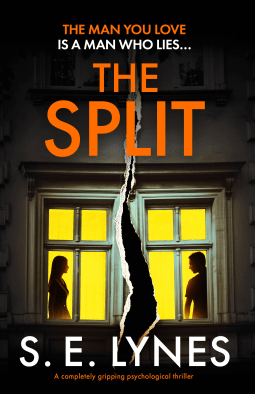
Week beginning 22 October 2025

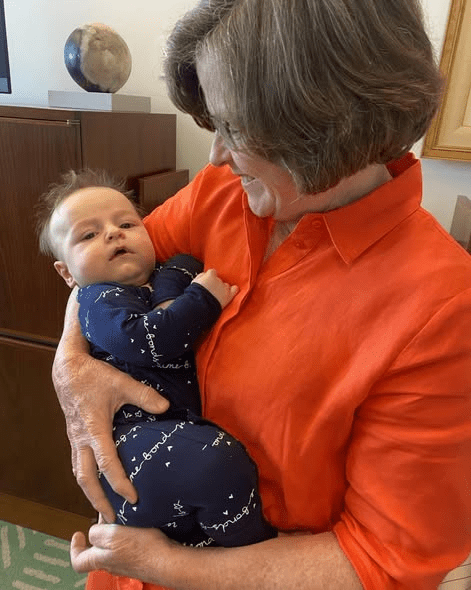
Lisa Murkowski Far from Home An Alaskan Senator Faces the Extreme Climate of Washington, D.C. Penguin Random House Christian publishing | Forum books, June 2025.

Thank you, NetGalley, for providing me with this uncorrected proof for review.

My immediate interest in this book arose from Senator Lisa Murkowski’s vote on the recent ‘Big Beautiful Bill’ adopted by the Senate on the Republican 50/51 vote with Republican Senators, Susan Collins, Rand Paul, and Thom Tillis voting against. Senator Murkowski, having won benefits for her constituency, Alaska, supported the Bill. The fluidity of American voting patterns was an important part of political activity on the fictional The West Wing and has been apparent throughout the time I have been observing American politics via television. These patterns are very different from the Australian process, where an election would not be complete without policy statements, demands about ‘where is the money coming from,’ close media observation of how policies might be implemented and how they compare with alternative party policies. Having voted for a successful party, the Australian electorate understands that the promised polices will usually be implemented by the incoming Government. This underpins most Members of Parliament loyalty to their party and its promises during an election. The American context, however, is remarkably different and Senator Murkowski’s adherence to her constituency and its requirements, even when the bill was so manifestly egregious, is perhaps understandable. That three of her fellow Republicans did not support the Bill, and in my view her support was unacceptable, her decision made me to want to understand more about Murkowski. See Books: Reviews

Brandon Rottinghaus Scandal Why Politicians Survive Controversy in a Partisan Era Columbia University Press, November 2025.

Thank you, NetGalley, for this uncorrected proof for review.

I was interested in this book as a way of discovering what an academic approach to political scandal would be, the way in which various types of scandal would or could be measured and the public response to scandal. Rottinghaus has fulfilled my quest for information. However, I am left with a concern that in an era when the mainstream media appears to be numbing public response to egregious political behaviour, an academic work would risk doing so. There is certainly a role for a history of scandalising political behaviour – after all why not? A valid argument can be made that political life is not immune to the forces that impact other areas of society where scandalous behaviour occurs. I would have liked the work to have made it clear that political life and behaviour is not necessarily more prone to scandal than other areas of power. I would also have appreciated an approach that undermined the prevailing view that various examples of scandalous behaviour are equal. The moral imperative might be similar, but the outcomes for supporting and ensuring that a democratic society remains democratic are markedly different depending on the nature of the behaviour seen as scandalous.  

The publication features polling data that contributes to understanding definitions of political scandal, factors affecting perceptions of aversion, and the impact of partisanship. By using Watergate as a point of reference, it compares observer attitudes toward historic and more recent political events. An updated edition addressing commutations and Presidential pardons could offer further insight by contrasting current practices with those of the past, and there are additional topics relevant to contemporary politics that may warrant academic study. See Books: Reviews

Cindy Lou eats at Blackfire

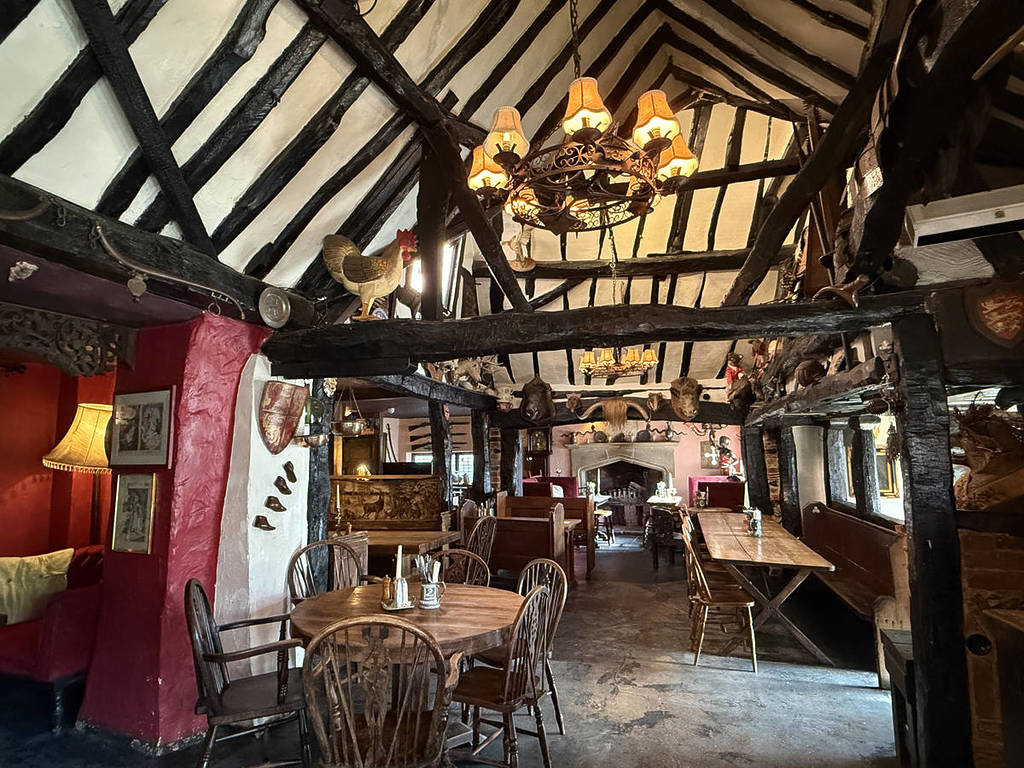
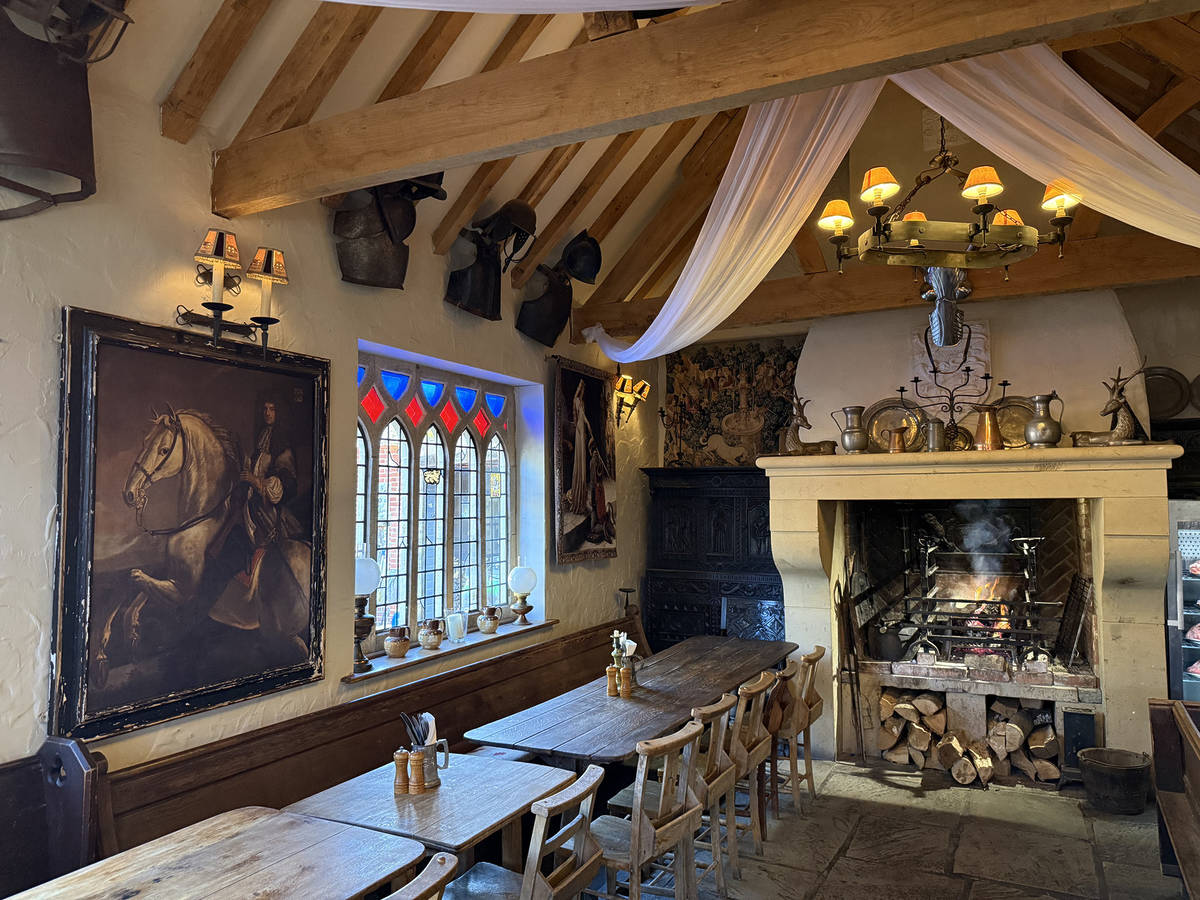
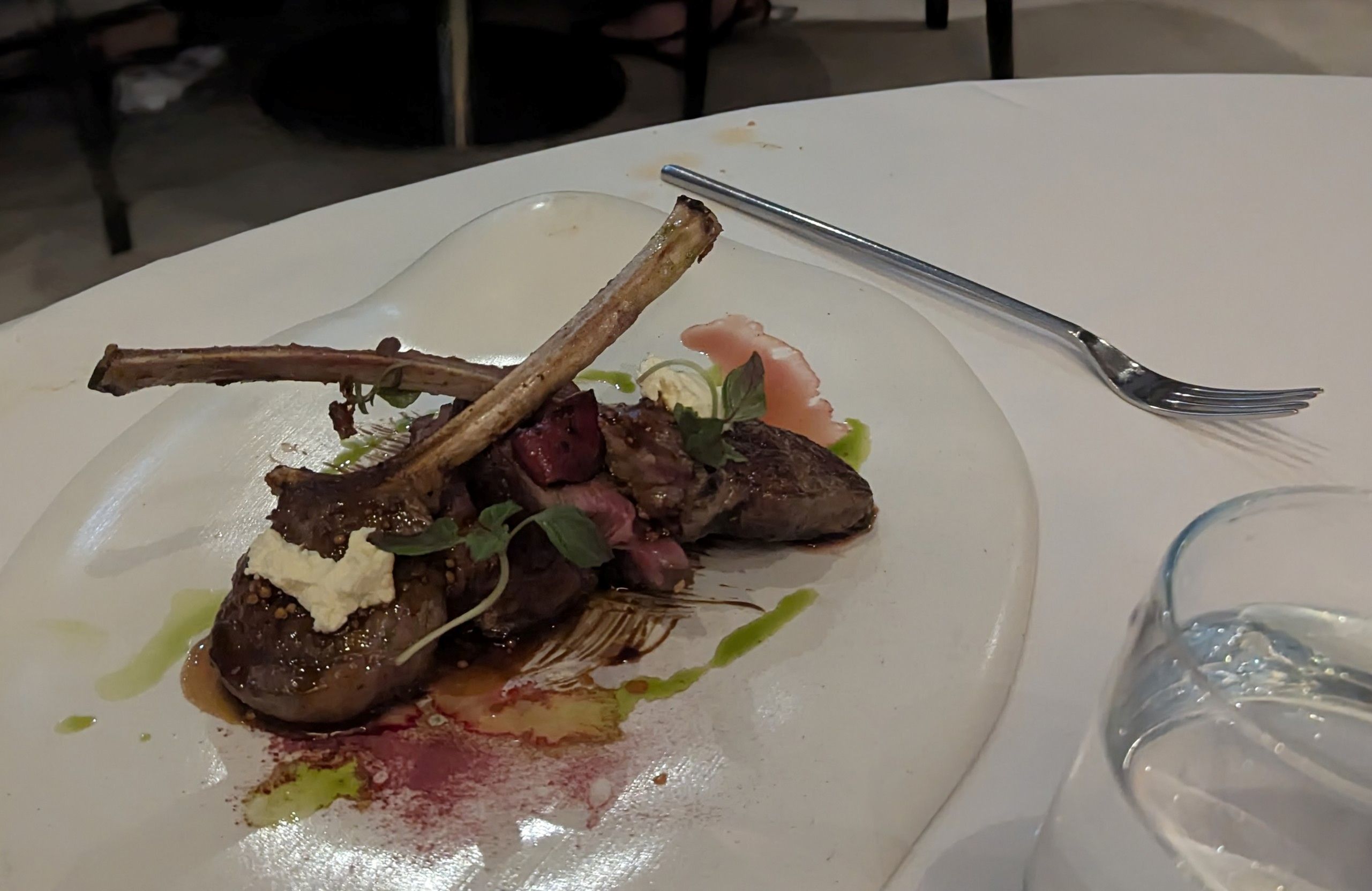
I haven’t been to Blackfire for ages, and this evening really wanted the king prawns that they serve as an entree. Fortunately, we were able to get in, although the restaurant filled rapidly as it neared 7.00pm. I had smoked mussels on bruschetta tapas – very nice indeed, and the prawns as my main course. As the prawns come with a Chilli sauce, I always indulge myself with mashed potato – and this was served with green beans which was an added delight. My friend enjoyed the empanadas and found the lamb ragu pasta excellent – and very generous. The coffees made a pleasant finish to the meal as we can no longer indulge in desserts (although I would have liked a chocolate with mine).

American Politics

No Kings

Joyce Vance from Civil Discourse <joycevance@substack.com> 

Forwarded this email? Subscribe here for more

No KingsJoyce Vance Oct 18 

People are protesting. It’s a march for our love: Democracy.

“Do marches really work?” I was asked last night. Absolutely. And we are all out there today, proving it. We can’t expect instant results for years of relentless damage to our country. But we are continuing to come together to fix it.

Signs from some of my favorite places.

Send me your pictures and let’s share our experiences with each other in the comments. It is a good day for us.

We’re in this together,

Joyce

‘Huge’ and ‘Massive’ Crowds for No Kings Rallies

The Daily with Sarah Jones <politicususa@substack.com> Unsubscribe

Forwarded this email? Subscribe here for more; 18 October 2025.

News coverage of the No Kings rallies keeps repeating the words “massive” and “huge,” saying this is bigger than the June protest and “quite the scene.”

While it’s too early for official numbers, outlets are reporting “huge” and “massive” crowds for No Kings rallies in larger cities on the East coast, which doesn’t take into account the many smaller rallies that are taking place in red areas, which might make an even bigger political statement than actual numbers.

October 19, 2025

Heather Cox Richardson from Letters from an American <heathercoxrichardson@substack.com> 

Forwarded this email? Subscribe here for more

October 19, 2025Heather Cox RichardsonOct 20 

All last week, Republican leaders tried to portray the No Kings protests scheduled for Saturday, October 18, as “Hate America” rallies. G. Elliott Morris of Strength in Numbers partnered with Atlanta-based science newsroom The Xylom to estimate that as many as 8.2 million people turned out yesterday to oppose the Trump administration. The mood at the protests was joyful and peaceful, with protesters holding signs that championed American principles of democracy, free speech, equality, and the rule of law. As the Grand Junction, Colorado, Daily Sentinel put it in a front-page headline: “‘This is America’ ‘No Kings’ protests against Trump bring a street party vibe to cities nationwide.”

Then last night, after the protests, the president’s social media account posted an AI-generated video showing Trump in a fighter jet with “KING TRUMP” painted on the side. The president sits in the airplane in front of something round that could be seen as a halo. He is wearing a gold crown; weirdly, the oxygen mask is over his mouth and chin, rather than mouth and nose.

Once in the air, the plane drops excrement on American cities, including what seems to be New York City. The excrement drenches protesters, one of whom is 23-year-old liberal political commentator and influencer Harry Sisson. Journalist Aaron Rupar of Public Notice, who shares media clips that reflect politics, commented: “Trump posts AI video showing him literally dumping sh*t on America.” Historian Larry Glickman noted that media outlets make much of alleged Democratic disdain for ordinary Americans, but have had little to say about the disdain for Americans embodied by Trump’s video.

Several administration videos and images have responded to Americans saying “No Kings” by taking the position “Yes, We Want Kings,” an open embrace of the end of democracy. But they are more than simple trolling. Led by Trump, MAGA Republicans have abandoned the idea of politics, which is the process of engaging in debate and negotiation to attract support and win power. What is left when a system loses the give and take of politics is force.

The idea that leaders must attract voters with reasoned arguments to win power and must concede power when their opponents win has been the central premise of American government since 1800. In that year, after a charged election in which each side accused the other of trying to destroy the country, Federalist John Adams turned the reins of government over to the leader of the opposition, Thomas Jefferson. That peaceful transfer of power not only protected the people, it protected leaders who had lost the support of voters, giving them a way to leave office safely and either retire or regroup to make another run at power.

The peaceful transfer of power symbolized the nation’s political system and became the hallmark of the United States of America. It lasted until January 6, 2021, when sitting president Trump refused to accept the voters’ election of Democrat Joe Biden, the leader of the opposition.

Now back in power, Trump and his loyalists are continuing to undermine the idea of politics, policies, and debate, trying instead to delegitimize the Democratic opposition altogether. Yesterday, during the protests, President Donald Trump, Vice President J.D Vance, and the official White House social media account posted a video of Trump placing a royal crown on his head, draping a royal robe around his shoulders, and unsheathing and brandishing a sword (an image that raises questions about why Trump wanted one of General Dwight D. Eisenhower’s swords so badly that he had the museum director who refused to hand it over fired). In the video, Democratic leaders including former House speaker Nancy Pelosi (D-CA) and what appears to be Senate minority leader Chuck Schumer (D-NY) first kneel and then bow to Trump.

Administration imagery doesn’t simply insult opposition leaders; it undermines the idea of politics by suggesting that Democrats are un-American. Last night the White House continued its racist crusade against Democratic leaders by posted an AI-generated image of Trump and Vance wearing jewel-encrusted crowns positioned above an image of House minority leader Hakeem Jeffries (D-NY) and Senate minority leader Chuck Schumer (D-NY) wearing Mexican sombreros. The caption reads: “We’re built different.”

The administration’s hostility to loyal opposition is translating into direct assaults on our government. House speaker Mike Johnson is refusing to seat a member of the opposition. Voters chose representative-elect Adelita Grijalva (D-AZ) on September 23 to fill a vacant House seat, but Johnson has come up with one reason after another not to seat her. Until she is sworn in, she has no access to government resources and cannot represent her constituents. She also cannot be the 218th signature on a discharge petition that would force a vote on whether to demand the release of the Epstein files, the final signature needed.

Grijalva recorded a video reinforcing the political system, saying: “We need to get to work, get on the floor, and negotiate so we can reopen the government.”

But Republican congressional leaders are refusing even to talk with Democrats to reopen the government, let alone to negotiate with them. They are trying to force Democrats simply to do as they say, despite the fact that 78% of Americans, including 59% of Republicans, support the Democrats’ demand for an extension of the tax credit that lowers the cost of healthcare premiums on the Affordable Care Act markets. Lindsay Wise, Anna Wilde Mathews, and Katy Stech Ferek of the Wall Street Journal reported today that more than three quarters of those who are insured through the ACA markets live in states that voted for Trump.

A video of Trump in a bomber attacking American cities carries an implied threat that the disdain of throwing excrement doesn’t erase. This morning, Trump reinforced that threat when he reminded Fox News Channel host Maria Bartiromo: “Don’t forget I can use the Insurrection Act. Fifty percent of the presidents almost have used that. And that’s unquestioned power. I choose not to, I’d rather do this, but I’m met constantly by fake politicians, politicians that think that, that you know they it’s not like a part of the radical left movement to have safety. These cities have to be safe.”

That “safety” apparently involves detaining U.S. citizens without due process. On Thursday, Nicole Foy of ProPublica reported that more than 170 U.S. citizens have been detained by immigration agents. She reports they “have been dragged, tackled, beaten, tased and shot by immigration agents. They’ve had their necks kneeled on. They’ve been held outside in the rain while in their underwear. At least three citizens were pregnant when agents detained them. One of those women had already had the door of her home blown off while Department of Homeland Security Secretary Kristi Noem watched.”On Friday, the Trump administration pushed its attempt to use the military in Democratic-led cities, asking the Supreme Court to let it deploy troops in Chicago immediately. Chris Geidner of Law Dork notes that four judges, two appointed by Democrats and two appointed by Republicans, have rejected the administration’s arguments for why they must send in troops. Now the Department of Justice has appealed to the Supreme Court, asking for a decision on the so-called shadow docket, which would provide a fast response, but one without any hearings or explanation.

The administration’s appeal to the Supreme Court warned that there was “pressing risk of violence” in Chicago—a premise the judges rejected—and said preventing Trump from going into the city “improperly impinges on the President’s authority.”

How much difference will the No Kings Day protests, even as big as they were, make in the face of the administration’s attempt to get rid of our democratic political system and replace it with authoritarianism? What good is an inflatable frog against federal agents?

Scholar of social movements Lisa Corrigan noted that large, fun marches full of art and music expand connections and make people more willing to take risks against growing state power. They build larger communities by creating new images that bring together recognizable images from the past in new ways, helping more people see themselves in such an opposition. The community and good feelings those gatherings develop help carry opposition through hard moments. Corrigan notes, too, that yesterday “every single rally (including in the small towns) was bigger than the surrounding police force available. That kind of image event is VERY IMPORTANT if you’re…demonstrating social coherence AGAINST a fascist government and its makeshift gestapo.”

Such rallies “bring together multigenerational groups and the playfulness can help create enthusiasm for big tent politics against the monoculture of fascism,” Corrigan writes. “The frogs (and unicorns and dinosaurs) will be defining ideographs of this period of struggle.”—

Second “No Kings Day” protests the largest single-day political protest ever*, with 5.2-8.2 million participants

UPDATE 10:00 AM Oct. 19: After adding new data, our median estimate is 5.2 million, and the upper bound is 8.2. The numbers in this article have been updated. Future estimates will be updated on the spreadsheet, but not here…

The Daily
The Daily

Rachel Maddow Explains Why No Kings Could Soon Reach Critical Mass And Topple Trump

Rachel Maddow dove into the numbers behind what the No Kings protests mean and how they could topple Trump’s wannabe regime.

Sarah Jones & Jason Easley

Oct 21, 2025

It isn’t certain yet whether No Kings is a protest movement or a political movement. No Kings will need to transfer its momentum into electoral success to get results, but right now, No Kings is building fast towards critical mass.

Maddow said while discussing what makes No Kings different from other protests:

We’ve talked to them (Indivisible) a lot, many times going back years. You might also have noticed that every time we talk to the folks from Indivisible, going back to the very beginning, uh, they emphasize one specific thing. They emphasize thinking local. So for these No Kings protests, for example, they said if you have to travel more than an hour in order to get to your nearest No Kings protest, then don’t do that.

Don’t travel more than an hour.

If you have to go more than an hour to find one, that means you should be organizing your own wherever it is that you live. Now that is not generic protest advice, that is very specific to this movement and it has specific consequences in practical terms following that principle.

This weekend looked like this not one giant protest in one central place, even though there were some really big protests in some places. Instead though, it was, it was a gazillion different protests. Yes, in some big cities, but also in small towns, in every nook and cranny, all across this country.

Australian Politics


The Australian’s post
(from Facebook)


The Australian 

Yesterday at 07:34 ·

Opinion: Donald Trump has come through in spades for Anthony Albanese after locking in the $368bn AUKUS pact, signing-off on an $8.5bn critical minerals deal and waxing lyrical about the Prime Minister. Read more: https://bit.ly/4qs62tR

!!!!!

The post below is an interesting reflection on a song sung at many schools in Australia and the choice of our National Anthem. The writer refers to South Australians singing this song. However, it was also sung in Western Australian schools, and the Facebook comments recalling the song come from other states as well. They also suggest that it is preferred to the chosen national anthem.

Lainie Anderson Author’s post

South Aussies, who remembers Song of Australia?

There is a land where summer skies

Are gleaming with a thousand dyes,

Blending in witching harmonies, in harmonies;

And grassy knoll and forest height

Are flushing in the rosy light,

And all above is azure bright.

Australia, Australia, Australia!

I found it on my recent research trip to the West Terrace Cemetery, and it took me straight back to primary school in Port Vincent. The lyrics were written in 1859 by Adelaide poet and teacher Caroline Carleton, wife of the West Terrace Cemetery sexton (it’s believed she wrote the piece while sitting in the cemetery). The music was written by German immigrant and composer Carl Linger, who helped to create Adelaide’s first philharmonic orchestra.

Hugely popular in SA, it was sung in all public schools from the 1880s right through to the late 20th century. It was one of four songs put to a public vote to choose our official national song in 1977 (the others were God Save the Queen(!!), Advance Australia Fair and Waltzing Matilda). Song of Australia won the South Aussie vote but came fourth overall. Advance Australia Fair became the national anthem in 1984.

Brilliant and Bold – Bold and Brilliant

CONVERSATIONS WITH ‘ORDINARY’ & ‘EXTRAORDINARY’ WOMEN

This meeting on zoom was held on Sunday 19 October and is available on Jocelynne’s Scutt’s Facebook feed.

The flyer (edited) read:

International Struggles for Women’s Autonomy –
Iran, Nepal, and Women & Girls Living Under Occupation

Today, women of Nepal and women of Iran are focused on restoring democracy, freedom, security and peace to their respective countries.
Brilliant & Bold! has a prime opportunity this month of October 2025 to hear from women of the diaspora who are campaigning for democratic rights in Iran and Nepal, and to learn of a campaign for the UN to create the
post of Special Rapporteur for Women and Girls Living Under Occupation (WAGLUO).

The speakers were: Elahr Zibabi, from Iran, is living in London, and is a part of the Iranian diaspora campaigning for freedom, justice, security, democracy and peace for Iran. 

Benzu Laxmii Oli, from Nepal, is living in Perth, Western Australia, and engaged in activism directed toward ensuring that women and girls live with freedom and equality, secure in the knowledge that they are entitled to dwell in the land of their birth without fear.

Arising from the discussion, I heard about Sue Crampton’s book, Behind the Oleander, which I was able to purchase during the meeting on my kindle.

Week beginning 15 October 2025

Samantha Vérant The Writers’ Retreat Storm Publishing, July 2025.

Thank you, NetGalley, for providing me with this uncorrected proof for review.

A thriller set around a writers’ retreat and writers? What could be a more enticing location and concept? Sadly, the premise promised by the title is not fulfilled. To be fair, it is established that the retreat is also a commercial enterprise selling perfumes, a unique alcoholic beverage and foodstuffs, and custom-made paper. Also, the cleverness of the novel revolves around writing, in this case a memoir and a novel based on events in each of the writer’s lives. This device sets the scene for the possibility that fiction will override fact, that a story can be embellished or even be lies, and that the protagonists whose firsthand accounts make up the chapters might be creating the dramatic effects which are the writer’s prerogative.

The narrative begins with a prologue in which an unnamed person provides advice about removing hurtful people. And perhaps this person has done so – there is a blade in their hand, and they wipe clean all the surfaces before departing. In the first of short chapters, Liv Montgomery introduces herself, her aspirations, her nemesis, Kat, and her successful submission of her thriller to an agent. The agent invites Liv to a writers’ retreat. Coincidently, or not, Miriam a woman from Liv’s past, is part of the agency’s team. Sienna, with a past and current hostile relationship with Liv, is also a participant. She is writing non-fiction which could suggest that her utterances are believable. However, with the twists and turns taken in The Writers’ Retreat this is not necessarily the case. See Books: Reviews for the complete review.
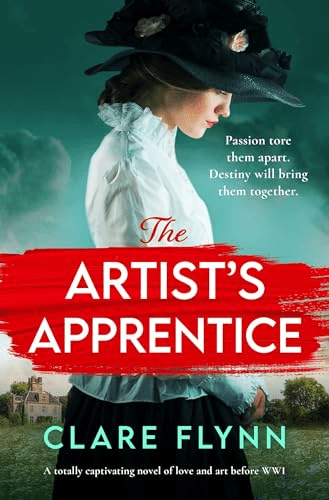
Kelly Oliver, The Case of the Body on the Orient Express, Boldwood Books, July 2025.

Thank you, NetGalley and Boldwood Books for this uncorrected proof for review.

What an absorbing and enjoyable read Kelly Oliver has served up, along with the food that Dorothy L. Sayers consumes throughout the hunt for a murderer. Agatha Christie, only slightly more circumspect with her cups of cream that she enjoys at almost every turn of the plot, joins her, Eliza, and Theo on the Orient Express on its journey to Constantinople, as they knew Istanbul. Jane, Eliza Baker’s sister, also features, as a MI5 agent, introducing a spy theme to the ‘cosy mystery’ as this series is described. This is the first of the Detection Club series that I have read, and I look forward to more as I found it more enticing than the usual cosy mystery.

The combination of real and fictional characters is smart. Agatha’s trip has been arranged to help her recover from her husband, Archie’s, deception. However, personal despair is secondary to her enthusiasm for life – a possible trip to an archaeological dig, and closer to events on the Orient Express, a murder to solve. Her friendship with Dorothy provides plenty of discussion about writing, plotting a murder, and solutions. The introduction of the obnoxious Eric Blair adds to the deft weaving of fact and fiction, not at the Tom Stoppard level in his Rosencranz and Guildenstern Are Dead, but nevertheless, genuine fun. Eliza, Sayers’ companion, and secretary to the secretary of the London Detective Club (and formerly of Scotland Yard) is an engaging character, with her distaste for the humorous way the Club treats death, her commitment to her sister and beloved Queenie, her beagle. Theo Sharp, erstwhile chess companion who disappeared abruptly in the middle of a game, rejoins Eliza and the detective novelists on the Orient Express – in a steward’s uniform.

Death is an almost immediate companion as the Orient Express travels towards Istanbul. But it is accompanied by comic interludes, descriptions of Eliza’s and Jane’s shady past, sharp asides about Eric, who has renamed himself George Orwell, and the red herrings associated with any Agatha Christie plot. Kelly Oliver’s Death on the Orient Express owes something to the latter but has its own daring characters and plotting to make it very much her own. This is a comfortable but nicely harrowing read for a wintry night.

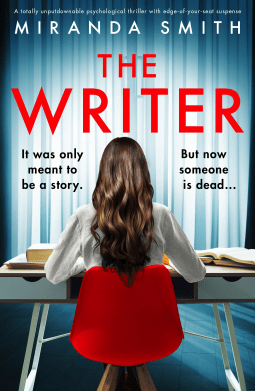
Valerie Keogh, The Writer, Boldwood Books, July 2025.

Thank you, NetGalley, for providing me with this uncorrected proof for review.

Valerie Keogh never disappoints, and as I began The Writer, I knew that a treat was to follow. Cara is working, or trying to, on her thirtieth novel – a psychological drama like her previous successful works. As Arty, her husband leaves for work, Tillie her friend variously supports her or tries tough love to get her over her vacillation and morbid speculations about  the notes she has begun to receive, and her agent and editor variously encourage her to bring this thirtieth novel to fruition, Cara sits at her word processor bereft of words, or the means to process the few that she  drags up. Cara is not going to succeed in writing the thirtieth novel, until her speculations about the notes become an integral part of her life and her writing.

The interplay of Cara’s fiction and her life become enmeshed in her failure to separate fact and fiction. The notes become an unwieldy part of Cara’s life, encouraging her to reach implausible, to the reader, but all too plausible to Cara, decisions about her friend, husband, and her reality. Interspersed with Cara’s reactions to the notes, her insecurities about herself and suspicions about her husband’s past are the ruminations of a man who wishes her ill. His resentment of her success in contrast with his failures, lead him into punishing her for what he sees as a past unforgivable slight. See Books: Reviews for the complete review.
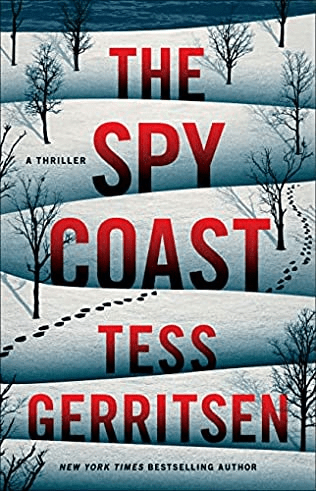
Art Gallery of New South Wales

More photos from the wonderful Yolŋu power: the art of Yirrkala exhibition.

Raw Story October 9 2025

Thom Hartman

I just saw the movie that will define our age — you can tell because right-wingers hate it

This week has felt like one battle after another. We all watched video after video of ICE agents dropping from helicopters onto a Chicago apartment block, kicking in doors and terrorizing Black and Hispanic American and immigrant families, then trashing and stealing their possessions without ever presenting a warrant signed by a judge.

The GOP pushed the country to the brink again with another government shutdown threat while right-wing legislatures redrew districts to erase the votes of millions. We heard more talk of arresting journalists for doing their jobs, and watched as the military rolled through American cities as if people here are the enemy.

Each day has felt like a slow-motion assault on democracy itself.

Louise and I went to see Leonardo DiCaprio’s new movie, One Battle After Another, last weekend, and I was stunned. It’s a film of rare courage and artistry. From the first scene to the last, Paul Thomas Anderson reminds us that cinema can still tell the truth about power and conscience. It’s a film that demands attention, not permission.

The movie runs about two-and-a-half hours, but it’s so action- and drama-packed that it felt like it flew by in less than an hour. I knew people similar to those characterized in this movie when I was in East Lansing SDS back in 1968-69: seeing them portrayed like this was a hoot! This is truly brilliant film-making.

Predictably, conservatives rushed to condemn it. Some labeled it “irresponsible” or claimed it “glorifies violence.” What they really mean is that it unsettles them. They prefer art that flatters authority and soothes the comfortable. This film refuses to do either.

The world Anderson portrays is not a fantasy. When federal agents execute suspects, when protests are manipulated to justify repression, when truth is distorted by propaganda, that is not simply fiction. It reflects the deep anxiety of a society that’s watched Trump’s executive power become far too concentrated and way too cruel. Anyone paying attention to the news knows how real that danger feels.

The rightwing National Review published a piece titled “There Will Be Bloodlust in ‘One Battle After Another’” that accused Anderson of romanticizing 1960s radicalism. Yet DiCaprio, who stars in the film, called it a “timely satire.” Speaking to Reuters, he said, “It’s not a film where people are imposing any political beliefs on anyone else. It’s satire on both ends.”

That contrast says everything. Conservatives want to see chaos; Anderson and his cast are inviting reflection. The violence in the film is not triumphant; it’s painful, personal, and tragic. It shows what happens when injustice festers until ordinary people begin to break, as I saw in the people I knew in the Weather Underground back in the day.

History reminds us that art has always frightened the powerful. Uncle Tom’s Cabin was banned in the South because it forced them to confront slavery. Upton Sinclair’s The Jungle was smeared by industrialists for revealing the cruelty of unregulated capitalism. Protest music of the 1960s and artists like Bob Dylan and Pete Seeger were condemned as “unpatriotic” by the same crowd that called Dr. King a radical.

When art tells the truth, power always howls.

Today the same pattern repeats. The same rightwing billionaires funding “outrage” over this film are working to silence teachers, censor libraries, and rewrite history to protect privilege. They fear a nation that can still feel empathy; they fear what happens when people start asking why power serves so few.

One Battle After Another is not a call to arms. It is, instead, a warning about what happens when corruption becomes normal and compassion becomes rare. It asks us to look at the machinery of cruelty and decide whether we’ll stand by or resist. That choice is the same one that generations before us have faced.

If this film makes people uncomfortable, that’s its purpose. Democracy doesn’t survive by comforting the powerful. It survives when ordinary people demand justice and truth, even when it stings.

One Battle After Another will be called divisive by those who profit from division. They’re wrong. The real division in this country is between those who believe art should serve power and those who believe art should challenge it.

I stand with the challengers, because when we fall silent, we serve power; when we speak, we hold it to account.

American Politics

Heather Cox Richardson from Letters from an American <heathercoxrichardson@substack.com> 

Forwarded this email? Subscribe here for more

On October 9, President Donald J. Trump’s office issued an official proclamation declaring Monday, October 13, “Columbus Day.” The proclamation says that the day is one on which “our Nation honors the legendary Christopher Columbus—the original American hero, a giant of Western civilization, and one of the most gallant and visionary men to ever walk the face of the earth. This Columbus Day, we honor his life with reverence and gratitude, and we pledge to reclaim his extraordinary legacy of faith, courage, perseverance, and virtue from the left-wing arsonists who have sought to destroy his name and dishonor his memory.”

The proclamation goes on to present a white Christian nationalist version of American history, with much more emphasis on Christianity than Trump’s previous, similar proclamations. It claims that Columbus was guided by a “noble mission: to discover a new trade route to Asia, bring glory to Spain, and spread the Gospel of Jesus Christ to distant lands.” “Upon his arrival,” it says, “he planted a majestic cross in a mighty act of devotion, dedicating the land to God and setting in motion America’s proud birthright of faith.”

“Guided by steadfast prayer and unwavering fortitude and resolve,” it goes on, “Columbus’s journey carried thousands of years of wisdom, philosophy, reason, and culture across the Atlantic into the Americas—paving the way for the ultimate triumph of Western civilization less than three centuries later on July 4, 1776.”Then the proclamation turns to MAGA’s complaints about modern revisions of this triumphalist history, saying: “Outrageously, in recent years, Christopher Columbus has been a prime target of a vicious and merciless campaign to erase our history, slander our heroes, and attack our heritage.” Our nation, the proclamation says, “will now abide by a simple truth: Christopher Columbus was a true American hero, and every citizen is eternally indebted to his relentless determination.”

This proclamation completely misunderstands the fifteenth-century world of expanding European maritime routes that entirely reworked world trade—including trade in human beings—and the role of Italian mariner Christopher Columbus, who worked for Spain’s monarchs Ferdinand and Isabella, in that expansion.

It also misses what historians call the “Columbian Exchange”: the transfer of plants and animals between the Americas and the “Old World”—Europe, Asia, and Africa—after Columbus’s first landfall in the Bahamas in 1492. That exchange went both ways and transformed the globe, but its effect on the Americas was devastating. When Columbus and his sailors “discovered” the “New World,” they brought with them both ideologies and germs that would decimate the peoples living there.

Estimates of the number of Native people living in North America and South America in 1490 vary widely, but there were at least as many as 50 million, and possibly as many as 100 million. In the next 200 years, displacement, enslavement, war, and especially disease would kill about 90% of those native peoples. Most historians see the destruction of America’s Indigenous peoples as the brutal triumph of European white men over those they perceived to be inferior.Historians are not denigrating historical actors or the nation when they uncover sordid parts of our past. Historians study how and why societies change. As we dig into the past, we see patterns that never entirely foreshadow the present but that give us ideas about how people in the past have dealt with circumstances that look similar to circumstances today. If we are going to get an accurate picture of how a society works, historians must examine it honestly, seeing the bad as well as the good. With luck, seeing those patterns will help us make better decisions about our own lives, our communities, and our nation in the present.

History is different from commemoration. History is about what happened in the past, while commemoration is about the present. We put up statues and celebrate holidays to honor figures from the past who embody some quality we admire.

The Columbus Day holiday began in the 1920s, when a resurgent Ku Klux Klan tried to create a lily-white country by attacking not just Black Americans, but also immigrants, Jews, and Catholics. This was an easy sell in the Twenties, since government leaders during the First World War had emphasized Americanism and demanded that immigrants reject all ties to their countries of origin. From there it was a short step for native-born white American Protestants to see anyone different from themselves as a threat to the nation.

The Klan attacked the Knights of Columbus, a Catholic fraternal organization. Klan members spread the rumor that one became a leader of the Knights of Columbus by vowing to exterminate Protestants and to torture and kill anyone upon orders of Catholic leaders.

To combat the growing animosity toward Catholics and racial minorities, the Knights of Columbus began to highlight the roles those groups had played in American history. In the early 1920s they published three books in a “Knights of Columbus Racial Contributions” series, including The Gift of Black Folk by pioneering Black sociologist W.E.B. Du Bois.

They also turned to an old American holiday. Since the late 1860s, Italian Americans in New York City had celebrated a “Columbus Day” to honor the heritage they shared with the famous Italian explorer. In the 1930s the Knights of Columbus joined with media mogul Generoso Pope, an important Italian American politician in New York City, to rally behind the idea of a national Columbus Day. In 1934, President Franklin Delano Roosevelt, aware of the need to solidify his new Democratic coalition by welcoming all Democratic voters, proclaimed Columbus Day, October 12, a federal holiday. In 1971 the day became unfixed from a date; it is now the second Monday in October.The Knights intended for Columbus Day to honor the important contributions of immigrants—and Catholics—to American society. But in the 1960s a growing focus on the lives and experiences of Indigenous Americans forced a reckoning with the choice of Columbus as a standard bearer. Currently, seventeen states and the District of Columbia use the official holiday to celebrate Indigenous history. Some Oklahoma tribal members simply use the day to honor their tribe.

As society changes, the values we want to commemorate shift. In the 1920s, Columbus mattered to Americans who opposed the Ku Klux Klan because celebrating an Italian defended a multicultural society. Now, though, he represents the devastation of America’s Indigenous people at the hands of European colonists who brought to North America and South America germs and a fever for gold and God. It is not “left-wing arson” to want to commemorate a different set of values than the country held in the 1920s.What is arson, though, is the attempt to skew history to serve a modern-day political narrative. Rejecting an honest account of the past makes it impossible to see accurate patterns. The lessons we learn about how society changes will be false, and the decisions we make based on those false patterns will not be grounded in reality.

And a society grounded in fiction, rather than reality, cannot function.—

Notes:https://www.whitehouse.gov/presidential-actions/2025/10/columbus-day-2025/https://www.pewresearch.org/short-reads/2025/10/07/columbus-day-indigenous-peoples-day-or-just-a-regular-monday-it-depends-on-where-you-are/https://www.presidency.ucsb.edu/documents/proclamation-2101-columbus-dayhttps://www.kofc.org/en/news-room/columbia/2020/july/kofc-racial-equality.html

Joyce Vance from Civil Discourse <joycevance@substack.com> Unsubscribe

Are We the Nazis Now?

Forwarded this email? Subscribe here for more

Are We the Nazis Now?

How do we meet this moment?

Joyce Vance Oct 13 READ IN APP 

It’s hard to watch. People being treated like they are less than human because of their perceived immigration status. Like this six-year-old girl.

In early October, federal agents with Border Patrol, the FBI, and ATF arrested 37 people in a raid on a Chicago apartment building at 7500 S. South Shore Drive. They banged on residents’ doors overnight, according to a report in the Chicago Sun Times, “pulling men, women and children from their apartments, some of them naked, residents and witnesses said.” A witness said she saw “agents dragging residents, including kids, out of the building without any clothes on and into U-Haul vans,” and that “kids were separated from their mothers.” DHS claimed the neighborhood was “a location known to be frequented by Tren de Aragua members and their associates,” but offered no evidence in support and didn’t confirm that any of those arrested were members of the Venezuelan gang.

Earlier this month, at West Loop Elementary School in Chicago, Illinois, ICE was forced to release two sisters it pulled out of their car at a school pick up, because they have legal status under DACA. But that didn’t stop the masked agents, captured on video by a quick-thinking teacher, from surrounding the car and smashing its windows before dragging the two out. One of the sisters cried out her name and where she lived to bystanders, an apparent effort to prevent being “disappeared” into ICE custody.

It is already horrible enough. But we read The Diary of Anne Frank in school. Among the book’s important lessons is that where things start is not where they end up. Bad can become worse in the blink of an eye. The propaganda used to dehumanize people, combined with fear, social pressure, and denial, can have devastating results. People who think it’s too dangerous to speak out may decide to take the path of least resistance and turn a blind eye, hoping it will stop. But a government that is already willing to commit the outrages we are observing is unlikely to do so. Fascism, as it did in Europe during World War II, takes its toll.

To be clear, we are already past the point where it’s only people in the U.S. without legal immigration status who are at risk.In Portland, Oregon, on October 5, ICE agents threatened to arrest and kill an ambulance driver. The incident is documented by witness reports filed with the ambulance crew’s employer and its union by different individuals, as well as 911 calls, dispatch reports, and emergency communications. The ambulance was called to the ICE office to treat an injured protester, but agents refused to let the ambulance leave once the patient was loaded. When the driver put the vehicle into park, it rocked forward, and an agent responded angrily, saying the ambulance driver tried to hit him. The driver reported that “they were not only accusing me of such a thing, but crowding and cornering me in the seat, pointing and screaming at me, threatening to shoot and arrest me, and not allowing the ambulance to leave the scene. This was no longer a safe scene, and in that moment, I realized that the scene had not actually been safe the entire time that they were blocking us from exiting, and that we were essentially trapped.”

A video filmed in September that recently went viral shows ICE firing on protestors and hitting Presbyterian minister David Black in the head with a pepper ball. The minister, who was injured, is now suing. DHS Assistant Secretary Tricia McLaughlin tweeted that the shooting was justified because “What this clipped video doesn’t show is that these agitators were blocking an ICE vehicle from leaving the federal facility—impeding operations.” Apparently, the new standard operating protocol is that if an ICE agent decides you’re in the way, they can shoot you. “If you are obstructing law enforcement, you can expect to be met with force,” she concluded her tweet, complaining that the minister had “flipped the bird” at Secretary Noem the previous week.

There are now so many of these stories flooding the country, and they come with such rapidity, that it’s impossible to keep up with all of them. In other words, these incidents aren’t the exceptions. They aren’t unusual. And there’s every indication that they are tolerated, even encouraged, by Trump’s machine.

Trump promised he’d deport violent criminals. Instead, ICE is going after legal residents and terrorizing children. The message: if you’re an American citizen, don’t exercise your First Amendment rights unless you want to become a target too.

A PBS Newsletter story titled “Immigration agents become increasingly aggressive in Chicago” reported on actions that include: Storming an apartment complex by helicopter as families slept. Deploying chemical agents near a public school. Handcuffing a Chicago City Council member at a hospital … ‘They are the ones that are making it a war zone,’ Illinois Gov. JB Pritzker said Sunday on CNN. ‘They fire tear gas and smoke grenades, and they make it look like it’s a war zone.’”

The Bulwark’s Tim Miller interviewed George Retes, another U.S. citizen. Retes was detained by ICE for three days, two of which he says he spent in solitary confinement. Retes said the conditions he was kept in were dehumanizing. He was given only a hospital dress to wear, the lights remained on 24 hours a day, and he was under constant observation through a glass door.

One of the most chilling comments following that raid on the Chicago apartment building came from a woman named Pertissue Fisher, an American citizen who lives in the building. She said the agents rounded up people, including her, and only asked questions later. “They just treated us like we were nothing,” Fisher said. That’s how federal agents, who took oaths to uphold the law, are behaving under this administration. And no one in the administration seems in the least bit concerned about it.

We aren’t even better off in the ways Trump promised. Deporting school kids doesn’t make us safer. Americans don’t want the jobs that aren’t being done in immigrants’ absence. The Labor Department warned in “an obscure document filed with the Federal Register last week that the near total cessation of the inflow of illegal aliens” is threatening “the stability of domestic food production and prices for U.S. consumers.”

But beyond the absence of benefits from this administration’s mass deportations, it’s the absence of humanity we see around us that threatens us the most. People who aren’t criminals are thrown to the ground. People are treated with a lack of respect for their basic human dignity. Many of them are hard-working folks who want to be able to love this country and give back because of the opportunity it gives them and their families. Instead, a president who is the son of immigrants and has been married twice to immigrants has become the face of nationalism, using hate and horror to expand his control over people, both American citizens and immigrants, on American soil. Are we the Nazis now?

What’s certain is this: No matter where Donald Trump wants to take this country, you and I are not going along for the ride. On Friday, House Speaker Mike Johnson said that the No Kings rally on Saturday was a “hate-America” rally. He said the people attending would be “the pro-Hamas wing” and “the antifa people.” He’s wrong. We are, in the best tradition of America’s Greatest Generation, truly anti-fascist. And in 2025, anti-fascism begins at home, because we love this country and we believe in democracy. We’re ready.

We’re in this together,

Joyce


Joe Biden’s post
fromFacebook


Joe Biden 

I am deeply grateful and relieved that this day has come – for the last living 20 hostages who have been through unimaginable hell and are finally reunited with their families and loved ones, and for the civilians in Gaza who have experienced immeasurable loss and will finally get the chance to rebuild their lives.

The road to this deal was not easy. My Administration worked relentlessly to bring hostages home, get relief to Palestinian civilians, and end the war. I commend President Trump and his team for their work to get a renewed ceasefire deal over the finish line.

Now, with the backing of the United States and the world, the Middle East is on a path to peace that I hope endures and a future for Israelis and Palestinians alike with equal measures of peace, dignity, and safety.

National Film and Sound Archives

The National Film and Sound Archives has been one of my favourite places to visit. Many years ago, the somewhat creaky displays and crackling soundtracks listened to on large earphones, sitting on stools in front of the display, were of old (very old) radio (wireless) soap operas – “When A Girl Marries” and “Doctor Paul” from America, and our own wonderful “Blue Hills” by Gwen Meredith with its familiar introduction (reminding us that what we were hearing was number…of so many episodes) and its haunting music. Dad and Dave were there, old films giving credit to Dotty Lyall and her ilk and fascinating sounds of hoof beats made by coconut shells etc.

These memories naturally had to make way for newer material’ perhaps A Country Practice featured; this must have been a period in which I visited less frequently. However, what I do recall was that although different, the exhibitions were interesting, numerous and well worth a visit.

On the most recent occasion I visited, two weeks ago, my disappointment was profound. Unfortunately, I see that disappointment echoed in some of the reviews. There was little on display, and the lack of interactive displays of a high standard was a real low point. Although there were tablets accompanying many of the historic displays in the library, these were very ordinary indeed. The posters of well-known Australian films showed that they had been successful overseas. A historic film of Perth showing bread deliveries to houses, The Daily News (long defunct) being delivered, lovely scenery along the Swan River and the old ferries was interesting. However, where was the list outside the theatre advertising this, and the other films that could be seen during a visit?

The ‘star’ of the exhibitions was the installation, Step into Inferno, an audiovisual installation by Paris-based Australian artist, Mikaela Stafford. This was commissioned by the NFSA and created in response to Stafford’s experience as a resident artist.

This was certainly worth viewing. The NFSA site suggests that there is a great deal of activity, films and events taking place at the NFSA. However, there was little evidence of that during our visit.

On the other hand, the information on the NFSA site was extensive, informative and showed what interesting films are being shown in the ARC Cinema. An example appears below:

A Day at the Movies: Send Me No Flowers (Dementia Friendly)

Dementia Friendly Screening Sun 19 Oct 10:15 AM Arc Cinema

Allocated Seating

 102 Mins

1964 | DCP | USA |D: Norman Jewison

George (Rock Hudson) and Judy (Doris Day) are a happily married middle-aged couple. When hypochondriac George overhears his doctor discussing a terminally ill patient on the phone, he mistakenly believes that he is the one who is dying and that his days are numbered. In a panic, George enlists the help of his friend Arnold (Tony Randall) to find a new husband for Judy. The two friends begin searching for suitable candidates and eventually settle on Bert (Clint Walker), a successful businessman and an old flame of Judy’s. However, George’s strange behavior leads Judy to suspect that he is hiding an affair.

Based on the stage play of the same name, this delightful romantic comedy is the third and final film that stars Hudson, Day, and Randall together.
 
A Day at the Movies is the NFSA’s exciting new dementia-friendly film program for cinema-lovers, designed for the enjoyment and comfort of people living with dementia, and their families, friends, carers and companions. The screenings are brought to you by film and media experts Dr Jodi Brooks (Project Lead, University of New South Wales), Dr Fincina Hopgood (University of New England), and independent screen culture and audience development specialist Karina Libbey.

An initiative of the ACT Government, the program is funded by the ACT Government and aligns with its Age-Friendly City Plan. A Day at the Movies receives in-kind support from the National Film and Sound Archive (Venue Partner), Carers ACT, Dementia Australia, the ACT Ministerial Advisory Council on Ageing and Bulla Dairy Foods.

A 10% discount is available on paid tickets for group bookings of 6 or more people. Carers receive a free ticket, courtesy of Carers ACT, and all attendees can enjoy a complimentary Bulla ice cream. For more information, please visit nfsa.gov.au/dementiafriendly, call 02 6248 2000 or email enquiries@nfsa.gov.au.

Event timings
10:15 AM Welcome! Join us for tea and coffee in the courtyard
10:25 AM Take your seat in Arc Cinema
10:30 AM Feature presentation: Send Me No Flowers (with introduction)
11:30 AM Intermission (10 minutes)
 12:30 PM Socialising and afternoon tea in the courtyard
 1:15 PM Event concludes

For more information on A Day at the Movies and dementia-friendly screenings at NFSA, visit nfsa.gov.au/events-experiences/dementia-friendly-screenings

For additional information about accessibility and planning a visit to the NFSA, visit nfsa.gov.au/visit-us

And, behind the many ‘Staff Only’ doors the work of the archive continues. I just wish more of the marvellous changes in radio, television and film that have taken place since the beloved “Blue Hills” was the star of the exhibition were on display for visitors to see on unplanned visits.

Week beginning 8 October 2025

Danielle Leavitt, By the Second Spring Seven Lives and One Year of the War in Ukraine, Farrar, Straus and Giroux, May 2025.

Thank you, NetGalley, for providing me with this uncorrected proof for review.

Danielle Leavitt’s enterprise is an important part of recognising Ukrainians as other than ‘faceless war people.’ In her introduction she makes an important beginning toward achieving this purpose by describing the Ukrainian people she has met through living in Ukraine for part of each year since she was twelve years old. Until she began this book, where she records the information from seven Ukrainian’s diaries, her recall was of their humour, folk songs, ‘selling lingerie in underground walkways’ and, one of their pleasures, strolling. Leavitt spent a year assembling information from Ukrainians who wrote diaries, some spasmodically, others more consistently, of their experiences in the first year of the war.

Leavitt uses the diary entries from seven of these authors. Anna is eighteen and a police cadet; Maria is in her mid-twenties from Mariupol whose husband was defending the city during this period; Polina was living in America and returned to Ukraine with her American husband to help; Tania runs a pig farm and remains in her village during the invasion; Vitaly owned a coffee shop near Kyiv; Volodymyr was an engineer at Chernobyl and became a writer and film maker in the 1980s; and Yulia is a middle aged woman, skilled in handicrafts, from a small town in Donetsk.

The book is in five parts, following the seasons from the first winter to the second spring. Each story combines the Ukrainian diarist’s individual account and the judicious introduction of events around that account. For example, events in Vitaly’s life, before and after the outbreak of war are combined with an account of the historic relationships between Ukraine and Russia. This makes excellent reading, particularly for those who know little of Ukrainian and Russian history. At the end of the first part of Vitaly’s story, he has opened his coffee shop, an accomplishment based on his financially successful recycling business. Maria’s story resonates with its domestic detail, and then the plunge into the effects of the invasion. Here, too there is a political background provided, so again there is a rich amalgam of domestic and personal information and the political context to this new example of Russian intransigence.

Part 5 begins with Tania’s story of the liberation of her area, but the never-ending deprivation of living in what had been a war zone. At the same time, there is evidence that life proceeds with work and domestic tasks vying for attention and energy. Yulia’s narrative is an amazing insight into the way in which she began rehabilitation after being fitted with a prosthetic leg. Polina and her husband continue with their aid projects. But at the same time the narrative considers the wider population, the despair, and at the same time proceeding with lives that at times ignore the war.

It is the weaving together of the personal and domestic, the political and historical, war and yet the sometimes-ordinary way in which people lead their lives, which makes this book a truly valuable read. Leavitt’s interviews with the Ukrainians whose narratives are central to the book, together with interviews with their families and friends, and moving further afield, anecdotes from other Ukrainians, achieves her purpose. She gives Ukrainians, their lives prewar and during the invasion import, they become known. Providing an historical context is another feat that Leavitt has accomplished with skill – it becomes accessible. Leavitt has produced an important work, maintaining Ukraine and Ukrainians in the public eye as so much of the story fades from the television screens. I found By the Second Spring a heartrending and an inspiring read.*

*Although the review appears at Books: Reviews, I also wanted to print it in full here. It is an important book.

Kimberly Heckler A Woman of Firsts Margaret Heckler, Political Trailblazer Foreword by Jean Sinzdak, The Globe Pequot Publishing Group, Inc. | Lyons Press, February 2025.

Thank you, NetGalley, for providing me with this uncorrected proof for review.

This biography not only covers the period in which five presidents, from different parties were elected (Johnson, Nixon, Ford, Carter, and Reagan) but when Sandra Day O’Connor and Ruth Bader Ginsberg made their mark on the Supreme Court. It would have been appealing without this context, but the additional information makes this biography exceptionally engaging. Of course, this context is only relevant to Margaret Heckler’s public life – her private life, including her upbringing with distant parents, her passion to do well and her marriage are also relevant. To have accomplished so much, to have been a loving and successful wife and mother, and to have made such a distinctive career makes for an absorbing read. Kimberly Heckler’s biography is the very readable story of a woman, as in the title, of firsts. See Books: Reviews for the full review.

Inside Story – Books & arts – Zachary Gorman 

June 16 2025.

Millicent Preston Stanley’s vocation

The first woman elected to NSW parliament used any means possible — from petitions to theatrical melodrama — to advance her causes

Politics as public service: Millicent Preston Stanley c. 1952. Mitchell Library, State Library of New South Wales

Though the Liberal Party’s “women problem” might seem perennial, the conservative side of Australian politics could once boast of being at the vanguard of female parliamentary representation — with the important caveat that Australia was never as advanced on this issue as we were with our early granting of female suffrage.

Eight of the first ten women elected to federal parliament were Liberal Party members, with one of the remainder being the Independent Labor MP for the Victorian seat of Bourke, Doris Blackburn. Likewise, almost every woman to achieve the honour of being the first elected to each of our nation’s state parliaments sat on the centre-right of the political divide. The sole exception was a Tasmanian, Margaret McIntyre, who was elected to the Legislative Council in May 1948 as a true independent, only to be tragically killed in a plane crash less than four months later.

But, as Wendy Michaels shows in A Battle-Axe in the Bear Pit, her new biography of the NSW record-holder Millicent Preston Stanley, these conservative trailblazers hardly received the consistent support of their male colleagues. That support was even less forthcoming and reliable a century ago — when “Miss” Preston Stanley became one of the members for the multiseat Eastern Suburbs electorate in 1925 — than it is today.

A full-length biography of Millicent, as the author refers to her subject throughout, is long overdue. Not only did she crash through the gender barrier in our oldest parliament and most populous state; as founder of the Australian Women’s Movement Against Socialisation, or AWMAS, she also led a national campaign that may well have tipped the scales towards Robert Menzies at the watershed federal election of 1949 — and thus altered the course of Australian political history. That Millicent did so by deliberately keeping her organisation separate from the newly formed Liberal Party tells you all you need to know about her experience of dealing with patriarchal party machines. See Further Commentary and Articles arising from Books* and continued longer articles as noted in the blog for the complete article.

A Battle-Axe in the Bear Pit: Millicent Preston Stanley MP
By Wendy Michaels | Connor Court | $29.99 | 250 pages

Jilly Cooper cutting the cake at the Pym Society 25th anniversary celebration in 2019. We’ll miss her.

From: The Reality behind Barbara Pym’s Excellent Women The Troublesome Woman Revealed ‘Pym and Jilly Cooper express[ed] a mutual interest in their meeting at Hatchard’s 1979 Authors of the Year party. Despite the sharp difference in their writing, Cooper refers to having ‘nearly fainted with excitement to see two sweet-faced women standing smiling, slightly apart from the mob.  It was Barbara and her sister Hilary.  Rushing over, I only had time to stammer out a few words of gratitude’ (Jane and Prudence, Forword 2007, xi).  In the preface to the Virago publication of Jane and Prudence Cooper refers to Pym as her favourite author, replacing ‘Nancy Mitford, Georgette Heyer and even Jane Austen’ (JP, 2007, p.vi).  In the same year, Cooper published Class, which Harrison Solow suggests explains much of Pym’s characterisation. Cooper’s humorous non-fiction assessment of class in part explains some of Pym’s descriptions, but Pym also uses her observations to effect their own subversive comedy.’

Art Gallery of New South Wales

After a short walk around the permanent exhibitions, we walked across to the new gallery where the Yolŋu power the art of Yirrkala is exhibited. This gallery is beautifully lit and a fitting site for the sublime exhibition we were so fortunate to be able to visit. If I am in Sydney again before it closes, another viewing would be wonderful.

From the gallery site:

‘For almost 100 years artists at Yirrkala have shared art as a means of cultural diplomacy – as a respectful assertion of power in its diverse forms, from sovereignty to influence, authority and control, to energy, strength and pride.

Yolŋu power: the art of Yirrkala showcases the extraordinary artists of Yirrkala in north-east Arnhem Land, Northern Territory, and the power of their art from the 1940s to the present. The exhibition considers the significant moments in Yirrkala’s history when artists have consciously altered their practice, developed new styles or embraced new mediums. In covering multiple generations, the exhibition highlights familial connections and cultural continuation. It also contextualises the work of individual artists within the broader school of artists from Yirrkala and surrounding Miwatj Country, whose contribution to both Australian and, increasingly, international art, is profound.

This exhibition is accompanied by a comprehensive publication which offers a range of perspectives on the art of Yirrkala, from the use of art as activism to the role of cultural inheritance and the development of the art movement that has emerged from this significant community.

The exhibition is presented in partnership with the Indigenous art centre in Yirrkala, Buku-Larrŋgay Mulka.’

Some of the artists exhibited above, and two detailed works, as exhibited above.

More from this magnificent exhibition next week.

The Talented Mr Ripley

The Talented Mr Ripley was marked by the high-quality script. Joanna Murray-Smith treated Patricia Highsmith’s novels with the respect they deserve. The acting was excellent, but for me Murray -Smith’s script was the highlight. She was true to the novels, ensuring that the reprehensible feelings upon reading Tom Ripley’s life of murder, fraud and duplicity were duplicated while watching the play – we wanted him to get away with it! Some observations on ethical fiction appear below. This article was first published in the Women’s History Network blog.

Ethical Fiction: Essential? Desirable? Irrelevant?

Robin Joyce

‘We often need literature to make our feelings intelligible to us.’

 Joanna Trollope, The Rector’s Wife

Part 1

The strong response to a readers’ blog asking for examples of ethical fiction, a list of topics under the title of ethical fiction and recent commentary suggests that ethics in fiction is a matter of interest. However, it is quite uncommon for mainstream reviewers to use ethics as a criterion in judging fiction. The focus of debate about Gillian Flynn’s Gone Girl is unusual. Some see the novel as depicting women in a range of ways that undermine stereoptypes and therefore acceptable. Others find it unforgivably sexist. Yet others agree but say, ‘So what!’ What is ethical and whether ethical fiction is essential, desirable or even irrelevant is clearly a question rather than a given. Journalists have a code of ethics; documentaries are expected to be truthful and speculation acknowledged. In contrast, imaginary works are not controlled by such rules or expectations. Should they be? If they were, would fiction be spoilt? Would novels primarily concerned with ethics risk becoming merely didactic? If novels are unethical do they encourage their readers to be unethical too? Does unethical fiction create an unethical society? Does ethical literature contribute to an ethical society?

The value of ethical fiction is partly in its role in bringing a critical reading to unethical fiction. Ethical fiction also has an important role in providing readers with a multifaceted way of looking at the world. While accepting not all fiction must be ethical, it seems there is an argument for it being a desirable factor in the range of available fiction. Although it would be ideal to be able to demonstrate the impact of ethical fiction to my knowledge research is limited.  

However, ‘Why fiction is good for you. The beautiful lies of novels, movies, and TV stories have surprisingly powerful effects — and may even help make society tick’ does   ask questions about the value of fiction: is it ‘good for us?’ Is it ‘mentally and ethically corrosive?’ ‘Does fiction build the morality of individuals and societies, or does it break it down?’ Gottshall argues that recent research shows that fiction has an influence. The more involved the reader becomes in the story, the more influential it becomes.  It is suggested that non-fiction increases a reader’s imperviousness to argument and evidence but the ‘intellectual guard’ is dismissed by the reader of fiction. Gottschall argues:

perhaps the most impressive finding is just how fiction shapes us: mainly for the better, not for the worse. Fiction enhances our ability to understand other people; it promotes a deep morality that cuts across religious and political creeds… So those who are concerned about the messages in fiction — whether they are conservative or progressive — have a point. Fiction is dangerous because it has the power to modify the principles of individuals and whole societies. [1]

Speculation about the dangerous influence of fiction has a long history, as has the classification of the novels to which I refer as ‘ethical’. [2] John Tinnon Taylor’s Early Opposition to the English Novel The Popular Reaction from 1760 to 1830 (first published in 1943) deliberates on the history. Some early concern was with the newness of the form. Parallel criticism of novels was a rather sneering attitude to novels, novelists and their readers. Typical was Hannah More’s apprehension about the practice where groups of women listened to one woman reading “mischievous” books to them while they worked. However, readers also often hid their eagerness to read novels.  However, circulating libraries led to an even wider dissemination of novels and it became clear that scorn had been unsuccessful in dampening readers’ enthusiasm. Condemnation of the influence of reading fiction increased.

Similar to contemporary debate about the type of literature young people should read, early discussion about the influence of popular works presented two alternatives. Was reading fiction likely to develop an interest in reading or was it more likely to undermine readers’ morals? Arguments about whether women would be harmed or would benefit from reading novels women were associated with those about whether women should be educated. Women readers were also accused of taking fiction more seriously than household duties, crying over the imaginary ills of novelists’ characters and ignoring their children’s needs. In the main the romantic notions in fiction were seen as the problem. However, more in keeping with the ethical novels that will be discussed in part 2, some were also seen as promoting what was seen as unusual behavior, that is, using fiction as a reference for moving outside the social mores affecting women.  

Was reading fiction likely to develop an interest in reading or was it more likely to undermine readers’ morals? Arguments about whether women would be harmed or would benefit from reading novels women were associated with those about whether women should be educated. Women readers were also accused of taking fiction more seriously than household duties, crying over the imaginary ills of novelists’ characters and ignoring their children’s needs. In the main the romantic notions in fiction were seen as the problem. However, more in keeping with the ethical novels that will be discussed in part 2, (See Further Commentary and Articles arising from Books* and continued longer articles as noted in the blog) some were also seen as promoting what was seen as unusual behavior, that is, using fiction as a reference for moving outside the social mores affecting women.  


[1]Jonathan Gottschall. Boston Globe (April 29, 2012)

[2] In this paper novels such as those referred to as social commentary or issues based are subsumed under the description ‘ethical’.  This description fosters the idea that novels that address issues or are usually described as social commentary are integral to all our lives, rather than works that are somehow apart from their readers.

[3]Jonathan Gottschall. Boston Globe (April 29, 2012)

[4] In this paper novels such as those referred to as social commentary or issues based are subsumed under the description ‘ethical’.  This description fosters the idea that novels that address issues or are usually described as social commentary are integral to all our lives, rather than works that are somehow apart from their readers.

Week beginning 1 October 2025.

Mark Splitstone, Für Elise, Girl Friday Productions | Amalgam Books, May 2025.

Thank you, NetGalley, for providing me with this uncorrected proof for review.

Für Elise is sensitive and thoughtful, written in a deceptively simple style which is at times almost stilted. However, it is this writing style that is the key to the cleverness of the novel. Hans’s and Elise’s relationship is stilted, at its beginning when both are shy young musicians meeting through their music in Dresden and later when Hans returns after years in a Russian POW camp. The dissonance continues in their coming from markedly different social environments and is accentuated through their living in a city renowned for its beauty, and the impact of war upon that beauty. Dresden’s destruction is reflected in the couple’s relationship which is also broken by the war. When Hans leaves Dresden to fight for Germany for a vision he only haltingly follows he is damaged by his experiences. So, too, is Elise.

Throughout the novel Nazi ideology also creates dissonance ranging from quiet, short comments and questioning between the two as they forge a relationship to the more vigorous questioning by Hans’s father. The hesitant, questioning acknowledgement that they all live in a world of fear, irrational bigotry and demands, at the same time as going about their lives as members of families, a workplace or school, and a social environment is also portrayed not only by the content by the writing.

Hans is a sensitive and shy musician; Elise is a little more forthcoming. Their relationship eventually prospers despite the problems of social differences. However, when Hans returns from Russia, he recognises that he and Elise need to find a way back to each other. Their lives in communist Germany, east of the wall are contrasted with that of Hans’s POW friend who chose to go to the West. Sometimes familiarity is not the answer, and the development of Hans’s and Elise’s relationship in the rubble of Dresden recognises this. See the complete review at Books: Reviews.

Minka Kent, The Perfect Roommate, Thomas & Mercer, June 2025.

Thank you, NetGalley, for providing me with this uncorrected proof for review.

The Perfect Roommate cleverly combines a crime with reflection on social mores that define character and class. Although none of the characters is particularly appealing, they are interesting enough to maintain the focus that is the strength of any plot – keeping readers wondering about what happens next. In addition, there is unexpected warmth between characters, some honest, some not so honest. Nevertheless, the depiction of relationships, while being a device to provide motivation to the characters, is a thoughtful way to sharpen the portrayal of the roommates, Meadow and Lauren; their parents, Lauren’s friends, Tessa and Thayer, and Elisabeth, Meadow’s employer/friend and her husband, Professor Bristowe. Set in a university town, it could be expected that the students have their minds on their future careers. For others this is not the case at all. See the complete review at Books: Reviews.

British Politics

LABOUR LIST – journal of the British Labour Party

‘Is feminism “back” at the Foreign Office?’

Dorothy Sang

25th September, 2025, 6:00 am

Yvette Cooper’s appointment as Foreign Secretary presents a critical moment for the UK – a chance to revive leadership on women’s rights and gender equality at a time when both are under assault globally. The last few years have shown how political choices can actively undermine progress, and the importance of a strong UK response. 

Geopolitics have rocked our security and economic landscape, and what seemed like a resolute stance and prioritisation on gender equality at the beginning of Labour’s premiership, has very quickly unravelled. During his time overseeing aid and foreign policy priorities, David Lammy presided over cuts to the UK aid budget and a de-prioritisation of gender equality within the remaining funds. While understanding these decisions were not lightly taken, they are also not abstract.  They will directly jeopardise women’s rights organisations, the very groups delivering life-saving services and advocating for systemic change in some of the world’s most challenging contexts. From Afghanistan to Sudan, from Gaza to climate-affected communities in Nepal and Bangladesh, women and girls are facing the erosion of the support structures that uphold their rights and give them a chance to survive and thrive.

These decisions were made despite polling commissioned by CARE International UK that showed public support for funding women and girls’ rights remains strong, even in a context of cuts. By contrast, the decisions made under Lammy’s Foreign Office, reflect both a detachment from this public sentiment and the longstanding evidence of what works. Reducing the aid budget and deprioritising gender equality undermines the UK’s credibility as a defender of rights, diminishes its global impact, and signals a retreat from the principled leadership the world has come to expect.

Enter Yvette Cooper. Her career demonstrates both experience and a sustained commitment to women’s leadership. She has written extensively on amplifying women’s voices and the power of women to transform communities. But let’s be clear –  being a feminist in principle is not the same as being a feminist in practice. Cooper now has the tools, portfolio, and opportunity to translate feminist principles into action; to protect and expand funding for women’s rights organisations, integrate women’s leadership into humanitarian responses, and use UK diplomacy to push back against anti-rights actors globally.

Why does this matter? Because the rise in global misogyny and the growth of anti-rights actors is not just a social issue – it is a threat to global stability and security. Just as climate denial and anti-vaccine movements undermine public safety and international cooperation, attacks on women’s rights erode democratic institutions, fuel polarisation, and drive violence. Feminism in foreign policy is not optional; it is central to peace, resilience, and global stability.

The stakes could not be higher. A recent UN Women survey revealed that nearly half of women’s organisations working in crisis-affected areas risk shutting down within six months due to declining global aid. These are organisations that run life-saving services, provide legal and psychosocial support, and advocate for systemic change in countries where governments may be indifferent – or worse – to women’s rights. Without urgent intervention, decades of progress will be reversed.

The question now is whether, under Cooper, the UK will step up or continue to step aside. Feminism at the Foreign Office is not about slogans or token gestures. It is about principled, evidence-based leadership that recognises women and girls as drivers of change, not passive recipients of aid. It is being resolute that advancing gender equality is not just about women and girls, but about levelling up entire societies, unlocking progress and prosperity for all. It’s about shedding the notion that women’s rights is a fringe issue for the ‘woke’ – and instead reclaiming Britian’s proud legacy as the birthplace of the suffragette movement and decades of feminist

activism. It is about demonstrating, through the UK’s money, power and influence, that Britain will not abandon its commitments at a time when the world is watching.

Critically, Cooper must act with urgency. As the new Foreign Secretary, she has the opportunity to turn the tide. To restore funding, champion women’s leadership, and ensure that gender equality is woven into every corner of UK foreign and development policy. This is not a small ask. It will require political courage, strategic thinking, and the ability to navigate a world increasingly hostile to feminist progress. But it is achievable, and it is essential.

For those of us working alongside women’s rights organisations across the Global South, the message is clear: we are ready to work in partnership, but we need the UK to lead, not retreat. Standing with women and girls in crises is not charity. It is a strategic, evidence-based, and morally imperative approach that strengthens communities, bolsters stability, and reasserts the UK’s role as a global leader.

Yvette Cooper has a chance to make this moment count. The world – and millions of women and girls – will be watching.

Tom Watson Newsletter September 25, 2025

Tom Watson <tomwatsonofficial@substack.com>

Watching The Hack, remembering the fear

Tennant, Jones and Carlyle deliver; the show stirs old memories but skirts the hardest questions on accountability.

There is so much I want to tell you about ITV’s new drama, The Hack. It covers two stories that are linked by police corruption and tabloid criminality. I played a small role in investigating the scandal. I could tell you about the fear of retribution, the bewilderment as the scandal grew or the bleakly comic moments that happened along the way.

In the end, there is only one question that matters: Does Keir Starmer have courage?

Will he protect the Metropolitan police if it chooses to investigate a cover up? Will he back a contempt of Parliament inquiry to test new evidence that the company broke rules and undermined a Select Committee inquiry?

Or does he want it all to go away and, like so many before him, reach a venal accommodation with Murdoch’s lawbreaking company?

A story in this week’s Mail on Sunday may give you the answer. Political Editor Glen Owen claims, and I quote, “Morgan McSweeney lobbied organisers of the Donald Trump state banquet in order to secure an invitation for Rupert Murdoch, No 10 sources have said.” If you do not know him, Morgan is the Prime Minister’s chief of staff and closest adviser. He is having a difficult week but as far as I can see, he hasn’t denied the story.

Anyway, The Hack.

The Hack is gripping. Jack Thorne runs twin tracks, the Guardian investigation led by Nick Davies and the Met thread led by DCS Dave Cook, that converge on tabloid criminality and police corruption. David Tennant is sharp and restless as Davies. Toby Jones gives Alan Rusbridger quiet authority. Robert Carlyle brings flinty resolve to Cook. When the drama plays it straight, it has pace, purpose and moral clout. Dan Ryan plays the Brummie version of me. In case you’re asking, yes, I did find it a bit weird.

What I missed was the constant sense of threat we felt at the time, the fear. The drama glances at intimidation, legal muscle and cold, quiet warnings, but only in passing. Nor does it ask the obvious questions: why is Rebekah Brooks still chief executive of the UK arm of Murdoch’s company, and what does that say about accountability?

Still, if you want a good drama with excellent performances, I recommend it.

Australian Politics

PM addresses UN on climate, global action and Security Council seat

The New Daily
Sep 25, 2025, updated Sep 25, 2025

Prime Minister Anthony Albanese has used his debut speech to the United Nations to renew Australia’s bid for a seat on the UN Security Council.

Pushing the case for Australia, Albanese said the Security Council was a platform for middle powers and small nations to “voice – and achieve – our aspirations”.

“That is why Australia is seeking a place on the UN Security Council in 2029-30,” said Albanese on Thursday (AEST).
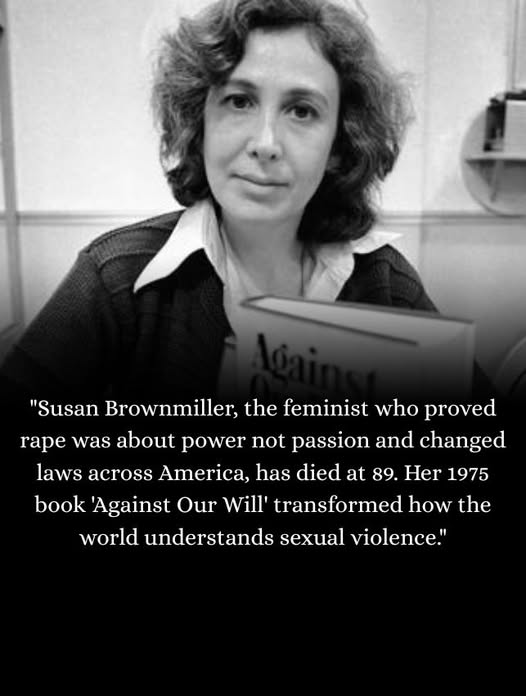
The security council bid, which was first launched by the Turnbull government in 2015, is supported by the Coalition.

But Opposition Leader Sussan Ley and foreign spokeswoman Michaelia Cash warned it could not detract from addressing pressures Australians faced at home.

“The Coalition will always back Australia’s national interest and we stand ready to work with the government in any way we can to help support Australia’s bid for a seat at the table,” they said in a statement.

US President Donald Trump has been leaning on America’s allies to pull more of their weight on the world stage amid a perception they are too reliant on US support.

Amid increasing US isolationism, Albanese warned that America could not be relied upon to uphold the international rules-based order on its own.

“The creation of the international rules-based order owes much to the post-war leadership of the United States of America,” Albanese told the UN General Assembly in New York.

“For the region Australia calls home, that stability has underpinned a generational economic transformation.

“But we cannot ask — and should not expect — any one nation to uphold the rules or guarantee the security on which all of us depend.”

Australia last had a non-permanent seat on the council in the 2013-2014 term — its fifth since the first UN session in 1946.

In a wide-ranging speech, Albanese also exhorted the world’s nations to co-operate with more action on climate change and peacekeeping.

Albanese called for an end to conflict in Gaza and Ukraine, and alleviating poverty and inequality.

His appeal for greater international co-operation comes with the US under Trump increasingly vacating its space as global leader and the rules-based order threatened by the rise of authoritarianism and regional conflict.

Albanese’s speech came a day after Trump delivered a fiery tirade in the same room, lambasting nations like Australia that have recognised Palestinian statehood and telling European leaders: “Your countries are going to hell.”

Trump has leaned on America’s allies to pull more of their weight on the world stage amid a perception they are too reliant on US support. Australia has so far resisted calls to lift defence spending from about 2 per cent to 3.5 per cent of gross domestic product.

The issue could be on the agenda when Albanese sits down with Trump in Washington on October 20, after months of back-and-forth to secure a face-to-face meeting.

The White House talks were announced before Albanese briefly met Trump and posed for a selfie with him at a reception for world leaders on Wednesday.

Albanese described their interaction as a “very warm and engaging chat”.

He said Australia was investing in defence, development and diplomacy in the Indo-Pacific region, where the US has entrusted it to stave off growing Chinese influence.

He said Papua New Guinea would soon become Australia’s newest ally, despite a recent bid to sign a mutual defence treaty unravelling during independence anniversary celebrations.

All nations, including middle and smaller powers like Australia, had to maintain faith in the institution of the UN by ensuring its principles were backed up with deeds, Albanese said.

“If the United Nations steps back, we all lose ground,” he said.

“If we give people reason to doubt the value of co-operation, then the risk of conflict becoming the default option grows.

“If we allow any nation to imagine itself outside the rules, or above them, then the sovereignty of every nation is eroded.”

Albanese urged the world to embrace clean energy, called for a ceasefire and release of hostages in Gaza, and supported the Coalition of the Willing’s efforts to secure peace for Ukraine on their terms.

But there was no mention of the pivotal AUKUS deal with the US and Britain, under which Australia is supposed to get US-made nuclear submarines.

The US is reviewing the three-country agreement to ensure it aligns with Trump’s “America first” agenda.

Albanese is due to meet his Sri Lankan counterpart and potentially sit down with Turkey’s strongman leader, Recep Tayyip Erdogan, on his last full day in the US. He then flies to London to meet British counterpart Keir Starmer and the King.

-with AAP

Bob McMullan

Could the Teals win Senate seats in an expanded parliament?

Important discussions are taking place within the government and before the Joint Standing Committee on Electoral Matters about increasing the size of the federal parliament.

I support increasing the size of the Senate representation of the states to 14 each with consequential changes to the size of the House of Representatives.

Such a large increase is caused by the nexus provision in the constitution which requires the House to be twice the size of the State Senate representation.

This remains one of the most counter-productive clauses in the Constitution, but that is an issue for another day.

However, any increased size of State Senate representation will have potential consequences for subsequent elections as it will significantly reduce the quota of votes required to elect a Senator.

It should make it easier for the Greens, One Nation and Jacquie Lambie to maintain their seats, although it will not necessarily enhance their chances of increasing their Senate numbers.

Given the upsurge in House votes for the Teals (that is, candidates supported by Climate 200) in every state it raises the question of the senate prospects of similar candidates.

The data shows that if the Teals make the right decisions and commit some resources it is possible, even likely, that the they could win several Senate seats.

Let’s look at the data from the last election and then at the decisions the Teals and their backers would need to make to bring this about.

In most of the mainland states the number of first preference votes won by Climate 200 backed candidates suggest that it is an achievable task to gain at least half a quota in an election for a seven seat Senate election. Once over half a quota the Teal-backed candidate would be favorite to win a seat.

In NSW the candidates supported by Climate 200 won 272,872 primary votes in the 11 House seats they contested in 2025. The 6th candidate elected to the Senate in NSW in 2025 was the One Nation candidate who won 302,438 votes or 0.42 quotas. A mere 1000 votes from each of the 35 seats Teal candidates did not contest in 2025 would see a Teal Senate election candidate with at least 307.000 votes or 0.45 Quotas. This would put the Teal Senate candidate ahead of One Nation for the 6th position and would certainly suggest a very good chance of winning one of 7 available seats in an enlarged parliament.

Nothing can be certain about future elections, but it is clear that there is a possible pathway to success for a Teal Senate candidate in NSW.

The situation in Victoria is a little more complex but should still be promising for a Teal Senate candidate in the right circumstances.

The 6th candidate elected in Victoria at the last election was a 3rd Labor candidate elected on 2.43 quotas. The 8 Teal candidates won 215,006 votes in their House seats which would have be sufficient to gain 0.40 of a quota in the Senate. Approximately 2500 votes per electorate in the remaining 30 seats would have led to 0.5 quotas. The highest vote for an unsuccessful party in the Victorian Senate election in 2025 was 0.31 quotas for One Nation. This would suggest a strong Teal candidate would be the favorite to win a 7th Senate seat in Victoria.

In Queensland the task would be more difficult although not impossible, but in WA and SA it might be slightly easier than in the larger states. The votes won by Kate Chaney in Curtin and Climate 200 supported candidates in seats like Forrest would be encouraging for a potential Teal Senate candidate in Western Australia. Although no Teal was elected in South Australia, the vote in Grey for example, in which the Climate 200 candidate won 18745 votes suggest a strong candidate would have a good chance in the Senate in South Australia, particularly given the parlous state of the South Australian Liberal party.

Tasmania is harder to judge because of the Lambie factor, but for seven seats in Tasmania the quota would be very small, almost certainly less than 50000 votes. The performance of Andrew Wilkie in Clark and Peter George in Franklin suggests this should be achievable for a strong Teal candidate.

I also support increased Senate representation for the Territories. Given David Pocock’s success and the continuing failure of the Liberals to appeal to ACT voters this could create a further opportunity for a Senate success for a Teal candidate.

So, it is obviously possible for a Teal candidate to win one or more Senate seats at the next election. It would be possible, but more difficult, even if the size of the parliament is not increased.

What would they need to do?

The data makes it important that Teal candidates run in more, preferably all seats. This could be based on only notional campaigns in many seats because very few votes should be necessary in the more difficult seats.

The ACT experience suggests that high profile candidates would also be a distinct advantage. They don’t all need to be David Pocock, but they would need to attract attention in the seats without strong House candidates.

What would not be necessary is a party structure. The current informal processes should be sufficient if the level of support can be maintained.

I am not advocating that Climate 200 and the Teals should take this step

That is up to them and has risks as well as benefits.

However, the current state of the Liberal party in every state and the low level of support for the Nationals in most states make it an intriguing possibility.

Cindy Lou in Sydney

Sydney abounds in coffee and breakfast places, and some of the really nice ones are near where we stay, or close to venues we visited, such as The Roslyn Packer Theatre – Basket Brothers (brisket bowl and chicken tacos after arrival, lovely service), 8 Ounce (great toast – two grain slices with lots of butter and vegemite, terrific service, excellent prices) Toast (pork and fennel roll, mushroom toasty, good menu efficiency and smiles), Brix Beans (great coffee, good service, nice choice of food, but on this occasion, coffee was enough).

Two excellent finds – Cruise on the harbour, the opposite side to the opera house; and at the NSW Art Gallery new building. Cruise offers indoor and out door seating, and we chose the comfortable outdoor lounges. The service is terrific, the menu is varied and from our experience served in generous portions and delicious. The venue and the dishes will be on our list for a return visit. The oysters were $7 each instead of the $7.50 and more at other nearby restaurants. The eggplant and pasta dishes made excellent sharing dishes.

Mod. Dining at the gallery was another restaurant to which we would happily return. The seating is indoors but the building is light and airy. The menu is another plus, and it was easy to share the sate chicken skewers, and crispy eggplant. With these we chose jasmine rice. Another dish that looked very appetising was the pumpkin salad. The beverage menu was extensive, and we had jasmine and ginger tea.

Both restaurants are on our list for the next time we visit Sydney.

On our last night in Sydney, we ate at Clarence and V, a tiny restaurant in Clarence Street. Although the restaurant was quite noisy, the table size and shape made conversation relatively easy. The food was delicious and very reasonably priced. We shared a salad (crisp, crisp lettuce, cucumber and olive slices) and split yellow pea dip with large pieces of fresh crusty white bread. The meals we chose were eggplant with lamb, courgette flowers with a lovely sauce, fish with a delicious lentil accompaniment (replacing beef cheeks which did not appeal to me) and beef and crushed potatoes. The servings are small, but the flavours are big. The dessert was delicious – and sharing between two was a good decision. Mint tea was served at the end of the meal. The service was friendly and helpful, and the mint tea was really appreciated. i would return.

One evening we went to dinner a ferry trip from Circular Quay. We didn’t see the sunset, but the ride affords views of the Harbour Bridge and the Opera House. Upon arriving at our destination, the sky through the tress was a delightful accompaniment to drinks on the balcony.

Next week’s blog will include the magnificent exhibition Yolŋu power: the art of Yirrkala at the Art Gallery of NSW, and the excellent adaptation of Patricia Highsmith’s novel, The Talented Mr Ripley, at the Roslyn Packer Theatre.

Week beginning 24 September 2025

Laura Lippman Murder Takes a Vacation A Mrs Blossom Mystery, Faber and Faber Ltd, August 2025.

Thank you, NetGalley, for providing me with this uncorrected proof for review.

Mrs Blossom holds the fears of many whose route to the back of a plane is accompanied by the overwhelming feeling that they will not be welcome in the tiny space to be shared with other passengers. On this occasion, arriving early at check in as usual, she is rewarded with an upgrade. Her unfamiliar feeling of wellbeing on a plane is enhanced by her meeting with handsome and caring fellow passenger. However, this will be the last time she is afforded such a comfortable state of mind. The flight lands in Heathrow too late for her to make her connection to a Paris where she is to join her friend to cruise through France.

Muriel Blossom is a wonderful character with her amalgam of fears about her appearance and age, her robust willingness to put her detection skills to use and her interactions with the people she meets. At times she inclined to think the worst of them; at others she is keen to befriend a fellow traveller. At the same time as she is interacting with new acquaintances, her friendship with the multiple marrying Elinor is joyful, accepting and warm, painting this relationship as ideal, depicting everything a woman’s friendship should be.

There is enough ‘bite’ in this novel to avoid it being a ‘cozy’ mystery. Laura Lippman has brought Mrs Blossom, female friendships, humour, detection and intrigue together to make an extremely satisfying read. As in Dream Girl (2021) Lipmann’s Tess Monaghan takes second place to a new character and story line. Murder Takes a Vacation poses a successful interaction with Lippman’s famous character and a secondary character from Another Thing to Fall (2008). Lippmann’s ability to deliver a plot that, while providing only glimpses of Tess Monaghan, is again triumphant.

Jane Corry The Stranger in Room Six Penguin General UK -Fig Tree, Hamish Hamilton, Viking Penguin Life, Penguin Business, Penguin, June 2025.

Thank you, NetGalley, for providing me with this uncorrected proof for review.

This novel is difficult to put down, so much so, that I read it over a day with only enforced pauses. It begins with an intriguing prologue, and the pace after the gunshot at its conclusion only becomes faster. The stranger in room six begins the story telling. However, the main thrust of the narrative belongs to Belinda and Mabel. Belinda is a carer at Sunnyside Home for the Young at Heart; Mabel is an elderly resident. Belinda’s story begins fifteen years previously as she dispassionately observes her husband. Mabel begins her story during World War 2 with a tragedy that brings her as a fifteen-year-old to The Rectory, now Sunnyside. Both women have secrets, and both tell their stories with a mixture of satisfaction, relief, and trepidation. Their companiable story telling becomes dangerous when the stranger begins to impose her will on the information that is being gathered. See Books: Reviews for the complete review.

Thank you, NetGalley, for providing me with this uncorrected proof for review.

I thoroughly enjoyed reading the publishers’ accounts of their commitment to The Strand, and Alexander McCall’s Foreword. All demonstrated the enthusiasm and exactitude with which the short stories were chosen and the significance of the publication. I have mixed feelings about the short stories, some of which I found extremely clever as well as readable; others I did not warm to; and I missed being able to read an example of a modern Agatha Christie with its signatory clues that fox the most insightful reader. See Books: Reviews for the complete review.

Australian Politics

The Saturday Paper logo

September 20 – 26, 2025  |  No. 568

John Hewson The unravelling of the Liberal Party

Clearly, not everyone saw delusion in Jacinta Nampijinpa Price’s run for, and subsequent attacks on, the Liberal leadership.

Her actions have been embraced by the Murdoch mob, in particular the excitable team at Sky News. She is backed as ever by right-wing advocacy group Advance, and think tanks such as the Institute of Public Affairs and the Centre for Independent Studies.

The rush of blood to the conservative media’s head was triggered by Price’s recent statements about Indian migrants and her refusal to properly apologise, and then her failure to publicly support Sussan Ley as the Coalition leader, which led to her justifiable ouster from the shadow ministry.

Many, both within and beyond Canberra’s political sphere, see the senator for what she has been since entering politics – a negative, divisive and disloyal force, and particularly so since she ditched the Nationals and joined the Liberal Party. Her political ambitions really took flight with the prominent role she played – employed to full effect by former opposition leader Peter Dutton – in opposing the Indigenous Voice to Parliament referendum. Dutton then endorsed her aspirations with a role in his election campaign. It quickly soured, given her lack of political substance and her ill-considered utterances about MAGA and other Trumpist lines.

It was hard to explain her appointment to the shadow ministry in the first place – especially taking into account her controversial time on the Alice Springs Town Council. Price is not a team player – it’s always her career first, then the party. Moreover, she has no particular policy expertise or experience, certainly none to justify the defence industries portfolio she was given. I suppose Ley felt she had to give Price something, given the brouhaha with which she arrived, and the leader probably felt the new recruit would work better with Angus Taylor, given their declared leadership alliance and friendship. It was surely a strategic miscalculation, as it’s possible Taylor knows even less about the defence portfolio – having never contributed significantly on the most relevant issues.

Ley has at least now been able to correct the poor initial decision to appoint Price to the front bench.

With her comment on “mass migration”, Price was obviously seeking to capitalise on the anti-immigration sentiment of the recent marches and protests taking place both here and overseas. She did however, once again, show very poor judgement and a lack of compassion towards Indian migrants, whose support the Liberals will need in both city and country seats at future elections.

It was insensitive and demeaning to assume that Indians vote as a coordinated, homogeneous block. Perhaps the strong skew polling firm RedBridge Group noted among the community towards Labor at the last election owed to Dutton’s racism and generally poor campaign? These communities deserve respect, not cheap political shots.I imagine the other aspiring leaders – Hastie, Taylor or Tim Wilson spring to mind – are happy to let Price go on destabilising from the back bench. They are just sitting back like spiders in a web, waiting for their moment to strike.

Price’s attack on Indian migrants rekindled memories of the party’s mishandling of Chinese–Australian voters that cost it dearly in the past couple of elections. The electorate can infer from these incidents that there is a deep-seated racism in the Coalition. This point was made forcibly by the Gillard government’s trade minister Craig Emerson recently, as he suggested that these conservative parties “offer cover for bigots”. I fear this is closer to the mark than we’d care to believe. It’s worth noting that Price was speaking outside her portfolio, to which she had given completely inadequate attention – with all that’s going on, she could have issued a press release on defence every day, cheered on by her friends in the media.

This has been a destabilising episode for Ley, stirring talk of a challenge by the end of this year. I believe it is most unfortunate that Ley hasn’t been afforded a clear opportunity to do the job. I accept she hasn’t been inspirational or strategic but, like countless before her, she deserves a genuine chance. That said, if she wants to survive politically, she will need to do better than the anti-government, anti-welfare and amorphous speech she delivered at the think tank CEDA this week.

The current Coalition needs to learn the importance of discipline and teamwork rather than engaging in this persistent navel gazing.

The party’s sluggishness in conducting its policy reviews, and in announcing any new strategic direction or clear positions on so many pressing national issues, has created the image of a rudderless group more absorbed by internal squabbles than good policy. There has been a complete shambles over issues such as immigration, climate change and net zero, the latter ignoring the substance of the recently released climate risk assessment. The contribution of Andrew Hastie this week, in suggesting he would leave the front bench if the party sticks with its climate target, could not have been more ill-considered or ill-timed.

This Coalition is sadly and obviously not in any condition to govern – a fact clearly reflected in its devastating polls. Anthony Albanese would win again if an election were held now, and probably even more definitively. The primary vote for the Coalition in the most recent Newspoll collapsed to 27 per cent – the worst result in the poll’s history since 1985. The Labor primary vote was steady at 36 per cent, giving the government a commanding 58-42 two-party preferred lead, which is Albanese’s biggest margin since taking office.

This latest Price saga was likely an important contributor to the slide in the polls. Ley was seen to be slow in responding, especially given the clear breach of cabinet responsibilities. Ley waited surprisingly long to call on Price to apologise to the Indian diaspora, which in the end she had to do herself. Price became a particularly shambolic element of an unfolding Liberal mess, despite her protection team, led by former prime minister Tony Abbott – who last week described Price in this paper as “one of the few Liberal MPs with a proven ability to provide national leadership” – and his former chief of staff, Peta Credlin. One Liberal MP told The Sydney Morning Herald that Credlin’s soft interviews on Sky News are Price’s “safe space”.

The constraints on Ley and therefore her performance need to be recognised. She beat Taylor by only a small margin of four votes – depending in part on the support of senators whose parliamentary time has now ended. She also allowed the unsuccessful candidate for Bradfield to vote. Unfortunately, Ley’s staff are seemingly quite inexperienced, and closely associated with Alex Hawke, who apparently runs her office. This is a clear disadvantage given his history of factionalism in the New South Wales party, and broader ambitions. Price alleged that Hawke berated her staff, generating a heated argument, rather than Ley calling directly.

Ley is also disadvantaged by Abbott running amok across factions in the NSW party. He was instrumental in Price’s transfer from the Nationals. He is also clearly behind her ambitions, which to Abbott would mean building a hard-right conservative force in our politics, channelling the likes of Britain’s Nigel Farage, talked up by the cheer squad of Andrew Bolt, Rowan Dean and Paul Murray.

Ley’s reshuffle again emphasises an important weakness of the current Liberal Party, namely the absence of genuine talent with significant professional standing. Those days seem long gone as the party is simply not attracting such people – a sharp contrast with the candidates drawn to the independents movement. As a result, the shadow cabinet is appointed mostly on political and geographic considerations, meaning that inexperienced members have to learn on the job, forced to perform without particular compassion and commitment. For example, Price’s complex role combining defence industry and personnel with cybersecurity and science has been split between Melissa Price of Western Australia and Claire Chandler of Tasmania. It was also bordering on ridiculous to add Senator James Paterson to the leadership team. As the party’s campaign spokesman in the election, he showed an inability to expand on or explain the statements by the leaders.

I am sure, nevertheless, that Ley will expect, and hopefully get, more loyalty and discipline from her new team than she was getting before.

Even if the current leader were to be spilt, I don’t believe, given Jacinta Price’s total sellout of Indigenous Australia, that she could or should win, or indeed ever be given any meaningful portfolio in the future. Changing the jockey won’t make a winner if the horse is crook.

Three leadership challenges remain, for whoever is in the role. First, achieving genuine unity within the party and the Coalition. Second, policy credibility. Third, deep organisational reform. All three require consistent, coordinated and focused hard work with all back- and frontbenchers making their essential contributions. Sadly, as things stand, these efforts are not yet being made.

I imagine the other aspiring leaders – Hastie, Taylor or Tim Wilson spring to mind – are happy to let Price go on destabilising from the back bench. They are just sitting back like spiders in a web, waiting for their moment to strike. 

This article was first published in the print edition of The Saturday Paper on September 20, 2025 as “Price checked”.

The Guardian

Australia could be a ‘dumping ground’ for goods made for us with forced labour, anti-slavery tsar warns

Exclusive: Chris Evans says ‘blind spots’ in modern slavery laws means few prosecutions occur and some companies are ‘taking the mickey’ in their approach to reporting

Ben Doherty Mon 1 Sep 2025 12.25 AEST

Australia’s modern slavery laws are among the weakest in the developed world and the country risks becoming a “dumping ground” for goods made with forced labour, Australia’s first anti-slavery commissioner has said.

In a wide-ranging interview with Guardian Australia, the commissioner, Chris Evans – a former Labor senator and minister – said there were “blind spots” in Australia’s efforts that risked the country becoming a global laggard.

“Not only are we not keeping up to the standard of acceptable corporate responsibility,” he said of Australia’s Modern Slavery Act, “but we’re also now running the risk of being a dumping ground because of the fact that we have the lowest level of prevention of goods made with forced labour coming into our country.”

His comments come as a report by the UN special rapporteur on contemporary forms of slavery argued that migrants and vulnerable minorities “slip through the cracks” to be exploited in Australia.

The attorney general, Michelle Rowland, described modern slavery as “abhorrent” and said the government was committed to combating it.

Evans said jurisdictions comparable to Australia, including the US, Canada, or – soon – the EU had introduced import bans on goods made with, or strongly suspected of being made with, forced labour. No such ban exists in Australia.

Australia has one of the “weakest regimes in dealing with forced labour”, Evans said, arguing that companies making goods with forced labour on warning lists, and excluded from markets such as US, Canada or Europe, would seek to export to countries without import bans.

“We’re [Australia] at risk of becoming a dumping ground for goods that are designed for … wealthy western countries, but which may have serious issues with forced labour in their supply chains.”

Australia’s other most pressing “blind spot” was in low rates of identification and prosecution of offences occurring inside Australia, he said.

“Some people like to comfort themselves by thinking, well, that means we don’t have much of a problem here, but … that’s nonsense: what it means is we haven’t been very good at … identifying those people who are being exploited and secondly … there are real issues about prosecutions in Australia and the amount of time it takes to get a case to court.”

Walk Free’s Global Slavery Index estimates that there are about 41,000 people held in modern slavery in Australia.

The Guardian requested statistics from the commonwealth director of public prosecutions on modern slavery prosecutions. Data provided to the UN office of drugs and crime shows that in 2023 – the latest figures available – 352 people were “brought into formal contact with the police and/or criminal justice system because they have been suspected of, arrested for, or cautioned for trafficking in persons”.

Five people were prosecuted. Zero were convicted.

Evans said Australia’s Modern Slavery Act, introduced in 2018, was “light-touch” legislation and Australia had failed to progress from that “first tentative step”.

The act mandates only that companies turning over more than $100m a year issue modern slavery reports: it imposes no obligations to address risks.

There are no penalties for failing to report and no penalties for substandard reporting. It’s estimated that between 400 and 1,000 companies who are obliged to report on modern slavery in their practices or supply chains are refusing to do so.

Some companies are reporting comprehensively, Evans said: “Others quite frankly are taking the mickey, by putting in two pages of ‘we oppose modern slavery’ and that’s been regarded as sufficient to pass muster.”s

He argued that Australia’s modern slavery laws needed to move from a reporting mandate to a “due diligence” model, where companies were required to act to prevent modern slavery in their supply chains or business practices.

Evans said the introduction of penalties was similarly overdue.

In 2023 the former ombudsman Prof John McMillan led a review of Australia’s Modern Slavery Act. He found “no hard evidence that the Modern Slavery Act … has yet caused meaningful change for people living in conditions of modern slavery”.

Among his 30 recommendations was that the act be updated to include: an obligation that companies must address modern slavery risks in their supply chains; penalties for companies that fail to comply; and high-risk declarations for regions, factories or suppliers.

The government did not respond until December 2024 – accepting in full, part or principle 25 of the 30 recommendations – but many have not been implemented. The government released a consultation paper in July.

Rowland said Australia had “strong laws and a comprehensive response to combat modern slavery practices, such as human trafficking, slavery, and slavery-like practices”.

“The Albanese government is committed to continuing our efforts to strengthen our response,” she said.

This month the UN special rapporteur Prof Tomoya Obokata said he was “seriously concerned by the treatments of temporary migrant workers in Australia”, reporting “disturbing, sometimes very serious, patterns of exploitative practices by employers, labour hire companies and migration agents”.

Obokata highlighted the exploitation of asylum seekers and refugees; people with disabilities; temporary migrant workers such as those on the Pacific Australia labour mobility scheme (particularly those who had “disengaged” from it and were outside its protections); domestic workers in diplomatic households; and students visa-holders.

He said vulnerable and marginalised people were let down by Australia’s “patchwork” laws.

The government will respond to Obokata’s report at the human rights council in September.

I know Canberrans are passionate about protecting our climate by reducing emissions and transitioning our energy grid to renewables as quickly as possible.

That’s why I am excited to share with you that today, the Albanese Labor Government has taken another strong step forward on climate action by announcing an ambitious and achievable 2035 emissions reduction target of 62 – 70%.

This target range is based on expert advice including from the Climate Change Authority and puts Australia firmly on the path to net zero while protecting households and businesses from the burden of higher costs.

Today’s announcement isn’t just a target, it also includes a detailed Net Zero Plan which outlines exactly how we plan to achieve our target while also providing businesses and renewables investors the certainty that they need so they can play their key role in decarbonising our economy past 2030.

The Plan demonstrates how Australia can transition while:

  • growing the economy
  • reducing cost pressures on households and businesses
  • creating new jobs.

The Plan also identifies five priorities to guide our transition to net zero:

  • Clean electricity across the economy.
  • Lowering emissions by electrification and efficiency.
  • Expanding clean fuel use.
  • Accelerating new technologies.
  • Net carbon removals scaled up.

If you’re interested, you can read the Net Zero Plan or check out the finer detail in the sector emissions reductions plans we have released today here.

In our first three years in government, we’ve increased wind and solar capacity by 45%, enough to power over 6 million households, but we aren’t done yet. Now we’ll build on that success and pick up the pace.

We know that renewables are the cheapest form of new energy and today we’ve made another down payment to supercharge their rollout. We’ve announced $2 billion to deliver even more renewables and we are also setting up a new $5 billion Net Zero Fund to help industry do the heavy lifting in moving to clean energy.

Our responsibility as a government for all Australians is to balance ambition with practical delivery to cut emissions, create jobs and keep downward pressure on household bills. That’s exactly what this target does.

The target is affordable and achievable but most importantly, its ambitious. We are up for doing the hard work that comes on the other side of announcing this target because our future generations deserve that from us.

Only Labor leads from the front on climate action and renewable energy investment right across Australia, and today’s plan builds on our commitment to deliver climate action in a meaningful and responsible way.

Thanks for taking the time to read about this significant announcement and I look forward to engaging with Canberrans about this target and our broader plans to deliver net zero by 2050.

Political Cartoons Australia’s post

David Pope

Carrick Ryan posted on Facebook, referring back to his previous commentary on PM Anthony Albanese and the failure to meet with President Donald Trump…

Since I wrote this, Republican Congressmen and Women have threatened Australia with “consequences” for its recognition of Palestine, Department of Defence officials leaked private correspondence to the media in an effort to disrupt Albanese’s meeting with Xi, and Trump has threatened an Australian reporter… so no, I don’t think Australians have any interest in our Prime Minister being humiliated in the Oval Office any time soon…

Carrick Ryan 

13 July Facebook·

Albanese has tried to speak to Trump, and Trump has so far made no accommodation for him.

Personally, I don’t think the Australian people really want this meeting to happen.

I think they’ve seen Trump humiliate his allies in the Oval Office, they’ve seen him demonstrate his ignorance and disrespect towards every nationality he’s ever spoken about other than his own.

We don’t want to cringe as we watch our Prime Minister feature in one of the mad king’s moments of lunacy, or be used as a prop for some ulterior political motive.

We don’t want to have to see our representatives grovel at Nero’s court, and pretend that we can see the emperor’s clothes too. We don’t want to dignify this circus.

Because even if we did all that, what would it achieve?

Do we expect Trump to be swayed by reason? Are we appealing to his conscience? Even if he suddenly changed his mind, could we ever trust his capricious mood swings and unpredictable policy on the go? Would anything he say mean anything later?

Trump placed tariffs on our nation despite the fact the US has a trade surplus with us. Defying the entire justification he has provided for this stupefying global trade war.

He could have easily utilised our example to demonstrate his fairness to the world, and absolved us as one of the few who buy more from America than they sell… but he chose not to. He chose to punish the nation that has followed the US into every one of their wars since WWII.

So no… we don’t want to send someone to Washington to go and kiss the ring…

…instead, we shall speak to Beijing.

We’re not looking for new friends, but we’re still trying to figure out who our enemies are.

British Politics

The Conversation:

This week the UK news cycle has been dominated by the state visit of the US president, Donald Trump. Many of us will have held our breath. Not so much for the duration of Trump’s stay at Windsor Castle. But the summit with the prime minister and the press conference which followed were pregnant with the possibility for gaffes or discord. Trump seemed so dreamily charmed by his time with the Royals that he appeared to be benevolence itself. Sighs of relief all round at Chequers this weekend, one can only assume.

The Conversation

How I tracked the biggest hidden sources of forever chemical pollution in UK rivers – new study

Published here under Creative Commons licence.

Published: September 19, 2025 7.17pm AEST

Patrick Byrne

Disclosure statement

Patrick Byrne receives funding from the Natural Environment Research Council.

The amount of toxic “forever chemicals” flowing into the River Mersey in north-west England has reached some of the highest levels recorded anywhere in the world.

My team’s research links much of this contamination to old landfills, waste facilities and past industrial activity. Even if these chemicals were banned tomorrow, they would continue polluting our rivers for decades, possibly centuries.

But there is a path forward. We’ve developed a new method to track and prioritise the largest sources for clean-up, giving regulators a clearer picture of where to act first.

Per- and polyfluoroalkyl substances (PFAS), more commonly known as “forever chemicals”, are a large family of human-made chemicals found in everyday products like food packagingwater-repellent clothes and fire-fighting foams. They are valued for their ability to resist very high temperatures and to repel water and oil, but these same properties make them extremely persistent.

Once released, some PFAS could take thousands of years to break down. They accumulate in the environment, build up – with different compounds accumulating at different rates – inside the bodies of wildlife and people, and have been associated with harms to health. The most studied types have been linked to cancers, hormone disruption and immune system problems.

Last year, my research team discovered that the amount of two potentially cancer-causing PFAS chemicals washing off the land and into the Mersey was among the highest in the world. In our follow-on research, we travelled upstream to try and locate where these PFAS are coming from. But with hundreds of potential PFAS sources, how do we isolate the largest ones?

The secret is measuring something called the PFAS load – the total amount of PFAS flowing through the river at a given point, rather than just the concentration in the water.

Here’s why that matters: a small stream can have high concentrations but carry only a small total amount, while a large river with lower concentrations can be transporting far more PFAS overall. If we only look at concentration, we risk missing the really heavy polluters.

By measuring PFAS loads at multiple points along the Mersey system, we could see exactly where the largest increases occurred. That told us both the location and the scale of PFAS inputs.

We detected PFAS chemicals at 97% of our sample sites, even in supposedly pristine streams draining from the Peak District national park. But the big breakthroughs came when we matched the largest PFAS load increases to specific areas.

PFBS (a type of PFAS) was coming in huge amounts from land draining old landfills in the Glaze Brook watershed near Leigh, west of Manchester. PFOA, a globally banned and cancer-causing PFAS, appeared to originate from a waste management facility on the River Roch, north of Manchester. PFOS, another banned PFAS, was entering the River Bollin, with strong evidence pointing to historic firefighting foam use at Manchester Airport.

What’s most striking to me is that all these sources are rooted in the past – old landfills, waste sites or historic industrial use. These chemicals are no longer in production, but they are still escaping into the environment, decades later.

This is where PFAS load measurements make a real difference. Instead of chasing the highest concentrations – which might lead to cleaning up small streams that contribute little overall – we can target the sites releasing the largest total amounts of PFAS into our rivers.

It’s a simple idea with major implications. In a world where environmental regulators face tight budgets and limited monitoring capacity, knowing exactly which sites are the biggest sources is vital.

The Mersey is just one example. Around the world, PFAS contamination follows a similar pattern: numerous potential sources scattered across the landscape, many of them historical. The chemicals’ extreme persistence means they will continue cycling through rivers, soils and wildlife for generations unless active steps are taken to remove or contain them.

Our latest study shows that measuring PFAS load can help solve one of the toughest challenges in managing chemical pollution: working out where to start. By identifying and prioritising the biggest sources, regulators have a realistic chance of reducing the flow of forever chemicals into our rivers – and perhaps one day, making that nickname a little less true.

Liverpool John Moores University provides funding as a member of The Conversation UK.

American Politics

Paper Clip Protest Sep 20 

On Thursday, E. Jean Carroll started it: Paper Clip Protest.

“Comely Reader! I suggest we all start wearing the paper clip. Subtler than a red hat, more powerful as a CONNECTION,” she wrote, explaining they were also worn during World War II as a sign of resistance against the Nazis.

Norwegian teachers and students wore paper clips to signal their opposition to Nazi occupation. They attached them to their lapels and wore them as jewelry, a symbol of solidarity binding them together as paper clips did with papers. It was a quiet act of defiance, expressing that Norwegians remained united against Nazi rule.

Friday, when I signed on to tape the #SistersInLaw Podcast, Jill Wine Banks had a clip delicately attached to the collar of her shirt. It made me smile. In that moment, I knew E. Jean was onto something. Our defiance can and must be loud and public at this point. But the quiet symbol of solidarity on someone’s collar when you walk into a crowded room? Genius. And much better than a red hat.

You probably have a paper clip in your desk or junk drawer that you can put on straight away. You can be a subtle signal of support for people who need that right now. You can be a conservation starter. Jill tells me she’s having special paper clips made for the occasion—very fitting for a woman known for wearing pins—and has promised to send me one.

Small efforts can bear fruit when we’re all in on them. I’m going to find a paper clip before I head out to the farmers’ market.

We’re in this together,

Joyce

Pablo Picasso Portrait of a Woman 1940, also known as Portrait of Dora Marr Royan, France – oil on paper on canvas

Cindy Lou enjoys her return to 86

I t seems so long since I ate at 86 – far too long, and I shall certainly not leave so much time before my next visit. I forgot to photograph the delicious, charred corn with togarashi cream and parmesan, but managed to photograph the remainder of the meal before it was devoured. It was a favourite menu – fragrant crispy eggplant with sichuan chilli caramel, pumpkin tortellini with burnt butter and sage sauce, and broccolini with hazel nuts. And, the delightful orange blossom cocktail was back.

Cindy Lou likes Ginger and Spice for its lunch menu – something familiar and something new

Eggplant, potato and capsicum

Sweet and sour chicken

Kebaba is a casual Turkish outdoor cafe in Civic. Today we had zucchini fritters and a kebab.

Tonight, I was at Llewellyn Hall and wanted to add the story below before posting.

John Galloway PAINTER AM

Mozart’s Requiem performed by the Canberra Symphony Orchestra was dedicated to John Painter AM. A moving speech was made before the performance. I was fortunate in knowing John as a lovely, gentle neighbour as well as the man of the accolades he so deservedly received in the speech.

Obituary from the Sydney Morning Herald

John Galloway Painter AM, one of Australia’s most esteemed musical figures, died peacefully surrounded by close family on September 13 at the age of 92. John retained his easy sense of humour and gentlemanly nature throughout the short illness leading to his death.

John’s express wishes were for a direct committal with no funeral service.

A tribute concert will be held at the Sydney Conservatorium of Music on Sunday October 12 at 3pm. Tickets will be available from Wednesday September 24 through the Conservatorium’s online box office.

Published by The Sydney Morning Herald on Sep. 20, 2025.

Week beginning 17 September 2025

Helene Harrison The Many Faces of Anne Boleyn Interpreting Image and Perception Pen & Sword | Pen & Sword History, July 2025.

Thank you, NetGalley and Pen & Sword for providing me with this uncorrected proof for review.

Helene Harrison’s forensic approach to discovering Anne Boleyn is a remarkable enterprise, and one that provides a welcome addition to the myriads of interpretations that have already been written. Harrison’s perceptiveness is an asset in considering the immense range of sources she investigates. These are primary and secondary sources, all of which she appraises with almost a gimlet eye. Her understanding of other writers’ and film/television makers’ interpretations is acute, critical at times, but recognising the importance of others’ contribution to creating an understanding of this elusive woman. That Anne Boleyn is elusive can, of course, be questioned. After all, she has been the subject of so many books, films, and television series. However, where so much has been partisan, it is useful to try to stand back, look at the material and, as Harrison has done, investigate. See Books: Reviews for the complete review.

Suzann Fortin The Codebreaker’s Daughter Embla Books, July 2025.

Thank you, NetGalley, for providing me with this uncorrected proof for review.

The Codebreaker’s Daughter is not just another book in which women’s impact on the work at Bletchley Park is central to the plot. Hana is a Japanese speaker and an expert at solving puzzles that involve language skills. These she perfects with her father over cross word puzzles, and it is this relationship and her linguistic skills that bring her into Bletchley Park, a world of secrets and danger. See Books: Reviews for the complete review.

As I review so many books published by Pen and Sword, and find them valuable sources of topics that often highlight feminist themes, I thought it worthwhile publishing the following information about the publisher, although it refers only briefly to the social history themes that I find so gratifying. It is interesting that the publisher is renowned for its military historical titles, an imprint taken over from Leo Cooper, husband of Jilly Cooper.

Pen and Sword Publications

The origin of Pen and Sword Books is closely linked with its sister company, the Barnsley Chronicle; one of the UK’s oldest provincial newspapers – established in 1858 – and one of the few weeklies still in private ownership.

The first books published by the company were in response to public demand following of a series of articles published in the newspaper:- Dark Peak Aircraft Wrecks told the story of crash sites in the Dark Peak area of the Peak District National Park, and a further weekly feature on the history of two Kitchener battalions, known as the Barnsley Pals, aroused a thirst for more information. Over the years these books have been reprinted a number of times and have collectively sold around 20,000 copies.

Following on from the success of Dark Peak Wrecks and Barnsley Pals books, a number of local history paperbacks were produced along with a series of battlefield guide books. Battleground Europe proved immediately successful and as more and more titles were produced the company made the decision to launch a book publishing arm of the group.

The company acquired the Leo Cooper military history imprint and “Pen and Sword” was born. Leo Cooper, the husband of the famous novelist Jilly, had established a strong reputation for publishing military history titles and had some famous books in his list. With the Leo Cooper imprint and its backlist, Pen and Sword became established as one of the UK’s leading military history publishers.

Over recent years Pen and Sword has continued to grow and has added new imprints to its core area of military history, as well as publishing the majority of its catalogue digitally in eBook format. Pen and Sword specializes in all areas of military history, naval and maritime, aviation, local history, genealogy, social history, transport, discovery and exploration, archaeology, nostalgia and true crime. In 2017, a new lifestyle imprint named White Owl was launched, which publishes books on areas such as health and diet, hobbies and sport, gardening and wildlife and space.

With over 350 books published every year, Pen and Sword has established itself as a specialist book publisher.

Pen and Sword CUS Footer Logo

© 2025 Pen and Sword Books. All Rights Reserved.

US Contact Info
Pen and Sword Books
c/o Casemate Publishers,
1950 Lawrence Road
Havertown, PA 19083
t: (610) 853-9131
e: casemate@casematepublishers.com

Tracey Emin’s Largest-Ever Exhibition Is Landing In London Next Year – And It Will Display ‘My Bed’ As Well As Never-Before-Seen Pieces

‘A Second Life’ is Tracey Emin’s largest exhibition, and you’ll be able to catch it when it lands at London’s Tate Modern in February.

 Jack Saddler – Senior Staff Writer • 8 September, 2025

Tracey Emin’s career has spanned over 40 years, and her work makes her one of the recognisable names in contemporary British art. And her achievements are to be recognised with her largest-ever exhibition, which lands at London’s Tate Modern next year.

Titled Tracey EminA Second Life, the giant exhibition opens at the Tate at the start of next year, with a mix of her most well-known pieces as well as works that have never been shown to the public before.

Tracey Emin: A Second Life at the Tate Modern

Running at the Tate Modern between February 26 – August 31, 2026, Tracey Emin’s landmark A Second Life exhibition shows more than 90 works, with many you’ll likely recognise, including the two pieces that are at the heart of the exhibition, Exorcism of the Last Painting I Ever Made 1996 and the Turner Prize-nominated My Bed 1998, which documents the artist’s ‘recovery from an alcohol-fuelled breakdown’. Elsewhere in the exhibition, you’ll see works from Emin from the 2020s, including her I Followed You Until The End 2023 statue stood outside the Tate.

At the beginning of the exhibition, visitors will see pieces from her first solo exhibition, My Major Retrospective, featuring tiny photographs of her paintings she completed at art school, as well as her six-minute video storytelling piece, Why I Never Became A Dancer 1995, which recounts her time growing up in Margate.

The title of the exhibition references Emin addressing her own ‘second life’, with the artist addressing her experience of cancer, surgery, and disability in the exhibition, with her sculpture Ascension 2024 exploring her relationship with her body following surgeries for bladder cancer, which is also adressed with stills from a new documentary that will premiere at the Tate that shows the stoma and urostomy bag Emin now lives with.

Speaking on the exhibition, Dame Tracey Emin said: “I’m very excited about having a show at Tate Modern. For me, it’s one of the greatest international contemporary art museums in the world and it’s here in London. I feel this show, titled ‘A second Life’, will be a bench mark for me. A moment in my life when I look back and go forward. A true celebration of living.”

‘Tracey Emin: A Second Life’ is landing at the Tate Modern on February 26, 2026 and will run until August 31, 2026. Find out more about it here.

Steve Shirley countered sexism by founding her own company

The refugee, entrepreneur and philanthropist died on August 9th, aged 91

She learned the ropes pretty fast at Computer Developments Ltd. In 1959, she had to. Not so much the coding, with paper and pencil at her desk, until it could be punched up and sent to the computer; to anyone as fond of maths as she was, that was just fun. No, she also learned to stand against the wall in case a male colleague tried to pinch her bottom. And if she wanted to make a sensible point at a meeting, and was bluntly told it was nothing to do with her, she had to silently accept it. The day after that particular slight, however, she handed in her notice and decided to create a company herself. One just for women.

Stephanie Shirley knew exactly what she wanted. A company employing university-educated women, who were otherwise laid off when they got married or became pregnant. A job, coding and inputting data, which they could do from home, with flexible hours and on piecework, to allow for looking after children or elderly parents. A company without the top-down “Do this, jump here” attitude of male bosses, but instead working in teams, eventually with shared ownership. She called it “Freelance Programmers”, and it would sell software.

That in itself caused male sniggering. No one would buy software in 1962; it was given away free with hardware. And of course no one would buy it from a woman. Try again, dear. (You could always recognise ambitious women, she said, because their heads were flat from being patted patronisingly.) Nonetheless, she started her company from her dining table with a mere £6 in capital. By the 1990s, when it was floated, it employed 8,500 people; by 2000 it was valued at $3bn. Its management-control protocols had been adopted by NATO, and it had programmed the black-box flight recorder for Concorde. As for the woman with her back against the wall, by 2017 she was a dame and a Companion of Honour, both for services to IT and for giving away the fortune she had made.

Much of that success lay in cunning. Because married female graduates were ignored by male employers, she had her pick of the best, all mustard-keen to work, and needing only a telephone to get started. Of 300 employees initially recruited, 297 were women. She disguised the scattered, domestic character of her workforce by offering fixed prices. When male clients called, she played a tape recording of efficient typing down the line to suggest a busy office, not her kitchen. Wiliest of all, she began to sign off letters to potential clients not as “Stephanie” but as “Steve”. That was her family nickname, one she liked much better, and responses shot up when she began to use it. So did her delight when, having arranged a meeting, she would walk into a room full of men who were expecting a he, not a she. When they had recovered from assuming she had come to make their tea, they increasingly agreed to do business with her.

This was not the first time she had changed her name. Before she married Derek Shirley in 1959, she was Stephanie Brook. But before that she was Vera Buchthal, who had arrived at Liverpool Street station in 1939, five years old and crying for her lost favourite doll, as one of 10,000 mostly Jewish children brought to England from Germany and Austria under the Kindertransport programme. That start in life marked her ever afterwards. Because kind people had saved her, she was going to make very sure that hers was a life worth saving. She would fritter none of it away.

That was why she snubbed the chance of university, though she was so brilliant at mathematics that she had to go to a boys’ school to study it properly. Instead she took a degree in it after six years of evening classes, while she worked at Dollis Hill Research Centre. (Another personal ambition was never to be poor again.) At Dollis Hill she helped devise electronic telephone exchanges and worked on Ernie, the computer that randomly chose the winning holders of Premium Bonds. At CDL she found even more rewarding work, developing software for the ICT 1301, one of the first mass-produced transistor computers. She created and moulded “Flossie” almost as if it were a child.

Coping with a real child, though, could be much more problematic. She seemed to have perfected the brand-new idea of work-life balance (helped, in her case, by a wonderfully encouraging husband). But it rapidly became impossible. Her only child Giles, at first a contented baby, suddenly at two and a half stopped talking and became unmanageable. He was diagnosed as severely autistic. At puberty he developed epilepsy, and became so violent that more than once she considered family suicide. For years she struggled with depression, even as her company boomed.

The tragedy of Giles convinced her that money was no use if it simply sat there. It had to be spread about. Before she retired in 1993 she therefore gave most of her stake in the company to her staff, ultimately making 70 millionaires. With much of the rest she gradually set up centres where autistic young people like Giles could be cared for, understood, even prepared for work, in an atmosphere as loving as she had tried to give him. The first, a supported living centre called Autism at Kingwood, opened in 1994 with Giles as the first resident. He died only four years later of an epileptic seizure, but he was happy there.

Most of her money went to autism causes, including Autistica and the National Autistic Society. But she did not forget her first love, computing. In 2001 she became a founding donor of the Oxford Internet Institute, which was set up to consider its social and ethical implications. Too many people, she believed, were afraid of new tech. She embraced it wholeheartedly, AI and all; so should they. The only thing to fear was wasting time, for who knew what opportunities might open up tomorrow? One day she had been playing in Vienna, the next on a train, the next on a ship to a new land; one day the butt of a roomful of men, the next her own master, undaunted, and climbing to the top of the tree. ■

The article above appeared in the Obituary section of the print edition under the headline “Steve Shirley” From the September 6th, 2025, edition.

Recollect – Bill and Bev Wood Exhibition

Bob McMullan launched this splendid exhibition. The art collection was exciting in its variety and connections to Canberra artists, and Bill and Beverly’s wide range of activities throughout Bill’s time in the ACT House of Assembly. Somehow, whatever these responsibilities beyond Bill’s commitment to the arts may have encompassed, art and adding to their collection found a place. As well as the art, a timeline of photographs and a collection of political badges, made a collection well worth visiting.

Thank you, Beverly Wood, for providing me with the photo of Rocking Rooster by Catherine Nix.

American Politics

Heather Cox Richardson from Letters from an American <heathercoxrichardson@substack.com> September 14, 2025

 President Donald J. Trump has been trying to remove Federal Reserve governor Lisa Cook from the board of governors, alleging she lied on a mortgage application by claiming two homes as primary residences, which could garner a lower interest rate. Yesterday Chris Prentice and Marisa Taylor of Reuters reported that documents show that, in fact, Cook told the lender who provided a mortgage that a property in Georgia for which she was obtaining a loan would be a “vacation home.”

It appears the documents that director of the Federal Housing Finance Agency Bill Pulte used to accuse her of mortgage fraud were standardized forms that her personal application specifying the house was a second home overrode. It also appears that Cook never applied for a primary residence tax exemption for the Georgia home and that she referred to the home on official documents as a “2nd home.”

In contrast, Reuters reported last week that unlike Cook, Pulte’s own father and stepmother claimed primary residence tax exemptions for two homes in different states. When that news broke, one of the towns in which they reside removed their primary residence exemption and charged them for back taxes.

Trump hoped to use the allegations against Cook to advance his control of the Federal Reserve. Now the revelation that those allegations appear to be false highlights the degree to which this administration is attempting to achieve control of the country by pushing a false narrative and getting what its officers want before reality catches up. Senator Joe McCarthy (R-WI) pioneered this technique in the 1950s when he would grab media attention with outrageous statements and outright lies that destroyed lives, then flit to the next target, leaving fact checkers panting in his wake. By the time they proved he was lying, the news cycle had leaped far ahead, and the corrections got nowhere near the attention the lies had.While McCarthy eventually went down in disgrace, the right wing adopted his techniques of controlling politics by creating a narrative. Spin turned into a narrative that denigrated opponents as anti-American, and then into the attempt to construct a fictional world that they could make real so long as they could convince voters to believe in it. In 2004, a senior advisor to President George W. Bush told journalist Ron Suskind that people like him—Suskind—lived in “the reality-based community”: they believed people could find solutions based on their observations and careful study of discernable reality. But, the aide continued, such a worldview was obsolete.“

That’s not the way the world really works anymore,” the aide said. “We are an empire now, and when we act, we create our own reality. And while you’re studying that reality—judiciously, as you will—we’ll act again, creating other new realities, which you can study too, and that’s how things will sort out. We’re history’s actors…and you, all of you, will be left to just study what we do.”

But once you have untethered the political narrative from reality, you are at the mercy of anyone who can commandeer that narrative.

In the wake of the murder of right-wing activist Charlie Kirk in Utah on Wednesday, the radical right is working to distort the country’s understanding of what happened. Long before any information emerged about who the shooter was, the president and prominent right-wing figures claimed that “the Left,” or Democrats, or just “THEY,” had assassinated Kirk.

White House deputy chief of staff Stephen Miller posted an attack on his political opponents on social media: “There is an ideology that has steadily been growing in this country which hates everything that is good, righteous and beautiful and celebrates everything that is warped, twisted and depraved. It is an ideology at war with family and nature. It is envious, malicious, and soulless. It is an ideology that looks upon the perfect family with bitter rage while embracing the serial criminal with tender warmth. Its adherents organize constantly to tear down and destroy every mark of grace and beauty while lifting up everything monstrous and foul. It is an ideology that leads, always, inevitably and willfully, to violence—violence against those [who] uphold order, who uphold faith, who uphold family, who uphold all that is noble and virtuous in this world. It is an ideology whose one unifying thread is the insatiable thirst for destruction.”

But in fact, the alleged shooter was not someone on the left. The alleged killer, Tyler Robinson, is a young white man from a Republican, gun enthusiast family, who appears to have embraced the far right, disliking Kirk for being insufficiently radical.

Rather than grappling with reality, right-wing figures are using Kirk’s murder to prop up their fictional world. Briefly, they claimed Robinson had been “radicalized” in college. Then, when it turned out he had spent only a single semester at a liberal arts college before going to trade school, MAGA pivoted to attack those who allegedly had celebrated Kirk’s death on social media.This morning, Miller posted: “In recent days we have learned just how many Americans in positions of authority—child services, law clerks, hospital nurses, teachers, gov[ernmen]t workers, even [Department of Defense] employees—have been deeply and violently radicalized. The consequence of a vast, organized ecosystem of indoctrination.”

Today, billionaire Elon Musk, who just months ago was a key figure in the White House, reposted a spreadsheet of “people who’ve said vile things” about Kirk’s murder. Over the list, he wrote: “They are the ones poisoning the minds of our children.” “So far, teachers and professors are by far the most represented,” the author of the list wrote.

Across the country, educators have been suspended or fired for posting opinions on social media that commented on Kirk’s death in ways officials deemed inappropriate. Legal analyst Asha Rangappa noted that “Americans are being conditioned to be snitches on their fellow citizens who don’t toe a party line on what is ‘allowed’ to be expressed. And employers are going along. It’s the new secret police.”

The deliberate attempt to create a narrative centering around “us” and “them” and to mobilize violence against that other was on display today when Musk told a giant anti-immigrant rally in the United Kingdom: “You’re in a fundamental situation here…where whether you choose violence or not, violence is coming to you. You either fight back or you die. You either fight back or you die. And that’s the truth.”

Of course, that is not the truth. It is a classic case of dividing the world into friends and enemies—a tactic suggested by Nazi political theorist Carl Schmitt—and inciting violence against newly identified enemies by claiming it is imperative to preempt them from using violence against your friends. Miller has vowed to use the power of the government not against the far right, where the violence that killed Kirk appears to have originated, but against MAGA’s political enemies. Flipping victims and offenders, he called his political opponents “domestic terrorists” and warned: “[T]he power of law enforcement under President Trump’s leadership will be used to find you, will be used to take away your money, take away your power, and, if you’ve broken the law, to take away your freedom.”

Where that kind of rhetoric takes a society showed on the Fox News Channel’s Fox & Friends Friday, when host Brian Kilmeade suggested the way to address homelessness was through “involuntary lethal injection. Or something. Just kill them.” When asked “why did we have to get to this point,” he answered: “we’re not voting for the right people.”

And that’s the heart of it. The radical right is frustrated because a majority continues to oppose them. According to Elliott Morris of Strength in Numbers, Trump’s job approval rating is just 42.3% with 53.6% disapproving, and more people disapprove of all of his policies than approve of them. Unable to control the country through the machinery of democracy when it operates fairly and afraid voters will turn them out in 2026, Republicans are working to make the system even more rigged than it already is: just yesterday, Missouri lawmakers approved a mid-decade gerrymander to turn one of the state’s two Democratic seats into a Republican one.

Right now, Trump and his loyalists control all three branches of government, but Trump is not delivering what his supporters believe his fictional vision of his presidency promised. Trump telegraphed great strength and vowed he could end Russia’s war against Ukraine with a single phone call, for example. When he failed to get any buy-in at all from Russia’s president Vladimir Putin for his proposals, Trump threatened to impose strong new sanctions against Russia. This afternoon he backed away from that altogether, saying he would issue sanctions on Russia only after all NATO nations stopped buying oil from Russia and placed 50% to 100% tariffs on China. “This is not TRUMP’S WAR (it would never have started if I was President!), it is Biden’s and Zelenskyy’s WAR,” he posted.This latest retreat from his threats against Russia after all his previous empty threats makes Trump’s claims of strength ring hollow. Russia is increasing its attacks on Ukraine, and today NATO member Romania scrambled jets when a Russian drone breached its airspace. Polish and NATO aircraft were deployed today to protect Polish airspace as well.

As Trump’s narrative falters on this and so many other fronts, MAGA is moving to the violence of the far right to achieve what he cannot. In that, they are fueled by the right-wing disinformation machine that is whitewashing Kirk’s racism, sexism, and attacks on those he disagreed with and instead portraying Kirk simply as a Christian motivational speaker attacked by a rabid left wing. Trump’s vow to award Kirk the nation’s highest civilian honor, the Presidential Medal of Freedom, posthumously reinforces that image.

The refusal of Republican lawmakers to challenge MAGA’s creation of its own reality has opened the way for believers to try to put that world into place through violence. Their victory would end the rule of law on which the United States was founded and base the government on the whims of an authoritarian cabal.

It would make the United States a country in which people who stand in the way of the regime—people like Lisa Cook—would be at the mercy of hostile officials who allege they are committing crimes in order to get rid of them.—

Notes:https://www.reuters.com/world/us/fed-governor-cook-declared-her-atlanta-property-vacation-home-documents-show-2025-09-12/https://www.reuters.com/world/us/bill-pulte-accused-fed-governor-lisa-cook-fraud-his-relatives-filed-housing-2025-09-05/https://kyivindependent.com/romania-scrambles-jets-poland-closes-airport-over-russian-drone-alerts/https://www.wsj.com/world/these-charts-show-how-putin-is-defying-trump-by-escalating-airstrikes-on-ukraine-f7eee47b?mod=hp_lead_pos5https://www.politico.com/news/2025/08/26/clearly-a-low-moment-u-s-india-relationship-sours-as-new-tariffs-kick-in-00527196https://www.motherjones.com/politics/2025/09/stephen-miller-charlie-kirk-tyler-robinson-extreme-rhetoric-id/https://www.gelliottmorris.com/p/datahttps://www.npr.org/2025/09/12/nx-s1-5537977/redistricting-midterms-trump-missourihttps://www.nbcnews.com/politics/donald-trump/trump-says-will-posthumously-award-charlie-kirk-presidential-medal-fre-rcna230581Bluesky:atrupar.com/post/3lypzw476j723wartranslated.bsky.social/post/3lypphezqak2spaleofuture.bsky.social/post/3lyqfcyxgjk2ajsweetli.bsky.social/post/3lyqs7kehqc22asharangappa.bsky.social/post/3lyre7fpuzc2hthe-ronin.bsky.social/post/3lypnusdo5s2hclairewillett.bsky.social/post/3lyqpmvctj225

Playwright and dramaturg Tom Wright – whose adaptation TROY is on at Malthouse Theatre – loves the ephemeral nature of his chosen art form. By Anna Snoekstra.

Playwright Tom Wright on the purpose of creativity

“I was swimming alone at Whale Beach and I got caught in a rip and died,” playwright Tom Wright tells me. He didn’t really die on that beach 25 years ago – after all, he is zooming with me from a tiny back room at Malthouse Theatre, where he is in rehearsals with director Ian Michael for the production of TROY.

“In my personal mythology, I died,” he explains. “I somehow managed not to panic and floated my way into safer waters. I got back to the beach and my legs were like jelly and I crawled, literally crawled, back to my towel. I wasn’t pompous enough to think that I’d been returned for a purpose or any of that Hollywood stuff.”

Wright’s near-death experience reinforced his decision to live “an irresponsible life”. He is highly aware that he comes from security and privilege and decided that to live without assets or property was the ultimate privilege.  

“I’ve lived as a grasshopper and not enough as an ant,” he says. “That came from a sense of this precariousness of what it is to be alive and what it is to share and make. It made me feel like, oh yes, it’s all right. Everything now is just a bonus.”

TROY is Wright’s seventh retelling of a classical text – others include The Odyssey, The Women of Troy, Oresteia and The Lost Echo – and it’s easy to see how mythic narratives frame his experience of the world.

Wright is artistic associate at Belvoir St Theatre in Sydney but considers himself a “Melburnian in exile”. His family has been in Victoria since the 1840s, and he was brought up in Russell Street in the CBD in the late 1960s. “My father had grown up on an apple orchard in regional Victoria and as the result of an accident, could no longer run the property,” he says. “Something like Dick Whittington, he had to come to the city to make his living. My mother came from an old Melbourne family full of socialists and radical theorists. Their curiosity and their citizenship were instinctive and tribal. You know, I’ve been away from Melbourne for nearly a quarter of a century, but the bluestone runs deeply in my veins.”

Comparing Melbourne with Sydney, Wright quotes late Australian playwright Jack Hibberd, who observed the differences between Australia’s largest cities. “Sydney was founded by the English in the cultural sense; even its penal convict relationship is an English thing,” Wright says. “It’s also more English in the sense that it’s mercantile, obsessed with trade, obsessed with value, obsessed with your role in the marketplace.

“Because of the gold rush and a whole range of different things, Melbourne is a Scots–Irish city. It comes from the Celtic diaspora more than the Anglo diaspora.” Wright believes Melbourne to be a hard nut to crack if you weren’t born here, and says it can be highly unwelcoming to outsiders.

In Sydney, he says, no one cares what school you went to or who your grandfather was. “They just want your value in terms of your ability to make money. And it’s great when you’re exciting and on the way up the mountain, but it’s deeply lonely when you’re on the other side. Whereas Melbourne, your tribe and the group of friends that you make in your vital decades remain your soulmates for the rest of your life. It’s a deeply safe space, at its best. I’m always happy when I come home. The sky feels familiar.”

Wright’s family valued curiosity above creativity. This is a value he still carries with him. He prizes articulacy, believing it to be the most generous trait you can have. While we speak, Wright works hard to decentralise himself from the narrative. He talks at length about director Ian Michael, about the nature of theatre in Australia, about war, privilege and cultural memory. He quotes famous plays, directors and poets many times. But getting him talking about his childhood, or journey as a writer, is difficult.

I can tell that the dodging and weaving is intentional on his part. His interests lie in the work he’s creating and the voices he is attempting to put centrestage through his retellings. I ask him about his growth as a creative – he thinks the word “creative” is overused. He quotes King Lear – “nothing will come of nothing” – and says that he doesn’t create, he reimagines.

He tells me he didn’t set out to be a playwright. He fell into theatre, first acting and then dramaturgy, because his girlfriend was studying it. “It’s the classic manifestation of privilege,” he says. “I cannot emphasise enough the privilege of being a multigenerational, white, English-speaking Australian and the safety that it gives you. Although I was the first person in my family to go to university, I never felt unworthy.” “People think that the purpose of being creative is to live forever, but you’ll end up just a forgotten statue battered by the desert winds.”

Although his family was uninterested in his burgeoning career on the stage, Wright’s deep sense of security never faltered. His career unfolded naturally, beginning with one-man shows monologuing death row cases and evolving with a long-term collaborative relationship with Barrie Kosky that culminated in an eight-hour production of Ovid’s Metamorphoses. He is now one of the country’s most acclaimed playwrights: his work tours the globe and has earnt him multiple Helpmann and Green Room awards as well as the Nick Enright Prize for Playwriting.

“When I was a young man, I callously thought that I was ‘lucky’, to use that great Australian word,” he says. “Now I realise I wasn’t lucky, I was privileged. But it took me a long time to see that. Sometimes I wonder about over-articulate white men in our society and their endless obsession with how smart they are. It feels to me like pages of the newspaper and the internet, or any social forum, are just full of men who have been conditioned by thousands of years to be listened to, still insisting on their right to be right. I’d like my right to be wrong.”

Listening is one thing, hearing is another, he says. “I feel like I’m getting better at hearing when I do listen.”

This connects to a broader shift in contemporary Australian theatre. “At the moment, it strikes me that we’re going through a phase where the director fulfils a facilitator role more than a visionary role,” he says. Wright sees a shift away from the idea of the auteurist visionary director, largely because of mistrust around the ego and power imbalances that often come with it.

In its place, a collaborative model of theatre is thriving, allowing rooms to be safer, more communicative and diverse. Wright is all for this model, finding the shift “exciting”. However, he is also aware that something can be lost, because there are fewer opportunities for people who genuinely want to go out on a limb. “So we’re making better, general quality work, but I would suggest that we’re possibly making fewer productions that are genuinely extraordinary,” he says. “Sometimes you pay for your cultural safety with cultural timidity. And at the moment, I feel like we’re going through a consolidation of what it is to be a nation, what it is to write plays, what it is to make theatre.”

In Wright’s view, Ian Michael, the director of TROY, possesses that genuinely extraordinary visionary quality. Michael originally worked in the box office at Malthouse, selling tickets to previous plays of Wright’s. After a swift career rise, he directed a revival of Wright’s adaptation of Joan Lindsay’s Picnic at Hanging Rock at Sydney Theatre Company, and Wright is thrilled to be working with him again.

“As a Noongar man and as an emerging leader in the Noongar and Indigenous communities across the country, Ian’s work cannot escape the prism of a postcolonial discourse,” Wright says. “TROY is a piece about Ukraine and it’s a piece about Gaza, but it never mentions them. It’s about war. It’s thinking philosophically about what war is and how war works for us, inside our stories and inside our mythologies.”

Wright believes there is great power in the act of retelling myths. He sees it as a way for Australians to learn about themselves as a nation: their strengths, weaknesses and prejudices. But he says that as an immature postcolonial society, Australia struggles with its retellings.

“We either get cultural cringe and try to be like the northern hemisphere model of what it is to make art and literature, and we imitate that,” he says. “It feels like we’re still trapped in that cycle and will be until our reconciliation project moves further on. Or we get adolescent in our insistence on our own novelty. And neither of these options feel particularly satisfactory to me. So, I like the mythic and I like the historical and I like the act of retelling, as opposed to telling.”

Wright respects the art of theatre as an act of resistance against capitalism. He loves its ephemeral nature. “It strikes me that we live in an age where everything is commodified. Our lives and our memories and our intellectual property and the data of our phones is now something that’s passed around in a marketplace,” he says. “But there are occasionally some moments where genuine community can still take place, where a group of people in the city can sit in a darkened room and hear again a story from thousands of years ago, and no one can really commodify that moment.

“The fact that it’s very hard to make money out of theatre is its curse and its blessing. It resists being continually colonised by neo-capitalism. Yes, obviously there are people making money out of commercial theatre, but I’m talking about these kinds of moments. And again, this is the Melburnian in me coming out, is that I value the way in which, in this day and age, frankly, going to a show on a Wednesday night in St Kilda and in the rain is active resistance. You pay your money, but the money barely covers the cost of what it is. No one’s going to come along and say, I love this, I’m going to purchase it. I’m going to package it up and sell 46,000 editions a day. Theatre is very hard to make a mass art form, and that’s one of its great things.”

Wright often thinks about “Ozymandias”, Percy Bysshe Shelley’s famous poem in which a traveller describes a ruined statue in a huge, empty desert. The traveller can see in the half-buried form that the sculptor had skill, and notices on the pedestal the inscription: My name is Ozymandias, King of Kings; / look on my Works, ye Mighty, and despair! “People think that the purpose of being creative is to live forever,” Wright says, “but you’ll end up just a forgotten statue battered by the desert winds.”

He tells me about speaking to students at the National Institute of Dramatic Art (NIDA) about his work. He mentions his and Kosky’s The Lost Echo, of which he is still immensely proud, as well as other work from the period that he considers deep failures. “One thing these shows have in common now is that not only have the students never seen them, but they also weren’t even born then,” he says. “Theatre is just ice blocks on a frying pan.” 

This article was first published in the print edition of The Saturday Paper on September 13, 2025 as “Wright to be wrong”.

Cindy Lou snacks at Hello in Campbell

Hello is a delightful cafe for breakfast, lunch, or coffees. With the friendly service, birdlife (even some plovers – the first I’ve seen at a coffee shop), pleasant coffees and good menu, with indoor and outdoor seating this is a real find. The menu includes breakfast dishes, specials such as a delicious soup, pastas and a lamb pie, and regulars as fancy as a Lebanese lamb burger with Tzatziki.

Spring – the Manchurian pears look magnificent whether the sky is blue or gloomy. One lone daffodil! And the grape hyacinths are now appearing.

Brilliant & Bold

Brilliant & Bold, a zoom meeting held monthly by Dr Jocelynne Scutt was, this month, addressed by Benju Oli.

Benju is a registered nurse and women’s health advocate from Nepal and now resides in Australia. She has worked in Nepal and Dubai coordinating and advising families in line with her philosophy: “Empowering hearts, inspiring leaders, nurturing change.” 

Benju has experienced firsthand women’s distinct struggles as well as their strength, resilience, and leadership. She has organised and been a key participant in international webinars about women’s leadership and empowerment. Ever proud of her roots, Benju adores her nation, Nepal, and is determined to motivate women to take up leadership roles.

Benju Oli used her broad experience to talk about the new leadership in Nepal. Discussion ranged very freely across countries, cultures and influences.

The information below provided the core to discussion.

Brilliant & Bold! Global Discussion Sunday 14 September:

What constitutes leadership? Should women emulate ‘male’ leadership or what is stereotypically considered masculine – assertive, linear-orientated, exercising power without any or little consultation with subordinates? Or is there a different way of approaching leadership – more consultative, taking into account the views of others, operating as a team – even ‘first among equals’. Do women run the risk of being seen as ‘weak’ or ‘not leadership material’ if they do not follow the ‘top down’ approach? What about negotiations with other leaders. Say one is leader of a country or nation-state negotiating with the leader of another country or nation-state: does the known character of the latter impact on how a leader should go about her (or his) job? 

Following Benju Oli’s address, I found the following article:

Published by – Washington Post WorldView

By Praveen Kumar Yadav, Karishma Mehrotra and Supriya Kumar with Sammy Westfall

Young Nepalis brought down the government. Now they need a plan.

KATHMANDU, Nepal — A week before massive protests forced the resignation of Nepal’s prime minister, Tanuja Pande was hunched over her phone in Kathmandu, furiously typing in the comments section of a TikTok video.

The clip showed Nepal’s political elites flaunting their wealth — “flexing,” as she put it — contrasted with images of ordinary Nepalis departing for the Gulf, where most eke out a meager living as manual laborers.

For Pande, a 24-year-old lawyer, the video hit close to home. In her hometown of Damak, in eastern Nepal, most people in her parents’ generation went abroad to work. Back at home, she said, there aren’t enough schools and hospitals are underfunded.

Her thoughts returned to the video on Sept. 4, when the government abruptly banned dozens of social media apps, including WhatsApp, Signal and Instagram. To Pande and other young Nepalis, it was seen as a direct assault on their civic space, and a way of cutting off their connection to the country’s 2 million-strong diaspora.“We were sitting on gunpowder — and the social media shutdown ignited it,” said Devesh Jha, a Nepalese political analyst.

In a little over a week, grassroots protests over corruption would spiral into deadly violence, thrusting this small Himalayan nation into a new period of instability.

The groundswell was led by activists like Pande, who launched Gen.ZNepal, a scrappy Instagram collective that quickly grew to 30,000 followers and racked up almost 13 million views. Members used VPNs to get around the government ban and began organizing.

“This is not outrage against a particular party or leader,” Pande said in an interview on local television. “This is against the entire system.”

On Sunday, the day before their planned rally, Pande and 25 other young Nepalis met at the protest venue to discuss logistics: permissions, water supplies, fliers. “It was nothing much bigger than that,” she said.

They were on the cusp of a generational revolt, even if they didn’t know it yet. At 9 a.m. on Monday, nearly 4,000 people converged at the Maitighar Mandala monument in the heart of Kathmandu. They danced to patriotic songs and held up homemade signs: “our memes, our rules” and “this generation won’t tolerate what our parents tolerated.”

“It was really peaceful,” she said. “It was beautiful.” Thirty-six hours later, the government was gone and the capital was in flames.

The uprising was just the latest in a series of youth-led movements across South Asia that have risen up to challenge the status quo, taking down governments from Dhaka to Colombo. “What happened in Bangladesh, Sri Lanka and most recently in Indonesia inspired us to raise our voices for Nepal,” said Amrit Kumar Mishra, a 28-year-old lawyer and protester who filed a Supreme Court petition against the social media ban.

Monday’s unrest quickly spread beyond the capital. “These same politicians were in power when I was a child, and now, at 22, they are still there — unchanged, unaccountable, and corrupt,” said Ranjana Kami, who protested in the western city of Dang. In her area, she said, local fixers with political connections demand bribes for basic tasks, such as giving out citizenship certificates.

Asal Kumar Dahal, 19, who joined the protests after seeing posts on social media, said he was sick of pervasive corruption. His well-connected friend obtained a driver’s license in a week, he said, while he has been mired in bureaucracy.

Nepal is one of the most corrupt countries in the world, according to Transparency International, ranking 107 out of 180 nations. “Corruption was endemic, and so was the impunity against leaders,” said Amish Raj Mulmi, a Nepali author.

By midday Monday, the crowd in Kathmandu began to shift, according to Pande and other young protesters, and the celebratory atmosphere turned darker. Pande noticed strangers, often older men, pushing into the crowd. “I was scared of the new faces,” she said. She fired off an Instagram warning — leave immediately — and went straight home.

“Then it just spiraled,” said Pranaya Rana, a journalist who was covering the protests for Kalam Weekly, an online publication. When protesters forced their way into a restricted area, witnesses said, security forces opened fire on them with live ammunition, rubber bullets and tear gas.

“When I close my eyes, I can still see the people running scared, screaming,” said Dahal.

On Tuesday, in an effort to restore calm, the government lifted the social media ban and Prime Minister K.P. Sharma Oli resigned. Pande and other Gen Z leaders called off plans for more protests. But the chaos had taken on a life of its own. Mobs roamed the streets armed with iron rods and knives, looting businesses and attacking police officers.

By dusk, the violence reached the heart of the state. Shirtless men clambered atop the gates of Singha Durbar, an administrative palace, waving the national flag. Chanting protesters surged into parliament. Smoke choked the sky.

Nepal’s parliament, the Supreme Court, political offices, hotels and media houses were torched that day as army tanks rumbled past. A former prime minister’s wife was critically injured when rioters set fire to her home. At least 51 people were killed over two days, police said, and hundreds more wounded, according to hospital officials.

“Buildings can be rebuilt,” said Mulmi. “But the idea of the Nepali state itself has been put into doubt.”

“Gen Z has achieved their goals, but at a very, very large cost to the country,” said Rana, the journalist.

Pande bristled at suggestions that her movement was responsible for the bloodshed. “What happened on September 9 was not by us,” she said Wednesday, after taking part in negotiations with the army. “They are trying to dirty our movement.”

Kathmandu is a city in shock. Banks and police stations were shuttered on Wednesday. In some neighborhoods, volunteers swept rubble from the streets. Across Nepal, people are reckoning with how the country arrived at this moment — and what comes next.

Nepal emerged from civil war in 2006 after a brutal, years-long Maoist insurgency. Political progress was halting; governments came and went. A popular movement that began in 2006 led to abolition of the monarchy in 2008. It took seven years and two constituent assemblies to adopt a constitution, which enshrined federalism and secularism. When Oli first rose to power in 2015, a new generation was “promised a new Nepal,” Rana said.

But “we never experienced those changes in practice,” said Mishra, the lawyer.

One in 5 Nepalis live below the poverty line and nearly half survive on less than $6.85 a day, according to the World Bank. Almost a quarter of young people are unemployed, and remittances account for nearly a third of GDP. As migration separated families and drained Nepal of skilled labor, the children of government ministers showed off their lavish lifestyles online.

“The anti-corruption mood came because the wealth gap is widening,” said Mulmi.

In March, thousands rallied in Kathmandu for the restoration of the monarchy under former king Gyanendra. Now, Gen Z protesters fear they are trying to co-opt the uprising.

When the Nepali Army Chief allowed a pro-monarchy figure into talks on Wednesday, the protesters left the table immediately, they said. Army spokesperson Raja Ram Basnet declined to comment. “We are currently focused on maintaining law and order,” he told The Washington Post.

On Friday, one of protesters’ key demands was met when former chief justice Sushila Karki was sworn in as caretaker leader, making her the country’s first female prime minister. After taking the oath of office, she called for new elections in six months.

Many protesters support Balendra Shah, Kathmandu’s rapper turned mayor, whose songs about inequality and government ineptitude helped propel him to power. But for those on the front lines of the country’s sudden political transition, the future looms large and uncertain.

“I don’t think the Gen Z really has a plan,” said Jha. Even Pande admitted: “We are confused right now.”

The Tyranny of Structurelessness

During the discussion on leadership, the following article, ‘The Tyranny of Structurelessness’ was raised, and well worth (re-)reading.

ORIGINAL INTRODUCTION


“During the years in which the women’s liberation movement has been taking shape, a great emphasis has been placed on what are called leaderless,
structureless groups as the main form of the movement. The source of this idea was a natural reaction against the overstructured society in which most of us found ourselves, the inevitable control this gave others over our lives, and the continual elitism of the Left and similar groups among those who were supposedly fighting this over-structuredness.

The idea of ‘structurelessness’, however, has moved from a healthy counter to
these tendencies to becoming a goddess in its own right. The idea is as little examined as the term is much used, but it has become an intrinsic and unquestioned part of women’s liberation ideology. For the early development of the movement this did not much matter. It early defined its main method as conscious ness-raising, and the ‘structureless rap group’ was an excellent means to this end. Its looseness and informality encouraged participation in discussion and the often supportive atmosphere elicited personal insight. If nothing more concrete than personal insight ever resulted from these groups, that did not much matter, because their purpose did not really extend beyond this.

The basic problems didn’t appear until individual rap groups exhausted the virtues of consciousness-raising and decided they wanted to do some- thing more specific. At this point they usually floundered because most groups were unwilling to change their structure when they changed their task. Women had thoroughly accepted the idea of ‘structurelessness’ without realising the limitations of its uses. People would try to use the ‘structureless’ group and the informal conference for purposes for which they were unsuitable out of a blind belief that no other means could possibly be anything but oppressive.

If the movement is to move beyond these elementary stages of development, it will have to disabuse itself of some of its prejudices about organisation and structure. There is nothing inherently bad about either of these. They can be and often are misused, but to reject them out of hand because they are misused is to deny ourselves the necessary tools to further development. We need to understand why ‘structurelessness’ does not work…”

International Anarchist Pl‘ The Tyranny of Structurelessness’, by Jo Freeman, was first printed by the women’s liberation movement, USA, in 1970. It was reprinted in Berkeley Journal of Sociology in 1970 and later issued as a pamphlet by Agitprop in 1972. It was again issued as a pamphlet by the Leeds wom en’s group of the Organisation of Revolutionary Anarchists (ORA) and then re- printed by the Kingston group of the Anarchist Workers’ Association (AWA). It was later Published jointly by Dark Star Press and Rebel Press in 1984 in a pamphlet called ‘Untying the Knot – Feminism, Anarchism & Organisation’, with the printing done by Aldgate Press [84b Whitechapel High St, London E1]. Around 1996 this text was placed on the web at http://www.tigerden.com/~berios/tos.txt . This edition is based on a that text with US spellings switched to British ones. See Further Commentary and Articles arising from Books* and continued longer articles as noted in the blog. for the complete article.

‘Just doing his job’: Albanese government backs ABC reporter blasted by Trump

Story by Adam Vidler

The Albanese government has thrown its support behind an Australian journalist who was subjected to a spray and threat from US President Donald Trump.

ABC journalist John Lyons, on assignment for the program Four Corners, quizzed Trump on his business dealings while in office, asking if it was “appropriate” for a sitting president to be engaged in so much personal commerce.

“My kids are running the business,” Trump said, before asking where Lyons was from.

“The Australians. You’re hurting Australia, right? In my opinion, you are hurting Australia very much right now,” Trump said.

“And they want to get along with me. You know, your leader is coming over to see me very soon. I’m going to tell them about you. You set a very bad tone.”

The Trump administration continued the criticism online after posting a video of the exchange on an official White House account with the caption: ”POTUS smacks down a rude foreign Fake News loser (many such cases).”

The Trump family has been involved in numerous business undertakings arguably bolstered by the patriarch’s presidential status, including golf course deals and cryptocurrency launches, since the start of Trump’s second term.

Speaking on camera for the ABC later this morning, Lyons addressed the clash.

“If our job as journalists is to hold truth to power, then surely asking legitimate questions politely to the president of the United States should be acceptable, but in this day and age now, it’s not,” he said.Expand article logo  

He referenced Donald Trump’s US$15 billion ($22.4 billion) lawsuit announced against the New York Times yesterday, saying it was all part of his “war on the media”.

Lyons defended his questions as fair, research-based, and politely conveyed.

Asked whether he had been banned from White House grounds, he said it would be a “very dark day” if that was the case.

“I don’t think we’ve yet reached that point though,” he said.

It’s a controversy that has been raised since Trump was first elected president and refused to divest himself of his business interests while in office.

When asked about the exchange at a press conference this afternoon, Treasurer Jim Chalmers said Lyons was “just doing his job”. 

“I respect the ABC and I respect its independence, and that extends to not second-guessing the questions asked legitimately by journalists at press conferences,” he said.

“Journalists have a job to do, and as far as I can tell, that journalist was just doing his job in Washington DC.

Week beginning 10 September 2025

Jane Caro Lyrebird Allen & Unwin, April 2025.*

Thank you, NetGalley, for providing me with this uncorrected proof for review.

A lyrebird’s cry in a lonely bush site echoes a desperate woman’s cry for help. It is overheard by a student, who aware of its possible significance, takes her recording to the police. With no body, and no respect for Jessica Weston’s theory, the case remains unresolved. Twenty years later a body is found at the site and Jessica, now Associate Professor, and retired Megan Blaxland brought back for the new inquiry, together are determined to solve the case.

Caro makes superb use of features of the Australian bush – the loneliness, silence, foliage and undergrowth, and its beauty which hides a heinous crime. Her commitment to caring for the environment is made through engaging characters, the exposition becoming an integral part of the social commentary which provides a thoughtful background to solving the crime.

Characterisation is a strong feature of this novel, Megan Blaxland becoming a figure who would make excellent returning character. However, she is not alone in being a well-developed personality. Caro achieves complexity in her characters by weaving their flaws together with positive characteristics. At the same time, a sense of chill surrounds even the friendliest of interactions. This is a crime that, despite the possibility of wider ramifications has a small town, claustrophobic feel about it, the bush and the lyre bird’s lonely song playing a sinister part in achieving this.

This is the first of Jane Caro’s novels that I have read, although I follow her shorter contributions in the media. I found Caro’s combination of good story telling, social commentary, and a complex crime to be solved very inviting and look forward to reading her past and future work.

*I have posted this review in its entirety here, and it also appears at Books: Reviews .

Amy Blumenfeld Such Good People Spark Press, July 2025.

Thank you, NetGalley, for providing me with this uncorrected proof for review.

April and Rudy become childhood friends, and their families replicate this closeness. April and Rudy’s lives take different paths as young adults, but they and their families remain close. When April invites Rudy to join her at a college event the result is disastrous. Rudy prevents her being assaulted by another guest who later dies. Rudy is arrested and gaoled. April moves on, marrying and having a family. One focus of the novel celebrates the closeness that the families maintain despite these changes. Another is Rudy’s release from prison and the impact it has on April, her husband and children, and less immediately, the journalist who was also present at the college event.

Although I finished this book, there were times that the language really grated, and I was tempted to stop reading. For example, ‘tresses’ for hair, ‘atop’ on occasions when a simple ‘on’ would do, and ‘pertain’ instead of ‘about.’ At times April’s responses were also jarring. She is introduced as the wife of an aspiring politician, but when a journalist phones, rather than query the reason, she provides a host of information about herself, her husband, family, and their activities. This seems more in keeping with the young student about whose past the journalist is calling rather than a mature woman in a political world. April continues to make unrealistic choices, demonstrating her care and concern for her childhood friend Rudy, but at times overlooking her current responsibilities. On the positive side, telling the story from April’s, Rudy’s and Jillian’s perspectives helps with characterisation, develops a story line that demonstrates the importance and depth of the childhood friendship, and its continuation into young adulthood, as well offering reasons for as Jillian’s complicated reactions to events. The complete review appears at Books: Reviews

American Politics

Joyce Vance from Civil Discourse <joycevance@substack.com>

Forwarded this email? Subscribe here for more

Forgetting the Survivors Joyce Vance Sep 1 

Everyone but the survivors—the people who deserve it the most—seems to be the focus of the renewed interest in Jeffrey Epstein. Politics, prurience, and curiosity about which political and pop culture figures might be mentioned in the files have dominated media coverage while people on both sides of the aisle clamor for the release of information gathered by the government as it prepared to prosecute Epstein and Ghislaine Maxwell.

This week, some of the survivors will meet privately with members of the House Oversight Committee, and there may be some public testimony. The survivors have been critical of the administration’s handling of the situation, but no one seems to be listening to them. Imagine having been victimized by these people and then having to listen to the shameful “interview” by Deputy Attorney General Todd Blanche, who let Maxwell whitewash her conduct. Blanche, who was not on the prosecution team that tried the case, failed to challenge Maxwell, who was convicted by a jury of sex trafficking, when she claimed she never saw “underage women” (many of us would call them “girls”) being abused. Blanche even fed her lines when she faltered.

No one should be surprised that a convicted criminal, sentenced to 20 years in prison, would claim she never did anything wrong—especially when her conviction is still on appeal and the government is holding out the prospect of transfer to a much more hospitable prison setting than the one she was in. What’s appalling is that no one at the Justice Department or in the administration seems to have considered the survivors when they released the video and the transcript, or, for that matter, when they gave Maxwell favorable treatment, moving her from a federal prison in Florida to a minimum-security prison camp in Texas just days after the interview with Blanche. The Justice Department, which the Bureau of Prisons is a component of, offered no explanation for the unprecedented transfer of a convicted sex offender, but it seemed to come in exchange for saying Donald Trump hadn’t done anything criminal.

“Trump was always very cordial and very kind to me. And I just want to say that I find — I — I admire his extraordinary achievement in becoming the President now. And I like him, and I’ve always liked him. So that is the sum and substance of my entire relationship with him,” Maxwell said in the interview. Trump couldn’t have asked for anything better. Maxwell seems to have understood the importance of playing to the audience of one when you want something.

The Trump Justice Department has not spoken with any of the survivors as part of its review of the prosecutions. Maxwell’s trial took place during the Biden administration. The lead trial lawyer, coincidentally, was former FBI Director Jim Comey’s daughter, Maurene. She was fired by the Trump administration in July, with no reason given.

On Wednesday, there will be a nonpartisan rally on The Hill in Washington, D.C., participated in by groups that work to end human trafficking and to support survivors.

Rachel Foster, a cofounder of World Without Exploitation, an advocacy group for survivors of trafficking, explained why the rally on Wednesday is so important, why the focus should be on survivors, and what this repeated victimization is doing to them: “That is the focus of our coming together on Wednesday — to listen to those who were exploited by Epstein and Maxwell and have suffered decades long harm. These women have been omitted and silenced for too long. They are gathering to speak out about what justice means to them, and it’s not leniency or a pardon for the one perpetrator who has been held accountable for the egregious and predatory crimes she committed.”

Former federal prosecutor and Westchester County DA Mimi Rocah put it like this, “the real victims—over 1,000 by this DOJ’s own statement—have been further traumatized by allowing Maxwell this platform to spew her falsehoods. And, just as important, some of the most important cases that federal prosecutors bring–sex trafficking and child sexual enticement and abuse cases—will no doubt be jeopardized. Because who would trust a DOJ that orchestrates such a travesty of justice.”

When survivors of crimes are ignored, we should ask the question: Why is this happening? Here, the answer seems simple; the Trump administration is playing politics, not doing justice. They offered to release the Epstein files, a promise they haven’t delivered on, without talking with the survivors first and hearing their views. Epstein didn’t care about the people he exploited. Maxwell still doesn’t. And this administration and its Justice Department, the people charged with that duty under law, don’t either.

This week, a number of Epstein and Maxwell survivors will be coming out in public for the first time, and many who have never done so before will speak out. This is the power of being in community and finding courage and solidarity. When the survivors speak, we should all listen.

We’re in this together,

Joyce

Haley Robson answers reporters’ questions during a news conference with other alleged victims of disgraced financier and sex trafficker Jeffrey Epstein, outside the US Capitol on September 3, 2025. 
Chip Somodevilla/Getty Images

Heathercoxrichardson@substack.com> 

Forwarded this email? Subscribe here for more

September 5, 2025Heather Cox RichardsonSep 6  

Today President Donald J. Trump signed an executive order to rename the Department of Defense as the Department of War, although the 1947 abandonment of the Department of War name was not simply a matter of substituting a new name for the original one. In 1947, to bring order and efficiency to U.S. military forces, Congress renamed the Department of War as the Department of the Army, then brought it, together with the Department of the Navy and a new Department of the Air Force, into a newly established “National Military Establishment” overseen by the secretary of defense.

In 1949, Congress replaced the National Military Establishment name, whose initials sounded unfortunately like “enemy,” with Department of Defense. The new name emphasized that the Allied Powers of World War II would join together to focus on deterring wars by standing against offensive wars launched by big countries against their smaller neighbors. Although Trump told West Point graduates this year that “[t]he military’s job is to dominate any foe and annihilate any threat to America, anywhere, anytime, and any place,” in fact, the stated mission of the Department of Defense is “to provide the military forces needed to deter war and ensure our nation’s security.”As Amanda Castro and Hannah Parry of Newsweek note, in August, Trump said he wanted the change because “Defense is too defensive…we want to be offensive too if we have to be.” By law, Congress must approve the change, which Politico estimates will cost billions of dollars, although Trump said: “I’m sure Congress will go along if we need that. I don’t think we even need that.” By this evening, nameplates and signage bearing the new name had gone up in government offices and the URL for the Defense Department website had been changed to war [dot] gov.

Secretary of Defense Pete Hegseth has pushed the change because he sees it as part of his campaign to spread a “warrior ethos” at the Pentagon. Today he said the name change was part of “restoring intentionality to the use of force…. We’re going to go on offense, not just on defense. Maximum lethality, not tepid legality, violent effect, not politically correct. We’re going to raise up warriors, not just defenders. So this War Department, Mr. President, just like America, is back.”In 1947, when the country dropped the “War Department” name, the chief of staff of the U.S. Army—the highest-ranking officer on active duty—was five-star general Dwight D. Eisenhower. It is unusual for anyone to suggest that Eisenhower, who led the Allied troops in World War II, was insufficiently committed to military strength. Indeed, the men who changed the name to “Defense Department” and tried to create a rules-based international order did so precisely because war was not a game to them. Having seen the carnage of war not just on the battlefield but among civilians who faced firebombing, death camps, homelessness, starvation, and the obscenity of atomic weapons, they hoped to find a way to make sure insecure, power-hungry men could not start another war easily.

The Movement Conservatives who took over the Republican Party in the 1980s leaned heavily on a mythologized image of the American cowboy as a strong, independent individual who wanted nothing from the government but to be left alone. That image supported decades of attacks on the modern government as “socialism,” and it has now metastasized in the MAGA movement to suggest that the men in charge of the government should be able to do whatever they want.

Just what that looks like was made clear on Wednesday when the Trump administration launched a strike on a boat carrying 11 civilians it claimed were smuggling drugs. Covering the story, the New York Times reported that “Pentagon officials were still working Wednesday on what legal authority they would tell the public was used to back up the extraordinary strike in international waters.”

Today, David Philipps and Matthew Cole reported another military strike approved by Trump in his first term that was previously undisclosed. In the New York Times, they reported that in early 2019, Trump okayed a Navy SEAL mission to plant an electronic device in North Korea. The plan went awry when their activity near the shore attracted a civilian fishing boat with two or three men diving for shellfish. The SEALs killed the men on the boat, punctured their lungs with knives so the bodies would sink, abandoned the mission, and returned to base.

The administration never notified the Gang of Eight, the eight leaders of Congress who must be briefed on intelligence activities unless the president thinks it is essential to limit access to information about a covert operation. The Gang of Eight is made up of the leaders of both parties in each chamber of Congress, as well as the chairs and ranking minority members of the intelligence committee of each chamber.

Military officials appear concerned that Trump might continue to send personnel into precarious missions. Those who were involved in or knew about the North Korea mission said they were speaking up now because they are worried that such failures are often hidden and that if the public only hears about successful operations, “they may underestimate the extreme risks American forces undertake.”

Trump’s promise that his demonstrations of strength would make the U.S. a leader on the international stage is also falling apart. Barak Ravid and Dave Lawler of Axios reported that in a conversation yesterday with European Union leaders, Trump backed away from his promises to increase pressure on Russia to stop its war against Ukraine and instead told the leaders they must do it themselves.Also yesterday, the Financial Times reported that the administration will no longer help to fund military training and infrastructure in Estonia, Lithuania, and Latvia, Baltic nations vulnerable to Russian incursions. National security scholar Tom Nichols commented: “I am adamant about people not falling prey to conspiracy theories about Trump and the Russians, but this is a classic moment where it’s understandable to ask: If the Russians owned him, how would his actions be any different?”

The administration has not briefed Congress on the change.

Earlier this week, on September 3, leaders Xi Jinping of China, Vladimir Putin of Russia, Kim Jong Un of North Korea, and Alexander Lukashenko of Belarus met in Beijing to celebrate the anniversary of the formal surrender of Japan and the end of World War II. The day before, Putin described Xi as a dear friend and said the ties between the two leaders are at an “unprecedented level.”

Trump did not appear to take the meeting well. He posted at Xi, reminding him of “the massive amount of support and ‘blood’ that the United States of America gave to China in order to help it to secure its FREEDOM from a very unfriendly foreign invader” and adding: “Please give my warmest regards to Vladimir Putin, and Kim Jong Un, as you conspire against the United States of America. PRESIDENT DONALD J. TRUMP”

India’s president, Narendra Modi, also met with Xi this week as Beijing continued to push the idea that it is now the head of a new world order. Trump responded: “Looks like we’ve lost India and Russia to deepest, darkest, China. May they have a long and prosperous future together!”Reality is also intruding on the Republicans’ insistence that only they know how to run the economy.

Although Trump inherited a booming economy, he insisted that it was actually in terrible shape and that his tariffs would bring back manufacturing and make life better for those left behind by 40 years of economic policy that concentrated wealth at the top of society.

In fact, data released Tuesday show that U.S. manufacturing has contracted for six straight months. Economic journalist Catherine Rampell noted that the U.S. has fewer manufacturing jobs today than it had before the beginning of the coronavirus pandemic in 2020. The country has lost 78,000 manufacturing jobs this year. Seventy-two percent of Texas manufacturers say the tariffs are hurting their businesses. Only 3.7% think the tariffs are helping them.

Yesterday’s immigration raid on a Hyundai Motor battery plant in Georgia is unlikely to send a reassuring message to manufacturers. U.S. agents arrested 475 individuals, more than 300 of whom were South Korean nationals. Included in the sweep were business travelers. In August, Hyundai said it would invest $26 billion in the U.S. through 2028.Today’s new jobs report, the first since Trump fired the previous director of the Bureau of Labor Statistics (BLS) after accusing her of rigging the numbers for political reasons, was poor. It showed that the U.S. added just 22,000 jobs in August, far below the expected 75,000, while the jobs numbers for June and July were revised downward by 21,000 jobs. The numbers show that the economy is faltering.Just before the report was due to be released, the BLS website went down, an unfortunate reminder that the bureau is in turmoil. Today Em Steck and Andrew Kaczynski of CNN confirmed and expanded an August story by David Gilbert of Wired revealing what appears to be an old Twitter account belonging to E.J. Antoni, Trump’s pick to run the BLS. The account posted conspiracy theories and sexist, racist, and homophobic attacks, and parrotted Trump’s talking points.

Last night, when asked if he would trust today’s job numbers, Trump answered: “Well, we’re going to have to see what the numbers, I don’t know, they come out tomorrow. But the real numbers that I’m talking about are going to be whatever it is. But, uh, will be in a year from now when these monstrous huge beautiful places they’re palaces of genius and when they start opening up. You’re seeing, I think you’ll see job numbers that are absolutely incredible. Right now it’s a lot of construction numbers, but you’re going to see job numbers like our country has never seen before.”—

Notes:https://www.newsweek.com/trump-department-war-hegseth-defense-order-live-updates-2125101https://www.nytimes.com/2025/09/03/us/politics/hegseth-venezuela-drug-strike.htmlhttps://www.nytimes.com/2025/09/05/us/navy-seal-north-korea-trump-2019.htmlhttps://www.axios.com/2025/09/04/trump-zelensky-call-ukraine-russia-peace-talkshttps://www.washingtonpost.com/national-security/2025/09/04/trump-europe-security-russia-ukraine/https://www.cnn.com/2025/09/02/world/video/china-military-parade-xi-putin-kim-digvidhttps://www.bbc.com/news/articles/c78z2p6gg1zohttps://www.bbc.com/news/articles/cr4e4ngvvnrohttps://www.reuters.com/world/china/modi-says-russia-india-stand-together-even-difficult-times-2025-09-01/https://www.reuters.com/world/china/trump-says-india-russia-appear-lost-deepest-darkest-china-2025-09-05/https://finance.yahoo.com/news/us-manufacturing-activity-contracts-for-sixth-straight-month-in-august-its-survival-151934968.htmlhttps://www.msnbc.com/opinion/msnbc-opinion/trump-tariffs-economy-manufacturing-ism-rcna228790https://www.wsj.com/us-news/u-s-arrests-hundreds-in-raid-at-hyundai-plant-construction-site-in-georgia-4e150febhttps://abcnews.go.com/Business/bls-set-release-1st-jobs-report-trump-fired/story?id=125249122https://www.politico.com/news/2025/09/04/white-house-pentagon-department-of-war-00545673https://www.axios.com/2025/09/05/trump-jobs-report-august-bls-website-outagehttps://thehill.com/homenews/administration/5486849-live-updates-trump-jobs-report-white-house/https://www.wired.com/story/twitter-ej-antoni-trump-bls-conspiracy-theories-epstein-covid-election-denial/https://www.cnn.com/2025/09/05/politics/kfile-ej-antoni-bureau-of-labor-statistics-twitter-account-vishttps://www.independent.co.uk/news/world/americas/us-politics/trump-west-point-address-dei-immigration-b2757275.htmlhttps://www.war.gov/About/​​Bluesky:justinwolfers.bsky.social/post/3ly3pb4lxf227crampell.bsky.social/post/3ly3pzg6rf22xliveadivinelife.bsky.social/post/3lxwiq6kw6y2rgtconway.bsky.social/post/3ly3kpkqvls2qyouranonjd.bsky.social/post/3lxx2y5ml6c27thebulwark.com/post/3ly2ebqsk5c22atrupar.com/post/3ly4ignwtyd2bnbcnews.com/post/3ly4secg6cb2h

A Mighty Girl – Facebook site

Happy 71st birthday to Ruby Bridges! Ruby was only six when she walked through a vicious mob toward William Frantz Elementary School on November 14, 1960. As Ruby became one of the first Black children to desegregate an all-White elementary school in the South, four U.S. Marshals surrounded her to protect the small girl as protesters hurled objects and racial slurs at her.

One woman held up a Black doll in a coffin, shaking it as Ruby passed. Another threatened to poison her. Federal Marshal Charles Burks, who escorted her that day, would never forget what he witnessed: “For a little girl six years old going into a strange school with four strange deputy marshals, a place she had never been before, she showed a lot of courage. She never cried. She didn’t whimper. She just marched along like a little soldier. We were all very proud of her.”

Inside William Frantz, an apocalyptic silence replaced the chaos. White parents had withdrawn their children overnight rather than have them attend school with a Black first-grader. The hallways stood empty, classroom after classroom abandoned. That first day, the chaos was so intense that Ruby and her mother Lucille spent the entire day in the principal’s office, unable to even reach a classroom. On the second day, Ruby finally made it to Room 112, where she met the only teacher who had volunteered to teach her after her colleagues refused: Barbara Henry, a 28-year-old from Boston.

The next day, the wall of White resistance showed its first crack. Methodist minister Lloyd Anderson Foreman walked his five-year-old daughter Pam into the school through a gauntlet of curses and threats from the angry mob, declaring, “I simply want the privilege of taking my child to school.” Within days, a handful of other White parents followed his lead. Though the protests began to subside, these children were kept in separate classrooms. Ruby could hear voices in the hallway again — proof the school was slowly returning to life.

For the entire year, however, Ruby remained alone with Mrs. Henry, who taught her as if addressing a full class, maintaining the fiction of normalcy while federal marshals guarded an empty playground during recess. When someone called threatening to poison Ruby’s lunch, the six-year-old began eating only food brought from home, sealed and checked by her mother. When she came back for second grade, the mob was gone. Other Black students had enrolled. White children filled the classrooms again.

The Bridges family paid a devastating price for their courage. Ruby’s father Abon lost his job at the gas station the day after she entered William Frantz. Her sharecropping grandparents were evicted from Mississippi land they’d worked for decades. Local grocery stores turned the family away. Federal marshals had to guard their home against nighttime threats. Through it all, Ruby kept walking through that mob each morning. Years later, she would recall what her mother Lucille had told her: “You’re going to school today, and you’re going for all of us.”

Today, on her 71st birthday, Ruby Bridges reflects on that year with remarkable grace. “I now know that experience comes to us for a purpose, and if we follow the guidance of the spirit within us, we will probably find that the purpose is a good one.” She founded the Ruby Bridges Foundation to promote tolerance through education, transforming her trauma into purpose.

“Racism is a grown-up disease,” she says, “and we must stop using our children to spread it.” In 2011, she stood in the White House as President Obama unveiled Norman Rockwell’s painting “The Problem We All Live With” — the image of a little girl in a white dress who showed a nation what courage looks like.

If you’d like to share Ruby Bridge’s inspiring story with children, we highly recommend the picture book “The Story Of Ruby Bridges” for ages 4 to 8 (https://www.amightygirl.com/the-story-of-ruby-bridges), the early chapter book “Ruby Bridges Goes to School” for ages 5 to 8 (https://www.amightygirl.com/ruby-bridges-goes-to-school), and the memoir that Ruby Bridges wrote for ages 8 to 12 entitled “Through My Eyes” (https://www.amightygirl.com/through-my-eyes).

Ruby Bridges is the author of the picture book “I Am Ruby Bridges” for ages 4 to 8 (https://www.amightygirl.com/i-am-ruby-bridges) and a book connecting today’s activism with her own childhood experiences for ages 10 and up “This Is Your Time” for ages 10 and up (https://www.amightygirl.com/this-is-your-time)

There is also an inspiring film about her story called “Ruby Bridges” for viewers 7 and up at https://www.amightygirl.com/ruby-bridges

For books for all ages about more courageous girls and women of the U.S. Civil Rights Movement for children and teens, check out our blog post on “50 Inspiring Books on Girls & Women of the Civil Rights Movement” at https://www.amightygirl.com/blog?p=11177

For our favorite t-shirt celebrating fierce Mighty Girls like Ruby Bridges, check out the “Though She Be But Little She Is Fierce” t-shirt — available in a variety of styles and colors for all ages at https://www.amightygirl.com/fierce-t-shirt

British Politics

Tom Watson’s Newsletter

Tom Watson <tomwatsonofficial@substack.com> Unsubscribe

Forwarded this email? Subscribe here for more

Angela Rayner’s second act

Why the country still needs her voice and why Labour no longer needs a deputy leader. Sep 6 

Angela Rayner has resigned. She should be Labour’s last ever deputy leader.

I am heartbroken for her. Angela’s life tells a bigger story about Britain. A childhood on a Stockport council estate, a mum at sixteen, night shifts in care, a union rep who learned how to organise and to speak for those who are not heard, an MP who fought her constituents’ corner, a minister who became Deputy Prime Minister. This is the long route to public service, earned the hard way, and it commands respect.

In government she brought a voice rooted in experience. She spoke as people speak. Long before office she said that ideology never put food on her table; it is the kind of sentence that cuts through because it comes from a life lived close to the edge. Many of her former colleagues are able administrators who keep the machine moving; Angela added something rarer, a felt understanding of the dignity of work and the worth of every person.

The events are painful and the weather is still rough. She has taken responsibility and stepped down. Politics moves at speed; the human rhythm is slower. The diary loses its weight, friends call, colleagues carry on, the work feels far away. I have known enough of public life to recognise that moment and I want her to know that reach does not vanish with office. It can be redirected and it can do good.

What comes next must be hers to decide, not mine to dictate. Yet if she chooses to put her energy where her life gives her authority, she can move the country: better pay and standards for paid carers, a serious advance for young carers who shoulder adult burdens too soon, adult literacy for families who were left behind, skills and second chances that open real paths and community power in places that feel forgotten. She belongs in front of a camera when it serves the cause. The public already trusts her to speak plainly and to listen well.

Now the institutional point. The role of deputy leader invites theatre without remit. It duplicates authority and muddies accountability. It tempts every faction to see a second power base where there should be clear lines of responsibility. At a time when the economy demands focus and steadiness, we should retire the title. Change our rules for who fronts the party when the leader is unavailable, empower a party chair with published objectives. Less parade, more purpose.

Those who remain in cabinet will go on with the hard graft of governing and many will do it well. None of that diminishes what set Angela apart: the ease with which she can walk into any room, listen hard and draw out the truth of people’s lives. That is a kind of leadership the country still needs.

I have a hunch the best is yet to come from Angie Rayner. And she is about to learn that you resign as a deputy leader but you can never resign as an ex-deputy leader.

Tom Watson’s Newsletter is a reader-supported publication. To receive new posts and support my work, consider becoming a free or paid subscriber.

Australian Politics

The Saturday Paper

Dennis Glover

The seven lessons of Nazi history

Occasionally something happens that turns our collective minds to history. That happened this week when Nazis dominated Australian headlines for possibly the first time since the end of World War II.

Australia’s Nazis are rattling the cage, trying to transform themselves from a secretive, mask-wearing sect into a political movement that influences our political ideas and controls the streets through violence. Their leader – bald-headed, dark-shirted, with a statement-making moustache – is staring at us defiantly from our newsfeeds and front pages.

Some might say they’re just a micro-cult of idiots; ignore them and they will go away. Thirty years ago, perhaps, but not now.

To understand why this has changed, we only need to look at the state of the world. Nazi-inspired agitators may be few in number, but they are casting a giant shadow through their explosive ideas and aggressive tactics, which are rapidly being copied by more mainstream politicians who should know better. This is how Nazis have always operated and likely always will. Like all ultra-radical movements that don’t have to deal with messy political realities or worry about the truth, their words and actions have a clarity that is easily understood and has strong appeal to the frustrated, impatient, unheard and unhinged. In Germany, France and Italy, parties inspired by Nazis – or with actual historical roots in Nazism and fascism – are either in power or threatening to achieve it. In the United States, Nazi-like groups were prominently involved in the assault on the Capitol on January 6, 2021.

Let’s not call them neo-Nazis because there’s nothing new about them. Look at how they dress, their violent street tactics, the way they openly admire Adolf Hitler, call themselves his followers, talk of racial purity (white Australians are “thoroughbreds”) and deny the Holocaust. They are Nazis, and proud of it.

To combat them we should look to history and especially to the mistakes our grandparents and great-grandparents made in combatting the original Nazis.

What can history tell us?

Lesson 1. We must not be complacent, kidding ourselves that these Nazis will disappear if we ignore them. From little things, big things grow. These people are always potentially dangerous – and we are at the moment of maximum danger as they look to build a movement that can influence the mainstream. There were only about 40 of them at the Melbourne rally, but look how easily they took control of a directionless crowd. We may think they can’t get bigger; history says otherwise.

Lesson 2. Beware unexpected catastrophes. Nazis – much like other authoritarians such as Russian President Vladimir Putin – are waiting for catastrophic events to favour them.

In the 1928 elections at the Reichstag, the Weimar-era German parliament, Hitler’s Nazi Party won just 2.6 per cent of the vote. They were an irrelevancy, or so most thought. Then in 1929 came the Great Depression. As Germany descended into political gloom, the Nazis were able to pose as national saviours, offering a simple and appealing message of national redemption. They provided a voice for the voiceless, a conspiracy theory to explain the catastrophe, and enemies to blame. How familiar does this sound, as our own Nazis rail about imaginary violations of their freedom of speech, denounce immigration as the cause of every problem and vent against recent migrants and Indigenous Australians? They may not gain the same level of influence as Hitler’s Nazis, but they can spread hatred and wreak havoc.

In 1930, the Nazi vote increased sevenfold to 18.3 per cent. In July 1932, it roughly doubled again to 37.3 per cent. Six months later, the party was in power.

Lesson 3. Don’t underestimate them. Much of the analysis and rhetoric about today’s Nazis seems wrong. They look like bumptious fools, and their leader comes across as an aggressive, breathless try-hard, screeching idiotic statements free of facts. But Hitler and his Brownshirts were laughed at, too. We must stop calling them “cowards”. This is comforting but delusional. Male courage, political violence and endless struggle is one of the strongest defining characteristics of Nazism – then and now. They are tough and nasty and unafraid, and it’s better to acknowledge this and accept they are dangerous.

In 1930, the Nazi vote increased sevenfold to 18.3 per cent. In July 1932, it roughly doubled again to 37.3 per cent. Six months later, the party was in power.

Lesson 4. Never acknowledge that they may have a point. I’ve lost count of the number of callers to talkback radio this week who have said things like: “I hold no truck for Nazis and fascists, but you’ve got to admit they have a point about immigration and the direction of the country.” While politicians may think it clever to try to wean people away from extremists by acknowledging their discontent, this only provides legitimacy for dangerous ideas. The mainstream conservative establishment in Germany was complicit in this by waving through the persecution of Jews.

Lesson 5. Nazis can’t be co-opted or controlled. Many believe Hitler came to power through the popular vote, but that’s not the case. He never received much more than a third of the vote. He was put in power by establishment politicians, businessmen and media moguls, who believed they could make him chancellor, pack his cabinet withmoderating influences and steal his voters. A year later, some of these geniuses were dead.

Any politician who thinks it’s a smart tactic to share platforms with Nazis, or go soft on criticising them or their supporters, is a fool. Hitler’s aim was always to supplant the mainstream conservative parties, not assist their re-election campaigns. His tactics caused chaos in the conservative parties – something the Victorian Liberals might profitably ponder, given that much of their current internal misery can be traced back to the appearance of Hitler-saluting Nazis at a Liberal MP-organised rally on the steps of Victoria’s Parliament House in 2023. Today’s Nazis likely don’t give a damn about the Coalition; they want to destroy it. Maybe they already have.

Lesson 6. Don’t give them an even break. In 1923, Hitler attempted a coup in Munich, aiming to take over the government of Bavaria and march on Berlin to seize power, just as fascist leader Benito Mussolini had succeeded in doing in Italy the previous year. It failed and Hitler was arrested and tried for insurrection. Instead of being given the death penalty he was given a comfortable prison cell where he wrote Mein Kampf  before he was released early and his party re-legalised. Had he simply been made to serve out his full term of imprisonment, he wouldn’t have been around to take political advantage of the Great Depression, and World War II might not have happened. The failure to prosecute and jail Donald Trump after his assault on the Capitol should be sufficient proof that history repeats.Like all ultra-radical movements that don’t have to deal withLike all ultra-radical movements that don’t have to deal with messy political realities or worry about the truth, their words and actions have a clarity that is easily understood and has strong appeal to the frustrated, impatient, unheard and unhinged.

The temptation is to say we shouldn’t jail these homebred Nazis or their leader because it’s what they want, or because while we may disagree with them, they deserve their freedom of speech, or because they are expressing popular beliefs. This is nonsense. These Nazis, like the original Nazis, would regard this as weakness – certainly a courtesy they would never extend were the jackboot on the other foot. Common sense tells us that when Nazis brazenly commit crime, they should be penalised to the full extent of the law, because anything less will only embolden and enable them to come back for more.

We got a glimpse of this in Melbourne this week. After the completion of the rally, the Nazis were free to leave, seemingly unwatched. And what did they do? They staged their pogrom at Camp Sovereignty, where they allegedly battered First Nations women. Two days later, their leader interrupted a press conference by Victorian Premier Jacinta Allan, and was finally handcuffed and arrested outside the Melbourne Magistrates’ Court along with two associates in relation to the Camp Sovereignty incident. The Nazis mean our community nothing but harm, and believing the promises they may make to moderate their behaviour is naive. After 1923, Hitler claimed to be a changed man – until he got into power.

Lesson 7. Nazis and similar extremists can succeed in influencing politics here in Australia. If it can happen in Europe, America and Britain, where Nazi-inspired rioters last year attempted to burn down a refugee hostel – it can happen here. All it needs is a spark and it can spread. The Great Depression may not happen again, but in this era of pandemics, trade wars and major military conflict, it’s not too difficult to imagine a scenario that might propel these Nazis, or their evil ideas, to greater prominence.

Historians have called Australia’s democracy a laboratory. The current moment is a laboratory-like opportunity to learn from the mistakes of the long-ago past and stop these Nazis before their movement grows and ideas spread. Europe and the United States failed to do this; we mustn’t. Let’s be part of the solution to the global spread of Nazis and their ideas.

This article was first published in the print edition of The Saturday Paper on September 6, 2025 as “The seven lessons of Nazi history”.

Kath Mazzella OAM – Red Knickers Day

MP Dave Kelly MP placed 60 pairs of red knickers for Gynaecological health awareness day today on politicians’ chairs. This was placed on the Premier Roger Cook’s chair today. Hope he liked the surprise. X Kath Mazzella OAM

❤️

Barbara Pym

A favourite Barbara Pym – well-worn copies, full of notes in the margins, yellow stickers as reminders…

The article, “Paradise Regained: the reopening of Simpsons “, appeared in my inbox, and I immediately thought of Barbara Pym’s A Glass of Blessings where Wilmet’s visions of meat in domed trollies feature against the very prosaic meals that are her regular fare on outings Piers. Wilmet, and A Glass of Blessings, was a wonderful recall. The chess players have been mainly edited out below, but the idea of Simpson’s -in-the-Strand opening again resonates warmly. As the idea did for Wilmet, who is observing a rather more substantial admirer than Piers:

I leaned back in my chair, well satisfied, both with my drink in such pleasant surroundings and with his devotion…I began to imagine future luncheons in town, the great joints of meat being wheeled up to the table in an unending procession, the chef standing deferentially with carving implements poised…(A Glass of Blessings, first published 1958)

Paradise regained: the reopening of Simpson’s

by Raymond Keene| @raykeene| @GM_RayKeene

Simpson’s-in-the-Strand is due to reopen this autumn after being closed for five years, ever since the Covid pandemic. For nearly two centuries, Simpson’s Grand Cigar Divan (as it was originally known) has been a landmark for chess players. The excitement is not least present with the new proprietor, the celebrated restaurateur Jeremy King. Here are his thoughts on the reopening:

“I was kept enthusiastic by the sheer pleasure of the number of inquiries I receive daily in the restaurants: ‘When is Simpson’s opening?’ – ‘Will you keep the Trolleys?’ etc – which taught us just how immense the anticipation is and kept us determined. Although after a period of thinking that we would never get the project over the line, there was a very telling moment when I returned to the site one day… I was showing around my friend, hotelier & restaurateur David and as we toured the building, he kept rather quiet, just gently nodding and hardly saying a word. To the extent that when we had finished the tour, he continued to be taciturn and I had assumed he didn’t like it or think a good idea, until he turned to me and said very firmly: ‘Jeremy, this is ***** FANTASTIC!’ And as is so often the case, seeing it through the eyes of others makes the case all the more compelling – rather like seeing our home City through new eyes does too.”…In spite of such history, the dining room that has seen more grandmasters than any other is Simpson’s. In the nineteenth century it was the world’s leading chess club. Its roast beef and lamb, carved from silver trolleys, were as famous as the games played upstairs. The chessboard at the top of the main staircase still commemorates the likes of Staunton, Anderssen, Morphy, Steinitz and Lasker. I played there myself on my fiftieth birthday and had my name added to the plaque.

Simpson’s was the scene of the Immortal Game in 1851, won by Anderssen. The game was so striking that messengers were sent down the Strand to telegraph the moves to chess fans in Paris. Sir Arthur Conan Doyle regularly visited Simpson’s: he may have modelled the appearance of his Professor Challenger on the world champion Wilhelm Steinitz, who played there often…

Simpson’s will soon open its doors again. The roast beef will return. And perhaps, upstairs, so will the chess…

Secret London

The Oldest Surviving Bridge In London Is Around 850 Years Old – And It Doesn’t Even Technically Cross The River Thames

This picturesque bridge dates all the way back to the 12th century, making it the oldest surviving bridge in the whole city.

 Katie Forge – Staff Writer • 8 September, 2025

London isn’t particularly thin on the ground in the bridge department. There are a plethora of picture-perfect pathways linking the separate sides of our city, ranging from tiny and twee to enormous and elaborate. And we Londoners can be pretty darn passionate about which of them we think is the best.

But whilst the subject of popularity may be up for debate; something that is undisputable is which of London’s abundance of bridges is the oldest. And that, my friends, would be Clattern Bridge.

Clattern Bridge

Now, I know it’s highly likely that you’ve never even heard of Clattern Bridge. But, fear not, folks – I’m here to tell you all about it. Picturesquely perched over in Kingston, this historic hidden gem is actually one of the oldest surviving bridges in the whole country. And – unlike most London bridges – it doesn’t technically cross the River Thames; it crosses the River Hogsmill (a tributary of the Thames, just before it flows into the main river).

The ancient Clattern Bridge in Kingston
Credit: Colin Smith via Wikimedia Commons / CC BY-SA 2.0

The ancient artefact dates all the way back to 1175, and features some rather impressive medieval masonry. The lower part of the bridge consists of three arches, made of local stone – and the structure was declared an ancient monument in 1938. Clattern Bridge now proudly boasts both a shiny, blue plaque, and Grade I listed status. Not bad going, hey?

Clattern Bridge has been widened a couple of times over the years, but not a great deal has changed about it in the last 850 years. Well, aside from the way in which people most commonly venture across it. The bridge was named after the sound made by the horses hooves that frequently trotted across it. Nowadays, I can’t imagine it receives quite as much hoof-fall.

Week beginning September 3 2025

Janet Few A History of Women’s Work The Evolution of Women’s Working Lives Pen & Sword | Pen & Sword History, May 12025.

Thank you, NetGalley and Pen & Sword publishing for providing me with this uncorrected proof for review.

This is a dense, detailed, and absorbing history of women’s work. It is a valuable contribution to understanding women’s work, the impact on their health, their family, their old age, and their society. In a history such as this, familiar stories, such as the Bryant and May match factory women’s rebellion and demands for safer working conditions have their place. So too, do the stories about which little if any information has previously been published. One of the satisfactions in reading this book lies in this mix. Not only is there the evolution of the title, but the book demonstrates the evolution of access to information about women’s work, and interest in the gamut of tasks that occupied women’s lives from childhood to old age. Largely, the writing relies on the detail for its energy, rather than a style that is as easily accessible as some Pen & Sword publications. However, the inclusion of engaging stories is appealing, and where the information is delivered without these, Few’s ability to develop a strong understanding of women’s working lives is considerable.

So many of women’s professions, working environments, tasks and responsibilities are covered it is worth listing a few to provide a flavour of the material. There are chapters on working with textiles (clothing the family, factory work, glove making, buttons and lacemaking) munitions workers, straw plaiting, the fishing industry, prostitution, medical matters such as herbal knowledge, midwifery and childbirth, dairy work, and shop working. Women’s work during wartime and the fight for women’s suffrage provide broader aspects of women’s work and their social as well as economic aspirations. Some chapters are dedicated to women’s stories, and these are an excellent read. Others include anecdotal evidence about individual women and their responses to their environment – work, domestic and the wider life in a village or city. Legislation and trade union activity is discussed. The material on teaching and learning covers so much – the discriminatory practices and beliefs that hampered women, their domestic responsibilities and the lack of facilities and recognition when they completed educational hurdles.

There are some wonderful graphics, for example a poster inciting retribution for poor treatment of suffragists – ‘Down with Asquith Death to Tyrants – as well as informative pictures of various working conditions, machinery, many of the items referred to in the text and some of the women who feature in the book.   These are richly described. There are notes to each chapter and an index. Janet Few has provided a wonderful source of information about women’s work, and even more engagingly, insight into the women themselves.*

*The complete review appears here as this book is relevant to some of the following material.

Kerry Fisher Whose Side Are You On? Bookouture, August 2025.

Thank you, NetGalley, for providing me with this uncorrected proof for review.

Kerry Fisher is so adept at combining humour, drama, heartbreak and, for the reader, conflicting loyalties. For, as for the characters in the novel, whose side should we be on? Phillipa, Andrew, Jackie and Ian are long term friends who holiday together, celebrate together, and look on joyfully as their daughters, Scarlett, and Abigail also bond. Like Jackie and Phillipa, whose friendship is of over fifty years duration, it is expected that the two will continue this history.

However, Phillipa is tired of Andrew and secretly contemplating divorce. Thirty-year-old Scarlett has had numerous failed liaisons and is ready for a loving supportive relationship. Abigail is planning her wedding, complete with her father walking her down the aisle in a white concoction, and Scarlett as her bridesmaid. Jackie is to make the wedding cake and support Phillipa through the planning and celebration. Andrew and Ian are, as usual in Phillipa and Jackie’s relationship, the source of frustration, loving criticism and humorous asides. However, hovering over the interactions between the friends is Phillipa’s determination to change the foursome’s future. Dogging Jackie is her own thirty-year-old secret, partly known only to Ian and wholly known to Phillipa. See Books: Reviews for the complete review.

American Politics – Labor Day

August 31, 2025

Heather Cox Richardson from Letters from an American <heathercoxrichardson@substack.com> Unsubscribe

August 31, 2025Heather Cox RichardsonSep 1 

Almost one hundred and forty-three years ago, on September 5, 1882, workers in New York City celebrated the first Labor Day holiday with a parade. The parade almost didn’t happen: there was no band, and no one wanted to start marching without music. Once the Jewelers Union of Newark Two showed up with musicians, the rest of the marchers, eventually numbering between 10,000 and 20,000 men and women, fell in behind them to parade through lower Manhattan. At noon, when they reached the end of the route, the march broke up and the participants listened to speeches, drank beer, and had picnics. Other workers joined them.

Their goal was to emphasize the importance of workers in the industrializing economy and to warn politicians that they could not be ignored. Less than 20 years before, northern men had fought a war to defend a society based on free labor and had, they thought, put in place a government that would support the ability of all hardworking men to rise to prosperity.

By 1882, though, factories and the fortunes they created had swung the government toward men of capital, and workingmen worried they would lose their rights if they didn’t work together. A decade before, the Republican Party, which had formed to protect free labor, had thrown its weight behind Wall Street. By the 1880s, even the staunchly Republican Chicago Tribune complained about the links between business and government: “Behind every one of half of the portly and well-dressed members of the Senate can be seen the outlines of some corporation interested in getting or preventing legislation,” it wrote. The Senate, Harper’s Weekly noted, was “a club of rich men.”

The workers marching in New York City carried banners saying: “Labor Built This Republic and Labor Shall Rule It,” “Labor Creates All Wealth,” “No Land Monopoly,” “No Money Monopoly,” “Labor Pays All Taxes,” “The Laborer Must Receive and Enjoy the Full Fruit of His Labor,” ‘Eight Hours for a Legal Day’s Work,” and “The True Remedy Is Organization and the Ballot.”

The New York Times denied that workers were any special class in the United States, saying that “[e]very one who works with his brain, who applies accumulated capital to industry, who directs or facilitates the operations of industry and the exchange of its products, is just as truly a laboring man as he who toils with his hands…and each contributes to the creation of wealth and the payment of taxes and is entitled to a share in the fruits of labor in proportion to the value of his service in the production of net results.”

In other words, the growing inequality in the country was a function of the greater value of bosses than their workers, and the government could not possibly adjust that equation. The New York Daily Tribune scolded the workers for holding a political—even a “demagogical”—event. “It is one thing to organize a large force of…workingmen…when they are led to believe that the demonstration is purely non-partisan; but quite another thing to lead them into a political organization….”Two years later, workers helped to elect Democrat Grover Cleveland to the White House. A number of Republicans crossed over to support the reformer, afraid that, as he said, “The gulf between employers and the employed is constantly widening, and classes are rapidly forming, one comprising the very rich and powerful, while in another are found the toiling poor…. Corporations, which should be the carefully restrained creatures of the law and the servants of the people, are fast becoming the people’s masters.”

In 1888, Cleveland won the popular vote by about 100,000 votes, but his Republican opponent, Benjamin Harrison, won in the Electoral College. Harrison promised that his would be “A BUSINESS MAN’S ADMINISTRATION” and said that “before the close of the present Administration business men will be thoroughly well content with it….”Businessmen mostly were, but the rest of the country wasn’t. In November 1892 a Democratic landslide put Cleveland back in office, along with the first Democratic Congress since before the Civil War. As soon as the results of the election became apparent, the Republicans declared that the economy would collapse. Harrison’s administration had been “beyond question the best business administration the country has ever seen,” one businessmen’s club insisted, so losing it could only be a calamity. “The Republicans will be passive spectators,” the Chicago Tribune noted. “It will not be their funeral.” People would be thrown out of work, but “[p]erhaps the working classes of the country need such a lesson….”

As investors rushed to take their money out of the U.S. stock market, the economy collapsed a few days before Cleveland took office in early March 1893. Trying to stabilize the economy by enacting the proposals capitalists wanted, Cleveland and the Democratic Congress had to abandon many of the pro-worker policies they had promised, and the Supreme Court struck down the rest (including the income tax).

They could, however, support Labor Day and its indication of workers’ political power. On June 28, 1894, Cleveland signed Congress’s bill making Labor Day a legal holiday.

In Chicago the chair of the House Labor Committee, Lawrence McGann (D-IL), told the crowd gathered for the first official observance: “Let us each Labor day, hold a congress and formulate propositions for the amelioration of the people. Send them to your Representatives with your earnest, intelligent indorsement [sic], and the laws will be changed.”—

”—Notes:https://www.dol.gov/general/laborday/history-dazeNew York Times, September 6, 1882, p. 8.New York Times, September 6, 1882, p. 4.New York Daily Tribune, September 7, 1882, p. 4.https://blogs.loc.gov/law/files/2011/09/S-730.pdfhttps://history.house.gov/Historical-Highlights/1851-1900/The-first-Labor-Day/Share

Australian Politics – women’s work, Labor Day

Katy Gallagher: To mark the final parliamentary sitting week of the year, I’m excited to share with you this special edition newsletter to tell you about  some of the important bills that have passed the parliament this year.

We’ve passed over 280 bills in the Senate alone, so this certainly isn’t an exhaustive list, but here are some of the highlights-

*2. As the Minister for Women, I was thrilled to be part of the team that helped get our bill over the line to pay superannuation on Commonwealth paid parental leave. This is a change that we know will help close the gap in retirement incomes that currently exists between men and women.

3. On that note, we also passed a bill to expand paid parental leave to a full six months. This legislation delivers on recommendations from our Jobs and Skills Summit and the Employment White Paper, ensuring that working women and families have the security and support necessary to adjust to life with a newborn or adopted child.

4. At the beginning of the year, we passed the landmark Same Job, Same Pay and Closing the Loopholes bills. This legislation addresses critical gaps in employment laws that have long disadvantaged feminised industries, ensuring big businesses can no longer undercut the pay and workplace rights of working Australians. These new laws strengthen job security for workers and prevent the use of unethical tactics to undermine negotiated wages and conditions.

5. We didn’t just reform employment laws — we’ve also taken action to address the historic undervaluing of critical, women-dominated sectors, acknowledging the essential contributions these workers make to our community. Aged care workers have received a pay increase of up to 13.5%, while early childhood educators and carers have seen wages rise by 3.75%, and will begin receiving pay increases under supported bargaining of 10% in the first year and 15% in the second year from December.

Let your friends and family know they can get my updates too by signing up here
And don’t forget to follow me on social media:**

*Included are the bills that resonate with the women’s work theme in the first book I reviewed.

**The symbols did not copy, but Katy can be followed on – X, Facebook. Linked In and Instagram.

Labour Day in Australia

Labour Day is celebrated on various dates in the Australian states. Labour Day is also often referred to as May Day around the world. Internationally it is celebrated on 1 May and is known as International Workers’ Day in more than 80 countries. International Workers’ Day traces its international routes back to the 1886 Haymarket affair in Chicago, USA. The universal significance is that, across the world, the eight-hour day is considered the fairest working hours in a day for people in any industry.

Today, Labour Day in Australia is known as Eight-Hour Day in Tasmania and May Day in the Northern Territory. It is always on a Monday, creating a long weekend. Marches or parades only usually occur in Queensland now, and not always there depending on the state government at the time.

In the early 19th century, most labourers worked 10- or 12-hour days for six days each week. The 1850s brought a strong push for better conditions. A significant part of the push began in 1855 in Sydney. On 21 April 1856, in Melbourne, the stonemasons workers staged a well-organised protest. They downed tools and walked to Parliament House with other members of the building trade. Their fight was for an eight-hour day, effectively a 48-hour week to replace the 60-hour week. The government agreed to an eight-hour day for workers employed on public works, with no loss of pay.

The win was a world first but did not end all labour problems. Many working conditions were harsh and demanding, and women were paid a lot less than men. But the victory for the eight-hour day was significant and several hundred building workers marched in a parade in May 1856 to celebrate their win.

Tinsmiths, bootmakers, tailors, metal workers and stonemasons were amongst many of workers’ groups that protested and fought for better working conditions across the country. Over the next two decades, one by one, the states brought in the eight-hour-day although the working week was still officially six days until 1948 when it was changed to five days.

Industrial workers of the world lay down the law.

Wage Rage for Equal Pay

Chapter 16, Alarums and Excursions: Fictions, Fallacies and Fancies, covers just the type of material I love. Beginning with quotes from Ruth Parks’ Missus and Dorothy Hewitt’s Bobin Up, this chapter is a delightful read – as well as almost a horror story. After all, when Park writes:

Knowing she had no means of support and was desperate for work, the manager offered her less than the single girls, who were receiving only half the male rate anyway. The pittance was enough for food, but not for lodging. Jossie set her teeth and accepted it.

And as if this were not enough, Hewitt’s stark comment:

There’s a name for men who live off women.

Mary Parker’s ‘oh, such commonplace story’ (p.366) such a graphic and heartrending recall of women’s parlous position as depicted in Come in Spinner introduces yet another of the challenges to women receiving equal pay. Come in Spinner provides much more material, interspersed with non-fiction events such as the National Wage Case 1988, Maternity Leave Cases and Family and Parental and Leave Cases, Equal Opportunity Cases, the Nurses Comparable Worth Case 1985 -1986, Equal Pay Cases 1969 and 1972, the Minimum Wage Case 1974, National Wages Cases 1983 and 1988,  books such as The Dialectic of Sex and Exiles at Home and newspaper articles. But, back to the fiction: Ride on Stranger, The Fortunes of Richard Mahoney, My Brilliant Career Goes Bung, Fugitive Anne: A Romance of the Unexplored Bush, Up the Murray, A Marked Man, The Three Miss Kings, Sisters, The Bond of Wedlock, The White Topee, My Brilliant Career  – all have their place in Jocelynne Scutt’s Wage Rage for Equal Pay.

This is not an easy read, but this ingenious weaving together of fact and fiction makes an exceptional chapter.

Equal Pay Day 2025

1 July 2025

August 19 is the national Equal Pay Day 2025. The day marks the end of the 50 additional days into the new financial year that women in Australia need to work to earn the same pay, on average, as men. 

This year’s theme is “How does your employer measure up? When’s your Equal Pay Day?” 

This year, you can work out the individual Equal Pay Day for your workplace

That is, how many extra days women must work from the end of the financial to earn the same, on average, as men. And if you work in one of the 8% of workplaces that has a gender pay gap in favour of women, you can see how many extra days men need to work, to earn the same amount, on average as women.  

How is the national Equal Pay Day calculated?

WGEA uses the Australian Bureau of Statistics (ABS) average weekly earnings trend data to calculate the number of days after the end of financial year that women have to work to be paid the same as the average man. This is our national Equal Pay Day. 

In February, the ABS reported its average weekly earnings for men and women from November 2024. 

Men working full time earned $2072.70, while women earned $1,826.40 per week on average. That’s a difference $246.30 every week and $12,807.60 every year.  

At the average rate of pay for women, this is the equivalent of over seven weeks additional work (50 days). 
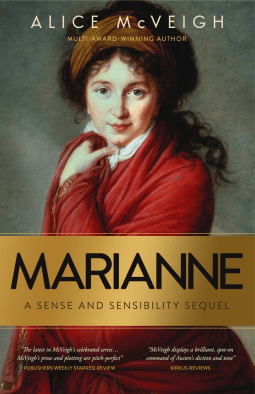
The Equal Pay Day campaign will run for 50 days, until Equal Pay Day on 19th August. 

It’s important to note the ABS figures are base salary and full-time employees only. They do not include bonuses, superannuation or overtime – which men are more likely to earn – or the salaries of Australians working part-time. 

WGEA recommends using your workplace’s average total remuneration gender pay gap in the Equal Pay Day Calculator to calculate individual workplace Equal Pay Days. Your employer total remuneration gender pay gap includes base salary and additional payments, and so is the best way to calculate your workplace’s equal pay day.

WGEA research has identified three main contributors to Australia’s gender pay gap:  gender discrimination; care, family responsibilities and workforce participation; and gender segregation by job type and industry. 

What is your employer doing to address the issues that drive your workplace’s gender pay gap?

Early union activity union activity by Australian Labor Party women: Excerpts from Labor Women: Political Housekeepers or Politicians? Robin Joyce

Leaders’ roles and activities are usually, although not always, easy to follow. Jean Beadle was one woman whose career in the labour movement was well known. However, other women involved in the Western Australian labour movement, comprising the Australian Labor Party and unions, appear only in minutes, newspaper stories, lists of meetings attended and positions held in these organisations…

Women were also active in the trade unions, mostly coming to prominence in the 1920s, with Cecilia Shelley standing out in her capacity as long term secretary and organiser in the Hotel and Restaurant Employees Union. She was also involved with the ALP and Labor Women’s Organisations. However, other women also filled important positions in union executives but have been largely ignored. By 1928 sixty-two trustee positions had been held by women, twenty-one vice-president positions and twelve positions as president or chair. Women had been treasurers twenty-five times. In the 1920s two women were active in the Cleaners, Caretakers and Lift Attendants Union as secretary, one, Sylvia Donaldson later becoming an Inspector of factories in 1923. Ivy Pirani followed her husband as secretary of the Hospital and Asylum Employees union in 1923 and retained the position until the 1930s. May grace and Helen McEntrye were secretary of the Goldfields Hotel and Restaurant Employees Union in the late 1920s. Annie Warren became  secretary of the South West Clothing Trade Union  after a stint as treasurer.

Many other women are likely to have remained invisible but not inactive. There is little reason to suppose that they were of an inferior capacity to those given a voice through Labor Women’s souvenir journals, minutes and their papers submitted to the Battye Library. The main difference between those closely associated with the Labor Women’s Organisations and those who remained linked only to mainstream politics or union activity is that Labor women’s activities exposed them to feminist ideology through contact with interstate and overseas feminists and their publications. Women in the labour movement in the 1900s in Western Australia were indeed political activists in the labour movement, party and unions.   Although some were housekeepers, it is clear that many had no time to bake a scone or lift a teapot.  The myth that so many women did the latter, and none were accepting scones and tea after an arduous day campaigning, needs to be unremittingly challenged. It is a myth that not only deprives those early women of justice, but establishes the idea that the labour movement women activists have no or short term history or one that is peopled by only a small number of individuals. Setting the record straight is hard because of the paucity of material, but not impossible.

Labor Women: Political Housekeepers or Politicians? was originally published in Australian Women and the Political SystemMarian SimmsCheshire Longman, Melbourne, 1984.

Quote from Labor Women: Political Housekeepers or Politicians?

We are enthroned in the hearts of men; that is why men use us and pay us half the wages, but we don’t want to be enthroned in men’s hearts under these conditions.

Jean Beadle, Western Australian Labor activist speaking in 1909.

Kath Mazzella OAM

Gynaecological health awareness champion

Facing a radical gynaecological cancer diagnosis at the age of 39, Kathleen Mazzella was convinced she was alone. In her search to find someone else facing the same experience, Kath placed an ad in Woman’s Day, receiving 38 responses from women all over Australia who felt the same sense of isolation and embarrassment. Determined to connect and empower other women, and to reduce the stigma and squeamishness around women’s health, Kath established the Perth-based Gynaecological Awareness Information Network. Since then, Kath has become a voice for the millions of Australian women managing polycystic ovaries, endometriosis, fibroids, menopause, sexually transmitted infections, hysterectomies and more. At the core of her work is a straight-talking message: embarrassment around gynaecological issues risks lives. Kath breaks down the social stigma by sharing her journey and challenges, and promoting a positive preventative message. Twenty-two years after her initial diagnosis, Kath has not only survived, but thrived and dedicated her life to ensuring no other woman and families suffers in silence through her International Gynaecological Awareness Day campaign. In 2018 she was awarded WA Senior Australian of the Year.

Blossoms and birds – spring in Canberra

Week beginning 27 August 2025

JB Miller, Duch  Riverdale Avenue Books February 2025.

Thank you, NetGalley, for providing me with this uncorrected proof for review.

What fun, I thought, as I saw the premise for this book – Diana is living in Paris, having lost her memory but recognised as Diana by a school friend. But JB Miller has given so much more to attract a much broader audience than those who miss Diana, might like to see the British royal family exposed, or want a partisan view of the William and Kate versus Harry and Meghan stories that clutter the media.

The essential Diana is no longer her appearance, although that remains attractive at times; her fashionable dress, although the white pyjamas she wears have their place on the catwalk under her spell; or her ability to speak and be heard, although that too, is sometimes successful. It is the hugging that she bestows that has a mystical quality. Somewhere Diana’s magic is intact – and possibly in this woman in her sixties who is saved from the Seine, her first words being that she is Diana.

JB Miller has woven an elegant story line with understanding of the hearts of those who miss her, those who feared or resented the public’s fascination with her while she was alive, and those for whom she became an icon after her death. Her followers, her detractors, and the royal family to which she belonged and then left behind, as well as the media, feature. All are treated with humour and sensitivity, as well as being metaphorically prodded with wonderfully sharp observations. See Books: Reviews for the complete review.

See also, below, a new publication about Diana’s and her sons’ roles in her legacy. Duch is yet another interpretation of the way in which Diana has been seen, and both publications could fit together well.

Martina Devlin Charlotte Independent Publishers Group | The Lilliput Press, August 2025.

Thank you, NetGalley, for providing me with this uncorrected proof for review.

The Charlotte Bronte of Martina Devlin’s imagination is no pure rendition of the author of the well-known Jane Eyre, Shirley and Villette and the less famous juvenilia, posthumously published, The Professor and incomplete works. She is a woman who inspires love and affection, is a sexual being, a writer of adoring letters to a married man, a censor of her sisters’ work, and while enthralled in part by her marriage, is prepared to set aside any inclination to obey when it does not suit her plans. Her Irish background is less refined than the world she knows, which is apparent when on her honeymoon she rejects her husband’s demand (based on Patrick Bronte’s wish) that she should ignore her Irish relatives. This Charlotte is seen through the eyes of Mary Bell, who after Charlotte’s death marries her widower, Arthur Bell Nicholls, and lives, not only under the shadow of the first marriage, but the continual presence through that marriage of a woman that she longed to know closely.

See Books: Reviews for the complete review. See also, below, information about Elizabeth Gaskell’s biography of Charlotte Bronte.

The Life of Charlotte Brontë

From Wikipedia, the free encyclopedia

Title page of the first edition, 1857
AuthorElizabeth Gaskell
LanguageEnglish
GenreBiography
PublisherSmith, Elder & Co.
Publication date1857
Publication placeUnited Kingdom

The Life of Charlotte Brontë is the posthumous biography of Charlotte Brontë by English author Elizabeth Gaskell. The first edition was published in 1857 by Smith, Elder & Co. A major source was the hundreds of letters sent by Brontë to her lifelong friend Ellen Nussey.

Gaskell had to deal with rather sensitive issues, toning down some of her material: in the case of her description of the Clergy Daughters’ School, attended by Charlotte and her sisters, this was to avoid legal action from the Rev. William Carus Wilson, the founder of the school. The published text does not go so far as to blame him for the deaths of two Brontë sisters, but even so the Carus Wilson family published a rebuttal with the title “A refutation of the statements in ‘The life of Charlotte Bronte,’ regarding the Casterton Clergy Daughters’ School, when at Cowan Bridge”.

Although quite frank in many places, Gaskell suppressed details of Charlotte’s love for Constantin Héger, a married man, on the grounds that it would be too great an affront to contemporary morals and a possible source of distress to Charlotte’s living friends, father Patrick Brontë and husband.[1] She also suppressed any reference to Charlotte’s romance with George Smith, her publisher, who was also publishing the biography. In 2017, The Guardian named The Life of Charlotte Brontë one of the 100 best nonfiction books of all time.[2]

Notes: Lane 1953, pp. 178–183; McCrum, Robert (17 April 2017). “The 100 best nonfiction books: No 63 – The Life of Charlotte Brontë by Elizabeth Gaskell (1857)”The Guardian. Guardian News and Media Limited. Retrieved 1 January 2018.

Marie Bostwick The Book Club for Troublesome Women HarperCollins Focus | Harper Muse, April 2025.

Thank you, NetGalley, for providing me with this uncorrected proof for review.

Marie Bostwick’s book begins with her revelation about her inspiration for it – a conversation with her ninety-one-year-old mother in which Bostwick learnt that Betty Freidan’s The Feminine Mystique had, in her mother’s words, changed her life. She then describes the research she undertook, often arousing feelings of anger, but also admiration of the women facing egregious discrimination. She recognises what Freidan, and those moved by her, did for women – an excellent start to a work of fiction that introduces courageous characters who respond to the discrimination they faced. The women’s coming together, through a book club based on reading extensively and eventually sisterhood, is an engaging topic and Bostwick’s book is a fine vehicle.

My immediately positive response was to Bostwick’s use of the term ‘troublesome women.’ This is a phrase used by feminist writers, Judith Butler, Naomi Wolf, and Laurel Thatcher Ulrich to describe women who refuse to bow to the traditional concept of behaviour that would designate them ‘good’ women. There is also the phrase, ‘Well behaved women rarely make history’ on my favourite, always worn, bracelet. Clearly, Bostwick was going to write about the sorts of women I wanted to read about!

Margaret, Bitsy, Charlotte, and Viv all live in a middle-class suburb, in houses with British names, these names providing information about the size and grandeur of the house. Margaret organises a book club and is encouraged by Charlotte to introduce it with Betty Freidan’s The Feminine Mystique. Each woman responds differently to the book, or the small sections they manage to read. However, the discussion about their reactions provides the nucleus for further revelations. At the same time as the women look for inspiration to change the lives they have adopted since leaving school or college, they are 1960s women with their attention to dress, the food they will provide at their meetings and suffering with curlers in their hair so as ‘to look their best’. The juxtaposition of women and their concerns who will be so familiar to baby boomers, and their aspirations, is heartwarming.

The women’s lives change. Their developing friendships, dealing with what they more strongly identify as discrimination at work, home and in the neighbourhood, and, in turn, realising that discrimination against women stultifies all human relationships and aspirations make for a story that weaves together a group of women worth knowing, ideas that are worth thinking about, and new pathways that are tempting.

The Book Club for Troublesome Women is an enlightening read at the same time as it is a touching story. There are highs and lows that are realistically portrayed, and the ending is particularly satisfying.

The new battle of brothers: Prince William and Prince Harry and ‘upholding Diana’s true legacy’

Story by Natalie Oliveri

The long-running feud between Prince William and Prince Harry has largely been talked about in terms of their disagreements over Meghan and the fallout from the Sussexes’ royal exit.

Going hand-in-hand with their sibling rivalry growing up (which Harry documented at length in his memoir, Spare) there has been another battle playing out between the two brothers in their adult years: that is, which brother best represents their late mother, Diana.

“It’s like there’s a church schism going on, both of them seem to think that they are upholding Diana’s true legacy,” author Edward White told 9honey from his home in Kent.

The brothers are carefully choosing their royal work to align with things that are “truly important about her”, he said.

“The point of my book is that people – from different communities and backgrounds – are seeing in Diana what they want to see and the same seems to be true even of her children,” White said.

White’s book Dianaworld: An Obsession is not your traditional royal biography, instead exploring the way the royal was viewed by various groups and the mania that was created by her mere existence.

The book is an exploration of the world Diana lived in, looking at her reputation from differing perspectives and the legacy that has been created nearly 30 years on from her death.

In White’s words, the books is “a vehicle for everybody else’s neurosis and obsessions and their own sense of identities”.

“The book isn’t about Diana, it’s just about everybody else. [It’s] a book about her reputation rather than her life.”

Dianaworld: An Obsession is out now.

See the remainder of this article in Further Commentary and Articles arising from Books* and continued longer articles as noted in the blog.

9 Books About Female Friendship in Every Decade of Life

Romance has nothing on the impact of a lifelong best friend
Photo by A. C. via Unsplash+
Aug 12, 2025
Michelle Herman

As a child in Brooklyn, my spirits rose and fell on the tides of a girl named Susan’s moods and disposition. We met in 1958, when both of us were three, our mothers both pregnant with unwanted (by us) younger siblings. We were inseparable—soulmates, I would have said, if I’d known the word—for years. Eight years, to be exact. And then my family moved a half-mile away, into a different school district. 

Susan was only the first of a lifelong parade of best and near-best, second-, third-, and close-but-not-best friends (I often maintained a deep bench). I think about them all, whether we’re still close (Hula) or not (Ronnie). Whether we are still in touch or not—whether they are still alive or not. I think about them all—Maria, Amy, Vicki, Debra, Marly, Kathy, et al.—far more often, and with far more feeling (sadness, gladness, longing, love, regret, nostalgia—and, in one case, hurt and grief) than I think about any of my ex-boyfriends. 

The truth is that even in my youth—my boy-crazy teens, my heat-missile-seeking 20s/early 30s—my friendships have always been more crucial to me than the romances that came and went. These were the relationships I knew I could count on (until, once in a while, I couldn’t—and then it was more shattering, and harder to get over, than a failed romance). It’s no surprise that I have gravitated all my life to good stories that center friendship. Or that I’ve been writing about friendship since before I published my first story in 1979. My latest book, the essay collection If You Say So, is dedicated to the friends who’ve come into my life in the last decade. It is also populated by them—a whole community that I lucked into in my 60s, a time when it’s supposed to be practically impossible to make new friends. The title essay is about one of them. Others sweep (and spin and leap) throughout. (This is not a metaphor. We take dance classes and perform together, and much of the book takes place in the dance studio.) And since stories about women’s and girls’ friendships—unlike those about romantic love—are not a dime a dozen, here’s a list of books in which it’s friendship that matters most, in every decade of a woman’s life. See Further Commentary and Articles arising from Books* and continued longer articles as noted in the blog. for the remainder of this article. It is a terrific read about the way in which women’s friendships have been an important topic in women’s writing. One book, suitable for a particular age group, is chosen for further reflection. Of the books mentioned, I really admired Absolution by Alice McDermott, and reviewed in in my blog of July 5, 2023.

About the Author

Michelle Herman is the author of the novels MissingDogDevotion, and Close-Up and the collection of novellas A New and Glorious Life, as well as four essay collections—The Middle of EverythingStories We Tell OurselvesLike A Song, and If You Say So—and a book for children, A Girl’s Guide to Life. She writes a popular family and relationship advice column for Slate, and for many years she taught creative writing at Ohio State, in the MFA program she was a founder of in the early nineties. More about the author .

American Politics


August 20, 2025

Heather Cox Richardson from Letters from an American <heathercoxrichardson@substack.com> 

President Donald J. Trump created a firestorm yesterday when he said that the Smithsonian Institution, the world’s largest museum, education, and research complex, located mostly in Washington, D.C., focuses too much on “how bad slavery was.” But his objection to recognizing the horrors of human enslavement is not simply white supremacy. It is the logical outcome of the political ideology that created MAGA. It is the same ideology that leads him and his loyalists to try to rig the nation’s voting system to create a one-party state.

That ideology took shape in the years immediately after the Civil War, when Black men and poor white men in the South voted for leaders who promised to rebuild their shattered region, provide schools and hospitals (as well as desperately needed prosthetics for veterans), and develop the economy with railroads to provide an equal opportunity for all men to work hard and rise.

Former Confederates, committed to the idea of both their racial superiority and their right to control the government, loathed the idea of Black men voting. But their opposition to Black voting on racial grounds ran headlong into the Fifteenth Amendment to the Constitution, which, after it was ratified in 1870, gave the U.S. government the power to make sure that no state denied any man the right to vote “on account of race, color, or previous condition of servitude.” When white former Confederates nonetheless tried to force their Black neighbors from the polls, Congress in 1870 created the Department of Justice, which began to prosecute the Ku Klux Klan members who had been terrorizing the South.

With racial discrimination now a federal offense, elite white southerners changed their approach. They insisted that they objected to Black voting not on racial grounds, but because Black men were voting for programs that redistributed wealth from hardworking white people to Black people, since hospitals and roads would cost tax dollars and white people were the only ones with taxable property in the Reconstruction South. Poor Black voters were instituting, one popular magazine wrote, “Socialism in South Carolina.”In contrast to what they insisted was the federal government’s turn toward socialism, former Confederates celebrated the American cowboys who were moving cattle from Texas to railheads first in Missouri and then northward across the plains, mythologizing them as true Americans. Although the American West depended on the federal government more than any other region of the country, southern Democrats claimed the cowboy wanted nothing but for the government to leave him alone so he could earn prosperity through his own hard work with other men in a land where they dominated Indigenous Americans, Mexicans, and women.

That image faded during the Great Depression and World War II as southerners turned with relief to federal aid and investment. Like them, the vast majority of Americans—Democrats, Independents, and Republicans—turned to the federal government to regulate business, provide a basic social safety net, promote infrastructure, and support a rules-based international order. This way of thinking became known as the “liberal consensus.”

But some businessmen, furious at the idea of regulation and taxes, set out to destroy the liberal consensus that they believed stopped them from accumulating as much money as they deserved. They made little headway until the Supreme Court in 1954 unanimously decided that segregation in public schools was unconstitutional. Three years later, Republican president Dwight D. Eisenhower federalized the Arkansas National Guard and mobilized the 101st Airborne Division to protect the Black students at Little Rock Central High School. The use of tax dollars to protect Black rights gave those determined to destroy the liberal consensus an opening to reach back and rally supporters with the racism of Reconstruction.

Federal protection of equal rights was a form of socialism, they insisted, and just as their predecessors had done in the 1870s, they turned to the image of the cowboy as the true American. When Arizona senator Barry Goldwater, who boasted of his western roots and wore a white cowboy hat, won the Republican nomination for president in 1964, convention organizers chose to make sure that it was the delegation from South Carolina—the heart of the Confederacy—that put his candidacy over the top.

The 1965 Voting Rights Act protected Black and Brown voting, giving the political parties the choice of courting either those voters or their reactionary opponents. President Richard Nixon cast the die for the Republicans when he chose to court the same southern white supremacists that backed Goldwater to give him the win in 1968.As his popularity slid because of U.S. involvement in Vietnam and Cambodia and the May 1970 Kent State shooting, Nixon began to demonize “women’s libbers” as well as Black Americans and people of color. With his determination to roll back the New Deal, Ronald Reagan doubled down on the idea that racial minorities and women were turning the U.S. into a socialist country: his “welfare queen” was a Black woman who lived large by scamming government services.After 1980, women and racial minorities voted for Democrats over Republicans, and as they did so, talk radio and, later, personalities on the Fox News Channel hammered on the idea that these voters were ushering socialism into the United States. After the Democrats passed the 1993 National Voter Registration Act, often called the “Motor Voter Act,” to make registering to vote in federal elections easier, Republicans began to insist that Democrats could win elections only through voter fraud.

Increasingly, Republicans treated Democratic victories as illegitimate and worked to prevent them. In 2000, Republican operatives rioted to shut down a recount in Florida that might have given Democrat Al Gore the presidency. Then, when voters elected Democratic president Barack Obama in 2008, Republican operatives launched Operation REDMAP—Republican Redistricting Majority Project—to take control of statehouses before the 2010 census and gerrymander states to keep control of the House of Representatives and prevent the Democrats from passing legislation.

In that same year, the Republican-dominated Supreme Court reversed a century of campaign finance restrictions to permit corporations and other groups from outside the electoral region to spend unlimited money on elections. Three years after the Citizens United decision, the Supreme Court gutted the Voting Rights Act that protected minority voting.

Despite the Republican thumb on the scale of American elections by the time he ran in 2016, Trump made his political career on the idea that Democrats were trying to cheat him of victory. Before the 2016 election, Trump’s associate Roger Stone launched a “Stop the Steal” website asking for donations of $10,000 because, he said, “If this election is close, THEY WILL STEAL IT.” “Donald Trump thinks Hillary Clinton and the Democrats are going to steal the next election,” the website said. A federal judge had to bar Stone and his Stop the Steal colleagues from intimidating voters at the polls in what they claimed was their search for election fraud.

In 2020, of course, Trump turned that rhetoric into a weapon designed to overturn the results of a presidential election. Just today, newly unredacted filings in the lawsuit Smartmatic brought against Fox News included text messages showing that Fox News Channel personalities knew the election wasn’t stolen. But Jesse Watters mused to Greg Gutfield, “Think about how incredible our ratings would be if Fox went ALL in on STOP THE STEAL.” Jeanine Pirro, now the U.S. attorney for the District of Columbia, boasted of how hard she was working for Trump and the Republicans.

In forty years, Republicans went from opposing Democrats’ policies, to insisting that Democrats were socialists who had no right to govern, to the idea that Republicans have a right to rig the system to keep voters from being able to elect Democrats to office. Now they appear to have gone to the next logical step: that democracy itself must be destroyed to create permanent Republican rule in order to make sure the government cannot be used for the government programs Americans want.

Trump is working to erase women and minorities from the public sphere while openly calling for a system that makes it impossible for voters to elect his opponents. The new Texas maps show how these two plans work together: people of color make up 60% of the population of Texas, but the new maps would put white voters in charge of at least 26 of the state’s 38 districts. According to Texas state representative Vince Perez, it will take about 445,000 white residents to secure a member of Congress, but about 1.4 million Latino residents or 2 million Black residents to elect one.In order to put those maps in place, the Republican Texas House speaker has assigned state troopers to police the Democratic members to make sure they show up and give the Republicans enough lawmakers present to conduct business. Today that police custody translated to Texas representative Nicole Collier being threatened with felony charges for talking on the phone, from a bathroom, to Democratic National Committee chair Ken Martin, Senator Cory Booker (D-NJ), and Democratic California governor Gavin Newsom.

Republicans have taken away the liberty, and now the voice, of a Black woman elected by voters to represent them in the government. This is a crisis far bigger than Texas.

When Trump says that our history focuses too much on how bad slavery was, he is not simply downplaying the realities of human enslavement: he is advocating a world in which Black people, people of color, poor people, and women should let elite white men lead, and be grateful for that paternalism. It is the same argument elite enslavers made before the Civil War to defend their destruction of the idea of democracy to create an oligarchy. When Trump urges Republicans to slash voting rights to stop socialism and keep him in power, he makes the same argument former Confederates made after the war to keep those who would use the government for the public good from voting.Led by Donald Trump, MAGA Republicans are trying to take the country back to the past, rewriting history by imposing the ideology of the Confederacy on the United States of America.

But that effort depends on Republicans buying into the idea that only women and minorities want government programs. That narrative is falling apart as cuts to the government slash programs on which all Americans depend and older white Americans take to the streets. Today, with the chants of those protesting Trump’s takeover of Washington, D.C., echoing in the background, White House deputy chief of staff Stephen Miller told reporters: “We’re not going to let the communists destroy a great American city…. [T]hese stupid white hippies…all need to go home and take a nap because they’re all over 90 years old, and we’re gonna get back to the business of protecting the American people and the citizens of Washington, D.C.”—

Notes:https://www.nytimes.com/2025/08/19/us/politics/trump-smithsonian-slavery.htmlhttps://www.brennancenter.org/our-work/research-reports/citizens-united-explainedhttps://www.cnn.com/2020/11/13/business/stop-the-steal-disinformation-campaign-invs“Socialism in South Carolina,” The Nation, April 16, 1874, pp. 247–248.https://www.newsweek.com/fox-news-hosts-private-texts-revealed-lawsuit-bombshells-2116299https://time.com/7310875/texass-map-racial-division/https://www.politico.com/story/2016/11/ohio-injunction-trump-roger-stone-polls-230754Bluesky:thejenniwren.teamlh.social/post/3lwuaavezhc2uatrupar.com/post/3lwtvjaw3vq2a

Alternet *

*This site is a source of optimistic insight into the Democratic Party’s responses to President Trump, so much so, that I usually do not use it here – just enjoy the maybe misplaced optimism. However, there is some valuable material for reflection in this article.

MAGA is panicking as Trump finally meets his match | Opinion

Opinion by Thom Hartmann

The effect is unmistakable: the California governor is shifting the cultural battlefield, showing that Democrats can seize the same terrain of humor and symbolism Republicans have dominated since Richard Nixon’s “law and order” days. Newsom has left conservative pundits — particularly on Fox “News” — sputtering.

It’s the kind of cultural jujitsu that Antonio Gramsci imagined — flipping power by seizing the symbols and frames of your opponent — and it’s the kind of thing Democrats have needed to do for years but haven’t successfully pulled off since the days of FDR’s New Deal and LBJ’s Great Society.

To truly rule with the broad consent of a nation’s citizens, he realized, you have to shape the culture. You have to convince people that your worldview is “common sense,” that your version of reality is the only normal, natural way to see the world.

He called this “cultural hegemony.” The churches, the schools, the newspapers, the songs people sang, the plays they watched and the stories they told all carried values. And those values shaped politics far more than any speech in parliament.

If you win the cultural battle, he argued, you will inevitably win the political one.

Their solution was simple: steal Gramsci’s insight and use it to push back. Andrew Breitbart put the slogan on bumper stickers: “Politics is downstream from culture.” Steve Bannon made it into a strategy for the Trump White House.

Change the story the nation tells itself, control the cultural conversation, and politics will follow.

Republicans have taken that playbook and used it ruthlessly. Following Frank Luntz and other experts’ advice, they reduce every issue to a frame that touches the gut, not the head, and then repeat it until it becomes the background noise of American life.

Nixon gave us one of the earliest, ugliest examples. His “law and order” campaign wasn’t about crime in general; it was code for crushing the civil rights movement and suppressing Black political power.

His “war on drugs” wasn’t a moral crusade against addiction; as his aide John Ehrlichman later admitted, it was a way to criminalize Black people and anti-war activists. They couldn’t outlaw being Black or protesting the Vietnam War, but they could associate both with drugs and then use police and prisons to break movements and communities.

That was cultural framing at its most cynical and vicious. Nixon didn’t have to talk about race. He just had to say “law and order” and “drugs,” and racist white voters understood the code.

The pattern has repeated itself ever since.

When Republicans attack reproductive rights, they don’t say they want to outlaw abortion or strip women of autonomy; they say they’re defending “life.” That single word is a cultural sledgehammer. Democrats, for years, answered with “choice,” which at least carried some emotional punch, but over time they got pulled into defending Planned Parenthood against smears and explaining the economic dimensions of reproductive healthcare as a women’s “economic issue.” Important arguments, yes, but they don’t resonate at the same visceral level as “life.”

On healthcare, Republicans took the word “choice” and made it their own. “Choose your own doctor” became the mantra of those defending corporate-controlled healthcare and insurance. Democrats talked about “single payer” or “public options,” language that could have come out of an actuary’s report. “Choice” sounds American, even when it means choosing between bad insurance plans or facing bankruptcy.

When Republicans use Reagan’s favorite phrase “small government,” people picture a plucky individual freed from bureaucrats and taxes, a man out west on horseback making a life for himself and his family out of the wilderness. What they mean, though, is making government too weak to tax billionaires, regulate corporate pollution, or protect people from discrimination.

But Democrats never met this frame with one of their own. Instead of talking about “government that works for all,” as FDR and LBJ once did, Democrats let the conversation drift into debates over the Affordable Care Act’s exchanges or the technical structure of regulatory agencies.

FDR understood that people don’t want less government or more government; they want a government that works for them. That is a cultural message, not a policy paper, and Democrats have abandoned it ever since Jimmy Carter’s well-intentioned but wonk-driven presidency.

Republicans say “tax relief,” and suddenly taxes are a disease from which you need to be liberated. Democrats counter with discussions about marginal rates and progressive brackets instead of using FDR’s old line that, “Taxes are what we pay for civilized society. Too many individuals, however, want civilization at a discount.”

Republicans say “red tape,” and instantly every rule protecting you from being poisoned, cheated, or injured is recast as a useless nuisance. Democrats instead talk about the importance of “regulation,” something all of us would like less of in our lives.

Republicans say “freedom,” and people see flags and hear the national anthem. Instead Democrats, too often, talk about “programs” or “safety nets.”

The same dynamic plays out on guns. Republicans wrap the issue in the word “freedom” and the power to “fight tyranny.” Democrats come back with talk about universal background checks and assault weapons bans. Important, necessary measures, but they don’t touch the same cultural nerve.

Democrats could have framed gun control differently: freedom from being shot at school, freedom from being afraid in a grocery store, freedom from the constant terror that your child might not come home. That’s freedom that resonates with ordinary people. But by ceding the cultural word “freedom” to the GOP, Democrats let Republicans define what freedom means in America.

On immigration, Republicans talk about “secure borders” and “sovereignty.” Democrats talk about “pathways to citizenship.” Republicans make it about the survival of the nation, Democrats make it about paperwork. The Democratic Party is the party of the Statue of Liberty (that was installed during Democrat Grover Cleveland’s presidency), yet Republicans have stolen the cultural image of America and turned it into one of a fortress under siege.

Education has become another cultural battlefield. Republicans push “parents’ rights” and book bans “to protect our children.” Democrats respond with statistics about test scores and defenses of teachers’ unions. But the cultural high ground belongs to the idea that every child has the right to learn the truth, and every parent has the right to send their kid to school without censorship or fear. Republicans frame themselves as liberators of children, even as they chain them to ignorance. Democrats need to call that out for what it is, in cultural terms that are impossible to ignore.

The lesson is the same in every case. Republicans don’t win by having better policies: their policies are almost uniformly cruel, corrupt, and designed to serve the morbidly rich at the expense of everyone else. They win because they fight at the cultural level. They win because they tell a story, over and over, that makes people feel. Democrats, for decades, have responded with charts that only tickle the intellect.

It wasn’t always this way. During the New Deal and the Great Society, Democrats owned the culture wars. FDR didn’t talk about the Securities and Exchange Commission; he talked about “saving capitalism from itself,” about “restoring faith in America,” about “freedom from want and fear.”

Lyndon Johnson didn’t just present Medicare as a program; he said it was part of building a Great Society where people could live with dignity. He sold the Civil Rights and Voting Rights Acts with similar rhetoric. Those were cultural narratives, not policy briefs. They tied the Democratic party to the most powerful emotions and aspirations of the American people.

If Democrats want to win again, they have to stop ceding the cultural battlefield. Instead, they need to seize today’s opportunities to fully engage in the culture wars, from policy prescriptions to Gavin Newsom ridiculing Trump to JB Pritzker calling out the GOP’s embrace of fascism.

That means reframing every major issue not just in terms of policy mechanics, but in terms of the classic and compelling American values of freedom, fairness, safety, dignity, and opportunity.

Taxes aren’t a burden; they are the way we all pay for the freedom and opportunity America makes possible.

Regulations aren’t red tape; they are the rules that keep the game fair.

Healthcare isn’t about exchanges; it’s about whether you have the right to live without fear of medical bankruptcy.

Guns aren’t about background checks; they’re about whether your child comes home from school alive.

Immigration isn’t about paperwork; it’s about whether America still stands for the promise on the Statue of Liberty.

Republicans learned from Gramsci and weaponized culture. They turned it into dog whistles, slogans, and memes that bypass reason and lodge themselves in the national gut. Democrats can learn from the same source without resorting to the GOP’s lying, cruelty, and thinly coded racism.

The closest Democrats have come in recent years was Barack Obama’s “Hope and Change” campaign in 2008, revisited in 2012. But those terms, while culturally potent, lost their impact as the Democratic Party continued to bow to the demands of the banks (not a single bankster went to prison for the 2008 crash they caused) and health insurance (Obamacare was written by the Heritage Foundation and gifted the industry with trillions after Obama dropped the public option) industries.

We can tell the story of freedom that is big enough to include everyone. We can tell the story of America not as a fortress for billionaires but as a community where everyone has a fair shot and nobody is left behind.

Like FDR and LBJ, Democrats can again talk about America realizing its potential as a “we society” instead of the selfish Ayn Rand “me society” that Republicans idolize with their “I got mine, screw the middle class” policies and memes.

The alternative is to keep losing ground to a Republican Party that has mastered the art of cultural hegemony in the worst sense of the term. Nixon showed how destructive that could be with his law and order rhetoric. Reagan perfected it with his “welfare queen” lies. Trump and Bannon have pushed it into the realm of authoritarian spectacle, where politics becomes theater and culture becomes a weapon to bludgeon democracy itself.

It doesn’t have to be this way.

The Democrats of the New Deal and Great Society eras knew how to speak to the heart as well as the head. They knew that politics is not just about what laws are passed but about what stories a nation tells itself about who it is. They knew that culture is not an afterthought; it is the riverbed through which politics flows.

Republicans now know it too, and they’ve been poisoning that river for half a century. If Democrats want to save democracy, they must reclaim the story of America, the cultural high ground, and the word freedom itself.


The joy of the quiet time of year 🌳

Dervla McTiernan

View this email in your browser  👉 Was this email forwarded to you? Am I in your inbox for the first time? I’d love it if you sign up to my newsletter here. Friday, 22 August 2025 [slightly edited].


Hello Robin,
I’m happy to tell you that I’m in that quiet period of the year. The thing about traditional publishing is that it works on a cycle. For the two months before and the two months after your book comes out you are generally caught up in the whirl of promotional work. There are writers, I think, who do less promotion, and certainly there are many writers who do more, but these days it would be difficult to find a writer who doesn’t do any. 

The reality is that we live in a very noisy, busy world, and it’s so easy for a book even by your favourite writer to pass you by (case in point — I completely missed the existence of a Sophie Hannah book that I just came across on Audible and I LOVE her work!).

So promotion is now very much part of my life, and I like it, really. It’s fun to do something so completely different, and a joy to go out on the road and to meet so many people and talk books. Also … sometimes it is all so totally worth it. I was in Dymocks the other day and spotted The Unquiet Grave still in the top ten, and it’s been out for months and months! So thank you to everyone who is reading. I’m eternally grateful. 

After the main hubbub of launch is over, writers go into the quiet time of year. This year, I focused first on getting my structural edit done, and as that’s now off my desk I’m mainly spending my time on family bits and pieces, and working my way slowly through the list of jobs I put off during busier times. One particular job is turning out to be something exciting. I’m having my website redesigned and it’s one of those rare situations where you ask someone to do something and you have very high hopes and then they just deliver and deliver and deliver! The whole design is so rich and gorgeous and it feels like being on the website is like being in the world of the books. (

QUESTION??A question for you! I’m putting lots of new material on the website. In terms of downloadable content, is there anything in particular you’d like to have? The only thing I can really think of that you might like to have off the website is questions and notes for book clubs. If anything else occurs to me, please do email me and let me know. 
I sent my new book off to my editors a few weeks ago so it is very close to being finished now. I’ll get notes back from my editors at the end of the month, and then I’ll have just over three weeks to turn it around and get it back to them. And you know what? At that stage I’ll already have had a planning meeting with my publisher for the launch of that book next year! I’m not sure I’m ready for that … 

The main project I’m working on right now is my new new book (not the one that will be out next year, but the one after that). I’m starting a new series (don’t tell anyone, that’s a secret). I’ve been planning this for ages, which is such a good thing, because before I’ve even gotten into the writing of it, the world has become so rich and exciting to me. The story and the characters already feel real, and the longer I’ve been held back from writing it by other projects, the more I want to write it, which is such a good sign. 

By the time I email you next I should have almost finished my copy edit and I’ll be well into the new book. Wish me luck!

I went to Byron Writers Festival this month and had a grand old time, which I feel pretty guilty about, because most of the festival had to be cancelled because the rain was so intense. I was just lucky that my workshop and panel event were right at the beginning, because by the time I was leaving on Friday we were well and truly flooded, and more rain was on the way.

My panel event was with Michael Robotham and Chris Hammer and our moderator was Marele Day. We had such a lovely warm welcoming audience, and Michael and Chris were both hilarious, which made for a memorable event! (iykyk!)

I also taught a workshop on writing, which is something I do very rarely, and I’m not sure I’m in a rush to do again. It was a very fun morning, and a privilege to meet the lovely writers who attended, and I really do love talking all things writing, but with time so tight these days, I want to give all the time I have to writing, as opposed to preparing for or attending events and workshops. The thing about being a writer is that there’s always another distraction waiting around the corner and you can always convince yourself that it’s work but at the end of the day it all draws you away from the real thing!

Thanks so much to everyone who emailed me about The Correspondent. A lot of people seem to have read it and all of the comments were very positive. I thoroughly enjoyed it. It was a very compelling story, and it was so rewarding to spend time with a writer who so deeply understands the topic they’re writing about, who can give real information and nuanced point of view about something so complex. Another reminder of the joy of books and a relief to get away from the constant outrage bait and hot takes on social media!

For this month, I’m going to read one of my favourite writers. If you’ve ever attended one of my events, you’ll have heard me talk about Tana French. She’s an Irish writer and her books are generally described as literary crime. I want to go right back to her debut novel, In The Woods, to see if it has the same effect on me today that it did when it came out. I remember it being completely compelling, that I just had to turn the pages. I remember the shock of the twist, and how real the characters felt to me. So! If you’d like to join me, you can order the book online or from all good bookshops. If you do read it, please do let me know what you think!
All my best,
 
Dervla.
Copyright © 2025 Dervla McTiernan, All rights reserved.
You are receiving this email because you opted in via dervlamctiernan.com

Our mailing address is:
Dervla McTiernanC/o- Jin & Co. 1/506 Neerim

Women and Literature

Barbara Pym, The Sweet Dove Died

Barbara Pym’s social comedies are pure post-war delights. The English writer close read middle-class village life in her tightly constructed novels of manners, and reclaimed “spinsterhood” for glorious loners everywhere.

Her arguable masterpiece follows the vain Leonora Eyre over and around a fraught love quadrangle with a widowed antiques dealer, his nephew, and some other motley souls. The NYRB Classics crew has selected this book for its October club on the strength of what The Guardian once called “faultless” prose.

The Reality behind Barbara Pym’s Excellent Women: The Troublesome Woman Revealed (excerpt)

Spinsterhood is an important theme in Barbara Pym novels and short stories, one that I was keen to develop in my book.:

The surfeit of unmarried women who people Pym’s fiction provides a wealth of variety in what a spinster might be, or how she might act. Many are given central roles in Pym’s novels. Their depiction, as described throughout the texts, is dealt with in detail in Chapter 2. They highlight qualities that undermine, rather than reinforce, the traditional, non-feminist view of a spinster. Under Pym’s guidance, the term spinster becomes the personification of a strong, individualistic woman, a feminist interpretation of what a spinster can be, when given a central role. However, Pym also gives spinsters secondary, or fleeting roles, in her fiction. However fleeting or modest the role, the stereotype is usually toppled, or if portrayed as what has been designated a typical spinster, is developed with accoutrements, jarring qualities that enforce a reassessment of how a spinster should behave. Pym develops these inconsistencies with a sharpness that shows her enthusiasm for undermining the spinster stereotype.

Central spinsters are Jessie Morrow who, amongst her several appearances, features with Miss Doggett and Barbara Bird in Crampton Hodnet, Catherine Oliphant, Esther Clovis and Deidre Swan in Less Than Angels, Mary Beamish in A Glass of Blessings, Dulcie Mainwaring and Viola Dace in No Fond Return of Love, Ianthe Broome in An Unsuitable Attachment, Leonora Eyre in The Sweet Dove Died, Marcia Ivory and Letty Crowe in Quartet in Autumn and Emma Howick in A Few Green Leaves. They are a vital part of the community in these works and are represented in a variety of relationships and with a range of behaviours and lifestyles.

Where depictions of spinsters are brief, they nonetheless demonstrate Pym’s continuing and sustained interest in portraying single women as individuals rather than members of a stereotypical group. Spinsters appear briefly in Crampton Hodnet, Less Than Angels, A Glass of Blessings, No Fond Return of Love and The Sweet Dove Died, and in greater depth in A Few Green Leaves. Crampton Hodnet includes young spinsters, one about to go to Oxford, and involved in flirtations which are momentarily disappointing; a young woman who contributes to that disappointment; a potential first-class honours student about to embark on an affair with her tutor, and her university friends; a young woman who ‘had an unpleasant experience in Paris’ (CH, 151) and a potential fiancé. Another companion is mentioned and there are additional single working women, such as maids, a nun, three Oxford college tutors and a college Principal. There are two ‘dim North Oxford spinsters’ (CH, 29) in new hats, one of whom elicits possible censure with her newly waved hair; ‘groups of North Oxford spinsters at tea after shopping’ (CH, 52) and spinsters amongst a church congregation.

Spinsters who feature in Jane and Prudence continue Pym’s pattern of providing single women with a variety of characteristics and lifestyles. Flora, Jane’s daughter will be studying at Oxford, but in the meantime displays the domesticity that her mother spurns, yearns after various men briefly and is practical in the face of her mother’s fanciful imaginings and behaviour. Miss Jellink, the Principal and Miss Birkenshaw, head of English at Oxford, are unmarried professionals. Miss Clothier and Miss Trapnell are office workers of indeterminate age and occupation. Their concern about working only the requisite hours is contrasted with the young typists who display no interest in time keeping and talk casually of their elders (JP, 109-110). Miss Bird, a friend of Jane Cleveland’s, makes a brief appearance as a writer who seizes a plate of sandwiches to eat by herself at a literary function (JP, 131-132).

Less Than Angels includes spinster anthropologists, one of Bolshevist views and the other a flirt, who compete for funding to go into the field; ‘an expert in African languages’ (LTA, 8-9); an aunt who combines a vivid imagination, observance of ritual and resentment against a clergyman; a spinster aunt deemed, by her unmarried state, inferior to her married sister (LTA, 29); two fiancés and a rejected lover who is also a breeder of golden retrievers; ‘a tweedy little woman of a mild, almost downtrodden aspect’ (LTA, 153) is Miss Jessop, who also features in Excellent Women; a tall debutante with a desperate mother; a mistaken identity which links stereotypical understandings about spinsters with one who is not a stereotype; and mention of young women who ‘Either said nothing “submitted to his embraces” […] or pushed him away indignantly’ (LTA, 26) or as members of the local club ‘might also be considered amongst its amenities […but] often led [men] captive in marriage’ (LTA, 37).

A Glass of Blessings includes typists and a young woman who works in a coffee shop. The warden of the Settlement is a spinster; other spinsters are a former governess on familiar terms with people of a higher status after her retirement; nuns; ‘two elderly spinsters [learning Portuguese] who plan to hitchhike around Portugal and write a book about it’(AGB, 64); two young attractive spinsters who are learning Portuguese for ‘personal and romantic reasons’ (AGB); and another whose reason for learning Portuguese is unclear; a spinster with a unique blood type who demands special treatment at the blood donor clinic; women in the civil service including one in a principal role in the ministry; ‘splendid Miss Hitchens’ (AGB, 132) and her friend Prudence Bates, a central character in Jane and Prudence; spinsters who are the source of conversation with feminist overtones (AGB); a worker with galley proofs; and unmarried mothers.

The third spinster who appears in No Fond Return of Love is ‘a fellow lecturer’ (NFRL, 9) to the key male character in the novel and the next is the ‘librarian of quite a well-known learned institution’ (NFRL, 13). Variety and commentary on women’s work are added by the introduction of a spinster who prefers housework ‘which nowadays did not seem to be regarded as in any way degrading’ (NFRL, 29); another working in a haberdashery department; the main character’s niece who arrives to work in London after leaving school; a science lecturer at London University; a helpful woman, Rhoda Wellcome, from Less Than Angels, at a jumble sale; an elderly aunt whose previous work in censorship is followed by parish and committee work, and at the end of the novel is said to be marrying a vicar; another woman about to marry, but who has been a headmistress; a young woman who expects that women will be in the workforce; and, more typically, a spinster who minds her elderly mother and is distressed about a handsome clergyman.

The Sweet Dove Died focuses on Leonora, a spinster in her fifties, and introduces few characters who do not belong explicitly to her world. Even in this limited sphere there are spinsters of varying personalities and occupations. Leonora’s spinster friend from their working days is infatuated with a young gay man; and her tenant is an elderly spinster. On the periphery of her life, but a threat to her friendship with a young man, is a spinster who is a sexually free writer; an uncompetitive, admiring middle-aged spinster who works with the young man at the antique shop; and the spinster, so recognised because her basket holds a dinner for one, for whom Pym provides alternative views of spinsterhood: a woman alone and pitiful, or a woman ‘going home to cosy solitude’ (TSDD,140-141).

In An Unsuitable Attachment, the additional spinsters featured are the vicar’s wife’s sister, a secretary to a London publisher; a retired hospital nurse; the vet’s sister who assists him in the surgery; a retiring library assistant; a dressmaker; nuns; and two seventy-year-old English spinsters holidaying in Rome, the Misses Bede from Some Tame Gazelle. The spinsters in An Academic Question are a Swedish au pair; a young lecturer who would prefer to eat than talk to her male companion; the owner of a second hand bookshop with ‘a preoccupation with animals and interest in the problems of loneliness, […and a] sardonic attitude towards academics’ (AAQ, 15); a university student; a nursing home matron; the unmarried sister of the central character; a former principal of a teachers’ college; an assistant editor on a sociology journal; and a lover of medical romances. The novel includes a reference to the well-known Pym spinster character from Less Than Angels, Miss Clovis, whose funeral is attended by the main character.

Quartet in Autumn, which gives two markedly different spinsters central roles, also features ‘a young black girl, provocative, cheeky and bursting with health,’ (QA, 8) who works in the same office as the main characters; a single landlady and two spinster tenants; and a retirement home resident warden.

As Pym moved into her new phase of writing, the number of spinsters peripheral to the main theme diminished. The work from the 1960s, with its stronger undertones and eventually openly feminist ideas needs fewer outwardly comforting characters. Although they are troublesome women and carried Pym’s feminist narrative, spinsters also provided an aspect of her village cover. As previously noted, in the later novels, that function was no longer necessary.

However, with her novel that sets aside the village image, almost going for the jugular of village cosiness, A Few Green Leaves, Pym returns to her practice of including multiple characters who feature more than fleetingly, while not necessarily being central. They include a range of spinsters. Some spinsters who appear briefly in A Few Green Leaves are ageing and might be expected to fall easily into stereotypical positions. The novel gives troublesome roles to the rector’s sister in her fifties and in love with Greece; ‘a long-established village resident’ (AFGL, 8); a spinster ‘of uncertain age’ (AFGL, 11) who has written a romantic historical novel; ‘a small, bent woman in an ancient smelly coat’ (AFGL, 18) who encourages hedgehogs into her house; a former governess; a librarian; young women in church or the local pub; a former headmistress; ‘Tom’s history ladies’ (AFGL, 100), a group that is likely to include spinsters; a worker in a museum; a student ‘recovering from an unsatisfactory love affair and writing a novel’ (AFGL, 210) and reference to Miss Clovis’ death as ‘the passing of a formidable female power in the anthropological world’ (AFGL, 133).

Secret London

This Tiny London Street Is Known As ‘Little Paris’ Filled With French Bakeries, Old Bookshops And Even A Vintage Cinema – And You Probably Don’t Know It

 Vaishnavi Pandey – Staff Writer • 16 August, 2025

Everything about this corner feels less like London and more like the 5th arrondissement: independent bakeries with baguettes stacked behind the glass.

London is full of secrets – hidden mews, tucked-away gardens, and short streets that feel like stepping through a doorway into another city. Yet, just a few minutes from South Kensington’s high street, there is a quiet lane where the air smells of fresh croissants, where conversations often switch effortlessly into French, and where old volumes of Camus, Balzac, and Colette spill from bookshop shelves.

Everything about this corner feels less like London and more like the 5th arrondissement: independent bakeries with baguettes stacked behind the glass, cafés where regulars greet each other with a warm bonjour, and cultural sanctuaries devoted to French literature and film.

Week beginning 20 August 2025

Aaron Poochigian Four Walks in Central Park A Poetic Guide to the Park Familius, September 2025.

Thank you, NetGalley, for providing me with this uncorrected proof for review.

I had mixed feelings about the writing style when I began reading Four Walks in Central Park. However, I became captivated by the way in which Aaron Poochigian brings Central Park to life, although I found his style idiosyncratic. Both the writing, and the material is distinctive, making this book more than a wander through the Park with attention to the familiar. Under Poochigian’s hand memorials, vegetation, sites, and cafes become interesting places to visit as well as a memorial to the Park’s architect, Frederick Olmsted. There are digressions into political and social commentary, and memorable observations about literary and other figures. The four walks include well known sites, and many (at least to me, unknown locations).

Each of the four walks is covered in one chapter, and the sites to visit are listed in the table of contents. The narratives woven around the sites can be read to enhance the walks – or, ignored if what you want is a photo opportunity or to enjoy the plant and animal life. However, I wish that this book had been available on the occasions on which I walked in Central Park. And to return to the animal life, look for the black swans with which any Australian is familiar. Although they become part of the poetry and visual effects in the Park, they are not native to America and their capture in the 1800s could have joined some of the other poignant stories with which the four walks abound. See Books: Reviews for the complete review.

The Shakespeare Garden’s Hidden Bench©Image Credit: Deposit Photos

Behind the well-known garden lies a secluded bench inscribed with lines from ‘A Midsummer Night’s Dream.’ Local writers often claim this spot for peaceful afternoon work sessions. The bench faces west, offering perfect sunset views through the garden’s archway. Medieval herbs mentioned in Shakespeare’s plays grow nearby.

The Pool’s Hidden Grotto©Image Credit: DepositPhotos

A concealed path leads to this natural rock formation overlooking quiet water. Local photographers capture stunning morning mist rising from the pool. Winter reveals ice formations rarely seen elsewhere in the park.


Dr Janet Smith Helen Taylor and Her Fight for the People Education Reformer, Feminist and Pioneer of the Labour Movement Pen & Sword | Pen and Sword History, June 2025.

Thank you, NetGalley and Pen and Sword, for providing me with this uncorrected proof for review.

Janet Smith has amassed a spectacular amount of information. Not only does Helen Taylor, largely unknown, come to life but so much more is gleaned about her mother, Harriet Taylor (later, Stuart Mill) and her stepfather, John Stuart Mill. This is an immensely engaging book. The content is inspiring, in its volume, the range of topics and the enthusiasm with which Smith investigates long held beliefs about Helen Taylor, to show another side to this formidable and remarkable woman. Although the writing is less dynamic than my experience with Pen and Sword publications, its accessibility is intact – the content is such a driving force that this non-fiction book could be classed a ‘page turner.’

There are three parts, covering Helen Taylor’s early years as the daughter of Harriet Taylor, separated from her husband, and close friend of John Stuart Mill; her public life after the death of her mother, John Stuart Mill, and her good friend, Kate Amberly; and the years between 1886 and her death in 1907. See Books: Reviews for the complete review.

Stephanie Kline Raising the Tudors Motherhood in Sixteenth-Century England Pen & Sword | Pen & Sword History, June 2025.

Thank you, NetGalley and Pen & Sword, for providing me with this uncorrected proof for review.

Although there are detailed sightings as well as glimpses of the Tudors with whom we have become familiar, this book is about the many other mothers of varying ranks, wealth, and contributors to the economy and social structure in the Tudor period. Stephanie Kline provides an insightful narrative about these women; their male counterparts; and the medical system, its philosophies and implementation in a patriarchal world. Her acknowledgement, early in the book, of the material she has used is a bonus – no searching to find out if the information that vies with ‘common knowledge’ can be verified. We know that she has used primary sources. As we read, we can also see how she has used them to valuable effect. This is an instructive, engaging, and valuable read, providing information about the period Kline covers and importantly, raising questions and responses about mothering that extend beyond the Tudor world.

The first part of the book is a mine of information about the medical ideas and practices that informed doctors and midwives and their patients in the Tudor period. It is not particularly unusual to find that women were seen as secondary to men but is fascinating to learn about the detail. It is unusual to be told that in this period, pregnant women’s husbands were advised by the medical profession to be dutiful. An example of a husband not fulfilling his role in preparation for the birth is in a letter from the wife to her husband’s mother expressing concern. A later example shows a father conveying his distress that his daughter is not being adequately cared for. It is also remarkable to be shown that the numbers of women dying in childbirth was not the picture we have been led to believe (although the increase after the introduction of male physicians to replace midwives makes familiar reading). Kline has the research to challenge understood ideas about motherhood and medicine. At the same time, her work supports much of what has been understood of the period and the treatment of women. An important outcome of reading these chapters is recognising that significant opportunities for further understandings of the past exist, Kline’s research serving a doubly valuable purpose. See Books: Reviews for the complete review.

Canberra Writers Festival 

Global Stars at 2025 Canberra Writers Festival

We’re getting closer to releasing the full 2025 festival lineup, but for now, here is a sneak peak at international writers appearing at CWF2025!

Dream State: In Conversation with Eric Puchner
Tuesday 7 October | 6pm National Library of Australia

Join internationally acclaimed American novelist Eric Puchner as he visits Canberra for a special event centred around his latest novel, Dream State – an instant New York Times Bestseller and Oprah Book Club Pick!

In Dream State, Puchner has delivered a compelling love triangle set against the panoramic Montana skyline.  Written with tart humour and heart, this book follows friendship, marriage, and and the march of climate change, as events of an impulsive summer reverberate across fifty years and span generations. 

Puchner’s book launched earlier this year to much acclaim:
 “A gorgeous, gripping epic…being hailed by some as the next great American novel.” – BBC (“40 of The Most Exciting Books to Read in 2025”)

‘The kind of book you don’t want to put down’ Oprah Winfrey

‘Puchner’s writing is almost flawless… moving, funny and utterly engrossing’ The Times

Renowned for the sheer beauty of his sentences and immersive storytelling, Puchner has earned numerous prestigious accolades, including as a winner of a California Book Award, Award in Literature from the American Academy of Arts and Letters and as a finalist for the PEN/Faulkner Award.

Don’t miss this unique opportunity to hear Eric Puchner in conversation with Artistic Director of the Canberra Writers Festival, Andra Putnis.  

Girl on Girl: Modern Misogyny Gone Global

Fri 17 Oct 6:00 PM Louie | Verity Lane Markets General Admission 60 Mins

What have decades of reality TV, social media, porn and the beauty industry done to women and feminism around the world? Here from the UK, Pulitzer-nominated journalist and author Sophie Gilbert delves into the complex landscape of modern misogyny in her latest book Girl on Girl: How Pop Culture Turned a Generation of Women Against Themselves.   

Women are saturated in a beauty culture based on male desire and all-pervasive pornography. Through media and advertising, they’re warned not to be too edgy, too assertive, or too angry. Women are being pitted against themselves and each other in service of the male gaze. 
  
Sophie will be in conversation with much-loved Canberra journalist and author, Virginia Haussegger, who has just emerged from an extensive period of research with her explosive work Unfinished Revolution: The Feminist Fightback. Together they will take a birds-eye view of where women find themselves. 

Sophie Gilbert is a staff writer at the Atlantic, where she writes about television, books, and popular culture. She was a finalist for the 2022 Pulitzer Prize in Criticism and has previously written for the New York TimesWashington Post, the New Republic, and the Brooklyn Rail. She lives in London.

Grief and Glamour in Hollywood: In Conversation with Griffin Dunne
Saturday 25 October | 1.30pm Verity Lane Markets

Griffin Dunne grew up in the glamorous, fantastical world of 1980s Hollywood, surrounded by celebrities – with Joan Didion an aunt and Carrie Fisher as his best friend. He was once even saved from drowning by Sean Connery. He went on to build his own exciting career as a Hollywood actor, director and producer. 

But amongst the drugs, debauchery, and hilariously bad film business decisions, Griffin and his family experience horrific loss: his twenty-two-year-old sister, Dominique, a rising star, brutally strangled by her ex-boyfriend. This event led to one of the most infamous public trials of the decade. 

The Friday Afternoon Club is no mere celebrity memoir. It is a family story and searing portrait of life and loss in the made-up, but all-too-real world of Hollywood. Over from the U.S., Griffin’s conversation with Australia’s master of the stage and author of The Empress Murders, Toby Schmitz, will be jaw-dropping. 

GINSIGHTS: Kelly Rimmer Thursday 21 August | 6pm Big River, 1 Dairy Road Fyshwick

CWF Partners Big River Distilling Co, Paperchain Bookstore and MARION welcome guest author Kelly Rimmer.    ​

Kelly writes historical and contemporary fiction, including The Warsaw OrphanThe Things We Cannot SayThe Secret Daughter, and The Paris Agent and has sold more than 2 million books. Her books have been translated into dozens of languages and have appeared on bestseller lists around the world, including the New York TimesWall Street Journal, and USA Today.  The central character, Fiona Winslow, is intent on restoring a dilapidated country mansion on her family’s estate. When a book, The Midnight Estate, catches her attention, Fiona is plunged into a tale that mirrors her own life – a story of love, loss and betrayal. She dismisses the similarities as coincidence, but as she’s drawn deeper into the story, the lines between fiction and reality blur, and Fiona must ask herself: how well does she know her family?​

Cindy Lou becomes a lady who lunches

Courgette

‘Ladies who lunch’ has always sounded rather derogatory, suggesting that those who do so have nothing better to do with their lives. My riposte is – how could anything have been better than the delightful lunch I had at Courgette with two women friends? Celebrating an 80th birthday was only one feature of the lunch. To the food later, but importantly it was clear that these three women had far more in their lives than lunching, but were very happy to add doing so to their vast repertoire of activities. Travelling, political activity and serious discussion and debate, singing in a choir, reading, writing, gardening, mothering and grand mothering, partying and dancing, walking dogs…so much, and time remaining in these busy women’s lives to enjoy Courgette’s food, friendly and efficient service, lovely ambience and some special treats as well as our chosen meals.

The ash butter and rolls is one of my favourites – and we given a serve of butter each. Then to entrees – the duck and quail, scallops, and tomato and burrata were delicious. With our main course – stuffed courgette blossoms and mushrooms for the three of us – we were served a complimentary pureed potato side. Forgoing dessert was easy, as the coffees arrived with a chocolate, and then came the birthday treat of berries, gelato and mousse.

China House at Erindale

The menu is extensive, featuring choices from ‘Old fashion’, ‘Gluten Free’, ‘Vegetarian’, ‘House Favourites’, and a wide range of dishes that are exciting and different. Why I didn’t take a photo of the fantastic aubergine, tofu and mushroom dish I do not understand. As delightful as it was, it certainly didn’t disappear before I could do so. However, the other dishes we shared appear below.

The service was friendly and efficient, the dishes hot and full of flavour, and the atmosphere lively.

Legendary movie critic David Stratton dies

SBS Australia and SBS On Demand 

David: “It’s rubbish from start to finish.”

Margaret: “It’s one of the best films of the year.”

Only The Movie Show could give us moments like this.

Vale David Stratton.

The New Daily Aug 14, 2025, updated Aug 14, 2025

Respected and loved Australian movie critic David Stratton, 85, has died, his family announced on Thursday afternoon.

Stratton reviewed thousands of films with co-presenter Margaret Pomeranz on The Movie Show on SBS and At the Movies for ABC TV as well as in print.

His family said he died peacefully in hospital near his home in the Blue Mountains.

“David’s passion for film, commitment to Australian cinema, and generous spirit touched countless lives,” said his family in a statement.

“He was adored as a husband, father, grand and great grand father and admired friend.

“David’s family would like to express their heartfelt gratitude for the overwhelming support from friends, colleagues, and the public recently and across his lifetime.”

Stratton, a Member of the Order of Australia, was considered a national treasure.

Prime Minister Anthony Albanese led an outpouring of tributes.

“With dry humour and sharp insight, David Stratton shared his love of film with our country,” said Albanese.

“All of us who tuned in to At the Movies respected him for his deep knowledge and for the gentle and generous way he passed it on. May he rest in peace.”

ABC radio veteran and known atheist Phillip Adams posted on X: “Vale David Stratton. Old friend and colleague now reviewing movies for the Almighty.”

Stratton retired in 2023 because of ill health, after a celebrated career as a film critic, writer, educator and historian that spanned 57 years.

An English migrant who arrived in Australia as a “ten pound Pom” in 1963, Stratton worked for SBS from 1980 as their film consultant and introduced the SBS Cinema Classics on Sunday nights.

His best-known role was co-hosting the long-running SBS TV program The Movie Show with Margaret Pomeranz, from 1986 to 2004, when they moved to the ABC to co-host At the Movies with Margaret and David.

They retired from the show in 2014.

He wrote six books and lectured in film history at the University of Sydney’s Centre for Continuing Education until 2023.

He also served as a jury member at many prestigious international film festivals throughout his career.

Stratton’s life was the focus of the documentary A Cinematic Life, which opened in 2017.

English-born Stratton told The New Daily at the time of the documentary that his favourite movie was Singin’ in the Rain.

“It’s set in a period of Hollywood history that I find fascinating … And I grew up at a time when there was a new musical just about every week,” he said.

“All the popular songs that we were listening to – that’s where they came from. It was before the arrival of rock’n’roll and Elvis Presley and Bill Haley and all that sort of stuff.”

Stratton’s experience interviewing Gene Kelly, aka Singin’ in the Rain‘s Don Lockwood, also proved to be a defining moment in his career as a film critic.

“One of the most interesting days of my life was the one I spent with Gene Kelly at his home.

“He was so friendly and so kind and I was just this young and impoverished film critic doing an interview with this great entertainer … And he was lovely. We literally spent a whole day at his house and he made sandwiches and I just recorded him talking away.”

Stratton’s family issued a special request to moviegoers, asking that they celebrate his “remarkable life and legacy” by watching their favourite movie, or David’s favourite movie, Singin’ In the Rain.

Details of a public memorial service are expected to be announced soon.

-with AAP

Australian Politics

Bob McMullan

Labor vulnerable nowhere in particular, everywhere in general

The best attempt at a post-election pendulum was published recently by Dr Kevin Bonham, who also did a terrific job explaining developments during the preference count in the recent Tasmanian election.

Of course it shows the remarkable scale of the 2025 Labor victory and the consequent scale of the Liberal challenge in 2028.

But we all knew that, although it is useful to have it defined more specifically.

For example, Bonham’s pendulum shows that there would need to be a more than 6% swing against the government before it loses its majority. A 6.06% swing would see Labor lose 18 seats, but retain its majority as it would still have 76 seats.

The coalition would become the largest party (assuming it stays together) after a 7.2% swing and would require a massive 8.9% swing to gain a majority.

Behind the statistics is another story. The breadth of the Labor victory.

Except for the National Party heartland, the ALP won everywhere. The Liberals lost everywhere. A look behind the figures show the strength of the Labor vote in previously Liberal heartland. For example, Bonham and Ben Raue in his excellent website, The Tally Room, both estimate that on a two-party-preferred analysis Labor would have won Bradfield which has always been the safest of Liberal seats. It was in fact the bluest of blue-ribbon seats for the Liberals but not only have they lost the seat to an Independent, they would probably have lost it in a direct contest with Labor. This is an indication of the magnitude of the challenge the Liberals face in regaining the previously safe seats they have lost to Teal candidates. This problem is exacerbated by the National Party’s continuing love affair with climate denialism.

Looked at on a State-by -state basis, the result is equally remarkable.

There was a swing to the ALP in every state and territory except the Northern Territory. The swings ranged from -1.29 in the NT to 9.01 in Tasmania. More significantly, Labor won more than 55% of the two-party preferred vote in every state except Queensland, in which they won 49.42%, a swing of 3.47 in their historically weakest state. This suggests the Liberals need to have a strategy for the whole country rather than targeting any particular state or region, while the Labor Party needs to defend on a similarly broad basis.           

This is reinforced when the character of the seats in contest based on the pendulum are analysed.

Of the 18 seats it would take to reduce the ALP to a mere 76 seats, according to the AEC nomenclature, 3 are inner city, 10 are outer metropolitan 2 are provincial and 3 are rural.

In fact, although I understand the rationale for the AEC’s classifications I don’t always agree with their conclusions. The three Labor “marginals” which the AEC call rural are Gilmore, Leichardt and McEwen. I would consider each of them to be more realistically classified as regional or provincial. Leichardt is a very large electorate on Cape York peninsula, but its heart is the major regional city of Cairns. Gilmore is on the South Coast pf New South Wales and based around the major centre of Nowra. McEwen includes outer Melbourne suburbs as well as many small to medium towns. In voting pattern it tends to reflect outer-metropolitan rather than other rural divisions

In addition Labor would need to defend Melbourne, Wills and Brisbane from potential threats from the Greens.

The combined impact of this assessment is that Labor has to prioritise the defence of 6 inner metropolitan seats, 10 outer metropolitan seats and 6 regional or provincial seats. That means defending everywhere.

But it also means the Liberals have to seek seats everywhere, in Teal seats, and seats across the range of regions and demographics.

In fact, they will have to campaign everywhere but in the National Party seats which will have no possible impact on any federal election in the next decade.

For the Liberal Party this is a strategic challenge. Realistically they need to start with a two-election strategy while seeking opportunities to do better than that should the Labor government falter. However, it is never sustainable in a major party to concede that it will take two elections to win. Therefore, they will need some refined strategic and tactical thinking.

For the government, while this is a nice problem to have, it is a strategic challenge in terms of electoral priority setting.

There are also big decisions for the Greens, Teals and other House Independents, but it is unlikely that their decisions will affect the overall outcome of the next election, although they could have a significant impact in a number of seats.

In broad terms the two major parties face a similar strategic challenge. Needing to win everywhere    (or defend everywhere) creates a resource allocation and priority setting challenge.

However, having seats to defend everywhere is far preferable to having too few anywhere.

Of course, there are other very significant factors arising from the last election, such as the Liberals crisis in support amongst younger voters and women.

The low primary vote for both major parties is also a point of shared vulnerability.

Policy issues and international economic and geo-strategic events will play a big part in determining any election.

However, all these factors will play out in the lead up to 2028 against a backdrop of the strategic and tactical issues arising from the comprehensive nature of Labor’s 2025 victory.

First published in Pearls and Irritations.

Australian Labor Party Facebook Post 16 August 2025.

On this day 50 years ago, Gough Whitlam and Vincent Lingiari made history. In returning land to the Gurindji people, it marked the first time an Australian Prime Minister acknowledged Aboriginal land rights.


American Politics

What the 7 key swing states think of Trump after 200 days in office©Metro

Story by Steve Charnock

The latest data from Civiqs appears to reflect spreading voter disquiet in the states that decided the 2024 election (and will most likely to decide the next one too). The current approval ratings for the seven swing states are as follows…

Arizona • Approve: 45% • Disapprove: 52% • Neither approve nor disapprove: 3%
Georgia • Approve: 43% • Disapprove: 52% • Neither approve nor disapprove: 5%
Michigan • Approve: 43% • Disapprove: 53% • Neither approve nor disapprove: 4%
Nevada • Approve: 47% • Disapprove: 49% • Neither approve nor disapprove: 4%

North Carolina • Approve: 44% • Disapprove: 53% • Neither approve nor disapprove: 3%
Pennsylvania • Approve: 45% • Disapprove: 52% • Neither approve nor disapprove: 4%
Wisconsin • Approve: 46% • Disapprove: 51% • Neither approve nor disapprove: 3%

As we can see from the figures, there is no longer a single swing state that has a higher approval rate than disapproval rate for Trump. In six of the seven key states, over half of those people quizzed replied that they were not in favour of how President Trump has conducted his second presidency so far.

Even with approval lagging, some pro-Trump voters still cite specific wins – whether on border enforcement, regulatory rollbacks or foreign affairs. Yet frustration amongst Trump’s voter base is building too. Now, the numbers seem to suggest, that a fair few Trump supporters are changing their tone.

In terms of data, perhaps the best compare and contrast figures out there are how those in the seven swing states actually voted back in 2024. In this and the next slide we can see the US presidential election results from last year…

Arizona • Trump: 52% • Harris: 47%
Georgia • Trump: 51% • Harris: 49%
Michigan • Trump: 50% • Harris: 48%

Nevada • Trump: 51% • Harris: 47%
North Carolina • Trump: 51% • Harris: 48%
Pennsylvania • Trump: 50% • Harris: 49%
Wisconsin • Trump: 50% • Harris: 49%

As we can see, Trump narrowly won in all seven. Recent approval ratings, as we’ve just explored, aren’t as kind. With the mid-terms approaching, it’s bound to be cause for some concern in the White House.

Heather Cox Richardson from Letters from an American <heathercoxrichardson@substack.com> 

August 14, 2025

Today, flanked by California’s Democratic elected officials and union leaders, California governor Gavin Newsom responded to Trump’s attempt to strongarm the Texas legislature into redistricting the state to give Trump the five additional congressional representatives to which he feels “entitled.” Newsom announced that California will hold a special election on November 4 for voters to consider redistricting their state temporarily if Texas redistricts, so that California can neutralize Trump’s rigging of the state of Texas. The plan would only go into effect if Texas—or any of the other states pressured by Trump to redistrict to get more votes—launches its mid-decade redistricting that is transparently designed to help resurrect the Republicans’ prospects for 2026 and 2028. (My emphasis)

After years of criticism that Democrats have not fought hard enough against Republicans’ manipulation of the system to amass power, the California plan, along with Newsom’s announcement of it, flips the script. The plan leverages Democrats’ control of the most populous state in the Union to warn Republicans to back away from their attempt to rig the 2026 election.At the same time, the plan’s authors protected against claims that they were themselves trying to rig the game: the plan goes into effect only if Republicans push through their new maps, and it declares that the state still supports the use of fair, nonpartisan redistricting commissions nationwide, a system Republicans oppose.

Newsom’s announcement of the plan continued a shift in Democratic rhetoric from defense to offense. After years of Trump and Republicans attacking California, Newsom celebrated his state and the principles it reflects. “We are in Los Angeles, the most diverse city, in the most diverse county, in the most diverse state, in the world’s most diverse democracy,” he said. “And I’ve long believed that the world looks to us…to see…it’s possible to live together and advance together and prosper together across every conceivable and imaginable difference. What makes L.A. great, what makes California great, and what makes the United States of America great—is that…we don’t tolerate our diversity, we celebrate our diversity, and it’s a point of pride, because we’re all in this together,” he said.

California has the population of 21 smaller states combined, he pointed out, and the fourth largest economy in the world. Pushing back on the trope that says, “Don’t mess with Texas,” Newsom warned: “Don’t mess with the great Golden State.” In a reference to the 1846 California Republic, also known as the “Bear Flag Republic”—a history captured by the California grizzly bear on the state’s flag—Newsom echoed the words of Representative Adam Schiff (D-CA) when he added: “Donald Trump, you have poked the bear, and we will punch back.”Newsom emphasized that democracy is under siege by Trump and his MAGA loyalists, a point illustrated by the fact that officials had sent more than a dozen masked and armed Border Patrol agents to the Japanese American National Museum in the Little Tokyo neighborhood of Los Angeles, where Newsom was speaking. Some of the agents were carrying rifles. A Border Patrol chief, Gregory Bovino, made it clear the agents were there to intimidate state officials, saying: ““We’re here making Los Angeles a safer place, since we don’t have politicians who can do that. We do that ourselves.”

Trump “doesn’t play by a different set of rules,” Newsom said. “He doesn’t believe in the rules. And as a consequence, we need to disabuse ourselves of the way things have been done…. We have got to meet fire with fire…. So that’s what this is about. It’s not complicated. We’re doing this in reaction to a president of the United States that called a sitting governor of the state of Texas and said, find me five seats…. We can’t stand back and watch this democracy disappear, district by district all across this country…. We need to be firm in our resolve. We need to push back.” He called this moment “a break the glass moment for our democracy, for our nation.”

Newsom called for Americans to “[w]ake up to what Donald Trump is doing…. Wake up to the assault on institutions and knowledge and history. Wake up to his war on science, public health, his war against the American people. This is a guy who lays claim to want to get a Nobel Prize sitting there and bending his knee to Mr. Putin.”

“We do have agency,” Newsom reminded his audience. “We’re not bystanders in this world. We can shape the future.” Noting that “this time requires us to act anew, not just think anew,” Newsom nodded to President Abraham Lincoln’s famous call from 1862: “The dogmas of the quiet past, are inadequate to the stormy present. The occasion is piled high with difficulty, and we must rise—with the occasion. As our case is new, so we must think anew, and act anew. We must disenthrall ourselves, and then we shall save our country.”

Newsom’s team has been garnering attention lately by trolling Trump on social media, taunting the president with grandiose, jerky, all-caps posts that mimic Trump’s own. *Today, Newsom continued that taunting by pointing out that Trump wants to rig the district maps because he knows his party is going to lose the midterms. Newsom called Trump “a failed president” and pointed to Trump’s dispatch of the Border Patrol to intimidate the people in attendance at the event as proof Trump is “weak…broken, someone whose weakness is masquerading as his strength…. The most unpopular president in modern history.”On a day in which a new report this morning from the Bureau of Labor Statistics showed flashing red lights over inflation caused by Trump’s tariffs, Newsom trolled Trump by echoing the president’s triumphant promise that April 2, when he announced those tariffs, was “Liberation Day. Newsom called today’s announcement “Liberation Day in the State of California.”

When a reporter asked Newsom whether his mimicry of Trump’s social media posts is a strategy, he replied: “I hope it’s a wake up call…. If you’ve got issues with what I’m putting out. You sure as hell should have concerns about what he’s putting out as president…. But I think the deeper question is, how have we allowed the normalization of his tweets through social posts over the course of the last many years to go without similar scrutiny and notice.”

In a press release about the event, Newsom’s office emphasized that Democratic leaders from across the country have been launching similar broadsides against Trump’s push for redistricting, quoting Arizona Senator Ruben Gallego, Michigan Senator Elissa Slotkin, New York governor Kathy Hochul, New Jersey governor Phil Murphy, and Illinois governor J.B. Pritzker.

After the events, Newsom’s press office posted on social media: “DONALD IS FINISHED—HE IS NO LONGER “HOT.” FIRST THE HANDS (SO TINY) AND NOW ME—GAVIN C. NEWSOM—HAVE TAKEN AWAY HIS “STEP.” MANY ARE SAYING HE CAN’T EVEN DO THE “BIG STAIRS” ON AIR FORCE ONE ANYMORE—USES THE LITTLE BABY STAIRS NOW. SAD! TOMORROW HE’S GOT HIS “MEETING” WITH PUTIN IN “RUSSIA.” NOBODY CARES. ALL THE TELEVISION CAMERAS ARE ON ME, AMERICA’S FAVORITE GOVERNOR. EVEN LOW-RATINGS LAURA INGRAM (EDITS THE TAPES!) CAN’T STOP TALKING ABOUT MY BEAUTIFUL MAPS. YOU’RE WELCOME FOR LIBERATION DAY, AMERICA! DONNIE J MISSED “THE DEADLINE” (WHOOPS!) AND NOW I RUN THE SHOW. THANK YOU FOR YOUR ATTENTION TO THIS MATTER! —GCN”.*

The office followed that post up with one that recalled Trump’s February 2025 reference to himself as a king, a reference that likely referred to a decades-old puff piece that called Trump “the king of New York.” After a popular outcry at Trump’s apparent claim to a throne, the White House followed up with an AI-generated image of the cover of what appeared to be Time magazine showing Trump wearing a crown in front of the New York City skyline with the legend “Long live the king.”

Newsom’s version replaced Trump’s image with his own, symbolically taking over turf that at the height of his popularity Trump considered his own. It declared: “A SUCCESSFUL LIBERATION DAY! THANK YOU!”—

Notes:https://abcnews.go.com/Politics/newsom-make-announcement-redistricting-after-threatening-end-trumps/story?id=124651447https://www.gov.ca.gov/2025/08/14/governor-newsom-launches-statewide-response-to-trump-rigging-texas-elections/https://www.nytimes.com/2025/08/14/us/newsom-la-immigration-agents.htmlhttps://www.nytimes.com/2025/02/19/us/politics/trump-king-image.htmlhttps://www.snopes.com/fact-check/white-house-post-trump-as-king/https://bellanyc.com/the-king-of-new-york-donald-trump/https://www.presidency.ucsb.edu/documents/second-annual-message-9YouTube:watch?v=9xshWDUr_fAX:GovPressOffice/status/1956179690449985876GovPressOffice/status/1956196831261851887

*


Heather Cox Richardson from Letters from an American <heathercoxrichardson@substack.com> August 17, 2025

On the heels of President Donald J. Trump’s Friday meeting with Russia’s president Vladimir Putin in Anchorage, Alaska, Trump will meet with Ukraine’s president Volodymyr Zelensky Monday afternoon at the White House. According to Barak Ravid of Axios, Trump called Zelensky from Air Force One on the way home from Alaska. Secretary of State Marco Rubio and White House special envoy Steve Witkoff were also on the hour-long call. The leaders of the European Commission, Finland, France, Germany, Italy, the North Atlantic Treaty Organization (NATO), and the United Kingdom then joined the call for another half hour.

In the call, Trump embraced Putin’s view of the conflict, telling Zelensky and European leaders that Putin does not want a ceasefire. Trump indicated that he is abandoning his own demand for a ceasefire and adopting Putin’s position that negotiations should take place without one. Zelensky insists on a ceasefire before negotiations. After the call, Trump posted on social media that “it was determined by all that the best way to end the horrific war between Russia and Ukraine is to go directly to a Peace Agreement, which would end the war, and not a mere Ceasefire Agreement, which often times do not hold up.” “All” is doing a lot of work in that sentence: it appears to mean Putin, with the possible agreement now of Trump.

Key unanswered questions from Friday’s summit were why it ended so abruptly, with the cancellation of a planned luncheon and more discussions, and why Trump immediately told Fox News Channel personality Sean Hannity, “Because of what happened today, I think I don’t have to think about [further sanctions on Russia] now. I may have to think about it in two weeks or three weeks or something, but we don’t have to think about that right now.”

The abrupt cancellation could mean that U.S. officials sent Putin packing without lunch because he would not agree to a ceasefire. But it seems worth keeping on the table that Trump has recently exhibited both an inability to focus on any topic, and a need to live in a carefully constructed world that ignores reality and assures him he is the best and the brightest. A high-stakes meeting with principals about a very real situation might have been too much for him to manage for a full day. (My emphasis)

At the press conference following the summit, NBC News White House correspondent Peter Alexander reported that what struck him was “the looks on the faces of a lot of the American delegation here. Karoline Leavitt…, Steve Witkoff, who came into the room, then left quickly, then came back in. Leavitt appeared to be a bit stressed out, anxious. Their eyes were wide, almost ashen at times.”

At 8:31 this morning, Trump posted one word, “bela,” on his social media account. California governor Gavin Newsom’s social media account, which has been trolling Trump by imitating his boastful, insulting, all-caps posts, wrote: “We broke Donald Trump.”

As of midday Sunday, there appeared to be no mention of the Alaska meeting on the State Department’s website, although it has been updated since Friday to acknowledge Indonesia Independence Day and the Gabonese Republic National Day.

What is clear from the summit, though, is that Trump and Putin badly miscalculated the nature of power in democracies.

It has seemed since 2016 that Putin believed that if he could drive a wedge between the U.S., NATO countries, and other allies, which together have defended a rules-based international order since 1949, he could break that order. Then, absent the system that worked to keep big countries from invading smaller ones, he could take over parts of Ukraine and possibly other countries around Russia. Together, Putin and Trump have gone a long way toward aligning the U.S. government with Putin and other authoritarians. In his first term, Trump talked of leaving NATO, but those in his administration who understood the nature of power prevented him. Now he is operating without those professionals and has shifted the U.S. to a foreign policy that is fraying our relationships with other countries.But U.S. strength in international relations has always been its relationships, and with the U.S. withdrawing from its traditional democratic alliances, others are strengthening their relationships without the U.S. Today, at a meeting with Zelensky in Brussels, European Commission president Ursula von der Leyen stressed that international borders cannot be changed by force. She called for Ukraine to become “a steel porcupine, indigestible for potential invaders.” French president Emmanuel Macron said that Ukraine’s borders must be honored and that “if we show weakness today in front of Russia, we are laying the ground for future conflict.”

These allies are standing together against Putin and, if necessary, against Trump. Von der Leyen will accompany Zelensky to a meeting at the White House on Monday. So will French president Emmanuel Macron, Italian prime minister Giorgia Meloni, German chancellor Friedrich Merz, NATO secretary general Mark Rutte, United Kingdom prime minister Keir Starmer, and Finnish president Alexander Stubb.

National security scholar Tom Nichols noted on social media that it “suggests something went very wrong in Alaska if this many European leaders are coming to Washington on short notice.”

Trump has misunderstood the nature of power in a democracy at home, too. Rather than building domestic coalitions to support the government, he is overseeing the takeover of the government by a radical minority that seems to think the way to build power is for the government to attack its own people.

The administration’s defunding of scientific research, medical care, environmental protection, food safety and security, and emergency management all threaten Americans’ health, safety, and security. Its attacks on history and education, as well as its firing of women and racial and gender minorities, seem designed to drive wedges among Americans. Its incarceration and disappearing of undocumented migrants both creates an “other” for Trump loyalists to hate and provides a warning of what could happen to the regime’s opponents.

Now, under the guise of fighting crime, the administration has quite literally turned guns on the American people.

On June 7, Trump deployed 700 Marines to Los Angeles and federalized 4,100 California National Guard personnel after scattered protests of immigration raids. Administration officials argue that the troops were not engaged in law enforcement but were simply protecting federal agents. California governor Gavin Newsom sued the administration to limit the use of the military in Los Angeles. In the trial, held last week, lawyers for the federal government said troops can protect federal agents wherever they go, effectively asserting that there are no limits to how a president can use troops domestically despite the 1878 Posse Comitatus Act saying the opposite.

That deployment was so deeply unpopular that, as Shawn Hubler of the New York Times reported in July, of the 72 soldiers whose enlistment was set to expire during the deployment, two had already left and 55 said they would not extend their service: a 21% retention rate when the normal retention rate is 60%. One told Hubler: “This is not what the military of our country was designed to do, at all.”

But if Trump’s deployments of troops in states can be challenged under the Posse Comitatus Act, that’s a harder call in Washington, D.C., which is overseen by Congress. There, the president controls the National Guard—in contrast to what Trump claimed in 2021—and so did not need additional authority. In addition, the 1973 Home Rule Act that established limited self-government in the city provided that the president could take control of the police department there. Trump is the first to do so.

On Monday, August 11, Trump announced he was placing the Washington, D.C., police department under federal control and deploying National Guard troops there. He asserted that violent crime in the city is “getting worse” and in an executive order claimed that “crime is out of control” in the city.

This is a transparently manufactured excuse to enable the administration to take over a Democratic city with troops they control. In fact, crime in Washington, D.C., has been trending downward for decades and violent crime is now, according to the Department of Justice’s own statistics, at a 30-year low. There is also the sticky little problem of the fact that Trump pardoned about 1,500 of those convicted of crimes for their participation in the riot of January 6, 2021, and that under his direction, the Department of Justice dismissed all pending cases against the remaining January 6 defendants. Many of those defendants attacked police officers.

More generally, the administration seems to be encouraging violence rather than shunning it. As Anna Merlan of Mother Jones reported on Friday, the White House, Immigration and Customs Enforcement, and the Department of Homeland Security joke on social media about cruelty and torture, suggesting it’s fun to hurt people. They are sanitizing and popularizing state violence. Trump’s pardoning of drug trafficker Ross Ulbricht, sentenced to life in prison, and his welcome to the U.S. of a man convicted of killing three people in Spain suggest the president’s support for “law and order” is coverage for his own political ends.

MAGA’s violent rhetoric is bearing fruit in the shooting of two prominent Minnesota state lawmakers and their spouses in early June, killing two. Then, on August 8, a Georgia man who blamed the covid-19 vaccine for making him depressed and suicidal fired more than 180 shots into the Atlanta headquarters of the Centers for Disease Control and Prevention, killing police officer David Rose, a 33-year-old former Marine.

Yesterday the Republican governors of West Virginia, South Carolina, and Ohio all said they would send National Guard troops to Washington, D.C., to support Trump’s takeover of the city. They will be funded by the federal government—that is, our tax dollars. Journalist Philip Bump illustrated that the true goal of the forces in the city has little to do with actual crime rates by running the numbers. He showed that 43 cities in the states sending troops to Washington, D.C., have higher rates of violent crime than the capital does.

The Trump administration is launching a classic authoritarian project, attempting to take over a country through division and fear. But they badly misunderstand the nature of power. If they succeed, they will control a badly diminished United States of America, one that has fallen to the level of a country like Russia, far from the powerhouse it was when we recognized that the extraordinary strength of our nation always came not from force, but from alliances.

There is one thing Trump’s military deployments against the American people have accomplished though: media mentions of the Epstein files have plummeted.—

Notes:https://www.axios.com/2025/08/16/trump-zelensky-meet-white-house-putin-summithttps://www.wsj.com/world/europe/trump-tells-europeans-he-is-open-to-u-s-security-guarantees-in-ukraine-347892f6https://www.state.gov/newsroom/https://kyivindependent.com/international-borders-cannot-be-changed-by-force-von-der-leyen-says-in-brussels-ahead-of-trump-meeting/https://www.justice.gov/usao-dc/pr/violent-crime-dc-hits-30-year-lowhttps://www.pbump.net/o/more-people-in-ohio-need-protection-from-violent-crime-than-do-people-in-d-c/?s​​https://www.whitehouse.gov/presidential-actions/2025/01/granting-pardons-and-commutation-of-sentences-for-certain-offenses-relating-to-the-events-at-or-near-the-united-states-capitol-on-january-6-2021/https://www.motherjones.com/politics/2025/08/trump-administration-propaganda/https://www.cbsnews.com/news/national-guard-los-angeles-deployment-trial-day-3/https://www.nytimes.com/2025/07/16/us/trump-national-guard-california.htmlhttps://www.usatoday.com/story/news/politics/2025/08/13/trump-dc-police-national-guard/85622174007/https://www.bbc.com/news/articles/cz7e0jve875ohttps://www.nytimes.com/2025/07/24/world/americas/trump-venezuela-convicted-murderer-swap.htmlhttps://www.justice.gov/opa/pr/after-two-day-manhunt-suspect-charged-shooting-two-minnesota-lawmakers-and-their-spouseshttps://www.pbs.org/newshour/nation/in-cdc-attack-man-fired-180-shots-breaking-150-windowshttps://www.wrdw.com/2025/08/17/atlanta-officer-killed-cdc-shooting-be-laid-rest-friday-family-says/https://thehill.com/homenews/administration/5457056-trump-bela-post-mystery/https://www.cnn.com/politics/live-news/trump-putin-meeting-news-08-15-25#cmedkl3jk00053b6uswo6bdj5https://abc7.com/post/russia-ukraine-war-trump-zelenskyy-meeting-happen-monday-putin-secured-no-peace-agreement/17555667/

Moving The Window

Joyce Vance from Civil Discourse <joycevance@substack.com> Unsubscribe

Forwarded this email? Subscribe here for more

Moving The WindowJoyce VanceAug 17 

READ IN APP 

Tonight’s piece runs longer than I like to, especially on a Saturday night, but the issues are serious, and incumbent upon us all to stay caught up. Thanks for being here and for reading Civil Discourse. If it helps you understand these issues better, I hope you’ll share it with friends and consider subscribing if you don’t already.

The Overton Window is a model that describes the range of policies considered acceptable at a given time by the public and policymakers. It’s the spectrum of ideas that are legitimate, feasible choices, and anything that falls outside of the window is considered too extreme for serious consideration. For instance, the idea of deploying the National Guard, or even the military, on American streets to control the local population is something we would have considered far outside of the Window for decades.

Think of what Donald Trump is doing in the District of Columbia in these terms. He’s made up a crisis—a wave of crime that doesn’t exist. The law in the District is different from how it is elsewhere because of limited home rule and a law that was drafted, at least arguably, to give the president alone the ability to declare an emergency that would permit control of local law enforcement. Trump tried it in Los Angeles, but ran into issues, like the Governor’s objection and the Posse Comitatus Act, which prevents direct law enforcement by the Guard and the military. But in the District of Columbia, Trump has asserted the ability to seize control of the Metropolitan Police for at least thirty days and longstanding DOJ interpretation of the law says Posse Comitatus doesn’t apply in D.C.

Trump is using the quasi-federal status of the District to socialize the idea that he can: make up an emergency and no one can challenge his thinking seize control of local law enforcement use the National Guard for direct law enforcement purpose.

For the casual observer of American politics, he’s creating a new normal and shifting the Overton Window to include a presidential takeover of American cities.

Next stop, Los Angeles, Baltimore, Oakland, New York and Chicago, all cities Trump said were “bad, very bad,” without explanation. All cities where the law is less friendly to a Trump takeover than it is in the nation’s capital. But Trump has been more than willing to brazen it out in court and live to fight in the Supreme Court, where he hopes for, and has frequently been rewarded with, a decision that hands over more power to the unitary executive. To be able to last out the appeal, Trump needs to make sure that the public isn’t so outraged that he has to pull back. Hence, the need to move the Overton Window.

A potential pitfall for Trump is that outside D.C., he’ll need to convince courts, where his moves will certainly be challenged, that his determination of an emergency or other condition necessary to allow him to interfere with state and local control is not reviewable. Since his first day in office, when he declared an emergency at the border, Trump has been relying on that notion, that contrary to the checks and balances the Founding Fathers set up, any decision he makes that there is a national emergency can’t be challenged in the courts. Then, he declared an emergency that permitted him to make the (false) claim that the Venezuelan drug cartel Tren de Aragua was invading the United States, which set up his inhumane deportations of people to CECOT prison in El Salvador without due process. Most recently, it has been tariffs, predicated on the claim that “foreign trade and economic practices” have led to a “national emergency.” In each instance, Trump has faked an emergency, while pushing the courts to say that they cannot review his decisions. So far, the lower federal courts seem to be skeptical. At some point, that issue will make its way to the Supreme Court. If SCOTUS lets him get away with that, our position becomes that much more precarious.

Understood this way, what’s happening this weekend in the District of Columbia is a matter that should concern all of us. We cannot afford to let the Overton Window move. Our conversations with the people around us matter and it’s a moment where we need to make real the spectre of armed and masked troops marching through our streets—not just those in other people’s neighborhoods.

Last week, we discussed how small of a force the D.C. National Guard is. There are reports that early this week, National Guard troops from other states, Trump-friendly red states like West Virginia, Ohio, and South Carolina, will arrive to assist in whatever it is that Trump thinks he’s doing—surely not fighting crime, since these troops aren’t trained to do that. If Trump wanted to help reduce crime, he’d be funding data-driven best practices that are shown to work and that have, in fact, been bringing down crime in the District, as then-interim U.S. Attorney Ed Martin announced Trump had done during his first 100 days in office. Make sure you point out the incredible hypocrisy by Trump when he justifies his actions by claiming crime is out of control.The most important news is that Americans are not giving way to Trump. As the pictures sent to me by protestors show, people were out in the District of Columbia today, refusing to be intimidated by a president who wants to convince us that sending out masked law enforcement agents and armed troops on the streets of the nation’s capital, and any other city for that matter, is within his power. It is not. We will not tolerate his creeping totalitarianism. We are not obligated to accept his power play or make any of this easy for him, as he takes a well-worn page from every authoritarian’s playbook. We are not that country and he is not a king—nor a dictator.On Friday, Judge Ana Cecilia Reyes, born in Uruguay and appointed to the district court in D.C. by Joe Biden in 2023, wasted no time in scheduling a hearing after the District filed a lawsuit challenging Trump’s attempt to exceed the power granted by the home rule law in his attempt to take over the Metropolitan Police. The previous night, Attorney General Pam Bondi tried to replace the D.C. Chief with the head of the DEA.You have to like a judge who has this picture of herself with her pup on Wikipedia and reportedly brings her dog to work. Such a breath of fresh air during an administration where the president has no pets and the Secretary of DHS admitted that she shot hers.Judge Reyes began the hearing by clarifying that she was not holding an evidentiary hearing and would not get into issues that would require development of the facts, like whether there was actually an emergency or a legitimate federal purpose behind Trump’s takeover. For purposes of the hearing, she assumed that Trump was correct on those points, saying she would go into them this coming week if necessary, before delving into the legal issues surrounding Trump’s order.In the end, Attorney General Pam Bondi backed down, agreeing to let Metropolitan Police Department Chief Pamela Smith continue to run the Department’s day-to-day operations under Mayor Muriel Bowser’s orders. She wrenched a concession from the district, directing Bowser to order the police department to assist in federal immigration enforcement. There is likely another legal confrontation coming where that process may conflict with laws passed by the District, which is a sanctuary city.And as for Trump’s claim that he was worried about crime? Chief Smith wrote in an affidavit accompanying the District’s lawsuit that, “If effectuated, the Bondi Order would upend the command structure of MPD, endangering the safety of the public and law enforcement officers alike.” Imagine your local police department being run by the attorney general or his designee instead of the people who know your city and its needs the best. We’ve come full circle to where we started: Trump is making up the need for any of this. It’s about moving the Overton Window to give him the opportunity to seize more power, in more places, in a distinctly un-American fashion.We shouldn’t forget about what was on the front pages before Trump started all of this and his embarrassing knee-bending exercise with Putin in Alaska on Friday. Trump has something to hide. And, apparently, he’s willing to take some hits to try and knock it off the public’s radar screen. Let’s not let anyone forget about it: Trump could release the Epstein files tomorrow.

We’re in this together,

Joyce


Mslexia Writing Competitions

MSLEXIA NOVEL COMPETITION

Imagine the doors that could open for you if Bernardine Evaristo chose your manuscript as this year’s winner! Open to women who are not yet published as novelists, to novels of at least 50,000 words in any genre for adult or young adult readers. Just submit your first 5,000 words to be in with a chance of winning £5,000, manuscript feedback, pitch training and editor intros. It’s a life-changing prize – this could be your year.

Deadline: 22 Sep
Entry fee: £26

Enter here

MSLEXIA SHORT STORY COMPETITION

Size is never an issue for us! Our annual short story comp is super-duper flexible – we want your short fiction of up to 3,000 words on any theme you fancy. Judged by Eley Williams, the top prize is a nifty £3,000, with the top four entries appearing in Mslexia magazine, plus the top twelve entries will be published in our anthology Best Women’s Short Fiction 2025. That’s publication sorted for you! 

Deadline: 22 Sep
Entry fee: £12

Enter here MSLEXIA FLASH FICTION COMPETITION 

Last one, we promise. Our flash fic category is judged by Amanda Saint, with the winner landing £500 plus publication. The top four entrants will be published in Mslexia and Best Women’s Short Fiction 2025 – alongside all the other finalists! Just sharpen your finest micro fiction of up to 300 words to enter. 

Deadline: 22 Sep
Submission fee: £6
Enter here