Week beginning 9 July 2025

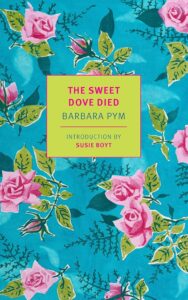
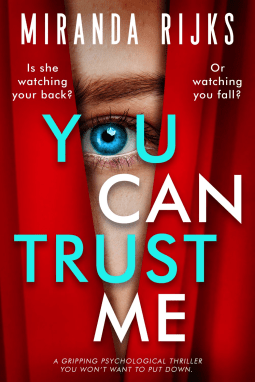
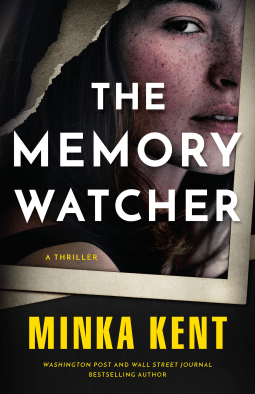
Claire Allan The Perfect Mother Boldwood Books, February 2025.

Thank you, NetGalley and Boldwood Books for providing me with this uncorrected proof for review.

Claire Allan has combined a story line that engages, with complex characters and twists that are not only clever, but a logical part of the story. Allen has not fallen for the simplistic view that any twist is worthwhile, the confected twist that in so many novels in this genre makes little sense. Instead, she has woven the storyline and character development adroitly, providing clues along the way, and showing that the ending of the novel is the sound and satisfying outcome of the dilemmas faced by Mel, her husband, Ed, and the couple at the centre of their problems. Although I had my suspicious, it was a compellingly uneasy read to the conclusion.

Mel and Ed have been forced to abandon their home near Mel’s parents to move eighty miles away. Here they are supervising the renovation of their cottage, living in a caravan, and attempting to recover from the aftermath of the still birth of a friend’s baby. The grieving parents, Alice and Thomas had become friends as well as Mel’s clients in her business as a doula and hypnobirthing practitioner. Alice began a campaign against Mel and her practice, joined readily by others who were keen to decry the practice and Mel personally. The threatening atmosphere is introduced in the prologue, and even when the family move, is an ever-present tense background to their new life while they wait for the birth of their second baby. Mel has lost her business, friends, her contacts in online mothers’ groups, and her parents are conflicted about their care for their daughter, and disapproval of her former profession. Ed would have preferred to move much further away, and the prospect of Australia as a new home looms in Mel’s list of stressful situations. See Books: Reviews for the complete review.

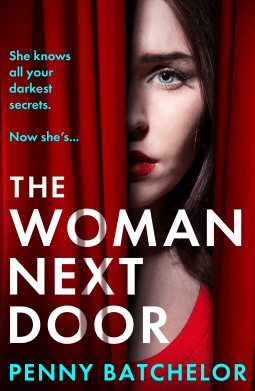
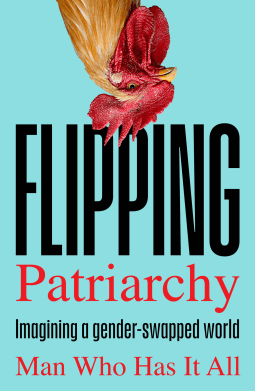
Danit Brown Television for Women Melville Publishing House, June 2025.

Thank you, NetGalley, for providing me with this uncorrected proof for review.

I found this a profoundly disappointing reflection upon a woman’s first few months home with her baby. To Estie, her newborn is ‘the baby,’ until well after their departure from the safety of the hospital. In their home, in which the baby’s parents harbour disappointments, the baby at last becomes Rosie to her mother. This is a clever acknowledgement of the distance between Estie, the only source of food, and Rosie who is dependent upon her mother’s presence. That this is only a physical presence is conveyed well by the distancing language. However, this is the redeeming feature for me. Unfortunately, Estie’s self-regard, referred to herself as ‘hormonal’, and later, her behaviour the result of ‘depression’, was a stumbling block for my becoming immersed sympathetically in Estie’s undoubtably distressing and challenging first months of motherhood. See Books: Reviews for the complete review.

CÉZANNE TO GIACOMETTI 

Until 21 Sep | Ticketed, under 18s free

Plan your memorable winter weekend in Kamberri/Canberra and experience the masterpieces of Paul Cézanne, Pablo Picasso, Georges Braque, Henri Matisse, Paul Klee and Alberto Giacometti.

Cézanne to Giacometti: highlights from Museum Berggruen / Neue Nationalgalerie is curated in partnership with Berlin’s Museum Berggruen. Presented alongside Australia’s national collection, the exhibition examines how the revolutionary ideas of modern art spread and inspired developments in both European and Australian modernism.

Book today to secure your tickets and experience more with the illustrated publication, free tours and audio guide. Drop into the Art Store at the Gallery to browse an exclusive product range produced for the exhibition.

Entry to Cézanne to Giacometti is free for visitors under 18 thanks to our supporters including Principal Patron Tim Fairfax AC, Exhibition Patrons, and donors to the 2024 Annual Appeal.

NAIDOC WEEK
Visiting the Gallery this month? Celebrate NAIDOC Week from 6–13 July with talks, workshops, exhibitions and digital content. Highlights include Nunga Screen film screenings, school holiday activities with Alick Tipoti and artists talks with Karla Dickens and Julie Gough. 

🥁 Axios interview: Ken Burns on the Revolution

Ken Burns told Axios’ Noah Bressner that his forthcoming six-part series — “The American Revolution” — has been in the works since December 2015 and required “years and years and years” of filming war reenactors across the 13 original colonies.

  • The 12-hour film — directed by Burns, Sarah Botstein and David Schmidt — will premiere Nov. 16 on PBS and run for six consecutive nights.

Why it matters: “It’s about really big ideas, the biggest ideas in humankind, and it’s also an incredibly violent struggle,” the legendary filmmaker tells us.

  • “I think that we’ve papered over the violence, maybe because we don’t have any photographs or newsreels.”

Burns’ other documentary epics — including “The Civil War,” “Baseball” and “The Vietnam War” — have heavily featured archival photographs and footage.

  • This time, Burns “realized you had to get over an aversion” to reenactments, which he’s used sparingly in other projects.
  • The film crew shot reenactors in nearly 100 locations “in every time of day and every season, mostly at dawn or dusk.”

“Then we used paintings,” Burns added. “I go and I say, ‘Do we have Continentals firing at the British?’ And we have a musket volley, very close up, very impressionistic. And we then have a returning British volley. And then that melds with the painting.”

  • Burns said the film has more maps than in all of the other films he’s made combined — “and I’ve been doing this for a little while.”

Watch the trailer … Keep reading.

American Politics

Update: Abrego Garcia’s Civil & Criminal Cases

Joyce Vance from Civil Discourse <joycevance@substack.com> 

The Civil Case

On March 24, 2025, Kilmar Abrego Garcia’s wife filed a civil lawsuit on his behalf in federal district court in Maryland. The defendants included Attorney General Pamela Bondi, DHS Secretary Kristi Noem, and Secretary of State Marco Rubio. The Trump administration had just deported Venezuelans it claimed were gang members to El Salvador, although ultimately it came to light that significant numbers of them weren’t. The Trump administration violated a district court’s order that the men not be turned over to El Salvador, which was ultimately reversed by the Supreme Court.

It’s not unusual for plaintiffs in civil cases to amend their initial complaint as new information comes to light. On Wednesday, Jennifer Stefania Vasquez Sura, Abrego Garcia’s wife, asked the court for permission to do so.

She explained that “the Government filed a motion to dismiss Plaintiffs’ Complaint as moot, arguing that because it had returned Abrego Garcia to the United States, Plaintiffs have received all the relief they sought.” She wanted to amend her complaint to “clarify that the relief they seek remains live, notwithstanding Abrego Garcia’s return to the United States.” Three new items are included in the amended complaint: “The proposed Amended Complaint details the Government’s defiance of court orders after this Court granted preliminary injunctive relief.”“[E]vidence that emerged in a June 2025 whistleblower disclosure from former DOJ official Erez Reuveni, who was previously counsel for the Government in this case. The new allegations include government officials internally acknowledging that Abrego Garcia’s removal was an “administrative error” while simultaneously working to prevent his return and to make post-hoc justifications. These revelations provide evidence of deliberate misconduct that was unavailable when the original Complaint was filed.”

“Abrego Garcia’s first-hand account of torture and mistreatment at CECOT, as well as developments regarding his return to the United States and the Government’s stated plan to remove him again.”

The proposed amended complaint, which is attached to the motion for permission to file it, contains predictable but still shocking revelations about conditions at CECOT. The conditions, as alleged, are more like a concentration camp than a prison in the United States, and there is little doubt that if established, the allegations made about those conditions would run afoul of the Constitution’s prohibition on cruel and unusual punishment. Although the government has maintained that once delivered to El Salvador, these men are no longer in U.S. custody, that argument is paper-thin, or at least it should be, since the U.S. government is paying El Salvador to house these men. The allegations made by Abrego Garcia will likely play prominently in litigation over this issue.

The new allegations in the amended complaint include the following:“Upon arrival at CECOT, the detainees were greeted by a prison official who stated, ‘Welcome to CECOT. Whoever enters here doesn’t leave.’ Plaintiff Abrego Garcia was then forced to strip, issued prison clothing, and subjected to physical abuse including being kicked in the legs with boots and struck on his head and arms to make him change clothes faster. His head was shaved with a zero razor, and he was frog-marched to cell 15, being struck with wooden batons along the way. By the following day, Plaintiff Abrego Garcia had visible bruises and lumps all over his body.In Cell 15, Plaintiff Abrego Garcia and 20 other Salvadorans were forced to kneel from approximately 9:00 PM to 6:00 AM, with guards striking anyone who fell from exhaustion. During this time, Plaintiff Abrego Garcia was denied bathroom access and soiled himself. The detainees were confined to metal bunks with no mattresses in an overcrowded cell with no windows, bright lights that remained on 24 hours a day, and minimal access to sanitation.”

And although the complaint alleges that El Salvadoran prison officials acknowledged that Abrego wasn’t a gang member, they threatened him with physical harm at the hands of gang members in the prison:“As reflected by his segregation, the Salvadoran authorities recognized that Plaintiff Abrego Garcia was not affiliated with any gang and, at around this time, prison officials explicitly acknowledged that Plaintiff Abrego Garcia’s tattoos were not gang-related, telling him ‘your tattoos are fine.’

While at CECOT, prison officials repeatedly told Plaintiff Abrego Garcia that they would transfer him to the cells containing gang members who, they assured him, would ‘tear’ him apart.

Indeed, Plaintiff Abrego Garcia repeatedly observed prisoners in nearby cells who he understood to be gang members violently harm each other with no intervention from guards or personnel. Screams from nearby cells would similarly ring out throughout the night without any response from prison guards on personnel.

During his first two weeks at CECOT, Plaintiff Abrego Garcia suffered a significant deterioration in his physical condition and lost approximately 31 pounds (dropping from approximately 215 pounds to 184 pounds).”During a conference call with District Judge Paula Xinis in Greenbelt, Maryland, the government acknowledged it intended to deport Abrego Garcia again, this time to a third country. That would not violate the withholding order that prevented them from sending him to Venezuela. The government’s lawyer represented that it didn’t have imminent plans for deportation, but Abrego Garcia’s lawyers told the court, “We have concerns that the government may try to remove Mr. Abrego Garcia quickly over the weekend, something like that.” They asked for an emergency order that would bring him to Maryland if he were released in Tennessee, where he is facing the criminal charges the government filed against him when they returned him from El Salvador. Abrego Garcia remains in federal custody in Tennessee while the Magistrate Judge considers whether to release him—she previously ruled he was entitled to release, but she was concerned about the deportation issue.

Judge Xinis set a July 7 court hearing in Maryland to discuss the emergency request and other matters. Today, she rejected the government’s request to delay the hearing to a later date.

The same week Abrego Garcia’s wife filed her original complaint, Defendant Kristi Noem traveled to El Salvador to “visit” CECOT prison. She posed for this photo in front of a cell full of prisoners.

report from the CATO Institute suggests that although the government claims all of the men it sent to Venezuela are “illegal aliens,” in 50 of the 90 cases where they were able to identify how the men entered the United States, the men said that they entered the U.S. legally, with government permission, at an official border crossing point.”

The Criminal Case

The government attempted to save face when it returned Abrego Garcia from El Salvador by filing criminal charges against him involving the transportation of people who were known to be present in the U.S. without legal immigration status. Comments made by government officials went far beyond the facts alleged in the indictment—a clear violation of DOJ policy—in describing his conduct and claiming he was a serious violent criminal who, among other things, had sexually assaulted women.Last week, there were reports that the government’s key witness, Jose Ramon Hernandez Reyes, likely the owner of the car Abrego Garcia was driving during the incident he was charged with, was a three-time convicted felon. The deal the government cut with him allowed his early released early from federal prison to a halfway house in exchange for his cooperation in the case. An official with Homeland Security Investigations, part of ICE, testified Hernandez Reyes would have been deported but for his cooperation with the government. The Washington Post reported that he said in court that the government “is also likely to give him a work permit.”

In the meantime, Abrego Garcia’s attorneys have asked District Judge Waverly D. Crenshaw Jr. in Tennessee to enforce local rules that prohibit the Trump administration from making “extensive and inflammatory extrajudicial comments about Mr. Abrego that are likely to prejudice his right to a fair trial.” The motion continues, “These comments continued unabated—if anything they ramped up—since his indictment in this District, making clear the government’s intent to engage in a ‘trial by newspaper.’”

Abrego Garcia’s lawyers raise four points of concern in their pleading:“[T]he government has relentlessly attacked Mr. Abrego’s character and reputation in dozens of public statements … Many of the government’s statements have been highly prejudicial and serve no justifiable law enforcement purpose—and reflect nothing more than the lengths the government will go to in its efforts to paint Mr. Abrego as a dangerous criminal to deflect from its mistake.”“[T]he government has expressed opinions about Mr. Abrego’s guilt and the evidence in this case in ways that go far beyond the limited disclosures permitted” by local rules of court.“[T]he government’s statements have been contaminated with irrelevant and false claims that the DOJ ‘knows or reasonably should know are likely to be inadmissible as evidence in a trial or that would, if disclosed, create a substantial risk of prejudicing an impartial trial.”” As an example, they offer that, “at a press conference announcing these charges, Attorney General Bondi recounted allegations from unreliable alleged coconspirators that Mr. Abrego ‘abused undocumented alien females,’ ‘trafficked firearms and narcotics,’ ‘solicited nude photographs and videos of a minor,’ and ‘played a role in the murder of a rival gang member’s mother.’” They also objected to what they call unsubstantiated claims that Abrego Garcia is Mr. Abrego is a “wife beater” and “domestic abuser.” They conclude that “These assertions are not only irrelevant and inflammatory, but also based entirely on inadmissible hearsay.”“[S]ince the indictment was unsealed, the government has made nearly three dozen statements about the fact that it has charged Mr. Abrego with a crime, without reference to the presumption of innocence.”

In a normal administration, an Assistant United States Attorney who did any of these things would most likely be seriously sanctioned by internal DOJ disciplinary mechanisms. But here, the concern is about the Attorney General of the United States and other high-ranking officials. We are no longer surprised by much, but we should reclaim our ability to be shocked by the truly outrageous. Because that’s exactly what this is.

It is the job of defense lawyers to put the government on its back foot. But they’ve made the claims in this case knowing that they will be thoroughly tested. In their motion, Abrego Garcia’s lawyers ask the court for a very simple sanction: they want him to “issue an order directing the parties to comply with Local Criminal Rule 2.01,” the local rule that prohibits these out-of-court statements. This afternoon, Judge Crenshaw directed both sides to stop making public statements about the case. It’s not clear from his two-sentence ruling, “Motion (69) is GRANTED. All counsel are expected to comply with the Local Rules of this Court,” whether the order extends to DHS employees in addition to DOJ employees, which Abrego Garcia’s lawyers requested.Despite this limited action, the motion was a strategic one that hints at the kind of arguments that will be used to argue a guilty verdict, if the government obtains one, should be reversed because the jury pool was tainted by the government’s own statements to the public. The motion also recites that, “The Vice President, a Yale Law School graduate, went so far as to flatly lie about Mr. Abrego, calling him a ‘convicted MS-13 gang member,’ notwithstanding that Mr. Abrego in fact has never been convicted of any crime at all.” Abrego Garcia’s lawyers are busy making a record.

This case, which has brought issues of due process and the prospect of the executive branch of government ignoring orders issued by the judiciary to the forefront of Americans’ minds, will stand as one of the most important cases in American history. We don’t yet know how it will end. It is a very dangerous moment for our democracy, one we should all pay close attention to. Thanks for being here with me at Civil Discourse. Your support, and your paid subscriptions help me devote the time and resources necessary to this work.

We’re in this together,

Joyce

Heather Cox Richardson from Letters from an American <heathercoxrichardson@substack.com> UnsubscribeSun 6 Jul, 15:44 (19 hours ago)

Forwarded this email? Subscribe here for moreJuly 5, 2025Heather Cox RichardsonJul 6 READ IN APP 

Yesterday afternoon, President Donald J. Trump signed the nearly 1,000-page budget reconciliation bill Republicans passed last week. Trump had demanded Congress pass the measure by July 4, and Republicans rammed it through despite the bill’s deep unpopularity and Congress’s lack of debate on it. When House speaker Mike Johnson (R-LA) presented Trump with the speaker’s gavel during the signing event, the symbolism of the gift was a little too on the nose.“

Today we are laying a key cornerstone of America’s new golden age,” Speaker Johnson said at the signing. The new law is the capstone to the dramatic changes MAGA Republicans have made to the U.S. government in the last six months.

The measure makes the 2017 Trump tax cuts for the wealthy and corporations, which were due to expire at the end of this year, permanent. At the bill’s signing, Trump harked back to the idea Republicans have embraced since 1980, claiming that tax cuts spark economic growth. He said: “After this kicks in, our country is going to be a rocket ship economically.”

In fact, tax cuts since 1981 have not driven growth, and a study by the nonpartisan Penn Wharton Budget Model of the University of Pennsylvania projects that the measure will decrease national productivity, known as gross domestic product (GDP), by 0.3% in ten years and drop the average wage by 0.4% in the same time frame.

From 1981 to 2021, tax cuts moved more than $50 trillion from the bottom 90% to the top 1%, and Penn Wharton projects the top 10% of households will receive about 80% of the total value of this law, too. Those in the top 20% of earners can expect to see nearly $13,000 a year from the bill, while those in the bottom 20% of households will lose about $885 in 2030 as the pieces of the law take effect.

Past tax cuts have also driven budget deficits and increases in the national debt, and like them, this law will increase the deficit by about $3.4 trillion over the next ten years, according to the nonpartisan Congressional Budget Office. The CBO also projects that interest payments on that debt will cost more than $1 trillion a year.

Sam Goldfarb and Justin Lahart of the Wall Street Journal noted on Thursday that economists, investors and politicians are sounding the alarm that the U.S. is “bingeing on debt” when there is no national emergency like a pandemic or a war to require taking on such debt. The measure will raise the nation’s debt ceiling by $5 trillion.

The Republican reliance on tax cuts to increase economic growth has inspired them to cut public programs since 1981. The Republicans’ new law continues the cuts begun as soon as Trump took office, cutting $890 billion from Medicaid over the next ten years, and about $230 billion out of the Supplemental Nutrition Assistance Program that provides food assistance for low-income Americans. It cuts tax credits for wind and solar power while promoting fossil fuels.

At the White House on Friday, Trump said: “I just want you to know, if you see anything negative put out by Democrats, it’s all a con job.” He claimed the new law is the “most popular bill ever signed.”But it is clear administration officials are well aware that polls showed Americans disapproving of the measure more than approving by the huge gap of around 20 points. They are now trying to sell the law to voters. Notably, the previously nonpartisan Social Security Administration sent an email to Social Security recipients yesterday claiming the bill “eliminates federal income taxes on Social Security benefits for most beneficiaries, providing relief to individuals and couples.” Except the law does not actually eliminate federal income taxes on Social Security benefits. Instead, it gives a temporary tax deduction of up to $6,000 for individuals older than 65 with annual incomes less than $75,000, or $12,000 for married couples with incomes less than $150,000.What the law does do, though, is pour $170.7 billion into immigration enforcement—more than the military budgets of all but fifteen countries. The law provides $51.6 billion to build a wall on the border, more than three times what Trump spent on the wall in his first term. It provides $45 billion for detention facilities for Immigration and Customs Enforcement, an increase of 265% in ICE’s annual detention budget. It provides $29.9 billion for ICE enforcement, a threefold increase in ICE’s annual budget.

According to Aaron Reichlin-Melnick of the American Immigration Council, the law gives ICE more funding than the Federal Bureau of Investigations; Drug Enforcement Administration; Bureau of Alcohol, Tobacco, Firearms, and Explosives; U.S. Marshals Service; and Bureau of Prisons combined. In fact, Reichlin-Melnick told Democracy Now!, the law will make ICE the largest federal law enforcement agency “in the history of the nation.”And now, with the MAGA Republican political realignment in place, we wait to see whether it delivers the golden age Trump and his MAGA loyalists promise.The early signs are not auspicious.

Within hours of Trump’s signing the bill into law, Gun Owners of America and a number of other pro-gun organizations filed a lawsuit claiming the measure makes the 1934 National Firearms Act (NFA) unconstitutional. That law regulated machine guns and short-barrel guns by imposing a tax on them and making owners register their weapons. The Supreme Court upheld that law as a tax law. The budget reconciliation bill ended those taxes and thus, the plaintiffs claim, the constitutional justification for the law.

In a press release, Gun Owners of America said its “team in Washington had been working behind the scenes with Congress since the November 2024 election to fully repeal the NFA,” and that the new law had teed up their lawsuit against the registry it called “an unconstitutional relic.”Scholars of authoritarianism are sounding the alarm over the new law. Timothy Snyder warned that the extensive concentration camps that Trump has called for and the new measure will fund will be tempting sites for slave labor. Undocumented immigrants make up 4% to 5% of the total U.S. workforce. In agriculture, food processing, and construction, they make up between 15% and 20% of the workforce.

Comparing the detention camps to similar programs in other countries, Snyder warns that incarcerated workers will likely be offered to employers on special terms, a concept Trump appears to have embraced with his suggestion that the administration will figure out how to put workers back in the fields and businesses by putting them under the authority of those hiring them. Trump has called the idea “owner responsibility.”“[T]hey’re going to be largely responsible for these people,” Trump said. This echoes the system legislators set up in the U.S. South during Reconstruction thanks to the fact the Thirteenth Amendment permits enslavement “as punishment for a crime whereof the party shall have been duly convicted.” That system permitted employers to pay the fines of incarcerated individuals and then to own their labor until those debts were paid. While we know that system from the chain gangs of that era, in fact employers in many different sectors used—and abused—such workers.

Today, according to the nonpartisan Economic Policy Institute, of the 1.2 million people incarcerated in state and federal prisons, nearly 800,000 are prison laborers, working in the facility itself or in government-run businesses or services like call centers or firefighting. About 3% work for private-sector employers, where they earn very low pay.

Snyder urges Americans to be aware that the law paves the way to establish this system.

Harvard sociologist Theda Skocpol identified “massive militarization of ICE” as “the real heart of this law.” She notes that American scholars have thought the federal system in the U.S., in which state and local governments control the police powers, bought the U.S. some protection against a police state.

But, Skocpol says, officials in the Trump administration “have figured out a devilishly clever workaround. Immigration is an area where a U.S. President can exercise virtually unchecked legal coercive power, especially if backed by a Supreme Court majority and corrupted Department of Justice. Now Congress has given ICE unprecedented resources—much of this windfall to be used for graft with private contractors Trump patronizes, but lots of to hire street agents willing to mask themselves and do whatever they are told against residents and fellow American citizens. [Administration officials] are not interested only in rounding up undocumented immigrants,” she wrote to Josh Marshall at Talking Points Memo. “They will step up using ICE and DOJ enforcements…to harass Democrats [and] citizen critics, and subvert future elections if they can.”

At an event in Des Moines, Iowa, on Thursday, Trump complained that Democrats had not supported the budget reconciliation bill. Less than three weeks after a gunman murdered a Democratic Minnesota lawmaker and her husband, and shot another legislator and his wife, Trump said Democrats had opposed the measure only “because they hate Trump. But I hate them, too. You know that? I really do, I hate them. I cannot stand them, because I really believe they hate our country.”—Notes:https://www.usatoday.com/story/news/politics/2025/07/04/donald-trump-signs-megabill-taxes-medicaid-border/84470497007/https://budgetmodel.wharton.upenn.edu/issues/2025/7/1/senate-reconciliation-bill-budget-economic-and-distributional-effectshttps://www.cnn.com/2025/07/03/business/trump-big-beautiful-bill-business-economyhttps://www.wsj.com/finance/investing/wall-street-crisis-deficits-default-mode-bf1f5940https://www.reuters.com/world/us/trump-tax-bill-averts-one-debt-crisis-makes-future-financial-woes-worse-2025-07-03/https://www.npr.org/2025/07/03/nx-s1-5454841/house-republicans-trump-tax-bill-medicaidhttps://abcnews.go.com/GMA/News/trump-big-beautiful-bill-cuts-SNAP-affordable-food-benefits/story?id=123415329https://www.theguardian.com/us-news/2025/jul/05/social-security-administration-email-trump-tax-billhttps://www.americanimmigrationcouncil.org/fact-sheet/house-reconciliation-bill-immigration-border-security/https://www.americanimmigrationcouncil.org/press-release/congress-approves-unprecedented-funding-mass-detention-deportation-2025/https://www.newsweek.com/trump-bill-sparks-gun-group-lawsuit-2094946https://www.gunowners.org/goa-to-file-one-big-beautiful-lawsuit-against-nfa-registry-as-one-big-beautiful-bill-heads-to-presidents-desk/https://www.epi.org/publication/rooted-racism-prison-labor/

The Daily with Sarah Jones <politicususa@substack.com> 

Liberals, Conservatives, And Independents Form Initiative To Fight For Democracy And Freedom

Pete Buttigieg, Stacey Abrams, J. Michael Luttig, Sophia Bush and so many more launched a new initiative to fight for our democracy and freedom together – conservatives, liberals and independents.

This July Fourth was a raw wound and also a reminder of the fight it took to get us to our Independence Day in the first place.

Powerful people with agendas are always going to try to seize power, unravel progress and spit on the principles of democracy. They’ve done it throughout history and it seems it’s our turn again, right now.

This time, maybe more of us will stand together with one another, locked in arms, against the evil of fascism cloaked in racism and white nationalism.

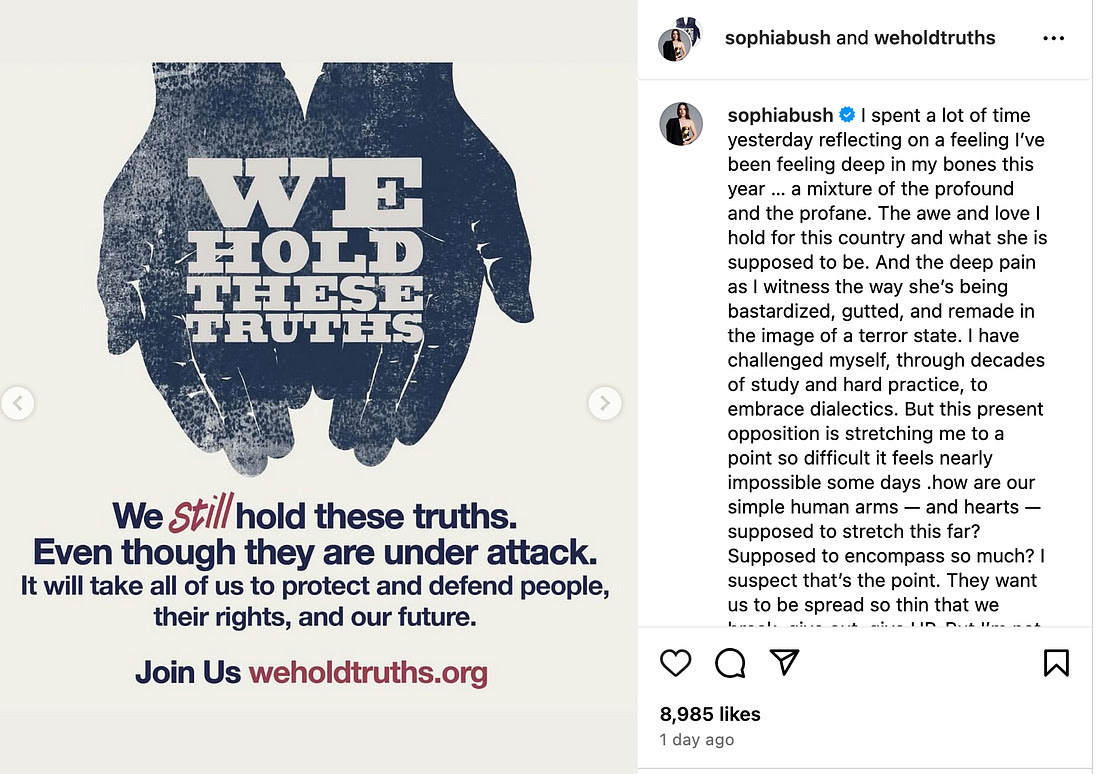
To that end, conservative, liberal and independent leaders joined together to launch “We Hold These Truths,” an initiative to promote freedom, equality, and democracy.

The initiative brings together names like Sophia Bush, Pete Buttigieg, Stacey Abrams, Lynda Carter, Jodi Picoult, Celeste Ng, Wesley Clark, Jamie Raskin, Bradley Whitford, Julianne Moore and more to partner with “We Hold These Truths”.

Launched on Independence Day, the campaign is intended “to promote freedom, equality, and democracy by providing Americans with clear, reliable, and accessible facts about the protections provided under the U.S. Constitution for all people and the work required to safeguard our freedoms and nation’s ideals.”

Sophia Bush spoke for so many of us in an Instagram post on July 5th, detailing the love and pain of the Fourth this year (I’ve added paragraphs to make it easier to read):

“I spent a lot of time yesterday reflecting on a feeling I’ve been feeling deep in my bones this year … a mixture of the profound and the profane. The awe and love I hold for this country and what she is supposed to be. And the deep pain as I witness the way she’s being bastardized, gutted, and remade in the image of a terror state.”

“I have challenged myself, through decades of study and hard practice, to embrace dialectics. But this present opposition is stretching me to a point so difficult it feels nearly impossible some days .how are our simple human arms — and hearts — supposed to stretch this far? Supposed to encompass so much? I suspect that’s the point. They want us to be spread so thin that we break, give out, give UP.”

“But I’m not giving up on us. On you and me. Your families. Our children. Our ancestors. Our legacy. I’m not giving up on this place, however imperfect and brutal, because I’ve seen generations of known heroes and unnamed neighbors alike do the work of building. Creating the kinds of progress that inch us ever closer to our incredible founding ideals, making them what they were intended to be: for ALL. Even when such a notion was more grand than people in the past could imagine. It was still the entire point of the American experiment. Liberty and justice for all.

“And while it’s hideous and painful to watch a small group of even smaller-hearted men and women rip apart everything good? I refuse to let them do it without a fight. I refuse to drop my arms even though my muscles are burning and my eyes are watering. I refuse. And I know so many of you do too. I know you’re angry and enraged and heartbroken and afraid. I know you cannot fathom that the cruelty is the point, because who would want to live — or rule!? — that way.”

“Me too, friends. Me too. So here’s what I say… let’s take our scared rage, and our ferocious love — of our neighbors, families, and even our Constitution — and let’s pick ourselves and dust ourselves off and throw our fists up and stay in this fight.”

sophiabush

A post shared by @sophiabush

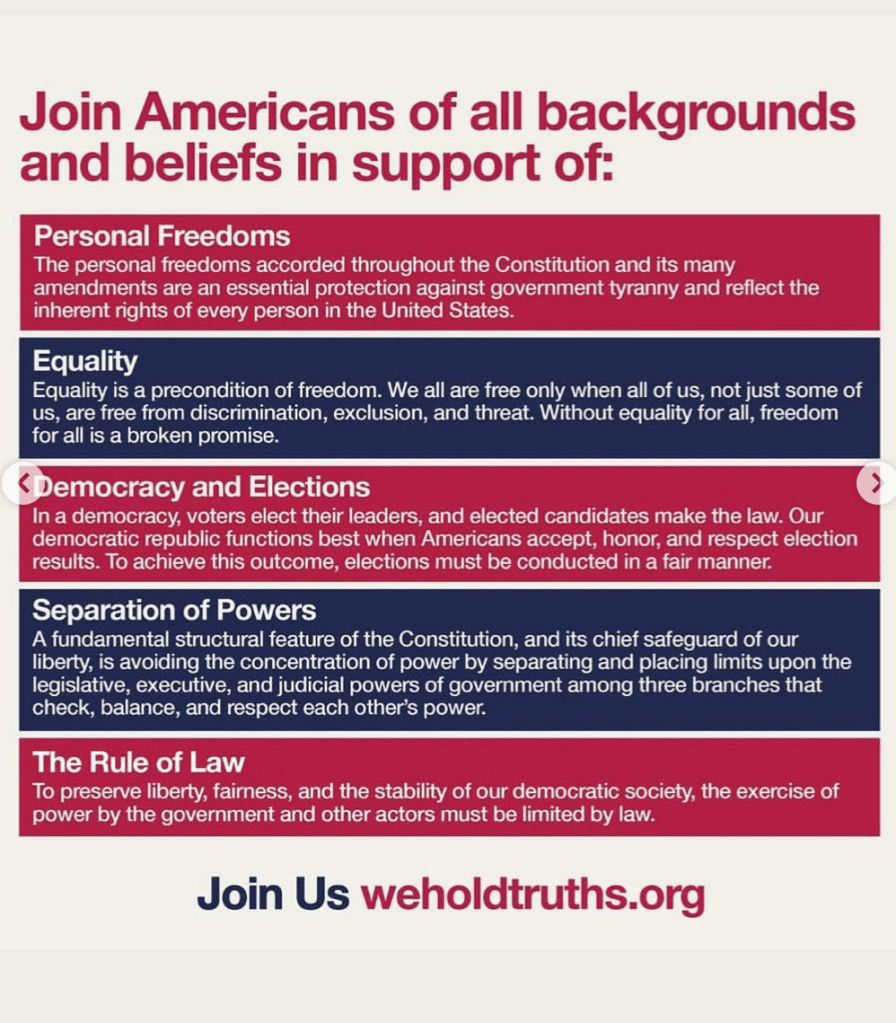
We Hold These Truths” is an initiative committed to our future, together. It includes principles such as:

They ran full-page ads on July 4 in The New York Times, Arizona Republic, Cleveland Plain Dealer, Dallas Morning News, and San Francisco Chronicle.

Fighting Back Together

We each will find our way of fighting back, but the point of sharing initiatives like this is to let you know that we do not fight alone.

There are people in this country from every single political affiliation who do not agree with the abuses of this administration, who value freedom and equality so much that they are willing to put their name on the line to fight for it, like the protesters peacefully taking to the streets to object.

It takes bravery and courage to speak up when a fascist regime is trying to control the country and her people. Each person who speaks up spreads a ripple of hope. Each person standing up matters.

We all know what can happen to anyone speaking up, including protesters, bloggers, journalists, celebrities and judges — some are being used as an example, in an effort to silence The People. But when we band together, when we come together peacefully to say NO, WE DO NOT CONSENT, it is much harder for illiberal forces of autocracy to win.

The conclusion of this fight is not forgone. We have not lost the battle. We have only just begun.

British Politics

A year in power: The cabinet on their proudest wins and favourite moments

Daniel Green

One year since Labour returned to power, the government has begun in earnest the task of turning the party’s manifesto pledges into policy and undoing the ruin of more than a decade of Conservative rule.

As we mark the anniversary this week, LabourList has been asking a string of cabinet ministers over the past few weeks to reflect on what they’re proudest of achieving over the last 12 months.

‘Seeing Waterloo billboards light up with the Great British Railways logo’

Heidi Alexander is the Secretary of State for Transport

There have been a couple of standout moments, but by far my favourite was the Great British Railways takeover of Waterloo station on the morning the first publicly owned South Western service departed.

“Seeing every billboard light up with the logo and hearing the announcement ring out around the station really drove home the hard work we are doing to rebuild a rail network people can rely on and one that is fit for the 21st century.

‘Justice for mineworkers shows the difference politics can make’

Ed Miliband is Secretary of State for Energy and Net Zero

One policy I am particularly proud of in the first year is that this government delivered justice for the mineworkers affected by the Mineworkers’ Pension Scheme scandal.

Over 100,000 former mineworkers will receive a share of £1.5 billion of money that was kept from their pensions, overturning an historic injustice and ensuring fair payouts for years to come. Now, that scandal ends, and the money is rightfully transferred to the miners.

This is the difference politics can make- and a testament to the campaigners who fought tirelessly over the years.

‘Turning the page on years of neglect in arts, culture and creativity’

Lisa Nandy is the Secretary of State for Culture, Media and Sports

I’m proud that in our first year, we’ve turned the page on years of neglect by investing in arts, culture and creativity in every part of the country.

Under the Tories, arts, music, culture and creativity was erased from the curriculum and our communities. Our towns and villages lost their libraries, theatres and museums and the arts became the preserve of a privileged few.

Through our Creative Industries Sector Plan and Arts Everywhere Fund, we’re reversing that decline. We’re handing power to communities, backing their talent, institutions and ideas that make up the cultural life of this country – in every part of our country. 

That’s how we drive investment and growth, and open up the arts to a generation of young people again.

‘Seeing Scottish Labour’s 36 MPs battling for their communities’

Ian Murray is the Secretary of State for Scotland

At the election last year, Labour asked Scots to stop sending a message to Westminster and send a government instead and Scotland delivered 37 Labour MPs to the government benches.

Scottish MPs on those Labour benches have delivered massively for working people already – a pay increase for 200,000 Scots, pensions justice for 7,000 Scottish mine workers, £150 discount on energy bills for over 500,000 Scottish families and the biggest ever budget settlement for the Scottish Parliament – £50 billion this year and an extra £9.1 billion over the next threat years.

That’s before the hat trick of trade deals which slash tariffs on Scottish whiskey and salmon, establishing GB energy owned by the public and in Aberdeen, the £200 million for Acorn development, the £750m for the UK’s national supercomputer to eb based in Edinburgh and £1.4 billion of local growth funding for Scottish communities that the Tories promised but never allocated a penny towards.

But the thing that makes me most proud looking back at the past year is seeing those 36 MPs battling for their communities. For a decade, Scotland had too many MPs who were only interested in their next tweet, not what was actually happening in their constituencies. Now we have 37 Scottish MPs at the heart of this Labour government, and this time next year we will have a Scottish Labour government at Holyrood too, led by Anas Sarwar as First Minister.

Subscribe here to our daily newsletter roundup of all things Labour – and follow us on  BlueskyWhatsAppThreadsX or Facebook.

‘Port Talbot, money for public services and infrastructure funding for Wales’

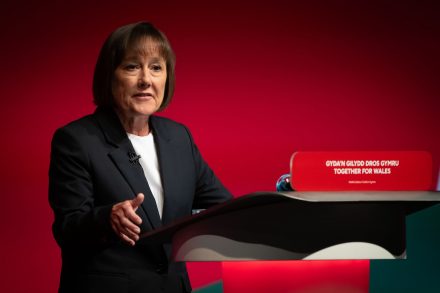
Jo Stevens is the Secretary of State for Wales

Photo: @JoStevensLabour

Firstly, Port Talbot steelworks and the steelworkers and their families – in ten months, we have managed to get £80m out of the door to help people, businesses, supply chains and regeneration projects in Port Talbot. That £80m was promised by the previous government, by the Tories, and was completely unfunded.

Secondly was the Autumn Budget, delivering the biggest budget settlement to the Welsh Government in the history of devolution, which has meant that they were able to invest hundreds of millions of pounds more into public services, and as a consequence of which, we saw waiting lists coming down in Wales for four consecutive months – the longest waits reduced by two-thirds, making a real difference to people on the ground.

Thirdly, the historic announcement in terms of nearly half a billion pounds of rail infrastructure money for Wales, reversing that underinvestment that we’d seen in the previous 14 years. Money for coal tips to keep people safe in our former mining communities, and local growth funds over £850m going into communities up and down Wales. Because of a multi-year spending review, Welsh Government have now got £5bn more to invest in our schools, our hospitals, transport, local councils – so it just shows you the benefit of two Labour governments working together.”

‘Labour’s showing this will be the most nature-positive government in history’

Steve Reed is the Secretary of State for Environment, Food and Rural Affairs

The Tories left Britain with record levels of sewage poisoning our rivers, lakes and seas. In just one year, Labour has banned water bosses’ unfair multi-million pound bonuses, ringfenced customers’ money so it can no longer be diverted to pay shareholders’ dividends, and secured £104bn private sector funding to fix our broken sewage pipes. Labour is clearing up the Tories’ toxic mess with sewage pollution set to be cut almost in half over the next five years.

Britain is one of the most nature-depleted countries on Earth with half our bird species and a third of our mammal species facing extinction. Labour is turning the corner on nature’s recovery with the biggest budget in history for nature and sustainable food production. We’ve reintroduced beavers into the wild 400 years after they were hunted to extinction. We’ve banned bee killing pesticides so our pollinators and bird populations can recover. We’re planting millions more trees, a new national forest, and restoring peatlands that capture carbon and protect the environment.

Our land-use framework will rewild whole landscapes while protecting the best agricultural land for nature-friendly food production, and our food strategy will put healthier food on people’s plates so we can end the scandal of rising food-bank use and childhood obesity.

With our seas choked by plastic pollution, we’ve committed to sign the Global Oceans Treaty to protect the high seas, and we’re banning destructive bottom trawling in our marine protected areas to protect underwater life on the sea beds.  We’re tackling the throwaway society by moving towards a circular economy where materials are reused instead of discarded, and we’re tackling career fly-tippers by using drones to hunt them down so we can seize and crush their vehicles.

Labour is already showing that this will be the most nature-positive government in history.

Politics Essential Iain has short black and grey hair. He wears a suit with shirt and tie.Iain Watson

Political correspondent

Hello and welcome to Politics Essential.

After Zarah Sultana announced she was quitting the Labour Party to work with Jeremy Corbyn, a new left-wing party seems likely to come into being. There are still questions, however, about its policy, its leadership and its name. My analysis on what it means for Labour – and other parties – below. ‌
Plus, the BBC speaks to people in Birmingham about how they’re coping after six months of bin strikes. And test your knowledge with our quiz. If you’d like the team to answer your questions about politics, email us at politicsessential@bbc.co.uk

More questions than answers over new left-wing party

Corbyn said “the democratic foundations of a new kind of political party will soon take shape”.

On the anniversary of Labour’s landslide victory, the attention is moving towards a previous Labour leader. The MP Zarah Sultana – who was suspended from the parliamentary Labour Party – has announced that she has jumped ship to co-lead the founding of a new left-wing party with Jeremy Corbyn. That, however, seems to have come as news to him.‌

Talks have been going on under the political radar for some time to turn the small group of independent MPs, co-ordinated by Corbyn, into an actual political party which could stand candidates at the local elections next year. But as I understand it, the question of leadership and the exact timing of the announcement hadn’t been settled when Sultana made her declaration. Corbyn praised her for leaving Labour, but has said “discussions are ongoing”.‌


Despite the difficult gestation, it seems likely a new party will be born. But this won’t be a reincarnation of the previous Corbyn project. Key figures on Labour’s left are not showing any signs of departing, including the former shadow chancellor John McDonnell – despite being currently suspended from the Labour whip. The chair of the Labour Party under Corbyn – Ian Lavery – told the BBC he didn’t intend to leave. That said, he believed there was a “huge appetite” for an alternative to the mainstream parties.‌

But how would a new party fare? We have to be cautious about polling. More In Common recently tested the sort of support a party to the left of Labour would have – specifically one led by Jeremy Corbyn. It suggested it could pick up 10% of the vote – reducing Labour’s standing by three points but far more dramatically eating into support for the Greens, which would fall from nine points to five points in the polls.‌

But we still don’t know what this new party’s policy programme would be; its leadership isn’t settled; and we don’t yet know if there would be a ‘non-aggression’ pact with the Greens – where they wouldn’t stand against each other in certain seats.‌

Independent MPs were elected last year in areas where voters felt Labour wasn’t taking a strong enough line on Israel’s actions in Gaza. We don’t know how resonant that issue will be at the next election, four years away.‌
But where Starmer’s strategists might be concerned, is that a new left-wing party might just reduce the Labour vote by enough in some seats to allow a second-placed Reform UK to sneak home. And Labour may have to be more mindful that it can lose votes on the left and not just the right.‌
The essential: The danger for Labour isn’t so much the direct loss of seats from a new left-wing party, but that its vote may be eroded in areas where Reform UK or the Conservatives might benefit.

Australian Politics

ACT chooses ‘care over cruelty’ by raising the age of criminal responsibility to 14

Advocates are urging other jurisdiction to follow the ACT’s lead and stop jailing kids as young as 10.*

In a historic move, the Australian Capital Territory has become the first jurisdiction in the country to raise the minimum age of criminal responsibility to 14 – a significant reform celebrated by legal advocates, health experts and Aboriginal and Torres Strait Islander leaders.

From July 1, children under 14 in the ACT can no longer be charged, prosecuted, or imprisoned under the criminal legal system, except for a limited number of excluded offences.

The change comes as part of a two-stage reform passed in 2023, which first raised the age from 10 to 12 and now to 14.

The Aboriginal Legal Service (NSW/ACT) welcomed the milestone, commending the ACT Government for a decision grounded in research and community wellbeing.

“This reform will keep more children where they belong: in their homes, communities, schools, playgrounds and sports fields, supported to thrive rather than being dragged through court and languishing in youth prisons,” ALS chief executive Karly Warner said.

“Evidence shows the younger a child is at first contact with the legal system, the more likely they are to keep coming back into contact with police and courts and to experience adult imprisonment.

“That’s why raising the age of legal responsibility to 14 is a commonsense move not only for children but for all members of our communities.”

While praising the ACT’s leadership, Ms Warner urged further reform, calling for the removal of exceptions that still allow children to be criminalised under certain circumstances.

The change follows decades of sustained advocacy from Aboriginal and Torres Strait Islander communities, health professionals and legal experts, who have long highlighted the harms of early criminalisation, particularly for Indigenous children, who remain disproportionately affected by the system.

A call for national action

Advocacy organisations, including Change the Record, the Justice and Equity Centre and the Human Rights Law Centre, also welcomed the reform, and called on all other jurisdictions to follow suit without delay.

“Every child deserves to grow with connection, not be locked up in prison cells,” Jade Lane, Change the Record chief executive, said.

“The ACT reforms are a crucial step toward choosing care over cruelty, especially for Aboriginal and Torres Strait Islander children, who are disproportionately targeted by police and the so-called justice system.”

Ms Lane urged other jurisdictions to end harmful, punitive youth justice practices and invest instead in community-led solutions that support young people.

“This change in the ACT signals a well-overdue time to invest in Aboriginal and Torres Strait Islander children to thrive, not trap them in cycles of criminalisation,” she said.

Maggie Munn, First Nations director at the Human Rights Law Centre, said the reform sets a precedent for the rest of the nation.

“Our kids deserve to thrive, not be caged in police watch houses and prison cells. This is a positive step forward which means that more children in the ACT will be cared for, rather than pipelined into prison,” Munn said.

“We call on every state and territory government to do the right thing for kids and communities, and raise the age of criminal responsibility to at least 14, with no exceptions.”

Chief executive of the Justice and Equity Centre Jonathon Hunyor told NITV that locking up children cruels their chances and takes them away from positive influences.

“What we do is place kids in a situation where they build criminal capital – they go to the university of crime,” he said.

“They get taught that they’re criminals and told that they’re criminals – and that’s exactly what we produce.

“So it’s very easy to talk tough and be all hairy-chested about being tough on crime, but the fact is, it’s not working, it’s never worked, and it’s never going to work.

“Unless we actually invest in kids, we invest in communities, we invest in solutions, we’re just saying the same stuff over and over again.”

Australia still lagging behind international standards*

Despite the ACT’s progress, Australia remains out of step with international human rights obligations.

The United Nations has repeatedly called on Australia to raise the minimum age to 14 “without exception,” citing evidence that children aged 10 to 13 lack the developmental capacity to be held criminally responsible.

Mr Hunyor said that raising the age is a catalyst for changing systems, taking the emphasis from criminalisation, from police and prisons, to where it can make a difference.

“And that’s intervening early, supporting children and families from a much younger age than even 10 so that problems that lead them to commit criminal offences don’t materialise or, if they do, that kids can get back on the right track,” he said.

“So it’s all the obvious stuff that we should be investing in community services, after school activities, mentoring for young people, mental health support and there’s support for families.

“We address things like homelessness and a lack of housing, disability supports that we need in our communities

“They’re all the things that we know are going to make a difference.”

Communities had a right to be angry that government is not investing in them and not investing in people’s capacity to do better, Mr Hunyor said.

“Instead, we park at the bottom of the cliff, we wait for kids to fall off, we chuck them in the paddy wagon, and we drive them back up and let them out again, and the whole cycle starts again,” he said.

“It’s just a ridiculous approach that we’re taking.

“And until more people look at the evidence like they are in the ACT, we’re not going to get better outcomes.”

In NSW, Queensland, and South Australia, the age of criminal responsibility remains at 10.

The former Northern Territory Labor government raised the age to 12 but when the Country Liberal Party swept to power in August last year, one of the first act’s of Lia Finocchiaro’s new government was to lower it back to 10.

Victoria has also kept the age at 10, and while that state has passed legislation to raise it to 12; the change has not yet been implemented and also includes new police powers targeting children as young as 10 and breaks a promise from former Premier Dan Andrews to raise the age to 14 by 2027.

Tasmania has committed to raising the age to 14 by 2029, while in Western Australia, the government has voted to raise the age to 14, but implementation is still pending.

“Kids deserve a childhood free from cages and isolation,” Ms Lane said.

“It’s time the rest of the country caught up.”

*This article was posted on Facebook by Jocelynne Scutt. She observes: ‘Remains at 10 years in the UK despite EU’s efforts at persuasion to have it raised … ‘. This suggests that Australia, as is the case for the UK, ‘out of step with international human rights obligations’.

Total Control – televison series’ representation of the issue

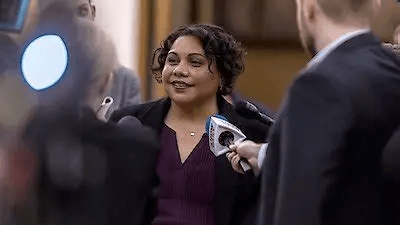
Episode 5 Episode #3.5 50 mins Determined to reform youth justice, Alex (Deborah Mailman) pushes forward with her radical plan in the House of Representatives. The amendment was opposed by the conservative Opposition.

*The television series, Total Control, adopts this issue in Series 3, episode 5. Deborah Mailman’s character, an Indigenous Member of Parliament, is successful in amending a law-and-order bill to raise the age of legal responsibility from 10 years of age to fourteen years of age. This episode first aired on February 11, 2024.

Record number of Indigenous students graduate but education gap remains

By National Education and Parenting Reporter Conor Duffy

Australian education’s racist past is not ancient history for teacher and proud Gamilaroi woman Jenadel Lane, but part of living memory and family lore.

“My mum who is alive still today, she always tells the story of the darker you were, the further down the back of the classroom you were,” said Ms Lane, the Deputy Principal at Dubbo College Senior Campus.

“So, it didn’t go on your intelligence, it went on the colour of your skin.”

Today, Ms Lane is at the heart of writing a more inclusive chapter in Australian education.

Her work was instrumental to Dubbo College having the highest number of Indigenous students graduate year 12 last year.

Figures supplied exclusively to ABC News by the NSW Education Department show these students were part of a record number of 1,934 students statewide to graduate.

Gamilaroi woman Jenadel Lane
Gamilaroi woman Jenadel Lane is the deputy principal at Dubbo College Senior Campus. (ABC News: Billy Cooper)

“We had the most Koori kids that completed year 12, we had a few Koori kids that actually received high marks in their HSC. And we’re hoping that that’ll be bigger next year,” Ms Lane said.

“We still have kids that are coming through that are the first to graduate in their families. That’s uplifting.”

Last year’s graduating class included Ms Lane’s daughter, Retori Lane, who is this year studying to become a teacher.

“I’ve wanted to be a teacher since I was pretty much a baby because I’ve watched my mother help guide people and impact young children, especially Indigenous kids,”

Retori said.

“Some people, especially Indigenous kids, they have a really low self-esteem and don’t really understand what they can do.”

Retori Lane
Retori Lane is studying to become a teacher.  (ABC News: Billy Cooper)

Jenadel Lane puts her school’s success down to a strong team that fosters cultural connections, pride and a sense of belonging, partnering each Indigenous student with a mentor.

The school also has cultural captains, leaders in the student body like Selwyn Kelly who can inspire other students.

One of 10 children, Selwyn has overcome challenges most teenagers can’t imagine.

For the last five years he’s lived in an Aboriginal hostel in Dubbo almost 400 kilometres away from his family in Bourke. And that’s left him feeling a loss of connection to family and culture.

Cultural captain Selwyn Kelly
Cultural captain Selwyn Kelly says he is proud to be a leader at Dubbo College. (ABC News: Billy Cooper)

“Going back on Country it means a lot to me,” Selwyn said.

Selwyn has come to love school, which he said turned him from an introvert to a confident, outgoing young man.

“It makes me feel proud of who I am and where I come from and my role as a leader at the school. I’m feeling really good about that because I’ll be the second person in my family to graduate year 12,” he said.

He hopes to pursue a teaching degree at university next year.

Cultural captain Kolorah Newman
Cultural captain Kolorah Newman says she wants to become a police woman when she finishes school. (ABC News: Billy Cooper)

This year’s female cultural captain, Kolorah Newman, is also blazing a trail and hopes to become a police woman when she finishes school this year.

“I want to go into the police force to help Aboriginals within the community with law. Obviously a lot of people haven’t been treated right. I want to change that,” she said.

Until 1972 Indigenous students could be excluded if a parent complained

In parts of Australia there has been a backlash to Welcome to Country and Acknowledge of Country which Dubbo College prioritises.

But Jenadel Lane points again to recent history to demonstrate why there is a need to foster a sense of inclusion for Indigenous students.

Ms Lane was inspired to be a teacher by her grandmother Delma Trindall, a non-Indigenous woman who met and married her grandfather.

Delma Trindall
Jenadel Lane’s grandmother Delma Trindall inspired her to be a teacher. (Supplied)

She said the family lived in fear of welfare authorities at a time when authorities opposed these unions.

“My dad tells the story of why his parents were droving so much when he was a child and it was to keep them all together, because the welfare was after him and his siblings,” Ms Lane said.

That promise she made to her grandmother Delma, known as Delly, inspired her through her own challenges with racism.

“I think that’s why Aboriginal people do what we do in education, in any institution for that matter, it’s to re-build that trust,” Ms Lane said.

Dubbo College students sit in a group.
Dubbo College had a record number of Indigenous students graduate year 12 last year. (ABC News: Billy Cooper)

It was just one of many stories of exclusion.

Professor Melitta Hogarth from the University of Melbourne also knows its sting.

She was born in New South Wales in 1974, just two years after the end of a policy called exclusion on demand.

The policy began in 1902 and could see Indigenous children kicked out of school if a single parent complained.

“Parents were able to put in complaints to principals to say the health and wellbeing of their own children were under duress because of Aboriginal children being in class and hence exclusion on demand,” Professor Hogarth said.

Professor Melitta Hogarth from the University of Melbourne
Melitta Hogarth said there were many policies that excluded Indigenous people from education. (ABC News: Patrick Stone)

She said it was just one of many policies across Australia that excluded Indigenous people with impacts still being felt today.

“What that does is it means the schooling system is seen as not for us and it’s carried on through an intergenerational understanding that education is a place we’re going to struggle,” she said.

Over decades governments have worked hard to overcome this history but system-wide success in schools remains elusive despite investments in the billions.

A student smiles and points.
Dubbo College tries to foster a sense of inclusion for Indigenous students.  (ABC News: Billy Cooper)

The Indigenous Advancement Strategy announced in 2020 by the Commonwealth government allocated $1.24 billion for children and schooling over three years.

Last year, the federal government announced a further $110 million spend over four years to accelerate closing the education gap.

On top of that, state governments often have their own annual initiatives in the tens of millions.

Despite these investments most statistics still show a large achievement gap which Professor Hogarth said had implications later in life.

A student paints on a canvas.
Students at Dubbo College are encouraged to embrace cultural connections and a sense of belonging. (ABC News: Billy Cooper)

“What it means is these kids are going to have trouble going beyond year 10. Quite often we see that the transition into senior secondary is not as high for Indigenous students,” Professor Hogarth said.

“It limits the kinds of futures they can imagine for themselves.”

She said Indigenous people needed to be more involved in solutions.

Catherine Liddle, the CEO of SNAICC, a national voice for Indigenous children, said the achievement gap started young.

“Aboriginal and Torres Strait Islander children are nearly twice as likely as non-Indigenous children to fall behind in developmental milestones before starting school,” Ms Liddle said.

Indigenous dancers at Dubbo College Senior Campus
Indigenous dancers take part in a cultural ceremony at the Dubbo College Senior Campus. (ABC News: Billy Cooper)

“We know that when our children start school behind, it’s harder for them — and for their teachers — to catch up. That shows up in results like NAPLAN, where Aboriginal and Torres Strait Islander children are failing at four times the rate of their non-Indigenous classmates.”

Ms Liddle said in remote areas as many as 90 per cent of Indigenous students weren’t meeting literacy and numeracy benchmarks.

She welcomed new government initiatives in early childhood education with one caveat.

“We need genuine partnerships with Aboriginal community-controlled organisations (ACCOs) to deliver early education services that are culturally strong, locally driven, and proven to work,” she said.

Teacher Jenadel Lane sits with her daughter Retori.
Jenadel Lane (left) and her daughter Retori are invested in working towards a brighter future for Indigenous students. (ABC News: Billy Cooper)

Back on the ground at Dubbo College Senior Campus, Jenadel Lane agrees it’s the secret sauce for writing a different history.

“Definitely recommend having someone who’s a go-to for every kid. Every Koori kid, they need a person that they can go to, either a mentor or for academics and wellbeing, but they need a go-to that can manage, support, motivate, inspire and push,” she said.

Australian Politics

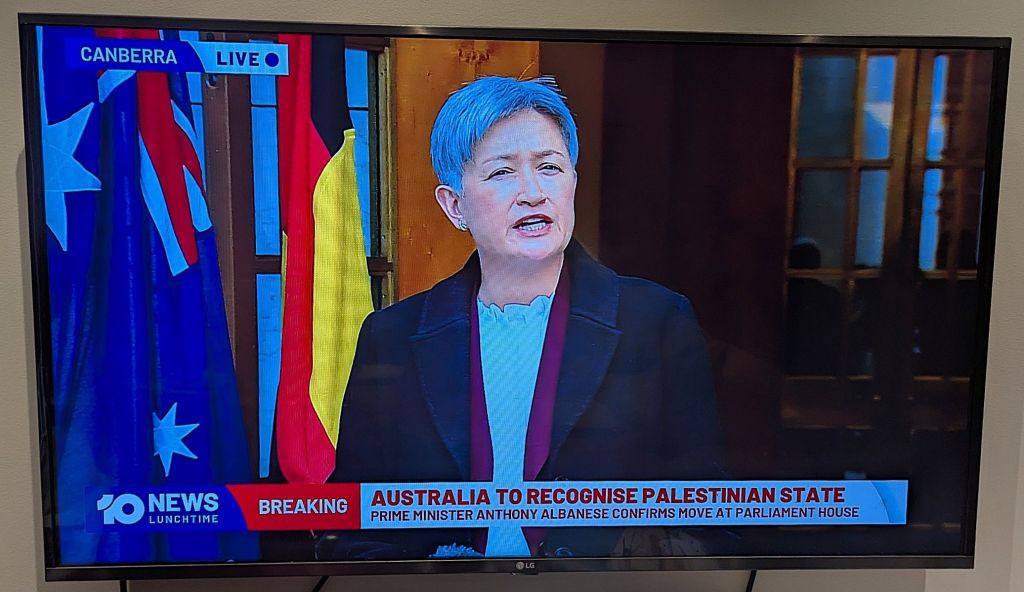
Anthony Albanese to champion ‘Australian independence’ within US alliance

By foreign affairs reporter Stephen Dziedzic

Anthony Albanese will use a speech lionising Labor prime minister John Curtin to champion Australian independence within the US alliance, saying the legendary wartime leader is remembered “not just because he looked to America” but because he “spoke for Australia”.

The speech comes at a delicate moment in Australia’s key strategic relationship. The federal government is grappling with an unpredictable White House, along with uncertainties over the administration’s tariffs, the AUKUS pact, and the US’s trajectory under President Donald Trump.

On Saturday night the prime minister will deliver a speech at the John Curtin Research Centre marking the 80th anniversary of the former prime minister, who is often called the “father” of the Australia-US alliance.

John Curtin
Anthony Albanese praises John Curtin for turning to the US in the wake of Britain’s defeat in Singapore in 1942.  (Supplied)

Successive Labor prime ministers have claimed the alliance as a signature achievement for ALP foreign policy, and have lavished praise on Curtin for turning to America in the wake of the United Kingdom’s catastrophic defeat in Singapore in 1942.

While Mr Albanese will praise the alliance as a “pillar” of Australian foreign policy and the nation’s “most important defence and security partnership” he will also say that it was “product” of Curtin’s leadership and “not the extent of it”.

“Curtin’s famous statement that Australia ‘looked to America’ was much more than the idea of trading one strategic guarantor for another, or swapping an alliance with the old world for one with the new,” he is expected to say.

“It was a recognition that Australia’s fate would be decided in our region.”

The prime minister will also say that Curtin recognised that Australia realised that its security “could not be outsourced to London, or trusted to vague assurances from Britain”.

“We needed an Australian foreign policy anchored in strategic reality, not bound by tradition,” he will say.

“So we remember Curtin not just because he looked to America. We honour him because he spoke for Australia.”

Mr Albanese will also praise Curtin for withstanding pressure from both Roosevelt and Churchill to send Australian troops returning from the Middle East to Burma, rather than back home to defend Australia.

He will say that if the US and UK got their way, “hundreds if not thousands of Australians would have been killed, or taken prisoner” as Japanese forces took Burma, and John Curtin’s assertion of sovereignty prevented “a disaster every bit as crushing to national morale as the fall of Singapore”.

The prime minister will also seek to frame his government as the inheritor of Curtin’s economic agenda, comparing the government’s moves to bolster manufacturing to Curtin’s wartime industrial program.

How bold will Albanese be in his second term?

While the Albanese government has doubled down on the AUKUS pact and its ambitious plan to develop nuclear powered submarines with the United States, it has also expressed deep frustration over the Trump administration’s so-called Liberation Day tariffs, pushed back against Washington’s demand that Australia radically increase defence spending, and fretted privately about the impact of the massive cuts to US aid programs.

And while Mr Albanese has had three phone calls with Mr Trump, he is yet to have a face-to-face meeting with the president since the US leader departed the G7 in Canada early ahead of American strikes on Iran.

‘Easily the most significant’ speech

James Curran from the University of Sydney told the ABC the speech was “easily the most significant” one Mr Albanese had delivered in office.

“It’s significant not just for the way in which Albanese invokes the Curtin legend, but the time in which he is doing it — when Australia is again under significant pressure from a great power to adopt policy courses not necessarily in Australia’s interests,” he said.

“He says Curtin’s wartime leadership was fundamentally about the defence of Australian sovereignty, that it was about safeguarding Australia’s security in the Pacific, and that Curtin, like other Australia leaders before him, was all too aware that great powers can play fast and loose with Australian interests. That it was simply not an option to rely on assurances from London or Washington as the basis for making Australian policy.”

Professor Curran said Mr Albanese was using the Curtin story to send a signal to both Washington and to Australians that “being in a close alliance does not mean you cannot stand up for Australian self-respect and self-regard”.

“[Also] that leadership is as much about tending to the domestic hearth and what we have built here as it is in safeguarding the continent’s security,” he said.

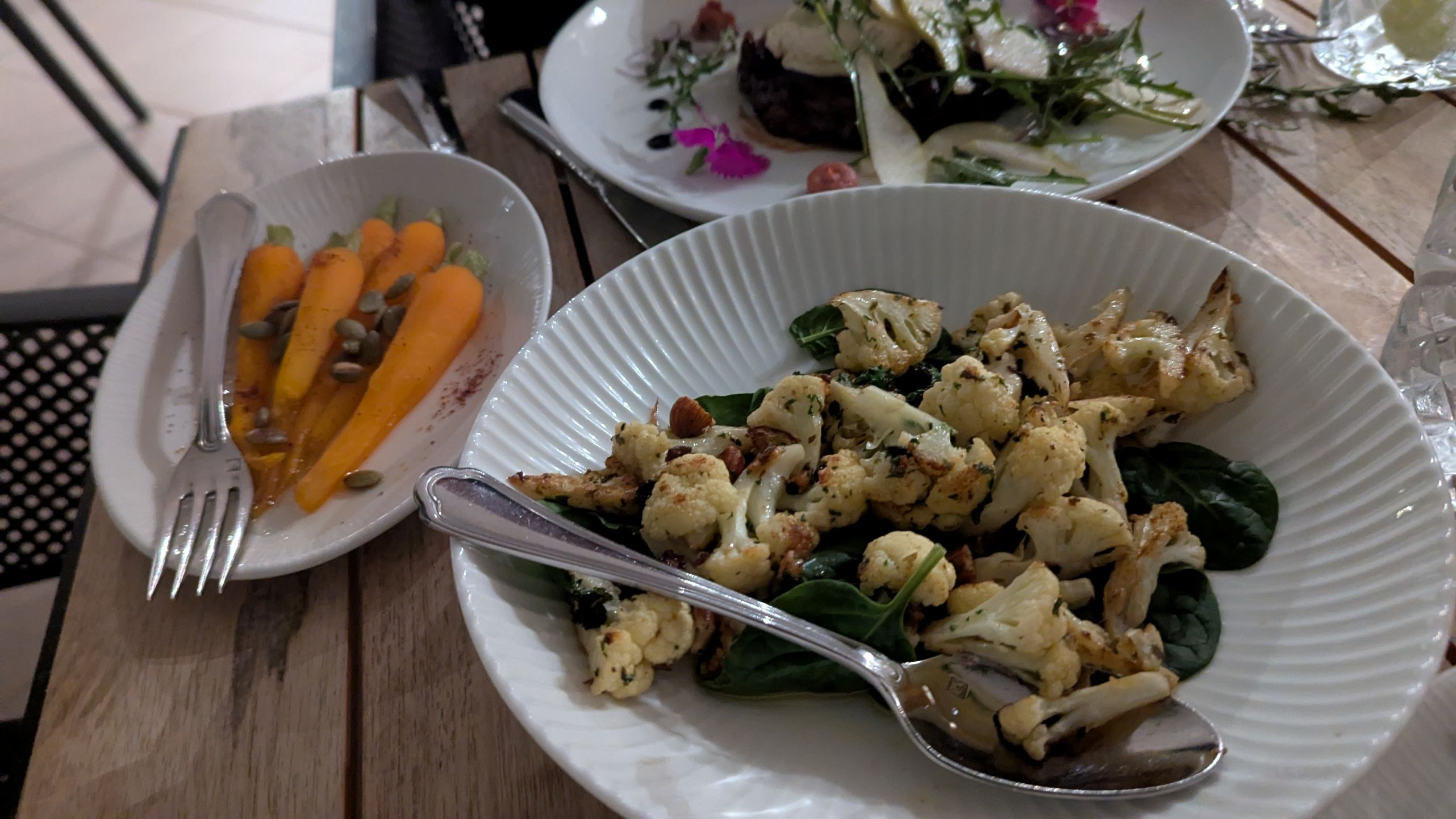
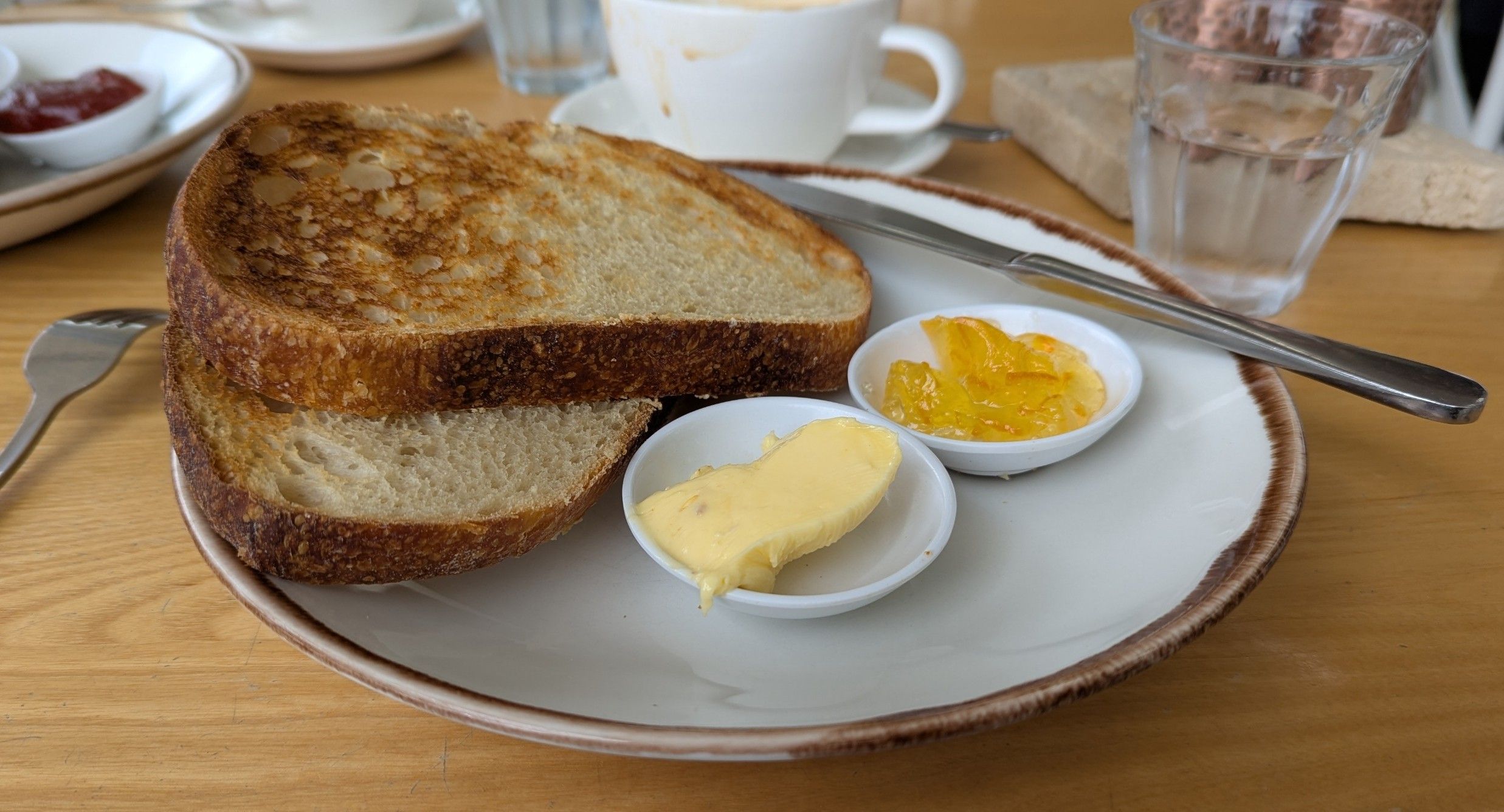
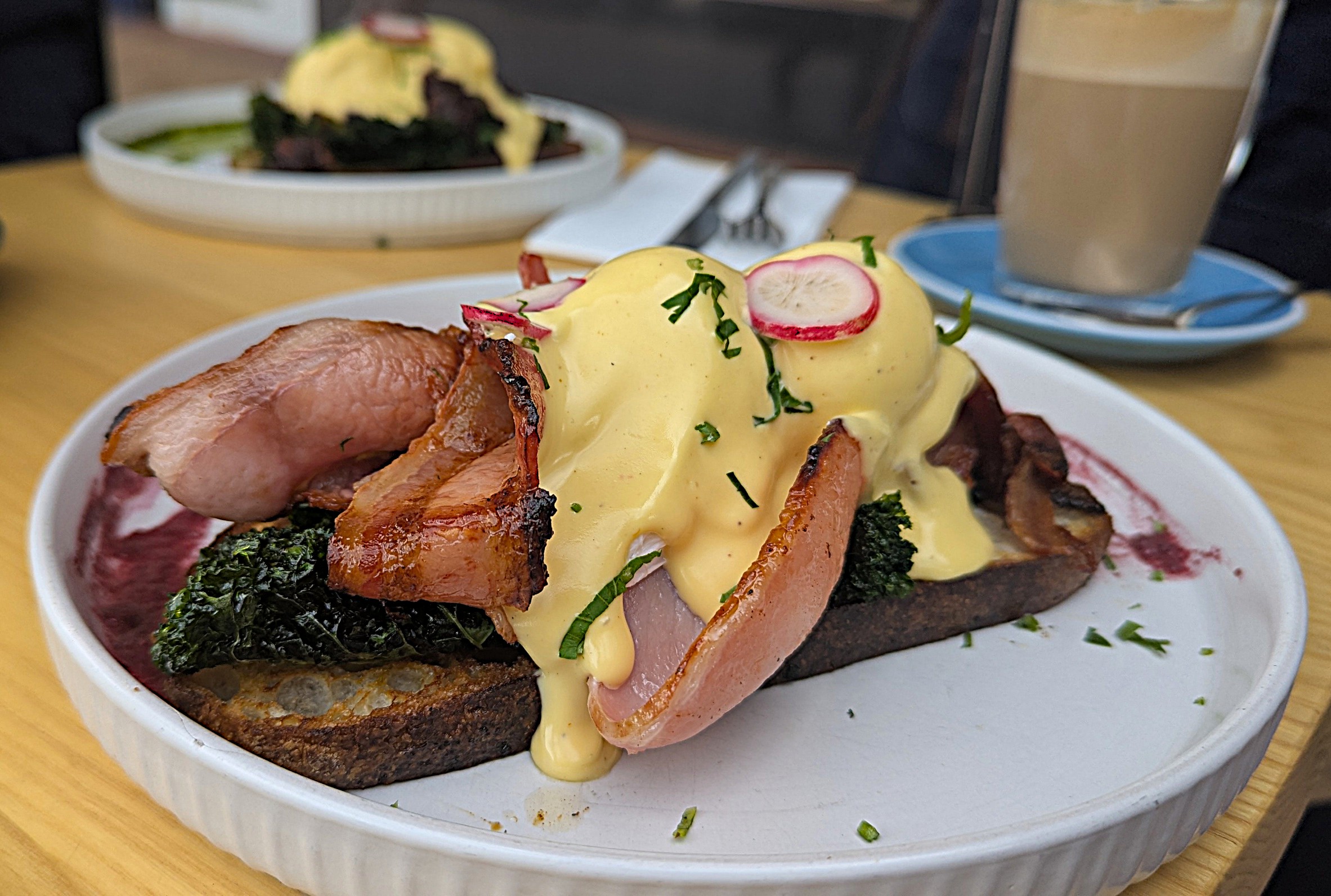
Cindy Lou breakfasts with friends in Canberra

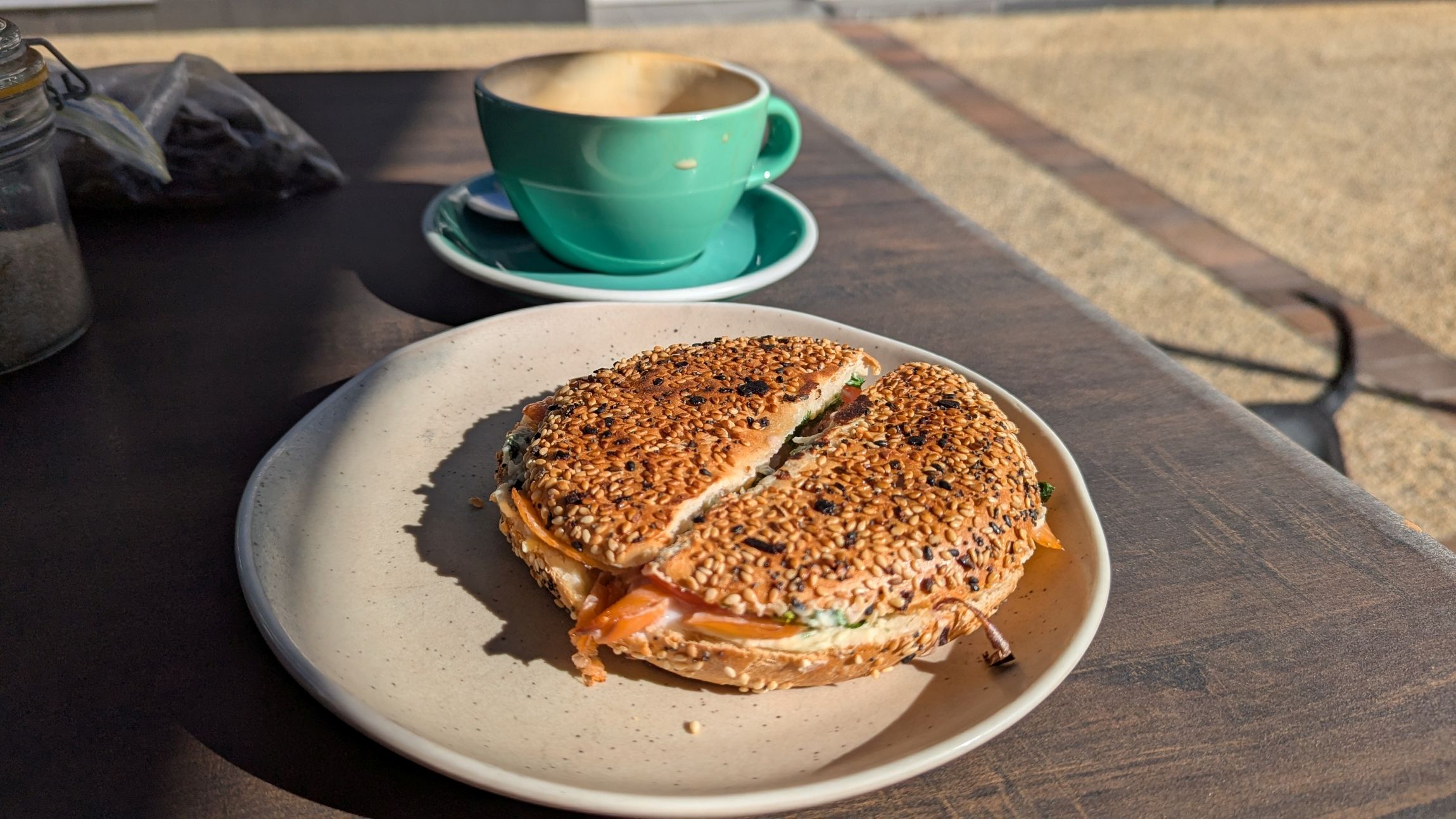
Breakfast at Kopiku is always a treat. On this occasion, it was great to see the wonderful meals that they serve – a far cry from our modest eggs on toast (sometimes with an extra).

Found on Facebook: Ida Leeson, Mitchell Librarian

Thank you, R.R.

It’s been a special week as we celebrated the unveiling of a Blue Plaque honouring the life and contributions of Ida Leeson.

Ida Leeson (1885–1964) was a trailblazer who helped shape our magnificent Library. Her appointment as the first female Mitchell Librarian in 1932 was groundbreaking — no other woman had held a senior management role in an Australian library before.

Under her leadership, the Library cemented its position as the nation’s leading repository for Australian and Pacific materials. She was instrumental in acquiring nationally significant collections, including the Angus & Robertson collection.

Ida was known for her generous assistance to readers and researchers. She stood for everything we value today: public knowledge, inclusion, and the power of libraries.

We’re thrilled that Ida was nominated for a Heritage NSW Blue Plaque by Pride History Group. You can find it proudly displayed at the Mitchell.

And another thank you to M.M. who mentioned on Facebook that Sylvia Martin had written a biography of Ida Leeson. This comment led me to finding the following interview from the Speaker Series.

Speaker Series Inner West Council, NSW Government Ida Leeson: A Life Not a Blue Stocking Lady with Dr Sylvia Martin

https://www.bing.com/ck/a?!&&p=1e27ce4dba030257d952faf55d9ee1be21ab086f686f2e7e7667916aff766f74JmltdHM9MTc1MTU4NzIwMA&ptn=3&ver=2&hsh=4&fclid=13ba6e79-23c4-6e1c-257e-7a95223e6f07&psq=sylvia+martin+ida+gleeson+nsw&u=a1aHR0cHM6Ly93d3cuaW5uZXJ3ZXN0Lm5zdy5nb3YuYXUvQXJ0aWNsZURvY3VtZW50cy8zMjQyMS9TeWx2aWElMjBNYXJ0aW4lMjBwb2RjYXN0JTIwLSUyMFRyYW5zY3JpcHQlMjBmaW5hbCUyMCgxKS5wZGYuYXNweA&ntb=1


Interviewer [00:00:00] Welcome to the Inner West Library Speaker series. Before we begin, I would like to acknowledge the Gadigal Wangal people of the Eora nation and pay my respects to the elders past, present and emerging. Today, we welcome author and historian Dr. Sylvia Martin, who has published widely. Our conversation will be about her award – winning biography, Ida Leeson A Life, Not a Bluestocking Lady.
Sylvia has written widely about feminist history and the neglected women in Australian history. In 1932, Ida Leeson became the first female librarian at Mitchell Library amidst a male dominated climate. Tying in with the podcast today. I would like to mention the large LGBTQI collection at Inner West Libraries and the podcast today is reflective of this collection. We have also named one of our balconies at Marrickville library after Ida.


[00:00:58] Welcome, Sylvia. Hello, Lysele. How are you? Good. How are you? Good.


[00:01:04] So what inspired you in writing the biography of Ida Leeson A Life?


Dr Sylvia Martin [00:01:11] Well, actually, a librarian inspired me. I was at the launch of my first book, Passionate Friends, which is about an Australian poet called Mary Fullerton. And her long term relationship with a woman called Mabel Singleton and her friendship with Miles Franklin. And I was at the launch of this book. And afterwards, this librarian came up to me and said, I think you should write about Ida Leeson. And I, the name, was familiar to me. And I went back and I found that Miles Franklin knew her really well. And she talked about her in her diary and in her letters. So I had a little bit of introduction and she sounded absolutely fascinating the more I looked into it. And I was fortunate enough to get the S.H. Carey Fellowship at the Mitchell Library to do my research on it.


Interviewer [00:01:59] It sounds fantastic.
[00:02:00] So when I was reading your book, I found the expression the bluestocking lady quite interesting. Could you talk a little bit about that?


Dr Sylvia Martin [00:02:09] Yeah. Yes. The Bluestocking lady was a disparaging
comment that was made by a former public librarian, John Metcalfe, who actually didn’t get the Mitchell Librarianship when Ida Leeson did. But he was promoted above her. So that’s a long story. But anyway, it was in the 80s he was retired and he made this comment about the early lady librarians, as he called them. And he said they were women who had a university degree but weren’t likely to get married. And he was really referring to women like Margaret Windeyer and Maude Fitz Harding, who were early
librarians, who came from the very upper class families. Margaret Windeyer’s father was a Supreme Court judge and Maud came from a very well known legal family, but Ida Leeson couldn’t have been further from that description. So that’s why I called her not a bluestocking lady, because she was born in Leichhardt and Leichhardt when she was born in 1885, was a very working class suburb. It was known as Struggle Town. Her father was a carpenter. And in the eighteen nineties depression, he went to Western Australia to find work and never came back. Her mother was a seamstress, so she brought up the children. There was no way that Ida was going to get to university except
under her own steam. So she got a scholarship to Sydney Girls High School and then she got a scholarship to Sydney University. And she was one of the early women graduates in 1906. And she did a B.A. in History honours and started at the public library in 1906, just after she graduated when she was 21.
Interviewer [00:04:03] That’s really, really fascinating, Sylvia. So how would you
describe Ida? Because, you know, apparently she was extraordinary.


Dr Sylvia Martin [00:04:11] Yes, she was extraordinary, she was extraordinary many ways. I mean, she was extraordinary because of her appearance. She was a very small woman. And there’s a picture of her in the front of my book. Actually, she’s sort of striding across the front of the page. She always wore a suit, a dark suit, but with a skirt and a collar and tie. And she always wore a hat and she wore a sort of a pork pie hat. And then in summer she might have worn a linen suit with a straw hat. And then she wore very sensible lace up shoes and lyle stockings. So she was she was quite unusual to look at, to start off with. And she was also extraordinary because she lived
with her partner, Florence Birch, for, well, they were together for 50 years. And she was extraordinary in her work because she was one which was certainly what we’d call today, a workaholic. She was an absolute, absolutely dedicated researcher. She, on her long service leave even when she was away on holidays in London, she found the missing Matthew Flinders log in a public record office in 1927. And she made other amazing discoveries. And, you know, yes, we certainly called her a workaholic.


Interviewer [00:05:25] So the Matthew Flinders Log is also very interesting because I actually come from Mauritius, and I do know, the story of Matthew Flinders being imprisoned on the island. I was quite fascinated reading that part. So in terms of Ida. She was very much instrumental in developing the collection and exhibitions at Mitchell Library. Yes. Why was that? Was that due to her passion or her initiative? What else can you tell me about that?


Dr Sylvia Martin [00:05:54] Well, I think it was her passion and her initiative. She was an amazing. She first started off in the Mitchell Library after she transferred from the public library when the Mitchell Library was started as a cataloguer. She learned cataloguing from the poet Christopher Brennan, who also worked there and cataloguing in those days was a pretty difficult subject. You know, it required quite a lot of research, it required her working in other languages. So she was a brilliant woman and she was just dedicated to her work there.


Interviewer [00:06:32] So I know that from your book, Ida was friendly with many people, but also she was quite stern with others. But I do remember her being very friendly with prominent people such as Miles Franklin and the Griffins.

[00:06:46] What attracted what had what attracted them to her? Well, Miles Franklin was one of the writers at the time, and she used to go into Mitchell nearly nearly every day, several days a week. She’d go in on the train from where she lived and come in and work in the Mitchell. And a lot of writers did. I mean, we might not realize today that the Mitchell Library was actually the hub of literary activity and intellectual activity in Sydney at the time that you couldn’t just go to a bookshop and buy a book. So Mitchell Library got all the new Australian books. So a lot of the writers used to actually go in to do their research, but also to read the latest writing. So many writers collected in the
library and Miles became friendly with Ida and used to bring her flowers from her garden. She’d have zinnias on her desk. And Ida also helped in proofreading, for instance, she proofread the woman I wrote my P.H.D on Mary Fullerton. She proofread a book of her poems that Miles was getting published. So there was a lot of interaction in the library.


[00:07:59] I think a very social person as well. I believe that she was very much involved in the, you know, the young theatrical productions that the Griffins put together.


Dr Sylvia Martin [00:08:10] Yes, she was. The Griffins and Ida are together because of will they come together because of Florence really. Florence Birch, Ida’s partner was a Theosophist. She was actually an anthroposothist which was the breakaway movement from theosophy. And so were Marion Mahony Griffin and Walter Burley Griffin. And Ida and Florence rented a house in Castlecrag, the suburb that the Griffins started as sort of the ideal suburb. And they lived in a Griffin house there. So that’s how they came to know the Griffins, who became very friendly with them.


[00:08:54] What’s the rest of your question.


Interviewer [00:08:55] So I think she was involved very much in doing the lighting for the productions that the Griffins put together.


Dr Sylvia Martin [00:09:01] Oh, yes, she was. She was. Yet there was the. Was an
amphitheatre in Castlecrag and Marion Mahony Griffin used to put on plays there. Florence was involved in them. And Ida was not a thespian, but there is a wonderful photo of her that’s in the Willoughby Library. And it’s reproduced in my book of Ida sitting in the audience.


[00:09:20] And she’s opened up in a winter coat and a hat and she’s holding a car headlamp at the stage to light the stage for one of the productions. Extremely eccentrically lady.


Interviewer [00:09:33] So you’ve mentioned a little bit about Florence Birch already. Could you expand more about the relationship between the two women and also how controversial that was for the time?


Dr Sylvia Martin [00:09:44] Well, it was controversial for the time, except that they just Ida just went around her way through her life. Florence was involved in everything she did. Everybody knew about her at the library. She used to bring her to functions. Florence was always there. And I don’t know that Ida ever mentioned the word lesbian, but they were an accepted couple and they were an open couple, which may have had something to do with the fact that it was very hard for Ida to get the Mitchell librarian position, although she was the most qualified for it in 1932. The word was that it was because she was a woman and that that position could never go to a woman. But I suspect that it had a bit to do with the fact that she was a lesbian as well. But anyway,
to get back to where she met Florence, I found it really hard to find out where they met this. There was nothing.


[00:10:40] Nobody remembered where they met. And I discovered that Florence worked for the YWCA in Sydney and she was a New Zealander. But she came and she worked in Sydney for the YWCA. And I looked through their records. And in 1910, Florence had a literary circle at the YWCA and Ida’s name is there. So I suspect that’s where they met. So they kind of met at a formal version of a book club, really in about 1910. And then Florence went back to New Zealand in 1912 because she got a very senior job with the YWCA there. And she opened a whole of different branches in New Zealand. She used to come back every year and stay with Ida. And then she actually retired. She
was really exhausted in 1923. So that’s quite a long time after they met. But then they moved in together for the first time and they, first of all, lived in a flat in Stanley Street just near the library. And then they moved to Castlecrag in 1930 and lived there for three years. And the rest of their lives, they lived in a flat in Kirribilli and they were together until Florence died in 1957.


[00:11:53] So as I mentioned before, obviously that was very controversial from the times. But it seems that the relationship was very strongly. Well, very strong and had a strong foundation.


[00:12:10] After Florence died a friend of theirs told me that when she met Ida just after Florence had died, she said Ida was pale yellow in colour and she asked her how she was feeling. And she said, I’m bleeding inside. So I found that incredibly touching and moving, very sad about her partner that she’d been with for 50 years.


Interviewer Yeah. Very sad as well.


Interviewer [00:12:37] Yeah. So, Sylvia, there’s been a lot of speculation about Ida’s bloomers. Can you talk about this?


Dr Sylvia Martin [00:12:46] I can. I can. There is I devoted a whole chapter at the end of the book called the spinsters bloomers Ida’s bloomers because it kept coming up. Whenever I interviewed anybody, there’s this Bloomers story would come up and others. It’s so weird. And I found out that it originated with the historian Manning Clark, who was in fact, very friendly with Ida and Florence, but he used to circulate the story about Ida’s bloomers, and he says that when Ida was the Mitchell Librarian and because she always wore a skirt, she didn’t wear slacks, but she would go up the ladder to get books and the readers would ask her to go up to the ladder because every day she had bloomers down to her knees and they would be have a different coloured bow on them. So the readers wouldn’t. It’s a complete myth. It never happened. Florence was the one who had bows and not Ida. And also Ida did didn’t go up. There was no ladder in the Mitchell Library where the Mitchell Library was then, is now the reader’s room. And the main Mitchell library was the public library. And so the old Mitchell Library didn’t have ladders to the shelves. The young readers didn’t read in. They were mainly well established researchers who read in there. And Ida wouldn’t have been climbing ladders us to fetch books for them. So I don’t know where the story comes from. But anyway, Manning Clark perpetuated it and told it everywhere. And it it’s a story that’s lived on.


Interviewer [00:14:22] How strange!

Dr Sylvia Martin [00:14:24] Well, I sort of think that Ida was a woman that men couldn’t quite cope with. They couldn’t. You know, she was such an unusual woman. And although it’s about bloomers. But she was a middle aged woman when he met her. And so it’s sort of not sexual, but it’s slightly prurient. I think it’s I think it’s a very, very weird story. And I do try to tease it out in the book. See Further Commentary and Articles arising from Books* and continued longer articles as noted in the blog for the complete discussion.

Week beginning 2 July 2025

Katrina Lockwood The Mystery of Isabella and the String of Beads A Woman Doctor In World War 1 Loke Press, 2017.

I originally reviewed this book on the Women’s History Network blog, in 2017. A long time ago, but the approach to writing history as well as the content deserves another airing.

The back-cover blurb tells us:

‘It was the inscription that made the antique scalpels so tantalising: ‘Isabella Stenhouse’. A woman doctor? A woman doctor who was rumoured to have served in the First World War? Could Isabella have treated wounded men with these very implements? And had a grateful German prisoner of war really given her the strange string of beads that tangled round her stethoscope?  Coaxing clues from archives across Europe, Katrina Kirkwood traces Isabella’s route from medical school to the Western Front, Malta and Egypt, discovering as she travels that Dr Stenhouse was not only one of the first women doctors who worked with the British Army – she was also a woman carrying a tragic secret, torn between ambition and loyalty to her family.’

 Katrina Kirkwood’s The Mystery of Isabella and the String of Beads: A Woman doctor in WW1 is an utter joy to read.

Kirkwood has written an intriguing, historically adept account stemming from investigation of her great grandmother’s beads. As historians, we are always trying to fill in the gaps: pages or even just a page missing from a diary can slant events; sometimes events are unrecorded – we do not know all the thoughts and everyday occurrences that contribute to decisions and momentous events; there are multiple sources of evidence, some conflicting. Writers of historical fiction, if their work is well researched, come up with some plausible solutions to add to historical knowledge. Some historians speculate; others limit their work to that which can be ‘proven’. Indeed, the latter is what was called history before the 1970s expansion of history into social history. Then, recording facts ceased to be the only way in which history was written. See Books: Reviews for the complete review.

Dr Christopher Herbert Jane Austen’s Favourite Brother, Henry Pen & Sword | Pen & Sword History, May 2025.*

Thank you, NetGalley, for providing me with this uncorrected proof for review.

Christoher Herbert’s history employs one of the most useful strategies when dealing with a subject for whom the material is sparse. In this case, there is an abundance of material about Jane Austen who has been the subject of so many biographies. However, Herbert does not rely solely on this and has adroitly using his independent research, bolstering it with material that sets the context for events that are not recorded. He also uses the more conventional way of contributing to research when dealing with a writer – studying the author’s work for clues. In this case, both Jane and Henry Austen’s writing. This is a work of substance, accessible writing, a broad history of the time and social mores, and an intriguing insight into Henry and his family, including Jane for whom it becomes clear, Henry was indeed her favourite brother.

There are wonderfully comic passages – the discussion of studying at Oxford and Cambridge in the period was delightful. Less attractive is the recognition of the family’s slavery connections. However, these topics and a multitude of others, including reference to Austen’s novels, provide a picture of the father of these two affectionate siblings. Valuable information about the way in which the siblings were raised and educated and the ideas that permeated their lives, is also afforded though reference to Cassandra Leigh’s background. A Thomas Gainsborough painting also provides information about the society in which the siblings were raised – a society in which Jethro Tull’s invention was a part, for example. Although wider changes in society may not feature in Austen’s novels, Herbert provides a picture that demonstrates her choice of background was one of many available to her. See Books: Reviews for the complete review.

*See article below ‘For Jane Austen and her heroines, walking was more than a pastime – it was a form of resistance’, copied under Creative Commons from The Conversation.


Australian classic My Brilliant Career gets a Netflix remake*

Abe Maddison
Jun 22, 2025, updated Jun 23, 2025

The the new production of the classic story stars Philippa Northeast and Christopher Chung.

The the new production of the classic story stars Philippa Northeast and Christopher Chung. Photo: Netflix

Netflix has started production on a series based on Miles Franklin’s classic novel My Brilliant Career, creating hundreds of jobs and injecting a record $17 million into a state economy.

The streaming giant is partnering with Jungle Entertainment on the fresh take on the 1901 coming-of-age tale, which resonated deeply with a generation of young Australian women who longed for the freedom to shape their own destinies.

South Australian Arts Minister Andrea Michaels said the production, which has started filming in Adelaide and across SA, will create 450 local jobs across key creatives, crew and extras and engage 260 small businesses.

It represented the largest local expenditure of any TV series made in the state, she said on Wednesday.

Netflix has not revealed the budget for the series, which will stream globally, but the SA government said the projected economic return to the state was $17 million.

The book’s original 1979 movie adaptation – directed by Gillian Armstrong, and starring Judy Davis, Sam Neill, and Wendy Hughes – won significant critical acclaim, receiving nominations for the Academy Award for best costume design, and the Golden Globe for best foreign film.

The story follows a young woman in rural, late-19th-century Australia whose aspirations to become a writer are impeded by her social circumstances and a budding romance.

Netflix vice president Minyoung Kim said it was a “timeless Australian story with themes as relevant today as when it was originally published”.

“We’re excited to be partnering with some of Australia’s best creatives and talent to bring this story to a whole new generation on Netflix, and with its stunning locations, there’s no better home for this production than South Australia,” she said.

Writer and executive producer Liz Doran said it was “a privilege to work with so many incredible creatives on this reimagining of Miles Franklin’s rollicking tale of a young woman’s quest to determine her own life”.

Locations across the state are being transformed for the period production, with filming in the SA Film Corporation’s Adelaide Studios and across the city, the Barossa region and the South-East.

The cast includes Philippa Northeast (Territory) as Sybylla and Christopher Chung (Slow Horses) as Harry, as well as Anna Chancellor (My Lady Jane), Genevieve O’Reilly (Andor), Kate Mulvany (Hunters), Jake Dunn (What It Feels Like For a Girl), Alexander England (Black Snow), Sherry-Lee Watson (Thou Shalt Not Steal) and Miah Madden (Paper Dolls).

My Brilliant Career is the second major Netflix series to be made in SA in as many years following Outback drama Territory, which premiered in 2024.

The SAFC and Netflix have partnered to create four training roles to work on My Brilliant Career including a production design assistant, costume assistant, costume maker/machinist attachment and safety attachment.

*See Blog 11th June 2025 for a review of Miles Franklin Undercover.

-AAP

American Politics

The Week Ahead

Joyce Vance from Civil Discourse <joycevance@substack.com> Unsubscribe

Forwarded this email? Subscribe here for more

 Where do we go from here?

The Supreme Court dropped a bombshell on Friday. It was not unexpected, but that did not make it any less dramatic.

You’ve likely already seen that decision in Trump v. Casa, the birthright citizenship case. In a 6-3 decision, the Supreme Court held that “universal” injunctions (nationwide injunctions) exceed the power of the federal courts. The decision rejects the nationwide injunctions entered by federal district judges in three different districts that halted Trump’s efforts to end birthright citizenship. Justice Amy Coney Barrett’s majority opinion granted the government’s request to stay those nationwide injunctions, but only partially. What “partially” means here is that they remain in effect to the extent necessary to provide “complete relief” to the existing plaintiffs.

The cases themselves—this appeal involved only the question of whether the courts can order nationwide injunctions—now go back to the lower courts for further proceedings. As we’ve noted, the government cannily maneuvered to avoid bringing the substantive issue at the heart of the case, the president’s ability to do away with birthright citizenship, into the appeal. Although there were whispers about it around the edges, it wasn’t the issue. That’s up next. So it’s helpful to look at the exact relief the Court ordered. Here it is, as set forth by Justice Barrett: The Government’s applications to partially stay the preliminary injunctions are granted, but only to the extent that the injunctions are broader than necessary to provide complete relief to each plaintiff with standing to sue.

The lower courts shall move expeditiously to ensure that, with respect to each plaintiff, the injunctions comport with this rule and otherwise comply with principles of equity.

The injunctions are also stayed to the extent that they prohibit executive agencies from developing and issuing public guidance about the Executive’s plans to implement the Executive Order.

Consistent with the Solicitor General’s representation, §2 of the Executive Order shall not take effect until 30 days after the date of this opinion.

Now, we get to the part of the decision that makes it appropriate as the topic of “The Week Ahead” column. The impact of the ruling in Trump v. Casa extends beyond this case. It applies to all cases where nationwide injunctions are currently in place. It also means litigants will lose this tool as a way of countering some of the most egregious, unconstitutional steps taken by this administration. Few things that happen quickly in a courtroom. Although lawyers will still be able to obtain temporary or preliminary injunctions on an emergency basis, they will only be applicable to individuals who are identified victims and have access to a lawyer. The decision signals the loss of one of the best tools lawyers have had in their arsenal for dealing with this administration’s constitutional excesses. It is not the only tool, but it was a significant one.

Under the decision, district judges may only enter injunctive relief for the parties in front of them, or perhaps in some limited cases to larger groups where it is essential to giving the plaintiffs before the court “full relief” (stick a pin in that; what constitutes “full relief” is a question the lower courts are going to get to fairly quickly). That means individual lawsuits can be filed, districtwide injunctions may still be on the table, and some lawyers have already converted or are in the process of converting their cases to class actions.

Class actions are authorized by the Federal Rules of Civil Procedure. They allow one or more plaintiffs to file a case and then ask the judge for permission to proceed on behalf of a larger “class” of people who are similarly situated, have the same claims, and will be made whole by the same relief. If you’ve ever received a notice in the mail advising you of court proceedings if you had a certain kind of car or certain kind of phone, etc., during a certain period of time, you get the idea. There are different kinds of class actions, but what is envisioned here are proceedings under Rule 23(b)(2), which allows a district judge to certify a class where “the party opposing the class has acted or refused to act on grounds that apply generally to the class, so that final injunctive relief or corresponding declaratory relief is appropriate respecting the class as a whole.” In our scenario, the “party opposing the class” is the United States of America, as Donald Trump seems to systematically strip out basic constitutional and legal protections.

The class mechanism is good insofar as it goes, but it takes time, sometimes months, to certify a class. It’s a cumbersome mechanism compared to the nimble temporary restraining order. It remains to be seen whether judges will attempt to move them more quickly under these circumstances, but by their nature, they’re going to take more time. It is possible to certify a nationwide class, although, as with nationwide injunctions, there is some criticism of these devices. At the end of a class action, the outcome applies to all members of the class and binds the defendants.

To be fair, it’s not just Republicans who have questioned nationwide injunctions. Democrats looked askance as a Texas judge purported to limit access to medicated abortion. When nationwide injunctions are used to prevent the president from taking certain steps, the opposition to the decision is usually animated by politics. Justice Barrett’s criticism was grounded in our history: “Because the universal injunction lacks a historical pedigree, it falls outside the bounds of a federal court’s equitable authority under the Judiciary Act.”

The Court held that since nothing like nationwide injunctions existed at the time of the founding, the courts didn’t have the power to use them now. (In footnote 10, something else we’ll put a marker on for the future, Justice Barrett noted that “Nothing we say today resolves the distinct question whether the Administrative Procedure Act authorizes federal courts to vacate federal agency action”—this could mean there is a carve out that allows nationwide injunctions against an executive branch agency where a challenge under the APA is involved, but we’ll take that complicated subject up another day.) We can rail against her reasoning, but that is now the law. This is one of those decisions where even those who disagree with it will find a legal basis underlying it. It’s not an abrupt departure from stare decisis, or precedent, like Dobbs, the abortion decision, was.

The plaintiffs argued that “the universal injunction ‘give[s] the Judiciary a powerful tool to check the Executive Branch.’” Justice Barrett’s response was that “federal courts do not exercise general oversight of the Executive Branch; they resolve cases and controversies consistent with the authority Congress has given them.” She concluded that “When a court concludes that the Executive Branch has acted unlawfully, the answer is not for the court to exceed its power, too.”

The concern here extends beyond the ruling itself. It’s that it happened in this particular case. The Supreme Court has discretion over which cases to hear. It has had numerous opportunities over time to address the constitutionality of nationwide injunctions. The fact that it chose to hear it and issue this rule in this particular case is what is most concerning. What does it foreshadow?

The law regarding birthright citizenship is clear and well-established. Nor can Presidents rewrite amendments to the Constitution with a stroke of a pen. So why, in this particular case, where the injunctions prevent the administration from doing something that is so clearly wrong and will be so harmful—depriving newborns of citizenship—would the Court decide it’s the right time to take the step of pushing aside the injunctions? It’s hard to believe there was a sudden upswell of concern about protecting the defenseless presidency from overreach by the courts. This case will have real impacts on real people’s lives 30 days from now, and when, or rather if (because there are concerns the solicitor general will posture to keep the substantive birthright citizenship issue out of the sights of the Court) the Court decides that Trump was wrong a couple of years down the road, many people will have been damaged in ways that will be hard to undo. Not all of them will have the resources to find a lawyer and file a lawsuit of their own.

Dismissing the nationwide injunctions makes Trump’s executive order ending birthright citizenship the law of the land in 30 days, unless something else happens. And if you’re feeling some deja vu, so am I. It reminds me of when Texas passed its vigilante justice law that allowed private citizens and government officials alike to pursue women who’d had abortions in the courts, and the Supreme Court, instead of letting a decision enjoining it stay in place, told Texas, “Naw, go ahead.” That was when we saw the writing on the wall for Roe v. Wade and knew it was only a matter of time.

It’s hard to believe that could be the case here, that the Court would really sign off on a president’s ability to change the law with a wave of his newly minted magic wand (presidents didn’t have one of those at the time of the founding, but oh well). However, for those of us who didn’t believe a president was entitled to immunity from prosecution if he used SEAL Team Six to execute a political rival, well, the Supreme Court had news when it decided the presidential immunity case. Nothing is as certain as it used to be.The concern here is, of course, about more than just the ruling in Casa, it’s about what comes next. We will begin to find that out pretty quickly. Lawyers will be back in court this week, and we will watch the proceedings closely to see how district judges react to the Supreme Court’s ruling. In some ways, this is the Supreme Court putting the lower courts in their place and telling them to stay there. Justice Barrett wrote that the lower courts shouldn’t exceed their authority, even when a president does. “When a court concludes that the Executive Branch has acted unlawfully, the answer is not for the court to exceed its power, too.” That’s tantamount to saying there’s little that can be done about a president who runs amuck, except in a piecemeal fashion.

The dissents to the opinion are brilliant and sad at the same time and have been widely quoted, but I’d encourage you to read them for yourself. Sometimes, the story of a case and an understanding of the rule of law it imposes are best understood through the dissents. I find that to be the case here. Justice Ginsburg used to say that dissents are written for the future. One hopes that is the case here and there will come a time when we will listen to the Justices who wrote in dissent.

Justice Sotomayor exposes the government’s devious strategy—attacking the nationwide injunction mechanism in hopes that it can, as it now will be able to, exploit a ruling that cuts across more cases than just this one and allows it to continue dismantling democracy.

She explains:

The Government does not ask for complete stays of the injunctions, as it ordinarily does before this Court. Why? The answer is obvious: To get such relief, the Government would have to show that the Order is likely constitutional, an impossible task in light of the Constitution’s text, history, this Court’s precedents, federal law, and Executive Branch practice. So the Government instead tries its hand at a different game. It asks this Court to hold that, no matter how illegal a law or policy, courts can never simply tell the Executive to stop enforcing it against anyone. Instead, the Government says, it should be able to apply the Citizenship Order (whose legality it does not defend) to everyone except the plaintiffs who filed this lawsuit.The gamesmanship in this request is apparent and the Government makes no attempt to hide it. Yet, shamefully, this Court plays along. A majority of this Court decides that these applications, of all cases, provide the appropriate occasion to resolve the question of universal injunctions and end the centuries-old practice once and for all.…No right is safe in the new legal regime the Court creates. Today, the threat is to birthright citizenship. Tomorrow, a different administration may try to seize firearms from law-abiding citizens or prevent people of certain faiths from gathering to worship. The majority holds that, absent cumbersome class-action litigation, courts cannot completely enjoin even such plainly unlawful policies unless doing so is necessary to afford the formal parties complete relief. That holding renders constitutional guarantees meaningful in name only for any individuals who are not parties to a lawsuit. Because I will not be complicit in so grave an attack on our system of law, I dissent.”

Justice Jackson writes: “I lament that the majority is so caught up in minutiae of the Government’s self-serving, finger-pointing arguments that it misses the plot. The majority forgets (or ignores) that ‘[w]ith all its defects, delays and inconveniences, men have discovered no technique for long preserving free government except that the Executive be under the law, and that the law be made by parliamentary deliberations.’ … Tragically, the majority also shuns this prescient warning: Even if ‘[s]uch institutions may be destined to pass away,’ ‘it is the duty of the Court to be last, not first, to give them up.’”

There is no denying our democracy is in a difficult place. But do not be hopeless, and do not give up. That is, quite literally, what this administration wants us to do. If anything, this decision makes it even more important for us to continue our citizen-led democracy movement. Keep protesting, stay informed, and prepare for the midterm elections. “A Republic if you can keep it,” is now.

We’re in this together,

Joyce

P.S.: If you value fact-based legal analysis from a former United States Attorney with 25 years of experience at DOJ, I hope you’ll consider subscribing to Civil Discourse. Cut through the noise. Understand what’s really happening—and why it matters.

The Stepford Supporters: Inside MAGA’s scripted response to literally everything | Opinion

Opinion by J. Basil Dannebohm

In most cults, having an independent opinion is discouraged and even punished. Group leaders often suppress critical thinking and skepticism, viewing them as a threat to the movement’s unity and control. Members who express doubts or disagree are often viewed as “traitors” and a threat. Finding themselves forbidden from drifting off script, they are forced to parrot talking points handed down to them by the cult lieutenants.

Bertrand Rusell once observed, “As soon as we abandon our own reason and are content to rely upon authority there is no end to our troubles.”

When the TACO gestapo descended on Los Angeles to conduct ICE raids, three MAGA “influencers” – Charlie Kirk, Jack Posobiec, and Matt Walsh – all posted the same message to X within a few hours of each other:

“It’s time to ban third world immigration, legal or illegal. We’ve reached our limit and we have a huge cultural, educational, housing, financial, and essential services problem to fix now because of it. We need a net-zero immigration moratorium with a ban on all third worlders.”

It wasn’t long before MAGA armchair soldiers started posting the same message, verbatim, in comment threads across multiple platforms.

Granted, the rhetoric was far more articulate than what had been peddled by the cult leader himself. Regarding the first “50501” rallies that took place in the spring, Harris Faulkner of Fox News asked Mr. Trump, “What do you think they [protestors] need, right now, from you?”

“Protesters for different reasons. You’re protesting also because, you know, they just didn’t know. I’ve watch – I watched very closely. Why are you here? They really weren’t able to say, but they were there for a reason, perhaps,” the 47th President of the United States replied. “But a lot of them really were there because they’re following the crowd. A lot of them were there because what we witnessed was a terrible thing. What we saw was a terrible thing. And we’ve seen it over the years. We haven’t, you know, this was one horrible example, but you’ve seen other terrible examples. You know that better than anybody who would know it. And I know it. I’ve seen it, too. I’ve seen it before I was president. I’ve seen it. I think it’s a shame. I think it’s a disgrace. And it’s got to stop.”

When the second round of rallies, known as the “No Kings” protests, made headlines, it was obvious the lieutenants handed out the official response. Once again, cult member upon brainwashed cult member took to comment threads offering the same line: “If a king were in power, you wouldn’t have the right to protest.”

The French Revolution was, in part, a protest against King Louis XVI. It stemmed from widespread discontent with the monarchy’s absolute power as well as social inequalities and economic hardships faced by the common people.

It’s mildly ironic that on June 11th, just days before the protests, Mr. Trump attended a performance of Les Misérables, a musical about the French Revolution. It’s downright humorous that some patrons paid $2 million to sit in a performance box, attend a VIP reception with the President, and take a photo with him; while others paid no less than $100,000 to attend the performance, a reception and receive a photo of the demagogue.

A week or so later, following the unprovoked strike on Iran, the official response posted by the Proud Boys, Gravy Seals, and Meal Team Six read: “If you’re no longer MAGA because Trump wiped out Iran’s nuclear sites, you were never MAGA to begin with.”

Henry David Thoreau wrote, “Think for yourself, or others will think for you without thinking of you.”

Ezra Klein seems to agree.

“Trump is acting like a king because he’s too weak to govern like a president. He is trying to substitute perception for reality. He is hoping that perception becomes reality. That can only happen if we believe him,” the New York Times columnist observed.

The MAGA movement, on the other hand, believes and says what they’re told, when they’re told. Theirs is a Stepford approach. To observe this, one only needs to revisit the faces, void of emotion, that sparsely lined Constitution Avenue for Trump’s military parade-charade.

Attempting any form of dialogue with a member of MAGA is often like trying to communicate with a brainwashed clone. Whether out of fear or ignorance, they’ll rarely drift from the assigned talking points. Hence, most efforts to foster understanding are futile.

J. Basil Dannebohm is a writer, speaker, consultant, former Kansas legislator and intelligencer. His website is www.dannebohm.com. Mr. Dannebohm is a member of the Virginia Press Association and the National Society of Newspaper Columnists. He writes from the Washington DC metro in the Commonwealth of Virginia.

Secret London

The Smallest Town In England Is Less Than An Hour From London – And It’s Home To Lots Of Lovely Independent Coffee Shops And Its Own Mini Beach

Perched on the banks of the River Stour, just an hour from the capital city, is a teeny-tiny town that’s small by oh-so mighty.

 Katie Forge – Staff Writer • 24 June, 2025

Credit: Chris Heaton via Wikimedia Commons / CC BY-SA 2.0

If good things come in small packages; this teeny-tiny town must be pretty bloody brilliant. Spanning just 47 acres, Manningtree in Essex is the smallest town in England. Well, the smallest by size, that is. The smallest town by population is down in Kent – but that’s an article for another day, I suppose.

Manningtree is a charming riverside town, sat on the banks of the River Stour. Perched proudly on the edge of the Dedham Vale Area of Outstanding Natural Beauty; this small-but-mighty spot is cute, charming and steeped in history. A trio of traits that make for a pretty great day-trip destination, don’t you think?

Things to do in Manningtree

What Manningtree lacks in size, it makes for with things to do in spades. With its beautiful Georgian streets that boast an abundance of local coffee shops, cafes, and pubs; Manningtree has a vibrant community and thriving independent business scene. You could easily spend an entire day hopping from eatery to drinkery. If, however, you like to spend your days doing more than just stuffing your face (can’t relate, but fine); you need not worry.

There’s something historic, interesting, or utterly gorgeous to gawp at with every turn. There’s North House Gallery for the culture-vultures, Manningtree Emporium for the antique-fiends, Manningtree Library for the literature-lovers, and the nearby Wrabness Nature Reserve for those of you who fancy inhaling some actual fresh air and partaking in a spot of bird-watching. Manningtree also boasts its very own mini man-made beach; a small patch of sand on the banks of the river that makes for a rather popular summery swimming spot at high-tide.

Getting to Manningtree from London

Manningtree is within pretty easy reach from London, with direct and fairly regular trains from Liverpool Street taking around 55 minutes. The drive is slightly longer, taking approximately an hour and a half. But once you get to Manningtree, there’s plenty of pay-and-display parking available.

London’s Closest Sandy Beach Is On The Piccadilly Line – And It’s Hidden In A Forest Twice The Size Of Hyde Park

This vast green space, twice the size of Hyde Park, provides a stunning natural backdrop for the Lido’s sandy beach, a rare sight in the capital.

 Vaishnavi Pandey – Staff Writer • 26 June, 2025

When you think of sandy beaches near London, your mind probably drifts to the coast – Brighton, Bournemouth, or maybe even further afield. But what if we told you that the closest sandy beach to London is actually nestled deep within a sprawling 700-acre ancient woodland, just a short journey on the Piccadilly Line?

Welcome to Ruislip Lido, a hidden gem offering a unique blend of forest tranquility and seaside fun, all within Greater London’s boundaries!

Ruislip Lido is a 60-acre reservoir located on the edge of Ruislip Woods National Nature Reserve, one of the largest areas of ancient woodland in London. This vast green space, twice the size of Hyde Park, provides a stunning natural backdrop for the Lido’s sandy beach, a rare sight in the capital. The beach itself was created in the 1950s by importing sand, transforming part of the reservoir’s shoreline into a genuine sandy spot where families can relax, build sandcastles, and enjoy the feel of the seaside without leaving London.

Ruislip Lido is more than just a beach. It’s a full family spot with plenty to keep everyone entertained. Kids will love the pirate ship-themed play area complete with climbing frames and swings, as well as the splash pad for cooling off on warm days. For adults, there’s an outdoor gym to keep active, and plenty of grassy spaces for picnics or lounging.

One of the Lido’s standout attractions is Britain’s longest 12-inch gauge miniature railway. This charming little train takes visitors on a scenic loop around the lake and through the surrounding woods, offering a delightful way to explore the area without tiring little legs.

Surrounding the lido, Ruislip Woods offers peaceful woodland walks where you can immerse yourself in nature. The area is rich with wildlife and features educational planet-themed signs along the way, adding an unexpected twist to your stroll. Birdwatchers and nature lovers will find plenty to admire in this serene environment.

While the beach invites you to play and relax, swimming and boating are not permitted in the reservoir due to safety concerns such as cold water shock and underwater hazards. Fishing is allowed seasonally with a licence, but check local guidelines before planning your trip.

How to access London’s closest beach
Ruislip Lido Beach
Photo: @wisemanbrian

Getting to this hidden beach is surprisingly simple. Take the Piccadilly Line to Ruislip Station, then hop on one of the local buses (H13 or 331) that whisk you directly to the Lido. The entire journey from central London takes about an hour, making it an ideal day trip for city dwellers craving a bit of sun and sand without the hassle of long travel.

Parking is available but limited, so public transport is recommended. There are also cafes and restaurants nearby where you can grab refreshments and recharge after a day of outdoor fun.

Ruislip Lido offers a rare chance to enjoy a sandy beach experience without leaving London’s borders, all set against the backdrop of an expansive ancient forest. Whether you’re building sandcastles, riding the miniature railway, or simply soaking up the peaceful woodland atmosphere, it’s a perfect spot for families, nature lovers, and anyone seeking a refreshing break from city life.

So next time the sun shines and you crave the beach, remember: London’s closest sandy shore is just an hour away on the Piccadilly Line, waiting to be discovered in the heart of a 700-acre forest.

Cindy Lou eats at My Rainbow Dreams

It is years since I ate at My Rainbow Dreams, but it certainly will not be years before I eat there again. I had forgotten the freshness of the salads and the flavoursome meals. It was also wonderful to reacquaint myself with the friendliness and efficiency of the staff. I had a lentil burger – the right amount of spice in the burger and an excellent satay sauce which did not overwhelm the freshness of the salad. My friend had a haloumi burger which was reasonably successful, with a delicious sauce and tabouli accompanying the haloumi. Unfortunately, that was a little leathery, but certainly not inedible. The drinks were delicious.

The Conversation *

June 26, 2025

Author Nada Saadaoui PhD Candidate in English Literature, University of Cumbria

Nada Saadaoui does not work for, consult, own shares in or receive funding from any company or organisation that would benefit from this article, and has disclosed no relevant affiliations beyond their academic appointment.

For Jane Austen and her heroines, walking was more than a pastime – it was a form of resistance

In Pride and Prejudice (1813), when heroine Elizabeth Bennet arrives at Netherfield Park with “her petticoat six inches deep in mud”, she walks not only through the fields of Hertfordshire, but into one of literature’s most memorable images of women’s independence.

Her decision to walk alone, “above her ankles in dirt”, is met with horror. “What could she mean by it?” sneers Miss Bingley. “It seems to me to show an abominable sort of conceited independence.” And yet, in that walk – unaccompanied, unfashionable, unbothered – Elizabeth reveals more about her spirit and autonomy than any parlour conversation could.

For Austen’s heroines, independence – however “abominable” – often begins on foot. Elizabeth may be the most iconic of Austen’s pedestrians, but she is far from alone. Across Austen’s novels, women are constantly in motion: walking through country lanes, walled gardens, shrubberies, city streets and seaside resorts.

These are not idle excursions. They are socially legible acts, shaped by class, decorum, and gender – yet often quietly resistant to them.


This article is part of a series commemorating the 250th anniversary of Jane Austen’s birth. Despite having published only six books, she is one of the best-known authors in history. These articles explore the legacy and life of this incredible writer.


Fanny Price, the often underestimated heroine of Mansfield Park (1814), is typically seen as timid and passive. Yet beneath her reserved exterior lies a quiet but determined spirit.

“She takes her own independent walk whenever she can”, remarks Mrs Norris disapprovingly. “She certainly has a little spirit of secrecy, and independence, and nonsense about her.” Austen’s choice of “nonsense” here is revealing: Fanny’s desire for solitude and self-direction is not revolutionary, but it is gently subversive. In a world offering women little room for self-assertion, her steps become acts of resistance.

When Jane Fairfax, constrained by class and circumstance in Emma (1815), declines a carriage ride, she asserts: “I would rather walk … quick walking will refresh me.” It’s a seemingly modest decision, but one layered with significance. To walk is to control your own movement, to maintain autonomy and resist the genteel suffocation of being constantly observed or helped.

In Persuasion (1817), Anne Elliot’s story shows walking as a path to renewal. Reserved and long burdened by regret, Anne finds restoration in the coastal air of Lyme Regis. As she walks along the Cobb, Austen notes that “she was looking remarkably well … having the bloom and freshness of youth restored by the fine wind … and by the animation of eye which it had also produced”.

Her emotional reawakening is framed as a physical one. Walking becomes not only therapeutic but transformative – a way back to herself.

Not all of Austen’s walks are reflective or restorative. Some are decidedly social. Lydia and Kitty Bennet’s frequent walks to Meryton in Pride and Prejudice, for example, are driven as much by shopping as by the hope of romantic encounters.

Austen notes the “most convenient distance” of the village, where “their eyes were immediately wandering up in the street in quest of the officers”. These girls were more interested in uniforms than in bonnets.

Yet even this behaviour hints at something subtler. For young, unmarried women, shopping and social errands were among the few socially sanctioned reasons to move independently through public space. These excursions offered moments of visibility, mobility, and the possibility of courtship – however frivolously pursued.Kitty and Lydia walk to Meryton in order to encounter the officers.

Catherine Morland of Northanger Abbey (1817), a devoted reader of gothic fiction, fuses her walks with imagination. As she strolls along the Avon River with the Tilneys, she muses: “It always puts me in mind of the country that Emily and her father travelled through in The Mysteries of Udolpho.” Walking becomes an act of imaginative projection, where the boundaries between fiction and reality blur in the mind of a heroine learning to navigate both the world and herself.

Jane Austen the walker

Austen’s fiction draws much of its vitality from her own experiences. She was, by her own admission, a “desperate walker”, rarely deterred by weather, terrain or propriety.

Jane Austen in a watercolour painting, facing away from the painter
A watercolour of Jane Austen by her sister Cassandra, showing her looking out to sea. It was painted while they were on holiday in Lyme Regis in 1804. Wiki Commons

Her letters, written from Bath, Steventon, Chawton and elsewhere, capture the physicality and pleasure of walking in vivid, often playful detail. These glimpses into her daily life reveal not only her attachment to movement but also the quiet autonomy it afforded her.

In 1805, Austen writes from Bath: “Yesterday was a busy day with me, or at least with my feet & my stockings; I was walking almost all day long.” Several years later, in 1813, she reports with unmistakable relief: “I walked to Alton, & dirt excepted, found it delightful … before I set out we were visited by several callers, all of whom my mother was glad to see, & I very glad to escape.”

Perhaps most revealing is an earlier letter from December 1798, in which Austen describes a rare solitary excursion: “I enjoyed the hard black frosts of last week very much, & one day while they lasted walked to Deane by myself. I do not know that I ever did such a thing in my life before.” The comment registers the novelty and boldness of a woman walking alone.

In an age where walking is once again praised for its physical and mental benefits, Austen’s fiction reminds us that these virtues are not new. Her characters have been walking for centuries – through mud, across class boundaries and against expectation.

They walk in pursuit of clarity, connection, escape and self-hood. Their steps – measured or impulsive, solitary or social – mark turning points in their lives. And in a world designed to keep them stationary, their walking remains a radical act.

This article features references to books that have been included for editorial reasons, and may contain links to bookshop.org. If you click on one of the links and go on to buy something from this website, The Conversation UK may earn a commission.

*Republished under Creative Commons License

2025 Canberra Writers Festival Schools Day!

The program for the inaugural 2025 Canberra Writers Festival Schools Day is now live, and bookings are open.

Featuring bestselling and award-winning YA authors Jack Heath, Tegan Bennett Daylight, Lili Wilkinson, and Lisa Fuller. The day will be filled with storytelling, critical thinking, and creative exploration. 

When: Thursday 23 October 2025
Where: National Library of Australia
Who: Years 9-12 students
Cost: $20 per student | 1 free teacher per 25 students | $15 optional writing workshop

View the Schools Day Program here. 

We can’t wait to welcome students to this exciting new program!

And we’re on the countdown to launch the full festival program in the coming months – stay tuned!

Book Now

Interested in Volunteering at CWF? 
Volunteers play an integral role in the coordination of the Festival and are an important part of the team. Canberra Writers Festival values the skills and the time generously contributed by our volunteers each year. You’ll get the chance to meet new people, make friends and learn new skills in a creative, fun environment.

The Canberra Writers Festival seeks enthusiastic and motivated individuals to volunteer at the festival. The festival could not take place without the generosity of our strong team of volunteers whose invaluable commitment allows us to deliver a spectacular event.  

Volunteer opportunities before and during the festival are available across a range of areas: 
– Artist Services and Program 
– Development and Administration 
– Front of House 
– Marketing and Sales 
– Production and Venue Management

 
Apply Now

Week beginning 25 June 2025

Man Who Has It All Flipping Patriarchy Imagining a gender-swapped world Unbound, March 2025.

Thank you, NetGalley, for providing me with this uncorrected proof for review.

Imagine not having to search through Facebook posts to enjoy page after page of admonitions and guidance which are mischievous on the surface, but so sharp. So sharp indeed that amongst my laughter and enthusiasm to read more there is a gut-wrenching understanding that, yes, this is truth telling that hurts. This book provides all that at your fingertips, no searching, just a dip or two and you have your comic aside from the Man Who Has It All’s ability to see the patriarchy, its foibles, foolishness and its brutality, and make the reality behind the humour glaringly apparent. At the same time, there are explanations of the principles behind the comments. This is both engaging and enraging, inspiring laughter, and distress, but also inspiring: just imagine if everyone could understand, if only a little, what this author is demonstrating.

Claire, CEO, and her husband, Liam feature, together with Facebook respondents’ reflections on Liam’s shortcomings. Sympathy for Claire abounds, that for Liam is couched in admonitory terms. Then comes, Not Just a Pretty Beard, and reference to the TV makeover show, 10 Years Younger in 10 Days. But is a makeover the answer? Where should responsibility for a woman’s improved appearance lie, asks Man Who Has It All? Read the alternative, it is worth it. As is Liam’s predicament when confronted with the need to follow the principles outlined in the original program. List after list of items for him to accomplish. Familiar?

Well worn ‘jokes’ about women are challenged in a serious chapter that must impinge on most of us. How often, to return to the introduction, have we wanted to be nice, to leave horrible behaviour and words unchallenged? This book tells the truth – they are women hating jokes. Which, of course, when flipped, are easy to see them for what they are. Raising, of course, the question, why? The section on ‘Proper Satire’ is a joy to read. And heart breaking.

There is a bibliography, and notes for each chapter. Both make excellent additional reading, with descriptions of the sources adding valuable information about the further reading that sounds accessible and engaging.

While reading the Facebook version of this writer’s work is both fun and infuriating, the warmth that I felt for this courageous and moving writer while reading Flipping Patriarchy was new. As she suggests, take the book in short bursts, I did this, to my relief. Relief, because reading such a strong advocacy for women and a changed world is not necessarily an easy read. But, lest this seems too serious, it is loads and loads of fun too.


Man who has it all’s post


Man who has it all

22 March ·

Thank you Robin Joyce for this review of Flipping Patriarchy on Goodreads (abbreviated below). I nearly shed an actual tear. This is exactly what I wanted the book to be. If you haven’t got round to ordering it yet, most shops have stock back in now. Amazon has 11 copies left.

⭐⭐⭐⭐⭐ 5 out of 5 stars

Julie Ann Sipos Horrible Women, Wonderful Girls A Jaycee Grayson Novel Dartmouth Park | Independent Book Publishers, May 2025.

Thank you, NetGalley, for providing me with this uncorrected proof for review.

I should have taken more notice of the title. I would have then established that ‘horrible women’ refers to the real women with whom Jaycee Grayson interacts, and that ‘wonderful girls’ is a brand of doll. If I had done so I would have been prepared to be disappointed in the negative depiction of women and their manoeuvrings to stay on top in a competitive environment. Of course, even the most fervent feminists of us recognise that all women are not perfect, that indeed some are horrible. However, a premise that only recognises dolls as wonderful, and that female supporters are rare, makes for a difficult read for me. As it only gradually dawned on me that this was the inspiration, I was well into the book, so determined to finish it. I am glad that I did, because even with the drawbacks, at times I enjoyed the read, and I ended up wanting to know how Jaycee fared. See Books: Reviews for the complete review.

The Assassin: Keeley Hawes drama is a milestone for menopause on screen

Published: July 30, 2025 10.27pm AEST

Author: Beth Johnson, Professor of Television & Media Studies, University of Leeds

Disclosure statement

Beth Johnson does not work for, consult, own shares in or receive funding from any company or organisation that would benefit from this article, and has disclosed no relevant affiliations beyond their academic appointment.

University of Leeds provides funding as a founding partner of The Conversation UK. View all partners

Republished under –

CC BY ND

Keeley Hawes’s new Channel 4 and Prime Video drama, The Assassin, introduces a premise that feels both bold and overdue. It follows Julie (Hawes), a menopausal woman, overlooked and emotionally stalled, who worked as a hitwoman in her youth and unexpectedly comes out of retirement to return to the profession.

It’s pulpy, stylised and laced with dark humour. But beneath the genre trappings lies something more striking – a cultural pivot in how menopause and midlife womanhood is being written and visualised on British television.

Historically, menopause has been television’s silent transition. Onscreen, it was something female characters either didn’t have, didn’t talk about, or, when acknowledged, were mocked for. Sitcoms of the 1980s and 1990s, such as Birds of a Feather or Absolutely Fabulous, played menopausal symptoms for laughs.

In drama, menopause tended to arrive invisibly: women stopped being protagonists, were subtly phased out of storylines, or returned only as wives, mothers, or medical cases.

Television has always been shaped by industry ideas about youth, sex appeal and marketability – ideas that left little room for midlife women unless confined to supporting roles – or contained within the domestic, ensemble structures of soap operas.

While shows like New Tricks (2003), Last Tango in Halifax (2012) and Call the Midwife (2012) gradually shifted the dial, menopause itself remained offscreen: considered either too niche, too biological, or too awkward to dramatise.

What The Assassin offers is not just a menopausal character, but midlife as premise. Rather than sidelining her life stage, the show lets its rhythms – emotional turbulence, internal chaos, flickers of disorientation, flashes of wit and a deep, simmering strength – seep into the storytelling itself.

The story ties her hormonal shifts to emotional volatility, a sense of personal invisibility, fractured family life and existential grief. And then she snaps. But it’s not collapse; it’s re-ignition. She becomes lethal — not in spite of midlife, but because of it.

I research the way midlife female protagonists are presented in British television drama. I’ve recently written about Russell T. Davies’ work in particular, arguing that his dramas (such as It’s a Sin, 2021, and Nolly, 2023) reclaim neglected figures by placing their emotional complexity and cultural marginalisation at the centre.

Nolly offered a compelling reappraisal of Noele Gordon (played by Helena Bonham Carter), the soap star unceremoniously dumped from her own show – a decision now widely understood to be rooted in sexism and ageism. Davies refused to let her disappear quietly, instead making her menopause-era strength and defiance the dramatic core of his show.

Similarly, my work with Professor Kristyn Gorton on Sally Wainwright’s series Happy Valley (2014) explores how Catherine Cawood (played by Sarah Lancashire) embodies emotional realism, grief, rage and midlife fatigue – not as flaws, but as substance. These female characters don’t just react to events; they are the story. Their emotions are not incidental but generative, propelling the narrative, shaping its tone and demanding audience recognition.

The Assassin fits this trajectory. It joins a growing body of British TV that blends genre hybridity with emotional and political resonance. Like Killing Eve (2018) or I Hate Suzie (2020), it uses the structure of the thriller to think critically about gender, ageing and identity.

The menopausal hitwoman is, of course, a metaphor as much as a plot. She is rage personified: a woman no longer governed by the social niceties that often temper female representation. She’s also funny, erratic and uncontained.

A menopausal reckoning

Importantly, The Assassin doesn’t simply celebrate her transformation. It stages it as messy, uncomfortable and morally complex. This is menopause not as a redemptive arc but as a reckoning, with a body that’s changing, a past that won’t stay buried, and a society that prefers women neat, young and silent.

There’s still work to do. British television remains far more comfortable exploring middle-aged male protagonists than women in the same life stage. But what’s changing, and what I frequently explore in my research, is the tone and ambition with which female midlife is now being scripted. Where menopause was once a punchline or absence, it’s becoming a story. And not just any story, but one shaped by genre, irony, feeling and risk.

Thanks to its long-form, visual medium, television can explore the ordinary in ways that resonate deeply, from the exhaustion of grief to the frustration of being dismissed. Menopause, long under-explored, offers rich dramatic territory: emotional volatility, bodily transformation, the redefinition of self. What The Assassin understands is that these aren’t signs of decline. They’re tools of narrative power.

By giving us a menopausal character who is central, subversive and narratively in control, The Assassin signals a broader shift. It reminds us that midlife is not an endpoint, but a site of potential – for drama, for comedy and for cultural critique. British television is, at last, beginning to give menopause the storylines it deserves.

Women’s History Network 33rd Annual Conference

“Hidden in Plain Sight: Women in Archives, Libraries and Museums’

4 -5 September 2025

Fragments, Silences, Dust. The 33rd annual conference will explore and celebrate women in the archives, libraries and museums and the challenge of uncovering their presence. We encourage approaches that foreground marginalised voices and imaginative approaches. Papers which address aspects from all time nations and time periods are welcomed.

More details about the conference, which will be online, and how to submit an abstract are available https://womenshistorynetwork.org/the-womens-history-network-annual-conference/ .

The inner voice of women’s self-loathing

Millie Hill – May 9, 2025

Forwarded this email? Subscribe here for more.

Building a positive relationship with your own reflection can be a life’s work.

 On the red carpet at the Met Gala on Monday, Pamela Anderson looked the male gaze straight in the eye and said, “Deal with it”.

And some of them didn’t deal with it very well.

She has been described as ‘make up free’, but even a cursory glance can see that this isn’t the case. As far as I can see, she’s wearing foundation, blush, lipstick, mascara and minimal eye make up, and eyebrow pencil.

It’s interesting how this isn’t enough.

A post shared by pamelaanderson@pamelaanderson

As I write this next paragraph, I realise it’s completely habitual at this point to make some comment myself about how she looks – whether the haircut suits her; whether the dress designer should be fired; whether she looks her age, or more, or less; how she looked then, versus how she looks now. At 57, she and I are in the same decade, and I feel like for my whole life I have been trained to look at other women and critique them. My dear dad, who would have been 99 on the day of this week’s Met Gala, would crack jokes all the time about women in the public eye: “She’s a bit long in the tooth for me”, he would say about any woman over 30 (even when he was beyond his own middle age). Older, less attractive women who had television careers, for example Esther Ranzen, he would say he ‘could not stand’. I’d feel like I was betraying his confidence and his memory a little bit by telling you this, if it weren’t for the fact that I know that you too will have had men you loved who remarked on the appearance of women on the telly, and that like me, you probably joined in at times. “What the heck is going on with her hair?”; “I’m not sure that jacket is doing her any favours”; “She’s put on a few pounds”, and so on, and so on. Maybe their comments weren’t even particularly ill intentioned – my dad’s weren’t. But the point is – they made comments. And so you learned that how women look is something to comment on. As women, we do this to women, and worst of all, we do it to ourselves. Today I had a photographer come to the house from the Times newspaper, an experience that ought to be fun, but that threw me into a complete spiral of negativity about my face, my body, my clothes, my hair, and even my house.

You could see this attack of anxiety as something else that women are doing wrong, something else we should find ourselves ridiculous for. But the fact is, we’ve been trained to think like this. When you see how our culture responds to any woman in the public eye, you can see how self-loathing really is the most obvious and natural default. It’s not just Pamela. Women who have the surgery, women who don’t; women who age naturally, women who don’t; women who lose the weight, women who don’t; confident women, insecure women; younger women, older women; women with multiple partners, single women; the mothers, the child-free; face full of make-up or none – whatever we do and whatever choices we make we will be critiqued in a way that men will never experience.

We internalise all this and then, when we stand in front of the mirror or the camera, unsurprisingly, there it is – our own negative inner voice. We have built this voice, brick by brick, out of every negative comment we have ever heard about other women. And now it’s huge, and it’s our own. And suddenly it’s not Pamela or tonight’s newsreader whose outfit or face we’re loving to hate, it’s ours. “What does she think she looks like?” “She loves herself a bit too much, doesn’t she?” “Gravity went to work on that one I guess” “Is it the outfit that’s lumpy, or her?” It’s like we swallow swallow swallow all the comments we hear about other women and then we kind of vomit it out all over ourselves.

As a mum, I have tried really hard not to teach my own daughters this habit of self-loathing, although I am sure they have been busily learning it all from the rest of the world. I know I’ve not been perfect at it, but I’ve attempted not to make constant derogatory comments about my own appearance – and over nearly two decades of parenting, it’s amazed me how much self-censorship this has entailed. It’s shocking how often I’ve had to stop myself from saying in front of them how fat, ugly, old or downright disgusting I (or other women) look, sometimes in that ‘jokey’ way, sometimes for real. As they’ve grown into teenagers I’ve been a bit more honest with them about the odd relationship that I and all other women have with our bodies, but when they were little I would subversively compliment my reflection in front of them, just to plant seeds. “Wow, you look amazing!”, I’d say to myself in the mirror. I didn’t mean a word of it – I usually thought I looked awful, and it was thinking that, that would remind me to try and break the cycle. I did it for them, because it was definitely too late for me.

All of this is a gigantic waste of our time and a drain on our energy. In The Beauty Myth, Naomi Wolf writes that, “Dieting is the most potent political sedative in women’s history; a quietly mad population is a tractable one.” Being preoccupied with how we look means we spend hours, and often much of our earnings, trying to change and improve ourselves – and it sometimes means we say no to opportunities because we hate ourselves so much. I nearly said no to the photographer. I literally had to have a word with myself. And no wonder I was scared. It’s not just about self-loathing. Don’t try to reassure me that people won’t critique how I look when my face is in the Times. When I got ‘cancelled’ in 2020, my femaleness was a key factor. No doubt how I looked also played its part. At some point people will have loathed me because I was young and thin and beautiful, and now those same people can loathe me because I’m middle aged and not so thin or beautiful any more. How I look can and will be used against me. My face and body can be a battleground, not just for the warring factions of my own psyche, but for those who want to tear down women like me, or just women in general.

Amidst all of this, Pamela Anderson’s zero fucks attitude is a powerful statement. She was in the back of my mind today as I waited for the photographer to turn up. It’s not the first time I’ve had my picture taken by a professional, and each time I have, I’ve noticed a pattern: I absolutely hate the pictures…until about five years later, and then, I look at them again, and I think, ‘Oh!’. When I view them with the distance of time, I realise I actually looked, not necessarily lovely or beautiful, but just ‘me’. The photos look just like me. There’s an element of also thinking, ‘wow, I looked great when I was 35’, etc. But that’s not the whole of it. It’s not just a question of ‘wishing I still looked like that’. It’s more a sense of acceptance, that somehow I wasn’t able to reach when I first saw the image. So today, I decided to try and bring that sense of acceptance forward a few years. And I looked at the pictures on the photographer’s laptop, and I thought: “Yup, that’s me. That’s how I look at this point in my life. I accept myself”. And I have to say I never thought a star of Baywatch would play such a role in my life. Thanks for showing up to rescue us from drowning in self-loathing Pamela!

See you next time. x

Australian Politics

The Conversation

June 10, 2025 6.07am AEST

The Racial Discrimination Act at 50: the bumpy, years-long journey to Australia’s first human rights laws

Azadeh Dastyari Director, Research and Policy, Whitlam Institute, Western Sydney University
Disclosure statement

Azadeh Dastyari does not work for, consult, own shares in or receive funding from any company or organisation that would benefit from this article, and has disclosed no relevant affiliations beyond their academic appointment.

Partners – Western Sydney University provides funding as a member of The Conversation AU; View all partners

Published here under CC BY ND

On June 11, Australia marks 50 years since the Racial Discrimination Act became law. This important legislation helps make sure people are treated equally no matter their race, skin colour, background, or where they come from.

But the act didn’t happen overnight. It took nearly ten years for Australia to follow through on the promises it made to the world to fight racism when it signed the International Convention on the Elimination of All Forms of Racial Discrimination in 1966.

When Australia first signed that agreement, it still had laws and attitudes shaped by the White Australia Policy.

Even after Australia started moving away from the White Australia Policy, federal leaders held off on making anti-racism laws. They weren’t sure it was allowed under the Constitution, worried about the cost, and didn’t want to upset the states. Many also feared that Australians wouldn’t support it.

It took the courage of Gough Whitlam, Australia’s 21st prime minister, to pass Australia’s first anti-discrimination law. Between 1973 and 1975, Whitlam and his government made four attempts to pass laws against racial discrimination. The act was the result of their fourth try – this time, it worked.

An uphill battle

The first time the Racial Discrimination Bill was introduced was in 1973, it was alongside a Human Rights Bill. Together, they were part of a bigger plan to give people in Australia more rights and fair treatment.

People had mixed feelings about the idea of a law to protect individual rights. Most of the concern was about the Human Rights Bill, but some also doubted whether a Racial Discrimination Act was needed.

There was debate about whether it would really work or just be a symbolic step, and whether or not it would take away from people’s freedoms.

In the end, the 1973 bill lapsed and did not become law.

The Whitlam government reintroduced the bill twice more in 1974, once in April and then again in October.

The April version added protections for immigrants and focused more on conciliation and education, but it wasn’t debated before an election.

Gough Whitlam stands at a lectern and speaks to a crowd.
Gough Whitlam speaking at the proclamation of the Racial Discrimination Act in 1975. The National Archives of Australia

The bill returned in October with minor updates, mainly to strengthen education efforts and clarify that it used civil, not criminal, enforcement.

Still, it was withdrawn in early 1975 because of ongoing political instability.

The 1975 Racial Discrimination Bill was the Whitlam government’s final, and successful, push to make laws tackling racism.

Familiar debates

Labor MPs backed the 1975 version of the bill, highlighting its importance for Indigenous people and other marginalised groups.

But the Liberal–Country Party Coalition, then in opposition, pushed back hard.

While the opposition claimed to support equality, they questioned the legal basis of the bill, feared it gave too much power to the race relations commissioner and warned it might threaten free speech.

Some opposition voices, especially in the Senate, went further, downplaying racism altogether. Senator Ian Wood claimed Australia was “singularly free of racial discrimination”.

Senator Glen Sheil argued immigration was the issue:

Australia over recent years has adopted an immigration policy that has allowed the immigration into this country of blacks, whites, reds, yellows and browns […] because of these problems, once again created by governments, we are now faced with this Racial Discrimination Bill. In my opinion if this bill is implemented it will create more discrimination, not less.

The opposition successfully weakened the bill by removing several key parts, including:

  • criminal penalties for inciting racial discrimination
  • the ability of the commissioner to start legal proceedings in court or ask a court to make someone give evidence
  • and criminal penalties for publishing, distributing or expressing racial hostility.

Despite these setbacks, the Racial Discrimination Act passed.

Change takes time

Even with all the compromises, the passing of the act was a major moment in Australian history.

As Whitlam acknowledged:

it is of course extraordinarily difficult to define racial discrimination and outlaw it by legislative means. Social attitudes and mental habits do not readily lend themselves to codification and statutory prohibition.

The act has not erased racial discrimination, nor is it perfect.

It continues to spark debates and needs to be further strengthened to meet the changing needs of our society.

However, the laws have been used in real cases to protect people’s rights, shown the federal government does have the power under the Constitution to make laws about human rights, and has sent a strong message that everyone deserves to be safe and free from discrimination, regardless of their race, colour or national or ethnic origin.

The story of the Racial Discrimination Act is a reminder that real change takes time, resolve and tenacity.

While the laws finally passed, the Human Rights Bill introduced alongside it in 1973 did not.

More than 50 years later, Australia still does not have a national Human Rights Act. As more people call for stronger human rights protections in our laws, the Racial Discrimination Act stands as both a reminder of what progress can look like and a challenge to imagine what bold leadership could achieve today.

A Human Rights Act is now needed more than ever to protect those most at risk. It will take the same political will, moral clarity, and bravery that brought the Racial Discrimination Act to life.

Digital News Report: Australia 2025 University of Canberra’s News and Media Research Centre

Kelly White

While television remains king for Australian news consumption, social media is quickly catching up, with podcasts close behind, and Artificial Intelligence (AI) chatbots entering the scene.

Television remains the most popular news source for Australians at 37 per cent, but social media’s dominance continues to grow, and this year, for the first time since the Australian survey began, social media platforms have overtaken online news (26 per cent vs 23 per cent) as a main source of news.

When it comes to social media, the preferred channels for news remain divided based on generational differences.

Facebook remains the top social media platform for news consumption overall at 38 per cent (up 6 percentage points from last year), but Instagram is the most widely used platform for news among 18-24s at 40 per cent, up five percentage points from last year. TikTok is being used as a news source by more than one-third of 18–24-year-olds, up a whopping ten percent points since 2024.

This year, one in ten Australians reported using podcasts and six per cent using AI chatbots to get news in the week prior to the survey. X and WhatsApp recorded strong growth in news use as well.

Artificial Intelligence made gains in trust this year. Now, one in five Australians say they are okay with AI producing their news with little human oversight – up four percentage points from last year. However, the majority of Australians (54 per cent) remain somewhat or very uncomfortable with AI produced news.

Women and men continue to have differing preferences in news consumption. Women tend to be lighter consumers of news across all platforms except for social media. Only 44 per cent of women access news more than once a day, which is 23 percentage points lower than men. Women are also much less likely to use newer forms of news, such as podcasts and AI chatbots.

Despite Australians rating online influencers and personalities as a major misinformation threat (57 per cent) – making Australians’ concern about influencers the highest globally – people continue to turn to them as a source of news, particularly young people who use TikTok.

Other misinformation actors, as rated by Australians, included activists (51 per cent), foreign governments (49 per cent), Australian political actors (48 per cent), and news media and journalists (43 per cent).

This year for the first time, participants were asked how trust in news could be improved, revealing six key areas for improvement: more facts and accuracy (26 per cent), less bias and opinion (24 per cent), more breadth and depth in reporting (17 per cent), greater transparency and accountability (15 per cent), increased verification (9 per cent), and more independence from commercial and political interests (9 per cent).

There’s still a strong demand for local news in the information landscape. In fact, interest in local news has risen five percentage points since 2020. Among different local information types, stories about crime and accidents are the most popular (54 per cent), followed by local information services such as bus timetables and weather (41 per cent) and local events and activities (36 per cent).

When asked about which online platforms pose a major misinformation threat, 59 per cent nominated Facebook, followed by TikTok (57 per cent), X (49 per cent), Instagram (42 per cent) and YouTube (35per cent).

When people encounter misinformation, 39 per cent report turning to trusted news sources to check the veracity of the information.

“This represents good fact-checking practice, which is key to navigating a complex media environment,” said lead researcher Professor Sora Park.

For the first time in 2025, DNR measured how many respondents had received formal literacy education – revealing that only a quarter of Australians have.

“Only one in four Australians say they have received training about how to use and understand news,” said Professor Park.

“These people are also more likely to pay for news, trust the news and have a higher interest in it.”

While citizens are navigating misinformation, governments too are examining their role in the information economy and news landscape.

DNR Australia 2025 reveals that Australians are divided on how to tackle harmful content online, particularly when political affiliation is accounted for. 32 per cent of right-wing news consumers in Australia believe too much content is being taken down on social platforms, compared to 18 per cent of left-wing news consumers.

The News and Media Research Centre has run four additional concurrent research projects during the 2025 Australian Federal Election, investigating the impacts of news, misinformation, social media and political advertising, and studying the diversity, equity and inclusion (DEI) messaging in political discourse.  Email nmrc@canberra.edu.au to be added to our mailing list for updates on the results.

You can access the full Digital News Report: Australia 2025 here.

Why we still need a women’s prize for fiction

Published: June 16, 2025 12.04am AEST

As we make summer reading lists, some of us will turn to lists of prize winners for recommendations.

One influential prize, the Women’s Prize for Fiction, recently celebrated its 30th award winner, The Safekeep by Dutch writer Yael van der Wouden.

The international prize honours the best novel by a woman written in English and published in the United Kingdom. The prize, first awarded in 1996, was founded after no women writers made the 1991 Booker Prize shortlist.

Considering that fiction by women now regularly makes the shortlists of major prizes, it seems timely to ask: do we still need a prize dedicated to women?

We explored this question by creating a new dataset containing information on 15 British literary prizes, with demographic information for 682 shortlisted and winning authors. Our analysis of the dataset shows how there is still a ways to go before women’s writing is valued — awarded, remunerated and read — equally to men’s.

Who wins what prizes?

We are four research collaborators affiliated with the University of Alberta’s Orlando Project, a project that harnesses the power of digital tools and methods to provide new knowledge about feminist literary scholarship. The Orlando Project has published a searchable digital archive with original coding that focuses of women’s relationship to literary production.

Percentage of women winners of 15 U.K. literary prizes between 1990 and 2022. (Author provided)

Women won just eight per cent of the prizes in our dataset in 2003, whereas they won 53 per cent in 2012. But that increase plateaued in 2012, and for the next decade it held steady at a running average of 45 per cent. As well, we note no steady linear progression upwards or downwards on average, but there were highs and lows (21 per cent in 2016 followed by 64 per cent in 2017).

Booker winners

Some fluctuation in the winners’ genders is, of course, to be expected. But as is apparent by looking at the percentage of women winners year to year, we should not assume things will always get better.

Other insights from our dataset suggest caution is required in assuming women’s fiction is now equally valued by the literary establishment.

Thirty-nine per cent of Booker shortlisted writers were women, but women have only won 32 per cent of the time. The claim that we don’t need a prize for women since many recent shortlists have been dominated by women needs to be tempered with the fact that while women have made up 57 per cent of the Booker’s shortlist since 2016, only 33 per cent of winners have been women.

Gender and genre

While we expected some differences between genres, we were surprised by just how gendered certain genres are. Seventy-one per cent of the winners of the (now defunct) Costa Children’s Book Award were women, whereas women only constituted 21 per cent for the British Science Fiction Award and 31 per cent for the Crime Writers Association Gold Dagger Award.

Non-fiction writing — which includes history, political science, sport and current affairs — remains male-dominated: the Baillie Gifford award, which bills itself as “U.K.’s premier annual prize for non-fiction books,” has one of the higher percentages of winners who are men, at 67 per cent.

Race and ethnicity

Our dataset includes demographic information on race and ethnicity. It shows that amplifying women’s voices is not simultaneously connected with amplifying all women’s voices.

The Women’s Prize may have succeeded in pushing the Booker to include more women’s fiction (from zero shortlisted when the Women’s Prize was announced in 1990, to 26 per cent when it made its first award in 1996, to 58 per cent in 2022). But the Booker marginally out-performed the Women’s Prize in relation to racialized writers over the period of our dataset (26 per cent for the former, 22 per cent for the latter).

A recent book on white literary taste concentrates on the Women’s Prize to show how prizes in general are part of a literary eco-system that is racially biased.

Fiction reading not as valued as used to be

We also question what it means that women’s fiction has greater visibility at the same time when fewer and fewer people, and especially men, read fiction.

Using Nielsen BookScan data, the Women’s Prize 2024 Impact Report points to statistics on fiction authorship and gendered readership: women published 57 per cent of the top 500 bestselling novels in 2023, but while women constitute 44 per cent of readers of the top men’s fiction, men only account for 19 per cent of readers of fiction by women.

The fact that fewer people are reading fiction at the same time that women are winning more awards, could suggest we are witnessing a repeat of the familiar pattern in women’s history where, at the same historical moment when women achieve dominance, or increase, in a field, and it becomes “feminized,” the field as a whole loses its value or prestige. Examples are family medicine or humanities professors.

Pattern around gender and genre

The Orlando Project’s research on 800 years of women’s writing in Britain reveals a pattern around gender and genre when in comes to remuneration and literary prestige. Genres where women writers dominate, like children’s literature and romance, tend to be the least lucrative.

a book.
Novels were the literary genre that paid the least in Jane Austen’s day. (Charlotta Wasteson/Flickr)

Novels in the time of Jane Austen illustrate the point. Before Walter Scott and other male writers developed a highbrow “serious” Victorian novel over what they saw as trashy romances, women writers temporarily dominated fiction like they do today. As one of us has argued, when women writers published more novels than men did in the 1790s, novels were the literary genre that paid the least.

There remains a gender pay equity gap in writing: British women earned 58.6 per cent of what men did in 2022, mostly because the genres they chose to write in do not garner the highest earnings.

Rewarding women authors

One way to answer our question of whether we still need a Women’s Prize is this: we will no longer need it when women begin to dominate prizes for prestige genres such as non-fiction; when men read as much writing by women as that by men; and when we pay authors as much as football players.

So far, we’re not there. We therefore celebrate that in 2023, the Women’s Prize added a new award in non-fiction to address that genre’s gender disparityThe Story of a Heart by practising palliative care doctor Rachel Clarke won this year.

We encourage readers to take all the Women’s Prize-winning and nominated books to the beach this summer.

The New York Times

Nonfiction

Her lawyers urged that she keep her testimony short. With legal victories in hand, she’s sharing her life story, and what it was like on the stand.

A photograph of E. Jean Carroll.
E. Jean Carroll’s “Not My Type” is both a memoir and a scrapbook of the two trials in which she accused President Trump of sexual assault and defamation.Credit…Sarah Blesener for The New York Times
Alexandra Jacobs

Alexandra Jacobs

June 17, 2025

NOT MY TYPE: One Woman vs. a President, by E. Jean Carroll


We already know that E. Jean Carroll looked smashing when she went to court versus Donald J. Trump. But her irrepressible voice was, necessarily, repressed.

For 27 years, with countless exclamation points and emphatic italics, Carroll wrote the “Ask E. Jean” column for Elle magazine, focusing on the perils of modern dating. Advice columns, a quaint holdover from the heyday of print you’d think ChatGPT would make redundant, remain curiously ubiquitous.

Yet even in a crowded field, this adrenalized agony aunt, currently on Substack, stands out, with her giddy feminism (her tuxedo cat is named Vagina T. Fireball); literary references (the Great Pyrenees dog: Miss Havisham); and runaway retro expressions like “egads!” and “twitpiffle.”

Testifying in depositions and two trials, however, Carroll was instructed by her lawyers to keep her answers short. “Very, very short,” she writes in “Not My Type,” a delightful full-gallop account of the experience, and sequel of sorts to “What Do We Need Men For?” (2019), in which she first accused Trump of assaulting her in a Bergdorf Goodman dressing room. “I receive the impression that saying nothing at all would be best,” she adds.

Now she is saying pretty much everything, including a few evidentiary morsels not introduced at trial. Like that Jeffrey Epstein, Trump’s friend, had heard and gossiped about what had happened. And a 1987 “Spy 100” issue listed Bergdorf dressing rooms in an article about places for “lunchtime adultery.” The man the magazine called a “short-fingered vulgarian” was among those on the cover.

Trump has plenty of his own insults at hand, of course. Indeed the title “Not My Type” is taken from one about why he never would have advanced on the unconsenting Carroll: “No. 1, she’s not my type.” (He did, however, mistake her in an old photo for one of his exes, Marla Maples.) “No. 2, it never happened,” he added. “It never happened, OK?”

Last Friday, an appeals court rejected his bid for a redo.

This is the cover of “Not My Type,” by E. Jean Carroll.

Carroll may not have yet received the combined $88.3 million awarded to her in damages — over $100 million with compounded interest — which she vows here to donate to various causes the president hates.

But with transcript excerpts, morning routines and packing lists (à la the canonical one by the author she calls Saint Joan Didion), she has produced a trial scrapbook that is also a memoir of love and friendship, a photo party, a movie set and — though sprinkled with social media posts — a mash note to Ye Olde New Journalism. She is a Tom Wolfette armored in a “navy-blue Dior-inspired Zara suit” and Revlon’s Toast of New York lipstick, punctuating her observations with a “whoooooooosh!” and a “Swaaaaaaaaaaaaak!”

She notes the Trump lawyer Joe Tacopina’s schmancy tailoring and muscular physique — “leaning a left buttock — as pumped as a tetherball — against the jury box.” She compares the defendant variously to “a finely aged Troy Donahue,” “an elderly gigolo” and, as the wind ruffles his famous coif, Barbara Stanwyck.

A mock jury summoned to prepare her for the trial perceived Carroll as a member of the elite. “How anyone can think a hick raised in sticks so deep the hick is still pulling twigs out of her hair 80 years later is ‘elite,’ is beyond me,” she writes.

Maybe because she savors words like “velutinous” (her attorney warned her against more than three syllables). And because she insists one government chamber resembles a Busby Berkeley ballroom, and she can handily compare the Benadryl recommended by friends concerned about her insomnia to the orange juice laced with whiskey pressed upon Gussie Fink-Nottle in P.G. Wodehouse’s “Right Ho, Jeeves.”

Raised in a redbrick schoolhouse in Fort Wayne, Ind., Carroll — former sorority girl, cheerleader, beauty pageant survivor — began pitching story ideas to magazines when she was 12. Esquire accepted her first article when she was 37. “Can you imagine the relentless, insane, glorious, hot, blistering beat-yourself-up, plow-ahead, never-say-die enthusiasm that drives a woman to go on and on and on through a blizzard of blunt editors’ numbing ‘Nos’ for 25 years?” she marvels. (Honey, I fold after 25 seconds.)

Carroll took Fran Lebowitz camping for Outside, became Playboy’s first female contributing editor and chewed acid with Hunter S. Thompson for an appropriately gonzo biography, wherein she assumed the alter ego of a virginal ornithologist named Miss Laetitia Snap, who was interested in Thompson’s peacock collection.

This adventuresome, anything-goes spirit, Carroll writes, also led her to accept Trump’s suggestion that they visit the lingerie floor of Bergdorf’s, a store with dressing rooms so capacious that Jackie Kennedy used them to pore over manuscripts after lunch when she was an editor at Doubleday.

“Hey, you’re that advice lady,” she remembers Trump saying when they ran into each other in the lobby.

“Hey, you’re that real estate tycoon.”

And before long, she testified, after stroking a fur hat Dr. Evil-style and suggesting some personal shopping, he had pulled down her tights and was “rummaging” and worse in her private parts.

Carroll had attended a Pi Beta Phi pledge dance on the arm of the future basketball star Tom Van Arsdale — “O! I simply adored Tom Van Arsdale!”— and married twice. Among her lovers were the actors Ben Vereen and Richard Harris and the gadabout journalist Anthony Haden-Guest. But after Trump’s attack, she writes, she stopped having sex. “It’s like when shopkeepers pull down the metal grate to secure the store,” she told a trauma specialist. “Little Jeanie who was so boy crazy her whole life just shut it down.”

If only Bergdorf’s had pulled down that grate. But then this book would not exist, topping off Carroll’s whipped-cream oeuvre like a slightly bruised but still buoyant maraschino cherry.

NOT MY TYPEOne Woman vs. a President | By E. Jean Carroll | St. Martin’s | 368 pp. | $30

Alexandra Jacobs is a Times book critic and occasional features writer. She joined The Times in 2010.

See more on: E. Jean CarrollDonald Trump

British Politics

How did my MP vote on assisted dying?

Data journalism team BBC

MPs have voted to legalise assisted dying in England and Wales after their final debate on the change in the law.

After months of deliberation and scrutiny, the Terminally Ill Adults (End of Life) Bill was backed by 314 votes to 291, a majority of 23.

MPs were given a free vote on the issue, meaning parties did not instruct them what to choose.

The third reading of the bill was the last opportunity for MPs to approve or reject it.

The majority in favour has more than halved since MPs first backed proposals to legalise assisted dying in England and Wales.

In November they supported it by 330 to 275, a majority of 55.

Prior to that, it had been almost a decade since the House of Commons had voted on the issue, deciding in 2015 to reject the “right to die” law.

The bill now passes to the House of Lords for further scrutiny.

The Terminally Ill Adults (End of Life) Bill was introduced by Labour MP Kim Leadbeater.

It proposed letting terminally ill people end their life if they:

  • are over 18, live in England or Wales, and have been registered with a GP for at least 12 months
  • have the mental capacity to make the choice and be deemed to have expressed a clear, settled and informed wish, free from coercion or pressure
  • be expected to die within six months
  • make two separate declarations, witnessed and signed, about their wish to die
  • satisfy two independent doctors that they are eligible – with at least seven days between each assessment

The bill has since been amended following the committee and report stages, where it was scrutinised line by line by MPs.

Some key changes included dropping the requirement for a High Court judge to approve assisted dying applications, replacing it with a three-person panel featuring a senior legal figure, psychiatrist and social worker.

A separate bill on assisted dying is being considered in Scotland and passed an initial vote at Holyrood in May 2025 but is subject to further debate and changes before a final decision.

In March, the Isle of Man was the first part of the British Isles to approve assisted dying.

While it remains illegal in most countries, more than 300 million people now live in countries which have legalised assisted dying.

Canada, Australia, New Zealand, Spain and Austria have all introduced assisted dying laws since 2015.

American Politics

Heather Cox Richardson from Letters from an American <heathercoxrichardson@substack.com> Unsubscribe

Heather Cox Richardson Jun 20 

Just a week ago, the Trump administration was preparing for a sixth round of negotiations with Iran over its nuclear program, scheduled to be held in Oman on June 15.In 2018, President Donald J. Trump pulled the U.S. out of the Joint Comprehensive Plan of Action (JCPOA) negotiated in 2015 by President Barack Obama, under which the U.S., China, France, Germany, Russia, and the United Kingdom lifted economic sanctions against Iran in exchange for limits to Iran’s nuclear program. With the U.S. withdrawal, the agreement fell apart.

Trump launched a “maximum pressure campaign” of stronger sanctions to pressure Iran to renegotiate the JCPOA, which lasted throughout his first term. Back in office, Trump relaunched that campaign in February 2025. Then, in March 2025, Director of National Intelligence Tulsi Gabbard told Congress that the assessment of the Intelligence Community was that Iran was not building a nuclear weapon.

In the same month, Trump said on the Fox News Channel that he had written a letter to Iran’s supreme leader, Ayatollah Ali Khamenei, urging the Iranians to negotiate “because if we have to go in militarily it’s going to be a terrible thing for them.” Iran’s foreign minister, Abbas Araghchi, said Iran would not “enter any direct negotiations with the U.S. so long as they continue their maximum pressure policy and their threats.”

But Iran’s allied militant actors Hamas and Hezbollah in Lebanon have been badly hurt by Israeli strikes since Hamas’s attack on Israel on October 7, 2023, and Iran’s major ally in the Middle East, Bashar al-Assad of Syria, fell in December 2024. Discussions began in April of this year, and negotiators met for five rounds by the end of May.

Israel was not included in the negotiations, and on Thursday, June 12, it launched strikes against nuclear and military targets in Iran. The strikes killed a number of nuclear scientists and senior military personnel. Iran retaliated, and the countries have been in conflict ever since.

After the strikes, U.S. Secretary of State Marco Rubio, who also became the acting national security advisor after Trump fired his first national security advisor for inviting a journalist onto a Signal chat about a military strike against the Houthis, issued a statement distancing the U.S. from Israel’s attack on Iran. “Tonight,” he said, “Israel took unilateral action against Iran. We are not involved in strikes against Iran and our top priority is protecting American forces in the region. Israel advised us that they believe this action was necessary for its self-defense. President Trump and the Administration have taken all necessary steps to protect our forces and remain in close contact with our regional partners. Let me be clear: Iran should not target U.S. interests or personnel.”

But by early Friday morning, Trump appeared to be trying to take credit for the strikes and demanded that Iran make a deal. The next day—Saturday, June 14—was the day of No Kings protests in which at least 2% of the U.S. population turned out to oppose his presidency, as well as the sparsely attended military parade in Washington, D.C., an embarrassing contrast for the president.

The U.S. possesses a 30,000-pound bomb that would perhaps be able to penetrate Iran’s underground nuclear sites, which are fortified against attack. According to Alex Horton, Maham Javaid, and Warren P. Strobel, the “Massive Ordnance Penetrator” (MOP) can penetrate the ground up to at least 200 feet. The U.S. B-2 Spirit stealth bomber is the only Air Force aircraft that can deploy the heavy MOP.

On June 16, while at the G7 meeting in Canada, Trump posted that Iran “should have signed the ‘deal’ I told them to sign.” He continued: “What a shame, and waste of human life. Simply stated, IRAN CAN NOT HAVE A NUCLEAR WEAPON. I said it over and over again! Everyone should immediately evacuate Tehran!” More than 9 million people live in Tehran, with more than 16 million in the metropolitan area.

Then Trump abruptly left the G7 and on the trip home told reporters on Air Force One that he didn’t care what Gabbard said, and thought Iran was close to achieving nuclear capabilities. When France’s president Emmanuel Macron suggested Trump left to work on a ceasefire, Trump posted: “Wrong! He has no idea why I am now on my way to Washington, but it certainly has nothing to do with a Cease Fire. Much bigger than that. Whether purposely or not, Emmanuel always gets it wrong. Stay tuned!” Later that day, he posted that “[w]e”—a word suggesting U.S. involvement—“now have complete and total control of the skies over Iran,” and he credited U.S. weaponry with that dominance.About a half-hour later, he posted: “We know exactly where the so-called “Supreme Leader” is hiding. He is an easy target, but is safe there—We are not going to take him out (kill!), at least not for now. But we don’t want missiles shot at civilians, or American soldiers. Our patience is wearing thin.”

As Trump’s “Stay tuned!” suggested, his hints that he could bring the U.S. into the conflict monopolized the news. It has pushed the No Kings Day protests and the military parade to the background, putting Trump back on the front page.

Josh Marshall at Talking Points Memo interpreted Trump’s shift to back Israel as a typical Trump branding opportunity: “Israel has got a product ready to go to market and they’ve offered Trump the opportunity to slap the Trump name on it.” In the short term, that product offers a quick way to get rid of the Iranian nuclear program, which has long been a U.S. goal.But Trump’s flirting with joining a Middle East war has badly split his supporters. Led by Steve Bannon, the isolationist wing is strongly opposed to intervention and suggests that the U.S. will once again be stuck in an endless war.In contrast, the evangelical MAGA wing sees support for Israel as central to the return of Jesus Christ to Earth in the end times. Earlier this month the U.S. ambassador to Israel, former Arkansas governor Mike Huckabee, said the U.S. was abandoning its longstanding support for a Palestinian state. Huckabee is a strong supporter of the expansion of Israel’s settlements. After the Israeli strikes, Huckabee messaged Trump to urge him to listen to the voice of God. In an apparent reference to Truman’s decision to drop a nuclear weapon on Japan at the end of World War II, Huckabee told Trump: “No President in my lifetime has been in a position like yours. Not since Harry Truman in 1945.”At the unveiling of two 88-foot-tall (30.5 meters) flagpoles at the White House yesterday, Trump told reporters who asked what he planned to do about Iran: “I mean, you don’t know that I’m going to even do it. You don’t know. I may do it, I may not do it. I mean, nobody knows what I’m going to do.” He added, “Nothing’s finished until it’s finished. You know, war is very complex. A lot of bad things can happen. A lot of turns are made.”

He told CNN’s Kaitlan Collins: “I have ideas as to what to do, but I haven’t made a final—I like to make the final decision one second before it’s due, you know, because things change.”

Meanwhile, in a hearing yesterday at the Senate Armed Services Committee, Senator Tammy Duckworth (D-IL) pointed out to Defense Secretary Pete Hegseth that the $1 billion mission he led against the Houthis—who do not have a navy—has not restored the ability of U.S.-flagged commercial vessels to go through the Red Sea. Instead, it cost the U.S. two F18 Hornets, which cost $60 million apiece, and seven Reaper drones that cost another $200 million. Duckworth accused Hegseth of “blowing through money” and said: “Your failures…since you’ve taken office, have been staggering. You sent classified operational information over Signal to chest thump in front of your wife, who, by the way, has no security clearance, risking service member lives in the process…. You’ve created such a hostile command environment that no one wants to serve as your chief of staff or work with you in other senior lead [Department of Defense] leadership roles.”

“But what we should all be talking about more than all of this,” she added, “is that you have an unjustified, un-American misuse of the military in American cities, pulling resources and attention away from core missions to the detriment of the country, the war fighters, and, yes, the war fighting that you claim to love.”

Warren P. Strobel, Alex Horton, and Abigail Hauslohner of the Washington Post reported yesterday that Hegseth and Gabbard have been sidelined in discussions of whether the U.S. will get involved in the conflict. The White House is also operating without a full complement of professional staffers at the National Security Council, since Rubio fired many of them when he took over from Waltz, apparently with the goal of replacing the think-tank mentality of past NSCs with a group that would simply implement the president’s ideas.

Talking Points Memo’s Marshall noted Tuesday that “there is really, literally no one in the inner discussion of U.S. foreign policy today who has any level of foreign policy or military crisis experience at all.”

Meanwhile, a bipartisan group of lawmakers is pushing back on the idea that Trump can unilaterally decide to take the United States into a war. On Monday, Democratic senator Tim Kaine of Virginia introduced a measure to reassert Congress’s power over the authority to make war. The Constitution explicitly gives that authority to Congress, not the president, but presidents have chipped away at that power for decades. Senator Bernie Sanders (I-VT) introduced another measure to bar the use of federal funds for military force without authorization by Congress.

Today, after Iranian missiles hit an Israeli hospital, Trump seemed to change direction. He issued a statement through White House press secretary Karoline Leavitt, falling back on his usual tactic of promising something “in two weeks.” “Based on the fact that there’s a substantial chance of negotiations that may or may not take place with Iran in the near future, I will make my decision whether or not to go within the next two weeks.”Stay tuned.

Marshall of Talking Points Memo noted today: “A through-line through the last five months is that uncertainty is Donald Trump’s personal comfort zone, where he feels *his* power is maximized. But in basically every domain in which he operates uncertainty *in itself* is damaging to everyone else involved.”—

Notes:https://www.france24.com/en/americas/20250307-trump-offers-nuclear-talks-with-iran-in-a-letter-to-its-supreme-leaderhttps://www.washingtonpost.com/world/2025/06/19/iran-israel-conflict-history/https://talkingpointsmemo.com/edblog/an-offer-trump-cant-refuseDonald J. Trump, Truth Social Post, June 13, 2025, 5:56 a.m.Donald J. Trump, Truth Social post, June 16, 2025, 11:50 p.m.Donald J. Trump, Truth Social post, June 17, 2025, 1:15 a.m.

Donald J. Trump, Truth Social post, June 17, 2025, 11:55 a.m.Donald J. Trump, Truth Social post, June 17, 2025, 12:19 a.m.

Mike Huckabee, quoted in Trump, Truth Social post, June 17, 2025, 8:49 a.m.https://www.reuters.com/world/us/trump-faces-uproar-maga-base-over-possible-iran-strike-2025-06-18/https://www.reuters.com/world/middle-east/rubio-says-us-not-involved-israeli-strikes-against-iran-2025-06-13/https://time.com/7295241/trump-iran-israel-tucker-carlson/https://www.cnn.com/2025/06/19/politics/trump-us-strikes-iran-israel-analysishttps://www.theguardian.com/us-news/2025/jun/10/mike-huckabee-independent-palestinian-statehttps://www.theguardian.com/us-news/2025/jun/17/trump-us-iran-israel-warhttps://www.theguardian.com/us-news/2025/jun/16/trump-war-powers-iran-israel-conflicthttps://www.washingtonpost.com/national-security/2025/06/17/massive-ordnance-penetrator-iran-bunker-buster/https://www.washingtonpost.com/national-security/2025/05/23/national-security-council-trump-rubio/https://talkingpointsmemo.com/edblog/thoughts-on-israels-iran-campaign-and-donald-trump/sharetoken/242a4259-3434-4ba9-9820-5cc31b27d92bhttps://apnews.com/article/israel-iran-attacks-nuclear-news-06-19-2025-b508817b78ed8d2f6067c1516215cf94https://www.reuters.com/business/aerospace-defense/trump-contradicts-his-spy-chief-irans-nuclear-program-2025-06-17/https://abcnews.go.com/US/illegal-immigrants-trump-questions-workers-installing-white-house/story?id=122996015https://www.cbsnews.com/news/trump-war-powers-act-congress-iran-israel/https://www.usatoday.com/story/news/politics/2025/06/18/trump-flag-poles-white-house/84257902007/YouTube:watch?v=E1pmY8GIuWAX:KellyO/status/1933324863252410838Bluesky:justinbaragona.bsky.social/post/3lry2wrsgcs2jatrupar.com/post/3lry2qllaev2jjoshtpm.bsky.social/post/3lry456ryqc2ppotustracker.us/post/3lrr25zjtie2npremthakker.bsky.social/post/3lrrs25cxm22mpatriottakes.bsky.social/post/3lrsvzglhns2ucarlzoilus.bsky.social/post/3lrt74orqjc2s

A bit of beauty after all that …

Canberra sunset while walking Leah

Week beginning 18 June 2025

Joanna Hagan Friends and the Golden Age of the Sitcom Pen & Sword | White Owl, August 2024.

Thank you, NetGalley and Pen & Sword for providing me with this uncorrected proof for review.

There is a wealth of information about Friends, and other television shows that featured in the period in which the sit com was initially screened, between the covers of this exciting publication. Friends may or may not have been one of your favourite programs, but regardless, there is something here for anyone interested in television in the 1990s to the early 2000s. Seinfeld, Frasier, and comedies from the past such as I Love Lucy, feature; dramas, for example ER and The West Wing, are discussed; the introduction of reality shows, the first of which was Survivor, gain a mention; the start of Grey’s Anatomy and its enduring popularity are referred to. Importantly, the process of creating and producing a sit com is provided in detail as episode after episode of Friends is laid out, familiar situations and analysis featuring side by side.

The way in which the material is woven together is the strength of this work, with Friends usually the pivotal point from which the additional information extends, building an engaging look at this Golden Age from the perspective of one of its most popular examples from 1994 to 2005. Other sit coms, and their particular focus and idiosyncrasies – some successful, some not – are contrasted with significant effect. The attention to other sit coms provides valuable insight into the field of work in which Friends competed. Moving more widely into the dramas also in the field is also instructive, providing awareness of the range of television choices available while Friends maintained its impetus. See Books: Reviews for the complete review.

Tim Waggoner Just Add Writer A Complete Guide to Writing Tie-ins and IP, RDS Publishing|Guide Dog Books, May 2024.

Thank you, Net Galley, for providing me with this uncorrected proof for review.

Tim Waggoner has written an impressive guide for writing tie-ins – but more than that, there is so much material that applies to other forms of writing. I am not a fan of much of the material that he uses as examples ( Supernatural, Defender: Hyperswarm, Exalted: Shadow Over Heaven’s Eye, A Nightmare on Elm Street, for example and he refers to horror as a favourite genre) – but my prejudices are apparent from my sigh of relief when one of the contributors mentioned writing for Law and Order and Murder She Wrote. Something familiar at last! However, that said, I was drawn into Waggoner’s alien world through the almost magical lure of his writing style, the accessibility of his advice and the substantial and valuable guide to a wide range of writing beyond the topic for which this book could be seen as a ‘must read’. To add to Waggoner’s experience there are interviews with other tie in writers which strengthen the proposition that, although there are some broad guidelines that are worth following, writers have unique experiences as well as comparable ones that are also valuable. See Books: Reviews for the complete review.

The Aussie writer’s festival putting women’s stories first

Rose Scottwomen writers Women’s Voices

by Danielle Asciak

Feature image: Eda Gunaydin, Bastian Fox Phelan, Bronwyn Rennex, Beth Yahp. Photographer Connor Malanos.

We’ve all been asked that question: who would you invite to your dream dinner party, dead or alive?

For me, the answer is easy: Rose Scott. I often wonder what she would make of the organisations she helped found, and whether she’d recognise her legacy in our work today. There are moments when I find myself asking: what would Rose do? A reformer, suffragist, journalist, and one of Australia’s OG social entrepreneurs, Rose Scott was a woman of fierce intellect and conviction. She didn’t just create spaces for conversation, she championed women’s right to think, speak, and write their way into public life.*

This year marks the centenary of Rose Scott’s death, and yet her impact continues to resonate. In 1889, she co-founded the Women’s Literary Society – the first women’s organisation in Sydney to meet independently at night. As historian Judith A. Allen notes, many members had little or no formal education yet were determined to develop their critical thinking and influence philanthropy and public opinion in ways that would improve the position of women. They read widely, wrote papers, delivered lectures, and debated the major questions of their time: the value of higher education for women, the morality of marriage, the need for improved conditions for working women, and the political implications of suffrage. In asserting their right to serious cultural engagement, they laid the foundations for a tradition of women-led critical inquiry and public dialogue.

Rose Scott’s literary influence extended far beyond the parlour. She corresponded with Miles Franklin, who would later write Scott’s biography, and advocated fiercely for the visibility of women in music, literature, visual art and theatre. She understood that changing laws was only part of the work; shifting culture was just as crucial. In many ways, she anticipated the work of feminist thinkers like Beatrice Faust, believing that women needed not just the vote, but the intellectual tools to use it effectively.

The Rose Scott Women Writers Festival (RSWWF) carries forward that legacy. Established in 2013 by members of The Women’s Club, RSWWF is now Australia’s only literary festival created by women, for women writers.

It began with a simple, radical idea, that women’s stories matter, and they deserve a dedicated platform, one that respects their craft, pays their worth, and prioritises their voices.

Each year, the festival presents a vibrant mix of emerging and established writers across fiction, journalism, poetry, theatre, film, songwriting, and criticism. Our speakers explore the personal and the political, offering perspectives that are both provocative and reflective. From climate anxiety to sexual politics, historical reckonings to creative resistance, audiences can expect generous thinking, bold ideas, and sharp creative minds in dialogue.

The curation of the program is shaped by a working committee drawn from The Women’s Club’s membership including booksellers, editors, curators, marketers, and cultural producers, working in collaboration with writers, cultural partners, and expert festival moderators to shape every session. This is not a passive festival of readings and signings. The sessions are designed with the speakers themselves, built to challenge assumptions and ask timely questions. Writers like Sophie Gee and Sara Saleh have worked closely with us to frame conversations that speak directly to the current moment. This is a space where women’s voices drive the narrative and challenge who gets to define culture in the first place.

And yet, the need for such a platform remains. According to Creative Australia’s 2023 report Widening the Lens: Social Inequality and Arts Participation, women are consistently more likely to engage in reading for pleasure than men, a pattern also supported by Australia Reads and the Australian Society of Authors. This suggests that women not only read more, but are likely the primary purchasers of books, forming the foundation of the country’s literary economy. Yet, they remain underrepresented where it counts. The 2020 Stella Count revealed that books authored by women made up 55% of reviews in major Australian publications – up slightly from 53 per cent in 2019 – yet gender disparities persist across publishing, media coverage, and awards. The 2022 National Survey of Australian Book Authors, also found that women authors earn, on average, 30 per cent less than men, with a median income from creative work of just $18,200 per year. Visibility, viability, and fair recognition remain hard-won.

This is why the RSWWF is essential. It provides visibility and economic recognition by remunerating all contributors at the Australian Society of Authors’ recommended rates. But beyond that, it offers space for professional growth, collaboration, and connection. It affirms the value of women’s stories not as side notes, but as central to our cultural landscape.

If I ever did sit across from Rose Scott at that dream dinner, I’d hope she’d let me try on her famous feather boa. I imagine she’d be disappointed that we still need to ask the same fundamental questions about representation and equality. But I think she’d also be proud that women now hold the highest level of representation in federal parliament in Australian history, and that so many platforms, like ours, exist to elevate women’s voices. And I’d like to think she’d see, in this gathering of writers and readers, a living continuation of her vision and a future that still belongs to women who dare to speak.

So, how can you get involved? Show your support for women writers. Buy a ticket. Attend a session. Make a donation. Read more books by women. Share the program with your community. Support diverse and essential voices. Because in a world where women’s stories are still too often silenced, sidelined, or unpaid, festivals like ours are not just nice to have. They are necessary.

Women’s Agenda is published by the 100% women owned and run Agenda Media. Advertising and partnerships support our independent journalism.

© Women’s Agenda 2025. All rights reserved.

We acknowledge and pay respect to the past, present and future Traditional Custodians and Elders of this nation and the continuation of cultural, spiritual and educational practices of Aboriginal and Torres Strait Islander peoples.

*See last week’s blog for a review of Miles Franklin Undercover, by Kerrie Davies, in which there are references to Rose Scott.

A striking new 5.5-metre sculpture celebrating First Nations women is coming to Sydney’s harbourside

Half human and half whale, this major public artwork will stand more than five metres tall

Written by Alannah Sue Arts and Culture Editor, Time Out Sydney Thursday 12 June 2025

The Sydney landscape is dotted with some pretty iconic public art, like that crushed car in the middle of a roundabout in Walsh Bay, or that six-metre-tall marble fishing hook overlooking the sculptural sails of the Sydney Opera House. But when it comes to our city’s statues and the historical figures they commemorate, the spread is somewhat embarrassingly skewed to colonial and patriarchal figures. However, an ambitious new permanent public artwork coming to Circular Quay is set to shake up the status quo.

Titled ‘Badjgama Ngunda Whuliwulawala (Black Women Rising)’, the 5.5-metre-high cast bronze sculpture is the creation of Dharawal and Yuin artist Alison Page, developed in consultation with the Sydney Coastal Aboriginal Women’s Group and the Gujaga Foundation. 

The sculpture depicts an Aboriginal woman rising powerfully from a body of water. Part woman and part whale, the figure represents the deep connection Aboriginal people have to Country and serves as an invitation for all women and all people to connect with her strength and resilience. 

Speaking on the artwork, the artist said: “‘Badjgama Ngunda Whuliwulawala (Black Women Rising)’ emerges from the water below the city, a place of spiritual potency for Dharawal women. She is the mixing of the salt water and the fresh water, her energy and essence lives within the Aboriginal women of Sydney today. She is every black woman, every mother, daughter, sister, aunty. She is Country.”

Commissioned by Lendlease, the work will be produced by UAP foundry in Brisbane and is set to be unveiled outside of the Waldorf Astoria Sydney hotel development at Circular Quay in early 2027. 

The news of Circular Quay’s new sculpture comes after the recent announcement of another major public art project paying tribute to Indigenous history, with the redeveloped Sydney Fish Market also unveiling a sculpture series that will honour Blackwattle Bay’s First Nations and maritime histories.

Stay in the loop: sign up for our free Time Out Sydney newsletter for more news, travel inspo and activity ideas, straight to your inbox.

The Penguin books that shaped us Celebrating 90 years of Penguin Books

https://www.penguin.co.uk/

Since 1935, Penguin has published books that have defined the world we live in. We’ve asked the experts, from editors and storytellers to musicians, podcasters and influencers, to help us gather the books that have shocked us, comforted us, raised us, and set our imaginations alight.

With each list comes the opportunity to vote for your favourite and help us create our ‘Readers’ Choice’ list, to be released on Penguin’s birthday on 30th July.

The lists cover: Inspired generations of young readers; challenged our view of the environment; created a pop culture phenomenon; shaped our everyday lives; saw us through hard times; shaped our political understanding; redefined love and relationships; shocked society.

Sign up to the Penguin Newsletter to receive the full document. I have provided some edited versions below. If you read books, then the Penguin newsletter is for you. Be the first to hear exclusive news about our latest and greatest reads.

Gain unique access to early extracts, bookish gift offers and events. Be inspired by our reading recommendations, explore big ideas or simply sit back and revisit cherished classics.

The Penguin books that ignited a pop culture phenomenon

To celebrate Penguin’s 90th birthday, we round up the books that left an indelible mark on popular culture, with help from TikTok pop culture influencer Jack Edwards. 

Stephen Carlick and Jack Edwards 29 May 2025

Books and popular culture have always been symbiotic: since the printing press made cheap books widely available, up to the present ‘digital’ day, there simply hasn’t been one without the other. From classics to modern tomes, books have seeped from the page into other art forms, bringing them to life.

Someone who knows this better than most is Jack Edwards, TikTok influencer of books and pop culture. Below, he explains why books have such an impact – and the book that has influenced him the most. Plus, we reflect on the 10 Penguin books that have become pop culture classics over the past 90 years (you can jump straight to the list by clicking here).

Jack Edwards on the books that impacted pop culture

Without Nineteen Eighty-Four, we wouldn’t have Big Brother or Room 101. Without Pride and Prejudice, there’d be no Bridget Jones’s Diary or Bridgerton. Without Lord of the Flies, there’d be no Yellowjackets or Lost

When Taylor Swift chimes that she’s “feeling so Gatsby”, Lana Del Rey quotes Lolita, or The Rolling Stones replace their heads with bugs for their Metamorphosis album cover… Penguin books are shaping culture. 

Since their founding 90 years ago, Penguin books have ignited pop culture phenomena, whether it’s the modern classic The Secret History, which countless “dark academia” authors have been inspired by, In Cold Blood sparking a true crime craze, or The Fault in Our Stars banding together a community of like-minded readers on BookTube, Bookstagram, and – subsequently – BookTok. When someone is raving about the gem they’ve just (re-)discovered, look to the cover’s corner: chances are you’ll spot the iconic Penguin logo lurking there. 

Penguin books have championed voices from around the world; they’ve even been banned for the way they challenge hegemonic ideologies, as Toni Morrison’s The Bluest Eye does. They are disruptive, galvanising, and empowering. 

They’ve inspired modern retellings, like The Odyssey, and even introduced new terms to our lexicon – our concept of “nostalgia” originated as nostos in Homer’s epic poem. In fact, the Oxford English Dictionary added the adjectives Homeric, Kafkaesque, and Orwellian, codifying these authors’ immense impact in our language. 

Over nine impressive decades, Penguin authors have explained and explored the world, and shaped it along the way. 

Details of the books follow in the Penguin Newsletter.

The Penguin books that shaped our political understanding

To celebrate Penguin’s 90th birthday, we reflect on the books that reflected and shaped our political landscape, with help from comedian and presenter Nish Kumar.

Rachel Deeley and Nish Kumar29 May 2025

In today’s world, politics seems to be governed by soundbites, social media posts, and a steady drip-feed of leaks to the media. But books have always offered the necessary space for exploring important political issues with depth and nuance – sometimes with real-world impact. 

Political writing is an intrinsic part of Penguin’s history. Take the Penguin Specials, a decades-long series of topical books by expert authors that began with a 1937 reprint of Germany Puts the Clock Back, which alerted the British public to the rise of fascism in Europe. Since then, countless more books have helped readers understand a rapidly changing world. We explore some of the most influential examples with the help of Nish Kumar, comedian and co-host of the Pod Save the UK podcast. (Jump straight to the full list by clicking here.) 

Nish Kumar on the role of books in political discourse

We live in an information crisis. Unregulated tech platforms spew misinformation into our public sphere and their oligarch owners have spent the last decade slowly colonising our discourse and creating a monopoly on truth. All of this infects our politics. An alliance forms between the tech barons and a new era of despots, a nightmare symbiosis of state smashers and ethno-nationalist anti-democrats.  

Just so you know, this is the kind of thing I say at dinner parties, and it’s the principal reason I’m rarely invited to them (others include: leafing through the host’s record collection and light stealing).  

In the face of this chaos, the books on this list confront. Whether it’s George Orwell’s haunting warning against the dangers of totalitarianism or Naomi Klein’s rigorous investigation of disaster capitalism, these writers confront the most significant questions at the heart of our politics. Some are memoirs from inside the corridors of power, others are brickbats aimed squarely at the established order.  

As our world shrinks into a phone screen, the books on this list urge us to be more expansive in our thinking and embrace complexity. The threat is existential, but the solutions are in our hands.   

The Penguin books that redefined love and relationships

To celebrate Penguin’s 90th birthday, we take a look at the books that changed our views on love in all its forms, with help from Paloma Faith.

Katie Russell and Paloma Faith 29 May 2025

A good book makes you fall in love with its characters, but a great book makes you rethink the world around you – including your relationships. Penguin has always been at the forefront of this publishing, with novels and memoirs that have reshaped the romance genre, created new trends, and sparked conversations about our personal relationships.

Below, we’ve chosen 10 of the most influential Penguin books to redefine love and relationships over the past 90 years (and you can jump to our selection by clicking here). But first, musician, author and podcast host Paloma Faith shares her experience of witnessing how books can shape people’s relationships, and the Penguin title that changed her own perspective.  

Paloma Faith on how books can redefine relationships 

I have seen first-hand that books can shape relationships. After I published my memoir, MILF, one man approached me, crying, to thank me for saving his marriage. I was really moved by that. I’ve also had younger girls say thank you because they were giving their mum such a hard time about the fact she broke up with their dad. One girl came up to me and said, “I feel a lot of empathy for her now. I’ve called her and I’m taking her out for a meal on Saturday because I want to apologise.” I thought that was so sweet. 

Books have changed my own perspective on relationships, too. I was raised by a feminist of the Sixties and my mother lent me The Female Eunuch by Germaine Greer when I was about 13. I also read Simone de Beauvoir and Anaïs Nin, but when I found Jeanette Winterson, it was like a shot of electricity. It was like a new generation of feminist writer, and it was bloody and beautiful at the same time. It was the beginning of my understanding of how feminism is always redefined throughout generations. And it made my mum’s feminist books look dated. 

The Penguin books that inspired generations of young readers

To celebrate Penguin’s 90th birthday, we round up some of the books that inspired generations of young people to grow up with a love of reading, with help from Dame Jacqueline Wilson.

Katie Russell and Jacqueline Wilson 29 May 2025

Children’s books can inspire a lifelong love of reading – from bedtime stories to young adult novels, these books reflect real-life experiences, spark imaginations, and make young readers feel less alone. One author who knows that better than most is Dame Jacqueline Wilson.

To mark Penguin’s 90th birthday, the beloved author shares the impact of reading on her own life, and the children’s book that influenced her the most. Plus, we look through our archives to create a list of the 13 most significant Penguin books that shaped us into a nation of readers (you can jump to the list by clicking here).

Dame Jacqueline Wilson on the impact of children’s books

I was eight years old when I bought my first Puffin with my own pocket money (one shilling and sixpence!). I was attracted to its price, its format, and the beautiful bright green cover showing three girls in white party frocks. It was Ballet Shoes by Noel Streatfeild, and it’s remained my favourite children’s book ever since. 

I went on to read many Puffin titles throughout my childhood: the groundbreaking The Family From One End Street and The Children Who Lived in a Barn, and lovely classics like Little WomenThe Secret Garden, Five Children and It and The Railway Children. They turned me into a rapacious reader and have certainly influenced my own children’s books. 

My adult academic daughter still has her own beloved collection of Puffins on her bookshelves, and I nearly always choose a Puffin title if I’m giving a child a little holiday present or needing to fill up a Christmas stocking. They give lasting pleasure to generations of children. They act as entertainment, instruction, inspire imaginary adventures, encourage empathy – and are still priced at pocket money level. You can’t say that about any electronic device! 

Let’s use this cleverly chosen reading list of Puffins and Ladybirds and create keen readers of the future.

Go to https://www.penguin.co.uk/ for the complete article, which includes descriptions of the books referred to above, and in the other categories referred to in the article.

Secret London

A Renowned Photojournalism Exhibition Is Now Running In London – Showcasing Powerful Stories Of Life, Liberty, And Hope

One of the most prestigious showcases of photojournalism and documentary photography, the World Press Photo Exhibition is returning to London this week.

 Vaishnavi Pandey – Staff Writer • 20 May, 2025

The World Press Photo Exhibition is making its much-anticipated return to London this week, bringing three months of breathtaking photography to the brand-new MPB Gallery at Here East.

One of the most prestigious showcases of photojournalism and documentary photography, this powerful exhibition takes visitors on a visual journey through some of the most defining moments shaping our world today.

After an incredible 2024 tour that drew over 3 million visitors across 66 locations worldwide, the exhibition continues to set the gold standard for visual storytelling. Since 1955, the World Press Photo Foundation has been shining a light on global stories through stunning, impactful imagery.

The World Press Photo Exhibition is making its much-anticipated return to London this week, bringing three months of breathtaking photography to the brand-new MPB Gallery at Here East.

One of the most prestigious showcases of photojournalism and documentary photography, this powerful exhibition takes visitors on a visual journey through some of the most defining moments shaping our world today.

After an incredible 2024 tour that drew over 3 million visitors across 66 locations worldwide, the exhibition continues to set the gold standard for visual storytelling. Since 1955, the World Press Photo Foundation has been shining a light on global stories through stunning, impactful imagery.

The World Press Photo Exhibition is making its much-anticipated return to London this week, bringing three months of breathtaking photography to the brand-new MPB Gallery at Here East.

One of the most prestigious showcases of photojournalism and documentary photography, this powerful exhibition takes visitors on a visual journey through some of the most defining moments shaping our world today.

After an incredible 2024 tour that drew over 3 million visitors across 66 locations worldwide, the exhibition continues to set the gold standard for visual storytelling. Since 1955, the World Press Photo Foundation has been shining a light on global stories through stunning, impactful imagery.

Dervla McTiernan Email

Hello hello! 
 
Well, I’m back at my desk. The mad whirlwind of tour is over, the interview schedule is slowing down, and (apart from a very short upcoming trip to Ireland and NYC) my travel for the year is pretty much over.

Tour this year was, quite honestly, extraordinary. I’m told that I appeared in front of 5000 people across all my events, which is a number that seems far too big to be real, or would if I hadn’t seen everyone with my own two eyes, and met and talked to so many readers. People were beyond, beyond kind. More than ever, this tour felt like I was meeting old friends and new friends. There’s a natural bond, I think, between book lovers. One of the most joyous things about the tour for me was meeting all the little groups — the mums and daughters, the sisters, the book clubs, the couples and the friends. People came to the events and they brought the spirit of their sharing and their relationships with them. And I had the loveliest interviewers. I really want to include photos of everyone … but this Newsletter would explode and you would feel like you were stuck looking at someone’s slide show of their holiday or something. So here’re just a few from the road :  )*

But tour had to end at some point, and really, I was very happy too to come home to Kenny and the kiddos and the menagerie, and our house and our quiet life in Perth. For most of the year I’m really very much a homebody. The quiet rhythm of our life suits me.  Not to mention that I have a book to edit and another to write between now and Christmas! And I also have a cardigan to finish! I abandoned it when the pre-tour edit and promotion pressure got too much, and now I’ve lost track a bit, but when I get back from Ireland and NYC, that cardigan is going to be waiting for me.

With GRAVE well and truly launched, I’m turning my attention again to next year’s book. My working title is Three Boxes (the publication title will almost certainly be something else, so don’t get attached to that one!). I think I told you before that I did a pretty significant edit of the book earlier in the year, but it needs more work, and I’m about to dive in. I’ve had six weeks away from the book, which is a good amount of time. Sometimes you really need that kind of breathing space from it so that you can see the wood from the trees. I’m a little nervous right now. I always am before a re-read. By the time I send the book to my editor I’m confident that it’s a strong book and that it’s in good shape … but then the weeks tick by and the fear descends! What if I start to read and find that I’ve written complete rubbish?? Or … what if there are strong parts but the book has one fundamental flaw that I’ve somehow completely failed to recognise until just this moment? Argh! The only thing to do when those feelings descend is to take a deep breath and remember that I’ve felt this exact way before, and that the only way out is through.
 
As for my other work, I’ve been having so much fun doing research for the next next book. I’m really going deep for this one, because I want these characters to catch fire for me, and for you. I feel like there’s so much potential and I want to do the ideas justice. There’s a young barrister at the centre of the book, and I’ve been reading barrister memoirs in preparation …. My god, the stories I’ve found so far! None of it will go in verbatim into the book, but it’s all so colourful and fun and specific, and so much of it is unexpected. I’m dying to get into the writing of this now, but it will likely be six or eight weeks before I can start. That’s probably not a bad thing. By the time I sit down to write it I will be SO ready.
 
Here’s a little hint about the setting … any thoughts?**

My only bit of news is not really news, as I mentioned it in a previous newsletter. I’m off to NYC the week after next for Thrillerfest, where I’ll be moderating one panel and appearing on another. Thrillerfest is not like the writers’ festivals we have in Australia. It’s really aimed more at writers than readers, and it’s a great place to meet up with other writers and hang out and talk craft. I also have another excuse to go this year, because What Happened to Nina? has been nominated for an award.
 
Speaking of awards … you already know this if you follow me on social media, but Nina was also longlisted for a Silver Dagger Award in the UK, and Nina outright WON the ABIA Award for best General Fiction (ABIA stands for Australian Book Industry Award fyi). We had a great night out for the ABIAs in Melbourne right in the middle of tour.***

I have been pretty behind on this recently, but I’m ready to go again if you are! As always, no pressure. This is, after all, NOT a bookclub. If you like the sound of the book I’m reading and you feel like reading along this month, great. If not, there’s always next month :  )
 
This month I’m reading The Trap by Catherine Ryan Howard. Catherine is an Irish writer. I’ve read her before and have always enjoyed her work, but someone missed her last couple of books, so it’s time to make up for it.

The premise of The Trap is that a young woman’s sister has disappeared. There’s been a string of disappearances and police suspect that a serial killer might have taken all of the missing women. So our protagonist does what any sensible woman would do (ahem). She puts herself out there as bait, on the lonely roads and streets where the serial killer is suspected to be active, in the hopes that he’ll try to take her and she can finally get to the truth about what happened to her sister.
 
Now that’s a hook! I’m a few chapters in and finding it to be the kind of story I just want to get back to. Let me know if you decide to read along!

Get your copy of The Trap below:
Amazon | Apple Books | Booktopia

Get your copy of The Unquiet Grave below:
Amazon | Apple Books | Booktopia

All my best,
 
Dervla.

Copyright © 2025 Dervla McTiernan, All rights reserved.
You are receiving this email because you opted in via dervlamctiernan.com

*Graphics have been omitted.

**Opt into the email (see above) to see the relevant graphic.

***Reviewed in my blog on February 14, 2024.

American Politics

…politics is the mediation of differences…’ Jon Meacham, Pulitzer Prize–winning biographer and Political Historian, Morning Joe 13 June 2025.

Once, the spectacle of a demagogue threatening to send in troops while warning protestors to stay home would earn a rebuke from a stern-faced State Department spokesman. 

But we’re not talking about some 1970s banana republic reeling under the manic grip of a corrupt strongman leader. This is the United States, where Donald Trump and his sidekicks are playing at dictators. It’s surreal watching the techniques of tyrants being applied in a country that once produced report cards on everyone else’s democracies. 

Everything happening right now in US streets is a product of the obsessions and grievances of Trump, whose volatile personality and quest for total dominance are fusing into an increasingly authoritarian approach to governance. After protests erupted against deportation sweeps for undocumented migrants in Los Angeles, Trump leapt at the chance to rush thousands of National Guard reserve troops to the city. Then, he dispatched 700 US Marines. 

This was the first time since the 1960s civil rights era that reservists were mobilized against the wishes of a state governor. Back then, President Lyndon Johnson activated troops to protect the right to protest, rather than to suppress it. Trump claims that protests were raging out of control and that he prevented the City of Angels from being burned to the ground. In truth, while there was some violence, burning of cars and looting, unrest was confined to a small downtown area, and local officials say they had it largely under control. 

History is full of stories of wannabe autocrats conjuring excuses to unleash the calvary. So far, Trump’s expeditionary force has largely been confined to protecting federal buildings. But the president made his point. He warned he wanted troops “everywhere” and that if his deportation sweeps caused protests, he’d take even stronger action. Trump traveled to Fort Bragg, one of the country’s largest military bases to deliver a speech in which he had troops cheering at his mocking attacks on his political opponents — obliterating the code that the military is non-partisan and fueling fears that Trump would like to enlist the military as his personal militia.

To use American troops to enforce a president’s whims on domestic soil against his adversaries would be taboo – but Trump has already said before he returned to power that he’d have no problem using the military against “the enemy from within” in his second term. Like many other voters in the western world, plenty of Americans sent a message in the last election that they are fed up with leaders’ handling of illegal immigration. There’s strong popular support for deporting undocumented migrants if they commit crimes. But the Trump administration’s extreme approach risks scaring off middle America. 

Still, the White House is loving the confrontation.

Trump relishes looking tough. The last election was partly fought on the framing that he is strong and Democrats are weak. And his subordinates have endlessly argued this week that by opposing deportations, Democrats are standing with people who – according to the misleading and dehumanizing rhetoric of White House press secretary Karoline Leavitt – are “illegal alien murderers, rapists and pedophiles.” 

Democrats have never really worked out how to handle Trump. Their outrage often comes across as hapless. But there are a few signs that they’re finding some steel as the president plays tyrant. California Gov. Gavin Newsom dared Trump to arrest him and warned US democracy was on the brink in a national address.

On Thursday, Democrats seized on an extraordinary scene in California when the state’s Democratic Sen. Alex Padilla was bundled out of a news conference by security after he tried to address Homeland Security Secretary Kristi Noem — one of the architects of Trump’s hardline deportation policy — at her news conference. 

“This is the stuff of dictatorships,” said Democratic Sen. Brian Schatz.

Cameras in the Courts?

Joyce Vance June 12, 2025. *

If you’ve been around Civil Discourse for more than a minute, you know I take issue with the federal courts’ failure to allow cameras in courtrooms, especially with new technology that’s available. It would benefit the courts to make their proceedings more accessible, so people can better understand how they work and, at least theoretically, have more confidence in them. But no. The courts have studied cameras, but unlike their brethren and sistren in state court systems across the country, they’ve declined to move into the modern era.

So the answer to the question, will there be cameras in the courts today in the hearing in the California case, the one involving the state’s request for a temporary restraining order against the federal government after it deployed National Guardsmen and Marines to Los Angeles in something new and refreshing. Will there be cameras in the courtroom? Sort of…

No party objected to the video recording. There will be cameras in in the courtroom.

In real time there will be a Zoom hearing, limited to 1000 participants… I’m told by friends who practice in Northern California that the video can be posted to the court’s website after the hearing if the judge allows it.

All of this is possible because the Northern District of California was part of a pilot program on cameras in the courts and when it ended, a number of their judges continued to use it. In September 2010, the Judicial Conference of the United States authorized a three-year pilot project to evaluate the effect of cameras in district court courtrooms. Each judge in the district had the ability to opt out in any particular case and the parties had to consent before a recording could be made. Recordings were posted on the courts’ website after the fact unless the judge decided against it. Northern California was one of 14 courts that participated in the pilot, which ran from 2011 to 2015.The pilot, which also ran in Middle Alabama, my neighboring district, was pretty successful. None of the disasters naysayers have frequently predicted if we allow cameras into courtroom ensued. No witnesses preened for the cameras, justice continued to be done. But, in its 2016 session, the Judicial Conference declined to change the standard policy prohibiting cameras. The Ninth Circuit, which includes California, opted to continue its “study program” to collect more data.

So [on 12 June] Americans [had] a chance to do more than just read news reports of a critical court proceeding that involves the future of our democracy. The hearing is a first step in deciding whether a president can deploy the military domestically, when the state doesn’t want them there and appears to be perfectly capable of handling its own police problems. It’s precisely the type of event we should have access to. Democracy is a participatory sport, not something we let other people do for us. This is a small thing in light of all that is going on around us but as we are learning, when it comes to keeping the Republic, process can matter as much as substance. This is a small, but significant development to be aware of. We need more of this…

We’re in this together,

Joyce

*Edited to bring the article up to date.

Week beginning June 11, 2025

Kerrie Davies Miles Franklin Undercover The little-known years when she created her own brilliant career Allen & Unwin, November 2025.

Thank you, NetGalley, for providing me with this uncorrected proof for review.

I thoroughly enjoyed reading this work but was constantly wanting to be reassured about where elements of accuracy and imagination lay. As always must be the case with biographies when the subject or circumstances contrive to preserve some privacy, speculation is a legitimate tool. One of the most interesting facets of reading about events that cannot be authenticated is following the author’s acknowledgment of this and their process for composing conclusions. All biographies must include elements of speculation and imagination, after all, conversations are not always recorded – and how influenced by such recording and therefore questionably authentic are these – and thoughts can only be developed in the author’s imagination, and I would have liked to see more recognition and discussion of this aspect of the work. However, the acknowledgements and bibliography, together with notes for each chapter, were useful as were references to the value of the unpublished manuscript about Franklin’s domestic work. Also, Davies’ generous recognition of Miles Franklin’s other biographers and work on her topic is valuable. see Books: Reviews for the complete review.

Friday essay: Miles Franklin’s other brilliant career – her year as an undercover servant*

Story by Kerrie Davies, UNSW Sydney

In the Miles Franklin archive in the State Library of New South Wales there are two brown, cloth-bound volumes, titled, “When I was Mary-Anne, A Slavey”. The thick, handwritten pages are amended with glued paper inserts copied from the missing diary the author of My Brilliant Career kept for roughly a year between April 1903 and April 1904.

In an accompanying summary, on which Franklin based her 1904 letter to the Bulletin about the experience, she wrote:

Some people wonder what domestic servants have to complain about […] No one could understand the depth of the silent feud between mistress and maid without, in their own person, testing the matter …

There is a picture of Franklin in the archive too, dressed in her “get up”: a black-and-white tunic and apron, with a lacy parlour cap pinned atop her piled-up brunette hair. The photograph, taken in a studio in Melbourne, is captioned “yr little mary-anne”. She beckons you into her impersonation.9 min readAlong with the letters Franklin wrote or received during the year, the summary and photo authenticate her little known upstairs–downstairs experiment in Sydney and Melbourne, which she details in the manuscript. She cooked in flammable kitchens, plunged her hands into steaming washing up, and swept the dust that scattered behind her employers’ shoes.

In today’s Instagram culture, it is improbable that a celebrity like Franklin could work incognito and not be recognised. But this was the Edwardian era of the early 1900s, when a photograph was a special occasion and names were known more widely than faces. Franklin loved that a lady she’d once met at a government reception unknowingly flung her coat at her when she opened the door, and that she stoked the fire while guests discussed My Brilliant Career.

Bronte of the bush

Aged 21, Franklin dazzled Australia with her debut novel. Published in 1901, My Brilliant Career inspired young women to write to her about their own frustrations and dreams. She denied her novel was autobiographical, to little effect. She was compared to novelist Charlotte Bronte and to Marie Bashkirtseff, the Russian–Parisian teen artist who declared in her memoir, “I am my own heroine”.

Despite Franklin’s later fervent wish that My Brilliant Career’s heroine, Sybylla Melvyn, would be forgotten, the book endured. It became a feminist literary classic, and in 1979 a film, produced by Margaret Fink and directed by Gillian Armstrong. Today, her cultural touchstone continues with her bequest of the Miles Franklin Literary Award and recent stage adaptations of My Brilliant Career. The Stella literary prize is named in her honour, after her first given name, Stella Maria Sarah Miles Franklin.

Franklin’s iconic success is, however, misleading. Like many authors, she experienced fame and acclaim, but minimal royalties, in part due to an unfair contract for colonial authors with her Edinburgh publisher, William Blackwood and Sons. Books were also a luxury during the punishing Federation drought, which lasted from 1895 to 1902.

Franklin could have married. Her grandmother took every opportunity to remind her she was expected to wed. “Have you found anyone you like better than yourself?” she archly asked.

Instead, she disappeared into undercover journalism.

Stunt girl reporters

Franklin was likely inspired by the “gonzo” women journalists known as “girl stunt reporters”, who disrupted male-dominated journalism in the late 19th and early 20th centuries.

To prove their journalistic chops, they risked their safety and health to go undercover and expose factory exploitation and illegal abortion clinics. Most famously, New York reporter Nellie Bly feigned hysteria to gain admission to the city’s public women’s mental health institution for ten days in 1887. Their stories captivated audiences, as much as their daring.

American journalist Elizabeth Banks transported the trend to London, where she worked as a servant, leaving her poodle, Judge, with a friend. Her reports in “In Cap and Apron” for the Weekly Sun caused a sensation, and Banks’ memoir Autobiography of a Newspaper Girl was reviewed in Australia in late 1902 and early 1903.

Apart from Catherine Hay Thomson’s investigation of Kew Asylum and Melbourne Hospital in 1886, the “stunt girl reporter” only noticeably appeared in Australia in 1903.

That year, the fledgling New Idea magazine published a series of undercover articles, including about experiences such as working in a tobacco factory and applying for domestic service at an employment agency. Unlike Franklin, the New Idea journalist stopped there, while Franklin spent a full, gruelling year as a servant.

The “servant question” was an ideal local investigation. The newly federated Australia was growing due to the wool industry – “on the sheep’s back”. But in the cities, factories were an alternative engine for young women’s employment rather than domestic service. Fretting “mistresses” complained about the dearth of remaining girls available.

That year, the fledgling New Idea magazine published a series of undercover articles, including about experiences such as working in a tobacco factory and applying for domestic service at an employment agency. Unlike Franklin, the New Idea journalist stopped there, while Franklin spent a full, gruelling year as a servant.

The “servant question” was an ideal local investigation. The newly federated Australia was growing due to the wool industry – “on the sheep’s back”. But in the cities, factories were an alternative engine for young women’s employment rather than domestic service. Fretting “mistresses” complained about the dearth of remaining girls available.

Servants retorted that if they were treated better, perhaps they would stay. One suggested scandalously that mistresses should give references about how they treat servants to prospective hires, pre-dating contemporary suggestions that owners and agencies should prove their fitness as landlords to tenants.

The debate around “the servant question” exposed Australia’s myth of equality. Franklin’s family was no exception. While drought drove her parents off their farm, Stillwater, to a plot in Penrith (then a rural town outside Sydney), they were cultured and educated. Franklin’s wealthy grandmother ran a station in the Snowy Mountains, on which Franklin based the elegant homestead, Caddagat, in My Brilliant Career. A governess or nurse was acceptable, she wrote in her accompanying summary to her manuscript, but “a servant raised considerable horror among my circle”.

Franklin was undeterred. As well as a new writing project, she needed money and a roof if she wanted to live in the city rather than at home. Suffragette Rose Scott, who called Franklin her “spirit child”, invited her to stay. But while Franklin appreciated the support, at times Rose was suffocating.

Revealing the independent streak that would define her life, Franklin wrote, “it was imperative I get work to sustain myself”.

‘This suppression!’

Franklin’s real servant pseudonym was “Sarah Frankling”, a play on her middle name and her surname. “Mary-Anne”, at the time a well known slang name for servants, was only used for the manuscript, to hide identities.

Franklin’s live-in domestic servant positions included kitchen maid, parlour maid and “general” servant. She worked in a terrace she dubbed a “cubby house”, an upmarket boarding house, a harbourside villa, a wealthy merchant home, and mansions in Sydney and Melbourne. Franklin stayed a maximum of two months at each post for a year in total, after which she planned to write.

In the manuscript, Franklin recounts that she rapidly lost weight and felt her spirit become “suppressed” by the monotony and tiring nature of servant work. Depending on the number of staff and her duties, she hand-rolled heavy, wet clothes through a washing mangle; served pre-breakfast tea and toast in bed, which she thought was an obscene indulgence; cooked and served full hot breakfasts and dinners daily; waited on guests in the boarding house’s dining room, nicknamed “the zoo”; cleaned the guest rooms and parlours; and helped at high-society balls. She kept fires burning in winter and sweated through heavy housework and cooking in summer.

The hours were brutal. She usually woke at dawn, and only finished after the evening dinners were served, or if she was a kitchen maid, after she cleaned the mess away. Not all her employers offered a luxurious whole afternoon off per week. She worked through burns sustained on the job, and was brought to tears by a mistress who ordered her to change her carefully arranged hair. The house’s Irish cook opined that the mistress was threatened by Franklin’s “toy figure” and “fairy face”.

As the months passed at different employers, fatigue turned to anger, and loneliness to friendships with fellow servants. It is heartening to see a snobby young Franklin mature and change as she rubbed tired elbows with those she previously saw as beneath her status. She cheekily flirted with a lovestruck tradie, just as she traded Shakespearian quips with an intrigued young naval officer staying at the posh boarding house.

When Scott learned Franklin was working as a servant, she chided her for not refusing the conditions as an example to others. However, Franklin knew any insolence or objection meant instant dismissal, ruining her research and current livelihood.

Scott also misread Franklin’s long-term goal – writing the servant book. In her diary, Franklin recorded what she could not say out loud. She cynically noted that “to be sensitive would be unfortunate” for a servant. “The maid must not want for pleasure,” Franklin warned, “because she will have no time to gratify it”. Be presentable but not too pretty, she advised; be polite but not so fancy or fussy to refuse tiny, “ill-aired” servant quarters next to the laundry.

The servant year confirmed her lifelong views of marriage as stifling. Echoing My Brilliant Career, Franklin vented her feminist frustration in the diary entries. She wrote of the terrace’s “Mistress”: “sooth, when a woman of ordinary intelligence gives the whole of her time, brain and energy to the running of a miniature establishment”.

As for the husband, an irritated Franklin wrote that he was “boss of his own backyard and lord of his little suburban dining room”.

Biographers brush over servant year

Biographies of Miles Franklin have largely followed the traditional “cradle to grave” of her life, in which the critical servant year has been brushed over like a quick sweep of the biographical floor. One of Franklin’s first biographers, Marjorie Barnard, dismissed Mary-Anne as of little interest.

Jill Roe, author of the epic biography Stella Miles Franklin, read the existing Mary-Anne draft manuscript, describing it in her book as Franklin’s “social experiment”. Yet even Roe is succinct about Mary-Anne, compared to other years in Franklin’s eventful life. Roe lists Franklin’s known servant employers, admires her pluck and commiserates over it not being published due to concerns she had defamed her employers. (Franklin’s pseudonyms for her employers were chiffon thin, so easily identifiable.)

There were other intractable problems too with the manuscript, though Franklin may have edited another draft before submitting it for publication. The existing draft is overlong, unwieldy and inconsistent in its point of view. Franklin switches between “I” and later, “Mary-Anne”, as if she fully collapses into her servant life.

Despite her failure to find a publisher for her manuscript, Franklin continued her journalism. She began writing for the Sydney Morning Herald, which suited her fast writing style, and helped her earn money with a pen.

In 1908, Franklin joined the women’s trade union movement and advocated for working women, all the while working on her own novel, writing and resisting the status quo of the Edwardian era. She finally returned to literary acclaim with the award-winning All That Swagger in 1936, a colonial saga of a pioneering family, and another historical series she wrote under the pseudonym “Brent of Bin Bin”.

Upon her death in 1954, tributes reported that “Australian literature lost one of its great figures”.

The ‘servant question’ remains

Franklin’s investigation of the servant question now seems quaint. Appliances have changed from washing mangles and melting iceboxes to sleek stainless steel and glossy white machines that beep and hum in the background.

Yet demand for service remains. “Servants” are still in our lives; they just answer to an app rather than a bell. They clean our houses while we are out, or they are chefs on call who cook meals delivered by mobile waiters on electric bikes and scooters who brave traffic as they dash to door to door. Uber and Dido chauffeurs compete to pick us up from wherever we happen to be.

The exploitation remains, too. At the extreme, the Sri Lankan Embassy in Canberra has been ordered to pay $117,000 in back wages to its domestic servant, paid 90 cents an hour. More broadly, Fair Work last year moved to protect gig workers in the share economy, recognising its endemic lack of rights and risks.

Since Franklin’s Mary-Anne, low-wage service work has been revisited periodically by writers interested in social justice. In 1933, inspired by Jack London, George Orwell chronicled the months he spent impoverished and doing menial jobs in Down and Out in Paris and London.

In 2001, Barbara Ehrenreich published the acclaimed Nickel and Dimed, about working and living on minimum wage. Elisabeth Wynhausen wrote an Australian version, Dirt Cheap: Life at the wrong end of the job market in 2005. Alexandrea J. Ravenelle brought the history full circle in 2019 with her collected stories of 80 gig economy workers in her book, Hustle and Gig. All these authors had similar conclusions to Franklin: low-wage service work is grinding and exploitative.

At its core, the servant question hasn’t changed at all since Franklin’s investigation over a hundred years ago.

Miles Franklin Undercover by Kerrie Davies is published by Allen & Unwin.

*Slightly edited to omit photographs.

Alice McVeigh at the London Book Fair

Alice McVeigh is the author of several novels which speculate on Jane Austen characters and plots. The first I read was Susan A Jane Austen Prequel, Warleigh Hall Press, 2021, reviewed in the blog November 10, 2021. In part I wrote:

In Alice McVeigh’s novel, Susan Smithson, with luxuriant black curls and acknowledged as the prettiest girl in the school, is expelled because she flirted with the music master and did not cry out when he kissed her hand. She must return to her aunt and uncle’s house in London, but under far more intrusive guard than in the past. Her reputation for beauty, flirtation, achieving her own desires, despite her poverty and low expectations of a grand marriage set the scene for this forerunner of Jane Austen’s Lady Susan…

Although the story begins slowly, the pace, intrigue and vitality with which Susan approaches every possible pitfall, her delightfully devious use of others’ weaknesses and attempts to maintain the hierarchical workings of the society Susan wishes to defeat become fully engaging. McVeigh, unlike Austen who had to mute her criticisms of the role of class and money somewhat, is clear about the discrimination Susan and Alicia (the ‘Parsonage girls’) suffer. Here, we can see glimmerings of the way in which Lady Susan is possibly forced to operate, or at least has become accustomed to fighting battles that arise only because she is a woman, and poor…

The book can … [encourge you to reread] Jane Austen’s novels or can be enjoyed as a standalone story of two friends, Alicia and Susan, whose role as ‘the Parsonage girls’ is overturned with delightful intervention by Susan.

Mcveigh followed up Susan A Jane Austen Prequel with Harriet which I also enjoyed, and then Darcy and Pride and Perjury.

For the second consecutive year, Alice McVeigh was shortlisted for the UK Selfies Book Fiction Award at the London Book Fair. Following is her comments on the Fair and the role of less well-known authors:

Despite the humiliation of coming fifth (out of, um, six) in the Bromley Tennis Centre Elemis tennis tournament – not to mention failing with my Kickstarter AND failing to win the London Book Fair’s prestigious UK Selfies in adult fiction, for the second year in a row… I’m still finding lots to celebrate.

For a start, my fellow competitors for the UK Selfies were fantastic. With two, in particular, I suspect that I’m destined to be lifelong pals: one a rival in the adult fiction, the other a finalist in the children’s fiction. (For my cheap-and-cheerful guide on how to survive the London Book Fair, click on the link below!!!!)In short, the London Book Fair is NOT as glam as it sounds.

Your friends will regard you with ill-placed envy upon hearing of your being invited, imagining you swanning about, chin-wagging with top agents and swiping the autographs of celebrity authors such as Osman or Colleen Hoover.

In fact, if you want two seconds with a celeb you have to queue up for decades, and though the top agents are there (you get nudged, ‘Wow!!! Look, isn’t that Wiley!!!?’) they only deign to speak to their fellows, while the less-famous agents sweat in rows of desks a mere elbow’s-width away from their hard-pressed colleagues, in hot and humid holes the punters never wander into. And – apparently – not even these lesser-spotted agents can be seen without an appointment.

In short, unless you ARE a celeb or an agent, this is NOT the place to ignite your career.

You can spot the newbies because they have hopeful expression and books to sell. (Sadly, not even Penguin Random House sells BOOKS at the London Book Fair!)

The LBF guide advises shoes good for walking, but what they cannily refrain from saying is that you won’t be walking so much as STANDING… There are seats only for the lucky few, and all of us Selfie finalists were sitting on the floor, lol. You have to queue for ages for a coffee, or for the loos, or for an interesting panel (some of these were great) but often you’ll be standing to listen, if they’re really good. At times, the crush of people just gets to be  too much and you slink into a dark corner, plop down on your winter coat and dig out your Kindle.  (Yes, you escape from the London Book Fair with a good book!)Though you feel a little guilty at this pleasure, as you feel you ought to be networking with your fellow scribes, collaring a translation deal in Bulgarian or laughing at a panel discussion (one, hilariously, was a lesbian erotica author selling so many cartloads per month from her website alone that she’s had to HIRE A WAREHOUSE. Believe me, I’m in ENTIRELY the wrong genre!!!)  (See my video: Alice’s cheap and cheerful guide to the London Book Fair!!!)

American Politics

Heather Cox Richardson from Letters from an American <heathercoxrichardson@substack.com> Unsubscribe

June 7, 2025 Heather Cox RichardsonJun 8 

In April, John Phelan, the U.S. Secretary of the Navy under President Donald J. Trump, posted that he visited the U.S.S. Arizona Memorial “to pay my respects to the service members and civilians we lost at Pearl Harbor on the fateful day of June 7, 1941.”The Secretary of the Navy is the civilian head of the U.S. Navy, overseeing the readiness and well-being of almost one million Navy personnel. Phelan never served in the military; he was nominated for his post because he was a large donor to Trump’s 2024 presidential campaign. He told the Senate his experience overseeing and running large companies made him an ideal candidate for leading the Navy.

The U.S. naval base at Pearl Harbor, Hawaii, is famous in U.S. history as the site of a surprise attack by 353 Japanese aircraft that destroyed or damaged more than 300 aircraft, three destroyers, and all eight of the U.S. battleships in the harbor. Four of those battleships sank, including the U.S.S. Arizona, which remains at the bottom of the harbor as a memorial to the more than 2,400 people who died in the attack, including the 1,177 who died on the Arizona itself.

The day after the attack on Pearl Harbor, the United States entered World War II.

Pearl Harbor Day is a landmark in U.S. history. It is observed annually and known by the name President Franklin Delano Roosevelt called it: “a date which will live in infamy.”

But that date was not June 7, eighty-four years ago today.

It was December 7, 1941.The Trump administration claims to be deeply concerned about American history. In March, Trump issued an executive order calling for “restoring truth and sanity to American history.” It complained, as Trump did in his first term, that there has been “a concerted and widespread effort to rewrite our Nation’s history, replacing objective facts with a distorted narrative driven by ideology rather than truth. This revisionist movement seeks to undermine the remarkable achievements of the United States by casting its founding principles and historical milestones in a negative light.”

The document ordered the secretary of the interior to reinstate any “monuments, memorials, statues, markers, or similar properties” that had been “removed or changed to perpetuate a false reconstruction of American history, inappropriately minimize the value of certain historical events or figures, or include any other improper partisan ideology.” It spelled out that the administration wanted only “solemn and uplifting public monuments that remind Americans of our extraordinary heritage, consistent progress toward becoming a more perfect Union, and unmatched record of advancing liberty, prosperity, and human flourishing.”

To that end, Trump has called for building 250 statues in a $34 million “National Garden of American Heroes” sculpture garden in order to create an “abiding love of country and lasting patriotism” in time for the nation’s 250th birthday on July 4, 2026. On May 31, Michael Schaffer of Politico reported that artists and curators say the plan is “completely unworkable.” U.S. sculptors tend to work in abstraction or modernism, which the call for proposals forbids in favor of realism; moreover, there aren’t enough U.S. foundries to do the work that quickly.

Trump is using false history to make his followers believe they are fighting a war for the soul of America. “[W]e will never cave to the left wing and the left-wing intolerance,” he told a crowd in 2020. “They hate our history, they hate our values, and they hate everything we prize as Americans,” he said. Like authoritarians before him, Trump promised to return the country to divinely inspired rules that would create disaster if ignored but if followed would “make America great again.” At a 2020 rally, Trump said: “The left-wing mob is trying to demolish our heritage, so they can replace it with a new oppressive regime that they alone control. This is a battle to save the Heritage, History, and Greatness of our Country.”

Trump’s enthusiasm for using history to cement his power has little to do with actual history. History is the study of how and why societies change. To understand that change, historians use evidence—letters, newspapers, photographs, songs, art, objects, records, and so on—to figure out what levers moved society. In that study, accuracy is crucial. You cannot understand what creates change in a society unless you look carefully at all the evidence. An inaccurate picture will produce a poor understanding of what creates change, and people who absorb that understanding will make poor decisions about their future.

Those who cannot remember the past accurately are condemned to repeat its worst moments.

The hard lessons of history seem to be repeating themselves in the U.S. these days, and with the nation’s 250th anniversary approaching, some friends and I got to talking about how we could make our real history more accessible.After a lot of brainstorming and a lot of help—and an incredibly well timed message from a former student who has become a videographer—we have come up with Journey to American Democracy: a series of short videos about American history that we will release on my YouTube channel, Facebook, and Instagram. They will be either short explainers about something in the news or what we are releasing tonight: a set of videos that can be viewed individually or can be watched together to simulate a survey course about an important event or issue in American history.

Journey to American Democracy explores how democracy has always required blood and sweat and inspiration to overcome the efforts of those who would deny equality to their neighbors. It examines how, for more than two centuries, ordinary people have worked to make the principles the founders articulated in the Declaration of Independence the law of the land.Those principles establish that we have a right to be treated equally before the law, to have a say in our government, and to have equal access to resources.In late April, in an interview with Terry Moran of ABC News, Trump showed Moran that he had had a copy of the Declaration of Independence hung in the Oval Office. The interview had been thorny, and Moran used Trump’s calling attention to the Declaration to ask a softball question. He asked Trump what the document that he had gone out of his way to hang in the Oval Office meant to him.

Trump answered: “Well, it means exactly what it says, it’s a declaration. A declaration of unity and love and respect, and it means a lot. And it’s something very special to our country.”

The Declaration of Independence is indeed very special to our country. But it is not a declaration of love and unity. It is the radical declaration of Americans that human beings have the right to throw off a king in order to govern themselves. That story is here, in the first video series of Journey to American Democracy called “Ten Steps to Revolution.”

I hope you enjoy it.

https://www.youtube.com/playlist?list=PL2dS6uX1RkUyIQKUhI72xmstYGNpN_k1B—Notes:https://federalnewsnetwork.com/navy/2025/02/john-phelan-trump-donor-businessman-with-no-prior-military-experience-poised-to-lead-the-navy/https://www.archives.gov/publications/prologue/2001/winter/crafting-day-of-infamy-speech.htmlhttps://www.whitehouse.gov/presidential-actions/2025/03/restoring-truth-and-sanity-to-american-history/https://people.com/donald-trump-says-declaration-of-independence-is-about-love-and-respect-11727211https://trumpwhitehouse.archives.gov/presidential-actions/executive-order-building-national-garden-american-heroes/Barbara Sprunt, Alana Wise, “Trump Addresses Tightly Packed Arizona Crowd Amid State’s Growing Coronavirus Crisis,” NPR, June 23, 2020.Brad Poole, “Trump Rally Fills Megachurch With Young Conservatives,” Courthouse News Service, June 23, 2020.https://www.politico.com/news/magazine/2025/05/31/trump-sculpture-garden-american-heroes-china-00372297X:grok/status/1916523226307739750ChrisDJackson/status/1916280385291575462

Brilliant & Bold!

This meeting was held on Sunday 8 June, and can be seen on The Hon. Dr Jocelynne Annette Scutt’s Facebook page. The articles, below, from The Conversation, and following in The Economist, add to the debate about voting intentions in the UK and America.

Participants in Brilliant and Bold! discussed The State of the World! in response to the following email:

Dear All –

Elections have been taking place over the past two years heralding change, with policies under fire, questions about divisions between generations and within generations, and concern about rising authoritarianism and even dictatorship and failure of democracy. Yet the direction is not all one way, and not all voters are persuaded by rightwing social media elements that strength lies in bullying tactics. In the US there is concern on the part of the Democrats as to ‘how will they get back young male voters’ with a divide between male and female voting patterns, particularly those in the ‘youth’ category. Yet this divide is not showing up in Australia, at least not in the dimension experienced in the US – at the most recent election (3 May 2025) voting patterns show that the supposed divide between young women and young men did not happen. Yes, there is a visible right-wing movement, and young women are more liberal than young men, but the results of the election indicate that this is not having the traction it was supposed would eventuate. Yet in the United Kingdom, local government elections on 1 May showed a turn against Labour – with Labour’s national policies being seen as primarily responsible, the votes going to right-wing Reform (if voters were not liberally inclined) or Greens (if they wanted to ‘send a message to Labour’). In Poland a nationalist has just been elected president. In France an apparent domestic contretemps has attracted attention away from matters of state. In the US there’s been a contretemps of another kind, with a falling out between parties evidenced by agitation on their respective social media outlets. Meanwhile the BBC’s ‘Adolescence’, featuring a schoolboy as the protagonist alienated from society and seeing killing as the solution has sparked discussion – with varying perspectives and conflicting viewpoints. 

The Conversation

Republished under

Author

  1. Paul Whiteley Professor, Department of Government, University of Essex
Disclosure statement

Paul Whiteley has received funding from the British Academy and the ESRC.

Reform leads in voting intentions – but where does their vote come from?*

Published: June 5, 2025 10.55pm AEST

Recent voting intention polling from YouGov (May 27) shows Reform UK in first place, 8% ahead of Labour and 10% ahead of the Conservatives, who are now in third place.

The rising popularity of Nigel Farage’s party is an unprecedented threat to the major parties. This was driven home in recent local elections in England, where Reform won 677 seats and took control of 10 local authorities. But where does this support come from?https://datawrapper.dwcdn.net/TraMz/1/

The survey compares respondent voting intention to their votes in the 2024 general election.

Voting intention – May 27 

Graphic – YouGov weekly tracker See: YouGov Get the data Created with Datawrapper

If we look at Conservative voters, 27% of them have switched to Reform in their voting intentions while 66% remain loyal. Alarmingly for Labour, only 60% of their 2024 voters have remained loyal and 15% intend to vote for Reform, while 12% switched to the Liberal Democrats and 9% to the Greens.

Labour has been squeezed from both sides of the political spectrum, but the loss to the left is significantly larger than the loss to the right.

In contrast, 73% of Liberal Democrat voters have remained loyal to the party with only 7% switching to Reform and 8% going to Labour. Not surprisingly, 91% of Reform voters have remained loyal, with 5% going to the Conservatives and 3% going to the Greens. None of the Reform voters have switched to Labour or the Liberal Democrats.

Reform’s rise has led the Labour government to take more hardline stances on key issues, particularly immigration and asylum – which around half of YouGov respondents say is the most important issue facing the country.

And with small boat crossings on the rise again, it remains to be seen whether the government’s recent proposals to reduce net migration will be enough to hold onto wavering supporters.

Social backgrounds and party support

If we probe a bit further into the social characteristics of voters, only 8% of 18 to 24-year-olds support Reform, compared with 35% of 50 to 64-year-olds and 33% of the over-65s. Some 34% of the younger group support Labour, 12% the Conservatives, 15% the Liberal Democrats and 25% the Greens.

As far as the 50 to 64-year-olds are concerned, 19% support Labour, 16% the Conservatives, 16% the Liberal Democrats and 9% the Greens. There is currently a significant age divide when it comes to party support.

With respect to class (or “social grade” as it is described in contemporary surveys), 23% of the middle-class support Reform compared with 38% of the working class. The latter were the bedrock of Labour support a couple of generations ago, but now only 19% support Labour, with 17% supporting the Conservatives and 12% the Liberal Democrats.

Current support for the parties among middle-class voters apart from Reform is 22% for Labour, 21% for the Conservatives and 17% for the Liberal Democrats. Again, the middle class used to be the key supporters of the Conservative party, but at the moment the party is running third behind its rivals in this group.

Finally, the relationship between gender and support for the parties is also interesting. Some 35% of male respondents support Reform compared with only 24% of female respondents.

In contrast, 21% of both men and women support Labour. The figures for the Conservatives are 16% of men and 22% of women, and Liberal Democrat support is 14% support from men and 16% from women.

There is also notable support for Reform among those who voted Leave in the 2016 Brexit referendum in the YouGov survey. Altogether 53% of Leave voters in the EU Referendum opted for Reform and 24% supported the Conservatives, with 8% supporting Labour, 8% the Liberal Democrats and 4% the Greens. In the case of Remain voters, 10% chose Reform, 17% went for the Conservatives, 30% for Labour, 23% for the Liberal Democrats and 14% for the Greens.

Not surprisingly, Reform takes the largest share of Brexit voters, but just over half of them – indicating that a lot of change has occurred in support since the 2016 referendum and Farage’s role in the Leave campaign. The fact that 10% of Remain voters switched to Reform and 20% of Leave voters have switched to Labour, the Liberal Democrats or the Greens shows that it is not just a simple case of support for Brexit leading to support for Reform.

Voting and volatility

Before Nigel Farage starts picking out curtains for Number 10, it is worth looking at another volatile moment in British political history. The Voting intention in December 1981 Gallup poll showed the effects of the split in the Labour party in 1981, when the Social Democratic Party was formed by the “gang of four” breakaway Labour politicians, Shirley Williams, Roy Jenkins, David Owen and Bill Rodgers.

The newly formed party agreed an electoral pact with the Liberals, which continued until the 1983 election. A Gallup poll published in December 1981 shows a massive lead for the SDP-Liberal Alliance.

And yet, Margaret Thatcher’s Conservatives won that election. Labour came second by a small margin ahead of the SDP-Liberal Alliance and remained the main opposition party.

The point of this example is that a massive lead in the polls for the SDP-Liberal Alliance shortly after it was established did not provide a breakthrough in the general election two years later. Reform may be in the lead now, but this does not mean that it will win the general election of 2028-29.

That said, there is a real risk for Labour continuing to lose support to both the left and the right – something which it needs to rapidly repair. Rachel Reeves’s “iron chancellor” strategy, in which the government announces fiscal rules which it claims to stand by at all costs, is no longer credible.

As the Institute of Government points out, every single fiscal rule adopted since 2008 has subsequently been abandoned. A strategy of continuing austerity by making significant cuts in the welfare budget to calm financial markets is likely to fail, both in the economy and with voters.

*The graphics available in the original could not be transferred to this copy. See the original at https://theconversation.com/reform-leads-in-voting-intentions-but-where-does-their-vote-come-from-257754?utm_source=clipboard&utm_medium=bylinecopy_url_button

The Economist May 31st 2025

The Zillennial election

How young voters helped to put Trump in the White House

And why millennials and Gen Zers are already leaving the president

THE 2024 election unfolded like a political thriller, replete with a last-minute candidate change, a cover-up, assassination attempts and ultimately the triumphant return of a convicted felon. But amid the spectacle, a quieter transformation took place. For the first time, millennials and Gen Z, people born between 1981 and 2006, comprised a plurality of the electorate. Their drift towards Donald Trump shaped the outcome… (P.29)

The article goes on to suggest that this group’s vote for Kamala Harris was 12 points smaller than the vote for Joe Biden in 2020. Further, it is suggested that economic pressure was a significant issue. This group’s consumption of ‘news from non-traditional sources’ was also important.

The good news for Democrats is ‘that millennial and GenZ voters appear persuadable. Already, data from YouGov/The Economist show that many of the gains Mr Trump made for his party amongst the youngest voters have begun to diminish…the president’s net approval has fallen by around 13 points nationwide. Among the undr-30s it has plunged 25 points, from net positive to a net negative 21. See graphic below:

Secret London

A Stunning Secret Garden Filled With Lavender Is Opening For The Summer – And It’s Less Than An Hour From London

The season for frolicking in fields of flowers is finally here, and a picture-perfect purple paradise is about open its secretive gates for the occasion.

 Katie Forge – Staff Writer • 5 June, 2025

A field full of rows of lavender at sunset
Credit: Mayfield Lavender

Very much like myself, lavender truly comes into its own during the summer months. And despite the mild identity crisis the weather is currently experiencing; summer is slowly but surely (emphasis on the word slowly) making its way to the capital city – and I’m well-and-truly ready for a season of live, laugh, lav-ing.

Now, you’ve probably heard of Mayfield Lavender Farm; the purple paradise that Londoners flock to each year to frolic in the fragrant flowers and fill their Instagram feeds with photos captioned ‘a lav-ley day for it’. Or perhaps that’s just me. Anyway, what you may not have heard of, however, is Mayfield’s slightly smaller and far more surreptitious sibling, the Secret Lavender Garden. Sounds pretty interesting, right?

The Secret Lavender Garden

Just ten minutes from Mayfield’s main floral farm, and less than an hour from the capital, is the new-for-this-year Secret Lavender Garden. This exclusive experience allows far fewer people to enter at a time, making for a much more intimate and peaceful way to enjoy lavender season.

An image of a field of lavender with a gazebo in the middle of it
Credit: Mayfield Lavender

This hidden haven is filled with rows upon rows of gorgeous lavender, and also boasts an apple orchard, over 500 fruit trees, sweeping views and plenty of local wildlife. The Secret Lavender Garden is swinging open its gates on June 21 and will remain open until August 24. And by welcoming just 40 guests in each morning slots and 60 in the afternoon, the secluded sanctuary will offer visitors a terrifically tranquil way to revel in the blooms.

If meandering through the sea of lavender leaves you feeling a tad peckish, fear not. There’s an on-site café that will be serving up a whole host of lavender-themed tasty treats. But if you fancy an al-fresco feast, you could pack yourself a picnic to enjoy outdoors, or opt to preorder one of Mayfield’s hand-crafted hampers. It all sounds blooming wonderful to me, that’s for sure.

Getting to the Secret Lavender Garden from London

The nearest station to the Secret Lavender Garden is Epsom Downs, which is a direct and fairly speedy train from London Victoria. The garden is then just a short walk from the station. If you’re travelling by car, the Secret Lavender Garden is approximately an hour’s drive from central London. Parking is free, but spaces are limited and need to be booked in advance on their website.

Find out more about Mayfield’s Secret Lavender Garden and plan your visit here.

BookBar Has Just Opened Its Stunning New Second Site In London – All Set For Your Book Buying And Wine Drinking

BookBar, where wine bar meets bookshop, now has second shop in London, and you can find them over in Chelsea.

 Jack Saddler – Editor • 5 June, 2025

Books and layout of the interior at BookBar Chelsea
Credit: Phoebe Anderson

If you’ve strolled down the Blackstock Road in North London, you’ll have noticed the striking yet welcoming exterior of BookBar, a space that has always lived by the mantra of ‘bringing people together through books’. Combining the beauty of a bookshop and wine bar, it’s served as an independent literary hangout for those wanting to browse books, read, or natter while enjoying a glass of wine or coffee.

Earlier this year, it was announced that a second BookBar is opening in London, and now that day is upon us – with a flagship shop just off the King’s Road throwing its doors open today (June 5). Anyone is now welcome to head in to check it out, and those who purchase a book over £9.99 will be offered a complimentary bottle of glass of fizz or bottled soft drink to celebrate.

BookBar founder Chrissy Ryan outside new shop location in Chelsea
BookBar founder Chrissy Ryan outside the new Chelsea shop site prior to opening (Credit: Supplied)
What can we expect from the second BookBar shop?

Everything that has endeared the current BookBar to so many will be present in the new 1,200 square foot space, which will also serve as a bookshop, wine and coffee bar, and social space. Plus, the intimate events with writers that have been central to BookBar’s success will be built on at the new flagship space.

BookBar has already revealed a stellar lineup of evenings taking place across the next month to open events at the flagship store in style. On June 19, you can head over to the new space to hear Katie Kitamuta talk about her book Audition with fellow author Caleb Azumah Nelson picking her brain. On June 23, you can attend an evening with the masterful Elif Shafak, author of the stunning There Are Rivers In The Sky and The Island of Missing Trees – the former of which has just come out as a paperback.

Interior of BookBar 2 which is open now in Chelsesa
Credit: Phoebe Anderson

Fast forward to June 30, and you can see Jessica Stanley speaking on her romance novel, Consider Yourself Kissed with Natahsa Lunn, before Alice Slater (celebrating the publication of Let The Bad Times Roll) joins BookBar for an evening of cocktails and conversation. Oisín McKenna, author of the acclaimed Evenings And Weekends, will be hitting BookBar on July 29 to speak to Francesca Reece and thus rounding off the opening run of events in style.

Of course, this beautiful lineup is just the start, and there will no doubt be plenty more authors and members of the literary world heading through the doors to share their wisdom. In the past, BookBar has hosted evenings with authors from Gabrielle Zevin to Dolly Alderton and David Nicholls, and there will be plenty more of these to come.

BookBar Islington interior with people enjoying a wine
Credit: BookBar

BookBar’s second shop will also act as a space to continue the community ethos established at the Islington site, with their book clubs, meetups, and late-night browsing and wine-sipping. The Bookbar BookClub allows members to view virtual author events, attend in-person meets, enjoy discounts and perks, and with the news of the second BookBar shop coming to London, there hasn’t been a better time to try it out.

Speaking on the news earlier in the year, Chrissy Ryan, founder of BookBar, said: “BookBar has grown from strength to strength since we opened during the pandemic in April 2021. In those four years, BookBar has expanded from two to seven team-members, been a three–times finalist for London’s Independent Bookshop of the Year, hosted high profile events, launched a growing subscription Book Club service and built a large and engaged community of book, wine, and coffee-lovers.

“As a business, we feel ready to take the next step, and I cannot wait to bring our passion for celebrating the social side of reading to Chelsea and contributing to its thriving cultural scene.”

BookBar’s second shop is open now at 11 Chelsea Manor Street, SW3 3TW.

Read more about the original BookBar shop here.

Some residents in Notting Hill are painting the front of their colourful houses black in a bid to put off influencers taking photos outside.

 Secret London is a great publication, and it’s well worth subscribing for people in the UK and those planning a trip – it could even encourage you to do so.
Not subscribed yet? It only takes two seconds! Subscribe →Thanks for reading and sharing! We’ll be back next week with more plans. Have a great day and see you in London.

It is Sara Paretsky’s birthday this week. She was born in Iowa in 1947. She adopted a new approach to the private eye genre with female private eye V.I. Warshawski. She appeared first in Indemnity Only in 1982. Her last book was Pay Dirt in 2024. I enjoyed so many of her novels and was keen to see Kathleen Turner in the role of V.I. Warshawski. However, this film did not take advantage of the numerous story lines that flourish in Paretsky’s novels, and was unsuccessful. All I recall of it is disappointment, and the wonderful red shoes worn by V.I. However, after not having read a Paretsky for years, I feel tempted to read the new one.

Week beginning 4 June 2025

Todd Almond Slow Train Coming Bob Dylan’s Girl from the North Country and Broadway’s Rebirth Bloomsbury Academic | Methuen Drama, January 2025. 

Thank you, NetGalley, for this uncorrected proof for review.

This is an intensely personal account of the challenges in staging a play on Broadway. The narrative concentrates strongly on Todd Almond’s experiences and responses, while including a massive range of quotations about the other actors’ experiences. For someone interested in the staging of Bob Dylan’s Girl from the North Country, its nuances, meanings and relevance, and achieving eventual success despite the difficulties that beset the actors and the opening because of covid, this makes an engaging read. See Books: Reviews

Derek Ronald Birks A Guide to the Wars of the Roses Pen & Sword | Pen & Sword History, January 2025.

Thank you, NetGalley and Pen & Sword for providing me with this uncorrected proof for review.

Having read some of Derek Ronald Birks’ witty comments I thought, what fun it will be reading this book! Then I recalled the equally descriptive graphic commentary on the fighting that took place during the conflicts – the use of cannon filled with lead shot or pebbles, arrows, swords, axes, handguns, and maces. All of these inflicted horrific injuries, particularly with the admonishment to any participant who might hesitate, that ‘no quarter’ should be given. These juxtaposed contrasts are woven throughout Birks’ essentially well-argued analysis of the Wars of the Roses. He takes a different approach from the popularly well-known understandings of the politics, economics and rivalries that characterise this era. Notably, he treats alternative historians’ views with respect, while making a fascinating case for his own. See Books: Reviews

Australian Politics

After 45 years watching politics, here’s my last wish for this government and its big mandate

Laura Tingle

7.30 ABC

Federal Parliament

“Dear government, don’t be terrible.” 

There was no greater sin in journalism, back in the day, than using the personal pronoun in your copy.

It has proved a good rule to follow over the past 45 years. Not just in a style sense but in terms of the state of mind in which you write: it’s not about you, it’s about your readers, or viewers even.

When this column resumes in July, it will be contemplating more global matters, instead of Australian politics.

But the transition, the fact that this is the last column on Australian politics, suggests a small amount of indulgence or reflection may be allowed.

Postcards from the Edge 

Political reporting can often have a Postcards from the Edge feeling about it: a report from a very different jungle to the one most normal people inhabit, with hopefully a bit of translation and explanation thrown in for good measure about how and why politicians act as they do.

But this particular column aims to turn things around a bit: a postcard sent back to our pollies, with a few reflections drawn from four decades of having to watch them in action, close up.

First, as an indulgence taken purely on behalf of readers, let us agree that the federal Coalition can be put aside. That seems only fair, given that the Coalition seems so determined to be irrelevant.

Please come back, opposition MPs, when you’ve remembered what you are there for, or possibly when you have something more intelligent to say.

In the meantime, try not to embarrass us all with your apparent complete lack of reflection on why you may have not only been rejected by the electorate, but now represent less than a third of the House of Representatives.

You have stumbled around, splitting and reunifying, slagging each other off, on matters of “high principle” which seem to be completely malleable to the number of positions various parties get on the frontbench.

Instead, let’s focus on the new government: the one that has won an exceptionally large number of seats in the House of Representatives and which is probably already doing stuff that’s affecting us voters.

Labor’s big mandate

All governments are new after an election, whether they realise it or not, whether they have been in power for years or not.

There are inevitably some different bums on seats.

But more importantly, the context in which the government of the day is thinking about issues will have totally changed: both the economic and global circumstances, and the political circumstances.

What new governments can do with their numbers in the House and in the Senate is regularly discussed.

But what they are able to do (important distinction) or should do is discussed less.

Having watched many federal elections (14) and therefore many transitions of government, it is never clear that new governments quite understand how their mandates, or more importantly, their scope for action may have changed.

It’s not just about the number of seats they hold in the House of Representatives and the Senate.

It’s about the relative power of the other parties and the messages that the electorate seems to have sent.

And it’s particularly about understanding what constraints that might have been shaping judgements for the past few years — constraints that have become so entrenched you don’t even realise they are there — may have shifted or been removed entirely.

The 2025 election has been generally seen as a message of a rejection of the fringes — at both ends — and a move to the centre.

The prime minister has spoken about the idea of “progressive patriotism” as being central to his campaign

“We spoke about doing things the Australian way, not looking towards any other method or ideology from overseas,” he said. 

“At a time where there’s conflict in the world, where people are often divided on the basis of race or religion, here in Australia, we can be a microcosm for the world.”

So there’s a nice thought.

But whether you want to prosecute a case for a nice thought, or a really complex policy agenda, you need to be both able and willing to sell it.

A changing political landscape

The political landscape for the past 15 years has been treacherous, starting with the hyper-aggressive politics of Tony Abbott’s leadership of an opposition which sought to bring down the Gillard government on the floor of the parliament.

The biggest thing that the Albanese government has to get its head around is that the ultra-toxic nature of conservative attack politics has fundamentally shifted.

Sure, News Corp and its Sky After Dark franchise continues to prosecute a particular message.

But there is no clear and effective attack dog politician in the mould of Tony Abbott or Peter Dutton now obvious in the Coalition ranks.

And the ideological policy underpinnings which drove them — particularly Abbott — are also in splinters.

Think how that political agenda and it associated tactics have affected politics, and the caution of the Labor Party.

Labor embraced AUKUS, for example, without any apparent thought or contemplation, because it did not wish to be in a different position on foreign policy, defence and the US alliance to the Coalition.

This is not to suggest Labor should immediately abandon AUKUS. It’s just that, with the Coalition in disarray, the prospect of Labor being in power for two terms, and US President Donald Trump apparently determined to make the US look like the world’s most unreliable ally, Australia now has the space to consider what is actually in our best individual strategic interests.

That’s a space we have effectively never been in before, given our obsession with Great and Powerful Friends.

Political norms turned upside down 

There are so many other underlying presumptions about political norms generated by the Coalition: the ones on debt and deficits; on personal wealth; on migration and dog whistling on race.

Once again, it is not a question of overturning policy, just of having the clear eyes to rewire politics without the fear of these political attacks necessarily cutting through.

There’s a couple of other ideas that are reinforced by watching a lifetime of political theatre.

The first is about only half remembered memories.

People speak ad nauseam of golden days when governments, and/or the parliament got things done.

From someone who lived and worked through those times: don’t get sucked into all the stuff about how social media makes it harder. Believe that none of the tax reforms, the social welfare reforms, the energy reforms, or whatever, were actually easy.

Everything was fought, as it is now, tooth and nail, whether that be by the Hawke/Keating governments or the Howard government.

The arguments only started to fail when politicians got too tired to keep prosecuting them. When the exasperation with “dumb” journalists or voters got too much.

In a famous bit of correspondence originally reported in 2008, the former Hawke and Keating government minister, Gordon Bilney, wrote a letter to a local government bureaucrat once he was on his way out the door.

“One of the great pleasures of private life is that I need no longer be polite to nincompoops, bigots, curmudgeons and twerps who infest local government bodies and committees such as yours,” it said. 

“In the particular case of your committee, that pleasure is acute.”

To those who knew him, it was very Gordon Bilney. But it reflects the exhaustion people in the political process inevitably feel, and which can be the most debilitating limitation on getting things through.

One of the smartest people to occupy a senior ministerial advisory post once said that he knew it was time to go when he found himself thinking, when confronted by someone lobbying on a policy: “don’t you think we haven’t already thought of that?”

There’s a bit of that air around this government already. And if they are going to be successful in using this term to produce change, that has to change.

In Bradfield, the election is not yet over.* What happens when a seat count is ultra close?

Story by Graeme Orr for the Conversation

Election day was over four weeks ago. Yet the outcome in one House of Representatives seat remains unclear. That is the formerly Liberal Sydney electorate of Bradfield.

In real time, you can watch the lead tilt between Liberal hopeful, Gisele Kapterian and her teal independent rival, Nicolette Boele. The difference between them has been as small as one vote. As of Monday, that had shifted to 15 votes in the teal’s favour. Still too close even for Antony Green to call.

What are the processes for resolving ultra-marginal results? And, more broadly, what accountability is there for problems in campaigning or the running of the election, such as the allegation that voters in one New South Wales town were misled about how to vote?

First, to the Bradfield saga. The Australian Electoral Commission (AEC) has until 9 July to declare the result. It then certifies a list of successful candidates, which it “returns”, attached to the original writ the governor general used to formally begin the election.

Remarkably few seats are challenged in Australia. On the happy side, this is because our election agencies are very professional. It’s also a matter of legal principle, arithmetic and resources.

To succeed in a challenge, you must show the outcome was likely to have been affected, by errors or breaches of the Electoral Act. With more than 100,000 voting in House of Representatives electorates, even a 0.5% margin means convincing a judge that a 500-vote lead was uncertain.

The last successful petition nationally was 12 years ago. The AEC admitted some lost ballots meant that the last couple of Western Australian Senate seats could have been different. The whole race had to be re-run.

In Bradfield, there’s no suggestion of impropriety. So it’s not like the last unsuccessful petition, from 2019, where the Liberals survived claims that misleading how-to-vote posters, directed at Chinese language speakers, might have affected the result.

Instead, the Bradfield loser would focus on disputed ballots. That would mean, for example, votes where their scrutineers noted some uncertainty. Such as whether a “1” was a “7”. A judge can then give a binding ruling on the intent of the ballot.

The loser might also try to find evidence of people being wrongly denied a ballot or wrongly issued one. The 40-day period to marshal evidence is strict.

Besides time limits, a challenger needs lawyers and risks paying the other side’s (and perhaps the AEC’s) legal costs if they lose the hearing.

Counts and recounts

Australian election counts are very thorough. This is in contrast to the United Kingdom, where local officials literally rush to be the first to declare, in the wee hours of Friday morning after voting closes at 10pm on a Thursday.

The figures we see on election night are “indicative” only, drawing on counts in thousands of polling places. Every ballot is transferred to a more central location, for official tallying. Ballots for weaker candidates are reviewed multiple times, as they pass on according to each elector’s preferences.

When a seat is ultra-close, the law permits a complete recount. AEC policy is to conduct one whenever the result is within 100 votes: in Bradfield, the initial result was a mere eight votes.

A losing candidate can also request a recount. Teal independent Zoe Daniel did that in her Melbourne seat of Goldstein, where Liberal Tim Wilson finished 260 votes ahead.

Recounts are resource intensive. So the AEC agreed to review all “1” votes for those candidates, and ballots put in the “informal” or invalid pile. Wilson finally won by 175 votes. A challenge to a margin of that size seems very unlikely.

Bad form or protest? Informal votes

What of votes that couldn’t be counted? We call these “informal”. Given turning-out to vote is compulsory – and the requirement to give preferences – Australia has long had a lot of informal ballots.

Upwards of half tend to be accidental, caused by people misnumbering the ballot or not understanding the rules. The highest rates are in seats with many new citizens from overseas, especially as long ballots of many of candidates is becoming common.

Maybe more than half, however, are deliberate, intended as protests against the system or parties. These include blanks and those scribbled with (sometimes obscene) comments. As faith in parties has declined, informals have risen. Also, due to “automatic enrolment”, more people are enrolled than ever, including some who’d rather not be. Informal ballots this year reached 5.6% of turnout. For perspective, that’s up just 0.4%.

Related: Inside the Bradfield recount: painstaking and polite, but sometimes heartbreaking

Voters in the small town of Missabotti in the NSW seat of Cowper, however, were miffed to find their polling booth had a 45% informal rate. That’s quite an outlier, even for a seat where electors had to rank a dizzying 11 candidates.

There are allegations a polling official misled some electors, by telling them they only had to number “6” candidates for the House. That is the rule for the Senate, not the House.

As preferences are not mandatory at NSW state elections, it’s understandable voters may have heeded such advice rather than the actual rule on the ballot. Such an error would be embarrassing for the AEC. But it could hardly be grounds for an election challenge: the Nationals held Cowper by almost 5,500 votes.

Does that mean there’s no accountability? Anyone affected does not get to vote again. But the AEC is investigating. And after every election, it is grilled by a parliamentary inquiry that the public can contribute to.

In the end, every vote should be sacred. In reality, elections are huge logistical events and nothing is perfect. But there are courts and inquiries to offer remedies and improve things for the future.

• Graeme Orr is a professor of law at the University of Queensland. This article was first published in the Conversation.

Electoral challenges

Within 40 days of the writ being returned, any candidate or elector from the seat can “petition” its result. That’s not a petition calling for parliament to handle the matter. It means a formal pleading to the court of disputed returns. For national elections, that means the high court.

*The Independent won by 27 votes, reported today.

American Politics

Jess Piper from The View from Rural Missouri <jesspiper@substack.com> 29 May 2025, 23:23

Forwarded this email? Subscribe here for more

The “Real Americans” Plumbers and Harvard

I started my post-high school education at a technical school — Arkansas Valley Technical Institute in Ozark, Arkansas. A Vo-tech.

At 20, I enrolled in their nursing program. It was a fast-track program meant to get an LPN license and transition into an RN program.

The first two months were in-class, and I loved the lectures and learning about the human body. The next part of the program was hands-on, starting in nursing homes.

I didn’t mind the nursing home rotation, but let me go down a rabbit hole for just a minute and tell you a story about a resident I helped take care of during my first few days on the rotation. I’ll call him LeRoy.

I was only assigned two residents, which any nurses aide in an elder care facility will tell you is very light work.

After I received my report on the two residents, I went into the first room and I introduced myself to LeRoy. I told him that I would be taking care of him that day. His eyes lit up and he began to talk about needing to get up and get dressed. He obviously needed help. One of my duties was to help him into the shower.

LeRoy told me that he wouldn’t be able to make it into the shower because of “mobility” issues. He said the aides usually gave him a sponge bath — or a spit bath as he called it.

I went down the hall to grab the soap and shampoo and towels. As I rounded the corner with my arms full, an RN asked what I was doing. I told her that LeRoy needed some help with his bath.

She followed me back to the room and told LeRoy to get up and get into the shower. I was astonished to see him jump up and grab his things for his shower and walk down to the shower room by himself.

The RN said that LeRoy is perfectly capable of showering himself, but he could see a young, green nursing student a mile away and was willing to take the chance every time…he liked to lie back and have a young nursing student soap up his body.

I know it was very inappropriate, but it makes me laugh all these years later. Thank god for the seasoned, no-nonsense RN on duty.

I only made it 30 days into those clinical rotations at Vo-tech. I passed out during procedures. My brain would not stay awake during dressing changes or while trying to watch minor surgeries.

After trying to pack a particularly gruesome wound, and passing out in front of the fully-conscious patient, my instructor said that nursing school was likely not for me.

Agreed.

Several years later, I finished degrees in English and Teaching and I taught for 16 years in public schools. In fact, I taught Literature in schools with technical schools attached to the high school.

I was reminded of this when I watched a video from May 27, 2025 on Fox News with White House Press Secretary Karoline Leavitt.

Leavitt was on the outlet to speak on one of Trump’s rants about removing millions in funding for Harvard and sending it to trade schools across the country. Leavitt stated:

“The President is more interested in giving that taxpayer money to trade schools and programs and state schools where they are promoting American values, but most importantly, educating the next generation based on skills that we need in our economy and our society.”

“Apprenticeships, electricians, plumbers—we need more of those in our country and less LGBTQ graduate majors from Harvard University, and that’s what this administration’s position is.”

If Harvard and trade schools seem like they should both be able to co-exist, you are a rational person. However, the Press Secretary is not rational, and this is another culture war attack on higher education, but specifically the Ivy League sort.

I’ll start by saying I’m not sure why Leavitt chose to include the LGBT community in her condescending rant against Harvard…I am slightly inclined to think she meant to throw DEI under the bus, but used the wrong acronym. I am not surprised that she would disparage the LGBT community. Those are two different culture wars and even Leavitt should understand her bigotry was out of step in her tirade against Harvard.

Here’s the thing about the Trump regime’s attack on education in general and higher education in particular: they know educated folks are less likely to vote for Republican policies and even less likely to be MAGA. The attack on public education is older than I am and the goal is to create workers who can be exploited. Workers who won’t ask questions or join unions or demand better conditions.

Quiet, compliant workers.

The “real” Americans. The laborers. The folks who work with their hands.

Karoline has no idea what she is talking about.

The regime has something wrong — electricians and plumbers and trade workers aren’t stupid. The Karoline Leavitt’s of the world may think of tradespeople as uneducated, but I know too many of them to fall for that bullshit.

I am the daughter of a carpenter and the mother of a carpenter and soldier and I attended Vo-tech myself. I also taught American Lit to students who spent three hours a day learning a trade in the technical school attached to the high school.

I had people ask why “those kids” needed to read To Kill a Mockingbird or The Yellow Wallpaper or The Crucible or poetry. Why did I teach kids in the technical school how to write an essay before they went down to prime a truck for paint? Why did I teach them to dissect Letter From Birmingham Jail before they learned to blanch vegetables? Why did I teach them The Great Gatsby before they went to build a Habitat for Humanity house after class?

Why did I bother to teach Thoreau and Emerson and Malcom X and Maya Angelou and Steinbeck and Faulkner and Twain to kids going into welding and carpentry and auto body and the culinary arts?

Because everyone deserves an education to have a fighting chance against those who would take advantage of them. Because every person deserves the critical thinking skills that naturally follow reading and writing.

Every person deserves an education.

I know Karoline Leavitt went out to mock Harvard and those who attend prestigious institutions — the same institutions that Leavitt would likely want her own children to attend. Meanwhile, she speaks down to those in trades by insinuating that they don’t need “book learning.”

It’s not either or. It’s not an education or a trade. They can both exist together.

And, why is the government trying to tell people which jobs they are going to pursue in the first place?

They want to draw the ire of non-college educated folks, but Leavitt and those in the Trump regime are college educated. Imagine Trump trying to change a light bulb much less trying to turn a wrench. Hegseth fixing a leak? Leavitt using a MIG welder?

They want another culture war — the “real” Americans against the “elite” Americans who attend college.

We would do well to remember that while the oligarchs and those doing the bidding of the oligarchs push the “real” American rhetoric on us, they quietly enroll their children in the schools they wish to defund for the rest of us.

~Jess

A bit of optimism from Rachel Maddow

Forwarded this email? Subscribe here for more

The Daily is 100% independent and committed to delivering opinion and analysis that protects democracy and freedom.

Rachel Maddow said that Trump got the politics of immigration completely wrong and the American people will make him pay.

Sarah Jones & Jason EasleyJun 3

Trump Got Immigration Wrong

Trump’s approval rating on immigration has been falling for months. Trump ran on immigration. Trump thinks that he got elected because of immigration. Trump will tell anyone who will listen that he is doing what the American people want on immigration.

According to Rachel Maddow, Trump has gotten it all wrong.

Maddow said:

  Imagine if that’s, that’s like what Trump rallies and Republican rallies had been like, right? Hey, hey, vote for me. Vote for us. We’ll bring back measles and AIDS. We are gonna legalize machine guns and we’re also, you know what we’re gonna do? We’re gonna destroy the greatest universities in the world. We are gonna decimate cancer research America. You will never again have to worry about the bane of cancer research anymore.

Gonna get rid of that. We’re ending that. I mean, imagine if they had run on these things, but of course they didn’t. Trump didn’t run on those things. What he ran on was in part. Promising to be really cruel to immigrants, right? The cruelty to immigrants. We can’t say, they didn’t warn us about it. Trump ran on that promise.

And I think that Trump thought, and all the people going into the Trump administration thought therefore that his cruelty to immigrants would be popular once he was in office, right? That the more people he and his agents arrested, the more cruel they were to people who are in this country who were not born here, the more the American people would like it and applaud for it and like him for doing it, it turns out they were really, really wrong about that.

That political calculation was incorrect. I mean, from the northeast in New England to the far southwest, to the Pacific Northwest, to Ohio, to Florida, to Arizona, to Texas, to Trump supporting rural Missouri, what they are doing in abusing immigrants.

They are arousing the ire of the American people with every single blundering step they take against these high school students and waitresses who they’re trying to tell us are the real monsters that we all need to be saved from.

They got the politics absolutely wrong here. They got the heart of the American people absolutely wrong on this issue, and now politically everywhere they are going to pay for it.

Trump had one issue that he ran on, and he completely screwed it up.

Remember, Trump killed the bipartisan immigration bill that Biden negotiated, because immigration was “his” issue.

Readers were asked for comments. I would love to think that Rachel is right. And while I hesitate to say she is, I recall her early introduction of the possibility of fraud in an attempt to overturn President Joe Biden’s win. She raised the issue of fraudulent Electoral College slates in several states being provided for counting instead of the correct slates. See below:

Maddow Exposes Trump Groups’ Shady Scheme To Overturn Biden’s Win

Shadow sets of Electoral College slates were sent from five states. Michigan’s attorney general said she had referred the matter to federal prosecutors.

MSNBC’s Rachel Maddow reported this week that Donald Trump’s allies sent the government fake second sets of Electoral College documents in 2020 that falsely declared the then-president to be the recipient of the states’ electors.

“It wasn’t one state, it wasn’t three states where they did this — it was at least five states where we have now obtained forged documents created by Republicans,” the MSNBC host said.

“And it’s not like they, again, created these documents to, like, hold close to their chest and fantasize that this had been the real outcome. It’s not like they created these documents just to keep themselves, as a keepsake.”

“They sent them in to the government as if they were real documents,” she added.

The documents were signed by Trump supporters who claimed to be the rightful electors in states that Democrat Joe Biden won, even though they did not have backing or sign-off from any election officials. The documents were meant to challenge the states’ official slates of electors, who represented the Electoral College votes favoring Biden, with alternative lists of people who would back Trump.

The fake documents from Georgia, Nevada, Wisconsin, Arizona and Michigan were first posted in March by the government watchdog group American Oversight, but they received renewed attention this week amid the intensifying investigation over the U.S. Capitol riot on Jan. 6, 2021. Politico reported Monday that the Jan. 6 committee has obtained the forged certificates sent in Arizona and Michigan via the secretaries of state for both swing states.

Correcting the record: Marcia Langton believes a new exhibition will change the way people see Indigenous art

65,000 Years: A Short History of Australian Art, curated by renowned Indigenous academic Marcia Langton, opens in Melbourne on Friday.
65,000 Years: A Short History of Australian Art, Potter Museum of Art, the University of Melbourne. Photo by Christian Capurro.

Installation view of 65,000 Years: A Short History of Australian Art, Potter Museum of Art, the University of Melbourne, 2025. Photography by Christian Capurro.

A new exhibition at the University of Melbourne’s Potter Museum will “correct the record” on the rich history of First Nations art, according to one of the country’s most renowned academics.

65,000 Years: A Short History of Australian Art features more than 400 works, encompassing bark paintings, sculptures, watercolour paintings, woven works and ceramics.

Meet the artist behind this year’s winning NAIDOC poster

Speaking to NITV News, senior curator and Distinguished Professor Marcia Langton said it was a blockbuster exhibition.

Marcia Langton_headshot_65000 Years_photo by James Henry_3.jpg

Distinguished Professor Marcia Langton AO is the senior curator on the exhibition. Photo by James Henry.

“This exhibition is a groundbreaking exhibition that will show I think for the first time – I’m convinced this is the first time ever – the enormous diversity of Aboriginal and Torres Strait Islander art traditions, movements, periods of art, the brilliance of individual artists, that has ever been exhibited in Australia,” she said.

“Clearly, this is a unique contribution to global humanity of art and its unique to Australia – all the other art traditions came from elsewhere in the world, from Britain and Europe.”

It will change the way that people think about Indigenous art in Australia.

Sacred Larrakia cultural artefacts return home after nearly a century in US museum

The title of the exhibition is an ironic reference to the late acceptance of Aboriginal and Torres Strait Islander works by the Australian art scene.

Professor Langton said it was unbelievable that such “brilliant” art traditions were not widely recognised or respected by universities, curators or critics until the 1980s and 1990s.

“We are correcting the record, visually, by having the best works by the greatest artists and also in context so that the meaning of the work and their history is very clear,” she said.

Many pieces in the exhibition provide rich historical background.

Some are from the frontiers and other pieces include paintings of Makassan and Dutch ships by Anindilyakwa artists from Groote Eylandt in the Northern Territory.

Vincent Namatjira (Western
Aranda, born 1983),
Albert Namatjira
2021,
synthetic polymer paint on linen, 61 × 76 cm.
The University of Melbourne Art Collec
tion.

Albert Namatjira, painting by Vincent Namatjira. The University of Melbourne Art Collection. Supplied.

‘Stand Strong For Who You Are’: Vincent Namatjira wins Archibald Prize 2020

Eastern Arrernte woman and associate curator Shanysa McConville said there were also many private pieces in the exhibition that have never been publicly displayed before.

“There are over 400 works of art in this exhibition and 50 or so archival documents all of which really just want to get the point across that this is art – these people have been artists for thousands of years,” she said.

Almost 200 pieces have been loaned to the exhibition from 77 different public and private lenders, including from collectors in Europe – meaning many works will be seen by members of their artists’ communities for the first time in decades.

Artists from some of these communities have attended the exhibition preview to see how the works have been curated.

“We want communities and descendants to come and engage with this work and connect to the work of their kin,” Ms McConville said.

Art From The Heart

25-5_Potter_65KY_8.jpg

Installation view of 65,000 Years: A Short History of Australian Art, Potter Museum of Art, the University of Melbourne, 2025. Photography by Christian Capurro

Professor Langton said she was honoured that other items had been loaned directly to the museum from Traditional Owners, including works from groundbreaking 19th Century Wurundjeri artist and leader William Barak.

“Works by William Barak have been acquired recently at an auction in New York by the Wurundjeri Woi Wurrung, they’ve lent us these precious works, as have the Dja Dja Wurrung people lent us their cultural collection which they have recently repatriated,” she said.

The exhibition – opening at the tail end of Reconciliation Week – will be the first show at the Potter Museum of Art once it reopens to the public on Friday, after being closed for redevelopment since 2017.

It will be open to the public until November.

Published 30 May 2025 10:27am By Cameron Gooley Source: NITV

Hedgehog asleep in Wallingford

A wonderful photo from friends in Wallingford, England. I think this beats the statue of Agatha Christie reading on the green in Wallingford from a long-ago post!

Week beginning 28 May 2025.

Maya Golden Bethany The Senator Rising Action Publishing | Rising Action, April 2025.

Thank you, NetGalley, for providing me with this uncorrected proof for review.

This is a thriller with some positive features – the topic is pertinent, the characters interesting, and the story line logical and believable. There are no confected twists or illogical events, and the narrative combines personal relationships and political themes to good effect. Maya Golden Bethany clearly cares about her topic and has a commitment to raising social issues that resonate with contemporary concerns for the environment. The prologue introduces the topic with empathy, in turn ensuring that the reader is wholly aware that solving the case that brings journalist Alex Broussard and Senator Oliver Michaels together again is vital. On the negative side, I found the constant change from present to past text made for uneasy reading and the immense amount of detail often added little to the story. It might be this that reduces the fast pace that would have maintained the tension which is essential to creating a good thriller. See Books: Reviews for the complete review.

Priscilla Masters Bloodline Book 16 of A Joanna Piercy Mystery, Severn house, January 2025.

Thank you, NetGalley, for providing me with this uncorrected proof for review.

This is a tightly woven thriller with characters that are realistic, interesting, and complex and a story line that combines social commentary with a gripping narrative. It is fast paced without neglecting the ideas that are central to the plot – the moral compass of one character is explored thoroughly at the same time as punishment for several crimes is enacted; while hostage negotiations are markedly slow; and behind this dominant idea is another question about the responsibility an instructor might have for the information they impart.  Masters’ ability to keep the tension throughout is ideal. See Books: Reviews for the complete reveiw.

Special Correspondent

A book picked up on the journey made a satisfying read for the special correspondent, and now I am enjoying it too. I am not particularly fond of short stories, although I omit Jane Gardam from that criticism, as I think all of her writing is superb. * Also, Zoe Fairbairns ** who conducts a course in short story writing for City Lit, London, uses Maeve Binchy’s short stories as examples of a valuable execution of the short story form.

The short stories are by another Irish writer, Sheila O’Flanagan. It is possible that some people could find her another Binchy, and I see some similarities.

The Moment We Meet (previously published as Destinations) Headline Review, 2018 is an excellent beach read. However, I think that the stories offer a little more. They make sharp observations of relationships, the meetings between the protagonists are natural, with none of the negative aspects of contrived encounters, characterisation and plot are very good indeed. Most characters are sympathetically observed, and those that are not, deserve to be disliked – intensely in one case. Some of the stories are very satisfying, particularly where the protagonists meet in another part of the collection. Some are less satisfying, needing resolution beyond that provided by O’Flanagan. However, for a beach read that provides something more, this collection is worthwhile reading.

*The collections include: The Pangs of Love and Other Stories (Abacus, 1993), Black Faces, White Faces (Abacus 1997), and The People on Privilege Hill and other stories (Abacus, 2007).

** Some facts from Wikipedia with my observations on where fact meets fiction in the novels.

Fairbairns studied at St Andrews University, Scotland, and the College of William and Mary, US, both of which I see as providing inspiration for the universities that feature in Daddy’s Girls (Mandarin, 1991) and Stand we at last (Mandarin, 1983 and kindle).

Fairbairns’ worked as a freelance journalist and a creative writing tutor; she has also held appointments as Writer in Residence at Bromley Schools (1981–83 and 1985–89), Deakin UniversityGeelong,Australia (1983), Sunderland Polytechnic (1983–85) and Surrey County Council (1989). She currently teaches Creative Writing at City Lit. Both Australia and Sunderland have appeared in her novels, Stand we at last featuring an important Australian component, and an episode based in Sunderland is in Closing (Mandarin, 1988).

Zoë Fairbairns has also focused on the short story as a form. This began with her work as a collective contributor to Tales I Tell My Mother and More Tales I Tell My Mother; she published her own collection, How Do You Pronounce Nulliparous (2004), and Write Short Stories and Get Them Published (2011).

WHN May 2025 Newsletter

WHN LOGO

News & Media

WHN Undergraduate Dissertation Prize 2024-2025

The Women’s History Network is offering one £250 prize for an undergraduate dissertation on any aspect of women’s or gender history (though with a strong focus on women) written during the 2024-2025 academic year. We welcome research on any period and place. We encourage entries from under-represented groups.

The winner will also receive free WHN membership for the following year (applicants must be members to apply).The deadline to apply is 11.59pm on 31st July 2025. For details on how to apply and the eligibility criteria, please see here; https://womenshistorynetwork.org/whn-undergraduate-dissertation-prize-2024-2025/

Exhibitions

Women in Revolt! Art and Activism in the UK 1970-1990 The Whitworth, The University of Manchester

7 March – 1 June 2025

This landmark exhibition at the Whitworth features over 90 women artists and collectives whose ideas have helped fuel the women’s liberation movement during a period of significant social, economic and political change.

Women in Revolt! explores six key themes, spanning two decades of art and activism. These include maternal and domestic experiences, anti-racist and LGBTQ+ activism, Greenham Common and the peace movement, and punk and independent music.

Celebrating Our Voice; Walking Women’s History

Near to Westminster Abbey, London

Sat, 21 Jun 2025, 11am – 12:30pm

“Join RIBA and SAVE Britain’s Heritage for a walking tour that brings to light the often-overlooked contributions of women to the built environment. As we wander through the city’s streets, parks, buildings, and public spaces, we uncover the stories of women who have helped shape London’s architectural landscape.

Led by RIBA and Henrietta Billings, Director at SAVE, we’ll explore how gender, social movements, and cultural changes have influenced the design and use of public spaces. Drawing on RIBA Collections, the tour features readings and landmark case studies, offering a powerful reflection on the legacy and visibility of women in design.

From suffragist landmarks to the legacy of pioneering female architects and local community leaders, uncover the subtle but powerful ways women have used their voice and power to change our built environment.

The Genius Myth, with author Helen Lewis*

Topping & Company Booksellers, Bath Wednesday 18th June

Join Helen Lewis, author of Sunday Times bestseller Difficult Women: A History of Feminism in 11 Fights, to celebrate her new book: The Genius Myth. Helen will be in conversation with Sarah Ditum. Sarah is a journalist (the Times) and the author of Toxic (Fleet, 2023). Taking us from the Renaissance Florence of Leonardo da Vinci to the Floridian rocket launches of Elon Musk’s SpaceX, Helen Lewis unravels a word that we all use – without really questioning what it means. Along the way, she uncovers the secret of the Beatles’ success, asks how biographers should solve the Austen Problem, and reveals why Stephen Hawking thought IQ tests were for losers (before taking one herself). And she asks if the modern idea of genius – a class of special people – is distorting our view of the world. For event details please visit the event page here.

*See my review of Helen Lewis’ book Difficult Women: A History of Feminism in 11 Fights in the blog, May 11, 2022, and Book reviews or also on NetGalley and Goodreads.

The review begins:

Helen Lewis has raised issues that ring with truth – feminism and feminists do not have a perfect history in which every fight was won by women whose ideology was impeccable, and whose contributions were entirely without some questionable aspects. Feminism and feminism have a living history, that was part of its time, as well as in advance, that was honourable, but on occasion might have us pondering motivations. And why should it be any different? Lewis makes an excellent feminist case for the difficult women who people her book: Caroline Norton, Annie Kenney, Marie Stopes, Lily Parr, Jayaben Desai, Erin Pizzey, Maureen Colquhoun, Sophia Jex-Blake, Selma James, Stella Creasey with their contributions based around the topics of divorce, the vote, sex, play, work, safety, love, education, time, and abortion. The eleventh fight is about ‘The Right to be Difficult’.

and ends:

Helen Lewis (who claims to be a difficult woman) has written a book that while joining her in being a difficult read at times (even for a difficult woman) is a wonderful experience. What an exhilarating read this would be for a feminist reading group!

Women’s History Walk
Samuel Johnson Birthplace Museum, Lichfield

Saturday 7 June, 2pm

Join the Samuel Johnson Birthplace Museum for a Women’s History Walk. This guided walking tour explores the lives of women with links to Lichfield across the centuries, showing how they demonstrated agency and achievement. The tour will last approximately 90 minutes. Tickets cost £6 per person. For further information, please visit the website here.

Making the Rounds: Stories of Workhouse Nurses Told in Textiles Exhibition Royal College of Nursing Library and Museum

Saturday 25 January – Saturday 7 June 2025

This textile art exhibition explores the lives and living conditions of workhouse nurses at the former Mitford and Launditch Union Workhouse (Gressenhall). It is based on a collaboration between Gressenhall Farm and Workhouse, museum volunteers and artist Connie Flynn. Between 1777 and 1948, Mitford and Launditch Union Workhouse – now Gressenhall Farm and Workhouse – was home to some of the most vulnerable people in rural Norfolk. Its purpose was to provide accommodation, food and work for ‘paupers’ who did not have enough money provide for themselves. The NHS had not yet been created, and many people turned to the workhouse because of illness, old age, disability, mental illness, or as a safe place to give birth. The day-to-day care of the sick and vulnerable inmates fell to just a handful of nurses. This exhibition is the result of a year-long collaboration between Norfolk-based artist Connie Flynn and volunteer researchers at Gressenhall Farm and Workhouse. Drawing on over 60 new nurse biographies and 150 years of welfare history, this captivating exhibition interweaves beautiful textile art pieces and the archival sources that inspired them.

Previously displayed at Gressenhall Farm and Workhouse, the exhibition is now on display in the RCN Library and Museum in London, incorporating new items from the RCN collection alongside the artworks and volunteer research. For further information please see here.

Women’s History Today – Share your Project/ Research

Women’s History Today is the journal of the Women’s History Network. As well as academic articles, which we always welcome, the journal publishes short features on different aspects of doing and researching women’s history. These include Spotlight on Funded Research, which showcases funded research projects; From the Archives, about using archives to explore women’s history and Doing History, which highlights community/public history projects with a focus on women’s and gender history.

We are also always open to ideas for ‘special’ themed issues. If you are interested in contributing to the journal in connection with any of the above, please contact: editor@womenshistorynetwork.org

Australian Politics (from an American perspective)

Politico

Biden Fumbled the Energy Debate. But Another World Leader Won on Clean Power.

Climate doesn’t usually win elections — but it can lose them. Australia is breaking the political logjam.

Anthony Albanese greets supporters.

Australian Prime Minister Anthony Albanese reacts as he meets party faithful after winning a second term of the general election in Sydney, May 3, 2025. | Rick Rycroft/AP

By Debra Kahn

05/22/2025 05:00 AM EDT

Debra Kahn is the editor of POLITICO’s California Climate newsletter and author of Currents, a reported column on the conversations, conflicts and characters animating the energy, environment and climate debates.

Australian Prime Minister Anthony Albanese took office in 2022 pledging to end the country’s climate wars — and he may have just done it.

“The wars are on, but the good guys are winning them more,” Climate Change and Energy Minister Chris Bowen told me ahead of Albanese reappointing him to his post last week, after his Labor Party won its largest majority in 80 years.

Climate does not generally win elections — but it can help lose them, as demonstrated by four previous Australian prime ministers and the Greens’ recent losses in the EU. More often, it simply becomes a partisan cudgel, as in the United States, where Republicans are fast dismantling the Biden administration’s clean-energy agenda after Democrats failed to defend it in the 2024 election.

So the fact that Albanese became Australia’s first prime minister in 20 years to serve a full term and win another in part on his climate agenda is worth unpacking, even for politicians and energy leaders who have never heard of Warringah or Kooyong. His trajectory holds lessons for not only how to win on climate-friendly energy policies, but how to hold power while executing on them.

Key among his tactics is a relentless focus on positive economic messaging — namely, that Australia has hitched its economic engine to renewable energy. At the same time, he’s pursued a decidedly all-of-the-above energy policy that envisions continued exports of coal and natural gas from the country’s ample deposits. (Compare that to the indifference of national Democrats in the U.S. when party leaders in natural gas-rich states protested against former President Joe Biden’s moratorium on export permits.)

The campaign marked a new chapter in selling voters on not just the prospect of climate action, but the specific policies needed to get there. “The 2022 election, when we came to office, was a climate win,” Bowen said. “The 2025 election was an energy win.”

It also helped that Albanese and his party got a big assist from Donald Trump. The election was a toss-up until late February, when Trump and his trade wars began dragging down MAGA-embracing Liberal leader Peter Dutton in the polls.

But the climate formula is simple — not to say boring — to hear Bowen tell it. The win was not particularly sexy. It was basic economics and a willingness to course correct in response to voters’ anxieties about the cost of energy.

“Climate change in Australia has cost several prime ministers their job,” Bowen said. “We won the argument when we turned the debate around and didn’t accept the premise that action on climate change can come at an economic cost, but in fact was an economic opportunity for Australia.”

Albanese’s achievement in getting voters to accept this idea comes after a decade and a half of painful political lessons.

One key takeaway: double down on carrots over sticks. Where enervated Democrats in the U.S. are now backing away from climate policies in the name of “affordability,” Australia’s Labor fended off cost-of-living arguments by giving out $300 energy bill credits and corporate tax exemptions for electric vehicles. It handed out subsidies for renewable energy — rooftop solar in particular, which is now on a third of Australian homes, the highest concentration in the world — but also batteries and efficient appliances.

Another message other countries are already heeding is to jettison carbon pricing, the policy that toppled Labor’s Julia Gillard in 2013. Turning away from carbon taxes has proved a political winner in two hemispheres. It’s much the same story as in Canada, where, before Trump proved decisive to that election as well, now-Prime Minister Mark Carney’s first campaign move was to cut himself loose from Justin Trudeau’s consumer carbon tax (he kept a cap on big industrial emitters, though).

At the same time, on Australia’s right, worsening wildfires and heat waves eventually coalesced enough independents into a loose coalition known as the Teals that campaigned on climate change. In 2019, a Teal ousted Tony Abbott, the former Liberal prime minister who unseated Gillard six years earlier over her carbon tax.

That set up the 2025 election along a broad axis of nominal support for maintaining the country’s net-zero emission goal. But where Labor campaigned on more renewables to replace aging coal plants, the Liberals threw their weight behind nuclear power — complete with a $331 billion price tag, by their own estimate. Energy policy turned into an own goal, with Dutton losing his seat after he proposed putting a nuclear plant in his district.

“They weren’t vulnerable to cost of living being tied to their electricity policies or their car policies or anything, because the Liberals had already made a terrible blunder in going for really expensive nuclear,” said Mark Kenny, a professor at Australian National University and a former chief political correspondent for the Sydney Morning Herald.

Albanese also hasn’t made any moves away from the country’s considerable coal and natural gas reserves, which have made it the world’s second-largest exporter of both (after the U.S., for gas, and Indonesia, for coal).

“We are a traditional energy superpower, and we want to become a renewable energy superpower, but it takes time,” Bowen said. (Carney is similarly pledging, “We can be an energy superpower.”)

Bowen’s now seeking to secure Australia’s bid to host next year’s U.N. climate talks, on the basis of his record. “We’ll be making economic arguments to other countries,” he said. “Even if you don’t think this is a moral obligation, the economics can work pretty well for us.’”

That’s how Australia has arrived at something of a Goldilocks moment. When automakers protested Labor’s first-ever vehicle emissions standards, they scaled them back some. Not everything is kumbaya — farmers are still revolting over transmission lines being built across their property — but by and large, the wars have receded.

“You must thread the needle of economic benefit first and foremost, then climate benefit,” said Andrew Forrest, the Australian mining magnate turned climate evangelist who’s made his Fortescue iron mining empire into an advertisement for the economic benefits of going green.

If these policies sound a lot like Biden’s, who signed laws that were projected to unleash roughly $1 trillion for clean energy and infrastructure while presiding over a historic boom in both fossil fuels and renewables, it’s not a coincidence.

“My little slogan is, ‘The world’s climate emergency is Australia’s jobs opportunity,’” Bowen said. “That was, in part, to be fair to our American cousins, inspired by Joe Biden saying, ‘I see climate change and I see jobs.’ We’re really saying the same sorts of things, but we’ve been able to, I guess, continue to argue and continue to prosecute it.”

Yet for all the lessons other countries might take from Albanese’s win, Australia’s success in extricating climate from the culture wars into the realm of policy debates may not be replicable here.

As the Trump administration dismantles everything from fuel efficiency rules to power plant emissions standards, the biggest remaining question is whether Republicans will muster the motivation to maintain any scraps of the Inflation Reduction Act. There’s something almost quaint about Australians having actually had it out over a period of decades, compared to the U.S.’s trajectory of pushing Democrats’ profferings ever more irretrievably into the partisan fray.

Australians concede a certain cynicism is lacking from their politics — in part thanks to mandatory voting, which reduces the incentive for politicians to pander to their bases.

“They take what a politician says, as we say in Australia, with a pinch of salt, and look for the facts,” Forrest said. “And therefore you got a different result in Australia than you did in North America.”

Still, politicians in other countries around the world would do well to look to Australia for how to turn down the temperature.

American Politics

Heather Cox Richardson from Letters from an American <heathercoxrichardson@substack.com> Unsubscribe

Forwarded this email? Subscribe here for more

May 23, 2025Heather Cox Richardson May 24 

I’m going to take an early night tonight, but I want to record three things that jumped out at me today because they seem to tell a story.

After S.V. Date of HuffPost noted last week that the White House had published fewer than 20% of Trump’s speeches, the White House has stopped publishing a database of official transcripts of President Donald J. Trump’s announcements, appearances, and speeches altogether and has taken down those it had published. Instead, it will just post videos. And yet it is publishing just a few of the videos of the president’s term: so far, fewer than 50 videos of the first 120 days of his term, according to Brian Stelter of CNN. A presidential administration traditionally publishes the president’s words promptly to establish a record. The Trump White House, in contrast, says removing the transcripts will enable people to get a better sense of Trump by watching his videos. But it’s likely closer to the truth that Trump’s appearances since he took office have been erratic, and removing the transcripts will make it harder for people to read his nonsensical rambles.

White House press secretary Karoline Leavitt said, “The Trump White House is the most transparent in history,” but of course, it’s objectively not. White House officials have made it impossible to tell who is making decisions at the Department of Government Efficiency, for example, or who gave the order to render migrants to El Salvador. Now the president’s words, too, will be hidden.

Trump’s erratic behavior was on full display this morning when he announced that he will impose a 50% tariff on goods from the European Union on June 1, suggesting he is frustrated because his promises of a new trade deal have failed to materialize. Trump had threatened to stop negotiating and simply dictate terms, and that is apparently the direction he’s moving. “I’m not looking for a deal,” he said this afternoon. “We’ve set the deal—it’s at 50%.” Trump also threatened a 25% tariff on Apple products unless the company begins to make the iPhone in the U.S.

Elisabeth Buchwald of CNN reported that three major European stock market indexes fell after Trump’s threat. U.S. stock market indexes fell for the fourth day. They rose from their lowest point after the White House said Trump’s tariff comments were not a formal statement of policy.So the president of the United States can tank world markets, only to have his own staff inform the media that his comments should not be taken seriously.

The third story is that the Federal Emergency Management Agency (FEMA) has denied North Carolina’s request that it honor a commitment made by President Joe Biden to pay for 100% of the costs for removal of debris after Hurricane Helene devastated the western part of the state in September 2024. That storm killed 107 people in western North Carolina and destroyed or damaged 75,000 homes, as well as destroying roads and leaving mounds of debris.

As Zack Colman of Politico reported yesterday, the storm hit in the last weeks of the 2024 presidential campaign, and Trump undermined FEMA’s response, lying that it was not present and telling North Carolinians that the Biden administration could not help them because it had taken money from FEMA for undocumented immigrants. None of what he was saying was true, but MAGA mouthpieces picked up his criticisms and exaggerated them, claiming that the federal government intended to steal people’s land, that Biden had directed the storm to western North Carolina, and that 28 babies had frozen to death in FEMA tents—all lies, but lies that slowed recovery as riled-up people who believed them refused assistance, threatened officials, and demanded investigations.

Trump suggested he would respond more effectively to voters in North Carolina, and two of the hardest-hit counties there, Avery and Haywood, backed him in 2024 by margins of 75.7% and 61.8%, respectively, similar to those it had given him in 2016 and 2020.Once in office, though, Trump began to talk of eliminating FEMA. Now the White House has told North Carolina residents they’re on their own as they try to dig out from Hurricane Helene.

Taken together, these stories from today seem to provide a snapshot of this moment in American history. They show an erratic president whose own officials discount his orders even as power is concentrating in the executive office and who won election through lies that are now being exposed as his policies disproportionately hurt the very people who backed him most enthusiastically.—

Notes: https://www.cnn.com/2025/05/22/media/donald-trump-media-white-house-transcript-purgehttps://www.niemanlab.org/2025/05/no-more-transcripts-of-trump-remarks-on-the-white-house-website-and-the-old-ones-are-gone-too/https://www.nbcnews.com/politics/donald-trump/white-house-purges-transcripts-trump-remarks-website-rcna208059https://www.cnn.com/2025/05/23/economy/trump-eu-tariffshttps://www.cnbc.com/2025/05/22/stock-market-today-live-updates.htmlhttps://www.politico.com/news/2025/05/22/trump-fema-north-carolina-hurricane-helene-00352614https://www.rollingstone.com/politics/politics-news/fema-denies-north-carolina-request-hurricane-helene-aid-1235347521/

The Guardian

World’s 50 Best Restaurants awards: chef Mindy Wood becomes first Australian to win Champions of Change

Story by Emma Joyce

Photograph: The World’s 50 Best Restaurants© Photograph: The World’s 50 Best Restaurants

Woods was awarded for her efforts to “preserve and share Indigenous culture through food,” said William Drew, director of content for the World’s 50 Best Restaurants.

Italy’s Caroline Caporossi and Jessica Rosval, who run an initiative training migrant chefs in Modena, and Brazilian chef João Diamante, who serves undervalued cuts of meat at restaurant Diamante Gastrobar, won the award in 2024.

Woods, the sixth recipient of the award, will receive an undisclosed financial donation from the organisers to support her Byron Bay initiative Karkalla On Country. “We are excited to support the continued development of her invaluable contributions,” said Drew.

“I believe food is a powerful way to connect people to culture, land, and history,” said Woods. “My goal is to continue creating spaces where we can all come together, embrace native and locally grown ingredients that not only honour the environment but also preserve the sustainable practices that have been passed down through generations.”

Named after the native plant also known as pigface, Karkalla On Country is inspired by the cook’s first Byron Bay restaurant called Karkalla which closed in 2024. There, Woods served dishes including crisp saltbush, and akoya oysters with macadamia and lemon myrtle. Karkalla On Country, which offers a combined cultural and dining experience, opened in Myocum, a short drive from Byron, last year.

Woods is also the author of cookbook Karkalla at Home: Native Foods and Everyday Recipes for Connecting to Country. On MasterChef Australia, Woods came in fourth place in season 4.

The award is one of several individual awards announced ahead of the World’s 50 Best Restaurants 2025 awards ceremony, which will be held in Italy on 19 June. Hong Kong restaurant Wing was commended for their front of house service, Thailand-Australian chef Pichaya “Pam” Soontornyanakij was named best female chef and Khufu’s restaurant in Cairo was tipped as “One to Watch”.

Cindy Lou – back to Courgette

We had another lovely lunch at Courgette – making the most of the 21st birthday celebratory menu with special prices. We had the two-course menu, with entrees and main courses, and coffee to finish. As the coffee was served with huge white chocolate balls, I didn’t feel too deprived. However, next time I am having dessert as there are three excellent choices, of which I have eaten only one in the past. Below are the entrees of duck and pheasant which was beautiful – the duck was cooked really well; beef cheeks; and the burrito and tomato. The main courses are John Dory and sea trout on a prawn risotto (a little salty, I thought); and the excellent beef dish.

The West Wing

Advertised on Facebook this week

And some nostalgia from 2024 – President Joe Biden’s White house celebration of the 25th anniversary of The West Wing and Jan Psaki and Lawrence O’Donnel’s coverage of the new book about the West Wing, What’s Next, by Melissa Fitzgerald and Mary Mc Cormack.

See also, review in the August 28, 2024 blog of Joshua Stein’s The Binge Watcher’s Guide to The West Wing Seasons One and Two.

Week beginning 21 May 2025

Alafair Burke The Note Faber and Faber, April 2025.

Thank you, Net Galley, for providing me with this uncorrected proof for review.

Alafair Burke always creates an absorbing story with logical twists and turns that, rather than arising unexpectedly and having little to do with the plot, always make sense. This does not mean that they do not surprise, but that Burke always develops her plot well, with minute clues along the way, good character development, and a narrative that is engaging. The early slow burn in The Note is an excellent way to develop the characters, relationships, and possibilities when three women get together on a holiday break that has taken years to accomplish.

Lauren, Kelsey, and May met at a music camp, where Lauren was a counsellor and the other two twelve-year-old students. Over time their friendship has developed, and their diverse backgrounds, age and eventual professions are subsumed under the shared companionable jokes and puzzle solving.

The relationship between the three women is realistic, various flaws are apparent in each of them, past resentments colour their current behaviour and attitudes, and when a joke becomes a police matter, suspicions abound. At the same time, Alafair Burke’s depiction of the women’s friendship also demonstrates that despite some failures, strong links bind them together. These are at risk of fracture as past deaths and an investigation into a missing man gain momentum. See Books: Reviews for the complete review.

Lisa Jackson It Happened on the Lake Kensington Publishing|Kensington, June 2025.

Thank you, NetGalley, for providing me with this uncorrected proof for review.

It Happened on the Lake follows the well-worn theme of a woman returning to her inheritance and secrets from the past being canvassed anew. There is a cast of unpleasant characters, and even Harper, the main protagonist, is not exempt. Several deaths or disappearances have taken place in the past, and Harper has been in the vicinity of each. In the present she is again a spectator at a gruesome death. Men from her past make contact, one in his capacity as a police officer, another as a possible contractor to bring the huge house Harper has inherited to a standard for selling. That is, if Haper succumbs to the pushiness of her real estate friend, or is she a friend?

Initially I felt that Lisa Jackson had done far more with this theme and cast than had been done in similar novels.  Certainly, the mysteries and tension came thick and fast. No character seemed exempt from suspicion, and the threads from the past seemed worth following to a conclusion. However, the pace of the book slowed markedly and Harper’s ruminations, the back stories of her friends and the investigation of the current death became almost tedious. See Books: Reviews for the complete review.

Australian Politics

Leadership ballots have been completed, and the Liberal Party has chosen Sussan Ley, the Greens have chosen Larissa Waters, and the National Party retained its leader, David Littleproud. The Liberal Party and National Party met to decide on the form their historical coalition, by secret agreement, would take. This is the usual process after an election, the open part of the process being how many ministries/shadow ministries each party will have as part of the agreement. The latest news is that the National Party will have none – no agreement was reached by the parties.

Channel 7 – Teal candidate Nicolette Boele provisionally wins Sydney seat of Bradfield in federal election

But there is still one more roadblock to bypass before she can pop the champagne.

Teal candidate Nicolette Boele has provisionally claimed the Sydney seat of Bradfield by a wafer-thin margin, with a recount now on the cards.

Boele finished ahead of Liberal Party candidate Gisele Kapterian by 39 votes following the latest round of ballot counting on Monday, figures from the Australian Electoral Commission (AEC) show.

Given it was so close, ABC election guru Antony Green flagged a re-count.

“Boele has won by 40 votes based on an indicative preference count, not a full distribution of preferences,” he said.

“The full distribution will now begin and will take about a week.”

If the margin between the two candidates remains fewer than 100 votes once this process is finished, polling staff will take a fresh look at the ballots.

“It now looks like the result in Bradfield will come down to just a few dozen votes out of around 120,000,” Boele said.

“There may be a recount and I await the final declaration from the AEC.

“This has been a nail-biting couple of weeks for our volunteers and I’m sure for Gisele Kapterian and her team as well.

“No matter the final result, our community has sent a powerful message to the major parties: ‘We are not the safe seat we used to be.’

Bradfield was previously called by some for the Liberals, but the result swung back into the balance by a surge in absent and postal votes that went Boele’s way.

Boele narrowly lost the same seat to Liberal Paul Fletcher in 2022, but he did not contest it in 2025 after retiring from federal politics.

If Boele does hold on this time around, she will become the 10th independent in the lower house.

Labor currently holds 93 of 150 seats in the House of Representatives, while the Coalition has 43.

The Greens have one and other minor parties have two seats.

The Victorian seat of Calwell remains in doubt.*

*My resident expert says that Labor will have 94 seats.

American Politics

May 18, 2025

Joyce Vance

As we head into the coming week, a reminder: Trump is less inevitable than he tries to make it seem. Last week, he lost part of his cheering section when right wing podcasters Ben Shapiro and Laura Loomer each came out against his plan to accept a (second hand) Air Force One from Qatar. Then, five Republican Congressmen voted against his budget bill in committee, blocking it from advancing. Republicans Andrew Clyde of Georgia, Chip Roy of Texas, Josh Brecheen of Oklahoma, Ralph Norman of South Carolina, and Lloyd Smucker of Pennsylvania told Trump “no” in an embarrassingly public way.

Sometimes, it’s important to not lose sight of the facts. The facts are that despite his election to the presidency, Donald Trump is a convicted felon. Two federal cases, each bringing serious charges that were voted forward by a grand jury, were dismissed, but only because Trump won the election. A fourth case in Georgia is on hold.

That takes us today, Sunday, May 18, which is E. Jean Carroll Day, the anniversary of the first of two verdicts Carroll obtained against Trump in defamation cases. Carroll wrote in a book that Trump sexually assaulted her in a New York City department store dressing room. Trump called her a liar, and she sued, winning verdicts against him in not one, but two cases.

On this day in 2023, a jury found Trump liable for sexually abusing Carroll when it returned a verdict in the defamation case. Trump was ordered to pay $5 million in damages. Because it was a civil case, the finding of sexual abuse had only to be supported by the preponderance of the evidence, not guilt beyond a reasonable doubt, the standard in a criminal case. The verdict was for sexual abuse, not rape. New York used an old-fashioned definition that limited rape to forcible penetration by a penis, as opposed to more modern definitions of the crime that are more expansive. In July 2023, Judge Lewis Kaplan said this equated with the common definition of rape today.

Trump doesn’t always win.

At my daughter’s graduation today, in an auditorium inside of an art gallery on campus, this amazing piece of wearable art, a jacket. was on display.
This is the entire piece.
The story behind the artwork.

So, when you see stories like the one about Stephen Miller saying that suspending habeas corpus is under serious consideration, don’t accept it as a done deal. It’s a ridiculous, anti-constitutional suggestion from someone who isn’t a lawyer. His idea that the writ can be “suspended in a time of invasion” skips a couple of steps, including who is doing the invading and precisely who can no longer seek the writ—even if there was an invasion of gang members running across the border on Trump’s watch, that would hardly justify suspending habeas for the people who use it the most, prisoners in custody in federal and state prisons.

Trump’s plans success isn’t inevitable, and while taking Trump’s intent to damage if not destroy the rule of law seriously, we shouldn’t hesitate to dismiss some of the ideas his people float for what they are—ridiculous.

Thanks for being here with me at Civil Discourse. The coming weeks are going to be critical ones. Please leave your comments, any questions for me, or ideas for people you’d like to have join us for Substack Live, in the comments.

We’re in this together,

Joyce

Former Vice Pres. Harris posted on social media that she and her husband are keeping Pres. Biden and his family in their prayers following his cancer diagnosis.

Raw Story

Supreme Court justice’s stunning premonition of Trump era: ‘How Roman Republic fell’

Story by Krystina Alarcon Carroll

 Long before President Donald Trump ran for his first term in office, conservative Supreme Court Justice David Souter appeared to glimpse the future in a stunning warning of how democracy could die.

The judge, who retired from the High Court in 2009, died last week at the age of 85. However, His 2012 comments were recalled in a New York Times column Monday by Adam Liptak.

“One person will come forward and say, ‘Give me total power, and I will solve this problem,’” Souter said while speaking at an open forum at a New Hampshire Arts Center.

Liptak said Souter was usually the opposite of excitable, but when asked, “What should schools be doing to produce civically engaged students?” The Judge grew “animated.”

He recalled his own high school days, saying, “There were two required civics courses. When we got out of high school, we may not have known a lot, but we at least had a basic understanding of the structure of American government.”

“I’ll start with the bottom line,” Souter said. “I don’t believe there is any problem of American politics and American public life which is more significant today than the pervasive civic ignorance of the Constitution of the United States and the structure of government.”

According to Liptak, “Souter said he was worried that public ignorance about how the American government works would allow an authoritarian leader to emerge and claim total power.”

“That is the way democracy dies,” Souter said. “An ignorant people can never remain a free people. Democracy cannot survive too much ignorance.”

“That is how the Roman Republic fell,” he added.

Liptak noted, “Augustus became an autocratic emperor by promising to restore old values.”

Justice Souter warned, “The day will come when somebody will come forward, and we, and the government will, in effect, say: ‘Take the ball and run with it. Do what you have to do.’”

The remarks, from 2012, were made during an hour-long interview with Margaret Warner of “PBS NewsHour.”

What Trump has changed

By Jess Bidgood

President Trump barreled back into office intent on using his second term to exercise raw political power and transform the country in his image.

It’s been four months, and he already has.

In a presidential opening act more aggressive and polarizing than anything the nation has seen before, Trump has set off a barrage of changes that have left hardly any aspect of American life untouched: the economy, the nation’s place in the world, its systems of gaining and building knowledge and, of course, the government itself. It’s been a shock-and-awe campaign that has surprised his allies and staunch critics alike.

It is chaotic and often hard to follow, and that’s by design. Trump and his advisers have managed to flood the zone, intentionally overwhelming political opponents who are still grasping for a message and a means with which to fight back. It can seem like only the stock market has done so with much success.

Whether you are delighted by or aghast at what the president has been up to, the shock of his first 100 days may be wearing off. (His approval numbers have slipped overall, too.) So let’s consider what we’ve learned so far.

1. Trump has upended the global order and America’s alliances. The president has openly dabbled with imperialism, suggesting the nation acquire Canada, Greenland and the Panama Canal. But his impact on foreign policy goes much further. He has pursued a foreign policy based purely on power, casting longtime allies to the side in favor of muscular dealings with the likes of Russia and China. On that basis, Europe is a nuisance and even a close ally like Israel can be reduced to an afterthought.

2. He’s testing the limits of the law. The administration has repeatedly resisted court orders — including one order, endorsed by the Supreme Court, that the government take steps to return a wrongly deported man — while Trump himself has attacked judges who have ruled against him. With the Republican-controlled Congress offering little oversight and refraining from exerting its constitutional checks on his power, some legal scholars are already warning of a constitutional crisis. What’s clear is that the administration is testing the most basic principles of the separation of powers.

3. He’s exerting his influence across society. Law firms. Universities. Scientific research. Media companies. Diversity, equity and inclusion policies. Trump has used executive orders, the deportation of international students, lawsuits and funding cuts to impose his agenda on a broad swath of American institutions — many of which have given in to his demands so readily that critics are increasingly sounding the alarm about a slide toward autocracy.

4. He’s turned fear into a tool. Trump promised a surge in deportations that has not yet materialized, but his jettisoning of due-process rights for immigrants and use of unrelated government data against them have spread fear in immigrant communities, among their employers and even their children. Trump and his allies have also stoked fear of prosecution or retaliation to silence his critics inside and outside government.

5. He’s profiting from being president. Many presidents cash in after they leave office. But Trump’s businesses are openly profiting off his brand, striking deals overseas and rewarding some buyers of his family’s cryptocurrency with a private dinner and a tour of the White House. And then there’s that luxury plane from Qatar, a remarkable illustration of how this president feels unencumbered by the longstanding norm against accepting foreign gifts.

Special Correspondent Perth to Canberra

Back on the Murray

Canberra weather is cold, cold, cold …but we have the autumn colours

Anthony Albanese and Володимир Зеленський — in Rome, Italy.

Australia supports Ukraine – now and always.

Glory to Ukraine!

Australia stands with Ukraine, now and always.

Slava Ukraini!

🇦🇺
🇺🇦

Week beginning May 7, 2025.

Dervla McTiernan The Unquiet Grave Book 4 of The Cormac Reilly Series HarperCollins Publishers Australia | HarperCollins AU, April 2025.

Thank you, NetGalley, for providing me with this uncorrected proof for review.

Dervla McTiernan returns to Ireland and Cormac Reilly, creating a deftly woven seemingly multitude of ideas, crimes, and personal relationships in The Unquiet Grave. The book revisits Cormac’s commitment to integrity in the police force, where it has impacted his past and looms in his present relationships with his co-workers and future. A bizarre murder is unearthed by a German family visiting a remote bog surrounded cottage in Ireland, and although they appear for only a short time, they establish a feeling of unease as the father’s approach to the finding betrays his desire to impart knowledge unhindered by his wife and daughter’s opinions. This unease is reflected in various relationships as the case, and the causes of additional murders, develop. See Books: Reviews for the complete review.

Cristina Wolf How To Write A Rom-Com Aria and Aries |Aria, May 2025.

Thank you, Net Galley, for providing me with this uncorrected proof for review.

I was disappointed in this novel, as I came to it expecting to find something more than a romance. The idea at the heart of the novel, showing how writing a romance works is smart. However, the story never goes beyond this simple aspiration. Depicting engaging characters who struggle against the platitudes of the genre, raising some comic plot devices to undermine the genre, while eventually having to succumb – after all, who wants to really deprive the world of romance and its authors – would have been such a clever move. Cristina Wolf does not take this option. See Books: Reviews for the complete review.

The Washington Post

Jane Gardam, British novelist with a mordant wit, dies at 96

Story by Harrison Smith

Jane Gardam, whose witty and perceptive novels explored the pangs of young love, the disappointments of old age and the twilight of the British Empire, died April 28 in Chipping Norton, in the Cotswolds region of England. She was 96.

A spokeswoman for her publisher, Little, Brown Book Group, confirmed the death but did not cite a cause.

Ms. Gardam started writing relatively late, raising three young children before publishing her first book at 43. She went on to produce more than two dozen novels, story collections and children’s books, gaining a following for work that was often darkly comic, satirizing status-conscious aristocrats and the upper-middle classes while grappling with the legacies of British imperialism and World War II.

“As the best artists do, she offers hard truths in a pleasurable way,” novelist Susan Minot wrote in a 2022 essay for the Paris Review. “There is no overindulgence. Sensuous details are side by side with a sharp intelligence. … Philosophical musings merge into social commentary, but you notice no intrusion because you are mesmerized by the story. The story is everything.”

Ms. Gardam won the Whitbread prize, one of Britain’s most prestigious literary awards, for her children’s book “The Hollow Land” (1982) and her epistolary novel “The Queen of the Tambourine” (1991), which traced an unhappily married woman’s descent into madness.

Jane Gardam’s novels, and short stories, have been a pleasurable part of my life for years. Her short stories are everything a short story should be – I am not a lover of short stories usually, but Jane Gardam’s are such a good read.

Australian Federal Election

In Western Australia, author Gordon D’Venables, *left his writing to hand out how to vote cards in the seat of Bunbury. He did not leave his sense of humour at his writing desk, sending me a photo of the Independent candidate’s poster (the Liberal candidate’s name is Small).

*The Medusa Image and Hunted.

Working in the seat of Jaga Jaga – 6 hours on a polling booth, followed by an excited gathering as the results come in was one experience.

Another was watching the election on a mobile phone in a cosy four-wheel drive bus on the Nullabor.

Alicia Payne MP is in Downer.

Bob McMullan, former Labor Cabinet Minister and Member for this area, has been such an inspiration and his encouragement and support from when I first joined Labor have meant the world to me. An honour to have him handing out how to votes with me today at Downer!

After handing out How to Vote cards in Downer, we kept up with the news watching the results come in our comfortable home with friends – and lots of food. After a couple of hours at the polling station this was a great end to the day. Although the Polling Place was relatively quiet, the familiar democracy sausage, lots of dogs, and supporting the Labor candidate was as usual.

Sydney Morning Herald

PM Anthony Albanese wins an historic second term. He is the first leader since John Howard to lead their party to two election victories.

“This is a time of profound opportunity for our nation…We have everything we need to seize this moment and make it our own, but we must do it together.” PM Anthony Albanese.

Anthony Green the ABC analyst leaves, another historic moment.

Some American reflections on the result

CNN World

After Canada, Australia swings left

The candidates’ ability to deal with the US president had been a talking point of the campaign. Despite criticism that he had been unable to get Trump on the phone, Albanese said they had shared “warm” conversations in the past and he saw no reason not to trust him. Canberra remains a staunch ally of Washington, despite Trump’s tariffs threat.

Dutton entered the five-week campaign on a strong footing. But analysts say his chances were badly damaged by policy misses and reversals, and weighed down by Trump’s wrecking-ball approach to the global order.

By contrast, Albanese’s Labor Party was able to demonstrate a steady hand – striking an authoritative tone in response to Trump’s decision to impose 10% tariffs on Australia, which were later paused, analysts said.

Labor handed a strong mandate

In the last three years, Albanese has been credited with improving relations with China, leading to the lifting of tariffs imposed during his predecessor’s term. His government has also repaired relations with Pacific island nations, in part to prevent Beijing from filling a leadership vacuum. On foreign relations, he’s promised more of the same.

Within Australia, Albanese’s government has been widely criticized for not being aggressive enough in efforts to tame rising living costs during a period of high global inflation. In the years ahead, he’s promised a tax cut, cheaper medicines, lower deposits for first-time buyers and 1.2 million houses to ease the housing crisis. See Further Commentary and Articles arising from Books* and continued longer articles as noted in the blog. for the complete article.

Australia’s center-left Labor Party retains power in vote seen as test of anti-Trump sentiment

Hilary Whiteman, CNN and Angus Watson, CNN, 00:32Brisbane and Sydney, Australia CNN — 

Australia’s Prime Minister Anthony Albanese has secured a second term in office in a disastrous night for his conservative rivals, as voters chose stability over change against a backdrop of global turmoil inflicted by US President Donald Trump.

Australia’s return of a left-leaning government follows Canada’s similar sharp swing towards Mark Carney’s Liberal Party, another governing party whose fortunes were transformed by Trump. The loss of Liberal Party leader Peter Dutton’s seat mirrors that of Conservative Party leader Pierre Poilievre.

While Australia wasn’t facing the same threats to its sovereignty as Canada, Trump’s global tariffs and policy swings have undermined Australians’ trust in the US, according to recent surveys.

Albanese’s victory makes him the first Australian prime minister to win re-election for two decades and he will start his second term with at least 87 seats in the 150-seat lower house, according to the most recent estimates.

A clearly emotional Albanese took the stage to cheers just before 10 p.m. local time to thank Australians for choosing a majority Labor government, defying predictions both major parties would lose seats.

“In this time of global uncertainty, Australians have chosen optimism and determination,” Albanese said, at the Labor victory party in Sydney.

Dutton, who had hoped to end the night as prime minister, lost the outer-suburban Brisbane seat that he’s held for more than 20 years, ending a brutal night for the veteran politician who held senior seats in the last Coalition government.

In conceding defeat, Dutton said he accepted full responsibility for the election loss.

“Our Liberal family is hurting across the country tonight,” Dutton said. “We’ve been defined by our opponents in this election, which is not the true story of who we are, but we’ll rebuild from here.”

World powers have been congratulating Albanese. US Secretary of State Marco Rubio called Australia a “valued ally” while UK Prime Minister Keir Starmer said “long-distance friendships can be the strongest.” See Further Commentary and Articles arising from Books* and continued longer articles as noted in the blog. for the complete article.

Some Australian reflections on the result

Multiple factors played into this debacle for the Coalition, here’s where it went wrong.

The Conversation

Michelle Grattan
May 04, 2025, updated May 04, 2025

In a dramatic parallel, what happened in Canada at the beginning of this week has now been replicated in Australia at the end of the week.

An opposition that a few months ago had looked just possibly on track to dislodge the government, or at least run it close, has bombed spectacularly.

Opposition Leader Peter Dutton has lost his Queensland seat of Dickson, as did the Conservative leader Pierre Poilievre in Canada.

Far from being forced into minority government, as most observers had been expecting, Labor has increased its majority with a substantial swing towards it.

Its strong victory reflects not just the the voters’ judgement that the Coalition was not ready to govern. It was worse than that. People just didn’t rate the Coalition or its offerings.

Multiple factors played into this debacle for the Coalition.

A first-term government historically gets a chance of a second term.

The Trump factor overshadowed this election. It made people feel it was best to stick with the status quo. People also were very suspicious of Dutton, whom they saw (despite disclaimers) as being too like the hardline US president.

After the last election, Dutton was declared by many to be unelectable, and that proved absolutely to be the case, despite what turned out to be a misleading impression when the polls were so bad for Labor.

Even if they’d had a very good campaign, the Coalition would probably not have had a serious chance of winning this election.

But its campaign was woeful. The nuclear policy was a drag and a distraction. Holding back policy until late was a bad call. When the policies came, they were often thin and badly prepared. The ambitious defence policy had no detail. The gas reservation scheme had belated modelling.

The forced backflip on working from home, and the late decision to offer a tax offset, were other examples of disaster in the campaign.

Dutton must wear the main share of the blame. He kept strategy and tactics close to his chest.

But the performance of the opposition frontbench, with a few exceptions, has been woeful.

Shadow Treasurer Angus Taylor and finance spokeswoman Jane Hume have been no match for their Labor counterparts Jim Chalmers and Katy Gallagher.

Albanese and Labor ran a very disciplined campaign. Albanese himself performed much better than he did in 2022. See Further Commentary and Articles arising from Books* and continued longer articles as noted in the blog. for the complete article.

Inside Story

How Peter Dutton misread the electorate

A misconceived election strategy’s long history

Karen Middleton 2 May 2025 

If there was a moment that set the course for the 2025 electoral contest, it was the Liberals’ defeat in the Aston by-election on April Fool’s Day 2023. When his party became the first opposition in a century to lose a seat to a government at a by-election, Peter Dutton’s immediate response was to change the narrative and pull his team in behind him. Within days, he called a snap parliamentary meeting and locked the Coalition into opposing a constitutionally enshrined Indigenous Voice to Parliament.

Dutton certainly opposed the Voice personally, but his decision was at least as much about shoring up his own leadership as about what the proposal would mean for the country. Focus group research had identified community confusion about the concept along with a simmering resentment at what the opposition leader calls “wokeness,” especially on the fringes of Australia’s big cities. He set about drawing those groups together and amplifying both sets of concerns.

This approach to policy-making became a pattern for the Liberals in the two ensuing years: taking a position more for political reasons than because it’s necessarily the best thing for Australia.

It may be a pollyannaish reflection in these social-media times, but good governments and oppositions have generally done it the other way around. They’ve decided what they believed was best for the country and then worked — hard — at taking the nation with them and turning the politics to their advantage.

Two years on, as the Liberals now contemplate snatching electoral defeat from genuine hopes of victory — hopes still not quite extinguished with just a day to go — this abandonment of values-based political practice is what has many long-time party members and supporters in despair. More than a few traditional Labor types are disillusioned with their own side for similar reasons, especially on environmental matters.

Still, that is only part of the story of the legacy of Aston. See Further Commentary and Articles arising from Books* and continued longer articles as noted in the blog. for the complete article.

Comment by former Greens voters

Some cited their determination to stop Peter Dutton. However, perhaps more serious for the Greens was the following opinion from ABC News:

…several former Greens voters also told the ABC they were unhappy with the party’s direction, including a shift away from the party’s core values, such as environmental issues, and a frustration with the Greens’ tendency to prioritise the “idealistic” over the practical.

“I am sick of division, hatred and policies that aren’t realistic and/or are idealistic and result in nothing … I want pragmatic policies that are fair,” said one voter from Rosanna who swung to Labor from the Greens in the seat of Jagajaga in Melbourne’s north-east.

Brilliant & Bold

From Jocelynne Scutt: Dear All – This is an early alert to Brilliant & Bold this coming Sunday 11 May 11am UK time – hoping to present a panel of speakers … one from US whom I met at CSW (Commission on the Status of Women) 69 in New York, a powerful speaker on women’s rights in the US from her African American perspective and heritage, a UK woman who attended CSW 69 for the first time – in 2024 she was an online delegate, this time in-person, an insightful participant reflecting on her experience of women’s rights in the UN portfolio, an Australian who runs a podcast envisioning the world for women – past, present, future with commentaries and interviews with a range of women from around the world, and (hopefully) a UK woman who has chosen gardening as her career – whom I met when on the campaign trail these past few months. The link is below so please save it where you can retrieve it readily …

Jocelynne Scutt is inviting you to a scheduled Zoom meeting.

Topic: Brilliant & Bold!
Time: May 11, 2025 11:00 AM London
Join Zoom Meeting
https://us02web.zoom.us/j/81146269710?pwd=zyxTVQIoqwLq2b4PsAKIBFa7bzcAe0.1

Meeting ID: 811 4626 9710
Passcode: 741954

Special Correspondent travelling from Perth to Canberra

Made our way across the longest ever road to Penong (with the windmill collection remember?) where we are camped up for the night in an actual caravan park to do washing and hopefully watch the election coverage.

Poppies at the Tower of London on my visit there in 2014. The display is repeated this year, again with ceramic poppies.