Week beginning 2 October 2024

Emily Bleeker When We Chased the Light Lake Union Publishing, November 2024.

Thank you, NetGalley, for providing me with this uncorrected proof for review.

I thoroughly enjoyed the first part of Vivian Snow’s account of her life  that appeared in When We Were Enemies. In this, Vivian is so closely aligned with her real name, Viviana Santini, that her Italian heritage is a subtle but underlying strong theme in the novel. Her role as an interpreter, friendship with Padre Antonio Trombello, the beginnings of her career and ill-fated marriage are beautifully drawn throughout the story that also features her granddaughter, Elise. In When We Chased the Light, Vivian Snow comes to the fore, as she strives to accommodate her child, her sister, mother and father, love and her career. Her Italian heritage is the theme that underlies the postcards from Padre Antonio Trombello, contrasting with her Hollywood advances, problems, marriage, and death. With great sensitivity to her readers and linked with the role Viviana played in her first career, Emily Bleeker interprets the Italian phrases.

Bleeker is such a clever writer, at the same time as she clarifies the words used between Trombello and Snow by providing the English interpretation, she leaves a mystery about their relationship. This is a mystery that is not resolved and should not be. It is the dream to which only Viviana and Antonio need the answer. Like her great granddaughter, who purchases the postcards, it is enough to know that Vivian Snow’s life was not only that played out in the public eye. See Books: Reviews for the complete review.

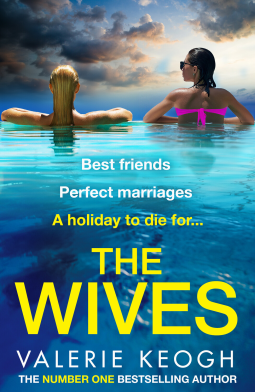
Alison James Just the Nicest Family Bookouture, June 2024.

Thank you, NetGalley, for providing me with this uncorrected proof for review.

Alison James has written a very readable psychological thriller, complete with a good twist. For me, a twist must be a logical outcome of the narrative, with signposts along the way. These must be subtle and ensure that the reader has had the opportunity to read the signs that lead to the twist – then ideally has not been able to do so. James achieves this in Just the Nicest Family, and for this I give her accolades. However, I was less impressed with the way in which one of her main characters dealt with an assertion that they knew would change their life but did little to investigate its validity.

Louise and Tim, parents of Harry and Elodie are the perfect family. Most apparent is the love between Louise and Tim, exhibited in all their interactions, private and public. Tim is a vet, Louise the deputy head at a girls’ high school. The family is invited to share a villa in France by the CEO of a Swiss company, Renee Weber, as a precursor to her buying Tim’s independent veterinary practice. He is keen to accept, and eventually he and the children join the villa residents while Louise completes her responsibility at the school. She has already been thrown by Tim’s invitation to acquaintances, Shona and Kevin, before Louise could intervene to invite friends more to her taste. The villa visit becomes even more awkward when Shona decides that Renee’s partner would suit her better than her husband. See Books: Reviews for complete review.

The Conversation

Article republished under Creative Commons licence.

Britain is finally abolishing hereditary peers from the House of Lords – a constitutional expert on the historical reforms that built up to this moment

Published: September 23, 2024 9.46pm AEST Updated: September 24, 2024 9.39pm AEST

Author

Meg Russell Professor of British and Comparative Politics and Director of the Constitution Unit, UCL

Meg Russell has in the past received funding from the ESRC for her research on the House of Lords.

Having made a pre-election pledge to do so, the government is moving forward with the House of Lords (hereditary peers) bill, a piece of legislation that will remove the remaining hereditary peers from the House of Lords.

The bill is almost certain to pass through parliament, ending a centuries-old tradition of hereditary membership in the House of Lords. But who are these hereditary peers, and how did they come to sit in parliament in the first place? Some of the answers may be surprising.

The House of Lords has ancient roots – though it has changed very fundamentally over the years. The original precursor of the English (and subsequently UK) parliament was a single-chamber body, bringing together the powerful in the land to advise the monarch. It is difficult to put a date on when this began but it included representatives of the nobility and the church.

Initially, there was no presumption that those invited to participate in one session of parliament would be invited to the next, but gradually arrangements became more fixed. The “temporal” (as opposed to “spiritual”) members of parliament became the holders of hereditary titles, which would be passed down through their family line. Over time, the members of what became the House of Commons split off, with the two chambers regularly sitting separately from the 14th century.

A portrait of WIlliam Pitt the Younger
Pitt The Younger, a big fan of handing out peerages. Wikipedia/Bonhams

Some modern preoccupations about the House of Lords can be traced back centuries. By the time of Charles I, there were already concerns that too many new peerages were being created and that the chamber was growing too large. There was even talk of money changing hands in some cases. As early as 1719, a bill was proposed to cap the size of the House of Lords, and allow new peerage creations only when existing lines died out. That bill was, however, unsuccessful.

By the late 18th century, the monarch was following prime ministerial advice in creating peerages. William Pitt the Younger became a prolific distributor of titles, increasing the number of Lords temporal from 212 to 314. In the mid-19th century, the House of Lords stood at around 450 members, and by the early 20th century, it exceeded 600 members. Immediately before it was reformed by Tony Blair’s government in 1999, its size was double that.

The reforms begin

In the late 19th century, under prime ministers William Gladstone and Lord Salisbury, there were deliberate moves to broaden the peerage and move it away from landed interests. Titles were awarded to industrialists, former diplomats, military personnel and civil servants. Notable appointees in this period included the artist Frederic Leighton, the surgeon Joseph Lister, and the former House of Commons clerk Thomas Erskine May. This helped to boost the “crossbenches” in the Lords, and build the chamber’s reputation for expertise.

Nonetheless, in another pattern familiar today, around two-thirds of those appointed were former MPs. Prominent among them were those who had held high office – routinely including former prime ministers and speakers of the House of Commons.

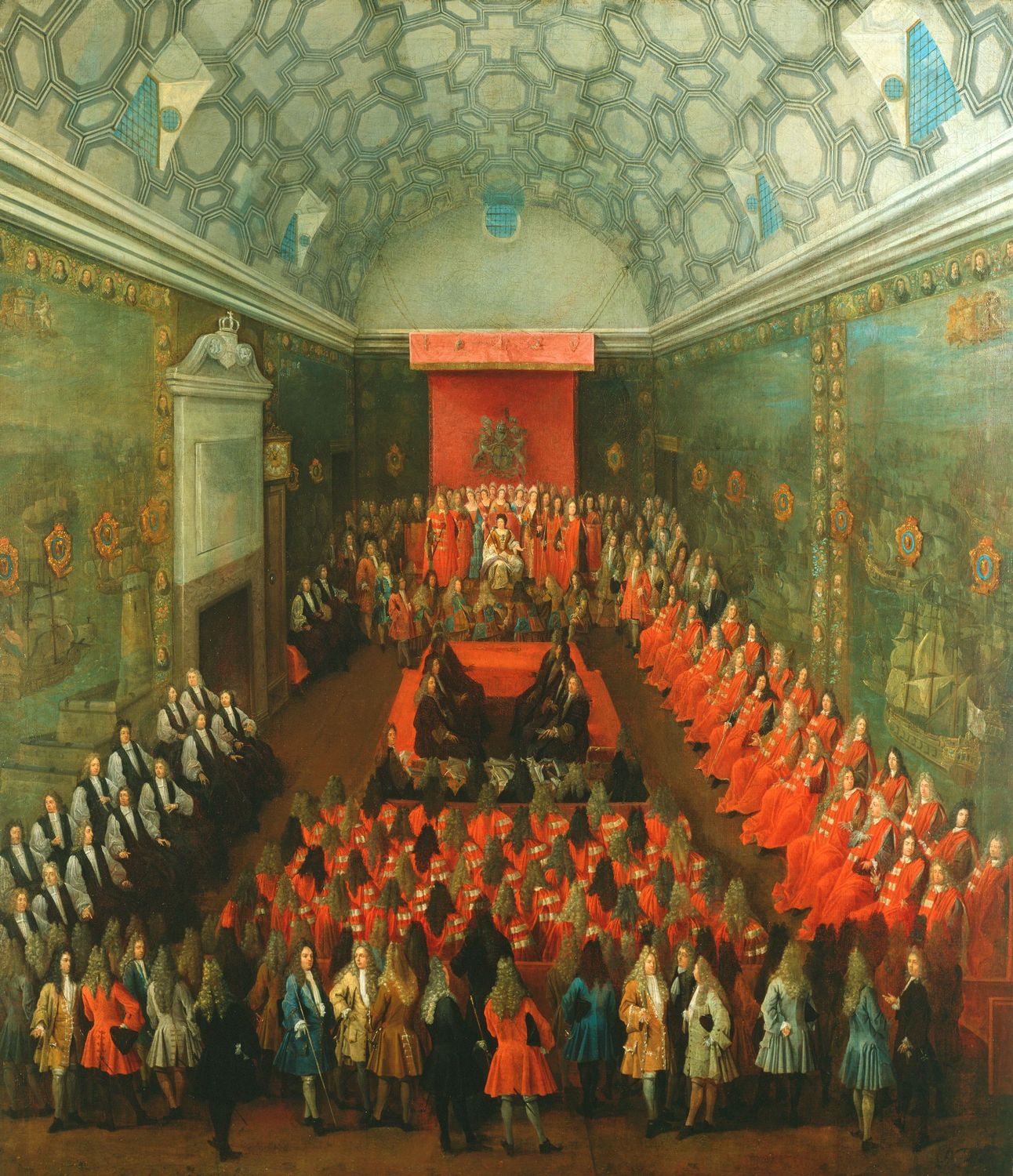
A painting of Queen Anne addressing the House of Lords.
A painting of Queen Anne addressing the House of Lords in the 18th century. Peter Tillemans, Public domain, via Wikimedia Commons

The hereditary nature of titles created an obvious difficulty with size – that a seat created for a person did not die with them, but was passed to their (exclusively male) successors. Every peerage awarded (with a small exception for those with legal expertise under the Appellate Jurisdictions Act 1876) was a hereditary peerage, and large numbers continued to be created.

While some lines died out due to lack of male successors, pressure grew for the creation of life peerages rather than allowing members to pass their seat in the Lords on. The first bill to allow such appointments was introduced in 1849, but it was not until the Life Peerages Act 1958 that change finally occurred.

By 1957, the year before the act, half of members (who by now exceeded 800) owed their hereditary peerages to 20th-century creations. Among them were the descendants of Asquith, Lloyd George, Stanley Baldwin and Field Marshal Montgomery. Even Labour’s Clement Attlee (who, upon assuming office in 1945, faced a House of Lords containing just 16 Labour members) was given a hereditary peerage in 1955. His grandson still serves in the House of Lords.

After 1958, the creation of new hereditary peerages became much rarer. It was, notably, only at this point that women entered the chamber for the first time – and only in 1963 that women inheriting the few hereditary titles not travelling purely down the male line were allowed to take seats in the chamber. An interesting anomaly was Margaret Thatcher’s bestowal of a hereditary peerage on her former home secretary and de facto deputy prime minister, Willie Whitelaw, in 1983 – the first such awarded for 18 years. Having only daughters, Whitelaw did not pass his peerage on.

The reform implemented by the Blair government in 1999 was originally intended to sweep away all of the hereditary peers. But while over 650 departed, a deal between the parties allowed 92 to remain – with replacements when these peers died or retired largely filled by a bizarre system of byelections, where the only eligible candidates were hereditary peers.

These byelections were recently halted in expectation of the bill, leaving 88 hereditary peers currently serving in the chamber. All of them are men, 45 are Conservative (and only four Labour), while 43 (49%) hold peerages created only in the 20th century.

This group is anomalous, and long overdue reform. It is also less historic in certain respects than many might assume.

This article has been updated to correct the language around how many peers William Pitt the Younger added to the chamber.

Site logo imageWomen’s Film and Television History Network – UK/Ireland

The Ultimate TV Event: How Happy Valley Defies Ageism and Sexism in the Television IndustryBy ljademinor on 27/09/2024 by Lucy Brown

This blog first appeared on Reflections: A Television Digest on 10 May 2024.

Sarah Lancashire as Sergeant Catherine Cawood. Image: BBC

“Chilling,” “a dark delight,” “magnificent,” “triumphant,” and “explosive” are all words that have been used to describe the British police crime thriller Happy Valley.1 First screened in 2014, it reached an audience of over 8 million and became a hit with critics and the audience alike. The second series followed in 2016, growing its audience to over nine million, marking a record-high audience share with a third of viewers tuning in.2 

After a seven-year hiatus, the series returned with a bang on New Year’s Day 2023 and has been watched by over eleven million people. To grow an audience against a backdrop of broadcast channel ratings declining is a remarkable feat, but perhaps not surprising given it has been hailed by critics as one of the greatest television dramas of the twenty-first century,3 Yorkshire’s version of The Wire4 and “the ultimate event TV.”5 

Happy Valley follows the story of police Sergeant Catherine Cawood as she navigates through personal and professional challenges and struggles to protect her community and grandson Ryan from her nemesis, Tommy Lee Royce, Ryan’s father and a violent rapist, murderer and psychopath, who is responsible for her daughter’s suicide. The series expertly weaves together intricate plotlines, compelling characters, and outstanding performances, earning five BAFTA awards and sustaining viewer investment and engagement over the course of eighteen episodes spanning nine years.  Two middle-aged women are of prime importance to its success; on-screen, Sarah Lancashire plays the lead, Sergeant Cawood and behind-the-camera, creator, writer, director, and executive producer Sally Wainwright. It should be irrelevant that these two brilliant women are in their fifties, yet TV drama is the domain of men. Television’s lack of diversity is well known.6 See Television,Film and Popular Culture: Comments for the complete article.

American Politics – Bob McMullan

US election review at 30th September

It has been a week of apparent attrition in the US presidential election with very few break-out moments at the national level.

Hurricanes, crazy Republican gubernatorial candidates, failed Republican attempts to change the allocation of votes in Nebraska and corruption charges against the mayor of New York have been newsworthy, but there is little sign that anything has dramatically changed the support for either candidate.

The response to recent events reinforce the view that opinions about Trump are fixed and he has a locked-in level of support at about 45-47% of the likely voters, which is a high floor but a low ceiling.

Harris has attempted to challenge Trump in his areas of strength, the economy and immigration. While it is too early to say what the final impact of these initiatives will be, it does seem that she has made further slight progress in national and relevant state polling.

While the election is not won by aggregate support it is interesting to see that the Harris/Walz ticket now has a lead of as much as 3.2%. Nate Silver’s data suggests that Harris has made slight increases in support in Pennsylvania, Wisconsin and Nevada and maintained her lead in Michigan. Trump appears to have made slight gains in the other battleground states.

To resume my state-by state analysis, the remaining four battleground states are ones in which Kamala Harris has been leading consistently over recent weeks. Should she win all of them the Harris/Walz ticket would win the Electoral College 276 to 262.

Michigan (15 votes)

This has consistently been the best of the battleground states for Harris. Most recently she has been leading by between 2.0 and 2,9% in the various polling averages. Perhaps more importantly, the Vice President has led in the last nine published polls included in the 538 analysis.

Pennsylvania (19 votes)

Pennsylvania is the most important state in this election. While it is not indispensable, it is hard to see Harris winning without winning this state. All the polling averages have Harris/ Walz with a narrow lead of between 0.9% and 1.7%. Nate Silver’s analysis shows a slight improvement for Harris in Pennsylvania over the last week. Should this pattern continue she will be the favorite to win the Electoral College, but an enormous amount of money and effort will be expended by both sides over the next 5 weeks.

Wisconsin (10 votes)

This is the third of the “Blue Wall” seats which are the basic building blocks of the Harris majority. Unless Harris wins one of the sunbelt seats she needs all three of these to make a majority of the electoral college. To date the Harris/ Walz ticket has been consistently in front in Wisconsin by between 1 and 3%. Harris has led in 5 of the last 7 polls with one of them tied. This all combines to make her the favorite to win Wisconsin. But both Hillary Clinton and Joe Biden had big leads in Wisconsin at this stage which were either illusory or fell away towards the end.

Nevada (6 votes)

This is not as essential to a Harris victory as the previous three but there are certainly scenarios in which these six votes could be vital. The result is always close in Nevada, but Harris has maintained a small but consistent lead in at least 7 of the last 10 polls. One to watch on the night.

Another interesting development is reaction to the Republican attempt to make a last minute change to the electoral rules in Nebraska. The initiative failed but it seems to have had interesting consequences. In the presidential contest subsequent polling has shown a large improvement in support for Harris. I am confident that she will win this vote. An apparent by-product of this failed attempt is a significant change in the prospects of the Democrats flipping the House seat. The incumbent member supported the Trump attempt to change the rules and has subsequently fallen behind his Democrat opponent in the polls. This was a move which in Australian parlance you would describe as “too smart by half” and as is often the case it not only failed, it may have backfired.

American Politics – Axios Article

Young men and women are moving in opposite directions

Erica Pandey

Illustration of a female and male symbol over a grid of blue and red lines
Illustration: Axios Visuals

Data of all kinds reveals a little-discussed, future-defining trend: Men and women are going separate ways.

Why it matters: The split is clear in politicsreligion, education and the labor market. For the next generation, gender is becoming the biggest predictor of how you think, act and vote.

“There’s a much broader story here,” says Daniel Cox, director of the Survey Center on American Life. “Even after all the votes are tallied and we’ve moved on from the 2024 election, we’re not going to have resolved any of the cultural and relational tension between young men and young women.”

  • You see it in politics: Women are turning left, and men are turning right.
  • You see it in religion: For the first time ever recorded in the U.S., young men are more religious than young women.
  • You see it in education: There are 2.4 million more women on U.S. college campuses than men, the American Institute for Boys and Men (AIBM) notes. And those degrees are often resulting in higher-wage jobs for women in big cities, a Pew Research Center analysis of census data found.
  • You see it in the labor market: Wages and labor force participation have increased since the 1980s for college-educated men and women, and for working-class women. But they have stagnated for working-class men, who are also now significantly less likely to be employed compared to four decades ago, according to AIBM’s analysis.
  • You see it in visions for the future: Men are more likely than women to want marriage and kids, according to Pew. The percentage of 18- to 34-year-old women wanting kids has fallen to 45% versus 57% for men.

What we’re watching: The polarization is even stronger among adults under 25, Cox notes. Social media content and algorithms may be one key reason.

  • Men are constantly fed social media content that’s negative toward women, and vice versa. Videos breaking down bad dates from the perspective of either the man or the woman are a viral example of that trend.
  • Gen Zers are 15 points more likely than other generations to say social media has negatively impacted their outlook on men, and 10 points more likely to say so for women, Morning Consult finds.

The bottom line: “We live in a very individualistic culture, and, for a lot of people, the primary relationship they have is with a partner or a spouse,” says Cox.

  • For heterosexual couples, this polarization is making finding a partner trickier.
  • “This has tremendous implications for how men and women relate to one another in the dating space,” Cox says.

Voting in the ACT Election

We voted today as we shall be away when early voting opens, and there was not enough time for the electoral commission to send us our postal votes before we leave. How amazing – every effort made to accommodate our vote and travel arrangements, safe electoral officials inside the building, no nasty crowds outside trying to stop us voting, no-one with any ill intent, and our votes are safe, will be counted and there will be a fair result which will be accepted by both winners and losers. We should not live in a world where we think this is lucky.

2024 ACT Election
19 October 2024

Early voting opens
8 October 2024

2024 ACT Election

Dame Maggie Smith obituary: A formidable star on stage and screen – from the BBC online site

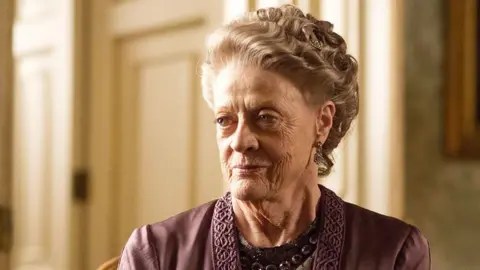
Alamy Dame Maggie Smith in Downton Abbey
Dame Maggie Smith played the formidable Dowager Countess of Grantham in Downton Abbey

Dame Maggie Smith, who has died at the age of 89, brought an incredible range of expression to her roles, winning high praise from directors and fellow actors alike.

It was said of her that she never took a role lightly and would often be pacing around at rehearsals going over her lines while the rest of the cast was on a break.

In a profession notorious for its uncertainties her career was notable for its longevity.

She made her acting debut in 1952 and was still working six decades later having moved from aspiring star to national treasure. See the complete obituary at Television,Film and Popular Culture: Comments.

Week beginning 25 September 2024

Elizabeth Strout Tell Me Everything Penguin General UK (Fig Tree, Hamish Hamilton, Viking, Penguin Life, Penguin Business, Viking) September 2024.

Thank you, NetGalley, for providing me with this uncorrected proof for review.

Elizabeth Strout brings magic to her work and Tell Me Everything is no different.  Bob Burgess and Margaret Estaver live in Maine. The enchantment of Maine’s autumn colours interspersed with prosaic and sometimes graphic detail is the setting for their marriage, their large house in which they cook together, and the security this couple, a lawyer and a Unitarian minister, provide the community. Olive Kitterage, ninety, knows the couple, sympathises with Bob’s sad past, is not fond of Margaret and has suffered through the pandemic. Lucy Barton, also from previous novels, is an important character, although mostly inconspicuous in the larger community apart for walking with Bob along the river. As autumn breaks into splendour, Olive decides to tell her story to Lucy. See the complete review at Books: Reviews.

Further information: Tree Protection; Bob McMullan, American Election; Joyce Vance, Civil Discourse Newsletter; Dervla McTiernan, email; Cindy Lou; Henry Oliver from The Common Reader.

Sign on building works in Canberra

Why is this not an issue on other building sites?

Bob McMullan – American Presidential Election

US election review at 23rd September

There have been some significant national and global events this week, but it remains to be seen whether they will impact the presidential election.

It is hard to see how the large interest rate cut by the Federal Reserve Board can be other than good for the Vice President. It may however be too delayed and indirect in its practical consequences to be of significant benefit. So far, Donald Trump has been surprisingly restrained in his comments on the decision.

The war in the Middle East has clearly taken a turn for the worse. Any partisan advantage from such a development is likely to benefit Trump, but whether this will have any electoral impact is difficult to tell.

Other major events in the week have mainly been at the state level and will be covered in the state-by- state analysis below.

Nothing in the current data contradicts Nathan Silver’s assessment this week that he has never seen such a close election.

To gain an appreciation of the state of play it is best to look from time to time at developments at the state level.

Arizona

This is a state that Biden won in 2020. This election cycle it has consistently shown a Trump lead of about 1% in polling. It has 11 Electoral College votes and while it is still in play, I think Trump is the favorite to win this state this time. The problem with assessing the current situation is that there has been no credible polling since the debate. Nate Silver gives Kamala Harris only a 36% chance of winning Arizona. There is an abortion ballot on the day so that is an imponderable, but barring an extraordinary improvement in Harris’ results in this state it might be out of reach.

Georgia

This is a state with 16 electoral college votes which voted for Biden in 2020. Trump has held a steady approximately 1% lead in polling over several weeks. This leads to Silver’s assessment of Harris’ chances in Georgia at 36%. Two factors to note. There have been official reports identifying tragic deaths of women in Georgia as a consequence of the strict abortion laws brought in since Roe v Wade was overturned. Will this impact the vote? It may increase the turnout of Democrat-leaning women. The other factor is the revised and ridiculous changes to electoral procedures agreed by the Republicans on the Georgia Elections Board. If upheld these will certainly delay the result.

North Carolina

I think this is the most interesting state. No Democrat presidential candidate has won here since Obama in 2008. However, the incumbent Governor is a Democrat who has won twice. The race is currently extremely close. All three polling aggregates have Trump ahead by 0.1%! The lead has changed back and forward between the two candidates since the debate. Nate Silver considers Kamala Harris has only a 39% chance of winning. I think it is better than that. An interesting extra factor is the possible upstream impact of the Republican’s candidate for Governor who has described himself as a “Black Nazi”. Such a downstream candidate is unlikely to affect the presidential race, but it is possible that Trump’s enthusiastic endorsement of the candidate may backfire on him.

Nebraska

This is a solid Republican state that Donald Trump will win. However, it allocates some of its votes by congressional district rather than winner takes all. It is probable that Kamal Harris will win the 2nd district in Nebraska based on Omaha. In the only recent poll she led by 5%. The real interest is in whether Trump and his supporters can persuade the Nebraska legislature to change the rules to winner takes all just weeks before the election. The possible significance of this one electoral college vote is that if Harris wins Wisconsin, Michigan and Pennsylvania plus the other stronger Democrat states the race could finish in a 269-269 tie. The NE2 vote would then swing the result to Harris. I don’t think the Republicans will succeed in this rort but it is a sign of weakness that they are trying.

I will follow up with an assessment of the race in the remaining battleground states next week. The bottom line at the moment is that the Harris/Walz ticket is leading in all these four battleground states and therefore is leading in the race to a majority in the electoral college. However, it remains close.

To conclude, a note on the margin of error in polling. The statistical reality is that all polls have to be taken as indications, not gospel. Sampling errors are inevitable even for the best pollsters and therefore the margin of error for each poll is important to note. However, the nature of polling errors means they should over time fall on each side of the contest. If one candidate is ahead within the margin of error in seven or eight polls in a row it is reasonable to assume that that candidate is actually leading.

Joyce Vance Civil Discourse Newsletter

Joyce Vance appears on MSNBC providing legal advice and information. She is really worthwhile listening to, and I have signed up for her newsletter. A positive election campaign story appears below.

Joyce Vance from Civil Discourse <joycevance@substack.com> Unsubscribe

Forwarded this email? Subscribe here for more

Writing Postcards to Voters Works Joyce Vance Sep 25 READ IN APP 

Tonight, a feel good story!

This afternoon, from 3:30 to 4:00 p.m., I had the amazing opportunity to spend half an hour with several hundred people who were in hour 22 of a 24-hour marathon postcard writing session. The event, formally known as 24 Hours in ’24 Our Freedoms Are On The Ballot Postcard Around The Clock 3.0, was a huge success.

The event kicked off yesterday, Monday, at 7:30 p.m. with Speaker Emerita Nancy Pelosi. The idea was to keep the participants going with a constant stream of interesting conversations so they could write POSTCARDS. I’m told some of the participants pulled an all-nighter. By the time they finish up tonight, they’ll have visited with DNC Chair Jaime Harrison, Heather Cox Richardson, Senator Elizabeth Warren, and so many more! The joy is definitely back in politics.

Three groups of activists who put the event together, Downtown Nasty Women Social Group, Markers For Democracy, and Team Min, have been working together since the start of the Trump presidency. The groups were founded in the aftermath of the 2016 election and the January 2017 Women’s March. They’ve been writing postcards to voters since 2017 and have written so many postcards that they stopped counting several hundred thousand postcards ago.

Something that I love about these people is that they write postcards for races up and down the ballot, and they write all year round to make sure they focus attention on special elections and other elections that don’t happen in November. They described the current moment we’re in as “like tax season but for postcard writers.”

Dervla McTiernan

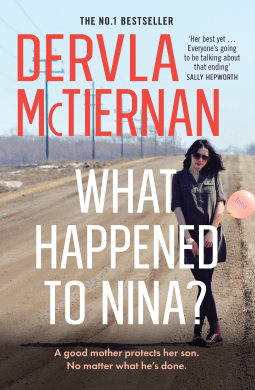
I was fortunate enough to be able to review Dervla McTiernan’s What Happened to Nina? (see Books: Reviews February 14, 2024) and later go to her talk at the ANU Meet the Authors series.

Recently I received this email which could be of interest to other readers.

Hello Robin,
I hope you’re having a wonderful September so far. I am deep into the writing of a new book, and I’m truly enjoying every minute of it. This is the book that will be published in 2026, so I’m getting a bit ahead of you all right now, but I don’t think I’ve ever had as much fun writing a book. I’m not sure if it’s the characters I’m enjoying so much, or the fact that there SO much happening in the story, or the fact that I’m writing fast, just focusing on story story story for now (as opposed to setting or deeper details).

Whatever it is, I’m having a blast at the moment, so long may it last! I’ve also been reading a lot lately. It seems that reading is a habit that is easy to fall out of at the moment, even for me. Books have been the absolute centre of my life for all of my life. They’ve held me together in the toughest of moments, brought me joy and tears and inspiration. All the good stuff. They also bring me calm (something that is in short supply these days). And yet, despite knowing all of that, I find myself with my phone in front of my face far more than is good for me. So I’ve decided to carve out deliberate reading time in the evenings, and I’ve started to charge my phone in in the kitchen again at night, instead of my bedroom. I’m reading so much more, I’m sleeping better, and genuinely, I feel so much happier. 

INSTAGRAM/FACEBOOK ‘BOOKCLUB’ THAT ISN’T
Text: Want to read a book with me?
Apart from reading and writing, my next favourite thing to do is to talk about books that I love. I’ve been thinking lately that I’d like to do that more often. So once a month, at the beginning of the month, I’m going to post a picture on Instagram of the book I’m going to be reading that month. And at the end of the month I’ll post a quick review. I’m hoping that my followers might like the look of the book sometimes, and read it with me, and then we can have a chat about it. This is going to be the most casual of casual arrangements. This is not a formal book club and no one needs to sign up to anything. It’s more like … if you follow me on Instagram or Facebook, you might like to check out the book I’m reading that month, and if it looks like your kind of thing, read along with me. At the end of the month, I’ll post another video with my thoughts, and we can chat about the book in the comments. 
 I’m going to be reading from a position of enthusiasm, not as a critic. I think it’s okay (more than okay) to approach books and movies and TV with generosity and with the expectation of enjoyment. I don’t think the world is suffering from a lack of criticism right now, and I want my reading to be a pleasant, joyful, relaxing experience. So while I’ll be honest if a book didn’t work for me, for whatever reason, I’m not doing this to pull books apart, but rather to celebrate them, and share what I love about them with other readers who feel the same way. This month’s book is Guilty by Definition, by Susie Dent (confession … I messed up in choosing this book as it’s not out in the US or Canada until next year … sorry!! Won’t make that mistake again).

Follow me on Facebook or Instagram if you’d like to keep an eye on future choices. What else have I got to share with you? THE ‘ALL THE SPOILERS’ NEWSLETTER! Oh … I need to give you a heads up. When I was on tour for What Happened to Nina? It was tricky to talk about some of the details of the book, because of spoilers. We talked about doing an All The Spoilers event when the book had been out a few months, but we never got around to it and now I’m neck deep in writing. So! I thought I could do an All The Spoilers newsletter!  So this is the fair warning …  Next month I’ll be sending out a newsletter which will answer ALL the spoiler heavy questions about Nina. If you haven’t read it yet, you’ve got four weeks to get it done, or you can skip the next email entirely 🙂

I’m so looking forward to writing it, actually. It will be fun to talk about the book completely openly. And actually … if you have any questions about the book, hit reply to this email and I’ll add your question to the bunch. Thanks, as always, for reading my newsletters. It’s lovely to get replies from so many of you, and know that I’m not sending them into the void 🙂 
All my best,
P.S – Do you know someone would like to receive my emails? Forward this email to a friend or you can share the links below on social media. The information you enter on this page will only be used to forward the email to your friend.

Cindy Lou eats breakfast in Dickson

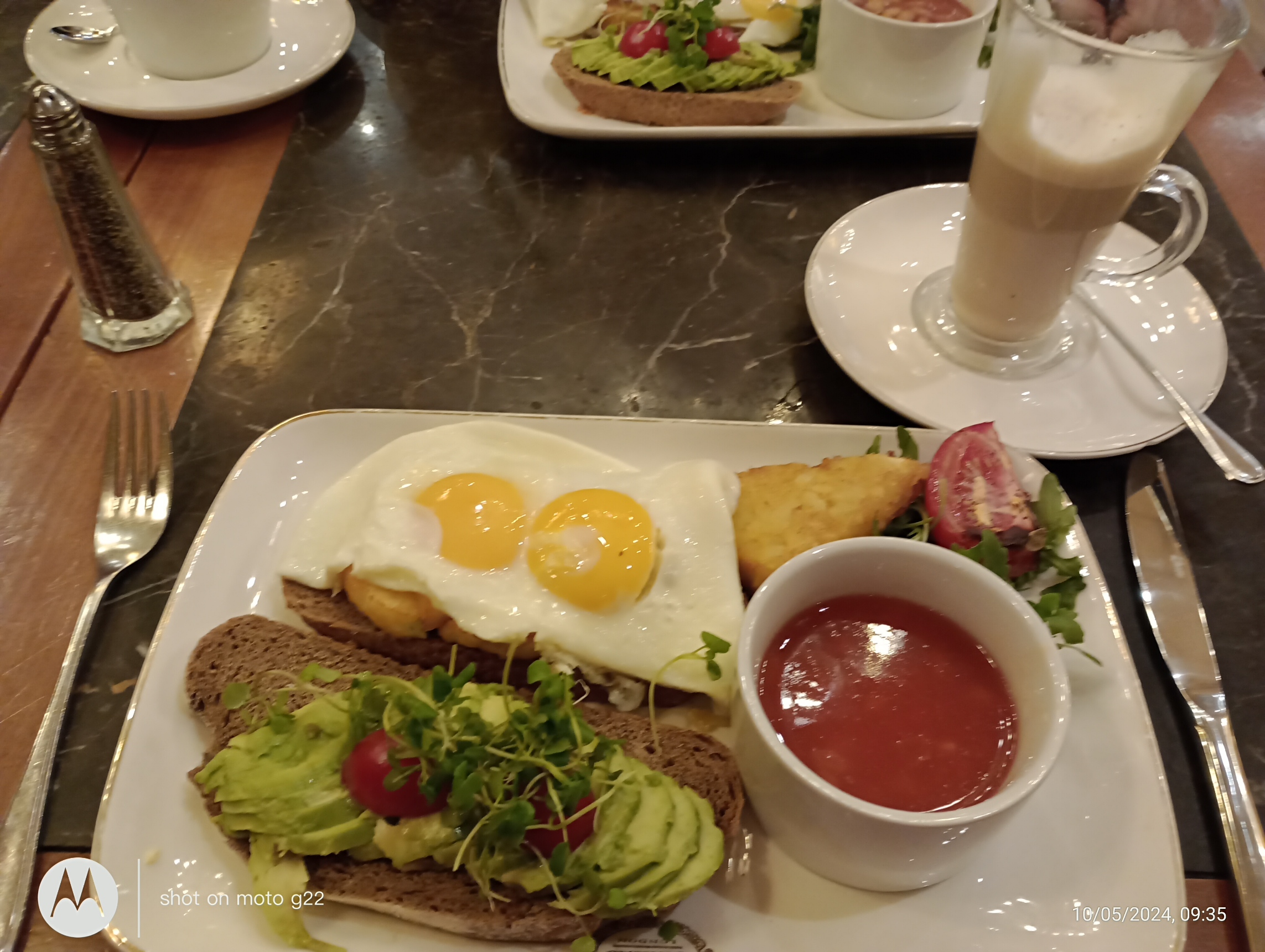
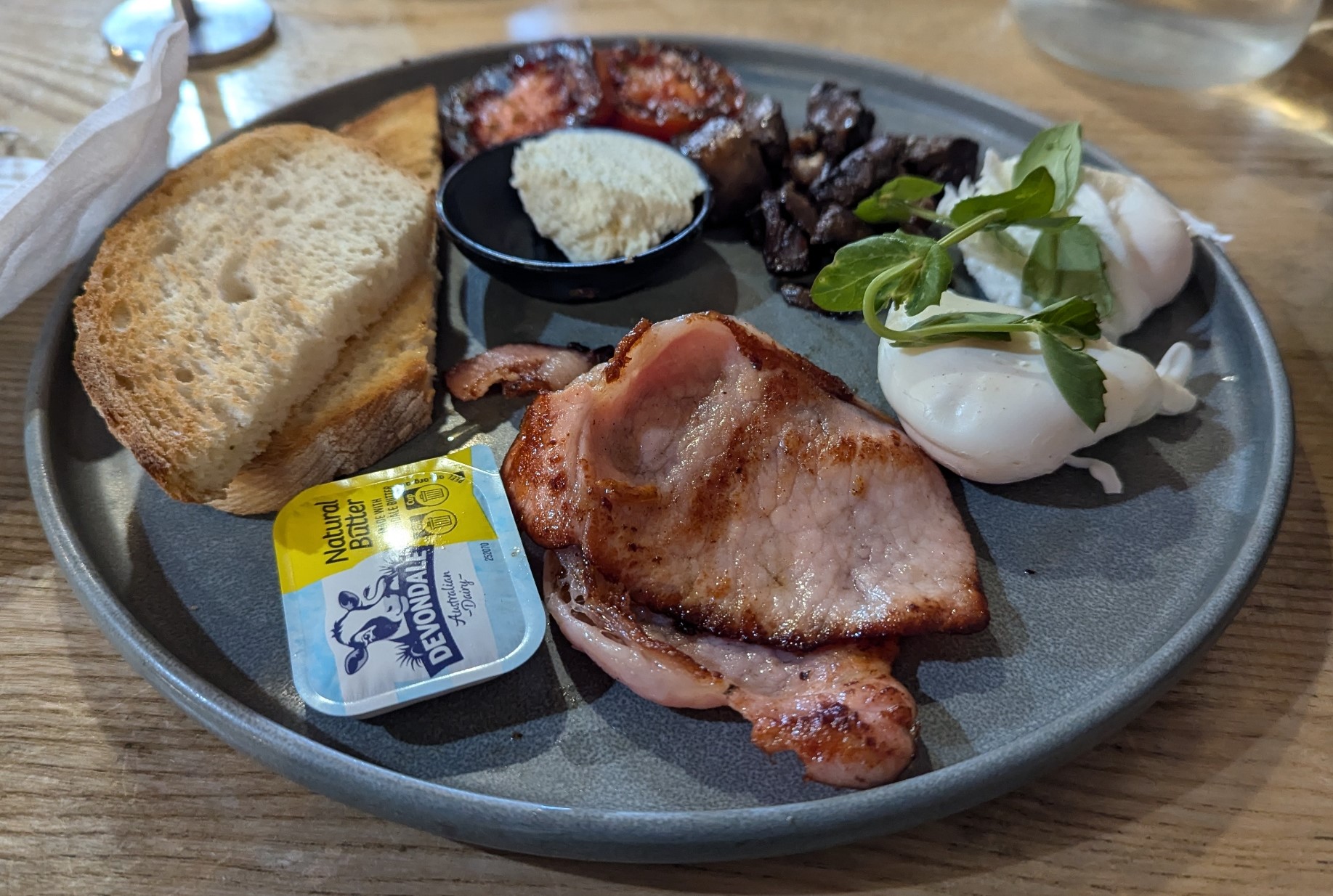
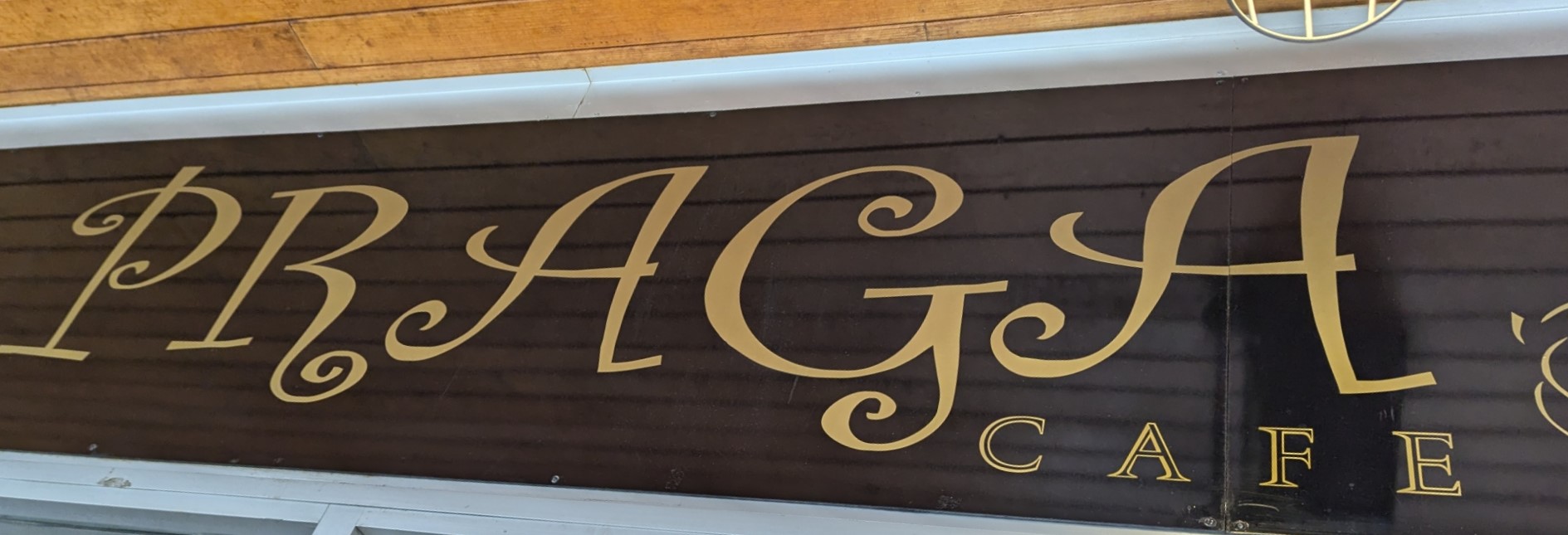
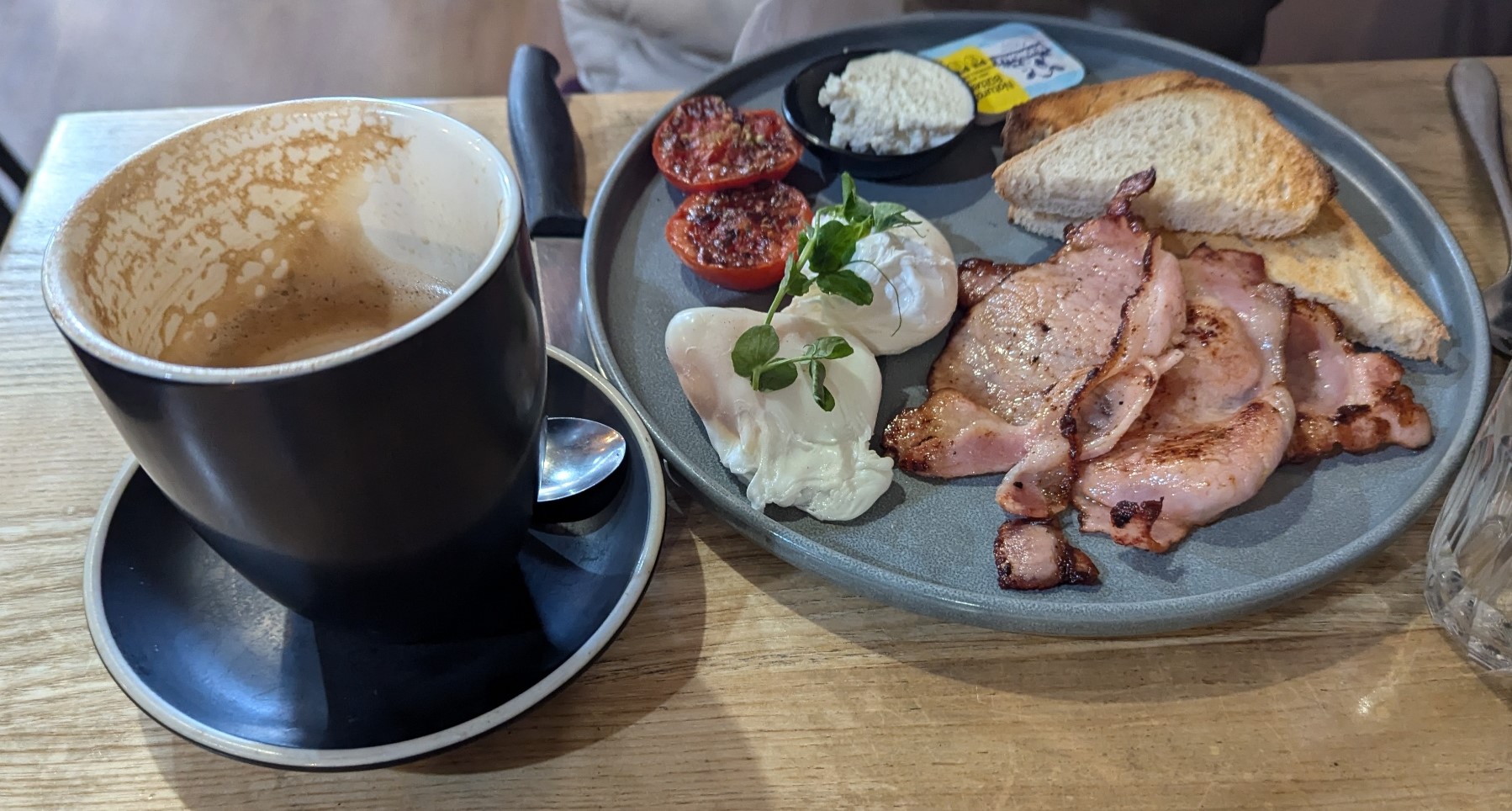
Praga Cafe in Dickson is a very pleasant place to eat, with indoor and outdoor seating, friendly staff and good food and coffee. One of us did not want mushrooms – a larger helping of bacon was provided. This is far more generous than most responses to the request to omit an item and was appreciated. The bacon on the other plate shows the normal portion – scooped up and taken home for Leah who is on medication and needs something tasty to encourage her to have it. The mushrooms were great, by the way. Also, the tomatoes were enhanced with tarragon and were well cooked – rather different from some other breakfasts where the tomato is less flavoursome. There was enough butter, and the sourdough toast was crisp.

The muffins look fabulous, as do the cakes, but we wanted a ‘real meal’ on this occasion.

The Reader’s Quest. How literature helps us find meaning and understand the world.

Henry Oliver from The Common Reader <commonreader@substack.com>23 Sept 2024, 21:51

A few weeks ago I was awarded a second Emergent Ventures grant to write a book about reading great literature. I don’t know when or how this book will be published, but I do know that I want to share my early thoughts about it here first. This is something like what I expect the introduction to say. Some of you will have seen my note a few weeks ago, this goes into the idea much more deeply. I look forward to your thoughts…

The decline of serious reading.

Don’t die without reading Anna Karenina. It’s not worth it.You can take Anna Karenina and swap it for any number of titles or authors. Jane EyreHamletThe Divine Comedy. Proust. Austen. Milton. Wordsworth. Flaubert. Chaucer. Douglass. Woolf. Pessoa. Ovid. Whitman. Dickinson. But the point is the same.

These, and many others, are the best works of literature in Western culture. The best works of the imagination. They are some of the peak experiences available to you, akin to visiting global heritage sites, eating exceptional food, or listening to intensely great music. There are many peak experiences available to us in the world and the best literary works of the imagination are among them.

From the Arthurian Romances to The Lord of the Rings, from the Odyssey to The Crying of Lot 49, from Dante to Dickens, these books are a repository of wisdom, an enticement to the imagination, and a stimulus for new perspectives.

We read literature for many reasons: to see ourselves; to see people and parts of life we had never imagined; to be subtly persuaded to new ideas; to become mind readers of people from other times and places; to escape our life, and thus to see it more clearly, as in a distant mirror.

We read for pleasure, comfort, knowledge, distraction, wisdom, learning, fun; we read for pretentious reasons, snobbish reasons, because we are bored, because we are compelled by a plot, because we have become addicted to books, because we have discovered that nothing else stimulates the imagination in quite the way that great literature can.

Only increasingly, we don’t read great literature.

No-one here reads old books

When I spoke to a range of people in Silicon Valley recently, everyone gave the same answer. A few people here read old books. One or two of them even read Shakespeare and Tolstoy. But it’s rare. Instead, the intellectual landscape of Silicon Valley is political, with some philosophy. The majority of tech people have a modern, STEM-based view of the world; they are much less influenced, if at all, by any notion of the literary canon.

When lists of the “vague tech canon” were proposed recently there were many excellent books involved, but no Shakespeare, no Dante. In one of the richest, best-educated, most productive areas of the world, among some of the most intellectually curious and energetic people alive today, they’re reading Sapiens or Seeing Like a State, but not great literature.

And it’s not just tech people. The world is full of well-educated professionals who don’t read imaginative literature. Entries in Who’s Who in the UK have seen a decline in people listing highbrow interests like literature and a rise in “ordinary” interests like seeing friends or watching television. Likewise, professionals reporting highbrow tastes have dropped, and only half of British adults say they read books for pleasure. (It’s similar in the USA and Europe, where numbers range but always show significant proportions of adults not reading books at all.)

So many of the people I know who work in consulting, finance, and law tell me they haven’t read any classic literature since they were at school. In the book club I run on Substack, I hear from people who are reading Shakespeare in their sixties (and loving it) who also haven’t touched it since they were at school. Indeed, I know teachers who don’t read the great works. So common is it for middle-aged people to read Harry Potter that I know well-paid lawyers who read that and little else.

We are no longer appreciating the classics like we used to. A hunger to be more serious.

But I got another answer to my questions. A few of the most significant people in Silicon Valley do read the classics. And plenty of others know they should. More of them are starting to do so. I haven’t read Tolstoy but know that I need to, or words to that effect, sum up a rising mood. When I spoke to Tyler Cowen last year he told me the same thing.

Maybe what we think of as a crisis of culture, a decline of civilization, the end of reading, is actually an opportunity to bring a new generation of people to appreciate great literature. Maybe we reached the bottom and people are ready to come back to great books.

When I published a Substack piece about this, my emails and WhatsApp were all saying the same thing. People want this. It reminded me of a line from a Philip Larkin poem: “someone will forever be surprising/ A hunger in himself to be more serious.” See Television,Film and Popular Culture: Comments for the complete article.

Week beginning 18 September 2024

Marjorie Garber, Shakespeare in Bloomsbury, Yale University Press 2023.

Majorie Garber Shakespeare in Bloomsbury Yale University Press, 2024.

Thank you, NetGalley, for providing me with this uncorrected proof for review.

 ‘How Shakespeare Would Have Loved Us’ introduces Shakespeare in Bloomsbury with a wealth of information about the focus of the book. It suggests that the book will be accessible, fascinating and a provide a new approach to some of the interests of the Bloomsbury Group. This assessment is fulfilled in the succeeding chapters: Shakespeare in Victorian Bloomsbury, Shakespeare as a (Victorian) Man, The Shakespeares of Virginia Woolf, Shakespeare Among the apostles, Mr Eliot’s Shakespeare, Shakespeare at Charleston and Ham Spray, and Coda: Bloomsbury’s Shakespeare. Prominence is given to the Bloomsbury Group and their reflections on Shakespeare, despite Marjorie Garber’s background and a chapter purportedly about Shakespeare. However, enough new ideas about aspects of his work are woven throughout the material about the Group’s conversation, written material, photography and plays so that by the end of the book Garber provides the reader with an experience of both. See Books: Reviews for the full review.

C D Peterson The American Homefront During WWII Blackouts, Ration-books and Rosie the Riveter Pen & Sword Pen & Sword History, July 2024.

Thank you, NetGalley, for providing me with this uncorrected proof for review.

This is an uncorrected proof, so my review concentrates on the content and style of the book.

The title of this book provides a flavour of what is to come. However, the immense amount of information C D Peterson has assembled is truly impressive. Although the style is less accessible than the usual Pen & Sword publication, which I usually applaud for its accessibility while remaining factual and well researched, private stories relieve the detailed accounts of government committees and policy making which make up much of the first part of the book. At the same time, Peterson is to be applauded for the attention to this part of the American Homefront. It provides a well-rounded approach to the livelier accounts of people’s responses to the more familiar themes of rationing, the black outs, incarceration of enemy aliens, spies and all the domestic detail of lives away from the front, while dealing with wartime measures and tragedies. See Books: Reviews for the full review.

Following articles: American Politics – Bob McMullan; American Politics – Presidential Debate; Cindy Lou Eats in Gungahlin; Booker Short List.

American Politics – Bob McMullan

US election review as at 16th September

Sometimes in politics one can metaphorically, and almost literally, hear the political situation “snap” and things change decisively as a consequence.

The first presidential debate which was between Trump and Biden was one such event.

The key question for this past week is: was the second debate which was between Trump and Harris such a dramatic event?

It is too early to say. It was obvious that Harris won the debate. CNN’s survey of debate watchers had her winning 63-37. There is no doubt that the respective debate performances inflicted some damage on Trump’s reputation. But, how much? Trump’s standing with the public seems fixed with only a very small number of voters open to change. However, even a very small number of voters in the key states can prove decisive in a very close election.

Nate Silver has a five-phase analytical framework for assessing the impact of significant political events which he describes as follows:

Phase 0: 1-2 days after the event. No relevant polls.

Phase 1: 2-3 days. Quick national polls.

Phase 2: 4-7days. Substantial number of national polls and the polling averages by day7 reflect the changed outcome.

Phase 3: 8-13 days.  A useful number of state-based polls begin to emerge.

Phase 4: 14 days. The impact of an event such as the debate are measurable.

We are currently in mid-phase2 and the pattern of events is consistent with the Silver framework. We are now seeing a representative cluster of national polling, but so far, few state polls taken after the debate.

The polling averages show some slight improvement for Harris, but nothing decisive or dramatic.

538 polling average now includes four different polling reports taken since the debate. The average lead for Harris from the likely voters results in the surveys is just over 4%. This is not yet fully reflected in the overall polling average which continue to reflect the residual impact of previous polls. 538 considers that the national situation is a lead of 2.6% for Kamala Harris. This may be barely sufficient to overcome the Republican bias in the Electoral College. The 538 average in the states still has the Harris/Walz team leading in sufficient states to win: Michigan, Pennsylvania, Wisconsin and Nevada. Most of the battleground states have had no surveys or only one since the debate. These are just beginning to emerge.

Similarly, RCP has published results for six polls taken since the debate which average a 3% lead for Harris. At 16th September, RCP has Harris leading in the same four states.

Winning those four states would guarantee the Vice president at least 276 Electoral College votes, enough to win but only just.

It is also important to note that the state in which Harris looks strongest, Wisconsin, is the state in which the poll results have been widest of the mark in 2016 and 2020.

There are some interesting developments in other states which have been considered solid Republican victories. In Iowa (6 EC votes) the only recent poll had Trump ahead by only 4%. In Alaska (3 votes), which is very hard to poll, the only poll I have seen had Trump ahead by only 5%. The most interesting of these is Florida (30 votes) where 538 has Trump ahead by only 4.3%.  I will include reference to these as new polls emerge although I don’t expect the Democrats to win any of them, and should they do so it is likely to be “icing on the cake” rather than decisive. It is however, an interesting development.

The late breaking news this week is the second assassination attempt on Trump. Nobody knows the impact of such events. My initial guess is that it won’t change any votes, but it may increase the propensity of Trump supporters to vote.

In summary, I would rather be in VP Harris’ position than Trump’s but it remains a very close contest.

American Politics – Presidential Debate

Below are images from the debate, beginning with the hosts – both of whom have been roundly chastised by former President Trump and his supporters for fact checking some of his most obvious lies. None did as former President Clinton suggested – count the times Trump says I, concentrating on his woes and concerns rather than those of the people he seeks to represent. Kamala Harris did so, showing how her concerns are not with herself, but others.

She also set the scene for her success in the debate with her initiating a handshake and introduction of herself as Trump cowered behind his podium. This was a far cry from the way in which he moved around the stage as Hillary Clinton made her salient points against his, even in 2016, invective rather than policy ideas. The CNN poll, taken immediately after the debate, shows the early figures for the debaters.

Cindy Lou eats in Gungahlin

The Ginger & Spice is rather different from the up-market Pearl Yiang in Sheldon Square, London, where I have enjoyed so many delicious Chinese meals. The Ginger & Spice has no white table clothes or extensive exotic menu, the waitpeople are young and enthusiastic rather than quietly deferential, but it has its own charm. I am pleased to have found it. At the tram stop at the end of the line from Civic to Gungalin, this modest Chinese restaurant has a good menu, including the familiar sweet and sour dishes, as well as more innovative choices.

The lunch menu offers a meat, fish or vegetarian dish with boiled rice for a very reasonable price. Water is served, and the drinks menu includes a New Zealand Sauvignon Blanc as well as other acholic beverages, mocktails and soft drinks. I was pleased to find that the sweet and sour chicken was exactly as I expected – familiar, a generous sauce, lightly battered and fried chicken, some pineapple. The restaurant does not hark back to the chop suey (chicken, or if one was very adventurous, combination!) of my first Chinese meal in the early 1960s but it is nice to have found something of the past in my traditional choice for lunch in 2024.

Women dominate 2024 Booker Prize shortlist

2 days ago Yasmin Rufo BBC News

Booker Prize Booker prize shortlist books
The winner of the Booker Prize will be announced on 12 November

The 2024 Booker Prize shortlist has been announced, with the largest number of women represented in its 55-year history.

Five of the six-strong shortlist are women, with authors from five countries represented, including the Netherlands for the first time.

The list includes former Women’s Prize winner Anne Michaels, American writer Percival Everett and British author Samantha Harvey

Each short-listed author receives £2,500 and the winner, announced on 12 November, will win £50,000.

The prestigious prize is open to works of fiction written in English by authors anywhere in the world and published in the UK or Ireland.

The shortlist in full:

  • James – Percival Everett (US)
  • Orbital – Samantha Harvey (UK)
  • Creation Lake – Rachel Kushner (US)
  • Held – Anne Michaels (Canada)
  • The Safekeep – Yael van der Wouden (Netherlands)
  • Stone Yard Devotion – Charlotte Wood (Australia)
Macmillan James cover
James by Percival Everett is one of the six shortlisted books this year

Two of the novelists, Percival Everett and Rachel Kushner, have previously been short-listed for the award.

Everett’s James is a retelling of Mark Twain’s The Adventures of Huckleberry Finn, written from the perspective of the runaway slave, Jim.

Kushner’s Creation Lake is a spy thriller which sees an American woman infiltrate a radical anarchist collective in rural France.

Edmund de Waal, chair of the judges, praised the six novels shortlisted and said: “My copies of these novels are dog-eared, scribbled in. They have been carried everywhere – surely the necessary measure of a seriously good novel.”

He added that they are all “books that made us want to keep on reading, to ring up friends and tell them about them, novels that inspired us to write, to score music.

“Here is storytelling in which people confront the world in all its instability and complexity.”

Orbital, by Samantha Harvey, contemplates the world from a different viewpoint as her novel follows a team of astronauts in the International Space Station.

The shortlist of books features one debut novel – The Safekeep by Yael van der Wouden.

The queer love story is set in post Nazi-era Netherlands and sees a lonely young woman’s life upended when she has a guest to stay at her country home.

Also exploring female friendships is Stone Yard Devotion.

Charlotte Woods’ novel is about a middle-aged woman who retreats from the world to a convent in New South Wales.

Woods said the story “grew from elements of my own life and childhood merging with an entirely invented story about an enclosed religious community”.

It’s the first time in 10 years that an Australian novelist has made the short list.

Held, which is Anna Michaels’ third novel, is a family saga which explores the memories of four generations.

The judges praised its large themes “of the instability of the past and memory”.

One of the judges, novelist Sara Collins, spoke about the fact that five women had been recognised.

“It was a genuine surprise to us. We came up with the shortlist, we sat back and looked at the pile and someone said: ‘Ha, there are five women there’.”

She added: “These books rose to the top on merit – they are tremendous books but… it was such a gratifying, surprising, thrilling moment to realise.

“My experience as a writer is that publishing is… dominated at certain levels by women but the literary recognition… has still seemed to be reserved for men.”

They chose the final six from 13 long-listed titles – known as the Booker dozen – which were selected from 156 published between October 2023 and September 2024.

The judging panel is also made up of The Guardian’s fiction editor Justine Jordan, writer Yiyun Li and musician Nitin Sawhney.

Last year the Booker Prize was awarded to Ireland’s Paul Lynch for Prophet Song, a dystopian vision of Ireland in the grips of totalitarianism.

Week beginning 11 September 2024

J. E. Smyth Mary C. McCall Jr. The Rise and Fall of Hollywood’s Most Powerful Screenwriter Columbia University Press, September 2024.

Thank you, NetGalley, for providing me with this uncorrected proof for review.

J.E. Smyth has written a detailed, dense and illuminating account of Mary C. McCall’s life as a feminist, novelist, screen writer, labor leader, activist on behalf of screen writers, first leader of the Screenwriters’ Union and her continuing role there. At the same time, the information about other screen writers and activists, the studios and business of producing films is massive.

Sometimes this amount of detail makes the book a difficult read. However, Mary McCall is an immense and motivating figure in the landscape of film production, unionisation, and studio politics, so that together with the explanation and exposure of Hollywood figures and the general history of political change this an engaging read. The content is so interesting that it is worth being enticed back to the book on repeat occasions so as to ingest the story that, while revolving around McCall, is a wide-ranging political exposure of sexism, anti-unionism, blacklisting and power. See Books: Reviews for the complete review.

Articles to come: Bill Shorten; American Politics – Bob McMullan; American Politics – Republicans vote for Democrat; Women in Revolt art exhibition- The Conversation; The Agatha Christie Newsletter; Brilliant and Bold comment.

Bill Shorten to retire from Parliament – welcome to Canberra, Bill.

American Politics – Bob McMullan

US Election Review as at 8 September 2024

There has been a lot of campaign activity over the last week. But not much has changed in terms of polling and assessments of win probability.

The problem is, such change as there has been seems to represent a slight drift back towards Donald Trump.

This trend appears in the polling aggregates from Real Clear Politics but is clearer in Nate Silver’s figures when he makes a comparison with the situation over a slightly longer period.

It is important to note that Silver’s numbers in the battleground states would still be sufficient for Harris to win the Electoral College but the trend is generally slightly away from her.

The related question is the impact of the electoral college. Silver’s numbers suggest that Harris is improving at the national level (by 0.7% over the relevant period) but slipping slightly in the battleground states (by from 0.1% to 2.8% across six of the seven battleground states.) Should this trend continue it will worsen the Electoral College bias in favour of the Republican Party.

There are however countervailing trends. Recent data has shown increased enthusiasm and intensity amongst Democrats. This is not particularly significant in Australian elections. You don’t get extra votes for being enthusiastic. In voluntary voting systems it can be very important. What recent history shows is that increased intensity coincides with increased propensity to vote. The most interesting data is the surge in Democratic enrolments particularly among young women. The surge was first noticed after the Dobbs decision which overturned Roe v Wade. This has been considered a significant factor in the surprisingly good results for Democrats in the 2022 mid-term elections. A similar surge in enrolments is being seen in the aftermath of Kamala Harris becoming the presidential nominee for the Democrats. Not surprisingly, there is a very strong correlation between recent enrolments and voter turnout.

It seems most likely that Kamala Harris will get the most votes, perhaps by a long way.

The outstanding question is, how far in front will she have to be to overcome the Republican bias in the electoral College?

James Carville, a very experienced and wily Democratic strategist suggests that 3% is roughly the lead that a Democrat will require.

Nate Silver, the probability analyst who founded and then sold 538 has made a more scientific assessment which comes up with a similar result.

Analysing the national and state-by state data for this election he suggests the EC bias is slightly less than previously. Based on polling today he assesses that the bias is 2.4 to 2.5%. It is still a big handicap to overcome, which is why the election looks close at the moment. Silver’s assessment is the Harris/Walz ticket will need a 4% lead to be “safe”.

The various polling averages all show Harris with enough Electoral College votes to win. 538 has Harris ahead by 3.1% nationally and leading in Georgia, Michigan, Nevada, Pennsylvania and Wisconsin. This would give her 292 or 293* Electoral College votes. Real Clear Politics has Harris ahead by only 1.8% but leading in the same five states and tied in North Carolina. Nate Silver’s average has Harris/Walz ahead by 3.0% and leading in the same five states.

(* the variation is due to the possibility that Harris could win a second vote in Maine which allocates some of its EC votes by individual congressional districts.)

Two things to look forward to in the next week or so. On September 10th (11th in Australia) there will be the Presidential debate. The following week the Federal Reserve will make its decision about interest rates. I predict they will cut rates and this should be good for Harris and enrage Trump.

It is still interesting and appears likely to remain close until the end. But the fascinating thing is, we don’t know and won’t know until November.

American Politics: Some Republicans to vote Democrat

“There was never a doubt that the courageous Liz Cheney would endorse Vice President Harris,” conservative judge J. Michael Luttig wrote, “because Liz Cheney stands for America.  She is the very embodiment of country over party and country over self.  And she fears no one—least of all the former president.”

John McCain’s son slams Trump’s Arlington cemetery visit: ‘It’s not about you there’.

Former US VP Dick Cheney endorses Kamala Harris

Mead Gruver – AP Sat 7 September 2024 at 10:41 am AEST·3-min read

Former US vice president resident Dick Cheney, a lifelong Republican, will vote for Kamala Harris for president.

Liz Cheney, who herself endorsed Harris on Wednesday, announced her father’s endorsement on Friday when asked by Mark Leibovich of The Atlantic magazine during an onstage interview at The Texas Tribune Festival in Austin.

“Wow,” Leibovich replied as the audience cheered…

Michael Luttig, U.S. Court of Appeals for the Fourth Circuit (ret.), speaking at the Principles First Summit taking place at the Conrad Hotel in Washington, D.C, on Feb 25, 2024. (Photo by Michael Brochstein/Sipa USA)(Sipa via AP Images)
CNN — By Jamie Gangel and Gregory Krieg, CNN  4 minute read Updated 9:43 PM EDT, Mon August 19, 2024

Exclusive: Conservative Republican endorses Harris, calls Trump a threat to democracy

Retired federal appeals court Judge J. Michael Luttig, a prominent conservative legal scholar put on the bench by President George H.W. Bush, is endorsing Vice President Kamala Harris over former President Donald Trump, whose candidacy he describes as an existential threat to American democracy.

It will be the first time Luttig, a veteran of two Republican administrations, has voted for a Democrat.

“In the presidential election of 2024 there is only one political party and one candidate for the presidency that can claim the mantle of defender and protector of America’s Democracy, the Constitution, and the Rule of Law,” Luttig wrote in a statement obtained exclusively by CNN. “As a result, I will unhesitatingly vote for the Democratic Party’s candidate for the Presidency of the United States, Vice President of the United States, Kamala Harris.”

Luttig played a now famous role in persuading then-Vice President Mike Pence to defy Trump and certify the 2020 presidential election. In a series of tweets drafted at the request of Pence’s attorney, Luttig spelled out in stark terms the legal rationale for Pence to reject the former president’s attempt to overturn Joe Biden’s victory.

Since then, Luttig has emerged as a preeminent constitutional critic of Trump. In endorsing Harris, Luttig argues that partisan distinctions must, in this election, be set aside in order to prevent the “singularly unfit” Trump from returning to the White House.

“In voting for Vice President Harris, I assume that her public policy views are vastly different from my own,” Luttig writes, “but I am indifferent in this election as to her policy views on any issues other than America’s Democracy, the Constitution, and the Rule of Law, as I believe all Americans should be.”

Michael Luttig, U.S. Court of Appeals for the Fourth Circuit (ret.), speaking at the Principles First Summit at the Conrad Hotel in Washington, D.C, on Feb 25, 2024. Michael Brochstein/Sipa USA/AP

Luttig’s scathing rebuke of Trump and endorsement of Harris underscores the depths of divisions between Reagan-and Bush-era Republicans and the modern, Trump-dominated GOP. The former judge is just as unsparing a critic of the Republican party as he is of Trump, whom together he says have launched “the war on America’s Democracy.”

The corrosive effects, he adds, will echo through generations.

“Because of the former president’s continued, knowingly false claims that he won the 2020 election, millions of Americans no longer have faith and confidence in our national elections, and many never will again,” Luttig writes.  “Many Americans – especially young Americans, tragically – have even begun to question whether constitutional democracy is the best form of self-government for America.”

The stakes, Luttig argues, are as high now as in the late 18th century, when the country’s founders and authors of the US Constitution – including Alexander Hamilton and Thomas Jefferson, typically political foes – joined together to voice concern over the potential emergence of an authoritarian demagogue.

“The time for America’s choosing has come,” Luttig writes. “It is time for all Americans to stand and affirm whether they believe in American Democracy, the Constitution, and the Rule of Law, and want for America the same – or whether they do not.”

Though this will be Luttig’s first time pulling the lever for a Democrat in any election, he has, in the aftermath of January 6, 2021, come out in support of some decisions by the Biden administration. He wholeheartedly endorsed the 2022 nomination of now-Supreme Court Justice Ketanji Brown Jackson to the high court, even calling out Republicans who said they would not vote to confirm her.

“The President knew at the time that there were any number of highly qualified black women on the lower federal courts from among whom he could choose – including Judge Jackson – and Republicans should have known that the President would nominate one of those supremely qualified black women to succeed Justice Breyer,” he wrote at the time.

Luttig now joins a number of high-profile Republicans endorsing Harris, including former members of Congress Joe Walsh, Barbara Comstock and Adam Kinzinger.

Kinzinger, now a CNN contributor, will have a high-profile speaking slot this week at the Democratic National Convention in Chicago.

Former Georgia Lt. Gov. Geoff Duncan, also a CNN contributor, endorsed Harris at the end of July in an Atlanta Journal-Constitution op-ed.

Her campaign, he wrote, was “the best vehicle toward preventing another stained Trump presidency.”

Speaking to CNN, Luttig said his decision to publicly back Harris was a matter of knowing “right from wrong” – and acting in accordance.

“In my faith, we believe that we will one day answer for our wrongs. I have always tried to live my life in anticipation of that day. Imperfectly, to be sure.  But I have tried,” an emotional Luttig said. “My endorsement of the Vice President was the right thing to do.  It would have been wrong for me to stay silent, and I believe I would have one day had to answer for that silence.

“It’s really that simple.”

Julie Howden

Women in Revolt! Exhibition showcases the feminist activist artists who used art to change lives

Published: September 6, 2024 2.15am AEST

Author Katarzyna Kosmala Chair in Culture Media and Visual Arts, University of the West of Scotland

Disclosure statement

Katarzyna Kosmala does not work for, consult, own shares in or receive funding from any company or organisation that would benefit from this article, and has disclosed no relevant affiliations beyond their academic appointment.

Partners

University of the West of Scotland provides funding as a member of The Conversation UK.

View all partners

CC BY NDWe believe in the free flow of information
Republish our articles for free, online or in print, under Creative Commons licence.

In the early 1970s, women in the UK were second-class citizens who had few rights. A woman could not buy or own a property without a male guarantor. There was no equal pay, no maternity rights nor any kind of protections against sex discrimination.

There were no domestic violence shelters, no rape crisis centres and no childcare. And if they were ethnic minority or working class, women suffered even greater inequalities. Unsurprisingly in this climate, women artists – either contemporary or historical – were rarely seen in art galleries and cultural institutions.

It is against this backdrop that Women in Revolt! Art and Activism in the UK 1970–1990 explores two decades of women’s art as activism, protest and fury at the societal dice that was were loaded against them. The touring Tate Britain exhibition, now at the National Galleries of Scotland in Edinburgh, takes as its starting point the 1970 National Women’s Liberation Conference. This was an initiative designed to bring together feminist activists with the intention of developing a shared political outlook.

The exhibition brings together legions of courageous women who made political works of art about their lives, to tell the story of the feminist movements of the 1970s and the 1980s.

A piece of art called Protest showing a woman with red hair and green face vomiting images of opression from her mouth.
Protest by See Red Women’s Workshop (1973) See Red Women’s Workshop

A crashing wave that swept up women artists, writers and academics – urging them to change the art world into something more socially responsible and inclusive – this feminist movement demanded equal opportunities, visibility of women artists and equal pay.

Set out chronologically, the show examines the social and political backdrop to the art that women were making in the 1970s and 1980s. More than 100 artists are showcased, reflecting the diverse range of voices that sought to challenge the status quo in art and society at the time. There are installation works as well as film, photography, painting, drawing, textiles, printmaking and sculpture, all created during a period of significant social and political upheaval.

The irreconcilable social and economic pressures of being a mother and a worker are explored in the installation Who’s Holding The Baby (1978-1980). This series of prints, by photography collective the Hackney Flashers, highlights the issues caused by the lack of governmental support for childcare.

Wandering around the Modern Two gallery feels like being a part of the protest. Art becomes activism and activism merges into art with black and white photographic documentation, and posters on the walls punctuated with striking paintings and slogans.

A founding member of the Organisation of Women of Asian and African Descent, Stella Dadzie’s watercolour Motherland (1984), depicts an estranged immigrant woman dressed in vivid colours. The painting was used as the cover for her book Heart of the Race: Black Women’s Lives in Britain, which won the 1985 Martin Luther King Award for Literature. This important book examines the lives of black British women faced with socioeconomic challenges, sexual inequality and institutional racism.

Stella Dadzie’s Motherland, seen here on the cover of her book, is part of the exhibition.

Elsewhere, analogue video and installation works are arranged amid the display cases, crammed with photographs, pamphlets, journals and zines documenting the wide-ranging networks between groups of women.

The archival material meticulously chronicles a series of 1970s national women’s liberation conferences that demanded social change based on equality, reproductive rights and equal pay. This also branched out to include the Gay Liberation Front, Brixton Black Women’s Group (1973-1985), the British Black Artists movement of the 1980s, Greenham Common women, anti-nuclear war protest and environmental campaigning.

Changing times, changing art

The installation Women and Work, by Margaret Harrison, Kay Hunt and Mary Kelly (1973-75), documents the division of labour in industry. It incorporates photography and audio accounts of women’s experience of the workplace and Equal Pay Act. These issues are mostly unresolved today.

What has visibly changed is women taking their place in galleries as artists, in academia, engineering and science. But inequality is intersectional – meaning characteristics such as race, class, gender, sexuality, age and ability can overlap to intensify oppression or disadvantage – and thrives more than ever.

The screaming coming from Gina Birch’s looped Super 8 film, 3 Minute Scream (1977), projected on a gallery wall is a disturbing aural statement on defiance. It articulates a common feeling of the rage and frustration felt by many women at the time – and now.

Two decades of art activism, provocation, campaigning and progress are surveyed, acknowledging the collective commitment to changing art in terms of accepted historical tropes and media stereotypes – the idealised passive nude, the selfless mother, the loving housewife.

Sutapa Biswas’ oil painting self-portrait as the four-armed Hindu Goddess Kali in Housewives with Steak Knives (1985) comments on the prevailing art history canon and the Eurocentric nature of the female model. Jo Spence’s black and white print challenges the Madonna-like mother figure by nursing an adult male in Remodelling Photo History: Revisualisation (1981-82).

Helen Chadwick’s In the Kitchen photographic series (1977) which presents woman’s bodily and domestic space as sites of oppression is also part of Acts of Creation: On Art and Motherhood This currently touring show, curated by Hetti Judah, examines representation of motherhood in art history and now.

In Women in Revolt!, the private is political, everyday life is political, and the art of women’s struggle is political. Whether you want to reflect on art and politics, the history of women’s protest, the construction of gendered roles, or women’s fight for democratic rights and freedoms, it is a thought-provoking exhibition that simultaneously reveals how far women have come, and how little things have changed for many.

The Agatha Christie Newsletter

I enjoy receiving The Agatha Christie Newsletter <generalenquiries@agathachristie.com.

This week it advertises the play based on one of her most intriguing novels, And Then There Were None which will be staged in Melbourne and Sydney.

The World of Agatha Christie: 1940s and 50s

The latest edition of our decades magazine has arrived, taking you right into the heart of the World War Two era. This issue explores the intricacies of life both during and in the aftermath of the war, through novel extracts, interactive puzzles, and a killer recipe. Download now.

Missed one of our previous magazines? You can find the whole series on our website.
Explore here

Watch the mystery unfold on stage

The timeless masterpiece And Then There Were None is coming to Australia. This classic story will take to the stage first in Melbourne in February 2025 before heading to Sydney in May. Brace yourselves for a captivating night of drama and intrigue. 
Book your tickets

See the remainder of this newsletter at Television,Film and Popular Culture: Comments


Brilliant & Bold

Climate Change, Biodiversity and The Environment – Different for Women and Girls?

I joined this global discussion with Dr Susan Buckingham and Monica E. Maghani on Sunday 8 September at 11am UK time – a reasonable time here in Australia while we have daylight saving. It is more of an effort when our 8.00 pm becomes 10.00pm. However, it is worth the late hour, and leaving early is not a problem, the discussion is always animated and although it is a pity to miss it, everyone understands timing can be difficult. Brilliant & Bold is Jocelynne Scutt’s Facebook feed. The following are the dates on which Brilliant and bold will be held for the remainder of 2024, and in 2025.


        Oct 13, 2024 11:00 AM (updated)

Nov 10, 2024 11:00 AM (updated)
        Jan 12, 2025 11:00 AM (updated)
        Feb 9, 2025 11:00 AM (updated)
        Mar 9, 2025 11:00 AM (updated)
        Apr 13, 2025 11:00 AM (updated)
        May 11, 2025 11:00 AM (updated)
        Jun 8, 2025 11:00 AM (updated)
        Jul 13, 2025 11:00 AM (updated)

The flyer for this week’s presentation provides an example of what you can expect from this series:

BRILLIANT & BOLD – BOLD & BRILLIANT CONVERSATIONS WITH ‘ORDINARY’ & ‘EXTRAORDINARY’ WOMEN

Climate Change, Biodiversity and The Environment – Different for Women and Girls?

A series on women’s rights, challenges, perspectives, hopes and empowerment


‘UP FROM UNDER – REACHING THE MOUNTAIN TOP – AND CLAIMING THE SKIES!’


Climate change is real. Around the world, biodiversity and climate change emergencies are declared by local government authorities, by national governments, and by community organisations and political parties.


Where do we stand, as women? How do we see the impact of floods and fires, increased heat and cold, extremes of weather in their impact on the world around us? We know that countries and people suffer differentially by reason of poverty or proximity to industries that harm the environment, or their low-lying land mass or island nation status. Evidence is that women and girls are impacted differentially, too. A simple action such as teaching women and girls to swim can at least enable them to save themselves if and when the tsunami sweeps them into the sea. Ensuring that they do not fall prey to traffickers when their homes disappear under the rising oceans is essential. Yet steps to lessen climate change must be at the forefront.

Listening, learning and sharing ideas is vital. Brilliant & Bold! brings to the discussion Dr Susan Buckingham and Lawyer Monica E. Maghami to share their knowledge, expertise, experience, and ideas for working toward a positive future for women and girls.

Week beginning 4 September 2024

Douglas Beattie How Labour Wins (And Why It Loses) From 1900 to 2024 Elliott & Thompson, August 2024.

Thank you, NetGalley, for providing me with this uncorrected copy for review.

Douglas Beattie’s approach to a topic that could take up so many interesting side issues is a Party Campaign Director’s dream: he unfailingly remains on message. As a result, this book is a focussed, insightful read. In referring to major events that could be tempting to dwell upon Beattie instead refers to them with well crafted, directed comments that tell the reader all that is necessary. The Labour Party, its leaders, ministers and shadow ministers, back benchers, party members are at the forefront, in their praiseworthy and not so praiseworthy, attempt to win government, success in doing so and their reaction to being in government. Outside the Labour Party, but important actors in this narrative, are the alternative governing parties, their leaders and supporters; constituents; and the role of polls and the media. The results of the 2024 election of the Kier Starmer Labour Government are not covered – the election is in the immediate future – but what information is there is an excellent precursor to that Labour win.   See Books: Reviews for the complete review.

Corrina Antrobus I Love Romcoms and I am a Feminist A manifesto in 100 romcoms Quarto Publishing Group – White Lion, August 2024.

Thank you, Net Galley, for providing me with this uncorrected proof for review.  

Corrina Antrobus has combined short, perceptive commentary with attractive graphics, making this (at first sight) a fun read. However, there is more to this work, and the way in which Antrobus has managed to pack so much wisdom into her commentary, and accompanying lists of suggested rom coms is instructive. While lengthy academic works have their place, so do works such as this – fun, attractive, perceptive, easy to read and providing so much to think about. I like the way in which films seen as women’s films, and therefore possibly lightweight have been given this sort of attention. Look beyond the fun and see what Antrobus really has to say about women, the rom com genre and its treatment of women, and the history of the genre. See Books: Reviews for the complete review.

After the Covid Update: Spring photos; Bob McMullan, the American Presidential Election; Heather Cox Richardson, socialism and Americans; Australian Government Initiative to improve the culture and accountability in Parliament.

Covid Update 23 – 29 August 2024

There were 49 cases (PCR only), 6 in hospital 1 in ICU with none ventilated and 5 lives lost. People are still committed to social distancing, and some are wearing face masks.

More spring photos

Blossoms are already drifting off some trees, although others are still beginning to blossom. A wonderful time of year.

Bob McMullan – American Presidential Election 2024

US election review at 2 September

A lot seems to have happened this week in the US presidential election. But so far it does not seem to have moved public opinion very much. I suspect that the last few weeks have seen the big shift in public opinion. If this is the case, it is down to hard slog from here.

What has been amazing is the change in the Electoral College prospects over the last five weeks. Now all seven swing states are in play. Under Joe Biden it was down the “blue wall” three, Michigan, Pennsylvania and Wisconsin. These three are still very important, but Kamala Harris has opened up alternative pathways to 270 Electoral college votes via the so-called Sunbelt states of Georgia, Arizona, Nevada and North Carolina.

(It continues to surprise me that Americans are satisfied with a voting system that renders the votes of all those outside the seven “battleground states” virtually irrelevant).

The biggest event of the week was probably the CNN interview with Harris and Walz. The significance of this had been intensified because the delay in having their first interview after Harris became the presumptive nominee had generated suspicions that she would not be able to handle such an interview.

How did she do? Well enough. She avoided any pitfalls and came across as reasonably confident and comfortable. I thought she missed an opportunity to turn the interview to advantage, but if the goal was to get it done without problems that was achieved. The Vice president was helped in outperforming expectations by the ludicrously low bar Donald Trump had set for her. Saying she would not be able to answer the questions and would have to lean on her running mate to deal with the issues was always stupid and enabled her to leap over the low bar with ease.

What might have been the other big issue of the week was Trump’s embarrassing attempts to resolve the dilemma facing him about the abortion question. It is possible that the great Republican victory in overturning abortion rights for American women, and in the process threatening other rights such as access to contraception and IVF, will turn out to be a pyrrhic victory.

The Dobbs decision which overturned Roe v Wade has had devastating consequences for women in a number of states and that is obviously deplorable. However, the electoral consequences appear to be very worrying for Republicans in general, and Trump in particular.

This week Trump has tried to distance himself from the extremists of the anti-abortion, anti-IVF brigade but he has pulled back into line by their threats of withdrawing support. He has reluctantly had to confirm that he will vote against a Florida referendum which would overturn a 6-week abortion ban in that state. The irony is, if he had not conspired to overturn Roe v Wade, such a referendum could not have been held.

The abortion and reproduction rights issue is a significant part of a growing gender divide in US politics. Given his history of abuse of women and his attitude towards their rights it is easy to understand why women are deserting Trump. It is , however, important to understand that the election is close because of support for Trump from white men.

And the election is close. The polling over the last week has shown a stable but narrow lead for Kamala Harris nationally and in sufficient states to win the Electoral College if reflected in the final results. On a national level, the 538 averages have weakened slightly for Harris, from 3.4% to 3.2%. RCP averages have strengthened slightly, from a 1.7% lead for Harris to 1.8%. Such miniscule changes are statistically irrelevant and show an essential stability in attitudes.

On a  state-by-state basis, 538 ends the week with Harris leading in 6 of the 7 battleground states (all but North Carolina). However, the margins are narrow and drifting a little. RCP finished the week with Harris in front 5 of the battleground states including North Carolina but trailing in Nevada and Georgia.

All this means that the election shows every sign of being very close Even given the tendency for polling to underestimate support for Trump, an objective observer would probably prefer to be in Harris’ position than Trump’s, but it is possible to make the case for either of them.

Early voting begins this month so the stakes are very high. The next week should see a continuation of current campaign trends before the debate on 10 September.

Heather Cox Richardson

Heather Cox Richardson from Letters from an American <heathercoxrichardson@substack.com> 

This is an edited version of Heather Cox Richardson’s letter 28 August 2024. I think that the discussion of socialism, and the American interpretation of this, together with former President Trump’s commentary makes an interesting discussion. The edited section of the newsletter referred to events that have been in the news, and although they miss HCR’s excellent commentary, discussion of the events at Arlington Cemetery and Trump’s interview with Dr Phil can be found elsewhere.

…When asked his opinion of Vice President Harris, Trump once again called her “a Marxist,” a reference that would normally be used to refer to someone who agrees with the basic principles outlined by nineteenth-century philosopher Karl Marx in his theory of how society works. In Marx’s era, people in the U.S. and Europe were grappling with what industrialization would mean for the relationship between individual workers, employers, resources, and society. Marx believed that there was a growing conflict between workers and capitalists that would eventually lead to a revolution in which workers would take over the means of production—factories, farms, and so on—and end economic inequality.

Harris has shown no signs of embracing this philosophy, and on August 15, when Trump talked at reporters for more than an hour at his Bedminster property in front of a table with coffee and breakfast cereal at what was supposed to be a press conference on the economy, he said of his campaign strategy: “All we have to do is define our opponent as being a communist or a socialist or somebody that’s going to destroy our country.” 

Trump uses “Marxist,” “communist,” and “socialist” interchangeably, and when he and his allies accuse Democrats of being one of those things, they are not talking about an economic system in which the people, represented by the government, take control of the means of production. They are using a peculiarly American adaptation of the term “socialist.”

True socialism has never been popular in America. The best it has ever done in a national election was in 1912, when labor organizer Eugene V. Debs, running for president as a Socialist, won 6% of the vote, coming in behind Woodrow Wilson, Theodore Roosevelt, and William Howard Taft. 

What Republicans mean by “socialism” in America is a product of the years immediately after the Civil War, when African American men first got the right to vote. Eager to join the economic system from which they had previously been excluded, these men voted for leaders who promised to rebuild the South, provide schools and hospitals (as well as prosthetics for veterans, a vital need in the post-war U.S.), and develop the economy with railroads to provide an equal opportunity for all men to rise to prosperity. 

Former Confederates loathed the idea of Black men voting almost as much as they hated the idea of equal rights. They insisted that the public programs poorer voters wanted were simply a redistribution of wealth from prosperous white men to undeserving Black Americans who wanted a handout, although white people would also benefit from such programs. Improvements could be paid for only with tax levies, and white men were the only ones with property in the Reconstruction South. Thus, public investments in roads and schools and hospitals would redistribute wealth from propertied men to poor people, from white men to Black people. It was, opponents said, “socialism.” Poor black voters were instituting, one popular magazine wrote, “Socialism in South Carolina” and should be kept from the polls.

This idea that it was dangerous for working people to participate in government caught on in the North as immigrants moved into growing cities to work in the developing factories. Like their counterparts in the South, they voted for roads and schools, and wealthy men insisted these programs meant a redistribution of wealth through tax dollars. They got more concerned still when a majority of Americans began to call for regulation to keep businessmen from gouging consumers, polluting the environment, and poisoning the food supply (the reason you needed to worry about strangers and candy in that era was that candy was often painted with lead paint).

Any attempt to regulate business would impinge on a man’s liberty, wealthy men argued, and it would cost tax dollars to hire inspectors. Thus, they said, it was a redistribution of wealth. Long before the Bolshevik Revolution in Russia brought the fears of a workers’ government to life, Americans argued that their economy was under siege by socialists. Their conviction did indeed lead to a redistribution of wealth, but as regular Americans were kept from voting, the wealth went dramatically upward, not down.

The powerful formula linking racism to the idea of an active government and arguing that a government that promotes infrastructure, provides a basic social safety net, and regulates business is socialism has shaped American history since Reconstruction. In the modern era the Brown v. Board of Education Supreme Court decision of 1954 enabled wealthy men to convince voters that their tax dollars were being taken from them to promote the interests of Black Americans. President Ronald Reagan made that formula central to the Republican Party, and it has lived there ever since, as Republicans call any policy designed to help ordinary Americans “socialism.”

Vice President Harris recently said she would continue the work of the Biden administration and crack down on the price-fixing, price gouging, and corporate mergers that drove high grocery prices in the wake of the pandemic. Such plans have been on the table for a while: Senator Bob Casey (D-PA) noted last year that from July 2020 through July 2022, inflation rose by 14% and corporate profits rose by 75%. He backed a measure introduced by Senator Elizabeth Warren (D-MA)—who came up with the idea of the Consumer Financial Protection Bureau—that would set standards to prevent large corporations from price gouging during an “exceptional market shock” like a power grid failure, a public health emergency, a natural disaster, and so on. Harris’s proposal was met with pushback from opponents saying that such a law would do more harm than good and that post-pandemic high inflation was driven by the market.

Yesterday, during testimony for an antitrust case, an email from the senior director for pricing at the grocery giant Kroger, Andy Groff, to other Kroger executives seemed to prove that those calling out price gouging were at least in part right. In it, Groff wrote: “On milk and eggs, retail inflation has been significantly higher than cost inflation.” 

Notes:

https://www.politico.com/news/2024/08/14/harris-food-prices-economy-speech-00174112

https://www.cbsnews.com/news/kamala-harris-dnc-economic-plan-price-gouging-ban-inflation/

https://www.newsweek.com/kroger-executive-admits-company-gouged-prices-above-inflation-1945742

https://www.congress.gov/bill/117th-congress/senate-bill/4214/text

https://www.bbc.com/news/articles/cy8xqy0jv24o

X:

VaughnHillyard/status/1828875846209437870

Acyn/status/1828851684153741333

joshtpm/status/1828888452818964511

cmclymer/status/1828756880036114826

votevets/status/1828836255687139604

American_Bridge/status/1828593815839522856atrupar/status/1824201300029936100

15 March 2021 Demonstration at Parliament House

Perhaps the Outrage and Optimism sign was justified. Labor Senator Katy Gallaher reports on the Labor Government initiative.

Australian Government Initiative to improve the culture and accountability in Parliament

Katy’s Policy Explainer
Parliament House should be a model workplace, but in 2021 the Set the Standard Report made it clear that this was not the experience for many staff. Labor is taking important steps to improve the culture and accountability in Parliament.

On 21 August, we introduced a Bill to establish the Independent Parliamentary Standards Commission (IPSC). Here’s what you need to know:

What’s Happening?
Our Government introduced legislation to establish the IPSC, an independent body that will enforce behaviour codes in Parliament. This means it will investigate complaints about bullying, harassment, and discrimination involving Parliamentarians, their staff, and others working in parliamentary workplaces.

What Can the IPSC do?
The IPSC will have the power to conduct investigations and impose sanctions when necessary. It will work closely with other support services to ensure that there’s a fair, confidential, and impartial process for handling serious workplace issues. This new body is all about making sure that everyone in Parliament is held to the highest standards of behaviour.

Why Is This Important?
Creating the IPSC is a key step in making Parliament a safer and more respectful workplace. As I’ve said before, the 2021 Set the Standard report laid bare the serious issues of bullying, sexual harassment, and sexual assault at Parliamentary workplaces. This new commission ensures that there’s real accountability for those doing the wrong thing.

In short, the IPSC will play a vital role in ensuring that everyone in Parliament is treated with the respect and fairness they deserve.

Week beginning 28 August 2024

Joshua Stein The Binge Watcher’s Guide to The West Wing Seasons One and Two Riverdale Avenue Books The Binge Watcher’s Guide, August 2024.

Thank you, Net Galley, for providing me with this uncorrected proof for review.

Reading The Binge Watcher’s Guide to The West Wing while also watching the 2024 Democratic National Convention could not have been more propitious. At the same time Joshua Stein deftly outlines the real stories associated with some of the episodes, the way in which he points to criticisms of some of the positions held by President Clinton and demonstrates the demeaning way in which women were treated, thereby  undermining the dream that this series seemed to portray, another possibility of a better West Wing is unfurling in Chicago at the Democratic National Convention. Together with the enthusiasm, joy, abounding optimism and inspiring speeches, there are words of caution and solid understanding of what it means to govern, to adopt the mantle of responsibilities of the presidency and West Wing staffers.

These realities are worth thinking about when reading The Binge Watcher’s Guide to the West Wing. As Michelle Obama opined, people running for office are not perfect, and cannot be expected to be. Committed Democrats must continue to work to win office, regardless of how well their contribution is acknowledged and publicly appreciated. Everyone cannot expect perfection from others – there is no time for pettiness. In this instance,  she and others cautioned that working for Kamala Harris and Tim Walz to become President and Vice President is too important for such minor concerns. In short, the dream and essential reality being offered by this team must be supported. So, at the same time as reading that our West Wing heroes and heroines can be less than perfect, that the president’s ideals and policy initiatives are not always the height of integrity, and squirming at the way in which women’s contributions and lives are not valued it is also worth maintaining the wonder with which we watched The West Wing in our unadulterated enthusiasm to believe in a better political way and  integrity beyond that possible in an environment in which to introduce worthwhile polices winning is necessary. See Books: Reviews for the complete review.

Bob McMullan – American Presidential Election 2024

US election review at 26 August

It is hard to imagine a candidate having a better week than Karmala Harris just had. The Democratic National Convention was a triumph for her. It builds on an almost unbelievably good four weeks since Joe Biden pulled out of the campaign and anointed Kamala.

Furthermore, the Republican nominee, Donald Trump, has been struggling to respond to her.

There is no doubt that Vice President Harris has momentum in her campaign.

All this good news raises two key questions.

First, how does the Harris/Walz campaign team maintain the momentum? Although the time remaining is short by traditional US election standards, the time between the Convention and polling day is double the length of a normal Australian election campaign. More will need to be done to build on a very strong start. Early voting in some states begins in mid-September, but without the impact of Covid on this election I expect most people to vote in November.

The second question is, after all this good news why is Harris only slightly in front? The improvement in polling for the Democratic Party candidate has been remarkable. But the election is still close. The Economist reports that Nate Silver’s model gives Kamala Harris a 56% chance of beating Trump. The Economist’s own model puts her prospects at 52%. It is always better to be in front than behind, but these numbers illustrate how close the election is at the moment.

The next major scheduled event will be the Presidential debate on 10th September (if it occurs). While Harris has the skills to do well in such a debate, Donald Trump should not be underestimated. He is an experienced campaigner and very unorthodox. He can strike major blows on his opponent from unexpected directions.

Another recent variable has been the withdrawal of Robert Kennedy Junior and his endorsement of Donald Trump. How much impact will this have? Not much. The best assessment I have seen suggests a slight benefit to Trump, perhaps as little as 0.3%. This could be decisive in a very close election but it will be a very marginal factor in a volatile political climate.

So, how does the election stand now?

Both major polling aggregators, Real Clear Politics and 538, show Kamala Harris in front in enough states to win. But not as far in front as Joe Biden or Hillary Clinton at the equivalent stage of their campaigns.

And Democrat aligned pollsters are warning that the polls could be underestimating support for Trump. This is a much more of a risk under non-compulsory voting than the Australian situation as some categories of low propensity voters have tended to support Trump in the last two elections, and he has the capacity to turn out more of them than usual. Remember, he received 74 million votes in 2020.

However, the current situation is as at 25th August:

538 has Harris ahead nationally by 3.6% and ahead in Arizona, Michigan, Nevada, North Carolina, Pennsylvania and Wisconsin. This would be an equivalent result to Biden’s in 2020 in terms of the electoral college vote, with Harris winning in North Carolina rather than Georgia which Biden won. Both states have 16 electoral college votes.

RCP continues to track less well for Harris. They have her ahead nationally by 1.5% and ahead in Arizona, Michigan, Pennsylvania and Wisconsin. RCP has Harris and Trump tied in North Carolina and Harris trailing in Georgia and Nevada. This would still be enough to win but too close for comfort.

Anniversary of The West Wing

Martin Sheen (President Jed Barlett) and Melissa Fitzgerald (Assistant to C.J.) were interviewed briefly on Morning Joe, to talk about The West Wing and the book about the series, What’s Next, written by Melissa Fitzgerald and Mary McCormack.

Also celebrating The West Wing Anniversary

Inside ‘The West Wing,’ 25 years later
NPR

By Karen Zamora, Scott Detrow, William Troop Published August 20, 2024 at 3:10 PM CDT

NPR’s Scott Detrow speaks with Martin Sheen and Melissa Fitzgerald about all things West Wing. Fitzgerald co-wrote a new book called What’s Next about the legacy of the show.

SCOTT DETROW, HOST:

Politics are in the air this week as Democrats gather in Chicago for their national convention. But for the next few minutes, we are going to set aside the politics of real life for fiction…

(SOUNDBITE OF W.G. SNUFFY WALDEN’S “MAIN TITLE (THE WEST WING)”)

DETROW: …A very specific political fiction of contested political conventions, of accidental arrests of Supreme Court nominees, of secret plans to fight inflation. We are talking about “The West Wing.” Twenty-five years ago next month, it premiered on NBC. When the show first got picked up, the cast was skeptical the series would last.

MARTIN SHEEN: It’s about politics. It’s about very liberal politics with a Catholic president and a moral frame of reference and all of these very, very energetic, committed young people. Who’s going to watch it?

DETROW: That, of course, is Martin Sheen, who played President Jed Bartlet. And that skepticism – it was warranted because, up until that point, there was a pretty clear track record. American audiences did not want to watch shows about politics at all, as fellow cast member Melissa Fitzgerald points out.

MELISSA FITZGERALD: That had never happened in television before. There had never been a successful political television show.

DETROW: “The West Wing” was, of course, incredibly successful. It won Emmy after Emmy and lived on in DVD and streaming loops for the millions of Americans who first caught the political bug by watching the Aaron Sorkin show. “The West Wing” has had such a long legacy that Fitzgerald has now co-written a book, along with co-star Mary McCormack, all about the series. It’s called, “What’s Next: A Backstage Pass To The West Wing, Its Cast And Crew And Its Enduring Legacy Of Service.”

Fitzgerald and Sheen recently came to NPR to talk about the show and the book. And I asked Fitzgerald, who played Carol Fitzpatrick, the assistant to the White House press secretary, what Martin Sheen was like on set.

FITZGERALD: One of my first days at work, I remember coming onto set and seeing Martin, and he was shaking hands with every single background artist and introducing himself and welcoming. It just felt like he was welcoming everyone to this family. And that’s not usual on set. It’s who Martin is. He is the most inclusive, kind man, who treats everybody with dignity and respect. And we have all benefited from that.

SHEEN: Oh, thank you very much. However, the only criticism that I had with Melissa and Mary was, they have got to find people who simply do not like me…

(LAUGHTER)

FITZGERALD: Impossible.

SHEEN: …And they didn’t do enough research…

DETROW: Where do they…

SHEEN: …On that.

DETROW: Where do you suggest we all look for that?

SHEEN: Oh, ho, ho, ho – after the show.

DETROW: OK.

(LAUGHTER)

FITZGERALD: Yeah. Well, we did over a hundred interviews. We interviewed cast. We interviewed crew, writers, people who inspired the show. Good luck finding one single person who doesn’t love this man more than anyone. And he is a hero to all of us, and I know he hates hearing this, but he is.

DETROW: Not even – since we’re here in D.C. – not even off the record? Like, off the record, that guy was a jerk.

SHEEN: (Laughter).

FITZGERALD: Off the record, we say even better things about him because then – he’s so humble. He doesn’t want to hear them.

SHEEN: (Laughter).

DETROW: But one of the things you did was – and I – in all of the different podcasts and DVDs extras I’ve consumed over the years, I hadn’t heard about this before – you organized an annual trip to Vegas?

SHEEN: Yeah. It was our bingo bus party.

DETROW: Yeah.

SHEEN: Our Christmas gift to all of the people that you normally do not see on camera. They call them extras. I hate that term. And so we wanted to celebrate them every Christmas. And so I would rent – I started with one bus. And by the second season, we were at two buses. And we’d play bingo in the bus as we get to Vegas.

DETROW: Yeah.

SHEEN: And everybody wins some money. And while we’re in Vegas, they all lose it. And so I realized, wait a minute – we’d better have bingo going home as well.

(LAUGHTER)

SHEEN: So we put that into the mix. Yeah, it was one of the most satisfying things. It was great fun. See Television,Film and Popular Culture: Comments for the full transcript of this podcast.

NPR transcripts are created on a rush deadline by an NPR contractor. This text may not be in its final form and may be updated or revised in the future. Accuracy and availability may vary. The authoritative record of NPR’s programming is the audio record.

Heather Cox Richardson – from Letters from an American 

<heathercoxrichardson@substack.com> 

August 26 2024

The point that is currently holding up plans for ABC’s September 10 presidential debate is whether the candidates’ microphones will be muted when it is the other’s turn to speak. Vice President Kamala Harris’s team wants the mics “hot”; Trump’s team wants them turned off. Officials on the Harris campaign say they are quite willing for viewers to hear Trump’s outbursts and, in a statement, appeared to bait Trump by saying: “Our understanding is that Trump’s handlers prefer the muted microphone because they don’t think their candidate can act presidential for 90 minutes on his own.”

Over the past few years, observers who have been paying attention to Trump have noted that he appeared to be sliding mentally and warned that when voters saw him again outside his Mar-a-Lago cocoon and his rallies they would be shocked. That prediction appears to have come true. Trump seems to have little interest in doing the actual work of campaigning, instead swinging between grievance-filled rants and flat recitations of his apocalyptic worldview, trying to stay in the center of public consciousness with outrageous lies and, as he did in his suggestion that he would not debate Harris, telling people to “stay tuned!”

But as Josh Marshall of Talking Points Memo pointed out today, “nobody cares.” Instead of making him look dominant, his old performance makes him look weak, especially as he appears unable to grapple with Harris’s rise and is still fixated on how “unfair” it was of the Democrats to choose Harris as their presidential candidate. In 2016 and 2020, Trump had the help of talk radio host Rush Limbaugh and the Fox News Channel to push his narrative, but Limbaugh died in 2021 and the Fox News Channel is somewhat chastened after a $787 million settlement over its lies about the 2020 election. Harris and Walz are now setting the terms of debate surrounding the 2024 presidential election, and their dominance illustrates his weakness.

A key element of Trump’s political power was always his insistence that he is by far the nation’s popular choice. In 2016 he insisted that he won the popular vote against Democratic candidate former secretary of state Hillary Clinton—in fact, he lost by almost 3 million votes—and even now, he keeps saying he has all the votes he needs and that he is doing well in the polls, when demonstrably he is not. His constant focus on crowd sizes and enthusiasm is designed to establish the illusion that a majority of people prefer his election to that of his opponents.

By insisting he is the popular choice, Trump has tried to make his election seem inevitable, convincing his loyalists that a loss must be an assault on our democracy and that good Americans will fight to defend both it and him. The Big Lie that he won the 2020 presidential election was intended to cement the idea that the Democrats could win only by cheating. In fact, President Joe Biden won the 2020 presidential election by about 7 million votes and won the Electoral College by 306 to 232, the same split that in 2016, when it was in his favor, Trump called a landslide. Trump and his allies lost more than 60 lawsuits challenging the results of the election. 

And yet, pushing the idea that Trump cannot lose in a fair election seems to have been a key part of his strategy for 2024. The lie that there was widespread voter fraud in 2020 led to a wave of new state laws to suppress the vote. MAGA lawmakers defended these laws on the grounds that they must respond to voter fraud. The nonprofit law and public policy Brennan Center for Justice recorded that in 2021 alone, from January 1 through December 7, at least 19 states passed 34 laws that restricted access to voting.

In May 2024 the Brennan Center reported that in at least 28 states, voters this year will face new restrictions that were not in place in the 2020 presidential election. Varying by state, these laws do things like shorten the time for requesting an absentee ballot, make it a crime to deliver another voter’s mail-in ballot, require proof of citizenship from voters who share the same name as noncitizens, and so on. 

As MAGA Republicans and their plans—especially their assault on reproductive healthcare and the policies outlined in Project 2025—become increasingly unpopular, Republican-dominated states are ramping up their effort to keep the people they assume will oppose them from voting. 

In Nebraska, Alex Burness reported in Bolts today, two Republican officials—Attorney General Mike Hilgers and Secretary of State Bob Evnen— last month stopped the implementation of a new state law, passed overwhelmingly by a Republican-dominated legislature earlier this year, that granted immediate voting rights to about 7,000 people with past felony convictions. In the process, Hilgers also declared unconstitutional a 2005 law that had allowed those convicted of a felony to vote two years after they completed their sentence. Evnen then told county-level elections offices that they could not register former felons.

The confusion has made people nervous about even trying to register. “People are scared they’re going to get charged with something if they try to vote and can’t vote, so a lot of people will just wash their hands of it,” Pamala Pettes told Burness. “They don’t want to go and vote unless they have a clear idea of what’s going on. They don’t have that.” More than 100,000 people are caught in this confusion. As Burness notes, the election could come down to the city of Omaha, where thousands of potential voters—overwhelmingly Black, Latino, and Native—have been blocked from registering.

Voter intimidation is underway in Texas, too. On August 18, Fox News Channel personality Maria Bartiromo, who was a key figure in promoting the Big Lie, posted a rumor that migrants were illegally registering to vote at a government facility west of Fort Worth. The Republican chair and election administrator there said there was no evidence for her accusation and that it was false, but Texas attorney general Ken Paxton nonetheless launched an investigation.  

In addition to feeding the narrative that there is voter fraud at work in Texas, the investigation led Paxton’s team to raid the homes of at least seven Latino Democrats. No one has been charged in the aftermath of the raids. Latino rights advocates call them a “disgraceful and outrageous” attempt to intimidate Latino voters and have filed a formal complaint with the Department of Justice.

Today, Texas governor Greg Abbott announced that since 2021, Texas has removed more than one million people from the state’s voter rolls, and said the process will be ongoing. Abbott’s office said those removed are ineligible to vote because they have moved, are dead, or are not citizens. But more than 463,000 of those on the list have been removed because their county of residence is unaware of their current address. 

Even when voters do make their wishes known, in Republican-dominated states, those wishes are not always honored. David Kurtz of Talking Points Memo today pointed out an article in which Adam Unikowsky, who clerked for the right-wing U.S. Supreme Court justice Antonin Scalia, eviscerated a recent decision by the Arkansas Supreme Court that will prevent an abortion rights initiative from appearing on the ballot in November.  

Why is the state supreme court keeping an initiative supported by far more than the 10% of voters required by law off the ballot? Because, Unikowsky writes in Adam’s Legal Newsletter, “when the ballot initiative sponsor submitted its petition on the due date, it failed to staple a photocopy of a document it had already submitted a week earlier. The court reached this conclusion even though (a) nothing in Arkansas law requires this photocopy to be stapled; and (b) even if this requirement existed, Arkansas law is clear that the failure to staple this photocopy is [fixable], and the sponsor immediately [fixed] the asserted defect.”

Unikowsky accuses the court of guaranteeing that a measure the people wanted could not win by making sure it was not on the ballot. Further, although Unikowsky doesn’t mention it, keeping abortion off the ballot will generally help Republicans in the Arkansas elections by keeping those eager to protect reproductive rights feel less urgency to make it to the polls. 

Another way to suppress the vote is showing up these days in Georgia, where MAGA Republicans in the state legislature have handed control of the state election board to a three-member MAGA majority whose members Trump has personally praised. 

The three have been passing a series of last-minute rule changes that will sow confusion over how to conduct an election and then will give Republican-dominated election boards the power to refuse to certify election results. Such a scenario would put into effect the plan Trump and his allies hatched in 2020 to nullify the will of the voters. Tonight the Democratic National Committee and the Democratic Party of Georgia sued to stop Trump’s allies from blocking the certification of the 2024 election. 

The momentum of the Harris-Walz campaign undermines the Big Lie that Trump is the popular choice, but the voter suppression the Big Lie justified remains. That voter suppression recalls the years of Reconstruction in the American South, when southern Democrats determined to keep Black men from voting found all sorts of ways to do so on grounds other than race, which the Fifteenth Amendment prohibited. Modern media allows us to see today’s machinations in real time, making it easier for civil rights lawyers—who were few and far between in the late nineteenth century—to fight back, and for voters to recognize that they are not alone in their struggle to claim their right to a say in their government. 

In her acceptance speech at last week’s Democratic National Convention, Vice President Harris called for the passage of two measures killed by Republicans after 2020: the John Lewis Voting Rights Act and the Freedom to Vote Act. These measures would stop the flow of big money into politics, end partisan gerrymandering, and protect the right to vote.

Notes:

https://talkingpointsmemo.com/edblog/donalds-fallen-down-so-why-cant-he-get-up

https://www.politico.com/news/2024/08/26/kamala-harris-donald-trump-debate-abc-microphones-00176294

https://www.washingtonpost.com/politics/2024/08/24/trump-energy-campaign-harris/

https://apnews.com/article/fox-news-dominion-lawsuit-trial-trump-2020-0ac71f75acfacc52ea80b3e747fb0afe

https://www.brennancenter.org/our-work/research-reports/voting-laws-roundup-december-2021

https://www.presidency.ucsb.edu/statistics/elections/2016

https://www.brennancenter.org/our-work/research-reports/voting-laws-roundup-may-2024

https://www.texastribune.org/2024/08/26/texas-voter-registration-election-ken-paxton-investigation/

https://www.texastribune.org/2024/08/24/ken-paxton-vote-harvesting-raid-lulac-cecilia-castellano/

https://gov.texas.gov/news/post/governor-abbott-announces-over-1-million-ineligible-voters-removed-from-voter-rolls

https://www.texastribune.org/2024/08/26/texas-latino-leaders-ken-paxton-voter-fraud/

https://talkingpointsmemo.com/morning-memo/donald-trump-kamala-harris-debate-campaign-rfk-jr

Cindy Lou Eats Out in Canberra

Cindy Lou enjoys Canberra favourite restaurants. Unfortunately, one of these, 86 Northside, has a specialist chef offering a degustation menu at the moment so my visit there was not an option. However, as usual, Blackfire and Courgette came up to expectations. And, of course, coffee at Kopiku continues to be a morning pleasure after a walk.

Blackfire Again

Blackfire is a great ‘go to’ restaurant. I rarely stay far from my favourites – from the tapas menu, the crab filled red peppers, and from the entrees, the king prawns with croutons. And on this occasion that is what I ordered. However, the cheese pastries are also delicious, and the fish main is an excellent dish. For a quick, delicious meal in comfortable and friendly surroundings Blackfire provides an excellent option.

The Malagliata pasta looked marvellous, the other tapas, the Croqueta Jamon Iberico with romesco and beetroot sauces was deemed a good choice, and the mash and beans made a lovely accompaniment to the sauce surrounding my huge prawns. The paellas which passed us when we were leaving looked very appetising, and with three choices – seafood, vegetarian or chicken, look like a good option if you are part of a larger group.

Courgette Again

Lunch time at Courgette is always a pleasant experience. This time it was particularly enjoyable as we went on a Monday and joined the small number of other Monday restaurant goers in a lovely room separate from the familiar dining room. It was being set up for a night function, and we benefitted from the smaller room and the attention of the chef as well as the familiar waitperson who recalls our grandson when he came with us.

The menu was the same as last time I went so I tried something new. The different choices I made (apart from the familiar cheesecake dessert which I could not resist) were excellent. On this occasion the spatchcock on the menu was replaced with duck, which was beautifully cooked and served with brussel sprouts, Gruyere Cheese, Kipfler Potatoes, Leeks and Chorizo Veloute`and Chimichurri Sauce. I left the prosciutto which adorned it – the meal was generous enough! My entree was the Hiramasa Kingfish, Garlic Prawn, Aromatic Coconut Curry, Kaffir Lime, Buffalo Yoghurt, Tomato and Micro Coriander; the other choice at our table was the Charred Aubergine with Smoked Hummus, Mushroom, Sweet potato, Currants, Pine-nuts and Spicy Agrodolce which I also had last time. This was followed by the main of Wagyu Beef Cheek & Angus Beef Fillet, Cream Spinach Celeriac Puree, Baby Turnip, Dutch Carrot and Red Wine Jus.

This autumn, we have an exciting autumn programme of live online courses and seasons, plus a one-off lecture on Charlotte Bronte’s great novel, Jane Eyre, with Clare Walker-Gore. Saturday 7 September 2024, 2.00 to 4.00 pm British Summer Time.

Women and Power in 20thC Fiction

Starts 8 September. Women writers in the 1950s and 1960s

• Patricia Highsmith, The Talented Mr Ripley (1955)
• Barbara Comyns, The Vet’s Daughter (1959)
• Muriel Spark, The Prime of Miss Jean Brodie (1961)
• Brigid Brophy, The Snow Ball (1964).

Live online course with Miles Leeson. Sundays, fortnightly, 8 September to 20 October 2024, 6.00 to 8.00 pm British Summer Time. A few places left.

Week beginning 21 August 2024

Linda Epstein; Ally Malinenko; Liz Parker The Other March Sisters Kensington Publishing, February 2025.

Thank you, NetGalley, for providing me with this uncorrected proof for review.  

Liz Parker, Ally Malinenko, and Linda Epstein have woven a story that rejects the importance that Louise M. Alcott gave to Jo March and the sisters’ mother, Marmee. The authors have used Alcott’s sisters as their inspiration, giving them voices independent of Jo, who was based on herself. They also take a largely feminist approach, as well as rejecting the heterosexuality given to the sisters and their friend Laurie in the original novel. This is made most apparent in the case of Beth but is also suggested in the newly drawn characters of Jo and Laurie.  The freshly honed stories and characterisations therefore have all the elements that, while maintaining a perspective that fits with the period in which Little Women was set, acknowledge the way in which sexism impacted the lives of the little women and their friends. So many aspects of the novel provide a feminist approach to the way the young women and their activities are depicted, and this is to be valued. However, there are also some very disappointingly sexist attitudes on display. See Books: Reviews for the complete review.

After early spring on a Canberra walk to coffee and Covid update:  Bob McMullan – American Presidential Election update; Why Louisa May Alcott’s ‘Little Women’ Endures; Meg, Jo, Beth, Amy: The Story of Little Women and Why It Still Matters; Dream team from the ’80s in WA-based comedy drama.

Early Spring on a Canberra walk to coffee

Covid update Canberra

This covers the period from 9 to 15 August. Since March 2020 there have been 254,394 cases of Covid in Canberra. There are 80 new cases this week (PCR only), 16 0f whom are in hospital. Ther are no cases in ICU or ventilated. Two lives have been lost, bringing the total of lives lost since March 2020 to 352.

Lives lost is now reported as a Covid -19 related death, although it may not be the primary cause of death.

Caes of respiratory illnesses are reported.

Bob McMullan – US election review at 18th August

Kamala Harris continues to make progress in the national and battleground state polling. A Democratic strategist was recently quoted as saying “She’s had the best four weeks in modern American political history…” It is an important caveat, that after all this progress it is still a very tight race.

It is clear that Donald Trump has been rattled by the change in Democratic candidate. But it would be unwise to underestimate him. His campaign is always wild, tends to be unfocussed, but it can land some serious blows on his opponents as Hilary Clinton found out in 2016.

The current polling data certainly looks encouraging. The 538 polling averages in the battleground states would mean Harris winning Arizona, Michigan, Pennsylvania and Wisconsin. This would be enough for 281 electoral college votes and a clear win.

My problem is that I cannot align the averages on 538 with the underlying data.

Real Clear Politics has been more sobering although still showing a massive improvement in support for Harris.

This week the polling averages on RCP for the 5-way contest (i.e. Including Kennedy, West and the Green candidate) are more positive. As at 18th August RCP shows Harris winning Arizona, Michigan, Pennsylvania and Wisconsin while she is tied with Trump in North Carolina. This would lead to a clear victory for Harris.

Importantly, the possibilities in Arizona and North Carolina open up new paths to victory for the Harris-Walz ticket.

All this is encouraging but there are factors suggesting caution in assessing these results.

First, polls have in previous campaigns tended to underestimate support for Trump.

Second, it is important to remember that Trump has made big gains over the last three months in each of the last two elections.

If he gets his act together Trump may be able to do so again.

At the moment Kamala Harris has been able to present herself as the “change” candidate. This may be hard to sustain for the current Vice-President.

In a similar way to Keir Starmer in the recent UK election Harris has cast herself as the “turn the page” option as emphasized by her “we’re not going back” slogan at recent rallies.

One important aspect of the “change” in the campaign is the transfer of the media focus  about age and intellectual decline from Biden to Trump.

This reminds me of the Nikki Haley quote during the Republican primaries: “The first party to get rid of their 80 year old candidate will win.”

She may well be proved right, but not in the way she hoped.

With the Democratic Convention next week, the Democrats should be able to make further gains, or at least maintain their momentum.

The wild-card here is the demonstrations planned in Chicago during the Convention. If these succeed in disrupting the Convention or overwhelming the coverage of the event the only beneficiary will obviously be Donald Trump.

Notwithstanding the risks, the recent pattern of events has been very good for Kamal Harris and makes her the slight favorite to win.

David Axelrod, one of the better Democratic strategists sums up the challenge before the Vice-President. “Her task is pretty simple. I don’t think there’s a majority of people who want to elect Donald Trump president. She needs to make herself an acceptable alternative…”

Smithsonian Magazine Logo in Black

Why Louisa May Alcott’s ‘Little Women’ Endures

The author of a new book about the classic says the 19th-century novel contains life lessons for all, especially for boys

Alice George

Alice George – Museums Correspondent September 18, 2018


Little Women
A modern retelling of the classic arrives in theaters September 28, while director Greta Gerwig plans another remake of the film for late 2019. Harvard College Library Digital Imaging Group,

When Louisa May Alcott lifted her pen after writing the last line of Little Women, she never would have believed that this piece of autobiographical fiction would remain in print throughout the 150 years after its September 30, 1868 publication. Alcott’s masterpiece is a 19th-century time capsule that still draws young readers and has spawned four movies, more than ten TV adaptations, a Broadway drama, a Broadway musical, an opera, a museum, a series of dolls, and countless stories and books built around the same characters. Earlier this year, PBS broadcast a two-night, three-hour Little Women film produced by the BBC. A modern retelling of the classic will arrive in theaters September 28, director Greta Gerwig is planning another film for late 2019.

A new book by Anne Boyd Rioux—Meg, Jo, Beth, Amyexplores the cultural significance of Alcott’s most successful work. Rioux says she was surprised by “the incredibly widespread impact that the book has had on women writers, in particular.” Little Women’s most flamboyant character, the high-tempered and ambitious Jo March, is an aspiring author and an independent soul, much like Alcott. Her nascent feminism has touched many who have admired her challenges to societal norms while embracing its virtues. Over the years, Jo has fed the ambitions of writers as diverse as Gloria Steinem, Helen Keller, Hillary Rodham Clinton, Gertrude Stein, Danielle Steel, J.K. Rowling, Simone de Beauvoir and national Poet Laureate Tracy K. Smith.

Little Women, which has never been out of print, follows the adventures of the four March sisters and their mother, “Marmee,” living in somewhat impoverished circumstances in a small Massachusetts town while their father is away during the Civil War. By the 1960s, Alcott’s story had been translated into at least 50 languages. Today sales continue, after having found a home among Americans’ 100 most favorite books in 2014, and being ranked among Time’s top 100 young adult books of all time two years later.

At the Smithsonian’s National Portrait Gallery, a photograph of Alcott taken by George Kendall Warren between 1872 and 1874 in his Boston studio shows the author, her head bent in profile, reading from a sheaf of papers she holds in her hands. Little is known about the image but the museum’s curator of photographs Ann Shumard was able to determine the date range based on the studio address on the back of the photo.

Louisa May Alcott
Louisa May Alcott by George Kendall Warren Studio, c. 1872 NPG
Preview thumbnail for 'Meg, Jo, Beth, Amy: The Story of Little Women and Why It Still Matters
Meg, Jo, Beth, Amy: The Story of Little Women and Why It Still Matters

Today, Anne Boyd Rioux sees the novel’s beating heart in Alcott’s portrayal of family resilience and her honest look at the struggles of girls growing into women. In gauging its current status, Rioux shows why Little Women remains a book with such power that people carry its characters and spirit throughout their lives.

A former daguerreotypist, Warren “was well-known for documenting the literary celebrities that were in the orbit of Boston as well as individuals who came through that city to lecture or appear publicly or visit their publishers,” Shumard says. “Picturing Alcott with papers in her hand—that really is a way of situating her as a woman of letters.” Alcott’s elaborate draping attire, according to Shumard, represents “what a respectable, well-brought-up woman would have worn to have her portrait made,” Shumard says.

When a publisher asked Alcott to write a book for girls, the already-published author procrastinated. “I think the thought of a girls’ book was stifling to her,” Rioux says. In fact, Alcott once commented that she “never liked girls or knew many except my sisters.” When she finally wrote the book, she composed it quickly and with little deliberation, basing the characters on her own family.

Little Women triumphed immediately, selling the initial run of 2,000 books in just days. The original publication represented the first 23 chapters of what would become a 47-chapter book. Soon, her publisher was shipping tens of thousands of books, so he ordered a second installment, which would complete the classic. “Spinning out her fantasies on paper, Louisa was transported, and liberated. Her imagination freed her to escape the confines of ordinary life to be flirtatious, scheming, materialistic, violent, rich, worldly, or a different gender,” writes Alcott’s biographer Harriet Reisen.

Jo in a Vortex
Jo in a Vortex by May Alcott, 1869 Harvard College Library Digital Imaging Group

Little Women was not strictly for girls. Theodore Roosevelt, who was the very model of a manly man, admitted that “at the risk of being deemed effeminate,” he “worshipped” Little Women and its sequel, Little Men. At the end of the 19th century, Little Women appeared on a list of “the 20 best books for boys,” but in 2015, Charles McGrath of the New York Times confessed that as a child, he read Little Women in a brown paper wrapper to avoid taunts from other boys. Rioux says she understands that reading the novel and feeling like outsiders can be unsettling for boys, but she believes “that’s a great experience for them to have.”

Furthermore, “it’s a book that has had such widespread cultural ramifications, has ignited so many discussions over the years, and has had real world impacts on people’s lives and their perception of themselves and perception of each other and our culture,” says Rioux. She has found that Little Women is “a worldwide phenomenon” and “a story that has translated across time and space in a way that few books have.” Alcott’s decision to throw the spotlight on four different girls demonstrated to readers “that womanhood isn’t something you’re born with; it’s something that you learn and grow into,” Rioux says. “And you have the ability to pick and choose which parts of it you want.”

For many readers, the heart of the book’s second half was a simple question: Would Jo marry her charming neighbor, Laurie? Alcott had hoped to leave Jo a “literary spinster,” like herself; however, fans demanded that Jo marry. Alcott bowed to pressure but didn’t give her readers everything they wanted. Jo disappointed many 19th-century fans by rejecting Laurie’s marriage proposal in a scene made especially painful by her genuine affection for him. After denying Laurie, Jo wed a less obviously appealing older man. Faced with readers’ eagerness for a wedding, Alcott later said that she “didn’t dare to refuse & out of perversity went & made a funny match for her.” Equally to the dismay of 20th century feminists, the marriage caused Jo to abandon her writing career.

Amy and Laurie
Amy and Laurie by May Alcott, 1869 Harvard College Library Digital Imaging Group,

After the novel’s release, readers learned that Jo mirrored its author, while Alcott’s real-life sisters—Anna, Lizzie, and May—were models for the March sisters. What readers did not know was that unlike Jo, Alcott experienced an unstable family life. Her father Bronson was a Transcendentalist who rubbed shoulders with Henry David Thoreau and Ralph Waldo Emerson. Although he encouraged his daughter’s writing, he believed working for money would violate his philosophy. Consequently, his wife and daughters labored to feed the family, which moved often. This may explain Mr. March’s small-but-exalted role in Little Women.

In Little Women, Alcott brought the quite different March girls to life by endowing each with assets and flaws. Beautiful Meg was vain and dreamed of riches; stubborn-but-talented Jo was prone to fits of temper; sweet, timid Beth wanted to spend adulthood at home; and often-selfish Amy yearned to be an artist. Pulitzer Prize-winning author John Matteson wrote in Eden’s Outcasts: The Story of Louisa May Alcott and Her Father that what gave the second installment “its enduring power is that not one of the March sisters gets what she had once believed would make her happy.” Meg married a financially strapped man; Jo stopped writing; Beth suffered a lingering illness and died; and Amy abandoned her artistic dreams.

Initially, the book generated both literary and popular enthusiasm, but within two decades, fans remained ardent while elite support declined. Little Women sold well in Great Britain, and during the 19th century, it was translated into many languages, including French, Dutch, German, Swedish, Danish, Greek, Japanese and Russian. After its success, Alcott became a wealthy celebrity appalled by strangers who visited her Concord, Massachusetts, home. When she died in 1888, the New York Times wrote in a front-page obituary that “there is little in her writings which did not grow out of something that had actually occurred, and yet it is so colored with her imagination that it represents the universal life of childhood and youth.” Her home, Orchard House, became a museum in 1912, the same year Little Women premiered as a Broadway drama. A musical rendition reached Broadway in 2005.

Two now-lost silent films—one British, one American—emerged in 1917 and 1919. Katherine Hepburn starred as Jo in the first major film in 1933, and her performance remains the most indelible. A series of Little Women Madame Alexander dolls joined a host of other related products spurred by the film’s success. June Allyson became Jo in a 1949 film, and Winona Ryder tackled the role in 1994. Mark Adamo’s critically acclaimed opera debuted in 1998 and was broadcast by PBS in 2001.

In the 1970s and 1980s, feminists appreciated the book’s portrayal of gender as learned conduct rather than innate behavior. They also noted Alcott’s portrayal of the girls’ overworked mother, Marmee, who concedes, “I am angry nearly every day of my life, Jo, but I have learned not to show it.”

Despite feminist interest—or perhaps because of it—Rioux notes that the book began falling off school reading lists in the last half of the 2oth century.

It is no longer commonly read in U.S. schools, at least partly because it is seen as unappealing to boys. She believes this plays a role in depriving boys of the opportunity to understand girls’ lives. “I think that’s a real shame,” Rioux says, “and I think it has real world cultural consequences.”

A Note to our Readers
Smithsonian magazine participates in affiliate link advertising programs. If you purchase an item through these links, we receive a commission.

Alice George, Ph.D. is an independent historian with a special interest in America during the 1960s. A veteran newspaper editor, she is recently the author of The Last American Hero: The Remarkable Life of John Glenn and has authored or co-authored seven other books, focusing on 20th-century American history or Philadelphia history.Filed Under: American WritersLiteratureNational Portrait GalleryPortraitureWomen’s History,

Dream team from the ’80s in WA-based comedy drama

Louise Talbot
Aug 17, 2024, updated Aug 17, 2024

Bryan Brown has been a powerful advocate for Australia's creative industries.

Bryan Brown has been a powerful advocate for Australia’s creative industries. Photo: AAP

For the first time in more than 40 years, screen legends Bryan Brown and director Bruce Beresford have reunited to make a “powerful, funny and moving family story” set in Western Australia.

Beresford first cast Brown in his 1978 crime flick, Money Movers, before casting him in his breakthrough role playing an Australian soldier during the Boer War in Breaker Morant in 1980.

Now the pair, whose combined careers since have clocked up to 200 films, TV series and documentaries between them, with trophies and awards galore on their bookshelves, have joined forces to make a comedy drama in Overture.

Like Money Movers and Breaker Morant, Beresford has written the screenplay and is behind the camera as production starts in various locations across Perth and “untouched” nearby country towns.

Oscar nominated Beresford, known for films such as Driving Miss Daisy (which won best picture), Mao’s Last Dancer and Ladies in Black, said the script practically “wrote itself”.

“When writing this story my aim was to create an involving story, with a range of characters supplying considerable humour.

“Once I started writing the script it practically wrote itself and I was delighted to find my characters dictating to me what they would do and even say next.”

He says he has a “fantastic line-up of cast”, and that includes Brown at the top of the credits list.

“He’s a fabulous actor,” Beresford has previously described Brown, who he cast as Lieutenant Peter Hancock – one of three Australians court-martialled for executing prisoners in Breaker Morant.

“He has a great naturalism about him. I remember he always seemed to be improvising the dialogue,” Beresford said.

“In fact, he’s very meticulous about saying what’s on the page, but he makes it seem absolutely real.

“I wanted a very natural, straightforward, shoot-from-the-hip Australian character, and I met him, and thought, ‘He can give me that.’ ”

He also cast Jack Thompson, Charles Bud Tingwell and Terence Donovan in the memorable feature film.

breaker morant

Bryan Brown (who grew a moustache), Lewis Fitzgerald and Edward Woodward in Breaker Morant in 1979. Photo: AAP

No doubt Brown is thrilled to be making more Australian stories, especially with major production investment from Screen Australia and Screenwest with post, digital and visual effects supported by Screen NSW.

At the National Press Club in Canberra last year, Brown, 77, delivered a passionate address, speaking both about regulating streaming giants and the importance of making local content to avoid a “cultural death”.

“If our ability to present ourselves on film is taken away, we will become unsure of ourselves, in awe of others and less as a people,” he said.

“A thriving film and television industry presents who we are to the world.”

Overture was made possible with the WA Production Attraction Incentive, Australia’s most competitive incentive, which is designed to attract high profile, market driven screen productions to the state.

To be released worldwide next year, the film follows the journey of Stephen Seary, played by Luke Bracey (ElvisHacksaw RidgeInterceptor), who is a successful stage designer returning to his small Australian hometown to say goodbye to his dying mother.

“Chaos, drama and at times downright funny moments unfold as Stephen navigates family responsibilities, old friends and past lovers, all while trying to return to Europe for a major opera design contract,” reads the official synopsis.

Brown and Bracey star alongside Susie Porter (Mercy Road, Transfusion, Gold), with an ensemble cast of Celia Massingham (DC Legends of Tomorrow, Ladies in Black, Reef n Beef), and newcomers Shubshri Kandiah (Beauty and the Beast musical) and Nicholas Hammond (The Amazing Spider-Man, The Sound of Music, Once upon a Time in Hollywood).

“When I first read Bruce’s script, I was taken by the simplicity of structure but captivated by the complexity of the characters and situations,” says Ambience Entertainment’s producer, Michael Boughen.

“Bruce’s ability to tell this story and confront issues we all have or will face, resonated profoundly with me.

“Bruce is a unique and gifted filmmaker and he’s at his best with Overture.”

Screen Australia boss Grainne Brunsdon said Beresford has “built a career by creating distinctive Australian stories that connect with audiences and travel the world”.

“There is a real appetite for his next feature.”

bryan brown

*Bryan Brown in Boy Swallows Universe. Photo: Netflix

Brown became an international success in the late 1970s with Breaker Morantwhich premiered in 1980 and won 10 AACTA awards and was nominated for an Oscar for best screenplay.

He made A Town Like AliceLove Letters from Teralba Road, and enjoyed golden years that produced classics such as The Chant of Jimmy BlacksmithMy Brilliant CareerPicnic at Hanging Rock and Mad Max.

A string of hits followed, including The Thorn BirdsGorillas in the MistFXNewsfrontThe ShiraleeCocktail and Two Hands.

Last year,  he wrote his first novel based around an Aussie coastal town, The Drowning; starred in Sydney-produced feature film Anyone But You, and played a key role in Trent Dalton’s adaptation of Boy Swallows Universe (nominated this year for a Silver Logie for best supporting actor).

“What a story the Australian story is,” says Brown.

*‘Boy Swallows Universe’ wins big at Logies with five gongs

…Cameron, who played the central character Eli Bell in the adaptation of Trent Dalton’s best-selling novel, was awarded the Graham Kennedy Award for Most Popular New Talent, and the Silver Logie for Best Lead Actor in a Drama.

Joining him on the winners’ list were co-stars Bryan Brown and Sophie Wilde, named Best Supporting Actor and Actress, respectively. The seven-part series also took out Best Miniseries or Telemovie…

The Polish Club fundraiser for Ukraine. We bought the potato cakes which were delicious.

Week beginning August 14 2024

Donna Leon A Refiner’s Fire, A Commissario Guido Brunetti Mystery Grove Atlantic, July 2024.

Thank you, NetGalley, for providing me with this uncorrected proof for review.

Donna Leon’s writing is such a joy, something to savour, as Guido Burnetti and his family navigate their personal lives and the newest case to be investigated. In this novel Burnetti’s investigation highlights the attraction of gangs, in this case named ‘baby gangs’ named as such because of the followers’ and leaders’ youth, the importance of a cult figure and the devastation such a figure can create in ordinary peoples’ lives. Throughout is woven the central theme: the ethics surrounding the making of a war hero. See Books: Reviews for the complete review.

Rosanne Limoncelli, The Four Queens of Crime A Mystery, Crooked Lane Books, March, 2025

Thank you, NetGalley, for providing me with this uncorrected proof for review.

The Four Queens of Crime introduces Agatha Christie, Dorothy Sayers, Margery Allingham and Ngaio Marsh as sleuths investigating the death of their host at a fundraiser at which they are drawcards. They are well drawn characters, in the main following the understanding that readers would have of them through their novels, autobiographies and biographies. The women’s investigations include observations about the detectives who star in their work and the types of crimes that they are expected to solve, providing a skilled reflection on the crime and detective novels they write.  DCI Lilian Wyles, the first woman detective chief inspector in the CID, joins the novelists as another non-fictional character. She also is a character who is written to fulfil the requirements of depicting a real person in a fictional landscape. Family members, staff and the other detectives who attempt to solve the murder are also characters who fulfill their roles well. See Books: Reviews for the complete review.

After Covid Canberra Update: Bob McMullan, US election review at 10th August; Cindy Lou at PJs; ANU Meet the Author; Heather Cox Richardson; Screen Studies- Cult TV Heroines.

Canberra Covid Update 2 – 8 August 2024

There have been 254,317 cases since March 2020.This week there have been 56 new cases (PCR only). Eleven people are in hospital with Covid, with none in ICU or ventilated. Three lives were lost in this period with the total of lives lost since March 2020, 350.

Bob McMullan – American politics

US election review at 10th August

The last week has seen Kamala Harris appear to maintain the momentum she had established.

A sure sign of this momentum is the decision by various analytical sites which are reviewing their assessments to improve their expectation of her chances. Nate Silver has made Harris the slight favorite after previously forecasting a clear Trump win. The Sabato Crystal Ball website and the Cook Report have both changed their forecasts for battleground states to be more favorable to Harris.

The Vice-President has held enormous rallies in the key battleground states of Pennsylvania (the most important), Michigan, Wisconsin and Arizona which appear to have rattled Donald Trump. He has now agreed to debate Harris on September 10th, which he had previously refused to do.

Early polling suggests that her Vice-presidential choice, Tim Walz, from Minnesota polling is quite popular, although this is not very important in voters’ choices.

Walz is coming under predictable attack from Republicans, but I think every day they spend attacking him is a wasted day for them. Kamala Harris is their opponent and they need to land some blows on her or Republicans will continue to slip in the polls.

My only concern is that some anti-Trump Republicans like Charlie Sykes and Susan del Percio have expressed  concern about the running mate choice as they fear it will make the team “too liberal” for the key undecided voters.

With the Democratic Convention coming up Vice-President Harris should have no trouble maintaining the momentum for the next couple of weeks. After that it will get harder.

The polling situation is not altogether clear. What is obvious in every assessment is that Kamala Harris is improving against Donald Trump.

But the current national and battleground states standings are not consistent between the various poll result aggregators.

It is to be expected that individual polls will vary. This is an inevitable result of sampling. Furthermore, different pollsters use different weightings which tend to lead to different results. For example, Trafalgar and Rasmussen polling results tend to be more favorable to Trump than other polls.

However, averaging across different polls and pollsters should mitigate this variation.

Both the major sites, Real Clear Politics and 538, continue to show improvement for the Democrat ticket. However, they measure the Harris/Walz ticket’s chances significantly differently.

As at 10 August RCP has Harris in the lead at the national level by a mere 0.5%. 538 has her ahead by 2%.

Across the battleground states the differences are similar. RCP suggests that at the moment Harris leads in only two of the seven battleground states, Michigan and Wisconsin. This would result in Harris gaining 251 Electoral college votes and therefore a victory for Trump. 538 average suggests Harris also leads in Pennsylvania. If this were to occur Harris would win.

To paraphrase Fred Daly, the Democrats need to talk as if they believe the 538 assessment and campaign as if they believe the more pessimistic RCP averages.

(It is important to remember that while election day is almost three months away, early voting will begin in some states in about 5 weeks.)

Cindy Lou enjoys another meal at PJs in the City

PJs is close to the Post Office where I often need to collect a parcel from the convenient lockers there. Even more convenient is walking across the road, into this friendly pub and looking at the menu. PJ’s menu is everything I want from a pub – a variety, but not too much, a choice of burgers, salads and fish dishes, and a range of drinks, including coffee.

The chicken burger offers a grilled or crumbed option – one of the few places that I can get a nicely cooked chicken breast without unhealthy deep fired crumbs. The amount of salad is just right, and the chips excellent. On this occasion friends had beef burgers, and the squid salad – all pronounced flavoursome and generous.

The seating is comfortable, with plenty of booths or tables as well as stools.

ANU Meet the Author

The Meet the Author series at ANU is an excellent way of getting to know more about a book and the author/s. Most of the session comprises the author, or in this case two of them, in discussion with a presenter. Frank Buongiorno again provided a good opportunity for the writers to expand upon their work. Questions from the audience are taken in a short section at the end of the talk.

I was interested in the way in which the authors chose to juxtapose two policies or government actions in each chapter. I was less than impressed with the possibility that men’s sheds and women’s refuges could ever have been considered a viable juxtaposition. The eventual choice, Men’s Sheds and the Safe School Program, raised serious questions about the way in which children’s mental and physical safety are considered. Evidently the Men’s Shed Program has had far wider acceptance than the Safe School Program. Although it was not mentioned by the speakers, I am aware of the former being an integral part of episodes of Neighbours, suggesting its acceptability as part of popular culture.

Below is information about the book, as although I was pleased to attend the talk, I do not intend to buy Personal Politics for review.

Personal Politics Sexuality, Gender and the Remaking of Citizenship in Australia. Leigh Boucher, Barbara Baird, Michelle Arrow, Robert Reynolds, Monash University Press, June 2024.

An insightful examination of the collective and cumulative impact gender and sexuality activism has had on citizenship in Australia

The achievement of marriage equality in Australia in 2017 was hailed by many as the crowning event of a fifty-year story of hard work by activists, which began with campaigns to decriminalise sex between men in the early 1970s. In that same five decades, feminist activism, including campaigns for abortion rights, the reform of family law and forms of welfare to support survivors of domestic violence, has similarly remade the rights and entitlements of Australian women. But has that story been one of continual progress and success? And who has been excluded from the privileges of Australian citizenship in the process?

Personal Politics brings together, for the first time, the voices and campaigns of a diverse set of activists who employed ideas about gender and sexuality to remake modern Australia. Beginning in the pivotal decade of the ’70s in which the ‘personal became political’, this book critically examines the wins and losses of these new ways of imagining citizenship and provides a revised political history of the past fifty years. This is a story populated and propelled by outraged feminists, radical homosexuals, angry fathers, maligned stay-at-home mothers, distressed trans kids, happy lesbian and gay couples, and even a few from the local Men’s Shed. These are the issues and identities that now dominate our public life: how and why did they emerge and what kind of political life have they produced?

About the authors

Associate Professor Leigh Boucher, Professors Michelle Arrow and Robert Reynolds (Macquarie University), and Associate Professor Barbara Baird (Flinders University) are groundbreaking historians of gender and sexuality in Australia, and they have been working together since 2015 on a project that investigates the relationship between gender, sexuality and citizenship in late modern Australia. Their previous work has reshaped our understanding of gay life in Australia (Reynolds, From Camp to Queer and Gay and LesbianThen and Now), the social and political history of abortion (Baird, Abortion Care is Health Care), the remaking of Australian political and social life in the 1970s (Arrow, The Seventies) and gendered citizenship in Australia (Boucher, Settler Colonial Governance).

Heather Cox Richardson

HCR writes about Biden, Harris, Walz and democracy

Vice President Kamala Harris’s choice of Minnesota governor Tim Walz to be her running mate seems to cement the emergence of a new Democratic Party.

When he took office in January 2021, President Joe Biden was clear that he intended to launch a new era in America, overturning the neoliberalism of the previous forty years and replacing it with a proven system in which the government would work to protect the ability of ordinary Americans to prosper. Neoliberalism relied on markets to shape society, and its supporters promised it would be so much more efficient than government regulation that it would create a booming economy that would help everyone. Instead, the slashing of government regulation and social safety systems had enabled the rise of wealthy oligarchs in the U.S. and around the globe. Those oligarchs, in turn, dominated poor populations, whose members looked at the concentration of wealth and power in the hands of a few people and gave up on democracy. 

Biden recognized that defending democracy in the United States, and thus abroad, required defending economic fairness. He reached back to the precedent set by Democratic president Franklin Delano Roosevelt in 1933 and followed by presidents of both parties from then until Ronald Reagan took office in 1981. Biden’s speeches often come back to a promise to help the parents who “have lain awake at night staring at the ceiling, wondering how they will make rent, send their kids to college, retire, or pay for medication.” He vowed “to finally rebuild a strong middle class and grow our economy from the middle out and bottom up, giving hardworking families across the country a little more breathing room.” 

Like his predecessors, he set out to invest in ordinary Americans. Under his administration, Democrats passed landmark legislation like the American Rescue Plan that rebuilt the economy after the devastating effects of the coronavirus pandemic; the Bipartisan Infrastructure Law that is rebuilding our roads, bridges, ports, and airports, as well as investing in rural broadband; the CHIPS and Science Act that rebuilt American manufacturing at the same time it invested in scientific research; and the Inflation Reduction Act, which, among other things, invested in addressing climate change. Under his direction, the government worked to stop or break up monopolies and to protect the rights of workers and consumers.

Like the policies of that earlier era, his economic policies were based on the idea that making sure ordinary people made decent wages and were protected from predatory employers and industrialists would create a powerful engine for the economy. The system had worked in the past, and it sure worked during the Biden administration, which saw the United States economy grow faster in the wake of the pandemic than that of any other developed economy. Under Biden, the economy added almost 16 million jobs, wages rose faster than inflation, and workers saw record low unemployment rates.

While Biden worked hard to make his administration reflect the demographics of the nation, tapping more women than men as advisors and nominating more Black women and racial minorities to federal judicial positions than any previous president, it was Vice President Kamala Harris who emphasized the right of all Americans to be treated equally before the law. 

She was the first member of the administration to travel to Tennessee in support of the Tennessee Three after the Republican-dominated state legislature expelled two Black Democratic lawmakers for protesting in favor of gun safety legislation and failed by a single vote to expel their white colleague. She has highlighted the vital work historically Black colleges and universities have done for their students and for the United States. And she has criss-crossed the country to support women’s rights, especially the right to reproductive healthcare, in the two years since the Supreme Court, packed with religious extremists by Trump, overturned the 1973 Roe v. Wade decision.

To the forming Democratic coalition, Harris brought an emphasis on equal rights before the law that drew from the civil rights movements that stretched throughout our history and flowered after 1950. Harris has told the story of how her parents, Dr. Shyamala Gopalan, who hailed from India, and Donald J. Harris, from Jamaica, met as graduate students at the University of California, Berkeley and bonded over a shared interest in civil rights. “My parents marched and shouted in the Civil Rights Movement of the 1960s,” Harris wrote in 2020. “It’s because of them and the folks who also took to the streets to fight for justice that I am where I am.”

To these traditionally Democratic mindsets, Governor Walz brings something quite different: midwestern Progressivism. Walz is a leader in the Minnesota Democratic-Farmer-Labor Party, which formed after World War II, but the reform impulse in the Midwest reaches all the way back to the years immediately after the Civil War and in its origins is associated with the Republican, rather than the Democratic, Party. While Biden’s approach to government focuses on economic justice and Harris’s focuses on individual rights, Walz’s focuses on the government’s responsibility to protect communities from extremists. That stance sweeps in economic fairness and individual rights but extends beyond them to recall an older vision of the nature of government itself.

The Republican Party’s roots were in the Midwest, where ordinary people were determined to stop wealthy southern oligarchs from taking over control of the United States government. That determination continued after the war when people in the Midwest were horrified to see industrial leaders step into the place that wealthy enslavers had held before the war. Their opposition was based not in economics alone, but rather in their larger worldview. And because they were Republicans by heritage, they constructed their opposition to the rise of industrial oligarchs as a more expansive vision of democracy. 

In the early 1870s the Granger movement, based in an organization originally formed by Oliver H. Kelley of Minnesota and other officials in the Department of Agriculture to combat the isolation of farm life, began to organize farmers against the railroad monopolies that were sucking farmers’ profits. The Grangers called for the government to work for communities rather than the railroad barons, demanding business regulation. In the 1870s, Minnesota, Iowa, Wisconsin, and Illinois passed the so-called Granger Laws, which regulated railroads and grain elevator operators. (When such a measure was proposed in California, railroad baron Leland Stanford called it “pure communism” and hired former Republican congressman Roscoe Conkling to fight it by arguing that corporations were “persons” under the Fourteenth Amendment.)

Robert La Follette grew up on a farm near Madison, Wisconsin, during the early days of the Grangers and absorbed their concern that rich men were taking over the nation and undermining democracy. One of his mentors warned: “Money is taking the field as an organized power. Which shall rule—wealth or man; which shall lead—money or intellect; who shall fill public stations—educated and patriotic free men, or the feudal serfs of corporate capital?” 

In the wake of the Civil War, La Follette could not embrace the Democrats. Instead, he and people like him brought this approach to government to a Republican Party that at the time was dominated by industrialists. Wisconsin voters sent La Follette to Congress in 1884 when he was just 29, and when party bosses dumped him in 1890, he turned directly to the people, demanding they take the state back from the party machine. They elected him governor in 1900.

As governor, La Follette advanced what became known as the “Wisconsin Idea,” adopted and advanced by Republican President Theodore Roosevelt. As Roosevelt noted in a book explaining the system, Wisconsin was “literally a laboratory for wise experimental legislation aiming to secure the social and political betterment of the people as a whole.” La Follette called on professors from the University of Wisconsin, state legislators, and state officials to craft measures to meet the needs of the state’s people. “All through the Union we need to learn the Wisconsin lesson,” Roosevelt wrote.

In the late twentieth century, the Republican Party had moved far away from Roosevelt when it embraced neoliberalism. As it did so, Republicans ditched the Wisconsin Idea: Wisconsin governor Scott Walker tried to do so explicitly by changing the mission of the University of Wisconsin system from a “search for truth” to “improve the human condition” to a demand that the university “meet the state’s workforce needs.” 

While Republicans abandoned the party’s foundational principles, Democratic governors have been governing on them. Now vice-presidential nominee Walz demonstrates that those community principles are joining the Democrats’ commitment to economic fairness and civil rights to create a new, national program for democracy. 

It certainly seems like the birth of a new era in American history. At a Harris-Walz rally in Arizona on Friday, Mayor John Giles of Mesa, Arizona, who describes himself as a lifelong Republican, said: “I do not recognize my party. The Republican Party has been taken over by extremists that are committed to forcing people in the center of the political spectrum out of the party. I have something to say to those of us who are in the political middle: You don’t owe a damn thing to that political party…. [Y]ou don’t owe anything to a party that is out of touch and is hell-bent on taking our country backward. And by all means, you owe no displaced loyalty to a candidate that is morally and ethically bankrupt…. [I]n the spirit of the great Senator John McCain, please join me in putting country over party and stopping Donald Trump, and protecting the rule of law, protecting our Constitution, and protecting the democracy of this great country. That is why I’m standing with Vice President Harris and Governor Walz.”

Vice President Harris put it differently. Speaking to a United Auto Workers local in Wayne, Michigan, on Thursday, she explained what she and Walz have in common. 

 “A whole lot,” she said. “You know, we grew up the same way. We grew up in a community of people, you know—I mean, he grew up… in Nebraska; me, Oakland, California—seemingly worlds apart. But the same people raised us: good people; hard-working people; people who had pride in their hard work; you know, people who had pride in knowing that we were a community of people who looked out for each other—you know, raised by a community of folks who understood that the true measure of the strength of a leader is not based on who you beat down. It’s based on who you lift up.”

Notes:

https://people.com/all-about-kamala-harris-parents-donald-harris-shyamala-gopalan-7974352; https://apnews.com/article/kamala-harris-tennessee-gun-violence-lawmakers-expelled-0a5011694aa5cbf5917bac7f9e09551b; https://www.whitehouse.gov/briefing-room/speeches-remarks/2023/04/09/remarks-by-vice-president-harris-at-fisk-university/;https://www.theatlantic.com/business/archive/2018/03/corporations-people-adam-winkler/554852/; https://www.washingtonpost.com/news/answer-sheet/wp/2015/02/05/how-gov-walker-tried-to-quietly-change-the-mission-of-the-university-of-wisconsin/; https://www.whitehouse.gov/briefing-room/speeches-remarks/2024/08/08/remarks-by-vice-president-harris-and-governor-tim-walz-at-a-campaign-event-2/; Robert M. La Follette, La Follette’s Autobiography (Madison: University of Wisconsin Press, 1960).;Theodore Roosevelt, “Introduction,” in Charles McCarthy, The Wisconsin Idea (New York: MacMillan, 1912); ttps://www.whitehouse.gov/briefing-room/presidential-actions/2023/11/17/a-proclamation-on-national-family-week-2023/; X:; Acyn/status/1822058848330641692

An interesting newsletter from Bloomsbury Publishing arrived in my in box this morning.

Bloomsbury Film & Media Studies <csm@bloomsburynews.com> 

Bloomsbury and Faber Screenplays and Criticism

This module brings together a wide range of content from Bloomsbury and Faber & Faber to support studies of the moving image. It offers searchable access to screenplays presented in industry-standard studio format; introductory overview articles with expert analysis of selected themes; and critical and contextual books on cinema, including coverage of practical techniques for filmmaking and screenwriting.

Article from Screen Studies

Cult TV Heroines

Since the 1990s, a new generation of female heroines has appeared on our TV screens: leading women who challenge gender stereotypes and redefine ‘main character energy’ for a 21st century audience.

Dana Scully in The X Files (1993-2018). Image courtesy of Maximum Film / Alamy Stock Photo.

One of the most iconic and enduring cult TV heroines is Dana Scully from The X-Files (1993-2018), portrayed by Gillian Anderson. Her character has had a profound and even quantifiable impact on audiences, as Jolene Mendel explores in her chapter ‘The Scully effect: The X-Files and women in STEM’, ‘Nearly two-thirds (63 per cent) of [American] women that work in STEM say Dana Scully served as their role model.’ The show resonated with audiences because of its inversion of gender stereotypes, as Lorna Jowett writes in this chapter of The Cult TV Book, ‘The X-Files presents the female Scully as logical, rational, and scientific and the male Mulder as impulsive, intuitive, and open to ‘irrational’ explanations…such representation helps develop contemporary cult characters who no longer match up neatly to traditional gender roles or gendered characteristics.’

Despite this, the show also reinforced gender roles, as evident in one of its longest story arcs, that of Scully’s alien abduction and subsequent pregnancy. Anne Sweet writes in her chapter ‘Moving into the mainstream: Pregnancy, Motherhood and Female TV Action Heroes’, ‘Scully was considered a trailblazer in terms of female agency on TV – with heroes like Xena and Buffy following directly in her wake – and yet she is also a victim, especially as pertains to maternity and her reproductive functions.’ The series’ ambiguous gender dynamics can be seen as a direct reflection of its generic ambiguity, as J.P. Telotte writes in this chapter of Science Fiction TV, ‘That sense of mixed elements, carries beyond plot lines and iconic images to the level of main characters, as the show centres its investigative activities on seemingly opposite central figures.’

Buffy Summers in Buffy the Vampire Slayer (1997-2003). Image courtesy of: LANDMARK MEDIA / Alamy Stock Photo.

This generic hybridity is equally present within Joss Whedon’s Buffy the Vampire Slayer (1997-2003). Sarah Michelle Gellar’s Buffy Summers is a high school student who fights vampires and other manifestations of the supernatural. As Carolyn Cocca writes in her chapter ‘Slayers. Every One of Us’, ‘Buffy is grounded in the Third Wave of feminism. She embodies an attractive female warrior while parodying it through her body and speech, criticizing the superhero and horror genres and gendered inequalities with humor.’ However, despite Buffy’s immense popularity, Gellar was never nominated for an Emmy. Rhonda Wilcox explains this oversight in her introduction to Why Buffy Matters, ‘Buffy suffers from prejudice related both to its medium, television, and its genre, fantasy.’ In contrast, Lorna Jowett writes in her chapter ‘Whedon, Feminism, and the Possibility of Feminist Horror on Television’, ‘the combination of TV and horror encourages, even necessitates, innovation and evolution. Buffy is one example of TV horror that examines how hard it is to be a woman over and over from all these different angles.’

Xena and Gabrielle in Xena: Warrior Princess (1995-2001). Image courtesy of Everett Collection Inc / Alamy Stock Photo.

Another notable 90s heroine is Xena from Xena: Warrior Princess (1995-2001) played by Lucy Lawless. As Kathleen Kennedy writes in this chapter of American Militarism on the Small Screen, ‘women like Xena, challenged men’s exclusive claim on the quest narrative…demonstrated women’s mastery of violence, command decisions, and rational problem solving.’ Over time, her character became equally as known for her martial skills as for her close relationship with her companion, Gabrielle. Although their sexuality is never explicitly confirmed, as Lynne Joyrich writes in this chapter of Queer TV, ‘sexual ambiguity is central to that show’s campy, fantasy appeal.’ Irrespective of whether their bond is interpreted as erotic, as Yvonne Tasker and Lindsay Steenburg write in their chapter ‘Women Warriors from Chivalry to Vengeance’, ‘for Xena, female friendship becomes a way both to redefine strength and to fight patriarchal dominance.’

These cult TV heroines share common traits of strength, intelligence, and emotional complexity. They break stereotypes and redefine gender roles, and while challenges in representation and character development persist, the impact of these heroines on society and popular culture is undeniable. As Catriona Miller writes in her conclusion to Cult TV Heroines, ‘the heroines are slowly gaining the ability to do things differently, opening up the possibilities of intergenerational solidarity and seeing progressive community as a source of change.’

Homepage banner image courtesy of LANDMARK MEDIA / Alamy Stock Photo.

Week beginning 7 August 2024

Laura Katz Olsen Wrinkled Rebels Vine Leaves Press, July 23, 2024.

Thank you, NetGalley, for providing me with this uncorrected proof for review.

I loved reading this absorbing account of the young women and men who developed their political ideas and responses while at university. Now in their eighties they are to meet again, and the youthful narratives provide the background to that meeting. Each character’s activities are a detailed account of the ideas, movements, agreements and disagreements, challenges faced, and successes won by individuals and groups. These detailed accounts provide a thorough history of the period in a narrative I found engrossing because of the detail and thoroughness with which the period was covered.

However, I have reservations about the success with which the narrative provides an engaging story about their activities.  Rather than introducing her material using fictional  strategies that draw the reader into the narrative, Katz Olson ‘s account uses fictional characters in an account that seems to rely more heavily on non-fictional devices. The information becomes more important than the characters’ feelings and stories about their activities. They are interesting enough, but the real strength is the information that is imparted. See Books: Reviews

James Chappel Golden Years How Americans Invented and Reinvented Old Age Basic Books, November 2024.

Thank you, NetGalley, for providing me with this uncorrected proof for review.

James Chappel’s Golden Years How Americans Invented and Reinvented Old Age is a detailed account of the way in which old age has been perceived in America, the varied approaches that have been taken by organisations and governments, and the ideology underpinning such approaches. He illuminates the way in which race, and class have impacted programs aimed at caring for elderly people, leading to the neglect of some, and divisions between groups of elderly people depending on their race and class. Chappel also points to the various ways in which aged people have been described, and the changes in the years of age that belong to such descriptions. Some groups have constantly been neglected, and Chapel gives such neglect important attention.

This is a book replete with detail, commentary and suggestions for improvement in the way that old age might be considered and dealt with through government programs. The attention he gives to the organisations that have grown up around old age is not only informative, but an important part of social commentary on the way in which Americans have formed their ideas and response to old age. With an aging population, and a smaller group of taxpayers as is the case in many developed countries, the way in which old age is considered has increasing importance for government expenditure. A history of programs, attitudes and responses is pertinent. See Books: Reviews

After the Covid update: The Stats Guy – elderly in Australia; Bob McMullan – American election; Betty Churcher Oration; Cindy Lou back in Canberra restaurants; Senator Susan Ryan statue.

Covid update for Canberra

Covid updates for Canberra will continue to be made every so often. On this occasion it is lovely to be able to include a photo of my first wattle sighting this winter.

For the reporting period 26 July to 1 August 2024 there were 65 new cases (PCR only), with 12 people with covid in hospital.

The Stats Guy: Who will look after the elderly in Australia?

Simon Kuestenmacher
May 10, 2024, updated May 10, 2024SHARE

Australia faces big challenges with its ageing population, writes Simon Kuestenmacher.

Australia faces big challenges with its ageing population, writes Simon Kuestenmacher. Photo: TND/Getty

Last week we discussed just how big the demand for aged care will be in the coming decades. More than half of all people aged 85+ will need some sort of care. This care can be provided by family members or professional aged carers.


Since we are doubling the 85+ population in the next 14 years from 586,000 to 1,189,000, we can be sure that the need for aged care workers will grow at roughly the same rate.

That’s a problem, considering the sector is already dramatically understaffed.

But it gets worse. Last year I introduced the concept of the retirement cliff. It’s a simple measure that shows what share of the workforce is already of retirement age and what share is aged between 55 and 64, meaning they will fall off the retirement cliff in about a decade.

Some jobs face steeper retirement cliffs than others.

As the chart below shows, the jobs a typical aged care home relies on face very steep retirement cliffs.


We established that we already have a current shortage of registered aged care nurses, residential care officers, and aged carers; we realised that the future demand for such workers is increasing rapidly; and now we learned that a disproportionately big share of workers will retire in the coming decade. Ouch.

Sadly, we are not done yet.

Things get worse when we look at arguably the most important job in the aged care system, aged carers.

The chart below shows the age profile of the roughly 225,000 aged care workers who were employed in Australia during the 2021 Census.

We see a relatively strong cohort of young care workers in their late teens and early 20s. At first glance this looks promising – have we found the formula to attract sufficient young talent into aged care?

We shall revisit that question a bit later. In the 20s, 30s, and 40s workers are leaving the industry before returning at scale in the 50s and 60s. Once folks hit retirement age, the physical nature of the job ensures that most aged care workers retire very quickly.

Can’t we just migrate our way out of this shortage? Isn’t that what we’ve done in the past few years? A much higher proportion of aged carers (41 per cent) were born overseas than in the nation overall (33 per cent). Migrants are even the majority of aged carers in their 30s (54 per cent).


Let’s understand the foreign-born aged carers a bit better. Migrants work in aged care during their 20s and 30s and leave the profession during their 40s. Retirement starts at scale at age 60 and speeds up rapidly post 65. There is reason to believe that we will lose huge numbers of foreign-born aged care workers to other industries soon. Let me explain.


Among younger migrant aged care workers (aged 26 to 38) just over 50 per cent hold at least a bachelor’s degree. Since education is still the best indicator for your future income, it is unlikely that these highly skilled migrants will remain in the low-paying care sector throughout their whole career.

Likely visa conditions and the prospect of citizenship keeps them temporarily in a low-paying industry. Sooner or later, we will lose these aged care workers to better paying jobs, especially since the skills shortage extends to other sectors and it should be relatively easy for them to secure a better paying job.

The high costs of living make such a career shift even more likely.

In 14 years when we will have doubled the 85+ cohort, a large share of migrant aged care workers will fall off the retirement cliff and will need to be replaced. Australia has limited spots available on the skilled migration list and can’t possibly assign enough to the aged care sector to fill all the job vacancies.


That leaves us with our Australian-born aged care workforce. How many of these workers will we need to replace in the coming decade and how can we attract more workers?

To be frank, the age profile of Australian-born care workers is very frightening. We see a huge spike of young workers, a massive decline during the 20s and 30s, and a massive block of workers in their mid-40s to early-60s.


Australian born aged care workers tend to have qualifications in line with their profession. Over-qualification isn’t an issue to the degree it is with foreign-born aged carers.

We can be certain that the spike of young Aussie carers will leave the industry. We constantly need to recruit, train, and farewell new young Australian carers.

Retaining them throughout their 20s and 30s is a hard challenge. It takes a special workplace to pull this off.

A scarily huge share of Australian-born aged carers are aged 51 and over which makes them of retirement age just in time for the doubling of the 85+ cohort in 14 years.


To sum up, we need many more aged care workers by 2038 but will lose crazy high numbers of aged care workers in the lead-up. It’s a problem of catastrophic proportions. How might we try to tackle this shortage?

Local and international recruitment at record pace is the easiest part of the answer. Under-utilised segments of the workforce will be encouraged to take up careers in aged care.

This means more efforts must be made in training and up-skilling of new recruits. These efforts can only do so much considering how big the need for more workers really is.

New models of aged care will emerge. Localised ambulant care services will offer individualised care in the home. This could well be a platform-based service (think Uber-care).

Step aside carpooling, it’s time for care-pooling services. A handful of households in a neighbourhood pay for a shared full-time carer or two.

In relatively small numbers pensioners will simply move to low-cost facilities overseas. YouTube is full of retirees telling us how to live out your golden years in Cambodia or Vietnam where young workers are plentiful and care services can be purchased at low costs.

We will adjust our homes to prolong the independent living phase of the lifecycle. Buy stocks of companies adding lifts to houses and expect high demand for home renovations to remove steps, widen doors, and add monitoring systems.

Technology will be used much more to ensure independence in old age. Wearable technology, like an Apple Watch, will feed data into a centralised healthcare system that alerts ambulant care services of falls, pending health complications, and heart attacks.

Aged care in 14 years will look very different to what it does now!

Demographer Simon Kuestenmacher is a co-founder of The Demographics Group. His columns, media commentary and public speaking focus on current socio-demographic trends and how these impact Australia. His latest book aims to awaken the love of maps and data in young readers. Follow Simon on Twitter (X), Facebook, LinkedIn for daily data insights in short format.

Bob McMullan – US election review as at 3rd August

The US presidential election is beginning to look interesting.


Until recently it was just depressing as a Trump victory appeared more and more likely. However, Kamala Harris as a candidate has thrown the Trump election strategy into turmoil and enthused the
Democratic base.


The evidence is a long way from saying Harris will win. But it now suggests she has a real chance of doing so.


Respected analyst, Simon Rosenberg, quotes 538 polling averages to say that “In her first week Vice President Harris drew even with Donald Trump in public polling. This week she opened a modest lead.”

Rosenberg is definitely a partisan Democrat, but he is right about the 538 averages. As at 3rd August 38 averages have Harris on 45.0% compared to Trump on 43.5%.


Given the pro-Republican skew in the Electoral College, this may not be enough, but it certainly suggests a close contest at the very least.


I am not convinced that 538 has got it absolutely right.


Real Clear Politics averages, which helped me get it right in 2020, at 30 th July had Trump just ahead nationally and in most of the battleground states.
Whichever is correct, given margins of error in polling, and some maverick pro-Trump polls, the least one can say is it is currently very close and improving rapidly for Kamala Harris.


If she can maintain the momentum she will win.


The key question is: can she maintain the momentum?


There is no doubt Kamala Harris has generated considerable enthusiasm. In non-compulsory elections such as those in the USA this is very important. It was anti-Trump turnout that defeated Trump in 2020. He got a record 74million votes. He lost because anti-Trump sentiment generated 81
million votes for Biden.


It is hard for an outside observer to understand how American voters can have forgotten the chaos of 2016-2020.

But it seems a lot of them have. Mobilising and maintaining the pro-Harris enthusiasm is vital. But it is not enough.

As veteran democratic strategist James Carville warned recently, “This kind of giddy enthusiasm is not gonna be very helpful much longer.”

In my experience something goes wrong in every campaign. It will for Harris too. The question is how she recovers.

The enthusiasm and its potential to generate large turnout has to be sufficient to overcome the very strong and impervious core support for Trump.

The election is currently a toss-up. There is a clear path to victory for Kamala Harris.

What remains to be seen is whether she can navigate that narrow path.

2024 Betty Churcher AO Memorial Oration: Dame Quentin Bryce AD, CVO

Dame Quentin Bryce AD, CVO. Image courtesy of Dame Quentin Bryce AD, CVO.

At the Gallery
Thu 5 Sep 2024
6.30–7.30pm

James Fairfax Theatre

Wheelchair Accessible Auslan Interpretation Open Captioning

Duration: 60 minutes including Q&A
Free, booking essential

Join Dame Quentin Bryce AD, CVO, Australia’s 25th Governor-General, for the 2024 Betty Churcher AO Memorial Oration.

This lecture will focus on the value of creativity and the recognition of women’s voices in the arts, and how this has shaped Dame Quentin Bryce’s leadership across several decades of public service.

Quentin Bryce graduated in Arts and Law at University of Queensland and was admitted to the Queensland Bar in 1965. In 1968 she became the first women appointment at the T. C. Beirne School of Law at the University of Queensland where she lectured in law and social work from 1968 to 1983.

In 2008 Dame Quentin was appointed the first female Governor-General of Australia, a position which she held until 2014. As Governor-General, Dame Quentin devoted attention to social justice and human rights issues, placing special emphasis on promoting and protecting the rights of the country’s First Nations peoples. She delivered the 2013 Boyer Lecture series speaking to the importance of human rights in building neighbourhood, community and citizenship.

Dame Quentin was a Member and Convenor of the National Women’s Advisory Council from 1982–1984; Director of the Queensland Women’s Information Service 1978–1984; Queensland Director of the Human Rights and Equal Opportunity Commission; Federal Sex Discrimination Commissioner; CEO of the National Childcare Accreditation Council; Principal and CEO of the Women’s College at the University of Sydney; and Governor of Queensland.

Betty Churcher AO (1931–2015) was a leading Australian arts educator and administrator. During her esteemed career, Betty Churcher was the first woman to lead an Australian tertiary education centre as Dean of the School of Art and Design at Phillip Institute of Technology in Melbourne (1982–1987), first woman to lead a state gallery as Director of the Art Gallery of Western Australia (1987–1990) and first and only woman Director of the National Gallery (1990–1997).

Established in 2022 as part of the National Gallery’s Gender Equity Action Plan, the Betty Churcher AO Memorial Oration is a major annual event featuring leading women in the arts who inspire creativity, inclusivity, engagement and learning.

Tickets

Book onsite ticket The main doors will open at 5.30pm and there will be pop up bar where you can purchase a drink before the event. Book online ticket

Cindy Lou eats in Canberra again

It’s wonderful to return to Canberran restaurants and cafes. Coffee mornings at Kopiku make an excellent walk, as well as being the source of some of the best coffee I can find. The poached eggs on toast are also excellent, well presented, crisp toast with plenty of butter and oozing egg yolks. Clay is worth the expense (the coffees are more on a par with those in the UK) when it is sunny. Its outdoor seating is very good in the winter months. However, the best experience was my return to Courgette for dinner. The waiter asked about my grandson, who clearly made a positive impact on his visit for lunch several months ago.

Courgette

What could be a better start then seeing ash butter awaiting the warm rolls that were served promptly. The menu was also available quickly, as was the water. It’s always nice to have white tablecloths and napkins, and plenty of space between the tables. Even when the venue was full later in the evening it was easy to talk and be heard. The new menu is great, but I miss the courgette flowers and the duck and quail entree. The marvellous John Dory is still there, and the aubergine entree was an excellent replacement for my favourites.

Chimida has replaced the wonderful Chinese restaurant Mee Sing. Although the latter is missed, Chimida serves casual Vietnamese meals and excellent coffee and pastries. This morning, while outside was bleak and cold, inside was ‘toasty’. The rice paper rolls looked delicious, but I opted for the Banh mi a warm crispy bun with a Vietnamese chicken filling on this occasion. It was very pleasant, and I shall be happy to try more items on the menu. The haloumi salad was also a good choice.

‘Courage, kindness and sisterhood’: Statue of trailblazer Susan Ryan unveiled at OPH Senate Rose Garden

2 August 2024 | Ian Bushnell

For sculptor Lis Johnson, her bronze depiction of trailblazing Labor politician Susan Ryan captures her determination on one hand and openness on the other.

Describing it as one of the most fulfilling commissions of her 30-year career, Ms Johnson said Susan was a person she grew to like and admire the more she learned about her and instilled that knowledge in her work.

“She was very true to her values and very determined to do the work and get the best results, but not in a bullying, hardheaded way, in a very open conciliatory sort of way,” she said after Thursday’s unveiling of the work at the entrance to the Senate Rose Garden at Old Parliament House on the 40th anniversary of the Sex Discrimination Act.

Ms Johnson said the work was a pleasure from start to finish, particularly in depicting a woman.

“I’ve sculpted a lot of men, so it’s nice to try to redress the balance,” she said.

Titled Senator Ryan Addresses the Rally, the sculpture is inspired by a photo of Susan addressing a women’s work rally in 1977.

It has been positioned in the gardens so people can gather in front of the work or interact with it and sit on the garden bed beside it.

Daughter Justine Butler said the location was perfect, next to her place of work but where her mother and children spent many enjoyable times.

“I really hope that the rose gardens will be filled again with children who will walk past this and ask, ‘Who was that woman? What did she achieve? And what was her life like as a pretty young woman in Parliament?

“I really hope that this statue will provoke many questions about Susan Ryan and, more generally, about the place of women in Australian politics.”

Susan Ryan (with former prime minister Bob Hawke) was a pivotal figure for women’s rights and in Australian politics. Photo: Museum of Australian Democracy.

The sculpture was funded by the ACT Government as part of the Recognising Significant Women Through Public Art program, initiated to begin to address the imbalance in gender representation in the ACT Public Art Collection.

Arts Minister Tara Cheyne said Ms Ryan was an inspirational woman and politician who believed that “legislative power was the most direct tool for change”.

“This place is fitting not just as the site of so many firsts for the feminist movement and for women’s rights, but for so many moments in her pivotal career and her decision-making, and being right near her office window,” she said.

Ms Cheyne paid tribute to her determined work on the landmark Sex Discrimination Act, quoting from page 17 of the Canberra Times to illustrate just how far Australian society had come and the importance of that legislation:

People at work can now hit back at crude comments, bottom slapping and other forms of sexual harassment, which can undermine their ability and make their life a misery following the introduction today of the new Sex Discrimination Act.

“I wish that was satire, but that’s a direct quote,” Ms Cheyne said. “I think this one sentence shows how monumental securing such basic rights was.”

Former governor-general Dame Quentin Bryce told the unveiling ceremony that Susan would have loved this occasion.

“How much it would mean to her, this place, our Parliament, the heart of our democracy, this much-loved rose garden where she played with her little ones, where she came to reflect, for moments of respite, for quietness, for going inside herself,” she said.

Dame Quentin said the sculpture captured the essence of her old friend.

“I can feel the vitality, the energy, the spirit, those qualities – that temperament, impatient, passionate, pragmatic – that made her our heroine,” she said.

“I want to congratulate all involved in this brilliant creative remembrance that will ensure that Susan’s legacy endures, a legacy that signifies the finest human values of courage and kindness and the solidarity of sisterhood.”

Susan Ryan AO (1942-2020) was a Senator from 1975 until 1988.

In 1975 she became the first female Senator for the ACT, in 1977 she was the first woman in Labor’s shadow cabinet, and in 1983 was the first woman in a federal Labor Cabinet.

One of her many achievements was the introduction and passage of world-leading legislation to prevent discrimination based on sex, marital status, or pregnancy, to guard against harassment and to dismantle barriers in the workplace.

Week beginning 31 July 2024

Lisa Jackson Our Little Secret Kensington Publishing, June 2024.

Thank you, NetGalley, for providing me with this uncorrected proof for review.

I found this an extremely disappointing read that prolonged my  frustration through repetition and a fairly predictable story line that meandered through family angst, infidelity, missing teenagers, the main character’s internal arguments, and obsession. None of the characters was pleasant, the main protagonist combining immense self-regard, inability to take responsibility for dealing with life threatening events and folly.  In particular, Brooke  appears to recognise the possible dangers to her daughter but is so concerned to keep her secret these become secondary in all of her actions to deal with the problem she has initiated.

Brooke has been having an affair with Gideon, partially because of her husband’s suspected infidelity and their separation. Although she tries to end the affair as her marriage improves, and her daughter’s problems surface, and her relationship with her sister, always fraught deteriorates, she is unsuccessful. See Books: Reviews for the complete review.

Sue Watson You, Me, Her Bookture, June 2024.

Thank you, NetGalley, for providing me with this uncorrected proof for review.

You, Me, Her is a competent example of the psychological drama genre, complete with the twists that are one of the usual features.  However, it has nothing to lift it out of the standard fiction for this genre, and from past experience with Sue Watson’s fiction I hoped for something more.  Like Watson’s, The Wedding, the first part of this novel is fairly slow, with the main character’s introspection verging on uncomfortable. The last part of the novel moves more quickly.

Turning first to the build up which is predominantly through Rachel’s eyes, taking in her present, immediate past and past. Rachel and Tom’s life in Manchester in a small flat has been supplanted by his absence for six months while Rachel sells the flat, and Tom refurbishes to immaculate quality their large home in Cornwall. Rachel’s past alone, without Tom and their four-year-old Sam, is largely defined by her fear of water, its origin gradually revealed as the narrative progresses. The relationship between Rachel and Tom is well written, raising questions about both Rachel and Tom. See Books: Reviews for the complete review.

Articles to follow: Literature Cambridge; Royal Academy of Art Exhibition; Cindy Lou Eats out in London; Zoe Fairbairns; Walk from Paddington to Kensington; Enda O’Brien.

Great Summer Reading

‘For those who like that sort of thing,’ said Miss Brodie in her best Edinburgh voice, ‘That is the sort of thing they like.’Muriel Spark, The Prime of Miss Jean Brodie (1961)
New course: Women and Power in mid-20thC Fiction.


Summer Courses

Our summer course in Cambridge on Woolf and Childhood starts on 4 August. Just a couple of places left. Do join us if you can.

_______________________________________________
Women and Power in 20thC Fiction:Women writers in the 1950s and 1960s

This course will explore the development of women’s writing between the Second World War and the sexual revolution of the 1960s.
• Patricia Highsmith, The Talented Mr Ripley (1955)
• Barbara Comyns, The Vet’s Daughter (1959)
• Muriel Spark, The Prime of Miss Jean Brodie (1961)
• Brigid Brophy, The Snow Ball (1964).

Live online course with Miles Leeson. Sundays, fortnightly, 8 September to 20 October 2024, 6.00 to 8.00 pm British Summer Time.

London in Literature
Our new live online course on London in Literature studies six brilliant novels from the late 18thC until the Second World War.
• Fanny Burney, Evelina (1778)
• Charles Dickens, Great Expectations (1861)
• Oscar Wilde, The Picture of Dorian Gray (1890)
• Joseph Conrad, The Secret Agent (1907)
• Virginia Woolf, Mrs Dalloway (1925)
• Elizabeth Bowen, The Heat of the Day (1948)
Join Angela Harris, live online, 18 September to 27 November 2024, 6.00 to 8.00 pm British time.

Close Reading Poetry
Our close reading courses take a long, slow look at some wonderful poetry. Each course has two sessions, a week apart. Led by poet and lecturer Mariah Whelan. Sundays, live online. Coming up:• Close reading Mary Oliver, 18 and 25 August 2024. Nearly sold out.• Close reading William Wordsworth, 20 and 27 October 2024.
• Close reading Ted Hughes and Seamus Heaney, 24 Nov. and 1 Dec. 2024

Best wishes,Trudi —
Dr Trudi TateDirector, Literature Cambridge Ltd
www.literaturecambridge.co.uk Banner image: Virginia and Leonard Woolf’s home at Monks House, Sussex


Virginia Woolf Summer Course 2024

Woolf and Childhood: Summer course in Cambridge, 4-9 August 2024. Five intensive days of lectures, tutorials, talks, visits to colleges, a recital, and a performance of Vita and Virginia (abridged version).
We will study:A Sketch of the Past (1939)
Jacob’s Room (1922)
To the Lighthouse (1927)
The Waves (1931)
The Years (1937)
Last days to book.
Photo: Visit to Wren Library on the 2019 summer course. Photo by Jeremy Peters.__________________________
• Calendar of Literature Cambridge courses

• Virginia Woolf Podcasts with Karina Jakubowicz
New Virginia Woolf Season: Woolf and Politics

Our new Woolf Season starts in September. These are the first topics:
• Sat. 14 Sept. 2024. Karina Jakubowicz on The Politics of Conquest in The Voyage Out (1915)
• Sat. 12 Oct. 2024. Alison Hennegan on The Politics of Flush (1933)
• Sat. 23 Nov. 2024. Mark Hussey on Politics in Mrs Dalloway (1925)
• Saturday 7 Dec. 2024. Ellie Mitchell on Woolf’s War Diary
• Saturday 11 Jan. 2025. Danell Jones on A Room of One’s Own (1929) and Black Britain

The full programme is on our website
If you book the full season, there is a discount: 10 sessions for the price of 9.

   Royal Academy of Art

The Royal Academy of Art is an easy gallery to visit, close as it is to public transport. The last time I was there, I saw a David Hockney exhibition, David Hockney: A Bigger Picture, which featured paintings inspired by the Yorkshire landscape. On this occasion there was no exhibition that was of particular interest to me so a wander through the gallery was a fine alternative.

As well as the traditional art below, there was an exciting children’s exhibition -a really worthwhile addition to the gallery. The work below features: Michelangelo’s The Virgin and the Child with the Infant Saint John, also known as the Taddel Tondo; a copy after Leonardo’s The Last Supper, the copy made c1515-1520 from an original of c1492- 1497; and Frederic Lord Leighton’s Flaming June, 1895.

All ages were represented. Children not only made the exhibition but visited in groups, with teachers explaining the artwork. The last painting below was particularly interesting.

Cindy Lou’s farewell eats in London

Before I write about London eating, I’ll refer briefly to the meal I had at Sicily, a short walk from Victoria Station, and more importantly the books I discussed with my companion, Zoe Fairbairns.

Sicily serves Sicilian and Italian food in an excellent menu. Each time I go to London Zoe Fairbairns and I meet there to choose items from the starters and sides, and more importantly to talk, talk, talk. Alas, the chunky chips that were a major treat, have been replaced with thin ones – we’ll find something else next time. The prawns are large and delicious, the eggplant and burrata makes a lovely addition to the meal, and the salad is enormous. Desserts are tempting and I always enjoy my tiramisu.

On this occasion we talked about Zoe’s novel, still in publication, Benefits (first published 1979).

In discussion Zoe raised the more well known, The Handmaid’s Tale (first published 1985) by Margaret Attwood, which she admires immensely. I kept to my own admiration of Benefits, which I think is an excellent feminist work with a nuanced approach to the issues of motherhood, government benefits and relationships between women and men, with attention to class and race.  It is the original source of the quotation widely featured on alternative Christmas “THE BIRTH OF A MALE WHO THINKS HE‘S GOD ISN’T SUCH A RARE EVENT”.

One of Fairbairns’ novels that I would love to see continued is Stand we at last, a feminist historical work that begins in Victorian England with the juxtaposition of the lives of two sisters, Sarah and Helena. The latter marries. In contrast, Sarah migrates to Australia, taking an arduous journey by ship, and then by horse into the country where she expects to work to save the money to become a landowner. Sarah and Helena, provide only the beginning to this feminist history which ends in the 1970s.

Zoe Fairbairns has a website: https://zoefairbairns.co.uk.

It’s All Greek To Me

Praed Street is the home of many cafes, and this is one that was new to us. The Greek restaurant that we used to eat at years ago has now been replaced and it is a real loss. It’s All Grek To Me has a rather different style – far more casual and a place where one does not linger over the meal – but it also provides a free treat. It is extremely popular, and was full on the night we went, with people waiting.

Darcy and May Green

These narrow boat restaurants are a colourful addition to the Regents Canal since we live there a few years ago. An Aussie breakfast is served there, but on this occasion, rather than the never-ending brunch we went to a much plainer breakfast which is described below. However, we had a delightful dinner on the Darcy Green, enjoying a vegetable curry and a wonderful miso eggplant dish. The mocktails were also pleasant. But most of all the environment is really vibrant.

Narrow boat breakfast on Regents Canal

This is a favourite breakfast spot, combining as it does, a lovely walk along the canal, and good food and coffee at the end. A longer walk is to cross the bridge and follow the canal on the other side.

Wahaca

Wahaca is a chain of Mexican restaurants across the UK. However, the food is certainly different from the usual Mexican that is served in a chain. It is innovative, delicious, includes specials for the day, and is served in a pleasant atmosphere. we thoroughly enjoyed the following, although the cauliflower was a little disappointing.

Sweet Potato & Feta Taquito – With caramelised onion, salsas and chipotle mayo in a crisp blue corn tortilla; Crispy Cauliflower Bites – Crispy buttermilk-battered florets, with roast jalapeño allioli; Free Range Chicken Club – With avocado, lettuce, melted cheese and chipotle mayo; Pea and Mint Empanadas – Crispy pastry parcels with creamy feta, organic potato, and fresh herbs, served in a lettuce leaf with tomatillo salsa. And fancy mocktails – seemingly a feature of this trip!

The Mad Bishop and Bear

The Mad Bishop and Bear is a pub in the Paddington Station which offers a really good menu, friendly and efficient service, and comfortable seating. The fish is haddock, rather than cod, and the batter is crisp. The chips here are worthy of the name – they are crisp where they should be, and fluffy inside, most of all, they are hot. They are also too plentiful.

Isola Italian Restaurant, St Christopher’s Lane

Lunching at Isola after the recital at Wigmore Hall was a new and pleasant experience. An interesting entree was the Panzerotto Pugliese which is a fried pizza dough filled with San Marzano tomato sauce, buffalo mozzarella and basil. The fried made another excellent entree, and the pastas were flavoursome. However, as usual, no pasta compares with that I so enjoyed in Bagni di Lucca which really was the silky pasta described as what a pasta should be. However, the pasta was perfectly al dente.

Sheila’s Cafe

If you really want breakfast quickly, and are prepared to squeeze into any space available, do try Shiela’s. We ventured into the doorway, noted that there were no tables, and had turned away. A couple exited, laughing – they had left promptly to accommodate us. As we sat and watched we could see that this is a feature of Shiela’s everyone possible is served, as the exuberant host almost fetches people in from the pavement. This is a delightful place, serving simple but good meals, quickly and efficiently with smiles all round.

Photo of Sheila’s from candaceabroad. com

Pride of Paddington

As well as the English Breakfast and similar dishes, the Pride of Paddington served hot buttered toast and tea. This is something I have longed for through wonderful breakfasts served by friends, restaurants and cafes. The toast was rather pale, there was no vegemite, but this was a great last breakfast before going to Heathrow. What could be better than sitting on a corner in the sunshine with a London red bus and an English taxi as part of the scene?

Walk from Paddington to Kensington

One of the few sunny days, and worthy of a walk, through Hyde Park, starting near Paddington Station, along Westbourne Terrace, down Craven Street for breakfast and past the Italian water feature and some very determined geese marching from afar and demanding to be fed – totally disobeying the notices. The swans were aloof. No squirrels…

Canberra winter day

After all, a Canberra winter day is rather wonderful too.

By: NEWS WIRES

Irish writer Edna O’Brien, who ‘shattered silences’ about women’s lives, dies at 93

The writer Edna O’Brien, whose more than 60-year career included the 1960 novel “The Country Girls” that scandalised society in her native Ireland, died on Saturday aged 93, her agent said. O’Brien was named a commander of France’s Order of Arts and Letters in 2021 for her contributions to literature.

Edna O’Brien, the author who wrote of her native Ireland in such febrile prose, steeped in sex, love and religious angst, that it sparked national outrage and led to her self-imposed exile, has died aged 93, her agent said on Sunday.

Her 1960 literary debut stirred national contempt in then-staunchly Catholic and conservative Ireland, prompting a priest in her hometown to call for it to be burned. The culture minister of the time branded it “a smear on Irish womanhood”.

But when a selection of her personal papers was added to Ireland’s national library in 2021, Culture Minister Catherine Martin cited O’Brien’s unique importance as a novelist and chronicler of a country that had once shunned and reviled her.

“Edna was a fearless teller of truths, a superb writer possessed of the moral courage to confront Irish society with realities long ignored and suppressed,” Irish President Michael D. Higgins said in a statement on Sunday, describing O’Brien as a dear friend.

“While the beauty of her work was immediately recognised abroad, it is important to remember the hostile reaction it provoked among those who wished for the lived experience of women to remain far from the world of Irish literature… Thankfully Edna O’Brien’s work is now recognised for the superb works of art which they are.”

O’Brien died peacefully on Saturday after a long illness, her agent said in a statement.

In a career spanning more than 60 years, O’Brien wrote more than 20 novels and worked well into her 90s. Such was the universal appeal of her portrayal of women’s experiences, she received France’s highest cultural distinction in 2021.

‘Era-defining symbols’

Born in the western county of Clare in 1930, O’Brien grew up in a well-to-do Catholic family that had fallen on hard times. Educated at a convent, she fled her parents’ guilt-inducing influence as a teenager to train as a pharmacist in Dublin.

In 1954, to the fury of her family, she married the Czech-Irish writer Ernest Gébler, 22 years her senior. They moved to London where she worked as a reader for a publishing house, which then commissioned her to write.

Her frank treatment of sexuality in a trilogy of novels that began with “The Country Girls” and included “The Lonely Girl” and “Girls in Their Married Bliss”, scandalised Irish society. Her first six novels were banned by the Irish censor.

The moral hysteria that in particular greeted “The Country Girls”, a novel based on the sexual awakening of two girls from the west of Ireland, ensured that O’Brien and the book became, for Irish novelist Eimear McBride, “era-defining symbols of the struggle for Irish women’s voices to be heard”.

“Edna’s work shattered silences, broke open new ground, stirred deep recognitions,” another Irish novelist Joseph O’Connor said in a tribute to O’Brien on her 90th birthday. “Writing is why she was put here.”

Gébler’s resentment of O’Brien’s literary achievements later led to divorce. She was left alone with two young sons when it was scandalous to be a single mother.

A bohemian period that followed included a brief relationship with actor Robert Mitchum, and parties at her house in Chelsea where Laurence Olivier sang hymns, British Prime Minister Harold Wilson danced, and Ingrid Bergman arrived “in a coat with a high fur collar”.

Vanity Fair called her the “Playgirl of the Western World,” a reference to another Irish writer J.M. Synge’s 1907 play “The Playboy of the Western World”.

O’Brien also wrote five plays and four works of non-fiction.

Her latest novel, “Girl”, a 2019 tale about the girls kidnapped in Nigeria by Islamist Boko Haram militants, included research trips to West Africa while in her late 80s.

In 2015, Irish President Higgins apologised for the scorn once heaped on O’Brien in her now socially transformed homeland.

“I did not have that brilliant a life in many ways,” O’Brien told The Guardian newspaper in 2020.

“It was quite difficult and that’s not said in self-pity. But one thing that is true is that language and the mystery of language and the miracle of language has, as that lovely song Carrickfergus says, carried me over.”