
Anjali Enjeti Ballot Bloomsbury Academic, February 2026.
Thank you, NetGalley and Bloomsbury Academic, for providing me with this uncorrected proof for review.
Ballot makes an enlightened and enlightening contribution to the Object Lessons series. It is passionate, without being didactic, politically astute in its descriptions of voting practices and advice on how these have impacted the democratic nature of voting in America, and provides hope in a clouded political environment. This is a book that is so accessible, with the only difficulty in reading it coming to grips with the egregious nature of some political activity associated with voting in America. As well as being a thoughtful account of voting practices, Ballot provides an abundance of practical information about the way in which voting has been undertaken, and this historical approach is as engaging as the more charged political account.
Anjali Enjeti begins her book with two examples of students voting in their classroom, choosing between the candidates in current elections. This provides a brief insight into the role of the education system in extending knowledge and some understanding of the political process. I would have liked this to be built upon with information about students’ studying any additional aspects of the political process, whether such practice has endured, and in which states.
However, there can be no criticism of the detailed information that is made available clearly, with insight and political acumen. The changes in voting practices, from the early vocal voting in public, the use of various types of mechanical processes, paper ballots, and online voting make interesting history – the flaws and advantages are laid out, including those associated with the counting of the ballots and those staff who do this work. This last matter highlights the egregious treatment of some staff who counted ballots in the 2020 election – and their vindication. This is just one example of the intelligent political commentary that sits comfortably beside the information in this book.
The information and commentary are ably supported by copious notes which include a wide range of sources, and an index. I found this one of the most engaging and useful sources of information about American elections. The reference to the government issued neutral ballots based on the Australian example that were introduced to give voters more independence was of particular interest to this Australian reviewer with an interest in American politics. Anjali Enjeti ends Ballot with ‘Beyond the Ballot’, a chapter in which she discusses the way in which people can express their political hopes through collective strength and building a better society. Her recognition that this is a way to ensure that elections do ‘realise their full potential’ is a fitting end to this significant work on the ballot in America.
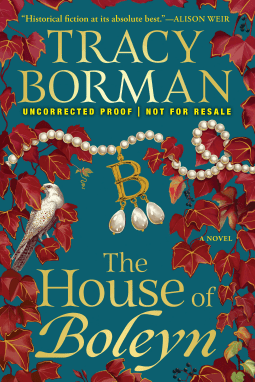
Tracy Borman The House of Boleyn A Novel Grove Atlantic | Atlantic Monthly Press, August 2026.
Thank you, NetGalley, for providing me with this uncorrected proof for review.
Tracy Borman’s novel is a broader reflection on Anne Boleyn’s attitude to her relationship with Henry V111 than usual. This has its pitfalls, as secondary characters whose vital roles were unrecorded must be partially fictionalised; it also has its advantages in that Borman is able to speculate about characters, often suggesting possibilities that question the way in they have been depicted in other historical fiction and non-fiction. The introduction, with Thomas Boleyn returning to Hever Castle, mourning the loss of his two children is an indication of where this novel might lead. It is intriguing, as not only does it provide Thomas Boleyn with a more positive image, it also questions the way in which fathers related to daughters in the period. Their role as unrelenting searchers for self-advantage through their female relatives is undermined by his self-reflection throughout the novel.
The servants in the Boleyn household, are given important positions in the narrative. Their conduct demonstrates that it was not only at court that subordinates could wield destructive power. The court intrigue and the role of public figures about which a great deal is known, together with the intricate weaving of fiction is a valuable contribution to understanding the Tudor world and within it, the Boleyn family. That one or another figure or event might be wholly fiction does not detract from the way in which Borman is able to create a world that is believable.
In this novel, the historian meets the fiction writer in a splendid depiction of the Boleyn family, its servants, its relationship with the court and the monarch, and its relationship with the smaller world within Hever Castle. When Anne places her hand on Henry’s chest and feels the sharp jewels, her fate is foreshadowed – a clever device and use of imagination. Where imagination is used to not only enhance the narrative and fill in plots and characterisation for which there is little or no evidence, but can infer or foreshadow events that are known, a writer of merit is at work.
An epilogue records Thomas Boleyn’s last years and death; Jane Boleyn’s continuing influence after her difficult beginning in the house of Boleyn; and Anne of Cleves’ introduction to the Tudor Court and Elizabeth. In an author’s note Borman explains her interest in retrieving and imagining Anne Boleyn’s early life and that of her siblings as well as that of her similarly less well-known grandmother. She also describes where evidence and imagination meet, including the way in which various servants are depicted and the possibilities she explores at the end of the novel.
Tracy Borman’s creativity and historical knowledge combine tin an engaging narrative, further enriched by her author’s note explaining her use of each element.
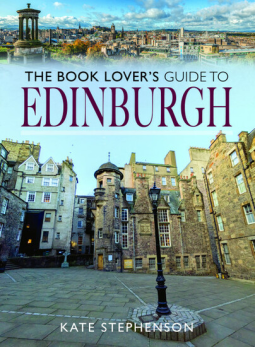
Kate Stephenson The Book Lover’s Guide to Edinburgh Pen & Sword | White Owl, January 2026.
Thank you, NetGalley and Pen & Sword, for providing me with this uncorrected proof for review.
Kate Stephenson’s Guide is not only a notable practical resource, but a pleasure to read. Well designed and clearly explained walks become literary explorations as the Guide dips into the literary sources related to the people it discusses. The introduction provides an historical context for the literary walks which, in the second section, cover the monuments and excerpts from the work of well-known literary figures: Robert Burns, Robert Louis Stevenson, Sir Walter Scott, JK Rowling and Diana Gabaldon. Less well-known figures are also featured in the next section, in less detail but their appearance is nevertheless engaging. So too, is the last section which features festivals, museums, and bookshops.
The historical and geographic information establishes the social and physical environment in which the writers’ imaginations were cultivated, in which they worked and produced the literature that makes them part of, as well as a product, of Edinburgh. With this attention to the writers’ lives the Guide becomes far more than a useful pointer to the relevant monuments. It encourages reflection upon the inspiration behind the literature that is the purpose of the journeys.
The detail in the walks related to the five major authors is so absorbing it is like being in Edinburgh. This is further enhanced by the inclusion of the authors’ writing. At times this comprises lengthy extracts from familiar works, at others, glimpses chosen adeptly to tempt the prospective walker into reading as well as exploring. The less detailed section on other writers is also satisfying as it reaches more widely across a range of writers and environments.
There is a bibliography, a list of authors and cited works, as well as copious graphics. The additional information about the museums, bookshops and festivals is an excellent read. The Book Lover’s Guide to Edinburgh blends an impressive amount of information in an engaging and wonderfully accessible read. I thoroughly enjoyed this book – it is certainly tempting me back to Edinburgh.
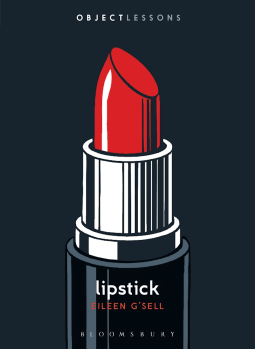
Eileen G’Sell Lipstick Bloomsbury Academic, February 2026.
Thank you, NetGalley and Bloomsbury Academic, for this uncorrected proof for review.
Lipstick is another publication in the fascinating Object Lessons series. Each book focusses on an everyday item, approaching it from a personal and historic view, combining these in a well-researched, substantial but eminently accessible, account. I have enjoyed each of these books I have read and reviewed so far, and regret having come late to the series. Eileen G’Sell’s narrative about lipstick, from personal, feminist, and historical aspects is another engaging read. It is also one of the most enlightening and thoughtful works I have so far encountered in the series.
Undeniably controversial, the debate about feminism and attitudes towards cosmetics is a tremendous read. G’Sell approaches feminist icons fearlessly in arguing her own case for wearing lipstick. At the same time, she acknowledges the way in which such adornment has been used to undermine women’s status. Where research shows that cosmetics have been used for both adornment to attract and adornment to defy, or to designate a particular moral stance G’Sell cogently describes and explains each argument. Often, she personalises the issues with women’s stories.
Titles such as Painted Ladies and Tainted men; Painted Ladies and Painted Men; Lipstick Feminism and Sticky Pleasures; The Myth of the Red-Lipped Suffragette, and topics that cover lipstick bans in schools, lyrics and videos that feature lipstick and the possibility of a ‘Femme-Friendlier’ future provide pointers to the scope of the topics to be encountered in this engaging book.
There is a host of illustrations with detailed explanations and lengthy notes for each chapter. The acknowledgements end with a quote that demonstrates Eileen G’Sell’s commitment to women whose personal approach to using cosmetics has been considered unconventional, daring, or magical. *
*The quote is far better than my paraphrasing. However, uncorrected proofs cannot be quoted.
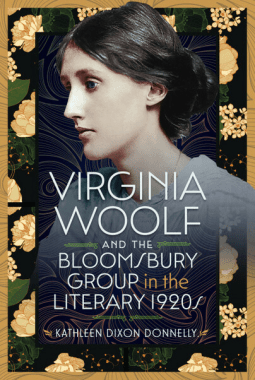
Kathleen Dixon Donnelly Virginia Woolf and the Bloomsbury Group in the Literary 1920s Pen & Sword | Pen & Sword History, January 2026.
Thank you, NetGalley and Pen & Sword, for providing me with this uncorrected proof for review.
There is a copious amount of information about the group around Virginia Woolf, the latter serving as the focus for only some of the text, while other actors appear, take their place at the centre, and move on. The information is dispensed in a linear manner, and while this enhances accessibility, it also contributes to a somewhat static enunciation of the narrative. Pen & Sword texts are usually livelier, and I missed this in Kathleen Dixon Donnelly’s work.
However, the literary and artistic lives of this fascinating group are deftly woven around their personal lives, so that although the sense of entitlement is almost overwhelming, their courage to live beyond the social mores and enduring contribution to literature is undiminished.
Particularly informative is the history of the Hogarth Press in which the everyday ramifications of running a press, as well as insights into the published material and, again, the influence of the influential writers in the group is detailed. On some occasions the press is accused of being incestuous, but this claim is accompanied by a wealth of information about the role of alternative publishers, the size of the project and the financial ramifications laying bare more than the notion that providing for friends’ (possibly) inferior works was a factor in Hogarth publications.
The narrative follows the leading figures of the Bloomsbury group up to their deaths, concluding with Lydia Lopokova, the final surviving member who died in 1981. By continuing the stories of individuals like Vanessa Bell, who lived until 1961, and E.M. Forster, who lived until 1970, the narrative extends its focus beyond personalities such as Virginia Woolf and the group’s earlier pursuits. The book includes photographs, detailed chapter notes, an extensive index, and a curated bibliography.
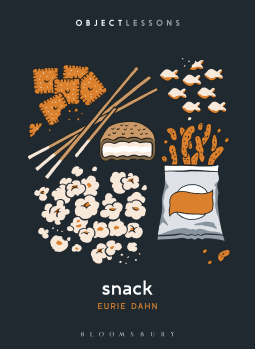
Eurie Dahn, Snack, Bloomsbury Academic, February 2026.
Thank you, NetGalley and Bloomsbury Academic, for this uncorrected proof for review.
Snack is another title in the Object Lessons publications that can be so much fun, as well as making a serious contribution to information about the wide range of topics they address. Snack is less entertaining than I expected, and although it is arguable that the somewhat serious approach is valuable it also presents challenges. Snacks have always suggested fun, something different from the three-course meal, or even fewer courses, but nevertheless a solid meal eaten at a table with the accoutrements associated with social environment, culture, and purpose. Eurie Dahn focusses on particular American and Korean snacks, embracing debates about the health aspects of snacks, their cultural importance, parental care and children’s responses to snacking, snacks and popular culture and types of snack.
The topic of school snacks sparks discussion about discrimination faced by children with unfamiliar snacks. The text covers various popular snacks, blending humour with serious commentary, and addresses concerns about dieting and the hidden health risks of eating small, tempting snacks in substantial amounts.
Snack provides detailed information about the topics it covers. However, the snack is so universal, it would have been useful to consider more examples from a wider range of countries. Childcare snacks, as well as the role of parents in providing snacks, would have been an interesting additional topic. Similarly, what snacks are provided in other public venues such as the school canteen or hospitals? Are they different from snacks available to a private citizen?
The material covered in Snack was detailed and informative, and the analysis thoughtful. However, I felt that a broader ranging narrative and adoption of a more entertaining approach providing a contrast with serious discussion would have produced a more engaging text.
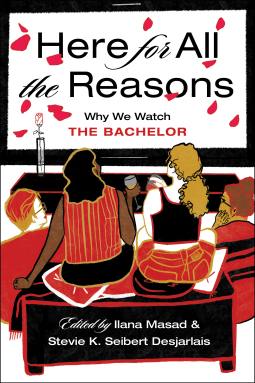
Ilana Masad, Stevie K. Siebert Desjarlais Here for All the Reasons Why We Watch The Bachelor Turner Publishing Company, May 2026.
Thank you, NetGalley, for providing me with this uncorrected proof for review.
This is a collection of largely anecdotal approaches to watching The Bachelor, and at times, associated programs such as Bachelor in Paradise. It is not the analytical survey of The Bachelor, answering questions such why it has attracted large audiences, why these have gradually diminished, and how new aspects of the accepted format have been introduced to halt this slide that I expected. Rather, there is an emphasis on personal stories, very often these overriding any analysis of The Bachelor even from the perspective of that audience member. So, my initial reaction was disappointment. However, as the stories mounted, perhaps becoming attuned to the style and content, I found myself appreciating the honesty of these audience members, the multitude of backgrounds and personal likes and dislikes they described as part of their Bachelor experience, and the way in which they wrote with warmth about the groups they formed around watching and discussing the program.
Because there is a wide range of contributors, from different backgrounds and experiences, religious and political beliefs, race, gender and sexuality are part of the narrative. Some contributors want their particular interests represented amongst the contestants; others refer to aspects of their background to inform their viewing. Some of the contributions are delightfully humorous, at the same time as recognising the pressure under which contestants suffer throughout the process. Some refer to friendships between the women contesting for a rose, linking friendships on and off the screen that can become part of The Bachelor experience.
These anecdotes would have gained greater depth if they included significant references to the franchises that make The Bachelor a popular program elsewhere. Adding comparisons of how other countries interpret and transform The Bachelor—moving past limousine arrivals, extravagant gowns, the rose ceremony, and both emotional and unemotional farewells—would help this book resonate with a wider audience.
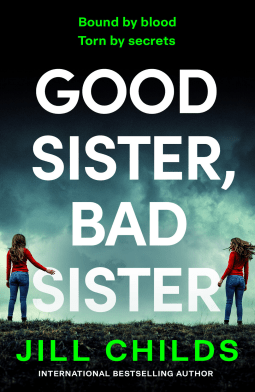
Jill Childs, Good Sister, Bad Sister, Boldwood Books, March 2026.
Thank you, NetGalley and Boldwood Books for providing me with this uncorrected proof for review.
Good Sister, Bad Sister narrative is shared between sisters who were separated at birth. Arabella was adopted by a wealthy family; Helen remained in her mother’s care in very different economic circumstances. When Arabella’s mother dies, she leaves a letter for her daughter in which she discloses that she was adopted. Arabella investigates and finds her birth mother and sister. Arabella begins a relationship with her biological mother, and forges a relationship clandestinely with her sister, Helen. She must navigate these relationships with her marriage to Danny and young child, Lola, the difference in her economic circumstances and that of her biological family and her daughterly feelings about both her adoptive and biological mothers. These feelings are marred by her anger at her biological mother for choosing Helen instead of her, and the unloving relationship she has had with her adoptive family.
Hearing each sister’s story from herself helps make the narrative relatable and engaging. However, the wordiness of some of the narrative undermines the tension and often provides unnecessary information. For example, Annabelle worrying about her small child’s reaction to the news that her grandmother was not her biological grandmother is unrealistic. On the other hand, a twist that, although it could be considered predictable, was handled deftly and with the maximum of uncertainty.
I found the novel a mixture. On the positive side, there was an engaging format with a neat plot and relatively complex characters. However, there were also less attractive aspects largely based on what I felt was overwriting and unnecessary detail. Good Sister, Bad Sister would be a good beach read, and I would consider reading another of this author’s books.
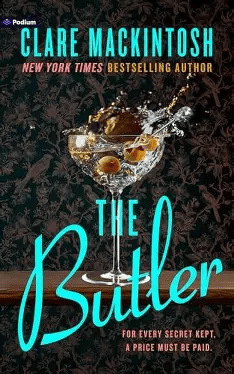
Clare Mackintosh, The Butler, Podium Entertainment, June 2026.
Thank you, NetGalley, for providing me with this uncorrected proof for review.
The Butler sets a pace that is quite different from Clare Mackintosh’s previous novels, and I had to adapt to the pace and tone. Once having done so, I was impressed with this writer’s ability to craft an engaging narrative in a new (to me) style. The butler, Baxter, has recently had to put himself on the market for short term engagements. This makes him vulnerable to his agent and her demands – he must provide information to her on his current employer, Alec Prescott. A glamourous setting in a mansion, complete with swimming pool, in Cannes provides the background to intrigue, infidelity, and eventual murder. Baxter, warming to his Hercule Poirot role investigates and solves the mystery.
Baxter’s arrival at the villa is preceded with excellent characterisation – he is a figure to whom I immediately warmed – and a jolt to the senses: noisy music, broken glass, dirty dishes, upturned furniture, and a couple dancing on an expensive table. Each character is introduced with their public and personal personas developed to provide the maximum appeal – or its opposite. The young characters’ development in the short time they are at the villa – Jade’s secret and Carter Prescott’s reaction, Red’s arrogant pickpocketing and her vulnerability and even Kaitlyn’s stereotypical attraction to an older man – is contrasted with the jaded presence of the older inhabitants. Interaction between possible competitors is often comic at the same time as cutting. Clues to the murderer are provided with Agatha Christie seeming ambiguity. However, like Christie, Mackintosh is honest in her cues. Likewise, the plotting is smart, the character development works so that challenging characters logically progress to those for whom there is sympathy, and the solution is sound.
I always enjoy Clare Mackintosh’s work, and The Butler is no different. It is an enjoyable read and a successful diversion from earlier works. This novel provides the possibility of exciting teamwork between Baxter and Red, which I hope will be an outcome of their sympathetically wrought relationship in The Butler.
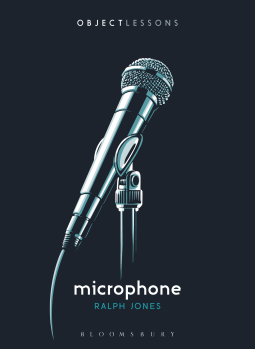
Ralph Jones Microphone Bloomsbury Academic, April 2026.
Thank you, NetGalley and Bloomsbury Academic, for providing me with this uncorrected proof for review.
Microphone is yet another successful contribution to the Object Lessons publications. It takes a historical approach, beginning with the early efforts to record sound, touching on The Jazz Singer as an example of sound being applied to song in films, through successful and unsuccessful attempts to be the first to patent new innovations in the long line of changes, to arrive at today’s expanded use of microphones. Some of the competition between inventors, patent seekers and innovators has already been explored. However, Ralph Jones has developed this part of the discussion with further information, in a readily accessible form – the information becomes a narrative that sets the scene for the excitement of discovering the way in which the microphone was developed, the ways in which it has been used, and making the familiarity of todays’ use part of an historical adventure.
The first chapter headings take us straight into conferences, meetings, and anywhere that a microphone is an important addition to getting an idea across to an audience. Could there be a microphone without ‘Is This Thing On?’ or ‘Testing, Testing’? More intriguing is ‘Hear Some Evil’ and here we move into the realm of eavesdropping, some nefarious, some a safety provision, others a source of entertainment in televised programs. Political events and war are covered; the telephone; the power that emanates from being the person with the microphone and the way in which the microphone has given that power to anyone whose podcast (of which there are so many) is successful.
There are photos, notes, and an index. The last is a rich source, demonstrating the wide-ranging information in this small book of knowledge. Although I admire the publication in general, and have enjoyed some of the individual books immensely, I have found this one of the most engrossing. The historical narrative is fluid, the integration of events and ideas enhances the history rather than interrupting the flow, and the writing is especially captivating.

Amy M. Kleppner Oceans to Cross Amelia Earhart’s Extraordinary Life and Her Fight for Women’s Rights Bloomsbury Academic, March 2026.
Thank you, NetGalley and Bloomsbury Academic for this uncorrected proof for review.
Amy M. Kleppner with Laurie Calkhaven reads the title page, and here the story of a family whose commitment to giving Amelia Earheart a biography which provides not only a warm family thread through the analysis, the adventures, and passions of Amelia Earhart, but a polished work begins. Amy M. Klepper is the last surviving member of Amelia Earhart’s family who knew her. She is the daughter of Muriel, Amelia’s sister, and grew up with an aunt she recalls so vividly as someone who is far more than the mystery of her disappearance. Laurie Calkhaven revised and edited the work. Amy’s son, Bram Kleppner, also contributed with his perceptive insight into the author, adding to the uniqueness with which Amelia Earhart’s story unfolds in this biography.
Amelia Earhart’s work to gain her qualifications and acceptance, and the journeys with which she honoured these endeavours is engaging. The emphasis on Earhart’s commitment to women’s equality and her work in that area, is also well covered. This includes the perceptive examination of her accepting a passenger role on a flight across the Atlantic, demonstrating that women could undertake such flights. This, when she must have dearly preferred to spend her time flying rather than being a passenger, is a tribute to her sincerity in representing a broad range of women’s rights. In this case she was ensuring that women who were never to be aviators, but would want the freedom to travel, were represented. It is examples of Amy Klepper’s deep understanding of her aunt, and ability to adopt a broad feminist perspective, which makes this biography so special.
The work includes previously unpublished photos from the family collection. The selected bibliography, notes for each chapter, and an index fulfill the academic requirements. But this biography is far more. Bram Kleppner’s epilogue which establishes Amy Kleppner’s familiarity, affection and admiration for her aunt underlines the importance of her personal influence on the work. In addition, Amy Kleppner’s own efforts pursuing women’s rights and racial justice, her physical endeavours such as her bicycle ride from Boston to Quebec City and climbing the forty-six peaks of the Adirondacks, link her closely to the mindset of the woman about whom she writes. Her birthday celebrations with challenging feats, like a 100-mile hike in England at eighty and retracing Odysseus’s voyage at ninety-two, further underscore her kinship with Amelia Earhart.
This is an engaging work, full of detail, but most importantly, resonates with understanding and affinity with its subject.
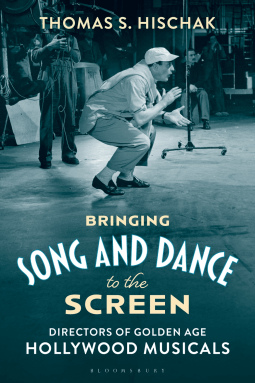
Thomas S. Hischak Bringing Song and Dance to the Screen
Directors of Golden Age Hollywood Musicals Bloomsbury Academic, October 2025.
Thank you, NetGalley and Bloomsbury Academic for providing me with this uncorrected proof for review.
The tone, the language, the content: all lead the reader on a remarkable journey through musicals in the Golden Age of cinema, both screen originals and adaptations. Thomas S. Hischak’s Bringing Song and Dance to the Screen Directors of Golden Age Hollywood Musicals is an immensely readable, formidably knowledgeable book. It made me want to expand my experience of the genre which Hischak shows can be fun, smart, engrossing and, at times, flawed. When commenting on the latter, Hischak’s language is wonderfully frank and so slyly witty that the musical that receives such treatment remains appealing despite its honestly revealed flaws. As a reader newly interested in this genre, although familiar with some of the most well-known actors, music, and lyrics, I found this an engaging study, almost a romp, through the stories associated with getting musicals onto the screen. It is a book that is a pleasure to read, as well as an expert contribution to a thoughtful analysis of musicals and their adaption to the screen.
While the focus is on directors, each chapter representing a particular style of director, there is a wealth of additional information. The stories of each musical – simple or sometimes with some complexities – are told; the actors and the challenges they met superbly, or not so well; the environment -social and economic – which enhanced or challenged the work; the studios and their power, are all detailed, again enhancing the accessibility of the narrative.
The directors who appear do so in chapters that highlight their most important talents. The first chapter All Singing, No Talking introduces Alan Crosland and The Jazz Singer. This covers the introduction of the talkies – in these preliminary stages sound only used when the actors were singing, while other interaction was silent, as had always been the case. The Pioneers, Outside the Box, Something with Style, Prolific Professionals and Star Handlers are fairly self-explanatory chapter titles. Not Who You’d Expect covers Raoul Walsh, George Stevens, George Cukor and Victor Fleming and Choreographer to Director is a fascinating approach to the way in which those whose ability was in devising talented dance sequences expanded their repertoire.
There is a fine appendix – Directors and Their Film Musical Credits, a bibliography and index. There are also photos throughout, and these will be increased in the final version. In my kindle version those that appear are enhanced by detailed captions.
Valerie Keogh The New Neighbour Boldwood Books, March 2026.
Thank you, NetGalley and Boldwood Books, for this uncorrected proof for review.
For the first time since I began reading Valerie Keogh’s books, I am disappointed. I see Keogh as one of the foremost writers who have perfected the twist, characters who on first sight are unappealing but because they are complex eventually become those whose stories are worth pursuing, and plotting that is logical but exciting. Unfortunately, on this occasion, I found it hard to feel drawn to the main character, Chloe, and although the twists were logical outcomes of the plot and there are glimpses of Keogh’s usual flair, for me the novel failed to meet her usual standard.
Chloe has been released from prison, serving a year less than her sentence for driving while under the influence of alcohol and causing a two-vehicle collision in which two of her friends and a stranger in the other car were killed. Chloe cuts ties to her parents and siblings. Her remaining friend, also in the accident, is now ignoring her. Chloe moves to a new location, and a job in a supermarket. Here there is Keogh’s familiar work – Chloe’s home, clothing, facial expression, and behaviour are drawn to show how grey and uneventful she wants her life to be. These flat descriptions are interspersed with the horrific imagery of the accident and her friends’ last moments. There are also glimpses of the woman Chloe has left behind since the accident – a woman of colourful activity, clothing, and profession. The overwhelming guilt Chloe feels takes away such colour from her new life, and the oppression she feels is an integral part of the narrative.
Chloe’s kindness, in the midst of her anguish brings her into contact with two warm characters who attempt to draw her into a productive life once more. There are some good moments with them, but there is also tension around their friendship, a figure lingering in Chloe’s street, other neighbours and threatening assaults on her home. However, Chloe’s guilt, manifesting itself throughout the narrative and at an intensity that abandons the notion of accident, her past exemplary approach to drinking and driving, and having been incarcerated for her crime, undercuts the narrative. I found the repetition of Chloe’s guilty feelings overdone and it spoilt the character for me.
However, shall I let my disappointment with this novel impact on my appreciation for Valerie Keogh’s past work, and the work I hope that she will produce in the future? Certainly not. Keogh is too fine a writer of this genre to cast aside and I look forward her next novel.
M.L. Stedman A Far-flung Life Penguin Random House Australia| Penguin eBooks (AU Adult), March 2026.
Thank you, NetGalley, for providing me with this uncorrected proof for review.
I found M L Stedman’s The Light Between Oceans a stunning, poignant read. A Far-flung Life is both, and more. The writing is beautiful, the plotting refined, characterisation excellent, and the description of the Australian environment, superb. The MacBride family, Phil and Lorna, and their children Warren, Rosie and Matt gain their livelihood from Meredith Downs, a Western Australian sheep station. As the male MacBrides travel through the bush, their truck full of sheep, and miles from any ocean, their ownership of a boat, housed in a towering shed on the property is the first hint that this is an outback Australian family whose lives may be unusual. However, familiar aspects of life on the land also rule the MacBride’s lives. Warren, as the eldest son will inherit the station when Phil retires and Matt and Rosie must find other futures. Matt’s seems assured – he is excelling at a prestigious boarding school in Perth and feels that he can do anything, including sailing the boat. Rosie, although also at a prestigious boarding school in Perth, does not have the same prospects. Not only is she less academic, but it is also understood that she will marry another station owner and follow in Lorna’s footsteps. The world is not open to her, nor is independence. The unique responses she devises provide both possibilities and vulnerability. This trip, with its evocative depiction of the surrounds, foliage, wildlife, the road, the sky, will change the MacBride’s lives.
Moral dilemmas impact a family suffering grief and markedly changed circumstances. The morality imposed by country life and small compact communities, conflicts between the law and understanding of the shortcomings of the legal system, together with figures in authority choosing one path or the other are explored. Characters whose flaws and courage under immense challenge are also examined. Even seemingly minor characters are so well developed that their aims and concerns become strong threads that help weave the story together into a remarkable narrative that pulses with feeling.
At the same time as being a novel in which the characters evoke interest, sympathy and, at times censure, A Far-flung Life explores historical changes in Western Australia. The first chapters describe life when pastoral properties associated with small country towns dominated, going back into the past that the MacBrides enjoyed, to the events of 1958 when the novel begins, and the immediate aftermath, through the years up to the introduction of mining exploration in the late 1960s to the 1970s and then again in the 1980s. There are reflections on the 1890s goldrushes and the immigration associated with these, the ‘boom and bust’ nature of the economy, a possible connection with Kew Gardens which serves as a reminder of the British heritage of some Australian settlers and the scourge of asbestos mining recalling other waves of immigration.
An immense novel of tragedy, tenderness, courage and memorable characters and events, this also becomes a domestic story where the MacBrides and their wider family overcome setbacks. Quietly they go about their business on the land and with each other, eventually making assured choices and judgements that resonate with the rhythms of the land on which they dwell.
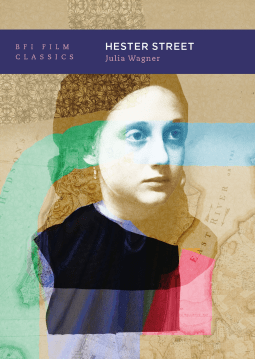
Julia Wagner Hester Street Bloomsbury Academic, October 2025.
Thank you, NetGalley and Bloomsbury Academic, for this uncorrected proof for review.
This inspiring book provides the blueprint for three studies – analysis of a film; analysis of the depiction of a group that is the focus of a work of art; and detailed analysis of the film that is the topic of the book – Hester Street. It is worth considering the broad sweeping value of Julia Wagner’s Hester Street to each of these studies. The first two aspects demonstrate the value of Wagner’s work to creating a measure for analysing any artistic endeavour and depictions of groups within those works. That is, Hester Street might not be the film that you want to analyse but provides excellent tools for evaluating any film. Similarly, studies of groups will benefit from the detailed work undertaken in this text. It is a stellar source for studying much creative work. And that is before approaching the topic of the book, the analysis of Hester Street, the film.
Chapters cover topics such as the way in which visual and spoken language conveyed historical information; how immigration impacted on perspectives in Hester Street; the symbolic values associated with costume and ritual; and the relative freedom Jews experienced in America, using Yiddish widely as well broadening their cultural pursuits through this increased freedom, depicted through descriptions of individual characters. The last chapter, discussing reviews of the film, was a standout in its detail and forbearance. The reviews provide such an insight into the understandings that coloured the way in which the film was assessed. That some reviewers felt quite able to exhibit their antisemitism and sexism provided a look into a world in which such egregious utterances seemed to be acceptable.
There are notes, a bibliography, and photographs. The thorough analysis benefits both general studies and the specific examination of Hester Street, making the book an outstanding resource. Through the last chapter, what is a dedicated analysis of Hester Street became a more broadly focussed look at the environment in which it was shaped. What a gem this book is!

Amanda Reynolds The Screenwriter Boldwood Books, January 2024.
Thank you, NetGalley, for providing me with this uncorrected proof for review.
This title attracted me and, although unattracted to Reynold’s Close to Me in its televised form, suggests that potentially I have found a new source of entertaining psychological thrillers. The Screenwriter has the added attraction of including social commentary together with the staples of this genre, mystery, devious characters and some intriguing plotting. In this novel, scrutiny of the Hollywood world as the MeToo movement has become part of its public discourse, is woven into the plotting and characterisation.
A prologue introduces Blythe Hopper who, upon looking out of her tower in her home in Hampstead, sees a spire of smoke arising from her garden. Headache forgotten along with the insults she has had to endure from a young journalist and mixed reminisces about her marriage, she hastens downstairs, runs through the kitchen where signs of a fight are apparent, is unable to locate keys to the locked back door, finds instead a gun and …
A month later Marnie Wilde arrives to be Blythe’s ghost writer. She is desperate for the work, for personal as well as financial reasons. Both explain her preparedness to suffer the disagreeable behaviour of Blythe and her business manager, Ludo Villander, the unsavoury accommodation to which she is banished from the well-appointed house, the poor-quality food prepared in a dirty kitchen and numerous rules to which she must adhere. However, lest one feels too sorry for Marnie she is also a less than sympathetic character, with her slovenly appearance, propensity to self-sabotage, and her endless consumption of alcohol.
Marnie has recently suffered a set back to her screen writing career and has to return to ghost writing. She is concerned about the situation in which she finds herself, questions the motives of Blythe and Ludo, claims to want to remain abreast of the various shoals that she is encountering in her new role, but only spasmodically works towards this end. She is intrigued by Dom Hopper’s script which he and Blythe were working on as a vehicle for Blythe whose long-ago Oscar has not achieved for her the fame she craves. Dom’s death at Blythe’s hand, destruction of the script for the proposed film and his email to Marnie in which he claims to be pursuing Marnie’s mother’s mysterious disappearance all work to create a multitude of strands to the novel. Marnie’s and Blythe’s characters and the story of their pasts emerge through discussions about the proposed memoir, and the possibility of Marnie completing Blythe’s interpretation of the screen play.
The merging of characters and stories is a clever device, and helps move the novel past the drinking, inedible food, and general seediness that makes up much of the story. Although there is some predictability, Reynolds has established characters that work, competent storylines and has addressed the role and impact of sexual predators in Hollywood. I would read another of Amanda Reynold’s novels.
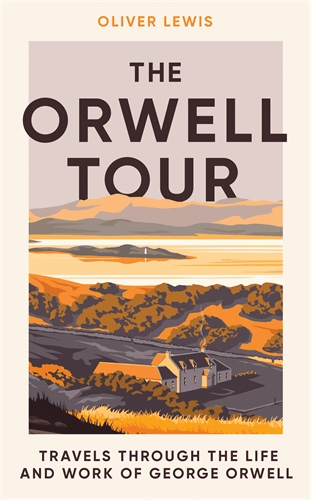
Oliver Lewis The Orwell Tour Travels through the life and work of George Orwell Icon Books, Sep 2023.
Thank you, NetGalley, for providing me with this uncorrected proof for review.
Travel to places such as Wigan, Catalonia, Paris, Motihari and Marrakesh referencing Orwell’s novels and insights into the author and his writing – what more could a reader want? That George Orwell was born in Northern India and died in Sutton Courtenay is intriguing in itself – and what happened in between is a story adroitly woven by Oliver Lewis in The Orwell Tour Travels through the life and work of George Orwell.
I enjoyed the pleasure that Lewis so clearly finds in writing about Orwell, associated locations, and indeed in his own approach to the subject. The enthusiasm Lewis feels permeates the book and I felt drawn into a life and places about which I knew something, but little in comparison with Lewis. Unlike Oliver Lewis, I have not read most of Orwell’s work, as I recall from many years back only the two most well-known, Animal Farm and 1984, and Homage to Catalonia and The Road to Wigan Pier. I also came newly to the many places Lewis visits. This does not matter, he unfailingly provides a picture that draws upon the written work, Orwell’s character and the countries from which Orwell took his inspiration.
Although Lewis refers to the many biographies that have been written, and does not presume to replicate them, he sketches in enough biographical information to give his emphasis on the novels and his travelogue a context. And that travelogue is a good insight into location, the novels and Orwell.
I found this a satisfying and engaging work. I feel that an admirer of Orwell as well as the not so admiring can also find The Orwell Tour Travels through the life and work of George Orwell an enjoyable account of places, novels and biographical snippets of a writer whose Animal Farm and 1984 still resonate in the 2000s.
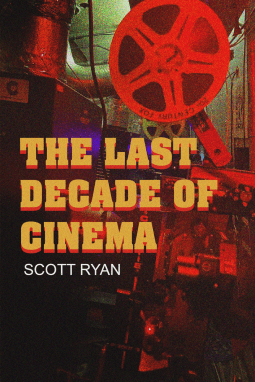
Scott Ryan The Last Decade of Cinema Black Chateau Fayetteville Mafia Press, June 2024.
Thank you, NetGalley, for providing me with this uncorrected proof for review.
Scott Ryan has a distinct writing style that carries this serious, perceptive and analytical approach to a decade of film with a firm grasp of the need to engage with his audience. At the same time he ensures that he maintains the obligation he has imposed on himself to utter raw truths. His fidelity to exposing the failings that largely mar the aftermath of 1990s film underlies the way in which he approaches his prime aim. The responsibility he feels for the task he has set himself – bringing the sheer wonder of 1990s film to a large audience – is demonstrated by the choices he makes, the language he uses, the additional material and his tenacity in acquiring relevant interviews.
Ryan chooses the films that fit his criteria – but then, oh joy, he adds a supplementary list that could have equally been chosen. He also adds ten films from the immediately previous decade, and the one after that demonstrating that some films that meet his criteria do fall outside the strict period he gave himself for the bulk of the book. The films are supplemented by some excellent interviews – a tribute to his thoroughness in getting the best for to meet the challenge he set for himself; notes for each chapter; a comprehensive index; and informative acknowledgements.
Some of the films were familiar to me, and ones that I also loved. Some were films that I knew and disliked. Others I had not seen and shall search for them – but as Ryan says, this is difficult where streaming is aimed at something other than bringing the best to audiences. They are a poor replacement for the video store in which he saw so many of the films with which he makes his case for 1990s film, the industry at that time, and the services available to audiences in the period.
Ryan’s introduction is a masterpiece in its reflection on the limitations of the superhero and franchise films that have largely replaced his 1990s choices, the reasons for this change, and the manner of the changes. He manages to squeeze even more 1990s examples here – more clever writing. His explanation that the films he admires with their gamut of emotions that made audiences think have been replaced with a one dimensional story with no uncertainties resonates with me. While admiring the special effects that have won accolades for Australians, the films in which they appear have left me unresponsive.
Like Ryan, I want to see films today like those with which he fills the pages of The Last Decade of Cinema. In twenty-five essays chosen for each year of the nineties Ryan takes us though a range from the 1990 Goodfellas to Magnolia, released in 1999. He gives 1994 special mention with reference to Pulp Fiction, Shawshank Redemption and Reality Bites. Some of those I recall (not all with pleasure) that he covers in the essays are Pretty Woman, Pleasantville, To Die For, The Big Lebowski, The Ice Storm, Prince of Tides, Eyes Wide Shut and Unforgiven. But why didn’t I see Citizen Ruth? The Birdcage? I shall re-read this book, take on the analysis of the 1990s films I saw and did not enjoy, and if I cannot manage to see them and others that have piqued my interest, continue rereading The Last Decade of Cinema.
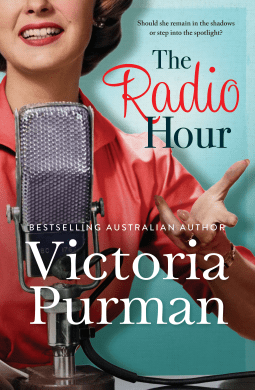
Victoria Purman The Radio Hour Harlequin Australia, HQ & Mira, 2024.
Thank you, NetGalley, for providing me with this uncorrected proof for review.
The Radio Hour is an absolute delight. Victoria Purman’s skill in writing historical fiction is just one of them. The way in which she weaves historical information throughout a plot that depicts Australian Broadcasting Commission radio in the 1950s, while also delving into the past, is thoroughly engaging. Purnam’s skill is formidable – so rarely is historical fiction written with such excellent attention to the adage ‘show, don’t tell’ that this book really stands out. ‘Show don’t tell’ is usually used in relation to writing film scripts, so for the writer of a novel to be able to slip the facts into the narrative so seamlessly is special. Together with a meticulous historical narrative which deals with serious issues there are charming (and not so charming) characters, a simple but effective story line and humour.
Each chapter is introduced with a precis of the events that will take place. This device is reminiscent of the way in which the radio serial that is to become the focus of the plot is introduced. It will follow the familiar Blue Hills to which audiences all over Australia listened as it was played in its 1.00 and evening timeslots on each weekday. In chapter 1 Miss Martha Berry, who has been filling in for a secretary who is on holiday, is advised that she will be working for a new radio producer. Quentin Quinn is to be the writer and producer of As the Sun Sets.
Martha Berry lives with her mother who, with her friends, listens avidly to Blue Hills, both the afternoon and evening versions. At work, Martha is friendly with a group of young women, April, May and June with whom she lunches, and mentors where possible. Less friendly and less pleasant are Quentin Quinn and Hansy Hooper, the sound technician. Increasingly familiar are Jack, Vera and Betty Percy, the family of As the Sun Sets, and the actors who play them. Some real ABC characters appear, most are imaginary, but all bring to the narrative a real understanding of the ABC and its programs, the world of radio and the place of women. The comparison with men’s progression through the ranks – not for them being known as the tea girl, the secretary, or the script girl if she is lucky, or suffering the marriage bar or unequal pay – is well made.
The world outside the ABC, still impacted by two world wars, the flu epidemic, rationing and sexual discrimination is wonderfully observed. From the fear of the impact of television, Barossa Pearl (so awful) to celebrate, audiences’ pleasure in serials such as The Lawsons, Blue Hills and, on the commercial stations of course, When a Girl Marries, Portia Faces Life and Doctor Paul, an array of historical information is imparted. Often the rendition is amusing, sometimes it is heartrending, but it is never dull.
The Radio Hour includes a note on where the narrative has departed from authenticity (one event took place at a different period from that in the book but is based on a real event) and a list of books that were used for research. Two of these are on my own bookshelf – and well worth a read for those for whom the novel is history. For many readers, me included, Blue Hills was part of their childhood; radio was the entertainment of choice until the advent of television, and as Purnam describes, a box on legs. For all those who can remember, this is a wonderful look into the past, with the realities of discrimination against women as an additional focus; for those for whom this is history, what a delightful way to learn. And most importantly for both audiences, what a truly captivating novel.
M J Trow History vs Hollywood How the Past is Filmed Pen & Sword, Pen & Sword History, March 2024.

M J Trow has written a book full of interest to anyone who enjoys films with an historical bent. Perhaps they will be disappointed to learn from History vs Hollywood How the past is Filmed that so much in these ‘historical’ films is erroneous, from major problems of fact, flawed depictions of costume and event details and poor representation by actors who bear little resemblance to those they are supposed to portray. However, is this book offering much more? Perhaps, of course, what is offered is enough. However, I would have liked more analysis, some other experts noted if Halliwell has been supplanted as the film buff’s ‘go to’ reference, and less freewheeling chapter content.
There are constant references to ‘Halliwell’ author of Film goers Companion (1965) and Halliwell’s film Guide (1977). However, there is no information other than his name, about this critic who so often meets with Trow’s ire. Although Trow’s opinion is often supported by reference to the films and subject of critique, there are no citations other than the title of the films and names of the actors. Halliwell’s reference works have been referred to as requiring that ‘one should look up for a moment to admire the quite astonishing combination of industry and authority in one man which has brought them into existence.’ (Wikipedia) Alternative views are also cited, with Halliwell being seen as both an expert and having a limited perspective. With this reputation further analysis of why Trow usually disagrees with his assessments would be revealing.
The chapters are devoted to particular genres which can be described as historical. The Dark Ages covers the fall of Rome to Alfred the Great; The Middle Ages considers early war films from Hastings to Bosworth; The Renaissance provides details about one of the most well-known eras, the Tudors from Henry V111 to Elizabeth 1; The Swashbucklers, an exciting title which covers musketeers, pirates and ‘The New World’; The Age of Empire – Napoleon Bonaparte, Nelson, and women such as Lady Caroline Lamb, famous in the period to the wars of Empire, including those featuring Queen Victoria, to Ekaterine and a Russian emphasis; Westerns; Trench warfare to The Killing fields; and Crime films.
The genres covered by each chapter provide a wealth of information about a huge range of films, their scripts, associated personnel, and background. I would have liked to see more organisation within the chapters, so that they provided a chronological or subject discussion. The bibliography is a not particularly extensive bibliography, although there is a comprehensive index. So, as a book that has little analysis, criticises the opinions of a recognised expert and categorises only by genre with little effort to discuss films in any historical context such as reference to the chronological order in which they were produced, does History vs Hollywood How the Past is Filmed have a lot to offer?
For the reader who wants to know more about the films Trow covers, this book in a treasure trove. It also provides a wonderful perspective on the historical authenticity, or lack of authenticity, on a multitude of films in a wide range of genres. It is fun to read, and I enjoyed doing so. However, as a contribution to academic debate about the value of historic authenticity, evaluation of other expertise in the field and a thorough analysis of the films covered I felt it could have been better.
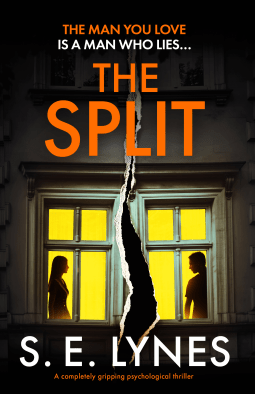
S.E. Lynes The Split Bookouture, March 2024.
Thank you, NetGalley, for providing me with this uncorrected proof for review.
S.E. Lynes has cleverly combined a thriller with elements of character study and examination of the way relationships can develop or crumble under pressure. These elements are woven together so seamlessly that the plot, as complex as it may appear at times, follows a rational progress as a marriage breaks down. Questions arise from the beginning of the novel when compromising photographs of her husband, Will, and an attractive woman are sent to Jessica. They have been married for seven years, are in their forties, and have a school age son and daughter for whom Will is the major carer while Jessica is a high-flying businesswoman. The prologue suggests that Jessica will be particularly vulnerable to the import of the photographs – and her reaction fulfills this prediction. She immediately verbally and physically assaults the just awakening Will.
Will’s characterisation is that of a man easily swayed by people and events, while being a stalwart father, loving husband and sensitive life coach. Superficially, Jessica is stronger, but her reliance on her mother and best friend, Lena, as the crisis in her marriage deepens, demonstrates Jessica’s vulnerability. Will’s vulnerability also becomes more apparent as he begins to rely heavily on a recently met friend, an aggressive lawyer, and his sense of injustice. He, too, is impacted by his mother. However, unlike the support Jessica receives from hers, Will’s mothers remembered admonishments further serve to undermine his self-confidence and fulfil his sense of grievance.
Emotional history, flawed characters, vulnerability, duplicity and misunderstandings as well as contrived events combine to make this novel a complex read. Yes, it can be read as a thriller with some smart twists. However, it can also be read as a study of a marriage and its susceptibility to past and current events which is caught up in a thriller plot that works well. S.E. Lynes has written a novel that lends itself to both understandings, and for both types of reader it is a good read.
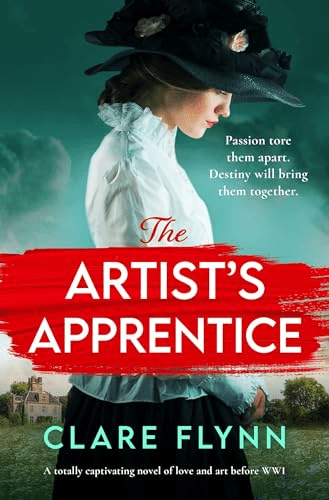
Clare Flynn The Artist’s Apprentice Storm Publishing, February 2024.
Thank you, NetGalley, for this uncorrected proof for review.
This is the first of Clare Flynn’s novels that I have read. There is a lot to admire, for example the range of political and feminist issues that are covered in this essentially romantic novel. However, although I found the novel a good read, engaging, with interesting characters, I cannot give the writing an entirely positive response. Despite that, I am pleased to have had the opportunity to read this example of this popular author’s work and would like to know what happens to the main protagonists in the follow up, The Artist’s Wife.
The novel begins in January 1908 at Alice’s home, Dalton Hall, in Surrey. Alice is sketching in the frost on her window and must take diversionary action so that her lateness to breakfast goes unnoticed. Taking in the mail to effect this, Alice is confronted with an envelope addressed in writing with that makes her uneasy. It is an invitation from the American born wife of a newly rich neighbour, Cutler, inviting them to tea. Lord Dalton is pleased; his wife, unaware of the financial reason for her husband’s enthusiasm, is not. Alice is wary. Her brother, Victor, supports his father – he has prospects of joining the profitable Cutler firm of stockbrokers.
From this beginning, that deftly sketches the outward reasons for the proposed relationship, gradually a more ominous story begins to emerge. Alice and the proposed marriage between her and the older Cutler son appear to be the crucial protagonists in the debates that arise over women’s position, their role in preserving family fortunes through marriage, and their lack of independence in choosing a partner. Behind this story is another that will become pivotal in deciding Alice’s future.
This future brings her into contact with her estranged aunt, and eventually Edmund Cutler, the younger brother whose rebellion has led him into becoming a stained-glass artist. The development of this story includes a wealth of information about the world of art, and impressive detail about the particular art of stained glass. The information here is so engaging that it is difficult to imagine readers not wanting to see for themselves the windows so well described. In the acknowledgements Flynn provides the locations that helped inspire the novel. Christopher Whall, to whom Edmund becomes apprenticed is a real person and his book also provided a source. Others, named in the acknowledgements, are Mrs Bradley, wife of the headmaster of Bedales where Emmeline Pankhurst spoke at a meeting; Karl Parsons, a teacher who worked for Whall; and Mary Lowdnes, a female stained-glass artist and supporter of the women’s movement.
Women’s suffrage and the relative merits of the more radical movement the WSPU under Emmeline Pankhurst in contrast with the National Union of Women’s Suffrage are discussed through the characters and events. Flynn’s attention to both the public and private manifestations of discrimination against women and need for political activism as well as personal resistance are argued in an engaging manner, making this novel a worthy social commentary on the time leading up to World War 1.
The Artist’s Apprentice combines public and personal stories well. Alice and Edmund’s complicated past and defiance of society and the themes of women’s equality and recognition of the need for acceptance of new social mores makes a strong novel and good forerunner to The Artist’s Wife which follows.
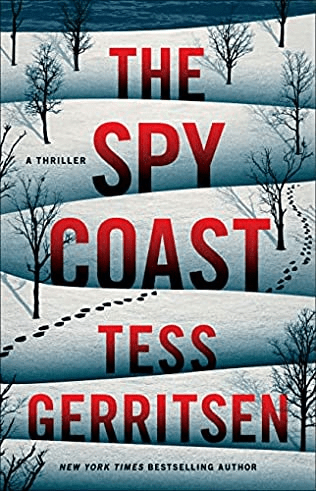
Tess Gerritsen The Spy Coast Thomas & Mercer, November 2023.
Thank you, NetGalley, for providing me with this uncorrected proof for review.
I am so pleased to have returned to reading Tess Gerritsen’s work after having neglected to do so for a while. This novel was an excellent move back to enjoying her work, and I look forward to reading and rereading her Rizzoli and Isles series. The Spy Coast is different but retains Gerritsen’s ability to draw characters whose stories are tempting to follow, a good plot and a satisfactory resolution.
The first chapter introduces Diana whose life has changed from being ‘the golden girl’ to one who dyes her blonde to ‘dead-mouse brown’ to escape a threat. With such a description how can we not want to know more! Diana is on the run, but should she evoke sympathy? In chapter 2 Maggie is introduced. Rather than living in the salubrious apartment in Paris in which Diana, when introduced resided, Maggie is in a field contemplating blood, feathers and revenge for her killed chickens. Is it she with whom one should sympathise?
Maggie is not alone in her love for her snowy lifestyle, farming in a small town, Purity, Maine. Her neighbours and friends are introduced along with a young police officer who has just become acting Chief of Police upon the death of her superior officer. Jo also becomes a character with whom it is easy to find links, although here too, there are questions. Is her questioning of Maggie over a body found in her driveway legitimate or intrusive? The body is that of a woman who surreptitiously visited Maggie with a threat. Like Diana, Maggie becomes a threatened runaway. Her backstory, of a love affair begun in Bangkok, follows her every move.
Because this is a spy story the questions mount, and answers introduce more complexities. Like Maggie and Diana, who have learned never to trust, the need to question seemingly ‘good’ characters becomes part of the reading of the novel. Gerritsen makes an excellent effort to draw the reader into the complex world of spy and counter spy, plots, death threats and their execution, escape and questions about whether such evasion of possible death will last.
This is an excellent read as the loneliness of having been caught up in a world where being on the constant look out for threats or duplicity is an essential part of the writing, even when all seems to be well. At the same time as recognising the importance of the characters’ feelings of loss and lifelong suspicion of others, the novel draws upon optimism in its resolution. Such optimism might be misplaced, but the characters accept their lives as they have progressed, and their friendship groups remains intact. Here they are advantaged by their ageing – Maggie and her friends, and Diana are in their sixties and seventies. Their experience benefits them, despite the occasional physical limitation, ensuring that age is seen as a positive rather than a negative in their understanding of how to deal with the crises with which they are confronted. It does not necessarily save them, and several gruesome deaths take place. The life of a spy is not easy, in its prime or retirement, as this novel cleverly evokes though both sympathetic and unsympathetic characters in a well-developed plot.
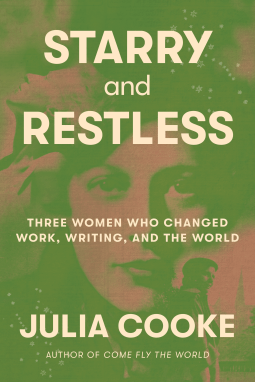
Julia Cooke Starry and Restless Three Women Who Changed Work, Writing, and the World Farrar, Straus and Giroux, February 2026.
Thank you, NetGalley, for providing me with this uncorrected proof for review.
I read Julia Cooke’s Come Fly the World and was thoroughly engaged. Starry and Restless Three Women Who Changed Work, Writing, and the World is even more impressive. This book stands out for its valuable insights and compelling storytelling about three remarkable women. It is one of the most valuable and engrossing books on my bookshelf; an engaging work to return to frequently; a story written by yet another amazing woman who has, with this work, brought together feminist understanding, dedication to thoughtful detail of the worlds in which Rebecca West, Martha Gellhorn and Mickey (Emily) Hahn worked, developed loving and complex relationships with women and men, became parents, and came to grips with their own feelings, faults, virtues and challenges.
The book is in four parts; Stranger Even to Myself; The Urgency of Geography; Never Do Your Own Housework; and The Most Powerful Magic I Knew. Each woman features in all the sections, with their location and the year providing the framework. In 1936-37 Rebecca West is in Yugoslavia; Mickey Hahn on her way to China; and Martha Gellhorn in Spain. The narrative spans the years from this period through the 1940s to the early 1950s and locations as varied as China, Cuba, England, Hong Kong, New York, Italy, Germany, the United States, Mexico, Taiwan and South Africa. The woman journalist is introduced after a prologue featuring Mickey Hahn on a journey to the Belgian Congo, a gun wrapped in a silk blouse.
In the introduction we learn that Rebecca West has been refused work on a London newspaper in 1911, because women were seen as unsuited to such work. A background to women’s journalism follows until, in 1930 Martha Gellhorn is introduced on her way to becoming a foreign correspondent. Further background and Mickey Hahn reappears – time and necessity have promoted her: journalism is now work that can be undertaken by women – but under special and sexist conditions. Other journalists are referred to, but Cooke keep her focus on Hahn, West and Gellhorn without losing her deftness in interweaving history, the work of a journalist, the way in which each woman addressed the challenges of work, personal and domestic environments, unwanted publicity just because they were women and their many achievements.
Cooke questions understandings of the introduction of particular journalistic features in the 1960s and 1970s – adeptly recognising a history that like so much of women’s history is forgotten, with those being regarded as the first, in reality following in the intrepid footsteps of women before her. This is no criticism of the newly revered, but an essential contribution to writing women’s history. Similarly, Cooke’s narrative resonates with truth telling; the women do not escape stories that might inspire criticism, but neither are they portrayed as other than capable, strong writers of authority, wit and talent.
The Afterword is a joy to read with Cooke’s lyrical style highlighting her dedication to telling Rebecca West’s, Martha Gellhorn’s and Mickey Hahn’s stories truthfully and with dedicated care. She enjoins once again with the broader context of the journalistic and writing world in which they starred. Here she frames her arguments about the history of journalism in ways that are all too familiar with women who seek to tell the real stories, those that include women, and often should star them. Of interest to this Australian reviewer is her reference to the Australian Dale Spender and her work in demonstrating the importance recognising that the women’s movement is not one that disappeared – there was always a women’s movement in the twentieth century.
Starry and Restless Three Women Who Changed Work, Writing, and the World is a wonderful read which is followed by notes that are well worth reading for the additional information that can be gleaned, recommended reading – another good source, and an index.
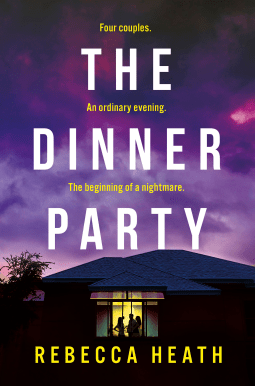
Rebecca Heath The Dinner Party Aria & Aries, Head of Zeus — an Aries Book Jan 2024.
The Dinner Party is a gripping domestic thriller, at its core, a missing baby. Forty years after the dinner party that was in progress when Megan Callaghan disappeared Ruby is making a podcast as part of a renewed effort to find her. The domestic nature of the past and present are very much in evidence, Ruby’s grandmother was at the dinner party, as was Billie’s whose mother, Amanda is missing child’s sister, and was with her in the house when she disappeared. One of the men responsible for checking the sleeping children of the dinner guests, her grandfather, is now in a secured unit in a care home. His wife is dead. Billie’s other grandparents are alive and remain part of the community in which Megan vanished. Eve, Billie’s sister, is married to one of their childhood friends. Trish, the wife of couple at whose home the dinner party took place is still a presence: she is part of the Callaghan family business and Billie’s godmother. Into this environment comes Donna – claiming to be the missing Megan. Amanda readily and lovingly accepts her. Billie does not, even when Eve makes it clear she is content with Donna’s explanations.
The story is told through Billie, Trish and Barbara from the dinner party, and Ruby’s podcast. The latter moves from the past to the present, interviewing all those still able and willing to contribute to the podcast. Trish tells the story of the evening through her experiences, contributing to the belief that all was not what it seemed between neighbours who periodically entertained at dinner parties, had children at the same school, and were part of a community in the past and now, often through the podcast.
As Billie explores the verisimilitude of Donna/Megan’s story she also suffers feelings of ineptitude in dealing with her new baby, her longing to return to her job where she feels competent, her mother and sister’s growing aversion to her because of her readily voiced suspicions, and her husband’s volatility. Trish’s story lays bare the sexism of the community in which, as a young wife, she tried to survive. Amanda’s obsession with finding Megan has impacted upon her marriage and her relationship with her daughters. The damage of the past seems to be never-ending, despite the charity she has founded which has successfully raised money for a reward for finding Megan, as well as aiding others seeking lost family members.
There are no confected twists in this novel; it does not need them under Heath’s capable hand. She combines excellent portraits of the characters as they adjust to living with the loss of Megan at the heart of everything they do. Heath also writes competently of events and feelings around the core event. The layers of complexity impact on the past and the present. What are the dinner party guests hiding? How did the couples react to each other and what were their lives outside Megan’s disappearance? What does an obsession do to the people involved at the time, and their future families? And in the present: How do the sisters deal with feelings of self-worth, competition with each other and with the missing child? And what secrets are there hovering in the current lives of the people living in the community forty years after Megan disappeared? And what of the role of the podcast and its impact and purpose in dredging up the past and promoting the foundation as well as Ruby’s closeness to some of the people involved in the past?
This novel combines a sophisticated consideration of a wide range of issues arising from one event with a strong story line that is engaging. There is no pat ending, rather a recognition that some of the characters will move on and others cannot. There are explanations for both outcomes throughout the story – they are both plausible and understandable. I shall be looking for more of Rebecca Heath’s work.
I was fortunate to find more – The Last Encore fulfilled my expectations of Rebecca Heath’s work.
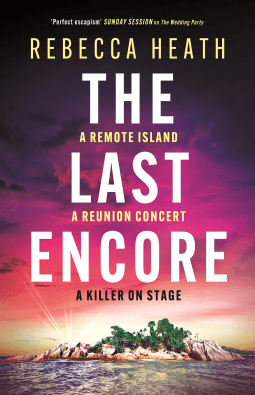
Rebecca Heath The Last Encore Aria & Aries, January 2026.
Thank you, NetGalley, for providing me with this uncorrected proof for review.
Rebecca Heath places a group of unpleasant people on an island off the coast of Australia where the environment, a mix of beauty and fear invoking landscapes, plays its part in exposing duplicity and brutality. The past, eighteen years before, hovers uneasily above the present. The once famous Cedrics Band, with its demise the result of the death of its lead singer and guitarist, reunites. But this is an uneasy reunion. None of those involved, whether past members of the band, spouses or the couple hosting the event at their previously burnt-out resort appears to be innocent of the murder referred to in the prologue.
Someone is now set on another murder in revenge. At the beginning of the novel, and in its early progression, this does not seem to be a problem. A mystery is there to be solved, but the protagonists excite no sympathy. The person set on revenge for Jonny’s murder and the culprit could be any of the cast. Do we care who murdered Jonny Rake, dead at twenty-two? Are we invested in any of the characters? Bullying Bruce and his complicit and calculating partner, Florence? Weak, and alcoholic Adam who hated his brother? Slimy, greedy former band manager, ‘Bugsy’ Malone? Niggling couple, Lara, playing extensively to the cameras, but also taking her own photos, and former band member, the enigmatic Edward? Arrogant former drummer, and Jonny’s best friend, Dylan? Ivy St Fleur and her daughter Malone, Jonny’s ex and daughter? The pretentious and controlling Marco D’Angelo, director of the film that is to be made of the reunion, or his unpleasant and compliant wife, Connie?
However, Heath adeptly adds more characterisation to this group of people with seemingly no redeeming features. Told in the first person by Adam, Florence, Lara, Edward and Monet and through internet posts by Cedrics Band Number One Fan Ricky, the narrative subtly changes. Ricky’s post includes some of the band’s numbers, throwing light on its repertoire and therefore, relationship with its audience. References to the songs also appear in first person anecdotes, developing the characterisation. When one of the people on the island is murdered, while a hunt for the perpetrator takes central place, the characterisation is further developed, subtly changing perceptions of the protagonists.
Throughout the narrative, characterisation takes an intriguingly central role, enhancing a plot that also twists and turns. Heath’s last twist leaves a question, although this does not rob the novel of a thoroughly satisfying conclusion. Rather, the narrative moves into Agatha Christie territory where clever plotting with genuine clues is a given, providing an open invitation to reread and reinvestigate the clues. The Last Encore is indeed worth a reread.

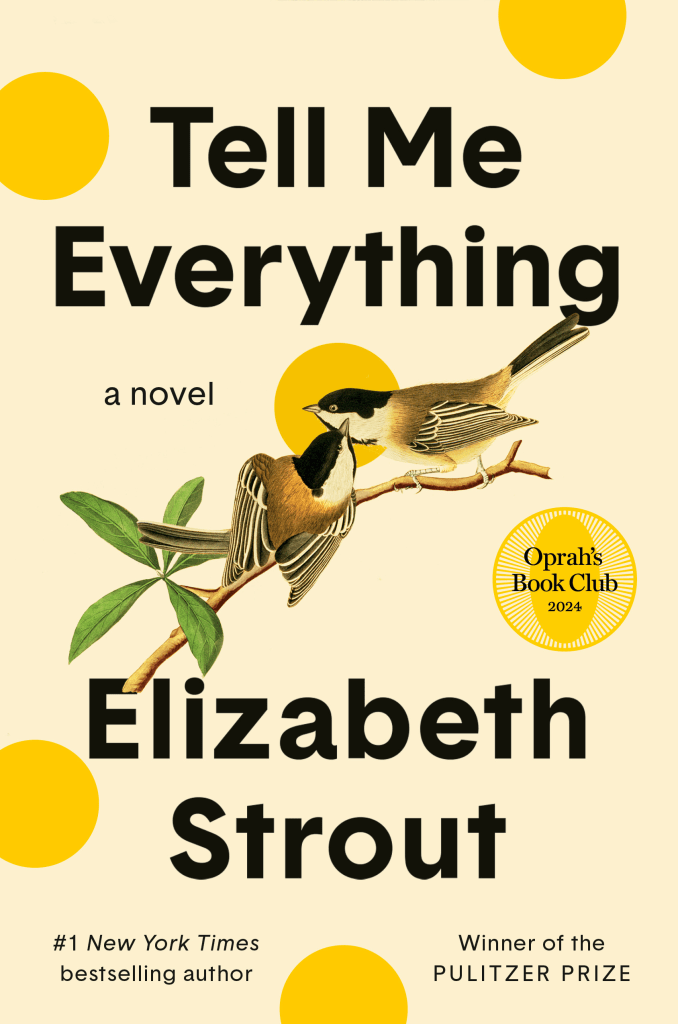
Elizabeth Strout Tell Me Everything Penguin General UK (Fig Tree, Hamish Hamilton, Viking, Penguin Life, Penguin Business, Viking) September 2024.
Thank you, NetGalley, for providing me with this uncorrected proof for review.
Elizabeth Strout brings magic to her work and Tell Me Everything is no different. Bob Burgess and Margaret Estaver live in Maine. The enchantment of Maine’s autumn colours interspersed with prosaic and sometimes graphic detail is the setting for their marriage, their large house in which they cook together, and the security this couple, a lawyer and a Unitarian minister, provide the community. Olive Kitterage, ninety, knows the couple, sympathises with Bob’s sad past, is not fond of Margaret and has suffered through the pandemic. Lucy Barton, also from previous novels, is an important character, although mostly inconspicuous in the larger community apart for walking with Bob along the river. As autumn breaks into splendour, Olive decides to tell her story to Lucy.
Here Lucy Barton becomes a character whose relationship with Bob Burgess and Margaret Estaver meanders through the story told by Olive Kitterage. There is delicious detail in their meetings, from their surrounds, appearance and the stories that are shared through their relationship. Love is the overwhelming theme, and aspects of love permeate the conversations and interactions. At the same time as Olive Kitterage tells her story to Lucy Barton, each is observing and understanding more about the relationships around them. Bob Burgess and Margaret Estaver are also thinking about their understandings of love.
Elizabeth Strout has such an alive way of writing. Lively is not the right word, that her narrative is alive, so alive, immediate and fascinating is the overwhelming feeling I have from reading her work. I read her novels for that as well as the stories she weaves that concurrently engage, compel and dance away from any prosaic understanding. Strout’s work is a joy to read, and I always look forward to enjoining with her conversations on the page.
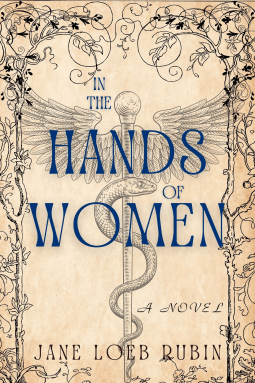
Jane Loeb Rubin In the Hands of Women Level Best Books, Independent Book publishers Association (IBPA), Members’ Titles, May 2023.
Thank you, NetGalley, for providing me with this uncorrected proof for review.
In the Hands of Women is set in New York in the early 1900s, with Hannah Isaacson, a MD in obstetrics as the central character. Not only does she suffer from discrimination against women, but antisemitism. Her public life is centred around the hospital in which she works, the prison in which she is wrongly incarcerated and her activism on behalf of women. Hannah Isaacson also has a private life in which the sexist nature of women and men’s relationships is depicted through her friendships with women and relationships with men. Her family life is also an important feature of the novel, driving an even greater understanding of the medical practices Isaacson sought to improve in relation to childbirth. Abortion, and the laws surrounding it, as well as the personal impact of abortion make graphic reading.
Hannah and her family are engaging characters, strong, supportive and warm. They are fictional, but one has her genesis in a family member. Other characters are taken from real life – John Hopkins Trustees, Mrs Garret and Mrs Thompson; New York State governors, Higgins and Hughes; and Margaret Sanger, an advocate for women. Loeb Rubin attests that the political climate and medical situation that she depicts have their basis in fact. She has researched widely, referring to the non-fiction material and research staff of museums and libraries that assisted her at the end of the novel in a bibliography and acknowledgements.
From the material that she has accumulated, and her knowledge of the 1900s social and political environment, Loeb Rubin has written a novel that is not only engaging but informative. Women doctors’ acceptance in hospitals on sufferance, and despite their education and elevated position in the paid workforce, their susceptibility to male doctors’ importunities is disturbing, but realistically drawn. The prison scenes and relationships make an excellent contribution to the debate about abortion, as well as giving Hannah Isaacson another area in which to work. At the same time, the way in which political activism can take place through seemingly small contributions is demonstrated. Class differences, in the Jewish community as well as in the wider community provide areas of debate which are met boldly by Loeb Rubin, replicating her ability to confront difficult issues is an informative and engrossing style.
In the Hands of Women is a good read, combining a host of historical information with engaging characters and a plot that works well. The novel makes an excellent contribution to historical fiction.
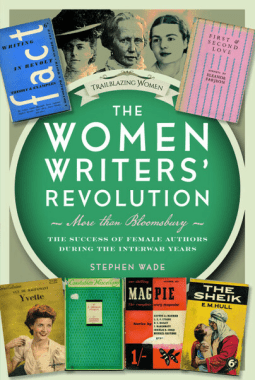
Stephen Wade The Women Writers’ Revolution: More than Bloomsbury The Success of Female Authors during the Interwar Years Pen & Sword | Pen & Sword History, January 2025.
Thank you NetGalley and Pen & Sword for providing me with this uncorrected proof for review.
Although a heavier read than many Pen & Sword publications this one carried me along because of the detailed and exciting material. This is a wonderful book, revealing so much about women writers in the interwar years, well known and lesser-known women, and even those who seemed to have disappeared. There is so much context, and there are also detailed references to male writers, as well as the Bloomsbury writers. However, the real legends of the book, the women writers about some of whom we know little, those who performed the revolution of Wade’s title, are there in full force. This is an exciting read, and one I relished from beginning to end.
Networking and the role of women’s clubs (one providing access to less wealthy women through lower fees) and providing commentary to newspapers, and women seeking reviews of their writing, is an intriguing topic. Networking, it becomes clear, is not an innovation at all! Magazines edited by women provided another source of access for women writers, and these are given a place in the narrative. Following the first chapter is one that resonates with domestic stories becoming professional success – or a series of rejections. ‘Becoming a Woman Writer’ includes such stories, the rise of Mills and Boon publishing, what publishers wanted – and what they received, readership and the types of publishing companies that encouraged women writers, how women learnt to write and have their manuscripts accepted.
The scene is set with a discussion of Edith Nesbit, Beatrix Potter and the amazing Charlotte Perkins Gilman’s works, establishing them in the period and amongst the work of male authors. The titles of the following chapters, ‘Discover Yourself’, ‘The Other Englands’, and ‘The Poets’ provide a flavour of further themes. ‘Influential Americans: Wharton to Parker’ is a whole chapter. Other topics are given an appendix – ‘Other Women Writers of the Period’; ‘The Bloomsbury Group’; and ‘Women Writers and Changes to the Law’. There is a fine bibliography and an index. Delightful graphics, including newspaper reports and letters, book and magazine covers and photographs accompany the text. The cover of ‘Come Out of the Kitchen!’ A Romance by Alice Duer Miller, featuring an emerging woman, and a full escapee, a black cat, is one of the graphics that stands out.
What a marvellous read – informative, lively, analytical in parts, introducing new writers and dealing well with the more well known – this is a real accomplishment. The Women Writers’ Revolution: More than Bloomsbury The Success of Female Authors during the Interwar Years is yet another book to which I shall eagerly return. I loved it.
Sara Lodge The Mysterious Case of the Victorian Female Detective Yale University Press, November 2024.
Thank you, NetGalley, for providing me with this uncorrected proof for review.
The combination of a history of the female detective as a working part of the police force during the Victorian era, and her depiction in fictional accounts of the time makes for a fascinating read. Questions that immediately come to mind, and are answered include – how active were the real women detectives? What were their roles? Did they capture criminals or leave that to the male detectives? Were they courageous and killed on duty? What was the attitude in the police force and wider society towards these women active on behalf of law enforcement? And then, moving on to consider how these women detectives and the cases they worked on in the real world were depicted in fiction, there are more questions. Did fiction portray women’s contributions in an exaggerated form or were they always seen as secondary to those of men? Were any fictional characters based on real women and their activities? What did fiction say about women detectives and how did this impact the audience for these novels?
Sara Lodge answers these questions in this stimulating read which blends so much information about the police force and women’s role in it, the depiction of women detectives in fiction and the social conditions which were so vividly described in print – fictional and factual. At the same time as being an academic work, with copious citations, an amazing bibliography and index, Lodge has produced a great read.
What a wonderful contribution this work would have been to my studies about women detectives in literature many years ago. I can only envy those for whom this is a text for such studies. In Lodge’s book such readers are given a wealth of information, great insights, and with fact and fiction woven together so invitingly it is also a tremendous read. For those, like me, who read the book only for pleasure and interest, the challenges it provides in so graphically describing the conditions under which the women detectives worked, their cases and the social conditions associated with their work enhance the reading. The Mysterious Case of the Victorian Female Detective remains an engaging read, but the solid grounding in the reality around the fiction, painful and enlightening though it is, completes the narrative.
Miranda Smith The Writer Bookouture, April 2024.
Thank you, NetGalley, for providing me with this uncorrected proof for review.
Miranda Smith has written a well plotted novel, and amongst so many psychological thrillers where twists (flawed or not) appear to be the main source of attention, the ones she has developed are clever, make sense, and are a seamless part of the narrative. This is not to say that they are unsurprising, they are, but frequently a writer appears to introduce twists that are so illogical it can only be surmised that they are fulfilling the requirements of the genre rather than developing a narrative that is satisfying. Miranda Smith manages the genre with dexterity. So, while there are surprises, there are also clues for the astute reader.
The characters resonate, both as writers and through the fiction they present to the small group that meets weekly. When their backstories are told, a further dimension of each woman is cleverly added to the narrative. The relationships between the women as writers and later as women with universal problems are well drawn. In comparison, the backstory and feelings exhibited by Becca, the narrator, seem obsessive, and almost questionable. Are her concerns valid? Is the nonchalance exhibited by the police to whom she voices her concerns a suitable response?
I particularly liked the way in which the long-term friendship between Becca and Crystal was written, along with their concerns about Layla, their university friend. Writing about women’s responses to dealing with a sexual predator is difficult, and Smith was adroit in managing this topic.
This is the first of Miranda Smith’s books I have read, and I look forward to reading another. Amongst the plethora of psychological thrillers on the market, Miranda Smith’s writing stands out.
Amy McElroy Women’s Lives in the Tudor Era Pen & Sword, March 2024.
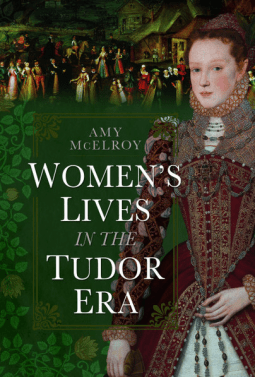
Thank you, NetGalley and Pen & Sword, for providing me with this uncorrected proof for review.
Amy McElroy’s book makes an excellent contribution to knowledge about women’s lives in the Tudor era. She does not make the mistake of omitting the information about the more well-known female figures. Instead, there is an engaging back and forth between women’s lives as they were lived at court, those who served them, and those whose work and lives contributed to the society in which the exceptional figures of history raised their heads to occasionally join the more well-known history of their male counterparts. Yes, a great deal more is known about the royal women and those at court, but Amy McElroy makes their lives even more available in this work. However, where she really excels is in the wealth of research she has undertaken to make other women’s lives in this period more accessible.
The illustrations carry through this theme, from headdresses and other fashions, comparisons of clothing and royal images; various graphics of women spinning and another assisting in childbirth; a Tudor hospital and birthing furniture and scenes; to printed works. Notes accompany each chapter. There is an index and a bibliography of primary and secondary sources. The former includes a primer on governing a family, from the duties between husbands and wives to those associated with masters and servants. As expected, these works are those of the people in power, those who could read and write. The secondary sources include general histories of the period; tomes on women and property and women’s legal rights; women’s everyday lives; poverty and vagrancy; and women’s employment.
McElroy writes in a lively fashion, so that Tudor women’s lives become a vast story of the society in which court life and royalty have hitherto been the main protagonists. The conclusion is a joy to read, laying out as it does the evidence that Tudor women were remarkable in their influence over their own lives and those of their families, if not further afield. The importance of domestic initiatives, tasks and relationships are given their due through this thorough investigation of Tudor women’s lives.
Craig Leddy Fast Forward The Birth of Video Streaming, Media’s Wild Child Köehler Books, September 2025.
Thank you, NetGalley, for providing me with this uncorrected proof for review.
In the 1960s I read Ernie Kovac’s TV Medium Rare. It was an amusing insight into television in its early days of male executives, beauty pageants and traditional families with women playing subordinate roles. However, it also fostered the notion that progress was vital, would occur, and that excellence in television was an admirable aspiration. The novel was an extremely readable, and exciting – television was new and there were mysteries to be unravelled. Fast Forward is about another innovation in screen communication through programming. Although it is non-fiction, so has none of the advantages of creating a fictional story that carries the reader through a myriad of technical information, it is engaging. A person versed in technology would find it less demanding than I. However, I was reminded of that early story of aspiration and was pleased to rejoin it over thirty years later.
In the story of the aspiration to build an interactive network, the narrative unearths, debates, and describes digital, broadband, and streaming research and implementation. Disaster is never far from the aspiration, and at times overtakes the ‘Digital Warriors’, as one chapter is titled. Much of the narrative is not too challenging. However, some of the detail is certainly for the technologically educated.
Exciting titles, including the previously mentioned, ‘Digital Warriors’, not only enhance the text, but promote the legitimate image that this is the story of an adventure. ‘The Race Begins’, ‘Under Siege’, ‘Launch Day’ and the ‘Oh Jesus Switch’, ‘From the Ashes’ and ‘Blind Faith’ are fine descriptors of the content. ‘Doom and Redemption’ is an excellent chapter in which today’s technology – smart TVs, laptops, iPads, game players, and streaming devices – brings to even the most technologically challenged much appreciated familiarity.
Familiar too, are the conflicts and competitive nature of the businesses around the new technology. These have been part of the narrative since the start of the book, but the contemporary knowledge informs those early conflicts. Legal aspects are another matter: all too familiar is the reference to technology moving beyond the legal system designed for earlier technology. For me, reading these later chapters was essential to understanding the beginning of the progress towards the familiar streaming services such as Amazon Prime, Netflix, and YouTube.
Although I found this a difficult read at times, because in the early chapters I was dealing with concepts that were unfamiliar, I also found it engaging. Fast Forward The Birth of Video Streaming, Media’s Wild Child provides an impressive range of information about the early days of yet another innovation in the world of communication technology coming into domestic settings. This book does not have the advantages of being the easy read of a fictional account, such as I referred to in the introduction. However, I enjoyed the challenge it presents.

Bruce Belland Icons, Idols and Idiots of Hollywood – My Adventures in America’s First Boy Band Bear Manor Media July 2023.
Thank you NetGalley for this uncorrected proof for review.
Bruce Belland’s story of the Four Preps, named in haste during their first public appearance, is a delightful, informative and inspiring read. I say inspiring because it is the story of young people who followed their first love, being members of a band producing popular chart worthy music, recognition that their aspirations had to change, and willingness to do so …and again, successfully. Their journey from meeting at Hollywood High School, through their development as chart favourites, to the advent of The Beatles and new music styles which resulted group’s break up in 1969 and move into other professions, is wonderfully told by Bruce Belland. Belland seems to be a mixture of humility; self-confidence verging on arrogance; self-awareness and the concomitant self-deprecation; and 1950s sexism, later tempered by awareness so that he recognises this and talks of feminism. He is an excellent storyteller and communicator, and this, together with the intelligence which shines throughout this work makes Icons, Idols and Idiots of Hollywood – My Adventures in America’s First Boy Band a worthy read, even if you have never heard of “26 Miles”.
The book is arranged well, with the band’s story taking up a major part of the work, with minor asides to the young men’s personal lives. These form the later part of the book, given their due as a memoir to their partners, failed and successful marriages, health issues, and the deaths of Bellamy’s long-time companions in The Four Preps. Here the details of the lives the band members made for themselves after The Four Preps disbanded also make fascinating stories. They certainly were successes after their glory days on the popular music charts. These stories, while less detailed, fraught and exciting than their early successes demonstrate the men’s willingness to relinquish a dream that served them well and move into other lives – something that is never easy to do. It is Bellamy’s ability to weave a story that remains positive, while showing all the pitfalls and problems, which make this a unique read.
Bellamy’s story begins in Chicago, in a fundamentalist church where for the ‘price’ of a whole stick of chewing gum he sang God Bless America. His father remained hopeful that this (singing for the church, not the Wrigley’s spearmint gum) would remain Bruce’s life. His mother, recognising his aspirations were different supported him, later joined by his father. The family’s move to West Hollywood, and Bellamy’s eventual enrolment in the more salubrious area’s Hollywood High School opened a world that was promised by the (then) Hollywoodland sign.
The Four Preps story is from a world before TikTok and all the modern devices that a group seeking publicity uses. These are the days of radio playing hits (and a great story is told about the B side of the group’s record being an introduction to more fame); television variety shows; and, as for today, live appearances. So, it is a history of 1950s and 1960s bands, radio and television shows, songs, the business of becoming successful, show business management and law, overseas appearances, meeting idols and one-time idols who become disappointments, and dreams. Bruce Belland brings all of this into a witty, thoroughly engaging narrative. As I stated at the beginning, you do not need to know “26 Miles” (but it is worth playing to get a feel for the era), in some ways even a huge interest in The Four Preps is not even a requisite, to enjoy this book. Of course it’s the story of The Four Preps, but there is so much more to mine from the wealth of ideas, information and history Belland tells.
There is a comprehensive index which also makes an interesting read with its wide range of names, songs and events. In addition, Bellamy’s proposed publications are listed: Famous Friends and Fabulous Unknowns, My Adventures with Well-Known Greats and Unheard-of Heroes; and The Lives of Our Days, My Adventures in the Wacky World of Daytime TV – Game Shows, Sopas, Divas and Dopes.
Kerry Wilkinson Tag, You’re It Bookouture, January 2026.
Thank you, NetGalley, for providing me with this uncorrected proof for review.
Any number of novels have been set in the confines of a reality television program. This is one of the best. Kerry Wilkinson has established a believable scenario for the television game, and for the secrets that are eventually untangled. Jessie is the keeper of several secrets, from the beginning of the game to the end. Her character is developed through her participation in the game, her relationships with the other participants, and her inner reflections. Other characters become friends (maybe), people to avoid or actively dislike, people about whom, while glances are exchanged, Jessie remains wary.
Alliances form and fall apart as the game proceeds. The dominant mindset during eliminations quickly becomes ‘anyone but me’. While the cash prize is a major motivator, so too is each contestant’s desire to stay in the game and assert control over the competition and the others. For some, personal motives for participating govern behaviour. The subtlety with which these elements are concealed—despite the presence of clues—evokes Agatha Christie’s remarkable skill in constructing such narratives.
Participants’ fear of being tagged by an unknown ‘assailant’ as well as having no inkling of what that tag might be heightens tension in the house. Participants are not told what a tag is or if their guess about who is “It” is correct, making the narrative more suspenseful. The first tag is particularly inventive. The intricacy of this tag suggests that the variety of actions that might lead to elimination is wide ranging. This uncertainty keeps readers as actively engaged as participants, logging every move that might lead to a favourite being eliminated.
The ending is full of twists that, as usual for this writer, are a logical outcome of all the information that has been imparted throughout the narrative. Here, what has been a narrative of tension and entertainment typical of a television reality program, becomes something more. It is that something more that makes this an engaging novel that is resoundingly satisfying.
2026
Tana French The Keeper Penguin General UK – Fig Tree, Hamish Hamilton, Viking, Penguin Life, Penguin Business | Viking, April 2026.
Thank you, NetGalley, for providing me with this uncorrected proof for review.
The Keeper returns to Cal, Lena and Trey and sundry other characters in Ardnakelty, with much of the emphasis on the village and its values. French takes what seems to be an inordinate amount of time in establishing the background to the village, the long-term characters’ motivations and values and the relationships, open and hidden that underpin the way in which decisions are made in this small enclosed social environment.
The initial chapters of the novel progress at a slow pace; with characters whose introspection and dialogue are not particularly engaging. Although the emphasis is necessary for understanding the resolution offered at the end of the novel, it did little to foster a connection with the protagonists. Unlike my enthusiasm for the way in which Cal’s, Trey’s and Lena’s narratives were woven in The Hunter, the previous novel in this series, I felt distanced from the main characters in The Keeper.
Eventually the story begins to increase pace, and Trey’s growth toward maturity, with enough residual rough edges, shows some of the elegance with which her character was developed in The Hunter. Cal and Lena’s resistance to each other and the village values is a more difficult progress, their decisions sometimes seeming to be less about maintaining their relationship than rejecting or accepting the people and ideas around them. French’s sensitivity and facility with weaving together a story, character and ideas which resonate well after the book is finished lies with Rachel Holohan’s story. Her character is developed gently and compassionately, throughout the novel, unburdened by extraneous detail that mars some of the other characterisations. Rachel makes it possible to believe that Ardnakelty is worth saving, and that for some, no price is too high.
The Keeper brings resolution to Cal’s, Lena’s, and Trey’s narratives, which were so skilfully crafted in The Hunter. It also foreshadows the future for Ardnakelty where eventually the mainstay of the village, its ability to weave decisions and resolution based on hidden but understood motivations and values, will be overtaken. For these reasons, The Keeper is a valuable read despite what I felt were shortcomings.
Lally Katz My Cursed Vagina A Memoir,Allen & Unwin, February 2026.
Thank you, NetGalley, for providing me with this uncorrected proof for review.
In her acknowledgements, Lally Katz expresses gratitude to three of her teachers for helping her recognise her potential as a writer. I was a colleague of one of those teachers. So, while I did not have Lally Katz in any of my classes, I heard a great deal about this vibrant writer who was seen as an honour to teach. The teachers’ accolades highlighted her notable talent and the enthusiasm she brought to her classes. Lally was a young woman with superb creative skills. It is no surprise that she has become an esteemed playwright, and now she has written this poignant, funny, sad, and raw memoir. It depicts an absorbing journey from which is difficult to disengage: one more page must be read, another anecdote considered, Lally must be given another chance to defy the curse, and one more story in which she does not. Success or not, what she does achieve lives in the memory. The writing is a joy, the story immense, and Lally Katz’s outlook one of courage, humour, and enthusiasm. Her memoir is a monument to a woman who loves her life, its despairing and happy moments, those which are life giving, and those that are so challenging that the potential for damage threatens.
Lally Katz moved from Miami, USA to Canberra, Australia as a child, spending her pioneering creative years in Australia, with successfully staged plays Australia wide and internationally. In 2010 she is thirty-two, and in America on a Churchill Fellowship, and it is with this memory she begins her memoir. However, the central theme is the impact of her visit to a psychic whose dire prediction provides the name for the memoir and much of its action. Her title and honesty with which she approaches her life takes the reader through love affairs; sexual encounters, successful and otherwise; herpes; miscarriages and birth. Some of the stories are humorous, some are transparently not. However, all are engaging and incredibly human. Many are exploits that can only be imagined – some of us do not have Katz’s courage and headlong approach to living.
This is a memoir to be read, cried over, laughed with, and admired. I am thrilled to have been able to meet this vibrant and courageous woman, who was once a student I passed in a school corridor and heard about in the staff room, if only once again second hand though her writing. Lally Katz’s memoir is one to be savoured.

Julia Golding The Austen Intrigue Book 4 of Regency Secrets, HarperCollins UK, One More Chapter | One More Chapter, November 2025.
Thank you, NetGalley, for providing me with this uncorrected proof for review.
I have mixed feelings about this novel – the Jane Austen link was interesting, the European political and historical background informative and easily understood, and the two main characters, Dora Fitz-Pennington and Jacob Sandys introduce complexities of class, friendships, and professional background. However, there are also some jarring moments which conflict with the measured writing that seems relevant to the period.
Each book in the series, of which this is the fourth, introduces a historical character who assists in the investigations that Fitz-Pennington and Sandys encounter in their detective agency. Jane Austen’s brother, Henry and his wife, Eliza also feature. The first chapter is set in the Austen household, providing a background to their lives – Henry a successful banker and Jane, an unacknowledged writer, but very acknowledged spinster of uncertain age move from this family circle into the path of murder. Henry Austen’s reputation and bank is to be saved by the investigation; Jane Austen, assisting the investigation at his command, is to be first perceived as an irritating spinster who lies about her background and then recognised as the writer of Sense and Sensibility, which Fitz-Pennington reads avidly in a night.
There is some heavy-handed writing, and unfortunately this does not only apply to the sex scenes between Sandys and Fitz-Pennington. Although the plot is intriguing, and well-conceived, the investigation lags. A sharper approach to the sub plots – the personal relationships between Sandys and his brother, the Viscount; and Fitz-Pennington and her friend, the Viscount’s lover could have made the novel a faster paced work with a gripping story line. If, on the other hand, Golding aimed at not only using Jane Austen as a character, but her prose, that is a seemingly gentle meandering through discourse, plot and denouement, the sharp wit and insight demonstrated in Austen’s work was not achieved.
Perhaps my disappointment is partially associated with my admiration of Austen’s work. I would be interested in reading another of Julia Golding’s novels where a different historical character is part of the plot. The references in The Austen Intrigue to a previous novel, The Elgin Conspiracy, are fascinating, and suggest that it is worth giving Golding’s series another try.
Alice McVeigh Marianne A Sense and Sensibility Sequel Warleigh Hall Press | Independent Book Publishers Association (IBPA), Members’ Titles, October 2025.
Thank you NetGalley and Alice McVeigh for providing me with this uncorrected proof for review.
This series has been a joy to read from the first novel, a wonderful encounter with the young woman who was to become Austen’s Lady Susan, Susan, A Jane Austen Prequel. McVeigh has never moved away from her meticulous rendering of Austen’s language and time and the introduction of credible events: her novels are clearly the end point of not only research, but an enduring knowledge and love for Austen’s work. Marianne A Sense and Sensibility Sequel is particularly elegant in its weaving together characters from several Austen novels – Sense and Sensibility, Mansfield Park, Emma, Lady Susan, Pride and Prejudice and Northanger Abbey.
Marianne Brandon is widowed at twenty – a sad state that does not prevent her from romantic musings, tinged with regret, wrath, and self-delusion about the young men she encounters throughout the novel. Her truly foolish and romantic persona is adopted by Margaret, her younger sister. Margaret’s romantic musings are fully developed in her diary in which she reflects upon her attempts to write a novel. This adds to the humour in the narrative, as well as being reminiscent of Northanger Abbey. There are other delightful reminders of Austen’s fine hand in Willoughby’s self-justification for his treatment of Marianne which recalls the conversation between her aunt and uncle in Sense and Sensibility. Although in this novel, John redeems himself by providing something for the sisters in his will, Willoughby’s self-justification is a potent reminder of the past impoverishment of the sisters that led to his decision to abandon Marianne.
Is Jane Austen’s work so well reflected in Alice McVeigh’s that she is replaced, her own novels unnecessary reading? No, because that is far too high a demand to make of any writer whose work is a variation on another’s. However, does McVeigh capture the essence of Austen so well that we can return to her world through these new novels? I believe that there can be only a resounding yes to that query. In this latest work McVeigh has given us Marianne, a more thoughtful character, but retaining much of her younger, impetuous self. She has also provided other characters with a past that rings true, and a future that is a pleasure to see revealed.
Dr Christopher Herbert Jane Austen’s Favourite Brother, Henry Pen & Sword | Pen & Sword History, May 2025.

Thank you, NetGalley, for providing me with this uncorrected proof for review.
Christoher Herbert’s history employs one of the most useful strategies when dealing with a subject for whom the material is sparse. In this case, there is an abundance of material about Jane Austen who has been the subject of so many biographies. However, Herbert does not rely solely on this, adroitly using his independent research and bolstering it with material that sets the context for events that are not recorded. He also uses the more conventional way of contributing to research when dealing with a writer – studying the author’s work for clues. In this case, both Jane and Henry Austen’s writing. This is a work of substance, accessible writing, a broad history of the time and social mores, and an intriguing insight into Henry and his family, including Jane for whom it becomes clear, Henry was indeed her favourite brother.
There are wonderfully comic passages – the discussion of studying at Oxford and Cambridge in the period was delightful. Less attractive is the recognition of the family’s slavery connections. However, these topics and a multitude of others, including reference to Austen’s novels, provide a picture of the father of these two affectionate siblings. Valuable information about the way in which the siblings were raised and educated and the ideas that permeated their lives, is also afforded though reference to Cassandra Leigh’s background. A Thomas Gainsborough painting also provides information about the society in which the siblings were raised – a society in which Jethro Tull’s invention was a part, for example. Although wider changes in society may not feature in Austen’s novels, Herbert provides a picture that demonstrates her choice of background was one of many available to her.
Herbert’s detailed Austen family background then makes way for details about Henry and the profession and life he chose. A rebellion? A well-considered change in direction? Henry’s essays are deployed to help answer these and other questions about Henry’s life. Again, comic touches are laid side by side by more serious aspects, keeping the narrative lively and accessible. Although Herbert concludes that questions remain about Henry Austen, this work shows that his commitment to publication of Jane Austen’s work is a defining feature of the relationship between the two. It also, within the constraints Herbert acknowledges, is an absorbing study of a period, a family, and a sibling relationship.
The volume is complete with illustrations and photographs, which while at times repeat those in other works of the Austens’ world, seem particularly fine even in my kindle edition. ‘There is an index and detailed notes for each chapter.

Clara Bow, Clara Bow My Story, Histria Books|Histria A&E, February 2026.
Thank you, NetGalley, for providing me with this uncorrected proof for review.
The introduction is a joy to read – beautifully written, informative, and sensitive to the star whose story is told in the following pages. This too, is informative. Not only is it the story of a young woman whose distinctive appearance and behaviour questioned roles for women in both silent and talkie movies, but the story of that industry. To see the change from the silent era to advances in film technology through the way in which Clara Bow approached the changes, and succeeded, is a valuable way of learning this story as well as that of a remarkably engaging star.
I was slightly disappointed as, for me, the energy attributed to Clara Bow and her life was not reflected in her own narrative. It seemed that she took greater care about ensuring a public response untrammelled by her idiosyncrasies to telling her story. Here, she seems to depart from the people she chose to depict in film and her lively personality. Perhaps this distance arises because it is Bow’s story ‘As told to Adela St. Johns.’ This story was first published in Photoplay in 1928, so the version here is authentically the way in which Clara Bow was content to depict herself in that period. And, apart from the (to me) disappointing formality of the language in which the Clara Bow’s life is conveyed, the narrative is an engaging account of a woman whose life was lived to the full, resulting in an impressive collection of films in which she appeared.
The list of the films is a real treasure trove of knowledge about the films in which Clara Bow appeared. Beginning with Beyond The Rainbow in 1922 and ending with Hoopla in 1933, the information includes directors and others behind the camera, the origin of scripts, and the main cast.

Bonnie Clevering with Jason Clevering Continuity by Bonnie Clevering: Life Beyond the Credits, Punctuate Press, September 2025.
Thank you, NetGalley, for providing me with this uncorrected proof for review.
Continuity combines Clevering’s personal and public lives so skilfully that she not only provides an engaging story of her own life but advances the value of the roles of those whose credits pass quickly at the end of the film – often when an audience is streaming out of the cinema. Her voice throughout, talking about her domestic life, her various jobs, in and out of films, and dealing with actors is authentically that of a woman of integrity, thoughtfulness and self-awareness. I began feeling that this book was a little slow, but soon could not put it down. Continuity is a wonderful read, about a fascinating industry and Bonny Clevering’s role in it, as well as engaging with someone I began to admire.
The pull of this memoir was not the famous names, although when I saw short reel of Erin Brockovich, with Julie Roberts’ high, tangled hair I was thrilled to think was looking at Bonnie Clevering’s creation. Many famous names, stars, directors, films, and television programs feature in Bonnie Clevering’s book, and of course they add to the fascination of her story. However, it is the wealth of warm tributes to her family, her work out of the field of the famous, her philosophical approach to life and her commentary on her ideas, ethical stance, and feelings towards all her clients, famous or not, that give the book its enduring appeal. Clevering shines though as a person whose work ethic was strong, wherever she worked – home, local hairdressers, and on set.
Clevering ends her book with accolades for the people with whom she worked, and those whose hair she styled. These memories are a splendid addition – providing information about the subjects and the films on which she worked. They also add to Clevering’s story and further insight into this woman and her profession. Photos enhance the manuscript, but the real insight is though her words. The writing flows, there are poignant, comic, and serious moments and the story is absorbing – making a thoroughly enjoyable read.
2025
Martin Edwards Miss Winter in the Library with a Knife Aria & Aries, September 2025.
Martin Edwards Miss Winter in the Library with a Knife Aria & Aries, September 2025.
Thank you, NetGalley, for providing me with this uncorrected proof for review.
Miss Winter in the Library with a Knife – how could any player of Cluedo resist? And then, when it becomes clear that Martin Edwards has produced a pure example of a Golden Age detective story, the result is unquestionable. It must be read. With murder mystery game within murder mystery, this novel is an amalgam of engaging storytelling, clear plotting, a blend of subtle and sharp characterisation, and a feast for the reader-investigator. One story line is the game devised by the hosts, the Midwinter Trust; the other is what happens to the six guests; their hosts, the four Midwinter Trust members; and the two staff members, a chef, and a chauffeur. The guests have a great deal resting upon their success at solving the mystery as each has suffered a severe decline in their career, prospects and hope for the future.
The reader-investigator has two mysteries to unravel – the game, and the events that occur over the freezing Christmas at Midwinter Village. The guests must solve the puzzles they are given. The reader also has an option to do so as they are provided in Bonus Puzzle Content throughout the book. Puzzles and written material provide plenty of clues. The clues to the mystery in which guests, staff and Trust members become embroiled are, as with any skilled Golden Age mystery, scattered throughout the text. At the end of the book these are presented politely to the reader – politely in that even with my poor showing in deduction I did not feel too foolish.
Martin Edwards has devised a compelling argument for the beauty of Golden Age detection. There are no confected twists, no harrowing forensic detail, no gratuitous violence and very little blood indeed, and yet, this cannot be called a ‘cosy mystery’. Some characters may be charmless, but each has a story, the one they tell, and the one that is hidden, that make them interesting. The journal entries with which some impart their observations and feelings, are at times engagingly honest, at others engagingly not. The surrounds are fiercely cold enough to have an impact on them and infuse the enclosed location with even more discomfort. Descriptions of the Christmas music and meals do nothing to diffuse this. Indeed, they add to the feeling that everyone at Midwinter Village must have a desperate reason to be there. And one of them does.
Alison Stockham Let Her Go Boldwood Books, November 2025.
Thank you, NetGalley and Boldwood Books, for this uncorrected proof for review.
Let Her Go is an engrossing mixture of psychological thriller and a compelling insight into the behaviour of a stalker, its impact on those pursued and on the stalker themselves. Hannah, Libby, and Matt have been a close-knit threesome since their university days, and into Libby and Matt’s marriage. Hannah is Libby’s best friend, and will do anything for her, anything to protect her…anything to keep her by her side. Matt does not miss out on Hannah’s support either – she refers to herself as his second wife, while keeping well within the bounds of fidelity to her and Libby’s friendship. With the prologue, in which Libby is threatened at gunpoint in a burglary at her favourite expensive shop, their lives change, with Libby disappearing, Matt seemingly secretive about her whereabouts, and Hannah becoming increasingly distressed about his behaviour and the loss of her friend, compounded by her unsatisfactory relationships at work and with other acquaintances.
The claustrophobic nature of Hannah’s ruminations and actions becomes increasingly difficult to navigate. At the same time, there is enough interaction with Matt raising questions and reminders of the closeness of Hannah and Libby’s friendship to maintain the mounting tension – what has happened to Libby? Is Hannah right to pursue her feelings of concern about her withdrawal of friendship? Is she unreasonable, or is her behaviour validated by the long-term friendship and past? What is the explanation of Libby’s behaviour? These questions mount, with Hannah’s various interactions with friends and family raising more questions. The twists and turns in this novel are plausible at the same time as creating further speculation about the characters’ motivations and conduct.
The ending is strong in that it provides a convincing conclusion to the story in which Hannah is both an actor and bystander. A cobweb of fear, manipulation and oppression pervades the reading as Hannah becomes more involved in finding, supporting, and protecting her friend. Alison Stockham has deftly woven a cast of characters, and a comprehensive description of stalking that has its impact on the reader, into a gripping narrative.
Kristen Lopez, Popcorn Disabilities, Bloomsbury Academic, November 2025.
Thank you, NetGalley and Bloomsbury Academic, for providing me with this uncorrected proof for review.
Prepare to question your responses to disability, not only as depicted in the films that are discussed, but also in relation to friends and strangers with a disability and government and non-government disability policies. Kristen Lopez has opened a discussion that, while concentrating on films, raises questions about a broad range of issues related to disability. In doing so, Lopez has created a narrative that is superbly knowable about numerous films. Some are obviously relevant; others raise important questions that conflict with understood meanings about disability and its depiction. It is the range of examples, the preparedness to see positive aspects amongst the dross, and to succinctly criticise the latter that gives this book its gravitas. I sometimes felt offended, after all I have some knowledge of the issues. Or so I thought! But this is another strength of Lopez’s work. Questioning one’s own responses to the films and her ideas is a valuable tool for making the most of the information in Popcorn Disabilities.
Some of the chapter titles provide useful clues to the issues Lopez sees in the films she describes. ‘Silent Saints and Tragic Monsters’ immediately reminds anyone who has seen films that include disability of the way in which people with disabilities have been portrayed. Why? Is the question such a reader and film goer must ask. ‘War and the rise of the Bitter Cripple’, again, an easily recognisable trope. In contrast, ‘Black and Disabled’ raises no such recognition. Again, why? ‘Disabled Horror and the Horror of Disability’ is such a profoundly distressing image, and so too, are the realities raised in the chapter. ‘Pretty Disabilities’ the opposite image to that in the previous chapter, also casts a wide swathe through audience reception of characters with a disability in films. As an audience can we acknowledge our own feelings about disability and the ‘costume’ it wears to placate us?
‘Crippling Up and the Oscar Myth’ was of particular interest to me, raising as it does the work of Marlee Matlin. I did not see her in Children of a Lesser God, for which she received the Oscar, but her role in The West Wing demonstrated her acting ability. Unlike the criticism, that she was only playing herself, it was glaringly obvious she was acting. As indeed, the people who were not hearing impaired, and using their hearing, were acting! Another example, Christopher Robin – a biopic with the real character a person with a disability, depicted as a person without a disability? Of course, Lopez cites so many more instances of the way in which disability might impact on Oscar successes, or the way in which they are received. In many ways, this chapter provides the essence of the way in which disability is depicted and received by audiences. A valuable read – but then, this is typical of the whole book.
Although Popcorn Disabilities is not a comfortable read, it is profoundly important. Kristen Lopez’s discerning work is a great compendium of information about films, actors, scripts, and directors as well as raising the issues that are her focal concern.
Stephen Rötzsch Thomas Disney’s Animated Classics A Comprehensive Guide Pen & Sword| White owl, September 2025.
Thank you, NetGalley and Pen & Sword for providing me with this uncorrected proof for review.
Snow White features throughout this book, beginning with the author having received the video as a present, watching it almost under duress, and later becoming an admirer. This admiration is based on the craft exhibited in producing the film, and its role in introducing the wonderful world of cartoon artistry that moves the narrative along, chapter to chapter. The development of Walt Disney’s animated works is traced from its beginning, with particular attention to Disney’s involvement until his death in 1966 and the impact of new leaders. Cartooning provides the backbone to the narrative, alongside the host of elements that are essential to generating Disney’s work. Many of the shorter works and films are described in detail. This book is a funny, informative, and nostalgic ode to Disney’s animated classics.
At the same time as telling the story of Disney, his close colleagues, the broad range of workers responsible for producing the works, and the films themselves, there are some personal interjections – some a little awkward, others warm and humorous, and yet others breathing a strong waft of nostalgia at the same time as acknowledging the value of remakes that abandon racist aspects of the older versions.
As with his remarks about racism, Rötzsch Thomas provides some discussion of the way in which Disney’s ‘family values’ impacted upon women to their detriment at times and acknowledges the influence of other values that do not wear well. However, his main subjects are the technicalities of the films: the work of cartoonists; the songs that worked, and those that did not; the role of voice overs; scripts; and physical appearance – costuming, scenery, and settings.
This work is an engaging history of Disney’s animated films, during his time at the helm, and afterwards when for a period the company and its output was in the doldrums. Graphics from the movies and insightful commentary by Rötzsch Thomas enhance the narrative. The acknowledgements add to the flavour of the book – Stephen Rötzsch Thomas so clearly enjoyed his topic and researching it, a feature that shines throughout the narrative.

Margo Donohue, Fever The Complete History of Saturday Night Fever, Kensington Publishing, August 2025.
Thank you, NetGalley, for providing me with this uncorrected proof for review.
This is a magnificently detailed account of the personnel, cultural environment, and film history that brought into being Saturday Night Fever. Overwhelming at times, this book is worth returning to repeatedly, for anyone interested in the film, but also for students of film history. Saturday Night Fever was produced in two versions. One was suitable for a wider audience, the other was grittier, an honest account of the Brooklyn world in Tony Manero swung his paint can as he walked to work in the opening scene. For me, the fall from the Brooklyn Bridge was a focal point of the film. Grease, also starring John Travolta and produced a year later, like Saturday Night Fever, had a captivating soundtrack, which sometimes leads to thinking of the films in tandem. However, this is misleading. Grease was delightful and easy viewing. Saturday Night Fever was not, and Margo Donohue’s history shows how it was saved from becoming only the lighter version.
The book has an arresting cover with its disco dancing figure and title in what appear to be lights. John Scognamiglio’s introduction to ‘dear reader’ tells us clearly that Saturday Night Fever depicts Brooklyn in the seventies, as well as highlighting its relevance to current popular culture. He makes a short but telling contribution to the way in which the book will immerse the reader in familiar and unfamiliar material, depending on memories of the 1970s in a gritty environment where racial and sexual slurs were endemic, and tragedy existed side by side with the glamour of disco dancing, striking clothing, makeup and hairstyles.
A list of the interviews conducted by Margo Donohue, follows then chapters dealing in detail with the various elements that make up the history of Saturday Night Fever getting to an audience. There are biographies of the interviewees, a bibliography, and recommended documentaries as well as notes for each chapter.
An important chapter is Fever at Fifty – a review of the film ten years after its screenings. Here, the ugliness of the movie is acknowledged by Barry Miller who later starred in the popular, nostalgic, and sweeter, Peggy Sue Got Married. Although he later felt more positive about the film, The Complete History of Saturday Night Fever is never far from ensuring that the grittiness of the era it depicts is not forgotten. Alongside this valuable recognition is the insight that its soundtrack, the stars, and the dancing are worth the nostalgia the film evokes. It is here, that Margo Donohoe excels in conjuring up the mixed feelings of those involved on bringing the film to the screen and its then audience. Through the overwhelming information is a thread that draws the book’s audience into the experience of the film’s audiences, a vital feature in experiencing both the film and the weighty work that went into its production. Margo Donohoe effectively captures the complex emotions of those involved, weaving together audience experiences and production challenges.
Emily Bleeker Good Days Bad Days Lake Union Publishing, October 2025.
Thank you, NetGalley, for providing me with this uncorrected proof for review.
Emily Bleeker’s novel resonates well beyond its conclusion. She has packed so much into this story of a woman seeking her past, and an explanation for her banishment from her home as a teenager. Charlotte returns home at her father’s request to clear it of the hoarding that has always been her mother’s priority. Greg’s has been in enabling and protecting Betty, leaving Charlotte with questions, an inability to forgive her parents and self-protection that impacts her own mothering.
This novel moves between protagonists and time. Charlotte, known now as Charlie and to her parents in the past as Lottie, begins the story. Her return home and the immensity of Betty’s hoarding, visiting Betty who is now in care for her dementia and, while trying to clear her childhood home of the accumulation of years of belongings, assembling their history is a compelling and poignant story. In this narrative Charlotte’s own family life is also questioned, alongside her negative feelings about her parents. Her feelings toward her father who put her mother and her hoarding first fluctuate, as do those toward Betty for whom a good day in medical terms means rejection of Charlie, and a bad day the appearance of Betty who sees Charlie as Laura a friend from the past with whom she can exchange giggling discussions of girlhood. She finds comfort in the Betty for whom she is no longer the daughter that destroyed their family. Greg’s recall of the past is enlightening – about his relationship with Betty, his daughter and his history which encompasses both Betty’s television past, and his own.
The treatment of dementia is insightful, as is that of hoarding disease. Both aspects of Betty’s present are juxtaposed beautifully with her past as the star of ‘The Classy Homemaker.’ The conflict over maintaining feminist ideals and accepting reality are posed, and there is further commentary on domestic violence and questions of control, family relationships, and friendships throughout the novel. There are some lovely, although short lived, comic moments in Betty and Charlie’s meetings. There are also moments of panic and despair as moments of freedom are overturned by the desire to find the past.
Emily Bleeker has written a thoughtful, compelling novel. Her characters are flawed, but at times heroic. They are people whose stories are engaging with an element of optimism amongst the stark reality of human frailty. I look forward to reading more of Emily Bleeker’s work.
Taran Armstrong Behind the Mirror Inside the World of Big Brother Sourcebooks (non-fiction) Sourcebooks, November 2025.
Thank you, NetGalley, for providing me with this uncorrected proof for review.
Taran Armstrong’s densely detailed and analytical work lies as much in his perceptive approach as his attention to the format, the participants, their strategies, and their personalities. At first glance I was impressed with his knowledge of the workings of the Big Brother format and the way in which participants were able to strategize to achieve their aim of winning at best or at least forcing out those they did not want to win. However, to retain interest in a book with such a specialist approach and detailed account of episodes, strategies and personalities, requires more. Taran Armstrong grew up with Big Brother, and he links its process year after year, with changes of participants, producers’ interventions and audience and media reactions, to his own maturing and changing attitudes and situations. These links are sometimes poignant and at times comic, but always insightful. So, the world behind the mirror becomes a reflection of Armstrong and American societal changes, as well as the enclosed world of the Big Brother house.
I came to the book having watched, written about, and listened to contemporaries, and observed the media and political fallout, along with the changes as Big Brother Australia adapted to falling ratings. At times, while reading about the amazing strategies adopted by those American participants determined to win, I wondered whether my observations of the Australian competitors with what seemed far less strategizing were naïve. However, although this might be the case, it is also possible that the different formats and levels of competitiveness in the American and Australian models also had an impact. The American model relied only participants’ voting throughout the process. In the Australian Big Brother house, participants voted for the people they would like nominated, and the three most nominated were then subjected to a public phone in vote.
Armstrong’s analysis of American Big Brother, particularly in the way in which participants manipulated other participants, controlled the environment as far as possible in their favour, and were so determined to win, is very much an insider story. In its detailed and analytical briefing, with only minor elements of speculation, it is written to appeal to an audience that is keen to decipher the way in which American Big Brother functioned. Secondary to this appeal, is that to a wider audience, one which is interested in the American enthusiasm for the program, not only with its elements of voyeurism, which are relevant to world-wide audiences of Big Brother, but in its reflection of what appears to possibly be uniquely American competitiveness and the value placed on strategizing to win. I finished this book thinking about the wider aspects of Armstrong’s narrative as well as those specific to the participants in the Big Brother episodes he analyses. Armstrong’s ability to analyse this program in both the enclosed space of the Big Brother house and the world around him makes this an absorbing read.
Jennifer O’Callaghan Rear Window The Making of a Hitchcock Masterpiece in the Hollywood Golden Age Kensington Publishing | Citadel, September 2025.
Thank you, NetGallery, for providing me with this uncorrected proof for review.
This is an enticing read, with Rear Window providing the core around which a host of detailed and information about areas which usually would be only of secondary interest are woven. However, here so much becomes of direct interest because of the deft linking of fields of interest beyond matters directly related to the production of Rear Window. Naturally, there is a focus on the set. Its role in achieving Hitchcock’s aim, both artistically and foiling the intransigence of the Production Code Administration Office using the Hays Code guidelines, is intrinsic to the work. However, not only Grace Kelly and Jimmy Stewart’s roles, before and after Rear Window, are discussed.
Detail about their personalities, aspirations, and activities before and after the film is revealed. Directly relevant to the film, is Kelly’s wardrobe – the costumes, what they signified, and what happened to them. And so too, is the significance of the costume designer, Edith Head. However, her professional status, past and after Rear Window is also explored. Speculation about Hitchcock’s treatment of women, particularly Tippi Hedren, and the impact of #Me Too is covered, along with Hitchcock’s relationships with other cast members and crew. Understanding Rear Window, Alfred Hitchcock and his directorial ability, the actors and the script is foremost. However, by the time the book is finished the analysis of Rear Window has served to provide exceptional insight into the world in which the film was made, its past and the future.
Accompanying text refers to the ‘eye-catching photographs’ which I cannot refer to as they are not available on my kindle version. Although there is no bibliography, or citations, the acknowledgements cover the large and significant range of primary and secondary sources, including interviews with relevant authorities to a degree that gives this work the imprimatur of thoughtful authenticity.
Examples of the chapter titles are worth recounting as they depict faithfully the complexities that Jennifer O’Callaghan unearths. ‘Just a Little Neighbourhood’ conveys the closeness, voyeurism, intimate knowledge about relative strangers that will be the focus of the film. ‘Juggling Wolves in Hollywood’ covers, as expected the Production Code Association but also moves on to Dial M for Murder, the impact of television, Hitchcock’s shortcomings along with others and the impact on screenwriters, producers, and directors of the McCarthy period. Technical problems are also advanced as part of the difficulties of bringing Rear Window to fruition. As with all the succeeding chapters, the multitude of information is balanced and well organised.
The balance, organisation, and streamlining of events, information about personalities together with the ever-present Hitchcock and details about the film make for a wonderful read. Jennifer O’Callaghan has written an engrossing narrative, which reads almost as though she has employed the best of fictional writing while producing a non-fiction text.
Ellie Levenson Room 706 Zando | SJP Lit, January 2026.
Thank you, NetGalley, for providing me with this uncorrected proof for review.
This is Kate’s story – her childhood and young adulthood, and the impact of marriage and motherhood are seen through Kate’s recall as she waits in room 706 in a London hotel. She is not alone. James, her older married lover has emerged from the bathroom when Kate sees the news on the television: their hotel is under terrorist attack. The terrorists’ flag hangs outside leaving the media and security forces under no illusion that they are a group known to show no mercy to their hostages. That a past bombing of a building under siege was ineffectual does not reduce the menace Kate and James experience in room 706; nor is Vic, Kate’s husband to whom she texts early in her plight, unaware of the danger. He remains vigilant in helping her overcome her fears through the hours of incarceration.
Kate’s stories are personal, her childhood with a mother who dies too soon, her friendships with two engaging women, her romance with Vic, their marriage, and becoming parents. However, the way in which Kate experiences marriage and parenthood takes the novel into a realm that covers more than what these huge events mean to Kate: they are women’s experiences. While Kate dissects what her relationship with James means, she also provides clues for the meaning of her role as a married woman with children and paid work. Her texts to Vic are a poignant blend of love for him and their children, and her need to support the way in which the family manages.
Ellie Levenson has written a novel that resonates with the dilemmas it poses, the alternatives it explores and the opportunity to judge the characters who are a splendid amalgam of flaws and heroic attributes. Kate is a marvellous character with her limitations, her attributes, and her capacity to see herself with all her weaknesses and, less robustly, her strengths. Room 706 will not be the answer for every woman who so often holds up more than half the sky, but Kate’s narrative makes the burden of doing so vividly apparent. Her changing attitude towards James, and realisation that both may have given too little, while seeing that as the only justification for their relationship, is a gentle reminder that Kate’s solution has its burdens too.
I look forward to reading more of Ellie Levenson’s work. Room 706 has been a powerful beginning.
Beth Reid Women in the Scottish Wars of Independence 1296–1357 Pen & Sword |Pen & Sword History, June 2025.
Thank you, Net Galley and Pen & Sword, for providing me with this uncorrected proof for review.
Beth Reid’s introduction is a clear exposition of her aims, at the same time as presenting the nucleus of the arguments she makes, and suggestions for further research and writing on the topic. The book is divided into three parts – Women in Politics, Women in Captivity, and Women in Warfare. Immediately Reid demonstrates her capacity to grasp the essential elements of each and apply them to the women who grace these pages. The women she is writing about will be treated in their capacity as actors in the field rather than in their domestic roles. She outlines the two phases of the Scottish Wars of Independence, ensuring that even in this brief account she refers to the nuanced nature of the wars, rather than the populist view of antagonism between England and Scotland. Although the resources featuring women are limited, her narrative history with its focus on women provides yet another example of the importance of writing women into history. The previews are useful and what follows fulfils their promise.
Reid’s narrative approach is informative rather than lively. However, it is accessible as is familiar with this publisher. Where figures feature in different parts of the book, this is clarified when they are first mentioned. In this way, the narrative remains true to the topic in each part rather than straying into detail that deflects from the immediate message. For example, where a woman is a political figure, she appears in the first part of the book. Where her political behaviour leads her into captivity, that this will be pursued in detail is foreshadowed, and followed up in the second part of the book, Women in Captivity.
Royal and aristocratic women are the focus, and feature prominently in the discussion of landholding, succession to the throne, and ties to other countries as expected. Like their English counterparts, and politically active men, Scots women were captured as part of the ongoing jockeying for royal places, including aspiration to the throne. Women in Warfare, beginning with the discovery of skeletal remains in 1997 that suggest a woman’s participation in a siege of Stirling Castle, together with written reports of events, provides evidence that women’s participation in war, not only on the domestic front, was common.
While much of the information assembled by Beth Reid has its counterpart in narratives with an English focus, that Scottish history of the period is detailed as far as possible to equivalent level is valuable. Accustomed to reading about English royalty and aristocracy and their intrigues, this book brings a new perspective to the dealings that took place in the Scottish political environment. Less popularised by televised dramas, Reid’s research provides a perspective with Scottish political intrigues at the centre. Where she believes further research will elicit more detail, Reid acknowledges this. Where such research has been undertaken and can add to the work in this book, Reid also draws attention to useful publications.
Reading the conclusion brings to life what is largely a narrative approach to this period, the women, and their political involvement, as captives, and in war. Here, Reid comments on the lack of information to follow up some of the stories that begin in the narrative but cannot be completed because of this lack. However, her professed aim, to bring to readers some new understanding of women in the period is well realised. The publication is replete with photographs and illustrations with detailed explanations. Primary and secondary sources appear in bibliographies related to each of the three parts of the narrative, again often with descriptions and there is an index.

Olapeju Simoyan Girls Become Doctors and Much More Inspiring Stories of Women in Medicine Victory Editing NetGalley Co-op, September 2025.
Thank you, NetGalley, for providing me with this uncorrected proof for review.
This book presents a refreshing range of stories, told by the author. The object of illustrating the wide range of activities that women whose first profession is medicine pursue, support and mentor is something that is new. Rather than contribute only to the literature that shows women’s fortitude in entering ‘men’s’ professions and excelling there, Olapeju Simoyan has brought a further perspective to such women’s lives and their aspirations. For a patient, the realisation that the professional woman she may face during times of great stress, or even for a perfunctory visit to the surgery, has a range of interests, enhances the professional face. The stories told here raise the possibility that other women doctors replicate them and their diverse interests.
The author is a physician, is also a musician and photographer, and has copious achievements. Her own experience, as well as her insight, informs her writing, enhancing her ability to give other women’s achievements beyond their expertise in the medical profession the exposure they, and those who encounter them, deserve.
Some of the material may be familiar but makes a valuable contribution as an introduction to the collection of individual voices. An historical perspective provides a valuable introduction, followed by information about medical education, the role of training and importance of mentorship, music, and connections, including those internationally. Details and stories about public health make a valuable addition to the work. Art and social make for engaging reading, particularly with reference to making connections – a familiar theme in this book. The importance of women and leadership roles is also canvassed, making a strong advocacy for women as leaders in their professional field, as well as recognising the significance of their additional pursuits.
There is a satisfying amount of additional material that heightens understanding of the women whose stories are told, the medical work they have undertaken to achieve their status in their profession, and their additional interests. This material includes information about professional degrees; short biographies of each woman whose story contributes to the book; details of women in the medical profession whose stories are not part of the main text; photographs; and further reading which provides a remarkable insight into the author’s activities, such as visits to institutions, conferences and presentations, and, as a complementary outcome, information about those milieus. There is also a list of questions and observations that a reading group could use.
This is a pleasantly written book, with a host of information that makes a contribution to understanding the role of additional interests in a professional woman’s life.
John Willingham The Last Woman TCU Press Adult historical fiction, October 2025.
Thank you, NetGalley, for providing me with this uncorrected proof for review.
The Last Woman is based on the real Frenchy McCormick who lived from 1852 to 1941, eventually becoming the sole resident of Tascosa, Texas. She remained there for thirty years after the death of her partner, Mick McCormick, with whom she had travelled from Dodge City to Texas. Earlier, as Catherine McCain, she had travelled from Baton Rouge to St. Louis and then to Dodge City. From this sketchy history, John Willingham became interested in developing a story around Catherine’s journey from Baton Rouge to Tascosa in the 1880s, leading to the creation of a fictional version of Frenchy, whose life might well have been close to the one he depicts in The Last Woman. Willingham has used his knowledge of the social and economic environment of the time to weave a story that provides an explanation for the impetus for Frenchy’s various moves and final desire to remain in Tascosa. This story becomes one of three women, only one of whom survived, dealing with not only the inhospitable landscape, but the need to support themselves in a masculine environment in which the church and its teachings held sway, women’s truth giving way to the power of the law and the church working against them in unison.
Catherine is introduced through her notebook, which she goes to after reflecting upon her disappointment that her sanctuary has been invaded by newcomers. She believes that by writing her story she can fulfill her desire to pay her debts before she dies. Both the newcomers’ presence and their introduction of a film, the narrative of which she loudly despises are clues to her past and her strength of character. Her friendship with the fraught Father Miguel, her friendships with other women and the work she undertakes give the story a presence beyond the all too familiar one of sexual abuse in the Catholic church, the support given to such abuse by powerful citizens, and the implicit disregard for women’s rights with which the narrative begins.
Frenchy’s recall of her friends, her history, travels and working to earn her way make a mainly absorbing narrative. Although at times the writing becomes less engaging, and I found at times the story was predictable, this was countered by the opportunity to learn more about the period and location. Frenchy made an excellent vehicle for Willingham’s story. He is to be admired for bringing an intriguing woman’s known history to the fore in this novel of apt possibilities.
SJ Bennett The Queen Who Came in from the Cold Book 2 of Her Majesty The Queen Investigates Crooked Lane Books, November 2025.
Thank you, NetGalley, for providing me with this uncorrected proof for review.
Although a murder has its complications, not least that to make a novel based around such a crime fun as well as an exercise in sleuthing, SJ Bennett has achieved this with elegance. The Queen Who Came in from the Cold is such an entertaining read, beginning with its references to Mrs Jones’ foibles – and, of course, Princess Margaret was indeed Mrs Jones, albeit one with a title and tiara – the introduction of Queen Elizabeth chattering with the Duke of Edinburgh while trying to accomplish her work in the royal Daimler and the intricacies of the phone and speaker which mysteriously disconnects as Henry Coxon regales Pavel Michalowski with his royal gossip.
Queen Elizabeth is to be taken from her customary lifestyle, the Royal Train, the Royal Yacht Britannica, Buckingham Palace, gracious international encounters, replete with comforting protocol to a world in which she indeed must encounter vastly different aspirations. Some threaten the Royals’ beloved protocol, and possibly even more beloved, the Royal Yacht Britannica.
Replete with royal staff members of varying capacity and obsequious or contrary behaviour; an intrusive and eccentric last minute substitute Lady in Waiting to Princess Margaret; dogs; community leaders or business people of note, particularly to themselves; and political faux pas the Royal train becomes the focus of a rumour – a murder was observed by a passenger as it travelled through the countryside. The discovery of the body is the beginning of an investigation and subterfuge that involves Queen Elizabeth and Britannica.
The investigation, the characters and the involvement of royalty are woven together into a witty and engaging story. MI5, and its plans, smug people of limited capacity but little ability to discern this, and Queen Elizabeth’s adherence to personal and public protocol are wonderfully drawn. This book is a delight, and I shall enjoy reading the earlier novels in the series as well as hoping for further work from this gifted author.
Michelle Salter Murder in Trafalgar Square Boldwood Books,
September 2025.
Thank you, NetGalley and Boldwood Books, for this uncorrected proof for review.
Cosy murder mysteries are not my favourite, and that is possibly why I found the beginning of this novel a little slow. However, I had been tempted by the suffragette aspect of the work and quickly found that my enthusiasm for that theme was justified by the way in which it was developed. However, my appreciation of Michelle Salter’s murder mystery does not rely upon my initial interest.
This novel highlights characterisation through both historical figures like the Pankhursts and fictional suffragists, illustrating the diversity of the women’s movement. Historical events, such as the repudiation of their aims by politicians initially seen as sympathetic to their cause, violent and sexually motivated treatment of the women as they demonstrate, and the range of activities through which they attempted to bring their cause to public notice are informative. Alongside a murder mystery, unfolds a thoroughly researched story of the suffragists, their aims, and the range of ideas and backgrounds that informed their cause. The police are given a human face through Detective Inspector Flynn and his relationship with his sixteen-year-old daughter whose interest in the WSPU is a source of concern. Journalists’ perspectives are also explored, all these aspects ensuring that the story presents a balanced view.
The murder mystery is well crafted, its solution the work of several characters whose relationships develop at the same time. The green, white and purple of the suffrage movement, and the suffragettes’ song in a demonstration far from the one with which the novel began is uplifting, and again demonstrates the way in which Salter effectively brings together disparate characters with a range of responses to the political change. Murder in Trafalgar Square finishes here, with the charm of new beginnings promising more. More there is, with Death at Big Ben the next instalment of the series.
The authors note, providing the background to the beginning of the book – Black Friday 18 November 1910 – is a useful addition. So, too is the list of characters at the beginning of the book. A feature that visitors to London will undoubtably want to investigate is the false -fronted houses on Leinster Gardens. I have walked there in the past but did not know about this part of their history. It will be delightful to follow up this historical feature, as well as the next book in the series.
Valerie Keogh, His Other Woman, Boldwood Books, November 2025.
Thank you, NetGalley and Boldwood Books, for this uncorrected proof for review.
Valeria Keogh’s books always have a twist that logically follows the storyline, rather than emerging from nowhere; she always has an intriguing plot; and her writing is always not only engaging but grammatical. Certainly, she stands out from the crowd with these features. But where she truly excels is in her character development. Keogh is brilliant at developing unpleasant characters, seemingly with little to redeem them. However, somehow these flawed beings become people with whom one wants to engage, to see where their flaws lead them with the hope that they will redeem themselves. Vain hope though this usually is, they almost become people for whom one wishes a positive result. Sometimes, as awful as they undoubtably are, there is no doubt that one wishes them well!
And, so, for Fiona, competitive, a husband stealer, a manipulator who is ready to take drastic physical action, if necessary, Keogh provides enough to show how one woman reacts to the discrimination she experiences at work, to the sexual threats and expectations she endures in her social life, and to the fear of ageing without love. Lydia, stay-at-home wife who has successfully reared two children, prepared evening meals assiduously and ironed the shirts that adorn Rich in his important financial profession (and infidelity), can easily be understood as worthy of some sympathy as she determines to replace her seeming powerlessness with control. That this involves manipulation, sexist language, and behaviour, bullying and lies is accompanied by descriptions of her despair, her modest physical appearance in contrast with beautiful Fiona, and her similar fear of ageing without love. The latter becomes somewhat moderated over time, to fear of losing her beloved house. But then, for many a family home is a dominating concern.
Fiona meets Rich and falls in love. Rich meets Fiona who professes his love despite being married to Lydia. Lydia realises their marriage no longer satisfies Rich and learns of his infidelity. The narrative moves between the main characters and Fiona’s perspective dominates initially. Lydia and Rich also provide their viewpoints, although Rich contributes less than the two women. It is their story and their action that drives the narrative that builds with twists and turns, and the occasional comic moment. There are elements of romantic tragedy, or at least the romantic reader will discern this, as well as events more usually described as tragic. This is a story of manipulation, seeking revenge and turning adversity to reward. The ending provides the possibility of all this, and the deliciously thrilling question of who will ultimately prevail.

Keith Warren Lloyd The War Correspondents The Incredible Stories of the Brave Men and Women Who Covered the Fight Against Hitler’s Germany The Globe Pequot Publishing Group, Inc. | Lyons Press, October 2025.
Thank you, NetGalley, for providing me with this uncorrected proof for review.
This is a somewhat sprawling memorial to the Second World War correspondents, with its combination of detailed historical events as well as the stories of those who covered them – the war correspondents. The latter includes work undertaken by correspondents in general, and those who are named. There are correspondents whose platform was the print media, others who filmed events, photographers, and graphic artists. Named correspondents include Ernie Pyle, John Steinbeck, Walter Cronkite, Edward R. Murrow, Ernest Hemingway, Bill Mauldin, Robert Capa, Margaret Bourke-White, Andy Rooney, Martha Gellhorn and Richard Tregaskis.
The text provides detailed accounts of many of the correspondents – their background, details of their work and the theatres of war in which they operated, and their achievements. Other details often covered their motivation and those who inspired them. For example, Martha Gellhorn, a thirty-three-year-old when the United States entered the war, an experienced correspondent and working in the field, was inspired by writers as diverse as Ernest Hemingway, F. Scott Fitzgerald, Nancy Cunard and T. S. Eliot. Her efforts to join the field of war correspondents already in place makes arresting reading, mirrored by other narratives that read convincingly about correspondents’ contribution to the war effort. Ernie Pyle has a special place, with the book ending with his death, reactions from his co-correspondents and acknowledging the Purple Heart presented to his wife by the United States Army.
Ernie Pyle’s story is perhaps the most poignant, it certainly serves as an example of both the success and sacrifices of war correspondents who brought news of the war into domestic communities. Keith Warren Lloyd’s account now effectively shares these experiences as well as a providing historical context for new audiences.
The book includes a bibliography with audio, video, and online sources, as well as books and articles from newspapers and books. There is a comprehensive index.
John Bassett, Rachel Crothers Broadway Innovator, Feminist Pioneer, Bloomsbury Academic, August 2025.
Thank you, Net Galley and Bloomsbury Academic, for this uncorrected proof for review.
This book is not only about an intriguing and successful professional woman but written by someone who genuinely seems to admire her. John Bassett’s commitment to Rachel Crothers permeates the writing, making it a sheer joy to read. Bassett corrects some misconceptions but explains how they might have come about. His comic touch in reference to those about Crothers age, appears in an aside after his serious discussion of this anomaly and augers well for the way in which he approaches his material. His disappointment that Crothers’ work has almost disappeared, certainly from the stage, and from academic works and books for some time, does not impede his positive approach. He wastes little time on criticising; his reflections are illuminating, but he never diverts from his purpose. This is to redeem the oversight. His enthusiasm to ensure that Rachel Crothers and her work does become known makes this a thoroughly readable book. Bassett has written about Crothers in a work to savour as well as to inform.
The extensive detail provided about Crothers’ plays offers readers an experience akin to being part of her audience. Through this attention to the work, and Crothers’ reaction to reviews together with analysis of the critical reception of her work they exhibit, she emerges as a known figure. One that is a pleasure to know, written about by someone who also feels this way.
Chapter headings suggest the breadth of the work, from her childhood in Bloomingdale, apprenticeship in New York and the introduction of her plays on Broadway. “Three Ambitious Ventures” covers a treasure trove of her feminist plays and is an incredibly inspiring read. This is a chapter that I wanted to reread immediately. “Romances, Fairytales and a Great War” covers rather different work, but in keeping with his approach are treated with respect and sensitivity by Bassett. These and succeeding chapters invoke the different topics in plays written and staged by Crothers, raising issues, prompting speculation and supporting the overall theme of the biography – Rachel Crothers is a woman who deserves to be more well known, and John Bassett has succeeded in doing this.
There are notes for each chapter, citing material much of which is tempting to turn to upon completing the book. The material in the bibliography includes archives, articles, typescripts, letters, interviews and ‘stories. There is a list of selected creative works, including Crother’s full length plays, one act plays and film adaptations of Crother’s plays.
Bassett’s book makes a valuable contribution to scholarship on women in the arts, as well as the development and implementation of feminist concepts during an early period. I had such an enjoyable time reading Rachel Crothers Broadway Innovator, Feminist Pioneer. The content was at times complex because of Bassett’s devotion to detail and analysis of the concepts underlying the plays as well as their structure and subjects. However, his engaging approach made reading both an absorbing and effortless task.

Thomas P. Slaughter The Sewards of New York A Biography of a Leading American Political Family Cornell University Press, October 2025.
Thank you, NetGalley, for providing me with this uncorrected proof for review.
Thomas P. Slaughter has written an incredibly dense informative book about the Seward family. To assist in finding the various family members who appear in typically detailed and insightful accounts, a list of the main characters and a family tree for both the Sewards and the Millers are provided at the front of the book. Some of the stories about family members are intriguing, particularly when they are juxtaposed with alternative perspectives from other family members, or Slaughter’s almost intuitive asides. One such story is that of Henry Seward, and we are left wondering whether his actions are a justifiable rebellion at his father’s harsh parenting, or whether he was as shameful a character as some of the material suggests. It is this level of intrigue and alternative explanation that kept me reading, even though for me, at times the narrative lagged. Despite this and the density of the material, and its dependence on family narrative, with the political narrative taking a second place, I found it tempting to keep returning to read more. For the reader keen to garner new information about this political family and the times, rather than the academic studying the period, this is possibly the best, if not only way, to approach the material. I found it worthwhile doing so.
As well as the family tree and descriptions of family members at the front of the biography, there is a comprehensive index which is a fount of information and notes for each chapter. The postscript and acknowledgements are wonderful additions, providing so much about the context for writing the biography and the warmth of the feelings behind this immense endeavour. The emphasis on ensuring that women’s role, beliefs, and behaviour are recorded is admirable as well as providing resonating and engaging stories. Also, working on both private and public spheres as this book accomplishes, provides much on the enmeshing at times, and the independence at others, of these spheres – something that makes this volume of material well worth navigating.
So, I leave The Sewards of New York with mixed feelings. At times I felt overwhelmed and had to return to the useful list of characters and family trees to be reminded of the family relationships. At others I found the detail fascinating. There were aspects I appreciated, and some that seemed too much to assimilate easily. Perhaps the best I can do is to be pleased to have had the opportunity to read this biography, feel comfortable about returning to it over time, but acknowledge that it is for the reader who revels in an academic and somewhat heavy work rather than the casual reader who would like to know more about the family and the period.
I was sent a kindle copy of this novel by Dervla McTiernan and BookFunnel. However, the only copy I can find for sale is this audible, reviewed on Good Reads. It seemed worthwhile posting my review here.
Dervla McTiernan, The Fireground, BookFunnel, 2025.
I found this novel a departure from Dervla McTiernan’s other work and took some time to appreciate it. However, I then read it in a night, as I became attached to the characters, and wanted to know how their lives developed from the damaging events with which the book begins. When I finished, I felt that I would like to know more about Flynn, Noah, and Kaiya – is there going to be a follow up, Dervla McTiernan?
Flynn and Kaiya are sisters, and must navigate their lives as school students, at risk from predatory relatives and juggling domestic, educational, and work priorities after their parents are killed in a car smash. Noah is an indifferent student, and his mother is a perpetual victim of his stepfather’s violence. Until this violence reaches a shocking conclusion, Noah’s father has been absent.
Where the novel excels is in the portrayal of young people navigating adulthood shaped by their past, the changes they encounter and their aspirations. What seems initially to be simple storytelling becomes a compelling and unsettling rendering of relationships, economic realities, decision making under uncertain circumstances and then, an element of crime is woven into the narrative. This is such a clever device. McTiernan skilfully introduces a crime that brings the characters together in a seamless and thoughtful way eliminating any sense of contrivance.
McTiernan’s thoughtful social commentary is another feature of her work that I admire. In The Fireground her approach to domestic violence is nuanced and sensitive. While understanding the women’s reluctance to make decisions about their future which is seemingly unachievable, Noah’s conflicting feelings and behaviour is also understandable. Libby, Noah’s friend is a shining beacon of what witnesses would hope to be in the circumstances. But McTiernan’s skilful delivery of the complexities the characters face shows how difficult this might be. The outcome, however, is brilliantly decisive!
Although this novel was not as engaging as What Happened to Nina? it is an absorbing read.
Victoria Scott The House on the Cliff Boldwood Books, October 2025.
Thank you, Boldwood Books and NetGalley for providing me with this uncorrected proof for review.
The House on the Cliff is the fourth of Victoria Scott’s novels that I have enjoyed. However, although there is much to admire, I felt a little disappointed. The pacing was slow at times; the writing would have benefitted from being sharper and more focussed. Also, although I was impressed with Scott’s exploration of the nature of perimenstrual impact on women and their relationships, this was a little overworked. The positive feature of the way in which Scott dealt with this issue was that the difficulties were validated, and their influence on the present-day main character’s relationships did not dismiss the real challenges she faced and had to reconcile with her marriage, her changing responsibilities and even the seemingly simple task of leaving a familiar environment for an new future.
Amanda is the main present-day character, and she and her husband, Mike, have moved to Cornwall where he has been promoted to deputy head in a boarding Catholic school with a long history. They have not only left London, which is a wrench for Amanda, but even more disconcerting for her, their two children have begun their independent lives of education and possible career building. The school staff comprise monks and lay people; both the head and Michael’s co-deputy are monks. Amanda begins work at the school, as has been her habit, as an assistant to the school nurse.
The past becomes a feature of Amanda’s life at the school when she sees a plaque memorialising a disaster off the coast with all the crew, schoolboys and teachers missing, believed drowned. Therese is the main character whose story provides the details of the school in the 1960s, the matters leading up to the disaster, and her personal fears and problems – which contrast with Amanda’s mature concerns.
Both storylines offer social commentary; Therese’s background, her passionate but disastrous choices, and her care for the boys all reflect the concern Scott shows for the issues raised in the present. This is what I particularly admire about Scott’s work. Despite the problems I raised at the beginning of this review I look forward to her next novel. The accessible way she features social commentary as well as engaging storylines makes her an author to follow.

Roxanne Gregory, A History of Women in Piracy Life under the Black Flag, Pen & Sword| Pen & Sword History, August 2025.
Thank you, NetGalley and Pen & Sword, for providing me with this uncorrected proof for review.
There remains a role for writing women into history despite the numerous works that have undertaken this task so admirably. Roxanne Gregory has assembled short pieces about women who were pirates, restoring them as actors in what has been largely seen as men’s history. Female pirates have appeared in fiction, and they and their male counterparts have provided dynamic narratives in which their escapades are often romanticised. With such a background, Gregory has a difficult job in providing a true picture of the women she chooses to portray, while maintaining some of liveliness that readers have been led to expect from the fictional accounts of piracy.
Several of the pieces, such as those about Sayyida al-Hurra, Queen of the Barbary Pirates, Zheng Shi, From Flower boats to the Red Flag Fleet and Lady Elizabeth Killigrew, All in the Family, stand out; others are less engaging as the some of the writing is not energetic enough to carry the narrative. Where all the pieces are valuable, is in the discussion that accompanies the narratives. When information is sketchy or based on research that may be faulty, Gregory’s speculations are thought through. At times she refers to alternative sources or acknowledges that there is no final solution to a historical question. Each pirate’s story is set in context, so that a general history of the period in different geographical locations, accompanies the details of the women’s lives, beliefs, reasons for their piracy and activities.
The citations are detailed, there is a large and informative bibliography, and the text is accompanied by some graphics. The three appendices, Further Points of Interest, Interesting Facts About Pirates and Other Women Pirates make a useful contribution to the narrative, the last raising the possibility of further detailed research.
Claire Allan People Don’t Just Disappear Boldwood Books, November 2025.
Thank you, Net Galley and Boldwood Books, for this uncorrected proof for review.
Initially, this appears to be a harrowing story of abduction and cruelty, with a somewhat weak premise. A prologue introduces a man reacting strongly to wailing and lamenting to which he feels unjustly subjected. After all, as he tells a child playing with his toys, none of this is his fault, the woman knows the rules and if she had obeyed, she would not have been punished – he is fair. Like those before her, it is she who lets him down, her punishment is her fault, not his. In chapter 1, a small boy appears at Bronagh’s front door, crying and enticing her to accompany him to where she finds a barely alive woman in an abandoned car. She appears to be the victim of an accident, until Bronagh is hit on the head, and much later awakes in a dirty, cold bedroom. Here she is variously tormented by her captor, the cries of the child who claims that she is his mother, and another woman who is fearful, but possibly part of the kidnapping.
Investigative Journalist and Non-Fiction Author, Ingrid Devlin, is a secondary but important character. And it is her story that highlights the layers that give this story its strength. Her concern with domestic violence and the treatment of women by men, the public and the police is a thread that links the prologue of a man’s ability to believe that his inflicting harm is the fault of the victim. Throughout the novel the fear and the brutality to which Bronagh is subjected, along with her conflict over being responsible for the perpetrator’s cruelty toward the child and another woman, is the reality of domestic violence that is part of Ingrid’s narrative.
The characters of Bronagh, Mal (her husband) and her best friend and Mal’s cousin Shelley are well drawn. Mal’s flaws raise questions about the past and his possible responsibility for the present. Shelley is Bronagh’s friend, but has encouraged the relationship between the flawed Mal and her – has she been a loyal friend? Bronagh’s fight for her freedom can be used against another vulnerable woman – should she also ‘follow the rules’? These questions give the narrative a depth that overcomes the, to me, somewhat simplistic reason for this particular abduction.
I found this a satisfying read with complexity that made it more fulfilling. I shall look out for more work by Claire Allan as I appreciate the combination of a pleasing enough read with thoughtful social commentary.

Lona Bailey Wicked Witch of the West The Enduring Legacy of a Feminist Icon Bloomsbury Academic, October 2025.
Thank you, NetGalley and Bloomsbury Academic for providing me with this uncorrected proof for review.
Lona Bailey has produced a tremendously readable account of the feminist underpinnings of the wicked witch of the west, and more. This is not to suggest that the book is not an academic exercise; it has all the accoutrements of academic work – citations, an index, a bibliography, and of course is based on an immense amount of research. Where enthusiasm for a topic meets academic excellence and engaging writing, a reader is fortunate. I felt more than fortunate when reading Wicked Witch of the West The Enduring Legacy of a Feminist Icon. Bailey combines such academic excellence and engaging writing around a topic that has been an enduring interest. Popular culture, feminism, the Wicked Witch of the West in her various manifestations, from The Wizard of Oz to the musical, Wicked, further novels and television programs are gathered to produce an engrossing study. I read the book over a day and, happily woke during the night to continue to the end. This is a thoroughly enthralling read.
Bailey begins with Frank Baum’s novel, The Wonderful Wizard of Oz, in which the wicked witch is not the green visaged apparition of the film fame. This is a particularly illuminating chapter, with its reflections on why villains may be appealing, and the powerful aspects of the wicked witch of the west. Baum’s witch becomes the source of analysis of the feminist aspects of the witch, the appearance of the original, the actor who played her years later and the changes to her appearance that took place, as well as events on the set of The Wizard of Oz. The latter is very illuminating indeed. So, too is the discussion of Baum’s background and speculation on his intentions on developing this character.
Further chapters cover the MGM adaption more fully; modernism and postmodernism; literature and popular culture; and the evolution of the concept of witch; and titles such as Witches’ Rights; The Witch’s Womb; and The Legacy that will Never Melt. I have reservations about the concept of waves of feminism that Bailey refers to as I believe women have worked assiduously throughout history for equality. However, Bailey uses the concepts with skill so that the particular strengths associated with feminist ideas and movements are given their place in relation to the wicked witch and her strengths, as well as the ways in which she has been depicted, used, and abused. Again, it is Bailey’s ability to skilfully weave together the copious amounts of material that she has assembled into an engaging and authoritative academic text that makes this book a valuable resource. I feel not only gratified that I was able to read this uncorrected proof before publication but enjoyed every moment of doing so.
Edward Biddulph, The James Bond Lover’s Guide to Britain, Pen & Sword | White Owl, October 2025.
Thank you, NetGalley and Pen & Sword, for providing me with this uncorrected proof for review.
Guides to travelling around Britain with a purpose are always attractive and The James Bond Lover’s Guide to Britain is abundantly so. Following James Bond resonates with suggestions of spies, drama, duplicity, and death, and in his discussion of the films as well as the locations Edward Biddulph has imbued his guide with enough of the James Bond aura to tempt Bond enthusiasts. He makes the point that there are over 150 Bond related British sites, including principal locations as well as stand ins for overseas settings, in almost all Bond films and Ian Fleming’s novels. A surprising thought, and one which adds to the enticing nature of this guide. However, the guide could also appeal to those who are just keen to give their travels a focus and, as Biddulph tells it, Bond is a figure who can carry readers all over Britain. To travel with a purpose from Scotland to Cornwall is an intriguing prospect enhanced by Biddulph’s archaeological investigation of the sites, maps and archives that provide historical information about where Bond ventured in a rather different landscape from the modern one that readers will follow. Further, for the person who is not necessarily a huge Bond fan Biddulph shows that many of the Bond sites coincide with those that any tourist may want to visit – restaurants, historic houses, museums, and other attractions. He states that the book reflects his interests of history, archaeology, and cuisine – some universal interests there!
The book covers sites in London, Westminster; and more of London; the East, South, South-East and South-East; Midlands and the North, Wales, and Scotland. There are listings of James Bond films and books; a bibliography and further reading. There are photos, taken by the author in most instances. Biddulph explains how to access sites – usually they are accessible by car, some requiring a short walk. He also acknowledges the tourist using public transport and has endeavoured to provide information that can be followed up by such travellers. Warning to check on opening times is always useful advice – many years ago I recall trekking to a manor house in the sleet and finding it closed for winter. And having lived in Westminster at one time, how I wish I had this guide to some of the sites there.
The writing is engaging and broad enough to interest even those who do not initially see Bond as a travel guide. The information is enticing enough to make this change. For the Bond fan, the book is a hive of information that immediately engages, instructs, and inspires adoption of a road trip Biddulph style. Even the bother of looking up timetables and routes for travel by public transport seems worthwhile after reading The James Bond Lover’s Guide to Britain.
Lisa Murkowski Far from Home An Alaskan Senator Faces the Extreme Climate of Washington, D.C. Penguin Random House Christian publishing | Forum books, June 2025.
Thank you, NetGalley, for providing me with this uncorrected proof for review.
My immediate interest in this book arose from Senator Lisa Murkowski’s vote on the recent ‘Big Beautiful Bill’ adopted by the Senate on the Republican 50/51 vote with Republican Senators, Susan Collins, Rand Paul, and Thom Tillis voting against. Senator Murkowski, having won benefits for her constituency, Alaska, supported the Bill. The fluidity of American voting patterns was an important part of political activity on the fictional The West Wing and has been apparent throughout the time I have been observing American politics via television. These patterns are very different from the Australian process, where an election would not be complete without policy statements, demands about ‘where is the money coming from,’ close media observation of how policies might be implemented and how they compare with alternative party policies. Having voted for a successful party, the Australian electorate understands that the promised polices will usually be implemented by the incoming Government. This underpins most Members of Parliament loyalty to their party and its promises during an election. The American context, however, is remarkably different and Senator Murkowski’s adherence to her constituency and its requirements, even when the bill was so manifestly egregious, is perhaps understandable. That three of her fellow Republicans did not support the Bill, and in my view her support was unacceptable, her decision made me to want to understand more about Murkowski.
Lisa Murkowski has a political background, although the early part of the autobiography is an enlightening story of her life in Alaska, eventually going to law school, and then as a wife and mother, concerned with community issues. In juxtaposition with this is her father’s role as a Senator. She suggests that she was reluctant to enter politics but was a member of the House of Representatives until Frank Murkowski became Governor of Alaska. He appointed his daughter to his former seat in the Senate. Although she did not have to fight for this appointment, she was familiar with campaigning and when beaten by a Tea Party candidate early in her Senate political life, ran a successful campaign to win back her place. These early stories make interesting reading for two reasons. They demonstrate Murkowski’s resilience, and they underpin her determination to be seen as an individual, voting on issues rather than Party lines. Sometimes her votes live up to her feelings about her principled approach to politics; sometimes, as a reader, I was perplexed by her reasoning. Nevertheless, it is apparent that Murkowski works hard at being an honest representative of her constituents. Her concerns for them, and the way in which she sees democracy undermined by recent political events, is reflected in her decisions and approach to this work.
Where Far from Home An Alaskan Senator Faces the Extreme Climate of Washington, D.C. can be useful to the student of American politics is in Murkowski’s discussions of the votes she ponders over, her ruminations about the political system, what she believes are its shortcomings, and her suggestions for improvement. It is not necessary to agree with all her decisions or suggestions for changing the way American politics works. However, it is impossible to read this work without achieving a greater understanding of the way in which one dedicated Senator seeks to work for her constituents and contribute to the working of government.

Brandon Rottinghaus Scandal Why Politicians Survive Controversy in a Partisan Era Columbia University Press, November 2025.
Thank you, NetGalley, for this uncorrected proof for review.
I was interested in this book as a way of discovering what an academic approach to political scandal would be, the way in which various types of scandal would or could be measured and the public response to scandal. Rottinghaus has fulfilled my quest for information. However, I am left with a concern that in an era when the mainstream media appears to be numbing public response to egregious political behaviour, an academic work would risk doing so. There is certainly a role for a history of scandalising political behaviour – after all why not? A valid argument can be made that political life is not immune to the forces that impact other areas of society where scandalous behaviour occurs. I would have liked the work to have made it clear that political life and behaviour is not necessarily more prone to scandal than other areas of power. I would also have appreciated an approach that undermined the prevailing view that various examples of scandalous behaviour are equal. The moral imperative might be similar, but the outcomes for supporting and ensuring that a democratic society remains democratic are markedly different depending on the nature of the behaviour seen as scandalous.
The publication features polling data that contributes to understanding definitions of political scandal, factors affecting perceptions of aversion, and the impact of partisanship. By using Watergate as a point of reference, it compares observer attitudes toward historic and more recent political events. An updated edition addressing commutations and Presidential pardons could offer further insight by contrasting current practices with those of the past, and there are additional topics relevant to contemporary politics that may warrant academic study.
Overall, the book provides valuable analysis of political behaviours considered scandalous in the United States and documents varying levels of aversion among observers. It serves as an introduction to studying scandal and its effects, appropriately framing itself as a study of American political behaviour. Including a comparative chapter on political scandals in other democratic countries during a similar timeframe could enhance the analysis by demonstrating notable differences.

Samantha Vérant The Writers’ Retreat Storm Publishing, July 2025.
Thank you, NetGalley, for providing me with this uncorrected proof for review.
A thriller set around a writers’ retreat and writers? What could be a more enticing location and concept? Sadly, the premise promised by the title is not fulfilled. To be fair, it is established that the retreat is also a commercial enterprise selling perfumes, a unique alcoholic beverage and foodstuffs, and custom-made paper. Also, the cleverness of the novel revolves around writing, in this case a memoir and a novel based on events in each of the writer’s lives. This device sets the scene for the possibility that fiction will override fact, that a story can be embellished or even be lies, and that the protagonists whose firsthand accounts make up the chapters might be creating the dramatic effects which are the writer’s prerogative.
The narrative begins with a prologue in which an unnamed person provides advice about removing hurtful people. And perhaps this person has done so – there is a blade in their hand, and they wipe clean all the surfaces before departing. In the first of short chapters, Liv Montgomery introduces herself, her aspirations, her nemesis, Kat, and her successful submission of her thriller to an agent. The agent invites Liv to a writers’ retreat. Coincidently, or not, Miriam a woman from Liv’s past, is part of the agency’s team. Sienna, with a past and current hostile relationship with Liv, is also a participant. She is writing non-fiction which could suggest that her utterances are believable. However, with the twists and turns taken in The Writers’ Retreat this is not necessarily the case.
Liv Montgomery and Kat Sterling speak about the past and present to produce the stories that make up the narrative. Although this could be awkward, the seamless nature of their presentation of events makes a useful entry into their personas. These are woman who talk about their past as teenagers in the same way as their present as women nearing their thirties. They are rarely shown as sympathetic characters, any momentary concern a reader might have about damaging events in their past, is quickly destroyed by their continuing immature responses to current events, their determination to take revenge for past events, and their desire to win at all costs. The question is, win what?
One character’s story plays to the end of the book. The ending would be more satisfying if the character inspired either empathy or a sense of deserved justice. Unfortunately, it all falls a little flat.

Kelly Oliver, The Case of the Body on the Orient Express, Boldwood Books, July 2025.
Thank you, NetGalley and Boldwood Books for this uncorrected proof for review.
What an absorbing and enjoyable read Kelly Oliver has served up, along with the food that Dorothy L. Sayers consumes throughout the hunt for a murderer. Agatha Christie, only slightly more circumspect with her cups of cream that she enjoys at almost every turn of the plot, joins her, Eliza, and Theo on the Orient Express on its journey to Constantinople, as they knew Istanbul. Jane, Eliza Baker’s sister, also features, as a MI5 agent, introducing a spy theme to the ‘cosy mystery’ as this series is described. This is the first of the Detection Club series that I have read, and I look forward to more as I found it more enticing than the usual cosy mystery.
The combination of real and fictional characters is smart. Agatha’s trip has been arranged to help her recover from her husband, Archie’s, deception. However, personal despair is secondary to her enthusiasm for life – a possible trip to an archaeological dig, and closer to events on the Orient Express, a murder to solve. Her friendship with Dorothy provides plenty of discussion about writing, plotting a murder, and solutions. The introduction of the obnoxious Eric Blair adds to the deft weaving of fact and fiction, not at the Tom Stoppard level in his Rosencranz and Guildenstern Are Dead, but nevertheless, genuine fun. Eliza, Sayers’ companion, and secretary to the secretary of the London Detective Club (and formerly of Scotland Yard) is an engaging character, with her distaste for the humorous way the Club treats death, her commitment to her sister and beloved Queenie, her beagle. Theo Sharp, erstwhile chess companion who disappeared abruptly in the middle of a game, rejoins Eliza and the detective novelists on the Orient Express – in a steward’s uniform.
Death is an almost immediate companion as the Orient Express travels towards Istanbul. But it is accompanied by comic interludes, descriptions of Eliza’s and Jane’s shady past, sharp asides about Eric, who has renamed himself George Orwell, and the red herrings associated with any Agatha Christie plot. Kelly Oliver’s Death on the Orient Express owes something to the latter but has its own daring characters and plotting to make it very much her own. This is a comfortable but nicely harrowing read for a wintry night.

Valerie Keogh, The Writer, Boldwood Books, July 2025.
Thank you, NetGalley, for providing me with this uncorrected proof for review.
Valerie Keogh never disappoints, and as I began The Writer, I knew that a treat was to follow. Cara is working, or trying to, on her thirtieth novel – a psychological drama like her previous successful works. As Arty, her husband leaves for work, Tillie her friend variously supports her or tries tough love to get her over her vacillation and morbid speculations about the notes she has begun to receive, and her agent and editor variously encourage her to bring this thirtieth novel to fruition, Cara sits at her word processor bereft of words, or the means to process the few that she drags up. Cara is not going to succeed in writing the thirtieth novel, until her speculations about the notes become an integral part of her life and her writing.
The interplay of Cara’s fiction and her life become enmeshed in her failure to separate fact and fiction. The notes become an unwieldy part of Cara’s life, encouraging her to reach implausible, to the reader, but all too plausible to Cara, decisions about her friend, husband, and her reality. Interspersed with Cara’s reactions to the notes, her insecurities about herself and suspicions about her husband’s past are the ruminations of a man who wishes her ill. His resentment of her success in contrast with his failures, lead him into punishing her for what he sees as a past unforgivable slight.
The interplay between Cara’s novel, which eventually begins to take shape, and her reality are skilful. What is fact? What is fiction? How are Cara’s reactions to events helping shape those events and those following? These questions plague the reader at the same time as they undermine Cara’s faith in her surrounds, friends, and colleagues. Cara’s link to Keogh through her using Keogh’s last novel as her own, adeptly draws upon reality to further confuse Cara, the world of the writer, and the reader. As Cara behoves herself to be sensible, not to go out into the darkened garden, not to react to events without thinking, reflecting her reactions to foolish fictional heroines, she does all these things, and more. The wall between the writer and her life crumbles with tumultuous consequences. The Writer, in contrast, comes to a satisfying conclusion. Its success lies not only in Keogh’s capability with the elements that define this genre, but in her capacity to draw together these elements with sensitivity to the writer, those close to her, and even her persecutor.
Danielle Leavitt, By the Second Spring Seven Lives and One Year of the War in Ukraine, Farrar, Straus and Giroux, May 2025.
Thank you, NetGalley, for providing me with this uncorrected proof for review.
Danielle Leavitt’s enterprise is an important part of recognising Ukrainians as other than ‘faceless war people.’ In her introduction she makes an important beginning toward achieving this purpose by describing the Ukrainian people she has met through living in Ukraine for part of each year since she was twelve years old. Until she began this book, where she records the information from seven Ukrainian’s diaries, her recall was of their humour, folk songs, ‘selling lingerie in underground walkways’ and, one of their pleasures, strolling. Leavitt spent a year assembling information from Ukrainians who wrote diaries, some spasmodically, others more consistently, of their experiences in the first year of the war.
Leavitt uses the diary entries from seven of these authors. Anna is eighteen and a police cadet; Maria is in her mid-twenties from Mariupol whose husband was defending the city during this period; Polina was living in America and returned to Ukraine with her American husband to help; Tania runs a pig farm and remains in her village during the invasion; Vitaly owned a coffee shop near Kyiv; Volodymyr was an engineer at Chernobyl and became a writer and film maker in the 1980s; and Yulia is a middle aged woman, skilled in handicrafts, from a small town in Donetsk.
The book is in five parts, following the seasons from the first winter to the second spring. Each story combines the Ukrainian diarist’s individual account and the judicious introduction of events around that account. For example, events in Vitaly’s life, before and after the outbreak of war are combined with an account of the historic relationships between Ukraine and Russia. This makes excellent reading, particularly for those who know little of Ukrainian and Russian history. At the end of the first part of Vitaly’s story, he has opened his coffee shop, an accomplishment based on his financially successful recycling business. Maria’s story resonates with its domestic detail, and then the plunge into the effects of the invasion. Here, too there is a political background provided, so again there is a rich amalgam of domestic and personal information and the political context to this new example of Russian intransigence.
Part 5 begins with Tania’s story of the liberation of her area, but the never-ending deprivation of living in what had been a war zone. At the same time, there is evidence that life proceeds with work and domestic tasks vying for attention and energy. Yulia’s narrative is an amazing insight into the way in which she began rehabilitation after being fitted with a prosthetic leg. Polina and her husband continue with their aid projects. But at the same time the narrative considers the wider population, the despair, and at the same time proceeding with lives that at times ignore the war.
It is the weaving together of the personal and domestic, the political and historical, war and yet the sometimes-ordinary way in which people lead their lives, which makes this book a truly valuable read. Leavitt’s interviews with the Ukrainians whose narratives are central to the book, together with interviews with their families and friends, and moving further afield, anecdotes from other Ukrainians, achieves her purpose. She gives Ukrainians, their lives prewar and during the invasion import, they become known. Providing an historical context is another feat that Leavitt has accomplished with skill – it becomes accessible. Leavitt has produced an important work, maintaining Ukraine and Ukrainians in the public eye as so much of the story fades from the television screens. I found By the Second Spring a heartrending and an inspiring read.
Kimberly Heckler A Woman of Firsts Margaret Heckler, Political Trailblazer Foreword by Jean Sinzdak, The Globe Pequot Publishing Group, Inc. | Lyons Press, February 2025.
Thank you, NetGalley, for providing me with this uncorrected proof for review.
This biography not only covers the period in which five presidents, from different parties were elected (Johnson, Nixon, Ford, Carter, and Reagan) but when Sandra Day O’Connor and Ruth Bader Ginsberg made their mark on the Supreme Court. It would have been appealing without this context, but the additional information makes this biography exceptionally engaging. Of course, this context is only relevant to Margaret Heckler’s public life – her private life, including her upbringing with distant parents, her passion to do well and her marriage are also relevant. To have accomplished so much, to have been a loving and successful wife and mother, and to have made such a distinctive career makes for an absorbing read. Kimberly Heckler’s biography is the very readable story of a woman, as in the title, of firsts.
The biography is written in three parts, Early Life, 1914 – 1961; Elected Office 1961 – 1982; Appointments 1982 – 1989. There is an index, including subjects such as The Equal Opportunity Credit Act; the Northern Ireland Peace Process Testimony at the House of international Relations Committee, 1995; health issues such as abortion, Alzheimer’s Disease and AIDS; women in the armed forces (a current issue); bipartisanship; the Civil Rights Act; Divorce and Credit; ERA, and the Cold War; and people such as Hillary Clinton, Martin Luther King, Helen Gurley Brown, Shirley Chisholm, Anthony Fauci (again a current source of interest), Betty Freidan – all suggesting the breadth of the interests approached in the biography. Again, the wide appeal, whatever one’s own political stance is demonstrated in the notes for each chapter which are informative about the varied sources in the volume – Maeve Binchy appears, the Heckler Family Archives are there, reports from newspapers and interviews feature prominently.
Written with the family’s imprimatur, by Kimberly Heckler, married to John Heckler Jr and supported by Margaret Heckler’s daughter, Belinda, the volume is a sympathetic but a worthy contribution to women’s political history.
Mark Splitstone, Für Elise, Girl Friday Productions | Amalgam Books, May 2025.
Thank you, NetGalley, for providing me with this uncorrected proof for review.
Für Elise is sensitive and thoughtful, written in a deceptively simple style which is at times almost stilted. However, it is this writing style that is the key to the cleverness of the novel. Hans’s and Elise’s relationship is stilted, at its beginning when both are shy young musicians meeting through their music in Dresden and later when Hans returns after years in a Russian POW camp. The dissonance continues in their coming from markedly different social environments and is accentuated through their living in a city renowned for its beauty, and the impact of war upon that beauty. Dresden’s destruction is reflected in the couple’s relationship which is also broken by the war. When Hans leaves Dresden to fight for Germany for a vision he only haltingly follows he is damaged by his experiences. So, too, is Elise.
Throughout the novel Nazi ideology also creates dissonance ranging from quiet, short comments and questioning between the two as they forge a relationship to the more vigorous questioning by Hans’s father. The hesitant, questioning acknowledgement that they all live in a world of fear, irrational bigotry and demands, at the same time as going about their lives as members of families, a workplace or school, and a social environment is also portrayed not only by the content by the writing.
Hans is a sensitive and shy musician; Elise is a little more forthcoming. Their relationship eventually prospers despite the problems of social differences. However, when Hans returns from Russia, he recognises that he and Elise need to find a way back to each other. Their lives in communist Germany, east of the wall are contrasted with that of Hans’s POW friend who chose to go to the West. Sometimes familiarity is not the answer, and the development of Hans’s and Elise’s relationship in the rubble of Dresden recognises this.
There are graphic descriptions that make destroyed Dresden a reality for those who have had no experience of such destruction of a city and its citizens. At the same time, there are few descriptions of gratuitous violence, rather, where violence occurs it is treated as part of a well woven story in which characters lead lives that embrace both the destructiveness of war and the continuing desire of human beings to form relationships with hope. That hope is enhanced by the very clever epilogue.
This is a novel that I read in one sitting, and one that I shall reread. It is a reflective work that makes a valuable contribution to portrayals of war and ideology, destruction of cities and lives, and history.

Minka Kent, The Perfect Roommate, Thomas & Mercer, June 2025.
Thank you, NetGalley, for providing me with this uncorrected proof for review.
The Perfect Roommate cleverly combines a crime with reflection on social mores that define character and class. Although none of the characters is particularly appealing, they are interesting enough to maintain the focus that is the strength of any plot – keeping readers wondering about what happens next. In addition, there is unexpected warmth between characters, some honest, some not so honest. Nevertheless, the depiction of relationships, while being a device to provide motivation to the characters, is a thoughtful way to sharpen the portrayal of the roommates, Meadow and Lauren; their parents, Lauren’s friends, Tessa and Thayer, and Elisabeth, Meadow’s employer/friend and her husband, Professor Bristowe. Set in a university town, it could be expected that the students have their minds on their future careers. For others this is not the case at all.
Meadow cleans houses for a living and has few belongings; Lauren has wealthy parents who support her lifestyle of abundance – designer clothing, exotic drinks, and expensive outings. Meadow’s aim is to be the prefect housemate, as is Lauren’s. The tension is subtle, with Meadow’s past gradually being revealed, Thayer’s pursuit of Lauren becoming more ominous, and Tessa’s sincerity open to question. Meadow’s safe world is with Elisabeth whose proofs (novels wonderfully described as having ‘no cheap tricks or plot twists’) she reads. Her unsafe world is with her mother. These relationships are well developed as they adapt to circumstances, and I found them appropriately devastating and comforting in turns.
The Perfect Roommate, like Elisabeth’s proofs, has no cheap tricks or confected plot twists. Although the plot moves from outings, drinking and designer clothing to crime, this is not too farfetched, and the ending is satisfying. Once again, I enjoyed a Minka Kent novel and look forward to reading more of this prolific writer’s work.
Laura Lippman Murder Takes a Vacation A Mrs Blossom Mystery, Faber and Faber Ltd, August 2025.
Thank you, NetGalley, for providing me with this uncorrected proof for review.
Mrs Blossom holds the fears of many whose route to the back of a plane is accompanied by the overwhelming feeling that they will not be welcome in the tiny space to be shared with other passengers. On this occasion, arriving early at check in as usual, she is rewarded with an upgrade. Her unfamiliar feeling of wellbeing on a plane is enhanced by her meeting with handsome and caring fellow passenger. However, this will be the last time she is afforded such a comfortable state of mind. The flight lands in Heathrow too late for her to make her connection to a Paris where she is to join her friend to cruise through France.
Muriel Blossom is a wonderful character with her amalgam of fears about her appearance and age, her robust willingness to put her detection skills to use and her interactions with the people she meets. At times she inclined to think the worst of them; at others she is keen to befriend a fellow traveller. At the same time as she is interacting with new acquaintances, her friendship with the multiple marrying Elinor is joyful, accepting and warm, painting this relationship as ideal, depicting everything a woman’s friendship should be.
There is enough ‘bite’ in this novel to avoid it being a ‘cozy’ mystery. Laura Lippman has brought Mrs Blossom, female friendships, humour, detection and intrigue together to make an extremely satisfying read. As in Dream Girl (2021) Lipmann’s Tess Monaghan takes second place to a new character and story line. Murder Takes a Vacation poses a successful interaction with Lippman’s famous character and a secondary character from Another Thing to Fall (2008). Lippmann’s ability to deliver a plot that, while providing only glimpses of Tess Monaghan, is again triumphant.
Jane Corry The Stranger in Room Six Penguin General UK -Fig Tree, Hamish Hamilton, Viking Penguin Life, Penguin Business, Penguin, June 2025.
Thank you, NetGalley, for providing me with this uncorrected proof for review.
This novel is difficult to put down, so much so, that I read it over a day with only enforced pauses. It begins with an intriguing prologue, and the pace after the gunshot at its conclusion only becomes faster. The stranger in room six begins the story telling. However, the main thrust of the narrative belongs to Belinda and Mabel. Belinda is a carer at Sunnyside Home for the Young at Heart; Mabel is an elderly resident. Belinda’s story begins fifteen years previously as she dispassionately observes her husband. Mabel begins her story during World War 2 with a tragedy that brings her as a fifteen-year-old to The Rectory, now Sunnyside. Both women have secrets, and both tell their stories with a mixture of satisfaction, relief, and trepidation. Their companiable story telling becomes dangerous when the stranger begins to impose her will on the information that is being gathered.
Belinda and Mabel are flawed but sympathetic characters. They are women about whom it seems imperative to know more. Corry makes it difficult to resist continuing to read, as Mabel’s story proceeds from her youthful, harsh personal experiences, and involvement in problematic political events, to her old age. Belinda’s story, although over a shorter time span is even more complex with disturbing emotional and physical events that provide insight into prison conditions, both literally and metaphorically. Belinda’s responses to both are exceptionally well depicted under Corry’s skilled hand.
This book could be read as very satisfying historical fiction, a skilled thriller, or a vehicle for depicting strong women characters, who, while traditional in their commitment to their children, also take determinedly untraditional paths. Whatever the approach to The Stranger in Room Six, Jane Corry’s novel is an excellent read.
Andrew F. Gulli and Lamia J. Gulli (eds), Foreword by Alexander McCall Smith Best of “The Strand Magazine” 25 Years of Twists, Turns, and Tales from the Modern Masters of Mystery and Fiction Blackstone Publishing, November 2025.
Thank you, NetGalley, for providing me with this uncorrected proof for review.
I thoroughly enjoyed reading the publishers’ accounts of their commitment to The Strand, and Alexander McCall’s Foreword. All demonstrated the enthusiasm and exactitude with which the short stories were chosen and the significance of the publication. I have mixed feelings about the short stories, some of which I found extremely clever as well as readable; others I did not warm to; and I missed being able to read an example of a modern Agatha Christie with its signatory clues that fox the most insightful reader.
There is no doubt that sharp and telling twists are there in abundance. So, too, are stories that leave the reader perplexed and needing to reread. The seemingly straightforward plan that is then upturned also makes an excellent read. PG Wodehouse’s, Ray Bradbury and Conan Doyle’s work provides familiarity amongst the more contemporary writing, and for me, that is a positive. Amongst the latter, Ruth Ware’s “The Property Ladder” is both skilful and substantial, where others rely heavily on supernatural elements and outcomes that I found less convincing. If there is further criticism to be made, I feel that I would have liked some more substantial work, relying less on eerie events and possibly unreliable narrators.
I would have liked the contents to list the authors as well as the titles of the stories. After all, familiarity with a writers’ style is often the attraction to a publication. In such a lengthy collection this would have provided useful pointers to readers or would be readers.
This is a vast collection of stories, with familiar and new names and old and new approaches. It establishes a valuable model for displaying the variety of fields within the mystery genre over time. Best of “The Strand Magazine” 25 Years of Twists, Turns, and Tales from the Modern Masters of Mystery and Fiction is a book well worth having on your shelf for an afternoon’s dipping into old and new mysteries.

Helene Harrison The Many Faces of Anne Boleyn Interpreting Image and Perception Pen & Sword | Pen & Sword History, July 2025.
Thank you, NetGalley and Pen & Sword for providing me with this uncorrected proof for review.
Helene Harrison’s forensic approach to discovering Anne Boleyn is a remarkable enterprise, and one that provides a welcome addition to the myriads of interpretations that have already been written. Harrison’s perceptiveness is an asset in considering the immense range of sources she investigates. These are primary and secondary sources, all of which she appraises with almost a gimlet eye. Her understanding of other writers’ and film/television makers’ interpretations is acute, critical at times, but recognising the importance of others’ contribution to creating an understanding of this elusive woman. That Anne Boleyn is elusive can, of course, be questioned. After all, she has been the subject of so many books, films, and television series. However, where so much has been partisan, it is useful to try to stand back, look at the material and, as Harrison has done, investigate.
These investigations are detailed and cover the following topics: portraiture and image; Anne as mistress, queen, mother, reformer, tragic heroine, and traitor; Anne through foreign eyes; and Anne on stage, in film and television series, and in books. The historiography, where Harrison considers the material available and acknowledges that new research is always likely to occur and will enhance what is known, is an excellent read. She refers to widely divergent accounts; exhibitions; and a summary of various interpretations of Anne: her impact, life, and legacy. Harrison’s introduction to the Epilogue refers to the fun she had in writing about Anne Boleyn. This permeates the work, making it fun to read while not undermining the value as an important and serious text.
There are notes for each at the end of the book, an index and the graphics are well presented and described. Readers of historical fiction will be pleased to see Alison Weir, Hilary Mantel and Phillipa Gregory in the index, under the subheading ‘in literature’, but there is more – letters and older texts such as Foxe’s Book of Martyrs and Bacon’s Tragedy of Anne Boleyn; headings such as the chronology, personal aspects and relationships are helpful; and topics such as feminism appear.
While studying Tudor History at university in the 1970s the lecturer referred to Anne of A Thousand Days being a useful addition to the advised academic sources. Helene Harrison’s reference to this film, among other non-academic sources resonated with me. To capture the way in which Anne Boleyn’s image has been perceived requires a though investigation, one that is open to the wide variety of sources available, and one that is generous in acknowledging the validity of such sources. Helene Harrison’s, The Many Faces of Anne Boleyn Interpreting Image and Perception, has achieved this.
Suzann Fortin The Codebreaker’s Daughter Embla Books, July 2025.
Thank you, NetGalley, for providing me with this uncorrected proof for review.
The Codebreaker’s Daughter is not just another book in which women’s impact on the work at Bletchley Park is central to the plot. Hana is a Japanese speaker and an expert at solving puzzles that involve language skills. These she perfects with her father over cross word puzzles, and it is this relationship and her linguistic skills that bring her into Bletchley Park, a world of secrets and danger.
Hana’s marriage is strained since her pilot husband’s crash has rendered him uncommunicative and seemingly uncaring. Hana is ready to give up on the marriage, when she is told that they must billet an American. As work proceeds at Bletchley, romances are also begun, and together with these, the possibility that there are spies in their midst. Hana’s father’s accident and subsequent inability to communicate, makes her work replacing him even more difficult.
This is a well plotted story, with an intriguing insight into codebreaking, Hana style. However, although it moves along quite quickly and the resolution is satisfying, for me this was a pleasant enough beach read, but nothing more.
Jane Caro Lyrebird Allen & Unwin, April 2025.*
Thank you, NetGalley, for providing me with this uncorrected proof for review.
A lyrebird’s cry in a lonely bush site echoes a desperate woman’s cry for help. It is overheard by a student, who aware of its possible significance, takes her recording to the police. With no body, and no respect for Jessica Weston’s theory, the case remains unresolved. Twenty years later a body is found at the site and Jessica, now Associate Professor, and retired Megan Blaxland brought back for the new inquiry, together are determined to solve the case.
Caro makes superb use of features of the Australian bush – the loneliness, silence, foliage and undergrowth, and its beauty which hides a heinous crime. Her commitment to caring for the environment is made through engaging characters, the exposition becoming an integral part of the social commentary which provides a thoughtful background to solving the crime.
Characterisation is a strong feature of this novel, Megan Blaxland becoming a figure who would make excellent returning character. However, she is not alone in being a well-developed personality. Caro achieves complexity in her characters by weaving their flaws together with positive characteristics. At the same time, a sense of chill surrounds even the friendliest of interactions. This is a crime that, despite the possibility of wider ramifications has a small town, claustrophobic feel about it, the bush and the lyre bird’s lonely song playing a sinister part in achieving this.
This is the first of Jane Caro’s novels that I have read, although I follow her shorter contributions in the media. I found Caro’s combination of good story telling, social commentary, and a complex crime to be solved very inviting and look forward to reading her past and future work.
Amy Blumenfeld Such Good People Spark Press, July 2025.
Thank you, NetGalley, for providing me with this uncorrected proof for review.
April and Rudy become childhood friends, and their families replicate this closeness. April and Rudy’s lives take different paths as young adults, but they and their families remain close. When April invites Rudy to join her at a college event the result is disastrous. Rudy prevents her being assaulted by another guest who later dies. Rudy is arrested and gaoled. April moves on, marrying and having a family. One focus of the novel celebrates the closeness that the families maintain despite these changes. Another is Rudy’s release from prison and the impact it has on April, her husband and children, and less immediately, the journalist who was also present at the college event.
Although I finished this book, there were times that the language really grated, and I was tempted to stop reading. For example, ‘tresses’ for hair, ‘atop’ on occasions when a simple ‘on’ would do, and ‘pertain’ instead of ‘about.’ At times April’s responses were also jarring. She is introduced as the wife of an aspiring politician, but when a journalist phones, rather than query the reason, she provides a host of information about herself, her husband, family, and their activities. This seems more in keeping with the young student about whose past the journalist is calling rather than a mature woman in a political world. April continues to make unrealistic choices, demonstrating her care and concern for her childhood friend Rudy, but at times overlooking her current responsibilities. On the positive side, telling the story from April’s, Rudy’s and Jillian’s perspectives helps with characterisation, develops a story line that demonstrates the importance and depth of the childhood friendship, and its continuation into young adulthood, as well offering reasons for as Jillian’s complicated reactions to events.
Although they have serious repercussions the legal matters are dealt with quite briefly, and rightly so. This novel is about how individuals can use and abuse (or be abused by) the legal process rather than the process itself. This device thrusts the novel firmly in the direction of exploring relationships, a valid choice and reasonably well executed. Although I found flaws, the novel does effect what it aims at doing: showing the importance of loyalty and family ties that extend beyond the biological family. That the decency demonstrated by Rudy and attested to in information to the judge could not overcome the shortcomings of individuals in the legal system, again demonstrates the importance Blumenfeld gives the role of continuing friendship and loyalty. In concentrating on these aspects Blumenfeld ensures that Such Good People achieves its purpose.
Janet Few A History of Women’s Work The Evolution of Women’s Working Lives Pen & Sword | Pen & Sword History, May 12025.
Thank you, NetGalley and Pen & Sword publishing for providing me with this uncorrected proof for review.
This is a dense, detailed, and absorbing history of women’s work. It is a valuable contribution to understanding women’s work, the impact on their health, their family, their old age, and their society. In a history such as this, familiar stories, such as the Bryant and May match factory women’s rebellion and demands for safer working conditions have their place. So too, do the stories about which little if any information has previously been published. One of the satisfactions in reading this book lies in this mix. Not only is there the evolution of the title, but the book demonstrates the evolution of access to information about women’s work, and interest in the gamut of tasks that occupied women’s lives from childhood to old age. Largely, the writing relies on the detail for its energy, rather than a style that is as easily accessible as some Pen & Sword publications. However, the inclusion of engaging stories is appealing, and where the information is delivered without these, Few’s ability to develop a strong understanding of women’s working lives is considerable.
So many of women’s professions, working environments, tasks and responsibilities are covered it is worth listing a few to provide a flavour of the material. There are chapters on working with textiles (clothing the family, factory work, glove making, buttons and lacemaking) munitions workers, straw plaiting, the fishing industry, prostitution, medical matters such as herbal knowledge, midwifery and childbirth, dairy work, and shop working. Women’s work during wartime and the fight for women’s suffrage provide broader aspects of women’s work and their social as well as economic aspirations. Some chapters are dedicated to women’s stories, and these are an excellent read. Others include anecdotal evidence about individual women and their responses to their environment – work, domestic and the wider life in a village or city. Legislation and trade union activity is discussed. The material on teaching and learning covers so much – the discriminatory practices and beliefs that hampered women, their domestic responsibilities and the lack of facilities and recognition when they completed educational hurdles.
There are some wonderful graphics, for example a poster inciting retribution for poor treatment of suffragists – ‘Down with Asquith Death to Tyrants – as well as informative pictures of various working conditions, machinery, many of the items referred to in the text and some of the women who feature in the book. These are richly described. There are notes to each chapter and an index. Janet Few has provided a wonderful source of information about women’s work, and even more engagingly, insight into the women themselves.
Kerry Fisher Whose Side Are You On? Bookouture, August 2025.
Thank you, NetGalley, for providing me with this uncorrected proof for review.
Kerry Fisher is so adept at combining humour, drama, heartbreak and, for the reader, conflicting loyalties. For, as for the characters in the novel, whose side should we be on? Phillipa, Andrew, Jackie and Ian are long term friends who holiday together, celebrate together, and look on joyfully as their daughters, Scarlett, and Abigail, also bond. Like Jackie and Phillipa, whose friendship is of over fifty years duration, it is expected that the two will continue this history.
However, Phillipa is tired of Andrew and secretly contemplating divorce. Thirty-year-old Scarlett has had numerous failed liaisons and is ready for a loving supportive relationship. Abigail is planning her wedding, complete with her father walking her down the aisle in a white concoction, and Scarlett as her bridesmaid. Jackie is to make the wedding cake and support Phillipa through the planning and celebration. Andrew and Ian are, as usual in Phillipa and Jackie’s relationship, the source of frustration, loving criticism and humorous asides. However, hovering over the interactions between the friends is Phillipa’s determination to change the foursome’s future. Dogging Jackie is her own thirty-year-old secret, partly known only to Ian and wholly known to Phillipa.
When the secrets are exposed, friendships seemingly strong, waver. Some seem irreparably broken. The impact on all the protagonists is profound, but none more so than for the friendship between Jackie and Phillipa. The wealth of understanding in the portrayal of the two women is an important part of the novel. Their relationship has endured throughout the years that Phillipa has known Jackie’s secret, but as Jackie makes her choice it crumbles along with their marriages with disastrous effects.
The examination of almost tragic motherhood and the comparison between Scarlett and Abigail, with its questions about what makes success, are powerful stories. Jackie acknowledges her shortcomings in overwhelming sorrow, at the same time, there are marvellous comic moments when she flourishes her volatility. Although it leaves questions about how this formerly tight knit group will survive, the ending is satisfying.
JB Miller Duch Riverdale Avenue Books, February 2025.
Thank you, NetGalley, for providing me with this uncorrected proof for review.
What fun, I thought, as I saw the premise for this book – Diana is living in Paris, having lost her memory but recognised as Diana by a school friend. But JB Miller has given so much more to attract a much broader audience than those who miss Diana, might like to see the British royal family exposed, or want a partisan view of the William and Kate versus Harry and Meghan stories that clutter the media.
The essential Diana is no longer her appearance, although that remains attractive at times; her fashionable dress, although the white pyjamas she wears have their place on the catwalk under her spell; or her ability to speak and be heard, although that too, is sometimes successful. It is the hugs that she bestows that have a mystical quality, somewhere Diana’s magic is intact – and possibly in this woman in her sixties who is saved from the Seine, her first words being that she is Diana.
JB Miller has woven an elegant story line with understanding of the hearts of those who miss her, those who feared or resented the public’s fascination with her while she was alive, and those for whom she became an icon after her death. Her followers, her detractors, and the royal family to which she belonged and then left behind, as well as the media feature. All are treated with humour and sensitivity, as well as being metaphorically prodded with wonderfully sharp observations.
Together, Duch and her friend Wombat, are poignant characters, contributing to a belief that this woman in her sixties with greying hair and a worn expression, together with a fleeting beguiling smile, could be Diana. But there are also intricate explanations and interpretations of her life before she was saved from the Seine. The relationship between Duch and her publicist of ‘that’s news to me’ fame provides the questioning attendant on the public’s wholehearted endorsement of Diana’s return. King Charles also has a full role, and he and their sons and daughters-in-law are portrayed with wit, and kindness as well. Camilla is quietly and covertly important, as is Camille.
This is a book to be savoured, to meditate upon, and to enjoy. As I thought, fun, but also poignant and so clever.

Martina Devlin Charlotte Independent Publishers Group | The Lilliput Press, August 2025.
Thank you, NetGalley, for providing me with this uncorrected proof for review.
The Charlotte Bronte of Martina Devlin’s imagination is no pure rendition of the author of the well-known Jane Eyre, Shirley and Villette and the less famous juvenilia, posthumously published, The Professor and incomplete works. She is a woman who inspires love and affection, is a sexual being, a writer of adoring letters to a married man, a censor of her sisters’ work, and while enthralled in part by her marriage, is prepared to set aside any inclination to obey when it does not suit her plans. Her Irish background is less refined than the world she knows, which is apparent when on her honeymoon she rejects her husband’s demand (based on Patrick Bronte’s wish) that she should ignore her Irish relatives. This Charlotte is seen through the eyes of Mary Bell, who after Charlotte’s death marries her widower, Arthur Bell Nicholls, and lives, not only under the shadow of the first marriage, but the continual presence through that marriage of a woman that she longed to know closely.
Where Martina Devlin has brought imagination to her work, she has used characters who fit into the families about whom she is writing but provide social commentary about the society in which the Brontes wrote. Where the presence of Charlotte’s belongings that remained with the newly wedded couple all their lives feature, Devlin clearly asks the question: How would Mary feel about this? The broader question she asks about the creation of museums to honour a person’s life. What belongs in such a place to be viewed by an interested public? What should remain private?
This is an engaging story. There is enough to suggest what might have been Charlotte Bronte’s life outside her writing. If not satisfied that enough research underpins the work, and I would have liked more, Charlotte can be read as a story that sincerely depicts the era, men and women’s relationships, the poverty, and class boundaries that impacted the Bronte’s, Bells, their servants and their community. A source rejected by Devlin is the novels. In my view an author’s fictional work does not need to be autobiographical to add to the knowledge about a writer and detailed attention to Bronte’s writing would have helped decipher her personality and responses to marriage, friendship, and a world outside the rectory.
The feeling of despair, sorrow and loss permeates Mary Bell’s account, along with short bursts of laughter and beauty. It is here Devlin excels. The everlasting power of Charlotte Bronte, that readers know through her writing, is given a personal perspective in Mary Bell’s story. In this depiction of an encounter that might have been is the essence of what a writer can offer. It is far more than the items, lovingly though they may be accumulated, in a museum. Perhaps Devlin is telling us that a writer’s presence can be felt outside the published and unpublished works and her imagination provides one possible perspective of Bronte’s other life.
Aaron Poochigian Four Walks in Central Park A Poetic Guide to the Park Familius, September 2025.
Thank you, NetGalley, for providing me with this uncorrected proof for review.
I had mixed feelings about the writing style when I began reading Four Walks in Central Park. However, I became captivated by the way in which Aaron Poochigian brings Central Park to life, although I found his style idiosyncratic. Both the writing, and the material is distinctive, making this book more than a wander through the Park with attention to the familiar. Under Poochigian’s hand memorials, vegetation, sites, and cafes become interesting places to visit as well as a memorial to the Park’s architect, Frederick Olmsted. There are digressions into political and social commentary, and memorable observations about literary and other figures. The four walks include well known sites, and many (at least to me, unknown locations).
Each of the four walks is covered in one chapter, and the sites to visit are listed in the table of contents. The narratives woven around the sites can be read to enhance the walks – or, ignored if what you want is a photo opportunity or to enjoy the plant and animal life. However, I wish that this book had been available on the occasions on which I walked in Central Park. And to return to the animal life, look for the black swans with which any Australian is familiar. Although they become part of the poetry and visual effects in the Park, they are not native to America and their capture in the 1800s could have joined some of the other poignant stories with which the four walks abound.
The walks are named: For the Overworked, For the Fallow, For the Melancholy, and For the Disillusioned. The various sites that will be visited on each walk, are not only numerous but afford the very properties Poochigian claims the walks will advance – they will redress stress, gloom, burnout, and deflation. Some examples illustrate the breadth of interests covered in the walks – The Artist’s Gate, The Chess and Checkers House, The Carousel, The Literary Walk, The Women’s Rights Pioneers Monument and, sadly, Strawberry Fields, feature in walk one. Walk two begins with The Children’s Gate and includes the Children’s Zoo, and again, a violent image, “The Preppy Killer.” The Hunter’s Gate begins walk three and is followed by the Diana Ross Playground, and the theatre I passed when walking to the Metropolitan Museum of Art, The Delacorte Theatre. The Shakespeare Garden and Swedish Cottage Marionette Theatre are on the same walk; the Ladies Pavilion an ornate building surrounded by foliage completes this walk. Walk four is entered by The Stranger’s Gate, the “Central Park Five” providing social commentary, but followed by delightful gardens, bridges, and the tennis centre.
Interspersed with the text are illustrations and poetry, and the book is completed with an index and a description of the publisher and their aims. For those who will not have the chance to walk in Central Park, Aaron Poochigian has created valuable images of the pleasure that would be, ensuring that one does not entirely miss out. For those who can walk in Central Park the book provides not only information about the various walks, and sites but a creative approach that can only enhance such journeys.
Dr Janet Smith Helen Taylor and Her Fight for the People Education Reformer, Feminist and Pioneer of the Labour Movement Pen & Sword | Pen and Sword History, June 2025.
Thank you, NetGalley and Pen and Sword, for providing me with this uncorrected proof for review.
Janet Smith has amassed a spectacular amount of information. Not only does Helen Taylor, largely unknown, come to life but so much more is gleaned about her mother, Harriet Taylor (later, Stuart Mill) and her stepfather, John Stuart Mill. This is an immensely engaging book. The content is inspiring, in its volume, the range of topics and the enthusiasm with which Smith investigates long held beliefs about Helen Taylor, to show another side to this formidable and remarkable woman. Although the writing is less dynamic than my experience with Pen and Sword publications, its accessibility is intact – the content is such a driving force that this non-fiction book could be classed a ‘page turner.’
There are three parts, covering Helen Taylor’s early years as the daughter of Harriet Taylor, separated from her husband, and close friend of John Stuart Mill; her public life after the death of her mother, John Stuart Mill, and her good friend, Kate Amberly; and the years between 1886 and her death in 1907.
It is worth reflecting on the place that Smith gives Helen Taylor’s personal life in this book, so clearly dedicated to her work in education, as a feminist and as a member of the labour movement. Helen Taylor has been seen as an abrasive figure, a woman jealously holding on to John Stuart Mill’s legacy, and overall, a difficult woman politically and personally. Smith seeks to show another side to the way in which Taylor approached her personal and political relationships. Her insightful and sensitive discussion of Helen Taylor, her family and personal relationships and those with her fellow campaigners is a shining feature of this biography. Readers involved in any political movement will recognise the dilemmas that arise, the cracks that appear insurmountable when fighting for crucial policies and ideas, and the heartbreak that surrounds friends lost over conflicting aspirations and strategies. Smith’s work is a wonderful insight into this world.
The political world that Helen Taylor inhabited, and in which her background fostered her responses was that of campaigning for positions, such as those on the London School Board and Parliament, working assiduously for a feminist approach to issues, and land reform. For a brief time, she adopted an acting career. However, her background almost guaranteed her adoption of a political life. She was tireless in working on her stepfather’s papers, and here John Stuart Mill deserves an accolade. Rather than accept his wife’s and daughter’s assistance with his work and let it go unremarked, he assiduously referred to their contribution to his ideas. Smith’s reference to features such as this is another engaging part of reading her work.
There are endnotes, a bibliography and index. Several photos accompany the text, schools, posters, her homes, and herself with family, her family members, and friends. These end fittingly, with Helen Taylor’s grave inscription, ‘She fought for the People.’
Stephanie Kline Raising the Tudors Motherhood in Sixteenth-Century England Pen & Sword | Pen & Sword History, June 2025.
Thank you, NetGalley and Pen & Sword, for providing me with this uncorrected proof for review.
Although there are detailed sightings as well as glimpses of the Tudors with whom we have become familiar, this book is about the many other mothers of varying ranks, wealth, and contributors to the economy and social structure in the Tudor period. Stephanie Kline provides an insightful narrative about these women; their male counterparts; and the medical system, its philosophies and implementation in a patriarchal world. Her acknowledgement, early in the book, of the material she has used is a bonus – no searching to find out if the information that vies with ‘common knowledge’ can be verified. We know that she has used primary sources. As we read, we can also see how she has used them to valuable effect. This is an instructive, engaging, and valuable read, providing information about the period Kline covers and importantly, raising questions and responses about mothering that extend beyond the Tudor world.
The first part of the book is a mine of information about the medical ideas and practices that informed doctors and midwives and their patients in the Tudor period. It is not particularly unusual to find that women were seen as secondary to men but is fascinating to learn about the detail. It is unusual to be told that in this period, pregnant women’s husbands were advised by the medical profession to be dutiful. An example of a husband not fulfilling his role in preparation for the birth is in a letter from the wife to her husband’s mother expressing concern. A later example shows a father conveying his distress that his daughter is not being adequately cared for. It is also remarkable to be shown that the numbers of women dying in childbirth was not the picture we have been led to believe (although the increase after the introduction of male physicians to replace midwives makes familiar reading). Kline has the research to challenge understood ideas about motherhood and medicine. At the same time, her work supports much of what has been understood of the period and the treatment of women. An important outcome of reading these chapters is recognising that significant opportunities for further understandings of the past exist, Kline’s research serving a doubly valuable purpose.
Pregnancy, its symptoms, diet, demands and impact for members of all classes, is covered. Although the letters which accompany these chapters are not from working class women, Kline introduces material to provide some idea of the way in which pregnancy influenced working women’s lives. Motherhood is treated similarly, with acknowledgement of the differences women from different classes would have experienced its impact. However, at the heart of motherhood in the Tudor period was an understanding of its importance, and although in a patriarchal structure, the role it gave women. Women had, by embracing motherhood, done their duty: they had met society’s expectations. For those who could not, life was hard, as observed though royalty with the wives of Henry Vlll, and for working class women as shown by Kline’s research. Preparation for birth was also fraught because of the possibility of accusations of murder for a stillborn birth. Mothers experienced a combination of joy and fear as the material proof of the baby’s welcome was gathered. Whatever the status of the mother and the luxurious nature of the clothing and equipment, it needed to be adequate to ward off such accusations. Birth practices are covered, including the way in which caesarean births were considered – a way to save the baby after a mother’s death, or, as suggested by some fearless practitioners, a way to save both.
Motherhood extends beyond the bearing and rearing of young children, and Kline does justice to this period of Tudor women’s lives. She brings a warmth and understanding of the Tudor mother and her care for her children throughout the book. However, nowhere is it so apparent as in these later chapters where the reader can almost see the child being rocked to sleep, alas often after ingestion and an application of opium (at that time not recognised as dangerous). Kline ensures that the modern reader understands the lack of information that led to this effort to calm a teething child as well as representing Tudor mothers as loving and caring for their children. She depicts the family day, beginning with a mother’s early rising and preparation for feeding her family, the role of education and religion, and the instillation of acceptable male and female behaviour. At the same time, she makes the reader privy to debates which arose around birth practices, breastfeeding, and child rearing during the period.
The wealth of information does not stop with the ending of the narrative. The book concludes with notes, a bibliography of primary and secondary sources, an index, and portraits of families, images of child equipment, anatomical works, portraits of pregnant women proudly displaying their girth, complete with lengthy explanations. Raising the Tudors Motherhood in Sixteenth-Century England is engaging and illuminating. It is a book to be savoured.
Lauren O’Neill-Butler The War of Art A History of Artists’ Protest In America Verso Books (US)|Verso, June 2025
Thank you, NetGalley, for providing me with this uncorrected proof for review.
This is a huge undertaking, with its dense role call of information, detailed discussions of various artists, their motivation, and the application of this to their work. The density, and the multitude of ideas and information made this a difficult read. Rather than what I expected, a lively interpretation of the causes embraced by the artists, their successes and failures, the impact of the political environment at the government and community level, and the type of art that artists used to achieve their aims, I felt overwhelmed. So many of these issues are canvassed, but the way in which various strands are muted by the over serious nature of the writing and extraneous detail (or so it seems) makes understanding them difficult.
Where O’Neill – Butler excels is in giving a voice to relatively unknown artists and their work. Again, the mountain of detail needs to be surmounted, but an avid interrogator of this will find valuable material. It just takes some work, and a determination to follow the trails.
The work is supplemented by notes for each chapter, and an Index is to be published when the volume is finalised. The chapter headings might provide some useful pointers to readers familiar with the periods and terminology in coming to grips with the volume of material – The Jacket; Women Artists in Revolution, 1969-71; The Black Emergency Cultural Coalition, 1969-82; Top Value Television, 1972-79; Agnes Denes, 1931-95; fierce pussy, 1991-; Dyke Action Machine! 1991-2008; Hock E Aye Vi Edgar Heap of Birds, 1954-; Project Row Houses, 1994-; Prescription Addiction Intervention now, 2017 -.
I found challenges in working through the new insights and history unveiled in this work. However, for those wanting to know more about lesser-known artists and their contribution to the political environment this is a worthwhile challenge. Those less committed could be led through the notes and index to authoritative new information. For those wanting an accessible work on artists’ contribution to waging a war on injustices this could be a difficult read.
Rhys Bowen Mrs. Endicott’s Splendid Adventure Lake Union Publishing, August 2025.
Thank you, NetGalley, for providing me with this uncorrected proof for review.
I was tempted into reading my first Rhys Bowen novel because of the title. It is reminiscent of the work by some British women novelists writing from the 1930s to the 1960s. There is a particular charm about some of this literature, with its weaving together main female characters who seemingly mildly demand their independence with a well-developed plot which includes gentle humour. Although Rhys Bowen is writing in 2025, her depiction of one such character, Mrs Endicott, in a plot that moves from divorce in an English village to a village in France, portraying the competing demands of old and new friends, war and the sinister arrival of German troops in what has appeared to be a haven, has the appeal of this earlier work.
Bowen’s characterisation is wonderfully uncharged with drama. Lionel Endicott’s confrontation with his wife, Miss Smith-Humphreys gradually decreasing snobbery, Mavis’s dilemma over whether she should join the two women from such a different class and the various people they meet in is well drawn. The plot moves between class and personality clashes to the horror of war and eventual invasion of the women’s home and the deportation of Jews. This is a sharp juxtaposition of ideas and behaviour, cleverly showing the way in which the earlier concerns are of little moment in a swiftly changing society.
There are some happy moments, as well as tragic events, but Bowen lets none get away from her quietly authoritative writing. There are no unrealistic outcomes. Rather, Mrs. Endicott’s Splendid Adventure, combines the imagery associated with the humour and gentility of the early narrative with the grimness of war with writing that deftly links the way in which the well-intentioned characters think and behave in the circumstances in which they find themselves.
This is a clever novel, and one that I have enjoyed reading on this occasion. I shall save others for when I want something gentler and undemanding than my favourite works.
Miranda Rijks You Can Trust Me Inkubator Books, July 2025.
Thank you, NetGalley, for providing me with this uncorrected proof for review.
Mothers and daughters, husbands and wives, friends – all are dancing around each other in this novel of twists and surprises, comic moments, and nefarious activities. Relationships are duplicitous, criminal activity is rife and lies are an integral part of the friendships and partnerships. None of the characters is sympathetic. However, at the same time, their various manipulations are intriguing enough to read to the end of the novel.
Although this was not my favourite of Miranda Rijks’ novels – the characters were all too unpleasant to feel empathy for any of them – as is usual with her work, it all held together well. None of the twists is implausible, although there were many; the reasons for hostile reactions to supposed friends or family members were well planned and believable; and the ending was satisfying.
Again, in You Can Trust Me, Rijks has produced a well plotted beach read that intrigues to the end.
Allison Tyra Uncredited Women’s Overlooked, Misattributed, and Stolen Work Rising Action Publishing | Rising Action, May 2025.
Thank you NetGalley, for providing me with this uncorrected proof for review.
When reading research that demonstrates, yet again, the way that women and their accomplishments have been, as Alison Tyra says ‘overlooked, misattributed and stolen,’ it is difficult, heartbreaking, enraging and distressing. But it can also be enlightening and invigorating. Tyra accomplishes so much in her work, it is certainly enlightening, with its wide reach over the numerous ways in which women’s work can be “disappeared”. It also covers a vast range of professions and activities. And, if that is not enough to demonstrate the broad range of ways in which women’s contributions are unacknowledged, hidden, stolen, or misattributed, Tyra provides so many examples of locations in which these events can be found. In short, it seems that if there is a question about whose, where, what, and why women’s work has been overlooked, misattributed, and stolen, Tyra provides answers in this compelling read.
The chapters are short, with detailed notes at the end of each. The titles are self-explanatory, not only providing pointers to where a reader might like to approach the material that is interesting to them but providing a clue to the enormity of the issue upon opening the book. In the introduction Tyra states that her focus is on larger patterns of exclusionary behaviour. Themes are documentation and gatekeepers, credit being actively stolen, contributions being overlooked, women being undermined, and the impact of respectability expectations. Readers are directed to the index to find particular women, or topics, and there is a recommended reading list. The clarity of this brief introduction is commendable, easily fulfilling its purpose to include as many readers as possible with its demonstration of the ease with which the book can be navigated. There are ninety-one chapters – accessible, detailed and illuminating.
Uncredited Women’s Overlooked, Misattributed, and Stolen Work is a book not only demonstrates the way in which women treated, but is in many instances an introduction to unknown women their achievements. It is also a work that provides a wealth of research and signs to where further research might be fruitfully undertaken. So much of the records show such egregious discrimination it could suggest that this read can only be depressing. On the contrary, Tyra provides a history of such impressive women that it is abundantly clear that women have always been meritorious and that openness to acknowledging woman’s contributions is a valuable tool to approach what women were doing in the past and are doing today.

Rose Neal,E.D.E.N. Southworth’s Hidden Hand The Untold Story of America’s Famous Forgotten Nineteenth-Century Author The Globe Pequot Publishing Group, Inc|Lyons Press, May 2025.
Thank you, NetGalley, for providing me with this uncorrected proof for review.
E.D.E.N. Southworth, a nineteenth century writer, captured the imaginations of women wanting something different in their lives, even if it was imaginary. She was a prolific writer, published in journal and book form, raised uncomfortable issues, and introduced female characters who, it seemed, could do anything. They had to rise above the discriminatory society in which they sought to make their way. But rise they did. Rose Neal, emulating Southworth’s ability to connect with her readers has captured vividly the woman about whom she writes. Southworth was a stimulating writer, and every page of Neal’s biography exudes comparable enthusiasm about Southworth, her work, the tribulations she experienced, and so profoundly, Southworth’s world. Unlike Southworth, who at times had to curb her questing spirit to meet publishers’ demands, Neal appears to have sought out every piece of information available and used it, complimentary or not. Where none is accessible Neal’s speculation about how Southworth may have reacted or been part of an activity or group, is satisfying.
Where Neal speculates, she draws upon her knowledge of the social, political, and economic environment in which Southworth and her family functioned. On other occasions, she provides insights into Southworth’s life with reference to her plots and characters as much of her writing appears to be based on her own experiences or those familiar to her. This type of historical analysis is particularly important, advancing as it does the biographers’ wide knowledge of the era as an integral part of the narrative. That Neal does so with such competence and understanding of her subject, her writing and the period is a vital part of the information gleaned about Southworth’s early life. At the same time, Neal creates understanding and familiarity with Southworth’s writing.
This vibrant biography is so descriptive of the period, the localities and publishing world as well as the wider world in which Southworth and her family moved that as well as explaining the writer, a whole history unfolds. On the publishing side, the work on copyright is particularly interesting. Personal relationships often uncover the flawed nature of a gender discriminatory world. However, Neal also reveals the difficulties Southworth faced in managing family relationships where the economic assistance she provided from her writing was rewarded with rejection. In the publishing world Southworth sought support and often found it. At other times she was thwarted. Both aspects of publishing and acceptance of a woman writer exhibit generalities and well as events specific to Southworth about writing and publication. The biography also follows the decline in Southworth’s popularity and the way in which she negotiated this change, personally and publicly.
Reading this biography was a joy. It is vibrant, informative, and lively. Rose Neal has made accessible a largely forgotten writer – and one who has a prominent place in recovering not only women writers but characters and plots that give women a central position. It is also a work with a good bibliography and extensive notes. I was not finished with E.D.E.N. Southworth when I completed the biography – I downloaded her collected works so that I, too, could capture some of the enthusiasm with
Penny Batchelor The Woman Next Door Embla Books, May 2025.
Thank you, NetGalley, for providing me with this uncorrected proof for review.
The main character, Jen, has three dilemmas to deal with: her inability to become pregnant, despite two expensive IVF treatments; her and Gary’s financial position which makes saving for another IVF treatment difficult; and the new neighbour, Stacy, who has bullied Jen remorselessly at school. I needed to keep all these in mind as I metaphorically trudged through Jen’s turgid portrayal of her troubles. Jen is in her thirties but falls easily into school age behaviour when Stacy reenacts her past bullying – taking Jen’s friends and social occasions for herself, telling lies about Jen’s behaviour, and sniping at her for her childlessness.
One positive feature of Jen’s dealing with her next-door neighbour is that she recognises and regrets having been a people pleaser, leading her to misreading the sincerity of friendships. She begins building new friendships which are based on mutual caring and benefit, also reaching out to a friend who shared the torment of Stacy’s behaviour in the past.
Jen’s isolation as she works from home in her slowly failing business is well drawn – she is dependent on old and new relationships, maintaining her husband’s support and accepting a new job well below her capacities. Batchelor’s description of parents gathering around their children’s activities, inevitably excluding the childless is poignant. The depiction of duplicity and development twists are also a positive. Unlike so many writers in this genre, Bachelor provides a logical progression towards the ending.
However, although I found some redeeming features in this work, it was not a novel that I felt gripped by, nor was I invested in the outcome.
Minka Kent The Memory Watcher Thomas & Mercer, May 2025.
Thank you, NetGalley, for providing me with this uncorrected proof for review.
Minka Kent always provides me with an excellent beach read, but this time as I negotiated Autumn Carpenter’s and Daphne McMullen’s stories, I felt that she had done more. Both women are absorbing characters, their personal and public faces vying with each other for attention and empathy. Each is dependent on the support of her partner, and vividly aware of being so. It is their dependence that is an enduring feature of the novel, even when the ending might suggest otherwise. It is the fraught nature of the way in which each interacts with their partners, families, the wider community, and the reader that keeps the tension high in this thriller.
Yes, The Memory Watcher is described as a thriller. However, it does not rely on bloodshed to be an engaging narrative. Autumn is following Daphne’s adopted daughter, at first on social media as Daphne records her ideal family in blissful photos of outings, meals, and family interaction. When the social media account is closed, Autumn must follow Grace in person – putting into effect her having managed to locate herself in close proximity to the McMullen family. She has cleverly manipulated her way into her partner’s life and proceeds to do so into the McMullen’s lives. But the question remains – Daphne has closed her social media account. Why? And she too, is leading a life outside her perfect family, and it is this life that becomes a drug – in reality and metaphorically.
Answers to Autumn’s obsessive behaviour around the McMullens, and Daphne’s reaction to the crumbling of her perfect world are absorbing. Minka Kent ensures that none is a confected outcome. There are clues throughout the narrative that show that each is a cleverly devised solution as the two women react to the problems they encounter as less than perfect realities replace the glossy lives with which the novel begins. Their earlier determination to be contented with their partners because they are necessary to their existence as a woman in a perfect family, or, in Autumn’s case, a means to an end, crumble thus setting the stage for tragedy.
The Memory Watcher is an engrossing read, from clever Prologue to an ending that is satisfying, while leaving the future of one woman shattered and the other with questions still to be answered.
Coreen Derifield We Were Still Ladies Gender and Industrial Unionism in the Midwest after World War II University of Iowa Press, July 2025.
Thank you, NetGalley, for providing me with this uncorrected proof for review.
The combination of a wealth of industrial information with a focus on women’s work, comments from women about their work and their relationships at work, and the integrity of the writing – warm but never missing a precise description or analysis of the events – makes this a work to read with enjoyment as well as to absorb new information.
Chapter 1, The Industrial Development of Iowa, provides a detailed background to the work, social environment, and industrial opportunities that women were eventually to join. Eventually, because as well as their own soil searching, they contended with expectations of wives and mothers. This is fully taken up in Out of the Home and into the Workplace and The Crucible of the Workplace. Union history with its emphasis on male members and their rights as workers and the ‘breadwinners’ (a familiar history this, of course) is laid bare in its sexism, but also its concern about the way in which society operated, with its gender roles clearly outlined. The latter, of course, so much more easily emulated if economic reality did not force some women into paid work. Negotiating Gender Roles in the Union, An Education in Workplace Rights and Encounters with Feminism are excellent chapters, concentrating on analysis as well as evoking the situations faced day to day by women in the workplace.
The conflicts, often leading to the idea behind the ‘We Were Still Ladies’ part of the title make fascinating and enlightening reading. This part of the book is so valuable, with Derifield’s sensitivity to the women’s feelings, backgrounds, and desire to join the workforce but to continue emulating the mores which they had been taught made them acceptable as women. The epilogue, looking at the way in which Iowa was changed after 1981, demonstrates how the changes that sent women back to their homes were approached by the women. Conservatism appeared to have won, despite the valuable work undertaken by unions and women as individuals questioning their former roles. However, Derifield shows that the significant changes had a lasting impact in some instances, with the changes initially imposed on patriarchal family accepted as the two-income family survived. As she also notes, this was not universal, nor seamless. The contradictory understandings that women had of their position as ladies and workers remained. Tellingly she refers to the easy dismissal of women’s self-identities as being harmful to understanding of both them and history. It is this feeling for her subject and the women’s lives she wrote about that makes this a significant book.
The book ends with notes (often detailed) for each chapter and an excellent bibliography and an index.
Emily Callaci Wages for Housework The Feminist Fight Against Unpaid Labor Basic Books | Seal Press, March 2025.
Thankyou, NetGalley, for providing me with this uncorrected proof for review.
Emily Callaci has brought together five activists for whom wages for housework was a part of their feminist work for improving women’s lives. It is important to recognise that this is what the movement sought to do, and to come to the writings, and Callaci’s introduction and commentary, with this understanding. It is also vital to acknowledge that wages for housework as an effort to address the unequal burden placed on women who might work outside the home, and then work unpaid inside the home, was complex. The women in this collection have addressed the complexities, making an important contribution to the history of the women’s movement, as well as making salient points in a debate that remains the subject of research today – who does most of the housework?
The collection is noteworthy for its inclusion of working class and black women, together with discussion of the middle-class nature of many of the 1970s feminist conferences and gatherings. Of particular note is Selma James’ work, including reference to the documentary, Women Talking, and her appearance at Ruskin College for the National Women’s Liberation Movement. Mariarosa Dalla Costa’s story begins sadly. Hoping to hear her voice on a tape, access won with great difficulty, Callaci was subjected to a male commentator’s reflections, and a small contribution by Dalla costa.
Fortunately, this brief appearance belies the material Callaci was able to garner though further investigation, including discussion with Dalla Costa and a marvellously detailed description of her stage appearance in a working-class area in Venice. Silia Federici begins the section set in America, as she speaks in Brooklyn, decrying the idea of housework as ‘love’. The New York movement features heavily, with British women joining a conference organised by the New York Committee. Wilmet Brown is charged with expanding the movement and is a particular focus. Lastly, the chapter introducing Margaret Prescot, co-founder of Black Women for Wages for Housework, is an amalgam of her work, International Women’s Decade and attempts to ratify the Equal Rights Amendment. Here, the conflict between aspirations for women became apparent, only sustained lobbying leading to the inclusion in the National Plan of Action a plank, Women, Welfare, and Poverty aimed at replacing ‘welfare’ with ‘wage’.
The Epilogue discusses housework as it is being discussed in the 2020s, after the Covid epidemic. Callaci suggests that current debates are free of the friction raised in past discussion and activism. There is a useful list of abbreviations and notes, as well as some illustrations, listed at the front of the book. Callaci has brought together a fine collection of material, interspersed with her commentary.

Elizabeth Jenkins Jane Austen: The Biography August Books, July 2025.
Thank you, NetGalley, for providing me with this uncorrected proof for review.
Elizabeth Jenkins is a writer I have admired since reading The Hare and the Tortoise. True to form, there is much to admire in her biography of Jane Austen. However, its meandering pace and byways into allusions that seem to just take Jenkins’ fancy, although on rereading can be attributed to her wide understanding of Austen, her family, society and experiences, make this a challenging read. Part of the challenge can be attributed to the initial, almost undemanding, introduction. Beginning with a description of the eighteenth-century city landscape and comparing it with today’s, with its remaining glimpses of past grandeur makes easy reading. It is also beautiful reading, until the almost jarring introduction of social commentary. At the same time this remains familiar ground to the contemporary reader, after all, it is rare that social issues are absent from modern works. And fairly soon we come to the familiar territory of biography. Steventon, the rectory, and Jane’s father, the Reverand George Austen, his children, and his wife. The sons, Cassandra, and at last, Jane. None of the family information is unusual, none of the description of the Austen’s early lives suggests that this biography will be different.
However, Elizabeth Jenkins’ literary knowledge and own writing of fiction has a strong impact on the biography, presenting at once a delight and a challenge. Perhaps Jenkins recognises the difficulty she poses when in Chapter 7 she warns that she is writing no simple biography. Jenkins’ discussion of Mrs Ann Radcliffe’s Mysteries of Udolpho is instructive. She describes the discursive course the reader must navigate to the novel’s conclusion. This, Jenkins suggests, will create more problems for the modern reader than for Radcliffe’s contemporary audience. This is possibly an acknowledgement that in her own weaving from Walpole’s home at Strawberry Hill to Radcliffe’s Udolpho connection with Northanger Abbey, she is also taking her reader on a discursive course. Her dedication to reflecting upon asides and ideas is prominent throughout the biography, together with more recognisable biographical features.
As the narrative progresses the usual biographical features are more dominant, including some marvellous discussion of Jane’s response to various romantic proposals, and insight into the novels and their publication. In particular, Jenkins ensures that Austen’s work on The Watsons, although truncated, is recognised as impressive. Here, Jenkins makes a strong contribution to Austen’s writing history, not only questioning Edward Austen Leigh’s interpretation, but providing a detailed discussion of the book’s merits. In these chapters, the challenge is the wealth of material and the unique insights into Austen and her writing.
Jane Austen has been criticised by some for her seeming lack of concern with social issues, while being admired by others for her work seen by herself as ‘“…little bit (two inches wide) of Ivory on which I work with so fine a Brush…”. Other studies present a rereading of Jane Austen’s novels, reflecting on their relevance to other writers or particular ideological perspectives. Elizabeth Jenkin’s biography takes a different, and absorbing course. She argues that Austen’s work should be considered as part of the aesthetic genius, a world that some writers inhabit. For Jenkins, Jane Austen is not just a writer from the past, but one whose work will shine as part of a future world where humankind is more able to appreciate such works than is possible in a world she sees as controlled by unwieldy rules and expectations.
This is a thoughtful and enlightening biography, and it is well worth taking up the challenges it presents. There is a short bibliography, including volumes of letters. There is also valuable material about Elizabeth Jenkins (1905 -2010) and her commitment to Austen and her work.
Claire Allan The Perfect Mother Boldwood Books, February 2025.
Thank you, NetGalley and Boldwood Books for providing me with this uncorrected proof for review.
Claire Allan has combined a story line that engages, with complex characters and twists that are not only clever, but a logical part of the story. Allen has not fallen for the simplistic view that any twist is worthwhile, the confected twist that in so many novels in this genre makes little sense. Instead, she has woven the storyline and character development adroitly, providing clues along the way, and showing that the ending of the novel is the sound and satisfying outcome of the dilemmas faced by Mel, her husband, Ed, and the couple at the centre of their problems. Although I had my suspicious, it was a compellingly uneasy read to the conclusion.
Mel and Ed have been forced to abandon their home near Mel’s parents to move eighty miles away. Here they are supervising the renovation of their cottage, living in a caravan, and attempting to recover from the aftermath of the still birth of a friend’s baby. The grieving parents, Alice and Thomas had become friends as well as Mel’s clients in her business as a doula and hypnobirthing practitioner. Alice began a campaign against Mel and her practice, joined readily by others who were keen to decry the practice and Mel personally. The threatening atmosphere is introduced in the prologue, and even when the family move, is an ever-present tense background to their new life while they wait for the birth of their second baby. Mel has lost her business, friends, her contacts in online mothers’ groups, and her parents are conflicted about their care for their daughter, and disapproval of her former profession. Ed would have preferred to move much further away, and the prospect of Australia as a new home looms in Mel’s list of stressful situations.
Mel is a great character – aggravating at times, strong and thoughtful at others, short on decision making that makes sense, but also wise in her newly found awareness of other people and their possible motives. Ed, too, has his flaws, at the same time being a supportive and helpful husband and father, and at others being obtuse and unfair. These characterisations add to the tension achieved by the mud, the claustrophobia of the caravan, the partly demolished cottage, and the ever-present knowledge that Mel’s story is well known and impacting her new relationships. The unease around the marriage and new life does not dissipate even when the sun shines, the friendly builders are present, and a warm neighbour provides help.
The Perfect Mother is an engaging read, a clever example of its genre, and an introduction to a writer whose further work I would welcome.

Danit Brown Television for Women Melville Publishing House, June 2025.
Thank you, NetGalley, for providing me with this uncorrected proof for review.
I found this a profoundly disappointing reflection upon a woman’s first few months home with her baby. To Estie, her newborn is ‘the baby,’ until well after their departure from the safety of the hospital. In their home, in which the baby’s parents harbour disappointments, the baby at last becomes Rosie to her mother. This is a clever acknowledgement of the distance between Estie, the only source of food, and Rosie who is dependent upon her mother’s presence. That this is only a physical presence is conveyed well by the distancing language. However, this is the redeeming feature for me. Unfortunately, Estie’s self-regard, referred to herself as ‘hormonal’, and later, her behaviour the result of ‘depression’, was a stumbling block for my becoming immersed sympathetically in Estie’s undoubtably distressing and challenging first months of motherhood.
Estie and Owen have chosen parenthood with little thought to its consequences. The birth although not easy, becomes of infinitesimal concern after their abrupt release for the hospital into their car carefully fitted with its safety baby capsule, and then into their home. Here, the cat, a source of Owen’s allergies, Estie’s love/hate feelings, and her mother’s prognostication of threat to Rosie, is a symbol for Estie’s dependence on her relationship with Alice, a college friend. Her need for her friendship, and Alice’s need to deflect this is an important part of Estie’s past. Also impacting on Estie’s present is her parents’ marriage and divorce. Penny, another friend, and Dan, a past lover, all feature in Estie’s attempts to come to terms with the adulthood forced upon her as the most important source of comfort for her daughter.
The never-ending accumulation of soiled laundry, unwashed dishes, unvacuumed and uncleaned surfaces is well depicted. The grinding despair of never having enough sleep, resentfulness at lack of assistance or help inadequately provided all rings true to parents. Even the jealousy of the first smile being given to someone other than herself, and Estie’s fear that her college lover, Dan might be involved with Alice, are understandable. However, driving a force through this is Estie’s relentless ability to place herself first. Becoming mother is not easy. It is also difficult to make legitimate demands. However, this novel, while addressing the first, does not persuade me that Estie is unable to do the latter, making it difficult for me to always engage sympathetically with her story.
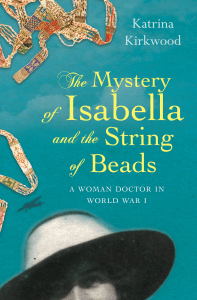
Katrina Lockwood The Mystery of Isabella and the String of Beads A Woman Doctor In World War 1 Loke Press, 2017.
I originally reviewed this book on the Women’s History Network blog, in 2017. A long time ago, but the approach to writing history as well as the content deserves another airing.
The back-cover blurb tells us:
‘It was the inscription that made the antique scalpels so tantalising: ‘Isabella Stenhouse’. A woman doctor? A woman doctor who was rumoured to have served in the First World War? Could Isabella have treated wounded men with these very implements? And had a grateful German prisoner of war really given her the strange string of beads that tangled round her stethoscope? Coaxing clues from archives across Europe, Katrina Kirkwood traces Isabella’s route from medical school to the Western Front, Malta and Egypt, discovering as she travels that Dr Stenhouse was not only one of the first women doctors who worked with the British Army – she was also a woman carrying a tragic secret, torn between ambition and loyalty to her family.’
Katrina Kirkwood’s The Mystery of Isabella and the String of Beads: A Woman doctor in WW1 is an utter joy to read.
Kirkwood has written an intriguing, historically adept account stemming from investigation of her great grandmother’s beads. As historians, we are always trying to fill in the gaps: pages or even just a page missing from a diary can slant events; sometimes events are unrecorded – we do not know all the thoughts and everyday occurrences that contribute to decisions and momentous events; there are multiple sources of evidence, some conflicting. Writers of historical fiction, if their work is well researched, come up with some plausible solutions to add to historical knowledge. Some historians speculate; others limit their work to that which can be ‘proven’. Indeed, the latter is what was called history before the 1970s expansion of history into social history. Then, recording facts ceased to be the only way in which history was written.
Katrina Kirkwood has established a historical form that takes the best of historical writing – she has facts which not only bear witness to events but stimulate this writer of imagination and creativity to valuable speculation. Then added to this is, most importantly, she uses her knowledge of events, social mores and creativity to produce a form of historical writing that breathes life into the facts she painstakingly assembles. She has taken the facts available to her from a range of sources and given them substance by creating around them a story, also based on facts associated with the period, understandings of the likelihood of attitudes and events and intelligent interpretation.
Kirkwood’s grandmother was a doctor in WW1, a monumental achievement. But Kirkwood also works to ‘square [her] perceptions of the First World War, with its trenches, explosions, mud and gore with [her] fun-loving and utterly affectionate Scottish granny’. The question she asks, ‘How does being a war doctor fit with jelly in a silver dish, cheese on a bright green platter and mince pies from Fortnum and Mason; her huge four- poster bed and its damask curtains, frilled pillows and thick silky bolsters?…fur coats…ornate silver hairbrushes’.
In achieving this ‘squaring’ Kirkwood makes the reader believe not only that her grandmother was an identity worth knowing in all her aspects but that our grandmothers might also have a story that bears being told. Kirkwood makes the unknowable, knowable through her account. She provides historical tools that provide historians with valuable methods of extracting the most from the small bundle of facts, possible a string of beads, that so many must work with.
A photo of Isabella, an Edwardian girl in all but her ‘…over-sized academic gown. Her fur- trimmed university hood… is juxtaposed with Kirwood’s recent experience of ‘gowned girls tottering in their newly purchased heels and elegantly tight skirts…jigging their slippery hoods and laughing with the boys’. This is a wonderful example of the ‘show don’t tell’ technique which gives this history a vibrancy which makes one want to keep reading. So, too is the search for why Isabella became a doctor. We see her old home, refurnished, and fashioned in Kirkwood’s imagination to investigate this question. So, too, is her school.
Chance finds, such as Creme de la Crème: Girls’ School of Edinburgh, provide clues to Isabella’s education. Imagination and historical investigation and knowledge of the period, mores and Isabella’s background provides information on the four years between finishing school and beginning her medical studies, answering the question: Why? What do her parents think? What happens when she determines upon her further education?
The Mystery of Isabella and the String of Beads is an excellent example of vibrant historical writing. I thoroughly enjoyed reading it and recommend it to others who would like their history not only factual but exciting.
Katrina Kirkwood is an independent researcher, writer and artist. She can be found on Twitter (Twitter: @kkstories)

Dr Christopher Herbert Jane Austen’s Favourite Brother, Henry Pen & Sword | Pen & Sword History, May 2025.*
Thank you, NetGalley, for providing me with this uncorrected proof for review.
Christoher Herbert’s history employs one of the most useful strategies when dealing with a subject for whom the material is sparse. In this case, there is an abundance of material about Jane Austen who has been the subject of so many biographies. However, Herbert does not rely solely on this and has adroitly using his independent research, bolstering it with material that sets the context for events that are not recorded. He also uses the more conventional way of contributing to research when dealing with a writer – studying the author’s work for clues. In this case, both Jane and Henry Austen’s writing. This is a work of substance, accessible writing, a broad history of the time and social mores, and an intriguing insight into Henry and his family, including Jane for whom it becomes clear, Henry was indeed her favourite brother.
There are wonderfully comic passages – the discussion of studying at Oxford and Cambridge in the period was delightful. Less attractive is the recognition of the family’s slavery connections. However, these topics and a multitude of others, including reference to Austen’s novels, provide a picture of the father of these two affectionate siblings. Valuable information about the way in which the siblings were raised and educated and the ideas that permeated their lives, is also afforded though reference to Cassandra Leigh’s background. A Thomas Gainsborough painting also provides information about the society in which the siblings were raised – a society in which Jethro Tull’s invention was a part, for example. Although wider changes in society may not feature in Austen’s novels, Herbert provides a picture that demonstrates her choice of background was one of many available to her.
Herbert’s detailed Austen family background then makes way for details about Henry and the profession and life he chose. A rebellion? A well-considered change in direction? Henry’s essays are deployed to help answer these and other questions about Henry’s life. Again, comic touches are laid side by side by more serious aspects, keeping the narrative lively and accessible. Although Herbert concludes that questions remain about Henry Austen, this work shows that his commitment to publication of Jane Austen’s work is a defining feature of the relationship between the two. It also, within the constraints Herbert acknowledges, is an absorbing study of a period, a family, and a sibling relationship.
The volume is complete with illustrations and photographs, which while at times repeat those in other works of the Austens’ world, seem particularly fine even in my kindle edition. ‘There is an index and detailed notes for each chapter.
Man Who Has It All Flipping Patriarchy Imagining a gender-swapped world Unbound, March 2025.
Thank you, NetGalley, for providing me with this uncorrected proof for review.
Imagine not having to search through Facebook posts to enjoy page after page of admonitions and guidance which are mischievous on the surface, but so sharp. So sharp indeed that amongst my laughter and enthusiasm to read more there is a gut-wrenching understanding that, yes, this is truth telling that hurts. This book provides all that at your fingertips, no searching, just a dip or two and you have your comic aside from the Man Who Has It All’s ability to see the patriarchy, its foibles, foolishness and its brutality, and make the reality behind the humour glaringly apparent. At the same time, there are explanations of the principles behind the comments. This is both engaging and enraging, inspiring laughter, and distress, but also inspiring: just imagine if everyone could understand, if only a little, what this author is demonstrating.
Claire, CEO, and her husband, Liam feature, together with Facebook respondents’ reflections on Liam’s shortcomings. Sympathy for Claire abounds, that for Liam is couched in admonitory terms. Then comes, Not Just a Pretty Beard, and reference to the TV makeover show, 10 Years Younger in 10 Days. But is a makeover the answer? Where should responsibility for a woman’s improved appearance lie, asks Man Who Has It All? Read the alternative, it is worth it. As is Liam’s predicament when confronted with the need to follow the principles outlined in the original program. List after list of items for him to accomplish. Familiar?
Well worn ‘jokes’ about women are challenged in a serious chapter that must impinge on most of us. How often, to return to the introduction, have we wanted to be nice, to leave horrible behaviour and words unchallenged? This book tells the truth – they are women hating jokes. Which, of course, when flipped, are easy to see them for what they are. Raising, of course, the question, why? The section on ‘Proper Satire’ is a joy to read. And heart breaking.
There is a bibliography, and there are notes for each chapter. Both make excellent additional reading, with descriptions of the sources adding valuable information about the further reading that sounds accessible and engaging.
While reading the Facebook version of this writer’s work is both fun and infuriating, the warmth that I felt for this courageous and moving writer while reading Flipping Patriarchy was new. As she suggests, take the book in short bursts, I did this, to my relief. Relief, because reading such a strong advocacy for women and a changed world is not necessarily an easy read. But, lest this seems too serious, it is loads and loads of fun too.

Julie Ann Sipos Horrible Women, Wonderful Girls A Jaycee Grayson Novel Dartmouth Park | Independent Book Publishers, May 2025.
Thank you, NetGalley, for providing me with this uncorrected proof for review.
I should have taken more notice of the title. I would have then established that ‘horrible women’ refers to the real women with whom Jaycee Grayson interacts, and that ‘wonderful girls’ is a brand of doll. If I had done so I would have been prepared to be disappointed in the negative depiction of women and their manoeuvrings to stay on top in a competitive environment. Of course, even the most fervent feminists of us recognise that all women are not perfect, that indeed some are horrible. However, a premise that only recognises dolls as wonderful, and that female supporters are rare, makes for a difficult read for me. As it only gradually dawned on me that this was the inspiration, I was well into the book, so determined to finish it. I am glad that I did, because even with the drawbacks, at times I enjoyed the read, and I ended up wanting to know how Jaycee fared.
Jaycee is a recovering alcoholic, starting a new job at management level in a doll company. The women she meets are not only competitive, but manipulative. She is threatened with dismissal, her status undermined, her ideas stolen and her well-being compromised. Her support, her sister who has cared for her after their mother’s disappearance, is a lawyer, a caring sister and wife, and invested in creating the best outcomes for her less than perfect sister and husband. Although the relationship between the sisters is fraught at times, and both are flawed, this strand of the novel is an antidote to the work environment in which Jaycee tries to do her job, even thrive, without much success. Jaycees’ attempts at romance are fairly limited too.
Despite all the negatives, the various storylines do have some appeal. The depiction of the way in which an organisation might work to achieve a successful business outcome, regardless of the human side of the equation was enlightening. It is certainly not pleasant, but it is informative. Jaycees’ relationships with various groups in the community, and the depiction of members of those groups was engaging. An appealing theme was the introduction of Frank Lloyd Wright and his architecture. Is Jaycees house authentic? Does it matter? Unlike Lloyd’s architecture, aimed at harmonising with its environment, Jaycee and her fellow workers do not. The Hmong who appear in Jaycees house, garden and the wider environment do harmonise – is there something here that Sipos wants to reveal? Or is the main reveal, the continuing loving relationship, flaws overlooked, between the sisters?
The questions are intriguing. However, there are so many strands to the story that answers are not easily found. I was pleased to read this first novel to the end. However, although I understand this is the first in a series I am unsure about following Jaycee any further.
Joanna Hagan Friends and the Golden Age of the Sitcom Pen & Sword | White Owl, August 2024.
Thank you, NetGalley and Pen & Sword for providing me with this uncorrected proof for review.
There is a wealth of information about Friends, and other television shows that featured in the period in which the sit com was initially screened, between the covers of this exciting publication. Friends may or may not have been one of your favourite programs, but regardless, there is something here for anyone interested in television in the 1990s to the early 2000s. Seinfeld, Frasier, and comedies from the past such as I Love Lucy, feature; dramas, for example ER and The West Wing, are discussed; the introduction of reality shows, the first of which was Survivor, gain a mention; the start of Grey’s Anatomy and its enduring popularity are referred to. Importantly, the process of creating and producing a sit com is provided in detail as episode after episode of Friends is laid out, familiar situations and analysis featuring side by side.
The way in which the material is woven together is the strength of this work, with Friends usually the pivotal point from which the additional information extends, building an engaging look at this Golden Age from the perspective of one of its most popular examples from 1994 to 2005. Other sit coms, and their particular focus and idiosyncrasies – some successful, some not – are contrasted with significant effect. The attention to other sit coms provides valuable insight into the field of work in which Friends competed. Moving more widely into the dramas also in the field is also instructive, providing awareness of the range of television choices available while Friends maintained its impetus.
The analysis of the show, with its successes, faults, challenges, and story lines often dealt with in detail, and always with respect for the work of the writers and actors is impressive. But details about these aspects of Friends is not the only perspective. Joanna Hagan is adept at drawing out the importance of scheduling, competitors, the role of producers and the networks, and the essential role of ratings in maintaining a program in prime time and scheduled for particular days. So, too is the role of leading in programs shown to have an immense impact on the way in which audiences responded.
But, for me, the real interest lay in the way in which the stories were developed and told. There is nothing that resonates as much as this part of the book. The characters are brought to life, and the storylines and topics engender the laughter, angst, appeal and sometimes querying on the page as they did on the screen. Hagan has written an engaging book, with its clever weaving of the detail about Friends with a television history of the time. I really enjoyed reading it.

Tim Waggoner Just Add Writer A Complete Guide to Writing Tie-ins and IP, RDS Publishing|Guide Dog Books, May 2024.
Thank you, Net Galley, for providing me with this uncorrected proof for review.
Tim Waggoner has written an impressive guide for writing tie-ins – but more than that, there is so much material that applies to other forms of writing. I am not a fan of much of the material that he uses as examples ( Supernatural, Defender: Hyperswarm, Exalted: Shadow Over Heaven’s Eye, A Nightmare on Elm Street, for example and he refers to horror as a favourite genre) – but my prejudices are apparent from my sigh of relief when one of the contributors mentioned writing for Law and Order and Murder She Wrote. Something familiar at last! However, that said, I was drawn into Waggoner’s alien world through the almost magical lure of his writing style, the accessibility of his advice and the substantial and valuable guide to a wide range of writing beyond the topic for which this book could be seen as a ‘must read’. To add to Waggoner’s experience there are interviews with other tie in writers which strengthen the proposition that, although there are some broad guidelines that are worth following, writers have unique experiences as well as comparable ones that are also valuable.
The chapters comprise Waggoner’s experience in particular areas: These are followed by relevant interviews with some of the other tie in writers – ‘Voices from the Trenches,’ and exercises. The Introduction includes a wonderful story of youthful enterprise and eventual work in the industry. Chapters include an overview; detailed chapters on Waggoner’s beginnings in the industry – 2004- 2006, 2006-2010, 2013-2017, 2017-2019 and 2021-2024; a ‘how to’ chapter for those wanting tie-in writing experience; and the business side of tie-ins. In chapter 9 Waggoner talks of writing tie-ins and the focus of this book, suggesting that other resources will be better guides for writing different fiction. He is the expert, but I found useful clues for improving other types of fiction with which I am more familiar than tie-ins. Perhaps have this book as your ‘go to’ for tie-ins and an ancillary for other work? I am certainly glad to have read it, apart from learning more about tie-ins! His references to the role of tie-ins in short stories, novels and novellas in this chapter is useful, and links neatly with chapter 10 in which writing ‘novelizations’ is covered. I think back to the simple novelisations of When the Boat Comes In and Onedin Line, and see that Waggoner is usefully discussing more sophisticated works. This is a fitting end to an exciting journey.
There is an inspiring biography – inspiring because it encourages readers with different tastes to explore further – which features novels, non-fiction, comic book scripts, short stories, and a list of Waggoner’s original work. Yes, tie-in writers are free to write their own work, at the same time recognising that the tie-in must confirm to the original plan. Key resources appear at the end of the book, together with a short biography of Waggoner, and five appendices. These are a sample story, sample pitches, a tie-in proposal, a tie-in outline, and sample chapters.
This is the work of a person who, in his own words, enjoys writing tie-in fiction. Waggoner’s enthusiasm is abundantly clear from the book, and a wholehearted encouragement to others who want to join him.
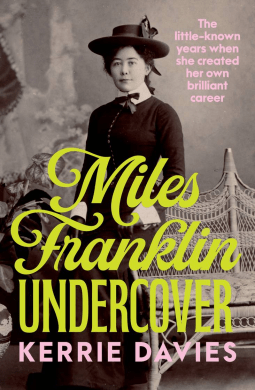
Kerrie Davies Miles Franklin Undercover The little-known years when she created her own brilliant career Allen & Unwin, November 2025.
Thank you, NetGalley, for providing me with this uncorrected proof for review.
I thoroughly enjoyed reading this work but was constantly wanting to be reassured about where elements of accuracy and imagination lay. As always must be the case with biographies when the subject or circumstances contrive to preserve some privacy, speculation is a legitimate tool. One of the most interesting facets of reading about events that cannot be authenticated is following the author’s acknowledgment of this and their process for composing conclusions. All biographies must include elements of speculation and imagination, after all, conversations are not always recorded – and how influenced by such recording and therefore questionably authentic are these – and thoughts can only be developed in the author’s imagination, and I would have liked to see more recognition and discussion of this aspect of the work. However, the acknowledgements and bibliography, together with notes for each chapter, were useful as were references to the value of the unpublished manuscript about Franklin’s domestic work. Also, Davies’ generous recognition of Miles Franklin’s other biographers and work on her topic is valuable.
In Part 1 Davies provides a wealth of information about Miles Franklin’s relationships with her family and other writers in her early years. This is such a great read – poets studied in Australian schools leap to life alongside the unfolding of Miles Franklin’s vagaries, enthusiasms, and penetrating views about the way in which she wanted to live. ‘Live’ is a potent word here – Miles did not want to wilt in a marriage, remain known for only one successful novel, succumb to the comfort of familiarity. That familiarity, Stillwater, their property, and her family did not provide her the sustenance she demanded despite the strong emotional connection that Davies subtly weaves through the lives she eventually lived in America and London. The pull of the life of family and home is well depicted and the struggle in coming to terms with the realities of remaining unmarried and trying and failing with her writing is poignant.
Part 2 begins with a new chapter in Miles’ life, her life as Sarah, undercover as a domestic worker, compiling information for another book. Her political activities as well as her desire to be published again culminated in this period, moving from being Rose Scott’s ‘darling girl’ to the less than darling in various households. The ‘domestic problem’, spoken about in drawing rooms and at dining tables in wealthy homes, becomes a cruel and disturbing reality when seen through the eyes of the person undertaking the domestic work. In these chapters the unpublished manuscript (for unpublished it was, deemed too likely to provoke legal action) is the basis of some marvellous insight into the work, the relationships between servants, and the relationships between servants and their employers.
In Part 3 ‘Stella’, rather than Miles, is aboard the steamer Ventura bound for America. Here the world of women’s political activity becomes that of Miles Franklin, and the story of her writing and political endeavour is satisfying. She writes for journals and papers, she is loved by her friends, she can be political on behalf of women, and most importantly, she has remained single. All the emotional ties to her family and friends, Australia, the wider world, and her writing can be felt at the ending of Part 3, ensuing that the passionate woman that Davies has written about is the picture that remains. Using The Coda to cover Miles Franklin’s time in London, her death in 1954 and the establishment of the Miles Franklin Literary Award is clever device that does not detract from the purple petals with which part 3 ends.
Miles Franklin Undercover provides a thoroughly readable and emotional journey towards knowing more about Miles Franklin, the writer and political activist, her writing and the other people who appear in this work. I enjoyed the journey.
Todd Almond Slow Train Coming Bob Dylan’s Girl from the North Country and Broadway’s Rebirth Bloomsbury Academic | Methuen Drama, January 2025.
Thank you, NetGalley, for this uncorrected proof for review.
This is an intensely personal account of the challenges in staging a play on Broadway. The narrative concentrates strongly on Todd Almond’s experiences and responses, while including a massive range of quotations about the other actors’ experiences. For someone interested in the staging of Bob Dylan’s Girl from the North Country, its nuances, meanings and relevance, and achieving eventual success despite the difficulties that beset the actors and the opening because of covid, this makes an engaging read.
There were some lovely anecdotes that would resonate with would be actors striving in this unremittingly difficult environment. For example, Todd Almond’s venture as a guitarist – with little experience, this became a success story; the pitch of the song he had to render, with his trepidation about the high notes; his engagement with seemingly mystical events and their impact on his experiences when the play at last opened on Broadway.
However, a much stronger engagement with the wider world of appearing on Broadway and staging a play, even dealing with the extreme difficulties of the Covid 19 epidemic which surely have some similarities with other events that impact on the opening of a play, would have given this book a broader appeal. Todd Almond provides a very impressive bibliography, which perhaps he might have used to greater effect, an index and photographs. There are detailed and informative descriptions of the latter.

Derek Ronald Birks A Guide to the Wars of the Roses Pen & Sword | Pen & Sword History, January 2025.
Thank you, NetGalley and Pen & Sword for providing me with this uncorrected proof for review.
Having read some of Derek Ronald Birks’ witty comments I thought, what fun it will be reading this book! Then I recalled the equally descriptive graphic commentary on the fighting that took place during the conflicts – the use of cannon filled with lead shot or pebbles, arrows, swords, axes, handguns, and maces. All of these inflicted horrific injuries, particularly with the admonishment to any participant who might hesitate, that ‘no quarter’ should be given. These juxtaposed contrasts are woven throughout Birks’ essentially well-argued analysis of the Wars of the Roses. He takes a different approach from the popularly well-known understandings of the politics, economics and rivalries that characterise this era. Notably, he treats alternative historians’ views with respect, while making a fascinating case for his own.
Birks questions the Tudor view of history to undermine the argument that the Lancastrians and Yorks had been in conflict from 1455 to 1485 – from the Battle of St Albans to the advent of Henry Tudor. With Birks’ narrative it is abundantly clear why the Tudor version was adopted: a king who ended an enduring conflict? What better way to begin a monarchical era! It is this type of insight that is one of the delights of reading A Guide to the Wars of the Roses. And, of course, it is accepted that the winner’s version of history is the one that endures. Why wasn’t this considered in relation to The Wars of the Roses before?
One aspect of Birk’s method that I found particularly noteworthy was the way in which his understandings about the Monarch and his adherents’ behaviour so aptly reflects the way in which the modern political world works. The role of factions in political parties, the power of a leader who can dispense favours, the role of the disaffected are all there – in the 1400s and today. Birks’ statement at the end of the book where he clarifies the real impact of the Wars of the Roses – deaths, but not half the population; changes of leadership, rules and political crises which compare well with the previous century; life for much of the population maintained, or returned to, its even tenor despite disruptions is salutary. The book includes some excellent illustrations, the clarity of the images even in my kindle version augers well for them in the printed versions; there is an index; and a bibliography.

Maya Golden Bethany The Senator Rising Action Publishing | Rising Action, April 2025.
Thank you, NetGalley, for providing me with this uncorrected proof for review.
This is a thriller with some positive features – the topic is pertinent, the characters interesting, and the story line logical and believable. There are no confected twists or illogical events, and the narrative combines personal relationships and political themes to good effect. Maya Golden Bethany clearly cares about her topic and has a commitment to raising social issues that resonate with contemporary concerns for the environment. The prologue introduces the topic with empathy, in turn ensuring that the reader is wholly aware that solving the case that brings journalist Alex Broussard and Senator Oliver Michaels together again is vital. On the negative side, I found the constant change from present to past text made for uneasy reading and the immense amount of detail often added little to the story. It might be this that reduces the fast pace that would have maintained the tension which is essential to creating a good thriller.
The Senator deals with complex issues, establishing the difficulties those in office face when ensuring that good public policy is enacted, adhered to, and protected. Against this is the personal danger that the characters face. Also, the temptations that confront those in powerful positions are raised, juxtaposing the fear of failure, exposure and loss of income and prestige against the determination to act for the public good. Conflict between the various legal bodies, the Secret Service involvement and attempts to pass legislation are all realistic touches providing authenticity to the events.
Competing for the same man can make for heavy handed writing about the relationships. Here, Lydia, Oliver’s wife and Alex, a lover from his past deal with the breakdown of Oliver and Lydia’s marriage and Alex’s reappearance. Maya Golden Bethany does not fall into the trap of making the women nasty competitors. At times there is even a little humour and warmth between the women.
The ending, overwritten but satisfying, suggests that a further novel combining thriller, relationship and social commentary is possible.

Priscilla Masters Bloodline Book 16 of A Joanna Piercy Mystery, Severn house, January 2025.
Thank you, NetGalley, for providing me with this uncorrected proof for review.
This is a tightly woven thriller with characters that are realistic, interesting, and complex and a story line that combines social commentary with a gripping narrative. It is fast paced without neglecting the ideas that are central to the plot – the moral compass of one character is explored thoroughly at the same time as punishment for several crimes is enacted; while hostage negotiations are markedly slow; and behind this dominant idea is another question about the responsibility an instructor might have for the information they impart. Masters’ ability to keep the tension throughout is ideal.
Joanna Piercy is an appealing character who is empathetic, juggling family and a high-powered job, and using newly won skills in attempting to release a hostage. To do this she must collaborate with the instructor to adapt to dealing with a highly motivated and able hostage taker. The hostage is both a sympathetic and unsympathetic character. His plight is well drawn, he must be freed, but his slowly revealed background creates additional tension to the case.
This is not the first Priscilla Masters that I have read, but the first that features Joanne Piercy. She is a character well worth following if this case with its mixture of tension, complexity and consideration of moral values is typical of the cases she must solve. Certainly, I look forward to adding Joanne Piercy to my list of women detectives to watch.
Alafair Burke The Note Faber and Faber, April 2025.
Thank you, Net Galley, for providing me with this uncorrected proof for review.
Alafair Burke always creates an absorbing story with logical twists and turns that, rather than arising unexpectedly and having little to do with the plot, always make sense. This does not mean that they do not surprise, but that Burke always develops her plot well, with minute clues along the way, good character development, and a narrative that is engaging. The early slow burn in The Note is an excellent way to develop the characters, relationships, and possibilities when three women get together on a holiday break that has taken years to accomplish.
Lauren, Kelsey, and May met at a music camp, where Lauren was a counsellor and the other two twelve-year-old students. Over time their friendship has developed, and their diverse backgrounds, age and eventual professions are subsumed under the shared companionable jokes and puzzle solving.
The relationship between the three women is realistic, various flaws are apparent in each of them, past resentments colour their current behaviour and attitudes, and when a joke becomes a police matter, suspicions abound. At the same time, Alafair Burke’s depiction of the women’s friendship also demonstrates that despite some failures, strong links bind them together. These are at risk of fracture as past deaths and an investigation into a missing man gain momentum.
The title of the novel is clever in its reflection on notes associated with the current and past relationships between the women. Both have been left in an underhanded manner. One is a note left on a car whose owner ‘stole’ the women’s parking spot; the other was the note left under a door at the camp many years before. Both notes have consequences which impinge on the women’s view of each other.
In the background are the male figures that feature heavily in the women’s personal lives, Kelsey’s father, brother, and her murdered husband; May’s fiancé; and Lauren’s older, married long term companion associated with her past at the camp.
There are plenty of characters to raise suspicions and concerns, and Burke adroitly works them into the narrative. The resolution is satisfying, and I look forward to the next of Alafair Burke’s absorbing novels.
Lisa Jackson It Happened on the Lake Kensington Publishing|Kensington, June 2025.
Thank you, NetGalley, for providing me with this uncorrected proof for review.
It Happened on the Lake follows the well-worn theme of a woman returning to her inheritance and secrets from the past being canvassed anew. There is a cast of unpleasant characters, and even Harper, the main protagonist, is not exempt. Several deaths or disappearances have taken place in the past, and Harper has been in the vicinity of each. In the present she is again a spectator at a gruesome death. Men from her past make contact, one in his capacity as a police officer, another as a possible contractor to bring the huge house Harper has inherited to a standard for selling. That is, if Haper succumbs to the pushiness of her real estate friend, or is she a friend?
Initially I felt that Lisa Jackson had done far more with this theme and cast than had been done in similar novels. Certainly, the mysteries and tension came thick and fast. No character seemed exempt from suspicion, and the threads from the past seemed worth following to a conclusion. However, the pace of the book slowed markedly and Harper’s ruminations, the back stories of her friends and the investigation of the current death became almost tedious.
Various devices are used to create tension – the secrets, past and present relationships, bats, cats – missing and dead, a skeleton under furniture, and dolls – reminders from the past, and changing locations in the present. Is the house really secure even when the locks have been changed? What is the significance of a missing revolver? What is the significance of the vintage cars? The tram from the top of the hill? The elevator that no longer works? As multiple as these devices are, the prolonged and repetitious writing about them dulls the impact. And here we have the problem with this novel – it is too long, too repetitious and, when I had finished it, I regretted having made the effort to do so. The resolution is weak and, unfortunately, the characters remaining have become only slightly more pleasant.
Catherine Curzon The Royal Family vs ‘The Crown’ Separating Fact from Fiction Pen & Sword | Pen & Sword History, January 2025.
Thank you, NetGalley and Pen & Sword, for providing me with this uncorrected proof for review.
Catherine Curzon parts company with the usual lively writing style of Pen & Sword publications in this almost dry account of the popular Netflix drama, “The Crown,” and its mixed adherence to a factual account. Although relieved by some levity, Curzon’s commitment to comparing drama and authenticity relies on an account that leaves little time for frivolity. In reading this interpretation, although “The Crown” had eons of time for frivolity and melodrama, history did not. Or did it on occasion? Although the style is critical and is not as accessible as the usual Pen & Sword publication, it follows the same standards in providing well researched material. This is a robust comparison of reality and the account of the historical, social, and personal developments given in the 6-part series, featuring themes and events; characters and characterisation; locations; style and costumes.
The format is excellent – The Crown version of events is followed by the facts as Curzon knows and researched them. Where there is a question, or it is difficult to determine the facts Curzon acknowledges this. Unfortunately for “The Crown” there is abundant information that undermines the factual nature of the series. One major criticism made by Curzon is the timelines that often become muddied and demonstrably incorrect in the series – events and characters’ presence are often impossible because they happened at a different time, or the characters wee somewhere else at the time in which they are portrayed in the series. Sometimes a character is depicted taking an action that belongs to another. And so, it goes on – there is an abundance of evidence that underpins Curzon’s case.
However. This is a fact-finding mission, and in this respect, it is a grand history as it relates to the Windsors and those impacted by the world of the British crown. In its meticulous attention to getting the facts right, we are presented with an impressive history of the time. And to be fair to Curzon, this is what she aims to do, no more. But, looking at the series from a wider perspective there are so many questions I would have liked answered. What lies behind the most egregious of the factual errors? Can some be excused and explained because of the need for dramatic impact and it having inconsequential outcomes to take this licence? What of the expense of ensuring that some characters are not stand ins for others? Introducing a new character in a film is quite different from writing the correct figure into a historical novel – the immense expensive to find another actor to fill a part that in its most critical sense means little, may have been considered unnecessary. What impact did the current royal, social and political environment have on the way the themes were drawn in the series? Perhaps none of these questions matter, and the value of Curzon’s factual account is beyond these questions anyway. However, I would have liked some attention given to the questions I raise. Further, although she raises is the way in which female characters often give way to male characters’ stories and feelings, there is little analysis of why. I would have liked some analysis of the series and its, at times, seemingly cursory concern for facts.
There is a lengthy bibliography of secondary works and relevant photographs. The way in which Curzon finishes the book is a poignant reminder of at least one fact that “The Crown” stressed throughout, Queen Elizabeth’s commitment to duty.
Elaine Insinnia You Go, Girl! Atmosphere Press, 2025.
Thank you, NetGalley and Atmosphere Press, for providing me with this uncorrected proof for review.
Elaine Insinnia’s You Go, Girl is a blend of funny anecdotes, serious consideration of the events that might occur in many young lives, and consideration of social issues in a light-hearted, but nevertheless thoughtful way. The style is young, but there are some delightfully nostalgic moments for the older reader. These range from references to popular songs and films of the 1950s and 60s, to clothing styles, playing in the street, and food to the more serious ones of the stereotyped gender roles and their impact on girls’ comfort, aspirations and behaviour.
Twelve-year-old Lainie has written a diary, and this becomes the daily reading for her and her granddaughter, Suzie over seven days together. From fingers flying over a mobile phone, to adjusting an aerial to listen to a wireless, the two read the diary, and apply much of its information to Suzie’s present everyday life. They find common cause in seeking to understand other people’s behaviour, navigating relationships with friends and parents, social concerns and understanding that although singers such as Frankie Avalon and Connie Francis no longer dominate the airwaves (or their modern equivalent), some social concerns of the past resonate with the present.
This is a pleasantly easy book to read, and although geared to a younger market in its style, has something for older readers. By raising serious issues, without introducing heavy analysis, Elaine Insinnia has effectively written about the challenges posed around some serious social issues and provided ideas and strategies for dealing with them.
Dervla McTiernan The Unquiet Grave Book 4 of The Cormac Reilly Series HarperCollins Publishers Australia | HarperCollins AU, April 2025.
Thank you, NetGalley, for providing me with this uncorrected proof for review.
Dervla McTiernan returns to Ireland and Cormac Reilly, creating a deftly woven seemingly multitude of ideas, crimes, and personal relationships in The Unquiet Grave. The book revisits Cormac’s commitment to integrity in the police force, where it has impacted his past and looms in his present relationships with his co-workers and future. A bizarre murder is unearthed by a German family visiting a remote bog surrounded cottage in Ireland, and although they appear for only a short time, they establish a feeling of unease as the father’s approach to the finding betrays his desire to impart knowledge unhindered by his wife and daughter’s opinions. This unease is reflected in various relationships as the case, and the causes of additional murders, develop.
Cormac’s romantic past complicates his life, at the same time as drawing one relationship to what now seems to be a close. Others are also ending, and new beginnings are suggested. The twists that accompany the investigations into the murders are logical, well developed, and although startling, are not confected merely to lead the reader astray.
The importance of integrity, personal and public is the overwhelming theme in this novel, as is the feeling of unease about some of the male /female relationships. These are subtle, rather than dramatic, and stronger because they, like difficult relationships outside fiction, become part of the fabric of society, or in this case, the novel. Once again, Dervla McTiernan has demonstrated her ability to not only develop an intriguing criminal case to solve but has produced social commentary that is woven neatly into the plot. Finishing a novel by this discerning writer as usual leaves me wanting to read the next one. As soon as possible!
Cristina Wolf How To Write A Rom-Com Aria and Aries |Aria, May 2025.
Thank you, Net Galley, for providing me with this uncorrected proof for review.
I was disappointed in this novel, as I came to it expecting to find something more than a romance. The idea at the heart of the novel, showing how writing a romance works is smart. However, the story never goes beyond this simple aspiration. Depicting engaging characters who struggle against the platitudes of the genre, raising some comic plot devices to undermine the genre, while eventually having to succumb – after all, who wants to really deprive the world of romance and its authors – would have been such a smart move. Cristina Wolf does not take this option.
So, how well does she do with the material with which she chooses to work? Girl meets boy under a false pretext, dawning realisation of attraction and guilt about the secrecy, eventual resolution? The setting, a publisher, is a positive. Researching a plot and characters for a romance novel, is another clever idea. However, for me this was potential unrealised. There is a lovely, fortuitous event beginning and ending the story, and Wolf’s references to familiar romantic fiction, films, and television series, provides good background to her ideas. Lucy has potential, as do the other characters. However, repetitious phrases – people ‘whine’ rather than speak, are jarring.
For readers who want a romance, this book will satisfy. For those who want more, it will disappoint.
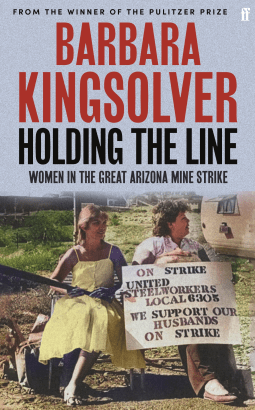
Barbara Kingsolver Holding the Line Women in the Great Arizona Mine Strike Faber and Faber Ltd, October 2024.
Thank you, NetGalley, for providing me with this uncorrected proof for review.
Barbara Kingsolver has written a non-fiction book that echoes the skill she demonstrates in her fiction. The preface is a wonderful insight into the author as well as her subject. Kingsolver’s future as a writer of impactful fiction is one of the joys to realise through this, one of her early works as a journalist. Here, we see the woman who has written so masterfully about issues while drawing the reader into a fictional world from which it is difficult to emerge unchallenged. Now, to the content of this non-fiction example of her work. The women portrayed in Holding the Line are engaging and confronting, at the same time as demanding awareness and empathy. They provide a valuable history of women’s contribution to this particular strike, while presenting a thoughtful understanding of the way in which so many women, their contributions unrecorded, may have contributed to industrial action.
Kingsolver sees the women’s stories as promoting hope, that they recognised that the goal should be seeking justice rather than revenge and their contribution to demonstrating that people who see themselves as ordinary can scale impregnable heights. She also has a word of warning – no-one is necessarily exempt from what happened during these women’s fight for justice.
Much, although not all, of the book comprises cases studies based around the women’s stories. They include the women’s history, their reasons for coming to Arizona’s copper mining area, their work and their relationships with other women, their families, the management of Phelps Dodge. Details of the strike action, and the impact on these women, and their families, the fraught discussions about what they should do as the strike continued are covered. Media coverage of the strike conveys so well the anti-union context in which the strike and its continuation took place. Why the strike action took place is a central question that Kingsolver raises and the argument she develops is powerful, historical, and layered with context. The outcome of the action, compensation, and lack of it; and accountability for the responses and judgements are covered at the end of the book – making it both a heartening and disheartening read.
The bibliography comprises books, journals and newspapers and films (Norma Rae, With Babies and Banners, Harlan County and Salt of the Earth). The index topics provide some pointers to the breadth of the material – naming of a wide range of unions; arsenic fumes and lung damage; “Bread and butter unionism”; women’s name; Children and the impact of parents’ arrests; contracts and no contracts; Christmas celebrations; excessive show of force; evictions from company housing; Civil Rights Suits; International support; women on picket line; support system for strikers; National Guard; politicians; Racial equality issue; divorces; solidarity and self -interest; and women’s movement. And of course, many more.
For me, Holding the Line Women in the Great Arizona Mine Strike was more than an excellent analysis of the Arizona mine strike. I saw the film, Harlan County, and it has stayed with me – it was heartbreaking. But, like this book, it gave women a principal place, not only on the picket line, but in their domestic environment. The intercutting of one of the women in childbirth and a man being brutalized was a poignant reminder of the way in which the political is both public and private. Kingsolver has embraced this so deeply in her book. It is indeed a powerful read.
.
Donna Leon Backstage Stories of a Writing Life Grove Atlantic | Atlantic Monthly Press, August 2025.
Thank you, NetGalley, for providing me with this uncorrected proof for review.
Donna Leon’s Wandering through Life: A Memoir was a satisfying enough collection, particularly where she reflects upon her teaching English in Iran, China, and Saudi Arabia. Although this experience is also recalled in Backstage, I found the whole of this collection far more engaging. Here, another part of Donna Leon’s world is revealed, in sharper recall, more wholly reflecting her fictional work. Like Wanderings her welcome into this further world is open and honest. However, the attention it commands and, at times, background knowledge to fully appreciate it adds a valuable dimension. This world is introduced through opera, her own writing, others’ writing, her love for Venice and her work that seems so remote from Brunetti’s Venetian world but is indeed hers too.
Referring to her own writing, Leon provides enlightening information about her research – both prostitution (Death and Judgement) and diamonds (Blood from a Stone) feature here. She dwells almost devotedly on Ruth Rendell’s work, drawing attention to the immensely valuable role of the first sentence of A Judgement in Stone, written as Barbara Vine. Although a reader of Ruth Rendall/Barbara Vine, and familiar with the other writers she extols, Raymond Chandler, Ross Macdonald and Patrick O’Brian, Leon’s appraisal makes the works sound so absorbing it is hard to avoid the temptation to put aside other writers and become more closely acquainted with them.
Similarly, her love of opera is quite beguiling, not only because of her enthusiasm, but because what is almost pedagogy is so adroit. Venice, a known love through her novels, becomes another lure as its past and present glances through the collection.
The collection is grouped around the tiles Early in Life, Heroes, String-Pulling in Venice, Mortal Danger, Trips, Behind the Scene, Amorality, Love Moment of Truth, and Ends. Together the pieces in each, of varying lengths and intensity make Backstage an engrossing work of affection for other writers, opera, Venice and her own flawed Commissario Brunetti.
Tasma Walton I am Nannertgarrook Simon & Schuster (Australia) | S&S Bundyi, April 2025.
Thank you, Net Galley, and Simon & Schuster, for providing me with this uncorrected proof for review.
Tasma Walton’s I am Nannertgarrook is so far removed from my recall of her as the pleasant enough young police officer in Blue Heelers that I suffered elements of the dissonance that, at a level far beyond my experience, must impact indigenous Australians at levels unimaginable every day of their lives. It was a good way to begin reading this heartbreaking novel with its beautiful images of Nannertgarrook’s life in her own setting, where indeed she is Nannertgarrook, and the revulsion for a vastly different life after her captivity when her being is brutally questioned with her renaming as Eliza or no-one.
The first half of the book is a revelation that bears rereading. Walton’s rendition of indigenous life is beautifully woven, with women’s business in the forefront, but the coming together of families after their individual activities are completed, warm, loving, and full of humour. Walton draws us into lives that are complete with domestic and public tasks and events, together with the overarching world of Indigenous spirituality, the land and sea, and its inhabitants. On the outskirts of these lives, harmonious with the environment and with each other, hover the sealers. They bludgeon the seals with little concern for anything but their livelihood, and eventually bludgeon a mother and child, leaving their bodies for the Indigenous community to care for and mourn.
The second half of the book takes place in the sealers’ environment – brutal, uncaring, with values far removed from those experienced though Nannertgarrook’s early life. She and other women from her community are captures, enslaved, bear the sealers’ children and are given English names. Although I would have been satisfied with less of this period, its brutality being well described throughout Nannertgarrook’s lengthy life on various islands with her sealer captor. However, some of the detail provides valuable insight into the superior Indigenous hunting practices, their links with the land and their family and community feelings and beliefs. Records of the time, taken by an insensitive white researcher who appears on the island, provide yet more material about relationships between white and Indigenous people. Unsurprisingly, although outwardly benign in contrast with the sealers’ behaviour, they are brutal in their own way. Nannertgarrook’s eventual departure from the island when her captor falls ill is far from the return home she dreamed about, again demonstrating the benign brutality of white denial of her personhood.
There is a glossary of indigenous words, which is useful. However, the words become part of the reader’s language long before this. As awkward as I found this sometimes, the words being so far from my knowledge, they played a part in drawing me into the novel. After all, the Indigenous groups brought together on the sealers’ islands, being from different communities also had to communicate in unfamiliar language. They ached to understand each other well beyond any desire to be part of the language that would give them entry to the sealers’ world. Walton says that the next novel she writes will not be so harrowing, and I look forward to it. However, I feel privileged to have been invited into this one, with its mixture of beauty and suffering.
Scott Turow Presumed Guilty Swift Press, February 2025.
Thank you, NetGalley, for providing me with this uncorrected proof for review.
This is not ‘just’ a legal procedural, although under Scott Turow’s experienced hand that would be enough. Presumed Guilty is an empathetic analysis of relationships and ageing as well as an insightful consideration of racism and the way in which status through familiarity and hierarchy can grant benefits to some while challenging others’ claims to justice. Although when I read Presumed Innocent many years ago, I was impressed, Presumed Guilty exceeds my expectations. It really is a dazzling encounter with the law and complex characters, and notable for its social commentary.
Rusty Sabich, who was introduced in Presumed Innocent, is now in his seventies, has a congenial partner, and with her has responsibility for her adopted son. Aaron has a criminal record and is now under investigation in a case biased against him as an African American in an almost exclusively white county. Rusty Sabich accepts the job of defending him, putting all his relationships, personal and professional, at risk. The legal exposition of the case Sabich and his investigator conduct is informative, so much so that it could undermine the momentum of the novel. Not so, it is engrossing. At the same time, the personal relationships are explored, in their grittiness, sensitivity, and pain. Truth telling and suspicion are pivotal throughout the narrative.
The ending of the novel is far from simplistic, although satisfying. The narrative continues to be driven by both moral and legal questions as well as the impact these have had, and will continue to have, on the characters. Scott Turow has written a book that reverberates with quality and that fully engages.
Gordon d’ Venables Hunted Vanguard Press, April 2023.
Gordon d’ Venables continues to combine an engrossing story line with a strong element of social commentary, characters who becoming increasingly engaging and writing that is a pleasure to read. Hunted is the third of d’ Venables’ novels, and having been impressed with his first, The Medusa Image, and thoroughly engrossed with the empathy he shows in Star of the South, I was pleased to have the opportunity to read yet another work. Hunted reintroduces Rhys Curtis and Rat, a MI6 agent. Again, they meet in Thailand at Noi’s restaurant, also familiar territory. Once more, the activities, food and surrounds are narrated in such detail that the reader could well be there. A tuk tuk seems to be just around the corner – if one could bear to leave the pages and hail it!
Hunted is a courageous work, taking as it does real life events, and weaving them into a narrative that resonates with political unease. These fears, looking from 2025 after the result of the Presidential election of 2016 has been repeated, are well worth revisiting. The racism, white supremacy and misogyny are all there in the events of Charlottesville and afterwards, the enthusiasm for guns and freedom of speech that destroys rather than uplifts – the latter is tamped down without mercy – the backdrop to today’s American political environment.
There is much to learn from this book, and d’ Venables’ knowledge of financial, political legal and economic affairs, and the links between the countries he includes, the UK, America, Russia and Australia, is impressive. These gritty and hostile elements play well against the Thai scenes of marketplaces, food stalls and the ever-present tuk tuks and the humour that is part of the meaningful relationship between Curtis and Rat. The concern about maintaining Australia’s ‘democratic system, our intrinsic values’ as Curtis is advised is well considered, with references to events in The Medusa Image, and concerns about right wing political activity in Australia reflecting American based ideology.
D’ Venables’ writing style is distinctive, with its commitment to including Thai, but ensuring non-Thai speakers’ understanding by providing a translation in brackets; the occasional move from present to past tenses to create tension during an event; and the use of italicised thoughts as characters converse. The latter is often comic, but most importantly provides an insight into the characters and relationships. The ending is satisfying, particularly as it leaves the possibility of d’ Venables return with Rhys Curtis and Rat.
Marie Bostwick The Book Club for Troublesome Women HarperCollins Focus | Harper Muse, April 2025.
Thank you, NetGalley, for providing me with this uncorrected proof for review.
Marie Bostwick’s book begins with her revelation about her inspiration for it – a conversation with her ninety-one-year-old mother in which Bostwick learnt that Betty Freidan’s The Feminine Mystique had, in her mother’s words, changed her life. She then describes the research she undertook, often arousing feelings of anger, but also admiration of the women facing egregious discrimination. She recognises what Freidan, and those moved by her, did for women – an excellent start to a work of fiction that introduces courageous characters who respond to the discrimination they faced. The women’s coming together, through a book club based on reading extensively and eventually sisterhood, is an engaging topic and Bostwick’s book is a fine vehicle.
My immediately positive response was to Bostwick’s use of the term ‘troublesome women.’ This is a phrase used by feminist writers, Judith Butler, Naomi Wolf, and Laurel Thatcher Ulrich to describe women who refuse to bow to the traditional concept of behaviour that would designate them ‘good’ women. There is also the phrase, ‘Well behaved women rarely make history’ on my favourite, always worn, bracelet. Clearly, Bostwick was going to write about the sorts of women I wanted to read about!
Margaret, Bitsy, Charlotte, and Viv all live in a middle-class suburb, in houses with British names, these names providing information about the size and grandeur of the house. Margaret organises a book club and is encouraged by Charlotte to introduce it with Betty Freidan’s The Feminine Mystique. Each woman responds differently to the book, or the small sections they manage to read. However, the discussion about their reactions provides the nucleus for further revelations. At the same time as the women look for inspiration to change the lives they have adopted since leaving school or college, they are 1960s women with their attention to dress, the food they will provide at their meetings and suffering with curlers in their hair so as ‘to look their best’. The juxtaposition of women and their concerns who will be so familiar to baby boomers, and their aspirations, is heartwarming.
The women’s lives change. Their developing friendships, dealing with what they more strongly identify as discrimination at work, home and in the neighbourhood, and, in turn, realising that discrimination against women stultifies all human relationships and aspirations make for a story that weaves together a group of women worth knowing, ideas that are worth thinking about, and new pathways that are tempting.
The Book Club for Troublesome Women is an enlightening read at the same time as it is a touching story. There are highs and lows that are realistically portrayed, and the ending is particularly satisfying.
N.J. Mastro Solitary Walker A Novel of Mary Wollstonecraft Black Rose Writing, February 2025.
Thank you, NetGalley and Black Rose Writing, for providing me with this uncorrected proof for review.
Solitary Walker A Novel of Mary Wollstonecraft is an ideal start to learning more about this complex feminist, the writer of important documents; accommodating and helpful sister; a friend of women of worth, and also a critic of many; mother of Mary Shelley; and friend, lover and wife of men of merit – and, unfortunately, some who do not deserve this accolade. As with any worthy writer of historical fiction, Mastro concludes her work with an explanation of where fiction and fact mix; where the former overtakes the reality, or fictional characters comprise several real people; and reference to the biographical works and Wollstonecraft’s texts that she uses.
This novel admirably blends the woman who wrote so convincingly about the rights, first of men, and in a later treatise, of women, fiction and adjurations about the way in which women should be educated and measured, with the flawed person who gave far more attention to the opinions of some men, together with her imprudent emotional attachments. Mastro convincingly argues that much of the emotional dilemmas to which Wollstonecraft was prey arise from her childhood. This is not dwelt upon, but is made apparent through clever, but brief, references to the past and Wollstonecraft’s continuing sense of responsibility to sometimes unappreciativ
I found this an interesting and easy read. However, I found the writing style rather constrained. While I appreciated this book as a good purveyor of information that might otherwise be found only in weighty academic accounts the writing lacked the engrossingly engaging style suited to historical fiction. On the other hand, this does not detract from the Solitary Walker A Novel of Mary Wollstonecraft as a worthy contribution to knowledge about the ‘first feminist.’
Bonnie Garmus Lessons in Chemistry Penguin, Kindle edition, 2024.

Bonnie Garmus has skilfully woven together comedy, whimsy, engaging characters, and a story line that draws attention to a series of notions that, seemingly relatively benign initially, reach their logical conclusion with the terror of sexual harassment and a well-argued case that discrimination against women is endemic and supported by even the pinnacle of expression of freedom, ideas and merit – a university. Only a writer with spirit and elegance can make this uneasy amalgam work, and Bonnie Garmus has done so. Like the chemistry she writes about in her depiction of scholarly laboratory work, the chemistry she introduces into the kitchen and cooking, and the chemistry between the beautiful and intellectual Elizabeth Zott and the plain and intellectual Calvin Evans this book is an exercise in chemistry – putting together the disparate pieces to form a successful whole.
Elizabeth Zott’s attention is focussed on doing the best she can – working hard, raising questions about the validity of findings to ensure scientific excellence, accepting that she is less able than those ahead of her in the university hierarchy. However, even her best will never achieve her the accolades and distinction she deserves, let alone a job and income to which such best entitles her equally with the ‘best’ demonstrated by her male coworkers and superiors. Meeting Calvin gives her domestic happiness, along with a leisure activity he pursues – rowing. Although the former is short lived, rowing becomes an important part of her life, together with her dog, daughter, and alternative chemistry world.
This world takes the idea that women’s traditional tasks are only one manifestation of a group of activities and ideas, and in women’s case the domestication of these, to a remarkable level. Cooking under Elizabeth’s guidance to the women watching, becomes a scientific task as she prepares meals on her television program, Supper at Six. The program provides Elizabeth with status, income, and security. However, her preferred world is the one that is Calvin’s, rowing on the river and his laboratory. The book ends in the laboratory, bringing together disparate parts that having been moving towards each other from the beginning of the novel, a school family tree project becoming yet another stimulus for successful resolution.
Lessons in Chemistry is an absorbing read, with harsh lessons making poignant social commentary. At the same time, the characters, humour, and warmth provide a comfortable vehicle for expression of those lessons. Storytelling that combines lessons to be learnt – unfortunately where discrimination based on sex, they seem unending – and an engaging read is a real accomplishment. Bonnie Garmus has excelled in doing so in this work.
This review is dedicated to the late Bill Wood AM (4 November 1935 – 19 May 2024). Bill recommended Lessons in Chemistry to me on a visit around Easter 2024. Not only did Beverly Wood provide us with easter buns, but I found a new book to read.
Susan Smocer Platt Love, Politics, and Other Scary Things A Memoir Bold Story Press|Independent Book Publishers Association (IBPA), Members’ Titles, December 2024.
Thank you, NetGalley, for providing me with this uncorrected proof for review.
Susan Smocer Platt was unknown to me. However, with Senator Amy Klobuchar’s endorsement of her book I decided it could be well worth reading. Senator Klobuchur was a candidate for the American presidency when eventually the man who was to become president in 2020, Senator Joe Biden President, was endorsed. She withdrew with grace, and supported him with warmth, a combination that has remained throughout the Biden/Harris presidency, and since. My feeling that her endorsement provided a good reason to read this book was justified. It begins with gentle and warm stories about the love for each other, and for a political life of decent endeavour, of two American political figures, Susan Smocer Platt, and her husband, Ron Platt.
The first chapter explains, with a colourful title, ‘Fried Okra and Halsuki or Chicken Fried Steak and Hoagies? the differences between the couple, Susan from Pittsburgh, Pennsylvania and Ron from Ada, Wyoming. The introduction to the couple is lively, descriptive and while short, not lacking in the detail that makes them into a couple about whom you would like to know more. This follows into Chapter 2, where Washington D.C. is presented as a capital worth knowing and appealing. One which the couple obviously loved, housing an ideal of government that they also clearly endorsed. This positive attitude permeates the book, giving life to the political process, depicting it as worthwhile, its values worth thoughtful consideration and its representatives worth evaluating with care.
The couple’s journey is not always easy – who would expect a political life to be so? – but replete with anecdote, serious contemplation of policy, and a thorough look into the way government works. Smocer Platt neatly combines the domestic politics of a blended family, experience as a stepmother, role as a corporate wife, distressing family concerns and the public politics of her experience in the Democratic Party.
This experience begins with working on Senator Ted Kennedy’s campaign to become presidential nominee, hosting the first fundraiser for the newly created Women’s Division if the Democratic National Convention, President Jimmy Carter’s loss to President Ronald Reagan and the inevitable move to the right in American politics. The latter impacted Ron Platt’s job in corporate America and the couple’s return to Washington. Here Platt was employed by a Republican lobbying group to liaise with Democrats and Smocer Platt began work for a Democratic congressman. Working with the politics of being out of government, and the impact domestically as well as politically, for those in jobs impacted by the change makes engaging reading.
Moving into the 1990s, although Smocer Platt’s activity political increased, the domestic detail remains. Once again, while advancing the commitment of this couple to both, the broader political context is illuminated, making it apparent that political figures also have domestic lives. When she writes that their fifteenth wedding anniversary was the same day as Election Day and only an hour was spent on the former we know that we are with a political woman (she was a Senator’s campaign manager at the time) with whom other political people will empathise and those who are not, will become aware of the intricacies of political life. Smocer Platt won the “Pollie Award” for “Campaign Manager of the Year” and her marriage remained what it had been from the beginning, a partnership dedicated to making both domestic and political lives work well.
The late 1990s and early 2000s is the story of lost elections, grassroots work, volunteering on campaigns, self-employment as a legislative and political consultant, the attack on the World Trade Center, and family traumas. By 2008 Smocer Platt was ready for the contest between Hillary Clinton and Barack Obama for the Democratic Presidential nominee and moving into a major concern with women in politics, with the eventual founding of two women’s organisations. These stories and an instructive discussion of lobbying, together with an account of Ron Platt’s work in this period is fascinating – along with his response to Donald Trump’s contention!
Running for office as Lieutenant Governor of Virgina could remain a personal story, but in Smocer’s hands it is also more widely political. Even the chapters on personal loss and loneliness eventually move on to a broader look at the world – travelling as a single person; addressing concerns about how a widow should behave; dealing with the practical as well as emotional loss in widowhood; and writing Love, Politics, and Other Scary Things A Memoir. These make interesting if emotional reading.
Although simply ending with two recipes from the title, and several endnotes, this memoir is an edifying and informative read. Rather than a purely personal or a story of a political journey, Susan Smocer Platt’s work is a splendid weaving together of both. In doing so, she has not only authored a memoir for those for whom her story is of interest, but one that has ramifications for the political world in which America now finds itself. She has given political activism a good name, has laid open the intricacies of combining personal and political lives and provides a message of hope and positivity.
Jackie French The Whisperer’s War Harlequin Australia, HQ (Fiction, Non Fiction, YA) & MIRA, March 2025.
Thank you, NetGalley, for providing me with this uncorrected proof for review.
The Whisperer’s War begins with revelations that, while startling, are demonstrated to be a possible scenario as the supporting material at the end of the book suggests. What is even more important is the underlying philosophy that gives the claims gravitas. Jackie French is writing about more than World War 2 as it was experienced in Britian, and in less detail, in Australia. She bravely puts class, race, the environment, the causes of war and the secrets that are endemic, with cruelty a predominant feature as the foundation to that secrecy, at the forefront of her novel. At the same time, she introduces engaging characters, a storyline that goes beyond the allied victory, and a pleasing, but with complexities intact, resolution.
Lady Deanna of Claverton Castle is a spy, providing information about fascist sympathisers for British intelligence. She is also an inveterate farmer of potatoes, enmeshed in digging manure and doing her best to avoid becoming a recipient of child evacuees. When she cannot evade the three homeless, voiceless sisters who emerge as leftovers after the careful planning and housing of all the other children, Deanna takes them home. Thus, she begins a life coming to terms with the mystery of the girls’ identities and past, the secrecy that she must continue to assume, the mystery around an Australian pilot, Sam, whom they befriend, and the return of her cousin and his clandestine activities.
Alongside the endeavours of war, the eagles sail above Claverton castle, the undulating landscape provides pleasure, and Deanna reflects upon her dream that describes another landscape, one to which she is drawn as she is to Sam. The war scenes of Coventry and London, and those the girls experience are horribly realistic, the alternatives to war as a response making sympathetic reading. However, the realities of fascists’ peace plans are also openly questioned. Like their responses to experiences after the war ends, Deanna and the girls provide so much to consider. French cleverly does not allow these thoughts overtake her story.
Once again, Jackie French has combined a strong story line, engaging characters and absorbing ideas to create a work that intrigues and inspires, while being a great read.
Sue Watson Wife, Mother, Liar Bookature, January 2025
Thank you, NetGalley, for providing me with this uncorrected proof for review.
Sue Watson has combined a narrative of mysteries and twists with the development of relationships over almost twenty-five years of neighbourly friendships. There is also clever characterisation, provided though two friends’ recall of the past, their friendship and the flaws that are only glimpsed at the time, but become more apparent under the stress when a child goes missing. The picture of women having coffee and talking, each on her own back step symbolises the closeness, not only of their properties, but the ties they have woven through proximity and similar events in their lives. One that stands out and provides yet another vignette is the birth of Leo to Jill, and Olivia to Wendy. The two babies kick side by side, then go together to school, admired by doting mothers. The fathers have a presence, but it is seen through the eyes of the women, and quite often the men are missing.
Significantly, the four, although forming a foursome as neighbours and socially, are quite different. Wendy is attractive, flirtatious, and untidy. She is a hands-off parent. In contrast, Jill is depicted as plainer, a neat dresser with little flair, house proud and very much a hands-on parent. The men, Robert, Wendy’s husband, is a doctor who spends a great deal of time practising medicine overseas; Jill’s husband, Tim is also often away, at play rather than work: his affairs are a longstanding feature of their marriage.
The prologue establishes a sensational objective that Jill intends to pursue but is followed by the benign picture of a cottage in Wales where she and Wendy are to spend the weekend, a reminder of their past friendship, including friendly joking around their differences. There is even a recall of the friendly dinner shared by Jill and Tim, on what is to be their last night together before he joins his latest conquest. Wendy’s arrival at the cottage, late but another occasion for jokes and affection continues the friendly recall of events from the past – a mixture of small annoyances, overwhelming friendship, and appreciation for each other as best friends. What could go wrong?
As the narrative moves through past and present, Jill and Wendy’s stories showing the development their friendship and years of being neighbours, flaws in that friendship are examined. This is a particularly moving part of the book, strongly sitting side by side with the twists and mysteries. It raises the questions about the nature of friendship, the flaws that can be accepted in friends and relationships, and whether such acceptance can be sustained when a dramatic and damaging event occurs. As the women’s relationship plays out, through Jill’s inner thoughts and Wendy’s conversation, the loss that each experiences is integrated with anger, frustration, and dislike. This is a powerful combination, and as worthy of thought as that given to the very clever and devastating twists with which the book ends.
I thought that Wife, Mother, Liar was a not only an enjoyable read, but one worthy of thought. And certainly, worth reading in a day!
Victoria Scott The Storyteller’s Daughter Boldwood Books, January 2025.
Thank you, NetGalley, for providing me with this uncorrected proof for review.
In this story that weaves together a narrative from the past with one from the present day, Victoria Scott combines World War 11 historical events, the role of women in work and family environments and their stories. This is a quiet page turner rather than a gripping read. However, quietly though the pages might be turned, turned they must be. The Story Teller’s Daughter begins slowly, but as the stories of Nita and her great niece, Beth, evolve it is impossible to leave them. Partly it is the evocative writing about the house and surrounds that have impacted the two women’s lives that is so engaging. The women whose stories combine their gathering strength, their preparedness to question their lifestyle and readiness to make change are also appealing. Nita resists expectations to marry and uses her voluntary work as a journalist on a local paper to change her life. Beth in an age where while her being employed is expected, as is a commitment to the domestic duties that remain to be done, lead to her making changes too. Some are forced upon her, others she chooses. Both women’s stories show them questioning themselves and the choices they have made that might need to be adapted to new ideas and events.
Nita and Beth have a past together at Melrose Manor. This past, and what becomes Beth’s present, has elements of fantasy about it, which are cleverly posed against the realities of class differences, the search for a spy during the war, the poverty of council housing and planning that can be undertaken to address this, or to exacerbate it and societal and family pressures against which Nita and Beth eventually rebel. Wealth and inheritance, social and family expectations and relationships, married, unmarried and enduring friendships between women are an important part of the narrative.
Scott’s thoughtful approach to the issues, personal and public that she addresses in this book enhances the stories of both women. These stories are of their time, but the parallels between them are significant without being forced. The resolution to each woman’s story is pleasantly satisfying.
The Editors of New York Magazine Take Up Space The Unprecedented AOC
Avid Reader Press, Avid Reader Press / Simon & Schuster 2022.
Thank you NetGalley for providing me with this uncorrected proof for review.
Take Up Space is a tremendous read.
Alexandria Ocasio-Cortez is an engaging political figure who has managed to find her way through the criticism that anyone with such star qualities usually faces, some mistakes and poor decision-making, the need to develop passionate beliefs into workable policy initiatives and engaging with the various political initiatives and their supporters (sometimes with star quality of their own) that make up the Democratic Party. For anyone dealing with progressive politics and concerned with how to make them work for a largely moderate oriented constituency and with those who recommend them, this book is a valuable tool towards understanding how to achieve what seems insurmountable.
The honesty in acknowledging that moderates, progressives and ‘star’ individuals working together works only sometimes and is not particularly easy for many of the people involved, is part of the appeal of this book. Although it is not couched as a debate between the ‘progressives’ and ‘moderates’ in the Democratic Party, people who are not committed to seeing Ocasio-Cortez and her aspirations as always right (or always wrong), can find material for thought here. There will always be conflict between different groups within a party, and the Democratic Party is certainly not immune. However, Take Up Space provides hope for those who want to make working together to win government and achieve policy aims – some very progressive, others perhaps a little less so – a success. Learning what can be achieved is a hard task, but so is learning to seek as much as possible. There will probably always be conflict around someone such as Ocasio-Cortez. This book promotes understanding of both her and the party she wants to be an essential part of and contributor to, without losing the essential nature of their aspirations.
There are two parts: Part One concentrates on Ocasio-Cortez and her background, her winning the primary against a seemingly daunting Democratic figure, her gaining her seat in Congress and what she does in this capacity. Part Two is a welcome contribution to dealing with some of the detail of the earlier section. A number of people who contributed to the policies Ocasio-Cortez developed and helped shepherd through the groups in and out of Congress write about their particular knowledge of Ocasio-Cortez and the policies she espouses.
This is an easy-to-read biography and supplementary material. There is some repetition, but perhaps that is inevitable where essays are used to provide different perspectives on earlier information.
Regardless of the variety of contributions there is no doubt that the writers are great supporters of Alexandra Ocasio-Cortez and her views. On the other hand, some of the conflicts with her own staff and Congressional supporters are referred to, as is her preparedness at times to accommodate alternative views, or at least work to further the interests of the Democratic Party by accepting her role cannot always to be a star standing against the inevitability of compromise that impacts all progressive political parties.
Jodi Bondi Norgaard More Than a Doll How Creating a Sports Doll Turned into a Fight to End Gender Stereotypes Post Hill Press, January 2025
Thank you, NetGalley, for providing me with this uncorrected proof for review.
Jodi Bond Norgaard begins with numerous examples of the sexism that drove her to create a sports doll. These include personal and friends’ anecdotal accounts of the sexism they experienced at school, work and socially. These accounts are augmented by published reports, and one unpublished report – Equal Play? Analyzing Gender Stereotypes, Diversity and Inclusion in Advertising and Marketing for the Most Popular Toys of 2022 for The toy Foundation. Bond Norgaard’s aim to produce a sports doll arose from the detailed information in the first section of the book.
Comparing Bond Norgaard’s first entrepreneurial experience, producing baskets of baked goods and chocolates, with that of producing Go! Go! Sports Girls is instructive. While both enterprises depended on the positive responses and assistance from other women, the latter required her to deal producing a product that conflicted with traditional responses to girls and dolls and the cultural environment. The practical features of production, for example where could the dolls be produced at a reasonable cost; legal issues; safety standards; marketing; competition from other brands; the role of large toy companies; changing doll images to meet demand; testing girls’ preferences; the importance of social media; and dealing with sexism, personal and public are canvassed.
The book is in three parts: ‘How Creating a New Sports Doll Turned into a Fight for Women and Girls,’ ‘Disrupting the Pink Aisle on Representing Girls as they Are’ and ‘Dream Big, Go For it, and Don’t Give Up.’ It is filled with anecdotes, information from reports, a lengthy bibliography which includes secondary sources – books (non-fiction and fiction), podcasts, Ted Talks and documentaries. Jodi Bondi Norgaard was part of the Biden-Harris initiative, Gender Policy Council and appeared on Greta Carlson’s Fox and Friends panel, suggesting that she can communicate in a range of environments – a plus for the cause of women and girls. The minor flaws, sometimes going over old ground (a great deal of work on the depiction of girls in fiction was undertaken in the 1970s) and some repetition are outweighed by the value of this work in publicising the challenges and successes in producing the Go! Go! Sports Girls and this intrepid businesswoman’s role in defying sexism in the toy aisle.

Rebecca Wilson Georgian Feminists Ten 18th Century Women Ahead of their Time Pen & Sword |Pen & Sword History, February 2025.
Thank you, NetGalley and Pen & Sword, for providing me with this uncorrected proof for review.
The introduction to Georgian Feminists is an impressive weaving together of the underlying philosophy and social context which impacted the individual lives of the ten women who feature in this book. Rebecca Wilson has adopted an accessible style without neglecting a scholarly approach to ensuring that the women’s stories are seen as the outcome of the ideological foundations impacting the period. Wilson frames the women’s lives and their rebellion in the society that depicted them as inferior, worthy of little respect or economic independence and the chattels on whom men might rely, but unworthy of credit or even acknowledgement. She returns to this approach throughout the book, making it a worthy intellectual endeavour as well as promoting easily absorbed information.
The ten women, some well-known, others about whom little has been recorded are well chosen. Sarah Pennington is followed by more familiar figures such as Mary Wollstonecraft, Jane Austen, Elizabeth Fry and Ada Lovelace. Dido Elizabeth Belle, Hester Stanhope, Mary Fildes, Ann Lister, and Mary Anning round out the group so that the themes that might be familiar from other authorities and Wilson’s work on familiar characters can be applied readily to new stories and actors.
Wilson raises new viewpoints about known women, for example, she questions the way in which Austen’s work has usually been considered. Importantly, she brings to her accessible work the understandings found in heavier academic texts where feminist re-readings have raised new ideas about Austen’s approach to women’s position, particularly as it relates to marriage. This approach brings a freshness to stories considered known, making such a valuable contribution to women’s history. At the same time, the introduction of less well-known women’s history rounds out the book.
Demonstrating her independent approach to women’s role throughout history, Wilson begins by acknowledging that some women have always been independent of the social mores that determined their existence. This is a well-considered beginning, accepting as it does, that no century has been without its women of note, and fortunately some of their activity has been recorded. Not enough about particular women, and not about enough women in general, it is true. However, Wilson’s support for recognising that women’s independent thought and activity is not confined to ‘waves’ as some writers suggest provides an important foundation to her work. Some women have always moved beyond the confines of their sex, and Wilson is introducing some, adding more information to others, and, most importantly, producing a book that is readily accessible.
There are notes, an index and a bibliography. Examples from the latter provide an important part of the main text, Wilson often discussing the findings in relation to her own interpretations of events, characters, and behaviour. Again, this points to the work as one which makes an accessible and valuable contribution to recognising individual women’s activities as well as providing a social and scholarly context in which to view them. Overall, this is a very satisfying read indeed.
Sara Lodge The Mysterious Case of the Victorian Female Detective Yale University Press, November 2024.
Thank you, NetGalley, for providing me with this uncorrected proof for review.
The combination of a history of the female detective as a working part of the police force during the Victorian era, and her depiction in fictional accounts of the time makes for a fascinating read. Questions that immediately come to mind, and are answered include – how active were the real women detectives? What were their roles? Did they capture criminals or leave that to the male detectives? Were they courageous and killed on duty? What was the attitude in the police force and wider society towards these women active on behalf of law enforcement? And then, moving on to consider how these women detectives and the cases they worked on in the real world were depicted in fiction, there are more questions. Did fiction portray women’s contributions in an exaggerated form or were they always seen as secondary to those of men? Were any fictional characters based on real women and their activities? What did fiction say about women detectives and how did this impact the audience for these novels?
Sara Lodge answers these questions in this stimulating read which blends so much information about the police force and women’s role in it, the depiction of women detectives in fiction and the social conditions which were so vividly described in print – fictional and factual. At the same time as being an academic work, with copious citations, an amazing bibliography and index, Lodge has produced a great read.
What a wonderful contribution this work would have been to my studies about women detectives in literature many years ago. I can only envy those for whom this is a text for such studies. In Lodge’s book such readers are given a wealth of information, great insights, and with fact and fiction woven together so invitingly it is also a tremendous read. For those, like me, who read the book only for pleasure and interest, the challenges it provides in so graphically describing the conditions under which the women detectives worked, their cases and the social conditions associated with their work enhance the reading. The Mysterious Case of the Victorian Female Detective remains an engaging read, but the solid grounding in the reality around the fiction, painful and enlightening though it is, completes the narrative.
S.E. Lynes The Perfect Boyfriend Bookouture, January 2025.
Thank you, NetGalley, for providing me with this uncorrected proof for review.
I found this book a disappointing read, with none of the page turning enthusiasm other reviewers have expressed. However, there were some twists, undermining stereotypes and raising questions about friendship, motivation, and the influence of nurture. For example, Lynes asks whether a difficult family life necessarily promotes the type of evil portrayed in Hughie Reynolds. Importantly, Kirsty’s observations about the way in which both aging and pregnancy influence the respect given to people in these categories is a thoughtful reflection on the way in which people are valued.
Kirsty Shaw is pregnant, partner to Dougie who was a student at the school they both attended. Dougie was not in the same friendship group when Kirsty and her friends met Hughie. Seeing him as a person who needed support they took him into their group, Kirsty’s family also welcomed him to their home and everyday activities. Kirsty and Hughie become boyfriend and girlfriend, until the day he departs, leaving only a harsh note. This impacts on Kirsty’s life to the extent that she has kept it and remains humiliated at Hughie’s treatment of her. When she sees Hughie again, and he refuses to acknowledge her or that he is Hughie, Kirsty determines to find out why.
Despite the features that I found admirable about this book, I was unimpressed with the lengthy debates Kirsty indulges in while she pursues the truth. Lynes makes the point that Kirsty is a lover of real crime documentaries, and the book is written as transcripts and recordings which reflect this genre. However, whether Kirsty’s self-indulgence and inability to explain herself is typical of the genre and this is why Lynes has created a character who is so self-regarding is not clear. I found the character frustrating. Dougie, as Kirsty rightly points out, should have had more respect for her and her concerns – another annoying character. The other characters are comparatively well drawn. Hughie’s heated solutions to problems he faces, suggests that he has no redeeming qualities, but his back story could suggest reasons for this; Joan and Tasha are Kirsty’s friends, but also provide some complex moments.
Overall, this is a book I found unsatisfying. However, I was impressed by Lynes’, The Split, so am willing to try another in the future.

Wendy Clarke Make Yourself at Home Bookouture, March 2025.
Thank you, NetGalley, for providing me with this uncorrected proof for review.
Wendy Clarke’s twists and turns in both the storyline and the main protagonist’s assessment of her own and her colleagues’ and friends’ actions are well developed examples of the genre, keeping the reader guessing until the end. Each character is typical of the genre – the husband whose character has changed, the good friend of husband and wife ready to lend a sympathetic shoulder to either when needed and the attractive interloper.
Catherine, a high school teacher with ambition and a past, is the main character. It is through her eyes that we see her behaviour and that of those surrounding her. Her past controls her present – the loss of her beloved but flawed brother in a school fire, her breakdown and resort to alcohol, and her gratitude, love and dependence on Gary and her compatibility with Ross, a fellow teacher and Gary’s friend. She has admirably surmounted the lure of alcohol but is confronted by memories of her brother. Into this amalgam of ambition, a marriage with flaws, a school of challenging students and admiring colleagues, Catherine welcomes Lisa, her husband’s hitherto unknown stepsister.
There are so many appealing elements in this story – the relationships between teachers, and teachers and their students; the role of friendship with its positive and negative aspects; the power of a teacher to make a difference to a student in need, and the imperative to do so; the power of the past to impact decision making; and, although the characters leave much to be desired here, the need to scrutinise carefully first impressions and typecasting.
There are also weaknesses which I found difficult to overcome. For me, Catherine’s decision making is so flawed at times that it is unbelievable. Clarke valiantly tries to demonstrate the reasons for Catherine’s mistakes, relying on the challenges she has faced in the past. However, her readiness to cast blame, while keeping all the other characters under suspicion at various times, also weakens her portrayal as a teacher worthy of admiration and promotion. Her statements about an attack on a woman in Gary’s and Ross’s past lacks impact.
I felt that Catherine was a weak purveyor of good social values – that they are part of the novel is positive, but they needed to be dealt with in more impactful ways. For me, some of the writing was flat, and this detracted from the important ideas raised in the novel – rape and men’s treatment of women, fairness to students with problems, and reliance on toxic relationships in friendships and marriage. This flatness also undermined the tension that is part of the success of this genre. Unfortunately, I was disappointed in Make Yourself at Home.
Kimberly Heckler A Woman of Firsts Margaret Heckler, Political Trailblazer Foreword by Jean Sinzdak, The Globe Pequot Publishing Group, Inc. | Lyons Press, February 2025.
Thank you, NetGalley, for providing me with this uncorrected proof for review.
This biography not only covers the period in which five presidents, from different parties were elected (Johnson, Nixon, Ford, Carter, and Reagan) but when Sandra Day O’Connor and Ruth Bader Ginsberg made their mark on the Supreme Court. It would have been appealing without this context, but the additional information makes this biography exceptionally engaging. Of course, this context is only relevant to Margaret Heckler’s public life – her private life, including her upbringing with distant parents, her passion to do well and her marriage are also relevant. To have accomplished so much, to have been a loving and successful wife and mother, and to have made such a distinctive career makes for an absorbing read. Kimberly Heckler’s biography is the very readable story of a woman, as in the title, of firsts.
The biography is written in three parts, Early Life, 1914 – 1961; Elected Office 1961 – 1982; Appointments 1982 – 1989. There is an index, including subjects such as The Equal Opportunity Credit Act; the Northern Ireland Peace Process Testimony at the House of international Relations Committee, 1995; health issues such as abortion, Alzheimer’s Disease and AIDS; women in the armed forces (a current issue); bipartisanship; the Civil Rights Act; Divorce and Credit; ERA, and the Cold War; and people such as Hillary Clinton, Martin Luther King, Helen Gurley Brown, Shirley Chisholm, Anthony Fauci (again a current source of interest), Betty Freidan – all suggesting the breadth of the interests approached in the biography. Again, the wide appeal, whatever one’s own political stance is demonstrated in the notes for each chapter which are informative about the varied sources in the volume – Maeve Binchy appears, the Heckler Family Archives are there, reports from newspapers and interviews feature prominently.
Written with the family’s imprimatur, by Kimberly Heckler, married to John Heckler Jr and supported by Margaret Heckler’s daughter, Belinda, the volume is a sympathetic but a worthy contribution to women’s political history.

Caroline Angus Planning the Murder of Anne Boleyn Pen & Sword | Pen & Sword History August 2024.
Thank you, NetGalley and Pen & Sword for providing me with this uncorrected proof for review.
Caroline Angus has set the stage for acknowledging the reality of Anne Boleyn’s death. She was murdered, and King Henry V111 planned the murder. However, as Angus demonstrates, he was not alone (although he alone could have saved her) and the political machinations that were part of court life leading to the murder are established in this history of the period. Most profoundly, Anne Boleyn is portrayed as not just a vehicle for producing a male child, but a politically active woman. Both factors were to make her remaining alive a threat to the king and his line and those with political power to lose or gain. The last line of Angus’s book makes the point that Anne’s murder took her off the stage at the time, but she is very much central to Tudor history in her own right, as well as the mother of Elizabeth 1.
Rather than remaining with the claustrophobia of the Tudor Court, as relevant and interesting as it may be in the context of the murder of Anne Boleyn, this study goes further afield. It has impressive international political content, drawing in foreign political figures whose impact on Anne’s future is drawn as political as well as personal terms. Investigating Jane Seymour’s role requires a return to the Tudor Court, with the possibility that unknowingly Mary had a role in Jane’s elevation. Her life as a 27-year-old unmarried woman and possible courtly love interest rather than necessarily a serious contender for marriage, at least initially, is another reflective piece of work.
While this is ultimately a forensic examination of Anne’s impact on the Tudor court, the forces ranged against her, the attitudes of strong men such as the king and Cromwell, her inability to produce a son, and the crimes attributed to her, it remains a thoroughly readable and accessible account. As with all historical accounts, particularly those that move outside the mainstream understanding of the reason for Anne’s murder, it is worth considering other accounts. To assist in doing so, Angus has included a massive bibliography of primary and secondary sources, and there are numerous citations to support her research. Also, Angus considers missing papers – where it would be usual to amass records of events. She then looks at the other powerful figures to establish which, if any, of their records were missing. Absence of records can be as telling as their presence, and Angus makes this point elegantly.
I found Planning the Murder of Anne Boleyn a strong and empathetic work. Angus is straightforward about her feelings, and they did not impede the integrity of the work. I enjoyed reading this book for its insightful account, its research supported by citations and the impressive bibliography and Angus’s empathy.
Joseph McBride George Cukor’s People Acting for a Master Directo Columbia University Press, January 2025.
Thank you, NetGalley, for providing me with this uncorrected proof for review.
Joseph McBride’s detailed account of George Cukor and his directorial excellence is such a good read. McBride makes the point that Cukor has been derided as a ‘woman’s director’ and establishes him as a director admired by the women he directed – but equally feted with accolades from the male actors who appeared in his films. Cukor’s collaborative spirit stands high amongst the praise he garners and is celebrated by McBride with examples that draw the reader into a director’s world that is rather different from that usually portrayed. In emphasising Cukor’s collaborative directorial nature, McBride has brought so much to this absorbing story. It is a story that not only demonstrates Cukor’s mastery of his craft but draws attention to a style that has great rewards – for the actors, script and eventually, audiences. This biography becomes something more than the narrative of one person under McBride’s own direction. Although it then becomes a complex as well as a detailed story, George Cukor’s People remains engaging.
As McBride explains, the book is arranged around the most successful of Cukor’s films; analysing the relevant theatrical and literary texts; and dedicating time to understanding the way creativity between actor and director brought Cukor’s genius to the audience. These early explanations about how McBride will approach his material are not only informative about this particular work, and its subject, but provide a blueprint for approaching similar biographies. It is McBride’s thoughtful approach, to the topic and his readers, that I found particularly appealing.
Informative headings make the revelations about Cukor, directors’ approaches, actors and films easy to find. Skip to the last film he covers, in ‘Katherine Hepburn and Laurence Olivier in Love Among the Ruins’ for the full flavour of this approach. But then, ‘Jaqueline Bisset and Candice Bergen in Rich and Famous’ is an absolute pleasure, with its mixture of stark honesty about Cukor’s feeling about the actors, the background of the script and the topic. The truth is that each is a gem with its own nuances, comic and serious moments and overall, a plethora of detail that engages. The acknowledgements add further information – they too are revealing, of the director, the actors and the environment in which they worked. There are useful notes, and a bibliography that makes noteworthy and informative reading along with this text. The illust

Jane A. Adams Cold Bones Severn House, December 2024.
Thank you, NetGalley, for providing me with this uncorrected proof for review.
This is book 10 of the Jane A. Adams series that features former Detective Chief Inspector Henry Johnstone. Set in the 1930s, it is described as a mystery. It is also a challenging social commentary. The gentle resolution of two brutal murders and a miscarriage of justice, is a departure from the usual thriller, until the juxtaposition of this style with the grisly realities of the punishment that the murderer will suffer, and details of the murders becomes apparent. A wealth of other attributes, make this novel satisfying in a rather different way from the page turner thriller. These attributes include the portrayal of a man finding his way from a demanding career to life at a different pace; a main character battling prejudice, which is reflected in the depiction of other female characters, depiction of the backgrounds to the various perpetrators and the very pleasing writing style.
Two crimes are at the heart of the novel – the first, with which the writer begins, is a miscarriage of justice and the other, arson with a dead body amongst the remains. The injustice, which will not remove the need for punishment of a crime, is at the core of the continuing development of the relationship between Henry Johnstone and Malina Beaney. Here, the prejudice attendant on attitudes toward female/male partnerships, travellers and their kin and social class are deftly drawn. The arson and murder case depicts the role of economic and social power, fraught family relationships and greed in triggering crime.
Jane A. Adams is an arresting writer, in her attention to social commentary at the same time as developing a good story. Although I feel that Adams needs to return to producing a novel which embraces a more complex unravelling of a crime than is apparent in this work, I thoroughly appreciated the way in which Henry Johnstones’ difficult passage from both physical ability to physical impairment and the massive change in his status was depicted. His relationship with his former sergeant, Mickey Hitchens, has been a convincing feature of the novels, and continues to be in this one, although with a change in character. I look forward to reading further as Inspector Hitchens and Private Detective Johnstone solve another case.
Sue Wilkes Young Workers of the Industrial Age Child Labour in the 18th and 19th Centuries Pen & Sword | Pen & Sword History, September 2024.
Thank you, NetGalley and Pen & Sword, for providing me with this uncorrected proof for review.
This is a harrowing account of child workers, and their occupations, in the 18th and 19th centuries. I found it impossible to read at one sitting, not because of the style (as usual in these publications it is eminently readable) but because of the inhumanity it brought so graphically to life. Equally, Wilkes’ attention to the philosophy behind the treatment of children in that period is distressing – after all, are the ideas behind punishment for poverty so removed from current circumstances? Then profits rather than people were considered of utmost importance. Wilkes leaves us with the question – and now? It is Sue Wilkes’ empathy with the workers and her enlightening discussion that makes this book powerful, and I reiterate, harrowing. However, this does not mean it should not be read. Although aware of the circumstances under which children laboured from other sources, Wilkes’ research is commendable, bringing as it does such detailed accounts of the occupations and conditions that endured in this period.
That children’s labour provided to those who could afford them, clothing items such as cotton, buttons, pins, lace, and straw hats is graphically described. Further, the point is made that children also produced household items such as glass, carpets, cutlery candles and pottery and swept the chimneys of these houses – again, for those who could afford them. That the houses warmed with these soot laden structures, above fires with matches that child labour produced, were cleaned by young people, for many hours a day becomes real under Wilkes’ hand. Reading this book, it is now less difficult to picture the well clad people that we see in film and on television in period dramas taking advantage of the philosophy around children and childhood in the period.
Legislation, often the outcome of the realisation that education was important, made some minor inroads into the hours children worked. And here, Wilkes again makes the point that the compromises reached were attendant on industries’ changing needs. An empire in which children could contribute as educated beings as well as through work was gradually being recognised, for some in power because of compassion, for others because the economics of industry and political power in a changing world had changed.
There are illustrations which are described in detail; an extensive bibliography, including contemporary works such as newspapers, and pamphlets; reports, such as those relating the outcomes of various commissions and inspectors’ reports; journal articles; and a copious number of books; an index and detailed notes related to each chapter. Various occupations are the subject of museums, and the details of these are
Nicci French The Last Days of Kira Mullan Simon & Schuster (Australia)|Simon & Schuster UK, January 2025.
Thank you, NetGalley, for providing me with this uncorrected proof for review.
I had just finished rereading Nicci French’s Frieda Klein series, and joy of joys, “The Last Days of Kira Mullan” became available. This book did not disappoint. Like the many Nicci French novels already published, this one also deserves the accolades they have garnered. “The Last days of Kira Mullan” reintroduces Detective Inspector Maud O’Connor from the earlier novel, “Has Anyone Seen Charlotte Salter?” However, before she arrives to investigate the Kira Mullan case anew, Nancy North’s story takes centre stage. This is an excellent device, reflecting a similar experience in the earlier novel where the detective also entered the narrative where the build-up gave Charlotte Salter’s story priority. At the same time, Maud O’Connor’s story moves forward, not only does she investigate but she makes a new friend and deals with old enemies.
Nancy North, would be restaurateur, has had a breakdown. Felix, her partner, is determined to care for her and ensure that there is no recurrence. Economic circumstances force them to move from their familiar flat and environment to a new area and into an inadequate and poorly located flat. The neighbours include a constantly crying baby, her young mother and overworked doctor husband, two male friends, and Kira Mullan. Next door is a similar house, which has remained intact, belonging to a mature married couple. Their superior economic situation creates an unequal power relationship with the flat dwellers despite fraternisation between them.
It is possible that Nancy could have found a satisfactory life there, she is being cared for, she is taking her medication, and she has plans to resume her career. But she has had a partially understood conversation with Kira just before she is believed to have committed suicide, leading her to eventually question assumptions about Kira’s death. Nancy’s attempts to regain her economic and emotional independence vie with her questioning the verdict of suicide. Nancy is headed for another breakdown and Felix is even more heroic in his efforts to save her.
The tension intensifies as Nancy fights her mental instability while investigating. Her efforts are thwarted, feasibly with the best of intentions, by Felix, the neighbours, and the original police investigative team. Her fears, frustration and belief in herself and her goal to unearth the truth about Kira make for a tension filled novel where the realities of dealing with mental health are exposed. Nancy must fight for her mental health against lies, manipulation and rejection, and the law allowing her incarceration as a mental patient accused of causing risk to herself and others. Understanding the way in which an instance of mental instability can colour understandings of subsequent behaviour is an integral part of this novel. Nancy’s despair is palpable and her inability to influence events creates distressing reading. However, her strength in creating a situation where she can return home is also well drawn – both situations are realistic and keep the tension mounting.
The one problem with Nicci French novels is that they always leave me wanting another – and promptly. Fortunately, they are so packed with ideas, as well as a tension filled narrative that rereading is always a positive option while waiting. However, I cannot wait too long – please, Nicci French, quickly creäte another absorbing case for Maude O’Connor to investigate.
Elie Mystal Bad Law Ten Popular Laws That Are Ruining America The New Press, March 2025.
Thank you, NetGalley, for providing me with this uncorrected proof for review.
Elie Mystal does not disappoint in this fiercely passionate, but so cleverly analytical, exposure of the inherent inequality espoused in the ten laws he addresses in this volume. Some of Mystal’s language, as for the first of his books I read, Allow Me to Retort: A Black Guy’s Guide to the Constitution could possibly offend. But, how on earth can his language be more offensive than the laws he opens to scrutiny? Let us try to be fair at least in this small contribution to fairness amongst the appalling unfairness Mystal exposes and read with as open a mind as possible. There is plenty to offend, and it is certainly not Mystal and his arguments. He asserts that the facts he presents are correct – he has no problem with having a fact checker! He also acknowledges that this being so, that a reader who disagrees is doing so because of the conclusions he draws from the facts. Although this statement is made in the acknowledgements, I believe it is imperative that it forms part of this review and underpins the reading of this book.
The laws Mystal writes about are related to voting, immigration, airline deregulation, incarceration, shootings in America and arms dealers, the U.S. Capitol attack, murders of Black people, the Second Amendment, abortion, homosexuality, and the influence of religion on laws. In the epilogue he sets out how to deal with the laws that he has effectively argued are ‘bad laws.’ The extensive notes are valuable.
Mystal suggests that readers could find the inclusion of airline deregulation after the horrendous accounts of the impact of the laws governing voting and immigration. However, his explanation for including airline deregulation adds weight to understanding Mystal’s concerns. The background this deregulation provides so much information about the thinking that went into the process, from the perspectives of the political parties’ roles to the political ideology that is the foundation for such deregulation.
I was particularly impressed with Mystal’s criticism of the proposal that bad laws, judgements based in inequality and questionable moral behaviour can be excused as ‘being of their time.’ He correctly suggests that commentators who use this excuse should consider what was happening at the time. Were there no alternative views? No questioning of the inequalities in proposed legalisation? No moral ambiguity about the behaviour? Did every contribution to the debate support the bad laws Mystal exposes? Mystal makes such a valid point here – one that should make us question the ‘of their time’ an argument.
The last point is one of the reasons I find Mystal’s work engrossing. Perhaps it is not necessary to agree with every point he makes. But it certainly is worth coming to grips with these points. “Bad Law Ten Popular Laws That Are Ruining America” is an overwhelming work. While the exposure of bad laws and why they have been developed makes for difficult reading, this is trivial when compared with how the laws impact and the injustices exposed. Thank you, Elie Mystal, for getting the interrogation started.
Angela Youngman The Dark Side of Jane Austen’s World Pen & Sword|Pen & Sword History, August 2024.
Thank you, NetGalley and Pen & Sword, for providing me with this uncorrected proof for review.
Angela Youngman’s detailed and absorbing exploration of Jane Austen’s world, through her own narratives and additional material is a valuable read. Although Austen has portrayed the period faithfully in the novels, even if not in great depth, Youngman’s choice to research beyond an analysis of the novels provides authenticity to the work, adding valuable insights into Austen’s world. Written in an accessible style, with so many references to the novels we know, or would like to know more about, this work is a delight to add to the Pen & Sword publications that I appreciate.
Much of the dark side of the way in which women’s relationship to marriage and property differed from men’s can be gleaned from the novels. However, Youngman’s exploration of additional information not only supports the fiction but shows the stark adverse reality of primogeniture as it impacts the younger children in a family. She shows that where the sexism lies is in women’s poor chances of benefitting through primogeniture that favoured the male line, but also the lack of options available to them. No religious, military, or legal career was open to a woman. Her future was in marriage or, if a spinster, dependence on her male relatives, becoming a governess or a companion. Youngman’s references to coverture rely on legal material rather than the novels, one example of the additional sources used in this volume. Where adoptions are discussed, Youngman draws upon Austen’s family experience; she looks more widely when referring to marriage agreements.
Matters of marriage, property rights and women’s inequality are widely understood through Austen’s novels. However, Youngman also provides a detailed account of women seeking marriage further afield in ‘The Fishing Fleet to India;’ and broader social concerns in ‘Social Discontent.’ Slavery, referred to fleetingly by Austen, is covered in detail, and in ‘Crime and Punishment’ matters that would be inconceivable in the novels are discussed. ‘A Propensity for Horror’ relies on bookseller records, information from libraries and newspapers, and publishers’ accounts as well as ‘Northanger Abbey.’
‘The Dark Side of Jane Austen’s World’ does not take into consideration the horrendous industrial conditions under which the clothing Austen’s characters wore, the houses they lived in and their contents, and the streets and parks in which they walked were produced. However, few if any links could be made to Austen’s family or her novels if this aspect of the dark side of the period had been pursued. Youngman has maintained a perspective which has enabled her to weave together Austen’s work and her and her family’s experiences with relevant aspects of the period. She has written a thoroughly absorbing social history reflecting Austen’s intelligent engagement with the period.

Sarah C. Williams When Courage Calls: Josephine Butler and the Radical Pursuit of Justice for Women John Murray Press|Hodder & Stoughton, September 2024. |
Thank you, NetGalley, for providing me with this uncorrected proof for review.
Reading the first three chapters raised a question for me – can I respond positively to this biography coming as I do from a feminist rather than theological perspective? For the emphasis on theological thought and Josephine and George’s religious commitment at this point in the book is vast. The feminist points that have been made, the couple’s commitment to an equal marriage and Josphine Butler’s disappointment that the Oxford thinkers she met were without any feminist understanding, are addressed only briefly. I persevered as I was particularly interested in Butler’s response to the Contagious Disease Act, an Act that really makes for thorough feminist thought and examination.
Chapter 4, seeing justice, Liverpool, 1866-69, provides a welcome change. Highlighting the city’s features, combined with the couple’s professional life (George) and the life Josephine sought outside her family duties, widens the perspective of the biography. Josephine’s connection with the workhouse remains religious, but the move into recognising her language as different from that of other middle-class women who became involved with ‘fallen women’ is not only based in religion, but in feminist principles. She rejects the stereotype that places women into categories (moral and immoral) based on their sexuality. Significantly, she argues that the categorisation that placed some women into an impure category had its basis in neither religion nor science. From here she becomes actively involved with the Contagious Disease Acts, in place since 1864.
Lock Hospitals, where women with sexually transmitted diseases were incarcerated, put the blame squarely on women. Prostitution, not necessarily proven, was enough to promote enforced violent examination of a woman. Men, possibly infected, remained free. Butler, depending on the importance of sexual equality, fought the acts. That her belief in equality is based in her religious understanding does not limit the value of the arguments made here to a purely feminist perspective. It is here that theological emphasis of this biography, although remaining the overriding theme, allows for a non-theologian to find value.
Reading from a feminist rather than a theological perspective, I found this biography a useful and educational read. That religion played such a significant role in Josephine Butler’s approach to finding and advocating justice for women provides an important perspective on both theological and feminist principles. It has produced a mixed response from me and could well do so for other readers whose religious beliefs are diverse. While I appreciated the demands put upon me throughout, others will feel that they are too great to get value from the narrative. Yet other readers will be eminently satisfied and find such demands are secondary or non-existent. A complicated read indeed.
2024
Diana Wilkinson The Girl in the Window Boldwood Books, December 2024.
Thank you, NetGalley, for providing me with this uncorrected proof for review.
I was disappointed in this novel, despite some clever writing and twists.
Starting with those, the way in which the main character, Izzie, moves between watching her husband, using her column to investigate his and others’ motivations together with an attempt to unravel the truth is absorbing. The way in which Izzie demands truth and explanations from those she investigates but persists in maintaining her own silence and lies is an excellent insight into her character as well as those from whom she makes such demands. The way in which the various characters were exposed as innocent or guilty, contrary to Izzie’s assumptions (or what we think are her assumptions) is clever. However, I found Izzie quite unappealing, and none of the other characters is particularly engaging. The continual references to Izzie’s angst about her past, although that past was horrendous, dragged. Overall, the writing was not engaging enough to sustain the rather long-drawn-out narrative.
Izzie is married to Jeb, and both have issues. He is floundering as he tries to deal with economic difficulties, his past dependence on his mother and current neglect, and desperation to keep Izzie in the marriage. Izzie has a past that impinges heavily on her attitudes and behaviour, making her ready to feel guilty about her own actions while trying to justify them. She, like Jeb, is very dependent on the marriage. Jeb’s changed behaviour undermines her faith in him and the marriage, and she is drawn to investigating Jeb and his relationship she observes from her coffee shop window. Izzie’s advice column serves as part of her investigation and provides a mystery contributor that adds to the plot.
Izzie eventually becomes stronger, solves some of the mysteries, and improves her life, but getting there is a lengthy journey. That this journey includes some clever twists does not detract from my unease about Izzie’s character and that of the other protagonists, none of whom were people with whom it was easy to identify or warm to, and the lengthy exposition which dwelt too often on Izzie’s past and its impact.
Margaret Ann Spence Cold War in a Hot Kitchen Wakefield Press, September 2024.
Thank you NetGalley for providing me with this uncorrected proof for review.
Cold War in a Hot Kitchen is a special read from beginning to end. It is a social history; a commentary on a sometimes unique, at others familiar, domestic life; a magic blend of feminism and loyalty to family beyond shared ideology; and a fascinating story of gold mining in Australia. With its references to Ballarat and Bendigo gold fields, to those in Western Australia, the story of management and miners, company houses and Indigenous communities, a truly Australian story emerges. With its broad sweep over world events that drew Margaret Ann Spence as a child into debates, or quiet thoughtful speculation and the Spence family move from Australia to different cultural, social and political environments the autobiographical features of this eminently readable book, almost merge into the fictional devices of ‘a good yarn’. Written in the most engaging style, in language that is almost musical at times, a strong story of robust characters in a history replete with social commentary emerges.
The chapter titles are useful in two ways. They not only provide information about what is to be covered in each chapter, but a pointer to the themes, domestic and public that are woven throughout. Some chapters concentrate (although never without some acute social, economic or political observation) on the domestic lives, while others, such as ‘Seen and not Heard’, ‘Battle of Ideas’, ‘Left and Right in Kew’, ‘Private School, Public Transportation and ‘The Industry of Women’ clearly focus on social issues. The introduction is an engaging amalgam of personal exploration of the family’s lives and foreshadowing of the debates in which the reader cannot help but become involved. There are maps, photographs, notes (although these are not numerous) and a bibliography.
Cold War in a Hot Kitchen, subtitled, A memoir of mid-century Melbourne is a wonderful memoir which exquisitely blends personal and public strands of that time. It is a lovely read, its host of information and ideas making a rereading very tempting. Resisting that will be hard and this work has certainly sent me on a chase for Margaret Spence’s two novels, Lipstick on the Strawberry and Joyous Lies.
Minette Walters The Players Allen & Unwin, October 2024.
Thank you, NetGalley, for providing me with this uncorrected proof for review.
Minette Walters has moved beyond the familiar historical fiction featuring the fight for power in court circles, to giving one such person a life outside the court where he meets and pursues a woman whose intelligence, and physical disability would make her eminently unsuited to the superficial life at court. Beginning with the Duke of Monmouth’s attempt to take the throne, the spying and intrigue as well as the blood stained, and tragic warfare enacted in his name Walters propels the reader into the familiar. However, with the introduction of Althea Ettrick the story moves into unique territory which gives the novel an exciting alternative to the established history.
Historical information is an important feature of The Players, beginning with the brief introduction to the state of play when Monmouth makes his attempt to take the throne -The Aftermath of the English Civil War. Further, material from the time, such as a pamphlet distributed on 11 June 1685 that tells of the arrival of the Duke of Monmouth; letters; extracts from documents and recorded debate around judgements. These additions are valuable, and their brevity allows the narrative to continue to flow almost uninterrupted. A feature that could be less appealing to historical fiction readers who like an engaging and exciting story is that at times the style becomes less influenced by the devices that make fiction so appealing, with the rather factual exposition of events. However, there are also some comic touches, together with the gruesome description of punishments for supporters of the rebellion. So too, are there many characters whose stories, while true to the times and history are often absorbing.
The book is divided into several parts, the titles, complete with dates, provide a map to the way in which Walters approaches her story. The Prologue: The Hague, Holland, April 1685; Rebellion, Summer 1685 Retribution: The Bloody Assizes; and the Epilogue, in which Lord Jefferies, Lord Chancellor of England 1685-1688 who oversaw the assizes has died and his reputation both at the time and the future is debated. Here too, the role of Althea Ettrick is given status.
Minette Walters has written a historical novel that makes an excellent read, and bears rereading, taking as it does a familiar story of the seeking of royal power and weaving into this a thoughtful discussion of the way in which the Monmouth rebellion impacted on its supporters, observers and the judge responsible for arbitrating the consequences. Integral to the way in which ideas about the rebellion and its outcomes for ordinary as well as titled insurgents, decision making and the need to mitigate some of the outcomes of Judge Jefferies’ judgements is the inclusion of Althea Ettrick and Elias Granville’s roles which are woven skilfully throughout the work. Although familiar with Waters’ earlier writing, this is the first of her historical novels I have read. It is a worthy first.
A find worth pursuing if you like spy thrillers
The first two Ava Glass books appeared on Book Bub initially and were so good I bought the third at full price!
From the blurb: ‘Ava Glass is a former crime reporter and civil servant. Her time working for the government introduced her to the world of spies, and she’s been fascinated by them ever since…’
Ava Glass – The Chase, The Trap and The Traitor

Spy thrillers
A new find
Emma Makepeace is the spy who dominates the narrative but leaves space for the character development of her co-protagonists and those they pursue. She works for an unnamed agency, with Russian spies in Britian as its main target. Charles Ripley is her mentor and boss. The Chase features Emma’s fraught journey across London with the son of spies who does not want to be saved. Four Russian scientists under the protection of the British government have already been murdered. Dimitri and Elena Primalov are seen as the key to why the murders have taken place, are assumed to be under threat, and plans are in place to send them to safety. Mikhail Primalov, their son and a successful doctor, objects to leaving his life behind. Emma must persuade him to do so and get him to safety. The chase across London is thrilling, breathtaking at times, and an insight into Emma’s work, the heartbreak of leaving a known life behind, and the challenges faced by both spy and the man she is bound to protect.
The Traitor begins with fear – an exhausted computer numbers analyst is coming to a conclusion that will provide valuable information to British intelligence. Emma Makepeace must find out why he was murdered and catch those responsible. At the same time, she must outwit a traitor.
The Trap has an Edinburgh setting, the location for a meeting of the Group of Seven Summit. It begins with some excellent coverage of what the G7 is, and its impact on the city and international relations, cleverly establishing the novel at the same time as providing readers with the information they might need to understand events. A new character is introduced, a police officer Kate Mackenzie. The expansion of the narrative to include a partner for Emma is clever way of developing her character, as well as highlighting more of the intricacies of her work.
Dava Sobel The Elements of Marie Curie How the Glow of Radium Lit a Path for Women in Science Grove Atlantic | Atlantic Monthly Press, October 2024.
Thank you, NetGalley, for providing me with this uncorrected proof for review.
The Marie Curie who emerges from this book would appreciate the way in which it is organised to give other women status in the unique scientific world she created. She would also be pleased with the position given her husband. That her scientific mind and ambitions were intertwined so convincingly with affection for her family and delight in partnership is a theme which gives this work a warmth and depth that is striking. Continuing the pattern in which scientific women are given status is the connection made with the elements which provide the headings for each chapter.
The preface, Formula for an Icon: Marie Curie 1867-1934, combines the outline of Marie Curie’s story as is to be expected. However, early on Sobel demonstrates her commitment to illuminating the vagaries of the sexist world in which this icon of a sphere seen as masculine excelled. The Nobel Prize medals, of which she won two is described in its emphasis on the perceived difference between the feminine and masculine spheres. Cleverly she moves on to the impact of the first prize on the Curie’s lives – no dwelling on her assertion, just a fine depiction of the world in which Cuire moved, and then the practicalities that embraced her, one of the few, equally.
It is this attention to a establishing a feminist accounting of Curie’s life that does not intrude, while rendering a detailed delivery of the way in which she excelled and helped other women make their way, which is a compelling feature of this book. Similarly, the health issues related to her work become a background, that gradually impact the reader, while not imposing themselves on the main narrative. Curie’s family life and attention to her daughters is treated with understanding also, never becoming intrusive, but always demonstrating the way in which work was intrinsic to Curie’s being and became correspondingly important to her family.
The book is in four parts: School of Physics and Chemistry, 42 Rue Llomond, Paris; Sorbonne Annexe, 12 Rue Cuvier; The Radium Institute: Curie Laboratory, 1 Rue Pierre-Curie; large-Scale Production Facility, Arcuil; and an Epilogue. There is a glossary, bibliography, details of sources, an index, and illustrations with credits. A particularly interesting addition is the author’s Appreciation, acknowledging the role of men in Curie’s life and her own without undermining the importance with which she treated the women honoured in each chapter.
The Elements of Marie Curie How the Glow of Radium Lit a Path for Women in Science is an excellent read, accessible while replete with detail that encourages greater understanding of Curie’s work, the context in which she worked, and the contribution made by so many other women in the scientific world of Curie.
Barbara Kingsolver, Holding the Line Women in the Great Arizona Mine Strike, Faber and Faber Ltd, October 2024.
Thank you, NetGalley, for providing me with this uncorrected proof for review.
Barbara Kingsolver has written a non-fiction book that echoes the skill she demonstrates in her fiction. The preface is a wonderful insight into the author as well as her subject. Kingsolver’s future as a writer of impactful fiction is one of the joys to realise through this, one of her early works as a journalist. Here, we see the woman who has written so masterfully about issues while drawing the reader into a fictional world from which it is difficult to emerge unchallenged. Now, to the content of this non-fiction example of her work. The women portrayed in Holding the Line are engaging and confronting, at the same time as demanding awareness and empathy. They provide a valuable history of women’s contribution to this particular strike, while presenting a thoughtful understanding of the way in which so many women, their contributions unrecorded, may have contributed to industrial action.
Kingsolver sees the women’s stories as promoting hope, that they recognised that the goal should be seeking justice rather than revenge and their contribution to demonstrating that people who see themselves as ordinary can scale impregnable heights. She also has a word of warning – no-one is necessarily exempt from what happened during these women’s fight for justice.
Much, although not all, of the book comprises cases studies based around the women’s stories. They include the women’s history, their reasons for coming to Arizona’s copper mining area, their work and their relationships with other women, their families, the management of Phelps Dodge. Details of the strike action, and the impact on these women, and their families, the fraught discussions about what they should do as the strike continued are covered. Media coverage of the strike conveys so well the anti-union context in which the strike and its continuation took place. Why the strike action took place is a central question that Kingsolver raises and the argument she develops is powerful, historical, and layered with context. The outcome of the action, compensation, and lack of it; and accountability for the responses and judgements are covered at the end of the book – making it both a heartening and disheartening read.
The bibliography comprises books, journals and newspapers and films (Norma Rae, With Babies and Banners, Harlan County and Salt of the Earth). The index topics provide some pointers to the breadth of the material – naming of a wide range of unions; arsenic fumes and lung damage; “Bread and butter unionism”; women’s name; Children and the impact of parents’ arrests; contracts and no contracts; Christmas celebrations; excessive show of force; evictions from company housing; Civil Rights Suits; International support; women on picket line; support system for strikers; National Guard; politicians; Racial equality issue; divorces; solidarity and self -interest; and women’s movement. And of course, many more.
For me, Holding the Line Women in the Great Arizona Mine Strike was more than an excellent analysis of the Arizona mine strike. I saw the film, Harlan County, and it has stayed with me – it was heartbreaking. But, like this book, it gave women a principal place, not only on the picket line, but in their domestic environment. The intercutting of one of the women in childbirth and a man being brutalized was a poignant reminder of the way in which the political is both public and private. Kingsolver has embraced this so deeply in her book. It is indeed a powerful read.
Charlotte Booth and Brian Billington The Crime Movie and TV Lover’s Guide to London Pen & Sword | White Owl, November 2024.
Thank you NetGalley and Pen & Sword for providing me with this uncorrected proof for review.
The Crime Movie and TV Lover’s Guide to London provides yet another source for understanding and exploring London through a popular and, at times, familiar, gateway. Previous books published by Pen & Sword have used other entry points, all of which were instructive, interesting, and worth following. This guide follows in their footsteps as a well thought out way of viewing London. The information can be used in two ways – as a wonderful instruction manual about the films and television series that have been made in London, and the localities and as a way of understanding the way in which films and television series may impact the environment in which they are made.
The sites are revealed by post code, making your own investigations easier. However, film and television series names are also reliable sources for discovering locations – a Piorot day, a favourite film day, or even a favourite actor day might be the way to enjoy using this informative and easily read guide.
Although my recent visit to London and further afield did not include tours based on this guide, I can imagine how exciting it would be to follow any of the sources. This is one of the beauties of this guide. It is the detail and variety of information that gives the Guide its unique position in bringing to the person following the trails, or one sitting at home allowing the imagination to roam, an insight into the films and television series, the locations and London as a city of fascination.
Carol Ann Lloyd Courting the Virgin Queen Elizabeth I And Her Suitors Pen & Sword | Pen & Sword History, July 2024.
The great strength of this account of Queen Elizabeth and her suitors is its commitment to providing a broad account of marriage in the period, the context in which a woman, and a queen, was courted and the significance both personally and politically. Elizabeth is drawn as a woman, and a queen; a person with agency, as well as being at the mercy of a patriarchal structure enhanced by the political nature of the courting; a woman with personal ambitions for love and comradeship at the same time as having political ambitions and no need to seek companionship, which was hers by dint of her status. While maintaining the accessibility at which the Pen & Sword publications excel, Carol Ann Lloyd compiles a pleasingly complex discussion of marriage, politics, personal ambition, and human frailty in this book.
The public manifestation of interest in marriage and Queen Elizabeth was at times effected through entertainments. Court protocol and understandings also played a role, one that was adopted by Elizabeth to obfuscate and enhance her independence from those who sought to impose their will that she should marry. What becomes abundantly clear through this account is the agency that the queen was able to enact throughout the long and twisting courting that she at times endured and at others enjoyed. This work is remarkable for the breadth of the information about the role of courtship in the Tudor Court as it applied to Elizabeth. Rather than only reiterating the stories of those at court, the additional information, setting a context for a queen’s response to marriage amongst those of her peers and people, provides a broader insight into the courting of Elizabeth 1 than is usual.
The last paragraphs give further strength to the argument that Queen Elizabeth’s success in remaining unmarried depended so much on her own ability to withstand importunities from suitors, her court and advisors and the social environment in which she remained a spinster. It is a fascinating story, well told and, importantly, well researched, with numerous enlightening quotations. The citations for each chapter add to the depth of the work, there is a lengthy bibliography, an index, and abundant photographs with detailed descriptions.
Valerie Keogh The Wives Boldwood Books, November 2024.
Thank you, NetGalley and Boldwood Books for providing me with this uncorrected proof for review.
What a clever novel this is, with its hints of being a domestic drama with familiar themes to becoming a thriller, with touches of comedy and a graphic punishment for the most heinous character in the book. The latter makes uncomfortable reading but also fulfills the desire to see the ‘villain’ suffer – all too often not given enough space for the reader who seeks imaginary revenge. Possibly deplorable but thank you Valerie Keogh for indulging this fault!
The wives are three, until Natasha meets Daniel who is charming, attractive, and wealthy. He provides a pleasant way out of Natsha’s increasing dissatisfaction with her work. She would like to retire, have children, and like her friends lead a more domesticated life. Daniel appears to be ideal husband material. He even approves Natasha’s married friends, dull though Natasha thinks they might be in comparison with her highflyer partner. Daniel and Natasha marry after a short courtship, and the four couples enjoy outings as couples, as well the men meeting when the wives pursue their outings at which Natasha was once the spinster friend. The highlight of this togetherness is the cruise for the four couples with Daniel footing the bill. At the same time, Daniel ensures that he and Natasha have superior accommodation and the diverse benefits that go with this.
Natahsa has been bemused by her women friends’ lack of enthusiasm, quickly masked, for the cruise. She is embarrassed about the huge suite she and Daniel share, although the cruise is clearly very upmarket for all of them. It surely is a holiday made in heaven? Alas, it is not, and what has begun as a possible domestic drama, with Daniel at its centre, but rumblings in the other marriages, becomes a thriller. Suspicion undermines the women’s friendships, the cracks that might have been there all along becoming more apparent as the days pass. One death is followed by another, and at the end of the book it is apparent that these will not be all.
There are some comic moments as well as the well written relationships around the marriages and between the women. Although the characters are not particularly likeable, they are people whose stories are absorbing. The storyline works well, as does the plotting around the deaths. There are no jarring notes with confected twists. Rather, Valerie Keogh’s novel is an engaging read, which seamlessly combines domestic drama and thriller.

Marc Wanamaker and Steven Bingen Hollywood Behind the Lens Treasures from the Bison Archives Globe Pequot Lyons Press, May 2024.
Thankyou, NetGalley, for providing me with this uncorrected proof for review.
This is the story of loss and an amazing effort to redeem this loss – the accumulation of Hollywood memorabilia undertaken through the Bison Archives. The focus of this non-fiction book is an archive replete with fascinating material, collected through diligence, imagination, and love. The story of how this collection has grown is so convincingly told that it almost leaps off the page. I enjoyed reading about the way in which Marc Wanamaker and Steven Bingen began collecting the missing items that tell us about Hollywood, the films that were made, and the actors, writers, directors – everyone involved in film making – in the Bison Archive. Both authors have impeccable backgrounds in the industry – but more importantly, both seem to have a deep affection for the work they have undertaken on behalf of the industry.
The first introduction, written by Steve Bingen, is an engaging story about Marc Wanamaker’s contribution. Bingen likens him to the archives for which he is responsible – a many layered person whose fidelity to collecting the Hollywood behind the lens is his motivation, but not the only one. He is generous with his knowledge and collection so that the Hollywood story is constantly reinforced, given body and nuance and illumination from the archive. He talks about the aim of the book, to not only provide public bodies with this information, but to provide us, the readers with the wherewithal to continue to develop and enlarge upon our own areas of Hollywood interest behind the lens.
Marc Wanamaker’s introduction tells his story, gradually leading to his interest in preserving immense amounts of is material in the Bison Archives. The search for such material adds another dimension to the story. Not only is the material collected, but it is also widely distributed, often to the original owners whose commitment to archiving left was miniscule. The chapter is accompanied by personal photographs.
One facet of the book I found thoroughly absorbing was the reference to so many films, from the early days of movie making, to more recent work. Again, photographs enhance so much of these examples.
The chapter titles provide an idea of the range of topics covered in the book: The Pioneers and the Scalawags, Origins, Legends, Con Men and Lies; Silent Lovers and Sad Clowns, Hollywood’s Early Boom Town Days and Nights; Emperors and Empires, The Studios, from the Majors to Poverty Row, from Front Offices to Backlots; Depression, War, and Popcorn, Hard Times and Big Audiences; Nightclubs and Nightlife, The Sunset Strip and Hollywood’s other Decadent Playgrounds; Red carpets and Klieg Lights, Grauman’s Chinese Theatre and its Kin; Tall Walls and Tourists, Hollywood Struggles with How to Amuse its Admirers; around Town and Downtown Other Los Angeles Landmarks: Freeways, Whimsy, and Kitsch; Radio, Music, and Television Days, Hollywood Gets Into the Music Business and TV Rides to its Rescue, at a Price; and Auctions, Pixels, and Percentages, Hollywood Goes Corporate and a New Generation of Filmmakers Calls the Shots. Who could resist the fascination of looking behind the titles to the body of this work?
Again, the Acknowledgements provide an exciting array of names to conjure up speculation about what lies behind the titles. Photographs further enhance the content. From those of stars, to iconic buildings and locations, newspaper advertisements and stories, props and sets, the photographs not only bolster the written word but provide a history of their own.
The story of Hollywood Behind the Lens is a moving story of tenacity in accumulating an archive of significance, and a genuine and generous response to those suing the archive and to readers who just want to know more.
Lidia LoPinto and Winnie LoPinto I Was a Woman Pilot in 1945 Women Airforce Training Pilots November 2022, Independently Published.
Thank you, NetGalley, for providing me with this uncorrected proof for review.
I was glad to have read this independently published book which shows only a few signs of not having been through a trade publishing process. It is fairly well written, although the writing could be livelier to make this a more engaging work. However, the book’s real impact is in the content, in particular the way in which this woman pilot, along with others, has a far different story from the ones I have previously read. I Was a Woman Pilot in 1945 is a worthy addition to the non-fiction books that have been written about this service, and the Marge Piercy novel, Gone to Soldiers, in which a fictional woman pilot endures some of the sexism that forms an important part of this account.
Sexism is not the only issue raised in the book, and indeed there are male heroes who also face challenges in relation to the service. Together their stories give a vastly different account of the way in which it operated. The economic advantages taken by some businesses connected to the women pilot’s training are a crucial point in the book. A point made well, without too much recrimination. Instead, the pilots whose careers were blighted, as portrayed by Lidia and Winnie LoPinto are remarkably resilient, move on with their lives and write movingly of their experiences.
I am pleased to have read I Was a Woman Pilot in 1945 Women Airforce Training Pilots as part of the information I have about the women ferry pilots.
Lidia LoPinto and Winnie LoPinto have made an important contribution to a familiar body of work.
Anton Rippon, Nicola Rippon Wartime Entertainment How Britain Kept Smiling Through the Second World War Pen & Sword|Pen & Sword History, September 2024.
Thank you, NetGalley, for providing me with this uncorrected proof for review.
Wartime Entertainment How Britain Kept Smiling Through the Second World War is so much more than a nostalgic trip amongst the entertainers of the time, the familiar films, and the impact of food rationing. All these topics are covered, and include material that is not well known, but where this book shines is in the information about less well-known aspects of Second World War entertainment. The material is enhanced with the occasional comment from the authors – tart, humorous or poignant and anecdotal evidence from conversations recorded at the time or recalled by those were war time adults and children. This, together with the immense amount of research that must have gone into Anton Rippon’s and Nicola Rippon’s book, makes it a tome of testimony to the range of entertainment, ideas, government responses and community acceptance, together with the thrill of finding new aspects of entertainment on offer at the time. Written in the familiar Pen & Sword style of accessible and lively language, this work stands out as one to devour.
The debates in parliament, the media and amongst interest groups are a fascinating insight into the way in which concern for human life, concern for maintaining the human spirit, clinging to familiarity and the economics of reducing large scale entertainment battled to gain precedence. Sporting and cultural activities became sources of conflict off the field and stage because the large numbers in a confined space were seen as a likely focus for bombing. The arguments and solutions make interesting reading, reminiscent of those that have recently occurred around the Covid 19 pandemic – what are the relative merits of high-level risk to life when considered against the need for social activity? Other debates were more practical – should petrol and public transport be used when both were essential to the war effort? Debates around all the entertainment options are well articulated in this book and are valuable sources of the way in which the war was approached as well as providing information about entertainment.
Wartime Entertainment How Britain Kept Smiling Through the Second World War is a splendid source of information, with details of sources, an index, and photographs.
Jane Loeb Rubin Threadbare, A Gilded City Series, Level Best Books Independent Book Publishers Association (IBPA) Members’ Titles, May 2024.
Thank you, Net Galley , for providing me with this uncorrected proof for review.
Jane Loeb Rubin has taken the incomplete information she has about her great-grandmother and, together with meticulous and sensitive research, has written a captivating story with a heroine who earns affection and admiration. Tillie Isaacson’s story is told in four parts: October 1879 to August 1882; October 1882 to February 1883; January 1890 to August 1890; September 1890 to February 1892. Over this period she accompanies her mother to hospital, Bellevue, rather than Mount Sinai, the latter being for those who could afford it; grows to maturity and marries; accomplishes a creative and productive business; cares for a family while conducting her business; succeeds through the depression as well as thwarting unprincipled business associates; survives ill health; and sees her younger sister into the beginnings of a profession.
Tillie’s story is that of a woman dealing with sexism and racism, with these issues woven deftly into a history of the garment industry in New York; the development of the city, from the hardship suffered in tenements to city boundaries moving with farming communities making way for factories and business premises; the educational and cultural opportunities that were fostered or thwarted; and personal and public political attitudes. Tillie is a complex character, with her aspirations that conflict with the domestic role considered suitable for women at the time and her demands that she be seen and heard, together with a humility she sometimes fosters to achieve her aims. Beginning the story when she is young shows her having to combine ambition with a harsh reality and her often selfish responses make Tillie a girl and woman with whom it is easy to commiserate, and as she achieves her aims, to rejoice.
Many of the other characters are also complex. Tillie’s father and husband combine a desire to maintain traditional sex roles with an understanding that Tillie’s demand for an independent future which exceeds these has merit. Tillie’s associates demonstrate women’s ability to combine commitments to their families as well as business enterprises; women whose professions are outside the law but are sympathetic to women’s health needs; and women who are resentful of others’ success.
Events such as the tuberculosis epidemic highlights the role of poverty and inadequate housing and the medical treatments available at the time. When a young woman close to Tillie’s family dies from the disease, infected because of her hidden love affair, a public event and personal involvement is woven together. This is but one example of how characters other than Tillie are treated to move the historical events and their impact forward. When Tillie is ill she can attend Mount Sinai hospital, unlike her mother. Combining a familiar teenage theme with the epidemic and its impact, and the change in Tillie’s family’s economic circumstances in this way is typical of the way in which history becomes such successful storytelling. This is another of her books that I have enjoyed, and I look forward to more of Jane Loeb Rubin’s writing.
Emily Bleeker When We Chased the Light Lake Union Publishing, November 2024.
Thank you, NetGalley, for providing me with this uncorrected proof for review.
I thoroughly enjoyed the first part of Vivian Snow’s account of her life that appeared in When We Were Enemies. In this, Vivian is so closely aligned with her real name, Viviana Santini, that her Italian heritage is a subtle but underlying strong theme in the novel. Her role as an interpreter, friendship with Padre Antonio Trombello, the beginnings of her career and ill-fated marriage are beautifully drawn throughout the story that also features her granddaughter, Elise. In When We Chased the Light, Vivian Snow comes to the fore, as she strives to accommodate her child, her sister, mother and father, love and her career. Her Italian heritage is the theme that underlies the postcards from Padre Antonio Trombello, contrasting with her Hollywood advances, problems, marriage, and death. With great sensitivity to her readers and linked with the role Viviana played in her first career, Emily Bleeker interprets the Italian phrases.
Bleeker is such a clever writer, at the same time as she clarifies the words used between Trombello and Snow by providing the English interpretation, she leaves a mystery about their relationship. This is a mystery that is not resolved and should not be. It is the dream to which only Viviana and Antonio need the answer. Like her great granddaughter, who purchases the postcards, it is enough to know that Vivian Snow’s life was not only that played out in the public eye.
I began by feeling a little disappointed in this work, as Vivian Snow lurches from man to man, prioritises career aspirations that belie her emotional responsibilities while fulfilling the financial ones she assumes, and neglect of her sister and daughter’s emotional needs while she gratifies the irrational demands of male figures in her personal and public lives. However, the realities of a woman fighting to maintain her place in the Hollywood system, her failure to overcome the rampant sexism that shadowed her, and other women, and her fortitude, are also compelling features of the novel. So, too, is the introduction of real Hollywood idols in this fictional account. For her great granddaughter, Kara, the postcards provide a history and valued gift. Her grandmother, Vivian’s daughter, Grace now the retired seventy-year-old former Hollywood actress, Gracelyn Branson, dearly wanted them retrieved. Such acknowledgement subtly conveys that a relationship as fraught as that between Vivian and Grace may not be all that it appears, reflecting the ambiguity of that between Viviana and Antonio.
This is a work of subtleties and harsh realities. Vivian and Grace are complex characters and worth giving a second chance, despite their obvious flaws. So too are some of the male characters, for example, Vivian’s harsh and loving father and Padre Antonio Trombello with his indecision and abounding love. The Hollywood figures who control Vivian and other women’s careers are less worthy, but never caricatures. Emily Bleeker has written a novel that fictionalises the heady combination of glamour and grime, power and powerlessness in the world that attracted Vivian and Grace, together with the delicate postcard relationship that may have been as much of a dream as that of a contented Hollywood career.

Alison James Just the Nicest Family Bookouture, June 2024.
Thank you, NetGalley, for providing me with this uncorrected proof for review.
Alison James has written a very readable psychological thriller, complete with a good twist. For me, a twist must be a logical outcome of the narrative, with signposts along the way. These must be subtle and ensure that the reader has had the opportunity to read the signs that lead to the twist – then ideally has not been able to do so. James achieves this in Just the Nicest Family, and for this I give her accolades. However, I was less impressed with the way in which one of her main characters dealt with an assertion that they knew would change their life but did little to investigate its validity.
Louise and Tim, parents of Harry and Elodie are the perfect family. Most apparent is the love between Louise and Tim, exhibited in all their interactions, private and public. Tim is a vet, Louise the deputy head at a girls’ high school. The family is invited to share a villa in France by the CEO of a Swiss company, Renee Weber, as a precursor to her buying Tim’s independent veterinary practice. He is keen to accept, and eventually he and the children join the villa residents while Louise completes her responsibility at the school. She has already been thrown by Tim’s invitation to acquaintances, Shona and Kevin, before Louise could intervene to invite friends more to her taste. The villa visit becomes even more awkward when Shona decides that Renee’s partner would suit her better than her husband.
The narrative moves between the past and present, with clever characterisation of the main characters. There must be links somewhere, but where? Yes, the perfect family is gradually shown to have its weaknesses, but there clearly will be more to digest, more links with the past and more significant events that will lead to the last sentence in the prologue – the beautiful pool about which Harry and Elodie have rhapsodised is to become the location of a death.
James weaves her clues, characterisation and motivation into a narrative that intrigue and keeps the tension well. For me this was a novel that fulfils my criteria for a book with a good twist,
Elizabeth Strout Tell Me Everything Penguin General UK (Fig Tree, Hamish Hamilton, Viking, Penguin Life, Penguin Business, Viking) September 2024.

Thank you, NetGalley, for providing me with this uncorrected proof for review.
Elizabeth Strout brings magic to her work and Tell Me Everything is no different. Bob Burgess and Margaret Estaver live in Maine. The enchantment of Maine’s autumn colours interspersed with prosaic and sometimes graphic detail is the setting for their marriage, their large house in which they cook together, and the security this couple, a lawyer and a Unitarian minister, provide the community. Olive Kitterage, ninety, knows the couple, sympathises with Bob’s sad past, is not fond of Margaret and has suffered through the pandemic. Lucy Barton, also from previous novels, is an important character, although mostly inconspicuous in the larger community apart for walking with Bob along the river. As autumn breaks into splendour, Olive decides to tell her story to Lucy.
Here Lucy Barton becomes a character whose relationship with Bob Burgess and Margaret Estaver meanders through the story told by Olive Kitterage. There is delicious detail in their meetings, from their surrounds, appearance and the stories that are shared through their relationship. Love is the overwhelming theme, and aspects of love permeate the conversations and interactions. At the same time as Olive Kitterage tells her story to Lucy Barton, each is observing and understanding more about the relationships around them. Bob Burgess and Margaret Estaver are also thinking about their understandings of love.
Elizabeth Strout has such an alive way of writing. Lively is not the right word, that her narrative is alive, so alive, immediate and fascinating is the overwhelming feeling I have from reading her work. I read her novels for that as well as the stories she weaves that concurrently engage, compel and dance away from any prosaic understanding. Strout’s work is a joy to read, and I always look forward to enjoining with her conversations on the page.
Marjorie Garber Shakespeare in Bloomsbury Yale University Press, 2024.
Thank you, NetGalley, for providing me with this uncorrected proof for review.
‘How Shakespeare Would Have Loved Us’ introduces Shakespeare in Bloomsbury with a wealth of information about the focus of the book. It suggests that the book will be accessible, fascinating and a provide a new approach to some of the interests of the Bloomsbury Group. This assessment is fulfilled in the succeeding chapters: Shakespeare in Victorian Bloomsbury, Shakespeare as a (Victorian) Man, The Shakespeares of Virginia Woolf, Shakespeare Among the apostles, Mr Eliot’s Shakespeare, Shakespeare at Charleston and Ham Spray, and Coda: Bloomsbury’s Shakespeare. Prominence is given to the Bloomsbury Group and their reflections on Shakespeare, despite Marjorie Garber’s background and a chapter purportedly about Shakespeare. However, enough new ideas about aspects of his work are woven throughout the material about the Group’s conversation, written material, photography and plays so that by the end of the book Garber provides the reader with an experience of both.
However, a student of Shakespeare could be disappointed as the emphasis on the Bloomsbury Group’s connection with Shakespeare is more anecdotal than analytical. For many readers this will be refreshing. After all, to feel that the minds of such luminaries as Virginia and Leonard Woolf, Vanessa Bell, Clive Bell, Roger Fry, Duncan Grant, Lytton Strachey, John Maynard Keynes and Lydia Lopokova Keynes, Desmond and Molly MacCarthy, and James and Alix Strachey as well as some of their children and less well known members of the Bloomsbury Group and those associated with its outer perimeters are being unlocked to scrutiny through their domestic a well as public pursuits is appealing.
The chapter, Shakespeare as a (Victorian) Man, is an insight into those who wrote about Shakespeare, rather than the man himself. Garber’s appraisal of Leslie Stephen’s assumed knowledge of Shakespeare’s character and motivation is extremely witty. In this chapter, through Stephen’s essays she possibly enhances to what is known of Shakespeare. She certainly adds to our knowledge of Virginia Woolf’s father. However, I felt that the information about Shakespeare was speculative more than analytical, although worth thinking about.
I think this is the way in which to read and enjoy Shakespeare in Bloomsbury. Rather than demanding a thorough academic assessment of Shakespeare and his impact on the Bloomsbury Group, I appreciated the lively anecdotal evidence which provided valuable insights these artists’ personal lives and Shakespeare as an invaluable part of those lives. Here I must acknowledge the copious citations and bibliography which also have an important role in the text.
Creating a book that weaves the Bloomsbury Group’s photographs, plays, diary entries, writing, conversation and thoughts and the leading role of Shakespeare in all these settings into an accessible form is a praiseworthy accomplishment. More than that, I found it an enjoyable read.
C D Peterson The American Homefront During WWII Blackouts, Ration-books and Rosie the Riveter Pen & Sword Pen & Sword History, July 2024.
Thank you, NetGalley, for providing me with this uncorrected proof for review.
This is an uncorrected proof, so my review concentrates on the content and style of the book.
The title of this book provides a flavour of what is to come. However, the immense amount of information C D Peterson has assembled is truly impressive. Although the style is less accessible than the usual Pen & Sword publication, which I usually applaud for its accessibility while remaining factual and well researched, private stories relieve the detailed accounts of government committees and policy making which make up much of the first part of the book. At the same time, Peterson is to be applauded for the attention to this part of the American Homefront. It provides a well-rounded approach to the livelier accounts of people’s responses to the more familiar themes of rationing, the black outs, incarceration of enemy aliens, spies and all the domestic detail of lives away from the front, while dealing with wartime measures and tragedies.
The firsthand accounts are an excellent addition, and together with the four essays about personal experiences on the home front enhance information about experiences that have some similarity to those of Britain and Australia but are also unique. The American political and economic environment, the American approach to joining the war effort overseas as well as that at home makes a fascinating read. There is also a compelling account of the Black American experience and recognition of racism that endured throughout that experience. Women’s experiences, other than their contribution through practical domestic measures is also covered – their membership of the various women’s organisations conducting the war, such as Jaquie Cochran’s WASPs is instructive. Also, the way in which they managed after the war ended with the return of men seared by war , dealing with the impact on children and the jobs they had to relinquish make poignant reading. Snapshots of life in America in 1941 makes interesting reading, particularly with its references to popular culture.
There are extensive endnotes, detailed acknowledgements and some wonderful photos. The attention to detail once again is a feature. The American Homefront During World War Two makes a good contribution to Pen & Sword publications.
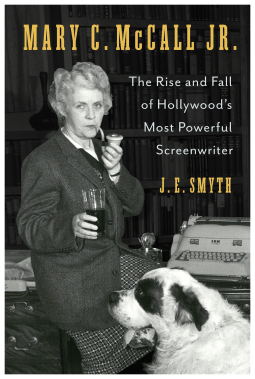
J. E. Smyth Mary C. McCall Jr. The Rise and Fall of Hollywood’s Most Powerful Screenwriter Columbia University Press, September 2024.
Thank you, NetGalley, for providing me with this uncorrected proof for review.
J.E. Smyth has written a detailed, dense and illuminating account of Mary C. McCall’s life as a feminist, novelist, screen writer, labor leader, activist on behalf of screen writers, first leader of the Screenwriters’ Union and her continuing role there. At the same time, the information about other screen writers and activists, the studios and business of producing films is massive.
Sometimes this amount of detail makes the book a difficult read. However, Mary McCall is an immense and motivating figure in the landscape of film production, unionisation, and studio politics, so that together with the explanation and exposure of Hollywood figures and the general history of political change this an engaging read. The content is so interesting that it is worth being enticed back to the book on repeat occasions so as to ingest the story that, while revolving around McCall, is a wide-ranging political exposure of sexism, anti-unionism, blacklisting and power. See Books: Reviews for the complete review.
The 1940s and early 1950s were McCall’s era. Until the blacklisting of Hollywood activists resulted in her joining the other stalwarts whose momentum and history was lost, this politically strong and exuberant made history – a history that deserved to be remembered. Finally, this has happened, and happily at the competent hand of J. E. Smyth. She has also written about McCall’s personal life – a life that often cannot be equated with her feminist ideals. This adds a dimension to the story which is so valuable – the narrative presents a real person who grapples with the conflict between family responsibilities and a work ethic that determined her commitment to the wider concerns she had with workers’ rights. Mary McCall’s personal life does not overtake her political story but adds to the poignancy of that story in this sensitive, detailed and insightful biography.
Mary McCall’s commitment to working on behalf of her members, circumnavigating the pitfalls with determination and intelligence makes a great story. Her work as a novelist and screen writer makes reading about her life even more fascinating. I am glad to have this work to return to, not only for McCall’s story, but for valuable information about this era in Hollywood and screenwriters’ fight to have the importance of their work recognised.
Douglas Beattie How Labour Wins (And Why It Loses) From 1900 to 2024 Elliott & Thompson, August 2024.
Thank you, NetGalley, for providing me with this uncorrected copy for review.
Douglas Beattie’s approach to a topic that could take up so many interesting side issues is a Party Campaign Director’s dream: he unfailingly remains on message. As a result, this book is a focussed, insightful read. In referring to major events that could be tempting to dwell upon Beattie instead refers to them with well crafted, directed comments that tell the reader all that is necessary. The Labour Party, its leaders, ministers and shadow ministers, back benchers, party members are at the forefront, in their praiseworthy and not so praiseworthy, attempt to win government, success in doing so and their reaction to being in government. Outside the Labour Party, but important actors in this narrative, are the alternative governing parties, their leaders and supporters; constituents; and the role of polls and the media. The results of the 2024 election of the Kier Starmer Labour Government are not covered – the election is in the immediate future – but what information is there is an excellent precursor to that Labour win.
The book is well designed, with such a readable and intuitive introduction that it bears rereading after the book is completed. Following is a dot point section on Labour’s history – a fascinating and quick read. A history of Labour’s beginnings, ‘1893 – A Distinct Labour Group, is followed by the results of Labour’s organisation and election of Labour members of Parliament, leading to the topic of Chapter 3 – A New Party in Parliament to Chapter 4 which covers the 1910 election and, like those that follow includes a short summing up of the results. The latter are an excellent addition to the detailed narrative, including figures that show the turn out (voting, unlike in Australia is not compulsory), the number of candidates fielded by Labour, MPs, votes, percentage of the vote, and the results. Comparisons of the tun out over different elections, under different Labour leaders are particularly interesting. There are informative endnotes for each chapter.
Beattie has interviewed Labour leaders, party officials, and party members. He has direct experience of being a national candidate, a councillor and canvassing. While clearly a dedicated Labour member and observer, Beattie shows no factional bias (although he makes clear the problems factionalism has made for Labour strategists), a welcome feature of this narrative. I really loved reading Douglas Beattie’s account with its insight, warmth and understanding of the Labour Party, the challenges and the heights to which it can reach (even if these are perceived differently by different readers) and the lows (again, perceptions are important) it has overcome. For a committed Labour person this is an enlightening read; for a student of British politics, it is a perceptive and valuable interpretation; and for a person who is just interested in the way political parties respond to constituencies How Labour Wins is an accessible account of the way in which your lives are impacted by the political process and how you can respond.
Corrina Antrobus I Love Romcoms and I am a Feminist A manifesto in 100 romcoms Quarto Publishing Group – White Lion, August 2024.
Thank you, Net Galley, for providing me with this uncorrected proof for review.
Corrina Antrobus has combined short, perceptive commentary with attractive graphics, making this (at first sight) a fun read. However, there is more to this work, and the way in which Antrobus has managed to pack so much wisdom into her commentary, and accompanying lists of suggested rom coms is instructive. While lengthy academic works have their place, so do works such as this – fun, attractive, perceptive, easy to read and providing so much to think about. I like the way in which films seen as women’s films, and therefore possibly lightweight have been given this sort of attention. Look beyond the fun and see what Antrobus really has to say about women, the rom com genre and its treatment of women, and the history of the genre.
Each piece is introduced with a title that designates the feminist concept that is to be covered by the film discussed and those listed. So opening at random, I see ‘Centred the teenage love of a black trans girl’ and Anything’s Possible is discussed with Alice Junior, One Stroke Boy and Tangerine listed. ‘Reminded Women that 30 is still young’ covers Someone Great and lists Celeste and Jesse Forever and Do Revenge. And, now for something I have seen – Top End Wedding, with the additional films, Ali’s Wedding and Saving Face. Familiar films such as Muriel’s Wedding, (under the title, ‘Deconstructed the fairy tale wedding’), When Harry Met Sally have their feminist credentials clarified; Phantom Thread, not one I’d have seen as part of this genre, is given a feminist treatment. Barbie is there, along with the celebrated Mama Mia, Notting Hill, You’ve Got Mail, My Best Friend’s Wedding and Legally Blonde. And the earliest example, seen as ‘Gave women an early lesson in self-respect, Miss Lulu Bett (1921), alongside It (1927) and Dance, Girl, Dance (1940).
Some of the examples are wonderfully eyebrow raising – can they really be seen as feminist? Much of the pleasure in this book is answering this question.
Joshua Stein The Binge Watcher’s Guide to The West Wing Seasons One and Two Riverdale Avenue Books The Binge Watcher’s Guide, August 2024.
Thank you, Net Galley, for providing me with this uncorrected proof for review.
Reading The Binge Watcher’s Guide to The West Wing while also watching the 2024 Democratic National Convention could not have been more propitious. At the same time Joshua Stein deftly outlines the real stories associated with some of the episodes, the way in which he points to criticisms of some of the positions held by President Clinton and demonstrates the demeaning way in which women were treated, thereby undermining the dream that this series seemed to portray, another possibility of a better West Wing is unfurling in Chicago at the Democratic National Convention. Together with the enthusiasm, joy, abounding optimism and inspiring speeches, there are words of caution and solid understanding of what it means to govern, to adopt the mantle of responsibilities of the presidency and West Wing staffers.

These realities are worth thinking about when reading The Binge Watcher’s Guide to the West Wing. As Michelle Obama opined, people running for office are not perfect, and cannot be expected to be. Committed Democrats must continue to work to win office, regardless of how well their contribution is acknowledged and publicly appreciated. Everyone cannot expect perfection from others – there is no time for pettiness. In this instance, she and others cautioned that working for Kamala Harris and Tim Walz to become President and Vice President is too important for such minor concerns. In short, the dream and essential reality being offered by this team must be supported. So, at the same time as reading that our West Wing heroes and heroines can be less than perfect, that the president’s ideals and policy initiatives are not always the height of integrity, and squirming at the way in which women’s contributions and lives are not valued it is also worth maintaining the wonder with which we watched The West Wing in our unadulterated enthusiasm to believe in a better political way and integrity beyond that possible in an environment in which to introduce worthwhile polices winning is necessary.
The forward explains the writer’s purpose and his belief about what politics is and what it should be. He began writing in 2015 and is informed by the political events of 2016. There is a section on The West Wing 25 years later, that includes President Joe Biden’s decision not to run for a second term of the presidency. Each chapter covers one or more episodes. The introduction to Season 1 includes the Reagan quote about the problem of government, the cynicism invoked by that idea and The West Wing as a reaction. Before setting out the details of each episode, the introduction highlights some of the issues that will be covered and Stein’s responses to these.
The book is well organised, with enough information to provide the main storylines, the subtexts, whether these were based on some real event and both the episode arch and the contribution the episode made to the longer-term dramatic arches. Details of the personnel such as the major characters; recurring characters; and the production staff covering the creator and writer, the director and producer, executive producer, the musician and composer of the West Wing theme, and other major contributors to the production staff are included. Recurring plot lines are listed. References to ‘Sorkinisms’, in reference to the creator and writer are a feature of the book. The detail in each chapter covering one or more episodes makes a wonderful read, as do Stein’s comments and the references to the moral and political imperatives associated with each event.
Reading The Binge Watcher’s Guide to the West Wing Seasons One and Two was an engaging return to the series which to date I have watched twice. With this book’s illumination of events that I might have seen differently I look forward to watching The West Wing again. In particular, the term ‘patriot’ used by Ainslie (a Republican staff member) about her Democratic Party colleagues now resonates more strongly with me, as an Australian reader who was new to the term then but has now heard it used almost unremittingly in the context of current American politics. Ainslie’s observation was prescient, suggesting that although The West Wing may not have worn well in some ways, it still has something to say that is worthwhile. Joshua Stein’s book makes a valuable contribution to understanding the series and is important in the current American political environment. It is also engaging, fun and a temptation to sentimental reminiscences – yes, a thoroughly enjoyable read. Thank you, Joshua Stein.
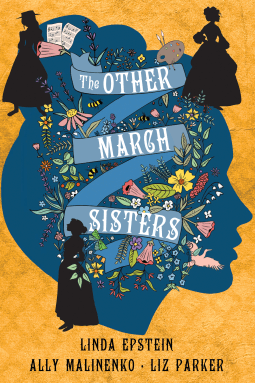
Linda Epstein; Ally Malinenko; Liz Parker The Other March Sisters Kensington Publishing, February 2025.
Thank you, NetGalley, for providing me with this uncorrected proof for review.
Liz Parker, Ally Malinenko, and Linda Epstein have woven a story that rejects the importance that Louise M. Alcott gave to Jo March and the sisters’ mother, Marmee. The authors have used Alcott’s sisters as their inspiration, giving them voices independent of Jo, who was based on herself. They also take a largely feminist approach, as well as rejecting the heterosexuality given to the sisters and their friend Laurie in the original novel. This is made most apparent in the case of Beth but is also suggested in the newly drawn characters of Jo and Laurie. The freshly honed stories and characterisations therefore have all the elements that, while maintaining a perspective that fits with the period in which Little Women was set, acknowledge the way in which sexism impacted the lives of the little women and their friends. So many aspects of the novel provide a feminist approach to the way the young women and their activities are depicted, and this is to be valued. However, there are also some very disappointingly sexist attitudes on display.
Turning to those first. Unfortunately, in giving Meg, Beth and Amy their own stories, the criticism of Jo and Marmee is overwhelming. Marmee, in particular is given a negative image, fitting so well with the sexist approach to a woman whose background and life experience has impressed upon her the need for at least one of her girls to marry well. As is familiar in Austen’s Bennet household, where Mrs Bennet is desperate to marry her daughters off, because that is what society demands, this necessity is depicted as disagreeable and as the action of Mrs Bennet alone. Although the writers of The Other March Sisters acknowledge Mr March’s role in the family’s impoverishment, it is Marmee who takes the brunt of the criticism for trying to rectify the situation. In addition, Jo’s behaviour is emphasised as being dismissive of her sisters and their aspirations. A more nuanced approach to Meg, Beth and Amy finding their own paths would have sat more comfortably with the feminist ideas this novel attempts to portray.
The strongest parts of the novel are where Meg, Beth and Amy follow their own pursuits successfully. They could have stood alone without reference to Jo or Marmee, and it is worth reading them as such as there are some wonderful examples of the sisters’ interweaving their aspirations with the social demands of the day. Meg and her medicinal garden, Amy and her artistic successes and Beth’s recognition that she can and must have a life beyond the domestic angel role urged upon her because of her physical infirmity raise so many issues outside the bounds imposed upon them by reference to Jo and Marmee. These stories weave independent thought with courageous action, intelligent use of history, and social commentary. It is clear that the March sisters, in this iteration of Little Women, were women of talent and strength. It is this that I take away from the work despite the misgivings I have noted.
Donna Leon A Refiner’s Fire, A Commissario Guido Brunetti Mystery Grove Atlantic, July 2024.

Thank you, NetGalley, for providing me with this uncorrected proof for review.
Donna Leon’s writing is such a joy, something to savour, as Guido Burnetti and his family navigate their personal lives and the newest case to be investigated. In this novel Burnetti’s investigation highlights the attraction of gangs, in this case named ‘baby gangs’ named as such because of the followers’ and leaders’ youth, the importance of a cult figure and the devastation such a figure can create in ordinary peoples’ lives. Throughout is woven the central theme: the ethics surrounding the making of a war hero.
What seems to be solving a simple crime, becomes a more complex narrative. Burnetti must deal with the crime and its perpetrators at the same time as having to deal with the morals associated with the motivation and behaviour of a war hero and his government supporters being laid bare. Burnetti’s decisions about what approach he must take to each of the complex issues he faces draws the reader into the morass of crime, youth, heroes and government motivation.
Readers of Dona Leon’s novels are accustomed to dealing with complex issues as this warm, family centred detective deals with crime and destructive social behaviour. Within these narratives is the social commentary that gives Donna Leon’s detective novels that additional verve that makes them addictive. A Refiner’s Fire continues this interchange between writer, narrative and reader.
Rosanne Limoncelli, The Four Queens of Crime A Mystery, Crooked Lane Books, March, 2025
Thank you, NetGalley, for providing me with this uncorrected proof for review.
The Four Queens of Crime introduces Agatha Christie, Dorothy Sayers, Margery Allingham and Ngaio Marsh as sleuths investigating the death of their host at a fundraiser at which they are drawcards. They are well drawn characters, in the main following the understanding that readers would have of them through their novels, autobiographies and biographies. The women’s investigations include observations about the detectives who star in their work and the types of crimes that they are expected to solve, providing a skilled reflection on the crime and detective novels they write. DCI Lilian Wyles, the first woman detective chief inspector in the CID, joins the novelists as another non-fictional character. She also is a character who is written to fulfil the requirements of depicting a real person in a fictional landscape. Family members, staff and the other detectives who attempt to solve the murder are also characters who fulfill their roles well.
Although the murder is fairly straight forward with all the characteristics of a good detective novel, The Four Queens of Crime, is far more than a murder mystery. The combination of fictional and non-fictional characters in this novel adds an intriguing dimension to the work. In particular, there is a host of information about DCI Lilian Wyles who is likely to be less well known that the four queens of crime. The material here is really valuable, adding insights into not only her character and aspirations, but the way in which women were treated in the police force in that period.
I enjoy reading detective novels and have read many of those written by the novelists depicted in this work. I have also read something of DCI Lilian Wyles where she appears in another fictional account. Rosanne Limoncelli has made a good contribution to this reading, and I look forward to more of her work.
Laura Katz Olsen Wrinkled Rebels Vine Leaves Press, July 23, 2024.
Thank you, NetGalley, for providing me with this uncorrected proof for review.
I loved reading this absorbing account of the young women and men who developed their political ideas and responses while at university. Now in their eighties they are to meet again, and the youthful narratives provide the background to that meeting. Each character’s activities are a detailed account of the ideas, movements, agreements and disagreements, challenges faced, and successes won by individuals and groups. These detailed accounts provide a thorough history of the period in a narrative I found engrossing because of the detail and thoroughness with which the period was covered.
However, I have reservations about the success with which the narrative provides an engaging story about their activities. Rather than introducing her material using fictional strategies that draw the reader into the narrative, Katz Olson ‘s account uses fictional characters in an account that seems to rely more heavily on non-fictional devices. The information becomes more important than the characters’ feelings and stories about their activities. They are interesting enough, but the real strength is the information that is imparted.
The story begins with an invitation to Deanna, who hobbles to take her mail, including the purple envelope into her Victorian home with a splendid rose garden. Deanna is a former athlete, but there is little evidence of her past in this depiction of her present. Deanna and Russell’s story of their youthful ambitions, political activities, and thwarted relationship is recounted. Russell also receives a purple envelope, opened by his wife, the contents detailed.
The letters are from Rebecca, her partner having died, she has organised the reunion. The invitation suggests a reunion of the six former friends for a weekend together, excluding anyone other than the group whose political activism was central to their lives. Maliaka, whose career as a lawyer has ended with her aging is unsure about attending; Kieth whose life expectancy is shortened by Parkinsons, his revolutionary musical days largely over is keen to attend but concerned about his frailty. Max is in the early stages of dementia and resentful of the patronising attitudes surrounding him. He has been secretive about his political past and the invitation will enforce his return to the United States from Canada. Rebecca has retained her political activism until her retirement at eighty.
The narrative’s movement between the vulnerabilities of old age and the activism of the politically motivated young, highlight the vulnerabilities of both youth and age. The characters’ gradual openness to acknowledging that the limitations of old age need not that fully control their present is an effective reflection on age and possibilities. The detailed history of the political environment in which the six first met and worked together is also a valuable resource. Although I would have preferred more engaging characterisation this is a significant reflection on aging and an important political past.
James Chappel Golden Years How Americans Invented and Reinvented Old Age Basic Books, November 2024.
Thank you, NetGalley, for providing me with this uncorrected proof for review.
James Chappel’s Golden Years How Americans Invented and Reinvented Old Age is a detailed account of the way in which old age has been perceived in America, the varied approaches that have been taken by organisations and governments, and the ideology underpinning such approaches. He illuminates the way in which race, and class have impacted programs aimed at caring for elderly people, leading to the neglect of some, and divisions between groups of elderly people depending on their race and class. Chappel also points to the various ways in which aged people have been described, and the changes in the years of age that belong to such descriptions. Some groups have constantly been neglected, and Chapel gives such neglect important attention.
This is a book replete with detail, commentary and suggestions for improvement in the way that old age might be considered and dealt with through government programs. The attention he gives to the organisations that have grown up around old age is not only informative, but an important part of social commentary on the way in which Americans have formed their ideas and response to old age. With an aging population, and a smaller group of taxpayers as is the case in many developed countries, the way in which old age is considered has increasing importance for government expenditure. A history of programs, attitudes and responses is pertinent.
The book is in three parts: The Aged (1900-1940); Senior Citizens (1940-1975) and Older People (1975-2000). Each is the tile given to older people, as society, activists and governments modified their focus on exactly whom they wanted to support financially and defend through policy making. The second section includes recognition of Black aging; the impact of retirement and retirement age; and ends with a less optimistic approach to aging than had been apparent until the mid-1970s. Concerns with ageism are dealt with in the third section, bringing into the account the depiction of aged people in films, television programs and greeting cards. This move from seeing the aged as fragile and needy is one that raises complex ideas. Chapel addresses these in detail that draws upon the development of organisations to benefit those over fifty-five through support for anti-discrimination policies rather than social welfare. Self-care, successful aging, security measures and risk older workers and older retirement ages, the role of family, volunteering time, of which the aged have in abundance, are discussed in the last chapter.
Action to bolster anti-discriminatory practice to produce positive images of aging, while also recognising the damaging features of aging are encapsulated in popular culture, and Chapel uses this material in a way that supports his detailed analysis and information. With these familiar and accessible illustrations of aging, reference to the political fortunes of individuals and political parties with their impact on aging, and the historical account of responses to aging James Chapel has produced a book that is dense with information, but eminently readable.
Lisa Jackson Our Little Secret Kensington Publishing, June 2024.

Thank you, NetGalley, for providing me with this uncorrected proof for review.
I found this an extremely disappointing read that prolonged my frustration through repetition and a fairly predictable story line that meandered through family angst, infidelity, missing teenagers, the main character’s internal arguments, and obsession. None of the characters was pleasant, the main protagonist combining immense self-regard, inability to take responsibility for dealing with life threatening events and folly. In particular, Brooke appears to recognise the possible dangers to her daughter but is so concerned to keep her secret these become secondary in all of her actions to deal with the problem she has initiated.
Brooke has been having an affair with Gideon, partially because of her husband’s suspected infidelity and their separation. Although she tries to end the affair as her marriage improves, and her daughter’s problems surface, and her relationship with her sister, always fraught deteriorates, she is unsuccessful.
The book is divided into two parts, the second beginning with a family Christmas at the holiday home the sisters have inherited from their grandmother. It has family significance and Brooke’s desire to keep it in her possession is at risk. And, repeating the theme of Part One, so too is her marriage and her relationships with her daughter, sister and her new fiancé. The end of the novel resolves Brooke’s problems dealt with at length throughout. However, is she going to accept this or embroil herself in more angst?
It is a while since I have read a Lisa Jackson novel. From recall, I found previous novels acceptable beach reads, so was pleased to have the opportunity to read Our Little Secret. This novel did not reach my expectations and I do not feel tempted to try again.

Sue Watson You, Me, Her Bookture, June 2024.
Thank you, NetGalley, for providing me with this uncorrected proof for review.
You, Me, Her is a competent example of the psychological drama genre, complete with the twists that are one of the usual features. However, it has nothing to lift it out of the standard fiction for this genre, and from past experience with Sue Watson’s fiction I hoped for something more. Like Watson’s, The Wedding, the first part of this novel is fairly slow, with the main character’s introspection verging on uncomfortable. The last part of the novel moves more quickly.
Turning first to the build up which is predominantly through Rachel’s eyes, taking in her present, immediate past and past. Rachel and Tom’s life in Manchester in a small flat has been supplanted by his absence for six months while Rachel sells the flat, and Tom refurbishes to immaculate quality their large home in Cornwall. Rachel’s past alone, without Tom and their four-year-old Sam, is largely defined by her fear of water, its origin gradually revealed as the narrative progresses. The relationship between Rachel and Tom is well written, raising questions about both Rachel and Tom.
Is Rachel’s imagination and fear so strong that she will permanently destroy this new life in Cornwall? Is Tom fostering that fear? Rachel believes in him, trusts him and adores him …but is prepared to ignore his warnings about Chloe. Is she right or is Tom determined to protect her from a destructive relationship? Interspersed with the new beginnings in Cornwall are glimpses of the past, Rachel’s loving and protective father whose will has made the new house possible and her best friend Rosa whose comforting presence Rachel calls upon during Tom’s absence from home on working assignments.
In the present, the fear that Rachel experiences is well drawn, deftly maintaining an element of scepticism about her and her understanding of events and characters. This lack of certainty is a clever device, and although the twists are quite predictable, the story maintains its tension because Rachel, Chloe and Tom remain characters whose personalities are not easy to accurately detect. Although this novel did not meet my expectations, it is a good beach read like so many i
Valerie Keogh The Mother Boldwood Books, June 2024.
Thank you, NetGalley, for providing me with this uncorrected proof for review.
Valerie Keogh has provided readers with yet another good read, with some twists and, in my opinion more importantly, an intelligent consideration of the qualities that are believed to make the perfect husband. It is the way in which Keogh portrays this less than perfect wife, confronted with the perfect husband, that provides the tension that makes The Mother a book with which will probably resonate with readers who are mothers. After all, which of us is perfect?
The prologue introduces a murderer who contemplates the extremes of love and not loving. There is no indication of the sex of the murderer, which enhances the way in which each character is introduced and behaves throughout the narrative. Who is guilty? The perfect husband? The imperfect wife and mother? Is it one of the friends, patients, and neighbours introduced early in the novel?
Sarah is not only a mother who would prefer not to be, she also falls down as a perfect wife. She is introduced as a busy GP, tapping on her keyboard as she talks to Nick, her husband, about the party they have agreed to attend that night. Neither is keen, after all, Nick loves to be with her, rather than her friends. Early in their relationship he brings her a large bouquet after she resists going to the pub meet her friends when he persuades her that being at home with him is preferable. Nick and Sarah’s best friend, Jade, are also at odds. The phone call ends with Nick’s statement that they need to talk. At this, Sarah takes heart, maybe she and Nick feel the same about the problems in their marriage? Perhaps he will agree to a friendly parting of ways?
Sarah has been confronted with both sets of parents’ pleasure at the marriage: Nick’s are delighted and Sarah’ are relived that she is settling down with a “good Man”. However, now she usually stops on the way home for a drink. It is as well that she does – Nick is not about to agree with her that their marriage is a failure.
The narrative is hugely evocative of the way in which pregnancy, birth and motherhood impacts on Sarah. Her struggles are an important part of the way in which she is viewed, and Nick’s loving and caring attitude is a strong contrast. At the same time, Sarah is a nuanced character, not wholly cold, for example, her attitude towards her patients is exemplary. She also has a strong friendship with Jade. Her attitude towards Nick is modified by her recognition that he is a good man, taking the blame for her lack of mothering skills and feelings, and preparedness to change when she is confronted with one outcome of her lack of affection for her child.
The twists that ensue are relatively satisfying, and the outcome a recognition of both Sarah and Nick’s virtues and faults. These keep the tension as do those of the characters who appear to be relatively peripheral to the marriage and Sarah and Nick’s parenthood. Keogh’s explanations that are an integral part of her work, are for me, rather overdone. However, they provide a useful part of the narrative in tying up the ends. On the positive side, any questions are and answered and ends tied up neatly, rendering the narrative thoroughly satisfying.
Kristy Cambron The British Booksellers Thomas Nelson, April 2024.

Thank you, NetGalley, for providing me with this uncorrected proof for review. *
Kristy Cambron has used the way in which her characters interacted during World Wars 1 and 2 to produce a fine historical novel based on solid research. An additional explanation of her reasons for choosing Coventry as her location, the research she undertook, and the fabrications she introduced for her fictional purpose is excellent. There is also an informative list of sources – a welcome addition to historical fiction. A useful glossary is at the front of the novel. Each chapter is dated so that the past (WW1) and present (WW2) chapters are clear. The prologue, set in 1908 provides the backdrop to the relationships explored in the succeeding chapters. The cello and books that Amos Darby saves for Lady Charlotte Tarrington on this occasion provide the theme for their relationship, despite their significantly different status – he a farmer’s son and she an heiress to a seemingly boundless property.
SKristy Cambron has used the way in which her characters interacted during World Wars 1 and 2 to produce a fine historical novel based on solid research. An additional explanation of her reasons for choosing Coventry as her location, the research she undertook, and the fabrications she introduced for her fictional purpose is excellent. There is also an informative list of sources – a welcome addition to historical fiction. A useful glossary is at the front of the novel. Each chapter is dated so that the past (WW1) and present (WW2) chapters are clear. The prologue, set in 1908 provides the backdrop to the relationships explored in the succeeding chapters. The cello and books that Amos Darby saves for Lady Charlotte Tarrington on this occasion provide the theme for their relationship, despite their significantly different status – he a farmer’s son and she an heiress to a seemingly boundless property.
Lady Charlotte Tarrington (later, Holt) Amos Darby and William Holt, heir to his father’s title and property as the Earl of Harcourt, Eden Holt and the American, Jacob Cole are the main protagonists. However, the land girls and the Bayley Lane occupants and staff on the Holt lands are characters with stories. The bookshops, one belonging to Amos Darby and the other to the Holt women, are almost characters too, in their presentation of the owners through the books they display and their furnishings.
In chapter one the warm relationship that existed between Amos and Charlotte shown in the prologue has changed and the proceeding chapters develop this theme at the same time as providing graphic stories and images of Britain at war. Each chapter portrays a development in the war they are describing as well as the characters’ relationships. Reading and discussing books, and the value and significant impact the book Amos takes with him to war, are also important themes.
I found The British Booksellers a satisfactory read, although for me the writing was not as engaging as I expected. However, just as importantly, Cambron’s dedication to bringing to life the story of a less well-known blitz, her markedly expert research and the way in which she was able to weave fact and fiction together is commendable. The questions that are posed at the end of the novel provide further aspects of this writer’s dedication to her audience and enthusiasm for encouraging deeper understandings of her work.
* The publishers wished to have the following noted: “I received a complimentary copy of this book. Opinions expressed in this review are completely my own.”
Maryann D’Agincourt, Glimpses of Gauguin, Portmay, January 2015.

Thank you, NetGalley, for providing me with this uncorrected copy for review.
This is an elusive narrative, but one that is worth while attempting to understand. I wonder if the clue to how Maryann D’Agincourt would like her novel read is in a paragraph in the text where one of her protagonists cannot understand the meaning in Chekov’s, The Huntsman. Her father, having replaced the book Jocelyn is reading with Chekov’s, reads to her. She pictures the events rather than trying to understand them. Agincourt, in her turn, creates a myriad of pictures, including those in which her characters become a cinema audience. Gauguin’s “Where Do We Come From? What Are We? Where Are We Going” viewed as if it is a new experience for her, is pivotal in understanding where Jocelyn will lead us. Each phrase becomes the title of a section of the book.
As Jocelyn matures and marries the pictures evoked by D’Agincourt become less elusive, more active and explanatory through marriage, an affair and a holiday in which the couple acknowledge that seeing requires more than the binoculars available to them. Again, the role of the characters as an audience is raised, although with far less artistry than in the growing to adulthood part of Jocelyn’s life. However, this is replaced by a clearer development of the characters, Joycelyn’s husband, her mother and father, and the artist, Alex Martaine, who had such an impact on Jocelyn’s early life.
Martaine becomes a symbol for Jocelyn and her parents, at the same time the practicalities of being with each other, friends and partners pursuing careers and aspirations take centre place. With a return to the early recognition and articulation of the value of perception, visual and emotional, this alluring novel is complete. I find reading D’Agincourt’s work an experience to savour. The Marriage of the Smila-Hoffmans ( Portmay Press, LLC 2022) was a particular joy. Glimpses of Gaugin does not quite fulfil this promise but has been another journey amongst lyrical language and pictures and thoughtful characterisation.
Isabel Allende Lovers at the Museum Amazon Original Stories, April 2024.

Thank you, NetGalley, for providing me with this uncorrected proof for review.
The magical nature of this short journey into Isabelle Allende’s world recalled my treasured memories of reading House of the Spirits many years ago.
For interlopers, Bibina Aranda and Indar Zubieta, the Guggenheim Museum becomes magical; for the police inspector who must interview them after they are found, a new world opens up. For him it is a creaky awakening, but nevertheless an impact on his world encased in protocol, law and moral imperatives. The museum director and a psychic learn nothing. Bibina and Indar prosper from their magical encounter. The press moves on to the other story that has accompanied the lovers’ tryst.
Images of a wedding dress that cannot be divested because of the meticulous buttoning, a naked man whose clothes offer no impediment, and a stiffly clad inspector vie with those of the Guggenheim as others see it, and as it is experienced by the lovers. There are delicious comic moments interwoven with the romantic story line, each offering a unique approach to love, institutions and interpretations.
Isabelle Allende’s short story is a pleasurable encounter with feelings and ideas.
Kate Galley Old Girls Behaving Badly Boldwood Books, May 2024.
Thank you, NetGalley, for providing me with this uncorrected proof for review.
I was attracted to this book because, after reading criticisms that older women do not feature in many novels, Old Girls Behaving Badly suggested that in this case this is not justified. In addition, the title is reminiscent of the quote ‘Well behaved women rarely make history’, a favourite of mine.
Gina, who answers an advertisement for a person to be the companion for an elderly woman, is seventy-one. Dorothy, the elderly woman whose daughter-in-law is concerned about her ability to care for herself, is in her eighties. Gina is markedly mentally agile, her education as an art historian and working as an art curator an important theme in the novel. Dorothy is less mentally alert in some contexts, but a vital thinking person. Gina is physically able, and Dorothy only marginally less so. For example, Gina while drives the quad bike during an activity as Dorothy’s carer, the latter is a willing participant and needs little assistance when mounting and alighting.
Gina and Dorothy embark on a week together as companion and employer, attending the run up to a family wedding. They are also working together to right a wrong that has, Dorothy believes, resulted in her widowhood. At the same time, Gina is experiencing the loss of her husband. However, in contrast with the loss of Dorothy’s beloved Philip, Gina has been left by her husband of forty years as he seeks ‘to find himself’ and divest himself of a wife he finds dull and unpalatable.
Kate Galley has indeed written older women into positive roles in a novel that combines comic with serious themes, some well-developed characters and a storyline that works to a satisfactory conclusion for both Gina and Dorothy.
Toby Manning Mixing Pop and Politics, A Marxist History of Popular Music Repeater, May 2024.
Thank you, NetGalley, for providing me with this uncorrected proof for review.
Toby Manning’s history of popular music, with its introductory references to a range of philosophers, is initially daunting to the non-philosopher. However, this is a treasure for the reader with a broad knowledge of philosophical understandings and philosophy. For other readers this somewhat dense early narrative can be easier to navigate through the later chapters’ attention to popular music from the early 1950s to now. It is in concentrating on this aspect in the chapters following the introduction that I became engrossed in the discussion and analysis of the music; the period in which it was written, produced and received; the political agendas to which it responded and its impact on the political environment.
The 1950s chapter, “Raise a Fuss, Raise a Holler”: Rock’n’Roll, Doo-Wop and the 50s (1953 – 58) resonates with its references to television series as well as music and politics. The references to race and criticism on that basis focusses on what this book can bring to political awareness – Back to the Future seems different after reading about the appropriation of Chuck Berries’ song and distinctive walk. It is the constant recognition that all one found attractive about those television series and songs must be reconsidered that makes this such a demandingly poignant read.
Chapter 2, “In Beautiful Dreams!: Morbid Symptoms, Dream-Work and Fordist Pop (1958 – 64) is another wake up call to readers who listened avidly to the wireless as we were told that conformity was positive, the suggestions of restiveness flattened by plaintiveness of songs such as Will you Still love Me tomorrow? And the references to The Rag Trade and I’m Alright Jack ring nostalgic bells, even if they are suspect.
Chapters 3 (“We are All Together” …1964 – 68); 4, (“Forces of Chaos and Anarchy” …1968 -71) and 5, (“The Children of the Revolution” …1971-74) move See from comfort to the demands for change made in the 1970s. Here, Manning refers to the 1972 Equal Rights Amendment, Spare Rib, The Liver Birds and Man About the House, all of which will resonate with many audiences of the 1970s and Helen Reddy’s I Am Woman has lasted well beyond. Manning’s understanding, that becomes that of the reader, of the radical and reactionary conflicts drawn in the cultural world as well as the political is a revealing read.
How it compares with the 1980s cultural horizon, 1980s economic ideology is another revelation, so much more easily understood through the material Manning uses so well – popular music, film and television. War – not just those that created headlines in Western media, but the ideas reflected in song add another dimension to the discussion of capitalism that is at the core of this chapter.
And so, through the remaining chapters, 1988-1992, 1993 – 2001, 2008 – 2015, and the last, covering 2015 to 2020 where “Longing for Change: The Rebirth of Radical Pop and Politics” creates an uneasy note, to a conclusion in which this is intensified by a somewhat pessimist account of where history currently stands. A relief is Manning’s own optimism, reflected in the glimmers of optimism he weaves around learning from history. The Covid pandemic, the role of lockdowns and the importance of its cultural impact is briefly discussed. The role of nostalgia, undermining the assumption that old songs depart, overtaken by the new is an essential part of the round up of the detailed material which, at its heart sees popular music as ‘adversarial’ political.
The material is ably referenced through end notes.
Zöe Wheddon Jane Austen: Daddy’s Girl, The Life and Influence of The Revd George Austen Pen & Sword Pen & Sword History, March 2024.

Thank you NetGalley and Pen & Sword for providing me with this uncorrected proof for review.
A significant part of Jane Austen’s life has been omitted in the concentration on her relationship with her sister Cassandra. Such attention has been successful in showing Jane as a woman influenced by her own female friendships and then reflecting them in her work. Jane Austen: Daddy’s Girl, The Life and Influence of the Revd George Austen adds another important dimension to the influences on Austen’s writing, not only proving a detailed account of George Austen’s life from his early years but in the impact he had on Austen’s depiction of men, the social environment and moral imperatives with which her work is imbued, and the educational and inspirational environment in which she thrived.
Not only is this book a valuable addition to what is known about Austen and her writing, but it is a wonderful read. Packed with information it is, but a turgid recounting of events it is not. As is usual with the Pen & Sword style Zöe Weddon’s writing is extremely accessible. The book is entertaining to read and enhanced by frequent references to where Jane’s life and the influences upon it are reflected in her novels. Titles are in brackets and the text often elaborates on the connections she made between real life and fiction.
Zöe Wheddon adds judicious speculative dimensions to her work. These are some of the best examples of a writer using wide ranging research to provide a context and enhancing the way in which we can understand the events and characterisation based on known material. Some of the speculation is aided by Austen’s fictional work which is based on her knowledge of the events and circumstances around her. Together, the novels, Wheddon’s research-based knowledge of context, and her ability to draw together this with material which can be cited, produces a wonderfully woven familiarity with Austen, her family, in particular her father and her environment.
Together with such speculation is a host of information for which Wheddon has references. Each chapter is well endowed with citations, and the bibliography, plus material referred to as extra reading, demonstrates the important place Wheddon gives to research and using that research to produce a thoughtful encounter with the Austen family, Jane and her father, her siblings and her mother, Cassandra, as well as more far-flung relatives. The end result is a pleasure to read, and makes an important contribution to understanding Jane Austen, her world and her novels.
June Woolerton The Mysterious Death of Katherine Parr What Really Happened to Henry VIII’s Last Queen? Pen & Sword Pen & Sword History, March 2024.

Thank you, Net Galley and Pen & Sword, for providing me with this uncorrected proof for review.
June Woolerton begins her book with the dramatic events around the original uncovering of Katherine Parr’s coffin, its neglect over time, and the eventual burial that was worthy of a queen. For, indeed, Katherine Parr was a queen, even after her marriage to Thomas Seymour, as an outcome of Henry Vlll’s will, preserving this honour. It might be the power that she could possibly have exerted after Henry’s death, her departure from the court and new marriage that resulted in her death, hasty burial and the lack of publicity afforded her funeral. Woolerton attempts to unravel whether this was the case in a well-researched narrative that moves from these dramatic, almost gossipy speculations to the new marriage and birth of her daughter, and then returns to the past where Katherine has been an almost continuing presence in the Tudor courts, as the child of a Lady in Waiting to Catherine of Aragon, to a Lady in Waiting herself. Two earlier marriages seem to have had little impact on Parr’s ability to wield her own power. Eventually, as Woolerton suggests, such power might have been her undoing.
At times I wondered about the value of unearthing the reasons for Katherine Parr’s death, perhaps because the arrangement of the information led to repetition and an uneven outlining of the events. The beginning of the book did have dramatic value, but the real information was the state of the body and the type of burial rather than the speculation about the tea party guests and the possibilities associated with the uncovering of the coffin and dwelling on its treatment afterwards. The reintroduction of some of this information in the final chapter seems unnecessary, although the material about Sudeley Castle makes interesting reading.
The well-researched story of Katherine Parr’s rise to become Henry Vlll’s last wife, and her ability to survive his threats and those of her enemies around him is a vital, easy to read, contribution to knowledge about the Tudor courts and the role of women in them, as well as disseminating Katherine Parr’s unique story. The way in which she became a friend and supporter of Henry’s daughters and young son is also a story worth telling. It is when the introductory chapter is ignored and the aftermath of Katherine’s death is investigated that another story, rich with information and useful speculation emerges. Chapter 12 covers the respect with which Queen Victoria treated Katherine Parr, with the completion, in 1862, a tomb with a marble effigy. The photos Woolerton has assembled are a valuable source, as is the detailed information accompanying them; and there are citations for each chapter, some of which are usefully detailed.
Priscilla Masters The Quiet Woman Book 2 of A Florence Shaw Mystery, Severn House, July 2024.
Thank you, Net Galley, for providing me with this uncorrected proof for review.
The Quiet Woman is an intriguing murder mystery in so many aspects –characterisation, plotting, pace and writing style. Nurse Florence Shaw is a quiet woman, herself, although the title refers to the woman who attends her surgery, the occasions accumulating with no answers, her husband’s irritation and coldness readily apparent, and Florence Shaw’s concerns tumbling throughout her mind as she goes about her other activities.
Dates and times are appended to most chapters so that Florence Shaw’s days hour by hour are accounted for. She wakes, dresses, has breakfast and leaves for work. There she interacts with the receptionists, sees her patients and exchanges warm conversation with Jalissa who brings her lunchtime sandwich. Later she investigates her former husband’s activities with his new partner on the net, or meets friends, one of whom she interacts with increasing frequency. Will and Florence share both an interest in detection and the possibilities of a romance as they spend time getting to know each other better.
Florence’s detection brings her into contact with the Clays, their daughter and past staff from the surgery. She is also concerned about her patient on a quit smoking program. He is an oddly appealing young man of questionable behaviour that is likely to get him into serious trouble. A lot of Florence’s detection is based on her experience of the couple and understandings about controlling partners. However, she is constantly brought up short as another part of the puzzle quietly slips into place.
This is the first of Patricia Masters’ books that I have read. Book 2 , while drawing to a satisfactory conclusion in relation to the mystery, also leaves an intriguing trail to be followed. I look forward to a sequel to The Quiet Woman and intend to read Book 1 in the series. I realise that I have missed a treat that needs to be rectified, so thank you again, NetGalley for an excellent introduction to a writer it would have been sad to miss.

Mimi Zieman, MD Tap Dancing on Everest A Young Doctor’s Unlikely Adventure Globe Pequot Falcon Guides, April 2024.
Thank you, NetGalley, for providing me with this uncorrected proof for review.
Mimi Zieman makes an enduring tribute to her family, those who are living, and that of her father who was the only member of his family to survive the holocaust. Her zest for living, packing several significant activities into a short time, her capacity for friendship and love is the underlying theme that resonates through her coming to grips with her faults (as she sees them), her femaleness and propensity to underplay her abilities and the demands, physical and mental she imposes on herself.
Throughout this book an endearing person emerges, in the large figure she sees as herself in the earlier years, to the woman who climbs Mt Everest as a team doctor during her medical studies. Mimi Zieman is strong, thoughtful and not without faults – an ideal figure to follow from her childhood to her married life as a doctor, wife and mother. Paramount is the Mt Everest excursion, but tapdancing has an engaging role too, and her romances round out a character who has the ability to capture the heart of her readers.
There is enough of Zieman’s childhood and youth to provide a background to her motivation to work hard, but to also enjoy life and savour the different courses she pursues, but not so much that we are deprived of the detail of the Mt Everest climb. This is a remarkable account of the journey, physical and mental, that each of the climbers and their support endured from their arrival to the end of the expedition. Although Mimi Zieman’s role as the medical support is a central focus, together with her relationships with group members, individuals’ stories are told with empathy and zest. Each member of the expedition becomes a known figure and provide an explanation for the lure of such expeditions to the uninitiated.
Do I have a yen to have the same experiences? Not if I have to climb a mountain! However, Tap Dancing on Everest provides more than a story of a young woman’s maturing, a Mt Everest expedition and its precursor of several mountain climbs undertaken by Zieman. It is an inspirational story, not only for the Everest achievement, but Mimi Zieman’s personal progress with its bumps and leaps, introspection and concern for others and her abounding enthusiasm for life.
Hannah McGregor Clever Girl, Jurassic Park ECW Press, October 2024.

Thank you, NetGalley for providing me with this uncorrected proof for review.
Clever Girl, Jurassic Park is written in a style that I often find unappealing. However, I must acknowledge that I was so captivated by the perceptive commentary, the substantial research that underlies the challenging style and Hannah McGregor’s strong personality that emerges through the pages, that I thoroughly enjoyed my reading. McGregor combines her own experiences with the narratives that emerge from the Jurassic Park franchise. She concentrates on the first, Jurassic Park, with some comments (frequently negative) about the others that follow. With her perceptive feminist approach, this book makes an excellent contribution to academic feminist film ideas, as well as a thoughtful read for those who are not in academe.
McGregor dives straight into the film’s use of female dinosaurs as spectacles, accepting that films are about the cinematic gaze and that such a gaze is gendered as explained by Laura Mulvay, the feminist film critic. However, she soon diverts into the use of remains (in the case of dinosaurs) and non-normative bodies (in the case of circus acts) as a part of popular culture. Such diversions are an important part of this book, taking as they do, an example arising from McGregor’s study of Jurassic Park and developing discussions that rove widely, although making strong points about both the film, audiences and discriminatory practice in popular culture. An early discursive discussion relates to the technology associated with devising the dinosaurs to amaze and maintain the audience gaze. Most importantly, however, is McGregor’s unpacking of the woman as monster as depicted through the Velociraptors who eat humans and do not reproduce.
Clever Girl, Jurassic Park is an exciting read, replete with discussions that amuse, anger and inform. There is a bibliography, and the acknowledgements include Hannah McGregor’s explanation for the inspiration for her book, and her generous and joyful recognition of her community.

Monica Porter A History of Europe in 12 Cafes Pen & Sword Pen & Sword History, April 2024.
Thank you, NetGalley and Pen & Sword for providing me with this uncorrected proof for review.
I found Monica Porter’s A History of Europe in 12 Cafes an enthralling read. With its wealth of historical information covering visual art, writing, biographical material, politics and war through the beautifully described cafes, European and American, conveyed through accessible language that almost belied the density of the content, this book is a treasure trove. A treasure for the coffee aficionado who would like to visit these cafes; for the lover of history whose appetite will be slaked by the detailed accounts of political intrigue, war time measures and attendant developments; and those whose access to the culture associated with the cafes will be at once both satisfied and also keen to read the material and visit the galleries that house the art described. So, upon finishing the book one is at once replete, and fighting an appetite that can only be assuaged by rereading, delving into the bibliography or visiting the sites – no mean feat as they include ten different countries, twelve coffee houses, and galleries.
Twelve coffee houses are listed at the end of the book, complete with addresses. Visiting them will take the reader to Oxford, Paris (two cafes), Venice, Rome, Vienna (two cafes), Budapest, Zurich, Munich, Madrid and Prague. While the American coffee houses of the revolution differed from the European examples in their lack of artistic patrons, they certainly fulfilled the political environment familiar in the first fourteen chapters of this book. Chapter fifteen, which covers the American experience is an informative political read. However, The Merchants Coffee House, on Wall Street New York was destroyed by fire in 1804; the Old London coffee house did not survive its owner’s unrealistic expectations of patrons’ behaviour and, after various businesses used it, the building it fell into disrepair and was demolished; the Green Dragon in Boston was demolished with little recognition of its past which was left to later activists to recall with a commemorative plaque.
The artistic and political figures who feature are too numerous to list. However, the title of the book tells us that it is within the cafes that the history will be found and that it is expanded is to Porter’s credit. It is worth looking inside to make some random choices to see who frequented the twelve cafes. Writers such as James Baldwin, Simone de Beauvoir, Samuel Beckett, Elizabeth Barrett Browning, Lord Byron, Albert Camus, Fydor Dostoevsky; and artists, Dali, Paul Klee and Gustav Klimt are only a few of those who met at the cafes.
Political events, of which the Boston Tea Party, the Spanish-American War and the War of American Independence, World Wars 1 and 11 are a few examples are described. There are intriguing entries about absinthe (referred to over two pages and in another instance) and reflections on beer and wine; architectural styles; artistic styles; cafes used for film locations; resistance members and spies. Political figures and movements, Napoleon, Hitler, Lenin, Bolshevism, Feminism, Existentialism are but a few of the figures and movements covered.
The index is in itself a wealth of information with the plethora of material related to events, locations, titles of paintings and written material adding to the enthusiasm with which I read Monica Porter’s book. Her ability to weave stories and facts around locations as fascinating as these coffee houses makes not only a stimulating read but one which is informative.
.
Freida McFadden One by One Poisoned Pen Press, April 2024.
Thank you, NetGalley, for providing me with this uncorrected proof for review.
One by One is a competent psychological thriller. The plot is a edgy combination of ill-assorted friends on a holiday jaunt that goes wrong with attempts to find the holiday hotel in which the group has booked thwarted by a compass that does not work, a map that is difficult to read and difficult terrain to traverse. Add to this large claw marks in trees and mobile phones with no signal, murders and blood-spattered disappearances and rising tension as disagreements erupt over leaving the first body in the forest while the group seeks help, and it is inevitable that suspicion of friends and partners mounts. For Claire, the narrator, the absence of her children becomes an even more immediate concern.
Interspersed with this present-day narration is that of Anonymous. There is no clue to the identity of this person, even clues to their gender are cleverly obfuscated. However, their introductory account leaves the reader in no doubt: this person aims to be the only one alive at the end of the weeklong holiday.
Twists appear to be the hallmark of successful psychological thrillers, and One by One certainly has these. For me, one was predictable, but a good plot device; the others were more ingenious. More successful was the way in which McFadden maintained the tension, while providing detailed information about Claire’s marriage, and the other relationships in the group. She also introduces characters whose relationship demonstrates the value of female friendships and support where male control is abundantly obvious to onlookers, if not to the woman being controlled. However, this social commentary is a minor part of the plot and goes nowhere.
One by One is an easy read, a book for the beach or a plane trip. Anonymous adds an element of detection that is satisfying. However, I found it one of the less gripping psychological thrillers that I have read.
Ruth Cashin Monsell, Frances Perkins Champion of American Workers, Independent Publishers Group, April 2024.
Thank you, NetGalley, for providing me with this uncorrected proof for review.
There is a wealth of information in this biography written especially for Young Adult Readers. However, I am concerned that, although written for young people in a style that might have been engaging for past readers, this book will not resonate with the more sophisticated young reader. Some of the writing is overdone, with capitalised words or phrases, and the numerous exclamation marks have little role in an academic text, albeit for younger readers. Where characters engage in discussion, some of this, too, seems too simplistic.
The book begins with a graphic description of the Triangle fire, a disturbing image that propels Perkins’ recognition that laws protecting workers must be enacted. In turn, this piques the reader’s interest in pursuing the paths through which Perkins worked to achieve these aims.
There is an interesting addition of a list of inspirations by which Frances Perkins lived; some examples of her wise and witty sayings; a bibliography; a list of places associated with Perkins and her achievements and a wonderful album of photographs to intrigue the younger reader and serve as powerful starting points for adding to their knowledge of this immense icon for justice.
For me, this book is an amalgam of positive and negative features. I can see a teacher using excerpts as useful tools for teaching. However, to return to my concerns about the writing, I would prefer to see the accessibility that is so essential to engaging young adult readers approached with less dependence on the features mentioned in the introduction and greater recognition of the sophistication of younger readers.
Kerry Wilkinson The Call Bookouture, April 2024.

Thank you, NetGalley, for providing me with this uncorrected proof for review.
I have been an avid follower of Kerry Wilkinson’s work, the stand-alone novels and the absorbing Whitecliff Bay series. The Call, however, has been a great disappointment. Admittedly, I was intrigued by the premise and the first part of the novel. It begins with a scene between two sisters in a beautiful location. Their father’s walking off his back pain from the flight is his familiar reaction to any health issue. Familiar holiday activities on the lake break the silence. Even as the loneliness and difficulty in getting to the holiday house by the lake on Vancouver Island establishes the gradual fear that will grow as the narrative proceeds, a comfortable atmosphere has been established. With a child fast asleep after the flight from England, one husband in bed using his laptop and two sisters reminiscing and drinking happily together, what can go wrong?
A phone call from Melody’s husband who is driving towards them initially continues the somnambulant atmosphere with discussion about his rental car, a missing Garmin (and the sense of home and familiarity around his exercise records), renting bikes and the possibility of having to buy food supplies – until he sees a child in the road, Melody hears the sounds of scraping on the road, a car door slamming, and a little of Evan’s conversation, and then – silence.
Evan cannot be located, and Melody and her family have to contend with a police presence based on the loneliness of the location, a different social environment, the possibility that Evan’s absence is not being taken seriously and the need to maintain a sense of normalcy for Sam, his and Melody’s child. The determination to remain normal, includes Melody’s sister and brother-in-law continuing the holiday activities they had planned and Sam going to summer camp. Sam’s attendance at the camp is based on Melody’s wish to relive her own childhood memories on Vancouver Island. Continuing the background sense of unease, Melody’s positive memories of their previous holiday are not shared by her father and sister,
Despite some of these intriguing features, some twists, and an explanation of Evan’s disappearance that is satisfactory, for me The Call did not meet the standards established by Kerry Wilkinson’s previous work. I look forward to the next Kerry Wilkinson to renew my appreciation.

.
Kerry Fisher Escape to the Rome Apartment Book 3 of The Italian Escape, Bookouture, April 2024.
Thank you, NetGalley, for providing me with this uncorrected proof for review.
Kerry Fisher’s Italian Escape series is a pleasant combination of romance, social commentary and the most engaging descriptions of Italian towns, culture and life. With its two main characters, Ronnie and Marina, friends in their seventies who live in the apartments, some continuing secondary characters and the introduction of new ones, the Italian Escape series is an engaging read. Although I found Books 1 and 2 more absorbing, Book 3 has a charm of its own, beginning with Sara’s escape from her life in England with a demanding husband and twin sons to a chance meeting on the plane with a woman whose joyous approach to life begins to work a change in Sara’s.
Sara, now in her fifties, is returning to Italy years after her romance with an Italian lover failed. Although this provides a background to her visit, most importantly she has returned to scatter the ashes of her best friend, Lainie, with whom she spent a summer in Italy. She has spent her life after this joyous time bowing to society’s expectations. However, even before she reaches the Rome apartment where Ronnie and Marina’s plans help women change their expectations of what life can offer them, Sara has rebelled. She has refused to bend to her tyrannical boss at the prestigious women’s magazine where she is lifestyle editor, giving her the opportunity to stay in Italy for as long as she wants. It will take her longer to change her wife and mothering mode, but this at least is a start.
Florence, Portofino and then Rome provide wonderful vignettes of Italian culture and locations; popular songs from the past stimulate memories for the fictional characters and readers; Beth and Rico from a previous Roman Apartment journey not only make a link with the Rome apartment and its influence but continue their story. Sara’s past showing her parents’ disapproval of her former romance and life choices are intersected with her current experiences in Italy. Clues to the life she has lived in her marriage are provided through texts and phone calls from her husband and sons, and Sara’s reflections.
Once again, Kerry Fisher has written a well plotted romance with preceptive portrayals of family relationships, friendships, and lifestyles that embrace a range of options to enhance women’s choices. That she does so with women in the fifties and seventies another positive feature of this series.
Linda Stewart Henley Kate’s War She Writes Press, April 2024.

Linda Stewart Henley was inspired by an event in which her father featured when she wrote Kate’s War. In 1940, CORB was one plan of evacuation in which children and their voluntary escorts were sent overseas to safety. It was short lived because the dangers proved too much. The SS Volendam on which Kate, the main character, travels with fifteen children under her care is a fictional representation of the one in which Stewart Henley’s father featured in similar role. The book ends with that journey and a short aftermath in September 1940, just as the blitz begins. Leading up to this event is Kate’s life as a schoolgirl, a young woman with singing aspirations, a desire for freedom from her home, some romance and the early months of the second world war in a town close to London.
The diverse outcomes of evacuations to the country, the building of Anderson shelters and need for backouts and rationing provide the war time background to Kate’s personal story. This includes her battle with her mother, where she believes she is a second-best daughter; her work to overcome a nervous reaction when she sings in public; the impact of war on romance and decisions about marriage; and, a more public dilemma, where she becomes aware of the treatment of Jews in Britain and sympathy with Nazi Germany amongst the aristocracy.
This is a novel that provides well packaged detail about the early part of World War Two and characters that carry this story to its conclusion inspired by a real event to which Linda Stewart Henley wants to give recognition. There is a useful timeline, and an explanation about the inspiration for the novel at the end. The tension between Kate’s creativity and the domestic life her mother seemingly prefers, and the demands of war are well realised. The weaving together of Kate’s singing with the real event cleverly brings the two strands of Kate’s life together . However, I wanted more to become fully engaged with this novel.

Charlotte Booth Tourism in Egypt Through the Ages A Historical Guide, Pen & Sword, Pen & Sword History, March 2024.
Thank you, NetGalley and Pen & Sword, for providing me with this uncorrected proof for review.
Charlotte Booth’s Tourism in Egypt Through the Ages, A Historical Guide, is an absolute joy to read. It is a guide, a history, a story of tourism, a narrative about those who have spent their time travelling in Egypt, and amongst these most engaging aspects, those who have used Egypt as the location for their fiction. Booth’s approach is not only accessible as the narrative moves along seamlessly, combining humour, perspicacity and attention to detail, but is clearly based on the most meticulous of wide-ranging research.
I particularly like Booth’s writing style. As is usual with this publisher, the writing is very accessible. However, Booth adds to this with a wonderful sense of humour and clear-eyed way at looking at important issues. She does not lecture, but we are made aware of all the complexities associated with travelling in areas that must be cared for, but which are ‘must do’ for the tourist (or traveller). Speaking of whether one purports to be a tourist or a traveller, Booth is marvellous on this issue! By bringing her perceptiveness to complexities, while maintaining a friendly style Booth encourages thinking as well as reading. Stories unfold, information is gathered, history is learned – and sadly the book is finished.
There are notes for each chapter, an index and an extensive bibliography. Photos complete this book, which I found to be both the academic’s and traveller’s dream guide.
Malcolm Hislop A Guide to the Medieval Castles of England Pen & Sword, Pen & Sword History, January 2024.

Thank you, NetGalley and Pen & Sword for providing me with this uncorrected proof for review.
A Guide to Medieval Castles of England must be packed in the luggage of anyone embarking on a tour that aims to include some of the most fascinating castles to be found in England. As I am familiar with the Wallingford Castle I thought a good test of the information in this book would be to investigate how this castle was covered. I was not disappointed. The overall assessment of the castle and grounds was honest and unlikely to lead to disappointment. But then, to the detail of the building that remains – what a delight. I felt as though I was back in Wallingford, climbing the uneven stairway, examining the door and its surrounds, looking out over the encompassing fields, and then walking back to the town through the cultivated land that is also part of this delightful spot. Reading this honest account suggests that there will be little to disappoint if this book is retained as guide.
The Guide is alphabetical. This is an approach that, although it results in the amount of information being uneven depending on the state in which the castle is now to be found, provides an easily accessible list of castles to visit. The details provide an honest and clear guide to what will be found – no surprises as I found when visiting a listed castle in another guide and found a few mounds of stones! Such remains can be interesting, but the surprise can be unpleasant. Malcolm Hislop ensures that this will not happen to the person who uses his guide.
Another disappointment that can be overcome by using this guide, is its useful information about whether castles are open to the public, or in private hands. Although it is necessary to search for further details, as open times in many buildings depend upon the season, to have general knowledge about accessibility makes an ideal start to research on a tour of medieval castles in England.
And, if touring castles is not on the agenda? A Guide to Medieval Castles of England is such a fun read anyway. I thoroughly enjoyed reading the book for this review and anticipate dipping into it every so often in the future. So, it is indeed a guide, and a good one. However, Hislop also provides a delightful armchair trip through a world of medieval castles with his descriptive text making this part of English history accessible for travellers and non-tourists alike.

Susan Tate Ankeny American Flygirl Citadel Press, Kensington Books, April 2024.
Thank you, NetGalley, for providing me with this uncorrected proof for review.
American Flygirl is a wonderful amalgam of stories associated with women and flying, from the main protagonist Hazel and her companions, including their leader Jackie Corcoran, in the Women Airforce Service Pilots. All of these women battled prejudice, and some of the details are harrowing. At the same time, the women’s resilience and the personal face given this by is an impressive memorial to the women, those who supported them, and the changes they were able to inspire in women’s role in this most exciting and demanding occupation.
The prologue, set in 1943 shows Hazel Ying Lee in front of an aircraft in khaki overalls (too large, they are men’s) anticipating being ‘washed out’ of her training because of a mishap. This prologue establishes a context, a snippet of aviation history at the time, and an insight into Hazel’s character. From Hazel’s birth in 1912 and growing up in the 1920s in Portland, USA, to her time in China and Hong Kong, her graduation from the Chinese flying school in Portland, to the menial jobs she was forced to accept because of prejudice, and then flying and the dangers, Susan Tate Ankeny brings to this story a woman of character intensely alive.
As well as expanding Hazel’s story to include the neighbourhood, neighbours, companions at the flying school and their late attempts to join the Chinese aviation fleet against Japanese incursion, Tate Ankeny provides an excellent portrait of WASPs in the aviation industry. The story includes the prejudice Hazel suffered as a woman, and as Chinese, as well as shedding so much light on the dangers WASPs met from male companions jealous of women’s entry to the world of war time aviation. As searing as these truths are, they do not detract from a story that is essentially positive. Perhaps this is because of Hazel’s heroic qualities, perhaps because of the way in which her portrait is developed as a woman of smiles, warmth, strength and courage.
It has taken a writer who has insight, a sense of history in its minutia and broader aspects and a love for her subject to produce a memoir with impact. Susan Tate Ankeny is such a writer and American Flygirl is such a memoir.
Scott Ryan The Last Decade of Cinema Black Chateau Fayetteville Mafia Press, June 2024.
Thank you, NetGalley, for providing me with this uncorrected proof for review.
Scott Ryan has a distinct writing style that carries this serious, perceptive and analytical approach to a decade of film with a firm grasp of the need to engage with his audience. At the same time, he ensures that he maintains the obligation he has imposed on himself to utter raw truths. His fidelity to exposing the failings that largely mar the aftermath of 1990s film underlies the way in which he approaches his prime aim. The responsibility he feels for the task he has set himself – bringing the sheer wonder of 1990s film to a large audience – is demonstrated by the choices he makes, the language he uses, the additional material and his tenacity in acquiring relevant interviews.
Ryan chooses the films that fit his criteria – but then, oh joy, he adds a supplementary list that could have equally been chosen. He also adds ten films from the immediately previous decade, and the one after that demonstrating that some films that meet his criteria do fall outside the strict period he gave himself for the bulk of the book. The films are supplemented by some excellent interviews – a tribute to his thoroughness in getting the best for to meet the challenge he set for himself; notes for each chapter; a comprehensive index; and informative acknowledgements.
Some of the films were familiar to me, and ones that I also loved. Some were films that I knew and disliked. Others I had not seen and shall search for them – but as Ryan says, difficult where streaming is aimed at something other than bringing the best to audiences. They are a poor replacement for the video store in which he saw so many of the films with which he makes his case for 1990s film, the industry at that time, and the services available to audiences in the period.
Ryan’s introduction is a masterpiece in its reflection on the limitations of the superhero and franchise films that have largely replaced his 1990s choices, the reasons for this change, and the manner of the changes. He manages to squeeze even more 1990s examples here – more clever writing. His explanation that the films he admires with their gamut of emotions that made audiences think have been replaced with a one-dimensional story with no uncertainties resonates with me. While admiring the special effects that have won accolades for Australians, the films in which they appear have left me unresponsive.
Like Ryan, I want to see films today like those with which he fills the pages of The Last Decade of Cinema. In twenty-five essays chosen for each year of the nineties Ryan takes us though a range from the 1990 Goodfellas to Magnolia, released in 1999. He gives 1994 special mention with reference to Pulp Fiction, Shawshank Redemption and Reality Bites. Some of those I recall (not all with pleasure) that he covers in the essays are Pretty Woman, Pleasantville, To Die For, The Big Lebowski, The Ice Storm, Prince of Tides, Eyes Wide Shut and Unforgiven. But why didn’t I see Citizen Ruth? The Birdcage? I shall re-read this book, take on the analysis of the 1990s films I saw and did not enjoy, and if I cannot manage to see them and others that have piqued my interest, continue rereading The Last Decade of Cinema
Melissa Clark Bacon Through Her Lens Atmosphere Press, April 2024.
Thank you, NetGalley, for providing me with this uncorrected proof for review.
Through Her Lens is accomplished storytelling with several threads that move smoothly through the narrative. Seamless links intertwine the past, romance, detailed searches on the ground and in the air for signs of the rumoured German V1s and V2s, a woman’s determination to give women in wartime the graphic history they deserve and her own fight against public and private discrimination. Lady Millicent Trayford is not always a sympathetic character, as her story lines are complex, but she provides a valuable central figure, the motivation for her actions is worth engaging with and she affords an insight into the way in which women’s personal aspirations can be complicated by public demands. The chapters are bounded by a Prologue and Epilogue, each adding an enlightening addition to the narrative. I particularly liked the description of Picasso’s Guernica in the Prologue and the clever way it established the foundation for so much in the rest of the narrative.
The writing adopts a pace relevant to the material covered in each chapter. Where Millie is thoroughly and happily engaged with her photography the writing is pacy. In contrast, during her time investigating mounds of photographs for clues to the possibility that there are German weapons about which little is known, and the search for evidence of them, together with the slow-moving response to the imminent danger, the writing moves more slowly. Some readers might find this tedious, but Melissa Clark Bacon’s ability to involve us so thoroughly in Millie’s life, her inability to fight for herself at times, and the pace of investigation and resolution is skilled.
Through Her Lens is a book that will stay with me. Millie’s work as well as her struggles to follow her inspiration are both absorbing and instructive. Secondary, but nonetheless important, are the struggles those around her, in her private and public lives. The responsibilities of war time, at times supporting personal agendas, at others possibly at odds, make arresting reading. This is a book that will not suffer from rereading. It is on my list to do so.
Louise Milligan Pheasants Nest Allen & Unwin, March 2024.

Thank you, NetGalley, for providing me with this uncorrected proof for review.
Louise Milligan’s thriller is set in familiar Australian territory, drawing on well-known murders in the Belanglo State Forest to establish a context and then moving beyond those fearful memories to provide her mystery with new locales. One of these is Pheasant’s Nest Bridge where strong winds often shake a car venturing across, sheer sides lead to ominous water, less well-known deaths of a sad and gruesome nature are referred to, and a metal cage has been built to discourage suicides. But, before the reader gets to these ominous events and descriptions the exuberant and attractive main character is introduced.
Kate Delany awakens, cold and frightened in the back of her abductor’s car. But under Milligan’s hand she is so much more than the woman who is in the car, subdued by her captor, eventually caged and hungry, dirty, desperate and dying. She hates his music; she muses on the big Merino and a driverless car, a past lover. Kate in a bar in Melbourne is a very different character. A woman with friends, tall with red hair, a woman who will be noticed, although not necessarily to everyone’s taste. It is doubtful that the latter concerns her much. What does, is her independence, her right to refuse to be intimidated, her right to make a smart, putting down rejoinder to a predatory male.
Kate’s abductor is also drawn well, a pathetic man with an insalubrious past. This includes another lively character who helps weave the intelligent plot to a coherent conclusion. It is this last observation of this very clever book that impressed me most. The disparate characters are drawn together because of the abduction in such a plausible way, with humour, horror and elegant characterisation all featuring, despite the increasingly ominous feeling that pervades Kate and her friends. Drawn into Kate’s world are her reader supporters, engaged fully with a character who resonates in a cleverly plotted book which is a wonderful debut.
Jonathan Cott Let Me Take You Down Penny Lane and Strawberry Fields Forever University of Minnesota Press, April 2024.

Thank you, NetGalley, for providing me with this uncorrected proof for review.
Jonothan Cott combines a story of the Beatles’ commitment to touring aimed at giving their audiences access to them and their work with an insightful study of two of their most complex songs, Penny Lane and Strawberry Fields Forever. The Beatles’ touring ended in 1966 with the horrific experiences changing their lives. Penny Lane and Strawberry Fields Forever, both side A of a disc that is thought of as their best was an outcome of that change. The practicalities of one part of the Beatles’ lives as pop stars of the sixties and seventies makes a graphic background to the thoughtful way in which John Lennon and Paul McCartney approached their writing.
Cott provides a wealth of information about the group; their impact on popular culture; the development of their music through improvisation, mistakes used adroitly, their sheer ability to make sounds that people wanted to hear; and Paul McCartney and John Lennon’s writing of their lyrics. Most importantly, the Penny Lane and Strawberry Fields Forever are analysed, and in doing so Cott refers to other works and also provides clues to a wide range of material developed by Lennon and McCartney.
The book is completed with five interviews. These have been so meticulously chosen they almost override the importance of the first section of the book. This does not undermine Cott’s significance, he is an integral part of the interview, with a detailed introduction; an informed and engaging choice of questions; and adding material and concepts to the discussions. The interviews cover various aspects of the way in which both songs can be analysed. Each brings a specific perspective to the discussion, at the same time as ranging widely enough to involve non expert readers in the discussion. Bill Frisell, guitarist; Jonothan F. P. Rose, urban planner, social justice advocate, author; Margaret Klenck, Jungian analyst; Laurie Anderson, media artist; and Richard Gere, actor and Buddhist bring a wider range of expertise to the interviews than these short descriptions suggest. However, Cott’s weaving of well understood concepts and those of the experts, as well lines from the songs ensures that the interviews can be enjoyed and understood.
The interviews are followed by acknowledgements that add further meaning to the text, a bibliography and list of Jonathan Cott’s previous work. His nine-hour interview with John Lennon, only days before his death, was published in Rolling Stone and later, his book, Listening Interviews, 1970 – 1989 (Minnesota, 2020). If it is as adept and absorbing as the interviews in Let Me Take You Down Penny Lane and Strawberry Fields Forever it seems there is even more of Cott’s work that must be read.

Miranda Rijks The Godchild Inkubator Books, March 2024.
Thank you, NetGalley, for providing me with this uncorrected proof for review.
Guilt, teenage angst, a nontraditional distribution of paid work and household responsibilities, bullying at school and secrets – and an appealing godchild at the front door seeking asylum from a drug addicted, uncaring mother. These issues feature in The Godchild, all to excellent effect. Alicia moves into the Ruff household of Carina, Don, Tegan, Arthur and baby Ethan, initially at Carina’s suggestion despite Don’s resistance. Tegan must share a room with this newcomer, adding to her unhappiness at home and at school. In contrast, the newcomer fascinates fourteen-year-old Arthur. Don eventually succumbs to Alicia’s charming assistance with household responsibilities and Ethan – after all, his main purpose is to write his book. His change from a job he disliked to freeing Carina for her high-powered job as head teacher at a prestigious school has not been as smooth as he envisaged.
Rijks makes good use of the Prologue and Epilogue. In the former the scene is set for murder – by whom and to whom is not made clear. It could be any of the characters who feature as the plot moves forward. The Epilogue ties ups ends neatly, as well as solving a mystery with a twist. Rijks also makes clever use of each of her characters, the Ruff family are seen through not only Alicia’s eyes, but those of the school and other students; Alicia’s portrayal does not depend only on the family who has taken her into their home. As well as the Ruff family and Alicia, a school councillor has an important role. Her portrayal tells the reader something about the school, and the type of person they employ for this significant work. It also shows Alicia in a personal setting that does not involve the Ruff family.
The Godchild brings all of Miranda Rijks’ writing skills to the fore and justifies my optimism about her work. This is a great beach or curl up in front of a warm fire on a cold night read.
Jackie French The Sea Captain’s Wife Harlequin Australia. HQ (Fiction, Non-Fiction, YA) & Mira, March 2024.
Thank you, NetGalley, for providing me with this uncorrected proof for review.
The Sea Captain’s Wife is an engaging amalgam of Jackie French’s knowledge of the intriguing historical hunt for marriageable shipwrecked sailors; meticulous attention to depicting an authentic social environment, and characters who realistically portray social mores of the period. Starting life on a remote island, where the community’s rules encourage social cohesion, to her sojourn in Australia, where the prevailing ideals are diametrically opposed to those of the island, Mair Rodrigues Lestrange McCrae is a strong, thoughtful and captivating character. At twenty-one, she is wedded to the idea of finding a beachie – a man thrown up by the sea and available for marriage – and she does so. Her courting takes place in her family’s cottage as Michael Dawson recovers from his near drowning after having been pushed off the ship he had captained on its journey between Australia and England.
The story of Mair and Michael’s courtship, with its picturesque island traditions and judicious use of island language makes an excellent contrast with their lives in Sydney. Here, Mair must navigate the life as the wife of a sea captain and heir to the large shipping empire of the Dawson family. Mysteries are gradually unfurled as Michael seeks the ghost ship that he boarded before being pushed overboard; and the family dynamics around the business become fraught. Michael’s grandmother’s historic and continuing role in the business and Mair’s burgeoning interest in becoming a part of it raises gender issues, as does the vivid contrast depicted between women’s behaviour and expectations while alone waiting for their husbands to return to the island or Sydney. Class issues are raised in relation to Mair and her new life and the choice of a ship’s captain. Racism is explored as Mair’s background is considered, along with the slave trade. The move from sail to steam is portrayed graphically through the dangers associated with each: the doldrums and lack of wind, the impact of storms, and the power of steam to forge a new way of shipping, or its downside, create new dangers for sea crews.
Effective story telling is one feature of this work. Another is the way in which it is demonstrated that there are challenges in both island and city living and that both require the thoughtfulness and strength exhibited by Mair, but also her new Dawson relatives. Jackie French has written a novel that resonates with humour, as well as thoughtful social commentary. One to read and ponder.
Miranda Rijks Make Her Pay Inkubator Books, December 2023.
Thank you, NetGalley, for providing me with this uncorrected proof for review.
Miranda Rijks’ novels have been on my reading list since I reviewed What She Knew in July 2022. Since then, I have read several of her novels, including the very disappointing The Lodge in June 2023. What a delight to see that she has moved into far more successful territory with Make Her Pay. This is a clever novel, with an intriguing prologue, a good plot that is plausible enough, characters who have a motivation for their behaviour, and a satisfying resolution.
A person waits for death, and eventually blackness descends. And then Leonie Wilding’s story begins. She is 16, painting her toenails, seated by a swimming pool at her parents’ holiday house in Northumberland. Brenda and Gus Wilding and are described in unflattering tones; to Leone they are wanting both physically and emotionally. Leone is neither in her opinion, and, resentful of the plan to return to London early, that night takes her mother’s car and drives furiously away from their huge party. As a result she and her father harbour a secret that controls her life to the present day.
Leonie in the present is a successful businesswoman, dependent upon her parents’ good will, in particular her father’s, but achieving some independence with her small staff and her own competence. The secret remains in the background of her interactions with her father, her relationships and her capacity for enjoying her wealthy lifestyle. Also in the present is Carrie. She is covered in scars, physically and mentally, has a slight limp, has lost a baby, husband and well-paying job and is seeking revenge.
Making Her Pay brings together Carrie and Leonie; Markus, a handsome and caring man who charms Leonie; Zac, Leonie’s long-time friend, one night lover and now a member of her staff along with Diane and Erin; and Leonie’s controlling parents. Twists are logical rather than contrived (eluding a pet dislike of mine) and tremendously well placed. Where the novel seems as though it will meander into long explanation (as I have criticised in past reviews of Rijk’s work) Rijk so cleverly introduces a comic twist and, again, one that is plausible. For me, this Miranda Rijks novel is a marvellous move to all that I expected and looked for from reading What She Knew (2022) and The Second Mother (2022). Making Her Pay is a really good read and I look forward to more like it.
Rosemary Hennessy In the Company of Radical Women Writers University of Minnesota Press, August 2023.
Thank you NetGalley, for providing me with this uncorrected proof for review.
Rosemary Hennessy’s stories from Black, Jewish, and white women who saw communism as an answer to the problems arising from the Great Depression is a riveting read. Perhaps most significant is Hennessey’s belief that these seven women’s stories provide a guide to dealing with similar problems in the current political environment where unfair labour practices, racial discrimination, and environmental concerns remain searing 2000s issues. Marvel Cooke, Louise Thompson Patterson, Claudia Jones, Alice Childress, Josephine Herbst, Meridel Le Sueur, and Muriel Rukeyser are women who were unknown to me before reading In the Company of Radical Women Writers. I am glad to have had this opportunity to become familiar with their work.
Hennessey’s writing is eminently accessible, and she generates a wonderful amalgam of the women’s stories, her speculations and research material. Chapter headings, I find, are an excellent pointer to the type of material as well as the ideas to be expressed in a text, and Hennessey’s are in this category. Titles that resonate are Centring Domestic Workers, Unsettling the Grass Roots, The Radical Ecology of Meridel La Suer, and Shadowing the Erotics of Race Work. Others open so well. For example, Life-Making Essentials, Life Writing Inventions, the first chapter title is such a broad statement. However, Muriel Rukeyser’s quote clarifies so beautifully – a clever device. The chapter in which Claudia Jones’ features opens with some of her poetry, later using material from Carole Boyce Davies’ biography to further contribute to knowledge of erstwhile hidden as aspects of Jones’ poetry.
The acknowledgements cast a useful addition to the information in the book, there are detailed and copious notes for each chapter, a bibliography and index. The Preface, reminding readers of the Covid-19 pandemic, is instructive, with its attention to current events as well as providing a thoughtful introduction to the radical women writers of the book. Speaking of the time Hennessy had available to listen, and the time other women, to reveal their pasts, is a reminder of how time (even if determined by negative outside influences) can be so important in developing a work of merit. Hennessey has used her time, research skills, adept use of material and easily read writing to create a book that really meets the criteria for a text of merit. I valued it.

Leah Mercer The Playgroup Bookouture, March 2024.
Thank you, NetGalley, for providing me with this uncorrected proof for review.
The Playgroup begins with the familiar domestic drama/psychological suspense thriller themes: a mother who is coming to grips with a distressing past associated with her child and a caring concerned husband. However, soon the familiar red flags are replaced with much wider aspects of a thriller. Alice, Beth and Georgie and working at The Nest widen Lenore and Florence’s horizons.
Lenore has left James behind in their home in London in an attempt to demonstrate that she can care for Florence alone. She is determined to regain the independence and some aspects of her former life as a teacher, lost when she suffered severe ante natal depression after Florence’s birth. The Nest offers her a return to a modified career as a trained educator, and Florence a play group in a professional setting that Lenore believes is in both their interests. James’s concerns about childcare are mitigated by Lenore’s presence at The Nest.
Florence is hurt in a car accident close to The Nest, and the wider horizons offered by the community associated with the community village life and The Nest become fraught. Alice, Beth and Georgie’s stories become as much a focus as that of Lenore, James and Florence. What is the reader to think about the various machinations associated with maintaining The Nest’s reputation, the women’s stories, including Lenore’s poor recall of current events, and all too distressing recall of her past problems?
The weaving of the women’s stories, between their domestic dramas and professional concerns, is absorbing. Where should sympathy lie? Who is really at fault? Does a simple hasty reckless action hold the answer to Florence’s escape from The Nest or is something more sinister at work?
Leah Mercer’s ability to move sympathy, criticism and wholehearted anger at Alice, Beth and Georgie’s reactions to the accident, and questions about Lenore’s abilities to mother is one key to the way in which this novel maintains its tension. Another is Mercer’s skill in moving beyond the domestic to the tensions associated with professional occupations and, at the other end of the spectrum, even crime.
The ending is satisfying as Mercer brings together the strands of the women’s stories, with some predictable resolutions, and others that are not. Here, Mercer’s development of character, is skilful. When solutions to the women’s predicaments go beyond the predictable they remain eminently plausible. Similarly, Mercer’s twists and turns have a logic rather than being confected with the aim of surprise overcoming good writing. When a psychological thriller achieves this, it is worthy of the description.
Kathy Lette, The Revenge Club, Aria and Aries, May 2024.
Thank you, NetGalley, for providing me with this uncorrected proof for review.
Kathy Lette has not let her joy in creating a comedy undermine her strong story line that promotes the abilities and strengths of women fast approaching their sixties, a continuing fight to break the glass ceiling, and the perfections and perils of friendship, partnerships and children. The Revenge Club is such a romp – but also such a marvellous insight into women’s friendships, partnering and dealing with children. It is Lette’s ability to combine joyous writing, graphic descriptions and serious content that makes this such a powerful and fun novel.
Matilda, Cressida, Penny and Jo meet, at Jo’s invitation, after an estrangement at the Oxford May Ball at the end of their university years. Matilda, Cressida and Penny are successful – two in paid careers, Cressida, one-time successful actress, now providing support for her executive husband and their two children. Matilda has two children also and is a single parent except for their father’s access to her bank accounts, their children’s hearts full time, and hers on foolish occasions. Matilda is a writer and expecting her latest novel to garner a lucrative contract. Penny is childless, an intelligent television presenter who appears with a younger, but less able, male presenter. Success and belief in women’s equal status in a now ideal world oozes out of the three in their meeting with Jo. She is far less confident that the glass ceiling has been broken and has ensured her success by adopting a male persona.
Matilda, Cressida and Penny are quietly buoyant about their futures, while remaining kindly towards, as they believe, errant Jo. They vaguely speculate on what went wrong with their friendship in the past but coming to a conclusion about that is not their priority. After all, they have important meetings in the offing which will seal their success and support their belief that all is well in women’s world. Of course, they are disillusioned in some well-drawn scenarios – a strength in this novel, where pathos and comedy mix freely. Meeting with Jo again they adopt plans for revenge.
Beautifully realised is Melody, Matilda’s daughter who is on the autism spectrum. Melody is a joy to meet, with her special needs outweighed by her contribution to her mother and her friends’ revenge plan. Charlie, her brother is also a character who adds to the interest in this novel – Lette does so well in her characterisations, and the children are worthy contributors to these. The men are also described with a range of emotions and behaviours that, while they are mostly deplorable, add to the comedy as well as the grim realities of the patriarchy. Matilda, Cressida, Penny and Jo are remarkable almost sixty-year-olds without being implausible.
With its well woven themes of revenge, sisterhood (and its shortcomings) dips into the television and writing worlds and the ugly all male world of the awards ceremony, Kathy Lette has written a novel well worth reading. I look forward to seeing more of her new work, and catching up with her old.
Holly Swinyard Fans and Fandom, A Journey into the Passion and Power of Fan Culture Pen & Sword, White Owl, March 2024.
Thank you, NetGalley and Pen & Sword, for providing me with this uncorrected proof for review.
Holly Swinyard’s Fans and Fandom, A Journey into the Passion and Power of Fan Culture, is an excellent read for both those who are currently involved in the journeys she describes, and those whose knowledge of fandom is limited to attending a rock concert or sports event, some vague knowledge of Star Trekkers and possibly having some interest in fan fiction. I am in the latter group and realise that my knowledge is far from profound on this complex topic. Swinyard certainly brings one up to date, sometimes with a frightening jolt. In her well-researched text Swinyard demonstrates that a somewhat benign attitude to fandom is misplaced.
I am not an admirer of the style with exclamation marks and somewhat confected voice to the audience. However, this is a personal objection and having given warning would like to impress upon others who feel similarly, please persevere. The content is really well worth reading and digesting. The chapters are posed as answers to the questions: When? Why? How? Who? Where? Huh? The End? Each question relates to several chapters, some of which include familiar concepts, others, such Affirmative and Transformative require more explanation. And explanation there is aplenty. The introduction is complete with explanations about the purpose of the book, what you can expect from it, terminology explained and a lot of lively discussion that explains fandom in easily understood terms. There are notes for each section, including further reading, and another glossary of terms at the end of the book.
Swinyard provides so much information – the good and the bad. When I finished this book I knew so much more that was useful in informing my own concept of fans and fandom. For the more well informed there are some constructive lessons on how to use that knowledge and experience safely and wisely. And lest it all sounds gloom and doom, Swinyard ensures that all the positives of communicating through fandom, gaming, and associated features has its positive aspects also. I feel very gratified to have had the opportunity to learn more about fan culture through this informative and thoughtful book. It’s a work that I shall reread with enthusiasm.
Kathleen Kuiper From the Mid-1900s to the Late 1900s (Part of History’s Most Influential Women) Rosen Publishing Group, Britannica Educational Publishing, January 2024.
Thank you, NetGalley for providing me with this uncorrected proof for review.
The introduction is well written, clear and informative. Similarly, each short section provides a clear excerpt from each of the women’s lives it portrays. Concentrating on the women’s accomplishments, rather than a far-ranging biographical note in most cases, this provides for a detailed account of one aspect of the women’s lives in the short amount of space each is given. As such, From the Mid-1900s to the Late 1900s, provides a good start for students to find a woman whose achievements interest them, encouraging them to then seek further information. This is a worthy work, although somewhat limited in depth, and bound to inspire students – after all, achievements are an excellent to introduce any person, of note, or indeed, less historically influential. In addition, the women who appear provide for a large range of interests to be followed up. Queen Elizabeth 11 adorns the cover, but inside can be found women whose attributes are remarkably different.
Although the book works from the biographical theme of birth dates, it seems useful to classify the women by their recognised accomplishments in this review. The following list is not detailed but provides some idea of the types of women covered in the book.
From the entertainment world are Lucille Ball, Oprah Winfrey, and more controversially, Jiang Qing who had an entertainment background before her more publicly known political activism. Similarly, Eva Duarte’s entertainment background is sketched before her more well-known political activities as Evita Peron. Where political activism in the main accomplishment of the women included, figures of note are Violeta Barrios De Chamorro, Ellen Johnson Sirleaf, Gro Harlem Brundtland, Wangari Maathai, Aung San Suu Kyi, Shirin Ebadi and Rigoberta Menchu. Here Hilary Rodham Clinton, could be described in two categories, with her legal and political accomplishments. Joining her in the legal profession are Sandra Day O’Connor and, similarly Mary Robinson’s accomplishments are both political and legal.
The scientific accomplishments of Elizabeth Stern, Rosalind Franklin and Rosalyn S. Yalow, Christiane Nusslein-Volhard are given first place as are those of the writers, Nardine Gordimer and Anne Frank. Martha Stewart’s entrepreneurism and Billie-Jean King’s role as a sports woman are also the central focus of their depiction.
Rosa Parks’ story is a must to be included in books about women of merit, and she is here.
There is more biographical material referenced in the section on Elizabeth 11, an interesting departure from the accomplishments-oriented material about other women. Diana, Princess of Wales is also given this treatment, so for both women family as well as activism is seen as important in this endeavour. As she was not hamstrung by the same rules that may have limited portraying Elizabeth 11’s individual accomplishments Princess Diana’s work outside her royal role would have made a valuable contribution to her portrayal.
With some limitations, as noted, I believe that From the Mid-1900s to the Late 1900s (Part of History’s Most Influential Women), would be a useful addition to a school library as well as a book that could provide a useful starting point for older readers who wish to find inspiration for further reading about women of accomplishment.
C.L. Taylor Every Move You Make Avon Books, March 2024.
Thank you, NetGalley , for providing me with this uncorrected proof for review.
The fear and helplessness endured by people who are stalked resonates through this well-crafted novel. Those who suffer in the same way are all too aware of the threat that remains even after the stalker has been incarcerated; those who are not directly involved try to instil optimism that a punished stalker will not reoffend. A Family Liaison officer advises moving, changing their name and phone number, moving house. Those stalked take all these precautions but know no changes will work, understanding of what it is to be stalked is theirs, fear is theirs, inability to live an ordinary life is theirs. Natalie, Alexandra, Bridget and River are being stalked. Their response is to be in a WhatsApp group for survivors of stalkers.
The story opens as Natalie leaves work. She takes evasive action when she sees her stalker, changing tube destinations, speculating on the best way to evade him, then understanding that he has her phone number as he bombards her with aggressive messages, at which she is staring as she is approached. The WhatsApp messages between the other members demonstrate their incapacity to do more than try phoning Natalie as she has disappeared from the group. Their conversation instils even more understanding of the way in which stalking has impacted the lives of Alexandra, Lucy, Bridget and River. It also raises questions, why has River been excluded from some of the conversations?
At Natalie’s funeral the group comes face to face and plan further action against their stalkers when confronted with a wreath and threatening note – one of them will be murdered within days. Their stories and reaction to the funeral and the other members of the group becoming part of the narrative. This narrative raises questions about each of the members of the WhatsApp group. Their backstories are revealed over time, their new relationships and how their circumstances impact these, and their approach to dealing with River’s plan to expose the stalkers. Injected into the narrative is enough to raise questions about the sincerity of each of the group as Alexandra, Lucy, Bridget and Rivers all have secrets or personality defects. Each in turn becomes a source of suspicion to one or another of the group. What is each person hiding?
Suspense is never far from the protagonists’ lives, or, eventually from that of the reader who becomes immersed in the dread that engulfs Alexandra, Lucy, Rivers and Bridget. Taylor is adept at keeping the reader guessing, maintaining the tension and introducing a twist that is a seamless addition to the narrative rather than a manufactured device. Every Move You Make is an excellent amalgam of a novel that not only works well with its clever plot and interesting characters but addresses a serious social issue in a way that ensures that the comprehensive nature of the impact stalking is recognised.
Valerie Keogh The Mistress Boldwood Books, March 2024.
Thank you, NetGalley, for providing me with this uncorrected proof for review.
Valerie Keogh’s The Mistress brings together a couple whose marriage has, without their conscious recognition, become stale and the husband’s former lover who regrets having left him. The two women at the centre of the struggle for Mark have pasts that have undermined their capacity to become fully functioning adults and are also dealing with current catastrophes. The brutal attack on Hannah by her husband introduces the novel; in contrast, Susan’s despair over the departure of her son to what she sees as a far-flung university rather than one of those close by which she would prefer is a minor affair. However, for Susan it, and her suspicions about Mark, are an imperative which forces her to act out of character. In comparison, Hannah’s relationship with her husband, and her determination to wrest Mark from Susan which forms the other thread in the novel and is very much in character .
Keogh’s adroit development of these themes together with undertones of sympathy for the women’s pasts , is clever. Both women are flawed, both have pasts that have created those flaws, and their actions are questionable, although ultimately plausible. Also flawed are the men in the novel, Mark the errant husband; Ivan the bullying husband; and Andrew the cossetted son. Although Ivan is introduced as a tyrant, Mark and Andrew’s shortcomings become apparent more slowly than those of the women. This is also clever writing. Susan, the woman responsible for hiding the flaws of the men in her family, gradually acknowledges that her desire for the family to remain as it has for years is destructive for her and will continue to be unless she changes herself and her circumstances.
The damage done to both Susan and Hannah from their past and present and their behaviour arising for their pasts is plausible. So too is the way in which both women realise how they have been deceived. Less satisfying is the ending of the novel, but perhaps this is the only way in which Hannah and Susan’s problems could be resolved. Nevertheless, The Mistress is a good read, in keeping with Keogh’s previous successful work.
Clare Flynn The Artist’s Wife (Hearts of Glass Book 2) Storm Publishing February 2024.
Thank you, NetGalley, for providing me with this uncorrected proof for review.
The Artist’s Wife reintroduces the story of several British families whose behaviour and activities continue to raise the social issues of the time. Although in the early part of the book domestic and romantic issues largely push out the intense and varied social commentary that was an excellent feature of Hearts of Glass Book 1, The Artist’s Apprentice, there is enough to ensure that this novel retains what I found appealing in the first, the social history of the time.
Two families are at the heart of the novel: Alice’s father, mother and brother, Lord and Lady Dalton and Victor, and Edmund’s father, Herbert Cutler. Connected to him is Dora, and her and Edmund’s daughter, Charlotte. Peripheral continuing characters are Christopher Whall, the stained-glass artist and Dora’s friend, Stanley Spinedellman. Alice’s aunt Eleanor and her husband, the Reverend Walter Hargreaves have continued to befriend the couple. Harriet and Lord Wallingford, the former Alice’s childhood friend also feature. As a background to the family dramas, young men leave for war, are mourned, and return needing nursing care in requisitioned accommodation.
The peace movement, suffrage groups, admonishment and encouragement of men to join the war effort, white feather harassment, and the relations between women and men around property, violence, work practices and opportunities, and the enduring nature of class hierarchy are public themes. Marriage and partnership alternatives, parenthood, divorce and emotional fragility are domestic themes. They are cleverly intertwined, so that the impact of war, even before the characters go to the front becomes an underlying theme.
When the Gallipoli enterprise is covered in heartrending detail, along with the disregard for human life shown by those in command, Clare Flynn excels. This part of the novel is harrowing reading but gives the work the gravitas that I felt was missing in comparison with the adept weaving of so much social history into The Artist’s Apprentice.
Clare Flynn’s historical fiction features engaging characters and story lines that interweave personal relationships and romance with social history. This novel ends with World War 1 only into 1916 so it seems inevitable that Edmund and Alice, together with their stained-glass enterprise, and domestic storylines will appear again against the continuing backdrop of the war. It is a novel that readers of accessible historical fiction will anticipate with enthusiasm.
Justine Picardie Miss Dior Farrar, Straus and Giroux, NY, 2021
Thank you, NetGalley, for providing me with this uncorrected proof for review.
Justine Picardie suggests that this is the story of Catherine Dior, a ghost who would not let her be free, and thus becoming the focus of the book, Miss Dior. Although there are gripping allusions to some of the turmoil and horror of the life Catherine Dior must have led as a member of the French Resistance, and prisoner in Ravensbruk; her intermittent appearances in Christian Dior’s personal and fashion world; and reflections on her own post war world as she gathered together her ideas, fortitude and determination to follow her earlier interest in flowers and gardens it is difficult to do more than see glimpses of a woman whose life was so markedly different from that of her much older and public brother, Christian.
Some of the writing is wonderfully evocative, the garden with which the narrative begins is beautifully envisioned, and this beauty appears when appropriate throughout the work. There is little doubt that Picardie wanted to evoke Catherine rather than Christian, but it is all too easy to write of fashion, success, the powerful and socially important people who adored Christian and his fashions, and I feel that this is what has happened in this book.
There are harrowing sections where the treatment of resistance or other politically unsupportive prisoners of the SS is described. The journeys taken to internment camps; the detail of treatment meted out at Ravensbruk; the torture that took place in beautiful buildings in Paris reflect upon Catherine’s world during the war. She appears at times, through others recall, or recognition that her life at this time is reflected in the horrors that impacted on others. She appears in court cases to give evidence against the Nazis – but at no other time does she give voice to her war time life and experiences. Her honours can be noted – but what were her feelings toward them?
Unfortunately, Catherine is mute on most other aspects of her life. Picardie is forced to mention, without recourse to her feelings on the subject, Catherine’s appearance at a fashion parade; her role as the inspiration for the perfume, Miss Dior; the Dior fashion she wore; her ownership of a flower business with her married lover; and work on the gardens in the homes in which she lived.
What we have is an effort to give a relatively unknown woman, sister of a famous fashion designer, a resistance fighter and inmate of Ravensbruk who was honoured for her bravery, a more recognisable public face. This is commendable, and perhaps so important that the shortcomings I refer to in the interest of writing an honest review, can be overlooked. This book raises the important question of how little-known women whose voices need to be heard should be written about. If it is accepted that the little that is known should be woven through a wider text, how does this particular text stand up?
The social, political, and economic environments through which Catherine Dior moved are well written. In particular, the description of the atmosphere in France during the war, and when the trials of war criminals were taking place is intense. The attitudes toward German businesses which thrived on the slave labour they used is instructive. So, too, is the way in which the fashion industry dealt with maintaining their business, in some cases raising the spectre of well-known figures being collaborators. Less directly, but overwhelmingly uncomfortable is the way in which the aftermath of imprisonment and torture appears to live side by side with descriptions of luscious fashions and fabulous jewellery wearing patrons. Picardie writes of these matters but maintains a mostly onlooker’s stance with little political commentary. This does not prevent the reader from reflecting upon the material – at times I felt quite horror struck about the seeming forgetfulness or even dismissiveness by the social gatherings being described. For example, Christian Dior’s life seemed to continue in a way that was so unresponsive to his sister’s experiences. A fashion designer returning to corsetry and control in his fashions when control of the bodies of women in Ravensbruk was integral to their incarceration? An attitude worth examining?
I found this book an informative work on the fashion industry, experiences during WW11 and attitudes towards the war and its aftermath and appreciated the glimpses of a little-known woman of such bravery and fortitude.
Dervla McTiernan What Happened to Nina? HarperCollins Publishers Australia, February 2024.
Thank you, NetGalley, for providing me with this uncorrected proof for review.
Dervla McTiernan’s What Happened to Nina? is thoroughly engrossing. So often ‘page turner’ becomes an accolade for mysteries such as this. However, here it would be remiss to turn a page too quickly. McTiernan ensures that every page is one to be devoured: ideas, information, understanding of human nature and moral dilemmas abound and demand attention. The ending is satisfying too, the novel’s moral dilemmas unanswered but tantalisingly ready to be left in abeyance, or are they? What Happened to Nina? might almost become what has happened to the reader to be so tempted to accept surely questionable behaviour?
Nina Fraser, Simon Jordan and their floundering relationship is introduced in a hiking and climbing break from home in Simon’s parents’ investment property in Vermont. Simon’s home is that of the wealthy and powerful businessperson, Rory and the smaller, secret businessperson, Jamie. Nina’s home is vastly different. It is Leane’s business, a B&B in which Nina often works while also trying to study for her university courses. Her stepfather, Andy also has a business, a small building enterprise. Their daughter, Grace is at school.
Nina disappears and the impact on the families becomes the story. It is told through several different strands: Leanne Fraser who has refused to answer Nina’s messages because she is angry that Nina neglected her work to go with Simon; Andy who thinks of Simon as a decent fellow, but belatedly realises that his casual approach to life in contrast with Leanne’s controlling behaviour might not be ideal; Rory Jordan, who discovers what happened to Nina early in the novel and takes action to evade repercussions for his family; and Jamie who hides realities from herself, but eventually decides on a similar approach to that of Simon’s father. The detectives’ narrative is also important and lead detective, Matthew Wright tells how he and newcomer, Sarah-Jane Ried approach the disappearance, Simon’s lawyer and the families.
Usually, I cringe when characters drink to deal with the problems facing them, and then act irrationally. McTiernan’s deft writing makes the Frasers, in particular Leanne’s in the early part of the novel, shortcomings apparent but adeptly shows how these can also be strengths, even if remaining unlikeable. It is the strength that gives Leanne the power to eventually discard any misplaced humanity at the end of the novel. The power of Rory Jordan’s online successful endeavour to destroy the Frasers’ credibility meets the implacability of a face-to-face response. A superb ending to a novel with its dissection of power, human behaviour under pressure, relationships with their beautiful coverings gently removed, and the thoroughness of det
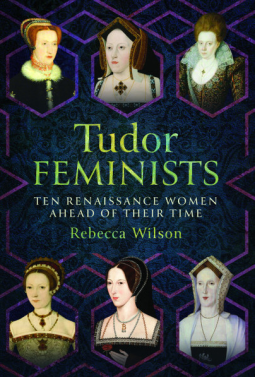
Rebecca Wilson Tudor Feminists Ten Renaissance Women Ahead of their Time Pen & Sword, Pen & Sword History, January 2024.
Rebecca Wilson’s Tudor Feminists Ten Renaissance Women Ahead of their Time does not display the lively writing which is one of the enduring features of Pen & Sword publications. However, this more densely written work certainly provides a fascinating read and is well worth Pen & Sword readers adapting to a different style. The description ‘feminist’ to introduce these ten women is something to think about. Were they feminist? Is feminism a broad or narrow term to be used in describing women and their behaviour? What behaviour is feminist? Could the period in which the women acted impact an understanding of whether that action was feminist or not?
All of these questions influenced my reading, making the book come alive as I read and pondered, not only the women’s behaviour and the period, but how I feel about what makes a woman’s behaviour feminist. Wilson’s reference to Well behaved women seldom make history by Laurel Thatcher Ulrich provides a valuable clue to how to read the book as a tribute to feminism and feminist behaviour in the Renaissance period, so well-known through the Tudors. She also clarifies in the introduction suggesting that her description of the women in her book as feminist rests on their challenge to the patriarchal world in which they lived, surviving in that world while remaining out of step with it and, of course, their being remembered. The latter is essential to recognising that because we know something about them they must have stood out over and above their being associated with the Tudors, however popular that period is as historical fare for fiction and non-fiction authors.
The women are from the upper echelons of Tudor society, most having some connection with the royal households or courts. They were advantaged by their wealth and connections, but as Wilson points out, their status was also a threat to patriarchy – not just in their own small domestic environment or community as would happen with a less elite woman behaving badly, but to the very structure of Tudor society. The women are: Margaret Beaufort; Margaret Pole; Anne Boleyn; Catherine Parr; Anne Askew; Bess of Hardwick; Grainne (Grace) O’Malley; Aemelia Lanier; and Arbella Stuart. Some of these names are extremely familiar, others are not.
Anne Askew, Grainne O’Malley and Aemilia Lanier are on the list of my less well know women. Anne Askew is referred to as Heretic and Poet; Grainne O’Malley as the Pirate Queen; and Aemelia Lanier as The Dark Lady. I recently found her amongst the little-known writers of the period, and this features in a wider exploration of her feminist approach to life in the Tudor period. Anne Askew, known for the torture she suffered because of her refusal to conform, was a well-educated woman whose knowledge and use of bible passages auger ill for her survival in a society where a particular group of powerful men were assumed the experts. Grainne O’Malley’s story relies on less reliable information, myth and legend mixed with sourced evidence. The discussion of this material is an interesting contribution to the way in which women’s history can be recorded, unrecorded, assessed and reassessed. Aemelia Lanier, poet and first to publish in her own name, is purported to be an inspiration for Shakespeare’s ‘Dark Lady’. The way in which her history is accumulated is also an interesting reflection on women’s fight to be heard and recognised: a major contribution to the understanding of feminist in this work.
The notes and index are an excellent source of further information, as are the illustrations at the end of the book. Rebecca Wilson has made a worthwhile and engaging contribution to the way in which feminist endeavour is understood as well as providing the stories of ten even more engaging women.
Clare Flynn The Artist’s Apprentice Storm Publishing, February 2024.

Thank you, NetGalley, for this uncorrected proof for review.
This is the first of Clare Flynn’s novels that I have read. There is a lot to admire, for example the range of political and feminist issues that are covered in this essentially romantic novel. However, although I found the novel a good read, engaging, with interesting characters, I cannot give the writing an entirely positive response. Despite that, I am pleased to have had the opportunity to read this example of this popular author’s work and would like to know what happens to the main protagonists in the follow up, The Artist’s Wife.
The novel begins in January 1908 at Alice’s home, Dalton Hall, in Surrey. Alice is sketching in the frost on her window and must take diversionary action so that her lateness to breakfast goes unnoticed. Taking in the mail to effect this, Alice is confronted with an envelope addressed in writing with that makes her uneasy. It is an invitation from the American born wife of a newly rich neighbour, Cutler, inviting them to tea. Lord Dalton is pleased; his wife, unaware of the financial reason for her husband’s enthusiasm, is not. Alice is wary. Her brother, Victor, supports his father – he has prospects of joining the profitable Cutler firm of stockbrokers.
From this beginning, that deftly sketches the outward reasons for the proposed relationship, gradually a more ominous story begins to emerge. Alice and the proposed marriage between her and the older Cutler son appear to be the crucial protagonists in the debates that arise over women’s position, their role in preserving family fortunes through marriage, and their lack of independence in choosing a partner. Behind this story is another that will become pivotal in deciding Alice’s future.
This future brings her into contact with her estranged aunt, and eventually Edmund Cutler, the younger brother whose rebellion has led him into becoming a stained-glass artist. The development of this story includes a wealth of information about the world of art, and impressive detail about the particular art of stained glass. The information here is so engaging that it is difficult to imagine readers not wanting to see for themselves the windows so well described. In the acknowledgements Flynn provides the locations that helped inspire the novel. Christopher Whall, to whom Edmund becomes apprenticed is a real person and his book also provided a source. Others, named in the acknowledgements, are Mrs Bradley, wife of the headmaster of Bedales where Emmeline Pankhurst spoke at a meeting; Karl Parsons, a teacher who worked for Whall; and Mary Lowdnes, a female stained-glass artist and supporter of the women’s movement.
Women’s suffrage and the relative merits of the more radical movement the WSPU under Emmeline Pankhurst in contrast with the National Union of Women’s Suffrage are discussed through the characters and events. Flynn’s attention to both the public and private manifestations of discrimination against women and need for political activism as well as personal resistance are argued in an engaging manner, making this novel a worthy social commentary on the time leading up to World War 1.
The Artist’s Apprentice combines public and personal stories well. Alice and Edmund’s complicated past and defiance of society and the themes of women’s equality and recognition of the need for acceptance of new social mores makes a strong novel and good fo
Ramie Targoff Shakespeare’s Sisters Four Women Who Wrote the Renaissance, Quercus Books riverrun, March 2024.
Thank you, Net Galley, for providing me with this uncorrected proof for review.
Ramie Targoff begins with a reference to Virginia Woolf’s A Room of One’s Own in which she compares the success men win for their literary efforts in comparison with women of similar talent. Essential to women’s opportunities she believed were money and independent space. Also, of importance to Targoff’s effort to bring four women writers into the history they deserve, is Woolf’s reiteration of the story of Judith, Shakespear’s imaginary sister. Judith, it is said, was as brilliant a writer as William, but her sex reduced her to obscurity. Targoff aims to give the four sisters about whom she writes their deserved place in the history of writing. Anne Clifford, Mary Sidney, Aemilia Lanyer and Elizabeth Cary are given their literary due in this detailed account of their lives and work.
Targoff’s book is resplendent with detail. The women’s status, domestic and public lives and writing history and successes, alongside further details of their work, is thoroughly explored . So too is the political, social and economic environment in which they worked. My only quibble about this delightful book is that further detail of the literary context would have, I think, added to even greater understanding of the magnitude of the women’s achievements. (NB. the Epilogue incudes relevant sources).
The material related to women’s role in translating familiar and unfamiliar texts is particularly enlightening. Beginning with a discussion of Elizabeth 1’s translations – a formidable feat which Targoff sees as one of the ways in which she established her credentials to rule – it is demonstrated that the Queen provided a role model for other women writers. Mary Sidney’s poems to Elizabeth and her translations and Elizabeth Carey’s feminist restating of earlier differently interpreted works are significant examples, rich in detail, of the work undertaken by the four Renaissance women writers to which Targoff turns her searching eye.
Shakespeare’s Sisters is a well written expose of the way in which four indefatigable women writers of Shakespeare’s time worked against the walls erected to maintain them in their obscurity. They have managed to escape that obscurity through rigorous attention to truth-telling about women’s position in a work which combines academic rigour with a lively and entertaining text which is detailed but accessible.
There is an excellent epilogue in which further reading is listed; each chapter has detailed endnotes; family charts provide valuable information about the women and their families; and colour plates are included in the text.
Kathryn Atherton Mary Neal and the Suffragettes Who Saved Morris Dancing Pen & Sword History, January 2024. *
Thank you, NetGalley and Pen & Sword History for providing me with this uncorrected proof review.
Reading Katheryn Atherton’s book has been an absolute delight. It is well written, with the usual Pen & Sword accessible language, format and lightness of touch, while providing a wealth of well researched information. Mary Neal and the Suffragettes Who Saved Morris Dancing includes information about women’s suffrage organisations and personnel, with marvellous vignettes of the most active, and details of the action in which the women participated; the background to Morris Dancing, highlighting the divergent views of how it should be understood, appreciated and developed; and the significant social history associated with Neal’s work and her commitment to changing the lives of women from a very different class from her own and her companions in the suffrage organisations involved in saving Morris Dancing.
The exploration of the suffragette contribution to restoring Morris Dancing to its former prominence after it had died out by the early 20th century begins with Mary Neal’s work with young working-class women in St Pancras. The role of her club, the Esperance, in the resurrection of this dance form, and as part of Neal’s commitment to women and girl’s rights makes a stirring story. So, too does the all too familiar falling out over the way in which Morris dancing should be executed – or was it just that a man wanted a prestigious role? This part of the book makes remarkably interesting reading from a feminist perspective as well as for anyone for whom dance and the manner in which it should be performed, observed and understood is an issue.
There are familiar names and organisations: the Pankhursts, Emmiline Pethick-Lawrence, Lady Constance Lytton, the WPSU, the Votes for Women magazine, the Cat and Mouse Act amongst others are all here. But so, too are less familiar names, organisations and written materials. Short biographies of some of the women are included, and Mary Neal becomes a vibrant personality under Katheryn Atherton’s perceptive and sympathetic hand together with solid research.
The photos of the Morris Dancers include a lovely sketch of the feet of one of the Esperance Dancers by Sylvia Pankhurst as well as groups of dancers from various exhibitions given by the group. Photos of some of the protagonists covered in the book are also included. There is a bibliography with archival material, including reference to Mary Neal’s papers to be found in the London School Library. Amongst the published material were two so familiar texts, Jill Liddington and Jill Norris’s One Hand Tied Behind Us: The Women’s Suffrage Movement, 2000 and Midge McKenzie’s Shoulder to Shoulder, 1975, alongside unfamiliar material about folk dancing, folk songs, Morris Dancing and material directly related to Mary Neal’s work.
Kathryn Atherton gives the militant suffragettes their place in the revival of Morris Dancing in a wholehearted, enthusiastic work. This enthusiasm for her material makes delightful reading as I noted in my introduction. At the same time, the research and thoroughness with which the material is approached gives this book and the women it represents the gravitas they deserve.
*I was drawn to this non-fiction account of Morris dancing partly because of reading the Abbey Girls books by Elsie J. Oxenham. Yes, they were classist, but they were also charming, informative, and gave girls, and later the women these girls became, central active roles.
Scott Martelle 1932 FDR, Hoover and the Dawn of a New America Kensington Books, Citadel, Nov 2023.
Thank you, NetGalley, for providing me with this uncorrected proof for review.
Scott Martelle has chosen a format which quickly draws the reader into the year in which Americans chose their President, the Democratic Party’s Franklin Delano Roosevelt, over Herbert Hoover the Republican Party candidate. The complexity of the events of 1932, public and party, are fully explored so that a remarkable history is unfolded. An American history, a Democratic Party history, and a history of the Republican Party. To maintain a reader’s interest in these events, while writing such a thorough and dense account is a large ask. Martelle has accomplished this, perhaps because of the format, but also because his account of events is so deftly honed that their serious and complex nature becomes almost a story. This is the story of a year in America that introduced a new vision for an America reeling from the Depression. The courage of the political figures who wage their battles within their parties and in the public race for the presidency live alongside that of the groups who sought to determine the outcome, and the voters who chose a different economic plan for America.
There are some poignant events such as the veterans’ political action taking trains (or being denied the journey) to make their political points to candidates, and the work of agricultural communities to save farms and livelihoods. Other, more well-known stories are those associated with prohibition and the women’s groups varying viewpoints. Their arguments for and against prohibition make interesting reading as does the discussion about the likelihood that the vote for the president would be based on this issue – did Party affiliation or commitment override a moral issue? For many, it did. The black American vote was also complex, a diary reading demonstrating that Republican opposition to slavery remained an issue for some, whether a majority of black Americans were moving towards support for the Democratic Party. Other diary entries also make fascinating reading.
What continually stands out in this book is Martelle’s capacity for laying out the arguments in interest groups, the debates about leadership in the political parties and the ideas and issues that informed the voters. The complexity remains but is clarified under Marelle’s capable hand. However, the simple last citation, “Cabinet Sworn in at White house”, New York Times, March 5, 1933 is a fitting end to this story of fortitude on the part of both political adversaries, the use to which the population put their democratic vote, and the preparation of an era that gave a new aspect of economic policy gravitas.
BookTrib BookTrib Lit Picks First Chapters from the Hottest Books Meridian Editions, Novemebr 2023.

Thank you, NetGalley, for providing me with this proof for review.
I understand that this edition is available as an eBook download for people who subscribe to BookTrib, providing a valuable resource to readers who want to see what their favourite or familiar writers are publishing as well as finding new authors. Meryl Moss, publisher of BookTrib Lit picks refers to this publication as a ‘special holiday gift’ , in her introduction to the inaugural edition launched in ‘Holiday/Winter 2023. Of course, winter is in different months depending on the hemisphere, but I assume that the winter referred to here is in the northern hemisphere. I prefer the month of publication to be clear wherever the reader is located, but using seasons is an affectation of many journal publishers, so BookTrib is not alone.
The first chapters of numerous books are featured, ranging from the familiar Jane Corry to less familiar, for books published as early in 2020 to those anticipated in 2024. Publishers are independent and traditional, providing an interesting range of works that provide the opportunity to compare the standing of books published by different methods. Having attended a Guardian Workshop, in the years around 2012 where the merits of various forms of publishing were discussed after excellent presentations on behalf of the types of publishing, I believe that excellent books (and poor ones) can be published in either of the forms – traditional or independent. This collection fulfils this belief – first chapters from both types of publishing stand out as substantial examples of their genre.
Genre provides the focus of classification, with Mystery, Thriller & Suspense; Horror – Thrillers; Fantasy, Sci-Fi & speculative fiction; Women’s Fiction & Romance; Contemporary Fiction & Family Drama; Action & International Thrillers; Coming of Age & Young Adult; Historical fiction; Self-Help and Non-Fiction. This is an excellent range, is well organised and provides some illuminating reading. At times more than one chapter is provided, and this is useful in these cases. Other books rely on one chapter to demonstrate their suitability for further reading, easily available through the download feature in Lit Picks First Chapters from the Hottest Books.
There were so many names that were unfamiliar to me that I found the collection an amazing source. While there are some genres that do not interest me, there were numerous examples in the ones that do. Each chapter is introduced with a photo of the book cover; an informative introduction to the book; information about the publication, including price, publisher and the Buy Link; and details about the author and their previous publications.
Meryl Moss of Book Trib has produced a worthy tribute to the writers she features, and an even more contribution to readers’ knowledge about these authors. She has also provided an excellent source about the way in which the various genres have progressed from 2020 to 2024. This last might seem a short period. However, moves in publishing, popularity and style in publications are rapid and this provides a source for would be writers as well as readers. I enjoyed the chapters I read for this review and shall relish dipping into more as I search the shelves for further reading.
Note: Amazon provides several chapters as samples for readers wanting to find out more about a book.
Jane Austen Jane Austen’s The History of England Writings from Her Youth Dover Publications, Oct 2023.

Thank you, NetGalley, for providing me with this uncorrected proof for review.
The history and letters in this short volume provide a wealth of information about Jane Austen which makes an ideal background to reading her more well-known novels. The latter have largely been seen as romances, although fortunately some rereading of the works has provided them with a wider and more analytical understanding of their genre, value and contribution to English literature. Reading Austen’s history, seeing her sister’s illustrations, and then reading the three letters in the book contribute to this broader understanding of Austen’s work. At the same time, it is such fun to read this history, with its wonderful wry commentary on ideas held dear to academic historians.
Allyson D’Antonio’s editorial commentary illuminates Austen’s assertions and speculations in an Editor’s Note and a series of endnotes that explain her ideas, suggests alternative perspectives, and clarify where required. Although she refers to Austen’s impact on the romance genre she gives Aysten credit for her addressing important themes in the period. That her canvas was a small one, D’Antonio references Austen’s work with admission that her concerns were with social class, gender inequality, education and religion, the ideas that impacted her own life.
This is such a short easy read – or is it? Yes, it takes only a small amount of time to read to the end. However, the ideas that are unearthed in this history and the letters are worth thinking about for far longer. They also enhance understanding of Austen’s adult work, adding to the enjoyment of the novels she wrote. This book is a small but elegant pleasure indeed.

Katia Lief Invisible Woman Grove Atlantic, Atlantic Monthly Press Jan 2024.
Thank you, NetGalley, for providing me with this uncorrected proof for review.
Reading the first chapters of Invisible Woman was an absolute thrill. I was so impressed with the way in which Leif combined a sympathetic character in Joni Ackerman, her back and forth feelings about her husband, Paul, and her situation as a domestic partner, housewife, mother and former winner of accolades for her films. She demonstrates all the challenges women of former public status face when they become the extra in their successful husband’s life. Joni is the woman who drifts around their huge party, recognised by few of the guests as anything other than their hostess, missing her daughters, harbouring a secret, and determined to act.
Joni reads several Patricia Highsmith’s novels as she ruminates on her marriage, and her past. This holds a secret that is not hers to tell but the aims of the MeToo movement becomes personal, as a rapist known to her is successfully accused by some of his victims. Joni attempts to persuade her friend to divulge her past that also involves this man and a mystery man. Val’s reluctance to make any accusations appears to be faltering when she agrees to meet Joni after several unsuccessful attempts to renew their friendship. She is almost killed.
I appreciated the clever introduction of Patricia Highsmith’s novels in which the perpetrator of a crime often escapes legal punishment. They also often find that such escape is an empty victory. Joni’s speculation about murder, her imaginary conversations, and her reflections on her situation are echoes of Highsmith’s work. Another positive is the realistic depiction of a woman whose past success has been silently, softly, but so firmly, closed down by her partner.
Where I lost my earlier satisfaction with reading this book was as what began as excellent social commentary, with sympathetic understanding and depiction of the challenges to Joni and Val’s validity as women who deserved to be visible, became lost in the resolution. I felt that the novel moved into different territory in some ways, and therefore did not meet my early expectations. However, despite this disappointment, I am keen to read more of Leif’s work. I suspect that she will always have an original approach to her characters, their actions, and their role in intricate plots. Probably this approach does lend itself to disappointment at times. On the other hand, it also suggests that a Katia Leif novel will not be boring – and to me this is an excellent reason to read another.
2023
Karen Brooks The Escapades of Tribulation Johnson Harlequin Australia, HQ, July 2023.

Thank you, NetGalley, for providing me with this uncorrected proof for review.
Unlike The Good Wife of Bath where Karen Brooks’ Eleanor instantly endeared herself to me, it took me longer to warm to Tribulation. However, it was well worth taking that journey with this flawed, determined, uninhibited and courageous woman. Tribulation leaves an unloving household to live with her cousin, Aphra Behn, in London. Unknown to her exacting father, Tribulation is about to enter the home of an infamous playwright, her second home in the theatre, and another in the world of spies, intrigue and duplicity. Tribulation finds each a source of excitement, burgeoning career opportunities, love and hate, far removed from her early years as a dismissed daughter of the vicar of Chartham in Kent, and older sister, Bethan.
Tribulation takes matters into her own hands during the journey to London, donning her deceased brother’s clothing and dispensing with her chaperone. She arrives at Aphra Behn’s home thus clad, alone, and all too obviously ill from eating stale oysters. Despite this poor introduction, she is to begin a life that brings her the motherly love she has never experienced, and a theatrical and writing career. She continues to be independent, at the same time as craving maternal love and companionship. She and Aphra live, work and enjoy life as well as despairing, together. Most importantly, they recognise the discrimination they suffer as women, and seek to change this through their behaviour, but most importantly, their work in the theatre as playwrights.
Tribulation is just one of the thoughtfully created fictional characters in this novel which also introduces real historical figures who made up the theatrical, royal and conspiratorial world in the last years of the reign of Charles 11. For those not familiar with the period the explanatory material at the end of the book, denoting fictional characters and real historical figures in the novel is a marvellous assistance. Not only that, but it also provides information that cannot be conveyed through the fictionalised events of Tribulation’s life in London. The list of plays that are referred to throughout the novel is also an excellent addition. Both of these sources and Karen Brooks’ explanation of her motivation for writing The Escapades of Tribulation Johnson, information about her research and detailed information about some of the more important historical figures enhance reading of this engaging and inspiring novel.
Brooks has been ingenious in her portrayal of Tribulation as a character with whom the reader cannot fully sympathise. She provides the fictional counterpart of Aphra Behn with whom also it is difficult to ignore some grating characteristics. Both characters are fighting for equal rights for women, they are strong and admirable. But at the same time, each has her flaws that create difficulties in their own lives, the lives of their companions and in the reader’s mind. With her portrayal of Tribulation, Brooks makes it easy to understand Aphra Behn as a complex character. As I noted at the beginning of this review, I could not warm to Tribulation immediately. This, I now see as an advantage rather than a problem. Brooks has shown how difficult women have valid concerns and their manner of expressing these, however uncomfortable for others, is also valid. Indeed, such execution of crucial ideas is often essential and to be admired. She draws the reader into the complexities of being a woman demanding rights for women, enhancing a reader’s understanding not only of the real figure, Aphra Behn and of the fictional figure, Tribulation, but of feminist aims and ideas and the difficulties of voicing and achieving them.
The Escapades of Tribulation Johnson is an engaging, illuminating read. One that I enjoyed on a first reading and shall enjoy rereading.

Kerry Wilkinson After the Sleepover Bookouture, Dec 2023.
Thank you, NetGalley, for providing me with this uncorrected proof for review.
Kerry Wilkinson’s After the Sleepover is a stunning continuation of Leah’s story, begun in The Night of the Sleepover. I read the novels out of sequence so in many ways was advantaged by being innocent of the ending of The night of the Sleepover, where Leah’s secret knowledge about that night was exposed. So, I began with the speculation about the person for whom Leah’s secret provided cover. This was referred to frequently in her relationships and thoughts in After the Sleepover. The novel is extremely clever in that, even if read in sequence Leah’s speculations and behaviour provide the complexity that makes a novel satisfying.
Excellent characterisation is also an important feature in both novels. Leah is complex, but so too are her companions in both novels. From the young girls with whom she was friends at school and who disappeared from the sleepover, to their parents and her own, and then to the characters in the sequel. Here Leah is called upon by the mother of one of the new generation of children missing from a sleepover. Her experience, Jennifer persuades her, will help in dealing with the possibility that the mystery will not be resolved.
At the time of the new disappearances Leah has ended an unhappy marriage, has a teenage son, is in a new relationship with the father of one of his friends, and is the substitute daughter for the mother of one of her missing friends. She is contributing to a documentary being made by the brother of another of the missing girls and has an uneasy relationship with the older sister of another. Her father, at whose house the original sleepover took place, is in a care home, a broken figure. Leah’s father, at one time a suspect, and about to finish yet another gaol term is in a new relationship and a friendship is gradually being forged between this enthusiastic and lively woman and Leah, despite Leah’s antipathy toward her father. The motivations of each of the characters, including Leah, are never clear, raising questions throughout the novel. I wonder if there is to be a third in the series. There is certainly the material for one.
Once again, Kerry Wilkinson has crafted a novel that is gripping, with multi-faceted characters and a story line that is not only satisfying but one that almost demands that it is continued
Ines Almeida, Georgina Ferry, Bridget Greenwood, 50 Women in Technology Pioneers and Trailblazers in STEM, Aurora Metro Supernova Books, November 2023.
Thank you, NetGalley, for providing me with this uncorrected proof for review.
As I have kindle download I am unable to comment on the full colour nature of the book. However, I am pleased to be able to comment on text of this most useful work. In particular, the combination of the stories of early women in technology, and those of today; discussion of unequal pay in the sciences; the excellent section on depiction of scientists in school studies and popular culture; and the writers’ experience which gives the information accessibility as well as heft.
More well-known names such as Ada Lovelace, Marie Curie, Hedy Lamarr are represented. However, they are joined by women who, although known in scientific circles have not entered popular culture about women in technology. Bridget Greenwood’s foreword sets out the purpose of this book – to enhance public knowledge of the women pioneers in technology. She suggests that the change that has been effected, is only a start, that more needs to be done to encourage women into technology and to keep them there. Quotations from uncorrected proofs cannot be included in reviews, so it is impossible to replicate some of the pithy and inspirational propositions included throughout the book – both from its editors and the women they to whom they give a voice. Suffice to say, they make an effective voice for these women.
Today’s women in technology, such as Emily Holmes (a psychologist working on mental imagery); Ida Tin, the CEO of Clue (a menstruation tracking app); Marita Cheng (Young Australian of the Year 2012); Stephanie Willwerth who runs an interdisciplinary program at the University of Victoria, provide some wonderful interviews. Please note that these descriptions are brief and cannot convey the value of their work and discussion s of that work.
There are some fascinating photos – it is impossible to go past those of the mainframe computers from the 1950s even if they are familiar. Similarly, the Bletchley Park story is familiar – at least in its broad-brush strokes. Here there is detail, not only about the women’s work and their aptitude, but the fight to achieve anything like parity with men in occupations, wages and status. The book ends with a comprehensive index.
Amanda Prowse Swimming to Lundy Lake Union Publishing, August 2024.
Thank you, NetGalley, for providing me with this uncorrected proof for review.
Lundy is an island off the coast of Tawrie Gunn’s home. She views it through the lens of her father’s drowning twenty years before this part of her story begins. Despite her father’s death continuing to influence her life, she joins the swimming Peacocks, a rather misnamed group of two whose regular swim becomes Tawrie’s way of changing her life, while maintaining contact with her father through talking to him while she swims. Twenty years before, Harriet is also living in the coastal town in which Tawrie, her parents and grandmother live at Signal House. Harriet has no roots in the town, unlike Tawrie and her family for whom Signal House is a home passed down through the Gunns. Harriet is writing a diary which explains why she, her unfaithful husband Hugo, and ‘Bear’ and ‘Dilly’, their children, have moved from their comfortable family home in a village to the Corner Cottage on the Devon coast.
Most of the novel moves between Tawrie’s story in 2024, and Harriet’s in 2004. This is very well done, drawing the reader into both stories. Both have their comic moments despite their overwhelming sadness. When the stories come together this sadness is replaced with a vigour for life that Tawrie had only dreamed about. Harriet’s life also takes on another aspect, affecting Tawrie through her past observations and a meeting that eased the agony she voiced in her diary.
I found the beginning of the novel rather slow, and Tawrie’s contempt for her mother and glib response to her grandmother’s defence of her, difficult to warm to. Tawrie was eight when her father drowned and surely would have some memory of the relationships around her by that age? The ending was very detailed and seemed to me to crawl to the conclusion. There were also some repetitive phrases that grated, and language that, although now part of everyday speech sounded awkward in the older adults’ mouths. For example, Jago using ‘for’ instead of ‘about’ when he speaks of being excited about the future.
Those criticisms aside, Amanda Prowse has fulfilled her reputation for writing engrossing domestic drama. Tawrie’s ‘coming of age’ is satisfying, and the resolution of Harriet’s angst is comforting and edifying. The way in which ‘Bear’ and ‘Dilly’ have been impacted by their parents’ marriage problems and found their own solutions is thoughtful. Hugo is well realised, and later details of his story round out those of the more sympathetic characters of Harriet, ‘Bear’ and ‘Dilly’.
This is another excellent read for a lover of Amanda Prowse books, and a satisfying read for anyone who likes some fictional domestic drama.
Kerry Wilkinson The Ones Who Are Hidden (A Whitecliff Bay Mystery Book 4) Bookouture, May 2023.
Kerry Wilkinson has once again combined appealing continuing characters, Millie (and her son Eric, and divorced husband and his new wife) and Guy (and his nephew), with a new mystery that they must solve. At the same time, their stories are given more substance with each interaction between them and their family members. Some continuing stories reach resolution, cleverly associated with issue brought to the fore through the investigation, while new questions arise – hopefully, another book in the series will be written to resolve these. In the meantime, Kerry Wilkinson has begun writing other material (the Sleepover series) so we might have to wait. For me, the manner in which Wilkinson raises issues, and uses the continuing characters’ development as well as the new investigations to resolve these, is worth the wait.
Also, the earlier books in the series reviews appear in posts for
This work brings together Millie and Guy in an investigation that has its genesis thirty years in the past. Oliver, Eric’s guitar teacher finds a tattoo behind his ear and meets with another person with a similar tattoo. They were victims of a cult when they were babies, and one sinister adult member of the cult remains intent on reprisals against them and the woman who rescued them. Other story lines also link with past relationships and actions and are played out alongside the mystery of the tattoos.
Wilkinson’s characters remain appealing, even after questions are raised about their honesty and motivation. Millie is left with serious questions about some of her friends. However, she finds the strength to deal not only with this, but the most serious issue in her life, custody of her son Eric. From Book 1, of the Whitecliff Bay Mysteries Millie has evolved from a character whose life is precarious because of the death of her parents, and questions about her role in this and her affair and its impact on her personal and economic status. She has become a successful investigator as part of her friendship with Guy and has dealt with a close friend’s duplicity. She has found answers to some of her questions, and those that remain are worth pursuing. I hope that Kerry Wilkinson returns to Whitecliff Bay to answer these as I have found the series a genuinely engaging read.
Liz Foster The Good Woman’s Guide to Making Better Choices Affirm Press, December 2023.
Thank you, NetGalley, for providing me with this uncorrected proof for review.
With its strong beginning The Good Woman’s Guide to Making Better Choices promises much. What could be more attractive than a penthouse with a view to Bondi Beach as a setting? However, as the lift to the penthouse rises after Libby answers the intercom and invites its occupants, one showing a police badge, into her life this scene is shattered. Ludo, her husband, ends the prologue with an apology.
Chapter 1 leaves the Bondi penthouse behind with a return to the past in rural Victoria. Here, Foster regales the reader with some lovely comedy – Kim Kardashian being told to hurry? Residing in an abode with an old five bar gate and a gravel drive? The goat farm introduces Maggie and Ana, Libby’s mother and daughter, her aunt Dido, together with the mention of friend Hazel and her parrot Miss Marple. The visit to the farm recalls Libby’s happy childhood with her brother Evan and their mother. The absence of a father has had little impact on their lives with their mother and aunt, friend Jake, the goats and the business.
Then, the idyllic past becomes the fraught present. Libby’s son, Harrison, has had a childhood as a gifted music student. However, hostility to the classical music his parents encourage is a marked comparison with the carefree life of his sister and her skateboarding, and his mother’s past. Evan and his wife’s longing to have children and their reliance on expensive IVF becomes a point of conflict with Libby after Maggie gives the siblings $20,000 each. Financial issues become a source of conflict between Ludo, his business partner, Libby and their friends and neighbours.
Sharon Grace Powers How Broadway Works Building and Running a Show from the People Who Make It Happen Globe Pequot, Applause, Dec 2023.
Thank you, NetGalley, for providing me with this uncorrected proof for review.
I applaud the premise of this book, which is an engaging, informative account of all the people who make it possible for those who shine on the Broadway stage, as actors, musicians, or writers. They have their role, but so too, do those people who may fleetingly appear as they move scenery, but are otherwise unseen, except in the productions their work brings to the public gaze. Not only does Sharon Grace Powers give them their due, but she opens up the huge range of possibilities available to people who would like to work on a Broadway production.
This is a wonderfully detailed book, with chapters on all aspects of bringing a show to Broadway with chapters covering the role of: the General Manager/Producer; Production Management Company; Set Designer and Associate Set Designer; Props – Production Props Supervisor, Head of Props; Puppets and Special Effects; Costumes – Costume Designer, Costume Design Associate, Full-Service Shops and Costume Draper, Beading, Fabric painter, Milliner, and Body Padding; Wardrobe – Wardrobe Supervisor, Dresser and Sticher; Stage Management – Production Stage Manager and Assistant Stage Managers; Music – Misic Director, Associate Music Director, Dance Music Arranger, Vocal Arranger, Orchestrator, Music Copyist and Music Coordinator; Sound – Sound Designer, Sound Mixer and Assistant Sound Person; Lighting – Lighting Designer, Lighting Associate and Lighting Programmer and Technology; Hair/Wigs and Makeup Prosthetics – hair Supervisor and Makeup Designer. Reading this wide collection of the work that is undertaken to get a show to its audience would provide any teacher of theatre and drama courses with a wealth of knowledge with which to encourage students who are not those to be seen on stage. This is just one of the treasures that Sharon Grace powers provides.
She also makes the rules governing labour in the profession abundantly clear, with detailed information about the unions that cover the various occupations about which she writes. How the occupations fit together to work efficiently and smoothly in a pattern that can be seen in all the Broadway theatres. At the same time, the unique nature of the various shows is demonstrated with reference to particular productions.
The contributors to the book have backgrounds in acting but found that this was not the profession for them. Instead, they became the backbone to the Broadway productions of which an audience sees only an infinitesimal amount of the work that leads to their realisation. How Broadway Works is a marvellous source of information and a worthy appreciation of the myriad of roles to which Sharon Grace Powers gives authenticity. I enjoyed this book, for its knowledgeable account of work mostly unseen, its enthusiasm for opening up a wider world of theatre to those who want to work there and for its accessible although detailed information.
Catherine Russell The Cinema of Barbara Stanwyck University of Illinois 2023.

Thank you, NetGalley , for this uncorrected proof for review.
Barbara Stanwyck was not one of my favourite actresses, she seemed too pushy somehow, and her films did not appeal – nor did the characters she played. With this in mind, I thought it was time to understand this actress and her roles from the perspective of years of feminist study, writing and activism. It seemed to me that my prejudices could have been those of a young woman who knew very little about feminism, certainly not the sort of feminism that Barbara Stanwyck might have been portraying. I was not disappointed. Catherine Russell opened a whole new perspective to this multi-talented and courageous actress. Her collection covers such a wide range of the ideas and activities that Stanwyck represents. An exciting read indeed.
The cover of the book is instructive with its subtitle including the words ‘of a working star’ and its portrayal of Stanwyck as a jaunty independent looking woman, attractive but not glamorous, booted but not short skirted – she is indeed a working person who feels positive about herself and her craft. The essay titles include references to melodrama, crimes of passion, the bad mother, clothing and its role in women’s lives, angry women, gambling women, cross dressing, gaslighting, cultural labour, and exotica and bitter tears – clearly a plethora of ides and stances relate to Stanwyck’s work. And this is but a short number of the topics Russell has assembled in this collection.
Russell’s titles tell a story about both Stanwyck and Hollywood. However, Stanwyck’s working life portrays an experience different from the Hollywood studio system as she was a freelancer. The role of agent therefore becomes an important factor, and the last essay is particularly interesting as it discusses that feature of Stanwyck’s success. Zeppo Marx was a particularly enterprising agent, and it is engaging to see him in this role rather than that of a lesser Marx brother of comedy fame. Stanwyck’s contracts then, and throughout her career, were well written, so much so that she was free to work for any studio rather than being controlled by one as happened with so many stars.
The chapters abound with information about the films and television series that Stanwyck made, with some asides to her personal life. What a refreshing approach! Here there is so much material that is illuminating about feminism and how it can be seen (or not seen) in the films and roles Stanwyck revelled (or did not) in. Here, the choices she made, or were made for her because of her approach to her career make fascinating reading. Sometimes the links between her own mothering and that she exhibited on the screen are made, but this commentary is set firmly in Russell’s feminist approach to Stanwyck and her work.
The role of the costume designer is given an emphasis that is appealing, with some good analysis of the importance of costuming in the performance. Sometimes Russell alerts the reader or viewer of the films to anomalies, such as the mink coat worn by her as Lee, a homeless thief in Remember the Night (1940). Here, Russell makes the pint that the clothing, although not in keeping with her financial situation, designated her as a ‘willful woman’. She was not always dressed so, in many films being portrayed in drab clothing – and attempt at appearing ‘natural’.
Russell has written about such an appealing range of topics in the essays she has gathered for this book. She has brought Barbara Stanwyck and her film and television career into an impressive feminist account of an individual and her working world. This book of essays makes an impressive contribution to the Women’s Media History Now! series. It has certainly made me rethink my opinion of Stanwyck and her work and has set me on a search for some of her films.
Kim Hong Nguyen, Mean Girl Feminism How White Feminists Gaslight, Gatekeep, and Girlboss, University of Illionois Press, Jan 2024.

Thank you, NetGalley, for this uncorrected proof for review.
I was drawn to this book because I have always been aware of the shortcomings of feminism in action because of its strong relationship to white, middle-class women, historically and even now. As Kim Hong Nguyen has pointed out, women who are part of our feminist history have been racist and classist: we recognise that. However, these shortcomings are not everything about them. Hong Nguyen is also critical of modern feminist theorists and theory, seeking to redress the lack of interest in intersectional issues (most importantly race) that she believes has been endemic in feminist behaviour and theory. Wedded as I am to the need to thoughtfully analyse the faults of the past and present with a view to finding answers to where we have failed I read with interest.
The arguments that feminism has not done enough, and has often been destructive rather than supportive, particularly as it applies to race are made in a detailed Introduction, five chapters and conclusion – Feminist Civility and the Right to Be Mean; Bitch Feminism and Blackfaced Girlboss in Feminist Performative/Performativity Politics; Mean Girl Feminism : Gatekeeping as Illegible Rage; Power Couple Feminism: Gaslighting and Re-Empowering Hetronormative Aggression; Global Mother Feminism: Gatekeeping Biopower and Sovereignty; and Abolishing Mean Girl Feminism. As can be seen from these titles Hong Nguyen’s approach is academic, employs language that may not be universally understood and covers negative aspects of political practice, that are familiar, such as gaslighting and gatekeeping.
A feature that is absorbing is the material associated with familiar aspects of social interaction: popular culture and political endeavour. Questions are raised about the way in which seemingly feminist depiction of women may be false. There is room for more detailed argument here. Hong Nguyen is examining popular culture that has been seen as giving women agency and denying that it has done so in a positive manner, suggesting that it undermines many women and gives emphasis to negative rather than positive features of women’s action.
Similarly, the power couple chapter would benefit from more examples, particularly those outside the political sphere. Where a political couple is used, how much more interesting and demanding would have been a section on Melania and Donald Trump than the well-worn discussion of the Clinton marriage. Add to this the question, why has the media continually queried Hillary Rodham Clinton and her commitment to her marriage, and not placed the same scrutiny of the Trump marriage on its agenda? There is surely a question related to feminism there – Hillary Rodham Clinton is seen as a feminist; Melania Trump is not. What is it about being a known feminist that makes a woman ‘fair game’?
Where the political example of Laura Bush is used in the chapter on Global Mother Feminism, together with popular culture examples, the ground is less shaky. Laura Bush is featured alongside the implications of Mother Feminism for the War on Terror, giving the argument a wider context than that about the Power Couple. The discussion of the war and its implication for Afghan women is valuable, as are the ramifications of Sarah Palin’s ‘meanness’ in what Hong Nguyen sees as her presentation of global motherhood.
I see no answers in this book, and often where Hong Nguyen says that she has shown something to be the case I suggest that she has made an argument, sometimes valuable, sometimes not, rather than having ‘made the case’. Her suggestion that feminism is yet to be defined along with whom it represents and what it advocates is particularly dispiriting. In contrast, I suggest that initially and maintaining its predominance, feminism has advocated for women, represents women and is defined as aiming to do so. Unrecognised by Hong Nguyen is that this simple, clear definition was rightly expanded, as recognition was given to discrimination based on class and race. That the term ‘intersectionality’ was not used, rather ‘the politics of difference’ was how the expansion from binary feminism was described, does not mean it did not occur. Feminism engaged early on with concerns about race and class.
Yes, there have been shortcomings in the way feminism has approached some women, and the questions raised by some of the arguments Hong Nguyen presents in Mean Girl Feminism How White Feminists Gaslight, Gatekeep, and Girlboss. However, whether there are lessons to be learnt from this book I wonder. I remain looking for a thoughtful analysis of where we have gone wrong and what we can do about it.
Sophie Hannah Hercule Poirot’s Silent Night The New Hercule Poirot Mystery Harper Collins UK, Harper Fiction 26 October 2023.
Thank you, NetGalley, for providing me with this uncorrected proof for review.
This is the second of Sophie Hannah’s Hercule Poirot mysteries that I have read, and I came to it hoping that I would not be disappointed. I have read Sophie Hannah’s other novels with enthusiasm, and some dread, at times. Despite their often bizarre and unpleasant themes they are immensely readable, almost addictive, and some of my favourite in their genre. I cannot say the same of The Monogram Murders, the first of Hannah’s Hercule Poirot mysteries I tried. Hercule Poirot’s Silent Night is a distinct improvement.
In this novel Hannah replicates Agatha Christie’s lack of interest in making Hastings a permanent character in her Hercule Poirot novels. Poirot’s companion, Edward Catchpool is a former police inspector, the son of one of the other characters, and, while advancing the narrative with the potential and then actual crime at its focus, also develops as a distinct character. Although he follows Hastings in being unaware of the clues that Poirot so brilliantly perceives, maintaining the familiar relationship between the two, he has his own character which adds to the novel. Unlike Hastings who had to be married off in Christie’s second Poirot novel, Murder on the Links, to avoid including him in every work featuring Poirot, Catchpool’s character has some interesting elements. His relationship with his mother, a clearly negative character, and his police background gives him professional possibilities. He is not reminiscent of any of Christie’s police characters (Japp, Slack, for example) and makes a positive contribution to the solution, although as Poirot suggests, not a brilliant as his own. This is a clever use of some of Christie’s tactics while providing a plausible alternative to the known Christie characters.
Hannah also injects some of the familiar Christie humour into the novel, a welcome gesture towards Christie’s ability to mix murder and comic moments. In Silent Night Hannah has also managed to adopt more of Christie’s touch in moulding Poirot’s physical features, thought processes and behaviour into the Poirot familiar from her novels.
Sophie Hannah has come a long way from her first attempt to emulate Christie’s work and I admire that. However, I am not wedded to this collection of novels. I am certainly ready to reread some of her independent work again. As I said, they are quite addictive.
.
Heather Webb The Queens of London Sourcebooks Landmark 2024.
Thank you, NetGalley , for providing me with this uncorrected proof for review.
Heather Webb’s The Queens of London is a fictional account of the woman gang known as The Forty Elephants whose heyday was in the 1920s. Her research shows that all the gangs she refers to in the novel were in existence, that Alice Diamond, leader of The Forty Elephants (also known as The Forty Thieves) was a real person with an empire covering London, Brighton and Bristol and she had a real romance with another gang leader, Bert McDonald. Webb provides Alice with another romance, based on a mention of ‘Simon’ in her research which may or may not be fictionalised. However, true, too , is the depiction Lilian Wyles, one of the first female police officers in the Criminal Investigations Department, and one of the first woman chief inspectors. Her role in the capture of Alice is fictional, but an important adjunct to the story of women making their way, although rather differently, in the hierarchies of law and crime in 1920s England. The Queens of London makes a tremendous read, with its commitment to women’s cause, recognition of their failures and reasons for these, and sensitive approach to racism in the period – again with women at the centre of the story.
Two other woman characters are fictional – Hira and Dorothy McBride. Hira lives in splendour with her Uncle, her governess and servants; Dorothy is a salesperson at Marshall & Snelgrove – the store that Alice and her gang have just divested of silk lingerie, jewellery and furs amongst the many luxury items stuffed into the gang’s clothing and reticules as Dorothy has served Alice, a seemingly legitimate customer. Hira and Alice are to meet as Hira leaves home upon learning she is to be set to boarding school. Hira becomes a waif on the streets and is taken into the gang. Hira and Dorothy also meet under unhappy circumstances also, as Hira becomes embroiled in the gang’s activities. Complexity is added to their stories as Dorothy is pursued by the store’s owner and dreams of marriage and Hera’s parentage becomes apparent. She is the child of an officer in India and his Indian wife.
Webb weaves a beguiling story around these seemingly simple elements – a gang queen, a shop assistant with dreams, a runaway child, and a police officer. However, the main features of the story are not so simple, and the complexity, along with the social commentary Webb interweaves with the characters, their aspirations and environments is adroit. Alice’s home life is instrumental in her desire to become and remain the queen of the gang, her fictional romance being at odds with this determination and leading her into speculation about her past and future. As well as being the dupe of the store owner Dorothy designs women’s clothing of merit. Hira’s parentage and her uncle’s treatment of her raise the racial issues that are dealt with by Webb with sensitivity and understanding. Hira’s introduction to Indian cuisine and clothing is a lovely recognition of the sumptuousness of her culture. Lilian Wiles’ story is also that of the introduction of women into the police force, their aspirations, the sexism they faced and the work they undertook.
The Queens of London is an excellent read. The combination of fact and fiction works well, and the social commentary woven throughout the story is a valuable addition to a story that is at once, lively, poignant and engaging.
Sidney Holt (ed.) American Magazine Writing Columbia University Press 2023.
The introduction is written by Natasha Perlman, executive director, Glamour but does not appear in this uncorrected proof. The list of contents provides an overview of the topics that are covered, as well as the magazines which offered the prizes around which this collection focusses: ‘The Battle for Baby L.’ Rozina Ali (New York Times Magazine); ‘She Never Hurt Her Kids. So Why Is a Mother Serving More Time Than the Man Who Abused Her Daughter?’ Samantha Michaels, Mother Jones; ‘Aristocrat Inc.’ Natalie So, The Believer; ‘Monuments to the Unthinkable’ Clint Smith, The Atlantic; ‘The Landlord and the Tenant’, Raquel Rutledge and Ken Armstrong, Pro-Republica and Milwaukee Journal; ‘Death Sentence’, Nicholas Florko Stat, Public Interest; ‘The Time to Pass Paid Leave Is Now’ Natasha Pearlman, Glamour; ‘A PostRoe Threat and the PostRoe Eera and Is Abortion Sacred?’ Jia Tolentino, New Yorker; ‘We Need to Take Away Children’, Caitlin Dickerson, The Atlantic; ‘The Militiamen, the governor, and the Kidnapping That Wasn’t, Chris Heath, Esquire; ‘The Year of the Nepo Baby Nate Jones, New York; ‘Acid Church, Courtney Desiree Morris, Stranger’s Guide; ‘Tinder hearted’, Allison P. Davis, New York; ‘”She’s Capital”‘, Namwali Serpell, New York Review of Books; ‘Viola Davis, Inside Out’, Jazmine Hughes, New York Times Magazine; ‘Light and Shadow’, Raffi Katchadourian, New Yorker; ‘Winter term’ Michelle de Kretser, Paris Review; and ‘Untold’, Tom Junrod and Paula Lavigne, ESPN Digital.
Although all the titles are not necessarily self-explanatory, there are enough to make the case that the collection covers a wide range of topics. Each provides a compelling story, and although some are more colourful and dramatic, others more thoughtful, and others rework old ideas in a new form with additional contemporary insights each contribution makes a valuable contribution to the collection. Each also makes a valuable contribution to the reader’s knowledge, and access to new insights. However, these are disparate articles, necessarily because of the focus of the collection, and therefore have no theme – to me a shortcoming in a collection. This raises the issue of what makes a collection that works, and the value of a thematic approach rather than one that concentrates on, as in this case, prize winning articles. Although the latter can illuminate what stories are topical, written well enough to become a winner or finalist, what magazines are using to assess stories, for example, are these matters those on which to base a collection?
Turning to the articles that have been chosen, some examples provide a flavour of the work covered in the collection. Although ‘The Battle for Baby L’ concentrates on the story of the fight for custody of a baby orphaned during an American raid in Afghanistan it has much broader application than the story of a baby, an American couple and Baby L’s biological family. The story of a football player, his teammates, the coach and the college, Penn State also raises broad ranging questions beyond the sexual predator at its centre. Neither article follows through on the broader issues, although they are admirably dense with detail.
Aristocrat Inc. lends itself admirably to this approach. The world of computer chips, their value, and the crime that can surround them, is another way of looking at the Silicone Valley opportunities, those that benefitted from them and those that contributed. A strong and compelling story! Similarly, The Landlord and the Tenant and Death Sentence work well as a compendium of information.
Monuments to the Unthinkable is resonant with detail, and thoughtful analysis. The questions it raises are valuable, partially answered, and open to further discussion, analysis and contemplation of alternative answers. Here detail and analysis are intertwined with commentary that almost forces the reader to engage with the momentous questions and declarations made.
As a collection of disparate articles, chosen only on their being finalists or prize winners, the positives include the value of some of the articles in publicising issues with the detail that is not available through other sources. Here, the detail is packaged in an accessible form. While lack of a theme is one of my concerns, it is fair to say that in some ways a theme is discernible in that in this collection hidden stories, which include compelling and copious detail, are brought into the open. However, it is a collection whose shortcoming remains: this is a group of disparate articles, which because of a lack of unified purpose, might limit to a few those that are of interest to individual readers.
Virginia Pye The Literary Undoing of Victoria Swann Regal House Publishing 2023.

Virginia Pye has woven an insightful and engrossing story from a news story about a woman writer who, exploited by her publishers, took them to court. Victoria Swann’s narrative is the outcome, combining debate about the value of women’s and men’s writing, the way in which romantic novels are described to compare them badly with fictional work that has no romantic narrative, the feminist arguments for women’s right to equal payment and, alongside this, their right to property and how they might be seen as respondents or plaintiffs in a court. Victoria Swann, and in her later iteration, when she returns to her own name, Victoria Meeks is a wonderful vehicle for conveying these arguments. She is a captivating character, with a background that raises even more issues about women’s role, and a warm but strong presence.
Victoria Swann is introduced weathering the remains of winter in the slush and mud of Boston. She carries a carpet bag, which continues to feature as part of her apparel, although her beautiful clothing and smart boots give way to simple country clothing when she returns home, and later, to clothing that reflects her changed circumstances. The change is not only financial, but an indication of the way in which she begins to see herself as an author and purveyor of women’s concerns and demands for equality. Here, when she first appears, she is going to her publisher where she expects to be feted, provided with comfortable seating, delicious pastries of her choosing and tea. She is about to undermine the seemingly favourable circumstances she enjoys as a cosseted writer of bestselling novels, an advice column and shorter, but ever popular ‘penny dreadfuls’.
Victoria Swann plans to change her writing style, having begun a novel that rejects the exciting and exotic environments in which her heroines find true love: she wants to write about women’s real circumstances and has the first chapter for her editor’s perusal. Her plans are thwarted when she is asked to wait and realises that another woman writer is about to become a favourite of the publisher. At the same time, she is expected to produce more adventure and romance novels at an even faster pace. The account of Victoria Swann’s domestic circumstances is harrowing, but rings true – her marriage, the way in which she entered the marriage and the way in which it has progressed impacts on her writing, ownership of the results of her writing, and her future as an author. Her domestic life becomes even more fraught as she tries to escape her role as Victoria Swann. The descriptions of opium dens and their impact are graphic. Recognition that although women have some property rights these can disappear through a husband’s duplicity and the acceptance by the law that his rights supersede hers, dishonesty associated with her publishers, and her realisation that her royalties have been less than those paid to the male writers who benefit from the popularity of her novels and the income they raise for the publisher are canvassed.
Boston is not the only location in which Victoria faces problems and concerns herself with the issues that impact unfairly on women. She returns to the farm on which she grew up, her childhood memories and the aunt and uncle with whom she has had rare contact. These well drawn characters not only add to Victoria’s story but have valuable stories of their own.
Fiction can make excellent social commentary and Virginia Pye has used her facility with characterisation, good story lines and plotting and use of drama to weave together an engaging narrative. Victoria Swann, and Victoria Meeks both have valuable contributions to make to publishing and Virgina Pye has argued their cases well. Her understanding that ‘women’s fiction’ may be a vehicle for ideas which contribute to women questioning their position makes a solid contribution to feminist understanding. At the same time, she writes a great story that I found illuminating and fun to read.
Excerpt from The Reality Behind Barbara Pym’s Excellent Women: The Troublesome Woman Revealed, Robin R. Joyce, Cambridge Scholars Publishing, 2023.

An Excellent Woman of Delicious Intent
Excellent Women, Pym’s second published novel, is a more sophisticated work [than Some Tame Gazelle]. While Pym continues to use comedy and irony, the significance of Mildred Lathbury’s control of the narrative must not be underestimated.
Throughout the novel Mildred’s dual voice undercuts her public utterances; assumptions about spinsterhood; and convention. Pym’s use of the dual voice for Mildred’s observations works against the typical understanding of a spinster: she is expected to be ‘involved and interested in other people’s business’ (EW, 5) ‘mousy and rather plain [… dressed in a] shapeless overall and old fawn skirt’ (EW, 7) or ‘fussy and spinsterish’ (EW, 12). However, throughout the novel Mildred’s observations and internal voice, juxtaposed with her conventional behaviour and utterances, give her authority. Doan’s explanation of Pym’s double narrative helps to describe this feature of Pym’s writing when she says ‘On the surface, the reader is presented with a narrative voice fully compliant with normal social expectations […]. Yet underneath this veneer of mild-mannered conformity, another voice speaks to challenge, even to ridicule, a social order that calls for the repression of unkind retorts. […].
Contrary to the view that spinsterhood is synonymous with sadness, the spinsters in Excellent Women exhibit a range of feelings and personalities. Only one is a figure of sadness and hers is an affected sorrow. Pym describes Winifred Malory as of a ‘romantic, melancholy nature, apt to imagine
herself in situations […who] kept by her bed a volume of Christina Rossetti’s poems bound in limp green suede’ (EW, 40-41). Mildred affects no sorrow. Although she also has a volume of Rossetti, she is more inclined to read a book of Chinese cookery (EW, 21). Mildred is open to the new
experiences the Napiers bring into her life. At the same time, she continues to enjoy her annual meals with William Caldicote, uninhibited by any possibility of romance; outings with Dora Caldicote; her relationship with
the Malorys; her church activities and part-time work on behalf of impoverished gentlewomen.
Pym establishes two brother and sister relationships in Excellent Women: Winifred and Julian Malory, and Dora and William Caldicote. Winifred has made a home for her brother at the rectory; Dora is economically independent.
Pym considers the feminist implications of the changes envisaged in the Malorys’ lives. When Julian Malory plans to marry, Winifred is potentially left to her own limited resources. In comparison, the single Dora Caldicote
is economically independent (EW, 70-71). Her economic independence ensures her a comfortable life regardless of her brother’s choices. Winifred’s life will change dramatically with her brother’s marriage: she
will lose her home, her intimacy with the church, and status as the rector’s sister. Winifred is typical of the non-working woman, most often the woman portrayed as the typical spinster, who relies on a man for economic and
emotional sustenance. She can also be compared, to her disadvantage, with the central married woman in the novel.
Helena Napier is dependent on her husband for neither economic nor emotional support, because like Dora, she has a profession. As well as being compared covertly with Winifred, Dora is compared overtly with Mildred. Here Pym juxtaposes two vastly different spinsters, enhancing her argument that there is no typical spinster. Dora’s visits to Mildred provide the hearty antidote to Mildred’s outward refinement: Mildred does not ‘have Dora’s temperament which makes her enjoy sleeping on a camp bed and eating off plastic plates’ (EW, 11).
Three spinsters who observe the vicar’s attempts to distemper a room illustrate two points in feminist writing. In the example of Miss Statham and Miss Enders ‘two bird like little women whom [Mildred Lathbury] tended
to confuse’ (EW, 40) Pym focuses on the way in which spinsters are often seen as a group rather than independent identities. Her feminist understanding, that to a disinterested audience all middle-aged women look the same (and could be the same) is also addressed in Quartet in Autumn when Letty Crowe and Marcia Ivory, two substantially different women in appearance and behaviour are seen as interchangeable at their retirement function (QA, 102). Mildred’s dual voice makes her comment a reflection on society’s treatment of spinsters as part of an indeterminate group. Pym confirms the sexism of the underlying inaccuracy by identifying the two minor characters as significantly different in a few well-chosen words (EW, 60 and 63). The third spinster, Sister Blatt, ‘stout and rosy in her grey uniform, with a blunt no-nonsense manner’ (EW, 40) is openly critical of the vicar’s efforts, giving advice but unable to do anything practical because of her bulk (EW, 41-42). Her self-satisfaction is the antithesis to the common assumption that a single woman must care about her appearance. Sister Blatt is supremely indifferent.
Mildred and Helena: A Pimlico Interlude
Mildred’s dual voice is emphasised when the first sentence of the novel shows Mr Mallett, a churchwarden, attempting to establish her as the quintessential spinster, ‘Always on the spot when something is happening’ (EW, 7). Mildred’s outward reaction is mild. However, her internal response
is tart. Honesty then undercuts her self-justification when she acknowledges to herself that she might fulfil the stereotype of the spinster being more inquisitive than a married woman,‘ because of the [supposed] emptiness of
their lives, but I could hardly admit […] that at one point I had arranged to be brushing my flight of stairs so that I could peer through the banisters and watch her furniture being brought in (EW, 9).
Mildred’s initial observation becomes a full exposure to the Napiers’ lives. She is juxtaposed with Helena Napier, superficially a quite distinctive character. Mildred is a churchgoer and dresses simply or dowdily. Helena
is ‘fair-haired and pretty, gaily dressed in corduroy trousers and a bright jersey’ (EW, 8). She ‘has no use for church going’ (EW, 9), is undomesticated, referring to herself as ‘a slut’ (EW, 10) and as ‘too busy to do much’ (EW).
She is an anthropologist who has returned from Africa with Everard Bone, her colleague. The working partnership continues in the London flat, with meetings, writing up observations and preparation and presentation of a
paper. Mildred’s reaction through her dual voice sets out the arguments for and against Helena’s enthusiasm for her profession, at the expense of preparing the flat for her husband’s return. Mildred establishes the conventional argument that a wife should conform to the expectation that her husband’s need is paramount.36 At the same time, her ruminations make apparent the unfairness of such a proposal (EW, 10-11).
Initially, the women’s only mutual interest is their dislike of sharing a bathroom. Mildred’s shame at her shared facilities (EW, 8) is the price she pays for a flat in post-war London rather than an indication of her lack of personal worth or financial position. The Napiers’ financial position is also
comfortable as they own a cottage in the country, and their having to share underlines the post-war housing shortage (EW, 7). Despite the women’s dissimilarities, they quickly find other opportunities to share, whether it is
having a mug of tea and thick slices of bread with jam prepared by Helena (EW, 8-10); drinking good coffee prepared by Mildred (EW, 24-27); or celebrating Rocky’s return with wine (EW, 34-38). Mildred also shares in
Helena’s professional life by attending her and Everard’s presentation at the Learned Society.
Mildred claims initially that Helena’s unenthusiastic description of her marriage makes her feel ‘spinsterish and useless’ (EW, 28). Rocky, whom Helena has married during the war, is described as ‘a shallow kind of person’ (EW, 107). Mildred is charmed at the same time as she is aware of
the Wren officers in their ill-fitting uniforms whom Rocky has made feel at ease as part of his role as Flag Lieutenant to an Admiral in Italy (EW, 9). The almost light-hearted discussion of Rocky’s shortcomings conceals a problem that Pym returns to in A Glass of Blessings with Wilmet and Rowena’s problematic marriages. The wartime marriage, a romantic ideal, is undercut by the reality that Pym addresses in both novels. In Excellent Women Helena’s complaints about her marriage give Pym the opportunity to emphasise Mildred’s skills and perspicacity. Mildred’s initial feeling of dismay at Helena’s confidences is replaced by her internal acknowledgement that she had wanted to give couples advice during her censorship days
during the war (EW, 25). Her ability to deal with ‘stock situations or even the great moments of life, birth, marriage, death, the successful jumble sale, the garden fete spoilt by bad weather’ (EW, 8) suggests that Mildred’s
experience is far ranging. Pym’s association of death and a successful jumble sale, for example, illustrates Mildred’s perception of the world as one in which she can deal comfortably with starkly dissimilar events.
Mildred’s statement, ‘I almost wish the Napiers hadn’t come to live in my house […] Things were much simpler before’ (EW, 165) is patently untrue. Their proximity and needs place her in a position where her accomplishments
are not only useful, but she becomes part of a community which fascinates her. Her claim that she would prefer to be with people with uncomplicated lives (EW, 99) can also be disregarded. Mildred’s decision that ‘It would be best not to see too much of the Napiers and their disturbing kind of life’ (EW, 100) and her assertion ‘It was only people like the Napiers who were beyond my experience’ (EW, 151) are further examples of her duality. Her behaviour belies her internal claim when she becomes increasingly involved
in the Napiers’ lives. Mildred’s professed innocence is at odds with her intimate knowledge of human affairs. She has already compared the unworldly nature of the Malorys with her own cynicism, ‘I knew more of the wickedness of the world than they did, especially as I had learned much
of the weaknesses of human nature in my Censorship work’ (EW, 46). Mildred is also consistently sceptical about the widow, Allegra Gray (EW, 45-48; 57; 64; 81-84; 121; 133-134). In contrast with the Malorys’ romantic vision of Allegra, Mildred is at home with comments on infidelity and is
unfazed by mention of divorce (EW, 119).
In her representation of Mildred, Pym is fictionalising her own observations. She raises questions about the way spinsters can be imposed upon as, having no husband, it is assumed they have nothing of importance with which to
occupy themselves. She recognised that unmarried women were expected to find time to provide sustenance to others, noting, ‘I’d probably noticed that unmarried women seemed to be expected to do all kinds of things that
nobody else was willing to do and of course having got the idea I exaggerated it a little, after all art must improve on life’ (EW, 37). Mildred appears to provide the fictional depiction of this role.
However, Mildred is fully aware of what she is doing. Her assistance to the Napiers comprises little more than writing a letter and supervising furniture removal, something she chose to do surreptitiously upon the Napiers’ move into the flat. Meeting Miss Clovis is hardly an imposition as she is curious about the woman who works in close contact with Everard Bone. Mildred’s contemplation that under similar circumstances she could assist Allegra Gray (EW, 199) further undercuts the burdensome nature of the tasks. The possibility that she would assist Allegra, whom she has consistently criticised, is farcical. Even the events with which Mildred does become involved are rendered negligible.
Pym’s use of the dual voice undermines the conventional aspects of Mildred’s behaviour and thoughts. Mildred’s disapproval of Helena’s work in the field with a man who becomes a familiar visitor to the flat creates a
new dimension to the gender politics in Pym’s work. Mildred’s feelings are counterpointed by her recognition that she is struggling with misdirected indignation because of her authentic feelings about the inequality in women
and men’s relationships. Mildred’s criticism of Helena is written to question the idea that women have inherent domestic characteristics which should be directed toward nurturing a man. Mildred’s expectation that Helena should
put aside her other activities to welcome her husband back from overseas, however short the notice, and that her domestic abilities should meet a certain standard, are hardly surprising pre-1970s. However, Pym uses conventional ideas of the period to question, rather than confirm their validity. Helena is also used to convey the feminist idea that a woman is as suited as a man to a career. Rocky’s love of cooking, together with his
undoubted masculinity, also suggests that nurturing can be natural to men. Mildred has noticed that ‘men did not usually do things unless they liked doing them (EW, 11), highlighting Pym’s suggestion that choice rather than
gender is the issue.
Both Helena and Mildred raise difficult questions for readers for whom traditional aspects of women’s lives, married or single are appealing and preferably unchanging. The unromantic images presented by Mildred are
not alone in demonstrating her role as a typical Pym troublesome woman. Her acceptance of assumptions about her position as a spinster exists alongside her exercise of an independent voice. That voice constantly
undermines her and others’ conventional assumptions about spinster-like behaviour. Mildred’s verbal and physical responses appear to confirm that she is a stereotype of the conforming spinster. From when she is recorded in conversation with the churchwarden to her last observations that her plans will include proofreading and preparing an index as well as protecting Julian Malory, Mildred appears to support the patriarchal institutions which give all women secondary status and where being an unmarried woman is a symbol of failure.
However, what does Mildred really do? She not only raises questions about patriarchal institutions, she demands answers. She has already drawn the reader’s attention to a spinster who appears on the list of the Learned Society
medal winners in 1907 (EW, 91). In doing so, she makes the point about the unique nature of a woman’s appearance amongst a body of men, linking the past image with Helena’s authoritative position. Helena is also one of a few
women in a prestigious position in the profession, many years later than the 1907 success for the woman observed by Mildred. Her acceptance that she will proofread and prepare an index ‘which would make a nice change’ (EW,
255) is accompanied by her internal ironic observation that ‘before long I should be certain to find myself at his sink peeling potatoes and washing up; that would be a nice change when both proofreading and indexing began to
pall’ (EW, 255). Mildred’s dual voice in relation to the church is also significant. The pattern established with the churchwarden continues throughout the work with Mildred’s personal relationship to Julian Malory, and her observation of his incompetence; the unchristian behaviour of the canon’s widow, Allegra Gray; and Mildred’s final suggestion that a full life will include protecting Julian from the women who will come to live in the rectory flat. Once again, Mildred’s comment is not meant to be taken at face
value.
In showing that Rocky has had a momentary impact on Mildred, but her considered attraction is to Everard, Pym again introduces spinsters’ ability to deal sagely with romantic ideas. In Excellent Women Winifred’s and
Mildred’s romantic notions exist side by side. Winifred weaves hers around Allegra. Rocky Napier provides the short-term romance in Mildred’s life with which she is content. Like Belinda Bede’s romanticism, neither woman
is harmed by her imaginings. Mildred’s proposed role as the protector of Julian against predatory women and suggestion of work for Everard ostensibly gives her something to be as ‘involved or interested in other
people’s business’ (EW, 7). At its end conventional expectations of Mildred’s place as a spinster, reflecting the beginning of the novel, are seemingly fulfilled. However, the connection also recalls Mildred’s dual voice, suggesting that the appearance is not to be trusted…
Gary Scott Smith Do All the Good You Can How Faith Shaped Hillary Rodham Clinton’s Politics University of Illionois Press, 10 October 2023
Thank you, NetGalley, for providing me with this uncorrected proof for review.
Gary Scott Smith provides a rather different perspective on Hillary Rodham Clinton, or so it seems to me. My response may not be significant, after all, I am not an American political commentator, voter, or resident. However, I was strongly interested in the 2016 American election, and of all the many aspects of Hillary Rodham Clinton that became apparent throughout that period, advertisements, speeches, commentary and the debates, religion and Clinton’s commitment were not some. Scott Smith writes movingly of the role of religion in Hillary’s life and suggests that, if her campaign had addressed her commitment, it is possible that the 2016 run for President might have had a different result. Although I am not always impressed with his case for this, the discussion of religion in Clinton’s life makes valuable reading, showing as it does, the role of religion in American politics which is so different from that in Australian politics, and as Scott Smith demonstrates, from many other countries.
The book makes thorough use of quotes from Hillary Rodham Clinton’s speeches, the bible, and religious sources admired and referred to by Clinton. The chapter headings follow this pattern, with titles such as “Stay in Love with God”; “I Felt My Heart Strangely Warmed”: Clinton’s Spiritual Roots; “Let your Light Shine to All”: From Wellesley to the White House; “Be Rigorous in Judging Ourselves and Gracious in Judging Others”: New York Senator and 2008 Presidential Candidate; “I look Upon All the World as My Parish”: Secretary of State and Seeking the Oval office; “Be Not Weary of Well Doing”: The 2016 Presidential Campaign; and “God Grant That I May Never Live to Be Useless!”. Scott Smith’s addition of the quotes to the basic information about the progress of Hillary Rodham Clinton’s life through childhood, Wellesley, First Lady, Senator, Presidential Candidate 2008 and Secretary of State, and during the 2016 Presidential Campaign and its aftermath highlight the flavour of this biography. It is aimed at being markedly different from others in giving Clinton’s religious commitment an enduring and empowering role. Scott Smith argues comprehensively for a woman known for a host of other virtues (and shortcomings) to be known for her sincerity and commitment to her religion, and its essential role in her life. In taking up the cudgels for the possibility that a greater public commitment to religious thought and teachings by Clinton during the 2016 Presidential Campaign may have achieved a different result he also moves into different ground.
The great strength of Scott Smith’s approach to Hillary Rodham Clinton and her motivation, beliefs, campaigns and life is his detailed and warm recognition of everything that makes her the woman who has weathered adversity with such panache. To my knowledge, the central nature of Rodham Clinton’s religious belief, summed up so well in the chapter titles as well as permeating every aspect of Scott Smith’s analysis, has not been given such a thorough analysis in previous biographies. His work provides a marvellous insight that gives her religious outlook the place it deserves. Where I think Scott Smith may be on less strong ground is his assertion that had Hillary Rodham Clinton’s religious belief played a larger part in her presidential campaign it may have made a difference to the result. That, I think, needs much more analysis of what went wrong, as well as acknowledgement that she won the popular vote by such an immense majority. That proviso has not spoilt the book for me, I thoroughly enjoyed knowing more about Hillary rodham Clinton, but the environment in which she sought the presidency.
A really worthwhile read.
Eliot A. Cohen The Hollow Crown Shakespeare on How Leaders Rise, Rule, and Fall Basic Books: New York, 24 October 2023
Thank you, NetGalley, for providing me with this uncorrected proof for review.
This is an exciting read, from an author whose political experience and preceptive approach to politics, power and Shakespeare is rarely influenced by his own politics. Eliot A. Cohen’s The Hollow Crown Shakespeare on How Leaders Rise, Rule, and Fall is a book to be read, savoured, read again, and used to interpret both modern and historical politics as well as every time you read or see a Shakespeare play. Although his political plays with their power-oriented characters predominate, there is an occasional reflection on a wider range of Shakespeare’s work. Readers of this book will find it difficult to watch any of Shakespeare’s plays without thinking about the way in which Cohen might approach them. This is an added joy to this thoroughly compelling work.
The book is divided into three sections: Acquiring Power; Exercising Power; and Losing Power. Chapter 1, Why Shakespeare? And the Afterword, Shakespeare’s Political Vision provide sharp and detailed bookends to the sections. Cohen acknowledges that Shakespeare’s political views, if any, were not known. Nor are they conveyed sharply through his work. As Cohen observes, Shakespeare’s characters are ambiguous, their arguments and stances are ambiguous, the plays do not simplify the political themes he addresses. However, as Cohen also observes, the questions and themes inform aspects of power, and it is these he addresses in detail.
Power can be acquired through inheritance, acquiring it through ‘cunning or skill’ and seizing it through ‘conspiracy or coup’ . He expands upon inheritance of power, moving from the inheritance of monarchical power to that inherited because of the desire to create a dynasty, of either family or, more perceptively perpetuation of a vision. This section deals with politicians, but also business enterprises in the modern world, and in Shakespeare’s with Cymbeline and Henry IV. In the succeeding chapters in this section the mixture of non-Shakespeare and Shakespearian works remains pertinent to understanding both the modern world and the plays.
Exercising power introduces murder as a part of exercising power but begins with what appears to be and uplifting notion associated with power – inspiration. Julius Caesar, Richard III, Henry V mix with John Kennedy, Abraham Lincoln and Winston Churchill in a chapter that resounds with impassioned and inspirational speeches. Cohen’s interpretation of what makes them great, and also their intended impact is packed with compelling insight which is not always easy to accept about heroes. We are at one with Shakespeare’s audiences in the unease that is part of understanding the mixed motivations of seekers of power.
Losing power and its consequences for Shakespeare’s characters and modern leaders is another section filled with complexity. Cohen has already dealt with the challenges to the power that a person might inherit, acquire or seize. However, the discontent that attends losing power whether by ‘folly, by mischance, and sometimes even relinquishing it voluntarily’ makes for poignant reading. From those who wish to advise American presidents to business moguls to Cardinal Wolsey in Henry VIII, Henry IV, V and VI, Duncan in Macbeth, the loss of power, or contemplation of losing is shown to influence their behaviour, often to their detriment, and usually to their moral decline.
Eliot A. Cohen’s The Hollow Crown Shakespeare on How Leaders Rise, Rule, and Fall is a thoroughly engrossing read.
Meg Hafdahl; Kelly Florence The Science of Agatha Christie The Truth Behind Hercule Poirot, Miss Marple, and More Iconic Characters from the Queen of Crime Skyhorse Publishing September 2023.
Thank you, NetGalley, for providing me with this uncorrected proof for review.
This book appears to have been written for a particular type of audience with strong connections to the form of the podcasts which the authors produce. It includes boxed sections of print which at times repeat the information in the text, but do not necessarily add to the ease with which it is read. Sometimes they are just intrusive, as are the homilies and mini lectures that also appear with minimal application to the main text. I found this quite unappealing. The subtitle, The Truth Behind Hercule Poirot, Miss Marple, And More Iconic Characters From the Queen of Crime, is only partially covered in this book, which moves beyond Christie and her work to interviews with and material that, while interesting, do not add a great deal to knowledge about Christie. However, I also believe that the book deserves a review that provides readers, for whom these features would not be a negative, with some understanding of the novels covered, and some of the features this work illuminates.
The chapters are based around one of Agatha Christie’s novels: The Mysterious Affair at Styles; The Murder of Roger Ackroyd; The Seven Dials Mystery; The Sittaford Mystery; Murder on the Orient Express; The Murder at the Vicarage; Death on the Nile; And Then There Were None; Murder in Retrospect (Five Little Pigs) Crooked House; A Murder is Announced; They Do It with Mirrors; The Mousetrap; The Pale Horse, The Clocks; By the Pricking of My Thumbs; Hollowe’en Party; Elephants Can Remember; Curtain; and Sleeping Murder.
Curtain and Sleeping Murder are well chosen as they are the last books written featuring Christie’s two major continuing characters, Hercule Poirot and Miss Marple. Both were written well in advance of their publication. The work on Curtain deciphers Christie’s relationship with Poirot well, bringing out the financial necessity of his appearances well beyond Christie’s patience with him. The authors also include David Suchet’s feelings about the man he portrayed – an occasion on which it is an excellent use of the way in which they often stray from the main theme. Perhaps the further straying – reference to a contemporary novel and research into Christie ephemera – will appeal to some readers. However, I felt such material added little to analysis of the science of Christie’s novels. So, too, is the detail about arthritis, well beyond portraying the conditions under which in elderly Poirot laboured in this, his last case.
Elephants Can Remember also strays from the analysis of the work. Linking Christie’s possible mental decline to the novel. There is some material here that will interest some readers – information on vocabulary used and changing vocabulary over time, aging and mental capacity. I felt this was more relevant to a biography than looking at Christie’s novels to really understand how they worked. Her wonderful use of red herrings, the way in which The Murder of Roger Ackroyd, Murder on the Orient Express and Then There Were None worked to introduce the reader to different perspectives on murder and writing but it, Christie’s knowledge of poisons (so well introduced into Sad Cypress) deserved more analysis.
This is where other readers and I may well part company on the value of this book. I would have liked to stay more closely with the novels, would have appreciated more emphasis on Christie’s skill with poison used for murders, her characterisation – what do we think about the way in which people are often mistaken for others? Not seen? Demonstrate their weaknesses and strengths? – the way in which each novel is so carefully crafted to ensure that the end result could be no other? Other readers will enjoy the discursive nature of the book, with its asides and interviews with people loosely linked to Christie and her work. I hope that I have served both well in covering what I believe to be the strengths and weaknesses of The Science of Agatha Christie The Truth Behind Hercule Poirot, Miss Marple, and More Iconic Characters from the Queen of Crime.
Kerry Fisher The Rome Apartment Bookouture July 2023.
I had already read The Secrets of the Apartment in Rome when I found the first in the series and
bought it. Kerry Fisher begins this delightful series with The Rome Apartment, in which the continuing characters, Ronnie and her daughter Nadia, and Marina are introduced. Their personalities are well observed in this first novel although it centres on Beth and the possible breakdown of her marriage. Ronnie’s and Nadia’s fraught relationship is sketched in around the possibility of the latter and her husband taking up residence in one of Ronnie’s Roman apartments, on a holiday from their permanent home in London. Ronnie and Marina ‘s relationship is portrayed through their interaction with Beth, who has responded to Ronnie and Marina ‘s advertisement of the apartment as a place for a woman in crisis to regain her being. Beth moves into the apartment. Although there are two other apartments they are in a state of disrepair. When this is remedied later in the novel, the relationship between Ronnie and Marina and Marina ’s characterisation is further developed.
Only Maddy, Beth’s daughter and in her first year at university is younger than thirty. Nadia is in her late thirties and Beth in her fifties. Ronnie and Marina are in their early and late seventies. The ages of these women, with their varying attitudes to family and their own place in society is just one of the delights in this book. Ronnie rides a vespa around Rome, Marina uses her walking stick as an accoutrement rather than it conveying an image of impaired mobility. Marina has been married three times, and Ronnie left England after a personal disaster that she keeps tightly to herself. She has been widowed for six years when her husband Matteo whom she met in Rome dies. Ronnie has returned to Cornwall where she grew up only to attend her parents’ funerals. These insights into Ronnie’s and Marina’s lives are intriguing and continue throughout the novel although overwhelmingly it revolves around Beth, her relationships with Maddy, Joel her husband, and her workplace friend, Helen.
The Rome Apartment cleverly builds up the characters of Ronnie and Marina, even though they rarely have centre stage without Beth. They react to her and her responses to the challenges they set her and interact on the peripheries of her crisis and the way in which she deals with it. Where Marina intercedes loudly and sharply the instances are short lived. Nevertheless she becomes identified as a character who takes initiatives, has robust opinions and sees herself as ageless. Ronnie is more circumspect, and it is clear that there is more to be known about her.
Further delight is in the challenges that are set for Beth as they involve seeing Rome as a city beyond the tourist attractions. Not only are new images opened up, but the reader with Beth is encouraged to see them in a different way. The story of Beth’s marriage and her response to the idea of new relationships and changing lifestyles is part of this well woven storyline. The portrayal of a woman finding that possibly the past does not offer her enough for the future is intercut with enough Roman scenery and events to draw the story away from the usual predictable marriage of a woman reacting to set traditional male/female boundaries.
I enjoyed this novel of relationships and ideas, the sense that age need not determine a lifestyle and forays into appealing sites in to visit in Rome. The female characters were all engaging, like them or not, empathise with their feelings and behaviour or not. I look forward to rereading Secrets of the Rome Apartment with the background to Ronnie, Marina and Nadia provided so intelligently in The Apartment in Rome.
Kerry Fisher Secrets at the Rome Apartment (The Italian Escape Book 2) Bookouture July 2023
Thank you, NetGalley for sending me this uncorrected proof for review.
Secrets at the Rome Apartment continues the story of Ronnie, Nadia and Marina. A prologue establishes that one of the characters has been involved in a devastating accident. In the first chapter, Ronnie six years after his death, has obeyed her daughter, Nadia’s demand that she put flowers on her husband, Matteo’s grave. While there she meets Gianna, his mistress of twenty years and reason for Ronnie’s reluctance. This chapter establishes that Ronnie’s secrets have impacted on her marriage and relationship with Nadia. Chapter 2 is a return to the past, June 1971, and Ronnie’s secrets begin to be revealed.
In the present Ronnie and Marina have congratulated themselves on their achievements during Beth’s stay at the Rome apartment (see The Rome Apartment) and are about to reprise their success. Their wish to give a mature woman the time and challenges to deal with a crisis in their lives brings Annie to the apartment. They are well on their way with the challenges that form the basis of helping their guests find solutions to problems when Nadia arrives.
Nadia’s pregnancy illuminates the emotional problems that Ronnie’s past has inflicted upon her. Her reluctance to visit Matteo’s grave is replicated in her reluctance to impose upon Nadia and her independence.
The story continues with flashbacks to Ronnie’s past, its impact on her present, and surprises that will influence her relationship with Nadia. The whole gamut of emotions is drawn upon in developing the relationships between the women. Marina continues to advance her ideas with her ‘no holds barred’ stance with varying success. Ronnie ruminates upon a possible perfect future, its pitfalls, and her realisation that the past should no longer impact on her present.
Again, Kerry fisher avoids a predictable and easily judged storyline. The women’s interactions are worth examining rather than seen as part of a story that once again deals with self-deluding women in difficult marriages, the role caring for children has in maintaining unsatisfactory relationships and women’s learning to become self-sufficient. While The Secrets at the Rome Apartment deals with those issues, Fisher’s approach makes a worthy read of familiar themes.
Perhaps there will be a third book in the series and Marina’s background and marriages together with her strong approach and determination to air unpopular views will serve as its core. Together with the continuation of Ronnie and Nadia’s developing relationship would make an engaging read. In the meantime, The Rome Apartment and Secrets at the Rome Apartment do that job thoroughly.
Hanna Flint Strong Female Character Footnote Press, February 2023.
Thank you, NetGalley, for providing me with this uncorrected proof for review.
Hanna Flint has compiled a compelling autobiography with a mixture of events from her life and their connections to a host of films – those that she admires, and those which she disparages. More than this, her story has links to other women, people from diverse backgrounds, the film industry, and social change. It is a book that cannot be read without being challenged. Sometimes that challenge is directed to the language Flint uses, which at times seems blatantly provocative. However, more importantly, her analysis of ideas that permeate society and are perpetuated by film create debates well worth having. In using examples from the films she has viewed, the autobiography projects a broader world than usual when people write their story.
Flint begins her discussion of her childhood with her search for a doll that reflects her physique – none is available, and the impact on this young girl is that there is a female ideal, and she is not it. This is not a new idea, it has been debated along with other targets impacting on childhood understandings of what is perfect, what is needed to measure up and the failings associated with not doing so. Nevertheless, this makes an excellent beginning to an autobiography that is different. It will be interesting to read any analysis Flint might make of the recently released Barbie.
Flint groups her experiences under the headings Origin Story, Coming of Age, Adult Material, Workplace Drama and Strong Female Character. Within these sections some of the subheadings provide clues to the way in which Flint comes to topics that are typical in an autobiography but demonstrate how the typical becomes atypical under her clever, formidable and provocative hand. ‘By Order of the Princess’ is, of course an introduction to Flint’s search for a princess doll that looks like her. Flint’s princess is clearly not to be about an inanimate object, her story will have movement, almost tragedy. ‘What a Hunk’ introduces the idea of the ideal male, and yes, this is so – Flint’s first crush. However this predictable story quickly morphs from the value of being seen and the tragedy of losing that image of place and stature to the introduction of the film Little Giants and its impact on Flint. One of the most powerful and distressing chapters is ‘I can’t even remember to shave my legs’ detailing the important role of hair in a woman’s life. Under Workplace Drama an expected subheading is ‘My native habitat is the Theater’. But Flint moves from the family watching movies, dreams of becoming an actress, to details about some of the films that have impacted on her life, and her eventual start in the workplace. Whatever the topic, film and discussion of characters, ideas and plots are a mainstay of the chapters, ensuring that this autobiography weaves life, film, ideas and social commentary together in a work that begs to be read again.
Strong Female Character is a compelling read, flawed at times though I found it. The writing is accessible, the ideas interesting and the whole a relatively easy read. This is such an important aspect of this book – it needs to be read, the ideas need to permeate the film, women’s and the wider worlds, and Hanna Flint has assisted substantially in meeting this demand.
Jeff Apter Keith Urban Kensington Books Citadel, September 2023.

Jeff Apter has adopted a detailed yet incisive but accessible style, which suits his topic – an Australian boy from Caboolture who wanted to succeed in Nashville. In particular, Apter has given the reader so much information about why the various people, as well as Keith Urban, might have acted as they have, but does not pass judgement. This is a style that enhances the biography in which Urban’s attempts at rehabilitation, his behaviour toward managers, bands, other performers, his marriage and attitudes towards expressing himself, are covered. There are plenty of clues to dwell upon as to why an attitude, behaviour or event might have occurred – but there is no overt or covert opinion expressed by this most delicate of biographers. I enjoyed the Australianness of the early chapters, they give Urban a background that cannot be eradicated by his life in America, and this resonates as a reality. At the same time, Nashville becomes an experience for those who know little about it, along with the development of a style of music that has changed over the period. So, too, do we learn about Urban as a songwriter, a man struggling towards success, and then eventual success in his personal and public life and someone as at home in each of the various spheres he now works and lives in.
Professional success did not come easily to Urban, and the stories of his work from a young age in Australia, move to Nashville to live out his dream, successes and failures are compelling reading. That Urban was successful in Nashville before becoming known and well regarded in Australia is interesting reading, particularly when the likes of Slim Dusty and other Australian icons were part of his Australian experience.
Personal success was also elusive, although Apter writes of Urban’s various relationships, always dealing with them sensitively. Nicole Kidman’s impact on Urban, and his on her, is also covered thoughtfully. This is a biography that, while being truth telling and making a picture of Urban, his family and friends that is open, also avoids gossip and maliciousness. There appears to be no resiling from the reality of Urban, his life and his attitudes, but what is presented is a story about Urban that is readable, and begs to be read.
And then, the music and song writing – what a history of the period through this medium is presented by Apter. Alongside the personal story there is such a wealth of information about the way in which styles were adapted and enhanced, bands were brought together, and recordings were made. As I read about Urban and his music I thought of the Ken Burns documentary, Country Music, and how enthralling I found it despite my lack of interest in country and western music in general. The story of Urban’s music and country music and its development is also well rendered by Apter, making a fine contribution to understanding Urban and his work.
Jeff Apter’s biography of Keith Urban is a readable, fascinating and informative work. I am pleased to have read it and shall look for more of this author’s writing.

Kerry Wilkinson The Ones Who Are Buried (A Whitecliff Bay Mystery Book 3) Bookouture 17 April 2023.
The Ones Who Are Buried continues the partnership between Millie Westlake and Guy Rushden and begins a new investigation into the disappearance of two school age boys. The investigation begins with Kevin Ashworth, former teacher and football coach found guilty of their abduction, leading the way over cold and wet moorlands to recover a small wooden box. It is too small to house the remains of the missing boys on whom the expedition has focussed but will become an important part of the story of their disappearance. Millie is intrigued by the demand for Guy’s presence, and the background to his and Ashworth’s story is partially revealed. Moving well away from cold and wet expeditions is Millie’s interest in unravelling a mystery associated with a film star, and their visit to her opulent but decaying house.
At the same time as Millie and Guy investigate, their domestic circumstances are further revealed. Millie’s ongoing battle to remain calm in the face of her ex-husband’s and his new partner’s provocation; her relationship with her son who is in his father’s custody; her friendships; and then, a new introduction to the series, more about Guy’s domestic life.
Kerry Wilkinson brings to the distressing scenario of the missing boys his usual sensitivity and understanding, making this third book in the series another absorbing addition to the Whitecliff Bay mysteries. He combines the investigations; the ongoing domestic concerns of the two major protagonists; and the burgeoning friendship and relationships between Millie, Guy and the other major characters mysteries well. As with the first two novels in this series, the mysteries are solved, but these are not the whole of the work. The way in which they are solved is far from the victorious summary of events and denouement. Rather, people’s feelings are exposed, and their motivations developed. Through the investigations wider social concerns are revealed and considered. It is this added layer that makes the Whitecliff Bay series one to be appreciated.

Louise Doughty A Bird in Winter Faber and Faber August 2023.
When I finished A Bird in Winter I wondered why I had not followed up my recognition upon reading Apple Tree Yard that Louise Doughty was a writer I wanted to read, and read, and read. I am so pleased that I followed my instincts, although belatedly, and requested this novel from NetGalley. I am grateful that NetGalley gave me the opportunity to reread Apple Tree Yard and then this latest novel. A Bird in Winter is gripping, devastating and engaging, demanding to be read in one sitting. Heather, Bird of her father’s affection, Fevver of her friend’s small daughter and Sophie of her enemies’ doing, is a flawed character. But she is also so absorbing that she becomes a woman whom we want to triumph. Bird is in her fifties, physically strong and on the run.
Loss is a pervading feeling throughout the novel, from Heather’s leaving a meeting in the room named Alaska, through her flight from everything she knows with a hold all full of clothing for various iterations of herself, to the ending where she is still travelling. Her past, present and future are bound up in her father’s profession, her mother’s acceptance of his secrecy and frequent unexplained absences and her eventual peaceful widowed life, free of the intricacy of being married to a secret agent. Heather has no such future, and her present is largely unpeopled by close friends or family. She has protected herself and friends by rejecting involvement, perhaps because of her mother’s experience, perhaps because of her own inability to create lasting relationships. Heather’s loneliness is apparent throughout the novel, weaving the coldness of such a life with the physical environment in which she journeys.
Past and present are woven throughout the novel so that Heather’s childhood as Bird becomes as well known as the Heather we see changing costumes, hiding phones to create illusion, linking up with friends – or foes? And travelling in a cold, hostile environment. Heather believes that her job is one of honour and commitment to her country, but also wonders briefly about the role of her seniors and companions. Such contemplation must be brief, she has no time to demur while being on the run; she cannot reconsider her lifetime’s work, and that of her father, it cannot be less than honourable, otherwise how can she live?
Once again Louise Doughty had me in her thrall. The writing is contemplative yet edgy; tension filled, but with time for forays into the past; sharp, witty and analytical. This time I am going to keep my promise to myself and ensure that a Louise Doughty novel is at my fingertips for an excellent read.
Louise Doughty Apple Tree Yard Faber & Faber 2017.
Is this the story of an affair or a marriage? Ostensibly, the main protagonists are Yvonne Carmichael, eminent scientist and X, a spook. The novel begins with them in the dock, we are not sure why, but we do know that we feel afraid for them. The reader is then drawn into the first meeting and their relationship. Illicit sex is driving force for both, and this relationship becomes pivotal in the novel, with Yvonne’s nighttime letters to X, her meetings with him, some sexual and later, some caring. Throughout the novel other characters seemingly provide a backdrop, Guy, the husband and Carrie and Adam, Yvonne’s adult children. However, by the end of the novel, the resolution of the trial and affair, it is Yvonne’s marriage, troubled though it may be, that provides the focus of her thoughts.
Recognising this, the hints about the marriage, an affair, a rape and its consequences, Yvonne’s concern with fairness over work, career and professional status become not only a backdrop but an important element of the story. Why is it, for example, that Guy’s changing a nappy elicits such congratulatory commentary – and Yvonne’s ability to reserve only short spates of study for her PhD between full time child rearing go unremarked? Who is she? A scientist with an essential role as a commentator at parliamentary committee hearings or on a panel deciding on young scientists’ futures? Or is she a victim of rape, a trollop, a woman who can be described as of ‘jelly baby’ appearance or a treacherous woman who evokes strong feelings that have led to the trial?

I recall being keen to read this novel after seeing the BBC television series of Apple Tree Yard, starring Emily Watson. The series was excellent and the novel from which it springs a satisfyingly complex work. Juxtaposing a plaque honouring Emily Wilding Davidson’s overnight stay in the House of Commons on census night 1911 and Yvonne and X’s first sexual encounter provides a context for Doughty’s questioning of women’s role and its place in Yvonne’s marriage, her work and her trial. Davidson’s plaque, and the beginning of Yvonne and X’s relationship are in a small cupboard, complete with a mop and bucket. The irony!
If all of Louise Doughty’s novels comprise seemingly clear-cut story lines with complexity hovering only slightly beneath the surface, I shall be looking for more of her work.
Beverley Adams The Forgotten Tudor Royal Margaret Douglas, Grandmother to King James VI & I Pen & Sword, Pen & Sword History, 2023.
Thank you, NetGalley, for providing me with this uncorrected proof for review. I was impressed with Beverley Adams’ ability to assemble a plausible story and character development from a small amount of material in The Rebel Suffragette The Life of Edith Rigby (Pen & Sword History 2021) and Ada Lovelace The World’s First Computer Programmer (Pen & Sword, Pen & Sword History 2023).
Unfortunately, The Forgotten Tudor Royal Margaret Douglas does not meet the standard of Adams’ previous work. There is repetition, some awkward phrasing and, more importantly, Margaret Douglas does not shine from the pages as do Edith Rigby, in particular, and Ada Lovelace. Nevertheless, for those interested in Tudor history, this book makes a solid contribution to evoking the period, the ramifications of religious, geographic and personal interests that permeated the finery and theatre of the royal courts of Henry V11, Henry V111, Mary 1, Elizabeth 1 and Mary Queen of Scots. From her birth in 1515 to her death at sixty-two, Margaret Douglas had an important role in the Tudor hierarchy as she matured, grasping opportunities for herself and her children. She achieved her aim, her grandson, James became James V1 of Scotland and James 1 of England.
Adams tells this story well, and Margaret becomes known as more than an aside as Lord Darnley’s mother or Henry V111’s niece. This is a major achievement, highlighting the behaviour of a woman of the period who played an instrumental role in mounting a successful intercession in the royal hierarchy. Portrayal of Margaret’s ambition, foolishness, determination and fall in and out of favour sometimes relies on speculation. However, Adams always make a case for her findings that can meet scrutiny. After all, interpretation is an important part of writing any history, and where a case can be made for an opinion it is worth consideration.
Adams links Margaret’s flight in the late stage of pregnancy with that of her mother, Margaret Tudor’s flight from Scotland when she is also bearing a child – the Margaret who is the main protagonist in this work. However, her mother also is given the place she deserves as more than Henry V111’s older sister and wife of James V. Writing of the strength both women demonstrated in this most unenviable position is an inspired touch – the femaleness of the courage of both women is without doubt established. What wouldn’t each of them stop at to achieve their aims? Together with the acknowledgement that their hearts often ruled their heads, to a foolish and dangerous degree, portraying the way women were instrumental in events of state could not be more graphically depicted.
Beverley Adams has provided a well-researched account of the fortitude of two Tudor women – Margaret Tudor and her daughter Margaret Douglas. She has written an excellent explanation of her reasons for opinions that cannot be supported by documentation. Here Adams demonstrates her understanding of women’s place in the Tudor world, but more than that, the way in which women of this calibre met those challenges. There is a useful bibliography of secondary sources and inline resources. At the end of the book the photos make yet another contribution to making less well-known actors in the period recognisable amongst those that are so familiar.
Alice McDermott Absolution Farrar, Straus and Giroux, 2023.

Absolution is the first of Alice McDermott’s novels I have read. It certainly will not be the last. Absolution is an enticingly written book, with its subtle descriptions of complex relationships and superbly drawn characters that draw the reader into American life and its impact in Vietnam in, as it was at the time, Saigon. The introduction of the role of Barbie dolls as definers of a relationships between Charlene and her daughter, Rainey; Charlene and Patricia; obsession with charitable fundraising at the expense of a Vietnamese servant; as an element in an almost disastrous mission, and then – a powerful and emotional link with the past when two characters meet again, in England years after they have left Vietnam, is a wonderful comment on the complexity of American involvement in that country.
The story is written in the first person by Patricia and Rainey. Patricia is a new arrival in Vietnam in 1963. She is newly married to Peter. Although she sensitive to the imperfections of Charlene, she is not immune to the strength of her personality which overcomes any resistance to her unspoken but nevertheless mesmerising claims to be righteous. Rainey is the recipient of the first letter, written by Patricia. Rainey reciprocates, then the narrative returns to Patricia, ending with Rainey’s observations. The letters say so much more than their surface observations. Those about society at the time, and in particular women’s role, Patricia’s past, Rainey’s life after the family leave Vietnam and Charlene’s behaviour and character are joined by subtle clues about the links between her and Patricia that remain previously unknown to Patricia and have to be winnowed out of the interchanges.
Charlene and Patricia are engaging characters, while their flaws are exposed, they remain women whose wish to do good remains valid even as questions need to be asked about whether this is indeed what they are doing. Patricia is breathtakingly honest about her prevarications; Charlene has a wicked sense of humour that pervades the last stunning observation made about her by Rainey. This ending to the novel seems abrupt – but is it? I believe it needs to be judged by each reader, because the impact of this novel is one that will stay with you and requires personal witness. For me, Charlene’s humour, arrogance, sincere desire to do good in the way she knows, her bulldozing and controlling features are warmed by her recognition that solutions to the horrors of being in an invaded country may be diametrically opposed are carried in the last sentence.
This is a novel that bears reading and rereading. It speaks of joyous, terrible, grindingly unfair conditions, and shining lights of empathy. Absolution is a thoroughly engaging novel and I appreciate having had the opportunity to read more about this period in Vietnam, as well as joining Patricia and Charlene and the other unforgettable characters introduced by this fine writer.
Jeffrey O. G. Ogbar America’s Black Capital How African Americans Remade Atlanta in the Shadow of the Confederacy Basic Books, November 2023.
Jeffrey O.G. Ogbar has written such an illuminating book, one that I have been gratified to have read, and one that I encourage others to read. Ogbar’s history, cultural studies, political and personal understanding of the way in which race has dominated the Atlanta scene permeates the book, making it one that needs to be read to enhance an understanding of the way in which race/economics/politics and utter courage have come together since the American Civil War to bring America to where it is today. Ogbar does not eschew mention of Birth of a Nation (based on The Clansman), Gone With the Wind, the Uncle Remus stories and confederate icons such as statues, songs and societies, but dissects them and their impact. Rather than dismiss them, he powerfully demonstrates how such works continue the efforts of those who supported slavery and were critical of the changes attempted after the end of the war. This book helps develop an understanding of the racism that is so powerfully operating to undermine African Americans’ access to political power today. But it also begins with reference to the amazing Stacey Abrams, and the wonderful success of Senator Reverend Raphael Warnock to the Senate in 2021, and more recently, for a six-year term. It is a book of horror and hope, gripping and uplifting.
K.L. Slater The Bedroom Window Bookouture, 2023.
Thank you, NetGalley, for this uncorrected proof for review.
Although I have given this novel 3* as I did for the previous K.L. Slater I reviewed (The Narrator) this is an instance of where a half * would have helped provide a true star assessment. I found The Bedroom Window disappointing in comparison with The Narrator and would have liked to give it less than the 3*, but it does not deserve only 2* .
My disappointment is partly based on the unappealing nature of the characters. Lottie, Neil and their son Alby move to Whitsend where Neil is to begin working as the manager of a beautiful estate. This is a new start for the three of them: Neil has recovered from a devastating accident; Lottie is no longer responsible for his care and can begin thinking of returning to work; and Albie has a new start away from a school in which he was bullied. The location is beautiful, the cottage in which they will live picturesque, Neil’s employers friendly and the job everything he wishes. What could go wrong?
The prologue makes it clear that something does. But the figure in this introduction is unnamed so as the characters enter the story it is a mystery – who is cleaning a house covered in blood? The characters who become known through the two story lines, one set many years before, and the present, are developed in detail. Unfortunately, this detail is unappealing. Lottie is prone to jealousy, an active imagination, spying on her neighbours, and unable to control this or her reactions to events. Neil is immune to her feelings, weakly spending time working or socialising to the detriment of Lottie’s state of mind and their marriage. Albie becomes fixated on the couple in the big house, Neil’s employers, and the treats they offer.
In the story from the past, none of the characters is particularly engaging. Charlie and Clair are friends but come from different economic backgrounds and this leads to the disruption of their friendship. Clair’s mother is harsh and rejects Charlie’s desperate appeals for comfort. Charlie’s behaviour becomes questionable, but Clair maintains the friendship in secret. Charlie’s domestic situation becomes worse, and her mother disappears.
The stories eventually coincide, dramatically and with twists. However, I found the story and its resolution implausible. The twists seemed forced, and the characters’ behaviour at the end too unlikely.
How different this is from the first of K.L. Slater’s novels that I reviewed. This was The Evidence. I finished my review of The Evidence with the following:
Yes, as the blurb advertises, there is a twist. Its cleverness lies in the way in which the groundwork is laid so it is a plausible twist rather than a simple resolution for dramatic effect. There are too many novels relying on a description that refers to the value of the ‘twist’ that in some cases is quite implausible, a twist for the sake of it. The Evidence is not such a novel. Throughout the narrative K.L. Slater makes a persuasive case for the events and outcomes – we just need to look at the evidence.
On the strength of the cleverness and well executed twist in that novel I shall certainly give this writer another try.

Rob Wills Plague Searchers Volumes 1 and 2 Arcadia 2022.
Plague Searchers, Volume 1, Red Wands and Volume 2, Flee Quick, Go Far.
The description ‘immense’ has been at the forefront of my feelings about Rob Wills’ Plague Searchers, Volume 1, Red Wands and Volume 2, Flee Quick, Go Far. It is possible that such a description usually applies to novels that reach far into the past and future, that it implies that large characters will perform amazing deeds and that huge events will thunder across the pages and geographical expanses. Instead, Plague Searchers begins in London on Wednesday, 7 June 1665 with the last chapter set in London on Sunday, 29 October 1665. The characters with which the book begins, the plague searchers, Widow Margaret Hazard and Goodwife Joan Brokefild, are again together at the end. Their immediate whereabouts has changed, and so too, has Goodwife Joan Brokefild’s marital status – at the end of the book she is Widow Joan Brokefild.
The scenes in which Joan Brokefild changes her status are wonderful. They are a splendid example of the immensity of the concept Rob Wills has brought to these months in London during the plague. Not least is the gentle sisterhood Widow Margaret Hazard exhibits towards her companion. But the way in which sisterhood is juxtaposed with the gruesome details of how the change in status was facilitated, laid out through Joan Brokefild’s ruminations and the conversation between the women, are absolute jewels. And this is but one example of the way in which Wills uses his characters, those who are so often overlooked, to bring immense ideas to his story. Looking at each paragraph as a weaving together of a multitude of ideas, events and beliefs is one of the joys of reading (and re-reading) this work. Where a novel goes into two volumes as seamlessly as does this one, the question might be asked – why? Why not cull? The answer must be – how? When the layers are so thoughtful and give so much, why not just enjoy, and think about the ideas that are so convincingly conveyed through each paragraph, indeed relish every sentence – and sometimes every word, as crude as they might be at times!
The location from which the two women have moved is from an uncomfortable wall in Chapter 1, to a room with a fire in chapter XLVl. However, they remain in their London streets, in a seemingly small world. Geographically it is. But what a wealth of knowledge, momentous events deceptively writ small, tumultuous ideas and concepts have been elicited through the Searchers’ gossip, their unending interest in their surroundings and the events that influence these, their contacts and the events that take place around them.
In the second volume the plague has abated and the impact of its disappearance on the widows is felt through their concerns about the fewer fourpences they will receive as corpses become scarcer. Widow Margaret Hazard has had this work for over thirty years, even though readers have been privy to only to several months’ events through Plague Searchers. She has weathered attempts to diminish her status through the introduction of doctors to verify (at a much higher fee) her findings; she has maintained her friendships with other Searchers, but also seen some succumb to bribery or death from the plague; she has met with various levels of local government officials and contributed to their findings or debate about procedures. Throughout the thirty years the religious and methods of government have changed and changed again; new religious ideas have joined the wax and waning of confirmed bible understandings through the major religious protagonists. Now, as the year ends, officially those who do not follow the Church of England’s teachings must leave the cities or corporations which are represented in Parliament.
Here, the Searchers’ story gives way to the perfidy of the rich and powerful, administrators, royalty and religious, throughout the plague years – they have left their subjects, parishioners and staff to maintain the London environment to which they want to return after the danger has diminished. It is in stories such as these, and the graphic examples of how people’s lives were so different depending on their class and gender, that the immensity of Wills’ novels can again be observed. Issues such as class and sexism, and the social commentary associated with them are as immense in a novel that covers a brief period, and depends so strongly on women’s stories and observations, or those of the less mighty, as in novels dedicated to such themes explored by major figures. The subtle weaving together of the events of this period as observed through clerks’ meetings, women’s chatter, children’s relationships with their parents and other adults is as important in illuminating issues as a novel obviously dedicated to them.
There remains 1666 to deal with London, the remnants of the plague, the poor and the future. It is here that Rob Wills leaves the reader. Although so satisfied, a reader who cannot help wanting more.
Wills tells the reader that he has chosen not to interrupt the text with citations. He suggests that he will provide such information as may enhance understanding of where fiction and fact coincide in telling the story in another form. I certainly agree that citations are unnecessary for this work. However, I would have really liked to have a note on the authenticity of the verses that permeated the novels, bringing with them a wealth of information, comic and dramatic nuggets, while making an important contribution to the lyricism of the works.
This is a work to be applauded, savoured, and re-read.
The Four Corners of the Heart An Unfinished Novel, Françoise Sagan, Amazon Crossing 2023.
Thank you, NetGalley, for providing me with this uncorrected proof for review.
How I wish that I had originally known Françoise Sagan’s work through this clever, comic , sensitive and thoughtful novel rather than the one with which I understood her work until now. Bonjour Tristesse was, to me, a self-absorbed work which left me with a feeling of antipathy and distress that I have carried over to my much later reading of Ian McKean’s Atonement. The Four Corners of the Heart, unfinished though it is, is such a satisfying read, with enough information to speculate about if you want a resolution. If this is not your only reason for reading a book, and I acknowledge it is not mine, this novel is something to be savoured, with its complex characters, edifying and unedifying moments, comedy and fully developed writing.
Ludovic Cresson survives a car accident, and begins to survive a more serious situation, his family’s belief that he is now mentally incapacitated. He has been ‘cared’ for in institutions, and, with this understanding of his abilities, he returns to his family. The chief mourners of his past capabilities and current fragile state are his glamorous wife, Marie-Laure, and his father, the patriarch, Henri. Henri is unimpressed by the remainder of his family and evinces concern for Ludovic’s seemingly fragile health and mental capacity. However, Ludovic’s fragility is based on his family’s expectations and misunderstanding. They are unable to see past their perceptions to the realities of the accident and its consequences. Their complicity in Ludovic’s treatment since the accident is perhaps innocent, but nevertheless impacts on their current relationships and the new connection made with Marie-Laure’s mother. These become apparent as the novel progresses, although never fully explained.
Ludovic is a party to the misconceptions about his abilities, perhaps because of his treatment since the accident or perhaps because of some event in his past. This is a question that is not answered, but drawing upon the information available is a worthwhile study. For example, it is abundantly clear that Ludovic has married unwisely, that he is prepared to abandon his marriage vows, and is able to enter an alliance that seems bound to result in a dramatic conclusion. We can only speculate what this might be!
Marie-Laure’s mother, Fanny Crawley, visits the estate, and this changes the dynamic of the family – but in ways that are not immediately readily apparent. Tellingly, the family equilibrium eventually falters spectacularly. As Ludovic’s virility returns, because of his visit to a prostitute? mother-in-law’s charms? her capacity for truth telling about the accident? the moderation of the impact of his wife’s rejection by this new woman who clearly admires him? Henri is also enamoured, and decides he should ignore his wife, Sandra, in his pursuit of a more interesting alliance. Sandra is at times a shadowy character, determined upon maintaining her concern with duty, but little else. Nevertheless, she makes for some comic moments, and one wonders what impact she might have had on the resolution of a completed novel. Her brother, Phillipe is an unworthy character – perhaps Sandra might have demonstrated some family likeness in the finished novel?
Behind all the family machinations, love affairs, rejections, and changing relationships broods the dreadful architecture of the family home. The novel begins with this looming above the young married couple, who look at their feet rather than each other, and possibly in preference to surveying their home. With the mixture of comedy, pathos and characterisation the novel begins so well. It is unfortunate that we are not to know the ending, but The Four Corners of the Heart is an excellent read regardless.
Anna Stuart The Bletchley Girls Bookouture 2022.
Thank you, NetGalley, for providing me with this uncorrected proof for review.
Anna Stuart has taken two real events, and devised a warm, human, and fascinating plot and characters to bring them to life.
Three young women meet at the station at which they are deposited to begin their new lives working at Bletchley Park in the early years of WW2.
Steffie, Stephania Carmichael, has arrived from Europe, with copious cases of luxurious garments, an Italian fiancé and parents who differ as to her future. Her mother is distressed that Steffie is twenty-one, and the fiancé is Italian rather than a man of her choosing; Steffie’s father has a more up to date outlook, and has ensured that she has this opportunity at a career. Fran, Frances Morgan, is of sterner stuff, with her background of a medical family attempting to force her away from her love of English literature into their chosen field, and her determination to evade the family profession. Her research and administrative talents have been recognised by a mentor, who has recommended her for work at Bletchley Park. Ailsa McIver has spent her life on a Scottish island, beholden to her loving parents, and their expectations and hope that she will marry on the island and remain there. She has escaped a proposal of marriage, and is suffering the strong reaction from her parents, a constant source of distress for her while she uses her radio skills to become one of the most sought-after technicians in understanding the coded messages that the Bletchley Park recruits receive night after night, day after day.
The young women’s differences are well drawn, as is the storyline that brings them together as friends and companions sharing a caravan during their time in Britain. Postings to Malta, or different parts of the country not only introduce different story lines but develop their relationships through their method of communicating and the impact of distance. Their communications, based on a toy farm they find in the caravan, bring them into disrepute and danger, adding another facet to the story.
This is another interesting novel based on the lives and work of the women who worked at Bletchley Park during WW2. It adds to the abundant material becoming available to add to the impact of unearthing another facet of women’s hidden history. The Bletchley Girls is a good read, with a strong storyline and characters who not only demonstrate the range of women involved but are appealing.
Kerry Wilkinson The One Who Was Taken Bookoutre, 2023.
Thank you, NetGalley, for providing me with this uncorrected proof for review.

The One Who Was Taken continues this series in which more information about the appealing main character, Millie, is divulged. At the same time a mystery is solved, and the relationships with her journalist friend, and her former husband and their son, move forward. Ingrid, from The One Who Fell, reappears, maintaining Wilkinson’s commitment to strengthening the image of older people. While long term personal relationships are developed, Millie’s school days are revisited with a mystery and a community concern about housing to be resolved. Nothing happens at a fast pace. However, for me, this is part of the charm of this series.
The value of friendships and forgiveness are explored, together with the role of parenting. Both involve Millie as a central character, or in her role as a friend of Jack and Rishi who are keen (to varying degrees) to adopt. Millie also becomes more immersed in Guy’s journalism world with her burgeoning interest in investigating events to which she is draw by her renewed links with her school friendship group. Although this role is not as pronounced in The One Who Was Taken, and Millie’s dog grooming business is also focussed upon, it is clear that Millie is adjusting to becoming a professional investigator and writer as a possible career. Some of the writing around Millie’s past is exquisite in its understanding of the value of friendships based on everyday talk and understandings. These links also are instrumental in illuminating the sometimes lack of insight that can surround school relationships.
This book ends with what might be seen as a contrived mystery aimed at luring the reader into the third book in the series. However, there is enough without this to encourage any reader to follow Millie’s story. Her son is becoming more independent of his father’s control, Millie is expanding her friendships and career prospects, and social issues are dealt with deftly. The third book in the series is a must.
Victoria Jenkins Happily Married Bookouture 2023.
Thank you NetGalley for providing me with the uncorrected proof for review.
Happily Married begins with a prologue which, as the book progresses, could apply to several of the characters and plots. Certainly, the reader is shown early in the novel that the married couple at the centre of the story, Natalie and Jake, are far from happily married. They do not communicate, loving gestures are repudiated, their small daughter has had a health crisis, and their dairy farm and the associated ice cream parlour are in financial straits. There is some clever writing that ensures that the twist in part two of the book is unexpected, but plausible.
Natalie and Jake take in a boarder to help with their financial situation. Her story is cleverly woven throughout those of the characters who have peopled Natalie and Jake’s lives from their childhood. There are mysteries surrounding past deaths and accidents, the reason for Natalie’s fragile hold on reality, and present events. In some ways, the various strands to the plot, although necessary, clutter the narrative. At times, it seemed all too much, perhaps a little tenuous. This, for me, was the downfall in this novel.
As a work that builds tension and keeps a story going, Happily Married fulfills many of the requirements of the psychological drama. However, I felt that this novel was not really for me. On the other hand, I would give this writer’s work another try, the early twist was indeed worthy of praise.
Leigh Gilmore The #MeToo Effect What Happens When We Believe Women Columbia University Press, 2023.
Thankyou NetGalley for providing me with this uncorrected proof for review.
Leigh Gilmore has written a clear and understandable argument, underpinned by thoughtful discussion, on the impact of Me Too and its relevance to all debate about sexual harassment and rape.
She gives value to survivors’ narratives that underpin the arguments to apply the law without the sexism apparent in its application to sexual harassment and rape. These stories are shown to have been instrumental in producing a social environment in which believing women, making their stories part of the authority on which law is based has propelled changes in which demands for sexual justice includes women’s right to be heard. Again, the thoughtfulness Gilmore applies to her assertions gives them a weighty impact – they must be heard, they cannot be easily dismissed. Speaking out is studied in depth, drawing attention to all the factors that prevent women from doing so and reiterating the importance of recognising a woman’s right to be heard.
There are two sections: Narrative Activism and Survivor Testimony; Narrative Justice and Survivor Reading; a very detailed introduction and a conclusion with the title Promising young Women – What We Owe Survivors. This gives precedence to the role that survivors could have in proposing solutions. It also reiterates the credit due to Tarana Burke for her founding Me Too and introduction of the phrase to the debate. The discussion of the film, Promising Young Women is valuable.
There are good chapters on the cases and events with which many people feel that they are familiar. Gilmore’s assessment of Anita Hill’s attempt to bring Clarence Thomas’s sexual harassment into the inquiry into his fitness for office as a Supreme Court judge sits tellingly with a similar hearing many years later as Christine Blasey Ford attempts to have her story of rape heard during the Kavanaugh Hearings.
Depressingly, Gilmore claims that redress is unlikely to be accomplished by the criminal-legal system. However, in her argument about the importance of believing women, it is also worthwhile bringing to bear the value of applying this understanding to the law. And in her discussion she canvasses this: that is, the alleged crime must be investigated without assumptions made on assertions such as ‘ladies lie’. The point is, does this ‘lady’ lie ? Cases must be considered on their merits as is the case for other crimes; there must be an investigation to find the truth as occurs in other criminal cases; and an automatic disbelief in the accuser’s narrative must be put aside. She analyses the term ‘he said, she said’ and its automatic undermining of the proper investigation of an alleged crime. When investigation is informed by the arguments Gilmore enunciates it seems possible that justice could be done.
Leigh Gilmore makes a worthwhile contribution to debate around Me Too. In recognising that giving survivors a voice has been an important part of changing the way in which rape and sexual harassment are perceived and dealt with.
Ayeesha Inoon Untethered Harlequin Australia, HQ (Fiction, Non Fiction, YA) & MIRA, 2023
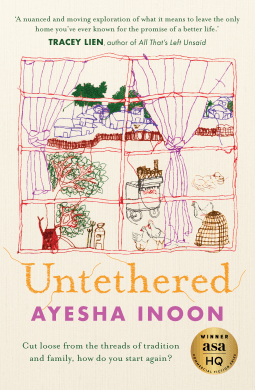
Thank you, NetGalley and Harlequin Australia, for providing me with this uncorrected proof for review.
I am even more grateful to Ayesha Inoon for writing this book – it’s a story that remains long after reading, creating the emotion and some of the understanding that is so essential to gaining any insight of a life lived through two cultures. In my Goodreads review I gave Ayesha Inoon an additional half star in appreciation for her wonderful rendering of Australia’s capital city, Canberra. I have not fed swans at Lake Ginninderra but have felt guilty at turning on the heating before the Canberra designated date – after Anzac Day! The descriptions of the streets, quiet but then birdsongs filling the air, Floriade, shopping in Belconnen at the mall, and more bring alive an Australian city. And, before this, the life in Colombo is colourful, family oriented and more – a picture unknown to me until the descriptions permeated not only Zia’s life, but mine as I read.
Zia is an appealing and endearing character whose strength helps her make such a success of both lives. She arrives in Canberra with her and Rashid’s daughter, Farah, joining him in a new life. She has had to leave behind her the results of the first choices she has had to make before embarking on the journey from Sri Lanka. She has lost closeness with her large extended family of not only parents, parents in law, sibling and sister-in-law but other relatives, their friends, and her friends. Belongings are left. Memories bound up in these are a source of regret, and it will take time, effort, and acceptance to make new memories. Unfamiliar is the environment, her new home, and more seriously, Rashid. Close to her relationship with Rashid in importance and unfamiliarity is learning to be by herself, be responsible for Farah alone, learning the isolation of a new Australian life in contrast with the past.
Inoon cleverly weaves the contrasts in Zia’s life. The familiarity of the wedding in Sri Lanka, and all it entails, is compared with the wedding she and a friend observe by the lake; learning to drive and having the opportunity to study is juxtaposed with the disappointment she felt in Sri Lanka when her studies were cut short; and the security of her past choice of clothing, then wearing or not wearing the hijab, and the loss of a scarf to hide her responses are considered through the narrative when she has the freedom to respond differently to what seemed to be simple decisions. Zia’s life is filled with new experiences and the attendant distress, elation, need to learn and adjust.
Side by side with Zia’s experiences, Rashid’s demonstrate how his need for paid work of a professional standard pervades his life. Rashid’s story is told with sympathy. At the same time as the reader is alerted to the distress and difficulties resulting in behaviour that, like Zia’s, uneasily combines elements of the past with a desire to become acclimatised to the new. Unlike her parents, Farah becomes quickly accustomed to the lack of a large family, going to pre-school and making friends. In this way Inoon signals hope for the adults who will continue to wrestle with past ideas and ideals and new ones.
The outside world is introduced through Rashid’s work, Zia’s learning to drive and friendships, and Farah’s schooling. It is also invoked through Zia’s faith with its manifestation of prayer and attending the mosque in Canberra. Less benignly, the shootings in a New Zealand mosque, reactions in Colombo and the fear that attends living as a Moslem are thoughtfully woven through the domestic story.
I found Untethered one of the most engaging books I have read this year, and perhaps for a very long time. It does have its serious implications with its narrative that promotes a greater understanding of what it is to live the lives of people such as Zia, Rashid and Farah. However, it is also a story that has its own life as that of a couple and their chil
Kerry Wilkinson The One Who Fell (A Whitecliff Bay Mystery Book 1) Bookouture, April 2023.

Thank you, Net Galley, for providing me with this uncorrected proof for review.
The One Who Fell, the first in a series, is thoroughly enjoyable. The novels that follow are further evidence that I have found a new series to value. In The One Who Fell Kerry Wilkinson brings together an appealing group of characters, some gentle but effective social commentary, a mystery to be solved and an interesting location. The first chapter is a delight – an introduction that has its comic moments, but then draws the reader into the serious nature of an interchange that impacts the main character’s life. Cheese has its moments, serious and funny along with its consumer, throughout the series. But here, it is while pursuing a choice amongst the many varieties that Millie Westlake is accosted with the question, ‘Did you kill your mum and dad?’
Millie volunteers at an age care home. Here the mystery begins when Ingrid, one of the residents, tells her about seeing a woman in white fall from a roof that she can see from her bedroom window. The residents, their behaviour and gossip are observed so well – they are people, not ‘the elderly’, they interact with vigour, they have opinions and demand that they are heard. At the same time, Millie and her relationship Jack who works at the care home is also introduced. They eat together, exchange views, and become involved in Ingrid’s mystery. Jack vapes, eats crushed chocolate and numerous other food throughout the day, relies on Millie for company at work, and has a partner, Rish with whom he is considering adopting a child. A serious personal note is introduced when we learn that Millie has a son who lives with his father and new partner. Millie has extremely limited access.
In investigating Ingrid’s claim Millie finds a broken roof tile and is visited by a local retired journalist. Guy has replaced his job with a newspaper with an online service and visits to enquire about a large black cat shape that is frequenting the township. The cat mystery is not resolved but affords an initial link between Guy and Millie which then weaves into another story. The mystery of the falling woman provides another theme in the novel. Behind her day-to-day work on the mysteries and her relationships with Jack and Guy are the haunting and distressing treatment of Millie Westlake and her affair, the accusations about her parents, and her dogged approach to maintaining her son’s happiness at the cost of her own.
The One Who Fell is an engrossing novel complete with engaging characters, good story lines and compelling questions. Although one mystery is solved, the question that is uttered in the first chapter remains and Millie’s resolution of her situation with her former husband and his new partner seems distressingly far in the future. No wonder I began the next in the series, The One Who Was Taken, immediately.
Kathy George Estella Harlequin Australia, HQ (Fiction), 2023.
Thank you, NetGalley and Harlequin Fiction, for providing me with this uncorrected proof for review.

Estella is yet another novel in which an author takes a secondary, or even the main character, from a classic and weaves a new story. As is so often the case, the female character has previously been posed against a male character who takes centre stage. In Estella, the female character takes that place, and we see her relationships with her adopted mother, a lawyer, the various men who attract her attention, and whose attention she attracts, from her perspective. In addition, Estella has some interests that are hers alone rather than associated with a love interest. At the same time, Estella is a romantic novel, both in its attention to Estella’s romantic interests, its resolution and its depiction of the landscape in which Estella grows to maturity.
Estella is adopted at three years old by Miss Haversham, the well-known character from Dickens’ Great Expectations. Estella’s story explains her cruelty and unreal expectations from life, as well as moving beyond her depiction in Dickens’ novel. Her loves of the marshes becomes entwined with a romantic figure; her pleasure in deploying her sense of humour and determination to be independent also elicits a friendship with a local boy who is well below the station to which Miss Havisham has elevated her; and her long lived friendship with Pip, also familiar from Great Expectations, is a continuing theme. Estella at first adopts Miss Haversham’s training to treat men badly, and later through her own experiences begins to acknowledge that her own feelings should be reflected in her behaviour towards others.
I have some reservations about the novel as, although it is well written, I did not find it exceptionally engaging. However, there are some lovely descriptions of the marshes and the gas light that engage Estella’s attention: one as an image of freedom, the other as a recall of her past. The desire for freedom from society’s expectations and Estella’s strength, physically and of character, are well drawn in her riding, her medical reading and experiences as a midwife. Through these images Kathy George develops a character who moves well beyond Dickens’ interpretation of the young woman who broke Pip’s heart. This new Estella is a young woman who grows throughout the novel through knowledge of herself and understanding of her past.
Kathy George has written a novel that provides a well-rounded picture of Estella, a young woman who deserved this new treatment by a writer who has brought new life to her. The novel also gives the reader some effective glimpses into Dickens’ other characters and the environment in which he wrote.
Janet Malcolm Still Pictures On Photography and Memory Farrar, Straus and Giroux, 2023

I appreciate NetGalley having provided this uncorrected proof for me to read and review. I am so glad that they approved my request.
Years ago Barbara Pym said of her novels:
I might use Christopher Isherwood’s phrase ‘I am a camera’ to describe the process by which the novelist records his impression of life. But the novelist’s camera is a selective one, picking and choosing, recording some things clearly, rejecting others altogether. And it is obvious that the camera of one novelist may record quite different things from that of another.
Janet Malcolm acknowledges that the same process has influenced her autobiography, that of a nonfiction writer, combining photographs and text. In both cases the reader is left with an exciting journey – that of the information on the page, and that of interpretation. Malcolm’s work is introduced by Ian Frazier, a friend of twelve years, who spoke with her shortly before she died. Anne Malcolm, her daughter, wrote the afterword. Both make important contributions to the text, without undermining Janet Malcolm’s own interpretation of her life, in this book, through photographs. These are a mixture of beautifully rendered pieces; reproductions which while poor, still tell a story; depictions of facets of Malcolm’s life; and photographs of others’ lives through which their story and glimpses of Malcolm’s, are woven. A short note about the author provides one story of this captivating author; Malcolm’s own text and choice of photographs tells another; yet another can be glimpsed at times through interpreting the photos; and most importantly, Malcolm abandoned her attempt to write a formal autobiography which she found unrewarding, and has used photos of events and people, from which she emerges in glimpses as well as with a full story. The whole is an engrossing read in short pieces associated with a photograph.
The first photographs, which juxtapose that of a Janet as a small child, in a pose that reflects the one of a man in his sixties, is written about as if Malcolm is outside the child and what she refers to as an incongruous assertive pose. Malcolm then moves into her first memory of her life, a festival of girls in traditionally poses. A picture that Malcolm wanted to join. And then she gets to the subject of the title of this piece – Roses and Peonies.
A handwritten note on the back of the second photo is ominous – ‘Leaving Prague, July 1939’. But then we are alerted to the expression on the child’s face in almost an amusing aside: she is grumpy (and variations of this description) while her parents are smiling. Malcolm’s Czech theme is introduced, and the family’s move to America. And for Malcolm it was a move, a fortunate one, rather than in their understanding, an escape. The subtlety of the words and photograph are so indicative of what is to come. Stories that are so restrained at times, stories that open a realm of interpretation and understanding of events and at other times so strong in language and opinion that they are almost offensive.
Reading Janet Malcolm’s Still Pictures On Photography and Memory is an amazing journey, one that makes me regret not having read her previous work. I am grateful to have been given this opportunity by Farrar, Straus and Giroux and NetGalley.
Suzanne Ferriss Lost in Translation Bloomsbury Academic, 2023.

Thank you NetGalley and Bloomsbury Academic for providing me with this uncorrected proof for review.
Lost in Translation is a BFI Film Classics publication aimed at ‘introd[ucing]. Interpret[ing] and celebrat[ing] landmarks of world cinema’. Suzanne Ferris has fulfilled this task in an engaging and through manner, the detailed information she assembles giving the reader a valuable analysis of the film.
I particularly relished the attention given to the screen shots and have made it a mission to return to the film with this additional information at hand. Although the film can be appreciated without it, what a wealth of understanding this analysis brings to a film that does not give the audience the ‘grander, fiercer – danger’ demanded by critic David Denby, but dares differently. Ferriss does not ignore another source of criticism, the treatment of Japan and Japanese people and culture – there is a comprehensive consideration of this feature in the last chapter which covers reception of the film. This chapter was another which I found immensely worthwhile reflecting upon.
The chapters cover the focus of the film: Trip Planning, Arrivals, Accommodations, Sights, Departures and Reception. There is an introduction that places Lost in Translation amongst the other films Sophia Coppola has completed – full length and short films, videos, commercials, an opera and a Christmas special. We are introduced to the significance of the screen shots through the introduction. This places the reader at the beginning and end of the film before taking them through the process through which Coppola brings her idea to fruition – a process that is developed not only by Coppola but by Ferris’s rendering of her analysis of Lost in Translation. The stars are introduced – but at the same time the chapter headings ensure that the reader acknowledges what Coppola is doing. Ferris keeps in our minds that the film is about planning, arrivals, sights and departures, not to be forgotten while she tells us about Bob Harris and Charlotte, their backgrounds and aspirations.
The book includes an informative bibliography, comprehensive notes for each chapter; a list of credits; lists covering additional music and Japanese casting; TV clips: and a host of photographs. Ferris has cleverly assembled the material into a work that gives the reader an excellent understanding Coppola’s aspirations and implementation of these in Lost in Translation.

Beverley Adams Ada Lovelace The World’s First Computer Programmer Pen & Sword History 2023.
This is the second of Beverly Adams’ biographies that I have read. Once again I am impressed with the way in which Adams has assembled her material to advance an enlightening and plausible account of a woman for whom there is a meagre amount of material. The narrative provides a thorough insight into Ada Lovelace’s childhood as the daughter of Lord Byron and his disaffected wife, Arabella Milbanke; her marriage and friendships; and the historical context in which Ada lived, studied and formulated the first computer algorithm. The emphasis on Byron could be considered problematic. However, to find a new way into Byron and his work and troubles through his marriage and daughter is a benefit rather than a shortcoming. At no time does Adams lose sight of her focus on Ada – her parents’ and their response to each other is essential to her story. This is one of genius, sadness and at times, some surprising levity and foolishness. The Ada Lovelace conjured up by Adams gives us a rounded figure that resonates.
Adams acknowledges that her interest in Lord Byron was a feature in choosing Ada Lovelace as another of the strong women she wants publicise. She suggests that both had colourful lives, and while one was a poet of renown, the other had to fight to achieve recognition in the field of mathematics and computer science. Her mother was instrumental in Ada’s commitment, which she saw as reflecting her own interests, and avoiding those of Ada’s father – a source of public distress and condemnation from soon after Ada’s birth. Byron left the mother and daughter when Ada was four weeks old. Her mother spent her lifetime ensuring, with a somewhat heavy hand, that his characteristics were never to be reflected in Ada’s behaviour. The parents and their shortcomings, larger than life personalities, determination and conflict were to control Ada until her marriage put her under another less than benign wing, that of Lord Lovelace.
Despite the control exerted by her family, society’s expectations, her own failings and questionable choices, Ada’s mathematical ability flourished. There amount of detail that Adams has managed to find is laudable, although it would have been wonderful to have more about the way in which Ada conducted her work. However, what is described provides a satisfying tribute to Ada’s ability. Her ill health, relationships with her mother, friends, fellow mathematicians, and father’s life and absence from hers make a compelling story.
The almost insurmountable absence of material about so many women’s lives makes writing about those that are essential to our understanding of women’s capacity a heavy task. Adams has undertaken this task in two instances and her work provides an example for others who want to write about a woman of note about whom little is known. By making these lives so accessible through the Pen & Sword series Adams has done an estimable job – the women have not only been celebrated, but in a form that makes information about their talents available to wide range of readers.
Ada Lovelace The World’s First Computer Programmer is complete with a bibliography, notes and photographs. Adams also provides a valuable discussion of Ada’s mother’s contribution to her problems as well as Ada’s ability to meet the challenges posed by her health, brilliance and family background.
Carolyn Purnell Blue Jeans Bloomsbury Academic, 2023.

Thank you, NetGalley and Bloomsbury Press, for providing me with this uncorrected proof for review.
Blue Jeans is another wonderful addition to the Object Lessons series. Carolyn Purnell brings the reader into a world that comprises the horrors of indigo production for the beloved blue jeans, the political ramifications of wearing blue jeans and the changing fashion of this durable and enduring garment. The harrowing nature of the way the blue was obtained for those early jeans is hard to dismiss, and wearing blue jeans might not ever be the same for some readers. But what a wealth of historical content is made available through the blue jean – and how deftly Purnell weaves solid historical content with a story that keeps moving along. This is an engaging read, and an educational one. I found Blue Jeans a most informative and thoroughly researched publication.
I began the book with recall of my beloved 1970s Amco jeans and women busily adding beads and embroidery to jeans while they listened to political debate at a university politics camp. I would never have treated my Amcos thus, but Purnell talks of embroidery while the Amco (an Australian brand) does not make it past the more well-known Levis etc. But to be fair, the Levis have a grander story: Purnell weaves her understanding of Levi Strauss binary theory cleverly into the politics of blue jeans. It is the ability to draw upon a host of ideas to tell her story that really stands out in this volume. See Books: Reviews for the complete review.
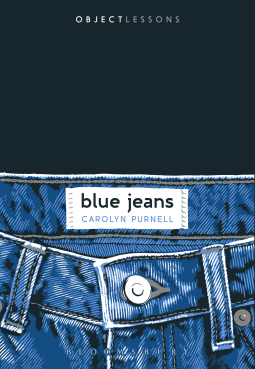
There are three sections, as well as the introduction, A Versatile Garment. The first section concentrates on blue: indigo production, blue dye chemical production, the blue-collar worker and blue blood – community around the jeans and the pottery factories. Cut is the second section and here the fashion industry is given attention. However, it is not only the fashion of the catwalk, but this discussion of fashion also follows the politics of blue jeans and the styles that were affected, including the way in which they were used to make political points. Section 3 talks of comfort – for this was the huge benefit of blue jeans – they were comfortable work clothes. Purnell acknowledges this beginning with some excellent detail of the way in which jeans became the garment of the worker in many different occupations. She goes on to talk of the distressed jeans, those that are hardly held together with the small amount of fabric remaining after being made more fashionable, the ‘mum’ jeans, the huge variety now available and the lack of comfort in having to purchase the best for one’s purpose.
Each chapter includes thorough notes, which are worth reading in themselves in some instances. Screening jeans in Bollywood? Adapting and Evolving? See-Through Plastic jeans? Jeans as powerful? Bizarre new fashions in jeans? These are some of the intriguing topics which can be followed up through the bibliographically detailed notes. But first, read the book. It is well worth it even though I look upon my jeans rather differently.
Regan Penaluna How to Think Like a Woman Four Women Philosophers Who Taught Me How to Love the Life of the Mind Grove Atlantic, Grove Press 2023.

Thank you, NetGalley, for providing me with this uncorrected proof for review.
What a clever and engaging style Regan Penaluna has used to present her chosen women philosophers! She weaves her story as a woman philosopher into that of the four who are the focus of her work: Mary Astell, Damaris Masham, Mary Wollstonecraft and Catherine Cockburn. The reader is encouraged at every step to think like a woman, as, while the main narrative delivers the detailed stories of the four, Penaluna’s story gives them immediacy. Her story provides the understanding that is essential to thinking about women’s lives as a reference for past and present. Penaluna’s presentation gives us an insight into a present that links to the past. See
The format irretrievably links the historical situations encountered by the four chosen women philosophers with that of the modern-day philosopher. Their stories become ever present, they are not something that is only of the past, their experiences are not of their time: they are the experiences of women philosophers, whatever the period in which they occurred. This deft weaving of relationships that impinge, children who must be cared for, experiences in the world that tell a woman her abilities are less then, inferior, are easily dismissed as they are not worthy of serious long-term thought are conveyed through the four historical figures and given immediacy through events in present day Regan Penaluna’s life. However, she does not intrude, she is too deft for that, but we are well aware that thinking like a woman infers recognising that history has something to teach, and alas the evidence is all around us.
Although Penaluna is keen to avoid an entirely biographical style, the four women philosophers’ stories are replete with information that would enhance any biography. Her own story begins in a lecture where her ability, along with that of other women, is put in doubt. Could it be that the lecturer whom she had thought of as an ally was suggesting that women were not as good as male philosophers? So, with the author we are flung into a life beginning at twenty-five, a career path chosen, and at a university lecture in that career path. From here, her childhood becomes one of recall about ideas, set into the physical scenery by which she was surrounded. But ideas are the driving force, and these are what resonate through the biographical entries of the other women.
The chapters are: A Woman Thinker; On the Prejudices of Philosophers; Discovery in the Margins; A Room of Her Own; Her Own Enlightenment: The Women behind the Men; “Fitts” and Starts; The Demons of Doubt; Love and Loathing; Heroes; Into the Hands of Virginia Woolf; Bedtime Stories; My Animal Self; Monsters; and Muses. An intriguing map to the book, indeed. There are detailed notes, which include bibliographical information.
Astell (1666-1731) used her philosophical writings to support her living in London away from her family in Newcastle. Her family chose to educate her, unlike the situation for Masham (1659-1708), whose place within an intellectual family highlights the discrimination she endured while superficially leading a life in an enlightened atmosphere. Despite this, the friendship between Masham and Locke flourished through the philosophical debates in their letters. Wollstonecraft’s life becomes a revelation of that of a philosopher beyond the well-known texts. Cockburn, a new mother, highlights some of the experiences of the author, while also making an impact with her modern approach discovered through her letters. An enlightenment thinker, she raises the all too familiar complexity of women’s duty to nurture, which appears in all ages to omit that of a man’s duty to do so. And this from a woman born in 1679.
Philosophy was always an area of study that I found impossible to come to terms with. This book is such a wonderful insight into the difficulties I found – where were the women who would have been enlightening? For those for whom philosophy was a world well understood, Penaluna brings new and valuable insights. For feminists who want to read and understand another part of history and its application to the present, alongside our lives and their application to the past, How to Think Like a Woman Four Women Philosophers Who Taught Me How to Love the Life of the Life of the Mind is an impactful testimony.
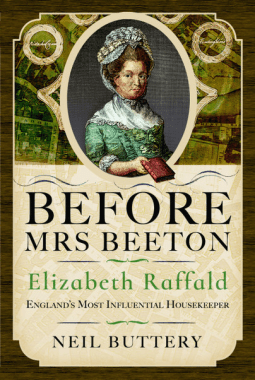
Neil Buttery, Before Mrs Beeton Elizabeth Raffald, England’s Most Influential Housekeeper, Pen & Sword, Pen & Sword History 2023.
Thank you, NetGalley and Pen & Sword for providing me with this uncorrected proof for review.
Before Mrs Beeton Elizabeth Raffald is another of Pen & Sword’s enticing stories about a fascinating time and character written in the familiar accessible style of the Pen & Sword author. Because the style is accessible do not feel that perhaps the information lacks verisimilitude. Easy to read the narrative may be, but there is such a host of information that we are fortunate that the style gives us the best opportunity to understand and relish the story that unfolds.
Mrs Beeton, of ‘first catch your hare’ fame is put into historical perspective by this addition to the history of food, recipes, kitchens and the drudge and delight of cookery. Drudge it certainly was in the time of Elizabeth Raffald, and Neil Buttery ensures that we feel the enervating, time consuming job that it was to bring to fruition the enormously long and elaborate recipes that were encountered in the large home, and later businesses, that Elizabeth Raffald commanded.
The acknowledgements make interesting reading, adding to the way in which we can understand the writer, his dedication to his subject and researching her and her environs, his own interest in cookery (he came upon her while cooking recipes from English Food by Jane Grigson), and his enthusiasm for trying even those of Elizabeth Raffald. There is a useful table of contents, pointing to the years in which Raffald worked in various capacities; notes; and a bibliography.
Buttery refers to Raffald as ‘one of the most significant people in British culinary history’ and ‘a wonderful, creative and indefatigable woman’. Although this story is largely unknown, her recipes are familiar: curd tart, Yorkshire pudding, beef and oysters, trifle and jugged hare. Less familiar are some of the recipes Buttery explains throughout the text. The value of doing so is in drawing to modern cooks’ attention the amount of time that cooks of Raffald’s era had to spend on preparation. For example, early in the narrative the recipe for biscuits explains that eight eggs must be beaten for half an hour, with the rind of lemon added, beating then continues for another hour! Fortunately the beating diminishes after this as flour and rosewater are added and then the mixture is baked. Raffald and housekeepers like her could then attend to their other chores – adopting the responsibilities of employers by encouraging other servants to attend church, as well as ensuring their more ordinary needs of food and boarding were provided.
A great deal of information is provided on the environs, household, town, business and social in which Raffald worked. This changes as Raffald progresses from high levels of success to her ignominious end in the coffee shop. However, whatever gloom about the life of this intriguing woman accompanies this fall, the success of her cookbook with its numerous editions and followers is an optimistic story. This is a narrative well told, interesting from the perspectives of a history of this period in England, and that of a woman of far-reaching influence.
Class Reunion and After the Reunion Rona Jaffe
From the domestic to the public – fiction related to the cookery content of this week’s blog.
Rona Jaffe’s Class Reunion and After the Reunion, published in the 1980s, are a precursor to the more strongly realised feminist novels that have become an important part of the fiction landscape of the 1990s and, now, 2000s. They use a comfortable premise to draw the reader into thinking about the ways in which women in the 1950s were settled into a familiar lifestyle, in which it was demanded they flourish. Some did. Many did not. Betty Friedan wrote about the latter, the women who knew that something was missing in their lives, and, because of the women’s movement, eventually realised that their feelings were valid and reciprocated by many other women.
Jaffe’s first novel begins with a reunion at Harvard in 1977. Four women who had met at Radcliffe in the 1950s meet at the reunion: Daphne ‘The Golden Girl’; Emily, one of the few who was allowed to attend as part of the Jewish quota; Chris, evading her alcoholic mother; and Annabel, ahead of her time. Of course, these short statements do not do justice to the four. The young women who met at Radcliffe, and whose time there is described in Class Reunion, were far more. The expectations they had of themselves, their education, other women and men were complex. Their individual attempts to move beyond 1950s expectations provide four initially intertwined stories and their eventual resolution. For a 1950s young woman, graduate of Radcliffe, academically bright, interesting and capable this resolution was marriage. This has not turned out to be the fairy tale the women have been led to expect, and, after their meeting at the reunion, each leaves with a resolve to take back for themselves some of the dreams with which they began their years at Radcliffe.
In After The Reunion it becomes clear that some of these cherished plans and hopes for the future are difficult to realise. Where The Reunion takes the reader through the 1950s, After The Reunion is set in the late 1970s and 1980s. Marriages have collapsed and the women need to become financially independent. None has really been educated to take up a profession, so, although they are certainly not poor, they have to use their wits and innate abilities to survive. Unlike their male counterparts and husbands whose education at Harvard made them professionals such doctors or lawyers, their education fitted them to be wives and hostesses to professional partners. Their role was to contribute to the marriage in a supportive capacity, and when the marriage ends it is clear that men were indeed educated to have careers; and women to have jobs until marriage and children.
Each of the women has married and had children. Each has fulfilled the role that the 1950s led them to expect that they should. The children provide additional story lines, contributing to understanding the parents, as well as a 1980s understanding of changes in male and female education and expectations.
The feminist themes are there, and, to the reader who wants something more than a romantic story, compelling. However, remarriages in most cases do push a romantic theme, which often outweighs the ideas about women’s role and the limits imposed by their upbringing, education and societal expectations. At the same time, the women’s successful resolution of the problems that were far larger and more ingrained than they realised in the first volume, do provide strong women characters who have overcome the full impact of the 1950s.
Rona Jaffe has written two novels that continue to resonate with women who expect more than a romantic story, but provide a comfortable happy ending for Daphne, Annabel, Chris and Emily.
Liz Nugent Strange Sally Diamond Penguin General UK – Fig Tree, Hamish Hamilton, Viking, Penguin Life, Penguin Business, Sandycove, 2023
Thank you NetGalley for providing me with this uncorrected proof for review.
Liz Nugent’s Strange Sally Diamond has introduced me to a writer that I shall want to read again. This novel is a wonderful, but heartbreaking, amalgam of social commentary, detailed and perceptive character development and an intriguing story line. The bizarre beginning —Sally attempts to cremate her father in the household rubbish after his death— becomes a feature in the news that precipitates a narrative that gradually unfolds the past that has led her to this, to her, normal procedure.
A world in which a person responds literally to information and advice is uncomfortable, for both the perpetrator and her community. The reason for Sally’s response to the community, friendships, challenges and distressing events is a difficult read, and a journey that some readers might not want to try. It is not an easy journey, but Nugent has written a novel that in many ways demands to be read. Crucial to understanding Sally and her community is recognising the way in which even the seemingly best of acts can be questioned, and in which even the warmest of friendships can be doled out. These are provisos to which Sally cannot relate and is tragically unaware. Even the reader can be bewildered before realising that Sally really is on probation – in the community, to her friends, and hauntingly, to the family who fostered her.
Kindness, friendship and acceptance come at a price, and Sally learns this over the course of the narrative. To me, this was the crux of the novel, as intriguing as the narrative and characters were. While secrets were being unearthed, characters’ motivations being unravelled, and Sally’s adaption to living life as an acceptable member of the community, the background unease prevails. At times it is almost imperceptible, and a happy resolution seems possible. For some characters perhaps this will occur.
Sally’s world is filled with hope, and the abandonment of hope. However, a scene that is poignant, but holds the seeds of a positive outcome to the challenges of being part of Sally’s family and its heartbreaking story ends the book. A happy ending of a sort, with the possibility that a tragic family might foster a talented member whose story might challenge the narrative laid down from the past.
Strange Sally Diamond is a novel with a lasting impact. So many issues are raised, with questions about love and control vying with the practicalities of dealing with mental illness – or is it just an unwillingness to conform? Sally Diamond is a character whose story is difficult to set aside. But it is also a novel in which further investigation of the complexities requires time to deal with the challenges of the first reading. To repeat my first observation, this novel is wonderful but heartbreaking.
Tracey Enerson Wood The President’s Wife Sourcebooks Landmark, 2023.
Thank you, NetGalley, for providing me with this uncorrected copy for review.
The President’s Wife is an apt title, encompassing as it does the part of Edith Galt’s life where she becomes instead, Edith Wilson, First lady. Galt is her married name – that of her first husband, a jeweller whose business she retrieved from failure after his death. At the end of President Woodrow Wilson’s life Tracy Enerson Wood’s novel shows Edith redirecting his failing ability to command, perpetuating her role as an able person in her own right. Edith’s capability, despite being known as the jeweller’s and then, the President’s, wife makes an engaging story. Edith Bolling, Mrs Galt, the First Lady and the widow of the twenty-eighth American President are all given attention in the narrative. Tracy Enerson Wood weaves Edith’s background into the present, illustrating Edith’s capacity for the work that she was to undertake in maintaining Woodrow Wilson’s presidential responsibilities until they left the White House. However, these early years never intrude on the essential story, that of the First Lady to the Woodrow Wilson Presidency from their marriage in 1915 until the end of this presidency in 1921.
This is a political love story, replete with quotes from the romantic letters Woodrow Wilson write during their courtship and marriage. The introduction and last glimpse of Edith, features one of the symbols of their marriage, their play with names. This illustrates one of the important themes of the novel – the close nature of their marriage, despite their role as President and First Lady during a war time presidency which impacted on their time together and the nature of their interaction during that time.
The political narrative is really well worked, combining imaginative conversations, thoughts, and interactions, together with well-known events. The work leading to Wilson’s dream of a League of Nations is particularly well drawn. Wilson’s teeth gritting at the delays and the flamboyant international celebrations, meetings and journeys considered necessary after the end of the war are made thoroughly understandable to the reader. As readers we almost live the mixture of the lives led by the politicians, diplomats and bureaucrats during this time. We are also drawn into the terrible reality of the war through visits to hospitals and soldiers’ interaction with the Wilsons.
The issue of suffrage is covered – and Edith’s somewhat cursory understanding of the nature of this political movement. She concentrates on states’ rights and upbraiding the suffragists’ tactics to win votes – or even a hearing. Together with this uncomfortable insight into the politics of equality is that into race relations. So, at the same time as weaving a story, a reader gains an understanding of the enormity of the task these two movements faced, and remain facing, in achieving their aims.
This novel lacked the fully engrossing impact I would have liked. However, The President’s Wife is an informative and agreeable read.

Charlotte Booth The Movie Lover’s Guide to London, Pen & Sword, White Owl, 2023.
Thank you, NetGalley and Pen & Sword, for providing me with this uncorrected proof for review.
I imagine having this book starting in a backpack while wandering around London, and then diving for it so often that it has to stay in my hands. Or, beside me to read while I’m having a coffee before starting on the next interesting location that it encourages me to pursue. The Movie Lover’s Guide to London is also just a really good read for a person interested in films, locations, excerpts of plots and details of locations associated with this wonderful city. Going to the movies, as well as walking around London, will be doubly interesting with the wealth of information Charlotte Booth packs into this guide.
Do not feel that you will be subjected only to various iterations of Harry Potter and Mary Poppins, although the former appears in locations including Australia House in The Strand (and where, standing in the location, I was told about its fame associated with Harry Potter several years ago). This is one of the more interesting features of the book – for London lovers so many of the locations will be ones with which you are familiar. You will be adding to your connections with locations that seemed so familiar there was nothing left to learn. However, there also many locations that will not be familiarly associated with films – some have changed, some have not been subjected to continual storytelling, and others will be new even to the most avid filmgoer, or London observer.
The introduction is innovative – it is a short history of the camera, the process towards the moving image, sound, colour, 3D and IMAX, purpose-built cinemas and the picture palace in contrast with ‘the fleapit’ and the economic impact of the Covid pandemic. Then we get to the most familiar feature of Sword and Pen publications – the determination to make the material accessible to readers. This does not mean that you will be confronted with a simplistic narrative, rather that you will be provided with an intelligent, detailed and enticing narrative that you will understand and enjoy. Booth begins by explaining how the book can be used. Postcodes, rather than maps are used to define areas and precise locations. There are choices about how to approach the topic: firstly the movie section provides the reader with locations based on the movies they want to follow up; the second is themed tours which can comprise locations associated with a particular genre of movie, or secondly, the areas in which locations can be found.
A short description of the action that takes place is given for each location. So, after placing the British film industry into a financial context by telling the reader briefly about the financial successes nationally and internationally of films such as the Harry Potter franchise, Lock, Stock and Two Smoking Barrels, and Paddington, the use of Senate House, Malet Street begins the movie location tour. Senate House was a location for 1984, and Booth provides both history of the building and a brief commentary on how the building was used in the film. The tour proceeds throughout London, together with location and a brief on plot and scene.
Some locations are used for a variety of films, and booth has chosen to repeat some of the information about the location, which is not necessarily part of the film detail, each time she refers to it (Aldwych Station stands out here). I wondered whether there was a better way to do this – for example, an appendix of frequently used locations with the information peculiar to that location but not the film. However, other readers might be pleased to be able to follow a trail without looking elsewhere in the text.
Tours such as the Blue Plaque Tour and the Retro Cinema Tour, The Movie Pub Crawl and Church Tour demonstrate the variety of information packed into this engaging book. Many readers will have visited many of the locations Booth writes about, without realising that they had served as locations for films they have seen, heard about or not wanted to see. The variety of films and tours covered allows for each of these responses – to be cliched, ‘there is something for everyone’. However, the book is far from cliched, with its combination of fascinating details about locations, scenes and the films that can be investigated with a self-guided tour around London with The Movie Lover’s Guide to London in your hand.
Kevin Landis One Public New York’s Public Theater in the Era of Oskar Eustis
Bloomsbury Academic, Methuen Drama 2022.
Thank you, NetGalley, for providing me with this uncorrected proof for review.
Land Acknowledgement
We acknowledge the land on which The Public and its theaters stand is the original homeland of the Lenape people.
Kevin Landis’ history of One Public, the New York theatres Delacorte in Central Park and The Public, Lafayette Street in the East Village is replete with nostalgia; politics; well-known and not so well known theatrical names – directors, writers and actors; current events and ideology woven into financial and business needs; and an introduction and then immersion into the joy of learning more about a thriving theatrical creation in which ideological demand to produce works about hope and a better world is woven side by side with the practicalities of fund raising, purchasing buildings, and even ticket sales.
Two features will resonate with the Australian reader: the acknowledgement with which this review is introduced, and the role of Shakespeare in bringing theatre to a broad range of people – in the case of Shakespeare in the Park, free. In Australia there is a similar acknowledgement of country and the traditional owners, and Shakespeare is the source of numerous inventive productions throughout the country. These include Shakespeare by the Lake in Canberra and the innovative Bell Shakespeare Company. One of the features of Shakespeare in the Park that Landis describes are racoons that become part of the theatrical events, and a duck nest that remained on stage throughout a season. Kangaroos do appear in the Australian capital, but to my knowledge have not interrupted Shakespeare on the Lake. However, peacocks made an elegant addition to a production of A Midsummers Night Dream at the at the New Fortune Theatre at the University of Western Australia I attended many years ago.
The paragraph above is rather discursive and might seem out of place. However, I believe that readers will have their own Shakespeare production stories, demonstrating the universality of the narrative Kevin Landis has to tell. His story, connecting the theatre and its work to the community in which performances take place, inform the way in which readers can approach One Public – the theatres and Kevin Landis’s work.
In the 425 Lafayette environment the link with the community is achieved through architecture and, instead of the racoons, the presence of the subway. The story of the development of this theatre is as fascinating as the (to me ) more familiar Delacorte and Shakespeare in the Park.
In this section of the book there is a stronger attention to the principles that underlie the theatres, and whether these are a reality, or being followed. Or whether they can in any pure sense. The discussion of access, by playwrights, actors and directors as well as audiences is particularly well realised here. The importance of the partnership of Oskar Eustis and Tony Kushner is central to the discussion.
Throughout, anecdotal statements bring the theatres, productions, the personnel and the ideas of One Public to life. A case study of Cullad Wattah provides more insight into the selection of a play, actors, director and realisation on the stage. However, the special attention given to Here Lies Love, Fun Home and Hamilton also provides detail about the work and aspirations of One Public. At the same time, the debates over funding, representation, audience reach and maintaining the theatres through the Covid 19 pandemic ensure that the whole theatre world is explored.
A section on Courting Controversy begins with an exchange on Facebook in 2021 and goes into the history of One Public and the idealistic goals it adopted. This is a worthwhile read in itself, with its outlining of the financial and budgeting roles that underpin bringing One Public productions to fruition. Social justice, not for profit, the lure of Broadway and the success there of Hamilton are a mixture that Landis places before the reader – like the stage productions in which we become involved through his descriptive and detailed narrative, the less exciting, but none-the-less important, features of the finances are rolled out.
The epilogue comprises an interview with Oskar Eustis that makes a fine ending to this thoroughly inspiring book. On a practical note, the endnotes are extensive and detailed, the notes and sources section explain the process of bringing Landis’s oral history archive to a wider public and provide details of the people who have contributed though interviews and anecdotes.
Kevin Landis has provided me with a few days’ inspirational reading. Inspirational because of the social justice idealism underlying the work of One Public, but also because of the manner in which Landis has brought together such a wealth of information. The narrative around the Shakespearean productions will resonate, but so too will references to Angels in America, Hair, Hamilton, and the heartrending White Voices (other readers will have their works with which they are familiar). This is a book worth reading and rereading. I am thrilled to have had my first read and look forward to another.
Michele Moody-Adams Making Space for Justice Social Movements, Collective Imagination, and Political Hope Columbia University Press, 2022.
Thank you NetGalley for providing me with this uncorrected proof for review.
This book is so enlightening, beginning with its title, through its chapter headings to the clear way in which Michele Moody-Adams explains the beginnings of her work in the detailed acknowledgements. Here she refers to her long-term interest in moral progress – ‘towards producing a more just social world’. This is a wonderful introduction to a subject with so many complexities!
Moody-Adams has written and presented papers from 1999, providing a well-considered background to a book that argues that of philosophical theory should not supplant progressive social movements as the catalyst to developing understanding and the development of moral progress. I feel as though Moody-Adams is bringing the way in which social reform takes place back to a solid beginning. So often the work of activists has been neglected in favour of theory in so many areas of social reform. The value of people, their actions and beliefs, together with recognition of the immeasurable value of hope burgeons under Moody-Adams’ hand. This book is an invaluable asset in achieving an understanding of achieving social justice.
Social Movements, Collective Imagination, and Political hope is a book that justifies returning to time and again. This is what I have done, and believe that this way of digesting the material has assisted in my understanding as a non-philosopher. Martin Luther King’s belief that theory alone could not resolve racial injustice is one example Moody-Adams draws upon. More recently, the response to the video of George Floyd’s murder demonstrates the value of protests of the active rather than theoretical kind. Another example used is the women’s movement response to sexual harassment.
Moody-Adams questions John Rawls’ concept of social justice and its impact on what actually happens. She is keen to consider, and discount the argument that social movements can be identified by irrationality, impulsiveness and susceptibility. Of course, some are – so how do those which are not identify themselves as valuable and different? A definition is provided, and this, together with the evidence that irrationality informs some of the most recent events in American movements, is worthy of debate. Moody-Adams provides the tools to enjoin in such debate.
The sections cover Social Movements and the power of Collective Imagination, and The importance of Political Hope. The latter would strike a particular chord in those who are active in party, as well as movement, politics. The chapters in this section are The Empire of Affect and the Challenge of Collective hope and Hope and History. Even a cursory glance through the bibliography provides an insight into the breadth of this work. The works cover books familiar from feminist texts, texts about racism, and general manifestations of injustice; those concerned with party political behaviour and democracy; fictional texts such as The Handmaid’s Tale; Judith Butler’s Excitable Speech: A Politics of the Performance; Erich Fromm’s The Revolution of Hope; a reference to Thomas Jefferson – A Film by Ken Burns; reference to the act of pulling down statues; and works about philosophy as well as philosophical treatises. At the end of the book are detailed notes on each citation in the chapters.
I particularly liked the hope engendered by the arguments for activism and the defense through well-reasoned argument for social movements in Moody- Adams’ book. This seems to me to be an important breakthrough after a period where academic theory seemed to take an inordinate precedence over the actions by ‘ordinary’ citizens that can be taken to effect change. Theory does have an important place; it serves as a valuable foundation to understanding. However, the warmth I feel for the activism Moody-Adams describes so thoughtfully is likely to be replicated in any reader. Moody-Adams has shown so skilfully the very special place social movements, imaginative responses and hope have in moral progress.
This review has been posted ahead of the blog which refers to it. The blog is still being written to include a review of The Short Life & Long Times of Mrs Beeton by Kathryn Hughes. I found this on my shelf and thought it would make a useful addition to the forthcoming blog which covers both books and additional excepts about cooking and cookery.
Neil Buttery, Before Mrs Beeton Elizabeth Raffald, England’s Most Influential Housekeeper, Pen & Sword, Pen & Sword History 2023.
Thank you, NetGalley and Pen & Sword for providing me with this uncorrected proof for review.
Before Mrs Beeton Elizabeth Raffald is another of Pen & Sword’s enticing stories about a fascinating time and character written in the familiar accessible style of the Pen & Sword author. Because the style is accessible do not feel that perhaps the information lacks verisimilitude. Easy to read the narrative may be, but there is such a host of information that we are fortunate that the style gives us the best opportunity to understand and relish the story that unfolds.
Mrs Beeton, of ‘first catch your hare’ fame is put into historical perspective by this addition to the history of food, recipes, kitchens and the drudge and delight of cookery. Drudge it certainly was in the time of Elizabeth Raffald, and Neil Buttery ensures that we feel the enervating, time consuming job that it was to bring to fruition the enormously long and elaborate recipes that were encountered in the large home, and later businesses, that Elizabeth Raffald commanded.
The acknowledgements make interesting reading, adding to the way in which we can understand the writer, his dedication to his subject and researching her and her environs, his own interest in cookery (he came upon her while cooking recipes from English Food by Jane Grigson), and his enthusiasm for trying even those of Elizabeth Raffald. There is a useful table of contents, pointing to the years in which Raffald worked in various capacities; notes; and a bibliography.
Buttery refers to Raffald as ‘one of the most significant people in British culinary history’ and ‘a wonderful, creative and indefatigable woman’. Although this story is largely unknown, her recipes are familiar: curd tart, Yorkshire pudding, beef and oysters, trifle and jugged hare. Less familiar are some of the recipes Buttery explains throughout the text. The value of doing so is in drawing to modern cooks’ attention the amount of time that cooks of Raffald’s era had to spend on preparation. For example, early in the narrative the recipe for biscuits explains that eight eggs must be beaten for half an hour, with the rind of lemon added, beating then continues for another hour! Fortunately the beating diminishes after this as flour and rosewater are added and then the mixture is baked. Raffald and housekeepers like her could then attend to their other chores – adopting the responsibilities of employers by encouraging other servants to attend church, as well as ensuring their more ordinary needs of food and boarding were provided.
A great deal of information is provided on the environs, household, town, business and social in which Raffald worked. This changes as Raffald progresses from high levels of success to her ignominious end in the coffee shop. However, whatever gloom about the life of this intriguing woman accompanies this fall, the success of her cookbook with its numerous editions and followers is an optimistic story. This is a narrative well told, interesting from the perspectives of a history of this period in England, and that of a woman of far-reaching influence.
Elizabeth Cobbs Fearless Women Feminist Patriots from Abigail Adams to Beyoncé Harvard University Press, Belknap Press, March 2023.
Thank you, NetGalley, for providing me with this uncorrected proof for review.
Elizabeth Cobbs expands the way in which feminism is used to investigate women who call themselves feminists, and some who do not, worked to improve ‘their country’. This, as Cobbs acknowledges, is a broad definition, and one that I do not endorse, although I do acknowledge that society (and therefore country) would be improved if women’s lives were improved – the work that I think of feminists performing. However, rather than let the broadness of Cobb’s view limit the way in which this book is read, I found it an energising read, with a lot with which I could identify, some that left me questioning (Phyllis Schlafly a feminist?), engrossing stories of marvellous women, horrendous stories of the treatment of women and the beliefs that underlie such treatment, and a veritable wellspring of information. In short, Fearless Women is a worthwhile read, a contribution to debate about feminism, and a history of women’s endeavour.
Cobbs adopts an interesting approach – two women feature as the major figures in each chapter, each contributing to the theme of the chapter, usually in markedly different ways. The chapter headings provide useful information, ranging from the first, ‘The right to Learn’ featuring Abigail Adams and Abigail Bailey; through ‘The right to Speak’ with Angelina Grimke and Harriet Jacobs; to Frances Perkins and Ann Marie Riebe taking up ‘The Right to Earn’, and ending with Beyonce Knowles-Carter and the Women of Me Too providing a face to ‘The right to Physical Safety’. ‘The Right to Compete’ features Phyllis Schlafly and Muriel Siebert (the first woman to have a seat on the New York Stock Exchange). Familiar themes such as ‘The right to Lobby’, ‘The Right to Vote’ and ‘The right to Equal Treatment’ feature the following partnerships: Susan. B. Anthony and Elizabeth Packard; Mary Church Terrell and Rosa Cavallari; and Martha Cotera and Yvonne Swan. A prologue and epilogue, notes and illustrations, are valuable and complete the book.
Cobb explains her approach in the prologue, explaining the broadness of her choices in a book about feminism, feminists, activists on women’s behalf, and their own; her commitment to providing an account of women who made or tried to make the changes to improve women’s lives, and the impact on individual women; her reasons for her selection of particular women and causes; and providing a map of progress on the one hand, and the continuing fight for equality on the other.
Did I agree with everything Elizabeth Cobbs said? No, but that really does not matter. What I found was an engaging narrative that fully represented a range of ideas and women who have had an impact on women’s lives. I found a comprehensive account that made horrific reading at times, and an intensity to the stories of individuals that can only judge the women heroines. I found a book that is well worth reading, discussing and fulminating about while being so impressed with Cobbs’ inspiring way of drawing one into thinking deeply about the women’s movement, the causes women adopted, and the way in which their successes can be built upon.
Kathy Kompare and Stephanie Johnson True Tales of TWA Flight Attendants Telemarchus Press, 2022.
Kathy Kompare and Stephanie Johnson have assembled a variety of short stories about the early years of TWA, concentrating on their impact on the flight attendants. Reading these stories is like having a conversation with a bubbly flight attendant, with a dash of seriousness thrown in to keep the central the light-hearted approach realistic. Although the stories concentrate on the pleasure of being a TWA flight attendant, there are serious moments as well, adding to the value of the record. That being said, this book was not for me.
The stories are the memories of the writers and co-workers, are based on fact, but as acknowledged in the introduction, may have altered over time. Some names are authentic; others have been omitted. The writers thank former TWA flight attendants, their families, and other employees for their contribution to the stories. With a lively statement that truth is better than fiction, the writers launch into their, and others’ recall of events on TWA flights, exotic locations, and, at a different pace, the sorrow of a crash in 1996 – as they say, hundreds of stories.
Although this is not a book that I was prepared to finish – the unremitting upbeat nature of the writing, and some of the stories were not to my taste – True Tales of TWA Flight Attendants would be a good book to dip into at the beach, or on a relaxing holiday. On a more serious note, this is a part of a history that is worth recording, and Kathy Kompare and Stephanie Johnson have certainly provided the flavour of the period and the particular work environment of the TWA years.
Michelle McSweeney OK Bloomsbury Academic, January 2023.

Thank you, NetGalley, for providing me with this uncorrected proof for review.
Object Lessons is a fun series – and more. Items, and in this case a word, gain a different dimension under the writers who lead us into the history, the political ramifications, and social dimensions of seemingly simple topics. In this case, Michelle McSweeney delves into the history of a word that most of us uses everyday – OK. The linguist will really enjoy this book, but so too, will the person who knows what to say, but has gone no further into why or how language has evolved, and from where.
Beginning with March, 1839 when McSweeney proposes that the English language changed forever because of the introduction of o.k. in the Boston Morning Post, through presidential influences, and suggestions that the word came from Choctaw tribe in Mississippi the reader is led through an engrossing history. While writing about OK McSweeney raises some astute political points as well as demonstrating very clearly why a proposed background (such as the Choctaw reference) to the word cannot be historically correct. The introduction of okay in Little Women (and its eradication from the next edition) is a story of its own. What was Louise May Alcott thinking when she put the word into, not rebellious Jo’s mouth, but that of prim Amy?
From the wider use of OK through the Penny Press, to its use in the railway system, and the burgeoning of its use with the introduction of the internet and email, the story of OK is fascinating.
OK is written in an accessible style, has a useful bibliography, and footnotes. I enjoyed the story and shall also enjoy reading more widely with the bibliography as a start.
Elizabeth Cobbs Fearless Women Feminist Patriots from Abigail Adams to Beyoncé Harvard University Press, Belknap Press, March 2023.
Thank you, NetGalley, for providing me with this uncorrected proof for review.
Elizabeth Cobbs expands the way in which feminism is used to investigate women who call themselves feminists, and some who do not, worked to improve ‘their country’. This, as Cobbs acknowledges, is a broad definition, and one that I do not endorse, although I do acknowledge that society (and therefore country) would be improved if women’s lives were improved – the work that I think of feminists performing. However, rather than let the broadness of Cobbs view limit the way in which this book is read, I found it an energising read, with a lot with which I could identify, some that left me questioning (Phyllis Schlafly a feminist?), engrossing stories of marvellous women, horrendous stories of the treatment of women and the beliefs that underlie such treatment, and a veritable wellspring of information. In short, Fearless Women is a worthwhile read, a contribution to debate about feminism, and a history of women’s endeavour.
Cobbs adopts an interesting approach – two women feature as the major figures in each chapter, each contributing to the theme of the chapter, usually in markedly different ways. The chapter headings provide useful information, ranging from the first, ‘The right to Learn’ featuring Abigail Adams and Abigail Bailey; through ‘The right to Speak’ with Angelina Grimke and Harriet Jacobs; to Frances Perkins and Ann Marie Riebe taking up ‘The Right to Earn’, and ending with Beyonce Knowles-Carter and the Women of Me Too providing a face to ‘The right to Physical Safety’. ‘The Right to Compte’ features Phyllis Schlafly and Muriel Siebert (the first woman to have a seat on the New York Stock Exchange). Familiar themes such as ‘The right to Lobby’, ‘The Right to Vote’ and ‘The right to Equal Treatment’ feature the following partnerships: Susan. B. Anthony and Elizabeth Packard; Mary Church Terrell and Rosa Cavallari; and Martha Cotera and Yvonne Swan. A prologue and epilogue, notes and illustrations, are valuable and complete the book. R
Cobbs explains her approach in the prologue, explaining the broadness of her choices in a book about feminism, feminists, activists on women’s behalf, and their own; her commitment to providing an account of women who made or tried to make the changes to improve women’s lives, and the impact on individual women; her reasons for her selection of particular women and causes; and providing a map of progress on the one hand, and the continuing fight for equality on the other.
Did I agree with everything Elizabeth Cobbs said? No, but that really does not matter. What I found was an engaging narrative that fully represented a range of ideas and women who have had an impact on women’s lives. I found a comprehensive account that made horrific reading at times, and an intensity to the stories of individuals that can only judge the women heroines. I found a book that is well worth reading, discussing and fulminating about while being so impressed with Cobbs’ inspiring way of drawing one into thinking deeply about the women’s movement, the causes women adopted, and the way in which their successes can be built upon.
Louise Candlish The Only Suspect Simon & Schuster (Australia Simon & Schuster UK 08 Mar 2023
Thank you, NetGalley, for providing me with this uncorrected proof for review.
The Only Suspect is another success for Louise Candlish. Once again she has devised a novel that has all the intrigue, twists and turns to keep a reader engrossed. None of these is the all too familiar contrived clumsy attempt to fulfill the current requirement that a twist be included in a psychological thriller. Instead, Candlish is almost fiendishly clever in developing the characters and plot to ensure that any twist makes sense – which is why the narrative moves forward smoothly and the reader is left wondering why they didn’t see the clues to the mystery. Even where I had suspicions, I was not disappointed with the reveal.
The Only Suspect introduces characters who, while aggravating at times, always act within the parameters Candlish has established. Their behaviour makes sense. The story line is easy to follow, as it moves between past and present, building a narrative that introduces a love affair, murder, deception and guilt. At times self-deception prevails, at others, characters acknowledge lost opportunities creating a sombre recognition that things might have been different.
Rick’s past story is one of almost obsessive love, with enough self-deprecation and inability to deny others’ needs maintain the reader’s sympathy, although there are enough asides to foster the possibility that his integrity can be challenged. Similarly, the ebullient Rollo who shares his flat, provides support but not without a price. The lovely but elusive Marina is the focus of Rick’s love and concern when he hears about her relationship with Drew who physically looms over the relationship and the past storyline.
In the present Alex and Beth, married, childless and middle-aged differ on the opening of a bushland trail and Beth’s providing accommodation to a pregnant friend. Again, self-deprecation, inability to deny others’ determination to proceed with their hopes, obscures events in this narrative.
The Only Suspect, like Candlish’s The Heights, is better than a good read. It is gripping from start to finish
K.L. Slater The Narrator Bookoutur 2023.
Thank you NetGalley for providing me with this uncorrected proof for review.
K.L. Slater has combined domestic drama and some interesting perspectives on creating and maintaining a popular series of novels; authors’ obligations and struggles; the process of writing, narrating and dealing with publicity; and fans. The plotting works well, with short chapters relating the story from the past and present, told from the perspectives of the main characters, Phillipa Roberts (author), Eve (narrator); and Chad (a super fan) interspersed with scenes from a dank basement and its alternative, a clean room with writing facilities.
Eve’s story is that of a woman who is divorced because of her husband’s infidelity and marriage to one of her past work colleagues. Eve must juggle her five-year-old and a new job, her former husband’s manipulation and her mother’s difficulty in accepting her work and lifestyle. The job as narrator of Phillipa Robert’s popular detective series leads Eve into investigating the author’s disappearance.
Phillipa Roberts’ public and private lives introduce a range of characters, from her wife and her son from a former marriage, the role of fans in maintaining an author’s popularity, and the staff of the publishing company.
K.L. Slater is adept at tying up the ends of the plot in a satisfying manner: sympathetic characters are suitably rewarded, and the guilty are punished appropriately. To get to this point, however, the characters are deftly devised to raise questions about who is guilty, and in some cases, guilty of what? Clues signal answers, but are clever and not too obvious,. The twists work well as they are woven into the broader idea of the novel about what it is to be an author and involved with the process of bringing a creative work to fruition. They are relevant to the story rather than devised just to confound the reader.
The Narrator is another success for K.L. Slater, providing a satisfying holiday read.
2022
Amanda Prowse Picking up the Pieces Amazon Publishing UK, Lake Union Publishing 2023.
Thank you NetGalley for providing me with this uncorrected proof for review.
Amanda Prowse writes novels that are readable, have some engaging characters, and often include some social commentary. Generally, I am happy to read them, providing as they do a pleasant whiling away of an afternoon or two. However, Picking up the Pieces provides quite a lot more than usual. Every plot line is charged with issues that demand thinking though, each character has something new to say as the narrative progresses, and the satisfying ending is woven so well from what has come before that it is provides a genuine outcome for the characters. Rather than being predictable and contrived to achieve a happy ending based on wishful thinking the narrative remains realistic and thoughtful to its conclusion.
sisters, born many years apart, experience their lives with their parents very differently. Both are traumatised – the elder because she was neglected, the younger because she has no recall of her parents who died in a car accident when she was a baby. The prologue features Leonora (Nora) who awakens in the home in which she is fearful, sees evidence of her parents partying and its aftermath of vomit, empty bottles, prone figures, and drugs. A calm authority figure rescues her, and his admonition to expect pleasure resonates alongside her feeling unloved and unwanted by her mother, and her substitute, her grandmother.
Those feelings impact on Nora’s her life with Gordy, her ambitious army husband, her potential friendships, relationship with her sister, Kiki, and ability to adapt happily to a lifestyle that leaves her to her own devices. Here, the impact of army life and the requirement to continual move from locations overseas and within the UK becomes a theme that turns the story from the personal to a more general understanding of the complexities of army life for spouses. The intricacies of married life are also mined, including questions about both Gordy and Nora’s role in her failure to adopt a career of choice.
Depression is also dealt with, through Kiki, again bringing the personal together with the general difficulties of understanding and dealing with depression. Kiki’s hospitalisation leads to Nora having to learn to deal with her nephew, Ted, his irresponsible father and negotiating with mums at the school gate. Nora moves awkwardly into a different world.
Negotiating the changes in Nora and Gordy’s lives, which includes separation and potential divorce, coming to terms with the past, and caring for Ted, and eventually the sisters’ joy at receiving a painting from the past is an engrossing story. Alongside is the story of the kindness of Senor Agosti, from his meeting with Nora in the prologue, and his determination to ensure that the sisters receive their father’s painting. This is another intriguing storyline.
Picking up the Pieces is a thoroughly satisfying read. The plot lines are woven together well; the characterisation is layered and believable and the way in which social commentary becomes an essential part of the fabric of the narrative is admirable. For me, Amanda Prowse has really excelled on this occasion.
Miranda Rijks The Concierge Inkubator Books Dec 2022
Thank you NetGalley for providing me with this uncorrected proof for review.
The pace of the story overcomes the implausibility of some of the earlier plotting which is quite absorbing. Ally, an aspiring actress, is killed in a car crash, leaving behind her grieving husband, four-year-old daughter and older sister, Simone. The sisters’ parents are dead, and Simone has taken much of the responsibility for Ally; she now feels that she must do the same for her niece. However, uppermost in her mind are questions about her sister’s death: why was she in her employer’s car? Why did the autopsy reveal that Ally had taken drugs? Are her employers, the film producer and director, Goldie and Braun Delucci implicated in Ally’s death?
Simone begins to investigate, becoming involved in the Delucci’s lives and having to deal with their aggressive daughter and emotionally fragile son. As the Delucci’s employee she meets the former ‘concierge’ (the name used here for an executive assistant with domestic responsibilities), another employee, and a motor bike riding stranger. Simone’s activities are enlightening, but also fraught – she is pushed into the road, almost coming to grief under a bus.
Miranda Rijks has a capacity for developing characters who are multi-dimensional so that it is wise to realise that there is always more to know about them. In turn, the characters often find that they do not know all about those closest to them, making their assessments questionable and keeping the reader alert to unintentional misinformation.
All these features make for a good read. Although I felt that the plot floundered a little at the end, I also found The Concierge a good read with enough to keep me engaged at the beach, by the pool or for a couple of hours by a warm fire.
Anastasia C. Curwood Shirley Chisholm Champion of Black Feminist Power Politics University of North Carolina Press Jan 2023
Thank you NetGalley for providing me with this uncorrected proof for review.
Anastasia C. Curwood’s biography of Shirley Chisholm is extremely dense. It is replete with immense background detail of the American context, the performance and intricacies of the Democratic Party, and gives similarly detailed attention to the way in which Black political movements impinged on Chisholm’s life, political and personal behaviour, and contribution to American, Democratic Party and Black movement politics. This comprehensive attention to the wider context has its positive features. However, it also presents a challenge to presenting a personable and accessible biography of a woman of such enormous significance in personal as well as political terms.
Is it worth the endeavour to find Shirley Chisholm? Or is the wealth of contextual material essential to understanding the woman, the times and the politics? I think that the answer to these are questions is probably different depending on the reader, and important to consider when approaching this biography. I found that I needed to intersperse reading this biography with other reading, but found this approach gave me the impetus to really come to grips with the way in which general detail seemed at times to overcome the Shirley Chisholm’s story.
Curwood describes the difficulty of writing a biography of such a figure and avoiding it becoming hagiography. She refers to Chisholm’s own memoirs and their omissions and inaccuracies and the lack of archival material. This biography is certainly no hagiography, and the contextual material works to overcome the problems presented by the lack of archival material and limited information from the memoirs. The introduction is a fine read, dealing as it does so well with the problems that the writer encountered, and helping me to understand those I found in reading the biography.
The story told at the start of the book is delightful, demonstrating as it does Chisholm’s strength, personable individuality, her concern for others at the same time as making a point, and her dedication to making a pathway for other Black women and men. This story then is well woven into the broader context. This is a pattern that if continued would have enhanced the accessibility of this book, and at times it is replicated to the book’s advantage.
There are also some excellent illustrations which help tell the story.
Shirley Chisholm is such a powerful figure in black and Democratic Party politics I would have liked to have felt more closely associated with her story rather than the contextual story at times taking over. However, the other side of this notion is the value of wealth of information that is available through this biography of Shirley Chisholm and story American politics throughout her time, with an emphasis on Black and Democratic Party political endeavours.
Barbara Kingsolver Demon Copperhead Faber and Faber 2022.
Thank you NetGalley for providing me with this uncorrected proof for review.
Barbara Kingsolver has been one of my favourite authors since reading The Poisonwood Bible. However, this has not been consistent – some of her books I have really enjoyed; others I have admired; and yet others have disappointed. I came to Demon Copperhead with this history so was prepared for any of my three reactions. I am left wondering, perhaps the most honest I can be is that my reaction is a mixture of the three.
The story is a poignant opening up of the life led by a person born into neglect and poverty, where love is often misunderstood, or not even recognised, leading to confusion, intemperate behaviour and drug dependence. While understanding Demon Copperhead’s reasons for his behaviour the reader is also given the imprimatur to sympathise with those he in turn abuses. At the same time, there is no forgiveness expected for a social welfare system that utterly fails this young person in need.
Is Demon Copperhead really a reiteration of David Copperfield? In some ways, I can see this – a child born into circumstances in which he appears to have no opportunity to improve his situation – and when good fortune arrives, there is little chance for him to move forward without more disaster impacting on him. The social welfare system may as well be as absent as in David Copperfield’s time – files go missing, staff are overwhelmed, lack the of understanding and inability to deal with a person’s needs are monumental.
I was thoroughly engrossed in the setting for this book – the southern Appalachians make an intriguing background, particularly for readers with no knowledge of this part of America. Kingsolver is adept in bringing the special aspects of the setting to bear on Demon Copperhead’s situation, at the same time as presenting a story that could be set in any number of locations. This weaving of the Appalachian setting and a universal story was, for me, one of the most impressive aspects of this novel.
Demon Copperhead’s simple desire to see the ocean, thwarted throughout the novel, is a strong image. His disappointment, and preparedness for disappointment, draw us into his story, perhaps more so than the more familiar devastating events that occur. Kingsolver is adept at using images that demand something from the reader, this is one such image. Together with the simple, easily understood torments suffered by Demon Copperhead, and some of the other protagonists in this story, Kingsolver again adeptly weaves together the demanding and the familiar.
So many reviewers loved this novel, and I am disappointed that I did not. With the provisos noted, it just was not for me.
Maria Teresa Hart Doll Bloomsbury Academic 2022
Thank you, NetGalley, for providing me with this uncorrected proof for review.
Doll is yet another fascinating title in the Bloomsbury Academic series, Object Lessons. Initially I was disappointed, the large section on Barbie seemed to me to be going over old ground. On the other hand, I must acknowledge that she has had such an impact she could not be ignored. Perhaps a more streamlined account of this phenomenon? My perseverance in reading on was rewarded as Maria Teresa Hart then opened up new aspects of dolls other than Barbie through her detailed information about other dolls – old and new productions, their political implications for girls and women, the waning of direct political aspects associated with various iterations of the same doll and the variety of dolls available in various markets over time, and in different cultural environments.
The chapters cover: Bodies That Matter: The Barbie Doll; All That Money Can Buy: The Porcelain Doll; The stories We Tell: The American Girl Doll; How To Live Forever: The Celebrity Doll; and the last, Virtual Proxy: The Avatar “Doll”. The introduction is a delight, with a weaving together of a history of dolls and the author’s recall of her dolls and attitudes toward them – with the question, that is behind the book as a whole, ‘…is she still with me, reinforcing my boundaries of womanhood today?’ The Blue Book classification of dolls held Hart’s youthful interest, and the point made about the naming of such dolls by the manufacturer, instead of today’s naming by easily pronounced and remembered given names, is a comment on the role of sales based on the importance of the manufacturer or the current demand for familiarity. Hart’s commentary on doll conventions and the vendors’ selling points – age, origin, beauty, popularity, imperfections… Oh dear, recognisable by association with real girls and women? As Hart questions, reflecting reality? Establishing expectations?
Rag dolls; porcelain dolls; paper dolls; rag bodies and ceramic or celluloid heads, arms and legs; jointed dolls; expensive and cheaper dolls – a plethora of different types of doll, but mostly depicting common features that appealed to an ideal of whiteness, sweetness and compliance. The commentary on the dolls that were manufactured to meet expectations that dolls would depict a wider range of ethnicities is instructive. Only Bratz, in competition with Barbie, appears to have fulfilled any alternative view of the world of girls and women. And that too, is limited. Dolls depicting royalty, film stars, and fame such as that of the Dionne quintuplets became popular and Christmas dolls were manufactured. However, as for the earlier dolls, these had to be sweet. No stars with a questionable character, but Mary Pickford, and later Shirley Temple, made the grade – they were pretty, compliant, sweet, any of the descriptions that can be applied to girls and women who conform.
And then there were the replicas of modern-day actresses, entertainers, artists, political figures and heroines that entered the Mattel range. There is some excellent analysis of this move. American Girl is also a fascinating story – a doll based on historical events, that then changes over time to, in Hart’s view, a disappointing trend.
This book is another interesting contributor to this series. However, I felt it did not measure up to my anticipation based on my previous forays into the series. Despite a little disappointment, I enjoyed the read, and was pleased to see that Marie Teresa Hart continued to raise powerful questions about dolls and their impact on girls and women.

Steve Baltin Anthems We Love 29 Iconic Artists on the Hit Songs That Shaped Our Lives Harper Horizon 2022.
Thank you, NetGalley, for providing me with this uncorrected proof for review.
What a tremendous adventure this book provides, down memory lane, into meeting new (for me) artists and songs and gaining an understanding of the work, the artists, the inspiration for some of the material, the role honouring the originator of such inspiration plays in their progress, and the productions in which some of the songs are used. Steve Baltin includes enlightening interviews with the artists and some of the people who used the songs for productions, as well as commentary of his own. There is a great deal of interesting material about covers of the songs that Baltin has designated as anthems. These discussions are as fascinating as the songs that have been chosen and Baltin’s reasons for his choices.
There are twenty-nine examples of these anthems. Importantly, Baltin has defined the reasons for a song to make his list of twenty-nine. The forward, by Cameron Crowe includes the suggestion that mistakes play an important part in developing a great anthem! Further, in the Prologue, Spencer Proffer acknowledges that ambitious intentions have only a small impact on creating a song that will last, create history, and develop a following that sees it as part of their lives. Baltin talks of the songs being those that are played at a wide range of celebrations, memorials and gatherings, those that ‘are passed down like family heirlooms and family secrets’. He makes no claim for his choices being the greatest songs but believes that he has chosen iconic material that has captivated popular culture to the extent that it has lasted more than fifty years.
Most of the sources for the material appear in the text, with some notes on The Beach Boy’s “God Only Knows”; Neil Diamond’s “Sweet Caroline”; Bob Marley – “One Love”; and Earth, Wind and Fire, “September”. Other songs that make the list include “My Girl” “Light My Fire”, “Aquarius/Let the Sun Shine In”, “Anticipation” and “Welcome to the Black Parade”. Artists include Tom Waits; Fleetwood Mac; Don McLean; Crosby, Stills, Nash &Young; Janis Ian; and TOTO.
I particularly enjoyed the interviews with the song writers. Sometimes the difference between the facility with which a writer created the anthem which was the topic of the interview, and their expression in telling an audience what it meant to them was fascinating. Stories were often presented quite awkwardly. However, rather than being a difficult read, these meanderings were a meaningful expression of what some artists found led to their anthem. Others told their stories smoothly. But all the stories were a vivid articulation of what the songs, the covers, the audiences and reception meant.
This is a lively and meaningful work, a great creator of nostalgia as well as an engaging insight into the great anthems that Steve Baltin has chosen.
Amanda DuBois Deliver Them From Evil Girl Friday Books 2022.
Thank you NetGalley for providing me with this uncorrected proof for review.
This is the second Camille Delaney Mystery that Amanda DuBois has written, and that I have read. I looked forward to seeing where Camile Delaney would go, after having left her well-paying position in a prestigious legal firm and setting up for herself in far less attractive conditions. In this novel, she remains independent, worrying about her income, and dealing with another medical legal case.
DuBois’ background as a nurse, and then lawyer brings special qualities to the novel, both of which add to the information that she brings to the case. The reader is also advantaged by this inside look at the medical and legal systems about which DuBois writes. I found this information worthwhile – an excellent addition to the plot, and engagingly written. Where I found the detail somewhat tedious is in the plethora of information about less interesting topics, and where it seemed entirely unnecessary. As I noted in my previous review, I found this an issue in the first novel, making the narrative move too slowly and demonstrating a lack of selectivity about what might contribute to the story.
Camille Delaney is a lawyer with a conscience, and that is an appealing feature. So, too, is some of the information about her family and their impact on her feelings about herself, and her present situation. I also enjoyed the way in which her para-legal’s feelings about herself manifested itself in seeking delicious chocolate pastries and beverages when she was feeling down and being able to dispense with them when she was following her conscience. Vignettes such as this add to the way in which we see the characters and are a useful addition to the novel; but all too often the information was not as relevant or enticing.
The plot is strong, with its links to Delaney’s friends and enemies, and the premise that leaves the reader wondering about the guilt and evil of the doctor against whom Delaney conducted the case on behalf of bereft parents. The way in which Delaney’s assumptions impact on the case; the way in which her para-legal’s chocolate addiction provides clues to her activities through a link with Delany’s private investigator; the court situations; and clues along the way are well drawn.
Camille Delaney is an interesting and valuable protagonist, with her mixture of human failings, sharp legal mind, and determination to make the justice system work for her less powerful clients. I look forward to the next Camille Delaney novel where perhaps the scene setting, introduction to the main characters and extraneous material will have less prominence.
Thank you, NetGalley, for providing me with this uncorrected proof for review.
Harriet A Jane Austen Variation Warleigh Press 2022.
Alice McVeigh continues her delightful work on alerting readers to fascinating new interpretations of Jane Austen’s characters. They do not need to be the heroines of Austen’s novels. For example, in this case, Harriet usurps Austen’s Emma.
Although Susan: A Jane Austen Prequel, is an interpretation of Austen’s main character in Lady Susan, young Susan’s appearance again usurps Austen’s character of the older woman. Even more importantly than appearance, although the making of her sharp practices is abundantly apparent in the younger version, she is a more sympathetic character.
The cast of characters at the beginning of Harriet is so useful – we see clearly the age difference between Emma Woodhouse and George Knightly, and the magnitude of being the youngest unmarried daughter of a man of 72. The youth of the characters who become embroiled in Emma’s machinations, love affairs, misunderstandings and friendships is glaringly apparent. How does a twenty-one-year-old Emma wield so much influence? Immediately Harriet’s age, seventeen, provides an answer to why she is almost deprived of her suitable lover. As well as age, property ownership, place of residence and marital status is clarified.
As readers, we begin with so much useful knowledge. The first chapter, Harriet Smith, behoves us to cast Emma as the most important character in the novel aside (although she does not go easily, remaining wholeheartedly Austen’s Emma). This is Harriet’s story, and it is one to relish. However, other characters, who in Emma, are almost pushed aside to give that ebullient character centre stage, are also given a place. Jane Fairfax converses with Frank Churchill, with Emma’s role being only to pass by and force the two to a pretended concern with friends, rather than their intimacy. Harriet does not reduce Emma, but sees her as part of a community in which others’ lives operate independently of her. This rewriting of her role, through Harriet’s story, continues McVeigh’s work which enhances the way in which Austen’s characters can be experienced.
McVeigh’s thorough understanding of Austen, her characters and their environment, and deft hand in her reinterpretation proves invaluable in the two Warleigh Hall Jane Austen series novels I have read so far. Harriet is another excellent read, as an enticing novel in its own right, and as an encouragement to dip once more into Austen’s Emma. I look forward to reading more of McVeigh’s Warleigh Hall Press Jane Austen series, and am thrilled to see that she is currently finishing Pride and Prejudice with Darcy as its focus.
Amanda Parrish Morgan Stroller Bloomsbury Academic 2022.
Thank you NetGalley for providing me with this uncorrected proof for review.
Stoller is another addition to the delightful series, The Object Lessons, published by Bloomsbury Academic. The series takes what appear to be simple items and develops a well-researched story around them. Amanda Parrish Morgan’s Stroller is an excellent contribution to the series, with its accessible language, personal anecdote, research and political observations.
The book begins with a list of the other publications in this series – a veritable host of objects that make one wonder how they can become the focus of an interesting book – a refrigerator? Office? Password? Rust? Sticker? Like Sticker, (the first in this series I read, enjoyed and reviewed) Stroller makes an impact that is beyond the title.
Amanda Parrish Morgan begins with A Taxonomy of Strollers – a chapter that immediately introduces the reader to the variety of words, phrases, types and descriptions that encompass that simple item – the stroller. Starting with the simple statements ‘one who strolls’ and ‘baby commodity’ the list moves on to the various names given this item, the wide range of items encompassed by the simple description, stroller, to an anecdote that introduces the way in which this book will embrace the personal, political and mechanics of the stroller. Moving from a simple married life to one with children brought Parrish Morgan into the world of the stroller, and what a world she found it.
The chapter headings provide an insight into the topics to be covered: Baby Products and Babies as Products; Child-Friendly and Child-Centric; Carry the Baby; The Pram in the Hall; Prams of Good and Evil; My Years of Magical Worrying; Get Your Body Back; Strolling; and A Taxonomy of Stroller as Metaphor. There are excellent photographs, personal and political; and a list of works cited. The latter includes interviews, articles, books, fiction and paintings.
Considering a couple of chapters in detail seems to me to be a useful way of demonstrating the fascinating approach taken by Amanda Parrish Morgan, to that deceptively simple item, the stroller.
The Pram in the Hall brings together reminiscences from creative people whose lives have been impacted by the advent of children, and the pram in the hall, from its early days of a comfortable, largish receptacle for moving a prone baby through a neighbourhood, to the lighter article that will accommodate one child seated; and to the stroller in an iteration that must house both the prone baby and active, but likely to tire toddler. Where in all of this stands the artist? How does creativity work against the demands of the stroller? Various stories are told, some positive about the way in which the pram in the hall has enhanced their creativity, some suggesting that it has impeded them. These stories are such a contribution to the understanding of creativity, parenthood and what can be life enhancing. Amanda Parrish Morgan’s story of the impact of listening to Frozen in the car instead of All things Considered is a delight – as are her earlier stories of running with a stroller specially devised for that purpose.
The last, short chapter, A Taxonomy of Stroller as Metaphor, sums up what Amanda Parrish Morgan has found, and what the reader has learnt in this fascinating journey. The stroller as a consumer item – what does it entail – Caring? Danger? A threat to creativity? Convenience? Or its opposite? What does the stroller do – push your child away? Keep the child close? This chapter brings together, in a simple form, the important political nature of the act of buying a stroller, choosing it for a particular lifestyle, comparing it with the other options available, cost and competition between purchasers and the appearance they want to foster. In a simple form all the points that have been made in detail throughout the book are made here, while the detailed chapters provide the reader with a lively story of an item they see every day, and possibly have used themselves.
This is a truly interesting book, in a series that encourages a new look at the items we use and observe. I enjoyed it.
Nadia Cohen The Real Enid Blyton Pen & Sword, Pen & Sword History 30 Oct 2022.
Thank you Net Galley and Pen & Sword for providing me with this uncorrected proof for review.
I was pleased to receive this book for review, even though I am reasonably familiar with the story of this prolific writer who won children’s, if not adults’, hearts with her amazing output. Mysteries to be solved by children; magical and imaginative adventures in a wishing chair or faraway tree; school sagas; reinterpretation of bible and classical stories; and a host of appealing and unappealing toy characters whose behaviour covers a wide gamut of naughtiness, moral strength and comic moments were a source of great reading for many children.
Nadia Cohen’s story of Blyton’s writing, covering so many examples of the fiction, is an engaging read. It is here that one of the strengths of the biography lies. Too often the writer’s story seems to be told without much attention to the fiction written. Cohen deftly weaves the story of a writer with character flaws together with appealing insights into the work she produced.
Several questions are raised by the biography. It is really necessary to criticise Enid Blyton’s parenting? If she was the father of the biological children (one of whom has written a very negative account of her childhood, some of which is referred to in this book) would she be seen as neglectful because she got on with earning rather than parenting throughout her career? Again, whether mother or father, should there have been different expectations from her than other parents following the norm in the British class system in which children are seen for short periods by their parents? Is it sexism or something else that creates the emphasis on Blyton’s attitude toward her biological children in comparison with her attention to her child readers? Another question regards the status of Blyton’s writing. Is the distain shown by adults for the very work that their children loved, even encouraging non-readers to engage with books, valid or even useful? Does the racism, sexism and classism abundantly apparent in the books warrant their being taken off library shelves, and later, edited?
Cohen’s biography, while raising the problems, does not produce a finely thought-out analysis of them. Like other biographers of Blyton, she ignores the sexism implicit in criticising a working mother for her attention to earning rather than traditional mothering. It is possible that critics believe that the type of work which relied on fostering relationships with children was so much at odds with Blyton’s personal relationships it was almost hypocritical. Cohen could also conceivably suggest that analysis is others’ responsibility: hers is to bring to her readers a story of this prolific writer that covers her life, attitudes, work and fame. This Cohen does admirably.
Blyton’s own childhood is particularly well drawn, her relationships with her parents and siblings having lasting implications for the way in which Blyton managed her feelings throughout her lifetime. Cohen writes that her business acumen was immense, her work ethic amazing, and imagination wide ranging. Although the latter could be questioned by those who believe Blyton’s books to be formulaic, her readers thrived on the range of material she published. There seems to have been something for everyone – even the racism, sexism and classism seems to have been glossed over by avid child readers. Or perhaps they recognised the failings and decided to behave differently? We do not know, and neither do Blyton’s adult critics!
Nadia Cohen’s biography is an engrossing read, with a wealth of information and excellent attention to the writing Blyton produced. It is the latter that really lifts this particular biography above others. Readers will enjoy a further foray into their own favourites, the picture of Blyton at work, her various homes, her pets and garden providing a backdrop to this enjoyment. A flawed woman – undoubtably, and this is not glossed over. A phenomenon in children’s publishing – again undoubtably. Cohen gives readers a picture well worth reading.
Malory Towers – an antidote to completing a PhD.*
A friend mentioned this series as an antidote to finishing her PhD, and I realised I’d not read them. I was thrilled to find something for a slightly older reader than my previous Enid Blyton reads, The Faraway Tree and The Wishing Chair; and a school story rather than the adventures in The Famous Five etc.
The girls of Malory Towers are great fun, all have some faults, most have really positive features. There is the occasional girl whom we think will never adjust her negative behaviour and will provide a focus for ‘the nasty girl’ throughout the series. The ‘nasty’ girl in this collection managed to redeem herself in the third book – a satisfying outcome.
The series provides the young reader with a range of characters with whom to identify, none perfect, all human, and most ready to follow Blyton’s excellent suggestions for becoming thoughtful, smart young women.
Friendships, and the evolution of these into worthwhile relationships is an important theme. Newcomer, Darrell, is keen to follow a very bright sparky girl initially, but finds enduring friendship in a calmer girl. Friendships are explored well in this series, the perceived shortcomings of some girls being questioned and then, through events understood and reevaluated.
Teachers are human, with the requisite amount of flaws to make them targets of jests. Some of these fall flat, providing a swift learning curve for their perpetrators. Others, are humorous, the teachers usually taking them in good part. Where girls are punished it is often something that they bring upon themselves, although writing lines is a feature, as in many school stories.
The language in this series is certainly more sophisticated then in the books for younger readers, and I feel that Blyton made more effort to engage with complex ideas and personalities. This series provides a good read for young and adults who want to enjoy being young again. I appreciated finding Malory Towers as an adult.
*My antidote is reading an Agatha Christie! See Further Commentary and Articles about Authors and Books for articles on Agatha Christie. Of particular interest is the racism, classism, and sexism apparent in the books which are part of the criticism of Enid Blyton in the review above. See Books: Reviews
Louise Douglas, The Lost Notebook, Boldwood Books, 2022.
Thank you, NetGalley, for providing me with this uncorrected proof for review.
The lost notebook belongs to an elderly woman, considered almost a vagrant, who lives in a modified horsebox in a wooded part of a coastal environment. The natural environment, with the sea as a focus, makes an important contribution to the narrative. It is a source of fear to the living characters, at the same time as suggesting a freedom that they are unable to enjoy. They are so bound up in their personal conflicts that they rarely look outwards. The characters who do appear to have lived life to the full, have drowned, leaving behind them the difficult relationships that are developed in the story. In circumstances considered suspicious by the woman telling the story, but ignored by the police, the elderly woman dies, and the notebook disappears.
Mila tells the story, the disappearance and content of the notebook taking place alongside events at an archaeological dig and her personal narrative. The relationships developing between Mila, her niece Ani, and Mila’s mother Ceci after Ani’s parents, Sophie and Charles drown, are central to the narrative. At the same time, the mystery of the notebook is unfolded. Sophie is a constant in Mila’s life, her presence being one of admonition, encouragement to think more freely, and a source of irritation as well as affection.
I found the characters and their relationships rather contrived. Mila’s constant concern with her own wishes, at the same time as claiming her affection for her niece, is perhaps, understandable. However, her actions suggest that the burden placed on her by her sister’s death, at times seen as an outcome of the intemperate way in which she lived, was her paramount concern. Weaving together legitimate concern for self, with necessary responsibility for another is not an easy task. However, Louise Douglas needed to do far more to develop Mila’s dilemma in a way that would encourage sympathy for her situation. Mila’s constant self-justification, which I found grating, contributes to the difficulty of relating sympathetically to her role in her relationship with Ani.
The story behind the notebook provides a detective plot that involves the characters in a story outside their personal relationships at times, and this is a positive feature of the novel. I would have liked less emphasis on Mila’s introspection, with the detection taking centre stage.
Liz Fenton and Lisa Steinke, Forever Hold Your Peace, 2023 Alcove Press.
Thank you, NetGalley, for providing me with this uncorrected proof for review.
Forever Hold Your Peace begins well. A young couple fall in love after meeting on holiday, become engaged after a short time, and both are hesitant about telling one or other of their parents. A question that implies that this might not be the only problem the couple face is raised at the end of this section.
Unfortunately, this promising beginning is followed by a story line that although it has some merit, is packed with far too many ideas with little attention to maintaining a well-executed plot, believable characterisation, and a satisfactory ending. The story moves between past and present, with the parents of the young couple harbouring a past that intrudes upon their plans and happiness.
Perhaps this story line might have worked, after all, it includes the themes of friendship between women; the need for, and power of forgiveness; and the importance of honesty. The latter is an issue for all the people involved, and the way in which its importance is dealt with is insightful enough. However, mixed with an irritating side story of how social media works, and the difference in the way it is used by the older characters, with knowing asides from the younger ones is a distraction. Other components, such as the engagement party arrangements are overworked. The relationships between the parents and their children are often unrealistic.
As I felt so critical of this novel, I reread an earlier example from Fenton and Steinke, to put it in context. The Good Widow, a new departure for the couple with its suspense story line joining romance and sisters’ friendship (also an important feature in Forever Hold Your Peace), demonstrates that they can produce a clear story line with limited extraneous material. Although I did not warm to this novel, and found the premise questionable, it moved along, there were clues to the twist, and the past and present stories worked reasonably well.
On that basis I read Forever Hold Your Peace. However, this novel does not reflect the strengths of the earlier one, and I was disappointed.

Peter J. Leithart Jane Austen A Literary Celebrity lson Books, Thomas Nelson Aug 2022.

Thank you, NetGalley, for providing me with this uncorrected proof for review.

Peter J. Leithart’s biography of Jane Austen is a charming story, replete with a feel for family and Jane’s place in it, as well as ensuring that her contribution to the world is fully acknowledged. Leithart gives the public Jane Austen another persona when he refers to her as Jenny, the name by which she was known as a member of her close family. In most cases ‘Jenny’ is used well as it is tied to Jane Austen’s younger images. However, the motif works less well on occasions. Sometimes the link was not so well made, and the move between Jane and Jenny was frustrating. However, this is a small quibble with an otherwise comfortable and engrossing read.
The first chapter provides a wealth of information about the way in which Jane Austen’s novels have stood not only the test of time, but their interpretation in television and film versions. Descriptions of how these versions deviated from the originals, while maintaining the flavour of Austen’s work, are knowledgeable, detailed and informative.  Anyone studying the way in which Austen has been acknowledged through the film and television world has a huge amount of information at their fingertips.

Even more engrossing is the way in which Leithart has given so much space to the various prequels, sequels, and modernisations which have contributed to Jane Austen’s place in current literature. Having just read Alice McVeigh’s Harriet (too recent to be mentioned in this book) and several other of the examples he uses, I was thrilled to see how the universal ideas in Austen’s works have been used in modern contexts; rewritten to give shadowy characters more presence; or taken a different aspect of the main character and developed that contrary to Austen’s original vision.
Marple: Twelve New Stories by Agatha Christie; Naomi Alderman; Leigh Bardugo; Alyssa Cole; Lucy Foley; Elly Griffiths; Natalie Haynes; Jean Kwok; Val McDermid; Karen M. McManus; Dreda Say Mitchell; Kate Mosse; Ruth Ware, HarperCollins Sep 2022.
Thank you, NetGalley, for providing me with this uncorrected proof for review.
Miss Marple has been dealt with extremely well by the writers in this collection. They have been helped by the selection of the Miss Marple story written by Agatha Christie with which the collection begins. The story presents a stronger Miss Marple, with less dithering and twittering than is apparent in the novels depicting this village detective. The writers have emulated this image, taking guidance from the short story, rather than reflecting upon the imagery in the novels. Together with this, some have given Miss Marple some strong views about antisemitic, classist and sexist behaviour. Here I feel that they are being kind to Agatha Christie whose writing sometimes includes all of these failures. However, the inclusion of more modern approach does not detract from the excellent characterisation of this appealing detective who uses her village analogies to great effect in unravelling mysteries.
Lucy Foley begins the collection of authors following in Christie’s footsteps with a story that features a very recognisable Miss Marple. She is astute, brings her domestic and village knowledge to her reasoning, and is unafraid of the nastiness she might uncover. The last sentence does Christie proud. Val McDermaid uses the Christie novel, Murder at the Vicarage, plot and characterisation to good effect. Mis Marple travels as part her nephew’s generosity in several stories, introducing some exotic locations, somewhat in the manner of some Miss Marple novels. The short stories demonstrate that murder can take place anywhere, but it is the village analogy that brings a criminal to justice.
Ruth Ware combines Raymond and Joan, Miss Marple’s nephew and his wife, Christmas celebrations, and Mrs and Colonel Bantry from The Murder in the Library to good effect in Miss Marple’s Christmas. Ware is particularly clever in that, rather than impose her own approach to crime, she fully immerses herself in Christie and Marple’s. The last story, by Leigh Bardugo, The Disappearance, also features Raymond and Joan. This time Miss Marple shivers in their modern flat, the ‘glorious light’ admired by Joan anathema to Miss Marple because of its accompanying cold. The story ends with two old women, Miss Marple and Dolly Bantry, finding a warm place to venture, while finalising their detection of a crime.
This collection is a worthy tribute to Miss Marple and Agatha Christie. In particular, the writers take Christie’s character, and write stories that adopt the characteristics for which Miss Marple is known, while gently adapting some to meet the times in which they are writing. In maintaining Christie’s sense of story to suit her character, and maintaining her as Christie’s character, rather than their own, the writers have provided Christie lovers with an admirable collection.
Nicola West Catch Us The Foxes Simon & Schuster 2021.

Thank you, NetGalley, for providing me with this uncorrected proof for review.
The prologue introduces Marlowe Robertson, ‘author, journalist and Co-creator of The Lily Foundation’.
She is interviewed on the seventh anniversary of Lily’s death, as the person who exposed her killer. Marlowe, colloquially known as Lo, dressed in clothing reminiscent of her past friendship with Lily, is asked to return to the moment she found Lily’s body. She finds it easy to talk about Lily, her death, the causes, and events because ‘she had been reliving them through her bestselling novel The Showgirl’s Secret.’
The remainder of the story is provided mostly through Marlowe’s novel, with the Epilogue describing the completion of the interview, a demonstration thwarted, and Marlowe Robertson and her companion’s reflection on their experiences.
Perhaps the novelisation of events can be used as a reason for what I see as dishonesty with the reader. Many of the characters lie, some within the legitimate auspices of the novel within the novel. However, one pivotal lie needed to be dealt with far more cleverly to maintain its legitimacy.
I had already been disappointed by the inconsistencies in the work – Marlowe claims that she would like to leave Kiama, has friends who have done so, but remains living with her father, for no apparent reason. She is a person with whom the writer appears to want the reader to identify but she is without human warmth. This is most clearly expressed though her resistance to any romantic overtures, but her coldness seeps through her other relationships, including that with her father. She is resentful of Lily’s success, and rather than spend time mourning her death sees it as an opportunity. Perhaps her desire to find Lily’s murder is based on a genuine concern to revenge her friend, but it is so tied up with her propensity to use the story and posturing about her feelings it is hard to warm to Marlowe even in this pursuit.
Without giving away the hidden theme of the story, I found it unpleasant, and again, the heartlessness of some of the characters is a dominant feature of the novel.
There are some clever devices. The settings combine the claustrophobia of a small Australian town together with images of the ocean, bush tracks, a forest, and even the tossing and turning of the Hurricane ride far above the showgrounds. They all suggest the possibility of openness, but claustrophobia triumphs.
This imagery is in keeping with the way in which the characters develop – there is little possibility that they will evade the impact of the events that have led to Lily’s death. There is a range of characters, from the police and other professionals, the show community, school friends, all of whom interact tellingly (if the reader can unravel the cleverly intertwined relationships) with Marlow.
Do the positive features outweigh the ones I found negative? Unfortunately, for me, I did not find the novel satisfying throughout, and was particularly dissatisfied with the ending. However, I do feel it is certainly worthy of the three stars I have given it, and I would also try Nicola West’s next novel.
Tricia Stringer Keeping up Appearances HQ Fiction, Harper Collins, 2022.
Thank you, NetGalley and harlequin Australia for providing me with this uncorrected proof in exchange for an honest review.
Reading an Australian author is so often an experience of Australian landscape, geographical as well as cultural. Tricia Stringer brings a small country town, with a nearby larger coastal town, to life in this story of family, friends, secrets, and gossip. And, never far from the action, are the sausage rolls and freshly baked biscuits shared with tea and coffee over tables in various homes, the hall after an exercise class, at the beach, and in the bush.
Families are linked through long term residency in Badara, marriage, friendships and biology. Some family links are peripheral to the town but provide the impetus in developing friendships in the town. These and relationships within the families living in Badara create tension that, while uncomfortable at times, readers of Stringer will know will be resolved. Family links do not always mean that friendships flourish, quite often they are testy and difficult, harbouring problems that must be solved for the tenor of the community to continue.
Manoeuvring around difficulties created by family relationships that do not meet expectations is an important part of the novel, and familiar problems such as dealing with single parenthood, teenage motherhood, drugs, sexuality and past indiscretions, as well as attempting to keep up appearances are raised. The title embraces more than the stock character whose attempts to cover up her family’s lifestyle and behaviour create tension in the immediate and extended family. The newcomer, whose story is the focus of the novel, is also adept at covering up, attempting to keep up appearances, even though these largely revolve around her financial hardship.
This novel is an easy read, with characters that are engaging, and resolutions to problems that are woven nicely through country town events. The exercise classes are undertaken to music and language that resonates with anyone who has experienced such programs. The proposed Badara festival dances are familiar as typical of country town dances. Empty buildings repurposed as homes would also be familiar in towns where business and population has diminished. Young people learning to drive on the farm, bush walks and coastal picnics are familiar. The desperation to maintain privacy in a small community is also familiar, and is at the hub of this novel. So, too, is the wise advice that times have changed and what would have been a source of gossip in the past may well not be in the present. And if it is, a supportive family is one bulwark; the other is an understanding that seeming insurmountable obstacles have solutions. By the end of the Keeping Up Appearances even the most troubled character knows that this is so.

Michael Greaney An A-Z of Jane Austen Bloomsbury Academic, 2022.
Thank you, NetGalley and Bloomsbury Academic, for providing me with this uncorrected proof in exchange for an honest review.
What a delightful read!
An A-Z of Jane Austen is informative, fun and captivating, delivering an accessible and thoughtful approach to some of Jane Austen’s ideas. It provides a fine starting off point to debate about the meaning of so many of the features that appear time and again in Austen’s novels, shorter works in the Juvenilia, Love and Freindship, letters and unfinished work. The book is arranged alphabetically, naming and developing one feature and referring to the works in which it appears. There is a brief analysis of the role, meaning and import of the feature. The wealth of examples raises questions, and sometimes answers, about the way in which Austen viewed seemingly simple aspects of her work. After all, what can a section on Horses tell us? And Risk? Kindness? Servant, Theatre, and Bath are familiar to Austen readers, along with Matchmaking and Visit. But X is for Xis? Z for ZigZag?
Acknowledgements begin the book, outlining the way in which it was developed from modules on Austen that Michael Greaney taught at Lancaster University. Credit is also given to his students. The explanatory notes and abbreviations are useful. The way in which the citations appear throughout the text in an unobtrusive manner, ensuring the reader knows immediately the Austen work from which the example is taken are ideal. The introduction explains the way in which the book is organised around keywords, including places, things, concepts, activities and practices, and categories of personhood. There is a short biography, including information about the writing and publication of Austen’s work.
Greaney acknowledges that the words he has chosen for each letter are not definitive – others could as easily be chosen. If this book were to be used in a classroom study of Austen, what an innovative approach could be adopted if this idea were to be followed.
An A- Z of Jane Austen would be an excellent addition to any study of Austen, perhaps most importantly because it stimulates discussion and innovative approaches to her work. It also provides a template for developing studies about other writers and their writing. However, it would be a mistake to think this is its only use. The book is a delightful read for anyone interested in Austen, and further, in thinking about any literary work.
I appreciated reading An A- Z of Austen as a person interested in analysing Austen’s writing, and as someone who just wants to read Austen and enjoy. To find serious analysis, wrapped in short fun segments is a pleasure. A pleasure that deserves to be shared. Michael Greaney has made this possible.
Claire McGowan I Know You Thomas & Mercer, Seattle, 2021.
Thank you, NetGalley for this uncorrected advance proof for review.
I Know You has a large amount of wonderfully poignant material, a little bit of dross, some good plotting, characterisation and social commentary, and a story line that works reasonably well.
I found I Know You a good read, although I have some reservations. First to those reservations, which centre mainly around the main character. I found the almost constant reiteration of Casey’s plea that she was young, naïve, small, unable to cope somewhat tedious, even while I sympathised with her situation. Rachel’s misunderstanding the reason for Anna’s stress and demands was also difficult to believe and did not sit well with the way in which her character had been developed in the earlier part of her life.
Those concerns aside, I Know You is extremely good social commentary on women’s roles, the way in which mothers can influence for good or bad, the impact of men on those mothers and the questions raised about guilt and punishment.
Casey is encouraged by her mother to seek a future in Hollywood, building upon her own past very minor success. Another failed actress mother, English but now in Hollywood, does the same to her five-year-old daughter, imposing unreasonable and life-threatening demands upon her. In the background is a stepfather and biological father, each of whom has his negative impact on the women and children in their lives. A professional woman, on death row for murdering her children, completes the mother motif.
Would it have been any different for these women if post-natal depression, fear of failure and need for an understudy to compete for fame, or just human kindness been an influence in their lives? Portrayal of the American legal and prison system is perhaps harsh – but where the death penalty remains, and is enacted, it is certainly arguable that this is deserved. Prison cells, prison, interaction with police officers in America and the UK, and contact with prisoners on death row is strongly realised – and in turn, frustrating, frightening, and horrific.
Casey and Rachel excite sympathy. What might initially appear to be irrational behaviour is challenged by explanations that ring true. The novel moves between Casey and Rachel’s stories, one set in LA, the other in the quiet pleasant environment of England’s Lake District. One features the distraught and imposed upon nanny from England; the other, the carefully confected character who volunteers at a dog care facility. When the two characters collide after a murder, and Rachel can no longer hide her past, the pursuit for the person or people who committed the murder, publicised Rachel’s past and jeopardises her future draws the story back into the legal system, apprehension, and private investigation.
Ends are tied up, perhaps not as happily as some readers might like, reasonably but realistically. Together with the other positive features of the novel, this makes for a satisfying read. Although not as clever as The Fall, the first of Claire McGowan’s work I read, shall be happy to read more.
Paul Kendall Queen Elizabeth I Life and Legacy of the Virgin Queen Pen & Sword Frontline Books, 2022.
Thank you NetGalley, for providing me with this uncorrected proof for review.
Paul Kendall’s prose misses the vivacity to which I have become accustomed in publications by Pen & Sword. Rather, he has written a book that outlines methodically the material he is investigating, while bringing it to the wider audience to whom the accessibility offered by these publications is important. Where Kendall has excelled is in the approach that he has taken to the material. Where other writers use photographs, artifacts documents and illustrations to enhance the text, Kendall has used them as the focus of the text – they are the ‘jumping off ‘ point for the information he has garnered about this fascinating period and figure.
As I am reviewing a kindle edition, I cannot experience the full impact of this approach. However, even in the subdued edition before me, it is clear that the multitude of excellent photographs and illustrations provide readers with references which not only educate but are a valuable source of pleasure. One such source that springs immediately to mind is a photograph of a wedding chair in Winchester Cathedral. This chair is a symbol of the marriage between Elizabeth’s sister, Mary 1 and Phillip of Spain. What a way to tell a story! Kendall’ s prose covers some of the horrors of Mary’s reign, and that is enough without graphic evidence. The chair tells us that Winchester Cathedral was where Mary’s wedding vows were made – perhaps a different venue from what we might expect from more recent royal weddings. Winchester, so many miles (as it would have been described at the time) from London, so we envisage why Mary and Philip rode into London, and from where.
The importance of other buildings has an impact though photographs that are more difficult to comprehend through prose, too. Photos of coins, medallions and coats of arms also tell stories: Elizabeth recovered the value of coins which had been debased by the addition of cheaper metal, and new coins were minted; a medallion was cast when she recovered from smallpox; the Queen’s connection with the slave trade is embedded in history through the coat of arms awarded John Hawkins’ for that nefarious business which filled her treasury.
Kendall has included a detailed comments on the illustrative work, as well as additional information and explanation in the text which links the historical evidence from the graphics to broader historical events and ideas; notes for each chapter; and a solid bibliography.
The text describes the competitiveness that remained between Mary Queen of Scots and Elizabeth 1 in the eyes of the latter’s son, James 1 and V1 when we are told that Mary’s tomb is ‘slightly taller in stature than Elizabeth’s tomb’. However, giving status to the illustrative works, a photo of the familiar tomb of Queen Elizabeth 1 in Westminster Abbey makes a fitting completion to a book which so well describes her life and legacy. I enjoyed Kendall’s approach. This is not just a book of photos, or text with illustrations. It is a book that takes relevant, well-chosen photos and illustrations that are finely selected to tell a story. The story they tell is engrossing.
Louise Candlish The Heights Simon & Schuster 2021.
Thank you, NetGalley, for this uncorrected proof in exchange for an honest review.
Louise Candlish has had me immersed in her fictional worlds from when I was introduced to her work through Our House. Now I have had the pleasure of engagement in such novels as Those People, The Sudden Departure of the Frasers, and The Other Passenger. Of course, there are more, but one of the pleasurable features of opening yet another Louise Candlish novel is that each has something different to recommend it. Although they are often introduced with comments about the twists and turns, this phrase has become overused. What I want is a twist that is smooth, is logical, and has a background in the information I already have about the plot and characters. In The Heights Louise Candlish has accomplished this once again.
Candlish’s novel begins in a library where a writing group is in its third meeting with the writing instructor. One attendee is a journalist; another is a woman who has no notion of how to begin her story. Although the instructor, Felix Penney, is named, an unnamed member of the group, who is ‘closer to fifty than forty’ and ‘has a quality to her that’s impossible to tear your eyes from. A charisma. A pathos’ is to become the key character, Ellen Saint.
The novel is divided into three parts. Part One, Killing Time and Saint or Sinner, features the writing course, where Ellen as the author of Saint or Sinner becomes the principal character; Part Two, Killing Time, turns to Vic Gordon, her first husband, who tells the story from his perspective, ‘now and then’; Part Three, Saint or Sinner returns to Ellen; Part Four, Killing Time, features the journalist from the writing course, then Vic, Ellen, and Kieran.
Each Part moves the stories along with a level of empathy with the predominant characters while ensuring that their flaws become apparent. At the same time as peripheral characters become more closely identified with Kieran and Ellen’s relationship, seeming clarity about events shows them to be more complex. The reader is forced into the lives of Ellen and her family, Kieran and his past and present relationships, and events that seamlessly link the events and characters into a tense whole.
Many of these events are shown through Ellen Saint’s novel, Saint or Sinner, which follows the introduction in the library. She begins with a sighting of a person who has been dead for two years. This ‘monster’ who destroyed the writer’s life, stands on the roof of a building in Shad Thames, a redevelopment. The redevelopment changes a formerly shadowy, poor dock region of London into a glossy area of high rise, roof gardens, and, fortunately for Ellen, small windows that provide a large market for the extravagant luxurious lighting she designs. She is working when she sees Kieran Watts, on the highest building in the area, possibly about to throw himself off? Not him, the strong controlling man of Ellen and her family’s bad dreams, but Ellen who, in his situation might well do so – she suffers from ‘high place phenomenon’. She ends her first chapter with a compelling statement, from which the remainder of her novel advances.
From Ellen’s perspective, Kieran Watts is manipulative, dangerous to her and her family, and a constant source of fear because of his malign influence on her son Lucas. Lucas is her child from her first marriage to Victor. He has been chosen by his school to provide support for Kieran who has been fostered by a family from the school catchment area. From Lucas’s perspective Kieran is a wonderful addition to his life; Freya, Ellen’s child from a second marriage to Justin, is initially ‘just a younger sister’ and almost immune to events; and Justin, despite Ellen’s concerns, wants to keep the peace.
The family dynamics, including Vic’s sympathy with Ellen’s distresses (and they are many, and pronounced) keep the tension at a high level, without becoming theatrical. Ellen’s concerns feel real, she involves the reader in what might, under calmer circumstances, be seen as prejudices – but the pace prevents a calming look at what is happening or might be happening.
Immersion into Louise Candlish’s fictional world in The Heights is far from comfortable. But once again, it is worth the discomfort, as is any exhilarating journey, fictional or not.
Carol Mason between you and me Lake Union, 2021.
Thank you, NetGalley, for this uncorrected proof in exchange for an honest review.
Carol Mason’s novel, woven around the topic of step parenting, combines a sensitive and thoughtful approach, from the perspectives of all the main characters, as well as those that become involved while those relationships develop. At times, Mason’s even handedness toward the characters might annoy, particularly if the reader is committed to one or other of the protagonists. However, while this almost neutrality sometimes seems to slow the story, it works to demonstrate the complexity of the topic. This novel shows the inability of even those with the advantages of professional lives and lack of economic anxieties to deal easily with the complications attendant on developing any new relationship combining first and second families.
In December 2017 Joe Johnson and Lauren Matheson meet at the swimming pool in a Santa Monica Hotel. She is there to attend the wedding of a friend; he is there on business. Lauren is writing a short story, has a degree in history, but is now well on her way to becoming a medical doctor. He has been married, has two children, is originally from Chicago, but like Lauren, now lives in London. Fourteen months later Lauren is attending a patient and receives a text from Joe. They have married.
In Chapter three, the first indications that all is not well appear with the introduction of Grace, Joe’s fourteen-year-old daughter. Lauren and Joe’s relationships with Meredith, Joe’s first wife, Grace, and Toby, the four-year-old, become the foundation of the story. Lauren’s attempts to win over Grace; accept Joe’s attitude towards her relationships with his children; and her sometime mistakes, and difficulties with Meredith are well developed.
While it is difficult not to sympathise with each character in turn, some of the behaviour is challenging while realistic. The tension in the household and between the protagonists becomes part of the process of reading as, often unwillingly, the reader is drawn into ‘taking sides’. Mason also cleverly renders readers part of the dilemma about why some occurrences are allowed to undermine a happy marriage. This novel takes a complex situation and works well in highlighting the problems, while refraining from offering contrived solutions. Some clever humour is introduced amongst the stress.
Although the open ending includes some elements of a typical happy conclusion, it is all the more satisfying because it is only one of the possible resolutions; other options are offered, maintaining the realistic way in which the novel has unfolded.
Jane Isaac One Good Lie Canelo, 2021.

A chilling prologue introduces a female victim and her captor – a man who is known to her. Subsequent chapters introduce male and female characters, two of whom must be those featured in the prologue. Who are they? What has caused this event? Will the incidents leading to the capture be worth following to find the answers? What will happen to the victim and her captor?
Jane Isaac begins her novel well, and that chapter one, seemingly beginning the incidents leading to the prologue happened only nine days earlier, enhances the dramatic tension. Here Sophie recalls her mother, Aileen, from a year that has passed since she was murdered – already the events of the prologue are given yet another historic possibility, suggesting that it could have its roots in the murder. Ruby, Sophie’s sister is introduced -the sisters are arranging a memorial for their mother on what would have been her birthday.
The sisters are shown to have different attitudes to the event: Ruby wants simplicity, wants to put everything behind her; Sophie has wanted to enhance the catered event with touches of her own. But then, Sophie has a guilty conscience. Another murder; a stalker whose thoughts are provided in brief italicised chapters; the introduction of Sophie’s partner, Ewan and her former husband and father of their two children, Greg; her counsellor; her friends at the children’s school; Ruby’s questionable boss and her loyal work mate; her former partner, Tom; friend Lewis, and Becky the bookshop owner who sometimes work together; and the sisters’ aunt Bridget are introduced.
The new murder brings in the police, one of whom was involved in the investigation of Aileen’s murder. Ruby becomes embroiled in the investigation, involving her with the police and the victim’s father. She also follows up a personal investigation as events overtake her. One of these is her guilty conscience. Ruby has lied.
The beginning of the novel is compelling. However, I found that the deteriorating relationship between the sisters was unrealistic. The motivation for their feelings and behaviour towards each other and the police investigation needed to be stronger. I also found the explanation for the pursuit of the victim and her eventual capture a little contrived. There needed to be more development of the trauma leading to the various characters’ need for support or erratic, sometimes violent, behaviour. I have not read this author’s detective stories, which I understand have been her forte, and wonder whether this novel fits more effectively into that genre. It is, unfortunately, not amongst the best that I have read in the psychological thriller/suspense genre.
Lisa Jewell Invisible Girl Random House UK, Cornerstone Century, 2021.
Once Lisa Jewell again presents us with social commentary, a host of characters who ring true, a story line that is feasible, and an engaging style which develops what initially appear to be everyday domestic vignettes into devastating forces with elements of a thriller.
The prologue is set on Valentine’s Night, at one minute to midnight. The characters are a red headed girl, a character in a hoodie, and a man. The person in the hoodie goes towards the two other figures, accepting the risk which is a likely outcome of the interactions.
Saffyre Maddox is seventeen, Welsh with Trinidadian, Malaysian and French from her mother. Her mother and grandmother died soon after her birth, her father left them, and her grandfather has died recently. Saffyre now lives with her young uncle, Aaron, in a high rise flat.. She is ‘university material’, but sometimes thinks of a different type of career. Having grown up with two men, she feels that she is not particularly good with girls, better with boys, but recognising that her age and prettiness leaves her vulnerable to change – perhaps she should try to find some female friends as well?
Saffyre tells us that she has a dark past has dark thoughts and does dark things. Despite this warning, she becomes a character who is lovable, with whom one wants to engage, a young woman for whom we hope it all turns out well. She tells us that something dreadful happened to her when she was ten, and she has needed counselling after her self-harming is detected by Aaron. He sends her to Roan Fours, who will become a familiar character, through his family, and interactions with Saffyre.
Roan, Cate, Georgia, and Josh are living in an apartment, while their own home in a less salubrious area is renovated. The family thought that living ‘posh’ in Hampstead would be fun. The change to a leafy quiet suburb from their lively life in Kilburn is different from their expectations. Fear about a neighbour, news of rapes on Hampstead Heath, an apartment block with abandonment lingering around it in the most graphic form of an old armchair in the drive, an empty block of overgrown grounds with a paling fence and the barks of foxes suggests that the new lifestyle has its shortcomings. Then, Georgia’s friend, Tilly, is assaulted as she leaves their flat one evening – or is she?
This novel is thick with character development. The complexities of being part of a family; an individual, whether teenager or adult; part of a community, work or school environment; and dealing with past and current trauma and challenges are drawn upon as the story moves forward.
People who begin on the periphery of others’ lives are embraced by the story lines through what initially appear to be tenuous links. Assumptions about people who behave differently are questioned through subtle characterisation and meandering thoughts, sometimes leading to questionable behaviour.
Assumptions about family are also laid bare as teenagers eat disparate meals; interact abrasively with parents, demand freedom from parental oversight, but phone tearfully when afraid. Adults feel guilt; demand responses from inarticulate or uncompromising teenagers and spouses; immerse themselves in work, or domestic tasks as diverse as cooking or returning unsuitable online purchases; and behave inappropriately or even unlawfully. The police become a presence, and a source of discomfit.
Lisa Jewell has no need for convoluted twists or startling outcomes. Her characters and their plot lines move forward seamlessly, providing well documented (although often unrecognised in the reader’s eagerness to find out more) reasons for behaviours and consequences. At times heartrending, at others using events and attitudes to sharply inform, and always leaving a desire to know more and to engage more fully with characters such as Saffyre, Lisa Jewell’s work is not to be missed. With its clever blend of social commentary, complex characters, thriller qualities in its drawing together skeins of events to a satisfactory conclusion, leaving an unwoven thread to exercise the mind, Invisible Girl is another winner for me.
Dr Vivien Newman Changing Roles Women After the Great War Pen & Sword History, 2021.
How I loved this book.

Dr Vivien Newman incorporates the familiar accessible nature of the Pen & Sword publications with academic thoroughness; where appropriate, a deftly comic touch; and a range of interesting, arresting women whose post WW1 activities make a wonderful read.
The introduction sets the post WW1 scene – a time of claims about the wonders women had performed during the war, and the bitter reality they faced as they were expected to return to their former pursuits. Some of the women who refused to do so changed roles.
As social innovators they also changed other women’s lives. Their stories are told in Chapter 3, Changing Others Lives. Other women made their impact in a less socially conscious way. For example, Chapter 4, Murder Most Foul, includes writers, Agatha Christie and Dorothy Sayers, and, from the Thomson and Bywaters Case, Edith Thompson.
All the stories are engrossing, from the sports women in the first chapter, Team Spirit; the mothers and other women who tried to keep soldiers’ memories alive through contributing to distant war cemeteries or fighting to bring bodies back to local cemeteries, in Remembering Them, Chapter 2; the aspiring professionals in the intriguingly titled Becoming a ‘Person’, Chapter 4; to the fascinating political women in Chapter 6, The Paris Peace Conference: Promises to keep.
Some of the women’s stories, such as those of Agatha Christie and Edith Thompson are well known to me, but nevertheless were compelling. Agatha Christie’s choice of a Belgian as her first detective, her experiences, and their introduction to some of her novels, and the way in which Miss Marple was developed makes interesting reading. Newman brings a strong feminist approach to the story of Edith Thompson. Although I am aware of this material, what was not familiar is the information in the rest of the narrative in which the changing environment, and the impact on other women threatened with the death penalty, is considered.
Becoming a person, the story of women’s attempts to achieve personhood, so they become entitled to education and the fruits of that education, is an excellent read. Again, the issue is familiar. However, Newman’s new material on the role of women and juries is an excellent read. The idea that a woman is not a person seems so bizarre it is worth raising over and over, particularly in such an accessible manner. However, most of the material is unfamiliar.
The women in Chapter 2, in their pursuit of an emotional cause, is enlightening in demonstrating their practical successes. Sportswomen’s clubs and the identity woman achieved, even if short lived makes a compelling story. Marie Stopes, a controversial character, and her continuing impact is an important medical story. Unlike my familiarity with Christie, Dorothy Sayers’ role in highlighting the impact of ‘shell shock’ makes such fascinating reading.
Where I found particularly enticing and new material is in areas that introduced not only a woman who adopted a changing role but provided an impressive journey through a portion of history with which I was quite unaware. The Queen of Rumania is written with that deftly comic touch mentioned above, together with a thoroughly detailed account of her political efforts on behalf of her country, and determination that agreements made were kept. Even more enlightening, at least to me, was the role of Gertrude Bell as a ‘key’ member of the British wartime Arab Bureau. This was an educational read indeed.
The narrative is well referenced, with endnotes, an index, and a wonderful bibliography. This is a wonderful book, with a fascinating cast of women, intriguing history, and an insight into one significant aspect of the post Great War period.
Scott Turow Suspect Swift Press 2022.
Thank you, NetGalley, for providing me with this uncorrected proof in exchange for an honest review.
It is a long time since I read Scott Turow’s Presumed Innocent for the first time, and not so long ago that I re-read what I still believe is a very smart novel with an excellent twist. I hesitate to refer to the twist, as that phrase has become so trite with so many novels claimed to have such a feature – or even several – that it is no longer something I find particularly enthralling. Of course, when there really is a twist, when it is placed there for a purpose (as in Presumed Innocent) other than a headline in a review, I am as impressed as anyone. Perhaps my admiration for the smartness of Presumed Innocent spoiled me for Suspect, although thankfully it does not have a confected twist! Rather, this is a straightforward investigation of the possible set up of the Chief Inspector, Lucia Gomez-Barrerra, during mayoral election year in an American community of around 120,000 people.
Pinky is a private investigator with attitude, a woman in her thirties who is free from family or love commitments. She is dedicated to her work and has a strong sense of justice which she pursues, sometimes to her detriment. Although she has admirable qualities, I found her also a somewhat harsh character and difficult to related to wholeheartedly. The story is told from her perspective, and alongside her work, she investigates her neighbour. His behaviour in his adjacent flat and the hours he leaves, and returns, are a constant source of curiosity to her ,and to the reader. Their relationship progresses as the case unfolds and provides another dimension to Pinky’s character.
Also involved in the case is one of her former lovers. The relationship between Tonya Eo and Pinky, is an excellent foil to the process of investigating the Chief, her subordinates and former subordinates, and a criminal with a range of activities that complicate the probe. The attention to the importance of sexism in the workplace, the case, and the protagonists’ lives is a positive feature of the novel. Also, the subtle introduction of the way in which Covid 19 has impacted on individuals and communities was a positive feature of the writing. The story has some complexities, and the detail about the way in which the investigation proceeds, together with Turow’s legal knowledge, makes this an interesting read.
However, unlike my enthusiasm for Presumed Innocent, this novel did not grip me, and I felt somewhat disappointed.
Sarah Milne The Book Lover’s Guide to London White Owl, an Imprint of Pen & Sword Books Ltd.
Thank you, NetGalley, for this uncorrected proof for review.

I was thrilled when my request for this book was granted. Perhaps the height of my expectations made my disappointment sharper. I feel that readers of this review need to take this into consideration as I must admit to being disappointed.
Briefly, taking a positive approach, The Book lover’s Guide to London does provide an extensive list of authors and locations that feature in fiction and characters that would be useful to any person, tourist, or relatively knowledgeable London visitor, in investigating London through literature. However, I felt that there was too much dependence on familiar sources such as Dickens for the more colourful commentary; a greater variety of works and authors given such treatment would have been a welcome addition.
At times the narrative lacked the warmth I associate with any discussion of books. Both authors and characters would have benefitted from a more engaging style so that they could be envisaged moving through the many locations covered in this book.
Geographic areas provide the structure, making this an ideal literary map for exploration. Writers who lived in and/or used them as locations for their fiction are featured in the relevant sections. Although at times this leads to repetition, the usefulness of this way of assembling the information overrides any problems here. Repetition can be a good memory jogger, after all. Geographic entities, Central London, North West London, North London, South London, South West London and West London, feature. Within these, suburbs and authors are named, so that, for example, Kensington and Earl’s Court highlight the authors, Beatrix Potter, Nancy Mitford, Virginia Wolf, William Makepeace Thackeray, and T.S. Eliot and novels in which Earls Court provides the location, include Andrea Levy’s A Small Island and Patrick Hamilton’s Hangover. An interesting comment on one of Agatha Christie’s novels is its location in the apartments in which she lived, Swan Court in Chelsea.
A comprehensive list of the authors and their works, and an extensive bibliography provide further reading. There is an abundance of photographs, which as well as being a tremendous source for understanding the authors’ or their characters’ lives are a pleasure to spend time contemplating.
Emily Bleeker What’s Left Unsaid Lake Union, 2021.
Thank you, NetGalley, for this uncorrected proof for review.
Hannah Williamson is a journalist who has been forced to leave her prestigious position in the city and accept work with a small-town newspaper. She is caring for her grandmother, Mamaw ‘Mable’; missing (and internet stalking) her former partner, Alex; and recovering from her father’s death. Although a local, Guy Franklin, is helping build an addition to ‘Mable’s’ house for Hannah’s use, she looks forward to her grandmother’s recovery and moving on. While dutifully, but initially unwillingly, sorting files in the basement of the newspaper office Hannah finds some pages signed by Evelyn. They are pages of a story offered to the paper in the past. The letters appear to have been unacknowledged and the story unpublished. Hannah becomes intrigued by Evelyn’s story of a hitherto happy home life destroyed by her mother’s death and father’s remarriage. This, with the addition of a mysterious shooting, encourages Hannah to resume her journalistic doggedness.
Unravelling Evelyn’s story and the reasons for the newspaper’s lack of interest is not easy. The secret of Evelyn’s story is bound up in the prestige of the town’s ‘first family’, the newspaper for which Hannah works and silence around child abuse. Evelyn’s story is a well thought out way of linking past and present social concerns such as power relationships between media censorship, prestigious families protecting their own, and the way in which a seemingly weak person’s story could undermine powerful institutions. This theme is reflected in the attempt to control Hannah’s investigation.
Bleeker also includes some strong social commentary on racism and sexism. However, these ideas are largely developed as a contribution to Hannah’s personal growth. The novel is almost a romance which concentrates on Hannah and her relationships, with the mystery of Evelyn’s story and its ramifications for the town secondary to Hannah’s seemingly endless attention to her distressing past.
Unfortunately, I found the romantic story lines predictable. Race relations are well drawn, with Hannah’s self-regard having a serious impact on another character. Her understanding of the way in which her grandmother reacts is also sensitively addressed and possibly enhanced by her use of Southern terms such as ‘Mamaw’. As I did not know the word, I looked for more information. I now understand that it is a Southern term for grandmother, usually applied to the maternal side of the family, although this does not mean that it cannot be used, as Emily Bleeker has done, for her paternal grandmother. It contributed to the flavour of being in the Southern States of America, and that the racism reflected in Hannah’s grandmother’s responses to people and events was part of that environment.
I have noted the positives but must admit that I found the constant use of a term more usually used for the maternal line grating in a context in which the paternal relationships are given so much emphasis. One of the elements of Hannah’s distress is the death of her father, and it is his departure from the town, and the reasons for this, that features strongly in the novel. Despite my reservations, there is romance and a rewarding outcome for Hannah, some social commentary and two plots that come together at the end of the novel in a satisfying manner.
Jane Cockram The Way From Here HQ Fiction Harlequin Enterprises (Australia), 2022

Thank you NetGalley for this uncorrected proof in exchange for an honest review.

Velazquez’s version of the story of Martha and Mary, where Martha is busy in the kitchen and Mary sits at the feet of Jesus listening, and the accompanying adulation of Mary’s attitude in comparison with that of Martha has always struck me as unfair to Martha. So, with this prejudice I come to the story of a thoughtless, lively, living in the moment sister who is compared to her advantage with her organised sister.

I found Susie an almost intolerable character in the early part of this novel. Her assumptions about her attractiveness to men and patronising attitude to Mills (as Camilla is known to her family), her behaviour that brooked little opposition, the letters that she almost demanded Camilla read and act upon in the event of her death made her an uneasy character for me to identify with, have empathy with, to want to get to know better.

Camilla’s desire to follow her sister’s instructions, despite financial constraints, and to the detriment of her marriage, her recall of the unease provoked by her at a family Christmas but haste to find her own behaviour wanting, and her continuing loyalty seemed to me worthy attributes. However, returning to the story of Martha and Mary, I begin to question my feelings: Mary and Martha can be described as the Yin and Yang of the female character – should I really endorse the almost martyrdom of Martha/Camilla?  This complexity about the sisters’ characters, their family relationships and their own relationships is an engaging part of a novel which in some ways follows a well-worn path of bringing together the past and present through a series of revelations. In this instance, the letters written by Susie to Camilla, their content, and the events, immediate and distant past are the basis of the narrative.

The painting theme is not out of place. Velazquez’s painting, like that sought by Camilla is in the National Gallery, London (Room 30). Camilla’s first part of the journey on Susie’s behalf begins in London, at the National Gallery, seeking the painting of a horse, usually found in Room 34. Camilla and Susie’s grandmother, Nellie, has spoken of the painting in her last letter to Susie who travelled to London when she was nineteen. Nellie refers to having seen the painting in a grand house in Devon during the war years,  before she came to Australia. Nellie’s life in London and Devon, and Susie’s life in London and on the Ile de Clair are one focus of the story. The others are Camilla’s journey, and that of her mother, Margaret, to establish not only Susie’s truth, but that of Nellie, and Margaret and the Rowe family.

Susie has written the letters just before celebrating her fortieth birthday. They lead Camilla and Margaret on an absorbing journey into the past, which highlights differences between the Australian backgrounds of Susie’s family, and that of the Rowes. The way in which the class differences are developed, as it becomes clear that the horse painting was part of Nellie’s past as a nanny rather than as a visitor to a home large enough to house it, is poignant. Susie’s brashness becomes less abrasive when contrasted with the cold cruelty she has encountered, and Camilla’s and Margaret’s relationship prospers with the journey and its outcome.

Jane Cockram has brought together an engaging story, which, although familiar in some of the concepts, is enhanced by its Australian context and the historical links with Europe through the characters and their stories.
Amanda Du Bois The Complication Girl Friday Books, 2022

Thank you, Net Galley for providing me with this uncorrected proof for review.

The Complication is in most ways an impressive first novel, written by someone who clearly has no reservations about including social commentary at the same time as developing a gritty legal and medical drama/mystery.  I do have some reservations though, as I think that the narrative moves slowly at times, because of too much explanation and lack of selectivity amongst the ideas and descriptions Du Bois wants to depict. It is hard to dispense with sentences and phrases that have been carefully crafted but I think that this novel would have benefitted from some tougher editing.

The first chapter, in which Dallas Chapman, Drs Willcox and Burton are the main protagonists, sets a distressingly graphic beginning to the crimes which Camille Delaney will investigate. The procedures imposed on Dallas Chapman, the patient rendered invisible by the trappings of surgery, and the aftermath are at the centre of the plot. Additional twists and turns, the gradual unpeeling of the reasons for the crimes, and the extent to which they involve ruptured medical processes, authorities who enable dishonesty and medical malpractice and the issues at the heart of the crimes - to achieve both emotional and monetary advantages - are chillingly advanced.

At the beginning of the novel Camille Delaney is a high earning married lawyer with two children. Her substantial income is an essential part of supporting the family. However, when her friend dies without valid explanation and his wife needs legal assistance Camille follows the ideals laid down for her by her parents and Dallas’ spiritual beliefs. She establishes her own legal office to work on the case, leaving her successful career behind. She has a mix of acquaintances and friends who make her decision workable, some of whom join her in her investigations.

Camille is an interesting protagonist. She lives on a luxurious houseboat, is a pilot who has ceased flying after an accident twenty years before and must deal with financial challenges and threats to her family. The changes in her life result in some marital discord, but despite this she becomes a determined investigator. Delaney’s values contrast markedly with those of Drs Willcox and Burton, but she is prepared to be tough and unremitting with witnesses when she ignores their personal concerns when necessary to win her case.

With its sound plotting, good characterisation, and the introduction of a strong woman protagonist I look forward to reading another Camille Delaney novel by this noteworthy  author.
Maryann D’Agincourt Marriage of the Smila-Hoffmans Portmay Press, LLC 2022

Thank you, NetGalley, for providing me with this uncorrected proof in exchange for an honest review.
This work brings together the beautifully realised Shade and Light, and August, with a new Prologue and Interlude. Short though they are, they deserve their own reviews. However, I reviewed Shade and Light and August in October 2021 and shall use some of that material to review this new edition of the novels. The feature that stood out above all others when I began re-reading was the lyrical nature of the language, with its dive into the ordinary to create a moving picture of events, feelings and characters.
Shade and Light introduces the characters, stories and mysteries that are continued in D’Agincourt’s August. While Shade and Light and August are fully realised narratives, with engaging characters and story lines that are truly engrossing, the new Prologue and Interlude add more delicate layers to the story. Alone, each novel remains a delight to read, absorb and almost live in.
Maryann D’Agincourt has such a distinctive voice that reading her work is a full and engrossing experience. Shade and Light is an amalgam of complex characters and ideas; an intriguing story line, quietly realised; and a journey in which D’Agincourt’s even, informative prose is mixed beautifully with a passion for colour that is fluidly woven through the narrative. Colour is a more distinctive enhancement in the early part of the novel but lightens or darkens the narrative to its end, embellishing the main character’s recognition of herself as a person of shade and light.
Jenny Smila and Jonas Hoffman are neighbours, meeting briefly in 1968 when Jenny is fourteen and has newly moved from Hartford, Connecticut to Boston. While Jenny embraces her birth in America, her parents are linked immutably to Trieste, their European heritage, and experiences during the war. These are woven intricately through their lives and impact on Jenny’s experiences and feelings. The much older Eric Stram becomes enmeshed in Jenny’s life seemingly because of an untold story that binds them to Europe rather than America.
Subtlety permeates the secrets that are integral to the stories, interactions between characters, and their backgrounds. The desire to know more about Jenny’s parents’ obligation to the Strams, and their erratic responses to their financial position and their daughter’s emotional needs provides a background, rather than taking over the interactions between the characters. Jenny’s own behaviour suggests that there is more to be known – about her feelings, her personality, and her capacity for love; Jonas wants more information about his father, and his mother’s friend – and what is his capacity for love? Eric’s absences are secretive, Jenny believes she has found an explanation for some, but is she right? Irrespective of how engaging it may be to find a solution to these mysteries, none presents a raucous demand for answers. Rather, they are a nuanced part of the lives that D’Agincourt depicts.
Maryann Agincourt’s introduction to August is utterly beautiful, in its seemingly dancing like dust motes in the sun over colour, feelings, action and description of, at times mundane features of Jonas’s recall. This novel follows Jenny Smila and her the impact of her European roots and first marriage arising from those, and her second marriage, to Jonas.
August takes on several meanings in this novel. The Joseph Conrad quote with which it opens refers to ‘august light’, the month of August is significant, for the writer, as the ‘last full month of summer’, and, in the same last paragraph of the novel, august is a characterisation of a person with fortitude, one who can choose a path, has ‘majesty’. So, too does the writer slip from memories that are hazy, to events in August, to characters who have the opportunity to be august, but may well leave that to others. The lyricism of the writing draws the reader in to almost forgetting that some of the characters fall well short of being august. Perhaps none so much as the main character, Jenny.
Although Jenny has married Jonas, an artist, after her first husband, Eric Stram, dies, her European forbears and their history remain instrumental in her behaviour. Eric remains in Jenny’s, and ultimately, Jonas’ lives through a post card Jenny has kept as a bookmark. Although she has forgotten receiving it, she plans her honeymoon at the hotel depicted on the postcard. Here the couple meet people from Jenny’s past, some of whom have known Eric, some who continue in their friendship with Jenny. At the same time as characters merge into past and present, Jenny’s constant dream of a bloodstained woman and hurrying man in grey impacts on her and her relationships. At times these relationships also have a dreamlike quality, moving from reality to recall and reassessment.
Throughout, Jenny’s self-regard is central to her interactions with others. However, at the same time as making her an uncomfortable character with whom to identify, she draws us into her developing consciousness of who she is and her determination to be a person with a life beyond being the young unmarried Jenny Smila, Jenny Stram, or later, Jenny Smila-Hoffman: she is more than a name. There is no harshness in Jenny’s purpose, the writing, like the Mediterranean she views from the balcony of her honeymoon hotel, moves gently between action, thought, meetings, understanding and misunderstandings, hurt and joy. At times this was not a comfortable read and I looked forward to reading more of the author’s work.
My anticipation was realised, when Marriage of the Smila-Hoffmans with its new Prologue and Interlude was published. The Prologue is a vignette of Jenny’s parents’ relationship. Johanna meets Henri in his lunch time: both are anxious to meet, they want to see each other. However, the imminence of war and the political environment which infects their relationship hovers around them. While they are together, the political ideas that dominate Henri’s life impact upon Johanna. She is aware of his political intensity, and he looks to the distance as much as he is in her presence. The prologue, with its picture of the love between Jenny’s parents, but the importance of politics to at least her father, illustrates the depth of the feeling within the family that is bound up with Europe.
The Interlude, Tilting Toward The Light contrasts the young people’s marriage with the marriage of Johanna and Henri. They are bound up in Jenny’s past marriage, and their activities as individuals. However, like her parents’ need to see each other, this is possibly to be a passionate marriage. The epilogue, although not new, can be seen anew after reading the links between the novels made through the new material.
I was pleased to have the new material to provide more insight into the Smila- Hoffman marriage, Jenny and Jonas, and the past. I look forward to Maryann D’Agincourt bringing her unique approach to another set of characters and places.
Jane Adams Murder On Sea Joffe Books 2021 (First published by Severn House Publishers 2007).
Thank you, NetGalley, for providing me with this uncorrected proof in exchange a for a review.
This is Book 1 of the Rina Martin Mysteries, and augers well for this ‘new’ (but republished from its earlier iteration in 2007) series written by Jane Adams. As well as Rina Martin, the series introduces Mac, Inspector McGregor, and the location in which the two unlikely collaborators solve crime, Frantham-on-Sea.
Rina is referred to as a Miss Marple character, and she certainly has a nose for crime, based on her understanding of human nature. Her past as television detective Lydia Marchant adds another dimension to this character – not least that her continuing income for the series has made it possible for her to purchase a large house where she boards fellow theatrical people. Their interaction with her often revolves around eating the splendid meals she prepares and understanding and admiring her strength of character. This admiration is not reciprocated by other residents of Frantham-on-Sea, including some of the police force.
Inspector McGregor has a well-respected past. However, his self-confidence has been undermined by the last case he investigated in his previous post. Some of this insecurity impacts on him during the investigation of two murders that arise soon after his move to Frantham-on-Sea. Fellow officers, Chief Inspector Eden, and a local probationer, interact with Mac, suspects and witnesses as the cases are investigated. These interactions draw out the complexities of some of the characters, which are developed well beyond the expectations of a ‘cosy’ mystery.
Another of the strengths of characterisation is that many of the protagonists come from a very different strata of society than that which inhabits the usual ‘cosy’ crime novel. Here, groups of people who are often stereotyped are active participants, with both positive and negative features. There are the theatricals who live with Rina, families on a housing estate, and families who live in the same street, but are differentiated on financial and behavioural grounds, reflected in whether they are at the lower or upper end of the street.
The way in which the young people is depicted is masterly, the child from a secure and happy family finding it difficult to cope with a harrowing experience; the boy who has had a traumatic childhood has developed resilience that helps him plan and assist his friend. This is a detective story in which the mystery is how the characters deal with the impact of murder rather than solving them. The reader knows what has happened and follows the twists and turns as the detectives investigate, make decisions about how to react to events, and deal with their own problems.
Jane Adams has written a well plotted narrative, with collaborators, Rina and McGregor, certainly worth meeting again. Frantham-on-Sea is an interesting location, enhanced by the characters Adams draws upon to develop and solve this mystery.
Leah Mercer Why She Left Bookoutre 2021.
Thank you, NetGalley, for providing me with this uncorrected proof in exchange for a review.
Leah Mercer develops a sensitive family story around a searing public issue, in a well written, gripping story. The reason for Isobel’s departure from her mother’s beautiful home and the associated prestigious private school on Burlington Square is not revealed until well into the narrative. Her arrival with her teenage son, Isaac, years after she departed possibly provides a clue. However, regardless of an apparent resolution, there is far more to be unearthed in this story about a family with a commitment to the family heritage; family dysfunction associated with this commitment; affection for each other impacted by the legacy; and the family’s interaction with students, parents, and teachers at the school.
Isobel has left her partner, seeing her mother, Ruth, and Burlington Square as a respite from his abuse. However, the price she pays is the fraying of her and Isaac’s close relationship as they become part of Ruth’s household, and he joins the school adopting its ideals. Isobel’s sister, Cecily, has taken Isobel’s place as the proposed inheritor of the school, also committing to the school and its position as a prestigious and sought-after place of well rounded education.
The narrative takes place from Isobel and Ruth’s point of view: it is really their story, from the love they have for each other; to Isobel’s departure because of that love; to her return to Ruth, but rejection of her heritage. With Isaac, Cecily, and the mysterious outsider, Alex, the story moves between intrigue, examination of human relationships, and the conflict between protection of a legacy and responsibility to those impacted by protecting that legacy at any cost.
This novel provides an excellent debate around the human issue that is at the core of Isobel’s departure, the role of a prestigious school and its responsibility to its students and the community, and resolution of the human shortcomings that come to light. The ends are all tied up neatly at the end. However, I felt a sense of disappointment at the ending despite having enjoyed the novel through its engrossing twists and turns. So, for me, Why She Left is a great commentary on social issues and human relations in the main but delivers some disappointments as well.
Robert S McElvaine The Times They Were a-Changin’ 1964, the Year the Sixties Arrived and the Battle Lines of Today Were Drawn Skyhorse Publishing, Arcade 2022.
Thank you NetGalley for providing me with this uncorrected proof in exchange for an honest review.

This is a timely book, providing as it does, an excellent background to current political and social behaviour and events in 2020s America. McElvaine has chosen a raft of cultural, social and political events to develop his theme, that the ‘long year’ of 1964 began changes that laid the foundation for change but have also raised such challenges to long accepted bigotry and racism that there has been an immense ‘push back’ culminating in the election of former President Donald Trump, and the continuing big lie about the 2020 election of President Joe Biden.
There are twenty-one chapters, the final of which is ‘“Unmatched in the history of freedom” The rest of the long 1964 and the everlasting impact of the year.’ A key word throughout the book, ‘freedom’ appears in this title, linking back to the introduction, ‘1964 in the Context of the history of “The Land of the Free”’. It is instructive that the photo with which the introduction begins is one of the Mississippi Freedom Democratic Party members on Atlantic City boardwalk, August 1964. Two chants and songs, follow – with freedom as a key word – an African American spiritual, and the Chant and Song at Greenwood Mississippi Freedom House. The question that McElvaine raises: what is the sort of freedom is American freedom? For whom? What are the implications for other professed American ideals and concerns such as individualism, community, responsibility, power, the economy, the distribution of wealth, and an ethnically diverse society?
Freedom and white and black access to freedom, and the sort of freedom each coveted and achieved (or did not achieve) makes an engaging, but heartbreaking discussion; the racism permeates every chapter, providing some explanation, ugly though it is for the debates, murders, court cases and behaviour still apparent in the 2000s. McElvaine provides some valuable contributions to understanding how ingrained racism is in American society and political behaviour.
Throughout, the sexism associated with movements toward racial and economic equality, is an uncomfortable partner of otherwise thoughtful and radical movements. Chapter 7, “You Don’t Own Me” Asserting Women’s Freedom Through Song and Other Means January-September 1964, is an excellent read. It raises questions, seeks answers, and demonstrates the intricacy of the movements designed to find racial equality.
Community action is paralleled by the Republican and Democratic Parties policy aims, and their responses to demands arising from greater acknowledgement of the right to racial equality, and Presidential action. The latter is a detailed analysis of the aftermath of the assassination of John Kennedy, and Lyndon Baines Johnson’s role as President. Associated with him is the delving into the reason for the escalation of the Vietnam War, and, more enlightened, his approach to racial equality. The work on both policy decisions and arguments is developed alongside an engrossing portrayal of a President whose masculinity or understanding of masculinity drove him.
At times the book is so detailed that one of my fears was the possibility that I would miss some gem. On the other hand, why not read and reread? The arguments, examples, far ranging discussion and valuable insights make it a sensible decision to do so. It is not worth missing anything from The Times They Were a-Changin’ 1964, the Year the Sixties Arrived and the Battle Lines of Today Were Drawn. I shall certainly return again and again.
Miranda Rijks The Second Wife Inkubator Books 2022.
Thank you NetGalley, for providing me with this uncorrected proof in exchange for an honest review.
In my review of Miranda Rijks’ What She Knew I stated that it would not be the last of her novels that I would read. I cannot say the same of this one. It was a very disappointing read. Although it was well paced, with first person commentary from the two main characters, and a disturbing short piece from an initially unknown character, the plot floundered at times. Some incidents, although necessary to develop relationships, had no rational basis – there needed to be more attention given to how to achieve the former without undermining the reader’s credulity. The motivation for some of the perpetuator’s behaviour did not exist.
The title suggests that Tamsin, Robin Featherstone’s new young wife will be the main protagonist. However, Mia Benton the cleaner, is the character who resonates. Mia and Tamsin take turns to relate events – those of their previous experiences, their thoughts about each other and the other characters, and their involvement in, and reaction to, events.
Mia Benton is a violinist whose secret has truncated her career and made it difficult to find work. She is gratified to be the cleaner at Stave House where Robin Featherstone, a renowned composer, initially lives alone. A married housekeeper, Pavla, whose husband, Thomas, attends to the outside work has lived for years in a cottage on the estate. Their son with special needs is a quiet observer of events. Visitors to Stave House are Claudia, Robin’s first wife, and their daughter, Brooke. David, their son, is an unknown quantity, appearing only part way through the book.
Tamsin met Robin while working in her PR job, they fall in love at first sight and marry quickly. Claudia, Brooke and Pavla disapprove of the marriage and Tamsin. However, when Robin dies after suffering a stroke that has brought Mia closer to him, the three band together to disprove the will that has been made in Mia’s favour.
The character development is quite good, with Tamsin alternately despairing the changes in her husband, and eventually the loss of him. She shows an honest delight in the lifestyle she has chanced upon, together with undeniable love for Robin. Although she is accused of being a gold digger, the assessment is unjust. Similarly, accusations against Mia are unjustified. Both women are a mixture of pettiness, honourable intentions and sometimes irrational behaviour which has its basis in their pasts.
The will is central to the novel and used as the reason for much of the behaviour. However, its centrality is over drawn as a cause in some of the later criminal events. No further deaths can change its provisions. It is here in particular, that for me the novel failed. I also found Mia’s compliance with the other characters at odds with her past as a successful violinist, which during the novel was reaffirmed by Robin Featherstone and a former colleague. Tamsin rang more true, but the stilted language in her sections of the book do not sit well with her background as a professional communicator. The twists, on which novels such as this depend were, in my view, rather contrived.
I would probably read another of Rijks’ novels based on my genuine admiration for my first experience of her work. However, it does need to be better than “The Second Wife”.
James Chapman Dr. No The First James Bond Film Columbia University Press, Wallflower Press Pub Date 08 Nov 2022.
Thank you, NetGalley, for providing me with this uncorrected proof in exchange for an honest review.
When I saw Dr No available for review, I must admit that my reaction was personal, rather than an admiration for James Bond films. I saw Dr No at an Australia drive-in, where, by design or mistake I shall never know, my friend drove to instead of going to one where a romantic comedy or something of that ilk was playing. As I ate the drive-in fare, horrified at what I was seeing, I had no idea of the work that had brought this first James Bond film to the screen. This book has given me the opportunity to learn so much, not just about the filming of Dr No, but of the world in which a film is written, produced, and acted and directed, to arrive on the screen. It is an absolute hive of information, with some amusing stories; business and financial cases being described; analysis of script alternatives; decision making about actors, sets, and directors; reviews and analysis of the content of Dr No.
Sex, snobbery, violence, technical audacity, charm and excitement are hallmarks of the James Bond films, and Chapman’s book tells us how all these features got to the screen. As a story about, and analysis of, the first James Bond film, this book is a valuable tool for investigating the new phenomena that arrived on British and American screens in the 1960s. Chapman provides a well-considered context for the film, setting it in cultural and political environments, as well as considering its place in film history. He also discusses the location for much of the film, Jamaica, and its influence on the film. Racism and sexism within the film, as well as in the cultural environment in which it was made, are briefly discussed.
The chapter describing the early reviews was particularly interesting. Not only did some reviewers make mistakes, pointed out by Chapman; but the opinions varied so much. Some of the variation arises from location – there seems to have been a marked similarity between British opinions that differs from those of the Americans. This is not always the case, of course. Although there was some commentary on the violence and sex, these issues did not dominate the reviews. Rather, opinion makers were grappling with how to define the film, where to place it in the film hierarchy, and then, as its popularity became apparent, trying to find an answer to this phenomenon.
Chapman’s solid research and analysis of the cultural context of the making of Dr No is a valuable contribution to cultural studies and film. His detailed work on the way in which the idea eventually got to the film I saw in the early 1960s at a Western Australian drive in is commendable. Not only is it informative, but it is delivered in an accessible way. A student of film will find this aspect of the book worthwhile and easy to digest. For someone who is interested in film in general, this book masters what could be difficult reading so that it is accessible to such a reader. I enjoyed reading the book far more than watching the film. However, after having done so, I am prepared to appreciate being a member of an audience of a James Bond film or two. But I shall miss being able to reprise the drive in!
Miranda Rijks What She Knew Inkubator Books, 2021

My first Miranda Rijks, and it shall not be my last. What She Knew is a satisfying read, with a title that resonates with the content, and a very smart combination of domestic drama and crime. The characters are believable, with no great potholes in their motivation and their representation. None made me wonder why they behaved as they did, each was devised to play his or her role with meticulous attention to the situation, event, or relationship.
Most importantly, the depiction of Stephanie whose marriage and the relationship between her and her husband, Oliver, is under the greatest scrutiny, delivers. The couple is first seen against a domestic background that firmly places each in a traditional role: Stephanie is attending to the children and will prepare a late supper for Oliver. Meanwhile, Oliver is going to be late as he is working. One job is associated with his profession, a professor in the History of Art Department of a university; the other is his pleasure, an online auction that is taking place in New York. Stephanie’s work is grounded in their home, with views over south London. Or so it seems.
Stephanie has a secret which she shares only with her mother. Stephanie’s attitude toward Oliver, her secret, her current role and past make for a complex interweaving of feelings and actions. What stands out is that with every episode of Stephanie’s reflection on her life her thoughts and behaviour never veer from what is feasible. Stephanie is not a character of whom one despairs, she is realistic about her past, present, and role in society. Her thoughtfulness for her husband, children and friends never grates, she is not a victim at any time in the novel, despite past traumas, reminders of these, and present dissatisfaction.
The past holds the disappearance of her flat mate and long-term friend, Alison. In the prologue an intelligent, thoughtful, and appealing woman is murdered, possibly Alison? The murderer reflects on the event without remorse: it was essential. Man or woman, the person remains unknown. However, Alison’s partner is convicted of her murder despite no body being found. He has been in goal for almost nine years.
The introduction of a researcher for a true crime series which is to include the disappearance of Alison provides the pivot for looking into the past, and the relationships between Stephanie, Alison, and their university friends. Oliver, at the time of the disappearance was Stephanie’s tutor. Now they are married, and their friends are a wealthy married couple whose lifestyle contrasts with Stephanie’s past. Nevertheless, it is a comfortable difference.
The cracks that appear in Stephanie’s new lifestyle are only augmented by the intrusion of the researcher. As the title advises, she is aware of the limitations imposed by her choices, at the same time acknowledging their comfort and necessity. Stephanie’s awareness of all the factors that make up her lifestyle is drawn sensitively. Rijks is compassionate in her depiction of a woman in these circumstances.
What She Knew is a book worth reading. Plot, characterisation, and resolution are satisfying, with an added touch of something more.
Daniel Talbot In Love With Movies Columbia University Press 2022.
Thank you, NetGalley, for providing me with this uncorrected proof in exchange for an honest review.

Daniel Talbot’s In Love With Movies is a delight, from the first chapters about the early years in independent theatres; though Those Who Made Me Laugh in Part 2; Part 3 which, in Unsung Film Pioneers, covers collectors, early distributors and exhibitors; part 4, Acquisitions is an engrossing wander through some of the films shown in Talbot’s theatres; Directors In My Life, enumerates those such as Yasujiro Ozu, Nagisa Oshima, Ousmane Sembene, Roberto Rossellini, Jean-Luc Gordar, Rainer Werner Fassbinder, Wim Wenders, and Werner Herzog; Parts 6, 7, 8 and 9 with ‘a memory project’, includes more directors, Criteria and Reflections; Portraits, including friends and legendary a film critic, in Part 10; followed by more on independent theatres in Upper West Side Cinemas; and an epilogue written by Toby Talbot who edited the book. There are excerpts from Dan Talbot’s Festival Notes, an interview between Talbot and Stanley Kauffmann, and an intriguingly titled, Dreams on My Screen.
Werner Herzog’s foreword creates a sense of nostalgia for the period in which Don Talbot, and others like him, made going to the movies something rather different from today’s experience. He tells the story of Talbot visiting his Lincoln Plaza property, to see a film and attend to business on December 22, 2017. The theatre lease was not renewed when, a week later, Donald Talbot died. Herzog goes on to tell us how young people view movies – not in a plush, (or possibly creaky) seat in a theatre, but streamed to their homes or mobile phones. Horror of horrors, some even increase the speed if the movie is too slow. I wonder what this sort of audience would think of my friend and I swiftly departing a cinema when instead of subtitles the film was dubbed – and we were poor students, having paid adult prices to see it! However, maintaining my intrusion into this review, surely all is not lost, when film groups form and show specialist films, others discuss films and television series from the past in Facebook groups, and in Canberra the National Film and Sound Archive steadily retrieves films and restores them, and show specialist films in their cinema. This must not be unique to Australia. One encouragement to maintain the Talbot dream is the vivid recall of that dream in this engrossing book. Indeed, Talbot does recognise the role of the Museum of Modern Art as a source of interesting showings, but his fulminating about the problems of small theatres’ limited ability to finance some sources remains valid.
The material Talbot uses began as a journal, beginning with his love for movies established in the Bronx where he spent all day in the cinema with a meal packed by his mother – from the amount it seems that this was a family affair, replicated on Sundays. He and his friends then lived the life of the movies in their everyday life, drawing guns and mimicking film dialogue. The extended family also travelled by train to Radio City or the Roxy, eating locally after sating themselves with films. His life with Toby, his wife, began with movies also. The personal, often whimsical, often business like, but always fascinating, approach continues throughout the book.
For people who have experienced the small independent theatre and films that are rarely shown at the complexes this is a wonderful reminder of a time when people watched the film to the end, giving every contributor, whether star or crew member; location; piece of music rapt attention rather than rushing out before the credits begin. But that is only the start to enjoying Talbot’s journal entries that have become an engaging narrative.
The business side of choosing and locating movies, distribution, filling seats, and even the simple story of moving the drink machines so that their clatter did not interrupt the film showing is interesting. Directors and films provide a host of stories and information – a joy to the serious study of the creative side involved in providing film to suit a range of for audiences. An almost aside about the way in which a film compacts into a minute, or even seconds action or emotion that may take a page of several in a book is instructive – the futile argument about whether the book was better than the film is made redundant by this succinct observation.
I found this a wonderfully nostalgic but also optimistic look at the past and future of movies. The journey is full of information, useful to an academic study of this world, as well as a pleasure for the more casual reader. A list of all the films mentioned in each chapter is provided at the end of the book – running into several pages.
George Thomas Clark They Make Movies BooksGoSocial 2021
They Make Movies is a combination of fiction, real events, and interpretations of the protagonists’ attitude towards the films in which they appeared or directed. Some of the events are seemingly told by the subject of the chapter, others appear to be based on reality or the author’s interpretation, described as if they are addressed directly by the subject. The stories are told with humour and, at times, sharp impact. The process is clever, providing researched topics and events, with the aid of fictional devices. Authenticity is supported by the list of film sources, although there are no footnotes to disturb the flow of the account – or to clarify what material is accurate and what might be fictional. As exciting as this presentation could be, I found that I could not warm to the execution of this style in They Make Movies, although some of the observations are well made.
The book is divided two major sections: covering both those in front of the camera, and those behind. Chapters cover a topic, such as actors, and are then divided into sections. These are then allocated descriptive titles such as ‘Lovely Ladies’, numbering twenty, including women such as Anna May Wong from the 1930s, Marlene Dietrich, Louise Brookes, Bette Davis (who warrants and gets, several chapters), Olivia De Havilland, Marilyn Munroe, and Kim Novak, amongst those well in the past, to contemporary actors such as Meryl Streep, Cate Blanchette and Halle Berry. The male actors feature in a section, ‘Smooth Operators’ and include Errol Flynn, Clarke Gable, John Wayne, Paul Newman, Mel Gibson, and George Reeves, amongst the seventeen (including two ‘Douglas Boys’). ‘Characters’ are all male, beginning with Robert DeNiro, and include Claude Rains, Edward G. Robinson and Sacha Baron Cohen, ending with Phillip Seymour Hoffman and Robert Blake. Behind the Camera are Woody Allen, Alfred Hitchcock, the Jewish Film Festival and Quentin Tarantino amongst the eleven men.
Some of the inclusions are obviously controversial, but the short characterisation of Harvey Weinstein is sharply drawn and sensitive to the Me Too Movement. Not so, is the ‘conversation’ with Woody Allen. In contrast, Anna May Wong’s story highlights another discriminatory area, racism in the movies, both in selecting actors, and interpretations. I would have liked the sharp observations in this discussion to play a stronger role in the following understandings of the films, their scripts, choice of actor and direction. The witticisms that have a role in interpreting the work covered in this book, in my view, would not have suffered.
I was disappointed with this book because my expectations were not met. For me, the comic interpretations did not outweigh my need for authenticity and more profound analysis of the films and their protagonists. However, readers who enjoy a romp through well known, and not so familiar films with their actors, directors and fictional interviewers/ co-stars/hotel staff / contemporaries will find much to amuse, and an interesting collection of films to reinterpret.
Maggie Smith Truth and Other Lies 1016 Press, 2022.
Thank you, NetGalley, for providing me with this uncorrected proof in exchange for an honest review.
Maggie Smith has written a novel that resonates with some of the most important issues affecting understanding events today. Truth and lies are seemingly acceptable alternatives, with the coining of the phrase ‘alternative truth’ becoming a part of the language of media stories and acceptance of news coverage. The narrative touches on these issues in a story that brings a young journalist into the aegis of a famous journalist, as well as her connection with a political figure. The three women carry the story, becoming the vehicle through which important issues are raised, at the same time as they are developed as women with personal attachments and aspirations.
It takes time for Megan, a young and ambitious journalist who has recently lost her job and her lover, to work through her own problems. These colour the way she looks at truth, her family and friends, and the world of journalism. Megan is an uneasy character to like. Her childlike behaviour grates, particularly at the beginning of the book. She returns home, expecting her mother to be as usual – someone she tolerates and sees in a rather one-dimensional way. The two clash over political views, and over their relationship. Megan finds her mother controlling, but while criticising her, ignores her own qualities which might give rise to her mother’s concerns. Megan’s lack of perception is strange for a journalist – but there is a lot of evidence, both in her previous job, her understanding of older women as exemplified by her mother, or ambitious women as exemplified by the older journalist, to suggest that this character has a lot of maturing to accomplish.
Megan is determined to find a career path again and begins working as a publicist after a fortuitous meeting with an important public figure, Jocelyn Jones. Here she finds that her dilemmas are twofold: her mother, Helen Watkins, has become a political figure, thus publicising their different political commitments; and her relationship with her employer, not her first choice of occupation, mixes glamour and anxiety. Megan’s eventual work towards acknowledging the reality about the women around her is well drawn, and as she becomes involved in seeking the truth, her motives are more meaningful. When Megan is forced to acknowledge her own mistakes, as well as those made by the other two women, her character becomes more nuanced.
The developing relationship between mother and daughter is well made, with truths being told and secrets uncovered. At the same time, the relationship between Megan and her charismatic employer also involves secrets and truths – or are they lies?
This novel has great potential. It works on raising serious issues, in both politics and the media, that resonate with the social environment of the 2020s. In addition, the characters develop, at times demonstrating some complexity as they come to grips with personal as well as worldly agendas. Although they are often unlikable, their flaws and their stories are believable. The ending was satisfying as Megan, thwarted initially, demonstrates her journey to a future where her impact as a professional journalist is a possibility. However, I was a little disappointed as I felt that the full potential of the idea was not fully realised.
Kathryn Warner London, A Fourteenth-Century City and its People Pen & Sword, Pen & Sword History, June 2022.
Thank you, Net Galley and Pen & Sword for this uncorrected proof in exchange for an honest review.
Kathryn Warner has taken a fascinating topic and provided a wealth of information in her book of numerous short chapters. A copious amount of material augurs well for the value of the completed manuscript. There is a glossary, a brief introduction which includes a comparison with the present-day population, sources used, and descriptions of the appendices. There are informative end notes for this and each chapter. Graphics include an 1870 City of London Ward Map and various other visual explanatory material, historical and contemporary. Appendices provide information on fourteenth century given names/nicknames; London place names; mayors of London and abbreviations. There is a bibliography.
The glossary is particularly useful. Not only does it help clarify the meanings of the words to be encountered in the book, but it is a historical document as at times dates of early usage accompany explanations. There are sections on money, and the relevant kings of England are named. Chapters are short and provide a detailed account of fourteenth century population, health, other medical matters, foreign residents, wards, curfew, sanitation, privies, privacy, houses, hostels, hospitals, roads, trading, food, drink, drunkenness, misadventure, murder, theft, assault, disturbance, punishment, abjurers, defence, fire, children, women, families, names, adultery, belongings, fun, weather, mayors, sheriffs, misteries [sic], apprentices, religion, tower, bridge, rivers, pestilence.
Information is key to the enjoyment of this book. It lacks the charm of publications that employ language and a style that make the reader feel part of the developing scene, thus drawing them into, in this instance, fourteenth century London. For readers who want a source of knowledge about fourteenth century London that is accessible, full of information with supporting citations, this is a valuable contribution to that endeavour.
Ruth Ware The It Girl Simon & Schuster (Australia) 2022.
Thank you, NetGalley and Simon & Schuster for this uncorrected proof in exchange for an honest review.
Ruth Ware is a writer whose books I enjoy. They are smart, with characters who develop over the period of the plot, which, by the way is usually good and topical. The It Girl fulfills these criteria.
The settings are Oxford in the past, and present day in Edinburgh. Chapters ‘before’ and ‘after’ are related by Hannah, now living in Edinburgh. Before, is the heady academic year she lived with April, the ‘it girl’ of the title, in Oxford student accommodation. Hannah has admired and followed April from the time they meet in the two bedroom/ living area, space they have at the top of the stairs in a beautiful Oxford building. The introduction to the two young women is dramatic – Hannah recalls, or perhaps she dreams, the night she finds April dead in their rooms.
The murder plot is well executed with clues that will impress the most avid of murder mystery readers. But it is the death and loss, rather than finding the answer that permeates this novel. After all, Hannah’s evidence has been instrumental in finding a perpetrator on the spot, with an unpleasant pattern of behaviour, guilty. Although he defends his innocence until he dies, John Neville and the possibility that he was indeed a victim of circumstances, is a background to Hannah’s life in Edinburgh and recall of her Oxford experiences. Although they end with April’s death, it is this part of the past that dominates.
The way in which the novel moves between time and location gives Ware the capacity to show the character development that makes this more than a murder mystery. Are Hannah and April and their Oxford friends likeable characters? For me they were not. Hannah seemed self-absorbed, although in a markedly different way from April’s obsessive, and sometimes cruel, demand to be the centre of attention – Hannah is no ‘it girl’. However, they were nineteen-year-olds, and this gradually becomes more apparent, so that first impressions become overlaid with understanding the characters’ youth, their excitement at the freedom they are experiencing, and their desire for success at the same time as wanting a social life worthy of being an Oxford student.
Ware’s introduction of the characters so that first impressions are paramount early in the ‘before’ sections of the book is a smart device. Initially, April does not get beyond first impressions, so that she remains the ‘it girl’ almost to the end of the novel. Hannah’s character has grown but is marked by her past. The characters of the other students involved with Hannah and April are shown as adults, apparently less impacted by April’s death. Their stories gradually become part of Hannah’s investigation of whether she was right to assume Neville’s guilt.
John Neville is an integral part of the story, from his menacing presence that Hannah cannot deal with, to his being found guilty of murder. In this story line Ware’s approach to the way in which a young woman deals with sexual harassment is sensitive. Neville is a porter, and Hannah a student. She has the superior position in the Oxford hierarchy. However, she is at a loss. How does she deal with a person whose behaviour is that of a bully but can be excused as ‘teasing’? Again, Ware leads the reader through various reactions to Hannah’s dilemma. Why does she not confront him? Report him? Alas, we know why not, and well into the book are shown that her caution is justified.
The It Girl is an engaging read. It is a layered novel, with a good murder plot, and issues that resonate with everyday social concerns.

Dr Vivien Newman Changing Roles Women After the Great War Pen & Sword History, 2021.
Thank you, NetGalley and Pen & Sword, for this uncorrected proof for review.
How I loved this book.
Dr Vivien Newman incorporates the familiar accessible nature of the Pen & Sword publications with academic thoroughness; where appropriate, a deftly comic touch; and a range of interesting, arresting women whose post WW1 activities make a wonderful read.
The introduction sets the post WW1 scene – a time of claims about the wonders women had performed during the war, and the bitter reality they faced as they were expected to return to their former pursuits. Some of the women who refused to do so changed roles. As social innovators they also changed other women’s lives. Their stories are told in Chapter 3, Changing Others Lives. Other women made their impact in a less socially conscious way. For example, Chapter 4, Murder Most Foul, includes writers, Agatha Christie and Dorothy Sayers, and, from the Thomson and Bywaters Case, Edith Thompson.
All the stories are engrossing, from the sports women in the first chapter, Team Spirit; the mothers and other women who tried to keep soldiers’ memories alive through contributing to distant war cemeteries or fighting to bring bodies back to local cemeteries, in Remembering Them, Chapter 2; the aspiring professionals in the intriguingly titled Becoming a ‘Person’, Chapter 4; to the fascinating political women in Chapter 6, The Paris Peace Conference: Promises to keep.
Some of the women’s stories, such as those of Agatha Christie and Edith Thompson are well known to me, but nevertheless were compelling. Agatha Christie’s choice of a Belgian as her first detective, her experiences, and their introduction to some of her novels, and the way in which Miss Marple was developed makes interesting reading. Newman brings a strong feminist approach to the story of Edith Thompson. Although I am aware of this material, what was not familiar is the information in the rest of the narrative in which the changing environment, and the impact on other women threatened with the death penalty, is considered. Becoming a person, the story of women’s attempts to achieve personhood, so they become entitled to education and the fruits of that education, is an excellent read. Again, the issue is familiar. However, Newman’s new material on the role of women and juries is an excellent read. The idea that a woman is not a person seems so bizarre it is worth raising over and over, particularly in such an accessible manner.
However, most of the material is unfamiliar. The women in Chapter 2, in their pursuit of an emotional cause, is enlightening in demonstrating their practical successes. Sportswomen’s clubs and the identity woman achieved, even if short lived makes a compelling story. Marie Stopes, a controversial character, and her continuing impact is an important medical story. Unlike my familiarity with Christie, Dorothy Sayers’ role in highlighting the impact of ‘shell shock’ makes such fascinating reading. Where I found particularly enticing and new material is in areas that introduced not only a woman who adopted a changing role but provided an impressive journey through a portion of history with which I was quite unaware. The Queen of Rumania is written with that deftly comic touch mentioned above, together with a thoroughly detailed account of her political efforts on behalf of her country, and determination that agreements made were kept. Even more enlightening, at least to me, was the role of Gertrude Bell as a ‘key’ member of the British wartime Arab Bureau. This was an educational read indeed.
The narrative is well referenced, with endnotes, an index, and a wonderful bibliography.
Alafair Burke The Girl She Was Faber & Faber 2022
This is a wonderful book, with a fascinating cast of women, intriguing history, and an insight into one significant aspect of the post Great War period.
Thank you NetGalley for this uncorrected proof in exchange for an honest review.
The Girl She Was works smoothly as a standalone detective story, while bringing to fruition some of the queries that have haunted detective Ellie Hatcher about the past. Readers of previous Alafair Burke novels will recognise her. However, new readers are given the necessary information in some deftly devised plot lines. Clever links are drawn between the Hatcher siblings and new characters, Hope Miller and Lindsay Kelly.
Hope Miller is the name taken by the victim of a car crash, who for fifteen years has lived in the small town of Hopewell, contriving to build a life anew after having lost her memory of anything before the crash and her recovery. Lindsay Kelly is a lawyer who befriended Hope from the time she found her barely surviving the crash. The women are linked by friendship and interdependence. Hope, telling Lindsay that she hopes to forge some independence from her past fifteen years, where the common understanding is of her as a victim, moves to East Hampton.
Hope’s disappearance establishes the plot which brings together people from her past, Ellie Hatcher and her past, a detective who has spiralled downwards after his attempt to gain justice for the victim of a racially motivated arrest and Kelly and her partner, Scott. The plot also raises serious social issues, that, while intrinsic to the story, do not overwhelm it. The characters and detection remain the central focus, a credit to Burke whose narrative moves at a fast pace while continuing to develop the characters, lay some clues to the detection part of the plot, and subtly works to demonstrate the complexity of Hope and Kelly’s relationship. The way in which Burke draws upon their pasts and family relationships to explain their behaviour adds another layer to the narrative.
This is the second of Alafair Burke’s novels that I have read, and I am pleased to add her to my list of detective novelists that shall continue to read.
C.L. Taylor The Guilty Couple Avon Books UK, Avon June 2022.
Thank you, NetGalley, for this uncorrected proof in exchange for an honest review.
I was disappointed in this novel, perhaps unwisely comparing it with C. L. Taylor’s The Last Holiday which I found such an excellent read. However, despite my reservations about this one, I shall certainly read her next. One disappointment should not impact too heavily on reception of a good writer’s work. The premise of The Guilty Couple is interesting as there are several couples, some obvious, and others cleverly hidden. Olivia has been imprisoned for five years, having been found guilty of planning her husband’s murder. Her daughter, Grace, is disaffected, believing that the charge was justified, as after all, the jury found her mother guilty. On her release, Olivia must develop a new relationship with Grace, as well as investigating who framed her. The clues with which she must work are the lie Dani, her former personal trainer told on the stand, and the smirk with which her husband, Dominic, greeted the guilty verdict.
Unknow to Olivia during their earlier relationship, Dani is also a police officer. As the novel proceeds Dani’s relationship with Dominic and her family tragedy become clear. Other characters are Olivia’s in laws, who monitor her meetings with Grace; her close friends, Ayesha and Nancy; Jack Law with whom Olivia was having an affair; Ian, Dominic’s friend and Nancy’s husband; and Lee, Olivia’s co-owner of an art gallery before her incarceration. A friendly gesture towards a new inmate, at the beginning of the novel, demonstrates Olivia’s ability to come to terms with her imprisonment but does not deflect her from investigating her husband. She also tries to renew her relationship with Jack, who texts that he cannot deal with her overture.
Olivia’s investigation and changing relationships with Grace and her female friends are realistic. Olivia’s sometimes erratic behaviour is understandable, and as she comes closer to the explanation for Dominic’s lies, make for a good plot. Old friendships surface, desperation and calculation play a part, and some of this material is quite gripping. Where I felt the plot failed to live up to my expectations was in the reason for framing Olivia. It was clever, but for me, lacking in impact. While some characters’ motivations were driven by tragedy, others seemed superficial. Both contributed to the plot to frame Olivia, but tragedy was outweighed by superficiality.
However, do not let my criticism stop you from reading this novel, or the next. The ending of The Guilty Couple was wonderfully satisfying for readers, who like myself, want to enact revenge on the perpetrators. The last chapters of the novel were delightfully clever. They bring in the impact of imprisonment again, with a comic touch and reintroduction of a character from the past. This stark contrast with Olivia’s new life is fun and justifies reading the whole.
Jane Corry We All Have Our Secrets Penguin 2022
Thank you NetGalley and Penguin for this uncorrected proof in exchange for an honest review.
Jane Corry dares to end her often complex, character driven novel with satisfyingly pleasant endings. To accomplish this in a way that is plausible, keeping the characterisation intact and maintaining the story theme is what has brought me back to Corry, from my first reading of her work. I have mixed responses to my previous experiences, really appreciating The Lies We Tell, and feeling less enthused about I Made a Mistake. However, We All Have Our Secrets, gathers all the best aspects of her writing. Corry has devised particularly complicated characters for this novel and uses a compelling mix of show and tell to achieve her aims. Observation of characters’ convolutions while they interact with other characters and during their brief internal monologues as they measure their and others’ behaviour as well works well with authorial intervention. The plot is intricate but devoid of holes. Past, present and future are brought together in an engaging narrative that sustains interest to the last word.
Emily is thirty-five, a midwife involved in a difficult birth and about to go on a date with an attractive consultant. Her family has lived at Willowmead, a large house in Cornwall for all Emily’s life, and returns here when disaster strikes at work. Her father, Harold, alone since his wife’s death, needs care, and Emily is returning to offer him assistance, as well as escaping her career problems. Francoise has taken up residence as his carer – much to her father’s joy and Emily’s displeasure.
The story revolves around the two women’s competition for a place in the house and their concerns about each other’s honesty, at the same time as keeping their own secrets. Harold, whose story is told in brief flashbacks, and through Emily’s recall of the past as a family, also has secrets. Zorro, the dog also has a role to play in the jealous interaction between Emily and Francoise, providing subtle clues to the relationships in the house. Joe, the gardener, neighbours and local businesspeople are worth watching too. After all, who is telling the truth? Is there one truth or many? With whom should the reader sympathise in the maelstrom of feelings; actions that can be misinterpreted, or perhaps not; and even scientific information which may not be all it seems.
As well as the personal stories of the main characters, Emily, Francoise and Harold, there is a broader role for the characters. They raise issues about past war experiences, casting soldiers’ relationships in occupied territory as having an impact on the future; and the domestic relationships between women and men which seemingly only cry out for understanding, but in reality, demonstrate the lasting impact of inequality. Women’s role in keeping the peace domestically is a subtle background to the more forthright relationship between Emily and Francoise.
Victoria Scott Grace Head of Zeus, Aria, 2022
Thank you, NetGalley, for providing me with this uncorrected proof in exchange for an honest review.
Victoria Scott approaches several difficult topics with sensitivity and meticulous attention to detail. The parallel stories of Michelle and Rob, the birth parents of Grace, and Amelia and Piers, Grace’s prospective adoptive parents, are more complex than is immediately apparent. Their putative focus is Grace and her future parenthood.
However, by digging deeper into the relationships, as Scott does so skilfully, it becomes clear that the couples have more in common than initially realised. Linking the couples through their private relationships with each other as well as their public personas is masterful. So too are the observations made about social services and legal systems. Graphic descriptions of the characters’ clothing and hairstyles, which could possibly be seen as a frivolous aside in this novel packed with serious social commentary, are a valid recognition of why and how roles are adopted and understood through image. All these factors add layers upon layers of understanding and complexity to the question to be decided by the court – who should be baby Grace’s permanent parent/s?
The story is told by Michelle and Amelia, Grace’s possible mothers-to-be. Michelle’s voice is heard first as she gives birth to Grace, and in the aftermath of the birth. Her voice, demeanour and attitude are harsh. She is alone in the hospital. In contrast, Amelia is a sorrowful, soft figure, who has had several courses of IVF treatment and a still birth, and is happily married to Piers, a school master. They are parent figures to the boarders at the school. After Grace’s birth, and on the basis that Michelle has done little to demonstrate her commitment to the baby, she is placed with Amelia and Piers on the foster to adopt plan.
Amelia’s belief that the baby will be a magical addition to her household is sadly misplaced – moments of joy are followed by many of sleeplessness, crying, the entrapment that is an outcome of the logistical difficulties of preparing to travel with a baby, and a partner whose support subtly varies. Michelle’s freedom without the baby is also curtailed – by the pain following childbirth and engorged breasts, poverty, hunger, and an obviously unsupportive partner. The women’s struggles, their fights to overcome their physical and mental frailty, and developing relationships outside their domestic environments are well drawn. These women have stories to tell and are rightly given the vital voices in the narrative.
Grace is a novel that has its impetus in personal knowledge of a friend’s similar experience as part of the foster to adopt scheme. However, this kernel of familiarity has been developed well beyond the initial impetus. This is a novel that is impressive in its understanding of the motivations for all the characters, whatever their social situation, and experience. Grace is a very good read, and a positive contribution to understanding complex social questions.
Jenny Main, Ethel Gordon Fenwick Nursing Reformer and the First Registered Nurse, Pen & Sword, Pen & Sword History, 30 Jun 2022
Thank you NetGalley and Pen & Sword for providing me with this uncorrected proof in exchange for an honest review.
A common feature of this series is the accessibility of the written material, and the well-researched nature of the content. Jenny Main’s biography of Ethel Gordon Fenwick has these features in abundance. The background and context material are impressive, providing an instructive and engrossing read through the whole period of Gordon Fenwick’s life. The environment into which she was born, grew to adulthood, educated, fought for the well being and careers of nurses, and her own amazing journey to recognition for her work is laid out, making an intriguing biography even more informative. A reader of this book learns so much about the society in which nurses sought to become prestigious members of the medical profession, and the background against which they had to prevail. I particularly enjoyed Main’s way of bringing to life the Victorian era, and later, so I felt I was reading a history of the time as well as learning about a figure who starred in her nursing profession.
There are eight chapters in the book. The first chapter covers the foundations of the work to gain registration of nurses to the 1870s, with women’s position in relation to society and work, and emphasis on medicine and nursing. A bleak beginning is mapped out, and from this background of a political environment in which women were refused education, the vote, and economic independence; and a medical environment in which nurses were any woman who deemed herself a nurse, there was no understanding of hygiene and little knowledge, the registered nurse eventually evolved. In Chapter 2 medicine, a new type of nurse and promotion are covered, leading into Chapter 3 with Gordon Fenwick’s role as matron of St Bartholomew’s highlighted. Her personal life, with marriage at its centre follows. But the dedication to her personal story easily makes way for dealing with the new challenges of 1887 – 1899. Their culmination of some successes is dealt with and ‘battles, deaths and victories’ from 1910 to 1919 lead seamlessly into the last chapter in which registration and professionalism from 1919 – 1946 accrue political and medical acknowledgment of Gordon Fenwick’s achievements.
There is a comprehensive list of sources[rj1] and an index. The photographs, including one of the Blue Plaque to commemorate Ethel Gordon Fenwick, and another of a nurse with a coal scuttle, range widely. They are a history in themselves!
Ethel Gordon Fenwick is introduced as a strong and determined women: she had to be! It took nearly thirty years for her to achieve her aim of ensuring that nurses must be registered and were professionals. She fought against antagonism, short sightedness, and discrimination to make her own career and to accomplish careers and respect for other women in the medical profession. She died a year short of knowing that this had happened with the introduction of the National Health Service in 1948. The story to get to this point is engrossing.
Main sketches the environment into which Gordon Fenwick was born. A quote provides the flavour of the history that accompanies Gordon Fenwick’s story – ‘a world that had no light bulbs or telephones, where transport was by horseback, carts, carriages, ships, and early steam trains. In her last years, she saw electricity in most homes, the internal combustion engine replacing the horse, and the jet engine and Spitfire obtaining mastery of the skies’. Later, social divisions are described, maintaining the history that accompanies the medical history. This introduces the uninformed nature of medicine, and the beginnings of recognition that nursing was an important part of the movement forward in this area, describing the way in which control of infection began. This is a particularly graphic piece of writing, from the way in which nurses worked, to the machinery, and recognising the value of such innovations which were used until the 1960s.
Marriage, as it did for all women who had fledgling careers, or even ones of note, disrupted one role Gordon Fenwick had adopted, but led her into another aimed at improving nursing standards and a profession for other women. She travelled, in America meeting colleagues working on the same issues replacing her earlier work based travel organising nurses and supplies during war time.
Jenny Main has written a book that perfectly combines the career of an intrepid worker on behalf of nurses, and in many ways the medical profession, and an impressive social history of the period. I enjoyed the combination, making this a book that I shall enthusiastically read again.
Carlene Bauer Girls They Write Songs About Farrer, Strauss and Giroux 2022.
Thank you NetGalley for providing me with this uncorrected proof in exchange for an honest review.
Carlene Bauer’s novel is a modern approach to women’s friendship. However, where I think of women’s friendship novels as underpinned by a notion of sisterhood that includes warmth and supportiveness, this friendship seems to be spiky, sharp elbowed and verging on envy that I found difficult to appreciate. I read 30% of the work, dipped into a section on the way in which the marriage and motherhood of one woman impacted on her and the friendship, and read the end.
The feature that I did find completely charming is the role of literature (Archie comics and Anne of Green Gables amongst the large range) feminist ideology (Betty Friedan and Shulamith Firestone feature, as well as second wave) and song, with Anne Frank as an imaginary advisor in the developing relationship, which impacted on the women’s conversations and understanding of events.
The novel is written in the first person, with Rose and I as the main characters, surrounded by thoughts of their mothers (they do not want to be like them), concerns with feminism, mad cap escapades and working together and maturing together. The first paragraph is strong, laying out what the women want in their move from home to New York. Rose and I meet at a music magazine. Rose wins the position of staff writer for which I had also applied. Despite Rose’s success both believe that I is the better writer, and this understanding of their relative ability in contrast with their professional status gives their friendship an awkward beginning that underlies the remainder of their time together.
Marriage, attitudes to its permanency and the birth of Rose’s two children impact on the friendship, as does their changing financial status. I is initially the one to lend Rose money; Rose’s marriage changes that dynamic. I becomes a teacher, and writes books; Rose remains married and the friendship changes. The questions at the end of the novel are poignant – is the safety of marriage and financial stability adulthood? Is maintaining a semblance of independence despite fractious love affairs and heartbreaks adulthood? Can women move on and leave their daughters or their girl students something better than the way they have lived? The novel ends on an image of hope and recognition of sisterhood that is far less fractious than the way in which it began.
Carlene Bauer has not written the novel for me. However, it does have some moments that are enticingly pertinent. Possibly it is a work for a younger audience who want some spikiness in their sisterhood.
Jane A. Adams The Girl in the Yellow Dress Severn house 2022
Thank you, NetGalley, for providing me with this uncorrected proof in exchange for an honest review.
The Girl in the Yellow Dress is the second book I have read in Adams’ Henry Johnstone mysteries. The first was Bright Young Things and I am thrilled to have the opportunity to read another of Jane A. Adams’ excellent mysteries. There are six previous novels, and I intend reading them. I shall enjoy catching up with the background to the fascinating relationship between Chief Inspector Henry Johnstone and Sergeant Mickey Hitchens, partners in this novel, but with the possibility of the latter’s promotion providing another layer to their friendship and partnership.
Adams is adept at ensuring that the reader new to the partnership has all the necessary information to understand the complexities and benefits arising from their past interactions. However, the reader is never overburdened. This skilful writing also enhances the way in which background information, tips about the environment, social and geographical, and the relationships between the classes are fashioned in the novel. Every point made by Jane A. Adams is slipped into the text with a lightness of touch that ensures that the information is imparted but does not become a litany of her knowledge. Adams leads the reader into thinking about the moral values that impede the investigation, the class and money driven society in which a community hides important information, and the differing expectations of women. She deals with the enormity of some of the utterances based on questionable moral values with wonderful subtlety.
Henry and Mickey are drawn into a murder in a small community after Brady Brewer has been hanged for a murder with such similar features that it brings into question his guilt. They must deal with Inspector Wallace who headed the case that found the local miscreant guilty. Brewer’s sister, a reputable woman, has always argued her brother’s innocence. She has previously made this claim to Henry in a letter which he ignored. Like Wallace, who knows Brewer through experience and reputation, Johnstone and Hitchens also have a past with Brewer that encourages them to believe in his guilt.
The prologue is instructive – Brady Brewer’s personality and his relationship with Wallace is brought to life. Wallace is head butted by Brewer immediately before his hanging, together with the claim of his innocence. Brewer is dead, but his personality is strongly drawn by this action, and the way in which he is depicted by the people left behind.
Both Johnstone and Wallace need to deal with their guilt about possibly having made a mistake. In addition, the relationship is awkward because Johnstone and Hitchens have been brought to investigate not only the new murder, but whether Wallace was wrong about the first: they are outsiders arriving to retrieve a possible disaster. In addition, the possibility of Mickey’s promotion and the change that will make to their working relationship hangs over them both.
Set in the 1930s, the period is well observed. The feature I found engrossing is that, although the frenetic pace of modern setting is absent, the story remains thoroughly gripping. The pace is constant, although investigation of the crime takes place alongside examination of individuals’ principles and questions about the impact of class. The characters are flawed, and, in most cases, humanly so. Young women are given agency, in a society in which they had to surmount sexist expectations. Male police officers are amalgams of despondency, enthusiasm for the investigation, almost seen as a chase, insights into others’ behaviour and their own, and decision making that is clear and fair.
Once again, Jane A. Adams has written a novel that is engaging and thoughtful. She provides a rational explanation of the crimes, leaving no holes in the plot. Meeting these challenges seems easy for this writer, and when put together with characters whose inner thoughts are as engrossing as their investigations, The Girl in a Yellow Dress is a definite success.
Andrea Carter The Body Falls Ocean View Publishing October 2022.
Thank you, NetGalley, for providing me with this uncorrected proof in exchange for an honest review.
The Body Falls is told in the first person. Ben O’Keefe (those who know her, call her Ben, those who do not, Benedicta) has been working in an American legal firm, has enjoyed it, and the firm wants to maintain ties with her when she returns to her business in Ireland. Ben appreciates the confidence in her skills but is keen to return to her own legal practice, her parents, and an unresolved relationship with a person known only to the new reader of what I understand to be a series, as Molloy.
Amongst all the detail, I was rather disconcerted that the protagonist was not named until Chapter 3, and then only with a mistaken given name. Although this set the scene for the unsettling relationship she finds her parents have formed with a man, now a guest in their house, for a reader new to this series to have an unnamed main character for this length of time, seems unnecessary. Ben does not like the newcomer and resolves to visit her parents more frequently. However, on her return to her practice, she finds that mysteries there take up all her time. Again, I found this an odd plot structure. Why dangle the possibility that the mystery is going to be woven around the parents, Ben’s newfound commitment to them, and the stranger?
The book is full of detail, references to other writers or events that demonstrate Angela Carter’s familiarity with a range of subjects but add little to the novel. For me, there needed to be more clarity about the major plot, with the detail illuminating the plot, characterisation, and Ben O’Keefe’s story. Although Molloy features, and adds to her story line, I saw little character development in the main protagonist. Ben becomes involved in a murder mystery, the body of the title, which falls during a storm onto the local vet’s vehicle.
Solving the murder becomes Ben’s main activity, frustrated by the deluge of rain which floods the town, destroys property, and creates a difficult timeline for the investigation. At the same time, it provides clues to the identity of the murderer. This is a good plot device, and would have held up well if there had not been the flaws I refer to earlier in this review.
At the end of the novel, the mystery is solved. However, there is brief return to the parents and stranger development with which Ben’s return home began. Possibly this will form the basis of the next novel. However, a new reader will need some background, not only to the new mystery, but to Ben and her relationships with Molloy and her parents. Although I found this an unsatisfying read in some ways, I would be prepared to try another, perhaps beginning with an earlier book in what I perceive to be a series.
Minka Kent Unmissing Thomas & Mercer, 2022.
Thank you, Net Galley, for this uncorrected proof in exchange for an honest review.
Once again Minka Kent has written a thriller with enough twists to keep readers engrossed and prepared to try a little bit of investigation of their own to work out the plot. Although I suspected one twist, the others were well hidden, and such suspicion is not necessarily justified. With their hidden motives and duplicitous behaviour, the characters are also reasonably complex. None makes it easy to identify wholeheartedly with their aims and behaviour, their motivation creates interest throughout the novel. As the main character ruminates, she is seen as a victim to be helped – but the assistance she is offered really focussed on her needs, or based on the helpers’ own inadequate lives?
The characters’ motivations and behaviour also raise moral dilemmas and questions about the role of innocents in a scenario where revenge is a motive. Lydia has returned to her husband’s house after a nine-year absence, during which she was presumed dead. Merritt is Luca’s second wife, mother of one and pregnant. Luca and she own a range of upmarket restaurants and coffee shops, live in a grand house on the beautiful coast, but have financial worries. Delphine, in the business of mystical products and fortune telling, provides Lydia, homeless, poor, and without an easily proven identity with succour. Each character has a background story of needs, insecurities, and darkness. Most horrific is Lydia’s – but, determined to live the life she deserves, she has little sympathy for the people whose lives she will change to achieve her aim.
Minka Kemp’s latest novel again demonstrates her ability to plot without holes, to provide a satisfying ending without being too slick, and to produce characters whose motivations and behaviour are realistic within the terms of a thriller. This is a fast read, but with enough twists and interesting characters with which engage.
Marc Shapiro Beatle Wives The Women the Men We Loved Fell in Love With Riverdale Avenue Books 2021.
Thank you, NetGalley, for providing me with this uncorrected proof in exchange for an honest review.

Marc Shapiro has been effective in providing more of the stories of the women who became part of the Beatles’ lives, as wives, lovers and supporters. Although the Beatles’ contribution is quite an important part of the material, they do not take over. Shapiro has been effective in giving the women a voice. Their voices are heard through others’ interviews with the women and reports, rather than first-hand through Shapiro. However, despite the shortcomings of this method – personal interviews (where possible) would surely provide a livelier text based on Shapiro’s own questions, responses and follow up research – this is a useful collection of information about women whose lives were impacted by their relationships with the famous men whose music and lyrics were such an important part of the music world.
The book is chronological, so the young Beatles and their young wives personalise the extraordinary world into which four young men from Liverpool and Cynthia Lennon, Maureen Sharkey and Patti Boyd/Harrison/Clapton were swept into lives they could only have imagined. Although Linda Eastman/McCartney is part of this early period, her role was somewhat different from the other three wives. They were young, with little formal education and few career aspirations of their own.
Linda Eastman was an older early wife, had a career, and the marriage lasted until her death. Her experiences provide another aspect of the impact of marriage within this group impacted on a wife. Second wives, Barbara Bach/ Starkey, Yoko ono and Olivia Arias/Harrison, and later, Heather Mills/McCartney then Nancy Shevell/McCartney also had careers, were older, and, in some cases were dealing with the drug and alcohol problems of their husbands as the Beatles as a group disintegrated and the men began their independent lives.
Whether experienced, older, focussed on lives other than those that were the focus of the young wives’ lives, all the women had to deal with fans, and the requirement that they put themselves second to their roles in their husband’s careers. The impact of this on even their marriage ceremonies makes instructive reading. The women’s lives under public scrutiny, and the attendant criticisms and cruelty to some through the press comes to life through their stories.
The wives’ and Beatles’ shortcomings that are raised in graphic detail in the book are not necessarily peculiar to them, but the publicity attendant on being a Beatle or the wife of a Beatle make them even more prominent. At the same time, the dedication and support provided by some of the wives is also described – possibly receiving less publicity than Shapiro has provided. Shapiro has dealt with the material he has accumulated with a sensitive short chapter at the end of the book, where he is keen to give the wives their due.
The sources used in discussing each wife are listed and are noted where relevant throughout the text.
I would prefer the more engaging material that I believe would be obtainable through more personal observations and analysis by Shapiro where possible, rather than complete reliance on other interviewees’ source material. However, this is just an observation and Shapiro has certainly produced and informative book with a commendable purpose.
Joan Long The Finalist Level Books, 2021
Thank you, NetGalley, for this uncorrected proof in exchange for an honest review.
Joan Long’s murder mystery is an ideal beach read, although the beauty of the island setting, with white sands, comfortable cottages with themes such as Oasis, and luxurious meals served with plenty of alcohol might pall as a woman wandering the sands is violently murdered. When another character is shot in his sleep perhaps one might look up from The Finalist, relieved that the beach on which it is being enjoyed is well populated, people are happily picnicking and children making sandcastles. In contrast, The Finalist takes place in a closed setting, the Thrill Seeker having made a lengthy sea trip from Florida to deposit five finalists at the island then making a quick getaway, to return in a week.
The finalists are five writers chosen to complete a murder mystery partially written by Wyatt DeMay before his death. They are to compete by writing the remaining chapters, the best to be chosen by Lily DeMay, his widow, and Alex Hensley, his former editor. They join the finalists, together with the cook, Sylvia. The scene is set for a small group murder mystery, with one of the group being the murderer, and the others investigating – as indeed the writer would aim for the reader to also find a challenge.
All the characters have something to hide, Lily is imperious; Sylvia, unpleasant; and Alex has held a secretive meeting with one of the finalists, Trent, before the events on the island take place. Of the other finalists, Melanie is an attractive, much married, self-regarding woman with some writing successes in her past; Jackson, is an older writer who is enthusiastic about his surrounds; Nick, a bombastic young writer; and Risa is widowed with a small child, desperate to win the competition and gain some financial security after the deaths of her husband and parents in a boat accident.
The plot is simple, but neatly executed. Risa makes a good narrator and is a warm woman who, while on a mission does not succumb to some of the nastiness exhibited by other characters. At the same time, she is a thoughtful observer, and eventually quite adventuresome. Risa is a strong main personality, and the ending of the novel does not mar this characteristic: the murders destroy the competition, but she finds another way to use her writing talent to achieve her aims. Possible romance hovers, but does not intrude, a welcome way in which to maintain Risa’s identification as a resourceful purposeful woman.
Where the novel was a disappointment to me, was in what I found to be overwriting, and some repetition. Risa’s dedication to her child and background story did not need to be told several times. To add to the mystery and encourage the reader to try to solve the crimes, there was, in comparison, too little about the other characters. They had little depth so that there was little to aid an investigation. Trent was given a little more, but the other characters were rather superficial.
However, despite these criticisms, I enjoyed The Finalists as a light read, with a satisfying ending.
C.L. Taylor The Guilty Couple Avon Books UK, Avon June 2022.
Thank you, NetGalley, for this uncorrected proof in exchange for an honest review.
I was disappointed in this novel, perhaps unwisely comparing it with C. L. Taylor’s The Last Holiday which I found such an excellent read. However, despite my reservations about this one, I shall certainly read her next. One disappointment should not impact too heavily on reception of a good writer’s work. The premise of The Guilty Couple is interesting as there are several couples, some obvious, and others cleverly hidden. Olivia has been imprisoned for five years, having been found guilty of planning her husband’s murder. Her daughter, Grace, is disaffected, believing that the charge was justified, as after all, the jury found her mother guilty. On her release, Olivia must develop a new relationship with Grace, as well as investigating who framed her. The clues with which she must work are the lie Dani, her former personal trainer told on the stand, and the smirk with which her husband, Dominic, greeted the guilty verdict.
Unknow to Olivia during their earlier relationship, Dani is also a police officer. As the novel proceeds Dani’s relationship with Dominic and her family tragedy become clear. Other characters are Olivia’s in laws, who monitor her meetings with Grace; her close friends, Ayesha and Nancy; Jack Law with whom Olivia was having an affair; Ian, Dominic’s friend and Nancy’s husband; and Lee, Olivia’s co-owner of an art gallery before her incarceration. A friendly gesture towards a new inmate, at the beginning of the novel, demonstrates Olivia’s ability to come to terms with her imprisonment but does not deflect her from investigating her husband. She also tries to renew her relationship with Jack, who texts that he cannot deal with her overture.
Olivia’s investigation and changing relationships with Grace and her female friends are realistic. Olivia’s sometimes erratic behaviour is understandable, and as she comes closer to the explanation for Dominic’s lies, make for a good plot. Old friendships surface, desperation and calculation play a part, and some of this material is quite gripping. Where I felt the plot failed to live up to my expectations was in the reason for framing Olivia. It was clever, but for me, lacking in impact. While some characters’ motivations were driven by tragedy, others seemed superficial. Both contributed to the plot to frame Olivia, but tragedy was outweighed by superficiality.
Helen Lewis Difficult Women A History of Feminism in 11 Fights Vintage 2020
Helen Lewis has raised issues that ring with truth – feminism and feminists do not have a perfect history in which every fight was won by women whose ideology was impeccable, and whose contributions were entirely without some questionable aspects. Feminism and feminism have a living history, that was part of its time, as well as in advance, that was honourable, but on occasion might have us pondering motivations. And why should it be any different? Lewis makes an excellent feminist case for the difficult women who people her book: Caroline Norton, Annie Kenney, Marie Stopes, Lily Parr, Jayaben Desai, Erin Pizzey, Maureen Colquhoun, Sophia Jex-Blake, Selma James, Stella Creasey with their contributions based around the topics of divorce, the vote, sex, play, work, safety, love, education, time, and abortion. The eleventh fight is about ‘The Right to be Difficult’.
Here, Lewis makes several points that resonate with me as a historian with women’s issues at the forefront of my work, and in keeping with what I think is possibly the feelings of other women who have been associated with the women’s movement since the 1970s. She baldly states, ‘Feminism will always be difficult’ and explains ‘It tries to represent half of humanity: 3.5 billion people (and counting) drawn from every race, class, country and religion. It is revolutionary, challenging one of the most fundamental structures of our society. It is deeply personal, illuminating our most intimate experiences and personal relationships. It rejects the division between the public and private spheres. It gets everywhere, from boardrooms to bedrooms. It leaves no part of our lives untouched. It is both theory and practice. And, God, is it complicated. It resists simple categories and glib answers.’
There are no “glib answers” in this book. Lewis disputes that any can be made, and she avoids falling into the trap in which feminism is presented as something it is not. She delivers a range of events in women’s history, some of which are familiar, others less so, all of which not only tell of the high points, the ones that make a feminist comfortable, but those that are designed to make an uneasy but perceptive read. Some stories are appalling and can barely be read, not in this case because of women’s failures, but the cruelty of men in power. In particular, the well-known fight for the vote in Britain with its treatment of women, most widely known through the Cat and Mouse Act was almost impossible for me to read. Abortion is another one. But, then what history of women’s fight is an easy read? Alongside the way in which women were treated that makes for a heart-breaking reception of the information, is the story of the difficulties the women pose for readers who would like to see them as some kind of angelic force.
Mary Wollstonecraft’s quote is used well by Lewis, the end making the point that feminists need to bear in mind, ‘…We don’t have to be perfect to deserve equal rights.’ But it seems that some women have had to be prefect not to be written out of feminist history. Erin Pizzey is one who springs to mind. I found her story particularly instructive as I visited her women’s safe house in the 1970s. I recall the unease I felt later, when some of the causes she espoused, and her new ideas, were publicised. However, as Lewis points out, her contribution to women’s safety was a major step forward in the 1970s. She not only recognised that domestic violence was unbridled, but she also found a practical solution. She should not need to be perfect to remain in women’s history, but this has not been the case. She has been largely ignored as part of this important contribution to recognising women’s need for safety.
Some of the other women in the book have not been ignored. However, their stories have been coloured by the issues they fought that do not fit into a feminist history or how we see feminism. Reading them in the context of an argument well made to encourage women to accept our own failings and those of other women as human, often infinitesimal, and more often the adjuncts of being difficult in the best possible way, is enlightening.
Helen Lewis (who claims to be a difficult woman) has written a book that while joining her in being a difficult read at times (even for a difficult woman) is a wonderful experience. What an exhilarating read this would be for a feminist reading group!
Robbi Neal The Secret World of Connie Starr Harlequin Australia HQ, June 2022.
Thank you NetGalley for providing me with this uncorrected proof for review.
Robbi Neal has written this book in part to redeem a past that treated a family member with the discrimination and cruelty that was woven into an Australian small-town mentality. She provides no further detail of the offense, perpetrator or victim, so the reader can come to the novel with a mind clear of preconceptions, apart from knowing that person whose real story ended in heart break, in this fictional account gains redemption. Many of the characters have personal flaws, as well as compensatory features. Their stories and personalities demand a thoughtful read to give each character their due. At the same time, the novel proceeds in a simple format in short chapters, with historical events blending with personal stories in a satisfying read.
Connie Starr is born to Flora, the young second wife of a pastor, Joseph. Her youth is an enduring feature of the novel, along side her dedication to her stepchildren and their father, and her disillusion with her own daughter. Connie has a rich imaginary life, an unsatisfactory life in the outside world, as well as being a disruption to the family and a seemingly unwelcome member. She is not a wholly sympathetic character. Her behaviour is perhaps only that of a curious and literal minded child. However, it makes uncomfortable reading at times.
Uncomfortable reading is a phrase that resonated throughout my interaction with this novel. Birdie’s desire to resist happiness is not entirely overcome by the of strength of character she shows when her son is at risk; Flora’s disconnect with Connie cannot be hidden by her undoubtably commendable support for her stepchildren and husband; Joseph’s publicly benign behaviour is undermined by his controlling domestic behaviour; Connie’s friendship with Gabe later in life is marred by the author’s portrayal of events in their childhood relationship. For me, the explanation for Gabe’s early unkindness does not sit well, conflicting as it does with concepts around women and men’s relationships today.
Where the novel excels is in describing with such a light touch the social and political events that affect Ballarat where it is set. The Depression which impacts upon Connie’s childhood is seen in terms of her dislike of her second-hand clothing, and homeless people being housed briefly at the rectory. The horror of polio and its traditional treatment is compared with Sister Kenny’s enlightened approach. The war leads to loss of lives of characters that have become familiar but are not dwelt upon to the exclusion of the lives that are to be lived.
I have mixed feelings about Robbie Neal’s novel. I like its Australian flavour, and the author’s desire to develop a positive account about an event that clearly made for an unhappy history. The short chapters provided powerful vignettes of events, characters, and relationships. However, I found it difficult to empathise with any of the characters. Their aspirations and their behaviour never seemed to move beyond the strict confines of their town and its mores. Connie’s angels and their fight with the demons, the conflict between good and bad, and her burgeoning lemon tree present some engaging images, but even they appear confined. I would have liked the angels to fly free and the tree grow heavy with glistening pungent fruit, lifting Connie’s story beyond the confines of a rather inhospitable reality.
Thank you, NetGalley, for providing me with this uncorrected proof in exchange for an honest review.
Matthew Green Shadowlands A Journey Through Lost Britain Faber and Faber Ltd 2022 Shadowlands is a beautiful blend of poignancy, social commentary, journeys in landscapes that tell a range of stories of secrecy, joy and sorrow, and a history that has been brought out of hiding. I loved the writing, the topic and the stories, the way in which social history has been written to provide proposals for the future that, while gently stated, are nonetheless an important admonishment about past practices and plans for protecting the environment, people’s wellbeing and communities.
The villages Green studies and writes about have disappeared for a variety of reasons, and Shadowlands covers a fascinating range, from environmental disasters, where a village slides into the sea; to flooding a thriving village to provide for a dam; the village requisitioned by the army, its population moved, and the village destroyed to provide an imitation village for army exercises; to the village left behind on St Kilda Island when the last of its population is evacuated.
To this Australian, the last example resonates. Some of the villagers emigrated to Australia, landing on a beach in Victoria, now named St Kilda after the island they left behind. Green introduces the villagers and the different iterations of their life on the island in an engrossing story of village life and theoretical debate. Initially a community with limited links to the mainland through trade, the advent of visitors becomes an important part of community life through the development of tourism. The islanders become a source of the idea that ‘natural man’ is without blemish, that is, they are used as a political tool. This idea languishes in the face of reality, and introduction of a different set of political ideas. Over time, the island cannot provide for the population, it decreases, and the last of the villagers are taken to the mainland. The island is left to the puffins and other sea birds, and on a less appealing note, the bones of the dogs whose work ended with the disappearance of the village.
In contrast with the gradual decrease in viable living on St Kilda, the village of Winchelsea slips into the sea. This is an example through which concern for the environment can be made. Stark examples of loss of community are requisitions of villages. Here, the social consequences of such activity raise questions. Another interesting debate about professional archaeologists and their relations with populist archaeological endeavours occurs over the two different areas in which a village is presumed to have been located.
hese are only a few of the enticing examples around which Green weaves the most compelling of stories. Green’s ability to weave historical content into engrossing narratives, to raise political and social concerns and to leave them open for further thought is splendid. Shadowlands is at once a progression through history and an encouragement to develop less destructive policies, or at least improved communication and compensation to communities whose villagers disappear. This was a wonderful read, and I shall continue think about the ideas and history it revealed.

A Few Green Leaves: Barbara Pym’s Last Word on Spinsterhood
Barbara Pym’s affection for the spinsters with which she generously peopled her six published novels is undiminished in her last, A Few Green Leaves. Although a relatively young woman is the central character, she is of an age when there is an expectation that she might marry. However, a romantic story line does not override the depiction of spinsters in all age groups. Any romantic notions of coupledom are undermined by happy spinsterhood, the fraught nature of marriage as demonstrated by the couples, together with the representation of satisfied widowhood with a wry outlook on marriage. That single women are an unhappy group, seeking marriage or remarriage is severely undercut by Pym’s depiction of their comfortable lives, juxtaposed with the less happy ones of their married sisters.
Pym wrote about spinsters from her early writing in the 1920s to a final celebration of the unmarried state in A Few Green Leaves, published posthumously in 1980. Her attention to spinsterhood is at odds with the argument made in the recent publication, She I Dare Not Name: A Spinster’s Meditations on Life by Donna Ward. This rewriting of women’s fictional history is not unique; it certainly draws attention to a facet of women’s writing that deserves to be recognised. However, it is also worth giving Barbara Pym’s early recognition of the positives of spinsterhood their due.
A Few Green Leaves is set in a village, one of the few real villages which Pym’s characters inhabit. Although Pym gives suburban and city settings a village feel, in her last novel she not only provides a real village but unfolds the possibility that a village is not necessarily a comfortable setting. Amongst its established inhabitants are two doctors and their wives; the widowed rector, Tom Dagnall and his unmarried sister, Daphne; and elderly and middle-aged spinsters, Miss Lee and Miss Grundy whose role as excellent women attending the church needs is severely scrutinised with Pym who rejects this one-dimensional view of spinsters. Newcomers include Emma who is living in her mother’s cottage on the outskirts of the village, working on an anthropological assignment. Graham Pettifer, a man from Emma’s past, visits and Emma’s widowed mother, Beatrix Howick, has a presence as an interpreter and commentator on Emma’s singleness. Widowed Magdalen Raven, mother-in-law of the younger doctor, is also a contented single. Avoiding her son-in-law’s admonitions about a healthy lifestyle is the extent of her dissatisfaction with life; her satisfaction, a fatty meal and a cigarette. Like Beatrix, Magdalen has done her duty about spinsterhood – she has married and produced a daughter. There is no need for any further action! Ianthe Potts, and old school friend visits Emma. She appears to be keen to marry, but having set her sights on a gay man, is distinctly keen to remain a spinster. Miss Vereker, often talked about governess from the manor’s salubrious past, makes a late but influential appearance.
With her mother’s admonitory commentary on her single state, Emma questions it too. However, the reader understands that although Beatrix Howick contends that she would like her daughter to marry because of its suitability, her own feelings about marriage are disparaging. In addition, she is very happily widowed. After having established herself as a fulfilled woman, she has returned to her comfortable and sustaining academic life. Beatrix’s feelings are outlined in the second chapter, setting the scene for a novel that, while suggesting that Emma might partake of the marriage possibilities of Graham, and Tom, she would probably be happier with her anthropological studies and their reinstatement as an investigation of the village.
The older spinsters, with no marriage in the offing, and apparently not desired, have full lives, or realise the ideal nature of the single life. The financial ramifications of singleness, which are an important feature in Pym’s novels, are also important. Belinda and Hilary from Some Tame Gazelle can afford household help, and any housework they do is something they enjoy. In Jane and Prudence Prudence Bates enjoys her forays into romantic life, but very contentedly maintains her spinsterhood in her flat designed for her wants, not a man’s. Dulcie Mainwaring is also financially secure and enjoys her singleness which allows her to indulge her sleuthing and conference going in Some Fond Return of Love. In Excellent Women Mildred’s affection for the married Rocky and entre to the anthropologist’s world from her friendship with Helena is based on her independence and wry acknowledgement of the stereotypes associated with her spinsterhood. She is astute about the burdens of marriage and her humorous comments on the way in which men’s wants impact on women reflect Beatrix Howick’s feelings. Although Mildred is mortified by having to share a bathroom, she has her own flat in Pimlico furnished with ‘good’ furniture from the rectory in which she spent her childhood. Rather than being poor, she assists at a charity for genteel women who need assistance. Leonora Eyre from The Sweet Dove Died enjoys male attention, but in reality (possibly reflecting Pym’s own attitude) relishes her spinsterhood in her beautifully appointed, and dimly lit, flat. Her romantic forays are based on superficiality, from the lighting that hides her age, to the pursuit of a man who will not marry.
Daphne resents her pseudo marriage as an unmarried woman caring her brother and longs for a cottage in Greece. This does not include a male companion. Unfortunately, her dream is thwarted. However, this is not because she remains single, but because even female companionship in a cottage in England eventually becomes as much of a burden as her brother. If financially able, Daphne would find a single life with her dog prefect.
The older spinsters in A Few Green Leaves are determined characters for whom marriage is not an aim. Their achievements or claims to independence may be small but ideally suited to their village environment. They are not bowed down by spinsterhood, it is a lifestyle to which they are accustomed and find fulfilling. Miss Lickerish is an eccentric (perhaps this is exaggerated because she is so outspoken) woman whose visits to the young doctor are a pleasure, her place in the village recognised; Miss Lee is an exemplar of a character dedicated to village and church, again established as comfortable and happy. Miss Grundy is less happy but has written a romantic novel in the past and looks for material for another. Her lack of obvious satisfaction appears to be based on being “bossed” by Miss Lee rather than any longing for her own romance and marriage. Miss Vereker, the epitome of the single woman in her previous role as governess to the family from the manor, returns to the village. Accused of wandering, she pithily explains that she was walking. Wandering having an entirely different meaning, suggesting age and incompetence, this is an important point made by Pym. That Miss Vereker successfully detects the deserted medieval village that has exercised Tom’s mind from early in the novel adds to her image as a woman of perception and (at least in Tom’s eyes) an enormous success.
Emma’s first appearance in the novel is at a walk organised by Tom which she joins, pleasantly confident that she will be welcome. Tom has relinquished his usual reluctance to attach himself to a single woman, doing so in Emma’s case because she is the daughter of a friend. He also, rather shrewdly, thinks that she could do some typing for the church, although that could be too menial so perhaps, so could she interpret Elizabethan handwriting? As the novel progresses, and although Emma does cook and make some domestic efforts, it is abundantly clear that any typing she does will be for her own work, and as for Elizabethan handwriting – she will be far too busy, again with her work. It is established early in the novel that Emma does not intend to become regular churchgoer, it is therefore unlikely that she will be “one of Tom’s willing lady helpers”.
Emma’s relationship with Graham Pettifer is similarly on her terms. After her walk she briefly thinks that she could have invited Tom and Daphne to supper. However, she sits peacefully with her omelette, finishing the last of the red, when she sees Graham in a television discussion program, and invites him to the cottage, picturing his arrival with wife and children. She forgets having done so. However, he accepts the invitation and comes alone, burdened by his marital separation and seeking solace. Emma is rather inefficient at solace – Pym makes it clear that she is not “wife material”. Rather, she contemplates how she could use the material he provides as part of a novel – if indeed she were a novelist!
Barbara Pym’s satisfaction with her own spinsterhood is reflected in her novels. Her suggestion the Leonora Eyre is like herself, as well as her recorded love affairs and attitude towards the men she preferred, supports my speculation about Pym and her fictionalisation of spinsterhood. The spinsters she depicts as dedicated to gay men demonstrate the happy alternative to a successful love affair, unrequited love. Rather than marriage, Pym presents an alternative – women who enjoy their spinsterhood and have no desire to relinquish it. In contrast, the married women in Pym novels are often unhappy, or at least distrait, looking for something more. In An Unsuitable Attachment, Sophia’s marriage seems secondary to her affection for her cat. Pym’s novels, from first to last, picture spinsters in a positive way. They are not sad, lonely or victims. From her first published novel, Some Tame Gazelle, which portrays her sister and herself as contented spinsters who reject proposals of marriage, to her last novel, Some Green Leaves, with its depiction of confident spinsterhood, Pym gave spinsters stories that undercut the notion that as they have been neglected as positive characters.
Donna Leon Give unto Others Grove Atlantic, Atlantic Monthly Press, 2022.
Thank you, NetGalley, for providing me with this uncorrected proof in exchange for an honest review.
Reading a Donna Leon is always delightful. Once again, she has evoked the special features of the world of detection in Venice with location, Italian culture and languages, class differences and history providing a complex background to a crime that must be solved by Guido Brunetti and his ingenious colleagues, sometimes avoiding the rules and always aware of the possibility of being spied upon. Woven alongside the detective theme is that of the literary world in which Paola immerses herself in her academic employment and at home. She often provides an idea or even a simple story which illuminates or provides a context for Brunetti’s investigation and a clue to the sharp reader.
A past relationship, based on proximity and youth, although sharply separated by class, leads to Brunetti investigating a crime that rests on personal failings, greed and family discord. This is the thirty first novel in which Brunetti appears, but even here Leon adds more depth to his character. His strengths and weaknesses are further established, when his relationships with other protagonists raise the consequences of misunderstanding shared history. Brunetti’s interactions with his colleagues are beautifully drawn and those with Paola and his mother-in-law, while so lightly sketched, suggest a wealth of meaning.
The solution to the crime is satisfying, although empathy and recognition that all crimes cannot be solved by usual law enforcement is an important part of accepting the resolution. Donna Leon’s deft touch, her main character’s integrity and thoughtful, imaginative approach to crime, together with the luxury of almost living for a short time in Venice reminded me again how much I admire Donna Leon’s books. And to think that there are thirty-one of them available to reread! What splendour.
Sharon Wright Mother of the Brontës 200th Anniversary Edition Sword & Pen, 2021.

Thank you, NetGalley and Pen & Sword, for this uncorrected proof for review.
Sharon Wright has brought to life the woman who gave birth to the famous writers; provided an image of a woman who also wrote (although not successfully or with the expertise we know of through the Brontë sisters); who cared for them alongside their nursemaids until her death when Maria was seven and the youngest, Charlotte, a few months old; who stood alongside her husband, Pat Brontë to give him the gravitas to succeed in initially unfriendly Haworth; and made their home there a pleasant environment in which to live. Maria Brontë also provided the children with a stalwart sister who, after her death, and Pat Brontë’s unsuccessful attempts to remarry, provided him with companionship, and them with another carer. But all this is Maria as a wife and mother, not unimportant, but not the whole.
Sharon Wright has gone back into Maria’s childhood, youth, and young adulthood in Penzance. She also provides an illuminating background to Pat’s life before marriage. Both came together in what appears to be almost a fairytale romance which began quickly after they met and became a happy marriage until Maria’s death at thirty-nine.
Because Wright dismisses Elizabeth Gaskell’s portrayal of the Brontës through her biography of Charlotte I felt compelled to give that a quick read to see where the problem lay. Charlotte’s recall of her father’s response to her mother in one instant, and Gaskell’s description of Maria as a sickly person are the particulars where Wright is at odds with Gaskell. It is the reader’s choice whether to accept one or other of the stories. For me, my lingering concern about Pat Brontë from his early attempted conquests, his sloth at times when writing to Maria, and his precipitate attempts to remarry after her death made Gaskell’s account a possibility. Regarding Maria and her health, I feel far more impressed with Wright’s interpretation – after all, this physically small woman successfully gave birth to six children in an era when it was all too frequent that the mother died in childbirth or shortly afterwards. Maria’s health did not fail until several months after Charlotte’s birth, and the explanation had little to do with her general health. She had cancer.
Returning to the story told by Sharon Wright : it is full of detail about both partners in the Brontë marriage, as well as the society around them. Written in the accessible language familiar in this publisher’s series, the stories are those of two characters about whom it is a delight to read. Maria Branwell began a fairly easy life in Penzance where her family was of some note. They also had a mixed background to the prestigious public image, an enthralling story of its own. Likewise, Pat Punty (as he was originally) had a mixed background. The story around his name is interesting – can you imagine Emily, Anne and Charlotte Punty having quite the same impact as Emily, Anne and Charlotte Brontë? However, there was nothing unique about the way in which names in that period changed – Maria Branwell’s family name also slid between Branwell, Bramwell, Bromwell and other iterations. These background stories are a wonderful read. Similarly, the Brontës’ married life, and the brief follow up of the children after Maria’s death, is well drawn.
There is an extensive bibliography and a useful index, making this a book that can be easily followed up from additional sources. I was pleased to see Maria Brontë being given a place in the lives of the famous writers – a place that resonates with life through Sharon Wright’s commitment to her as an interesting woman as well as mother and wife.
Douglas Burgess When Hope and History Rhyme Natural Law and Human Rights from Ancient Greece to Modern America Charlesbridge, Imagine, 2022.
Thank you, NetGalley, for providing me with this uncorrected proof in exchange for an honest review.
Douglas Burgess has written a dense book that requires careful and sustained reading. Although I found that I needed to read it in between easier works, I always returned and found it truly worth the effort. When Hope and History Rhyme presents a compelling discussion, replete with a philosophical framework, in which historical and political events are placed in context.
Burgess develops the argument that Natural Law has its place in debate about the way in which law has been enacted, refined, debated and defiled. He uses examples from the past, immediate past and present. The arguments and debates around establishing the League of Nations, and later, the United Nations, are particularly informative. They are at once uplifting and depressing. Looming large in the latter response is the insidious impact of colonialism and racism in attempting to introduce inspirational organisations. At the same time, the argument can be made that the organisations worked, albeit in a limited fashion.
Former President Trump’s use of the law is held up against the principles Burgess has outlined and found egregiously wanting. These last chapters are particularly enlightening, even though they reiterate much of what we know. By putting the four years of the Trump Presidency in context greater clarity is given to the way in which the principles which have impacted America’s stance towards enacting the law as it governs international events have been undermined. Particularly instructive is the way in which relativism can be used to insidiously change the way in which human rights can provide a foundation for legal changes. Another area which I found instructive was the debate about the Nuremburg Trials and the debates around the way in which the law could be used.
Although there is much to admire in the way legal principles have been invoked, Burgess is also devastatingly honest about the limitations imposed by various governments and leaders acting in their own interests. It would be hard to leave this book feeling smug about any government’s rectitude. However, it is also an optimistic read, as the gradual building of a body of law, attitudes, behaviours and understandings augers well for learning from the past. Perhaps improvements will not take as quickly or as smoothly as would be desirable, but Burgess’s material and analysis does suggest that indeed there is hope.
As I noted at the beginning of this review, this is a dense book, the philosophical debates requiring sustained, and for those unfamiliar with them, repeated reading. The political discussion around the development of legal policy and international relations and bodies is a far easier read, and totally engrossing. This is a work to which I shall return, to gain a fuller understanding of the philosophical debate, and even more captivating, to relish again some of the quotes which are so often a pointed reflection on events and government policies.
Alison Ripley Cubitt Misadventures in the Screen Trade How Not to Make It In The Media BooksGoSocial Feb 2022
Thank you, NetGalley, for providing me with this uncorrected proof in exchange for an honest review.
This book lacks the liveliness that might be expected from a story of a strong, opinionated woman, who dared to take her own path through the intricacies of the world of media. Alison Ripley Cubitt’s story of her misadventures in the screen trade follows her path from her home in Malaysia, and then New Zealand, to her travel, work that is sometimes freelance, often on short contracts, eventually to a permanent home with Disney in London, and its aftermath. From her recall of seeing the German version of snow White and the Seven Dwarfs with her father in Malaysia the story leaps to London, 1996.
In 1996 Cubitt is now Producer, Television Specials at Buena Vista Productions, Walt Disney. Snow White was Disney’s first full length feature film, but not the first adaptation of the book. That was a silent version made in 1917, seen by Disney and his enthusiasm for his film made in 1937 stemmed from that. The connection between Cubitt’s eventually acquiring a permanent job, with pension plan, paid holidays and travel with invitations to film previews and West End shows, and the way in which she became engrossed with the idea of this world through this initial Disney vision is a strong and fascinating link.
The Disney world in which Cubitt introduces her working self is well described. This sets the theme for the remainder of the book which returns to her study, her initial introduction to writing, and then to television and film. Her own independent work is mentioned, and this provides another layer to her story. Cubitt’s meeting her husband to be, and their relationship is dealt with so well – the meeting makes an interesting story, and the way in which Cubitt works around commuting, independent homes, and new job options is a delightful insight into a marriage that works well for two independent career-oriented people. The personal does not take over the professional – the professional is the core of this book so it is to that one must look for an enticing story.
This is where I found the information about Cubitt’s various jobs, work relationships and career moves informative, and at times, engrossing. The courage she shows in taking jobs that she believes will be creatively fulfilling, but offering little security is inspiring. I admired this part of the story telling.
However, to return to my introductory comment, the impact of the events she relates would have been enhanced by a commitment to making them as interesting as possible. I felt at times the book was a litany of grievances rather than what is abundantly clear from her actions, a litany of courage and fortitude – a commitment to moving forward, to create, to rise above the pettiness she found in the screen trade. As the title suggests her experiences were full of misadventures – a light-hearted way of describing events. I wish that the writing fulfilled this promise. More sparkle in composing her story would have enhanced an account that otherwise makes good reading.

Lisa Unger Last Girl Ghosted HQ Digital An Imprint of Harper Collins Publishers Ltd 2021.
Thank you, NetGalley, for this uncorrected proof in exchange for an honest review.
Lisa Unger has always written novels that are totally engrossing, with their multi layered characters, gripping plots, and eye to the broader aspects of human relationships and society’s problems. Last Girl Ghosted drew me in once again to a novel that kept me reading well after the light should have been out.
Ghost has several applications in the narrative: the man Wren Greenwood meets on a dating site is almost a ghost; women ghost their families and friends; men ghost women; even the multiple characters that Wren adopts could be seen as a form of ghosting of those who know her in only one of her capacities. So, we are drawn into a world where we are prepared for nothing to be as it seems. Are Wren’s friends really friends? Are the various men she meets over her lifetime to be trusted whether they are old or new friends? Is her interpretation of the past to be trusted – or even her understanding of the present?
Women in this novel are drawn into blackness because of the damage they have sustained in the past. Have they been fooled by the dating site app that their friends have encouraged them to use? Are they aware of the dangers? Is their current life so unsustainable that leaving it is the only option? Possibly they have been fooled by the idea of love, want freedom from the demands of a technologically advanced society, are desperate. In becoming such a woman and following her predecessors Wren leads us into a profound debate about the pace of society, idealism about living on the land without outside assistance and interference and the possibility of finding ‘the one’.
There are huge questions about society raised in this novel. At the same time as the questions become personal through Unger’s depiction of characters to whom the appeal of opting out of lives manufactured to overcome a damaging past is so tempting. While some of the women could be seen weak and easily manipulated, their strength is also demonstrated. They are so easily trapped – but for how long? Lisa Unger reads widely to give the behaviour she depicts verisimilitude, for example her characters’ psychic response to trauma, the Carson’s life in the outdoors and appreciation of the natural world are based on her research.
Living alongside Lisa Unger’s characters is incredibly uncomfortable. However, her recognition that redemption is possible, that love is powerful, and belief that nurture is important – a theme that underlies so much of the book, right to the resolution – almost chases away the fear. But only almost. This novel leaves a gritty feeling behind that will last. It is that kind of book – the sort that makes for thoughtful accounting of actions and behaviour, at the same time as providing an entrance to a world that may or may not be familiar, but nevertheless is engrossing, and a resolution that is believable.
Trudy Krisher On the March: A Novel of the Women’s March on Washington The Social Justice Press, 2022.
Thank you, NetGalley, for providing me with this uncorrected proof in exchange for an honest review.
Reading this poignant, yet uplifting novel, was an absolute joy. More than that, I learnt so much, not just about the Women’s March to Washington after the Inauguration of the former president, Donald Trump, but about the issues raised by the main characters.
Henrietta, Birdie, Lou, Emily, Jenny, Katie and inspiring women leaders gather on a bus to travel to Washington from Kansas. The trip is punctuated with practicalities, such as where to sit, stopping for food and rest rooms, tiredness and general discomfort, lack of space, and, more dramatically, the bus lurching into a mud patch. It also involves listening to conversations that offend and enlighten, being enthused by a leader, making friends and learning new skills. Behind all this observable activity is the complexity of several characters’ inner thoughts, their background stories, the events that they cannot bear to think about, and hide from themselves as well as others.
Women on the bus personalise issues such as age, disability, race, attitudes and access to formal education, learning new tasks, dealing with grief and, the overriding influence of discrimination based on gender. Henrietta is elderly and infirm; Birdie is young and insecure. The three young white women, who initially raise Bridie’s ire because of what she sees as their assumptions of superiority based on race (well executed through images of their unthinking behaviour) have some issues in common with her. Also, Henrietta and Birdie, at different stages of their lives have suffered in similar ways from abuse, what appears to be family indifference, and being trapped in a place that they want to escape.
Emily longs for a text from a man she recently met – when it arrives, well into the story, she has learnt so much about herself and women that she is indifferent. Much of her story is one of longing, a familiar feeling amongst the other women. Their longings are for something different and are more substantial but realising their fulfilment is given no more value by the writer. Each woman’s concern is validated by the way in which they are given status because they are women’s concerns, a marked contrast with the way in which women are ignored in their worlds in which men are the important focus.
Birdie and Jenny have in common dealing with a sibling with a disability and the heartless responses from peers. Their experiences are particular well drawn. The writing on disability in general was particularly strong, with its pain made into something new and wonderful through women’s work to achieve a different outcome. Shanice, Birdie’s sister, has amongst her disabilities an obviously infirm hand. What clever, clever writing by Trudy Krisher – what image could be a better reminder of Trump’s heinous attack on a journalist with a similar disability? Trump’s derision stands out as beyond shameful, and Krisher’s fiction provides a powerful challenge to such conduct.
Wonderful images, caught through Birdie’s borrowed phone are an impressive feature of the book, in themselves and the impact they have on her future. The photos move from the range of different shoes adorning the marchers’ feet as they begin their bus journey, an elderly face reflected in glass, a heavy chain that brings women together in uplifting images of strength and power, and the contrasting softness of knitted objects.
Trudy Krisher’s account of the march that brought together so many thousands of women in Washington, and other marchers worldwide, including tiny events with as much heart as this journey of women on the bus from Kansas is inspiring. The questions at the end of the book raise issues that would stimulate book groups, and school and college classes. This is a book to be savoured on first and subsequent readings by such groups, and yes, by individuals too.
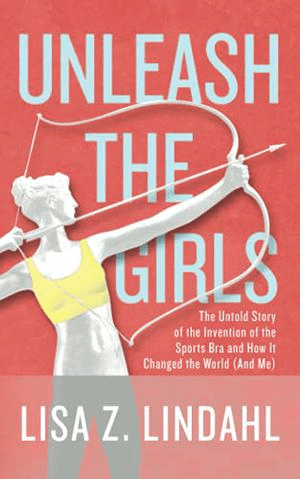
Lisa Z. Lindahl Unleash the Girls The Untold Story of the Invention of the Sports Bra and How It Changed the World (And Me) BooksGoSocial, 2019.
Thank you NetGalley for providing me with this uncorrected proof in exchange for an honest review.
Lisa Z. Lindahl’s story is inspiring. Not only because of the success of the business she founded from her invention of the Jogbra but for two other powerful reasons. Lindahl has combined her business story with enlightening personal reflections on her epilepsy which influenced her view of herself, and the way in which others saw her. At the same time, we are drawn into a thoroughly engaging debate about the way in which women may take characteristics traditionally considered female successfully – and at times, unfortunately, unsuccessfully – into business. This debate permeates the relationships Lindahl has with her partner, Hindi Schreiber, and her long-term friend, Polly Smith, as well as colouring her attitudes to developments in the business, and the business world. In part the immediacy of these internal and external debates about the ideals associated with women’s relationships, personal and in business in this instance, reflect the period in which Lindahl began her business.
Lindahl establishes the relationships, lively and personal context in which the Jogbra was initially developed, her understandings of the people with whom she interacted to create her business, and the social context in which she believed she was operating with her eventual co-shareholders – Polly Smith and Hinda Schreiber. Here the complexities of business, legal, and personal relationships are laid out. The difficulties that Lindahl faced, at times because of her epilepsy, at times because of her world view, make intriguing and instructive reading.
At times I found my self pleading with her not to take a particular stance, not to (in my view, and in hers also) be so naïve, to please recognise that sometimes 1970s belief in sisterhood might not work. However, I really must admit that I was wrong. This remarkable woman did make seemingly egregious mistakes, seemingly did not recognise the pitfalls of her tolerance and embracing her disarming personality rather than changing, hardening, becoming ‘more business like’. But what a success she made of herself, her business and her relationships. She maintained her close friendship with Polly Smith, overcoming early difficulties engendered by changes in the business; the initial debacle over shares with Schreiber was resolved to her satisfaction; she accepted the shortcomings of her business relationship with her partner, and worked to maintain a successful business and developing that relationship; she enjoyed much of the time she spent doing the work that she and Schreiber shared on the basis of their suitability for particular tasks.
And, of course, the development of the Jogbra, the story of its invention, the development through fabrics, styles and processes; from selling from Lindahl’s flat, to a fleet of salespeople and trade fairs; from making the bra in a small factory, to expansion to several factories make an enthralling business story. So, too, does the idea behind the Jogbra – initially giving women the opportunity to run comfortably, and progressing to recognising its suitability for a range of sporting activities, to its role as a product to be publicised through top magazines – and eventually the product that became so popular that it could be sold profitably after thirteen years of ‘thriving economic success’.
Lisa Z. Lindahl refers to the challenge of writing her book being deciding about how to approach her material – whether to concentrate on the business, her personal life or give attention to a broader perspective on personal growth. She chose wisely in making each facet of her life an important part of the narrative. As a consequence, she has written a moving, thoughtful and sometime comical story of a successful business enterprise, a journey that is both personal and relevant to other women and our ideas of sisterhood and assurance that this does not mean self-abnegation. This is an excellent read, thank you Lisa Lindahl.
Kathryn Bridge ed. Unvarnished by Emily Carr Royal BC Museum, 2021.
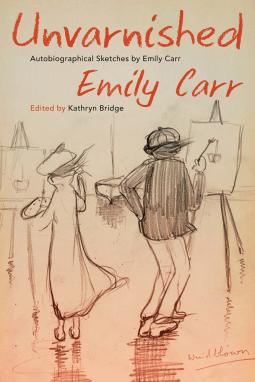
Thank you NetGalley for providing me with this uncorrected proof in exchange for an honest review.
Kathryn Bridge has brought Emily Carr’s delightful drawings and prose to a wider audience than the papers from which they have been culled would have been able to do. Bridge has been meticulous in drawing attention to the significance of the works, in explaining the background to some of the awkwardness in the prose and providing an important context. She also provides an excellent explanation for her approach to transcribing the work. As an academic approach to her book, none of this can be faulted.
However, there is a distinct difference between the biographical and explanatory material and the beautiful and deceptive simplicity of Emily Carr’s work. The interwoven nature of Bridge’s explanatory and bridging material between examples of Carr’s writing is valuable and provides a biography that relies not only on Carr’s work, but knowledge of her circumstances and the context. However, the disadvantage of this approach is that it unfortunately highlights the difference between the deftness of Carr’s prose and illustrations and Bridge’s information. While the academic standard Bridge has achieved is exemplary, I feel the book would have benefitted from a lighter touch and more engaging presentation of the biographical material.
The academic introductory and explanatory matter includes a list of primary sources, such as newspapers and archival records, A chronology of Emily Carr’s life and writings, and a bibliography as well as the preface, introduction and note on the transcription. Illustrations are captioned and the dates on which they were produced contribute to understanding the progress of this fascinating writer and artist.
And there is no doubt that Emily Carr is fascinating. From her early unpolished work to her award-winning books her story unfolds through well curated text and illustrations. Since she died in 1945, Bridge writes, the interest in her work has remained firm. She is described as a Canadian national treasure, and it is with a sense of shame I acknowledge that until reading this book I did not know her work. Despite the concerns I raised earlier in this review, I am grateful that for me her work has not remained undiscovered.
Hermione Lee Tom Stoppard A Life Knopf Doubleday Publishing Group, Knopf, 23 Feb 2021.

Thank you, NetGalley, for this uncorrected proof in exchange for an honest review.
Tom Stoppard A Life is an immense book – in concept, execution, and size. In case the last detail is daunting, Hermione Lee has used every bit of content, each word, the descriptions and observations with meticulous intent and elegance. Stoppard’s childhood, leaving behind the Nazi threat, escape to Singapore and early life in India, then to England which became a beloved haven and home; his family relationships, friendships and marriages; conservative politics, so often at odds with friends, partners and this reviewer; the peripatetic life following production of his plays; his plethora of other writing; and – so much joy here – descriptions of so many of the plays, the backgrounds, the rewriting, the highs and the lows.
The early part of Tom Stoppard’s life, as Tomik Straussler, child of Jewish Czechoslovakian refugees in Singapore, refers to his first memories, including knowing that his father must have been with the family on a beach he recalls, but has been lost to memory. His “Czech-ness” was less forgotten than unrealised, producing various responses throughout his life. So, too, did the forces that affected Europe and his ancestors, providing a fascinating start to this biography, introducing the family members and ties to a past that, by the time Stoppard meets the remaining members of his family have been lost. Throughout the biography there is a sense of loss which has been sensitively wrought through introducing this early historical perspective. The life of a successful writer, playwright, scriptwriter for Hollywood successes is more exciting; and the life of a loving son and father, of a husband and friend is more interesting. However, this early section of the book, for me, was particularly moving with its almost lyrical language weaving a story beside the fraught events impacting Stoppard’s ancestors and his own early life.
Stoppard’s beginnings as a journalist, borrowing money, loved wholeheartedly by his mother and unwillingly accepted by his stepfather are perceptively described in the early chapters. The enthralling world of burgeoning success is full of remarkable detail. So much time is given to discussing Stoppard’s manner of working, both with the initial script, then finding the most suitable actors, and working with them as the play came to fruition. Most generous is discussion of the plays. This was particularly illuminating, and a valuable resource for anyone who wants to try to understand, to become part of, or even to become fully immersed in Stoppard’s world on the stage.
Although the plays would be accepted as the focus of the biography, Lee gives far more. All Stoppard’s work is carefully considered, so the whole of his stupendous achievements in prose, poetry, theatre, and film are laid out to be relished. Stoppard’s personal life is an important part of the biography but does not take over – the biography not only describes his personal life as existing happily, and sometimes not, alongside his working life, but shows how full both were.
This is a thrilling biography, not only because of the stature of its subject, but because of the engaging writing, attention to detail, and perceptiveness of Hemione Lee. Long it may be, but boring never. I thoroughly enjoyed this engrossing and enlightening read.
Clare Chambers The Editor’s Wife Arrow Books, Penguin Random House 2021.
Thank you, NetGalley, for providing me with this uncorrected proof for review.
The Editor’s Wife is a complex novel, with some seemingly simple elements that add to the storyline so successfully that it is not until later that their wider impact becomes clear. Contrary to the title, which foreshadows one woman as the focal point, another and her relationship to her sons, Gerald and Christopher, provides the complexities that pervade their behaviour and interactions.
The novel begins with several observations by Christopher, from whose perspective the novel is narrated. His parents’ philosophy that one should ‘aim low, keep your head down, don’t make a fuss’ and ‘don’t get above yourself’ suggests that the brothers’ shortcomings which are manifested throughout the novel may have their beginnings in this bleak perspective. On the other hand, as the brothers’ lives unfold, despite obvious problems of homelessness, redundancy, thwarted creativity, partnerships that fail, floundering responses to social niceties on the part of Gerald, and resentment toward him on the part of Christopher, there are glimmerings of recognition that these brothers might have a future that overcomes their apparent lack of compassion for each other.
Christopher reflects on his mother’s death three years before through the perspective of his father’s appreciation of her poetry, which he distains. The poetry also recalls Gerald’s comment that she might well be the literary genius of the family, and his lack of education. Christopher immediately sees these comments as a negative reflection on himself. He also fulminates about Gerald’s continued residence in the family home after their father’s death, despite it having been left to both. Christopher is partially motivated by his own financial problems because he has been made redundant, but his antagonism over Gerald’s attitude towards his role in the house and care for their father is only one issue in the pattern of dissonance between the brothers. Did this begin the night that Christopher, accustomed to relying on Gerald’s ‘Yes’ to the question of whether he would save him from the moon shining through their bedroom curtains, receives the response ‘No’?
The question of why Gerald’s attitude changed permeated my reading of the novel as, in my mind, the brothers vied equally for space as wounded or, directly in opposition, wrathful human beings seeking retribution. Clare Chamber’s subtle use of the affair between Christopher and the editor’s wife as part of the relationship between the brothers is masterful in its quiet acknowledgement that their lack of communication creates and enhances their problems with the outside world. Her role is demonstrably part of the fabric of the novel, but as a link between the past that has impacted on the brothers rather than the essence of their relationship.
For me this was an important novel, not least because the centrality of the male figures is quite alien to my appreciation of a narrative. I thrive in pondering the why for women’s behaviour, relish works in which they fight for release from overbearing societal expectations, or in domestic dramas, overbearing individuals. With an amazing immediacy, despite this prejudice being firmly in place, I began to warm to the way in which dilemmas from the brothers’ past were so influential in their embrace of the present. Rather than paint one brother as ultimately right about his perceptions of the past and present, I veered from accepting the more conventional Christopher’s assessment of the why, to sympathy with Gerald’s innocent commentary with its barbs apparent to Christopher, but possibly reflecting a truth. This is a novel that will resonate with me for longer than I thought possible when I began. I shall certainly read more of Clare Chambers’ work; she is a new author that I really appreciate finding through NetGallery.
Sian Lye The Architecture Lover’s Guide to London Pen & Sword White Owl, 2022
Thank you NetGalley and Pen and Sword for providing me with this uncorrected proof for review.

I was thrilled to begin reading this thorough and fascinating book about a city I love – and have not been able to visit for over two years because of Covid. Nothing can replace being there but having Sian Lye’s guide is a very close second. Indeed, how much better my next trip will be with the knowledge from Lye’s book, even if many of the buildings are familiar already.
This is a valuable resource, written in the familiar Pen and Sword style with detailed research presented in an engaging and accessible approach. I particularly enjoyed the early discussion in the introduction which covered the Roman’s first settlement and a wonderful historical tour through Tudor times and afterwards, the Great Fire of 1666 and its consequences, through the Georgian, Regency periods to the Second World War, through to today. Some wonderful photographs (listed clearly) accompany this material.
Then to Chapter 1 the advent of Londinium in detail and its changing relationship with Camulodunum as cities were destroyed, grew, and changing history moved the capital away from Camulodunum to Londinium. Of course, today these ancient names have become London and Colchester. How fascinating it is to read of the London Wall and the glimpses still available, the gateways that have now become familiar stops on the tube, such as Aldgate, and parts of the city such as Bishopsgate and Newgate.
Each chapter- Medieval to The Tudors; The Stuarts; The Victorians; The Edwardians, Art Deco, The Great Fire; Post War Design; The Georgians; Contemporary Architecture, Regency Styles and Twenty-First Century London – provides architectural detail supported by interesting historical background and explanation. Again, photographs enhance the text. Biographical information about the architects accompanies the story of their achievements, adding to the value of the information.
I thought the book ended rather abruptly after such a promising and almost poetic introduction and would have benefitted from a conversational conclusion. Perhaps as Colchester and London were linked at the beginning of the architectural history there could have been a concluding link. Just something to move back into that lovely history with which we were regaled in the early chapters would have really made the book for me. However, that aside, what a marvellous companion Sian Lye’s The Architecture Lover’s Guide to London will make on my next trip to London – certainly I shall look at familiar buildings with a more well-educated sense of their development, their history and their creators.

The Editors of New York Magazine Take Up Space The Unprecedented AOC Avid Reader Press, Avid Reader Press / Simon & Schuster 2022.
Thank you NetGalley for providing me with this uncorrected proof for review.
Take Up Space is a tremendous read. Alexandria Ocasio-Cortez is an engaging political figure who has managed to find her way through the criticism that anyone with such star qualities usually faces, some mistakes and poor decision-making, the need to develop passionate beliefs into workable policy initiatives and engaging with the various political initiatives and their supporters (sometimes with star quality of their own) that make up the Democratic Party.
For anyone dealing with progressive politics and concerned with how to make them work for a largely moderate oriented constituency and with those who recommend them, this book is a valuable tool towards understanding how to achieve what seems insurmountable. The honesty in acknowledging that moderates, progressives and ‘star’ individuals working together works only sometimes and is not particularly easy for many of the people involved, is part of the appeal of this book. Although it is not couched as a debate between the ‘progressives’ and ‘moderates’ in the Democratic Party, people who are not committed to seeing Ocasio-Cortez and her aspirations as always right (or always wrong), can find material for thought here.
There will always be conflict between different groups within a party, and the Democratic Party is certainly not immune. However, Take Up Space provides hope for those who want to make working together to win government and achieve policy aims – some very progressive, others perhaps a little less so – a success. Learning what can be achieved is a hard task, but so is learning to seek as much as possible. There will probably always be conflict around someone such as Ocasio-Cortez. This book promotes understanding of both her and the party she wants to be an essential part of and contributor to, without losing the essential nature of their aspirations.
There are two parts: Part One concentrates on Ocasio-Cortez and her background, her winning the primary against a seemingly daunting Democratic figure, her gaining her seat in Congress and what she does in this capacity. Part Two is a welcome contribution to dealing with some of the detail of the earlier section. A number of people who contributed to the policies Ocasio-Cortez developed and helped shepherd through the groups in and out of Congress write about their particular knowledge of Ocasio-Cortez and the policies she espouses.
This is an easy-to-read biography and supplementary material. There is some repetition, but perhaps that is inevitable where essays are used to provide different perspectives on earlier information. Regardless of the variety of contributions there is no doubt that the writers are great supporters of Alexandra Ocasio-Cortez and her views. On the other hand, some of the conflicts with her own staff and Congressional supporters are referred to, as is her preparedness at times to accommodate alternative views, or at least work to further the interests of the Democratic Party by accepting her role cannot always to be a star standing against the inevitability of compromise that impacts all progressive political parties.
Nan Sloane, Uncontrollable Women Radicals, Reformers and Revolutionaries, Bloomsbury Academic, 2022.

Thank you NetGalley and Bloomsbury Academic  for this uncorrected proof in exchange for an honest review.

This book is divided into four sections, Frantic ‘Midst the Democratic Storm; More Turbulent than the Men; Monsters in Female Form; and Women Without Masters. The historical context is laid out, beginning in Part One with The French Revolution; then moving to the British situation for parts two to four with the 1790s action in areas around Manchester and Leeds associated with the Industrial Revolution; the aftermath of the St Peter’s Field carnage, with particular attention to the treatment of women; and, lastly, women’s contribution to organising for parliamentary reform. The book ends with the success of the 1832 Great Reform Act.

Some women, such as Mary Wollstonecraft and Anna Letitia Barbauld, are familiar; and Anna Doyle Wheeler’s portrait appears in the National Portrait Gallery. At times their links to the less well-known women who feature later in the book, seem somewhat tenuous. However, as they largely feature in specialist accounts it could be fair to say that their role in this book demonstrates how even women of note rarely appear in mainstream activist narratives. More fascinating are the early women activists referred to by Nan Sloane, sometimes about whom little is known, and who have not even made it into specialist histories. Sloane’s perceptive comment, that female revolutionaries and activists may not have always been feminists or have fitted neatly into writing about feminist history may be why this has happened. This is not a pejorative comment, after all, feminist writers have found a plethora of feminists who need to be brought into the open. However, it could be a pertinent gauntlet thrown down to historians writing women into history. Nan Sloane has deftly woven her material together so that here we have a history that opens the doors to such writing.

The meticulous work that went into finding the snippets of information about women, some of whom appear for an instance, others for a little longer, still others only because a man has commented on their activity, is impressive. What a valuable resource this is for women who want to demonstrate that we have always been in radical movements, never absent from political activity, important resources in physical efforts to make a case. Women have been, as Nan Sloane so cogently and engagingly writes, anywhere that it is possible to be. They have been writers, activists, prisoners, the butt of brutality in word and deed, a few words in a public document, the focus of a lengthier diatribe about the way in which they should behave. They have also been supportive wives and dedicated mothers challenging the poverty and discrimination that their families suffer. Single women have joined causes on behalf of married  women, and women have supported men demanding the franchise.  Women asked questions, organised and ensured that their voices were heard – if only for short periods, a gasp as they were punished for doing so, a shout in victory, short lived or not.

We now know more about women’s activities and even have some more names to add to those of Mary Wollstonecraft, Anna Letitia Barbauld and Anna Doyle Wheeler who set the scene during the French Revolution with which this valuable history opened.  As an avid reader of Sheila Rowbotham’s Hidden from History, which is mentioned in the excellent Introduction, I was thrilled to find this new effort to publicise women and their wide range of activities which denote them as ‘uncontrollable’. Nan Sloane’s book does this in the engaging manner and voice that such women deserve.

An index, detailed notes, a good bibliography and illustrations complete this worth addition to women's history..

Jane A. Adams Bright Young Things Severn House 2021.

Thank you, Net Galley and Severn House, for providing me with this proof for review.

Bright Young Things begins in a quietly menacing manner, an unknown person reads loving words from an admirer, and sneers at the correspondent. This sense of unease remains throughout the novel, even though the recipient, and probable murderer is identified early.

Two detectives are brought into the case when a young woman’s body is publicly deposited on a beach. Henry Johnstone is introduced as a man ensconced comfortably in his sister’s pleasant home, reading the newspaper in which the story of the body, the way it was placed on the beach and the man who carried her is described. Henry has been bodily and mentally damaged from a previous case involving his niece – will he become involved in this one? Sergeant Mickey Hitchens arrives and solves this question. Although Henry is much his superior, Mickey decides for both. The two will take on the case, and together with an intelligent young officer from the local force, solve it.

Doing so is not a fast and furious endeavour, rather it is measured, detailed, atmospheric and engaging.   The relationship between Johnstone and Hitchens is beautifully observed, so too is the way in which Johnstone’s sister interacts with the two men. Another relationship is developed through letters between two sisters, one a ‘bright young thing’ and the other a married woman. An uncomfortable and threatening relationship between the perpetrator and his partner makes a distinctly different approach to human relations a strong contrast.

This story is set in the 1930s, and some of the social landscape is intertwined with the story of entrapment, women seeking to free themselves from patriarchal bonds, and the emboldened behaviour of some men arising from their war experiences in contrast with the bleakness cast upon some aspects of others’ lives.

I enjoyed this different (for me) murder mystery and detection. The pace, lurking menace and characterisation all worked perfectly. I am certainly tempted to read more of Jane A. Adams’ work, if only to see what happens next in the delightfully drawn relationships between Henry, Mickey, and Henry’s family. And, of course, being lured into the next crime to be solved.
M B Henry All the Lights Above Us Alcove Press 2021

Thank you, NetGalley, for providing me with this uncorrected proof for review.

My first reaction to All the Lights Above Us was admiration for the cleverness with which M B Henry relates the political, personal, and military drama of June 5 to June 7, 1944. The narrative follows the events of the day before and following D Day in their horrors, passion, courage, foolishness, treachery, and self-deception through the experiences of five women. Flora, Adelaide, and Emilia are in Caen, France; Mildred in Berlin, Germany; and Theda in Portsmouth, England. Their stories are largely independent of each other, although Flora’s and Emilia’s stories converge in the last hours of the invasion of France by the Allies. This coming together is another intelligent device, not only providing a conclusion to Flora’s story, but adding to the characterisation of Emilia. Each woman’s story is told in short, but strong chapters, evoking their past, developing characterisation, and moving the story forward. This story is full of event, emotion, and social commentary, its impact makes it seem as though we have been with the women for far longer. As I stated at the beginning – so clever.

Other features of the novel should not be underestimated.  While narrating relatively easily envisioned events that are familiar through historical works, nonfiction and fiction, M B Henry gives them additional impact through several means.

She ensures that the reader becomes aware of the discrimination against women that has brought most of the women to their current situation. While Mildred’s story does not reflect the discrimination that has impacted so heavily on Flora, Adelaide, Emilia and Theda, her persona is linked strongly to the way in which a woman may rely heavily on appearance and a male mentor to accomplish her aims. While not defending Emilia’s behaviour, Henry gives her story a background that explains the trap made for women such as her in Hitler’s Germany. Adelaide’s mothering role is complex. Although from a different country, experience, and period, like Theda she has been surrounded by arguments about what a ‘real’ woman should be. Flora is confronted daily with examples of discrimination based on her gender.

Importantly, Henry’s concern with that broader theme does not undercut her attention to developing her characters, with only three days in which to illustrate their reactions to world shattering events. Where she uses background information to fill out her characters this is done smoothly without interrupting the narrative of the present. Small events are used to highlight large issues, particularly so in Theda’s story.

Each woman’s story is carried through, from the background that has brought her to her situation on D Day, to her experiences throughout the invasion, and to completion. Possibly the tying up of ends might seem a little contrived. However, once again Henry has worked to fulfil her mission, that is, using D Day as the time in which she must tell the women’s stories and establish possibilities for each of them.  These endings all ring true, considering two important features of the book. They rely on the way in which each woman has been depicted; the way in which each woman has demonstrated her strengths and weaknesses throughout the narrative. The drawing together of events assumes little beyond the initial impact of D Day, except possibly in one case where the events based on a real person suggest some likely possibilities. However, the overall impression is that Henry’s characters’ stories reflect the way in which those who welcomed the success of D Day had to imagine an end before they could go on for the remainder of the war.

The descriptions of the wounded in Theda’s hospital; the drowned parachutists observed by Adelaide; the torture and shootings to which Emilia is a witness; Flora’s experiences as a member of the resistance; and Mildred’s knowledge of her own perfidy are disturbing images.  Henry has momentarily put these aside for a short time by establishing completion for each of the characters. Whatever the future possibilities, Henry has given both her characters and readers a taste of the breathing space that reflects a likely reality at the time.

With its short strong chapters, convincing and intriguing characters, and commitment to developing a short period of time into a persuasive depiction of a real event, this novel is an  engrossing read.
David Guterson The Final Case Alfred A Knopf 2022.
Thank you NetGalley for this uncorrected proof for review. How can my words, reviewing The Final Case, aspire in any way to catch all the wonderful the ideas, phrases, characterisations and plot of this amazing novel? They cannot, but here is my attempt to encourage you to read and reread David Guterson’s latest work. Even ‘work’ is too harsh word for this story that flows so beautifully, that reflects so warmly on the central character’s relationship with his father, Royal, his mother, sister and wife; and that so succinctly tells us how stringently the law should be interpreted. The bleak story of Abeba, the Ethiopian girl named Abigail by the American couple who adopted her, is woven into this landscape, with razor-sharp commentary raised by the legal case in which not only the behaviour of individuals but the insidious impact and extent of ideologies are laid bar
The Author’s note states that, although this is a work of fiction, he attended a trial in which the parents of a girl adopted from Ethiopia were tried in connection with her death by hypothermia.
The Final Case begins in the main character’s room in which he writes. This space is filled with his father’s boxed legal files, pile upon pile, recessing his windows, providing only tunnels to the light. He begins reading a file which introduces his father’s first case, his legal mind and commitment to ensuring that a defence should be raised for a person standing trial, and that, regardless of the work he undertook, he was unpaid. As the narrative moves into Royal’s last trial, his son’s story of his difficulties in writing another novel becomes part of the story. His freedom from his own work gives him the time to become engrossed in his father’s last case: defending the mother of the Ethiopian girl adopted into a religious family with several biological children.
The case, for Royal, ends with his death.
Although it takes time to become as engrossed in the continuing story as happened with the earlier revelations, it then becomes as enticing. The trial is left in abeyance, the reader having been told that it must begin anew after Royal’s death. There is now time to move away from the trial and Royal, and become immersed in the other narratives.
These are several. In the earlier part of the novel relationships are an important feature, and they remain so throughout. The moving glimpses into life in Ethiopia where a loving uncle has been forced to put his niece into an orphanage from where he is pleased to learn she will go to an American family contrast with the reality. The main character’s feelings about his own family, with the lovely pictures of an ageing father with his whimsical behaviour charted alongside his acute legal mind, and then his death are followed with stronger portraits of tea drinking moments in his sister’s café, and his marriage.
Importantly, and linking so sharply with current American politics is the portrayal of the adoptive family, their values and their right to a legal defence. The ramifications of adoption, the American Constitution and the type of protection it provides, together with the contrast of what might be considered an unsatisfactory life with a truly horrendous life are raised. The result of the trial and the Judge’s perceptive remarks, which resonate all too vividly with some of the commentary alive in current political debate, provides a satisfying end to the legal story.
As this is an uncorrected proof no quotes can be included in this review. However, Royal’s legal observations, and later the Judge’s commentary on the outcome of the case, are precise and thoughtful. They make an outstanding contribution to current debate over the legal ramifications of political events in America.
This is a novel that resonates with feeling and delightful vignettes of a family who are comfortable with each other and their differences. In contrast, a family which cannot allow lives to flourish beyond their consent, presents a horrific story that has wider implications than the one at the centre of
Minka Kent The Watcher Girl Thomas & Mercer, Seattle, 2021.
Thank you, NetGalley, for this advance reader’s copy – uncorrected proof, for review.
This novel has so much potential: a damaged main character, with a fascinating occupation; a plot woven around her potential redemption; family drama; and chance meetings that pose the possibility of solving at least one of the main character’s challenges. Grace McMullen tells the story in the first person, advancing her as the person with the strongest emotional tug on the reader. She is flawed, her attitude towards her family making this most apparent. However, she remains a character who is worthy of sympathy – we want Grace to win some sort of resolution to the challenges she has faced as a child and adult.
Grace has returned to her childhood home, unwillingly, but with a purpose. She wants to make amends to her former partner, Sutton Whitlock, for her past untimely and cruel dismissal of their relationship. As a watcher, she has investigative skills that take her into the hidden web world. Her capabilities have also made her aware that Sutton still suffers from the end of their relationship. Grace intends to apologise, explain, and ‘disappear…again’. Grace is also reappearing in her family’s life. Like Grace, her adoptive parents are dysfunctional – her mother is in prison for murder; and her father is with the latest of his many partners. In contrast, Grace’s younger sister and brother appear to have escaped the vicissitudes of being a McMullen. In particular, her younger sister wants a relationship with Grace, and is also her mother’s only visitor.
Interactions between the family members and Grace are well developed. Grace’s reasons for her withdrawal from her family, and dislike of physical and warm interaction, become apparent through her behaviour, discussions with other characters, and explanations. The latter are often cleverly posed in taut strong sentences that enhance the feeling that Grace is a distressed and driven woman That she is under pressure, from past and current events, her desire to make amends, together with a burgeoning social conscience, is juxtaposed with questions about her perception of events.
Grace’s investigative faculties seem to almost desert her as the story progresses. It is here that I became increasingly disappointed with the novel. Although the ends are tied up so that there is an adequate conclusion, I felt that the writer of the truly satisfying beginning had more to offer. As a progression of a damaged woman toward the prospect of living more satisfyingly, the novel worked well.
However, other aspects of the plot are problematic. Grace’s inability to assess some of the situations with which she is confronted seems at odds with the skills she demonstrates though her successful career. That Grace is simultaneously dealing with her developing understanding of herself, her family, and the purpose for her return is a partial explanation. However, I would have liked a stronger advancement of the reasons for her lack of insight into some of her experiences.
Elizabeth Strout Oh William! Viking (Penguin Random House)2021.
Thank you, Net Galley for this uncorrected proof copy for review.
My first, but certainly not last, novel from this talented writer. I am glad to see that Lucy Barton’s story has been partially written, as here in Oh William! she appears as William’s former wife (he was her first husband) and I would like to know more of the woman who took his last name but relinquished it gladly after eleven years. Who is this woman who became William’s wife, took his name despite her friend’s interrogation, said she did not care about being a feminist, wanting so much to be free of herself, and yet, after William’s mother dies becomes Lucy Barton again? Lucy Barton for the remaining nine years of their marriage? Effected the change almost by chance when she had her driver’s license renewed? Then, took it so seriously she bothered with court documents to do so? Left William, after twenty years of marriage but grieved over their separation? Is concerned about the pain for herself and their two daughters, but remains resolutely apart?
And now, she and William are having coffee together. This is a feature of William’s life, as is the gentle morning wakening, being greeted later by his second wife, Estelle, and listening to their chatty daughter, Bridget as they breakfast together at a round table in their spacious apartment.
The story moves gently from past to present; from comical to sad; from shaded, drifting imagery to realistic, almost sharp-edged events. Almost two years ago they have met and, surprisingly on this occasion William greets Lucy’s pleasantry with a phrase that alerts her to a change in his usual self-satisfied existence. William appeals for her help in dealing with his night fears. They are located around his mother, Germany and his father, and death.
Throughout the encounter descriptions of William’s demeanour, dress, relationships with one of his daughters, and Lucy and William’s past travel to Germany meander. Or they seem to. This first description of the relationship between William and Lucy sets the pattern for the way the narrative evolves, allowing the reader into their personalities, their relationships with other characters, and with their environment. Each diversion has a point, makes an impact on the overall narrative, and contributes to the elegant layering of the story that unfolds as William and Lucy’s relationship past and present becomes clear.
Immersion in Oh William! is at times uncomfortable as slights suffered by Lucy at his hands are touched upon, then allowed to drift away. Lucy recognises the challenges but does not want to engage with them; she draws attention to her feelings but diverts herself and readers by adding another layer of the story. Immersion in Oh William! can also be an utter delight. I felt both as I read and look forward to similar experiences in Elizabeth Strout’s other novels.
Thank you, NetGalley, for this uncorrected proof for an honest review. I note that this proof was made particularly difficult to read as the information about its status appeared throughout the text (a page every few pages was impacted), with the information interspersed with sentences in the text. However, the text was read in its entirety and the difficulty has not influenced my review.
Burton I. Kaufman’s Barack Obama Conservative, Pragmatist, Progressive is a timely read as President Joe Biden attempts to traverse the same recalcitrance from the Republicans – even where they are not in the majority. Then, as now, they do not have to be in the majority, making a mockery of the magnificent win in Georgia run offs by Democrats, Raphael Warnock and Jon Ossoff which promised so much for Democratic Party values and President Biden’s program.
The Obama years provide an instructive, as well as fascinating, read to a person unfamiliar with American politics, and a deeper analysis of these years for those more with more experience of the way in which the President and Congress work together to achieve, or in many instances, obstruct, the policy process.
This book appears to me to be more of a narrative about Obama and his policy ideals and making, domestic and international, than a biography. There are asides to his past, his family life, and political colleagues, rivals or opponents. However, the wealth of information resides in the way in which Obama approached policy making, and his efforts to achieve its implementation. I welcomed this approach, as I found the detailed story of how the role of the President works an excellent adjunct to understanding the current situation in the American political scene. It is also a worthy aim in itself –adopting a personal approach through using a captivating figure, to gather the details of how the administration works makes an intriguing, if sometimes disheartening, story.
At the same time, the author’s feelings and beliefs about Obama and his presidency are quite informative. Kaufman appears to be keen to get ‘the real’ Obama before his readers. In part, this leads to some fairly critical assessments at the same time as acknowledgment of where Kaufman believes Obama’s achievements are worthy of positive recognition. This is not a wholehearted acclamation of the man or the achievements of the period, and it does not need to be. The speeches that were compelling are acknowledged, along with recognition that some were not; information about Obama’s relationships with his colleagues and commentary on opponents is instructive about his ability to respond to criticism; his occasional inclination to become engrossed with an argument which is not palatable to his audience is noted, at the same time as his enthusiasm for progressive causes for which he makes undeniably sound arguments.
Overall, this is a competent work, which covers an interesting presidency and period in American politics. Kaufman has made a worthwhile contribution to the work about Obama and his presidency, raising issues that for some readers will feature new aspects of the role and governing.
Erin M. Pushman How to Read Like a Writer 10 Lessons to Elevate Your Reading and Writing Practice Bloomsbury Academic 2022.
Thank you, NetGalley and Bloomsbury Academic, for providing me with this uncorrected proof in exchange for an honest review.
As Erin Pushman suggests, reading to become a better writer is a useful process. However, it has its downside for Pushman and her book. I could not help but read it using the process she advocates -reading it as a potential writer of a similar narrative. That is, a narrative which is aimed at producing writers who, using what they have read, improve their own writing. Starting from this premise, I could not help but compare How to Read Like a Writer with similar information books, with the underlying question to myself – how would I write this book? How could it better achieve its purpose? Having read numerous books about scriptwriting, and some about writing short stories, while I feel that Pushman has much to offer, I have some concerns about the ability of the work to stand alone as an instructive writing text. I would have preferred clear short statements and observations to the somewhat ‘wordy’ narrative.
Pushman’s ten lessons use examples from poetry, prose, and the graphic novel. These examples are part of the narrative, often repeated as they are used the writing methods of genre (including hybrids and multi genres); short forms and digital media; narrative, plot, theme, emotion and concept; structure; language; characterisation; point of view; setting; and scene. The lessons appear at the end of each chapter, arising from the examples, discussion and craft to be learnt through the work described in the chapter. There are some instructive graphics, complete with excellent descriptions and explanations. The works, or portions that have been used in the instructive chapters, are at the end of the book, with clear references to where they previously appeared as part of the learning process. There is a useful index.
A positive aspect of this book is the freshness and creativity of the examples. They provide some excitingly different approaches to writing. The reader who is doing so with the aim of improving their writing is provided with the tools to work beyond the familiar, an achievement that will give the adventuresome writer some material well worth considering. On the downside, I felt that there was too little attention given to more familiar works, to the craft of writing a good story, to some of the (perhaps) more conservative ways of reading with the aim of achieving an improvement in writing style.
How to Read Like a Writer 10 Lessons to Elevate Your Reading and Writing Practice would make a useful adjunct to a section of your library (or that of a teacher of writing) dedicated to understanding the value of your reading to the challenge of writing.
Liz Byrski At the End of the Day Macmillan Australia 2021
Thank you, NetGalley, for this uncorrected proof for review.
Liz Byrski has once again given voices to people who for a long time have been silenced. She answers the question, can romance really be created around people in their seventies? Indeed it can, and while romances are an important feature of At the end of the Day, there is more. Although ageing has increasingly become a focus of fiction, Byrski enhances her depictions of the two ageing main characters in this novel by giving them backgrounds that expand the way in which they are developed. Miriam Squires (Mim) and Mathias Vander meet on a plane flying from London to Australia. Both harbour a past that incapacitates them, physically and emotionally. Mim’s physical difficulties are apparent; Mathias’ physical manifestation of a blow from his past appears only when he is under extreme mental stress. However, both are emotionally inhibited, a flaw that each intuits in the other, finding the distance it imparts engaging rather than repelling.
Mathias’ daughter, Carla and his friend, Luc; Mim’s friend, Jodie and sister, Alice; and secondary characters such as the manager of Mim’s bookshop, Jodie’s assistant in her veterinary practice and Nick and Paolo in the Applecross coffee shop, together with others, people the novel in a pleasant and interesting way – and there are also dogs, a happy addition to any narrative in my view. Less engaging is an intrusive bird named Trump! The additional human characters are also mature, although far younger than Mim and Mathias, demonstrating the fluid way in which friendships can develop over shared interests and become comfortable, exhilarating, and enduring whatever a person’s physical age.
Set mainly in Western Australia, Byrski demonstrates her affection for her state through taking the reader to a range of environments, the beach, bush, shopping in the city, even naming highways and towns that are familiar to West Australians. The cities of Fremantle and Perth, also sympathetically depicted, will be more well-known. Fremantle’s coffee shops, eating fish and chips near the beach, and the bookshops, of which Mim’s is one, are accurate depictions of life in that coastal town. I would have liked more in these descriptions, so that I could feel that I was present. Bryski seems more at home with drawing us into the domestic environments. Her description of the sounds of domestic activities (fridge door opening and closing, clink of china) are satisfyingly realistic.
At the end of the novel many of the strands appear to be tied up satisfactorily, partnerships have been realised and careers modified to suit not only ageing but realisation that friendships are an important part of the characters’ lives and deserve more attention. The secrets incapacitating Mim and Mathias have been brought into the open and resolved, demonstrating that the two characters at the centre of the novel, although ageing, have lives to live beyond those which have been impacted by past wounds. Alice’s story has more to give Bryski’s readers, moving as it does into the severely Covid 19 affected future Britain, and her plans to emigrate to Australia. Perhaps another story in the making?

Jane Cockram The Way From Here HQ Fiction Harlequin Enterprises (Australia), 2022 Thank you NetGalley for this uncorrected proof in exchange for an honest review. Velazquez’s version of the story of Martha and Mary, where Martha is busy in the kitchen and Mary sits at the feet of Jesus listening, and the accompanying adulation of Mary’s attitude in comparison with that of Martha has always struck me as unfair to Martha. So, with this prejudice I come to the story of a thoughtless, lively, living in the moment sister who is compared to her advantage with her organised sister. I found Susie an almost intolerable character in the early part of this novel. Her assumptions about her attractiveness to men and patronising attitude to Mills (as Camilla is known to her family), her behaviour that brooked little opposition, the letters that she almost demanded Camilla read and act upon in the event of her death made her an uneasy character for me to identify with, have empathy with, to want to get to know better.
Camilla’s desire to follow her sister’s instructions, despite financial constraints, and to the detriment of her marriage, her recall of the unease provoked by her at a family Christmas but haste to find her own behaviour wanting, and her continuing loyalty seemed to me worthy attributes. However, returning to the story of Martha and Mary, I begin to question my feelings: Mary and Martha can be described as the Yin and Yang of the female character – should I really endorse the almost martyrdom of Martha/Camilla? This complexity about the sisters’ characters, their family relationships and their own relationships is an engaging part of a novel which in some ways follows a well-worn path of bringing together the past and present through a series of revelations. In this instance, the letters written by Susie to Camilla, their content, and the events, immediate and distant past are the basis of the narrative.
The painting theme is not out of place. Velazquez’s painting, like that sought by Camilla is in the National Gallery, London (Room 30). Camilla’s first part of the journey on Susie’s behalf begins in London, at the National Gallery, seeking the painting of a horse, usually found in Room 34. Camilla and Susie’s grandmother, Nellie, has spoken of the painting in her last letter to Susie who travelled to London when she was nineteen. Nellie refers to having seen the painting in a grand house in Devon during the war years, before she came to Australia. Nellie’s life in London and Devon, and Susie’s life in London and on the Ile de Clair are one focus of the story. The others are Camilla’s journey, and that of her mother, Margaret, to establish not only Susie’s truth, but that of Nellie, and Margaret and the Rowe family.
Susie has written the letters just before celebrating her fortieth birthday. They lead Camilla and Margaret on an absorbing journey into the past, which highlights differences between the Australian backgrounds of Susie’s family, and that of the Rowes. The way in which the class differences are developed, as it becomes clear that the horse painting was part of Nellie’s past as a nanny rather than as a visitor to a home large enough to house it, is poignant. Susie’s brashness becomes less abrasive when contrasted with the cold cruelty she has encountered, and Camilla’s and Margaret’s relationship prospers with the journey and its outcome.
Jane Cockram has brought together an engaging story, which, although familiar in some of the concepts, is enhanced by its Australian context and the historical links with Europe through the characters and their stories.
Elisabeth Galvin The Real Kenneth Grahame The Tragedy Behind The Wind in the Willows White Owl Pen & Sword 2021
Thank you NetGalley and White Owl for providing me with this uncorrected proof for review.
Elisabeth Galvin’s sensitive interpretation of the lives of Kenneth Grahame, Elsie Thomson, and their son Alistair, is a gentle reflection on three lives that come together, move far from each other, return with affection mixed with a massive lack of understanding, and find a way of living and parting that, while often dysfunctional, seems to have been understood in this family and amongst their friends. This is not to underestimate the tragedies they experienced, but Galvin’s work gently discusses these and then moves forward – as indeed did the adult Grahames.
Galvin’s language and the way in which she combines quotes, her interpretation, and kind reading of events in the family, their personalities and relationships with neighbours, friends and work colleagues forms a dappled patchwork of images, ideas and intuitive commentary that reflects the water and surrounds which were the background for the animal adventures in The Wind in the Willows. Galvin does not adopt the lively tone familiar in many of the Pen & Sword publications, rather her own language is quite straight forward, depending on the addition of well selected quotes to liven the narrative. I like the way Galvin’s approach harmonises with the stories with which the reader will be familiar – the language of river, woodland, four animals of very different demeanor and a narrative that lives up to the title The Real Kenneth Grahame.
Three childhoods and experiences of youth in homes where the sources of love were sporadic or non-existent are laid out, from Kenneth Graham’s mother’s early death and his dependence on siblings, an erratic father, and a stern grandmother; to Elspeth Thomson’s similar loss of a parent; and then Alistair’s life as the son of two mismatched and emotionally limited creative people. These backgrounds suggest that the book could have been limited to a series of tragedies. However, Galvin creates a world for each child that allows for growth and creativity as well as recognition that their lives were not always easy. Kenneth and Elsie chose to retain their childhoods and their partnership is well drawn by Galvin. Alistair’s different choice is not glossed over, but neither is his assumed suicide a source of judgement on his two less than able parents. Unlike a biographer noted by Galvin, she treats Elsie and her needs with respect while advancing the case for Kenneth Grahame, his career and lifestyle choices, and not least, his writing.
Grahame’s writing is such a source of interest, the well-known The Wind in the Willows being joined by a range of works that demonstrates the literary ability of this writer, his capacity for producing works of originality and fascination, and his use of his inner self and thoughts to produce literature that appealed at the time of writing, as well as far into the future.
Elizabeth Galvin has woven together the emotional lives of families, friends, and colleagues with the work of writing, publishing, maintaining a home and place in society in the period with the Grahame family at its centre. In this way, the history of the time is built up alongside the personal misalliances, hopes, fears, successes, and tragedies of Kenneth Grahame. The love of home and security which permeates The Wind in the Willows is shown to have its roots in Grahame’s personal life, but also resonates with a period of change. Kenneth Grahame’s writing, when read through the complexities of his life laid bare by Galvin’s study, becomes even more interesting. Reading The Real Kenneth Grahame, The Tragedy Behind The Wind in the Willows illuminates but does not dominate the way in which Grahame’s fiction can be read. At the same time as Galvin provides an excellent background to understanding Grahame and his writing, the stories retain their charm.
There is a comprehensive bibliography; note for each chapter; an excellent index; photos with explanatory captions; handwritten letters and poetry; and some of the illustrations from The Wind in the Willows.
I found The Real Kenneth Grahame a wonderful read, perhaps because of its understanding of the way in which tragedy, while it cannot be underrated, did not dim the creativity that brought The Wind in the Willows to life. Galvin discusses Grahame’s other books, and Elsie’s writing. She also continues with Elsie’s life after the death of Grahame, giving her a place as a woman whose life changed but did not cease providing support to Grahame and his work.

Maia Weinstock Carbon Queen The Remarkable life of Nanoscience Pioneer Mildred Dresselhaus The MIT Press, 2022.
Thank you NetGalley for providing me with this uncorrected proof in exchange for an honest review.
This inspiring biography begins with a stunning idea which brings to life the ‘what might be’ of women’s lives and celebratory status. At the same time as being instructive, the prologue is heart-breaking – the fictional accounts of the accolades that Mildred Dresselhaus might have received if women were treated equally are graphic reminders that indeed they are not. Carbon Queen is the story of a woman whose accomplishments exceeded even those that the General Electric video described and enhanced sought to bring to the public.
The biography is a compelling mixture of scientific information and an account of an impressive woman’s life as scientist, academic, teacher, mentor, parent and partner drawn together by a writer whose scientific background is valuable, and understanding of women’s position is sensitive, well researched and well written.
I was interested that Maia Weinstock referred to women’s work at home as well as in the paid workforce, so gently expressed, but nevertheless making a salient point. Weinstock also depicts Mildred Dresselhaus’s ability to move around obstacles, to adapt to the sexism she encountered and to pursue her aims as strength rather than ‘giving in’ to the inevitable. Dresselhaus’s resilience and determination to achieve in her field (or possibly more correctly fields) are well drawn – there is no doubt that she was a woman of stature, but one that was pleasant, prepared to forgive slights, ready to adapt but as adamantly determined to make her mark in what was so often seen as a ‘man’s world’. This is very clever writing indeed – we are presented with a truly likeable and more than competent woman on a journey that leaves us feeling positive and strong, along with Millie (as she was generally known) Dresselhaus.
Readers with scientific interests will be engrossed by the scientific detail which Weinstock provides; those who are reading the biography because they are interested in the woman rather than the science will be pleasantly surprised with how accessible complex information becomes under Weinstock’s hand. Younger readers will not be surprised about the list of information and discoveries that were not available in 1958; older readers will be thrilled to see how the world has changed, and how well many of us have adapted.
I really enjoyed returning to a pre-Carbon Queen world and realising how much difference this woman has made. The book has such comprehensive and interesting acknowledgements that these pages are a worthy read in themselves. There is a detailed index and notes for each chapter. So, this is an academic book, as well as a warm and witty biography, together with a thorough and relatable journey through a scientific world made comprehensible to even the least scientific reader.
I thoroughly enjoyed my journey in this amazing woman’s world. Thank you, Maia Weinstock for a marvellous read.
Rosemary Griggs A Woman of Noble Wit Matador 2021.

Thank you, NetGalley, for providing me with this uncorrected proof for review.
Rosemary Griggs takes her title from the description of Katherine Champernownes (c1519-1594) in The Book of Martyrs, under her name upon her second marriage, Katherine Raleigh. The attributed phrase appears well into this fictional account of Katherine, ‘our heroine’ as Griggs designates her in the ‘cast list’ at the end of the book. However, it is used on several earlier occasions to emphasise one of the influential characteristics of the woman who wanted more from life than that determined by her gender and the times.
The narrative follows connected families whose lives were varied, links to the courts of Henry V111, King Edward, Queen Mary, and Queen Elizabeth 1, at times being the least of their activities. Some family members remained wholly apart from the Court, others had some association, and yet others were fully involved. The interest in this book lies in the disparities between members of the same family or their connections. Even those family members who went to the Court at times had thriving lives outside.
These lives are sympathetically realised with a combination of fact and fiction in Rosemary Griggs’ novel. This departure from the retelling of the lives of Kings and Queens and their courts is refreshing. The Champernownes, Carews, Courtenays, Gilberts and the Raleighs were families of import in the period, may sometimes appear in books about the monarchs, but here their lives independent of Court intrigues and activities are also followed. Other recognisable characters are John Pollard, William and Joan Hurst, John Hooker and Agnes Prest. All the characters are described in an excellent list at the end of the novel.
Fictional characters are also acknowledged, for example, the maids and tutors who help give the plot additional life as they interact with the main actors. Women’s secondary and limited place, acknowledged as reality but questioned by Katherine, provides a background to her biological family relationships, those with her two husbands, her domestic arrangements, and her interaction with the outside world. The relationship between Katherine and her older brother, Johnny, in the opening scenes makes it apparent that Katherine despises the limitations imposed on her by society’s expectations of women. Her fear of an arranged marriage to a much older man is joked about, but as the story proceeds, with the ageing king on the throne taking youthful wives and then dispensing with them it is subtly acknowledged that Katherine’s fear was not misplaced. She does marry as part of a business arrangement, but although Otho Gilbert is young, he is uninspiring and, most importantly, not of her choosing.
Ironically, the event that ties her to the Gilbert family, her pregnancy with her first child, also gives her some status in the house in which her mother- in- law and sister-in-law have previously ruled. Here, Katherine gains prestige through her motherhood – a fixture in a woman’s life for acceptance in the period. Although, the first child is a disappointment – a girl – boys are born thereafter consolidating Katherine as the mother of men whose lives will be more important than hers.
As a background to Katherine’s domestic life, through this first marriage and its shortcomings, to her second which appears to have suited both partners, events on a larger canvas take place. Royal deaths and subsequent changing attitudes toward the accepted religion; engagement in war; poverty and plague; and the marriages of her kin and friends move the family though comfortable living, together with fear of changes. However, although these latter impinge on Katherine and her family, the story of lives led on the periphery of danger and exultation, rather than lives in the thick of Court intrigue are a fascinating reminder that monarchs’ lives, although a world event, were not necessarily the only influences in ordinary, and even important, peoples’ lives.
Rosemary Griggs has brought those lives into being in this well-crafted combination of fact and fiction. This is a lengthy novel, with a myriad of characters. It sometimes moves into discursive and detailed writing that, while ultimately engaging, demands the skills which need to be brought to non-fiction writing. At times I found these limited. However, the story rings with authenticity, and perhaps it is Griggs’ attention to telling as much as she can from the known history that impedes some of the liveliness anticipated in a fictional account. Whilst I mention that caveat, I enjoyed the novel. I found its real appeal in Griggs bringing to the page the lives of people many of whom I had not heard through studying Tudor and Stuart history and reading other fictional accounts of the period.
Ilsa Evans The Unusual Abduction of Avery Conifer HQ Fiction, 2021
Thank you, NetGalley, for providing me with this uncorrected proof for review.
There is so much to recommend this novel. The social comment around domestic violence is treated with sensitivity, drawing out the complexities, but acknowledging that whatever they may appear to be, action to prevent such violence is non-negotiable. Characters are flawed, but most have likeable qualities, or at least those that can be understood. Avery, the subject of the title, is appealing, carefully and realistically depicted, with none of the annoying qualities that so often hamper the characterisation of fictional children.
The plot is a combination of fun and gravity. Overall, I found this a stimulating, and enjoyable read, laughing aloud at times, but always appreciating the seriousness of the motivation for two grandmothers, and a great grandmother to take their grandchild away on what could have been, in less able hands, a high-speed car chase or a similarly dramatic and unrealistic endeavour. Instead, Isla Evans opts for inadequate accommodation near an Australian country town.
Avery’s parents are Daniel, son of Shirley and Brendan, and Cleo, daughter of Elizabeth. Winsome, Avery’s great grandmother, and Shirley’s mother lives in a flat in the garden of her and Brendan’s house. Cleo has been jailed for defying an AVO taken out against her by Daniel after their divorce. While Elizabeth visits Cleo, Daniel leaves Avery with Shirley for an overnight stay. This follows a period of estrangement, and Shirley’s day of perceived misfortune, suddenly becomes hopeful with Daniel and Avery’s arrival. Shirley depends on alcohol, although it is depicted as a help rather than serious dependence. Elizabeth depends on tartness, honesty of a rather brutal nature, and controlling her environment and other people. Brendan can be kindly described as a ‘hand wringer’. Winsome, despite her family’s prejudice about her facilities because of her age, is technologically savvy, thoughtful, and inspired. Avery is a delight. She does not deserve parents who combine a toxic relationship with Cleo’s shortcomings and Daniel’s transgressions. The latter result in the abduction of Avery, despite the hostility between Shirley and Elizabeth.
Evans has devised a clever plot, bound by the period of Cleo’s incarceration. Other characters are seamlessly given parts that support the theme of the novel, while illustrating aspects that impact upon outcomes, often to the detriment of the victim rather than perpetrator. This is demonstrated through reactions of people in the administrative network dealing with domestic violence. Although paramount is the way in which domestic violence can be hidden by enablers and the perpetrator, the system of care and policing that is overworked, and community understandings of relationships all too ready to forgive, make excuses for and believe the perpetrator are given a focus. The complexities are shown though the main characters in stark contrast to the hints apparent in new relationships. However, both weave a story that highlights the major concern that results in the abduction.
The ending is realistic, with some rapprochement between the families, the lack of resolution for the main characters who deal as well as they can with the solution to the abduction, and justifiable resentment on the part of Elizabeth. Each of these outcomes resonate with research and non-fiction writing about domestic violence. At the same time as the seriousness of the topic is acknowledged, there are delightful moments of humour that are an important part of the plot and characterisation. It would be a mistake to think that the novel is without its lighter moments and glimpses of hope.
My only criticism is that perhaps dedication to weaving social commentary and a strong narrative that allowed for some lighter moments, led to writing that could have benefitted from a more tailored selection of the events and descriptions that at times seemed too much.
Miranda Rijks What She Knew Inkubator Books, 2021
Thank you NetGalley for this uncorrected proof for review.
My first Miranda Rijks, and it shall not be my last. What She Knew is a satisfying read, with a title that resonates with the content, and a very smart combination of domestic drama and crime. The characters are believable, with no great potholes in their motivation and their representation. None made me wonder why they behaved as they did, each was devised to play his or her role with meticulous attention to the situation, event, or relationship.
Most importantly, the depiction of Stephanie whose marriage and the relationship between her and her husband, Oliver, is under the greatest scrutiny, delivers. The couple is first seen against a domestic background that firmly places each in a traditional role: Stephanie is attending to the children and will prepare a late supper for Oliver. Meanwhile, Oliver is going to be late as he is working. One job is associated with his profession, a professor in the History of Art Department of a university; the other is his pleasure, an online auction that is taking place in New York. Stephanie’s work is grounded in their home, with views over south London. Or so it seems. Stephanie has a secret which she shares only with her mother. Stephanie’s attitude toward Oliver, her secret, her current role and past make for a complex interweaving of feelings and actions. What stands out is that with every episode of Stephanie’s reflection on her life her thoughts and behaviour never veer from what is feasible. Stephanie is not a character of whom one despairs, she is realistic about her past, present, and role in society. Her thoughtfulness for her husband, children and friends never grates, she is not a victim at any time in the novel, despite past traumas, reminders of these, and present dissatisfaction. The past holds the disappearance of her flat mate and long-term friend, Alison.
In the prologue an intelligent, thoughtful, and appealing woman is murdered, possibly Alison? The murderer reflects on the event without remorse: it was essential. Man or woman, the person remains unknown. However, Alison’s partner is convicted of her murder despite no body being found. He has been in goal for almost nine years. The introduction of a researcher for a true crime series which is to include the disappearance of Alison provides the pivot for looking into the past, and the relationships between Stephanie, Alison, and their university friends. Oliver, at the time of the disappearance was Stephanie’s tutor. Now they are married, and their friends are a wealthy married couple whose lifestyle contrasts with Stephanie’s past. Nevertheless, it is a comfortable difference.
The cracks that appear in Stephanie’s new lifestyle are only augmented by the intrusion of the researcher. As the title advises, she is aware of the limitations imposed by her choices, at the same time acknowledging their comfort and necessity. Stephanie’s awareness of all the factors that make up her lifestyle is drawn sensitively. Rijks is compassionate in her depiction of a woman in these circumstances.
What She Knew is a book worth reading. Plot, characterisation, and resolution are satisfying, with an added touch of something more.
Elie Mystal Allow Me to Retort A Black Guy’s Guide to The Constitution The New Press, New York, 2022.
Thank you NetGalley for providing me with this uncorrected proof in exchange for an honest review.
Elie Mystal’s title is apt for this book which combines uncomfortable and sometimes abrasive language with arguments (or retorts) that certainly encourage a rethink of the American Constitution and the Amendments. Some readers will not like the abrasive quality of the language; others will find it energising. Mystal certainly maintains the forceful presence he radiates in television debate when it is translated to the page. I found myself having to pick my way through some of the debate. Regardless of my reservations, I found this book a worthy contribution to discussion of the American Constitution; the role of wealthy white men in its writing, interpretation, decisions about the Amendments and interpretations in the courts; and the way in which black and coloured Americans and women can be neglected in the law. And, indeed, Elie Mystal has every right to question my reservations about his language. With such a story to tell, with its horrific unpeeling of the discrimination that remains, despite the Amendments, his language cannot be other than strong. So, cast aside reservations, and read this illuminating, but distressing ‘Retort’.
Mystal clarifies the way in which the American Constitution was devised, the philosophy behind it, and the way it works. He concentrates on demonstrating how the Amendments, purportedly designed to overcome its shortcomings, and to introduce elements of fairness that were not considered in the original document do little to alleviate the discrimination suffered by Black Americans. Although he concentrates on the latter, he does not ignore the similarities in some instances that impact on women. One example – the jury of peers: has there been any jury of twelve Black Americans which has judged a white man? A jury of twelve women which has judged a man? How many ‘peers’ of twelve white men have judged a Black American? A woman?
Mystal’s discussion of the right to self defence is particularly acute and helps explain the tortuous defence (fortunately unsuccessful) made by the Defence lawyer in the recent Ahmaud Abery case. Similarly, each Amendment is ‘unpacked’, debated, clarified, and unfortunately found wanting – if the desired outcome is a non-discriminatory document. Mystal does not argue for new amendments, he wants a rejection of the ‘conservative interpretation of what the Constitution says, and adopt[ion of] a morally defensible view of what our country means’. The arguments he makes throughout this thoughtful book are a beginning to that process.
In the Epilogue Mystal deliberates upon the Supreme Court, appointments to the Court, and possible ways to ensure that it works to uphold democratic values. Should its powers be defined and limited? Should it be restructured and reformed? Be more representative? Should term limits be imposed? Should the Supreme Court be expanded? These are questions that make for a thoughtful epilogue indeed.
There are detailed notes, information about Elie Mystal, and a list of other title from The New Press.
This book is at the same time a lively and enthralling discussion of the American Constitution and the Amendments, and a history of the appalling discriminatory treatment it endorses. An excellent read, and, as Elie Mystal would probably retort, accept the language, more, embrace it, as it honours the story he tells.

Christian Lamb Beyond the Sea A Wren at War Ad Lib Publishers Mardle Books, 2021
Thank you NetGalley for this uncorrected proof in exchange for an honest review.
Christian Lamb has brought together three experiences in Beyond the Sea A Wren at War: her work as a Wren in a variety of capacities; her marriage with its beginning in wartime and its aftermath as a ‘sailor’s wife’; and experience as an interested, and later, expert gardener. I was pleased to read the material that went beyond Lamb being a Wren at war as some of this was familiar through my reading Peter Hore’s Secret Source Churchill’s Wrens and the Y Service in World War 11.
Turning first to the somewhat familiar material, I would have liked Lamb to have recognised more fully the consequences of her generosity in providing her recall of life as a Wren to another writer. Perhaps if she had developed this material further in her own record, I would have felt more sympathetic to the sometime repetition. This section could have been improved markedly with some more commentary on personal relationships she observed. For example, Lamb refers to the mix of classes, but little more. Class is an underlying theme in the book, Lamb’s background appearing to impact on the way in which she addressed many of her own experiences. Did she find some expanding of her views through her interaction with women from different classes? Did any mixed class friendships last? How did the women come to terms with the differences? Were working class women made officers, thus challenging the class hierarchy?
Despite what I saw as some shortcomings, this section certainly gave a wide range of Wrens’ jobs some verisimilitude, a useful source for understanding some women’s war time work. One interesting comment was how a writer might enjoy one of these jobs – censorship of the letters that passed through this office before being sent. Indeed, one writer did have such a job. Barbara Pym worked in censorship, living in Bristol. My reading of her work suggests that she found so much in her personal life to write about she did not use such a source, although some other war experiences appeared!
Where the writing became livelier was where Lamb smoothly introduced some of her husband’s experiences about which he had also written. Also, Lamb’s war work combined with her domestic experiences was nicely recalled with some humour. After the war, her marriage which meant that Lamb moved often, eventually with children, with a variety of events in different locations also adding to the range of experiences that make this book more than that of a Wren at war, but also connected to this huge event in her life.
In the latter part of the book, Lamb’s interest in gardening becomes another professional endeavour. This section rounds the book off very nicely, with its recognition of ageing being no impediment to maintaining an engrossing life.
This is a pleasantly written book. Christian Lamb recounts a variety of events that reflect the life of a young middle-class woman whose life was impacted by her work as a Wren and continued to influence her throughout her long life.
John Marsden Take Risks Macmillan Australia 2021
Thank you, NetGalley and Macmillan Australia for providing me with this uncorrected proof copy for review.
My knowledge of John Marsden is coloured by my reading of one of the most devastating novels I have read, So Much To Tell You, Letters From The Inside. I read to keep my daughter company, rather than for my job as an English teacher; Marsden did not feature in my particular classes. My grief at the end of the novel was so complete that perhaps it was as well he did not.
Reflecting some of the distress at the end of that novel is my reading of the beginning of Take Risks, when Marsden describes his schooling at The Kings School in the 1960s. His resilience is remarkable; amongst the terror, authoritarianism, and mediocrity, he dreamed of a different type of education, with teachers of considerably dissimilar qualities, in surrounds suited to educating young people. Several years of teaching and many novels later, Candlebark School and Alice Miller School were created to fulfil this aspiration.
Take Risks is a combination of autobiography, idealism blended with pejorative commentary and a design for a better way of educating and living. It requires resilience from the reader who may have to deal with the possibility that she or he might be guilty of some of the parental faults that are laid out so convincingly; readiness to deal with generalisations (Marsden acknowledges them as such while arguing persuasively for his views) that may be disconcerting; and a mind open to the exciting educational panorama laid out through example and Marsden’s commentary of commonsense mixed with idealism.
The first part of the book leads the reader through a variety of teaching experiences in the private education sector. John Marsden has described these with verve and humour, while remaining strong in his criticism of the features of Kings, and negative features of further school experiences. Marsden’s accompanying tilts at bureaucracy are at times amusing – how can anything so foolish be policy? stressful – how can anyone survive all of this and remain a functioning human being, let alone successful teacher? and sadly unaware – there are other bureaucracies in which policy makers endeavour to be creative and responsive in their support for improving the lives of Australians. The most egregious example of the poverty of one bureaucracy associated with registering Candlebark School is described, with accompanying letters (Marsden says that all the letters he uses in the book are honest semblances, rather than the originals) reflects so badly on the rules as well as those implementing them it is hard to understand. The language is abysmal, the commentary false in parts and the general air of pomposity defeats the purpose of communication. Marsden was thus encouraged to work on responding, partly in kind, to the original writer, and also to the person ‘at the top’. With his own brand of humour that permeates the book as whole, he achieved his aims. Now, he is hopefully producing students who will not go down the same path as these particular bureaucrats!
Turning briefly to my positive comment on bureaucracy above, I feel compelled to refer to my meeting with an insightful bureaucrat, Dr Peter Wilenski, at the time head of the Public Service Board. When I expressed my delight in my new job in the Australian Public Service his face lit up with joy – here was someone who relished working to produce responsive policies as a way of improving Australian lives. Many do.
My experience in the college section of the Australian Capital Territory education system also raised questions in my mind about Marsden’s research for the establishment of his own school. At the time, the ACT college system embodied student independence, small class sizes, an extensive range of exciting subjects, interesting and innovative student work and assessment without examinations, and most importantly, some excellent teachers. I wonder why Marsden’s research did not include this important government school example.
Putting my comments on what I see as lapses aside, the passion that John Marsden demonstrates on behalf of students, teachers and education makes an inspiring story. His enthusiasm is enhanced by some pithy commentary on damaging parent behaviour; on the types of parents he gladly saw leave the school, while regretting the loss of some pupils he recognised as young people he would miss; his belief that traditional education must be questioned, changed, and largely replaced; and his hearty dislike of committees and facile sentiments. These stories make noteworthy, amusing and too often dispiriting, reading.
It is reassuring to read that the negative experiences associated with establishing Candlebark School did not impinge on its success, and later appear to be absent from developing the Alice Miller School. Here the problems seemed to be somewhat normal: finding a site, creating the heart of the school, and choosing a principal. These tasks were seemingly conducted without too much bureaucratic nonsense or political manipulation from unhealthy negative interests. Again, Marsden demonstrates his clear-eyed approach to the work that is his passion. It is this combination of fulfilling a dream and recognising the necessity for clarity in the ideals underpinning it that make the endeavours engrossing reading.
As well as the stories directly associated with schooling and education, there are three chapters which reach more broadly: The Paralysis of the Middle-Class, An Honest Look at Our Future World and An Honest Look at Humanity. These chapters are a wonderful read – disagree with some of the sentiments, get angry at others, fill up with joy at ideas that demand attention and thought, think of how one can do better – what at times seemed a veritable hurly burly of ideas, thoughts, admonitions, and dismay are a major contribution to making this book a valuable resource.
Perhaps I am being too pessimistic, but more likely to succeed are the ideas in Fixes for Schools where Marsden returns to the subject with which he started a journey that I found very worthwhile joining. I began reading John Marsden’s Take Risks because I was interested in the man behind the fiction that has been such an important part of young people’s introduction to literature. I became absorbed in the stories associated with the realisation of a dream which has a healthy underpinning of practicality; empathy with young people’s aspirations and right to an education that suits them; and a success story in terms of two schools with, at the time of writing, 400 students.
As likely, but more elusive is estimating the success of turning out people who have also had their dreams validated. What will they achieve? The 400 at Candlebark and Alice Miller Schools now, those who have already completed their time there, and future students? If one of them writes a book beginning with their school experiences how wonderful it is that it will not begin with the despair experienced by John Marsden and his companions with which Take Risks opened. The story to achieving that is an engrossing read.
Kathleen McGurl The Girl from Bletchley Park HQ Digital, 2021
Thank you, NetGalley , for providing me with this uncorrected proof in exchange for an honest review.

The Girl from Bletchley Park is written from the perspective of two strong women, Pam and Julia, whose choice of partners and careers form the basis of the narrative. Their stories are told alternately, from Pam’s perspective during the second world war, and Julia’s in the present day. Both narratives involve the complexities both women face in dealing with romance, marriage, and paid work. Pam’s story raises the serious ramifications of choosing a partner from the beginning of her relationships with two distinctly different men. Julia’s story begins after years of happy marriage which has produced two teenage sons.
Each woman must deal with the joys and challenges of their paid work, and life outside that work. Pam grapples with mastering her complex responsibilities at Bletchley Park, developing romances, and making friendships. Julia’s story examines women’s challenging role juggling a career and domestic responsibilities where her sons follow her husband’s example of doing little around the home but expecting much. Julia’s successful business is both a boon and a problem. Financially the family benefits. However, Julia’s husband is somewhat wary of her success, and at times the domestic and business demands clash.
The women’s stories collide when Julia and her brother find their grandmother’s box brownie camera with an undeveloped film inside. When that film is developed Pam’s past is discovered, highlighting her so far unknown work and friendships during the war. Signing the Official Secrets Act impacts on her war time relationships and the honesty with which she conducts them; her determination to maintain that secrecy afterwards has left her story unexplored. She leaves the war behind, like the film in the camera, when she begins her post war life.
However, Pam’s war time story is worth telling, from her facility with maths, to her eventual acceptance as a coder at Bletchley Park. This is particularly eventful, with her introduction to the huge coding machine, the Colossus computer, and the associated Tunny Machine on which she worked breaking codes; deaths; spies; and friendships across class lines. She has serious decisions to make, these contrasting with the social life of romances, dances and picnics that are also an integral part of her war time life.
Julia is a hard-working career woman grappling with the challenges of fulfilling an unrealistic ideal domestic role at the same time as earning the income on which the family depends. In accepting a major part of domestic responsibilities early in the novel she does little to change the dynamic in the marriage and household. However, Julia, like Pam, has some tough decisions to make. She must decide what to do about her marriage, her business, and her sons. Her story weaves these concerns together with her investigation of Pam’s life.
Kathleen McGurl has deftly combined the exigencies of wartime with the domestic drama of peace time. The connections made between Pam’s and Julia’s lives are enhanced by Julia’s visit to Bletchley Park with her sons late in the novel which brings together the personal and public impact of Pam’s work. The visit to Bletchley Park also creates an interest in the story beyond this fictional account. Like the author who says that she would like to visit Bletchley Park, readers are also encouraged to investigate the events behind Pam’s story. My enjoyment of the novel was certainly enhanced by having visited Bletchley Park several years ago. The combination of fictional events and characters, past and present; some real characters from the past; and a present day visit to the scene of Pam’s story provides further insight into this intriguing feature of World War 11. At the same time, the women’s personal stories are developed well, making this an overall engaging read.
John Callow The Last Witches of England A Tragedy of Sorcery and Superstition Bloomsbury Academic 2022

Thank you, NetGalley, for this uncorrected proof in exchange for an honest review.
This is a well-designed narrative, following the steps by which the last witches in England became the victims of poverty, changing social and religious ideas, and their impact on the development of superstition in Bideford, England. Each chapter adds a detailed and engrossing ‘block’ to the result, an adept building of events that lead to the acceptance that three women, Temperance Lloyd, Susanna Edwards and Mary Trembles were witches, and the punishment meted out. Although I did not find the strong feminist account that I had expected, and my reason for requesting this book, I was impressed by the enterprise with its sheer avalanche of detail of the lives and events following ‘The magpie at the window’ prologue. In relation to my expecting a feminist approach, Callow has reservations, and criticisms of 1970s and 1980s feminist accounts. Nevertheless, I found this an engrossing alternative view, with some understanding of women’s position, worth reading alongside more orthodox feminist readings of the events. Certainly, women’s involvement in the persecution of witches, recounted by Callow, is a good start to any debate. However, it is also imperative to remember that it was powerful men who managed the cases against the accused women. Again, Callow also draws attention to the way in which the various cases against the women were conducted, with a range of attitudes and outcomes for those involved. I would like to reiterate – a debate, of which this book is a worthy part.
It took me some time to develop a feeling for the amount of detail, at times I thought extraneous, with which each character and event is endowed. I was glad that I persevered, gradually recognising the flow of the narrative, moving slowly in some ways, towards a momentous conclusion. The result of this early reluctance is to encourage other readers who feel overwhelmed, to persevere. This is an academic book rather than a popular story about the way in which poverty, discrimination and fear led to horrendous results for three innocent women. It carries the weight of enlightening readers about the myriad of ideas and events that can lead to such a result. The painting of a picture that enlightens is not always easy, but Callow has achieved this in The Last Witches of England.
Chapter 6, ‘A fine gentleman dressed all in black’, provides a compelling journey through the case against Temperance Lloyd, with its blend of her insouciant acceptance of some of the charges; the irrationality of the accusations; the role of the person recording (and at times reinterpreting) the evidence; the aspirations of the accusers; the role of religious differences; the shortcomings of the medical profession; and the power of various men involved in decision-making. Chapter 7 extends the argument that evidence was manipulated (as were recorded conversations) to fit people’s understandings of witchcraft. This is an interesting discussion in itself, with its obvious application to the way in which contemporary irrational statements are couched to meet social understandings which may or may not be valid.
Callow also follows up ‘rational’ underpinnings of the arguments made on behalf of accusations of witchcraft – which, of course now seem hard to believe. However, with Callow’s attention to the historical setting of these cases, they complete the scenario that impacted the trials of the three women accused and found guilty of witchcraft.
The book is complete with illustrations, which are listed; an index; a large bibliography of secondary sources; primary sources including archival and printed material; and detailed endnotes for each chapter. There is a note on dating and terminology.
Liane Moriarty Apples Never Fall Macmillan Australia 2021
Thank you, NetGalley, for providing me with this Uncorrected Proof Copy for review. I am thrilled to have received this impressive new novel from Liane Moriarty. While I have enjoyed all her novels, I was a little disappointed with Nine Perfect Strangers. However, Apples Never Fall is such a triumph, my previous disappointment is irrelevant.
Apples Never Fall is an engrossing and intelligent novel. The prologue is impeccable, with its introduction to the intricate plotting which is a hallmark of this work. The apple motif, which is woven throughout the novel; the dramatic demise of the ‘vintage lady’s bike’; and the Australian setting with bushfires, blowflies settling on the bicycle wheel instead of a cuddly koala in a gumtree, the intrusion of a Holden Commodore V8 and its barefoot driver; and the typical knowingness of residents when their expectations are fulfilled, open the narrative.
The writing is wonderful, we are immediately drawn into the scene, feel the car backing up, hear the thudding music, think about people with asthma suffering from the heavy smoke filling the city. Nothing is extraneous to the narrative with which it is the opening lob.
Characterisation is another winner, from the waitress’s observations, the patient’s overheard conversation, sibling, and parents’ responses to each other and direct commentary on their behaviour – Joy and Stan Delaney and their children, Amy, Brooke, Logan and Troy develop smoothly as people who, while complex, are also playing out family dynamics that are familiar territory. The way in which other characters are introduced, described through their activities, relationship with the Delaneys, and their involvement in the Delaney Tennis Academy is a masterpiece of plotting as well as characterisation. Brooke’s ruminations on the physical conditions of people she observes, while pondering whether her physiotherapy business will fail, is pure comedy. Her tribulations also contribute to the building of Joy’s character, with some comic asides. The comedy is so well realised, we are compelled to laugh but the compulsion is uncomfortably wrought with the feeling that one should not – what a combination!
Tennis has been the Delaney’s life, from when Joy and Stan met over an impressive serve and a decisive volley. The game, with its back and forth, love all, game set and match; the children’s participation (but not to star level); the possibility of a star to coach unrealised; sale of the business; and an uneasy retirement provides the background to a story that becomes a drama when Savannah knocks on the Delaney’s door. An escapee from an abusive relationship, she is a welcome addition to Joy’s empty nest.
The drama is intensified when it becomes clear that the earlier overheard conversations are about a disappearance. Joy, after leaving a cryptic text message (received by the children, but not Stan who does not deign to have a mobile phone) disappears. From the bicycle flung by the roadside, the apples ready to rot in the heat and the background of the bushfires at the beginning of the novel, the Delaney’s domestic drama almost seems to be played out on tennis court of one Australian dream. Although there are larger social issues on the side-lines their impact is muted by the close-knit reality of the Delaney family.
The insidious drama of the Covid 19 pandemic opens the narrative to a world beyond the tennis court, and onto another family life. While the pandemic also has a domestic image as a plane takes off under imperfect conditions with masks itching and glasses fogging – the ramifications are dangerous. Similarly, domestic drama takes an ominous turn as a young woman relives her past. The Delaney family back and forth, played out so well within the confines of the court has no relevance here.
The novel ends with completion of the plot ingeniously devised to give an alternative view to a domestic drama that has been playing alongside that of the Delaney’s from the start. Apples Never Fall is an excellent read. And another would not go astray. There is so much to be unpicked, clues to devour, smart plot lines to savour. I shall enjoy re-reading this novel and feel tempted to return to Liane Moriarty’s earlier work as well.
Fiona Hill There Is Nothing For You Here Finding Opportunity In The 21st Century HarperCollins Publishers Boston New York, 2021.
Thank you NetGalley for providing me with this uncorrected proof for review.
Fiona Hill’s father did readers of this book an immense favour when he told his daughter, ‘There is nothing here for you, pet’. That wise understanding of Fiona Hill, together with his and her nurse/midwife mother’s steadfast support, joined by various people along the way, gave this resilient, thoughtful, and intellectually astute woman the power to study and excel, find a range of a careers, and most effectively, a voice.
Hill draws intelligent links between the crumbling social and physical environment in which she was raised, and the stumbling America which elected Donald Trump as President. To her credit, Hill does not concentrate on Trump and his presidency, rather providing a huge canvas of ideas and solutions that put him and the aftermath of his presidency into perspective.
Fiona Hill provides an analysis that begins with the understanding that is essential to unravelling the impetus provided by the loss of job and community that impacts attitudes. She is a persuasive voice on the role of class in the UK, but provides critical analysis of the influence of race, sex, and education as well. All of this, and the narrative is sublimely readable. Hill’s description of the decline in communities when there is large scale employment loss is not only poignant, but instructive. Retraining for other work is only one factor; an issue that particularly resonates is the impact of the loss of public transport as community numbers decline. The whole issue of community and its value is discussed. As we reflect on the broader impact of Covid lockdowns, impacting all classes, perhaps recognising the broader impact of closures of large employing entities on one class might be enlightening. Hill’s work is a start to that discussion.
When she turns to her own work, Fiona Hill is as thoughtful – and incisive – about the way in which former President Trump reacted to the serious responsibility of his position; the way in which he treated her, and other woman, denying their status; lack of responsiveness to policy; unpredictable relations with foreign powers; and supine attitudes toward powerful men such as the Russian and North Korean leaders with whom he interacted. As with the earlier chapters, these are written with a wide audience in mind. Comprehensive, nuanced and without partisanship, these chapters resonate with clarity, are written to inform and involve the reader in serious debate rather than presenting obfuscation disguised as serious writing.
Hill’s thoughts on the role of education; accent and class in Britain; entertainment and its relevance to politics are all treated with reference to her experiences as well as in a broad context. She addresses the problems raised by presidency of former President Trump, long term American economic conditions and the significance of populism in American politics. raises. The undermining effect on individuals and societies of sexism and racism are dealt with through personal example as well as a larger perspective. In doing all of this in well written, accessible and engaging prose Fiona Hill’s There is Nothing Here For You Finding Opportunity In The 21st Century is an excellent read.
Beverley Adams The Rebel Suffragette The Life of Edith Rigby Pen & Sword History 2021.
Thank you NetGalley and Pen & Sword History for this uncorrected proof for review.
I was drawn to this book by the title as I had not heard of Edith Rigby and was interested in what Beverley Adams believed made her a rebel suffragette. I had thought of all the women involved in fighting for the women’s vote as rebels, after all, they were seeking to undermine the political power men exerted (well, some men) through the ballot box, and ultimately in parliament. However, I soon realised that Adams was indeed right to describe Edith Rigby as a rebel, denoting her as special in her adoption of the cause for women’s voting rights, and others she espoused. I also regret having been in Preston for a conference and not realising that in that city there were remnants of a history that I would have been thrilled to learn. Beverley Adams acknowledges that there is limited information about Edith Rigby and has accordingly set her story in the context of general suffragette and suffragist history, the context of Preston and its industrial environment, World Wars 1 and 2, and Edith Rigby’s activities after the women’s vote was achieved.
The material she has is not only absorbing, but also dramatic in parts, providing a story of the way in which her family reacted to her activism, including her husband’s steadfast support, and although acknowledging and describing well known activists, does not give them centre stage. Edith Rigby’s story becomes part of the history of the time, weaving women’s responses to women’s activism on their behalf, wider historical events, and domestic concerns in a thoroughly engaging narrative. The story is told in an informal manner, and at times suffers from this informality with phrasing that could be improved and some errors. As this is an uncorrected proof, I have not taken these into account when awarding a star rating. Rather, I have concentrated on the way in which the informality and speculation, the writer’s engagement with the topic and her surmise about various of Rigby’s reactions to events have enhanced the narrative.
This is the book offers so much to people beginning their journey to understand the context and history of women’s fight for the vote in Britain. Although I believe this is the most important feature a book of this nature can offer, it is also a useful adjunct to other reading, in particular as it introduces a relatively unknown woman to the historical list of names with which some are so familiar.
Beverley Adams is right in referring to her disappointment that Edith Rigby’s name does not appear amongst those listed at the base of the Millicent Fawcett statue erected in London in 2018. Edith Rigby’s background is middle class, she was the daughter of a doctor, her brother became a doctor, and her husband was a doctor. Although her family was middle class, they lived in a poor part of Preston providing what was to become an important influence on Edith’s life, first-hand knowledge of what it meant not to be middle class. Her father’s commitment to the community around them was instructive, and Edith’s behaviour, eventually to her father’s distress, reflected her grounding in concern about equal rights.
Edith’s life story, as told by Beverley Adams, becomes that of a woman who cares little for public opinion, is committed beyond thought for herself, to improving women’s lives through fighting for the vote, encouraging them into education, organising meetings for them to engage with other women, and in short, ensuring that women were offered the same opportunities their fathers, husbands, brothers, and male friends enjoyed. None of this was easy, and some of the material about suffragettes’ imprisonment is brutal. The disappointments they suffered are palpable, made even more so under Adams’ hand. There is an index and a further reading list. In addition, there is a useful debate and discussion about the way in which the suffragettes used violence to achieve their aims. This is a strong depiction of one woman who fought for British women’s voting rights, as well as a briefly observed, but useful, political, and economic history of the time.
Galia Gichon The Accidental Suffragist Wyatt-Mackenzie Publishing 2021.
Thank you NetGalley for providing me with this uncorrected copy for review.
Winning women’s suffrage in America and Britain was an arduous journey, and even then, in both instances the vote was limited to women over thirty, and in Britain a property condition imposed another restraint. Since the centenary of each, fictional accounts of both fights for women’s suffrage have been published in celebration of women’s achievement. The Accidental Suffragist by Galia Gichon is a very worthy fictional companion read to Sally Nichols’ Things a Bright Girl Can Do, a fictional account of the British women’s fight for the vote, won in 1918.
In America, women’s suffrage was initially won state by state, but it was not until 1920 nationally women were given the right to vote through a federal amendment to the Constitution. Gichon is celebrating that achievement in her book. Where the fictional account of the British women’s fight combines the stories of women from different classes and backgrounds, giving each the opportunity to provide a first-hand account, Gichon takes a different approach. She bravely sets her story in the home of a working-class woman, letting the wealthy women with whom she interacts be seen through her eyes. This is a real challenge which Gichon meets with a wonderful character in Helen Fox who indeed deserves centre place.
Her eyewitness account delivers a dramatic, complex, and heartfelt novel that is immensely readable, points up the difficulties working-class women experienced that differed from their middle-class companions, but at the same time highlights the similarities on the domestic front. Although there were enormous financial differences, both working-class and middle-class husbands’ expectations as head of the household controlled their wives’ behaviour and therefore their freedom to participate in a movement designed to win them equality. Real characters such the British suffragist Emmeline Pankhurst are referred to, and Americans such as Elizabeth Cady Stanton provide an even earlier historical perspective with reference to the 1848 Seneca Falls Women’s Rights Convention. Alice Paul appears, and the fictional Helen Fox joins her in
Robin Fields, “I Love My Air Fryer” 5 – Ingredient Recipe Book, From French Toast Sticks to Buttermilk Chicken Thighs, 175 Quick and Easy Recipes, Adams Media, An Imprint of Simon & Schuster, 2021.

Thank you NetGalley for this uncorrected proof for review. This review cannot include quotes from this copy.
Two weeks after she unwrapped her new air fryer my granddaughter told me how exciting it was to use, and how often she had cooked in it. I looked at mine, acquired several months before, and although I was impressed with it, barely used in comparison with my familiar appliances. Requesting “I Love My Air Fryer” from NetGalley seemed a logical conclusion. Would the cookbook serve both purposes? Those of the enthusiastic young cook and the ambitious but hesitant older cook moving from the familiarity of the microwave and small oven in her double oven just installed?
My request was successful, and my review will include observations from my granddaughter about using an air fryer in general. The book is written for an American audience, with its references to ‘all-purpose flour’, items familiar to Americans, cooks who experiment with a range of cuisines, and those of us who have been fortunate to travel to America pre-Covid, and excitingly new for those who are not in those categories.
There is a useful US/Metric conversion chart and an Index. Translation for some of the terms (all-purpose flour, pie crust, for example) would have been useful. On the other hand, the list of calories, fats, protein, sodium, and fibre in each recipe is a wonderful addition. The writer values the reduced cooking time offered by the air fryer, crispiness without too much oil and fat, and this appliances’ ability to replace other appliances. I cannot relate to the last, realising that my ‘go to’ appliances remain my microwave and the small oven of my double oven. I even tend to use the stand alone grill as a first option.
However, this book does offer people less dedicated to the familiar an exciting range of ways in which to use this relatively new appliance. There is an excellent introduction to the air fryer, setting out its benefits, uses, methods and the accessories needed. For example, I was interested in the use of parchment paper outlined – I had thought this was not a possibility until reading Robin Field’s instructions. A short list of pantry essentials provides a clue to the types of ingredients that will be used throughout the book. Also valuable is the advice on alternatives for various recipes. There are 175 recipes featured, categorised by Breakfast, Appetisers and Snacks, Side Dishes, Chicken Main Dishes, Beef and Pork Main Dishes, Fish and Seafood Main Dishes, Vegetarian Main Dishes, and Desserts. Beginning with the first section, a multitude of recipes can be baked in the air fryer – muffins, potatoes, cinnamon rolls frittata…I was interested in so many but must admit that my go to small oven or microwave would be my choice for most.
The pastry recipe and cooking clues were very successful – I was delighted to find no soggy bottoms. There is a predominance of what I think of as American recipes, certainly worth trying, but time is also given to cooking chicken breasts as the basis for other recipes. I do not eat red meat, so did not try those recipes, as delicious as they will look to meat eaters. The vegetarian recipes cover a good variety, with burgers, burrito fillings, roast vegetables, ravioli, and fritters amongst them. A method of cooking tofu is always welcome, and this is included. My granddaughter has welcomed this one and was successful in producing a flavoursome meal. The desserts section is extensive, and, although I again might revert to the oven, I can see the value of cooking items such as baked apples, apple fritters and pies from these recipes in the air fryer.
Although I would not be able to take the advice to replace my familiar appliances with the air fryer for every occasion, thus limiting my use of this book, I found enough to decide that Robin Field’s book could be an addition to my range of cookery options. My granddaughter, on the other hand, has used her air fryer with a larger range of recipes, suggesting that this book would be useful to a new cook, to whom the air fryer is a welcome alternative to other appliances.
John Lewis: The Last Interview and Other Conversations Melville House, 2021
Thank you, Net Galley and Melville House, for providing me with this uncorrected proof for review.

I have longed to know more about this remarkable man since seeing one of the MNSBC anecdotes about ‘who they are’ including commentary on John Lewis and his reference to ‘good trouble’. The footage includes reference to the march in Selma, Alabama when John Lewis, accompanied by black and white activists attempted to cross the Edmund Pettus Bridge. Until he died in 2020 John Lewis and supporters of his ideals rallied at the Bridge. John Lewis, Congressman, is shown at the Bridge and recalls John Lewis, student activist from the 1960s. The original footage from the carnage enacted upon the marchers was instrumental in influencing policy makers, culminating in the 1965 Voting Rights Act, enacted during President Lyndon Johnson’s Presidency.
Jelani Cobb, introduces the collection which includes Williams V. Wallace with the interaction between John Lewis, Peter Hall and others during the court case in March, 1965; interviews with Henry Hampton, America They Loved You Madly…, Brian Lamb, C-Span, and The Last Interview by Zac Cheney-Rice, June 2020; and John Lewis speeches, ‘I Saw All Around Me The System, ‘When I was Arrested and ‘I Felt Free’ and ‘The Long View’. There are useful notes about the authors.
I really enjoyed getting to know this formidable fighter for the cause of Black Americans, equality, and democracy. His attitudes towards the issues he supported and campaigned upon are made apparent through the selection chosen for this collection. John Lewis’s honesty in explaining why he voted for Hillary Clinton in the Democratic primaries is a key to the way in which he observed the issues of friendship, politics, support for Black Americans and commitment to democracy. His ‘good trouble’ phrase resonates throughout the book.
Crucial to his philosophy is that of non- violent demonstration against segregation and discrimination. John Lewis explains that his study and discipline in being non-violent ‘helped make me stronger, wiser, gave me a greater sense of determination’. When asked about observers’ response to the cruelty enacted on peaceful marchers John Lewis is so wonderfully optimistic about the goodness of people, their capacity to understand that such events should not be part of a democracy, that things will change for the better. He gives other people, such as Martin Luther King Jnr, James Lawson, ‘wonderful, wonderful colleagues, students, the young people…’ the credit for his resilience. This humility, and once again I must mention that splendid phrase ‘good trouble’, contributes to the power within the collection as well as the man.
The Last Interview and Other Conversations with John Lewis is particularly pertinent reading at this point in American political history. With states enacting discriminatory voting legislation, the Republican Senators refusing to support even the voting bill crafted between some of them and Senator Joe Manchin, and obtuse support of the state legislators whose only aim is to prevent voting equality this is an important read. The collection adds to understanding the challenges faced by student, organiser, friend, speechmaker, leader, and Congressman John Lewis. It also demonstrates the power that such a decent and thoughtful person can have in making at least some differences despite the obstacles. His followers have the opportunity to contribute to further change by endorsing legislation to protect voting rights. The publication and strength of this book is another contribution to effecting such change.
Dr John Gayner A Doctor For All Seasons Silverwood Books, 2021

Thank you, NetGalley, for this uncorrected proof for review.
I found this rather different from expected, having in mind the possibility that Dr Gayner had been involved with television and film productions by contributing to the veracity of medical events as depicted by scriptwriters and actors. Instead, Dr Gayner has written about his time in his medical capacity assessing actors for insurance coverage; attending to medical incidents on set; advising on the safety properties of costume, cosmetics, and settings; and maintaining various actors’ health while they worked.
These were the topics that really were fascinating to me, lending as they do, a serious look at the way in which health and safety practices, and medical care are an essential part of bringing a film or television program to an audience. Dr Gayner has brought an almost never-ending array of stories about such practices into the public realm through his account of a life led amongst actors, screenwriters, producers, and less engaging, insurance companies. The mix of glamour and administrative acumen makes for a compilation of stories and events that maintain interest through the narrative.
Dr John Gayner appears to have led a very privileged life, with forays into acting, a solid medical career, medical work in the entertainment industry and as a husband and father. A good sense of intimacy with both doctor and patient is formed through the appearance of an array of exciting ‘names’ who come into Dr Gayner’s care.
A Doctor For All Seasons can be read from two perspectives. If you are thrilled about reading about stars and entertainment, then this is indeed the book for you. If you want to know more about how seemingly mundane topics such as health and safety practices, the development of insurance policies for film and television, and the importance of an actor’s health requirements or problems work in the entertainment industry, then this is an easy way of learning about these more serious topics.
I found this a pleasant read in the main. Where I part company with some of Dr Gayner’s views this is occasional and did not prevent me from finding the book extremely informative, and at times, fun.
Henry Hoke Sticker Bloomsbury Academic, January 2022
Thank you, NetGalley, for this uncorrected proof for review.
Sticker is a publication under the aegis of Object Lessons, ‘about the hidden lives of ordinary people’. Object Lessons is published in partnership with an essay series in The Atlantic (from the description with this book on the NetGalley site).
I was initially intrigued by the title – Sticker? Those items that I collect for my grandson? Those things that adorned files in school? The political ones that smothered university files? My refrigerator? Bumper stickers? Yes, although Hoke’s stickers did not include slogans such as ‘How dare you assume I’d rather be young?’ or ‘Keep Uranium in the Ground’, two of my Australian stickers, what a wealth of social commentary is covered in this truly engaging book.
My curiosity was rewarded with one of the most interesting reads I have encountered. The simple basis of the book, stickers, is a great concept. Hoke begins with a sticker that replaced the skull and crossbones depicting poison. The latter had become outdated by children’s fascination with pirates, and as a safety measure was replaced with Mr. Yuk, the outcome of research, which also coloured him green. A gentle beginning in some ways, to a book that moves into Hoke’s childhood, young adulthood and returning as an adult to Charlottesville, South Virginia. Charlottesville, the site of the August 12 demonstration and violence in relation to the removal of the statue of the Confederate hero, Robert E. Lee.
The section on this aspect of Charlottesville takes the gold stickers received during Hoke’s education to discussion of the outcome of thoughtless reliance on the idea of unity. School children in Charlottesville were given a Monday holiday in honour of Lee-Jackson-King Day. In amalgamating the purposes of the holiday Martin Luther King thus became enjoined with slave owners and the Confederacy, unity at the expense of historical truth, with its possible impact on school children’s memories. The nullification of King’s fight against the very people with whom he shared the day occurred in 1984 when Martin Luther King Day, only recently established, became part of the concept of ‘defender of causes’. Happily all students were not persuaded, gold stars or not, as a Charlottesville High School student began the move against the Confederate statues.
Henry Hoke’s book also considers his personal issues associated with stickers, with these also widening out to encompass wider political agendas. Disability and gay rights are given personal and public status through Hoke’s experience. The Be Nice to Me I Gave Blood Today sticker draws upon Hoke’s commitment to his mother, the greater good, and personal objection to doing what he is told. The irony associated with his realisation about his blood type described in this section is delicious.
But then, every sticker has its wonderful, sad, complex moment in this gathering of examples of a small object to tell stories. The writing is engaging, while the commitment to academic exactitude is apparent in the index and bibliography organised by example.
Sydney Thorne Mary Ward: First Sister of Feminism Pen & Sword History 2021
Thank you, NetGalley, for providing me with this uncorrected proof copy for review.
The theme of this book has its beginning in Mary Ward’s walk to Rome in 1621- the mark of a woman who was different from most of her Catholic companions, different from the people she met and attempted to cajole into seeing matters her way, and different from those who sought to diminish her. A rather modern tale in many ways. Where it has its roots in historical events is in her family background as a member of the family responsible for the Gunpowder Plot, her support from powerful people, her life during the Inquisition and the English Civil War.
Mary Ward was determined to establish girls’ schools, seeing their needs as no different from those of boys. Imprisoned for such a radical belief, Mary Ward’s determination only grew. However, her path, chosen in many ways by herself, was not one dimensional or always focussed. Rather, her spiritualism led her into byways and changes of heart throughout the progression of her establishment of the schools. Despite such developments, she was essentially successful: schools for girls established through her work remain part of the education system in many countries today.
Sydney Thorne has brought together a strong woman with determination to achieve her aim – certainly one aspect of a feminist as the title claims. Her spiritualism, drawing her into a range of responses to success, is even reminiscent of the way modern feminists are prepared to consider new ideas, new aspects of their ideology, and pursue alternative ways of achieving their purpose. There are useful endnotes and, most thrilling, photos that provide the information for one’s own walk reflecting some of Mary Ward’s travels.
Where I could not engage fully with the book was in what I thought was a somewhat uneasy writing style. An open and friendly style is a hallmark of the Pen & Sword series, and it usually works well. To produce history as an accessible and appealing story is a feat in itself – and a worthy one. However, in this case I felt the intention was somewhat strained – but acknowledge this may certainly not be the experience of other readers. Apart from this reservation, I found that Mary Ward: First Sister of Feminism lived up to its title. It is a strong and valid reminder that a Catholic sister was relevant to making the world a less discriminatory place for girls and women. Thank you, Sydney Thorne for this well researched book with its abundance of photographs and historical material.

Robyn Harding The Perfect Family Simon & Schuster, 2021.
Thank you to NetGalley and Simon and Schuster for providing me with this uncorrected proof for an honest review.
What a wonderfully smart writer I have found in my first reading of a Robyn Harding novel. Usually, I feel reluctant to accept the short comings of a character and resist becoming thoroughly involved in their world. Each of the characters in The Perfect Family is flawed, sometimes egregiously so, but with this author’s deftness, sense of humour and good plotting I found them too enthralling to consider whether they are likeable.
The perfect family, the Adlers, comprises mother, father, son, and daughter living in a nice suburb in a substantial house which has been recently renovated to provide even more pleasurable living. Viv is an interior decorator, and she also assists Thomas in his real estate work by staging his houses for viewing. Their son, Eli, has been accepted into a prestigious school, and although he has returned home claiming he will not return, his parents believe that this is temporary. Tarryn, at seventeen is going through a phase, unpleasant, but her school results remain satisfactory. So, with small glitches, the family is perfect, living in a perfect suburb with a perfect house. Well, so we are led to believe as Viv ruminates while she does her gratitude pose six weeks before the prologue.
In the prologue a hooded figure with a fuel filled can lingers by the perfect hedge in front of the house. The figure also ruminates on the family inside – with rather different observations from Viv’s about their behaviour. To the figure, who on later occasions will appear only as a grainy shadow on the newly installed security cameras, the Adlers are all reprehensible. The figure cares little where the fire lit in the hedge jumps – burning the house and its occupants is an acceptable option.
In alternate sections Viv, Thomas, Eli and Tarryn lead the reader into their lives and thoughts. These are so well drawn, with the women’s stories contrasting in style and structure from those of Thomas and Eli. The darkness in these, hinted at over a longer period create tension and almost frustration – what have they done? In contrast, glimmers of comedy battle with desperation, in Viv’s and Tarryn’s stories. We know what they are doing almost from the beginning.
There is a reason for the difference in plotting the stories. Tarryn’s situation, where her contacts are blamed for the childlike egg throwing which disrupts Thomas’s morning, and therefore Viv’s gratitude pose, is ironic when compared with the way in which she spends her nights. The early exposure of Tarryn’s behaviour allows for the contradiction in her conduct and her parent’s assumptions to illustrate their shortcomings as parents, while developing the reader’s understanding of her despair. In Viv’s case, the juxtaposition of an almost light-hearted approach to a serious problem maintains light and shade in a novel in which the prologue foreshadows danger.
I shall put aside my disappointment about the last sentence of this book. For me, the concluding idea moved the novel from an example of this genre which had been so noteworthy in its demonstration of what a writer could do with the psychological thriller, to a familiar pattern. The Perfect Family is such a very smart and intriguing read that despite my hesitation over the end, I am glad to encourage others to read it, and very willingly give it four stars.
Suzanne McCourt The Tulip Tree The Text Publishing Company 2021
Thank you NetGalley for this uncorrected proof in exchange for an honest review.
I was drawn to this novel because of the connection between Poland and the Snowy Mountains of south-eastern Australia. That the story also includes a period with which I was familiar through the Polish film Cold War was enticing. I was rewarded: the resilience, love, small facets of humour that glimmered through that film, along with the fear and cruelty, are abundant in this novel. The strength of the people, and complexity of the events was brought home to me when reference is made to the Royal Palace in Warsaw being opened to the community by the communists – a venue where during my visit to Poland I saw two of the most remarkable Rembrandts (recently authenticated). The public opening did not take place in a vacuum, or apart from suffering.
It is the way in which McCourt takes the characters through so many multifaceted situations, complete with ironies, personal conflicts and world events that makes this novel a thoroughly rewarding and valuable read. Two brothers, Henryk and Adam, open the story, a short deer hunting episode illustrating their differences and relationship. Kasia, who was betrothed initially to Henryk and after he dishonours the betrothal, marries Adam, is a character whose presence is felt throughout the brothers’ lives. Adam becomes a veterinarian, and Henryk is successful in business. Both professions lead them into conflict throughout the political periods covered by the novel – the aftermath of World War 1, the pre-war period leading to World War 11 and the war, the immediate aftermath and into the 1950s.
The novel is divided into four parts, Part One covering 1920 – 1922, when Adam returns home to Kasia and their son Marek after having been forced into the White Army; Part Two 1923 – 1939 where on the personal level Kasia hovers over Henryk’s life, and possibly less consciously over Adam’s, the brothers are professionally content but the portents as well as vicissitudes leading to war are felt by them, their families and the community; Part Three the 1939 – 1944 war years, including life in Ravensbruk, based on experiences shared with the author; and Part Four 1945 – 1954, where the characters suffer their personal complications as well as those associated with Poland under Russian ‘liberation’; and life in Australia, valued and almost loved, while longing for family and Poland.
This is an immense novel, with its personal stories woven throughout the political narrative. Personal political differences are subsumed, but never eradicated, with the complexities of living during the two wars and their aftermaths poignantly written. When a German visits one flat to see the vet about his dog, and in the flat below a Jewish family is being hidden, the proximity of fear, courage, and professional endeavour work together to give this novel a depth that would not be possible without the subtleties with which the characters are depicted.
The tulip tree of the title with its image of a bare tree being covered in tulip blooms provides Adam with a sense of awe, courage, and hope. At the same time as thinking this, he imagines his son and he eating pierogi for supper: imagery of hope and domesticity woven yet again into story that resonates with human needs, tragedies and joy.
Einav Rabinovitch-Fox Dressed for Freedom The Fashionable Politics of American Feminism University of Illinois Press 2021.
Thank you, NetGalley, for providing me with this uncorrected proof for review.
Einav Rabinovitch-Fox’s thoughtful approach to a topic that is likely to create some controversy is evident early in her book when, as well as the theory that fashion is a feminist issue, she refers to ‘second wave feminism’ (her quotation marks). I was intrigued by this apparent questioning of a phrase and idea, almost sacrosanct, that permeates much of feminist writing. Both aspects of the book are gratifying in that they suggest it is packed with ideas outside the understood notions of feminist history and fashion and its relationship to feminism and feminists. My belief that this would be an exciting book to review, and optimism have not been misplaced. I loved this engaging read with its solid research and support for the ideas Rabinovitch-Fox expounds.
Fashion has been the subject of popular culture, with women making their way from poverty to successful entrepreneurs as in the British television program, The House of Elliott, and blockbuster novels in which women’s clothing is either the focus of business enterprises in which women excel, or a feature of their success as seen through fashion. These accounts, although providing women with a career, or designating success outside the domestic sphere, rarely venture into debate about class, race, and women’s freedom through clothing designed to fit that purpose. However, the topic through Rabinovitch-Fox’s writing with its enthusiasm for description of the various fashions, melding of analysis and personalities, encouragement to the reader to question received understandings, competes with fiction for an engaging read. Add to this that the work is inspiring in its determination to give women a say about something that impacts them from morning to night, in the paid workforce or at home, as career women or parents, as part of a family or friendship group, as that being they look at in the mirror, Dressed for Freedom is an empowering and fascinating work. Studded with insight, this is a book to enjoy, ponder over, and re-read. I embraced every moment of doing so.
Beginning with the politics of bloomers, the New Woman seen through Gibson Girls, Shirt Waisters and Rainy Daisies, then flappers and freedom, Einav Rabinovitch- Fox takes the reader through the fashion industry, style, Women’s Liberation, and the legacies of American Feminism, finishing with explanatory notes, a thorough index and a bibliography. As I flick through the index I see familiar titles such as Our Bodies, Ourselves and Off Our Backs, Ms. and Harper’s Bazaar and less familiar, Bust Magazine, Century, Charm and Cheap Chic; styles covering hairstyles, youth culture, corsets, hemlines and white, and black fashion movements; well-known women’s names including Amelia Bloomer, Charlotte Gilman Perkins, Susan B. Anthony, Betty Friedan, Germaine Greer and Helen Gurley Brown; mentions of men such as John Adams, Scott F. Fitzgerald, and John T. Molloy; and references to organisations from the early feminist movements such as women’s suffrage to modern critiques of gender and New York Radical Women.
Underlying the argument that implementing fashion are feminist ideas and ideology is Rabinovitch-Fox’s discussion of waves of feminism. She proposes that women’s activities have been ignored by a commitment to seeing feminist activity in waves. By ignoring a chronological approach to fashion and feminism early and mid-twentieth century work and ideas have been ignored. To add to this argument, it has always seemed odd to me that we talk of women’s activities being ‘hidden from history’ and yet suggest that there were periods in which there were no activists or activity worthy of the name feminist. The argument made here resonates and is supported by the way in which Rabinovitch-Fox’s narrative unfolds over twentieth century feminist activism and ideas associated with fashion. She claims, with convincing examples, quotes and examples of clothing devised for purpose, that women both used and adapted fashion to articulate demands for equality.
Fashion has been the subject of popular culture, with women making their way from poverty to successful entrepreneurs as in the British television program, The House of Elliott, and blockbuster novels in which women’s clothing is either the focus of business enterprises in which women excel, or a feature of their success as seen through fashion. These accounts, although providing women with a career, or designating success outside the domestic sphere, rarely venture into debate about class, race, and women’s freedom through clothing designed to fit that purpose. However, the topic through Rabinovitch-Fox’s writing with its enthusiasm for description of the various fashions, melding of analysis and personalities, encouragement to the reader to question received understandings, competes with fiction for an engaging read. Add to this that the work is inspiring in its determination to give women a say about something that impacts them from morning to night, in the paid workforce or at home, as career women or parents, as part of a family or friendship group, as that being they look at in the mirror, Dressed for Freedom is an empowering and fascinating work. Studded with insight, this is a book to enjoy, ponder over, and re-read. I embraced every moment of doing so.
Ian Nathan The Coppolas A Movie Dynasty Palazzo, 2021.

Thank you NetGalley for providing me with this uncorrected proof for review.
Ian Nathan has written an insightful and exciting contribution to our understanding of writing, directing and producing films; the role of family and ability in a dynasty such as the Coppolas; the studio system, and the contribution of film finance, box office returns and reviews; to the success of a film that begins with an idea that impels people such as Francis Ford and Sofia Coppola toward creative endeavour. Francis Ford and Sofia Coppola are the stars of this book.
However, other members of the Coppola family also make contributions to the Coppola dynasty’s work, and they are also given a place in this absorbing story: wife and mother, Eleanor Coppola; sister, Talia Shire; brother, August; sons, Gio and Roman Coppola; cousin, Nicholas Cage (formerly Coppola); granddaughter, Gia Coppola. So, too, are the actors who took their place, successfully or sometimes perhaps not, in the films. Francis Ford’s father, Carmine, makes an appearance. Here a story Nathan relates about a prank played on him by Francis Ford Coppola is very sympathetic to him, rather than acknowledging the impact on the father – an interesting comment on the investment Nathan makes in his portrayal of the son.
The bibliography is wide ranging. In addition, each chapter is supported by details of the material which has contributed to the chapter, taking the place of an index. The flow is not marred by citations, and this works well for a book in which the author’s feelings and interpretations are an important contribution to the way in which we are led to see this dynasty. Nathan’s impact is important – leading us to understand not only the people, but the films they wrote, directed, acted in – and on occasion, recut, reinterpreted, and brought back to the world in a form that was impossible originally.
In the earlier part of the book there is a plethora of directors, studios, producers whose work is explained, giving the book an openness that is particularly appealing. This openness contrasts with the inwardness of Coppola, whose writing and direction are so much a part of his being that the rest of the world might not exist – until he suddenly cooks pasta takes his children on exciting jaunts, gives Eleanor attention and appreciation. Interestingly, I thought that the writing in the later part of the book was more inward looking, the Coppolas, rather than their broader environment were the narrow focus. I would have liked detail about the way in which changes to developing films impacted on the dynasty. There is mention of television, and films made for Netflix, for example, but perhaps a stronger comparison of these formats with the old system under which Francis Ford Coppola worked would have made a fascinating addition, maintaining the pattern of the early chapters.
The Coppola films are more than adequately treated. Nathan draws us into The Godfather and its sequels relaying a strong understanding of Coppola’s aims; the stress and darkness of filming Apocalypse Now is fully grasped; and the way in which Coppola regarded Peggy Sue Got Married, somewhat amusing. Sofia’s Lost in Translation was so sensitively covered it reminded of how much I appreciated the film; commentary on other of her films made me want to see more. The deft comparisons made between the two stars of the book are beautifully realised – we understand that they come to their work differently and execute their ideas under very contrasting constraints. But, like a script writer, Nathan ‘shows rather than tells’ this difference. He is also adept at drawing Eleanor and her feelings into the story. The account of her work is both moving and satisfying – more than wife and mother at last!
The Coppolas A Movie Dynasty is an easy and engrossing read. It is a satisfying account of the dynasty; the world of film, particularly during the reign of the studio system; and a wonderful rendition of the ideas, work and feeling behind the Coppola films.
Maryann D’Agincourt August Portmay Press New York 2021.
Thank you to NetGalley and Portman Press for this uncorrected proof for review.
August takes on several meanings in this novel. The Joseph Conrad quote with which it opens refers to ‘august light’, the month of August is significant, for the writer, as the ‘last full month of summer’, and, in the same last paragraph of the novel, august is a characterisation of a person with fortitude, one who can choose a path, has ‘majesty’. So, too does the writer slip from memories that are hazy, to events in August, to characters who have the opportunity to be august, but may well leave that to others. The lyricism of the writing draws the reader in to almost forgetting that some of the characters fall well short of being august. Perhaps none so much as the main character, Jenny.
Jenny has married Jonas, an artist, after her first husband, Eric Stram, dies. Eric remains in Jenny’s, and ultimately, Jonas’ lives through a post card Jenny has kept as a bookmark. Although she has forgotten receiving it, she plans her honeymoon at the hotel depicted on the postcard. Here the couple meet people from Jenny’s past, some of whom have known Eric, some who continue in their friendship with Jenny. At the same time as characters merge into past and present, Jenny’s constant dream of a bloodstained woman and hurrying man in grey impacts on her and her relationships. At times these relationships also have a dreamlike quality moving from reality to recall and reassessment.
Throughout, Jenny’s self-regard is central to her interactions with others. However, at the same time as making her an uncomfortable character with whom to identify, she draws us into her developing consciousness of who she is and her determination to be a person with a life beyond being the young unmarried Jenny Smila, Jenny Stram, or later, Jenny Smila- Hoffman: she is more than a name. There is no harshness in Jenny’s purpose, the writing, like the Mediterranean she views from the balcony of her honeymoon hotel, moves gently between action, thought, meetings, understanding and misunderstandings, hurt and joy.
At times this is not a comfortable read. However, the writing is a delight and I look forward to reading more of this author’s work.
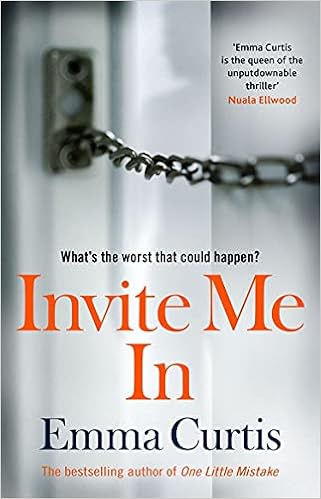
Emma Curtis Invite Me In Transworld Publishers, Penguin Random House, 2021, First published, Black Swan 2021.
Thank you to NetGalley for providing me with this uncorrected proof in exchange for an honest review.
Lies, addiction, revenge, abuse, and murder combined with domestic rites such as dropping children at school, arranging their playdates, admiring their drawings, and organising childcare enhance the complexities to be unravelled in this thriller.
Emma Curtis makes the most of each component of the novel, from her characterisations, a solid plot, to the questions that roil endlessly in the reader’s mind. Moments that seem predictable, familiar ploys and clues, become immersed in other events that encourage the reader to ‘take the eye off the ball’. At times ‘we know it all’, but, no, we do not. And even when we do, it does not spoil a convincing read. I found the twist at the end unnecessary, but other readers will enjoy this tying up of ends with another outlook on the main character. I felt that I knew enough about Eliza Curran, her character, and motivations.
Eliza Curran meets Dan Jones on the doorstep of the flat she is renovating to join the property portfolio owned by her and her husband, Martin. The introduction to the apartment and Eliza’s morning is warm, sunny, filled with music and peaceful satisfying work. Dan’s smiling self-introduction enhances this image, momentarily chasing the impression raised by Eliza’s apparent need to leave quickly to satisfy Martin’s demands, and her thoughts that what was once a safe place for her has now become irksome.
Aurora, their three-year-old; the au pair, Isabel: Ali and Pete, Martin’s sister, and her husband; their children; their mother; school parents and the real estate agency staff interact with Eliza and Martin, at times raising the tension, at others lulling the reader into an image of domesticity. The sexual tension between Eliza and Dan augments the physical and emotional tension between Eliza and Martin, and Isabel’s behaviour toward Eliza. The latter’s consciousness about her behaviour, appearance, likeability, and acceptability provides a backdrop of uneasiness. All these factors contribute to the disquiet engendered by the impact of the characters’ actions which could be equally explained by innocent or deceptive motives.
This is a thriller that is engrossing throughout the initial read and leaves a feeling of discomfort behind. The ends are tied up and there is resolution of the mystery surrounding the ‘why’ of the characters’ behaviour. However, the uneasiness that is never far away throughout the narrative remains. At the end of the novel flawed characters gather together the semblance of moving forward but whether they will be able to do so remains a question. This is a thriller rather than a literary drama, but that such a question remains gives it the edge over the usual thriller.

Claudia Clark, Dear Barack The Extraordinary Partnership of Barack Obama and Angela Merkel, Disruption Books NY, 2021
Thank you NetGalley for providing me with this uncorrected proof for review.
With the partnership between Angela Merkel and Barack Obama over the eight years of the Obama Government as the focus, and a dedication to John Lewis, Stacy Abrahams, Beto O’Rourke and citizens who fight for Americans right to vote, Claudia Clark’s book had every possibility of being a winner for me. I was not mistaken. My only negative feeling is that sometimes the repetition of the nature of the closeness of the relationship became a bit cloying – but then, Claudia Clark would be fully justified in telling me what nonsense, this is what the book is about- the relationship between two politicians! It is, but there is so much more for anyone who feels (erroneously or not) as I did at times, to raise this book into the ‘must read’ category. It really is a winner.
Beginning with an author’s note in which Claudia Clark provides a background to why she chose to write on this topic, the book comprises chapters with informative titles; photographs; an Afterword that takes in the change of President and Party in the 2016 American Presidential election; copious and detailed notes and a good index, meeting the necessary academic criteria. However, as academically sound as it is, Clark does not forget that her audience will include those who are intrigued by Merkel and Obama, those who welcome an insight into foreign affairs and relationships between heads of state: an audience who revel in a good read. Clark fulfils these criteria admirably also – Dear Barack is a wonderful amalgam of character portraits; revelation of the value and intricacies of diplomatic understandings; insight into the importance of leadership in difficult political environments, at home and abroad; and accessible lively writing.
Clark is a consummate observer of the relationship between Merkel and Obama from its beginnings in the rejection of Obama’s (possible) desire to speak before the Brandenburg Gate before he became President and the developing friendship following this inauspicious beginning, to his speech there in June 2013, and after. Clark follows the burgeoning relationship between these two events, marking as they do a rejection, and then a wholehearted acceptance of one leader by another, and its reciprocation. Her insight lets the reader into the expansion of the professional and personal relationship during the succeeding years, until the end of Barack Obama’s Presidency, and officially a short time afterwards. She provides useful detail about the way in which what would have been major crises were restrained by the friendship and respect between Obama and Merkel.
Through the relationship between the major characters, at times including commentary on their spouses, officials around them, and other world leaders, Claudia Clark weaves together an engrossing story of political events throughout the period. Dear Barack establishes a surfeit of knowledge that is accessible to readers for whom foreign affairs, diplomatic ties, dealing with trade agreements, incursions into other countries that need to be addressed, refugee crises and policies on monumental issues such as climate change are part of a world that is not always easy to comprehend. At the same time, it adds a dimension to the ‘facts’ that may be well understood and known by experts in the field. This dimension is the purpose of this book, and one that is accomplished with decisive success.
Marge Piercy Fly Away Home, Fawcett, 1985 ( available second hand on various book selling sites).

I am re-reading this, as one of my read again novels. I was (and remain) particularly pleased by the way in which Piercy adapts a domestic task into a career for the main protagonist. Although Daria is remarkably aggravating at times, her clinging to the image of Ross, the husband she wed as a young, inexperienced woman is understandable. The conflict between the two daughters and their parents’ roles in their own images is also something to think about.
Romance is an aspect of the novel, but does not overwhelm the political points Piercy makes about women’s roles and feminism; property development and moral turpitude and family dynamics.
Taking a domestic task as a career option is the strongest feminist point Piercy makes. Firstly, Daria cooks for her husband’s ‘get up the ladder/impress’ dinners. She is portrayed as his property, a useful property as a domestic chef who produces food to impress. She is less interested in producing this cuisine than the home cooking style (with a twist, as Master Chef publicity tells us is enviable) she prefers. Ross is less impressed with her writing cook books and television appearances – these are her activities which he cannot control and therefore sees as a burden. However, these aspects of Daria’s domestic prowess give her and her cooking a public role.
Piercy also creates images of married and unmarried women which suggest that the latter, although they may have children, are freer and less inclined to seek approval. Their habits are portrayed as different from Daria’s. However, when an attempt is made to push her into the subservient role of daughter and sister when Ross leaves her, she rebels, despite being made to feel like an overgrown child by her brother.
Appearance is also an issue – Piercy refusing to endorse thin as necessary for a woman, giving most of the variously shaped women portrayed positive endorsement. Men are also portrayed with physical features under a woman’s gaze, although here the WASP appearance of Ross is compared negatively to the large, warm images (initially threatening) of Daria’s preferred appearance later in the novel. Here, class and ethnic background are part of Daria’s gaze.
Fly Away Home is set in various parts of Boston and to a small extent, Cambridge, so is an attractive locale, establishing a background to development and redevelopment that is integral to the story. Having visited Boston on numerous occasions I found this particularly interesting.
Although there are typewriters instead of lap tops; Daria has to find a pay phone instead of whipping out her mobile; and cookery has become a television favourite instead of a 3-4 minute slot for Daria to show her crudités and dip many of the feminist issues still resonate, making this a worthwhile novel to read in the 2000s.
Leslie Kern Feminist City Verso 2019
I was disappointed that Leslie Kern fails to resolve the problems she raises in this detailed description of the way in which cities are built to meet the needs of white able-bodied men, rather than the wider population that inhabits them. The way in which the problems are laid out provides so much of the information needed for readers to consider a range of possible changes to begin finding solutions. But is this enough?
In her preface, Kern suggests that the Covid pandemic has publicised the role of care workers, and that the caring professions’ requirements of their cities need to be addressed. This is an excellent way of giving the topic immediacy. The introduction is less accessible and direct in its outlining some theories underlying the need for a feminist city and reference to the categories of people Kern believes are discriminated against by the current design of cities. Attention is given to women, and the various groups that are embodied by that description, acknowledging the possibility that white middleclass women may have agendas that impact on categories often subsumed under the category, women.
The chapters cover topics under headings such as City of Men; Who Writes the City?; City of Friends; City of One; City of Protest; City of Fear; City of Possibility. Within these topics there are subtopics, including those covering mothers in the city, personal space, and particular groups’ lack of safety. Some chapters deal with personal experience, others draw upon popular culture or political activism.
The writer’s experience of city planning and public transport as a pregnant woman, despite the notices designating some seats for that purpose as well as those with a disability, or are elderly, resonate. The difficulties with public transport, including the lack of elevators at railway stations, for people with prams are easily understood, and can be translated into those experienced by people in wheelchairs, who are elderly, ill or carrying heavy and unwieldy parcels.
Her discussion of the way in which some women’s gains may discriminate against other women raise important issues. Two areas where this occurs is in relation to gentrification and the possibility that white middle class women’s gains may discriminate against other women, and the problems faced by transgender women. These concerns may not sit well with some readers. Middle class women may feel sympathy with Kern’s concern with other groups of women but react negatively to the idea that our gains are others’ loss. Some descriptions, such as ‘cis women’ may offend some; others will be satisfied that the debates about transgender have been recognised and settled by this author. Whatever the position a reader adopts, the book does not fail on Kern’s interpretation of feminism and transgender. The most simple statement, that we cannot adopt change without considering its impact, underpins much of the discussion.
While Kern eloquently lays the problems bare, with enough material and examples to draw readers into easy recognition of the way in which cities do not provide for all their inhabitants, she was unable to develop a solid range of suggestions to deal with the problems. There was little recognition that solutions can only be found through community commitment to public spending as well as new design options arising from involving a wider range of people in city planning. I was excited by the topic of this book, and perhaps it is that which made me want so much more.

Laura Lippman Dream Girl First Published in the UK, Faber & Faber Ltd 2021, First Published USA, William Morris, Harper Collins 2021, CPI Group (UK) 2021.
Thank you, Net Galley, for providing me with this uncorrected proof in exchange for an honest review.
Tess Monaghan PI, one of Laura Lippman’s continuing characters, makes only a short appearance in this novel. However, her interaction with the main character, Gerry Anderson, is instructive. It tells the reader something about Tess Monaghan as well as much of Gerry’s story that good PI that she is, Monaghan has investigated. Gerry has done nothing to apprise himself of her ability – the person he wants to employ to enquire into mysterious phone calls from a woman purporting to be the Dream Girl of his successful novel. Gerry’s knowledge of Tess is limited to an interview with her in a magazine, when his immediate reaction to her photograph was that she was ‘not his type’. Although ‘it had not occurred to him that she could turn him down’ she does so and leaves the novel. Her explanation for refusing his request is his lack of self-awareness which would undermine any examination of events and their cause. This is a clever use of Tess Monaghan, although potentially disappointing for her fans. However, the value of her short commentary should not be underestimated. A clever move by Lippman.
There are some Misery (Stephen King) like aspects of the work, referred to by Lippman in an afterword. I also thought about the phone calls to elderly people in Muriel Sparkes’ Memento Mori and their impact on their recipients. Gerry’s fear, confusion, apathy, and self-delusion are fed by letters that appear temporarily, the phone calls that are heard by no one else, and leave no evidence of having been received, possible sightings of strange events and non-existent visitors during the night. Gerry’s dependence on painkillers given to him by his overnight nurse, Aileen, his entrapment at the top of his apartment in an unwieldly metal hospital bed, his inability to write another novel, and reliance on self-aggrandisement through memories of his professional and personal past increase his distress.
Gerry’s story creates some comic moments as well as apprehension; sympathy vies with uncertainty, and at times dismay, at Gerry’s self-regard. The relationship with Margot, a former lover is well written, encouraging the reader to adopt Gerry’s interpretation of the difficulties the relationship has imposed upon him. Similarly, his relationships with Aileen, his nurse; Victoria, his new assistant; and Phylloh, the receptionist at his apartment; his agent and friends, while raising some questions, are almost effortlessly seen from Gerry’s perspective. Even knowing that other protagonists might well have a point of view that differs from Gerry’s, it is hard to get past Gerry’s own interpretation of his life and relationships. In many ways he is a really engaging character, with his literary and cultural asides; the story of his parents and their relationship with each other and him; his professional writing experiences and humorous (and yet, on reflection are they really?), commentaries on life and personalities. The reader is not made directly cognisant of any alternative perceptions until the end of the book, although there are abundant, but subtle clues throughout.
Laura Lippman has cleverly demonstrated the way in which, even with the clearest of signposts, a reader can be so drawn into a character’s life it is difficult to extricate themselves from the main protagonist’s point of view. As a mystery that has a logical and appealing solution the novel works well. As a feminist investigation, if the reader is so disposed to read it that way, the novel works very well. To be able to draw a reader into an account of what is, on reflection, the life of a misogynist, without immediately calling him to task, is a very clever feat. I was disposed to read this novel as a mystery, with an absorbing feminist intent, and found it a satisfying read.

Nicola Moriarty You Need To Know Penguin 2021
NetGalley provided a copy, but as it was not on kindle, I was so keen to read this book, I purchased it. So, thank you to Net Galley for the original copy for review.
The title is the directly connected to Jill. She is a complex combination of strength with which she deftly achieves her aims in handling her family, weakness in relation to adopting the email heading command to know, and, although belated, courage. Jill is the wife of Frank; mother of three brothers, Tony, Pete, and Darren; mother-in-law to Andrea and Mimi, and formerly prospective mother-in-law to Charlotte; and grandmother to four girls, ranging from teenaged Callie, eight-year-old Tara and new-born twin girls, Elliot, and James.
What a clever move Nicola Moriarty has made in naming the twins so. By rejecting any character’s use of comfortable diminutives such as Jamie and Elly, the reader must come to terms with preconceptions about gender. An excellent move in a novel that puts on notice the way in which people find it difficult to adapt to new expectations and ‘knowledge’ about what they think (or want) to be true. This discomfort pervades the novel, from Mimi’s recall of a scream in a restaurant, to her realisation she is replicating that scream; Callie’s behaviour to Mimi; Jill’s letters to Frank expressing contrition; Charlotte’s almost manipulation of Darren; and Andrea’s fear for a neglected child in her complex.
The novel moves between characters and past and present. In this work the well-worn device is admirably executed. This, to me, is the sign of a writer who is not only competent but uses devices with robust attention to how they work best. In this novel the speakers move the story forward smoothly, logically, and almost flawlessly. Another positive feature is that the family is not alone in a landscape peopled only with the main protagonists. Other characters interact with them, publishers, agents, people in their neighbourhoods, friends, dishonest interlopers,
Andrea’s concern with the neighbouring child, and Jill’s determination to influence the family’s Christmas celebrations are pivotal. Both raise complex issues about control, personal interests vying with social, or other people’s, concerns, and the capacity to be honest about motivation. Jill’s character in particular raises difficult issues about love, responsibility, and her somewhat matriarchal role. Moriarty deals well with the dynamics around the social issues raised, despite their being somewhat predictable. Nicola Moriarty has written a competent novel, depicting a realistic family with its members’ flaws highlighting broader social concerns. You Need To Know circumvents the risk of becoming a closed world, which is always possible where a family is the focus. Rather, the Lewis family has ties to the community through individuals or the issues raised by its members. There are some clever links between characters’ actions, which with further knowledge become ironic. Horribly so. The ending was satisfyingly realistic. So, there is a great deal to recommend this novel and I thoroughly enjoyed my read. I found it a very worthy four stars.
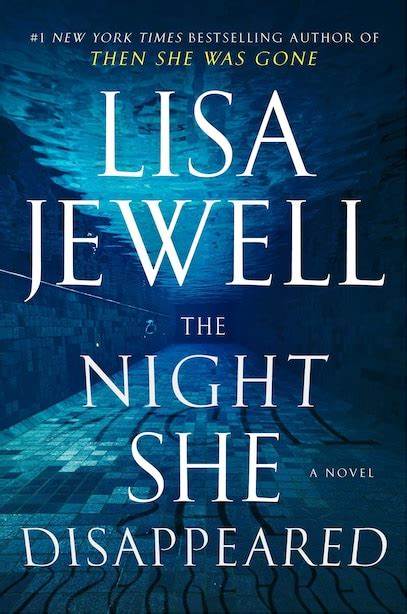
Thank you to NetGalley for this copy of The Night She Disappeared for review.
The story opens with Kim’s perspective on the baby she is caring for while she waits for his parents, Tallulah and Zack, to return home. In this brief chapter a vast amount of information is provided. Kim does not really like babies and feels this one has arrived too soon in her life, only marginally free from the cares and responsibilities for her two children, Tallulah and her brother, Ryan. Contrasting with this, Kim loves her daughter and wants her to enjoy the short respite from being responsible for her son, Noah. Kim is happy that Tallulah and Zack are having a ‘date night’ (although she sees the term as rather middle aged) and has agreed that they should party with friends met by chance at the pub later than planned. The couple do not return.
Lisa Jewell The Night She Disappeared Century (Penguin Random House), 2021.
In this latest novel, Lisa Jewell uses a device that is new to me in her work – a detective story writer who becomes an investigator. Sophie Beck has left London for the countryside when her partner, Shaun Gray, takes a position of head teacher at Maypole House. The change from a London secondary school to the private boarding school for young adults is at his former wife’s behest – more money must be found for their twins to attend a private school rather than the local primary. This secondary story line underpins Jewell’s subtle but strong way of developing the way in which class differences impact upon personal relationships with devastating effect. The main storyline also adopts the theme of class differences. Although functioning less powerfully in The Night She Disappeared than in Jewell’s I Found You, class is central to the characters’ behaviour and understanding of how the world can operate for them. The poignancy and heartbreak at the heart of I Found You are moderated by the more worldly approach of the missing girl and her mother, Tallulah and Kim, but nevertheless influence the way in which they experience Scarlett Jaques, her privileged family and friends.
The disappearance brings together disparate characters in their search for the missing couple. Kim continues to care for Noah and worry endlessly about the disappearance. Zack’s parents are oblivious to the concerns she raises, share little of the responsibility for Noah, and raise alternative positive reasons for the couples’ disappearance. Sophie is the recipient of a clue and becomes involved with figures from the school as she investigates the disappearance. Shaun is on the periphery of this activity, but his association with the school and the issues there are subtle pointers to the way in which class dominates the village and possibly the disappearance. DI Dominic McCoy is the detective in charge, and becomes a comforting, while unsuccessful, presence.
Past and present are described, building up knowledge of characters’ emotions as well as their actions. Misunderstandings, secrets, and clues work together to provide excellent characterisation with a particularly complex picture of Tallulah and her motivations emerging. Past events are briefly mentioned, providing possible red herrings in familiar detective style, Sophie’s career subtly underscoring the way in which the detection element of the story builds.
I came to Lisa Jewell as a writer slowly, enjoying but no more than that, some of her earlier novels. However, as I have grown to know her writing I am continually impressed with the sheer professionalism of each novel. There are no short cuts, manufactured twists, poor character development or lack of motivation for each feature of her plots. Rather, Jewell respects her readers, providing us with excellence each time we start on the journey she puts before us. I have thought hard about whether to give this Jewell novel five stars, as I am unsure about the resolution. However, when I think about the theme of class as a motivator I am persuaded. The Night She Disappeared is another example of Jewell’s authenticity as a writer who acknowledges her readers as deserving the best.

Meredith Stabel and Zachary Turpin Radicals, Volume Two Memoir, Essays and Oratory, Audacious Writings by American Women University of Iowa Press, 2021.
Thank you, NetGalley, for providing me with this copy for review.
The foreword states that ‘This collection reminds us that it [a period of violence against women, indigenous Americans and African Americans] was also a time of great social and intellectual excitement’. The writers also warn us that there are glaring shortcomings in some of the material, where the authors either ‘go too far’ or are in themselves often racist, sexist and classist, as well as exhibiting the failure to understand or appreciate other valid stances. However, they also suggest that such shortcomings were ‘common features of the “progressive” thought of the era’. It is well to read these caveats before embarking on the papers in this wide-ranging collection, some of the views are indeed shocking, and it is the work of the reader to look for where such material can be useful. I am assuming that the collection is mainly seen as a support for academic endeavour and have had that proviso before me in writing this review. Where can the researcher use the material in this volume?
Firstly, the writings are new, sometimes the authors are hitherto unidentified, where they are familiar, the papers are unknown. This provides the academic and non-academic reader with a wealth of material from which new observations about radical writing, women’s role, racism, sexism, and classism can be made. At the same time, much of the writing needs diligent unpacking before it can be useful. How does the non-academic reader deal with this task? Do they want to? Are the new observations worth the work? And, for the academic, does the material bring new information to further enlighten their writing? How do they unpack the, at times, contrary views expressed by the radicals of this volume? How useful will such conflicting views be in making a case for radical views, mixed as they are with such nonprogressive stances?
For example, the indigenous American story, Buffalo Bird Woman’s Garden is a delightful first-hand account of this woman’s life and her agricultural work. It is briefly observed, lively and informative. However, it does not introduce new information about the way in which indigenous Americans lived. For the academic researcher its value is in its being a first-hand account, providing researchers with some wonderful quotes to humanise their work. In contrast, Emma Goldman’s writings, A New Declaration of Independence (1909); Minorities…versus…Majorities (1910) and Marriage and Love (1910) raise a host of inconsistencies and repugnant ideas amongst the arguments that contribute to the thriving debates of the time. These are not arguments to be glossed over, they raise too many ideas that are familiar amongst supporters of the current voter suppression legislation being enacted in America (see Minorities…versus…Majorities in relation the current ‘quality versus quantity’ claims for an ‘improved’ voting system).
This is not to say that such works should be censored or that the non-academic reader may not find such writing fascinating, but possibly it could be useful to sell the papers independently, as I have seen with other collections in which there is a variety of texts (See Jocelynne Scutt (ed), Women, Law and Culture, Conformity, Contradiction and Conflict, Palgrave McMillan, 2016, in which my article about the populist television programs, Big Brother and The Apprentice, is less likely to attract the serious reader than those that deal more directly with the law).
Secondly, there is a wide range of material in the collection from authors whose voices have not been heard in such proximity to each other. Rather than one or two items from black Americans, or papers relating the political movements aimed at ending slavery, there are many papers. This alone propels the reader into a greater understanding of the way in which slavery and racism impacted on the past, with its tentacles informing the present. Again, these papers provide additional material for academic writing. Here, together with the debates around women’s equality, the vote, women’s role, and universal suffrage the conflict with modern day thought, and conflicts within the papers and arguments they express, lend themselves to specialist studies. I find it difficult to envisage some of the works as useful supplements to general studies arguing for women’s or black Americans’ rights. The conformity with religious teachings, conservative values, and classism in many of the papers that argue so cogently for rights that do not undermine these values make them distinctive, perhaps weakening their value to generalist studies.
Where the collection excels is in the foreword and introduction. Here the authors explain their reasons for the choices, describe the value of the papers in the volume and provide an overview of the arguments that they have so diligently assembled to give readers new perspectives on known writers, and voice to unpublished writers. The preponderance of black American authors, descendants from slaves, or women freed from slavery is admirable. Although I have some reservations, articulated above, I am impressed by the authors’ dedication to giving unheard voices a platform. It is these voices that resonate throughout, and, together with the introduction, deserve the four stars I have given the volume.
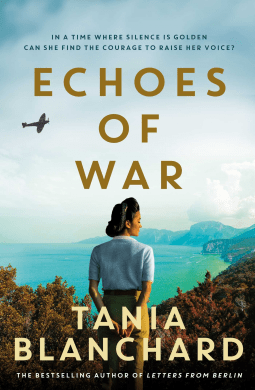
25 August 2021
Tania Blanchard, Echoes of War, Simon & Schuster, 2021
Thank you, Simon & Schuster and NetGalley for providing me with this uncorrected proof for review.
Tania Blanchard’s story of the Tallariti family is set against the dramatic geographic extremes of mountains and ocean in a Calabrian village. Perhaps it is these surrounds of the villagers’ day to day lives that foster the diversity in the family and the preparedness of the villagers to at once maintain traditional attitudes towards women, while remaining uncommitted to the unification of Italy, preferring to strike their own paths, and later in the novel accepting a range of ideas about their attitudes to their government as the Allies advance in Italy. They are not a static people, rather, some defy conscription and others join the Italian Army; the professionalism of women healers is accepted by some, derided by others, but they have a place in the village society; some women marry, but others remain single as, for example, a restaurant proprietor or a farmer, without wide censor.
In February 1936 Giulia, the second of three daughters, is at a Byzantine monastery studying to become a herbalist. She tells the story, beginning with her sojourn at the monastery, to the widening of her world through marriage, loss, war, and contemplating the possibility of migrating to Australia. Giulia’s early personal reflections include her sorrow at missing the family celebrations of the marriage of Theresa, her older sister, as well as the nightly chats she and her younger sister Paola have in bed away from the control of their father. His traditional values and attempts to impose them upon his two younger daughters, whose aspirations are quite different from those demonstrated by Theresa’s conduct, are an important theme in the novel. The boys, Vincenzo, and Antonio who is only fourteen at the start of the novel, have a freedom only to be aspired to by Giulia and Paola, a source of anger and resentment to Giulia in particular.
Mussolini has been in power for over fourteen years. This together with the ever-present Calabrese equivalent of the Mafia, the ‘Ndrangheta, in its various forms, and economic conditions provide the political framework of the novel. As Italy displays its own power in Abyssinia (Ethiopia), Vincenzo and his village friends become successful soldiers. Later, when Italy must honour the Pact of Steel signed with Germany in 1936, they return to war, with mixed consequences for the three friends.
This novel is in many ways a ‘home front’ novel prior to, during and after Italy’s involvement in the second world war. However, with the setting a Calabrian village instead of an English town or village, the novel assumes a very different quality to that associated with British ‘home front’ novel. While the personal events affecting the Tallariti family are always the focus, these take place in harsh locations, the mountains that make movement physically arduous, and the sea that provides work and sustenance but can turn upon the villagers and create havoc and death. Marriages, deaths, women’s fight for independence, personal and professional, the value of family and tradition vying with new aspirations are a constant source of competing interests amongst family members. This is a remarkably honest novel, illustrating that universal human dilemmas do not cease because of political upheaval.
However, while these routine dramas play out, the war reaches into the village through government increased demands for produce; the call up of young men, their return or failure to do so leaving widows and children relying on others for survival; characters leaving the village for war related activities, such as Giulia’s commitment to healing taking her from domestic surrounds to the battle fields; and soldiers entering the village. These aspects of the novel are such a marvellous education on Italy’s role in the war, with an emphasis on the aspirations and attitudes of southern Italy. For example, the somewhat subdued acceptance of Mussolini and the fascist government is an interesting aspect of the Tallariti family and their compatriots in the village. Even this support lasts only until the hardships imposed on farmers become too onerous, and some resistance is apparent. Interesting also is the impact on those secretly listening to unapproved radio stations for war news, and how this played into their decisions on whether to commit to their own government and the Germans or the Allies.
Although I appreciated so much of this novel, I cannot be wholehearted about the writing style. I felt that the story telling lacked vitality, at times appearing to become a narrative of events without the emotion and depth of feeling a reader relies on to be drawn into the lives of the protagonists. However, Tania Blanchard has written a well-researched novel with characters who drive the story forward through their personal dilemmas as well as their public and professional aspirations. Echoes of War is a worthwhile read, and I look forward to reading more from this author.
Louise Guy, Her Last Hope, Lake Union Publishing 2021
Thank you NetGalley and Lake Union Publishing for this uncorrected proof for review.
Abi and Lucinda are at a crossroads. Although they are unlikely to have met if this were not the case, surprisingly they have other things in common. Both risk losing their sons, they are leaving a familiar life behind and having to adapt to another, and secrets rule their behaviour. They become neighbours in a Melbourne suburb, in a run-down older apartment complex. Strange neighbours indeed. Abi has left a large architect designed house with grand furnishings and accoutrements, with a wardrobe full of designer clothing, in a salubrious neighbourhood, numerous business and personal friends and a full-time position of authority in a bank. Lucinda has arrived from a much smaller home in Queensland, with a rucksack and case of her and her four-year-old son’s belongings, departing a part time job as a dental assistant. She leaves behind her loving mother and a close friend. Where the women differ is in the reason for their single state: Abi’s home harbours the aftermath of her husband’s suicide; Lucinda’s husband is in gaol.
These are two women whose activities, blossoming friendship and speculations on their futures become quite engrossing. This is astonishingly so, as much of the plot was predictable. Perhaps this is because Louise Guy deals well with developing tension, depicting characters who largely ring true, and has an ability to entice the reader into the women’s lives, predictable or not. I found my wanting avidly to see what happened next quite surprising. However, it is undeniable that although events followed the path that I predicted, I was keen to see the latter come to fruition.
I enjoy the Australian settings of Louise Guy’s novels, and in this one fishing trips in the Kimberly, Moreton Bay Fig trees seen from a lawyer’s office leading to reminisces about picnics in the sunshine and the multitude of parks, and more picnics, around the Melbourne suburbs are evocative – as is the reference to the ever-changing Melbourne weather, and the warmth associated with Queensland and Western Australia.
Recognising the devastating impacts of white-collar crime at the same time as dealing with the more familiar stereotype of a criminal being the tattoo covered drug dealer or man wielding a physical weapon is an excellent feature of this novel. So, too, is the juxtaposition of two women who have been betrayed by their belief in romanticised versions of their husbands, unalike as the men are to the outside world.
Louise Guy has written very readable novel, with engaging main characters, some social comment, and a plot that, while predictable, has enough tension to work well.
18 August 2021
Terje Tvedt The Nile History’s Greatest River I.B.Taurus Bloomsbury Press 2021
This is an immense book, both in scope and aspiration. Coming to my interest in reading The Nile from a mixture of dim recall from school history; Agatha Christie’s evocative Death Comes as the End, and the less inspiring, Death on the Nile; and a cruise from Luxor to Aswan I have mixed responses. They are those of an academic with a political and historical focus, and the general interest of a person who wants to read an accessible book on an area about which I know little, apart from the mentioned fiction and travel treatments.
The introduction was beautifully redolent of the movement of the Nile, its vast influence and history. I thought that I was in for a wonderful treat of information woven through the eye of an inspired writer whose background in documentary would lay before me easily accessed images of the Nile, geographically, politically, and historically. Not to mention that this book also serves as a travelogue of Terje Tvedt’s travels from the mouth of the Nile Delta to Tanzania and The Democratic Republic of the Congo.
As a description of his travels, I was disappointed. I am left wondering why the tone I found early in the book seemed to disappear to leave a somewhat flat rendition of observations, meetings, thoughts, and stories. There appeared to be little interest in the small matters. What did it mean to the parents of the virgin thrown into the Nile as a sacrifice? To the person who had to give up his goat or other animal, to drowning to appease the river – surely an economic disaster for the owner? What were the domestic lives of the people whose well being seems to have been drenched in political and economic unrest that sits side by side with the natural changes in the river that brought economic security? In these sections I would have liked to have learnt more about the way in which ordinary people lived. There is detail provided for explorers such as John Hanning Speke and Richard Burton who took with them a multitude of goods from folding tables and brandy to gifts such as ‘clothing brass wire and pearls’. Fair enough, but as there is so much time given to warfare, murders, and unrest in the remainder of the book ordinary the addition of material about people’s lives would have provided a far more rounded story of the Nile.
Where history, politics and geography meet a wealth of information is provided. And it is here that there is so much to be learnt. I was gratified to do so. Although I would have liked the political events as they relate to British involvement clarified as to the governments in power at the time, major figures are mentioned and give some focus along with the dates of events. Describing and analysing over 5000 years of history is an impressive contribution to knowledge about a remarkable river and its influence on world events, far from its source as well as events those that directly impacted on the people along its banks and environs.
The role of colonialism is studied, with some myths destroyed, charging the reader with the responsibility of thinking about what other errors may have been made in historical writing by not only the victors as is commonly noted, but by the local entities that prosper under colonialism. Questions are also raised about racism and its impact on the way governments responded to local events, where rather than acknowledge local experience, racist understandings held sway in government policy making. Decisions made and not made move Terje Tvedt to question in the light of the 1913 civil war and continual conflict fighting over pastoral and other interests pastoral what the impact would have been on the proposed drainage of the swamps and building of the Jonglei Canal? Here, we are reminded of the canal building that he has reminisced over earlier in the book. I try to recall whether canals were mentioned on our tour. Canals and dams as a feature of the Nile are a constant reminder of the river as an industrialised source of economic prosperity as well as the natural provider of water flowing and receding to accomplish the same result in the past.
Photographs with detailed descriptions including reference to local events and comments are located at the end of the book. A useful index of names is included. The list of references is an informative read, with familiar names jostling with the unfamiliar, making it an interesting read in itself. End notes are comprehensive.
Would I like to reread this book from ‘cover to cover’ as I have done for this review? No, not at all. Its density makes it a heavy read. However, I shall enjoy returning to various sections again and again to develop my understanding of the Nile and the countries through which it runs. As Tvedt states, the struggle over exploitation of the Nile has a never-ending influence on regional and world development. The Nile deserves more than my dim recalls, a couple of Agatha Christies, and a cruise. Terje Tvedt’s book has given me the opportunity to do this in a comprehensive and largely agreeable manner.
Dolly Alderton Ghosts Penguin 2020
I was fortunate that a young friend suggested I read this Dolly Alderton’s Ghosts. Fortunate because I would have moved past what I found to be an engaging read, full of social commentary and wise observations, with characters who at once charm and repel. Some are, of course, more of the latter, and thankfully the personality flaws in the main character and her closest friends are understandable.
Ghosts begins with a lengthy prologue, a familiar device used to great effect. It continues in two parts and features an epilogue. This is a year later, tying up some ends, leaving the future looking somewhat like the past, but with an air of positive reflection on that and the potential for another fascinating year.
Alderton establishes a huge body of information in the prologue, told in the first person by Nina George Dean whose thirty second birthday is to be celebrated with twenty guests at a local pub that evening. But first Nina’s character is established as a moderately successful food writer; a woman who swims at the Ladies Round Pond in Hampstead Heath; has invited her best friends Katherine, mother of Olive and wife of Mark, and her only single friend, Lola to her party, but has omitted inviting her former long-term partner, Joe and his current partner, Lucy; and has recently bought a small flat which she loves.
At her celebration Nina has acerbic (but humorous) and sometimes thoughtful ruminations about some of her friends’ partners, couples who leave the party early, motherhood, singleness, and some of the gifts. These further identify Nina’s personality, from her appreciation of Philip Larkin’s The Whitsun Weddings to her bemusement at a poster possibly making a sharp comment on her single state. The guests show that Nina has retained friendships of a kind with university friends, past colleagues, and school friends, who are joined in the celebration by current colleagues.
The main characters, their personalities, and glimmerings of their possible story lines, together with the end of Nina’s day in bed with her laptop clicking onto the dating site, Linx, set the scene for a witty, romantic romp in the life of a thirty-two-year-old professional living in London. Nina alerts us to her future: it is to be the strangest year of her life.
Yes, the novel is witty, there is romance, and it is somewhat of a romp. However, there is far more to this thoughtful work. Nina has a strong connection with her parents, their way of life, and community while luxuriating in her independence, and being aware of her mother’s disappointment that she is not a more ‘girly’ girl. More cracks appear in the seeming chic lit nature of the novel, Nina’s father is in the early stages of dementia, her mother is dealing with her possible future in a way that Nina disapproves. Lola’s romances run true to form, requiring support from Nina, whose patience is undermined as her idyllic life in her flat starts to become less so.
At times, I found this novel overwritten, with a style that I find unappealing – trying too hard to be lively? I am not sure, but I know that without my friend’s suggestion I would have looked at the cover (a young woman in teenage posture lying looking at her phone) and left the book on the shelf. But then, I look at references to Andrea Dworkin’s feminist work, the wonderful analysis of the ‘working class hero’ early in the novel when Nina reflects upon Joe’s assessment of his roots and right to patronise Nina’s social class, and again in relation to Joe his description of their relationship: ‘we grew up together’. What a great way of describing the way in which what is seemingly just a year in Nina’s life, is really portraying something more profound.
Of course, the novel can also be seen as an amusing, although as Nina says, strange year of events, with humour and some social comment, a novel for the beach or a light-hearted read during lockdown.
Either way, Dolly Alderton has written an engaging novel which I have been pleased to read and review. Thank you, young friend for giving me the opportunity to do so.
11 August 2021
Hillary Rodham Clinton and Chelsea Clinton Gutsy Women Favourite Stories of Courage and Resilience Simon & Schuster, 2021
The introduction to Gutsy Women Favourite Stories of Courage and Resilience is the key to the way this book is planned, its purpose and what the authors hope that the reader will do after reading it. Libraries feature as an important part of Hillary and Chelsea Clinton’s world, and their aim is to introduce readers to a host of women whose stories are worth following up with further reading. They encourage readers to seek additional information through borrowing books from their library. As well as admiring and reflecting upon the agency of the women they describe, the authors encourage readers to exert their own agency – enjoy and marvel at the range of options made available through this book, then choose for yourself about whom you would like to know more. At the same time, the role of grandmothers, mothers, and daughters in helping women achieve is portrayed and described though Hillary and Chelsea’s interaction, both as mother and daughter relating to each other through past experiences, and then through the focus of devising the book; Hillary’s relationship with her mother; and Chelsea’s with her grandmothers. The book is organised around interaction and discussion between Hillary and Chelsea and grouping women’s activism under topics such as Early Inspirations which includes First Inspirations detailing the personal impacts of family women on both authors; and women outside the family whose stories were also early influences; Education Pioneers; Earth Defenders; Explorers and Inventors, Healers; Advocates and Activists; Storytellers; Elected Leaders; Groundbreakers; and Women’s Rights Champions. There are photographs, and an index.
I found the discussion about early influences fascinating. The grandmothers, traditional in some ways but so aware and supportive in imagining different lifestyles for younger women in the family, were indeed an inspiration. Woven into the family reminiscences about their reality is recall of television programs, literature, teachers, and experiences in other children’s homes. Betty Friedan’s The Feminine Mystique resonated with Hillary Clinton’s mother, Grandma Dorothy to Chelsea, but the latter had already moved beyond the concerns it expressed, she had grown up with the fictional intrepid reporter, Brenda Starr. Similarly, Nancy Drew’s adventures, although unlikely, drew Chelsea into a world where women acted courageously and achieved. June Cleaver on leave It To Beaver and The Donna Reed Show depicted mothers who behaved in a manner familiar through their own experiences with Grandma Dorothy, but their popularity waned, all that remained beloved was their essential caring side reflected in Grandma Dorothy. The essential goodness of the women they knew, and were encouraged to become, remain an important feature of the way in which the authors understand ‘gutsy’ women.
The book begins with a wonderful vignette of what it means to be a mother and daughter – an exchange of information from a CNN report that showed that, contrary to belief, a medieval woman had been a talented painter; only they could use the lapis lazuli pigment to paint, and this woman had it between her teeth presumably as an outcome of putting her brush in her mouth while painting. The introduction teems with examples, and it is all too easy to imagine the animated discussion that began, and continued as women were chosen, some reluctantly discarded and personal reminiscences were brought into accounts as the book grew. The stories are relatively short but so alive that the encouragement to look further (by borrowing a book from the library) is hard to resist. The sections are written in turn so that while a famous figure is introduced, we learn more about Hillary and Chelsea, their lives before and during public life.
Some of the women are familiar: Harriet Tubman, Anna Pavlova, Isadora Duncan, Helen Keller, Anne Frank, Florence Nightingale, Betty Ford, Billie Jean King, Venus and Serena Williams, Eleanor Roosevelt, Coretta Scott King, Maya Angelou, Chimamanda Ngozi Adichie, Greta Thunberg, Mary Beard, Frances Perkins, Rosa Parkes, The Suffragists. But that leaves many names of women who will be familiar to only a small group. We shall all have our known, lesser known and unknown women amongst the over one hundred and thirty women whose stories are told. Lest the brevity of each piece leads to the belief that the stories will be dry factual accounts, it is important to note that this is certainly not the case. The style is so engaging that stories that we think we know become brighter and more empowering – the question arises, could we do that? dare we think in this way? what should we be expecting of ourselves? how we can contribute? have we also been courageous and resilient?
These questions and responses are the direct outcome of the way in which the book is compiled, the material and, most importantly the authors’ belief that there are so many women whose stories deserve to be told. They regret that many have had to be omitted, a sincere recognition of the multitude of lives that deserve recognition. The combination of familiar and not so familiar names makes it clear that all women who are courageous and resilient may not be famous, or even known. While these women’s stories are being absorbed, the reader is empowered to think of herself as a possible candidate for such feats. A worthwhile project indeed.
4 August 2021
Amanda Prowse, Waiting To Begin, uncorrected proof, Lake Union Publishing, on sale June 2021.
Thank you, Net Galley, for this uncorrected proof of Amanda Prowse’s Waiting To Begin, for review.
In the works of most prolific writers, it is likely that a reviewer reads work that stands out, as well as that which is disappointing. I have mixed feelings about this novel. While it does not stand out, there are some delightful nuggets of humour and characterisation, and the story line is feasible. However, I could not warm to the main character, despite her harrowing story with which I would expect to have sympathy.
The Prologue introduces Bessie and Philip, siblings, on a train journey, during which Bessie begins writing some post cards. These will be lies. Beginning with pleasantries to her mother and father, they continue with an upbeat comment on the possibility of her flying within weeks. Bessie commiserates with an elderly man who, awakened abruptly states that he does not know what is going on.
The book then moves between past and present, with August 1984, Bessie’s sixteenth birthday, setting the scene for events that continue to mar her life as an adult. She is a teenager in love, aims to become a flight attendant, and is looking forward to seeing the results of her study which will propel her into a glowing future. Philip features here as well, a brother who is at once a nuisance and a friendly supporter. Once again the flying motif suggests freedom, adulthood and excitement: this young woman has aspirations which she fully believes will be fulfilled. This chapter also establishes her parents’ personalities, a caring, but sometimes bothersome mother, and a loving, but sometimes embarrassing, father. Despite the flaws Bessie sees, this is a small, quietly happy family. It is clear that the bombshell with which she could present them in future chapters cannot be thrown into this household. Bessie’s decision to maintain her silence, from her parents and her best friend, Michelle, provides the backbone to the storyline.
Friends since childhood, Michelle and Bessie, attempt to emulate each other in dress, behaviour, and exam results. The descriptions of these young, enthusiastic friends, with their popstar and favourite singer posters, reliance on fancy make up and clothing, chat and giggling are well drawn. They are hopeful young women whose aspirations beyond Michelle’s economic circumstances and Bessie’s foolish love affair could well be achieved.
In Chapter 4, set in 2021, there is a profound change. Bessie is now awaiting her 53rd birthday celebrations, rather than her sixteenth. The events of this birthday, and its aftermath, combine humour as the past is replicated in some of these celebrations, sadness as changes in the family and friendships are acknowledged and, for me, a mixture of sympathy and frustration with Bessie. To be fair, this feeling of frustration in part mirrors that of Bessie’s family: her parents, husband, Mario, and their two children. Perhaps there is too much detail, too much dwelling on the secret that impacts upon Bessie’s life so disastrously, perhaps I should empathise more. However, for me, Bessie has some major flaws. Although it is an important feature of Bessie and Mario’s immediate crisis, her almost replication of a past mistake jars with me. So, too does the resolution of Mario’s concerns. They have been developing over several years, are seemingly absent during a poignant and sympathetic scene between the partners, then resumed.
The last chapter is good, providing a realistic resolution to Bessie’s situation. The Epilogue, describing events 6 months later, is delightful, with its warm depiction of the each character, imperfections juxtaposed with strengths and tying up of ends. Here Prowse is once again, for me, the writer of novels to which I can warm, with characters with whom I can sympathise and a story line that leaves only happy endings to be realised.
Louise Candlish The Heights Simon & Schuster, 2021
Thank you, Net Galley and Simon & Schuster for this uncorrected proof copy for review.
Louise Candlish has had me immersed in her fictional worlds from when I was introduced to her work through Our House. Now I have had the pleasure of engagement in such novels as Those People, The Sudden Departure of the Frasers, and The Other Passenger. Of course, there are more, but one of the pleasurable features of opening yet another Louise Candlish novel is that each has something different to recommend it. Although they are often introduced with comments about the twists and turns, this phrase has become overused. What I want is a twist that is smooth, is logical, and has a background in the information I already have about the plot and characters. In The Heights Louise Candlish has accomplished this once again.
Candlish’s novel begins in a library where a writing group is in its third meeting with the writing instructor. One attendee is a journalist; another is a woman who has no notion of how to begin her story. Although the instructor, Felix Penney, is named, an unnamed member of the group, who is ‘closer to fifty than forty’ and ‘has a quality to her that’s impossible to tear your eyes from. A charisma. A pathos’ is to become the key character, Ellen Saint. The novel is divided into three parts. Part One, Killing Time and Saint or Sinner, features the writing course, where Ellen as the author of Saint or Sinner becomes the principal character; Part Two, Killing Time, turns to Vic Gordon, her first husband, who tells the story from his perspective, ‘now and then’; Part Three, Saint or Sinner returns to Ellen; Part Four, Killing Time, features the journalist from the writing course, then Vic, Ellen, and Kieran. Each Part moves the stories along with a level of empathy with the predominant characters while ensuring that their flaws become apparent. At the same time as peripheral characters become more closely identified with Kieran and Ellen’s relationship, seeming clarity about events shows them to be more complex. The reader is forced into the lives of Ellen and her family, Kieran and his past and present relationships, and events that seamlessly link the events and characters into a tense whole.
Many of these events are shown through Ellen Saint’s novel, Saint or Sinner, which follows the introduction in the library. She begins with a sighting of a person who has been dead for two years. This ‘monster’ who destroyed the writer’s life, stands on the roof of a building in Shad Thames, a redevelopment. The redevelopment changes a formerly shadowy, poor dock region of London into a glossy area of high rise, roof gardens, and, fortunately for Ellen, small windows that provide a large market for the extravagant luxurious lighting she designs. She is working when she sees Kieran Watts, on the highest building in the area, possibly about to throw himself off? Not him, the strong controlling man of Ellen and her family’s bad dreams, But Ellen who, in his situation might well do so – she suffers from ‘high place phenomenon’. She ends her first chapter with a compelling statement, from which the remainder of her novel advances.
From Ellen’s perspective, Kieran Watts is manipulative, dangerous to her and her family, and a constant source of fear because of his malign influence on her son Lucas. Lucas is her child from her first marriage to Victor. He has been chosen by his school to provide support for Kieran who has been fostered by a family from the school catchment area. From Lucas’s perspective Kieran is a wonderful addition to his life; Freya, Ellen’s child from a second marriage to Justin, is initially ‘just a younger sister’ and almost immune to events; and Justin, despite Ellen’s concerns, wants to keep the peace. The family dynamics, including Vic’s sympathy with Ellen’s distresses (and they are many, and pronounced) keep the tension at a high level, without becoming theatrical. Ellen’s concerns feel real, she involves the reader in what might, under calmer circumstances, be seen as prejudices – but the pace prevents a calming look at what is happening or might be happening.
Immersion into Louise Candlish’s fictional world in The Heights is far from comfortable. But once again, it is worth the discomfort, as is any exhilarating journey, fictional or not.
28 July 2021
Nina Banks (ed.), Democracy, Race, and Justice The Speeches and Writings of Sadie T.M. Alexander, Yale University, 2021.
Thank you, NetGalley, for providing me with this uncorrected proof for review.
What an opportune time for a collection of papers such as these to be published. The speeches and writing reach so much into the past that it seems beyond belief that in 2021 Congress is having to consider voting rights as a right as well as an antidote to the various state legislators’ introduction of laws which limit the voting rights of black and brown Americans. This collection, adroitly introduced by Nina Banks, would be a worthy read at any time, I am pleased to be able to review the book at such an important time in American political life.
The earliest of the collection was written in the 1920s, and the latest is Sadie T.M. Alexander’s response at a lunch honouring her in 1968. The collection is divided into four parts: Racial Ideology and Black Achievements; Black Women in the Political Economy; Black Workers and Economic Justice; and Democracy and Citizenship Rights. Banks has written a detailed preface, a short biography describing Alexander’s background, linking the obstacles she faced and the way in which African Americans in general had to deal with the lack of historical recognition of their achievements. She introduces each section with thoughtful commentary on the background to the ideas expressed in the papers, Alexander’s experience that gave her speeches authenticity and describes the way in which her work challenged racist views and behaviour at the time.
The speeches and writings are of their time, and nothing identifies this as much as the language Alexander uses. This is instructive, and contrasts with the current language used in the linking material written by Nina Banks, beautifully identifying some of the changes that have occurred. That the language has changed, however, is one thing. That the circumstances for Black Americans have not is another. So, while I found myself wanting to challenge language that referred to the general population as though it was male, the arguments on behalf of Black Americans are as strong as those made through more acceptable contemporary language. The recognition of women’s special situations is ably met through dedicated papers and speeches.
The index is incredibly detailed, reflecting the multitude of sources. Likewise, there is an impressive bibliography. Citations and explanations provide an intellectual strength to Banks’ introductions so that Alexander’s papers and speeches are established in their context. Together, the immediacy of Sadie T.M. Alexander’s words and Nina Banks’ insightful commentary make this a valuable contribution to current debate on democracy and voting rights in America.
Marc Shapiro Work Up: The Life of Amanda Gorman Riverdale Avenue Books, 2021.
Thank you, NetGalley, for this uncorrected proof for review.
Marc Shapiro has penned numerous biographies, some with contributions from the subject, others unauthorised, and, in this case, although the subject or her associates did not take part, seemingly accepted by them as a contribution to Amanda Gorman’s fame. The dedication is instructive in that it applauds powerful women who are smart and encourages them to flourish. Shapiro sees Amanda Gorman’s voice as an essential contribution to those with gravitas re- envisioning an America after the four years of the former president. He began the book after watching Amanda Gorman provide a lightning strike for hope in her poem The Hill We Climb at President Biden’s Inauguration. He states that the outcome was a rarity. He found nothing negative, in both the minor and major senses of the word, in his work on the Amanda Gorman excursion.
As well as the introduction, Shapiro has included Author’s Notes, and a bibliography. Chapters seventeen and eighteen cover previous Presidential Inaugural Poets and Black Women Writers. What a wealth of immensely interesting information, which puts the bulk of the book into context. These sections are an important part of understanding the way in which Shapiro approaches his subject.
And it is here that it becomes so clear that the book would have benefitted from Shapiro’s direct involvement in the material he has so painstakingly assembled from Amanda Gorman’s utterances through the filter of other interviewers. Shapiro’s questions, and shaping of the story would have been such a sensitive and colourful rendering of a story that needs the attributes of an interviewer who is able to immerse themselves in Gorman, her work and poetry. There are some direct quotes from Amanda Gorman’s interviews and media appearances. And, of course, her poetry tells her story, in part. Shapiro has quoted this where appropriate. Shapiro has done an immense job in bringing Amanda Gorman’s story to the page, and enhancing knowledge of the writer and performer of The Hill We Climb.
21 July 2021
Lisa Tippings, The Real George Eliot, Pen & Sword History, 2021.
Thank you NetGalley for providing me with The Real George Eliot uncorrected proof in exchange for an honest review.
When I read the introduction to this book, I felt a surge of enthusiasm for Lisa Tippings’ similar enthusiastic embrace of her material, evidenced by her early introduction to George Eliot’s work, her journeys to relevant sites and her commentary on the early stages of her research. She begins with a George Eliot quote from Middlemarch, ‘What do we live for, if it is not to make life less difficult to each other?’ Following is a warm introduction to Lisa Tippings, her Welsh childhood, including BBC costume dramas, and the way in which her imagination was caught by Maggie Tulliver, and remembered discussions unhampered by academic demands. Then, the travelling associated with the work – including Nuneaton, The Red Lion (Bull Inn), The George Eliot Hotel, the George Eliot statue in Newdegate Square, Arbury Hall (closed) and Astley. All these locations are beautifully realised so that the reader joins Tippings’ journey into the life of George Elliot.
Lisa Tipping’s exultation at having no academic instruction in studying George Eliot is justified in that the free discussion of George Eliot with similarly free lovers of the writer and her work shows in the way she engages with the novels. The book resonates with telling quotes, ensuring that the voice of George Eliot is never far from the page.
However, there is a downside, unfortunately. The quotes are cited with only a reference to the title of the work. There are no publication dates, publisher, or page numbers cited. This lack of academic endeavour is also reflected in references to ‘feminists’ who have criticised various of George Eliot’s stances – who were they? When were their criticisms aired? How were their arguments presented? Do the criticisms resonate with literary critics? The women’s movement of the 1970s? Later women’s political stances? To give readers the opportunity to fully engage with the cited works and debates about an important aspect of George Eliot’s biography and its reception such references need to be given.
Various additional writers are quoted. Sometimes they are relevant, at others they seem to be superfluous to the central theme as stated at the beginning of this book: ‘A biography of the writer, a study of the towns and houses in which she lived, and an introduction to the readers she continues to inspire’. At times I found the other writers quite distracting, and this might be why I felt that the material needed better organisation. The chapter descriptions are quite clear, however that clarity is not readily apparent throughout the book. Unlike the way in which Tippings weaves George Eliot’s own writings into the ideas she expresses, the introduction of other writers, and in particular quotes from their books, sometimes seem extraneous.
For example, the reference Charlotte Gilman’s theme in The Yellow Wallpaper, is enough without Charlotte Gilman’s voice joining that of George Eliot and Tipping. As an aside, I would like to point out that Tippings’ understanding of the feminist nature of the work is extremely perceptive, and this perceptiveness is reflected in the way in which she interprets George Eliot’s work and life. The various love affairs, while to the uninformed eye seem quite erratic and difficult to understand, are shown to be an almost logical outcome of George Eliot’s childhood, relationships with her siblings and human desire to have a partner. Through Tippings’ acute observations she appears to be quite without guile, keen to have paid work – and as keen to have a loving partner.
I have mixed feelings about this book. The photographs are enlightening and travelling as did Lisa Tipping could well be a joyful addition to reading this life of George Eliot. There is an index; references, including non-fiction, primary sources, and fiction. However, the lack of citations is a problem. I think that an academic looking for material on George Eliot would want more. That might apply to the non-academic reader also. They could well want to follow up on the quotes provided and there is little help in doing so. On the other hand, do I know more about George Eliot than I did before reading The Real George Eliot? Yes, I do.
Anna Cale, The Real Diana Dors, White Owl, Pen & Sword Books Ltd, 2021.

Thank you NetGalley for this uncorrected copy in exchange for an honest review.
I have mixed feelings about this story of Diana Dors’ life. While reading I wondered if her life was significant enough to sustain a full-length book and must admit to feeling a sense of despair as the love affairs, marriages, money troubles rolled out, seemingly unendingly. I have looked beyond these to try to see what was remarkable enough for Anna Cale to argue that there is a ‘real’ Diana Dors we do not know. The feature of the book that sustained my interest was the history of the British film industry in the period in which Dors made her early career. In addition, Cale’s perceptiveness in her discussion in Chapter 12 ends the book well.
The early part of the book sets the scene for Dors’ seemingly equal pursuit of love and fame. Her school days, early romances, relationship with her parents and early forays into the entertainment world, not only inform the reader about Diana Dors and foreshadow her future but convey a real sense of the British film industry. The Rank Charm School, instruction at LAMDA, her early films (one directed by Charles Crichton, the director of the well-known The Lavender Hill Mob, another Rumer Godden’s Black Narcissus, a British ‘Western’, Diamond City, and her famous role of Mary Hilton in Yield to the Night) showed a range of talent, of which the reader whose knowledge of Dors is limited to her physical appearance would be unaware. Dors’ move to America, the world of contracts and money spent on parties and glamorous living show how another film industry worked in the period. Again, an interesting read.
Dors’ personal life, as revealed by Cale, has some unpleasant aspects, providing an uncomfortable read at times. Sympathy with her reliance on the men in her life is simple; not so easy is accepting her role in the parties it is said she hosted with her first husband. Fortunately, Cale does remind the reader of Diana Dors’ age throughout the book, perhaps excusing some of her excesses. Reference to her age also underscores the huge amount of experience packed into a relatively short time. Her later career is also covered, fascinating in its variety.
Chapter 12 draws together all the information that I would have liked to have seen illuminating the writing about Dors’ behaviour throughout the book. It is a very worthwhile read and insight into Cale’s assertion that there is a real Diana Dors to be revealed. The photographs are also illuminating – a brunette who became a blond, promoting the image for which Dors is largely remembered, and which Cale is seeking to replace. Again, it is a pity that some photographs are not at the beginning of the book so that the reader does not have in mind the public image with which Dors is most widely associated. Cale’s attention to research is commendable, but I read the book wondering about the basis for her information as there are no citations or references to material other than Diana Dors’ autobiographies. An impressive index, a large bibliography, lists of the films and television in which Diana Dors appeared, a discography and additional resources are provided.
14 July 2021

Patricia White, Rebecca, BFI Bloomsbury Publishing Plc London and New York, 2021.
Thank you to NetGalley for providing me with this uncorrected proof in exchange for an honest review.
I was thrilled to receive this thorough interpretation of Rebecca, a film with which I have grappled, and the novel with which I became reacquainted during a tour of Cornwall visiting locations with which Daphne Du Maurier was associated. A visit the Daphne Du Maurier Literary Centre in Fowey dedicated to her and her writing provided me with a wealth of information to which I shall gladly add this book. I have also read Sally Beauman’s afterword to the Virago Modern Classics with great interest. Rebecca, the novel, and Rebecca, the film, have been interpreted in Patricia White’s book. However, I must be honest and acknowledge that I feel more sympathetic to Sally Beauman’s commentary on the novel than I do with the glimpses White provides of her interpretation of the Du Maurier original. At the same time, I feel that it is possible to consider the film and the novel separately, and in doing so, find White’s understanding of Alfred Hitchcock’s portrayal of Du Maurier’s work, persuasive.
White’s use of authors familiar to me through women’s studies’ interpretation of texts was a pleasant feature. These include Tania Modleski, Teresa de Laurentis, Susan Gubar and Sandra M. Gilbert, Alison Light, Laura Mulvey, Mary Ann Doane, Desley Deacon and Janice A. Radway. It was also interesting to see the links made with Phantom Thread, the 2017 film – setting me thinking about that again. Of course, there are also the familiar film world images looming as large as Hitchcock, Gone With the Wind, David O. Selznick, the cast and crew members of Rebecca, discussions about casting, lighting, sets, the British Director transported to America and its impact on both, the impact of Hollywood morality on the novel’s clarity about de Winter’s guilt and Mrs de Winter’s complicity – all the paraphernalia of the world of film. Most importantly, there are so many pertinent photographs. I cannot labour this point too much: each image is integral to the written text, drawing the reader into the film world of Rebecca, and away from what they might think about the novel. This book is essentially demanding that we enter the film, and interpret the world thus presented as the real Rebecca realm.
Patricia White deals deftly with the role of the second Mrs de Winter by referring to her as ‘I’ throughout. She argues well for that device – I has no ‘fixed identity except in “the present instance of discourse”’; she is not the only Mrs de Winter; she declares ‘I am Mrs de Winter now’. White declares: ‘I call her I. I do this to signal the identification the viewer is encouraged to feel for this character and to echo the theme of possession’. She makes a strong and detailed case for the lesbian theme that she feels underlies the women’s relationships in the novel and was ever present in Hitchcock’s film. The way and why of the current de Winters’ ability and necessity to evade the impact of the culpability for Rebecca’s death in the film version is explained, not only in outlining necessary compliance with the Production Code Administration but discussing the way in which the film dealt with these requirements.
Could Rebecca the film be studied and interpreted without recourse to Patricia White’s Rebecca? I think that it would be difficult. There are insights that White lays out and must be examined, whatever the decision on whether these conform with a viewer’s own interpretation of Rebecca. As well as the overarching value of this part of the text there are also the delightful pieces of information conveyed through notes between the participants in bringing the film to fruition. An indifferent researcher would not have found these or recognised their value in drawing the reader into the story of filming Rebecca. Although the bibliography was not available in this uncorrected proof, the citations demonstrate the use of a range of material that is encouraging to the academic reader.
7 July 2021
Kelly Heyman Build Back Better. The First 100 Days of the Biden Administration, and Beyond, Amplify Publishing, 2021
Thank you NetGalley for providing me with this uncorrected proof for review.
As I finished reading Build Back Better, Brian Williams began The 11th Hour on MNSBC, with his familiar phrase enumerating the day of the current Presidency. Tonight, it was ‘Day 147 of the Biden Administration’. That Kelly Hyman has written in detail about only the first 100 days, and that the story continues, is not a defect. This is particularly so when her approach is that of a thoughtful observer and sometime advocate, rather than a writer who is ticking off the good and bad points of the administration, arriving at a number, and leaving the scene for someone else to analyse. Not that this work dwells on analysis. As is appropriate, Hyman provides a useful dialogue reflecting some of her thoughts and evaluation, some of the responses to President Biden and Vice President Harris initiatives, and at times, her hopes for the future. She provides a clear record of what has happened, including detail on the Executive Orders signed by President Biden, where policies have been introduced or changed between this administration and the last, and reflection on some of the proposed policies being devised and debated in Congress and between the Democratic and Republican Parties.
I admit that I had some misgivings about this author. Kelly Hyman appears on Fox and Friends, Newsmax, OAN and local Sinclair outlets at times and would accept invitations to speak on other right wing news outlets. At the same time, she is an acknowledged Democrat, has donated her time to working for the Party, and is a Democratic strategist, ‘a voice for the hope and values of the new administration’. She believes that conservative media consumers deserve to hear more than one opinion – and offers it. Indeed, she says, ‘This book is an open letter to my viewers on conservative media. Independents and Democrats are welcome as well’. I am glad that I decided to join her audience too.
The First Hundred Days provides a clear, authoritative account of the start of Joe Biden’s Presidency. It is a useful read for those interested in American politics in general, and for those who wish to follow this Presidency in particular. I found Kelly Hyman’s book a sound accompaniment to watching MSNBC political news, American political historian, Heather Cox Richardson’s column and podcasts, and local (Australian) news sources.
Elizabeth Filippouli From Women to the World, Letters for a New Century I.B. Taurus, Bloomsbury Publishing Plc, 2021.


Thank you NetGalley and Bloomsbury Publishing for this uncorrected proof for review.

What better way to introduce a book of letters to women of importance to their correspondent than with a letter to the reader? Elizabeth Filippouli does so, explaining the way in which she came to developing a technique that reaches out women, from the women she has met, to the recipients of the letters some of them have written. She wanted their untold stories, written from the heart.  Her introduction begins with International Women’s Day, 2018 when Athena 40 was announced at UNESCO in Paris to promote a ‘“global” conversation’.  Filippouli sees her book of letters as a way of conversing with the writers, recipients, and readers, across ages, races and cross gender with familiarity.

The list of letter writers and recipients, information about the writers, index, short biography of Elizabeth Filippouli and detailed acknowledgements provide the academic sources; the letters provide the heart. Together, these elements foster understanding, answers to questions perhaps we have not thought to ask, recall of momentous world events, and enlightenment about personal experiences.

I feel that this book is best read in part at different times, rather than reading it straight through. Having done the latter I am left with a feeling of slight disappointment about what I see as the monotone nature of the letters.  However, other readers may well thrill to the emphasis given to the chosen letter writers, whom I see as often being from a similar background with ideas and feelings that echo each other.

Despite my criticism, many examples did resonate with me, and so for me the book is enough of a hoard of ideas, experiences, and personalities to warrant thinking about how it could be used. Firstly, it is a good resource, with like stories supporting each other as experiences that are based in reality – needed, I think, if the letters are to be used as an academic resource. Secondly, dipping into other women’s experiences is always a valuable way of investigating women’s world. The women who are featured in this book give of themselves, making a world that is often unfamiliar, more real. Their experiences alert readers to how their own might well be universal, how they might be dealt with, and where women’s experiences fit with the more familiar information that dwells on men and their world.

One of the letters I particularly warmed to was from a mother to her second daughter. The letter from Annabel Karmel to Lara Karmel moved from the tragedy of her first daughter’s death at five days of age, to humour in dealing with the vagaries of her son’s gastronomic foibles, to the professional outcome of dealing with these – creating a range of appealing food and world-famous cookery books – to the relationship she and Lara have around cooking and creating a business.  Another was to Angelina Jolie, demonstrating the value of high-profile supporters of aid programs against the criticisms that are sometimes made. I am an admirer of Jacinda Ardern, so a letter to her was always going to be of interest to me. The resilience of other writers, based on their knowledge of strong women such as the letter written by Roula Azar Douglas to Ramona Fiani who was killed at the beginning of the Civil War in Beirut; Nurdeniz Truncer, who is the recipient of her visually impaired daughter’s letter; and to Jacquelin Du Pre from Silvia Chiesa. And then, known to many of us through the novel Beloved by Toni Morrison, a letter to Margaret Garner, from Muna AbuSulayman from Saudi Arabia which brings together women of markedly different backgrounds.

Elizabeth Filippouli has assembled a collection that is worth reading: the women featured in From Women to the World all have something to say.  The collection makes a valuable contribution to understanding how the world works for many women.
30 June 2021
K.L. Slater The Evidence Bookouture 2021
Thank you NetGalley and Bookouture for this uncorrected proof for review.
When I finished reading The Evidence, I was about to give it a rather grudging four stars, once again wishing the there were half stars available to reviewers. However, I thought again and am happy with the four-star rating I have eventually decided. The two reasons for this reflection fall into the category of spoilers, so I prefer to be oblique in my reference to them. What I can say, is that I admire the cleverness of K.L. Slater in intelligently introducing clues that, when one looks back on the narrative, provide the evidence for what I initially thought of as a resolution that is clever but lacking strong plausibility, the obvious solution. There are hints early in the novel, following the characters’ professional capacities and interests, as well as the pattern and parallel nature of events and relationships, that provide the impetus for the ending. The title, The Evidence, behoves the reader to really look for the evidence, which is provided in a series of clues worthy of a lawyer doing her best for her client. Or, I suppose, the crime writer leading readers ‘up the garden path’ with the clues so well hidden they need to be sought out. But, they are there, and worth looking for.
The novel begins outside Bronzefield women’s prison with Esme Fox recording her podcast on her impending visit to Simone Fischer. Now fifty-two, Simone Fischer was convicted of killing her husband ten years previously. She had been married to him for twenty years, they have a son who was twelve at the time of the murder and was nearby on his computer at the time. The Speaking Fox, Esme’s new company, has had a break though – Simone Fischer is about to give her first media interview.
The Speaking Fox is a small company, and the staff has been assembled from new but respected professionals and includes a past contact. Michelle, Esme’s sister, is also on the staff as well as living with Esme and assisting her with the care of Zachary, the nine-year-old son of Esme and her estranged husband, Owen. Justine, a university friend, and occasional contact through their previous work as journalists, is now finding her true calling in research for The Speaking Fox. Mohammed Khaleed, known usually as Mo, is the Production Manager, relied upon by Esme to finalise the celebratory drinks on the occasion of the successful first podcast. Toby is the new, and somewhat subdued, production assistant.
Esme is torn between caring for Zachary and ensuring the success of The Speaking Fox. The latter is a combination of Esme’s concern to ensure a future for Zachary who has been severely damaged, physically, and mentally, from a hit and run incident near his home, and her professional aspirations. Her relationship with Owen has been fraught since the accident, and they have agreed to separate, with him moving out of the house. Michelle and Owen’s disagreements, which Esme sees as sparring rather than serious, contrast with Zachary’s love for his father and desire that he come home. Both undermine Esme’s hold on her determination to ignore Owen’s pressing to resume their relationship, initially with his returning home.
Michelle is violently attacked, resulting in her hospitalisation, a police enquiry and Owen’s increased care for Zachary, resulting in his returning, but to the spare bedroom. Esme’s work with Simone brings her into contact with Simone’s brother and son. Her increasing reliance on Owen for Zachary’s care and happiness, brings Owen’s assertive parents into the story. The narrative proceeds between the past and present, with parallels between Simone’s story and Esme’s experiences, the mystery of the attack and troubles at The Speaking Fox.
The podcasts by Esme are written with such authenticity: we can see the thrill Esme feels when introducing herself to the listeners; her observations are detailed and genuinely backgrounding the listener; her interactions with Simone are personable and build the relationship between the two women and their experiences.
The Evidence is another novel that enlists the reader’s sympathy with a mother juggling paid work and domestic responsibilities. At the same time, it draws upon the social issues around coercion between men and women in its most severe terms when considering Simone’s situation, and the questions arising from Esme and Owen’s relationship. The reader is forced to understand Esme’s reluctance to act as we know she ‘should’, at times becoming almost fed up with her inability to acknowledge her situation. This is a clever device indeed when the negative public responses to Simone’s situation are considered.
Yes, as the blurb advertises, there is a twist. Its cleverness lies in the way in which the groundwork is laid so it is plausible rather than a simple resolution for dramatic effect. There are too many novels relying on a description that refers to the value of the ‘twist’ that in some cases is quite implausible, a twist for the sake of it. The Evidence is not such a novel. Throughout the narrative K.L. Slater makes a persuasive case for the events and outcomes – we just need to look at the evidence.
Jane Holland Keep Me Close Lume Books. 2021.
Kate has suffered the deaths of her father and brother and the suicide of her partner, David. However, she has a promising career, working full time as an editor in a publishing company. Despite her mother having dementia, Kate is enabled in her career as a carer and a house cleaner deal with many of her mother’s needs. The novel begins with Kate observing David’s friend, Logan, in the street as she hastily purchases items for her mother after a hard day at work. Failing to avoid this reminder of the past, she soon welcomes Logan into her life. When her mother’s carer does not arrive for an evening when Kate and Logan plan to go out, Kate falls back on an alternative, based on a friend’s past suggestion. Ruby becomes the permanent carer, and member of the household, the previous carer seemingly having gone on an extended holiday.
When Kate’s mother shows signs of fear, and physical abuse Kate becomes suspicious of the family lawyer. He has suggested that Kate’s attempt to take power of attorney is dependent on her mother’s consent. Similarly, the other professional involved in the case, the doctor, insists on the right of a person with dementia to have their opinions treated with respect. Ill at ease with these sentiments, and with figures lurking in the garden, a broken security light, threatening and abusive notes about David’s death, and difficulties at work, Kate’s life spirals downwards.
I found Kate a worryingly unsympathetic character. She is balancing difficulties at work with a misogynist boss and brutal author with concerns about her mother’s needs, and the entry of a new person into her life. At the same time, her background of guilt about David’s suicide, loss of him and her father and brother, provide reasons for her behaviour. However, despite features that would usually elicit my compassion, I could not warm to this character. I felt that Kate appeared remarkably uncaring, despite her protestations of concern for her mother. She becomes quickly involved with Logan, attempts to involve the cleaner (who is somewhat surly) in her mother’s care, and does not follow up on her mother’s fears when her career is at stake. At work, she seems reluctant, to the level of absurdity, in dealing with the misogynist behaviour of her boss and author. Drink appears to be her ‘go to’ support, despite knowing that she has both professional and domestic issues to deal with. There is the occasional nod to a feminist approach to these problems, but these are swiftly followed by Kate’s actions that undermine any notion of her strength and determination to be self-reliant.
The plot has some strengths and weaknesses. Early in Kate and Logan’s relationship their discussion shows a glimpse of the woman Kate has been –someone who helps others, is passionate about healthy living, and a pleasant companion. These observations help demonstrate the negative impact of David’s suicide on Kate’s current conduct. Moving on to the detection elements of the plot, although several characters exhibit suspicious traits, the perpetrator of the notes, cruelty and frightening episodes is somewhat predictable. To be fair, the explanation advanced for this behaviour has some authenticity, and there are some moments in which the intention is well hidden.
I found Keep Me Close an unsatisfying read. I would have liked to have found Kate an engaging character, after all she is contending with issues that are part of a modern woman’s life: conflicts between work and domestic demands; the need to organise care, whether it is for children or an aged parent; relationships that leave unease behind them, and the need to develop new friendships; death of loved ones. Unfortunately, some of the epithets hurled at her by the perpetrator near the end of the novel rang a little too true. That these were from a character whose behaviour is indefensible is rather disconcerting about a main character with whom a reader is expected to identify, or at least feel sympathetic.
C.J. Parsons, The Good Samaritan, Kindle edition, Headline publishing Group, 2020.
A simple plot: a child is kidnapped, and eventually returned, two people assist – which of them, if either, is the perpetrator? Include amongst the possibilities a random kidnapping or add to the possible culprits an unstable divorced husband, and co-workers. One of the Samaritan’s mother has died in a fire; the other speaks of a possibly non-existent child. And, for good measure, increase the stress and possibilities when another kidnapped child is found by a person unrelated to the original kidnap – as far as we know. Add the overlay of a mother’s struggle to read faces together with her social difficulties from being (as the wonderful Sofia reminds us) ‘on the spectrum’, rather than suffering from ‘assburgers’. As part of this overlay, Carrie, her mother, finds it hard to recognise the possibilities of danger advanced by those close to her, and must cope with the authorities’ attitudes toward her because of their limited understanding of mental health issues.
Sofia is a five-year-old whose portrayal by Parsons is utterly appealing: such a sympathetic portrait of a child is rare. Parson’s ability to draw the main child character, unblemished by annoying features, is a wonderfully fresh interpretation of a child’s thoughts and behaviour. Parsons also uses her strength in characterisation in dealing with ‘difficult’ children: a biter in the playground becomes a child who responds positively to Sofia’s questioning without falling into implausibility. Sofia understands her mother and explains to the reader so much of what it means to have to deal with a world that is not geared to understanding differences, and to have to negotiate and work with that world.
Parsons also is adept at deftly drawing the adult characters, complete with flaws and strengths, self-doubt, and seeking to deal with uneasy situations well and not so well. Some of the characters could be so dislikeable, but under Parson’s hand their flaws are understandable – not likeable, but not colouring the whole so that the reader cannot but feel some level of empathy. This is a difficult task, and one that so many writers are unable to adopt with their characters becoming so unpleasant it is impossible to understand their story. In The Good Samaritan, even the Samaritan who is misnamed as such, retains some aspects which make it difficult to be entirely unsympathetic. At the same time, the good Samaritan who is indeed good, is not without characteristics that grate. There are reasons for this, but the way in which they are advocated draws the reader into the character’s point of view; are plausible; and enhance the plot.
Carrie is not entirely without assistance, and the help she receives in dealing with the difficult part of her profession, talking to clients about the architectural plans she has developed, is both a warm feature of the plot, and essential to its resolution. The relationships between the police officers, and the storylines associated with the DCI are thoughtful.
I found The Good Samaritan a satisfying read, with its sensitive and informative approach to several important social issues, lovely characterisation of children, and engaging insight into Carrie’s world.
23 June 2021
Bill Clinton; James Patterson, The President’s Daughter, Random house UK, Cornerstone Century, 2021.
My usual choice of reading does not include thrillers such as The President’s Daughter, but of course I was tempted by the thought of reading a novel with a clear political component contributed to by Bill Clinton. If you are like me, make sure that on this occasion you too are tempted. The President’s Daughter is an excellent read: it is well plotted; features nuanced and broad ranging political elements; gives women agency; and has a riveting major story line, with thoughtful sub plots.
The novel begins with three detailed stories over several short chapters. An attempt to kill a terrorist leader; a social function at the Chinese Embassy in Tripoli; and the White House Situation Room. Further background is then rolled out. The White House is currently held by President Matthew Keating. His Vice President, Pamela Barnes and her husband, Richard are also introduced, as are their ambitions. Further information is provided about the terrorist leader, his operations, and objectives.
These early vignettes of the characters who will become major players in the remainder of the novel are a hoard of meticulously accumulated information that will provide much of the backbone of the narrative. Although further details are layered in the forthcoming chapters, these early impressions are valuable, providing political and personal insights into the characters who will deliver much of the action and understanding of the main story line as well as their own subplots. On Inauguration Day Samantha and Melanie Keating are introduced, almost completing the cast of major characters who will drive the narrative.
As the drama takes another turn, Secret Service agents, staff members, political appointees and officials become part of the story. They also become familiar – through well-chosen allusions to past events, brief but telling descriptions of their behaviour, positions in relation to the major characters, and the action and positions they adopt as the major plot line unfolds.
As well as the gruesome events attendant on a thriller such as this; there are moments of warmth and affection; a lovely, pointed feminist comment early in the narrative as well as the general theme in which independent women are depicted positively; and twists and turns that momentarily bring optimism, before plunging the reader into doubt, tension, and fear. The novel surges along, but cleverly embraces the early characters and the complexity of their roles, bringing them together in a well-developed and nuanced conclusion. Temptation is not always well rewarded. In this case it was. I thoroughly enjoyed this novel – more than enjoyed, I liked the writing, thought the plotting was excellent, and was impressed by the characterisation. A good thriller, and more.
Kerry Fisher, Other People’s Marriages, bookoutre, 2021.
Thank you, NetGalley, for providing me with this proof in exchange for an honest review.
Kerry Fisher is one of a small group amongst the writers of domestic drama with a feminist foundation that I admire and enjoy. Yes, there are others who attempt to write in this genre and succeed well enough to provide a satisfying and, at times, likeable read. However, Kerry Fisher does more. Her use of a familiar device, some older women friends, a secret, chapters that alternate between characters and past and present, is particularly well developed. Slices of the women’s lives, and secondary characters, brought together over time insist that the reader becomes drawn into the deliberations and lives enacted on the page. These lives are so full of comic moments, heartache, drama, friendship, enmity, and reality with which it is so easy to engage, that the women, likeable or not, with whom it is easy to agree or not, become a familiar part of the reader’s life, at the time, and after the book is finished.
Other People’s Marriages begins in 2018 at Steph’s sixtieth birthday party, catering has been organised by her husband Mal, despite her protestations that she would like to do it. One long term friend, Teresa, and her husband, Paul, are guests. Evie and her husband, Neil, are not. On the weekend away to celebrate Evie and Steph’s thirty fifth birthdays, Teresa and Evie begin the lie that leads to Evie maintaining her distance from Steph, and Teresa the difficulty of maintaining her friendship with both Steph and Evie, while discouraging them from resuming their friendship.
The three women met at a mothers’ and toddlers’ group in 1984. Their characters are described through Teresa’s internal misgivings about her ability to make friends; Steph’s strong, independent behaviour and assertions; and perceptive observations about the women and their sons. Teresa has concerns about her son Ross and his reluctance to join in group activities; Steph has no such reservations about her somewhat recalcitrant son, Ben; and Evie is satisfied with her role as a full-time parent to Isaac. Her pleasure in interacting with him is unfamiliar to Teresa and Steph who love their work outside the home, albeit unlike Steph, Teresa’s is not full time, involving overseas conferences and high-powered absences from husband and son.
The marriages unfold, with their highlights and failures hidden from public view, and sometimes from the women themselves. While controlling partners are recognised in others’ marriages, they are not in their own. Where the women have adopted strategies to deal with disappointments, these become mill stones without them fully recognising them as such. Words are sometimes weapons, at other times diffuse difficult situations. Theoretical aspirations, easy to adopt during the early years of marriage, become muted, despite disappointments. The three sons become adults, and their early connection based on their parents’ proximity over the years and shared holidays, are left behind as they become individuals with their own relationships. Their son’s adult ties, as well as the women’s relationships with friends and husbands’ impact on them and their ability to fulfil their ambitions.
Kerry Fisher develops these diverging, contrasting and often lovingly dependent relationships with sensitivity to the three main women’s need to negotiate through roles that often provide them with few options. Their flaws are treated with understanding, so that where friends fail to act as they should, there is enough detail to elicit understanding of their position. Similarly, feminist ideals are dealt with in away that makes it easy to identify with the way in which they are sometimes met, sometimes not. Each woman’s journey is one that can be understood, however often one might think, ‘just get on with it!’
Secondary characters’ dilemmas also resonate in a way that makes them an integral part of the way in which Steph, Evie and Teresa develop from their first meeting to the end of the novel in 2022. Kerry Fisher explains this looking into the future as one in which no-one needs to wear a mask, and can ‘be free to meet, gather and hug as much as we want to’. For me, Steph, Evie, and Theresa are characters who do not willingly leave the page, even when that page is the end of the novel. It had to happen in 2022.
Kerry Fisher is one of a small group amongst the writers of domestic drama with a feminist foundation that I admire and enjoy. Yes, there are others who attempt to write in this genre and succeed well enough to provide a satisfying and, at times, likeable read. However, Kerry Fisher does more. Her use of a familiar device, some older women friends, a secret, chapters that alternate between characters and past and present, is particularly well developed. Slices of the women’s lives, and secondary characters, brought together over time insist that the reader becomes drawn into the deliberations and lives enacted on the page. These lives are so full of comic moments, heartache, drama, friendship, enmity, and reality with which it is so easy to engage, that the women, likeable or not, with whom it is easy to agree or not, become a familiar part of the reader’s life, at the time, and after the book is finished.
Danielle J. Lindemann, True Story What Television Says About Us, Farrar, Strauss and Giroux, 2021
Thank you, NetGalley, for providing me with this uncorrected proof for review.
True Story is an amusing, as well as academic, romp through American reality television programs. Some of the programs will be familiar to readers from other countries: Keeping Up with the Kardashians, Big Brother and Survivor; make over programs; televised cooking competitions; The Apprentice; modelling, singing, and dancing competitive shows; The Real Housewives. Some are American programs televised worldwide, others are home grown along the same modelling as the American programs. Some are entirely new to me, and possibly other readers will find the same. However, unfamiliar in their particulars they may be, but all reality television watchers will recognise the ‘rules’; the catch cries that belong to the genre – the television ‘characters’ and their audience; and, although we may need Danielle J. Lindemann to alert us, the way in which the shows play into the audiences’ lives while teaching new ways of looking at other people.
This is such as well written book, with its clarity, lack of jargon, attention to detail and comic as well as serious touches. Because I am recommending the writing style, I must acknowledge that I found the ample use of the phrase ‘off of’ jarring, but am assured that it is acceptable, and was so pleased at the lack of jargon thought of it as a tradeoff. To find an accessible, yet professional, book about television and not to have to wade through language that hides rather than illuminates the ideas is, in my view, the work of a thoughtful academic. Danielle J. Lindemann has written in a style to appeal to a wide range of readers so that they can understand reality television, think about what it means for its audiences and wider society. Her ideas are made powerfully through clarity and visibility.
True Story includes an index, a bibliography, endnotes, and information about the author in a section at the end of the book, and within the book. The latter is an important part of understanding Danielle J. Lindemann’s commitment to her propositions and their part in the world outside the real story enacted for an audience. As an inveterate watcher of various of the programs she describes and analyses, and an audience at times for the others covered in this book, Lindemann demonstrates her commitment to the audiences’ as well as the academic’s points of view, ways of understanding and recognition that the programs provide enjoyment as well as a source of learning.
The chapters cover topics which illustrate the contributions made to the genre by individuals, couples, and families; and cover childhood, class, race, gender, sexuality, and deviance. Programs such as Candid Camera, Queen For A Day, and An American Family are seen as forerunners to The Real World which Lindemann suggests was the first of the reality TV shows. She bases this on the characteristics that have moved over into more recent examples of reality television. Programs that are covered in some depth include Survivor, The Real Housewives of New York City/ Atlanta/ Beverly Hills/Orange County, The Bachelor, The Millionaire Matchmaker, Keeping Up with the Kardashians, Supernanny, Toddlers and Tiaras, Here Comes Honey Boo Boo and The Apprentice (with reference to former President Donald Trump and the role of reality television images in his Presidency). However, it is not suggested that this is the full repertoire. There are references to many programs. In addition, programs are chosen to identify the impacts on their audiences and wider society, therefore providing frameworks which can be applied to programs not covered by Lindemann. What is learnt from this research can be easily translated to more well-known local reality programs by audiences unfamiliar with some of the American examples.
Danielle J. Lindemann makes a strong argument that reality television reaches a wide audience; that characters from the programs are well known, in some cases, beyond important public figures; that reality television shows are a huge proportion of television shows; and that even those who do not watch know their ‘stars’ and are influenced by them. She suggests that regardless of reality television being disparaged, it is part of commonplace understandings which impact on how people see complex social forces. Some of these influences are glaringly apparent when social issues become a conscious part of programming. Also profoundly influential is the unconscious way in which people on the programs provide information about their lifestyles, beliefs, and behaviour. The popularity and pervasiveness of the programs and the ideas they engender make this book a valuable tool in understanding reality television, its audiences and the ideas that both propel into the society in which audiences and non-audiences interact, impacting on personal interaction, policies and eventually, possibly the choice of political leaders.
16 June 2021
Philippa Gregory Tidelands Simon & Schuster 2021
Thank you NetGalley and Simon & Schuster for this uncorrected proof for review.
As usual Philippa Gregory places women at the centre of her well researched, engrossing historical novel. In Tidelands the descriptive prose introducing the setting is particularly evocative. The tidelands are far from Gregory’s depiction of the palaces and seat of the Tudors’ governance and intrigue established by famous figures. The Sussex coast, where water and land intermingle, creating danger for those who do not know the area, and mastery of the environment for those who do, is the location of much of the novel.
Here, the Ferryman family are part of the lower echelons of the hierarchy that exists even well removed from the royal court and London. They have the keeping of the ferry, together with the associated house, as part of their tenancy, handed down through the male line. Ned is the ferryman, his sister Alinor having married, lives in a poor cottage nearby with her children, Rob and Alys. Alinor has been deserted and must fend for herself with a mixture of relief that she is no longer the recipient of drunken blow, and fear that her and the children’s earnings will not keep the family.
The political and personal plotlines are established at the beginning of the novel, and intertwine throughout, neither gaining ascendancy in this multi-layered story. On Midsummer’s Eve, 1648. King Charles 1 is in enduring and erratic conflict with the parliament, under Oliver Cromwell. Ned has fought for Cromwell and remains politically committed. Alinor has avoided a political commitment but becomes involved on a personal level when she protects an emissary for the king on Midsummer’s night. Her strongest passions are for her independence from the control exerted by men, class and poverty and aspirations for her children.
The societal divisions are an integral part of the plot. However, with her meeting in the graveyard, Alinor asserts her independence of these divisions through her language and attitude towards Father James. He has been thwarted in finding safety in his journey to Sir William Peachey with information about the king. He must depend on Alinor’s silence and assistance. At the same time, Alinor cannot risk her mission being linked to witchcraft, always attendant on women who, like Alinor, are ‘wise women’ herbalists, healers, and midwives. The two are dependent on each other for silence. Their story works alongside that of Alys’s marriage plans; Rob’s ambition to join the East India Company; the miller’s wife’s uneasy position, above the two beautiful women, Alinor and Alys, but below Sir William Peachey, which results in her bullying, greed, and anger, pivotal to the plot.
There are glimpses of Charles 1, the despair his supporters endured through his vagaries and arrogance, and the resulting failures of plans leading to the trial and execution. The conflicts that remained over religion are also dealt with through personal and political storylines, the role of Father James becoming an important part of Alinor’s story despite class differences. Women’s dependence on men for their living, and the uneasy acceptance of their skills, even when they are lifesaving, are an essential part of the story. The nature of the work, hours spent with little rest, only to begin again early the next morning, become as real as the lives of the court in Gregory’s other work.
Like Gregory’s contemporary novels, Tidelands opens yet another world. Philippa Gregory excels here as she does with her more well-known historical works. I enjoyed reading Tidelands and was pleased to see that the story continues in Dark Tides.
Philippa Gregory, Dark Tides, Simon & Schuster, 2021.
Please do not read this review if you do not want to see possible spoilers for Tidelands, to which this is the sequel.
Thank you NetGalley and Simon & Schuster for providing me this uncorrected copy for review.
In some respects, Dark Tides is a disappointing sequel to Tidelands. The poetic language associated with the ebb and flow of the water and land in Tidelands is missing. Instead, the Thames, dark and odoriferous, swills around the docklands of Shad Thames, the wrong side of the river where small warehouses, mean dwellings, and the thought of poverty prevail. However, despite these surrounds, Alinor and Alys appreciate their escape from the physical and emotional assaults they have left behind in Sealsea Island, Sussex and are making new lives for themselves and the children, Sarah, and Johnnie, in London.
Alinor, still suffering from her near drowning, is a muted character, far from the strong, although perhaps foolishly romantic, figure she appeared in the first novel. The formerly lively, mischievous, and larger than life character of Alys has subsided under newly adopted harshness, where she seeks only to conduct a hard-headed business through a small warehouse and docking facilities. Into this environment comes the elegant and duplicitous Nobildonna da Ricci, her sister-in-law, with her son, Matteo. She has arrived from Venice after the death of Rob, seeking her remaining family’s support. Father James, now having left the priesthood and taken back his lands and title appears again, as Sir James Avery. He also arrives at the women’s warehouse, seeking not only Alinor whom he denied when carrying his child twenty-one years before, but, he believes, his son and heir. Like the time they first met in Tidelands, it is Midsummer Eve. Now it is 1670.
In the wider world, King Charles 11 has been successful in retrieving the crown and Britain is again ruled by a monarch. As a result, Ned who followed Cromwell and despairs of Britain under another monarch, has departed to New England. His story unfolds in conjunction with that of Alinor, his sister. This narrative follows the advent of the British into indigenous American lands and the impact on their society. Ned is torn between his Indian friends, the need to work with patriots opposed to the monarchy who have also escaped to New England, and his ingrained sense of justice.
Gregory’s move into more political events with a contemporary impact through her storyline in New England is engaging. It is an integral development of the monarchy’s return, the hasty departure from Britain of those, often formerly wealthy, who abhor the change; and their lack of understanding of the wider relevance of justice. Their sense of justice, and to whom it belongs, stops firmly with their own interests. These are directly opposed to those of the indigenous people who own the land until it is ‘exchanged’ for baubles to underpin the new wealthy lives the British wish to claim. The British hierarchy remains, so that Ned’s interests and wellbeing are also subsumed by those of the men above him. The characters and ideas in this section of the novel provide an understanding of the situation that prevails today in relation to the attitude towards the indigenous people of America.
The story lines associated with the London characters include detailed descriptions of Venice and its role in trade, the way in which the conduct of trade impacts on people such as Alinor, Alys and their family, the enduring disadvantages of being a woman, and the continuing impact of class.
There is a wealth of enterprising writing, ideas, and narratives in this novel. However, as much as I admire Philippa Gregory’s work, this time I feel that the whole did not work as smoothly as previous novels. Perhaps it was the loss of the past Alinor, and change in Alys, that gave this novel an almost subdued air. Alinor’s now quietly contained intelligence is a logical outcome of her suffering, physical, mental, and romantic at the end of Tidelands. However, I wanted some of her spark to remain. The change in Alys, although also plausible, again deprives the novel of a delightful character. Although the Nobildonna provides some lively moments, and Sarah is a strong woman who means business, neither have the charm of Alinor and Alyse. Perhaps if there is a third novel in the series, and I would like to see this, these two women might again come into their own.
George Thomas Clark, They Make Movies BooksGoSocial 2021
Thank you NetGalley for providing me with this uncorrected proof for review.
They Make Movies is a combination of fiction, real events, and interpretations of the protagonists’ attitude towards the films in which they appeared or directed. Some of the events are seemingly told by the subject of the chapter, others appear to be based on reality or the author’s interpretation, described as if they are addressed directly by the subject. The stories are told with humour and, at times, sharp impact. The process is clever, providing researched topics and events, with the aid of fictional devices. Authenticity is supported by the list of film sources, although there are no footnotes to disturb the flow of the account – or to clarify what material is accurate and what might be fictional. As exciting as this presentation could be, I found that I could not warm to the execution of this style in They Make Movies, although some of the observations are well made.
The book is divided two major sections: covering both those in front of the camera, and those behind. Chapters cover a topic, such as actors, and are then divided into sections. These are then allocated descriptive titles such as ‘Lovely Ladies’, numbering twenty, including women such as Anna May Wong from the 1930s, Marlene Dietrich, Louise Brookes, Bette Davis (who warrants and gets, several chapters), Olivia De Havilland, Marilyn Munroe, and Kim Novak, amongst those well in the past, to contemporary actors such as Meryl Streep, Cate Blanchette and Halle Berry. The male actors feature in a section, ‘Smooth Operators’ and include Errol Flynn, Clarke Gable, John Wayne, Paul Newman, Mel Gibson, and George Reeves, amongst the seventeen (including two ‘Douglas Boys’). ‘Characters’ are all male, beginning with Robert DeNiro, and include Claude Rains, Edward G. Robinson and Sacha Baron Cohen, ending with Phillip Seymour Hoffman and Robert Blake. Behind the Camera are Woody Allen, Alfred Hitchcock, the Jewish Film Festival and Quentin Tarantino amongst the eleven men.
Some of the inclusions are obviously controversial, but the short characterisation of Harvey Weinstein is sharply drawn and sensitive to the Me Too Movement. Not so, is the ‘conversation’ with Woody Allen. In contrast, Anna May Wong’s story highlights another discriminatory area, racism in the movies, both in selecting actors, and interpretations. I would have liked the sharp observations in this discussion to play a stronger role in the following understandings of the films, their scripts, choice of actor and direction. The witticisms that have a role in interpreting the work covered in this book, in my view, would not have suffered.
I was disappointed with this book because my expectations were not met. For me, the comic interpretations did not outweigh my need for authenticity and more profound analysis of the films and their protagonists. However, readers who enjoy a romp through well known, and not so familiar films with their actors, directors and fictional interviewers/ co-stars/hotel staff / contemporaries will find much to amuse, and an interesting collection of films to reinterpret.
9 June 2021
Erin Brockovich with Suzanne Boothby, Superman’s Not Coming Our National Water Crisis and What We the People Can Do About It, Pantheon Books 2021
Thank you NetGalley for this uncorrected proof for review.
I saw the film, Erin Brockovich, while travelling. Amazingly I was the only person in the Seattle cinema, a positive for me, and the film’s popularity overall suggests that the lack of an audience on that occasion was not a problem for the film. Alone, I was able to fully immerse myself in the fight for the people of Hinkley. Immediately upon returning to my hotel I emailed my daughters, encouraging them to see the film. Now, having read Erin Brockovich and Suzanne Boothby’s book, which investigates the water crisis in America more generally, I believe that following Brockovich’s journeys, where she not only fights on people’s behalf, but provides them with the tools and encouragement to act for themselves, is a valuable aspiration.
Superman’s Not Coming is an image that pervades the book. The role of local action to achieve, at times amazing outcomes, at others a slow burn towards some limited success, is the theme with which Brockovich encourages the people on whose behalf she works. Superman is not coming – so what do people whose water runs brown, yellow or green; not at all; full of lead or other chemicals or poisons; with warnings not to drink it, do? According to this book, they act.
The book comprises case studies; action plans; mathematical information; stories about political meetings and the disappointments or sometime success of these. It is divided into three parts: The Scary Truth; The Hopeful Future; and The final Call. There is an appendix of resources, detailed endnotes, and an impressive index. Everything that the academic reader would want. But the non-academic, the person who just wants to know more, is also well served. For example, Brockovich explains the math so that those so inclined can deduct mathematically the seriousness of the level of additives in the water. I do not deal happily with numbers but was able to find enough convincing information in the professionally written material alongside the detailed math. The writing is professional in that the case Brockovich is making is compelling, but accessible to readers from a wide range of backgrounds. The book is written to help people like those of Hinkley, and later, Flint, to name the two well-known cases, address the issues from a source of information that makes clear, utter sense. Accessible writing is a somewhat well-worn phrase, but it needs to be used once again for the material assembled in this book.
Do you have to believe everything Brockovich writes about? Is she coercing the reader? Is it likely that the reader will be forced into accepting a fearful future upon reading the information made available here? My reading is that this is a transcript of hope. It is an argument that governments and businesses can do better, indeed, must do better, and that individuals can do a great deal to ensure that this happens. This is not to say that the pictures outlined in the case studies are anything short of devastating and that any improvements will not change past and present grief about health, physical and mental, that need never have been damaged. Believing Brockovich can be easy, but she does not ask for belief based on emotion. Again, the case studies are distressing, but they are only the beginning of the arguments made for pursuing liability and change.
On the government level, perhaps there will be a positive outcome from the Biden Infrastructure Plan, in which lead pipes are to be replaced – the problem with lead piping is an issue taken up in detail in the book. On the local level, the action plans outlined at the end of the chapters may be used by more individuals and groups to empower themselves.
I found this an inspiring read, although my faith in governments of good intention to make changes is stronger than Erin Brockovich’s. On the other hand, that disagreement does not matter. As I read the arguments, I found it easy to think about them without feeling pushed or baffled by numbers, emotion, vituperation, or despair. This is an excellent read for both academic and casual readers who want to know more.
Patricia Hunt Holmes Crude Ambition River Grove Books Austin, TX, 2021.
Thank you NetGalley for providing me with this uncorrected proof for review.
I have had a difficult time assessing the star rating for this book. Although there is value in ensuring the reader has background information, at times I found the novel overwritten. To me, some aspects of the ending were unsatisfying. However, the plotting in general was good, and the topic engrossing. If half stars were available, I would have added a half to my three star rating. That being said, there are several real positives about the novel.
The story moves locale between Houston, where Carolyn works in a prestigious law firm, and her former home, a ranch in a rural area southeast of San Antonio. In Houston, her life revolves around work, with its ambitious male colleagues, and her friend, Cynthia, a successful lawyer from the ‘right background’. At the ranch, her brother and father lead an uneasy existence as conflict over what should happen to the ranch mounts. Carolyn’s social life, truncated as it is by her need to return to work in Houston, revolves around people from her schooldays, friends and enemies.
The major political story is compelling. Landowners are lured by the thought riches from drilling their land for oil; lawyers, large and small, in ensuring that businesses vital to their income achieve their aims, ignore legalities; the depiction of the negative impact on the land and water associated with oil drilling and fracking, is persuasive. Where nonfiction uses facts and figures to demonstrate the harm to the environment when regulations are ignored Patricia Hunt Holmes writes of the small body of a child, still alive in his dead mother’s arms, to tell the story. A secondary political story is the way in which women are treated in legal firms, with their secondary roles becoming an important part of the narrative. Associated with that storyline is that of Laura, a summer intern mentored by Carolyn, who is assaulted at a beach house belonging to a senior colleague. Psychologically devastated, she initially becomes another victim of societal expectations. Her story is cleverly woven into the broader political narrative.
Characterisation is another excellent feature. Each character is developed with sensitivity to the challenges placed upon both women and men, from ambition; need to conform to the demands of their class and background; fear of losing a place in the demanding hierarchy of family, social group, or profession; and the fear of failing friends, expectations, and colleagues. The most well-developed character, Carolyn, demonstrates the impact of all these pressures as she moves from the aftermath of the horror linked to the beach party; to advancing up the legal ladder; and steering the relationships associated with family, friends, colleagues and two would-be lovers. The men who rule the prestigious law firm are also impacted by expectations. Landowners who scent the lure of money from oil are not immune, and even the most simply developed character, Cody, Carolyn’s brother, has his place in having to meet expectations, leading to his predictable behaviour.
Carolyn’s dilemma is well observed. She feels responsible for Laura, whom she finds dishevelled and injured at the beach house, takes to hospital, only to find that next day she has disappeared. Carolyn’s belief that she should follow up the events is uneasily tamped down in the face of her male superiors’ indifference – and less justifiably, in her desire to rise in the firm. Her conflicting aspirations and emotions are increased as her father and brother become the target of oil exploration.
These conflicts personal and professional, are intertwined with the thriller like narrative about the people behind the drilling, vanishing information, where money from the successful drilling has been dispersed, and responsibility for the death of a woman in a vehicle accident.
This is a fine exploration of two political issues which come together in a satisfying manner. Carolyn, with her role in both narratives becomes a character with whom it is easy to identify. Her recognition of the way in which women need to defer to rise in the legal fraternity is well drawn, her shortcomings becoming a dilemma for the reader as well as herself. The resolution of one of the political stories is satisfying. The problems faced by women in a demanding and chauvinist profession are not so well resolved, although Patricia Hunt Holmes weaves a solution which is pleasantly romantic as well as practical.
2 June 2021
Nicola West, Catch Us The Foxes, Simon & Schuster 2021.
Thank you, Simon & Schuster and NetGalley for this copy for review.
The prologue introduces Marlowe Robertson, ‘author, journalist and Co-creator of The Lily Foundation’. She is interviewed on the seventh anniversary of Lily’s death, as the person who exposed her killer. Marlowe, colloquially known as Lo, dressed in clothing reminiscent of her past friendship with Lily, is asked to return to the moment she found Lily’s body. She finds it easy to talk about Lily, her death, the causes, and events because ‘she had been reliving them through her bestselling novel The Showgirl’s Secret.’ The remainder of the story is provided mostly through Marlowe’s novel, with the Epilogue describing the completion of the interview, a demonstration thwarted, and Marlowe Robertson and her companion’s reflection on their experiences.
Perhaps the novelisation of events can be used as a reason for what I see as dishonesty with the reader. Many of the characters lie, some within the legitimate auspices of the novel within the novel. However, one pivotal lie needed to be dealt with far more cleverly to maintain its legitimacy. I had already been disappointed by the inconsistencies in the work – Marlowe claims that she would like to leave Kiama, has friends who have done so, but remains living with her father, for no apparent reason. She is a person with whom the writer appears to want the reader to identify but she is without human warmth. This is most clearly expressed though her resistance to any romantic overtures, but her coldness seeps through her other relationships, including that with her father. She is resentful of Lily’s success, and rather than spend time mourning her death sees it as an opportunity. Perhaps her desire to find Lily’s murder is based on a genuine concern to revenge her friend, but it is so tied up with her propensity to use the story and posturing about her feelings it is hard to warm to Marlowe even in this pursuit. Without giving away the hidden theme of the story, I found it unpleasant, and again, the heartlessness of some of the characters is a dominant feature of the novel.
There are some clever devices. The settings combine the claustrophobia of a small Australian town together with images of the ocean, bush tracks, a forest, and even the tossing and turning of the Hurricane ride far above the showgrounds. They all suggest the possibility of openness, but claustrophobia triumphs. This imagery is in keeping with the way in which the characters develop – there is little possibility that they will evade the impact of the events that have led to Lily’s death. There is a range of characters, from the police and other professionals, the show community, school friends, all of whom interact tellingly (if the reader can unravel the cleverly intertwined relationships) with Marlow.
Do the positive features outweigh the ones I found negative? Unfortunately, for me, I did not find the novel satisfying throughout, and was particularly dissatisfied with the ending. However, I do feel it is certainly worthy of the three stars I have given it, and I would also try Nicola West’s next novel.
Jane Isaac, One Good Lie, Canelo, 2021
Thank you NetGalley for providing me with this copy in exchange for an honest review.
A chilling prologue introduces a female victim and her captor – a man who is known to her. Subsequent chapters introduce male and female characters, two of whom must be those featured in the prologue. Who are they? What has caused this event? Will the incidents leading to the capture be worth following to find the answers? What will happen to the victim and her captor?
Jane Isaac begins her novel well, and that chapter one, seemingly beginning the incidents leading to the prologue happened only nine days earlier, enhances the dramatic tension. Here Sophie recalls her mother, Aileen, from a year that has passed since she was murdered – already the events of the prologue are given yet another historic possibility, suggesting that it could have its roots in the murder. Ruby, Sophie’s sister is introduced – the sisters are arranging a memorial for their mother on what would have been her birthday. The sisters are shown to have different attitudes to the event: Ruby wants simplicity, wants to put everything behind her; Sophie has wanted to enhance the catered event with touches of her own. But then, Sophie has a guilty conscience.
Another murder; a stalker whose thoughts are provided in brief italicised chapters; the introduction of Sophie’s partner, Ewan and her former husband and father of their two children, Greg; her counsellor; her friends at the children’s school; Ruby’s questionable boss and her loyal work mate; her former partner, Tom; friend Lewis, and Becky the bookshop owner who sometimes work together; and the sisters’ aunt Bridget are introduced. The new murder brings in the police, one of whom was involved in the investigation of Aileen’s murder. Ruby becomes embroiled in the investigation, involving her with the police and the victim’s father. She also follows up a personal investigation as events overtake her. One of these is her guilty conscience. Ruby has lied.
The beginning of the novel is engaging. However, I found that the deteriorating relationship between the sisters was unrealistic. The motivation for their feelings and behaviour towards each other and the police investigation needed to be stronger. I also found the explanation for the pursuit of the victim and her eventual capture a little contrived. There needed to be more development of the trauma leading to the various characters’ need for support or erratic, sometimes violent, behaviour. I have not read this author’s detective stories, which I understand have been her forte, and wonder whether this novel fits more effectively into that genre. It is, unfortunately, not amongst the best that I have read in the psychological thriller/suspense genre.
26 May 2021
Louise Claire Johnson Behind the Red Door, Gatekeeper Press, 2021
Thank you, NetGalley and Gatekeeper Press for this uncorrected proof in exchange for an honest review.
Louise Claire Johnson’s preface establishes the authenticity of the material used to develop two engaging stories: Elizabeth Arden/Florence Nightingale Graham/Mrs Elizabeth Graham’s, and that of the writer, Lou, as she becomes known to the reader. The book moves smoothly between the history of Elizabeth Arden, the cosmetic company and Lou, the seeker of identity, initially through Elizabeth Arden, the company as it has become in 2006. The story of Florence Nightingale Graham, soon to become identified with her company as Elizabeth Arden, begins with her leaving Toronto and boarding the train to New York in 1908. This device works smoothly, both because of Louise Claire Johnson’s facility with words and the connections made between the past and present. None of these connections are contrived, whether they are personal, geographical, issues and social change (of lack of change), or relationships.
Elizabeth Arden’s story is an energising read about a woman dedicated to becoming a wealthy and competent entrepreneur, at the same time overturning men’s exclusive control of business, money, status, and power. She accomplishes this through a commodity that has its own detractors amongst women, cosmetics. Initial arguments against cosmetics revolved around morality – should women enhance the appearance with which they were born? Married to this was the negative image they conveyed as the province theatrical woman, or worse. More recently, the women’s movement has argued both on the behalf of a woman’s right to use cosmetics as part of her own identification competing with the notion that cosmetics are used to enhance a woman’s appearance to the male gaze. Elizabeth Arden astutely made inner beauty, based on exercise, morning stretching, adequate sleep and eating well part of her regime. Initially she was able to only develop skin care products as make up was unacceptable. Her cleanse, cleanse, cleanse and cleanse, tone and nourish – preferably with an Elizabeth Arden cream – was an important part of her sales regime.
Here, we come to Lou’s connected Elizabeth Arden story, based as it is on her business studies and then sales related positions, internships and her first full time position afterwards, Marketing Coordinator, and her eventual rise to marketing across the three Arden entities – skincare, colour, and fragrance in the Geneva headquarters. Lou is as driven as Elizabeth with her mantra: Plan Ahead + Work Hard = Achieve Goals. Unlike Elizabeth, Lou is conflicted throughout her sections of the book, but like her, creates different personas. Lou’s story is endearingly honest, highly work motivated but linked so closely with her family and friends, candour about herself, her ability, and her misgivings. She imparts her reflections on herself and her work through her blogs and ‘letters’ to her sage, Elizabeth Arden.
Reading a book that makes connections between characters and time where none of those connections is contrived or awkward is a real pleasure. Perhaps this is a simple observation, but so many writers do not have the capacity to use this device effectively. Louise Claire Johnson is a talented writer who has woven the stories of two incredible women, the politics of business and feminism, the draw of family, love and awakening to her real ambitions for her life into a book that is a pure joy to read.
Jane Corry The Lies We Tell Penguin Books 2021
Thank you, NetGalley, for this copy for review.
Jane Corry brings her skills with characterisation into full play with this study of two people whose family backgrounds, guilt and lies impact on each other, their friends, and eventually, their child. At the same time each is treated as an individual, Corry places Tom and Sarah into stereotypical traditional roles: the demanding and critical father versus the ever forgiving and compliant mother. It is in these roles that they and their son Freddie, the three main characters, are introduced. Freddie is late home, despite Sarah’s negotiating an earlier curfew. The scene begins in the bedroom, packed boxes are evidence of a move, and Tom sees Freddie’s lateness as just more evidence that he cannot be trusted.
Tom’s concern with trust is ironic – he knows that he and Sarah have lied about their pasts and continue to lie about incidents in their current lives. Sarah, despite her anger and distress at Freddie’s absence continues to defend him; Tom can barely say his child’s name. The evidence of a move from what has been the family home suggests upheaval, but no-one can imagine the enormity of what it will encompass until Freddie arrives home, with devastating news.
The story moves smoothly between the event that begins this part of the story, Truro Crown Court, and the past. The past gives both Sarah and Tom a platform for their interpretation of their lives before they met, together as a couple, as parents, and after Freddie’s news. Both Sarah and Tom have unhappy stories to tell, but in Part 1 they are largely introduced in the images they have adopted to overcome their pasts. Sarah is a woman with a lovely smile, an art teacher who dismisses domestic tasks and is living on the small income garnered from her classes. Her happy demeanour covers the immense secret she is hiding. Tom has a practical occupation, as an actuary, but immediately appears more complicated than Sarah, although there are only a few clues to show her the figure he becomes. Tom has joined Sarah’s art class. While advertised under a bland title, it is a life class. Tom is disturbed by the naked middle-aged model but fascinated by Sarah. He quickly becomes totally enamoured of her, and they marry. Their different approaches to life seemingly add to the romance of the relationship. His friend, Hugo, has a past with Tom, and he and his wife, Olivia and their two children become an intermittent part of Sarah and Tom’s married life. At the end of some of the chapters is a section in italics – the anonymity of these statements and observations add to the tension as Sarah and Tom’s marriage changes: pleasurable, distressing while seeking a successful pregnancy, unhappiness mixed with contentment as the marriage grows older, work, and indications that neither is telling the truth about their past.
The narrative moves engagingly between past and present, the characters’ self-condemnation and guilt, self-justification, and relationships with each other, friends, and work colleagues. The writing is well paced, drawing the reader into the feelings as well as the actions of the characters. Corry places Tom and Sarah’s responses to Freddie and his behaviour in the context of their own upbringing and its impact on their parenting. However, as well as their backgrounds Tom and Sarah evidence immense guilt. I wonder about the level of guilt that they labour under. In both cases, incidents from Sarah and Tom’s youth, while serious and heart-breaking, seem to be overdrawn as a motivation for their behaviour as adults. I found the exploration of their guilt and its impact rather laboured.
In contrast with my concern about the way in which guilt appeared to dominate unduly at times I also found some lighter, perhaps peripheral, moments rather lovely. The way in which Olivia, although a secondary character, is beautifully drawn in both personas she adopts was entertaining. Hilary, too, although a minor character, is an interesting addition to the cast, the descriptions of her appearance and behaviour rather sympathetic. Sarah’s later friendships make welcome additions to the story, both in behaviour and storyline. The ending was well conceived. It did not evade the realties that would arise from Freddie’s news, and his parents’ responses. At the same time, there are indications that the possibilities for each character are more positive than they could have envisaged. Perhaps this is a poor way of saying there is a ‘happy ending’ but to use this phrase would be unfair to the work Corry has done to achieve an ending that is consistent with a strong story in which reality and optimism blend.
Karen White, Last Night in London, Simon & Schuster, 2021

Thank you, NetGalley, for providing me with this uncorrected proof for review.

The prologue, set in London during the blitz, with dust, embers and buildings falling around a woman carrying a valise, determined to get to her destination despite planes bombing Oxford Street is wonderfully realised. The woman is hurt but will not stay in the shelter in which she leaves the occupant of the valise, a baby. She is left in a park, imagining ocean sounds, uttering a supplication, which the last line suggests will not be granted.

The novel then moves between London in 2019 and London during the second world war. The characters in 2019 have links with some of those featuring in the war sections and bringing them together are the beautiful trappings of the modelling world in which Eva Harlow and Jeanne Dubose initially thrive in pre-war London. In 2019 Madison and her friend are bringing some of these accoutrements to life in an article about the models, their world and their clothes. An interview with Precious, as Jeanne Dubose has become known, is central to the work. Although initially Madison concentrates on organising photographing the clothing and bags associated with Precious and her modelling world she is drawn to Precious as another damaged person with a story that needs airing. Precious is a distant relative of the Georgia born Madison and the two become the recipients of each other’s insecurities, need to be truly known and attempts to develop new approaches to, in Madison’s case living her life honestly and to the full, and for Precious, a rehabilitation from the past.

Both Precious and Madison have secrets, and these are explored throughout their relationship, the events of the war, in domestic and warfront events, and the quieter ones of 2019 London and, briefly, Georgia. In wartime London Eva and Precious are close friends, Precious helping Eva establish herself far from her roots as a working-class girl from the north of England to a middle-class model with the ‘right’ accent, manners and behaviour.

The novel has all the features of something that will be a good story with potentially interesting characters, a mystery which predictably will be solved, romance, intrigue and, as noted above, the well-drawn setting in the epilogue.

However, I was unable to be drawn into the story. I think mainly because I found the characters unengaging. Madison’s southern sayings were grating, sometimes because they were voiced in such inappropriate settings. For a person who has such strict control over her emotions in other circumstances I found these outbursts undermined rather than enhanced the characterisation. The clues to Precious’s (what an awkward name this is to convey ownership, and I wonder why it was used) secret were too stridently foreshadowed. The relationship between Madison and her university short term lover, Colin, helped develop the story of her evasion of commitment as well as linking to secrets from the past, and this was a clever device.  The theme of reinvention, with its positive and negative aspects,  also cast the links more broadly, taking in the personal associated with Eva and Precious, and the role of espionage that also features in the novel.

Similarly, I admired the beginning of the novel, and the connections between past and present were smoothly made. However, this was not enough. For me this novel was a disappointment.
J. Michael Straczynski Becoming A writer, Staying A Writer, BenBella Books, Inc. Dallas, TX, copyright @2021 Synthetic Worlds, Ltd.
Thank you NetGalley for providing me with this uncorrected proof for review.
This book is replete with ideas; some criticisms of various methods used to teach writing; an insight into the life of a writer, with its pinnacles and troughs; and J. Michael Straczynski’s experiences with which he imparts his knowledge. I have an overwhelming feeling of appreciation for his zest in equipping writers with thoughtful ideas and tools for meeting the challenges confronting anyone who wants to be a writer and maintain that status. At the same time, I have some criticisms and see this book as part of a writer’s source of advice, rather than a perfect guide. Some of the advice appears difficult to follow or lacking in understanding, and although that is inevitable because of writers’ different capacities and requirements, it needs to be noted. What stands out are some marvellous sections of advice and information that cannot missed. J. Michael Straczynski has written from a writer’s world to writers who want to join it, or remain in it, combining entertainment as well as advice in the invitation to learn.
J. Michael Straczynski speaks of writing and rewriting, almost hewing the paragraphs into shape such as the work of a sculptor, as one of the feats a writer must achieve. He also provides excellent advice on where to end a piece of writing – leave an unfinished sentence so it can be completed at the next writing, beginning the next day’s work smoothly. Reading this advice, I wondered about the beginning of this book. It is quite autobiographical, and where the remaining work gives us so much understanding and insight into Straczynski I wonder – is so much material here necessary? Is he taking over where he left his autobiography? I wanted to get into the world of writing more directly, so found the first pages unexciting. Fortunately, I soon became engrossed in those that followed. Straczynski provides a work that lives, becomes the writer’s world of writing, draws us in.
This is not a textbook, lists of advice or notes on how to write, and Straczynski is critical of such limited, almost mechanical, methods of learning to write. This criticism of other texts, workshops and writing classes is useful, but not definitive. Some of these features of the world a ‘becoming writer’ inhabits could well be useful. Where this book helps is in deciding their value though describing the short comings of various learning modes. However, I believe that there are alternatives that require consideration. There are many useful texts on scriptwriting, writing short stories or a novel, for example, and The Guardian UK organises seminars for specialist writing, run by published authors, publishers, and scriptwriters. It would be a pity to reject the available opportunities based on Straczynski’s dismissiveness. He teaches writing in a university course: so not all such courses are limited. What becomes apparent throughout the book is that a writer must use the available tools judiciously, critically and with the determination to write. Straczynski provides the questions writers need to ask about alternative teaching methods and their content. His method provides many answers on how to fill any void.
Several sections and chapters stand out. The concepts about characterisation are marvellous. So, too, are the ideas about using scenes, in books, television or films, effectively. The advice to remain current, to forgo traditional planning of a text, to reject the old notions that underlie some books on writing was powerfully argued. Straczynski made not only sense but takes the reader through some fascinating proposals and history to demonstrate how a process might work well in past situations, but be unnecessary, or problematic under new circumstances. Where there are injunctions about what to do and how to do it, there is an abundance of material to help the writer achieve the aims of this book – become a writer, write, and remain a writer.
Straczynski’s Changeling script was nominated for a BAFTA and won the Movies for Grown Ups Award for Best Screenwriter. However, more important in assessing this book on writing is how he eventually arrived at writing the script from the ‘rough story’ he had in his mind. The process he undertook to achieve an award-winning script is personal but has universal application. The story he tells, and advice that permeates throughout that story, is enlightening. This is how lessons on becoming a writer are put together in this book. As I noted earlier, the invitation to learn to write through Becoming A Writer, Staying A Writer book is one where advice and entertainment are mixed, making it an enjoyable as well as instructive read.

Jesse Terrance Daniels, Make Your Own Board Game, A Complete Guide to Designing, Building, and Playing Your Own Tabletop Game, Storey Publishing, LLC, 15 February 2022.
Thank you NetGalley for providing me with this Advance Reader Copy (Text and art are not final) in exchange for an honest review.
Playing board games, and making our own, has been part of my family activity, with my siblings, children, and grandchildren. I was thrilled to have the opportunity to read this book, particularly as the family has just been reaching into a box of directions, statements, penalties, and rewards written on different sizes of paper in a box game devised by my youngest grandchild. The rewards and penalties fluctuate in their impact rather wildly; the strategy of putting the worst of the penalties on the larger pieces of paper has resulted in their being the most accessible, leading to more opportunities for a devastating result; there is a system of points and tickets, the best of which seem to accrue to family members on an ad hoc basis.
And here we have some of the examples of how to and how not to devise a game that will keep all the players relatively happy. What will suit a family of adults and one inventive child might be very unpopular with a group of peers. Jesse Terrance Daniels’ advice will help the game designer avoid the pitfalls but maintain the exciting features of my grandchild’s inventive game.
Daniels begins by describing the strategic features, nature of skills required, rewards and penalties embodied in familiar games, past, enduring, and current. In short, what makes games work to keep people engaged. The chapters are illustrated, with some fascinating examples of many-sided dice, past games boards intermingled with graphics of new games, and players. It is difficult to assess the attractiveness of the illustrations, as they appear on my kindle in permutations of grey. However, they are effective in that they are linked to the text and illustrate the longevity, popularity and inventiveness of the games described by Daniels.
The first chapters lead the reader through a variety of games, discussing the features that make them work. This makes for intriguing, as well as educative, reading. Pitting competitiveness against the need to involve people of a variety of talents and ages; contrasting creativity with the need for clarity; ensuring that players are not left watching two compete during a lengthy process of elimination; and maintaining rules that encourage fairness, but also allowing for chance, are amongst the concepts discussed in these early chapters. I found the discussion compelling, and the theories applicable to topics beyond devising games.
Making your own board games is covered in the second part of the book. The completed book will include an index, and a glossary. If the available text is any indication, these will be detailed, accessible and informative. At the start of the book there is a section on navigating the text.
Daniel’s concern with the educational opportunities, including ‘math, logic and deduction’ of board games suggests that his interests are with providing game players and those who want to devise their own games tools that will enhance the educational value of playing as well as designing. This book will be an asset to the individual who wants to design games. Teachers who want to expand educational opportunities and fun in the classroom can look at the skills needed for the design of different types of games and combine these to include in creative classroom teaching. The discussion of board and playing pieces suggests that such teaching could be relevant to art classes as well.
Certainly, the ideas Jesse Terrance Daniels presents in Make Your Own Board Game A Complete Guide to Designing, Building, and Playing Your Own Tabletop Game can be used in a variety of learning processes, as well as in creating games as a joyful experience.
19 May 2021
Eliza Graham, You Let Me Go, Amazon Publishing UK Lake Union Publishing 2021.
Thank you to NetGalley for providing me with this proof in exchange for an honest review.
Eliza Graham has written a novel that combines an appealing story, well drawn characters, and a good command of her material. I was particularly pleased to see that the chapters set during German occupation of Brittany during World War 11 relied on a thoughtful story line, complete with realistic events, without a resort to gratuitous horrific detail. The reader is made aware of the privations, fear, and possible outcomes of unwise decisions, but is also given time to savour family moments, love, recklessness, and the ever-present knowledge that occupation could mean imprisonment or death and that selfish as well as principled motives influence judgements.
Two stories, both featuring Rozenn, flow easily between past and present. Although the book begins with Rozenn’s death in her Cornwall house, Vue Clair, her influence is ever present in her granddaughter’s lives. She is the predominant character in the past, in the large, almost sumptuous, Paris flat, and then in the neglected coastal house in Brittany in which the family takes refuge. Gwen and Morane are frequent visitors to Vue Clair, both feeling strongly about the house and environs as part of their close relationship with their grandmother. Rozenn’s anxiety is apparent when she is unable to communicate with the sisters while she is dying. Her anguish has its history in past family relationships in Brittany which have encouraged her to make a decision that has the potential to separate the sisters.
Characterisation is an important feature of this novel with subtly as the key to developing each as a potential source of frustration, empathy and understanding. Each character, whatever their status, is drawn with his or her flaws and desirable features tumbling one after the other, the sharp edges smoothed almost at the same time as they appear, although their impact remains. While Rozenn’s story predominates in the Brittany section, as does Morane’s in the present, their families’ influence on their thoughts and behaviour is vital in their decision making. Although Morane is acting in the present, at first glance I saw her world as being smaller than Rozenn’s. I found this an interesting concept and concluded that although she had suffered heartbreak and financial disaster, her ability to overcome these was within her individual capacity. Rozenn has only the narrow world of a Brittany village to encompass but must contend with the challenges imposed by the interdependence of people under duress. Some connections can be made between Rozenn and Morane’s behaviour and characters. The selfishness exhibited by the child, Morane, as she dashes into Vue Clair ‘leaving others to bring in the bags’, and her reaction to Gwen after the will is read mirrors Rozenn’s self-regarding conduct, even though the later has far more serious consequences. Perhaps Rozenn sees something of herself in her granddaughter, reflecting as she does that, she loves her ‘so fiercely’.
Morane’s and Rozenn’s journeys, although markedly different in purpose, danger, and time, introduce more parallels linking past, present and family connections. Rozenn’s story moves swiftly from her life as Paris born middle class girl with an easy life to a young woman of strength and courage in Brittany, and later to her home on the Cornish coast. Morane has been noticeably beaten by recent events until her decision to follow her Brittany connections. Each journey begins with an unpalatable family decision leading to confused arrangements and, despite the chaos, new possibilities.
Eliza Graham has written an historical novel that has an engaging and well imagined story line, nicely developed characterisation and a satisfying conclusion.
Jane Adams The Sister’s Twin, Joffe Books, London 2021.
Thank you NetGalley for the uncorrected proof copy for review.
I recall reading In the Greenway years ago, and although I was slightly frustrated at times, I was impressed with this well received debut novel. In particular, the mystical aspects of the novel were treated with a light hand, together with a complex story that made sense. I was ready to be impressed again and prepared to accept any minor disappointing features because of my generally positive recall of reading Jane Adams’ first psychological thriller. Unfortunately, I found several jarring elements in The Sister’s Twin and am grappling to find redeeming features.
The novel opens with a prologue in which a man reflects on his success five years previously, regrets his present inability to recapture the past, but assumes that his plans will be carried out. This part of the novel is based in reality – he is a genuine character with real plans. Mystical elements then emerge. While in The Greenway this feature was deftly executed, in this novel it is rather contrived. The man has visited a psychic whose tarot reading leads him to murder. In the present, tarot readings foretell the murders of several elderly people. They have no apparent links, apart from the manner of their deaths and the presence of a tarot card inspired by their personality.
The tarot cards, Book of Angels, have been designed by a woman who has previously led a quiet unassuming life. The cards make her famous because of their artistry, and the unique designs of some cards. Detection of the crimes, while taken over by the police, is initially undertaken by a retired police officer, Ray Flowers of Flowers-Mahoney Security. At the instigation of an elderly woman whose companion’s murder has been predicted though a tarot reading, Flowers investigates. Ray Flowers has featured in three previous books, and characters from his past play a part in the investigations and solution.
Adams explains the tarot cards, their meanings, and interpretations as well as giving detailed readings so that the reader is drawn into the mystical world presented as a legitimate way to foretell events. This device provides a reader prepared to accept tarot readings as a valid and understandable part of detection every opportunity to accept the ideas as a legitimate part of reality in the story. Although I found the information fascinating, I was unable to suspend disbelief to the extent necessary to accomplish this.
I also found the links between the original perpetrator and his acolytes too tenuous to provide motivation for their engagement with his plan. There needed to be much more detail about the relationships to provide reasons for such involvement.
The encouraging aspects of the novel are the way in which Ray Flowers’ past is reflected upon, portending perhaps a different future; and the story lines given characters from his past that also suggest a move forward. For readers of the three previous novels these constructive storylines for characters they know will be an important part of the series.
12 May 2021
Peter Hore, Bletchley Park’s Secret Source Churchill’s Wrens and the Y Service in World War 11, Greenhill Books, 2021
Thank you, Net Galley, for this copy for review.
I am not a reader of war books and before reading Bletchley Park’s Secret Source my knowledge of women’s contribution to this aspect of the war was through novels; my research on Barbara Pym who was a Wren, but in a far more peaceful job than the Wrens in the Y Service, in Bristol; and a visit to Bletchley Park. I cannot recall whether the historical records on display at the latter included any reference to the women Peter Hore writes about in Secret Source, but they should. As Hore finishes his book, he acknowledges the lack of publicity and recognition given to the women about whom he writes. He also gives some of them the opportunity to air some anger at their treatment, particularly after their work was completed. But, at the same time, Hore also gives the women voice to say, ‘We all loved our part in it’.
Hore’s commitment to giving women a voice shines throughout this book. So many names, so many activities, so many anecdotes, so many thoughts: and they belong to women. How grateful I am that I chose this book to review. I began on the basis that I would like to improve my knowledge beyond that of the novel and ended having done so. What I could not imagine was having so much enjoyment while reading about women whose stories are usually open ended, with only glimpses into their work and social occasions. They begin with their similar ability to speak German which result in their induction into the Y Service, some marry, some die, some are bereaved, but these events are a small part of their story. Usually the women appear, demonstrate some of the activities with which the Wrens were associated, and then another takes her place: there is little of the satisfying resolution offered by fictional interpretations. However, resolved (as some were) or not, the women’s stories resonate. The glimpses through their words and the context provided by Hore are satisfying in their own way. Hore’s clever juxtaposition of context, the role of male protagonists in the training and recruitment, and the women’s voices, together with action and events is worthy of any fiction lover’s attention. The women’s stories, while vignettes of their lives, make a satisfying whole. This is indeed a history of a group of women with special abilities who as individuals and part of a group made an important contribution to the more well-known Bletchley successes.
Hore has also written a book that will satisfy the academic historian. He gives the women their voices, but where there is the possibility that there is an alternative interpretation of events it is included. His attention to the importance of memory, interpretation, and exaggeration, while never dismissing what he is told by the women involved is the work of a historian for whom the reader is also important. Some of the comments he makes in this context are delightful – both illuminating and sympathetic to the underlying motivations of the speaker. In the context of the academic reader, there are citations for each speaker and event, a strong bibliography, and an index. The last section of the book comprises well captioned photographs.
Peter Hore has written an account of the way in which many women contributed to the war effort as part of the Y Service, and in some cases, after hostilities with Germany ended. It is both academic and accessible to a wider audience. I enjoyed both aspects of the book, wearing both my historian and fiction lover hats very happily as I read this genuinely satisfying account.
5 May 2021
Kim Lock The Other Side of Beautiful, HQ Fiction, an imprint of Harlequin Enterprises, Australia, 2021.
Thank you to NetGalley for the uncorrected reading copy for review.
The preface to Kim Lock’s novel explains her preference for the term ‘nervous breakdown’ to describe depression in a way that anticipates the sufferer’s capacity to achieve a positive outcome: a ‘break through’. Mercy Blain accomplishes this in The Other Side of Beautiful, but not before the debilitating descriptions of her affliction become real, frightening, understandable and poignant to the reader. The journey to Mercy’s break though is undertaken from Adelaide to Darwin in a small vintage caravan with her dachshund, Wasabi.
My penchant for dachshunds enticed me to this book. Wasabi in The Other Side of Beautiful is special: firstly, because of his charm in introducing me to this engrossing novel, secondly his delightful presence throughout Mercy’s journey and thirdly – just because he is. He wriggles on the page; his short legs create humour; and his loyalty is just what Mercy needs.
Mercy’s life as an obstetrician and marriage to Eugene has been shattered. Most recently her home has burnt to the ground, her flight to refuge with the estranged Eugene has been truncated by his new partner’s coldness, and the miasma of worry and misery which has engulfed Mercy’s attempt to live normally is amplified. Until the house became inhabitable, Mercy barely left its security. Now she must. The refuge Mercy seeks in the familiarity of Eugene’s world is an illusion, magnifying the misery of her life in Adelaide. The vintage caravan for sale on a neighbour’s verge offers an alternative, and Mercy begins her journey north from Adelaide in a confusion of fear, resentment, bravado, and despair. One ambition becomes the focus – Mercy must leave. She must accomplish seemingly insurmountable tasks in doing so and travel far away from the swamp of her current world.
Ordinary responsibilities such as shopping, stopping for petrol or a pee, acknowledging the bonhomie of other people in caravans on the road, overnight stops or just a short time in a layby are, when lived through Mercy’s eyes, excruciating experiences. Lock does a marvellous job of making Mercy’s world, cluttered with fear and distress, our own. However, for the reader, at the same time as the friendliness of other caravanners becomes the strangling experience Mercy feels, the depiction of these ‘typical Australians’ is a joy. Although over time Mercy manages to accommodate their varying personalities, including that of Andrew McCauley, a Scottish traveller who recognises her need for space and privacy, the reader can always enjoy them to the full. One character’s grating intervention in the less stressful world Mercy is attempting to establish provides some of the background story to her breakdown. The ashes of an unknown character, reposing in a box in the caravan, provide Mercy with an incentive to continue her journey to the end when her responsibilities in Adelaide threaten to interrupt.
The journey from Adelaide to Darwin is an environmental adventure. Sunrise at Marla, a tiny township, merges into roadhouses and roadside stops with their simple amenities blocks, familiar foliage is followed by miles with no vegetation, the quiet of an early morning is sullied by recall of the huge road trains that pass with their alarmingly numerous wheels, large towns such as Alice Springs and Darwin with their own charm and unconventionalities contrast with the quiet of the bush. In this environment is Mercy, at times showered, too often dirty, smelly, and greasy haired.
Lock writes a story that combines strong characterisation; a storyline that has elements of complexity along with the simple one of driving away from trouble, accomplishing a ‘break through’ and moving forward; and an openness about the future possibilities Mercy has won through her travel. Mercy, Wasabi and the people they meet on the road are characters that not only live but thrive because of their travel. Mercy’s journey brings her into contact with people whose lives at a superficial sighting appear to be smoothly running, based only around their comfortable retirement. Their large shiny caravans compare dramatically with Mercy’s small, old fashioned van, but the picture of these ‘grey nomads’ travelling around Australia, adding an extra loop of road, treeless vistas and indifferent roadhouses and amenities to achieve yet another adventure is poignant in its own way.
Returning to dachshunds, I am grateful to Wasabi for introducing me to Kim Lock’s novel, and I look forward to reading more – even without a dachshund. The positive responses associated with Lock’s writing which establishes the dramatic contrasts of the Australian landscape, and her ability to depict a flawed character with sensitivity and warmth so Mercy never becomes a cliché or too painful to know, are worth recapturing. As if that is not enough, the illustrated maps of Mercy’s journey and Wasabi’s pawprints on the occasional page add to the charm of this novel.
28 April 2021
Scott Ryan, Moonlighting An Oral History, Fayettville Mafia Press Columbus, Ohio, 2021.

Thank you NetGalley for providing me with this proof for an honest review.
Scott Ryan’s Moonlighting An Oral History is an absolute delight. The first point to be made is pedestrian, but so important in a book that is, in Ryan’s words ‘a scholarly look’. I would also like to suggest that this book is so much fun (while scholarly) that it is not just for the academic, but for a wider audience. Bearing both in mind, my pedestrian point is how well organised I found the material in the well-designed chapters. An oral history could well have meandered, with different contributors, sometimes with different views or recall, given their voices over a range of topics, events and episodes of the series. Ryan chooses all the comments so wisely that disparate interpretations of events, beliefs about motivations, and perspectives make each chapter a flowing composite story about a particular time, work style, episode, theme or set of relationships.
For those who are like Ryan’s students at Yale when he refers to Moonlighting and is met with ‘this sea of blank faces’ it is worth relating some information about this ground-breaking television program. Moonlighting was an innovation in the 1980s’ established seriousness of intent and presentation of money, crime and even sitcoms, according to Scott. Into this milieu erupted Moonlighting which could be described as comedy or romance or detection: that is if one is attributing the normal categories to the series. As Scott shows, none of these categories can control the living, lively, explosive, and exciting series of ‘pie fights, rhyming secretaries, and chase scenes’ (oh, and ‘detection’) that was produced between 1985 and 1989. Cybill Shepherd and Bruce Willis starred as Maddy Hayes and David Addison, brought together when Maddy’s wealth is stolen, and she is left with a run-down detective agency and a ‘wisecracking “detective”’.
Smart departures from usual television programs were apparent in episodes such as one in black and white (introduced by Orson Welles); a Shakespearian storyline and costumes; reading letters from the audience to open an episode; and dance and singing sequences. Descriptions of these, the excitements and the difficulties come to life through the actors’, writers’ and directors’ words. Secondary characters were given substantial storylines at times, and as the show ended in 1989, took up the space left by Maddy and David whose romance was largely unresolved, and the secondary characters married instead.
However, the stars’ sexual frisson provided much of the allure of the show. Ryan takes up the suggestion that the “Boink” between Maddy and David, led to the diminishing popularity of the show. He argues that to rely on this feature to explain diminishing ratings is erroneous, and a dangerous precedent to set for other television shows. Rather, he draws the reader to consider a range of ideas and possibilities that may have resulted in the diminishing audience. This idea provides a backdrop to the multitude of information that is arranged so engagingly through a variety of commentators. They include the actors, writers, directors, producers, songwriters, and staff. Of the latter, Ryan notes that the staff are on the spot throughout while ‘the main actors of TV shows only know what happened while they were on set’.
The idiosyncrasies, sheer courage and creative genius of the main writer for most of the series, Glenn Gordon Caron, shines through Ryan’s own writing as well as Caron’s words. Additional writers’ capacity to adapt to new demands, as well as make their own contributions, are given voice. Directors come to life as they interact with actors, writers, and technology. Cybill Shepherd’s comments are to the point, but not pointed, despite some trouble on the set at times. Bruce Willis’ and Scott’s timetables did not coincide to enable Willis to contribute, but not without valiant efforts.
Ryan’s own observations of the period, the way in which attitudes and events were of the time but may not be acceptable today are acute. So, too is his understanding of Cybill Shepherd’s situation in a male dominated environment pre the ‘me-too’ movement. He also refers to other television shows and films for contrasting, as well as similar or inspirational moments relevant to Moonlighting.
To finish on a note that is not pedestrian, Scott Ryan reflects upon the need for kindness, in general and in reflecting upon the genesis of this book. It arose from Glenn Gordon Caron and Jay Daniel in their ‘kindness to a stranger [which] allowed this book to exist’. I, too, am grateful for the existence of this book. Firstly, it is enjoyable reading. I also learnt so much about a show that I have heard about for years in various television courses and reading for these. Lastly, the information is scholarly – while Moonlighting is the focus, there is an abundance of material that will entice any reader interested in the development of television.
Amanda Prowse, Waiting To Begin, uncorrected proof, Lake Union Publishing, on sale June 2021.

Thank you, Net Galley, for this uncorrected proof of Amanda Prowse’s Waiting To Begin, for an honest review.
In the works of most prolific writers, it is likely that a reviewer reads work that stands out, as well as that which is disappointing. I have mixed feelings about this novel. While it does not stand out, there are some delightful nuggets of humour and characterisation, and the story line is feasible. However, I could not warm to the main character, despite her harrowing story with which I would expect to have sympathy.
The Prologue introduces Bessie and Philip, siblings, on a train journey, during which Bessie begins writing some post cards. These will be lies. Beginning with pleasantries to her mother and father, they continue with an upbeat comment on the possibility of her flying within weeks. Bessie commiserates with an elderly man who, awakened abruptly states that he does not know what is going on.
The book then moves between past and present, with August 1984, Bessie’s sixteenth birthday, setting the scene for events that continue to mar her life as an adult. She is a teenager in love, with aspirations to become a flight attendant, and looking forward to seeing the results of her study which will propel her into a glowing future. Phillip features here as well, a brother who is at once a nuisance and a friendly supporter. Once again the flying motif suggests freedom, adulthood and excitement: this young woman has aspirations which she fully believes will be fulfilled. This chapter also establishes her parents’ personalities, a caring, but sometimes bothersome mother, and a loving, but sometimes embarrassing, father. Despite the flaws Bessie sees, this is a small, quietly happy family. It is clear that the bombshell with which she could present them in futures chapters cannot be thrown into this household. Bessie decision to maintain her silence, from her parents and her best friend, Michelle provides the backbone to the storyline.
Friends since childhood, Michelle and Bessie attempt to emulate each other in dress, behaviour, and exam results. The descriptions of these young, enthusiastic friends, with their popstar and favourite singer posters, reliance on fancy make up and clothing, chat and giggling are well drawn. They are hopeful young women whose aspirations beyond Michelle’s economic circumstances and Bessie’s foolish love affair could well be achieved.
In Chapter 4, set in 2021 there is a profound change. After all, Bessie is now awaiting her 53rd birthday celebrations, rather than her sixteenth. The events of this birthday, and its aftermath, combine humour as the past is replicated in some of these celebrations, sadness as changes in the family and friendships are acknowledged and, for me, a mixture of sympathy and frustration with Bessie.
To be fair, this feeling of frustration in part mirrors that of Bessie’s family: her parents, husband, Mario, and their two children. Perhaps there is too much detail, too much dwelling on the secret that impacts upon Bessie’s life so disastrously, perhaps I should empathise more. However, for me, Bessie has some major flaws. Although it is an important feature of Bessie and Mario’s immediate crisis, her almost replication of a past mistake jars with me. So, too does the resolution of Mario’s concerns. They have been developing over several years, are seemingly absent during a poignant and sympathetic scene between the partners, then resumed.
The last chapter is good, providing a realistic resolution to Bessie’s situation. The Epilogue, describing events 6 months later, is delightful, with its warm depiction of each character, imperfections juxtaposed with strengths and tying up of ends. Here Prowse is once again, for me, the writer of novels to which I can warm, with characters with whom I can sympathise and a story line that leaves only happy endings to be realised.
I give this novel three and a half stars, more than the official star rating allows, but for me it was not quite four stars.
21 April 2021
Melanie Clegg Scourge of Henry V111 The Life of Marie de Guise, Pen & Sword, Pen & Sword History, 2021 (first published 2016). Three stars.
Thank you NetGalley for this uncorrected proof copy for review.
As I finished this biography of a most remarkable woman, I wondered why Henry V111 was given top billing in the title. Not only did he die well before Marie de Guise, (January 1547, she died in June 1560) but her life was far more than her relationship with the English king. Her impact on Elizabeth 1, though her daughter, Mary Queen of Scots, was, although after her death, worthy of consideration. One link with Elizabeth is Mary sending her a portrait of her mother in white mourning – perhaps a reminder that Elizabeth had had the power to make this immensely courageous woman’s life a little easier? Perhaps it would be more appropriate to refer Marie de Guise as the scourge of the last of the Tudors? In addition, de Guises’ relationship with the French through her family, armies and political figures, as well as with the English who sought her compliance, and the Scots who found her feminine ways appealing at the end of her life, but her resourcefulness during her time as regent, difficult, comprise an important part of Marie de Guises’ history. She was a scourge to many, fulfilling the modern quote,’ Well behaved women seldom make history’ (Laurel Hatcher Ulrich).
The index is well made, and there is a comprehensive bibliography. At the stage I read the book, there are no citations, most glaringly in association with quotes from letters. To be fair, this might be corrected in the final copy, bearing in mind that I am reviewing from an uncorrected proof. The addition of photos is always a positive feature of a popular history, and this book does not suffer the problem of an apparent throwing together photos that often have no strong relation to the text. Clegg has chosen carefully, so that the reader has a visual understanding of the people, the castles, and the detail of some of the latter. There is a list of Dramatic Personae, categorized under French, The Bourbons, The Valois, Scotland, England, and The Tudors. Each name is followed by a brief explanation of their relationship to other characters – a helpful feature. However, even with the list and some detail, the tumble of characters and their links, particularly in the early chapters, are hard to distinguish. Would some family trees have helped? Or possibly clear listings of the groups with individual pages? This is a history that appears to have been written to be accessible, rather than academic or laden with theory so, to me, clarity is particularly important. This could be improved with more signposting. The chapter headings could be more detailed or carefully crafted to become useful pointers to the content. In doing so they would provide a map to the content that could enhance clarity.
At the same time as I make these critical observations, I hasten to say what a gripping story Marie de Guises’ life poses. The Mary Queen of Scots versus Elizabeth 1 story is popular in academic and popular histories, television series and films. Henry V111, even more so. Melanie Clegg has produced a history of another intriguing figure, who clearly deserves this attention. I would have loved to give it four stars but must fall back on three and a half because of the issues I have discussed above. That being said, Melanie Clegg has gathered together a wonderful array of material, I suspect largely unknown by general readers. I feel that I have met another strong woman through Clegg’s work, and appreciate the opportunity to have done so.
Karen Brooks The Good Wife of Bath: A (Mostly) True Story, HQ Fiction, Australia, 2021. Four stars.
Thank you to NetGalley for this uncorrected proof copy for review.
Karen Brooks says that she found Chaucer’s Wife irresistible, and this shines through the novel she has written from the Wife of Bath’s perspective. Like Chaucer’s depiction of The Wife of Bath she has five husbands, travels on pilgrimages and is ‘feisty, vain, boastful, witty, middle aged’. Unlike the Chaucer version, Brooks lets The Wife, Eleanor/Alyson, tell her story. Perhaps ironically, but authentically, Chaucer is a secondary character, propelling Eleanor into her first marriage, and remaining a recurrent friend throughout her turbulent marriages and eventual profession.
Brooks’ notes on the story of a twelve-year-old forced into marriage to a much older man provide an explanation for the early storyline, her misgivings about this feature of the novel, and an explanation that I found satisfactory. Such attention to legitimate concerns provides a worthwhile discussion opening to the issues raised by this episode. A positive aspect of this early relationship is the enduring friendship between the two young women who meet through the first marriage – Eleanor and Alyson. Their story is the real love story, despite an early enmity, Eleanor’s four more marriages, disagreements, and different attitudes towards their continuing partnership.
The story is told with verve and humour. In particular, the letters The Wife of Bath dictates before she learns to write are a source of great comedy. She uses earthy language with joy, relishing the embarrassment she causes her scribe, and provides the reader with a host of descriptions and words that lend authenticity to the life unfurling in the narrative.
At the same time as The Wife’s personal life is laid out, the way in which all women were devalued because of their sex is illustrated through her experiences. Professions were tightly circumscribed, benefitting men and diminishing women’s creativity and ability. The Wife is an excellent businesswoman but upon marriage must suffer her husbands’ control over her future. As a single woman her creativity and business acumen demonstrated through weaving and the commercial enterprise she establishes are still dependent on men. Their rules and her ability to deal with the hand she is dealt leads her to her final profession.
Brooks’ explanation of her attitude toward the difficult issues raised, is part of a longer explanation about the narrative, there is a detailed account of material she has read as part of preparation for the writing, and a thorough glossary. I really enjoyed reading this version of Chaucer’s story. What a lively experience Brooks makes of one of the tales I churned though in high school many years ago. Together with Brooks’ depiction of Chaucer and the witty and beguiling narrative I almost feel compelled to give Chaucer’s Tales another read to fully enjoy the impetus for the storyline as well as Brooks’ version. Thank you Karen Brooks.
14 April 2021
C.L. Taylor, Her Last Holiday, AVON HarperCollinsPublishers Ltd 2021
Thank you, Net Galley, for providing me with this book to review. A four and a half star novel.
C.L. Taylor brings together memorable characters; a satisfying plot, which, while having inspiring twists and turns does not rely on them; and experiences that resonate with current concerns.
Fran Fitzgerald introduces the plot, with her character, behaviour and recall all quickly establishing the work as one of a mystery to be solved, arresting protagonists and family conflict. Fran is a marvellous character, strong, courageous, determined – and difficult. She prefers physical distance to expressing human emotion and has a fraught relationship with her younger sister and mother. Fran is a fifty-one-year-old teacher, at first meeting a passenger in a hot tube carriage, boiling with anger having begun the day with a UTS, a command from the Deputy Head that she partake in the supervision of a difficult student group and problems with a photo copier. But all of this, she thinks, is minor in comparison with the past two years. This thought has little time to be more than a faint wisp of a past event, which may impact the future, when Fran is drawn into an incident of sexual harassment, with which she deals superbly.
Jenna Fitzgerald, Fran’s younger sister, is introduced in the next chapter, in events that have taken place two years before. She is also a mature woman, although much younger than Fran. The third major female character, Kate, returns the story to the present, when she arrives at a prison to meet her husband who has served two years for an undisclosed crime. Fran and Jenna’s mother, defensive seventy-three-year-old Geraldine Fitzgerald, has started the events that lead to Jenna’s trip to @SoulShrink, a ‘Self-help for your soul’ group two years before, and Fran’s venture to the re-creation of the group in the present.
While there are several men, not least of whom is Tom Wade, and other women, Fran, Jenna, Kate, and Geraldine are the characters whose stories, motivations and personalities govern the action. They are all so well worth knowing, even at their worst. Each holds the key to a mystery, largely focussing on Jenna’s disappearance two years before.
C.L. Taylor’s strengths lie in an ability to write a novel that draws in the reader (so much so that to leave it unfinished is difficult) combined with a great capacity for reflecting on serious issues, without impeding the plot. The events at @SoulShrink, past and present, while at times sinister can also be the matter of comedy; deadly incidents are at the same time horrifying and perplexing. It is the latter with which the novel reader and observer of current events could come together – what is the explanation for the behaviour of the @SoulShrink clients? The owners’ interests seem clear. And yet, what does really motivate Tom Wade? Kate seems to show her hand at the end, but she is a complex woman and what seems a simple explanation for her behaviour might bear further thought.
Her Last Holiday is to be commended for its excellent female characters, good plotting which never disappoints, and the polished way in which the ends are tied up. This novel, while using intriguing twists does not rely on them for shock to avoid solid exposition. In keeping with this, the other literary devices, characterisation, events and moving between the past and present work smoothly, bringing together events that build towards a conclusion that makes sense while retaining a sense of optimism.
Pamela Crane, The Sister-in-Law, Avon A Division of HarperCollinsPublishers Ltd, London, 2021. Three stars.
Thank you NetGalley for providing me with this proof for review.
Everyone in The Sister-in-Law has created a tangled web of truths, half-truths, lies, prejudices, positive and negative qualities, and excuses for seeing their own desires and demands as paramount. Both Harper Paris and Candace Moriarty could be the sister-in-law of the title: they are equal protagonists and relationship is fraught for both, particularly when they are forced to live together. The novel begins with Harper returning home and finding her husband, Ben, dead, a knife in his hand and a suicide note beside him. Her subsequent dependence upon her brother extends their domestic tangled web to include the police and a murder investigation. The story ends a year later with a solution to the mystery of Ben’s death, development of the relationships, and adults and children moving forward from the lies, deceits, and dependence to some resolution.
Candace is newly married to Lane Flynn, Harper’s brother. The two women are established as competitors for Lane’s attention, financial support, and house. Candace is in residence and is a strong woman. However, her position is weakened by Harper’s long history of closeness with her brother; his mother’s disapproval; and Harper’s children’s dislike. Unknown to Candace, Jackson and Elise’s negative behaviour evolves from past as well as present events. The webs woven by the children, and on their behalf by their family, are smaller and less complex than those of the adults. However, they also impact on events between the sisters-in-law.
Harper, Candace, and Lane tell their stories in separate chapters over the weeks of the investigation, describing current and past events from their perspectives. Harper’s recall of the past provides an explanation for her behaviour. However, this backstory is fed in drips, so that the reader is constantly caught up in exasperation with her behaviour in the present. This is cleverly done so that Candace’s vehement defence of her right to have her home to herself is not challenged too early in the narrative. Although the picture of Candace’s shoddy housework and slovenly behaviour may not excite sympathy with all readers, her reaction to Harper’s criticism and determination to impose her standards is understandable.
Candace’s back story is also established slowly so that Harper’s immediate antagonism to her sister-in-law is shown to be based on jealousy and prejudice. The explanations for the women’s behaviour are developed gradually enough to create constant tension around the way in which the characters can be understood. Both women are protecting themselves, their children in Harper’s case and unborn baby in that of Candace, as well as secrets. Their common goal is to win Lane as their saviour. He is expected to provide stability against their present difficulties and common experience of past partners’ failures. Lane’s character is largely developed through the women’s demands upon him and his reactions. He is strangely insubstantial. In contrast, Ben’s tangled web unravels slowly, with explanations for his behaviour, and then death, slowly becoming apparent.
At the same time as there are resentments and, on Harper’s part, attempts to destroy her brother’s marriage, there are instances in which the women are depicted as trying to become friends. I found these attempts unbelievable. It is difficult to comprehend women set up to compete with nothing to mitigate their competition changing course so rapidly. Not only are they in competition but the sisters-in-law depict starkly different lifestyles. There is nothing to suggest that they could overcome this general difference through bonding over simple things. After all, the expected baby is a source of contention, as are the children; more basically they have radically different tastes in shopping and attitudes to household duties.
The mystery of Ben’s death provides a welcome change from the, at times, claustrophobic feel of the characters’ domestic lives. I found it hard to warm to the characters who seemed so entangled in unpleasant events of their own making. That there was some explanation for the characters’ behaviours is welcome, giving readers an understanding of how children cope in such adverse circumstances, and dealing well with Harper’s relationship with Jackson. However, Harper’s ruminations on her feelings and sympathy for herself conflicted with her lack of compassion for her brother caught up in her trouble and its negative impact on his marriage.
This novel was a mixture of clever devices, such as the slowly developing back stories that created the opportunity for the reader to be drawn back and forth between liking and disliking the characters, and to me, some actions that lacked authenticity. The latter left me largely unsatisfied with the novel. However, I recognise that Pamela Crane has written a competent domestic drama, with a well thought out mysterious death. In addition, she has provided plenty of twists and turns to maintain interest and developed characters that can excite both sympathy and antipathy.

Ros Carne, The Stepmother, Canelo, United Kingdom, 2021. Three stars.
Thank you to NetGalley for providing me with this copy for review.
The short prologue is gripping: two women bury a body, not in anger, but with love. The novel is then divided into three parts, two months earlier, with Kate as the main protagonist and the solution to the mystery of the body; part 2, where Michael’s story is central; and part 3, a year later, where some features of the main characters’ relationship are solved with the rules around Covid 19.
Kate and Michael are a married couple, living a well-heeled existence in their beautifully renovated farmhouse. Their world has been dislocated by several miscarriages. Adding to the stress is the arrival of Michael’s daughter from his first marriage, Immy, and the appearance in their lives of dog walker and local butcher, Steve. Michael is a lawyer, much older than Kate, and seemingly dispassionate about her emotional needs. Kate conducts art classes and sculpts, well, but without remarkable artistic merit. Initially she sees Steve as an exciting subject for sculpting. Immy is a beautiful young woman finding her emotional and financial feet. She also becomes a subject for Kate’s work.
All the characters are flawed, a cautiously kind description for Kate, Michael, and Steve whose personalities dominate the novel. I kept trying to come to grips with the depiction of Kate, who seems to have no redeeming features. She is greedy, taking what she wants with little feeling for those who might be impacted. This might be associated with the way in which she views people as possible subjects rather than beings with their own needs. Her marriage seems to be dispensable in many ways, although she is dependent on its financial benefits. She is accustomed to being considered beautiful and desirable and is surprised when thwarted in that belief. At the same time, Michael also has less obvious, but nonetheless egregious flaws. Steve’s unpleasantness is more prosaic, but he and his wife Tamsin are also negative creations.
I found it difficult to get past the unpleasant characters. However, for those who can do so, or indeed have sympathy with those with whom I have found fault, I note some positive aspects of the novel. The tension is palpable from prologue to denouement – whose body is being buried? Who, of a large cast, with various permutations, are the women involved? Is there an unlikely pairing evolving from the range of complex responses and feelings Carne sets out? The organisation of the material adds to the tension, with Kate’s and Michael’s stories of their marriage and surrounding events underscoring their different perspectives. The tidy resolution to the problems around Kate’s and Michael’s marriage and the attendant challenges it poses for secondary characters is unremarkable but satisfying. I really liked the irony in part three where Crane uses Covid rules with style.
7 April 2021
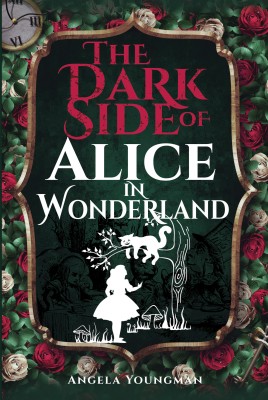
The Dark Side of Alice in Wonderland, Angela Youngman, Pen & Sword History Yorkshire -Philadelphia, 2021. Five stars.
Thank you, Net Gallery, for providing me with this copy for review.
In thanking Net Galley for this copy of The Dark Side of Alice in Wonderland, as above, I am immediately aware of how inadequate such a formal thank you is for a book such as this. I am thrilled about the book, and grateful to have the opportunity to review it.
Readers might be like me. As a young mother I encouraged my daughter to produce a play theatre production of Alice in Wonderland, complete with a caterpillar made from egg carton humps linked by medical tape, and with pipe cleaner legs; cards from cardboard, aptly illustrated, also with pipe cleaner arms and legs; rose bushes comprising twigs and carefully coloured crepe paper roses and a doll dressed in Alice’s distinctive blue with a white apron. All over the world I have collected Alice in Wonderland books and paraphernalia for my younger daughter, at this stage being aware that Alice’s author might not be the writer of a children’s story alone. But until I was able to delve into the intricacies of Lewis Carroll, his relationships with adults and children the myriad of interpretations of his work through song, theatre and film as depicted by Angela Youngman, I was without knowledge of the incredible range of information that comprises the world of Lewis Carroll as it was in his time, and now. My innocent caterpillar of the pipe cleaner legs has come a long way.
Angela Youngman’s research, interpretation, and thoughtful discussion of the material she has found becomes a book that deserves to be on every Alice lover’s bookshelf…or ereader. It is an eminently profound dissection of the information that swirls around Lewis Carroll, or in his birth name, Charles Lutwidge Dodgson. A lesser, but nonetheless intriguing narrative, is the origin of Alice. Chapter 2 is titled, The Real Alice, and tells the story of the Alice assumed to be that of Wonderland, Alice Liddell. Continuing with the use of the part of the title that is her name, each chapter refers to the debate around Carroll through Alice: Women & Child Friend Alice; Photo Alice; Lolita Alice; X-Rated & Banned Alice; Ripper Alice; Mad Alice; Murder Mystery Alice; Drug Alice; Surreal Alice; Occult Alice; and Bizarre Alice, until the last, The Last Mystery. So, Youngman’s investigation emphasises the mystery that surrounds Carroll, with its links to the real as well as imaginary Alice, rather than suggesting that she has the definitive answer. At the same time, the meticulous accumulation of information provides solutions that sound feasible. In contrast to the other chapters, the dross that accusers have woven is thoroughly undermined in Chapter 7. The contortions made by theorists to determine that Carroll was the Ripper make perceptive reading in a time when conspiracy theories about modern politics are so abundant, so without credibility – but so willingly believed.
In relating the story of the boat ride with Alice and her siblings, Carroll and his friend during which the story of Alice in Wonderland begins, the innocence of the outing, the storytelling and friendship with the Liddells is challenged by future events. These involve a break between the friends, invitations not returned, invitations accepted, approaches remade. The challenge is, in its turn, questioned. As an elderly woman Alice Liddell appears to have accepted her role happily. However, reaching that point is a feat of detection, which has been realised by Youngman in her well researched book.
In turn, Youngman has the capacity to draw her readers into their own speculations about the truth or otherwise of interpretations of Lewis Carroll’s behaviour and meanings in the work. Alice in Wonderland has been at the core of a wide range of works by other writers, events organisers, film producers and directors, artists and commentators and Youngman describes and analyses these speculations and artistic interpretations. Her tools are powerful: accessible writing, open ended conjecture and development of alternative understandings, and well organised material. The dark side is certainly exposed, but even at its darkest, another possibility is raised. And then, one is dashed. For example, is the letter Carroll writes to the mother of children that he wants to photograph unchaperoned, from a bully or someone who is genuinely hurt? Should the context of Victorian photography that Youngman raises, be considered? Certainly, in today’s more knowing environment the letter is at the very least distressing.
Youngman shows the reader who sees an innocent Alice in Wonderland, and an imaginative author who has provided the world with a world of imagery, humour, understandings of the variety of ways in which a child might see herself, that there is another side, and another, and yet another. Her capacity to do this is impressive, leaving this reader with the feeling that Alice in Wonderland and its author, could indeed, be both wonderful and terrible. But rather than think of my caterpillar smoking drugs in his hookah, I shall maintain a belief in his innocence. Youngman has been able to leave me with my Alice in Wonderland at the same time as drawing me in to a remarkable analysis of the book, the author and others’ interpretations.
Margarette Lincoln London and the Seventeenth Century The Making of the World’s Greatest City, Yale University Press, 2021.
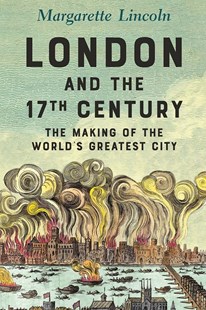
Thank you, NetGalley for the opportunity to review this book as an advance uncorrected page proof copy.
Margarette Lincoln has established London as a great city, with a colourful history impacting upon its citizens at all levels. From the introduction with the funeral of Queen Elizabeth 1, to closing with the end of William and Mary’s reign, it would be simple to say that the century and book were bound by royalty. However, Lincoln is true to her aim in writing a social history of the century when she gives the smog that hovers over London in 1699 almost the last words. People, rather than royalty feature, in the poor capacity of candles and torches to penetrate the gloom. The world of the Londoner is referred to as having an ideologically unclear idea of the future, as well as the physical lack of clarity. However, finishing on a positive note Lincoln features the grandeur of London seen from above: St Paul’s overlooking what was to become the immense City of London, and closer to the worker, Greenwich Park, overlooking the source of future trade and manufacturing power.
Turning first to the academic nature of the book: the citations are numerous, informative, and clearly established for each chapter; notes clarify the abbreviations; an additional bibliography of material for further reading is included, as well as the bibliography; there is a wonderful index and maps provide further detail about the events. At the same time as the reader is assured that the information is impeccably sourced and authoritative, none of the academic features impede the reader for whom the story is the most important reason for choosing this history of Seventeenth Century London. The chapter headings are enticing, from the first referring to the earthquake nature of change after Elizabeth’s death to the advice to avoid cynicism and look to the future (Chapter headings are omitted here as this is an uncorrected copy and quotations from this source cannot be used). Other topics that provide a flavour of the material covered and the haunts that the reader will find are as warm as references to coffee houses and as threatening as the Dutch invasion in 1688. Of course, the political ramifications for the century and drama of gunpowder plot are not ignored in the mixture of state affairs and people’s everyday lives.
It is the latter that makes a social history vibrate with events, feelings, the realities of poverty, smells and death and the movement of a society, at times going forward bravely, at others becoming mired in rules and the static nature of admiration for the past. It is here that I feel the book has one shortcoming. I have already noted that the academic reader will be satisfied; and, in the main, I believe that the reader who wants to know about Seventeenth Century London will also be satisfied. However, I feel that the writing needed to be livelier to provide a real sense of what it was like to live in this burgeoning city. Observations made by people who were not suffering the vagaries of poverty because of changes in work, accommodation and geographic location forced upon them cannot do the job of the people suffering these events. I would have liked to have more opportunity to really feel those lives. At the other end of the scale, perhaps some deeper analysis of the political and social events of the seventeenth century, and their possible impact on current events would have been valuable.
That small quibble having been aired, I thoroughly enjoyed the book, was impressed by the detail and its accessibility to academic and the non-academic reader and recommend it to both.
Michelle Higgs, Visitor’s Guide to Victorian England, Pen &Sword Social, 28 February 2021.

Thank you to Net Galley for providing me with this copy for review.
Michelle Higgs has written a guide to Victorian England that provides a colourful and accessible addition to information about that era. Links to literature depicting the period, assist the reader to do as the book asks – imagine that you are in the Victorian world. The reader is encouraged to feel drawn into both the realties and the way in which fiction addresses these in essentially romantic interpretations of the past. The clash of reality and romance is an interesting approach to a book such as this, helping readers make connections between characters with whom they already have a relationship. I would have liked to see this device used more frequently, although the non-fiction accounts are useful. In contrast there is good use of the personal touch with the reader being called ‘you’ and being invited to see the world through their own eyes.
That criticism apart, this book is informative, interesting, and at times, arresting in its provision of information about England in the Victorian world. This takes places though chapters on: Getting Your Bearings, Accommodation, Clothing, Food and Drink, Getting Around, Shopping, Health Hazards, Encounters with the Opposite Sex, Amusement and Entertainments, and Customs and Traditions. The information is bolstered by several appendices: Timeline, Currency and Coinage, Cost of Accommodation, Wages and Salaries, What You Could Buy With… and The Cost of Living. It is in these appendices that Higgs excels – they are an important addition, and I could not be more appreciative of the way in which they improve understanding of the way in which people lived. There are also some marvellous photographs that are attractive reminders of what life was like.
Early in the book the Victorians’ attention to invention is noted – cameras, telephones and bicycles. Those readers who have enjoyed Michael Portello’s train journeys, with his references to the Victorians’ contributions to knowledge and invention, this comes as no surprise. And later in the book, the role of trains is described, again familiar territory for the television audience. However, with the space to make the most use of her information and freedom to deliberate about events and lifestyles Higgs can take the reader further into the world of Victorian transport, and the variety of available accommodation. This latter topic makes awful sense of the insect powder with which a traveller should not venture into most, if not all, accommodation.
The blending of information about rich and poor; male and female; professional attitudes and behaviours and those of the tradesperson, or domestic worker makes for a richly woven narrative that is accessible, fascinating, and realistic. Higgs has made a worthy contribution to the way in which writing history can accomplished to relate to a wide range of readers. This book can be a beginning to further study through literature and the sources listed at the end of the book. There is also a fine index. However, the book is also a worthwhile standalone read which takes the reader into England’s Victorian world.
31 March 2021
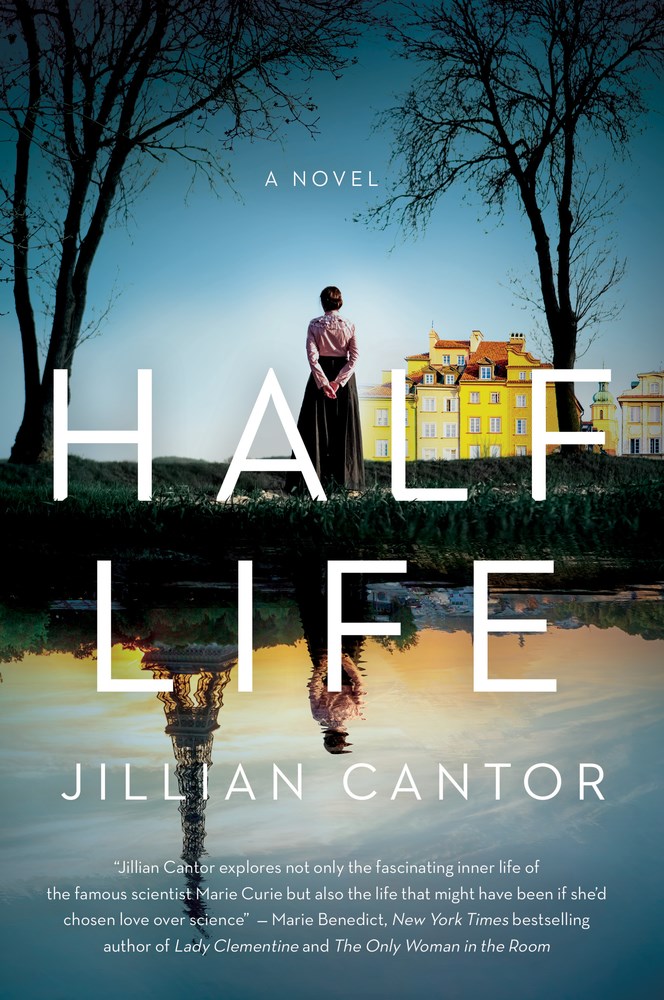
Jillian Cantor Half Life Simon&Schuster 2021 (first published 2011)
Thank you NetGalley for this unproofed copy for review.
Jillian Cantor uses a familiar device – ‘sliding doors’, ‘what if?’ real and alternative lives – but that is as far as familiarity goes. What Cantor does with the device is truly captivating. The alternative stories of Marie Curie are full of characters that have an abundance of life, at the same time exploring what it means to be a woman dedicated to a range of attitudes, capacities and roles: wife, mother, career woman, widow and/or lover with experiences of loss, exhilaration, notoriety, fame and contentment.
The stories of Marya Sklodowska who takes the train to Paris to study at the Sorbonne and become Marie Curie, and the same Marya who instead marries Kazimierz Zorawski and remains in Russian Poland are developed in alternate chapters. Marya’s sisters, Bronia and Hela also have different lives as they also live their stories alongside Marie or Marya. Kazimierz becomes a major character with Marya, living frugally in Poland; in Marie’s story he marries well; Pierre Curie joins Marie in their laboratory and in winning the Nobel Prize. Minor characters are woven throughout the alternating stories, their life stories depending upon those of the main character, Marie/Marya.
Cantor explains her interest in the Marie Curie narrative as having a long history. Her interest in the character piqued long before she found the way in which she wanted to write the story. Her choice hinged on the scene that is so poignant in the fictional life – Marya does not climb aboard the train to Paris, she marries Kazimierz. However, it is the way in which the love affair between Marya and Kazimierz finishes that intrigued Cantor. His mother, for whom Marya worked as a governess to the younger children, did not think her good enough to become a family member. As Cantor says, ‘There was the fact that this amazing, brilliant woman, who would later go on to change the course of science and win two Nobel Prizes, was deemed not good enough as a young poor woman in Poland’.
Part of the charm and fascination in the novel is its settings. The status of women in Russian Poland provides the background to the ‘Flying University’ that Mayra creates. The university meets in its students’ homes with women teaching subjects with which they are familiar. Mayra, true to Marie, teaches science, she is poor at music, another class, and a profession that cleverly links with Marie’s story in Paris. The alternative story is that of an intelligent woman who must educate herself in a closed environment of Russian Poland where women are considered unworthy of education. Despite the restrictive atmosphere, the descriptions of Warsaw and Krakow are enticing.
Paris, Sweden and trips back to Poland feature in Marie’s story. But most important is the laboratory. And it is this that impacts on Marie’s relationship with her daughter – one that is at the same time understandable but also sad. In each of the stories, the attitudes towards family, children, partners, and the outside world are dealt with in detail. The women’s feelings of satisfaction and despair, Marie’s short-term desire to adopt a different approach to mothering, their relationships with others illuminate the way in which women’s choices are complex. The women are written in a way that creates empathy rather than judgment. Here, Cantor excels at using fiction to show the conflicts that feminist nonfiction works consider. There are no rules laid down, Marie Curie stands tall while Marya Zorawski, leading her different life, is also a character to be admired.
Half Life, although a scientific reference to the Curie’s Radium, seems to have more meanings within the novel. Marie’s impression of the light in her daughter’s eyes is a warmer, lighter side of the dedicated scientist. Light is a continuing theme in the Curie’s experimentation, illuminating the laboratory in the dark, and enlightening the world. At the same time, the ill health of both Curies and Marie’s death at sixty-six, with which the novel begins and ends, suggests that their work was responsible for the shortness of their lives. However, the dedication to their work, and each other, suggests that, although truncated, their lives were well lived. Cantor’s writing emphasises life, even when tragedies occur. The phrase could never be applied the lives led by Marie/Marya. Rather than half-lives, these women lived very full lives, the real one and the fictional version overlapping in some skillful writing and development of the fictional characters, in so many respects true to the real Marie Curie. The linkages between fact and fiction are deft and cleverly made. To return to my opening observation, Half Life is truly captivating.
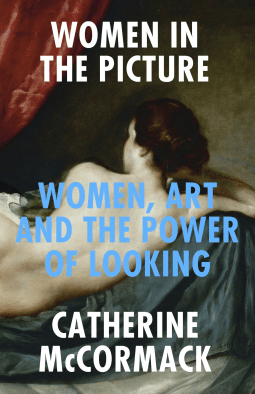
Catherine McCormack, Women In the Picture Women, Art and the Power of Looking, Icon Books Ltd, London.
Thank you, Net Galley, for providing me with this uncorrected proof for review.
Catherine McCormack begins her book very cleverly. She is at the National Gallery, London, with her baby, looking at The Story of Griselda. The three panels depict a story of marriage, with ‘a long-haired woman surrounded by a lot of men in tights and a menagerie of animals.’ The woman appears in various situations, at times naked. A suit clad man, viewing the painting alongside McCormack, explains the painting to her. She then advises the reader of her qualifications with which she is enabled to observe the painting with a knowledgeable eye. With this introduction we are not only told that we are reading the work of an educated viewer, but how to make our own observations meaningful if we undertake some research, read others’ interpretations, resist the temptation to rely on surface impressions, observe and question our observations by enhancing our capacity for understanding. The man, thankfully, disappears from the text. McCormack remains to draw us into the fascinating and horrifying world adorning the walls at the National Gallery and other art spaces.
I come to this book having visited many galleries, housing both modern and classical art, from being an art student, and having visited the National Gallery almost every week during the four years I lived in London. On those visits some of the art that McCormack analyses horrified me, but I tended to move on, look at some water lilies or sunflowers as an antidote, escape into the sunshine (or gloom, either was better than the feelings of distress engendered by so much of the art). Now, having read this book I know why I was so distressed. So, armed with knowledge, I shall return to the National Gallery, London.
McCormack analyses the world behind the paintings that have excited the art world, drawn admiration and ecstasy from so many observers and been the subject of exhibitions, art catalogues, lectures at galleries and art schools, and a myriad of art books. Tellingly, they are also the subject of the information panels beside the paintings – none of which in any form enters the world opened up to readers of Women In the Picture.
Lest a visitor to the exhibitions of art covered in this book feel that their experience is going to be spoilt it is important to say that this possible problem is addressed. At the same time as opening the viewer’s mind to alterative views, McCormack shows understanding of how people enjoy art from their own observations and experience. Her feminist approach is knowledgeable, sensitive, and well argued. The art that horrified me is put into perspective, not a comfortable one, but with explanations that open a new world of knowing the painting, as well as the world outside the painting. A sign at a recent March 4 Women rally, organised to condemn sexual assault and rape reads: ‘This Outrage Gives Me Optimism’. Perhaps the enlightenment that McCormack provides means that feelings of distress will now be accompanied by the knowledge that the paintings are indeed misogynist, unforgivably so and that anger can lead to change. There is a reading that belies the pomposity of the man whose words accosted McCormack. The cruelty in the panels they were both viewing is real, it is wrong, and it must be exposed. McCormack does this.
At the same time as the narrative is compelling, drawing the reader along, the information is arranged in very few chapters, and I wondered whether for clarity they could be further categorised into sections. The chapters are: Venus, Mothers, Maidens and Dead Damsels, and Monstrous Women, with a preface and epilogue. There are lengthy, informative endnotes.
The world of the classical art in an art gallery is given a contemporary context. Rather than a pedantic rendition of the understood meanings of the paintings and sculptures McCormack describes, there is a debate between traditional and feminist interpretations, the vitality of this enhanced by associations with familiar popular and famous figures such as Beyonce and Hillary Clinton. Popular culture depicting work, narratives and depictions of women and their imaginary and real lives are linked with the art on a gallery wall. This debate continues with the discussion of feminist artists and their work. Here, the liveliness of the way in which modern women artists have been received provides yet another warning that interpretations of classical art would be so much stronger if debate had been encouraged rather than dismissed.
McCormack’s book is an excellent start to debate that is well overdue about paintings that generate and perpetuate misogyny. No-one needs to attack them, as did the suffragette, Mary Richardson in 1914, the Rokeby Venus suffering five slashes with a meat cleaver. Her reasoning, according to McCormack that was because ‘I have tried to destroy the picture of the most beautiful woman in mythological history as a protest against the Government destroying Mrs Pankhurst, who is the most beautiful character in modern history’. McCormack’s amplification, that Richardson was demonstrating the hypocrisy of the reverence afforded a painting while women were tortured in prison and beaten on the streets is outrageously current. In the UK it is being suggested that punishment for vandalising statues should begin at a harsher starting point than that of rape.
It is easy to see that misogyny is woven into the reverence given recall of the past, through statutes, or as McCormack argues, classical art. One way of modifying such misogyny would be to use the clear, well-reasoned and absorbing arguments in Women In the Picture, Art and the Power of Looking, as part of the narrative accompanying artwork. How much more illuminating information panels could be if traditional interpretations were placed side by side with the alternative knowledge McCormack sets before the reader. Such additional information could even be described as speculative if the ‘experts’ cannot bring themselves to acknowledge the validity of McCormack’s feminist understandings. Readers of McCormick’s book, well-armed with her explanations, would know better.
17 March 2021
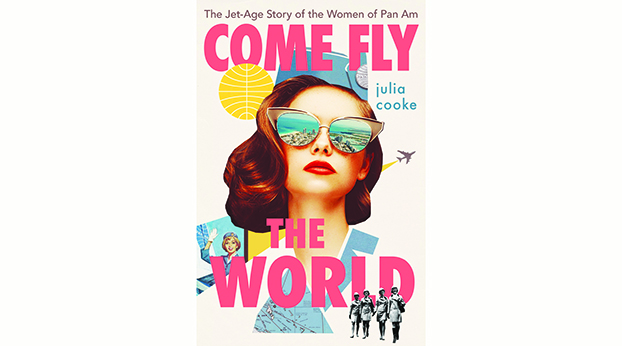
Julia Cooke, Come Fly The World The Jet-Age Story of the Women of Pan Am, Houghton Mifflin Harcourt 2021
Thank you, Net Galley, for the advance uncorrected proof sent to me for review.
Firstly, I need to say that if this uncorrected proof is evidence of the standard that can be expected from a proofed copy the standard will be remarkably high. This uncorrected copy was well formatted, meticulously organised, with consistency in the chapter title design, and provided a read unhindered by numerous typos.
Secondly, these qualities of organisation and consistency are easily demonstrated with reference to the section and chapter titles. They also, more importantly, illustrate the fascinating journey Julia Cooke describes through the stewardesses (as they were during most of the period Cooke covers, the gender-neutral title ‘flight attendant’ being adopted only at the end of this era). There are three sections: THE WRONG KIND OF GIRL; YOU CAN’T FLY WITH ME; and WOMEN’S WORK. Within the sections there are chapters that include titles such as Horizons Unlimited, Foreign Service, One, Two, Three, What are we Fighting For? in Section 1. Section 2 covers topics such as What Do You Women Want? Open Skies for Negro Girls [initially I thought this term was perhaps, like ‘stewardess’ of the period. In reading the chapter it is apparent that the title was based on the headline in Ebony, a black newspaper, published in 1963. African American and Black American is used in the text.] Girls, De Facto Feminist and An Extension of the Airline. Under WOMEN’S WORK chapter titles identify the perhaps surprising range of events for which the flight attendants had trained: Everything flyable, War Comes Aboard, The Most Incredible Scene and The Only Lonely Place Was on the Moon. The EPILOGUE brings together the futures of Lynne, Karen and Tori’s stories which make a major contribution to the book; a range of stories, brief but telling, about the outcomes for many other flight attendants; and outcomes for may unnamed former stewardesses who remain in touch and continue to travel (with inside information).
Cooke combines personal stories, most significantly those of Lynne, Karen and Tori, with events such as the Vietnam War and its impact on American politics, soldiers, stewardesses and Vietnamese. There is enough of Hazel Bowie’s story to personalise the chapter on the admission of black Americans to airline positions, the fight against racism, and eventual passage of legislation. The historical chapters, covering world and American events together with details about the changes in aviation; the role of women in working for the airlines, with a huge amount of detail in relation to Pan Am; changes in legislation and the events that led to such changes; and, on a lighter level, the ways in which social mores and women’s changing demands impacted on airline uniforms.
I was encouraged to choose this book because of the short lived television series of Pan Am in which the Australian Margot Robbie starred early in her Hollywood career. The series showed the enthusiasm of the women who joined Pan Am, the strict controls on weight and appearance, the lives they led on and off the planes. Cooke gives the reader all the glamour of the television series: it’s not hard to imagine Robbie and her companions in glamourous uniforms striding toward exciting destinations in sought after careers in the stories that fill Come Fly The World. However, events such as the baby flights from Vietnam as the Americans departed; the distress and necessity to entertain soldiers leaving Vietnam for short breaks, and then their return; the competition for promotions and discrimination that undermined women’s career prospects; the hard work some undertook to achieve legislation to improve conditions; the marriages and partnerships that prospered and foundered under flying conditions are also vividly described in this book. All these events are professionally researched, and there are numerous impressive endnotes.
Julia Cooke has written a book that deftly combines serious material with loads of fun information; heart rending vignettes with glamorous adventures in exotic destinations; and a good dose of reality about what it meant to be a Pan Am stewardess. A thought for a possible addition – some photos of flight attendants’ uniforms, for example, over the period would be in keeping with the attention to appearance that is shown by the gorgeous cover.
10 March 2021
Liz Hodgkinson, The Women Who Transformed Journalism, First published by Revel Barker Publishing, 2008, this publication, Lume Books, 2018.
Thank you, Net Galley, for sending me this edition to be reviewed.
Liz Hodgkinson writes warmly, endearingly and with panache about the wonderful (despite their many flaws) women who transformed journalism. Even the most alarming become women with whom it is easy to empathise as they push, flatter, marry, demand, crash and cajole their way into Fleet Street, local newspapers, magazines: the whole plethora of print; into pages of fashion, gossip, advice, politics and foreign and war torn countries; as writers, editors, ‘First Ladies’, subjects of criminal investigation and one of a couple in the journalism world; and then, using their skills honed in journalism, as novelists. This is such a wonderful romp, sometimes with its serious side, through a world that remains thrilling despite the disappointments of the most recent journalism engendered by the narrowing world of media ownership. Cathy Couzen’s comment ‘I know one thing – no one ever talked about self -esteem or sexual harassment in the workplace – we thought that was part of the job! If you can’t take the heat get out of the kitchen. So far as I was concerned, it just made it more fun!’ is one approach; but there is some serious reflection by the author and others on the role of sexual harassment in journalism. It also contrasts with a different approach from Polly Toynbee. She ‘was less impressed with the achievements of women like Eve Pollard and Rebekah Brooks, saying ‘they have been editors of pretty disgusting papers. They regard doing things just like the boys as a triumph. The Daily Mail is trashing women every day. Female journalists have a responsibility to look at the world through different eyes, not mimicking men. They should think how to better reflect women instead of joining the lads’ culture’.
The chapter headings demonstrate the breadth of the material covered: First Lady; Women on the Street; Pioneer Women; The Fashion Writers; Agony and Ecstasy; The Political and Foreign Correspondents; The Editors; Working Girls; Brought to Book; The Superstars; and Good Old Bad Old days. There is an Appendix about the author, a former journalist whose story here is also interesting and informative about the world of journalism for women. Although there is no index, there is a Further Reading list, a list of the newspapers, journals and websites consulted; and a reference for a film mentioned in the text. Well known names are scattered throughout, they will be different for different readers, but it is most likely that any reader will find several names to which they can respond, ‘Oh, I know about her’ – sometimes several times. Some will be women whose stories sound familiar; some will astound and shock. All demonstrate tremendous courage, a willingness to fight for what they want, and successes. These women are determined, not necessarily nice, but achievers and these qualities come through in the way in which Hodgkinson writes about them. Sometimes the organisation of the material seems to be overtaken by the enthusiasm, almost as though the women journalists are demanding attention to this achievement, that endeavour, another idea, but this adds to the pleasure.
Liz Hodgkinson, The Women Who Transformed Journalism, First published by Revel Barker Publishing, 2008, this publication, Lume Books, 2018.
Jean Rook, referred to as the ‘First Lady of Fleet Street’ begins the book. She is writing for the Daily Express at this time and became ‘one of the most high-profile female journalists ever known’. Together with Lynda Lee- Porter, Katherine Whitehorn and Jilly Cooper’ she was a ‘big name columnist’ from the 1970s. This period ushered in the big name, although women had been producing columns since the 1930s. Their columns were a mixture of domestic events, the week’s news and current affairs – all with a personal touch. Women felt able to move between newspapers or made the best of difficult situations by moving on, often to bigger and better things. Hodgkinson says that they were the ‘trailblazers’ the women who opened up journalism to young journalists. Their stories make a lively and informative beginning to the book.
Fashion as a respected topic, together with the ‘agony’ columnists, demonstrate the way in which women journalists took advantage of stereotyping and were able to rush into respected print. However, the way into ‘men’s’ fields of politics and foreign correspondence focusses on how women had to have immense drive and be ready to demand to enter these fields. Women political journalists have a history as far back as the 1890s, with many starts and stops. Similarly, women foreign correspondents also had an early start, hampered throughout their attempts on building on this, with short-lived breakthroughs to some success in the 1970s. The discussion of this work against male intransigence (and stereotypes about women and their suitability for being at the war fronts) was particularly interesting as I had heard only a successful war journalist. As an Australian I recall listening to Diana Willman on AM (the morning current affairs radio show) on ABC as she called in from Beirut. This was in the 1970s and then thrilling to hear. This recall has been made more so by the backstory of similar British women journalists in this book.
The milieu of Fleet Street, a difficult environment for women to enter, and requiring tenaciousness (at least) to stay provides some wonderful material, until its demise when the newspapers left to be dispersed throughout the city and further. The changes made after the introduction of new technology and diminution of the Printers Union power make interesting reading, Hodgkinson’s perceptiveness about the challenges of both the hey day of the union, and its lessening influence make good reading.
Some women journalists have become popular novelists. Barbara Taylor Bradford, Jilly Cooper, Shirley Conran, Val McDermaid and Penny Vincenzi are well known authors, and they, amongst others are discussed in the last chapter. Hodgkinson’s consideration of their work and the skills they have translated from journalism to novel writing make particularly good reading.
The Women Who Transformed Journalism is a wonderful historical document, with its personal stories, accessible writing and insight into the environment of Fleet Street and afterwards. However, I would have liked a chapter that really brought us up to date with the world of 2020s journalism. Although there are some glimpses, Polly Toynbees’ comment provides an excellent start to some debate around the idea that now women have entered the field on some sort of equal basis do they have a special role as women journalists? Are they responsible for working against stereotyping that undermines other women’s successes? There is a huge amount of feminist work done by women journalists, and within some of the novels referred to above, and a chapter debating these journalists and their work would have been useful. The role of Rupert Murdoch’s media empire in recent history about women journalists would have also been a useful addition. Those comments aside, I thoroughly enjoyed this work, and was pleased to have the opportunity to review it.
Zoe Fairbairns, Stand We At Last, kindle edition.
The following excerpts are published with the permission of Zoe Fairbairns. They provide an insight into the two sisters with whom she begins Stand We At Last approach life. In particular, their expectations of men, marriage and spinsterhood and their experiences arising from the different path each chooses are developed. Their choices, while different, present both with aspects of disillusion. Despair is an underlying theme, but mitigated by Sarah’s resourcefulness, enthusiasm for women’s equality and her strength of character. Helena’s story, married to the wealthy manufacturer of military garments, and living in a comfortable home with overwhelming material assets is compared with Sarah’s. Sarah’s story is one of spinsterhood, feminism and fortitude. Sarah’s story proceeds through the generations until the 1970s where the novel ends – her recommendation to ‘Teach that girl to type’ being as important then as when she first uttered it to Ruby as a child. This feminist historical novel was first published in 1983 and now can be accessed as an eBook. The well worn copies on my bookshelf can now rest while I again read Sarah, Helena, Pearl, Ruby, Emma and Jackie’s stories in a form which, however often I re-read, will remain pristine.
Sarah Australia 1850
The wind died and the door stopped banging. I could hear human voices far away, men’s voices and the bleat of sheep. “Better have a drinka tea ,” said James Daggett, “before ya go”.
I drank the tea which he clumsily made for me; but I did not leave. I rested; I wrestled with indecision, starting several times to tidy the house and giving up in fury and despair. When evening came James Daggett brought a sheet and a hammer and nails and somehow rigged up the curtain behind which I now shelter, writing to you, trying to sleep. I have eaten little, with the brothers and the shearers, but the meal was a wretchedly awkward occasion.
The air is thick with the smell of meat and alcohol and men; I long to push away the piece of metal which covers my window and let in some fresh air, but I hear the beat of insects against the outside, striving to join their fellows in my hot little tent. Most of the time the men are silent, chewing their food, pouring drink into mugs; or one will speak, a whining monotone in which I catch one word in six; or they will laugh together and resume their silence. Occasionally James Daggett’s voice will be heard, warning someone not to finish the remark he started.
It occurs to me if I am safe tonight, I am probably safe for ever. There is time enough to make decisions tomorrow. I did not come to Australia to be safe and conventional. I had thought I might live alone, or with just one woman. I think I have at least one protector in James Daggett, who seems to be a good man. And look what became of my sojourn in Sydney with a respectable married couple! Bill and Arthur Daggett may be good men too; what did I expect, woven waistcoats and drawing room conversation? Heaven forbid!
I cannot bear to think that you are anxious about me. But I think you did not approve of my being a governess, whereas now you may tell your friends I have joined the landed aristocracy! I think I am safe for now. God grant that I am right.
Your weary sister,
Sarah
Helena England 1850
“I am going to be very frank with you, Mrs Croft,” said the doctor, “and I am going to ask you to tell me the truth in return.”
“That’s what Sarah says, ” said Helena, trying not to be frightened of him.
“Sarah? Ah, Sarah! Sweet Sarah the shepherdess ! Wasn’t there a song…?”
I beg you to be honest with me always – otherwise how will we remain alive to each other as sisters?
The doctor had silver pen shaped like a hard feather. He never wrote with it. He just moved it about in his hands while he talked. It glinted in the gloomy light from the white window. Helena watched the pen, to keep her eyes off his terrifying hands.
“Affection between sisters is a beautiful thing. But Mrs Croft, perhaps…it is important that you are honest with your doctor too.”
She had not told him any lies. She had not told Jonathan any lies. Could he say the same? This doctor was a specialist in Ladies’ nervous disorders. Jonathon thought she did not know that. The doctor himself thought she did not know. Outside in the street the sky was grey but through the surgery window it looked white, dazzling white, nothing whiter in the world except the rain-drops.
“Your husband tells me you have been upsetting yourself.”
“You see, it was the red jackets.”
“The jackets?”
“He was telling a man he could make red jackets. For hospital orderlies.”
“Yes?”
“But don’t you see?” How could he not see? “Don’t you see why they have to be red?”
The doctor smiled. “War can be a nasty business. You shouldn’t think about it.”
How could she not? She imagined jackets stiff with blood, looking as good as new. She should not think about it. She had promised Jonathon she would not. And anything she told the doctor would be reported to Jonathon. She had to be careful. Jonathon said she need not come to the table when he had army people in if the conversation upset her. He might change his mind if he knew she was disobeying him. She was twenty-two but he still treated her as a child.
It’s nearly 35 years since Zoë Fairbairns finished writing Stand We At Last, and she is delighted that it is still around, as are some of her other novels including her feminist dystopia Benefits. Details of her other work – including short stories, journalism, plays, poems and pamphlets – can be found on her website.
Let fiction have a say: British Women Fight for the Vote in Stand We at Last and Things a Bright Girl Can Do.
Understanding the past through historical fiction successfully complements academic histories. Although it can be argued that fiction can embellish and even invent history, there is also the possibility that some fiction writer’s historical research is as thorough as an academic’s when they rely on critical analysis of their work as well as popularity. There is also the argument that interpretation takes place in both fictional and non-fiction historical accounts and the ‘bee in the bonnet’ that EH Carr refers to in What is History? is relevant in both fields. In considering the British suffrage movement the poignancy of ‘Suffragette’, the film (I haven’t been able to bear following through to its conclusion) is as valid an argument for its status, as criticism that some women were omitted. The story is a contribution to the knowledge that is an essential part of ensuring that British women’s fight for the vote is brought to a wide audience. Two fiction texts, novels, in this case, are also have an important role in ensuring that women’s voices are heard. Zoe Fairbairns’ Stand We at Last, published in 1883 is an early contributor to this knowledge. Sally Nichols’ Things a Bright Girl Can Do is designed for young adult readers. Published in 2017, it prepares the way for young adults’ understanding of the suffrage activities of 2018.
The full detail of the 1918 Act of Parliament in which women over the age of 30 who were householders, the wives of householders, occupiers of property with an annual rent of £5, and graduates of British universities is not articulated in either novel. A non-fiction text would provide this information, with the figures: about 8.4 million women gained the vote. Sarah, the suffragist of Fairbairns book, and who I shall come to in detail in a minute, despite her Australian experience, did not reflect upon women winning the vote in Victoria, Australia 1896 and Federally in 1900. She was once again in England, politically involved in issues there as well domestic duties. Both novels concentrate on British suffrage, fairly enough.
Fairbairns is a feminist writer. Her historical saga begins in the 1800s and features sisters, Sarah and Helena. Their choice of vastly different lives, marriage or travel to Australia, creates the background to their female ‘descendants’: Pearl, Ruby, Emma and Jackie who embraces 1970s feminism. Sarah’s feminism is apparent from her early refusal to share her sister and husband’s house, her independent travel by ship to Australia and domicile in the Australian bush, return to England and political action on behalf of women. I say her descendants in inverted commas as Pearl is the child of her dead sister’s husband, Jonathon’s liaison. Sarah becomes Aunt Sarah to her children and grandchildren. It is through their eyes that Sarah the suffragette is partially observed; along with the prison wardress; and the women’s movement at the time and Jackie who researches the woman of property whose name Sarah takes on her voyage, Mrs Packham. This appropriation, together with Sarah’s motivation, actions and thoughts give us a personal view point of this fictional suffragette.
Sarah’s story is set in a broad context, with reference to the fight for women’s suffrage alongside her other political actions, domestic and public. One of her political activities is controversial within a feminist context: her initial support for the Contagious Diseases Acts of 1864. The dilemmas associated with her coming to terms with the arguments against the Acts and their amendments is heightened by the fictionalised account. Sarah’s sister dies because of her husband’s liaison with a woman infected with gonorrhoea; his daughter is subjected to the laws and suffers from compulsory checking for venereal disease when she unwittingly and innocently is caught as a ‘Queens Woman’, i.e. a prostitute. Pearl becomes Sarah’s responsibility, emotionally and in practice. While the dilemma is not just personal, with the organisation for which Sarah volunteers working against the Acts, emulating the Josephine butler led Ladies National Association for the Repeal of the Contagious Disease Act, we are not told that this occurred in 1886. Sarah has moved on, after all this is an account of her and her family as well as specific Acts. Where they impinge on the characters their story is told in terms in which the reader can identify.
For example, Pearl’s experience is described at the time and with its impact on her future: her shouting for even harder lashes when a soldier is being punished, and later, her resistance to consummating her marriage. Sarah’s dilemma is her wish to vindicate her sister’s infertility and ill health, her understanding of what the Acts have done to Pearl and her eventual recognition of the discrimination against women while men escape responsibility.
Sarah is portrayed as the first woman to throw a stone at a gaslight – and indeed, an anonymous woman may have been. Fiction can speculate on behalf of the unknown. She is imprisoned as a suffragette, threatened with forced feeding and, to her dismay, released. Her innocence at the way in which the laws against women fighting for their rights is instructive. She cannot believe that her clean body will be forced into a freezing bath; that an attempt to force feed her might almost succeed; and that she is an embarrassment to her family.
However, Sarah is feted by the Suffragette Movement and begins the trip to America on the Titanic – her second sea voyage. Here she meets the Wardress again. Their intersecting stories provide another facet of the fight for the vote: the impact upon prison staff of the laws against women fighting for the vote. Sarah’s spiritual connection with her saves the Wardresses’ life; her refusal to be treated better than a young man loses her own.
Things a Bright Girl Can Do has a clearly stated suffrage purpose, from the front cover in purple, white and green and ‘Votes For Women’ highlighted on the back cover. Visually, the cover does its job well. The text is also persuasive and strong: it begins with Evelyn’s conversion to the movement when a missile aimed by a man at the woman speaker, having missed her, then hits Evelyn in the jaw. Perhaps a symbol of patriarchy and its attempt to silence? A fictional device that works. The date is February 1914, locating this account of the fight towards the partial voting rights won by women in 1918 in a tight time frame. Accordingly, we get more detail, but miss the build up to this action: something that can happen in non-fiction as well. Three young women, working class Nell, May, a middle-class Quaker, and Evelyn, middle class and ambitious, provide several themes around the suffrage fight: peace vs violence from a female perspective; lesbian love; class conflict and public and private duty. Evelyn is seventeen and wants to go to university – a prospect open only to her brother. Nell’s background includes her father’s involvement in the 1889 Dockers’ Strike and listening to Kier Hardy; difference of opinion on suffragettes expressed by working class women; and her own understanding that boys were treated better than girls – and she’d rather have a boy’s advantages.
While selling The Suffragette we are given more information – a number of campaigners for other issues – – appeal to her; a graphic way of setting a context for the focus of the novel without detracting from it.
Sylvia Pankhurst speaks briefly before the police break into the hall. Pankhurst has just reached the deadline for her re-arrest after her hunger strike in prison.
However, both examples of historical fiction complement academic histories. Fiction, such as Stand We at Last has an important role in articulating the debates around women’s struggle, both before, during and after 1918. The novel relates the dynamic activity of fictional women with whom the reader can readily identify and link to non-fictional women’s activities. Things A Bright Girl Can Do makes feminist history easily accessible to young people, an essential part of illuminating women’s struggle for equality. Most importantly, her mother’s chance at a better working life precipitated Nell into the suffrage movement.
3 March 2021
Women’s Liberation! Feminist Writings that Inspired a Revolution & Still Can
Edited by Alix Kates Shulman and Honor Moore, Library of America, 16 February 2021.
Women’s Liberation! Feminist Writings that inspired a Revolution & Still Can is a commanding title – which, in my initial view, could well have done without the exclamation mark. I found it, together with the ampersand, likely to undermine the serious nature of the work. However, this collection, although serious in nature and intent, comprises a large range of material which omits academic works. As a ‘clarion call’ motif, the cover is eye catching, and not only denotes the popular nature of the work but is perhaps essential in a period when the stories of many inequalities are fighting for attention. The insertion of pamphlets and other short works provide the variety in sources that makes this collection so accessible. Hopefully, many of them ‘still can’ influence the way in which women continue to address the nature, impact, and resolution to the discrimination we endure. However, a proviso, there are some papers that, while historically worth inclusion, resonate uncomfortably in the context of the anger and heightened attention that surely must be given to the importance that governments must be able to govern without violent harassment.
Kates Shulman and Moore have brought this collection together in a manner that helps explain and describe the diversity of women and ideas that made up the women’s movement and women’s fight for recognition from 1963 to 1991. In addition, there is a valuable introduction to the collection, and short introductions to individual papers throughout. The latter usually combines information about the background of the work, the writer/s and the historical context. The introduction to the collection goes further. However, amongst the excellent scene setting, development of historical context and detail about the writers and the movements they represent, I would have liked to have seen some discussion of the ideas and how they fit into today’s need for inspiration. Are they ‘just’ historical papers that are interesting relics of their time? Or do the ideas provide a foundation for the inspiration that Kates Schulman and Moore’s title suggests they would like to see?
The early section begins with an excerpt from Betty Friedan’s The Feminine Mystique The Problem that has No Name. This piece was a “must read” when it was first published, was a huge part of thinking during the 1970s, and is as pertinent today. As familiar are the works associated with the politics of housework, birth control, vaginal orgasm, consciousness raising, “the personal is political” and criticism of beauty pageants. A significant addition is the number of commentaries from and about the politics of being black or a woman of colour. This concern with the intersection of sexism and racism is a theme throughout the papers, and particularly relevant today where movements advocating white supremacy are dangerously prevalent.
Excerpts from Schulamith Firestone and Kate Millett begin the 1970 – 1979 section. Shirley Chisholm, Robin Morgan Gloria Steinem, Alice Walker, Susan Brownmiller, Judy Chicago, Barbara Ehrenreich, Andrea Dworkin and Mary Daly, familiar names from the 1970s, are joined by pamphlet writers and (to me) less well-known women who contributed to the women’s movement in this period. There are papers on women and the law, abortion law repeal, rape, lesbian politics, welfare, madness, ‘verbal karate’ (Florence R Kennedy), health (how fondly I recall Our Bodies, Ourselves), more on housework, a letter from a battered wife, and sexual harassment.
In the 1980 to 1991 section issues related to women in third world countries are raised, along with concerns with pornography, women’s invisibility, psychology, further work on black and coloured women, and an interesting reflection on whether men will be freed first by feminism, and prostitution. Familiar names in this section are Catherine McKinnon, Andrea Dworkin and Ursula K. Le Guin.
To finish, I must acknowledge that some women reading this collection will find other women’s names familiar. I have enjoyed re-reading and reflecting upon the material that I read at the height of my involvement in the women’s movement. Complementing that reading was the material new to me, some distinctly disturbing, other writing making me think in new ways about issues with which I thought I was familiar. This collection readily offers both to its readers in a well organised chronology of our past and ideas that might indeed provide information for our future action.
The Odd Women, 1893, George Gissing, A Public Domain Book, kindle version.
This review follows a Good Reads group reading of the novel. In part it comprises comments I made during that discussion. It does not use other people’s comments, except for the quote from the Encyclopedia Britannica, provided by the group moderator. Thank you, Kerstin for the quote with which this review begins.
’[George Gissing’s] work is serious—though not without a good deal of comic observation—interesting, scrupulously honest, and rather flat. It has a good deal of documentary interest for its detailed and accurate accounts of lower-middle-class London life. On the social position and psychology of women he is particularly acute: The Odd Women (1893) is a powerful study of female frustration. He did not lack human sympathies, but his obvious contempt for so many of his characters reflects an artistic limitation. Gissing was deeply critical, in an almost wholly negative way, of contemporary society…’ Encyclopedia Britannica
The description in part supports the way in which I read The Odd Women, that is, that the novel seems to be a fictional account which reflects the nonfiction works on ‘The Woman Question’. The questions raised by Gissing’s characters and story lines are part of the debate about women’s roles and the recognition that if they changed this influence men’s roles. Although the industrial revolution and changing society arising from women enlarging their roles from the domestic and agricultural to the industrial towns was revolutionary, the lack of men is also implied in Gissing’s title. The ‘odd women’ are those remaining, left over, not accounted for by marriage, their numbers rising particularly after any war, where the male population was decimated. The engagement with these women, their changing attitudes, and the men with whom they interacted seems to follow the patterns of the political and social debates about what should and could happen to such women.
Following these debates through fictional characters could enhance them, as happens with modern fictional accounts of changing women’s roles and the demands they make on families, friends, and society in general. These stories, while taking up the cudgels on behalf of the oppressed, remain engaging. In contrast the almost cold laying out of alternatives could account for the lack of humanity in the characters, and the difficulty of becoming engrossed in their lives. The arguments for dealing with events, and their counterarguments, rather than leading to a wholehearted support for one character throughout or commitment to characters’ points of view is undercut. That dramatically diverse opinions about one of the most serious decisions a person can make, marriage, are decidedly without warmth is remarkable. The alternative to marriage, at least for a woman, is a career or at least a waged occupation. Here there is a little more detailed attention given to the drawbacks they encounter, with Monica Madden in her sales assistant position, Rhoda Nunn in her determination to change women’s lives by teaching them to type as examples. The women are frustrated by the limits on their choices. However, even here, Gissing seems to pull back on emotion as a way of making his point. Rather, characters such as Monica and Rhoda make poor choices, but rather less than wholeheartedly, and Virginia Madden’s frustration is also depicted as weak rather than fiery, depending as she does, on alcohol.
Turning first to the men in the novel. They are confronted, dramatically in some instances, quietly obstinately in others, by women’s attempts at agency. The story with the most likelihood of becoming a living, dramatic conflict of wills is the relationship between Rhoda Nunn and Everard Barfoot. Edmund Widdowson and Monica Madden’s relationship is a rather more mutinous matter. Widdowson’s obsession with Monica, following her and reluctance to allow her any independence before their marriage is undramatic. Even when their marriage is on the verge of collapsing Widdowson’s behaviour is that of a resolute bully, cloaked in what he claims is love. Her flirtation with Bevis introduces the stereotypical cad.
These are the men that Rhoda Nunn and the Madden sisters, with whom the novel begins, meet after sixteen years have passed since they lived in the country. Now in London, Alice and Virginia Madden are now in their thirties, the other sisters have died and Monica, the youngest, is now twenty. The man who held the sisters’ lives in his hands sixteen years before, Dr Madden, quietly dominated the family, including the family finances, a male province alone. He alone controlled the sisters’ futures. This was in keeping with the times, his attitudes to women resulting, after his death, in his daughters having little practical education, and because of his inability to deal prudently with money, only a small income. In this early period Rhoda Nunn is introduced as an interrogator of Dr Madden, as a representative of the traditional male. She is also described as an admirer of another man, representative of the non-traditional male. Unlike the Madden daughters she has been educated with aspirations to become a schoolteacher. At the end of Chapter 1 she leaves the Madden home with a parting shot ‘…Oh, but I wanted to ask you, Do you think that women ought to sit in Parliament?’ Madden’s response graphically suggests his attitude to the question, the questioner, and the topic – he treats it with derision.
With the introduction of the Madden family, Rhoda Nunn, and her male friend’s influence on her, the first chapter establishes the foundation for the experience and debate around women’s role in Victorian society. The Madden women demonstrate the way in which traditional behaviour by men, and themselves, leads to unsatisfying (at the least) lives, while Rhoda Nunn’s experiences and the debates around her relationship with Everard Barfoot examine the price a liberated woman might have to pay for her views and non-conformity. The price might be too high, and yet, perhaps for Rhoda Nunn it is not. Gissing, like any nonfiction writer about the woman question at the time, leaves a definitive decision about this to the reader.
The women depict the various strands of the debates around women’s role. Rhoda Nunn and Mary Barfoot see women’s entry to paid work as a way of gaining independence. Both have a range of views on marriage, articulated through their debates with themselves, each other, and other characters. Training typists is their preoccupation, undermining marriage as an option is another. However, the latter appears to be a more entrenched facet of Rhoda Nunn’s commitment to changing women’s lives. Her disappointments (with herself and others) are therefore more pronounced. Her reaction to women’s inability to understand her passion, and her own wavering, leads her into strident commentary and harsh reactions toward women who deviate from her aspirations. Her debates with Everard Barfoot demonstrate the frustration that she feels, with him, herself, other women, and society’s demands. Their relationship perhaps never had a chance of moving along traditional lines. Both were rebelling against that possibility. Everard’s eventual decision depicts the intransigence endemic in traditional male /female relationships. Likewise, Rhoda, though an unwilling spinster, is unlikely to be a willing wife. In contrast to the Madden and Nunn relationships with men, the Micklethwaites’ late marriage, and the tenor of that relationship stands out. It depicts a traditional relationship, in part, but one that extolls companionship, love and persistence against adversity.
Monica Madden is one of Rhoda’s protégés. Her story depicts the conflict women experienced when considering the options of marriage or a career for their future. Here the debate is around the challenges of both, conformity initially seen as comfortable, but later, with disastrous results; in comparison, non-conformity also presents difficulties. Each woman in the pull and tug of conformity versus non-conformity is a problem – to each other, and to their companions observing the conflict. The following questions arise: Will Miss Madden be a severe disappointment to the crusading Miss Nunn, and if so, what will be her reaction? What impact does fear of change have on Monica Madden? The questions are worth considering as these disappointments are not peculiar to Victorian times. Enthusiasts for a particular way of life or interest often overwhelm their followers, who then rebel. The followers often feel that too much is asked of them, that they cannot live up to the high standards expected.
Monica’s proposed change of career is supported by her sisters. In this part of the story the influence ageing has on women’s opportunities is raised: neither sister in her thirties is considered a likely prospect for training. This neglect occurs, despite Misses Nunn and Barfoot’s purported sympathy with the older sisters. The younger, less interested sister, is given the opportunity. She is young; they are old (in the context of the time), appearance and age seem to render the older, plainer but more able women unlikely prospects for work as typists. Ironically, they are seen as capable of using their inheritance to start a school – surely this requires some skills.
This novel leaves consideration of the relationships between women and men as difficult as the debates with which the novel began. There may be some possibly for change in the future with the aunts and their niece. These older ‘odd’ women may be about to embrace the benefits arising from their improved economic situation, enlightenment from their experiences and new lease of life where responsibility for a younger person is mitigated by new financial circumstances. Although the novel ends with the words ‘poor little child’ the sisters have the opportunity to move their niece beyond some of the confines that controlled their lives.
Where Gissing’s work stands out is in the descriptions of work, hardships, the impact of hard living and age. Economic conditions are shown as being paramount in the chance to lead a satisfying life – except in an expected outcome of marriage – childbirth. Monica’s experience, and her older sisters’ robust constitutions (unharmed by childbirth) provide an insight into an satisfactory life that could be led by an economically independent spinster. This compares with the dangers of childbirth, even in good economic circumstances in Victorian times.
From the beginning of this novel I saw it as a fictional account of the non-fiction material being written about ‘the woman question’ so was not disappointed with the starkness of the characters, their lack of warmth, and the writing style. Gissing is not necessarily a proponent of a particular philosophy about the relationship between women and men. He has, if at all, only a weak admiration for women who try to forge a different life based on women’s right to economically sound work rather than marriage. This is not a feminist book in that the portrayal of Rhoda, depicted as the most radical of the protagonists, is treated, along with her values, fairly unsympathetically. However, as a fictional account of ‘The Woman Question’ it helps understanding of some of the different strands of feminism or ways of looking at women’s lives at the time.

24 February 2021
Cruel Summer by Bernard Jan is aptly summed up in the cover: a young man, who we learn later is Michael, distressed, head lowered in pain, his skateboard the only hold on a normal world. The chapter headings enhance the importance of the skateboard image through descriptions of particular features of skateboarding movements. The descriptions pin point the intricacy of the story lines that will emerge in each chapter, making sense to anyone, even the most skateboard ignorant.
In the early chapters the masculinity of the skateboard noise and the young skateboarders resonates, providing a strong contrast to the softer story lines involving Rebecca, Michael’s sister, living on a farm and in close contact with a family whose unworldly ideas contrast vividly with the city life in which Michael’s story takes place. In the city the only warm images are of Victor and his grandmother. These seem to be a real oasis in Michael’s world which is driven by abuse from his step father and his psychiatrist, dilemmas about how to deal with these and his visions, and his concern for his sister.
The abuse Michael endures is of two characters: sexual from his step father, Hank, and manipulative from his psychiatrist. Both embody the abuse of trust, bringing the two perpetrators together philosophically as well as in reality. Michael’s trust in the latter is easily understood – he is a seemingly kind and understanding person. His trust in Hank is not so easy to explain. Although there have been years of abuse, this seems not to have been combined with kindliness and covert manipulation, features that render a victim powerless. It is not easy to explain Michael’s acceptance of Hank’s abuse, except through fear. There needed to be more attention given to providing an explanation of the subtlety with which a victim is drawn into a perpetrator’s way of looking at the relationship and how it applied to Michael. This missing, it is only Michael’s fear that can influence his relationship with Hank. It seems unrealistic that fear does not override Michael’s preparedness to feel safe in telling Hank that he intends to live his own life. This event has serious consequences, which moves the story into one about detection, introducing new characters.
There is a science fiction element of the story, around Michael’s visions. Like him, the reader is not aware of how he achieves this ability, another mystery to be solved. Another example of making use of a person and manipulation for individual aggrandisement. Possibly linked to this use of the individual is the advertising venture adopted by ‘Alien’ in response to another manipulator. I was not sure about this, but the nickname ‘Alien’ and the sexualised images of his skateboarding reflect the combination of sexual abuse and the science fiction reason for Michael’s visions.
I enjoyed the challenge of this novel, so much that of the young adult world. In addition, Bernard Jan’s writing style is fluent, moving the story lines easily between reality, science fiction, detection and human relationships. I was pleased to be sent this novel for review.
A Visitor’s Guide to Jane Austen’s England, Sue Wilkes, Pen & Sword History, 2019 and 2021 by CPI Group (UK) Ltd, Croydon, CRO 4YY
Sue Wilkes’ introduction clarifies the purpose of the book: ‘This book is a visitor’s guide for a gentleman or a lady entering the world of the middle or upper classes. Through their eyes you will experience the lifestyles of the men and women in the society which Austen knew and wrote about in her novels’. The chapter titles provide a further opportunity for readers to begin to immerse themselves in Jane Austen’s world. Travelling in Style; Gracious Living; The Latest Modes; Money Matters; Shopping, Lounging and Leisure; The Perfect Partner; and In Sickness and in Health all resonate with Wilkes’ statement: Jane Austen’s novels which I have loved and re-read many times since my childhood, were the major inspiration for this book…’
Quotes from Austen’s novels open the chapters, for example, Travelling in Style opens with: ‘It was a sweet view – sweet to the eye and the mind. English verdure, English culture, English comfort, seen under a sun bright, without being oppressive (Jane Austen, Emma, 1815)’; Gracious Living with ‘At that moment she felt that to be mistress of Pemberley might be something (Jane Austen, Pride and Prejudice, 1813)’ and, hiding the realities even more markedly, In Sickness and in Health begins: ‘Oh, I am not at all afraid of her dying. People do not die of little trifling colds. (Jane Austen, Pride and Prejudice, 1813).
Jane Austen’s novels are the inspiration, set the scene at the beginning of each chapter and provide beguiling quotes and examples to suit the events throughout the chapters. All of which is delightful. However, Austen’s romantic observations are not allowed to overwhelm the realities that Wilkes also exposes. Austen’s world was not only one of romantic liaisons, beautiful scenery, pleasant travel, and balls, spoilt only by the need for money, fear of spinsterhood and mud on a long skirt. As unsatisfactory as these events may be, and indeed, the novels do not always hide the realities, Wilkes work takes the “lady or gentleman visitor” who join her in life in the Guide into some truly appalling conditions.
Wilkes’ ability to draw the reader into the world of ‘water closets [that] often give rise to unpleasant smells’ and the sometime requirement to take night soil through a house to night carts; the horrors in “lunatic asylums”; or the shortcomings of medical practice (which belie the quote from Pride and Prejudice above) and the less dramatic, but ever-present concerns with class, money and rules is impressive. She draws on Austen’s letters; her family’s recall, and writings; further fictional accounts, such as Maria Edgeworth’s Tales and Novels, Vol. XV11, 1833; as well as a plethora of non-fiction works. The bibliography provides a wealth of sources, unpublished, contemporary, books, works published after 1900, and online sources. Such listing cannot truly show the varied nature of the works, so some brief details are worth recounting. Local studies included: amongst many diaries, Diaries of Dolly Clayton of Lockstock Hall (1777, 1783, Lancashire Archives; A Receipt Book of Mrs Owen (18th – 19th centuries), Lancashire Archives DDX; Annual registers of spending and incomes, a medical register, Edinburgh registers; A View of London, or the Stanger’s Guide to the Metropolis 1803-04, London, 1804 (a contemporary forerunner to Wilkes? What fun that would have been to read); an 1823 Encyclopaedia Brittanica; Lady’s Magazine or Entertaining Companion for the Fair Sex, Vol. X11, London, 1781, amongst other fascinating titles; and books ranging from those about the life of Princess Charlotte Augusta of Saxe-Coburg and, at the other end of the social scale, Adams, Samuel and Sarah, The Complete Servant: Being a Practical Guide to the Peculiar Duties and Business of all Descriptions of Servants, Knight&Lacey, 1825.
I thoroughly enjoyed reading this Guide, the story telling approach working adeptly to make this factual work universally accessible. The links with Austen were nicely made, without overpowering the factual nature of the work – at the same time, I began to feel that re-reading my favourite Austens (novels and biographies) was a must. The index was detailed and informative, and the bibliography, impressive. So, an academic reader can easily join with one who wants a popular reading of Jane Austen’s time in perfect harmony. Both will be thoroughly satisfied, I combine both aspects of the exacting reader and loved the book.
Thank you Net Galley for sending me this book for review.
17 February 2021
Kristin Contino, A House Full of Windsor (Reading Copy, to be published July 13, 2021) Wyatt-MacKenzie Publishing Inc, Deadwood, Oregon.
Review from ‘an Uncorrected Pre-Publication Review Copy’, advanced to me by Net Galley.
Kristin Contino has written a delightful novel. With its clever foreshadowing in alternate chapters through ‘Sarah Says’; a first chapter in which the introduction and skilful characterisation of Debbie and her children Sarah, and twins Anne and Will is accomplished swiftly; and with a polished establishment of important plot features Contino shows that she is very much at home with smart writing. The, now American, family’s connection with the English aristocratic name, Percy, and deft intertwining of Debbie’s story with that of Diana, Princess of Wales, to whom in part the novel is dedicated, adds an element of humour. As an Australian who longs to return to her pre-Covid twice yearly visits to the UK, and with an affection for a woman ‘whose inspiration lives on’, I could not be happier reading A House Full of Windsor. These populist aspects of the novel enhance, rather than detract, from the development of a work that revolves around the serious nature of the problem Sarah, Anne and Wills meet to try, once again, to resolve with Debbie.
‘Primp Before You Prep’ Sarah Says, introduces Debbie’s long-term problem – hoarding. Indeed, Debbie does primp. She is impeccable in appearance with tamed grey curls, a crystal poppy brooch on her turtleneck sweater and smart trousers. However, her house is a maze of boxes of china and journals, plastic storage bins, bags with new purchases and more on every surface and against the walls. A Kate Middleton Top Shop purchase (she wore the same design when she was pregnant with George, explains Debbie) lies amongst the boxes. A lolling Prince George doll strengthens the image. Debbie’s pillow and blanket on the sofa are clues to the state of her bed. The long wait between the children ringing the front doorbell and Debbie’s opening it not only infers the build up inside the house, leading to a protracted exit, but provides time to scrutinise Sarah, Anne and Will, their relationships with each other, and the impact their mother’s hoarding has had on them.
Debbie suggests that her incessant shopping, in person and online, is ‘fun’. But, as the novel proceeds, in alternative chapters Debbie recalls her past in England and current situation. As a student she completed her degree in London and rearranged her flight home to America so as to see Diana and Charles’ wedding and to invest in the romance arising from meeting an attractive man in a pub. In these chapters multiple explanations are advanced for Debbie’s hoarding. At the same time, it is apparent that Debbie has always collected, her teenage bedroom floor was a mess (whose was not?) and her fascination with the royals, from the family name to the particular affinity she feels with Prince Charles and Princess Diana, provides a seeming rationale. Debbie feels that her married life has followed that of the doomed royals. With that in mind, her collection of royal memorabilia grows.
Will’s enthusiasm for Debbie’s participation in Stuff, a reality television program about hoarding; Sarah’s involvement, causing difficulties in her own television job, at Good Morning New York and a possible romance; and Anne’s concern about the impact of Debbie’s television appearance on her marriage provide a backdrop for more serious questions: will Debbie participate? And if she does, what impact will it have on her hoarding? On her burgeoning relationship with the antique shop owner? Her relationships with her children and their father, with his new wife and child in England?
My knowledge and understanding of hoarding are based on various fictional representations. Amongst those, Contino’s version stands up well. Debbie’s first-hand account of her experiences, feelings, and strong desire to please her children by changing her behaviour, conflicting with her addiction to shopping and despair over the possible loss of any of her belongs rings true. The failure of her marriage and undermining of the possibility of another romance demonstrates the intensity of Debbie’s passion for ownership of a multitude of goods, whatever its impact on her relationships. Even more sensitively exposed is Debbie’s failure to provide a home to which her friends and those of her children can be invited; their enduring fear that Debbie will be hurt by the avalanche proportions of her belongings; and concerns about the publicity accompanying what seems to be a very real possibility that something can be achieved through Debbie’s participation in Stuff.
With its humorous moments amongst the well-drawn misery, for self and family, of hoarding; the realistic interactions between Sarah, Will and Anne; and Debbie’s portrayal as a woman who is trapped, but far from beaten, by her addiction, A House Full of Windsor is such a good read I am very happy to give it four stars. I shall be avidly watching for more of Kristin Contino’s work.
10 February 2021
Lynne Johnson, Wartime with the Tram Girls, hera books, 3 March 2021
I found the description of Wartime with the Tram Girls immediately enticing: a young middle-class woman with a suffragette past takes up wartime work as ‘clippie’ on the trams during the First World War.
Constance Copeland is the daughter of a businessman who, having sold his Manchester business moved to The Potteries in 1909. Her mother had been a Workhouse Friend and has brought Alice from there into their home as a servant, together with a gardener, cook, and another young maid. It is now 1913 and Constance and her family are to travel to London in a first-class carriage to celebrate Constance’s nineteenth birthday at the Epsom Race Course. The planned treat begins an argument between Edwin and Agatha Copeland about money, creating the perfect tone to the theme throughout the novel, the roles appropriate to women and men. The dispute about the handling of finances impacts on Constance’s eventual entry to the world of paid work – Mr Copeland believes that financial matters are his province alone, despite his wife’s belief that ‘as a modern woman’ she should have some input.
Staffordshire and the potteries provide a backdrop to women’s work choices pre-war, and the poor quality of life lived by many in such locales. In contrast, the Copelands are wealthy. Edwin Copeland is keen for Constance to marry well, and this provides the early debate around marriage and its importance to women, and their role in a marriage. Firstly, Constance’s romantic story revolves around a man deemed very suitable by Constance’s father; a later romantic storyline takes an intriguing turn when a possible suitor, like Constance, has a past that needs explanation.
The dispute about Constance’s desire for paid work, and the nature of that work continues to highlight the broader debate about women’s role. On the domestic war front Constance is replacing, temporarily, the men who have gone to fight. At the Potteries Tram Depot she meets two women from an entirely different class and men who have suffered the ravages of war; experiences the precariousness nature of work for women who adopted ‘men’s jobs’; and the pleasure in earning wages. Although her activity with the suffragettes is behind her, as they changed tactics to support the war effort, some of the principles they imparted remain with Constance. She is prepared to adapt to changing circumstances, relishing the way in which women and men’s roles are forced to adapt and questioning the expectation that she should fulfil traditional women’s roles at the cost of her independence.
Constance’s demand for more freedom from pre-war ideas challenge her parents and past, and her choice opposes the dictates of class and gender. She shortens her name to Connie to hide her class background when she becomes a clippie. This has ramifications that she could not envisage, adding to the development of both the feminist and romantic threads of the story. Her friendships with two women who join the trams at the same time bring into the novel details of their stories, past and present. The descriptions of the women’s work experiences on the trams are delightful, we can almost feel the heaviness of the money bag and ticket machine draped around the women’s bodies. At the same time as the difficulty of the work is shown, the joy of comradeship and developing new capabilities are as real. Romantic attachments are part of the experience and the way in which this is dealt with again shows Johnson’s solid research and understanding of the imperatives of women’s lives in a period where women’s paid work was temporary, limited in prospects and often a life of drudgery. Johnson also shows that romance can burgeon in the least likely of places with seemingly plain characters. Connie’s enduring relationships with women in service again emphasises the way in which the war at times broke down class barriers at home as well as on the battlefield.
The melding of the various romances and the way in which women in this period deal with a different social environment requires clever characterisation, story line and writing. The deftness with which Lynn Johnson combines research about the suffragettes’ and suffragists’ interaction and the burgeoning white feather movement versus conscientious objectors, together with romantic alliances is a credit to her: she makes the reader looking for a feminist story as satisfied as one wanting romance.
Where I think that the writing is less engaging, leading me to give this novel three (how I wish there was a half star available) rather than four stars, is in the last chapters. These are not as cleverly written, with a lot of detail which I found superfluous. However, it is possible that Johnson is using this as a device to set the scene for a third novel (Wartime with the Tram Girls is her second with some of the same characters). In this case the chapters provide a thorough grounding in the post war circumstances of the characters and their possible futures.
That criticism aside, I found this an appealing story, with well-drawn characters. Although Constance’s father appears unwarrantedly keen to have her married off this is a clever device. Where initially Mr Copeland’s behaviour seems too strong for the circumstances with which the reader is familiar, there is a mystery behind his zeal. This is only resolved near the end of the novel, creating a satisfactory tension from beginning to resolution. Similarly, Mrs Copeland is a complex character. She shows the way in which women were forced to manoeuvre between changing societal demands during the war, her commitment to her marriage and her desire to satisfy her daughter’s needs. Connie is a character who keeps the plot alive, with her early resentfulness at the boundaries that impact upon women, to her challenging them and finding a way to lead a resourceful and satisfying life on the trams. Despite having to leave that work when the men come home, Connie’s experiences and her new friendships have changed her life. To be with her on that journey makes a thoroughly satisfying read.
I am grateful to Net Galley for providing me with this copy of Wartime with the Tram Girls by Lynn Johnson.
2020
28 October 2020
Appletree Yard Louise Doughty, Kindle Edition (Faber, 2014)
Is this the story of an affair or a marriage? Ostensibly, the main protagonists are Yvonne Carmichael, eminent scientist and X, a spook. The novel begins with them in the dock, we are not sure why, but we do know that we feel afraid for them. The reader is then drawn into the first meeting and their relationship. Illicit sex is driving force for both and this relationship becomes pivotal in the novel, with Yvonne’s night time letters to X, her meetings with him, some sexual and later, some caring. Throughout the novel other characters seemingly provide a backdrop, Guy, the husband and Carrie and Adam, Yvonne’s adult children. However, by the end of the novel, the resolution of the trial and affair, it is Yvonne’s marriage, troubled though it may be, that provides the focus of her thoughts.
Recognising this, the hints about the marriage, an affair, a rape and its consequences, Yvonne’s concern with fairness over work, career and professional status become not only a backdrop but an important element of the story. Why is it, for example, that Guy’s changing a nappy elicits such congratulatory commentary – and Yvonne’s ability to reserve only short spates of study for her PhD between full time child rearing go unremarked? Who is she? A scientist with an essential role as a commentator at parliamentary committee hearings or on a panel deciding on young scientists’ futures? Or is she a victim of rape, a trollop, a woman who can be described as of ‘jelly baby’ appearance or a treacherous woman who evokes strong feelings that have led to the trial?
I began reading this novel after seeing two episodes of the BBC television series of Apple Tree Yard, starring Emily Watson. I could not wait for the next episode to see what happened so bought the book. The series (so far) is excellent and the novel from which it springs a satisfyingly complex work. Juxtaposing a plaque honouring Emily Wilding Davidson’s overnight stay in the House of Commons on census night 1911 and Yvonne and X’s first sexual encounter provides a context for Doughty’s questioning of women’s role and its place in Yvonne’s marriage, her work and her trial. Davidson’s plaque, and the beginning of Yvonne and X’s relationship are in a small cupboard, complete with a mop and bucket.
If all of Louise Doughty’s novels comprise seemingly clear cut story lines with complexity hovering only slightly beneath the surface I shall be looking for more of her work.
Nicholas Coleridge, The Glossy Years, Magazines, Museums, and Selected Memoirs (Kindle Edition)
I found Nicholas Coleridge’s memoir a profoundly informative social commentary about the lives led by the glossy people of a somewhat enclosed privileged world. As such, the name dropping is less aggravating than could be the case. Indeed, it is so enlightening that, together with Coleridge’s charming writing, self deprecation and admission that luck played a large place in his life this Labour/Labor supporting reader forgave his Toriness and went along for the ride. Perhaps part of my willingness to do so is that Coleridge, as Chairman, was part of a panel that supported a Labour member’s application to head the Victoria and Albert Museum. A photo of him with Jeremy Corbyn is also something that amused me – how would Jeremy have felt about that? It is far less sad than the anecdote about Princess Diana, who when seated next to him at a dinner, asked whether he thought her breasts too small. The photo of her leaving the function shows a beautiful woman who, together with her contribution to changing attitudes towards AIDS and work in other aspects of public life, should have been
immune to such worries. But, perhaps Coleridge, with his bevy of godchildren, spiritual healer wife and happy family, lover of India and his numerous trips there may have been a comfortable shoulder to rely on?
Despite his somewhat cool approach to the deaths of several colleagues and friends, Coleridge comes across as a person, who within the constraints of his class, attempts to provide that shoulder for his friends, family, and it appears, his professional contacts. The constraints of his class is what makes this book an illuminating commentary on that class. It is easy to see how the disastrous aspects of Tory policies, such as austerity, really do pass such people by. Coleridge talks of his luck at the end of the book, but, while acknowledging this seems profoundly unaware of what other people’s bad luck can do to them. He is so closely involved with his glossies, a world of its own, that to him Fashion Week, advertising accounts, the success of a magazine means more than any foray into a world outside might mean.
Where he does move outside that world, children in India tapping on the windows of his car, are briefly acknowledged. That they are tapping for sustenance (or goods to give to their employers in exchange for their meagre livelihood) seems to pass him by. But that is my own social conscience talking.
Moving forward to where perhaps a more legitimate criticism can be made, the world of glossies and museums was amusingly related. As Managing Director of British Conde Nast for thirty years and President of Conde Nast International his stories of editors’ rise and demise; efforts to maintain the glossies afloat and resist takeovers; enacting takeovers; aspects of interviews he conducted and attended were interesting. However, to me they lacked the depth that I had wanted when I bought this book. Conde Nast published 130 magazines, including Vogue, Vanity Fair, Tatler, House and Garden and GQ; Coleridge had been a journalist, and editor before his major promotions. However, the detail on the Victoria and Albert Museum seemed to me more impressively drawn than the world of the glossies, that depended so much on the name dropping -fun, but not enough to make up for the lack of ‘nitty, gritty’ information.


And, now to Dicken’s Dotheboy Hall reference to Coleridge’s early schooldays . This section was well worth reading; with its aside to sexual harassment (deflected neatly, but reflected in the care Coleridge took in choosing his children’s schooling), his admission to Eton and years there.

I have to admit to being pleased that I did not pay full price for The Glossy Years Magazines, Museums and Selective Memoirs. However, I also have to admit being drawn willingly into a world that reflects so much I dislike, but under Coleridge’s deft touch was understandably alluring to so many readers and reviewers. And, at times, me.
The Glossy Years, Magazines, Museums and Selective Memoirs, is also published by Penguin, 1919.
Patricia Highsmith, People Who Knock On The Door, Heinemann (UK) 1983, Panzier (US) 1985.
Initially, not published in America., Panzier, a small publishing house accepted People Who Knock on Doors in 1985 (Beautiful Shadow, A Life of Patricia Highsmith, Andrew Wilson, Bloomsbury, 2003).
Highsmith wrote this novel as an exposition of the breakdown in relations between a Christian fundamentalist, Born Again Christian, and a liberal son. It arose from her interest in the rise of television fundamentalism in the US, exemplified by proponents such as Jerry Falwell, and the Moral Majority. The novel and its ideas resonate with current ideological conflicts in America, currently being highlighted by the 2020 Presidential election. Andrew Wilson’s Beautiful Shadow Patricia Highsmith (to be reviewed later in this series of reviews) refers in some detail to the background of the novel.
When I read People Who Knock on the Door quite a few years ago I saw it only as a commentary on fundamentalist religion and its hypocrisies. Certainly, Patricia Highsmith’s biographer sees the kernel for the novel coming from this source. In many ways the story of the Alderman family and Richard Alderman’s born again religiosity lends itself to this assessment: the depiction of the church personnel and their followers; the attitudes over abortion; and the smug assertiveness by Richard of his rectitude in comparison with that of his son, Arthur. After all, when it is observed that the church personnel and Richard have on the one hand been ‘saving’ Irene, a former prostitute, but also taking sexual advantage of her; when Richard’s physically easy job is contrasted graphically with Arthur’s hard physical labour and then offer of a responsible job as a youthful manager; and the way in which Arthur’s science bent undermines religious belief, the story appears to be quite a simple moral tale. But Highsmith also saw the novel as the exploration of the breakdown of human relations between fundamentalist Christian ideas and ideas informed by liberalism and science. Read at this level, it is certainly compelling, and deservedly so. This understanding resonates with the conflicts apparent in the current election speeches from the main figures and their followers.
Arthur is a positive character, together with the well meaning neighbour and his grandmother; Lois, Arthur and Robbie’s mother is a good person who supports her husband; Maggie (Arthur’s girlfriend) and her family are reasonable, enlightened and friendly to ‘our hero’. On the other hand, Richard is the repository of religious hypocrisy, failure to provide for his son’s education and a gossip; the church personnel are also gossips and smug; Robbie, Arthur’s younger brother is erratic, takes to his father’s religion with avidity and cannot make friends of his own age, depending on a group of older men for his social life of fishing and hunting.
However, while not denying the impact of the novel as a warning about fundamentalism, with Highsmith, there is more. The role of empathy is human relations is also explored with equal care.
On my second reading I began to reassess the novel. I think that it is far more layered than my original assessment allows. The writing has a great deal to do with the idea that People Who Knock On The Door is a report of life in America at the time, the variety of attitudes to religion and social mores and a clear eyed assessment of those that might be determined heroes or villains. That there is a resurgence (or appears to be so) makes this report prescient. But, nevertheless, however the current proponents of the ideas in the novel express them, it is possible that Highsmith is not writing of heroes or villains. Perhaps, for her, there are none in the novel, just flawed people trying to live as best they can. Sometimes they make egregious mistakes, and at others they are just getting through problems with doggedness, not heroism.
This is not to say that Highsmith does not provide the reader with the capacity to choose a preference which is valid when considering current American politics.
Lois is one of the most complex characters. She is a daughter, wife, mother and carer of children in an institutional setting. It is possible that the latter is where she feels most comfortable, certainly a great deal of her thought and time is taken up with the children outside her home. As a daughter, she seems to rely heavily on her mother to support her sons (but not at the price of antagonising their father), galvanise her into refurbishing the house, encourage her though the moral morass of dealing with an unfaithful husband, a child born out of wedlock that has a personal rather than institutional link with her, and death. Lois is not an entirely pleasant character, whatever her obvious concern for others. Her attitude toward Irene is cruel, with little laughs at her expense throughout the episodes of her appearance at the family Christmas with her huge sister, her pregnancy, and the arrival of the baby.
Arthur is the other character whom we are led to initially see as a hero. But is he? A lovelorn youth, who works hard, achieves well academically, and organises his college life after he loses the financial support of his father is not necessarily a hero. Arthur loves Maggie, does a great deal to help her with the abortion, supports his mother as far as possible, loves his grandmother and is reasonable towards his friend Gus. The characters with whom he has no difficulty he treats well. However, it is clear from his mother’s and grandmother’s comments that he is known to have teased his particularly vulnerable brother (this is also shown, early in the novel); he harbours violent thoughts of the student who replaces him as Maggie’s boyfriend; he looks for someone to help him get over her with a somewhat cold approach to human relations; he investigates Robbie’s friends, realises their shortcomings, but leaves it at that; he follows up Irene at her current workplace, replicating his mother’s derisory attitude towards her. His gossip about her is little different from the gossip he abhorred when aimed at him and Maggie and the abortion. Perhaps Arthur’s scientific bent is not just academic, but denotes a fairly cold character?
It is possible that the Alderman family has always been dysfunctional, perhaps waiting only for Robbie’s near death and Richard’s religious fervour to show the chinks. In comparison with Gus’s family, large, warm and open with Gus sustaining a loving relationship with his girlfriend from early in the novel to the end, the Aldermans are an uneasy group, lacking in real warmth, living lives that superficially are pleasant but ready to fall at the first encounter with crisis.
As always, Patricia Highsmith gives the reader something to think about. She seems to write almost for herself, leaving us to catch up with her if we can. She is not interested in giving us characters with whom we can identify, love, or even like. On the other hand, unlike some more contemporary writers, she is not lazy in her depiction of characters. None is just dislikable, each is complex enough to make us wonder what she meant the character to convey. Rereading this novel has encouraged me to reassess some of her others. But, the discomfort she leaves behind each reading suggests that this should be done between less demanding novelists’ work.
21 October 2020


The Wife Meg Wolitzer (Kindle Edition)
The Wife is an excellent novel with which to assess one’s own moral compass. As a feminist, I appreciate the way in which the stark differences between the acceptance of male writers’ behaviour and successes and the few accolades associated with women’s writing are drawn. Some of the development and description of the characters, women and men, is quite cruel – deservedly so. In particular, male writers are shown as inflated egos with a penchant for infidelity. The main male writer character, is eventually outed as having large feet of clay. I say eventually outed, but for me the signals were very apparent, without spoiling the denouement. Female characters, despite their flaws, are shown in their frailty, as possible writers but with little appreciation or assistance (certainly in comparison with that afforded the men) and devoted wives who keep the structures strong for the ego driven men.

That being said, I then began to think about these women, and in particular, the wife. It is clear that the three children of the marriage are suffering from the nature of the parents’ partnership. In this case ‘the wife’ is as guilty of the damage wrought upon them as ‘the husband’. The son is a truly damaged person – and the only one who attempts to force the truth from his parents. Culpability remains an important focus to the end, with the journalist , who also seeks the truth, being thwarted (and criticised).
This novel makes the reader think about the nature of the patriarchal world that impresses upon us the value of men and their work and lack of value acceded to women. However, it also highlights the importance of individual action and culpability for the way in which personal relationships as well as, in this case, public ones, develop. I enjoyed the way in which I was forced to ponder the wife’s role in the damage to her family. The arrogance and unpleasantness of the husband hides this for most of the novel, but by the end what seem to be simple answers are not.
The Wife, Meg Wolitzer, Scribner, first published March, 2003.
The Sister in Law, Sue Watson (Kindle edition)
I found this book a real grind to read.
The story is told through Clare’s experience of her marriage, the Taylor family into which she has married, and, currently, the summer holiday at a villa in Italy . Joy, Clare’s mother-in-law has chosen and arranged the holiday, the family business in which Clare’s husband, Dan, works, pays for it. The holiday, taken annually as a family, this year is to be the culmination of Clare’s insecurities, her husband’s infidelities, her brother-in-law’s irresponsibility and his new wife’s manipulations, sustained by the seemingly strong but benign influence of the matriarch and her husband, Bob.
There are no pleasant characters in this novel. Although the most clearly manipulative and nasty character, the new wife Ella, stands out, she is not alone. The sister-in-law of the title could relate equally to Ella and Clare. The women are sisters- in -law to each other, but also to the brothers. The relationships between the four have few redeeming features. Clare’s memories of her positive relationship with Jamie are marred by her feelings about his marriage, and, eventually, when a secret from the past is featured. Ella’s relationship with her brother- in -law results in a power play between the four young people. The sisters- in -law are ‘out to get each other’. Clare is a needy woman, with some justification, but there is little else to redeem this mean spirited character. Ella’s assessment of Clare is really apt. Clare, however, although generally correct about Ella, makes some serious mistakes in her assessment.
Clare needed to be a more sympathetic character for the novel to work well. Instead, I found her constant neediness, use of ‘her’ children, and attempts to get people ‘on her side’ really unedifying. She works as a nurse, has major responsibility for the children and therefore has no time to care for her appearance. This does not excuse the way in which she is treated by Ella and Dan, but doesn’t endear her to me. No time to shave her legs? Either do it quickly in the shower the morning they are to leave, as soon as she gets to the villa and has time, or wear her hairy legs as badge of feminist honour. Please. Clare uses work and children as an excuse for everything to do with her appearance. Although she acknowledges she is 40 and has the signs of having borne three children, Clare seems to want to compete with a woman 17 years younger on appearance, with the brothers in mind. With her mother- in- law it is competition for space in the kitchen cooking family meals. The competition over food does not end there – the children are drawn into the sisters- in- law’ antagonism over vegan versus meat, and who will buy ice-creams. Of course Ella is manipulative, that is abundantly clear, but Clare – please grow up.
I have read many novels in which a woman’s insecurities due to aging and lack of time are dealt with cleverly so that the reader feels her pain, her busy day and hastily grasped moments for herself. There are many in which the husband’s infidelities and their impact can only draw sympathy from the reader – and sometimes a great surge of desire for her to revenge herself. Sadly, this novel just left me just wondering why Clare stayed, and stayed, and stayed.


The Glass Castle, Jeanette Walls (Kindle edition).
Jeannette Walls’ compelling autobiography introduces a lifestyle that left me in awe of her and her siblings’ fortitude, love and a way of looking at the world through the eyes of dreamers with an amazing resourcefulness. Walls and her three siblings, older sister, Lori; and younger brother and sister, Brian and Maureen, live a life of moving from place to place; living in circumstances that amazingly escape the impact of social welfare officers; and dreams.
I was introduced to Rex and Rose Mary Walls and their children in the film which follows the book so well that I kept thinking I had read it previously. This is not always a mark of a good film, but in this case, I found both very satisfying. Both begin with Jeannette hiding in the back of a limousine on her way to a dressy function when she sees her mother scrabbling in a bin on the New York street. Then, both turn to her early years: Walls at three, cooking hotdogs while her mother paints oblivious to the possible danger to her child. The fancy dress she is wearing bursts into flame, leaving Walls with a lifelong scar covering much of her torso. Her hospitalisation does not last long: Rex, her father, dismantles the equipment, gathers her into a blanket, leaves the hospital in a flurry of wheels, and the Walls family is again on the move in one of their never ending number of old cars.

One of Rex Walls’ refrains is ‘But I never let you down, did I?’ and Jeannette aids and abets him in this sense of his identity until she can no longer hold on to the dream of a wonderful father whose life has the purpose of caring for his family. It takes almost the whole of the novel for her to recognise his failures, but to the end he remains a man remembered more for life with him never being boring, rather than the alcoholic who cannot keep a job. The way in which he is depicted envelopes the reader in the charm his family felt. It seems cruel to even describe Walls as a selfish alcoholic, at the same time as recognising his behaviour is also unforgivable. In the same way, while Jeannette, and therefore the reader, eventually acknowledges the difficulties of living with such a man, her mother is also a character who is difficult to dismiss as a neglectful parent. We know Rose Mary is neglectful, unloving and selfish, how can a woman who knows her children have little to eat, refuse to return to her teaching job, preferring to paint? And yet…It is this and ‘yet’ that makes the book so very powerful, the children are taught resilience, encouraged in their scholastic endeavours, given a life of boundless freedoms and aspirations to be different. They are unwashed, but given stars for Christmas; wear charity store clothes, but Jeannette strokes a cheetah at the zoo; they are often hungry but given the resources for choosing their own directions.

The glass castle of the title, and Jeannette’s father’s dream, never eventuates. The hole the children dig for its foundations is slowly filled with garbage. The plans of the glass castle with which he tries to lure Jeannette into remaining in the West Virginia township are meticulous, but no longer Jeannette’s dream. She becomes a writer and journalist – a profession begun in her early school days ; Lori is an artist and Brian a police officer – anathema to his father; Maureen, the only child to escape the Walls full experience by living with neighbours has had a breakdown.
That the family was able to escape welfare officers is perhaps appalling. But the wonder of Jeannette Walls’ work is that it is not entirely convincing that their lives would have been fuller and better if removed than the ones they made themselves. It is the questions about the role a dreamer (even if he is an alcoholic and she a – well what is she?) can play in providing a life that can result in the Walls’ siblings success in a different world that remains after the book is read. For Jeanette, there is so much magic, amongst the distress it is impossible for the reader to ignore, despite massive misgivings. At the end of book I am left with the magic that informs Jeannette Walls’ writing. She makes me believe that amongst the dross, her parents’ dreams and beliefs created a world in which Jeanette and her siblings not only survived, but did so with their own dreams ready to be realised: different from those with which they were raised, but nurtured by them.
Not an easy read in many ways, and depiction of a lifestyle which is hard to adapt to a world view in which we are led to believe that a warm house, nurturing parents, regular schooling, food on the table and school lunches, cleanliness and enough clothing are the ideal. I return to my reference to Rose Mary where I ponder ‘and yet’. Is the ideal lifestyle an ideal if it features none of the aspects which Jeanette Walls clearly admires and wants to evoke for her readers? While hiding her early life until this memoir, she has not wanted to let her positive recollections go. It is in this spirit, believing that Jeanette Walls’ feelings are valid, that the magic she weaves is most easily accepted and understood.
Published January 17th 2006 by Scribner (first published March 2005)
What She Saw (Kindle Edition) by Wendy Clarke
There are some clever moments in this novel, but not enough to overcome the implausible behaviour of Leona towards her daughter, Beth. I recognise that to make a story work there has to be some erratic behaviour -or, at least in this one, it was necessary. However, perhaps a more cleverly devised plot could have ironed out the necessity, given Leona and her daughter some foolish but understandable moments, and the novel become one that remained gripping to the end.
A clever device was the interweaving of Leona and Beth’s story with that of Ria, Lilly, and Leo’s. The former have a happy, companionable relationship with each other and Leona’s partner (referred to as her father by Beth), Scott. They live in a cluttered cottage in the Lake district where Scott is tourist walk leader, Leona makes silver jewelry in a successful cottage industry, and Beth attends a highly acclaimed private school. Ria is married to an abusive man whose abuse begins with controlling behaviour which, by the end of the marriage becomes physically violent. Lilly is their daughter , who may or may not be fully aware of the nature of the marriage. Leo, Ria’s best friend is an unwilling observer of some of these events.
The crisis in Leona’s life interacts with that in her daughter’s: Beth is bullied at school and finds comfort in walking on the hills, drawing the predatory birds that circle above her, and her meeting with an older man who photographs the beautiful surrounds in the Lake District. The ideal relationship between mother and daughter crumbles under the weight of Leona’s fears for her, the secrets they both keep, and outside forces associated with Ria.
It is here that Leona’s behaviour seems to be so irrational – if she really wants to care for her daughter why the continued controlling behaviour and secrecy? Why does Leona, supposedly dedicated to her daughter’s safety beyond all else travel to London? Why is she careless in hiding the information she should not have kept and which then gets into Beth’s hands? All of this section needed to be far more subtle and clever. I have to admit I lost patience with Leona. I also felt uncomfortable about the older man/child relationship. In addition, this relationship with a man who had been in prison seemed to have potential for tying into the main plot, but did not.
Perhaps the novel had potential that could have been met with a little more work on making the Leona/Beth story more feasible. However, to lay all the problems at the door of the idea that teenagers rebel and secrets are dangerous is to give the writer an out that she does not deserve. I wanted more from this psychological thriller. The genre is popular and there are some excellent examples, sadly, this is not one.
Published by Bookouture, 2019.
9 October 2020
Southern States Issues, The American Civil War and its Aftermath: Heath Hardage Lee, Kate Cote Gillin and Blain Roberts.
These reviews appeared first on the Women’s History Network Blog as part of the Women’s History Network’s recognition of UK Black History Month.
Heath Hardage Lee Winnie Davis Daughter of The Lost Cause, United States of America: Potomac Press, 2014.
Kate Cote Gillin Shrill Hurrahs Women, Gender, and Racial Violence in South Carolina, 1865-1900, South Carolina: University of South Carolina Press, 2013.
Blain Roberts Pageants, Parlors, & Pretty Women Race and Beauty in the Twentieth Century South, North Carolina: University of North Carolina Press, 2014.
Winnie Davis, Daughter of The Lost Cause, Shrill Hurrahs Women, Gender, and Racial Violence in South Carolina, 1865-1900 and Pageants, Parlors, & Pretty Women Race and Beauty in the Twentieth – Century South reflect not only the powerful influence of Southern mores encapsulated in ‘the Southern Belle’ but the profound embedding of those values arising from the South’s loss of the American Civil War. Together the three books cover the American Civil War from early 1865 and its aftermath to the Civil Rights era. At their heart is the legacy of the ideas given legitimacy by the South in its quest for an identity as an escape from a devastating military defeat. Women’s role and racial conflict are at the core of each of the books, ending with Blain Robert’s study of beauty pageants and parlours, well after the initial conflict ended. Heath Hardage Lee has written a version of the aftermath American Civil War giving Davis’ biography a central place, while expanding to enhance further understanding of the war. Kate Cote Gillin takes a broader approach in her particularly thoughtful study of the politics of gender and racial violence in the south after the Civil War. Each of the books is a worthy read as a stand-alone work. However, together they accomplish a valuable trio of approaches, accessibility and style which provide effective explanations of the feelings and motivations that impact on contemporary Southern women and black Americans.
Although the birth of Varina (Winnie) Davis in June 1846, is at the centre, her life is not the whole of the ideas and events covered in Lee’s work. The forward compels the reader to look further than a biography of a Southern daughter, linking Winnie’s birth with the death of the General J.E.B. Stuart, a young and revered commander of the Northern Virginian cavalry. As much a representative of the post-war era as Stuart was of its battles, Winnie grows up with the full mantle of expectations of Southern womanhood upon her. Southern archetypes about race and gender embellish these expectations, to the detriment of Winnie and her right to a life independent of the South’s past and her parentage. She is described by Lee as being ‘a wistful, nervous heroine such as one might find described in the novels of Kate Chopin (The Awakening) or Charlotte Perkins Gilman (The Yellow Wallpaper)… ‘fitting the cultural mold of the times’ (p.67). As the Daughter of the Confederacy Winnie’s life culminated in her devotees’ destruction of her relationship with a man with Northern sympathies. The stricken South demanded ‘a goddess or an angel, someone otherworldly who was above banal domestic occupations’ (p.80). Winnie’s novels, written in the 1890s demonstrate the conflict over women’s attempts to gain independence, the impact of the war on their aims and her own experiences as a victim of the control the South demanded of her as the embodiment of the lost cause.
The later years of the senior Davis family and last years of the war are also described, including another part of the puzzle of associated with the perception of women. Lee describes the way in which the Northern papers controlled images of Southern devastation using gender as a weapon of denigration: graphically described in female images in the capture of Jefferson F. Davis in May 1865 (pp.24-26). In this image, together with the way in which Winnie was viewed by her admirers, Lee presents the complexities of demands upon women by both North and South. In the South if women were Daughters of the Confederacy or associated with ‘the cause’ they represented the antidote to the loss of the war. If they deviated from this image in behaviour, class or race they could be treated with violence. The North’s use of women’s attributes such as clothing or demeanour as a method of denigration is a further example of the complexity of women’s position. Lee’s story of one woman’s role as a daughter of the lost cause raises through her some of the issues which are the basis of Gillin’s and Roberts’ work.
Gillin’s book is the most complex of the three and begins with the most appalling image of the impact on a woman who deviates from a role as a daughter of the lost cause. In 1871 the Klan’s treatment of a white woman who helped three black men was well beyond that meted out to the men. Together with the overtly sexual nature of the attack, this example establishes the impact on women of the ‘undeclared racial war’ (p.1) which is the theme of this book. This war impacted on the relationships between black and white women, as often their perceived interests were in conflict. White women who believed the myth that black women were willing participants in their domestic slavery in tasks undertaken for women were disillusioned. ‘They assumed they knew them well’ (p.25) but the women freed from slavery were keen to adopt their freedom and claim wages for their work and the status to which they were entitled. Despite maintaining trappings of the past in their demands toward their former slaves the myth about Southern white woman is also questioned by Gillin. She suggests that ‘few women were the demure, fainting victims of an oppressive northern regime and its black allies, as they would later claim. Most championed the interests of their race and class with vigor’ (p.26).

Violence was not only inflicted by men against women as black and white women struggled to deal with their own challenges arising from the end of slavery. The salient point made here is that where one group of people has control over another violence is a likely consequence, as Gillin observes, ‘dramatic exchanges [between women] were emblematic of the battle to determine the future of land and labor and of the war over gender and the power of womanhood’ (p.29). Beyond the domestic challenges they encountered, women became involved in politics and ‘White women were a constant and accepted presence at Democratic functions throughout the state … [entering] the traditional male arena of political meetings, rallies, demonstrations, and even coercion’ (p.94). However, their image recalled the past: ‘white women brought their sense of presentation and decoration …women and girls became living representations of the cause for which they were fighting’ (p.95). While Gillin establishes the continuation of women as the embodiment of virtue during and after the American Civil War her reflections on lynching also establish the role of violence, not only as male but female. It was ‘the final stage in the white man’s campaign to completely expel blacks from the world of southern manhood and restore… gender roles’ (p.130) and ‘black and white women best distorted the antebellum roles by adopting lynching as their own crusade’ (p.130): ‘violence became a universal and interracial tool’ (p.131).
Gillin concludes with one of her underlying themes, the appeal of vigilantism as one consequence of ungendered acceptance of violence as a response to racial tension in South Carolina. Vigilantes reacted immediately to slaves winning their freedom and their claims to economic recompense for their labour; secondly, vigilante action centred around blacks’ claims to electoral independence demonstrated by their voting Republican; lastly, where black parents sought education for their children vigilante violence was enacted against them, the schools and teachers. Her claim that where ‘men and women changed the nature of violence, and violence changed the nature of men and women’ is challenging but Gillin makes a compelling argument.
Blain Roberts reaches back to the Civil War to explain modern ideas of beauty in the South. In her lively description and explanation Roberts demonstrates how the manifest influence of racism intensified in responses to the war impacts on understandings of feminine beauty. Her study also shows how, while continuing to impact on twentieth century ideals, racist reflections on beauty have had to adapt to the modern love of sunbathing and tanning. White as beauty was a universal imposition on all Southern women. Advertisements for whitening products ‘absolutely monopolized the women’s sections of southern rural periodicals, playing on an undercurrent of perceived insecurity among rural women’ (p.40). Diverging from the demand that women should beautify themselves was the idea that ‘the use of beauty products [was] a sign of an unforgiveable artifice rooted in female rebellion (p.17). Blain’s work constantly raises conflicting images and understandings of the way in which beauty is imposed on women, but also about the way in which they respond, giving the work a wonderful complexity. The reader is constantly kept alert to new ideas and possibilities about the meanings associated with women and their ideas of ideal beauty.
With her detailed examination of beauty parlours, Roberts continues to raise diverse ways of considering women and their relationship to images of beauty and enhancement. In particular, she addresses the conflict between ideology and the economic issues associated with black women’s embrace of beauty parlours as a business or employment. Her claim: ‘I am careful to balance the insights of feminism with the demands of my evidence’ (p.9) is also an important factor in her work, in which she argues that contemporary concerns about female subordination through beauty practices may not hold true for all circumstances and times. In the south, in the interwar years, they were seen as ‘instruments of female liberation’ (p.9) by conservatives. Beauty contests are also given a different perspective when Roberts claims that celebrations of black southern women through this medium ‘were more than a demand for recognition…[they were designed to do ‘the race proud’ (pp.149-150). The gauntlets she throws down makes the book an invigorating read.
Each of the books has a useful bibliography and index. Lee’s bibliography, while concise, includes some primary sources which are evidence of the period of over twenty years in which she worked with private collections and their owners and interviewed relatives of the Davis family. Harding’s rich bibliography provides the opportunity to further engage with her complex study. Roberts’ bibliography provides evidence of the wide range of contrasting ideas, many controversial, which provide this book with its impact.
 Robin's Room
Hello Robyn. Colin Baldwin from Tasmania. I’ve just spotted your post on Goodreads and had a look at this website. Your are certainly busy. How do you go about reviewing a book? Do you have an application process and fee structure, whereby first-time authors such as myself can approach you? My first novel ‘A Soldier’s Quartet’ came out in September and I had the official book launch and string quartet (composed to complement the main themes of the book) performance last weekend, hosted and funded by TasWriters as part of their Hobart Writers Festival, and I was very pleased with the event. Let me know if you would consider reviewing my book. I’ve attached the link to my book on the publisher’s website – this also has info and a Vodcast interview, if you are interested. I also have some blogs posted on Goodreads. I look forward to your reply.
LikeLike
Hi Colin I’ve been remiss in not replying sooner. I apologise. I just review there is no fee or fuss! I’m overwhelmed with NetGalley books at the moment. However I am interested in trying to find time for others. I’ll look at the material you have sent me. Your launch sounds fantastic. Regards Robin
LikeLike
Colin I should have said that I only read books for review on Kindle. I find the other formats too time consuming. In addition the Kindle provides the opportunity to increase the font if necessary. Regards Robin
LikeLike