An Australian Podcast Episode 1 has been moved to Television Comments: Archive.
Tom Stoppard’s Ordinary Magic
Henry Oliver from The Common Reader <commonreader@substack.com>inbox
Subscribe here for more
Tom Stoppard’s Ordinary Magic“The ordinary-sized stuff which is our lives…”Henry Oliver Nov 30
And so a genius is dead. Tom Stoppard was the most accomplished English playwright since George Bernard Shaw. He had more memorable wit, ideas, and drama in every page than most writers manage in a lifetime. He revived the artful art, the conscious artifice of theatre, drawing into his circle of dramatic magic all the oppositional forces of the modern stage and summoning from them something greater than had been imagined possible. He was the true impresario, able to enchant with words that seemed so plain and expected, one was always truly shocked at how unexpected he made them. He could do everything from absurdism to glee, from the philosophical to the zany.
Stoppard’s genius was to make a confluence of the highbrow and the lowbrow. Jumpers is a satire of academic philosophy, written in the sort of dialogue critics inevitably call dazzlingly clever; but it contains a set of gymnasts, who make human pyramids on stage, and, at one point, the philosopher opens the door with half his face covered in shaving cream with a tortoise under his arm and a bow and arrow in his hand.
Such moments are the essence of farce, which demands the question: “how did we get here?”
Stoppard’s art is full of such moments, sometimes involving half-shaved philosophers and tortoises, sometimes moments of great beauty such as the head-spinning twists of Arcadia or the Joycean magic of Travesties, and sometimes with periods of true philosophy, as in Rosencrantz and Guildenstern are Dead.
In these moments, the confluence of high and low is revealed as the essential structure of Stoppard’s work. We can never quite say what is farcical and what is serious. In Stoppard, as in Shakespeare, the web of our life is of a mingled yarn. The web of theatre is mingled too.
Tom Stoppard, Radio Times, 13th January 1972Although his career perhaps owed most to his discovery of Hamlet when he was a young man in Bristol, and went to see the play day after day, it was fundamental to his development that Stoppard came to the theatre in a time of great diversity. There was agit-prop (the left-wing political theatre of agitation and propaganda), kitchen sink realism of the Angry Young Men like John Osborne, the Whitehall farces of Brian Rix (the sort of plays in which young women end up on stage in their knickers; this is the genre of which Noises Off is both homage and exemplar), the experiments of Beckett, the new satire of Beyond the Fringe, and the not-quite low comedies of Alan Bennett and Alan Ayckbourn.
Amid this diversity, Stoppard was a Shavian writer. Like the last great English playwright before him, George Bernard Shaw, Stoppard stages ideas full of emotion: “I write plays because dialogue is the most respectable way of contradicting myself”, as he told Kenneth Tynan. In this spirit, he enjoyed avoiding ideological and philosophical commitments by making jokes. When asked what Rosencrantz and Guildenstern are Dead was about he replied that it was about to make him a lot of money. He used to reply, when asked where he got his ideas from: “Harrods.”
This went against the grain of the English theatre, which was committed to making political commentary. Tynan quotes Stoppard’s novel Lord Malquist and Mr Moon (only worth reading for completionists): “I distrust attitudes because they claim to have appropriated the whole truth and pose as absolutes. And I distrust the opposite attitude for the same reason.”
It was by blending this Shavian habit with the high and the low and the farcical and the ideological aspects of the mid-century theatre that Stoppard created his highly original, synthetic mode of theatre. This has led some critics to assume that his work is all on the surface, that it is all puns and word play: but that is to misunderstand the method for the meaning.
As Stoppard told The Paris Review:In the theater there is often a tension, almost a contradiction, between the way real people would think and behave, and a kind of imposed dramaticness. I like dialogue that is slightly more brittle than life. I have always admired and wished to write one of those 1940s filmscripts where every line is written with a sharpness and economy that is frankly artificial.
In his early short work—plays like The Real Inspector Hound, Dirty Linen, Dogg’s Hamlet, Cahoot’s Macbeth & After Magritte—there is a lot of experimentation in the line of Beckett; in one drama, he tries to invent a new language that he teaches to the audience as the play goes on. In these plays, the breakthrough of Rosencrantz and Guildenstern are Dead, in which he dealt with philosophical ideas in a purely artistic manner, becomes the basis for experiments in plot, structure, and the limits of what dramatic language can achieve. He is constantly meta-theatrical.
These plays were written during his most intoxicating period, alongside Jumpers and Travesties. What makes them original is not merely the turn of phrase—a quality now greatly overrated among too many critics—but the whole synthesis of structure, plot, character, mode, dialogue: the quality of being not high nor low but both at once and therefore not quite either.
Stoppard’s meta-theatrical artifice is the means by which he captures the sense of debate as drama, not merely drama as debate. He once told an interviewer “Writers who are stylists are often writers who dislike ideas.” His style is designed to allow ideas to live in the reality of the play.
This is why his writing is able not just to tolerate cliché, but to make it fit smoothly and meaningfully within the aesthetic integrity of his play. As he told an interviewer: I’d write a page and a half, six or seven times, the same page and a half, and then I began not avoiding cliché, and I began to think about Martin Amis’s “war against cliché.” I got sidetracked.
I began to think that he was completely wrong about that because one of the things one uses is familiarity, it’s actually a useful thing to have in one’s locker.
Once you are dedicated to the Shavian method of “arguing with yourself” then familiarity becomes a useful, challenging means of expression, not an inevitable failure.
It is all too tempting to see Stoppard as a partisan for certain of his characters. He is often thought to be expressing his own opinion directly in the famous scene in The Real Thing when Henry compares a well-made play to a well-made cricket bat. Likewise, critics sometimes latch him to the words he gave Joyce in Travesties:
An artist is the magician put among men to gratify—capriciously—their urge for immortality. The temples are built and brought down around him, continuously and contiguously, from Troy to the fields of Flanders. If there is any meaning in any of it, it is in what survives as art, yes even in the celebration of tyrants, yes even in the celebration of nonentities.
But this is too blunt. The idea that “if there is any meaning in any of it, it is in what survives as art” is not quite what Stoppard dramatizes.
His plays are full of moments of intimacy, affection, insight, terror, profundity, joy, and play which are part of the oblivion of all our lives. His artifice is not consciously trying to make something survive, so much as it is trying to show us how much is lost. This is the lesson of Arcadia, a play about the fusion of the sciences and humanities, but also a play full of overwhelming emotion—the last scene of which can never stop haunting those who have seen it.The ordinary-sized stuff which is our lives, the things people write poetry about—clouds—daffodils—waterfalls—what happens in a cup of coffee when the cream goes in—these things are full of mystery, as mysterious to us as the heavens were to the Greeks.
When Wilde says to Housman at the end of The Invention of Love, “You didn’t mention your poems. How can you be unhappy when you know you wrote them? They are all that will matter.”, he is expressing an idea Stoppard takes seriously, but not an idea his plays endorse at the expense of other ideas.
Stoppard is not a concluding ideologue, not a pusher of polemics—in this, at least, he is not Shavian. Instead, he loves everything that the theatre can do and he wishes to make as much use of all of it as possible, to show us what is possible, to show us all the wonders of the world. “I’m delighted…” says Henry at the end of The Real Thing, “isn’t love wonderful.”
It is a great Stoppardian moment, when the dullest cliché of them all becomes a moment of great intensity—and we see ordinary life dramatized with all the force that Stoppard can bring to bear on philosophy, art, Zurich, Joyce, the biggest questions of the world. He knew that we live, like Rosencrantz and Guildenstern, offstage of history. He knew that the real thing, in art as in life, could be mighty or it could be small.
From Jumpers to The Coast of Utopia, nothing was beneath his genius. His polyphonic voice, full of life and expression, made him the great modern dramatist of the mingled yarn of history, science, politics, art, and love.
Married At First Sight should be a platform to talk about domestic violence – too much is left unsaid

Kate Toone
Mar 21, 2025, updated Mar 21, 2025
Married at First Sight Australia (colloquially known as “MAFS”) is one of Australia’s most popular reality TV shows, averaging two million viewers an episode. But this year’s season has come under fire for multiple narratives plagued by domestic violence.
In particular, one episode brought up three troubling facets of violence: Physical violence, coercive control, and expectations of male dominance. Parallels between these three relationships are evident to those of us who work with gendered violence.
Disappointingly, the show has only directly addressed physical violence. By failing to address properly these other facets of violence, MAFS missed an opportunity to examine the way men’s violence against women exists on a continuum.
How does the show work?
The premise of the show is simple: Individuals who are unlucky in love are matched by three relationship “experts”. The first time they meet is at the end of the aisle.
The spouses move in together and are put through exercises designed to “fast track” their connection – although success rates are quite low.
In weekly commitment ceremonies, each couple, in front of the group, receives relationship therapy from the show’s expert panel: registered psychologist John Aiken, relationship coach Mel Schilling, and sexologist Alessandra Rampolla.
Each week, each member of the couple chooses to stay or leave. If only one member of a couple wants to leave, both must stay.
‘This is deeply troubling’
At the commitment ceremony in the episode that aired on March 2, groom Paul Antoine confessed he punched a hole in a door during an argument with his wife Carina Mirabile.
The experts appear to take Antoine’s violence seriously. They threaten to expel him from the show. Other grooms speak directly to camera about the seriousness of physical violence.
Mirabile downplays his behaviour. She says the incident happened after she talked about a previous relationship, and Antoine’s actions show “he does have strong feelings towards me” and it is “a real relationship”.
Expert Schilling responds, saying:
I cannot sit here and listen to this justification from you […] This is not normal behaviour, sweetheart […] This is deeply troubling.
The incident is being investigated by NSW Police. At the time of writing, the couple remain in the series.
A difficult relationship
Before the season began airing, it came to light that a member of one couple, Adrian Araouzou, was previously charged with domestic assault, before being acquitted. At the time of writing, this history has not been addressed on screen.
At the same commitment ceremony, Araouzou whispers requests to his wife, Awhina Rutene, that she not talk about an argument between his sisters and Rutene’s sister.
Another groom, Dave Hand, criticises Araouzeou’s behaviour, saying
let her say how she really feels […] She looks at you for permission to speak, mate.
Aiken says this is a “serious statement”. Rutene says she doesn’t need permission, although she sometimes feels speaking will cause “a rift between us” and she does not want to “hurt Adrian’s feelings”.
Rutene votes to leave. Because Araouzeou chooses to stay, she is also compelled to stay.
Looking for ‘domination’
In the same episode, bride Lauren Hall says she was horrified to come home and find her husband, Clint Rice, cleaning. Hall says she expects a husband to be “very dominating”.
Sexologist Rampolla suggests Rice embracing domination could “grow the spark” within the relationship. The experts ask Rice whether he feels he can live up to Hall’s gendered expectations. He agrees to try.
A national emergency
Given the national platform of the show, and the “national emergency” of domestic and family violence, the failure to seize any opportunity to send a strong message about gender equality to the public is deeply disappointing.
A 2021 survey found 23 per cent of Australians believe domestic violence is a normal reaction to stress. This points to a mainstream acceptance of violence within intimate relationships. There is a need for further public discourse – and MAFS is very well positioned to contribute to it.
When MAFS allows people to stay on the show after they have enacted violence, the show sends the message that violence is not enough of a reason to leave a relationship. A 2016 survey from the Australian Bureau of Statistics found that 46 per cent of women who have experienced violence from their partner and have never separated have wanted to leave the relationship.
People should be able to leave a relationship at any time, and for any reason. It is estimated it takes seven attempts for a woman to leave a relationship characterised by violence. In MAFS, one member of a couple can effectively force the other to stay. This suggests the ultimate goal of marriage is lasting commitment, rather than happiness, fulfilment and safety.
While the experts openly addressed Antione’s violence in the March 2 episode, there has been no further discussion of the incident since. This sends the message intimate partner violence is easily solved, and not important enough for ongoing attention.
When the experts supported the idea that Rice should be “dominant” in a relationship, they missed an opportunity to explore the intricate ways patriarchal expectations play out in intimate relationships. Research shows relationships characterised by dominant forms of masculinity are precursors for male violence against women.
Had MAFS seized this opportunity to open up this discussion (perhaps in a group therapy session with all of the grooms, including with quietly supportive Rice, and strong and respectful Hand) they could have used their platform to push back on the idealised image of a dominating man.
Research from 2020 found most representations of masculinity on Australian television show men as “inherently chauvinistic, sexist, and misogynist”. MAFS has an opportunity to delve into Australian masculinity and question these stereotypes. What a shame this opportunity has been missed.
Kate Toone, Lecturer in Social Work, University of South Australia
This article is republished from The Conversation under a Creative Commons license. Read the original article.
1800 RESPECT 1800 737 732
Lifeline 131 114
Topics: Domestic Violence, Reality TVShareFollow The New Daily
What ‘Elsbeth’ Taught Me About Friendship
Story by Blake Turck
I didn’t start watching “Elsbeth” until May 2024 ― a few months after its premiere, but its timing was perfect.
After I had my first child prematurely, she was in the NICU for a month. While she was being cared for, I stayed home, pumped milk every three hours, and shuttled back and forth to the hospital. I was up during parts of the night and morning while the world slept, binge-watching “Elsbeth.”
The CBS crime procedural series — a spinoff of “The Good Wife”— moved its well-liked, unconventional lawyer Elsbeth Tascioni (Carrie Preston) from Chicago to New York City and gave her a new purpose. She was overseeing the NYPD homicide cases after the department was sued for a wrongful arrest. Elsbeth isn’t received well initially, but she quickly charms her co-workers, especially Captain C.W. Wagner (Wendell Pierce), and the more serious, straight-laced officer Kaya Blanke (Carra Patterson), with whom she forms a fast connection.
Watching “Elsbeth” poked at a part of me I had withdrawn from my social circles. For years, I’d been dealing with infertility, and I’d distanced myself from close friends and social settings. I cherished my close female friends, but when life became painful, it felt easier to disappear into my bubble. As a new mom going through postpartum, the possibility of descending into deeper isolation loomed. But “Elsbeth” inspired me to better nurture and reinforce my bonds with the women I cherished most.
The series is a comforting watch that took some stress away from my ’round-the-clock responsibilities and my baby not yet being home. But it was really Elsbeth and Kaya’s friendship — the backbone and heart of the show — that has had the biggest impact on me.
When Elsbeth has no one to take to a gala, Kaya goes as her date. Later in the series, Kaya needs a place to stay, and Elsbeth lets her live with her, and the two become brief but adorable roommates.
Elsbeth and Kaya’s pairing dips deeper than the basic stereotypes. Though they differ in age, race, personality and economic status, their unlikely dynamic crosses all these barriers to exemplify true friendship. It highlights how, often, the most significant ones come later in life. As someone whose closest friends are from adulthood, watching their connection flourish has been both moving and relatable.
In “Something Blue,” Episode 7 of the first season, Elsbeth hosts a housewarming party. Kaya gifts her purse hooks for her trademark, oversized tote bags. Her attentive gift beautifully illustrated that it’s the smaller, thoughtful gestures that often define a friendship. The brief, yet pivotal moment quietly set the tone for the growing friendship between them, and it’s when I became completely invested in their relationship. At the same time, seeing their partnership blossom and grow each episode became an important reminder of my own friendships.
I sent a burnt-out, stressed pal who I hadn’t seen in months a care package with face masks and a note saying how much I missed her. When she called to thank me, we made plans for lunch. I called another woman whose calls I’d ignored to tell her how sorry I was ― and that I was back, if she’d have me. She welcomed my return wholeheartedly and needed little explanation. It felt amazing to reunite with the people and parts of myself that I’d hidden away for so long.
As a new mom going through postpartum, the possibility of descending into deeper isolation loomed. But ‘Elsbeth’ inspired me to better nurture and reinforce my bonds with the women I cherished most.
Part of the crime procedural show’s charm is its lack of cynicism. The relationship between the two women always feels grounded in a sense of reality, even if the plot lines often don’t. Their friendship is a love letter to the underlying, often forgotten things that keep us connected in real life: acceptance and compassion. Kaya embraces her friend’s quirkiness and likes her for it. Meanwhile, Elsbeth brings out a softer side of Kaya and holds her in high esteem.
In “Something Blue,” the two pose as mother and daughter-in-law to gain information for the murder case. While investigating, Elsbeth tells her friend, “For the record, I’d love to be your mother-in-law,” and later explains it would never work. Besides her son Teddy being gay, he also “doesn’t fall for kind or honest people.”
Their constant support for each other is at times relatable and sometimes just admirable. In one particularly poignant moment, Kaya realizes Elsbeth will be alone for the holidays, and she arranges for a surprise visit from Teddy to see his mom.
Elsbeth’s unwavering faith in her friend also struck a chord. She backs her in every case, holds her up and helps the officer realize her dreams of becoming a detective. That show of allyship made me want to do more. When one of my close friends wrote a fabulous piece, I put the byline on a coffee cup as a Christmas present.
While the world is in constant chaos, Elsbeth and Kaya’s fictional relationship isn’t only a light and heartfelt escape.
It’s also a template for the kind of friend we should all strive to be.


Is reality TV ‘harmful’? We asked 5 experts – including an ex-reality TV participant
Published: February 24, 2025 6.05am AEDT
Reality TV – love it or hate it, there’s no denying it’s addictive. From explosive arguments to over-the-top love triangles, it can be hard to look away. But is all this drama just for fun, or might it do more harm – to watchers and participants – than we realise?
We asked five experts, and most of them said it might, especially when it comes to promoting negative body image and leaving contestants emotionally scarred.
But one expert argued reality TV is a valuable form of entertainment overall, which reflects modern culture and sparks important conversations.
Here are their detailed responses:
Rebecca Trelease Senior Lecturer in Communication Studies and former reality TV contestant
Yes
Watching reality TV content created at the expense of participants is harmful. Different reality TV formats have varying levels of participant immersion. Shows that isolate contestants from support systems – banning phones and internet so they’re completely reliant on the crew – are the most harmful.
It’s unacceptable that any number of former reality TV participants have passed away from suicide. As a former participant of The Bachelor New Zealand, I spent six and a half weeks either in an isolated mansion, or overseas with no return flight until eliminated. With no running water, food kept under lock and key and chicken served from a rubbish bin, we were reminded of how we could not choose to leave and how “worth it” the bachelor was (he wasn’t).
We were taped to mics the entire time, including when we went to the bathroom. After returning home, I found myself automatically reaching for a mic that wasn’t there to distort the recording of family conversations. I had panic attacks and lost 12% of my body weight in two weeks.
As an academic studying reality TV, I think these shows must be informed by research into defining “post-traumatic reality show syndrome”. Participants’ experiences have long-lasting effects, but technically can’t be labelled PTSD due to a requirement of “exposure to actual or threatened death, serious injury or sexual violation”.
There are also wider effects, particularly for participants’ family members, who effectively lose a loved one for a period of time and then must support their return back to the world. View author profile
Jessica Ford Senior Lecturer in Media
No
The idea that there is a direct correlation between what we consume and how we behave (often called the “media effects” model) has long been disproven.
Yes, reality TV has a social and cultural impact, but it is not as simple as watching antisocial behaviour on a screen and then being more likely to repeat it in real life. Despite watching many hours of Real Housewives, I have never flipped a table or thrown a drink in someone’s face.
I have, however, spent many hours defending the cultural value of reality TV. Why is the gossip, manipulation and political struggles of Westeros or the Roy family considered “art”, but the same power games in the Bachelor mansion considered a “guilty pleasure”? Is it because the stakes are lower in the latter? Surely not, as they’re both constructed.
It’s usually media aimed at women which ends up being labelled as “trashy” or a “guilty pleasure”. Reality TV’s perceived lack of cultural value reflects a long history of classed, raced and gendered taste cultures.
Reality TV is a space where contemporary cultural debates play out – whether its questioning problematic relationship dynamics in Married at First Sight, the boundaries of heteronormativity in The Bachelorette, or the norms and demands of parenting in Parental Guidance. These conversations continue into homes and workplaces.
The negative impacts of reality TV largely land with those involved in production. Our cultural devaluing of these shows has led to horrendous working conditions being excused because contestants “knew what they were getting into”. View author profile
Jane Herbert Associate Professor of Psychology
Yes
An important feature of human cognition is the ability to learn from the knowledge and skills of more experienced individuals.
From early infancy, we learn new behaviours by watching and copying others’ actions. While our beliefs about how people should behave develop through family and peer group interactions, media exposure can further broaden our experiences.
During early childhood, we learn less from on-screen events than real-life interactions. But we become better at learning from media resources with age, and when the content is meaningful and relevant.
Online video platforms such as YouTube provide access to a vast body of information for learning and entertainment. As content is created, shared and commented on by online communities, we can select the best resources for our needs.
At their best, reality shows can expose us to people from a range of backgrounds, races and genders. But this often comes at the risk of exposure to the antisocial attitudes and toxic behaviours of a minority.
While bullying, bigotry or misogyny might increase viewer numbers, repeated viewing of such content may be unhealthy, as repetition can enhance encoding and memory. In this way, antisocial behaviours may become normalised.
Having the production team cut away partway through controversial acts is also unlikely to help. Even infants successfully complete actions they have observed someone trying but failing to achieve. The intention has already been planted.
Reality television can be entertaining, but a reality check is needed. The voices that draw our attention may not be the ones that need magnifying. View author profile

Catherine HoulihanSenior Lecturer in Clinical Psychology
+Yes
I’m a clinical psychologist and academic with expertise in the field of eating disorders and body image.
Reality TV encompasses a broad range of programs, from celebrity dramas to dating shows, to lifestyle competitions. While the genre as a whole is very popular (about two-thirds of Australians report watching reality TV), evidence suggests some shows may be more harmful than others.
Studies have shown reality TV can lead to negative body image in viewers, particularly shows that are appearance-focused, and in which idealised body types are promoted over a diverse range.
One UK survey by the Mental Health Foundation showed almost a quarter of young adults said shows such as Love Island caused them to worry about their body image. These concerns were also associated with mental health problems such as depression, anxiety and suicidal thoughts.
Poor body image can also lead to other negative outcomes in young people, such as skipping school, according to a survey by The Butterfly Foundation.
Humans are naturally drawn to making social comparisons. And negative body comparisons are central to problematic body image. Certain reality shows may increase these comparisons, resulting in a range of negative outcomes that span body image and mental health.
More research is needed to explore reality TV’s full impact on body image and mental health and how we may reduce it. Our research group is currently evaluating a program called BodyKind Online Education, designed to help young people protect themselves against the media’s potentially harmful effects on body image. The full results are due to be published soon. View author profile
Yes

Suzie Gibson Senior Lecturer in Literature
The harms posed by certain reality TV shows should not be underestimated. Their labelling as “trashy” TV highlights their tawdry, shallow content, which is often devoid of meaningful enrichment or intellectual value.
Franchises such as The Bachelor/Bachelorette, Love Island and Married at First Sight exemplify this trend. They cater to viewers’ voyeuristic tendencies by staging drama that appeals to our basest instincts.
Voyeurism – defined as an interest in observing unsuspecting people – can become damaging when the subjects are objectified and dehumanised. And research linking voyeurism to television habits shows people drawn to reality TV tend to score significantly higher on a “voyeurism scale”.
Reality TV’s treatment of contestants perpetuates a culture of dehumanisation for entertainment. There are many reports of contestants facing psychological and physical harm, sometimes leading to anxiety and stress disorders. In extreme cases, contestants have taken their lives following online abuse stemming from their TV appearance.
And while some reality shows produce inspiring figures, such as Alone Australia’s Gina Chick, many leave their participants feeling humiliated.
In some ways, “trashy” reality TV mirrors the Roman Colosseum. Contestants are the modern-day gladiators, battling for love, fame and Instagram followers. Audiences can live vicariously through their favourites, while hoping for others’ dismissal or ridicule. This phenomenon is captured by the German word schadenfreude (pleasure derived from others’ misfortune).
Finally, reality TV can also impact viewers’ self-image. According to one UK survey, about one in four people said reality TV made them worry about their body image. View author profile
‘Neighbours’ to cease production as Fremantle, Amazon fail to reach new agreement
·February 21, 2025
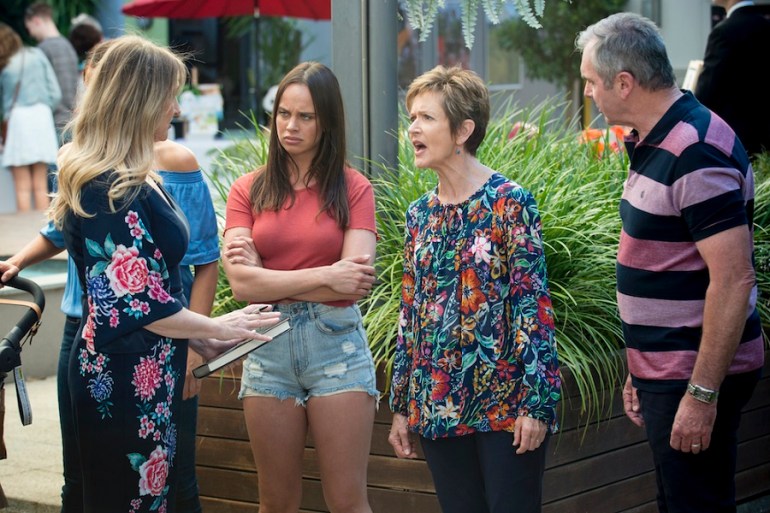
‘Neighbours’.
Long-running-soap Neighbours is again on the chopping block after production company Fremantle reportedly failed to reach a new deal with Amazon.
Production on new episodes will stop in the middle of this year, with the series’ 40th season to air on Prime Video and Network 10 until the end of 2025.
It comes two years after Amazon stepped in as an international production partner for the drama on the back of British broadcaster Channel 5 deciding no longer fund the series.
Following a finale featuring well-known alumni, such as Guy Pearce, Kylie Minogue, Margot Robbie, and Jason Donovan, cameras began rolling again at Melbourne’s Nunawading studios in April 2023, with Network 10 retaining first-run broadcast rights in Australia.
The new episodes screened on Amazon Freevee in the UK and US, and exclusively on Prime Video in Canada.
Amazon has since folded its Freevee platform into its Prime Video offering, and according to reports, was unwilling to continue funding the soap.
In a statement, executive producer Jason Herbison thanked Amazon MGM Studios for bringing Neighbours to new audiences globally.
“Audiences all around the world have loved and embraced Neighbours for four decades and we are very proud of the huge success over the last two years including often appearing as one of the Top 10 titles in the UK and the show’s first-ever Daytime Emmy nomination for Outstanding Daytime Series in 2024,” he said.
“We value how much the fans love Neighbours and we believe there are more stories of the residents of Ramsay Street to tell in the future.”
Not only did the program build up a loyal viewership over its four-decade run but also gave a start, training, and long-term employment to a variety of creatives in front of and behind the camera.
In 2023, the Neighbours Training Program was expanded to incorporate opportunities across a spectrum of above and below-the-line production specialties, including directing, writing, production, post-production, art department, accounting, sound, lighting, and grip.
MEAA Acting Chief Executive Adam Portelli said news of the axing highlighted the urgency of local content rules for streaming services.
“Today’s news is a stark example of why the federal government needs to act now and implement local content quotas on streaming services to provide certainty for the Australian screen industry,” he said.
“Australian stories shouldn’t be left to the whim of huge multinational corporations like Amazon, Netflix, or Apple.
“MEAA will be seeking urgent clarification from Fremantle about the future of the production. “Workers should be treated with respect – and certainly don’t deserve to find out through the media they’ve been sacked.”
*Updated
Tags
Follow up material to January 1 Blog

Sarah C. Williams When Courage Calls: Josephine Butler and the Radical Pursuit of Justice for Women John Murray Press|Hodder & Stoughton, September 2024. |
Thank you, NetGalley, for providing me with this uncorrected proof for review.
Reading the first three chapters raised a question for me – can I respond positively to this biography coming as I do from a feminist rather than theological perspective? For the emphasis on theological thought and Josephine and George’s religious commitment at this point in the book is vast. The feminist points that have been made, the couple’s commitment to an equal marriage and Josphine Butler’s disappointment that the Oxford thinkers she met were without any feminist understanding, are addressed only briefly. I persevered as I was particularly interested in Butler’s response to the Contagious Disease Act, an Act that really makes for thorough feminist thought and examination.
Chapter 4, seeing justice, Liverpool, 1866-69, provides a welcome change. Highlighting the city’s features, combined with the couple’s professional life (George) and the life Josephine sought outside her family duties, widens the perspective of the biography. Josephine’s connection with the workhouse remains religious, but the move into recognising her language as different from that of other middle-class women who became involved with ‘fallen women’ is not only based in religion, but in feminist principles. She rejects the stereotype that places women into categories (moral and immoral) based on their sexuality. Significantly, she argues that the categorisation that placed some women into an impure category had its basis in neither religion nor science. From here she becomes actively involved with the Contagious Disease Acts, in place since 1864.
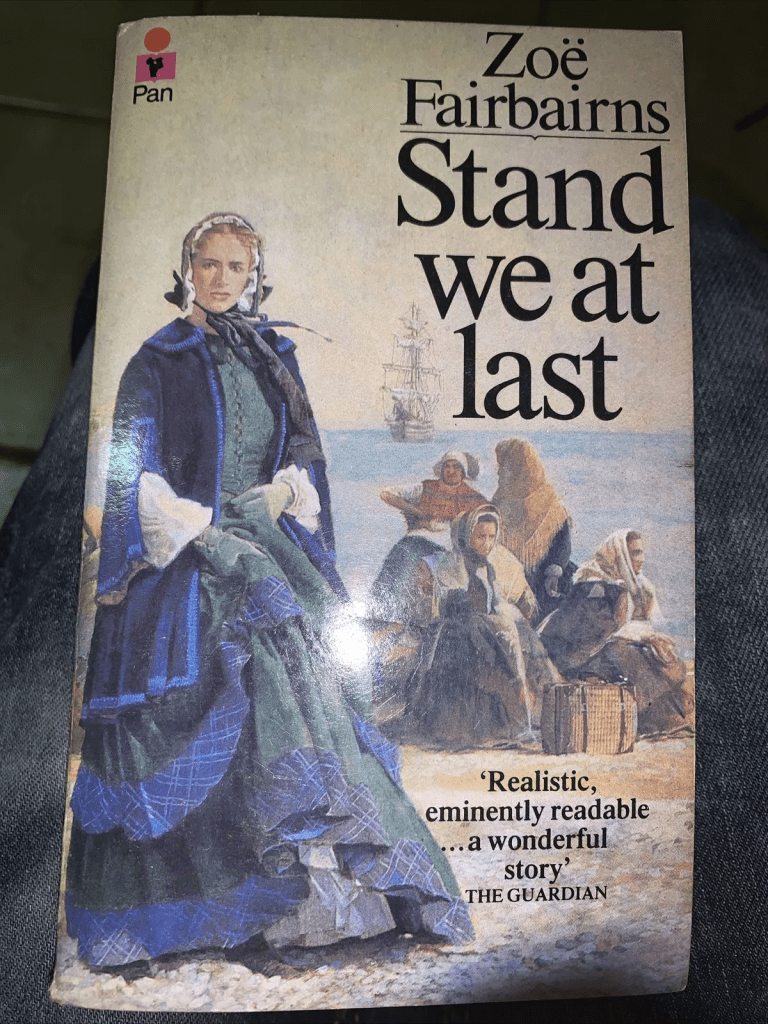
The Contagious Disease Act, and the complications arising from grappling with its implications are debated in Stand We At Last, by Zoe Fairbairns. This is a feminist historical novel, set mainly in Britain, but with a long and informative period in Australia. It is on kindle, and also available second hand in paperback and hard cover. I cannot bear to let either of my paperbacks go as they have different covers. One as above, and the other more contemporary. The kindle version is with me whenever I want to reread when travelling.
From The Atlantic, December 24, 2024.
Are Young Men Really Becoming More Sexist?
What the research says about the gender divide across the world By Jerusalem Demsas – Atlantic staff writer
It’s conventional wisdom that young people will be more progressive than their forebears. But although young people can often be counted upon to be more comfortable with risk and radicalism, that doesn’t mean they will always express that through left-leaning politics.
Young men may have helped hand President-Elect Donald Trump his victory, fueling the narrative about a growing gender gap among young voters. But this is not just an American trend. In South Korea, young men have been radicalized against feminism, opening up a large gender gap; in Poland, gender emerged “as a significant factor … with young men showing a strong preference” for the far-right political alliance; and in Belgium, the anti-immigrant and separatist Vlaams Belang party received significantly more support from young men than young women.
Could the Gen Z political gender gap be an international phenomenon?
Today’s episode of Good on Paper is with Dr. Alice Evans, a senior lecturer at Kings College London who is writing a book on the root causes of gender inequality across the world. Originally published in June, this episode helps untangle some of the reasons young men may be feeling disaffected and reacting differently than young women to macroeconomic and political trends.
The following is a transcript of the episode:
Jerusalem Demsas: Following the election, there have been many many arguments made about the growing gender gap between young men and young women. That women are more likely to vote for Democrats has been a consistent feature of my entire life, but this wasn’t always the case.
In the year 2000, the political scientists Ronald Inglehart and Pippa Norris released a paper establishing “gender differences in electoral behavior.” Basically, they showed that women had become a liberal force in small-d democratic politics.
That was a notable finding, because in the postwar era, women were, on average, seen as a more conservative electoral factor. Norris and Inglehart looked at more than 60 countries around the world and found that, from the early ’80s through the mid-’90s, women had been moving to the left of men throughout advanced industrial societies. They conclude that “given the process of generational turnover this promises to have profound consequences for the future of the gender cleavage, moving women further left.”
[Music]
My name’s Jerusalem Demsas, I’m a staff writer at The Atlantic, and this is Good on Paper, a policy show that questions what we really know about popular narratives.
While we’re waiting for the sort of definitive data that can help researchers untangle exactly which men were more likely to vote for Donald Trump and why, I wanted to revisit one of my favorite conversations of the year, with Dr. Alice Evans. Alice is a senior lecturer at King’s College London, whose newsletter, The Great Gender Divergence, has followed research and her own personal travels across the world to understand the root causes of gender inequality.
Trying to understand why it is that relations between young men and women seem so fraught can help us begin to understand the downstream political consequences of these cultural shifts.
Here’s our conversation, originally published back in June.
[Music]
Alice, welcome to the show.
Alice Evans: Thank you so much. It’s a real pleasure to talk to you because I think we corresponded for a long time, and this is a treat.
Demsas: Yes, yes. Twitter DM-to-podcast pipeline. I feel like that’s what we’re creating right here. So we’re here to talk about the divergence between young men and women’s political views, particularly on sexism. But before we get into that, I just want to ask you: What determines whether someone is sexist? What determines whether they hold sexist beliefs?
Evans: Wow, okay, big question. So, I think, generally, the entire of human history has been incredibly patriarchal. So to answer that question, I need to explain the origins of patriarchy. For thousands and thousands of years, our culture has vilified, blamed disobedient, naughty women. You know, they were witches. They were terrible people. A woman who was disobedient or who wasn’t a virgin was shamed and ostracized. So there is a long history. Sexism is nothing new. And actually over the 20th century, much of the world — Latin America, North America, Europe, and East Asia — have become rapidly more gender equal. So in terms of human history, the big story is the rise of gender equality in much of the world. But certainly sexism persists, and we do see in Europe, in South Korea, in China, in North America, young men expressing what we call hostile sexism. Now, it’s worth distinguishing between hostile sexism and benevolent sexism.
So let’s suppose I’m a patriarch in a conservative society, and I think Women are incompetent, and we don’t want to ruin their little heads, and they can’t take care of these things, so I’ll manage these things for the women who just don’t know any better. So that’s benevolent sexism. Hostile sexism is a sense of resentment of women’s gains. So when we ask questions like, women’s rights are expanding at the expense of men, or women are getting these handouts, or men are the ones who are discriminated against. It’s a sense of resentment, the thing that feminism has gone too far, that women are getting all these perks, and so you know, every day as a woman, I wake up with a free fruit basket, right?
Demsas: Wait, I didn’t get mine this morning. I’ll have to check in.
Evans: Yeah, exactly. But this is a real, I think—so I’ve done interviews across the U. S., in Chicago and Stanford and in Montgomery, in California, in New Haven, in New York, in Toronto, in Poland, in Warsaw, in Krakow, in Barcelona, in London. And a lot of young men do feel this sense of resentment. And you can understand it. If you feel that life is hard, if you feel that you’re struggling to get ahead—so we know as college enrollment increases, it’s become really, really hard to make it into a top college place.
Demsas: Let’s step back for a second, This question, though, that I have is, you’re raising this question of young men feeling this resentment. Are young men becoming more sexist? Is that what you’re seeing in the data?
Evans: I think it depends on how we phrase it. So, in terms of, yes, young men are much more likely to say, Yes, women could work, they can go out to clubs, they can do whatever they like, they can be totally free, and young men will support and vote for female leaders. So in terms of support for recognizing women’s capabilities, absolutely, younger generations tend to be much more gender equal, and that holds across the board. The only exceptions are places like North Africa, the Middle East, and South Asia where there’s no difference between young men and their grandfathers. But in culturally liberal economically developed countries in the West and East, young men are more supportive. But, sorry, I should have been more clear, they do express this hostile sexism, so this sense of resentment that women’s rights are coming at men’s expense. But that’s not all men, right? And so it’s only a small fraction of young men. You know, many young men are very, very progressive and they’ll vote for Hillary Clinton, et cetera.
Demsas: I just want to drill down into what exactly we’re talking about, right? Because I think most people know there’s a gender gap between men and women, and let’s start in the American context here. People know that with Trump—you have almost 60 percent of women are supporting Biden, while a majority of men back Trump.What’s actually happening here in the U. S. context that’s new, that’s interesting, that’s driving this conversation?
Evans: It’s difficult to know why people do stuff, so everything I say is speculative. What I’m trying to do is when I look at the data, I try to understand, you know, what are structural trends affecting one particular generation that distinct from other generations and why would it be happening in particular parts of the world and not others? So here are three big structural drivers that I’m not a hundred percent sure about, but I would suggest them as likely hypotheses. One is that men care about status. Everyone cares about status. Big examples of status goods include getting a great place at university, being able to afford a nice house, and also having a beautiful girlfriend. Those three things—good education because that matters for signaling for credentials; good place to live; and a pretty, pretty wife or girlfriend—those are your three status goods. Each of those three things has become much, much harder to get. So if we look, as university enrollment rises, as it has, it becomes much harder to get to the top, to get to the Ivy League, right? So only a small percentage of people will get to the top, but those getting to the Ivy League is so important for future networks. Meanwhile, those who don’t even have bachelor’s degrees will really struggle to get higher wages. So one is that men are struggling to get those top university places, which are important for jobs. Then on top of that, housing has become much more expensive. And the gap between wages and house prices has massively increased. Especially if you don’t have inherited wealth. So for the guy whose parents were not rich, it becomes so much harder to get onto the property ladder. So it’s especially hard for these young men to get status. Now, a third and really important factor is that it’s become harder to get girlfriends. So as societies become more culturally liberal, open minded, and tolerant, women are no longer shamed, derided, and ostracized for being single without a boyfriend. You know, in previous decades or centuries —
Demsas: I don’t know. Some women are, some women are.
Evans: Well, compare over time, over time, right? So this isn’t saying there’s zero stigma. It’s saying, Look at change over time. So in previous decades, a woman who was not married and didn’t have babies by the time she was 30 might be seen as a total loser and totally stigmatized. That’s true in South Korea, China, Japan, the U.S., and Europe. But as women are not facing that pressure and that ostracism, they can become financially independent. Women’s wages are approximating men’s. They can inherit parental wealth and buy their own property. So that means that women don’t necessarily need a man. So demand for male partners has plummeted because of that economic development and cultural liberalization. As a result, Pew data tells us that 39 percent of adult American men are currently unpartnered.
Demsas: So basically you have these three buckets here that you’re talking about. You’re saying that you see this divergence with young men in particular because young men, I guess, are concerned with status in a particular way, and that the economic circumstances of our moment in time here in the U.S. have made it more difficult because of home prices, because of diverging outcomes for people with a college degree versus those without. And then finally that because of women’s increased opportunities that they’re able to actually reject men that they feel like don’t give them either economic security or the love or respect. And in previous generations, they would have had to make do because they weren’t afforded that freedom in society. Is that kind of getting at what you’re—
Evans: Perfect. You’ve said it far better than me. For example, young women will say to me on dating apps, they just give up because these men are boring, right? So if a man is not charming, then what is he offering? A woman is looking for loving companionship, someone who’s fun, someone who’s nice to spend time with. But if the guy can’t offer that, then—so in turn, this is hurtful for men. Men aren’t these powerful patriarchs policing women. In fact, they’re guys with emotions who—and nobody wants to be ghosted, to be rejected, to feel unwanted. So if men go on these dating apps and they’re not getting any likes, and even if they speak to her when she doesn’t have the time of day, it just bruises and grates at your ego, your sense of worth. And so then, men may turn to podcasts or YouTube, and if you look at that manosphere, if you look at what people are talking about, it’s often dating. And so they’re often saying, Oh, women have become so greedy. They’re so materialistic. We see this vilification of women. So that kind of filter bubble, once you self-select into it, you become surrounded by this sense of righteous resentment and, oh, you know, It’s not your fault for lack of studying in schools, it’s women are getting all this positive discrimination. Women are getting all these benefits, you know, every, all these companies are hiring women because they feel they have to, because that’s woke nowadays. So if you hear all that kind of angry discourse, and the same goes in South Korea where I was earlier this year. There is a sexist, discriminatory law which mandates that men have to go into military conscription. And that’s terrible, it’s very abusive, it’s hierarchical, it’s unpleasant, lots of men commit suicide, and that is now increasingly used as a way of signaling that life is very unfair for men. And so men are facing a tough time, and then social media, which they’re self selecting into, can reinforce the legitimacy of that.
Demsas: So I’m glad you broadened this out of the U.S. context because I think that while you’ve told a story that I think is familiar to a lot of people hearing this podcast here in the U. S., this is not just happening here. There is this really interesting study by some Swedish political scientists where they look at 32,000 people across 27 countries in the EU, and they’re finding that young men are particularly likely to see advances in women’s rights as a threat to men’s opportunities, right? So similar to what you. And it’s interesting ‘cause it’s compared to older men, right? Like, the group that expresses most opposition to women’s rights are young men while women across all age cohorts show very low levels of opposition to women’s rights. And older men seem indistinguishable often in their peer groups to women their age. And young men really jump out there. And they offer a couple of explanations to that. They say that it’s about whether or not young men feel the institutions in their area are fair or discriminatory. And they say that if there is, you know, downturns in the economy, that that makes young men even more likely to express hostility, this sort of hostile sexism you’re talking about towards women. But why is that affecting young men differently than it’s affecting their older male counterparts?
Evans: Right, great question. And also I was just looking at work by Lisa Blaydes finding that young men in Qatar are most opposed to women in the workforce. And I think it could be this heightened sense of competition. So now, women are outpacing men in terms of education. So they’re a real threat in terms of competition for top jobs, which is also so important for housing. So I think that the competition, right? So if you care about status, if you care about getting to the top, the competition is fiercest now.
Demsas: But aren’t middle-aged men also in competition with women for jobs? You know, 25 doesn’t mean you stop having competition in the labor market. I mean, 30 year old men, 40 year old men, 50 year old men, all these men are still working.
Evans: Right, absolutely, but we now see so many more women who are educated and ready and eager to go into the workforce and aiming for those top jobs with high aspiration and also getting those very top jobs is very important in order to afford decent housing.
Demsas: Gotcha.
Evans: Right, so when people say, Oh, you know, Gen Z have it better than ever because they’ve got higher wages, what we need to think about is people care about status. So they care about their place in the pecking order.
Demsas: And so it’s like if you’re an older man living in an EU country, right? You may see young women now entering the labor force, but, on mass, they’re often not in direct competition for your job. So you feel maybe a benevolent sexism towards them, but you don’t feel this potential zero-sum mindset. And also, maybe you’ve already bought into the market, so you didn’t experience this runup in housing prices in the same way before you were able to buy a home. So that’s kind of what differentiates these groups?
Evans: Yes, absolutely, absolutely. I totally agree. I think housing is really hitting young people. And if you look in the Netherlands, Geert Wilders did very well. And he was really campaigning, focusing on young people and their concerns about housing, right? So this is a major, major issue that young people just cannot—so many people in their 20s and even 30s in Europe are still sharing with roommates, right? So they just feel trapped. You’re still in this limbo. You can’t afford your own place. That hits people hard, especially as it then worsens their prospects in dating and marriage, right? So it’s harder to date. If you’re still living with roommates, you’ve got less to offer, so I just think it hits men multiple times, just feeling—no one wants to feel like a loser, right? So anything that makes you feel like you’re not doing so well. So if we see a rise in inequality, a rise in income inequality, a rise in housing inequality, that in turn affects your ability to date, especially as demand for men goes down.
Demsas: But what’s also happening in a lot of these countries, at least in the U.S. context, right, is that it’s not just that men are sort of reacting to these economic circumstances. It’s also that women are becoming more progressive over time. So is it an interaction between those things that’s maybe driving this gender divergence? Or how much of it is just that men are getting more conservative versus women are also getting more progressive?
Evans: Okay, excellent. I want to make two more points. One is that there’s been some nice research about women becoming more progressive. I think that might affect men’s conservatism in two ways. There’s nice research in Spain showing that after the 2018 Women’s March, then there was a rise in hostile sexism, which in turn led to more votes for the far-right party Vox. So that’s a sense of patriarchal backlash. Also, if we look at the data on men becoming more conservative in South Korea, it exactly precisely times #MeToo. So in South Korea—which is a society which idealizes collective harmony, but there’s also been a lot of spycams and sexual harassment and covert pornography—women organized in backlash. They organized for an end to impunity. Thousands and thousands of women marched and mobilized. But that triggered a lot of a reactionary movement of male solidarity, male hostile sexism. So in both Spain and South Korea, it’s women’s mobilization, women becoming more progressive and outwardly saying, We don’t want to tolerate this. We won’t tolerate this anymore. This led to hostile sexism, which in turn, many politicians have mobilized, have used and marshaled for their gains. So in Spain, the Vox party has often said, Well, you know, there are these cases of false accusations. In South Korea too, the president was actually elected on a wave of hostile sexism. He was campaigning to abolish the gender ministry. He was sort of an anti-feminist president.
Also, there’s very nice research by Jay Van Bavel and others, and they show that on social media, it tends to be the most extreme groups that are the most vocal. So if you imagine a distribution of people, people at the 5 percent of either end—the two poles—they’re the ones who shout the loudest. And so if you imagine there’s this very, very extremist feminist person shouting loudly, that person may then get parroted by the right wing media and say, Oh, this is what feminists think. And that can accentuate the backlash. So even though the vast majority of women are much more moderate, much more in the middle, the ones who shout the loudest may then trigger that backlash effect. The most extreme feminist views can trigger a backlash against feminism, even if most women really aren’t on board with those ideas, so I think there’s a social media effect.
Demsas: You’ve identified three large ways that these divides between young men and women are growing. You talk about this and a high-unemployment or low-growth trap, that young men might be feeling more viscerally than young women because of their expectations around status. You talk about—
Evans: Wait, wait, wait. Let me clarify. So in the U. S., you don’t have high unemployment, but you do have that status inequality.
Demsas: Yeah.
Evans: So that resembles—sorry, I should just clarify that. So it can work. As long as you’ve got inequality, then you’re going to have this sense of resentment. I really think it’s inevitable.
Demsas: No, I think that’s a great point because I was literally just going to ask you right then just, you know, U.S. has extremely low unemployment right now and you see varying amounts of economic cases across the EU and the world.
And you’re going from South Korea where you have also really great economic circumstances all the way to countries like Indonesia where things look very different. And so I think that that’s a really helpful corrective. But I want to zero in on these two other things that you were just talking about. But let’s just start with the social media bubbles, right? Because I find this interesting that, if you were to ask me before I’d looked into any of this, whether social media would make you have to hear from and interact with people more different than who you are versus people who are similar to you, I would’ve thought, Yeah, I can’t really control the next tweet that my algorithm shows me if I’m on Tumblr in high school and I’m looking through different blogs. I don’t really know the genders of people immediately when those things pop up on my page. So I feel like it would be a way of actually facilitating a ton of information across genders, right? But what you say is that social media actually allows for you to create these bubbles, and that it creates this feedback loop for people who are young women who are to become more liberal and young men to become more regressive. I mean, you use this term called manosphere earlier. Can you talk a little bit about what that is? What’s actually happening there?
Evans: Yes, absolutely. But first, before we get to social media, I think it’s important to recognize that this is part of a broader process of culture where there are many kinds of filter bubbles. So as women have forged careers and become journalists, podcasters, writers, screenwriters, they have championed their ideals of empathy and tolerance and equality. And then on top of that, David Rozado shows that over the 2010s, media increasingly reported more attention to sexism, more attention to racism. So people are becoming more aware of the sense of unfairness and inequalities. On top of that, the social media companies, they want to keep their users hooked. And they do this by making their apps enjoyable and addictive, so they provide content that they think you will like, that your friends and peers also liked. They think that they show things similar to what you’ve already liked, and they also might show sensational content. But the more that they send you things similar to what you’ve already liked, then you become cocooned in this echo chamber of groupthink whereby everyone is agreeing with you. So even if there are these structural economic drivers that push men to become more attuned or sympathetic to Andrew Tate, we then get these echo chambers whereby that’s all you’re hearing.
Demsas: But when you describe the media environment, that’s just one way that people engage in social media, but when you’re thinking about your algorithm, like I said, aren’t there tons of ways then that social media has actually broken that? Because now, you go on your Twitter and yeah, your algorithm may push you more towards certain kinds of content, but it also opens you up to very different views. And the reason I’m asking this is because one of the biggest theories about how people break down prejudice is this thing called contact theory, where you come into contact with individuals of a group that you have prejudice against, and then as you see, Oh, this is just a person just like me, you end up breaking down a lot of your prejudices because they become beaten by reality. So why doesn’t that happen? Why don’t you see that sort of interaction happening on social media?
Evans: I think that’s a theoretical possibility of the internet, but in reality, people are much more tribal. They gravitate towards things that they like, towards things that they already know, towards things that already make them feel comfortable. People are incredibly—they do so many things on trust, like, Oh, is this someone I know? Okay, I’ll trust them and listen to them. Is this person part of my group? And I think in America, particularly, you see that ideological polarization. If you’re told that, Oh, the Democrats support this, and you’re a Democrat, people tend to support it. So I think a lot of things are done on a very tribal, trusting basis, and although you and I might idealize a fantasy internet where people mix and mingle and learn from diversity, in truth, people tend to gravitate towards their group.
Demsas: Yeah, for me I diverge a little bit. I think that it’s maybe different for different folks. I mean, this is why, as you said earlier, while you do see young men sort of diverging, as expressing more sexist attitudes, that’s just a portion of young men, right? That’s, as you said, it’s not every single young man. And I would have to think that a lot of them are actually coming into contact with some of these conversations that are happening cross gender, cross ideology, whether it’s online or it’s in their school, in school or whatever it is.
Evans: Okay, excellent, so we know that young people spend a huge amount of their time on their phones—maybe five hours—and a lot of these YouTube shorts or TikToks are very, very short. They could be 30 seconds. They could be a minute. That’s not enough time to cultivate empathy, to understand someone’s particular predicament, why they made those choices and the difficulties of their life. So and then if it’s too short to build empathy, then you’re just going to stick with your priors. So, social psychologists talk about confirmation bias, that we tend to pay more attention to information that fits with our priors. So we seek out information that already fits with our priors, we ignore disconfirming evidence. So on social media where you’re getting all this short information, you’re just looking for things that are nice, that make you feel comfortable.
Demsas: But, you know, one question I actually had for me, that’s part of this is there’s this concept called group threat theory, right? Where you think about someone else as being the cause of your—some other group as being the cause of your misfortune. And identifying who that group is, though, is not just natural, right? That doesn’t happen out of the ether. Because, you know, young men could be experiencing this sort of status threat, they could see this widening inequality, and they don’t have to turn against women, right? They could say instead, Actually, the problem is, you know, Catholics, or, The problem is whatever, you know, people from Namibia, whatever it is. And then you can just create these groups. So it seems like a lot of your argumentation around this has been around looking at cultural entrepreneurs who weaponize these moments to point you at a group. Can you tell us, what’s a cultural entrepreneur? What are they doing?
Evans: So this has existed throughout history. You know, there was a Mamluk Sultan of Egypt called Barsbay. And after the price of bread went up, uh, he blamed it on the women. And he said it was women were responsible for creating public discord. And he banished them back to their homes. And so, you know, women were to blame for all these terrible things that have happened. So throughout history, if you have a vulnerable group that cannot protect itself, it might be blamed, you know, similarly in the count, in the struggle between Protestants and Catholics, then priests would vilify women and identify witches to prove their superior power to vanquish the devil. Right? So if there is this small isolated group that is less powerful, you can vilify them. And so we see that in regards, you know, xenophobia, Islamophobia in India, right? The BJP being anti-Muslim. We see it in every single society, but it’s just a cultural innovation, which group is going to be blamed. But I think—and so people like podcasters might vilify women as getting these handouts, or they might vilify Ukrainian refugees as getting these handouts in Poland, or it’s these migrants at the border that are causing all these sorts of problems. So it’s someone—rather than, you know, a financial entrepreneur is one who looks at the market and thinks, Hey, I’m going to exploit this opportunity and make some money, a cultural entrepreneur is someone who says, Hey, I’m seeing this sea of discontent. I’m going to rise up, build a following, and possibly make money, but also get social respect, etcetera.
Demsas: So these cultural entrepreneurs have a lot of power, right? It’s really contingent on who ends up being more persuasive, who ends up making either the best arguments or swaying the most people over onto their side because they’re charismatic. And one thing that’s been really interesting to me is it’s possible that men could feel like women are an asset, that the fact that they can work wage-paying jobs is an asset to them when there’s an economic downturn. Like, Great. It’s not just my brothers or my dad or my sons that can help me. Now my wife, my daughter, my sisters can help if there’s a problem, too. And I wonder if this also plays into why it’s younger men that are actually the ones that end up being more hostile towards women’s advancing rights because they’re less likely to be partnered already. So why isn’t it that you don’t see actually greater excitement that women can actually be helping bring in money in this context?
Evans: Okay, so that’s a great point, a plausible argument, but I think in previous generations, the younger, unpartnered men might still support this, be less likely to endorse hostile sexism. Maybe because they thought they were going to do better in the labor market. Now, I think an extra factor that’s happening right now that’s really important for explaining this, in terms of statistics: One, it is the women who are the major competition in employment because they’re super, super educated, often more educated than men. Two, these heterosexual men wanting girlfriends. So the people who are rejecting them, the people who they think are snubbing them are literally women. So I think there is a direct confrontation, so I think the idea of scapegoating and vilifying women is inevitable because of that competition of the sexes, so to speak. That said, there’s this nice draft by Thomas Piketty, the scholar of inequality, showing that richer, super educated men are much more likely to vote Democrat. So, when men can achieve these super high salaries, right, those men are super secure, so they don’t have that status competition. Now, I think that the point you made about relationships is really important and—
Demsas: Yeah, because I was just going to think, Is it just about dating? How much of this is just if you were partnered, then basically you don’t feel this way?
Evans: Yeah, I think that’s great. So there’s this very nice paper showing that fathers of daughters were less likely to interrupt Janet Yellen in her congressional hearings. So if you want the best for your daughter and you aspire for her to do well, and then you empathize with women’s concerns, and maybe you’re less of a dickhead, right, in public life. So I certainly see that can happening. But I still think if we look back at the historical record, there are plenty of cases where men might support their wives working, but still be pretty hostile in general. So we go back to the guilds in medieval Europe. A man and a wife might collaborate together. He might bequeath his estate to her, but European guilds that’s a proto-trade union, they might exclude women because they wanted to preserve and monopolize their benefits. The same goes for trade unions in the 19th and early 20th century—very, very sexist. So sadly, I don’t think—that doesn’t seem from the family, from the historical record, that just having a relationship will necessarily mean a benign attitude to women in general.
[Music]
Demsas: We’re going to take a quick break. More with Alice when we get back.
[Break]
Demsas: All this gets me thinking, you know, a lot of the explanations are, you know, they’re structural in that they would happen to like basically every generation of young men, obviously, social media is a bit different, but other than that, you would see this in the past, as well, and so my question for you is—we see right now that a lot of people are talking about this potential threat of the great gender divergence between women and young women and men in politics. And I wonder, would young men always have been relatively more zero-sum in their thinking with young women? Even in past generations, we just don’t have the data to compare.
Evans: Okay, so let me say three things. First of all, it’s now that we see this rise of men being unpartnered. So previously the Pew data was showing a far smaller fraction of men were unpartnered. So previously, when women were culturally compelled to marry, you know, when it was just a normal thing to get married and have babies before you are 30, then you’re going to have more demand for men. So the mediocre man was going to do okay with the ladies. So he wasn’t getting those constant rejections and ghosting which grates at the male ego. So today is very, very different in terms of men’s difficulty of getting, you know, all these things, all these things that I’m talking about, uh, are big structural changes, the difficulty of getting to a top university, the difficulty of getting a decent housing in cities, especially the difficulty of getting a pretty girlfriend or a girlfriend at all, all those things are much, much harder for, say, the median guy. The median guy is struggling to get status, and that’s happening now.
Demsas: So one of the things I think is interesting about this phenomenon is that you’re doing a lot of work that looks at what’s happening with young men and women’s attitudes, not just in the U.S. or the U.K., but you’re also looking across a bunch of contexts. So I want to go into a couple different countries to see how these trends are actually playing out given the cultural context that exists there. So, firstly, can you take us to Qatar? And I’m interested in Qatar because it’s a highly developed nation, right? This is not a poor country by any means. So tell us what’s going on there. Why do we see this sort of divergence between young men and women?
Evans: Yeah, this is super fascinating, right? I’ve never been to Qatar, so I am cautious here. But piecing together other materials that I’ve read about the existing published literature: One, I think it’s important to recognize it’s a hugely unequal society. So, even if everyone’s incomes are high, people still care about that place and their pecking order. Second, on social media, I think social media can even amplify people’s perceptions of inequality because the kind of stuff that goes viral—and this goes for both pretty women and successful men—are the superstars, right? So, it’s the beautiful, beautiful women who get thousands and thousands of likes and then trigger anxiety amongst other women. And similarly for men in Qatar, it’s the Sheikhs, the rulers, the crown princes who show off their Lamborghinis and Porsches that are worth several million dollars. And so this sense of, I want to be at the top—because being at the top of society brings status, it brings social respect, it brings prestige, it brings admiration. Other people admire you if you’re doing well compared to others. So, in Qatar, women are now super, super educated, the younger generation of women really want to work, and I think it’s possible that they present a challenge to young men. And what’s really, really fascinating is when I look at data on maths and reading, we see women in Qatar are far outpacing men. It’s not just that they’re more likely to be university educated, but their maths scores are off the board, off the chart. So the gender gap in terms of competence is astronomical.
Demsas: I wanted us to move to a different part of the world. I wanted to move us to Indonesia, and the reason I want to talk about Indonesia is, you know, I remember in 2010 when then-President Barack Obama went to Indonesia and hailed it as this example of a democratic, multi-ethnic, multi-racial society. Particularly at a time where he was trying to tamp down on xenophobia and anti-Muslim behavior or anti-Muslim attitudes in the West and in the U.S. after 2001 and the 9/11 attacks. And so, I was really interested because what ends up happening in the subsequent years is that Indonesia really turns against this example. And you end up seeing that a lot of people, democratically, are wanting actually many more illiberal things. And you actually see young men and young women increasingly pushing towards regressive values, particularly on gender. And so you wrote about this, and you wrote about this survey that the Indonesian government did in 2019. And I want to just talk about this a bit, because I think it speaks to how it’s not just men that reinforce patriarchal attitudes, so that women can have a role in enforcing those as well.
In this 2019 government survey of Indonesian women, they’re looking at 15- to 19-year-old girls, right? And they ask them, When is it justified for a husband to hit or beat his wife? They ask, Is it when she burns his food, when she argues with him, when she goes out without telling him, when she neglects his kids, when she refuses to have sex with him? They tallied up all of those things, and amongst 15- to 19-year-old girls, over 40 percent of them agreed with at least one of those as a justification for domestic violence. And then you look up the age groups, you look at 20 to 24, you look at 25 to 29, you look at 45 to 49, no one is above 40 percent. At 45 to 49, it’s actually only 27 percent agree with at least one of those things. What’s going on there? Why are young women in this context maybe turning against women’s rights in contrast with their older peers?
Evans: I was actually listening to Barack Obama’s speech in Indonesia the other day. And he quoted the Indonesian national motto, which is like, Unity in diversity. And it’s always had this big history of celebrating their diversity. But what we’ve seen over the past 20 years in Indonesia, and actually in many Muslim countries across the world, is many people increasingly embracing a very strict Salafist interpretation of Islam and adopting very strict ideas of gender segregation and female seclusion, and men and women keeping their distance from each other. And so many people are—so I think what’s caused that? One is: Saudi Arabia has become rich on the back of Western and global demand for oil, and that has enabled it to export these Salafist ideologies through investing in mosques, madrassas.
Demsas: And what’s a madrasa?
Evans: A madrasa is an Islamic school, so you learn about the Prophet, you learn about Sharia law, you also learn about gender segregation—the idea that a modest woman, a good woman, will stay away from men, and she will not laugh, chat, and socialize with them. And that sexes should keep their distance from each other. And one possible reason—even in urban areas, girls are more likely to go to these Islamic educational institutions—and one possibility is that, as men become more religious, they want religious wives. They want wives who will be obedient. In Islam, it says that a wife should obey her husband, 93 percent of Indonesian Muslims say that the wife should obey her husband. And so one: Saudi Arabia funding madrassas. Also: religious righteousness gives people, especially struggling people, a sense of self-worth by doing God’s work. By making these anti-blasphemy accusations, you’ve got moral dignity, you’ve got status, people care about status. And then, as people become more religious, political parties and campaign movements gain votes by courting these preferences. So across Indonesia, in many of the different regions, more schools and more political parties have made laws against blasphemy, mandated hijab laws. There’s been persecution of minorities, and we see this right up until government level and, you know, criminalization of blasphemy being strengthened. So when people say, Oh, it’s a terrible thing, the sexes coming apart. I would say that’s descriptively true, but it’s distinct to economically developed and culturally liberal countries. And when you say it’s a terrible thing, just consider the alternative: what’s happening in many other parts of the world where people think the same thing and sing from the same hymn sheet as they did in the past in the UK and the U.S.
Demsas: One last place I want to take us is a place you’ve mentioned a couple times: South Korea. And the reason I want to ask you about this is because South Korea has the distinction of seeing the lowest fertility rates in the world. Since 2013, they’ve been below everyone else, and right now they’re at 0.72 births per woman, which is really, really low. I wanted to ask if that’s the effect that we might expect to see, because South Korea is a place that’s a highly developed nation, a very rich nation, and at the same time, you see this massive divergence between young men and young women, and I’m wondering is that something that you would expect to see in other nations, if you see this persistence and divergence between young men and women?
Evans: I will say two things. First, on South Korea’s plummeting fertility, I think there are several drivers. First and foremost, the lowest fertility and the most likely to be childless is the poorest South Koreans. So, there’s a great paper by Michèle Tertilt and others, and they highlight the importance of status. And the idea is that South Koreans really care about education. They want their kids to do really well, to get into the top universities—we call them SKY—so they invest enormous amounts in their education, but the poor cannot keep up with the spending of the rich. So maybe you only have one kid, right? You can’t have two kids and educate them well, so that’s one thing, the status competition makes it more exhausting and laborious to have a kid. Secondly, certainly, I think it’s true that as there’s cultural liberalization and people are no longer socially punished if they don’t have a kid, then they can just do their own thing. They can do whatever they like. So for example, when I’m in Zambia or Uzbekistan, the first two questions people will say to me is, Are you married? Do you have kids? And the correct answer is always supposed to be yes, right? But no one in the U. S. will ask me that question. No one has introduced themselves to me saying, Hi, are you married? Do you have kids? No one says that. The way I’m received varies enormously. And so people’s priorities—when I go to conservative countries—people’s priorities, how they want to understand me as a person, first and foremost: Married and kids? Yes or no? So that’s the second mechanism: the less pressure to give birth and have children. And then thirdly, we do see in South Korea many young women saying, Hey, I just don’t want this. I don’t want to be in the same position of my mother who, for Lunar New Year, would have to be the dutiful daughter-in-law serving the husband’s family, doing all the cooking, and not being recognized and rewarded. So: staying single and not wanting to have kids. So for all those three reasons—status, competition, cultural liberalism, and the ideological polarization between young men and women—we might see a fall in fertility, but those three things seem structural and difficult to change. And so I think for those three reasons, you might expect fertility to continue to fall.
Demsas: Well, just so that we don’t leave everyone on the most depressing note possible, I’m wondering, you know, it seems like there’s a lot of malleability and the direction towards making society less gender egalitarian, but that should mean that you could also do the opposite, right? So, what can countries or people do about this? Like, in the 20th century, I imagine there were also a lot of cultural entrepreneurs—whether it’s on TV or the suffragettes or individuals who were, you know, just in daily life really pushing towards a more egalitarian culture. Is that what we need to see now, or are there other things that countries can do to ameliorate the backlash effects that young men are displaying?
Evans: Okay, great. So I maybe sound a little bit Marxian now. I think if you buy my hypothesis that part of this is all about status competition, then one possible mechanism is to reduce that status inequality. So for example, by radically increasing the supply of housing, it’s easier for men to be doing as well as their peers. Right, in both Europe and the US there are a lot of NIMBY restrictions on where you can build and that raises the price of housing. So if housing was cheaper and more affordable and more within reach of young people, then young people would be doing comparably. You wouldn’t have that massive status competition. I think also what’s really important is going back to your point about cultivating empathy and understanding different people’s concerns and perspectives, and that happens through meeting in person. It does not happen through these 30-second TikToks. And so in England, many schools have banned mobile phones. And I think that’s a way, and I think the upside of that is that people will be more present on their interaction with their peers in that classroom. And that’s clearly a collective action problem that Haidt has shown in his new book, you know, no parent wants—
Demsas: Jonathan Haidt.
Evans: Yeah, exactly. No parent wants to do it alone because then their kid is out of the loop. But if everyone is doing it—so I think getting people off their phones and into in-person interactions, you know, hanging out at parties. You know, when I was a teenager, I was always hosting these garage parties. My mother was always away at work and so I was always hosting these garage parties, and people coming over to my house to play Nintendo and, you know—
Demsas: Now, you’d get in trouble for leaving, like, tools hanging up around children.
Evans: I lived a naughty life. I lived in the English countryside, so we had a big treehouse and all sorts of naughty things going on. But anyway, less of my naughtiness, but yes, people interacting in person is really important, going back to the contact hypothesis and building empathy. And then we can also think about these algorithms. So if it’s the case that corporate algorithms are creating a skewed sense of what people see, and creating an unrealistic depiction of social life, then that’s something we could regulate, as we might regulate other areas. So I think those would be the three things for me: the reducing the status competition by boosting the supply of housing, encouraging empathy with more personal interactions by getting kids off their phones, and also thinking about how do you change the algorithm so that people don’t see this distorted sense of humanity, which is just making them think that other people are crazy, when actually, most people are pretty moderate and towards the middle.
Demsas: Well, you were really speaking my language when it comes to housing, so don’t—I have no objections there. Always our final question: What’s an idea that you felt was good on paper, but didn’t pan out in real life?
Evans: Oh my god, so much of my life, so much of my life. I mean, how many Alice Evans stories do you want? I travel the world, so this is like everything I do. I can tell you stories from the Democratic Republic of Congo when things went awry, or I can tell you about me being punched in the face in Mexico.
Demsas: Let’s do punched in the face in Mexico. Let’s do that one.
Evans: [Laughs] So I was — this was last year — I was in Oaxaca, and it was going really well. I was going into these little villages and towns with my iPhone, and I was using Microsoft Translate, and I was having these fantastic conversations with indigenous people. It was tremendous. And everyone was super, super kind and wonderful. And then a guy, in the favela, tried to wrestle me for my phone. Now, the sensible thing would just be to hand over my phone, but I did not do that. For some reason, I decided to wrestle him. And so he kept grabbing at my phone and I did not let him have it. And then what happened is—this is a true story, true story—he threw me to the ground, my head slammed back down on the stone—
Demsas: Oh my God.
Evans: Yeah. True story. And then he got on top of me and punched me in the face, right smack between the eyes on my nose. And what I do is I kick back, double legs in his stomach, propelling him off two meters. Then what happens is he—shocked by this—he goes into his pocket, he grabs a large knife, and what I do? I do a Lara Croft roly poly, spinning off to the side. I then jump up, and then he wrestles me again with the knife. And so it’s at this point that I think, I’m not going to out-fight a man with a knife who does not care at all about my welfare. So at this point, I hand over the phone, and I sprint, and I’m bleeding, and I’m covered in blood. Yeah, that is something that had not gone to plan. Getting punched in the face was not on the agenda.
Demsas: Not good on paper. I mean, it’s just interesting. You said, you know, smartphones—I guess they really, really can cause large harms in society.
Evans: Yeah, we need to be careful about the smartphones and also the idiots that carry them.
[Music]
Demsas: Well, Alice Evans, thank you so much for coming on the podcast. We’re so excited to have you, and we hope to have you back soon.
Evans: Thank you. This has been a pleasure. You’re very kind. Thank you.
Demsas: Good on Paper is produced by Jinae West. It was edited by Dave Shaw, fact-checked by Ena Alvarado, and engineered by Erica Huang. Claudine Ebeid is the executive producer of Atlantic audio and Andrea Valdez is our managing editor.
And hey, if you like what you’re hearing, please leave us a rating and review on Apple Podcasts. Or share it with two friends who you think might like it, as well.
I’m Jerusalem Demsas and we’ll see you next week.
[Music]
Demsas: Great.
Evans: We’re culture entrepreneuring right now
Demsas: We’re culture entrepreneuring right now! That’s the whole podcast.
Laughter.
Dame Maggie Smith obituary: A formidable star on stage and screen – from the BBC online site
Dame Maggie Smith, who has died at the age of 89, brought an incredible range of expression to her roles, winning high praise from directors and fellow actors alike.
It was said of her that she never took a role lightly and would often be pacing around at rehearsals going over her lines while the rest of the cast was on a break.
In a profession notorious for its uncertainties her career was notable for its longevity.
She made her acting debut in 1952 and was still working six decades later having moved from aspiring star to national treasure.
Margaret Natalie Smith was born in Ilford, Essex, on 28 December 1934, the daughter of a pathologist.
With war looming the family moved to Oxford and the young Maggie attended the Oxford School for Girls.
She started out in the theatre as a prompt girl and understudy at the Oxford Repertory. She once claimed that she never got onto the stage while she was there because no-one in the company ever fell ill.
Her company moved to a small theatre in London in 1955 where she attracted the attention of an American producer, Leonard Stillman, who cast her in New Faces, a revue that opened on Broadway in June 1956.
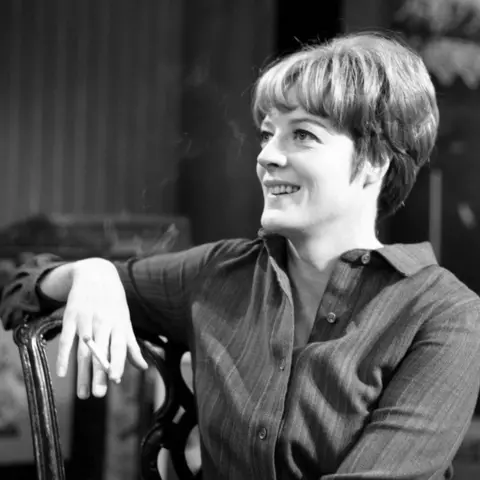
She stood out among the cast of unknowns and, on her return to London, was offered a six-month stint in the revue Share My Lettuce opposite Kenneth Williams.
Her first film role was an uncredited part in the 1956 production Child in the House.
Two years later she was nominated for a Bafta as best newcomer in the 1958 melodrama Nowhere to Go, in which she played a girl who shelters an escaped convict.
The Times, describing her role in the hit London production of Mary Mary in 1963, said that she was “the salvation of this fluffy Broadway comedy”.
First Oscar
She nearly stole the show from Richard Burton in the film The VIPs when she appeared in a pivotal scene with the Welsh star.
One critic noted that “when Maggie Smith is on the screen, the picture moves,” and Burton afterwards teasingly described her upstaging of him as “grand larceny”.
Later in 1963, Laurence Olivier offered her the part of Desdemona opposite his Othello, at the National Theatre. The production, with the original cast, was made into a film two years later, with Smith being nominated for an Academy Award.
The role which brought her international fame came in 1969 when she played the determinedly non-conformist teacher in The Prime of Miss Jean Brodie.
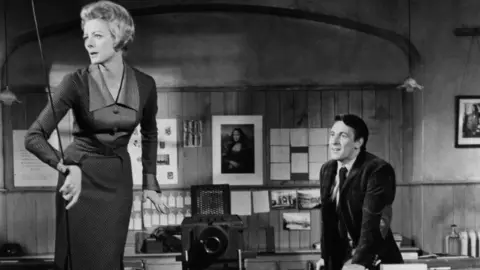
The part won her a best actress Oscar.
She also married her co-star Robert Stephens.
The actress continued with the National Theatre for another two years including a performance as Mrs Sullen in the Restoration comedy The Beaux’ Stratagem in Los Angeles.
She received another Oscar nomination for best actress after playing Aunt Augusta in the George Cukor film, Travels With My Aunt, in 1972.
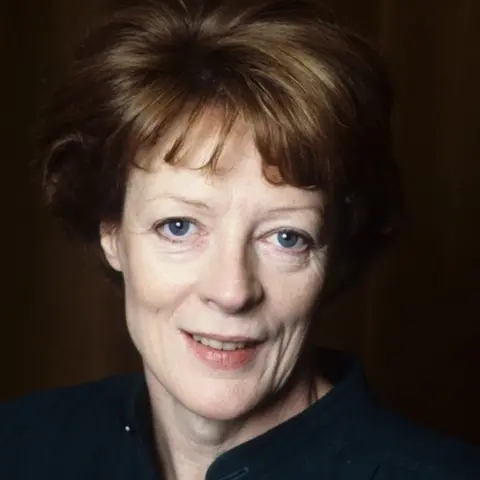
She and Stephens divorced in 1975, and a year later she was married to the playwright, Beverley Cross, and also moved to Canada and spent four years in a repertory company where she took on weightier roles in Macbeth and Richard III.
One critic, writing of her performance as Lady Macbeth, decided she had “merged her own vivid personality with that of her charismatic subject”.
Despite her success she was modest about her achievements, stating simply that “One went to school, one wanted to act, one started to act, and one’s still acting.”
She continued to work in the cinema playing opposite Peter Ustinov in the 1978 film, Death on the Nile and, in the same year, the part of Diana Barrie in Neil Simon’s California Suite.
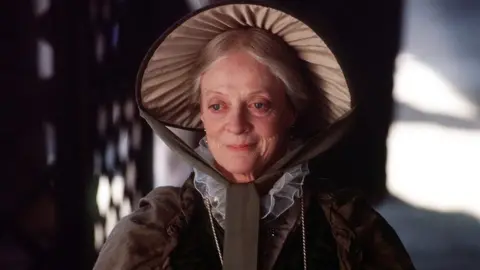
The 80s saw a number of memorable cinema performances, and more awards including Baftas for A Private Function and A Room With A View, the latter also garnering her a Golden Globe and an Oscar nomination.
There were more Baftas, first for her interpretation of the ageing alcoholic in The Lonely Passion of Judith Hearne and then in Bed Among The Lentils, one of Alan Bennett’s Talking Heads series for the BBC.
It was back to the stage in 1987 in Lettice and Lovage at the Globe Theatre in London before the production transferred to New York. But her run was interrupted after she suffered a bicycle accident and then learned she would need eye surgery.
When she finally resumed work on Lettice and Lovage, after a 12 month break, her New York performance won her a Tony.
In 1990 she was created DBE and, a year later, appeared as the ageing Wendy in Hook, Stephen Spielberg’s sequel to Peter Pan.
Other films followed including Sister Act, alongside Whoopi Goldberg, and The Secret Garden for which she was nominated for a Bafta.
The new century brought a Bafta and an Emmy nomination for role as Betsey Trotwood in the BBC production of David Copperfield.
A year later, she appeared as Professor McGonagall in Harry Potter and the Philosopher’s Stone, a role she would reprise in all of the subsequent Potter movies.
She was, reportedly, the only performer the author JK Rowling specifically asked for, bringing a small touch of Miss Jean Brodie to Hogwarts.
In 2004 she appeared with her long time friend and fellow Dame Judi Dench, in the gentle drama Ladies in Lavender.
The New York Times decided that Smith and Dench “sink into their roles as comfortably as house cats burrowing into a down quilt on a windswept, rainy night”.
Downtown put-downs
Two years later she was the cash-strapped Countess of Trentham in Gosford Park, Robert Altman’s take on the English country house murder.
Her performance was a delight, with a veneer of snobbery from which would emerge the masterly put down, particularly in the case of Mr Novello’s failed movie.
It was a role that she arguably reprised in all but name when she was cast in ITV drama, Downton Abbey. The name of her character may have changed to the Dowager Countess of Grantham but the performance was similar in essence.
“It’s true I don’t tolerate fools, but then they don’t tolerate me, so I am spiky,” she once said. “Maybe that’s why I’m quite good at playing spiky elderly ladies.”
She remained with the Downton Abbey cast until 2015 when the series finally came to an end, reprising the role for two films in 2019 and 2022.
In 2007, while filming Harry Potter and The Half-Blood Prince she was diagnosed with breast cancer. She was given the all-clear after two years of treatment.
Despite being left feeling weak after her illness, she went on to star in the final Harry Potter film and received a Bafta nomination for her role in the 2012 film, The Best Exotic Marigold Hotel.
In 2015 she gave a moving performance in the film, The Lady in the Van, based on the true tale of Mary Shepherd, an elderly woman who lived in a dilapidated van on the writer Alan Bennett’s driveway in London for 15 years.
She had previously appeared in the stage version of the story, for which she won an Olivier for Best Actress, and a 2009 BBC Radio 4 adaptation of Bennett’s play.
Dame Maggie gave few interviews but she was once asked to define the appeal of acting. “I like the ephemeral thing about theatre, every performance is like a ghost – it’s there and then it’s gone.”
The Ultimate TV Event: How Happy Valley Defies Ageism and Sexism in the Television Industry By ljademinor on 27/09/2024 by Lucy Brown
This blog first appeared on Reflections: A Television Digest on 10 May 2024.
Sarah Lancashire as Sergeant Catherine Cawood. Image: BBC
“Chilling,” “a dark delight,” “magnificent,” “triumphant,” and “explosive” are all words that have been used to describe the British police crime thriller Happy Valley.1 First screened in 2014, it reached an audience of over 8 million and became a hit with critics and the audience alike. The second series followed in 2016, growing its audience to over nine million, marking a record-high audience share with a third of viewers tuning in.2
After a seven-year hiatus, the series returned with a bang on New Year’s Day 2023 and has been watched by over eleven million people. To grow an audience against a backdrop of broadcast channel ratings declining is a remarkable feat, but perhaps not surprising given it has been hailed by critics as one of the greatest television dramas of the twenty-first century,3 Yorkshire’s version of The Wire4 and “the ultimate event TV.”5
Happy Valley follows the story of police Sergeant Catherine Cawood as she navigates through personal and professional challenges and struggles to protect her community and grandson Ryan from her nemesis, Tommy Lee Royce, Ryan’s father and a violent rapist, murderer and psychopath, who is responsible for her daughter’s suicide. The series expertly weaves together intricate plotlines, compelling characters, and outstanding performances, earning five BAFTA awards and sustaining viewer investment and engagement over the course of eighteen episodes spanning nine years. Two middle-aged women are of prime importance to its success; on-screen, Sarah Lancashire plays the lead, Sergeant Cawood and behind-the-camera, creator, writer, director, and executive producer Sally Wainwright. It should be irrelevant that these two brilliant women are in their fifties, yet TV drama is the domain of men. Television’s lack of diversity is well known.6
For this reflection, I will focus on the persistent pattern of gendered ageism that permeates the industry. Women over 40 are invisible from our television screens or relegated to minor roles and portrayed as unattractive and weak. The percentage of leading female characters drops from 42% in their 30s to only 15% in their 40s. This underrepresentation of older women perpetuates harmful stereotypes that women of a certain age are obsolete when they are deemed too old to serve as a love interest or mother.7

Sally Wainwright, Writer, Director and Executive Producer of Happy Valley. BBC/Lookout Point/AMC in Happy Valley: Bringing Back a Global Hit
Behind the scenes, the industry can similarly be an unwelcoming environment, with an exodus of female workers aged over 35, pushed out by the culture of long working hours, stressful conditions, casual hiring practices and lack of family-friendly policies.8 Industry roles are also highly gendered, and while women represent just under half of all UK television workers, they are more likely to be in administrative roles such as production secretaries, heads of production and commissioning editors and less likely to be found in key creative roles such as writing, directing and producing.9 Wainwright is acutely aware of the lack of opportunities for women writers and directors on primetime British television and has been vocal about the challenges she faced as a female writer trying to break into a male-dominated field. In an interview with The Big Issue in 2020, Wainwright referred to her early experiences of being one of a handful of women in the writer’s room as “a misogynistic bloodbath.”
According to 2022 research by the Writers Guild of Great Britain, just 28% of UK television episodes are written by women, dropping to 14% of primetime programming.10 Previously, a 2018 Directors UK report found women directed only 25% of British television episodes and 17% of drama and comedy programmes.11 Despite various initiatives, little progress has been made, with the latest data from the Creative Diversity Network showing that women still account for only 26% of directors and 33.4% of writers.12 More needs to be done, and Wainwright has noted it is not sufficient to reel off the same initiatives; more women need to be trusted to tell their stories and provided with an equal opportunity to succeed in the industry: We are living in what is regarded as a golden age of television, but the overwhelming mass of content is male-orientated. It is still rare to find good series about women. We know what they are – Unbelievable on Netflix, things like The Marvellous Mrs Maisel and hopefully Happy Valley and Gentleman Jack. But you can’t just turn on the TV and know you will find something that isn’t about men and guns and power.13
1. Happy Valley, three seasons, created by Sally Wainwright, Red Production Company (series 1-2) Lookout Point (series 3), for BBC1, 2014 – 2023. ↩︎
2. Peter White, “Happy Valley Arrests Biggest Ever Performance,” Broadcast, 10 February 2016, https://www.broadcastnow.co.uk/happy-valley-arrests-biggest-ever-performance/5100087.article
3.BBC Culture, “The 100 Greatest TV Series of the 21st Century,” BBC Culture, February 24, 2022, https://www.bbc.com/culture/article/20211015-the-100-greatest-tv-series-of-the-21st-century
4.The Wire, five seasons, created by David Simon, Blown Deadline Productions for HBO, 2002-2008.
5.Charlotte Moore, BBC’s Chief Content Officer quoted “Over 11 Million Viewers Gripped by the Final Series of the BBC’s Happy Valley,” Media Centre, n.d., https://www.bbc.co.uk/mediacentre/2023/happy-valley-series-3-ratings
6.Lucy Brown, Rosamund Davies, and Funke Oyebanjo, “Recognising and Addressing Unconscious Bias and Structural Inequalities,” Alphaville, no. 24 (December 20, 2022): 97–117, https://doi.org/10.33178/alpha.24.06 and Sam Friedman and Daniel Laurison, The Class Ceiling: Why It Pays to Be Privileged (Policy Press, 2020)
7.Martha M. Lauzen, “Boxed In: Women On Screen and Behind the Scenes on Broadcast and Streaming Television in 2021-22,” San Diego State University Center for the Study of Women in Film and Television, 2022, https://womenintvfilm.sdsu.edu/research/ and Geena Davis Institute on Gender in Media, “Women Over 50: The Right to Be Seen on Screen,” November 13, 2021, https://seejane.org/research-informs-empowers/women-over-50-report
8.Tamsyn Dent and Mounira Almenoar (2019). “We Need to Talk About Caring,” Raising Films. June 2019. https://www.raisingfilms.com/wp-content/uploads/2019/06/RaisingFilms_CarersReport_June2019.pdf and Jack Newsinger and Helen Kennedy, “‘Better Workplaces Are Good for Everyone,’” Alphaville, no. 24 (December 20, 2022): 132–45, https://doi.org/10.33178/alpha.24.08
9.Alison Peirse, “The Hidden Work of Women: Commissioning and Development in British Television Drama,” Feminist Media Studies, January 31, 2022, 1–15, https://doi.org/10.1080/14680777.2022.2027804
10.Writers’ Guild of Great Britain, “Equality Writes – Writers’ Guild of Great Britain,” June 27, 2022, https://writersguild.org.uk/equalitywrites/
11.“Directors UK – Campaigns – Gender Equality in UK TV Production,” August 2018, https://directors.uk.com/campaigns/gender-equality-in-uk-tv
12.“The Fifth Cut: Diamond at 5,” Creative Diversity Network, 2022, https://creativediversitynetwork.com/diamond/diamond-reports/
13.Adrian Lobb, “Sally Wainwright: “My Younger Self Willed Being a Top Writer into Happening”,” The Big Issue, February 21, 2020, https://www.bigissue.com/culture/tv/sally-wainwright-my-younger-self-willed-being-a-top-writer-into-happening
14.Adrian Lobb, “Sally Wainwright: “My Younger Self Willed Being a Top Writer into Happening”,” The Big Issue, February 21, 2020, https://www.bigissue.com/culture/tv/sally-wainwright-my-younger-self-willed-being-a-top-writer-into-happening
Lucy Brown is an award-winning practitioner and educator. She has worked for the BBC, ITV, Channel 4, Nickelodeon, and Disney, with multiple BAFTA and RTS credits to her name. Brown is a Senior Fellow of the Higher Education Academy and an Executive Board member of the National Association for Higher Education in the Moving Image. She is the Founder of Women in
The Reader’s Quest. How literature helps us find meaning and understand the world.
Henry Oliver from The Common Reader <commonreader@substack.com>23 Sept 2024, 21:51
A few weeks ago I was awarded a second Emergent Ventures grant to write a book about reading great literature. I don’t know when or how this book will be published, but I do know that I want to share my early thoughts about it here first. This is something like what I expect the introduction to say. Some of you will have seen my note a few weeks ago, this goes into the idea much more deeply. I look forward to your thoughts…
The decline of serious reading.
Don’t die without reading Anna Karenina. It’s not worth it.You can take Anna Karenina and swap it for any number of titles or authors. Jane Eyre. Hamlet. The Divine Comedy. Proust. Austen. Milton. Wordsworth. Flaubert. Chaucer. Douglass. Woolf. Pessoa. Ovid. Whitman. Dickinson. But the point is the same.These, and many others, are the best works of literature in Western culture. The best works of the imagination. They are some of the peak experiences available to you, akin to visiting global heritage sites, eating exceptional food, or listening to intensely great music. There are many peak experiences available to us in the world and the best literary works of the imagination are among them.
From the Arthurian Romances to The Lord of the Rings, from the Odyssey to The Crying of Lot 49, from Dante to Dickens, these books are a repository of wisdom, an enticement to the imagination, and a stimulus for new perspectives.
We read literature for many reasons: to see ourselves; to see people and parts of life we had never imagined; to be subtly persuaded to new ideas; to become mind readers of people from other times and places; to escape our life, and thus to see it more clearly, as in a distant mirror.We read for pleasure, comfort, knowledge, distraction, wisdom, learning, fun; we read for pretentious reasons, snobbish reasons, because we are bored, because we are compelled by a plot, because we have become addicted to books, because we have discovered that nothing else stimulates the imagination in quite the way that great literature can.
Only increasingly, we don’t read great literature.
No-one here reads old booksWhen I spoke to a range of people in Silicon Valley recently, everyone gave the same answer. A few people here read old books. One or two of them even read Shakespeare and Tolstoy. But it’s rare. Instead, the intellectual landscape of Silicon Valley is political, with some philosophy. The majority of tech people have a modern, STEM-based view of the world; they are much less influenced, if at all, by any notion of the literary canon.When lists of the “vague tech canon” were proposed recently there were many excellent books involved, but no Shakespeare, no Dante. In one of the richest, best-educated, most productive areas of the world, among some of the most intellectually curious and energetic people alive today, they’re reading Sapiens or Seeing Like a State, but not great literature.
And it’s not just tech people. The world is full of well-educated professionals who don’t read imaginative literature. Entries in Who’s Who in the UK have seen a decline in people listing highbrow interests like literature and a rise in “ordinary” interests like seeing friends or watching television. Likewise, professionals reporting highbrow tastes have dropped, and only half of British adults say they read books for pleasure. (It’s similar in the USA and Europe, where numbers range but always show significant proportions of adults not reading books at all.)
So many of the people I know who work in consulting, finance, and law tell me they haven’t read any classic literature since they were at school. In the book club I run on Substack, I hear from people who are reading Shakespeare in their sixties (and loving it) who also haven’t touched it since they were at school. Indeed, I know teachers who don’t read the great works. So common is it for middle-aged people to read Harry Potter that I know well-paid lawyers who read that and little else.We are no longer appreciating the classics like we used to. A hunger to be more serious.
But I got another answer to my questions. A few of the most significant people in Silicon Valley do read the classics. And plenty of others know they should. More of them are starting to do so. I haven’t read Tolstoy but know that I need to, or words to that effect, sum up a rising mood. When I spoke to Tyler Cowen last year he told me the same thing.
Maybe what we think of as a crisis of culture, a decline of civilization, the end of reading, is actually an opportunity to bring a new generation of people to appreciate great literature. Maybe we reached the bottom and people are ready to come back to great books.
When I published a Substack piece about this, my emails and WhatsApp were all saying the same thing. People want this. It reminded me of a line from a Philip Larkin poem: “someone will forever be surprising/ A hunger in himself to be more serious.”
Too often, the people who want to take are seriously are met with a literary culture more interested in status than books. And potential readers of literature are occupying their imaginations with other things.
We live under a philistine supremacy.
Today, too much effort is spent on literary discussions that are not about reading literature. As the critic Christian Lorentzen said recently, the literati is increasingly more interested in “the economy of prestige” than in literature.A professor of English Literature has argued that Taylor Swift is the equal—the equal!—of Mary Shelley, who wrote Frankenstein. Periodicals like The Atlantic publish articles making long and involved comparisons of the HBO series Succession with Shakespeare’s King Lear whilst making no aesthetic consideration. Major literary critics spend their time on Twitter mocking J.K Rowling, pretending that she misunderstood Lolita and therefore failed some sort of “moral test” (you surely do not need telling that reading a novel is not a moral test). The Times publishes articles about whether or not you should date someone who reads the Beat writers (a group of American authors from the post-war period, like Allen Ginsberg). The point is that you can spend your time worrying about whether people who read On the Road are datable or you can read On the Road. You can spend your time reading about whether Shakespeare was a woman in the Atlantic (no, he was not) or you can read Shakespeare.
You get one life. Use it to read the best books! If The Reader’s Quest does its job, you’ll keep putting it down to go rushing to the originals.
Invaded by gloryThe psychologist Paul Bloom has pointed out that the imagination preoccupies our time. More than any other occupation of leisure, we imagine. We watch and read, we dream and doodle, we listen and wonder. We spend far more hours every day engaged with fiction that we do with sex or food or sports or music or anything else. But we mostly use that time watching, not reading. Among educated professionals today, Netflix and HBO have taken over from the novel as the main form of cultural capital. Time use surveys show people spend hours watching television and minutes reading books. And then there’s your phone…Television isn’t evil. Nor is social media. It isn’t rotting your brain or giving you square eyes. I watch television. Great novelists watch television. (I scroll too…) But the balance can be restored. Watching often means missing out on reading. We are, in T.S. Eliot’s words, “distracted from distraction by distraction.” In the same way that we would all know that it is a good thing to travel—to see the great mountains of the Alps or the great temples of Japan—we know that it is a good thing to read the great works of the Western Canon. In the same way that you can experience a sense of wonder from swimming in a beautiful lake, hearing live music, or visiting a strange new landscape, so you can, in the words of Professor Helen Gardner, be invaded by a sudden sense of glory when you read great books.
Why we should read classic literature.
What potential readers want to know is: what do I get out of reading Austen and Dickinson that I don’t get from reading something else? The sudden sense of glory is surely available in many places…One answer is that I can’t tell you. You have to find out for yourself. These books were written by some of the smartest, most insightful people ever to live. What they offer is irreducible. That’s why they are the best. There is no adequate summary of Danteor Ovid. Authors like this take you way beyond anything you have already experienced. It’s like travelling. You have to do it to know why you wanted to do it. You won’t know how surprising it is until you get there. This book is therefore a call to you—yes, you—that reading literature is important, exciting, mind-expanding, and that you should do more of it. But not for the reasons people often give you. Reading the classics will not save democracy. It probably won’t morally improve you, provide you with critical thinking skills, increase your empathy, or preserve a tradition of values. (Though it might be part of any of those things…) No. We should read these great works because they offer us pleasures and perspectives that are unavailable anywhere else. Because they can fundamentally change how we think and feel about ourselves and the world around us. Because they are pinnacles of human accomplishment.
You don’t really need anyone to tell you that it’s worthwhile to read Shakespeare and Milton and Austen. This is a matter of common sense. Darwin read Milton on the Beagle. Nelson Mandela read Shakespeare in prison. Nikola Tesla could recite long passages of Goethe’s Faust. Horatio Nelson quoted Henry V in his letters. When George III went mad, performances of King Lear were banned. In the trenches of the First World War Harold Macmillan read the Iliad. And the list goes on. This is powerful stuff.
You don’t need anyone to tell you that Chaucer, Shakespeare, Milton, Wordsworth, Eliot (T.S.) are the core poets of English, or that Austen, Dickens, Eliot (George), James, Woolf, and Tolkien are the core novelists. You don’t need anyone to tell you that reading Jane Eyre is life changing or that reciting Emily Dickinson is profound.
You don’t need to be persuaded that great literature is great. Any more than you need persuading that simply to see the Alps or to visit the Sistine Chapel is a singular moment in any life. No more do you need to be argued into the idea that travelling to see the world is beneficial or that sampling different cuisines is life-enhancing. Do we ask the point of knowing what Einstein thought? Do we make a great puzzle of why Mozart is played in so many adverts or why Vermeer stops everyone in their tracks? Do we need to be reasoned into reading our way through hundreds of pages about behavioural economics or the history of early humans? Do we wonder whether seeing a work of Michelangelo is worth it? Would you doubt the value of visiting Japanese temples? The world is full of great human accomplishment — and some of the best of it is available cheaply and easily in books. In the midst of complacency we are surrounded by neglected wisdom.As Ezra Pound said, “A man who has climbed the Matterhorn may prefer Derbyshire to Switzerland, but he won’t think the Peak is the highest mountain in Europe.”Think of this as your call to adventure. The quest is worth doing, but the hero never knows why until they go on the journey…
Literature and the Quest for Meaning.
So why did Darwin read Milton and Tesla read Goethe? Many will say it’s all a question of taste. That you don’t have to read these authors. I say these works are part of how we make sense of the world.
Our lives are a quest for meaning. We are always travelling to find out who we are, undertaking career journeys, and going in search of our lost and future selves. We go on expeditions and gap years; we get outside of our comfort zones; we venture into new areas of personal growth; we overcome our demons; we battle the gatekeepers; we look inside for our true strength; we wander from employer to employer to learn about ourselves, develop our virtues, overcome our faults, and find the rewards of meaning, recognition, and gold. Again and again, we find the idea of the quest expressed in modern times—the idea of searching for meaning, success, happiness, experience, security, enlightenment, a sense of ourselves, of who we might become. The quest was perhaps the central image of the twentieth century, for better and for worse. The Wright Brothers and Henry Ford. Neil Armstrong on perhaps the most significant quest any human has ever undertaken. Mass migrations. Mass exodus. Travelling for work in the Great Depression. Commuter angst in the 1950s. Those images remain central to our world today. The intergalactic quest remains an obsession of the peregrine human imagination. The flow of mass migrations remains tragic and hopeful; so many lives are remade every year. In the twentieth century we had travelling salesmen and itinerant preachers who pitched themselves in fields and squares; now we have global corporate careers for the professional class and self-help gurus who traverse the world giving hotel-conference-suite seminars. Even modern technology is deeply associated with a personal quest: that of Steve Jobs travelling to India to study meditation.We are odyssean, restless. And what area of study has paid more attention to the quest than literature? From Homer’s Odyssey to Joyce’s Ulysses, from the Aeneid to Thomas Pynchon’s The Crying of Lot 49, from Dante to Mrs Dalloway, from mediaeval romances to Helen deWitt—so much of the greatest literature is about quests. (Indeed, if we expand our horizons a little, we can draw the same comparison from Chaucer to the Cohen Brothers, from gallant knights to Jedi knights, from the Arthurian quest for the Holy Grail to the quests of Indiana Jones.)“
Of all fictions,” said the critic Northrop Frye, “the marvellous journey is the one formula that is never exhausted.”
It is no coincidence that the most popular work of literature written since the Second World War, the one that continues to sell in large numbers, to dominate the imaginations of children and adults, to be one of the most successful film adaptations of all time, is The Lord of the Rings, one of the greatest, grandest quest stories since ancient or mediaeval times. And many of the stories from the last two centuries that have lodged themselves most firmly in the public imagination—Bartleby the Scrivener, Waiting for Godot, The Secret Life of Walter Mitty—are anti-quests, in which the hero refuses the call to adventure. It is a very resonant part of modern life that we tell stories of those incapable of the quest, or unwilling.
Every journey begins with a single step, we say, and we remain obsessed with stories of journeys where that step is never taken.
The reason why the quest is so central to our lives is simple: questing is how we find meaning. In an admiring essay about The Lord of the Rings, the poet W.H. Auden wrote, “to go in quest means to look for something of which one has, as yet, no experience… man is a history making creature for whom the future is always open… human “nature” is a nature continually in quest of itself.” Human nature is a nature continually in quest of itself. Your life is an imaginative quest. Don’t neglect the great works of the imagination as you search for meaning.
The limits of your imagination are the limits of your world. Nothing expands the limits of your imagination better than great literature. Great literature surprises and delights, and through these surprises it has the power of producing a new perspective, a new understanding of reality. As the philosopher Richard Rorty said (following the poet Percy Shelley), imagination sets the bounds of thought: imagination breaks the path that reason follows.
The Common Reader and literary appreciation.
There used to be such a thing as a common reader. There still is, in fact. We just don’t talk about it very much. It’s an old idea, but newly relevant. Common readers are autodidacts: they read great literature, and books of all descriptions, under their own guidance, to their own schedule, and for their own reasons. They want to see Shakespeare—and Austen, Dante, Milton, Woolf, Tolkien—for themselves, the way people travel to see the great places of the world. It’s that simple. At least, the idea, the aim is that simple. Doing it, being it—finding your way through the Western Canon isn’t as simple; Hamlet or War & Peace defy simplicity. Reading is like anything else. You can learn to do it better. You can improve your reading by improving what you read.Many people believe, or like to say, that analysing a book, like they did at school, kills the pleasure of reading. This is either an error or an excuse. Knowing more about football—the teams, transfers, tables, and tactics; the statistics and odds and how each possible outcome will affect the overall rankings—does not diminish the pleasure of watching a game. Quite the opposite. Learning how to play the guitar (and thus knowing more about what you are listening to) doesn’t kill the buzz of listening to music, nor does analysing the real meaning of lyrics in internet discussion groups. Learning to speak a language doesn’t make it less interesting to travel abroad. Knowledge is a form of appreciation. The more you understand about a book, the more you can appreciate it. (That’s why The Reader’s Quest will also encourage a catholic approach to reading. Read widely! Read the best! Read realism and read dragons! Read Agatha Christie and Jane Austen!)This is an idiosyncratic primer, for appreciating literature. It is written for people who want to see great books for themselves. It is for those who are, or aspire, to be common readers, which is one of the great cultural traditions of our civilization. Like literary critics, the reader is self-authorised.¹ They read for their own purposes, under their own impetus. What I offer is the companionship of one self-authorised common reader to another.
The Reader’s Quest will be an introduction to English Literature, one of the great accomplishments of civilization. It will give you a core reading list (many of the names already mentioned, plus a few more) and a series of ideas for understanding those authors. It will show you what to read and how.
There is an idea now that literature departments in universities have all gone woke or have been corrupted by literary theory. There’s some truth to that, but it’s far from the whole truth. A great amount of very interesting work has been done.
Did you know that Charles Darwin was hugely influenced by Charles Dickens, and that we can see that influence on every page of The Origin of Species? Or that Jane Austen’s novels are embedded with the moral philosophy of Adam Smith? Or that the theory of human imitation that predominates in Silicon Valley was first developed by analysing Proust and other authors? (There is a whole theory of Shakespeare based on that idea…)
So, even if you don’t want to read Emma and watch Twelfth Night, you might be surprised at what you can learn from literature. Many wonders await us if we choose literature. In less than three decades, many of the ideas in behavioural economics have failed to replicate. The great revolution became more of a niche revision. All the while, the work of novelists like Jane Austen, George Eliot, Henry James, and Marcel Proust—whose works are full of psychological insights about the way our emotions dominate our intellects, the power of habit in our lives, and the unseen actions of “cognitive bias” in our decisions—sails proudly into a second, or third, century of unassailed accomplishment.
We read for pleasure first and then to see the world, and then for all the strange new ways books make us see reality.
View quakes of human sympathy
If you had to name a book or author that represented a decade, you might pick The Great Gatsby for the 1920s, Agatha Christie for the 1930s, The Invisible Man for the 1950s, and so on. In previous ages, it would have been Melville and Stowe in the 1850s, Dickens and the 1840s, Austen and the Regency, Wordsworth and the 1790s, Goethe and the 1770s, Johnson and the 1750s, and so on.
Today we would pick authors like Malcolm Gladwell and Daniel Kahneman. A boom of psychology research became a pile of bestsellers that explain what makes us tick and how society really works. Behavioural economists Amos Tversky and Daniel Kahneman attained a high cultural status. Books like Guns, Germs, and Steel became the symbols of the culture.
Whereas once every common reader knew Elegy in a Country Churchyard and King Lear, now they have all read The Tipping Point and Thinking Fast and Slow. Where once we all knew Dickens’ characters (they were printed on cigarette cards fifty years after his death) now we know about loss aversion and availability bias.
Literature is the other half of life. We are obsessed with rational thinking, analysis, data, and statistics. We forgot what John Stuart Mill said, along with many others, that it is poetry and logic together that make the true philosophy. This theme can be found again and again in literature. It’s there in Chaucer and Shakespeare and Swift. It’s an essential part of the endless struggle to understand the world and ourselves. Literature does this through view quakes.
A view quake, defined by the economist Robin Hanson, is an insight that dramatically changes your worldview. You might get a view quake reading about behavioural example, when you realise just how much of ourselves we inherit and is beyond our control. For many people, Kahneman was a view quake. Learning about evolution and market economics, or the history of slavery and the slave trade can be view quakes, fundamentally changing the way you see the world.
Some of our strongest view quakes come from fiction, from story, rather than from data.
When we want to make persuasive arguments, we don’t rely on charts and statistics alone: we tell stories. A new study in the The Quarterly Journal of Economics reinforces the basic message of Kahneman and Tversky, showing that people remember stories more than they remember statistics: “the average impact of statistics on beliefs fades by 73% over the course of a day, but the impact of a story fades by only 32%.” Intellectually, our society is big on statistics, and short on stories. We live by anecdotes and journalism, not the large pictures of life only a great artist can give, as George Eliot described literature when she made this exact same point in 1856. As she said, literature changes our minds by amplifying our experience.
The journalist James Marriott told me that before he read Elena Ferrante’s Neapolitan Quartet, he had been told what it was like to be a teenage girl—i.e. constantly in receipt of invasive and unwanted sexual attention—but it was only after reading the novels that he had any sense of what that really meant. The way he would describe his knowledge might not change after he read the books, but his understanding of what it meant was completely different. … plenty of things that I’ve been told about what it was like to be an adolescent girl, the unexpected and intrusive sexual attention of men, the awkwardness, the uncomfortableness, the sexism, I’ve been told all this and I knew it, but there’s something qualitatively different about the experience that a novel gives you of making you feel it… I sort of felt like I understood those things emotionally by reading that book. Although everything I’m telling you about what I know about being an adolescent girl before reading that book and after reading that book would sound exactly the same when I summarize it, I think novels can give you this emotional understanding of life.
Even though he knew the same things before and after reading those novels, he did not know them in the same way. The Neapolitan Quartet was a view quake of the way he felt about the world, his capacity to imagine the world from other perspectives. Literature gives us those moments, described by Philip Larkin in The Whitsun Weddings, when we “see it all again in different terms.”
Many view quakes, of course, can be hugely negative. The conversion of many people to Marxism in the twentieth century was the root of much death, suffering, and evil. The prevalence of perverse ideology in our times hardly needs explicating. We live among restrictive, repressive, and angry ideas. What the art historian Kenneth Clark said at the end of his television series Civilisation in 1969 feels more and more pertinent in our overly ideological, polarised culture: “Human sympathy is more valuable than ideology.” The sort of view quakes you get from literature are not a question of whether one should or should not be a liberal or a Marxist. Instead, they are rooted in human sympathy as well as in ideas. Reading gets us out of our own minds, our own perspectives. As the former professor of Literature, John Carey, said, “Reading releases you from the limits of yourself. Reading is freedom.”
This is why literature has often played such a major role in social change. During the abolition debates in the USA for example, it was Uncle Tom’s Cabin and the memoirs of former slaves like Frederick Douglass that captured the imagination most strongly. It was by having people imaginatively feel what slavery was like that abolition made its case.
Literature, as Professor Hollis Robbins told me, makes us into mind readers.
Poetry and logic together
Logic and emotion, knowledge and intuition, rationality and wisdom are at work upon us in the world. We are every day amidst the clash of reason and unreason.

Psychologists have shown that we tell ourselves we have rational reasons for what our brains have already decided by instinct. We have named our cognitive biases but they often remain beyond our control. We know we are irrational at stem and core, but we still seek more and more rational means of knowing ourselves.
In literature we experience the sweeping perspectives of logic and emotion, knowledge and intuition, reason and unreason, rationality and wisdom. Literature is where these forces are united, integrated, juxtaposed, and synthesised.
It is in literature that we find both the wise man and the fool not always as distinct and opposing forces—, they are now ironic mirrors of each other, now a grotesque blend, now a unified state of sanity, now a diptych urging sincerity, now a heedless warning said twice in different words. Imaginative literature is where the forces of reason and unreason are united, integrated, juxtaposed, synthesised. Literature incorporates all of this in the perpetual quest for wisdom, the search for meaning, the desire not to have beliefs, opinions, and ideologies about the world but just the wish to see it, to hold it all together, however briefly. Literature lets us imagine ourselves as both the wise man and the fool—something no other art can give us.
You cannot fit a human life into a theory. We are living, discordant, bundled creatures, full of wonder, boredom, and other conflicting feelings and serious desires. We can only be got at piecingly, deedily, narrowly. We are doctrinally incoherent. So many of the components of our minds can be categorised, classed, scaled, and named; so much of ourselves can be mapped, networked, charted, and displayed; but no map ever made a sailor’s feet wet and no theology ever incarnated a god. We will never understand ourselves as a thinking, feeling species, as humanity, without the broad encompassment of art, and especially the literary art of finding words for that is vague and beguiling and mysterious in our lives.
We know the world through our imagination: the rest is just uncoordinated data.
The struggle of thought.
This is a book about the lifelong quest to read great books and to learn from them, to experience the best that has been thought and said. Reading literature can provide you with a perspective on the world that you cannot get any other way. Literature is a part of the quest to see, experience, and understand life that cannot be replicated, summarised, or replaced. The Reader’s Quest will introduce you to ideas about how influence works in poetry, why literature is Darwinian, not Newtonian, why interpretation isn’t always very useful when reading literature. It will show you how moral revelation can come from the marvellous journeys of Arthurian knights and from the ordinary quests of Austen’s heroines—and how both can be profound. It will show you the marriage of poetry and logic in Chaucer’s polyphonic wisdom, Shakespeare’s imitations, Jonathan Swift’s reasonable madness, and John Stuart Mill’s poetry criticism. We’ll see how epic poetry after Milton and Wordsworth transfigured into new genres of history and science writing—including Darwin’s Miltonically grand new vision of the universe. And we’ll see how the real revolution in twentieth century literature wasn’t just modernism, but Tolkien’s reimagining of mediaeval quests. To paraphrase George Eliot, literature is not a teacher but a companion in the struggle of thought. This book is a companion in that struggle, a companion to the reader’s quest for meaning.
1. I heard this phrase used by Merve Emre, who was paraphrasing John Guillroy. It occurs in Professing Criticism.
The Agatha Christie Newsletter<generalenquiries@agathachristie.com
I enjoy receiving The Agatha Christie Newsletter <generalenquiries@agathachristie.com. This week it advertises the play based on one of her most intriguing novels, And Then There Were None which will be staged in Melbourne and Sydney.
The World of Agatha Christie: 1940s and 50s
The latest edition of our decades magazine has arrived, taking you right into the heart of the World War Two era. This issue explores the intricacies of life both during and in the aftermath of the war, through novel extracts, interactive puzzles, and a killer recipe. Download now.
Missed one of our previous magazines? You can find the whole series on our website.
Explore here
Watch the mystery unfold on stage
The timeless masterpiece And Then There Were None is coming to Australia. This classic story will take to the stage first in Melbourne in February 2025 before heading to Sydney in May. Brace yourselves for a captivating night of drama and intrigue.
Book your tickets
Read Christie: Ordeal by Innocence
For our final book of the 1950s we have selected Ordeal by Innocence. This is a fascinating story of adoptive families, memory, and perception. When new evidence proves the innocence of the deceased suspect Jacko Argyle, the case is reopened, much to the dismay of the true murderer… Find out more
Gifts for budding detectives
Half Moon Bay have released a beautiful new collection of Agatha Christie products, perfect for treating yourself or surprising a loved one. Every piece features an original illustration of a steamer sailing down the River Nile with a memorable quote from the beloved story on the reverse.
Discover the collection
Marple: An Expert on Wickedness
Dr Mark Aldridge’s latest book takes a deep dive into our favourite female sleuth, Miss Marple. It features interviews with cast and crew from various productions, and in-depth research into each of the stories. This is a comprehensive exploration of St Mary Mead’s most cherished resident.
Learn more
Did you know?
The 1950s were a busy time for stage and screen. In 1957 Billy Wilder released his iconic film adaptation of Witness for the Prosecution.
Learn about the famous writer
The annual Agatha Christie Festival in Devon is officially underway, boasting a week of thrilling and insightful events.
Find out more.
Additionally, the dedicated team have launched a fascinating podcast about Christie’s life covering topics such as her childhood, early love, and experiences during the war.
Listen here
All rise for the new cast
The team at Witness for the Prosecution announced that they were extending their run of the show until September 2025. A fresh cast of talented actors will also be bringing this captivating story to life from 24th September this year. See you in court!
Book tickets today
Solve the Christie crossword
Summer may be drawing to a close but our appreciation of Christie’s adventurous, sunny stories remain. By correctly completing this challenging crossword inspired by these books, you will uncover a hidden word tied to the summer holidays. Can you work it out?
Play now
A spook-tacular new digital jigsaw
In honour of the beautiful new hardback of The Last Séance publishing in the UK this September, we have created this haunting digital jigsaw for you to complete. The atmosphere of the cover’s illustration is as eerie as the mysteries within the book.
Play now
A story published in the 1950s
A complex web of family affairs is unearthed when Poirot begins his investigation into murder…
Read more
Leading scientists go missing and only one woman holds the key to the mystery.
A murder spotted through the train window – it sounds like a case for Miss Marple. Read more
” It means,” said Calgary, “that it is the innocent who are going to suffer…”
Agatha Christie, Ordeal by Innocence
Join Agatha Christie Ltd on Instagram WebsiteFacebookTwitterInstagra
Inside ‘The West Wing,’ 25 years later

By Karen Zamora, Scott Detrow, William Troop Published August 20, 2024 at 3:10 PM CDT
SCOTT DETROW, HOST:
Politics are in the air this week as Democrats gather in Chicago for their national convention. But for the next few minutes, we are going to set aside the politics of real life for fiction…
(SOUNDBITE OF W.G. SNUFFY WALDEN’S “MAIN TITLE (THE WEST WING)”)
DETROW: …A very specific political fiction of contested political conventions, of accidental arrests of Supreme Court nominees, of secret plans to fight inflation. We are talking about “The West Wing.” Twenty-five years ago next month, it premiered on NBC. When the show first got picked up, the cast was skeptical the series would last.
MARTIN SHEEN: It’s about politics. It’s about very liberal politics with a Catholic president and a moral frame of reference and all of these very, very energetic, committed young people. Who’s going to watch it?
DETROW: That, of course, is Martin Sheen, who played President Jed Bartlet. And that skepticism – it was warranted because, up until that point, there was a pretty clear track record. American audiences did not want to watch shows about politics at all, as fellow cast member Melissa Fitzgerald points out.
MELISSA FITZGERALD: That had never happened in television before. There had never been a successful political television show.
DETROW: “The West Wing” was, of course, incredibly successful. It won Emmy after Emmy and lived on in DVD and streaming loops for the millions of Americans who first caught the political bug by watching the Aaron Sorkin show. “The West Wing” has had such a long legacy that Fitzgerald has now co-written a book, along with co-star Mary McCormack, all about the series. It’s called, “What’s Next: A Backstage Pass To The West Wing, Its Cast And Crew And Its Enduring Legacy Of Service.”
Fitzgerald and Sheen recently came to NPR to talk about the show and the book. And I asked Fitzgerald, who played Carol Fitzpatrick, the assistant to the White House press secretary, what Martin Sheen was like on set.
FITZGERALD: One of my first days at work, I remember coming onto set and seeing Martin, and he was shaking hands with every single background artist and introducing himself and welcoming. It just felt like he was welcoming everyone to this family. And that’s not usual on set. It’s who Martin is. He is the most inclusive, kind man, who treats everybody with dignity and respect. And we have all benefited from that.
SHEEN: Oh, thank you very much. However, the only criticism that I had with Melissa and Mary was, they have got to find people who simply do not like me…
(LAUGHTER)
FITZGERALD: Impossible.
SHEEN: …And they didn’t do enough research…
DETROW: Where do they…
SHEEN: …On that.
DETROW: Where do you suggest we all look for that?
SHEEN: Oh, ho, ho, ho – after the show.
DETROW: OK.
(LAUGHTER)
FITZGERALD: Yeah. Well, we did over a hundred interviews. We interviewed cast. We interviewed crew, writers, people who inspired the show. Good luck finding one single person who doesn’t love this man more than anyone. And he is a hero to all of us, and I know he hates hearing this, but he is.
DETROW: Not even – since we’re here in D.C. – not even off the record? Like, off the record, that guy was a jerk.
SHEEN: (Laughter).
FITZGERALD: Off the record, we say even better things about him because then – he’s so humble. He doesn’t want to hear them.
SHEEN: (Laughter).
DETROW: But one of the things you did was – and I – in all of the different podcasts and DVDs extras I’ve consumed over the years, I hadn’t heard about this before – you organized an annual trip to Vegas?
SHEEN: Yeah. It was our bingo bus party.
DETROW: Yeah.
SHEEN: Our Christmas gift to all of the people that you normally do not see on camera. They call them extras. I hate that term. And so we wanted to celebrate them every Christmas. And so I would rent – I started with one bus. And by the second season, we were at two buses. And we’d play bingo in the bus as we get to Vegas.
DETROW: Yeah.
SHEEN: And everybody wins some money. And while we’re in Vegas, they all lose it. And so I realized, wait a minute – we’d better have bingo going home as well.
(LAUGHTER)
SHEEN: So we put that into the mix. Yeah, it was one of the most satisfying things. It was great fun.
FITZGERALD: And now you see why there’s so much love for this man. And that was part of the joy of writing this book. This is a real book for the fans, for the Wingnuts…
(LAUGHTER)
FITZGERALD: …And for the people who really want to get a sense of us as a family, too.
DETROW: In the spirit of the book, I want to ask both of you a few favorites. And Melissa, I’ll start with you. What’s your favorite episode?
FITZGERALD: There are so many. It is really hard for me to say, but I love “In Excelsis Deo.” I think that is a beautiful episode. And the themes of that – you know, what we owe those who have given so much to our country – you know, it’s the one about the veteran and Toby, and everyone knows that episode ’cause it’s so beautifully done.
(SOUNDBITE OF TV SHOW, “THE WEST WING”)
RICHARD SCHIFF: (As Toby Ziegler) This isn’t a crime scene; is it?
LANCE REDDICK: (As D.C. Police Officer) No, sir.
SCHIFF: (As Toby Ziegler) I got the call an hour ago. I went to the coroner’s office. I’m just wondering why the body’s still here.
REDDICK: (As D.C. Police Officer) An ambulance will come by. It’s not a high priority.
SCHIFF: (As Toby Ziegler) And then you’re going to call the VA, right?
REDDICK: (As D.C. Police Officer) The VA?
SCHIFF: (As Toby Ziegler) Tattoo on his forearm – it’s a Marine battalion, 2nd of the 7th. This guy was in Korea.
SHEEN: Yeah. My overall favorite, hands down, is “In Excelsis Deo.” And my brother, Mike, was a combat Marine in Korea. And I just could not stop thinking of him when we did it.
FITZGERALD: Yeah.
SHEEN: (Crying) Still hard to talk about.
FITZGERALD: Yeah.
(SOUNDBITE OF TV SHOW, “THE WEST WING”)
SCHIFF: (As Toby Ziegler) A homeless man died last night, a Korean War veteran, who was wearing a coat I gave to the Goodwill. It had my card in it.
SHEEN: (As Jed Bartlet) Toby, you’re not responsible…
SCHIFF: (As Toby Ziegler) An hour and 20 minutes for the ambulance to get there. A Lance Corporal, United States Marine Corps, 2nd of the 7th – guy got better treatment at Panmunjom.
SHEEN: (As Jed Bartlet) Toby, if we start pulling strings like this, you don’t think every homeless veteran would come out of the woodwork?
SCHIFF: (As Toby Ziegler) I can only hope, sir.
DETROW: My favorite episode is probably, you know, “17 People,” when Toby figures out that the president is hiding a big secret. But I recently rewatched the episode where that all comes to a head, “Two Cathedrals,” where President Bartlet is debating whether or not to run for another term.
(SOUNDBITE OF TV SHOW, “THE WEST WING”)
FRED ORNSTEIN: (As Congressman Harry Wade) I think the president has got to strongly consider not running for reelection.
JOHN SPENCER: (As Leo McGarry) You think you’re the first one to say it?
ORNSTEIN: (As Congressman Harry Wade) Leo…
SPENCER: (As Leo McGarry) You are, at minimum, the 35th in the last two hours.
ORNSTEIN: (As Congressman Harry Wade) Well, we’re the ones that are talking to you now, and we’re the ones that are asking. Is the president going to run for reelection?
DETROW: And I watched this the other day, and I just could not get over how, line for line, so many scenes in that episode could have applied to what we saw just play out with President Biden and Vice President Harris and this decision of whether or not to run for another term.
SHEEN: It’s the most courageous decision that I’ve ever seen a politician make in my lifetime.
DETROW: Why is…
SHEEN: Yeah.
DETROW: …That?
SHEEN: Because he took the most powerful office in the world, and he made it human. And he put it before his own ambition, before his own legacy. And clearly, he enhanced his legacy. We should all give thanks and praise as a grateful nation to that man.
DETROW: Though, as he wrestled with the decision, as far as we know, he did not curse at God in Latin.
SHEEN: (Laughter).
DETROW: So there’s that.
FITZGERALD: Who knows? We were not there.
DETROW: That’s true.
FITZGERALD: (Laughter).
DETROW: He might have. Last thing I want to ask both of you – when you close your eyes and you think of the “West Wing” experience a quarter-century later, what, to you, is “The West Wing” – in just a moment, in a snap, you know, in your head?
SHEEN: The theme.
DETROW: Yeah.
(SOUNDBITE OF W.G. SNUFFY WALDEN’S “MAIN TITLE (THE WEST WING)”)
SHEEN: I cannot hear that theme and not go right into it.
DETROW: (Laughter).
SHEEN: And all those extraordinary young faces appear, and then it all floods back with gratitude and praise. I just can’t believe that I was part of that.
FITZGERALD: I see the people and the family that was created from that show. That’s been one of the greatest gifts of my whole life. And you know, Mary and I really wanted – we hoped that we would write a book that – you know, we said if “The West Wing” was a love letter to public service, then what’s next is a love letter to “The West Wing,” the army of people it took to make it, the fans who loved it and the people who were inspired by it. And we hope that we honored our time together, and we hope that the Wingnuts love it.
(LAUGHTER)
FITZGERALD: But I think that we were most nervous about Martin loving it, so (laughter).
DETROW: And it seems like he hates it, so it’s…
FITZGERALD: Yes.
DETROW: …Really awkward.
FITZGERALD: (Laughter).
SHEEN: Why I ought to (laughter)…
DETROW: That’s Martin Sheen and Melissa Fitzgerald of “The West Wing.” The book about the show, which Melissa co-wrote with Mary McCormack, is called – I’m going to say the name right here – but actually, I’m wondering if Martin Sheen, you could say the name since it’s based on your most used line of dialogue in the show.
SHEEN: “What’s Next?”
DETROW: Thanks to both of you.
SHEEN: Thank you.
FITZGERALD: Thank you.
(SOUNDBITE OF W.G. SNUFFY WALDEN’S “MAIN TITLE (THE WEST WING)”) Transcript provided by NPR, Copyright NPR.
NPR transcripts are created on a rush deadline by an NPR contractor. This text may not be in its final form and may be updated or revised in the future. Accuracy and ava
Australian TV drama ‘on the ropes’, ground-breaking study finds

Louise Talbot
May 28, 2024, updated May 28, 2024
Blue Heelers, Offspring and Water Rats are but some classic Australian TV dramas of the past. Photo: TND
Once upon a time in Australia, suburban lounge rooms were sacred ground for watching locally made dramas on free-to-air TV.
They featured our favourite stars delivering compelling and authentic Aussie storylines – a long-running home-grown TV drama or mini-series based on events in our nation’s history.
But an extensive study by Queensland University of Technology has found that Australian TV drama has nosedived in the past two decades. In fact, it’s “on the ropes”.
The four-year study found Australian television drama hours have plunged 55 per cent since their early 2000s peak – and the drama that is made is letting down the community thanks to “inadequate government policies”.

The days of families watching Australian TV drama at home has nosedived since the early 2000s. Photo: Getty
More investment, fewer returns
The study, titled Australian Television Drama’s Uncertain Future: How Cultural Policy is Failing Australians, found that although there has been an increase in federal government investment in TV drama, Australians are getting less back in return.
QUT researcher Professor Anna Potter said the failure of governments in dealing with the impact of digital technologies has led to a situation “in which corporate interests have been prioritised” over Australian culture and identity.
“Australians once enjoyed freely available, long-running series like Blue Heelers (Seven Network, 1994-2006), Water Rats (Nine Network, 1996-2001), and Offspring (Network Ten, 2010-17), as well as mini-series such as All the Rivers Run (Seven, 1983), The Dismissal (Ten, 1983), and Howzat! Kerry Packer’s War (Nine, 2012),” Potter said.
The reports says this is no longer the case and the Australian dramas we now see instead are increasingly not stories specific to our continent. See Television,Film and Popular Culture: Co
Co-author Professor Amanda Lotz said: “There is … growing federal support for productions commissioned by multi-territory streamers like Netflix for global audiences.
“These dramas may be set here but rarely engage with Australian social and cultural themes in any meaningful way.
“Such services are focused on maintaining international subscriptions and are not concerned with returning value to Australians in exchange for the funds and tax offsets they receive.”
‘Patently wrong’
A Seven spokesperson told The New Daily the assertion that current Australian dramas were increasingly not stories specific to this country was “patently wrong and designed to grab a headline rather than contribute to a useful discussion”.
“Seven Network alone in recent years has shown local dramas that tell local stories such as RFDS, [The] Claremont [Murders] and the biggest Australian-made drama on TV, Home and Away,” they said.
It was one of the most-watched programs and the longest-running continuous drama series on Australian TV.
“It is also one of the most successful programs on any streaming platform in Australia,” the spokesperson said.
The Ten network told TND in the past two years, 27 local productions have been commissioned, including half being scripted drama.
The Last King of The Cross and NCIS: Sydney, shows “that showcase our ability to create high quality and compelling content that appeals to local and global audiences”.
Kylie Minogue shares throwback snap for 56th birthday
“Audiences have more choice than ever before and are consuming content from a myriad of free and paid sources across free-to-air TV, broadcast video on demand, streaming and social media.
“We invest in local content because that’s what our audiences want to see.”
The desire for a Blue Heelers-style TV drama has diminished due to content from streaming services. Photo: AAP
Spending on sport, news
According to the Australian Communications and Media Authority, our commercial TV networks spent $1.67 billion on Australian programs in the 2022-23 financial year, an increase from $1.54 billion in the previous year.
With data voluntarily submitted on behalf of 69 metropolitan and regional commercial TV broadcasters, the biggest increases in spending were on Australian sport, and news and current affairs.
Light entertainment, Australian documentaries and overseas drama remained at similar levels to previous years.
“In the past, commercial broadcasters Seven, Nine and Ten competed by commissioning hundreds of hours of drama to attract Australian viewers’ attention,” QUT’s Professor Kevin Sanson said.
“This allowed policy including content quotas to deliver economic and cultural outcomes.
“With less drama now funded by commercial broadcasters, its costs are increasingly being subsidised by Australians through tax rebates to the production sector.”
Networks’ dilemma
TV expert Steve Molk told TND it was a dilemma of the networks’ “own making”.
“They’ve been at various governments for years bleating about how expensive it is to be a commercial TV network, such that they have whittled down what they have to pay to ‘zero’ and then they turned their eye on targets of content they have to produce.
“This is why they make no commercial children’s content – they don’t have to … this is why they make less and less Aussie drama – they don’t have to.
“It is a dilemma of their own making and they wonder why nobody watches some of their ‘big new reality formats’ and the majority of the audience rush over to streamers like Binge, Netflix and Stan (all of whom are making Aussie drama/comedy/content).
Nicole Kidman starred in Nine Perfect Strangers. Photo: Prime Video
Anywhere stories
Many drama series that receive tax rebates are set in Australia but tell stories that could take place anywhere.
Wolf Like Me (Stan) is a romantic comedy about two Americans set in Adelaide, and Lie With Me (Ten) is an adultery thriller set in Melbourne where a couple has recently moved from the UK.
Some are filmed in Australia but set in other places, like Clickbait (Netflix) and Nine Perfect Strangers (Prime Video).
These series receive as much as 30 per cent of their spending back in tax rebates from the federal government.
State governments often chip in as well.
“The government is now one of the most important investors in Australian drama, but few guarantees exist that the tax revenue forgone is generating benefits for the Australian community,” Sanson said.
Topics: Australian drama, TV
Maggie Shepherd at home, Canberra, 1995 [picture] / Robert Pengilley
REQUEST ORDER A COPY Bib ID:4551069Format:PictureAuthor:Pengilley, Robert, 1944-Description: 1995; 1 painting : oil and acrylic on canvas ; 172 x 254 cm.
Biography/History:
Maggie Shepherd was a fashion designer and business person of national renown. Her fashion company, which was founded in Canberra, grew from a home-based company to, at its height, operating eight stores in Australia and eleven in the United States. She was awarded the Small Buisness Award and a Bicentennial Achievement Award in 1988, and subsequently an Order of Australia and Advanced Australia Award–Information from acquisitions documentation.
Notes:
- Title devised by cataloguer based on inscriptions.
- Inscriptions: “Maggie Shepherd by Robert Pengilley, Canberra 1995”–In medium, lower right corner; “Maggie Shepherd at home, Robert Pengilley … “–On verso.
- Condition: Minor abrasion upper left, small scratch centre right.
Source of Acquisition:Donated through the Australian Government’s Cultural Gifts Program by Maggie Shepherd, 2007.Subject:
- Shepherd, Maggie (Margaret Lynette) — Portraits
- Women fashion designers — Australian Capital Territory — Canberra — Portraits
Occupation:Women fashion designersTerms of Use:Copyright restrictions may apply.Copyright:
In Copyright
You may copy under some circumstances, for example you may copy a portion for research or study. Order a copy through Copies Direct to the extent allowed under fair dealing. Contact us for further information about copying.
Copyright status was determined using the following information:Material type:ArtisticPublished status:UnpublishedCreation date:1995
Copyright status may not be correct if data in the record is incomplete or inaccurate. Other access conditions may also apply. For more information please see: Copyright in library collections.
Request this item
Request this item to view in the Library’s reading room.Collect From:Special Collections Reading RoomCall Number:
PIC/12606 LOC EphemeraStatus:Available

How a Feminist Blog is Born
An exclusive excerpt from “The Weird Sister Collection,” edited by Marisa Crawford.
I didn’t deign to call myself a feminist until I was nineteen years old, in my second year of college. Before then, I just wanted to be a writer. Reading Judy Blume and the Baby-Sitters Club books obsessively as a kid, I decided I wanted to be an “author” when I grew up, and started writing my own poems and young adult novels in fourth grade (a baby poet at heart, I could never get past chapter two). “Feminist” was a word I rarely heard growing up. If I did, it was mentioned with suspicion at best and disdain at worst. My first encounter with feminism as not purely negative came at fourteen, when my friend’s dad took us to a feminist vegetarian bookstore and restaurant in Bridgeport, Connecticut, called Bloodroot (it’s still there; please go). There, customers brought their own used dishes up to the counter in an apparent rejection of female subserviency that set off a little spark in my brain about the roles of women in the world around me, even if we sort of made fun of it after we left. I bought a bumper sticker that said “Vegetarians Taste Better,” uncertain if the sexual undertone was intended. I also bought a book of poems called Used to the Dark by Vicky Edmonds, a totally obscure small-press work, but the sole example I had at the time of what might be called feminist poetry. Of course, I wouldn’t have used that shameful word, “feminist,” to describe Edmonds’s book—maybe “writing by a woman about the dark parts of how it feels to be a woman,” like so much of my favorite music was? Weird, outspoken women artists like Tori Amos and Ani DiFranco and Courtney Love, who all my boyfriends and boy friends made fun of.
In college when I finally started calling myself a feminist—after meeting cool feminist friends who were nothing like the humorless stereotypes I had been warned about, and who told me I needed to throw out my bleached tampons and listen to Le Tigre and take women’s studies classes—I wanted desperately to make up for lost time, realizing that my whole life had been missing this essential perspective. So I read any and all feminist media I could get my hands on: I borrowed Inga Muscio’s book Cunt from a friend and read it along with every issue of Bitch magazine. I declared a minor in women’s studies and took classes where I learned about intersectionality, agency, privilege.
In my creative writing classes, we never talked about those things; in my first workshop that same year, the MFA student instructor was so infectious in his excitement about literature that I didn’t even notice the syllabus he handed out had zero women writers on it until another female student in the class pointed it out—I was too busy becoming obsessed with Frank O’Hara’s Lunch Poems. Slowly I learned about feminism on a parallel path just next to the one where I was learning about how to be a writer. But I couldn’t quite figure out how these two spaces could coexist, let alone collide, and how on earth to go about building my own life within that collision.
Years later, I started the blog Weird Sister in 2014 because these two worlds—the feminist world that was incisive and inclusive, and the literary world that was performative, tongue-in-cheek, and experimental—still felt far too separate to me, even as I entered my thirties. In college, I’d started to see glimpses of the intersections between them: in women’s lit courses where we read Jamaica Kincaid, Toni Morrison, Maxine Hong Kingston, June Jordan, Gloria Anzaldúa. I went to see Eileen Myles read for extra class credit. I found Arielle Greenberg’s Small Press Traffic talk “On the Gurlesque” on the internet one night. Each piece of the feminist literary puzzle I learned about blew my mind all over again, and it occurred to me that there was not just one right way but many, many ways to be a feminist writer.
All these rich lineages of literary work and activism were out there, but where were the spaces outside of academia for people to come together to think and talk about them? From the mid-2000s into the 2010s, the blogosphere was where people talked about things. After college, I discovered the blog Feministing and made it my computer’s homepage so I wouldn’t forget to read it every day. That blog—along with other feminist blogs of that era like Crunk Feminist Collective, Everyday Feminism, Black Girl Dangerous, Tiger Beatdown, Racialicious, and the Women’s Media Center blog—offered supersmart, inclusive takes on politics and pop culture in an accessible, conversational tone that helped me and so many other young people better understand the world. But they didn’t often include literary content—how could they, strapped as they were with the task of breaking down the entire world for young feminists, and payment-free at that? When these spaces did cover books, they were more commercial publications, not the niche within-a-niche world of experimental poetry where I had found my home as a writer.
At the same time—but in a separate sphere—lit blogs were where my particular literary world found community and dialogue on the internet. On blogs like HTMLGiant, Coldfront, The Rumpus, and We Who Are About To Die, poets and experimental writers wrote and read about the small poetry presses and underground literary culture that rarely got covered in larger venues. I remember reading some posts that addressed feminist issues by writers like Roxane Gay and Melissa Broder, then still aspiring writers themselves, but more often I read a lot of posts by cis white men that were interesting, insightful, and funny but lacked the political analysis I was looking for about how poetry related to gender and race and the other aspects of identity and power that mattered most when it came to living in the world.
These indie lit blogs were mostly edited by men and featured long rosters of mostly male contributors, mirroring the gender disparities of more mainstream literary publishing outlets and gatekeepers of the time. Of course there were, thankfully, some exceptions. Pussipo (later renamed HemPo), a collective of 160 feminist poets, started the blog Delirious Hem in 2006, which featured feminist poetics forums, roundtables with feminist small presses, feminist poets writing about everything from rape culture to movies, fashion, and fitness (“It’s a blog, it’s a poetics journal, it’s a platform. From time to time, a post will appear,” reads the description on the now archived Blogspot website). In 2009 I was forwarded a mass email from poet and professor Cate Marvin called “Women’s Writing Now!” which began “Dear Female Writer.” The email—which explained that Marvin’s panel proposal on Contemporary Women’s Poetry had been rejected by the annual writing conference AWP, while the conference regularly accepted proposals on topics unrelated to women (Birds in Poetry, for example, stands out in the mind from my own years of attending)—was a rallying call for the creation of a whole new organization dedicated exclusively to women’s writing. As a result, Marvin, along with Erin Belieu and Ann Townsend, soon founded VIDA: Women in Literary Arts, and in 2010 the organization began, among other vital literary projects, their annual VIDA Count to draw attention to gender disparities in publishing. With the Count, VIDA was not just critiquing inequities in literary culture but also holding institutions and gatekeepers accountable to do better in a very clear, measurable way.
But as Christopher Soto writes in his piece “The Limits of Representation” (page 113), equity in numbers, while hugely important, is only one measure of progress. I still longed for an intentional, energetic, creative, and community-building space to fill in even just some of the lack of feminist literary commentary online, to bridge a bit of the gap between these two distinct worlds I inhabited, and to disrupt the white male lit-blog industrial complex with an explicitly feminist Blog of One’s Own. Boosted by the encouragement of a girl gang of feminist poet friends (special shout-out to Becca Klaver for helping me get the blog off the ground), I bought a web domain, went into a temporary and never-to-be-replicated fugue state wherein I designed a website, and asked a roster of the smartest, coolest feminist writers I knew to join me in launching Weird Sister.
I wanted Weird Sister to be a space for talking about the feminist poems and books that inspired us, the contemporary literature that was doing interesting work around gender and other aspects of identity, the sexist shit that happened in the literary world but that nobody talked about publicly, how the established canon we all learned in school upheld what bell hooks calls the white supremacist capitalist patriarchy, the exciting readings and events going on, and the pop culture we consumed alongside it all with glasses of wine or Dr. Pepper—because we were not, after all, monoliths who existed only within the literary world. Like Becca Klaver writes in her piece about Bernadette Mayer’s poetics of “radical inclusiveness” (page 74), it felt feminist and unapologetic to show ourselves as full people who were not just poets and literary critics but also nostalgists and reality TV watchers and record collectors and parents and teachers and people working to survive in the world.
With Weird Sister, I wanted to create an online platform that was filled with serious ideas, but didn’t feel stuffy and exclusionary like poetry criticism so often can. Emulating the chatty, conversational tone of my favorite feminist blogs, Weird Sister aimed to be open and unpretentious. Vernacular language and oft-ridiculed traditionally feminine speech patterns like saying “like” too much were welcomed and encouraged. And, as on the best lit blogs, conventional criticism, creative forms, and personal elements could all, like, blend together. It was a space to celebrate and encourage dialogue between seemingly divergent aspects of culture, both “highbrow” (poetry, film, visual art, politics) and “lowbrow” (pop music, nostalgia, TV, celebrity gossip), and to take to task those supposed cultural distinctions with a glitter-nail-polished middle finger held high.
When it came to the blog’s name, I wanted to invoke the ineffable, the interplanetary; the glittery liminal spaces that art comes from. The “Weird Sisters” are the three witches in Shakespeare’s Macbeth, double double-ing and leading the play’s hero to his demise. They’re prophets, goddesses, bearded hags stirring a glowing cauldron. A weird sister is also an outcast, a goth girl, a nerd, a poet. Her existence is a disruption to the status quo. In my own family, I always felt like the weird one—sandwiched between my two sisters, the art-y and sensitive one traced in heavy black eyeliner. Seeing other “weird” girls and women and femmes in pop culture growing up made me feel seen and inspired.
Weird Sister emerged as a space where we and others like us could see ourselves reflected back, and where we could hang out together and talk and write and multiply; a weird sister to both the more journalistic feminist blogs and the less feminist lit blogs that came before us. A platform and community of feminist poets and creative writers, many of whom were trying out writing critically for the first time in a collaborative blog space, all of whom have gone on to do so many incredible things in the literary world.
I didn’t realize it at the time, but in 2014 we were on the precipice of a cultural sea change. When Beyoncé performed at the VMAs the next year alongside a giant glowing “FEMINIST” sign and a sample from Chimamanda Ngozi Adichie’s TED Talk “We Should All Be Feminists,” it made me wonder if a column debunking stereotypes about feminist poetry was even still necessary. In a turn toward what writer Andi Zeisler calls “marketplace feminism,” everywhere you looked people were suddenly wearing feminist T-shirts bought from indie retailers or from H&M, drinking from feminist mugs, meeting at feminist co-working spaces. There was also a huge influx of mainstream, corporate-funded feminist publications and content popping up online. Broadly, VICE’s women’s imprint, launched in 2015. (I both was miffed by their tagline, “Women’s news you thought would exist by now,” and longed for them to hire me.) Lena Dunham and Jenni Konner teamed up to create Lenny Letter that same year. Bustle, Rookie, and xoJane had all launched a few years earlier, and the media landscape was suddenly flooded with women’s personal stories and lists of “ten feminist novels to read this summer.” Most of these publications folded by 2019—a testament to the tumult of the industry, but also to the fleeting nature of corporate interests in feminism as a cultural fad. Many of the original trailblazing feminist blogs and magazines of the 1990s and early 2000s—like Bitch and Feministing—have also since folded, a testament to the difficulty of sustaining an independent feminist project without sufficient funding.
But of course the cultural and social activism of the mid-2010s was about much more than just corporate co-opting of feminism, something that’s been happening since the dawn of the women’s movement itself. Between 2013 and 2015, in response to non-indictments of the murderers of Trayvon Martin and Michael Brown, the #BlackLivesMatter hashtag created by Alicia Garza, Patrisse Cullors, and Opal Tometi became recognized as a protest movement on a global scale. And #MeToo, the campaign started by Tarana Burke in 2006 to draw attention to sexual assault, was popularized as a viral hashtag in 2017. Around this time, my own writing community also began having vital conversations about inclusion, abuse, race, and gender on a scale I had never seen before. In 2015, for example, Marcelo Hernandez Castillo, Javier Zamora, and Christopher Soto founded the Undocupoets Campaign—and later a fellowship with the same name—to protest the discriminatory rules of many first-book publishing contests in poetry, which prohibited undocumented poets from applying. And after several high-profile conceptual poets were called out for racist performances, an anonymous collective of poets called the Mongrel Coalition Against Gringpo began sharing online manifestos lambasting what they saw as the white supremacist project of conceptual poetry (or “conpo”). When a number of instances of sexual misconduct came to light in the poetry and Alt Lit worlds, a proto–#MeToo movement, started by feminist poets including myself in cities across the US and beyond, undertook efforts to dismantle a widespread culture of sexual abuse and harassment in poetry and Alt Lit. Jennif(f)er Tamayo, whose literary activism was instrumental during this time in organizing “Enough Is Enough” meetings and discussions on sexism and accountability in the New York poetry community, writes about their commitment to “Being Unreasonable” as a locus for resisting entrenched forms of oppression in our particular literary communities (page 129). Weird Sister was created to encourage dialogue at the intersections of literature, culture, and social justice, and during this transformative moment it served as a space to document some of these conversations as they were happening in literary communities.
A feminist lit blog was never enough, would never be enough, to eradicate the world’s injustices, but being one small piece of the puzzle trying to change things for the better was all we could ever really hope to be. Writing this in 2023, I can’t say that I feel particularly hopeful about the state of the world. But I think about an interview with Jia Tolentino in 2022 where she says that she can accept hopelessness as a feeling, but never as a political standpoint, and I feel inspired by the continued work of all the writers gathered in this book and at work beyond it—all those “humorless” and hilarious and smart and radical and messy and groundbreaking literary activists that paved the way for us and continue to do so.
When I first launched Weird Sister, I loved the feeling of running a vibrant space where vital conversations about feminism, poetry, and pop culture could flourish. I stayed up late each night working on it between days at my copywriting job—high on the blend of excitement and anxiety—but naturally it was impossible for me and for all of the Weird Sister team to keep doing this work, at this rate, sustainably. And without a model for funding or time to make one, the blog slowly went from a rush to a trickle of occasional content. As Samhita Mukhopadhyay, former executive editor of Feministing, wrote for Barnard College’s 2012 #FemFuture conference on the future of online feminism, “Blogging has become the third shift. You do your activist work, you have a job to make money and then you blog on top of that. It’s completely unsupported.” The feminist blogosphere that Mukhopadhyay refers to is widely considered the hallmark of a whole “wave” of feminism, but—like so much activist work throughout history— it’s had virtually no financial support. Still, in spite of the challenges that came with Weird Sister, it’s amazing to look back on the vast and mind-blowing array of writing that came out of planting this weird little seed on the internet. I hear there’s a movie about baseball where they say, “If you build it, they will come.” I built Weird Sister, and out came all the feminist weirdos with their brilliant minds, and this incredible collaboration and community was born.
The Weird Sister Collection brings together some of the most popular, insightful, LOL-funny, moving, and unforgettable posts from the blog between 2014 and 2022, along with some new work highlighting essential perspectives, figures, moments, and movements in feminist literary history. The book pulls out natural themes that emerged from the blog’s eclectic archive: from bringing a contemporary feminist lens to historical literature and paying homage to the iconic writers that came before us, to shining light on current books, events, organizations, and conversations. And, of course, it includes writing about pop culture, both nostalgic and present-day. While never exhaustive, this book hopes to offer a snapshot of some of the vital conversations and commentary surrounding feminism, literature, and pop culture from the last decade, and those that led up to it.
Weird Sister was born out of a love for feminist books, from my longing for feminist books to exist, to line the walls; to read them all, to write them. So it makes sense that it is now a feminist book too. I want feminist literary writing to take up more and more space, both on the internet and in the physical world, on bookshelves where a teenager at a feminist bookstore café might stumble upon them, goddess willing, after bringing her tray up to the counter. And I hope that putting Weird Sister’s contents in a book will allow future generations to learn about the early twenty-first-century feminist blogosphere in a format that gives it the same legitimacy as the white male literary canon; the same weight as the copy of On the Road that my high school English teacher handed me because she thought I might like weird, emotional, experimental prose, and assumed, correctly, that I would ignore how it treated women. The impulse that propelled feminist bloggers in the first place was an interest in creating our own media, holding it up, declaring it real and legitimate and important amid a patriarchal culture that devalued it and gatekept it away. So this book is a reminder that Weird Sister happened, and of the powerful, cool shit you can do together as a creative community. It’s proof that all these feminist writers read books by all these other feminist writers and wrote about them—and about music and movies and TV and art—and then became the feminist writers that others will write about someday. And actually, people are writing about them right now—go read it. Go write it. It’s a never-ending cycle of influence, admiration, and creation. I hope that you find it weird and inspiring.
The Conversation provides articles such as the one below for publication through Creative Commons License. Thank you to The Conversation for this generosity.

Senior lecturer, Royal Central School of Speech & Drama
Disclosure statement
Sylvan Baker is a researcher at Royal Central School of Speech and Drama and receives funding from AHRC. He is a Co-Lead Researcher on The Verbatim Formula with Dr Maggie Inchley Reader on Drama at Queen Mary, University of London.
Mr Bates vs The Post Office: why docudramas have the power to inspire real social and political change
If you have been watching the news lately, then you might have heard of the Post Office Horizon IT scandal. From 1999 to 2015, more than 900 sub-postmasters were prosecuted by the Post Office after faulty software wrongly recorded that money was missing from branches. The miscarriage of justice only seems to be coming to the fore of public consciousness now, a staggering ten years after the fact.
The four-part ITV drama, Mr Bates vs The Post Office is responsible for the sudden attention. The series recounts the true story of the legal battle between former sub-postmaster Alan Bates and over 700 sub-postmasters and mistresses.
To date it has been watched by a staggering 9.2 million viewers. The drama has stirred public indignation and pushed ministers to accelerate the justice process for the postal staff wrongly accused.
It has also caused Paula Vennells, the chief executive of the Post Office from 2012 to 2019, to hand back her CBE. Fujitsu, the company responsible for the system, has admitted that is it likely their staff knew glitches were wrongly recorded in Post Office accounts five years before prosecutions were stopped and that they are responsible for providing compensation.
You might be surprised that a TV show has inspired this sort of reaction, rather than a serious journalistic investigation (the first of which broke the story in 2009). Or a public inquiry – which has been going on without much attention since 2022. However, this isn’t the first time dramas have been able to inspire public sentiment. Mr Bates is just one in a long tradition of British docudramas that have inspired real change. See Television,Film and Popular Culture: Comments for the complete article.
Drama raises awareness
In 1990, the film Who Bombed Birmingham, starring Martin Short and John Hurt, raised serious doubts as to the guilt of the Birmingham Six and led to their subsequent release after 17 years of wrongful imprisonment. The six Irishmen had been sentenced to life in prison in 1975 after two IRA bombs went off at pubs in Birmingham, killing 21 people. The film discredited the government’s most prominent forensic investigator and went as far as identifying the actual culprits.
Jimmy McGovern’s 1996 Hillsborough docudrama increased the momentum that led to a public inquiry into the UK’s biggest football tragedy. And the 2017 BBC drama, Three Girls increased awareness of grooming and child abuse, encouraging the government to change legislation on the sentencing of perpetrators.
This rich tradition likely began in 1966 with the Ken Loach BBC play Cathy Come Home, which sparked a huge public reaction to the plight of homelessness.
Like the political issues these docudramas deal with, the lack of public interest until now in the Post Office scandal is not for lack of news coverage. It’s not that the story wasn’t important, it’s that it wasn’t until this TV series that people were really moved, or truly grasped the seriousness and real human impact of the computing error.
These docudramas operate by not solely focusing on the facts of the story, but by repositioning the context of the events. Often, they are framed as a David and Goliath battle where “little” people without power are pitted against powerful institutions.
In shifting the emphasis of the narrative from the straight facts to the people involved, docudramas have been able to “cut through” and reach an audience, keeping them engaged in a way other forms of communication about the issue haven’t.
How drama invites change
The power of dramatisation to influence change is something I have a lot of experience with as a theatre practitioner who specialises in verbatim theatre. This form of theatre uses the words of real people to tell stories that explore a range of social and political issues and offer a voice to unheard perspectives.
I work on a project called The Verbatim Formula (TVF) which involves a team of arts practitioners and young researchers with experience in the UK care system. Our research doesn’t dramatise care experiences but rather uses elements of verbatim performance to make and share testimonies that are much less about the facts of care and more about how, from the young researchers’ perspectives, care felt for them.
TVF aims to help the voices of young people who have experienced care to be heard by social workers and other professionals who work in the care system. Our hope is that by appreciating further how the decisions they make impact young people in care, care staff reflect on how they do their jobs. Small changes in care service practice at a local level can have a huge impact on the young people in the system.
We have found that when these testimonies are shared, they are not seen as a catalogue of harrowing narratives, but as communicating not feeling listened to, or isolated – and sometimes ashamed. The professional staff engaging in TVF have confirmed that the verbatim formula offers those who operate services like social care the potential for more empathy. They also gain a deeper appreciation of the impact of their decisions on those in care.
Similar feelings suffuse the recent TV drama about the Post Office scandal. In this way, drama and performance play incredibly important and powerful roles championing those who don’t have a voice. They create spaces for a different kind of advocacy, or even campaigning.
Mr Bates vs The Post Office seems to have rejuvenated a 25-year-old campaign for justice for a group of wronged people. It has made millions empathise with Alan Bates, Josephine Hamilton and their colleagues and become indignant on their behalf. We are seeing real action inspired by art.

Growing Up in Taylor Swift’s America
Kelly Marie Coyne on Women Writers, Role Models, and Miss Americana
By Kelly Marie Coyne December 14, 2023.
I was teaching “American Women Writers” at Georgetown last fall when my students proposed adding Taylor Swift to the syllabus. Like most of the humanities courses I teach, it was mostly composed of white women—there wasn’t a single man enrolled. The course drew on writing from the 20th century to today—Sylvia Plath, Toni Morrison, Carmen Maria Machado—to discuss the intertwinement of national and personal identity. I was most interested in asking my students how American culture prescribes an “ideal” life path for women: first comes love, then comes marriage, then comes a baby in the baby carriage.
I wanted my students to consider this life path as a genre. They were game. Only, they called for a more expansive canon. Midway through the semester, one student wanted to add Beyoncé Knowles-Carter to the lineage. Perhaps unsurprisingly, the next wanted to add Taylor Swift.
Teaching towering artists of contemporary culture like Knowles and Swift is no small feat for anyone. It’s an even greater one if you’re a member of their target audiences and have attended their concerts as a fan. Their work refuses to stay in the lane of two, or three, or even four genres; it also transcends different forms of visual and literary culture. They’re both talented artists and strategic businesswomen.
As a PhD student in visual culture, I TA’ed multiple courses that taught Knowles. They taught me how to orient her work within a history of visual culture—for instance, by placing “Lemonade,” her visual album, within the Southern Gothic lineage.Does Swift represent the “ideal” American life path of romantic love, marriage, and parenthood? Or might we trace a different course underlying her oeuvre?
Swift hit different. I’d never TA’ed a class that included her on the syllabus. And, as a white American woman two years younger than she is, and who, admittedly, has bought into the parasocial bit over time, she and I go way back.
When it comes to identity, humanities academics can be both dismissive and self-serving. At our worst, we find the rhetoric we need to promote or dismiss whatever feels affectively good to us; we also find the rhetoric that makes us look good to the colleagues who have the power to promote and pay us. A dismissive uproar followed the news that both Swift and Knowles have been assigned their own press corps. Academics need to consider, with nuance, what is going on here.
Last fall, I was determined not to be dismissive or self-serving. I wanted to approach Swift as a teacher, a member of her target audience, and a critic. Keeping in mind Jennifer Nash’s proposal that the critic is engaged in “a loving practice rather than a destructive one,” I wanted to think about what it meant for so many of us to have grown up alongside her—to have watched her, in real time, capture American culture. I wanted to ask my class some questions: Does Swift represent the “ideal” American life path of romantic love, marriage, and parenthood? Or might we trace a different course underlying her oeuvre?
*
A student opened our Swift day by presenting on taste hierarchies. She asked ”Do you feel shame when talking about the media that you enjoy which revolves around love? Is your shame dependent on the audience present?” She also asked: “Do writers, particularly female writers, have a responsibility to write about a variety of topics to be considered valid artists?”
Then she led discussion. One student referred to “Miss Americana” as “a feature-length commercial.” Another brought up the environmental impacts of Swift’s jet; another brought up the controversy surrounding her use of the term “fat” in the “Anti-Hero” music video; still another brought up a now-scrubbed homophobic lyric.
We turned to textual analysis. On the projector, I played “Bejeweled,” which Swift wrote and directed. It opens with camp queen Laura Dern playing the evil stepmother, the Haim sisters playing stepsisters, and Swift playing Cinderella cleaning their “sick from last night” off the floor.
Students knocked on their desks when they saw a Gothic element—women’s shared domestic space, a castle, 18th-century dresses. Dern states the story’s driving tension: “I simply adore a proposal, the single most defining thing a lady can hope to achieve in her lifetime.”
Swift is a fallen woman. But “Bejeweled” is about upward mobility, and she finds a way out. Not so subtly, Swift fantasizes about entering a skyscraper elevator. At the top she meets the queen, a Black woman who forces a white prince to propose. Swift winks and then ghosts; she gets to keep the castle, though.
It’s a music video that combines elements of British imperial fiction, the Gothic genre, and the fairytale. It’s also a prescription for moving up in American culture. Swift instructs: “Don’t put me in the basement when I want the penthouse of your heart.” While she of course sings to an enormous audience, the implication is that she’s addressing her former fiancé.
For Swift—who officially became a billionaire in November 2023—these kinds of fictions generate wealth. At the same time, they give us a different path, even if it comes with drawbacks. Historically, moving “up” has, for women, relied on them marrying up. But here, there’s no question what will bring her capital: it’s singing about her dating life, again and again and again. Swift’s knowing wink at the end seals the deal; she knows exactly what she is doing.
Swift invites her audience to indulge in the feelings that the Gothic has always encouraged: anxiety, lust, relief. But if home, in America, is where we invest our assets—both emotional and material—what does it mean that the home shared by women is in an old, dark basement? What does it mean that the “penthouse” Swift’s character aspires to is in an expensive-looking skyscraper, with a wealthy, white prince, played by Jack Antonoff, at the top? What does it mean that the Black queen, played by the iconic British makeup artist Pat McGrath, forces the white prince to propose?
Walking out of class, I wondered whether Swift also compels us to ask whether the big emotions incited by patriarchal genres can be traps, seducing us into structures that might harm us. If the “first comes love, then comes marriage” lifespan is a genre prescribed to American women, who wrote that prescription? Who, exactly, does this prescription serve?
*
Suddenly I was using the “us” pronoun: like my students, I’m a woman younger than Swift. While I don’t consider myself a Swiftie, I sometimes find myself, in jest, calling her “Mother” to my Swiftie friends, as they do (and as Knowles’ fans also do). I know she addresses me when she sings “the penthouse of your heart.” Since Swift evolved from a country artist to a pop star, I have felt, as a woman younger than her who loves pop culture, that her siren song is directed at me. She’s been a fixture in my life since high school, when the “Teardrops on My Guitar” commercials appeared in my family’s living room. (I remember really disliking them.) How, even with all her flaws and complications, did she seduce me?
I only began to warm to her music in 2012, when Red came out: enjoying it at parties, especially when “22” came on. That fall, I was a newly minted 20-year-old, relieved to have left my teenage years behind. I remember spending a lot of time being anxious about drinking. My friends had begun turning 21, and I wouldn’t legally be allowed at bars until senior year. I loved, though, that “22,” which joked about “dressing up as hipsters,” played so often at parties at my hipster liberal-arts college. I couldn’t go to bars, but I could go to these parties. l loved that my friends, both men and women, took their shirts off when they danced to it.
My next intense memory of Swift was attending her concert. When I was 26, I got tickets to her Reputation stadium tour in Chicago. Watching the tour as a visual-studies PhD student fresh off her first-year evaluation earlier that afternoon, I could see its issues. Earlier that quarter, I had written an article for The Atlantic about the literary tradition of white-woman narrators putting themselves in close proximity to Blackness in order to “grow up” and embrace their burgeoning sexuality.
The album’s troubling stuff—Swift’s filch from the Black-created genres of gospel and hip-hop—was pronounced at the concert. Suddenly, Swift’s backup dancers, which, up until Reputation tended to be a mix of genders and races, were mostly women of color. There were lots of snakes and other references to hell and “badness,” both visually and rhetorically. The relationship between Blackness, badness, and sexual rebirth reached its climax during “Look What You Made Me Do.” Tiffany Haddish suddenly appeared on a screen behind Swift to state the song’s most famous line: “The old Taylor can’t come to the phone right now—because she’s dead.”
I wish I could pretend that I hated the concert, that its problems made me walk away. Instead, I woke up the next day, sore from dancing. The truth is that Reputation is as compelling as it is troubling: an irrevocable installment in our collective “growing up” as racially diverse Americans, as women, as consumers of mass media.
The album and tour monetized the past on a number of levels. There was what was happening with Scooter Braun: in 2019, Scott Borchetta sold her music to Scooter Braun, a man she hated, without her consent, even though she asked for the opportunity to purchase it herself. There was also what happened with Kanye West: in 2009, he got onstage at the VMAs to interrupt Swift and announce that “Beyonce had one of the best videos of all time.” In 2016, with the assistance of his then-wife, Kim Kardashian, he recorded a phone call with Swift, doctoring it so that it appeared she granted him permission, in his song “Famous,” to use the lines: “Taylor and I might still have sex, why? Because I made that bitch famous.”
Lastly, there was Swift’s yearlong departure from the public eye, after the media-storm of these years. Her writing about the exodus eerily resembles Echo’s departure from Narcissus: with Swift playing echo and the public eye playing Narcissus. Swift, herself, references Ovid’s tale in her poem “Why I Disappeared,” which was introduced, at the Reputation tour, in a Swift-spoken word video clearly influenced by Knowles’ “Lemonade,” which came out a couple years prior. (Plath also frequently referenced “Echo and Narcissus” in her work.) Swift, eschewing poetry’s place in hierarchies of taste, then sold the poem, in a magazine attached to the Reputation tour, at Target: a home-goods store catering to white women, for more profit.
Reputation was also influenced by traditions of American celebrity. Lauren Michele Jackson’s White Negroes—her title a reference to Norman Mailer’s essay about the original hipster— observes that “while black girls are grown before they hit puberty, white women must find creative ways to own that maturity for themselves.” Jackson demonstrates that white popstars who are “native to the industry as little girls and young women,” must “go ‘primitive’ in ways that whiteness doesn’t afford.”
Jackson quotes Hilton Als’ White Girls, highlighting yet another artistic tradition Swift’s work takes up. Als’ “You and Whose Army” is a fictional piece, written from the perspective of Richard Pryor’s sister—who is, herself, a (fictionalized) voice actress for porn. “That black bitch by definition tells a white bitch who she is,” Pryor’s sister says. Pryor’s sister maps out the dynamics at work behind the Black queen’s approval of a white-woman artist like Swift in “Bejeweled.”
Swift sheds light on the stakes of “putting on one’s face” to make it through the workday by casting McGrath—a Black makeup artist, whose star text best reflects the cost of this burden—as the queen. Through Queen Pat’s body, Swift also gives herself a Black-woman stamp of approval. While Swift’s cynical engagement with Black culture evolved slightly from Reputation to Midnights (the album on which “Bejeweled” appears), it erupts again in the “Bejeweled” video. This time there is a knowing wink at the end.
*
As the artist herself acknowledges in her recent hit, “Anti-Hero”—“I’m the problem, it’s me”—Swift has made her fair share of mistakes over the course of her career. She’s also provided invaluable lessons to her immense, fervent following.
What did Swift’s work teach me as I grew up alongside it? I’ve learned that it’s much more satisfying to use the inner workings of your body as a tool—to perform for three hours, run a marathon in under four, write a dissertation chapter, stay up late talking to a friend—than as a quiet surface for others to admire. I’ve learned that sometimes you have to assume that whatever you do will treated in bad faith, or with a dismissive glance, by those who wield power over you. You have to try to make a living while doing your very best to act in a way that you hope your future self will be able to stand behind.
This all feels “too much.” I know I sound breathless, like a fangirl. Just as I don’t love that girls’ fandom is often described as “mania,” I don’t love that women’s personal writing is often labeled “confessional.” The genre label removes the fact that writing—just like giving birth, just like raising kids, and just like teaching—is work, even if it doesn’t pay well. Terms like “mania” and “confessional” mobilize the gendered history of pathology to dismiss girls’ expertise, and women’s labor.
*
As a Swift fan and critic, I tried to get publicity tickets to Eras over the summer. After expressing my interest, I received a kind email from Tree Paine, Swift’s iconic redheaded publicist, saying I would need to apply with my media outlet. In the succeeding months, I learned that Paine gave access to fans rather than critics. (One student from the Women Writers course procured tickets through the following she built on TikTok.) While academics and media outlets need Swift to do their work, she doesn’t need them to do hers.
Instead, I got tickets for opening weekend—with my own money—for the Eras film. I’m a film scholar after all; this, I thought, would be a timely article hook. That night, I dressed “as Red,” celebrating the moment I began to enjoy Swift’s music. I wore my “A LOT GOING ON AT THE MOMENT” sweatshirt, honoring our shared status as eldest daughters; red press-ons; and a too-tight friendship bracelet my sister made over the summer that spelled “KELLY” in small, white beads. With me that night was one of my closest friends; before the film, we sat on my bed as she French-braided my hair.
I got tickets a state over, in Virginia; I didn’t want my students to see me in my costume. The cinema was filled with cliques of girls—mostly 4 to 6 per group, elementary aged, middle-school aged, and high-school aged—some mother-daughter duos, and a few gay couples. Unlike Taffy Brodesser-Akner (who attended the concert in hopes of writing a Swift profile for The New York Times, even though she, too, failed at getting publicity tickets), I didn’t notice any husbands, but I bet they were there.
As the show continued, the girls congregated under the screen like they were at the concert. Initially, they danced in their cliques. But by the end they were a mass. I didn’t see anyone close to my age down there. Seeing this particular mob scream “karma is my boyfriend” and “karma takes all my friends to the summit” on a Saturday night in Virginia was really something.
Maybe it’s my fandom, but the situation at the theater struck different from the other mediascapes I study, especially today. It felt capitalist, and it felt suspiciously prosocial.
*
When I think back to Swift on stage, sweaty and working during the film’s finale, I also think of Plath, in her early thirties: tall, at the height of artistry, with long, wavy-brown hair and bangs. Plath, at this point in her life, had left her mother and brother behind in the US to be closer to her husband’s family in the UK; just after she had their second baby, he left her for another woman. At the time of her death, she was also struggling against intense economic duress, social isolation, and postpartum depression. (It is our culture’s dirty little secret—even and especially today, post-Dobbs—just how dangerous pregnancy, labor, and the months after can be.) She woke up early, before the babies did, to write about what led her to such a place. This was the work that won her the Pulitzer after her death.
The writing industry, like Plath’s husband and his family, profited from her labor. But neither paid her enough to support herself in return. And Swift, like Plath, grapples with being desired but not cared for: a labor structure that, under the guise of “love,” will dispose of you the moment you show that—just like your romantic partner or employer—you have needs, too. Both write about marketplaces women navigate on a daily basis—the sexual marketplace, feminized (aka low paying) jobs outside of the home, the artistic work that happens in between—that dangle the carrot of care in exchange for low-wage labor. These jobs often have a contingent pay structure, even if they aren’t framed that way at the offer stage.
“Bejeweled,” instead, shows Swift breaking away from the labor structure prescribed to American women from the beginning. She creates a different path. In contrast to Plath—who did her best to support herself but who, in the mid 20th century, did not have the privilege or support that Swift does—Swift has taken over the global economy; she will be just fine. (When I emailed an early version of this article to Peter K. Steinberg, the editor of Plath’s letters, he responded: “First of all, who is this Taylor Swift you’re writing about?”)
Unlike both Plath and Knowles, Swift has reached her mid-thirties with no husband or children in sight. For decades, we have watched her repeatedly turn down the lifespan of “ideal” labor in favor of another kind of labor. It shouldn’t be radical for Swift to foreground this labor structure in such a public forum, but it is—especially post-Dobbs. Like Knowles and Plath, Swift (based on the subtext of “Bejeweled”) had a choice to take a life of marriage and babies, a life of business-conscious artistic work, or both. She has repeatedly turned down marriage in favor of the other.
Knowles took both paths, and when her husband, like Plath’s, cheated on her, Knowles spun the betrayal into artistic gold, and into money for herself. (Just like all women, Knowles needs money—her own money—if she wants to leave a situation that is bad for her.) Plath was offered both paths as well, but taking them came at the cost of her life, and for American culture more broadly. Even though I wouldn’t have thought this ten years ago, I’d rather be seduced by Taylor Swift than Ted Hughes.“Bejeweled,” instead, shows Swift breaking away from the labor structure prescribed to American women from the beginning.
Just like every other women in the American dating market, these artists’ proximity to straightness and whiteness (including Knowles, who is blond) played a role in their ability to procure these options. In contrast to Swift and Knowles, Plath, who attended Smith College on scholarship, pursued and chose a college education. But the degree didn’t protect her in the end. In return for her labor, she needed money to live. Her husband didn’t offer that to her, and neither did her industry.
While Plath’s oeuvre is structured in a clocklike fashion—a series of deaths and rebirths—Swift’s is almost exclusively a story of births. As my colleague Margaret Rossman points out, Swift encourages fans “to become part of her story” through inviting them to look back on their own. Her work, in other words, compels the audience to look back on past versions of Swift and themselves: to see their journey as a series of rebirths. And this comes as American culture tells women in their early thirties that the clock is ticking, that the only way to find care—the only path to womanhood—is through the work of becoming a wife and mother.
Swift, troubling that script, has more important work to do. And her oeuvre tells other American girls and women that they probably do, too. At the same time, she, rather than a future spouse, lets us revel in the pleasures of the prescription before it goes too far.
Indeed, Swift writes frequently of women who break off engagements. In “Bejeweled,” rather than ending with the marriage plot, Swift shows that the diamonds in her eyes can lead her up an unexpected path. The marriage proposal is the ultimate job offer for an American woman, the diamond a signal to the world that you have been chosen, picked up from the basement. To be in proximity to a diamond, much less possess it, is to move up in society.
But a diamond isn’t a girl’s best friend. It isn’t the friendship bracelet—like the one I wore to the Eras film—made with sturdy string and plastic beads, by a woman who has always seen you. Swift shows that America’s prescription for women flattens the longer, more-complicated span of their lives. I don’t think it’s a coincidence that Plath separated from her spouse, in addition to Toni Morrison and Carmen Maria Machado—those other notorious American women writers on our syllabus. Diamonds are hard to look away from, and they are meant to be. They trap and redirect light.
Swift shows that maybe, only once your life has been refracted by the diamond—only once you are living in a penthouse with your husband and mothering a baby that has his last name rather than yours, only once you have procured the lifestyle America has pledged contains all of the answers—does it become clear that this fairytale may not live up to its promise of care, in return for your work.
It’s too late at this point, though. You have a baby who needs you; you have said vows and signed a contract tying your finances with your husband’s; you have likely already scaled back on paid hours at your job outside the home—beginning with your doctor’s appointments, if you are lucky enough to be able to afford them—in favor of working for him and the baby. You have likely begun to leave your friends and your own family behind too, in favor of showing up more for your husband’s family of origin.
Even though our culture, especially in its post-Dobbs era, doesn’t give American girls a prescription for becoming women, Swift does. She offers American girls and women a model of contributing to the economy on their own terms: she is creating more jobs rather than more babies.
Her work is not without mistakes. It is, of course, uniquely enabled by her whiteness and sex appeal. It is, of course, cynical: Eras markets her music (her old, own music), to a new generation of girls. And yet—as an eldest daughter, as a cultural historian, as a teacher of Gen Zs, as a loving critic—I am so grateful for Swift’s work, for her successes, for her mistakes. I can’t wait to see what she makes next.
___________________________
I’d like to thank my sisters, Meghan and Aileen, for everything.

Kelly Marie Coyne
Kelly Marie Coyne is a cultural historian of film and media. She writes for The New York Times, The Atlantic, and The Los Angeles Review of Books, among other places. She holds a PhD in media and cultural studies from Northwestern, and currently teaches in the Department of English at Georgetown University.
Doctor Who at 60: what qualities make the best companion? A psychologist explains

Over the past 60 years, we have witnessed the Doctor’s adventures in time and space with a multitude of companions by his side. From his granddaughter Susan and her teachers, Ian and Barbara to Ryan, Graham and Yaz – the Doctor has had many travelling companions.
But what makes a person leave their everyday life and leap at the chance to join Team Tardis with a brilliant, yet at times unpredictable, Time Lord? What does it take to not only survive but to thrive as the Doctor’s companion? A degree of physical fitness is certainly needed for running up and down corridors, but the Doctor’s companions also need to be open to new experiences, keep going in the face of adversity and be resilient.
One thing that all successful companions share is a flexible, or growth, mindset. People with a flexible mindset are more likely to believe that they can deal with new situations and can gain the knowledge and skills needed to succeed.
One example of a companion with a flexible mindset is the fourth Doctor’s (Tom Baker) travelling companion, Leela (Louise Jameson). Leela belonged to a tribe of regressed humans, known as the Sevateem, who were descended from a survey team which crash-landed on the planet Mordee where they founded a colony. A great warrior, Leela demanded that the Doctor took her with him in the Tardis.
Before her travels with the Doctor, Leela had had no experience of technology or societies outside her own. But during her time with the Doctor she was always quick to adapt to new situations and saw all the new experiences she was exposed to as an opportunity for learning.
Linked to the flexible mindset, companions also tend to score highly on the trait of openness, when measured on the Big Five personality scale. Companions need to have a strong sense of curiosity and a willingness to embrace their experience of alien worlds or distant historic or future eras. The personality trait of openness has been linked to better resilience to challenging situations.
The Doctor’s travelling companions often have a high level of optimism. In other words, they are likely to expect the best in difficult situations – being able to overcome the Daleks or foil the evil plans of the Cybermen, for example.
People who have high levels of optimism have been found to be physically healthier and more psychologically resilient. It is very important that companions adopt optimistic thinking as they often need to keep going in tough situations, whereas pessimists are more likely to just give up.
One of the Doctor’s most optimistic companions is Martha Jones (Freema Agyeman), who escapes to Earth after the Master takes the Doctor, Jack and Martha’s family hostage on the Valiant Spaceship.
The Doctor asks Martha to travel the world for a year, telling everyone on Earth that she meets to think of the Doctor at a specific time on a certain day will this secure his release. Martha keeps her faith in the Doctor and it is her belief that everything will be alright in the end which helps her to keep going and fulfil her mission.
Post-traumatic growth
Travelling with the Doctor is never dull. Alongside all the amazing experiences companions will also be exposed to traumatic and dangerous situations.
Many researchers have focused on the negative psychological consequences that can follow traumatic events (such as the development of disorders such as post-traumatic stress disorder). However, recent research has acknowledged that some people can report positive changes following exposure to challenging life events, which is referred to as “post-traumatic growth”.
The suggestion is that traumatic experiences can act as a catalyst for some people and trigger positive cognitive and emotional changes. For example, although Graham (Bradley Walsh) suffers the trauma of both having cancer and losing his wife, he joins the Doctor as a positive way of coping with loss.
Post-traumatic growth is also more likely to happen when a person has a good social support network. Companions never face danger alone – they always have the Doctor by their side. The social support that companions have from the Doctor may be one of the reasons why they are more likely to positively benefit from their travels in the Tardis and return to earth changed for the better.A scene bringing together several of the Doctor’s companions.
Many leave the Doctor when they stop being able to cope with the continuous danger. For example Dan (John Bishop) decided to return to his home town of Liverpool after his near-death experience during his encounter with the CyberMasters.
If I was to select one standout companion it would be Ace (Sophie Aldred), who travelled with the seventh Doctor (Sylvester McCoy). Ace suffered a difficult childhood but embraced the study of chemistry (especially when it involved blowing things up). She was fearless, and independent as well as being handy with a baseball bat and her canisters of her homemade Nitro-9 explosive.
When she found herself unexpectedly on the Iceworld of Svartos, she adapted quickly to her new situation, becoming a waitress and forming new friendships. Even though her relationship with the Doctor (or Professor as she fondly called him) was complex, she is one of the companions who shows the most growth, developing a strong moral compass, as a result of her travels in the Tardis.
The Time Lords are highly selective of their travelling companions. It is clear that those who do accept the invitation to travel are likely to have an open minded, optimistic and resilient mindset.

‘Happy Little Vegemite’ reimagined with a new generation – The New Daily, Arts and Entertainment
Vegemite has remade its famous advertisement, featuring one of the original stars, in the lead-up to celebrating 100 years.
https://cdn.jwplayer.com/previews/8mVGlXNY – video of newly imagined advertisement.
Everyone knows the “Happy Little Vegemite” jingle, which came about in the 1950s.
To mark 100 years of the beloved spread, Vegemite decided to reimagine the ad.
Earlier this year, it put out a casting call for Australian children to feature in the 21st century version of the famous commercial.
More than 10,000 children from across Australia auditioned to be part of history and now, the new “Happy Little Vegemite” ad is here.
Using footage from the original ad and new footage of Australian children today, the ad is just as infectious as it was decades ago, with smiling children enjoying Vegemite, dancing and sitting at the table with someone very special.
Its stars include Trish Cavanagh, who marched on top of the giant spread jar in the original 1950s ad when she was just seven.
Now 71, 64 years later, she appears as a special guest in the remake. At the very end, Ms Cavanagh is seen sitting at the table with the next generation of Vegemite kids.
“I’m so honoured Vegemite asked me to be involved in the ad that changed my life forever,” Ms Cavanagh said, according to Campaign Brief.
“Vegemite has been and continues to play a huge role in my life, and I am so thrilled to be passing the baton to the next generation of Happy Little Vegemite kids.”
‘Happy Little Vegemite’ history
The famous Vegemite jingle was first heard on the radio in 1954, sung by a trio of “bright, energetic youngsters”, the company said.
In 1956 the song was turned into a TV campaign that aired until the late 1960s.
The original commercial was remastered and colourised in the 1980s for a whole new generation to enjoy and for older generations to “revel” in nostalgia. The ad was then released again in 2010.
Everyone involved in the ad was incredibly excited to be part of Australian history.
“Vegemite has played a key role in this great nation since 1923, and we couldn’t think of a better way to celebrate its incredible legacy than by inviting a new generation of Happy Little Vegemites to be a part of something incredibly special,” Bega Foods general manager marketing Matt Gray said.
Feminist Films
As is usually the case with lists such as the one below there will be different films that people believe should be included – and that some should be excluded. See Books: Reviews 9 June 2022 for a review of Erin Brockovich’s book, Superman’s Not Coming, for further information about the content of Erin Brockovich.
The new classics: 10 of the best feminist films you need to watch in your lifetime
WORDS Elyssa Kostopoulos PHOTOGRAPHY Pinterest PUBLISHED Sun, 27 Jun 2021 – 9:14 am
There are simply some films out there that are undisputedly necessary watching. While our heart still hurts for the classics, we’ve begun working through a new watchlist that is equally as important. Following on from International Women’s Day earlier this week, we’re taking a moment to celebrate the momentous success and lives of real women whose tales have made it to the big screen. And for good reason. Below, we’ve rounded up 10 of the best feminist films you definitely have to watch.
On the Basis of Sex, 2018
Image credit: Pinterest
The formidable Ruth Bader Ginsburg is a major icon for team RUSSH. Naturally, the 2018 film On the Basis of Sex, which follows RBG in her early life and career is at the top of our list for best feminist films. The film follows the late Supreme Court Justice through the landmark case that would set a precedent for sex discrimination; confirming Ginsburg’s place as one of the most prolific gender rights lawyers of her generation.
Set throughout the 50s, 60s and 70s, Felicity Jones takes on the role of RBG; portraying a fiercely determined lawyer who with her husband, Marty, take on Moritz v. Commissioner, the first federal case to declare discrimination on the basis of sex unconstitutional.
See Television and Film: Comments for the complete article featuring Frida, Erin Brockavich, Suffragette, Hidden Figures, A Private War, Lady Sings the Blues, The Glorias, North Country and Confirmation.
Frida, 2002
Image credit: Pinterest
One of the most memorable feminist films of all time, Salma Hayek portrays revolutionary artist Frida Kahlo in this unforgettable biopic. Frida shares the bold and equally tragic life of the Mexican artist; touching on her tumultuous relationship with her mentor-turned-husband, Diego Rivera, her illicit affairs, ongoing health complications and the passion she had for her art. The harrowing performance earned Hayek an Academy Award nomination.
Erin Brockovich, 2000
Image credit: Pinterest
It was the true-story that earned Julia Roberts the Oscar for Best Actress in 2001. The inspiring biopic of a single mother who helped bring the Pacific Gas and Electric Company (PG&E) to justice; Erin Brockovich is proof that the little guy, or gal, can win. Upon realising that PG&E is knowingly poisoning a Californian town through its water supply, Brockovich – a legal assistant – becomes instrumental in forcing the company to pay $333 million to the plaintiffs. The case became the largest settlement ever paid in a direct-action lawsuit in US history.
Suffragette, 2015
Image credit: Pinterest
Set in 1912, Carey Mulligan, Meryl Streep and Helena Bonham Carter retell the struggles and challenges faced by women who risked it all for the right to vote. Suffragette, based off the historic movement of the same name, is a necessary reminder of the sacrifices women in early 20th century Britain made in exchange for basic human rights – all the while risking their homes, jobs, families and lives.
Hidden Figures, 2017

Image credit: Pinterest
Required watching, Hidden Figures celebrates the story of three Black women who were instrumental in sending astronaut John Glenn into space in 1962. The success of this trio of NASA scientists; Katherine Goble (later Johnson), Mary Jackson and Dorothy Vaughan, was not without struggle. Amid an ongoing taunt of racial, class and gender discrimination by the white men they worked for, these three women overcame boundaries through their combined grit, perseverance and intelligence.
A Private War, 2018

Image credit: Pinterest
Marie Colvin, the journalist who inspired the gruelling story told in A Private War, did what many other reporters couldn’t. A woman who fearlessly reported from the conflict and war zones many others refused to visit, Rosamund Pike portrays the honourable Colvin in her quest and desire to share the harrowing truth of war-torn countries. Like many of the tales that have made their way onto our best feminist films list, it wasn’t without sacrifice. Colvin lost sight in one of her eyes due to a grenade attack and suffered subsequent PTSD from what she had experienced. In 2012, she was one of the many casualties of the siege of Homs. Her honourable, passionate and tireless work continues to live on today.
Lady Sings the Blues, 1972
Image credit: Pinterest
Heralded as one of the greatest cinematic performances of the early 70s, Diana Ross’ portrayal of Bille Holiday in Lady Sings the Blues is one for the ages. The deeply moving film is based loosely on the singer’s own memoir, and traces an extremely honest account of the poverty, racism and addiction issues that Holiday faced. If Ross’ performance has you yearning for more insight into the revolutionary artists’ world, a new biopic starring Andra Day was released late last month.
The Glorias, 2020
Image credit: Pinterest
A relatively new addition to our list of best feminist films, but one that deserves ample attention, The Glorias tells the tale of feminist icon, journalist, and activist Gloria Steinem. A story that transcends decades, four actors — Julianne Moore, Alicia Vikander, Lulu Wilson, and Ryan Keira Armstrong – were enlisted to play Steinem at different stages of her life throughout the film. Based on Steinem’s own memoir My Life on the Road, the film covers her journey from undervalued journalist to the launch of Ms., the first national feminist magazine in America.
North Country, 2005
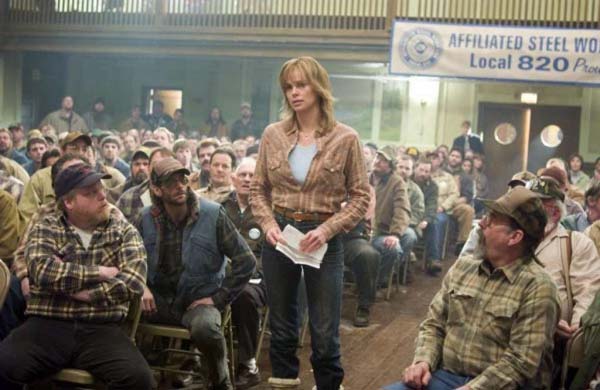
Image credit: Pinterest
It might not be a story you’re familiar with, but the life experiences of miner Lois Jenson and the landmark case that changed sexual harassment law in America, is a historic one. The film North Country tells the tale of Jenson and many other women through the eyes of character Josey Aimes (played by Charlize Theron), who retells this brutal, inspiring journey of resilience. Jenson was the first woman to win a sex discrimination case in the U.S; after bringing a class action against a northern Minnesota iron mine where women workers including herself were sexually assaulted and harassed. Theron portrays their story and the immense personal sacrifice it took to incite this magnitude of change.
Confirmation, 2016
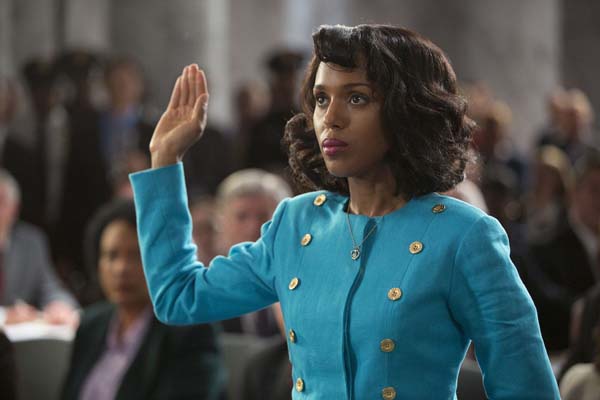
Image credit: Pinterest
In 1991, Anita Hill made history when she testified in Congress accusing Clarence Thomas, a would-be Supreme Court nominee and her former supervisor, of sexual harassment. The film, which features Kerry Washington as Hill, traces the events of the hearing and the circumstances and consequences that surrounded it. For women’s rights in America, Hill’s testimony was monumental. As the New York Times reports, in the year after her testimony, complaints to the Equal Employment Opportunity Commission about sexual harassment went up 73 percent.
Barbie – the film, some comments
Also see the review of Doll in Week Beginning November 30, 2022, or on Good Reads.
The New Daily 10:00pm, Apr 14, 2023 Updated: , Louise Talbot , Entertainment Reporter.
Margot Robbie’s teasing quip about her Barbie movie inspires some unreal theories
On the surface, actress and screenwriter Greta Gerwig’s highly anticipated Barbie movie looks like a peaches-and-cream, pro-feminist, good vibe flick marketed to woke teenagers.
Dig a little deeper and discover the Hollywood mantra – that nothing is as it seems – or so Australian actress Margot Robbie teased in a recent interview ahead of the July 30 premiere.
“The first time I read the Barbie script, my reaction was, ‘Ah! This is so good. What a shame it will never see the light of day … because they are never going to let us make this movie’,” she told BAFTA (via Indiewire).
‘Can’t tell ya’
Grinning from ear to ear, she smugly says: “But they did!”
Then she made a ‘my lips are sealed’ gesture when asked to elaborate.
“Can’t tell ya,” Robbie said.
So if the script was so “good”, why did Gerwig’s live-action storyline get green-lit and what’s it about?
The doll was created by US businesswoman Ruth Handler and released by Mattel, Inc. in 1959, with the wholesome brand making billions of dollars over the decades with merchandise.
Barbie has appeared in 40 computer-animated films since 2001, “integrated into fairy tales, literary favourites, original stories, royal kingdoms, high-school classrooms, and … New York City”.
“These films, despite variances in animation quality that range from very good to near-uncanny CGI, have been wildly popular,” writes Collider, adding that a live-action has been in the works since 2009 with various writers and big-name stars.
Gerwig (White Noise, Little Women) is not giving anything away, except a few vague comments on a recent episode of Dua Lipa’s At Your Service podcast.
“I think there’s something about starting from that place where it’s like, ‘Well, anything is possible!’ It felt like vertigo starting to write it,” she said.
“Like, where do you even begin? What would be the story?
“I think it was that feeling I had that it would be really interesting terror.
“Usually, that’s where the best stuff is. When you’re like, ‘I am terrified of that.’ Anything where you’re like, ‘This could be a career-ender,’ then you’re like, ‘OK, I probably should do it’.”
Let’s ask online sleuths
Robbie stars alongside Hollywood heart-throb Ryan Gosling (La La Land, First Man), who plays Barbie’s boyfriend, Ken, a male doll introduced at the American International Toy Fair in 1961.
The trailer has been released and the official storyline reads like this: “Barbie is exiled from Barbieland because of her imperfections. When her home world is in peril, Barbie returns with the knowledge that what makes her different also makes her stronger.”
The trailer gives a few more hints, including a direct homage to Stanley Kubrick’s 2001: A Space Odyssey and iconic movie The Wizard of Oz starring Judy Garland as Dorothy.
Dorothy’s face and the Tin Man’s are on posters out the front of the Barbieland cinema, Barbie wears a gingham dress, there’s shoe references, and there’s a pink brick road (aka the yellow brick road).

TikToker Cat Quinn offers an answer: “I think we’re looking at an epic journey to another world, filled with people that she helps along the way—when she gets there, she realises this seemingly gilded place is actually pretty wicked.
“Will she ultimately realise there’s no place like home and tap her Barbie pink slippers together three times?”
Getting better.
Truman Show vibes
Escaping in the pink Barbie car … into reality … like Jim Carrey did in The Truman Show?
“I wonder if there’s some vibes of The Truman Show in the story [because] Barbie and Ken trying to leave and go to the real world gave me a bit of that,” said Sandro the sleuth.
“Barbie giving me Stepford Wives with Truman Show vibes … I’m feeling something. That car flip was a tell!”
“Think it will be like Harley Quinn,” wrote another, referencing Robbie’s portrayal of the Joker’s ex-girlfriend in Suicide Squad.
Twitter user Alyssa goes darker and reckons it’s going to “devolve” into a psychological thriller while a BAFTA fan commenting on Robbie’s cryptic post speculates about a death.
“I think this film will be a critique of the fact that today’s women try to be aesthetically perfect, like a doll, but they can even die because of that.”
Don’t think Warner Brothers or Mattel would want Barbie dead.

‘Crazy’ script
Robbie’s co-star Simu Liu teased in GQ UK that the film is “crazy” and the script was one of the best his agent has ever read.
“He literally said this verbatim,” the Shang-Chi kungfu master said.
“He was like, ‘If I could stake my career on any one script, it’s the Barbie script. I really think you should do it’.”
Gerwig said that her partner and Barbie co-writer, Noah Baumbach, was in the mix to potentially direct.
“Initially, I didn’t know I was going to direct it,” she said.
“And then it was at a certain point while we were writing it that I realised I really wanted to direct it because I thought it was so great.
“I think the moment I knew I wanted to direct it was when Noah said to me, ‘Are you sure you want to direct this?’ And I was like, ‘Oh, are you interested in directing it?’
“No, no, this one’s mine’,” Gerwig said.
Filmmaker Joanna Joy and traditional owners bring to life Judith Wright’s Generations of Men
ABC Capricornia / By Inga Stünzner
Posted Mon 28 Nov 2022 at 9:01amMonday 28 Nov 2022 at 9:01am, updated Tue 29 Nov 2022 at 9:49amTuesday 29 Nov 2022 at 9:49am
Help keep family & friends informed by sharing this article
abc.net.au/news/short-film-inspired-by-judith-wright-generations-of-men/101682802COPY LINKSHARE
When Joanna Joy was 14 years old, her father handed her a copy of Judith Wright’s book Generations of Men.
Little did she know it was the beginning of a long journey that would bring a community together.
The story by Wright, a renowned poet and author, is about her own family’s unsuccessful move into central Queensland in the 1850s.
Ms Joy initially saw it as a tale of the strength of women and the families they raised during colonial times.

Brenna Harding (Puberty Blues) jumped at the chance to be involved in the film.(Supplied: Susie George)
Then she discovered Wright had rewritten Generations of Men as a new book, The cry for the dead, decades later after becoming involved in the Aboriginal land rights movement.
“It’s really investigating the Indigenous characters from the original story and the original ancestral history that she was looking at of her own colonial past,” Ms Joy said.
“I think it’s pretty bold and brave of Judith to look at what she’d written, even though it’s a fantastic book, and go, ‘That’s not good enough. I want to do it again.'”
The idea of adapting these stories and collaborating with traditional owners to create a short film was born.
“I wanted to combine those two lenses together in a film that paid tribute to Judith Wright’s legacy, but also feature the people and the language of the land on which the story was set,” Ms Joy said.
The film, Generations of Men, recently showed at a community screening in central Queensland at Rockhampton and Clarke Creek — where the film is set — to an emotional Barada and Darumbal community.
Ms Joy said she hoped the film-making process set the bar for collaboration with traditional owners.
Joanna Joy was introduced to the Darumbal and Barada community through Wayne Blair.(ABC Capricornia: Inga Stünzner)
The journey
The story takes place on the border between Darumbal and Barada country, 240 kilometres north-west of Rockhampton.
It seemed a simple process — find the original property on which the story is set and engage with the traditional owners and current landholders.
“It was the beginning of a four-year journey,” Ms Joy laughed.
With the help of well-known director Wayne Blair, a Rockhampton local, community support for the film grew.
Barada woman Margaret Hornagold helped with the initial script.
Margaret Hornagold was emotional viewing her country on the big screen.(ABC Capricornia: Inga Stünzner)
“When Jo first came, I thought, ‘This is a glorious opportunity for Aboriginal people from this land to be able to put their story out there and have it in language too,'” Ms Hornagold said.
“There’s so little of our stories, our people and our actors in the media, but there’s starting to be a body of work coming through.”
Ms Joy and her producer Elizabeth Simiard spent a week visiting Rockhampton, Woorabinda and Clarke Creek in central Queensland to hold workshops and find the right actors.
They found Andrew Young from Woorabinda and Darumbal Zalhi Hayden from Rockhampton.
Getting the dialogue right
The next step was getting the language correct — it would be in English, Barada and, predominantly, Darumbal.
Darambul elder Nhaya Nicky Hatfield worked with Ms Joy to bring the script to life and shape the local characters.
“You remember how the old people used to talk and the way they communicated through language, through sign language and body language,” Nhaya Nicky said.
For a woman who has spent decades bringing her language to the surface after years of it being underground, watching the film for the first time had a profound impact.
“I just started crying,” Nhaya Nicky said.
Following protocols
Because the film was shot on Barada country, protocols had to be followed with the help of Barada woman Nicky Muller.
A major scene where the mother gives birth had to be relocated because the original location was a sacred site.
There were also considerations for Barada people on location.
“We had to make sure that our own people returning to country for the first time were spiritually taken care of, and so that our ancestors recognised their own people coming home,” Ms Muller said.
“That was an emotional journey on its own.”
Being involved in the film has made Ms Muller’s family proud, particularly her Aunty Nancy – an elder who was born on the Isaac Plains where the story is set.
“Aunty Nance was born on that country — not in a house. She was born on that dirt,” Ms Muller said.
“She said to me tonight, ‘Oh Nick, that made our country look beautiful. It took me back.’
For Ms Hornagold, whose father was also born on that country, this story was deeply personal.
“Just how people moved across that area and survived some horrific times, but they survived, and I am standing here in front of you today because of that,” Ms Hornagold said.
“I think our family will be ever so proud.”
The film is now being submitted to festivals in Australia and overseas.
Alan Fletcher’s Neighbours plea to fans
Alex Lilly 3 hrs ago
After nearly 37 years on the air, Neighbours will stop production in June marking the end of an era.
https://www.dianomi.com/smartads.epl?id=3533
One person who’s particularly rocked by this decision is Alan Fletcher, who has played Dr Karl Kennedy on the long-running soap since 1994.
“It’s official, all attempts to #SaveNeighbours have been unsuccessful and #fremantle has confirmed the show will end production in June this year,” Alan penned on Instagram.
“This is a sad day indeed. I want to express my deepest gratitude to the millions of fans all around the world who have supported our iconic drama for 37 wonderful years. And huge thanks to our broadcast partners @channel10au and @channel5_tv who have been incredible supporters of the show for so long.
Alan then pleaded with fans: “Please stick with the show right to the end because the final episodes will be an incredible celebration with returning characters and extraordinary story lines.”
The actor continued by reflecting on his own Neighbours experience and gave a special shoutout to Jackie Woodburne who plays his on-screen wife Susan Kennedy.
“On a personal level @neighbours has been my creative home for almost 28 years. It has provided me with enormous artistic satisfaction and deep, everlasting friendships that I will treasure forever. Most especially my artistic partnership with the spectacular #jackiewoodburne who has truly made the journey the greatest joy imaginable.
“The show has also connected me to thousands of people who have supported my work on and offscreen through my music and stage appearances. I am filled with #gratitude #staytuned #celebrateneighbours #farewellneighbours #pleasestickwithus.”
Past and present Neighbours cast members shared their support in the comments with Alan.
“Beautiful words mate. Sending lots of love,” Rob Mills who played villain Finn Kelly wrote.
“Beautiful Alan. Congratulations on all you have built over the last 28 years. Xox,” penned Lucy Durack.
Meanwhile Dan MacPherson remarked: “I’ll never forget my time with the Kennedy’s mate 🙏🏼❤️”
In 2019, Alan and Jackie reflected to TV WEEK on 25 years on working together on the soap.
“It’s really marvellous. It’s just a real honour to be part of television history in Australia,” Alan said.
“25 years is an incredibly long time but it feels like yesterday!” Jackie added. “Time has gone so quickly and we’ve seen so many people come and gone. It’s been wonderful.”
The Irish Times Sat, Feb 12, 2022
Watching Neighbours was the only part of the day my late wife felt happy
Alex Moffatt: The Australian soap has brought me comfort amid grief and confusion
about 22 hours ago
Alex Moffatt
The Neighbours cast as the soap marked its 35th anniversary in 2020. ‘Neighbours has always comfortably mixed extreme melodrama with more regular drama and doses of outright farce.’
Last weekend was a bleak one for Neighbours fans like me: this was when we learned that British station Channel 5 was pulling the plug on the Australian soap, and without Channel 5’s money the whole show could be over after 37 years on air.

I discovered Neighbours in the early 1990s, a few years after its heyday with Kylie Minogue and Jason Donovan. I began watching over the summer after my first year at university, mainly because friends were constantly discussing it and I wanted to know what they were talking about. I also began to watch Home and Away. When college resumed and I had less free time, I dumped Home and Away but stuck with Neighbours.
And I’ve stuck with it ever since, seldom missing an episode over nearly 30 years. It hasn’t always been brilliant, and there have been periods where it seemed to lose its way. But it would always bounce back. The theme song has a line about finding “the perfect blend”, and that’s the key. Where Home and Away is relentless melodrama, Neighbours has always comfortably mixed extreme melodrama with more regular drama and doses of outright farce.
Even the extreme melodrama has a high-camp, farcical element. I’m thinking of a storyline in recent years about science teacher Finn Kelly, who attempts to murder an entire school by pumping poison through the ventilation system. (I seem to recall the attack was spurred by his frustrated desire to secure the job of deputy principal at Erinsborough High.)
Then we learn that Kelly’s madness stemmed from the lengthy period he spent as a hostage in Colombia. He keeps trying to kill people and ends up being pushed off a cliff by Susan Kennedy, principal of the school where he worked. He survives but suffers that most rampant of soap-opera ailments, amnesia. Out of guilt for almost killing him, Susan decides to let him move in and live in her house.
It all culminated in a five-night special two years ago (to mark the show’s 35th anniversary) in which half the cast went for a holiday on a deserted island and Kelly unleashed a bloodbath involving arson, an abandoned mine, a crossbow, a snake, a large rock and an exploding wedding cake. (To Kelly’s credit, that cake explosion killed off an extremely irritating character played by Denise van Outen.)
Part of the appeal of Neighbours, as with any soap, is its regularity: an episode a day, five days a week. For many years when I was working late nights at newspapers, watching the day’s episode was the last thing I would do before bed each night.
Unserious viewing
I married in 2014 and my Polish wife, Magda, would scorn my unserious TV viewing. She watched intense, subtitled European cinema and found my Neighbours obsession vaguely ridiculous.
- In TV land, only the Toy Show and live sport have enduring appeal
- Megxit, England’s defeat and 11 minutes less TV a day: what Irish viewers watched in 2021
- Mare of Easttown lived up to its billing, Succession was 2021’s letdown
Our son was born in 2015, and nothing can really prepare a new parent for the shock of that transition from childless peace and autonomy to having a tiny baby requiring constant care.

The day we returned from Holles Street with our new baby seemed like it would be a happy milestone, but it wasn’t. Magda was in a sort of silent rage, which I couldn’t make sense of. In retrospect, it was clearly the first sign of postnatal depression. She was also in a permanent state of terror that something would go wrong, that our baby would become ill.
For the first few months we were living in a one-bed apartment, with me coming home from work late at night and attempting to sleep on the sittingroom floor so as not to disturb their sleep. The baby cried a lot. I remember one freezing winter’s day when he cried for most of the day and when Magda refused to leave the apartment and would not let me take him for a walk because it was too cold. I remember her screaming in despair at his refusal to settle.
Magda took a year off work and it did not go well. She seemed more and more angry. In retrospect, it seems obvious that she was depressed. At the time, though, I thought it was just her normal response to the strain.
During these months, she would sometimes find herself watching Neighbours with me. Soon, she was watching it even when I wasn’t around, and would text me in work to tell me that that day’s episode had been a particularly good one. She began to discuss the plots with me, enjoying the melodrama, the silliness and the simplicity. Also, it is filmed in near-permanent Australian sunshine, making it seem idyllic in a cold Irish winter.
Magda would watch Neighbours every afternoon with our son while I was in work. One day she texted me a sound file in which I could hear the closing credits playing while our one year old repeatedly shouted “Neighbours! Neighbours!”
Police workings
Magda was a garda, so she appreciated the weird workings of the Erinsborough Police force and its top detective, Mark Brennan. Brennan was notable for his unbending devotion to upholding the law (he chose to arrest his bride moments before their wedding ceremony because he suspected she had been involved in handling stolen goods).
I thought of Magda a couple of weeks ago when Levi, the current cop character, casually told a woman he had only just met about his borderline illegal behaviour in securing a couple of arrests. Even long after we were married, if I asked questions that strayed into the area of gardaí bending or breaking the rules, Magda would cut me dead by saying: “That would be an operational matter.”

Her depression became deeper and deeper. She slept less and less and was consumed with misery and hopelessness. She told me that the 20 minutes she spent watching Neighbours each day was the only part of the day that she felt happy.
This story doesn’t have a happy ending. Magda spent two months in the St John of God’s facility in Stillorgan, Co Dublin, failing to respond to a range of medications, until she finally found an opportunity and took her own life in December 2017, a few weeks after our son’s second birthday and a week after her own 37th birthday.
I still watch Neighbours every day. I always watch it with our son, who doesn’t understand a lot of it but thoroughly enjoys it. It was a particular comfort in the months after Magda’s death, living through a fog of grief and confusion.
Every time I watch Neighbours, I think of Magda. There was an episode a couple of years ago where one of the main characters, Sonya Rebecchi, died of cancer in the arms of her husband, Toadie. It was almost unbearably painful.
After nearly 30 years, it’s hard to conceive of a world without Neighbours, without that daily blast of Melbourne sunshine. As a show that specialises in characters making improbable returns from the dead, I’m desperately hoping that this is just another cliffhanger, and that Neighbours too will burst back to life in an implausible twist.
If you have been affected by any issues in this article, you can call:
– Samaritans’ 24-hour listening service 116-123
– Parentline 1890-927277
– Aware 1800-804848
– The HSE’s postnatal depression service on 021-4922083
THE WOMEN WHO MADE AUSTRALIAN TV PART 3
BY JEANNINE BAKER
WARNING: Aboriginal and Torres Strait Islander viewers are advised that the following program may contain images and/or audio of deceased persons.
This is the third article in a 4-part series on women’s contribution to early Australian television production.

While key creative roles in Australian television in the 1950s to the 1970s were dominated by men, some women also forged careers as producers and directors, mainly in light entertainment, children’s, educational and documentary programs. The NFSA collection helps tell the stories of some of these groundbreaking women.
At the ABC, radio producer and accomplished musician Margaret Delves was one of the first 6 producers selected for ABC television in 1956. She produced live entertainment and game shows, and the ABC’s first educational TV program, Kindergarten Playtime.
Other early ABC producers include Marion Ord (pictured right), a radio and television scriptwriter who also wrote and directed two films for Young People’s programs – The Island (1971) and Valley of the Sentinels (1971) – and Therese Denny, who returned from the BBC to the ABC in 1963 to produce a series of documentaries including pivotal film A Changing Race (1964).
JOYCE BELFRAGE
English-born Joyce Belfrage arrived at ABC Melbourne in 1958 as its first female producer in TV Talks. She wrote, directed and produced a range of programs including panel show The Critics, interview programs such as Women at the Top and magazine program Spotlight:Spotlight end creditshttps://player.vimeo.com/video/646726833?h=4d25521af9&app_id=122963
End credits of Spotlight featuring singer Paul Robeson. Produced by Joyce Belfrage, 1960. Courtesy Australian Broadcasting Corporation – Library SalesWomen at the Tophttps://player.vimeo.com/video/646726826?h=fcdc213d71&app_id=122963
Women at the Top with Dr Grace Cuthbert Browne, Director of Maternal and Baby Welfare in the NSW Public Health Department. Produced by Joyce Belfrage, 1959. Courtesy Australian Broadcasting Corporation – Library Sales. NFSA title: 43370
Driven by socialist ideals of equality, Belfrage was proudest of the programs she made for the Inquiry Into series, on beatniks, alcoholism and migration, but she remained frustrated by what she saw as a lack of support for serious program ideas. In this oral history excerpt Joyce recalls the events that led to her quitting the ABC in 1963, hurling ‘a horrible old typewriter’ out the window on her way out:https://w.soundcloud.com/player/?visual=true&url=https%3A%2F%2Fapi.soundcloud.com%2Ftracks%2F1162181209&show_artwork=true&maxheight=400&maxwidth=400
Joyce Belfrage interviewed by Graham Shirley, 2001. NFSA title: 535333
Image: Joyce Belfrage, 1960. Courtesy Australian Broadcasting Corporation – Library Sales
While female-only jobs such as the script assistant role were essential to television production, they rarely led to higher-status key creative positions. But in the first decade of television a handful of women advanced from production support roles to producing and directing, including Bev Gledhill.
BEVERLEY GLEDHILL
Beverley (Bev) Gledhill came to ATN7 Sydney from the ABC in 1956, initially as a production assistant on live variety and children’s programs, including the live variety show Sydney Tonight. Here she recalls being offered her first producer role at just 17 years of age:Bev Gledhill oral history interview – clip 1https://player.vimeo.com/video/646726757?h=628b2ec19c&app_id=122963
Bev Gledhill interviewed by Brendan Horgan, 2000. NFSA title: 438318
From 1959 Bev produced and directed variety and children’s programs at TVW Perth, before moving to ABC Sydney as a pool producer, which meant ‘that you did any bloody thing that came along’. She produced 3 innovative and wildly popular series – Why Is It So?, with American physics professor Julius Sumner Miller; children’s program Mr Squiggle; and The Inventors, which began in 1970 and lasted 12 years:
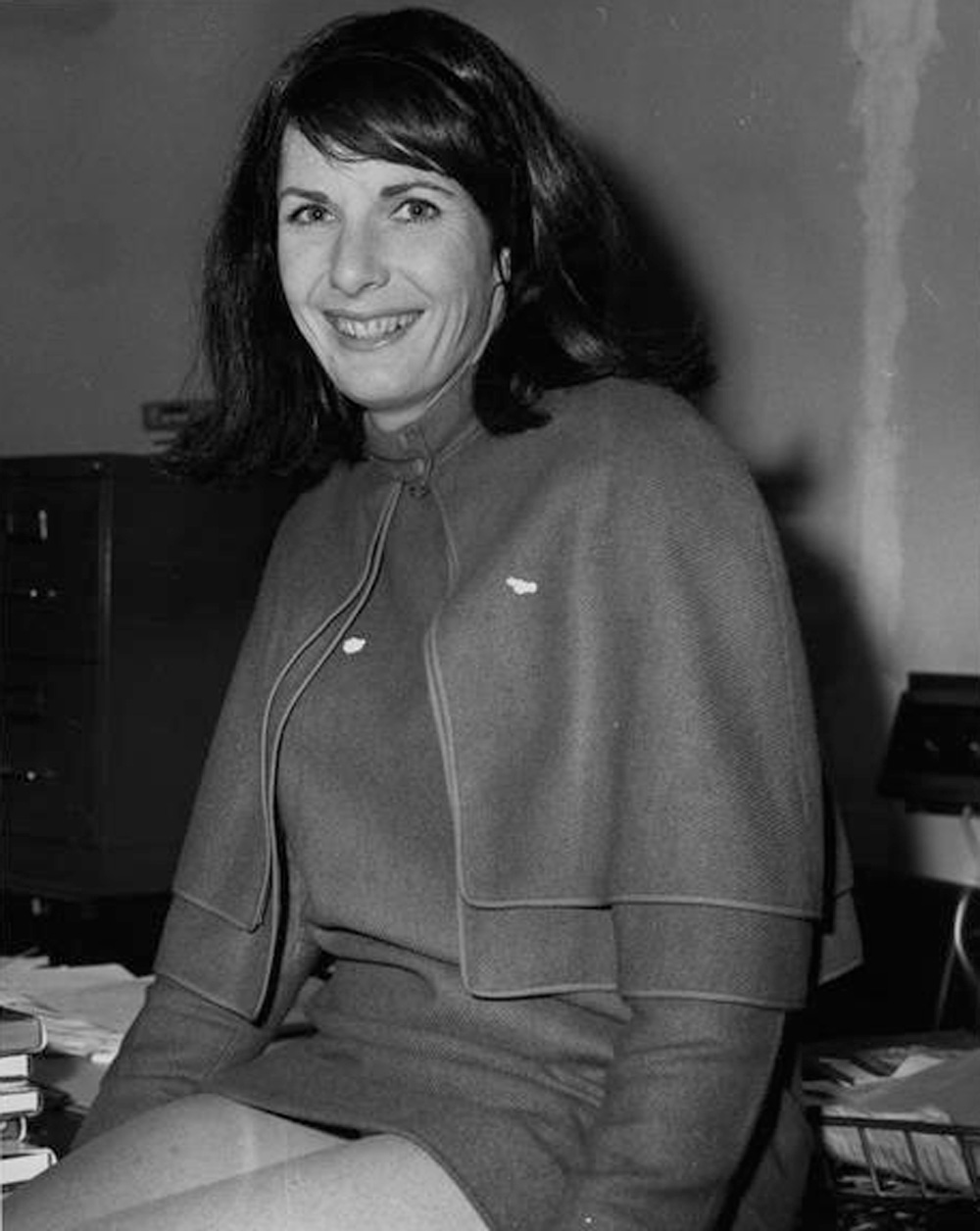
“
We used to open between 800 and 1,000 letters a week and handle new inventions, people wanting things. People just loved the show. I suppose there was something very Australian about it because, you know, they say give an Australian a piece of fencing wire and you can fix anything.Bev Gledhill”
Here Bev Gledhill reflects on the appeal of The Inventors:Bev Gledhill talks about The Inventorshttps://player.vimeo.com/video/646726763?h=39aafd3dfc&app_id=122963
Bev Gledhill interviewed by Brendan Horgan, 2000. NFSA title: 438318
This episode of The Inventors features a children’s bicycle seat invented by Rod Page. Examining it are host Geoff Stone and regular judge Diana Fisher:The Inventorshttps://player.vimeo.com/video/646726766?h=29401443d0&app_id=122963
The Inventors, 1978. Courtesy Australian Broadcasting Corporation – Library Sales. NFSA title: 1133292
Women were also employed as producers and directors at independent production companies such as Crawford Productions (including Dorothy Crawford herself) and at Artransa Park Studios, Sydney.
KAY ROBERTS

Kay Roberts began working at Artransa in 1956, initially as a casting director and script assistant on commercials, but soon graduated to directing documentaries and drama. As Kay explains in this clip from her oral history interview, she didn’t realise until much later just how uncommon her career was:https://w.soundcloud.com/player/?visual=true&url=https%3A%2F%2Fapi.soundcloud.com%2Ftracks%2F1165611784&show_artwork=true&maxheight=400&maxwidth=400
Kay Roberts interviewed by Stuart Glover, 1998. NFSA title: 371321.
Image: Artransa cast and crew shooting a television commercial, including Kay Roberts (left). NFSA title: 353609
In 1964 Kay Roberts directed The Never Never Land, a filmed version of the Elizabethan Theatre Trust’s Aboriginal Theatre, featuring 45 performers from the Tiwi Islands, Yirrkala and the Daly River. Kay replicated many aspects of the theatre version, commenting that she ‘was extremely careful with all the lighting and everything like that to get this wonderful fire-lit value that they had on the stage and translate that into film’, but added narration by dancer and choreographer Robert Helpmann.
In this excerpt from her oral history interview for the NFSA, Kay recalls working with the dancers:https://w.soundcloud.com/player/?visual=true&url=https%3A%2F%2Fapi.soundcloud.com%2Ftracks%2F1165610689&show_artwork=true&maxheight=400&maxwidth=400
Kay Roberts interviewed by Stuart Glover, 1998. NFSA title: 371321.
Image: Kay Roberts. Supplied by Di Morrissey.
This clip from The Never Never Land shows a fish hunting dance from Yirrkala, performed by Narritjin Maymuru, Bäŋgil Munuŋgurr, Gambali Ŋurruwutthun, Mäw Munuŋgurr, Yaŋgarriny Wunuŋmurra, Rrikin Burarrwaŋa, Daymbalipu Munuŋgurr, Djuṉmal Munuŋgurr, Ḏaḏayŋa Marika,Warrinyi Munuŋgurr, Djarrkudjarrku Yunupiŋu, Wadaymu Ganambarr, Dhäkuwal Gumana, Muluŋ Yunupiŋu, Ḏuṉḏiwuy Waṉambi, Dhuŋgala Marika, Dulayŋa Wunuŋmurra, Djayila Munuŋgurr, and Bokarra Maymuru. Overhead shots using a crane camera convey the beautiful symmetry of the dance:The Never Never Landhttps://player.vimeo.com/video/646726882?h=64faf5692f&app_id=122963
The Never Never Land. Directed by Kay Roberts, 1964. Courtesy of The Elizabethan Theatre Trust, with the permission of the Yirrkala community. NFSA title: 10092
Kay Roberts also directed several episodes of an early children’s science-fiction series, The Interpretaris (1966), and was second unit director on Whiplash (1960) and Riptide (1969). In the 1970s she wrote and directed several documentaries in the Ask an Australian series, commissioned by the Department of Immigration to explain Australian culture to recent migrants, and wrote, produced and directed the groundbreaking documentary A Little of Don Quixote (1973). One of the first making-of documentaries, it takes viewers behind the scenes of the filmed version of Don Quixote and features Helpmann, Rudolf Nureyev and Lucette Aldous.
AILSA MCPHERSON
Ailsa McPherson started working as a script assistant on drama programs in the early days of ATN7 Sydney and rose to become a versatile studio director across news, drama, light entertainment, comedy and panel discussions. Ailsa’s scrapbooks (now at the NFSA) trace her career, beginning with early drama programs such as A Tongue of Silver (1959) through to Romper Room, Television Tutorial and the Asian Amateur Singing Contest (1979):


BABETTE SMITH
Babette Smith had worked at the Elizabethan Theatre Trust and for theatrical producer Harry M Miller on rock musical Hair, before starting at TCN9 Sydney in 1970 as an assistant producer on the live music program The Sound of Music with Barry Crocker.
Here Babette reflects on typical gendered roles in television in the 1970s, and the barriers to women advancing to decision-making roles:https://w.soundcloud.com/player/?visual=true&url=https%3A%2F%2Fapi.soundcloud.com%2Ftracks%2F1165726942&show_artwork=true&maxheight=400&maxwidth=400
Babette Smith interviewed by Jeannine Baker, 2018. NFSA title: 1535169
Image: Babette Smith at TCN9. Supplied by Babette Smith
When The Sound of Music folded, Babette began producing a swag of live television programs, including telethons and outside broadcasts. She talks about some of the challenges:https://w.soundcloud.com/player/?visual=true&url=https%3A%2F%2Fapi.soundcloud.com%2Ftracks%2F1165727752&show_artwork=true&maxheight=400&maxwidth=400
Babette Smith interviewed by Jeannine Baker, 2018. NFSA title: 1535169
Image: Peter Ford, Lana Cantrell, Bert Newton and Glenn Ford at a TCN9 telethon, 1973. Supplied by Babette Smith
As Babette recalls, there was an ‘assumption that women were lesser, less worldly, and more suited to subordinate roles’, and she faced some resistance from other staff:https://w.soundcloud.com/player/?visual=true&url=https%3A%2F%2Fapi.soundcloud.com%2Ftracks%2F1165728580&show_artwork=true&maxheight=400&maxwidth=400
Babette Smith interviewed by Jeannine Baker, 2018. NFSA title: 1535169
Image: Babette Smith at TCN9. Supplied by Babette Smith
Babette Smith was also responsible for one of the first women’s current affairs television programs, Town Talk, discussed in part 4 of this series.
CREDITS
This is the third part of a 4-part series, The Women Who Made Australian Television, written and curated by Dr Jeannine Baker, media historian and Honorary Fellow in the Faculty of Arts, Social Sciences and Humanities, University of Wollongong.
This series was made possible with the generous support of the Media Studies Commission of FIAT/IFTA, the National Film and Sound Archive of Australia, Seven Network, Nine Network, Network 10 and the Australian Broadcasting Corporation – Library Sales.
Read The Women Who Made Australian Television Part 1 – The Beginnings of Television and Part 2 – Behind the Scenes: Women Technicians
Main image: Producer Margaret Delves on the set of the ABC’s live game show Find the Link with compere Bruce Beeby, 1957–58. Courtesy Australian Broadcasting Corporation – Library Sales
Image with quote: Bev Gledhill at the ABC, circa 1965. NFSA title 533340
REFERENCES
Harris, Amanda. Representing Australian Aboriginal Music and Dance, 1930–1970 (Bloomsbury, 2020)
Andrews, Kylie. Trailblazing Women of Australian Public Broadcasting, 1945–1975 (Anthem Press, 2022)
Transcript: The Last Word with Lawrence O’Donnell, 11/11/21
MSNBC Transcripts : Note, this transcript begins with the banter between the previous presenter, Rachel Maddow from TRMS and Lawrence, and ends with Brian Williamson’s show, The Eleventh Hour, and his introductory statement, Day 296 of the Biden administration.
Guests: Katie Hobbs, Amy Klobuchar, Eric Swalwell, Jasmine Crockett, Julie Johnson, Jonathan Kott, Norm Ornstein
Nov. 12, 2021, 2:00 PM AEDT
Interview with Democratic secretary of state of Arizona, Katie Hobbs. Interview with Sen. Amy Klobuchar (D-MN). Interview with Rep. Eric Swalwell (D-CA). In Texas, the Republican Party`s vision for America is taking shape. No access to abortion, vaccination is discouraged, voting rights diminished and books banned. President Biden will have a very important bipartisan bill-signing ceremony on Monday at the White House for the bipartisan infrastructure, the biggest bill of its kind in decades.Transcript
LAWRENCE O`DONNELL, MSNBC HOST: Good evening, Rachel.
You know what`s disappeared from my life during COVID?
RACHEL MADDOW, MSNBC HOST: Hmm.
O`DONNNELL: Among other things — cufflinks.
And so imagine my stress when I went for this anchor man shirt tonight and it was a cufflink shirt and I had no cufflinks and, you know —
MADDOW: What did you do? What did you do? What did you do?
O`DONNELL: The thing is, you know, Brian`s not working in the building, and so Mr. Cufflinks isn`t here. And you know, Kornacki can`t help you in a wardrobe distress situation, right?
So I don`t know if we can get this, but Sterling Brown in the control room might get the paper clips that are —
MADDOW: Dude, we can at least upgrade you to binder clips. I have binder clips in my office. Those might be better.
O`DONNELL: I`m blaming Brian for not being here and being able to rush in some manly cufflinks for me when I needed them.
MADDOW: I am going to rush ship you some of those dice, you know what I mean?
O`DONNELL: Yeah, Vegas. Get me some Vegas cufflinks. That`s what I want for Christmas. There you go.
MADDOW: On my way. On my way. Well done. My resilient friend.
O`DONNELL: Thank you, Rachel. Thank you very much.
Well, in June, our first guest received a phone call from Jamie Fialkin. A 50-year-old stay-at-home dad who lives in Arizona and he called Arizona`s Secretary of State Katie Hobbs and he said this.
(BEGIN AUDIO CLIP)
JAMIE FIALKIN: They`re going to hang you for treason you (EXPLETIVE DELETED). You`re going down. What are you going do when the election comes back and if already shows you Trump won by a million votes? What are you going to do then, Katie? What are you going to do then?
(END AUDIO CLIP)
O`DONNELL: Two weeks later, Secretary Hobbs got a call from Jeff Yeager. A 56-year-old self-employed electrician in Los Angeles, California.
(BEGIN AUDIO CLIP)
JEFF YEAGER: When Katie the (EXPLETIVE DELETED) is executed for treason, what do you (EXPLETIVE DELETED) traitors going to be doing for work? (EXPLETIVE DELETED) you, useless, lying, corrupt, un-American, evil pieces of (EXPLETIVE DELETED). Your day is coming.
(END AUDIO CLIP)
O`DONNELL: He was addressing that Katie Hobbs` staff, the secretary of state`s office, calling across state lines like that to threaten people`s lives is a federal crime. The two men who placed these calls have not been contacted by any local, state or federal law enforcement. They were contacted by a reporting team at Reuters who have issued a chilling report on what is happening to election officials like Katie Hobbs and others and other government officials who are receiving threats like this all the time.
Reuters reports that they have, quote, documented nearly 800 intimidating messages to election officials in 12 states, including more than 100 that could warrant prosecution, according to legal experts. The two men who placed the calls that you just heard were interviewed by Reuters, and were not apologetic.
Jamie Fialkin said: I am not denying anything because I am a patriot. Jeff Yeager said, if she thinks that I`m a threat to her, I`m not, but the public is going to hang this woman.
While he was at it, Yeager told the reporters that their employer Reuters is, quote, one of the most evil organizations on the planet.
Those two phone calls are the tip of a very large iceberg. Yesterday, the Department of Homeland Security updated its terrorism bulletin. Terrorism bulletin saying violent extremists have called for violence against elected officials, political representatives, government facilities, law enforcement, religious communities or commercial facilities, and perceived ideological opponents.
[22:05:06]
The two men whose phone calls you just heard are the kind of extremists the Homeland Security terrorism bulletin is describing. They are lost in their homicidal fantasies they might or might not try to turn into realities. Now they are spreading terror with their telephones.
The mix of stupidity and rage that drives these people is shared by and promoted by Donald Trump. They are Trump terrorists. These people want Katie Hobbs and others executed because they are supporters of Donald Trump. These same people have never wanted to kill public officials before Donald Trump became temporarily a public official.
There is no other political figure in America who has followers who are calling government officials every day in this country, threatening to kill them every day. On behalf of that politician, that politician is Donald Trump. This is Trump-inspired terrorism and they are Trump terrorists. That is Donald Trump`s gift to American politics and American life and possibly at some point it could become an American way of death, when one of Donald Trump`s terrorists diseases to terrorists decides to do something more than terrorize people with telephone calls.
The threats are not limited to elected officials. Imagine you are one of the roughly 200 people who works in the office of secretary of state of Arizona and you listen to this voicemail left at the place where you work by Jeff Yeager, who is just a six-hour drive away in Los Angeles.
(BEGIN AUDIO CLIP)
YEAGER: When all of you pieces of (EXPLETIVE DELETED) and Katie are executed for treason, what the (EXPLETIVE DELETED) are your families going to do live in a world in which they know that their family members were some of the biggest pieces of (EXPLETIVE DELETED) that ever existed on the planet. Go (EXPLETIVE DELETED) yourselves. Trump is still your president and God bless America you (EXPLETIVE DELETED) traitors.
(END AUDIO CLIP)
O`DONNELL: What is Jeff Yeager`s family going to do about his sickness? Who is going to help him? Who is going to stop him?
Trump is not anyone`s president and Jeff Yeager is like Donald Trump, a cowardly man, twisted by rageful stupidity.
Joining us now is the Democratic secretary of state of Arizona, Katie Hobbs. She is running for governor of Arizona.
Secretary Hobbs, it is always amazing to me to see you when you appear on this program because you always have that smile. You are always upbeat about the way your work is going and what you have to do next, and now that we`re able to hear the kinds of phone calls that you are getting on basically a daily basis, it is all the more extraordinary to me that you are doing the work you`re doing.
But I have a new concern for those 200 people who work in your office. I didn`t realize that the threats were being delivered to all of them, every single one of them.
KATIE HOBBS (D), ARIZONA SECRETARY OF STATE: Yeah, absolutely. I mean, this is one of the biggest concerns I have, too. And these are public servants who aren`t just working on elections. They are working on all of the other divisions of our office, and they have to get these kinds of calls on a regular basis.
And it`s hurting morale in our office. It`s interfering with the work that they do to serve the public and I think this kind of thing is one of the biggest threats we face in terms of continued ongoing election administration that we`re losing good staff over these kinds of threatening messages.
O`DONNELL: The other disturbing part of the Reuters report is that there are legal authorities and law professors saying, look, these things are prosecutable crimes. They are federal crimes even when they are not necessarily interstate phone calls and nothing is happening.
HOBBS: Well, I certainly am not going to question the work of law enforcement. We have done what we need to do in reporting these things. Other folks across the country have, as well. Here is the thing about me.
I am going to keep doing the job I was elected to do. I am not backing down. We executed a stellar election in 2020 in the face of unprecedented challenges. We saw historic participation. We should be celebrating that.
We are focused on the work ahead of us and getting ready for 2022.
[22:10:01]
And, you know, I`m ready for — I running for governor because we have to stand up to this ongoing threat to our democracy. And if folks want to join in that fight go to katiehobbs.org. I am not going to back down.
O`DONNELL: The purpose of terrorism is to create terror. It isn`t necessarily to kill. It is to create fear and terror in the people who you want to terrorize.
How afraid of going to work are the 200 people who work for the secretary of state of Arizona?
HOBBS: Fortunately, our office has been able to continue to allow a lot of people to continue to work remotely. So that`s a good thing, but certainly folks in executive tower, not just my office, on higher alert than we have been. There is tightened security. I am thankful for those folks doing their job there.
But we certainly have had to put more protocols in place to ensure everyone`s safety in the workplace.
O`DONNELL: You`re hearing homicidal rage in these phone calls. You are hearing grave mental illness. You are hearing extreme danger. These kinds of people who making these kinds of calls could jump in their cars at any time.
This is the state where we saw a member of Congress, an attempted assassination, the shooting of Gabby Giffords and killing of people around her. This is a very viable threat of force, threat of violence that you are facing every day.
HOBBS: Yeah. We are going to keep doing our jobs. And honestly I feel sad for these people that this is what their life is, that they are spending their time making phone calls to elected officials` office saying these vulgar things. They should really find something better to do with their time.
O`DONNELL: Well, I`ll feel sad for them when they start to try to get help and we`ll all want to do everything we can to help them. But right now they are terrorists and they are trying to create terror. Arizona Secretary of State Katie Hobbs, thank you very much for joining us tonight, and stay safe. .
HOBBS: Thank you.
And joining us now is Democratic Senator Amy Klobuchar of Minnesota. She`s chair of the Senate Rules Committee which oversees the administering of election.
And, Senator Klobuchar, you`re also a member of the judiciary committee with oversight jurisdiction over the Justice Department.
Is anyone interested in finding out what federal authorities are doing about phone calls like this?
SEN. AMY KLOBUCHAR (D-MN): I am. And I have been using my position as chair of the rules committee to push this out here. We can`t have a democracy if there are attacks made on people like Katie, who is a guardian of our democracy as secretary of state. I had a hearing in the rules committee and we heard shocking testimony not only from Katie, who came out for the hearing, but also a guy named Al Schmidt, who is a Republican election official in Philadelphia whose family was threatened.
This was a message sent saying, tell the truth or your three kids will be fatally shot. The names of his 7-year-old, 11-year-old, 14-year-old all put out public, their address. A photo of their house.
You know what, Lawrence? He is not running again. And we heard from even a conservative secretary of state in Kentucky who reported that because of intimidation and various things that had happened, that less people are signing up to be volunteer election officials.
So the effect of all this, no matter where it comes from, the effect of all this is a democracy on fire. And that`s why it is so important to go after this and why I think we should make it a federal crime when you see the numbers out of the Reuters report and you find out there has been no investigation of what`s going on when there is 800 threats with legal experts saying 100 of them could be prosecutable.
And that`s why our bill, the Freedom to Vote Act, that every Democrat in the United States Senate is supportive of basically has in there a clear federal crime if someone intimidates, threatens or coerces those who administer our elections. These local election officials — go ahead, Lawrence.
O`DONNELL: Sorry. I was going to say, imagine how much speeding there would be on our highways if no one of got arrested for speeding ever. That`s where we are right now in these phone calls. This is a terrorism program that they are launching against any officials involved in elections, and if there aren`t going to be any arrests, when the calls are criminal, and not all are criminal. They are not all threatening death.
But the ones that are criminal and threatening death, if there are no arrests they will keep happening and people will keep quitting and not running for these jobs.
[22:15:07]
KLOBUCHAR: Exactly, or even volunteering in elections.
The other thing that was pointed out is in rural areas the guy from Philadelphia was saying how he had enough protection, but in some rural areas, there isn`t even enough police and others to protect these officials. So I think that this is, should be a number one focus, and I asked Merrick Garland about it during the hearing, the recent hearing in judiciary, and I am going to keep pushing it.
It would be very helpful to have a clear federal crime identified for going after election officials.
O`DONNELL: Yeah, I mean, this is the use of terrorism to try to get the election outcome that you want and getting that outcome by driving out of office the people who will handle elections honestly.
KLOBUCHAR: Exactly. And it is — when you hear their stories and you see them choke-up when all they wanted to do was serve our country, you know that this is deadly wrong, what is going on. And it`s, of course, a part of the big lie that has been perpetrated. But it`s also part of the corrosiveness we are seeing in our politics, which includes, of course, the 13 Republicans in the House of Representatives that simply, I guess, had the gall to vote for broadband and to vote for better roads and bridges and rail in their districts and their states. And then they are the subject of death threats.
This just has to stop. And I believe this as a former prosecutor, that the only way you stop it is by making clear you are going to enforce the law. In some cases, that means we are going to have to make sure there is laws on the books. And there is a whole bunch of other reasons, as you know, Lawrence, why we want to pass the Freedom to Vote Act, including making sure that people can vote freely, safely, in any way that they want from mailing in their ballot to voting early, when we have seen the attack on voting across this country, everyone should have the freedom to vote, and certainly they should have the freedom to be able to be safe if they are an election official.
O`DONNELL: Senator Amy Klobuchar, thank you very much for joining this discussion tonight. Really appreciate it.
KLOBUCHAR: Thank you, Lawrence.
And up next, Neal Katyal will give us his reading of today`s appeals court decision giving Donald Trump a bit more time to fight the subpoenas from the January 6th committee and why is Merrick Garland taking so long to deal with the house of representatives` recommendation that Steve Bannon be prosecuted for contempt of Congress?
That`s next.
(COMMERCIAL BREAK)
[22:20:55]
O`DONNELL: A federal appeals court this afternoon granted an emergency motion from Donald Trump to temporarily block the national archives from turning over records to the house select committee. The three-judge panel issuing the order set an expedited schedule requiring Trump`s lawyers to file a written brief by Tuesday, at 12:00 noon.
The judges said, quote, the purpose of this administrative injunction is to protect the court`s jurisdiction to address appellant`s claim of executive order and should not be construed as a ruling on the merits.
The select committee was supposed to receive 46 records by tomorrow evening, including White House call logs, drafts of speeches and three handwritten memos from Donald Trump`s then-chief of staff Mark Meadows.
And this morning, White House deputy council Jonathan Sue sent a letter to Mark Meadows` lawyer warning him president Trump will not assert executive privilege over the documents and deposition requested by the select committee. He said, Mr. Meadows remains under the instructions of former President Trump to respect long standing principles of executive privilege. It appears the courts will have to resolve this conflict.
Mark Meadows is scheduled to provide deposition testimony tomorrow at 10:00 a.m. Tonight, the chair of the Select Committee, Congressman Bennie Thompson, said this: The select committee will review the failure to appear at the deposition and to produce responsive documents or a privilege log indicating the specific basis for withholding any documents you believe are protected by privilege, as willful non-compliance. Such willful non- compliance with the subpoena would force the select committee to consider invoking the contempt of Congress procedures.
And joining us now our Democratic Congressman Eric Swalwell of California. He served as a House impeachment manager during the second impeachment trial of President Donald Trump.
Also with us, Neal Katyal, former acting U.S. solicitor general. He is an MSNBC legal contributor.
And, Congressman Swalwell, there is Chairman Thompson saying if Mark Meadows doesn`t show up that, could be contempt of Congress. We are 21 days into Merrick Garland not doing about the contempt of Congress referral delivered to him for Steve Bannon.
REP. ERIC SWALWELL (D-CA): We have to keep sending the refusals to the Department of Justice, Lawrence, because the day we stop doing that, is the day that witnesses like Mark Meadows will defy our ability to get to the truth.
Now I think the facts and the law when they meet will determine that Bannon should be held in contempt and everyone like Bannon, including Meadows, should be held in contempt. Once that, you know, indictment comes, and I believe it should come, hopefully, others who are holding out and waiting will start coming in. But the select committee has interviewed over 100 witnesses. I know it`s frustrating it`s not done in public view. As you know, as Neal knows, as a prosecutor you want to run an outside-in, bottom- up investigation as in the first impeachment and then highlight the witnesses for the public once you know what they are going to say.
But that includes having the documents to confront the witnesses. We were flying in the blind in the first impeachment. We still did a great job, I believe. But now knowing that we don`t have the precious of time as can he we did with impeachment, we need to see the documents.
O`DONNELL: Neal, Merrick Garland`s constitutional law professor, Harvard Law School, is publicly frustrated with his former student`s delay in taking action on the contempt of Congress by Steve Bannon.
What could possibly explain three weeks?
NEAL KATYAL, MSNBC LEGAL ANALYST: Well, I love Professor Tribe. I get what he is saying. At the same time, I think it`s likely that the Justice Department is taking its time to build a case for exactly the reason that Eric Swalwell was talking about a moment ago.
It takes a while. You want to be methodical about it. Indeed, the first time that Steve Bannon was indicted, it took longer than two weeks for the Justice Department.
Remember, Bannon has already been a convicted felon. A few extra days are worth it if Bannon actually faces a consequence a second time around. I have been willing to, if the Justice Department some slack, because it takes time. If there is no action by next week, sign me up for the Larry Tribe frustration camp.
O`DONNELL: OK. Well, you know, the frustration is based on the eight-day model during the Reagan administration where, you know, it was a Reagan administration official, the Reagan Justice Department took eight days to charge that official with contempt of Congress.
Representative Swalwell, time is everything in congress. Enforcement combined with the timetable of enforcement is what makes enforcement real.
SWALWELL: Here`s why time is everything, Lawrence. We have the midterms coming up and the Republicans have shown themselves as a party that is more comfortable with violence than voting. You saw that they took to task the Republican secretaries of state who did not side with them in the presidential election. But they were perfectly fine when Democratic secretaries of state would say that an election went their way as it did in Virginia.
So they expect their own people are going to be with them and behind them. So they are showing themselves as we go into the midterms that if that`s not the case, if they can`t put in place the barriers to keep us from winning elections, they will resort to violence.
By the way, Lawrence, the evolution that we are seeing here, Donald Trump had to invent a lie to have the violence that took place on January 6th. Here we are into the Biden administration and you don`t even have to invent lies any more for Republican members of Congress to have death threats for voting for, God forbid, roads, bridges, and tunnels. So it`s getting much worse. The temperature is going up. That`s why the pressure is on to get this right.
O`DONNELL: Neal, what is your reading of the appeals court ruling today giving Donald Trump more time to argue over the possible blocking of the delivery of documents to the January 6th committee?
KATYAL: No big deal, Lawrence, whatsoever. When I was in government I sought exactly these temporary pauses. They are called stays.
And the court is — the court grants them because they are worried about doing something indelible. It`s kind of like the same reason that you look at your friends` user name three times before you Venmo them. Your money is probably going to the right place, but you know once you hit send, it`s never going back.
Same thing here. Even if the claims are bogus, if they make a mistake or something, you can`t undo what has already been seen. There is no chance, Lawrence, that Donald Trump is going to win this claim before the court of appeals. His claim is the joke to be charitable to this.
And Judge Chutkan said presidents are not kings and the plaintiff is not the president. And so she has identified two big problems. One is that Donald Trump is the former president. The current president, as you said in the lead-up to the segment, has already rejected his claim of executive privilege and the Supreme Court has said it`s the current president who largely controls it.
And also, executive privilege can be overcome if there is an overwhelming need. Here Trump is claiming executive privilege like candy, true winners like Steve Bannon, a convicted felon. Winners like Stephen Miller, who evidently took a break from reading John C. Calhoun to plot a coup, with these other cast of characters, winners like Kayleigh McEnany, who hasn`t been able to tell the truth.
So, what all these claims are about is these people are afraid to go to Congress and tell the truth under oath. That`s why they are asserting executive privilege. It`s a loser.
O`DONNELL: Neal Katyal and Congressman Eric Swalwell, thank you for joining our discussion. Really appreciate.
SWALWELL: My pleasure.
O`DONNELL: And a programming note. As we wait for the January 6th committee to at some point surely subpoena Rudy Giuliani, you can watch the extraordinary documentary about the infamous press conference Rudy Giuliani held last year in the parking lot of a family landscaping company in Philadelphia, did that by mistake. That documentary is “The Four Seasons” total documentary. It airs tomorrow night at 10:00 p.m. right here on MSNBC.
And coming up, why do Texas Republicans want to get Isabel Wilkerson`s masterful book out of Texas school libraries? Texas Representatives Jasmine Crockett and Julie Johnson will tell us next.
(COMMERCIAL BREAK)
[22:34:04]
O`DONNELL: In Texas, the Republican Party`s vision for America is taking shape. No access to abortion, vaccination is discouraged, voting rights diminished, and now, of course, books banned.
Texas State Representative Matt Crouse is a candidate for state attorney general and he has compiled a list of 850 books he says make students feel discomfort.
That list includes last year`s bestseller by Isabel Wilkerson, “Caste: The Origins of Our Discontents”. That book is indispensable to an understanding of American history and ourselves. It is a book that belongs on reading lists in every high school and every university in America and in universities around the world. and it is on reading lists around the world.
[22:34:59]
O`DONNELL: Texas Governor Greg Abbott, who still has no plan to prevent future collapses of the power grid in Texas that caused Texans to freeze to death in their homes has found the time to direct the Texas Education Agency, quote, “to immediately develop statewide standards to prevent the presence of pornography and other obscene content in Texas public schools, including in school libraries.”
And joining us now are Texas State Representative Jasmine Crockett and Texas State Representative Julie Johnson, both are Democrats representing parts of Dallas County.
And Representative Crockett, this doesn`t sound like any real legislative agenda here. No real improvements to the power grid infrastructure in Texas that this government is trying to accomplish. They just are worried about Isabel Wilkerson teaching high school kids what they need to know about their own country.
STATE REP. JASMINE CROCKETT (D-TX): You know, first of all, it`s good to see you this evening, Lawrence. It is really sad that we are continuing to use children as ping-pong balls in this game of primary. That`s essentially what we have got going on.
You mentioned Matt Crouse. you know, we are talking about books, not necessarily this one, but books that have been around forever. In fact, I remember when Gina Hinojosa sent me a text message about these books that Matt had put out because one is actually named “Jasmine”. And she said, Matt Crouse is trying to ban you from schools now.
You know, it`s ridiculous. But they are trying to do whatever it takes to make sure that this far-right base feels like they are being quote/unquote “as conservative as possible”.
O`DONNELL: Representative Johnson, the book list of these 850 books is something that, obviously, he is using for political purposes, and is this about winning Republican primaries in Texas?
STATE REP. JULIE JOHNSON (D-TX): Absolutely. Because any rational, thoughtful person, to your point earlier, would want people to read and study critically-acclaimed novels and Pulitzer Prize-winning novels. I mean it is incredible that Greg Abbott has stooped so low to try to manipulate the minds and the critical thinking of so many people.
At the end of the day, though, it is critical that these books remain in our schools. You know, kids go to resources for information. You know that Texas has — is in one the highest states of teen pregnancy and they are trying to remove all books about pregnancy, pregnancy assistance, how to get pregnant, things you can do to keep from getting pregnant and all they`re going to do is make kids get more pregnant.
I don`t think kids are getting pregnant because they read it in a book in their high school library. So I mean these — the fact that they are trying banning this is incredible.
And really just trying to put it down at the most populous level of an uneducated base to try to get them fearful in thinking.
And you know, what they are critically doing is making us not trust experts. They are making us not trust our teachers, our librarians, our school officials who have our best — the best interest of our kids at heart.
O`DONNELL: And Representative Crockett, this seems to be the argument that they want. It seems to me that they want to be in an argument with you over books. They do not want to be in an argument with you over the power grid or over other real governing issues for the state of Texas.
CROCKETT: Exactly. No, that`s absolutely right. you know, I was speaking with someone earlier today and I talked about that very fact, that Republicans right now, they say, well, how do we deal with this argument that they give about critical race theory?
I`m like, there is no argument to give. We need to focus on what matters. These are nothing but distractions because when we have to talk about substance, Republicans are losing every single time, especially here in the state of Texas.
And so that`s what we have right now, is that they are throwing out critical race theory. They are throwing out books in school. They are throwing out trans kids.
They are doing all this stuff instead of talking about what really matters. People died in the state of Texas, yet we have a grid that`s not functioning. We have an attorney general that has been under felony indictment for years and is constantly under federal investigations, but we don`t want to talk about that.
So we need to focus on the meat and the potatoes as Democrats and we need to get out of the fights over this nonsense and make sure that we refocus all Texans, not just Democrats, but every single Texan on the things that matter, which is making sure that we actually will have heat when this winter season is over.
O`DONNELL: Texas State Representatives Jasmine Crockett and Julie Johnson, thank you both very much for joining us tonight.
JOHNSON: Thank you so much.
O`DONNELL: Thank you.
CROCKETT: Thank you.
[22:39:59]
O`DONNELL: Thank you.
And coming up, Mitch McConnell is calling the Biden bipartisan infrastructure bill a godsend in Kentucky, but he says he won`t attend the bill signing ceremony for the Biden infrastructure bill, the bill he voted for. That bill signing ceremony is on Monday. That`s next.
(COMMERCIAL BREAK)
[22:39:24]
O`DONNELL: President Biden will have a very important bipartisan bill- signing ceremony on Monday at the White House for the bipartisan infrastructure, the biggest bill of its kind in decades. That means Democrats legislative attention is now focused exclusively on the second part of the Biden infrastructure plan, which focuses on social policy and environmental policy and is expected to pass with only Democratic votes.
House Speaker Nancy Pelosi is considering scheduling a vote on that as early as next week. The parliamentary rules of the Senate will, as usual, create a slower pace in the Senate.
Senator Joe Manchin has been raising concerns about how more government spending could affect inflation. President Biden insists that his legislation will actually help fight inflation.
The “New York Times” reports a wide range of economists agree with the president but only in part. They generally accept his argument that in the long run the bill and his infrastructure plan could make businesses and their workers more productive which would help to ease inflation as more goods and services are produced across the economy.
Others say that any near-term effect on prices would be small, and easy enough for the Fed to offset later with interest rate increases which can temper demand and cool a hot economy.
They argue that potential inflationary risks are not a good reason for the Biden administration to curb its ambitions on priorities like broadening access to childcare and easing the transition to cleaner energy sources.
And joining us now is Jonathan Kott. He served as a communications director and senior advisor to Senator Joe Manchin for seven years. Also with us Norm Ornstein, a congressional historian. He is an emeritus scholar at the American Enterprise Institute.
And Jonathan, I think we know on Monday Joe Manchin is going to get one of those bill-signing pens from the president and the big question is, is he going to get a second one wen they eventually — if they eventually pass that Democrats-only bill?
JONATHAN KOTT, FORMER SENIOR ADVISER TO JOE MANCHIN: I think he certainly will. I think he is committed to finding a path forward. I think he just wants to take the necessary time to make sure this bill, which is a huge transformative bill, gets everything done that we wanted to get done and he knows what the effects will be.
Lawrence, you know there needs to be a CBO score just for the senate to vote on. And we won`t have that for weeks. He just wants to make sure. Inflation is a real problem. He wants to see what the long-term effects of it are and see if there are any changes that need to be made to this bill before President Biden signs this second bill.
And by the way, a third bill, you know, when it comes to it this year, is a huge legislative accomplishment for Democrats and the president.
O`DONNELL: Jonathan, could you help the audience with the way Joe Manchin talks about this legislation publicly. You have Senator Sinema who says basically nothing publicly, so she doesn`t end up seeming to contradict herself.
I know a lot of people think that Senator Manchin over time contradicts himself because at a certain point he suggests that he is open to certain things that months later he is no longer open to. How would you describe — how would you track his public comments about this and how would you guide the audience about how to listen to them?
KOTT: I think he tells people how he feels at the time. He likes to get all the facts. When reporters ask him questions, he is not afraid to answer them. And I think, you know, that`s what happens.
He will look at an issue and he`ll answer it honestly and directly and things may change. He may get new information. That`s why he wanted to wait to see what the long-term impacts of this bill would be.
We got the Wharton School analysis today. He will get the CBO score soon. He will answer the question honestly when you ask him. He doesn`t duck reporters. He doesn`t duck constituents. He is upfront and honest.
But things do change for him. And when they do, he makes his decision known.
O`DONNELL: Norm Ornstein, we saw the House members — the 13 Republicans who voted for this bipartisan infrastructure bill, all basically threatened by their own party. There was at least a period there where there was a question of should we discipline them, should we kick them off their committees in the House.
Mitch McConnell, who voted for it, has announced that he will not be able to attend the bill signing on Monday because he is going to be busy with other stuff, like being afraid of what Donald Trump would say if he attended the bill signing.
NORM ORNSTEIN, CONGRESSIONAL HISTORIAN: He needs to get his hair washed, you know. He just can`t make it, Lawrence.
You know, those threats were absolutely chilling. Fred Upton and his wife Amy are friends of mine. And Fred is one of the 13 who signed this. And the threats to his life, his wife`s life, his family`s lives are just horrible. Some of them are going to be there.
But you are absolutely right that this is a huge accomplishment, but now we segue to the next one, which is absolutely critical.
And remember we`ve got basically 24 days ahead that are extraordinarily important. We have to get done this big bill and the CBO score now becomes even more important because of the inflation numbers.
But remember, by December 3rd we also need to keep the government running to avoid a shutdown and we need to deal with the debt ceiling. And so getting all of that done and maybe packaging it all together into that big reconciliation bill is going to be a heavy lift and a challenge.
[22:49:56]
ORNSTEIN: But I am not worried about Joe Manchin in the end signing on to this. I think we`re going to find some way of making it happen. The timing is a little bit of a greater concern and we have to keep in mind that we`ve got those voting bills coming up bills next and that`s where Joe Manchin becomes another critical player.
O`DONNELL: And Jonathan Kott, as this bill goes forward there are going to be complexities in the Senate that we all know about and a lot of House members will be discovering those complexities for the first time as they see things kind of ruled out of order in effect, particularly the Senate rules as it`s moving through there so it could be that whatever the House passes has to go back into a conference and then it all has to pass again through the — basically they have to take what turns out to be the Senate product and pass it through the House again.
KOTT: Yes. I mean I`ll leave it up to you to explain to the audience what a Byrd bath is but that house (AUDIO GAP) goes through a Byrd bath and come out looking completely different.
And yes, we`re going to need to get a new CBO score. We`re going to need to look at it, you know, have a whole new analysis. I think it`s going to be a decision for the House to make on probably December 23, hopefully not December 27 whether they accept the changes the Senate made.
But you know, the Senate parliamentarian now becomes one of the most important people in the country and I`m guessing most of the audience has now idea who that is but you`re very familiar with them.
O`DONNELL: Yes. And of course it is the Byrd rules of the Senate in honor of former Senator Robert Byrd that used to hold the seat that Joe Manchin holds now. And those rules basically rule out certain things that House is able to do and the Senate is not able to do.
We`ll be hearing a lot about the so-called Byrd bath as that bill proceeds.
Jonathan Kott, Norm Ornstein — thank you both very much for joining us tonight.
ORNSTEIN: Thank you, Lawrence.
KOTT: Thanks.
O`DONNELL: And we`ll be right back with tonight`s LAST WORD on an historic first. That`s next.
[22:51:55]
(COMMERCIAL BREAK)
(BEGIN VIDEO CLIP)
KIM JANEY (D), BOSTON, ACTING MAYOR: While I am proud to be Boston`s first women mayor and the first mayor of color I am also very proud to know that I will not be the last.
I want to congratulate Mayor-Elect Wu for becoming the first woman of color elected to the office of mayor.
(END VIDEO CLIP)
O`DONNELL: When Boston Mayor Marty Walsh was confirmed as Joe Biden`s Secretary of Labor, Kim Janey then the president of Boston City Council became the acting mayor of Boston, the first mayor in the city`s history who was not a white man.
She ran for mayor this year in an election that was won by Michelle Wu, who will become the city`s first Asian-American mayor. Michelle Wu will be sworn in as mayor on Tuesday.
Yesterday Mayor Kim Janey gave her farewell speech as mayor at Hibernian Hall in Roxbury, a building that was originally an Irish dance hall. It is actually the building where my grandparents met.
(BEGIN VIDEO CLIP)
JANEY: When I moved into the mayor`s office in March, I hung two framed prints on the concrete wall opposite my desk in city hall. The first framed print is the cover of the April 2013 issue of Boston magazine. This cover depicts a heart-shaped collection of running shoes, worn by marathoners on April 15th, 2013, a day our city and the world will never forget.
The second framed print features Kamala Harris, the first woman and the first person of color to serve as vice president. She is striding forward and next to her silhouette is a pint-sized Ruby Bridges.
And just like me Kamala and Ruby were also on the front lines of our nation`s battle to desegregate our schools. They too had to overcome adversity and pave the way for others to follow.
The inscription beneath the two iconic figures in this print reads “The first but not the last”.
(END VIDEO CLIP)
O`DONNELL: Kim Janey was a first when she was 11 years old and she was bussed across town in Boston to a school in a white neighborhood that violently resisted the court-ordered desegregation of its public schools.
Yesterday after thanking her mother and daughter and the rest of her family, Kim Janey said this.
(BEGIN VIDEO CLIP)
JANEY: As I reflect back on two prints that I hung in my office and as we lace up our sneakers to finish this race, and you know I will be wearing Converse, we must continue to run toward justice, equity and love.
Just like Vice President Kamala Harris and Ruby Bridges and so many in between, let`s continue to break barriers and create opportunities for those who will follow us.
It has been my greatest honor to serve my city as the 55th mayor. Thank you, Boston. You will forever be in my heart.
Thank you. Thank you.
(END VIDEO CLIP)
O`DONNELL: The Honorable Kim Janey gets tonight`s LAST WORD.
“THE 11TH HOUR WITH BRIAN WILLIAMS” starts now.
BRIAN WILLIAMS, MSNBC HOST: Well, good evening again.
Day 296 of the Biden administration.
RN Breakfast host Fran Kelly announces she’s leaving the program after 17 years
By Backstory editor Natasha Johnson
Posted Thu 21 Oct 2021 at 7:37amThursday 21 Oct 2021 at 7:37am, updated Thu 21 Oct 2021 at 11:49amThursday 21 Oct 2021 at 11:49am
After 17 years hosting RN’s Breakfast program, Fran Kelly is stepping away from the microphone.
An emotional Kelly made the announcement on air this morning and thanked listeners for their support.
“I’ve got some breaking news, I just want to let you all know my days presenting RN Breakfast are coming to an end. After 17 years it’s time,” she said.
“I want to thank you for your support you’ve given me.
“I can’t believe I have actually got these words out, in fact I’ve been dreading saying it out loud and making it real, RN Breakfast has been such a huge part of my life, I will miss it and I will miss you.
“It’s been a privilege and an absolute joy.”
Kelly said leaving the program was an agonisingly difficult decision to make.
“It’s probably the hardest decision I’ve ever had to make in my life,” she said.
“I absolutely love the job, I’ve never not loved it, and I give it up reluctantly.
“But breakfast radio is very demanding, it’s a hard taskmaster, getting up around 3.30am for 17 years, and I never want to be in a position where I can’t give it everything, because every day it takes pretty much everything, so I felt like my body and my brain this year was saying it’s time.”
Kelly isn’t leaving the ABC and will continue to play a key role, including in federal election coverage, continuing as co-host of the popular political podcast, The Party Room, and working on other projects that will be announced next year.
She is believed to be the longest-serving national breakfast radio host currently on air.
ABC managing director David Anderson paid tribute to Kelly’s contribution to the ABC and public broadcasting.
“I admire Fran’s ability to engage Australians in important conversations across a wide brief, from breaking news and national crises through to sport, music and the arts,” he said.
“She’s fearless when it comes to the tough political issues but also incredibly empathetic when talking to people about their lives.
“Fran is duly respected and admired by so many and has played a pivotal role in supporting future generations of journalists and presenters, within and beyond the ABC.”
A former ABC News European correspondent and 7.30 political editor, Kelly said hosting Breakfast had been enormously fulfilling.
“I’m convinced there’s not a better job in journalism in the country,” she said.
“It’s a wild ride of live radio to bring two-and-a-half hours of the best news and current affairs coverage we can muster from across the nation and around the world and also talk about music, TV shows and sport. It’s the breadth of that show that I’ve absolutely loved, it’s intellectually challenging and a real buzz.”
Politics is a key focus of RN Breakfast and, over the years, Kelly has interviewed nine Australian prime ministers, a US president, a British prime minister and many world leaders.
But the standout moments for her have been talking not so much to the “newsmakers” but to ordinary people affected by the news, such as women trapped in Afghanistan as the Taliban took over.
“It’s the real people who stick with you and you know that if you’re close to tears then the audience will be too. Radio is such a powerful and personal medium,” she said.
Kelly is particularly proud of the program’s role in engaging Australians in conversations about big national issues.
“When I started this journey with Breakfast 17 years ago, I really wanted one of our missions to be a part of the nation coming to grips with the big issues that are confronting us and, most recently that’s been the pandemic.
“I’m very proud of the job Breakfast has done in our coverage of the pandemic because early on our mantra was facts not fear, people were terrified and our mission was to keep people up to date with the facts as much as the experts could give them to us and not engage too much in the fear.
“And when I arrived [in 2005] I said to the team, climate change is going to be a massive issue for the nation and for the world and why don’t we set ourselves the job of trying to get the most informed voices from around the world, to bring the latest science, the latest information to the Australian audience? We have really covered every sort of twist and turn in that story up to today and I’m really proud of the job we’ve done.”
Like many on-air jobs, hosting RN Breakfast comes with intense scrutiny and while Kelly thinks its important to look at audience feedback, she tries not to be buffeted by criticism and to stay focused on one thing – getting answers for her listeners.
“I’ll get responses on social media to our big political interviews that will be both sides of the political divide accusing me of bias but I’ve just had to say to myself don’t lose sight of my mission, which is to prepare for my political interviews by being as up to date as I can on the facts and to try and put myself in the shoes of the listeners.
“And that’s my job — it’s not a vanity project, it’s not to find out what I want to know or to just get the best news grab I can, it’s to try to get the information that I think that people really want to know.
“And the relationship with the audience is so immediate [now], I’m often feeding points from them into live interviews.
“I’ll say to a politician, ‘While we’ve been speaking a lot of people have been raising this point,’ and it’s harder for them to escape it with just weasel words because it’s from their constituents not just some journalist asking a smart-alec question.
“I have really appreciated [listeners’] support and engagement with the show and I want to thank the audience every day for being there and giving us the reason to try to do the best job we can every single morning.”
Kelly thanked the RN Breakfast team for its tireless work behind the scenes.
“Signing off with the team was quite emotional because many of us have been working together for upwards of 10 years, some of the team members for 15 of my 17 years on the show, so this is a major wrench for me and for some members of the team.
“I’ve been really, really lucky to work with some fantastic journalists and I couldn’t have done the job I do every day without those journalists behind me.”
RN Breakfast executive producer Marina Freri said: “Fran has been waking up at 3.30am for the past 17 years and has never once walked into the studio grumpy. She comes in humming a song and makes herself and the team a cup of coffee before tackling a dozen interviews. She fearlessly holds politicians and the powerful to account. But they don’t go ‘on RN Breakfast’. They ‘talk to Fran’. She’s eponymous.”
Fran Kelly will finish up on December 2 and her replacement will be announced in coming months.
She’s looking forward to catching up on a lot of sleep, lazy days on the beach and returning reinvigorated in the new year.
“I love journalism and I’m not finished with journalism.
“I love the ABC and I’m not finished with the ABC.
“I just want to get a bit more space in my life for other things.”
Posted 21 Oct 202121 Oct 2021, updated 21 Oct 2021, ABC.
Six Feet Under: 20 years on, the drama set in a family funeral home still feels ahead of its time
From The Guardian, Australian Edition, Friday 15 October, 2021.
It was groundbreaking and ambitious on release, but even after two decades, the lives – and deaths – of the Fisher family are just as compelling as they ever were
Six Feet Under is available to stream in Australia on Binge. For more recommendations of what to stream in Australia, click here
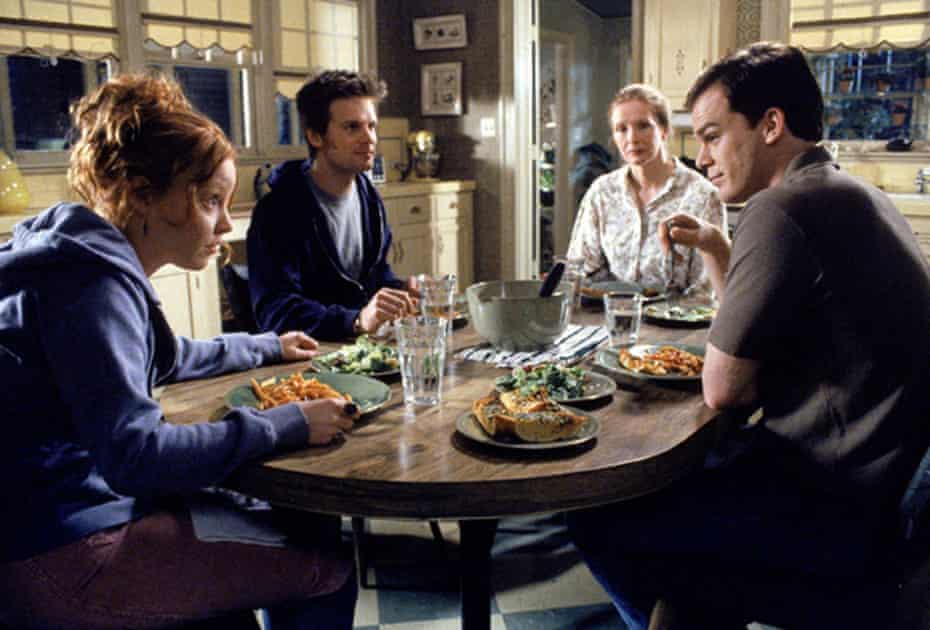
Isabelle Oderberg@yodabergFri 15 Oct 2021 03.30 AED
A few months back, I found myself rewatching an episode of Six Feet Under, in which Brenda (Rachel Griffiths), has a miscarriage the day before her wedding. I was watching it while researching the depiction of miscarriage in popular culture.
I’ve watched many of these depictions over the past couple of years. But as I watched these particular characters examine the grief and trauma of miscarriage from multiple angles and with all the familiar themes of shame, guilt and blame, I was blown away by what I think now – on second viewing and after seven miscarriages of my own: it is one of the best depictions of miscarriage that I’ve seen on screen. It wasn’t just a plot device to help you get to the next story arc, but the gritty, central theme of the episode, handled with nuance and grace.
The Remains of the Day: revisit Anthony Hopkins and Emma Thompson’s classic tale of longingRead more
There was messy detail, including Brenda’s awkward interrogation by her mother as to why she’s wearing a pad and big undies under her elegant white wedding dress, and her mother’s later frustration that she can’t take away her daughter’s grief. There are the options given to her by the doctor. And her new husband having to hold it together, in the way men too often think they are expected to do, before breaking down when there’s no one there to see.
I effusively told a friend that I’d forgotten how much I enjoyed the show. She said, “It was so ahead of its time in so many ways.” Watching the show again from the very beginning, I am compelled to agree.
Many of us know the plot premise: Six Feet Under follows the lives of the Fisher family, who live in and run a funeral home, and who are thrown into disarray by the sudden death of family patriarch, Nathaniel.Advertisementhttps://ca9ae388f0dd0b83d9640f70368237c8.safeframe.googlesyndication.com/safeframe/1-0-38/html/container.html
There are many issues we don’t deal with well, as individuals and as a society. At the top of the list must surely be death: the grief, the awkwardness, the uncertainty about what to say, the silence. So it was quite the punt for Alan Ball to set an entire show in a funeral home. And even more so to open every episode of the drama with a death. Sometimes these deaths are heartbreaking; sometimes they’re comedically dark; sometimes they’re just ordinary. But it worked. It still does. Getting sucked back in after my research I was surprised how well it’s aged – and even improved – 20 years after it aired the first of its five seasons.
Take its depiction of same-sex relationships – in particular, that of David Fisher (Michael C Hall, pre-Dexter), who comes out to his family as an adult while already in a loving relationship with Keith (Mathew St Patrick). This isn’t a nice, box-ticking disclosure exercise that’s over with quickly; it’s a carefully staged, multi-scene arc, each family member responding differently. His older brother Nate (Peter Krause) is surprised, but ultimately happy to see his brother happy. His mother Ruth (Frances Conroy) manages to make it all about herself. His younger sister Claire (Lauren Ambrose) already knows without needing to be told. His workmate Rico (Freddy Rodriguez) is disgusted, which makes their close working relationship difficult to navigate. Ultimately, David’s relationship with Keith is in many ways far more stable than many of the other characters’ couplings, and the challenges presented to the couple are dealt with in equally thoughtful and insightful ways.
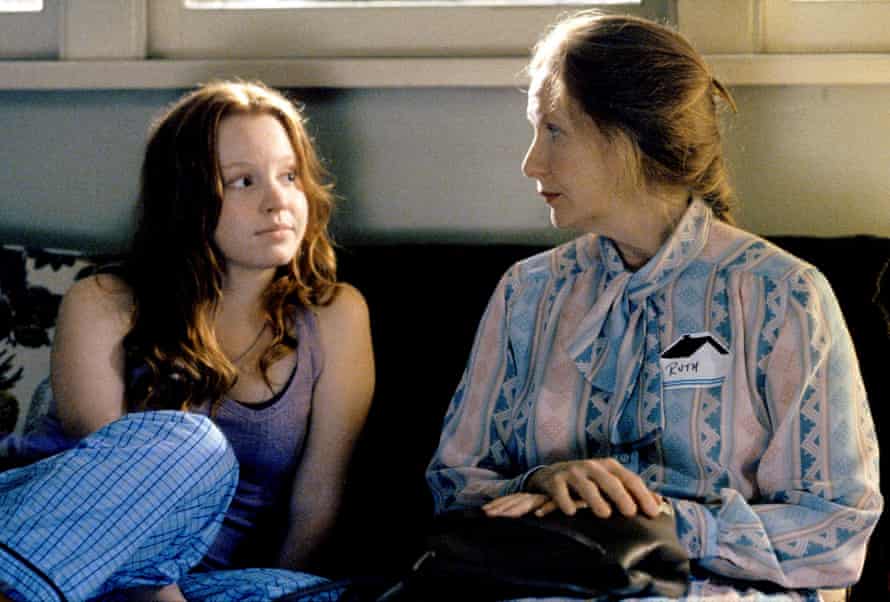
Many of the show’s themes are incredibly difficult: hard drug use, sex addiction, abortion, dementia, to mention only a few. But just like its treatment of death, Six Feet Under doesn’t insert these issues for melodramatic effect, or use metaphors or workarounds to avoid facing the hard stuff. It invests in its characters and their struggles, unpacking the issues they face and finding shades of grey and, crucially, some kind of understanding and empathy.Veronica Mars: Kristen Bell’s wise-cracking, outsider teen detective series is sunshine noir at its bestRead more
Outstanding scripting is also supported by some of the finest acting seen on the small screen – there’s a reason the cast received dozens of Emmy, Golden Globe and Screen Actors Guild nominations over the life of the show, and won a swag of them too. The show’s much-lauded finale fully capitalises on this investment – and the viewers’ along with it. Of course, there’s death. But as we come to understand throughout the show, death is just what happens to all of us. By this time, it almost feels like an old friend. And while each story has its own takeaway, love shines through in every one – not a saccharine, soap opera love; real, deep, flawed, pockmarked love, all the more moving for its honest depiction.
Six Feet Under was an ambitious and groundbreaking show at the time. Rewatching it two decades later, I now think it comes pretty close to perfection. So many of the issues raised, whether subtly or more directly, are still as relevant today as they ever were. That in itself is an achievement. If I haven’t yet made you remember why this show was so good, or convinced you to take the plunge and experience it for the first time, then at least I’ll go to my grave knowing I tried.
Casualty slapped with ‘racist language and attitudes’ warning Andrew Bullock For Mailonline

Charles Venn and Jaye Griffiths in 2018 © Provided by Daily MailCast
Streaming service Britbox has slapped veteran medical drama Casualty with a ‘racist’ language warning.
The BBC series – which has aired since 1986 and is still in production – has been added to the Britbox catalogues, but it seems that several plots haven’t aged well.
According to The Sun, dozens of old episodes have had warnings added to them due to content involving black characters being abused racially.![Chucky Venn standing in front of a window posing for the camera: Warning! Streaming service Britbox has slapped veteran medical drama Casualty with a 'racist' warning [pictured are stars Charles Venn and Jaye Griffiths in 2018]](https://static-entertainment-eas-s-msn-com.akamaized.net/sc/9b/e151e5.gif) © Provided by Daily Mail Warning! Streaming service Britbox has slapped veteran medical drama Casualty with a ‘racist’ warning
© Provided by Daily Mail Warning! Streaming service Britbox has slapped veteran medical drama Casualty with a ‘racist’ warning
Most episodes feature a warning that reads: ‘Contains emotional scenes and medical procedures.’
One in particular warns: ‘Contains emotional scenes and racist language and attitudes which may offend some viewers.’
A spokesman for BritBox told The Sun: ‘We review and refresh BritBox’s programme catalogue on an ongoing basis.
‘Programming on the service that contains potentially sensitive language or attitudes of their era has carried appropriate warnings since our launch in November 2019, to ensure the right guidance is in place for viewers who are choosing to watch on demand.’
The BBC series – which has aired since 1986 and is still in production – has been added to the Britbox catalogues, but it seems that several plots haven’t aged well . Long-running: Casualty has aired 1,200 episodes and 35 series. It is the longest-running medical drama series in the world.
Casualty has aired 1,200 episodes and 35 series. It is the longest-running medical drama series in the world.
Writer Susan Wilkins saying in 2016 that the show aims to deliver an anti-racism message, while Derek Thompson, who portrays long-running character Charlie Fairhead, said in the same year: ‘From day one of filming Casualty in 1986, I’ve been so proud of its true to life storytelling, representing everything the NHS stands for.
‘I’ve been a part of a few anniversaries over the years, but this really feels like a significant moment in British television history.’
Casualty has spawned two spin-offs – the short-lived Holby Blue and Holby City, which is being cancelled in 2022 after 23 years on the air.
The BBC announced this in June, branding it a ‘difficult decision’, slating the medical drama to come to a conclusion on screen in March next year.
The BBC said in a statement: ‘We are incredibly proud of Holby City.
‘But it’s with great sadness that we are announcing that after 23 years, the show will end on screen in March of next year.
‘We sometimes have to make difficult decisions to make room for new opportunities and as part of the BBC’s commitment to make more programmes across the UK.
‘We have taken the difficult decision to bring the show to a close in order to reshape the BBC’s drama slate to better reflect, represent and serve all parts of the country.
‘We would like to take this opportunity to thank the amazing team at BBC Studios and all the cast and crew who have been involved in the show since 1999.
‘Holby has been a stalwart with audiences, delighting millions of viewers each week and winning hundreds of awards with a compelling mix of cutting-edge medical stories and explosive personal stories.’
The BBC insisted they will make sure the programme goes out ‘on a high’.
They added: ‘We look forward to working with the team over the coming months to ensure that when it ends, Holby goes out on a high.’
Many fans of the programme took to social media to express their disappointment at the show ending, with some questioning the reasoning behind the BBC’s decision.
The show – which airs weekly on BBC One – launched on January 12, 1999, as a spin-off from fellow BBC medical drama Casualty, which began in September 1986 [the original cast is pictured]© Provided by Daily Mail ‘Difficult decision’: The network have slated the medical drama to come to a conclusion on screen in March next year.
The show featured big names in British TV across its run, such as Phyllis Logan, Lisa Faulkner, Angela Griffin, Nicola Stephenson, and Michael French.
And the likes of Adrian Edmondson, Patsy Kensit, Jane Asher, Sheridan Smith, Phill Jupitus, Johnny Briggs, Suzanne Shaw, and Anita Dobson have also guest-starred in the show over the years.
One devastated fan started an online petition to keep the show on air. The supporter, calling themselves Mr Holby, wrote: ‘The pandemic has shown how highly the public value the NHS, and Holby City is an important representation of the work that the NHS does, and the issues the NHS and its staff and patients face.’
Holby City exists in the same canon as Casualty, with the two series crossing over on occasion.
It was developed initially as lead writer Mal Young wanted to explore what happened to patients treated in Casualty once they were taken away to the hospital’s surgical wards.
The BBC previously screened mini-dramas entitled Casualty@Holby City, which saw various characters from the two shows interacting.
In 2006, the BBC commissioned Holby Blue, a police spin-off. There was a two-part crossover episode with Holby City in 2008.
But despite a promising initial viewership, Holby Blue only lasted two series and was axed.
Covid 19 and Causality: A formidable depiction
Covid 19 and Causality: A formidable depiction
Causality and Holby City, as noted above, have been formidable vehicles for supporting the UK National Health Scheme. Social issues are also an important part of both programs. Covid 19 has featured in programs before and after Episode 1, Series 35 in which familiar cast members were treated, successfully and unsuccessfully; some staff became overwhelmed and others demonstrated the types of emotional assistance staff, patients and their families needed; and patients recover or succumb. Major story arcs move forward, during the episodes that feature Covid 19, even when the latter I the main story line, but often demonstrate the impact of the virus and its effect on staff when relationships that formerly were progressing in a particular manner stop as characters reassess their priorities or are so devastated by events that they change course.
Series 34 begins the coverage of Covid 19 with episodes 41 and 42, near the end of the series, which illustrates the way in which the early pandemic conditions and beliefs have influenced the way in which the hospital works. Filming had to be interrupted due to Covid and airing of the program in Australia appears to have been also affected – or I did not begin recoding in time! However, the following episodes demonstrate the care that was taken to identify the precautions required in hospitals by staff and patients, as well as the devastation being wreaked by the virus. Some, although not all, staff wear masks; surgical staff wear PPE, as do the ambulance officers who arrive with emergency patients – some with Covid, some part of the normal intake for Holby’s emergency services. A Stay-at-Home poster replaces the colourful appreciative posters extolling the NHS and its care. A theme that resonates with the concern about unprofessional health advice, although not directly related to the misleading information about Covid and vaccinations, is one of the main story lines. The advice: trust the science and experts.
Episode 43, Series 34 shows a Covid 19 area that is separate from the usual work of emergency. Everyone is masked, scrupulous hand washing is shown for all staff and covid safe behaviour is emphasized. Connie, the tough surgeon, and head of surgery is shown to have suffered from the impact of the virus and her responsibility for her staff as well as patients. Her time in lockdown with a past romantic interest is referred to – he is distressed that what he sees as a rekindling of the relationship has not continued as expected. There is something else affecting Connie’s behaviour as she attempts to give succor to the staff, emphasizing their role on the front line and need to care for themselves. A memorial for a staff member, very much a front-line person as he worked on reception, is mooted.
TBC
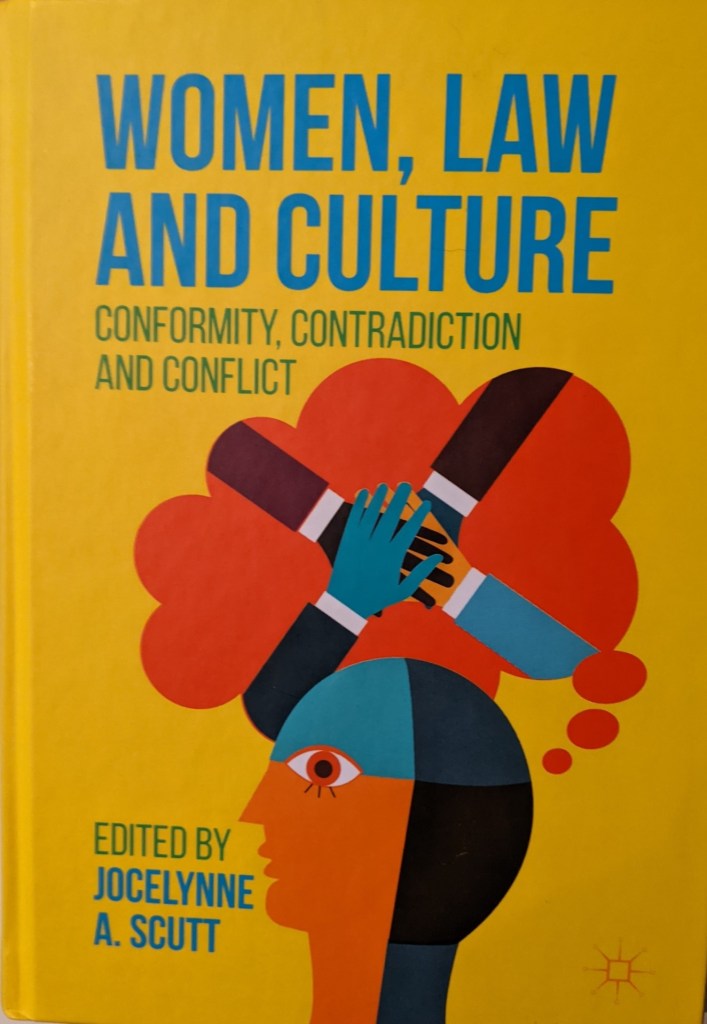
‘It’s Time To go!’ ‘You’re Fired!’: Australian Big Brother (2005) and Britain’s The Apprentice (2014)
Introduction
Different cultures,[1] programmes and years. However, a comparison of the way in which women are treated in Big Brother Australia (BB) and The Apprentice UK (TA) provides an insight into two examples of reality television and the prognosis for women who seek advancement through the process. Do the different formats and programme aspirations affect female contestants? How are they treated? Are women winners? Direct outcomes, such as the winner’s prize, are markedly different between the programmes. In its early iterations BB awarded all contestants prizes, rewarding women even if they did not win. However, as ratings declined prizes were reduced from cars of increasing value for time spent in the house, game consoles, watches and mini bikes as well as the winner’s monetary prize. Only the latter remained in 2005. A change also occurred in TA. Originally a £100,000 a year job in a Lord Sugar business, since 2011 entrepreneurial spirit is encouraged with a partnership between Sugar and the winner through an investment of £250,000 in the latter’s business plan. [2] Across cultures and year indirect benefits include media appearances in other reality shows and making radio and television programmes or appearances. Although TA contestants are more likely to cite their experience to enhance business aspirations, a BB winner used her prize for a business [3] and the entertaining qualities of some of TA candidates are apparent.[4]
Audience voting, on which BB relies entirely, is facilitated through housemates’ microphones and indistinct conversation provided in text and, at times, live streaming. While TA relies on other experts’ opinions, Sugar delivers the final judgement. The different processes have garnered both female and male winners, but the gender imbalance on BB is significant, both in numbers and in comparison with TA results. Women have won BB three times and been runner up on six occasions. Men have dominated in both capacities: winning eight times and as runner up seven times. The numbers of women in the last two places is twelve; the number of men, eight. For TA the results are six male winners and four female winners, with eight women and two men being runners up. In 2011 Sugar noted that female runner up would have won under the previous prize system and assisted another woman finalist with her business.[5] At times the most that can be said for participation in either programme is that those who want further publicity sometimes achieve it. BB contestants have married, with an attendant television programme; [6] acted on a soap opera such as Neighbours;[7] or participated in radio and/or television programmes; [8]and appeared in a game video and men’s magazines. [9] Similarly contestants in TA have won celebrity status with television and media appearances.[10]
One major difference between the early years of BB and similar programmes was the extent of audience involvement. BB ‘marked a new moment of interactive television’. [11] Associated forums took this to a remarkable level. The Channel 10 forums, while concentrating on the show and housemates, also featured political and satirical debates and stories linked to the programmes and personalities. The level of interaction diminished when BB moved to Channel 9 with little more than twitter observations. [12]
Both programmes rely on elements of drama as well as reality. Editing is inevitable and naturally the dramatic events with the purpose of ‘making good television’ influence what is aired. [13]Audiences are familiar with reality television and its features and are adept at reading what they are seeing. They recognise the dramatic methods used to accentuate particular facets of the programme so as to tell a story and to appeal to audiences. Although apparently quite cynical about the process, the emphasis in BB on being ‘real’ suggests that its marketers believe such a criterion is valued. Being accused of not being ‘real’ by either other housemates or in forums is seen as substantially undesirable.
In 2015 TA was condemned for a task to ‘sell fish fingers’ instead of concentrating on technological advances considered more in keeping with the ‘real’ business world. That the contestants wore suits, presumably the garments other than suits worn by the women were subsumed into this generic term, was also criticised. [14] Both features make television appealing to an audience with whom the familiarity and seemingly simple nature of the tasks are more likely to resonate, as is the conservative dress code.[15] The tasks are akin to those that Sugar set himself in business. An ability to enhance a simple product which is sold at a profitable price and quantity is a familiar task from previous series; [16]simplicity does not equate with easy and bereft of skill. Perhaps more profoundly, tasks are gender neutral and encourage contestants to adopt a range of skills that can be monitored by observers, both the audience and the professionals on the programme. Sugar’s autobiography and most recently, his observations about his ten years with TA[17]provide a background to the rationale behind the tasks set throughout the series and the qualities he is looking for in his proposed business partner.
While BB contestants are referred to by their names, the term ‘housemate’ or ‘character’ is frequently used, creating an environment in which individuals become known as a generic housemate or even more usual as a ‘character’. Characters are then further described as ‘strong’ or ‘flying under the radar’, almost as if they are featuring in a drama rather than reality programme. Also, although not referred to as an ‘aggressive’ character, the male or female bully is a regular. Political or minority figures have also featured as participants representing particular points of view based on their membership of a group. For example, Tim Brunero (BB2005) was a declared left wing trade union supporter. Other participants have had a less systematic political commitment, but have been vocal in their political views. Some contestants have been deployed as ‘the’ Aborigine, environmental advocate, wild life expert, hippy or a state representative.
Big Brother Australia 2005
The series on which this paper focusses began broadcasting on 8 May 2005 and lasted 101 days. Participants were required to be single, willing to be sexy and competitive. The emphasis on forming a BB relationship is clear, not only from the requirements but response to those who contravened: non-singles were nominated by Big Brother for eviction by public vote. Auditions took place in every state and producers interviewed potential housemates rather than choosing them, as in the past, from submitted videos. The show was promoted through phrases such as “Assume Nothing, Expect Anything”, “Let’s Play”, and “Think Again”. [18] As usual, audiences were encouraged to evict ‘boring’ rather than unpleasant characters and were constantly reminded, “You decide”. Big Brother had a male voice (unlike the UK version both sexes’ voices are used) and a female presenter. Gretel Killeen’s role was to maintain contact with the housemates, always on eviction night and also at times throughout the process. ‘Hello House’ was the signature phrase on these occasions.
Although the prize money was potentially $1,000,000, it was revealed that $5,000 would be subtracted from the every time the housemates broke a rule. As usual rules included discussing nominations and inadequate reasons for nominating. This ‘twist’ was supplemented by the introduction of identical twins. After they were detected both remained acting as a single person for nominations and eviction until late in the process when one twin was chosen for eviction by the housemates. One woman received the most fines and another the least. Other activities throughout the series included the Friday Night Games in which the winner won the opportunity to replace one nominee with another and choice of a companion in the Rewards Room; birthday celebrations; tasks upon which food budgets or other benefits depended; intruders/replacement housemates; family messages; an All-Stars Friday Night Live where housemates from previous years participated; and a BB UK houseguest. Special tasks such as sabotage then finding the saboteur; and the master/slave task were distributed between males and females.
In the 2005 series contestants’ ages ranged between nineteen and twenty-nine. There was a range of occupations. Constance Hall, a 21 year old hairdresser, 23 year old Nelson Russell, an assistant manager and Dean Glucina a 24 year old sales representative were automatically nominated by Big Brother for a double eviction for falsely claiming that they were single. Constance and Nelson were evicted on day ten. Dean survived until day 72. The oldest housemate, Angela Aiken a 29 year old dating agency company director, was the first housemate nominated by the housemates to be evicted (day 14). Jane Pattison, known as Gianna, a 24 year old customer service representative was evicted on day 23. Michael Farnsworth, a demolition worker in his twenties was evicted on day 30 after a breach of the rules. Michelle Carew-Gibson, a 24 year old promotions model, was evicted on Day 36. Twenty two year old Rachael Burns, also a promotions model, replaced Constance and Nelson on day 25 and was evicted on day 44. Geneva Loader was a 19 year old bar manager and was evicted on day 51. Glenn Dallinger, a 21 year old sheep shearer, was evicted on day 57. On day 53 three intruders entered: Heath Tournier, a 22 year old electrician , was evicted on day 60; Rita Lazaretto, a 29 year old nurse received a record breaking 11 eviction points before being evicted on day 79 and Melanie Smerdon, a 19 year old behavioral neuroscience student and model, was evicted on day 93. Housemates who remained in the house between 60 and 70 days were Simon Deering, (Hotdogs) a 27 year old real estate agent who was evicted on day 64; Christie Mills, a 19 year old receptionist, who was evicted on day 79; Richelle Benson, known in the house as Kate, a 21 year old administration worker who was evicted on day 86; Vesna Tosevska, a 28 year old hairdresser who replaced Constance and Nelson on day 25, and was evicted on day 99; Brunero, a 27 year old journalist who was runner-up; and the winners, identical twins David and Greg Mathew. They were both known as Logan, treated as a single entity in nominations, evictions and Friday Night Live, and as potential winners. David was evicted on day 75 at Big Brother’s instigation. Greg won a car, overseas vacation, mobile phones and $836 000. [19]
Of the women who remained in the house for over 60 days, Benson was considered a possible winner. After her eviction she was on two BB spinoffs, filmed a television pilot and returned to study. Tosevska was the only female in the final three and her eviction left the show with two male contenders. She made extensive appearances on the nightclub circuit, and appeared on ‘Celebrity Ready Steady Cook’. The winners had more television appearances, ‘Celebrity Ready Steady Cook’, ‘Celebrity World Poker Tour’ and ‘Temptation’. In early 2006 they had a “vacation” in the North Pole. For a short time David worked at Sea World as barefoot water skier, became a property renovator and Greg began a site management company. A less successful participant, Tournier appeared as a minor character in ‘Neighbours’ and in advertisements.
Brunero gained the most indirectly. His participation and approach was orchestrated by Chas Licciardell of the satirical show, The Chaser. Brunero aimed to escape eviction as long as possible and use his experience to consider the ramifications of the phenomenon of the show. How much of his activity in the house was part of that plan is unclear. He spent weeks as the focus of Glucina, one of the bullies; was seemingly besotted by Benson, and created comic moments either alone or with the perfect co-conspirator, Tosevska. They became BB forum favourites. Brunero’s comment that Benson’s homophobic comments could result his remaining longer than her suggests a pleasing faith in the audience of BB, if a somewhat competitive approach to his supposed love interest.
Brunero appeared in BB spin offs and built on his background in print and online news. He worked on the Alice Springs Radio Drive Time Show. Most recently he was a short term replacement on the ABC Radio Night Life Show. Brunero also presents on ABC One Plus One program on ABC1 and News24.[20] However, arguably Chrissie Swan (BB2003) also with a media background has been more successful in media terms, appearing on the television programme ‘The Circle’, representing Weight Watchers, making additional television appearances and hosting a radio show, winning a Logie Award for Most Popular New Female Talent and more recently, publishing a collection of her columns.[21]
However, in terms of direct success, there is a strong gender imbalance in favour of men. Nominations reflect the housemates’ decisions about their companions and evictions demonstrate the way in which the public support these decisions. On the first week of nominations (week 2 of the programme) males nominated 12 females and one male; females nominated six females and four males. The second round of nominations saw males nominating nine females and four males; and females nominating four females and six males. In week three males nominated nine females and eight males; females nominated three females and four males. Week four nominations broke the pattern of more females being nominated than males with males nominating six females and eight males and females nominating no females and eight males. In week five males nominated eight females and five males; females nominated four females and four males. Maintaining the pattern, broken only once, of more females being nominated than males, in week six males nominated eight females and four males and females nominated seven females and three males. By week seven four females and six males remained in the house and males were nominated eight times females ten times. Week eight was the last in which the original housemates and the intruders who entered in week six nominated before more intruders entered in week nine. In this week males nominated nine females and three males and females nominated only males (six). The week nine intruders, two females and one male, were exempt from nomination but nominated. Males nominated seven females and three males and females nominated three females and three males. In week 11 the housemates voted to keep their preferred twin in the house, leaving nine housemates, four males and five females in the house. Their nominations, males nominating four females and no males and females nominating eight females and one male, were cancelled and Big Brother put all housemates up for eviction. In week 12 the two remaining males nominated only females and the three remaining females nominated females and males equally. In the last nominations the two males nominated three females and one male and the females nominated three females and one male. The remaining two males competed in the final. The public vote also favoured males. When all housemates were nominated, the double evictees were female.
| Friday Night Live was won by males seven times and females four times. Usually winners took companions of the same gender to the rewards room, only on four occasions did this change: a female taking a male to the rewards room on one occasion and males taking a female on three occasions. One was notable as the female was offered the positon and choice of companion. She declined, admitting she would have chosen the male winner. On only one occasion did a male’s attraction to a female appear to be decisive. On one occasion a family message was given by a male to a female, also a result of his attraction to the recipient. In contrast with the usual pro-male stance a woman’s eviction on day five disappointed the others who wanted the male bully evicted.[22] The Apprentice UK 2014 Like BB, TA begins with equal numbers of females and males from a range of backgrounds. Contact observed by viewers is through a phone call, waking the contestants with the news of the day’s task.[23] They are observed in the house in which they are sequestered during the programme, followed by a camera team in the cars in which they travel to various locations to receive their tasks, and in locations in which they undertake the tasks, as well as the Board Room where one or more from the team which has lost the task will be told that they are ‘fired’. Sugar hosts TA, in particular during explanation of the task at various venues and in the Board Room. In 2014, the focus of this study, he was assisted by Baroness Karren Brady and long term associate, Nick Hewer. Each assistant follows a team throughout the task, provides commentary in the boardroom and advises Sugar. The programme has won numerous awards and garnered an impressive audience, particularly since it began airing on BBC1 instead of its original home, BBC2. Spin off programmes, such as You’re Fired, are also popular. On the other hand, the show has been criticised for presenting an unrealistic application process, promoting bullying, its production and editing methods and product placement.[24] Stella English, winner of the 2010 series took Sugar to court on a constructive dismissal claim. She based her claim on her belief that she was only a glorified personal assistant in two of his enterprises. English lost the case. [25] Teams are initially chosen on gender. Later in the process they are mixed with Sugar deciding team members. Tasks are gender neutral and designed to encourage participants to follow the business principles that Sugar espouses.[26] Usually each team decides upon a Project Manager (PM), with Sugar making an occasional choice. Some contestants volunteer. At times a competition between team members erupts but others avoid the responsibility. The losing team must offer up three candidates for firing: the PM is at risk and chooses two others. In 2014 the participants ranged from 22 to 32 years of age, a similar cohort to the BB housemates. Likewise they were drawn from a variety of geographic locations. Their participation is relatively free from histrionics, emotional crises and overt relationships with competitiveness located around their purported business acumen. Candidates were: Solomon Akhatar, who runs social media company and works for a creative agency, Ella Jade Britton who works for the family interior design business, and Pamela Uddin, an assistant brand manager, the youngest at 22, 23 and 23 respectively; 24 year olds Emma Bird, a dance teacher; Mark Wright, an Australian holidaying in the UK and Scott McCulloch, 24 clinical development strategist; 25 year olds marketing director Robert Goodwin, Bianca Miller, and Lindsay Booth who owns a swimming academy; James Hill, 26; 27 year olds Katie Bulmer-Cooke fitness entrepreneur, Daniel Lassman owner of a pub quiz company, Sanjay Sood-Smith a banker and social worker Steven Ugoalah, from Canada; solicitor, Lauren Riley, 28; 32 year old hypnotherapist, Sarah Dale; Chiles Cartwright a company director and Rosin Hogan, accountant; the oldest were Felipe Aviar-Baquero 33 born in Columbia and a lawyer and Narun Ahmed 36 marketing officer and fashion retailer. Selection of the contestants began without Sugar’s involvement[27] but has changed over the period of the programme.[28] Sugar alone chooses the winners with advice from his experts. There is no audience participation until after the firing the candidate appears on The Apprentice: You’re Fired with a live studio audience who vote to confirm or challenge the decision. The host and panel also comment on the decision. This programme gives the fired person the opportunity to take a central role in a humorous, positive environment and one competitor who was unable to attend earlier had an opportunity to appear in the final episode. Despite his somewhat dismissive diatribes in the board room Sugar is sympathetic to the pressure candidates suffer on the programme and tasks and suggests that mistakes are often a product of the environment.[29] Caution has to be taken in measuring the need to produce an entertaining and dramatic programme and the behaviour of Sugar, his assistants and the candidates. On the other hand, Sugar acknowledges that he has a temper. [30] What is clear is that he despises cant, lack of clarity in mission statements and failure to understand simple business practice by replacing it with unrealistic veneer clad hyperbole and laziness.[31] These are not gender specific qualities. He has referred to some women candidates’ caring qualities and behaviour as positive elements in encouraging their team. [32]If candidates have read Sugar’s material, and it is surprising if they have not prepared in this way, they often demonstrate little application of his ideas. [33]On the other hand, as has been acknowledged they are sleep deprived, have to accomplish tasks in a remarkably short time and are under the pressure of having to perform on camera. They may make errors of judgement but are well grounded in the essentials of business practice and rarely show emotional fragility while showing their personalities and warmth at the same time as competitiveness. [34] | |
| Overt sexism in the process was most apparent when gender specific teams changed to incorporate both genders. Debates over who should become PM demonstrated the determination of the males to take the role and the way in which females’ claims were ignored. Whatever their claims or the way in which they declared them, they went unheard and, as far as the information that was aired, unremarked. On the other hand, the women responded negatively to female PM’s suggestion that the women on her team should wear makeup and short skirts to make an impact. All the candidates, did however, present themselves as attractively as possible, much of the early morning footage being dedicated to their preparations for the day which emphasized appearance rather than, for example, a last minute ‘crib’ of one of Sugar’s books. The final two candidates were Miller and Wright. After each promoted their business plan to an audience Wright won. | |
| Conclusion From the comparison of Australian Big Brother 2005, with so much of its emphasis on women displaying traditional feminine traits, and The Apprentice UK 2014 demanding women demonstrate business acumen and traits traditionally the province of men it is ironic that women are more likely to win TA. Voting patterns in BB demonstrate both housemates and the public prefer to support male contestants. The gender of the voting public is not clear, either from their votes or support through forums which is conducted under pennames. There are no statistics on voting patterns by age or gender. However, it is reasonable to believe that women in the audience are no less supportive of male housemates than their female companions in the house. It could be argued that BB is edited to endorse masculinity, encouraging votes for men. However, editing does not influence housemates, and they discriminate against women in their nominations. There is little to promote gender neutrality in any serious way as tasks, while entertaining, have little serious consequence or purpose unlike TA tasks. Decisions on firing in TA are ultimately made by a male, with a far smaller percentage of males dominating the first and second positions at the end of the programme. Reference must be made to the winner of TA 2015, with Joseph Valente’s win breaking Sugar’s record of equal numbers of male and female winners. As usual, the decision was made after the contenders’ business plans were revealed.[35] Valente’s proposal to extend his plumbing business, which adopts some of the principles that motivate Sugar’s early work, would have been appealing. In contrast, identification of possible financial problems associated with Vana Koutsimitis’ proposal for a combined gaming/dating online business would have been influential. She also is unlikely to have had the appeal of gender based self-identification that could have contributed to Sugar’s choice. In 2014 Wright’s business plan involved markedly lower than Millers which would require huge amounts of storage facility [36]. He also was a winner with whom it is likely Sugar could identify. As Sugar acknowledges, Wright appealed to him from early in the programme, unlike most candidates ‘he didn’t look as though he knew it all. [37]However, it is too easy to then suggest that Sugar’s winners are predominantly those with whom he identifies on gender grounds. Counteracting that claim is the 2012 series where two women competed to win. The winner was Leah Totten, a qualified doctor who aimed to found a chain of ethical beauty clinics.[38] Her tenacity in being the first in her family to achieve a university qualification and her work ethic would have been appealing. Sugar refers to her ‘true professionalism’.[39] Both business plans were viable, although Totten’s required a great deal of startup time and money, as expected by Sugar and Totten,[40] while Zissman’s was a logical addition to her successful baking accessories on line business. Endorsing the argument that contestants on TA are rewarded on qualities such as business acumen and ability regardless of gender are the results. A comparison of BB and TA winners by gender demonstrates that where women rely on the qualities traditionally believed to be acceptably feminine they are unlikely to succeed as well as men; where women display qualities that are gender neutral or those traditionally perceived as masculine their success is far more likely to mirror men’s. | |
End Notes (Note, these are locations, as the references are from Kindle Ebook editions).
[1] Reality programmes adopt features from different cultures, with tasks originating elsewhere appearing on local programmes.
[2] A. Sugar (2011) The Way I See It: Rants, Revelations and Rules for Life (MacMillan) eBook. loc. 2214 – 2223.
[3] Aleisha Cowcher, BB 2007, purchased a hairdressing business, Wikipedia, accessed October 2015.
[4] Sugar is keen to ‘sift out TV wannabees’, A. Sugar The Way I See It, loc. 1050 and dislikes contestants pursuit of a television, rather than entrepreneurial career, integral to TA, Sugar (2011) What You See Is What You Get My Autobiography (Pan Books) eBook, loc.9388.
[5] BBC guidelines applied.
[6] ‘Marty and Jess: An Outback Wedding’, Channel 10, 2004.
[7] For example, Blair McDonough’s role in ‘Neighbours’, from 13 December 2001 to 5 April 2006, appearances in various UK television drama and reality shows and his appearance as a main character in ‘Winners and Losers’ on Chanel 7 for two seasons, Wikipedia, accessed February 2016.
[8] Runners up, Chrissie Swan (2003) and Tim Brunero (2005).
[9] Krystal Forscutt, now in the fitness business with her partner, ‘Big Brother’s Krystal: My Big News’ womansday.com.au September 10 2012.
[10] Katie Hopkins (pilot BB, 2000 and TA, 2006) and Luisa Zissman (runner up TA, 2013), have a presence in television and print; Zissman was a Celebrity BB (UK) housemate in 2014 and a panelist on BB’s Bit on the Side (2014), while Hopkins, a Celebrity BB contestant in 2015, was on I’m A Celebrity Get Me Out of Here (2007) and has a newspaper column. James Hill, from TA, 2014 was winner of Celebrity BB in 2015.
[11] E. Tinknell and P. Raghurum ‘Big Brother Reconfiguring the ‘active’ audience of cultural studies’ p.254 in Understanding Reality Television (2004) ed. S. Holmes and D. Jermyn (Routledge, London and New York).
[12] On associated programmes BB UK participants’ responses are analysed and their behaviour interpreted by a psychologist but there is little detailed public debate.
[13] For example, Sugar refers to the need for television to entertain and also editing of the Boardroom sequences to create tension, Sugar What You See, locs. 9342 and 9313.
[14] P. Mason, ‘The Apprentice should challenge candidates to develop a new Facebook – not sell fish fingers’, The Guardian, 12 October 2015.
[15] However, in the 2008 series Lucinda Ledgerwood adopted a unique wardrobe with, it seems, not a suit in her case to mar the berets and matching shoes she affected. She was not fired until week 11, although Sugar claimed she was too ‘zany’ (BBC on-line news 5 June 2008, 9.31 UK).
[16] A. Sugar, The Way I See It loc. 2233-2261.
[17] A. Sugar, (2015) Unscripted My Ten Years in Television (MacMillan, London) eBook.
[18] K.Murphy (2006) TV Land Australia’s Obsession with Reality Television.
[19] Wikipedia, Big Brother 2005, accessed August 2015.
[20] Wikipedia, Brunero, accessed September 2015.
[21] C.Swan (2015) Is It Just Me? Confessions of an Oversharer (Nero, Australia).
[22] R. Joyce, Observation and interpretation, Viewing, 2014.
[23] Audiences see contestants purportedly preparing for each day’s task, over the twelve weeks’ duration of the programme. In reality, the episodes are filmed over eight weeks, with back to back tasks, For a detailed account of how TA is recorded see A. Sugar Unscripted.
[24] A. Sugar What You See loc. 9223.
[25] Huffington Post UK 25th February 2016.
[26] A.Sugar, What You See, loc. 9127.
[27] A. Sugar What You See, loc. 9069.
[28] A. Sugar, The Way I See It loc. 1022.
[29] A. Sugar, What You See loc. 9146.
[30] A. Sugar, The Way I See It locs. 64 – 111 and Unscripted loc. 402..
[31] A. Sugar, What You See loc. 9118.
[32] For example, Roisin Hogan and Katie Bulmer-Cooke, R. Joyce, Viewing 2014.
[33] R. Joyce, Viewing 2014.
[34] R. Joyce, Viewing 2014.
[35] A. Sugar Unscripted loc. 5782
[36] A.Sugar Unscrioted loc. 6189
[37] A. Sugar Unscripted loc. 5958.
[38] A. Sugar Unscripted locs. 5805 -5814.
[39] A. Sugar loc. 5814.
[40] A. Sugar Unscripted loc. 5879
First published in Jocelynne A. Scutt (Ed.) Women, Law and Culture Conformity, Contradiction and Conflict Plagrave McMillan 2016.
FilmInk – an online film journal
FilmInk is an online film magazine, accessible at filmink@filmink.com.au. I now receive it by email. The current issue reviews Cousins, now in cinemas (June 10th, provides the official trailer, and an interview with co-directors, Ainslie Gardener and Briar Grace-Smith. The complete article on Forgotten Australian TV Plays: The Shifting Heart , complete with photos and a further reading list, including access to the forgotten TV plays that have been featured previously in FilmInk.
A Country Podcast remembers Lorrae Desmond as Shirley Gilroy in A Country Practice with Shane Porteous.
Lorrae Desmond, who played Shirley Gilroy on ACP for 11 years, has died after a short illness.
She was 91.
Lorrae was an absolute force of nature: she had a career that took her all over the world as well as Wandin Valley.
Mel & Kim look back on her incredible life (complete with a bunch of recordings of Lorrae’s beautiful voice!) and talk with her long time colleague and friend Shane Porteous.
* APOLOGIES FOR THE SOUND A COUNTRY PALS, Melanie’s computer is ancient and it finally decided to die for this recording*
Melanie Tait on Twitter
Kim Lester on Twitter
Hugh Laurie To Adapt Agatha Christie’s ‘Why Didn’t They Ask Evans?’ Into BritBox’s Biggest Original To Date
Jake Kanter International TV Editor @Jake_Kanter The Forge
EXCLUSIVE: Here’s a biggie: House and The Night Manager star Hugh Laurie has signed up to write, direct, and executive produce an adaptation of Agatha Christie novel Why Didn’t They Ask Evans? for BritBox in North America.
The three-part limited series represents the BBC Studios and ITV-owned streamer’s biggest U.S. commission to date, and the project will be housed at Mammoth Screen, the Christie specialist behind recent adaptations of And Then There Were None and The ABC Murders, starring John Malkovich.
Laurie has been enamored with Why Didn’t They Ask Evans? since he was a child and the book, first published in 1934, tells the story Bobby Jones and his socialite friend Lady Frances Derwent, who discover a dying man while hunting for a golf ball.
Jones and Derwent turn amateur sleuths as they seek to unravel the mystery of the man, who has the picture of a beautiful young woman in his pocket, and, with his last breath, utters the cryptic question that forms the series’ title. The amiable duo approach their investigation with a levity that belies the danger they encounter.
No word yet on whether Laurie will take a starring role in the show, though Deadline understands that it is hoped he can feature in some form. For now though, the Avenue 5 and Roadkill actor is focused on adapting the novel, in what represents his first major TV drama series in the writer and director’s chair.
“The hairs on the back of my neck haven’t properly settled down from the first time I grasped the beauty of the essential mystery. Since then, I have fallen deeper and deeper in love with the characters, and feel immensely honoured to have been given the chance to retell their story in this form,” he said. “I will wear a tie on set, and give it everything I have.”
Why Didn’t They Ask Evans? premieres in 2022 after Endeavor Content brokered the commission. Endeavor Content will distribute the series outside of the UK, Ireland, and the Americas. BritBox is making itself the home of Christie content after inking a deal with her estate last year to host the most “comprehensive” collection of adaptations in North America.
Mammoth has real pedigree when it comes to Christie and has, in recent years, worked with writer Sarah Phelps to reimagine the great author’s work for the BBC and Amazon, with the most recent effort being last year’s The Pale Horse.
The BritBox original is not the first time Mammoth has tackled Why Didn’t They Ask Evans? after the company adapted the story into a feature-length Marple episode for ITV in 2011. The drama starred Rafe Spall, Richard Briers, and Samantha Bond.
Commenting on the Laurie project, Mammoth’s director of television and executive producer Helen Ziegler said: “His dazzling scripts take the mischief and cleverness of the original novel to a new level, and with Hugh sitting in the director’s chair, this really is going to be an authored treat for Christie fans everywhere.”
Emily Powers, head of BritBox North America, said: “Hugh Laurie’s writing pays homage to the brilliance of the original Agatha Christie mystery while adding fresh wit, humor, and creativity that will appeal to all audiences.”
BritBox’s other North American originals include The Bletchley Circle: San Francisco and co-productions such as Luke Evans’ true-crime series The Pembrokeshire Murders.
A script writing meeting at the premises of A Country Practice in 1991 has been moved to Television Comments: Archives.
Television and voting in the US and The West Wing has been moved to Television Comments: Archives
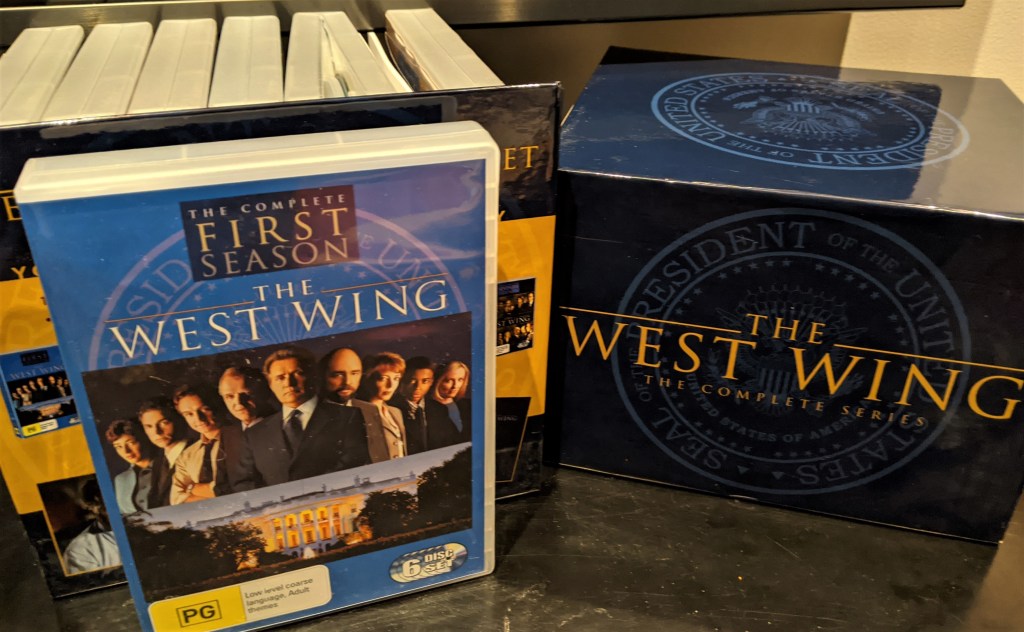

American Presidential Election Coverage on CNN and MNSBC has been moved to Television Comments: Archives

A Country Podcast, 13 November 2020.
This episode is one of three that deal with Sophie’s drug addiction, HIV Aids and death. Sophie is Dr Terrence Elliot’s young adult daughter who has lived in London and Sydney and has returned to Wandin Valley for a short time to live with Terrence and Alex. The personal issues dealt with are Sophie’s problem and their impact on Terrence and Alex’s marriage, Esme Watson’s response to Sophie and Matron Sloan’s advice to Alex, the Sydney scene for drug addicts; the political issues raised are the way in which drug addiction and HIV Aids are being dealt with by health carers in Kings Cross.
The political aspects are discussed in the podcast, drawing attention to the needle exchange program that was implemented as part of a ‘civil disobedience’ initiative arising from a Darlinghurst meeting between Sydney health care workers and people who used drugs. While the New South Wales Government refused to endorse the needle exchange program, it was begun. The quote, ‘We led the world’ sounds so good. In 2020, Australia is also doing well dealing with Covid 19. Unfortunately the civil disobedience of refusal to wear masks, social distance and remain inside when requested is less positive than that exhibited by the Darlinghurst Group.
The ‘Grim Reaper’ advertisements are discussed as part of the public reaction to the crisis. But, back to the A Country Practice episode. Kim Lester and Melani Tait discuss the depiction of Alex as an angry stepmother, married to an older man, and having to deal with his past. They talk about the depiction of strong women, and how it might have changed over time, so that Alex’s strong response, seen as ‘judgy’ and petulant by some at the time, is no longer necessary.
Before interviewing Judy Calquhoun, the reason for the title ‘ACP’s Serial Killer’ because she has written the deaths of so many of the characters , Tait and Lester talk about Tony Morphett described as ‘The Alan Sorkin of Australia’.
Judith Colquhoun is introduced in the title of this episode ‘She killed Molly. She killed Sophie. She killed Alex and Terrence’s baby’. What an amazing writer she must have been to be able to ‘connect to the raw emotion that comes with grief and convey it to Australia’.
Colquhoun wrote 100 episodes of A Country Practice, and her understanding of the characters and audience was clearly appreciated as phenomenal by the producers – a gift for the 100th episode, and a case of wine to write, at extremely short notice, a poem for Bob to read over the closing credits when Molly died. From recall, Terrence Elliott introduced this episode, warning viewers that younger audience members could be distressed. Not only younger ones, Dr Elliott! And, Colquhoun recalls the script writers weeping while writing the episode. Colquhoun also provides insight to the writing and development of characters. She notes that the writers had little to do with the actors, working on their knowledge of the characters they had brought to life. She particularly mentions Esme Watson as a character who develops over time, becoming an essential part of the series.
This episode of A Country Podcast ends with a light discussion of the fashions – clothing and cars. The latter focussed on the red sports cars that began with Simon’s early in the series and Alex’s Alfa Romeo.
I can provide only a few highlights from this fascinating, nostalgic but also current, series. A Country Podcast has a Facebook page which tells you what will be discussed in coming podcasts.
Monarchical Murmurs Become Resounding Television Fodder
The Crown, The Queen’s Gambit, and Donald Trump trying to replicate an autocracy in America, create a jumble of monarchical images and options. To be fair, the latter is the worst, but I cannot say that I am impressed with either of the former.
I have followed The Crown from its inception, throwing aside my republican commitment (as I did my concern with classism when watching Downton Abbey) and enjoyed it until this season. Is it because it covers events that are too recent? Am I prejudiced because of the egregious (and untrue) portrayal of former Australian Prime Minister, Bob Hawke? Am I just bored with the portrayal, often too sympathetic in my mind, of a truly awful institution and its members?

To be fair, the first few scenes of The Crown Series 4 were rather delightful, with their light touch on the beginning of the fairy tale that was anticipated, but not achieved, the marriage of Charles and Diana. However, this lightness was swiftly replaced with heavy handedness, unrelieved by ‘Shy Di’s’ head dropping and uplifted mournful eyes.
Then, to The Queen’s Gambit. I was encouraged to watch this because of family and friends’ – sometimes rapturous – approval. I have watched only two episodes, so perhaps I, too, will become engrossed. But, so far, no. The first episode went very slowly, from Beth Harmon, to become Elizabeth, being left an orphan when her mother’s car crashes – killing her but throwing the nine year old to the verge. Driven away from this to the orphanage we see a dark clad unsympathetic, but not cruel, character effect the change to Elizabeth from home with an eccentric mother, and a departing indignant male figure, to a resident of an orphanage. Here a kindly woman begins the recreation of Elizabeth, from removing her attractive frock for burning, and replacing it with a uniform. Further creation of a new creature takes place through her friendship, awkward but kind enough, with an older girl and, more importantly, the pills that are given to all the children every evening.
Elizabeth takes an independent step when she comes upon the janitor in the basement playing chess. Here her own life begins – augmented by the pills. She becomes the focus of attention for the nearby school where a chess club flourishes. Elizabeth plays multiple games with its members – beating them all. Triumphantly. When the pills that assist Elizabeth in imagining a chess board and moves before she sleeps, are removed from the medication regime Elizabeth takes dramatic measures.
At the end of Episode 1 I thought that Elizabeth, although intriguing in appearance, interests and aptitudes would have to do more to keep my attention. However, so many people’s enthusiasm kept me watching.
On the plus side, episode 2 demonstrates a great facility for moving seamlessly from Elizabeth’s child/adult persona, to a young woman, again with chess on her mind. Elizabeth has been deprived of her chess playing with the janitor, and both demonstrate their sorrow almost silently, but strongly. Elizabeth the child gazing in supplication to him, becomes the teenager with her friend gazing at what is to become the next phase of her life, initially without chess, although apparently with adoptive parents. The lack of predictability is also a precursor to the possibility that The Queen’s Gambit will exceed my current expectations. The child abuse remains that of the tranquilliser, which Elizabeth turns to her advantage, no molestation, no death from tuberculosis (or its 1960s equivalent) such as that in the orphanage of Jane Eyre. So, no predictability, a young woman who knows what she wants and works to achieve it, perhaps this is worth watching if not worth (as far as I can see at the moment) the accolades.
The Crown, Series 4, Episode 5 : A World of Difference
The Crown, Season 4, Episode 5 takes a vastly different approach from that of the previous and succeeding episodes. Rather than dwelling on the royals and their dramas, it looks at the world in which this family operates. ‘The Firm’ is a business – a very private and privileged one, in which its members benefit from inequality, knowledge of which usually remains outside. Even disadvantaged groups who specifically receive an invitation to meet the royals do so under circumstances that protect them from the reality. In this episode, the world in which Margaret Thatcher as Prime Minister brings her brand of conservatism to an already vastly unequal society, impinges for a short time on the Palace.
The usually closed, stuffy environment of Buckingham Palace is the site of William Fagin’s break ins, and ultimately Thatcher’s unremittingly cold appraisal of these, becomes for a short time open to another world. When Michael Fagin’s world collides with the Queen’s, and audiences of The Crown, both take a plunge into the sordid reality beyond the trappings of the palace. This provides The Crown with an episode that could be jarring in its verisimilitude. A world in which an unemployed man meets unsympathetic form waving social services staff; a cruel local member of parliament; the frustrations and distresses of a broken marriage, loss of children and (to him) usurpation by another man on his family and living alone in a squalid flat coincides, initially in the Palace kitchens, and ultimately in the Queen’s bedroom.
The first of Fagin’s visits results in a broken window, a purloined bottle of wine and the rather unworldly, but understandable, reaction of Buckingham Palace to these events. The Queen resolves that allowing knowledge of the event to go further will only result in interference and additional security. resolves the Queen. The human touch in this reasoning is replicated in the bedroom scene, where Fagin enumerates his problems, his dislike of Thatcher, and his belief that perhaps the Queen will listen. Fagin is eventually removed, and the Queen receives her morning tea, a little later than usual.
The scene between the Queen and her Prime Minister suggests the possibility that the Queen is open to a more sympathetic approach to dealing with the environment in which Fagin has struggled, roundly rejected by Margaret Thatcher. Further information is provided before the credits: Fagin spent three months in an institution and continues to live in London.
This episode demonstrates the very insular nature of The Crown, particularly in Series 4, so far. A sad but welcome change from the personal dramas that assail the family, which, while not dismissing their serious personal impact, contrast so strongly with the bleak world of tragedies occurring outside the palace walls.
The Good Fight Season 4
The Good Fight, together with The Good Wife, have been amongst my favourite television shows. In Season 4, truncated to 7 episodes because of Covid 19, Diane Lockhart’s firm becomes beholden to a slick multi-national law firm STR Laurie. This series lacks the serious legal cases that were, to me , the important feature of The Good Wife and earlier series of The Good Fight. In particular The Good Wife benefitted from the legal cases as an antidote to the personal lives of the Florrick family.
It was comforting to enter Diane’s alternative world, in which Hillary Clinton becomes the American President. However, although the episode raises some of the feminist issues that might have become grit in the enthusiasm of that win, it was a light start to a season that unfortunately had to end abruptly without a great deal of legal cases to lend weight. Of the issues that the series raised were the role of the Presidential pardon, and ramifications for then using the fifth amendment; bullying of judges through Memo 618 (the source of which is still to be determined); and , most difficult, transgender and women’s sport.
The West Wing
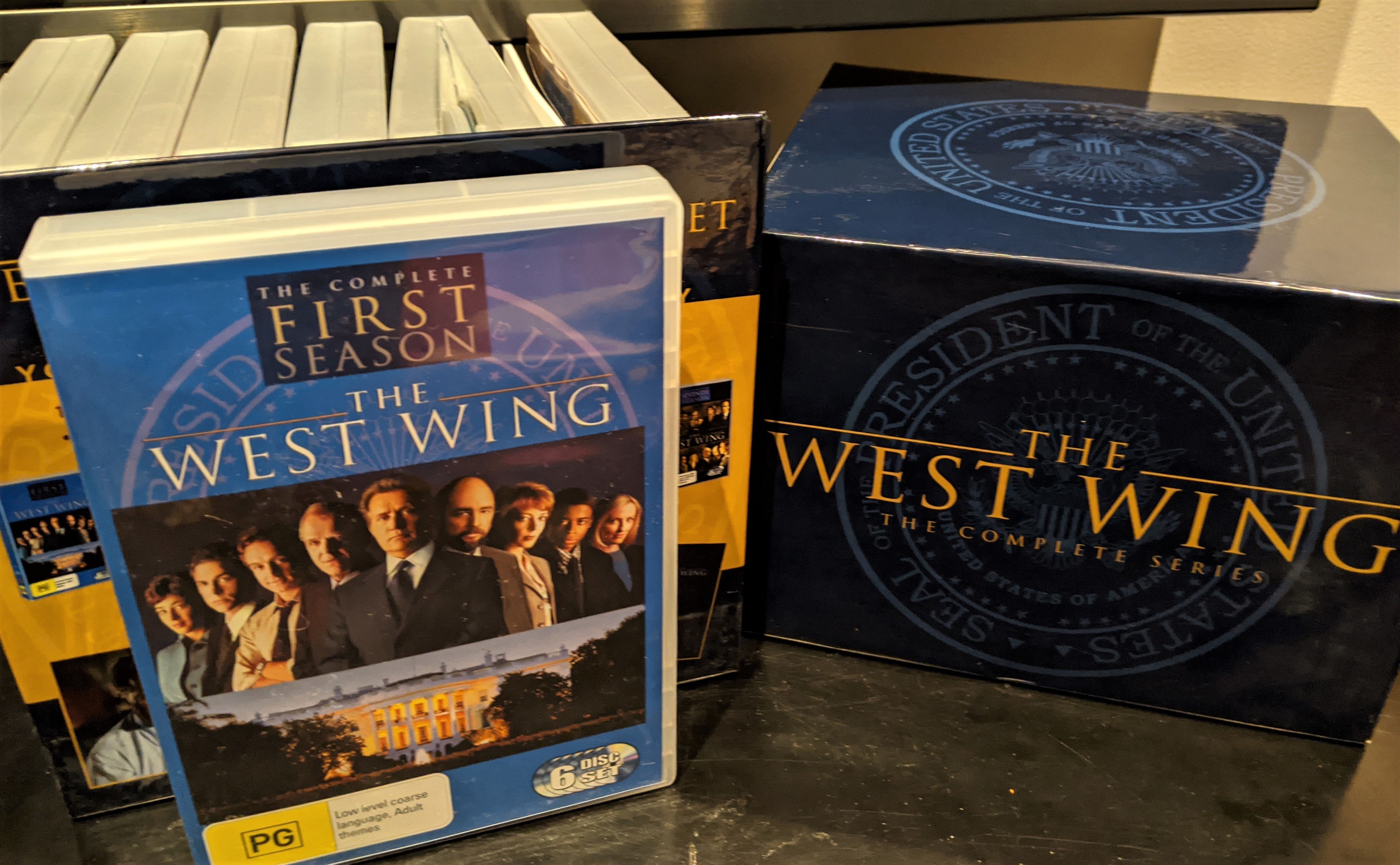

I’ve begun rewatching The West Wing and its thrilling to see the dramatisation of a decent West Wing, with people with everyday faults – Sam Seaborne and his foolish love affair (or is he justified in rejecting CJ’s concerns?); President Jed Bartlett’s distress over the death of his doctor creating difficulties for staff and protocol; even the way in which Donna has to behave to keep the peace with her boss, Josh Lyman (something that I intend to study as this relationship changes over the series – for the better for Donna). Interestingly, the first episode featured a religious pressure group making demands. The group included a woman reminiscent of the angry, judgmental and ugly members of some such groups today. Jed Bartlett cited the way in which a young woman had been targetted by some religious representatives, and refused to meet any demands.
 Robin's Room
While I have enjoyed the show (so far, i haven’t finished) for what it is, it certainly is NOT living up to the expectations I had.
I find the main character really quite boring. I feel she is not actually interesting enough to compensate her rudeness. I also feel we are meant to view this as a show about a woman facing hardships when wanting to participate in a men’s sport. Yet I have not so far seen her have any issues, or been discriminated against at all. Of course, a show about a woman does not have to be a show about discrimination / feminism. However I have heard people praising is as a feminist masterpiece, which I feel it is not.
LikeLiked by 1 person
Thank you for your insightful comment, Rosie. I, too, am disappointed. I am fortunate that no-one told me that The Queen’s Gambit is a feminist work. I expected to see discrimination on the basis of Elizabeth’s sex, but couldn’t see anything- her first competitor was another young , but this is easily explained by her lack of experience . Although I didn’t pick up what the other woman’s level was – perhaps she was being discriminated against?
I’m interested in your comment about Elizabeth’s ‘rudeness’. I see her as so motivated she thinks of nothing but the game. The janitor was very smart in showing her that her behaviour would not be tolerated – but she could be forgiven. I liked the image of the closed door and her acceptance of the punishment. She’s very practical about relationships – and I have to admit that I liked that she had sex, then read her book.
The relationship of the adoptive parents and Elizabeth is worth thinking about. Why did the husband, who was so uninterested in his wife (and appears to have been for a long time , if her alcoholism is any indicator, as it could be i n a television drama) want a daughter? So he could leave his wife with a companion?
The developing relationship between Elizabeth and her mother is interesting – and I like the subtle hand holding at times. The biological mother is also making some appearances and I wonder if that will be part of the ongoing story.
And yes, I agree that it is not a show that is having a great impact on me. I look to see what is happening on the American political programs before suggesting we watch the next episode!
LikeLike