Elizabeth’s Strout’s Oh William! is the fiction reviewed this week, together with two non-fiction books, How to Read Like a Writer 10 Lessons to Elevate Your Reading and Writing Practice by Erin M. Pushman, and Burton I. Kaufman’s , Barack Obama Conservative, Pragmatist, Progressive. NetGalley provided me with the uncorrected proofs of the three books in exchange for honest reviews.
Elizabeth Strout Oh William! Viking (Penguin Random House)2021.
My first, but certainly not last, novel from this talented writer. I am glad to see that Lucy Barton’s story has been partially written, as here in Oh William! she appears as William’s former wife (he was her first husband) and I would like to know more of the woman who took his last name but relinquished it gladly after eleven years. Who is this woman who became William’s wife, took his name despite her friend’s interrogation, said she did not care about being a feminist, wanting so much to be free of herself, and yet, after William’s mother dies becomes Lucy Barton again? Lucy Barton for the remaining nine years of their marriage? Effected the change almost by chance when she had her driver’s license renewed? Then, took it so seriously she bothered with court documents to do so? Left William, after twenty years of marriage but grieved over their separation? Is concerned about the pain for herself and their two daughters, but remains resolutely apart? Complete review at Books: Reviews
Erin M. Pushman, How to Read Like a Writer 10 Lessons to Elevate Your Reading and Writing Practice, Bloomsbury Academic 2022
As Erin Pushman suggests, reading to become a better writer is a useful process. However, it has its downside for Pushman and her book. I could not help but read it using the process she advocates -reading it as a potential writer of a similar narrative. That is, a narrative which is aimed at producing writers who, using what they have read, improve their own writing. Starting from this premise, I could not help but compare How to Read Like a Writer with similar information books, with the underlying question to myself – how would I write this book? How could it better achieve its purpose? Having read numerous books about scriptwriting, and some about writing short stories, while I feel that Pushman has much to offer, I have some concerns about the ability of the work to stand alone as an instructive writing text. I would have preferred clear short statements and observations to the somewhat ‘wordy’ narrative. Books: Reviews – for complete review.
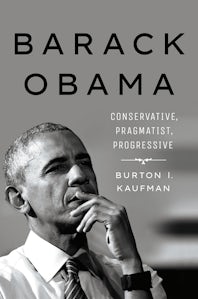
Burton I. Kaufman’s Barack Obama Conservative, Pragmatist, Progressive, Cornell University Press, 2022, is a timely read as President Joe Biden attempts to traverse the same recalcitrance from the Republicans – even where they are not in the majority. Then, as now, they do not have to be in the majority, making a mockery of the magnificent win in Georgia run offs by Democrats, Raphael Warnock and Jon Ossoff which promised so much for Democratic Party values and President Biden’s program. The Obama years provide an instructive, as well as fascinating, read to a person unfamiliar with American politics, and a deeper analysis of these years for those more with more experience of the way in which the President and Congress work together to achieve, or in many instances, obstruct, the policy process. See Books: Reviews for the complete review.
The topic covered after the Covid update is the role and upsurge of Independents in the Australian Federal Parliament, with reference to Total Control and articles from Amanda Vanstone and Bob McMullan.
Covid in Canberra since lockdown ended

New cases recorded on the 20th January – 892, with 4,447 active cases. Sixty two people are in hospital with three in ICU and two ventilated.
On the 21st January 826 new cases were recorded – is this the decline in cases we have been waiting for? Great news about the vaccinations for children five to eleven – 41.7% have had their first dose. Boosters for those over eighteen are also proceeding, with 36.4% having had three doses.
There is sad news that two Canberra Covid deaths were recorded on the 21st. This brings the total to twenty two deaths in Canberra due to Covid, with the total number of cases recorded during the pandemic at 29,245.
The lowest daily total of new cases, 666, since 3rd January was recorded on January 22nd. This increased to 694 on the 23rd. And again on January 24, with 756 new cases recorded. Over 50% of children five to eleven have had their first dose; and 39.6% of people over eighteen have been given boosters.
The new case figures for the 25th and 26th January are 904 and 896. The decline in cases seems to have been brought to an abrupt halt, with perhaps a glimmer of hope with today’s figures. The total of active cases is 4,745; children five to eleven are no 54.5% vaccinated with their first dose.; and booster doses for those over eighteen are now at 42.8%. There are sixty seven patients in hospital, including five in intensive care one of whom is ventilated. School face to face returns are proceeding as planned with the majority of students returning on 1 February.
Total Control is a political drama produced by Blackfella Films for the ABC. It follows the political activities of Alex Irving and Rachel Anderson as they move from party affiliations to become Independent Members of the Australian Parliament. That the white male leaders of the main political parties are egregiously overdrawn is a pity. Why, with leaders such as these wouldn’t Alex and Rachel choose to meet to discuss the wisdom of being Independents? However, both women’s portrayals do much to counteract this failing, and their story, together with the others who meet with them is pertinent to the rise in Independents in the Australian Parliament.
The discussions between the Independents and the Green Party representative seem realistic, and identify the problems and advantages for people who wish to avoid being part of one of the main political parties. Some of the would be Independents choose a different path from originally envisaged, demonstrating the ways in which negotiations might be resolved. However, at the end of series 2, there are Independents who could, with the relationships formed between several women, and that between Alex and another Indigenous politician, leave the way open to further dramatisation of the political and personal relationships forming in the federal parliament. The portrayal in this series, sympathetic to Independents, is at odds with the opinions expressed by Amanda Vanstone in the Canberra Times.
Amanda Vanstone’s article below is an opinion piece and provides an interesting and informed perspective on Independents. Bob McMullan’s article is focussed on the coming Federal Elections and the role of Independents. He considers their prospects in a sharp analysis of the seats, past results and current polling.
More independents in parliament are not the answer
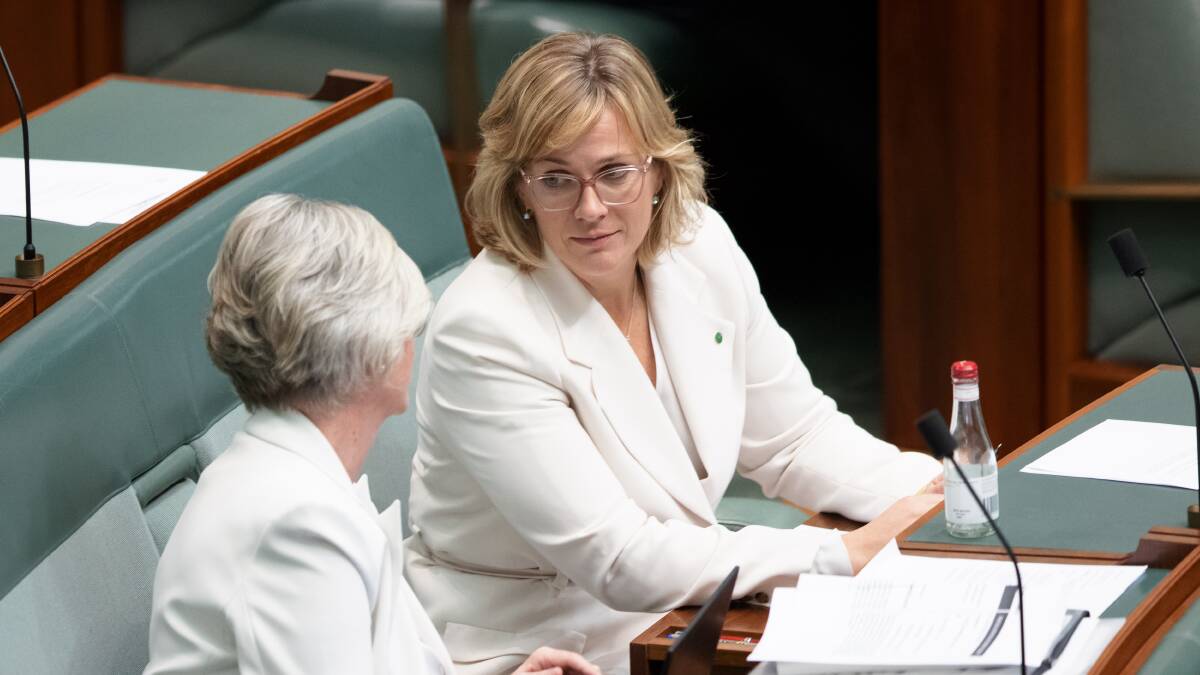
Independents Zali Steggall, right, and Helen Haines. Picture: Sitthixay Ditthavong
If you think our federal parliament has been less stable over the last 15 years or so wait until we get more independents in there. If instability and uncertainty is what you want, vote independent. It is a warm and fuzzy, feel good word.
Conveniently independents don’t have to tell you much about the philosophy that guides their decision making. In fact they indicate they are independent of the two main streams of political thinking that have emerged over the last few hundred years. Untied by the burden of working within a team they will be free spirits wafting from issue to issue as they please.
Governments don’t get to waft around with such luxurious indifference to the issues of the day. Problems get bowled up to governments and like it or not they have to be dealt with.
The awkward reality is that when we vote for our local member we are at the same time helping to construct the makeup of the next parliament. Politics101 tells us the party with the majority of members in the lower house forms government. If neither gets a majority then who forms government is decided by whatever deal can be struck with minor party and independent members. The horse trading starts on day one.
Picture yourself as one of say five members who collectively can give one party or the other the right to form a government. Do you think, Pollyanna style, that each of these five will just go with the party they intuitively prefer? Or do you think there might be some bargaining? Some demands to be met before your support is forthcoming. In less attractive language its called blackmail. Or holding to ransom.
Either of the major parties may have the support of millions of Australians but these independents might start with only 20 or 30 per cent of the vote in their electorate. They just have to come behind one of the major parties and generally ahead of the other candidates. As candidates with fewer votes than them are excluded the preferences are allocated. Its a fair system.
It is just worth remembering that you may get people in parliament who start with the first preferences of one third of their own electorate. They then collect the second, third and maybe fourth choice votes of excluded candidates. And with that uncertain ragbag of begrudging support they get to decide who forms our government.
Government is a team. Independents don’t always join the team, they simply indicate to the governor-general who they will support. Thus they remain unfettered by the laborious burden of resolving differences of opinion, of listening to the views across Australia. That’s the work left to the major parties. The independents come in after that work has been done and simply haggle.
Someone holding the balance of power in the reps or the Senate might not be so crude as to say “I’ll support you on this bill if you do x, y or z”. That would feel too much like cheap horse trading. They might rather say “I’m very concerned about (insert here some pork barrelling issue)”. Surprise surprise the issue is dealt with and the independent supports the legislation. Starting off with a 30 something per cent voter support and ending up holding a government to ransom is an extraordinary outcome.
In the Senate, independents can get elected with a small portion of a Senate quota and still end up holding a government to ransom. A government can be elected with a clear mandate for a particular policy and a minor party in the Senate feels entitled to block the will of the Australian people.
It is a very frustrating system. Having two houses elected on different systems does make for dynamic tension in the parliament. For all its faults it is better than a unicameral system where one party does what it likes for a few years.
There’s always plenty of criticism, some of it justified, of how the major parties conduct themselves. However, thinking that might be fixed by having more so-called independents in parliament is not so much delusional as it is crazy.
Recently out of the mouth of one aspiring independent came the pompous promise to remain independent and represent their own electorate’s view. The reality that their own electorate will not have a unanimous view on anything just hadn’t dawned. Will they remain independent of donors who funded their campaigns?
What will they do if a majority of people in their electorate are opposed to something which is objectively in the national interest. Please spare me the platitudinous rubbish that some come out with …”I’ll listen to my electorate”. Really? Independent candidates tend to imply that they will always do what their electorate wants. I hope not. Public opinion is mercurial and fickle. It must be taken into account. But the real question is what is in Australia’s best interest.
We don’t get that by going around a table and asking “what does your electorate think” and drawing up a table of the most preferred ideas. It’s laughable. We do it by teams of representatives listening to experts in the problem, to experts in policy design and working to find the best way forward. The electorates views don’t always win. Gun control legislation after the Port Arthur massacre is a classic example.
Consider that a number of people get elected on a platform of more action on climate change. What action? Will they get together and agree on some policies to put to the electorate or would that be too much like forming a party? Good heavens, they’d have to meet and despite no doubt differing views come to some sort of compromise.
Or are they marketing themselves as people of such wisdom and insight that you and I should just trust that they’d do a better job than anybody else. They won’t come out and say it but they believe it.
Ego rarely markets its true self. “I’m an egomaniac and I’m certain that I’ll be better than others at being a member of parliament” isn’t going to win votes. I’m independent sounds much better.
- Amanda Vanstone is a former Howard government minister and a fortnightly columnist. This article first appeared in The Canberra Times
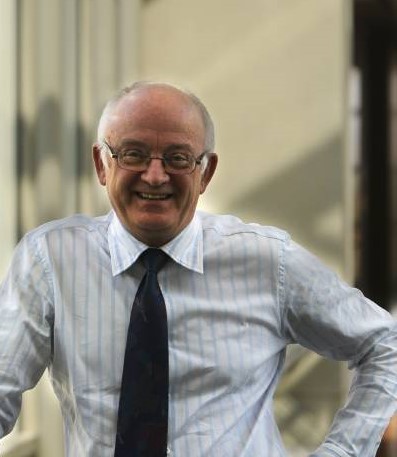
Bob McMullan
Will Independents hold the balance of power?
There are of course many important questions to be decided by the forthcoming federal
election.
The most important question is: who will form the government after the election? This will
determine the future of many important issues for the next few years.
An important subsidiary question is: will anyone be able to form a majority government?
I am not intending to canvass whether this would be a good thing or not. Rather, I am seeking to suggest the most likely outcome by analysing the prospects of independent and minor party candidates. My starting point assumption is that most of the incumbent independents and minor party candidates will retain their seats:
Bob Katter in Kennedy
Andrew Wilkie in Clark
Rebekah Sharkie in Mayo and
Adam Bandt in Melbourne
Helen Haines in Indi will have to fight hard but for the purpose of this article I am assuming that she will hang on.
The situation in Warringah is not so clear, but the desperation of the Liberals to get Gladys Berejiklian to run suggests that without her Zali Steggall will probably retain that seat also.
To assess the significance of other possible independent victories it is necessary to examine the underlying statistical situation.
Based on Anthony Green’s post-redistribution analysis the state of the parties is:
Coalition 76
ALP 69
Greens 1
Katter 1
CA 1
Ind 3.
(This does not take into account Craig Kelly’s switch from Liberal to UAP in Hughes as I consider that to be irrelevant to any assessment of the likely outcome in the House of Representatives). On the basis of this pendulum Labor would need a 3.1% swing to become the largest party and 3.3% to be able to form a majority government.
Polling suggests that this is a real possibility but the 2019 election showed the dangers of taking that at face value. If Labor gets the sort of swing that polling averages suggest then they will win irrespective of the likely results for various independents and minor party candidates.
However, caution suggests that any analysis should assume a close result in which case the independent and minor party results could be significant.
Anthony Green published a very interesting article about independent candidates’ prospects in the 2019 election. His key assumption was wrong because he assumed that all the polls pointing to a Labor majority result were correct. He wasn’t alone in making that mistake. However, his analysis of the underlying factors which influence whether Independents will win particular seats or hold the balance of power was basically sound.
His view was:
1) Experience at both state and federal elections is that independents are much more likely to win traditional conservative electorates.
2) Most independents poll poorly.
3) Independents hoping to poll well must announce themselves ahead of the election and must run in the right seat.
4) Mathematics mean independents are more likely to win safe seats.
5) Winning in a safe seat requires an independent to poll a minimum 20%, more likely 25 to 33% of first preferences.
This sets a high bar. Just wishing will not be enough. An effective campaign and a vulnerable opponent are required.
So, which of the many Independents who have already announced they are running has a chance?
In attempting to give some examples I could not hope to be exhaustive as there are too many candidates. I am sure I will miss some significant ones but I hope to capture the electorates most likely to contribute to the likelihood of a hung parliament.
Coalition held seats at risk
North Sydney
Held by Trent Zimmerman (lib) with a margin of 9.3%. The ALP vote in 2019 was 25% and this may be too high to allow for a successful Independent. The Labor party has endorsed a high-profile candidate which suggests the leading Independent, Kylie Tink ,will not make it unless she can eat very significantly into the sitting member’s primary vote. In a normal election this would be most unlikely. The special factor in this and other blue ribbon Liberal
seats in Sydney and Melbourne is the potential for a campaign based on the argument that a vote for “X” is a vote for Barnaby Joyce to be Deputy PM. If MS. Tink campaigns around this sort of theme she has a chance.
Wentworth
This statistically looks more promising for the Independent, Allegra Spender, as Dave Sharma (Lib) only won by 1.3% from the incumbent Independent, Kerryn Phelps, while the Labor vote was only 10.9%. However, it is much harder to win at a general election than in a by-election such as that won by Dr Phelps. Nevertheless, once an electorate has felt the power that can flow from voting Independent there is often a propensity to do it again.
Hume
This is a real wild card. The sitting member, Angus Taylor (Lib), has been embroiled in the sort of controversy that makes a member vulnerable. The statistics appear more challenging, but I think Ms. Ackery has a real chance.
Flinders
With Greg Hunt retiring and given the reasonably strong performance by Julia Banks in 2019 (13.8%) Claire Boardman has a chance. However, I suspect the Labor Party will do too well to give her a chance of coming second.
Goldstein
Zoe Daniels is the type of high-profile candidate who could break through here. If she can seriously eat into the Liberal vote and get ahead of the Greens (14% last time) she would have a realistic chance of getting ahead of the Labor candidate (28% last time) and could win.
Boothby
Sadly, I am certain Jo Dyer has chosen the wrong seat in which to run. I knew her as a very competent and engaging arts administrator when I was Arts Minister. She is the type of Independent who could bring a valuable perspective to the parliament, but Boothby will be
a very close contest between the major parties and Jo will be squeezed out. There are other South Australian seats she might have won, but not this one.
Higgins
This was a close contest last time and is likely to be a three-way contest between Liberal, Labor and the Greens again. At this stage it is too close to call.
Kooyong
Very high-profile Green and Independent candidates gave this a major effort last time and fell short. It is hard to see it being harder for Josh Frydenberg this time.
There are other possible such as Mackellar and Berowra and interesting cases such as Nicholls, but the seats I have considered seem most likely at the moment.
Three-way challenges
In addition to Higgins (listed above) there are other interesting potential three-way challenges such as Brisbane, Ryan and McNamara (discussed below). Closer to the election it may be possible to make a more accurate prediction of the likely outcomes in these seats. For the moment all that is possible to say is that they will be interesting and any of Liberal,
Labor or Green victories are possible.
Labor seats at risk
As Anthony Green says, Independents are more likely to win in coalition held seats. That appears to be the case again this time. However, some seats currently held by the ALP will be under serious challenge from minor parties.
McNamara
This seat was a tight three-way contest last time and is likely to be so again. It appears to be the Greens best chance of gaining a second House seat so will be a major campaign and spending focus for them. Unless the Liberal primary vote drops a long way (37% last time) it would require a 3-4% switch from Labor to the Greens for the Greens to come second and have a chance of winning. With a newly elected sitting member and a strong Labor primary
vote in Victoria any of the three results is possible but the sitting Labor member, Josh Burns must start as favourite.
Hunter
The results from last election would suggest that One Nation has an outside chance of winning this seat. This appears to have been an anomalous result and while it may be under threat from the Liberals it is hard to see One Nation winning it.
Cunningham and Cooper
These have been Green targets in the past and are likely to be so again. It is hard to see them winning Cooper against Ged Kearney, at least while Labor is in opposition. However, the retirement of Sharon Bird may provoke some interest in Cunningham.
On balance, this analysis suggests at least the six sitting Independent and minor party candidates will be returned with up to four or five other realistic chances.
It would only be likely that there would be a Labor government dependent on minor party and Independent support if the ALP wins some seats but not quite enough. That is, if Labor gains a swing greater than 3% and less than3.5% approximately. This is a remote possibility, but it is possible.
However, as soon as the coalition loses one seat they will be dependent on cobbling together support from a range of Independents, at least some of whom may not sit comfortably with the Nationals.
We are indeed living in interesting times.
 Robin's Room
Dr. Robin Joyce……..I certainly appreciate your thorough & exceptional thoughts.
Although, presently living in the USA, I am enlightened, & feel enthusiasm that such expertise from yourself & Mr. Bob McMullan can/will guide the “Sun Burnt Country” to uphold Democracy with it’s precious form. Democracy is fragile – the people need to realise how precious it is to have a say in how their lives & their children’s lives for future of Australia.
LikeLike
Thank you Felicity. I am glad that somehow you have managed to read this post! I am having trouble. Sometimes the link works, and sometimes it seems as though it doesn’t. I think you would be interested in the Heather Cox Richardson articles
They are impressive account and analysis of the American political scene. Thank you for commenting
LikeLike