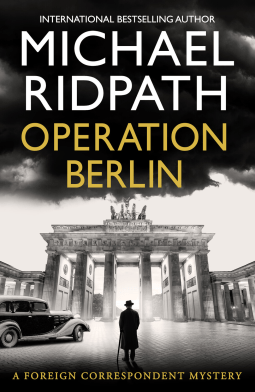
Michael Ridpath Operation Berlin Boldwood Books, April 2026.
Thank you, NetGalley and Boldwood Books, for this uncorrected proof for review.
Having recently reread Michael Ridpath’s financial thrillers I found it difficult to change pace with this more elegant approach to murder. Operation Berlin has a certain charm, which grows as the narrative moves toward revealing the guilty, but it is well removed from Ridpath’s early works. So, could I become attached to this departure which Ridpath describes as historical fiction? Reading the Author’s Note, where Ridpath explains his inspiration for Operation Berlin, provides a valuable insight into the novel.
Archie and Esme meet, with the former in a bad mood and Esme desperate for work to support her ambition to become a journalist. Archie is Sir Archibald, researching a German Field Marshall; Esme is a typist from Kalamazoo. Their developing relationship, while examining papers relevant to the research and Archie’s love of antique books in various German towns, with a background of the rise of Nazism and imminent elections and two murders is engaging. This relationship is a particularly clever part of the narrative, as Ridpath uses the personal account to address the wider issues of the aftermath of war, the role of journalism and the political events at the time.
The plot is well executed with enough clues and possibilities to engage the lover of mysteries. There is enough authenticity to interest to the reader of historical fiction. Most of all, Archie and Esme are appealing characters who are ready to advance to other mysteries if Ridpath decides to make their companionship a series. I enjoyed the novel from each of these aspects and will gladly read more of Ridpath’s different work. However, I must admit to a sneaking wish that he would write another financial thriller.
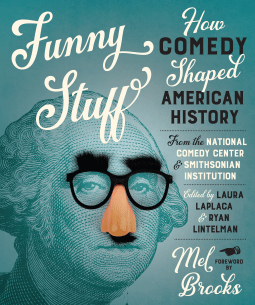
Edited by Laura LaPlaca and Ryan Lintelman, with a Foreword by Mel Brooks Funny Stuff How Comedy Shaped American History Rutgers University Press, May 2026.
Thank you, NetGalley, for providing me with this uncorrected proof for review.
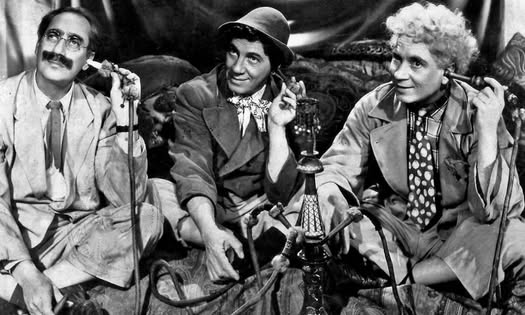
A wealth of information is encapsulated in this absorbing narrative with its accessible prose and an occasional comic moment brought to life, which gives ‘funny stuff’ its place in American history. The foreword which introduces the themes, which are then recounted in detail in the many articles that follow, is descriptive, enlightening, and engaging. In addition, it introduces many of the characters and manifestations of the comic works that follow in the detailed pieces, giving characters, ideas, and events some familiarity. Of course, many of them are recognisable from experience – for me, the Marx Brothers and Seinfeld in particular, and who has not at least heard of I Love Lucy or the Muppets? The book works well in covering a plethora of comedy types some historical, some familiar, and some new. In addition to the expected figures, Joe Biden, Bill and Hillary Clinton, Barak Obama, George H. Bush, and George W. Bush appear. Where does the feminist Helen Gurley Brown fit? Or The Feminist Mystique and Betty Freidan? Social Commentary? And historical events? See Books: Reviews for the complete review.

What humour means to older people – and why some find it hard to keep on laughing
Published: March 21, 2026
Author Heather Heap
Phd Candidate, Department of Psychology, Aberystwyth University, Heather Heap does not work for, consult, own shares in or receive funding from any company or organisation that would benefit from this article, and has disclosed no relevant affiliations beyond their academic appointment. Partners: Phd Candidate, Department of Psychology, Aberystwyth University
Disclosure statement
Heather Heap does not work for, consult, own shares in or receive funding from any company or organisation that would benefit from this article, and has disclosed no relevant affiliations beyond their academic appointment.
For many older people, humour can be a lifeline. It’s not easy to discuss the challenges of ageing – from loneliness and the loss of a loved one to dealing with chronic pain. But laughter can be an invaluable way of opening up about how hard life sometimes feels.
“I struggle to get round at times, but I have to,” a 72-year-old man told me during my research with colleagues into older people’s experiences of humour. “If I didn’t laugh at myself, I’d cry.”
Past research has suggested that cognitive decline can reduce older people’s ability to be funny. But our study offers an alternative explanation for the reduced amount of humour in their lives. It’s not so much about older people losing their sense of humour, as about changes in their opportunities to use and enjoy it.
We interviewed 20 people aged 60 and over about the role of humour in their lives, having already asked them to rate their wellbeing. What emerged was a complex picture: humour can be a key part of life for some older people, but a source of distress and discomfort for others.
Many participants living alone explained they simply had fewer opportunities to share humour. Without partners or regular companions, it diminishes not due to inability but isolation.
“Now I live by myself, it’s a bit more awkward,” said a 75-year-old male interviewee. “But as soon as I’m meeting anybody, that’s when the humour surfaces with other people. Not when I’m by myself.”
Fears of causing offence
Many older people highlighted shifting social attitudes about the humour they wanted to use and find funny. They felt that while younger generations could use profanity and edgy humour freely, their preferred humour was increasingly seen as unacceptable.
Many said they self-censor around unfamiliar people for fear of causing offence, resulting in a decline in their overall use of humour. A 62-year-old male told us:
If it’s somebody you don’t know, you could use [humour] to break the ice – but there’s the social barriers. You don’t know them, so you don’t really want to use too much. You don’t want to use humour which they might not find acceptable.
When pressed on what kind of humour was no longer considered acceptable, our older interviewees were often wary in their replies. One 71-year-old man suggested that ageist humour was no longer possible among elderly people: “I think it’s a subject people are a little bit wary of making jokes about these days … Just as anti-Jewish or anti-Irish humour has gone out of fashion, I think possibly the same thing about elderly people.”
Equally, some interviewees complained about stereotypes that portray older adults as “coffin dodgers” or “old grannies”. Research shows these can negatively affect psychological wellbeing when older people internalise such stereotypes.
Reactions in our study were mixed: some found these jokes offensive and harmful, mainly women. Others, particularly men, argued that jokes should be accepted in good spirit and that negative effects stem from misunderstanding, rather than the joke itself.
Familiarity played a role too: while ageist jokes from friends felt relatable and funny, the same jokes from strangers were more often seen as offensive.
Our interviewees said they enjoyed a wide variety of humour, from political comedies and dry wit to slapstick comedy (many referenced Monty Python). However, many found it easier to pinpoint what they disliked: profanity, and humour where someone becomes the “butt” of the joke.
Comedians like Jimmy Carr and Ricky Gervais were frequently mentioned as examples of humour they didn’t enjoy, with one explaining: “I like laughing at situations, not at people.”
The darker side of humour
Humour serves important social functions, helping people of all ages to navigate difficult conversations, reduce tension and maintain connections. Our study found that older people who said they frequently used humour as a social tool also tended to rate themselves higher in terms of their wellbeing.
This concurs with many studies showing humour has a positive affect on mental health and enhances wellbeing.
In contrast, those declaring lower wellbeing were more likely to admit using humour in a defensive way. As one woman aged 62 put it: “I think I’m aware that I use humour to deflect things. I use humour as a mask.” Relying on humour to deflect emotional needs can in turn restrict the depth of a person’s connections.
Whether it is the freedom to joke without fear of causing offence or the ability to laugh together at the challenges associated with ageing, our interviewees repeatedly stressed that most humour surfaces in the company of others. When you’re on your own, it’s much harder to keep on laughing.
Published: April 23, 2026 7.14pm AEST, Article republished under Creative Commons

Associate Professor (Affiliate), Australian Literature, University of Sydney
Disclosure statement
Brigid Rooney does not work for, consult, own shares in or receive funding from any company or organisation that would benefit from this article, and has disclosed no relevant affiliations beyond their academic appointment.
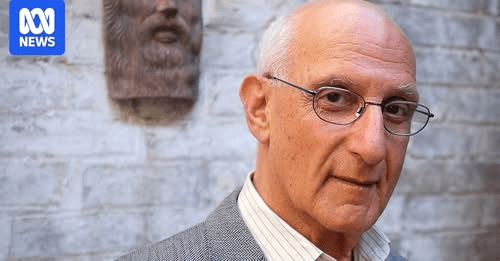
David Malouf was a writer of wisdom, grace and generosity
David George Joseph Malouf AO, one of Australia’s most accomplished, internationally renowned and beloved writers, has died aged 92.
Malouf’s novels are cherished by readers – from Johnno (1975), An Imaginary Life (1978), Child’s Play (1981) and Fly Away Peter (1982) to Harland’s Half Acre (1984), The Great World (1990), Remembering Babylon (1993), Conversations at Curlow Creek (1996) and Ransom (2009).
He also wrote numerous short stories, producing four thematically coherent collections. All these works draw from and transmute elements of his own life, his detailed memories of places, people, things and experiences. Yet Malouf always maintained a clear separation between his personal, private life and his public self as a writer.
Malouf made an indelible mark on Australian literature. His many distinguished honours and awards included an Order of Australia, the Neustadt International Prize for Literature (2000), election as a Fellow of the Royal Society of Literature (2008) and an Australia Council Award for a Lifetime Achievement in Australian Literature (2016).
He was in every sense a man of letters. He was a great reader and profoundly erudite. He was a sociable, assured and generous contributor to literary and public conversation. These same qualities imbue his writerly voice, his regular invocation of a communal “us” or “we”. His intimacy of address marks his poetry and prose, inviting trust and drawing in readers.
A writer’s life
Malouf was born in Brisbane in 1934 to first-generation migrants to Australia, a Lebanese-Melkite Christian father and a European-Jewish mother. The latter had grown up in England, until financial misfortune prompted her family to emigrate to Australia.
His mother’s Anglophilia transmitted itself to the young Malouf. Unable to speak the language (Arabic) of his paternal grandparents, who lived nearby when he was young, Malouf knew of but did not identify with either his Lebanese or Jewish ancestry. He grew up reading the Anglo-European canon and learning several languages, as well as piano and violin.
He saw himself as a writer in English – not as a writer of the migrant experience. Likewise, he did not want his writing to be defined by his sexuality. These aspects of his life are, however, present in his writing, and they mark its character and preoccupations in both subtle and tangible ways.

Having graduated from the University of Queensland, 24-year-old Malouf embarked in 1959 for England, where he taught for the next decade in secondary schools. During this period, he travelled extensively in Europe, worked on his poetry and began early drafts of his first novel, Johnno.
Returning to Australia in 1968, he took up a teaching post in English at the University of Sydney. The next decade was immensely productive, with publication of Johnno and An Imaginary Life and two arresting poetry collections, Bicycle (1970) and Neighbours in a Thicket (1974).
In 1978, Malouf relinquished his university post and went to live for ten months each year in Campagnatico, an isolated village in Italy. There he dedicated himself to writing without distraction, but maintained connections with Australia and his peers.
He returned to Australia in the early 1980s, settling in inner Sydney for the next few decades, close by the university and its library. His last move, in about 2017, was to return close to his home base in Brisbane, to an apartment in Surfers Paradise, near his family and the places of his earliest memories.
Living landscapes
Malouf introduced readers to the subtropical regions of his home state of Queensland, to fertile, watery landscapes imbued with time and memory.
His writing often starts from the small, the inconsequential and the ordinary, and unfolds from there into vibrant particularity. And then it moves outward, opening long perspectives and distant horizons, whether of nation, world or the earth itself. His figures travel towards strangeness and mystery at the edges of the self.

Malouf’s writing is sensitive to living landscapes in both regional and urban settings. His remarkable prose memoir, 12 Edmondstone Street, recalls the now-demolished South Brisbane house that had been the “first place” of his early childhood. It unfolds through successive rooms and tells of its story-laden objects.
The idea of this first house as a storehouse of memory, imagination and writing was central for Malouf. He once described the experience of writing his successive books as like building a house, to which he was adding rooms. Each new room is “part of that house, and not another house”, and yet adds something that reconfigures the whole.
Malouf’s fiction works on multiple levels, engaging with history and collective memory. Johnno, for instance, tells what it was like to grow up in Brisbane during and after the second world war. It is a sensory hymn to a ramshackle town that becomes a city, seen intimately and from afar as it alters beyond recognition. Harland’s Half Acre, Fly Away Peter and The Great World span the generational experiences of Australians involved in the two world wars.
Remembering Babylon and Conversations at Curlow Creek move back to the pre-Federation, colonial era. Their publication coincided with the settler nation’s first tentative reckonings with its brutal colonial history and legacy – a reckoning still far from complete. These novels spurred Malouf’s wider public engagements in the 1990s.
In the wake of writers such as Kenneth Slessor and Patrick White, Malouf forged new pathways for settler Australian literature. Through his writing, he aspired to cultivate interiors – a sense of the mysterious or numinous dimensions of life and things. He sought to reconcile these interior qualities with outer worlds.
This also drove his attempt to imagine an interior history for Australia, to tell the untold stories of inner, collective experience behind or within external events. He believed in the role imagination and storytelling could play in recognising the darkness of settler-colonial history and moving towards reconciliation with Australia’s First Peoples.
In 1998, he presented the Boyer lectures, published as A Spirit of Play: The Making of Australian Consciousness. In these he canvassed the “complex fate”, sensibility and potential of a settler people, “children both of the old world and the new”.
Malouf’s public commentary on civic and national matters was matched by his quiet work on peace and reconciliation behind the scenes. In 1999, with Jackie Huggins, Malouf co-wrote the draft Declaration for Reconciliation, intended for consultation with the Australian people. He advocated the freedom of writers around the world through his long involvement in PEN Sydney, of which he was a life member. He was a lifetime ambassador of the Indigenous Literacy Foundation.

A poet from first to last
From first to last, Malouf was a poet. From Four Poets (1962) – a joint endeavour with fellow poets Donald Maynard, Rodney Hall and Malouf’s close friend Judith Green (later Rodriguez) – to Earth Hour (2014) and An Open Book (2018), and many prize-winning collections in between, the luminous quality of Malouf’s poetry belies the complex dimensions it unfurls.

A poetic imagination, as Yvonne Smith says, infuses all Malouf’s writing with music, creating what Ivor Indyk calls its “pulse”. For Vivian Smith, the precise observations in Malouf’s poetry are sensual, “rooted in the tentacular, in the life of the body”.
Malouf is most known around the world, however, for his fiction. His books secured such prizes as the Miles Franklin Literary Award, the Prix Femina Étranger and the inaugural International IMPAC Dublin Literary Award. He was thrice winner of Australia’s oldest literary award, the Australian Literary Society’s (ALS) Gold Medal, a feat so far matched only by Patrick White and Alexis Wright.
But Malouf also possessed a rare ability to work across genres with flair and elegance. He composed libretti for at least four operas, starting with Voss, based on Patrick White’s novel. His play Blood Relations (1987) reworked Shakespeare’s The Tempest.
Beyond national horizons
Though anchored in beloved Australian places, Malouf’s writing seeks coordinates beyond national horizons with world literature, from the classics of antiquity to the modern transatlantic canon. His writing converses with the works of, among others, Marcel Proust, Joseph Conrad, Henry James, Honore de Balzac, James Joyce, Fyodor Dostoyevsky, Rainer Maria Rilke, Wallace Stevens and William Faulkner, and with the ancient poetry of Homer, Horace and Ovid. His lifelong love of classical languages is manifest in his writing.

Malouf felt a personal affinity with Ovid, with whom he shared a birthday. His internationally acclaimed second novel, An Imaginary Life, recreated the experience of the ageing Ovid in exile on the remote edge of the Roman empire. Here, through his encounter with his opposite, a wild child, the poet opens himself newly towards experience of the world, and towards his own bodily and mortal being.
Malouf’s last novel, Ransom, circles back to the ancient world. Reworking the last book of Homer’s Iliad, Ransom cultivates the interior history of the epic. While the epic tells of great events in heroic terms, Malouf explores the thoughts and feelings of the aged, grieving King Priam and the furious avenger Achilles. It ultimately returns us to Priam’s companion, an ordinary man and the bearer of the story, the carter Somax, and Beauty, his favourite mule.
Ransom creates, amid hostilities, a little pocket of stilled time. From here, the story expands to the past and the future. New models of being are ventured. The weight of convention, of royalty, of war, is balanced by the myriad “prattling” voices of the living world. The epic finds its counterweight in this novel, which attends to the small, the humble and the inconsequential.
The reality of the small and the inconsequential crystallises once more in Before or After, the very last poem in his last book, An Open Book:
… It is the small,
the muted inconsequential,
at this point that comes closest to real.
With its evanescent and mysterious refractions, with its threading of connection between ancient and modern worlds, Malouf’s writing gives us a vision of life even at the edge of destruction.
He will be a remembered as a writer of wisdom, grace and generosity, and for the richness of his poetic imagination. He will be remembered for his curiosity and dedication to literature. He’ll be remembered as someone not bowed down, as only lightly touched, by time.
Fly Away Peter is remembered fondly by so many people who are paying tribute to David Malouf. It was part of the Canberra school English syllabus and was a pleasure to teach.
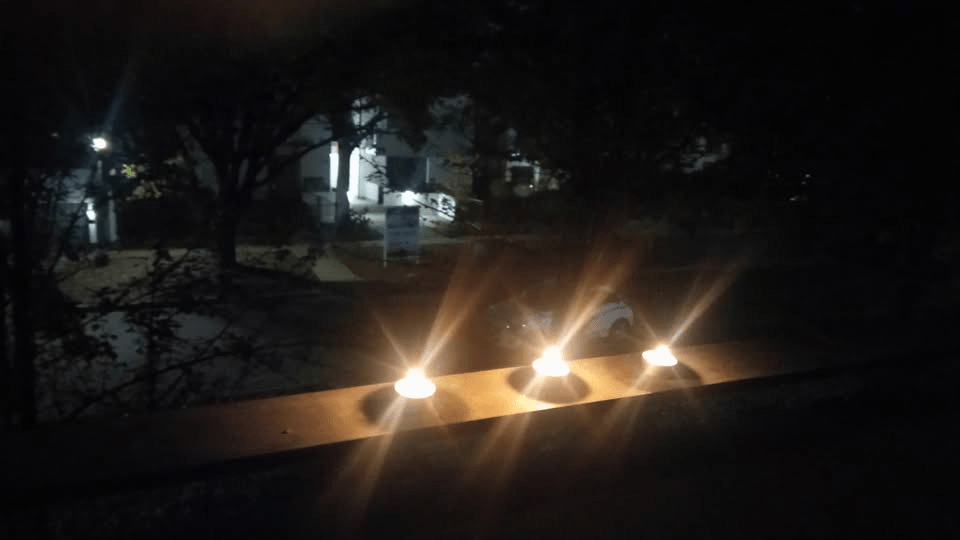
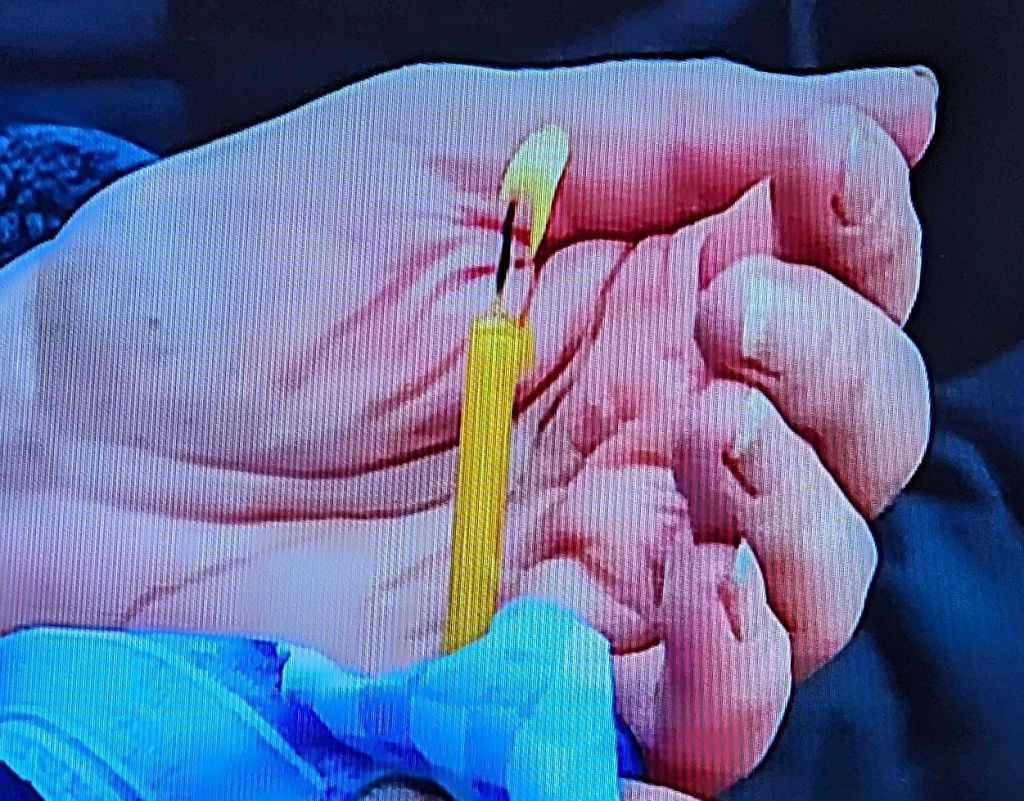
Six years ago, this was our Anzac Day Remembrance. People lit candles, and opposite our apartment a woman played The Last Post on her trumpet. It was lockdown for the Covid epidemic.
American Politics
Occupy Democrats’s post
BREAKING: Trump blocks Bill Maher Kennedy Center comedy honor in SHOCKING act of blatant political retaliation.
Donald Trump’s attack on modern American culture just found a new target — and this time, it’s comedy in the crosshairs.
According to a report in The Atlantic, comedian Bill Maher was set to receive the prestigious Mark Twain Prize for American Humor at the Kennedy Center — one of the highest honors in comedy.
But then? Suddenly, the plug was pulled.
After news of the selection surfaced, the Trump White House reportedly stepped in and made it clear: Maher would NOT be getting the award.
Just like that. And this isn’t happening in a vacuum.
Trump has already taken control of the Kennedy Center by installing loyalists and reshaping its leadership. He’s openly fantasized about handpicking honorees — and now, critics say we’re seeing exactly what that looks like in practice: reward loyalty and punish critics.
And Maher? He’s been a longtime Trump critic — someone Trump has publicly attacked for years, even calling him a “highly overrated lightweight.” Trump even sued the comedian once when Maher joked that he was the product of a tryst between his mother and an orangutan.
So, when Maher was poised to receive one of the country’s top comedy honors, the decision didn’t last long. Because apparently, under Trump’s watch, even cultural awards aren’t safe from political interference.
Ponder the precedent that this sets. A sitting president — or his administration — effectively stepping in to block a comedian from receiving an award, not based on merit, but because of personal grudges.
That’s not normal. That’s not how a free society is supposed to work.
This isn’t just about Bill Maher. It’s about whether art, comedy, and cultural institutions can exist independently — or whether they’ll be reshaped to serve political power.
And right now, We have to do everything in our own power to prevent that from happening.
Virginia Giuffre Set Something In Motion That Can’t Be Stopped

| Joyce Vance from Civil Discourse <joycevance@substack.com> |
A Sad Anniversary Joyce Vance Apr 26 READ IN APP
Today marks the one-year anniversary of Virginia Giuffre’s death. One of the bravest Epstein survivors, she refused to let the men who hurt her get away with it and demanded public accountability. Today at a memorial service, her brother said she had turned her “pain into purpose.”

And she did, forcing people—powerful people—to pay attention to survivors.
Prince Andrew is no longer a prince.
The Epstein survivors have shown no indication that they’re ready to walk away now. They forced Congress to pass a law that requires turnover to Congress of the Epstein Files. Trump is fighting a war in Iran, and there has been at least some suggestion that it was an effort to distract the public from those files, and from allegations that surfaced just before the war began that Trump himself had raped a 13-year-old girl. It does not appear that those allegations were ever fully investigated and the truth of that matter isn’t clear. Just as the files include mention of many other rich and powerful men, and their role is not clear: Were they participants? Witnesses? Were they aware of what was going on and failed to report it? Did they participate in a cover up?
Much of the truth is in those files, but the Justice Department’s new leader, Todd Blanche, has said he’s done releasing material. In early April, he told Fox News’ Jesse Watters that the files “And so I think that to the extent that the Epstein files was a part of the past year of this Justice Department, it should not be a part of anything going forward.” About 2.5 million documents are said to remain undisclosed, and the documents that have been released are heavily redacted, frequently obscuring the identity of perpetrators. And there has been reporting to suggest that approximately 30 pages of documents regarding the allegations about Trump and a minor girl have not been released.
Congressman Jamie Raskin believes the distraction won’t work. He said today that the “process of holding people to account had become an ‘irreversible reckoning.’” Virginia Giuffre wrote in her book: “If it helps just one person—I will have achieved my goal.”
Announced just last week, this year’s Time Magazine List of “The 100 Most Influential People of 2026” included Rachel Foster and Lauren Hersh. The two co-founded the group World Without Exploitation, which has helped the survivors develop their strong public voice and build the sisterhood that has enabled their demand for justice. Recognizing their work confirms Representative Raskin’s conclusion. These women are not going anywhere until there is accountability for the people who harmed them.
On Thursday, the Justice Department’s Inspector General Office announced that it would begin an investigation into whether DOJ is in compliance with the Epstein Files Transparency Act. The IG’s website clarifies its role: “The Office of the Inspector General (OIG) in the U.S. Department of Justice (DOJ) is a statutorily created independent entity that detects and deters waste, fraud, abuse, and misconduct in the DOJ, and promotes economy and efficiency in the Department’s operations. The Inspector General, who is appointed by the President subject to Senate confirmation, reports to the Attorney General and Congress.” The IG is a quasi-independent actor, positioned somewhere between the executive branch and Congress, which has, in the past, given it the ability to criticize the current administration. Whether or not that is still true remains to be seen.
But slowly, and inexorably, the survivors are demanding justice, and they point to Virginia Giuffre and their desire to honor her as motivation. A single act of sexual assault can radically alter the course of a life. In many cases, the Epstein survivors suffered repeated acts of abuse over an extended period of time, only to be ignored when they went to law enforcement, discounted when Epstein received his sweetheart plea deal in Florida, and treated as though they themselves were at fault. They deserve more than just empathy—they deserve justice.
What has become clear with the release of the files is that very powerful men, and even some women, in this country and in other countries, were involved in or at least complicit in concealing a ring that trafficked young girls internationally. There has to be accountability for the past to secure girls’ and women’s futures. As for us, we owe it to the survivors to refuse to forget, to refuse to be distracted. It is all of our voices, all of our focus, that will help the survivors get to the truth. And all of us deserve that.
We’re in this together,
Joyce
Australian Politics
Federal politics: PM backs Meghan Quinn as ‘stand-out’ first woman to be permanent defence secretary — as it happened
By political reporter Joshua Boscaini
Anthony Albanese has confirmed Meghan Quinn will be the first female secretary of the Department of Defence, calling her a “stand-out candidate”.
British Politics
Article from Labour List 28 April, 2026, by James Tibbut.

For much of the last year, Labour’s strategic conversations have been dominated by the threat from Reform UK. Senior figures have watched with growing concern as Nigel Farage’s party has sought to chip away at older, working-class voters in towns and communities that once formed the backbone of Labour’s electoral coalition.
But while the rightward pressure has become impossible to ignore, a quieter anxiety has been emerging inside the party from the opposite direction.
This not only matters because of what it says about the upcoming local elections, but because it also reflects a deeper recognition inside the party that, post the electoral success in Gorton & Denton, the Greens have shown the public they are more than a simple protest vote. Increasingly, they are being seen as a party capable of drawing support from progressive voters who once would have considered Labour their permanent political home.
This also mirrors the warning in the Ipsos analysis provided to LabourList today, which argues that Labour can no longer afford to treat Green advances as isolated local irritations.
In parts of the country, the Greens are beginning to present themselves not simply as an alternative choice on polling day, but as an alternative political identity for disillusioned progressives.
Political parties can often survive losing votes at the margins. What is harder to survive is losing the groups of voters that help define what the party believes itself to be.
My visit to Birmingham last week captured that tension clearly. Beneath the immediate pressures of a difficult local election campaign, from speaking with some Labour activists it was clear there is a growing sense that the Greens are capitalising on attracting voters who are no longer convinced Labour is their political home.
That is why the Green challenge feels different, but equally as concerning for many Labour members as the electoral threat of Reform.
Reform threatens Labour electorally by taking chunks out of a voter base that had already become fragile after Brexit. The Greens threaten Labour both electorally and existentially by appealing to a part of the coalition that has historically given Labour much of its moral and ideological energy, particularly in relation to young progressives who seem to be increasingly attracted to Zack Polanski’s approach to ‘vibe politics’.
One insurgent is eating into Labour’s old heartlands. The other is eating into any idea Labour once had that they were the only place for the left.
Taken separately, each presents a serious strategic problem. Taken together, they raise a much larger and more important question about Labour’s future.
Because if Labour finds itself squeezed by Reform on one side and the Greens on the other, the challenge is no longer just how to build a winning electoral coalition. It becomes how to hold together a coherent political identity when two emerging rivals are drawing support from two very different parts of the Labour tradition.
That may ultimately be the deeper significance of the upcoming May elections.
For Labour members, that should not be a cause for despair, but for honesty. The answer cannot simply be to ‘out-Reform’ Reform or outflank the Greens to the left. Neither can it be to berate and attack voter bases that would have once been Labour. There has to be a balance, which is admittedly, easier sought than achieved, though not impossible by any means.
As a membership, we need to come together to push for a clear new chapter of the Labour story. Something that brings together the good we have already achieved since coming into power in 2024, with the change we set our eyes on for the future. A story that tells the tale of a party that can sound just as credible in former industrial towns without becoming unrecognisable in progressive cities.
Most of all, it means remembering that Labour has always been strongest when it has offered voters a sense of belonging to a wider movement. In the age of politics driven by feeling, we need to spend some time focusing on how we make people feel good again. How we allow those not currently within the Labour Party, but with similar desires to see a nation provide social justice and economic security for all, feel that this is also the place for them.
ABC taps Adam Liaw, Pia Miranda to host cooking series ‘Recipe of the Year’
·April 24, 2026

Adam Liaw and Pia Miranda.
The ABC has announced production is underway on Recipe of the Year, a new cooking competition series hosted by Adam Liaw and Pia Miranda.
Produced by i8 Studio, the series invites home cooks from across Australia to share the dishes that define them, with the competition ultimately crowning Australia’s recipe of the year. Executive producers are Josh Martin, Liaw, Samantha de Alwis and Alenka Henry, with Zoe Norton Lodge serving as ABC executive producer.
The format includes the involvement of the Country Women’s Association, whose judges will appear across the series to offer guidance and encouragement.
Liaw said recipes were a window into both individual and collective identity.
“They each tell a story about the people who write them and who cook them, and when a recipe resonates with a lot of people – when it becomes a hit – it reveals a lot about who we all are,” he said.
“I couldn’t be more excited to be joining the search for Australia’s Recipe of the Year.”
Miranda described the show as a celebration of Australia’s culinary diversity.
“We’re set to discover dishes that truly reflect the richness and diversity of Australia today, while meeting some wonderful people along the way,” she said.
ABC head of entertainment Rachel Millar said the series was a “warm hug of a show celebrating the diverse voices of our delicious culinary landscape”.
“It feels like a hopeful snapshot of Australia today, told through the food on our tables,” she said.
Home cooks can apply at recipeoftheyear.com.au.