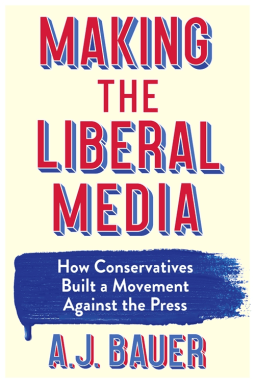
A. J. Bauer Making the Liberal Media How Conservatives Built a Movement Against the Press Columbia University Press, March 2026.
Thank you, NetGalley for providing me with this uncorrected proof for review.
This is a dense read, demonstrating accomplished insights based on a wealth of research. At first glance it appears to be an essentially academic work, requiring sustained attention. I found the preface, although obviously a mandatory read, a rather gruelling introduction to what became an enlightening book where discrete chapters provide the opportunity to read, digest, and recognise themes. It would be a pity if non-academic readers are deprived of Bauer’s thoughtful construction of the way in which the media has been treated through good will and bad, to become the vehicle it is today. Reading in short bursts should assist anyone to accommodate to the demanding text. It is well worth the effort.
The chapter titles are helpful in navigating the material and ideas. However, some stand out as pointers to the latter, serving to lure me into the text. For example, The Progressive Origins of Conservatism Criticism must give liberals pause. The material and ideas here really exercised my mind, mindful as I am of ideas and their implementation actively pursued by liberal thinkers, only to see them adopted for causes contrary to the original. The penultimate chapter, The End of Fairness, reflects upon the first, The Fairness Doctrine and its Subtexts. How did we get there from such a beginning? This chapter is a superb read – accessible, informative, and thoughtful. So much so, that it demands the reader also reflect on the borrowing of tactics (see the comments about Ralph Nader’s ‘blueprint’ for a start).
This leads to the questions arise which must arise if we think about the way in which Democrats have tried to deal with the most recent political events. For example, what if the demands to remove the filibuster during the Biden Presidency had been heeded? What a halcyon event that would have been for the conservatives now in government! And, on a happier note for believers in democracy, consider how the gerrymanders to make the most of the Latino vote may have backfired. Thinking about these current examples, the suggestion at the end of the book that there are no easy (or perhaps comfortable) answers to ending the belief in liberal media bias becomes even clearer. Having weighed the evidence, debated past events, ideology and behaviour, and making use of polling and other evidence about the present, Bauer’s judgment that journalism is a political project could be considered yet another uncomfortable position. Or his clear sightedness could lead to different judgements about how to challenge the idea that such political behaviour is biased towards liberalism.
There are copious notes and a select bibliography.

| Nearly destroyed by Henry VIII, this 500-year-old Gothic abbey just over an hour from London features stone angels climbing ladders from a bishop’s dream |
Bath Abbey holds 1,200 years of royal history—including King Edgar’s 973 coronation—and intricate ceiling fan vaulting that draws travelers from across the UK.
Charlie Maudsley, Staff Writer, 5 October 2026.
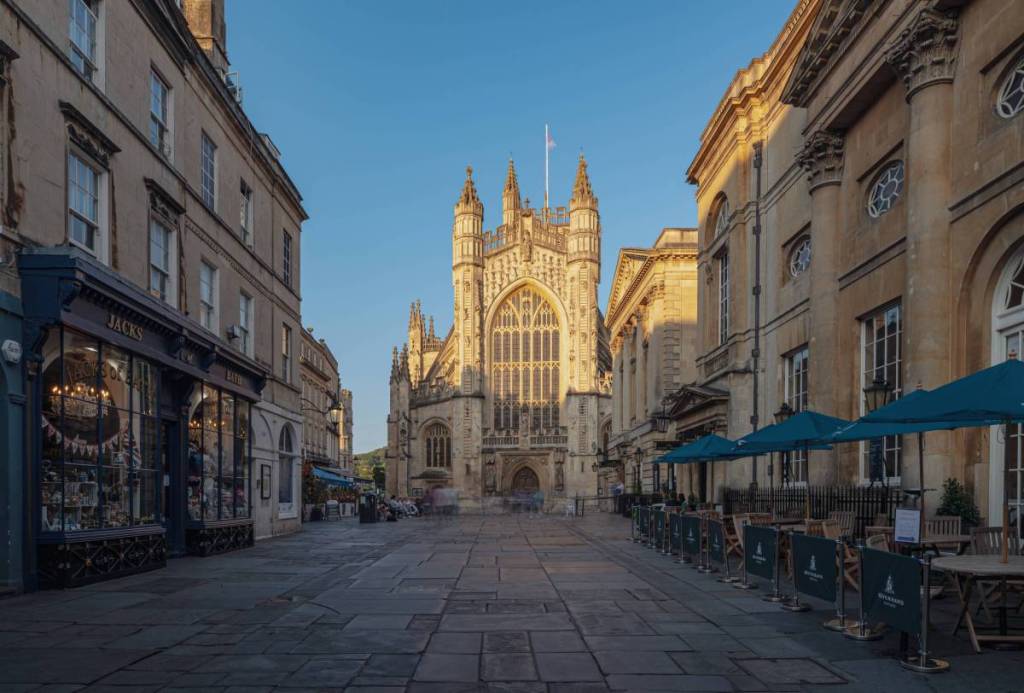
Reached in just over an hour from London Paddington, Bath Abbey is a honey-stone Gothic beauty that’s often called the “Lantern of the West” and has presided over the city for around 500 years. Its history stretches much further back: worship has taken place on this spot for some 1,200 years, and King Edgar’s coronation happened here in 973.
The exterior is just as compelling as the interior, with angels ascending ladders carved into the front—a design linked to a bishop’s vision—while spectacular fan vaulting fills the nave. It is remarkable that the building survives at all: following the Dissolution of the Monasteries in 1539, the Abbey was abandoned and left in serious decline.
It is not just a place to admire from the outside, either. Beneath its soaring fan-vaulted ceiling, amid stained-glass windows and honey-coloured stone, Bath Abbey will host a packed programme of live music over the next few months. Expect opera, organ recitals, Disney concerts, choral performances and festive classics, all under one historic roof.
During the Blitz, this 22-mile cave network beneath Greater London served as a mini underground city with 15,000 residents – today it’s an attraction where visitors can take guided tours of the caves and their almost 1,000-year history
Fancy heading below the Earth’s crust to see what lies beneath our fair city? Then make your way to Chislehurst Caves for a spooky excursion…
Sam Baker, Staff Writer, 5 October 2026
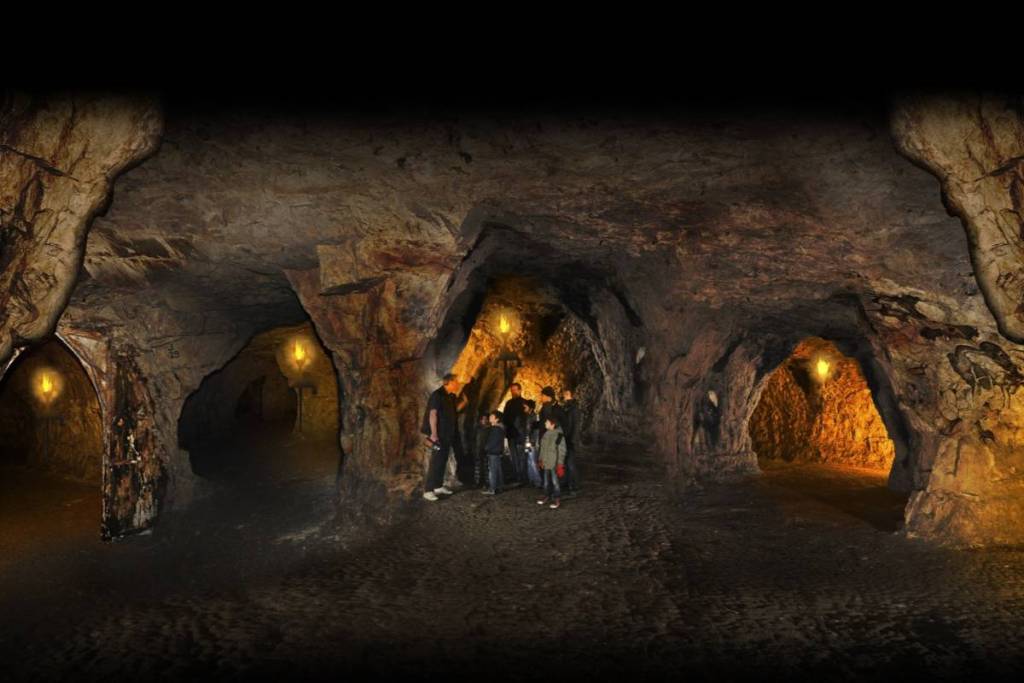
Over in Kent, just a short half-hour journey from the city, a curious attraction invites visitors to explore a vast 22-mile-long network of caves. Chislehurst Caves takes brave adventurers (and just the plain old nosey) down beneath Greater London. Visitors travel deep below several thousand tons of rock to delve into almost 1,000 years of history.
The sprawling maze of tunnels is a vast, man-made attraction that was excavated by human hands over many centuries. Records of the caves go all the way back to 1250! Some believe the earliest tunnels may date back even further, to Roman times.
Chislehurst Caves
The ancient caves were originally created as chalk mines. However, they’ve been used for a wealth of purposes since then. The caves have previously served as “ancient Druid temples and Roman settlements.” During the World Wars, the caves were used for ammunition storage “and even as an underground city housing 15,000 people during the Blitz.”
Subsequently, the caves became, of all things, a gig venue! In the 1950s-70s, the caves served as the setting for dances as well as concerts from the likes of David Bowie, Pink Floyd, and Jimi Hendrix.

As you might imagine for such a historic (and creepy) site, all sorts of paranormal goings-on have been recorded here. After all, has anything ever looked more like the setting for a satanic ritual of some sort? You won’t be sure if the goosebumps running along your skin have come from the cold cave air or the creepy caverns themselves.
Exploring the caves
Now, excited though some of you may be to strike off into the caves for some exploring, it’s important to note that the only way to get in is by taking part in a guided tour. Otherwise, you run the risk of becoming lost in the caves for all eternity and joining the existing set of hauntings… Yikes!
Tours of the Chislehurst Caves last around 45 minutes and depart hourly, from 10am – 4pm. But you get your own lantern, just in case…

Please note, due to the cave system’s uneven floor, it may be difficult to navigate for pushchair or wheelchair users.
📍 Caveside Close, Old Hill, Chislehurst BR7 5NL.
🚇 The nearest station is Chislehurst.
🎟️ Book your visit here.
Margaret Hamilton, trailblazer whose software powered Apollo 11 moon landing, dies aged 90
The Guardian
MIT computer scientist led development of software for moon mission and earned Presidential Medal of Freedom
Margaret Hamilton, the computer pioneer whose software powered the first moon landing, has died, the Massachusetts Institute of Technology (MIT) announced on Wednesday. She was 90.
In an era before titles such as software engineer and computer scientist became mainstream, Hamilton, who died on 30 September, learned to program under the tutelage of a renowned MIT meteorologist.
She continued to perfect the craft in an MIT laboratory, writing software that could detect enemy aircraft. When the institute received a Nasa contract to develop the Apollo onboard flight software, she jumped at the opportunity.
“I was attracted both by the sheer idea and the fact that it had never been done before. I was the first programmer to join and the first woman they hired,” she told the Guardian in 2019.
In 1969, minutes before the Apollo 11 spacecraft was set to make history by landing on the lunar surface, an onboard computer’s alarm rang, indicating an emergency.
Faced with a decision of whether to abort the mission, the spacecraft continued on. The software was working just as Hamilton and her team intended.
“It quickly became clear the software was not only informing everyone that there was a hardware-related problem but was compensating for it – restarting and re-establishing the highest priority tasks. The error detection and recovery mechanisms had come to the rescue,” Hamilton said.
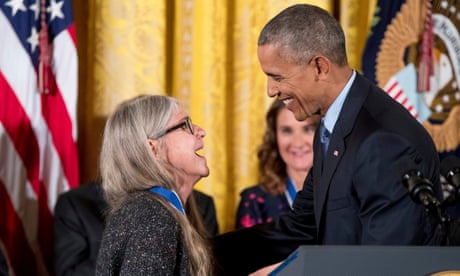
Barack Obama referenced the incident when he presented her with the Presidential Medal of Freedom in 2016.
“Our astronauts didn’t have much time, but thankfully they had Margaret Hamilton,” he said.
Hamilton is survived by her daughter, a son-in-law, two grandsons and four great grandchildren, according to MIT.
Reflecting on the mission, in a 2009 interview with MIT News, Hamilton said: “Looking back, we were the luckiest people in the world; there was no choice but to be pioneers; no time to be beginners.”

The Social Reckoning is a true American horror story
Published: October 9, 2026 1.48am AEDT
In 2010, screenwriter Aaron Sorkin’s The Social Network charted the birth of social media. Sixteen years later his sequel, The Social Reckoning, is tracing the mutation of Meta founder Mark Zuckerberg (played by Jesse Eisenberg in the first film and Jeremy Strong in this sequel) from an awkward nerd into a sinister billionaire.
It’s a remarkable film. But Sorkin’s obsession with his monstrous characterisation of Zuckerberg at times obscures the hideousness of the social media business model.
In The Social Network, Eisenberg brilliantly played the young Zuckerberg as super smart, conflicted and socially awkward as he channelled his frustration with Harvard girls into the misogynistic attractiveness-rating site FaceMash. Zuckerberg initially resisted commercialisation, fearing The Facebook would lose its cool. But by the film’s end, he was shown to have betrayed his friends to launch Facebook into Silicon Valley’s techno-capitalist machine.
The Social Reckoning follows Zuckerberg to the Valley, but summons a very different beast. This time, Sorkin writes and directs, pushing his depiction of Zuckerberg to the limit.
Method actor Strong steps confidently into Eisenberg’s shoes. At one point, his Zuckerberg admits that his media portrayal hurts his wife and kids. It’s a rare glimpse of empathy in an otherwise Zodiac-like performance. Eisenberg, it seems, had run out of that. Sorkin says he declined the role because “he just doesn’t like being conflated with Mark Zuckerberg anymore”.
By the end of the events depicted in The Social Network, Facebook had amassed over 500 million users. The Reckoning begins with 2.3 billion – more than the population of any country. As Zuckerberg declares in the film, Facebook is “post-government”, beyond conventional regulatory frames. This is the new world – one increasingly shaped by big tech billionaire oligarchs, who line up on the White House lawn alongside President Donald Trump.
The Social Reckoning reflects a world increasingly managed by Silicon Valley logic. HR managers tell Haugen: “Don’t be the friction.” When Haugen leaks research on Instagram’s damaging effects on teenagers’ mental health, we are shown how toxic leadership has become a contagion, spreading from the platform into personal lives. And when the ideology starts to unravel, another monster appears.
Zuckerberg calls in a crisis PR consultant (a stunning performance by Wunmi Mosaku) to coach him through the Senate hearings. The advice? Look them in the eye and repeat: “We are aware of that problem and currently doing something about it.” A month after the Wall Street Journal published “The Facebook Files”, Facebook changed its name to Meta.
Virality
Depending on your political persuasion, you might find some sympathy for Zuckerberg’s rationale: simply connecting people is virtuous, but protecting unchecked free speech is fundamental, at any cost. But that is also the film’s problem. It fixates on Zuckerberg as the ultimate villain, even though it exposes other horrors behind the scenes.
As set out in my book A Sleepwalker’s Guide to Social Media, I have some direct experience of this pernicious business model. In 2012, shortly after publishing my social theory of virality/growth, which argues that emotions, feelings and affects, more than rational choice, drives what goes viral online, I was invited by a social media start-up to meet its visiting US CEO.
I politely explained that the book was a sociological account of virality, not a guide to growth. The emails stopped. The company wasn’t Facebook, but the anecdote captures something crucial about the unfolding catastrophes of social media: when platform growth depends on virality, the content matters less than its velocity.
In 2018, Facebook claimed that tackling passive consumption and outrage-bait required supercharging its engagement system around “meaningful social interactions” (MSI). But, as Haugen reveals to Horwitz in the film, MSI did nothing to resolve the underlying problem: profit remained ahead of public safety.
Research at the WSJ warned that the system would amplify harmful and divisive content. Yet MSI remained an engagement-optimisation system, ranking what users were most likely to react to, share and discuss — including misinformation, conspiracy theories, race hate and political polarisation.
Facebook did not always hide its research from public scrutiny. Its controversial 2014 study with Cornell University academics experimented with emotional contagion, showing that the company already understood how positive and negative content could spread through its platform. Engagement and outrage were not simply unforeseen side effects of social media.
The Social Reckoning’s reliance on the Wall Street Journal’s “Facebook Files” reopens the growing abyss between what Meta knows and what it is prepared to do about it.
The film confronts some recent political viruses: misinformation, polarisation, COVID, Trump and the January 6th attack on the Capitol. Indeed, Sorkin blames Meta directly for the Capitol insurrection.
The question is whether the same addictive interactions that took Facebook from Harvard dorms to 3.6 billion users across Meta’s platforms have become machinery for the destruction of western democracy. The films ends with Zuckerberg watching events at Capitol Hill unfold in the Facebook war room. Should he pull the plug?
As lawsuits mount and new whistleblowers emerge, what will happen to Silicon Valley’s corporate monstrosities? Like most horror franchises, expect more sequels.
Give the truth a fighting chance.
Nobel Prize-winning journalist Maria Ressa warned that tech platforms are “weapons of mass destruction to democracy,” amplifying misinformation and weakening public debate. Younger generations, who have little experience of journalism before social media, are especially exposed. At The Conversation, we meet our readers where they are – on YouTube, TikTok, Instagram and beyond – with fast, clear, evidence-based explainers from academic experts. In a sea of spin, we want to give the truth a fighting chance. Readers are helping us to secure the resources we need to do this important work, and you can join them. By becoming a monthly donor, you will help us make expert knowledge accessible and protect us from the shysters, charlatans and shills who distort public debate.

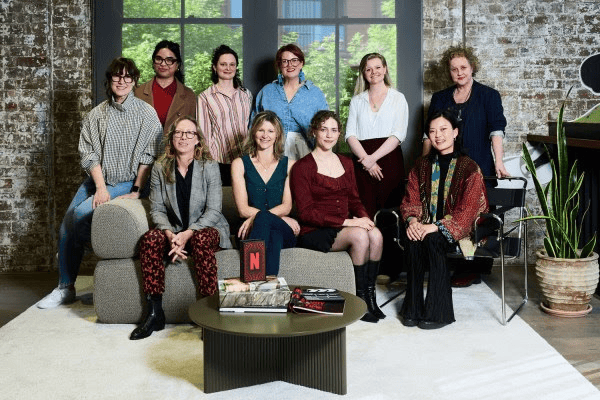
‘It’s really validating’: Netflix names eight writers selected for The Next Brilliant Career
Jackie Keast· FilmNewsTV & Streaming ·October 8, 2026
Writer, director and visual artist Theresa Angela was on a creative break to find her voice again when she saw Netflix ANZ’s The Next Brilliant Career initiative pop up.
The opportunity, run in partnership with the Australian Writers’ Guild (AWG) and each of the state screen agencies, offered emerging female and non-binary writers the chance to receive feedback directly from Netflix in developing their scripted story for screen.
To be eligible, writers had to have 1-3 reportable credits on a short film, film or TV series longer than 10 minutes that had screened at a recognised film festival or was supported by a screen agency.
So narrow were the eligibility criteria that Angela, whose shorts include Flaccid, Yes Sir/Sorry Ma’am and The Holy Whore, felt like the program was actually calling to her to apply. She redeveloped an idea she had been working on into a six-part surrealist dark comedy unpacking Australian identity and sent it off.
Ultimately selected as the writer representing Victoria, she told IF she’s “still in shock”.
“It’s taken me now decades to find my voice as an artist, because when I was younger I was busy emulating what I wanted to be or an idea of what my voice should be,” she said.
“It’s really validating for my voice to make sense to Netflix or VicScreen or the Australian Writers’ Guild, because for the longest time I didn’t think my voice was understandable.”
Angela pitched her series to Netflix ANZ content director Amanda Duthie and scripted development manager Katherine Slattery on Tuesday this week, as did the seven other selected writers from across the country. Their projects spanned both feature film and series, in genres as diverse as outback regency romance, coming-of-age, psychological horror, sporting drama and comedic crime.
Alongside Angela, they included Elyse Landsberry (NSW), Rae Choi (QLD), Scarlett Scherer (SA), Jamey Claffey (WA), Caitlin Richardson (TAS), Rebecca Parker (NT) and Denai Gracie (ACT).
The writers made it to Sydney following an independent assessment process led by the AWG, with submissions judged on the strength and distinctiveness of their voice, the clarity and compelling nature of their central premise, and the potential for their story to sustain a series or feature format. Their concepts also had to be “authentically Australian” and demonstrate strong command of genre and an awareness of the current screen marketplace.
Duthie told IF the program, inspired by My Brilliant Career and the legacy of Miles Franklin, was intended to support the “middle crowd”, that is, writers who have maybe “emerged” but don’t yet have multiple credits.
“What happens to that incredible pool of people who are trying to find their big break?” she said.
“As is often the case, many streamers and broadcasters, we require a producer to be attached. But what happens when you take that requirement out of the mix? What projects can rush in?
“We pleasingly received hundreds and hundreds of applications, and all of the state and territory agencies were incredibly supportive.”
For writer, director and producer Gracie, whose writing credits include Canneseries short-form series Deadhouse Dark and short EXO226, it’s exciting to see an initiative explicitly address the difficult-to-navigate middle ground between emerging and established.
“If you’re going to the funding bodies, you’re either too experienced or not enough, and we get stuck in this big chasm,” she said.
With much of the industry and commissioner offices concentrated in Sydney and Melbourne, being selected for the opportunity had added resonance for the writers working outside of Victoria and NSW.
“Being able to come over here and actually meet Amanda and Katherine in person is gold dust,” said the Perth-based Claffey, who previously worked in script and story editing at BBC TV Drama Commissioning and BBC Studios.
Duthie described what she heard this week as “the raw honey”, noting she could see how each of the projects could be further shaped with a production company or commissioner. Every writer will now have the chance to develop their project and then send it back to Netflix for a second round of feedback. They’ll also receive access to Grow Creative, Netflix’s training platform for producers, writers and directors. All retain full ownership of their original work throughout the initiative.
“I would hope that having lived through the experience of not having a producer either side of you in a pitch, but to go it alone, those writers will all have benefited,” Duthie said.
“Even saying it out loud, even getting together the pitch, the written notes, what you’re going to say, what you’re going to leave out – that is all body memory for the next pitch and the next pitch and the next pitch.”
Following the pitch day, Netflix hosted a mixer with industry for the writers to help them expand their network. Duthie also hoped they could now form “a sisterhood of writers in similar positions.”
Or as SA writer and director Scherer said: “It’s going to be a really cool WhatsApp group.”
American Politics
October 8, 2026
Heather Cox Richardson from Letters from an American <heathercoxrichardson@substack.com> Unsubscribe
Forwarded this email? Subscribe here for more
On October 8, 1871, dry conditions and strong winds drove deadly fires through the Midwest. The Peshtigo Fire in northeastern Wisconsin and parts of Michigan’s Upper Peninsula burned more than 1.2 million acres (4,860 square kilometers) and 17 towns, claiming between 1,500 and 2,500 lives. The Great Chicago Fire burned 3.3 square miles (8.6 square kilometers) of the city, destroying the wooden structures that made up the relatively new town, killed about 300 people, and left more than 100,000 people homeless.
The Peshtigo Fire is the deadliest wildfire in U.S. history.
The Chicago Fire is the one people remember.
The difference is in part because Chicago was a city, easy for newspapers to cover, while the Peshtigo fire killed people in lumber camps and small towns. But the Great Chicago Fire also told a political story that fit into an emerging narrative about the danger of organized labor.
It was not clear, coming out of the Civil War, how Republicans would stand with regard to workers. After all, the U.S. government had fought the war to protect the right of every man to enjoy the fruits of his own labor. But immediately after the war, workers had started organizing to demand adjustments to the wartime financial policies that favored men with money. By 1866 the Democratic Party had begun to listen to them, and leaders called for rewriting the terms of the Civil War debt, which had been generous to investors in the days when U.S. bonds were a risky investment. After the war, with the U.S. secure, the calculations changed, and Democrats charged that investors had gotten too good a deal. Republicans, horrified at the idea of changing the terms of a debt already incurred, added to the Fourteenth Amendment the clause saying, “The validity of the public debt of the United States, authorized by law, including debts incurred for payment of pensions and bounties for services in suppressing insurrection or rebellion, shall not be questioned.”
They were also concerned when more than 60,000 people came together in August 1866 to launch the National Labor Union, calling for the government to level the playing field between workers and their employers. They asked for an eight-hour day, an end to monopolies, and cooperation between Black and white workers. In 1867, in what was almost certainly a misquoted comment, stories spread that Republican Benjamin Franklin Wade of Ohio had told an audience in Kansas that “property is not equally divided, and a more equal distribution of capital must be wrought out.”
Also in 1867, Congress passed the Military Reconstruction Act, which divided the ten unreconstructed states into five military districts and required new state constitutional conventions to rewrite the state constitutions. For the first time in history, the new law permitted Black men to vote for delegates to those conventions.
When former Confederates preferred to live under military rule rather than share political power with their Black neighbors, Congress amended the Military Reconstruction Act to permit the military to enroll voters. In 1868, Congress passed and then states ratified the Fourteenth Amendment, protecting the right of all citizens to the equal protection of the laws. In 1870, Congress passed and the states ratified the Fifteenth Amendment, protecting Black male voting. And then, when white reactionaries organized as the Ku Klux Klan to keep Black men and white Republicans from voting for the constitutions the conventions had written, Congress created the Department of Justice to prosecute Ku Klux Klan members and protect Black rights in the South.
Attacks on Black political rights on grounds of race were now unconstitutional, and the federal government seemed prepared to back that principle up with the law. So reactionary southerners took a new tack.Beginning in 1871, they argued that they had no objection to their Black neighbors on racial grounds. What they objected to, they said, was that these folks, newly out of enslavement, were poor. White leaders claimed that the South remained in a recession not because India and Egypt had taken over the global cotton market during the war, but because Black southerners were lazy and hoped to use their new political power to redistribute the wealth of white landowners into their own pockets.When South Carolina voters put into office a majority-Black legislature, white South Carolinians railed against the Black voters “plundering” taxpayers. One observer commented that “a proletariat Parliament has been constituted, the like of which could not be produced under the widest suffrage in any part of the world save in some of these Southern States.” Democrats organized a “Tax-Payers’ Convention” to protest new taxes levied by the legislature.
While Republicans were unwilling to bow to the Ku Klux Klan’s violence against their Black colleagues on racial grounds, this attack had legs, thanks, in part, to events in Europe.
For two months in spring 1871, in the wake of the Franco-Prussian War, workers took over the city of Paris and established the Paris Commune. American newspapers plastered details of the Commune on their front pages, describing it as a propertied American’s worst nightmare. They highlighted the murder of priests, the burning of the Tuileries Palace, and the bombing of buildings by women who lobbed burning bottles of newfangled petroleum through cellar windows. American newspapers portrayed the Communards as a “wild, reckless, irresponsible, murderous mobocracy” who brought to life a chaotic world in which workers had taken over the government with a plan to confiscate all property and transfer all money, factories, and land to workers.
Republicans’ fear of workers grew. Organized laborers “are agrarians, levelers, revolutionists, inciters of anarchy, and, in fact, promoters of indiscriminate pillage and murder,” the Boston Evening Transcript charged. The Philadelphia Inquirer insisted the redistribution of wealth through law appealed to poor, lazy, vicious men who would rather steal from the nation’s small farmers and mechanics than work themselves. Scribner’s Monthly warned in italics: “the interference of ignorant labor with politics is dangerous to society.”Turning first against Black southerners, Republican newspapers began to claim that African Americans were radical levelers. They were “ignorant, superstitious, semi-barbarians” who were “extremely indolent, and will make no exertion beyond what is necessary to obtain food enough to satisfy their hunger.” To these lazy louts, Republicans had given the vote, which gave them “absolute political supremacy.” They elected to office leaders who promised to confiscate wealth through taxation and give it to Black citizens in the form of roads, schools, and hospitals. “The most intelligent, the influential, the educated, the really useful men of the South, deprived of all political power,” wrote the New York Daily Tribune, “[are] taxed and swindled by a horde of rascally foreign adventurers, and by the ignorant class, which only yesterday hoed the fields and served in the kitchen.”
After the Paris Commune, Republicans began to sweep white workers into this equation as well, taking the lead of former Confederates. An article in the New York Daily Tribune quoted Georgia Democrat Robert Toombs, the first Confederate secretary of state, who explicitly compared formerly enslaved people to the Paris Communards. He called for a property requirement for voting, without which “the lower classes…the dangerous, irresponsible element,” would control the government and “attack the interests of the landed proprietors.” According to Toombs: “Only those who owned the country should govern it, and men who had no property had no right to make laws for property-holders.”
When Chicago went up in flames in October 1871, some Americans blamed the Great Fire on “communists” or “socialists” eager to take over the country. Even those unconvinced a deadly fire in a wooden city was part of a deliberate plot blamed the fire on stupid immigrant workers careless about fire. They blamed “Mrs. O’Leary and her cow,” claiming the animal had kicked over a lantern near straw, and even children knew not to put fire near straw.
The Great Chicago Fire spoke to politics as the rural Peshtigo Fire did not. It fanned the flames of fear that workers were trying to destroy America. Famous reformer Charles Loring Brace wrote, “In the judgment of one who has been familiar with our ‘dangerous classes’ for twenty years, there are just the same explosive social elements beneath the surface of New York as of Paris.”
And for those determined to make sure workers didn’t have a powerful voice in American society, the Great Chicago Fire could be framed as an illustration of precisely that.–-
Notes: Charles Loring Brace, The Dangerous Classes of New York (New York: Wynkoop & Hallenbeck, 1872), p. 29.
British Politics
Andy Burnham unveils £48m partnership in bid to ‘defeat’ dementia
9th October By PA News Agency
Prime Minister Andy Burnham has pledged to make Britain a world leader in dementia research (Peter Byrne/PA)
Andy Burnham has pledged to make dementia research a national priority as he announced a £48 million industry partnership to accelerate the search for a cure.
The Prime Minister, whose father Roy died last month after suffering from Alzheimer’s, said he wanted Britain “to be the country that makes the breakthrough”.
The Government will invest £33 million alongside funding from Bristol Myers Squibb, GSK and Gates Ventures to help recruit more people for clinical studies.
The investment will support The Barbara Alliance, which was launched in memory of the late EastEnders actress Dame Barbara Windsor to speed up the development of dementia treatments.
It will establish a platform connecting health data, research and clinical trial capabilities to make it easier to find participants for trials.
Speaking ahead of Friday’s Innovation Nation Summit in Manchester, Mr Burnham said: “Dementia is a devastatingly cruel disease, not only for those who live with it, but for the families who care for them.
“For too long, we have accepted dementia as something to be managed later in life, rather than a disease we can defeat.
“I don’t accept that.
“In fact, I have real hope that we can come together and do exactly that.
“I want Britain to be the country that makes the breakthrough and delivers the cure for dementia the world has been waiting for.
“That is why I am making dementia research a national priority – by backing the NHS, universities, researchers and industry to drive the breakthroughs we desperately need.
“This investment goes hand in hand with our plans for a National Care Service, helping ensure that people living with dementia get the care and support they need, and giving families peace of mind that their loved ones will be cared for.”
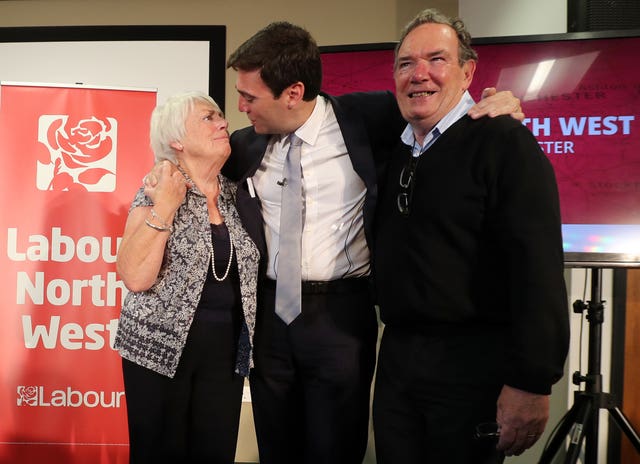
Dementia will also be made one of the top priorities of the new Health Data Research Service, backed by up to £600 million from the Government and the Wellcome Trust.
The service will bring together NHS and research data in one system to help scientists identify suitable patients.
It is understood that one project will see GSK use health data to explore a possible association between the company’s shingles vaccine and a reduced risk of dementia.
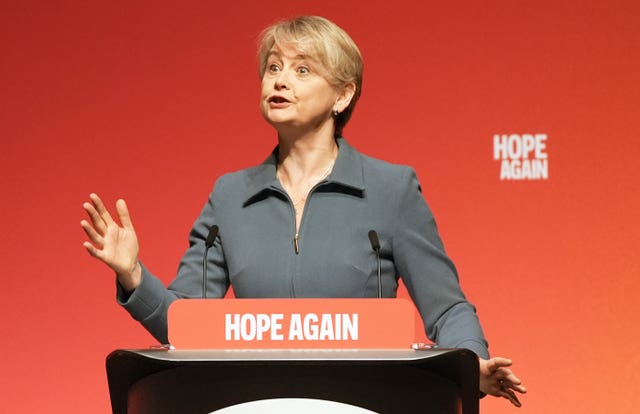
Health and Social Care Secretary Yvette Cooper said: “This cruel disease has done so much damage to families across our country, and for too long we have lacked the tools to fight back.
“This investment will help us turn the tide on dementia, helping us to speed up diagnosis, accelerate research and give more people the chance to take part in trials that could transform their futures.
“We are also determined to ensure that every person living with dementia gets the care they deserve, and that no family is left to fend for themselves when a loved one needs support.
“So, alongside this new investment, we will ensure that the treatment of dementia is one of the central priorities of our new National Care Service.”
Responding to the announcement, Dame Barbara’s widower Scott Mitchell said: “I was with Barbara when we went to Downing Street to meet then-prime minister Boris Johnson.
“She said to him, ‘Now come on, darling, you’ve got to do something about helping people with this dementia business. There’s not enough money for it. There’s not enough funding’.
“For me, this means Barbara won’t just be remembered for her bra flying off in Carry On Camping, she’s got a second legacy.
“I’m hugely excited with the progress being made and today’s announcement from the Prime Minister Andy Burnham, who also has personal experience like myself and so many others.”
Michelle Dyson, chief executive of Alzheimer’s Society, said: “This is a significant moment for dementia research and we welcome the Prime Minister’s ambition for the UK to lead the world in discovering new treatments to beat dementia.
“This substantial investment in The Barbara Alliance is fantastic news and a major vote of confidence in its vital work.
“By bringing together government, industry, researchers and the NHS, the Alliance is providing the kind of co-ordinated, ambitious approach that dementia research urgently needs, helping remove barriers to clinical trials and accelerate progress towards new treatments.
“We’re incredibly proud to work alongside the Alliance and share its determination to transform the future for everyone affected by dementia.
“The Prime Minister is right to reject the idea that dementia is simply an inevitable part of ageing. With sustained investment, earlier diagnosis and a determination to make research accessible to everyone, we have a real opportunity to create the change that’s so desperately needed.”
Cindy Lou enjoys trying new coffee places in Braddon
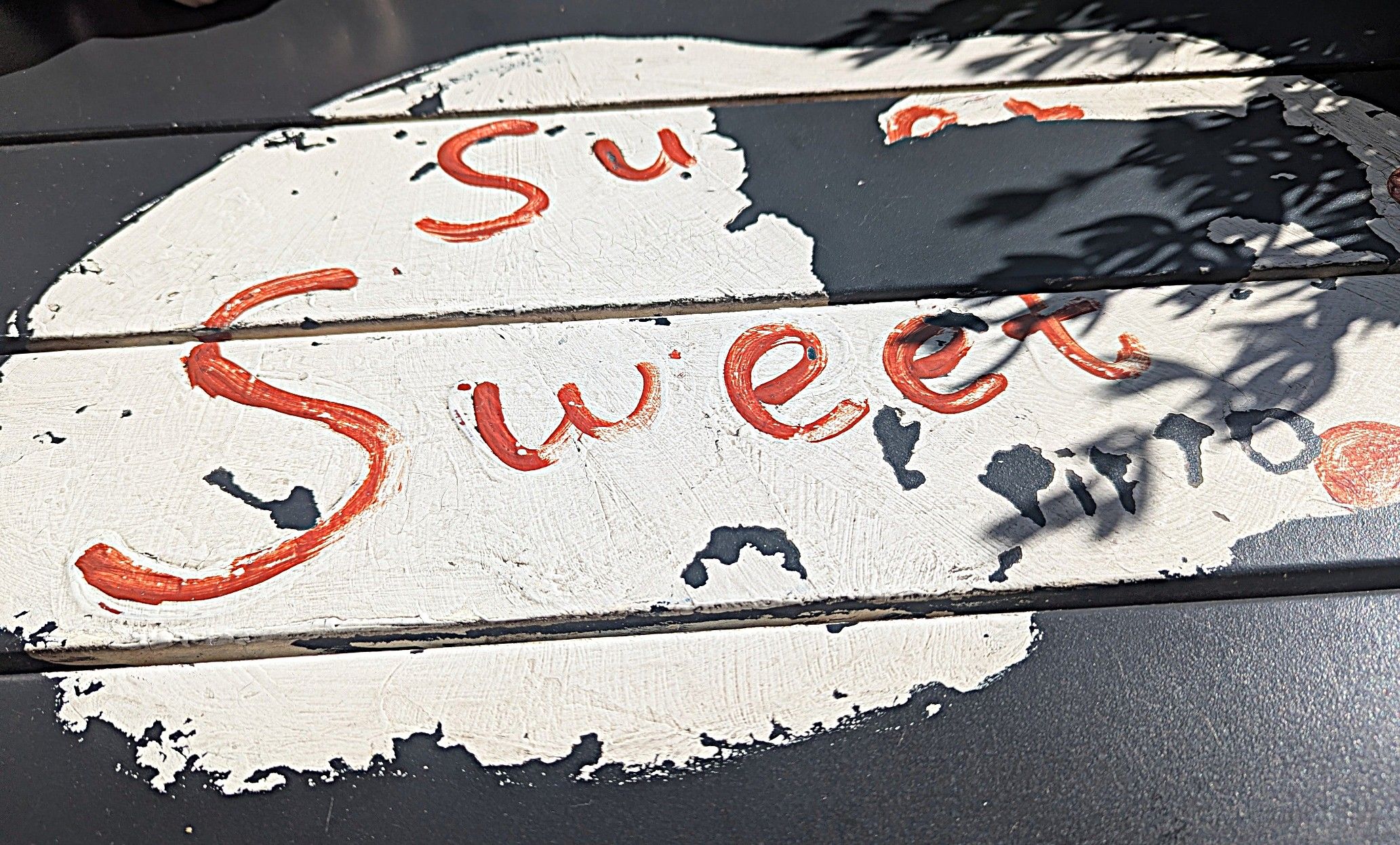
Super Sweet is becoming a favourite. We tried it a few months ago when our move was, supposedly, taking place around then. The lunch was delicious and was reviewed in the blog at that time. Now that the move has taken place, Super Sweet has become a regular haunt for coffee in the mornings, and on one occasion a wonderful breakfast. We had poached eggs with toast, and a corn fritter meal with avocado and red cabbage – it was far more exotic than that sounds, and alas we began eating before I took photos. Returning soon is essential! The service is lovely.
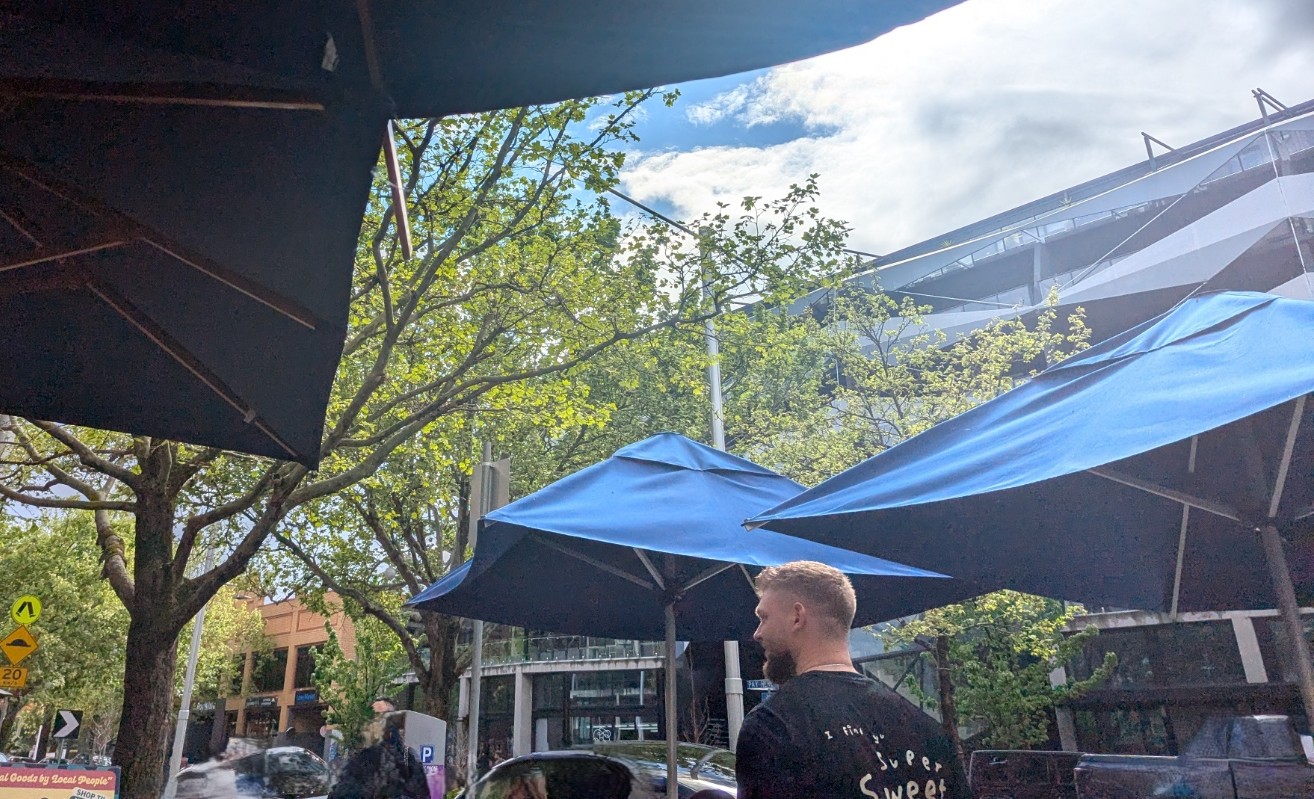



Assembly is under cover, so was our choice this morning after rain had made the seating at Super Sweet impossible. The stools are a little difficult to navigate, particularly as Leah must have her froth from my coffee refilled (see, none left on my coffee early in the visit). The service is cheerful, and the music provides a great background to conversation.
Midnight serves coffee from the restaurant area, and we have enjoyed the service and the coffee. There is pleasant outdoor seating near the restaurant, and excellent outdoor seating in the bar area. Heating is available in both areas. The bar menu is great, and we have eaten from it on one occasion (so far).