Week beginning March 6 2024

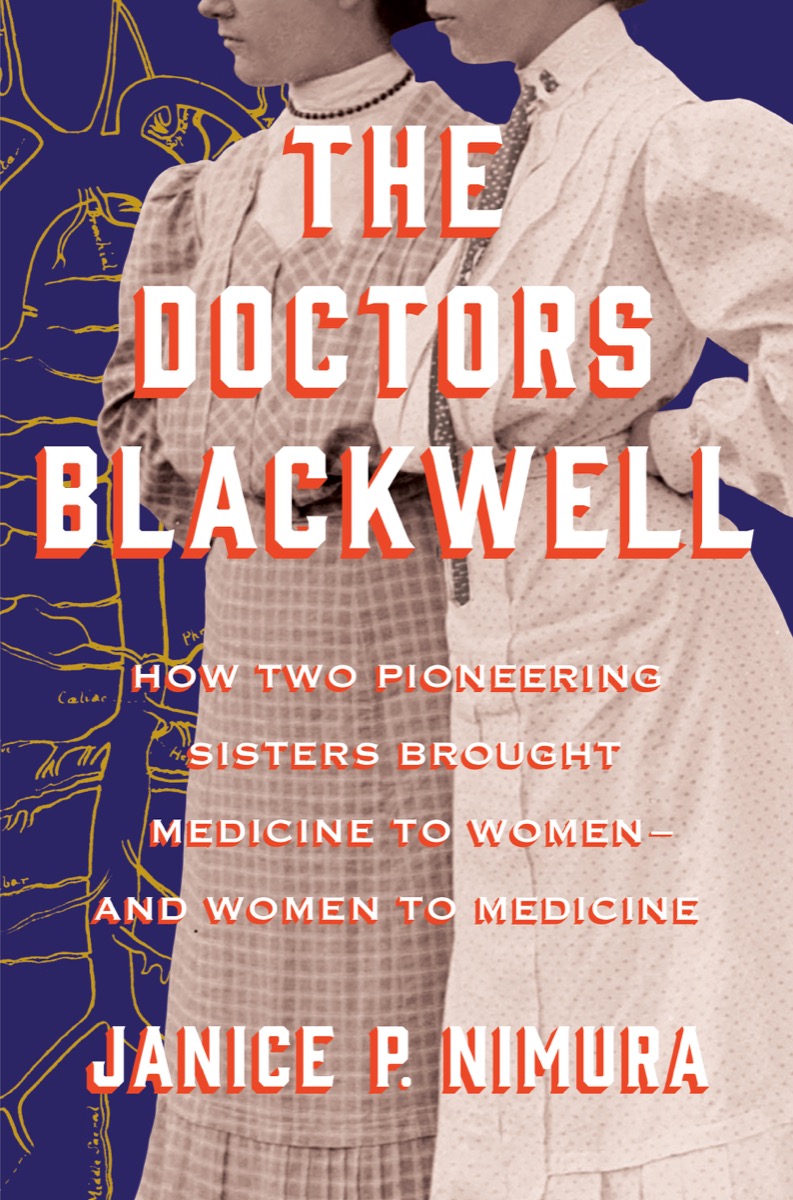
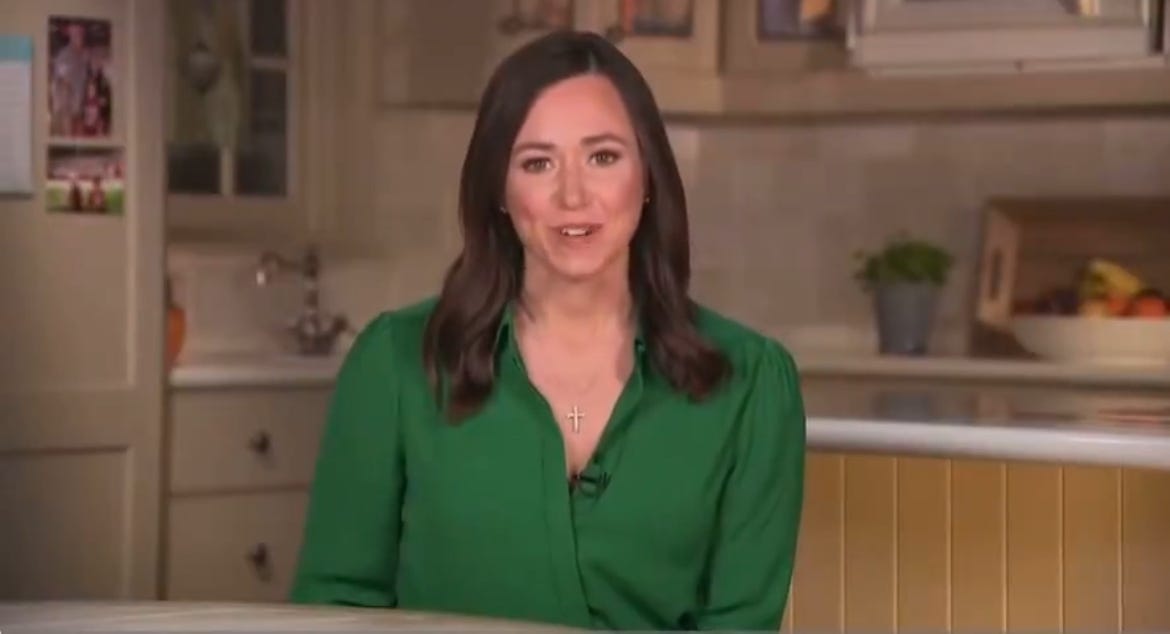
Holly Swinyard  Fans and Fandom, A Journey into the Passion and Power of Fan Culture Pen & Sword, White Owl, March 2024.

Thank you, NetGalley and Pen & Sword, for providing me with this uncorrected proof for review. 

Holly Swinyard’s Fans and Fandom, A Journey into the Passion and Power of Fan Culture, is an excellent read for both those who are currently involved in the journeys she describes, and those whose knowledge of fandom is limited to attending a rock concert or sports event, some vague knowledge of Star Trekkers and possibly having some interest in fan fiction. I am in the latter group and realise that my knowledge is far from profound on this complex topic. Swinyard certainly brings one up to date, sometimes with a frightening jolt. In her well-researched text Swinyard demonstrates that a somewhat benign attitude to fandom is misplaced. See Books: Reviews for the complete review.

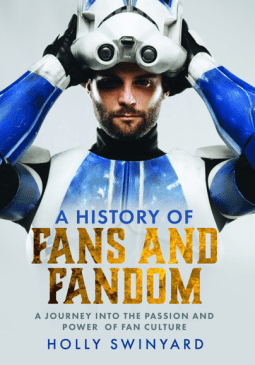
Kathleen Kuiper From the Mid-1900s to the Late 1900s (Part of History’s Most Influential Women) Rosen Publishing Group, Britannica Educational Publishing, January 2024.

Thank you, NetGalley for providing me with this uncorrected proof for review.

The introduction is well written, clear and informative. Similarly, each short section provides a clear excerpt from each of the women’s lives it portrays. Concentrating on the women’s accomplishments, rather than a far-ranging biographical note in most cases, this provides for a detailed account of one aspect of the women’s lives in the short amount of space each is given. As such, From the Mid-1900s to the Late 1900s, provides a good start for students to find a woman whose achievements interest them, encouraging them to then seek further information. This is a worthy work, although somewhat limited in depth, and bound to inspire students – after all, achievements are an excellent to introduce any person, of note, or indeed, less historically influential. In addition, the women who appear provide for a large range of interests to be followed up. Queen Elizabeth 11 adorns the cover, but inside can be found women whose attributes are remarkably different. See Books: Reviews for the complete review.

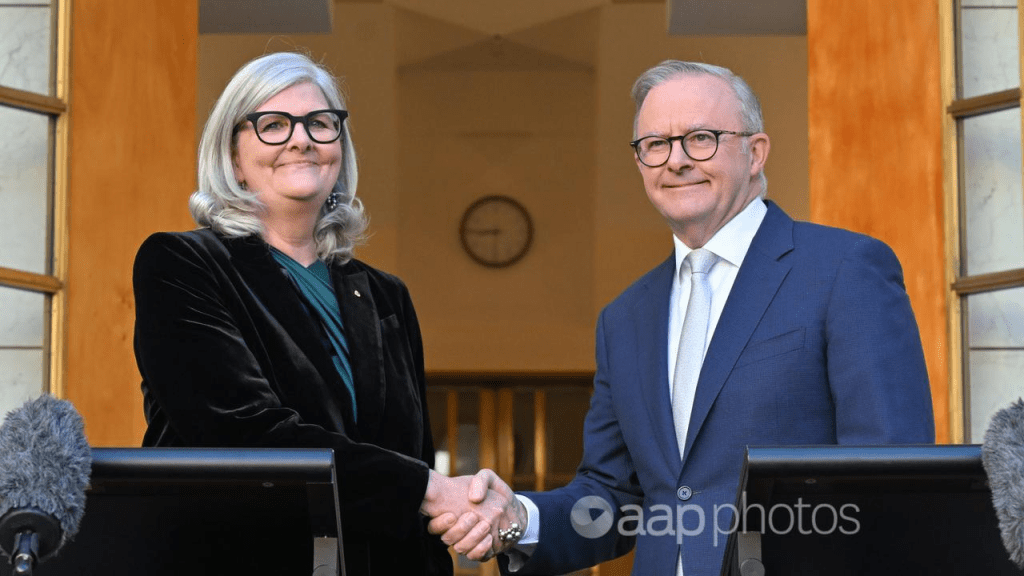
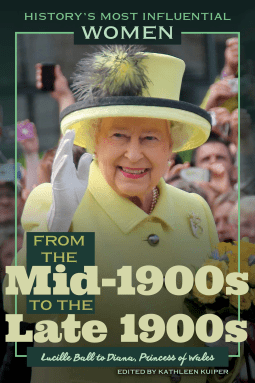
After the book reviews: The Weird Sister Collection – How a Feminist Blog is Born; Netflix research on Australian television watching habits; Dunkley By-election; Women in Jazz- IWD; Dervla McTiernan talk at ANU; Changes around Māori language; Penny Wong congratulated by Anthony Albanese; Arwa Mahdawi, The Guardian; Susan Ryan Oration.  

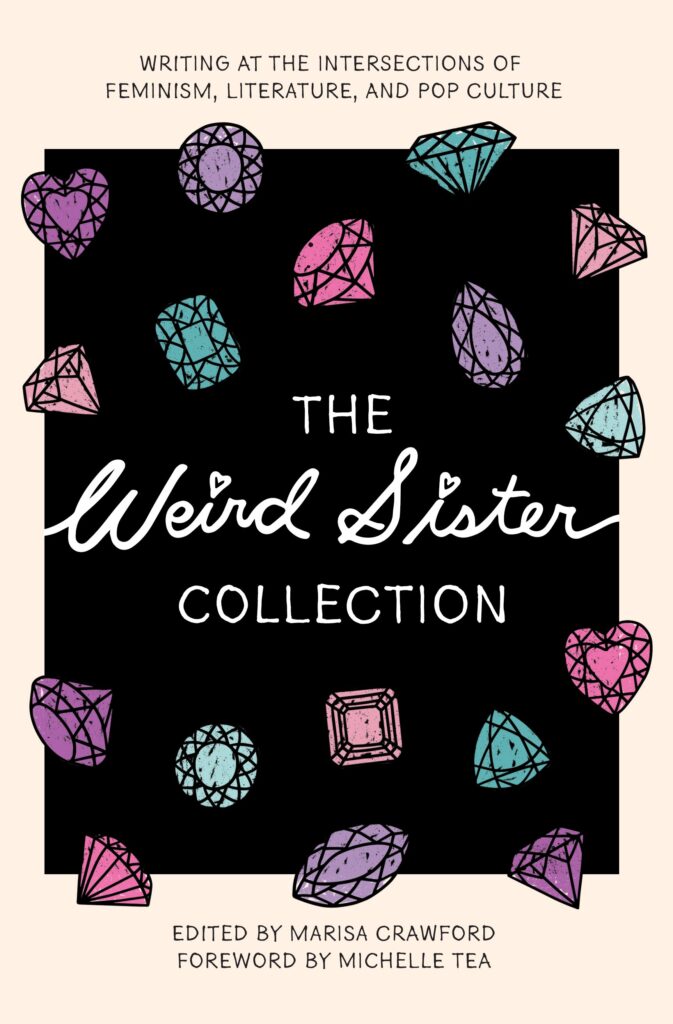
How a Feminist Blog is Born

by Marisa Crawford

An exclusive excerpt from “The Weird Sister Collection,” edited by Marisa Crawford.

I didn’t deign to call myself a feminist until I was nineteen years old, in my second year of college. Before then, I just wanted to be a writer. Reading Judy Blume and the Baby-Sitters Club books obsessively as a kid, I decided I wanted to be an “author” when I grew up, and started writing my own poems and young adult novels in fourth grade (a baby poet at heart, I could never get past chapter two). “Feminist” was a word I rarely heard growing up. If I did, it was mentioned with suspicion at best and disdain at worst. My first encounter with feminism as not purely negative came at fourteen, when my friend’s dad took us to a feminist vegetarian bookstore and restaurant in Bridgeport, Connecticut, called Bloodroot (it’s still there; please go). There, customers brought their own used dishes up to the counter in an apparent rejection of female subserviency that set off a little spark in my brain about the roles of women in the world around me, even if we sort of made fun of it after we left. I bought a bumper sticker that said “Vegetarians Taste Better,” uncertain if the sexual undertone was intended. I also bought a book of poems called Used to the Dark by Vicky Edmonds, a totally obscure small-press work, but the sole example I had at the time of what might be called feminist poetry. Of course, I wouldn’t have used that shameful word, “feminist,” to describe Edmonds’s book—maybe “writing by a woman about the dark parts of how it feels to be a woman,” like so much of my favorite music was? Weird, outspoken women artists like Tori Amos and Ani DiFranco and Courtney Love, who all my boyfriends and boy friends made fun of.

In college when I finally started calling myself a feminist—after meeting cool feminist friends who were nothing like the humorless stereotypes I had been warned about, and who told me I needed to throw out my bleached tampons and listen to Le Tigre and take women’s studies classes—I wanted desperately to make up for lost time, realizing that my whole life had been missing this essential perspective. So I read any and all feminist media I could get my hands on: I borrowed Inga Muscio’s book Cunt from a friend and read it along with every issue of Bitch magazine. I declared a minor in women’s studies and took classes where I learned about intersectionality, agency, privilege. .

In my creative writing classes, we never talked about those things; in my first workshop that same year, the MFA student instructor was so infectious in his excitement about literature that I didn’t even notice the syllabus he handed out had zero women writers on it until another female student in the class pointed it out—I was too busy becoming obsessed with Frank O’Hara’s Lunch Poems. Slowly I learned about feminism on a parallel path just next to the one where I was learning about how to be a writer. But I couldn’t quite figure out how these two spaces could coexist, let alone collide, and how on earth to go about building my own life within that collision.

Years later, I started the blog Weird Sister in 2014 because these two worlds—the feminist world that was incisive and inclusive, and the literary world that was performative, tongue-in-cheek, and experimental—still felt far too separate to me, even as I entered my thirties. In college, I’d started to see glimpses of the intersections between them: in women’s lit courses where we read Jamaica Kincaid, Toni Morrison, Maxine Hong Kingston, June Jordan, Gloria Anzaldúa. I went to see Eileen Myles read for extra class credit. I found Arielle Greenberg’s Small Press Traffic talk “On the Gurlesque” on the internet one night. Each piece of the feminist literary puzzle I learned about blew my mind all over again, and it occurred to me that there was not just one right way but many, many ways to be a feminist writer.

All these rich lineages of literary work and activism were out there, but where were the spaces outside of academia for people to come together to think and talk about them? From the mid-2000s into the 2010s, the blogosphere was where people talked about things. After college, I discovered the blog Feministing and made it my computer’s homepage so I wouldn’t forget to read it every day. That blog—along with other feminist blogs of that era like Crunk Feminist CollectiveEveryday FeminismBlack Girl DangerousTiger BeatdownRacialicious, and the Women’s Media Center blog—offered supersmart, inclusive takes on politics and pop culture in an accessible, conversational tone that helped me and so many other young people better understand the world. But they didn’t often include literary content—how could they, strapped as they were with the task of breaking down the entire world for young feminists, and payment-free at that? When these spaces did cover books, they were more commercial publications, not the niche within-a-niche world of experimental poetry where I had found my home as a writer. 

At the same time—but in a separate sphere—lit blogs were where my particular literary world found community and dialogue on the internet. On blogs like HTMLGiantColdfrontThe Rumpus, and We Who Are About To Die, poets and experimental writers wrote and read about the small poetry presses and underground literary culture that rarely got covered in larger venues. I remember reading some posts that addressed feminist issues by writers like Roxane Gay and Melissa Broder, then still aspiring writers themselves, but more often I read a lot of posts by cis white men that were interesting, insightful, and funny but lacked the political analysis I was looking for about how poetry related to gender and race and the other aspects of identity and power that mattered most when it came to living in the world.

These indie lit blogs were mostly edited by men and featured long rosters of mostly male contributors, mirroring the gender disparities of more mainstream literary publishing outlets and gatekeepers of the time. Of course there were, thankfully, some exceptions. Pussipo (later renamed HemPo), a collective of 160 feminist poets, started the blog Delirious Hem in 2006, which featured feminist poetics forums, roundtables with feminist small presses, feminist poets writing about everything from rape culture to movies, fashion, and fitness (“It’s a blog, it’s a poetics journal, it’s a platform. From time to time, a post will appear,” reads the description on the now archived Blogspot website). In 2009 I was forwarded a mass email from poet and professor Cate Marvin called “Women’s Writing Now!” which began “Dear Female Writer.” The email—which explained that Marvin’s panel proposal on Contemporary Women’s Poetry had been rejected by the annual writing conference AWP, while the conference regularly accepted proposals on topics unrelated to women (Birds in Poetry, for example, stands out in the mind from my own years of attending)—was a rallying call for the creation of a whole new organization dedicated exclusively to women’s writing. As a result, Marvin, along with Erin Belieu and Ann Townsend, soon founded VIDA: Women in Literary Arts, and in 2010 the organization began, among other vital literary projects, their annual VIDA Count to draw attention to gender disparities in publishing. With the Count, VIDA was not just critiquing inequities in literary culture but also holding institutions and gatekeepers accountable to do better in a very clear, measurable way.

But as Christopher Soto writes in his piece “The Limits of Representation” (page 113), equity in numbers, while hugely important, is only one measure of progress. I still longed for an intentional, energetic, creative, and community-building space to fill in even just some of the lack of feminist literary commentary online, to bridge a bit of the gap between these two distinct worlds I inhabited, and to disrupt the white male lit-blog industrial complex with an explicitly feminist Blog of One’s Own. Boosted by the encouragement of a girl gang of feminist poet friends (special shout-out to Becca Klaver for helping me get the blog off the ground), I bought a web domain, went into a temporary and never-to-be-replicated fugue state wherein I designed a website, and asked a roster of the smartest, coolest feminist writers I knew to join me in launching Weird Sister. See  Television,Film and Popular Culture: Comments for the complete article.

This image has an empty alt attribute; its file name is 9781558613003_FC-673x1024.jpeg

Netflix research shows what, where and why Aussies are watching TV (graphics slightly edited)

Louise Talbot
Feb 25, 2024, updated Feb 25, 2024

Chess-set sales skyrocketed after the release of The Queen’s GambitPhoto: Wikepedia

In a research study looking at how Australians consume their favourite TV shows and films, streaming giant Netflix has revealed some startling observations, including the lengths fanatics will go to to watch.

From a sample group of 1003 men and women aged from just 13 to 60, Netflix partnered with YouGov to conduct an online survey in July, asking them everything from whether they identify as a fanatic, whether they binge watch and how many hours a month they are in the zone.

Importantly, it appears that 49 per cent of Aussies admitted they had watched Netflix under unusual circumstances, and understandably, it’s in the office, at a party, on a date, at a funeral or while having sex.

But hang on – on the toilet?

A whopping 21 per cent of the survey group – extrapolate that to 2.8 million Aussies – admitted to watching Netflix on the dunny, with Gen Z more likely than older generations to admit they do it.

Introducing a new word thanks to Netflix, people, “Tudunny”, the combination of the familiar “Tudum” sound that plays at the beginning of a Netflix title with “dunny”, the quintessential Aussie slang for toilet.

The research also found almost 700,000 viewers said they called in sick to work in order to catch up on the latest episode of their favourite show, and nine out of 10 viewers said they nailed a TV series or movie marathon on Netflix in a single day.

And the most common Netflix series in our top three?

Younger generations watched Stranger Things, women were more likely to watch Addams Family spin-off Wednesday starring Jenna Ortega, while men loved to watch the antics of a mutated monster hunter in The Witcher.

“The results revealed that Aussies spend approximately 29.4 days per year streaming content … binge-watching remains a significant part of viewing habits, with 92 per cent of Netflix members having completed a TV or movie marathon lasting longer than two hours,” Netflix stated.

The ultimate in connecting research with culture: There’s an actual Tudunny pop-up giving fandom a truly immersive experience with fully functional toilets, modelled after Emily in ParisHeartbreak High and Squid Game. Photo: Netflix

The fandom

The survey also wanted to work out the strength of fan communities – otherwise known as fandoms — that have grown around specific films and TV series.

Based on the survey results, Aussies “are deeply involved in fandoms”, with 29 per cent identified as “fanatics”, with 54 per cent male, 51 per cent Millennials and 40 per cent living in New South Wales.

And, 73 per cent have done or have taken part in something related to their favourite show.

Think The Queen’s Gambit starring Anya Taylor-Joy – chessboard sales skyrocketed after the series aired.

Decades-old songs shot up to No.1 – that would be Running Up that Hill by Kate Bush for Stranger Things.

Regency-era fashion is having a major revival? That’s easy. Bridgerton.

“These stories have united people globally through their shared passion for the characters, fashion, locations, music and other aspects, turning them into pop culture moments,” Netflix said.

Fandoms are proving to have a positive impact not only on wider culture but also within their communities, according to the survey’s conclusions, with 76 per cent believing that being part of a fandom can improve mental health, and 82 per cent agree that it fosters a sense of belonging.

Photo: Netflix

Meanwhile, rewatching a TV show or film on Netflix is also a habit, with 87 per cent of viewers (nine in 10 Australians) saying they have felt compelled to relive the magic with their favourite biopic, documentary series or action thriller as (among other reasons) it helps them “to escape the stress of current world events (politics, social issues)”.

The franchise fandom also features in the survey results.

They were most likely to list Harry Potter (30 per cent), Marvel Universe (28 per cent ) and Game of Thrones (26 per cent) in their top three, followed by Star Wars, Lord of The Rings and Friends.

One conclusion out of the 1000-person survey?

Gen Zers (average age 26) – who grew up in the era of the iPhone, were shaped by the 2008 recession and the COVID-19 pandemic – watch a lot of Stranger Things on the loo.

Dunkley By-Election

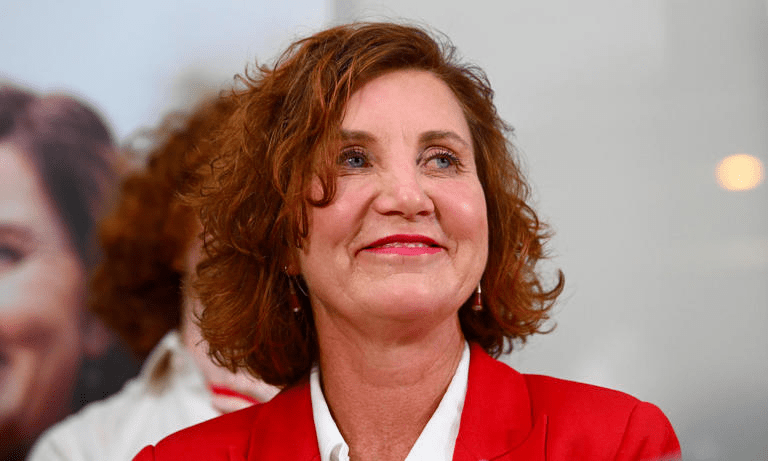
Jodie Belyea has held on to what is traditionally a marginal seat, even after the death of a popular local MP and in the midst of a cost-of-living crisis. There was a swing against the government typical in nature to by-elections.

Labor candidate Jodie Belyea paid tribute to the late MP Peta Murphy following Labor’s win in the Dunkley by-election.

Women in Jazz
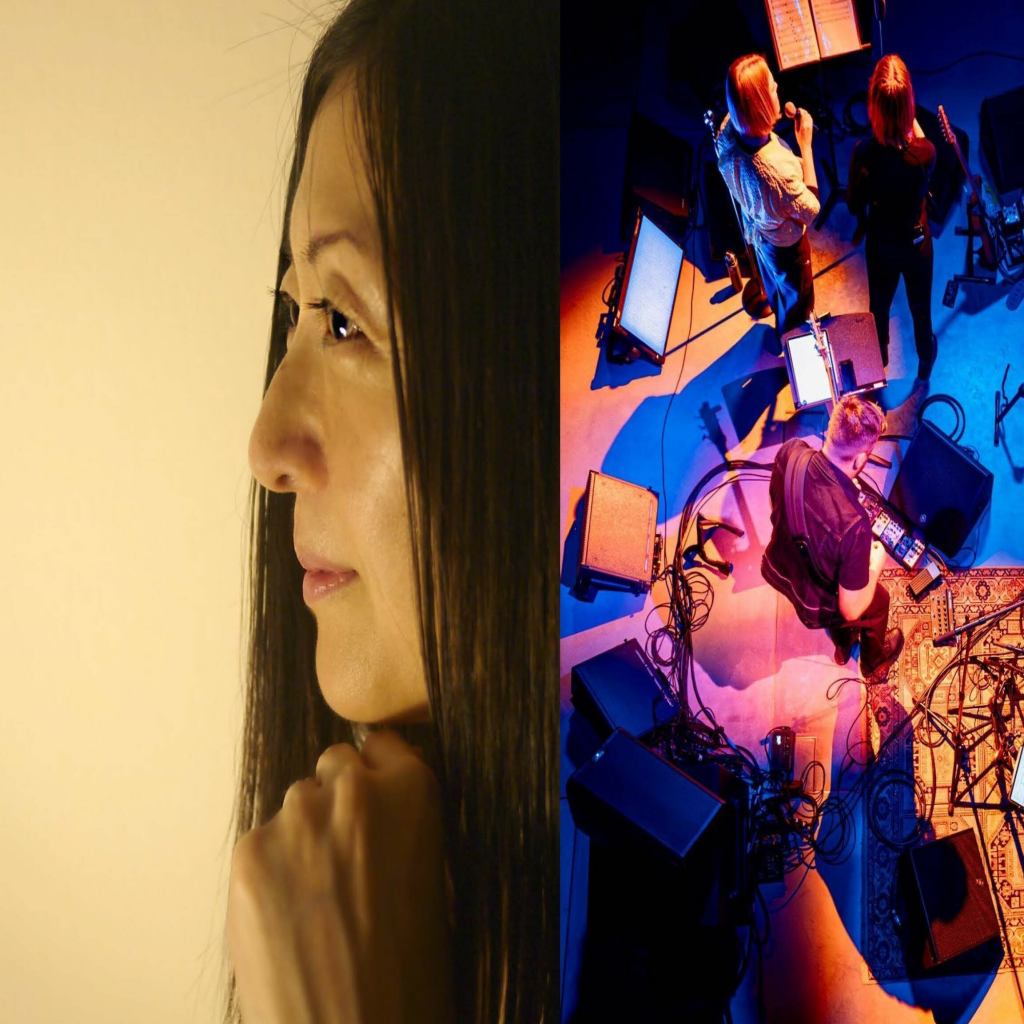
Friday 15 March, School of Music
In celebration of IWD, ANU Gender Institute members are invited to a panel, concert and reception.
Panel, 4-5.15pm
Stereotyped gender dynamics have persistently shaped jazz culture. This panel discussion will explore ways of stimulating a more gender inclusive jazz world.
Concert, 5.30-6.30pm
Psychomotor is Australian musician Jess Green’s new project. Joining Jess Green is drummer Jamie Cameron, bassist Brendan Clark and special guest Lauren Tsamouras. 
Reception, 6.30pm
Program │ Registration

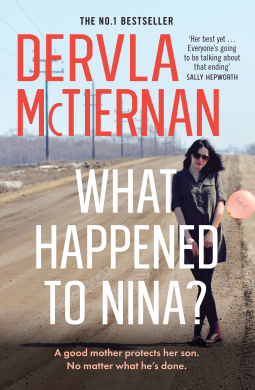
Dervla McTiernan was in conversation with Chris Hammer at the ANU on 5th March, just one of her appearances to talk about this book. There was an excellent discussion ranging over McTiernan’s writing style, editorial matters, the role of fake news and social media, McTiernan’s particular interest in characterisation, drafting and redrafting, and comment on the characters with whom she felt the most affinity. See my review in last week’s blog.

In last week’s blog I posted the positive story about building a centre for Cherokee language preservation. Today’s story about indigenous language New Zealand is less positive.

Changes around Māori language come into focus as New Zealand government approaches 100-day milestone (edited to refer only to the changes associated with the indigenous language).

By Emily Clark in Waitangi 2 march 2024

Three generations of women stand together, Pounamu is 18, then her grandmother Ihapera, 66, and mother Natasha, 40.
Pounamu Diamond, Ihapera Kaihe and Natasha Diamond believe planned changes to the use of reo Māori across New Zealand threatens the past 50 years of progress. (ABC News: Daniel Irvine)

At the age of 66, Ihapera Kaihe sometimes calls on her young grandchildren to translate Māori words into English.

Those moments are both a difficult reminder of the injustices of the past and a glimmer of hope that maybe the future can be different.

Because when Ihapera was growing up, her parents were not allowed to speak Māori.

She has memories of them keeping their reo Māori a secret. And with only English spoken at home and at school, her connection to her native language was lost.  

In the classroom, she endured years of those around her mispronouncing her name. As she explains how that would come to impact her life, her voice starts to break.

“I went through years of not being able to have it pronounced properly, and it was the reason I named all my kids English names,” she said. 

“I never ever spoke reo because Mum and Dad weren’t allowed to at all, and by the time they brought it into my college … I’d finished school by then.”

Ihapera named her children Natasha, Joseph and Ethan.

Natasha Diamond is now 40, but times have changed in New Zealand.

And when Natasha had a daughter of her own, she sent her out into the world with the name Pounamu, teaching her that if someone couldn’t say her name correctly, she didn’t have to respond.

Pounamu grew up in wharekura — a “full-immersion” Māori language school.  

“That has a lot to do with past generations. They weren’t as privileged to learn about our culture and our language,” Pounamu said.  

“It is definitely a big part of who I am.” 

As the three generations of Māori women reflect on how their country, and the experience of their family, has changed over the past 50 years, there is an uneasy feeling that the gains made around Māori language are now at stake.

‘It boils frustration’: The hardships of conserving te reo Māori.

The new three-party Coalition government has promised to repeal a whole raft of Labour-era policies that impact Māori and has also brought some new policies to the table. 

Some of those agenda items have been criticised as trying to diminish the use of te reo Māori in New Zealand. For people like Ihapera, that hits a very deep and very painful nerve. 

She starts to cry as she recalls what it was like when it was forbidden to speak Māori in Aotearoa. See complete article in Further Commentary and Articles arising from Books* and continued longer articles

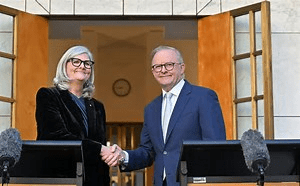
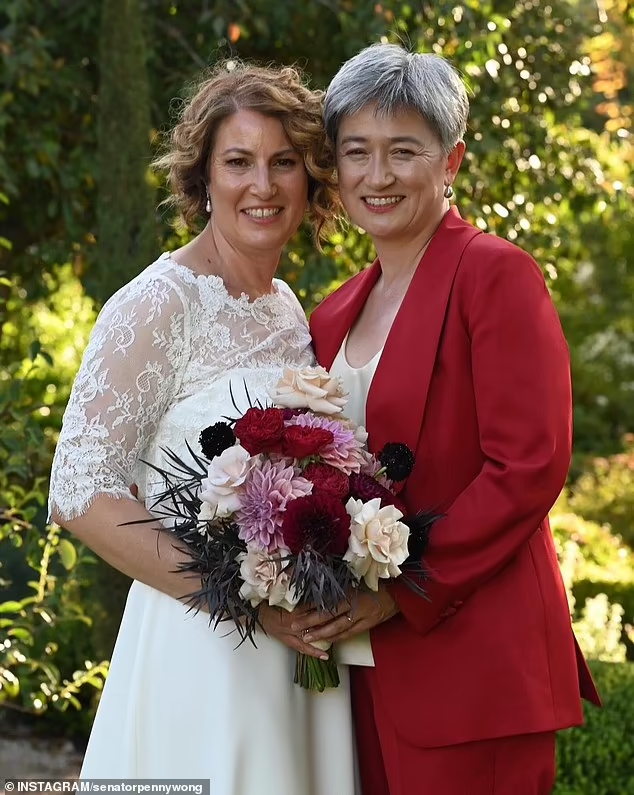
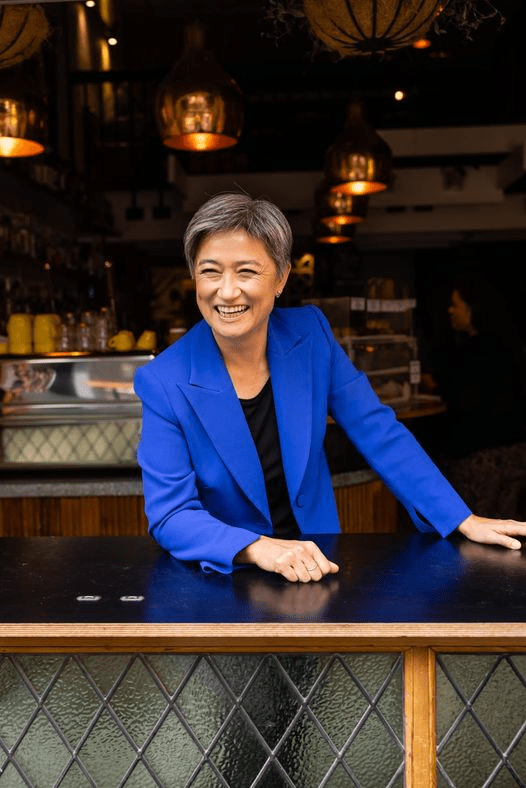
Anthony Albanese Congratulations to Penny Wong on becoming the longest serving female cabinet minister in Australia’s history.

From Facebook:

Prime Minister of Australia. Member for Grayndler. Authorised by Anthony Albanese, ALP, Canberra.

anthonyalbanese.com.au

From The Guardian Arwa Mahdawi, The Guardian <info@editorial.theguardian.com> 

Museums without men: a project to spotlight women’s art*

“Less than 4% of the artists in the [Metropolitan Museum of Art] Modern Art sections are women, but 76% of the nudes are female,” the activist art group Guerrilla Girls found in 2012. More than 10 years on the gender imbalance in museums is still very visible. To help redress this art historian Katy Hessel has created audio guides for museums that shift the spotlight on to female artists.

*A misleading and aggressive headline for positive project.

France to enshrine abortion as a constitutional right in a world-first

Abortion rights in France are currently protected by a 1975 law which, like all laws, could be revoked. Emmanuel Macron has said he wants to make women’s freedom to choose an abortion “irreversible”.

Susan Ryan Oration 2024Monday 25 March, 6-7pm
The 2024 Susan Ryan Oration will be delivered by Ms Padma Raman PSM Executive Director of the Office for Women at the Department of the Prime Minister and Cabinet. 
The Susan Ryan Oration stands as the University’s flagship IWD celebration, dedicated to honouring the late Susan Ryan, one of our community’s greatest advocates for age and gender equality. 

Registration

Week beginning 28 February 2024

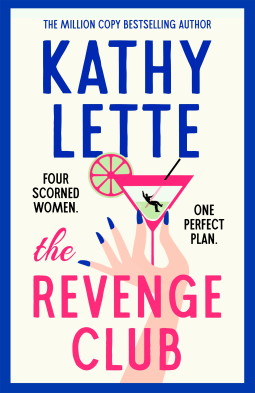
C.L. Taylor Every Move You Make Avon Books, March 2024.

Thank you, NetGalley , for providing me with this uncorrected proof for review.

The fear and helplessness endured by people who are stalked resonates through this well-crafted novel. Those who suffer in the same way are all too aware of the threat that remains even after the stalker has been incarcerated; those who are not directly involved try to  instil optimism that a punished stalker will not reoffend. A Family Liaison officer advises moving, changing their name and phone number, moving house.  Those stalked take all these precautions but know no changes will work, understanding of what it is to be stalked is theirs, fear is theirs, inability to live an ordinary life is theirs. Natalie, Alexandra, Bridget and River are being stalked. Their response is to be in a WhatsApp group for survivors of stalkers.

The story opens as Natalie leaves work. She takes evasive action when she sees her stalker, changing tube destinations, speculating on the best way to evade him, then understanding that he has her phone number as he bombards her with aggressive messages, at which she is staring as she is approached. The WhatsApp messages between the other members demonstrate their incapacity to do more than try phoning Natalie as she has disappeared from the group. Their conversation instils even more understanding of the way in which stalking has impacted the lives of Alexandra, Lucy, Bridget and River. It also raises questions, why has River been excluded from some of the conversations? See Books: Reviews for the complete review.

Valerie Keogh The Mistress Boldwood Books, March 2024.

Thank you, NetGalley, for providing me with this uncorrected proof for review.

Valerie Keogh’s The Mistress brings together a couple whose marriage has, without their conscious recognition, become stale and the husband’s former lover who regrets having left him. The two women at the centre of the struggle for Mark have pasts that have undermined their capacity to become fully functioning adults and are also dealing with current catastrophes.  The brutal attack on Hannah by her husband introduces the novel; in contrast, Susan’s despair over the departure of her son to what she sees as a far-flung university rather than one of those close by which she would prefer is a minor affair. However, for Susan it, and her suspicions about Mark, are imperatives which force her to act out of character.  In comparison, Hannah’s relationship with her husband, and her determination to wrest Mark from Susan which forms the other thread in the novel, is very much in character. See Books: Reviews for the full review.

After Covid report: Heather Cox Richardson   – America, international issues; Cherokee Language Preservation; Women’s History, Inspiring young Women Readers.

Covid in Canberra

Between 16 to 22 February 2024 there were 96 PCR tested new cases reported; 20 people with covid are in hospital and 1 is in ICU. One life was lost in this period, making the total lives lost to Covid in Canberra, 303.

Letters from an American

Heather Cox Richardson 

@heathercoxrichardson

I’m a history professor interested in the contrast between image and reality in American politics. I believe in American democracy, despite its frequent failures.

Lots of moving pieces on this Monday, with the biggest stories coming in international affairs. 

The U.S. has appointed a special envoy for Sudan, which is ten months into a civil war that has turned 8 million people into refugees, sending 1.5 million into other countries; closed 80% of the hospitals in the area of the fighting; and prompted torture, rape, and deliberate starvation of civilians, at least 14,600 of whom have been killed. Tom Perriello will, the State Department said, “coordinate the U.S. policy on Sudan and advance our efforts to end the hostilities, secure unhindered humanitarian access, and support the Sudanese people as they seek to fulfill their aspirations for freedom, peace, and justice.” 

The North Atlantic Treaty Organization (NATO) is about to expand again. After 19 months of stalling, Hungary’s parliament voted today to approve Sweden as a new member, bringing the number of NATO countries to 32. Hungary’s prime minister Viktor Orbán, who has good relations with Russia’s president Vladimir Putin, has a history of using his country’s veto power over NATO to extract concessions; in exchange for Hungary’s approval, Sweden has agreed to provide it four fighter jets and for Saab to open an artificial intelligence research center in Hungary. 

There is also a major piece moving in the Middle East. This morning, the Palestinian Authority’s prime minister Mohammad Shtayyeh and cabinet offered to resign in order to clear the way for a new government. Palestinian Authority president Mahmoud Abbas accepted the resignations but asked the government to stay in place as a caretaker until a new government can be formed.

This is a big deal because it’s part of a larger plan for the Palestinian territories after the war. 

Since Hamas attacked Israel on October 7, 2023, the U.S. government has maintained that Israel has a right and a duty to defend itself against Hamas, but that it must operate within international humanitarian law that limits harm to civilians and that it must have a vision for a postwar political process to establish a Palestinian state next to Israel: the two-state solution. 

On the first condition, Zack Beauchamp of Vox reported last week that Israel Defense Forces (IDF) permitted far higher civilian casualties after October 7 than it had in previous wars. The result has been the dramatic destruction of lives and Gaza’s infrastructure that have so horrified many Americans that yesterday an active-duty U.S. airman set himself on fire outside the Israeli embassy in Washington, D.C., dying by suicide in protest of civilian deaths in Gaza. 

The Biden administration has worked to get aid into Gaza but has stood firm against a permanent ceasefire because it maintained that permitting Hamas to rebuild would leave the conditions for further warfare in place. It has also insisted that Hamas must return all the hostages its militants took on October 7. But in the U.S., the devastation in Gaza has fueled angry opposition to the administration by those who insist that Biden is fueling “genocide” and who demand an immediate cease-fire.

Beauchamp suggests that Israel’s prime minister, Benjamin Netanyahu, has largely ignored the second condition—that Israel must consider a postwar formula—at least in part because of his own legal troubles. 

Netanyahu is facing an ongoing corruption trial and apparently counts on staying in office to keep himself out of prison. To stay in office, he must hold his coalition together, and that means bowing to his far-right partners, who want to rebuild Israeli settlements in Gaza and oppose any Palestinian control there. Any plan for a postwar settlement threatens to break his coalition and lead to new elections that Netanhayu would likely lose. Until last week, Netanyahu vowed only “total victory” over Hamas.

But while Netanyahu refused to discuss a postwar plan, leaders in Arab states, as well as the U.S. and the European Union, appeared to see the crisis in Gaza as an opportunity to change the longstanding political dysfunction in the Middle East. For months now, they have been developing plans for a postwar settlement that includes a Palestinian state overseen by a revitalized Palestinian Authority along with security guarantees for Israel backed by normalization of relations between Israel and Saudi Arabia. Arab states have offered billions of dollars to rebuild Gaza so long as neither Hamas nor Israel is in charge of the territory. 

As Dennis Ross, U.S. Middle East specialist under both Republican George H.W. Bush and Democrat Bill Clinton, noted, for the first time in the long struggle in the modern Middle East, the Gulf Arab states see normalizing ties with Israel as important to their own security and economies. They have refused to get drawn into the conflict, pointing out to Israel their reliance on diplomacy rather than arms to prove that normalization of relations is key to Israeli security. 

Such a process required remaking the Palestinian Authority, which administers the West Bank and administered Gaza for a year between the time that Israel withdrew from Gaza in 2005 and Hamas won legislative elections in 2006. In mid-January, according to Barak Ravid of Axios, national security officials from Saudi Arabia, Jordan, Egypt, and the Palestinian Authority met secretly in Riyadh to figure out how to revitalize the Palestinian Authority to enable it to play its role in governing Gaza. 

At the end of January, Secretary of State Antony Blinken asked officials at the State Department to review procedures for the U.S. and the international community to recognize a Palestinian state, and the Biden administration sent CIA director William Burns to help Egypt and Qatar broker a deal between Hamas and Israel for the release of all remaining hostages held by Hamas and a pause in fighting to get humanitarian aid to Gaza. 

Meanwhile, Netanyahu made clear his determination to retain control of Gaza and stood firm against the two-state solution. At his back, he has had Trump and his loyalists, who are staunch supporters of Netanyahu. The news that the State Department was figuring out procedures for recognizing a Palestinian state prompted outrage from Trump’s former ambassador to Israel, David Friedman. He wrote: “I’m hoping this is just unauthorized and false messaging from one of the many at State who despise Israel. But make no mistake—this “recognition” would be even more devastating to Israel than the attacks of October 7!! Not to mention rewarding terrorists for their brutality! Unconscionable!”

Perhaps with the security of such support behind him, on February 23, Netanhayu released to his cabinet his own plan for a postwar settlement. It said that Israel will keep control over Gaza and that rebuilding the devastated territory will depend on its demilitarization, and rejects the “unilateral recognition” of a Palestinian state. On the same day, the Israeli government announced it would add more than 3,300 new homes to settlements in the Israeli-occupied West Bank after three Palestinian gunmen killed an Israeli settler and wounded five more. 

During its time in office, the Trump administration reversed four decades of U.S. policy by saying that such settlements did not violate international law, but following Friday’s announcement, Secretary of State Blinken promptly restored the old rule, saying that settlements are “counter-productive to reaching an enduring peace. They’re also inconsistent with international law. Our administration maintains a firm opposition to settlement expansion and in our judgment this only weakens, it doesn’t strengthen, Israel’s security,” he said.

Meanwhile, Netanhayu said yesterday on CBS’s Face the Nation that Israel plans to continue its assault on Hamas by attacking Rafah, a city in southern Gaza where about 1.4 million displaced Palestinians are taking shelter, something Biden has warned him against doing without a credible plan for protecting civilians. On February 24, Netanyahu said he would convene the Israeli cabinet this week “to approve military plans for an operation in Rafah, including the evacuation of civilians.” 

Negotiations for a release of the hostages and a pause in fighting continue. On Friday, officials from Israel, Egypt, the U.S., and Qatar, which serves as an intermediary for Hamas, met in Paris. White House national security advisor Jake Sullivan said he hoped for a final agreement “in the coming days.” Today, Biden told reporters that he hopes to see a temporary cease-fire by next Monday. 

On February 13, Amy Mackinnon and Robbie Gramer of Foreign Policy referred to the administration’s attempt to pull a two-state solution out of the chaos of the Middle East as Biden’s “grand bargain,” and they point out that “it faces staggering challenges.” A week later, in Foreign Affairs, political scientist Marc Lynch and foreign affairs scholar Shibley Telhami replied that “the idea of a Palestinian state emerging from the rubble of Gaza has no basis in reality.”

Today’s announcement of a new Palestinian Authority appears to be a shift.

Notes:

https://www.washingtonpost.com/world/2024/02/26/israel-hamas-war-news-gaza-palestine

https://www.washingtonpost.com/world/2024/01/16/israel-hamas-war-news-gaza-palestine-updates

https://www.washingtoninstitute.org/policy-analysis/ending-the-war

https://www.vox.com/24055522/israel-hamas-gaza-war-strategy-netanyahu-strategy-morality

https://www.axios.com/2024/01/29/israel-gaza-saudi-egypt-jordan-palestine-meeting

https://www.csmonitor.com/World/Middle-East/2023/1222/A-plan-for-Gaza-s-future-is-taking-shape.-Obstacles-loom

https://www.axios.com/2024/01/31/palestine-statehood-biden-israel-gaza-war

https://www.politico.eu/article/nato-lake-what-sweden-and-finland-will-change-in-the-baltics-russia-ukraine-war

https://www.cnn.com/2024/01/19/politics/joe-biden-benjamin-netanyahu-palestinian-state/index.html

https://www.cnn.com/2024/01/21/middleeast/netanyahu-palestinian-sovereignty-two-state-solution-intl/index.html

https://www.washingtonpost.com/national-security/2024/01/25/william-burns-cia-gaza-israel-hostages

https://www.washingtonpost.com/world/2024/02/26/palestinian-authority-resign-gaza-israel-rafah

https://www.washingtonpost.com/national-security/2024/02/11/biden-netanyahu-call-rafah-hostages

https://www.washingtonpost.com/opinions/2024/01/02/arab-israeli-peace-palestinians-gaza

https://www.washingtonpost.com/world/2024/02/26/what-is-palestinian-authority-explained

https://apnews.com/article/israel-settlements-hamas-gaza-war-netanyahu-smotrich-1d2306d55c24c8559b630d9f20db30e2

https://www.reuters.com/world/middle-east/israels-netanyahu-presents-first-official-post-gaza-war-plan-2024-02-23

https://www.washingtonpost.com/politics/2024/02/26/biden-cease-fire-gaza

https://www.washingtonpost.com//world/2024/02/27/post-war-gaza-plan-netanyahu-israel-day-after-future-abbas

https://www.foreignaffairs.com/israel/two-state-mirage-gaza-palestinians-lynch

Twitter (X):

jimsciutto/status/1762142611253383654

NTarnopolsky/status/1761458809506091189

DavidM_Friedman/status/1752753246551343208

Smokey Mountain News Logo

More than words: New building a center for Cherokee language preservation

WRITTEN BY HOLLY KAYS WEDNESDAY, FEBRUARY 21, 2024

A New Kituwah Academy student helps celebrate the event by participating in a traditional dance. Holly Kays photoA New Kituwah Academy student helps celebrate the event by participating in a traditional dance. Holly Kays photo

A ribbon-cutting ceremony held Friday, Feb. 16, for a building dedicated to preserving the Cherokee language was a celebration of the culture and language that has formed the Cherokee people for countless generations. 

More than 200 people gathered for a ceremony that was nearly half over before a single word of English was spoken. Instead, it showcased Cherokee-language speeches from tribal elders who grew up speaking it and musical performances from the new generation learning their ancestral language at New Kituwah Academy. The school is located just a stone’s throw away from the new building, which is called kalvgviditsa tsalagi aniwonisgi tsunatsohisdihi, or in English, Cherokee Speakers Place.

Roger Smoker, chairman of the Cherokee Speaker’s Council, said that the building will be a place where Cherokee language learners can gather to hone their skills, where the Cherokee Speakers Council can meet and where the Speakers Consortium bringing together fluent speakers in all three Cherokee tribes can gather when it’s held on the Qualla Boundary.

“This new building will house the second language speakers, and it will benefit our communities and represent the committed values of the Eastern Band of Cherokee Indians,” he said. 

news Cherokee speakers building group
Cherokee speakers, elected officials and leaders ribbon on the new Cherokee Speakers Place. Holly Kays photo

Not so long ago, Cherokee was the dominant language among tribal members, and English the minority. But over the last century or so that dynamic has reversed. Through the 1970s, Native American children were often forced to attend boarding schools where speaking the indigenous language was discouraged or even punished, leading to many children of that generation ceasing to speak the language of their elders fluently, or at all, and finding themselves incapable of passing it down to their own children. As the 21st century dawned, tribal leaders began to realize that, if they did nothing, there was a real danger of their native language dying out. 

“Our language is sacred,” said Howard Paden, executive director of the Cherokee Language Department for the Cherokee Nation of Oklahoma. “God made that, and we can have the biggest buildings, the biggest casinos, but if we don’t have the very essence of who we are — when we speak in that form, there’s words that English doesn’t have. There’s concepts that English doesn’t have.”

Paden wasn’t the only person who attended the ceremony from one of the other two Cherokee tribes. United Band of Keetoowah Indians Chief Joe Bunch spoke to the crowd as well, and a delegation from the Cherokee Nation sat in the audience. 

“As a group of tribes, we have to continue to make sure that we’re heard,” said EBCI Chief Michell Hicks.

Like many people his age, Hicks is not a fluent speaker, something that he acknowledged in his comments.

“My dad understood. My grandma spoke, but really didn’t teach,” he said. “My generation, we lacked resources — but it’s not an excuse. I don’t have an excuse other than, I’ve got to allow for more of an effort.”

Fluent Cherokee speakers say that there’s something elemental about the language, something that conjures meaning more specifically and paints verbal pictures more intimately than English allows. In a 2018 interview with The Smoky Mountain News, Beloved Woman and first language speaker Myrtle Driver Johnson said that Cherokee is more grounded in the relationships between words and the things they describe, producing richly layered meanings and preventing insincere expression.

The new building will offer a home base for language revival, the first significant capital investment toward that goal on the Qualla Boundary since New Kituwah Academy was built in 2009. New Kituwah offers Cherokee immersion education for children ages birth through elementary school grades. Recognizing that children learning Cherokee at school often come home to parents who can’t interact in the language, the tribe has also launched an adult language learning program in which participants earn a paycheck — for the duration of the program, learning the language is their full-time job. 

news Cherokee speakers building scissors
Elder and first language speaker Marie Junaluska (left) claps as Cherokee Speakers Council Chairman Roger Smoker, also an elder and first language speaker, hands back the scissors they used for the ribbon-cutting. Holly Kays photo

The Cherokee Speakers Place offers more than 8,000 square feet of space for fluent speakers and language learners to gather, practice the language and preserve what they know. It includes a spacious lobby and large meeting room with a kitchen, offices, classrooms, a library, a recording room and a patio peppered with tables and chairs.

“I’m sure I’ve made some mistakes today, but I appreciate the chance to try, speak and learn,” said Miss Cherokee 2023-24 Scarlett “Gigage” Guy, who emceed the event completely in Cherokee.

Tribal leaders hope that the new building will facilitate more such “mistakes” made in the honest effort to learn the Cherokee language — so that one day, its future will be safe in the minds and on the lips of the tribe’s young people.

“We can’t be scared,” Hicks said. “We have to walk across and figure out how we do it, and how we do it better.”

From: School Library Journal, Women and Literature site.

Power of Persistence: Publishers Embrace Women’s History, Inspiring Young Readers

by Chelsey Philpot Feb 27, 2024 | Filed in News & Features

It’s a good moment for new women’s history books—and also a good time for librarians to cull outdated titles. 

Illustration and SLJ March cover by Caitlin Kuhwald

In the 2023 blockbuster movie Barbie, Gloria, a frustrated mother and Mattel employee played by America Ferrera, delivers a monologue about society’s impossible expectations of women.

“We have to always be extraordinary, but somehow we’re always
doing it wrong. . . . And it turns out in fact that not only are you doing
everything wrong, but also everything is your fault.”

Related Reading: How to choose high-quality women’s history titles 10 Recommended Feminist Books for Early Readers

Barbie had earned more than $1.38 billion worldwide by September 2023 and is the highest-grossing movie directed by a woman. It garnered rave reviews from moviegoers and professional critics but also provoked impassioned reactions from those who didn’t like the film’s feminist message.

Historically, representations of feminism and strong, independent women in art and culture, including in the pages of children’s books, have inspired fervent reactions. Researchers from different academic fields have been studying women’s representation in children’s literature (e.g., how often they are depicted in illustrations and/or text) for decades. The big-picture view from these studies: over time, women have been underrepresented in children’s literature. Furthermore, much of the representation that did exist has tended to perpetuate sexist ideas.

In 1970, feminist writer Elizabeth Fisher affirmed that conundrum with this observation: “[Books] show some of the methods by which children are indoctrinated at an early age with stereotypes about male activity and female passivity, male involvement with things, women’s with emotions, male dominance and female subordination,” Fisher wrote in a New York Times column.

Since then, kid lit portrayals of women and diverse populations have vastly improved. Newer titles are better at portraying complex or intersectional identities, as Tessa Michaelson Schmidt, director of the Cooperative Children’s Book Center at the University of Wisconsin–Madison, recently noted; they’re of a “higher quality” and better at capturing authentic human experiences. It’s a good moment for women’s history books and also a good time for librarians to reconsider titles that are outdated in ways they might not have even considered.

Defining ‘‘women’s history’’Women’s History Month began in 1978 as “Women’s History Week” in one California school district but soon spread to other communities and became nationally recognized in 1982 after years of lobbying by women’s groups. Several years and additional petitioning efforts later, Congress passed “Public Law 100-9” in 1987 designating March as Women’s History Month. And what does “women’s history” mean, exactly? According to the National Women’s History Museum, an online institution founded in 1996, “Women’s history contextualizes women within the social, political, legal, and cultural systems of their times. History that does not acknowledge women’s situations as well as their activities and accomplishments is, by definition, not a full history. At the same time, women’s history is not merely the addition of women’s contributions to the standard history timeline. Women’s history is not just add women and stir.”
Nevertheless

For proof of positive trending, witness the instant success and staying power of “She Persisted,” the women’s biography series from Penguin. Former first daughter Chelsea Clinton launched the series in 2017 with the publication of She Persisted Around the World: 13 Women Who Changed History. The picture book’s enthusiastic reception inspired Clinton and her editor, Talia Benamy, to create more “She Persisted” titles for more ages.

There are now more than 25 “She Persisted” titles, and award-winning authors such as Meg Medina, Rita Williams-Garcia, and Deborah Heiligman have written or co-written “She Persisted” chapter books for young readers about women like Supreme Court Justice Sonia Sotomayor, Olympic track and field star Florence Griffith Joyner, and labor activist Clara Lemlich, respectively. Recently three “She Persisted” chapter books—She Persisted: Maria TallchiefShe Persisted: Wilma Mankiller, and She Persisted: Deb Haaland—were 2024 American Indian Youth Literature Awards middle grade honor titles.

The “She Persisted” titles stay true to an activism ethos with their format—the chapter books conclude with lists of ways young readers can become activists—and with their storylines, which start with the subjects as children and chronicle failures and trying again.

“I think the idea of not giving up is so relevant and so resonant and such an important message for kids to see,” Benamy says.

Rebels rising

The idea of exposing young girls to stories of strong, inspiring women motivated Francesca Cavallo and Elena Favilli, in 2016, to crowd-fund the publication of Good Night Stories for Rebel Girls: 100 Tales of Extraordinary Women, a collection of mini biographies featuring women such as Egyptian ruler Cleopatra and Olympic gymnast Simone Biles, for ages six and up. The record-breaking success of their funding campaign (Cavallo and Favilli ultimately raised more than $1 million and sold more than 370,000 copies of their first book, according to Circana Bookscan), and their belief that there weren’t enough children’s books about history-making women and their accomplishments, convinced the pair to publish more “Rebel” stories.

Today, Rebel Girls is a global multimedia company with more than 40 books, an award-winning app, a podcast, and more. Its employees no longer rely on funding campaigns to keep afloat; Rebel Girls has raised millions for future ventures and counts Penguin Random House, Common Sense Growth, and Nike among its investors.

“We love what we do, and we love and are inspired by the audience that we serve,” says Rebel Girls CEO Jes Wolfe.

Seen but not heard from enough

A recent report on the dearth of women in U.S. social studies standards showed that women’s representation is nowhere near what it should be in social studies classrooms; in addition, a 2023 AI-based study on race and gender in children’s books showed that women’s inclusion has fallen short over the years.

In 2017, researchers with the National Women’s History Museum analyzed states’ K–12 social studies standards to identify areas where educators might need more resources on women’s history. The report and analysis found that “women’s experiences and stories are not well integrated into U.S. state history standards…This implies that women’s history is not important.”

And in 2023, researchers at the University of Chicago used cutting-edge technology to analyze representation in award-winning children’s books’ texts and images. Economist Anjali Adukia and her team developed an AI application built on existing face analysis software and natural language processing tools and trained it to detect faces, determine skin color, and predict depictions of gender, race, and ages. The tool allowed them to quantify representation in a new way and enabled researchers to standardize processes and eliminate the human biases said to sneak into many AI applications.

The study focused on over 1,000 books for children 14 and under that had won or been honored by the Association for Library Service to Children beginning in 1923. Prizes ranged from the Caldecott and Newbery to others including the American Indian Youth Literature Award, the Américas prize, the Arab American Award, the Asian/Pacific American Award for Literature, the Carter G. Woodson Award, the Coretta Scott King Awards, the Dolly Gray award, the Ezra Jack Keats Award, the Middle East Book Award, Notable Books for a Global Society, along with the Pura Belpré, Rise Feminist (formerly the Amelia Bloomer Award), the Schneider Family, Skipping Stones Honor, South Asia, Stonewall, and Tomás Rivera Mexican American awards.

When it came to representations of gender across books and time, the study concluded, “[W]e find that females are consistently more likely to be visualized in images than mentioned in the text. This suggests there may be symbolic inclusion of females in pictures without their substantive inclusion in the actual stories.”

“Females are persistently less likely than males to be represented in the text of books in our sample overall and over time,” the study noted. “This finding is consistent across all of the measures we use: pronoun counts, specific gendered terms, gender of famous individuals, and predicted gender of character first names.”

Such studies provide more impetus for libraries to seek outstanding representation in their collections and cull outdated titles. Fortunately, these days, exposing children to high quality books about inspiring women is easier than ever.


Chelsey Philpot is a journalist and YA author. She teaches writing at Boston University.

Research Project

Did anyone read these books: the Billabong series by Mary Grant Bruce; L.M. Montgomery’s series, such as Anne of Green Gables, Emily of New Moon, Pat of Silver Bush or standalone novels such as Jane of Lantern Hill; the Abbey books by Elsie J. Oxenham; or Roberta Moss’s Jenny books? I am interested in whether other people can remember reading them in the 1950s and 1960s or can remember them being in their school library.

If so, could you comment in the comments section.

Week beginning 21 February 2024

Two books are reviewed this week, The Artist’s Wife, fiction, and the non-fiction, Miss Dior. The latter ties into an article about a new television drama, The New Look, about Christian Dior.

Clare Flynn  The Artist’s Wife  (Hearts of Glass Book 2) Storm Publishing February 2024.

Thank you, NetGalley, for providing me with this uncorrected proof for review.

The Artist’s Wife reintroduces the story of several British families whose behaviour and activities continue to raise the social issues of the time. Although in the early part of the book domestic and romantic issues largely push out the intense and varied social commentary that was an excellent feature of Hearts of Glass Book 1, The Artist’s Apprentice, there is enough to ensure that this novel retains what I found appealing in the first, the social history of the time.

Two families are at the heart of the novel: Alice’s father, mother and brother, Lord and Lady Dalton and Victor, and Edmund’s father, Herbert Cutler. Connected to him is Dora, and her and Edmund’s daughter, Charlotte. Peripheral continuing characters are Christopher Whall, the stained-glass artist and Dora’s friend, Stanley Spinedellman. Alice’s aunt Eleanor and her husband, the Reverend Walter Hargreaves have continued to befriend the couple. Harriet and Lord Wallingford, the former Alice’s childhood friend also feature. As a background to the family dramas, young men leave for war, are mourned, and return needing nursing care in requisitioned accommodation. See Books: Reviews for the full review.

Justine Picardie Miss Dior Farrar, Straus and Giroux, NY, 2021

Thank you, NetGalley, for providing me with this uncorrected proof for review.

Justine Picardie suggests that this is the story of Catherine Dior, a ghost who would not let her be free, and thus becoming the focus of the book, Miss Dior. Although there are gripping allusions to some of the turmoil and horror of the life Catherine Dior must have led as a member of the French Resistance, and prisoner in Ravensbruk; her intermittent appearances in Christian Dior’s personal and fashion world; and reflections on her own post war world as she gathered together her ideas, fortitude and determination to follow her earlier interest in flowers and gardens it is difficult to do more than see glimpses of a woman whose life was so markedly different from that of her much older and public brother, Christian.

Some of the writing is wonderfully evocative, the garden with which the narrative begins is beautifully envisioned, and this beauty appears when appropriate throughout the work. There is little doubt that Picardie wanted to evoke Catherine rather than Christian, but it is all too easy to write of fashion, success, the powerful and socially important people who adored Christian and his fashions, and I feel that this is what has happened in this book. See Books: Reviews for the complete review.

After book reviews: Marion Halligan by Gillian Dooley; Apple TV Drama about Christian Dior; Docklands Film Studio – Green policy; Forgetting – Alexander Easton; Review of Merle Thornton’s autobiography; Cindy Lou; Labour by-election wins; research project on some reading during the 1950s.

The Conversation

Published: February 21, 2024 11.40am AEDT

Article below republished under Creative Commons Licence.

Gillian Dooley is an Honorary Senior Research Fellow in the Department of English at Flinders University. She was founding general editor of the Flinders Humanities Research Centre’s electronic journal Transnational Literature and founding co-editor of Writers in Conversation. She is a regular book reviewer for various journals and magazines, including Australian Book Review (edited from The Conversation).

Marion Halligan was a woman of great warmth and generosity, and a consummate novelist

Marion Halligan, who died on February 19 at the age of 83, was one of Australia’s finest authors. She has more than 20 books to her credit, including novels, short story collections and non-fiction. Her novels are compulsively readable and full of ideas.

Halligan was born and raised in Newcastle, but for most of her life she lived in and wrote about Canberra. She conveyed a strong sense of the place, with Lake Burley Griffin at the centre, “cool and severe and beautiful” as she described it in her 2003 novel The Point.

interviewed Halligan about The Point for Radio Adelaide and later published the interview in Antipodes. She was audibly taken aback when I likened her work to that of the great British novelist Iris Murdoch. Although she admitted being an admirer of Murdoch, she had not thought of her as an influence.

But for me the resemblance was striking. What I saw was not imitation, but a shared attitude to the capacity of novels to explore the big questions of life, without sacrificing their readability. In our interview, Halligan said:

It seems to me that novels are very much about this question of how shall we live, not answering it but asking it, and what novelists do is look at people who live different sorts of lives, and often people who live rather badly are a good way of asking the question.

Another attribute Halligan shared with Murdoch was the richness of her web of allusions. In Halligan’s case, this was formed from the multitude of cultures and histories that make up Australian life in the 21st century. Her characters are embedded in their worlds. She said that she believed in giving her readers

a whole lot of concrete things to hang on to. […] Lakes and trees and food and maybe buildings. […] Then when you’ve done that you can come in with the ideas and abstract things, the unconcrete things, the emotions, and people will trust you.

Halligan never wrote the same novel twice. The Point is particularly Murdochian in its structure and tone. Lovers’ Knots (1992) is a historical novel, covering a century of family stories. The Apricot Colonel (2006) and its sequel Murder on the Apricot Coast (2008) are witty novels in the “whodunit” vein, playing with the familiar formula in clever ways.

Unlike many novelists, Halligan also wrote excellent short stories, publishing five collections. Intriguing and mordant, always intelligent, the stories in collections such as The Hanged Man in the Garden (1989) and Shooting the Fox (2011) are well worth revisiting.

Halligan suffered much heartache in her personal life and wrote about it directly in fiction and memoir. Her novel The Fog Garden (2001) was written after the death of her first husband. It is a moving tribute to a beloved partner, and a searching and honest account of adjusting to life without him.

I recall her telling me that it was a novel she needed to write, so she put her other projects on hold until it was done.

Halligan’s last book, Words for Lucy, published in 2022, was written for her daughter, who died in 2004.

A unique contribution

A consummate novelist and a brilliant wordsmith, Halligan was also a woman of great warmth and generosity. I met her several times. I visited her home in Canberra and partook of her hospitality. That she was an advocate for “slow food” – not necessarily complicated food, but “food with attention paid” – was obvious.

Her kitchen was large and welcoming, replete with wonderful aromas. Her non-fiction book The Taste of Memory (2004) celebrated food and its part in our lives and networks of love and memory.

Reviewing The Apricot Colonel in 2006, I wrote that “in Marion Halligan’s world, a male character who bottles apricots, chargrills vegetables, and speculates about the derivation of the word ‘idyll’ is never going to be a villain”.

There are not many generalisations that could be made about her, but I stand by this one.

Marion Halligan was a unique contributor to Australian literature and culture. She served as chair of the Literature Board of the Australia Council and received numerous awards for her writing, including the ACT Book of the Year, which she won three times. In 2022, the ACT Writers Centre was renamed Marion in recognition of her literary achievements and active support of local writers.

She was made a Member of the Order of Australia (AM) in 2006 “for service to literature as an author, to the promotion of Australian writers and to support for literary events and professional organisations”, Halligan has nevertheless not yet been the subject of a book-length study, unlike many novelists of her generation.

I commented in our interview that readability seems somewhat disreputable among literary scholars, and we agreed that was strange – and regrettable.

Halligan wrote movingly about death and dying, about loving and losing. She suffered the loss that we now suffer, losing her. She will be missed.

The New Look: Apple TV drama shows how Dior brought optimism to a war-weary world

Published: February 15, 2024 1.13am AEDT

Author Elizabeth Kealy-Morris
Senior Lecturer and Researcher in Dress and Belonging, Manchester Fashion Institute, Manchester Metropolitan University

Elizabeth Kealy-Morris does not work for, consult, own shares in or receive funding from any company or organisation that would benefit from this article, and has disclosed no relevant affiliations beyond their academic appointment.

Republished under – Creative Commons Licence.

A woman in a wide brimmed hat and a cream jacket with a cinched-in waist.
The essence of Dior’s 1947 New Look for a world emerging from the ravages of the second world war. Apple TV+

Christian Dior’s 1947 “new look” – a collection of extravagantly brimmed hats, wide full skirts and cinched waists that drew attention to the female silhouette – signalled a new post-war era of optimism, pleasure and a sense of life returning to normal.

Dior’s haute couture collection remains a historical moment for post-war fashion, and lends its name to Apple’s new ten-part series. The drama explores the state of Parisian couture in the final year of the second world war and the years that followed through the lives of important designers. This includes Dior and his contemporaries Coco Chanel, Pierre Balmain, Cristóbal Balenciaga, Lucien Lelong, Hubert de Givenchy and Pierre Cardin.

A sombre-looking man sitting at a desk with some fashion designs on the desk in front of him.
Ben Mendelsohn as Dior in Apple’s new drama. Landmark Media / Alamy

Inspired by true events, the series stars Ben Mendelsohn as Dior, Maisie Williams as his younger sister Catherine, Juliette Binoche as Chanel, John Malkovich as Lelong and Glenn Close as the US Harper’s Bazaar fashion editor Carmel Snow.

The series begins in the wake of Dior’s huge success with the launch of his new look collection in 1947 with a Q&A at Sorbonne University in Paris. After a riotous welcome from an audience of fashion students, the Frenchman explains: “For those who lived through the chaos of war, creation was survival.”

This is the theme of the series, revealed in flashback: how the destruction and horror of war affected the world-renowned Parisian fashion market – its designers, design houses, those who worked within the industry and the people of France themselves.

A central character on and off screen is Dior’s courageous sister Catherine, who is little known and rarely mentioned in the history of Dior’s life, beyond the naming of his perfume Miss Dior in her honour in 1947. Throughout the series her fate is emblematic of the French population’s experience of occupation, and is depicted as the driving force of Dior’s dedication to couture.

French fashion during wartime

In June 1940, Nazi forces took control of northern and western France and its textile industry. By November 1942 the remainder of southern and eastern France fell to the German army.

Prior to the occupation, many non-French designers, such as Elsa Schiaparelli, left the country for London, New York and Los Angeles in anticipation of war. Once Nazi forces invaded, Paris and its international fashion markets were effectively cut off from the rest of the world.

The couturier Lucien Lelong occupies an important place in the series as Dior’s supportive employer – although much more could have been made of the key role he played in keeping Parisian couture open for business. “Creation cannot stop the bullets but creation is our way forward”, the character states. True to his word, as war raged, Lelong employed some of the most successful post-war designers in his atelier including Dior, Pierre Balmain and Hubert de Givenchy.

An illustration of two Dior designs, one a dress, one a suit from 1954.
Dior designs from 1954. Chronicle / Alamy

Lelong was elected president of the prestigious Chambre Syndicale de la Couture in 1937, and faced down threats from the Nazis to move the entire couture industry to Berlin and Vienna. He negotiated, persuaded and outmanoeuvred the Germans throughout the war by insisting that couture – and the domestic textile industry it depended on – was uniquely French and therefore could not be replicated elsewhere.

The couture industry experienced severe rationing of fabric. But the series successfully demonstrates that Paris fashion continued with determination and innovation. As fashion designers were forced to limit the amount of material they used, unnecessary decorative additions such as ruffles and pockets became expendable. Instead, wartime couturiers turned to embroidery and beading for decoration – trends that continue to characterise haute couture today.

The rival ‘American look’

With the end of the war and freedom from Nazi occupation, Paris fashion was in a fight for its life. Its biggest rival was the American ready-to-wear apparel industry, an aspect of the story this new series dramatises to great effect.

Though the American industry also faced fabric rationing during the second world war, it was not occupied, and the restrictions weren’t as debilitating. While Asian silks and Italian wools were no longer available, good American cotton was plentiful.

A new generation of American designers came into their own with a homegrown design aesthetic. In 1945 Dorothy Shaver, vice-president of the luxury retailer Lord & Taylor, developed a marketing campaign around the phrase “the American look”. This successfully encouraged American women to remember their roots and not return to the collections of the newly liberated Paris fashion houses.

Dior’s beacon of hope

Dior’s 1947 Carolle collection, was renamed the “new look” at first viewing by American fashion editor Carmel Snow. Snow claimed it represented the creation of a new femininity – which Dior would later call “the golden age of couture”.

It stood in stark contrast to the austerity wardrobes of wartime Europe and America – wardrobes millions of women around the world would continue to wear in everyday creative adaptations and alterations for years to come.

A model showing off Christian Dior's 1947 New Look.
A Dior model exemplifying his look in Paris. Granger – Historical Picture Archive / Alamy

In my view, leaving the proper substance of the new look story until episode eight of a ten-part series suggests a lack of balance, and makes the title of the drama feel a little misleading. Despite the voice-over in the trailer saying so, Dior’s new look did not reinvent fashion. Rather, it celebrated the end of the grim years of wartime trauma, misery and lack.

What Dior did through his collection was usher in a sense of optimism that women could once again enjoy the pleasure of pretty, feminine clothing that reflected individuality and joy. While the rationing of food, fabric and everyday essentials continued into the 1950s, this new look offered an exhausted Europe the sense that life would begin once more.

If magazine
Docklands Studios Melbourne is proud to be Australia’s first major film studio powered entirely by renewable electricity. We’ve made the switch to leading government–accredited GreenPower to support the global screen industry’s push to reduce its environmental impact. All our six sounds stages, production offices, mess halls, workshops and administration buildings are now powered by 100% renewable electricity sources such as solar, wind, hydro and biofuel. To discuss stage hire contact us on info@dsmelbourne.com or +61 3 8327 2000 Visit our website https://www.dsmelbourne.com/

Good News!!

Why forgetting is a normal function of memory – and when to worry
Published: February 15, 2024 2.20am AEDT and republished under Creative Commons Licence.
Author Alexander Easton Professor of Psychology, Durham University

Disclosure statement – Alexander Easton does not work for, consult, own shares in or receive funding from any company or organisation that would benefit from this article, and has disclosed no relevant affiliations beyond their academic appointment.

Forgetting in our day to day lives may feel annoying or, as we get older, a little frightening. But it is an entirely normal part of memory – enabling us to move on or make space for new information.

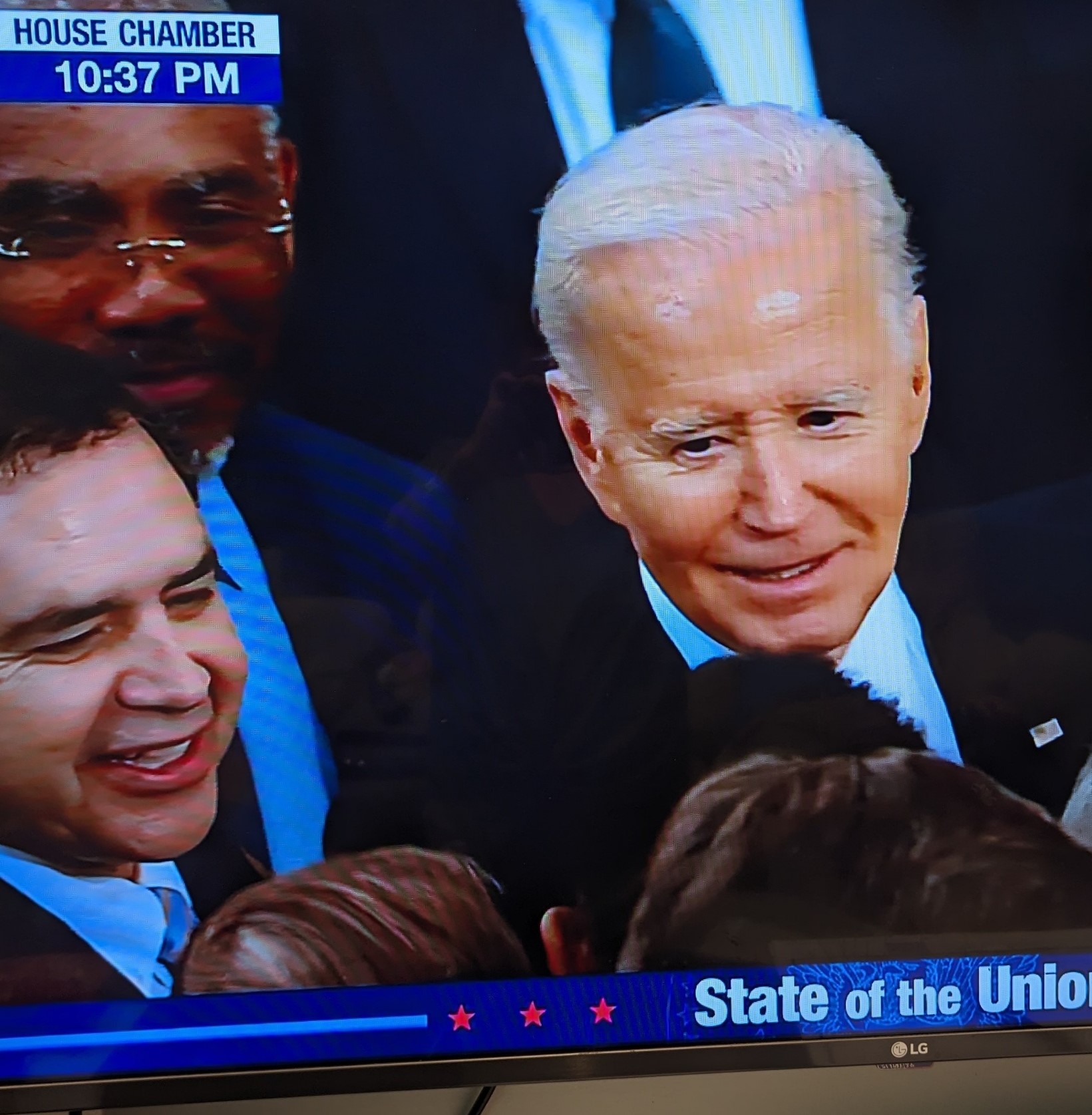
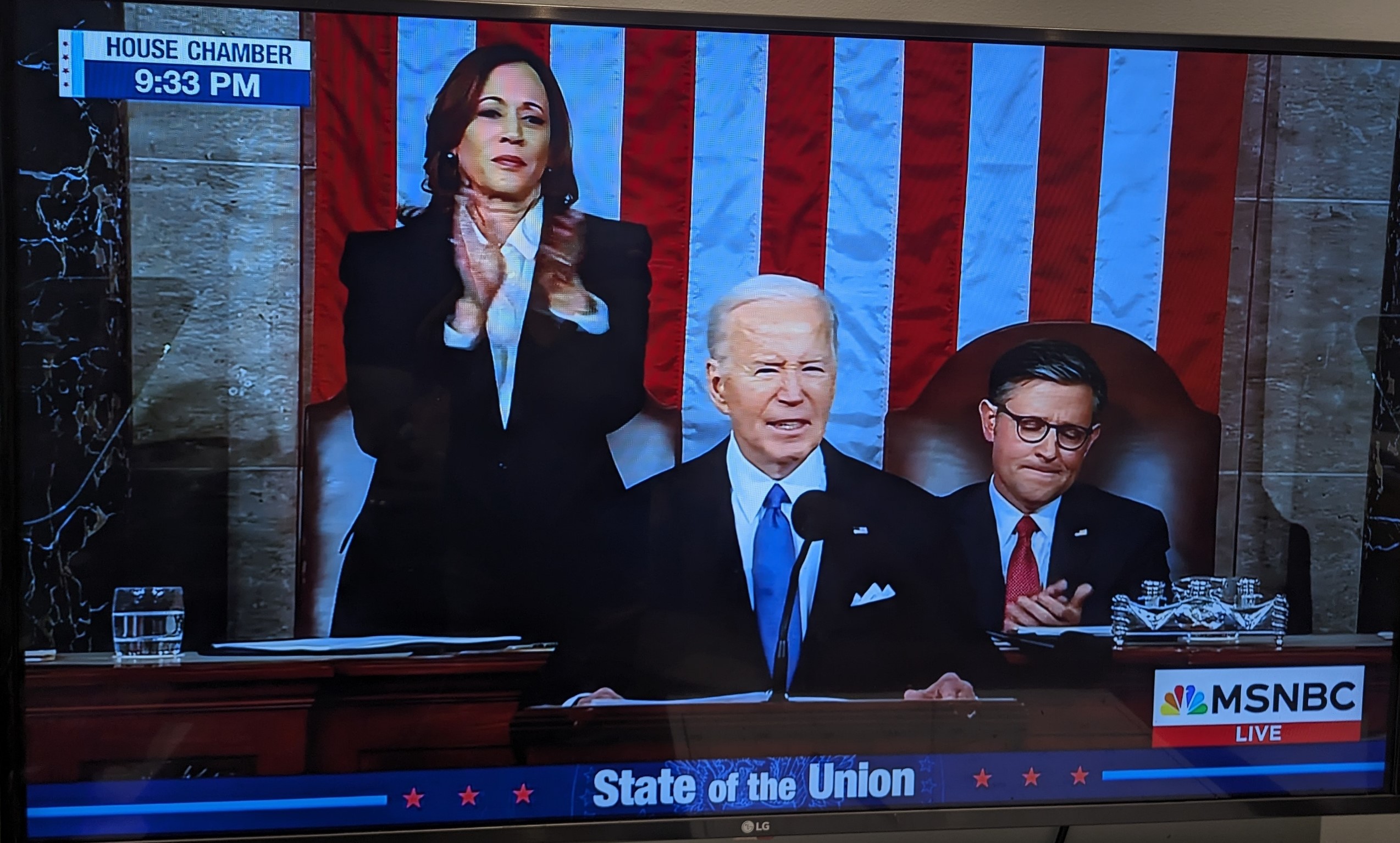
In fact, our memories aren’t as reliable as we may think. But what level of forgetting is actually normal? Is it OK to mix up the names of countries, as US president Joe Biden recently did? Let’s take a look at the evidence.

When we remember something, our brains need to learn it (encode), keep it safe (store) and recover it when needed (retrieve). Forgetting can occur at any point in this process.

When sensory information first comes in to the brain we can’t process it all. We instead use our attention to filter the information so that what’s important can be identified and processed. That process means that when we are encoding our experiences we are mostly encoding the things we are paying attention to.

If someone introduces themselves at a dinner party at the same time as we’re paying attention to something else, we never encode their name. It’s a failure of memory (forgetting), but it’s entirely normal and very common.

Habits and structure, such as always putting our keys in the same place so we don’t have to encode their location, can help us get around this problem.

Rehearsal is also important for memory. If we don’t use it, we lose it. Memories that last the longest are the ones we’ve rehearsed and retold many times (although we often adapt the memory with every retelling, and likely remember the last rehearsal rather than the actual event itself).

In the 1880s, German psychologist Hermann Ebbinghaus taught people nonsense syllables they had never heard before, and looked at how much they remembered over time. He showed that, without rehearsal, most of our memory fades within a day or two.

However, if people rehearsed the syllables by having them repeated at regular intervals, this drastically increased the number of syllables that could be remembered for more than just a day.

This need for rehearsal can be another cause of every day forgetting, however. When we go to the supermarket we might encode where we park the car, but when we enter the shop we are busy rehearsing other things we need to remember (our shopping list). As a result, we may forget the location of the car.

Image of Joe Biden.
Some have raised concerns about Joe Biden’s memory. Paul Froggatt/Shutterstock

However, this shows us another feature of forgetting. We can forget specific information, but remember the gist.

When we walk out of the shop and realise that we don’t remember where we parked the car, we can probably remember whether it was to the left or right of the shop door, on the edge of the car park or towards the centre though. So rather than having to walk round the entire car park to find it, we can search a relatively defined area.

The impact of ageing

As people get older, they worry about their memory more. It’s true that our forgetting becomes more pronounced, but that doesn’t always mean there’s a problem.

The longer we live, the more experiences we have, and the more we have to remember. Not only that, but the experiences have much in common, meaning it can become tricky to separate these events in our memory.

If you’ve only ever experienced a holiday on a beach in Spain once you will remember it with great clarity. However, if you’ve been on many holidays to Spain, in different cities at different times, then remembering whether something happened in the first holiday you took to Barcelona or the second, or whether your brother came with you on the holiday to Majorca or Ibiza, becomes more challenging.

Overlap between memories, or interference, gets in the way of retrieving information. Imagine filing documents on your computer. As you start the process, you have a clear filing system where you can easily place each document so you know where to find it.

But as more and more documents come in, it gets hard to decide which of the folders it belongs to. You may also start putting lots of documents in one folder because they all relate to that item.

This means that, over time, it becomes hard to retrieve the right document when you need it either because you can’t work out where you put it, or because you know where it should be but there are lots of other things there to search through.

It can be disruptive to not forget. Post traumatic stress disorder is an example of a situation in which people can not forget. The memory is persistent, doesn’t fade and often interrupts daily life.

There can be similar experiences with persistent memories in grief or depression, conditions which can make it harder to forget negative information. Here, forgetting would be extremely useful.

Forgetting doesn’t always impair decision making

So forgetting things is common, and as we get older it becomes more common. But forgetting names or dates, as Biden has, doesn’t necessarily impair decision making. Older people can have deep knowledge and good intuition, which can help counteract such memory lapses.

Of course, at times forgetting can be a sign of a bigger problem and might suggest you need to speak to the doctor. Asking the same questions over and over again is a sign that forgetting is more than just a problem of being distracted when you tried to encode it.

Similarly, forgetting your way round very familiar areas is another sign that you are struggling to use cues in the environment to remind you of how to get around. And while forgetting the name of someone at dinner is normal, forgetting how to use your fork and knife isn’t.

Ultimately, forgetting isn’t something to fear – in ourselves or others. It is usually extreme when it’s a sign things are going wrong.

Inside Story


Adventures in feminism

Books | We know a lot about Germaine Greer, but not so much about another trailblazer, Merle Thornton

ZORA SIMIC 20 MAY

Not too much, not too little: Merle Thornton back at the Regatta Hotel in 2015. Michelle Smith/Fairfax

Bringing the Fight: A Firebrand Feminist’s Life of Defiance and Determination
By Merle Thornton, with Melanie Ostell | HarperCollins | $29.99 | 288 pages

Merle Thornton, a true icon of Australian feminism, has published her memoir at the age of ninety and what a delight it is. The pleasure starts with the cover — it’s bright yellow with the title, Bringing the Fight, in bold pink. Right in the middle is a captivating photograph of a youthful, beaming Merle, striding purposefully, dressed in a fetching ensemble with a sturdy bag in her hand and sensibly stylish buckled shoes on her feet.

The photo is dated “c. 1950,” when she was twenty-year-old Merle Wilson and a student at the University of Sydney, a period she describes as “the happiest time of my life.” It was there that she met her future husband, a bookish returned soldier named Neil Thornton; together, they would raise a family and have many adventures. Around 1950, the adventures included discovering sex, being in thrall to the philosopher John Anderson and mixing with the Libertarians who eventually morphed into the Sydney Push, the bohemian scene that incubated Germaine Greer, Clive James, Robert Hughes and other notables.

The Sydney Push would become notorious for its sexism, but by then Merle had moved on to the public service, where she quickly developed strategies to combat boredom and land the better gigs. “Before Germaine, there was Merle,” declares the cover blurb, and indeed there was. We’re very fortunate that Germaine Greer and Merle Thornton are both still with us, but while we know a lot about Greer — too much, perhaps — how much do even the most dedicated students of Australian feminism know about Thornton, other than the 1965 Regatta Hotel protest she is best known for, and perhaps the fact that she’s the mother of actor Sigrid Thornton? Until now, not nearly enough.

What Merle Thornton tells us about her life and times is, on any measure, the right amount — not too much, not too little, coy in parts but candid elsewhere, and vivid throughout. It’s a fast, breezy read, written with the assistance of Melanie Ostell, and grew out of a stage show, Frank and Fearless, commissioned by the Queensland Music Festival, in which Thornton shared stories with her daughter.

It’s a memoir that also wants to inspire and instruct, with life lessons and maxims peppered throughout. The narrative is chronological, peaking in the 1970s, with occasional pauses to showcase “indelible moments” and “bookish influences.” These features sometimes tip over into whimsy, but the overall effect is endearing. As a narrator, Thornton is consistently good company. Crucially, she knows she is a historically significant figure but doesn’t over-inflate her importance. And even without the better-known parts, the nine-decade span of her life makes for fascinating social history.

Thornton was born during the Great Depression and attended Fort Street Girl’s High in Sydney in the 1940s, at a time when the majority of her classmates left school at fifteen. In one memorable observation, she contrasts the femininities of university-bound young women like herself (“dowdy matrons in our black cotton stockings”) and the contemporaries who left school to enter the world of work and romance “dressed in fashionable pencil skirts” with “proper hairdos,” who were like “colourful birds.” “It’s an interesting paradox,” she notes, “that we would learn many different things that these women would never know about, and yet we remained children for so much longer.”

By contemporary standards, Thornton’s life path might be the more common one — she graduated from university, got married, had children and continued to work, study and travel — but some of the most fascinating sections of the book evoke how different Australia was in the 1950s and 1960s, especially for women.

As a university student, she was an anomaly; as a public servant she had to hide her marriage (and for as long as she was able, her first pregnancy) in order to keep her job. In the first decade of her marriage she used a cap and spermicide for contraception, and she recalls that “preparing for sex could be a slow, at times embarrassing and potentially shaming learning experience subject to trial and error.” The arrival of the contraceptive pill in the early 1960s is duly recognised for the seismic event that it was, even if the initial batch gave her migraines.

The 1960s became her decade. At the University of Queensland, where her husband took up a lecturing post in 1960, Thornton threw herself into campus life. In her first direct action, she stormed down the corridor from the dull women’s staffroom to the male common room and sat down, “heart thumping.” Never a fan of single-sex organisations or segregated socialising, she wanted the right to be where the conversation was, regardless of her sex.

In this spirit, Thornton and her friend Rosalie Bogner staged her next direct action, this time on a much more ambitious scale. They chained themselves to the front bar of the Regatta Hotel on 31 March 1965 to protest against liquor laws that excluded women from drinking there. With the press tipped off, their novel action made headlines around the world and inspired a wave of similar protests. For all of its spectacular qualities, however, it’s the quotidian details of the protest that stand out, including the large kilt pin she used to cinch the waist of her skirt, and the performance of deep conversation with Bogner as the action played out. “I have no recollection of what we said to each other,” Thornton recalls, “and wouldn’t be surprised if it was ‘rhubarb, rhubarb, rhubarb.’”

After the Regatta protest, which comes around three-quarters of the way through, the memoir’s energy dissipates somewhat. Riding on the protest’s momentum, Thornton became a “go-to person on the issue of equal rights” and established the Equal Opportunities for Women Association, which successfully lobbied for the removal of the “marriage bar” from the Public Service Act in 1966.

But while Thornton has remained a dedicated feminist, including as a foundational figure in women’s studies at the University of Queensland, women’s liberation was never quite to her taste. Hers is a politics of like-minded people working together for a common cause, whether it’s libertarianism and free thought, Aboriginal rights or equal opportunities for men and women. If at times these principles strike the reader as old-fashioned, this book also provides plenty of reminders — including the groovy cover — that Merle Thornton was a genuine trailblazer. •

Zora Simic is a Senior Lecturer in History and Gender Studies in the School of Humanities and Languages at the University of New South Wales.

Topics: biography | books | history | women

Cindy Lou at coffee in South Canberra

I have been frequenting coffee shops in Deakin, Garran and Hughes as a change from my North Canberra haunts.

Garran Bakery

The photos are from the Garran Bakery site. I visited and had one of their excellent coffees while sitting under the trees. This is a dog friendly cafe with indoor and outdoor seating. The pastries look wonderful, and well worth another visit. Even more important, the staff are friendly and marvelously efficient.

Deakin & Me is a friendly cafe, with indoor and outdoor seating. The coffee is excellent, the pastries very tempting, while the luxurious fruit salad cups add another dimension, as do the generous cooked meals.

Research Project

Did anyone read these books: the Billabong series by Mary Grant Bruce; L.M. Montgomery’s series, such as Anne of Green Gables, Emily of New Moon, Pat of Silver Bush or standalone novels such as Jane of Lantern Hill; the Abbey books by Elsie J. Oxenham; or Roberta Moss’s Jenny books? I am interested in whether other people can remember reading them in the 1950s and 1960s or can remember them being in their school library.

If so, could you comment in the comments section? Or use messenger if we are connected?

Gen Kitchen, left, won the by-election for Labour in Wellingborough while Damien Egan overturned the Conservative majority in Kingswood © FT Montage/Getty/Reuters

See also Bob McMullan’s article in the blog Week beginning 14 February 2024, (also published in Pearls and Irritations) UK election prospects 2024.

Week beginning 14 February 2024

Dervla McTiernan What Happened to Nina? HarperCollins Publishers Australia, February 2024.

Thank you, NetGalley, for providing me with this uncorrected proof for review.

Dervla McTiernan’s What Happened to Nina? is thoroughly engrossing. So often ‘page turner’ becomes an accolade for mysteries such as this. However, here it would be remiss to turn a page too quickly. McTiernan ensures that every page is one to be devoured: ideas, information, understanding of human nature and moral dilemmas abound and demand attention. The ending is satisfying too, the novel’s moral dilemmas unanswered but tantalisingly ready to be left in abeyance, or are they? What Happened to Nina? might almost become what has happened to the reader to be so tempted to accept surely questionable behaviour?

Nina Fraser, Simon Jordan and their floundering relationship is introduced in a hiking and climbing break from home in Simon’s parents’ investment property in Vermont. Simon’s home is that of the wealthy and powerful businessperson, Rory and the smaller, secret businessperson, Jamie. Nina’s home is vastly different. It is Leane’s business, a B&B in which Nina often works while also trying to study for her university courses. Her stepfather, Andy also has a business, a small building enterprise. Their daughter, Grace is at school. See Books: Reviews for the complete review.

After Covid comment: Dervla McTiernan – edited email, including dates and registration details for Australian events; Bob McMullan – UK elections; Cindy Lou at Courgette.; Elizabeth Lyons questions the impact of the Goodreads app.

Covid in Canberra

There are no up to date statistics for covid this week. See last week’s article about the current Australian covid response.

Edited email from Dervla McTiernan:

Things are really building for me now with promotion for Nina, and plans for the Australian book tour have firmed up. I did three interviews this week already, and have a photo shoot on Thursday, so I think it’s safe to say that I’m well into it. Early reviews of the book have been really, really good and there’s some other exciting stuff going on that I’m not allowed to talk about just yet (!) but suffice it to say that it’s all madly distracting, and progress on my current writing project has slowed a bit.
 I always feel a bit antsy and uncomfortable when I’m not writing well. When I’m writing well I’m focused and my life tends to be fairly well balanced. I’m not sure what comes first — the balance and then the good writing, or the other way around — but I do know that book promotion and good writing aren’t the most comfortable bedfellows. It’s very exciting, when you get a call or an email with good news about a book you’ve worked on for two years. It’s hard to put that phone down and go straight back into a completely different story, but then … hard is good sometimes too. I’m so aware that I have less than three weeks left before I head off on tour (how did the time go by so fast!?) so I’m going to keep my head down and focused until the last minute, and then I can head away happily, knowing the work is done, and really enjoy myself on the road. This is all a really long preamble of excuses to explain why I’m late sending out the Carrie chapters. *hangs head in shame* They’re coming, I promise! Just a little bit longer.
EVENTS:
 If you live in Perth, Sydney, Melbourne or Canberra, I’d love to see you at one of our events for What Happened to Nina? You can book an event through the events page on my website or you can click this link, which will bring you to a site hosted by my publisher, which also has all of the booking links. 
Booking Links →
 My publisher is also running a competition for pre-orders for the book, so if you’ve already pre-ordered the book, or you pre-order now, you can upload your receipt to this site and you’ll be in the running to have me attend your book club! Through Zoom, of course, because I fear the cost of the flights would be prohibitive for in-person attendance (haha). If you’d like to order the book now, you can do so here. That’s all the news for now! Thanks so much for all your lovely emails and messages, and for all your support. I appreciate it so much. 

Bob McMullan – UK Election

UK election prospects 2024

There will be an election in the UK in 2024. It will probably be held around October but it could be as soon as May to coincide with local government elections.

All indications are that the Labour Party will not only win but will have a victory of historic proportions.

Life doesn’t come with guarantees. Therefore, no victory can be taken for granted. But it will take an unprecedented reversal of public opinion for the Labour Party to fail to win a majority.

The indications are more than just the polls, but the polling is extraordinarily strong. Over the last twelve months the data has been very consistent. The Labour Party’s lead over the Conservatives has always been more than 15% and has averaged about 18%.

This is obviously very strong but how does it compare to previous elections which oppositions went on to win? A recent analysis suggests that at this stage in advance of the previous five elections which have led to a change of government the average opposition lead has been about 13% and falling. The current opposition lead is 18% and appears stable.

This analysis makes it unsurprising that Electoral Calculus, which bases its forecasts mainly on rolling polling data predicts a landslide Labour victory. Their February 2024 numbers suggest an overall Labour majority of 256 with Labour winning 459 seats, Conservative 126, SNP 18 and Liberal Democrats 31. As well as the overall national results this also reflects a major decline in support for the Scottish National Party given their internal issues and problems with their governance in Scotland.

In summary, the objective analysis suggests a very high probability of a landslide victory for Labour whenever the election is held.

However, election forecasting and analysis is not a science. There are always subjective factors which need to be weighed with the data.

In this case the overwhelming number of these subjective factors point in the direction of a Labour victory also.

But first, a necessary caveat.

One of the advantages of incumbency is the capacity to act rather than just talk about issues. This gives the Conservatives some room for manouevre. There will be a budget in which they appear to be suggesting there will be further tax cuts. While it is hard to see this turning the tide overall, it may help shore up the traditional Conservative seats in the South-East which appear to be in danger at the moment.

The only other issue which, at this stage appears to have the potential to move the needle in a major way is immigration. The “stop the boats” mantra which is all too familiar to Australians does not seem to be biting yet, but it can tap into some deep-seated fears if promoted with sufficient cynicism.

However, the underlying issues should also be a source of concern for the Conservatives.

Firstly, there are the leadership changes from 2019. Boris Johnson, whatever his other flaws, was a vote winner. Jeremy Corbyn, whatever his other virtues, was a vote loser. These trends were especially evident in the traditional Labour seats in the North of England, the so-called “red wall”. Almost all of these seats were lost by Labour in 2019. Almost all of them appear to be on course to be regained in 2024.

The second worrying trend for the Conservatives is the regular appearance of scandals and resignations from the House of Commons. Many of these have led to by-elections, all of which the Conservatives have lost. Most of these have been lost to the Labour Party but others have been lost to the Liberal Democrats. Even seats which were previously held by 10000 votes or more have been lost. And there are several more by-elections scheduled as the scandals and resignations continue.

The Economist describes the third damaging aspect of the current Conservative party’s political situation as” …the party is defined primarily by its divisions. It has broken into an alphabet soup of factions.” All organisations, particularly political parties are prone to develop factions as part of the legitimate contest of ideas and approaches. But when the divisions proliferate and turn on each other it tends to be a terminal sign for governments. The factions seem to be divided between those who seek to change the direction (and the leadership) now and those which are positioning themselves for after the election.

The fourth aspect, which is typical of the problems faced by struggling government parties, is the secondary contest with parties other than Labour which will at the least eat into the Conservative Party vote in a manner which can be devastating in a first-past -the- post system. In this case the challenges come from Reform UK on the right and the Liberal democrats on the centre-right. The Liberal Democrats have shown that they can win seats in the South-East from the Conservatives when the Tories are at a low ebb. It is hard to see Reform UK winning any seats but as their vote has increased over the last twelve months it has come at the expense of the Conservative Party. As Reform are now polling 10% nationally, they have the capacity to undermine the Conservative vote in a number of competitive seats.

These factors combine to create a very threatening scenario for the Conservative Government.

It is important to remember the opportunities open to the government to take initiatives which could either be popular in themselves or “wedge” the Labour party in ways which could be damaging.

It is also true that parties of the left and centre-left have a long history of snatching defeat from the jaws of victory.

However, it is almost impossible to devise a scenario in which the Labour Party does not win the UK election in 2024. The biggest remaining question may well be whether the victory is sufficiently large to almost guarantee a second term and possibly splinter the Conservative side of UK politics for a decade or more.

Cindy Lou finds new menu items at Courgette

Again, I was pleased to use the $25 voucher per person (up to six people) to lunch at Courgette. The menu had changed, which makes the voucher for lunch option until May even more appealing.

The zucchini flowers were still on the menu and as delicious as ever. Alas the tuna dish has disappeared, but the entree of duck breast and quail was an excellent replacement.

Mains included an excellent fish dish, John Dory with a crisp skin and succulent inside, and the beef was cooked as ordered.

The desserts were terrific as pictured below:

Coffees, peppermint tea and English Breakfast tea completed a lovely lunch experience.

Should I have been at Italian Brothers where I understand Anthony and Jodie dined recently? No, Courgette is far better.

Anthony Albanese and Jodie Haydon at the Lodge, after announcing their engagement this week. (ABC News: Matt Roberts)© Provided by ABC News (AU)

I found the following article interesting for several reasons. I have a Goodreads goal but realised that all the books I read are not recorded there, so ignore it. I admit I rush to see if any of my reviews have garnered likes, or even the greater joy, of a comment. Does setting goals enhance of decrease a person’s pleasure in reading? Elizabeth Lyon discusses this and, for those dedicated to the Goodreads app, comes to a decision that is worth considering.

How Goodreads affects my degree: The reality behind reading goals

BY ELIZABETH LYON

Alongside the growing popularity of the app ‘Goodreads’, we explore the effects that reading goals and endless tracking within the app really have on reading.

We’re one month into 2024 and I am already behind on my Goodreads goal. The four books I should have read this month sit untouched on my bookshelf and unless I read frantically this February, my chances of getting back on track are slight.

But should I feel guilty for not reading ‘enough’ when reading, ultimately, should be an enjoyable pass-time? With deadlines, exams, lectures and reading for the new semester, it is no surprise that casual reading has taken a back step in my priority list this month.

Rather than encourage sustainable reading habits, I’ve found that Goodreads can become something to fixate on. With the thought of reading goals always in the background, sometimes I’ll find myself skim-reading pages to finish the book quicker just so I can click the ‘I’ve finished this book!’ button, and add another one to the read-list. I begin to associate reading with the dopamine hit I get through the app, rather than the real accomplishment of turning the final page of a good book.

Even when I read, I am still in this sense wired and online. Books become objects to be completed and digitally tracked, rather than actual stories to be enjoyed. Reading for escapism and relaxation therefore becomes harder, as I can never fully separate it from Goodreads, as my phone often lies by my side as I read, my reading status always ready to be updated.

This incessant tracking means that even when university is done for the day, I still feel I have ‘work’ to do. This in turn devalues the reading that I do as part of my degree.

Poems, book chapters, articles etc., all go untracked and the time I have dedicated to reading these texts subsequently becomes meaningless when not quantifiably recorded on Goodreads. When I look at my account, all I see is that I am behind on my reading goal and I subsequently forget the reading I have done as part of my studying. The knowledge I have gained through reading un-trackable texts as part of my degree is, after all, more valuable than reading three mediocre books for Goodread’s sake.

It begs the question of why I feel the need to track everything I read. As with apps for studying like Forest or as with running apps like Strava, we all seem to want digital evidence of real events and it seems that reading is not immune to this digital culture. Why should it matter that some of my reading goes un-tracked? Who am I trying to impress by using Goodreads: myself or others?

The competitive nature of Goodreads (particularly for someone who loves to read) means that the app will never lead to complete satisfaction. There will always be a new book, genre and author to discover, but that does not mean that I must read them all.

Are my books varied enough, ‘classic’ enough or are they too ‘easy’? Book trends on Goodreads and social media, whilst exposing us to and encouraging us to read new books, can become distractions from what really matters in reading: the positive effects of enjoyment, relaxation and escapism. In comparison to others online and in real life, it can be easy to forget that spare time at university does not need to be conquered or spent being ‘productive’ like the perception of others around you.

Whilst it is nice to have an online bookshelf and bookmark on Goodreads, it is not the be-all and end-all if reading goals are not met, or not all your reading is displayed in this singular app. Goodreads shouldn’t be used to affirm and validate that you have in fact read.

I have decided to relax my reading goal this year and remind myself that just because my studying, learning and reading as part of my degree cannot always be measured and tracked like a book on Goodreads, it does not mean it is not legitimate. Reading should first and foremost be enjoyable and as students, it is important to enjoy the spare time we have!

Week beginning 7 February 2024

In this week’s blog I review two books, The Artist’s Apprentice, historical fiction, and Tudor Feminists Ten Renaissance Women Ahead of Their Time, an account of ten noteworthy women in the Tudor period.

Rebecca Wilson Tudor Feminists Ten Renaissance Women Ahead of their Time Pen & Sword, Pen & Sword History, January 2024.

Rebecca Wilson’s Tudor Feminists Ten Renaissance Women Ahead of their Time does not display the lively writing which is one of the enduring features of Pen & Sword publications. However, this more densely written work certainly provides a fascinating read and is well worth Pen & Sword readers adapting to a different style. The description ‘feminist’ to introduce these ten women is something to think about. Were they feminist? Is feminism a broad or narrow term to be used in describing women and their  behaviour? What behaviour is feminist? Could the period in which the women acted impact an understanding of whether that action was feminist or not?

All of these questions influenced my reading, making the book come alive as I read and pondered, not only the women’s behaviour and the period, but how I feel about what makes a woman’s behaviour feminist. Wilson’s reference to Well behaved women seldom make history by Laurel Thatcher Ulrich provides a valuable clue to how to read the book as a tribute to feminism and feminist behaviour in the Renaissance period, so well-known through the Tudors. She also clarifies in the introduction suggesting that her description of the women in her book as feminist rests on their challenge to the patriarchal world in which they lived, surviving in that world while remaining out of step with it and, of course, their being remembered. The latter is essential to recognising that because we know something about them they must have stood out over and above their being associated with the Tudors, however popular that period is as historical fare for fiction and non-fiction authors. See Books: Reviews for the complete review.

Clare Flynn The Artist’s Apprentice Storm Publishing, February 2024.

Thank you, NetGalley, for this uncorrected proof for review.

This is the first of Clare Flynn’s novels that I have read. There is a lot to admire, for example the range of political and feminist issues that are covered in this essentially romantic novel. However, although I found the novel a good read, engaging, with interesting characters, I cannot give the writing an entirely positive response. Despite that, I am pleased to have had the opportunity to read this example of this popular author’s work and would like to know what happens to the main protagonists in the follow up, The Artist’s Wife.

The novel begins in January 1908 at Alice’s home, Dalton Hall, in Surrey. Alice is sketching in the frost on her window and must take diversionary action so that her lateness to breakfast goes unnoticed. Taking in the mail to effect this, Alice is confronted with an envelope addressed in writing with that makes her uneasy. It is an invitation from the American born wife of a newly rich neighbour, Cutler, inviting them to tea. Lord Dalton is pleased; his wife, unaware of the financial reason for her husband’s enthusiasm, is not. Alice is wary. Her brother, Victor, supports his father – he has prospects of joining the profitable Cutler firm of stockbrokers. See Books: Reviews for the complete review.

Covid update: Australia

Governments have been steadily dismantling the COVID surveillance system, but is that a backward step?

By Casey Briggs

A graphic showing a man coughing, a rapid antigen COVID test and three spike proteins
Some public health experts think it’s a shame we’re apparently returning back to the pre-pandemic ways we handled respiratory disease, after we’ve learned so much.(ABC News: Evan Young/Canva)

If you’ve tried to look up the number of COVID cases in your area recently, you may have found it a frustrating exercise.

The reporting frequency in states and territories has been slowing down, from daily to weekly, and now fortnightly or monthly.

On top of that, what do the numbers even mean now? And how many are being missed?

It’s been a long time since we were asked to get a PCR test at the slightest sign of a tickly throat.

Now, the vast majority of cases are going undiagnosed or unreported.

That degradation in data quality is visible for everyone to see, and it’s no surprise: it would’ve been a big ask for us to keep up the COVID surveillance effort of 2020 and 2021 forever.

Likewise, behind the scenes governments have been steadily dismantling many other elements of a surveillance system that we were so reliant on in the emergency period of the COVID-19 pandemic.

Some public health experts think it’s a shame that we’re apparently returning back to the pre-pandemic ways we handled respiratory disease, after we’ve learned so much.

Weekly forecasting of COVID-19 has ended

The most recent thing to be discontinued is a weekly series of forecasts and “situational assessment reports” for federal and state officials.

The federal government had been contracting a group of mathematical modellers across multiple institutions to produce it, and it was one of the key regular pieces of advice they received.

How scientists are protecting themselves from COVID

Three of Australia’s leading COVID-19 experts share their personal safety strategies and reflect on what must happen if we’re to blunt the growing health crisis the pandemic is causing — and prepare for the next one.

An illustration shows a women in the middle seat.

Read more

The forecasts gave assessments of the COVID situation, including estimates for the effective reproduction number and transmission potential in each state and territory.

But the government has decided not to continue with that work, and in December, the contract ended.

The health department says the forecasting was in place for the emergency response phase, and has been ended given that COVID-19 is no longer a “Communicable Disease Incident of National Significance”.

Professor James Wood from the UNSW school of population health was one of the researchers involved in the work. “I’m not surprised,” he says. “For some time, the government hasn’t been changing its decisions based on the epidemiological or modelling reports.

“Whether or not cases were going up might be of interest in terms of planning to some extent but … hospital capacity wasn’t being continuously strained and so on, so I think the value of it in the short term was less for government.”

It’s a return toward our pre-pandemic approach to respiratory disease, and that’s precisely the strategy: ministers and health officers have been saying for a long time that COVID is now being managed consistent with other communicable diseases like flu.

But some experts argue that we could use the lessons from COVID to do a much better job of tracking and managing flu than we did before.

“It does leave a gap in terms of epidemic intelligence … and what’s happening not only with COVID, but flu and RSV and probably in the next year or two, whooping cough as well will be one we’ll want to watch,” Professor Wood says.

In 2022 the US went through a “tripledemic“, where COVID, the flu and RSV all circulated simultaneously in high numbers.

The reality now is that when respiratory diseases are putting pressure on health systems, it won’t be because of a single pathogen. It could be several at once.

a positive covid test in someone's hand, with the box behind it
The majority of COVID cases are unreported now.(Unsplash: Medakit Ltd)
Have we missed an opportunity to make the most of what we’ve learned?

In the journal Emerging Infectious Diseases this month, a group of public health experts called it a “critical time” to review disease surveillance practices, suggesting an “integrated model of surveillance” that considers multiple respiratory viruses.

“Resuming pathogen-specific surveillance approaches, such as those for monitoring influenza, would represent a missed opportunity to build on learnings from emergency response efforts,” the authors wrote.

And ongoing surveillance is important if you want to catch emerging waves, new variants of concern, and entirely new pandemics early.

In order to monitor trends you have to monitor the inter-epidemic period as well the emergency period.

If you only stand things up when concerns arise overseas, you run the risk of acting too late.

The illness straining marriages until they crack

Long COVID is not just destroying people’s health. Behind closed doors, in homes across Australia and abroad, it is irreversibly changing relationships — sometimes for the better, too often for worse.

An illustration in blue and pink colours shows a woman sitting alone in a room looking out a window

Read more

Professor Wood states it more clearly: “We don’t have a clear forward plan.”

“We’ve missed a little bit of an opportunity while COVID was in front of everyone’s minds to initiate more changes.”

The government says something is in the works, and that a National Surveillance Plan for COVID-19, influenza, and RSV is being developed.

“As part of this development process, a comprehensive review of national viral respiratory infection surveillance is being undertaken, including an assessment of current gaps in surveillance, potential novel and/or enhanced surveillance systems and data sources to fill these gaps, and the benefits and limitations of each,” the health department says.

“This will include an assessment of the cost-effectiveness and sustainability of population prevalence surveys within the Australian surveillance context.”

Professor Wood says this is all happening while COVID-19 continues to have a significant impact.

“Obviously, we’re very glad that it’s dropped from being something where we were worried about losing 100,000 lives a year in the initial phase, to 15,000 in the Omicron year to maybe 5,000 last year,” he says.

“It’s a lot better, but that’s still worse than flu, right?”

“I do think we have an opportunity here to take that a bit more seriously in terms of how we view it, how we measure it, and how we advise the community on how to deal with it.”

Other governments are investing heavily in disease forecasting. What’s Australia doing?

Outside Australia, governments have clearly recognised the value of forecasting in public health.

In the US, the Centers for Disease Control and Prevention announced more than US$250 million over five years to establish a network of infectious disease forecasting centres.

That’s one of the actions of the CDC’s Center for Forecasting and Outbreak Analytics.

It was launched in 2022, directly in response to the COVID-19 pandemic.

The European Union’s equivalent to the American CDC, the ECDC, also launched a respiratory forecasting program late last year.

A Centers for Disease Control and Prevention logo at the agency's federal headquarters in Atlanta.
The US Centers for Disease Control and Prevention have established a network of infectious disease forecasting centres.(AP: David Goldman, file)

It shows how other countries are investing in the intelligence that they saw had value through the pandemic, and seemingly prioritising it more than Australia.

The Australian government is in the process of setting up a CDC here. It exists in interim form right now, with staff recruitment expected to happen this year.

That body may have some role in respiratory forecasting, but it is still in its infancy.

The health department says it is now focusing on “the adoption of novel and cost-effective surveillance strategies, with a reduced focus on case notifications”.

“The use of sentinel surveillance, healthcare utilisation data, genomic sequencing, and wastewater analysis will allow us to shift our surveillance approach to a more sustainable and integrated system that is more appropriate to the current epidemiological situation,” the department said in response to the ABC’s questions.

Wastewater analysis was one of the big new developments of the COVID pandemic, but Professor Wood says there’s a bit of work to do before we can rely more heavily on it.

“Tools like wastewater or some of the surveys like flu tracking may be promising ways to do this, but they haven’t been validated,” he says.

“And until we invest in doing some actual prevalence surveys and comparing with a known technique where we know the percentage positive and so on, we’re not really confident that this is actually consistently a good measure.

“We don’t know. There’s been some slightly weird results to wastewater in Europe in the most recent wave.”

In the meantime, modellers and public health experts plan to continue some of their work.

“Myself and others in Australia are going to continue to do some forecasting this year,” Wood says.

“But we have to set up new data agreements with state carriers, we have to rely on them being interested, and we’ll have to find some way to make this something we can continue to fund.”

Posted 4 February 2024, ABC website.

From: The New Yorker January, 2024.

Illustration by Katharina Kulenkampff

Trials of the Witchy Women

Across seven centuries, women have been accused of witchcraft—but what that means often differs wildly, revealing the anxieties of each particular society.

By Rivka Galchen January 15, 2024

King James—he of the Bible—thought that drowning was the best test of witchcraft.

In 1532, when the Constitutio Criminalis Carolina became the law of the Holy Roman Empire, it specified that witchcraft was a serious crime, punishable by execution by fire. The Carolina was often cited in the European witch trials that followed, with crazes peaking in the second half of the sixteenth century, and again in the early decades of the seventeenth century. In Germany alone, twenty-five thousand people were executed. The Carolina is sometimes called the basis for these witch hunts, but it can also be seen as an attempt to tame them. Previously, trials could proceed on the allegations of only one accuser; the new set of laws required two. The accusers had to be deemed credible, and they could not be paid or of evil repute. There also had to be sufficient indication of sorcery for the accused to be tortured.

The Carolina was an improvement over trial by ordeal, which for centuries had been a fairly standard practice. In one common example, a suspected witch was forced to hold a burning iron; how quickly God healed the wound was the measure by which the accused was declared innocent or guilty. In 1597, King James VI of Scotland (he later became King James I of England—and of the Bible) wrote “Daemonologie,” in which he enthusiastically embraced witch-hunting. His ideas were not aligned with those behind the Carolina. He remained faithful to the floating ordeal—tossing suspects into the sea, where only the innocent, presumably, would sink. He described it as “perfect,” because “water shall refuse to receive them in her bosom, that have shaken off them the sacred Water of Baptisme.” Drowning was reserved for the saved. Compared with such ordeals, the Carolina begins to look progressive. It connects to the dream that the law, if written well, can save us from our worst selves, that it can temper passion with reason and reduce violence rather than codify it. Though things don’t always work out that way.

Marion Gibson, a professor of Renaissance and magical literature at the University of Exeter, has now written eight books on the subject of witches, including “Witchcraft Myths in American Culture” and “Witchcraft: The Basics.” Her eighth book, “Witchcraft: A History in Thirteen Trials” (Scribner), traverses seven centuries and several continents. There’s the trial of a Sámi woman, Kari, in seventeenth-century Finnmark; of a young religious zealot named Marie-Catherine Cadière, in eighteenth-century France; and of a twentieth-century politician, Bereng Lerotholi, in Basutoland, in present-day Lesotho. The experiences of the accused women (and a few accused men) are foregrounded, through novelistic descriptions of their lives before and after their persecution. Gibson describes, for example, Joan Wright working in the “cold hush” of her employer’s dairy, churning milk so that “fat globules rupture and coalesce” in the “near-magical transformation of cream into butter.” The inevitable charisma of villainy makes the accusers vivid as well. The character that I found myself following most attentively, however, is also the book’s through line: the trial.

“The Return of Martin Guerre,” by Natalie Zemon Davis, is built around the historical trial of Arnaud du Tilh, who for years successfully pretended to be the peasant Martin Guerre. “The peasants, more than ninety percent of whom could not write in the sixteenth century, have left us few documents of self-revelation,” Davis writes. “But there exists another set of sources in which peasants are found in many predicaments”—it is in court cases that we can catch sight of the hopes and emotions and fears of those who leave no other written record. The trials of the accused people in “Witchcraft” return to us, in detail, lives about which we might otherwise know nothing.

In what ways have varying legal codes and trial procedures altered the destinies of those accused of witchcraft? Although thirteen trials can’t decide the question, the book does put it on the stand. Gibson shows us church courts, state courts, colonial courts, assize courts, and improvised court systems used in the chaos of a civil war, and there are judging panels of three and judging panels of twenty-five. (And historically there were no judges or jurors who were women.) There are also the kinds of trial that happen outside a courtroom: trials by poison, and King James’s favored trial by “swim.” To wager on the outcome of these various trials is not as easy as you might think. They always seem to be hurrying to doom, but they occasionally don’t get there.

In 1645, in Manningtree, England, a tailor goes to a diviner, because his wife is having violent fits that are, he says, “more than merely natural.” The diviner confirms the man’s fears: two women have bewitched his wife. This is how Bess Clarke, a one-legged unmarried woman, came to be arrested and tried. Clarke’s mother had also been tried as a witch, years earlier, and executed. At the time of Clarke’s trial, the English Civil War had left the court system in disarray. Rather than being tried in an assize court, whose judges tended not to be very religious, Clarke was tried by a presiding judge who was a strict Puritan, a slave-trafficker, and a notoriously cruel admiral. Clarke faced a procedure called “watching and walking”: she was made to walk continuously around in her cell for four days, while observers noted whether any of her animal “familiars” or other devilish alliances come by to consult with her.

After Clarke became exhausted, she told her watchers that, if they would sit down with her, she would introduce them to her spirit animals. The watchers reported seeing several familiars, including a short-legged and plump “imp like unto a dog” that was white with sandy spots. One watcher said that this dog was the first spirit animal to appear, while another said that the first was a white cat named Hoult. There was also a long-legged greyhound named Vinegar Tom, a black rabbit called Sacke and Sugar, and a polecat. The animals were seen vanishing and transforming, and Clarke, in supplying her persecutors with the story of her seduction by Satan, said that they had been born from a fall into sin. Clarke is said to have referred to all the spirit animals as her “children”—and she did have a child at home, Jane, whom she had had baptized, and whose father had not married her.

In the ensuing trial, Clarke was not allowed representation, and her accusers were not cross-examined. The jury delivered a guilty verdict within minutes. She was sent to the gallows. Another convicted woman died while waiting in line to be hanged, perhaps from a heart attack. This did not stop the proceedings, and Clarke was killed that day.

What kinds of crime did people need to ascribe to witches? The Carolina punished only crimes that had caused others damage, but many women were charged with less tangible evils, such as attending a witches’ Sabbath or changing form. Some witches were said to have cursed brides, some to have caused storms to sink ships, some to have sailed to sea in a sieve, and quite a few to have effected the death of a baby. In a 1591 treatise, Johann Georg Gödelmann, a legal scholar who favored the regulations of the Carolina—and thus can be seen as relatively progressive for a witch expert of that time—argued that controlling the weather was not a real phenomenon, and therefore could not be the basis for legal questioning. He worked to separate people who had delusions—but were not actually witches—from what he saw as a quite small number of people who really did perpetrate evil, who really had made pacts with the Devil.

Torture produced wild tales of evil, of course. But even the monstrous and incredible forced confessions were often still personal; the accused sometimes told of what had really happened to them, indirectly. Kari, the Sámi woman, who was tried in Finnmark in a Danish colonial court, described the Devil taking the form not of a local animal, such as a reindeer, but of a goat, a non-native animal associated with the colonizer. When Bess Clarke confessed to having sex with the Devil, her description of him was reminiscent of the man who had impregnated her. Tatabe, an enslaved woman in Salem, Massachusetts (depicted in “The Crucible,” by Arthur Miller), was accused of bewitching two young girls. When pressed under torture to name her collaborators, she described one as “a tall man of Boston” in fancy clothes. She also said the other witches told her that, if she didn’t do what they said, they would hurt her, or even that her head would be cut off. Tatabe had most likely been sold into slavery as a child and sent to a plantation before spending a decade in Boston—she populated her confession with descriptions of people and situations we assume she encountered in her real life.

See also: Review of John Callow The Last Witches of England A Tragedy of Sorcery and Superstition Bloomsbury Academic 2022, published in my blog of October 26, 2023.

Anthony Albanese

Post to Facebook, 4 February 2024.

Lowitja O’Donoghue was one of the most remarkable leaders this country has ever known. As we mourn her passing, we give thanks for the better Australia she helped make possible.

Dr O’Donoghue had an abiding faith in the possibility of a more united and reconciled Australia. It was a faith she embodied with her own unceasing efforts to improve the lives of Aboriginal and Torres Strait Islander people, and to bring about meaningful and lasting reconciliation between Indigenous and non-Indigenous Australia.

Life threw significant challenges at her – not least a childhood in which she was separated from her family, her language, and even her own name. From the earliest days of her life, Dr O’Donoghue endured discrimination that would have given her every reason to lose faith in her country. Yet she never did.

Dr O’Donoghue was a figure of grace, moral clarity, and extraordinary inner strength.

She was like a rock that stood firm in the storm – sometimes even staring down the storm. More than anything, she was one of the great rocks around which the river of our history gently bent, persuaded to flow along a better course.

With an unwavering instinct for justice and a profound desire to bring the country she loved closer together, Dr O’Donoghue was at the heart of some of the moments that carried Australia closer to the better future she knew was possible for us, among them the Apology to the Stolen Generation and the 1967 referendum.

She provided courageous leadership during the Mabo debates and as chair of the Aboriginal and Torres Strait Islander Commission.

Dr O’Donoghue knew that our best future was a shared one built on the strong, broad foundations of reconciliation. As she put it when she was made Australian of the Year, “Together we can build a remarkable country, the envy of the rest of the world.”

Throughout her time in this world, Dr O’Donoghue walked tall – and her example and inspiration made us all walk taller.

Now she walks in another place. Yet thanks to all she did throughout her long and remarkable life, she will always be around us.

Revered Australian Aboriginal rights activist Lowitja O’Donoghue dies aged 91

Story by Maroosha Muzaffar  • 21h THE INDEPENDENT

GettyImages-79728914.jpg

GettyImages-79728914.jpg© AFP via Getty Images

Revered aboriginal rights activist Lowitja O’Donoghue – described as “one of the most remarkable leaders” Australia has ever seen – has died in Adelaide. She was 91.

In a statement, her family said: “Our Aunty and Nana was the Matriarch of our family, whom we have loved and looked up to our entire lives.“We adored and admired her when we were young and have grown up full of never-ending pride as she became one of the most respected and influential Aboriginal leaders this country has ever known,” Deb Edwards, O’Donoghue’s niece, said in the statement.

Her family said that she died in the Kaurna Country in Adelaide.

A Yankunytjatjara leader and activist, O’Donoghue was much loved for her remarkable contributions to the rights and well-being of Aboriginal and Torres Strait Islander people in Australia.

Prime minister Anthony Albanese paid tribute to her lifelong dedication to advocating for indigenous rights. He said O’Donoghue was “one of the most remarkable leaders this country has ever known”.

“With an unwavering instinct for justice and a profound desire to bring the country she loved closer together, Dr O’Donoghue was at the heart of some of the moments that carried Australia closer to the better future she knew was possible for us, among them the Apology to the Stolen Generation and the 1967 referendum,” he added.

“She provided courageous leadership during the Mabo debates and as chair of the Aboriginal and Torres Strait Islander Commission.”

Former Senator Pat Dodson also remembered her and noted that “her leadership in the battle for justice was legendary.

“Her intelligent navigation for our rightful place in a resistant society resulted in many of the privileges we enjoy today.”

O’Donoghue’s family said her legacy would continue through the Lowitja O’Donoghue Foundation, which was created on her 90th birthday.

“Aunty Lowitja dedicated her entire lifetime of work to the rights, health, and wellbeing of Aboriginal and Torres Strait Islander peoples,” they said.

“We thank and honour her for all that she has done — for all the pathways she created, for all the doors she opened, for all the issues she tackled head-on, for all the tables she sat at and for all the arguments she fought and won.”

Lowitja Institute’s patron Pat Anderson AO described her as an outstanding leader and visionary whose story is one of great courage, integrity and determination.

“Lowitja was a national treasure,” Ms Anderson said. “She lived a remarkable life and made an enormous contribution to public life in pursuit of justice and equity for Aboriginal and Torres Strait Islander people and Indigenous people across the globe.

“Courageous and fearless in leading change, Lowitja was continually striving for better outcomes for Aboriginal and Torres Strait Islander peoples. She will remain in my heart as a true friend and an inspiration to Australians for years to come.”

O’Donoghue was the founding chairperson of the Aboriginal and Torres Strait Islander Commission (ATSIC) and played a key role in drafting the Native Title legislation that arose from the High Court’s historic Mabo decision, according to the foundation website.

She was named 1984 Australian of the Year and was the first Aboriginal person to address the United Nations General Assembly and the first Aboriginal woman to be appointed as a Member of the Order of Australia (AM).

Minister for Indigenous Australians Linda Burney also paid tribute to her “remarkable legacy”, and described her as a “fearless and passionate advocate” for Aboriginal and Torres Strait Islander Australians.

“She was a truly extraordinary leader. Lowitja was not just a giant for those of us who knew her, but a giant for our country,” the minister said. “My thoughts and sincere condolences to her family.”

O’Donoghue, born to an Indigenous mother and a pastoralist father in South Australia, faced early childhood trauma when she and her sisters were removed from their mother at age two, growing up in Colebrook Children’s Home without reuniting with their mother for thirty years.

She became the first Aboriginal trainee nurse at Royal Adelaide Hospital, and later a pioneering leader as the first Aboriginal woman to hold significant positions including a regional director in an Australian federal department, the founding chairperson of the National Aboriginal Conference, and the first Aboriginal woman awarded the Order of Australia in 1977.

EMILY KAM KNGWARRAY

Until 28 Apr | Ticketed

As the sun sets on summer holidays, let Emily Kam Kngwarray’s vibrant art and deep cultural connections transport you to Country. The feeling of inspiration will stay with you long after you leave the Gallery.

‘Kngwarray’s work transcends time, inviting audiences to explore the spiritual landscapes and ancestral narratives woven intricately within each stroke.’
Dr Nick Mitzevich, National Gallery Director

Guided exhibition tours daily at 11.30am and 1pm. Free with exhibition ticket. 

Access our free audio guide for a deeper understanding of Kngwarray’s works (simply bring your own device and headphones).

Specially designed for kids, our free art trail brings the exhibition to life with fun and playful activities.

Kids & Families

For Kids & Families: Emily Kam Kngwarray

Photograph of a group of small children

At the Gallery
Sat and Sun
6 Jan – 28 Apr 2024

Temporary Exhibition Gallery, Gallery 12 (Level 1)

Wheelchair Accessible

ART CART: LEAF GAME

Sat 2 Dec 2024, 11am – 4pm (Special Opening Weekend Event)
Sat and Sun, 6 Jan – 28 Apr 2024, 10am – 2pm
Daily during school holidays, 15–29 Jan 2024 and 13–28 Apr 2024

Join National Gallery staff in the exhibition foyer to learn about Emily Kam Kngwarray’s art and Country through stories, play, creative activities, and games such as the Leaf Game, a storytelling game using sand and leaves, which is played by members of the Utopia community and was played by Emily Kam Kngwarray as a child.

Children must be accompanied by a parent/carer. This program is designed for children up to 8 years.

Located in the exhibition foyer
Free, drop-in, limited capacity

KIDS & FAMILIES ART TRAIL

Collect a free Kids & Families Art Trail when you visit the Emily Kam Kngwarray exhibition.

Inspired by Emily Kam Kngwarray’s life on Alhalker Country, the art trail invites children and their families to look at Emily Kam Kngwarray’s art together in the exhibition.

For more information about Kids & Families programs visit our dedicated Kids & Families page

The children’s art programs described above are such a change from the immediate past at the NGA. I am so pleased that the NGA is again catering for children’s artistic needs.

Week beginning 31 January 2024

Ramie Targoff Shakespeare’s Sisters Four Women Who Wrote the Renaissance, Quercus Books riverrun, March 2024.
Thank you, Net Galley, for providing me with this uncorrected proof for review.

Ramie Targoff begins with a reference to Virginia Woolf’s A Room of One’s Own in which she compares the success men win for their literary efforts in comparison with women of similar talent. Essential to women’s opportunities she believed were money and independent space. Also, of importance to Targoff’s effort to bring four women writers into the history they deserve, is Woolf’s reiteration of the story of Judith, Shakespear’s imaginary sister. Judith, it is said, was as brilliant a writer as William, but her sex reduced her to obscurity.  Targoff aims to give the four sisters about whom she writes their deserved place in the history of writing. Anne Clifford, Mary Sidney, Aemilia Lanyer* and Elizabeth Cary are given their literary due in this detailed account of their lives and work.

Targoff’s book is resplendent with detail. The women’s status, domestic and public lives and writing history and successes, alongside further details of their work, is thoroughly explored. So too is the political, social and economic environment in which they worked. My only quibble about this delightful book is that further detail of the literary context would have, I think, added to even greater understanding of the magnitude of the women’s achievements. (NB. the Epilogue incudes relevant sources). See Books: Reviews for the complete review.

* Next week I review Tudor Feminists by Rebecca Wilson which also features Aemelia Lanyer.

After the Covid update: Cindy Lou enjoys meals in Canberra and Sydney; Art Gallery of New South Wales visit; Museum of Contemporary Art visit; Tiddas at Belvoir Street Theatre; E. Jean Carroll on The Rachel Maddow Show; The Trump Trials by George Conway.

Covid update for Canberra

From 19 to 25 January there were 132 new cases (no RATs recorded); 22 people were in hospital with 1 in ICU and 1 ventilated. No lives were lost in this period.

Cindy Lou enjoys meals in Canberra and Sydney

Bamiyan Restaurant

Bamiyan is a lively restaurant that serves delicious Afghani food in generous portions. We chose Banquet 2 with set entrees and the choice of four main dishes. The meals were served with hot bread, no rice, and we enjoyed this. Of course, it does require a mopping up of the sauces rather than the more elegant rice with sauce, but this is not a problem at this casual venue.

If I have a complaint, it is the level of noise that at times made conversation difficult. There is outside seating that could be a better choice if hearing is an issue.

Entrees came with a magnificent mixed grill which comprised chicken, and lamb meatballs. There was a salad, a selection of accompanying sauces, dumplings and a stuffed bread dish. The mains we chose were the prawns, lamb, chicken, and eggplant. All were delicious, but the prawn dish really stood out.

Basket Brothers, Surrey Hills

Many cafes in Surrey Hills were closed on Friday 26th, so we were pleased to find Basket Brothers open. This cafe has an interesting menu, friendly and prompt staff, and delicious food. A lemon, lime and bitters and vanilla milkshake were welcome as the day became hotter. My plate of two succulent mushrooms, beetroot dip and warm bread, spiced pumpkin, a generous portion of halloumi, avocado, pickled cucumber and two poached eggs with sprouts was amazing. Fortunately, the evening was given over to a visit to the Belvoir and no more eating.

Nour, Surrey Hills

Nour was a wonderful experience, from the welcoming smiles as we arrived, to the friendly farewells at the end of the night. We had a marvellous waiter who was most helpful in ensuring that we had a good understanding of portion sizes, the best way to enjoy the dishes (mix the eggplant with the sauce, which I think we did not really achieve so it was a disappointing dish) and the number of dishes that would work well. I particularly enjoyed the mussel parfait with a hot roll, the Murray cod mezze, the fish main and the cauliflower side. I would order the Fattoush salad in preference to the mushroom dish next time. The fresh mint tea made a lovely end to the meal. Others enjoyed the lamb shoulder, meat mezzes and the scallops. There is an excellent range of small and larger mezzes, four main dishes plus a special, and well-proportioned side dishes ‘from the garden’.

The Gallery Cafe, New South Wales Art Gallery

This is a lovely spot to eat, and enhanced for me by the connection with Mindy Woods, a Master Chef competitor whom I followed on the show. Alas, I did not order the healthy salad promoted in her name, the cakes looked too inviting and it was too early for lunch. Perhaps next time…

Breakfast at Rydges Central, Surrey Hills

Rydges Central offers a light breakfast comprising tea or coffee, toast and accompaniments, and a pastry. I have not seen this option elsewhere but found it an excellent choice after the meal at Nour, and before the morning tea at the Gallery Cafe. The usual continental and full cooked breakfasts were also available. The possibilities for both were very good indeed. After all this eating out I was pleased to arrive home and have hot buttered toast and baked beans. And a fasting day after that to celebrate.

Breakfast at The Rocks Cafe

The lemon meringue tart has changed drastically since the last time I was at The Rocks Cafe, just before Covid lockdown. For years it has been a magnificent sight of a mountain of meringue, which of course, would be impossible to eat. The breakfast was as I remember it from that previous occasion – generous and delicious, served with a smile and speed.

Two enjoyable Art Galleries in Sydney

I made a short visit to the Art Gallery of New South Wales in the couple of hours between checking out and catching a plane.

Museum of Contemporary Art

This gallery is in an enviable position, situated between Circular Quay and The Rocks, making it a wonderful interlude between the two tourist attractions. On this occasion the indigenous art continued the themes established by our attendance at Tiddas at The Belvoir.

Kevin Gilbert 1933 – 1993. Born Kalara riverbank (Lachlan River), Condobolin, New South Wales. Lived and worked Condobolin, Taree and Canberra. Wiradjuri Nation.

Left to right, linocuts: Boothung and Mirrigarn, 1967/1990; Corroboree Spirits, 1965/1990; Christmas Eve in the Land of the Dispossed, 1968/1992.

Gift of Reg Richardson AM and Sally Richardson, 2015.

Left to Right linocuts:

Colonising Species, 1989

Lineal Legends, 1965/1992; The Nomad, 1969/1992

Courtesy of the Estate of Kevin Gilbert.

The other exhibition that I found interesting was an artist’s response to demolition of a property. The art is a positive response to an event that was impossible to prevent, and I thought, is an excellent contribution to art, and to community history.

Simryn Gill

Tiddas at Belvoir Street

Image from another production – I rather like the Belvoir Street staging!

Tiddas (Sisterhood) is the 90-minute play based on Anita Heiss’ novel. The following is from the advertisement for the play. I am interested in the assertion that the women demonstrate unconditional friendship as the play showed some cracks arising from the book groups reluctance to consider the white author’s novels for discussion; her indigenous husband’s lack of commitment to his indigenous community and the others’ criticism of this; the trauma around one sister’s fertility and the other’s desperation after IVF treatment. These distinct differences were essential to the play; the women’s interaction; and our, as an audience, reaction to the huge ideas the play encompassed.

A SHOW OF SISTERHOOD AND SECRETS

Jacaranda season blooms early in Sydney as our 2022 smash-hit production, Tiddas, pays a visit.

Tiddas is a page-to-stage adaptation of Anita Heiss’ much-loved and best-selling novel.

Five women, best friends for decades, meet once a month to talk about books, life, love and the jagged bits in between.

Best friends tell each other everything, don’t they? But each woman carries a complex secret and one weekend, without warning, everything comes unstuck.

At its heart Tiddas is a story about enduring, unconditional friendship, and women supporting women.

Sydney audiences will be introduced to the story’s inimitable stars; Izzy, Veronica, Xanthe, Nadine and Ellen as part of Sydney Festival’s Blak Out program.

Tiddas was originally commissioned and produced by La Boite Theatre, Brisbane Festival and Queensland Performing Arts Centre. 

CAST

Louise Brehmer
Lara Croydon
Sean Dow
Roxanne McDonald
Anna McMahon
Perry Mooney
Jade Lomas-Ronan

CREATIVES

Playwright Anita Heiss, Co-Directors Nadine McDonald-Dowd and Roxanne McDonald, Set & Costume Designer Zoë Rouse, Associate Designer Grace Deacon, Lighting Designer Jason Glenwright, Sound Designer & Composer Wil Hughes and Fight & Intimacy Director Nigel Poulton

E. Jean Carroll on The Rachel Maddow Show

This was riveting watching as Rachel introduced the interview with a wonderfully graphic account of E. Jean Carroll’s background. A game? A men’s magazine? Eccentric articles? And that is only the beginning.

This was such a colourful introduction to this woman of distinction, originality and courage.

E. Jean Carroll was then asked by Elle to write a regular column which led to a stalwart and inspiring career.

George Conway comments in The Atlantic (George T. Conway III, The Atlantic <thetrumptrials@theatlantic.com> )

This is The Trump Trials by George T. Conway III, a newsletter that chronicles the former president’s legal troubles.

George T. Conway III

CONTRIBUTING WRITER

(Illustration by The Atlantic. Source: Getty)

View in browser


Eighty-three million, three hundred thousand dollars. 

When a New York jury awarded that amount to E. Jean Carroll on Friday in her defamation action against former President Donald Trump, I was awestruck.

Now, as a lawyer, I had thought a fair verdict could range anywhere from $75 to $100 million—or even more. Carroll had already obtained a $5 million verdict in a trial just last year, an amount comprising roughly $2 million for his having sexually abused Carroll in 1996, and roughly $3 million for his having defamed her in 2022, after he (unwillingly) left office.This trial, the second trial, was held to determine what damages she had suffered when he defamed her in 2019, when Carroll first told the world how Trump had assaulted her. It stood to reason that the damages for that slander would be much greater—after all, that had been the first time he’d lied about her, and, importantly, his status as president had compounded the impact of those lies. On top of all that, he continued to lie about her, over and over again, even during this second trial—displaying a maliciousness that could justify punitive damages several times higher than the amount quantifying her actual harm.

So on a professional level, I wasn’t surprised. But on a personal one, I felt overwhelmed. Nine regular people in New York, picked at random, meted out justice to a man who had been president of the United States, a man who claims to have billions of dollars.

They showed that the justice system still works in America. Donald J. Trump can’t do whatever he wants with impunity. He is not above the law.

See Further Commentary and Articles arising from Books* and continued longer articles as noted in the blog for the complete article.

Week beginning January 24 2024

Kathryn Atherton Mary Neal and the Suffragettes Who Saved Morris Dancing Pen & Sword History, January 2024. *
Thank you, NetGalley, and Pen & Sword History for providing me with this uncorrected proof review.

Reading Katheryn Atherton’s book has been an absolute delight. It is well written, with the usual Pen & Sword accessible language, format and lightness of touch, while providing a wealth of well researched information. Mary Neal and the Suffragettes Who Saved Morris Dancing includes information about women’s suffrage organisations and personnel, with marvellous vignettes of the most active, and details of the action in which the women participated; the background to Morris Dancing, highlighting the divergent views of how it should be understood, appreciated and developed; and the significant social  history associated with Neal’s work and her commitment to changing the lives of women from a very different class from her own and her companions in the suffrage organisations involved in saving Morris Dancing.

The exploration of the suffragette contribution to restoring Morris Dancing to its former prominence after it had died out by the early 20th century begins with Mary Neal’s work with young working-class women in St Pancras. The role of her club, the Esperance, in the resurrection of this dance form, and as part of Neal’s commitment to women and girl’s rights makes a stirring story. So, too does the all too familiar falling out over the way in which Morris dancing should be executed – or was it just that a man wanted a prestigious role? This part of the book makes remarkably interesting reading from a feminist perspective as well as for anyone for whom dance and the manner in which it should be performed, observed and understood is an issue. See Books: Reviews for the complete review.

Covid report: Australia figures

The latest COVID-19 news and case numbers from around the states and territories (edited)

By Audrey Courty

A graphic showing a man coughing, a rapid antigen COVID test and three spike proteins
Australia’s latest COVID-19 wave is driven by a new variant descended from Omicron.(ABC News: Evan Young/Canva)
COVID-19 cases by jurisdiction (as at 22 January 2024)

Western Australia – 978 new cases; South Australia 4,305 new cases; Northern Territory 187 new cases; Queensland 4,712 new cases; New South Wales 9,980 new cases; Victoria 3,639 new cases; Australian Capital Territory 327 new cases; and Tasmania 1,929 new cases.

Note: Due to changes in testing and reporting requirements, the number of COVID-19 cases is an underestimate of the actual disease incidence.

ABC News  Source: Department of Health and Aged Care

As school holidays come to an end and people return to work, Australians are reminded to take precautions against another “substantial” wave of COVID-19.

There are currently more than 26,000 active cases of COVID-19 across the country, according to the federal government’s latest daily figures.

Professor Kelly says the spike in cases since early December is driven by a new variant called JN.1, which descended from Omicron.

“People are kind of sick of it,” Professor Kelly says.

“Their lived experience of COVID now is nowhere near as severe for most people compared with earlier in the pandemic, but it is still a serious issue for those that are more vulnerable to severe disease.”

He reminds Australians to keep their vaccinations up to date.

From Labour List, British Labour Party

John Cruddas

On this day 100 years ago, the first Labour government was elected. For Labour’s first Prime Minister Ramsay MacDonald it was “an insane miracle”.

The government was defeated just over nine months later, yet it proved to the country that our party was willing and able to govern.

To mark the centenary, LabourList is publishing a series of articles that look back over Labour’s sprawling, turbulent history.

Elected in 1906 as one of twenty-nine Labour MPs.

Labour has achieved many extraordinary things, including the introduction of the welfare state, the National Health Service and pioneering equalities legislation. Yet it has held power for just 33 years.

Only three of Labour’s many leaders, Clement Attlee, Harold Wilson and Tony Blair, have won a general election. If this year Keir Starmer becomes the fourth, it will be an historic achievement.

Nan Sloane

Margaret Bondfield

This year sees the centenary of the first Labour-led government, and the first government in which a woman – Margaret Bondfield – held any kind of ministerial post, serving as parliamentary secretary to the Minister for Labour. As Labour took office, it was a very different party from that of the pre-1914-18-War years, and one of the main reasons for that was that the majority of its members were now women.

The 1918 Representation of the People Act gave the vote to all men and to women over the age of 30 who met a property qualification, either directly themselves or through their husbands.

As a result, although any woman over the age of 21 could stand for Parliament, about 40 percent could not vote. Thus Ellen Wilkinson, first elected to Parliament in 1924, was unable to vote for herself because she did not meet the property qualification.

In 1914 the Labour Party had been a loose grouping of more-or-less like-minded affiliates, but in 1918 the introduction of individual membership made it a mass membership organisation.

However, although working-class men tended to stick with their affiliated trade unions and exercise their political rights through that route, women, who had much less presence in the trade union movement, joined the Labour Party as individual members very quickly in large numbers. In 1918 there were just 5,000 women members, but within three years this had risen to over 70,000 and continued to grow throughout the decade.

The Women’s Labour League (WLL), an independent organisation of women affiliated to the Party before 1918 (and the last women’s affiliate until Labour Women’s Network affiliated nearly a century later) was absorbed into the Labour Party and its branches became Women’s Sections. As part of the deal, and in the earliest known use of a quota, women were guaranteed four places on the National Executive Committee (NEC). The WLL Secretary, the redoubtable Marion Phillips, became the first National Woman Officer.

To cater for the new women members an entire organisational structure was built to support them. Each region had a Woman Organiser whose job it was to develop women’s sections, provide them with political education and train them for election work. Various bodies were set up to bring women together and to connect them to the mainstream of the movement, and Women’s Conference met annually as a delegate body. Women were also encouraged to stand for public office, although as might have been predicted many found it difficult to find winnable seats.

Perhaps unsurprisingly the sudden arrival of women into the Party with their own structures and conference led to a build-up of tension and disagreement both between women members and the Party leadership, and between women themselves.

Leading men were often alarmed to find that the issues women wanted progressed were not what they thought they ought to be, and that women had demands which were at variance with their traditional roles.

One of the major issues that the new Labour government took on in 1924 was housing. Because poor housing was considered to be (and still is) a major factor in poverty and ill-health, responsibility for it lay with the Minister of Health, John Wheatley, and his Parliamentary Secretary, Arthur Greenwood.

After the War many women had been forced back into their homes by post-war employment policies which had systematically removed them from the workplace in order to accommodate men returning from the trenches.

Marion Phillips

As talk of ‘homes fit for heroes’ increased, Marion Phillips and Averil Sanderson-Furniss noted in an article in The Labour Woman in 1918 that: ‘The working woman spends most of her time in her home, yet she has nothing to do with its planning. It’s time this state of affairs ended.’

Unfortunately, neither Liberal nor Labour Health Ministers agreed, and Wheatley failed to consult even the most senior Labour women when drawing up his (otherwise rightly praised) Housing Act in 1924. This state of affairs continued for many years; in the 1940s Labour women like Margaret Bondfield were still trying to persuade their colleagues that women might have something significant to say about housing.
A more controversial issue was access to birth control, which many Labour women believed was the key to improving women’s health, decreasing maternal and infant mortality and reducing poverty. However, Wheatley was adamantly opposed to it, even suggesting that if ‘respectable’ women arrived at maternity clinics to find birth control advice on offer they would be put off attending at all.

Both the Parliamentary Party and the NEC backed Wheatley. Marion Phillips was also hostile on the grounds that supporting birth control would be an electoral liability, an early example of the mistaken belief that controversial issues are to be avoided at all costs by parties wishing to be elected.

By the time Labour returned to government in 1929, however, opinion had begun to change. Greenwood became Health Minister with Susan Lawrence as his Parliamentary Secretary and in 1930 local authorities were allowed to offer birth control advice if they wished.

As Keir Hardie had remarked before the War, it was never likely that men would surrender power simply because they were asked. Like many other parts of society, Labour has struggled over the last century to accommodate the full diversity of the electorate it serves.

There is still a long way to go, but the progress the Party has made and is making is at least in part down to the persistence of those first women who joined in 1918 and began to make their voices heard.

This article is part of a series to mark the centenary of the first ever Labour government, guest edited by the Labour MP and writer Jon Cruddas, who has written a new history, ‘A Century of Labour’ (Polity Books).

Secret London

The article below is edited to provide details of only some of the restaurants. The names of all of the restaurants are included so that these can be researched for further information. Cindy Lou hopes to get to some of them and will report in June/July 2024.
32 Of The Prettiest Restaurants In London For A Special Meal

Enjoy stunning food in correspondingly stunning surroundings at these gorgeous London restaurants.
 ALEX LANDON – EDITOR • 5 JANUARY, 2024

Plenty of restaurants have style, and many more have the substance. But putting the two together isn’t always easy, which is why we’ve simply got to applaud the prettiest restaurants in London for marrying delicious food and a keen aesthetic sense. Whether they’ve opted for muted pastel tones or wildly OTT décor, these truly are some of the prettiest restaurants around.

1. sketch, Mayfair

This list of the prettiest restaurants in London isn’t in any particular order, but whichever way we did order it, sketch would probably have emerged at number one amongst London’s prettiest restaurants. From the breathtaking spectacle of The Glade, to their ever-Instagrammed toilets, this place is straight up gorgeous. Read all about it here.

You’ll find sketch at 9 Conduit Street, London, W1S 2XG.

the chandeliers hanging over the glade room at sketch
Credit: sketch

 Nearest station is Oxford Circus.

2. Bacchanalia, Mayfair

Bacchanalia is one of those restaurants that finds your jaw hitting the floor as soon as you walk in, only to return to its rightful position when you leave. The cavernous venue is absolutely packed full of gorgeous sculptures, busts and paintings. In their own words: “This is not merely a restaurant, it is a breath-taking feast for the senses”. Mediterranean and Greek dishes complement the grandeur of the restaurant, harking back to the strength of their empires and rich history, with dishes that invite you to “Banquet like Bacchus”. Find out more here.

You’ll find Bacchanalia at 1-3 Mount Street, London, W1K 3NA.

 Nearest stations are Green Park and Bond Street.

the incredibly ornate interior of one of London's prettiest restaurants, Bacchanalia, with sculptures, columns, and busts dotted around the tables and vast artwork on the walls
Credit: Bacchanalia
3. 14 Hills, City of London

A beautiful addition to the capital, where it sits beneath tranquil rooftop The Garden at 120, 14 Hills is one hot spot. I mean, just look at the fancy furnishings, elegant bar, and tropical plants, artfully festooned around the place. They also do a mean brunch, in case you needed another reason to visit… Learn more here.

You’ll find 14 Hills on the 14th floor of 120 Fenchurch Street, London, EC3M 5AL.

Trees and the lovely interiors of 14 Hills in London
Photo: 14 Hills

 Nearest station is Fenchurch Street.

4. Clos Maggiore, Covent Garden
5. La Poule au Pot, Belgravia
6. Mari Vanna, Knightsbridge
7. Amazonico, Mayfair
The flash interiors of Amazonico restaurant in London
Photo: Amazonico

Rocking a pretty gorgeous arboreal theme, here’s Madrid transplant Amazonico, which brings the flavours of Peru, Colombia, and Brazil to Mayfair. It’s a toss-up as to what’s more exciting – the caramelised pineapples, spun over a gentle flame for four hours for maximum taste, or the tropical interiors, dotted with models of peacocks and tropical creatures. You can read all about it here.

You’ll find Amazonico at 10 Berkeley Square, London, W1J 6BR.

 Nearest station is Green Park.

8. Bob Bob Ricard, Soho

I’d estimate a good 60% of Bob Bob Ricard’s attraction lies in their downright dangerous “press for champagne” button, but you can also feast your eyes upon vintage blue and gold interiors, whether that be at the bar or in their ultra-luxe dining room. Happily, there’s a second, similarly champagne-happy site over in The Cheesegrater, but the Soho spot remains the OG. Find out all the details here.

You’ll find Bob Bob Ricard at 1 Upper James Street, London, W1F 9DF.

Pretty interiors at Bob Bob Ricard in Soho
Photo: Bob Bob Ricard

 Nearest station is Piccadilly Circus.

9. Casa Do Frango, London Bridge
Foliage covering the interior of Casa Do Frango in London Bridge
Photo: Casa Do Frango

Piri piri is, naturally, so good they named it twice, but equally nice are Casa Do Frango’s exposed brick interiors, light-flooded dining room, and artfully dotted house plants. Plus, with cocktail bar The Green Room hidden in the basement, it’s a place you’ll want to spend plenty of time in – especially once you’ve tucked into the chicken! They also boast venues in Shoreditch and Piccadilly so you’re spoiled for choice. See more here.

You’ll find Casa Do Frango at 32 Southwark Street, London, SE1 1TU.

 Nearest station is London Bridge.10. Ziggy Green, Mayfair

the interior of ziggy green, with the bar and some tables visible - artwork lines the walls and the vibe is relaxed but chic
Credit: Ziggy Green – Melisa Coppola

Courtesy of the Daisy Green group, Ziggy Green offers up gorgeous environs with more than a touch of Bowie flair. Artworks hang from every spare bit of wall, and guests are greeted by a stunning light sculpture when they arrive, which provides an interactive ‘Ziggy’ moment as they enter the space. The menu ranges from Bowie’s favourite dish – a sharing Shepherd’s pie – to open-fire BBQ dishes courtesy of Aussie chef Chris Lyon (previously of Estelle Maison, Lisboeta, and Scully). Don’t miss the deconstructed Tim Tam chocolate dessert, or the Bowie-inspired cocktails.

The team also recently reopened the Colony Room Club downstairs from Ziggy Green – which acts as a time capsule back into the past. Part living art installation, part seedy drinking den, it recreates the heyday of what was once the beating Bohemian heart of Soho. The best part? The drinks prices are also authentic to the time!

Find out more here.

You’ll find Ziggy Green at 4 Heddon Street, London, W1B 4BD.

 Nearest station is Piccadilly Circus.

11. Luca, Clerkenwell
12. Cafe Laville, Little Venice
13. Linnaean, Nine Elms
14. Bar Douro, London Bridge and City of London
Beautiful tiles in Bar Duoro in London Bridge
Photo: Bar Douro

We’re eternally grateful for all that Portugal has given the world, but especially for the holy trinity of port, pasteis de nata, and azulejosLuckily, you’ll find them all in spades at Bar Douro, which marries brilliant small plates with a sense of design flair. Just look at those tiles! Find out more here.

You’ll find Bar Duoro at 35B, Arch, 85B Southwark Bridge Road, London, SE1 0NQ and at Unit 3, 1 Finsbury Avenue, London, EC2M 2PF. Nearest stations are London Bridge and Moorgate.

15. Uchi, Hackney
16. Santo Remedio, London Bridge

17. Circolo Popolare, Fitzrovia

Circolo Popolare and sister restaurants GloriaAve Mario, and Jacuzzi, certainly aren’t known for their subtlety. Gigantic pizzas, outlandish pasta dishes, and a fabulously OTT lemon meringue pie are the standouts here… if your eyes are fixed only on the menu, of course. Otherwise, you’re probably looking at the fairy lights and 20,000 bottles of booze – which is pretty understandable. Full information here. You’ll find Circolo Popolare at 40-41 Rathbone Place, London, W1T 1HX.  Nearest station is Tottenham Court Road.

Interior shot of Circolo Popolare, one of London's prettiest restaurants, featuring twinkling lights and bottles of alcohol.
Credit: Circolo Popolare
18. The Petersham, Covent Garden and Richmond
19. La Bodega Negra, Soho
20. Minnow, Clapham
21. Peggy Porschen, Belgravia and Chelsea
22. Berenjak, Soho 
23. Dalloway Terrace, Fitzrovia
24. Brother Marcus, Spitalfields

Another of our prettiest restaurants that goes heavy on the plant life, Brother Marcus have just recently opened a branch in Spitalfields. It’s all very aesthetic, but perhaps even prettier is The Step Sister, a tower of sweet potato, courgette and feta fritters, avocado and kale, turmeric yoghurt and a poached egg which had our Georgie swooning. Read her review here. (Brother Marcus also now counts locations in Angel and Borough under their belt.)

You’ll find Brother Marcus at 2 Crispin Place, Whitechapel, London, E1 6DW. Nearest station is Liverpool Street.

Leaves and wooden tables in Brother Marcus, one of the prettiest restaurants in London
Photo: Brother Marcus
25. SUSHISAMBA, Covent Garden

 Nearest station is Covent Garden.

26. Brunswick House, Vauxhall

A worthy addition to this roundup of the prettiest restaurants in London here. Ever been in a restaurant and wished you could walk out with a load of the fixtures? I mean, apart from all the previous spots on this list, of course. Well, at Brunswick House, you can, for everything you see is for sale – because the fancy restaurant doubles up as an antiques shop, filled with chandeliers, mirrors, and chairs. You’ll be leaving with more than just a full stomach, I’m sure. See more here.

You’ll find Brunswick House at 30 Wandsworth Road, London, SW8 2LG.

The pretty interior of Brunswick House in Vauxhall
Photo: Brunswick House

 Nearest station is Vauxhall.

27. A.O.K, Marylebone
28. Bancone Golden Square, Soho
29. Tiffany Blue Box Cafe, Knightsbridge
30. Apple Butter, Seven Dials  
31. Maggie Jones’s, Kensington
32. Gold, Notting Hill

For even more foodie updates and dreamy restaurants, be sure to follow our dedicated food & drink page The Mouthful on Instagram!

After a pretty-as-a-picture bar, for a drink after the meal? Check out The Prettiest Bars In London For Picture-Perfect Cocktails.


In 1959 Agatha Christie explains the attraction of the tyrant in political life

Agatha Christie, in her novel, Cat Amongst the Pigeons (1959) had a decent, educated leader with a social conscience make the following plea about the appeal of a tyrant in comparison with himself who ‘built hospitals and schools, welfare, housing…all the things people are said to want. Don’t they want them? Would they prefer a reign of terror like my grandfather’s?’

In response his somewhat ordinary, unimaginative and decent companion says, ‘ I expect so…seems a bit unfair, but there it is’. Asked to expand on this he responds, ‘Well…he put up a show – I suppose that’s it really. He was – sort of – dramatic, if you know what I mean’ (p. 30).

Although Christie goes on to explain further, drawing upon her familiar racist idea that the British have certain qualities that do not entertain dramatic flourishes in their leaders, while other races do, the conversation is arresting in the context of American politics.

Cindy Lou dines at Trev’s

Once again Trev’s proved the best place to be for a casual quick, but delicious meal. The menu has changed, and I was disappointed to see that the wonderful pomegranate salad has disappeared. However, there are several choices, including a crisp green salad, and a more robust pumpkin salad. On this occasion we chose only main courses – a good decision as they were generous, as well as being flavorsome. A friend’s stuffed field mushroom was the winning dish, but the pasta and lamb shoulder meals were also good choices. The duck breast needed a crispier skin and I suspect would not pass muster on Master Chef, although it was a pleasant enough meal. Service at Trev’s is always friendly and efficient, and I was pleased to return to this casual restaurant with good quality meals from a well-designed menu.

The Conversation provides articles such as the one below for publication through Creative Commons License. Thank you to The Conversation for this generosity.

Senior lecturer, Royal Central School of Speech & Drama

Disclosure statement

Sylvan Baker is a researcher at Royal Central School of Speech and Drama and receives funding from AHRC. He is a Co-Lead Researcher on The Verbatim Formula with Dr Maggie Inchley Reader on Drama at Queen Mary, University of London.

Mr Bates vs The Post Office: why docudramas have the power to inspire real social and political change

If you have been watching the news lately, then you might have heard of the Post Office Horizon IT scandal. From 1999 to 2015, more than 900 sub-postmasters were prosecuted by the Post Office after faulty software wrongly recorded that money was missing from branches. The miscarriage of justice only seems to be coming to the fore of public consciousness now, a staggering ten years after the fact.

The four-part ITV drama, Mr Bates vs The Post Office is responsible for the sudden attention. The series recounts the true story of the legal battle between former sub-postmaster Alan Bates and over 700 sub-postmasters and mistresses.

To date it has been watched by a staggering 9.2 million viewers. The drama has stirred public indignation and pushed ministers to accelerate the justice process for the postal staff wrongly accused.

It has also caused Paula Vennells, the chief executive of the Post Office from 2012 to 2019, to hand back her CBEFujitsu, the company responsible for the system, has admitted that is it likely their staff knew glitches were wrongly recorded in Post Office accounts five years before prosecutions were stopped and that they are responsible for providing compensation.

You might be surprised that a TV show has inspired this sort of reaction, rather than a serious journalistic investigation (the first of which broke the story in 2009). Or a public inquiry – which has been going on without much attention since 2022. However, this isn’t the first time dramas have been able to inspire public sentiment. Mr Bates is just one in a long tradition of British docudramas that have inspired real change. See Television,Film and Popular Culture: Comments for the complete article.


Two interesting bookshops in London

This barge on the Regents Canal will be one that I shall find easy to visit on my next trip, if it is not closed as it was the last time I walked along Regents Canal, Paddington.

Word on the Water, London, England, UK©Landscape Stock Photos/Shutterstock

You’ll find all sorts of peculiar barges traversing London’s Regent’s Canal but Word on the Water has to be among the most unusual. Moored amid the office-heavy landscape of King’s Cross, the vessel houses an assortment of contemporary fiction and non-fiction as well as children’s literature. Open for nearly a decade, the 1920s Dutch barge previously had to change location every couple of weeks due to canal regulations but now the boat has been granted a permanent berth thanks to a successful campaign led by its many supporters.

Barter Books, England©Shutterstock

The shop operates a barter system whereby customers can exchange their books for credit against future purchases.

It is located at Alnwick, Northumberland.

Heather Cox Richardson Letter from an American, 21 January 2024

On January 22, 1973, the Supreme Court handed down the Roe v. Wade decision. By a 7–2 vote, the Supreme Court found that the Fourteenth Amendment to the Constitution guaranteed the right of privacy under its “concept of personal liberty and restrictions upon state action.” This right to privacy, the court said, guarantees a pregnant woman the right to obtain an abortion without restriction in the first trimester of a pregnancy. After that point, the state can regulate abortion, it said, “except when it is necessary to preserve the life or health of the mother.”  

The right to privacy is a “fundamental right,” the court said, and could be regulated by the state only under a “compelling state interest.” 

Abortion had always been a part of American life, but states began to criminalize the practice in the 1870s. By 1960, an observer estimated, there were between 200,000 and 1.2 million illegal U.S. abortions a year, endangering women, primarily poor ones who could not afford a workaround. 

To stem this public health crisis, doctors wanted to decriminalize abortion and keep it between a woman and her doctor. In the 1960s, states began to decriminalize abortion on this medical model, and support for abortion rights grew. The rising women’s movement wanted women to have control over their lives. Its leaders were latecomers to the reproductive rights movement, but they came to see reproductive rights as key to self-determination. 

By 1971, even the evangelical Southern Baptist Convention agreed that abortion should be legal in some cases, and by 1972, Gallup pollsters reported that 64% of Americans agreed that abortion should be between a woman and her doctor. Sixty-eight percent of Republicans, who had always liked family planning, agreed, as did 59% of Democrats.

In keeping with that sentiment, the Supreme Court, under Republican Chief Justice Warren Burger, in a decision written by Republican Harry Blackmun, overrode state antiabortion legislation by recognizing the constitutional right to privacy under the Fourteenth Amendment.  

The common story is that Roe sparked a backlash. But legal scholars Linda Greenhouse and Reva Siegel showed that opposition to the eventual Roe v. Wade decision began before the 1972 election in a deliberate attempt to polarize American politics. President Richard Nixon was up for reelection in that year, and with his popularity dropping, his advisor Pat Buchanan urged Nixon to woo Catholic Democrats over the issue of abortion. In 1970, Nixon had directed U.S. military hospitals to perform abortions regardless of state law, but in 1971, using Catholic language, he reversed course to split the Democrats, citing his personal belief “in the sanctity of human life—including the life of the yet unborn.”

As Nixon split the U.S. in two to rally voters, his supporters used abortion to stand in for women’s rights in general. Railing against the Equal Rights Amendment, in her first statement on abortion in 1972, activist Phyllis Schlafly did not talk about fetuses but instead spoke about “women’s lib”—the women’s liberation movement—which she claimed was “a total assault on the role of the American woman as wife and mother, and on the family as the basic unit of society.”

A dozen years later, sociologist Kristin Luker discovered that “pro-life” activists believed that selfish “pro-choice” women were denigrating the roles of wife and mother and were demanding rights they didn’t need or deserve.

By 1988, radio provocateur Rush Limbaugh demonized women’s rights advocates as “feminazis” for whom “the most important thing in life is ensuring that as many abortions as possible occur.” The issue of abortion had become a way to denigrate the political opponents of the radicalizing Republican Party.  

Such rhetoric turned out Republican voters, especially the white evangelical base, and Supreme Court justices nominated by Republicans began to chip away at Roe v. Wade

But support for safe and legal abortion has always been strong, and Republican leaders almost certainly did not expect the decision to fall entirely. Then, to the surprise of party leaders, the white evangelical base in 2016 elected Donald Trump to the White House. To please that base, he nominated to the Supreme Court three extremists, Neil Gorsuch, Brett Kavanaugh, and Amy Coney Barrett. The three promised in their confirmation hearings to respect settled law, which senators chose to interpret as a promise to leave Roe v. Wade largely intact.

Even so, Trump’s right-wing nominees could not win confirmation to the Supreme Court until then–Senate majority leader Mitch McConnell (R-KY) in 2017 ended the filibuster for Supreme Court justices, reducing the votes necessary for confirmation from 60 to as low as 50. Fifty-four senators confirmed Gorsuch; 50 confirmed Kavanaugh; 52 confirmed Barrett.

On June 24, 2022, by a vote of 6 to 3, in the Dobbs v. Jackson Women’s Health Organization decision, the Supreme Court overturned Roe v. Wade. Five of the justices said: “The Constitution does not confer a right to abortion.” 

For the first time in American history, rather than expanding the nation’s recognition of constitutional rights, the Supreme Court took away the recognition of a constitutional right that had been honored for almost 50 years. Republican-dominated states immediately either passed antiabortion legislation or let stand the antiabortion measures already on the books that had been overruled by Roe v. Wade

But the majority of Americans didn’t support either the attack on abortion rights or the end of a constitutional right. Support for abortion rights had consistently been over 60% even during the time Roe was under attack, but the Dobbs decision sent support for abortion as Roe v. Wade established it to 69%. Only 13% want it illegal in all circumstances. Since Dobbs, in every election where abortion was on the ballot, those protecting abortion rights won handily, including last week, when Tom Keen won a special election in Florida, flipping a seat in the state House from Republican to Democratic.

But I wonder if there is more behind the fury over the Dobbs decision than just access to abortion, huge though that is. 

In the 1850s, elite southern enslavers quietly took over first the Democratic Party, and then the Senate, the White House, and then the Supreme Court. Northerners didn’t pay much attention to the fact that their democracy was slipping away until suddenly, in 1854, Democrats in the House of Representatives caved to pressure from the party’s southern wing and passed the Kansas-Nebraska Act. That law overturned the Missouri Compromise, which had kept enslavement out of much of the West, and had stood since 1820, so long that northerners thought it would stand forever. 

With the passage of the Kansas-Nebraska Act, human enslavement would become the law of the land, and the elite southern enslavers, with their concentration of wealth and power, would rule everyone else. It appeared that American democracy would die, replaced by an oligarchy.

But when the Kansas-Nebraska bill passed, northerners of all parties came together to stand against those trying to destroy American democracy. As Illinois lawyer Abraham Lincoln put it: “We rose each fighting, grasping whatever he could first reach—a scythe—a pitchfork—a chopping axe, or a butcher’s cleaver,” to fight against the minority trying to impose its will on the majority. Within a decade, they had rededicated themselves to guaranteeing “that government of the people, by the people, for the people, shall not perish from the earth.”

I wonder if Dobbs, with its announcement that when Republicans are given power over our legal system they do not consider themselves obligated to recognize an established constitutional right, will turn out to be today’s version of the Kansas-Nebraska Act. 

Notes:

https://news.gallup.com/poll/350804/americans-opposed-overturning-roe-wade.aspx

Linda Greenhouse and Reva B. Siegel, “Before (and After) Roe v. Wade: New Questions About Backlash,” The Yale Law Journal, 120 (June 2011): 2028–2087, at https://www.jstor.org/stable/41149586

https://www.law.cornell.edu/supremecourt/text/410/113

https://www.washingtonpost.com/history/2022/05/15/abortion-history-founders-alito/

https://www.theguardian.com/commentisfree/2015/oct/01/feminazi-feminists-women-rights-feminism-charlotte-proudman

Kristin Luker, Abortion and the Politics of Motherhood (University of California Press, 198).

https://www.usatoday.com/story/news/factcheck/2020/10/01/fact-check-gop-ended-senate-filibuster-supreme-court-nominees/3573369001/

https://news.gallup.com/poll/506759/broader-support-abortion-rights-continues-post I’ll-dobbs.aspx

https://www.forbes.com/sites/alisondurkee/2023/11/08/abortion-rights-victories-continue-here-are-all-the-wins-in-major-elections-since-the-supreme-court-overturned-roe/

Visit to the National Gallery of Australia

More of the galleries have been opened, demonstrating the good use to which the Federal Government’s grants to institutions such as the NGA have been put. A small example of the exhibits appears below. A future must is the Emily Kame Kngwarreye Exhibition, which is free to members, but requires an entrance ticket purchased upon arrival at the main entrance to the NGA. Waiting is not an onerous task as there is plenty to see while doing so.

Children drawing in a Carlton Street 1943, Naarm/Melbourne.

Oil on cotton gauze on cardboard adhered to hardboard.

John Perceval, Australia 1923 – 2000, England 1963 – 1965.

Gift of John Hindmarsh AM and Rosanna Hindmarsh OAM 2012. Donated through the Australian Government’s Cultural Gifts Program, 2012.1296.

Week beginning 17 January 2024.

Scott Martelle 1932 FDR, Hoover and the Dawn of a New America Kensington Books, Citadel, Nov 2023.

Thank you, NetGalley, for providing me with this uncorrected proof for review.

Scott Martelle has chosen a format which quickly draws the reader into the year in which Americans chose their President, the Democratic Party’s  Franklin Delano Roosevelt, over Herbert Hoover the Republican Party candidate. The complexity of the events of 1932, public and party, are fully explored so that a remarkable history is unfolded. An American history, a Democratic Party history, and a history of the Republican Party. To maintain a reader’s interest in these events, while writing such a thorough and dense account  is a large ask. Martelle has accomplished this, perhaps because of the format, but also because his account of events is so deftly honed that their serious and complex nature becomes almost a story. This is the story of a year in America that introduced a new vision for an America reeling from the Depression. The courage of the political figures who wage their battles within their parties and in the public race for the presidency live alongside that of the groups who sought to determine the outcome, and the voters who chose a different economic plan for America. See Books: Reviews for the complete review.

After the Covid update: Beautiful beginnings: the first books that made their mark in 2024; Reading fiction may have more benefits than you realise, particularly in the workplace; Elections survey 2023; Heather Cox Richardson talks about American heroes.

Covid Canberra Update: 5 – 11 January (latest available figures)

There were 119 new cases (PCR [no RATs available]), with 19 in hospital, and 1 in ICU. One life was lost in this period., bringing the total number of live lost to Covid since March 2020 293.

Beautiful beginnings: the first books that made their marks in 2023*

Sydney Morning Herald Entertainment

Story by Nicole Abadee  

Each of the ones featured here is, however, unique – whether it is the strength of the authorial voice, the main protagonist’s “otherness” in contemporary Australian society or the sheer joy of smart, entertaining writing.

International debuts are a mix of dark – If I Survive You – and lighter: The Three of Us. What all 10 debuts have in common is that they are great summer reads.

Australian debuts Prima Facie, by Australian playwright-turned-author Suzie Miller, is the novel version of her internationally acclaimed, Olivier-winning play that showed in London’s West End and in Broadway New York, starring Jodie Comer and attracting huge acclaim. The book is just as good.

Tessa, who has left behind her working-class background to become a highly successful defence barrister, finds herself on the other side of the bar table when she brings sexual assault charges against Julian, a senior barrister in her chambers. Miller draws on her experience as a human-rights lawyer to present a blistering exposé of the criminal justice system and how it treats female victims of sexual assault. An insightful analysis of power, gender and class relations – and a great read.

Zeynab Gamieldien’s The Scope of Permissibility is a campus and coming-of-age novel about a group of university students who meet through the Muslim Students’ Association. Golden boy Naeem is a Bangladeshi medical student whose parents are devout Muslims who want him to marry an equally devout Bangladeshi girl. Those plans go astray when he falls in love with fair-skinned, South African Sara and they embark in secret on a passionate relationship.

Although she is Muslim, her family is not religious, and Naeem is forced to choose between love and his parents’ expectations. Naeem and Sara’s romance unfolds against a background of casual and overt racism on campus (at an unnamed Sydney university that sounds a lot like Sydney Uni) and off. A powerful exploration of the conflict between desire and religious beliefs and love and familial duty, as well as an insider’s account of life as a member of a minority group in today’s Australia.

In writer and art critic Madeleine Gray’s Green Dot, smart 24-year-old Hera has just secured her first job, as an online community moderator, enabling her finally to earn an income and start living an adult life, having spent many years as a student. Almost immediately she starts flirting online with older, married journalist Arthur, who sits across the desk from her. Soon they are in the throes of a full-blown affair that Hera is unable to end, despite her friends’ warnings and her own moral qualms about her situation. More than just another “Millennial novel”, this is a wise, funny story about obsessive love, self-deception and growing up.

Like Green DotOne Day We’re All Going to Die, by Elise Esther Hearst, another playwright-turned-writer, features a first-person female Millennial narrator, Naomi, who, after a series of disastrous dates, embarks on an affair with her married boss, Josh.

The additional element here is that Naomi is Jewish, and this means a lot to her – she works in a Jewish museum and is very close to her family – her grandmother Cookie, a Holocaust survivor, and her parents. She is thus weighed down by family expectations that she will marry a Jewish man. A tender story about family, love, intergenerational grief, living up to family expectations, and making your own way.

Jessica Zhan Mei Yu’s But the Girl is about Girl (unnamed), the Australian-born daughter of Malaysian immigrant parents. Girl is in Scotland on a scholarship to do a one-month artist’s residency and planning to start a post-colonial novel on Sylvia Plath, with whom she is obsessed.

But instead of writing, she thinks about the hard lives her parents and grandmother have led and their expectations of her and reflects on her own identity in a white-dominated world. Yu writes with an assured, deeply engaging voice, and this is an original, thought-provoking read on the experience of being a second-generation immigrant, race, power, family love and making peace with the past.

Former lawyer Eleanor Elliott Thomas’ The Opposite of Success is a laugh-out-loud account of a (challenging) day in the life of super-smart, straight-talking mother, wife, daughter and council employee Lorrie, as she struggles to keep all those balls in the air while grappling with her own insecurities.

Meanwhile, her glamorous best friend, Alex, becomes entangled in the marriage of Ruben, Lorrie’s ex from high school. Thomas writes with compassion, humour and understanding about coming to terms with middle age, the highs (and lows) of parenting small children, office politics, ambition – and learning to appreciate what you have rather than constantly striving for more.

International debutsIf I Survive You, by prize-winning short fiction writer Jonathan Escoffery, raised in Miami, rocketed onto the 2023 Booker Prize shortlist, a rare (but not unheard of) achievement for a debut novel. In eight sections, which can be read either as a novel or interconnected short stories, it follows the struggle of Trelawney, born in Miami to Jamaican migrant parents, to find a place for himself in a country obsessed with labelling him as either black or white. He must also live with his father’s favouritism towards his older brother, Delaney.

Unable to find work, Trelawney is reduced to sleeping in his car and accepting increasingly degrading work (being paid to watch a couple have sex). Written in the second person, and peppered with Jamaican patois, it is an explosive exposé of racism and capitalism in modern America, laced with (at times heart-wrenching) dark humour.

Nigerian-born and English-educated Stephen Buoro’s The Five Sorrowful Mysteries of Andy Africa, set in modern Nigeria, opens with 15-year-old Andy confessing he loves blonde, white girls. In fact, Andy is obsessed with whiteness generally. He also loves maths and superheroes, is preoccupied by “the Curse of Africa” and has a complicated relationship with his mother Gloria, who won’t tell him who his father is.

The plot unfolds against a background of religious violence (Andy is a member of the Christian minority) and corruption. A heartbreaking portrayal of the challenges facing modern Africa, an unforgettable main character and a devastating ending. A strikingly original new voice.

The New Life by English writer Tom Crewe, set in Victorian England and based on a true story, is about the collaboration of John Addington and Henry Ellis on the publication of Sexual Inversion, the first English textbook on homosexuality.

Both men have unconventional marriages – Addington, married for many years to long-suffering Catherine, has a sexual relationship with Frank, a younger working-class man; Ellis is married to Edith, a lesbian, whom he shares with her female lover, Angelica.

When the publishers of their book are prosecuted (homosexuality being then illegal) each man must decide how far he will go to defend his ideals. A thoughtful, beautifully written exploration of an age-old dilemma. Fine historical fiction that has attracted great critical acclaim.

Imagine if your best friend and your husband hated each other. That is the scenario in British-Nigerian writer and editor Ore Agbaje-Williams’ The Three of Us, told over the course of one alcohol-fuelled day from the shifting perspective of the wife, the husband and Temi, her acid-tongued best friend.

While husband and wife appear content with their privileged lives, Temi senses unease between them, and exploits it mercilessly. As she and the husband compete for the wife’s affections, their mind games eventually escalate out of control, with catastrophic consequences. A wickedly entertaining exploration of intimacy, trust and betrayal.

The Booklist is a weekly newsletter for book lovers from books editor Jason Steger. Get it delivered every Friday.

*I would have loved to see Ayesha Inoon’s Untethered featured here; it is worthy of the accolades that have accompanied these 2023 publications. However, see my May 2023 blog and Books: Reviews where I reviewed the book and hope that people buy it, read it and appreciate it as much as I did.

ABC News: Reading fiction may have more benefits than you realise, particularly in the workplace *

Story by By Sophie Kesteven, Zoe Ferguson and Lisa Leong for This Working Life  

Christine Seifert recalls a time in her life when she felt guilty for reading fiction.

Dr Seifert, a professor of communication at Westminster College, felt she should have been learning about real people and events, and reading non- fiction like biographies instead.

But that began to change when she discovered that fiction wasn’t just a form of self-indulgence.

She learnt that reading was, in fact, doing something beneficial to her brain that non-fiction didn’t.

And when harnessed, she says that can be a huge asset, particularly in the workplace. 

Curious minds

Dr Seifert says there are several studies that demonstrate the perks of reading fiction and using our imagination, rather than digesting hard facts all the time.

Flexing your empathy muscle is one example.

“Fiction is asking us as readers to put ourselves in the shoes of another person, and I think one could argue that there is no non-fiction that does that,” Dr Seifert tells ABC RN’s This Working Life.

She says reading fiction, in particular literary fiction, can also help to hone critical thinking skills.

“Literary fiction tends to work your brain out the best … and that’s because literary fiction is asking you to think in ways that tend to be more complicated than genre fiction,” she says.

“Literary fiction asks us to think about things in ways that are far more difficult and perhaps more outside of our day-to-day understanding.”

How reading helps at work

Dr Seifert says there are benefits to reading any kind of fiction, and doing so can help us improve our focus in the workplace.

“What fiction does is ask us to keep an open mind for the course of an entire book, which is actually a really long time when you think about it,” she says.

“So it requires you to not have cognitive closure [wanting a clear, firm answer]. And I would argue that is something that we can bring into the workplace with us.”

Avid readers are also more likely to have higher levels of curiosity, says Meg Elkins, a senior lecturer in behavioural economics at the School of Economics at RMIT University.

  • Fantastic article – read, read, read.

Elections survey 2023

Bob McMullan

It is always difficult to predict future election results.
It is sometimes equally difficult to properly analyse past election results.
2023 was a case in point. There were some obvious and dramatic successes for the right.


The success of Geert Wilders party in the Netherlands sent shock waves through the mainstream European political parties. The success of the ultra-populist Milei in the Argentinian presidential election was certainly startling.
There are explanations for at least some of these. In Argentina, the excesses of the previous regime in allowing huge inflation to run unchecked while evidence of official corruption grew. An alternative offering “more of the same” was easy for even Milei to defeat.


The explanation for Wilders’ victory clearly lies in dissatisfaction with the status quo, including issues around immigration. I don’t expect Wilders to be able to form a sufficient coalition to be able to govern, but the surprising strength of his support should be a lesson to the other parties. In 2023 Wilders’ party increased their vote from 10% to more than 23%
and increased their representation from 17 seats to 37. Whether the other parties are capable of responding to this challenge to the status quo will determine whether the Wilders surge is a one-off or a lasting trend.
There were other less controversial victories for parties of the right around the world. In New Zealand the Labour government was defeated by a right-wing coalition, in Greece the right-wing government was re-elected with an increased majority. The right or centre-right also did well in Paraguay, Bulgaria, Cyprus and Finland.

However, there were some major electoral setbacks for the right as well. Notably in Poland where Donald Tusk’s coalition ousted the ultra right-wing PiS government despite the influence of the stacked right-wing government media. The left or centre-left also prevailed in Slovakia, Spain, Ecuador and Guatemala. In Thailand the election saw the biggest vote go to a progressive party, but they were prevented from forming a government by the military
dominated senate. An alternative opposition party formed government and it will take time to see its true character. However, it is noteworthy that the right-wing governing party lost 76 seats. In Timor L’Este Xanana Gusmao was returned as Prime Minster replacing the Fretilin led government and in French Polynesia the pro-Independence party led by Oscar Temaru ousted the more conservative government. In Guatemala the Centre-Left presidential candidate defeated the right-wing candidate in an election which could be significant if the new President can really crack down on corruption.


There were some other notable elections which are difficult to assess in left/right terms. In the Americas, Ecuador featured a contest between the Centre-Left and the Left which was won by the Centre-Left candidate In the small Caribbean state of Antigua and Barbuda the ruling Labour Party was returned with a reduced majority.

In Europe, the Spanish election produced a curious result. The right-wing party PP won the most seats but was unable to win a majority to form the government. The Centre-Left PSOE then did an unexpected deal with the Catalan secessionists which won their support for a minority government for another term. It was notable that the ultra right-wing party, Vox
went backwards at the election.

This cut across what was otherwise a disturbing trend of extreme right-wing parties making gains. Not only did Wenders’ party do well in the Netherlands but the extreme right entered the Greek parliament and he right-wing Finns party managed to do well enough to form part of the government in Finland.
Although there were many other elections held in 2023 there were many which were compromised or distinctly unfair. However, there were some noteworthy improvements in electoral management and responses.
In Liberia, for many decades a basket-case democratically, the incumbent was narrowly defeated and subsequently enabled a peaceful transfer of power.
In the Maldives, for the fourth consecutive election the incumbent president failed to be re-elected. There was a history of serious democratic deficit in the Maldives prior to this series of what have been assessed as free and fair elections.

Overall, there was no sweeping global narrative. Nor would I expect there to be.

The most significant trends were:
1)A disturbing rise in support for extreme right-wing parties across several European countries
2)Some improvements in democratic performance in countries where it has been desperately needed and
3)Some lessons in the peaceful transfer of power which should be an embarrassment to the USA and Brazil where previous serious attempts to thwart the peaceful transfer of power have been evident.

2024 is being seen as a major election year with elections due in many very large and significant countries. It will be interesting to see whether the parties in the established democracies respond effectively to the rise of the ultra-right and whether more countries can rise to the challenge of a peaceful transfer of power.

First published in Pearls and Irritations.

Heather Cox Richardson

Heather Cox Richardson from Letters from an American <heathercoxrichardson@substack.com> 

You hear sometimes, now that we know the sordid details of the lives of some of our leading figures, that America has no heroes left.

When I was writing a book about the Wounded Knee Massacre, where heroism was pretty thin on the ground, I gave that a lot of thought. And I came to believe that heroism is neither being perfect, nor doing something spectacular. In fact, it’s just the opposite: it’s regular, flawed human beings choosing to put others before themselves, even at great cost, even if no one will ever know, even as they realize the walls might be closing in around them.

It means sitting down the night before D-Day and writing a letter praising the troops and taking all the blame for the next day’s failure upon yourself, in case things went wrong, as General Dwight D. Eisenhower did.

It means writing in your diary that you “still believe that people are really good at heart,” even while you are hiding in an attic from the men who are soon going to kill you, as Anne Frank did.

It means signing your name to the bottom of the Declaration of Independence in bold print, even though you know you are signing your own death warrant should the British capture you, as John Hancock did.

It means defending your people’s right to practice a religion you don’t share, even though you know you are becoming a dangerously visible target, as Sitting Bull did.

Sometimes it just means sitting down, even when you are told to stand up, as Rosa Parks did.

None of those people woke up one morning and said to themselves that they were about to do something heroic. It’s just that, when they had to, they did what was right.

On April 3, 1968, the night before the Reverend Doctor Martin Luther King Jr. was assassinated by a white supremacist, he gave a speech in support of sanitation workers in Memphis, Tennessee. Since 1966, King had tried to broaden the Civil Rights Movement for racial equality into a larger movement for economic justice. He joined the sanitation workers in Memphis, who were on strike after years of bad pay and such dangerous conditions that two men had been crushed to death in garbage compactors.

After his friend Ralph Abernathy introduced him to the crowd, King had something to say about heroes: “As I listened to Ralph Abernathy and his eloquent and generous introduction and then thought about myself, I wondered who he was talking about.”

Dr. King told the audience that, if God had let him choose any era in which to live, he would have chosen the one in which he had landed. “Now, that’s a strange statement to make,” King went on, “because the world is all messed up. The nation is sick. Trouble is in the land; confusion all around…. But I know, somehow, that only when it is dark enough, can you see the stars.” Dr. King said that he felt blessed to live in an era when people had finally woken up and were working together for freedom and economic justice.

He knew he was in danger as he worked for a racially and economically just America. “I don’t know what will happen now. We’ve got some difficult days ahead. But it doesn’t matter…because I’ve been to the mountaintop…. Like anybody, I would like to live a long life…. But I’m not concerned about that now. I just want to do God’s will. And He’s allowed me to go up to the mountain. And I’ve looked over. And I’ve seen the promised land. I may not get there with you. But I want you to know tonight, that we, as a people, will get to the promised land!”

People are wrong to say that we have no heroes left.

Just as they have always been, they are all around us, choosing to do the right thing, no matter what.

Wishing you all a day of peace for Martin Luther King Jr. Day 2024.

[Image of the Martin Luther King Jr. Memorial in Washington, D.C., by Buddy Poland.]

Notes:

Dr. King’s final speech: 

https://abcnews.go.com/Politics/martin-luther-kings-final-speech-ive-mountaintop-full/story?id=18872817

Week beginning 10 January 2024

BookTrib BookTrib Lit Picks First Chapters from the Hottest Books Meridian Editions, November 2023.


Thank you, NetGalley, for providing me with this proof for review.

I understand that this edition is available as an eBook download for people who subscribe to BookTrib, providing a valuable resource to readers who want to see what their favourite or familiar writers are publishing as well as finding new authors. Meryl Moss, publisher of BookTrib Lit picks refers to this publication as a ‘special holiday gift’, in her introduction to the inaugural edition launched in ‘Holiday/Winter 2023. Of course, winter is in different months depending on the hemisphere, but I assume that the winter referred to here is in the northern hemisphere. I prefer the month of publication to be clear wherever the reader is located, but using seasons is an affectation of many journal publishers, so BookTrib is not alone.  

The first chapters of numerous books are featured, ranging from the familiar Jane Corry to less familiar, for books published as early in 2020 to those anticipated in 2024. Publishers are independent and traditional, providing an interesting range of works that provide the opportunity to compare the standing of books published by different methods. Having attended a Guardian Workshop, in the years around 2012 where the merits of various forms of publishing were discussed after excellent presentations on behalf of the types of publishing, I believe that excellent books (and poor ones) can be published in either of the forms – traditional or independent. This collection fulfils this belief – first chapters from both types of publishing stand out as substantial examples of their genre. See Books: Reviews for the complete review.

After the Canberra Covid update: NSW Covid Report; Girlboss Feminism- Michelle Arrow; ‘Funny-looking solution’ could be answer to food waste; Cindy Lou at Kopiku.

Covid Canberra (Reporting from 29 December to 4 January 2024) and NSW increase in Covid cases.

There were 120 new cases in this period (no results from RATs, PCR only). Twenty people are in hospital with 2 in ICU. None is ventilated and no lives were lost in this period in Canberra.

NSW reports highest level of COVID in a year as those infected with the virus are reminded to stay home

By Jesse Hyland

NSW health authorities are calling on those who contract COVID to stay home and take precautions to limit its spread as the state grapples with its highest level of the virus in a year.

Key points:
  • NSW has recorded a significant rise in COVID infections
  • Two variants are responsible for most cases in the state
  • Those with the virus are urged to stay home or wear a mask outside

A new COVID wave has swept across the state over the holiday period, with two variants being behind the bulk of infections being reported.

Dr Jeremy McAnulty revealed about 1,400 people in the state were presenting to emergency departments with the virus and about 400 were being admitted to hospital each week.

“That’s just people presenting to hospital, so we know there are many more people out there who, fortunately, are not sick enough to require hospitalisation or a visit to the emergency department,” he said.

“This reflects a high level of COVID activity in the community at the moment.

“We’re seeing the highest level of COVID in a year.”

New variants behind the rise

Testing has revealed the EG.5 variant has been responsible for about 40 per cent of recent cases and the JN.1 variant has accounted for about 35 to 36 per cent of infections, according to Dr McAnulty.

“We’re seeing a variant called EG.5 and an emerging variant called JN.1, which has been very infectious in many parts of the world,” he said.

“Each of these new variants appears to be more infectious, they’re getting a mutation. It’s kind of what viruses do, they mutate to get around our immune system.”

There’s no evidence JN.1 poses a greater health risk than other COVID-19 variants.

How long should you self-isolate now COVID-19 cases are on the rise again?

There are no longer any hard and fast rules around self-isolation and reporting of COVID infections, what should you do if you get it?

A woman lying in bed blowing her nose with a tissue.

Read more

Dr McAnulty recommended those in NSW who test positive to the virus to stay home or wear a mask if there’s a need to go outside. 

“Stay at home if you’ve got symptoms, until those symptoms resolve. If you need to go out for essential reasons, then wear a mask,” he said.

“Don’t go visiting other people, particularly people at high risk, particularly don’t go to aged care facilities or residential care facilities or disability services.”

He also urged people to get a booster when required to increase immunity to the virus.

More on Girlboss Feminism

See also my review of Kim Hong Nguyen’s Mean Girl Feminism in the post of 15 November, 2023.

The following article is republished under Creative Commons from The Conversation: December 6, 2023 10.33am AEDT.

Michelle Arrow

Professor of History, Macquarie University *

Asher Keddie is outstanding in Strife – but the show gives us an uneven look at girlboss feminism

The inner workings of magazines, television stations and newspapers have been rich fodder for film and television for decades.

From All the President’s Men (1976) to Frontline (1994–7), Paper Giants: The Birth of Cleo (2011) and The Newsreader (2022–3), we remain fascinated by stories of how our media are made. These kinds of films and series immediately immerse viewers in a precise historical setting and allow commentary on it. This year’s series of The Newsreader reminded us of the divide in Australian culture over the bicentenary commemorations of 1988.

Set around 2012 (when Tinder was a “new app”), Strife is a fictionalised adaptation of Mia Freedman’s 2017 memoir, Work Strife Balance, which told the story of starting her hugely successful women’s website Mamamia in her lounge room in 2007.

By 2014, the site was attracting 2 million to 4 million women a month and Freedman was famous. In the mid-2010s she was one of Australia’s most highly visible feminist faces, dropping soundbites on Sunrise and writing confessional essays about her life.

Freedman was relatable yet highly successful, a “busy mum” who was open about her shortcomings and the moments where the “wheels fall off”.

Strife’s Evelyn Johnson (Asher Keddie) is a spikier, colder figure than Freedman appears to be. She is running Eve, a new women’s website, but she’s two months behind on the rent. She has left her marriage and is living alone in a city apartment; she is co-parenting two teenage children with her estranged husband (Matt Day).

Evelyn is singularly focused on making her website work. She is tough on her writers, a bit forgetful about her children’s activities, and doesn’t really know how to cook. Here, the series treads a fine line between making Evelyn relatable and simply foolish: turning up to her daughter’s hockey game with the halftime oranges still in their string bag, or trying to make a last-minute family meal with a slow cooker.

The art of the confessional

As the series begins, Evelyn is struggling with writer’s block – not great timing for an editor running a site that is losing money. But by the end of the first episode, she writes a piece called “I ended my marriage over a flat white”.

It goes viral, and Eve has found its formula.

Evelyn tells one of her writers who is nervous about exposing her personal life for clicks “it can be empowering to share if you’re the one telling the story”.

Strife has an impeccable pedigree for a bingeable women’s drama: it was produced by Bruna Papandrea, whose credits include Big Little Lies, and it stars Asher Keddie, one of Australia’s most bankable television stars. Eve’s writers are a diverse bunch, oversharing and endlessly scrambling for story ideas. The series is set in the world of Sydney’s eastern suburbs, full of well-dressed women dropping their kids at private schools in 4WDs.

In other words, it is aspirational – and more than a little oblivious about the privileged world it depicts.

Asher Keddie in a brown suit.
Evelyn is singularly focused on making her website work. Kane Skennar/Binge

Despite claiming to be a “feminist publisher”, Evelyn shoots down most politically and socially aware story ideas because they won’t “get clicks”. The success of Eve is measured entirely in page views, clicks and advertising deals. Hiring young women to work as unpaid interns also seems at odds with Evelyn’s feminist credentials: indeed, one tells Evelyn she “can’t work for free”.

Evelyn’s relationships with her family and friends are the other main subject of the drama. A quick check of her browser history reveals her son is watching porn; she tries to broach the subject of buying a first bra with her daughter; a friend has put a profile of her husband on Tinder because she doesn’t want to have sex with him anymore.

While all of these topics would work for an Eve confessional essay, the series breezes over them far too quickly to capitalise on their dramatic potential.


A uncertain tone

Strife’s brand of feminism – where empowerment comes from telling personal stories online – is very much of the mid-2010s, when women’s online media were on the rise.

As gender studies academic Kath Kenny points out, confessional story-telling emerged at the same time media budgets were being cut: after all, confessions don’t require research or reporting. While this kind of writing can raise awareness of important issues, it’s not enough to solve them. “Girlboss feminism” is still with us, unfortunately, but I think we know now that we won’t solve the gender pay gap or domestic violence with mere “empowerment”.

Keddie in a newsroom.
Keddie’s performance is excellent – but the show is uneven. Kane Skennar/Binge

Keddie’s brittle performance here recalls her outstanding work in Love My Way, where she wasn’t afraid to make her character unlikeable. Tina Bursill is cool as ever as Evelyn’s mother, and Maria Angelico is terrific as Eve’s editor.

But despite some wry jokes, the series’ tone is uncertain, and Evelyn’s confessions are largely of other people’s experiences. Perhaps if Evelyn was more willing to confront her own shortcomings we’d have the making of real drama.

Strife left me with the jittery feeling you get after spending too many hours in an office in front of a computer screen. Which, considering that’s probably how Eve’s writers feel, might be quite the achievement.

Strife is on Binge from today.

  • More about Michelle Arrow, whose works seems well worth following.

Michelle is professor of history at Macquarie University. Her first book, Upstaged: Australian Women Playwrights in the Limelight at Last, (Currency, 2002) and was shortlisted for five national prizes in 2003. Michelle was a presenter on the ABC TV history series Rewind in 2004. Her second book, Friday on Our Minds: Popular Culture in Australia since 1945 (UNSW Press 2009) was shortlisted for the NSW Premier’s Australian History Prize. She won an ALTC citation for her teaching in 2010. Michelle served on the advisory panel of the Prime Minister’s Prize for Australian History between 2009-12. She has published numerous book chapters and articles on topics ranging from the Lindy Chamberlain case, the history of the women’s movement, Helen Reddy’s feminist anthem I Am Woman, reality history TV, Australian popular culture, and the representation of history on television. She has held research fellowships at the National Archives of Australia and the National Library of Australia. Her most recent book, The Seventies: The Personal, The Political and the Making of Modern Australia (NewSouth 2019) won the 2020 Ernest Scott Prize for History.

‘Funny-looking solution’ could be answer to food waste

Sezen Bakan
Jan 06, 2024, updated Jan 06, 2024

It may not look as appealing as we expect. But that might be the key to resolving the issue of food waste.

It may not look as appealing as we expect. But that might be the key to resolving the issue of food waste. Photo: Getty

Many of us enjoy biting into a perfectly glossy apple, or chopping a pleasingly-symmetrical capsicum – but our desire for perfection in fresh produce has an alarming downside.

It creates a huge amount of food waste, with millions of tonnes of fresh fruit and vegetables left to rot on farms simply because they don’t meet big retailers’ cosmetic standards.

Alarm at that waste is driving clever ideas to make better use of Australia’s abundant produce.

A recent addition to the ranks is Offbeat Harvest. Founder Alex Dask said he was inspired after learning how much of an issue food waste is in Australia.

Food rescue charity OzHarvest says Australia wastes more than 7.6 million tonnes of food every year. More than 2.5 million tonnes of that is from farms and primary producers.

Half of all fresh produce never even gets off the farm where it is grown because one of the key reasons for dumping it is that it doesn’t meet supermarket standards.

Food left rotting on farms

Dask said he didn’t feel the major supermarket chains would have any real drive to solve the problem because produce with cosmetic issues (the blemished, the misshapen and the otherwise unattractive) tended to sit longer on shelves.

Dask started Offbeat Harvest in late 2023. It offers a subscription model that sends boxes of “imperfect” produce to customers at prices it claims are 40 per cent lower than the regular retail market – billed on its website as “the funny-looking solution”.

OffBeat Harvest so far works with 10 farmers to fulfil orders across greater Sydney. Dask said many of those farmers had tales of tonnes of produce left to rot on their land.

A longer-than-usual cucumber or a bumpy carrot are just as good to eat as picture-perfect versions. Photo: OffBeat Harvest

And the issue goes beyond wasted food – it’s also environmental.

Keeping it fresh: Delicious salads that make the best of summer’s bounty

Keeping it fresh: Delicious salads that make the best of summer’s bounty

An OzHarvest spokesperson said about 10 per cent of global greenhouse gas emissions came from food waste.

In Australia, this represents 17.5 million tonnes of CO2 each year.

“I feel like startups are filling that gap in taking the responsibility to educate the market,” Dask said.

“One of the advantages [to] a lot of these startups that are popping up in this space is we are just focused on this imperfect range.

“Therefore, we need to ensure that we’re educating the market about the benefits, which primarily is a cost benefit at this stage … But beyond that, I think there’s that broader education piece of … ultimately improving [the issue of] food waste here in Australia.”

savings

‘Ugly’ fresh produce could be part of the answer to helping Australians struggling with the surging cost of living. Photo: OzHarvest

Innovation key to easing food waste

OffBeat Harvest is one of several start-ups that have emerged in recent years to try to resolve the issue of food waste. Others include Farmers Pick, Good & Fugly, Funky Food and OddProd.

Major retailers such as Coles and Woolworths also offer ranges of imperfect fresh produce.

Efforts to redirect food waste have also led to apps such as the Woolworths-backed Refresh:Food. It offers a platform for farmers to sell surplus or imperfect food.

The OzHarvest spokesperson pointed to innovation as a crucial way to resolve the national issues of food waste and food insecurity.

“We’ve all seen some of the weird, wonky and wonderful shapes of so-called ‘imperfect’ produce, but the truth is it all tastes the same,” they said.

“Consumers have been conditioned over years of buying perfectly sized vegetables, so both consumer and supermarket standards lead to perfectly edible produce not being sold.

“With cost-of-living pressures increasing, the number of people who are food insecure, it’s crazy to be wasting good quality, nutritious food when there are people who could eat it.”

The spokesperson said OzHarvest, alongside Foodbank Australia and SecondBite, was also advocating for a national tax incentive for farmers and logistics companies to help get perfectly edible food from farms to plates. They said other countries had reaped “huge benefits” from similar policies.

For example, in the US, businesses that donate food inventory to qualified organisations are generally entitled to tax deductions; in France, businesses also receive tax breaks for donated food.

Master Chef UK has a valuable and interesting task that encourages viewers to see that the remains of food can be used to advantage. Chefs are required to prepare a meal from the residue of meals for which the finest cuts of meat, fish and vegetables have already been used. Most contestants make excellent meals from what is left behind because they are innovative and resourceful. They manage this under the pressure of competition, it seems a small ask that home cooks manage to do similarly on occasion.

Cindy Lou breakfasts at Kopiku, O’Connor

Kopiku is a great breakfast, lunch and afternoon coffee venue that bravely started under the difficulties of Covid 19 and the attendant controls on cafes. The owners’ pleasant and efficient service, the wide-ranging menu that includes Indonesian meals as well as familiar breakfast and lunch dishes such as seen in the photos below and includes delicious rustic pizzas and the reasonable prices make this a popular site.

Indeed, when the new owners took over the customers who had found other cafes under the previous ownership hurried back, expressing their delight at the change as we drank our coffees, enjoyed the food, found our dogs welcome, and most importantly were greeted with smiles. On their return from holidays this week one owner said how pleased they were to be back – they had missed the shop.

There is indoor and outdoor seating, the latter enjoying the shade of trees and umbrellas when necessary. The tables are large enough to accommodate several customers, or in our case, Leah’s bag of treats, some shopping, the ubiquitous phone, and of course, delicious meals and good coffee.

Week beginning 3 January 2024

Jane Austen Jane Austen’s The History of England Writings from Her Youth Dover Publications, Oct 2023.

Thank you, NetGalley, for providing me with this uncorrected proof for review.

The history and letters in this short volume provide a wealth of information about Jane Austen which makes an ideal background to reading her more well-known novels. The latter have largely been seen as romances, although fortunately some rereading of the works has provided them with a wider and more analytical understanding of their genre, value and contribution to English literature. Reading Austen’s history, seeing her sister’s illustrations, and then reading the three letters in the book contribute to this broader understanding of Austen’s work. At the same time, it is such fun to read this history, with its wonderful wry commentary on ideas held dear to academic historians.

Allyson D’Antonio’s editorial commentary illuminates Austen’s assertions and speculations in an Editor’s Note and a series of endnotes that explain her ideas, suggests alternative perspectives, and clarify where required.  Although she refers to Austen’s impact on the romance genre she gives Aysten credit for her addressing important themes in the period. That her canvas was a small one, D’Antonio references Austen’s work with admission that her concerns were with social class, gender inequality, education and religion,  the ideas that impacted her own life.

This is such a short easy read – or is it? Yes, it takes only a small amount of time to read to the end. However, the ideas that are unearthed in this history and the letters are worth thinking about for far longer. They also  enhance understanding of Austen’s adult work, adding to the enjoyment of the novels she wrote. This book is a small but elegant pleasure indeed.

Katia Lief Invisible Woman Grove Atlantic, Atlantic Monthly Press Jan 2024.

Thank you, NetGalley, for providing me with this uncorrected proof for review.

Reading the first chapters of Invisible Woman was an absolute thrill.  I was so impressed with the way in which Leif combined a sympathetic character in Joni Ackerman, her back and forth feelings about her husband, Paul, and her situation as a domestic partner, housewife, mother and former winner of accolades for her films. She demonstrates all the  challenges women of former public status face when they become the extra in their successful husband’s life. Joni is the woman who drifts around their huge party, recognised by few of the guests as anything other than their hostess, missing her daughters, harbouring a secret, and determined to act.

Joni reads several Patricia Highsmith’s novels as she ruminates on her marriage, and her past. This holds a secret that is not hers to tell but the aims of the MeToo movement becomes personal, as a rapist known to her is successfully accused by some of his victims. Joni attempts to persuade her friend to divulge her past that also involves this man and a mystery man. Val’s reluctance to make any accusations appears to be faltering when she agrees to meet Joni after several unsuccessful attempts to renew their friendship. She is almost killed.

I appreciated the clever introduction of Patricia Highsmith’s novels in which the perpetrator of a crime often escapes legal punishment. They also often find that such escape is an empty victory. Joni’s speculation about murder, her imaginary conversations, and her reflections on her situation are echoes of Highsmith’s work. Another positive is the realistic depiction of a woman whose past success has been silently, softly, but so firmly, closed down by her partner.

Where I lost my earlier satisfaction with reading this book was as what began as excellent social commentary, with sympathetic understanding and depiction of the challenges to Joni and Val’s validity as women who deserved to be visible, became lost in the resolution. I felt that the novel moved into different territory in some ways, and therefore did not meet my early expectations. However, despite this disappointment, I am keen to read more of Leif’s work. I suspect that she will always have an original approach to her characters, their actions, and their role in intricate plots. Probably this approach does lend itself to disappointment at times. On the other hand, it also suggests that a Katia Leif novel will not be boring – and to me this is an excellent reason to read another.

There are no Covid records available for Canberra for this period.

Some observations on Austen’s work from The Reality behind Barbara Pym’s Excellent Woman The Troublesome Woman Revealed, Robin R. Joyce, 2023.

These excerpts are edited, and the endnotes omitted to meet space requirements.  The connections made between the two writers in this book are designed to demonstrate that both were subversive writers rather than determined to promote conventional ideas about women and their role. I do not see the writers as being particularly similar in the novels they then create. Pym seems unique to me, and efforts to find another Pym, or ‘writing in the Pym style’ are, in my opinion, designed to fail. Of course, many of us have tried this in writing for the Barbara Pym short story competition held annually by the Barbara Pym Society. My effort appears at Further Commentary and Articles about Authors and Books – it was unsuccessful, but I enjoyed writing it. Readers who particularly like Jessie Morrow, one of Pym’s most wonderful spinsters, might enjoy reading it. Jane Austen’s history and letters in her History of England reviewed above are a strong indication of her intentions, modified only in her published works (as I argue is the case for Barbara Pym) because of her desire to be published.

“Speculation that Pym’s response to marriage was a product of her unhappy spinsterhood raises the question: why did it matter? P.D. James’ assessment of the speculation about Pym’s spinsterhood connects Austen and Pym:

For a woman born in 1913, marriage was regarded as a natural state for a woman, and a girl who, like Barbara, was clever, attractive, sociable and kind, would attract comment if she had not achieved matrimony by the age of 30. There is evidence that Barbara would have liked to have been married, but I wonder if at some unconscious level she realised that marriage would be inimical to her art. In this, too, I feel she resembles Jane Austen […] Perhaps, too, men were a little frightened of that all-seeing eye…

Claudia Johnson’s work on the way in which Austen promoted feminist ideas in an inhospitable landscape also links the two in their similar methods of writing subversive fiction. Both women use irony and mockery; draw upon expectations of male and female behaviour and transpose them to confound expectations; or use a conforming woman to contrast with a troublesome woman.

Barbara Bowman describes how Pym adopted Austen’s template to produce her own subversive works. She links the authors through their common use of the first-person narrative to make subversive commentary and Pym’s use of ‘some of the assumptions behind Austen’s irony, where what poses as a maxim becomes an obvious “untruth.”’ Pym’s irony, like Austen’s, touches all aspects of the lives she depicts: romance, the church, professional and domestic life, academic and cultural understandings as well as the relationship between women and men. Johnson’s suggestion that as a woman writer Austen entered the western canon on sufferance is as true for Pym whose work has been described negatively as women’s fiction and cosy. Pym referred to such accusations but did not enlarge upon this matter…

Pym’s attention to Austen’s work was comprehensive. Her library included Austen’s novels and her diaries refer to her reaction to them and their author. Pym makes a more direct reference to Austen’s influence in a draft of An Unsuitable Attachment which includes the idea that she should give Ianthe’s aunt a Jane Austen environment. Expressing an alternative view, Pym also asked ‘what novelist of today would dare to claim that she was influenced by such masters [Trollope and Austen] of our craft?’ She denied that her work was ‘Jane Austenish themes in a modern setting’ but acknowledged that she used Austen’s work for inspiration on how to ‘manage[s] all the loose ends’. Contrary to her assessment, commentators have made abundant connections between Austen and Pym’s novels and their execution.

Marriage is a constant in debate about their work. A.L. Rowse, biographer of both Austen and Pym, sees similarities in their attitudes to marriage, Anglicanism, and their similar scrutiny of society. In his view neither was a prude, nor had illusions about life. Rowse contends that while Austen dwells on marriage, Pym’s focus is on love…

Commentators have made direct comparisons between Austen and Pym’s work. Isobel Stanley notes that Pym includes ‘clerical types […] descended from Jane Austen, the Brontës and Anthony Trollope.’ David Kubal reflects on the way in which both writers connect women characters, such as Austen’s Emma and Wilmet from A Glass of Blessings. Jan Fergus also links the two novels, concluding that Mary Beamish in A Glass of Blessings is a modern Jane Fairfax ‘whose excellence makes the heroine feel uneasy and spiteful, whose good qualities she acknowledges only reluctantly.’ Peter W. Graham in ‘Emma’s Three Sisters’ also compares Austen and Pym’s novels in his discussion of Some Tame Gazelle.

Other commentators refer to similarities between Austen and Pym in their development of form, or motivation. Wyatt-Brown’s psychoanalytic assessment of Pym’s work mirrors Gilbert and Gubar’s suggestion that Austen used her characters’ dilemmas to explore her own problems. Both interpretations use the writers’ spinsterhood to identify their fiction as a particular type. As noted by James, fixation on marital status sits uneasily with feminist investigation. Marilyn Butler in the London Review of Books ‘notes parallels between Austen and Pym themes and characters.’ Fergus claims that ‘Most of Pym’s novels after Some Tame Gazelle and Excellent Women allude overtly to Austen’s works.’ She elaborates, ‘Covert allusions to plot, characterization and social comedy in Emma do not exhaust Pym’s interest in obtaining effects typical of that novel. Like Austen for instance, she creates ironies of character and structure.’ Glyn-Ellen Fisichelli notes similarities in Pym’s short stories and Austen’s Juvenilia. She also links Pym, Eliot, and Austen in their similar use of ‘domestic settings and provincial circles as a backdrop for their examinations of women’s place in society.’”


Eating at the coast

The best meals were served at home. However, the Pie Shop in Bungendore serves good coffee, terrific rock cakes and other sweet pastries, as well as pies and sausage rolls. This cafe was exemplary in following the Covid requirements when they were in place, so I eat there in preference to other places on the way to the coast. Bernie’s was a must for fish and chips again, although they were not as good as the last time I ate there. The queues were so long it is no wonder the standard declined slightly. A morning coffee at the Three66 cafe was a return to a welcome habit from past visits.

Changeable days at the coast, walks and swims and then jigsaws inside, and mist on Clyde Mountain on the return to Canberra.

Publishing

I really love this story of a writer who has adopted a different approach to publishing. I first became aware of the benefits and challenges of publishing with Amazon when I attended a workshop run by The Guardian in the UK. The two-day workshop featured presentations from trade publishers, independent publishers and a woman who had found her success with Amazon. Joanna Penn’s story of a garage filled with unsold copies of her work, her decision to publish in eBook form (which does not preclude publishing in print) and success in doing so. Melanie Price notes that she will enjoy seeing someone reading her book on Manly Beach – perhaps all those kindles are her readers, alas hidden from the onlooker. I hope that they are.

Why this Australian author is going solo, despite working in London publishing

Story by Latika Bourke • 1h

London: Melanie Price was 15 when she first thought she might write a novel.

Like many teenage students at the all-girls Wenona School in North Sydney, she was hooked on romances and so tried her hands at that genre.

But daunted by the task of penning tens of thousands of words and with more imagination than life experience she put her pen down.

Australian-British author Melanie Price pictured at her writing desk with her debut novel ‘The Mother-in-law’s Secret’ which she will self-publish on Boxing Day.

Australian-British author Melanie Price pictured at her writing desk with her debut novel ‘The Mother-in-law’s Secret’ which she will self-publish on Boxing Day.© Latika Bourke

“When I got to 18 I felt like I didn’t have enough ideas yet,” the 29-year-old said in an interview in south London where she lives and works as digital marketing director at a major digital publisher.

“Why I went into publishing wasn’t really because I wanted to write books, it was because I just loved books,” she said.

A tragedy on Christmas Eve in 2015 triggered her literary journey. Her father was gardening on the cliff edge outside their Clontarf, Sydney, home when he slipped and fell. The blow to his head killed him instantly.

“I was in my room at the time doing my university assignment and I heard the big [sound]… and I was the first person on the scene, but he had already gone,” she said, with emotion behind her eyes.

Six years later, strolling along Dover Heights, Price was struck by how easy it would be for someone to fall to their death from the cliffs just like her father had. The beginnings of a plot were underway.

“We all know it was an accident but imagine if it had been sinister,” she said.

“I was really lucky, my family was really supportive and we all came together but what if you don’t have a really supportive family and what if, in fact, you’ve got quite a tricky relationship with your family?”

Price returned to London with two book plots in mind, both psychological thrillers, a genre that she studied at university and that happens to be Amazon’s best-read in e-books.

Over two years – on weekends and at nights after work – she wrote two novels, My Perfect Family, set in Sydney and told through a young Australian female protagonist and The Mother-in-Law’s Secret, set in London and told through another Australian woman but also through a second character – her British mother-in-law.

“The classic, write what you know,” she said.

On Boxing Day she will debut with The-Mother-in-Law’s Secret with her second, My Perfect Family due out around Australia Day, but despite her extensive contacts within London’s publishing industry, she will be joining the more than one million writers who self-publish on Amazon.

“Why I decided to do it myself is because I thought I would be able to do a good job at it, but also because as we all know it’s very, very competitive to get a book contract and a publishing deal,” she said.

“Even if you do get a deal, unless you’re going to be in the top one or two per cent of a traditional publishing deal you’re not going to get a particularly huge advance.”

An industry standard old-fashioned print contract for a debut author could involve a maximum £10,000 ($18,600) advance, a 15-20 per cent royalty rate for e-books and around 12 per cent for print and audio. A digital-only contract doesn’t bring in an advance but offers a much bigger royalty rate of between 45-55 per cent.

While that could have been an option for Price, she ultimately decided to go it alone.

“There are so many incredible publishers out there that I know would have done a really good job, but knowing I have the skills to self-publish, I wanted to challenge myself and see if I could do it all myself.

“Plus, being Australian and British, I wanted to be able to launch this book simultaneously across the globe with the same cover, title and so on.

“And if it works I will get a 70 per cent royalty rate for ebooks, 60 per cent on the print book and 40 per cent on [audiobook platform] Audible.

“It’s been a lot of work playing every part of the publishing process, so we’ll see how it goes.”

Amazon has fostered a boom in self-publishing since its launch to democratise the industry in 2007.

It mimics the shift happening across all media including news, film and music. A deeper embrace of the internet allows individuals to bypass the traditional businesses of mass publication and circulation.

Today, around a third of all ebooks on Amazon are self-published. The company’s most recent data on self-publishing was issued last year and is somewhat opaque. It says that “thousands of authors” have already earned more than $US50,000 ($73,000) each in royalties and more than 2000 have surpassed the $US100,000 mark.

“I think it’s amazing, whatever anyone thinks about the pros and cons about Amazon. What they’ve done in terms of giving accessibility to people to successfully publish their own work across all formats is amazing, it’s phenomenal,” she said.

However, just opening the gate to all doesn’t guarantee an author’s success. Part of the costs of a traditional book deal involve the publisher doing the marketing to promote a new author and their work. These are skills Price already has.

Asked if budding authors could succeed in directly publishing without her extensive industry marketing skills, Price was adamant any good writer can.

“You really, really can, I think you just have to take the time to do the research and there are loads of amazing courses already by other successful self-published authors that give you lots of advice and tips,” she said.

But Price says there is a lot of stigma in traditional publishing against self-publishers, including the omission of ebooks from prominent bestseller lists.

“There’s a huge bias against Kindle readers even though the Kindle readers are probably the people in the world who read the most books,” she said.

Price is hopeful readers in both Australia and the UK will enjoy her “page-turners” but said she’ll know she will have achieved success if she sees her book being read by someone on the beach.

“On Little Manly beach, specifically,” she said.