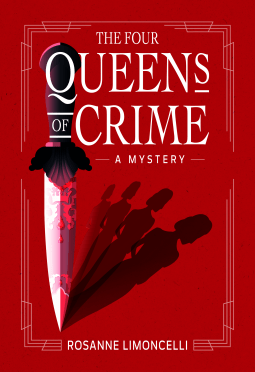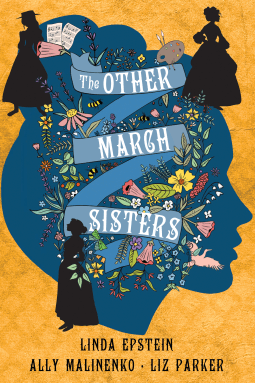
Kathryn Atherton Mary Neal and the Suffragettes Who Saved Morris Dancing Pen & Sword History, January 2024. *
Thank you, NetGalley, and Pen & Sword History for providing me with this uncorrected proof review.
Reading Katheryn Atherton’s book has been an absolute delight. It is well written, with the usual Pen & Sword accessible language, format and lightness of touch, while providing a wealth of well researched information. Mary Neal and the Suffragettes Who Saved Morris Dancing includes information about women’s suffrage organisations and personnel, with marvellous vignettes of the most active, and details of the action in which the women participated; the background to Morris Dancing, highlighting the divergent views of how it should be understood, appreciated and developed; and the significant social history associated with Neal’s work and her commitment to changing the lives of women from a very different class from her own and her companions in the suffrage organisations involved in saving Morris Dancing.
The exploration of the suffragette contribution to restoring Morris Dancing to its former prominence after it had died out by the early 20th century begins with Mary Neal’s work with young working-class women in St Pancras. The role of her club, the Esperance, in the resurrection of this dance form, and as part of Neal’s commitment to women and girl’s rights makes a stirring story. So, too does the all too familiar falling out over the way in which Morris dancing should be executed – or was it just that a man wanted a prestigious role? This part of the book makes remarkably interesting reading from a feminist perspective as well as for anyone for whom dance and the manner in which it should be performed, observed and understood is an issue. See Books: Reviews for the complete review.
Covid report: Australia figures
The latest COVID-19 news and case numbers from around the states and territories (edited)
Australia’s latest COVID-19 wave is driven by a new variant descended from Omicron.(ABC News: Evan Young/Canva)
COVID-19 cases by jurisdiction (as at 22 January 2024)
Western Australia – 978 new cases; South Australia 4,305 new cases; Northern Territory 187 new cases; Queensland 4,712 new cases; New South Wales 9,980 new cases; Victoria 3,639 new cases; Australian Capital Territory 327 new cases; and Tasmania 1,929 new cases.
Note: Due to changes in testing and reporting requirements, the number of COVID-19 cases is an underestimate of the actual disease incidence.
As school holidays come to an end and people return to work, Australians are reminded to take precautions against another “substantial” wave of COVID-19.
Professor Kelly says the spike in cases since early December is driven by a new variant called JN.1, which descended from Omicron.
“People are kind of sick of it,” Professor Kelly says.
“Their lived experience of COVID now is nowhere near as severe for most people compared with earlier in the pandemic, but it is still a serious issue for those that are more vulnerable to severe disease.”
He reminds Australians to keep their vaccinations up to date.
From Labour List, British Labour Party
John Cruddas
On this day 100 years ago, the first Labour government was elected. For Labour’s first Prime Minister Ramsay MacDonald it was “an insane miracle”.
The government was defeated just over nine months later, yet it proved to the country that our party was willing and able to govern.
To mark the centenary, LabourList is publishing a series of articles that look back over Labour’s sprawling, turbulent history.
Elected in 1906 as one of twenty-nine Labour MPs.
Labour has achieved many extraordinary things, including the introduction of the welfare state, the National Health Service and pioneering equalities legislation. Yet it has held power for just 33 years.
Only three of Labour’s many leaders, Clement Attlee, Harold Wilson and Tony Blair, have won a general election. If this year Keir Starmer becomes the fourth, it will be an historic achievement.
Nan Sloane
Margaret Bondfield
This year sees the centenary of the first Labour-led government, and the first government in which a woman – Margaret Bondfield – held any kind of ministerial post, serving as parliamentary secretary to the Minister for Labour. As Labour took office, it was a very different party from that of the pre-1914-18-War years, and one of the main reasons for that was that the majority of its members were now women.
The 1918 Representation of the People Act gave the vote to all men and to women over the age of 30 who met a property qualification, either directly themselves or through their husbands.
As a result, although any woman over the age of 21 could stand for Parliament, about 40 percent could not vote. Thus Ellen Wilkinson, first elected to Parliament in 1924, was unable to vote for herself because she did not meet the property qualification.
In 1914 the Labour Party had been a loose grouping of more-or-less like-minded affiliates, but in 1918 the introduction of individual membership made it a mass membership organisation.
However, although working-class men tended to stick with their affiliated trade unions and exercise their political rights through that route, women, who had much less presence in the trade union movement, joined the Labour Party as individual members very quickly in large numbers. In 1918 there were just 5,000 women members, but within three years this had risen to over 70,000 and continued to grow throughout the decade.
The Women’s Labour League (WLL), an independent organisation of women affiliated to the Party before 1918 (and the last women’s affiliate until Labour Women’s Network affiliated nearly a century later) was absorbed into the Labour Party and its branches became Women’s Sections. As part of the deal, and in the earliest known use of a quota, women were guaranteed four places on the National Executive Committee (NEC). The WLL Secretary, the redoubtable Marion Phillips, became the first National Woman Officer.
To cater for the new women members an entire organisational structure was built to support them. Each region had a Woman Organiser whose job it was to develop women’s sections, provide them with political education and train them for election work. Various bodies were set up to bring women together and to connect them to the mainstream of the movement, and Women’s Conference met annually as a delegate body. Women were also encouraged to stand for public office, although as might have been predicted many found it difficult to find winnable seats.
Perhaps unsurprisingly the sudden arrival of women into the Party with their own structures and conference led to a build-up of tension and disagreement both between women members and the Party leadership, and between women themselves.
Leading men were often alarmed to find that the issues women wanted progressed were not what they thought they ought to be, and that women had demands which were at variance with their traditional roles.
One of the major issues that the new Labour government took on in 1924 was housing. Because poor housing was considered to be (and still is) a major factor in poverty and ill-health, responsibility for it lay with the Minister of Health, John Wheatley, and his Parliamentary Secretary, Arthur Greenwood.
After the War many women had been forced back into their homes by post-war employment policies which had systematically removed them from the workplace in order to accommodate men returning from the trenches.
Marion Phillips
As talk of ‘homes fit for heroes’ increased, Marion Phillips and Averil Sanderson-Furniss noted in an article in The Labour Woman in 1918 that: ‘The working woman spends most of her time in her home, yet she has nothing to do with its planning. It’s time this state of affairs ended.’
Unfortunately, neither Liberal nor Labour Health Ministers agreed, and Wheatley failed to consult even the most senior Labour women when drawing up his (otherwise rightly praised) Housing Act in 1924. This state of affairs continued for many years; in the 1940s Labour women like Margaret Bondfield were still trying to persuade their colleagues that women might have something significant to say about housing.
A more controversial issue was access to birth control, which many Labour women believed was the key to improving women’s health, decreasing maternal and infant mortality and reducing poverty. However, Wheatley was adamantly opposed to it, even suggesting that if ‘respectable’ women arrived at maternity clinics to find birth control advice on offer they would be put off attending at all.
Both the Parliamentary Party and the NEC backed Wheatley. Marion Phillips was also hostile on the grounds that supporting birth control would be an electoral liability, an early example of the mistaken belief that controversial issues are to be avoided at all costs by parties wishing to be elected.
By the time Labour returned to government in 1929, however, opinion had begun to change. Greenwood became Health Minister with Susan Lawrence as his Parliamentary Secretary and in 1930 local authorities were allowed to offer birth control advice if they wished.
As Keir Hardie had remarked before the War, it was never likely that men would surrender power simply because they were asked. Like many other parts of society, Labour has struggled over the last century to accommodate the full diversity of the electorate it serves.
There is still a long way to go, but the progress the Party has made and is making is at least in part down to the persistence of those first women who joined in 1918 and began to make their voices heard.
This article is part of a series to mark the centenary of the first ever Labour government, guest edited by the Labour MP and writer Jon Cruddas, who has written a new history, ‘A Century of Labour’ (Polity Books).
Secret London
The article below is edited to provide details of only some of the restaurants. The names of all of the restaurants are included so that these can be researched for further information. Cindy Lou hopes to get to some of them and will report in June/July 2024.
32 Of The Prettiest Restaurants In London For A Special Meal
Enjoy stunning food in correspondingly stunning surroundings at these gorgeous London restaurants.
Plenty of restaurants have style, and many more have the substance. But putting the two together isn’t always easy, which is why we’ve simply got to applaud the prettiest restaurants in London for marrying delicious food and a keen aesthetic sense. Whether they’ve opted for muted pastel tones or wildly OTT décor, these truly are some of the prettiest restaurants around.
This list of the prettiest restaurants in London isn’t in any particular order, but whichever way we did order it, sketch would probably have emerged at number one amongst London’s prettiest restaurants. From the breathtaking spectacle of The Glade, to their ever-Instagrammed toilets, this place is straight up gorgeous. Read all about it here.
You’ll find sketch at 9 Conduit Street, London, W1S 2XG.
Bacchanalia is one of those restaurants that finds your jaw hitting the floor as soon as you walk in, only to return to its rightful position when you leave. The cavernous venue is absolutely packed full of gorgeous sculptures, busts and paintings. In their own words: “This is not merely a restaurant, it is a breath-taking feast for the senses”. Mediterranean and Greek dishes complement the grandeur of the restaurant, harking back to the strength of their empires and rich history, with dishes that invite you to “Banquet like Bacchus”. Find out more here.
You’ll find Bacchanalia at 1-3 Mount Street, London, W1K 3NA.
A beautiful addition to the capital, where it sits beneath tranquil rooftop The Garden at 120, 14 Hills is one hot spot. I mean, just look at the fancy furnishings, elegant bar, and tropical plants, artfully festooned around the place. They also do a mean brunch, in case you needed another reason to visit… Learn more here.
You’ll find 14 Hills on the 14th floor of 120 Fenchurch Street, London, EC3M 5AL.
Rocking a pretty gorgeous arboreal theme, here’s Madrid transplant Amazonico, which brings the flavours of Peru, Colombia, and Brazil to Mayfair. It’s a toss-up as to what’s more exciting – the caramelised pineapples, spun over a gentle flame for four hours for maximum taste, or the tropical interiors, dotted with models of peacocks and tropical creatures. You can read all about it here.
You’ll find Amazonico at 10 Berkeley Square, London, W1J 6BR.
I’d estimate a good 60% of Bob Bob Ricard’s attraction lies in their downright dangerous “press for champagne” button, but you can also feast your eyes upon vintage blue and gold interiors, whether that be at the bar or in their ultra-luxe dining room. Happily, there’s a second, similarly champagne-happy site over in The Cheesegrater, but the Soho spot remains the OG. Find out all the details here.
You’ll find Bob Bob Ricard at 1 Upper James Street, London, W1F 9DF.
Piri piri is, naturally, so good they named it twice, but equally nice are Casa Do Frango’s exposed brick interiors, light-flooded dining room, and artfully dotted house plants. Plus, with cocktail bar The Green Room hidden in the basement, it’s a place you’ll want to spend plenty of time in – especially once you’ve tucked into the chicken! They also boast venues in Shoreditch and Piccadilly so you’re spoiled for choice. See more here.
You’ll find Casa Do Frango at 32 Southwark Street, London, SE1 1TU.
Nearest station is London Bridge.10. Ziggy Green, Mayfair
Credit: Ziggy Green – Melisa Coppola
Courtesy of the Daisy Green group, Ziggy Green offers up gorgeous environs with more than a touch of Bowie flair. Artworks hang from every spare bit of wall, and guests are greeted by a stunning light sculpture when they arrive, which provides an interactive ‘Ziggy’ moment as they enter the space. The menu ranges from Bowie’s favourite dish – a sharing Shepherd’s pie – to open-fire BBQ dishes courtesy of Aussie chef Chris Lyon (previously of Estelle Maison, Lisboeta, and Scully). Don’t miss the deconstructed Tim Tam chocolate dessert, or the Bowie-inspired cocktails.
The team also recently reopened the Colony Room Club downstairs from Ziggy Green – which acts as a time capsule back into the past. Part living art installation, part seedy drinking den, it recreates the heyday of what was once the beating Bohemian heart of Soho. The best part? The drinks prices are also authentic to the time!
We’re eternally grateful for all that Portugal has given the world, but especially for the holy trinity of port, pasteis de nata, and azulejos. Luckily, you’ll find them all in spades at Bar Douro, which marries brilliant small plates with a sense of design flair. Just look at those tiles! Find out more here.
You’ll find Bar Duoro at 35B, Arch, 85B Southwark Bridge Road, London, SE1 0NQ and at Unit 3, 1 Finsbury Avenue, London, EC2M 2PF. Nearest stations are London Bridge and Moorgate.
Circolo Popolare and sister restaurants Gloria, Ave Mario, and Jacuzzi, certainly aren’t known for their subtlety. Gigantic pizzas, outlandish pasta dishes, and a fabulously OTT lemon meringue pie are the standouts here… if your eyes are fixed only on the menu, of course. Otherwise, you’re probably looking at the fairy lights and 20,000 bottles of booze – which is pretty understandable.Full information here. You’ll find Circolo Popolare at 40-41 Rathbone Place, London, W1T 1HX. Nearest station is Tottenham Court Road.
Another of our prettiest restaurants that goes heavy on the plant life, Brother Marcus have just recently opened a branch in Spitalfields. It’s all very aesthetic, but perhaps even prettier is The Step Sister, a tower of sweet potato, courgette and feta fritters, avocado and kale, turmeric yoghurt and a poached egg which had our Georgie swooning.Read her review here. (Brother Marcus also now counts locations in Angel and Borough under their belt.)
You’ll find Brother Marcus at 2 Crispin Place, Whitechapel, London, E1 6DW. Nearest station is Liverpool Street.
A worthy addition to this roundup of the prettiest restaurants in London here. Ever been in a restaurant and wished you could walk out with a load of the fixtures? I mean, apart from all the previous spots on this list, of course. Well, at Brunswick House, you can, for everything you see is for sale – because the fancy restaurant doubles up as an antiques shop, filled with chandeliers, mirrors, and chairs. You’ll be leaving with more than just a full stomach, I’m sure. See more here.
You’ll find Brunswick House at 30 Wandsworth Road, London, SW8 2LG.
In 1959 Agatha Christie explains the attraction of the tyrant in political life
Agatha Christie, in her novel, Cat Amongst the Pigeons (1959) had a decent, educated leader with a social conscience make the following plea about the appeal of a tyrant in comparison with himself who ‘built hospitals and schools, welfare, housing…all the things people are said to want. Don’t they want them? Would they prefer a reign of terror like my grandfather’s?’
In response his somewhat ordinary, unimaginative and decent companion says, ‘ I expect so…seems a bit unfair, but there it is’. Asked to expand on this he responds, ‘Well…he put up a show – I suppose that’s it really. He was – sort of – dramatic, if you know what I mean’ (p. 30).
Although Christie goes on to explain further, drawing upon her familiar racist idea that the British have certain qualities that do not entertain dramatic flourishes in their leaders, while other races do, the conversation is arresting in the context of American politics.
Cindy Lou dines at Trev’s
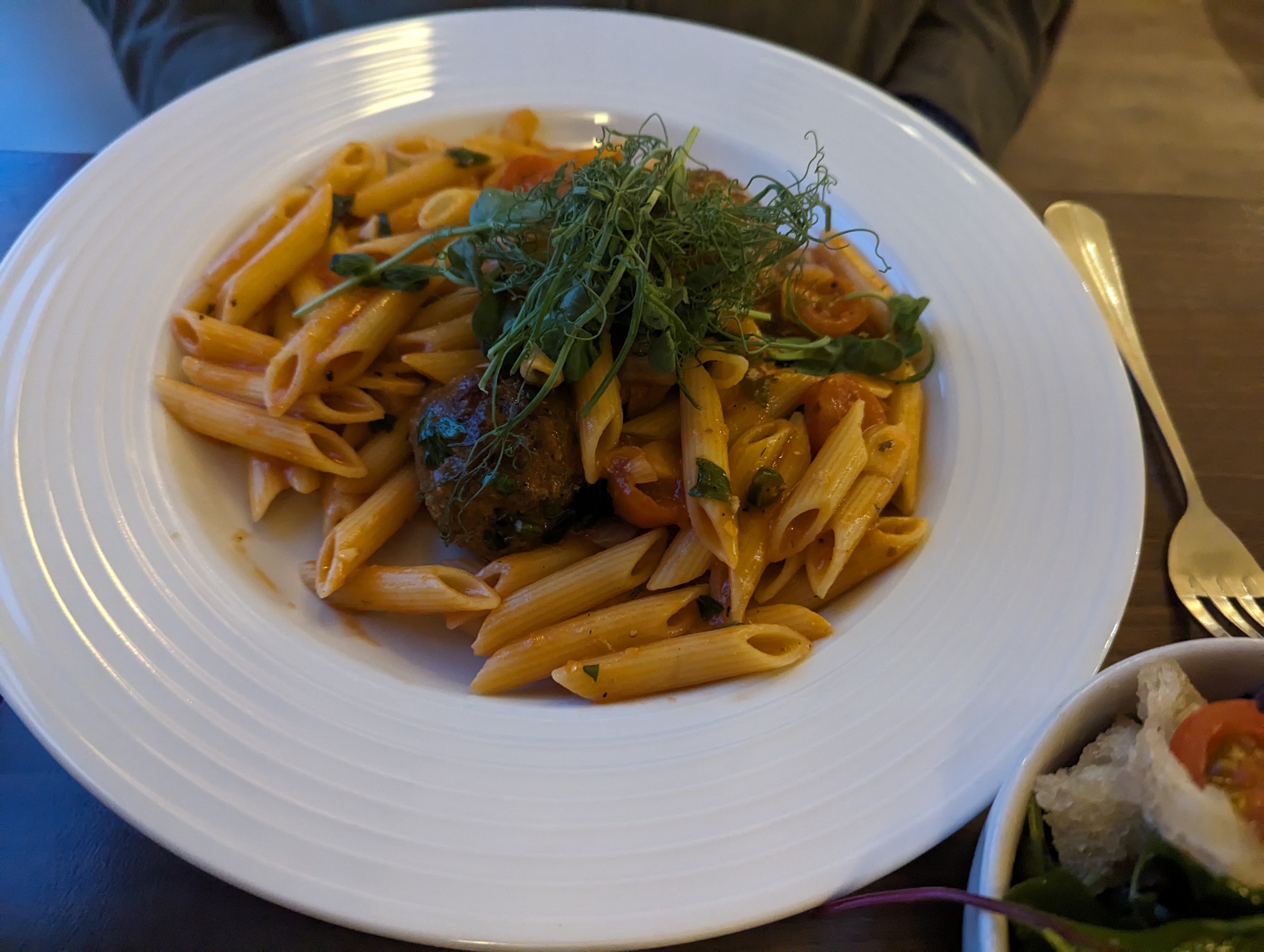
Once again Trev’s proved the best place to be for a casual quick, but delicious meal. The menu has changed, and I was disappointed to see that the wonderful pomegranate salad has disappeared. However, there are several choices, including a crisp green salad, and a more robust pumpkin salad. On this occasion we chose only main courses – a good decision as they were generous, as well as being flavorsome. A friend’s stuffed field mushroom was the winning dish, but the pasta and lamb shoulder meals were also good choices. The duck breast needed a crispier skin and I suspect would not pass muster on Master Chef, although it was a pleasant enough meal. Service at Trev’s is always friendly and efficient, and I was pleased to return to this casual restaurant with good quality meals from a well-designed menu.
The Conversation provides articles such as the one below for publication through Creative Commons License. Thank you to The Conversation for this generosity.
Senior lecturer, Royal Central School of Speech & Drama
Disclosure statement
Sylvan Baker is a researcher at Royal Central School of Speech and Drama and receives funding from AHRC. He is a Co-Lead Researcher on The Verbatim Formula with Dr Maggie Inchley Reader on Drama at Queen Mary, University of London.
Mr Bates vs The Post Office: why docudramas have the power to inspire real social and political change
If you have been watching the news lately, then you might have heard of the Post Office Horizon IT scandal. From 1999 to 2015, more than 900 sub-postmasters were prosecuted by the Post Office after faulty software wrongly recorded that money was missing from branches. The miscarriage of justice only seems to be coming to the fore of public consciousness now, a staggering ten years after the fact.
The four-part ITV drama, Mr Bates vs The Post Office is responsible for the sudden attention. The series recounts the true story of the legal battle between former sub-postmaster Alan Bates and over 700 sub-postmasters and mistresses.
To date it has been watched by a staggering 9.2 million viewers. The drama has stirred public indignation and pushed ministers to accelerate the justice process for the postal staff wrongly accused.
It has also caused Paula Vennells, the chief executive of the Post Office from 2012 to 2019, to hand back her CBE. Fujitsu, the company responsible for the system, has admitted that is it likely their staff knew glitches were wrongly recorded in Post Office accounts five years before prosecutions were stopped and that they are responsible for providing compensation.
You might be surprised that a TV show has inspired this sort of reaction, rather than a serious journalistic investigation (the first of which broke the story in 2009). Or a public inquiry – which has been going on without much attention since 2022. However, this isn’t the first time dramas have been able to inspire public sentiment. Mr Bates is just one in a long tradition of British docudramas that have inspired real change. See Television,Film and Popular Culture: Comments for the complete article.
Two interesting bookshops in London
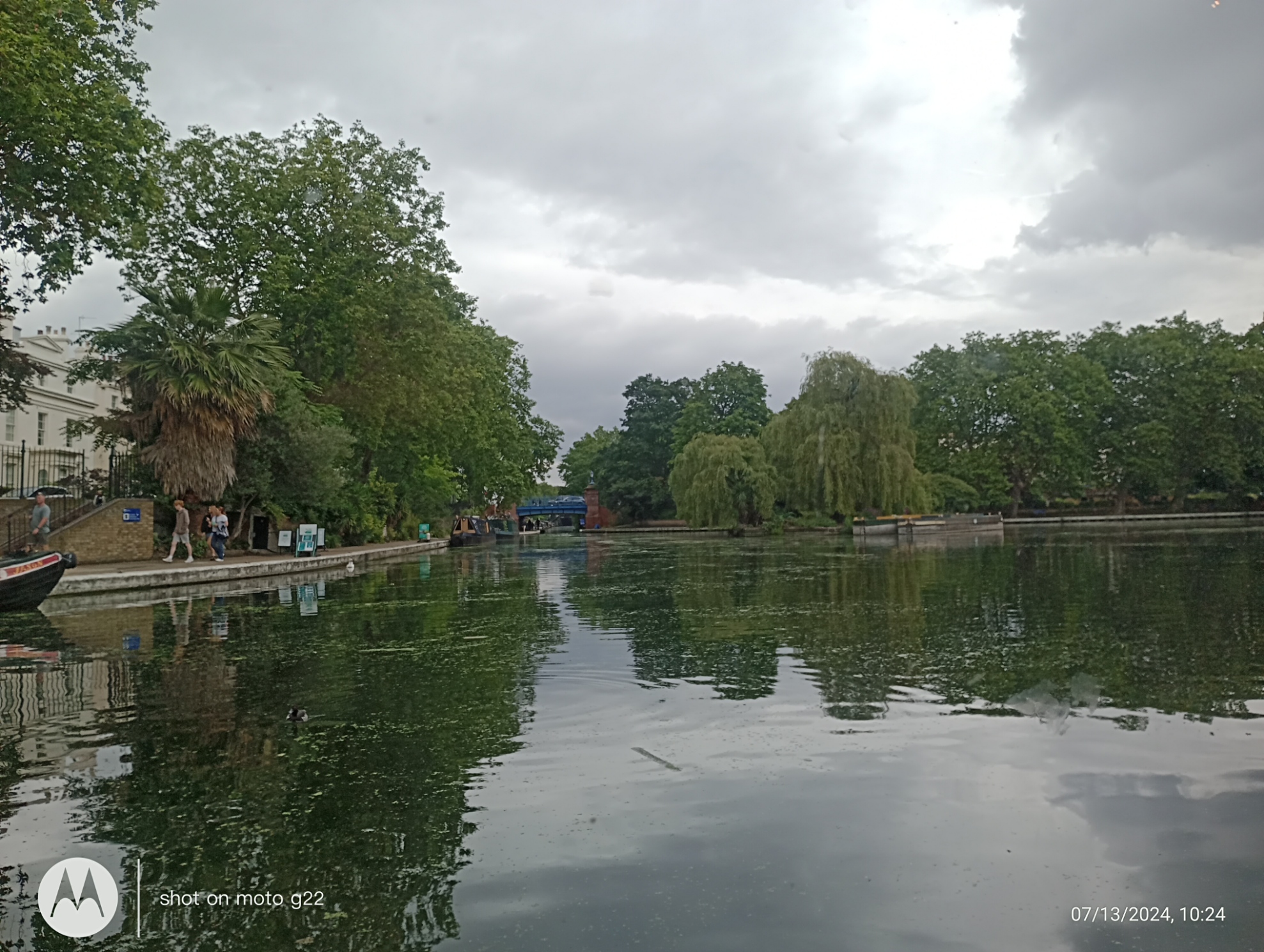
This barge on the Regents Canal will be one that I shall find easy to visit on my next trip, if it is not closed as it was the last time I walked along Regents Canal, Paddington.
You’ll find all sorts of peculiar barges traversing London’s Regent’s Canal but Word on the Water has to be among the most unusual. Moored amid the office-heavy landscape of King’s Cross, the vessel houses an assortment of contemporary fiction and non-fiction as well as children’s literature. Open for nearly a decade, the 1920s Dutch barge previously had to change location every couple of weeks due to canal regulations but now the boat has been granted a permanent berth thanks to a successful campaign led by its many supporters.
The shop operates a barter system whereby customers can exchange their books for credit against future purchases.
It is located at Alnwick, Northumberland.
Heather Cox Richardson Letter from an American, 21 January 2024
On January 22, 1973, the Supreme Court handed down the Roe v. Wade decision. By a 7–2 vote, the Supreme Court found that the Fourteenth Amendment to the Constitution guaranteed the right of privacy under its “concept of personal liberty and restrictions upon state action.” This right to privacy, the court said, guarantees a pregnant woman the right to obtain an abortion without restriction in the first trimester of a pregnancy. After that point, the state can regulate abortion, it said, “except when it is necessary to preserve the life or health of the mother.”
The right to privacy is a “fundamental right,” the court said, and could be regulated by the state only under a “compelling state interest.”
Abortion had always been a part of American life, but states began to criminalize the practice in the 1870s. By 1960, an observer estimated, there were between 200,000 and 1.2 million illegal U.S. abortions a year, endangering women, primarily poor ones who could not afford a workaround.
To stem this public health crisis, doctors wanted to decriminalize abortion and keep it between a woman and her doctor. In the 1960s, states began to decriminalize abortion on this medical model, and support for abortion rights grew. The rising women’s movement wanted women to have control over their lives. Its leaders were latecomers to the reproductive rights movement, but they came to see reproductive rights as key to self-determination.
By 1971, even the evangelical Southern Baptist Convention agreed that abortion should be legal in some cases, and by 1972, Gallup pollsters reported that 64% of Americans agreed that abortion should be between a woman and her doctor. Sixty-eight percent of Republicans, who had always liked family planning, agreed, as did 59% of Democrats.
In keeping with that sentiment, the Supreme Court, under Republican Chief Justice Warren Burger, in a decision written by Republican Harry Blackmun, overrode state antiabortion legislation by recognizing the constitutional right to privacy under the Fourteenth Amendment.
The common story is that Roe sparked a backlash. But legal scholars Linda Greenhouse and Reva Siegel showed that opposition to the eventual Roe v. Wade decision began before the 1972 election in a deliberate attempt to polarize American politics. President Richard Nixon was up for reelection in that year, and with his popularity dropping, his advisor Pat Buchanan urged Nixon to woo Catholic Democrats over the issue of abortion. In 1970, Nixon had directed U.S. military hospitals to perform abortions regardless of state law, but in 1971, using Catholic language, he reversed course to split the Democrats, citing his personal belief “in the sanctity of human life—including the life of the yet unborn.”
As Nixon split the U.S. in two to rally voters, his supporters used abortion to stand in for women’s rights in general. Railing against the Equal Rights Amendment, in her first statement on abortion in 1972, activist Phyllis Schlafly did not talk about fetuses but instead spoke about “women’s lib”—the women’s liberation movement—which she claimed was “a total assault on the role of the American woman as wife and mother, and on the family as the basic unit of society.”
A dozen years later, sociologist Kristin Luker discovered that “pro-life” activists believed that selfish “pro-choice” women were denigrating the roles of wife and mother and were demanding rights they didn’t need or deserve.
By 1988, radio provocateur Rush Limbaugh demonized women’s rights advocates as “feminazis” for whom “the most important thing in life is ensuring that as many abortions as possible occur.” The issue of abortion had become a way to denigrate the political opponents of the radicalizing Republican Party.
Such rhetoric turned out Republican voters, especially the white evangelical base, and Supreme Court justices nominated by Republicans began to chip away at Roe v. Wade.
But support for safe and legal abortion has always been strong, and Republican leaders almost certainly did not expect the decision to fall entirely. Then, to the surprise of party leaders, the white evangelical base in 2016 elected Donald Trump to the White House. To please that base, he nominated to the Supreme Court three extremists, Neil Gorsuch, Brett Kavanaugh, and Amy Coney Barrett. The three promised in their confirmation hearings to respect settled law, which senators chose to interpret as a promise to leave Roe v. Wade largely intact.
Even so, Trump’s right-wing nominees could not win confirmation to the Supreme Court until then–Senate majority leader Mitch McConnell (R-KY) in 2017 ended the filibuster for Supreme Court justices, reducing the votes necessary for confirmation from 60 to as low as 50. Fifty-four senators confirmed Gorsuch; 50 confirmed Kavanaugh; 52 confirmed Barrett.
On June 24, 2022, by a vote of 6 to 3, in the Dobbs v. Jackson Women’s Health Organization decision, the Supreme Court overturned Roe v. Wade. Five of the justices said: “The Constitution does not confer a right to abortion.”
For the first time in American history, rather than expanding the nation’s recognition of constitutional rights, the Supreme Court took away the recognition of a constitutional right that had been honored for almost 50 years. Republican-dominated states immediately either passed antiabortion legislation or let stand the antiabortion measures already on the books that had been overruled by Roe v. Wade.
But the majority of Americans didn’t support either the attack on abortion rights or the end of a constitutional right. Support for abortion rights had consistently been over 60% even during the time Roe was under attack, but the Dobbs decision sent support for abortion as Roe v. Wade established it to 69%. Only 13% want it illegal in all circumstances. Since Dobbs, in every election where abortion was on the ballot, those protecting abortion rights won handily, including last week, when Tom Keen won a special election in Florida, flipping a seat in the state House from Republican to Democratic.
But I wonder if there is more behind the fury over the Dobbs decision than just access to abortion, huge though that is.
In the 1850s, elite southern enslavers quietly took over first the Democratic Party, and then the Senate, the White House, and then the Supreme Court. Northerners didn’t pay much attention to the fact that their democracy was slipping away until suddenly, in 1854, Democrats in the House of Representatives caved to pressure from the party’s southern wing and passed the Kansas-Nebraska Act. That law overturned the Missouri Compromise, which had kept enslavement out of much of the West, and had stood since 1820, so long that northerners thought it would stand forever.
With the passage of the Kansas-Nebraska Act, human enslavement would become the law of the land, and the elite southern enslavers, with their concentration of wealth and power, would rule everyone else. It appeared that American democracy would die, replaced by an oligarchy.
But when the Kansas-Nebraska bill passed, northerners of all parties came together to stand against those trying to destroy American democracy. As Illinois lawyer Abraham Lincoln put it: “We rose each fighting, grasping whatever he could first reach—a scythe—a pitchfork—a chopping axe, or a butcher’s cleaver,” to fight against the minority trying to impose its will on the majority. Within a decade, they had rededicated themselves to guaranteeing “that government of the people, by the people, for the people, shall not perish from the earth.”
I wonder if Dobbs, with its announcement that when Republicans are given power over our legal system they do not consider themselves obligated to recognize an established constitutional right, will turn out to be today’s version of the Kansas-Nebraska Act.
Linda Greenhouse and Reva B. Siegel, “Before (and After) Roe v. Wade: New Questions About Backlash,” The Yale Law Journal, 120 (June 2011): 2028–2087, at https://www.jstor.org/stable/41149586
More of the galleries have been opened, demonstrating the good use to which the Federal Government’s grants to institutions such as the NGA have been put. A small example of the exhibits appears below. A future must is the Emily Kame Kngwarreye Exhibition, which is free to members, but requires an entrance ticket purchased upon arrival at the main entrance to the NGA. Waiting is not an onerous task as there is plenty to see while doing so.
Children drawing in a Carlton Street 1943, Naarm/Melbourne.
Oil on cotton gauze on cardboard adhered to hardboard.
John Perceval, Australia 1923 – 2000, England 1963 – 1965.
Gift of John Hindmarsh AM and Rosanna Hindmarsh OAM 2012. Donated through the Australian Government’s Cultural Gifts Program, 2012.1296.
Scott Martelle 1932 FDR, Hoover and the Dawn of a New AmericaKensington Books, Citadel, Nov 2023.
Thank you, NetGalley, for providing me with this uncorrected proof for review.
Scott Martelle has chosen a format which quickly draws the reader into the year in which Americans chose their President, the Democratic Party’s Franklin Delano Roosevelt, over Herbert Hoover the Republican Party candidate. The complexity of the events of 1932, public and party, are fully explored so that a remarkable history is unfolded. An American history, a Democratic Party history, and a history of the Republican Party. To maintain a reader’s interest in these events, while writing such a thorough and dense account is a large ask. Martelle has accomplished this, perhaps because of the format, but also because his account of events is so deftly honed that their serious and complex nature becomes almost a story. This is the story of a year in America that introduced a new vision for an America reeling from the Depression. The courage of the political figures who wage their battles within their parties and in the public race for the presidency live alongside that of the groups who sought to determine the outcome, and the voters who chose a different economic plan for America. See Books: Reviews for the complete review.
After the Covid update: Beautiful beginnings: the first books that made their mark in 2024; Reading fiction may have more benefits than you realise, particularly in the workplace; Elections survey 2023; Heather Cox Richardson talks about American heroes.
Covid Canberra Update: 5 – 11 January (latest available figures)
There were 119 new cases (PCR [no RATs available]), with 19 in hospital, and 1 in ICU. One life was lost in this period., bringing the total number of live lost to Covid since March 2020 293.
Beautiful beginnings: the first books that made their marks in 2023*
Sydney Morning Herald Entertainment
Story by Nicole Abadee
Each of the ones featured here is, however, unique – whether it is the strength of the authorial voice, the main protagonist’s “otherness” in contemporary Australian society or the sheer joy of smart, entertaining writing.
International debuts are a mix of dark – If I Survive You – and lighter: The Three of Us. What all 10 debuts have in common is that they are great summer reads.
Australian debuts Prima Facie, by Australian playwright-turned-author Suzie Miller, is the novel version of her internationally acclaimed, Olivier-winning play that showed in London’s West End and in Broadway New York, starring Jodie Comer and attracting huge acclaim. The book is just as good.
Tessa, who has left behind her working-class background to become a highly successful defence barrister, finds herself on the other side of the bar table when she brings sexual assault charges against Julian, a senior barrister in her chambers. Miller draws on her experience as a human-rights lawyer to present a blistering exposé of the criminal justice system and how it treats female victims of sexual assault. An insightful analysis of power, gender and class relations – and a great read.
Zeynab Gamieldien’s The Scope of Permissibility is a campus and coming-of-age novel about a group of university students who meet through the Muslim Students’ Association. Golden boy Naeem is a Bangladeshi medical student whose parents are devout Muslims who want him to marry an equally devout Bangladeshi girl. Those plans go astray when he falls in love with fair-skinned, South African Sara and they embark in secret on a passionate relationship.
Although she is Muslim, her family is not religious, and Naeem is forced to choose between love and his parents’ expectations. Naeem and Sara’s romance unfolds against a background of casual and overt racism on campus (at an unnamed Sydney university that sounds a lot like Sydney Uni) and off. A powerful exploration of the conflict between desire and religious beliefs and love and familial duty, as well as an insider’s account of life as a member of a minority group in today’s Australia.
In writer and art critic Madeleine Gray’s Green Dot, smart 24-year-old Hera has just secured her first job, as an online community moderator, enabling her finally to earn an income and start living an adult life, having spent many years as a student. Almost immediately she starts flirting online with older, married journalist Arthur, who sits across the desk from her. Soon they are in the throes of a full-blown affair that Hera is unable to end, despite her friends’ warnings and her own moral qualms about her situation. More than just another “Millennial novel”, this is a wise, funny story about obsessive love, self-deception and growing up.
Like Green Dot, One Day We’re All Going to Die, by Elise Esther Hearst, another playwright-turned-writer, features a first-person female Millennial narrator, Naomi, who, after a series of disastrous dates, embarks on an affair with her married boss, Josh.
The additional element here is that Naomi is Jewish, and this means a lot to her – she works in a Jewish museum and is very close to her family – her grandmother Cookie, a Holocaust survivor, and her parents. She is thus weighed down by family expectations that she will marry a Jewish man. A tender story about family, love, intergenerational grief, living up to family expectations, and making your own way.
Jessica Zhan Mei Yu’s But the Girl is about Girl (unnamed), the Australian-born daughter of Malaysian immigrant parents. Girl is in Scotland on a scholarship to do a one-month artist’s residency and planning to start a post-colonial novel on Sylvia Plath, with whom she is obsessed.
But instead of writing, she thinks about the hard lives her parents and grandmother have led and their expectations of her and reflects on her own identity in a white-dominated world. Yu writes with an assured, deeply engaging voice, and this is an original, thought-provoking read on the experience of being a second-generation immigrant, race, power, family love and making peace with the past.
Former lawyer Eleanor Elliott Thomas’ The Opposite of Success is a laugh-out-loud account of a (challenging) day in the life of super-smart, straight-talking mother, wife, daughter and council employee Lorrie, as she struggles to keep all those balls in the air while grappling with her own insecurities.
Meanwhile, her glamorous best friend, Alex, becomes entangled in the marriage of Ruben, Lorrie’s ex from high school. Thomas writes with compassion, humour and understanding about coming to terms with middle age, the highs (and lows) of parenting small children, office politics, ambition – and learning to appreciate what you have rather than constantly striving for more.
International debutsIf I Survive You, by prize-winning short fiction writer Jonathan Escoffery, raised in Miami, rocketed onto the 2023 Booker Prize shortlist, a rare (but not unheard of) achievement for a debut novel. In eight sections, which can be read either as a novel or interconnected short stories, it follows the struggle of Trelawney, born in Miami to Jamaican migrant parents, to find a place for himself in a country obsessed with labelling him as either black or white. He must also live with his father’s favouritism towards his older brother, Delaney.
Unable to find work, Trelawney is reduced to sleeping in his car and accepting increasingly degrading work (being paid to watch a couple have sex). Written in the second person, and peppered with Jamaican patois, it is an explosive exposé of racism and capitalism in modern America, laced with (at times heart-wrenching) dark humour.
Nigerian-born and English-educated Stephen Buoro’s The Five Sorrowful Mysteries of Andy Africa, set in modern Nigeria, opens with 15-year-old Andy confessing he loves blonde, white girls. In fact, Andy is obsessed with whiteness generally. He also loves maths and superheroes, is preoccupied by “the Curse of Africa” and has a complicated relationship with his mother Gloria, who won’t tell him who his father is.
The plot unfolds against a background of religious violence (Andy is a member of the Christian minority) and corruption. A heartbreaking portrayal of the challenges facing modern Africa, an unforgettable main character and a devastating ending. A strikingly original new voice.
The New Life by English writer Tom Crewe, set in Victorian England and based on a true story, is about the collaboration of John Addington and Henry Ellis on the publication of Sexual Inversion, the first English textbook on homosexuality.
Both men have unconventional marriages – Addington, married for many years to long-suffering Catherine, has a sexual relationship with Frank, a younger working-class man; Ellis is married to Edith, a lesbian, whom he shares with her female lover, Angelica.
When the publishers of their book are prosecuted (homosexuality being then illegal) each man must decide how far he will go to defend his ideals. A thoughtful, beautifully written exploration of an age-old dilemma. Fine historical fiction that has attracted great critical acclaim.
Imagine if your best friend and your husband hated each other. That is the scenario in British-Nigerian writer and editor Ore Agbaje-Williams’ The Three of Us, told over the course of one alcohol-fuelled day from the shifting perspective of the wife, the husband and Temi, her acid-tongued best friend.
While husband and wife appear content with their privileged lives, Temi senses unease between them, and exploits it mercilessly. As she and the husband compete for the wife’s affections, their mind games eventually escalate out of control, with catastrophic consequences. A wickedly entertaining exploration of intimacy, trust and betrayal.
*I would have loved to see Ayesha Inoon’s Untetheredfeatured here; it is worthy of the accolades that have accompanied these 2023 publications. However, see my May 2023 blog and Books: Reviews where I reviewed the book and hope that people buy it, read it and appreciate it as much as I did.
ABC News: Reading fiction may have more benefits than you realise, particularly in the workplace *
Story by By Sophie Kesteven, Zoe Ferguson and Lisa Leong for This Working Life
Christine Seifert recalls a time in her life when she felt guilty for reading fiction.
Dr Seifert, a professor of communication at Westminster College, felt she should have been learning about real people and events, and reading non- fiction like biographies instead.
But that began to change when she discovered that fiction wasn’t just a form of self-indulgence.
She learnt that reading was, in fact, doing something beneficial to her brain that non-fiction didn’t.
And when harnessed, she says that can be a huge asset, particularly in the workplace.
Curious minds
Dr Seifert says there are several studies that demonstrate the perks of reading fiction and using our imagination, rather than digesting hard facts all the time.
Flexing your empathy muscle is one example.
“Fiction is asking us as readers to put ourselves in the shoes of another person, and I think one could argue that there is no non-fiction that does that,” Dr Seifert tells ABC RN’s This Working Life.
She says reading fiction, in particular literary fiction, can also help to hone critical thinking skills.
“Literary fiction tends to work your brain out the best … and that’s because literary fiction is asking you to think in ways that tend to be more complicated than genre fiction,” she says.
“Literary fiction asks us to think about things in ways that are far more difficult and perhaps more outside of our day-to-day understanding.”
How reading helps at work
Dr Seifert says there are benefits to reading any kind of fiction, and doing so can help us improve our focus in the workplace.
“What fiction does is ask us to keep an open mind for the course of an entire book, which is actually a really long time when you think about it,” she says.
“So it requires you to not have cognitive closure [wanting a clear, firm answer]. And I would argue that is something that we can bring into the workplace with us.”
Avid readers are also more likely to have higher levels of curiosity, says Meg Elkins, a senior lecturer in behavioural economics at the School of Economics at RMIT University.
Fantastic article – read, read, read.
Elections survey 2023
Bob McMullan
It is always difficult to predict future election results. It is sometimes equally difficult to properly analyse past election results. 2023 was a case in point. There were some obvious and dramatic successes for the right.
The success of Geert Wilders party in the Netherlands sent shock waves through the mainstream European political parties. The success of the ultra-populist Milei in the Argentinian presidential election was certainly startling. There are explanations for at least some of these. In Argentina, the excesses of the previous regime in allowing huge inflation to run unchecked while evidence of official corruption grew. An alternative offering “more of the same” was easy for even Milei to defeat.
The explanation for Wilders’ victory clearly lies in dissatisfaction with the status quo, including issues around immigration. I don’t expect Wilders to be able to form a sufficient coalition to be able to govern, but the surprising strength of his support should be a lesson to the other parties. In 2023 Wilders’ party increased their vote from 10% to more than 23% and increased their representation from 17 seats to 37. Whether the other parties are capable of responding to this challenge to the status quo will determine whether the Wilders surge is a one-off or a lasting trend. There were other less controversial victories for parties of the right around the world. In New Zealand the Labour government was defeated by a right-wing coalition, in Greece the right-wing government was re-elected with an increased majority. The right or centre-right also did well in Paraguay, Bulgaria, Cyprus and Finland.
However, there were some major electoral setbacks for the right as well. Notably in Poland where Donald Tusk’s coalition ousted the ultra right-wing PiS government despite the influence of the stacked right-wing government media. The left or centre-left also prevailed in Slovakia, Spain, Ecuador and Guatemala. In Thailand the election saw the biggest vote go to a progressive party, but they were prevented from forming a government by the military dominated senate. An alternative opposition party formed government and it will take time to see its true character. However, it is noteworthy that the right-wing governing party lost 76 seats. In Timor L’Este Xanana Gusmao was returned as Prime Minster replacing the Fretilin led government and in French Polynesia the pro-Independence party led by Oscar Temaru ousted the more conservative government. In Guatemala the Centre-Left presidential candidate defeated the right-wing candidate in an election which could be significant if the new President can really crack down on corruption.
There were some other notable elections which are difficult to assess in left/right terms. In the Americas, Ecuador featured a contest between the Centre-Left and the Left which was won by the Centre-Left candidate In the small Caribbean state of Antigua and Barbuda the ruling Labour Party was returned with a reduced majority.
In Europe, the Spanish election produced a curious result. The right-wing party PP won the most seats but was unable to win a majority to form the government. The Centre-Left PSOE then did an unexpected deal with the Catalan secessionists which won their support for a minority government for another term. It was notable that the ultra right-wing party, Vox went backwards at the election.
This cut across what was otherwise a disturbing trend of extreme right-wing parties making gains. Not only did Wenders’ party do well in the Netherlands but the extreme right entered the Greek parliament and he right-wing Finns party managed to do well enough to form part of the government in Finland. Although there were many other elections held in 2023 there were many which were compromised or distinctly unfair. However, there were some noteworthy improvements in electoral management and responses. In Liberia, for many decades a basket-case democratically, the incumbent was narrowly defeated and subsequently enabled a peaceful transfer of power. In the Maldives, for the fourth consecutive election the incumbent president failed to be re-elected. There was a history of serious democratic deficit in the Maldives prior to this series of what have been assessed as free and fair elections.
Overall, there was no sweeping global narrative. Nor would I expect there to be.
The most significant trends were: 1)A disturbing rise in support for extreme right-wing parties across several European countries 2)Some improvements in democratic performance in countries where it has been desperately needed and 3)Some lessons in the peaceful transfer of power which should be an embarrassment to the USA and Brazil where previous serious attempts to thwart the peaceful transfer of power have been evident.
2024 is being seen as a major election year with elections due in many very large and significant countries. It will be interesting to see whether the parties in the established democracies respond effectively to the rise of the ultra-right and whether more countries can rise to the challenge of a peaceful transfer of power.
First published in Pearls and Irritations.
Heather Cox Richardson
Heather Cox Richardson from Letters from an American <heathercoxrichardson@substack.com>
You hear sometimes, now that we know the sordid details of the lives of some of our leading figures, that America has no heroes left.
When I was writing a book about the Wounded Knee Massacre, where heroism was pretty thin on the ground, I gave that a lot of thought. And I came to believe that heroism is neither being perfect, nor doing something spectacular. In fact, it’s just the opposite: it’s regular, flawed human beings choosing to put others before themselves, even at great cost, even if no one will ever know, even as they realize the walls might be closing in around them.
It means sitting down the night before D-Day and writing a letter praising the troops and taking all the blame for the next day’s failure upon yourself, in case things went wrong, as General Dwight D. Eisenhower did.
It means writing in your diary that you “still believe that people are really good at heart,” even while you are hiding in an attic from the men who are soon going to kill you, as Anne Frank did.
It means signing your name to the bottom of the Declaration of Independence in bold print, even though you know you are signing your own death warrant should the British capture you, as John Hancock did.
It means defending your people’s right to practice a religion you don’t share, even though you know you are becoming a dangerously visible target, as Sitting Bull did.
Sometimes it just means sitting down, even when you are told to stand up, as Rosa Parks did.
None of those people woke up one morning and said to themselves that they were about to do something heroic. It’s just that, when they had to, they did what was right.
On April 3, 1968, the night before the Reverend Doctor Martin Luther King Jr. was assassinated by a white supremacist, he gave a speech in support of sanitation workers in Memphis, Tennessee. Since 1966, King had tried to broaden the Civil Rights Movement for racial equality into a larger movement for economic justice. He joined the sanitation workers in Memphis, who were on strike after years of bad pay and such dangerous conditions that two men had been crushed to death in garbage compactors.
After his friend Ralph Abernathy introduced him to the crowd, King had something to say about heroes: “As I listened to Ralph Abernathy and his eloquent and generous introduction and then thought about myself, I wondered who he was talking about.”
Dr. King told the audience that, if God had let him choose any era in which to live, he would have chosen the one in which he had landed. “Now, that’s a strange statement to make,” King went on, “because the world is all messed up. The nation is sick. Trouble is in the land; confusion all around…. But I know, somehow, that only when it is dark enough, can you see the stars.” Dr. King said that he felt blessed to live in an era when people had finally woken up and were working together for freedom and economic justice.
He knew he was in danger as he worked for a racially and economically just America. “I don’t know what will happen now. We’ve got some difficult days ahead. But it doesn’t matter…because I’ve been to the mountaintop…. Like anybody, I would like to live a long life…. But I’m not concerned about that now. I just want to do God’s will. And He’s allowed me to go up to the mountain. And I’ve looked over. And I’ve seen the promised land. I may not get there with you. But I want you to know tonight, that we, as a people, will get to the promised land!”
People are wrong to say that we have no heroes left.
Just as they have always been, they are all around us, choosing to do the right thing, no matter what.
Wishing you all a day of peace for Martin Luther King Jr. Day 2024.
[Image of the Martin Luther King Jr. Memorial in Washington, D.C., by Buddy Poland.]
BookTrib BookTrib Lit Picks First Chapters from the Hottest Books Meridian Editions, November 2023.
Thank you, NetGalley, for providing me with this proof for review.
I understand that this edition is available as an eBook download for people who subscribe to BookTrib, providing a valuable resource to readers who want to see what their favourite or familiar writers are publishing as well as finding new authors. Meryl Moss, publisher of BookTrib Lit picks refers to this publication as a ‘special holiday gift’, in her introduction to the inaugural edition launched in ‘Holiday/Winter 2023. Of course, winter is in different months depending on the hemisphere, but I assume that the winter referred to here is in the northern hemisphere. I prefer the month of publication to be clear wherever the reader is located, but using seasons is an affectation of many journal publishers, so BookTrib is not alone.
The first chapters of numerous books are featured, ranging from the familiar Jane Corry to less familiar, for books published as early in 2020 to those anticipated in 2024. Publishers are independent and traditional, providing an interesting range of works that provide the opportunity to compare the standing of books published by different methods. Having attended a Guardian Workshop, in the years around 2012 where the merits of various forms of publishing were discussed after excellent presentations on behalf of the types of publishing, I believe that excellent books (and poor ones) can be published in either of the forms – traditional or independent. This collection fulfils this belief – first chapters from both types of publishing stand out as substantial examples of their genre. See Books: Reviews for the complete review.
After the Canberra Covid update: NSW Covid Report; Girlboss Feminism- Michelle Arrow; ‘Funny-looking solution’ could be answer to food waste; Cindy Lou at Kopiku.
Covid Canberra (Reporting from 29 December to 4 January 2024) and NSW increase in Covid cases.
There were 120 new cases in this period (no results from RATs, PCR only). Twenty people are in hospital with 2 in ICU. None is ventilated and no lives were lost in this period in Canberra.
NSW reports highest level of COVID in a year as those infected with the virus are reminded to stay home
NSW health authorities are calling on those who contract COVID to stay home and take precautions to limit its spread as the state grapples with its highest level of the virus in a year.
Key points:
NSW has recorded a significant rise in COVID infections
Two variants are responsible for most cases in the state
Those with the virus are urged to stay home or wear a mask outside
A new COVID wave has swept across the state over the holiday period, with two variants being behind the bulk of infections being reported.
Dr Jeremy McAnulty revealed about 1,400 people in the state were presenting to emergency departments with the virus and about 400 were being admitted to hospital each week.
“That’s just people presenting to hospital, so we know there are many more people out there who, fortunately, are not sick enough to require hospitalisation or a visit to the emergency department,” he said.
“This reflects a high level of COVID activity in the community at the moment.
“We’re seeing the highest level of COVID in a year.”
New variants behind the rise
Testing has revealed the EG.5 variant has been responsible for about 40 per cent of recent cases and the JN.1 variant has accounted for about 35 to 36 per cent of infections, according to Dr McAnulty.
“We’re seeing a variant called EG.5 and an emerging variant called JN.1, which has been very infectious in many parts of the world,” he said.
“Each of these new variants appears to be more infectious, they’re getting a mutation. It’s kind of what viruses do, they mutate to get around our immune system.”
There’s no evidence JN.1 poses a greater health risk than other COVID-19 variants.
Dr McAnulty recommended those in NSW who test positive to the virus to stay home or wear a mask if there’s a need to go outside.
“Stay at home if you’ve got symptoms, until those symptoms resolve. If you need to go out for essential reasons, then wear a mask,” he said.
“Don’t go visiting other people, particularly people at high risk, particularly don’t go to aged care facilities or residential care facilities or disability services.”
He also urged people to get a booster when required to increase immunity to the virus.
More on Girlboss Feminism
See also my review of Kim Hong Nguyen’s Mean Girl Feminism in the post of 15 November, 2023.
The following article is republished under Creative Commons from The Conversation: December 6, 2023 10.33am AEDT.
Asher Keddie is outstanding in Strife – but the show gives us an uneven look at girlboss feminism
The inner workings of magazines, television stations and newspapers have been rich fodder for film and television for decades.
From All the President’s Men (1976) to Frontline (1994–7), Paper Giants: The Birth of Cleo (2011) and The Newsreader (2022–3), we remain fascinated by stories of how our media are made. These kinds of films and series immediately immerse viewers in a precise historical setting and allow commentary on it. This year’s series of The Newsreader reminded us of the divide in Australian culture over the bicentenary commemorations of 1988.
Set around 2012 (when Tinder was a “new app”), Strife is a fictionalised adaptation of Mia Freedman’s 2017 memoir, Work Strife Balance, which told the story of starting her hugely successful women’s website Mamamia in her lounge room in 2007.
By 2014, the site was attracting 2 million to 4 million women a month and Freedman was famous. In the mid-2010s she was one of Australia’s most highly visible feminist faces, dropping soundbites on Sunrise and writing confessional essays about her life.
Freedman was relatable yet highly successful, a “busy mum” who was open about her shortcomings and the moments where the “wheels fall off”.
Strife’s Evelyn Johnson (Asher Keddie) is a spikier, colder figure than Freedman appears to be. She is running Eve, a new women’s website, but she’s two months behind on the rent. She has left her marriage and is living alone in a city apartment; she is co-parenting two teenage children with her estranged husband (Matt Day).
Evelyn is singularly focused on making her website work. She is tough on her writers, a bit forgetful about her children’s activities, and doesn’t really know how to cook. Here, the series treads a fine line between making Evelyn relatable and simply foolish: turning up to her daughter’s hockey game with the halftime oranges still in their string bag, or trying to make a last-minute family meal with a slow cooker.
The art of the confessional
As the series begins, Evelyn is struggling with writer’s block – not great timing for an editor running a site that is losing money. But by the end of the first episode, she writes a piece called “I ended my marriage over a flat white”.
It goes viral, and Eve has found its formula.
Evelyn tells one of her writers who is nervous about exposing her personal life for clicks “it can be empowering to share if you’re the one telling the story”.
Strife has an impeccable pedigree for a bingeable women’s drama: it was produced by Bruna Papandrea, whose credits include Big Little Lies, and it stars Asher Keddie, one of Australia’s most bankable television stars. Eve’s writers are a diverse bunch, oversharing and endlessly scrambling for story ideas. The series is set in the world of Sydney’s eastern suburbs, full of well-dressed women dropping their kids at private schools in 4WDs.
In other words, it is aspirational – and more than a little oblivious about the privileged world it depicts.
Evelyn is singularly focused on making her website work. Kane Skennar/Binge
Despite claiming to be a “feminist publisher”, Evelyn shoots down most politically and socially aware story ideas because they won’t “get clicks”. The success of Eve is measured entirely in page views, clicks and advertising deals. Hiring young women to work as unpaid interns also seems at odds with Evelyn’s feminist credentials: indeed, one tells Evelyn she “can’t work for free”.
Evelyn’s relationships with her family and friends are the other main subject of the drama. A quick check of her browser history reveals her son is watching porn; she tries to broach the subject of buying a first bra with her daughter; a friend has put a profile of her husband on Tinder because she doesn’t want to have sex with him anymore.
While all of these topics would work for an Eve confessional essay, the series breezes over them far too quickly to capitalise on their dramatic potential.
A uncertain tone
Strife’s brand of feminism – where empowerment comes from telling personal stories online – is very much of the mid-2010s, when women’s online media were on the rise.
As gender studies academic Kath Kenny points out, confessional story-telling emerged at the same time media budgets were being cut: after all, confessions don’t require research or reporting. While this kind of writing can raise awareness of important issues, it’s not enough to solve them. “Girlboss feminism” is still with us, unfortunately, but I think we know now that we won’t solve the gender pay gap or domestic violence with mere “empowerment”.
Keddie’s performance is excellent – but the show is uneven. Kane Skennar/Binge
Keddie’s brittle performance here recalls her outstanding work in Love My Way, where she wasn’t afraid to make her character unlikeable. Tina Bursill is cool as ever as Evelyn’s mother, and Maria Angelico is terrific as Eve’s editor.
But despite some wry jokes, the series’ tone is uncertain, and Evelyn’s confessions are largely of other people’s experiences. Perhaps if Evelyn was more willing to confront her own shortcomings we’d have the making of real drama.
Strife left me with the jittery feeling you get after spending too many hours in an office in front of a computer screen. Which, considering that’s probably how Eve’s writers feel, might be quite the achievement.
Strife is on Binge from today.
More about Michelle Arrow, whose works seems well worth following.
Michelle is professor of history at Macquarie University. Her first book, Upstaged: Australian Women Playwrights in the Limelight at Last, (Currency, 2002) and was shortlisted for five national prizes in 2003. Michelle was a presenter on the ABC TV history series Rewind in 2004. Her second book, Friday on Our Minds: Popular Culture in Australia since 1945 (UNSW Press 2009) was shortlisted for the NSW Premier’s Australian History Prize. She won an ALTC citation for her teaching in 2010. Michelle served on the advisory panel of the Prime Minister’s Prize for Australian History between 2009-12. She has published numerous book chapters and articles on topics ranging from the Lindy Chamberlain case, the history of the women’s movement, Helen Reddy’s feminist anthem I Am Woman, reality history TV, Australian popular culture, and the representation of history on television. She has held research fellowships at the National Archives of Australia and the National Library of Australia. Her most recent book, The Seventies: The Personal, The Political and the Making of Modern Australia (NewSouth 2019) won the 2020 Ernest Scott Prize for History.
‘Funny-looking solution’ could be answer to food waste
It may not look as appealing as we expect. But that might be the key to resolving the issue of food waste. Photo: Getty
Many of us enjoy biting into a perfectly glossy apple, or chopping a pleasingly-symmetrical capsicum – but our desire for perfection in fresh produce has an alarming downside.
It creates a huge amount of food waste, with millions of tonnes of fresh fruit and vegetables left to rot on farms simply because they don’t meet big retailers’ cosmetic standards.
Alarm at that waste is driving clever ideas to make better use of Australia’s abundant produce.
A recent addition to the ranks is Offbeat Harvest. Founder Alex Dask said he was inspired after learning how much of an issue food waste is in Australia.
Food rescue charity OzHarvest says Australia wastes more than 7.6 million tonnes of food every year. More than 2.5 million tonnes of that is from farms and primary producers.
Half of all fresh produce never even gets off the farm where it is grown because one of the key reasons for dumping it is that it doesn’t meet supermarket standards.
Food left rotting on farms
Dask said he didn’t feel the major supermarket chains would have any real drive to solve the problem because produce with cosmetic issues (the blemished, the misshapen and the otherwise unattractive) tended to sit longer on shelves.
Dask started Offbeat Harvest in late 2023. It offers a subscription model that sends boxes of “imperfect” produce to customers at prices it claims are 40 per cent lower than the regular retail market – billed on its website as “the funny-looking solution”.
OffBeat Harvest so far works with 10 farmers to fulfil orders across greater Sydney. Dask said many of those farmers had tales of tonnes of produce left to rot on their land.
A longer-than-usual cucumber or a bumpy carrot are just as good to eat as picture-perfect versions. Photo: OffBeat Harvest
And the issue goes beyond wasted food – it’s also environmental.
An OzHarvest spokesperson said about 10 per cent of global greenhouse gas emissions came from food waste.
In Australia, this represents 17.5 million tonnes of CO2 each year.
“I feel like startups are filling that gap in taking the responsibility to educate the market,” Dask said.
“One of the advantages [to] a lot of these startups that are popping up in this space is we are just focused on this imperfect range.
“Therefore, we need to ensure that we’re educating the market about the benefits, which primarily is a cost benefit at this stage … But beyond that, I think there’s that broader education piece of … ultimately improving [the issue of] food waste here in Australia.”
‘Ugly’ fresh produce could be part of the answer to helping Australians struggling with the surging cost of living. Photo: OzHarvest
Innovation key to easing food waste
OffBeat Harvest is one of several start-ups that have emerged in recent years to try to resolve the issue of food waste. Others include Farmers Pick, Good & Fugly, Funky Food and OddProd.
Major retailers such as Coles and Woolworths also offer ranges of imperfect fresh produce.
The OzHarvest spokesperson pointed to innovation as a crucial way to resolve the national issues of food waste and food insecurity.
“We’ve all seen some of the weird, wonky and wonderful shapes of so-called ‘imperfect’ produce, but the truth is it all tastes the same,” they said.
“Consumers have been conditioned over years of buying perfectly sized vegetables, so both consumer and supermarket standards lead to perfectly edible produce not being sold.
“With cost-of-living pressures increasing, the number of people who are food insecure, it’s crazy to be wasting good quality, nutritious food when there are people who could eat it.”
The spokesperson said OzHarvest, alongside Foodbank Australia and SecondBite, was also advocating for a national tax incentive for farmers and logistics companies to help get perfectly edible food from farms to plates. They said other countries had reaped “huge benefits” from similar policies.
For example, in the US, businesses that donate food inventory to qualified organisations are generally entitled to tax deductions; in France, businesses also receive tax breaks for donated food.
Master Chef UK has a valuable and interesting task that encourages viewers to see that the remains of food can be used to advantage. Chefs are required to prepare a meal from the residue of meals for which the finest cuts of meat, fish and vegetables have already been used. Most contestants make excellent meals from what is left behind because they are innovative and resourceful. They manage this under the pressure of competition, it seems a small ask that home cooks manage to do similarly on occasion.
Cindy Lou breakfasts at Kopiku, O’Connor
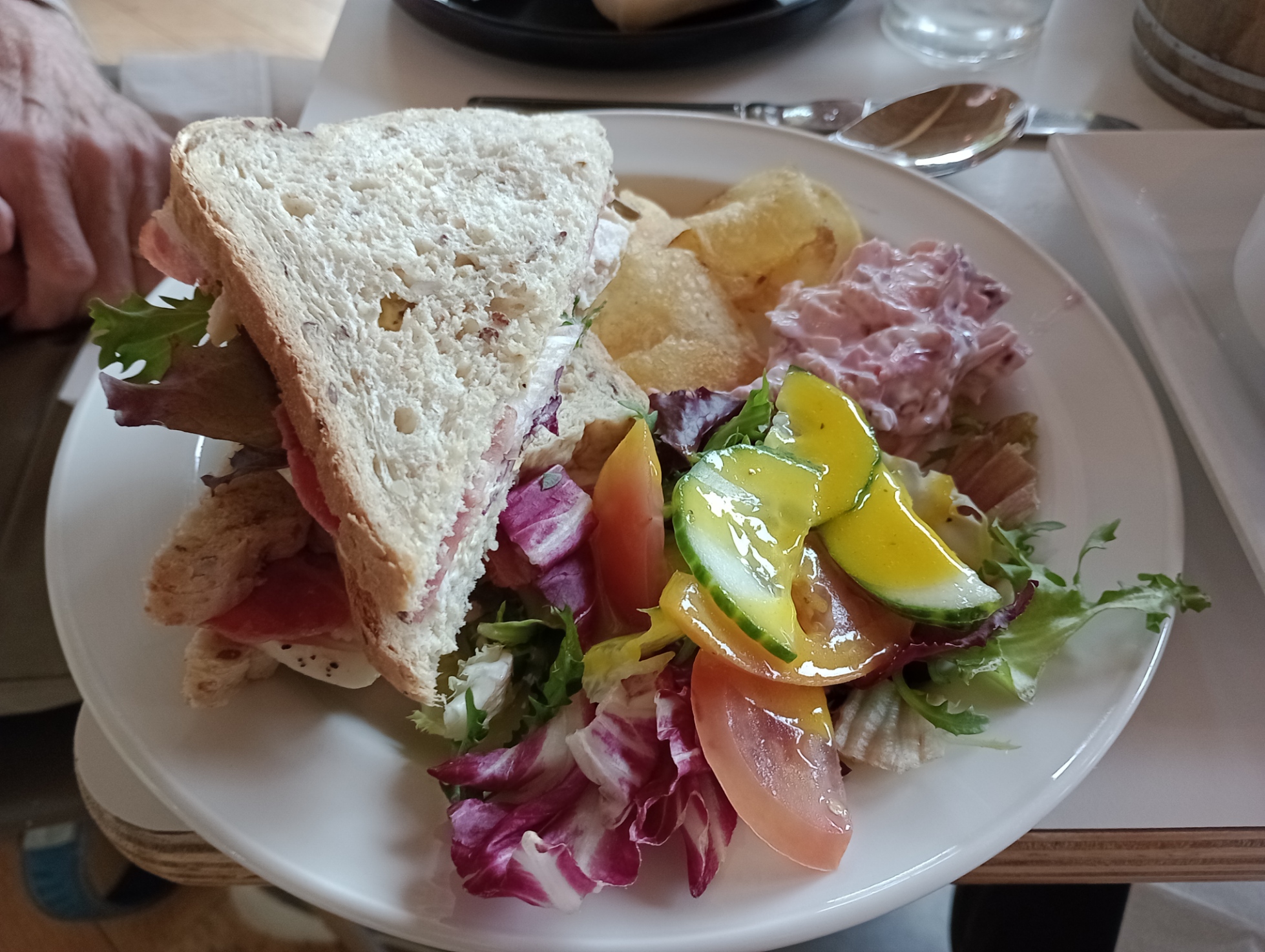
Kopiku is a great breakfast, lunch and afternoon coffee venue that bravely started under the difficulties of Covid 19 and the attendant controls on cafes. The owners’ pleasant and efficient service, the wide-ranging menu that includes Indonesian meals as well as familiar breakfast and lunch dishes such as seen in the photos below and includes delicious rustic pizzas and the reasonable prices make this a popular site.
Indeed, when the new owners took over the customers who had found other cafes under the previous ownership hurried back, expressing their delight at the change as we drank our coffees, enjoyed the food, found our dogs welcome, and most importantly were greeted with smiles. On their return from holidays this week one owner said how pleased they were to be back – they had missed the shop.
There is indoor and outdoor seating, the latter enjoying the shade of trees and umbrellas when necessary. The tables are large enough to accommodate several customers, or in our case, Leah’s bag of treats, some shopping, the ubiquitous phone, and of course, delicious meals and good coffee.
Jane Austen Jane Austen’s The History of England Writings from Her Youth Dover Publications, Oct 2023.
Thank you, NetGalley, for providing me with this uncorrected proof for review.
The history and letters in this short volume provide a wealth of information about Jane Austen which makes an ideal background to reading her more well-known novels. The latter have largely been seen as romances, although fortunately some rereading of the works has provided them with a wider and more analytical understanding of their genre, value and contribution to English literature. Reading Austen’s history, seeing her sister’s illustrations, and then reading the three letters in the book contribute to this broader understanding of Austen’s work. At the same time, it is such fun to read this history, with its wonderful wry commentary on ideas held dear to academic historians.
Allyson D’Antonio’s editorial commentary illuminates Austen’s assertions and speculations in an Editor’s Note and a series of endnotes that explain her ideas, suggests alternative perspectives, and clarify where required. Although she refers to Austen’s impact on the romance genre she gives Aysten credit for her addressing important themes in the period. That her canvas was a small one, D’Antonio references Austen’s work with admission that her concerns were with social class, gender inequality, education and religion, the ideas that impacted her own life.
This is such a short easy read – or is it? Yes, it takes only a small amount of time to read to the end. However, the ideas that are unearthed in this history and the letters are worth thinking about for far longer. They also enhance understanding of Austen’s adult work, adding to the enjoyment of the novels she wrote. This book is a small but elegant pleasure indeed.
Katia Lief Invisible Woman Grove Atlantic, Atlantic Monthly Press Jan 2024.
Thank you, NetGalley, for providing me with this uncorrected proof for review.
Reading the first chapters of Invisible Woman was an absolute thrill. I was so impressed with the way in which Leif combined a sympathetic character in Joni Ackerman, her back and forth feelings about her husband, Paul, and her situation as a domestic partner, housewife, mother and former winner of accolades for her films. She demonstrates all the challenges women of former public status face when they become the extra in their successful husband’s life. Joni is the woman who drifts around their huge party, recognised by few of the guests as anything other than their hostess, missing her daughters, harbouring a secret, and determined to act.
Joni reads several Patricia Highsmith’s novels as she ruminates on her marriage, and her past. This holds a secret that is not hers to tell but the aims of the MeToo movement becomes personal, as a rapist known to her is successfully accused by some of his victims. Joni attempts to persuade her friend to divulge her past that also involves this man and a mystery man. Val’s reluctance to make any accusations appears to be faltering when she agrees to meet Joni after several unsuccessful attempts to renew their friendship. She is almost killed.
I appreciated the clever introduction of Patricia Highsmith’s novels in which the perpetrator of a crime often escapes legal punishment. They also often find that such escape is an empty victory. Joni’s speculation about murder, her imaginary conversations, and her reflections on her situation are echoes of Highsmith’s work. Another positive is the realistic depiction of a woman whose past success has been silently, softly, but so firmly, closed down by her partner.
Where I lost my earlier satisfaction with reading this book was as what began as excellent social commentary, with sympathetic understanding and depiction of the challenges to Joni and Val’s validity as women who deserved to be visible, became lost in the resolution. I felt that the novel moved into different territory in some ways, and therefore did not meet my early expectations. However, despite this disappointment, I am keen to read more of Leif’s work. I suspect that she will always have an original approach to her characters, their actions, and their role in intricate plots. Probably this approach does lend itself to disappointment at times. On the other hand, it also suggests that a Katia Leif novel will not be boring – and to me this is an excellent reason to read another.
There are no Covid records available for Canberra for this period.
Some observations on Austen’s work from The Reality behind Barbara Pym’s Excellent Woman The Troublesome Woman Revealed, Robin R. Joyce, 2023.
These excerpts are edited, and the endnotes omitted to meet space requirements. The connections made between the two writers in this book are designed to demonstrate that both were subversive writers rather than determined to promote conventional ideas about women and their role. I do not see the writers as being particularly similar in the novels they then create. Pym seems unique to me, and efforts to find another Pym, or ‘writing in the Pym style’ are, in my opinion, designed to fail. Of course, many of us have tried this in writing for the Barbara Pym short story competition held annually by the Barbara Pym Society. My effort appears at Further Commentary and Articles about Authors and Books– it was unsuccessful, but I enjoyed writing it. Readers who particularly like Jessie Morrow, one of Pym’s most wonderful spinsters, might enjoy reading it. Jane Austen’s history and letters in her History of England reviewed above are a strong indication of her intentions, modified only in her published works (as I argue is the case for Barbara Pym) because of her desire to be published.
“Speculation that Pym’s response to marriage was a product of her unhappy spinsterhood raises the question: why did it matter? P.D. James’ assessment of the speculation about Pym’s spinsterhood connects Austen and Pym:
For a woman born in 1913, marriage was regarded as a natural state for a woman, and a girl who, like Barbara, was clever, attractive, sociable and kind, would attract comment if she had not achieved matrimony by the age of 30. There is evidence that Barbara would have liked to have been married, but I wonder if at some unconscious level she realised that marriage would be inimical to her art. In this, too, I feel she resembles Jane Austen […] Perhaps, too, men were a little frightened of that all-seeing eye…
Claudia Johnson’s work on the way in which Austen promoted feminist ideas in an inhospitable landscape also links the two in their similar methods of writing subversive fiction. Both women use irony and mockery; draw upon expectations of male and female behaviour and transpose them to confound expectations; or use a conforming woman to contrast with a troublesome woman.
Barbara Bowman describes how Pym adopted Austen’s template to produce her own subversive works. She links the authors through their common use of the first-person narrative to make subversive commentary and Pym’s use of ‘some of the assumptions behind Austen’s irony, where what poses as a maxim becomes an obvious “untruth.”’ Pym’s irony, like Austen’s, touches all aspects of the lives she depicts: romance, the church, professional and domestic life, academic and cultural understandings as well as the relationship between women and men. Johnson’s suggestion that as a woman writer Austen entered the western canon on sufferance is as true for Pym whose work has been described negatively as women’s fiction and cosy. Pym referred to such accusations but did not enlarge upon this matter…
Pym’s attention to Austen’s work was comprehensive. Her library included Austen’s novels and her diaries refer to her reaction to them and their author. Pym makes a more direct reference to Austen’s influence in a draft of An Unsuitable Attachment which includes the idea that she should give Ianthe’s aunt a Jane Austen environment. Expressing an alternative view, Pym also asked ‘what novelist of today would daretoclaim that she was influenced by such masters [Trollope and Austen] of our craft?’ She denied that her work was ‘Jane Austenish themes in a modern setting’ but acknowledged that she used Austen’s work for inspiration on how to ‘manage[s] all the loose ends’. Contrary to her assessment, commentators have made abundant connections between Austen and Pym’s novels and their execution.
Marriage is a constant in debate about their work. A.L. Rowse, biographer of both Austen and Pym, sees similarities in their attitudes to marriage, Anglicanism, and their similar scrutiny of society. In his view neither was a prude, nor had illusions about life. Rowse contends that while Austen dwells on marriage, Pym’s focus is on love…
Commentators have made direct comparisons between Austen and Pym’s work. Isobel Stanley notes that Pym includes ‘clerical types […] descended from Jane Austen, the Brontës and Anthony Trollope.’ David Kubal reflects on the way in which both writers connect women characters, such as Austen’s Emma and Wilmet from A Glass of Blessings. Jan Fergus also links the two novels, concluding that Mary Beamish in A Glass of Blessings is a modern Jane Fairfax ‘whose excellence makes the heroine feel uneasy and spiteful, whose good qualities she acknowledges only reluctantly.’ Peter W. Graham in ‘Emma’s Three Sisters’ also compares Austen and Pym’s novels in his discussion of Some Tame Gazelle.
Other commentators refer to similarities between Austen and Pym in their development of form, or motivation. Wyatt-Brown’s psychoanalytic assessment of Pym’s work mirrors Gilbert and Gubar’s suggestion that Austen used her characters’ dilemmas to explore her own problems. Both interpretations use the writers’ spinsterhood to identify their fiction as a particular type. As noted by James, fixation on marital status sits uneasily with feminist investigation. Marilyn Butler in the London Review of Books ‘notes parallels between Austen and Pym themes and characters.’ Fergus claims that ‘Most of Pym’s novels after Some Tame Gazelle and Excellent Women allude overtly to Austen’s works.’ She elaborates, ‘Covert allusions to plot, characterization and social comedy in Emma do not exhaust Pym’s interest in obtaining effects typical of that novel. Like Austen for instance, she creates ironies of character and structure.’ Glyn-Ellen Fisichelli notes similarities in Pym’s short stories and Austen’s Juvenilia. She also links Pym, Eliot, and Austen in their similar use of ‘domestic settings and provincial circles as a backdrop for their examinations of women’s place in society.’”
Eating at the coast
The best meals were served at home. However, the Pie Shop in Bungendore serves good coffee, terrific rock cakes and other sweet pastries, as well as pies and sausage rolls. This cafe was exemplary in following the Covid requirements when they were in place, so I eat there in preference to other places on the way to the coast. Bernie’s was a must for fish and chips again, although they were not as good as the last time I ate there. The queues were so long it is no wonder the standard declined slightly. A morning coffee at the Three66 cafe was a return to a welcome habit from past visits.
Changeable days at the coast, walks and swims and then jigsaws inside, and mist on Clyde Mountain on the return to Canberra.
Publishing
I really love this story of a writer who has adopted a different approach to publishing. I first became aware of the benefits and challenges of publishing with Amazon when I attended a workshop run by The Guardian in the UK. The two-day workshop featured presentations from trade publishers, independent publishers and a woman who had found her success with Amazon. Joanna Penn’s story of a garage filled with unsold copies of her work, her decision to publish in eBook form (which does not preclude publishing in print) and success in doing so. Melanie Price notes that she will enjoy seeing someone reading her book on Manly Beach – perhaps all those kindles are her readers, alas hidden from the onlooker. I hope that they are.
Why this Australian author is going solo, despite working in London publishing
Story by Latika Bourke • 1h
London: Melanie Price was 15 when she first thought she might write a novel.
Like many teenage students at the all-girls Wenona School in North Sydney, she was hooked on romances and so tried her hands at that genre.
But daunted by the task of penning tens of thousands of words and with more imagination than life experience she put her pen down.
“When I got to 18 I felt like I didn’t have enough ideas yet,” the 29-year-old said in an interview in south London where she lives and works as digital marketing director at a major digital publisher.
“Why I went into publishing wasn’t really because I wanted to write books, it was because I just loved books,” she said.
A tragedy on Christmas Eve in 2015 triggered her literary journey. Her father was gardening on the cliff edge outside their Clontarf, Sydney, home when he slipped and fell. The blow to his head killed him instantly.
“I was in my room at the time doing my university assignment and I heard the big [sound]… and I was the first person on the scene, but he had already gone,” she said, with emotion behind her eyes.
Six years later, strolling along Dover Heights, Price was struck by how easy it would be for someone to fall to their death from the cliffs just like her father had. The beginnings of a plot were underway.
“We all know it was an accident but imagine if it had been sinister,” she said.
“I was really lucky, my family was really supportive and we all came together but what if you don’t have a really supportive family and what if, in fact, you’ve got quite a tricky relationship with your family?”
Price returned to London with two book plots in mind, both psychological thrillers, a genre that she studied at university and that happens to be Amazon’s best-read in e-books.
Over two years – on weekends and at nights after work – she wrote two novels, My Perfect Family, set in Sydney and told through a young Australian female protagonist and The Mother-in-Law’s Secret, set in London and told through another Australian woman but also through a second character – her British mother-in-law.
“The classic, write what you know,” she said.
On Boxing Day she will debut with The-Mother-in-Law’s Secret with her second, My Perfect Family due out around Australia Day, but despite her extensive contacts within London’s publishing industry, she will be joining the more than one million writers who self-publish on Amazon.
“Why I decided to do it myself is because I thought I would be able to do a good job at it, but also because as we all know it’s very, very competitive to get a book contract and a publishing deal,” she said.
“Even if you do get a deal, unless you’re going to be in the top one or two per cent of a traditional publishing deal you’re not going to get a particularly huge advance.”
An industry standard old-fashioned print contract for a debut author could involve a maximum £10,000 ($18,600) advance, a 15-20 per cent royalty rate for e-books and around 12 per cent for print and audio. A digital-only contract doesn’t bring in an advance but offers a much bigger royalty rate of between 45-55 per cent.
While that could have been an option for Price, she ultimately decided to go it alone.
“There are so many incredible publishers out there that I know would have done a really good job, but knowing I have the skills to self-publish, I wanted to challenge myself and see if I could do it all myself.
“Plus, being Australian and British, I wanted to be able to launch this book simultaneously across the globe with the same cover, title and so on.
“And if it works I will get a 70 per cent royalty rate for ebooks, 60 per cent on the print book and 40 per cent on [audiobook platform] Audible.
“It’s been a lot of work playing every part of the publishing process, so we’ll see how it goes.”
Amazon has fostered a boom in self-publishing since its launch to democratise the industry in 2007.
It mimics the shift happening across all media including news, film and music. A deeper embrace of the internet allows individuals to bypass the traditional businesses of mass publication and circulation.
Today, around a third of all ebooks on Amazon are self-published. The company’s most recent data on self-publishing was issued last year and is somewhat opaque. It says that “thousands of authors” have already earned more than $US50,000 ($73,000) each in royalties and more than 2000 have surpassed the $US100,000 mark.
“I think it’s amazing, whatever anyone thinks about the pros and cons about Amazon. What they’ve done in terms of giving accessibility to people to successfully publish their own work across all formats is amazing, it’s phenomenal,” she said.
However, just opening the gate to all doesn’t guarantee an author’s success. Part of the costs of a traditional book deal involve the publisher doing the marketing to promote a new author and their work. These are skills Price already has.
Asked if budding authors could succeed in directly publishing without her extensive industry marketing skills, Price was adamant any good writer can.
“You really, really can, I think you just have to take the time to do the research and there are loads of amazing courses already by other successful self-published authors that give you lots of advice and tips,” she said.
But Price says there is a lot of stigma in traditional publishing against self-publishers, including the omission of ebooks from prominent bestseller lists.
“There’s a huge bias against Kindle readers even though the Kindle readers are probably the people in the world who read the most books,” she said.
Price is hopeful readers in both Australia and the UK will enjoy her “page-turners” but said she’ll know she will have achieved success if she sees her book being read by someone on the beach.
Karen Brooks The Escapades of Tribulation Johnson Harlequin Australia, HQ, July 2023.
Thank you, NetGalley, for providing me with this uncorrected proof for review.
Unlike The Good Wife of Bath where Karen Brooks’ Eleanor instantly endeared herself to me, it took me longer to warm to Tribulation. However, it was well worth taking that journey with this flawed, determined, uninhibited and courageous woman. Tribulation leaves an unloving household to live with her cousin, Aphra Behn, in London. Unknown to her exacting father, Tribulation is about to enter the home of an infamous playwright, her second home in the theatre, and another in the world of spies, intrigue and duplicity. Tribulation finds each a source of excitement, burgeoning career opportunities, love and hate, far removed from her early years as a dismissed daughter of the vicar of Chartham in Kent, and older sister, Bethan. See Books: Reviews for the complete review.
Kerry Wilkinson After the SleepoverBookouture, Dec 2023.
Thank you, NetGalley, for providing me with this uncorrected proof for review.
Kerry Wilkinson’s After the Sleepover is a stunning continuation of Leah’s story, begun in The Night of the Sleepover. I read the novels out of sequence so in many ways was advantaged by being innocent of the ending of The night of the Sleepover, where Leah’s secret knowledge about that night was exposed. So, I began with the speculation about the person for whom Leah’s secret provided cover. This was referred to frequently in her relationships and thoughts in After the Sleepover. The novel is extremely clever in that, even if read in sequence Leah’s speculations and behaviour provide the complexity that makes a novel satisfying.
Excellent characterisation is also an important feature in both novels. Leah is complex, but so too are her companions in both novels. From the young girls with whom she was friends at school and who disappeared from the sleepover to their parents and her own, and then to the characters in the sequel. Here Leah is called upon by the mother of one of the new generation of children missing from a sleepover. Her experience, Jennifer persuades her, will help in dealing with the possibility that the mystery will not be resolved. See Books: Reviews for the complete review.
After the Covid update for Canberra: Bob McMullan- Australia to achieve membership of an African Development Bank (at last); Secret London – Horizon 22; Cindy Lou snacksand another lunch at Courgette;Kelly Marie Coyne – Growing up in Taylor Swift’s America.
Covid update for Canberra
On December 22, 2023, there were 353 new cases, bringing the total of Covid cases in Canberra to 251,000. There were 18 people with covid in hospital.
Bob McMullan writes about the Australian aid program and the African Development Bank
Australia to achieve membership of an African Development Bank (at last)
The biggest disappointment of my time with responsibility for the Australian aid program was the failure to finalise Australia’s application for membership of the African Development Bank.
The decision was made, we had the money, the legislation was drafted and approved (unanimously) by the Treaties Committee of the parliament.
But I could not persuade the Chair of the committee to give the legislation priority and it lapsed at the end of the term of parliament.
After the election in 2010 the government no longer had the majority to pass such legislation.
After the 2013 change of government the Abbott government slashed the aid program and lost interest in Africa. There was no will and no money to pursue such an application and the prospects do not look promising in the near future. The aid program remains relatively small and therefore, necessarily becomes more regionally focused.
Does this matter? I believe it does.
There are several aspects of the case for Australia’s enhanced engagement with Africa.
First, there is the underlying rationale for the aid program, the fight against global poverty. If that is even part of the case for the development program then Africa deserves attention as the continent with the highest level of poverty. Larger donors than Australia from Europe and North America have a strong focus on Africa, as they should, given their historic and geographic connections. Australia’s contributions to bilateral programs in Africa will always be relatively small but they could be significant.
Second, I can see in the future Australian expertise in agriculture, mining and water playing a very useful role in Africa. But, for the moment, we should look to multilateral institutions to provide support to the poorest people in the poorest countries.
Third is the Indian Ocean connection. Australia’s almost exclusive East Coast policy focus can blind us to the opportunities and challenges on our West Coast, the Indian ocean. Many Indian Ocean island and coastal nations could be of significance to Australia’s diplomatic and strategic priorities in future.
There is also a significant diplomatic interest for Australia to remain engaged with Africa. In the 2012 campaign for the Security Council election, we made significant gains in support from African nations and these will be important in future similar initiatives.
The possibility of re-activating Australia’s African Development Bank (AfDB) membership application seems remote.
However, interesting developments within the European Bank for Reconstruction and Development, of which Australia is a member, appear likely to lead to a mechanism to begin to fill the gap left by the failure to progress the AfDB membership application.
During the four and a half years that I represented Australia on the Board of the EBRD management, led by the President, Sir Suma Chakrabarti, began to discuss with the Board and the member countries the idea of extending the EBRD’s activities to Africa.
Understandably the response of members was cautious. The primary concern was the risk of spreading the capital of the Bank too thinly and thereby interfering with its primary purpose, the development of prosperous democracies in Eastern Europe.
Two events changed those attitudes.
First, the Arab Spring generated opportunities for Development Banks to improve the lives of people in North Africa and the Middle East.
This led initially to an extension of the bank’s region of operation to include Egypt, Morocco, Tunisia and Jordan.
The second international development was the Russian invasion of Crimea. This led to the EBRD’s abrupt termination of investment in Russia, which had been until that time its largest country of operation.
This freed up capital and required the Bank to seek new ways to utilize its resources profitably and usefully.
Since that time there has been a gradual creep of EBRD activity to Africa and the Middle East.
The bank now has Iraq, Algeria and Libya as members and has commenced operations in Lebanon and the West bank and Gaza.
At the 2023 Annual general Meeting the Bank Governors supported a cautious extension of the Bank’s activities to sub-Saharan Africa. Australia supported this resolution.
The resolution as adopted identified six sub-Saharan African countries where the EBRD assesses that its methods and models of activity would be most effective.
These countries were: Benin, Cote d’Ivoire, Ghana, Kenya, Nigeria and Senegal.
The Board of Governors of the EBRD has received and approved applications for membership from the first sub-Saharan African countries to apply: Benin and Cote d’Ivoire.
These are not yet countries in which the EBRD is authorized by the Board to operate, but they obviously all aim to become countries of operation. The EBRD website lists Egypt. Jordan, Lebanon, Morocco and Tunisia and the West Bank and Gaza as countries/ areas in which they work. Benin and Cote d’Ivoire have already requested country of operation status and I understand Iraq has also done so.
It is almost certain that all these applications will be approved.
What happens next in terms of sub-Saharan African applications will be very interesting. It is obvious that if the Benin and Cote d’Ivoire applications are successful more will follow.
Some of the potential member countries, for example Kenya, are good friends of Australia. Kenya is an Indian Ocean partner and Australia has a long history of good relations with them.
We could be actively involved in encouraging their applications for membership and country of operations status and might well invite them to join our constituency at the Bank.
By 2025 Australia will have become a member of an African development bank in spite of itself.
I hope we take advantage of the opportunities that this will generate.
The Highest Free Public Viewing Platform In Europe Is Now Open In London • Horizon 22
Horizon 22 is open now — book your free spot and hop in the elevator for a view into the panoramic skyline of central London now.
Boasting a rather obscene number of giant buildings, it should come as no surprise that London will soon have the title of being home to the highest free viewing platform in all of Europe.
But will that lack of surprise stop us from scaling up the 58 floors of 22 Bishopsgate – the second-highest building in the city after the Shard – for a gaze out over the skyline? Almost definitely not.
Image: 22 Bishopsgate
Since it’s free and all, many have had the same attitude about Horizon 22, the new vantage point for stargazers and keen Instagrammers alike, which beamed up its high-speed lift (41 seconds up to the top, to be precise) back in September.
Views at Horizon 22 are panoramic and the cost is nothing, giving us one of the more cost-effective ways to dramatically plan our protection of the city as we gaze out over it. All you’ll need to spend money on is that suit and batmobile.
How do I visit Horizon 22?
Image: Brendan Bell
If you’re already itching to get up 254 metres high, then you can book your free ticket to the platform now. Bookings at Horizon 22 began last week, and you’ll be able to secure your place on the newest free viewing platform on the block.
It’s set to rival the likes of Sky Garden, which is known to be full to the brim with free bookings, so be sure to keep that in mind when planning your visit; the demand is likely to be high.
Views from 58 levels up at Horizon 22 will be available seven days a week, all year round (excluding Christmas Day, Boxing Day and New Year’s Eve), and a small number of walk-in spots will also be made available each day.
Horizon 22 is open now, with bookings here . It will be open between 10am-6pm on weekdays, 10am-5pm on Saturdays, and 10am-4pm on Sundays and Bank Holidays.
Cindy Lou snacks before shopping
EQ Canberra Centre
All I wanted was a simple sandwich and found it at the newly opened EQ in the Canberra Centre. The service was pleasant and very prompt, and the food exactly what was wanted on this occasion. Water is available, which is always a nice touch if the morning coffee has been enough. EQ has comfortable enough seating, although if you find the piecing cries of joy of children at the nearby play centre do ask for a table at a distance. On the morning I was there children played peacefully and table 4 right next to the play area was fine. The Italian chicken wrap, toasted as offered, was just right – the chicken was generous, the wrap just crisp enough, and the salad in the wrap was pleasant. Pies and sausage rolls are served without an accompanying salad which could be a problem for some, and a delight for others! The sweet pastries were tempting, but this time the chicken wrap was more than adequate. The prices were very reasonable.
Literary Hub
Growing Up in Taylor Swift’s America
Kelly Marie Coyne on Women Writers, Role Models, and Miss Americana
I was teaching “American Women Writers” at Georgetown last fall when my students proposed adding Taylor Swift to the syllabus. Like most of the humanities courses I teach, it was mostly composed of white women—there wasn’t a single man enrolled. The course drew on writing from the 20th century to today—Sylvia Plath, Toni Morrison, Carmen Maria Machado—to discuss the intertwinement of national and personal identity. I was most interested in asking my students how American culture prescribes an “ideal” life path for women: first comes love, then comes marriage, then comes a baby in the baby carriage.
I wanted my students to consider this life path as a genre. They were game. Only, they called for a more expansive canon. Midway through the semester, one student wanted to add Beyoncé Knowles-Carter to the lineage. Perhaps unsurprisingly, the next wanted to add Taylor Swift.
Teaching towering artists of contemporary culture like Knowles and Swift is no small feat for anyone. It’s an even greater one if you’re a member of their target audiences and have attended their concerts as a fan. Their work refuses to stay in the lane of two, or three, or even four genres; it also transcends different forms of visual and literary culture. They’re both talented artists and strategic businesswomen.
As a PhD student in visual culture, I TA’ed multiple courses that taught Knowles. They taught me how to orient her work within a history of visual culture—for instance, by placing “Lemonade,” her visual album, within the Southern Gothic lineage.Does Swift represent the “ideal” American life path of romantic love, marriage, and parenthood? Or might we trace a different course underlying her oeuvre? See Television,Film and Popular Culture: Comments for the complete article.
Courgette again for lunch
Another lunch at Courgette, with a couple of changes to our menus – I tried the quail (really worth trying, succulent, great accompaniments, nice size) and the tuna dish was replaced with a veritable medley of seafood- a huge prawn, whiting fillets, a mussel and shaved octopus. Creme brulee was ordered instead of last week’s cherry ice-cream. The expected topping to be cracked was absent – a bit of a disappointment, but the only one. Once again, great food from an interesting menu, lovely service, comfortable seating and tables at a pleasant distance apart made this an enjoyable experience.
Ines Almeida, Georgina Ferry, Bridget Greenwood, 50 Women in Technology Pioneers and Trailblazers in STEM, Aurora Metro Supernova Books, November 2023.
Thank you, NetGalley, for providing me with this uncorrected proof for review.
As I have a kindle download, I am unable to comment on the full colour nature of the book. However, I am pleased to be able to comment on text of this most useful work. In particular, the combination of the stories of early women in technology, and those of today; discussion of unequal pay in the sciences; the excellent section on depiction of scientists in school studies and popular culture; and the writers’ experience which gives the information accessibility as well as heft.
More well-known names such as Ada Lovelace, Marie Curie, Hedy Lamarr are represented. However, they are joined by women who, although known in scientific circles have not entered popular culture about women in technology. Bridget Greenwood’s foreword sets out the purpose of this book – to enhance public knowledge of the women pioneers in technology. She suggests that the change that has been effected, is only a start, that more needs to be done to encourage women into technology and to keep them there. Quotations from uncorrected proofs cannot be included in reviews, so it is impossible to replicate some of the pithy and inspirational propositions included throughout the book – both from its editors and the women they to whom they give a voice. Suffice to say, they make an effective voice for these women. See Books: Reviews for the complete review.
Articles after Covid update: More reading for the beach; reading that you won’t want interrupted; ‘We’ll Be at Each Other’s Throats’: Fiona Hill on What Happens If Putin Wins; Cindy Lou eats out in Canberra; ‘The Crown’: history or entertainment?; Grenfell should have been a wake-up call – but the UK still doesn’t take fire safety seriously because of who is most at risk.
Covid update for Canberra
On 15 December the new cases of Covid numbered 423, with 17 people in hospital with Covid, one of whom is in ICU. Two lives were lost in this period.
More reading for the beach
Penny Batchelor’s My Perfect Sister (2023) considers the impact of a missing child on the family and friends left behind, with particular attention given to her younger sister. Gemma disappeared when Annie was five, and she has lived as she believes, as the unwanted sister since. Her bitterness extends to her mother whom she recalls as always being ill, in bed, unloving and committed to Gemma beyond all else. Annie returns home after a breakup, and at her mother’s request. The relationship between them is rocky, despite her mother’s cancer and treatment. The novel explores human relationships as well as dealing adeptly with the mystery of Gemma’s disappearance. The story is mainly told from Annie’s perspective. However, a few chapters are told from her mother’s point of view, providing some explanation for her behaviour, as well as her attitude towards both her daughters. This is a compelling read in many ways, even though Annie is an uncomfortable protagonist with whom to sympathise.
Always a good read is Valerie Keogh with her novels such as The Housewife (2019) The Lawyer (2020), The Librarian, (Apruil, 2023) The Lodger (2022) The Nurse (July, 2023) and The Couple in the Photograph (2021). They are not all of the same standard, and I recall being unimpressed with The Lodger giving it only three stars. However, as a beach read, perhaps that is not the worst that can be said. Keogh’s Dublin Murder Mysteries (2023 eBook version) are worth reading. For example, the first in the series features a missing husband, his wife who finds a gruesome murder in the graveyard adjacent to their home, and questions about identity and motivation. This is a well thought out murder mystery, with some engaging characters, including one seems as though she will remain particular to this novel and the detectives who are continuing characters. However, the criminals are suitably obnoxious with a variety of associated crimes. The second and third books in the series are also very satisfying, with their combination of crime, thwarted romance, character development and creation of intricate relationships which can at times be comic.
More beach reading which you will not want interrupted.
A book that really impressed me this year was Canberra writer’s Untethered (2023) reviewed on May 10th this year. Ayesha Inoon’s novel is excellent, perhaps one of my favourite reads this year. I also found Rob Wills’ two volumes of Plague Searchers (2023) a truly satisfying read. This was reviewed on June 14th. On July 15th I reviewed Alice McDermott’s Absolution (2023), another valuable read. Louise Doughty’s Bird in Winter (2023) is a heartrending novel. Perhaps this is not one for the beach, rather a cosy curl up in a warm space! Reviewed on July 26. I also really liked the two Claire Chambers novels I read this year- Small Pleasures (2021) and Back Trouble (2022).
‘We’ll Be at Each Other’s Throats’: Fiona Hill on What Happens If Putin Wins
Maura Reynolds is POLITICO Magazine’s deputy editor for ideas.
The veteran Russia watcher is deeply alarmed as Washington reaches an inflection point on the war inUkraine.
Fiona Hill is a keen observer not just of Russia and its leader, but also of American politics, having served in the White House as a top adviser to both Democrats and Republicans. | Chris Ratcliffe/Bloomberg via Getty Images
It was nearly two years ago that Russia launched its full-scale invasion of Ukraine, and in recent months, the fighting appears to have ground to a stalemate. Aid from the United States has helped Ukraine get this far — but now Americans are asking, how long should they continue to support Ukraine in its war against Russia? At this point, just what are the stakes for the United States?
Since the war began, I’ve turned to Fiona Hill periodically for insight into what’s driving Russian President Vladimir Putin, and where America’s interests lie. She’s a keen observer not just of Russia and its leader, but also of American politics, having served in the White House as a top adviser to both Democrats and Republicans, including President Donald Trump. Since she left the Trump administration (and after a star turn testifying in his first impeachment), she’s become a highly sought-out voice on global affairs as well as the domestic roots of authoritarianism in countries around the world.
When we spoke this week, she made clear that the decision of whether Ukraine wins or loses is now on us — almost entirely. As Congress debates how much more money to authorize for Ukraine’s assistance amid growing Republican opposition, she says that what we are really debating is our own future. Do we want to live in the kind of world that will result if Ukraine loses?
Hill is clear about her answer. A world in which Putin chalks up a win in Ukraine is one where the U.S.’s standing in the world is diminished, where Iran and North Korea are emboldened, where China dominates the Indo-Pacific, where the Middle East becomes more unstable and where nuclear proliferation takes off, among allies as well as enemies.
“Ukraine has become a battlefield now for America and America’s own future — whether we see it or not — for our own defensive posture and preparedness, for our reputation and our leadership,” she told me. “For Putin, Ukraine is a proxy war against the United States, to remove the United States from the world stage.”
Hill sees U.S. domestic politics as the main obstacle to Ukraine’s ability to win. She has long warned, including in a book published after she left the White House, that high levels of partisanship in the United States promote authoritarianism both at home and around the world. She’s been talking to some lawmakers about Ukraine, and she’s worried that their partisanship has blinded them to the dangers the country faces if Putin gets his way.
“The problem is that many members of Congress don’t want to see President Biden win on any front,” she said. “People are incapable now of separating off ‘giving Biden a win’ from actually allowing Ukraine to win. They are thinking less about U.S. national security, European security, international security and foreign policy, and much more about how they can humiliate Biden.”
“In that regard,” she continued, “whether they like it or not, members of Congress are doing exactly the same thing as Vladimir Putin. They hate that. They want to refute that. But Vladimir Putin wants Biden to lose, and they want Biden to be seen to lose as well.”
This transcript has been edited for length and clarity. *
Ukraine is fighting the Russian invasion on several fronts: military, financial, political. In each of those areas, is Ukraine winning, or is Russia?
We have to think about where we would have been in February of 2022. Russia’s intent was to decapitate the Ukrainian government so it could take over the country. That’s what we all anticipated. We anticipated that [Ukrainian President Volodymyr] Zelenskyy would have gone into exile, the Ukrainians would have capitulated, then there would be a very messy insurgency against the Russian forces. So if we start from that point, militarily, and we look at what’s happened over the last two years, we can actually say that Ukraine has won in terms of securing its independence, and has won by fighting Russia to a standstill.
But then we get into the details. Because, of course, the standstill is the main issue at hand. The Ukrainians were initially able to take back quite a lot of the territory that the Russians seized in the early phases of the invasion, but then the Russians dug in. We had all the hype around a counteroffensive this past summer, a lot of expectations built up inside and outside of Ukraine, especially here in the United States. If we look at other wars, major wars, often these much-anticipated individual battles don’t turn out the way that the planners or the fighters actually anticipate. Now we are in a scenario where having not succeeded in reaching the stated goals of the counteroffensive, we’re basically positing that Ukraine has somehow lost the entire war.
Ukraine has succeeded so far because of massive military support from European allies and other partners. So in that regard, we’ve now reached a tipping point between whether Ukraine continues to win in terms of having sufficient fighting power to stave Russia off, or whether it actually starts to lose because it doesn’t have the equipment, the heavy weaponry, the ammunition. That external support is going to be determinative.
So it’s maybe too soon to answer the question of has Ukraine won or lost militarily.
How about in the financial and diplomatic arenas?
It’s a question of whether Ukraine has enough resources, financial resources, not just to keep going on the battlefield, but also to keep the country together at home. And up until now you’re still seeing a lot of European countries stepping up. Not just you know, the United States, but definitely the EU, Japan, South Korea and others. Japan recently made an offer of additional major financial support. The Germans have said that they’ll make sure that the Ukrainian economy will continue to not just survive, but thrive, and over the longer term, they’ll help rebuild. This is still somewhat positive.
On the political side, however, we’ve got the problems of the policy battlefields on the domestic front. Ukraine has now become a domestic political issue in a whole range of countries, not just here in the United States, but in countries like Poland, Slovakia, Hungary, Germany and many more. And that’s an issue where it’s going to be very hard for Ukraine to win. Because when you get into the transactional issues of domestic politics, and you’re no longer thinking about national security, or these larger imperatives, then Ukraine dies a thousand deaths from all of the transactional efforts that domestic politicians engage in. Most political constituents, no matter the country, can’t really see beyond their own narrow interests.
So Ukraine isn’t losing yet. But depending on the domestic situation in the United States, and with its European allies, it could? It could start losing very soon?
That’s right, we’re at a pivotal point. There’s a lot of detail, but the bottom line is that we are at an inflection point, a juncture where it could very rapidly tip, in fact this month — December and January — into a losing proposition for Ukraine.
What do you think Putin sees when he’s watching the debate taking place in the United States right now?
He does see the entire battlefield of the military, financial and political arenas tipping to his benefit. Putin really thinks that he is on the winning side. We’ve just seen in the last few weeks, something that looks rather suspiciously like a preparatory victory tour [by Putin] around the Middle East, visiting the UAE and Saudi Arabia, stepping out again in “polite company,” preparing to go to other major meetings. And then the coverage in the Russian press — their commentators are crowing with glee at the predicament of the Ukrainians, clapping their hands, literally and figuratively, about the peril for Ukraine in the U.S. Congress.
“We’re at a pivotal point.”
Fiona Hill
One thing that we need to bear in mind here is that Putin turned for assistance to two countries that should give Americans and members of Congress pause — Iran and North Korea. Russia has had significant shortfalls of ammunition and sophisticated technology because of sanctions and other constraints. Ammunition has come from North Korea, which continues to provide Russia with all kinds of rounds for shells, and Iran has stepped up with the production of drones. Iran and North Korea both see this as a kind of international opening for them. If Russia prevails on the battlefield, you can be sure that Iran and North Korea will get benefits from this. We already see Russia shifting its position on the Iranian nuclear front, and we also see Russia making a major shift in its relationship with Israel. Putin has gone from being a major supporter of Israel, to now an opponent, and has switched from what was always very careful public rhetoric about Israel to pretty antisemitic statements. Putin never denigrated Jews in the past. On the contrary, he presented himself as a supporter of the Jewish population. This is a dramatic shift and clearly because of Iran. Now, whether Iran asked Putin to do this, I honestly can’t say, but we can all see this deepening relationship between Russia and Iran. That is a real problem for the administration and for others who are now looking at the Middle East and trying to figure out how to stop a broader war with Lebanon, with the Houthis in Yemen, and all of the Iranian proxies, because Iran and Russia have become fused together now in two conflicts.
China is not neutral in this either. So not only do we have North Korea, but we also have one of North Korea’s major patrons, which is China. Although we have not seen China supporting Russia in the war in Ukraine in the way that North Korea and Iran have, China continues to give Putin a lot of economic, political and moral support. China sees this as an opportunity to put pressure on the United States. China’s also learning an awful lot of lessons from this war, about how the United States and Europe and other countries are likely to react in other contexts. If we step back and allow Ukraine to lose, well, are we going to do the same in the case of Taiwan?
And this also brings in another couple of places, South Korea and Japan. We tend to fixate on what the United States is doing, and all the machinations in Europe, but the South Koreans have found ways of getting supplies of armaments to the Ukrainians through back channels via other countries that are purchasing the weapons. Japan has just given Ukraine a significant tranche of money, because they know only too well that a military failure for Ukraine is going to shift the entire balance in the Indo-Pacific.
You said a loss for Ukraine would shift the entire balance in the Indo-Pacific region — you mean shift it toward China?
Yes, it’s highly likely that that would be the case. And that’s why Japan and South Korea are desperately trying to help out Ukraine because they see the larger geopolitical implications of this.
But it’s not just China and Russia who are learning from this war. So are we. We’ve seen the impact of drone warfare and we’re thinking about how we deal with this ourselves. We’ve been kind of shocked to see how much wars like this take up ammunition stocks — this is not the type of war that we’ve fought for a very long time. When we’re thinking about our own defense, our own national security, we need to be looking very carefully at this conflict. The way that Putin has played with the idea of using tactical nuclear weapons, the use of drones on the battlefield, the use of mines, the use of ships and blockades in the Black Sea, the difficulty of pushing forward in a counteroffensive against these deep entrenchments, how various military systems including defensive equipment actually perform in real time and conditions. We can see how effective our ATACMS were, for example, our Patriot batteries. This is, in a way, a proving ground for our own equipment.
Other countries elsewhere in the world have been watching, seeing Russia adapt and learn lessons, do more with less. The Russians have ramped up their military production. They are on a war footing. They now have a war economy. And although Russia has been dependent on North Korea and on Iran for some weapons, they’re starting to produce their own. So what you’re seeing here is a Russian military buildup on the back of this war that will become a menace to its neighbors and those don’t have to be just the neighbors in Europe, but can be further afield. Remember, Japan still has a territorial dispute with Russia.
Putin initially thought he would just go and take Kyiv, and obviously, that didn’t happen. How do you think Putin now would define a win for himself and for Russia?
Well, there’ll be multiple ways he will define it, one of which is defeating the United States, politically, psychologically and symbolically. If the United States doesn’t pass the supplemental [bill to approve aid to Ukraine], and we get this chorus of members of Congress calling for the United States to pull away from Ukraine, Putin will be able to switch this around and say, “There you go. The United States is an unreliable ally. The United States is not a world leader.” And there will be a chilling effect for all our other allies. In the past, Putin has actually, for example, approached the Japanese and said, “Look, we can be your interlocutor with China. The United States is not going to be there to assist you in a crunch.” And that’s certainly what this is going to look like. The Japanese, the South Koreans, the Vietnamese, others that we have bilateral treaties with, are going to wonder, “OK, the United States made such a push here to support Ukraine, along with other European members of NATO, and now they’ve just walked away from it.” And you put that on top of Afghanistan and the withdrawal, also the withdrawal from Iraq, withdrawal from Syria, and the whole fraught history of United States interventions in the last two decades, and Putin will be able to present a pretty potent narrative about the United States’ inability to maintain its commitments and forfeiting its role as an international leader. So that that becomes a major political win.
And that’s aside from the obvious win of being able to turn the tide on Ukraine, because Putin will now see an opportunity to partition Ukraine. The partition will be along the existing ceasefire lines, he’ll start to push, and others will be pushing, for a negotiation. We’ve already heard former President Trump saying he would solve the conflict in 24 hours, and many other senators and people who would be supporting Trump in an election, basically saying we need to get this over with, pushing Ukraine towards the table. That’s not the position of this administration, to be very clear. And that’s not the position of many in Congress and Senate. But we’ve definitely got those voices.
So for Putin, he will see this is a very propitious moment, to re-up the idea of a negotiation for a ceasefire on his terms. And, of course, we’ve got all of the drama around the issue of a ceasefire in the Middle East. There may also be a push from many other countries to say, let’s stop, we need to focus on the disasters in Gaza, let’s just get Russia and Ukraine to put their war to one side. Putin’s already playing into this, trying to get other countries to say, “Look, we’re always dealing with Europe’s problems. We need to be dealing with the Middle East here. This is more consequential for everyone.” Putin is likely hoping that there’ll be pressure put on Ukraine that way as well, to come to the negotiating table because of the international imperative to focus on the Middle East crisis. There’s been the revival of an idea that was a peace agreement on the table back in the spring of 2022, and a lot of talk around this issue along with a lot of propaganda and a lot of misinformation and disinformation about the prospects for a negotiated solution.
For Putin it would be a win to have a partition of Ukraine on his terms. We know from Russian public opinion, that there is a mounting desire for the war to end. That’s even reflected in some of the polling that is done close to the Kremlin. We’re seeing a majority of Russians who are polled saying that they would like the war to end. But they’re not saying that they want to give up the Ukrainian territories that Russia has taken or that they want to pay reparations to Ukraine. So Putin knows that there is a desire to end the war, and if he gets a partition through a ceasefire with limited cost to Russia it will boost his popularity ahead of the Russian election, which is coming up. And he’s just declared himself, surprise surprise, as the candidate — the only real candidate — for yet another six-year presidential term.
Russia’s presidential election is scheduled for March. How does the war in Ukraine play into Putin’s reelection bid?
It’s pretty critical. But it’s critical in that he has to have a win. A win, as I’ve just said, would be a distinct end to the war with a ceasefire and the partition of Ukraine. Any Ukrainians who are in the occupied and partitioned territories of Ukraine will be forced to become Russians, we’re already seeing that. It’s not just the deportation, and kidnapping, abduction of Ukrainian children from the conflict zones who are then being turned into Russians, literally, and in many cases, through adoptions. But it’s the fact that Ukrainians living in the occupied territories are being forced to take Russian passports and Russian citizenship to be able to get basic payments for their jobs, pensions, et cetera. Putin has already made it clear that he no longer thinks that there is a separate Ukrainian identity or language or heritage, and that Ukrainians are nothing but Russians.
A partition of Ukraine would not create a north and south Ukraine or an East and West Ukraine, along the lines of a partitioned Ireland or partitioned Korean peninsula or partitioned Germany after World War Two. This would be a rump Ukraine and an annexed territory that Russia will say is Russia, just like they have with Crimea. Putin will see that as a major win, because that will give him a platform for push back and later attempts to try for more, and because he will also have discredited the United States politically, and created a whole wave of knock-on effects internationally.
This would greatly complicate rump Ukraine’s ability to move forward and rebuild. Putin will basically say to Ukraine, you could have done all of this, handed over these territories to us without hundreds of thousands of people dying. And then there will be a constant flow of Russian propaganda and influence operations against Ukraine in which Russians will accuse the Ukrainians of violating the ceasefire, or manipulating negotiations, and will stir up political strife. This will not end. It will go on forever.
It will be a great win for Putin because he will be able to move on to the next part of the game while everyone else is stuck in place. He thinks in terms of bouts and tournaments. Like the judo professional he was before, in his youth. If he doesn’t win the first bout outright, he might win the second and still move on to victory.
What happens to the West if Putin wins?
We’ll be at each others’ throats. There’ll be no way in which this is going to turn out well. There’ll be a lot of frustration on the part of people who thought that this was the easier option when we reel from crisis to crisis. There’ll also be the shame, frankly, and the disgrace of having let the Ukrainians down. I think it would create a firestorm of recrimination. And it will also embolden so many other actors to take their own steps.
One key challenge is going to be the nuclear front. There’s several different ways in which we can look at the nuclear front. There’s the moral imperative. We pushed Ukraine to give up the nuclear weapons that it had inherited from the Soviet Union in the early 1990s. And we gave assurances along with the United Kingdom, that Ukraine would not end up in the situation that it is in now. We guaranteed its territorial integrity and sovereignty and independence and also assured Ukraine that we would step up to help. This opens up a whole can of worms related first to the moral jeopardy of this, that we obviously don’t stick to our word.
But also in terms of nuclear weapons, we could face proliferation issues with Japan, South Korea, other countries — even NATO countries who currently see themselves covered under the U.S. nuclear umbrella. They will start to worry about how much we would actually support them when they needed it, and how vulnerable they are to pressure or attack by another nuclear power. Think about the dynamics between India and Pakistan, for example, or China and India, or China and South Korea and Japan; and the predicament of leaders in other countries who will be thinking right now that, “I’m going to be extremely vulnerable — so perhaps I should be getting my own nuclear weapon.” You’re hearing talk about this in Germany, for example. You hear it all the time in places like Turkey, and Saudi Arabia, we know that they have nuclear aspirations. So this opens up a whole set of different discussions.
So you’re concerned that if Putin wins and Ukraine is partitioned, that will set off a nuclear proliferation race.
There is a very good chance that it will, because it will open up the question — you had a country that gave up nuclear weapons, didn’t keep any at all, was given guarantees of its security, and then it got invaded and partitioned.
You’ve written about the failure of the United States and the UK to provide adequate opportunity to all of its citizens. You’ve talked about the United States as being in need of a bigger “infrastructure of opportunity.” What do you say to Americans and members of Congress who feel like the money that we’re using to help Ukraine would be better spent right now at home?
That it’s actually being spent at home! That’s the irony. Because every time you send a weapon to the Ukrainians, it’s an American weapon. You’re not buying somebody else’s weapons to go to Ukraine. It’s also a fraction of our defense budget.
It’s really a circular process here. We are providing weapons to Ukraine, we’re buying them from major manufacturers of defense systems here in the United States, which are obviously providing jobs for the people who are making them. And then we’re going back and we’re ordering more because we’re replenishing and upgrading our own weapons stocks. This is all part of our own system. These defense manufacturers account for huge numbers of jobs across the whole of the United States, so arming Ukraine means significant job creation and retention across the United States and also in Europe and elsewhere.
People in Congress know that, it’s just that they’re playing a different game. They want to play up this issue of “it should be spent at home” because of the transactional nature of congressional supplemental bills.
Let’s just put it frankly — this is all about the upcoming presidential election. It’s less about Ukraine and it’s more about the fact that we have an election coming up next year. The problem is that many members of Congress don’t want to see President Biden win on any front. People are incapable now of separating off “giving Biden a win” from actually allowing Ukraine to win. They are thinking less about U.S. national security, European security, international security and foreign policy, and much more about how they can humiliate Biden.
In that regard, whether they like it or not, members of Congress are doing exactly the same thing as Vladimir Putin. They hate that. They want to refute that. But Vladimir Putin wants Biden to lose, and they want Biden to be seen to lose as well.
“The problem is that many members of Congress don’t want to see President Biden win on any front.”
Fiona Hill
For Vladimir Putin now Ukraine has become a proxy war. It’s not a proxy war by the United States against Russia. We’re trying to get Russia out of Ukraine, period. But for Putin, Ukraine is a proxy war against the United States, to remove the United States from the world stage. He’s trying to use Gaza, and Israel like that now, as well. He’s trying to whip up anti-United States sentiment wherever he can. I’ve just come back from Europe and from a whole host of conferences where there’s just so much rage and grievance about the United States and Putin is fanning the flames.
Putin sees Biden as a major opponent. He is an obstacle for Putin to be able to win on the battlefield of Ukraine. So Putin wants Biden to fail. Putin would be thrilled if Trump would come back to power because he also anticipates that Trump will pull the United States out of NATO, that Trump will rupture the U.S. alliance system, and that Trump will hand over Ukraine. So right at this particular moment, Putin sees an awful lot that he can get out of undermining Biden’s position.
Now, the problem, of course, is that currently many members of Congress and others are thinking about whether they want to run to be vice president for Trump, and what they should perhaps do now to support Trump and pave the way for his presidency. So the idea of giving Biden anything that could positively affect the election is just a bridge too far.
We have a situation now where perhaps Biden is the only person who can actually break the legislative logjam. Members of Congress and senators, many of whom I know from my own discussions with them absolutely support assisting Ukraine and get the importance of this moment, still can’t get past the domestic politics. Biden is going to have to somehow persuade them that if they rise to the occasion, helping Ukraine is not going to give him some kind of political boost and a consequential win.
This is the best possible position that Vladimir Putin could possibly have. He’s got no problems for his own election in March of 2024. Is there seriously going to be any kind of opposition to him? He doesn’t have the equivalent of the New York Times and Washington Post writing articles about how old he is or how he might have tripped walking downstairs or, in the case of Vladimir Putin, how much Botox did he use this morning? There’s no one trying to put his family on trial. There’s no one digging into every little part of his personal and political history. Putin is just home free.
We’re not doing anything to put Putin in political jeopardy. We’re just fighting with ourselves all the time. And we can’t see past that. Biden’s got to try to help Ukraine, but can he get enough people to see past the election and also see the jeopardy we are in? We are in peril. We don’t see it. There’s such an anti-American wave that’s out there in the world. People want to see America fail and pulled down to size.
Ukraine has become a battlefield now, for America and America’s own future — whether we see it or not — for our own defensive posture and preparedness, for our reputation and our leadership.
American leadership is still very important. But other countries are starting to make plans for a world without us at this particular point. And you can be sure that Vladimir Putin, and President Xi and many others will be pretty ecstatic if we give up on Ukraine. And that could happen just as soon as December or January, because if Congress goes home for the holidays without passing the supplemental, and everyone’s back in their constituencies, there’s a lot of stuff that can happen in their absence, in that vacuum, that void that we have created. Everybody else in the rest of the world would be wondering, not just, “Where is America?” but, “What on earth has happened to America?” And if President Trump thinks that he’s going to be the leader of the free world when he comes back into office — well, think again. There won’t be a free world to be leading at all. And that’s not an overstatement. That’s just a fact.
National security ought to begin at the border of the United States. We shouldn’t be fighting about it all the time. We’ve got ourselves dangerously polarized along partisan lines, even though most Americans are not that polarized on this particular issue. I think the majority of Americans can see the importance of Ukraine. The majority of members of Congress and the Senate, irrespective of party, can see this as well. But the dynamic in our domestic politics has gotten to a point of such friction that our own position in the world is imperiled.
If the supplemental passes, and the U.S. does not step back from its support for Ukraine, where do we go from here? What’s the best-case scenario for going forward?
It’s still going to be difficult. Is there a win in here for Ukraine? Again, a win for Ukraine is having fought off Russia. A loss for Ukraine is everybody else stepping back — “You’ve made it this far, but we’re not going to help you anymore. Now, we’re going to leave you to your own devices.” Ukraine is the largest country in Europe, after Russia. Just think about the significance and symbolism of a partitioned Ukraine, one that seems very unlikely to be able to be joined together again.
So the best case scenario is, of course, one in which Ukraine continues to be able to hold its own and if we helped build it up militarily, where it can make another push or another series of pushes. If we think about World War Two and other wars, there were multiple offensive efforts, counteroffensives, and you just kept on trying until you succeeded. It will be very difficult to have an absolute victory over Russia. But what you want to have is Ukraine in a position to have a negotiation, a diplomatic solution, on its terms, not on Russia’s terms. A solution in which Ukraine is recognized as the party in the right, as the aggrieved party by the whole of the international community, and where Ukraine is, if not completely in territory, but materially and in every other way possible, made whole.
Another aspect of having this war resolved on Ukraine’s terms is that Russia is going to have to pay for or contribute to the reconstruction of Ukraine in some fashion. That is another major reason why Putin would see the U.S. and its allies stepping back as a major win, because then there’d be no leverage whatsoever or pressure put on Russia for rebuilding Ukraine. Russia could just step back, wash its hands of all of this and let everybody else fix what it broke.
So the best possible outcome here, beyond Ukraine being able to prevail on the battlefield, is a negotiated settlement that is in Ukraine’s favor, that leads to commitments to its security and reconstruction, and leads to some soul searching in Russia. That’s not going to happen under these current circumstances. The only way that that happens is when Russia believes that everybody else has the fortitude and staying power for this conflict. And right now, that’s not what we’re displaying at all. Actually, we’re looking pretty pathetic, I can’t think of any other way to describe it. And for Putin, this is just such a gift. This is such a gift.
What happens to Putin if he loses?
It’s problematic for Putin if he loses, or if he’s seen to lose and is diminished. He thinks he’s got clear sailing to be president in Russia from here to eternity, at least his eternity. He’s got two more six-year terms that can take him up to 2036 when he’ll be in his 80s. He will have been in power longer than any other Russian ruler in history. That’s his legacy. And if he loses the war in Ukraine, he no longer looks like the person who should be at the helm of Russia; and you’ll get a lot more machinations behind the scenes and questions about his ability to manage things.
Putin doesn’t seem to have many internal threats at this particular juncture. But that could change very quickly if he’s seen to lose in a definitive way, if he’s not accepted in polite company around the world, if the UAE and the Saudis don’t want to see him. If Putin looks like a loser and not a winner, people won’t be eager to host him. It’s while he still looks like a winner or somebody who could be a winner that people want to see him.
The problem, however, is an awful lot of countries don’t want to see Putin lose either, because they want Putin and Russia as a counterweight. Some countries, ironically, want to see Russia as a counterweight against China. That’s where Japan and India and others in the Indo-Pacific come in. Others want to see Russia as a counterweight against the United States. And so there will always be a push, just like the Chinese are doing, to try to prop Putin up. But if he looks like a loser who is significantly reducing Russian power on the world stage and damaging others’ interests in the process, then there may be more international pressure for the Russians to get their act together, resolve this war and move on.
How will China respond to a Putin loss?
They’re very assiduously trying to make sure that he doesn’t lose but probably also trying to make sure that he doesn’t win outright. The Chinese don’t necessarily want to see Ukraine completely lose and be partitioned. They make a case all the time about sovereignty and territorial integrity. That’s the base of their claim on Taiwan, for example. So it could be awkward for them. But, then again, I’m sure they’ll find some narrative to finesse it as they certainly don’t want to have Putin lose. This would be very negative for China, it would have all kinds of reverberations for China’s own claims against Taiwan. And for Xi personally, he has a lot invested in his relationship with Putin. This would raise questions about his judgment and about the costs to China of propping up Russia at the expense of other relationships.
What we need to do here is look for the best possible diplomatic solution, one in which Ukraine becomes an asset rather than a liability, where we use the war in Ukraine to try to stabilize the international system. The situation in Ukraine has so much riding on it at this point, and the longer this war goes on, of course, the more complicated it is.
“This is a moment for him to get rid of not just Pax Americana, but America as a major global player.”
Fiona Hill
But by giving up now, we’re basically giving up on ourselves, and giving up on European security and our own international position. This will have knock-on effects, very negative knock-on effects, including on our own domestic affairs.
So the big question is, again, is Putin winning right now?
He’s about to, and it’s on us. We’re at the point where it’s on us. If we leave the field, then he will win. His calculation is that our domestic politics and our own interests override everything, and that we no longer have a sense of national security, or of our role in international affairs. This is a moment for him to get rid of not just Pax Americana, but America as a major global player.
But the decision’s ours?
The decision is ours, this decision is entirely ours. We’re just falling all over ourselves to engage in self-harm at the moment. Ukraine shouldn’t be a partisan issue. I just hope that people are going to be able to dig deep, and realize the moment that they’re in.
This comment refers to the author’s edits. In addition, I have removed photos to shorten the story.
Fiona Hill is the author of There Is Nothing For You Here Finding Opportunity In The 21st Century(2021) reviewed December 8, 2021.
Cindy Lou eats out in Canberra
Prague Cafe, Dickson
Prague Cafe at the Dickson shops serves breakfast and lunch specials. There is also a comprehensive all-day breakfast menu and lunch menu. On this occasion we had the delicious smoothies. The seating outside is comfortable and the trees provide pleasant shade and an attractive environment. Staff are friendly and efficient.
Courgette
Courgette sent us a $25 voucher for lunch, and it was great to be back again. Lunch is a new experience as we usually enjoy the four-course menu in the evening. Lunch was a three-course menu, with delectable choices.
The ash butter and hot rolls made a familiar beginning, together with water which was constantly refilled, and a Sauvignon Blanc and a mocktail of lime, ginger and mint. This meal could not have been better. The courgette flowers were accompanied by a delicious olive tapenade and the stuffing was wonderful. The tuna dish was excellent, as was, I understand, the beef. The desserts just have to be seen to know that they were special. The staff, space between the tables, table linen, and comfortable seating make Courgette a special place for special occasions.
Our table was by the window, the greenery outside making a very pleasant accompaniment to the excellent conditions inside.
The desserts deserve a picture to themselves.
History or Entertainment ?
I thought that the following article could be of interest after having read last week’s post which included an article from The Conversation about Napoleon, the film which covers some of the same ground. It is a fascinating topic (fiction/reality/ role of documentary/role of entertainment) but, while I enjoyed Tierney’s support for the excellence of the program, this article doesn’t take us very far in the debate about documentary/fiction based on documentary qualities etc. The Crown is a great source of Facebook discussion, some resting on the ‘well, you know its fiction’ argument for criticism, others looking a bit more deeply into what has been a phenomenally successful source of …entertainment?
In 1983 I was sitting in the restaurant of a French chateau. I was dining alone. Among the diverse nationalities present there was little interaction.
Then an urgent conversation began to spread across the other diners. Mobile phones were non-existent. Finally, the German couple on the next table leaned over and, in impeccable English, asked: “Have you heard?”
Korean Airlines flight 007 had been shot down by Russian military aircraft.
We all finished our meal and moved to the bar where the French evening news was helpfully translated into all the languages present. Much discussion, with little in the way of facts.
There are only a few times when I clearly remember “where I was when I heard the news that…” This was one. It brought back memories when the event featured in the excellent TV drama For All Mankind. The show is an “alternate history” of man’s exploration of the moon, and real events – like Korean 007 – are interwoven through the narrative. The programme included a conversation which took place on the flight. Obviously, this was invention, as no one survived the crash.
The latest – and last – tranche of The Crown has just dropped on Netflix, with the usual carping about real or perceived inaccuracies in the storyline. Just like the imagined conversation on the doomed Korean flight 007, there is no way to tell what was actually said behind closed doors. Peter Morgan and the Left Bank Pictures team have invented a version which fits the known events, but it is still an invention.
Every season the complaints grow. I believe this is for two reasons. First, because the later series are closer to living memory — viewers are comparing what they see to their (unreliable) memories and royal watchers’ speculation. Second, we feel able to comment on things closer to our own experience. Very few people have a good knowledge of rocket science – but everyone has an experience of a dysfunctional family member.
In 2000 Mel Gibson was doing the rounds promoting his film about the American Revolutionary War, The Patriot. On one breakfast TV couch he seemed to me to be a little hung over. He was confronted by an angry historian who told him of the many inaccuracies in the film. Gibson tried to defend the film, but was defeated at every turn. The film, said the historian, was a particularly egregious example of Hollywood rewriting history. The host tried to wind up the interview and Mel Gibson finally exploded, saying: “Well, we’re not in the History business, we’re in the Entertainment business.” And then left, thinking he’d won the argument. He had not.
I am enjoying The Crown enormously. It is – in my opinion – a well-produced, well-written piece made by people who are at the top of their craft. It’s enjoyable, but it’s not a documentary. Any more than For All Mankind tells us what actually happened on the moon.
Enjoy your entertainment, but don’t mistake it for history.
(As for The Patriot, I didn’t even find it entertaining.)
Member ratings: Well argued: 56% Interesting points: 55% Agree with arguments: 62% 9 ratings – view all
Housing fires in the UK
In one of my previous blogs, I made this point (see article below about class and house fires) with photographs from an expensive apartment block in Canberra where the type of cladding that was instrumental in the blaze engulfing Grenfell was being removed. The owners of these apartments were able to pay around $30,000 for their share of removing the danger. Grenfell residents, and those referred to in the article below, did not. The wealthy property owners in the area did have the capacity but did nothing – Councils need their share of that wealth to ensure that government buildings are safe. Property owners need to pay their share to ensure that the buildings they own are safe.
A novel that addresses the issue of landlords’ disregard for their tenants and, in this fictional case, their use of fire to remove tenants, is Marge Piercy’s Fly Away Home (1984).
The Conversation
Article by Professor Shane Ewan published under Creative Commons Licence.
Shane Ewen received funding from an Arts and Humanities Research Council Standard Open Grant: Forged by Fire: Burns Injury and Identity in Britain, c.1800-2000. He would like to thank Anthony Iles (Tarling West TRA), Deborah Garvie (Shelter), Paul Hampton (Fire Brigades Union) and Rachel Rich (Leeds Beckett University) for their assistance with this article.
Grenfell should have been a wake-up call – but the UK still doesn’t take fire safety seriously because of who is most at risk
Published: December 19, 2023 5.13pm AEDT
In March 2023, a fire in Tower Hamlets, east London, claimed the life of Mizanur Rahman, a 41-year-old father-of-two from Bangladesh. Five fire engines and 35 firefighters attended the call to the two-bedroom flat in Maddocks House, on the Tarling West housing estate, in the early hours of the morning.
Rahman, who had only recently arrived in the UK, was rescued and taken to the Royal London Hospital suffering from smoke inhalation, where he died from his injuries. On the night of the fire, estate residents claimed that 18 men had been sleeping in the flat’s three rooms including a converted lounge – despite the premises only being licensed to accommodate a maximum of three people.
While the fire itself was caused by a faulty lithium e-bike battery, an inspection by the London Fire Brigade prior to the fire had raised serious safety concerns, finding that the flat “was not in a good condition with multiple people living in it”.
Seven months after the fire, Tower Hamlets Council took the flat’s landlords to court for breaches of the 2004 Housing Act. They have subsequently pleaded guilty to nine charges including multiple failures to comply with licence conditions, carry out inspections and have a valid gas safety certificate, as well as allowing the premises to be overcrowded. The landlords await sentencing.
However, following the inquest into Rahman’s death, the assistant coroner did not comment on overcrowding in the property in his prevention of future deaths report. He did, though, recommend that the government introduces standards regulating the sale of lithium batteries for e-bikes.
Ahead of the court case, Grenfell United, a group of survivors and bereaved families founded days after the Grenfell Tower fire on June 14 2017, pledged its support to all those affected by the Maddocks House fire, stating:
Seven months since the Tarling West estate fire in which an innocent man lost his life … We stand with the family, residents, friends and all those campaigning for justice.
The Grenfell disaster – the UK’s worst post-war residential fire – claimed the lives of 72 people in London’s richest borough, Kensington & Chelsea. The inquiry into the disaster is expected to make a host of recommendations about the need to strengthen residential fire safety when it is finally published, after yet more delays, in 2024. But this is too late for Mizanur Rahman.
Indeed, more than six years after the Grenfell fire, community groups and homelessness charities have taken matters into their own hands to support renters and tenants who continue to be endangered by unsafe housing conditions in London and throughout the UK. But despite their best efforts, the risks facing residents of multiple-occupancy housing appear largely undiminished. Worryingly, policymakers – especially those who have responsibility for English housing and safety legislation – have seemingly forgotten the lessons from the UK’s past experiences of mass-fatality fire.
A ‘Justice for Grenfell’ march through the centre of London, July 2017. Jane Campbell/Alamy
Another Grenfell-style fire?
The Maddocks House fire added to widespread concerns that, despite Grenfell having been an eminently avoidable disaster, another major fire involving a large loss of life could happen in a bedsit, converted flat or other house in multiple occupation. In part, this is the result of safety being neglected by rogue landlords who “knowingly flout their obligations by renting out unsafe and substandard accommodation to tenants, many of whom may be vulnerable”.
Another recently completed case saw a landlord and property management company fined £480,000 plus costs for leasing an unlicensed 22-bedroom property with multiple fire safety and damp-related risks in the same borough, Kensington & Chelsea, in which Grenfell Tower is located. Throughout the UK, local authorities face multiple challenges – including lack of resources, limits to their legal powers, and cultural barriers – when reactively trying to regulate the standard of privately rented accommodation in houses in multiple occupation (known as HMOs).
This article is part of Conversation Insights The Insights team generates long-form journalism derived from interdisciplinary research. The team is working with academics from different backgrounds who have been engaged in projects aimed at tackling societal and scientific challenges.
Housing and fire safety campaigners have repeatedly warned of complacency over enforcing safety in the UK’s private rented sector, among others. In recent years, the government’s own safety experts have expressed concern about ministers’ failures to tackle “potentially catastrophic life safety implications” in buildings ranging from tower blocks and HMOs to schools and hospitals.
Since 2022, the cost of living crisis has left record numbers of disadvantaged people living in overcrowded, unfit and unsafe accommodation – including families with young children, frail older people, those with long-term health conditions, university students and migrants. They have little hope of accessing affordable and safe housing. And people living in the private rented sector are twice as likely to feel unsafe in their home as owner-occupiers, because of their fear that a fire might break out.
Shortly before Christmas 1981, fire gutted a residential property in Notting Hill Gate, west London, killing eight residents and injuring many more. The property comprised 56 bedsits across three converted terraced houses on Clanricarde Gardens, a once-fashionable cul-de-sac which, with its low-quality bed-and-breakfast-style accommodation, by then aimed at the cheaper end of London’s rental market. Although estimates vary, almost 100 people are thought to have been sleeping in the property on the night of the fire, which started around four o’clock in the morning. Local newspapers quoted a resident being woken by “a tremendous shouting and screaming”:
At first I thought it was a Christmas party – but then I knew from the sound that this was no party.
Fire investigators would later find numerous defects in the property, including combustible partition walls, unprotected staircases, a maze of corridors without fire-stopping doors, and a dangerously high electrical loading.
Six of the eight people who died were adult migrants who had come to Britain from Latin America and eastern Europe to study and work; the other two were elderly British men. Many of the residents were employed in the low-paid hospitality sector.
The survivors, having lost their possessions, were clothed and put up in hotels – then interviewed by officials from the Royal Borough of Kensington & Chelsea (RBKC) to determine their eligibility for rehousing. Due to a shortage of available housing, many were rejected. Some had no option but to move into the property next door to the burnt-out shell of their former home.
The Clanricarde Gardens fire inquest exposed a generation of rogue London landlords who had placed profits before safety in their unregulated “Victorian hostels”. Major shortcomings were also revealed in the level of oversight from RBKC, which was identified as having some of the worst housing conditions in the capital, with unregistered HMOs comprising between a quarter and a third of its housing stock. Early warnings about the dangerous condition of the Notting Hill property had not been acted upon by officers at the time of the fire, and the council was subsequently found guilty of maladministration.
The jury at the inquest returned a verdict of death by misadventure, but found no evidence of negligence by the landlord. The coroner angered campaigners and survivors by declining to add recommendations for the government to improve safety. He claimed that the need to reconcile cheap accommodation for homeless people with “expensive” fire precautions was “insoluble”.
Newsletter by the Campaign for Bedsit Rights (August 1987) calling for licensing of HMOs. British Library
In the aftermath, the Campaign for Bedsit Rights (CBR) – led by tenacious housing activist Nick Beacock – published a guide to fire safety for tenants, issued a semi-regular newsletter, and collaborated with sympathetic members of parliament who advocated for statutory licensing and regulation of these “Dickensian” lodgings. The urgency of the situation was marked by the scale of homelessness across the capital at that time, with rough sleeping on the rise due to cuts in housing benefit.
Yet, in February 1983, a private members’ bill to introduce licensing was defeated by the government despite enjoying strong cross-party support. Ministers defended the decision on the grounds of public spending restrictions and, in a quote attributed to housing minister George Young, a reluctance to “add unnecessarily” to landlords’ costs in a way that might “discourage them from making accommodation available”. Throughout the 1980s, landlords’ interests were largely prioritised ahead of tenants’, in a decade that saw the deregulation of the private rental market.
Four decades on, even after the public outcry following the Grenfell disaster, cases continue to highlight that, around the UK, local authorities vary widely in their interpretation and enforcement of their obligations over licensing rental properties. In many cases, they simply lack the resources to track landlords.
In July 2023, the Social Housing (Regulation) Act was given royal assent, introducing a more proactive system whereby complaints about the standard of social housing can be investigated by the regulator. It has taken almost six years of campaigning by Grenfell United, Shelter and other organisations to get to this stage. However, the act does not cover the private rented sector, and much work is still needed to protect these residents.A film by Grenfell United.
Years of inaction
Over the decades since the 1983 defeat of the licensing bill, it is hard not to conclude that several deadly fires might have been prevented had the UK government introduced mandatory licensing, backed up by strong powers of enforcement.
One notable incident, in November 1984, involved the death of a 27-year-old Bangladeshi woman, Mrs Abdul Karim, and her two young children, aged three and five, in a five-storey HMO in Westminster, central London. Despite being a priority for rehousing, the family had lived in a single room at the top of an unenclosed staircase for the previous nine months. In all, more than 50 people lived in the property, including 18 families who had been accommodated there by Camden Borough Council.
Firefighters found as many as seven people sleeping in a single room, and rescued a baby sleeping in a cot in a bathroom. “It was a miracle more people were not killed,” a survivor told a local newspaper. A local homelessness charity representative described the fire as highlighting “all the things we have been saying about the conditions homeless families are forced to live in”. Eventually, following a two-week occupation of Camden town hall by furious families, councillors rehoused the survivors in improved accommodation within the borough.
This fire exposed historic racial inequalities within London’s housing market, with many non-white families left to the whims of exploitative landlords. While the national media showed little interest, author Salmon Rushdie wrote an excoriating piece for the Guardian which was cited in a House of Commons debate:
When it started, no alarm rang. It had been switched off. The fire extinguishers were empty. The fire exits were blocked. It was night time but the stairs were in darkness because there were no bulbs in the lighting sockets. And in the single, cramped top-floor room where the cooker was next to the bed, Mrs Abdul Karim, a Bangladeshi woman, and her five-year-old son and three-year-old daughter died of suffocation.
Rushdie pointed the finger of blame squarely at the racist landlords and councillors who persistently ignored the complaints of black and Asian families. He wrote: “Those of us who do not live in slum housing get used with remarkable ease to the fact that others do” – not least because black and Asian families “are far more likely than white ones to be placed in such ‘temporary’ places”.
After a Camden councillor was quoted by journalists as complaining that the town hall occupation had been “manipulated” by Bengali families” to jump the housing queue”, Rushdie sarcastically added that “presumably not enough people have been burned to death yet” to improve the situation.
Following compelling evidence of systematic neglect of the property by its landlord, the inquest jury returned an open verdict on the deaths. Campaigners again called for powers to license hostels: Mel Cairns, an experienced environmental health officer, told a local paper: “People who look after dogs and cats need licences, and the same should apply to landlords who have human beings in their charge.”
The coroner concurred, demanding of ministers that “action be taken to prevent the occurrence of similar fatalities”. Chris Holmes, director of the Campaign for the Homeless and Rootless (and a future government adviser on reducing street homelessness), concluded:
The fire at Gloucester Place tragically shows the need for there to be a legal duty on local authorities to inspect this kind of property. If an HMO Act had existed, that family need not have died.
Yet, despite compiling its own evidence on the extent of the risk, successive consultations by Conservative governments during the 1980s and 1990s rejected mandatory licensing on grounds of proportionality and cost. Four in every five HMOs were identified as having inadequate means of escape in a fire, while the risk of death or injury due to fire was ten times greater for people living in an HMO than in a single-occupancy family house, according to Home Office figures from the early 1990s.
In 1994, a fire in a Scarborough hostel in which a 33-year-old woman and her two-year-old child died finally led the prime minister, John Major, to pledge his government to investigate “the feasibility of introducing a licensing system to control such establishments”. However, the following year, the Department of the Environment concluded that licensing “would lead to excessive cost and bureaucracy by forcing every local authority to follow a standard licensing approach”.
After further government obfuscation and more avoidable deaths, licensing of HMOs was finally introduced in the early 2000s. Although the ruling Labour party had promised to introduce licensing in the lead-up to both the 1997 and 2001 general elections, it took further campaigning to secure the legislation through the 2004 Housing Act. The legislation also introduced other measures to improve fire safety, including the housing health & safety rating system, which required local authorities to take legal action against landlords letting homes with serious hazards.
In 2006, statutory regulations were introduced to guarantee minimum standards within both the licensing and management of multiple occupancy-style rental accommodation. Though far from the end point in the fight for safe housing for all, it signalled a major victory for campaigners such as Beacock. In recent years, however, owing to the growing housing crisis in London and other large UK cities, the problem of rogue landlords who are prepared to “game” the licensing regime has re-emerged.
Across the UK’s private rented sector, we see examples of landlords operating even after being refused a licence. Some fail to sign tenancy agreements, evict tenants without legal grounds, and allow unauthorised people to live in licensed properties. Such has been the scale of the problem that in 2019, the government issued advisory guidance to local authorities to “clamp down on these rogue landlords and force them to improve the condition of their properties, or leave the sector completely”.
‘A price tag on our lives’
London has a history of housing managed by a small number of unscrupulous private landlords prepared to use illegal and immoral practices to profit from the poor. Perhaps most famously, Peter Rachman operated in Notting Hill during the 1950s and ’60s, exploiting and intimidating his tenants so much that the phrase “Rachmanism” entered popular vocabulary. In 2019, his “inhumane activities” were still being highlighted in a Lord’s debate on social housing.
But nor are local authority landlords exempt from criticism, as the Grenfell disaster exposed. At the time of the fire, the tower block was owned by the Royal Borough of Kensington & Chelsea, with management services provided by its tenant management organisation (TMO). Many of its residents were tenants of the local authority or a local housing association, while a small number owned the leasehold to their flats or were private renters.
Grenfell Tower survivors and relatives talking to the press after the opening of the Grenfell Tower inquiry (September 2017). Julio Etchart/Alamy
During testimony to the Grenfell Tower inquiry, witnesses criticised both the borough and its TMO for ignoring safety concerns raised during the tower block’s refurbishment in 2015-16. Residents reported being made to “feel like second-class citizens – a nuisance, troublemakers, who should take what they were given and be grateful”. As one survivor, Emma O’Connor, said in her testimony:
I don’t think it’s fair … that all these corporate companies were allowed to be given the choice to choose what the price tag on our lives should be.
Some local authorities are beginning to tackle the problem through criminal proceedings. In Camden, a property management company was fined more than £49,000 in 2023 for fire safety breaches at an HMO and added to the Mayor of London’s “rogue landlord database”. In 2020, Coventry City Council obtained a banning order against a landlord who had a “flagrant disregard for housing legislation”, including fire safety measures.
Research commissioned by the UK government into local authority enforcement of housing standards revealed that non-compliance with the law is rife across the private rented sector. Under half of local authorities in England reported that over 90% of notices served for the most serious category-1 hazards had been complied with in 2019-20, while nearly a quarter (23%) reported that fewer than 50% of hazard notices had been complied with.
Much work remains to be done around enforcement by local authorities, to ensure that all landlords meet minimum safety requirements. In the meantime, some appear unconcerned about the risks – and potential consequences – of playing with fire.
Another avoidable death
In March 2023, Rahman’s death in the Maddocks House fire exposed once more the problems facing many people who live in a permanent state of precarity, often at the mercy of an exploitative housing market. The flat was licensed for occupancy by three people across two families, yet 18 men reportedly occupied the flat on the night of the blaze.
The landlords had converted three rooms into dormitory-like sleeping spaces to pack in as many tenants as possible, allegedly earning over £100,000 a year in rent. One survivor described how some of the residents, mostly Bangladeshi citizens, were “sleeping in the kitchen, some sharing beds, some sleeping on the floor” – a significant breach of the licence. There was a single shared toilet and bathroom, and the kitchen was out of bounds for cooking. For this, each tenant paid rent of up to £100 a week.
The survivors, who lost everything including their phones and passports, were housed in emergency accommodation by Tower Hamlets council, which owns the freehold to the property. The council passed an urgent motion declaring the fire “an abuse of the most socially and economically vulnerable residents and workers by a greedy, vulturous and predatory class of landlord”.
The landlords, Sofina Begum and her husband Aminur Rahman (no relation to the victim), recently pleaded guilty to a total of nine criminal charges at Thames magistrates court in east London, and are due to be sentenced in January 2024.
Anthony Iles, chair of the tenants and residents association, commented that the case provided “some small trickle of justice” and “serves as a warning to other landlords in the borough”. Conditions in Maddocks House were described by one resident as “worse than slums in Bangladesh”.
Yet the men living there, many of whom worked as delivery drivers, restaurant and warehouse workers (some while also studying at university), had been afraid to complain to the council about the conditions because of their fear of being made homeless.
Tower Hamlets council has rehoused those residents “who are entitled to recourse to public funds”. It recently resumed responsibility for managing its housing stock, and approved plans to renew an additional licensing scheme for HMOs under its jurisdiction.
However, some of the Maddocks House residents have international student visas, which means they are not entitled to homelessness assistance or housing benefit. They have been forced back into the informal housing sector, the ongoing victims of an affordable housing crisis in which the average private rent in Tower Hamlets has risen 33% since 2021 to £2,560 a month – far in excess of the earnings of these Maddocks House survivors.
Given the shortage of affordable housing in London and other UK cities, HMO-style accommodation remains the most, perhaps the only, practicable option for many people and families. In 2019, nearly 500,000 properties were officially registered as HMOs in England – although recent reports indicate the market is now retracting, due to the introduction of tighter licensing rules in 2018 that extended provisions to cover two-storey HMOs.
But HMOs vary widely in terms of their size, occupancy, building type and amenities, which makes them immensely challenging for local authorities to regulate. These same local authorities suffered major reductions to their funding from central government in the ten years prior to the COVID pandemic, and council leaders are warning they are likely to face “a new wave of austerity” during the next parliament, whoever is in power.The Tower Next Door: Living in the Shadow of Grenfell – a documentary by the Guardian.
Fire does discriminate
Contrary to the popular mantra that fire doesn’t discriminate, the poor and disadvantaged in UK and other societies are disproportionately affected by fire because they are forced to live in unsafe or overcrowded housing.
Over a span of more than 40 years, the fires at Clanricarde Gardens, Gloucester Place, Grenfell Tower and Maddocks House – and many others besides – show us that residents who raise safety concerns with their landlords are too often ignored or dismissed as troublemakers.
The survivors, bereaved and local communities affected by fires have repeatedly called on the government to act more decisively and comprehensively in the interests of residents rather than landlords. In the wake of the Grenfell disaster, they have again spoken out bravely, holding senior ministers to account for their pledge that “no stone will be left unturned” in the quest to learn lessons from Grenfell. While their representative bodies continue to fight for justice and safer housing, their legal counsel at the Grenfell inquiry warned that, if we allow the lessons from Grenfell to be forgotten, we risk facing “another inquiry, following another disaster … where all the same points are being made”.
The UK government claims its response to Grenfell, via the Building Safety Act (2022), has been to introduce “groundbreaking reforms to give residents and homeowners more rights, powers and protections – so homes across the country are safer”. But this does not extend to large numbers of disadvantaged people and homeless families with children, all struggling to cope in the cost of living crisis.
Some landlords are adept at identifying loopholes in the legislation that enable them to evade their obligations towards tenants. Central government has been slow to close these or equip local authorities with the powers to force greater levels of compliance. There is little in the government’s “landmark” legislation (and related safety funding plans) that indicates any more willingness than its predecessors to tackle the problem of rogue landlords within the private rented sector.
As long ago as the 1980s, pioneering campaign organisations like the Campaign for Bedsit Rights (which became part of Shelter in 1997) recognised that fire safety is a social equality issue. Forty years and many fires later, it is long overdue that everyone in a position of power recognises this principle – and acts upon it to reduce fire inequality. It is too late for Mizanur Rahman, who died inside Maddocks House, and for the 72 people who lost their lives in Grenfell Tower in 2017. How many more lives must be lost?
Christmas reading on the beach, with the occasional discomforts caused by sand, water and sun requiring a break; interruptions from enthusiasts who encourage venturing into the cold sea or the lure of a trip to buy fish and chips, is best served by some easily read fiction. Some of the following novels have been provided to me by NetGalley, and they have been reviewed. Others are my quick reads in between the more serious non-fiction NetGalley sends me.
Two NetGalley reads are reviewed below. The beach reads comments appear after the Covid update. Other articles are: Covering the World: What does Anne mean to readers the world over?;Christophe Premat, Napoleon; and Benjamin Neimark,How to assess the carbon footprint of a war.
Amanda Prowse Swimming to Lundy Lake Union Publishing, August 2024.
Thank you, NetGalley, for providing me with this uncorrected proof for review.
Lundy is an island off the coast of Tawrie Gunn’s home. She views it through the lens of her father’s drowning twenty years before this part of her story begins. Despite her father’s death continuing to influence her life, she joins the swimming Peacocks, a rather misnamed group of two whose regular swim becomes Tawrie’s way of changing her life, while maintaining contact with her father through talking to him while she swims. Twenty years before, Harriet is also living in the coastal town in which Tawrie, her parents and grandmother live at Signal House. Harriet has no roots in the town, unlike Tawrie and her family for whom Signal House is a home passed down through the Gunns. Harriet is writing a diary which explains why she, her unfaithful husband Hugo, and ‘Bear’ and ‘Dilly’, their children, have moved from their comfortable family home in a village to the Corner Cottage on the Devon coast. See full review at Books: Reviews.
Kerry Wilkinson The Ones Who Are Hidden (A Whitecliff Bay Mystery Book 4) Bookouture, May 2023.
Kerry Wilkinson has once again combined appealing continuing characters, Millie (and her son Eric, and divorced husband and his new wife) and Guy (and his nephew), with a new mystery that they must solve. At the same time, their stories are given more substance with each interaction between them and their family members. Some continuing stories reach resolution, cleverly associated with issue brought to the fore through the investigation, while new questions arise – hopefully, another book in the series will be written to resolve these. In the meantime, Kerry Wilkinson has begun writing other material (the Sleepover series) so we might have to wait. For me, the manner in which Wilkinson raises issues, and uses the continuing characters’ development as well as the new investigations to resolve these, is worth the wait. See Books: Reviews for the complete review. Also, the earlier books in the series reviews appear in posts for May 3, May 31 and August 3, 2023.
Covid update for Canberra
On 8 December there were 418 new cases with 11 people hospitalised, and none in ICU or ventilated. Three lives were lost.
Beach Reads
Sally Hepworth’s The Younger Wife (2022, Hodder and Stoughton) is a domestic drama which features dementia, kleptomania, inability to form relationships, alcoholism and incipient alcoholism, gaslighting and violence. Perhaps not fun beach reading, but certainly worth a read. The prologue is written in the first person, beginning that she is ‘a woman of a certain age…bland and forgettable’, always cries at weddings, has a knowledge of the family involved in the wedding, but is not close enough to any of them to be an invited guest, and ends with a scream and thud…
L.M. Montgomery’s birthday was celebrated on Facebook with some interesting discussions about her books. People of all ages commented on the books they love – and read and reread. Sylivia DuVernet (L.M. Montgomery on the Red Road to Reconstruction, 1993) makes the point that L.M. Montgomery writes for all ages. Most well-known is the Anne of Green Gables series, but many people preferred, as do I, the Emily of New Moon series. Standalone books that stood out in popularity were The Blue Castle (a study by Sylivia DuVernet, The Mystique of Muskoka, published in 1988 is referred to as a perceptive commentary of this novel, and one I would like to read) and Jane of Lantern Hill. Prince Edward Island was one of my dream destinations, and I was fortunate to be able to visit in the 1990s. Because of the recent posts I decided to indulge in childhood fantasies and reread some of her novels.
One of the features of the Anne books was the importance of retaining Green Gables, the farming property to which Anne arrived after time as a household help in unpleasant and often cruel, circumstances, and an unhappy period in an orphanage. As a young adult Anne puts aside her plans to ensure that Marilla can remain in her home. Jane of Lantern Hill and The Blue Castle also emphasise the value of property to women. Although couched in romantic language and ideas, L.M. Montgomery nevertheless has a serious regard for women’s attachment to particular houses, from the domestic role Jane wants to adopt, to the castle of Valancy’s dreams. Contrary to the women’s important role in the houses in the early Anne books and featured in Jane of Lantern Hill and The Blue Castle is Gilbert’s independent purchase of Ingleside in Anne of Ingleside. Here, the ideas associated with the traditional marriage between Anne and Gilbert replace the independence Montgomery gave young women in her other works.
Covering the World: What does Anne mean to readers the world over?
Excerpt from: L.M. Montgomery’s Anne of Green Gables Manuscript is presented by the Confederation Centre of the Arts, the L.M. Montgomery Institute, and the University of Prince Edward Island’s Robertson Library. Funded by Digital Museums Canada.
Australia
Lisa Bennett and Kylie Cardell, Flinders University, South Australia
Before anything else, we both remember Anne wading thigh-deep through the snow. We live in Australia, but Lisa grew up in Canada. For her, snow was miserable and mundane; it was Anne’s heroism and magic that changed the wintry landscape forever. For Kylie, a girl from Brisbane, the romantic scenery of Anne of Green Gables, so lovingly rendered in Montgomery’s novel and pictured so unforgettably in Sullivan’s mini-series, was inconceivably fantastic—Anne’s desperate dash through the frozen landscape of a wintry night to act as nurse-hero to Diana’s baby sister might well have been a scene from science fiction for all its relevance to my reality. Reading through that scene, we are awash with nostalgia, hearts aglow. No matter where we are, Anne is there, different from how she was in our memories, but still doing the same thing she always did: wending her way through the Canadian landscape, unashamedly daydreaming, reciting lines from the literature that had changed her—and our—life.
Thank you to – The Anne of Green Gables Manuscript and Saved from L.M. Montgomery Literary Society’s post on Facebook for this wonderful contribution to knowledge about L.M. Montgomery’s Anne of Green Gables.
Studies of L.M. Montgomery’s work make excellent reading, but perhaps not for the beach. Although, on second thoughts, I’m keen to reread Sylvia Du Vernet’s book pictured above.
Frances Hodgson Burnett’s The Secret Garden is worth reading at any age.
But then, back to murder, domestic drama and mayhem in relationships, and social commentary in some Agatha Christie, Valerie Keogh, K.L. Slater, Lisa Unger, Kerry Fisher and Penny Bachelor. I can dip into a Barbara Pym novel any time that I want something just wonderful to read.
Photo: Agatha Christie’s library of various editions of her novels at Greenway.
Agatha Christies I pulled off the shelf include some of her less impressive works (although I could not possibly revisit Passenger to Frankfurt (1970) and Elephants Can Remember (1972)). Hallowe’en Party (1969) features Ariadne Oliver, portrayed as a slim American in the film purportedly based on this novel, A Haunting in Venice. Agatha Christie’s Oliver is of an age where she sits to rest her feet (even when probably clad in more sensible shoes than the recent film version), she dithers and ruminates, eats apples, is self-deprecating in her request for Poirot to assist in solving the murder of a schoolgirl at a party. The manner of her death, drowning in a bucket of apples which is part of the paraphernalia for the party games, makes a dramatic change to Oliver’s eating habits – she rejects apples forever. The story includes unpleasant manipulation of a young girl, a rather ugly love affair, and more deaths. Another that I shall not reread. Dead Man’s Folly (1960) is a smarter book, perhaps because it was written ten years before the novels referred to above. Ariadne Oliver and Hercule Poirot solve the mystery of the death of a young girl who is part of a murder mystery devised by Oliver, and the missing ‘lady of the manor’. The novel is set in Devon, at Agatha Christie’s home there, Greenway. Good reads are Towards Zero (1944) and A Murder is Announced (1950). Towards Zero features Superintendent Battle whose personal experience (a good story line in itself) helps him solve the murder of an elderly. wealthy woman in her large home while hosting her family and friends at a house party. The would-be suicide story line promotes a rather implausible romance, but indeed, why not? Perhaps Christie was keen to bring together both her personas (under Mary Westmacott she wrote works quite different from the murders she wrote). A satisfying read, with some good red herrings and interesting characters. A Murder is Announced is the cleverest of the novels I read in this period. Miss Marple solves this the murders that arise from an announcement that a murder will take place at Little Paddocks. Announced in the Chipping Cleghorn Gazette, various avid villagers with high expectations of drama, but surely not murder, at the given time. A man dies, but the assumption that the hostess was the proposed victim is adopted by the guests. She is determined not to be afraid and continues life as usual. Further deaths take place in this cunningly crafted novel. Worth rereading for its comic moments, portrayal of village life and characters, depiction of women’s friendships, and of course a difficult to solve murder (or two…).
The majority of K.L. Slater’s Husband and Wife (2023) is seen through the eyes of Nicola, wife of Cal, mother of Parker, grandmother of Barney. Her characterisation is so realistic that all the annoying features of the indulgent mother and wife, who offers assistance to the level of interference in her family’s life almost overcome her depiction as the sympathetic character at the heart of the novel. In the prologue Sarah, who has waited unsuccessfully for her date in the pub, leaves pondering whether she should use the short cut, does so and is murdered. The story then revolves around Parker and his wife Luna’s serious car accident, Nicola’s realisation that they are separating, a result of which could be she and Cal losing contact with their beloved grandson, and her finding an incriminating piece of evidence from the murder case. This is a fairly good beach read, with an unexpected resolution. K.L. Slater has written better novels, so is worth considering for this purpose. I recall being impressed with Blink (2017) and The Evidence (2021). The Bedroom Window, reviewed June 21, 2023, was disappointing, The Narrator, reviewed January 2023, is a satisfying read.
The Love Island (2015) is the second of Kerry Fisher’s published work. While it gives attention to the way in which two very different women are beguiled and controlled by their husbands, thereby giving it an element of social commentary, the novel is very much a romance. It has its funny moments as well as being a good study of relationships – between woman and men, women, and families. Kerry Fisher’s later novels, The Rome Apartment (2023) and Secrets at the Rome Apartment (2023) reviewed in the August 16, 2023, post are a better read and I look forward to the third in this series.
More beach reading will be covered in next week’s blog.
Napoleon
Christophe Premat’s article below is an excellent read, with its reflections on the role of historical accuracy in film, and legitimate concern with the value of looking closely at the narrative. This article is interesting reading also in conjunction with Eliot A. Cohen’s The Hollow CrownShakespeare on How Leaders Rise, Rule, and Fall reviewed on August 30, 2023.
Republished under Creative Commons.
Published: December 9, 2023 1.55am AEDT
Christophe Premat Associate Professor in French Studies (cultural studies), head of the Centre for Canadian Studies, Stockholm University – Disclosure statement: Christophe Premat does not work for, consult, own shares in or receive funding from any company or organisation that would benefit from this article, and has disclosed no relevant affiliations beyond their academic appointment.
Napoleon: ignore the griping over historical details, Ridley Scott’s film is a meditation on the madness of power
While Ridley Scott’s Napoleon has been causing consternation among some historians, they are overlooking the fact that the historical record does actually support the film’s narrative in terms of one man taking power and shaping a new order during times of revolution and chaos.
Set against the bloody backdrop of the French revolution (1789-1799), Empress Josephine – a beautifully judged performance by Vanessa Kirby – who narrowly escaped Robespierre’s guillotine, loves Napoleon for his power and image.
In turn, the general (played by a much older Joaquin Phoenix – Napoleon at this point was 30, Phoenix is 49, but is so good it is easy to overlook this detail that had historians squawking), is obsessed with Josephine. The film unfolds in an unpredictable narrative, laying bare the poignant letters that expose the complex love/hate relationship they share.
But Napoleon’s Egyptian trip is interrupted by rumours of Josephine’s infidelity, compelling him to return home in secret. He justifies this with the need to monitor the turbulence that threatens the cohesion of France.
By illuminating Napoleon in different shades – sometimes as a passionate being devoted to his love for Josephine, and sometimes as a military genius leading his troops – Scott manages to bring us into the intimacy of power. This comes at a time when France faces the temptation to turn back the clock and deviate from its revolutionary ideals by restoring the ancien régime (the system of prior to the French Revolution).
Picking his moments
The film avoids descending into excessive carnage and instead maintains a fast pace with carefully chosen scenes. The intention is not to reproduce every detail of Napoleon’s life, but rather to present the powerful French general who captured the world’s attention for more than 15 years.
On the geopolitical front, the battle of Toulon was fought in 1793, where Napoleon surprised British troops by taking possession of their fleet. Then came the conquest of Egypt, whose scenes, no doubt exaggerated (such as the destruction of the pyramids and the opening of a sarcophagus), form part of Scott’s artistic interpretation.
When Napoleon’s hat rises above the corpse in the sarcophagus, it recalls Mozart’s Requiem – death slowly approaching in these carefully choreographed moments of destruction. The battle of Austerlitz is admirably rendered, with Napoleon’s memorable strategic manoeuvre outsmarting the enemy by making them think there was a weak point where he could attack.
By letting the enemy surround him on both flanks, Napoleon used the strategic advantage to fight superior opposing armies. He then meets Tsar Alexander I, portrayed by a young actor. Scott uses the age aspect to show the ambivalence of Napoleon’s relationship with power. Napoleon thinks he is dealing with a young tsar, less experienced and impressed by the large army.
The fact that they have a common enemy is not enough to unite them, and the director gives the viewer a powerful wink when Phoenix sits on the abandoned throne of Alexander I, a leader who preferred to burn his cities to starve the great army.
It is as if we have a second version of Scott’s Oscar-winning Gladiator here, with Napoleon as Emperor Commodus, unable to accept the rationality of reality and stubbornly stuck in a form of hubris that will claim the lives of more than 500,000 soldiers.
The “spirit of the world”, as the philosopher Georg Wilhelm Friedrich Hegel called Napoleon, is now no more than a shadow of his former self, aware that death is never far away. Scott chooses to show us a man who, despite the exaggerations, is sincere and direct, capable of winning the respect of soldiers and leading them into difficult battles.
The film is rich in subtle nuances, alternating between the tragic, the farcical and the grotesque, as power often manifests itself in this paradoxical arena. Karl Marx, a keen observer of the upheavals in France, showed no hesitation in his book on Napoleon’s coup d’état in emphasising the tragic and comic recurrences in history.
A despot always creates successors, and history is found in parodic reincarnations. Napoleon III was, for instance, a pale replica of Napoleon I, losing most of his wars. In fact, Napoleon III tried to mimic the leadership style of Napoleon without being able to reconcile monarchist and republican forces. Although he succeeded in modernising the country, he never really established himself as a leading figure in the memory of the French people.
In Scott’s film, we can feel the postmodern hesitation between the old and the new world. Historically, Napoleon consolidated the gains of the Revolution, and the French are grateful to him for ending this phase. This prevented a complete return to the ancien régime, despite the illusions of the counter-revolutionary Restoration regime after the Congress of Vienna.
That is why this film is an absolute must-see. Through the fiction, sometimes surpassed by the brutal reality, the viewer is invited to immerse themselves in the madness of power and its irreversible impact on the fate of nations.
There is also an underlying appeal to not just read history to trace the past, but rather to understand the experience of power madness. Scott has undoubtedly created the film that Stanley Kubrick dreamed of making. Don’t miss it.
Jocelynne Scutt’s 10 December 2023 zoom meeting, BRILLIANT & BOLD – BOLD & BRILLIANT CONVERSATIONS WITH ‘ORDINARY’ & ‘EXTRAORDINARY’ WOMEN addressed the topic “Making Women’s Voices Heard – in Climate Change, Consent and Cooperating Globally”. The environmental impact of war was raised in the discussion. I was pleased to see the detailed discussion of the issue in the article below.
How to assess the carbon footprint of a war
Benjamin Neimark, Senior Lecturer, School of Business Management, Queen Mary University of London
Disclosure statement
Benjamin Neimark receives funding from UK Research and Innovation, Economic and Social Research Council (ESRC) – Concrete Impacts Project.
Colleagues and I have estimated that the US military alone contributes more greenhouse gas emissions than over 150 countries, but too often discussions of the links between militaries and climate change focus only on future risks to global security in climate-affected settings. There are many tepid attempts by militaries to green their war machines – developing electric tanks or navy ships run on biofuels – yet there is very little discussion of how they contribute to climate change, especially during war.
Militaries are not very transparent and it is extremely difficult to access the data needed to run comprehensive carbon emissions calculations, even in peacetime. Researchers are essentially left on their own. Using an array of methods, colleagues and I have been working to open this “black box” of wartime emissions and demand transparent reporting of military emissions to the UN’s climate body, the UNFCCC.
Here are some of the ways militaries create emissions, and how we go about estimating them.
Direct and indirect emissions
Some military emissions are not necessarily specific to wartime, but dramatically increase during combat. Among the largest sources are jet fuel for planes and diesel for tanks and naval ships.
Other sources include weapons and ammunition manufacturing, troop deployment, housing, and feeding armies. Then there is the havoc that militaries cause by dropping bombs, including fires, smoke and rubble from damage to homes and infrastructure – all amounting to a massive “carbon war bootprint”.
In order to account for all of this carbon, researchers must begin with basic data surrounding direct “tailpipe” emissions, known as Scope 1 emissions. This is the carbon emitted directly from burning fuel in the engine of a plane, for instance. If we know how much fuel is consumed per kilometre by a certain type of jet plane, we can begin to estimate how much carbon is emitted by a whole fleet of those planes over a certain amount of missions.
Then we have emissions from heating or electricity that are an indirect result of a particular activity – emissions from burning gas to produce electricity to light up an army barracks, for instance. These are Scope 2 emissions.
From there, we can try to account for the complex “long tail” of indirect or embodied emissions, known as Scope 3. These are found in extensive military supply chains and involve carbon emitted by anything from weapons manufacturing to IT and other logistics.
To understand combat emissions better, my colleagues have even proposed a new category, Scope 3 Plus, which includes everything from damage caused by war to post-conflict reconstruction. For example, the emissions involved in rebuilding Gaza or Mariupol in Ukraine will be enormous.

Rebuilding Gaza will require lots of energy and building materials – and therefore emissions. Haitham Imad / EPA
Concrete problems
Our most recent research, looking at the US military’s use of concrete in Iraq from 2003 to 2011, illustrates some of the calculations involved. During its occupation of Baghdad, the US military laid hundreds of miles of walls as part of its urban counterinsurgency strategy. These were used to protect against the damage caused by bombs planted by insurgents, and to manage civilian and insurgent movements within the city by channelling residents through authorised roads and checkpoints.
However, concrete also has a massive carbon footprint, accounting for almost 7% of global CO₂ emissions. And the concrete walls in Baghdad alone – 412km (256 miles) – were longer than the distance from London to Paris. Those walls caused the emission of an estimated 200,000 tonnes of CO₂ and its equivalent in other gases (CO₂e), which is roughly equivalent to the total annual car tailpipe emissions of the UK, or the entire emissions of a small island nation.
Ukraine war has the carbon footprint of Belgium
In Ukraine, colleagues have begun the colossal task of adding up all the above factors and more in order to calculate the carbon effects of Russia’s invasion. This work is revolutionary as it attempts to do the very difficult task of accounting for the emissions of war in almost real time.
These researchers estimate the carbon footprint of the first year of the war to be in the region of 120 million tonnes of CO₂e. That’s roughly the annual emissions of Belgium. Ammunition and explosives alone for around 2 million tonnes of CO₂e in that period – equal to almost 1 billion beef steaks (150g), or 13 billion kilometres of driving.
A focus on conflict emissions is particularly timely given the Ukraine and Israel-Gaza wars, but also because of draft legislation concerning the 27 legal principles on the protection of the environment in relation to armed conflicts (Perac) that was passed by the UN general assembly in December 2022. While Perac is a major step forward, it still has little to say about greenhouse gas emissions during conflict.
Governments should adhere to their obligations to transparent and accurate reporting of military emissions. People are beginning to link armed conflict, greenhouse gas emissions and environmental protection, but the topic remains under-reported and unresearched – it’s time to shine a spotlight on this hidden aspect of war.
Liz Foster The Good Woman’s Guide to Making Better Choices Affirm Press, December 2023.
Thank you, NetGalley, for providing me with this uncorrected proof for review.
With its strong beginning The Good Woman’s Guide to Making Better Choices promises much. What could be more attractive than a penthouse with a view to Bondi Beach as a setting? However, as the lift to the penthouse rises after Libby answers the intercom and invites its occupants, one showing a police badge, into her life this scene is shattered. Ludo, her husband, ends the prologue with an apology.
Chapter 1 leaves the Bondi penthouse behind with a return to the past in rural Victoria. Here, Foster regales the reader with some lovely comedy – Kim Kardashian being told to hurry? Residing in an abode with an old five bar gate and a gravel drive? The goat farm introduces Maggie and Ana, Libby’s mother and daughter, her aunt Dido, together with the mention of friend Hazel and her parrot Miss Marple. The visit to the farm recalls Libby’s happy childhood with her brother Evan and their mother. The absence of a father has had little impact on their lives with their mother and aunt, friend Jake, the goats and the business. Books: Reviews for the complete review.
After Covid update: NGA EMILY KAM KNGWARRAY; Australia’s pandemic strategy; Pat Dodson Retires; Dale Spender.
Covid update for Canberra
On 1 December there were 411 new cases, with 14 hopitalised and none in ICU or ventilated. Records do not include those people who isolate at home after testing positive with a RAT and do not advise the authorities.
EMILY KAM KNGWARRAY 2 Dec 2023 – 28 Apr 2024 | Ticketed ‘Emily Kam Kngwarray: stunning retrospective brings perspective – and agency – to an Australian great’ – Paul Daley, The Guardian Bringing together works created over the span of Emily Kam Kngwarray’s short but extraordinary career, this exhibition is a rare opportunity to see one of Australia’s most celebrated artists from the heart of the Country, in one unforgettable experience. Book your tickets and make the most of your visit with the exhibition audio guide, illustrated publication and guided tours.BOOKSign up as a National Gallery Member and see Emily Kam Kngwarray for free. Plus, enjoy great art and benefits for 12 months. Join today.
OPENING CELEBRATION Sat 2 Dec, 10.30am – 4pm | Free Join curators Kelli Cole, Warumungu and Luritja peoples, Curator, Special Projects, Aboriginal and Torres Strait Islander Art and Hetti Perkins, Arrernte and Kalkadoon peoples, Senior Curator-at-Large, Aboriginal and Torres Strait Islander Art to celebrate Emily Kam Kngwarray.Program includes a Welcome to Country and performance by women from the Utopia Community, Art Cart activities for kids and families, and an in conversation with artists, staff and collaborators presented in the James Fairfax Theatre and online.
New COVID data shows how Australia’s pandemic strategy compares with other countries
Posted Wed 29 Nov 2023 at 12:07amWednesday 29 Nov 2023 at 12:07am, updated Yesterday at 9:38am
A new analysis of data shows Australia fared pretty well compared to other countries.(Pexels: Catarina Sousa)
abc.net.au/news/australia-covid-data-on-masks-tests-deaths-spending/103160238Copy link
Link copiedShare article
New analysis from the Australian Institute of Health and Welfare (AIHW) shows how much was spent on healthcare during the first three years of the pandemic.
And while it’s probably no surprise that governments spent billions of dollars fighting the virus, the numbers reveal individual Australians spent millions trying to protect themselves from the disease too.
The analysis also sheds light on how Australia’s COVID-19 response stacks up when compared to other countries.
Collectively, Australians had spent about $12.1 million on respirators, face masks and face shields and almost $34 million on hand sanitiser by July 2020.
In the years that followed, spending on sanitiser basically halved each year while we increased our spend on face masks.
But the biggest expense of all was rapid antigen tests (RATs), which cost Australians close to $597 million in the 2021-22 financial year.
Health economist Martin Hensher said the changing spending behaviour over the years likely reflected what products were available at the time.
“Rapid tests didn’t even exist at the beginning of the pandemic, and respirators and face masks were in incredibly short supply,” he said.
“If you think back, you know, we were all initially making our own masks because it was extremely difficult to source even surgical masks.”
Australians also spent $1.3 million out-of-pocket on TGA-approved COVID-19 treatments, including the antiviral Paxlovid.
All up, over three years, Australians spent $878 million on COVID-related products. Divided by our current population it is about $33 per person.
These numbers reflect what individuals in the general population bought and don’t include spending by organisations like hospitals.
It also doesn’t include spending on other items you might buy to get yourself through a COVID infection, such as painkillers or cold and flu tablets.
The countries that spent more on fighting COVID — but with worse results
Diving into the data, it’s clear that when it comes to healthcare spending and excess deaths, Australia has fared pretty well compared to other countries included in the AIHW analysis.
Unsurprisingly, the pandemic meant most OECD countries spent more than expected on healthcare.
The following chart shows how much different countries spent on their health system between 2020 to 2022, relative to what they were expected to spend before COVID-19.
Australia is pretty far down the list, with health spending growing by less than 2 per cent over what was forecast during the pandemic.
Some places, like Japan, Chile and Mexico, actually spent less than expected on healthcare.
But looking at the excess mortality rate — which is how many more people died than would be expected — paints a striking picture.
Mexico, which had the lowest health system spending compared to its trend, had the highest excess mortality rate. By January 2021, the country had lost 150,000 people to COVID.
Like Japan, Australia also had one of the world’s lowest excess mortality rates.
But the reasons behind their successes were very different, said Jaya Dantas, a professor of international health at Curtin University.
“Japan was indeed an interesting case with a low death rate despite an ageing population,” she said.
“This can be attributed to a number of factors – an already healthy population, mask wearing even before the pandemic, extensive vaccination uptake, free medical care, and social compliance with public health measures.
“So, with very few restrictions, they managed the pandemic really well.”
Meanwhile, Australia closing its borders early and putting strict lockdowns in place played a large role in reducing both healthcare spending and excess deaths, Professor Dantas said.
“Our population is also lower [than densely populated OECD countries], quarantine measures were in place, testing and contact tracing at the height of the pandemic and then successful roll out of vaccinations … were all important factors that helped us,” she said.
However, even though it is low compared to other countries, Australia’s 4.4 per cent excess mortality rate still meant 22,000 extra people lost their lives.
Hospital spending on COVID-19 has grown every year
By the next year, when there were thousands more cases and hospital admissions, this doubled.
In the 2021 to 2022 financial year, when we said goodbye to lockdowns, the number of COVID-19 cases skyrocketed, and the AIHW’s report revealed a $6.1 billion spend on hospitals.
However, Dr Hensher said this could have been worse.
Estimates vary, but research shows COVID-19 measures helped Australia save thousands of lives and hospitalisations.
“If we let it rip [and we saw] the same sort of rates as, say, the UK or the US … we would have been spending many, many more billions of dollars on treating them,” he said.
Posted 29 Nov 202329
Why, oh why couldn’t we have passed The Voice Referendum?
Posted Wed 29 Nov 2023 at 12:20pmWednesday 29 Nov 2023 at 12:20pm
Pat Dodson, who has been an elder statesman in the parliament, with Indigenous senators Malarndirri McCarthy and Jana Stewart.( ABC News: Matt Roberts )
abc.net.au/news/pat-dodson-retires-rare-politician-indigenous-leader/103164756Copy link
In what has often been a dispiriting year for his people, Senator Pat Dodson must have hoped his departure from Canberra aligned with a more hopeful outlook for reconciliation.
It wasn’t to be.
Announcing his retirement, the “Father of Reconciliation” leaves an immense legacy, but the resounding No vote on the Voice was a reminder of divides that are still entrenched.
His departure from the parliament will leave a cavernous hole in Canberra as he takes with him a dignified approach to diplomacy and a lifetime of hard-won battles in the fight for his mob.
Dodson, who has been battling cancer, says he is leaving politics because he can no longer discharge his duties as a Western Australian senator.
He has been an elder statesman in the parliament, commanding respect from both sides of the aisle. As Prime Minister Anthony Albanese said: “There are few more reassuring sights in parliament than seeing Patrick and his hat coming down a corridor towards you.”
It was a great shame that Dodson was not able to play a greater part during the referendum campaign. He has a way of cutting through spin and lies with a calm and commonsense pragmatism often missing in our national debate.
Typically understated, the Yawuru man says he is grateful for the opportunity to play “a little part” in political life.
“I do leave this place with some sense of sorrow, in that as a nation we were not able to respond positively to the referendum. I think that would have helped our country.”
WA Labor senator Pat Dodson resigns from federal parliament.
A lifetime of experience, wisdom
Dodson, thought to be Australia’s first Aboriginal Catholic priest, has been a rare politician. Someone who came to politics late in life, but who brought a lifetime of experience and wisdom.
The term “Indigenous leader” is overused but Dodson was exactly that — and balancing his ministerial and cultural obligations cannot have been easy.
As a 75-year-old Aboriginal man, he has also lived through the White Australia Policy, a witness to an Australia that few in Canberra would be able to fathom.
He was an integral player in the land rights movement and passionately spoke about the pain of the Stolen Generations, having watched on as many of his contemporaries were forcibly taken from their parents.
Interviewing Senator Dodson was always a treat. He didn’t trade in stock-standard news grabs, double-speak or dodging. Instead, he was honest, interesting, fiercely intelligent and pragmatic.
No matter the debate about Indigenous affairs, he would always remind journalists to study Australia’s history to understand the existing structural issues that have led to the subjugation of his people.
His speech marking 30 years since the Aboriginal deaths in custody royal commission was a landmark moment in the parliament. Dodson was a commissioner and he could still recite passages from the inquiry and each careful recommendation, many of which, to this day, have never been properly implemented.
He decried the hundreds of deaths of young prisoners as an “awful blight on this nation’s history”.
The parliament would be richer if more elders of Dodson’s calibre were to follow him into the chamber. It’s fitting that a new generation of Aboriginal politicians will carry his legacy and his lessons.
Dodson’s departure from the parliament will leave a cavernous hole in Canberra.( ABC News: Matt Roberts )
Posted 29 Nov 2023
Ceremony at the Chilean Ambassador’s Residence
Sally McManus, Michelle O’Neil and Bob McMullan receiving awards in recognition of their roles in helping the resistance to the right-wing coup in Chile in 1973 .
Dale SpenderAM (22 September 1943 – 21 November 2023)
Jocelynne Scutt responded to the Courier Mail obituary for Dale Spender as follows:
A great read- she was a great woman, a great feminist and a great scholar…We live in a time lacking historical memory – sometime in the future a young woman will discover this great trove of books and remark upon the scope and sheer wit of Dale Spender’s work. Thank you for living such a wonderful life, Dale and bringing to us all your intellect abounding! Vale, Dale Spender – a one off gift to us from the goddesses!
Of the amazing list of publications below, I have only Man Made Language (at the moment!) The reviews of Man Made Language from Goodreads, from an early one in 2013 to the latest in 2023 make interesting reading.
Publications (from Wikipedia)
The Spitting Image, Reflections on language, education and social class (Rigby, 1976). Co-author with Garth Boomer (ISBN0-7270-0162-0)
The Diary of Elizabeth Pepys (Grafton, 1991). A spoof of Samuel Pepys‘ excesses from his wife’s imagined diary
Living by the Pen: Early British Women Writers (Teachers College Press, 1992). Editor.
The Knowledge Explosion: Generations of Feminist Scholarship (Teachers College Press, 1992). Co-editor with Cheris Kramarae.
Weddings and Wives (Penguin, 1994). Editor.
Nattering on the Net: Women, Power and Cyberspace (Spinifex Press, 1995)[15]
The Education Papers. Women’s Quest for Equality in Britain, 1850–1912 (Routledge 1987). Editor.
Routledge International Encyclopedia of Women: Global Women’s Issues and Knowledge. 4 volumes. General editors: Cheris Kramarae & Dale Spender, 800 contributors (Routledge, 2000). Translated into Spanish and Mandarin.
Sharon Grace Powers How Broadway Works Building and Running a Show from the People Who Make It Happen Globe Pequot, Applause, Dec 2023.
Thank you, NetGalley, for providing me with this uncorrected proof for review.
I applaud the premise of this book, which is an engaging, informative account of all the people who make it possible for those who shine on the Broadway stage, as actors, musicians, or writers. They have their role, but so too, do those people who may fleetingly appear as they move scenery, but are otherwise unseen, except in the productions their work brings to the public gaze. Not only does Sharon Grace Powers give them their due, but she opens up the huge range of possibilities available to people who would like to work on a Broadway production.
This is a wonderfully detailed book, with chapters on all aspects of bringing a show to Broadway with chapters covering the role of: the General Manager/Producer; Production Management Company; Set Designer and Associate Set Designer; Props – Production Props Supervisor, Head of Props; Puppets and Special Effects; Costumes – Costume Designer, Costume Design Associate, Full-Service Shops and Costume Draper, Beading, Fabric painter, Milliner, and Body Padding; Wardrobe – Wardrobe Supervisor, Dresser and Sticher; Stage Management – Production Stage Manager and Assistant Stage Managers; Music – Misic Director, Associate Music Director, Dance Music Arranger, Vocal Arranger, Orchestrator, Music Copyist and Music Coordinator; Sound – Sound Designer, Sound Mixer and Assistant Sound Person; Lighting – Lighting Designer, Lighting Associate and Lighting Programmer and Technology; Hair/Wigs and Makeup Prosthetics – hair Supervisor and Makeup Designer. Reading this wide collection of the work that is undertaken to get a show to its audience would provide any teacher of theatre and drama courses with a wealth of knowledge with which to encourage students who are not those to be seen on stage. This is just one of the treasures that Sharon Grace powers provides. See Books: Reviews for the complete review.
Covid update for Canberra
On the 24th of November Canberra recorded 488 new cases, with 26 people in hospital, none in ICU or ventilated. One life was lost in this period.
Bob McMullan – Australian Politics
The Hasluck Test
I want to propose a new test that the Albanese government should apply to all its new policy proposals: the Hasluck test.
This test is based on the well-established, but often forgotten, concept that for reforms to have lasting impact the government needs to be sufficiently enduring to enable the reforms to become so embedded in the national psyche as to make them difficult to remove.
The test essentially says, what would the voters of Hasluck think about this proposal? Could we sell this proposal to those voters?
I have chosen the electorate of Hasluck in Western Australia because it has demography representative of the target group of voters I believe the government needs to give attention to. Also, its geographic location in the eastern suburbs of Perth would be a balancing focal point to the tendency for national policy to concentrate on the south-east corner and the inner-city suburbs.
The idea of the Hasluck test was generated following comments by the experienced and insightful member for MacArthur, Mike Freelander. Mike attributed the failure of the voice referendum at least in part to the failure to communicate the proposition to working people in electorates like his.
I was overseas for the last weeks of the referendum campaign and therefore can’t really comment on the merits of the campaign or Mike’s view about the referendum. However, his comments got me thinking about the implications of his statement for the next and subsequent elections.
We all find it too easy to live within a bubble of like-minded people. It is difficult but important to judge events and issues from a different mind-set. What decision makers need is a framework for considering the potential impact of policy proposals.
It is also true that all the major parties, Labor, Liberal, Nationals and the Greens, have a South East corner view of Australia, ignoring the different views in outer suburbs and in the West. The Liberals and Nationals have a sub-set of this with a peculiar dominance of Queensland in their parliamentary party and leadership. Historically, Labor has been Sydney focussed, with lesser focus on Melbourne and then the rest of NSW and Victoria and South Australia. The Greens are totally focussed on the inner -city seats and voters.
Despite PM Albanese’s consistent efforts to give attention to WA, this narrowing of focus to which all parties and governments are susceptible could become a point of political weakness over the next few years. In this term the uniquely unsuitable characteristics of Peter Dutton’s style of politics and expression will make a second term for the Prime Minister more likely. But it would be unwise to rely on this alone.
However, Anthony Albanese has always shown an admirable awareness of the need to plan beyond one term to achieve lasting change.
This is where the Hasluck test comes in.
Why do you need such a test? Good public policy stands on its own merits, which can be measured by cost-benefit analysis; social analysis; environmental consequences etc. But the political merits of public policy are important too if a government is to last a long time and achieve its long-term policy objectives,
Howard and Hawke both showed the benefit of an extended term of government. As a consequence, their reforms have become embedded and endured.
The demographic characteristics of Hasluck are very relevant to the type of voters Labor needs to focus on winning and retaining. Suburbs such as Midland are typical of the type of working-class areas which could become battleground regions at the next or subsequent elections.
Hasluck, on its current boundaries, has fewer professional workers than the national average and more trades workers. It has fewer managers than the national average and more sales workers. It is not a poor district; family income is close to the average. The proportion of households with a mortgage is more than 50% compared to the WA average of about 40 and the national average of about 35% so it is very vulnerable to the impact of monetary policy.
No electorate can represent every target group at any election but demography and geography make Hasluck a good approximation of the sort of policy test-bed that the government needs.
I am aware that there will be a redistribution of boundaries in WA before the next election which may lead to significant changes to the boundaries of Hasluck.
This may change the details of the choice the government should apply. But it will not change the essential message.
The working people of the eastern suburbs of Perth should be the prism through which the political acceptability of policy proposals is tested.
First published in The Western Australian.
Cindy Lou eats in Canberra again
Blackfire
London restaurants are often wonderful, fun and providers of excellent food. However, it is always great to return to Canberra favourites. Blackfire is one of these, a pleasant place for a Sunday lunch, and even better, a midweek dinner with friends. This time we had tapas and entrees to start and then a main course each. I forwent my prawns but will return to them next time. The crab stuffed peppers were particularly nice on this occasion. The lamb shank was succulent with the meat falling off the bone. The steak eater believes that Blackfire serves some of the best steaks, and the other meals were pronounced very good indeed. The sides were excellent. No room for dessert, alas. But a very pleasant Sauvignon Blanc accompanied the meal.
Most of the space is softly lit with chandeliers. However, the former tapas area is not so attractive with its brighter lighting. The seats are comfortable and the tables the right size for conversation. New, appropriate cutlery is provided for the mains. Table napkins are fabric.
86 Northside
It was so good to return to 86 Northside and see that the delicious eggplant dish has returned to the menu. We chose four dishes to share – one too many, so once again, no dessert. My favourites were the sweetcorn cobs with a delicious sauce and finely grated parmesan, the Szechuan eggplant with chili caramel sauce, and the pumpkin mascarpone tortellini with burnt butter sage sauce. We also had chicken parfait with peach jam and toast and cauliflower with what tasted like a garlic and lemon sauce served with toasted hazelnuts.
86 has a large staff, all of whom are alert to the diners so that there is never a wait for anything except for the appropriate timing between the delicious courses. The atmosphere is friendly, and tonight there was less noise than usual. Perhaps arriving at 6.30 on a Friday night is a good option as the larger parties arrive later. The seating is comfortable, the tables close, but not too close, and the venue nicely lit. People were seated outside but were safe from the rain which makes this a good option.
Fantastic – Courgette has just sent me a voucher for my long patronage of this wonderful restaurant. I was planning to eat there soon, and this makes the proposition even better. Thank you Courgette.
Heather Cox Richardson Letters from an American November 20, 2023.
Yesterday, David Roberts of the energy and politics newsletter Volts noted that a Washington Post article illustrated how right-wing extremism is accomplishing its goal of destroying faith in democracy. Examining how “in a swing Wisconsin county, everyone is tired of politics,” the article revealed how right-wing extremism has sucked up so much media oxygen that people have tuned out, making them unaware that Biden and the Democrats are doing their best to deliver precisely what those in the article claim to want: compromise, access to abortion, affordable health care, and gun safety.
One person interviewed said, “I can’t really speak to anything [Biden] has done because I’ve tuned it out, like a lot of people have. We’re so tired of the us-against-them politics.” Roberts points out that “both sides” are not extremists, but many Americans have no idea that the Democrats are actually trying to govern, including by reaching across the aisle. Roberts notes that the media focus on the right wing enables the right wing to define our politics. That, in turn, serves the radical right by destroying Americans’ faith in our democratic government.
Former Republican National Committee chair Michael Steele echoed that observation this morning when he wrote, “We need to stop the false equivalency BS between Biden and Trump. Only one acts with the intention to do real harm.”
Indeed, as David Kurtz of Talking Points Memo puts it, “the gathering storm of Trump 2.0 is upon us,” and Trump and his people are telling us exactly what a second Trump term would look like. Yesterday, Trump echoed his “vermin” post of the other day, saying: “2024 is our final battle. With you at my side, we will demolish the Deep State, we will expel the warmongers from our government, we will drive out the globalists, we will cast out the Communists, Marxists, and Fascists, we will throw off the sick political class that hates our Country, we will rout the Fake News Media, we will evict Joe Biden from the White House, and we will FINISH THE JOB ONCE AND FOR ALL!”
Trump’s open swing toward authoritarianism should be disqualifying even for Republicans—can you imagine Ronald Reagan talking this way?—but MAGA Republicans are lining up behind him. Last week the Texas legislature passed a bill to seize immigration authority from the federal government in what is a clear violation of the U.S. Constitution, and yesterday, Texas governor Greg Abbott announced that he was “proud to endorse” Trump for president because of his proposed border policies (which include the deportation of 10 million people).
House speaker Mike Johnson (R-LA) has also endorsed Trump, and on Friday he announced he was ordering the release of more than 40,000 hours of tapes from the January 6, 2021, attack on the U.S. Capitol, answering the demands of far-right congress members who insist the tapes will prove there was no such attack despite the conclusion of the House committee investigating the attack that Trump criminally conspired to overturn the lawful results of the 2020 presidential election and refused to stop his supporters from attacking the Capitol.
Trump loyalist Senator Mike Lee (R-UT) promptly spread a debunked conspiracy theory that one of the attackers shown in the tapes, Kevin Lyons, was actually a law enforcement officer hiding a badge. Lyons—who was not, in fact, a police officer—was carrying a vape and a photo he stole from then–House speaker Nancy Pelosi’s office and is now serving a 51-month prison sentence. (Former representative Liz Cheney (R-WY) tweeted: “Hey [Mike Lee]—heads up. A nutball conspiracy theorist appears to be posting from your account.”)
Both E.J. Dionne of the Washington Post and Will Bunch of the Philadelphia Inquirer noted yesterday that MAGA Republicans have no policies for addressing inflation or relations with China or gun safety; instead, they have coalesced only around the belief that officials in “the administrative state” thwarted Trump in his first term and that a second term will be about revenge on his enemies and smashing American liberalism.
MIke Davis, one of the men under consideration for attorney general, told a podcast host in September that he would “unleash hell on Washington, D.C.,” getting rid of career politicians, indicting President Joe Biden “and every other scumball, sleazeball Biden,” and helping pardon those found guilty of crimes associated with the January 6th attack on the U.S. Capitol. “We’re gonna deport a lot of people, 10 million people and growing—anchor babies, their parents, their grandparents,” Davis said. “We’re gonna put kids in cages. It’s gonna be glorious. We’re gonna detain a lot of people in the D.C. gulag and Gitmo.”
In the Washington Post, Josh Dawsey talked to former Trump officials who do not believe Trump should be anywhere near the presidency, and yet they either fear for their safety if they oppose him or despair that nothing they say seems to matter. John F. Kelly, Trump’s longest-serving chief of staff, told Dawsey that it is beyond his comprehension that Trump has the support he does.
“I came out and told people the awful things he said about wounded soldiers, and it didn’t have half a day’s bounce. You had his attorney general Bill Barr come out, and not a half a day’s bounce. If anything, his numbers go up. It might even move the needle in the wrong direction. I think we’re in a dangerous zone in our country,” Kelly said.
Part of the attraction of right-wing figures is they offer easy solutions to the complicated issues of the modern world. Argentina has inflation over 140%, and 40% of its people live in poverty. Yesterday, voters elected as president far-right libertarian Javier Milei, who is known as “El Loco” (The Madman). Milei wants to legalize the sale of organs, denies climate change, and wielded a chainsaw on the campaign trail to show he would cut down the state and “exterminate” inflation. Both Trump and Brazil’s Jair Bolsonaro, two far-right former presidents who launched attacks against their own governments, congratulated him.
In 1959, President Dwight D. Eisenhower took on the question of authoritarianism. Robert J. Biggs, a terminally ill World War II veteran, wrote to Eisenhower, asking him to cut through the confusion of the postwar years. “We wait for someone to speak for us and back him completely if the statement is made in truth,” Biggs wrote. Eisenhower responded at length. While unity was imperative in the military, he said, “in a democracy debate is the breath of life. This is to me what Lincoln meant by government ‘of the people, by the people, and for the people.’”
Dictators, Eisenhower wrote, “make one contribution to their people which leads them to tend to support such systems—freedom from the necessity of informing themselves and making up their own minds concerning these tremendous complex and difficult questions.”
Once again, liberal democracy is under attack, but it is notable—to me, anyway, as I watch to see how the public conversation is changing—that more and more people are stepping up to defend it. In the New York Times today, legal scholar Cass Sunstein warned that “[o]n the left, some people insist that liberalism is exhausted and dying, and unable to handle the problems posed by entrenched inequalities, corporate power and environmental degradation. On the right, some people think that liberalism is responsible for the collapse of traditional values, rampant criminality, disrespect for authority and widespread immorality.”
Sunstein went on to defend liberalism in a 34-point description, but his first point was the most important: “Liberals believe in six things,” he wrote: “freedom, human rights, pluralism, security, the rule of law and democracy,” including fact-based debate and accountability of elected officials to the people.
Finally, former First Lady Rosalynn Carter, who was a staunch advocate for the health and empowerment of marginalized people—and who embodied the principles Sunstein listed, though that’s not why I’m mentioning her—died yesterday at 96. “Rosalynn was my equal partner in everything I ever accomplished,” former President Jimmy Carter said in a statement.
More to the point, perhaps, considering the Carters’ profound humanity, is that when journalist Katie Couric once asked President Carter whether winning a Nobel Peace Prize or being elected president of the United States was the most exciting thing that ever happened to him, Carter answered: “When Rosalynn said she’d marry me—I think that’s the most exciting thing.”
Doctor Who at 60: what qualities make the best companion? A psychologist explains
Over the past 60 years, we have witnessed the Doctor’s adventures in time and space with a multitude of companions by his side. From his granddaughter Susan and her teachers, Ian and Barbara to Ryan, Graham and Yaz – the Doctor has had many travelling companions.
But what makes a person leave their everyday life and leap at the chance to join Team Tardis with a brilliant, yet at times unpredictable, Time Lord? What does it take to not only survive but to thrive as the Doctor’s companion? A degree of physical fitness is certainly needed for running up and down corridors, but the Doctor’s companions also need to be open to new experiences, keep going in the face of adversity and be resilient.
One example of a companion with a flexible mindset is the fourth Doctor’s (Tom Baker) travelling companion, Leela (Louise Jameson). Leela belonged to a tribe of regressed humans, known as the Sevateem, who were descended from a survey team which crash-landed on the planet Mordee where they founded a colony. A great warrior, Leela demanded that the Doctor took her with him in the Tardis. See Television and Film: Comments for full story.
Catherine Russell The Cinema of Barbara Stanwyck University of Illinois 2023.
Thank you, NetGalley , for this uncorrected proof for review.
Barbara Stanwyck was not one of my favourite actresses, she seemed too pushy somehow, and her films did not appeal – nor did the characters she played. With this in mind, I thought it was time to understand this actress and her roles from the perspective of years of feminist study, writing and activism. It seemed to me that my prejudices could have been those of a young woman who knew very little about feminism, certainly not the sort of feminism that Barbara Stanwyck might have been portraying. I was not disappointed. Catherine Russell opened a whole new perspective to this multi-talented and courageous actress. Her collection covers such a wide range of the ideas and activities that Stanwyck represents. An exciting read indeed. Books: Reviews
After the Covid update for Canberra: Church Crawl – London, and reference to Barbara Pym novels/commentary on the novels; Tom Watson – Spider-Man 2 and Ramsay MacDonald Government; Heather Cox Richardson- disinformation and competing claims; Tom Nichols, The Atlantic – threat to democracy.
Covid Update Canberra
There were 582 new cases this week, with 15 cases hopitalised. The total of Covid-19 cases since March 2020 is 248,904.
The Chief Medical Officer has announced that Covid-19 is no longer a Communicable Disease Incident of National Significance.
Church Crawl
Barbara Pym used this phrase – church crawl – in Quartet in Autumn. The novel was short listed for the booker Prize in 1975, a triumph after the hiatus in publishing Pym’s novels when An Unsuitable Attachment was rejected by her usual publishers. The proponent of the church crawl is Edwin, one of the four office workers who spend their time undertaking unnamed clerical tasks, and, in the women’s case, close to retirement. Edwin’s commitment to the church includes his friendship with Father G., regular attendance at his church, researching religious matters in the library, and ‘his usual church crawl’ at lunchtimes as the weather improves. After all, ‘that season of the year was stiff with festivals and churches in the area had a rich and varied programme to offer’.
My church crawl was organised by a friend from Wallingford, she and another Wallingford companion spending the day in London for this purpose. We walked around the area around St Pauls, taking in the church Mayor Dick Whittington attended, St Vedast’s garden where Max Mallowan (Agatha Christie’s second husband) donated a tablet with cuneiform writing that he found on a ziggurat in Iraq in 1950. This is an area I would be pleased to revisit as the architecture is so varied, mingling the very old with the new.
Some excerpts from my approach to Quartet in Autumn in The Reality behind Barbara Pym’s Excellent Women The Troublesome Woman Revealed
‘When gauging Pym’s astute assessment of the relationships between women and men, and women and the world in which they had every right to expect to thrive, her writing compares well with that of acknowledged feminists. Her feminist approach culminates in her own 1970s novels, An Academic Question and Quartet in Autumn.
‘Quartet in Autumn reverts to depicting women in unidentified clerical work, but also observable in an office with work accoutrements of desks, papers, and staff peripheral to the central characters…
‘In the later novels, social workers and the welfare system partially replaced the clergy and church charitable activities. This change is fully realised in Quartet in Autumnwith the creation of Janice Brabner, a social worker utterly unconscious of her own fallibility. The rise of the ostensibly heroic surgeon, exemplified by Mr Strong in the same novel, is another replacement for clerical intercession. In Quartet in Autumn the clergy are demoted, with one of the bachelors who, in a further ironic gesture by Pym, is described as going on a ‘church crawl’. …Hilary Pym’s comments on her sister’s religious interests suggest that Pym was attracted, but not committed to High-Church practise. In keeping with this observation is Pym’s readiness to speculate, ‘In that play The Making of Mao it is pointed out how violent and bloody the beginning of religion is and then it all peters out and deteriorates, is watered down, to tea and cakes in a church hall – and yet what would you have – martinis and caviar perhaps? Impossible to keep it all up at the same high level, like when a love affair settles down into a cosier less exciting level.’
Tom Watson’s Newsletters
I find Tom Watson’s newsletters an interesting source of information about the Labour Party, but also the source of both controversial and quirky stories.
“Tom Watson’s newsletter on Substack.” The following link will get you to the very interesting newsletter in which Tom Watson writes about David Cameron’s accession to Foreign Secretary in the British Government. He ends a controversial article as follows:
‘Final Thought
All of these issues will be live, whoever wins the next general election. If Cameron was smart, he’d keep David Lammy, Labour’s Shadow Foreign Secretary in the loop on his thinking.
Lammy is clever enough not to use this politically, but the national interest requires both parties to work as closely as they can to maintain a consistent and cogent position with China in the years ahead. As an ex-PM with no skin in the game of the next parliament, he’s better placed to do this than most.’
The story about gaming resonated with me as I recall my daughter’s and my disappointment when a computer ‘guru’ made my old computer faster and all of a sudden Space Invaders did not work. I don’t feel so disappointed that I’ll try Spider- Man 2, but I still feel wary of experts who do not take into consideration all aspects of the grand new computer they are devising for me.
The best video game in history?
Plus: The development of free personalities in a democratic community
A Swing back Into Gaming with Spider-Man 2: 🎮
After a two-year break, I’ve returned to gaming with Marvel’s Spider-Man 2 on PlayStation. This experience rivals the joy I felt playing Space Invader for the first time at the silver blades ice rink in Birmingham circa 1978.
The game’s narrative depth is remarkable, following Peter Parker and Miles Morales through personal struggles in a lively New York City. The gameplay has evolved significantly, with fluid web-swinging and a revamped combat system, including a tactical parry mechanic.
🕷Visually, the game is a treat with stunning detail and immersive audio. The expanded New York City, while impressive, doesn’t always translate to more engaging gameplay. Some side missions, though improved, still feel like missed opportunities.
A delightful surprise is the brief inclusion of Rick Astley’s “Never Gonna Give You Up” during a reunion scene at Midtown High School, adding a humorous and nostalgic touch.
🌟 Spider-Man 2 is a further evolution of gaming. It masterfully combines narrative depth, gameplay innovation, and technical prowess. This game is a must-play for veterans and newcomers alike, offering a glimpse into the future of video games as a storytelling medium. As someone who’s seen the industry evolve over four decades, this game doesn’t just mark my return to gaming; it represents the culmination of years of progress in the genre.
Spider-Man 2 isn’t just a game; it’s an adventure that reignites my passion for this art form. It’s a thrilling, enjoyable, and deeply satisfying experience. It reminds me why I fell in love with video games in the first place. 🎉🕸
Happy gaming. 🎮🕸🏙
And a serious one:
Labour’s Century of Government: Reflecting on a Historic Milestone*
January 2024 marks the centenary of the first Labour government in the United Kingdom, a pivotal moment in British political history.
The MacDonald Government: Pioneering Change
The first Labour government in the United Kingdom, formed under the leadership of Ramsay MacDonald in January 1924, was a significant milestone. Labour’s ascendance to power marked the first time a party with roots in the working-class movement and trade unionism had gained sufficient parliamentary strength to form a government.
This was a watershed moment, reflecting a shift in the political landscape from a predominantly two-party system dominated Conservatives and Liberals. The government was a minority administration, reliant on the support of Liberal MPs, and its tenure was marked by moderate policies, partly due to its precarious position in the House of Commons.
MacDonald’s government, though short-lived, lasting only until October of the same year, embarked on several notable initiatives. It faced significant economic challenges, including high unemployment and the lingering effects of the post-World War I economic downturn. Despite these challenges, the MacDonald government laid the groundwork for future Labour administrations, particularly in its emphasis on social justice and its advocacy for working-class people, setting a precedent for the party’s future policy directions.
Labour’s Formative Years: Building a Vision for Education
In the two decades before Labour formed the government, Labour MPs advocated for crucial educational reforms. Their efforts aimed to free elementary education, improve academic standards, and ensure school infrastructure met the necessary criteria. This period also began discussions on adult education and continuous learning opportunities. Yet progress was piecemeal, and Labour had a bigger vision.
Challenging Philanthropic Conservatism
Margaret McMillan, a significant figure in education and the early Labour movement critiqued the limited scope of philanthropic conservatism with these words:
“Was there any real precedent for Baby Welfare Centres till, appalled by the wastage of infant life, certain women of the leisured class entered the arena, and brought down the infant death-rate at the run? They had an easy task, owing to the lack of precedent! So that, whereas in some places the death-rate was 200 per thousand and more, they quickly brought it down to 70. Congratulations and delight from all England and the Press showering praise. There is nothing so swift as beautiful as action! The Press and Nation forget the black past in the first chill pallor of the East.”
Her remarks highlight the progress made in reducing infant mortality but also underscore the limitations of these efforts in addressing systemic inequalities. Remember that David Cameron rebadged philanthropic conservativism as ‘the big society’. As theories of conservatism go, it’s not bad compared to Stella Braverman’s worldview, but it’s still limited.
Integrating Education with Social Policy
Labour legendary MP Arthur Greenwood articulated the party’s educational ideals in the context of its broader social vision. He said,
“Labour’s educational ideal is implicit in its general social ideal. It is concerned with the development of free personalities in a democratic community. But this end cannot be reached solely through educational institutions, however excellent they may be. Educational policy is inevitably linked with social and economic policy. Poverty, bad housing, drab and dreary surroundings, and disease conspire to undo the good wrought in schools.”
Greenwood’s statement highlights the interconnectedness of education, social conditions, and economic policies. Its ambition was more significant than the social welfare model offered by philanthropic conservatives. In this sense, there are parallels with today’s national debate.
A challenge to philanthropic conservatism
The ‘Big Society’ was David Cameron’s strategic rebranding to align conservative values with contemporary societal expectations. Cameron broadened the appeal of conservative ideology, making it more palatable in an era increasingly focused on social responsibility and community engagement. However, the practical implementation of the ‘Big Society’ was patchy. Though it didn’t need to, it served as a veneer for budget cuts and reduced state welfare provisions.
The ‘Big Society’ thus represents a significant case study in the evolution of conservative thought, highlighting the ongoing negotiation between traditional conservative principles and the demands of modern governance. Arguably, it failed in the last century’s first quarter like it did in the previous decade and a half.
Current Challenges: Confronting Child Poverty
As Labour approaches the centenary of its first government, the failure of Cameron’s philanthropic conservatism means a labour government still faces the daunting challenge of child poverty. Recent statistics are alarming: In 2021-2022, 4.2 million children, or 29% of all children in England and Wales, were living in poverty. This stark reality underscores the urgent need for policies that address the root causes of poverty and ensure equitable access to resources and opportunities for all children.
Revisiting Labour’s Core Mission: A Path Forward
What am I driving at with this historical reflection? As I ponder, it becomes clear that Labour must return to its foundational ethos, much like the social and political pioneers of a century ago.
Adapting to a Changing World
Life’s essence lies in our ability to grow, learn, and adapt. In an imminent future where automation and AI have transformed the job landscape, the remaining work will predominantly require emotional intelligence and creative problem-solving skills. For individuals to thrive in this new world of robots and automated systems, they need healthy bodies and minds open to continuous learning and cognitive engagement, especially in an era increasingly influenced by AI.
The Struggle of the Marginalised
Maintaining an open and adaptive mindset is challenging when basic needs are unmet. Focusing on personal growth and learning is difficult when one’s primary concerns are securing the next meal or staying warm. This reality underscores the importance of addressing fundamental needs as a precursor to educational and intellectual development.
Labour’s Role in Shaping the Future
Labour must articulate its vision as effectively as its forebears did a century ago. This involves bridging the gap between health and education policies and asserting access to information as a fundamental right, not a privilege. As we march towards a future shaped by technological advances, Labour’s commitment should be to ensure that every individual, irrespective of their background, has the opportunity to participate meaningfully in this evolving landscape.
*Jocelynne Scutt’s Brilliant and Bold monthly zoom meeting on 13 November 2023 anticipated Tom Watson’s article on Ramsay MacDonald’s government. Yvonne Finlay made a presentation on the film she is making about MacDonald’s government. Of particular interest is Margaret Bondfield JP(17 March 1873 – 16 June 1953) who became the first female cabinet minister, and the first woman to be a privy counsellor in the UK, when she was appointed Minister of Labour in the Labour Government.
Heather Cox Richardson Newsletter 17 October 2023
Heather Cox Richardson from Letters from an American <heathercoxrichardson@substack.com>
In an NPR piece yesterday, Bill Chappell noted that “the war between Israel and Hamas is being fought, in part, through disinformation and competing claims.”
Khalil al-Hayya, a member of Hamas’s leadership team currently in Qatar, told Ben Hubbard and Maria Abi-Habib of the New York Times that Hamas’s goal in their attack of October 7, 2023, when Hamas terrorists crossed from Gaza into Israel and tortured and killed about 1,200 people, taking another 240 hostage, was to make sure the region did not settle into a status quo that excluded the Palestinians.
In 2020 the Palestinians were excluded from discussions about the Abraham Accords negotiated by then-president Trump’s son-in-law Jared Kushner that normalized relations between Israel and the United Arab Emirates and Bahrain (and later Morocco). More recently, Saudi Arabia and Israel were in talks with the United States about normalizing relations.
Al-Hayya told the reporters that in order to “change the entire equation and not just have a clash,” Hamas leaders intended to commit “a great act” that Israel would respond to with fury. “[W]ithout a doubt, it was known that the reaction to this great act would be big,” al-Hayya said, but “[w]e had to tell people that the Palestinian cause would not die.”
“Hamas’s goal is not to run Gaza and to bring it water and electricity and such,” al-Hayya said. “This battle was not because we wanted fuel or laborers,” he added. “It did not seek to improve the situation in Gaza. This battle is to completely overthrow the situation.”
Hamas media adviser Taher El-Nounou told the reporters: “I hope that the state of war with Israel will become permanent on all the borders, and that the Arab world will stand with us.”
Hamas could be pretty certain that Israel would retaliate with a heavy hand. The governing coalition that took power at the end of 2022 is a far-right coalition, and Prime Minister Benjamin Netanyahu needs to hold that coalition together to stay in power, not least because he faces charges of bribery, fraud, and breach of trust.
Once it took power, Netanyahu’s government announced that expanding Israeli settlements in the Palestinian West Bank was a priority, vowing to annex the occupied territory. It also endorsed discrimination against LGBTQ people and called for generous payments to ultra-Orthodox men so they could engage in religious study rather than work. It also tried to push through changes to the judicial system to give far more power to the government.
From January 7 until October 7, 2023, protesters turned out in the streets in huge numbers. With the attack, Israelis have come together until the crisis is resolved.
Netanyahu’s ability to stay in power depended in large part on his promises that he would keep Israelis safe. The events of October 7 on his watch—the worst attack on Jews since the Holocaust—shattered that guarantee. Polls show that Israelis blame his government, and three quarters of them think he should resign. Sixty-four percent think the country should hold an election immediately after the war.
Immediately after the attack, on October 7, Netanyahu vowed “mighty vengeance” against Hamas, and Israeli airstrikes began to pound Gaza. On October 8, Israel formally declared war. Israeli Defense Minister Yoav Gallant said the country’s retaliation would “change the reality on the ground in Gaza for the next 50 years,” and on October 9 he announced “a complete siege on the Gaza Strip. There will be no electricity, no food, no fuel, everything is closed…. We are fighting human animals and we are acting accordingly.”
Israel and the U.S. have strong historic and economic ties: as Nicole Narea points out in Vox in a review of their history together, the U.S. has also traditionally seen Israel as an important strategic ally as it stabilizes the Middle East, helping to maintain the supply of Middle Eastern oil that the global economy needs. That strategic importance has only grown as the U.S. seeks to normalize ties around the region to form a united front against Iran.
For Biden, Secretary of State Antony Blinken, Defense Secretary Lloyd Austin, and other envoys, then, it appeared the first priority after the October 7 attack was to keep the conflict from spreading. Biden made it very clear that the U.S. would stand behind Israel should Iran, which backs Hamas, be considering moving in. He warned: “[T]o any country, any organization, anyone thinking of taking advantage of this situation, I have one word: Don’t.”
The movement of two U.S. carrier groups to the region appears so far to be helping to achieve that goal. While Iran-backed Hezbollah fighters from Lebanon and Yemen’s Houthis have fired missiles and drones at Israel since October 7, Iran’s leaders have said they will not join Hamas’s fight and are hoping only to use the conflict as leverage against the U.S.
Militias have fired at least 55 rocket and drone strikes at U.S. forces in Iraq and Syria since October 7 without killing any U.S. soldiers. In retaliation, the U.S. has launched three airstrikes against militia installations in Syria, killing up to seven men (the military assesses there were not women or children in the vicinity) in the third strike on Sunday. The U.S. keeps roughly 900 troops in Syria and 2,500 troops in Iraq to work with local forces to prevent the resurgence of the Islamic State.
At the same time that Biden emphasized Israel’s right to respond to Hamas’s attack and demanded the return of the hostages, he also called for humanitarian aid to Gaza through Egypt and warned Netanyahu to stay within the laws of war.
Rounds of diplomacy by Secretary of State Antony Blinken, who flew to Israel and Jordan initially on October 11 and has gone back repeatedly, as well as by Biden, who has both visited the region—his second trip to a war zone—and constantly worked the phones, and other envoys, started humanitarian convoys moving into Gaza with a single 20-truck convoy on October 21. By early November, over 100 trucks a day were entering Gaza, the number the United Nations says is the minimum needed. Yesterday the Israeli war cabinet agreed to allow two tankers of fuel a day into Gaza after the U.N. said it couldn’t deliver aid because it had run out of fuel.
The U.S. has insisted from the start that Israel’s military decisions must not go beyond the laws of war. Israeli officials say they are staying within the law, yet an estimated 11,000 civilians and Hamas fighters (the numbers are not separated out) have died. Gaza has been crushed into rubble by airstrikes, and more than a million people are homeless. That carnage has sparked protests around the world along with calls for a cease-fire, which Israel rejects.
It has also sparked extreme Islamophobia and antisemitism exacerbated by social media. In the immediate aftermath of October 7, Islamophobia inspired a Chicago man to stab a 6-year-old Palestinian American boy to death; more recently, antisemitism has jumped more than 900% on X (formerly Twitter). On Wednesday, Elon Musk agreed with a virulently antisemitic post on X. White House spokesperson Andrew Bates responded: “We condemn this abhorrent promotion of Antisemitic and racist hate in the strongest terms, which runs against our core values as Americans.” Advertisers, including IBM and Apple, announced they would no longer advertise on Musk’s platform.
While calling for humanitarian pauses in the fighting, the Biden administration has continued to focus on getting the hostages out and has rejected calls for a cease-fire, saying such a break would only allow Hamas to regroup. In The Atlantic on November 14, former secretary of state Hillary Clinton, who negotiated a 2012 cease-fire between Hamas and Israel only to see Hamas violate that agreement two years later, explained that cease-fires have only kicked the can down the road. “Israel’s policy since 2009 of containing rather than destroying Hamas has failed,” she said.
Clinton called for the destruction of Hamas on the one hand and “a new strategy and new leadership” for Israel on the other. “Instead of the current ultra-right-wing government, it will need a government of national unity that’s rooted in the center of Israeli politics and can make the hard choices ahead,” she wrote.
Central to those choices is the long-neglected two-state solution that would establish a Palestinian state. Biden and Blinken and a number of Arab governments have backed the idea, but to many observers it seems impossible to pull off. Still, at the same time Clinton’s article appeared, King Abdullah II of Jordan published his own op-ed in the Washington Post titled: “A two-state solution would be a victory for our common humanity.”
“[L]et’s start with some basic reality,” he wrote. “The fact is that the thousands of victims across Israel, Gaza and the West Bank have been overwhelmingly civilians…. Leaders everywhere have the responsibility to face the full reality of this crisis, as ugly as it is. Only by anchoring ourselves to the concrete facts that have brought us to this point will we be able to change the increasingly dangerous direction of our world….
“If the status quo continues, the days ahead will be driven by an ongoing war of narratives over who is entitled to hate more and kill more. Sinister political agendas and ideologies will attempt to exploit religion. Extremism, vengeance and persecution will deepen not only in the region but also around the world…. It is up to responsible leaders to deliver results, starting now.”
A day after the United Nations said it could no longer deliver aid in Gaza because it had run out of fuel and American officials warned Israeli counterparts…
Much of America’s politics has descended into ignorant, juvenile stunts that distract us from the existential danger facing democracy. Citizens must take up the burden of being the adults in the room.
One of the more rewarding parts of a newsletter like The Daily is that it allows writers to have an ongoing conversation with readers, and to return to themes and discussions over time. This is also a nice way of saying that now and then, I’m going to pull up something I wrote a while ago, because I think people near to keep hearing it. (As I said yesterday when examining the word fascist, I am something of a pedant, and the professor in me is always still lurking around here.)
So before we break for the weekend and start preparing for our Thanksgiving celebrations, I want to revisit an argument I made nearly two years ago—something I think might help make the holiday a bit less stressful around the dinner table. It is a simple recommendation, but one that will be hard for many of us to follow: In a time of clownish, adolescent, and highly dangerous politics, those of us defending American democracy must be the adults in the room. We must be measured, determined, and even a bit stoic.
Let us recall what prodemocracy citizens are up against. Donald Trump and many of his supporters in Republican politics are, in effect, a reality show, an ongoing comedy-drama full of Main Characters and plot twists and silly caricatures of heels and heroes.
Think of Kari Lake, with her soft-focus, super-earnest TV presence. Watch Oklahoma Senator Markwayne Mullin hitch up his pants and offer to duke it out with a Teamster, in a dopey scene that Hollywood would have left on the cutting-room floor. Tune in to Newsmax and chuckle as Representative Tim Burchett complains that Representative Kevin McCarthy gave him an elbow in the kidneys. Smirk along with the anchors as they suggest that Representative Nancy Mace, if McCarthy funds her challengers, might reveal some dirt—wink wink, nudge nudge—on the former speaker.
Trump himself is a man both menacing and ludicrous, one of the most improbable figures ever to be at the center of a cult of personality. His whining, his weird mannerisms, his obsession with personal cosmetics—all make him an easy target for jokes and nicknames.
But none of this should drag us into acting like children ourselves. Trump and his supporters might be inane in many ways, but they are deadly serious about their intentions to take power and destroy democracy. Their cavorting and capering is part of who they are, but it is also bait, a temptation to distraction and an invitation to sink to their level.
It’s time to ditch all the coy, immature, and too-precious language … No more GQP, no more Qevin McCarthy, no more Rethuglicans and Repuglicans. No more Drumpf. No more Orange Menace. And no more of The Former Guy, which I know is popular among even many of my friends and colleagues in the media.
In the ensuing years, I’ve suggested often on social media that people also forgo calling the current Florida governor “DeSatan,” “DeathSantis,” and other grade-school epithets. I get it: It’s fun and sometimes funny. But as I warned, it also signals a needless lack of seriousness about the threat to democracy:
When we use silly and childish expressions, we communicate to others that we are silly and childish, while encouraging ourselves to trivialize important matters …
Juvenile nicknames too easily blur the distinction between prodemocracy voters and the people they’re trying to defeat. If you’ve ever had to endure friends or family who parrot Fox-popular terms like Demonratsand Killaryand other such nonsense, think for a moment how they instantly communicated to you that you never had to take them seriously again.
Now ask yourself if you want to be viewed the same way.
This advice does not mean being quiet or avoiding conflict or engaging in false compromise for the sake of peace during dinner. Rather, it is advice to be steadfast and calm. When Uncle Ned (he regularly appears in my hypothetical family dinners) goes on about Obummer or the Biden Crime Family, nothing is gained by railing back about Cheeto Jesus or Mango Mussolini. Such language just convinces others that your arguments are no less childish than theirs.
Instead, be direct and uncompromising: “You’re wrong. I think you know that you’re wrong, and I think, in your heart, you know you’re making a terrible mistake.” That’s the best you can do in a family setting. Among friends, the approach might be different: “You know that these conspiracy theories are not true. And Donald Trump is a fascist. You’re not. But that’s what you’re supporting.”
Whether to continue that friendship probably depends on what happens next. Unlike some of my gentler friends and colleagues, I don’t think there’s anything wrong with ending friendships over deep political divides, but as much as possible, be kind, be patient, be polite—but be unyielding in what you know is right.
When I was in high school, I read Meditations,by the Stoic philosopher Marcus Aurelius. I’ve read it many times since, in the hope that I will fully grasp all of it before I depart the planet. But I’ve kept a few quotes nearby for years, including his admonition that other people, even if they are “meddling, ungrateful, arrogant, dishonest, jealous, and surly,” are no different from any of us and, like you and me, possess “a share of the divine.”

He also warned us, however, not to become like those who might hate us: “Will any man despise me? Let him see to it. But I will see to it that I may not be found doing or saying anything that deserves to be despised.”
This is tough advice, and I fail at it regularly. But the key is that you can’t change other people; you can control only what you do, and what you do will influence other people more than silly nicknames, mug-shaming, and gossiping. Saving democracy sometimes requires flags and marches and dramatic gestures. For most of us, however, democracy is preserved one day, and one conversation, at a time.