Week beginning 12 June 2024

Paul Kahan Philadelphia University of Pennsylvania Press, October 2024.

Thank you, NetGalley, for providing me with this uncorrected proof for review.

Philadelphia is an immense narrative history, laying out a story that is engrossing, while so dense that initially it is difficult to decipher the themes that some readers will want to draw from the material. I am one such reader, and was not disappointed, although I needed to adopt an unfamiliar reading style. Rather than surge through the book, I found it useful to ensure that read a few chapters, reconcile the material into the thematic streams that are my preferred historical accounts and move forward. I am so pleased that I did, the narrative was so detailed, so informative, so enticing that from knowing little of this part of American history, Philadelphia became a known, thriving city of ethnic, religious, and racial diversity from the seventeenth century to modern times. In the introduction these are referred to as grand forces. Indeed, general  categorisation as ethnic, religious and racial, does not fully describe the life that Kahan gives to each. It is this life that makes Philadelphia a truly engaging history, one to which I shall return on many occasions.

The chapter headings – Philadelphia before 1681; The Founding of Philadelphia, 1681 – 1718; Franklin’s 1718 – 1765; The Revolutionary City, 1765 – 1800; Civil War and Reconstruction, 1854 – 1876; Corrupt and Contented, 1876 – 1901; Wars, Abroad and at Home, 1901 – 1945; The Golden Age? 1945 – 1976; Crisis…and Renaissance? Philadelphia Since 1976; and the conclusion, A symbol and a Place provide markers to the swathe of ideas and information that is covered in Philadelphia. In the introduction the way in which citizens’ dedication to using public space to encourage particular outcomes is referred as a theme Kaplan addresses throughout the book. To have this pointed out was useful and I would have liked more such pointers to deal with the mass of information. On the other hand, having so much detail provides the material for developing a thematic approach.

In his conclusion, Kahan refers to the continuing history being made in Philadelphia as he completes his narrative. He talks of his own history in Philadelphia, his familiarity with popular culture associated with the city, its historic sites and the changes that have taken place in his lifetime. It is Kaplan’s own willingness to be engrossed with the city, alongside his academic prowess and diligence that makes Philadelphia a book that, while I found challenging initially, one that I genuinely admire.  

In this blog: Heather Cox Richardson and Philadelphia campaign; Jocelynne Scutt, IN THE MASTER’S HOUSE – MALE VIOLENCE IS THE PROBLEM, DOES THE MASTER HAVE THE SOLUTION? and Even in the Best of Homes; Excerpts from Secret London; Tom Watson, Michael Mosely; Cindy Lou eats in Changi Airport

Heather Cox Richardson: Philadelphia, 29 May 2024 as part of the election campaign

President Joe Biden and Vice President Kamala Harris campaigned today in Philadelphia, Pennsylvania. They spoke at Girard College, a school where Black Americans make up most of the student body, where they emphasized the importance of Black voters to the Democratic coalition and the ways in which the administration’s actions have delivered on its promises to the Black community. 

“Because Black Americans voted, Kamala and I are President and Vice President of the United States,” Biden said. “That’s not hyperbole. Because you voted, Donald Trump is a defeated former president.”

Harris noted that Black Americans are 60% more likely than white Americans to be diagnosed with diabetes, and called out the administration’s capping of insulin at $35 a month, along with the provisions of the Inflation Reduction Act that permit Medicare to negotiate with pharmaceutical companies. She called out the administration’s relief of more than $165 billion in student loan debt for more than 5 million Americans, as well as the first major bipartisan gun safety law in 30 years. 

What has guided them, Harris said to applause, is the “fundamental belief” that “[w]e work for you, the American people, not the special interests, not the billionaires or the big corporations, but the people.” 

She contrasted their record with that of former president Trump, who tried to get rid of the Affordable Care Act that puts healthcare within reach for millions of Black Americans, proposed cuts to Social Security and Medicare, and handpicked Supreme Court justices who would overturn Roe v. Wade. “And as he intended, they did,” she said. “[T]oday, one in three women and more than half of Black women of reproductive age live in a state with an abortion ban.”

Then Biden took the stage to chants of “Four more years!” He added to Harris’s list of ways in which the administration has worked for racial equality: reconnecting the Black and brown and poor neighborhoods that were cut apart by highways in the 1960s and addressing the decades of disinvestment that happened as a consequence of the carving up of those neighborhoods (this cutting apart of neighborhoods is a really big deal in urban history, by the way); getting rid of the lead pipes that still contaminate water, especially in minority neighborhoods; making high-speed internet widely available and affordable; investing in historically Black colleges and universities; appointing more Black women to federal circuit courts than all other U.S. presidents combined. 

Under the Biden administration, he noted, Black unemployment is at a record low and Black small businesses are starting at the fastest rate in 30 years. The wealth gap between Black Americans and white Americans is the lowest it’s been in 20 years. “We’re opening more doors for economic opportunity, including access to capital, entrepreneurship, workforce training so you can build a life of financial freedom and create generational wealth…all while being the providers and leaders of your families and community,” the president said.

Biden drew a contrast between his administration and Trump, saying, “I’ve shown you who I am, and Trump has shown you who he is. And today, Donald Trump is pandering and peddling lies and stereotypes for your votes so he can win for himself, not for you.” “[W]e’re not going to let Donald Trump turn America into a place that doesn’t believe in honesty, decency, and treating people with respect,” he said, “and I’ll be damned if I’m going to let Donald Trump turn America into a place filled with anger and resentment and hate.” 

According to Myah Ward and Brakkton Booker of Politico, this was Biden’s fifth trip to the Philadelphia area and his seventh to Pennsylvania this year. As he tries to win the state in 2024, the campaign has opened 24 field offices and outspent Trump there by a ratio of more than 4 to 1.   

Harris and Biden’s appearance in Philadelphia looked pretty much like a normal day in a normal presidential campaign season…

Heather Cox Richardson from Letters from an American <heathercoxrichardson@substack.com>
IN THE MASTER’S HOUSE – MALE VIOLENCE IS THE PROBLEM, DOES THE MASTER HAVE THE SOLUTION?

Dr Jocelynne A. Scutt, Barrister & Human Rights Lawyer

Last century the feminist poet Audre Lord provocatively provided the answer:

For the master’s tools will never dismantle the master’s house. They may allow us temporarily to beat him at his own game, but they will never enable us to bring about genuine change.

It is therefore understandable that some workers or academics in the field of addressing men’s violence against women, particularly in the domestic sphere, express reservations about current government proposals for ending, or at least addressing, the epidemic of woman-killing and brutalisation of women as wives or ex-wives, partners or ex-partners, or even those targeted in ‘stranger’ attacks that are not random but programmed and planned.

Some women say that imprisoning rather than bailing men on violence against women charges won’t end the violence or risk to women, rather delaying or suspending it until, eventually, the man is (inevitably) released to resume his violent regime. Murder itself will be merely postponed.

Yes, of course that’s true. Permanent imprisonment does not follow even for crimes where the sentence is ‘for life’. ‘Life’ rarely means lifetime incarceration and crimes of violence against women are rarely met with a prison sentence of significant length or at all. And yes, it’s true, imprisonment won’t make men ‘nicer’ to the women whom they treat as property or even less than property, for what man would inflict violence upon his inanimate chattels when ‘the wife’ is there to be bashed.

Yet advocating against government action to ensure (as far as possible – which may well not be far enough) that men are not allowed out on bail automatically, or with little or no attention paid to the realities of violence against women is itself to ignore the necessary affirmation of women’s right not to live in fear of violence or death. It is notorious that women killed are killed by men on bail or by men against whom intervention orders have been issued. Letting men out on bail ignores this, as does issuing orders declaring that men should desist from beating their wives or stalking ex-partners or threatening them or engaging in any other of the myriad ways men exercise power over women.

Intervention orders bluntly convey that the status of a court is superior to the bodily or psychic integrity of a woman. No order will be issued unless a crime or more often crimes have already been committed by the man against the woman – and action at criminal law, not the civil law of an intervention order, should be the route. If any action is taken (and how often is it) when an order is breached, this is action for contempt of court, not action that recognises a crime against the woman.

As for imprisonment rather than granting bail? Well, yes. Prison is not a place designed to make violent men gentle, nor to make brutes into babies.  Yet does anyone seriously assert that men on violent robbery charges or offences labelled ‘terrorist’ should be granted bail? And what of March 2021 research by the NSW Bureau of Crime Statistics and Research showing bail most likely to be refused where defendants have multiple concurrent offences, multiple prior offences, or previous prison time? At least some of the men on violent robbery or terrorist charges, with multiple concurrent or prior offences will be wife beaters or will become so after their release. So should they be granted bail because of this risk to ‘their’ women? On that basis, the bail system may as well be abandoned altogether with no man denied bail whatever the crime. This might make some sort of logical sense, but it hardly addresses the bail system rationally nor the problem of criminal assault at home and other forms of domestic violence.

While we work on genuine change, upon which women have been working for centuries though memories are short and rarely is this recognised in these historically ignorant times, let’s support rather than undermine government efforts to at least acknowledge that women’s lives matter, that women’s safety must be pre-eminent. Refusing bail (even in the restrictive terms proposed – ‘serious’ ‘domestic violence’ offenders) is just one step designed to bring home to men that their violence is taken seriously, at least until the trial.  And that, of course, is another story.

Jas © May 2024
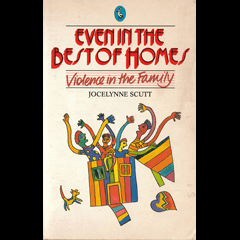
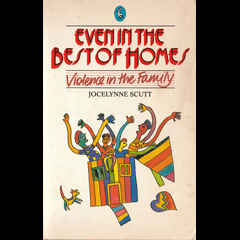
1983 Even in the best of homes

Even in the Best of Homes: Violence in the Family by Jocelynne Scutt, was a ground-breaking and influential book contributing to new and heightened awareness of the problem of violence in the family.

“The family has long been seen as a haven of help, comfort, affection and goodwill, shielded from a heartless world.  But too often, it is a façade concealing violence and abuse meted out by husbands to wives, and fathers (and sometimes mothers) to children.

Her study of Australian Families revealed the beating, rape and murder of wives, the bashing and sexual molestation of children – and the apathy of friends, family, doctors, police and the courts.  In any other situation, these acts of violence would be regarded as serious crimes, but because they occur within the family, usually in the privacy of the home, people are reluctant to ‘interfere’.  Jocelynne Scutt argued that the abuse will stop only when the laws to protect people are properly enforced, when women gain public and private autonomy, and when children are regarded as human beings, not property. (Source: Even in the Best of Homes: Violence in the Family)

Excerpts from Secret London

Kicking off on June 1, you can look forward to a typically excellent array of free artworks on display at the Southbank Centre; running all summer long. You Belong Here lets you amble along through the works of many artists, from the returning Appearing Rooms by Jeppe Hein to the new neon work of unity by Yinka Illori. Find out more about the free artwork this summer at the Southbank Centre here

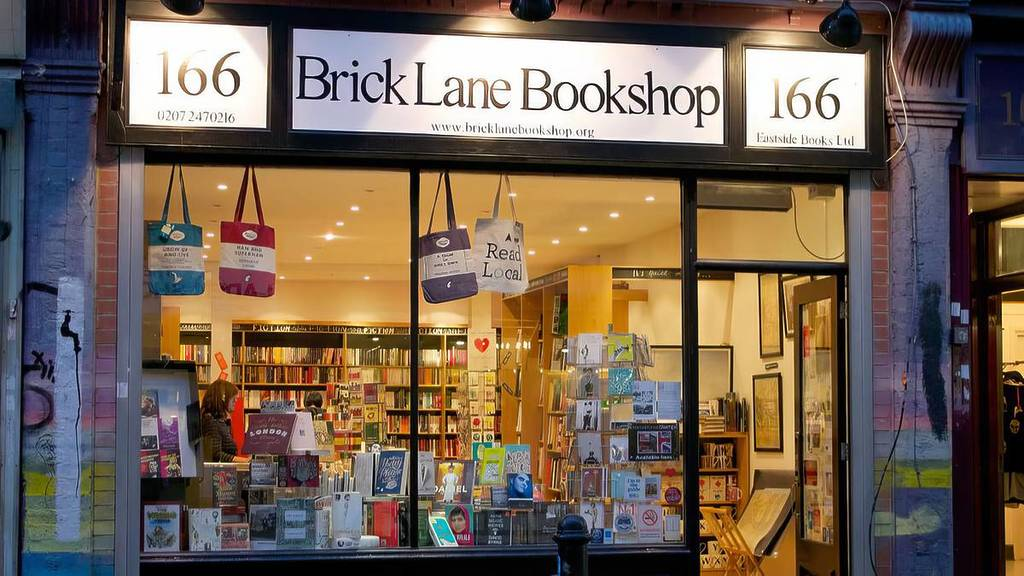
Catch the London leg of the Independent Bookshop Week running through the city from June 15-22. You can expect a roster of shops hosting events with authors throughout the week to celebrate the written word throughout the summer in London. Pop down to one between reading-in-the-park sessions during the sun-soaked time of year. Read more about the events here

Plan a quick day trip out of London

people rowing, and being rowed, down the river under the clare bridge - one of the best day trips near London
Credit: Shutterstock – Photo by chrisdorney

Look – we all love it here, but the furiously fast-paced city life is enough to grind down even the most hardened of Londoners. There are plenty of beautiful locations out there primed for a day trip out of the city. You’ll feel better for seeing somewhere new, or a familiar favourite, and, shockingly, London (your overpriced flat, your beloved housemates, and your local haunts) will still be there waiting for you when you get back.

Get your inspiration for a day trip to plan out of London here.

If logic is anything to go by, June should deliver some pretty great days for us. Logic, however, doesn’t always apply when it comes to the weather – it’s been a stop-start affair in 2024 so far. But, I’d wager that we will get at least one sunny weekend in the month of June — and escaping to a hidden beach near the city for a day out is a near-perfect way to welcome the warm season. Escape the city buzz with a wander at West Wittering, a bounce across Botany Bay, and a meander around Mersea Island to guarantee a fresh batch of high-grade summer endorphins.

Read our guide to the hidden beaches near London here.

Anyone on the lookout for a wholesome end to the month should make a beeline over to Stoke Newington on June 29-30 for an event bringing 70 established ceramic artists from across Europe to one space. You’ll find pretty cups, painted sculptures and plentiful pottery scattered all around this colourful market. Find out more at their event page.

It’s your last chance to visit the stunning world of the Delight exhibition, which is due to show for the last time in June before leaving its Borough Yards location. Explore the history of Seoul through the multi-sensory exhibition with authentic tales from 60 residents, and marvel at the stories told through art and technology. Find out more and book your spot here.

Sing your heart out in the great outdoors

Bearpit Karaoke is making a return to Vauxhall Pleasure Gardens for a stack of dates this summer. If you’re feeling brave enough you can take to the mic at the event hosted by Joe Hatchiban for your take on a classic tune, guilty pleasure, or a new pop banger. Plus, once you’ve exhausted your vocal cords, you can sit back and enjoy some of the brilliant street food from the vendors as the next singer takes centre stage. It’s also completely free, though you’ll need to pre-register to book your spot with the microphone.  Bearpit Karaoke’s session this month is on June 8, and you can find out more or book your spot here.

Try an ice cream topped with… caviar?

What do you get when you mix classy with chilly? Why, it’s the caviar ice cream, of course! Why has no one thought of this before? Chin Chin will be offering this up as a reimaging of the classic 99 flake, alongside their new frozen hot chocolate ice cream bar. You might be curious to try both, but if not, you can always try another of Chin Chin’s decadent offerings. Read more about Chin Chin here.

Tunnel down below for an immersive reenactment of the Gunpower Plot in London

Gunpowder Plot VR Swing
Image: Gunpowder Plot

This truly unique experience is taking place at Tower Vaults, as the Gunpower Plot Experience invites you to take part in the exhilarating world of one of London’s most infamous of tales. Get those cloaks on and get ready for an hour and 40 minutes of drama and deceit. Once you’ve played out this piece of history with the help of live and virtual actors, you can relax with a drink at the themed bar. Find ou more and book your place here

Enjoy a soothing concert by candlelight

The interiors of Southwark Cathedral during a Candlelight concert
Candlelight at Southwark Cathedral.

Sway back and forth to the sounds of your favourite artist or movie soundtrack with a candlelight background this month. After a day in the sun, there’s no better way to end the day than with an enchanting concert that’s all lit up. There might even be a chance to get a taste of even more Taylor Swift music this month as the Eras Tour comes to town.

Candlelight: A Tribute to Taylor Swift at Southwark Cathedral (June 22)

Candlelight: A Tribute to Adele at St. Mary’s Church (June 29)

Candlelight: A Tribute to Ed Sheeran at St. Mary’s Church (June 29)

A life changer Tom Watson <tomwatsonofficial@substack.com> 

A Tribute to Dr Michael Mosley

In 2017, I found myself morbidly obese, grappling with type 2 diabetes, and staring down the barrel of an early demise. During this dark period, I encountered the transformative work of Dr Michael Mosley. Initially encountered through a Kindle, his writings on ultra-low-calorie diets were revelatory. I devoured his book and meticulously read every scientific paper he referenced in his footnotes, forwarding all this research to my GP, Dr Nazeer.

Dr Mosley’s writing stood out for its simplicity and clarity, presenting radical ideas grounded firmly in science. Amidst the public health debates dominated by orthodoxy and industry interests, he remained unassailable because he never strayed from empirical evidence. His approach not only challenged conventional wisdom but also provided a beacon of hope for many like myself.

I had the privilege of meeting Dr Mosley once, and he was exactly as I imagined: gentle, kind, and exceedingly generous. He endorsed my book, Downsizing, and his praise was heartfelt. He noted that my personal journey, extensively quoting his work, had the potential to help countless others. This endorsement was not just a professional courtesy but a testament to his genuine desire to support others.

Regrettably, my last exchange with him haunts me. He had invited me to London to be interviewed for a programme he was making. At the time, overwhelmed by a bereavement, I failed to respond. The guilt of this unacknowledged generosity weighs heavily on me, especially now that it is too late to apologise. This missed opportunity is a profound regret, a moment lost in the chaos of life that can never be reclaimed.

Dr Mosley was not just a public figure but a revered mentor to many who transformed their lives through his guidance. In our community, he was a trusted voice, a symbol of hope and scientific integrity. His passing feels like the loss of a close friend, a sentiment undoubtedly shared by thousands. Tributes have poured in from around the world, underscoring his impact. Many have shared stories of personal transformation inspired by his work.

Dr Mosley’s influence extended beyond his books. His Radio 4 series Just One Thing reached millions, offering simple, scientifically-backed health tips. His final social media post, poignantly shared just a day before his disappearance, encapsulated his life’s mission to improve public health with accessible advice. He wrote: “If time is tight, what’s the one thing that you should be doing to improve your health and wellbeing? In my Just One Thing series with @bbcradio4, I explore the surprisingly simple top tips that are scientifically proven to change your life”​

After my recent cancer treatment, I regained weight, but I’m on the path of shedding it again, albeit more slowly. Revisiting Dr Mosley’s Fast 800 Keto and The Fast Diet books, I hear his encouraging voice, gently urging me forward. His influence remains in my ongoing health journey.

God bless you, Michael. You are already deeply missed.

Cindy Lou eats in Singapore airport

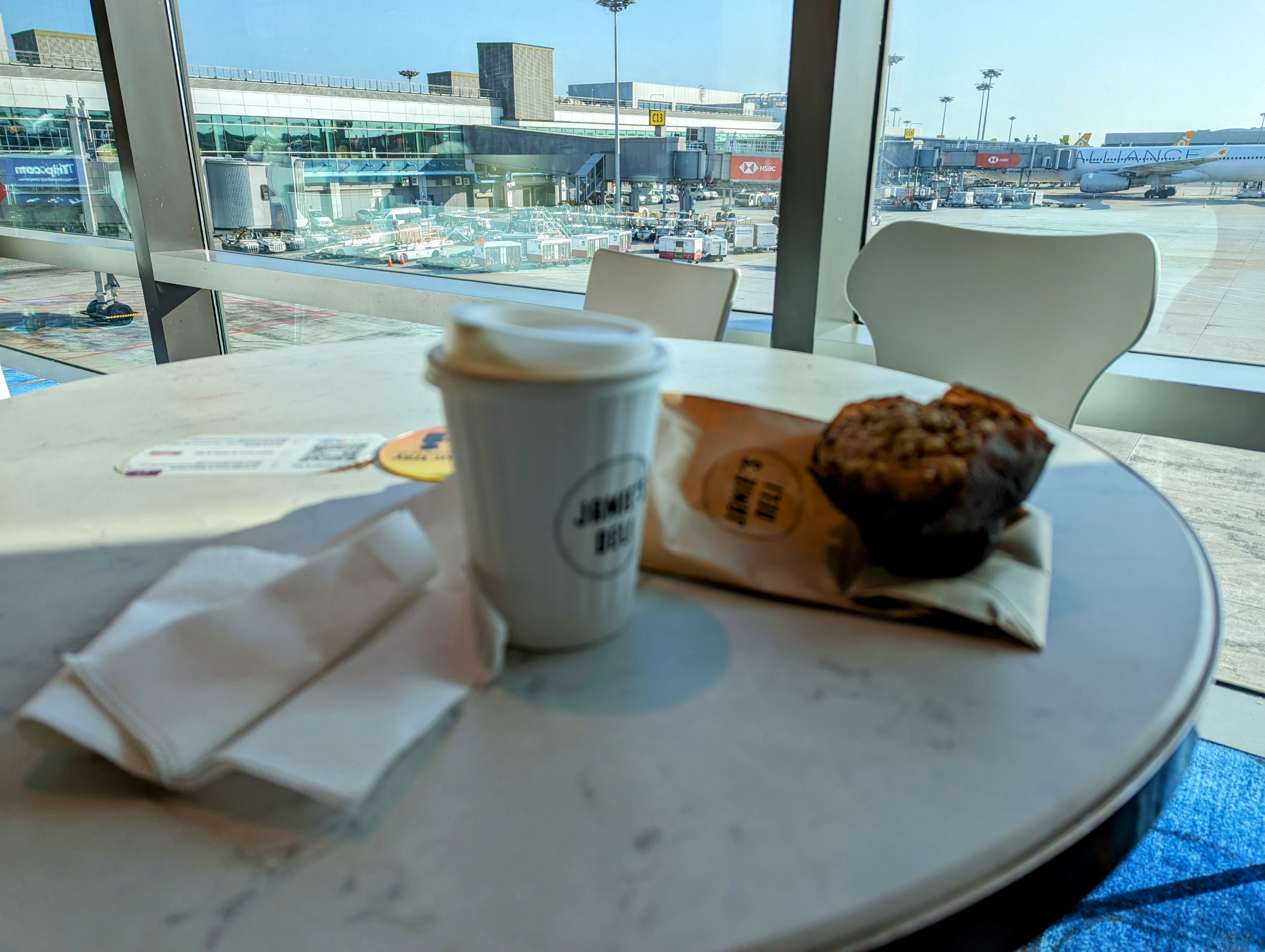
I chose to eat at Jamie Oliver’s Deli where I could sit looking out, and in the sun. The coffee was good, but the banana and walnut muffin was disappointing.


The Aerotel, transit hotel, provides rooms with bathrooms, very comfortable beds, space, a kettle and teabags/coffee (but alas ‘creamer’) and a meal. There is a pool nearby. The Aerotel can be booked for up to 24 hours, starting when your plane arrives at Changi. The meal was reasonable, but the coffee I made was awful!

This is chicken with peanuts, tomato and cucumber, with saffron rice and a chili sauce.

Butterfly Garden Changi Airport

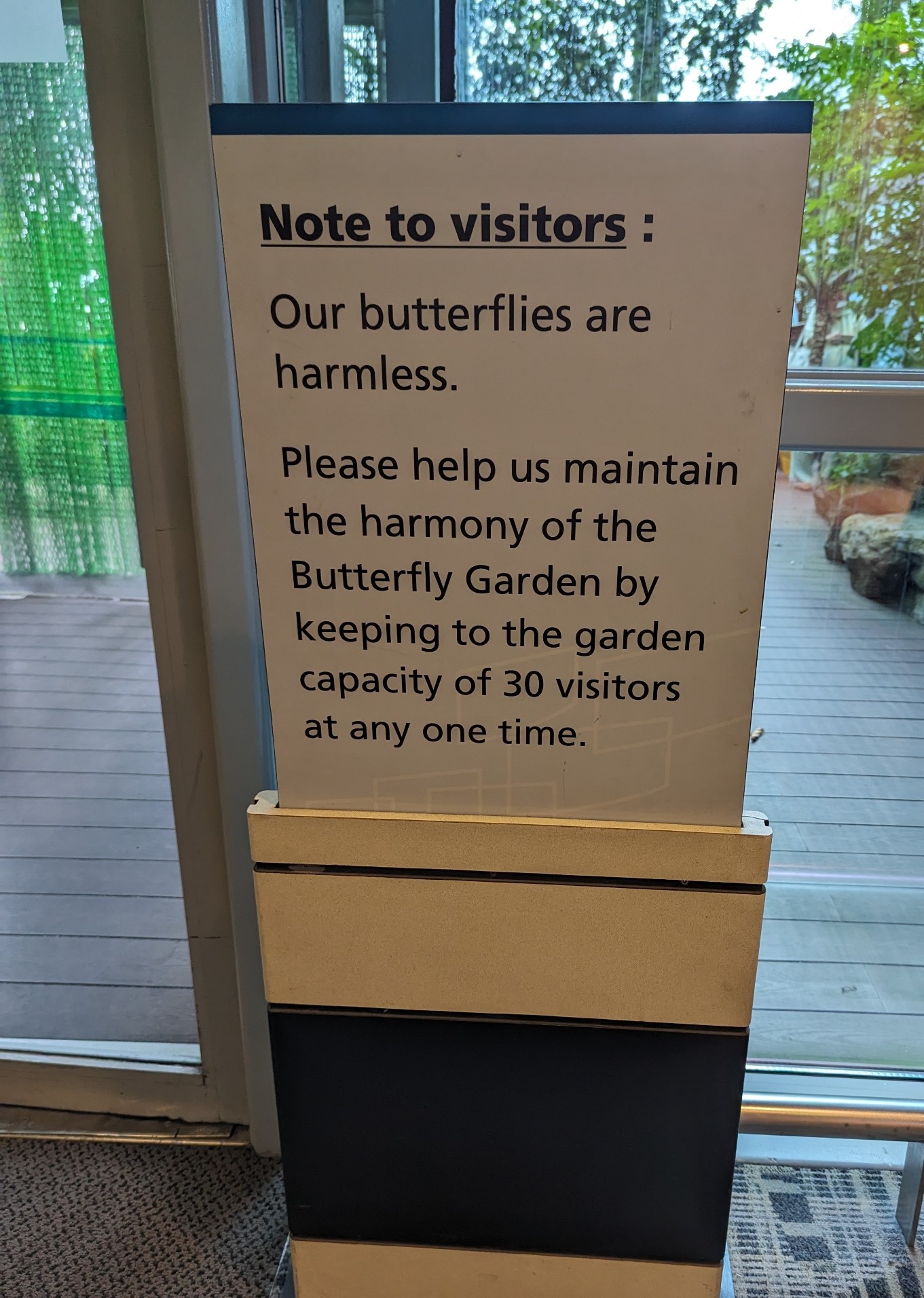
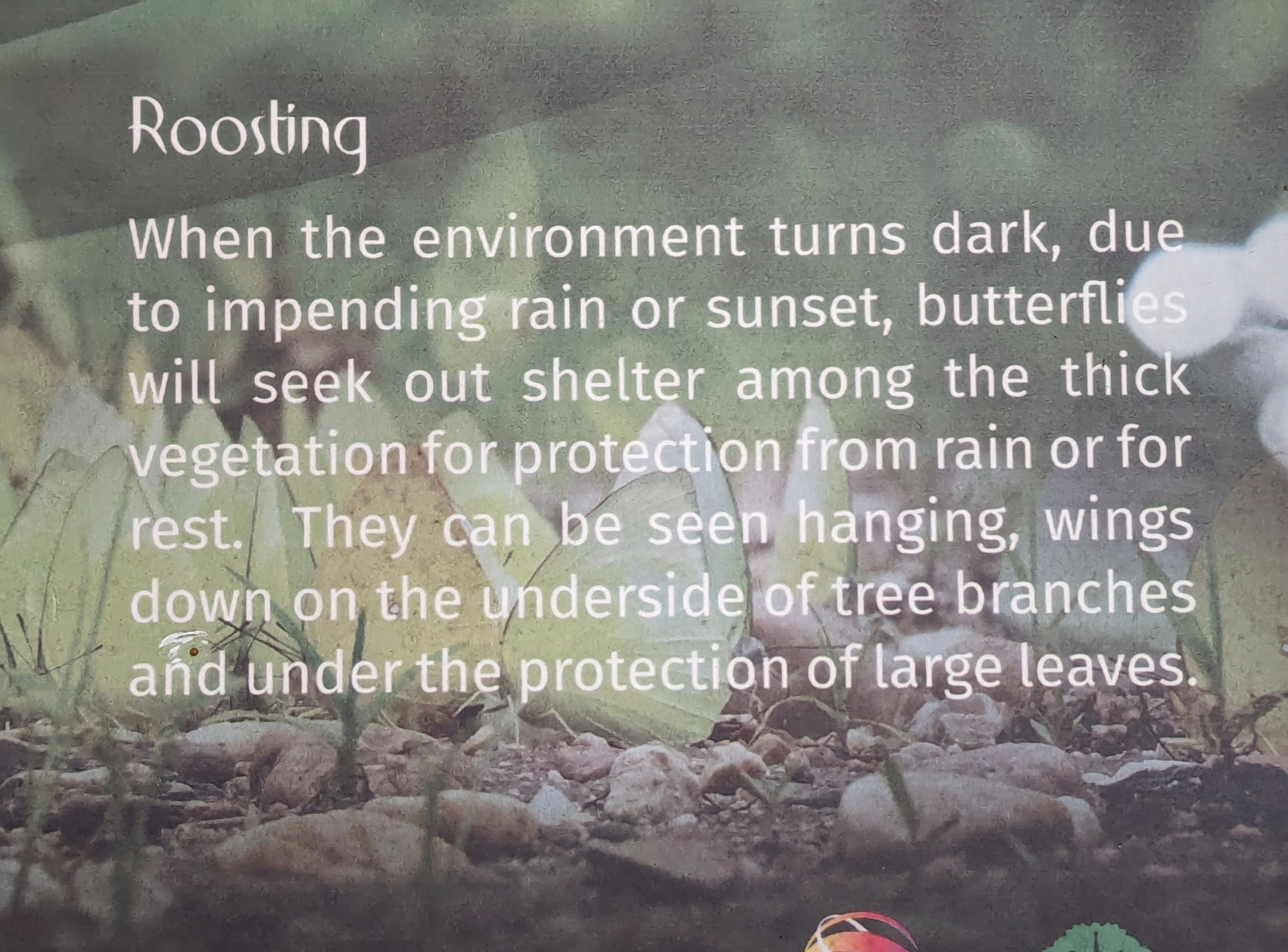
The garden is small, but a delight to visit. There was a variety of butterflies and attractive foliage, as well as information. l found this garden a calming environment, and plan to visit if I have the time, on future occasions. It is at Terminal 3, a short train ride from Terminal 1 where Qantas arrives.


Week beginning 5 June 2024

Zöe Wheddon Jane Austen: Daddy’s Girl, The Life and Influence of The Revd George Austen Pen & Sword Pen & Sword History, March 2024.

Thank you NetGalley and Pen & Sword for providing me with this uncorrected proof for review.

A significant part of Jane Austen’s life has been omitted in the concentration on her relationship with her sister Cassandra. Such attention has been successful in showing Jane as a woman influenced by her own female friendships and then reflecting them in her work. Jane Austen: Daddy’s Girl, The Life and Influence of the Revd  George Austen adds another important dimension to the influences on Austen’s writing, not only proving a detailed account of George Austen’s life from his early years but in the impact he had on Austen’s depiction of men, the social environment and moral imperatives with which her work is imbued, and the educational and inspirational environment in which she thrived.

Not only is this book a valuable addition to what is known about Austen and her writing, but it is a wonderful read. Packed with information it is, but a turgid recounting of events it is not. As is usual with the Pen & Sword style Zöe Weddon’s writing is extremely accessible. The book is entertaining to read and enhanced by frequent references to where Jane’s life and the influences upon it are reflected in her novels. Titles are in brackets and the text often elaborates on the connections she made between real life and fiction. See Books: Reviews for the complete review.

June Woolerton The Mysterious Death of Katherine Parr What Really Happened to Henry VIII’s Last Queen? Pen & Sword Pen & Sword History, March 2024.

Thank you, Net Galley and Pen & Sword, for providing me with this uncorrected proof for review.

June Woolerton begins her book with the dramatic events around the original uncovering of Katherine Parr’s coffin, its neglect over time, and the eventual burial that was worthy of a queen. For, indeed, Katherine Parr was a queen, even after her marriage to Thomas Seymour, as an outcome of Henry Vlll’s will, preserving this honour. It might be the power that she could possibly have exerted after Henry’s death, her departure from the court and new marriage that resulted in her death, hasty burial and the lack of publicity afforded her funeral. Woolerton attempts to unravel whether this was the case in a well-researched narrative that moves from these dramatic, almost gossipy speculations to the new marriage and birth of her daughter, and then returns to the past where Katherine has been an almost continuing presence in the Tudor courts,  as the child of a Lady in Waiting to Catherine of Aragon, to a Lady in Waiting herself. Two earlier marriages seem to have had little impact on Parr’s ability to wield her own power. Eventually, as Woolerton suggests, such power might have been her undoing. See Books: Reviews for the complete review.

After Covid in Canberra update: Guilty verdict for former president Trump; Tristan Snell – review of his book, Taking Down Trump; two Letters from an American, Heather Cox Richardson; Dying with Dignity.

Covid in Canberra Update 24th to 30th May 2024

There have been 252,920 cases since March 2020. New cases this week (PCR only) number 242, of whom 67 are in hospital. No cases are in ICU and there were none ventilated. There were 4 lives lost in this period, bringing the total number of lives lost to Covid in Canberra to 316. Case number reporting for influenza and RSV will commence on Friday, 7th June .


Guilty

It is worth repeating my review of Tristan Snell’s book which makes so clear the courage of the Jurors, Judge, witnesses for the prosecution and prosecution lawyers who made the above headline possible. Lawrence O’Donnell made his viewers feel that they were in the court as the 34 guilty verdicts were enunciated. A good show by Lawrence, and the following, although initially reviewed for my November 26, 2023 blog, is a good read in relation to this successful prosecution.

Tristan Snell, Taking Down Trump 12 Rules for Prosecuting Donald Trump by Someone Who Did It Successfully, Melville House Publishing Melville House, January 2024.

Thank you, NetGalley, for providing me with this uncorrected proof for review.

As I read the headlines about former president Donald Trump fulminating against the courts, the cases in the courts and the personnel involved, the impact it has on his followers and the death threats to judges and court officials I am pleased to be reading Tristan Snell’s optimistic approach to a similar situation in his book, Taking Down Trump.

Snell was the Assistant Attorney General for New York who prosecuted Donald Trump for defrauding Trump University students in 2018. He also refers to the limited egregiously limited success in an earlier case where systematic racial discrimination prevented Black Americans becoming tenants in apartments owned by Trump. Partial success won (although the students did win back most of their fees under the $25 million settlement made by Trump despite his protestations that he would not settle) is less than those who challenged him deserved. However, Snell’s account of the obstacles facing anyone encountering Donald Trump in an attempt to win a legal case is instructive – surmounting the challenges in the Trump playbook is not a given. It takes honesty, resilience, courage and knowledge of the law. Snell had all of these. The judges and officials now under fire from Trump are in this situation because they also have these qualities.

As Snell suggests, it is not unusual for the Trump to benefit from those in power, including from the role of donations in the success of those standing for office, filing his own countersuits and attacking witnesses and lawyers opposed to them…familiar? The twelve rules Snell proposes demonstrate the familiarity of this conduct, and other ways in which Trump outmanoeuvres the law, while stating clearly how to overcome such obstacles. The first rule is that the leadership in a case involving Trump must be determined and committed, from the top. In addition, political incentives in favour of intervention need to be tilted in favour of doing so. Part 11 covers the rules needed to ensure that the investigation proceeds. One chapter title that will be familiar to those who follow American politics, is ‘Trump is incapable of being quiet’. Part 111 offers advice about being public about the case, ensuring it is flawless; and advice to ignore the noise and Trump’s hostile reactions. In short, to achieve any modicum of success, those challenging Trump must maintain control over their counterreactions.

The Epilogue recognises the concerns expressed by observers, provides some information about the way in which current cases demonstrate an awareness of the Trump playbook and methods of dealing with this behaviour and also notes some of the mistakes Trump’s lawyers have made. Here the time taken to bring cases forward is dissected briefly – suggesting that delays have included prosecutors’ need to familiarise themselves with the Trump pattern of dealing with litigation.

This is an important book, offering as it does some optimism about the way in which the law might eventually treat such a powerful person. It is also easy to read. Partly this is because the information is so provocative, but also because of the way in which Snell makes his case – clearly and succinctly, while providing plenty of information for the non-legal reader to understand. Taking Down Trump is a timely book, and well worth reading.

Heather Cox Richardson Letters from an American<heathercoxrichardson@substack.com> 

Today felt as if there was a collective inward breath as people tried to figure out what yesterday’s jury verdict means for the upcoming 2024 election. The jury decided that former president Trump created fraudulent business records in order to illegally influence the 2016 election. As of yesterday, the presumptive Republican nominee for president of the United States of America is a convicted felon. 

Since the verdict, Trump and his supporters have worked very hard to spin the conviction as a good thing for his campaign, but those arguments sound like a desperate attempt to shape a narrative that is spinning out of their control. Newspapers all over the country bore the word “GUILTY” in their headlines today.

At stake for Trump is the Republican presidential nomination. Getting it would pave his way to the presidency, which offers him financial gain and the ability to short-circuit the federal prosecutions that observers say are even tighter cases than the state case in which a jury quickly and unanimously found him guilty yesterday. Not getting it leaves Trump and the MAGA supporters who helped him try to steal the 2020 presidential election at the mercy of the American justice system.  

After last night’s verdict, Trump went to the cameras and tried to establish that the nomination remains his, asserting that voters would vindicate him on November 5. But this morning, as he followed up last night’s comments, he did himself no favors. He billed the event as a “press conference,” but delivered what Michael Grynbaum of the New York Times described as “a rambling and misleading speech,” so full of grievance and unhinged that the networks except the Fox News Channel cut away from it as he attacked trial witnesses, called Judge Merchan “the devil,” and falsely accused President Joe Biden of pushing his prosecution. He took no questions from the press.

Today the Trump campaign told reporters it raised $34.8 million from small-dollar donors in the hours after the guilty verdict, but observers pointed out there was no reason to believe those numbers based on statements from Trump’s campaign. Meanwhile, Trump advisor Stephen Miller shouted on the Fox News Channel that every Republican secretary of state, state attorney general, donor, member of Congress must use their power “RIGHT NOW” to “beat these Communists!” 

The attempt of MAGA lawmakers to shape events in their favor seemed just as panicked. Representative Jim Banks (R-IN) posted on social media that “New York is a liberal sh*t hole,” and Jim Jordan (R-OH) today asked Manhattan district attorney Alvin Bragg, who brought the case against Trump, to testify before the House Judiciary’s Select Subcommittee on the Weaponization of the Federal Government about “politically motivated prosecutions of…President Donald Trump.” Representative Dan Goldman (D-NY) noted that Trump is a private citizen and Congress has no jurisdiction over the case, but that Jordan is using his congressional authority illegally to defend Trump. 

MAGA senators were even more strident. Republican senator Mike Lee of Utah melted down on X last night over the verdict, and today he led nine other Republican senators in a revolt against the federal government. Lee, J. D. Vance of Ohio, Tommy Tuberville of Alabama, Eric Schmitt of Missouri, Marsha Blackburn of Tennessee, Rick Scott of Florida, Roger Marshall of Kansas, Marco Rubio of Florida, Josh Hawley of Missouri, and Ron Johnson of Wisconsin issued a public letter saying they would no longer pass legislation, fund the government, or vote to confirm the administration’s appointees because, they said, “[t]he White House has made a mockery of the rule of law and fundamentally altered our politics in un-American ways. As a Senate Republican conference,” they said, although there were only 10 of them, “we are unwilling to aid and abet this White House in its project to tear this country apart.” 

It was an odd statement seemingly designed to use disinformation to convince voters to stick with them. Ten senators said they would not do the federal jobs they were elected to do because private citizen Trump was convicted in a state court by a jury of 12 people in New York, a jury that Trump’s lawyers had agreed to. The senators attacked the rule of law and the operation of the federal government in a demonstration of support for Trump. A number of the senators involved were key players in the attempt to overturn the 2020 presidential election. 

Awkwardly, considering the day’s news, a video from 2016 circulated today in which Trump insisted that Democratic presidential candidate Hillary Clinton, who he falsely insisted had committed crimes even as he was the one actually committing them, “shouldn’t be allowed to run.” If she were to win, Trump then said, “it would create an unprecedented constitutional crisis. In that situation, we could very well have a sitting president under felony indictment and, ultimately, a criminal trial. It would grind government to a halt.” 

Josh Marshall of Talking Points Memo put it correctly: this is not an “outpouring of rage and anger,” so much as “an overwhelming effort to match and muffle the earthquake of what happened yesterday afternoon with enough noise and choreography to keep everyone in Trump’s campaign and on the margins of it in line and on side.”

Still, there is more behind the MAGA support for Trump than fearful political messaging. Trump has been hailed as a savior by his supporters because he promises to smash through the laws and norms of American democracy to put them into power. There, they can assert their will over the rest of us, achieving the social and religious control they cannot achieve through democratic means because they cannot win the popular vote in a free and fair election. With Trump’s conviction within the legal system, his supporters are more determined than ever to destroy the rules that block them from imposing their will on the rest of us. 

Today the Federalist Society, which is now aligned with Victor Orbán’s Hungary, flew an upside-down U.S. flag as a signal of national distress. Their actions were in keeping with Russian president Vladimir Putin’s statement that Trump is being persecuted “for political reasons” and that the cases show “the rottenness of the American political system, which cannot pretend to teach others about democracy.”

Ryan J. Reilly of NBC News reported today on a spike in violent rhetoric on social media targeting New York judge Juan Merchan, who oversaw Trump’s Manhattan election interference trial, and District Attorney Bragg. Users of a fringe internet message board also shared what they claimed were the addresses of jurors. “Dox the Jurors. Dox them now,” one user wrote. Another wrote, “1,000,000 men (armed) need to go to [W]ashington and hang everyone. That’s the only solution.”

This attack on our democracy was the central message of a crucially important story from yesterday that got buried under the news of Trump’s conviction. In The New Republic, Ken Silverstein reported on a private WhatsApp group started last December by military contractor Erik Prince—founder of Blackwater and brother of Trump’s secretary of education, Betsy DeVos—and including about 650 wealthy and well-connected “right-wing government officials, intelligence operatives, arms traffickers, and journalists,” including Representative Ryan Zinke (R-MT), who served as Trump’s secretary of the interior. 

Called “Off Leash,” the group discussed, as Silverstein wrote, “the shortcomings of democracy that invariably resulted from extending the franchise to ordinary citizens, who are easily manipulated by Marxists and populists,” collapsing Gaza into a “fiery hell pit,” wiping out Iran, how Africa was a “sh*thole of a continent,” and ways to dominate the globe. Mostly, though, they discussed the danger of letting everyone vote. “There is only one path forward,” Zinke wrote. “Elect Trump.” Another member answered, “It’s Trump or Revolution” “You mean Trump AND Revolution,” wrote another. 

And yet the frantic MAGA spin on the verdict reveals that there is another way to interpret it. Americans who had lost faith that the justice system could ever hold a powerful man accountable as Trump’s lawyers managed to put off his many indictments see the verdict as a welcome sign that the system still works. 

“The American principle that no one is above the law was reaffirmed,” Biden said today. “Donald Trump was given every opportunity to defend himself. It was a state case, not a federal case. And it was heard by a jury of 12 citizens, 12 Americans, 12 people like you. Like millions of Americans who served on juries, this jury is chosen the same way every jury in America is chosen. It was a process that Donald Trump’s attorney was part of. The jury heard five weeks of evidence…. After careful deliberation, the jury reached a unanimous verdict. They found Donald Trump guilty on all 34 felony counts. Now he’ll be given the opportunity as he should to appeal that decision just like everyone else has that opportunity. That’s how the American system of justice works. And it’s reckless, it’s dangerous, and it’s irresponsible for anyone to say this was rigged just because they don’t like the verdict. Our justice system has endured for nearly 250 years and it literally is the cornerstone of America…. The justice system should be respected, and we should never allow anyone to tear it down. It’s as simple as that. That’s America. That’s who we are. And that’s who we will always be, God willing.”

Today the publisher of Dinesh D’Souza’s book and film 2000 Mules, which alleged voter fraud in the 2020 election, said it was pulling both the book and film from distribution and issued an apology to a Georgia man who sued for defamation after 2000 Mules accused him of voting illegally.  

MAGA Republicans confidently predicted yesterday that the stock market would crash if the jury found Trump guilty. Today the Dow Jones Industrial Average gained almost 600 points.

Notes:

https://www.nbcnews.com/politics/donald-trump/trump-supporters-try-doxx-jurors-post-violent-threats-conviction-rcna154882; https://www.nytimes.com/2024/05/31/business/media/cnn-nbc-trump-speech.html; https://www.npr.org/2024/05/31/g-s1-2298/publisher-of-2000-mules-election-conspiracy-theory-film-issues-apology; https://www.politico.eu/article/charges-against-donald-trump-are-politically-motivated-vladimir-putin-says-russia-us/; https://talkingpointsmemo.com/edblog/owhat-trump-requires/sharetoken/hnWkPTYknWwi; https://newrepublic.com/article/182008/erik-prince-secret-global-group-chat-off-leash; https://www.reuters.com/world/us/trump-supporters-call-riots-violent-retribution-after-verdict-2024-05-31/; X:; TomDreisbach/status/1796634041749271001 ; clearing_fog/status/1796688610345079191; carlquintanilla/status/1796673529364074902; jkarsh/status/1796607730767262128; RepDanGoldman/status/1796645275739537822; AccountableGOP/status/1796553224293589011; RonFilipkowski/status/1796500340239695948; Jim_Banks/status/1796293183430705353; greggnunziata/status/1796668421725139139; bidenhq/status/1796598389213159514; SenMikeLee/status/1796600766691672394; SenMikeLee/status/1796650441545073147; RonFilipkowski/status/1796723924882919627

Another Letter from an American, Heather Cox Richardson, (June 1, 2024) in which she looks at the history of another egregious period in the republican Party and the courage required to stand against this scourge. This is a great story of a woman who stood against Senator Joe McCarthy in the 1950s.

Heather Cox Richardson Letters from an American<heathercoxrichardson@substack.com> 

Today, as MAGA Republicans attack the rule of law and promise to prosecute their political enemies if they get back into power, it’s easy to forget that once upon a time, certain Republican politicians championed reason and compromise and took a stand against MAGAs’ predecessors. On June 1, 1950, Senator Margaret Chase Smith, a Republican from Maine, stood up against Republican Senator Joe McCarthy of Wisconsin and his supporters, who were undermining American democracy in a crusade against “communism.” 

Margaret Chase was born in Skowhegan in 1897, the oldest child of a barber and a waitress, and became a teacher and a reporter before she got into politics through her husband, Clyde Smith, who was a state legislator and newspaperman. Soon after they married in 1930, she was elected to the Maine Republican State Committee and served until 1936, when Maine voters elected Clyde to Congress.

Once in Washington, Margaret worked as her husband’s researcher, speechwriter, and press secretary. When Clyde died of a heart attack in April 1940, voters elected Margaret to finish his term, then reelected her to Congress in her own right. They did so three more times, always with more than sixty percent of the vote. In 1948, they elected her to the Senate with a 71% majority.

When she was elected to Congress, the U.S. was still getting used to the New Deal government that Democratic president Franklin Delano Roosevelt had ushered in first to combat the Great Depression and then to fight for victory in World War II. Smith’s party was divided between those who thought the new system was a proper adjustment to the modern world and those determined to destroy that new government. 

Those who wanted to slash the government back to the form it had taken in the 1920s, when businessmen ran it, had a problem. American voters liked the business regulation, basic social safety net, and infrastructure construction of the new system. To combat that popularity, the anti–New Deal Republicans insisted that the U.S. government was sliding toward communism. With the success of the People’s Liberation Army and the declaration of the People’s Republic of China in October 1949, Americans were willing to entertain the idea that communism was spreading across the globe and would soon take over the U.S.

Republican politicians eager to reclaim control of the government for the first time since 1933 fanned the flames of that fear. On February 9, 1950, during a speech to a group gathered in Wheeling, West Virginia, to celebrate Abraham Lincoln’s birthday, an undistinguished senator from Wisconsin named Joe McCarthy claimed that he had a list of 205 communists working for the State Department and that the Democrats refused to investigate these “traitors in the government.” 

The anti–New Deal faction of the party jumped on board. Sympathetic newspapers trumpeted McCarthy’s charges—which kept changing, and for which he never offered proof—and his colleagues cheered him on, while congress members from the Republican faction that had signed onto the liberal consensus kept their heads down to avoid becoming the target of his attacks.

All but one of them did, that is. Senator Smith recognized the damage McCarthy and his ilk were doing to the nation. She had seen the effects of his behavior up close in Maine, where the faction of the Republican Party that supported McCarthy had supported the state’s Ku Klux Klan. Clyde and Margaret Chase Smith had taken a stand against them. 

On June 1, 1950, only four months after McCarthy made his infamous speech in Wheeling, Smith stood up in the Senate to make a short speech.

She began: “I would like to speak briefly and simply about a serious national condition. It is a national feeling of fear and frustration that could result in national suicide and the end of everything that we Americans hold dear…. I speak as a Republican, I speak as a woman. I speak as a United States senator. I speak as an American.”

Referring to Senator McCarthy, who was sitting two rows behind her, Senator Smith condemned the leaders in her party who were destroying lives with wild accusations. “Those of us who shout the loudest about Americanism in making character assassinations are all too frequently those who, by our own words and acts, ignore some of the basic principles of Americanism,” she pointed out. Americans have the right to criticize, to hold unpopular beliefs, to protest, and to think for themselves. But attacks that cost people their reputations and jobs were stifling these basic American principles. “Freedom of speech is not what it used to be in America,” Senator Smith said. “It has been so abused by some that it is not exercised by others.”

Senator Smith wanted a Republican victory in the upcoming elections, she explained, but to replace President Harry Truman’s Democratic administration—for which she had plenty of harsh words—with a Republican regime “that lacks political integrity or intellectual honesty would prove equally disastrous to this nation.”

“I do not want to see the Republican party ride to political victory on the Four Horsemen of Calumny—Fear, Ignorance, Bigotry, and Smear.”

“I doubt if the Republican party could do so,” she added, “simply because I do not believe the American people will uphold any political party that puts political exploitation above national interest. Surely we Republicans are not that desperate for victory.” 

“I do not want to see the Republican party win that way,” she said. “While it might be a fleeting victory for the Republican party, it would be a more lasting defeat for the American people. Surely it would ultimately be suicide for the Republican party and the two-party system that has protected our American liberties from the dictatorship of a one-party system.”

“As an American, I condemn a Republican Fascist just as much as I condemn a Democrat Communist,” she said. “They are equally dangerous to you and me and to our country. As an American, I want to see our nation recapture the strength and unity it once had when we fought the enemy instead of ourselves.”

Smith presented a “Declaration of Conscience,” listing five principles she hoped her party would adopt. It ended with a warning: “It is high time that we all stopped being tools and victims of totalitarian techniques—techniques that, if continued here unchecked, will surely end what we have come to cherish as the American way of life.”

Six other Republican senators signed onto Senator Smith’s declaration.

There were two reactions to the speech within the party. McCarthy sneered at “Snow White and the Six Dwarves.” Other Republicans quietly applauded Smith’s courage but refused to show similar courage themselves with public support. In the short term, Senator Smith’s voice was largely ignored in the public arena and then, when the Korean War broke out, forgotten.

But she was right. Four years later, the Senate condemned McCarthy. And while Senator Smith was later awarded the Presidential Medal of Freedom, McCarthy has gone down in history as a disgrace to the Senate and to the United States of America.

Notes:

Today is a historic day for Canberra.

After a decades-long fight by countless passionate advocates, the ACT Legislative Assembly has passed laws to allow residents of the ACT to access voluntary assisted dying.

This means, at long last, ACT residents can choose to die with dignity.

In December 2022, the Federal Parliament removed the legislation that for too long had blocked territories from determining what was best for their community on this matter and today the people have spoken.

This milestone has only been reached following the many years of tireless work by community and political advocates including Go Gentle Australia, Dying with Dignity ACT, and Doctors for Assisted Dying Choice.

I was proud to work closely alongside my Labor colleagues, both here in Canberra and up in the Northern Territory, over several years to progress a private member’s bill through the Federal Parliament to advocate for the return of the ACT’s democratic rights.

Until this bill passed, ACT residents were second-class citizens with fewer democratic rights than those who lived just over the border in Queanbeyan or Yass.

We fought for the rights of Canberrans and today’s vote in the ACT legislative Assembly has showcased what we can deliver for our community when we work together.

Together, we as a community have worked tirelessly to allow the ACT Legislative Assembly to determine its own laws, ones that reflect the needs and wants of our community. Together we have advocated for the right to have our voices heard and today, we, together, have succeeded in allowing for the residents of the ACT to be awarded the same right to choose voluntary assisted dying, as other states across Australia have done.

No matter what your personal views may be about the issue of voluntary assisted dying, today marks an important day for the democratic rights of the people of the ACT.

This shows the difference that Labor Governments can make.

Katy Gallagher
Senator for the Australian Capital Territory

Week beginning 29 May 2024

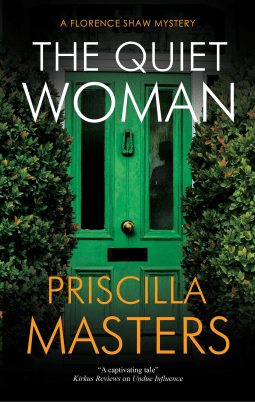
Priscilla Masters The Quiet Woman Book 2 of A Florence Shaw Mystery,  Severn House,  July 2024.

Thank you, Net Galley, for providing me with this uncorrected proof for review.

The Quiet Woman is an intriguing murder mystery in so many aspects –characterisation, plotting, pace and writing style. Nurse Florence Shaw is a quiet woman, herself, although the title refers to the woman who attends her surgery, the occasions accumulating with no answers, her husband’s irritation and coldness readily apparent, and Florence Shaw’s concerns tumbling throughout her mind as she goes about her other activities.

Dates and times are appended to most chapters so that Florence Shaw’s days hour by hour are accounted for. She wakes, dresses, has breakfast and leaves for work. There she interacts with the receptionists, sees her patients and exchanges warm conversation with Jalissa who brings her lunchtime sandwich. Later she investigates her former husband’s activities with his new partner on the net, or meets friends, one of whom she interacts with increasing frequency. Will and Florence share both an interest in detection and the possibilities of a romance as they spend time getting to know each other better. See Books: Reviews.

Mimi Zieman, MD Tap Dancing on Everest A Young Doctor’s Unlikely Adventure Globe Pequot Falcon Guides, April 2024.

Thank you, NetGalley, for providing me with this uncorrected proof for review.

Mimi Zieman makes an enduring tribute to her family, those who are living, and that of her father who was the only member of his family to survive the holocaust. Her zest for living, packing several significant activities into a short time, her capacity for friendship and love is the underlying theme that resonates through her coming to grips with her faults (as she sees them), her femaleness and propensity to underplay her abilities and the demands, physical and mental she imposes on herself.

Throughout this book an endearing person emerges, in the large figure she sees as herself in the earlier years, to the woman who climbs Mt Everest as a team doctor during her medical studies. Mimi Zieman is strong, thoughtful and not without faults – an ideal figure to follow from her childhood to her married life as a doctor, wife and mother. Paramount is the Mt Everest excursion, but tapdancing has an engaging role too, and her romances round out a character who has the ability to capture the heart of her readers. See Books: Reviews.

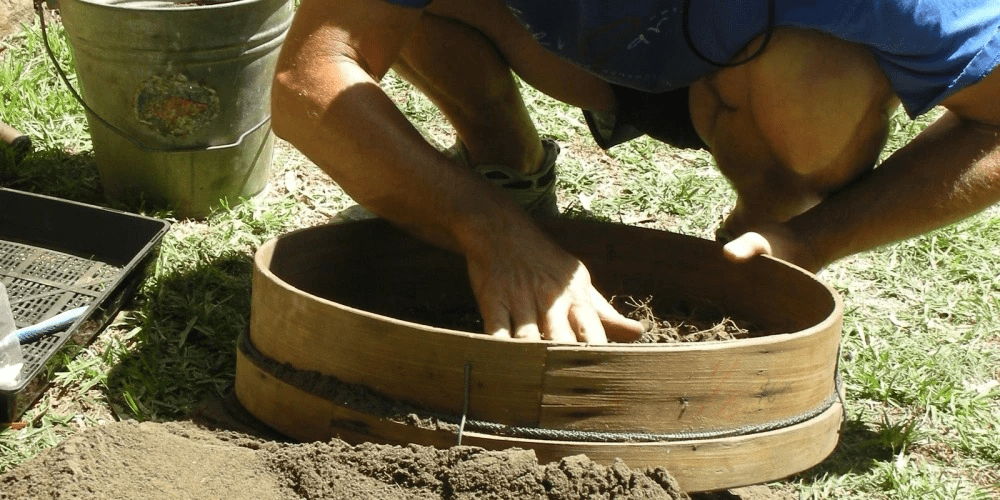
CMAG SYMPOSIUM: Backyard Archaeology

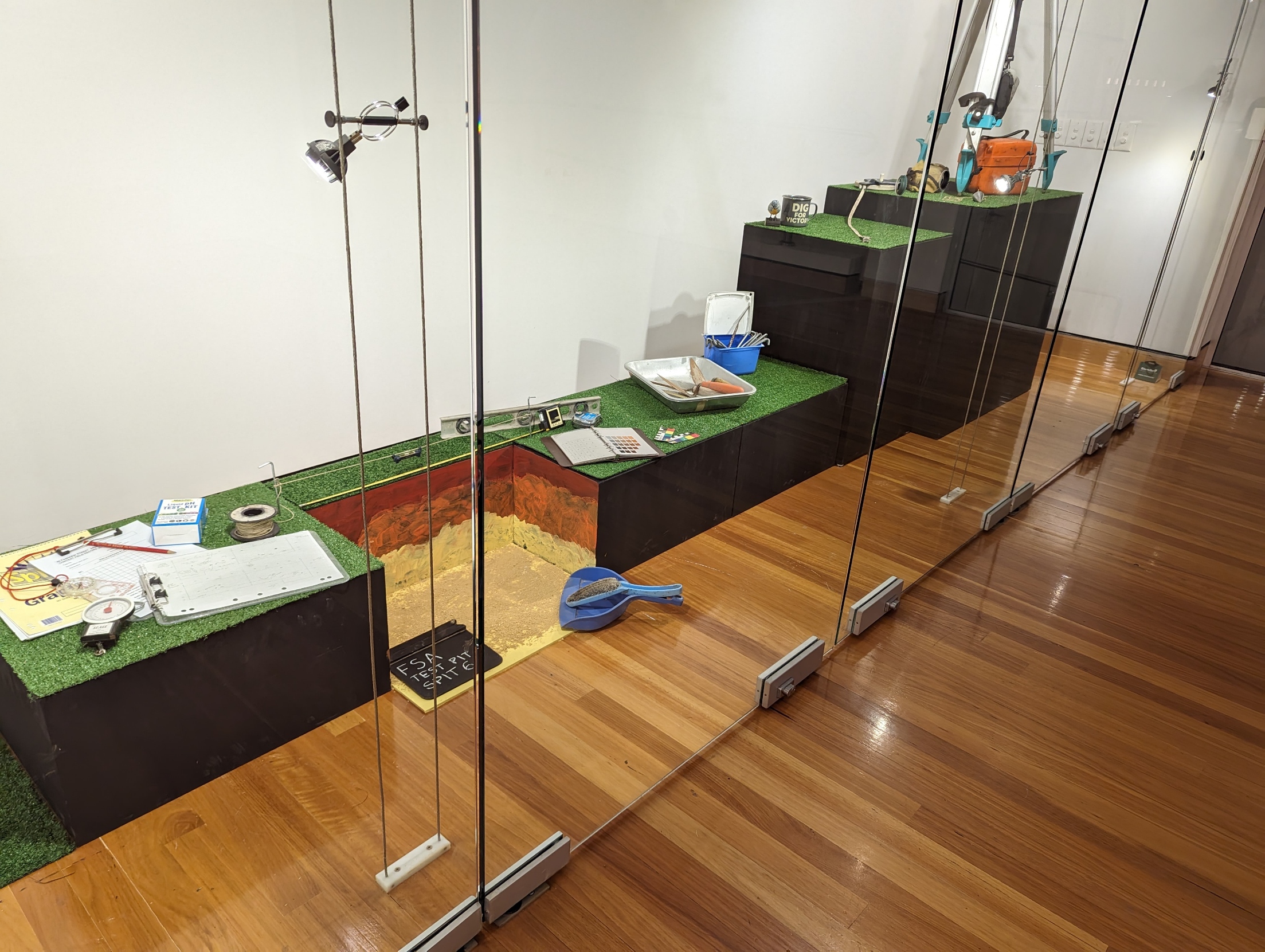
This symposium was held on the 25th of May and demonstrates the work undertaken by CMAG. As I had been to the exhibition, featured in last week’s blog, I would have liked to have been able to attend. However, I was away and can only imagine how interesting it must have been. It was aimed at a general audience, and included case studies from the ACT region and a panel discussion on the idea of ‘backyard archaeology – everyone can do it!’ 

The presentations were aimed at raising awareness of archaeology, history, and horticulture in local contexts and of personal importance (as opposed to the grand and the best). They showed how backyard studies can reveal and inspire stories of everyday life through found and excavated objects and nurtured gardens. 

It was suggested that the Symposium would appeal to people interested in family history research and creating place history narratives.

The presenters were Steve Brown (Backyard Archaeology), Martin Rowney (Backyard: Bricks), Nicola Hayes (Backyard Bunker), Doug Williams (Backyard Dunny), and Anne Claoue-Long (Backyard Garden).

The Symposium was supported by the Canberra Museum + Gallery, University of Canberra ‘Everyday Heritage Project’, and Australian Archaeological Association. It was a National Archaeology Week event.

SYMPOSIUM: Backyard Archaeology

Cindy Lou eats out in Melbourne

Green Refectory, Brunswick

Green Refectory warranted two visits in the short time I was in Melbourne. The coffee is good, the variety of sweet and savoury, large and small, hot and cold delicacies is amazing, and the ones I chose were delicious.

Green Refectory has an excellent system to inform the waitpeople where you are in the process of ordering, waiting and being served. Service is prompt and friendly, the seating is comfortable enough, and although crowded it is possible to hold a conversation.

Joy, Coburg

Another marvellous find for breakfast! We had cooked meals on this occasion, and they were, one and all, delicious, generous and exciting. As can be seen below, we began eating before I could take photos of the food before its elegant presentation was spoilt. The coffees were excellent. There is a lovely atmosphere, with indoor and outdoor seating.

Ciao Mama, Brunswick

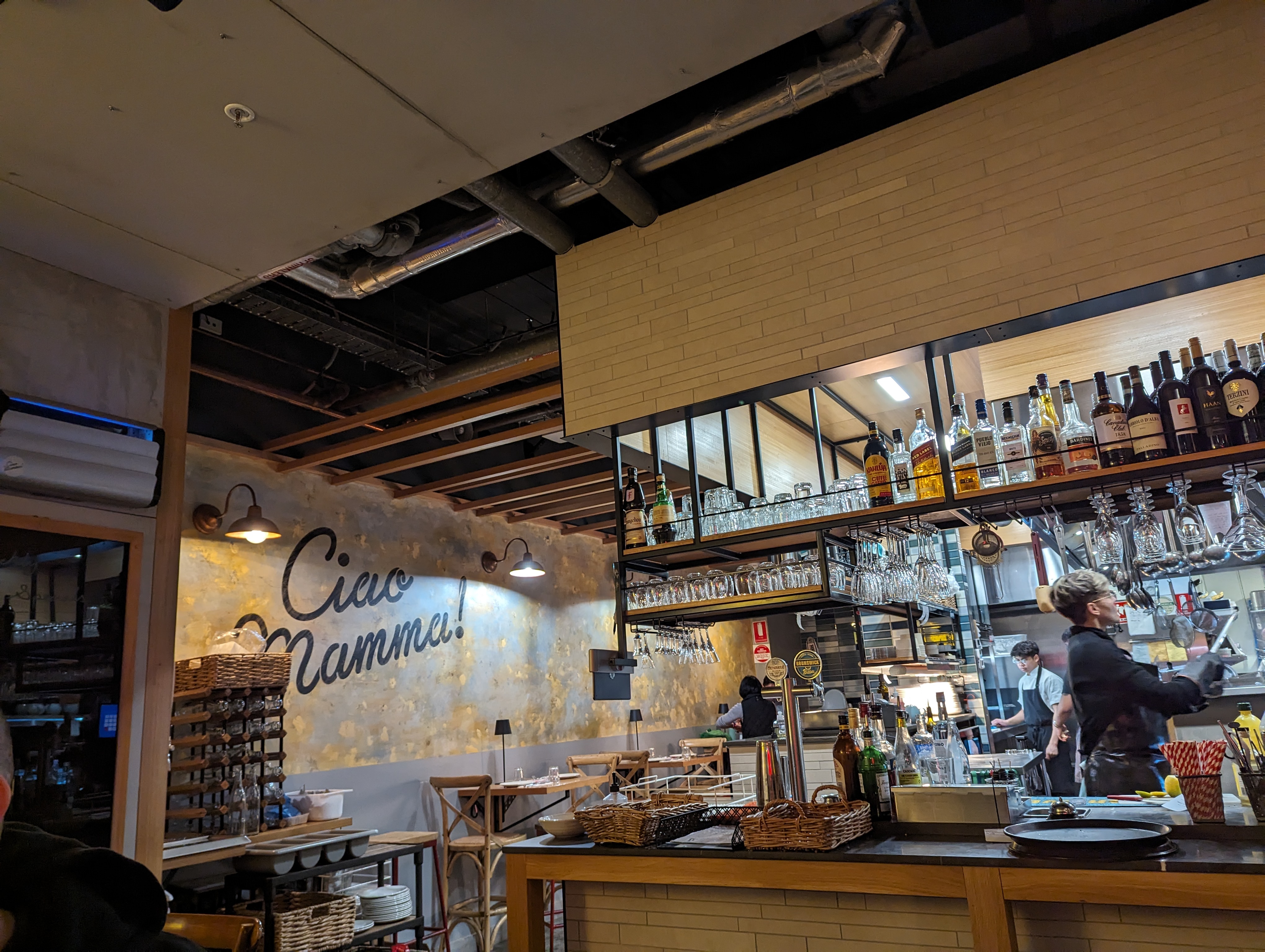
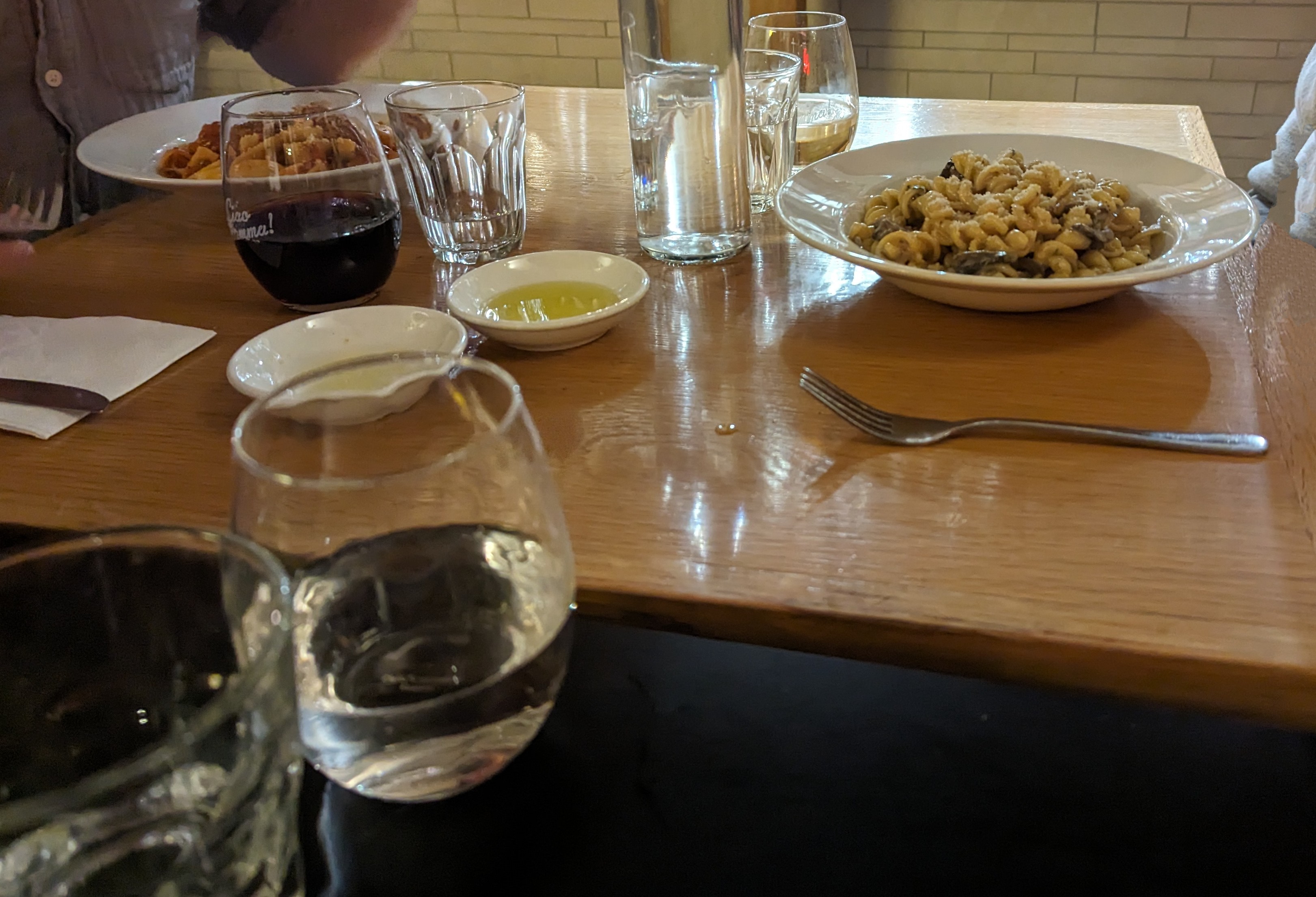
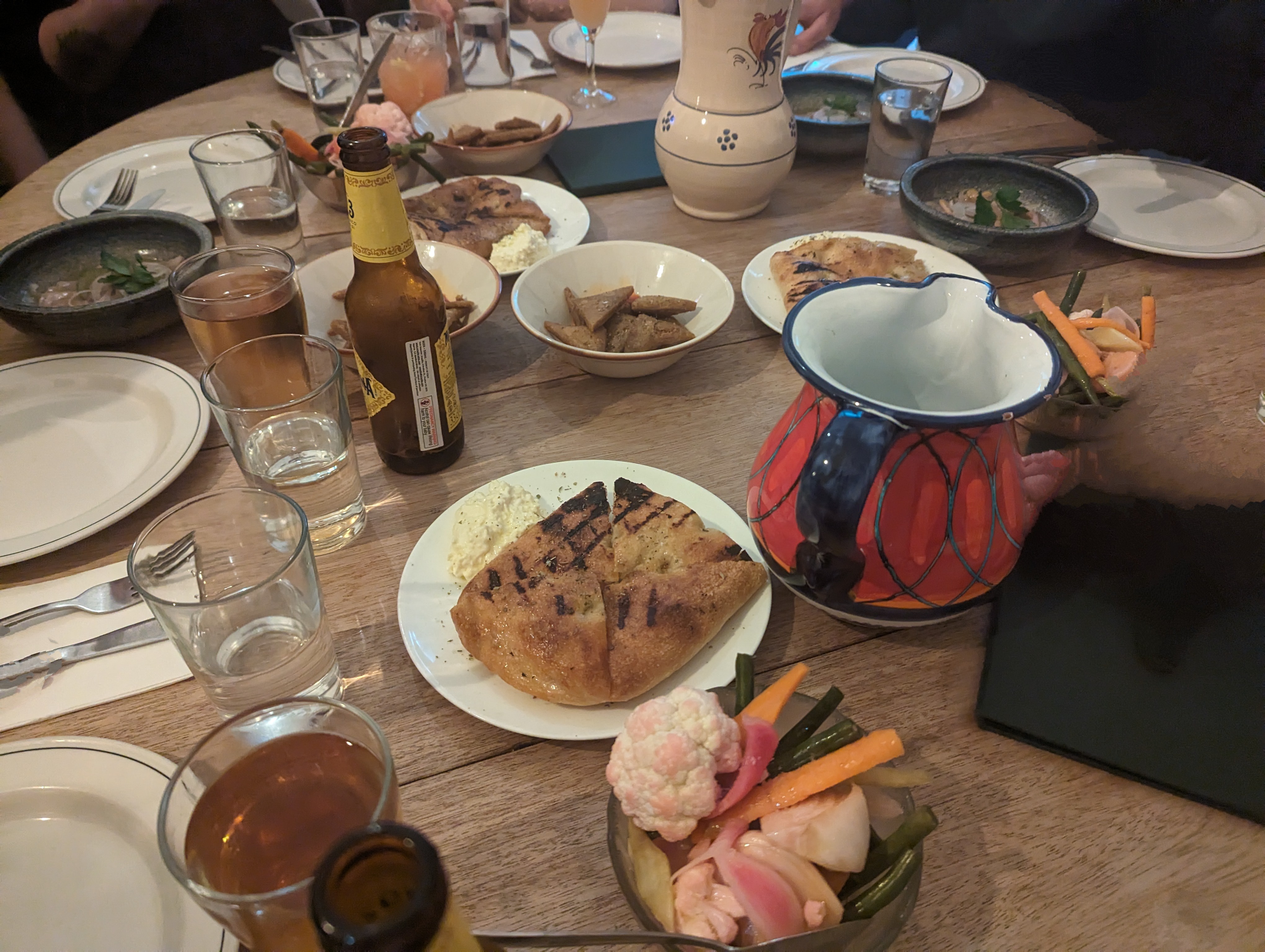
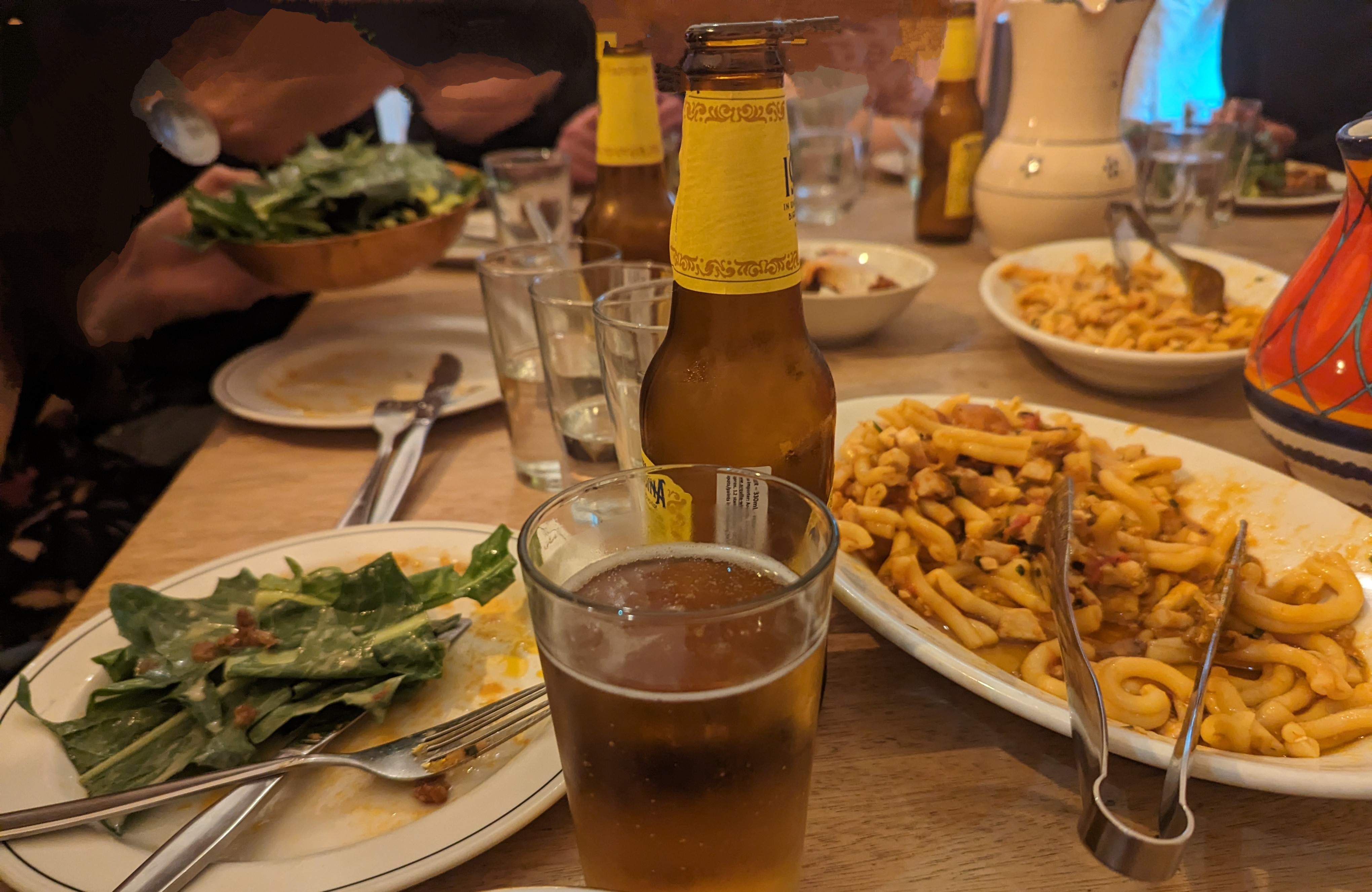
This is a pleasant enough pasta place, although its popularity makes it rather noisy. There is a choice of al dente pasta, types of pasta, and a variety of sauces. There is a good range of entrees. We enjoyed the huge green olives and warm bread with olive oil to start, and several different pastas. Unfortunately, the cannoli were not available for dessert, so we had to make do with ice-cream from the nearby ice-cream parlour.

Starbuck’s savoury pastries

A simple but pleasant start to a morning shop in Melbourne was a coffee and pastry at Starbucks. The savoury pastries – ricotta and spinach and bacon and cheese – were warmed and served promptly. I was able to ask the staff about the availability of a large flat white – something that Starbucks (and most other coffee shops in London) appear unable to accomplish. Australian baristas cam manage to make a very good one.

Bar Idda, Lygon Street

What a wonderful experience – food, staff, ambience and the company were a joy. As there was a large number of us, we had to have the set menu. However, we were able to make changes, and I did so. My request by email was answered promptly and a very satisfactory alternative was offered. When I had to increase the numbers, we were warned that the table was for 8 but if we were happy to squeeze in 10 could be accommodated. When we arrived the table and seating was excellent – I think that the staff had extended the table, even though that made it a little less easy for them to work around us. This friendliness and efficiency was the hallmark of an excellent night. The food was generous, varied and suited to fish eaters and non-fish eaters, meat eaters and non- meat eaters and vegetarians. Bar Idda is on my list of restaurants I must visit again.

Lui Boss, Korean, Brunswick

This is a cheerful restaurant, with a fairly extensive menu. To avoid the chili, I had the fried chicken – alas, the coleslaw accompaniment was smothered in sauce, which was such a pity, as unadorned it would have been fresh and crisp. The Hot Bap and Bolgogi Bap meals were a satisfying combination of meat, vegetables, noodles and a fried egg.

Australian TV drama ‘on the ropes’, ground-breaking study finds

Louise Talbot
May 28, 2024, updated May 28, 2024

Once upon a time in Australia, suburban lounge rooms were sacred ground for watching locally made dramas on free-to-air TV.

They featured our favourite stars delivering compelling and authentic Aussie storylines – a long-running home-grown TV drama or mini-series based on events in our nation’s history.

But an extensive study by Queensland University of Technology has found that Australian TV drama has nosedived in the past two decades. In fact, it’s “on the ropes”.

The four-year study found Australian television drama hours have plunged 55 per cent since their early 2000s peak – and the drama that is made is letting down the community thanks to “inadequate government policies”.

The days of families watching Australian TV drama at home has nosedived since the early 2000s. Photo: Getty

More investment, fewer returns

The study, titled Australian Television Drama’s Uncertain Future: How Cultural Policy is Failing Australians, found that although there has been an increase in federal government investment in TV drama, Australians are getting less back in return.

QUT researcher Professor Anna Potter said the failure of governments in dealing with the impact of digital technologies has led to a situation “in which corporate interests have been prioritised” over Australian culture and identity.

“Australians once enjoyed freely available, long-running series like Blue Heelers (Seven Network, 1994-2006), Water Rats (Nine Network, 1996-2001), and Offspring (Network Ten, 2010-17), as well as mini-series such as All the Rivers Run (Seven, 1983), The Dismissal (Ten, 1983), and Howzat! Kerry Packer’s War (Nine, 2012),” Potter said.

The reports says this is no longer the case and the Australian dramas we now see instead are increasingly not stories specific to our continent. See Television,Film and Popular Culture: Comments for the full article.

UK Election

Financial Review

This is one perspective on UK elections. Omitted are several features of UK elections that I observed while canvassing, standing outside polling booths, voting and celebrating Labour wins in Cambridge at Council and national level. In the introductory paragraph the writer mentions Labor and liberal staffers who have benefitted from experience in the British parties.

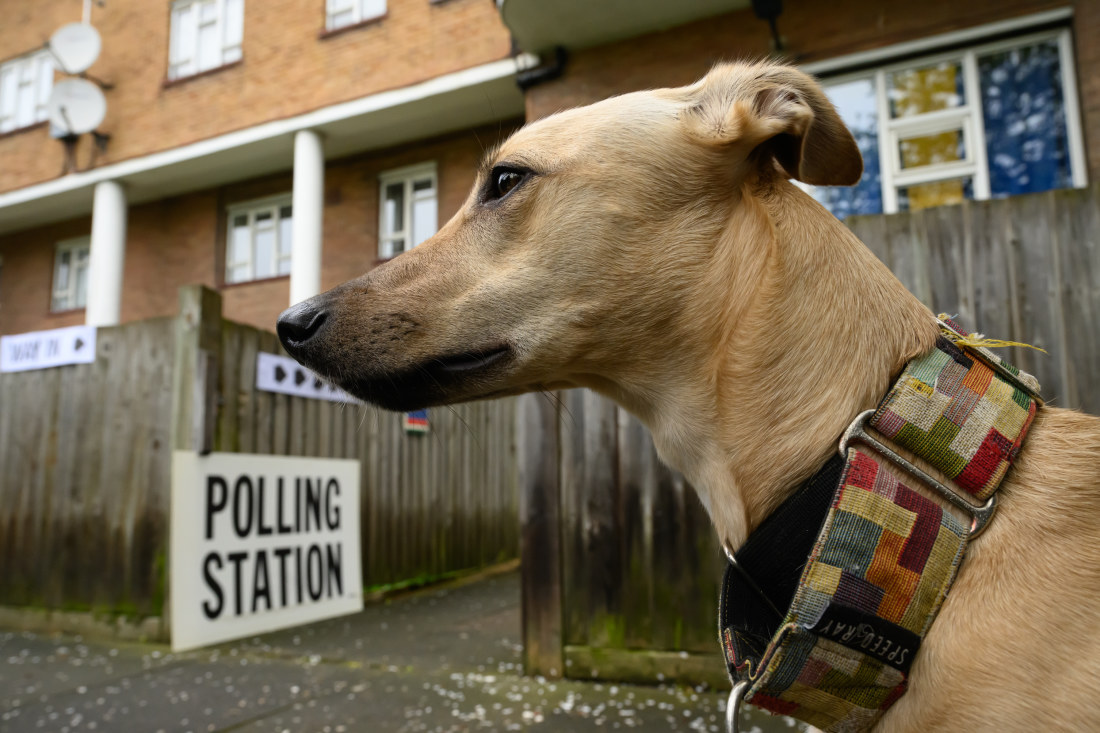
Although How to Vote cards are not part of the British electoral scene, the presence of party workers certainly is. This reflects one of the most important differences between the British and Australian systems. Compulsory voting means that the parties do not have to follow voters from canvassing them, deciding on who might be a voter for your party, ‘knocking up’ potential voters on election day, and providing the ‘scrum’ at the polling booths, checking whether potential voters have voted, keeping a record and arranging for those who have not voted to be followed up. Candidates visit polling booths in the same way that Australian candidates do. Political party representatives greet ‘their’ voters, exchange banter, and very happily take sustenance from party workers who bring around chocolates etc. The latter are necessary as it becomes darker and colder, and last-minute voters arrive. No, its certainly not the same as the Australian sausage sizzles, but voting day in the UK has a momentum of its own.

Proxy voting is a strange feature in some ways, but it is unlikely that a proxy voter would vote differently from the person for whom they proxy. In my experience, the Labour Party made the arrangements and trusted people would be proxy voters.

Canvassing every weekend, and sometimes during the week, snowing or not, is a distinct feature of the British electoral system. Voters are given the opportunity to talk to Party representatives, have their views heard and recorded, and hopefully (as far as the Party canvasser is concerned) give enough information about their preference. Many are keen to express their opinions and canvassing can be a delightful experience. I found it far easier to canvass in the UK than door knock in Australia! *

Five things about the UK election that would baffle Aussies

Politics in Australia and Britain look and feel similar. The big ideological cleavage between the major parties of right and left is comparable, and the two parliamentary systems are cut from the same cloth. There are plenty of Labor and Liberal staffers who have honed their craft inside the machine of their UK sister party.

This can lull Australian observers into assuming that everything in British politics works like it does at home. But similar does not mean identical.

In a first-past-the-post voting system, the parties don’t need to dish out how-to-vote cards, so there isn’t that familiar merry scrum between gate and door. Getty

There are a surprising number of ways in which a UK election differs markedly from an Australian one, requiring a distinct set of priorities, tactics and strategies. Here are the top five, in ascending order of importance (stay with us, the serious ones are at the bottom).

1. Voting is on a Thursday – and you don’t get the day off

What, no sausage sizzle? Can you even imagine that? No wonder turnout is so low (see no.4, below).

Actually, that’s not the only way British polling stations are less lively than their Aussie cousins. In a first-past-the-post voting system, the parties don’t need to dish out how-to-vote cards, so there isn’t that familiar merry scrum between gate and door. Although you may run into a novelty candidate, like the eccentric Count Binface, who stood in the London mayoral election wearing a bin on his head.

Because it’s a working day in Britain – except for the parents who have to stay home and look after the kids, because many schools are shut so they can be used as polling stations – voting goes on until 10pm.

The 10pm finish means the vote count doesn’t start until much later than in Australia. The process is speedier than in Australia because there aren’t any preferences to distribute. But in most seats, the tally goes on until the very wee hours, sometimes even past dawn.

The exception is a clutch of safe seats in the north-eastern English towns of Sunderland and Newcastle, which literally race to be the first to declare, and usually get there before midnight. Sunderland usually wins, but in 2019 Newcastle got its first result out in one hour and 27 minutes. It’s like a footballing rivalry, but so much more nerdy.

The bulk of results start coming in after 3am. Staying up on election night is a genuinely exhausting experience, requiring a lot of alcohol and snacks early on, and later coffee. With more snacks.

Pity the poor incoming prime minister, who has no time to catch up on sleep: on Friday he or she has to see the King, name a cabinet, and get on with it. They, and the political junkies who stay up with them, manage the whole thing on pure adrenaline. What a way to run a country.

2. Aussies can vote, and your neighbour can vote on your behalf

If Britain wasn’t such a venerable democracy, some of the rules would make you wonder if you’d stumbled into a banana republic.

A voter can be registered to vote at more than one address. So in theory someone could vote in one electorate, travel to another and vote there as well. This is not legal, but the prohibition is not particularly enforceable.

Another weird rule is that you can get someone else to cast your vote for you at the polling station. You apply for a proxy vote, then tell your proxy how you want him or her to fill in your ballot paper. You can’t really know if they voted as you directed them to.

A young girl running with a ballot box in Sunderland during the 2019 British election. AP

What’s more, in the past, someone could proxy for a whole batch of voters, which does feel like a gateway to stuffing the ballot boxes.

Now, though, a proxy can cast only two additional ballots, or four if two of the voters live overseas.

The British election is not, technically, a secret ballot. When you go to the polling station, as the clerk ticks you off the register, he or she writes your ballot paper number next to your name.

The ballot paper number also appears on the ballot paper itself. So it’s theoretically possible to determine how someone voted. There are rules designed to keep that register secret from anyone but a court. Still, when you’re in the polling station it does just feel a bit … disconcerting.

Britain also has quite liberal eligibility rules: a citizen of any Commonwealth country, including Australia, can vote. It is barely facetious to say that if you were to fly to Heathrow tomorrow, you’d still have time to register at a UK address and vote on July 4.

3. Yogic flying: what happens when parties can’t run TV ads

The parties have been banned from using television ads since the 1950s, to try and neuter the effect of money in the process and supposedly to improve the quality of debate.

This is the difference that, in times gone by, would most blow the minds of Australian political apparatchiks visiting Britain. How on earth could you fight an election campaign without TV ads?

In the past, the British got around this in quite eccentric ways. Each party was formally allocated a certain number of “official broadcasts”, which often aired just before the news. The broadcasts were often pretty boring.

Most viewers probably went off to make a cup of tea – unless it was the broadcast of the Natural Law Party, which memorably included demonstrations of yogic flying.

Another tactic was to drive a car around with a megaphone on top, shouting slogans through it. But the most important thing, in the absence of TV, was to try and get favourable newspaper coverage – hence Rupert Murdoch’s super-sized importance in British politics.

But social media has changed all that. And because of the TV restriction, British political parties have been at the global vanguard of digital campaign techniques and tactics. This will be one to watch in the 2024 election, especially as the permitted cap on digital ad spending has been significantly raised.

The shift to digital may also have thrown up a new loophole: TV channels are allowed to air party-political ads on their streaming services, and many might choose to do so.

4. Come out, come out wherever you are: voting isn’t compulsory

Turnout at the last British election in 2019 was 67 per cent. It has been as low as 59 per cent in 2001, and as high as 84 per cent in 1950.

This has an effect on political parties’ campaigning. Unlike Australia, they can’t just stand at the booth on election day and wait for people to turn up: they have to get their voters to the polling stations. So they have to know who their regular voters are.

The job of “getting out the vote”, which doesn’t even exist in Australian elections, is one of the parties’ most important campaign tasks. When party workers and candidates go door-knocking, their top objective isn’t to persuade people to vote for them (although that’s a bonus).

They are trying to work out, or reconfirm, where their prospective voters live – and then come knocking again on election day, to urge them to the polling station.

Non-compulsory voting has another effect on British elections. Old people are more likely to vote (and they are more likely to vote Conservative).

This skews the whole policy process towards the grey vote, which is one big reason why Britain’s pension system is more generous than the rest of its welfare system.

5. Voting with a blindfold on: the vagaries of first-past-the-post

First-past-the-post voting has the virtue of simplicity, but it makes election results more volatile and unpredictable. In Australia, for example, a Green candidate getting 10 per cent of the vote in an otherwise Labor seat would not change the result – the preferences would largely flow back to Labor.

But in Britain, a Green candidate taking 10 points off Labour could hand the seat to a Conservative, even if the Tory only scored 40 per cent of the vote or less. Voters get this, and it affects their behaviour. They are less likely to vote for a minor party.

One reason they might do so is that they’re really pissed off with their usual major party – which is what’s driving Conservative voters towards the Reform Party, even though this could cost the Tories seats.

The Conservatives have already released a digital ad to their supporters which reads “Starmer wants you to vote Reform”. The other option for the disgruntled, of course, is to stay home instead of voting at all.

People might also vote for a minor party if they think that party can win in their electorate. This is how the Liberal Democrats, a small centrist party, gain seats. They win spots on the local council first, then tell voters they can win the overlapping Commons seat. Their leaflets in target seats always include a graph, based on an opinion poll that sometimes feels a bit sketchy, showing that they are on for a top-two finish.

The system also leads to a phenomenon the Brits call “tactical voting”. Voters who want to oust, say, a Conservative, will try to gauge whether the Labour or the Lib Dem candidate is mostly likely to do it. Then they will vote for that party’s candidate, even if it’s not the one they’d normally most prefer. It’s like preferential voting, but you skip your no.1 candidate.

This is referred to as “lending your vote”. The trouble is, at individual seat level you can’t always be completely sure you’re getting that call right. And it has often made opinion polling more difficult, too. But it will be a big factor in this election, pretty much determining the size of the likely Tory defeat.

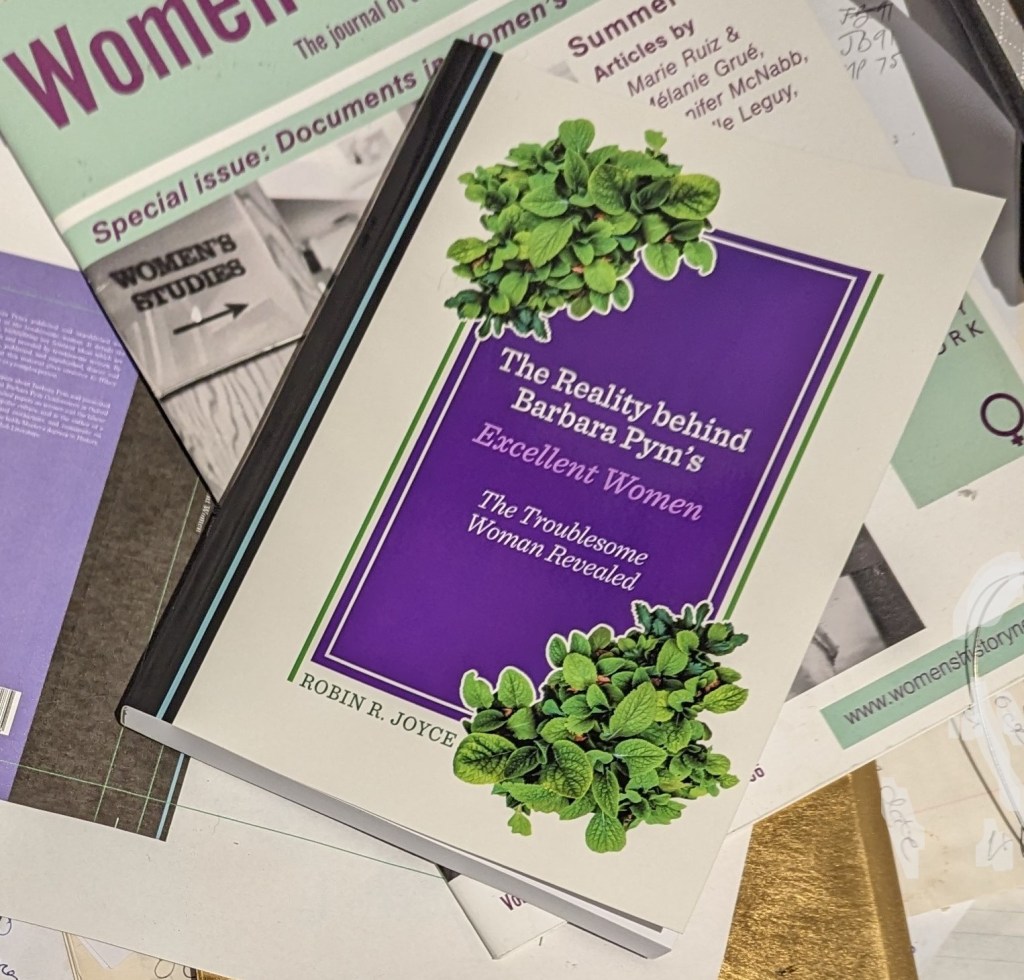
*I shall be in Cambridge on election day – this has positive and negative aspects. Unfortunately, Rishi has upstaged my proposed presentation on The Reality behind Barbara Pym’s Excellent Women The Troublesome Woman Revealed which was to take place on Thursday May 4 in Cambridge. On the other hand, it will be wonderful to be back in the throes of an election, an experience I revelled in while living in London and Cambridge for several years.

Tom Watson Newsletter

Starmer and Sunak: Two Generals fighting different battles
Thoughts from 50 years of election campaigning
Half a century of an obsession

It is now more than 50 years since I worked in a general election for Harold Wilson in February 1974. I remember every general election with clarity; weird I know. This general election is one of the strangest.

It’s not the gaffes, though I’ve never seen so many of them, it’s the fact that the two main parties seem to be skirmishing on different fronts. Yet we’re in a two party system. It’s a binary choice election. What on earth is going on?

Labour

Labour is reaching out the former supporters it lost in 2019, 2017, 2015 and 2010. It’s focusing on reassurance within its change message.

For what it’s worth, the first three doors I knocked in this general election were in Spen Valley for Kim Leadbeater. Door one was a first time Tory voter in 2019, now back to labour. Door two was a lifelong Tory, now come to labour. Door Three was a Lifelong Tory voter, now a don’t know and weighing up Labour and the Reform Party. These three door knocks are in no way scientific but if you extrapolate them over the entire United Kingdom it shows the Tories are in deep trouble.

Conservative

If Keir wants this to be a change election, Rishi needs it to be a choice election.

Sunak used his remaining agency to call a surprise election. It was the right thing to do because for the last 18 months, every decision has felt more like referendum on 14 years of, well, let’s face it, chaos. At least with an election, Sunak has a chance to put his case and ask voters to contrast it to Keir’s.

Yet here is Rishi Sunak’s problem: The Conservatives are only speaking to their elemental core of support which is fractured and considering shifting to the Reform Party, staying at home, or moving to the Lib Dems and Labour.

National Service

Tory spin doctors maintained three days of discussion on Sunak’s national service announcement, despite it being ridiculed by nearly every retired general in the UK. It’s led to 16 year olds joining Labour and knocking on doors to stop it (yup, I saw the evidence of this with my own eyes, yesterday).

Why is he doing it? National Service appeals to an older generation with memories of loved ones sharing nostalgic stories of a bygone age, when the country displayed imperial prowess and people knew their place. In other words: the Conservative Core Vote.

Sunak is rallying the heartlands, trying to hold the Tory family together. It’s perfectly logical given the poor standing in the polls but it’s not without cost.

Focussing on wavering older-voting shire residents in the heartlands has left Labour free to appeal to the Red Wall, the Blue Wall and Scotland with little challenge.

So, two leaders, two parties, two campaigns and thus far, very little direct engagement.

What do voters think?

They say you campaign in poetry and govern in prose. Not this year, I’m afraid. Labour is campaigning in prose and rightly so. They’re negotiating a difficult contract with millions of potential new supporters who want to read the small print of the offer.

For voters, this is a cost of living election. They’re not interested in how soggy Sunak gets or the fact that he can’t play football.

The swing voters in the general election are economically squeezed and worried about the future. The party that will win is the one that doesn’t bullshit them about how hard it will be to get the country back on its feet but reassures them they have a workable plan.


Reading

Speeches that changed the world.

These times are so grim, I keep thinking of Franklin D. Roosevelt. In the fractured world of 1933, where nations were embracing communism and fascism, FDR sought to unite his country with his inaguaral speech. In biblical language he described the ‘essential democracy’ that would put America back on its feet. I’d vote for a party leader that can speak like this:

“I am certain that my fellow Americans expect that on my induction into the Presidency I will address them with a candor and a decision which the present situation of our Nation impels. This is preeminently the time to speak the truth, the whole truth, frankly and boldly. Nor need we shrink from honestly facing conditions in our country today. This great Nation will endure as it has endured, will revive and will prosper. So, first of all, let me assert my firm belief that the only thing we have to fear is fear itself–nameless, unreasoning, unjustified terror which paralyzes needed efforts to convert retreat into advance. In every dark hour of our national life a leadership of frankness and vigor has met with that understanding and support of the people themselves which is essential to victory. I am convinced that you will again give that support to leadership in these critical days.

In such a spirit on my part and on yours we face our common difficulties. They concern, thank God, only material things. Values have shrunken to fantastic levels; taxes have risen; our ability to pay has fallen; government of all kinds is faced by serious curtailment of income; the means of exchange are frozen in the currents of trade; the withered leaves of industrial enterprise lie on every side; farmers find no markets for their produce; the savings of many years in thousands of families are gone.

More important, a host of unemployed citizens face the grim problem of existence, and an equally great number toil with little return. Only a foolish optimist can deny the dark realities of the moment.

Yet our distress comes from no failure of substance. We are stricken by no plague of locusts. Compared with the perils which our forefathers conquered because they believed and were not afraid, we have still much to be thankful for. Nature still offers her bounty and human efforts have multiplied it. Plenty is at our doorstep, but a generous use of it languishes in the very sight of the supply. Primarily this is because the rulers of the exchange of mankind’s goods have failed, through their own stubbornness and their own incompetence, have admitted their failure, and abdicated. Practices of the unscrupulous money changers stand indicted in the court of public opinion, rejected by the hearts and minds of men.

True they have tried, but their efforts have been cast in the pattern of an outworn tradition. Faced by failure of credit they have proposed only the lending of more money. Stripped of the lure of profit by which to induce our people to follow their false leadership, they have resorted to exhortations, pleading tearfully for restored confidence. They know only the rules of a generation of self-seekers. They have no vision, and when there is no vision the people perish.

The money changers have fled from their high seats in the temple of our civilization. We may now restore that temple to the ancient truths. The measure of the restoration lies in the extent to which we apply social values more noble than mere monetary profit.

Happiness lies not in the mere possession of money; it lies in the joy of achievement, in the thrill of creative effort. The joy and moral stimulation of work no longer must be forgotten in the mad chase of evanescent profits. These dark days will be worth all they cost us if they teach us that our true destiny is not to be ministered unto but to minister to ourselves and to our fellow men.

Recognition of the falsity of material wealth as the standard of success goes hand in hand with the abandonment of the false belief that public office and high political position are to be valued only by the standards of pride of place and personal profit; and there must be an end to a conduct in banking and in business which too often has given to a sacred trust the likeness of callous and selfish wrongdoing. Small wonder that confidence languishes, for it thrives only on honesty, on honor, on the sacredness of obligations, on faithful protection, on unselfish performance; without them it cannot live.

Restoration calls, however, not for changes in ethics alone. This Nation asks for action, and action now.”

Week beginning 22 May 2024

Hannah McGregor Clever Girl, Jurassic Park ECW Press, October 2024.

Thank you, NetGalley for providing me with this uncorrected proof for review.

Clever Girl, Jurassic Park is written in a style that I often find unappealing. However, I must acknowledge that I was so captivated by the perceptive commentary, the substantial research that underlies the challenging style and Hannah McGregor’s strong personality that emerges through the pages, that I thoroughly enjoyed my reading. McGregor combines her own experiences with the narratives that emerge from the Jurassic Park franchise. She concentrates on the first, Jurassic Park, with some comments (frequently negative) about the others that follow. With her perceptive feminist approach, this book makes an excellent contribution to academic feminist film ideas, as well as a thoughtful read for those who are not in academe. See Books: Reviews for the complete review.

Monica Porter A History of Europe in 12 Cafes Pen & Sword Pen & Sword History, April 2024.

Thank you, NetGalley and Pen & Sword for providing me with this uncorrected proof for review.

I found Monica Porter’s A History of Europe in 12 Cafes an enthralling read. With its wealth of historical information covering visual art, writing, biographical material, politics and war through the beautifully described cafes, European and American, conveyed through accessible language that almost belied the density of the content, this book is a treasure trove. A treasure for the coffee aficionado who would like to visit these cafes; for the lover of history whose appetite will be slaked by the detailed accounts of political intrigue, war time measures and attendant developments; and those whose access to the culture associated with the cafes will be at once both satisfied and also keen to read the material and visit the galleries that house the art described. So, upon finishing the book one is at once replete, and fighting an appetite that can only be assuaged by rereading, delving into the bibliography or visiting the sites – no mean feat as they include ten different countries, twelve coffee houses, and galleries. See Books: Reviews for the complete review.

Canberra Times Meet the Author

‘Frank Bongiorno will be in conversation with Jennifer Rayner on A Little History of the Australian Labor Party in which acclaimed historians Nick Dyrenfurth and Frank Bongiorno tell the story of the Australian Labor Party’s rich history of more than 130 years and examine its central role in modern Australia. This is a second, updated and expanded edition’ Canberra Times. This was a scintillating session with perceptive questions from Jennifer Rayner and wonderfully discursive responses from Frank Buongiorno.

I now have a hard copy of A Little History of the Australian Labor Party. The presentation question and answer session, and the vote of thanks, were excellent and have encouraged me to set aside some of my NetGalley kindle downloads and come to grips with the hard copy. I shall review A Little History of the Australian Labor Party in coming weeks.

Bob McMullan

Prominent American political commentator, Michael Steel, uses the colourful phrases “bedwetting” and “handwringing” to describe Democratic party supporters who tend to focus on the weaknesses of their position rather than their strengths.


Steel is interesting because he is a former Chair of the Republican National Committee who is now disillusioned with the Republicans in the age of Trump and has become a respected political commentator, particularly on MSNBC.


I’m quite sure he would say that there is too much “bedwetting” and “handwringing” amongst Labor supporters and media commentators.
There is a serious disconnect between the objective polling data and the commentary from some Labor supporters. Some reporting also does not align with the objective reality.


This is not the product of media bias. It is rather a fascination with the heat of the moment rather than the light generated by a knowledge of political and electoral history. The most recent polling averages from both the Poll Bludger and Kevin Bonham put Labor distinctly ahead. The Poll Bludger has the ALP on 50.9 to the coalition on 49.1. Bonham has the ALP at 51.0 while the coalition is at 49.0.

Having examined polling data for the last 40 years of Australian federal elections I cannot find an example of a government that was leading twelve months out and yet went on to lose!

Of course, just because something has never happened doesn’t mean it can’t happen. But it does suggest that it is not probable. There are some unique variables about the current situation. The size of the crossbench and the likelihood that it will remain at least equally large is one such factor. The corresponding decline in primary votes for the major parties is another.
But every election has its unique characteristics. It might be 9/11 and Tampa in 2001, Mark Latham in 2004 or Scott Morrison in 2022, but each one is distinct. And yet there is an overall pattern which needs to be understood: governments in front with twelve months to go are likely to win.

There are also some factors which tend to add volatility to the current political landscape. The conflict in Gaza and associated protests in Australia may change some voting intentions. High interest rates and the possibility that they will not fall before the election and slightly elevated inflation all suggest a potent political mix. There are also the ongoing immigration issues.
But these should already be factored into the current polling. There have certainly been occasions when governing parties lost significant support in the last twelve months of a term. In the lead up to the 2010 election internal Labor party strife caused a significant loss of votes, but the government was still returned.

There have also been big movements in favour of incumbents in the lead up to the election. In 2004 the Howard government looked extremely vulnerable twelve months out from the election, but in the end they won comfortably.
So, there is obviously potential for significant movement in the last twelve months of a term.

History suggests that it is unlikely to be sufficient to lead to the defeat of a government with a lead in the polls such as that currently enjoyed by the Albanese government. In fact, the average movement of both the primary vote and two party preferred vote over the twelve months leading to a federal election has been approximately 1% towards the government, averaged over the last ten federal elections. However, this disguises big swings in both directions over the years. For example, in 2001 the Liberal government primary vote increased by 7.1% over the twelve-month period
leading up to the election, while the Labor government primary vote in 2010 fell by 8% over the same period.


There is certainly no room for complacency within the ALP. Labor has a proven capacity to seize defeat from the jaws of victory. Likewise, there is no reason for the coalition to despair. However, at the moment the interesting thing about the current polling is its apparent stability. After making allowances for the inevitable statistical variation driven by sampling
the recent polls have been quite stable, revolving around a two-point Labor lead in two party preferred vote. Nothing is certain in life or politics.
However, history suggests that the prospects for a Labor victory next year are stronger than many commentators and worried supporters are currently suggesting.

Wage Rage for Equal Pay

Australia’s Long, Long Struggle

Jocelynne A. Scutt, Plagrave McMillan © 2024

Overview

Authors: Jocelynne A. Scutt

  • Contributes to the continuing legal and historical struggle for equal pay in Australia; Analyses and recounts campaigns, cases and debates; and Takes law, history and women’s and gender studies into consideration.
  • About this book
  • This book ​makes a major contribution to the continuing legal and historical struggle for equal pay in Australia, with international references, including Canada, the UK and US. It takes law, history and women’s and gender studies to analyse and recount campaigns, cases and debates. Industrial bodies federally and around Australia have grappled with this issue from the early-twentieth century onwards. This book traces the struggle through the decades, looking at women’s organisations activism and demands, union ‘pro’ and ‘against’ activity, and the ‘official’ approach in tribunals, boards and courts. 
  • Authors and Affiliations
  • Jocelynne A. Scutt, University of Buckingham, Buckingham, UK Jocelynne A. Scutt
  • About the author
  • Jocelynne Scutt is Senior Fellow at the University of Buckingham, UK. She published Women and The Magna Carta: A Treaty for Rights or Wrongs, Women, Law and Culture – Conformity, Contradiction and Conflict with Palgrave in 2016, and Beauty, Women’s Bodies and the Law – Performances in Plastic with Palgrave in2020.
  • See Further Commentary and Articles arising from Books* and continued longer articles as noted in the blog.

Cindy Lou eats at a Korean street stall

The O’Connor shops has a range of eating places that I have tried- Kopiku, Flatheads Fish Cafe, the Duxton and To Do. Today I went to the nearby street stall that provides a range of Korean meals. Nearby is a taco stall that I might try next time. However, it will have to be good to compete with the succulent, crispy chicken that I ate today – such a generous amount that the photo below shows what remained for another day!

There is pleasant seating in an attractive outdoor environment. A paper carry bag is provided for take away.

Gaslight at the Canberra Theatre

This was a rather mixed production. It certainly lacked the pace that might have improved a somewhat erratic script. At times, particularly in the early scenes, the negative impact of gaslighting was demonstrated, along with the capacity of a beloved person to inflict such pain on a person whose grip on reality becomes impaired under the assault. However, the seriousness of gaslighting was undermined because of the lack of subtlety in these scenes. Was it supposed to be a serious production? In later scenes, particularly in the first scenes of Act 2 it appeared that the tables were being turned, in some rather comic interplay between wife and husband. It was a pleasant enough evening, and I am pleased to be going to the Canberra Theatre and Playhouse more often.

Contrary to my response, this is what one reviewer made of it…

Stunning Gaslight is beauty magnified

Geraldine Hakewill and Toby Schmidt in Gaslight.

Theatre / Gaslight, adapted by Johnna Wright and Patty Jamieson. Directed by Lee Lewis for Queensland Theatre. At Canberra Theatre until May 19. Reviewed by ARNE FEALING.

It is a rare day you will attend a work of dramatic art that is so visually stunning, so carefully produced, and so precisely executed. This show is beauty magnified.

As soon as the curtains opened on this adaptation of Patrick Hamilton’s 1938 play Gaslight, it was obvious that what would follow would be a sumptuous experience.

An intense drama, each word was carefully timed, and vital to the unfolding of this psychological thriller. What is said is of utmost importance. Set inside quiet, yet foreboding splendour – the lighting and set design (Renée Mulder) worked a special illusionary magic to bring the audience into Gaslight’s private world. Working harmoniously and effectively with its sound design (Paul Charlier) both set and sound stage provided backdrop for the intense personal drama between Jack (Toby Schmitz) and Bella Manningham (Geraldine Hakewill).

Throughout, the highly realistic lighting design created astounding pallets. Stunningly real, the stage would become engulfed in the sunrise, as it softly streamed into the house.

The transition between day and night, a new day, and a new page in the softly unfolding world where Bella is going gently insane. But what is the cause of this unfolding torture? Much has been made of the connection between the modern use of the term gaslighting and its origins from this play, and the two films and various productions that followed. It has come to refer to the manipulation of a person by another in a similar way to Jack’s treatment of Bella.

A recent adaptation, the suspense and slow movement through its devastatingly clever plot are not lost. Bella is the key role, and Hakewill (Wanted, Ms Fisher’s Modern Murder Mysteries) is perfect in every sense. This drama turns around her. And it is up to her to find her way out.

As Jack, Schmitz (Boy Swallows Universe, Black Sails) executes his character arc with a calculated precision that belies the subplot underneath. An English gentleman of uncertain means, he succeeds in fooling the audience as much as he does his wife in the early potions of the play.

Prepare to be riveted and rocked.

There is a sense that everything about Gaslight was created to be as perfect as dramatically possible. It must be seen to be fully appreciated just how close this cast and crew have come to achieving that.

Research online is worthwhile if you are about to see this production. I was interested to see that one of the most important points in the story line was not well made in this production. I kept waiting for the information, as it was essential to the plot. Unlike the reviewer, I was not ‘riveted and rocked’ . I was bemused. Where I do join with him in wholehearted admiration is in relation to the set, and the impressive lighting. Not only did it move so well from day to night, but spot lighting changed the set by producing cleaver vignettes.

Brilliant & Bold

The discussion, featuring Jessica Williams, was streamed live on Facebook.

Some background:

WOMEN AND IMPRISONMENT … WOMEN IN PRISON THE UNITED NATIONS –

Women are imprisoned more rarely than men, yet when they are imprisoned, it is generally for offences for which men are never imprisoned – social security fraud, low-level drug use, offences associated with prostituted
women, shoplifting – low-level theft, receiving stolen goods …Yet some theories assert that far from being treated unfairly by the prison system, women are advantaged. One theory (Pollack) says that women escape
arrest, prosecution and imprisonment as they carry out their crimes through their male partners who are arrested, prosecuted and imprisoned in their place. Associated with this theorising is the contention that
women ‘get away with’ crimes because they are treated with chivalry by police, magistrates and judges. Some say that women are ‘to blame’ for men’s higher rates of imprisonment as single parent families (it is said)
generate criminality and as the majority of single parent families are headed by women it must be women’s inadequacy that drives the ‘broken home’ dynamic in male imprisonment. Another proposition is that women
avoid imprisonment as they are mothers and have dependent children, so courts take this into account, imposing alternative sanctions. Yet are these contentions realistic? Do they equate with the reality of women
in the world generally and in the criminal justice system in particular? Knowing that the vast majority of women in gaol are mothers with dependent children for whom they must find alternative care – or have their
children taken into care – counters one ‘theory’ at least.

Jessica Williams is an American-born woman who has lived in Australia for nearly 14 years. She currently lives in and is presenting from Victoria, Australia. Jess is a researcher and a political lobbyist, an author, and an advocate for women’s rights, animal rights, and for our environment. She recently presented on women in prison to the Criminology and Criminal Justice students at the University of Buckingham, England and is an experienced public speaker, particularly (though not only on women and crime and women’s incarceration.
.
Jesicca began by speaking about the case of a New South Wales (NSW) Corrective Services Officer who has been confirmed as having sexually assaulted at least 14 women prisoners. She also shared with us further examples of the ways in which women, children, and teenagers in Australia are routinely sexually and physically harmed and neglected by police and prisons officers.

Jessica Williams was ably supported by Jocelyne Scutt chairing and a host of articulate women who contributed questions and to the discussion. One issue that was raised that provoked discussion about whether Australia has implemented important related to imprisonment was The Mandela Rules. Details below:

The Mandela Rules: Minimum Prison Standards Must Be Implemented

Ensuring the dignity of detainees

The Nelson Mandela Rules are the revised version of the United Nations Standard Minimum Rules for the Treatment of Prisoners (SMRs). The original SMRs were first adopted by the UN Congress on Crime Prevention and Criminal Justice in 1955.

The rules were approved by the UN Economic and Social Council in 1957.

They set out the minimum standards as to how all prisoners should be treated, which is with respect and dignity. The SMRs also outline that no detainee should be subjected to “torture and other cruel, inhuman or degrading treatment or punishment.”

The second rule provides a basis for all others. It outlines that no inmate should be discriminated against on any grounds or status, including race, sex, religion, politics or national origin. And prison authorities must take into account the needs of all inmates, especially the most vulnerable.

In 2010, the UN General Assembly requested the Commission on Crime Prevention and Criminal Justice establish an expert group to revise the SMRs to reflect “recent advances in correctional science and best practices.”

The UN General Assembly adopted the revised SMRs on December 17 2015. They were dubbed the Mandela Rules to honour the legacy of the late South African president, who spent 27 years behind bars during his struggle for equality and human rights.

For every aspect of life on the inside

The Mandela rules aren’t legally binding. But they do set guidelines regarding a range of aspects of the prison environment. The very existence of the SMRs ensures that the protection of the human rights of prisoners, as well as all detainees, is an issue that is of concern for governments.

Minimum standards regarding prisoner hygiene, the provision of food, clothing and bedding, medical services, and discipline and punishment are all set out in the document. It also contains guiding principles regarding rehabilitation, education and post-release services.

And as you peruse the rules and recommendations outlined in the Mandela document, it becomes apparent that this nation’s prison system is failing to uphold the human rights of Australian inmates in several ways.

Overcrowding is a breach of standards

The rules 12 through to 17 outline the minimum standards of accommodation that inmates should be provided. If a prison contains individual cells, then these single rooms should only be occupied by one person at a time, as “it is not desirable to have two or more prisoners in one cell.”

Whereas, if dormitories are being used, then prisoners occupying that space should be carefully selected as suitable to associate with each other. Special consideration should be given to aspects of sleeping accommodation, such as “cubic content of air, minimum floor space… and ventilation.”

However, many Australian correctional facilities are bursting at the seams. In September last year, there were 41,262 adult prisoners in this country, which puts the nation’s prisoner population at an all-time high. The number of Australian inmates has been steadily increasing since the 1970s.

In 2016, inmates were being forced to share single cells at the Maryborough Correctional Centre in Queensland. One detainee would be forced to sleep on a mattress on the floor up close to the toilet. While at Victoria’s Dhurringile prison, shipping containers were being used as cells.

Prolonged isolation is torture

The Mandela Rules specifically state that the use of indefinite or prolonged solitary confinement should be prohibited. The document defines solitary confinement as up to 22 hours a day without meaningful human contact. And prolonged confinement is for more than 15 days.

The standards further outline that solitary confinement should only be used as a last resort. It should never be used on prisoners with disabilities if it will exacerbate their conditions. And the practice should be banned for women and children.

Australian prisons continue to use solitary confinement regularly, and this includes on women and children. And it was found that youths were being held in solitary confinement in the Don Dale facility for 17 days straight, for up to 23 hours a day.

“A form of sexual assault”

The rules also state that searches shouldn’t be used “to harass, intimidate or intrude unnecessarily upon a prisoner’s privacy.” And this is especially true of strip searches, which should be kept to a minimum, and only “undertaken if absolutely necessary.”

However, strip searches are still commonly used in Australian prisons. A recent Victorian Ombudsman investigation of Victoria’s main women’s prison – the Dame Phyllis Frost Centre – found that strip searches were regularly being used on detainees in the visiting section of the prison.

And this was despite the searches resulting in almost no contraband being discovered.

Victorian Ombudsman Deborah Glass said that the “humiliating, degrading and undignified practice” was of particular concern, as many women prisoners are victims of sexual abuse, and the strip searches can lead to further trauma.

Following the investigation, the Ombudsman made 19 recommendations to the Victorian Department of Justice and Regulation. The department agreed to all the recommendations, except for the one calling on the prison administration to stop the practice of routine strip searching.

For the benefit of all

As Ms Glass told Sydney Criminal Lawyers® last week, upholding the rights of prisoners is essential, as “how we treat prisoners is a mark of our civilisation, and preventing abuses in detention is simply the right thing to do.”

Not only is the protection of prisoner’s rights the humane way to proceed, but it also has flow on effects for the rest of the community, as the majority of inmates will eventually leave the prison system, and if they’ve been mistreated inside, this will impact on how they treat others on the outside.

Last updated on 18 Nov 2021

AUTHORS

PAUL GREGOIRE

Paul Gregoire is a Sydney-based journalist and writer. He’s the winner of the 2021 NSW Council for Civil Liberties Award For Excellence In Civil Liberties Journalism. Prior to Sydney Criminal Lawyers®, Paul wrote for VICE and was the news editor at Sydney’s City Hub.

Ugur Nedim

UGUR NEDIM

Ugur Nedim is an Accredited Criminal Law Specialist with 25 years of experience as a Criminal Defence Lawyer. He is the Principal of Sydney Criminal Lawyers®.

Week beginning 15 May 2024

Freida McFadden One by One Poisoned Pen Press, April 2024.

Thank you, NetGalley, for providing me with this uncorrected proof for review.

One by One is a competent psychological thriller. The plot is an edgy combination of ill-assorted friends on a holiday jaunt that goes wrong with attempts to find the holiday hotel in which the group has booked thwarted by a compass that does not work, a map that is difficult to read and difficult terrain to traverse. Add to this large claw marks in trees and mobile phones with no signal, murders and blood-spattered disappearances and rising tension as disagreements erupt over leaving the first body in the forest while the group seeks  help, and it is inevitable that suspicion of friends and partners mounts. For Claire, the narrator,  the absence of her children becomes an even more immediate concern.

Interspersed with this present-day narration  is that of Anonymous. There is no clue to the identity of this person, even clues to their gender are cleverly obfuscated. However, their introductory account leaves the reader in no doubt: this person aims to be the only one alive at the end of the weeklong holiday.  See Books: Reviews for the complete review.

Ruth Cashin Monsell, Frances Perkins Champion of American Workers, Independent Publishers Group, April 2024.

Thank you, NetGalley, for providing me with this uncorrected proof for review.

There is a wealth of information in this biography written especially for Young Adult Readers. However, I am concerned that, although written for young people in a style that might have been engaging for past readers, this book will not resonate with the more sophisticated young reader. Some of the writing is overdone, with capitalised words or phrases, and the numerous exclamation marks have little role in an academic text, albeit for younger readers. Where characters engage in discussion, some of this, too, seems too simplistic. See Books: Reviews for the complete review.

Brilliant & Bold Sunday 19 May

11 am UK time

BRILLIANT & BOLD – BOLD & BRILLIANT

CONVERSATIONS WITH ‘ORDINARY’ & ‘EXTRAORDINARY’ WOMEN

 ‘Women’s Voices in a Time of Conservatism’

A series on women’s rights, challenges, perspectives, hopes and empowerment.

Brilliantly Bold Women! Invites all Bold and Brilliant Women to a monthly Zoom meeting – Women Worldwide Advancing Freedom & Equality … formerly the House of Lords/House of Commons, now a panel in global conversation, along with a global audience of engaging in discussion, debate, questions, answers, reflections and resounding demands for change.

As Mary Wollstonecraft said:

REFORM THE POSITION OF WOMEN, AND YOU REFORM THE WORLD

TBC: Jessica Williams is to speak about women in prisons

This zoom meeting is held at 11 am UK time. It is streamed to Facebook live but can also be watched after the meeting.

Mother’s Day

Letters from an American 11 May 2024

Heather Cox Richardson

Heather Cox Richardson from Letters from an American <heathercoxrichardson@substack.com> 

If you google the history of Mother’s Day, the internet will tell you that Mother’s Day began in 1908 when Anna Jarvis decided to honor her mother. But “Mothers’ Day”—with the apostrophe not in the singular spot, but in the plural—actually started in the 1870s, when the sheer enormity of the death caused by the Civil War and the Franco-Prussian War convinced writer and reformer Julia Ward Howe that women must take control of politics from the men who had permitted such carnage. Mothers’ Day was not designed to encourage people to be nice to their mothers. It was part of women’s effort to gain power to change society.

The Civil War years taught naïve Americans what mass death meant in the modern era. Soldiers who had marched off to war with fantasies of heroism discovered that newly invented long-range weapons turned death into tortured anonymity. Men were trampled into blood-soaked mud, piled like cordwood in ditches, or withered into emaciated corpses after dysentery drained their lives away.

The women who had watched their hale and healthy men march off to war were haunted by its results. They lost fathers, husbands, sons, and brothers. The men who did come home were scarred in both body and mind.

Modern war, it seemed, was not a game.

But out of the war also came a new sense of empowerment. Women had bought bonds, paid taxes, raised money for the war effort, managed farms, harvested fields, worked in war industries, reared children, and nursed soldiers. When the war ended, they had every expectation that they would continue to be considered valuable participants in national affairs, and had every intention of continuing to take part in them. 

But the Fourteenth Amendment, which established that Black men were citizens, did not explicitly include women in that right. Worse, it introduced the word “male” into the Constitution when it warned states against preventing “male inhabitants” from voting. In 1869, the year after the Fourteenth Amendment was added to the Constitution, women organized two organizations—the National Woman Suffrage Association and the American Woman Suffrage Association—to promote women’s right to have a say in American government.

From her home in Boston, Julia Ward Howe was a key figure in the American Woman Suffrage Association. She was an enormously talented writer who in the early years of the Civil War had penned “The Battle Hymn of the Republic,” a hymn whose lyrics made it a point to note that Christ was “born of woman.”

Howe was drawn to women’s rights because the laws of her time meant that her children belonged to her abusive husband. If she broke free of him, she would lose any right to see her children, a fact he threw at her whenever she threatened to leave him. She was not at first a radical in the mold of reformer Elizabeth Cady Stanton, who believed that women had a human right to equality with men. Rather, she believed strongly that women, as mothers, had a special role to perform in the world.

For Howe, the Civil War had been traumatic, but that it led to emancipation might justify its terrible bloodshed. The outbreak of the Franco-Prussian War in 1870 was another story. She remembered:

“I was visited by a sudden feeling of the cruel and unnecessary character of the contest. It seemed to me a return to barbarism, the issue having been one which might easily have been settled without bloodshed. The question forced itself upon me, ‘Why do not the mothers of mankind interfere in these matters, to prevent the waste of that human life of which they alone know and bear the cost?’”

Howe had a new vision, she said, of “the august dignity of motherhood and its terrible responsibilities.” She sat down immediately and wrote an “Appeal to Womanhood Throughout the World.” Men always had and always would decide questions by resorting to “mutual murder,” she wrote, but women did not have to accept “proceedings which fill the globe with grief and horror.” Mothers could command their sons, “who owe their life to her suffering,” to stop the madness.

“Arise, women!” Howe commanded. “Say firmly: ‘We will not have great questions decided by irrelevant agencies. Our husbands shall not come to us, reeking with carnage, for caresses and applause. Our sons shall not be taken from us to unlearn all that we have been able to teach them of charity, mercy and patience. We, women of one country, will be too tender of those of another country, to allow our sons to be trained to injure theirs.’”

Howe had her document translated into French, Spanish, Italian, German, and Swedish and distributed it as widely as her extensive contacts made possible. She believed that her Women’s Peace Movement would be the next great development in human history, ending war just as the antislavery movement had ended human bondage. She called for a “festival which should be observed as mothers’ day, and which should be devoted to the advocacy of peace doctrines” to be held around the world on June 2 of every year, a date that would permit open-air meetings.

Howe organized international peace conferences, and American states developed their own Mothers’ Day festivals. But Howe quickly realized that there was much to be done before women could come together on a global scale. She turned her attention to women’s clubs “to constitute a working and united womanhood.”

As Howe worked to unite women, she came to realize that a woman did not have to center her life around a man, but rather should be “a free agent, fully sharing with man every human right and every human responsibility.” “This discovery was like the addition of a new continent to the map of the world,” she later recalled, “or of a new testament to the old ordinances.” She threw herself into the struggle for women’s suffrage, understanding that in order to create a more just and peaceful society, women must take up their rightful place as equal participants in American politics.

While we celebrate the modern version of Mother’s Day on May 12, in this momentous year of 2024 it’s worth remembering the original Mothers’ Day and Julia Ward Howe’s conviction that women must have the same rights as men, and that they must make their voices heard.

Notes:

Julia Ward Howe Reminiscences, 1819-1899 (Boston: 1900).

The Saturday Read: #60

HARRY LAMBERT

Good morning. Welcome to the Saturday Read, the New Statesman’s weekly guide to politics, culture, books, and ideas. This is Harry, along with JasonPippaGeorge and Finn McRedmond, a regular contributor of ours who has joined the NS.


I went to Cambridge with George this week to visit its nascent protest movement. I found a microcosm of the neurotic internet brought to life on a small patch of grass. More below. First, Jason reports from DC, where he has been hanging out with Britain’s next foreign secretary. After that: this week’s picks. Also: summer is here.

I observed the continuing Tory pantomime – expertly analysed by my colleague Rachel Cunliffe in our magazine cover story – from afar this week as I have been in Washington DC, with David Lammy, Labour’s shadow foreign secretary. Britain’s politics, as we know, are juvenile: just reflect on the absurd antics in the House of Commons over recent days. But so is the way we treat our politicians.

Lammy arrived in Washington DC alone, having taken an early-morning connecting flight from Newark (parliamentary pressures meant he missed his planned flight to Dulles Airport). In DC he was met by Ben Judah, his adviser and ideas guru, who had travelled down from New York. Lammy had flown economy class and had no entourage, no diary secretary or personal assistant. No driver was waiting for him. His schedule in the Beltway was unrelenting but he used his time well – to network, to listen and to learn. He travelled around town in various Ubers.

A passionate liberal Remainer during the protracted Brexit wars – he was a prolific and belligerent tweeter – Lammy is also a self-described communitarian. As Britain’s chief-diplomat-in-waiting he wants to build bipartisan alliances in the national interest. And, as the first black Briton to attend Harvard Law School, Lammy has long-established family, personal and professional relationships in the United States. When he arrives in the capital senior politicians want to meet him, both Democrat and Republican.

Keir Starmer knows this, and it was one reason he wanted Lammy to lead for Labour on foreign affairs. Lammy was less sure when first approached. “I needed time to think about it. I have young children and there would be a lot of travelling,” he told me. But he was persuaded that it would be the right role for him at the right time: he is an Atlanticist and internationalist but accepts that the so-called liberal order has fragmented in what he calls “a newly dangerous world”.

On Wednesday morning Lammy gave a short speech at the Hudson Institute. He shared a platform with Jim Risch, a hard-line Republican right-wing senator and Beltway fixer. Before his right-leaning audience, Lammy described himself as a “good Christian boy” and a “conservative” Labour politician. He embraces ambiguity and paradox. In his recent Foreign Affairs essay he wrote that “progressive realism” would inform his approach to foreign policy. The phrase has resonated in Washington. “I like the realism,” Senator Risch quipped, “but not the progressive part.” The concept of progressive realism is inchoate. Is it a form of liberal universalism? Or an aspiration to have a foreign policy based on the social and economic rights of the British people? We shall find out before too long.

In his Hudson Institute speech, Lammy said: “I’m a man made of the Atlantic. My parents were from the Caribbean, their siblings spread out from New York to London. And I share something deep with millions of Americans. Because if I have the privilege to be foreign secretary, I will be the first to be able to trace his lineage back through the Atlantic slave trade.” The next afternoon, at a private meeting, Lammy was celebrated as a role model and inspiration by Hakeem Jeffries, who succeeded Nancy Pelosi as the minority party leader in the House of Representatives in 2023.

Lammy is an unusually interesting politician. He has what Paul Gilroy calls a kind of “double consciousness”: he knows who he is and where he is from and what he represents. And he is a realist: he wants to pursue liberal enlightened goals in a world that doesn’t follow liberal enlightened rules. “The world is what it is,” he said to me as we travelled in an Uber taxi to the White House. And then he repeated the statement: “The world is what it is.”

Cindy Lou has Mothers’ Day Lunch at PJs

Fortunately for me, and the other mothers who joined us at PJs, Heather Cox Richard’s story above has been replaced with honouring mothers. Of course, many of the women at PJs are feminists so the day for us was a combination of the recognition of women’s attributes apart from motherhood, and women as mothers.

The special occasion was marked by PJs with a Mimosa for each mother on her arrival, an excellent roast pork meal, and the choice of the usual long and varied menu. Our lunch was followed by a wonderful mother’s pavlova (following in her mother’s footsteps). The pavlova was a delightful finish to a pub lunch that was reminiscent of those served in the British pub – something I am always glad to return to when there.

The Independent

Jill Biden tells Arizona college graduates to tune out people who tell them what they ‘can’t’ do

Story by Darlene Superville

Jill Biden Commencement

Jill Biden Commencement© Copyright 2024 The Associated Press. All rights reserved.

Jill Biden on Saturday told Arizona community college graduates to tune out the people who like to tell them what they can’t do.

Then she got three more, including two master’s degrees and, at age 55, a doctorate in educational leadership. She went to school at night while raising three children and working full-time.

The first lady has been a teacher for more than 30 years, and since 2009 has taught English and writing at Northern Virginia Community College.

She encouraged the graduates to “drown out” the voices that say “can’t” and to remember the challenges they overcame to get to wear a cap and gown on Saturday.

“You’ve met life’s challenges before. And you know that on the other side of ‘can’t’ lies the beauty and joy and surprise of life, the adventure that changes us for the better,” she said, according to excerpts of her prepared remarks shared with The Associated Press. “And you are ready for it.”

Biden said the graduates should remember that they are strong and resilient, and shouldn’t be afraid to face the unknown.

“Expect anything and everything. Take the risks that scare you. Don’t hesitate when you see the chance for joy. Share your stories, too. Be kinder. Love harder. Dream bigger. Find your adventure and keep your courage to say ‘yes.,'” she said.

To the Class of 2024, she said, “Let the world feel your thunder!” The college mascot is the thunderbird and” feel the thunder” is the school slogan.

“And the next time that someone tells you that you ‘can’t,’ you’re going to say, ‘Oh yeah?…Watch me,’” Biden said.

Independent readers are independently-minded global citizens. They are not defined by traditional demographics or profiles, but by their attitudes. In today’s increasingly fragmented world, communities value real facts and frank opinions delivered first-hand from a non-biased news brand that they can trust. Armed with information and inspiration, Independent readers are empowered and equipped to take a stand for the things they believe in.

Milli Hill

MAY 08, 2024
Announcing my new book: Ultra Processed Women – It will be published in February 2025.

Hi everyone, as you know, I’ve been desperate to tell you my book news over the past few weeks and NOW I FINALLY CAN!!

I’m really proud to announce that ULTRA PROCESSED WOMEN will be published by HQ (Harper Collins) in February 2025.

It will be a deep dive into the impact of ultra-processed food (UPF) on women’s health.

UPF is a hot topic right now but once again I’m noticing the impact on women being left off the table. This book will change that!

I have started a new section of my substack today where I will be keeping you all updated on progress of the book and some exclusive thoughts and ideas as I go.

As I’ve mentioned previously to some of you, I am looking for women to experiment with the impact of diet in small facebook groups. I would like to hear from you if you have either endometriosis or are struggling with menopause symptoms (with or without HRT), and would like to be involved. Please email me for more info. You can reply to this substack or message millihillwriter@gmail.com.

If you wish to you can preorder the book from today via Amazon!

Preorder Ultra Processed Women

I am beyond excited about this book and extremely grateful for the opportunity to write it. Yet another area where sex matters! Looking forward to sharing news with you over the coming months. Milli x

From the Gender Institue Newsletter 13 May 2024

Mentored to Perfection The Masculine Terms of Success in Academia

SIMONE DENNIS AND ALISON BEHIE

Mentored to Perfection: The Masculine Terms of Success in Academia examines how mentoring programs between women tend to replicate the hierarchical relations of patriarchy that they are meant to dismantle. Simone Dennis and Alison Behie argue that, while paradigmatic mentoring programs look like networking support services for neophytes, these mentorships nevertheless replicate the very institutional structures they seek to uproot. The generosity that senior women show to junior women as they share their tips and offer their support ironically obscures participants’ involvement in debt relations and the biases of replicating a particular type of success. This book considers the possibilities for disrupting our tendency to reproduce ourselves in the masculine terms of success.

Reviews

A challenging and persuasive provocation. The current “neoliberal” university is a patriarchal institution in which success is measured according to an “economy of knowledge” that favours men. What is called for, Simone Dennis and Alison Behie argue, in a lucid analysis closely tied to Australian ethnography, is mentorship as a form of what Roslyn Diprose calls “corporeal generosity,” whereby the mentee does not emulate or imitate the mentor but both open themselves to the radical alterity intrinsic to the embodied identity and capability of each. Through such sharing, the order of the same might be transcended and caring institutional forms introduced in which otherness—of women, of the precariat, of individuality itself—is recognised and respected.

— Nigel Rapport, University of St Andrews; author of Cosmopolitan Love and Individuality: Ethical Engagement beyond Culture

Last week I went to the Canberra Museum and Gallery exhibition of Backyard Archeology. This week I see that the Museum is hosting a Symposium on the topic. It will be held on 25 May 2024 12.30 – 3.30 pm. The venue is 176 London Circuit, Canberra ACT.

Event by Canberra Museum and Gallery

Tickets events.humanitix.com/backyard-archaeology-symposium-knrklqc6

Public:  Anyone on or off Facebook. 10 free places for full time students. 

From backyard dunnies and bunkers to the backyard of Blundells Cottage. Hear how backyard studies can reveal and inspire stories of everyday life through found and excavated objects and nurtured gardens.

The presenters are Steve Brown (Backyard Archaeology), Martin Rowney (Backyard Blundells), Nicola Hayes (Backyard Bunker), Doug Williams (Backyard Dunny), and Anne Claoue-Long (Backyard Garden).

The Symposium will appeal to people interested in family history research and creating place history narratives. The presentations aim to raise awareness of archaeology, history, and horticulture in local contexts and of personal importance (as opposed to the grand and the best).

The Symposium is supported by the Canberra Museum + Gallery, University of Canberra ‘Everyday Heritage Project’ and Australian Archaeological Association.

Part of National Archaeology Week.

Alice Ann Munro (nee Laidlaw) 10 July 1931, Wingham, Ontario – 13 May 2024, Port Hope, Ontario

May be an image of 1 person and text that says 'ALICE MUNRO the Senter tthe Youc Co You erter 0)"M erti slo acle gel, gels ₽ CANADA'

Week beginning May 8 2024

Kerry Wilkinson The Call Bookouture, April 2024.

Thank you, NetGalley, for providing me with this uncorrected proof for review.

I have been an avid follower of Kerry Wilkinson’s work, the stand-alone novels and the absorbing Whitecliff Bay series. The Call, however, has been a great disappointment. Admittedly, I was intrigued by the premise and the first part of the novel. It begins with a scene between two sisters in a beautiful location. Their father’s walking off his back pain from the flight is his familiar reaction to any health issue. Familiar holiday activities on the lake break the silence. Even as the loneliness and difficulty in getting to the holiday house by the lake on Vancouver Island establishes the gradual fear that will grow as the narrative proceeds, a comfortable atmosphere has been established. With a child fast asleep after the flight from England, one husband in bed using his laptop and two sisters reminiscing and drinking happily together, what can go wrong? See Books: Reviews for the complete review.

.

Kerry Fisher Escape to the Rome Apartment Book 3 of The Italian Escape, Bookouture, April 2024.

Thank you, NetGalley, for providing me with this uncorrected proof for review.

Kerry Fisher’s Italian Escape series is a pleasant combination of romance, social commentary and the most engaging descriptions of Italian towns, culture and life. With its two main characters, Ronnie and Marina, friends in their seventies who live in the apartments, some continuing secondary characters and the introduction of new ones, the Italian Escape series is an engaging read.  Although I found Books 1 and 2 more absorbing, Book 3 has a charm of its own, beginning with Sara’s escape from her life in England with a demanding husband and twin sons to a chance meeting on the plane with a woman whose joyous approach to life begins to work a change in Sara’s.

Sara, now in her fifties, is returning to Italy years after her romance with an Italian lover failed. Although this provides a background to her visit, most importantly she has returned to scatter the ashes of her best friend, Lainie, with whom she spent a summer in Italy. She has spent her life after this joyous time bowing to society’s expectations. However, even before she reaches the Rome apartment where Ronnie and Marina’s plans help women change their expectations of what life can offer them, Sara has rebelled. She has refused to bend to her tyrannical boss at the prestigious women’s magazine where she is lifestyle editor, giving her the opportunity to stay in Italy for as long as she wants.  It will take her longer to change her wife and mothering mode, but this at least is a start. See Books: Reviews for the complete review.

The Saturday Read: Bright green light

Harry Lambert @harrytlambert1 link

Staff writer, New Statesman | Editor, The Saturday Read https://saturdayread.substack.com/

…, here is a fascinating (sobering?) graphic for you, which I have annotated in crayon. It shows support for Trump and Biden split by how a voter gets their news. Trump’s superficial appeal is sustaining him, whatever it is exactly. He is thriving in news deserts, among people who don’t follow the news at all, or only follow events on YouTube and Google. Alphabet owns both companies. If Trump wins this year, expect a wave of think pieces attacking it for the way it has allowed these platforms to develop as sources of information, just as Facebook was attacked in 2016.

Remnants of a Legendary Typeface Have Been Rescued From the River Thames

Doves Type was thrown into the water a century ago, following a dispute between its creators.

metal pieces of letterpress Doves Type in a pile
Doves Type recovered by Robert Green, 2014. Photo Matthew Williams Ellis

by Holly Black May 5, 2024 

The depths of the river Thames in London hold many unexpected stories, gleaned from the recovery of prehistoric tools, Roman pottery, medieval jewelry, and much more besides. Yet the tale of the lost (and since recovered) Doves typeface is surely one of the most peculiar.

A little over a century ago, the printer T.J. Cobden-Sanderson took it upon himself to surreptitiously dump every piece of this carefully honed metal letterpress type into the river. It was an act of retribution against his business partner, Emery Walker, whom he believed was attempting to swindle him.

The pair had conceived this idiosyncratic Arts and Crafts typeface when they founded the Doves Press in the London’s Hammersmith neighborhood, in 1900. They worked with draftsman Percy Tiffin and master punch-cutter Edward Prince to faithfully recall the Renaissance clarity of 15th-century Venetian fonts, designed by the revolutionary master typographer Nicolas Jensen.

metal pieces of the Doves type in a block

Doves Type recovered by Robert Green, 2014. Photo Matthew Williams Ellis

With its extra-wide capital letters, diamond shaped punctuation and unique off-kilter dots on the letter “i,” Doves Type became the press’s hallmark, surpassing fussier typographic attempts by their friend and sometime collaborator, William Morris.

The letterforms only existed as a unique 16pt edition, meaning that when Cobden-Sanderson decided to “bequeath” every single piece of molded lead to the Thames, he effectively destroyed any prospect of the typeface ever being printed again. That might well have been the case, were it not for several individuals and a particularly tenacious graphic designer.

Robert Green first became fascinated with Doves Type in the mid-2000s, scouring printed editions and online facsimiles, to try and faithfully redraw and digitize every line. In 2013, he released the first downloadable version on typespec, but remained dissatisfied. In October 2014, he decided to take to the river to see if he could find any of the original pieces.

lead pieces of letterpress held in an open palm at Emery Walker's House

Doves Type recovered and held here by Lukasz Orlinski at Emery Walker’s House. Photo: Lucinda MacPherson.

Using historical accounts and Cobden-Sanderson’s diaries, he pinpointed the exact spot where the printer had offloaded his wares, from a shadowy spot on Hammersmith bridge. “I’d only been down there 20 minutes and I found three pieces,” he said. “So, I got in touch with the Port of London Authority and they came down to search in a meticulous spiral.” The team of scuba divers used the rather low-tech tools of a bucket and a sieve to sift through the riverbed.

Green managed to recover a total of 151 sorts (the name for individual pieces of type) out of a possible 500,000. “It’s a tiny fraction, but when I was down by the river on my own, for one second it all felt very cosmic,” he said. “It was like Cobden-Sanderson had dropped the type from the bridge and straight into my hands. Time just collapsed.”

The finds have enabled him to further develop his digitized version and has also connected him with official mudlarks (people who search riverbanks for lost treasures, with special permits issued) who have uncovered even more of the type.

A mudlark by the Thames with Hammersmith Bridge in background. Photo: Lucinda MacPherson.

Jason Sandy, an architect, author and member of the Society of Thames Mudlarks, found 12 pieces, which he has donated to Emery Walker’s House at 7 Hammersmith Terrace. This private museum was once home to both business partners, and retains its stunning domestic Arts and Crafts interior.

Much like Green, Sandy was captivated by the Doves Type story, and mounted an exhibition at the house that displays hundreds of these salvaged pieces, including those discovered by Green, as well as mudlarks Lucasz Orlinski and Angus McArthur. The show was supplemented by a whole host of Sandy’s other finds, including jewelry and tools. An extant copy of the Doves English Bible is also on display.

The Doves Bible returns to Emery Walker’s House. Photo: Lucinda MacPherson.

“It is not that unusual to find pieces of type in the river,” Sandy said. “Particularly around Fleet Street, where newspaper typesetters would throw pieces in the water when they couldn’t be bothered to put them back in their cases. But this is a legendary story and we mudlarks love a good challenge.” The community is naturally secretive about exactly where and how things are found. For example, Orlinski has worked under the cover of night with a head torch, to search for treasures at his own mysterious spot on the riverbank.

For Sandy, the thrill comes from the discovery of both rare and everyday artifacts, which can lead to an entirely new line of inquiry: “The Thames is very democratic. It gives you a clear picture of what people have been wearing or using over thousands of years. And it’s not carefully curated by a museum. The river gives up these objects randomly, and you experience these amazing stories of ordinary Londoners. It creates a very tangible connection to the past. Every object leads you down a rabbit hole.”

Mudlarking: Unearthing London’s Past” is at Emery Walker’s House, 7 Hammersmith Terrace, London, through May 30.

Kate Millett pioneered the term ‘sexual politics’ and explained the links between sex and power. Her book changed my life

Published: May 3, 2024 6.11am AEST

Barbara Caine

Professor of History

2011–2019 Professor of History and Head of the School of Philosophical and Historical Studies, University of Sydney

I am a historian interested in histories of feminism and in questions about history and the individual life. My publications include: Biography and History, Forthcoming April 2010, Palgrave Macmillan (History and Theory series)
“Destined to be Wives: The Sisters of Beatrice Webb”, Oxford University Press, 1986, “Victorian Feminists”, Oxford University Press, 1992,” English Feminism, c1780-1970, Oxford University Press”, 1997, Bombay to Bloomsbury: the Stracheys, c 1850-1950, Oxford University Press, 2005, Biography and History, Bloomsbury 2012, Women and the Autobiographical Impulse, Bloomsbury 2023. I was one of the editors of the Companion to Australian Feminism, Oxford 1998.

I still think of Kate Millett’s Sexual Politics as the book that changed my life. Its insistence on the importance of patriarchal structures and sexual hierarchies in literature and history, as well as in contemporary society, was eye-opening.

The 1970s saw the publication of several classic feminist texts, including Shulamith Firestone’s The Dialectic of Sex, Eva Figes’ Patriarchal Attitudes and Germaine Greer’s The Female Eunuch. For the most part, these books grew out of the discussions and consciousness-raising groups associated with the early stages of the Women’s Liberation movement.

Many women who became feminists in the 1970s still ask which of these books was most important to them. For me, the answer is unquestionably Sexual Politics.

I was a graduate student, just embarking on a PhD on a Victorian man of letters, when I first read Sexual Politics (or rather, a review of it that sent me racing for the book). It offered a whole new approach to history and to intellectual life.

Until I read it, I lacked the self-confidence – and even the language required – to address the history of the 19th century from the vantage point of a woman. I had believed in the notions of scholarly impartiality and “objectivity” that were dominant in the 1960s – and would come to be seen as expressing views reflecting the position of privileged white men.

Armed with a new critical stance, I went on to become a feminist historian, teaching and researching women’s lives and the history of feminism.

The term “sexual politics”, very widely used now, was then quite new. Millett was the first person to use it in print. Aware it was not only new, but controversial (and to some, incomprehensible), she explained at some length why she saw sexual relationships – and indeed the act of sex itself – as political.

She explained why we needed to move beyond using the term “political” just to refer to a narrow world of parties, chairmen and meetings. Its use, she argued, should be extended to describe “power-structured relationships, to all arrangements whereby one group of persons is controlled by another”.

Power, sex, Miller and Mailer

To emphasise the power structure in sexual relationships, Millet began the book with an extended passage from Henry Miller’s Sexus, which graphically depicts a cruel sexual conquest. It reads in part:

It happened so quickly that she didn’t have time to rebel or even to pretend to rebel. In a moment I had her in the tub, stockings and all […] I lay back and pulled her on top of me. She was just like a bitch in heat, biting me all over, panting, gasping, wriggling like a worm on the hook.

The brutal misogyny evident in Miller’s laudatory depiction of the way his hero, Val, sexually dominates and subdues Ida, the wife of his erstwhile friend, Bill Woodruff, is as shocking to read now as it was in 1970.

Back then, Millett’s insistence on discussing the misogyny in this widely admired text was striking. So was her refusal to privilege the book’s freedom and sexual explicitness as the topic of discussion. The “almost supernatural sense of power” and dominance a male reader might experience, she argued, was very different from what a female reader might experience.

In a chapter titled “Instances of Sexual Politics”, Millett turned from Miller to another iconic mid-20th-century male novelist, Norman Mailer, and his book, An American Dream. Her discussion underlined the extreme violence towards women the kind of sexual domination in Miller and Mailer’s work could encompass. (Ironically, perhaps, the current cover of the Modern Classics edition of Sexus carries a rave from Mailer.)

On hearing the wife he had separated from had engaged in sex with others (something he had done even during their marriage), Rojack, Mailer’s hero, first sodomises and then kills her. Both Rojack and his creator seem to feel this act is entirely justified. There is little motive for this killing, Millett notes, “beyond the fact that he is unable to master her in any other way”. Rojack is exhausted when he finishes – though he now feels triumphant and follows this act of mastery by buggering her maid.

At a time when there is so much awareness of the link between gender hierarchies and disrespect for women with rape and domestic violence, it is quite shocking to see how recent our consciousness of these connections are.

Both Miller and Mailer, as Millett shows, depict their violent, controlling men as heroes. They are entitled to project their masculinity and demand its recognition in ways that would be unthinkable in ostensibly serious literature now.

Her feminist critique of these immensely influential male novelists was unprecedented. The fact she began and ended her book with this critique illustrates how seriously she took literature and ideas. She saw them as the basis of political consciousness and conduct.

Kate Millett’s feminist critique of influential male novelists like Norman Mailer was ‘unprecedented’. Michael Ward/Getty Images

But not all literary depictions of sexual cruelty take this triumphalist tone, Millett argues. She cites the example of French writer Jean Genet, who was abandoned by his mother, spent part of his adolescence at a reform school and spent time as a homeless male prostitute. Drawing on his own painful personal experiences, Millett argues, Genet depicts sexual violence and brutality from the vantage point of those subjected to it.

Operating in a homosexual world, he sometimes chooses drag queen prostitutes brutalised by pimps, clients and lovers for this purpose. The abject drag queens at the bottom of this hierarchy show what it is to be female, in this “mirror society of heterosexuality”. Genet also wrote about women, in his play The Maids and other works, using them, too, to show that brutal sexual hierarchies both reflect and provide the foundations for other social hierarchies and structures.

For Genet, Millet argues approvingly, sex and the power structure around it is “the most pernicious of the systems of oppression”.

Naming and defining ‘patriarchy’

As she moved from discussing “instances of sexual politics” to articulating its theory, Millett, like many other feminists of the 1970s, framed her discussion in terms of the patriarchy. The naming and defining of “patriarchy” as a system “whereby that half of the populace which is female is controlled by that half which is male”, was seen at the time as a major step in understanding the nature of women’s oppression.

It offered a framework for showing how widespread the oppression of women was – and the many ways it was reinforced. It was not only a system of government, but an ideology that conditioned both men and women to accept a particular form of sexual hierarchy and to develop an appropriate understanding of their role, status and temperament within it.

Millett, like many feminists of the 1970s, framed her discussion in terms of the patriarchy. Women’s Lib March Washington DC 1970. Library of Congress/Warren K Leffler

The concept of patriarchy also offered a way of understanding the consequences of the biological differences between the sexes. It could be seen in sociological terms in the constitution of the family. There was an anthropological dimension, too, as it was reinforced through myth and religion.

Psychologically, it was reinforced through the infantilisation of women and in their internalised sense of inferiority and self-hatred. Patriarchy could also be seen in economic and educational systems that perpetuate women’s inferiority and economic dependence – and in the many ways force has been used in legal and cultural systems.

Intellectual courage and imaginative power

Millett’s discussion of sexual politics was extraordinarily wide-ranging. After introducing some of her key literary texts, she provided an extended historical discussion of the 19th and early 20th centuries, as historical background to the present.

Broadly linking Britain and America, she explored what she saw as the “first sexual revolution”: the 19th-century feminist campaigns for women’s education and political rights, and the texts, like John Stuart Mill’s essay The Subjection of Women, that delineated and critiqued the inferior position occupied by women.

In Millett’s historical sweep, the 19th-century sexual revolution was followed by a counterrevolution, comprising the attacks on women’s rights evident in Nazi Germany and the Soviet Union under Stalin, on one hand, and the impact on American women of Freudian psychoanalysis and the ideas of some of the post-Freudians, on the other.

The concept of “penis envy” was a particular target, showing so clearly how women’s inferiority was internalised. The counterrevolution provides the context for the more detailed discussion of the male novelists who are dealt with in more detail in the book’s final section – where D.H. Lawrence is added to Miller and Mailer. These three iconic male writers, who both reflect and shape cultural attitudes, are described by Millett as “counter-revolutionary sexual politicians”.

The scope of Millett’s discussion is impressive. Its breadth speaks both to her own intellectual courage and imaginative power, and to the limited state of scholarship on women at the time she was writing.

Kate Millett. Linda Wolf/Wikipedia, CC BY

This book began as a PhD at Columbia University. While Millett was allowed extraordinary latitude, she had to make do with very limited resources. If one were attempting to cover the historical span she dealt with now, one would be overwhelmed by the vast scholarship on gender in the history, literature and sociology of the 19th and 20th centuries that she addresses. But all of this was in the future, and she had to make do with a very small number of works, as her own bibliography makes clear.

‘A revelation’ or ‘like homework’?

It was the combination of this broad scope and her incredible intellectual freedom and independence that were most important to me when I first read her book.

Millett was a revelation, with her sharp (and sometimes funny) feminist critique of canonical texts and her critical reading of history that placed women at the centre. I was also struck by her endorsement of some historical figures, like John Stuart Mill, and ridiculing of others, like art critic John Ruskin or Tennyson.

Her analysis of the Victorian period was particularly appealing to me, but so too was her literary analysis. All these things would become central in feminist scholarship in the subsequent decades. But her work linked this scholarly dimension to a contemporary political critique and program.

For Millett, this critical reading of these canonical male texts was in itself a political act, demolishing a canon and allowing a new space for women to read. I found it exhilarating – though it did mean I ultimately abandoned that PhD.

Some found Sexual Politics hard to read and too abstract to be of use to contemporaries concerned about women. In the Guardian, Emily Wilson suggested it could feel “at times, just a wee bit like homework”. But its energy and sweep appealed to many – and Wilson herself concluded “you will undoubtedly be a better woman for it”. Sexual Politics was a sensation, an instant bestseller, and for a couple of years Millett found herself constantly giving university talks and lectures, and appearing in the media.

She was seen by some as the central intellectual figure in the women’s movement – not a status she ever sought or claimed. Shortly after the book was published, she featured on the cover of Time Magazine in August 1970, an extended and rather curious essay titled: “Who’s come a long way, baby?”.

The essay is curious because the author seems to have not quite decided whether to praise Millett or condemn her. Sexual Politics had then sold more than 15,000 copies and was in its fourth edition – despite being, as the essay noted, “a polemic suspended awkwardly in academic traction”. Alongside its presentation of Millett’s views, the essay offered facts and figures to confirm the subordinate status of women in the United States and an account of the lengthy battle waged for women’s rights.

At times, it seemed almost admiring – and to seek to support her overall argument. But it made the discomfort of some of her male readers very clear, quoting one of her thesis examiners, who said reading the book “is like sitting with your testicles in a nutcracker”. The sting was there from the start, however. Millett was described not only as an “ideologue”, but as “the Mao Tse-tung of Women’s Liberation” – which didn’t reflect her sense of intellectual freedom.

The essay also quoted several male anthropologists and medical specialists who questioned her scholarship in their particular area and deplored her lack of concern about motherhood. Some, like Canadian anthropologist Lionel Tiger, then became the subject of feminist criticism. But in the essay, their expertise is unquestioned.

Whatever admiration there was disappeared six months later, when Time published another article: Women’s Lib: a Second Look. This piece consisted entirely of criticisms of Millett’s views and “lack of intellectual sophistication”: from Irving Howe, Tiger (again), and some women, including Janet Malcolm.

In the earlier article, questions about lesbianism as a source of division within the women’s movement had been raised. Here, to seal Time’s disapproval – and make sure she was no longer acceptable –  the magazine outed her as “bisexual”. The discomfort Millett caused male readers became evident in other publications too, especially from literary men. She was subjected to a vicious critique from Irving Howe in Harper’s Magazine and became the central target of Norman Mailer’s extraordinary satirical outpouring of male woe, The Prisoner of Sex.

A forgotten feminist?

Millett’s initial popularity did not endure. She faced hostility from within the women’s movement, too. Some demanded a closer identification with lesbian women, both publicly and in print. Others felt no one should be allowed to occupy the position of intellectual leader in a movement so hostile to hierarchy and structure.

Much has been made of the fact that, by the mid-1990s, Sexual Politics was no longer in print. At this time, Millett was describing herself as “the feminist time forgot”. Sexual Politics continued to be read, however, and extracted for collections and anthologies.

The question of Millett’s continuing influence is a complex one and its form sometimes amorphous. Although it is academics who write most often about her, she did not – and indeed did not intend to – set a research agenda. Some of her ideas and approaches were directly challenged by the new feminist scholarship across the humanities and social sciences that developed in the 1970s and ‘80s. Her antipathy to Freud, for example, was rejected by feminists who saw psychoanalysis as offering important insights into femininity and how women understood and experienced it.

The concept of patriarchy, too, was being questioned by feminist scholars like Veronica Beechey and Joan Acker, who felt this notion of a global and almost universal system of male domination was unhelpful. It lacked specificity. On one hand, it made it hard to analyse the different kinds of sexual hierarchies that existed in different times and places. On the other, it seemed to deny women any kind of agency in negotiating the structures they lived under, or in determining their own lives.

Andrea Dworkin wrote that Kate Millett ‘woke up’ a sleeping world. Hachette

For many of those involved in feminist scholarship from the 1970s onwards, it was studying women’s lives and activities, their contribution to literature, history and society that seemed important – rather than focusing only on their oppression.

Quite apart from these specific issues, however, There is a very strong sense among many academics, journalists and feminist activists of the later 20th century that Millett who opened their eyes to the sexist world around them. “The world was sleeping,” Andrea Dworkin wrote, “and Millett woke it up.”

Sexual Politics may have been out of print in the 1990s, but it reappeared in 2000. And it was republished again, to much more acclaim, in 2016, with a foreword by noted feminist Catharine A. MacKinnon and an afterword by New Yorker writer Rebecca Mead. This time, it received serious attention from some of the mainstream liberal press (including The New Yorker and The New Republic) that had ignored it the first time round.

There is a strong sense in these articles that Sexual Politics was a product of its time. That emphasis on the importance of critical reading, its linking of cultural criticism with radical politics and its optimism about the possibility of a sexual revolution that would bring about a complete reordering of the sexual hierarchy all belong to the 1970s.

Millett’s death in 2017 led to more discussion of her importance to a whole generation of feminists. Her sense of the importance of ideas and her optimism now seem utopian. But for many of us who read Millett in the 1970s, these very qualities helped give us the courage to challenge the intellectual and political worlds we lived in. For some of us, it changed our lives.


Kate Millett as a source in Chapter 6, “Seventies Success”, The Reality behind Barbara Pym’s Excellent Women The Troublesome Woman Revealed, Robin R. Joyce, Cambridge Scholars publishing 2023.

The cultural atmosphere of the 1970s was also more hospitable to the bolder language which was adopted by Weldon. Modern feminist debate provided the background to Weldon and Fairbairns’ first, and Pym’s last, novels. While the debate began with Friedan, whose 1960s work provided much of the impetus for the sort of ideas expressed in Pym’s early work, she wrote An Academic Question when a plethora of writers from Britain, America, Australia, and New Zealand began articulating feminist concerns. The 1970s theorists also concerned themselves with marriage, paid work, and economics. These writers included women such as Robin Morgan,[i] Juliet Mitchell,[ii] Germaine Greer,[iii] Kate Millett,[iv] and Sheila Rowbotham.[v] Simone de Beauvoir’s The Second Sex, first published in 1949, was reprinted in 1972. Some men were also interested in feminist topics, for example, Ross Davies published Women and Work[vi]in 1975 and Richard J. Evans[vii] produced a wide-ranging history of women’s movements, The Feminists in 1977.


[i] Robin Morgan, Sisterhood is Powerful (New York: Random House, A vintage Book, 1979).

[ii] Juliet Mitchell, Woman’s Estate (New York: Pantheon, 1971).

[iii] Germaine Greer, The Female Eunuch, (London: Paladin Press,1971).

[iv] Kate Millett, Sexual Politics, (New York: Doubleday, 1979).

[v] Sheila Rowbotham, Women, Resistance and Revolution, 1972, and Hidden from History, 1975.

[vi] Ross Davies, Women and Work (Beverly Hills: Sage Publications, 1975).

[vii] Richard J. Evans, The Feminists: Women’s Emancipation Movements in Europe, America and Australasia 1840-1920 (London: Helm, 1977).

Briefly Noted, from The New Yorker*

“Shakespeare’s Sisters,” [“Limitarianism,” “Rough Trade,” and “Leaving” – not included here.]

May 6, 2024

Shakespeare’s Sisters by Ramie Targoff (Knopf). In this thoughtful study, Targoff, a literary scholar, highlights four female contemporaries of Shakespeare, women who “weren’t encouraged” and rarely received “even a shred of acclaim,” but managed to write nonetheless. Mary Sidney (the sister of the poet Sir Philip Sidney) produced a noteworthy translation of the Book of Psalms. Elizabeth Cary wrote “The Tragedy of Mariam,” the first original play published by a woman in England. Aemilia Lanyer was the first published English female poet of the seventeenth century, thanks to her “Salve Deus Rex Judaeorum,” which mounted a “defense of women’s rights.” Anne Clifford, a voracious reader born to aristocrats, wrote a detailed journal; by “treating herself as a historical subject living an important life,” Targoff argues, she became the “most important female diarist” of her time.

See also, my review of Shakespeare’s Sisters in my blog, January 31, 2024.

Week beginning May 1 2024

Linda Stewart Henley Kate’s War She Writes Press, April 2024.

Linda Stewart Henley was inspired by an event in which her father featured when she wrote Kate’s War. In 1940, CORB was one plan of evacuation in which children and their voluntary escorts were sent overseas to safety.  It was short lived because the dangers proved too much. The SS Volendam on which Kate, the main character, travels with fifteen children under her care is a fictional representation of the one in which Stewart Henley’s father featured in  similar role. The book ends with that journey and a short aftermath in September 1940, just as the blitz begins. Leading up to this event is Kate’s life as a schoolgirl, a young woman with singing aspirations, a desire for freedom from her home, some romance and the early months of the second world war in a town close to London.

The diverse outcomes of evacuations to the country, the building of Anderson shelters and need for backouts and rationing provide the war time background to Kate’s personal story. This includes her battle with her mother, where she believes she is a second-best daughter; her work to overcome a nervous reaction when she sings in public; the impact of war on romance and decisions about marriage; and, a more public dilemma, where she becomes aware of the treatment of Jews in Britain and sympathy with Nazi Germany amongst the aristocracy.  See Books: Reviews for the complete review.


Charlotte Booth Tourism in Egypt Through the Ages A Historical Guide, Pen & Sword, Pen & Sword History, March 2024.

Thank you, NetGalley and Pen & Sword, for providing me with this uncorrected proof for review.

Charlotte Booth’s Tourism in Egypt Through the Ages, A Historical Guide, is an absolute joy to read. It is a guide, a history, a story of tourism, a narrative about those who have spent their time travelling in Egypt, and amongst these most engaging aspects, those who have used Egypt as the location for their fiction. Booth’s approach is not only accessible as the narrative moves along seamlessly, combining humour, perspicacity and attention to detail, but is clearly based on the most meticulous of wide-ranging research. See Books: Reviews for the complete review.

Covid Update for Canberra

For the period 19 to 25 April there were 75 cases (PCR) recorded; with 9 in hospital. None was in ICU or ventilated, and no lives were lost.

CMAG Exhibitions

Whenever I visit CMAG I find something of interest. On this occasion there were several exhibitions.

The local history section is always of interest. And, in conjunction with the domestic archeological exhibition demonstrated the variety of ideas that inform the gallery and interpretation of history, visual art and aspects of life deemed worthy of displaying in a museum. CMAG fulfils its brief with work that not only informs but encourages viewers to consider what they may contribute to the museum, in particular. One such idea occurred to me, as I still have a Maggie Sheperd garment, bought from her shop in Canberra soon after my arrival in the early 1980s.

And yes, before postingI know I should have ironed this example of the Maggie Sheperd line sold in Canberra in 1981!

I also found the following:

Robert Pengilley Maggie Shepherd at home

Maggie Shepherd is designer and managing director of a clothing company with outlets throughout Australia and America. She designed the Australian costumes for the 1990 Commonwealth Games and is an official designer for the Australian Chamber Orchestra.

Robert Pengilley says: ‘I painted her in her house which has a very pleasant leafy garden. I paint a lot of landscapes and so, in this picture, I was very concerned with the link between the figure and the landscape, and the way in which these two can be brought together compositionally.’

When creating his paintings, Pengilley continually redraughts and redesigns on the canvas rather than thinking everything out in advance. ‘The light was very complicated and constantly changing – this made it a challenging picture to paint. I wanted to keep the focus on Maggie and the light and the garden. It is a very happy painting.’

And, the opportunity to follow up this information at the National Library.

Maggie Shepherd at home, Canberra, 1995 [picture] / Robert Pengilley

Biography/History:

Maggie Shepherd was a fashion designer and business person of national renown. Her fashion company, which was founded in Canberra, grew from a home-based company to, at its height, operating eight stores in Australia and eleven in the United States. She was awarded the Small Buisness Award and a Bicentennial Achievement Award in 1988, and subsequently an Order of Australia and Advanced Australia Award–Information from acquisitions documentation. See Television, Film and Popular Culture: Comments: for the National Library information.

Canberra Exhibition at CMAG

Backyard Archelogy Exhibition at CMAG

Ruth Bader Ginsburg

Last week I wrote about my experience of the play, RBG, Of Many, One and added some reviews. That the play should go worldwide is worth serious consideration – after all, why shouldn’t everyone share the amazing presence of RBG as depicted by Heather Mitchell. MSNBC is playing the advertisement, above, which shows the American interest in RBG, and in this instance, the relationship between her and the first woman on the Supreme Court, referred to in the play, Supreme Court Justice Sandra Day O’Connor.
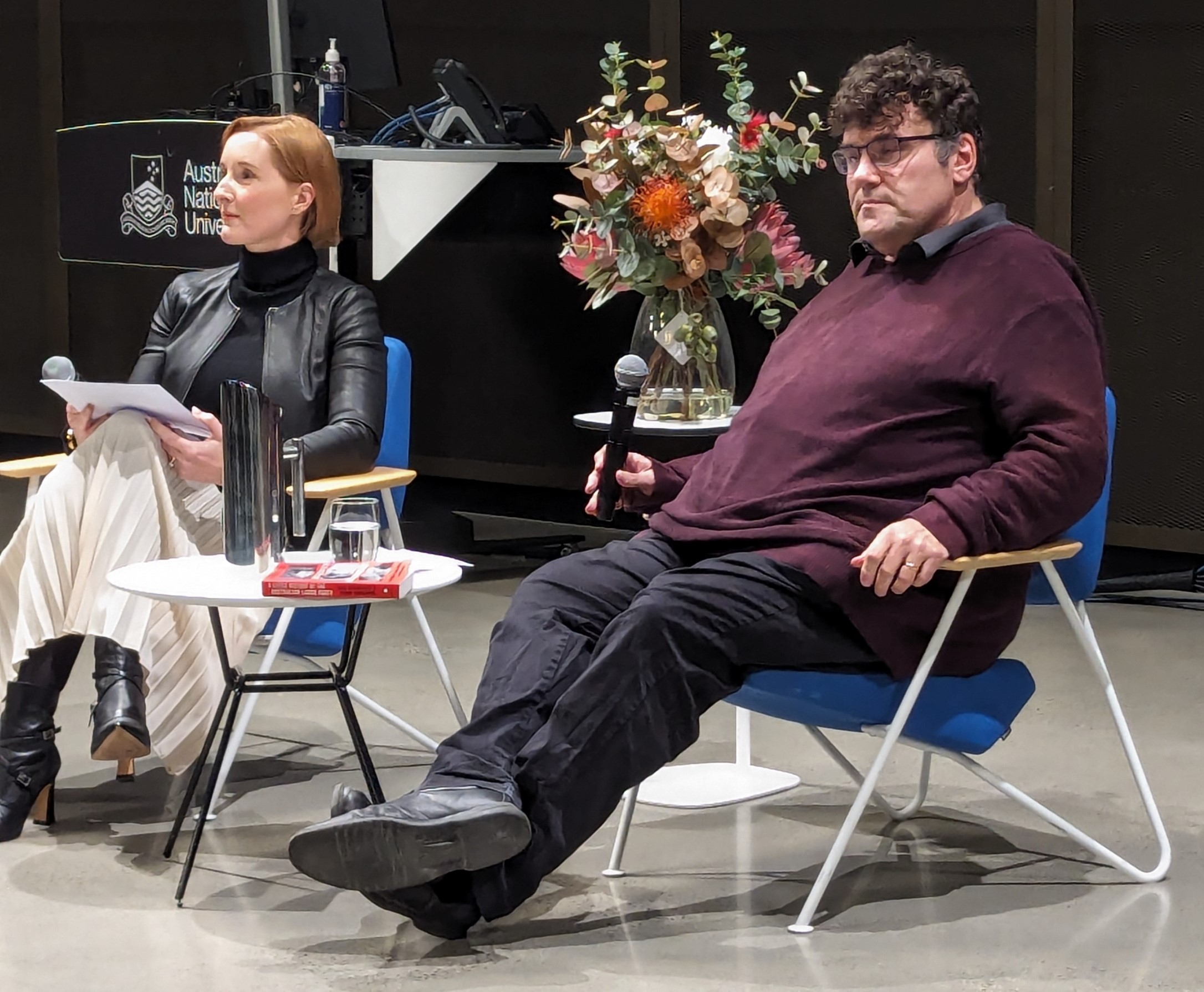
Hi Robin

The urgent National Cabinet meeting chaired by the Prime Minister to discuss gender-based violence has just wrapped up.
 
Men’s violence against women is an issue that I have received a lot of correspondence on in the past few weeks and I know continues to be an issue on the minds of many Canberrans.
 
I wanted to assure you that the government is doing its job and is taking action. Today the Prime Minister made some important announcements which I have summarised below for you:


1. The Albanese Government will invest $925.2 million over five years to permanently establish the Leaving Violence Program

We want women to know that if they want to leave a violent relationship, they will be supported to do so.

The new Leaving Violence Program will provide payments of up to $5000  along with referral services, risk assessments and safety planning.

The payment amount will be indexed annually to keep in pace with the rising cost of living, ensuring recipients are given the best support when leaving violent relationships.


2.  All governments will work together to strengthen accountability and consequences for perpetrators

This will involve work across governments and jurisdictions, with all states and territories agreeing that system responses need to be strengthened, with a focus on high-risk perpetrators and serial offenders to prevent homicides.

As Minister for Women, I’ll work with states and territories to improve information sharing about perpetrators across systems and jurisdictions.

And Police Ministers and Attorney Generals will develop options for improving police responses to high risk and serial perpetrators.

All of this work will be undertaken this year, with Premiers and Chief Ministers reporting back to National Cabinet later this year.


3. The Albanese Government will work to combat toxic male extremist views about women online.

We’ll run targeted campaigns in the places that these harmful views appear.

The campaign will run from mid-June to May next year and will counter the corrosive influence of online content targeted at teens that condones violence against women.

It will raise awareness about a rise of misogynistic influencers and content and encourage conversations within families about the damaging impact of the material.


4. The Albanese Government will ban deepfake pornography

Creating and sharing non-consensual sexually explicit material using AI technology will be subject to serious criminal penalties.

This content is deeply harmful towards women and girls and there should be zero tolerance for it.


5. The Albanese Government will reduce kids’ access to pornography and inappropriate material

We need to make sure our laws keep up with the digital age – which is why we’re piloting age assurance technology to protect children from harmful content, like pornography and other age-restricted online services.

The pilot will identify available age assurance products to protect children from online harm and test if they work.

The outcomes will inform the existing work of Australia’s eSafety Commissioner under the Online Safety Act – including through the development of industry codes or standards – to reduce children’s exposure to age-inappropriate material.
National Cabinet also agreed to strengthen prevention efforts through targeted, evidence-based approaches and to be informed by an expert led rapid review of best practice approaches. This will allow further and effective action on preventing gender-based violence, building on the considerable work under way.
 
We will continue to listen and learn from those with lived experience of violence.
 
We recognise they have intimate first-hand knowledge of services, systems, and structures that are meant to support. They know from experience the weaknesses and strengths of interventions in practice.
 
For some of us, this is deeply personal. But for all of us, this is incredibly important.
 
I can assure you that the determination around the National Cabinet table today was equal to the determination around the nation.
 
We are listening and acting with urgency to put an end to this crisis of violence against women and children.

_____________________
If you or someone you know needs support or assistance, there are several services available that are just a phone call away.

1800RESPECT
Call 1800RESPECT on 1800 737 732
Chat online via 1800RESPECT.org.au
Or text 0458 737 732

No to Violence
ntv.org.au

Men’s Referral Service
1300 766 491

13YARN
Call 13 92 76 (24 hours/7days)

This recital at the Albert Hall was a very pleasant part of the Canberra International Music Festival, and I was pleased to attend. The venue provided quite a contrast with Wigmore Hall in London with the beautiful Canberra skies seen through the windows.

Photo: Julien Hanck

C3 Trio Karénine

It was once said that Ravel picked up the first tune of his Piano Trio while watching ice-cream vendors dancing a fandango in the Basque border town of Saint-Jean-de-Luz. Whatever the origins, Ravel embraced this Basque connection as he worked feverishly on the piece throughout the summer of 1914. For a true Spaniard such as Turina, all of the many and varied sounds of Spain provided inspiration. In his Trio he forged a series of variations, each based on the musical footprint of a Spanish region.

At home in classic Parisian elegance, Julien, Louis and Paloma begin with the clearly chiselled melodic lines that are Sains-Saëns’ trademark.

Witness the consummate skill of this leading French ensemble on their first tour down under: the acclaimed Trio Karénine.

Le brio (brilliance) Karénine” – CHOC Classica

PROGRAM

Camille Saint-Saëns, Piano Trio No. 1 Op 18 (1863)

Joaquín Turina, Theme and Variations from Trio No. 1  Op 35 (1926)

Maurice Ravel, Trio in A (1914)

ARTISTS

Trio Karénine:
Julien Dieudegard (violin)
Louis Rodde (cello)
Paloma Kouider (piano)

Week beginning 24 April 2024

Malcolm Hislop A Guide to the Medieval Castles of England Pen & Sword, Pen & Sword History, January 2024.

This image has an empty alt attribute; its file name is image-26.png

Thank you, NetGalley and Pen & Sword for providing me with this uncorrected proof for review.  

A Guide to Medieval Castles of England must be packed in the luggage of anyone embarking on a tour that aims to include some of the most fascinating castles to be found in England. As I am familiar with the Wallingford Castle I thought a good test of the information in this book would be to investigate how this castle was covered. I was not disappointed. The overall assessment of the castle and grounds was honest and unlikely to lead to disappointment. But then, to the detail of the building that remains – what a delight. I felt as though I was back in Wallingford, climbing the uneven stairway, examining the door and its surrounds, looking out over the encompassing fields, and then walking back to the town through the cultivated land that is also part of this delightful spot. Reading this honest account suggests that there will be little to disappoint if this book is retained as  guide. Books: Reviews for the complete review.

Susan Tate Ankeny American Flygirl Citadel Press, Kensington Books, April 2024.

Thank you, NetGalley, for providing me with this uncorrected proof for review.

American Flygirl is a wonderful amalgam of stories associated with women and flying, from the main protagonist Hazel and her companions, including their leader Jackie Corcoran,  in the Women Airforce Service Pilots. All of these women battled prejudice, and some of the details are harrowing. At the same time, the women’s resilience and the personal face given this by is an impressive memorial to the women, those who supported them, and the changes they were able to inspire in women’s role in this most exciting and demanding occupation. Books: Reviews for the complete review.

Heather Cox Richardson from Letters from an American 

<heathercoxrichardson@substack.com>

On Wednesday,* President Joe Biden issued an executive order instructing the National Park Service to “highlight important figures and chapters in women’s history.” “Women and girls of all backgrounds have shaped our country’s history, from the ongoing fight for justice and equality to cutting-edge scientific advancements and artistic achievements,” the announcement read. “Yet these contributions have often been overlooked. We must do more to recognize the role of women and girls in America’s story, including through the Federal Government’s recognition and interpretation of historic and cultural sites.”

In a time when American women are seeing their rights stripped away, it seems worthwhile on this last day of Women’s History Month to highlight the work of Supreme Court Justice Ruth Bader Ginsburg, who challenged the laws that barred women from jobs and denied them rights, eventually setting the country on a path to extend equal justice under law to women and LGBTQ Americans.

Ginsburg was born in Brooklyn, New York, on March 15, 1933, in an era when laws, as well as the customs they protected, treated women differently than men. Joan Ruth Bader, who went by her middle name, was the second daughter in a middle-class Jewish family. She went to public schools, where she excelled, and won a full scholarship to Cornell. There she met Martin Ginsburg, and they married after she graduated. “What made Marty so overwhelmingly attractive to me was that he cared that I had a brain,” she later explained. Relocating to Fort Sill, Oklahoma, for her husband’s army service, Ginsburg scored high on the civil service exam but could find work only as a typist. When she got pregnant with their daughter, Jane, she lost her job.

Two years later, the couple moved back east, where Marty had been admitted to Harvard Law School. Ginsburg was admitted the next year, one of 9 women in her class of more than 500 students; a dean asked her why she was “taking the place of a man.” She excelled, becoming the first woman on the prestigious Harvard Law Review. When her husband underwent surgery and radiation treatments for testicular cancer, she cared for him and their daughter while managing her studies and helping Marty with his. She rarely slept.

After he graduated, Martin Ginsburg got a job in New York, and Ginsburg transferred to Columbia Law School, where she graduated at the top of her class. But in 1959, law firms weren’t hiring women, and judges didn’t want them as clerks either—especially mothers, who might be distracted by their “familial obligations.” Finally, her mentor, law professor Gerald Gunther, got her a clerkship by threatening Judge Edmund Palmieri that if he did not take her, Gunther would never send him a clerk again.

After her clerkship and two years in Sweden, where laws about gender equality were far more advanced than in America, Ginsburg became one of America’s first female law professors. She worked first at Rutgers University—where she hid her pregnancy with her second child, James, until her contract was renewed—and then at Columbia Law School, where she was the first woman the school tenured.

At Rutgers she began her bid to level the legal playing field between men and women, extending equal protection under the law to include gender. Knowing she had to appeal to male judges, she often picked male plaintiffs to establish the principle of gender equality. 

In 1971 she wrote the brief for Sally Reed in the case of Reed vs. Reed, when the Supreme Court decided that an Idaho law specifying that “males must be preferred to females” in appointing administrators of estates was unconstitutional. Chief Justice Warren Burger, who had been appointed by Richard Nixon, wrote: “To give a mandatory preference to members of either sex over members of the other…is to make the very kind of arbitrary legislative choice forbidden by the Equal Protection Clause of the Fourteenth Amendment” to the Constitution.

In 1972, Ginsburg won the case of Moritz v. Commissioner. She argued that a law preventing a bachelor, Charles Moritz, from claiming a tax deduction for the care of his aged mother because the deduction could be claimed only by women, or by widowed or divorced men, was discriminatory. The United States Court of Appeals for the Tenth Circuit agreed, citing Reed v. Reed when it decided that discrimination on the basis of sex violated the Equal Protection Clause of the Fourteenth Amendment to the Constitution.

In that same year, Ginsburg founded the Women’s Rights Project at the American Civil Liberties Union (ACLU). Between 1973 and 1976, she argued six gender discrimination cases before the Supreme Court. She won five. The first time she appeared before the court, she quoted nineteenth-century abolitionist and women’s rights activist Sarah Grimké: “I ask no favor for my sex. All I ask of our brethren is that they take their feet off our necks.”

Nominated to the Supreme Court by President Bill Clinton in 1993, she was confirmed by a vote of 96 to 3. Clinton called her “the Thurgood Marshall of gender-equality law.”

In her 27 years on the Supreme Court, Ginsburg championed equal rights both from the majority and in dissent (which she would mark by wearing a sequined collar), including her angry dissent in 2006 in Ledbetter v. Goodyear Tire & Rubber when the plaintiff, Lilly Ledbetter, was denied decades of missing wages because the statute of limitations had already passed when she discovered she had been paid far less than the men with whom she worked. “The court does not comprehend or is indifferent to the insidious way in which women can be victims of pay discrimination,” Ginsburg wrote. Congress went on to change the law, and the first bill President Barack Obama signed was the Lilly Ledbetter Fair Pay Act.

In 2013, Ginsburg famously dissented from the majority in Shelby County v. Holder, the case that gutted the 1965 Voting Rights Act. The majority decided to remove the provision of the law that required states with histories of voter suppression to get federal approval before changing election laws, arguing that such preclearance was no longer necessary. Ginsburg wrote: “Throwing out preclearance when it has worked and is continuing to work to stop discriminatory changes is like throwing away your umbrella in a rainstorm because you are not getting wet.” As she predicted, after the decision, many states immediately began to restrict voting.

Ginsburg’s dissent made her a cultural icon. Admirers called her “The Notorious R.B.G.” after the rapper The Notorious B.I.G., wore clothing with her image on it, dressed as her for Halloween, and bought RBG dolls and coloring books. In 2018 the hit documentary “RBG” told the story of her life, and as she aged, she became a fitness influencer for her relentless strength-training regimen. She was also known for her plain speaking. When asked when there would be enough women on the Supreme Court, for example, she answered: “[W]hen there are nine.”

Ginsburg’s death on September 18, 2020, brought widespread mourning among those who saw her as a champion for equal rights for women, LGBTQ Americans, minorities, and those who believe the role of the government is to make sure that all Americans enjoy equal justice under law. Upon her passing, former secretary of state Hillary Clinton tweeted: “Justice Ginsburg paved the way for so many women, including me. There will never be another like her. Thank you RBG.”

Just eight days after Ginsburg’s death, then-president Donald Trump nominated extremist Amy Coney Barrett to take her seat on the court, and then–Senate majority leader Mitch McConnell (R-KY) rushed her confirmation hearings so the Senate could confirm her before the 2020 presidential election. It did so on October 26, 2020. Barrett was a key vote on the June 2022 Dobbs v. Jackson Women’s Health Organization decision, the Supreme Court ruling that overturned the 1973 Roe v. Wade decision recognizing the constitutional right to abortion.

Ginsburg often quoted Justice Louis Brandeis’s famous line, “The greatest menace to freedom is an inert people,” and she advised people to “fight for the things you care about, but do it in a way that will lead others to join you.” 

Setting an example for how to advance the principle of equality, she told the directors of the documentary RBG that she wanted to be remembered “[j]ust as someone who did whatever she could, with whatever limited talent she had, to move society along in the direction I would like it to be for my children and grandchildren.”

Notes:

https://variety.com/2020/politics/news/ruth-bader-ginsburg-reactions-hollywood-celebrities-1234775380; https://www.washingtonpost.com/local/crowds-gather-at-supreme-court-to-remember-justice-ruth-bader-ginsburg/2020/09/18/895ee13c-fa18-11ea-be57-d00bb9bc632d_story.html; https://www.rollingstone.com/politics/politics-news/ruth-bader-ginsburg-dead-777835; https://www.whitehouse.gov/briefing-room/presidential-actions/2024/03/27/executive-order-on-recognizing-and-honoring-womens-history; https://www.npr.org/2020/09/18/100306972/justice-ruth-bader-ginsburg-champion-of-gender-equality-dies-at-87; https://www.pbs.org/newshour/show/justice-ginsburg-enough-women-supreme-court; https://www.radcliffe.harvard.edu/news-and-ideas/ruth-bader-ginsburg-tells-young-women-fight-for-the-things-you-care-about.

*Wednesday March 27, 2024.

RBG at the Canberra Theatre

Below is a review of the Sydney Theatre Company’s RBG: One of Many, staged in Sydney. I was fortunate to find tickets for the 5.00 performance at The Canberra Theatre on Sunday.

RBG: Of Many, One is a beautifully crafted, virtuosically performed play about Ruth Bader Ginsburg

Published: November 8, 2022 2.36pm AEDT

Author Penelope Crossley Professor of Law, The University of Sydney Law School, University of Sydney

Disclosure statement:

Penelope Crossley received complimentary tickets for the purpose of reviewing this performance.

Republished here through the generosity of The Conversation under Creative Commons.

Review: RBG: Of Many, One, directed by Priscilla Jackman, Sydney Theatre Company

Writing a play about the life and legacy of American Supreme Court Justice Ruth Bader Ginsburg was always going to be an ambitious task for playwright Suzie Miller.

Ginsburg (or “RBG” to her many fans) was only the second female judge to be appointed onto the bench of the court in its more than 200-year history, when elevated to the court in 1993, aged 60.

Throughout her life, she was much admired for her trailblazing legal career, her work advocating for gender equality and her considered dissenting judgements against the often-conservative majority decision.

At the same time, both during her life and after her death, RBG was attacked for openly criticising former US president Donald Trump during the presidential race and for not resigning from the court during Obama’s presidency, despite her advanced age and cancer diagnosis.

When RBG ultimately died during the Trump presidency, she was not able to be replaced by another Democratic appointee, leading to the court becoming even more conservative.

Miller’s new play is beautifully crafted, written from the perspective of RBG. She discusses her most famous cases throughout her life and her conversations with three of the presidents who served during her 27-year term on the bench. Over this journey, the play takes the audience through a roller-coaster of emotions.


Read more: Ruth Bader Ginsburg forged a new place for women in the law and society


The light and the dark

RBG: Of Many, One, follows RBG’s time as one of the few women at Harvard Law School, along with her work challenging gender-based discrimination including the ability of women to serve on juries and the cancer that repeatedly afflicted her family.

Miller seamlessly weaves quotes from RBG’s most famous cases and judgements into the script, so we hear her authentic voice. The play demonstrates a complex understanding of the legal cases, but Miller doesn’t assume familiarity with RBG: this play is equally accessible for the non-lawyer who knows little of RBG’s history.

Heather Mitchell in a red and white shirt.
Heather Mitchell gives a virtuosic performance. Prudence Upton/Sydney Theatre Company

Miller doesn’t skate over the criticisms of RBG. She humanises the decisions she made and her later reflections on those decisions. In particular, the audience gets to see, upon reflection, how deeply troubled RBG was by her decision to criticise Donald Trump during the Trump/Clinton presidential election.

RBG: Of Many, One’s ultimate success or failure turns on the strength of the acting. Heather Mitchell is a virtuoso, giving the performance of her life.

She shows us Bader Ginsburg from a young girl through to her physical frailty in old age, poignantly characterising the emotional depth of her character.

The inner strength, the anxieties, the love, and the fears are all expertly conveyed to the audience. At times I have to remind myself that she is indeed playing RBG.

Heather Mitchell in a cardigan
The play takes us from RBG’s childhood to her old age. Prudence Upton/Sydney Theatre Company

Read more: Ginsburg’s legal victories for women led to landmark anti-discrimination rulings for the LGBTQ community, too


A simple staging

David Fleischer’s set design is stripped back to a beautiful simplicity. For most of the play the main prop is a solitary armchair, sitting isolated on the big stage.

A big red stage with a single chair.
David Fleischer’s set gives room for Heather Mitchell to shine. Prudence Upton/Sydney Theatre Company

Paul Charlier’s composition and sound design is another strength. He juxtaposes some of the operas that RBG so loved with the music of the rapper the Notorious B.I.G. (from whom the nickname the Notorious RBG is derived). This deftly highlights the complexity of RBG’s character.

These simple design choices allow Mitchell to shine. This play will long be one that Miller and Mitchell will be remembered for.

RBG: OF MANY, ONE

by Suzie Miller
Directed by Priscilla Jackman 

“One of the all-time great performances” The Sydney Morning Herald

After a wildly popular, sold-out premiere season in 2022, this smash-hit production returns to the stage with the brilliant Heather Mitchell reviving her award-winning “virtuosic performance” (The Conversation) of the woman who changed the face of the American legal system: the indomitable Ruth Bader Ginsburg.

The second woman to be appointed to the US Supreme Court, Ruth Bader Ginsburg was both a trailblazer in the American judiciary and a fierce advocate for gender equality and reproductive rights. Now, her life is brought to the stage by the extraordinary pen of Olivier Award-winning Australian playwright Suzie Miller (Prima Facie), in a story that chronicles Ginsburg’s wins and dissents, traces her steps forward and the steps back, and brings you right into the room with Ruth at the most pivotal moments of her life.

Director Priscilla Jackman reunites with Mitchell to reconjure RBG in this once-in-a-generation theatrical event that is “magnificent from start to finish” (Limelight). Don’t miss your second chance to see this sublime production.

Approx. duration 1 hr 40 mins (no interval). Subject to change.
Content Adult themes, herbal cigarettes and complete theatrical blackout. Subject to change.

Discover more about playwright Suzie Miller’s captivating smash-hit RBG: Of Many, One.

As a young female law student, I looked up to women judges; they were groundbreakers for me, and they remain so. The more women in powerful legal positions, the more opportunity for the law to be influenced by women’s lived experiences. Ruth Bader Ginsburg, herself, brought all her intelligence and thoughtfulness to her judicial profession; she brought her feminism, her roles as mother, daughter, life-partner; she bought her Jewish background, her childhood of loss and socio-economic repression, she brought her incredibly flexible mind and her sharp senses. She brought herself as a woman completely and without apology. All of which has not only influenced the USA but women’s lives around the world – including women and lawyers in Australia.

Throughout her life, RBG felt strongly about democracy and the rule of law, and to ensure both of these, she applauded the strict separation of executive and judicial powers. The rule of law, in short, means that no one is above the law – including leaders and politicians. This accountability and transparency must never be taken for granted, and the separation of powers – that the government and the courts must never interfere with or seek to influence each other – is a way of keeping the checks and balances on both the government and judges of the day. This is democracy in action.

With RBG: Of Many, One, I was so warmly supported by Kip Williams, Artistic Director at STC in expressing my unique vision for the play. I wanted to focus on the incredible legacy of RBG, and specific conversations/ dialogues she had with three different US presidents: Clinton, Obama and Trump. In particular, I wanted to explore how even the mighty and most brilliant of us can make mistakes, and that what protects our way of life is the rule of law itself.

In writing RBG: Of Many, One it was always Heather Mitchell who was to play her. Her talent is astonishing. Heather’s love of the character and her full-bodied soulful investment is a gift. In Priscilla Jackman I have found a brilliant director, one I admire for her talent, intellect, commitment and sheer bloody-mindedness in getting it right.

In David Fleischer’s design there is a magnificent realisation of the sheer size and power of the institution Ruth served, and the big life she led. The lights and sound have created a landscape that I could only have dreamed of, operatic, moody, fun and exciting – I thank both Paul Charlier and Alexander Berlage for their vision and hard work, together with Stage Manager Katie Hankin. For their dramaturgy, I thank; Polly Rowe, Kip Williams, Caleb Lewis, Paige Rattray and Jessica Arthur from STC, who offered valuable thoughts and insights. I also thank Robert Beech-Jones (my partner), Marty McGrath (Heather’s partner); and Karen O’Connell, Nicole Abadee, Rochelle Zurnamer, Hilary Bonney, Lisa Hunt and Sam Mostyn – my sisters ‘in law’ – who all encouraged the telling of this very female-focused law story.

My reflections

Heather Cox Richardson’s comments on Ruth Bader Ginsberg in her Letters from an American, came at a fortuitous time. I did not have to wait long to post it as I was fortunate to be able to see the play on Sunday evening. Heather Mitchell, who gave this one-person show was outstanding. From teenager to a bent woman in her eighties; Presidents Clinton, Obama and Trump; people who featured in her rise to Supreme Court Judge – Mitchell was amazing.

Her depiction of RBG as a teenager was so subtle – just her feet swinging above the ground as she hunched in her chair; using the art of depicting a straight back, a slightly bent one, and then her old age fragility as she does her morning workout;  the voices of the other protagonists in her story as well as the simple reflections of a telling characteristic their repertoire of importance – Mitchell excelled at all. Sometimes she was so subtle, at others the audience responded to an almost farcical account of a self-important protagonist’s demeanour.

RBG’s reference to the support she received from the first woman appointed to the Supreme Court, Justice Sandra  Day O’Connor (March 26, 1930 – December 1, 2023) a Republican appointed by President Regan recalls the dialogue running on MSBC at the moment.

Quotes were used throughout the play, some which appear below. Others I have added as I could not resist doing so.

“The decision whether or not to bear a child is central to a woman’s life, to her well-being and dignity. It is a decision she must make for herself. When the government controls that decision for her, she is being treated as less than a full adult human responsible for her own choices.”
― Ruth Bader Ginsburg

“When I’m sometimes asked when will there be enough [women on the Supreme Court] and I say, ‘When there are nine,’ people are shocked. But there’d been nine men, and nobody’s ever raised a question about that.”
― Ruth Bader Ginsburg

“Fight for the things that you care about. But do it in a way that will lead others to join you.”
― Ruth Bader Ginsburg

“Reading is the key that opens doors to many good things in life. Reading shaped my dreams, and more reading helped me make my dreams come true.”
― Ruth Bader Ginsburg

“How to be Like RBG:
Work for what you believe in, but pick your battles, and don’t burn your bridges. Don’t be afraid to take charge, think about what you want, then do the work, but then enjoy what makes you happy, bring along your crew, have a sense of humor.
-Ruth Bader Ginsburg, Notorious RBG by
Irin Carmon”
― Ruth Bader Ginsburg

“My mother was very strong about my doing well in school and living up to my potential. Two things were important to her and she repeated them endlessly. One was to ‘be a lady,’ and that meant conduct yourself civilly, don’t let emotions like anger or envy get in your way. And the other was to be independent, which was an unusual message for mothers of that time to be giving their daughters.”
― Ruth Bader Ginsburg, My Own Words: Ruth Bader Ginsburg

“Never underestimate the power of a girl with a book.”
― Ruth Bader Ginsberg

“Another often-asked question when I speak in public: “Do you have some good advice you might share with us?” Yes, I do. It comes from my savvy mother-in-law, advice she gave me on my wedding day. “In every good marriage,” she counseled, “it helps sometimes to be a little deaf.” I have followed that advice assiduously, and not only at home through fifty-six years of a marital partnership nonpareil. I have employed it as well in every workplace, including the Supreme Court of the United States. When a thoughtless or unkind word is spoken, best tune out. Reacting in anger or annoyance will not advance one’s ability to persuade.”
― Ruth Bader Ginsburg, My Own Words

“the greatest menace to freedom is an inert people; that public discussion is a political duty; and that this should be a fundamental principle of the American government. Brandeis”
― Ruth Bader Ginsburg, My Own Words

Briscola Italian Restaurant

We had just enjoyed seeing RBG at the Canberra Theatre and, having had the good fortune to attend a 5.00 session were ready for a meal, to eat and, more importantly discuss this magnificent performance.

Briscola had been recommended and we were very fortunate that a table was available. The meals were delicious, from the warm bread to the generous portions of ravioli (a blackboard menu item -RAVIOLI DEL GIORNO {v} locally made ravioli of the day); LINGUINE DI MARE {df} king prawns / scallops / mussels / garlic / chilli / shallots / cherry tomato // in olive oil or napoli sugo; POLLO GAMBERI {gf*} chicken breast/ king prawns / garlic / chilli/ brandy / macchiato sugo / roasted veg & chats; and my BARRAMUNDI seared barramundi/ vongole / fregola / green beans / cherry toms / salmoriglio.

Cindy Lou dines at Compa

Aria is one of our favourite restaurants, and to hear that Matt Moran was bringing his style to Canberra with Sando, a sandwich outlet, and Compa, an Italian restaurant, was thrilling. I haven’t tried the sandwiches yet, as their popularity has led to queues in the street but was pleased to get a booking at 6.15 on a Tuesday night for Compa. There were six of us, and this is where I found the seating disappointing. The four person booths, or two person tables looked inviting. Where we were seated was at a long table, at which two smaller groups or one large group could be seated. As the restaurant was quite noisy, this was not ideal for conversation. On the other hand, the food could not be faulted. With several different steaks to assess, several sides and two whole trout dishes plus starting with olives and bread I feel that we are able to give Compa several stars for excellence. Although there was a slight glitch with service initially this was swiftly rectified by a very competent wait person. The service remained very good after that, we felt welcome and will return. However, this will probably be in numbers that ensure better seating.

Week beginning April 17 2024

Scott Ryan The Last Decade of Cinema Black Chateau Fayetteville Mafia Press, June 2024.

Thank you, NetGalley, for providing me with this uncorrected proof for review.

Scott Ryan has a distinct writing style that carries this serious, perceptive and analytical approach to a decade of film with a firm grasp of the need to engage with his audience. At the same time, he ensures that he maintains the obligation he has imposed on himself to utter raw truths. His fidelity to exposing the failings that largely mar the aftermath of 1990s film underlies the way in which he approaches his prime aim. The responsibility he feels for the task he has set himself – bringing the sheer wonder of 1990s film to a large audience – is demonstrated by the choices he makes, the language he uses, the additional material and his tenacity in acquiring relevant interviews.

Ryan chooses the films that fit his criteria – but then, oh joy, he adds a supplementary list that could have equally been chosen. He also adds ten films from the immediately previous decade, and the one after that demonstrating that some films that meet his criteria do fall outside the strict period he gave himself for the bulk of the book. The films are supplemented by some excellent interviews – a tribute to his thoroughness in getting the best for to meet the challenge he set for himself; notes for each chapter; a comprehensive index; and informative acknowledgements. See Books: Reviews for the complete review.

Articles below: Bob McMullan, Can Albo overcome/overturn the paradox of class?; Agatha Christie, Murder by the Book; Eleanor Coppola; Heather Cox Richardson from Letters from an American; Pompeii: Breathtaking new paintings found at ancient city; Gender Institute Events; Cindy Lou eats out in Canberra.

Bob McMullan

Can Albo overcome/overturn the paradox of class?

Boris Johnson did it, Donald Trump specialises in it, Peter Dutton is trying it.

All these conservatives whose economic policies serve the special interests of the highest income earners have based, or are trying to base, their political strategy on winning the votes of working class voters, particularly working class men, and even more specifically, white working class men.

Renowned US journalist, EJ Dionne, recently described it this way:

“It’s the paradox of Bidenism: The President sees himself as the champion of the working class but can’t rely on its support to win reelection. To prevail he’ll need a mountain of ballots from college-educated voters in metropolitan areas.

The flip side is the paradox of the Republican Party, which now depends on white working class votes, especially in small towns and the countryside. Yet its economic policies remain geared to the interests of high earners and investors, many of whom have fled the party.”

A similar pattern emerged in the UK election in 2019. The Conservative Party, under Boris Johnson’s leadership, wrested a large cohort of traditional Labour seats in the so-called ‘red wall’ into their column which contributed to the worst Labour result for a generation.

It is no secret that Peter Dutton seeks to follow the same path in Australia. He is targeting the outer suburban seats in the major cities to compensate for the loss of urban seats to Labor, Teals and Greens.

Why is this happening? Is it an irreversible trend?

Obviously, there is no single cause of a major realignment in political support. And despite their similarities, the societal composition, history, geography, electoral systems and economies of the USA, UK and Australia are sufficiently different to create different drivers of change.

But it does appear that there are some common elements.

EJ Dionne attributes the working class support for Trump to “… white racial backlash and the rise of new cultural and religious issues.” And:

“Trump has bundled together all the resentments felt by voters experiencing both economic decline and cultural estrangement.”

Dionne also points to an interesting breakdown of the recent Quinnipiac poll. The top-line result was Biden 49 Trump 45. However, amongst voters with college degrees Biden led 60/34 whilst voters without a college degree favoured Trump 58/37.

An interesting explanation of the UK 2019 paradox is provided by The Economist in a recent issue. The argument they quote suggests:” …that a group of voters who should already have been swing voters (because they were close to the Tories on cultural issues like immigration) finally did swing. They left Labour when it ceased to offer them much…”

This same class paradox is the obvious basis for Peter Dutton’s strategy on behalf of the Australian coalition.

Rather than focusing on winning back the traditional Liberal seats lost in 2022, his strategy is focused on the outer metropolitan seats in the cities. This is clearly based on an assessment that the alienation of working class voters in the USA and UK is also happening here. There is no doubt some of the same factors are at play in Australia as issues like the Yes campaign for indigenous recognition was seen by many in these regions as a distraction from what they see as the appropriate primacy of cost of living issues.

This is similar to the argument I put forward in a recent article on the Hasluck Test for the Labor Party.

However, the early indications are that this strategy is not working, or at least not working  yet. The recent Dunkley by-election was an opportunity to road test the strategy and it came up short.

Recent evidence from the UK suggests that the change is not irreversible.

The recent Economist article suggests the “classic ‘red wall’ voter is a white man aged between 55 and 64. In 2019 this kind of voter was more likely to vote Conservative than Labour. He is now twice as likely to back Labour.”

This analysis suggests that such voters have become swinging voters rather than part of an inevitable drift to the right side of politics.

It also suggests that there more factors than economic self-interest at play.

If the Australian Labor government can show genuine interest in the concerns of outer suburban voters, display the reasonable and competent government the Tories have so dramatically failed to do in the UK and have positive proposals for the future without promising to fix everything all at once they should be able to retain sufficient of these voters to retain the seats at risk.

Meanwhile, the coalition’s strategy of ignoring the interests of voters in the Teal seats is likely to guarantee most, if not all the “Teals” survive. They may even be joined by others either in the inner-city or regional seats similar to Indi.

Anthony Norman Albanese is an Australian politician serving as the 31st and current prime minister of Australia since 2022. He has been leader of the Australian Labor Party since 2019.

MURDER BY THE BOOK : NEW UK EXHIBITION

27th March 2024

A Celebration of 20th Century British Crime Fiction at Cambridge University Library

About The Exhibition

Cambridge University Library shines a spotlight on the UK’s most read, bought and borrowed genre : crime fiction. But of course, we didn’t need to tell Agatha Christie fans that… This free-to-visit exhibition celebrates some of the best books, classic and contemporary, that have captivated readers throughout the UK and beyond. Seize your chance to marvel at the Library’s remarkable collection of first editions, see rare manuscripts and curios from March 23rd to August 24th.

From Wilkie Collins to Charles Dickens, Arthur Conan Doyle to Agatha Christie, Ian Rankin to Val McDermid, award-winning crime writer Nicola Upson has curated a criminally good treat for visitors. Agatha Christie fans will get the chance to marvel at one of the author’s own typewriters, an original typescript for her final Poirot novel, Curtain, as well as notebooks and a Dictaphone which she used to plot her stories. Plus, there are almost 100 first edition crime classics in their original dust jackets from the library’s own collection, so you can rest assured that you’ll be coming away with a few new (or new to you) titles to add to your reading lists.

Key Info

Dates: Saturday March 23rd – Saturday August 24th 2024

Opening Times: Monday – Friday 9am – 6:30pm, Saturday 9am – 4:30pm

Tickets: Tickets are free. Simply book a date and timeslot to secure your visit. Book Now

Visit the exhibition website

Eleanor Coppola, artist and matriarch of filmmaking dynasty, dead at 87

By Dan Heching, CNN  2 minute read  Published 1:24 PM EDT, Sat April 13, 2024

Eleanor Coppola attends the tribute to Francis Ford Coppola during the 11th Film Festival Lumiere on October 18, 2019, in Lyon, France.

Eleanor Coppola attends the tribute to Francis Ford Coppola during the 11th Film Festival Lumiere on October 18, 2019, in Lyon, France. Stephane Cardinale/Corbis Entertainment/Getty ImagesCNN — 

Eleanor Coppola, award-winning film documentarian, artist, writer and wife of Francis Ford Coppola, has died. She was 87.

The news was confirmed by Francis Ford Coppola’s representative Nesma Youssef, who said in an email Eleanor Coppola was “surrounded by her loving family” at home in Rutherford, California, at the time of her death on Friday.

Eleanor and Francis Ford Coppola were married for 61 years, with Eleanor accompanying her husband on many of his film shoots throughout his illustrious career.

In 1992, she won a Primetime Emmy Award for her documentary “Hearts of Darkness: A Filmmaker’s Apocalypse,” about the making of Francis Ford Coppola’s 1979 war epic “Apocalypse Now.” She made several other documentaries about her family’s films and, according to an obituary sent by Youssef, was most recently editing a documentary about the making of her daughter Sofia Coppola’s 2006 film “Marie Antoinette.”

(From left) Roman Coppola, Eleanor Coppola, Francis Ford Coppola and Sofia Coppola attend the 43rd Directors Guild of America Awards on March 16, 1991, in Beverly Hills, California.

(From left) Roman Coppola, Eleanor Coppola, Francis Ford Coppola and Sofia Coppola attend the 43rd Directors Guild of America Awards on March 16, 1991, in Beverly Hills, California. Ron Galella Collection/Getty Images

Eleanor Coppola was a feature filmmaker in her own right, making her directorial debut at the age of 80 in 2016 with the Diane Lane-starring romance “Paris Can Wait.” She also wrote the movie, which followed the wife of a successful movie producer as she makes her way across France with a driver.

Her second feature, 2020’s “Love is Love is Love,” was selected to screen at the Tribeca Film Festival and the Deauville American Film Festival in France.

In addition to her pursuits in filmmaking, Eleanor Coppola was an accomplished artist and writer.

Along with her husband, she was at the helm of one of the most prolific and successful filmmaking families in Hollywood. Her children Roman Coppola (writer and producer on several Wes Anderson films) and Sofia Coppola (“The Virgin Suicides,” “Lost in Translation”) are both successful filmmakers. Nicolas Cage, Talia Shire and Jason Schwartzman are part of the extended Coppola family.

Shortly before her death, Eleanor Coppola completed her third book, a memoir. In the manuscript, she wrote: “I appreciate how my unexpected life has stretched and pulled me in so many extraordinary ways and taken me in a multitude of directions beyond my wildest imaginings.”

I reviewed Ian Nathan’s, The Coppolas A Movie Dynasty on October 6 2021. The beginning of the review appears below.

Ian Nathan The Coppolas A Movie Dynasty Palazzo, 2021.

This image has an empty alt attribute; its file name is image.png

Thank you NetGalley for providing me with this uncorrected proof for review.

Ian Nathan has written an insightful and exciting contribution to our understanding of writing, directing and producing films; the role of family and ability in a dynasty such as the Coppolas; the studio system, and the contribution of film finance, box office returns and reviews; to the success of a film that begins with an idea that impels people such as Francis Ford and Sofia Coppola toward creative endeavour. Francis Ford and Sofia Coppola are the stars of this book.

However, other members of the Coppola family also make contributions to the Coppola dynasty’s work, and they are also given a place in this absorbing story: wife and mother, Eleanor Coppola; sister, Talia Shire; brother, August; sons, Gio and Roman Coppola; cousin, Nicholas Cage (formerly Coppola); granddaughter, Gia Coppola. So, too, are the actors who took their place, successfully or sometimes perhaps not, in the films. Francis Ford’s father, Carmine, makes an appearance. Here a story Nathan relates about a prank played on him by Francis Ford Coppola is very sympathetic to him, rather than acknowledging the impact on the father – an interesting comment on the investment Nathan makes in his portrayal of the son. See Books: Reviews, 2021 for the complete review.

Heather Cox Richardson from Letters from an American <heathercoxrichardson@substack.com> 

April 13, 2024.

There are really two major Republican political stories dominating the news these days. The more obvious of the two is the attempt by former president Donald Trump and his followers to destroy American democracy. The other story is older, the one that led to Trump but that stands at least a bit apart from him. It is the story of a national shift away from the supply-side ideology of Reagan Republicans toward an embrace of the idea that the government should hold the playing field among all Americans level.

While these two stories are related, they are not the same.

For forty years, between 1981, when Republican Ronald Reagan took office, and 2021, when Democrat Joe Biden did, the Republicans operated under the theory that the best way to run the country was for the government to stay out of the way of market forces. The idea was that if individuals could accumulate as much money as possible, they would invest more efficiently in the economy than they could if the government regulated business or levied taxes to invest in public infrastructure and public education. The growing economy would result in higher tax revenues, enabling Americans to have both low taxes and government services, and prosperity would spread to everyone. 

But the system never worked as promised. Instead, during that 40-year period, Republicans passed massive tax cuts under Reagan, George W. Bush, and Trump, and slashed regulations. A new interpretation of antitrust laws articulated by Robert Bork in the 1980s permitted dramatic consolidation of corporations, while membership in labor unions declined. The result was that as much as $50 trillion moved upward from the bottom 90% of Americans to the top 1%. 

To keep voters on board the program that was hollowing out the middle class, Republicans emphasized culture wars, hitting hard on racism and sexism by claiming that taxes were designed by Democrats to give undeserving minorities and women government handouts and promising their evangelical voters they would overturn the Supreme Court’s 1973 Roe v. Wade decision recognizing the constitutional right to abortion. Those looking for tax cuts and business deregulation depended on culture warriors and white evangelicals to provide the votes to keep them in power.

But the election of Democrat Barack Obama in 2008 proved that Republican arguments were no longer effective enough to elect Republican presidents. So in 2010, with the Citizens United v. Federal Elections Commission decision, the Supreme Court freed corporations to pour unlimited money into U.S. elections. That year, under Operation REDMAP, Republicans worked to dominate state legislatures so they could control redistricting under the 2010 census, yielding extreme partisan gerrymanders that gave Republicans disproportionate control. In 2013 the Supreme Court’s Shelby County v. Holder decision greenlighted the voter suppression Republicans had been working on since 1986.  

Even so, by 2016 it was not at all clear that the cultural threats, gerrymandering, and voter suppression would be enough to elect a Republican president. People forget it now because of all that has come since, but in 2016, Trump offered not only the racism and sexism Republicans had served up for decades, but also a more moderate economic program than any other Republican running that year. He called for closing the loopholes that permitted wealthy Americans to evade taxes, cheaper and better healthcare than the Democrats had provided with the Affordable Care Act (also known as Obamacare), bringing manufacturing back to the U.S., and addressing the long backlog of necessary repairs to our roads and bridges through an infrastructure bill. 

But once in office, Trump threw economic populism overboard and resurrected the Republican emphasis on tax cuts and deregulation. His signature law was the 2017 tax cuts for corporations and the wealthy at a cost of at least $1.9 trillion over ten years. At the same time, Trump continued to feed his base with racism and sexism, and after the Unite the Right rally at Charlottesville, Virginia, in August 2017, he increasingly turned to his white nationalist base to shore up his power. On January 6, 2021, he used that base to try to overturn the results of the 2020 presidential election. 

Republican senators then declined to convict Trump of that attempt in his second impeachment trial, apparently hoping he would go away. Instead, their acquiescence in his behavior has enabled him to continue to push the Big Lie that he won the 2020 election. But to return to power, Trump has increasingly turned away from establishment Republicans and has instead turned the party over to its culture war and Christian nationalist foot soldiers. Now Trump has taken over the Republican National Committee itself, and his supporters threaten to turn the nation over to the culture warriors who care far more about their ideology than they do about tax cuts or deregulation.

The extremism of Trump’s base is hugely unpopular among general voters. Most significantly, Trump catered to his white evangelical base by appointing Supreme Court justices who would overturn Roe v. Wade, and in 2022, when the court did so, the dog caught the car. Americans overwhelmingly support reproductive freedoms, and Republicans are getting hammered over the extreme abortion bans now operative in Republican-dominated states. Now Trump and a number of Republicans have tried to back away from their antiabortion positions, infuriating antiabortion activists. 

It is hard to see how the Republican Party can appeal to both Trump’s base and general voters at the same time. 

That split dramatically weakens Trump politically while he is in an increasingly precarious position personally. He will, of course, go on trial on Monday, April 15, for alleged crimes committed as he interfered in the 2016 election. At the same time, the $175 million appeals bond he posted to cover the judgment in his business fraud trial has been questioned and must be justified by April 14. The court has scheduled a hearing on the bond for April 22. And his performance at rallies and private events has been unstable. 

He seems a shaky reed on which to hang a political party, especially as his MAGA Republicans have proven unable to manage the House of Representatives and are increasingly being called out as Russian puppets for their attacks on Ukraine aid.  

Regardless of Trump’s future, though, the Reagan Era is over. 

President Biden and Vice President Kamala Harris have quite deliberately rejected the economic ideology that concentrated wealth among the 1%. On their watch, the federal government has worked to put money into the hands of ordinary Americans rather than the very wealthy. With Democrats and on occasion a few Republicans, they have passed legislation to support families, dedicate resources to making sure people with student debt are receiving the correct terms of their loans (thus relieving significant numbers of Americans), and invested in manufacturing, infrastructure, and addressing climate change. They have also supported unions and returned to an older definition of antitrust law, suing Microsoft, Amazon, and Apple and allowing the federal government to negotiate with pharmaceutical companies over drug prices.

Their system has worked. Under Biden and Harris the U.S. has had unemployment rates under 4% for 26 months, the longest streak since the 1960s. Wages for the bottom 80% of Americans have risen faster than inflation, chipping away at the huge disparity between the rich and the poor that the policies of the past 40 years have produced. 

Today, in an interview with Jamie Kitman of The Guardian, United Auto Workers president Shawn Fain, who negotiated landmark new union contracts with the country’s Big Three automakers, explained that the world has changed: “Workers have realized they’ve been getting screwed for decades, and they’re fed up.”

Notes:

https://time.com/5888024/50-trillion-income-inequality-america; https://www.cbpp.org/research/federal-tax/the-2017-trump-tax-law-was-skewed-to-the-rich-expensive-and-failed-to-deliver; https://www.theguardian.com/us-news/2024/apr/13/shawn-fain-president-uaw-union-interview; https://www.meidastouch.com/news/trump-glitches-yet-again-during-rally; https://www.cbsnews.com/news/donald-trump-175-million-civil-fraud-bond-valid-new-york; https://www.npr.org/2024/01/05/1222714145/jobs-report-december-labor-wages; https://www.salon.com/2024/04/10/theyre-still-playing-games-ex-prosecutor-warns-may-face-asset-seizure-over-invalid-bond

Pompeii: Breathtaking new paintings found at ancient city

By Jonathan Amos, Rebecca Morelle and Alison Francis,BBC Science News in Pompeii, southern Italy

BBC/Tony Jolliffe Helen meets Paris

BBC/Tony Jolliffe The frescos depict Greek mythology: Paris kidnaps Helen which triggers the Trojan War

Stunning artworks have been uncovered in a new excavation at Pompeii, the ancient Roman city buried in an eruption from Mount Vesuvius in AD79.

Archaeologists say the frescos are among the finest to be found in the ruins of the ancient site.

Mythical Greek figures such as Helen of Troy are depicted on the high black walls of a large banqueting hall.

The room’s near-complete mosaic floor incorporates more than a million individual white tiles.

BBC/Tony Jolliffe The Black Room

BBC/Tony Jolliffe The black room has only emerged in the last few weeks. Its white mosaic floor is almost complete

A third of the lost city has still to be cleared of volcanic debris. The current dig, the biggest in a generation, is underlining Pompeii’s position as the world’s premier window on the people and culture of the Roman empire.

Park director Dr Gabriel Zuchtriegel presented the “black room” exclusively to the BBC on Thursday.

It was likely the walls’ stark colour was chosen to hide the smoke deposits from lamps used during entertaining after sunset.

“In the shimmering light, the paintings would have almost come to life,” he said.

BBC Dig site planBBC
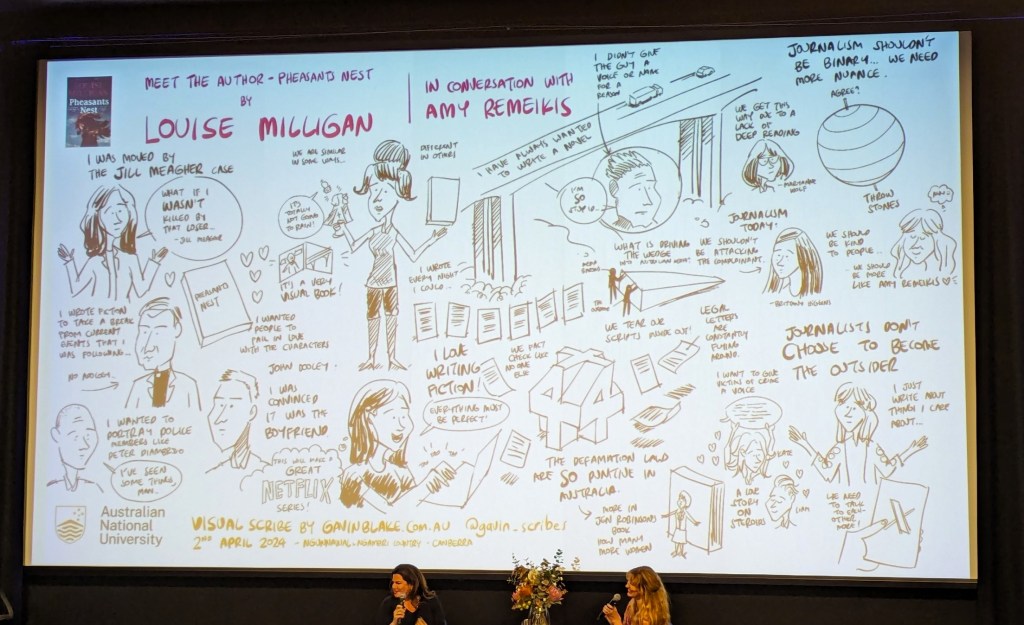
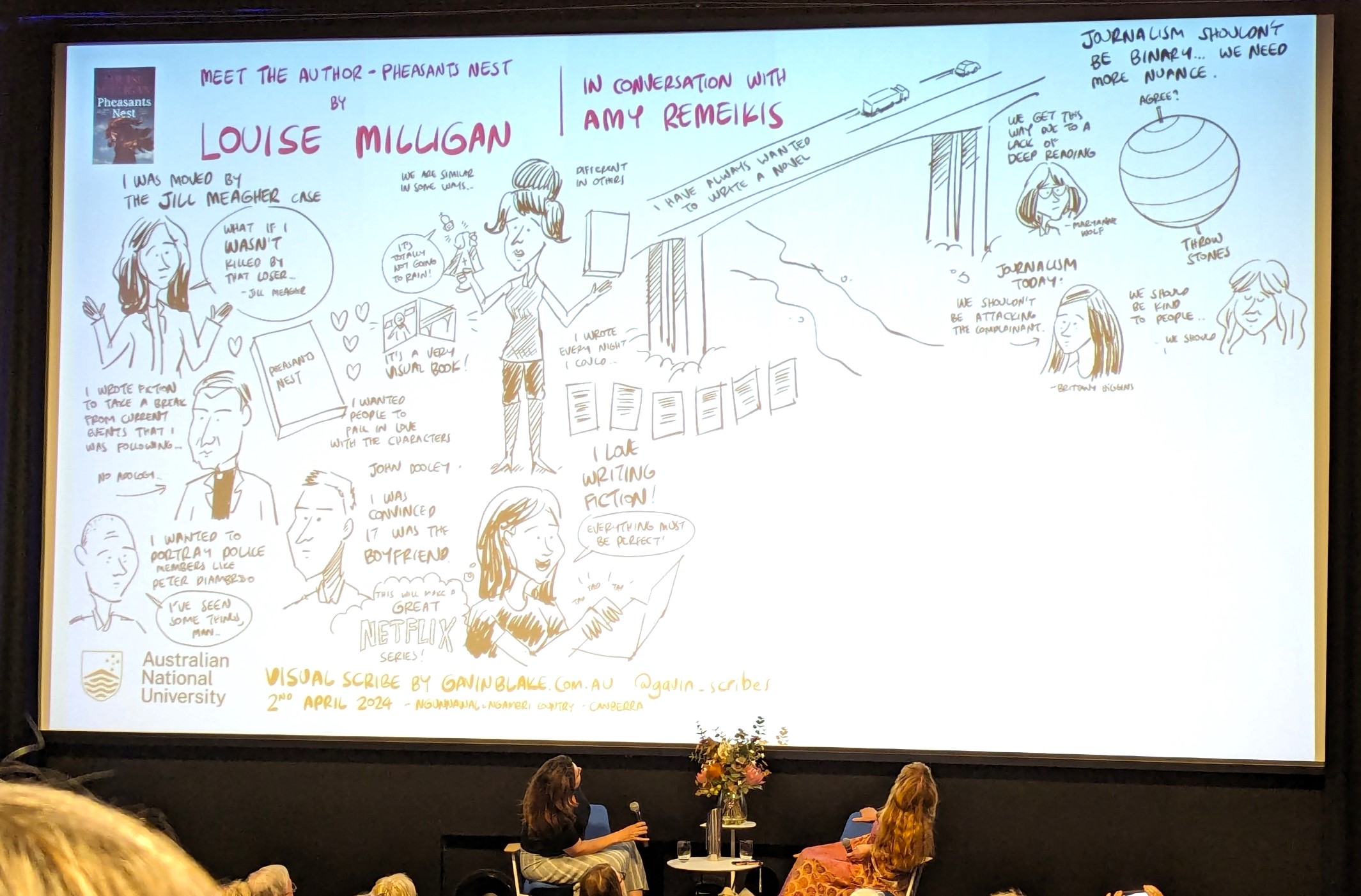
Two set-piece frescos dominate.

In one, the god Apollo is seen trying to seduce the priestess Cassandra. Her rejection of him, according to legend, resulted in her prophecies being ignored.

The tragic consequence is told in the second painting, in which Prince Paris meets the beautiful Helen – a union Cassandra knows will doom them all in the resulting Trojan War.

BBC/Tony Jolliffe One of the "black room" frescos discovered in Pompeii, showing Apollo trying to seduce the priestess Cassandra

BBC/Tony Jolliffe The god Apollo is depicted on one of the frescos trying to seduce the Trojan priestess Cassandra

The black room is the latest treasure to emerge from the excavation, which started 12 months ago – an investigation that will feature in a documentary series from the BBC and Lion TV to be broadcast later in April.
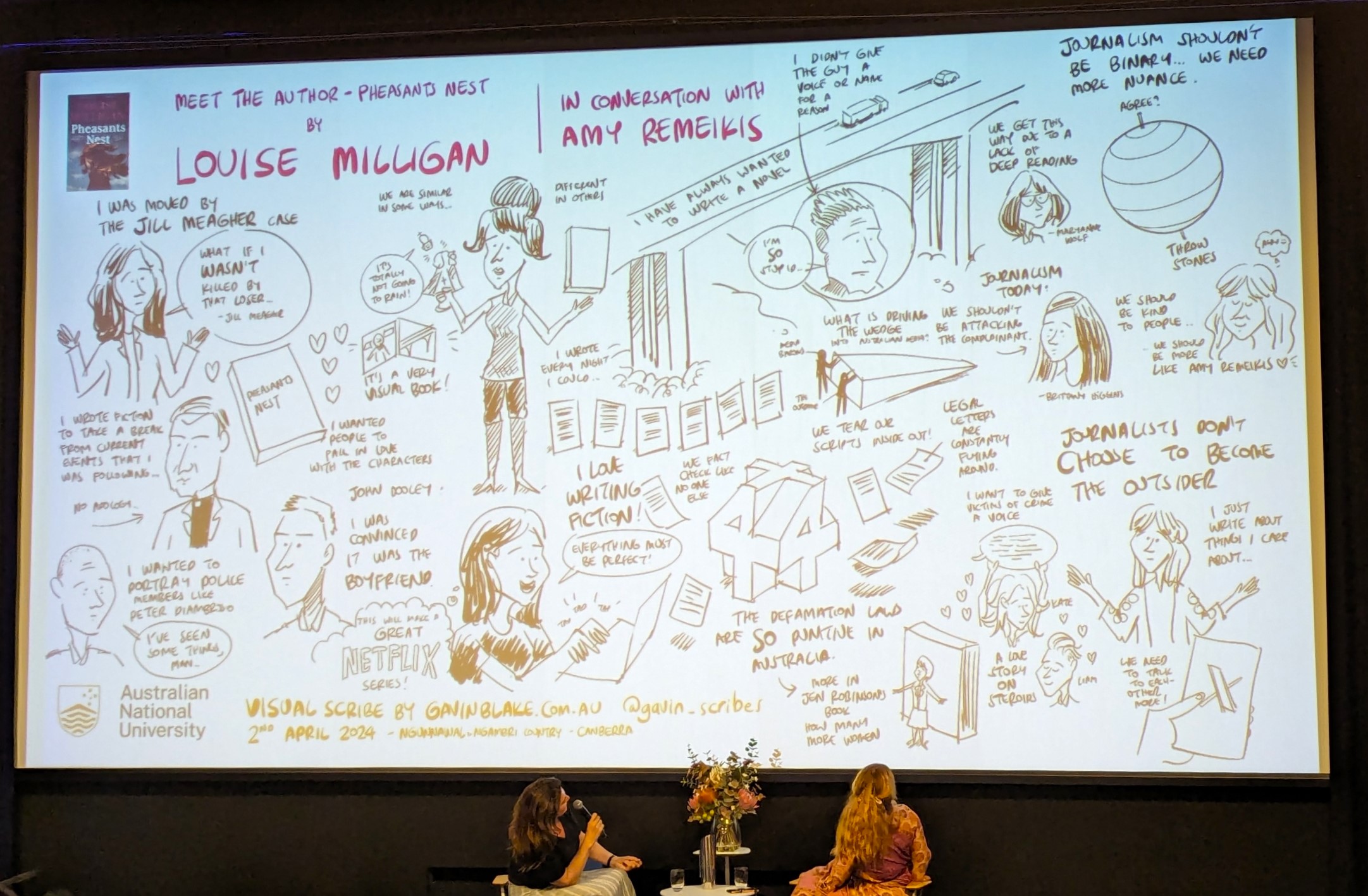
A wide residential and commercial block, known as “Region 9”, is being cleared of several metres of overlying pumice and ash thrown out by Vesuvius almost 2,000 years ago.

Staff are having to move quickly to protect new finds, removing what they can to a storeroom.

For the frescos that must stay in position, a plaster glue is injected to their rear to prevent them coming away from the walls. Masonry is being shored up with scaffolding and temporary roofing is going over the top.

BBC/Tony Jolliffe Fresco protection

BBC/Tony Jolliffe A plaster glue must be injected behind a fresco or it is likely to come away from the wall

Chief restorer Dr Roberta Prisco spent Tuesday this week trying to stop an arch from collapsing.

“The responsibility is enormous; look at me,” she said, as if to suggest the stress was taking a visible toll on her.

“We have a passion and a deep love for what we’re doing, because what we’re uncovering and protecting is for the joy also of the generations that come after us.”

BBC Map showing excavations in PompeiiBBC

Region 9 has thrown up a detective story for archaeologists.

Excavations in the late 19th Century uncovered a laundry in one corner. The latest work has now revealed a wholesale bakery next door, as well as the grand residence with its black room.

BBC/Tony Jolliffe Reception Hall

BBC/Tony Jolliffe In the reception hall, rubble in the far right corner is from renovation at the time of the eruption

The team is confident the three areas can be connected, physically via the plumbing and by particular passageways, but also in terms of their ownership.

“We know who ARV is: he’s Aulus Rustius Verus,” explained park archaeologist Dr Sophie Hay. “We know him from other political propaganda in Pompeii. He’s a politician. He’s super-rich. We think he may be the one who owns the posh house behind the bakery and the laundry.”

What’s clear, however, is that all the properties were undergoing renovation at the time of the eruption.

Escaping workers left roof tiles neatly stacked; their pots of lime mortar are still filled, waiting to be used; their trowels and pickaxes remain, although the wooden handles have long since rotted away.

Dr Lia Trapani catalogues everything from the dig. She reaches for one of the thousand or more boxes of artefacts in her storeroom and pulls out a squat, turquoise cone. “It’s the lead weight from a plumb line.” Just like today’s builders, the Roman workers would have used it to align vertical surfaces.

She holds the cone between her fingers: “If you look closely you can see a little piece of Roman string is still attached.”

BBC/Tony Jolliffe Plumb line

BBC/Tony Jolliff It’s possible to see a remnant piece of string around the neck of the plumb line

Dr Alessandro Russo has been the other co-lead archaeologist on the dig. He wants to show us a ceiling fresco recovered from one room. Smashed during the eruption, its recovered pieces have been laid out, jigsaw-style, on a large table.

He’s sprayed the chunks of plaster with a mist of water, which makes the detail and vivid colours jump out.

You can see landscapes with Egyptian characters; foods and flowers; and some imposing theatrical masks.

“This is my favourite discovery in this excavation because it is complex and rare. It is high-quality for a high-status individual,” he explained.

BBC/Jonathan Amos Ceiling fresco

The archaeologists have had to piece together a ceiling fresco that was shattered during the volcanic eruption

But if the grand property’s ceiling fresco can be described as exquisite, some of what’s being learned about the bakery speaks to an altogether more brutal aspect of Roman life – slavery.

It’s obvious the people who worked in the business were kept locked away in appalling conditions, living side by side with the donkeys that turned the millstones. It seems there was one window and it had iron bars to prevent escape.

It’s in the bakery also that the only skeletons from the dig have been discovered. Two adults and a child were crushed by falling stones. The suggestion is they may have been slaves who were trapped and could not flee the eruption. But it’s guesswork.

“When we excavate, we wonder what we’re looking at,” explained co-lead archaeologist Dr Gennaro Iovino.

“Much like a theatre stage, you have the scenery, the backdrop, and the culprit, which is Mount Vesuvius. The archaeologist has to be good at filling in the gaps – telling the story of the missing cast, the families and children, the people who are not there anymore.”

Additional reporting by Tony Jolliffe.

BBC/Tony Jolliffe Mosaic floor

BBC/Tony Jolliffe There are certainly more than a million tiles in the mosaic floor, possibly up to three million

BBC/Tony Jolliffe Roman lamp

BBC/Tony Jolliffe Boxes full of artefacts: One of the many oil lamps recovered during the excavation

BBC/Tony Jolliffe Fresco showing Leda and the Swan

BBC/Tony Jolliffe Another fresco depicts Leda and Zeus in the form of a swan, whose union would lead to Helen’s birth

BBC/Tony Jolliffe A piece of moulded cornicing painted in bright colours

BBC/Tony Jolliffe Brilliant colours: Ornate cornicing was also preserved under the volcanic debris

The three-part series, Pompeii: The New Dig, begins on Monday 15 April, 21:00 BST, on BBC Two and BBC iPlayer. It will become available internationally. There is also an Open University website connected with the series.

Gender Institute Events
Maternity and Art
Thursday 9 May, 6-7.30pm
The ANU Gender Institute and Maternal Health Matters Inc. invite you to join us online for the third in our seminar series that will explore the impact of maternity on women’s wellbeing and the transition to parenting.
The presenters are Emeritus Professor Denise Ferris and Dr Bianca Williams.

Register here

Many Strands, One
Wednesday 29 May, 11am-4.30pm
Focusing on Papua New Guinea, the Many Strands, One Basket Seminar & Dialogue aims to create an opportunity for conversations between people working in diverse spaces (Many Strands) who may have a common interest in the nexus between politics, gender, culture and history (One Basket).

Register here

Cindy Lou eats out in Canberra

China Tea Club

Having enjoyed a takeaway meal from the China Tea Club (delivered by their own staff) I was pleased to be able to experience the food in their restaurant. The menu is varied and delicious, the service prompt and friendly, the seating comfortable and the ambience very pleasant. The table was large enough to accommodate eight people, but the conversation was easy to follow although the restaurant was full of other lively groups. The prawn dishes were delicious, as was the crispy whitebait. The duck pancakes were an authentic touch; however, the San Choy Bow we had delivered were perhaps better. The beef dishes met the high expectations, the fried rice and plain rice were generous and the vegetable, and mushroom dishes excellent too.

The dessert menu was tempting and even more so when the chosen dishes, fried ice-cream, and two different flavours of ice-cream with a cream and strawberry topping arrived.

Kopiku

A simple cup of coffee the next morning at our favourite coffee place, Kopiku, was an excellent follow up to the copious meal served at the China Tea Club.

Bookplate

Bookplate at the National Library has changed its menu, so the sandwiches of the past are now provided at Paperplate, downstairs. Perhaps we’ll try that next time. The cooked meals, coffee and cakes at Bookplate are attractive, although I was disappointed that a brunch item (avocado and accompaniments) was not available at 11.45. I chose the pumpkin with miso salad. This was pleasant, but needed more miso, or possibly a different, tastier dressing. The coffees were fine, but not marvellous. An old-fashioned milk shake was a nice touch. Bookplate has a very attractive outdoor area with large umbrellas. But nothing can surpass being amongst the Leonard French panels around the indoors section.

Week beginning April 10 2024

Melissa Clark Bacon Through Her Lens Atmosphere Press, April 2024.

Thank you, NetGalley, for providing me with this uncorrected proof for review.

Through Her Lens is accomplished storytelling with several threads that move smoothly through the narrative. Seamless links intertwine the past, romance, detailed searches on the ground and in the air for signs of the rumoured German V1s and V2s, a woman’s determination to give women in wartime the graphic history they deserve and her own fight against public and private discrimination. Lady Millicent Trayford is not always a sympathetic character, as her story lines are complex, but she provides a valuable central figure, the motivation for her actions is worth engaging with and she affords an insight into the way in which women’s personal aspirations can be complicated by public demands. The chapters are bounded by a Prologue and Epilogue, each adding an enlightening addition to the narrative. I particularly liked the description of Picasso’s Guernica in the Prologue and the clever way it established the foundation for so much in the rest of the narrative. See Books: Reviews for the complete review.

Louise Milligan Pheasants Nest Allen & Unwin, March 2024.

Thank you, NetGalley, for providing me with this uncorrected proof for review.

Louise Milligan’s thriller is set in familiar Australian territory, drawing on well-known murders in the Belanglo State Forest to establish a context and then moving beyond those fearful memories to provide her mystery with new locales. One of these is Pheasant’s Nest Bridge where strong winds often shake a car venturing across, sheer sides lead to ominous water, less well-known deaths of a sad and gruesome nature are referred to, and a metal cage has been built to discourage suicides. But, before the reader gets to these ominous events and descriptions the exuberant and attractive main character is introduced. See Books: Reviews for the complete review.

After Covid update: Louise Milligan and Amy Remeikis – Canberra Times Meet the Author; Secret London; NGA; Discover the best things to do in Canberra this June, July, and August; Australia’s next governor-general: Who is she, and what has been the reaction?; Farewell to the Sydney theatre that gave Baz Luhrmann his start.

Covid update for Canberra

There have been 252,271 cases of Covid in Canberra since March 2020. Between 29 March and 4 April 2024 there were 42 new cases (PCR), with 13 in hospital and 1 in ICU. None is ventilated. There has been one life lost, with 307 lives lost since March 2020.

Louise Milligan and Amy Remeikis: Canberra Times – Meet the Author

I mentioned this program of presentations recently as I had reviewed Kathy Lette’s The Revenge Club and then attended her Meet the Author session. Louise Milligan and Amy Remeikis presented a lively to and fro, with a focus on journalism rather than going into a great amount of detail about the book. However, Louise Milligan was enthusiastic about her move into writing fiction, and this came through the discussion about the pitfalls and disappointments of contemporary journalism as seen by the speakers.

The follow up scribe feature was excellent, appearing as it did in a continuing theme of the discussion. Prominent is Milligan’s current work on 4 Corners. Her description of the process undertaken by that program to ensure that anything that goes to air has been meticulously researched was impressive. Milligan is clearly as dedicated to producing well researched scrupulous programs of fact as the fiction that she has so successfully debuted with Pheasants Nest.

I certainly liked Milligan’s reference to the importance of reading novels when young. She referred to their formative value, impressing upon the audience the role of novels in creating an understanding of and appreciation of nuances. This arose in the context of the journalists’ discussion of the negative aspects of living up on one side or the other of a debate. This, it was averred, led to attacks on those who have a different viewpoint and a desire to pick holes in arguments. This criticism, it was noted, is not to devalue the role of further investigation. An example is the Brittany Higgins coverage, where the presumption of innocence has been used to attack the complainant. *

*This is my understanding of the discussion. A podcast of the discussion and questions is available.

Beautiful image from Secret London

London is just COVERED in cherry blossom: @steven.maddison

Also, from Secret London

A Breathtakingly Immersive Blossom Experience Arrives In London This Week, And It’s Completely Free To Visit

Be transported into this blooming lovely blossom-scape and experience the joyful illusion of petals raining down on you with the most advanced floor to ceiling screens in the world.

 KATIE FORGE – STAFF WRITER • 2 APRIL, 2024

Screens covered in Blossom at the Outernet
Credit: National Trust x Outernet

Spring has (nearly) sprung, the sun is (almost) shining, and the beautiful (interactive) blossom is mere moments away from blooming at the Outernet, as their brand new immersive exhibitionNature’s Confetti, floats into London this week.

In an attempt to brighten up the capital city and bring the joy of blossom-season to more people; National Trust have transformed the UK’s most visited cultural attraction into a blossomy wonderland for Londoners to enjoy this Spring. And it won’t cost you a single penny.

Bringing some serious flower power to the immersive entertainment space; this bloomin’ gorgeous experience will allow visitors to admire the beautiful blossomy goodness on giant floor-to-ceiling, wraparound screens (the most advanced of their kind in the entire world, FYI).

Screens covered in Blossom at the Outernet
Credit: National Trust x Outernet

The three minute video has been designed by Outernet’s creative team and will give viewers the opportunity to experience a breathtaking illusion of petals raining down on them from above. Visitors will also be able to use their body movements to control the screens and see how blossom trees grow. The video will be accompanied by uplifting music, specially-composed by Father to perfectly complement the inspirational visuals on the screen.

The piece is set to be a sheer spectacle and aims to spread the message of how important it is for us to cherish the glory of nature and preserve it for future generations. Especially in the face of current environmental threats. Visitors will have the opportunity to donate to National Trust’s ‘Plant a Tree’ appeal, which aims to plant 20 million trees by 2030 (four million of which are expected to be blossom trees). A ‘tap to donate’ station will be installed in the space during the run of Nature’s Confetti.

Screens covered in Blossom at the Outernet
Credit: National Trust x Outernet

Nisha Nath, Head of Brand and Creative at the National Trust, said: “We hope over the next few weeks thousands, if not millions of people will have the chance to experience this colourful, joyful confetti – and that it will mark a high point of their day as they travel through the capital.”

Jessica Dracup-Holland, Chief Marketing Officer from Outernet, commented: “We want audiences to feel immersed in nature, to transport them through the beauty and magic of blossom. We want to encourage a sense of wonderment and rejuvenation, a haven in the centre of London that will transport and inspire.”

Nature’s Confetti will feature twice an hour at Outernet’s Now Building between April 4 – April 28.

BOOK NOW GAUGUIN’S WORLD:
TŌNA IHO, TŌNA AO
Open 29 Jun – 7 Oct
Tickets are now on sale for our major winter exhibition Gauguin’s World: Tōna Iho, Tōna Ao. This landmark presentation is a rare opportunity to follow Paul Gauguin’s artistic journey and global travel – from his Impressionist beginnings in 1873 to his final destination in French Polynesia.  
Featuring over 130 works, the exhibition includes some of Gauguin’s most recognised masterpieces, many of which were created in the Pacific region. The exhibition offers new perspectives on Gauguin’s life and work, his artistic influences and networks, as well as his historical impact and contemporary legacies.
Join as a new National Gallery Member and receive a complimentary ticket, the latest information on exhibitions, exclusive events and more.
BOOK

Discover the best things to do in Canberra this June, July, and August.*

Canberra celebrates each season in style and winter is no exception. Why not have a snow ball fight at Corin Forest, hunt for truffles, or cheer on your favourite rugby team?

Taste treasured truffles

Sample the delights of the Canberra region’s truffle growers from mid-June through to August. The prized Black perigord truffle is on the menu at restaurants, cafes and wineries across the capital thanks to the region’s cool climate growing conditions. Enjoy a paddock to plate experience or join a truffle hunt. The Truffle Festival is a must for all foodies.

Build a snowman at Corin Forest

You don’t have to travel to the ski fields to hit the slopes. Just 45-minutes from the city, Corin Forest has easy beginners’ slopes designed to show kids the snow ropes from tobogganing to the basics of snowboarding. Build snowmen or start an epic snowball fight before feasting on woodfired pizza and hot chocolate at the cosy café.

Find a moment of calm amongst 44,000 trees

Just six kilometres from the city centre, this living collection of endangered and rare species also features spectacular views and remarkable architecture. Each July trees are lovingly wrapped in colourful scarves to keep them warm during winter. With an impressive 94 forests and 20 kilometres of multi-purpose trails, stroll or cycle through the trails that crisscross the National Arboretum Canberra

Meet animals big and small

Diving, catching crustaceans, and racing each other through the water, the little penguins that call the National Zoo & Aquarium are always entertaining to watch. All named after famous rappers, these penguins are part of one of many breeding programs. Meet and feed giraffes, white lions, meerkats, owls and cheetahs. 

Indoor fun for the whole family

Head to Kingpin next where you’ll be spoiled for choice with laser tag, bowling, arcade games, escape rooms, and an impressive food and drink menu on offer.

Taste food flavoured by fire

Curl up by the fireplace and feast on seasonal produce at Canberra’s hottest new restaurants. In the heart of the city, enjoy ethically sourced Australian produce cooked over fire and coals with Asian barbeque specialists Wilma. With a menu that changes weekly but always features their woodfired oven, head to Onzieme in Kingston for fresh eats and a wonderful wine menu.

See sweeping views and endangered animals

Just a 45-minute drive from the city centre you’ll find Tidbinbilla Nature Reserve. Known for its amazing views and walks, the reserve helps protect and breed native, endangered animals. Winter is a great time to see superb lyrebirds, sight platypus in the sanctuary ponds, and listen to the calls of native frog species. 

Time it right and in nearby Namadgi National Park you’ll see snow capped mountains and ‘roos hopping through winter scenes.

Sip craft brews and local gins

Taste award-winning craft beers at Braddon brewpub BentSpoke Brewing Co, which took out top place in the Great Australasian Beer Spectacular 2021. Gin lovers flock to The Canberra Distillery famed for its collaborations and unique flavours. For those who fancy both, head to the Dairy Road precinct where you’ll find Capital Brewing Co neighbouring Big River Distilling. Join Dave’s Tours to taste all the capital’s best drinks.

*Attractive photos came with this information about things to do in Canberra. Unfortunately, copyright issues prevented me from loading them here. This seems to defeat the purpose of advertising Canberra…!

Sam Mostyn

Australia’s next governor-general: Who is she, and what has been the reaction?

Sezen Bakan
Apr 03, 2024, updated Apr 04, 2024

Just what does the governor-general do?

Source: TND

Australia’s next governor-general will be Samantha Mostyn – the second woman in the country’s history to take on the role.

Prime Minister Anthony Albanese announced on Wednesday that Mostyn had been approved by King Charles and will be sworn in as Australia’s 28th governor-general on July 1, replacing David Hurley.

“Ms Mostyn is a modern and optimistic leader for our modern and optimistic nation,” Albanese said.

“I am confident Ms Mostyn will discharge her duties as governor-general with her customary dedication, creativity and compassion – and an unwavering sense of service to our nation.”

Reaction to new governor-general

Mostyn’s appointment to the role of governor-general garnered broad cross-party approval and messages of support from a number of high-profile Australians and organisations.

Many pointed to her extensive background in leadership roles, which range from business to gender equality advocacy.

“She will bring a wealth of experience and compassion to the role of GG,” Minister for the Environment and Water Tanya Plibersek posted on X.

“She is an outstanding choice,” Independent MP Zoe Daniel wrote.

Liberal MP Kellie Sloane wrote on X that Mostyn was “one of the most impressive professionals of her generation” thanks to her influence across areas such as sport, climate change and women’s empowerment.

Nationals Senator Bridget McKenzie told Sky News Mostyn was a “great appointment”, and that McKenzie expected she would continue her advocacy in her new role.

Former prime minister Paul Keating, who Mostyn previously worked with as a communications policy adviser, said her experience in public, community and business life – along with her “innate ability” and values – qualified her for the “exalted position” of governor-general.

Opposition Leader Peter Dutton said Mostyn was well known to many people within the government and he wished her the “very best” in her new role.

Who is Samantha Mostyn?

Born in Canberra and having spent her childhood travelling around Australia and internationally thanks to her father’s army career, Mostyn gained an arts law degree at Australian National University and, years later, an honorary doctorate in laws from the same institution in 2018.

Her resume is long and wide ranging, but here are some highlights.

Mostyn began her professional career as an associate in the NSW Supreme Court of Appeal, and after a few years working as a solicitor, became a communications policy adviser for several Labor politicians.

In 2005 she became the first female AFL commissioner, a position she held until 2017, during which time she contributed to the development of the AFL’s Respect and Responsibility Policy and advocated for the creation of the AFL Women’s league.

Beyond sport, she has held senior roles in organisations advocating for women, international development, mental health, diversity, the arts and the climate.

These include, but are not limited to: Beyond Blue, the Climate Council, Ausfilm, and the Women’s Economic Opportunity Review.
Mostyn has held senior executive positions with the likes of IAG, Optus, and Aware Super, along with non-executive roles with Virgin Australia, Transurban and Mirvac.

In 2020, she received the United Nations Day Honour Award in recognition of her efforts to advance sustainable development and her leadership in diversity and inclusion in Australia.

The next year, Mostyn was awarded an AO for distinguished service to business, sustainability, the community, and women.

In her personal life, she has been described as “incredibly loyal” and modest; her long-time friend, playwright Suzie Miller, told Sydney Morning Herald in 2019 that Mostyn needed to celebrate her achievements more.

What is a governor-general?

The governor-general is a representative for the reigning British monarch.

They are Australia’s head of state and commander-in-chief of the Australian Defence Force.

The position carries a significant amount of power.

For example, a bill can only become a law if the governor-general agrees to it on behalf of King Charles, although no governor-general has ever refused to give Royal Assent.

The governor-general is also able to appoint a prime minister if an election has not resulted in a clear outcome, or dismiss a prime minister – as seen with the 1975 dismissal of Gough Whitlam.

Farewell to the Sydney theatre that gave Baz Luhrmann his start

Story by Lenny Ann Low  • 4h • 4 min read

Dwarfed by neighbouring buildings, its leadlight windows, black wooden front doors and 156-year-old stone structure tiny against Sydney CBD skyscrapers, the Genesian Theatre on Kent Street is moving on.

Named after St Genesius, the patron saint of actors, its long-time resident company, marking 70 years of continuous theatre shows in the 125-seat Victorian gothic church site this month, is preparing to transfer to a new home in Rozelle.

The Genesian Theatre in Sydney’s CBD is is moving to a new venue in Rozelle.

The Genesian Theatre in Sydney’s CBD is is moving to a new venue in Rozelle.© Wolter Peeters

“It’s been a long journey,” Barry Nielsen, Genesian Theatre director says. “Lots of people know it’s happening and many say, ‘It’s such a shame’.

Built in 1868 as St John’s Church and owned by the Catholic Archdiocese of Sydney, the building was sold in 2017 with plans to incorporate it into a multimillion-dollar hotel redevelopment.

Previously home to a poorhouse, the Kursaal Theatre and the first Matthew Talbot Hostel, the Genesian Theatre Company, which was founded in 1944, took residence in 1954 with a production of Murder in the Cathedral. There have been 464 major public productions since the company was founded.

(From left) Andrew Badger, Barry Nielsen, president of the Genesian Theatre Company, and members Michael Schell and Grant Fraser.

(From left) Andrew Badger, Barry Nielsen, president of the Genesian Theatre Company, and members Michael Schell and Grant Fraser.© Wolter Peeters

Nielsen anticipates the new 132-seat theatre space, in the parish hall of St Joseph’s Rozelle next to Sydney Community College, will be under way this year.

But first, the company must leave a lot behind. The theatre has two ghosts, regularly making appearances, members say, backstage and beside the proscenium arch.

They are also farewelling a stage trod by Genesian alumni such as actors Angela Punch McGregor, Bryan Brown, Peter Carroll and Judi Farr, actor and director John Bell, playwright and director Nick Enright and writer and academic Coral Lansbury, mother of former Australian prime minister Malcolm Turnbull. Michael Schell, who joined in 1973, recalls Baz Luhrmann performing at the Genesian.

“His first time ever on stage was in this theatre,” Schell says.

“His next-door neighbour dragged him in for The Winslow Boy around 1980, 81, and that was that.”

Taped on one wall is An Actor’s Prayer, spoken by company members before each show. The company’s lush red velvet curtains, prop stained-glass windows and rows of red velvet seats, all salvaged from the demolished Her Majesty’s Theatre in Haymarket, will also be left behind.

“There are incredible compliance issues with creating a performance space now,” Nielsen says. “It’s quite onerous and expensive.

“If anyone asks why are there no new small theatres, I can tell you that is why.”

But the Genesian Theatre Company’s passion and work ethic has never waned. Nielsen says the group’s loyal and diverse membership, about 120-strong and open to anyone aged 18 and over, allows people of all ages, backgrounds and theatre aspirations to participate.

“It’s not just acting,” he says, “It’s working as, and often learning to be, a stage manager, set or sound designer, lighting and sound operator or front-of-house administrator.

“We have members who are in their 90s who have been part of the company for most of their lives.”

The company, which calls itself unpaid or community theatre rather than amateur, survives entirely from ticket sales. Prices are kept low at $30 to $35. “People come because it’s affordable,” Nielsen says. “That’s a really big part of our philosophy. It’s also theatre most people are happy to see.

“You can bring your 12-year-old kid, you can bring your 90-year-old grandmother. It’s the sort of theatre everyone can enjoy.”

Show seasons, regularly sold out, can range from Tennessee Williams’ A Streetcar Named Desire to Agatha Christie mysteries, Neil Simons comedies, the canon of Oscar Wilde, William Shakespeare, Noel Coward, Jane Austen adaptations and Australian classics.

Andrew Badger, 22, the newest member, who discovered the company last year during a season of Steel Magnolias, recalls being impassioned immediately.

“The cast was amazing, the set dressing was amazing, the whole thing was phenomenal,” he says. “After the show, my friend and I discovered auditions for the next show, Plaza Suite, were the next day.

“So we auditioned, and I was cast in the play.”

This month, Badger has swapped acting to become stage manager for the Genesian’s current production, Strangers On a Train.

“No one is here for money,” he says. “We’re all here because of our love for the craft itself. You don’t get a lot of divas backstage.”

Nielsen is sad to leave the Kent Street home but keenly anticipates their fresh base welcoming the regular crowds and members old and new.

“There’s a role for anyone who wants to be involved,” he says. “This is a place you can learn skills, whether it’s acting, sound and lighting, publicity, management.

“You don’t have to be interested in being an actor; you just have be interested in being part of a group that absolutely loves theatre.”

Strangers On a Train is at the Genesian Theatre until April 20.

The Booklist is a weekly newsletter for book lovers from books editor Jason Steger. Get it every Friday.

Collection of theatre programs from the Genesian Theatre Company. See this lengthy list at: