The story is a poignant opening up of the life led by a person born into neglect and poverty, where love is often misunderstood, or not even recognised, leading to confusion, intemperate behaviour and drug dependence. While understanding Demon Copperhead’s reasons for his behaviour the reader is also given the imprimatur to sympathise with those he in turn abuses. At the same time, there is no forgiveness expected for a social welfare system that utterly fails this young person in need. Books: Reviews
It was lovely to return to Eighty Six after quite a while eating elsewhere – most markedly in Italy, London, Amsterdam, Oxford and Cambridge. Only Mere in London was better, oh, perhaps ZaZa in Amsterdam. But Eighty Six is well worth a visit. It was noisy as usual, but the liveliness and efficiency of the staff and happy fellow diners makes it worthwhile. I do admit that I was pleased to finish before a large table of diners arrived to be seated close to us. Outside looked like an excellent option, and I think I’ll chose that next time.
All of the dishes were delicious – the charred corn is a scrumptious starter, although a bit messy to eat. But it is worth it. Next, we were served the fried chicken which comes with two sauces- one a pleasant aioli, and the other a sauce with a fiery bite. The cauliflower is a Moroccan dish, and again, an excellent choice. As usual, we had the pumpkin ravioli with burnt butter sage sauce – and as usual, the only pasta better is that served in Bagni di Lucca on my holiday there. No dessert! No coffee! And a relatively brisk (no dog to potter) walk home.
I was initially unimpressed by the concerns expressed by members and their staff about the increasing pressure they felt in serving their constituents. After all my staff had coped very well with the current staff numbers for many years up to 2010 when I left the parliament.
However, an examination of enrolment numbers has changed my mind, although I am not sure that giving current members increased staff is the best solution.
When the current size of the parliament was established in 1984 the average number of electors per member was 84244. Today that number is 115060! This constitutes an increase of more than a third. This raises concerns for staff, but more importantly it must impact on the ability of members to provide the service which their constituents require and deserve.
Electronic communications could be seen as making the task of providing services to constituents easier. However, it also makes it easier for constituents to raise issues with their MP. This is on balance a good thing, but it increases the workload on staff who must be feeling the pressure of the ever-increasing volume of constituency work.
Of course, in a rational world we would gradually increase the numbers in the House of Representatives without any need to change the Senate numbers. However, the Australian Constitution’s so-called nexus clause prevents us from doing this.
s.24 of the Australian Constitution states that the size of the House “shall be as nearly as practicable twice the number of Senators.”
An attempt was made in 1967 to change this by a referendum. It had bipartisan support but was defeated by a rump of the parliament campaigning on the bizarre grounds that it would increase the number of members of parliament. Of course, the failure of the referendum has had the reverse effect, each time there is the need to change the composition of the House it has required a very large increase. In 1984 the House increased from 125 to 150 and the Senate from 64 to 76.
Therefore, if we are going to do something now it will need to be something big. The least we can do is increase the size of the Senate to 14 per state (a total of 84), which with the current Territory Senate representation would mean 88 Senators. Double the number of State Senators would mean 168 House members. With the current Territory representation (5) that means173 members approximately in the House. The exact number may vary by 1 or 2 up or down depending on the statistical analysis and distribution of seats within the states.
Based on the population distribution between the States at the 2020 census the distribution of seats is likely to be something like this:
Tas 5* (entitlement would actually be three, but constitution guarantees 5)
How much would all this cost? It would take more resources than I have available to put together a comprehensive costing. However, if we compare the cost with the cost of providing one extra staff member for every current member or senator it should be comparable. One extra staff member per MP and senator would mean 226 extra staff. The increase in the size of the parliament would mean 35 extra members or senators with extra staff of approximately 140. Extra office costs etc should make the costs roughly comparable.
I am not raising this question to help MPs but to enable proper service to constituents and ease the pressure on hard working electorate office staff.
This is one of the two primary obligations of members of the House of Representatives. They have two jobs (unless they become Ministers in which case they gain a third), as legislators and as service providers to their constituents. It is this latter function which tends to be ignored in much of the debate about adequacy of representation.
The other interesting question is: who benefits politically? Even though I am an unashamed lifelong political partisan I don’t think this is the important question. However, it seems to me that the National Party should benefit, because its declining rural base can be stretched more thinly across their existing area of support. The Greens may benefit because smaller metropolitan seats may reduce the diluting impact of the suburbs on their inner-city base in some cities. The Teal and rural Independents may benefit as they should be able to focus on a slightly smaller and more concentrated area. Between Labor and Liberal, it is impossible to say and unwise to speculate. The changing patterns of support in seats like Bennelong and Tangney make such forecasting meaningless over even the short-run.
Attempting to determine the preferred size of the parliament on the basis of who will benefit in the short-term is a recipe for failure.
Voting patterns and demographic trends will overwhelm any perceived short-term advantage. At a time when the safest conservative seats in the country are not held by the conservative parties and the most progressive are often held by someone other than the ALP we should acknowledge that it would not only be wrong to try to determine the size of the parliament in the interests of any perceived partisan advantage, it would almost certainly be counter-productive as well.
However, the interests of constituents in a time of increasing need for representation suggest that it is time to begin a serious debate about the appropriate size of the Australian parliament.
The late author wrote more than 80 books throughout her life, mostly crime novels.
Now historian, broadcaster and author Lucy Worsley’s new biography of the author, A Very Elusive Woman, considers Christie’s life. In particular, it looks at what it was like to be a female author in the early 20th century. For the complete article see Further Commentary and Articles about Authors and Books*
abc.net.au/news/short-film-inspired-by-judith-wright-generations-of-men/101682802COPY LINKSHARE
When Joanna Joy was 14 years old, her father handed her a copy of Judith Wright’s book Generations of Men.
Little did she know it was the beginning of a long journey that would bring a community together.
The story by Wright, a renowned poet and author, is about her own family’s unsuccessful move into central Queensland in the 1850s.
Ms Joy initially saw it as a tale of the strength of women and the families they raised during colonial times. See Television and Film: Comments for the whole article
As an opponent, Matthew Hancock irritated me more than most. He liked the limelight. He knew he was clever and was eager to show it. I remember the day he shelved the second part of the Leveson inquiry into press ethics – the critical bit that looked at the relationship between the cops and the tabloids. I felt that later in life he would regret the decision. It was my first thought when he was turned over by the Sun, too.
His slightly naive bumbler image is not fake, though. It’s who he is. For someone who is, well, such a Tory, he is peculiarly endearing. I ended up liking him. He won me over with his work ethic, candour and humour – a bit like how he has just won over millions of viewers of I’m a Celebrity Get Me Out of Here. Fair play to him.
At the height of the phone hacking scandal, I was offered £140,000 to appear on Celebrity Big Brother. I’ve got George Galloway to thank for turning it down, but I’m glad that Matt Hancock took a risk and signed up for I’m a celebrity.
It was a reputational risk for him, and he took a media beating for appearing on the show. In the binary world of tabloid journalism, he was a gift. Conservative enemies and Labour opponents united in condemning his lack of gravity, dereliction of duty, and faux celebrity status. If they’d thought about it for more than the time it takes to draft a tweet, they would have realised that he’s done them all a favour.
Matt Hancock has shown that MPs are not one-dimensional cardboard cutouts. He’s helped all politicians, though most will not admit it. We are all flawed in our unique way.
.
And on a celebratory and serious note from me: Labour won the Chester by-election very comfortably. So, for a Labor/Labour supporter this has been a good couple of weeks- the Victorian Election (and by the way, Paul Mercurio did win Hastings), and the Labour by-election win. Now for the runoff in Georgia – and hopefully a Raphael Warnock win. And, of course, we have Gough Whitlam’s success in 1972 to celebrate, also.
Policy Speech for the Australian Labor Party, delivered by Gough Whitlam, at the Blacktown Civic Centre, in Sydney, on November 13, 1972.
Men and Women of Australia!
The decision we will make for our country on 2 December is a choice between the past and the future, between the habits and fears of the past, and the demands and opportunities of the future. There are moments in history when the whole fate and future of nations can be decided by a single decision. For Australia, this is such a time. It’s time for a new team, a new program, a new drive for equality of opportunities: it’s time to create new opportunities for Australians, time for a new vision of what we can achieve in this generation for our nation and the region in which we live. It’s time for a new government – a Labor Government.
My fellow citizens –
I put these questions to you:
Do you believe that Australia can afford another three years like the last twenty months? Are you prepared to maintain at the head of your affairs a coalition which has lurched into crisis after crisis, embarrassment piled on embarrassment week after week? Will you accept another three years of waiting for next week’s crisis, next week’s blunder? Will you again entrust the nation’s economy to the men who deliberately, but needlessly, created Australia’s worst unemployment for ten years? Or to the same men who have presided over the worst inflation for twenty years? Can you trust the last-minute promises of men who stood against these very same proposals for twenty-three years? Would you trust your international affairs again to the men who gave you Vietnam? Will you trust your defences to the men who haven’t even yet given you the F-111?
We have a new chance for our nation. We can recreate this nation. We have a new chance for our region. We can help recreate this region.
The war of intervention in Vietnam is ending. The great powers are rethinking and remoulding their relationships and their obligations. Australia cannot stand still at such a time. We cannot afford to limp along with men whose attitudes are rooted in the slogans of the 1950s – the slogans of fear and hate. If we made such a mistake, we would make Australia a backwater in our region and a back number in history. The Australian Labor Party – vindicated as we have been on all the great issues of the past – stands ready to take Australia forward to her rightful, proud, secure and independent place in the future of our region.
And we are determined that the Australian people shall be restored to their rightful place in their own country – as participants and partners in government, as the owners and keepers of the national estate and the nation’s resources, as fair and equal sharers in the wealth and opportunities that this nation should offer in abundance to all its people. We will put Australians back into the business of running Australia and owning Australia. We will revive in this nation the spirit of national cooperation and national self-respect, mutual respect between government and people.
In 24 hours Mr McMahon will present to you a series of proposals purporting to be the Liberal Party program. But it is not what he will say in 24 hours that counts; it is what could have been done in the past 23 years, what has happened in the last 20 months on which the Liberals must be judged. It is the Liberal Party which asks you to take a leap in the dark – the Liberal Party which dispossessed the elected Prime Minister in mid-term, the Liberal Party which has produced half-baked, uncosted proposals in its death-bed repentance. It is the Liberal Party whose election proposals are those which it has denounced and derided for 23 years.
By contrast, the Australian Labor Party offers the Australian people the most carefully developed and consistent program ever placed before them. I am proud of our program. I am proud of our team. I am proud to be the leader of this team.
Our program has three great aims. They are:
- to promote quality
- to involve the people of Australia in the decision-making processes of our land
- and to liberate the talents and uplift the horizons of the Australian people.
We want to give a new life and a new meaning in this new nation to the touchstone of modern democracy – to liberty, equality, fraternity.
We propose a new charter for the children of Australia. The real answer to the modern malaise of juvenile crime, drugs and vandalism is not repression and moralising. The answer is to involve the creative energies of our children and our youth in a creative, concerned community.
We will make pre-school education available to every Australian child. We do this not just because we believe that all Australian children should have the opportunities now available only to children in Canberra, but because pre-school education is the most important single weapon in promoting equality and in overcoming social, economic and language inequalities.
Under a Labor Government, Commonwealth spending on schools and teacher training will be the fastest expanding sector of Budget expenditure. This must be done, not just because the basic resource of this nation is the skills of its people, but because education is the key to equality of opportunity. Sure – we can have education on the cheap … but our children will be paying for it for the rest of their lives.
We will abolish fees at universities and colleges of advanced education. We believe that a student’s merit rather than a parent’s wealth should decide who should benefit from the community’s vast financial commitment to tertiary education. And more, it’s time to strike a blow for the ideal that education should be free. Under the Liberals this basic principle has been massively eroded. We will re-assert that principle at the commanding heights of education, at the level of the university itself.
We intend to raise the basic pension rate to 25% of average weekly earnings. Australia did that in the late ’40’s. Does anyone say we cannot afford it now? The important thing is this: the present method of irregular, uneven and politically inspired pension increases has been a source of needless anxiety, insecurity and indignity to those who depend on pensions for their sole income.
We will establish a universal health insurance system – not just because the Liberal system is grossly inadequate and inefficient, but because we reject a system by which the more one earns the less one pays, a system by which a person on $20,000 a year pays only half as much as a person on $5,000 a year.
We will establish a National Compensation Scheme to reduce the hardships imposed by one of the great factors for inequality in society – inequality of luck.
We will make a massive attack on the problem of land and housing costs. The land is the basic property of the Australian people. It is the people’s land, and we will fight for the right of all Australian people to have access to it at fair prices.
We will give local government full access to the Loan Council and Grants Commission – not only because the burdens borne by taxpayers as rate-payers must be reduced, but because the inequalities between regions must be attacked by the national government acting with and through local government. Rates are Australia’s fastest growing form of taxation. Only the national government has the resources to retard the growth of this burden on Australian home-owners.
We will exert our powers against prices. We will establish a Prices Justification Tribunal not only because inflation will be the major economic problem facing Australia over the next three years but because industrial cooperation and good-will is being undermined by the conviction among employees that the price for labour alone is subject to regulation and restraint.
Under Labor, the national government – itself the largest customer – will move directly and solidly into the field of consumer protection.
We will change the emphasis in immigration from government recruiting to family reunion and to retaining the migrants already here. The important thing is to stop the drift away from Australia. We believe that the Australian people rather than governments should have the real say in the composition of the population.
We will issue national development bonds through an expanded Australian Industry Development Corporation – not just because we are determined to reverse the trend towards foreign control of Australian resources, but because we want ordinary Australians to play their part in buying Australia back.
We will abolish conscription forthwith. It must be done not just because a volunteer army means a better army, but because we profoundly believe that it is intolerable that a free nation at peace and under no threat should cull by lottery the best of its youth to provide defence on the cheap.
We will legislate to give aborigines land rights – not just because their case is beyond argument, but because all of us as Australians are diminished while the aborigines are denied their rightful place in this nation.
We will cooperate whole-heartedly with the New Guinea House of Assembly in reaching successfully its timetable for self-government and independence – not just because it is Australia’s obligation to the United Nations, but because we believe it wrong and unnatural that a nation like Australia should continue to run a colony.
All of us as Australians have to insist that we can do so much better as a nation. We ought to be angry, with a deep determined anger, that a country as rich and skilled as ours should be producing so much inequality, so much poverty, so much that is shoddy and sub-standard. We ought to be angry – with an unrelenting anger – that our aborigines have the world’s highest infant mortality rate. We ought to be angry at the way our so-called leaders have kept us in the dark – Parliament itself as much as the people – to hide their own incapacity and ignorance.
OPEN GOVERNMENT
A key channel for communication between the Parliament and the people will be a number of expert commissions making regular reports and recommendations on new spending. We will revive the Inter-State Commission, ordained in the Constitution; we will extend the jurisdiction of the Commonwealth Grants Commission, established by statute in 1933; we will establish a Conservation and Construction Commission, incorporating the Snowy Mountains Engineering Corporation and the River Murray Commission; on the model of the Universities Commission and the Commission on Advanced Education, we will establish a Pre-School Commission, a Schools Commission, a Hospitals Commission and a Fuel and Energy Commission. These bodies will not merely be exercises in more efficient, more expert administration of public affairs. They will be an expression of our determination to keep the public informed and to keep the public involved in the public debate on the great national affairs and the great national decisions.
If Australia is ever to have decent schools and equal opportunities, if we are ever to have decent hospitals where they are needed, if we are ever to have decent cities and public transport, the national government must be directly involved. For too long the federal system has been used as an alibi. Our national government is less involved in the great national matters than the national government of any other federal system, and yet our national government has a greater share of the national finances and resources than that of any other federal government. In Australia the federal government raises 77% of public revenues, in the United States 64% and in Canada and West Germany 50%. My basic proposition is this: that any basic service or function of our community which can be hitched to the star of the Commonwealth grows in quality and affluence. Any function or activity which is financially limited to the States will grow slowly or even decline. Further, a function will be fairly financed to the extent that the Commonwealth finds the money for it. A function will be unfairly and inadequately financed if the whole burden falls upon the States.
We want the Australian people to know the facts, to know the needs, to know the choices before them. We want them always to help us as a government to make the decisions and to make the right decisions. Australia has suffered heavily from the demeaning idea that the government always knows best with the unspoken assumption always in the background that only the government knows or should know anything. Vietnam was only the most tragic result of that belief; the idea that the government must always know best permitted the Liberals to lie their way into that war. They could never have got away with it otherwise. Over the whole range of policy at home and abroad this corrupting notion of a government monopoly of knowledge and wisdom has led to bad decisions and bad government. The Australian Labor Party will build into the administration of the affairs of this nation machinery that will prevent any government, Labor or Liberal, from ever again cloaking your affairs under excessive and needless secrecy. Labor will trust the people.
ECONOMIC PLANNING
We shall give priority in public cooperation to setting up economic planning machinery with industry and employees’ representatives to restore strong and continuing economic growth. Our program, particularly in education, welfare, hospitals and cities, can only work successfully within a framework of strong uninterrupted growth. Conversely the program will itself be the basis of strong growth. The whole period of the McMahon Government has been marked by the lowest rate of growth experienced in Australia since the 1930s and one of the lowest in the developed world – a paltry 3% a year. The result has been the highest unemployment since 1961 and a needless loss of nearly $1,000 million in lost production in the past year. Even the rate of growth aimed at in the last Budget assumes unemployment of between 150,000 and 200,000 next year. Two years of school-leavers have suffered as a result. This year, 100,000 school-leavers will either be unable to find jobs or be forced into jobs well below their skills, qualifications and expectations. What stage has our country reached when it is regarded as a mark of success for government policies that the population of Australia has fallen for the first time since 1916? Labor’s first priority will be to restore genuine full employment – without qualification, without hedging. This requires that the national government must, by consultation and cooperation with all sections of industry, achieve a growth rate of 6% to 7% in each of the next three years. The leaders of industry, employers and employees alike, are now united in their demands that the national government must plan the broad economic goals and targets for the Australian economy. A Labor Government will establish the machinery for continuing consultation and economic planning to restore and maintain strong growth.
This is the real answer to the parrot-cry “Where’s the money coming from?”. Even at the present low rate of growth, Commonwealth income has nearly doubled in the past six years. At existing rates of taxation it would increase by $5,000 million in the next three years. It is because of the automatic and inevitable massive growth in Commonwealth revenues that a whole range of Labor proposals denounced and derided by the Liberals for years and years have suddenly become possible and desirable on this election eve.
TAXATION
The huge and automatic increase in Commonwealth revenue ensures that rates of taxation need not be increased at any level to implement a Labor Government’s program. The rates for which the wealthier sections of the community including companies are liable are already high enough. The loss which the revenue suffers at this level is not because taxes are too low, but because tax avoidance is too easy. One legal tax avoidance scheme alone cost the revenue at least $30 million last year. A Labor Government will close the loopholes. To do this we will set up a permanent expert committee on taxation to expose the loopholes as fast as lawyers and accountants discover them. We will expand the terms of reference of the Asprey committee on Taxation to include State and local government tax methods.
The most pressing need in the tax field is to retard the trend by which inflation has forced lower and middle income earners into the high tax brackets. The Liberals have imposed huge, silent tax increases by the simple expedient of leaving the tax schedules basically unchanged since 1954. Inflation has done the rest, so that modest income earners of, say, $6,000 are being taxed at rates appropriate for very high income earners by 1954 standards. Our first step towards revising the tax burdens at the lower and middle levels will be to require the Treasury to produce and publish forthwith the “comprehensive review” which Mr McMahon as Treasurer said in August 1969 would be “urgently acted upon”.
PRICES
The key to financing Labor’s program must be strong and continuing economic growth based on sound national planning and national cooperation between government, employers and employees. To obtain that cooperation it is necessary to convince all sections of the community that responsibilities, burdens and opportunities are being shared equally by all sections of the community. Employees as consumers must know that their national government requires equal cooperation from all powerful sections of industry. Labor will protect the consumers. We will establish a Prices Justification Tribunal.
We will establish a Parliamentary Standing Committee to review prices in key sectors. We will strengthen the laws against restrictive trade practices. A Labor Government will not hesitate to use its powers as a customer, and through tariffs, subsidies and contracts to prevent unjustified price rises. The greatest consumer and most powerful customer in Australia is the Commonwealth itself. We will expand the activities of the Defence Standards Laboratories, the Commonwealth Analyst, and the CSIRO to provide a national consumer standards laboratory to conduct its own testing of foods and other goods of importance to community welfare and well-being. These reports will be published.
We will allow the Commonwealth Bank to join all other banks in affording hire purchase services.
EDUCATION
It is our basic proposition that the people are entitled to know. It is our basic belief that the people will respond to national needs once they know those needs. It is in education – the needs of our schools – that we will give prime expression to that proposition and that belief.
Schools
The most rapidly growing sector of public spending under a Labor Government will be education. Education should be the great instrument for the promotion of equality. Under the Liberals it has become a weapon for perpetuating inequality and promoting privilege. For example, the pupils of State and Catholic schools have had less than half as good an opportunity as the pupils of non-Catholic independent schools to gain Commonwealth secondary scholarships, and very much less than half the opportunity of completing their secondary education.
The Labor Party is determined that every child who embarks on secondary education in 1973 shall, irrespective of school or location, have as good an opportunity as any other child of completing his secondary education and continuing his education further. The Labor Party believes that the Commonwealth should give most assistance to those schools, primary and secondary, whose pupils need most assistance.
Education is the prime example of a community service which should involve the entire community – not just the Education Departments and the Catholic school authorities and the Headmasters’ Conference, not just parents and teachers, but the taxpayers as a whole. The quality of the community’s response to the needs of the education system will determine the quality of the system. But the community must first know and understand the needs. We reject the proposition that administrative convenience should over-ride the real needs of schools. We reject the argument that well-endowed schools should get as much help from the Commonwealth as the poorest state or parish school, just because it is easier to count heads than to measure needs.
The Australian Labor Party believes that the Commonwealth should adopt the same methods to assist schools as it has adopted to assist universities and colleges of advanced education – through a Commission. We will establish an Australian Schools Commission to examine and determine the needs of students in Government and non-government primary, secondary and technical schools. I propose to prepare for the statutory Schools Commission as Sir Robert Menzies prepared for the Universities Commission. In December 1956 he wrote to Sir Keith Murray and some other leading educationists to advise him on the immediate needs of universities and their future requirements. They reported to Sir Robert within nine months. I shall write before Christmas to a small group of leading educationists, including representatives of the State and Catholic systems. I shall write in precisely the same terms as Sir Robert, requesting for all schools, as he did for universities, recommendations upon “their financial needs and appropriate means of providing for these needs”. It will not be necessary to delay the appointment of the Commission until legislation has been passed by the new Parliament in 1973. Moreover, their report will be promptly published. In this way the Government and non-Government schools will be able to make their long-terms plans right from the very earliest stages of a Labor Government.
A Federal Labor Government will:
- Continue all grants under Commonwealth legislation throughout 1973;
- Remove the ceiling imposed by Commonwealth legislation on grants in 1974 and subsequent years;
- Allocate the increased grants for 1974 and subsequent years on the basis of recommendations prepared and published by the expert Schools Commission which will include persons familiar with and representative of the State departments, the Catholic system and the teaching profession.
Pre-Schools
The area of greatest inequality in education is pre-school. And it is precisely here that inequality is rivetted on a child for a lifetime. The greatest single aid in removing or modifying the inequalities of background, environment, family income or family nationality (in the case of migrant children) or race (in the case of aborigines) will be the provision of pre-school education. In Canberra, where the Commonwealth cannot escape responsibility, every child enjoys a year at properly equipped and properly staffed pre-school centres. In the States, less than 20% of children do. For an annual cost of $40 million, which would take about six years to attain, we could provide every Australian child with the opportunity – a means of equalising and enriching every child’s life for the rest of his life – now enjoyed fully only by children in Canberra. To administer this program of national enrichment and national equality we will establish a Pre-School Commission. The issue is not only education. It is part of the fundamental issue of equality.
Child care
A woman’s choice between making motherhood her sole career and following another career in conjunction with motherhood depends upon the availability of proper child care facilities. The Pre-School Commission will be responsible for developing these facilities in conjunction with pre-school centres, beginning in areas where the need is most acute. So long as public child care facilities remain inadequate, we will allow fees paid to recognised private centres to be tax deductible to a maximum of $260 a year.
Universities
The inequality which begins before school has become entrenched and inescapable by the time a student is ready for tertiary education. Fees represent less than 5% of university income but a very large percentage of parents’ or students’ income. From the 1974 academic year, fees will be abolished at universities, colleges of advanced education and technical colleges.
The Commonwealth will assume full responsibility for financing tertiary education, as all the Labor leaders, Federal and State, agreed five years ago.
Teachers
Teachers are the nucleus of any education system. A Labor Government will make the same full range of Commonwealth assistance available for the buildings and equipment, the staff and students at all teachers’ colleges as at all other tertiary institutions.
HEALTH
The most notorious single instance of unequal sharing of burdens is the Liberals’ health insurance system.
I personally find quite unacceptable a system whereby the man who drives my Commonwealth car in Sydney pays twice as much for the same family cover as I have, not despite the fact that my income is 4 or 5 times higher than his, but precisely because of my higher income.
Health Insurance
A Federal Labor Government will introduce a universal health insurance scheme. It will be administered by a single Health Fund. Contributions will be paid according to taxable income. An estimated 350,000 Australian families will pay nothing. Four out of five will pay less than their contributions to the existing scheme. Hospital care will be paid for completely by the Fund in whatever ward the patient’s doctor advises. The Fund will pay the full cost of medical treatment if doctors choose to bill the Fund directly, or refund 85% of fees if the patient pays those fees himself.
Our health insurance scheme has been carefully developed, analysed and costed over a period of nearly six years. It embraces the chief recommendations of the Nimmo Report and the Senate Select Committee on Medical and Hospital Costs. I note that the latest complaint from the Australian Medical Association is that its details have been revised three times in the last five years. At least that’s two fewer than doctors have raised their fees.
In staffing the Health Insurance Fund, employment preference will be given to the employees of the present private funds, who will enjoy the entitlements, status and conditions and terms of employment accorded to Commonwealth public servants.
Hospitals
Health insurance is only one aspect of our health proposals and in fact is not the most important. Health is a community affair. Communities must look beyond the person who is sick in bed or who needs medical attention. Each of us needs continuing health services beginning with birth and lasting throughout our lives. A Labor Government will set up an Australian Hospitals Commission to promote the modernisation and regionalisation of hospitals. The Commission will be concerned with more than just hospital services. Its concern and financial support will extend to the development of community-based health services and the sponsoring of preventive health programs. We will sponsor public nursing homes. We will develop community health clinics. These services will call for the employment of increasing numbers of salaried doctors. Let me emphasise that far from restricting the choice of doctors or patients our proposals will widen them and will in fact provide a new avenue of employment and community service to the members of the great medical profession.
Dental health
We will introduce a five-year program to provide free dental services to all Australian school children. The basis of the program will be the training of dental therapists to practise under the supervision of qualified dentists. We will provide grants to the States to enable them to build and staff colleges to train the therapists. The Federal Vice-President of the Australian Dental Association, Dr W D Heffron, has hailed this proposal as a “very important first step in preventative dentistry”.
SOCIAL WELFARE
Just as we propose to bring a total community approach to the nation’s health, we will revolutionise the community’s approach to the problems of welfare, particularly the problems of the aged, the sick, the handicapped, the retarded and the migrant. The great weakness in Australian social welfare is that we rely almost wholly on the provision of cash benefits. Australians should no longer tolerate the view that, once governments have decided the level of cash payments, the community has discharged its obligations to those who depend upon the community for their sole or main income and sustenance.
Welfare services
We will establish an Australian Assistance Plan with the emphasis on providing social workers to provide advice, counselling and above all the sheer human contact that the under-privileged in our community so desperately need and all too often so desperately lack.
Australian welfare services are now badly fragmented between different authorities. Australia urgently needs national development and national co-ordination of the services the various agencies provide. It is not only the manifestly poor or handicapped who have welfare needs. Bereavement, temporary incapacity, loss of the bread-winner or the home-maker can strike any family at any time. The Australian Assistance Plan will provide the basis for cost-sharing with local authorities and voluntary agencies over a wide range of welfare services in each locality. The over-riding aim will be to expand and enhance, co-ordinate yet diversify the activities of welfare agencies, both government and voluntary, with the emphasis on the need for human contact, counsel and compassion as an addition to cash payments. Australia needs more social workers, and we will set out to provide them.
Yet Australia also needs an entirely new approach to the question of cash payments themselves. Labor’s approach is three-fold: we will raise the basic pension rates to a fixed level of average weekly earnings; we will abolish the means test; and we will establish national superannuation.
Pension Rate
The basic pension rate will no longer be tied to the financial and political considerations of annual Budgets. All pensions will be immediately raised by $1.50 and thereafter, every Spring and every Autumn, the basic pension rate will be raised by $1.50 until it reaches 25% of average weekly male earnings. It will never be allowed to fall below that level.
National Superannuation
National superannuation will be established after a thorough inquiry into overseas examples and Australian proposals for such a scheme. In the dying hours of the last Parliament, Mr McMahon announced the appointment of a committee headed by Sir Leslie Melville to inquire into the possibility of national superannuation. We will appoint a committee to recommend a scheme of national superannuation. The inquiry will have as one of its terms of reference the protection of the entitlements under all existing superannuation schemes to ensure that no-one who is contributing or has contributed to such schemes is disadvantaged by the introduction of a national scheme.
Means Test
The means test will be abolished within the life of the next Parliament.
Overseas Pensions
All Australian residents who have gained the right to receive any Australian social service will continue to enjoy that right wherever they choose to live. This concerns principally aged, invalid or widowed migrants who choose to return home, but it will apply to all Australians. It will not depend on the negotiation of reciprocal agreements with other countries or a 20 year residence in Australia.
CITIES
Even the most enlightened and equal approach to social welfare can only scratch the surface of the basic problem of equality and well-being of most of our citizens. We can double and treble social benefits, but we can never make up through cash payments for what we take away in mental and physical well-being and social cohesion through the break-down of community life and community identity. Whatever benefits employees may secure through negotiation or arbitration will be immediately eroded by the costs of living in their cities; no amount of wealth redistribution through higher wages or lower taxes can really offset the inequalities imposed by the physical nature of the cities. Increasingly, a citizen’s real standard of living, the health of himself and his family, his children’s opportunities for education and self-improvement, his access to employment opportunities, his ability to enjoy the nation’s resources for recreation or culture, his ability to participate in the decisions and actions of the community are determined not by his income, not by the hours he works, but by where he lives. This is why Labor believes that the national government must involve itself directly in cities. Practically every major national problem relates to cities. A national government which cuts itself off from responsibility for the nation’s cities is cutting itself off from the nation’s real life. A national government which has nothing to say about cities has nothing relevant or enduring to say about the nation or the nation’s future. Labor is not a city-based party. It is a people-based party, and the overwhelming majority of our people live in cities and towns across our nation.
We shall co-operate with the States, local government and semi-government authorities in a major effort to reduce land and housing costs, and to retard rises in rates and local government charges.
Urban Ministry
We will establish a new Ministry of Urban Affairs to analyse, research and co-ordinate plans for each city and region and to advise the Federal Government on grants for urban purposes.
The burdens of home-owners have been increased in four ways – the cost of land, the cost of building, the cost of money and rates. Partly as a result of those growing burdens, under the McMahon Government the percentage of Australians owning their own homes has declined for the first time since the 1930s.
Land
The land is the nation’s basic resource. A home is usually the largest investment which a family ever makes; it is an investment which most families have to make. A Labor Government will have two over-riding objectives: to give Australian families access to land and housing at fair prices, and to preserve and enhance the quality of the national estate, of which land is the very foundation.
We will set up a Commonwealth-State Land Development Commission in each State to buy substantial tracts of land in new areas being opened up for housing and to lease or sell at cost fully serviced housing blocks, as in Canberra until two years ago.
In Sydney the average cost of land and dwelling at present is between $22,000 and $23,000. While land prices vary from city to city, and State to State, the leap in land prices in Sydney is an indication of what will happen in every Australian city if the national government fails to act. Spiralling land costs are depriving many young people of any opportunity to acquire their own home. There are 90,000 families on Housing Commission waiting lists throughout Australia. Forty thousand families are registered with the New South Wales Housing Commission – 26,000 are in Sydney alone.
The Commonwealth Government in co-operation with State and local governments will acquire land in the new areas of our capitals, centres and country towns. We will diversify the methods of land tenure to cater for the needs and wishes of all sections and income levels of the community. The model for the land tenure system would be the land policy applied by successive governments in Canberra before January 1971. Before then, land prices in Canberra were the most stable in Australia. With the doctrinaire destruction of that system, Canberra land prices have trebled and quadrupled. Newly acquired land will be allocated according to need, by ballot; the only payment would be an annual land rental. A limited number of sub-divisions will be auctioned for leasehold or freehold.
The Land Development Commissions will also acquire land for national parks; land on which historic buildings or buildings specially worthy of preservation are sited; land along the coastline where the people’s access to their beaches is endangered; land in other areas needing special protection, such as the Blue Mountains. When possible, land of national importance would be handed over with proper safeguards to State governments, local authorities, the National Trust, conservation groups and other such bodies whose purposes are consistent with the Land Development Commission. We will vigorously campaign for the planting of more trees, nature’s air-conditioners and the cities’ lungs.
Building costs
Eight years ago Sir Albert Jennings proved that the cost of building the average house could be reduced by 6% if building and lending authority regulations were unified and the cost of developing the average site could be reduced by 20% if requirements for reticulation of services were standardised. In those eight years the Commonwealth and States have still not enacted the uniform codes. Sir Albert’s calculations are still valid. We will delay no longer.
Interest rates
Four methods have been proposed to counter the rising cost of housing loans: to capitalise child endowment; to liberalise home savings grants; to subsidise interest payments; or to make interest tax deductible. The most effective and equitable course in the interests of all those who have suffered from ever rising interest rates is to introduce a graduated form of tax deductions. Loans for War Service Homes, for which the Commonwealth cannot escape responsibility, still carry the pre-Liberal interest rate. Every other institutional lender has, under the Liberals, increased its interest rate by 3% or 3½%. Home-owners now have to pay much more in interest payments than capital repayments. The Liberals have not been willing to act to reduce interest rates when economic conditions would have allowed. Labor will deliberately plan to reduce interest rates wherever practicable. Meantime, we propose that a limited tax deductibility be available for interest payments. This tax concession will be concentrated amongst the groups which bear the greatest burden. All taxpayers whose actual income is $4,000 or below will be entitled to deduct 100% of their interest rate payments. The percentage of total interest payments which is deductible will be reduced by 1% for every $100 of income in excess of $4,000.
State housing
Since the Liberals amended the original Commonwealth-State Housing Agreement, the proportion of total housing built per year by State authorities has halved. Over the last year and a half, as escalating land prices forced more young people onto housing authority waiting lists, there has been an alarming decline in State housing activity. The authorities cannot purchase sufficient land at the new prices, particularly in New South Wales. The inability to provide housing for those who need it most threatens to reach crisis proportions.
A Labor Government will request each State authority to estimate the funds it will require to reduce the waiting period for houses to twelve months.
We will encourage life assurance funds to re-enter the housing field.
War Service Homes
We will enable the Commonwealth Bank and the War Service Homes Division to lend up to 100% of the value of properties against which their advances are made. The War Service Homes Division will establish a revolving fund of housing finance for the use not only of all returned servicemen, but of all servicemen who henceforth earn an honourable discharge. We will remove the Menzies Government’s 1951 and 1961 restrictions on war service homes.
Rates
Australians pay some of the world’s highest rates for some of the world’s worst municipal services. The cause is the Commonwealth’s refusal to assist local government and the States’ failure to speak up for their own creations. The result has been steeply increased rates and charges, growing inequalities between regions and growing indebtedness.
Grants Commission
We will require the Commonwealth Grants Commission to promote equality between regions, as it has traditionally promoted equality between the States. We will amend the Commonwealth Grants Commission Act to authorise the Commission to inquire into and report upon applications for Commonwealth grants by any semi-government or local government authority or group of authorities, preferably on a regional or district basis. The Commission will determine the amount of Commonwealth help found necessary for that authority or group of authorities by reasonable effort to function at a standard not appreciably below that of other authorities or groups of authorities.
Sewerage
A Labor Government will immediately ask the principal water and sewerage authorities what Commonwealth grants in the present financial year would enable them to embark promptly and economically on an uninterrupted program to provide services to all the premises in their areas by 1978. For subsequent financial years, the Commonwealth Grants Commission will investigate and recommend the size of Commonwealth grants required to see the program through.
Loan Council
Let there be no mistake about Labor’s determination to make local government a genuine partner in the federal system. At next year’s Constitutional Convention we will make direct representation of local government a condition of the Commonwealth’s participation. In 1927, when the first Financial Agreement between the Commonwealth and States established the Loan Council, semi- and local government debts were a mere fraction of State debts. Now semi- and local government authorities have to find as large sums as the State governments for the repayment of loans and payment of interest. It would be inconceivable, if the Financial Agreement were being drawn up now, for these authorities to be completely ignored. At present on the Loan Council each State has one vote and the Commonwealth has two votes and a casting vote. We propose that at next year’s Convention the Loan Council be restructured to consist of one representative from each State government, one representative of the aldermen and councillors in each State chosen by them and four representatives of the Commonwealth. It will then be possible for the Commonwealth, on request, to raise approved loans on behalf of semi- and local government, thus giving them the advantage of the longer period and lower interest appertaining to the loans raised by the Commonwealth on behalf of the States.
URBAN TRANSPORT
After land and housing, there is a third basic element of the city – its transport. Australia must overcome the tyranny of the motor car, or face the destruction of its major cities as decent centres of our culture, our community, our civilisation. The national government must now accept a share of responsibility for the public transport systems of Australian cities.
We will accept the offers of the New South Wales and Victorian Premiers for a transfer of their State railways systems and accept such an offer from any other State. In no other federal system in the world are railways conducted by State governments or within State compartments. For many years the Commonwealth has provided funds for new railways between the State capitals – it is now receiving repayments of $10 million a year from these outlays – and for years it has made outright grants for freeways within the capitals. Despite the pleas of all State Transport Ministers and the advice of its own Bureau of Transport Economics, the Commonwealth has refused to spend a cent on railways within the State capitals.
Many of the Sydney and Melbourne suburbs which have grown most rapidly since the war are still serviced by a single track pre-war railway line. The land, earthworks, platforms and stanchions are available to build a second track without delay. The busiest suburban railway lines have to share their tracks with country trains and goods trains. The land is available to lay an additional commuter track to be used by express trains in one direction in the morning peak hour and in the other in the afternoon peak hour. The Commonwealth must now promptly act as the federal governments for years past have acted in the United States, Canada and West Germany to ensure that rolling stock, signals and tracks provide an efficient and economic alternative public transport service in the cities.
Our urban transport systems are a social asset as well as an economic asset. In planning their use we should consider not only the economic return but the social return. The costly vehicles which are needed for peak hour traffic should not stand idle at other times because economic fares are beyond the pockets of potential passengers. A Labor Government will make grants to urban public transport authorities on condition that they provide free off-peak travel. This subsidy will be paid at the rate of $3 per annum per head of population in the six State capitals and the provincial centres which provide public transport. The return on our outlay – an estimated $26 million a year – will be great in terms not only of accelerated modernisation programs but in terms of the human happiness of those it enables for the first time to visit friends, shops, theatres, museums and other urban resources without the petty worry about fares.
Inter-State Transport
The Inter-State Commission was intended to end the centralisation fostered by all the State governments through their railway systems. It should now provide not only for the co-ordination or our six mainland railway systems and our major ports in the period before the Commonwealth, like other federal governments, inevitably takes responsibility for railways and ports; it is also the ideal instrument for co-ordinating our major roads and shipping lines and airlines and pipelines. It is shameful that there is still only a single track railway between Junee and Albury and such a grossly inadequate highway between Canberra and Albury. It is a scandal that Liberal governments have suppressed the reports of the Bureaux of Roads and Transport Economics.
A Federal Labor Government will promptly restore the machinery the Constitution intended and vest it with the Commonwealth’s full constitutional powers to plan and provide modern means of communications between the States.
REGIONAL DEVELOPMENT
We will stand ready to co-operate with the States in supporting the regional development plans they have already announced. Three State Governments – NSW, Victoria and South Australia – have already selected areas for concentrated and accelerated development. Unlike our opponents in Canberra, we acknowledge the foresight and indeed political courage of those governments in naming specific areas and in courting the inevitable disappointment and even resentment of those areas not chosen. We have to face the fact that if all are called, none will be chosen. The greatest enemy of regional development in Australia has been rivalry between the States and jealousy between centres within the States.
Telephone Charges
Our first help for State programs will be to implement, for all States, the recommendation of the Victorian Decentralisation Committee that “centres nominated for accelerated development be recognised for telephone charging purposes as extensions of the metropolitan area whereby rentals would be equated and calls between these places and the capital charged as for local calls”.
In our first term of office, we will concentrate our own initiatives and endeavours on two areas – Albury-Wodonga and Townsville. At Albury-Wodonga the Commonwealth has the constitutional jurisdiction and the administrative options to establish another inland city the size of Canberra. The Commonwealth was responsible for decisions which have determined the growth – and the burdens – of Townsville more than any other Australian city, except Canberra itself.
Before Christmas, the new Minister for Urban Affairs, Mr Tom Uren, and I will seek a meeting with the Premiers of Victoria and NSW at Albury to initiate a program for the development of the two cities. On the banks of the Murray – for too long a symbol to separate rather than link Australia’s two great States – we will initiate a new era of Commonwealth-State and local government co-operation for the building of new cities throughout Australia.
I am convinced that our determination to make a success of building a new inland city in Australia will have a tremendous effect on lifting the morale of all our fellow citizens whose families have lived and whose hopes have lain, often for generations, away form the great coastal capitals. And let it be a symbol of a great fact of our national life – the interdependence between city and country.
PRIMARY INDUSTRIES
The consistent failure of Liberal-Country Party Governments to provide forward thinking and positive leadership has resulted in politically expedient stop-go decisions which have caused financial hardship and a lack of confidence to major sectors of rural industry throughout Australia.
The failure of the Government to tackle the mounting problems caused by changes in international trade policies, unfair freight rates imposed by overseas shipping companies and inflation throughout Australia has resulted in a breakdown in the economic viability of many rural areas.
A Labor Government will ensure the economic viability of primary industry with the emphasis on financial stability, security and confidence in the future.
Rural Finance
Fundamental to Labor’s policies on resource development, reconstruction and rehabilitation of rural industries and the rural work-force is the ready availability of long term low interest finance.
Rural financing will be carried out effectively through the present banking system and by an expansion of the functions of the Development Bank.
Disasters
Labor believes that the crippling effects of natural disasters like droughts, floods, fires and cyclones must be minimized. We shall establish a national disaster organisation to handle these crises with speed and efficiency.
Water
The conservation of water has always been an integral part of Labor’s development policies as they affect primary industry.
Australia’s water needs underline the growing interdependence between city and country. The proper use of the Murray-Darling system is as vital to Adelaide as it is to the Riverina and Sunraysia. The Ross River and Burdekin Projects are as vital to Townsville as to Townsville’s hinterland. They will be prime responsibilities of the Conservation and Construction Authority, which will be financed from the $47 million which Victoria and New South Wales will pay each year for the next 50 years for the Snowy Mountains Scheme and which will discharge the full range of Commonwealth responsibilities recommended by the Senate Committee on Water Pollution in 1970.
Labor’s policy is firmly moulded on the need for a continuing program of soundly based large and small scale water conservation projects.
Our priorities for water conservation in the rural areas will be concentrated in the proven and established areas where the absence of conserved water is a serious limiting factor to stability and growth. This applies particularly in those areas which are highly susceptible to recurring droughts and where millions of acre feet of water flow wastefully to the sea.
Wheat
A Labor Government will authorize a feasibility study for storing the periodic surpluses of wheat in strategically located areas which are periodically devastated by drought.
At the same time these emergency storages would be used to take advantage of periodic shortages of wheat on world markets.
Wool
Labor recognizes the tremendous contribution which wool makes to the national economy. The Wool Corporation will be empowered to acquire and/or market the Australian wool clip.
Labor’s rural policies are founded on orderly marketing, stabilization and progressive reconstruction. A Labor Government will strive to expand economic stability to every primary industry and rural region.
Forests
A Labor Government will accelerate re-afforestation and the development of forest resources with due regard to environmental factors.
Fishing
The great fishing resources of Australian coastal waters have been neglected by the Liberal/Country Party Government. We will initiate major resource surveys of fishing potential and will assist in the provision of fishing vessels and processing facilities.
Wine
The wine excise tax will be abolished.
NORTHERN DEVELOPMENT
Labor’s objective is to develop the vast and valuable resources of Northern Australia for the benefit of the Australian nation and future Australians.
A Labor Government will establish a Ministry of Northern Development. It is in the North that the great sugar and cattle industries have been established and it is in the North that Australians face the greatest challenge to retain the ownership of the nation’s resources and to base new industries on those resources.
Pilbara
We applaud the vision and vigor shown by the Western Australian Labor Government in drawing up plans for the development of the Pilbara region. A Federal Labor Government will co-operate with the Western Australian Government in the project, for it is truly national in scope and significance.
SHIPPING
It shall be an objective of a Labor Government that an equitable share of Australia’s trade shall be carried in Australian-owned and Australian-manned ships. Future development of Australian shipping will be through expansion into the overseas trade, especially bulk cargoes. To enable a smooth transition into overseas shipping, a Labor Government will establish a joint shipping venture between the ANL and the private Australian shipowners. The Liberal experiment of making the ANL a minor partner in foreign conferences has cost this country ear. We will ensure that the ANL fulfils its proper role as Tasmania’s and Darwin’s life line.
To encourage further maritime employment and ship-building activity, a Labor Government will introduce a system of finance for ship construction along the lines of the Japanese Government’s Import-Export Bank operations to enable shipowners to avoid extensive capital outlays before the ship becomes fully earning. To avoid this long-term financing becoming a burden on the Reserve Bank, the private bankers’ own bank, the Australian Resources Development Bank, will be encouraged to fund ship construction under Commonwealth guarantee.
FOREIGN INVESTMENT
Rural industries no longer hold the dominating position in Australia’s export trade that they once did. But they have been traditionally and overwhelmingly the industries which Australians have controlled, industries from which Australians – all Australians – have derived the benefit and profit, and industries for which Australians – all Australians – have shared the burden in times of hardship and difficulty.
Now, the most profitable and significant of Australia’s industries and resources are under foreign control. Sir John McEwen described this process as selling a bit of the farm year by year to pay our way. Mr McMahon, more than any other Liberal, prevented any effort to limit foreign investment in those years. More than any other Australian, Mr McMahon bears the responsibility for Australia “selling the farm”. But in truth, it has not been the “farm” which has been sold – not the industries like wheat or wool or fruit or dairying or gold, the industries which have faced the crisis and hardships of recent years. It is the strongest and richest of our own industries and services which have been bought up from overseas. It’s time to stop the great takeover of Australia. But more important, it’s time to start buying Australia back. A Labor Government will enable Australia and ordinary Australians to take part in the ownership, development and use of Australian industries and resources.
Takeovers
The protection of Australian enterprises against foreign takeover can only be achieved by explicit government policy. We will establish a Secretariat to report to the government on all matters concerning the flow of foreign investment and all substantial takeovers and mergers.
Drugs
We will strike the fetters off the Commonwealth Serum Laboratory which restrict it to about 2% of the Australian market for ethical drugs – while the cost of 90% of drugs sold in Australia is provided by the Australian taxpayer.
AIDC
We will expand the activities of the Australian Industry Development Corporation to enable it to join with Australian and foreign companies in the exploration, development and processing of Australian resources.
Insurance Funds
Australian capital will be effectively mobilised through the issue of national development bonds, and by encouraging Australian insurance companies to invest in approved development projects. We will guarantee the insurance companies – Australia’s largest reservoir of private capital – against diminished returns in following approved investment policies.
A Labor Government will set this fundamental goal for Australian industry: that Australia shall build her basic requirements of rolling stock, pipelines, ships and light and fighter aircraft in Australia.
Australian development – the ownership of Australian resources – must concern us all as Australians. It is not just a matter for businessmen or directors or investors. It is of direct concern for the overwhelming majority of the Australian work-force – that 90% of the work-force who are employees. Unless Australians re-assert a greater measure of control over their own industries and resources, they will find opportunities within their own country closed to them. And salaried executives will be even more adversely affected than industrial workers, because the upper echelons of management and the most attractive and rewarding opportunities in research, development, decision-making, will be closed to them.
Australia’s most profitable, important and fast growing industries are already in foreign hands; the companies which control them are, more and more, multi-national corporations – corporations whose resources are as large as those of many national governments and larger than any of our own State Governments. Yet we have had this year the spectacle of an Australian party leader – the Deputy Prime Minister of Australia himself – calling upon these foreign corporations to use their immense muscle-power to resist the claims of their own Australian employees.
Petrol
The July petrol strike was the first test of this anti-Australian doctrine, when an Australian Government collaborated with the representatives of some of the largest foreign cartels in the world to prolong a strike in the hope of provoking disruption for the political advantage of the Liberals and the economic advantage of the oil cartel. The conspiracy was thwarted not least because an Australian company would not go along.
Bearing this salutary experience in mind, a Labor Government will give a lead to maximising Australian ownership and control of this great industry by ensuring that where price, availability and accessibility are as good, the Commonwealth will make its purchases from Australian-owned and controlled companies. Labor will buy Australian.
INDUSTRIAL RELATIONS
The strength of the multi-national corporations in the Australian economy requires strong unions, as well as strong governments to deal with them. A Labor Government will facilitate the amalgamation of Australian trade unions. The most enlightened Australian employers welcome amalgamation. So would any prudent and patriotic Australian Government. So would any prudent or patriotic Australian.
The great aims of Labor’s industrial policy will be:
- to reduce government interference and intervention in industrial matters;
- to put conciliation back into arbitration;
- to abolish penal clauses which make strikes in Australia, alone in the English-speaking world, a criminal offence.
Retraining
A great and growing cause of industrial unrest is the sense of insecurity arising from the great technological changes – in white collar employment as much as industrial employment. The economic mismanagement of the McMahon interregnum has highlighted the structural imbalance of industry which is creating a hard-core pool of skilled but unwanted employees.
A Labor Government, in consultation with the employer and employee organisations, will pursue schemes of training and retraining (including adult apprenticeships) to equip employees whose skills or age would prevent them from obtaining other suitable employment to occupy other positions within the same industry or, in the cases of redundancy, to obtain employment in some other industry. There should be no limitation on appropriate training and retraining.
We will use our constitutional powers to ensure recognition of overseas trade and professional qualifications.
Negotiated Agreements
Mr McMahon has declared against industrial agreements through conciliation and negotiation. In so doing, he has not only declared for a policy of confrontation; he has turned against the section of employees who most depend upon negotiation for their earnings and their conditions – the white collar, the salaried and professional employees. Eighty per cent of all agreements are reached not through the courts, but through negotiations. The more highly qualified an Australian is, the more likely it is that he enjoys a negotiated agreement. For the Liberals to insist that awards must be made solely by courts is a declaration of war, not just on the industrial unions but on the overwhelming majority of professional and salaried employees.
Commonwealth Public Service
The largest group of such employees are the Commonwealth’s own employees. It is no coincidence that most industrial unrest occurs amongst government services – because Australian governments are among Australia’s worst employers. It is no coincidence that most industrial unrest occurs among government employees in the three eastern mainland States – where the government in Canberra abets the three Liberal-Country Party governments in their policies of antagonism towards their own employees.
Australia’s largest employer – the Post Office – will be severed from the control of the Public Service Board.
For our own employees we will apply the ILO Maternity Protection Conventions going back to 1919 which guarantee women leave with full pay and benefits for 6 weeks before and 6 weeks after confinement.
We will explore employment opportunities for women who wish to work part-time while their children are at school.
We will apply the principle of equal pay to our own employees and fully support the equal pay case before the Conciliation and Arbitration Commission.
All Commonwealth employees will receive four weeks’ annual leave. In the lifetime of the 28th Parliament their week’s working hours will be reduced by 1¼ hours to 35 hours.
THE QUALITY OF LIFE
There is no greater social problem facing Australia than the good use of expanding leisure. It is the problem of all modern and wealthy communities. It is, above all, the problem of urban societies and thus, in Australia, the most urbanised nation on earth, a problem more pressing for us than for any other nation on earth. For such a nation as ours, this may very well be the problem of the 1980’s; so we must prepare now; prepare the generation of the ’80s – the children and youth of the ’70s – to be able to enjoy and enrich their growing hours of leisure.
Community Centres
One of the major concerns for many families today is the well-being, both physical and mental, of young children. The concern is highest in new areas or where both parents are working, leaving children unattended for long periods after school. Figures on the growing increase in juvenile crime, on drug-taking among youth and on physical fitness show there is real ground for concern.
Labor will establish within each community a community centre – a focal point for both the young and the old, for children and parents. Appropriately this focal point will be the school.
We shall make a series of special capital grants for the establishment of large multi-purpose centres at schools. During the day the centres would be used as assembly halls or for other school activities, educational or sporting. In after-school hours the building could be used for adult education or for useful cultural or artistic activities, art, dancing, sport, photography, etc. by all members of the community. Skills which would prove useful in later life could be gained in an atmosphere which was mostly recreational.
The Commonwealth is presently financing the building of science blocks and libraries because industry demands better trained labour to met modern demands. Labor’s plan will be to improve people for their role not just in industry but in society. The scheme will start with secondary schools but in larger areas it hopefully could, in the future, be extended, wherever necessary, to primary schools.
The scheme will operate in conjunction with a youth leadership course – as it does successfully in Canada where people with an empathy with youth are carefully chosen to help develop skills of young people in sporting, recreational or cultural activities which would take place at the school in after-school hours.
Youth leaders, like pre-school teachers, dental therapists and social workers, are scarce. It will take 3 years to commence producing them in sufficient numbers. We will make a start.
The Labor Party will also develop a cost-sharing formula to develop improved sporting facilities at schools.
As with the multi-purpose buildings these would be available for community use in after-school hours. Principally the facilities would be playing fields and swimming pools. At present an enormous amount of capital is poured into these facilities in those schools which have them. The facilities, however, are used for only a very small portion of each day, not at all at weekends and, when they are used, they are used by only a very small proportion of the community, ie by those actually attending the school.
The schools themselves will, of course, have first call on these facilities but the whole community will benefit by their usage outside school hours. The school can become a focal centre for community living. Initially the development of this program will be a joint responsibility of the Department of Urban Affairs, Education and Health and Welfare.
Tourism
The quality, accessibility and cheapness of Australian leisure should be incomparable in the world. The tourist industry is one of Australia’s largest sources of overseas income and regional employment. We will make grants, loans, tax concessions and other inducements, as recommended by the Australian Tourist Commission, to ensure that Australian cities and tourist centres are provided with accommodation and amenities of international standard.
Following the early passage of the Territorial Sea and Continental Shelf Bill, we will declare the Great Barrier Reef a national park. Townsville, the gateway to the Reef, will be made an international airport.
We will set up a national parks service to administer national parks in the ACT, Jervis Bay and the Northern Territory. We would also work in co-operation with the New South Wales and Victorian Governments for a National Park in the Australian Alps, and with the New South Wales and South Australian Governments to develop a Central Australian wilderness area.
We will encourage Australia’s airlines to provide as cheap holidays within Australia as Australia’s overseas airline has been able to do for overseas travel.
We will vest the Australian Tourist Commission with the Commonwealth’s full constitutional powers to engage in business activities appropriate to tourism, such as the licensing of overseas and interstate travel agents.
ARTS AND MEDIA
Our objects for Australian art are:
- to promote a standard of excellence in the arts;
- to widen access to, and the understanding and application of, the arts in the community generally;
- to help establish and express an Australian identity through the arts;
- to promote an awareness of Australian culture abroad.
We believe that the existing Commonwealth agencies should be brought within a single council set up by statute. The Council will be based on a number of autonomous boards with authority to deal with their own budget allocation and staff.
The following boards would be established: Theatre arts (opera, ballet, drama); Music; Literary arts; Visual and plastic arts; Crafts; Film and Television; Aboriginal arts. These boards would have substantial independence and authority to make decisions. Indeed, in their own field of responsibility they would be the major sources of initiative in policy and in communication with those involved in the Arts concerned.
We will pass an act for a public lending right.
We will review quotas for Australian television, cinema and book production and encourage a greater participation of Australian creative talent in their production.
Radio and television will be transferred from the Postmaster-General’s Department to a Department for the Media.
LAW AND ORDER
In a modern society, the enhancement of a nation’s leisure and culture is an essential ingredient in that pursuit of happiness which the American Founding Fathers were not ashamed to profess as one of man’s inalienable rights. Life and liberty are the other inalienable rights they enshrined in one of mankind’s noblest expressions of human aspirations – the Declaration of Independence. In Australia for the first time in our history the shadow – mercifully still only a shadow – of political violence looms upon us. “Law and order” is an issue in this election – not, as our opponents would have it, the repression of dissent and enforcement of conformity, but the genuine cause of protecting and enhancing the life and liberty of our fellow citizens.
Many of the fundamental challenges to be met by the new Labor Government lie in the field of law reform. Labor has evolved a practical program to ensure our basic civil rights and freedoms – to reshape our laws to meet the needs and aspirations of the seventies.
An Ombudsman will be appointed to act as the guardian of the people. He will investigate complaints of unjust treatment by Government departments and agencies, and report directly to the Parliament.
Restrictions on public servants will be reduced to the minimum necessary for the conduct of the affairs of government. Excessive secrecy in government is directly related to the fact that the Liberals have been in power too long: they have a lot to hide. A Labor Government will introduce a Freedom of Information Act along the lines of the United States legislation. This Act will make mandatory the publication of certain kinds of information and establish the general principle that everything must be released unless it falls within certain clearly defined exemptions. Every Australian citizen will have a statutory right to take legal action to challenge the withholding of public information by the Government or its agencies.
We will arrange with the British Government for the Judicial Committee of the Privy Council to be constituted by its Australian members sitting in Australia to hear appeals to the Privy Council from State courts. We will proceed with the Commonwealth Superior Court approved by the Menzies government ten years ago; in particular, it will be a court of administrative appeals. We will pass the Death Penalty Abolition Bills which were passed by the Senate in June 1968 and March 1972 but which, in each case, were shelved by the Liberal ministry in the House of Representatives. We will give the vote to men and women at 18 years of age, as is already done in all other federal systems and most English-speaking countries. We will hold referenda to synchronize elections for the House of Representatives and the Senate and to give the Commonwealth Parliament constitutional powers over interest rates and terms and conditions of employment.
The Commonwealth Police Force will be upgraded with better training, pay, and conditions to meet the growing threat of political terrorism and organised crime. Its facilities will be expanded and its role extended to that of the American FBI. The Commonwealth Police Force will become the key link between Australian law enforcement agencies and Interpol. The fight against international crime and the drug traffic must be primarily a national task.
Law enforcement which has been fragmented among various Commonwealth departments will be integrated by the Attorney-General, whose officers will investigate breaches of all Commonwealth laws, and initiate prosecutions, especially in the areas such as consumer protection where such action is beyond the resources of the citizen.
In the area of economic law reform, we will legislate for a nationwide Companies Act; a Securities and Exchange Commission; an effective Restrictive Trade Practices Act and a modern version of the Australian Industries Preservation Act.
ABORIGINES
There is one group of Australians who have been denied their basic rights to the pursuit of happiness, to liberty and indeed to life itself for 180 years – since the very time when Europeans in the New World first proclaimed those rights as inalienable for all mankind. In 1967 we, the people of Australia, by an overwhelming majority imposed upon the Commonwealth the constitutional responsibility for aborigines and Torres Strait Islanders. The Commonwealth Parliament has still not passed a single law which it could not have passed before and without that referendum. Mr McMahon has side-stepped Mr Gorton’s solemn undertaking of 1969 to abolish discriminatory legislation against aborigines and Torres Strait Islanders. A Labor Government will over-ride Queensland’s discriminatory laws. To ensure that aborigines are made equal before the law, the Commonwealth will pay all legal costs for aborigines in all proceedings in all courts. We will establish once and for all aborigines’ rights to land and insist that, whatever the law of George III says, a tribe and a race with an identity of centuries – of millennia – is as much entitled to own land as even a proprietary company. There will be a separate Ministry for Aboriginal Affairs; it will have offices in each State to give the Commonwealth a genuine presence in the States.
Specifically, we will:
- Legislate to establish for land in Commonwealth territories which is reserved for aboriginal use and benefit a system of aboriginal tenure based on the traditional rights of clans and other tribal groups and, under this legislation, vest such land in aboriginal communities;
- Invite the Governments of Western Australia and South Australia to join with the Commonwealth in establishing a Central Australian Aboriginal Reserve (including Ayers Rock and Mount Olga) under the control of aboriginal trustees;
- Establish an Aboriginal Land Fund to purchase or acquire land for significant continuing aboriginal communities and to appropriate $5 million per year to this fund for the next ten years;
- Legislate to prohibit discrimination on grounds of race, ratify all the relevant United Nations and ILO Conventions for this purpose, and set up conciliation procedures to promote understanding and co-operation between aboriginal and other Australians;
- Legislate to enable aboriginal communities to be incorporated for their own social and economic purposes.
INTERNATIONAL AFFAIRS AND DEFENCE
Let us never forget this: Australia’s real test as far as the rest of the world, and particularly our region, is concerned is the role we create for our own aborigines. In this sense, and it is a very real sense, the aborigines are our true link with our region. More than any foreign aid program, more than any international obligation which we meet or forfeit, more than any part we may play in any treaty or agreement or alliance, Australia’s treatment of her aboriginal people will be the thing upon which the rest of the world will judge Australia and Australians – not just now, but in the greater perspective of history. The world will little note, nor long remember, Australia’s part in the Vietnam intervention. Even the people of the United States will not recall nor care how four successive Australian Prime Ministers from Menzies to McMahon sought to keep their forces bogged down on the mainland of Asia, no matter what the cost of American blood and treasure, no matter how it weakened America abroad and even more at home. The aborigines are a responsibility we cannot escape, cannot share, cannot shuffle off; the world will not let us forget that.
Vietnam
We now enter a new and more hopeful era in our region. Let us not foul it up this time. Australia has been given a second chance. The settlement agreed upon by Washington and Hanoi is the settlement easily obtainable in 1954. The settlement now in reach – the settlement that 30,000 Australian troops were sent to prevent, the settlement which Mr McMahon described in November 1967 as treachery – was obtainable on a dozen occasions since 1954. Behind it all, behind those 18 years of bombing, butchering and global blundering, was the Dulles policy of containing China.
China
Until barely a year ago, to oppose this policy, even to question it, was being described by Mr McMahon – and even some other people – as treason. If President Nixon had not gone to China nine months after I did, Mr McMahon would still be denouncing me, just as he was on the very eve of President Nixon’s announcement that he would go to Peking. This is the man, this is the party, which expects you to trust them with the conduct of your nation’s international affairs for another three years. A Labor Government will transfer Australia’s China Embassy from Taipei to Peking.
Neutralisation
The two Asian mainland nations with which Australia has been most closely associated in defence agreements – Malaysia and Thailand – have both declared for neutralisation of the South-East Asian region. Australia under Labor will support the efforts of those nations and encourage the United States to support them. The Government of Malaysia has noted that “as neutralisation is phased in, the Five-Power arrangements must be phased out”. The Government of Thailand has noted that neutralisation means the effective end of SEATO.
Five-Power Arrangements
The Australian Labor Party supports these propositions. Pending neutralisation, we will honor the full terms of the Five-Power Arrangements, under which Australia agrees to provide Malaysia and Singapore with personnel, facilities and courses for training their forces and assistance in operational and technical matters and the supply of equipment. We will be willing to make similar arrangements with Indonesia, Papua New Guinea, New Zealand and Fiji. The Five-Power Arrangements do not require an Australian garrison in Singapore; the battalion and battery there will not be replaced when they complete their tour of duty.
A nation’s foreign policy depends on striking a wise, proper and prudent balance between commitment and power. Labor will have four commitments commensurate to our power and resources;
- First – our own national security;
- Secondly – a secure, united and friendly Papua New Guinea;
- Thirdly – achieve closer relations with our nearest and largest neighbour, Indonesia;
- Fourthly – promote the peace and prosperity of our neighbourhood.
South Pacific
Our relations with our neighbours in the Pacific and across the Pacific are crucial in achieving each of these objectives. We should be the natural leaders of the South Pacific. A Labor Government will give that leadership on two immediate questions.
Nuclear Tests
We will take the question of French nuclear tests to the International Court of Justice to get an injunction against further tests. We shall act in this matter on the same high legal advice which Mr McMahon has received – but failed to act upon.
We will ratify the Treaty on the Non-Proliferation of Nuclear Weapons.
Sporting Teams
We will give no visas to or through Australia to racially selected sporting teams.
ANZUS
Australia’s basic relationships in the Pacific and the Indian Oceans rest upon two great associations – ANZUS and the Commonwealth of Nations. The majority membership of the Commonwealth is around the shores of these oceans. Both associations are too valuable to be permitted to die through indifference.
The Australian Labor Party will foster close and continuing co-operation with the people of the United States and New Zealand and our other Commonwealth partners to make these associations instruments for justice and peace and for political, social and economic advancement throughout our region.
We now have a new opportunity for sane relations with China, the opportunity for a settlement of the war in Vietnam, the opportunity to institute an era of peace and progress in our region. The time is short. Nothing worthwhile can be done unless we have a government that is willing o break out from and beyond its own path, its own inhibitions, its own failures. Above all, it is a time for a government which will base its foreign policy on Australia’s true national interests and on Australia’s true international obligations, not on the shifts and deceptions of domestic political need. The nation’s security requires balanced, mobile, highly professional and highly flexible armed forces. Labor will maintain such forces, and back them with strong defence industries in Australia. More defence orders will be placed in Australia. Conscription is an impediment to achieving the forces Australia needs. It is an alibi for failing to give proper conditions to regular soldiers. We will abolish conscription forthwith. By abolishing it, Australia will achieve a better army, a better paid army – and a better, united society.
Conscription
When a law divides the community and alienates some of its best, as the National Service Act does, the onus of proof for its retention lies entirely with those who support it.
The Liberals have made no attempt to justify the Act, morally, financially or even militarily. I agree with the Governor of New South Wales, Sir Roden Cutler, VC, that it is difficult to justify in logic or in military terms. I agree with the present Minister for the Army, Mr Katter, that even under the Liberals it would be “dormant” within two years. We, however, will act a little more promptly!
After Labor takes office there will be no further call-ups. All men imprisoned under the National Service Act will be released, pending prosecutions discontinued and existing convictions expunged. Our Minister for Defence and Attorney-General will take the earliest steps to amend the regulations and instructions under the Act to permit conscripts to be discharged when they wish. Conscripts who choose to complete their service will have the full benefits which Labor will introduce for the volunteer army and other forces.
We acknowledge wholeheartedly that the abolition of conscription imposes on us a responsibility to redouble the national efforts to raise sufficient volunteers to keep the Army up to strength. The Gates Commission, whose report on ending the American draft next year President Nixon has accepted, pointed out that the Liberals had never really tried. A Labor Government will.
The defence forces must be shown to be as necessary, and their conditions as attractive, as any other pursuit in the community. The way to attract and retain regular soldiers in peace-time is to guarantee that they and their dependants will be, and after discharge will remain, on a par with civilians of the same age. Defence pay and allowances will be automatically adjusted each year to preserve their purchasing power. The report of the Defence Forces Retirement Benefits Committee, on which our shadow Minister for Defence and Treasurer served, will be adopted without equivocation or delay; those who have greater benefits under existing legislation will retain those benefits. We will pay a $1,000 bonus to any serviceman accepted for re-engagement. Members of the services should be given War Service Homes, repatriation health benefits, civilian rehabilitation training, scholarships for their children and generous retirement and resettlement allowances. These are the methods by which other countries have acquired adequate regular armed forces. They are methods which a Labor Government will employ wholeheartedly in improving and expanding still further Australia’s professional army. They are methods which have never been given a trial by the Liberals.
My fellow Australians!
I have tried tonight to give you in the broad and in some detail a program for Australia under a Labor Government, a picture of what I believe Australia can become over the next three years. Will you believe with me that Australia can be changed, should be changed, must be changed, if we are to have for ourselves and our children a better Australia, with a better grip on the realities of living in the modern world, and in our region as it really is? And will you believe with me that a new government, a new program, a new team, is desperately needed to provide that change? I believe it is, and I believe that most Australians in their heart know these things to be true. We just cannot keep going the way we have these past twenty months. We cannot afford the instability of a government which has had sixty ministerial changes in the six years since Sir Robert Menzies.
We are coming into government after 23 years of opposition. This program is ambitious. I acknowledge that. It has to be so; it should be so, because the backlog is so great. And we cannot expect to clear away that backlog in three months or even three years. Nevertheless, the Australian people are entitled to the clearest possible account of our intentions, our hopes for our nation. As I said before, it is not us but the Liberals who are the truly unknown factor in this election. Before this campaign is out, I shall have completed twenty years as a Member of Parliament. The basic foundations of this speech lie in my very first speeches in the Parliament, because I have never wavered from my fundamental belief that until the national government became involved in great matters like schools and cities, this nation would never fulfil its real capabilities.
For thirteen years now I have had the honor to fill the second highest and then the highest place my party can bestow. Throughout that time I have striven to make the policies of the Australian Labor Party, its machinery, its membership, more and more representative of the whole Australian people and more and more responsive to the needs and hopes of the whole Australian people. This at least I have tried to do, and will continue to do; and, supporting me, I have the best of colleagues and the best of friends.
We of the Labor Party have used these crucial last years in Opposition to prepare ourselves for the great business of moving our nation ahead, to uniting our people in a common co-operative endeavour and to making the democratic system work once more. The determination of a few and the dedication of thousands have reconstructed and welded the Australian Labor Party into the most representative political party Australia has yet known. We come to government with malice toward none; we will co-operate wholeheartedly with all sections of this nation in a national endeavour to expand and equalise for all our people.
We shall need the help and seek the help of the best Australians. We shall rely, of course, on Australia’s great public service; but we shall welcome advice and co-operation from beyond the confines of Canberra.
But the best team, the best policies, the best advisers are not enough. I need your help. I need the help of the Australian people; and given that, I do not for a moment believe that we should set limits on what we can achieve, together, for our country, our people, our future.
Authorised by: M J Young, Ainsley Avenue, Canberra, ACT



















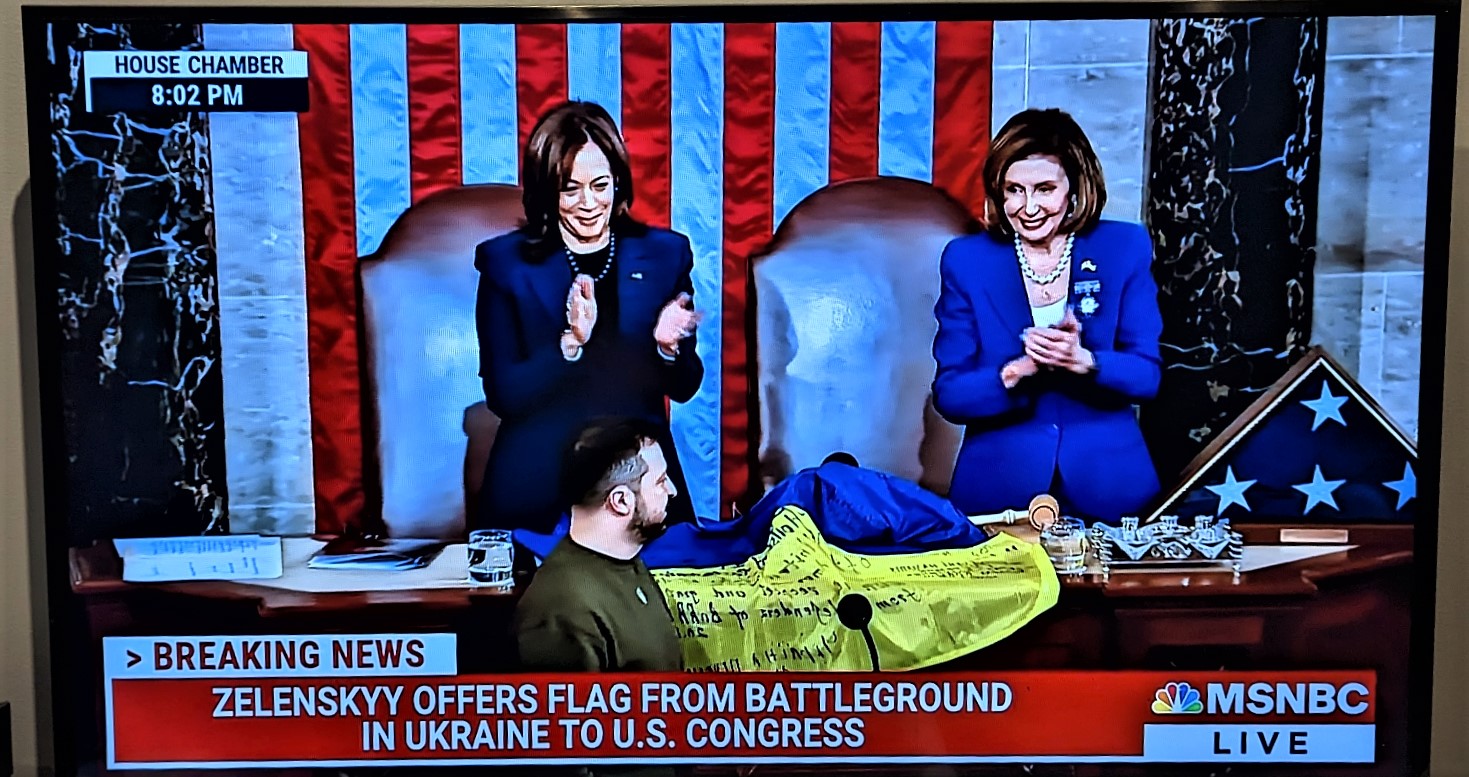






























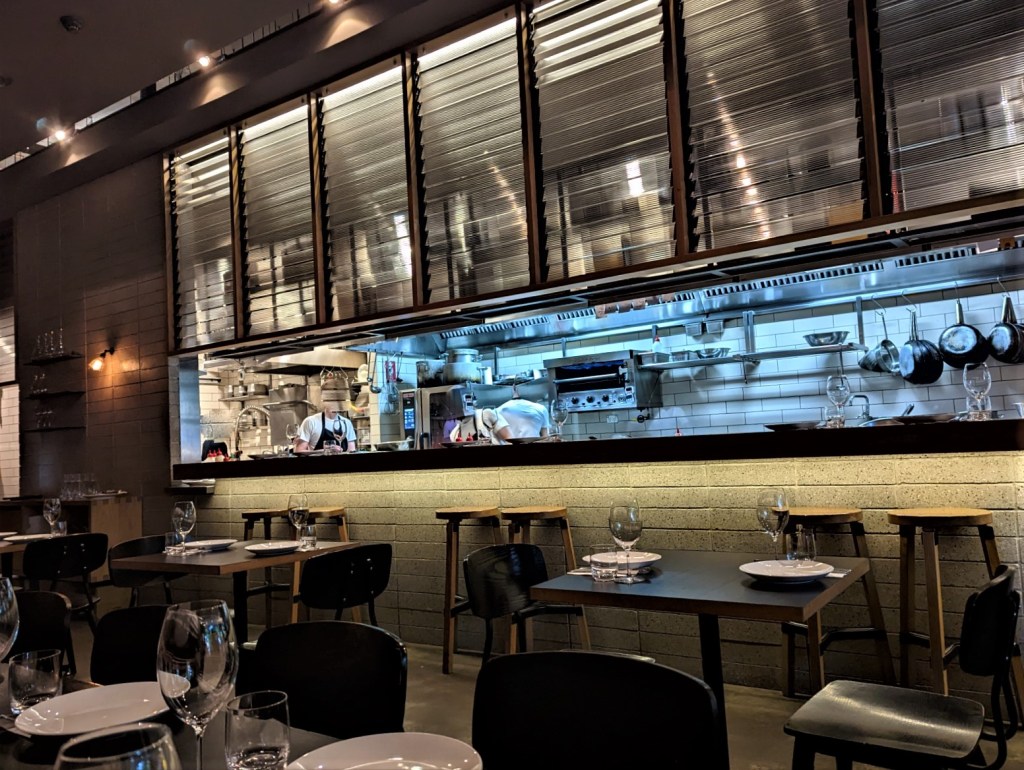









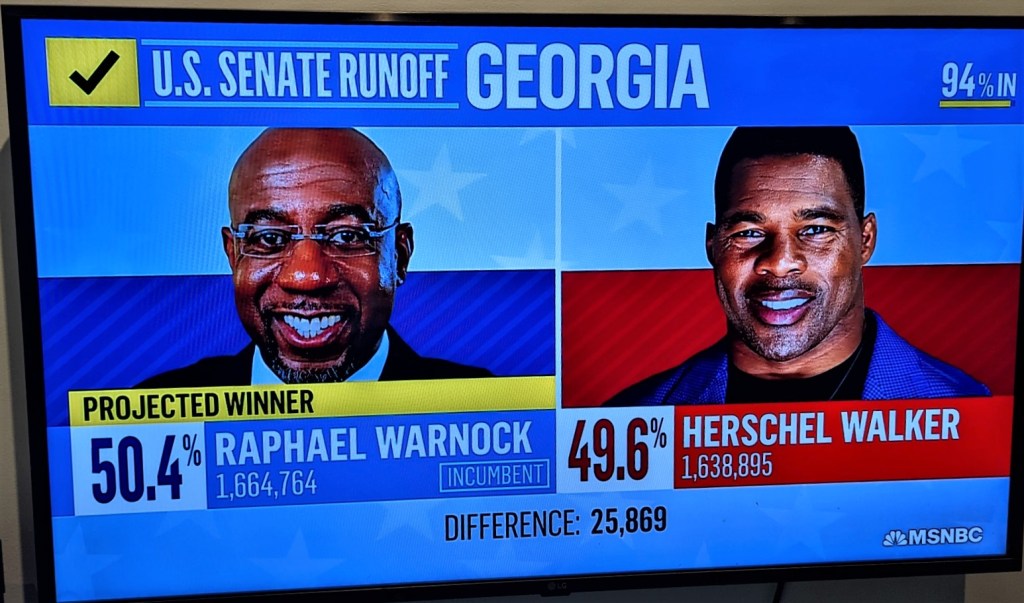




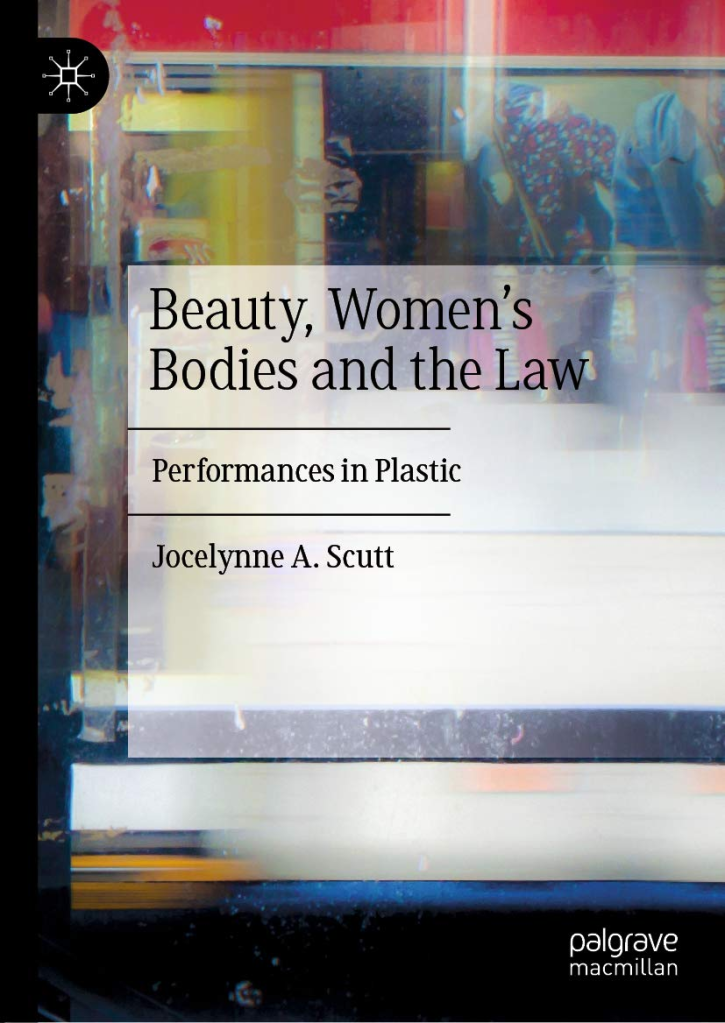

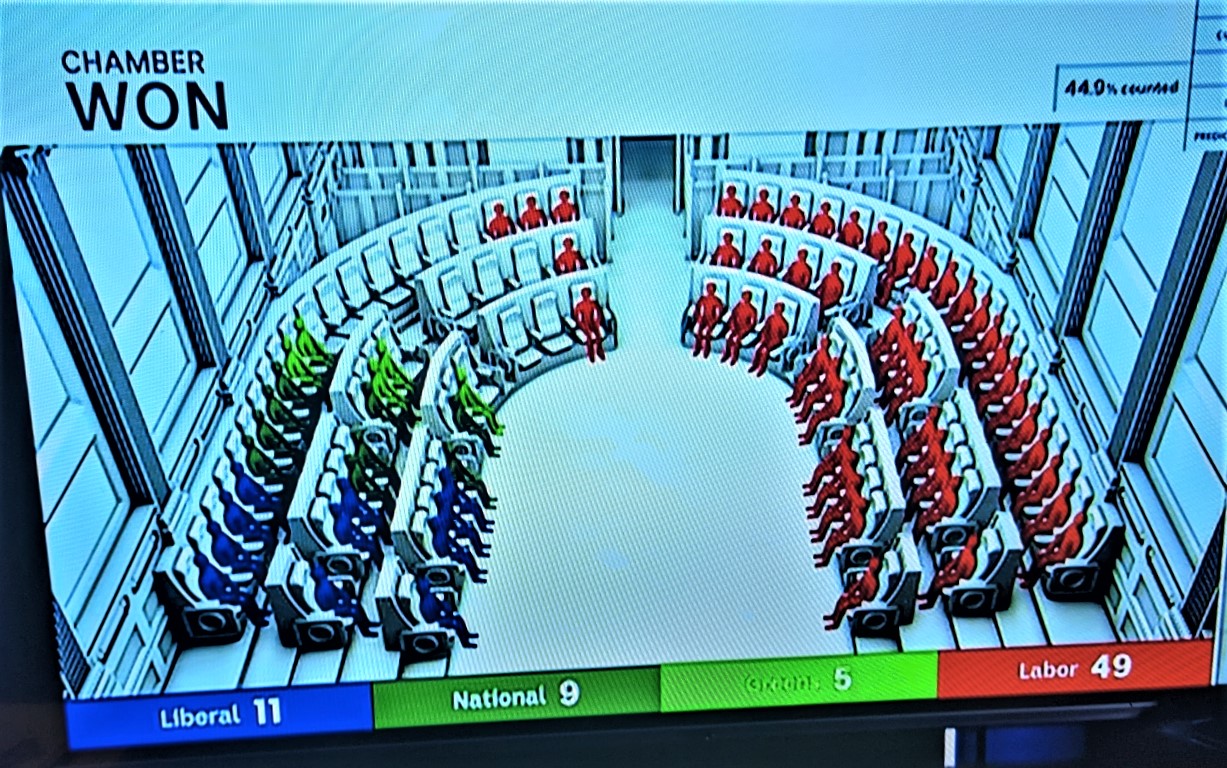
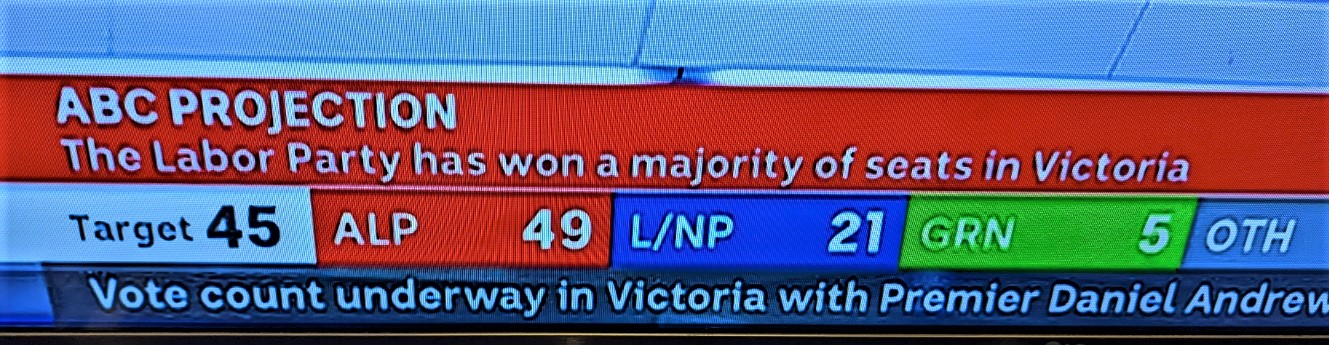

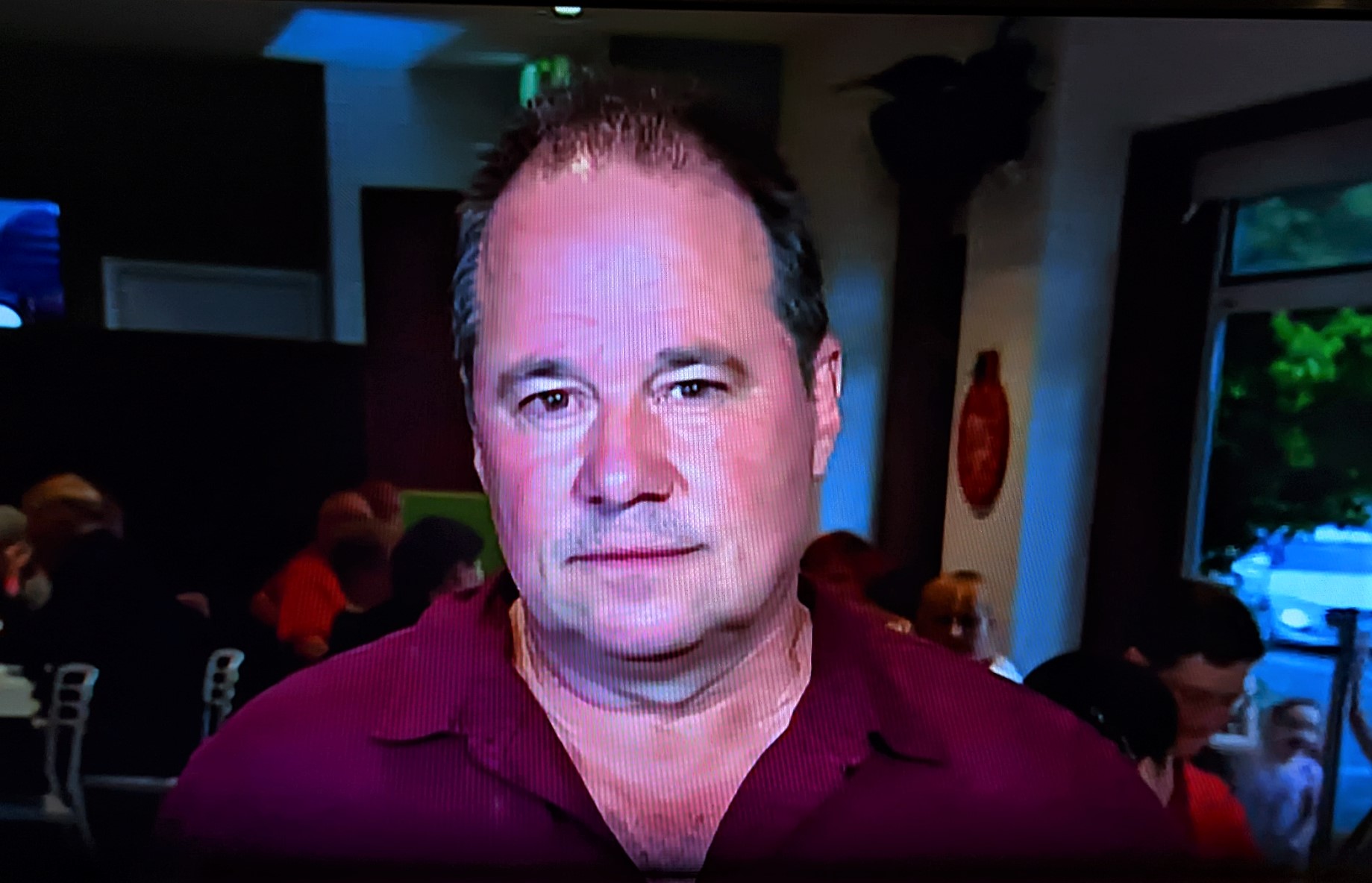
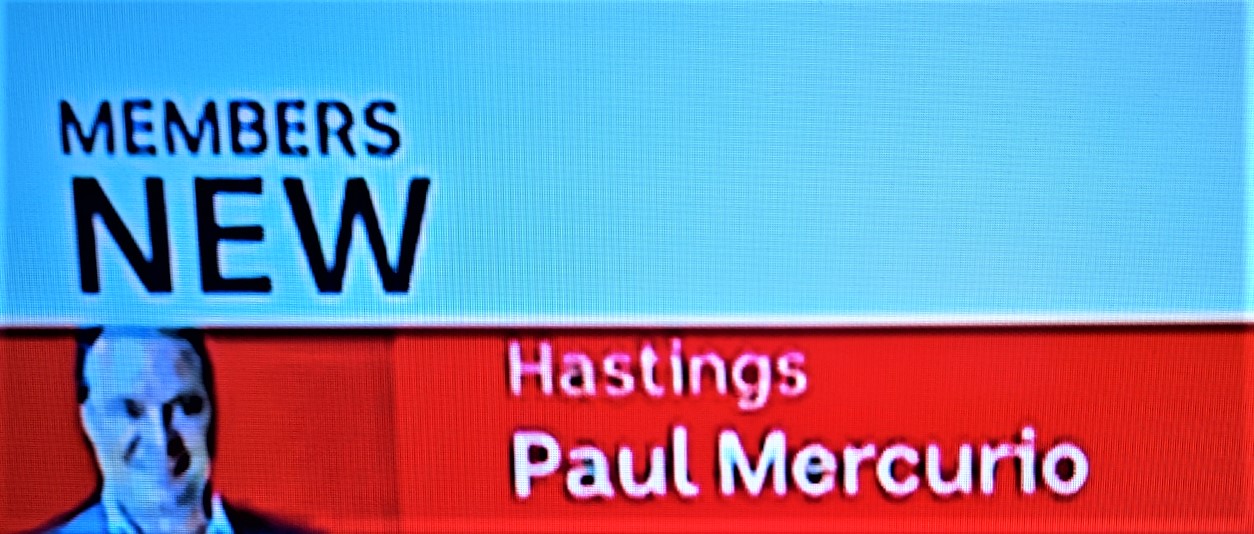
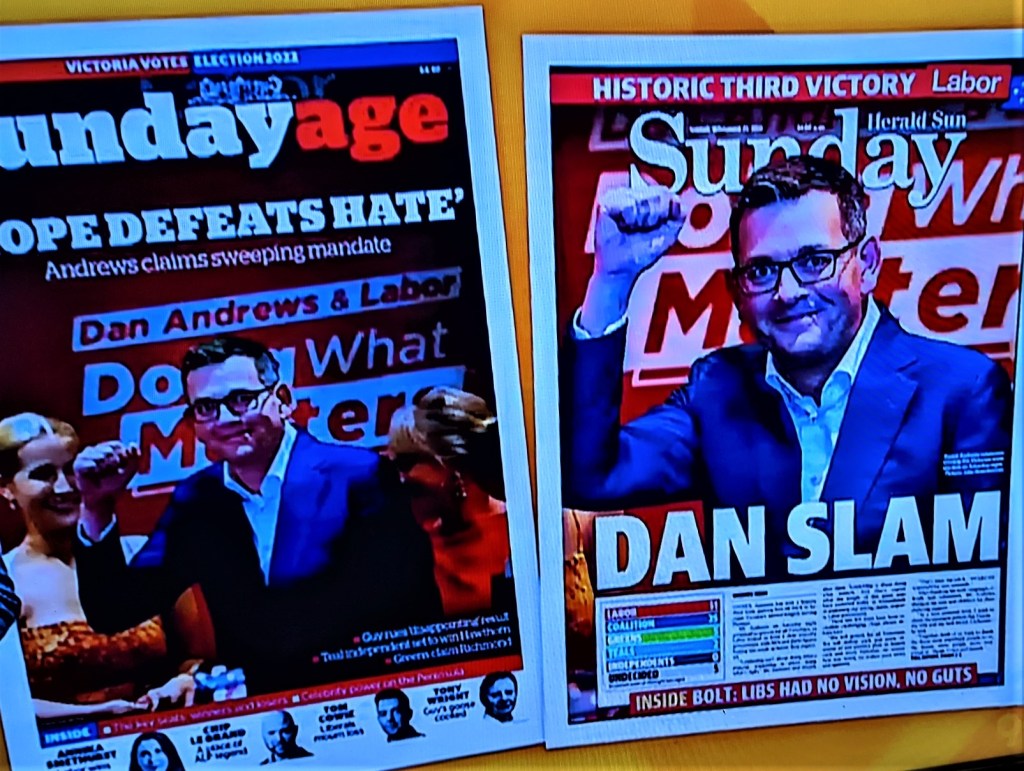














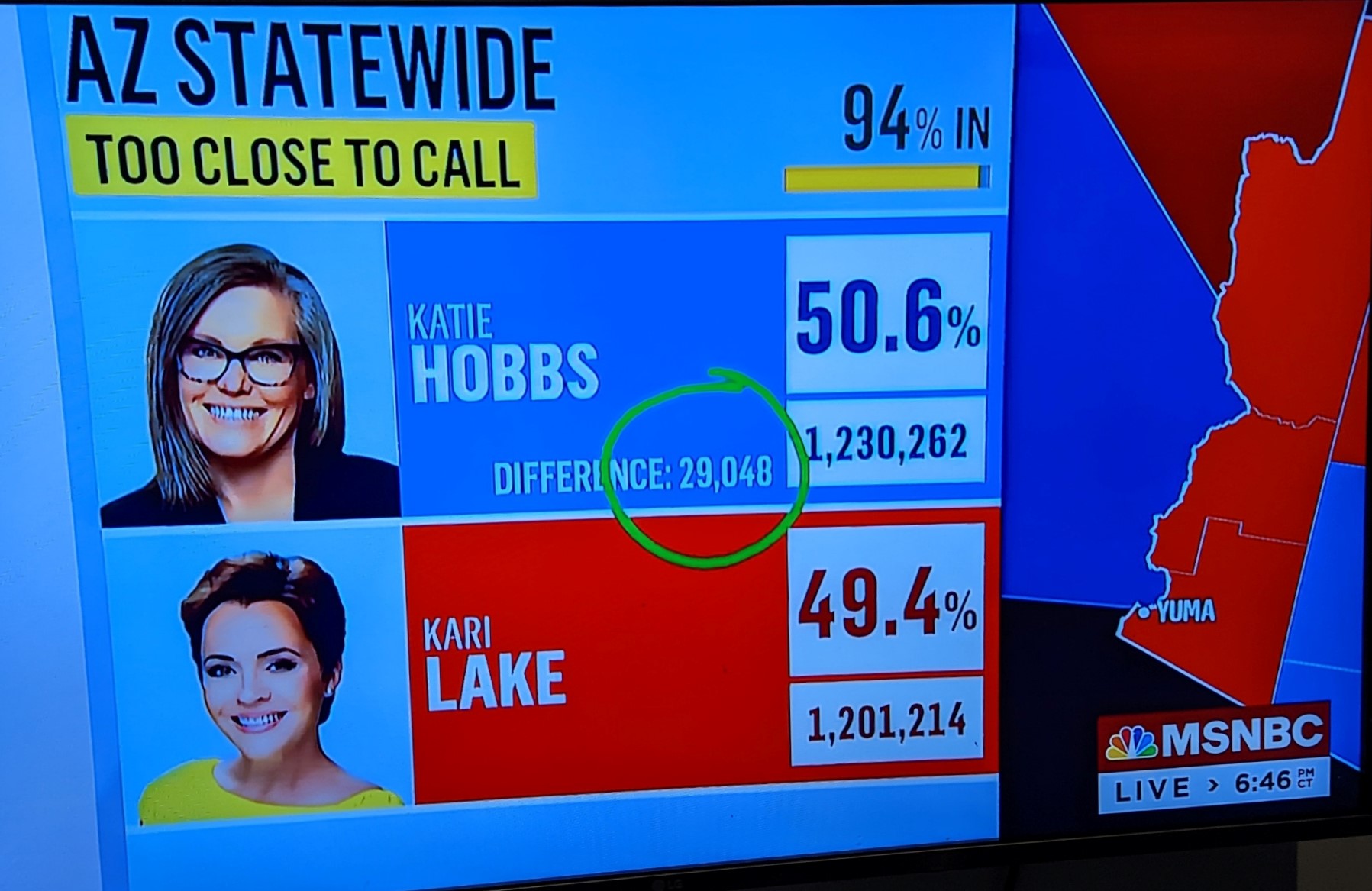




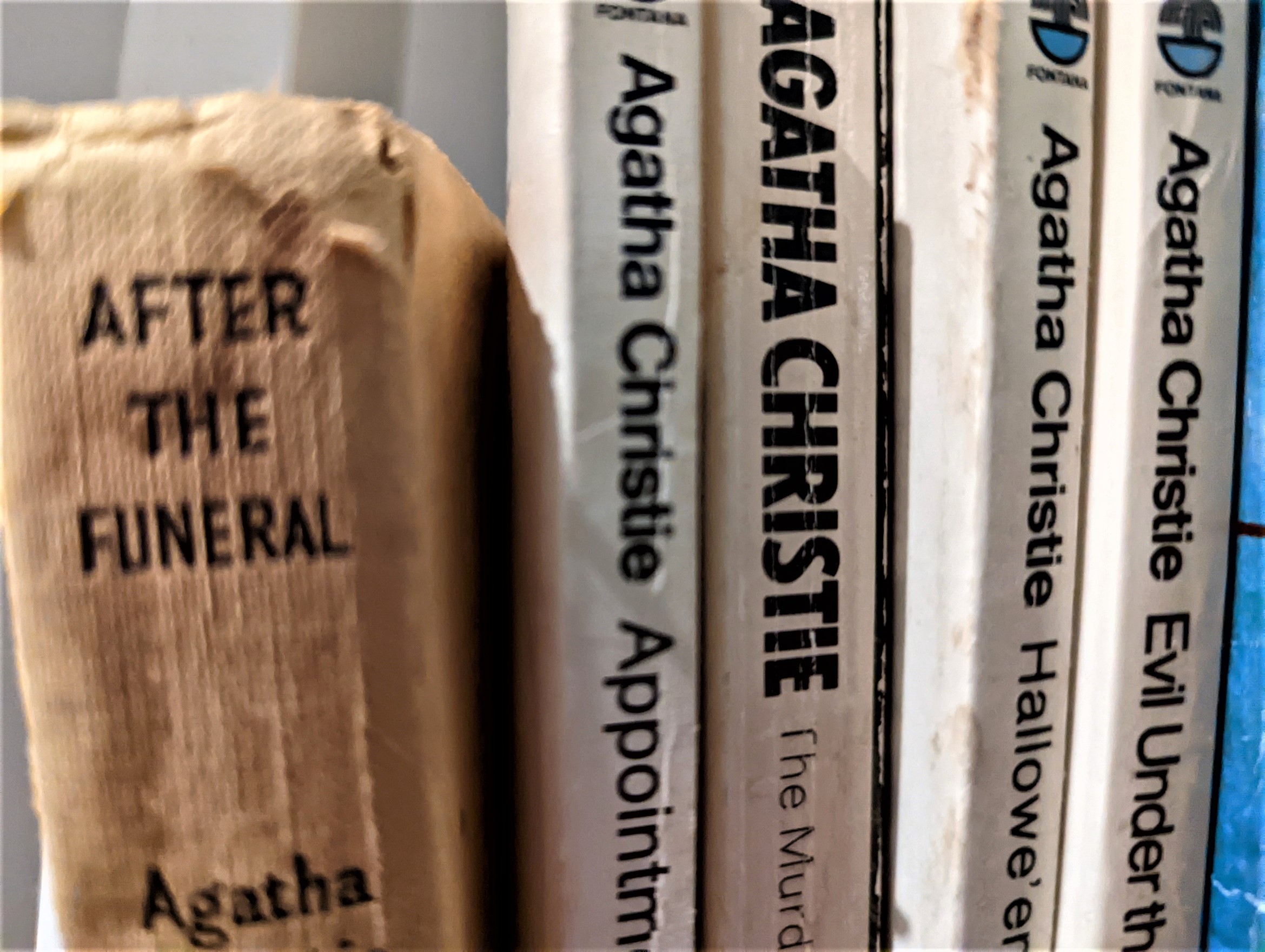

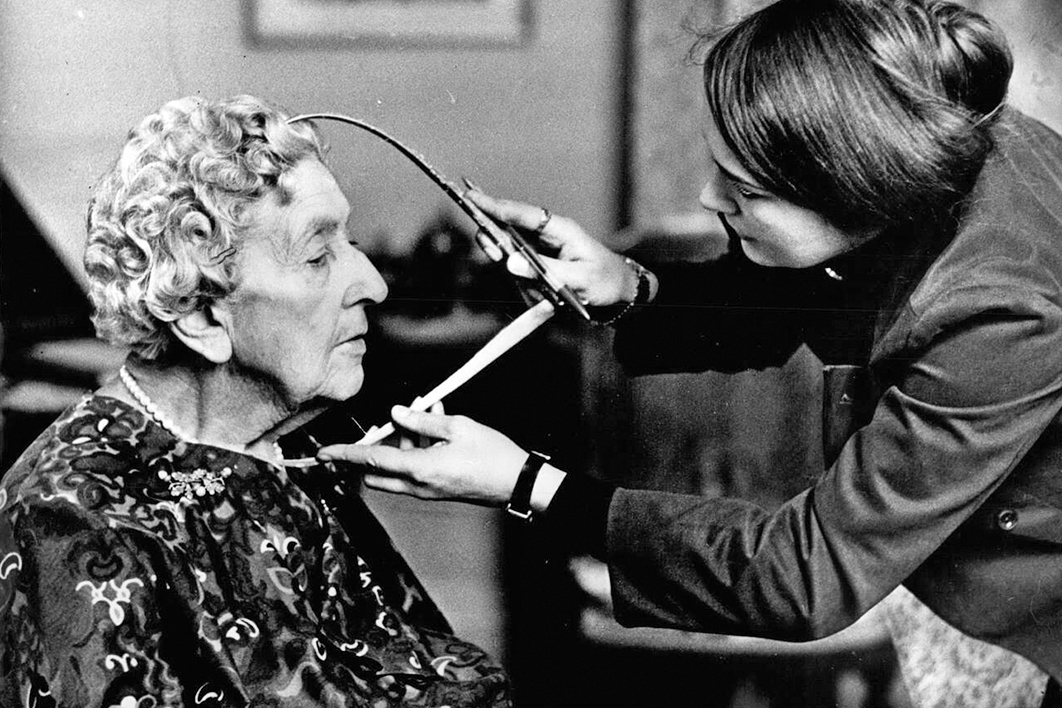

















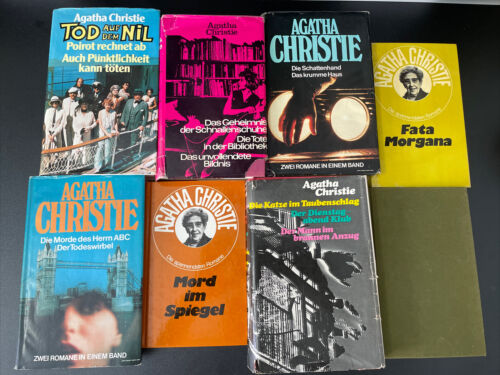

























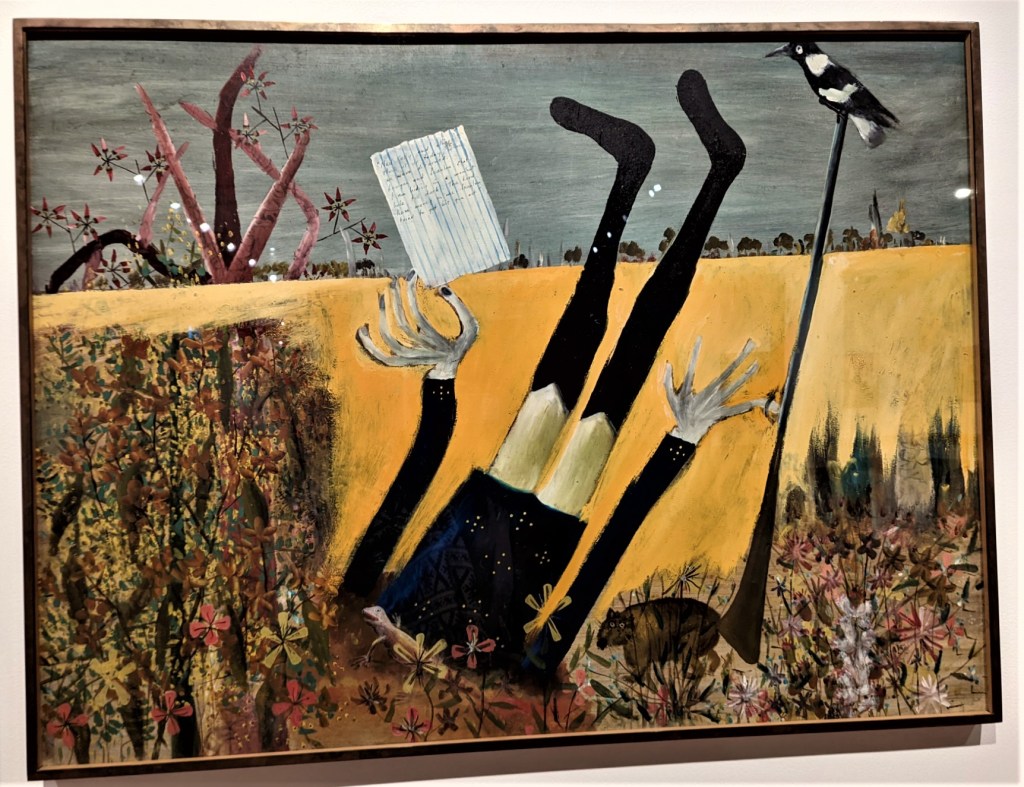





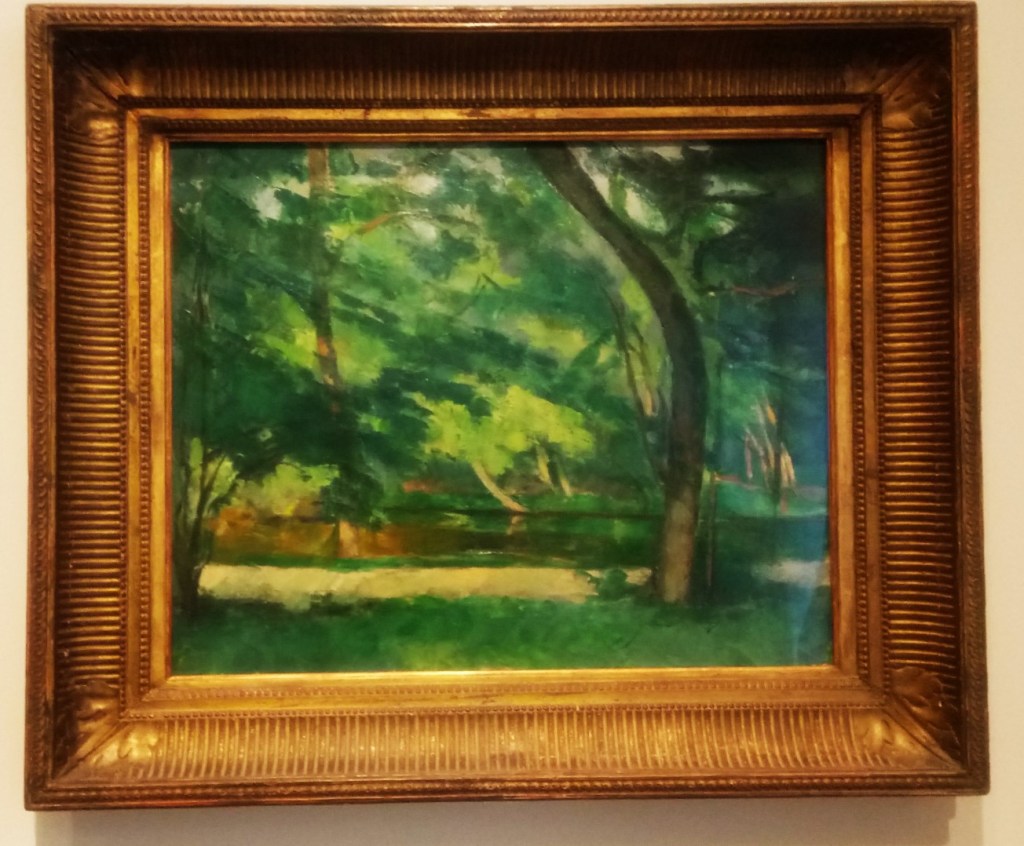

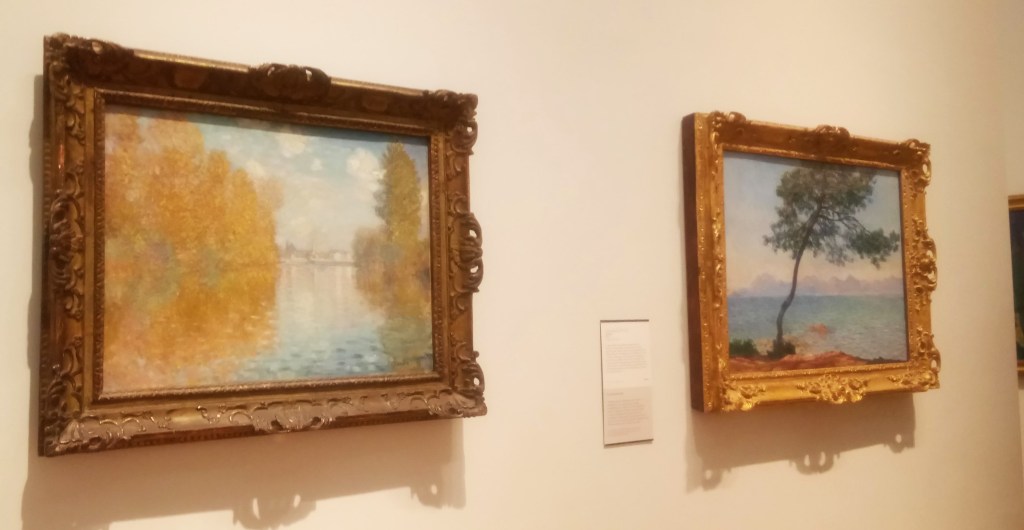



 Robin's Room