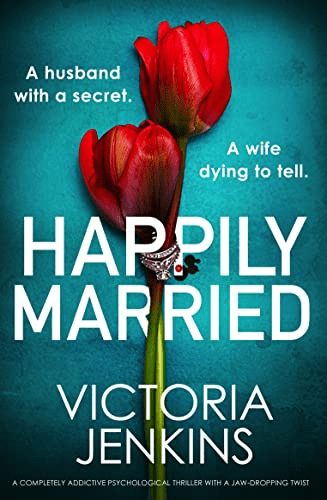
Tracey Enerson Wood The President’s Wife Sourcebooks Landmark, 2023.
Thank you, NetGalley, for providing me with this uncorrected copy for review.
The President’s Wife is an apt title, encompassing as it does the part of Edith Galt’s life where she becomes instead, Edith Wilson, First lady. Galt is her married name – that of her first husband, a jeweller whose business she retrieved from failure after his death. At the end of President Woodrow Wilson’s life Tracy Enerson Wood’s novel shows Edith redirecting his failing ability to command, perpetuating her role as an able person in her own right. Edith’s capability, despite being known as the jeweller’s and then, the President’s, wife makes an engaging story. Edith Bolling, Mrs Galt, the First Lady and the widow of the twenty-eighth American President are all given attention in the narrative. Tracy Enerson Wood weaves Edith’s background into the present, illustrating Edith’s capacity for the work that she was to undertake in maintaining Woodrow Wilson’s presidential responsibilities until they left the White House. However, these early years never intrude on the essential story, that of the First Lady to the Woodrow Wilson Presidency from their marriage in 1915 until the end of this presidency in 1921.
This is a political love story, replete with quotes from the romantic letters Woodrow Wilson write during their courtship and marriage. The introduction and last glimpse of Edith, features one of the symbols of their marriage, their play with names. This illustrates one of the important themes of the novel – the close nature of their marriage, despite their role as President and First Lady during a war time presidency which impacted on their time together and the nature of their interaction during that time. See Books: Reviews for the complete review.
Thank you, NetGalley and Pen & Sword, for providing me with this uncorrected proof for review.

I imagine having this book starting in a backpack while wandering around London, and then diving for it so often that it has to stay in my hands. Or, beside me to read while I’m having a coffee before starting on the next interesting location that it encourages me to pursue. The Movie Lover’s Guide to London is also just a really good read for a person interested in films, locations, excerpts of plots and details of locations associated with this wonderful city. Going to the movies, as well as walking around London, will be doubly interesting with the wealth of information Charlotte Booth packs into this guide. Books: Reviews – see for complete review.

Articles after an explanation for there being no Covid report this week: from Tom Watson’s newsletter- London walks; Nicci French and the Hardy Tree; Covid Exhibition at Canberra Museum and Gallery.
Covid in Canberra after the end of lockdown
Covid numbers this week are not available as this post has had to be scheduled in advance of the figures being available.
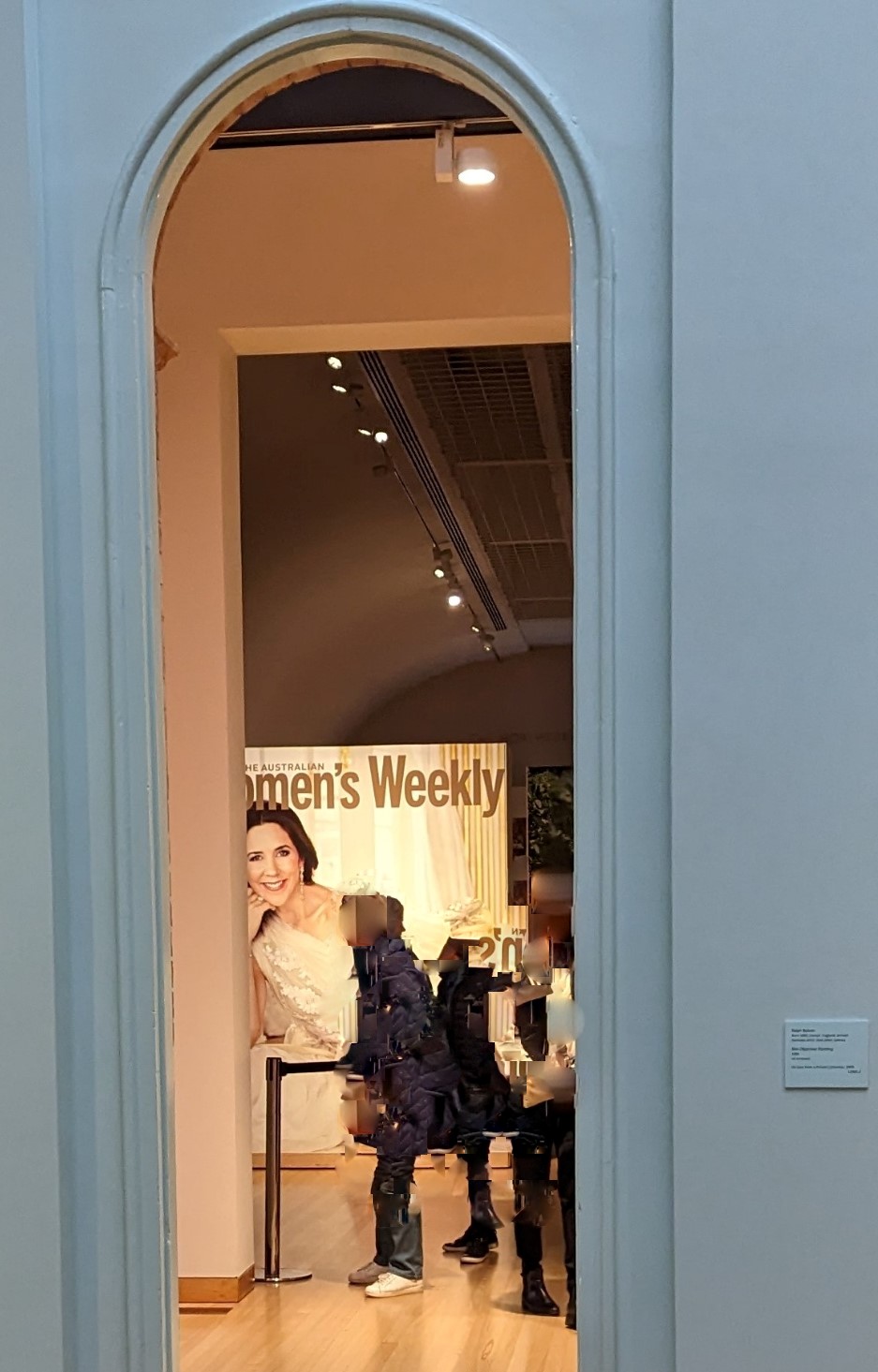
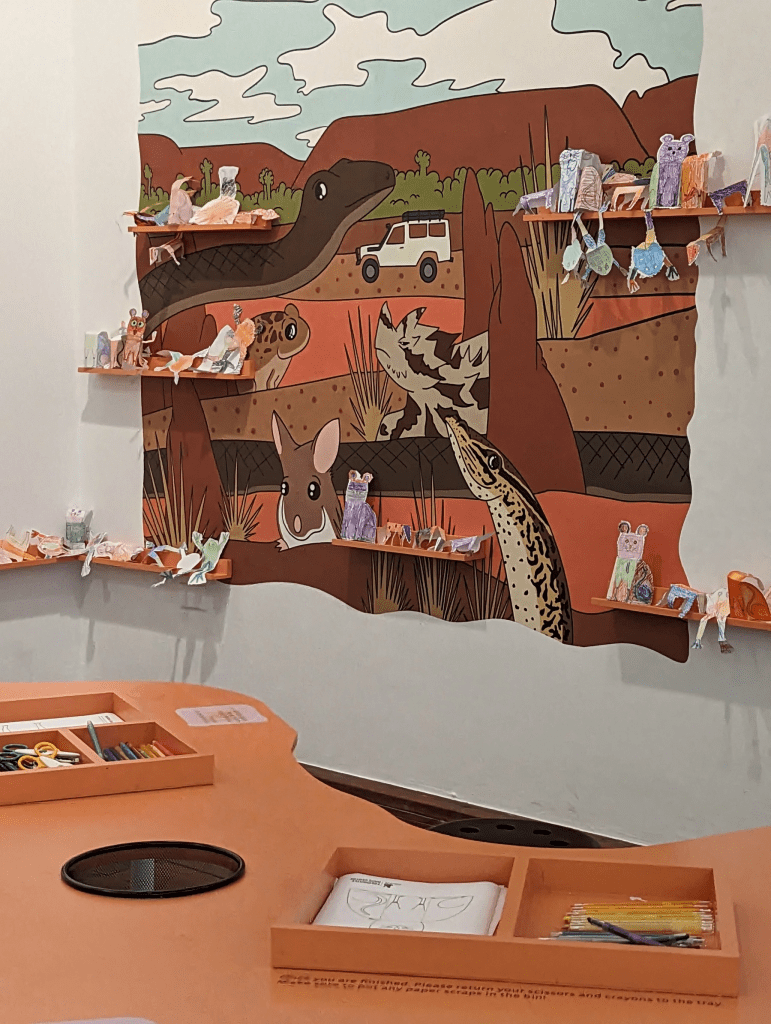
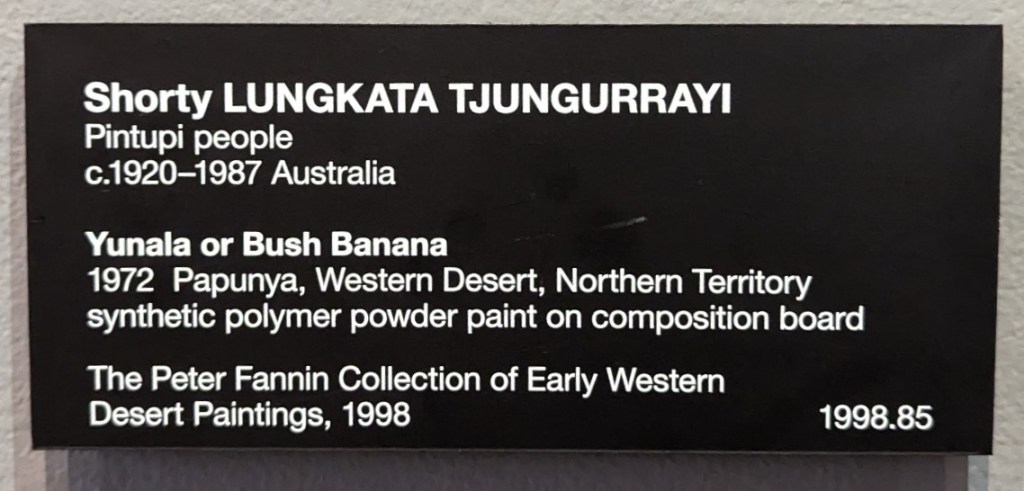
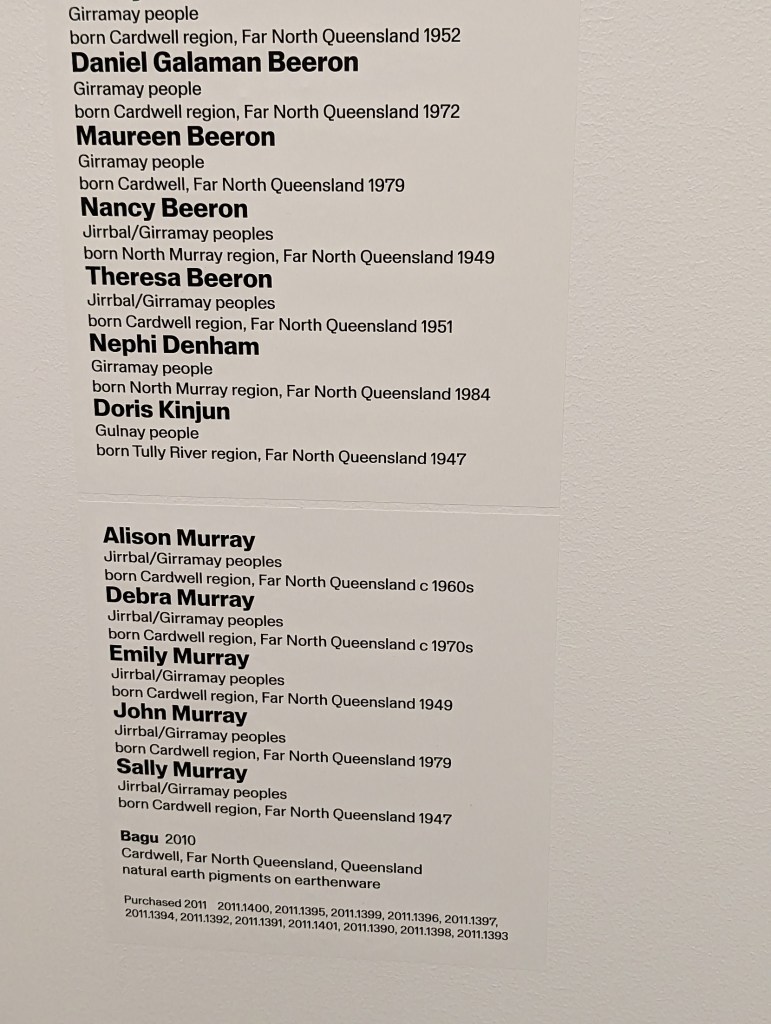
An exhibition related to the Covid pandemic and the way in which Canberrans responded is showing at CMAG. Photos from the exhibition appear below.
The epicentre of Gothic Horror
Or, how to walk 30,000 steps and not get bored. 24 hr ago
Tom Watson’s newsletter includes a piece that goes well with the Movie Lover’s Guide to London focusing as it does on walking around the city using another walking guide. This is London’s Hidden Walks by Stephen Millar.
I am pounding out the steps, buoyed by returning to an average of 10k in January and aiming for a new target of 11k for February.
On Wednesday, I recorded my first-ever 30,000 steps in the MyFitnessPal app. I’ve never done it before because I get bored walking after a while, but this week, I was helped by a lovely little guidebook called London’s Hidden Walks by Stephen Millar.
First 10k – To Kings Cross
I walked from South London, through covent garden and up to lunch in Granary Yard, Kings Cross.
Five reasons you should visit St Pancras Old Church
Nearby I visited St Pancras Old Church – and it was a find. It’s arguably the oldest church in London (314AD). In the 6th century AD, St Augustine may have used the altar. During the English civil war, it was occupied by Parliamentarian troops in 1642.
Firstly, the Beatles took their ‘mad day out’ while recording the White album in 1968 here.
Thirdly, Mary Wollstonecraft is also buried here. Mary died giving birth to her daughter, Mary Godwin (1797-1851). While visiting her mother’s grave, a poet spotted Mary. The married Percy Shelley Byshe fell head over heels in love with her instantly.
After his wife’s death, Percy and Mary were ostracised by London Society and, in 1816, took refuge at the home of Lord Byron in Geneva. Whilst there, Byron held a competition for his house guests to write the best ghost story.
Despite Byron and Percy being literary giants, the winners were Mary, who wrote Frankenstein and Byron’s doctor, John William Polidori, who wrote Vampyre.
Polodidori is also buried in the graveyard. So you can say that this little church’s graveyard is at the epicentre of the Gothic Horror genre we know today.
Fourthly, Charles Dickens wrote about the graveyard in Great Expectations as a location for body snatching. Graveyard bodies are featured in the life of another great literary figure, Thomas Hardy.
In the mid-nineteenth century, the growing rail network cut through the graveyard leading to complaints that corpses were left strewn around the construction site.
A young Hardy was put in charge of tidying up the burial ground. He was left traumatised when he discovered a rotting corpse with two heads in one of the coffins. Until the winter storms there was the famous Hardy tree, whose roots were entwined around a mound of gravestones.
Fifthly and finally, to re-enforce its Gothic Horror heritage, the church, which celebrates its Anglo-Catholic traditions, was desecrated by Satanists in 1985.
The next 10k – glorious Camden
I’ve hazy memories of Camden from the eighties, nineties and naughties, mainly the pubs and the hi-jinx within them. Many of them have a fine music history.
The Good Mixer was Britpop Central in the early nineties, having to ban one of its more famous regulars, Liam Gallagher.
The World’s End pub became the scene of a momentous day of drinking when I first moved down to London in 1984. It’s also where years later, I serendipitously sat next to Amy Winehouse for an afternoon before she became internationally famous.
The Dublin Castle, with its Indie tradition, was the pub where the mighty Madness made a name for themselves.
Yet the cultural history of Camden is deeper and richer than this. When they walk down Arlington Road, most people will not know that Arlington House, which supports the homeless, accommodated George Orwell in the 1930s, who wrote about it in Down and Out in Paris and London.
Patrick Kavanagh stayed in the House and wrote of it in his autobiography, The Green Fool:
Many Irish boys made Rowton House, Camden Town, first stop from Mayo. The soft voices of Mayo and Galway sounding in that gaunt, impersonal place fell like warm rain on the arid patches of my imagination.
These boys were true peasants. They walked with an awkward gait and were shy. To me they looked up as to a learned man and asked me questions I couldn’t answer.
Madness wrote about it in One Better Day:
Arlington house, address: no fixed abode An old man in a three-piece suit sits in the road He stares across the water, he sees right through the lock But on and up like outstretched hands His mumbled words, his fumbled words, mock
Not far from the World’s End pub is a house where Charles Dickens used to live. I couldn’t find it, but it has a blue plaque. Down from the World’s end, I often fell into Camden palace and enjoyed its dilapidated glory. That won’t happen again as the building has transformed into Koko, a cultural venue connecting art and music. It’s magnificent.
A video from YouTube has been omitted from this article.
The Hardy Tree
The Hardy tree, when still standing, appears in Nicci French’s series that features Frieda Klein. Sunday Morning Coming Down is the seventh in the series, and the tree is the site of a distressing discovery for Frieda, her family and friends. Klein walks the streets of London following the rivers that are now hidden under streets and buildings, many becoming only a trickle into the Thames, or having disappeared except for a marshy area that appears intermittently.
The lost rivers of London inspire numerous books, tours, and references – perhaps more inspiration for walking tours!
President Biden visits Kiev: MSNBC Report 20/2/2023
Thank you, NetGalley, for providing me with this uncorrected proof for review.
Land Acknowledgement
We acknowledge the land on which The Public and its theaters stand is the original homeland of the Lenape people.
Kevin Landis’ history of One Public, the New York theatres Delacorte in Central Park and The Public, Lafayette Street in the East Village is replete with nostalgia; politics; well-known and not so well known theatrical names – directors, writers and actors; current events and ideology woven into financial and business needs; and an introduction and then immersion into the joy of learning more about a thriving theatrical creation in which ideological demand to produce works about hope and a better world is woven side by side with the practicalities of fund raising, purchasing buildings, and even ticket sales.
Two features will resonate with the Australian reader: the acknowledgement with which this review is introduced, and the role of Shakespeare in bringing theatre to a broad range of people – in the case of Shakespeare in the Park, free. In Australia there is a similar acknowledgement of country and the traditional owners, and Shakespeare is the source of numerous inventive productions throughout the country. These include Shakespeare by the Lake in Canberra and the innovative Bell Shakespeare Company. One of the features of Shakespeare in the Park that Landis describes are racoons that become part of the theatrical events, and a duck nest that remained on stage throughout a season. Kangaroos do appear in the Australian capital, but to my knowledge have not interrupted Shakespeare on the Lake. However, peacocks made an elegant addition to a production of A Midsummers Night Dream at the at the New Fortune Theatre at the University of Western Australia I attended many years ago. Books: Reviews
After the Covid update: Bob McMullan – forthcoming by-election; First Woman Speaker of the House of Representatives – Joan Child; Anniversary of The Apology; Excerpt from Tom Watson Newsletter (former Labour Member UK Parliament, now in the House of Lords) newsletter.
Covid update for Canberra
On the 10th February 401 new Covid cases were reported; 6 people were in hospital. No cases are in ICU or ventilated. There have been no lives lost over this period.
Aston truths
Bob McMullan
I have never seen so much rubbish written about a forthcoming political event as I have seen about the forthcoming Aston by-election.
The basic facts are these: it is a safe Liberal seat made marginal in 2022 by an unpopular sitting member; no government has won a seat form the opposition at a by-election in living memory; the Liberals only have to put up a half-way decent candidate and it is hard to see how the Labor Party will have a chance to win the seat; this doesn’t appear to be prime “teal” territory but an independent is likely to be the only serious threat to the Liberals.
All political history points in this direction. The seat can only be in doubt if the current Liberal Party is actually unelectable in urban Australia.
I understand why the Liberals are trying to portray themselves as the underdogs. What I don’t understand is why otherwise sensible journalists seem to be falling for it.
Aston’s recent electoral history suggests that the 2022 result was an anomaly. The more than 7% swing in Aston was larger than in any of the adjacent seats. The average swing against the Liberals in those seats was 3-4%. This suggests an underperformance by Alan Tudge of more than 3%.
In addition, 2022 was a very bad result tor the Liberals in Victoria, due in no small part to the leadership of Scott Morrison. With Morrison gone the Liberal vote should improve, irrespective of the popularity or otherwise of Peter Dutton.
The history of by-elections such as this is telling. As National Secretary of the ALP at the time, I distinctly remember the Bruce by-election in 1983. The sitting member, Billy Snedden had resigned and he had been considered a popular local member and a respected Speaker of the House. The ALP had quite good candidate and the Liberals had a very poor candidate. So, the local factors were encouraging. And Bob Hawke as Prime Minister was extremely popular at almost record levels at that time. All the signs were positive for Labor, but the Liberals gained a 3.8% swing towards them. This should put the probability rating of the Liberals losing Aston to the Labor Party in perspective.
Anthony Albanese is very popular and the government is doing well both in restoring good governance to the country and in polling support around the country, including in Victoria, but he is not at Bob Hawke levels of public support. Bob Hawke went backwards by 3.8% in Bruce, why does anybody contemplate the possibility of Anthony Albanese doing so much better than Hawke that he will gain a 2.8% swing towards him in Aston?
Whether a “Teal” independent can win is not clear at this stage. It depends on a number of local factors, but there is some history of by-elections to suggest that an Independent could do well, although this has mainly been in seats held by the government of the day like Wentworth in 2018.
If there is a serious possibility that the Labor Party could win Aston it would be a defeat of unprecedented character and would suggest that the current version of the Liberal party is almost unelectable in urban Australia.
Because something has never happened it doesn’t mean it can’t happen.
But it is most unlikely that the Liberals will lose Aston.
Given how badly they did in this previously safe seat in 2022, even a swing against them is unlikely, but if it were to happen it would be devastating for them.
Joan Child was elected to the Melbourne seat of Henty in 1974, becoming the first female Labor member of the House of Representatives, and only the fourth woman ever elected to the House.
On her death at 91, in 2013, then Prime Minister Julia Gillard said Child was one of Labor’s ‘true believers’ and a powerful voice for the needs and rights of women, especially working women and women doing it tough.
Kevin Rudd commemorates 15th anniversary of national Stolen Generations apology
On this day in 2008, former Prime Minister Kevin Rudd apologised on behalf of the nation for past laws, policies and practices that have impacted upon Australia’s First Nations Peoples, particularly members of the Stolen Generations.
Today marks the ninth anniversary of the National Apology to Aboriginal and Torres Strait Islander Australians and is a significant day in Australia’s history.
It is an important time to reflect on how generations of Aboriginal and Torres Strait Islander Peoples have been affected, and will continue to be affected, by the past policies of the Australian Government and the ongoing impacts of this on the mental health and wellbeing of Indigenous Australians.
That today we honour the Indigenous peoples of this land, the oldest continuing cultures in human history.
We reflect on their past mistreatment.
We reflect in particular on the mistreatment of those who were Stolen Generations – this blemished chapter in our nation’s history.
The time has now come for the nation to turn a new page in Australia’s history by righting the wrongs of the past and so moving forward with confidence to the future.
We apologise for the laws and policies of successive Parliaments and governments that have inflicted profound grief, suffering and loss on these our fellow Australians.
We apologise especially for the removal of Aboriginal and Torres Strait Islander children from their families, their communities and their country.
For the pain, suffering and hurt of these Stolen Generations, their descendants and for their families left behind, we say sorry.
To the mothers and the fathers, the brothers and the sisters, for the breaking up of families and communities, we say sorry.
And for the indignity and degradation thus inflicted on a proud people and a proud culture, we say sorry.
We the Parliament of Australia respectfully request that this apology be received in the spirit in which it is offered as part of the healing of the nation.
For the future we take heart; resolving that this new page in the history of our great continent can now be written.
We today take this first step by acknowledging the past and laying claim to a future that embraces all Australians.
A future where this Parliament resolves that the injustices of the past must never, never happen again.
A future where we harness the determination of all Australians, Indigenous and non-Indigenous, to close the gap that lies between us in life expectancy, educational achievement and economic opportunity.
A future where we embrace the possibility of new solutions to enduring problems where old approaches have failed.
A future based on mutual respect, mutual resolve and mutual responsibility.
A future where all Australians, whatever their origins, are truly equal partners, with equal opportunities and with an equal stake in shaping the next chapter in the history of this great country, Australia.”
Former Prime Minister Kevin Rudd
Published: 13 February 2017- EveryMind
Tom Watson – from his newsletter: “Tom Watson’s newsletter on Substack.” Tom Watson <tomwatsonofficial@substack.com>
My 24 hours with Burt Bacharach
I gatecrashed Burt Bacharach’s private party. Kevin Brennan MP was my accomplice. We’d seen him perform at the Roundhouse and tried to find the aftershow party. I won’t explain how I blagged us through two security rings, but I did.
Then, there we were, in the room. And at the bar, on a tall stool sat the great man with a conga line of admirers waiting to pay their respect.
Six feet away, standing alone with a clipboard, was an elegant woman looking attentive – the manager. I’ve dealt with a lot of music managers. They are high-calibre and tough.
“Excuse me, madam; I am here on behalf of Prime Minister Gordon Brown. He has asked me to pass on his best wishes to Mr Bacharach and to extend an open invitation to you both to visit us in Number 10 Downing Street.” The poetic licence worked. We were escorted to the front of the queue and introduced to Burt.
Kevin Brennan was in rapture and immediately asked Burt if he made Cilla Black record ‘Alfie’ 34 times. “Well, you know, Kevin, there’s no point being in the studio unless the recording is perfect.”
“What was it like getting your first number one hit?”
“It was life-changing and I am still proud of it. Never underestimate a song you can whistle.”
The two of us were like naughty schoolchildren, not believing our luck and blagging skills. At the back of the queue was Jamie Cullen’s manager, who had rumbled us and was appalled and impressed in equal measure.
We spent longer than we should have with the great man, but Bacharach mania had overcome us. We hopped in a cab to K-Box and spent two hours at the Soho karaoke bar singing every Burt song we could find in the database. We sang to each other and with each other, laughing, smiling, and high-fiving all night. And we drank Tequila as they do on the West Coast.
The next morning, bleary-eyed, I walked into the cabinet office at 8am to be met by a bemused Private Secretary. “We’ve had a call from someone claiming to be the manager of Burt Bacharach, who is on tour in the UK at the moment minister. She seems to think he is meeting you and the Prime Minister today.”
I was undone. By now, the “open invitation to visit us in number 10 Downing Street” was a vague memory.
I’m avoiding the story about how I fixed it, but I did. Gordon Brown juggled his diary and drank tea from china cups with Burt. We took pictures of him sitting in Churchill’s leather armchair, and he saw the moondust given to the UK by President Nixon on behalf of the USA.
He loved it, and we loved him visiting. I have many memorable stories of working at Number 10, but I think this is the one I treasure most or at least equally treasure, along with my boy playing dinosaurs with the PM and his boy.
At the heart of all of this is a songwriter’s genius. Never underestimate a melody you can whistle. God bless you, Burt, and thank you.
Michele Moody-Adams Making Space for Justice Social Movements, Collective Imagination, and Political Hope Columbia University Press,2022.
Thank you NetGalley for providing me with this uncorrected proof for review.

This book is so enlightening, beginning with its title, through its chapter headings to the clear way in which Michele Moody-Adams explains the beginnings of her work in the detailed acknowledgements. Here she refers to her long-term interest in moral progress – ‘towards producing a more just social world’. This is a wonderful introduction to a subject with so many complexities!
Moody-Adams has written and presented papers from 1999, providing a well-considered background to a book that argues that of philosophical theory should not supplant progressive social movements as the catalyst to developing understanding and the development of moral progress. I feel as though Moody-Adams is bringing the way in which social reform takes place back to a solid beginning. So often the work of activists has been neglected in favour of theory in so many areas of social reform. The value of people, their actions and beliefs, together with recognition of the immeasurable value of hope burgeons under Moody-Adams’ hand. This book is an invaluable asset in achieving an understanding of achieving social justice. Books: Reviews
Covid in Canberra since Lockdown Ended
There were 420 new cases of covid recorded this week, with 11 active cases in hospital. No patients are in ICU, and none is ventilated. However, contrary to these improving figures it is very sad to record that five lives have been lost this week.
Tom Moore at the Canberra Museum and Gallery
I was so pleased to catch this fantastic travelling exhibition at the Canberra Museum and Galley before it continues to Geelong. It was absolute fun, and I went twice. I had visited the Jam Factory as part of the Indian Pacific trip I embarked upon last year, so was unsurprised at the energy and imaginative nature of this exhibition.
I also had lunch at the CMAG Cafe which is a very good experience too. More of that in another blog. Also, in another week I shall cover the Covid Exhbition that was also showing at CMAG.
.
Environment Minister Tanya Plibersek blocks Clive Palmer’s Central Queensland coal mine 4h ago
Her department received more than 9,000 public comments, with 98 per cent in favour of blocking the project.
Ms Plibersek’s decision is the first time in Australian history that a coal mine has been refused under national environmental laws.
The planned mining site was just 10 kilometres from the edge of the Great Barrier Reef world heritage area near Rockhampton.
“I have decided not to approve the Central Queensland Coal Project because the risks to the Great Barrier Reef, freshwater creeks and groundwater are too great,” Ms Plibersek said in a statement.
“Freshwater creeks run into the Great Barrier Reef and onto seagrass meadows that feed dugongs and provide breeding grounds for fish.”
The project would have involved the construction of two open-cut pits to extract up to 10 million tonnes of coal each year.
It was expected to operate for twenty years, with the coal exported overseas for steel production.
Queensland Environment Minister Meaghan Scanlon said in a statement that Ms Plibersek’s decision was in line with findings made by the state’s independent regulator.
“The regulator and Independent Expert Scientific Committee found the project posed an unacceptable risk to the Great Barrier Reef,” Ms Scanlon said.
“All projects are assessed on their merits and it is clear that this one doesn’t stack up.”
Local federal LNP MP Michelle Landry said she was “very disappointed”.
The Member for Capricornia said the area has a high unemployment rate and could have benefited from new employment opportunities.
“Those people were really looking forward [to the jobs] so I think it’s unfortunate that it’s been canned,” Ms Landry said.
“The new environment minister has got 18 coal mines and gas projects under review, and we need to have a good think about what got us through COVID … it was the resource sector.
“There was a process to go through, obviously, and when you look at it, it is quite close to the ocean but … the proponents had done a lot of work in what they were going to do … the water wasn’t going to be going into the ocean.”
Labor MP Nita Green, who is the federal government’s special envoy for the Great Barrier Reef, said reports had found the project was unsuitable and rejecting the mine was in the best interests of the reef.
“They are under a lot of stress already from a water quality issues [standpoint], which we are working on, but I think the location of this mine was key and the community campaign that we saw,” she said.
“It is a matter of a process that we have gone through methodically and remains to be seen if there is an appeal or anything like that.”
The penny’s dropped, conservationists say
Opponents of the mine celebrated the decision, labelling it the “final nail in the coffin” for the project.
The move has been welcomed by the Capricorn Conservation Council, which has been lobbying against the mine for years.
President Paul Brambrick said the community was elated.
“[It’s] something we’ve fought for a long time and that the community is actually right behind as well,” Mr Brambrick said.
“Sometimes you wonder why you do this, but it makes sense in moments like this.
“An open-cut mine 10 kilometres from the Great Barrier Reef … it’s a short-term idea … we can’t just be digging up the country anymore and not considering the environment.”
Mr Brambrick said the decision “sends a death-knell warning” to coal mine investors.
“The penny’s dropped, I think,” he said.
“The disadvantages of mining coal and the damage to the Great Barrier Reef … just far outweighs any organisation trying to open a coal mine in central Queensland.”
Dr Coral Rowston, from Environmental Advocacy in Central Queensland, said the mine posed too great a risk to the nearby reef.
“This is a victory for the reef, for tourism, for communities that depend on the reef for their livelihoods, and for all those who cherish this natural wonder,” she said.
Central Queensland Coal has been contacted for a response.
State of the Union Address by President Joe Biden
I was able to watch the introductory discussion presented by Rachel Maddow with a panel of MSNBC presenters. I then watched the speech and was interested to see how different my experience was from that of the news.com coverage (probably based on Fox News?). I waited to hear President Biden’s problems with articulating the ideas, but of course was more interested in the ideas themselves. I was happy on both counts. The content was excellent (even winning Alexandra Ocasio-Cortez’s approval) and three at most glitches. And excellent use of the heckling – was he really able to negotiate social security and Medicare out of the debate about raising the debt ceiling during this address? Thanks to Marjorie Taylor- Greene it seems he did! The post speech discussion on MSNBC was also valuable.
February 7, 2023
Heather Cox Richardson – State of the Union Address
And then there was President Joe Biden’s 2023 State of the Union address.
This is the annual event in our politics that gets the most viewers. Last year, 38.2 million people watched it on television and streaming services.
What viewers saw tonight was a president repeatedly offering to work across the aisle as he outlined a moderate plan for the nation with a wide range of popular programs. He sounded calm, reasonable, and upbeat, while Republicans refused to clap for his successes—800,000 new manufacturing jobs, 20,000 new infrastructure projects, lower drug prices—or his call to strengthen the middle class.
And then, when he began to talk about future areas of potential cooperation, Republicans went feral. They heckled, catcalled, and booed, ignoring House speaker Kevin McCarthy’s (R-CA) attempts to shush them. At the State of the Union, in the U.S. Capitol, our lawmakers repeatedly interrupted the president with insults, yelling “liar” and “bullsh*t.” And cameras caught it all.
Extremist Marjorie Taylor Greene (R-GA), her hands cupping her wide open mouth to scream at the president, became the face of the Republican Party.
Biden began with gracious remarks toward a number of Republicans as well as Democrats, then emphasized how Republicans and Democrats came together over the past two years to pass consequential legislation. Speaker McCarthy had asked him to take this tone, and he urged Republicans to continue to work along bipartisan lines, noting that the American people have made it clear they disapprove of “fighting for the sake of fighting, power for the sake of power, conflict for the sake of conflict.”
For the next hour the president laid out a promise to continue to rebuild the middle class, hollowed out by 40 years of policies based on the idea that cutting taxes and concentrating wealth among the “job creators” would feed the economy and create widespread prosperity. He listed the accomplishments of his administration so far: unemployment at a 50-year low, 800,000 good manufacturing jobs, lower inflation, 10 million new small businesses, the return of the chip industry to the United States, more than $300 billion in private investment in manufacturing, more than 20,000 new infrastructure projects, lower health care costs, Medicare negotiations over drug prices, investment in new technologies to combat climate change. He promised to continue to invest in the places and people who have been forgotten.
Biden described a national vision that includes everyone. It is a modernized version of President Franklin Delano Roosevelt’s New Deal, and he very clearly invited non-MAGA Republicans to embrace it. He thanked those Republicans who voted for the Bipartisan Infrastructure Law, then tweaked those who had voted against it but claimed credit for funding. He told them not to worry: “I promised to be the president for all Americans. We’ll fund your projects. And I’ll see you at the ground-breaking.”
But then he hit the key point for Republicans: taxes. To pay for this investment in the future, Biden called for higher taxes on corporations and the wealthy. He noted that “in 2020, 55 of the biggest companies in America made $40 billion in profits and paid zero in federal income taxes.” “That’s simply not fair,” he said. He signed into law the requirement that billion-dollar companies have to pay a minimum of 15%—less than a nurse pays, he pointed out—and he called for a billionaire minimum tax. While he reiterated his promise that no one making less than $400,000 a year would pay additional taxes, he said “no billionaire should pay a lower tax rate than a school teacher or a firefighter.” He also called for quadrupling the tax on corporate stock buybacks.
Republicans consider these proposals nonstarters because their whole vision is based on the idea of cutting taxes to free up capital. By committing to higher taxes on the wealthy, Biden was laying out a vision that is very much like that from the time before Reagan. It is a rejection of his policies and instead a full-throated defense of the idea that the government should work for ordinary Americans, rather than the rich.
And then he got into the specifics of legislation going forward, and Republicans lost it. The minority party has occasionally been vocal about its dislike of the State of the Union since Representative Joe Wilson (R-SC) shouted “You lie!” at President Obama in 2009 (Obama was telling the truth); a Democrat yelled “That’s not true” at Trump in 2018 as he, in fact, lied about immigration policy. But tonight was a whole new kind of performance.
Biden noted that he has cut the deficit by more than $1.7 trillion (in part because pandemic programs are expiring) and that Trump increased the deficit every year of his presidency, even before the pandemic hit. And yet, Congress responded to the rising debt under Trump by raising the debt limit, cleanly, three times.
Biden asked Congress to “commit here tonight that the full faith and credit of the United States of America will never, ever be questioned.” This, of course, is an issue that has bitterly divided Republicans, many of whom want to hold the country hostage until they get what they want. But they can’t agree on what they want, so they are now trying to insist that Biden is refusing to negotiate the budget when, in fact, he has simply said he will not negotiate over the debt ceiling. Budget negotiations are a normal part of legislating, and he has said he welcomes such talks. Tonight, once again, he asked the Republicans to tell the American people what, exactly, they propose.
And then Biden did something astonishing. He tricked the Republicans into a public declaration of support for protecting Social Security and Medicare. He noted that a number of Republicans have called for cutting, or even getting rid of, Social Security and Medicare. This is simply a fact—it is in Senator Rick Scott’s (R-FL) pre-election plan; the Republican Study Committee’s budget; statements by Senators Mike Lee (R-UT), Lindsey Graham (R-SC), and Ron Johnson (R-WI); and so on—but Republicans booed Biden and called him a liar for suggesting they would make those cuts, and they did so in public.
Seeming to enjoy himself, Biden jumped on their assertion, forcing them to agree that there would be no cuts to Social Security or Medicare. It was budget negotiation in real time, and it left Biden holding all the cards.
From then on, Republican heckling got worse, especially as Biden talked about banning assault weapons. Biden led the fight to get them banned in 1994, but when Republicans refused to reauthorize that law, it expired and mass shootings tripled. Gun safety is popular in the U.S., and Republicans, many of whom have been wearing AR-15 pins on their lapels, booed him. When he talked about more work to stop fentanyl production, one of the Republican lawmakers yelled, “It’s your fault.”
In the midst of the heckling, Biden praised Republican president George W. Bush’s bipartisan $100 billion investment in HIV/AIDS prevention and treatment.
And then, in this atmosphere, Biden talked about protecting democracy. “For the last few years our democracy has been threatened, attacked, and put at risk,” he said. “Put to the test here, in this very room, on January 6th.”
With lawmakers demonstrating the dangerous behavior he was warning against, he said: “We must all speak out. There is no place for political violence in America. In America, we must protect the right to vote, not suppress that fundamental right. We honor the results of our elections, not subvert the will of the people. We must uphold the rule of the law and restore trust in our institutions of democracy. And we must give hate and extremism in any form no safe harbor.”
“Democracy must not be a partisan issue. It must be an American issue.”
With Republicans scoffing at him, he ended with a vision of the nation as one of possibility, hope, and goodness. “We must be the nation we have always been at our best. Optimistic. Hopeful. Forward-looking. A nation that embraces light over darkness, hope over fear, unity over division. Stability over chaos.”
“We must see each other not as enemies, but as fellow Americans. We are a good people.”
Arkansas governor Sarah Huckabee Sanders gave the Republican rebuttal. Full of references to the culture wars and scathing of Biden, she reinforced the Republican stance during the speech. “The dividing line in America is no longer between right or left,” she said. “The choice is between normal or crazy.”
She is probably not the only one who is thinking along those lines after tonight’s events, but many are likely drawing a different conclusion than she intended.
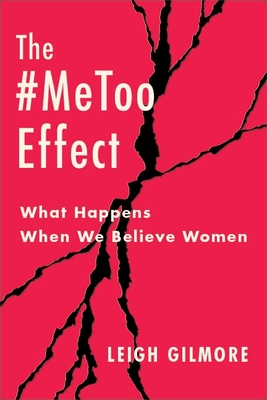
The book I review this week is, in my opinion, somewhat of a throwback to a different age. Of course, the attitudes of the time were of a different age, but their perpetuation in the 2020s is an interesting phenomenon. To be fair, the title is modern – no ‘air hostesses’ here! Despite this proviso, comparing this book with one I reviewed last year, which I refer to briefly below, demonstrates the way in which reflection on the past does not need to perpetuate the sexism of an earlier era.
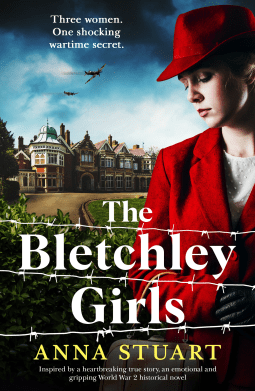
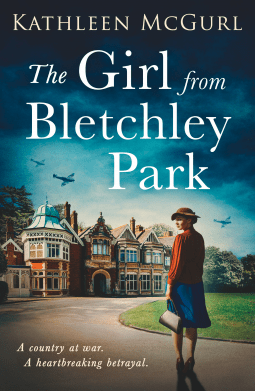
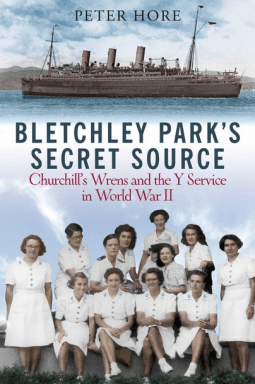
The covers are a bit of a giveaway!
Another connection with a previous book I reviewed is in a letter by Heather Cox Richardson, see below. I reviewed Fearless Women by Elizabeth Cobbs in the 17th January blog. I questioned the inclusion of Phyllis Schlafly. Now my queries have been justified by a reference to in a story about the US Supreme Court’s overturn of Roe vs Wade. See below, Letters from an American, Heather Cox Richardson.
NetGalley provided me the following uncorrected proof for review.
True Tales of TWA Flight Attendants Telemarchus Press, 2022.
Kathy Kompare and Stephanie Johnson have assembled a variety of short stories about the early years of TWA, concentrating on their impact on the flight attendants. Reading these stories is like having a conversation with a bubbly flight attendant, with a dash of seriousness thrown in to keep the central the light-hearted approach realistic. Although the stories concentrate on the pleasure of being a TWA flight attendant, there are serious moments as well, adding to the value of the record. That being said, this book was not for me. Books: Reviews
After the Covid Report: Elizabeth Cobbs and reference to Phyllis Schlafly; Come Fly the World in reference to True Tales of TWA Flight Attendants; Heather Cox Richardson – childcare (Congressional Dad’s Caucus) and National Database of Childcare Prices – childcare costs in America; Cressida Campbell exhibition at the NGA; and Letters from an American – Roe vs Wade.
Covid Report Canberra since lockdown ended
New cases this week number 528, with 22 in hospital, 1 in ICU and 1 ventilated. Four lives were lost this week.
Elizabeth Cobbs, Fearless Women Feminist Patriots from Abigail Adams to Beyoncé Harvard University Press, Belknap Press, March 2023.
Elizabeth Cobbs expands the way in which feminism is used to investigate women who call themselves feminists, and some who do not, worked to improve ‘their country’… However, rather than let the broadness of Cobb’s view limit the way in which this book is read, I found it an energising read, with a lot with which I could identify, some that left me questioning (Phyllis Schlafly a feminist?), engrossing stories of marvellous women, horrendous stories of the treatment of women and the beliefs that underlie such treatment, and a veritable wellspring of information. Books: Reviews for 17th January and see Letters from an American below.

Julia Cooke Come Fly The World The Jet-Age Story of the Women of Pan Am was given to me by NetGalley as an uncorrected copy for review. I thought that True Tales of TWA Flight Attendants might be similar, although related to a different airline. I was wrong, as can be seen from my review.
Selections from the review for Come Fly the World provide examples of how stories from a past gendered era and profession can be brought into the 2020s.
The journey Julia Cooke describes through the stewardesses (as they were during most of the period Cooke covers, the gender-neutral title ‘flight attendant’ being adopted only at the end of this era) recognises the value of reflecting upon the past from a 2020s perspective.
There are three sections: THE WRONG KIND OF GIRL; YOU CAN’T FLY WITH ME; and WOMEN’S WORK. WOMEN’S WORK identifies the range of events for which the flight attendants had trained: Everything flyable, War Comes Aboard, The Most Incredible Scene and The Only Lonely Place Was on the Moon…Cooke combines personal stories with events such as the Vietnam War and its impact on American politics, soldiers, stewardesses and Vietnamese.
The complete review is at Books: Reviews, to be found on the pages relating to the post of 17 March, 2022.
Heather Cox Richardson
January 28, 2023 (Saturday)
Two relatively small things happened this week that strike me as being important, and I am worried that they, and the larger story they tell, might get lost in the midst of this week’s terrible news. So ignore this at will, and I will put down a marker.
At a press conference on Thursday, Representatives Jimmy Gomez (D-CA), Rashida Tlaib (D-MI), Daniel Goldman (D-NY), Andy Kim (D-NJ), Joaquin Castro (D-TX), Jamaal Bowman (D-NY), Joe Neguse (D-CO), Eric Swalwell (D-CA), Ruben Gallego (D-AZ), Colin Allred (D-TX), Mike Levin (D-CA), Josh Harder (D-CA), and Raul Ruiz (D-CA), and Senator Rob Menendez (D-NJ), announced they have formed the Congressional Dads Caucus.
Ironically, the push to create the caucus came from the Republicans’ long fight over electing a House speaker, as Gomez and Castro, for example, were photographed taking care of their small children for days as they waited to vote. That illustration of men having to adjust to a rapidly changing work environment while caring for their kids “brought visibility to the role of working dads across the country, but it also shined a light on the double standard that exists,” Gomez said. “Why am I, a father, getting praised for doing what mothers do every single day, which is care for their children?”
He explained that caucus “is rooted in a simple idea: Dads need to do our part advancing policies that will make a difference in the lives of so many parents across the country. We’re fighting for a national paid family and medical leave program, affordable and high-quality childcare, and the expanded Child Tax Credit that cut child poverty by nearly half. This is how we set an equitable path forward for the next generation and build a brighter future for our children.”
The new Dads Caucus will work with an already existing caucus of mothers, represented on Thursday by Tlaib.
Two days before, on Tuesday, January 24, the Women’s Bureau of the U.S. Department of Labor released its initial findings from the new National Database of Childcare Prices. The brief “shows that childcare expenses are untenable for families throughout the country and highlights the urgent need for greater federal investments.”
The findings note that higher childcare costs have a direct impact on maternal employment that continues even after children leave home, and that the U.S. spends significantly less than other high-wage countries on early childcare and education. We rank 35th out of 37 countries in the Organisation for Economic Co-operation and Development (OECD) made up of high-wage democracies, with the government spending only about 0.3% of gross domestic product (GDP) compared to the OECD average of 0.7%.
These two stories coming at almost the same time struck me as perhaps an important signal. The “Moms in the House” caucus formed in 2019 after a record number of women were elected to Congress, but in the midst of the Trump years they had little opportunity to shift public discussion. This moment, though, feels like a marker in a much larger pattern in the expansion of the role of the government in protecting individuals.
When the Framers wrote the U.S. Constitution, they had come around to the idea of a centralized government after the weak Articles of Confederation had almost caused the country to crash and burn, but many of them were still concerned that a strong state would crush individuals. So they amended the Constitution immediately with the Bill of Rights, ten amendments that restricted what the government could do. It could not force people to practice a certain religion, restrict what newspapers wrote or people said, stop people from congregating peacefully, and so on. And that was the opening gambit in the attempt to use the United States government to protect individuals.
But by the middle of the nineteenth century, it seemed clear that a government that did nothing but keep its hands to itself had almost failed. It had allowed a small minority to take over the country, threatening to crush individuals entirely by monopolizing the country’s wealth. So, under Presidents Abraham Lincoln and Ulysses S. Grant, Americans expanded their understanding of what the government should do. Believing it must guarantee all men equal rights before the law and equal access to resources, they added to the Constitution the Thirteenth, Fourteenth, and Fifteenth Amendments, all of which expanded, rather than restricted, government action.
The crisis of industrialization at the turn of the twentieth century made Americans expand the role of the government yet again. Just making sure that the government protected legal rights and access to resources clearly couldn’t protect individual rights in the United States when the owners of giant corporations had no limits on either their wealth or their treatment of workers. It seemed the government must rein in industrialists, regulating the ways in which they did business, to hold the economic playing field level. Protecting individuals now required an active government, not the small, inactive one the Framers imagined.
In the 1930s, Americans expanded the job of the government once again. Regulating business had not been enough to protect the American people from economic catastrophe, so to combat the Depression, Democrats under President Franklin Delano Roosevelt began to use the government to provide a basic social safety net.
Although the reality of these expansions has rarely lived up to expectations, the protection of equal rights, a level economic playing field, and a social safety net have become, for most of us, accepted roles for the federal government.
But all of those changes in the government’s role focused on men who were imagined to be the head of a household, responsible for the women and children in those households. That is, in all the stages of its expansion, the government rested on the expectation that society would continue to be patriarchal.
The successful pieces of Biden’s legislation have echoed that history, building on the pattern that FDR laid down.
But, in the second half of his Build Back Better plan—the “soft” infrastructure plan that Congress did not pass—Biden also suggested a major shift in our understanding of the role of government. He called for significant investment in childcare and eldercare, early education, training for caregivers, and so on. Investing in these areas puts children and caregivers, rather than male heads of households, at the center of the government’s responsibility.
Calls for the government to address issues of childcare reach back at least to World War II. But Congress, dominated by men, has usually seen childcare not as a societal issue so much as a women’s issue, and as such, has not seen it as an imperative national need. That congressional fathers are adding their voices to the mix suggests a shift in that perception and that another reworking of the role of the government might be underway.
This particular effort might well not result in anything in the short term—caucuses form at the start of every Congress, and many disappear without a trace—but that some of Congress’s men for the first time ever are organizing to fight for parental needs just as the Department of Labor says childcare costs are “untenable” strikes me as a conjunction worth noting.
Cressida Campbell Exhibition at the National Gallery of Australia
A feature that provided a pleasant interlude while waiting to enter the timed exhibition, or afterwards, was the provision on sketch pads, pencils and displays to create one’s own artwork.
The exhibition was immense – with so many of Campbell’s works, ranging from self-portraits, interiors, flowers, the wonderful Australian veranda, and delightful Otto, a grey cat.
Otto on the Staircase, Cressida Campbell
Otto again – in a mirrored room
Self portraits
The Letter from America below refers to Phyllis Schlafly’s contribution to the original debate on Roe vs Wade.
Heather Cox Richardson Letters from an American
Tomorrow marks the fiftieth anniversary of the Roe v. Wade decision. On January 22, 1973, the Supreme Court decided that for the first trimester of a pregnancy, “the attending physician, in consultation with his patient, is free to determine, without regulation by the State, that, in his medical judgment, the patient’s pregnancy should be terminated. If that decision is reached, the judgment may be effectuated by an abortion free of interference by the State.”
It went on: “With respect to the State’s important and legitimate interest in potential life, the ‘compelling’ point is at viability. This is so because the fetus then presumably has the capability of meaningful life outside the mother’s womb. State regulation protective of fetal life after viability thus has both logical and biological justifications. If the State is interested in protecting fetal life after viability, it may go so far as to [prohibit] abortion during that period, except when it is necessary to preserve the life or health of the mother.”
The wording of that decision, giving power to physicians—who were presumed to be male—to determine with a patient whether the patient’s pregnancy should be terminated, shows the roots of the Roe v. Wade decision in a public health crisis.
Abortion had been a part of American life since its inception, but states began to criminalize abortion in the 1870s. By 1960, an observer estimated, there were between 200,000 and 1.2 million illegal U.S. abortions a year, endangering women, primarily poor ones who could not afford a workaround.
To stem this public health crisis, doctors wanted to decriminalize abortion and keep it between a woman and her doctor. In the 1960s, states began to decriminalize abortion on this medical model, and support for abortion rights grew.
The rising women’s movement wanted women to have control over their lives. Its leaders were latecomers to the reproductive rights movement, but they came to see reproductive rights as key to self-determination. In 1969, activist Betty Friedan told a medical abortion meeting: “[M]y only claim to be here, is our belated recognition, if you will, that there is no freedom, no equality, no full human dignity and personhood possible for women until we assert and demand the control over our own bodies, over our own reproductive process….”
In 1971, even the evangelical Southern Baptist Convention agreed that abortion should be legal in some cases, and vowed to work for modernization. Their convention that year reiterated the “belief that society has a responsibility to affirm through the laws of the state a high view of the sanctity of human life, including fetal life, in order to protect those who cannot protect themselves” but also called on “Southern Baptists to work for legislation that will allow the possibility of abortion under such conditions as rape, incest, clear evidence of severe fetal deformity, and carefully ascertained evidence of the likelihood of damage to the emotional, mental, and physical health of the mother.”
By 1972, Gallup pollsters reported that 64% of Americans agreed that abortion should be between a woman and her doctor. Sixty-eight percent of Republicans, who had always liked family planning, agreed, as did 59% of Democrats.
In keeping with that sentiment, in 1973 the Supreme Court, under Republican Chief Justice Warren Burger, in a decision written by Republican Harry Blackmun, decided Roe v. Wade, legalizing first-trimester abortion.
The common story is that Roe sparked a backlash. But legal scholars Linda Greenhouse and Reva Siegel showed that opposition to the eventual Roe v. Wade decision began in 1972—the year before the decision—and that it was a deliberate attempt to polarize American politics.
In 1972, President Richard Nixon was up for reelection, and he and his people were paranoid that he would lose. His adviser Pat Buchanan was a Goldwater man who wanted to destroy the popular New Deal state that regulated the economy and protected social welfare and civil rights. To that end, he believed Democrats and traditional Republicans must be kept from power and Nixon must win reelection.
Catholics, who opposed abortion and believed that “the right of innocent human beings to life is sacred,” tended to vote for Democratic candidates. Buchanan, who was a Catholic himself, urged Nixon to woo Catholic Democrats before the 1972 election over the issue of abortion. In 1970, Nixon had directed U.S. military hospitals to perform abortions regardless of state law, but in 1971, using Catholic language, he reversed course to split the Democrats, citing his personal belief “in the sanctity of human life—including the life of the yet unborn.”
Although Nixon and Democratic nominee George McGovern had similar stances on abortion, Nixon and Buchanan defined McGovern as the candidate of “Acid, Amnesty, and Abortion,” a radical framing designed to alienate traditionalists.
As Nixon split the U.S. in two to rally voters, his supporters used abortion to stand in for women’s rights in general. Railing against the Equal Rights Amendment, in her first statement on abortion in 1972, activist Phyllis Schlafly did not talk about fetuses: “Women’s lib is a total assault on the role of the American woman as wife and mother and on the family as the basic unit of society. Women’s libbers are trying to make wives and mothers unhappy with their career, make them feel that they are ‘second-class citizens’ and ‘abject slaves.’ Women’s libbers are promoting free sex instead of the ‘slavery’ of marriage. They are promoting Federal ‘day-care centers’ for babies instead of homes. They are promoting abortions instead of families.”
A dozen years later, sociologist Kristin Luker discovered that “pro-life” activists believed that selfish “pro-choice” women were denigrating the roles of wife and mother. They wanted an active government to give them rights they didn’t need or deserve.
By 1988, radio provocateur Rush Limbaugh demonized women’s rights advocates as “feminazis” for whom “the most important thing in life is ensuring that as many abortions as possible occur.” The complicated issue of abortion had become a proxy for a way to denigrate the political opponents of the radicalizing Republican Party.
Such threats turned out Republican voters, especially the evangelical base. But support for safe and legal abortion has always been strong. Today, notwithstanding that it was overturned in June 2022 by a Supreme Court radicalized under Republican presidents since Nixon, about 62% of Americans support the guidelines laid down in Roe v. Wade, about the same percentage that supported it fifty years ago, when it became law.
Linda Greenhouse and Reva B. Siegel, “Before (and After) Roe v. Wade: New Questions About Backlash,” The Yale Law Journal, 120 (June 2011): 2028–2087, at https://www.jstor.org/stable/41149586
Michelle McSweeney OK Bloomsbury Academic, January 2023.
Thank you, NetGalley, for providing me with this uncorrected proof for review.
Object Lessons is a fun series – and more. Items, and in this case a word, gain a different dimension under the writers who lead us into the history, the political ramifications, and social dimensions of seemingly simple topics. In this case, Michelle McSweeney delves into the history of a word that most of us uses everyday – OK. The linguist will really enjoy this book, but so too, will the person who knows what to say, but has gone no further into why or how language has evolved, and from where. See the complete review at Books: Reviews
After the Covid Report: Jacinda Ardern resigns; PM Anthony Albanese and Jacinda Ardern; The Wife of Bath: A Biography discussion of literature and feminism; review of The Good Wife of Bath as a follow up to the article in The Conversation (from a previous post).
Covid in Canberra after lockdown ended
New cases recorded number 806, with 32 active cases in hospital. Of these, one person is in ICU, but none is ventilated. No lives have been lost this week, maintaining the number of 148 lives lost since March 2020. Vaccinations are at 76.2% of people 5 to 15 with two doses; 78.7% of those over 16 with 3 doses; and 66% of people over 50 years of age having had four does (winter doses). Current restrictions require people who have tested positive on a RAT to report their result with an online registration form; stay at home until their symptoms are gone or they are feeling much better; wear a mask in public places or using public transport; must not enter a high-risk facility; must minimise movements in the community where possible; and work from home and check their workplace policies.
Jacinda Ardern announces resignation as New Zealand prime minister
Posted Thu 19 Jan 2023 at 11:12amThursday 19 Jan 2023 at 11:12am, updated Thu 19 Jan 2023 at 10:41pmThursday 19 Jan 2023 at 10:41pm
Jacinda Ardern announces resignation as New Zealand Prime Minister.
Jacinda Ardern has announced her shock resignation as New Zealand prime minister, while also calling an election on October 14.
Key points:
Ms Ardern choked back tears saying she did not have the energy to seek re-election
Her final day in office will be February 7
She announced New Zealand’s general election will be held on October 14
Ms Ardern choked back tears on Thursday as she said she did not have the energy to seek re-election.
She said her final day in office would be February 7.
“I know what this job takes. And I know that I no longer have enough in the tank to do it justice,” she said.
Ms Ardern said she had the support of her family to continue, but they were also on board with her decision.
She said she would be there when her daughter Neve started school next year, and to her partner added: “To Clarke, let’s finally get married.”
Ms Ardern’s partner, Clarke Gayford, also attended the press conferences in Napier, New Zealand.(AP: Mark Mitchell/New Zealand Herald)
Ms Ardern has been New Zealand’s prime minister since 2017.
“It’s one thing to lead your country through peacetime, it’s another to lead them through crisis. I had the privilege of being alongside NZ in a crisis and they placed their faith in me,” she said.
“I have never led on my own,” Ms Ardern said, stating she had always relied on her team.
With regards to the upcoming election in October, Ms Ardern said she still believed New Zealand Labour would win, but signalled that Deputy Prime Minister Grant Robertson would not put himself forward for a run at the party leadership.
Australian Prime Minister Anthony Albanese said Ms Ardern was a great friend and had “demonstrated that empathy and insight are powerful leadership qualities”.
Prime Minister of Australia, Anthony Albanese
Jacinda Ardern has shown the world how to lead with intellect and strength. She has demonstrated that empathy and insight are powerful leadership qualities. Jacinda has been a fierce advocate for New Zealand, an inspiration to so many and a great friend to me.
The Wife of Bath: A Biography featured in a Women and Literature newsletter, and again in this article in The Conversation. The article is reprinted here under the Creative Commons license offered so generously by The Conversation. I have reposted my review of the Australian writer’s novel based on The Wife of Bath, below. Karen Brooks’ The Good Wife of Bath is a novel that gives The Wife of Bath the liberation referred to in the review of Marion Turner’s biography of The Wife of Bath.
Marion Turner is the author of The Wife of Bath: A Biography (Princeton, 2023), and Chaucer: A European Life (Princeton, 2019)
How Chaucer’s medieval Wife of Bath was tamed and then liberated in the 21st century
Published: January 12, 2023 4.54pm AEDT in The Conversation
Chaucer’s Wife of Bath is one of the most famous characters in English literature. Since appearing in the Canterbury tales in 1387, her tale has been rewritten and adapted by authors from the French philosopher Voltaire in the 18th century to the contemporary author Zadie Smith in 2021.
As I write in my book, there is something about this fictional, five-times-married, medieval woman that has taken hold of so many writers’ imaginations.
Before the Wife of Bath (whose name is Alison), women in literature were princesses, damsels-in distress, nuns and queens – or whores, witches and evil old crones. The principal source for the Wife of Bath is an old prostitute. Chaucer’s character is a middle-aged, mercantile, sexually active woman, who gives us her point of view. While she is an extraordinary figure (for her time), she is also an ordinary woman.
Across time, readers have been fascinated – and often threatened – by her. From scribes who argued against her in the margins of 15th-century manuscripts to censors who burnt ballads about her in the 17th century, there are many examples of her provoking anxiety in readers.
Many modern writers have also been drawn to her. But most of them have not been interested in her (still relevant) concern with discussing rape, domestic abuse, ageism, and the silencing of women (lines 692-696). Nor have they been interested in her humour or her self-awareness. Rather, these aspects of her have caused extreme discomfort and most authors have wanted to punish, ridicule, reduce or tame her in their own adaptations.
Sex, lies and videotapes
In 1972, the Italian filmmaker Pier Paolo Pasolini made a film of the Canterbury Tales. He focused on sex and the body, in a radically skewed interpretation of Chaucer that ignores the principle of variety that underpins the original text. For Pasolini, the Wife of Bath, as an older, sexually-active woman, is an abomination.
In his version, sex with her literally causes her fourth husband’s death. Her fifth husband is sexually uninterested in her. The episode ends with her biting his nose, a symbol of castration.
Out of all of the hundreds of responses to the Wife of Bath across time that I have come across, this one is perhaps the most disturbing, demonstrating extreme discomfort with the idea of a confident, middle-aged woman.
In the same decade, the British author Vera Chapman also created a new version of the Wife of Bath. This female-authored version is notably sympathetic. In Chapman’s novel, Alison is kind and considerate, even refusing advantageous marriage offers if she thinks the man might regret it.
But in order to make the Wife of Bath sympathetic, Chapman also makes her far more conventional. She becomes a damsel in distress, twice saved from rape by the intervention of chivalrous men. Chapman also turns her into a loving mother, giving her several children.
These adaptations show that the kind of woman Chaucer wrote was not seen as a viable heroine in the 1970s – she had to be tamed and made to fit into disturbingly narrow stereotypes.
From Molly Bloom to #Metoo
Somewhat similarly, the poet Ted Hughes celebrates and reduces the Wife of Bath. In his poem, Chaucer, Hughes writes that the poet Sylvia Plath recites the Wife of Bath’s Prologue out of pure enjoyment and love of Chaucer. He tells us that the Wife is Plath’s “favourite character in all literature”.
Both women embody certain positive characteristics – they are articulate, desirable, and confident. However, they also talk endlessly, listened to only by cows. Ultimately, Plath and Alison need to be rescued by a strong man (Hughes himself) as she too becomes a damsel in distress, unable to look after herself, and reliant on male strength and decisiveness.
This desire to reduce the Wife of Bath to something more generic is also evident earlier in the century.
James Joyce’s Molly Bloom in Ulysses is a reincarnation of Alison of Bath, as other critics have noted. However, Joyce’s focus on women as “the flesh that always affirms’” runs counter to the Wife of Bath’s interrogation of the misogynist idea that women are unintellectual. The Wife of Bath’s knowledge of the Bible and skill at argument are not paralleled in Joyce’s version, as he creates a simpler, more stereotyped and essentialised version of womanhood.
Zadie Smith’s Wife of Willesden transports her to contemporary north-west London, where she becomes Alvita. Although the text is ostentatiously of the present moment, with its references to #MeToo, Jordan Peterson and Beyoncé, it closely follows Chaucer’s text.
Alvita, like Alison, is complex, neither monstrous nor blameless. Alison’s searing indictments of rape culture, of the power of hate-filled misogynist books, and of the structural silencing of women in her world are re-voiced as Smith emphasises their ongoing relevance in the 21st century.
The history of feminism is not straightforward – some things get worse over time, not better. It is only in very recent years that new adaptations are no longer less progressive than the original. Despite all the attempts to silence and humiliate her, nevertheless, the Wife of Bath persisted and her voice is now louder than ever before.
No Cindy Lou reviews this week. A kindle and licorice Allsorts have had to provide my entertainment.
Karen Brooks The Good Wife of Bath: A (Mostly) True Story, HQ Fiction, Australia, 2021.
Thank you to NetGalley for this uncorrected proof copy for review.
Karen Brooks says that she found Chaucer’s Wife irresistible, and this shines through the novel she has written from the Wife of Bath’s perspective. Like Chaucer’s depiction of The Wife of Bath she has five husbands, travels on pilgrimages and is ‘feisty, vain, boastful, witty, middle aged’. Unlike the Chaucer version, Brooks lets The Wife, Eleanor/Alyson, tell her story. Perhaps ironically, but authentically, Chaucer is a secondary character, propelling Eleanor into her first marriage, and remaining a recurrent friend throughout her turbulent marriages and eventual profession.
Brooks’ notes on the story of a twelve-year-old forced into marriage to a much older man provide an explanation for the early storyline, her misgivings about this feature of the novel, and an explanation that I found satisfactory. Such attention to legitimate concerns provides a worthwhile discussion opening to the issues raised by this episode. A positive aspect of this early relationship is the enduring friendship between the two young women who meet through the first marriage – Eleanor and Alyson. Their story is the real love story, despite an early enmity, Eleanor’s four more marriages, disagreements, and different attitudes towards their continuing partnership.
The story is told with verve and humour. In particular, the letters The Wife of Bath dictates before she learns to write are a source of great comedy. She uses earthy language with joy, relishing the embarrassment she causes her scribe, and provides the reader with a host of descriptions and words that lend authenticity to the life unfurling in the narrative.
At the same time as The Wife’s personal life is laid out, the way in which all women were devalued because of their sex is illustrated through her experiences. Professions were tightly circumscribed, benefitting men and diminishing women’s creativity and ability. The Wife is an excellent businesswoman but upon marriage must suffer her husbands’ control over her future. As a single woman her creativity and business acumen demonstrated through weaving and the commercial enterprise she establishes are still dependent on men. Their rules and her ability to deal with the hand she is dealt leads her to her final profession.
Brooks’ explanation of her attitude toward the difficult issues raised, is part of a longer explanation about the narrative, there is a detailed account of material she has read as part of preparation for the writing, and a thorough glossary. I really enjoyed reading this version of Chaucer’s story. What a lively experience Brooks makes of one of the tales I churned though in high school many years ago. Together with Brooks’ depiction of Chaucer and the witty and beguiling narrative I almost feel compelled to give Chaucer’s Tales another read to fully enjoy the impetus for the storyline as well as Brooks’ version.
This week I review Fearless Women by Elizabeth Cobbs.
Elizabeth Cobbs Fearless Women Feminist Patriots from Abigail Adams to Beyoncé Harvard University Press, Belknap Press, March 2023.
Thank you, NetGalley, for providing me with this uncorrected proof for review.
Elizabeth Cobbs expands the way in which feminism is used to investigate women who call themselves feminists, and some who do not, worked to improve ‘their country’. This, as Cobbs acknowledges, is a broad definition, and one that I do not endorse, although I do acknowledge that society (and therefore country) would be improved if women’s lives were improved – the work that I think of feminists performing. However, rather than let the broadness of Cobb’s view limit the way in which this book is read, I found it an energising read, with a lot with which I could identify, some that left me questioning (Phyllis Schlafly a feminist?), engrossing stories of marvellous women, horrendous stories of the treatment of women and the beliefs that underlie such treatment, and a veritable wellspring of information. In short, Fearless Women is a worthwhile read, a contribution to debate about feminism, and a history of women’s endeavour.
Cobbs adopts an interesting approach – two women feature as the major figures in each chapter, each contributing to the theme of the chapter, usually in markedly different ways. The chapter headings provide useful information, ranging from the first, ‘The right to Learn’ featuring Abigail Adams and Abigail Bailey; through ‘The right to Speak’ with Angelina Grimke and Harriet Jacobs; to Frances Perkins and Ann Marie Riebe taking up ‘The Right to Earn’, and ending with Beyoncé Knowles-Carter and the Women of Me Too providing a face to ‘The right to Physical Safety’. ‘The Right to Compete’ features Phyllis Schlafly and Muriel Siebert (the first woman to have a seat on the New York Stock Exchange). Familiar themes such as ‘The right to Lobby’, ‘The Right to Vote’ and ‘The right to Equal Treatment’ feature the following partnerships: Susan. B. Anthony and Elizabeth Packard; Mary Church Terrell and Rosa Cavallari; and Martha Cotera and Yvonne Swan. A prologue and epilogue, notes and illustrations, are valuable and complete the book. See Books: Reviews for the complete review.
After the Canberra Covid update: Heather Cox Richardson updates American politics since the Republicans won the House and compares the insurrection in Brazil with that at the US Capitol; Women hidden from history and the story of an excellent apple; Cindy Lou at 86 and Blackfire.
Update on Covid in Canberra
Canberra has recorded 1,012 new cases of Covid this week. There are 59 cases in hospital, but fortunately no one is on a ventilator or in ICU. There were 6 lives lost to Covid this week over an age range from 40 years of age to two people in their 90s.
Heather Cox Richardson
January 10, 2023 (Tuesday)
National security scholar Maria W. Norris of Coventry University, who is covering events in Brazil, reports that today, President Luiz Inácio Lula da Silva gathered around him the president of the supreme court and the governors or vice-governors of each state, the senators, the attorney general, and congressional representatives, all of whom condemned the coup. Many had been staunch supporters of former president Jair Bolsonaro, but since the coup failed, they have thrown their lot behind Lula. After they declared their support, Lula led them through the vandalized buildings, symbolically reclaiming them.
Lula and his administration say that police worked with the rioters, and a judge has approved warrants for the arrest of two key law enforcement officials close to Bolsonaro: Anderson Torres and Colonel Fábio Augusto Vieira. Police have also searched Torres’s home. Pro-Bolsonaro groups have been camped near military posts and buildings since the election; it appears the insurrectionists’ plan was to induce the military to join them.
In the wake of the unsuccessful attempt to overthrow the government, Bolsonaro supporters are claiming that the attack was by leftists who infiltrated a peaceful protest. Police have so far arrested about 1500 participants.
Bolsonaro left Brazil for Florida before Lula took office, while he was still president. That status apparently enabled him to enter the U.S. on an A-1 visa, reserved for heads of state. That visa is normally canceled when the person holding it leaves office, but since he is already in this country, it is not clear what its status is. Normally, anyone on an A-1 visa who is no longer on official business must leave the country within 30 days, but if Brazil tries to extradite him, the process could stretch on, putting the Biden administration in an awkward position.
In contrast to the Bolsonaro supporters running from the coup, from his perch in the U.S., former Trump advisor Steve Bannon, who insisted all along—without evidence—that the election in Brazil was fraudulent, remained adamant that Lula must be replaced. “I’m not backing off one inch on this thing,” he said to Politico. Bannon is close to Bolsonaro’s son, who has been seen hobnobbing with Trump-affiliated people, including Trump’s daughter Ivanka.
Observers have noted the many similarities between the attack on the Brazilian government on January 8 and the attack on the U.S. government almost exactly two years earlier. But there are differences, too, and one of the big differences is that power had already changed hands in Brazil, and President Lula has compelled other leaders into a show of support even as the government is arresting rioters.
In the U.S., Trump was still in office when his supporters tried to overthrow the government, and there was neither a house cleaning nor a demand for lawmakers to declare their support for the duly elected government.
Many of those who supported Trump in the events of January 6, 2021, are still in Congress. At least six Republican congress members asked Trump for a preemptive pardon, and four of them are still in office. They make up the core of the far-right Republicans House speaker Kevin McCarthy had to bargain with to win the speakership: Representatives Scott Perry (R-PA), Andy Biggs (R-AZ), Matt Gaetz (R-FL), and Marjorie Taylor Greene (R-GA). Representative Jim Jordan (R-OH) was also part of the group that pressured McCarthy, and he, too, appears to have been deeply involved in the events of January 6: just days afterward, Trump awarded Jordan the Presidential Medal of Freedom with a somewhat generic citation that raised questions about why Trump was really giving Jordan the award.
Today the House voted on the rules package McCarthy promised to the far-right Republicans. As expected, it contained a threat to McCarthy: any single member can force a vote to toss out the House speaker. This rule was in place in 2015, when then-representative Mark Meadows (R-NC) invoked it against Speaker John Boehner (R-OH), who resigned rather than face a vote.
The deal cut with the far-right group gives them plum committee assignments, including a number of seats on the House Rules Committee. The deal required McCarthy to permit a number of symbolic votes on things important to that far-right group, and it appears to have promised to cap government funding at 2022 levels, worrying both those who want more defense spending and those who want to protect Social Security and Medicare. It also appears that McCarthy said he would not agree to raising the debt limit—that is, honoring the debts the country has already incurred—without “fiscal reforms.” That promise seems to hold the threat of a showdown over a national default.
And there are rumors of a secret agreement that has not been disclosed, an unfortunate start for the Republican majority, which promised to be transparent. Even some Republicans are demanding more information.
One of the things McCarthy did agree to was the creation of a select subcommittee in the Judiciary Committee to investigate the “weaponization of the federal government.” By a party line vote, the House today approved that committee to investigate what Republicans insist is an anti-Republican bias in the FBI and the Department of Justice. Jim Jordan will chair the committee, which theoretically can review ongoing criminal investigations, pretty clearly to protect Republicans in trouble. Former federal prosecutor Joyce Vance points out that the Department of Justice will never allow such a thing but dealing with the committee will waste time and resources. The Democrats will not boycott the select committee as the Republicans did the January 6 committee, suggesting that Jordan will not reign unchallenged.
Republicans clearly intend the committee to spread a narrative that will undermine the one established so powerfully by the Mueller investigation, the Trump impeachment committees, and the January 6 committee. The modern Republicans have always been closely tied to right-wing media, and nothing made that clearer than Fox News Channel personality Sean Hannity’s broadcast tonight. He did his show from the Rayburn Reception Room of the House of Representatives, “interviewing” Republican congress members so they could repeat talking points.
Yesterday, news broke that in November, President Joe Biden’s lawyers found “a small number” of classified documents from his vice-presidential years in a locked closet in Biden’s former office at Penn Biden Center for Diplomacy and Global Engagement. They immediately contacted the National Archives and Records Administration, which retrieved the documents the same day. Biden said that he did not know the documents were there and that his lawyers “did what they should have done” when they called NARA. Attorney General Merrick Garland assigned a Trump-appointed U.S. attorney, John R. Lausch Jr., to see if he should appoint a special counsel.
Trump and his supporters immediately tried to suggest Biden was getting better treatment than he did, but journalist Matthew Miller notes that classified documents often get taken from government facilities by accident. Those errors are reported, the documents recovered, and a damage assessment made to determine whether further action needs to be taken.
In Trump’s case, NARA repeatedly asked him simply to return the documents it knew he had. He refused for a year, then let them recover 15 boxes that included classified documents, withholding others. After a subpoena, his lawyers turned over more documents and signed an affidavit saying that was all of them. But of course it wasn’t: the FBI’s August search of Mar-a-Lago recovered still more classified documents. Trump is being investigated now for obstruction and violations of the Espionage Act, which makes it a crime to withhold documents from a government official authorized to take them.
Today, New York State Supreme Court Justice Juan Merchan sentenced former Trump Organization chief financial officer Allen Weisselberg to five months in jail at New York’s Rikers Island complex and five years probation after he pleaded guilty to 15 felonies in a scheme to provide Trump Organization employees direct benefits to avoid paying taxes. Weisselberg was the key witness in the trial last fall of the Trump Corporation and the Trump Payroll Corporation for tax fraud and falsifying records. A jury found the entities guilty of all charges, meaning the Trump Organization has been found guilty of criminal conduct, likely impacting its ability to do business and hurting Trump’s defense in other cases.
Hidden women of history: how ‘Lady’ Williams founded a great Australian apple
Published: January 18, 2023 6.02am AEDT
On Boronia Farm, just outside Donnybrook in Western Australia, stands an 80-something-year-old apple tree (Malus domestica) that’s at the heart of a global industry.
This tree produced an apple no one had seen or tasted before, now called the Lady Williams. Without the Lady Williams, there could be no Sundowner®, no Pink Lady®, no Bravo® – apple varieties that, along with the Lady Williams, have made a enormous contribution to the global apple industry.
Boronia Farm’s apple tree is now listed in the register of the National Trust, but the woman behind the Lady Williams is not well known. Yet, as her son Bob remembered, Maud Williams was crucial to the story of this tree and the apple it produced.
A remarkable chance seedling
From the 1930s, Maud, her husband Arthur and their two boys Bob and Ron worked their 12 acres of orchard, with its apples and stone fruit, and 40 cows.
The original Lady Williams apple tree at Boronia Farm, Donnybrook, State Library of Western Australia, slwa_b6831120_8.
Maud collected ideas for plants to grow, from catalogues and women’s magazines, experimenting with her taste for the unusual, remembers her son Ron. Not content with roses and petunias, Maud was instead growing feijoas and hydrangeas.
With her eye for horticultural novelty, it was perhaps not surprising that she identified the very special qualities of the tree with the bright red apples that had sprung up unexpectedly next to the tank stand beside the house.
The fruit was firm and crisp and showed great suitability for long storage, ideal for Australia’s export market. The Williams family gathered a good price for their cases of apples grown from this tree and over time, the family propagated new trees from the original one.
This tree was a chance seedling, a spontaneous creation whose likely parent cultivars were Granny Smith and Rokewood.
Some of our most common apple varieties began as chance seedlings. But chance seedlings do not reach our supermarkets as a matter of course.
Lady Williams apples would not have become a popular variety without Maud Williams’ keen eye for the unusual. Nadiatalent/Wikimedia Commons, CC BY
Apples frequently produce chance seedlings. But for a chance seedling to be put into production and become known as a variety, many factors are involved, not least people who recognise distinctive apples that will have value in their contemporary context.
Only a select few chance seedlings are ever turned into varieties with impact in the orchard industry. For that to happen, there need to be people who make the necessary investment of care, time or funding – just as Maud did.
In its inconvenient location, the unfamiliar apple tree was almost cut down many a time, but it survived thanks to Maud’s protection and care. On one occasion when he almost destroyed it, Bob recalled getting a severe telling-off from his mum, who “stood it up again, bandaged it up and it took off again”.
Reflecting Maud’s importance in the creation of this new variety, the apple was given the name Lady Williams. This was the name that the little girl, Lynette Green, who lived on a neighbouring farm, used for Maud.
Maud’s recognition of the qualities of the fruit from this tree, and her initiatives to protect it, were about to enable a remarkable new phase of the Australian apple industry.
Lady Williams, parent of the Pink Lady
Lady Williams apples were introduced commercially in 1968, the same year Maud died. By the early 1970s, the Lady Williams was the subject of attention at the WA Department of Agriculture and its new apple-breeding program. There, a team led by the horticulturalist John Cripps was experimenting with combinations of Lady Williams and Golden Delicious.
In an interview conducted as part of the Apples and Pears Oral History Project in 2010, Cripps reflected that the cross-breeding process involved intensive manual labour, high degrees of dexterity and immense patience, a set of qualities Cripps identified in women technicians.
In 1984, one of the over 100,000 experimental seedlings produced an attractive fruit; it was bright pink, crisp, flavoursome and long-storing. Cripps had a hand in both its names: the Cripps Pink, and its commercial name, Pink Lady®. It was the first apple variety ever to be trademarked.
From the same breeding program emerged the Sundowner® and more recently, in 1992, the Bravo®.
All the world’s Lady Williams, Pink Lady®, Sundowner® and Bravo® trees share DNA with the original tree Maud Williams had nurtured many years before.
Writing women’s agricultural contributions
Women’s contributions to the agricultural sector have often occurred, just as Maud’s did, outside of professional roles. They do not always fit easily in conventional profiles for innovation and entrepreneurship in agriculture, nor into standard narratives of Australia’s agricultural development.
Documenting Australian women’s activities in agricultural innovation faces considerable challenges. Remarkably, only 30 years ago, women were not able to be recognised as farmers in their own right on Australian census forms.
Making women’s activities and innovation visible in this domain is key to providing role models for the future. It will also increase the diversity of participation in Australia’s future decision-making about the lands we live and work on.
We may have to look and listen in different places for the histories of these women. What we know so far of Maud’s role has been gathered from interviews with her family and members of the local community of which she was part. We can also consider how our histories could become more inclusive by thinking about what constitutes participation and contribution to agricultural innovation more expansively.
There are many women working in the south-west orchard industry today: running the farm businesses, packing apples, testing for new varieties, leading the industry’s peak body. They are the inheritors of a dynamic industry that Maud Williams helped to create.
Image credits: State Library of Western Australia.
Republish our articles for free, online or in print, under Creative Commons licence.
Republish this article
Before you go …
The Conversation serves society by making knowledge accessible to everyone, not just a select few. Our only agenda is a better informed public. If you care about what we do please make a donation now and help secure our future.
Donate now
Misha Ketchell
Editor
Cindy Lou at a favourite restaurant, 86 – again
I was pleased to be able to book 86 for four people at an outside table on Tuesday night. We had a pleasant table, with foliage almost hiding the road, comfortable seating, and not too crowded. Unlike the inside seating in an atmosphere that is often noisy, we were able to talk peacefully (but animatedly) for over three hours.
We were able to try two new dishes, along with the always popular corn cobs in a delicious sauce, with parmesan and cilantro. Yes, these require a napkin around the neck, giving up on looking sophisticated, and a firm intention to enjoy them whatever the consequences to face and image. They are worth it. The new dishes we tried were the tuna ceviche and the black chicken with buttermilk slaw. And for dessert, we shared the child’s favourite (mine), Carmel Popcorn Sundae with the sophisticated Frozen Margarita. They were a winning combination.
Some familiar favourites – broccolini, and cauliflower. The pumpkin and mascarpone pasta vanished before I remembered to take a photo – I was the chief culprit as it is an excellent dish.
New dishes – tuna ceviche, and the splendid chicken dish
Deftly cutting up the chicken – not our forte!
Dessert but a bit of a disappointment that there were no teas other than English Breakfast. Peppermint would be a nice addition.
Back to Blackfire and some different menu choices
It’s always pleasant to try something different, and this time I did not have my crab filled red peppers followed by the chili prawns. There were four of us and we began with Spanish olives, which were accompanied by crisp slices of toasted crusty bread, and anchovies; and the delicious Pan Tumca – bread with a fresh tomato topping. A mushroom dish, the goats cheese churros and prawns made light entrees. The puttanesca pasta was nice, but not as silky as I would like, although the sauce was very good. Another pasta, a hearty Maltagliati, made a delicious meal. Butifarra Blanco is a Spanish sausage dish, served with a generous portion of mushrooms. The steak was cooked to order and served with a side of choice – on this occasion a fresh tomato dish with capers.
Thank you, NetGalley, for providing me with this uncorrected proof for review.
The Only Suspect is another success for Louise Candlish. Once again she has devised a novel that has all the intrigue, twists and turns to keep a reader engrossed. None of these is the all too familiar contrived clumsy attempt to fulfill the current requirement that a twist be included in a psychological thriller. Instead, Candlish is almost fiendishly clever in developing the characters and plot to ensure that any twist makes sense – which is why the narrative moves forward smoothly and the reader is left wondering why they didn’t see the clues to the mystery. Even where I had suspicions, I was not disappointed with the reveal. Books: Reviews
After the Covid report: Changes in publishing; Bob McMullan – Global Political Trends for 2022; Barbara Walters and today’s women in Televison; Joan Sydney (Matron Sloane from A Country Practice); Cindy Lou eats out in Canberra;Jocelynne Scutt’s Brilliant and Bold zoom meeting to be held on January 15thand streamed on Facebook.
Covid in Canberra after Lockdown ends
New cases numbers are 1,436 and 73 people are hospitalised with Covid. Seven of these are in ICU and 2 are ventilated. There were 4 lives lost this week, bringing the total number of lives lost since March 2020 to 142.
Current restrictions: people testing positive must stay at home until their symptoms have gone or they are feeling much better; they must wear a mask in indoor public places or using public transport; they must not enter a high-risk setting, disability setting or residential care setting for 7 days after the date of a positive test unless granted approval by the facility.
Those testing positive must minimise movements in the community where possible and check their workplace policies related to Covid 19.
Changes In Publishing With Jane Friedman
Joanna Penn was a speaker at a Guardian workshop I attended several years ago in London. She is an ‘indie’ writer and spoke about this, comparing her experience with that of writers published by the trade publishers. She recently interviewed Jane Friedman author of The Business of Being a Writer.
The topic was : What has changed in the publishing industry over the last few years? What can authors learn from the DOJ vs PRH court case? How can mid-list authors thrive in uncertain times?
“Sydney was known for her Logie-winning role playing Matron Maggie Sloane in A County Practice between 1983 and 1990.
However, her screen debut occurred when she was just 18, in the 1957 film version of English play When We Are Married.
She joined the Neighbours cast in 2002 playing Valda Sheergold on a semi-regular basis, before becoming a permanent cast member between 2007 and 2008.” Oral History Group https://www.facebook.com/groups/AMOHG/
Neighbours, A Country Practice star Joan Sydney dies peacefully at home aged 83
Global Political trends from 2022
Bob McMullan
I noticed George Megalogenis’ recent article about the possibility of a “progressive wave” in the Anglosphere and other commentary suggesting a global trend towards parties of the Left.
While this is a legitimate point if you are content to look at just the UK and USA or selected others, the global picture is much more complex.
Some of the elections of 2022 are difficult to classify across a progressive/conservative continuum. For example, Papua New Guinea’s recent election and some of the elections in the Balkans don’t lend themselves to analysis within such a framework. Similarly, the recent contest between former PM Bainimarama and Sitiveni Rabuka in Fiji cuts across conventional western interpretation. What was significant in Fiji was the peaceful transfer of power after the incumbent lost the election, something the US found very difficult in 2020. A similar peaceful transfer of power occurred in Kenya after a hotly contested and very close presidential election.
However, most of the elections during 2022 can be broadly classified across the conventional framework.
It is true that progressive parties have had some good results. In Europe, progressive parties in Albania, Portugal, Malta and Denmark did well and in France the Right was once again beaten in the Presidential election by the most electable non-right candidate, although Macron should probably be classified as a centrist.
In Latin America the Left did well, exemplified by Lula’s election as President of Brazil. However, it must be acknowledged that an attempt to establish a new and progressive constitution in Chile was a disastrous failure.
Elsewhere, the Right and in particular the extreme Right did disconcertingly well in a number of countries. In South Korea the conservative presidential candidate won narrowly. In Israel the most right-wing government ever was elected and in Hungary Victor Orban’s party won a crushing victory. In traditionally progressive Sweden the ultra-right wing party, the Sweden Democrats, made big gains and helped establish a centre right government.
The outstanding example of right-wing victories was in Italy. Here, the Brothers of Italy Party, with links to the Fascist past in Italy, led a right-wing coalition to government. This may presage a significant change in Italian politics or may prove to be a brief flirtation with extremists. However, the result has very worrying potential which should give us all food for thought.
It is not possible to discern a sweeping global pattern to either end of the political spectrum.
What is notable is the failure of centre-right parties overall. Where they gained government, it was principally as a result of improved performance of the ultra-right at the expense of the centre-left.
This may suggest a pattern similar to that emerging in Australia in which the parties of the centre-right are losing support among younger voters. Polling suggests that they are seen as have nothing to offer on the issues of most concern to young people. Younger voters appear to be judging the mainstream conservative parties as having nothing positive to say about issues like climate change and the environment or their housing concerns. It may be that a long-term change is under way, but it is too soon to be definitive.
Following this complex pattern of results in 2022 the coming year will certainly see some interesting elections.
In Africa the big one is the Nigerian Presidential election, in which the incumbent is term-limited and a maverick outsider has a serious chance. In Latin America the key election will be in Argentina where the left of centre President has very low approval ratings but it does not appear that any consensus alternative candidate has emerged.
In Asia I think the most important election will be in Thailand, where democracy is struggling to revive. In Europe there are major elections in Greece, Spain, Poland and possibly the UK.
The Presidential election in Turkey will be important as challengers to Erdogan struggle to get a hearing .
Of course, in our part of the world there are scheduled elections due in New Zealand as well as the NSW state election and the very important Voice to Parliament referendum.
I don’t expect a sweeping global pattern to emerge, local factors tend to be too strong, but it will be interesting to see whether any of the centre-right parties can buck the 2022 trend.
Cindy Lou eats out at casual cafes in Canberra
Divine Cafe and Bar
Although our favourite Tinker, Tailor at Jameson was open, it is clearly so many others’ favourite too. It was so busy we returned to our new find in the same shopping centre. There was one table in the sun, and we quickly sat down. This cafe provides table service, which is rather pleasant, so we were provided with a breakfast menu and water and glasses immediately. One meal was delicious scrambled eggs, toast (2 pieces) and a generous serve of tomatoes with a coffee. The other, a panini with haloumi, mushrooms and an egg, again with good coffee, was so large that some had to remain on the plate.
With its table service (very efficient and pleasant) and some outside tables that are in the sun, Divine Cafe, together with Tinker, Tailor, with its good undercover outdoor seating for people with dogs when it is raining, offer excellent breakfast, lunch and coffee and cake options at Jameson.
Praga Cafe
Praga is a new find for Cindy Lou, providing an excellent specials menu for breakfast and lunch, really friendly and efficient service, and a leafy respite in a pleasant environment at the Dickson shopping centre. The breakfast a few weeks ago was marginally more successful than today’s lunch. However, both are good options for a casual meal out.
Calamari and salad, and zucchini fritters and salad with coffees were light meals suitable for lunch time on a sunny day in Canberra.
Brilliant and Bold meeting hosted by Dr Jocelynne Scutt on Sunday January 15th, 2023.
The meeting will be live on Facebook. The meeting begins 11.00am UK time, and can be watched from 10.00 pm EST. Comments are welcome.
This week I review K.L. Slater’s The Narrator after a week’s break from the blog. I begin the new year with some photos of the lovely beach that was an important part of my holiday away from the computer, fun with an onerous 2000-piece jigsaw, a delightful visitor and some scenery from the many walks we enjoyed.
TheKookaburra’sgenerous posing was appreciated but it was also lovely to see that when tiring of the adulation it felt that independence should be established!
K.L. Slater The Narrator Bookoutur 2023.
Thank you NetGalley for providing me with this uncorrected proof for review.
K.L. Slater has combined domestic drama and some interesting perspectives on creating and maintaining a popular series of novels; authors’ obligations and struggles; the process of writing, narrating and dealing with publicity; and fans. The plotting works well, with short chapters relating the story from the past and present, told from the perspectives of the main characters, Phillipa Roberts (author), Eve (narrator); and Chad (a super fan) interspersed with scenes from a dank basement and its alternative, a clean room with writing facilities. Books: Reviews
Covid in Canberra since lockdown ended
The most recent update for covid in Canberra is for the week ending December 23, 2023. The new cases numbered 1,283, with 69 active cases in hospital, 3 in ICU and 1 ventilated.
CELEBRATING FILM FOR 30 YEARS BFI Film Classics
Picnic at Hanging Rock – this looks interesting. BFI Film Classics, published by Bloomsbury Film and Media Studies has published this ‘study of an Australian classic… The first ever singular study of one of Australia’s most iconic films’.
The haunting and allusive Picnic at Hanging Rock is widely hailed as a classic of new Australian cinema, seen as exemplary of a peculiarly Australian style of heritage filmmaking.
In her study, Anna Backman Rogers applies a feminist, psychoanalytic and decolonial lens to this classic film, exploring its setting in a colonised Australian bushland. Richly illustrated, with over 50 colour images from the film, the book delves into the film’s production history, addressing director Peter Weir’s influences and preoccupations at the time of its making, its reception and its lasting impact on visual culture more broadly.
Rogers suggests that there is more to the film than one first realises. Through its exquisite and captivating production, the film purposefully obscures a more sinister reality: one of violence done to young girls on the cusp of womanhood, the denial and disenfranchisement of Aboriginal people and their land, and the folly and arrogance of white, colonial, European settler culture.
Cindy Lou enjoyed some simple meals this week – a sandwich on the way to the coast, and breakfast at one of the few coffee places open in Canberra before the new year.
The Pie Shop Bungendore
The Pie Shop was fantastic during the period when Covid rules applied, so I like to return when on my way to the coast. They have wonderful rock cakes as well as a range of pies with succulent fillings, toasted sandwiches, a nice choice of cakes for afternoon tea, good coffee, a cool drink cabinet and ice-creams.
Divine Cafe & Bar
This coffee shop has newly opened in the Jamieson Centre and was a welcome sight when my favourite coffee place was closed. The service was friendly and efficient, and as usual when it includes a water bowl for dogs I was won over before the food arrived. The ‘breadbasket’ was generous, with fruit loaf, rye, and white well toasted offerings. There could have been more butter – but that is a failing with so many places offering toast, I find.
Biden and Zelensky Press Conference and Zelensky Speech to Congress
Amanda Prowse Picking up the Pieces Amazon Publishing UK, Lake Union Publishing 2023.
Thank you NetGalley for providing me with this uncorrected proof for review.
Amanda Prowse writes novels that are readable, have some engaging characters, and often include some social commentary. Generally, I am happy to read them, providing as they do a pleasant whiling away of an afternoon or two. However, Picking up the Pieces provides quite a lot more than usual. Every plot line is charged with issues that demand thinking though, each character has something new to say as the narrative progresses, and the satisfying ending is woven so well from what has come before that it provides a genuine outcome for the characters. Rather than being predictable and contrived to achieve a happy ending based on wishful thinking the narrative remains realistic and thoughtful to its conclusion. Books: Reviews
There are two articles after the Covid in Canberra report. Bob McMullan writes about the Greens’ performance in the recent Victorian Assembly elections – what was its true character? The biography of Shirley Hazzard reviewed by Gail Jones makes interesting reading in an article from The Conversation.
New Covid cases in Canberra this week number 3,018, with 81 people in hospital. One life was lost.
Bob McMullan
Greens’ performance in the recent Victorian assembly election
It is worthwhile to assess the true character of the performance of the Greens in the recent Victorian Legislative assembly election.
On election night there was too much spin about “greenslides” and failure to acknowledge the extent of the impact of the Liberals’ decision to preference the Greens ahead of Labor.
This is not to say that there were not some definite positives for the Greens about the result. Just that a balanced view would show some strengths and weaknesses and some opportunities and challenges going forward.
Overall, the Greens achieved a modest 0.8% swing towards them across the 88 Assembly seats. This is not great, but better than any of the other major parties, and in an election where minor parties and Independents were eating into the vote of all three major parties in the metropolitan area this was a solid if unspectacular result.
The 11.5% which the Greens received in the Legislative Assembly election is not as good as the 13.7% they received in the recent federal election. This should not be a cause for great concern, but the party leadership should critically analyse the reasons for the decline.
When looked at on a seat-by-seat basis the results are definitely mixed. In some seats they obviously did very well, in others their relatively poor performance was disguised by the flow of Liberal Party preferences.
Two seats which the Greens already held showed really strong performances. In Brunswick, the sitting member received more than 43% of the primary vote and with minor party preferences would have won comfortably irrespective of Liberal Party preferences. In Prahran, the contest between the three major parties is always interesting, but on this occasion the Green candidate led clearly on the primary vote and the Labor candidate came third, so the Green incumbent won decisively.
It is hard to see how the Labor Party could threaten these two seats so long as the party is in power unless some extraordinary local or candidate factors intervene.
However, the outcome in the other seats which the Greens appeared to target is more complex.
In Melbourne, a seat which the Greens retained with a significant majority, the margin is almost entirely due to Liberal preferences. If the Liberals had preferenced Labor, as they are likely to do next time, the result would have been on a knife edge, with a serious risk the Greens could have lost the seat.
The seat the Greens gained from Labor, Richmond, is a similar story. The Greens polled 34.7% while the ALP polled 32.8%. If the Liberals had directed their preferences to Labor, the majority of their 18.8% would have flowed accordingly, resulting in a clear Labor win.
The new incumbent in Richmond may establish her position in a manner similar to Brunswick, or they may face a distinct challenge, as is likely to also confront the member for Melbourne.
It is hard to believe that the Liberals will follow the same strategy as last election with their preferences. If they do not both these Green-held seats will be at risk.
In all the other seats under consideration as Green targets in 2022, the Greens were only competitive on the basis of the Liberal Party’s preference decision. In Footscray, Pascoe Vale, and Preston the Labor Party two-party preferred vote would have been over 60% if the Labor candidates had received Liberal Party preferences. In Albert Park, the new candidate won with more than 60% of the two-party-preferred vote and the Green candidate received only 20% of the primary vote.
It is possible that the Liberal party will direct preferences to the Greens again in 2026. It is too far away to predict confidently. However, if their strategy is aimed at winning the middle-ground I would expect them to preference Labor. If they do then only two Greens seats are likely to be safe, two will be likely to face a strong challenge and all their other targets seem out of reach.
This article was first published in Pearls and Irritations.
The Conversation
Shirley Hazzard Biography
Article republished under Creative Commons licence.
From dysfunction and provincialism to an elegant literary life: Gail Jones reviews the ‘brilliant’ first biography of Shirley Hazzard
Gail Jones is Professor of Writing at Western Sydney University and author of two books of short stories and eight novels, the. most recent of which is Our Shadows (Text 2020) She has lived and worked in India, Italy, China, USA, France and Germany and her works have been widely translated.
Published: December 14, 2022 6.02am AEDT
When Shirley Hazzard received the National Book Award in 2003 for The Great Fire in the Marriot Ballroom in Times Square, the other guest of honour was Stephen King, who was there to receive a Medal for Distinguished Contribution to American Letters. The contrast of acclamations and models of value could not have been more profound. King took the opportunity to speak of popularity and populism as the marks of literary success; Hazzard feistily defended reading across time, the nuanced experiences literature affords, and the private and complex pleasures that are irreducible to sales, fame or notoriety.
Shirley Hazzard: A Writing Life – Brigitta Olubas (Hachette).
Hazzard’s stance serves as an exemplar of literary integrity. Her life itself defends the right to be unfashionable, the value of learning and heterodox opinion, and the wish to preserve, in the space of the “literary”, erudition, complexity, and what might be called the private mystery of any reading encounter.
As the opening of an extraordinarily rich and detailed biography, the anecdote also signals a kind of structural intelligence in the construction of a life story: the biographer working, as a novelist might, to recognise those odd moments in which the self shows its plenitude. This story begins with the centrality of symbolic others to the construction of “character” and the social moments in which personal value is called upon bravely to declare itself.
Brigitta Olubas’s Shirley Hazzard: A Writing Life is a brilliant achievement. In her fastidiously detailed account, Olubas exceeds “mere” detail for an aesthetic which honours time’s rearrangement through obsession, projection and a livelier narrative understanding.
Her style reads at times like a Hazzard echo. There are moments in which the syntax and cadence, in particular, are so like that of her subject that Olubas is asserting another biographical dimension: amplification through the elective affinity of style. This is particularly the case in the novel’s closing chapter, an affecting elegy crafted beautifully in the silence of memorialisation.
Discord and sorrow
Born in Sydney in 1931, Shirley Hazzard was a willing and relieved exile from the age of 16, but she was also dogged by both the opportunity and the misery of her putative Australianness.
In part, this was because her early family life was one of discord and dysfunction. Her father was a philandering alcoholic, her mother “manic depressive”, and her nation provincialissimo (to use her own description from an interview with Paris Review in 2005). Her only sibling, sister Valerie, was radically estranged. The shared circumstance of an unhappy childhood did not overcome their opposing temperaments, nor Hazzard’s powerful need to renounce her disappointing family.
Without judgment, Olubas tracks the ghastly business of a lifetime of family sorrow through a massive archive of saved letters and diary fragments. Hazzard’s dealings with her “troublesome” mother are compounded, self-protective, and at times cruelly dismissive. At one stage, her mother’s care was entirely in the hands of Elizabeth Harrower, a fellow novelist, who took on the role with a selfless love of which Hazzard seemed incapable. Olubas retains throughout a poise of devotion to the complications and contradictions of her subject, and to what must have been Hazzard’s vexed, if repressed, knowledge of failure in her filial role.
In 1947, Hazzard’s father Rex took a job in Hong Kong, journeying with his family by way of Kure in Japan. A single brief tour by army jeep of Hiroshima, then a fixated attachment to Alexis Vedeniapine, a 32-year-old British army officer in Hong Kong, provided Hazzard with an image repertoire and an arc of longing and that would last until her death in 2016.
Vedeniapine was a Russian raised in Shanghai, who longed for his mother and sister. After traumatic wartime experiences and his own dislocations, he wanted to be a farmer and cultivate his own garden. He left for rural England; Hazzard’s family returned temporarily to Australia, after Valerie contracted tuberculosis. Still a teenager, Hazzard gave herself over to an inner drama of romantic torment, which she replayed throughout her life. The excruciating abjection of the future novelist makes for difficult reading. She pleads, accuses, displays her own misery in histrionic appeals.
Though affianced, a marriage does not eventuate. “Alec” maintains his distance and Hazzard repeatedly cancels her promised journey to join him. She moves instead to New York, where she works in a secretarial role at the United Nations, and then, in an existential coup de foudre, to Naples for a year’s commission in an office whose purpose was to supply UN peacekeeping forces in the Suez.
At 25, Hazzard feels at last an adult. In her view of Vesuvius, the Bay of Naples and post-war Neapolitan ruins, she discovers an emotional objective-correlative and a confirmation that grandeur, even ruined, is found in modes of life that contest, rather than confirm, the conventions of her origin nation (or indeed, of any nation).
Olubas’s detailed account of the early rhapsody of Italy, its challenge, its recalibration, its enticing high-cultural poetry and layered antiquity, establishes how attachments to place ground the literary imagination, and how the attention demanded by other places might generate stylistic innovation. The sections on Italy are among the best in the book.
Olubas’s readings of Hazzard’s Italian novels, The Evening of the Holiday (1966) and The Bay of Noon (1970), also move deftly to consider how literary knowledge is continuous with located sensibility, and how intricately personalised such knowledge might be. For readers who may have disregarded the early novellas as practice pieces or, worse, affectations of a yet-to-be-realised novelistic skill, Olubas establishes their delicacy, insight, and fit-for-purpose completion. Each of these small texts is preoccupied with time and the role of art in transfiguring the shreds of a life.
A rich intellectual companionship
At the same time, Olubas is aware of iterations and reiterations. The pattern of torment, distance, and falling for older, inaccessible (often married) men culminated in 1963, when Hazzard met Francis Steegmuller at a party in New York hosted by her friend Muriel Spark.
Steegmuller was 25 years her senior, depressive, grieving, a wealthy widower and art collector, who very likely preferred men. A literary éminence grise in New York, he had already authored 14 books, including acclaimed biographies of Flaubert and Maupassant. He was a prodigious critic, translator and scholarly Francophile. The highly-strung and immensely gifted Hazzard, still largely unpublished, met in this man the prospect of an elegant literary life. When they married, after her entreaties and his initial vacillation and resistance, they established, over time, a rich intellectual companionship. An entire world of connections and friendships was opened by Steegmuller’s reputation and Hazzard’s social energies.
This meant almost constant travel, shuttling between Manhattan and Europe, especially Italy and France, and enjoying a writing life that did not have the burden of needing to work for an income. Steegmuller owned a gold-coloured Rolls Royce, which he garaged in Switzerland, and employed loyal Italian drivers to take the couple as required to various destinations, especially Capri.
Penguin Group/AAP
The marriage offered, in short, conditions that enabled Hazzard to flourish as a writer. Even towards the end of Steegmuller’s life (he died at 88 in 1994), they were travelling three to four times a year between New York and Capri, staying in luxurious hotels, taking their meals in restaurants, living in a manner unknown to all but a privileged few. Their circle of close friends included a who’s who of the New York scene, as well as European connections that consolidated and affirmed their literary lives. Most touching among these, perhaps, was the link with Bill Maxwell, the distinguished editor, whose eloquent and fond letters of support for Hazzard and her writing are quoted throughout the book.
Hazzard was also emboldened to criticise her former employer, the UN. She played a role in exposing the Nazi affiliations of Secretary-General Waldheim and the demoralisation of its staff after the Secretariat removed its support for an Amnesty International conference on torture. The title of one of her essays, The Patron Saint of the UN is Pontius Pilate, makes clear her tough critique. She was not an apolitical aesthete, as her critics like to suppose, but someone engaged in civic prosecution, conscientious and difficult, on an international scale.
The major novels
Hazzard is most cherished for the distinctive achievement of her two major novels, The Transit of Venus (1980) and The Great Fire (2003). The Transit of Venus won the National Book Critics Circle Award in the United States and instant fame for its author.
Two adult Australian sisters, Caroline (Caro) and Grace Bell, arrive in England burdened with a vicious and maddening guardian, Dora, whom Hazzard memorably stated was a version of her mother: “a destroyer who sees herself as a perpetual victim”. The novel follows both sisters, but concentrates on Caro and the theme of doomed love.
Declaring The Transit of Venus “undeniably a masterpiece”, Olubas then uses the word melodrama (or melodramatic), five times in the next two paragraphs. Hazzard’s allegiance to a register and a set of devices generally regarded as counter to high-literary fiction has been the casual weapon of the novel’s critics. Yet there is a wonderful argument here about how such devices, like prolepsis, might serve a moral project.
Olubas considers the narrative acts by which chance and fatedness are taken seriously as components of love, and the apparent paradox of a flexible, alert and often astonishing style in tension with a “drama” of structural concealments and misrecognitions. The text’s verbal wit and affective power work with what she calls “dramatic reversals and contradictions, themselves generated by ignorance, the costs of not knowing”.
This is scrupulous even-handedness. It yields a cleverly compressed and original reading of what a lesser critic might take as aesthetic error. Olubas’s scholarship is marked by her willingness to concede and assiduously contextualise the range of criticisms the novel received. She draws attention to the bewilderment of Australian critics: their apparent anxiety that ornate style and transnational themes might have a role in Australian literature, that our revered plain-speaking and nationalist provincialism might be somehow under threat from expatriate intelligence and forensic skill.
The Great Fire was also widely celebrated, even as it was initially regarded with suspicion in Australia. The story of Helen Driscoll, a 16-year-old-girl, falling for Leith, a 32-year-old war hero and son of a much-acclaimed writer, it recapitulates Hazzard’s own story, but in an elevated tone and with a redemptive conclusion.
Just as Caro, the heroine of The Transit of Venus, is relieved of her loneliness and secretarial penury by a millionaire Manhattanite, so in The Great Fire there is a powerful drive to avow that romance is the paradigmatic meaning within plot, and that exceptional women, like Hazzard herself, will find justification for their existence in love. This is always a form of romantic love; families, children, animals and places (with the exception of Italy) figure less in Hazzard’s reckoning.
But there is another element here: literature itself as a love-object and a means to further romance. It might be argued that the difficulty of The Great Fire is not its implausibly idealised romance, but the relegation of historical suffering to a Turneresque backdrop. Olubas implies that the Hong Kong section of the novel, with its anguished but particularised colonial impediments, is more impressive than the vague sighs and hand touching of the Hiroshima section.
With both novels, Olubas traces how memories of an Australian childhood operate at the level of trope and obsession. Hazzard sees the long prospect (even within a single life) as the basis of epic ambition and understanding – not nostalgia, exactly, but a backwards view that requires artistic reconstruction and reparation.
One of the most fascinating aspects of this immersive biography is the way it attends to Hazzard’s literary constitution: her love of Auden and Hardy, her reverence for Leopardi and Virgil (it was no accident that she lived close to the tombs of both in Italy), her ability to charm others by recitation and the ornamentation of a shared moment with a bon mot or a line of verse.
Proud of her recitations, a voluble speaker (“not a listener”, as one friend complained), Hazzard had classicist and in some ways anachronistic tastes. She disdained the contemporary for the canonical reassurance of Byron, Pope and Flaubert. She read The Odyssey and Shakespeare aloud to Steegmuller as his life waned. Such details lend private dignity and tenderness to a marriage so much in the social whirl. When Hazzard describes her husband’s fall on an escalator in terms of the abyss facing Hector before his encounter with Achilles, there is a sense of how this scale of reference ennobles and fortifies her deepest feelings.
In The Transit of Venus, when Caro sees New York skyscrapers obstructing the sun “as the mountains of the Taygetus bring early dark down to Sparta”, her reference recalls what Hazzard considered the “timeless” scale of literary sensibility. This is an idiosyncratic classicism, internalised as a refutation of the shabby modernity of the everyday. It is also one deserving of respect and due regard to the demands a very singular and exceptionally talented writer. In this task, Olubas’s biography pays worthy tribute.
This week I review two uncorrected proofs sent to me by NetGalley, one fiction (The Concierge) and the other non-fiction (Shirley Chisholm Champion of Black Feminist Power Politics).
The pace of the story overcomes the implausibility of some of the earlier plotting which is quite absorbing. Ally, an aspiring actress, is killed in a car crash, leaving behind her grieving husband, four-year-old daughter and older sister, Simone. The sisters’ parents are dead, and Simone has taken much of the responsibility for Ally; she now feels that she must do the same for her niece. However, uppermost in her mind are questions about her sister’s death: why was she in her employer’s car? Why did the autopsy reveal that Ally had taken drugs? Are her employers, the film producer and director, Goldie and Braun Delucci, implicated in Ally’s death? Books: Reviews
Anastasia C. Curwood’s biography of Shirley Chisholm is extremely dense. It is replete with immense background detail of the American context, the performance and intricacies of the Democratic Party, and gives similarly detailed attention to the way in which Black political movements impinged on Chisholm’s life, political and personal behaviour, and contribution to American, Democratic Party and Black movement politics. This comprehensive attention to the wider context has its positive features. However, it also presents a challenge to presenting a personable and accessible biography of a woman of such enormous significance in personal as well as political terms.
Is it worth the endeavour to find Shirley Chisholm? Or is the wealth of contextual material essential to understanding the woman, the times and the politics? I think that the answer to these are questions is probably different depending on the reader, and important to consider when approaching this biography. I found that I needed to intersperse reading this biography with other reading, but found this approach gave me the impetus to really come to grips with the way in which general detail seemed at times to overcome the Shirley Chisholm’s story. Books: Reviews
New Covid cases this week number 2,610. Firty eight people with Covid are in hospital and 3 are in ICU. Five lives were lost, bringing the total since March 2022 to 135. Some restaurant staff are still wearing masks, and some social distancing between tables remains. However, this is not the dominant feature in the hospitality industry. Also, as masks are no longer mandatory on public transport very few people are wearing them.
Alan Kohler: Why the Voice is an economic as well as moral issue. The New Daily.
Some of the most egregious inequality in the world exists within Australia, writes Alan Kohler.
The first attempt at an Indigenous voice to Parliament was in 1934 – the Australian Aborigines League unsuccessfully petitioned King George V, with 1814 signatures, for the ‘Representation of Aboriginal people in Federal Parliament’. No dice.
Four years earlier, in 1930, John Maynard Keynes published an essay in which he forecast that in 100 years from then we’d all be rich and working three days a week, wondering what to do with ourselves. But in October, Australia’s 13.6 million employed people worked an average of 4.6 days a week, including part-timers.
What happened? How did Keynes get that forecast of plenty so wrong? After all, he was talking about 2 per cent average economic growth a year, and we’ve actually averaged 3.4 per cent.
The great economist didn’t account for distribution. The assumption that wealth and leisure would be evenly spread was wildly wrong.
As Thomas Piketty showed in Capital in the 21st Century, income inequality actually did decline for a while – mainly as a result of Keynes’ own ideas.
But after 1980, when his ideas were abandoned in favour of neoliberalism, inequality went back to where it had been pre-Keynes.
I think it is no coincidence that it took 50 years after the Great Depression for that to happen, because that’s how long it took for those who were adults and late teenagers in 1930 to die, and stop running the world.
The political elites of the 1980s had no direct memory of the Depression, or FDR’s New Deal for that matter, and did not have JM Keynes providing the dominant intellectual framework for economics, so when the voices of the rich insisted that taxes should be cut, they were.
Note that word – Voice.
Some of the most egregious inequality in the world exists within Australia, between the descendants of those who were here first and those who started arriving from England in 1788.
Now, 234 years later, the average income of Aboriginal households is $1200 per week and for everybody else it’s $2329 – almost twice as much.
The reasons for this disparity are complex and challenging, and it would be wrong to put it down simply to a difference in the loudness of voice.
But as the Uluru Statement from the Heart put it: “(The) dimensions of our crisis tell plainly the structural nature of our problem. This is the torment of our powerlessness.”
The torment of their powerlessness.
National Party leader David Littleproud says a constitutional voice to Parliament “won’t shift the dial in closing the gap”, but that’s both wrong and misses the point.
It’s no wonder Indigenous Australians are silent and powerless: They weren’t entitled to enrol to vote until 1962, weren’t counted until the referendum of 1967, weren’t subject to compulsory voting like the rest of us until 1983 and to cap it off, the idea of terra nullius – that Australia had been “nobody’s land” – persisted until Mabo in 1992.
It is not just the English invasion in 1788 that the First Nation’s Voice to Parliament is needed to balance, but the habit of not giving the original Australians whose land it was any kind of voice at all for the subsequent 200 years.
It is fundamentally a moral question and a symbol of recognition, but it is also economic and political.
The politics were nicely expressed by Noel Pearson in his first Boyer lecture this year: “A large part of the conflagration in these past 50 years since racism became unacceptable in the 1960s, is the fight between progressive and conservative Australians over race and Aboriginal people. Aboriginal people are the subjects of this fight, but they are not its prime protagonists.”
Australia’s Aboriginal problem, he said, is about white Australians in a cultural and political struggle with other white Australians. The National Party’s decision to oppose the Voice to Parliament is a manifestation of that.
The economics are a festering sore at Australia’s heart – unacceptable disadvantage and poverty in a rich country.
Mr Pearson’s point is that the lack of recognition was vital for the original takeover of the land and dispossession of its inhabitants, and that “the Australian colonial project needed this denial and was underpinned by its vehemence until well after the frontiers fell silent”.
And as discussed, the lack of recognition, the lack of a voice, didn’t end there – it became a careless habit that has manifested in grotesque economic inequality.
The Voice to Parliament just might raise the volume of the voices of the dispossessed sufficiently to start to counter the louder voices of those whose household income is twice theirs and whose long habit has been to disregard that fact, and them.
As Noel Pearson said: “We are a much unloved people. We are perhaps the ethnic group Australians feel least connected to. We are not popular and we are not personally known to many Australians.”
In the past decade or so that lack of connection has started to shift at ground level as a result of the Acknowledgement of Country becoming a new habit at the start of events, often along with a Welcome to Country from a local elder.
This has been a wonderful, spontaneous development that has begun to subvert the white-on-white culture war that Noel Pearson spoke about.
But there are still plenty of conservative extremists who won’t have a bar of that either. For example, Pauline Hanson stormed out of the Senate in July during the Acknowledgement of Country, saying words to the effect that Australia belongs as much to her as to the Indigenous community.
And that’s precisely the point.
Alan Kohler writes twice a week for The New Daily. He is also founder of Eureka Report and finance presenter on ABC news.
Cindy Lou visits two more old favourites – The Italian Place and Blackfire
The Italian Place
My friend brought me this beautiful rose from her garden. Although it was far more attractive – after all, this one had a perfume – it reminded me of my meal in London at another Italian restaurant. Another reminder was the mixture of positive and less positive features of both. The Italian Place has an excellent outside area, which we enjoyed on this occasion. The main waitperson was lovely – informative and friendly. Another found it hard to read the specials in a voice loud enough for us all to hear – possibly she was new.
The food was a mixed pleasure. It is always nice to be served warm rolls and oil, and this is a pleasant feature of The Italian Place. I enjoyed my prawns, although I found them a little over cooked. One friend found the pasta dish with sausage was flavoursome, although the sausage was hard to find at first – it is generously smothered with a delicious sauce. The octopus was good, but the salad underneath disappointing for another friend. The stuffed zucchini flowers needed to be far better. The nectarine salad was excellent, although unfortunately I do not have a photo of it – perhaps we all leapt to demolish it before I remembered to take the photo! Coffee was very good indeed.
Black Fire
I went to Black Fire twice this week, for Sunday lunch, and then to an early dinner on Wednesday. Sunday lunch was excellent, although not worth my taking photos, two of us had our regular crab stuffed bell peppers and then the delicious prawn dish, and the another had a pasta dish familiar from my previous reviews. The marvelous seafood combination of prawns, mussels, fish and scallops in a generous sauce deserved to be photographed, and I shall do that next time if I can resist my regulars.
On the second occasion there was a little more variety. Everyone enjoyed their meals without reservation, and the complimentary sherries at the end were a lovely touch. The coffee was good, the mint tea served elegantly, and the chef’s taste of four desserts (we had one between two people) were a delicious and light end to an excellent meal. The halloumi salad, lamb croquettes and pork dishes were new to us and appear with the familiar stuffed peppers below. Another excellent tapas is the semolina rolls, not pictured this time.
Rye Cafe
I also tried a new cafe, with very good results. The service was efficient and pleasant, the meals generous and delicious, and the coffee really good.
Duxton
The Duxton serves a variety of meals, and I have found that I prefer the snacks to the main courses. The Calamari is succulent, lightly battered, and not a smidgin of old tyre about it! The dish is reasonably generous, served with a portion of lemon, and aioli. The green salad I ordered with it, is resplendent with crisp lettuce, cucumber, tomatoes and thinly sliced red opinion with a very light dressing. The cheeseburger enjoyed by my companion is served with chips and is generous with plenty of salad. There is also a large portion of bacon, some of which went under the table for the dog. With a Sav. Blanc for one, and prosecco for the other, this was an enjoyable light meal on a warm Saturday evening in Canberra.
An elegant finish to this meal was enjoyed at home with part of a birthday gift. The wine, another gift, will be opened on another occasion.
Bold and Brilliant!
Zoom Meeting Hosted by Dr Jocelynne Scutt
Each month Jocelynne Scutt hosts a meeting for participants who want to talk about feminist issues and listen to some engrossing talks by women.
On Sunday 11th December the speaker was Cynthia Umezulike, a lawyer and former fashion prize winner who established a fashion institute. She was a speaker at the Women’s Parliament held in Cambridge recently. She spoke eloquently about maneuvering the patriarchy. The discussion was lively with everyone contributing. Important in the enthusiasm to participate was the question that Cynthia is constantly asked – why the shallowness of fashion when she is a lawyer? Discussion arising from that talk ventured into the area of women wearing make-up and what it means, then on to the wearing of the burqa and hijab. What is the role of the patriarchy? Women refusing to be dictated to – so wear them – and don’t wear them, also on this basis.
Participants introduced themselves with reference to the work that they are doing. Kath Mazzella’s discussion on Gynecological Health and the importance of using the correct language is particularly important, and well worth listening to on the video.
I was able to refer to one of my favourite writers, Barbara Pym, who wore red lipstick at Oxford and was thrilled at the resulting horror of her tutors. She then wrote the wearing of a bright lipstick into a novel, Excellent Women, to convey the independence of Mildred Lathbury who bought Hawaiian Fire lipstick with thorough satisfaction!
A recording of the zoom meeting is available on Facebook.