Week beginning 6 April 2022

This week, the review of a book about spinsterhood in which it is claimed that there are few positive images of spinsters in fiction, moved me to write about the spinsters that are an important part of Barbara Pym’s fiction. Pym gave a positive, often comic, and sometimes trenchant, voice to the spinsters in her novels written between the 1930s and 1980.

A Few Green Leaves: Barbara Pym’s Last Word on Spinsterhood 

Barbara Pym’s affection for the spinsters with which she generously peopled her six published novels is undiminished in her last, A Few Green Leaves. Although a relatively young woman is the central character, she is of an age when there is an expectation that she might marry. However, a romantic story line does not override the depiction of spinsters in all age groups. Any romantic notions of coupledom are undermined by happy spinsterhood, the fraught nature of marriage as demonstrated by the couples, together with a satisfied widow with a wry outlook on marriage. That single women are an unhappy group, seeking marriage or remarriage is severely undercut by Pym’s depiction of their comfortable lives, juxtaposed with the less happy ones of their married sisters. Pym wrote about spinsters from her early writing in the 1920s to a final celebration of the unmarried state in A Few Green Leaves, published posthumously in 1980.  Her attention to spinsterhood is at odds with the argument made in the book recently published and reviewed below. This rewriting of women’s fictional history is not unique; it certainly draws attention to a facet of women’s writing that deserves to be recognised. However, it is also worth giving Barbara Pym’s early recognition of the positives of spinsterhood their due. For the complete review see Books: Reviews
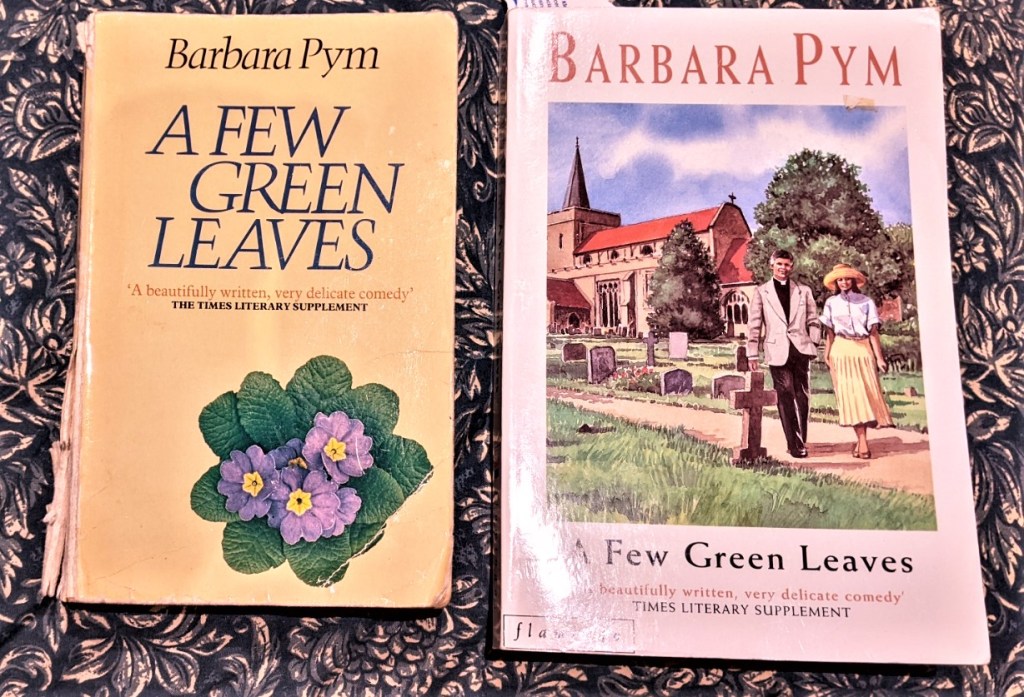
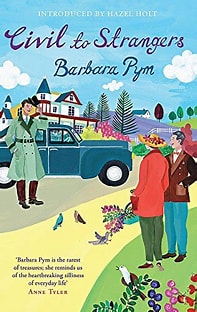
Cover, A Few Green Leaves, Granada 1981.

Cover, A Few Green Leaves, Flamingo 1994.

This is an interesting contrast in the priorities established by the publishers. The later cover suggests a possible romantic alliance between two of the characters. The earlier cover reflects the suggestion that a few green leaves can make an important difference: a Pym suggestion in the text.

How a new wave of literature is reclaiming spinsterhood

The unmarried woman has long been derided in popular culture and beyond. Now single women are telling their side of the story.

This week the review of She I Dare Not Name: A Spinster’s Meditations on Life by Donna Ward, Allen & Unwin, 2022, a book about spinsterhood in which it is claimed that there are few positive images of spinsters in fiction, moved me to write about the spinsters to whom Barbara Pym gave a positive and sometimes comic voice in her novels written between the 1930s and 1980.

How a new wave of literature is reclaiming spinsterhood

By Emma John

In 1869, the essayist William Rathbone Greg published a 40-page treatise on the worrying trend of the “surplus” – aka unmarried – woman. Under the title “Why Are Women Redundant?” Rathbone regretted these tragic figures who, rather than “sweetening and embellishing the existence of others”, were forced to lead lives both independent and “incomplete”. Greg, along with many other Victorians, was alarmed by the census data: 1.8 million single women in 1851 had been bad enough, but a decade later the figure had grown to 2.5 million. And it wasn’t just men who were concerned. In an essay asking “What Shall We Do With Our Old Maids?”, the reformer Frances Power Cobbe advised that “one in four women are certain not to marry” and advocated for increased education and employment. Reformers and traditionalists both backed emigration policies that would send these “excess women” overseas to work (or marry) in British colonies. See the full review in Further Commentary and Articles about Authors and Books*
Articles and commentary after Covid in Canberra: Showing at the NGA; Leoni Norrington and Barrumbi Kids; Tony Blair and Michael Sheen Interview; Bob McMullan – The key lessons from the South Australian election (Women’s Election?).

Covid in Canberra

On 31 March there were 1,194 new cases recorded, with 47 in hospital, three in ICU and one ventilated. 98.1% of the Canberra population over five have received two doses of the vaccine. There were 1, 014 new cases recorded on 1 April. New cases dropped on 2 April, to 808. On 3 April there were 718 new cases.

On April 4 Canberra recorded 739 cases, a drop in numbers of cases. However, the numbers in ICU have increased in a five day peak , to four in ICU and two on ventilation. The previous figure of five in ICU was recorded on March 30. Three people died in the ACT from Covid last week, bringing the death toll to forty two. Figures by age group for new daily infections recorded on 4 April are: 0-4: 45(6%); 5- 11.44 (6%); 12-17:82 (11%); 18-24:64 (9%); 25 – 39:215 (29%); 40- 49:124 (14%); 50-64:101(14%); 65+:64 (9%).

New numbers for 5 April showed another increase as there were 918 new cases recorded. There were forty one people in hospital, with five in ICU and two ventilated. Another life was lost to Covid. On 6 April there was another increase in the number of new recorded cases – 1,149. Forty two people are in hospital, with four in ICU, two of whom are ventilated.

Showing at the National Gallery of Australia
Darwin author Leonie Norrington’s book series The Barrumbi Kids to become TV show

By Eleni Roussos and Dianne King

Posted 11h ago11 hours ago, updated 3h ago3 hours ago

Play Video. Duration: 4 minutes 6 seconds
Leonie Norrington has been writing novels and picture books for children for more than 20 years.

Northern Territory author Leonie Norrington has some simple advice for budding writers: look to your own life and share it.

“Use your own experience, your own landscape, your own people to feed your work,” she said.

“That’s the essential part of you and the essential part of where you come from.”

The author has done just that, turning her childhood memories of growing up in an Aboriginal community in the Northern Territory into books for children.

Her most popular series The Barrumbi Kids was published in 2002, and follows a group of friends who learn about themselves through hunting and fishing in the bush.

A woman sits on the end of a park bench and is writing. Behind her,  there's a fountain and a lush garden.
The Barrumbi Kids was inspired by Norrington’s childhood memories.(ABC News: Che Chorley)

Two decades on, her books are about to reach a new audience on the small screen, with National Indigenous Television (NITV) commissioning The Barrumbi Kids to be turned into a TV show in 2022.

The author travelled to Beswick south-east of Katherine for the filming and hopes  the “wonderful relationship between black people and white people” comes across on screen.

“So often the information that comes out of communities is negative and it’s not all negative at all, there’s such joy,” she said.

Being on set was art imitating life for the 65-year-old author, who spent the early years of her life living on the same Jawoyn country where the TV show was filmed. 

A film set has been set up in bushland overlooking an escarpment. The sun has set and the sky above is orange.
The Barrumbi Kids TV series was filmed in Beswick, south-east of Katherine in the Northern Territory.(Supplied: Leonie Norrington)

The third of nine children, Norrington credits her childhood spent in the tiny community of Barunga in the 1960s for having the “biggest influence” on her career.

She said finding ways to celebrate “the difference but sameness between cultures” had been the cornerstone of her work as a writer.

“It was a really unique way to grow up, growing up in the bush with people who were living mostly a traditional way with their customs and hunting all the time,” she said.

“All of us children just ran around the bush with them; it was a really wonderful, exciting life.”

two young girls swim in a waterhole. They are holding onto paddle boards and smiling.
Norrington (left) swimming with her sister at a waterhole in Barunga in the 1960s.(Supplied: Leonie Norrington)

The Darwin author says feeling “like the minority” in the community had had a profound impact on her work as a writer.

“There weren’t that many white people who looked like me on the community,” she said.

“I think that’s a really valuable thing as a writer to always know that you don’t know, to always be on the outside somehow.”

It was the birth of her first grandson on the other end of the country that inspired the former ABC Gardening Australia presenter to start writing books for children. 

“I wanted him to know what it was like to live in the territory,” she said.

“I want stories for our kids, stories that legitimate who we are as a people.”

A father swims in a waterhole with his three young children. He is holding his daughter on his hip.
Norrington (left) wants her stories to celebrate her ‘wonderful, exciting’ childhood years in Barunga.(Supplied: Leonie Norrington)

Norrington has finished her doctorate in literature, writing her first adult novel set in Blue Mud Bay in Arnhem Land in pre-colonial times.

She said she was inspired to write the novel by her late ‘Aboriginal mother’ Clair Bush, a Yolngu woman who took her under her wing when she was a child.

“It was a serious adoption, she looked after us…she’s the one who taught us and the one I’ve written under her supervision all these years,” she said.

“Her mission was to have remote Aboriginal people shown as really powerful strong characters.”

A woman wearing a blue jumper sits with her grandchildren beside her. They are all happy and smiling.
Clair Bush (right) with her granddaughters and great grandson in Barunga in the 1990s. (Supplied: Leonie Norrington)

Norrington credits Ms Bush as being the powerhouse behind the success of The Barrumbi Kids, and said she would have been proud to see the stories from Barunga make national television.  

“I hope people love it, I hope people identify with the kids and I hope that the Aboriginal characters come across as really powerful and strong in their own right,” she said.

This story is part of a special Born and Bred series, celebrating the work of remarkable Territorians.

From: The New Statesman

“I tried to give Britain a different narrative”: Tony Blair and Michael Sheen in conversation

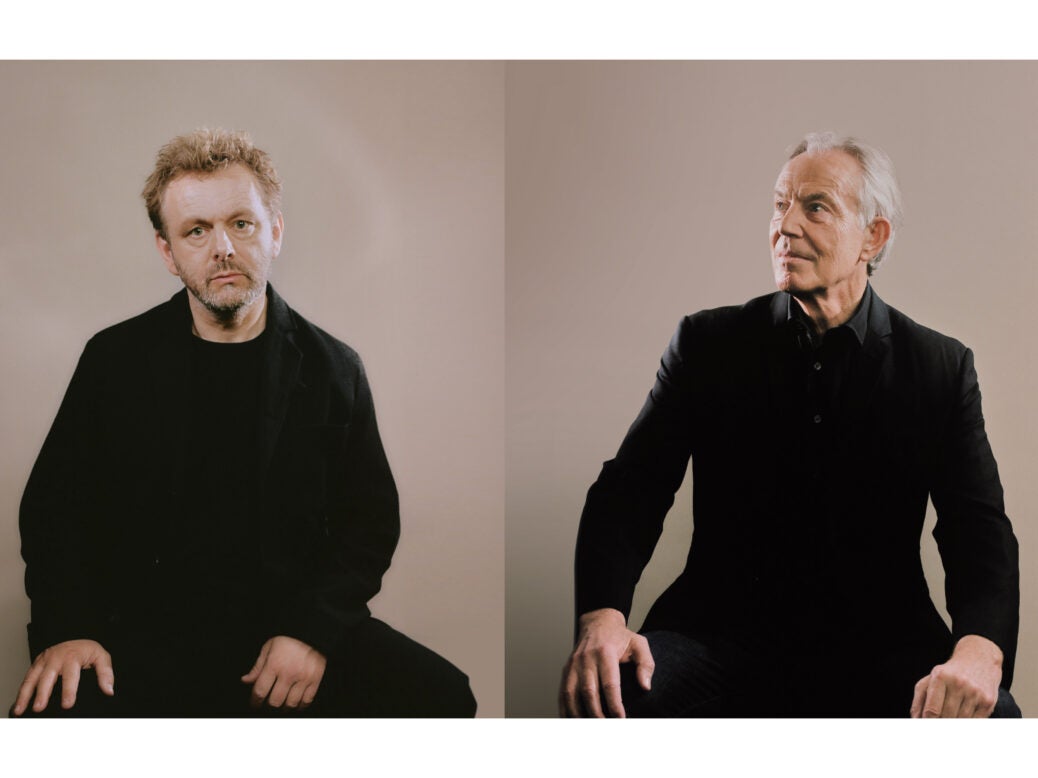
Michael Sheen and Tony Blair photographed for the New Statesman by Tom Jamieson

The former prime minister and the actor who played him talk “wokeness”, national identity, and what Blair has in common with Jeremy Corbyn.

By Michael Sheen and Tony Blair

On a Sunday afternoon in mid-February, Michael Sheen and Tony Blair laughed when they first saw one another on Zoom. They are two very different national figures, but their careers are nevertheless entwined, the actor having played the former prime minister three times – most notably opposite Helen Mirren’s Elizabeth II in the 2006 biopic The Queen.

Sheen no longer looked eerily like Blair. Dialling in from Glasgow, where he was filming a new series of Neil Gaiman’s Good Omens, his thick curls had been replaced by a short shock of peroxide blond. Blair, in turn, had cut the long hair he grew during the pandemic, described in the British press as his “lockdown mullet”.

“You look younger,” Blair said. “My lockdown hairstyle was much commented on –but not that I looked younger.”

They had met to talk about the meaning of Britain, which has changed greatly since Blair left office in 2007, and since Sheen last played him in the 2010 television film The Special Relationship (opposite Dennis Quaid as Bill Clinton). During the tumultuous decade since its release, a succession of Conservative-led governments have shrunk the state after the largesse and renewal of the New Labour years. The UK has left the European Union, its identity now split between Little Englander neurosis and Global Britain fantasy – a messy rejection of the globalisation synonymous with Blairism. With the creation of an Irish Sea border, and a Brexit-sceptic Scotland, the Union itself is under threat.

Speaking a week before Russia invaded Ukraine, the two men discussed what a “British Dream” should be, the future of the Labour Party, and the UK’s changing role in the world – questions that have become more urgent since the outbreak of war.https://embed.acast.com/6b2fc9ba-b9b7-4b7a-b980-e0024facd926/6239fd043414c10012eb920c?bgColor=faf6f4&font-family=Helvetica%20Neue&font-src=Helvetica%20Neue&logo=false&secondaryColor=d82d1d

Representing different traditions of the left, Sheen and Blair clashed over what went wrong for Jeremy Corbyn and how Labour can win again, but agreed on one fundamental challenge: watching oneself on screen.

Introduced and chaired by Anoosh Chakelian, the NS Britain editor

Michael Sheen I have a lot of cognitive dissonance when it comes to you, because it’s like seeing a family member or something. I remember Stephen Frears, who directed two of the films where I played you, said “Don’t ever forget that these are the smartest people in the room, always.”

Tony Blair That was generous, if inaccurate.

MS When we were making The Queen, it seemed as if [by the time of New Labour] the story Britain told about itself had changed. The Britain you grew up in, were educated in, became a barrister in, got into politics in – what was that Britain telling the world about who it was, and why did you come to think that story needed to change?

TB Britain finds it very difficult to tell a story about itself, because there is a narrative that supposes our best days are behind us, and that’s caught up in what happened in the Second World War: Churchill defeated Nazism, Britain’s finest hour.

My idea was to take what I think are the enduring best qualities of Britain – open-mindedness, tolerance, innovation – and try to give Britain a different narrative that would allow it to think its best days are ahead of it. I think, for a time, that succeeded, and it probably culminated in winning the Olympic bid in 2005. We quite deliberately put Britain forward as a multicultural, tolerant society, looking to the future, and I think that’s why we won that bid. And then the Olympics, when it came about in 2012, was in many ways a celebration of that.

But there have always been these two competing ideas and, bluntly, I think that over the past few years, the older narrative has reasserted itself. You only have a concept like the American Dream – and Xi Jinping now talks about a Chinese Dream – when you think your best days are ahead of you.

MS After the war, with that 1945 government and the huge changes made to the country, when did people start looking back?

TB At the end of the 19th century, we were the most powerful country in the world. The Second World War demonstrated the capacity of Britain still to play a leading role on the world stage. But from then on, you were relinquishing the trappings of empire and power.

People on the left will baulk at what I’m about to say, but in some ways, with Margaret Thatcher, there was at least the strong direction recovered. And then with New Labour, that was a progressive attempt to say: we’ve got a strong relationship with Europe, we’ve got a strong alliance with America, we’re globally significant, we’re modernising our country, we can become a centre of innovation, technology for the future. It’s still possible for us to do all of that, but in the past few years there has been something of a crisis of identity for the country.

MS How much did that weigh on you as prime minister, the country having once been the most powerful force in the world, and holding on to that influence?

TB It weighs on you for two reasons: first because of the richness of your history, but also because if countries today want to succeed, they need direction. One of the biggest problems we have right now in Britain is we don’t have a plan for our future. We’ve got three revolutions – Brexit, climate and technology – and we’re not really planning for any of them.

Countries need a sense of direction, and they need to find their place in the world. What is the role of Britain today? This is something that you have to define, some sense of the dream of the future, because that means nothing unless it’s definable.

I think you could have a British Dream, but it requires you to understand what you can offer the world today. And I think it is about being an open-minded, tolerant, innovative country and society, because that’s where we, throughout our history, have always been when we’re at our best.

Britain’s place in the world

MS Britain’s relationship with the US and Europe has changed since you were in power. How does that affect British influence? Part of going into Iraq was to stand with America.

TB We don’t have those two relationships in the same way, and as a result, we’re less influential. It’s clear. In my time, and under John Major, Margaret Thatcher, Gordon Brown, the first recipient of a call from the president of the United States would have been the British prime minister. I’m not sure that’s really true any more.

The relationship with America comes at a price, the relationship with Europe comes at a price. I never pretended that the European Union was perfect or that it was always easy-going. It wasn’t. It was very hard a lot of the time. But the relationship mattered to how we looked at ourselves and our place in the world and our ability to influence things, and therefore, when you undermine that in such a fundamental way, it’s difficult.

You can’t escape these choices. If you’re constantly indulging the view that there is a past you can recapture – which is an easy thing to do, a very simple populist message that may be politically successful in certain contexts – it doesn’t offer anything for the future.

Tony Blair photographed for the New Statesman by Tom Jamieson

MS It seems a large part of why people voted to break away from Europe, was out of some sense of wanting to go back to the past, of Britain as this buccaneering spirit, and an empire-building attitude. And yet it seems to have given up influence by leaving the EU. There’s a bizarre irony in that, isn’t there?

TB Yes. You’re in a much stronger position to deal with these countries whose economies eventually will be far larger than ours – China’s already is, India’s in time will be – from a position of partnership.

In the world that’s developing today, you’ve got three giants by the middle of this century: America and China for sure, and probably India. These will be giants taller than any other country; and then you’ll have the tall countries, populations like Indonesia, Brazil and Mexico and so on. France, Germany, Italy, Britain will all have populations of roughly 65 or 70 million. Unless you band together, you’re just going to get sat on by the giants.

The belief in better

MS The idea of aspiration was key to the New Labour vision for Britain. Why do you feel your record on social mobility has been misrepresented by the left?

TB Simply because when you look at the opportunities we gave people, they were immense: university education was expanded, Sure Start, massive investment in schools, big inner-city regeneration. When we left office, the NHS had its highest satisfaction ratings since records began.

It’s important for the left not to misrepresent the last Labour government, or play along with the idea that it was all about Iraq and nothing else, because then all you do is depress people about future prospects.

MS There is the idea that your government was the most redistributive since 1945, and that it was happening by stealth. But there was a tension between staying attractive to the kind of voters you need to get into power and trying to do what a Labour government is there to do, which is to be the party of social justice and a fairer economy. How did you cope with that tension?

TB That was, and is, the challenge. Provided it was clear Labour was in favour of successful business, happy for people to be ambitious and do well, strong on defence and law and order – because people care about those things – then, as it were, you got permission to do the side of it that was about social justice and compassion and liberal change.

I could see there was a new coalition emerging of people who were pro-free enterprise. In that sense, they had sympathy with the Thatcher concept, but at the same time they were socially liberal: they’d no time for racism or discrimination against gay people.

The working class – in the traditional sense that Labour often uses the word – had always had two bits to it, and one was fiercely aspirational. And that fiercely aspirational part was always what the Tories appealed to. My father was one of those people: brought up in a poor part of Glasgow, secretary of the Young Communists, and then later became convinced that Labour wanted to hold him back, and he wanted to succeed.

That is the great challenge always of progressive parties. But it’s not a challenge you can’t overcome, and Labour could do the same again today, if it decides to.

MS At a party conference fairly early on in your government, you said the fight was for a new vision of a Britain in which the old conflict between prosperity and social justice is banished to the history books where it belongs. Do you think it’s possible for a party that openly advocates social justice and a fairer economy to win power in a period where this is labelled as “wokeness” and smeared as something else? Some people say you were so successful electorally by fooling Britain into thinking that it wasn’t the Labour Party! Could someone openly just say, “This is what we believe in”? Is it possible for this country to vote that someone into power, and if not, what does that say about who we are?

TB You’re remembering my speeches better than I do! You can definitely say we want social justice and a fairer country, provided people think you’ve got a plan that’s sensible to get there. There’s no purpose in the Labour Party if it’s not going to create a fairer society and implement measures of social justice. The question is how.

What Labour people often tend to do is misunderstand why people are voting Tory. They’re often voting Tory because they fear Labour – not because they fear Labour is going to create a more just society, but because they fear Labour will bind them up in a whole lot of state power that won’t necessarily deliver that just society.

People say to me, “Labour got hammered at the last election.” And I say to them – I don’t mean to be rude about it – but we put forward Jeremy Corbyn as the prime minister – what do you think’s going to happen? What is it about British political history that tells you they’re going to put someone from that political position in charge of the country? Nothing!

Labour doesn’t need to apologise for wanting a more just society. On the contrary, it needs to say that this is its mission. It’s how you do that in the modern world that always trips up Labour. If you go back to the 1945 government, which created these great changes, the question is: why were they voted out in 1951? It happened because the Tories were able to argue Labour wasn’t paying attention to the aspirational side of the working-class people who were being helped by the very changes Labour was making.

If you want to achieve power, you’ve got to be much more intellectually rigorous about what your problem is. It isn’t that people think, “I can’t vote for people who want a more just society.” They’re not voting Labour because they worry that what we might do isn’t in line with what they conceive a more just society to be. Those two things are reconcilable, but only if you’re hard-headed about what the problem is.

Michael Sheen photographed for the New Statesman by Tom Jamieson

MS I’m concerned that unions and collective action are now seen as regressive, and people I know don’t have any protections – people who come from the area I come from [Port Talbot in Wales] and who I meet every day. Part of the attraction for a lot of people of Jeremy Corbyn – even though his leadership was seen as “going back to the Seventies” – is that people need protection at work, when they’re on a zero-hours contract or working in an Amazon warehouse.

TB You’re absolutely right, that is the need. There are a lot of people who are exploited in the workplace today. You need trade unions that are forward-looking, that understand what the realities of the world are, how you best get that protection. They probably aren’t trying to play around with the politics inside the Labour Party, to be quite frank, but addressing the workplace issues that people have in a very practical way.

People used to think I was always rebuffing the trade unions. I used to try to explain that, if you want to represent the modern workforce, you’ve got to go to where they are and how they think, and be directed towards genuine workplace representation – not try to pull them into what they think ends up as a sort of quasi-political organisation.

We introduced the minimum wage. We introduced the right to be a member of a trade union. We got rid of a whole raft of Tory things that were anti-union. But what we didn’t do was everything the trade union movement was asking, which literally was to go back to the framework of the 1970s.

The psychology of the country towards the Tories and Labour is different. Towards the Tories, it’s: “I don’t particularly like them, I think they do look after the most wealthy in society. On the other hand, I know that all they’re interested in is power, and therefore, probably, they’ll try to work out what I want and try and give it to me.”

With Labour, it’s completely different. It’s only Labour that worries about whether it’s principled: the country thinks the party is principled. What the country worries about is: “Labour definitely believes these principles, and Labour’s got a huge commitment to social justice, but what’s that going to cost, exactly? Can you actually run the thing or will these principles be so important that you’ll take us in all sorts of strange directions?”

Bob McMullan

The key lessons from South Australia

The first federal election lesson I would draw from the recent South Australian election is:  “the polls got it right”. This combined with the significant differential in the performance of female candidates in the election could have a profound impact on the forthcoming federal election.

We may be about to experience the women’s election.

There is much cynicism about polling. Some of it based on the recent failures of polling in Australia and USA. Some of the cynicism is based on a proper understanding of the methodological challenges facing pollsters in the 21st century, particularly given the virtual demise of landlines. However, some of the suspicion is based on ignorance and conspiracy theories.

I am as critical as most about the bias in the Murdoch press. It is now so bad it is almost laughable!

However, neither Murdoch nor Newspoll has any credible reason to deliberately distort the polling as disclosed fortnightly in The Australian. Some of the reporting in the Australian of the polling is distorted and/or just plain wrong, but the polling numbers are credible. We now have several regular polls which give Australians a chance to judge how the forthcoming election is going at the particular moment. At this relatively early stage it doesn’t necessarily tell us much about how the final result will go on election day. There is a lot of water to flow under the bridge before the result will be known.

It is however clear that the current indications are very positive for Labor and for Anthony Albanese.

A second lesson from analysis of the South Australian election results is the superior performance of female candidates.

It has been widely reported that all the key seats gained by Labor at this election were won by female candidates.

What has not been reported is the better overall performance of women as candidates at the election.

At the time of writing, although there are a few votes still to be counted, the average swing to Labor in a seat contested by a woman was 7.46%, while for male candidates the average was 6.22%.

There is no obvious explanation for this quite significant difference. It is true that several female candidates were in key marginals in which the Labor Party made extra effort, but the Liberals would also have waged major campaigns in these seats. As many of the women were running against incumbents this would suggest that the difference in gendered results may be more than suggested.

It seems the voters prefer female candidates with a margin of difference sufficient to influence the outcome in closely contested seats.

This is significant additionally because the ALP has female candidates in 18 of the 27 key seats within which the next federal election will be determined.

Taken together with the very significant number of female independents threatening otherwise safe Liberal seats, the 2022 federal election could become known as the women’s election!

In fact, to bring these two lessons together, polling suggests Labor may be very close to 50% female MPs in the lower house after this election if they do as well as the polls predict.

Applying the state-by-state polling breakdown to the pendulum suggests Labor would win 12 seats, 10 of which have female candidates for the ALP.

The ALP currently has 29 women and 38 men in the House. One new safe seat has been created, Hawke, for which a man, Sam Rae, has been selected. Of the seats of retiring members Marion Scrymgeour is running for Warren Snowdon’s seat of Lingiari and Kristina Keneally is running to replace Chris Hayes in Fowler. Assuming Andrew Charlton is chosen to contest the seat of Parramatta currently held by Julie Owens, this makes a starting point in a status quo election of 30 female and 38 males in the House for the ALP. Should Labor win the 12 seats as suggested by the current polling this would create an 80 seat ALP team in the House which would be split 40/40 between men and women.

Of course, even if the polls are correct in predicting the overall seat count it is never as precise on a seat-by seat basis. And it is far too early to be predicting how many seats Labor will win, let alone which ones it may win. But this analysis is indicative of a trend towards gender equality in the parliament as it becomes more truly a House of Representatives.

The swathe of potential Independents contesting previously safe conservative seats makes a similar analysis for the Liberals and Nationals very difficult at the moment. However, they start from a much lower base. In the current parliament the coalition has a combined gender split of 15 women /61men. If the coalition lost the same twelve seats considered above they would fall to 9/55. In addition, only 1 of the 8 men retiring at this election is being replaced by a woman. This would take a status quo election result to 16/60. A twelve-seat loss would mean 10/54.

For the purpose of comparison, should the coalition gain the first twelve seats for which they have endorsed candidates (which excludes Lilley and Greenway) they would gain five women and seven men. This would lead to a composition of the coalition House team of 21/67.

Of course, most of the members under threat from female independents are men, but losing seats is a perverse method of moving towards gender equality.

The South Australian election can predict nothing about who will win the next federal election. But it does point to some interesting underlying trends in the choices Australian voters are making. It also reinforces the point from the Western Australian election that it is unwise to disregard the message the polls are sending about public attitudes.

The prospect of a more gender balanced House, at least on the Labor side and amongst the Independents with a possible indication of voter preference for female candidates adds an intriguing note to the study of the forthcoming election.

Week beginning March 30 2022

I am catching up on some reviews written a while ago, and not posted to this blog. They have been posted on Good Reads, Twitter and Linked In as part of the process of reviewing for NetGalley.

Donna Leon Give unto Others  Grove Atlantic Atlantic Monthly Press, 2022.

Reading a Donna Leon is always delightful. Once again, she has evoked the special features of the world of detection in Venice with location, Italian culture and languages, class differences and history providing a complex background to a crime that must be solved by Guido Brunetti and his ingenious colleagues, sometimes avoiding the rules and always aware of the possibility of being spied upon.  Woven alongside the detective theme is that of the literary world in which Paola immerses herself in her academic employment and at home. She often provides an idea or even a simple story which illuminates or provides a context for Brunetti’s investigation and a clue to the sharp reader. For complete review see Books: Reviews

Sharon Wright Mother of the Brontës 200th Anniversary Edition Sword & Pen, 2021

Sharon Wright has brought to life the woman who gave birth to the famous writers;  provided an image of a woman who also wrote (although not successfully or with the broad sweep we know of through the Brontë sisters); who cared for them alongside their nursemaids until her death when Maria was seven and the youngest, Charlotte, a few months old; who stood alongside her husband, Pat Brontë  to give him the gravitas to succeed in initially unfriendly Haworth; and made their home there a pleasant environment in which to live. Maria Brontë also provided the children with a stalwart sister who, after her death, and Pat Brontë’s unsuccessful attempts to remarry, provided him with companionship, and them with another carer. More at – Books: Reviews

Articles and comments after Covid in Canberra update: Heather Cox Richardson on confirmation hearings for Ketanji Brown Jackson; photos and quotes related to and from the confirmation hearings; Van Gogh Alive Exhibition; Cindy Lou reviews two local cafes; follow up to previous review of Unleash the Girls; Ken Burns documentary – Benjamin Franklin.

Covid in Canberra since Lockdown ended

New cases for 24th march followed the trend, with 1,278 cases; forty two people in hospital and three ventilated. Vaccinations for over five, two doses are now at 97.0% and 79.8% of 5 – 11 year olds have received one dose.

On the 25th March ‘winter doses’ became available for eligible Canberrans. There were 1,122 new cases; forty two people in hospital; three in ICU; and one death.

New cases reported dropped on 26 March, to 947; there remain forty two people in hospital, three of whom are in ICU. The figure for new cases retained its improvement – 799. However, hospital numbers increased to forty five, with three in ICU. On the 28th there was another improvement in numbers, with 701 new cases. However, hospital numbers increased to forty six, four of whom are in ICU.

Another increase in new cases occurred on the 29th March, when 1,063 were recorded. Forty nine people are in hospital with four in ICU. This trend was reflected in the figures for the 30th when 1,139 new cases were recorded. There were forty eight people in hospital with five in ICU. Vaccination rates continue to increase with 80.1% of Canberrans over five having had one dose; 97.9% of Canberrans aged five to eleven having had two doses; and 72.9% of people over sixteen having had three doses.

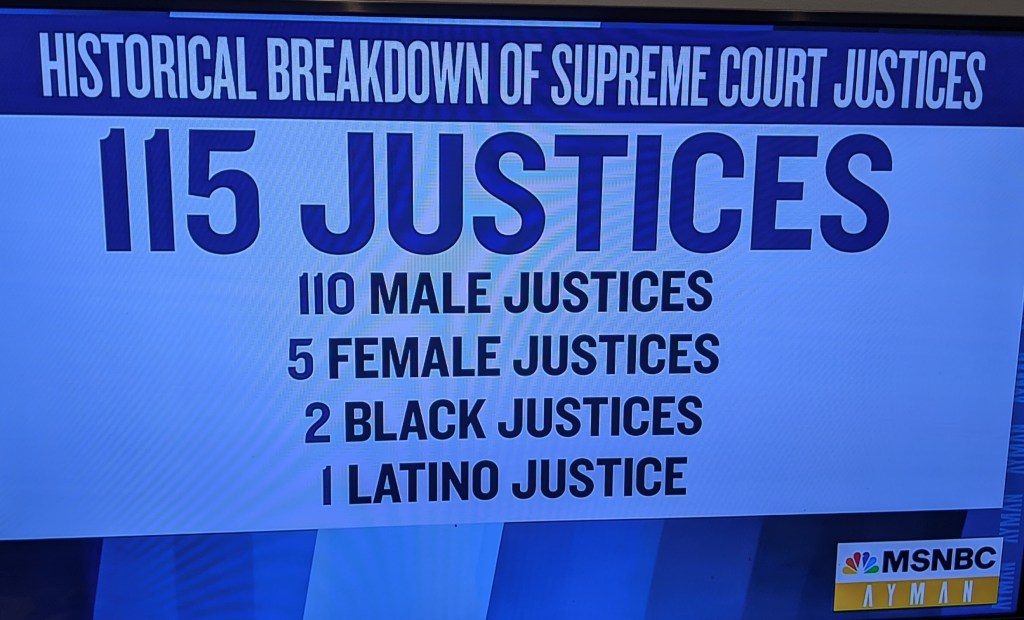
Heather Cox Richardson:Confirmation Hearings for Judge Ketanji Brown Jackson’s confirmation to the Supreme Court

March 25, 2022 (Friday)

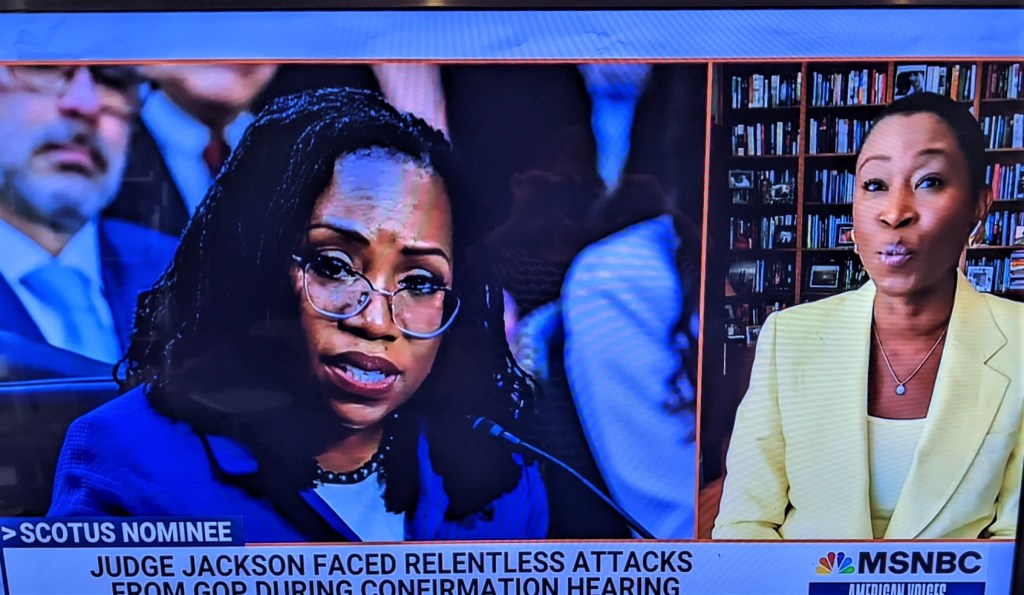
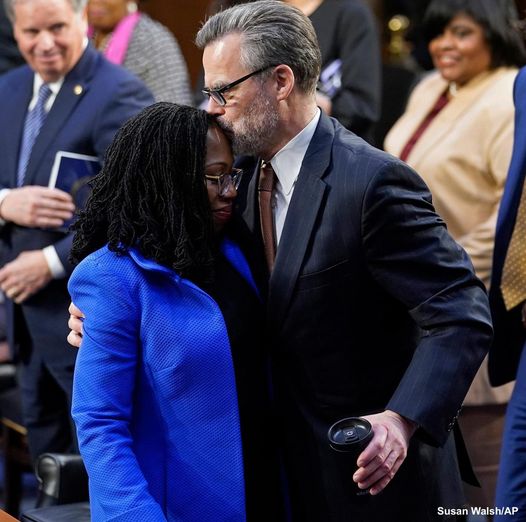
In confirmation hearings this week for her elevation to a Supreme Court seat, the highly qualified and well-respected Judge Ketanji Brown Jackson endured vicious attacks from Republicans on the Senate Judiciary Committee, who vow to reject her confirmation despite the fact that her record is stronger than those of recent Republican nominees and that 58% of Americans want her to be confirmed. (In contrast, only 42% of Americans wanted Justice Amy Coney Barrett confirmed.)

Senator Ben Sasse (R-NE) explained: “Judge Jackson has impeccable credentials and a deep knowledge of the law,” but she “refused to embrace” the judicial philosophy of originalism, which would unravel the 1973 Roe v. Wade decision protecting abortion rights, as well as most of the other civil rights protected since the 1950s.

Indeed, the hearings inspired Republicans to challenge many of the civil rights decisions that most Americans believe are settled law, that is, something so deeply woven into our legal system that it is no longer reasonably open to argument. The rights Republicans challenged this week included the right to use birth control, access abortion, marry across racial lines, and marry a same-sex partner.

These rights, which previous Supreme Courts said are guaranteed by our Constitution, are enormously popular. Seventy percent of Americans support same-sex marriage. Eighty-nine percent of Americans in 2012 thought birth control was morally acceptable, and the Centers for Disease Control and Prevention reported that as of 2008, 99% of sexually active American women use birth control in their lifetimes. Even the right to abortion remains popular. According to a 2021 Pew poll, 59% of Americans believe it should be legal in most or all cases.

So how do today’s Republicans square overturning these established rights with the fact that we live in a democracy, in which the majority should rule, so long as it does not crush a minority?

A 2019 speech by then–attorney general William Barr at the University of Notre Dame offers an explanation.

In that speech, Barr presented a profound rewriting of the meaning of American democracy. He argued that by “self-government,” the Framers did not mean the ability of people to vote for representatives of their choice. Rather, he said, they meant individual morality: the ability to govern oneself. And, since people are inherently wicked, that self-government requires the authority of a religion: Christianity.

Barr quoted the leading author of the Constitution, James Madison, to prove his argument. “In the words of Madison,” he said, “‘We have staked our future on the ability of each of us to govern ourselves…’.”

This has been a popular quotation on the political and religious right since the 1950s, and Barr used it to lament how the modern, secular world has removed moral restraints, making Americans unable to tell right from wrong and, in turn, creating “immense suffering, wreckage, and misery.” “Secularists, and their allies among the ‘progressives,’” he said, “have marshaled all the force of mass communications, popular culture, the entertainment industry, and academia in an unremitting assault on religion and traditional values.” The law, Barr said, “is being used as a battering ram to break down traditional moral values” through judicial interpretation, and he called for saving America by centering religion.

Madison never actually said the quotation on which Barr based his argument. It’s a fake version of what Madison did say in Federalist #39, in 1788, which was something entirely different. In Federalist #39, Madison explained how the new government, the one under which we still live, worked.

Answering the question of whether the new government the Framers had just proposed would enable people to vote for their representatives, he said yes. “No other form would be reconcilable with the genius of the people of America; with the fundamental principles of the Revolution; or with that honorable determination which animates every votary of freedom, to rest all our political experiments on the capacity of mankind for self-government.” Madison said nothing about personal morality when he talked about self-government, though. Instead, he focused on the mechanics of the new national government, explaining that such a government “derives all its powers directly or indirectly from the great body of the people, and is administered by persons holding their offices during pleasure, for a limited period, or during good behavior.”

He went on to say (and the capitalization is his, not mine): “It is ESSENTIAL to such a government that it be derived from the great body of the society, not from an [small] proportion [of people], or a favored class of it….”

In his 2019 speech, Barr also expressed concern that people in the United States misunderstood the First Amendment to the Constitution, which expressly forbids the government from establishing a national religion or stopping anyone from worshiping a deity—or not—however they choose. In Barr’s hands, the First Amendment “reflects the Framers’ belief that religion was indispensable to sustaining our free system of government.” To support that argument, he cites a few lines from Madison’s 1785 pamphlet objecting to religious assessments that talk about how Madison defined religion.

In reality, that pamphlet was Madison’s passionate stand against any sort of religious establishment by the government. He explained that what was at stake was not just religion, but also representative government itself. The establishment of religion attacked a fundamental human right—an unalienable right—of conscience. If lawmakers could destroy the right of freedom of conscience, they could destroy all other unalienable rights. Madison warned specifically that they could control the press, abolish trial by jury, take over the executive and judicial powers, take away the right to vote, and set themselves up in power forever.

Madison was on to something when he warned that there was a connection between establishing a religion and destroying American democracy. At the same time Republican lawmakers are now talking about rolling back popular civil rights in order to serve Christianity, they are also taking away the right to vote and appear to be looking to set a minority into power over the majority.

“This is a fight of good versus evil,” Trump’s chief of staff Mark Meadows wrote to Supreme Court Justice Clarence Thomas’s wife, Ginni, on November 24, 2020, in a text about overthrowing the will of the voters after Joe Biden had won the presidential election by more than 7 million votes and by 306 to 232 votes in the Electoral College. Referring to Jesus Christ, Meadows continued: “Evil always looks like the victor until the King of Kings triumphs. Do not grow weary in well doing. The fight continues….”

Ketanje Brown Jackson Confirmation

Why was Ketanje Brown Jackson treated with the respect with which the most recent nominees to the Supreme Court were treated? Guest on Alicia Mendez American Voices

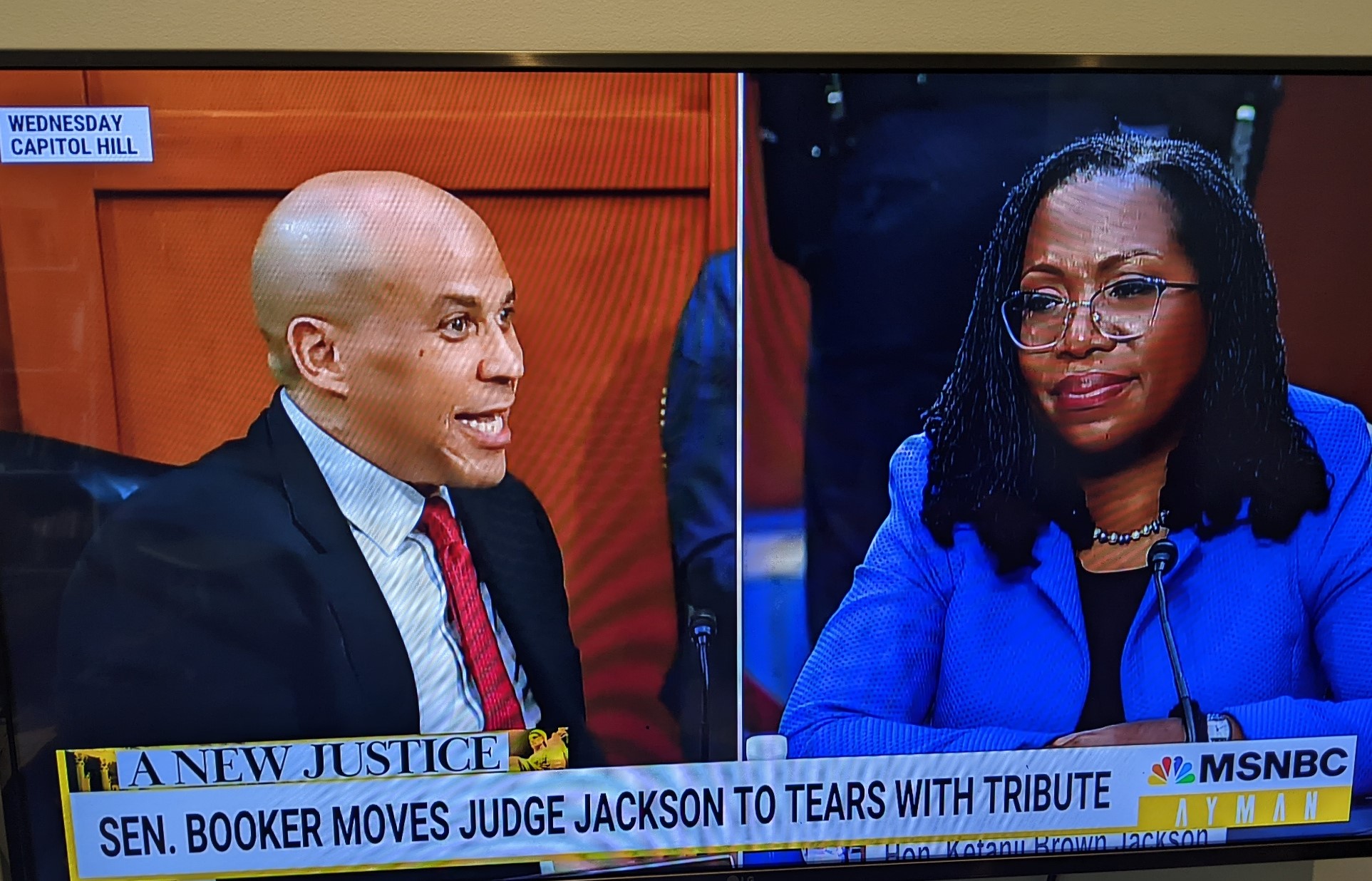
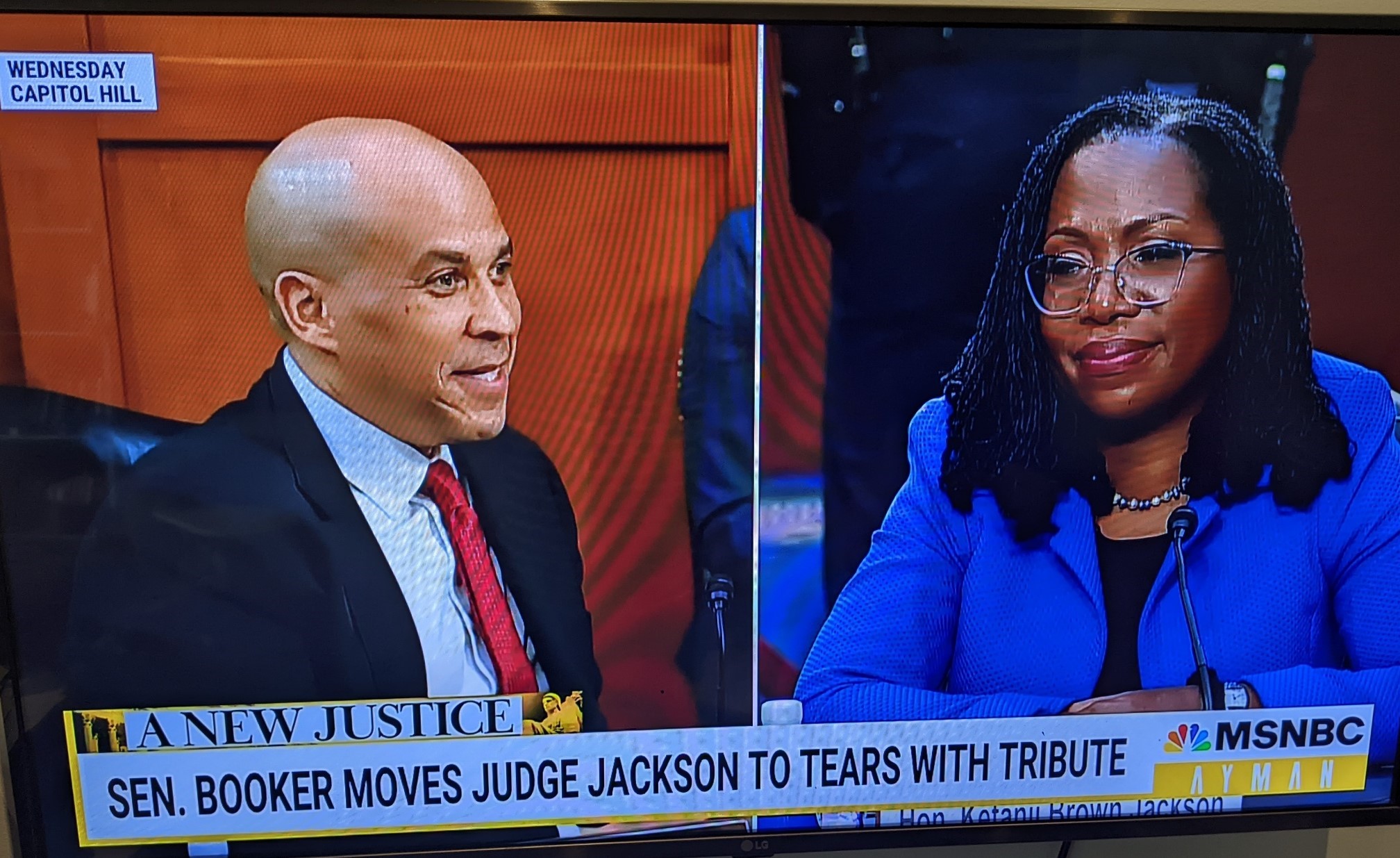
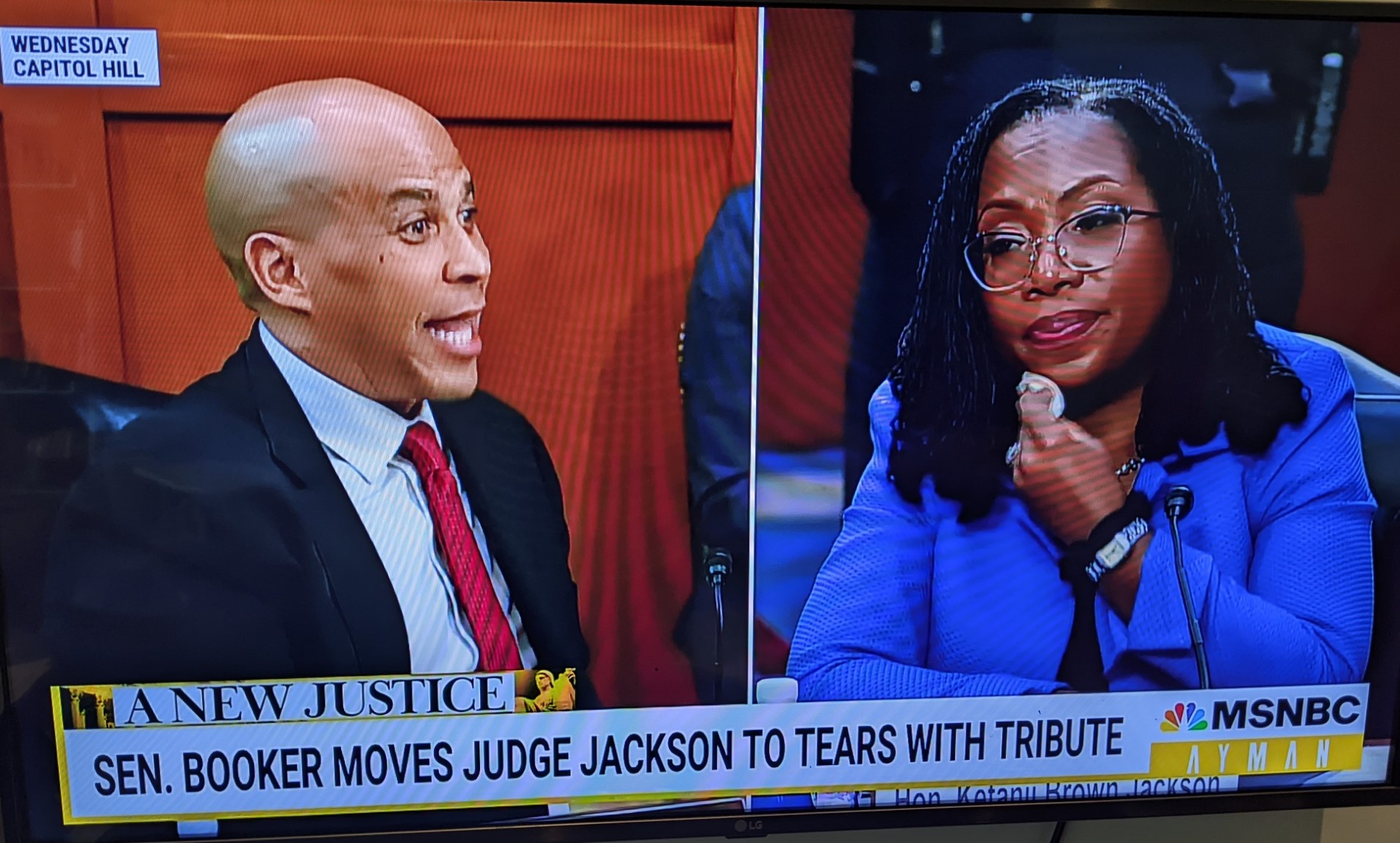
Michael Steele, former Chair of the Republican National Committee reflects on Cory Booker’s speech at the Confirmation Hearing
A great quote from Facebook: Yesterday was a perfect example of an overly qualified woman who had to remain calm in front of unqualified men!

Persevere: When walking through Harvard Yard, early in her years at Harvard, a passer by said to Ketanje Brown Jackson, persevere. She remembers this fondly, and has done so.

Van Gogh Alive

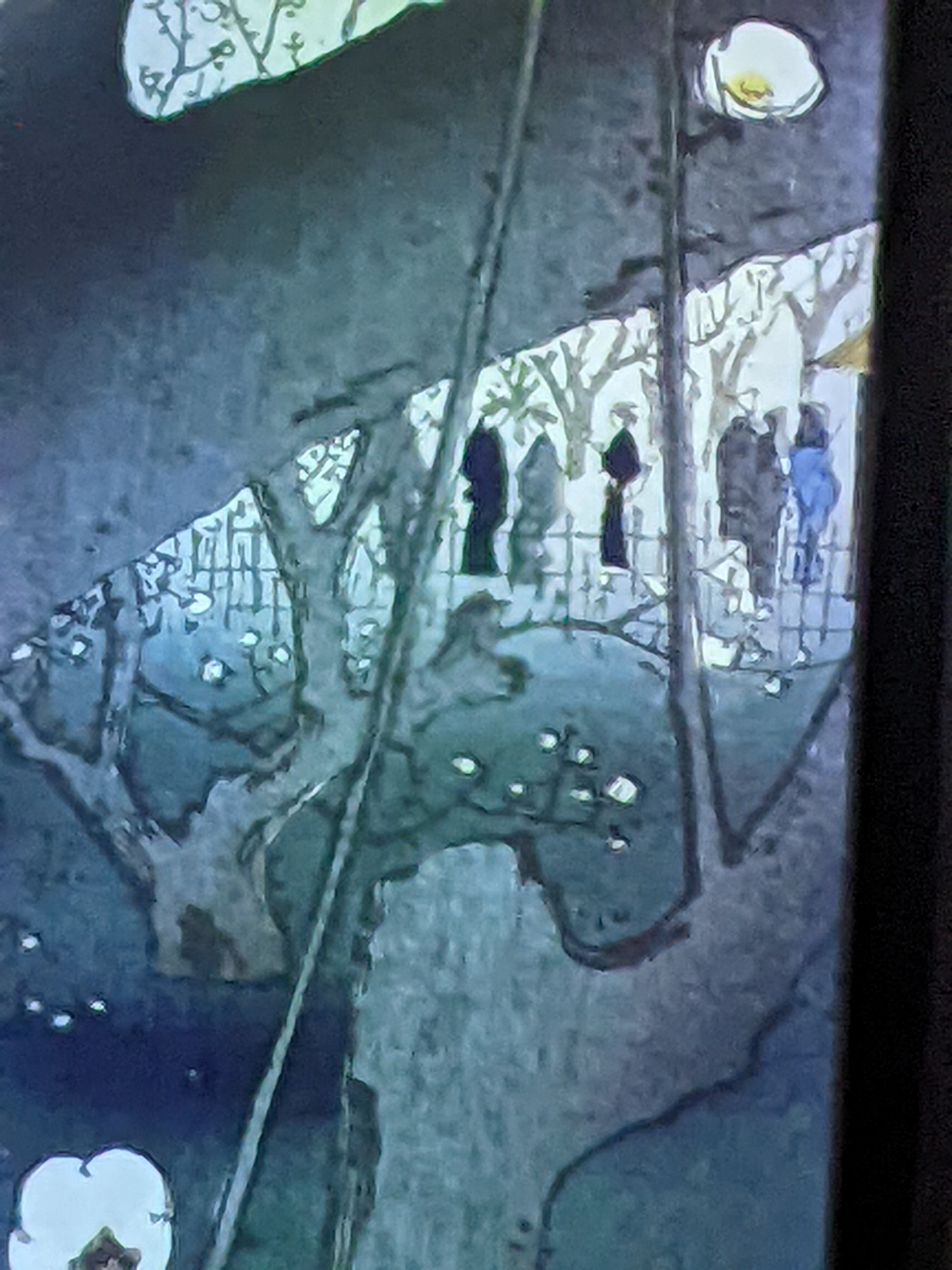
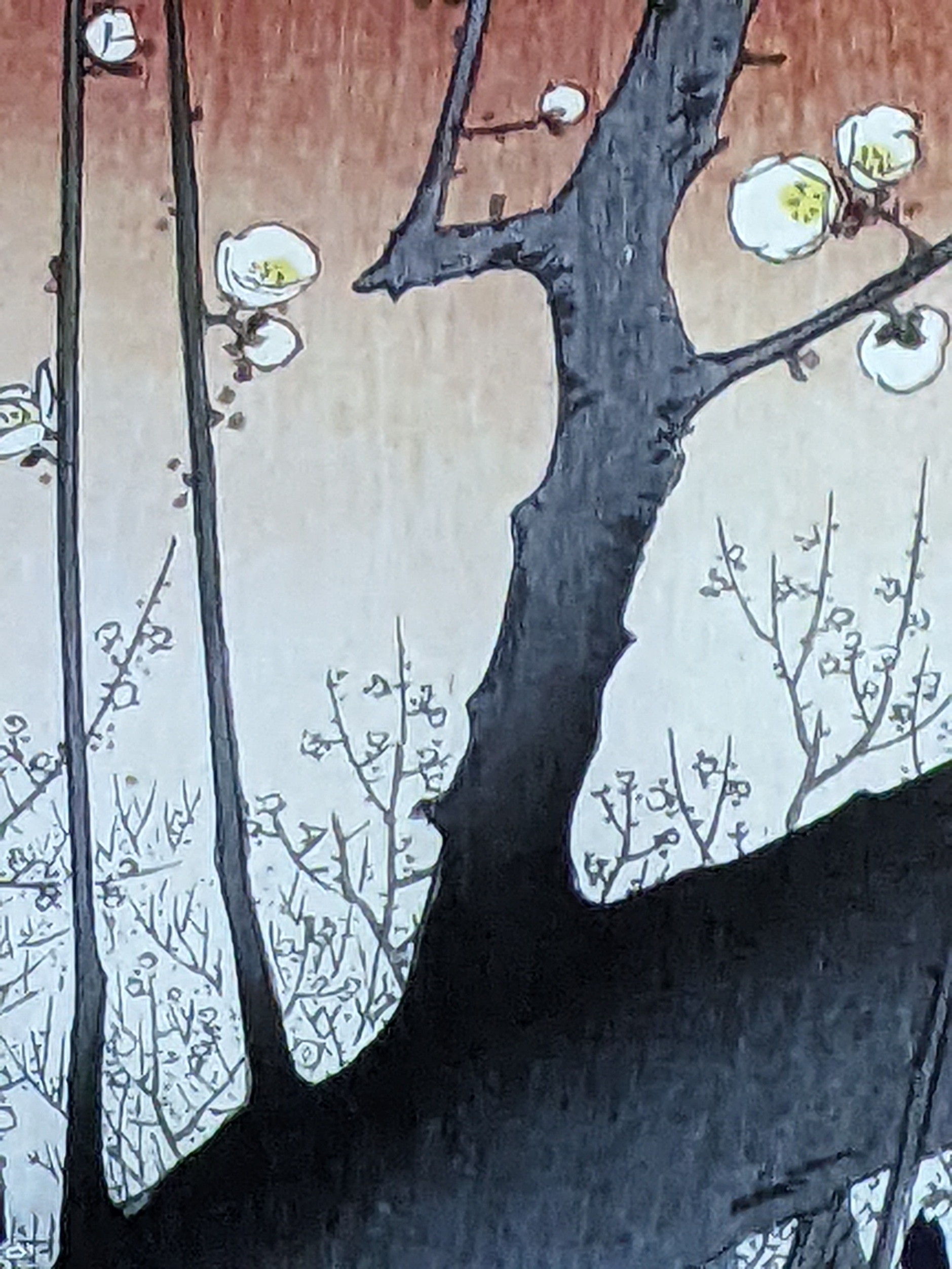
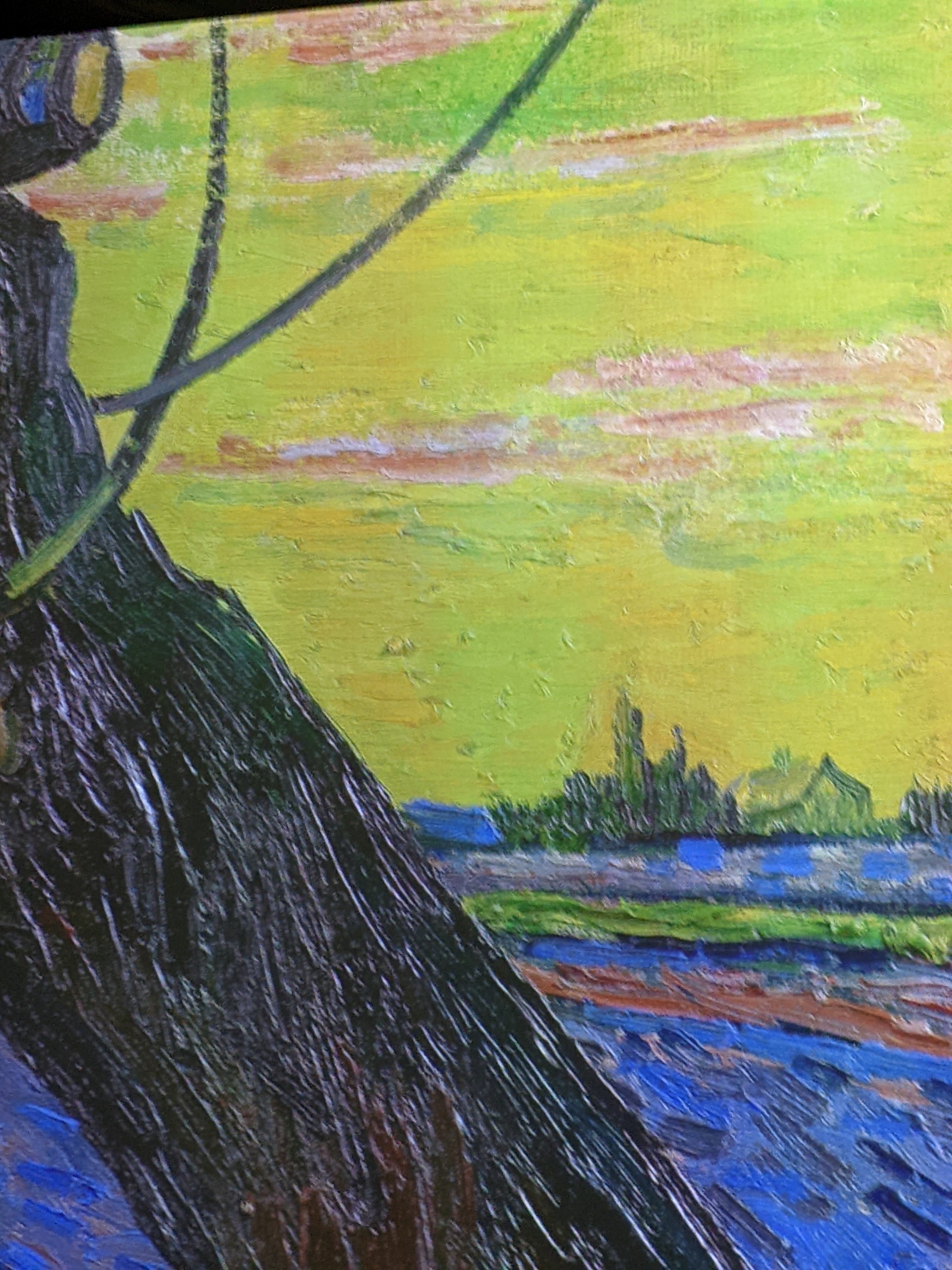
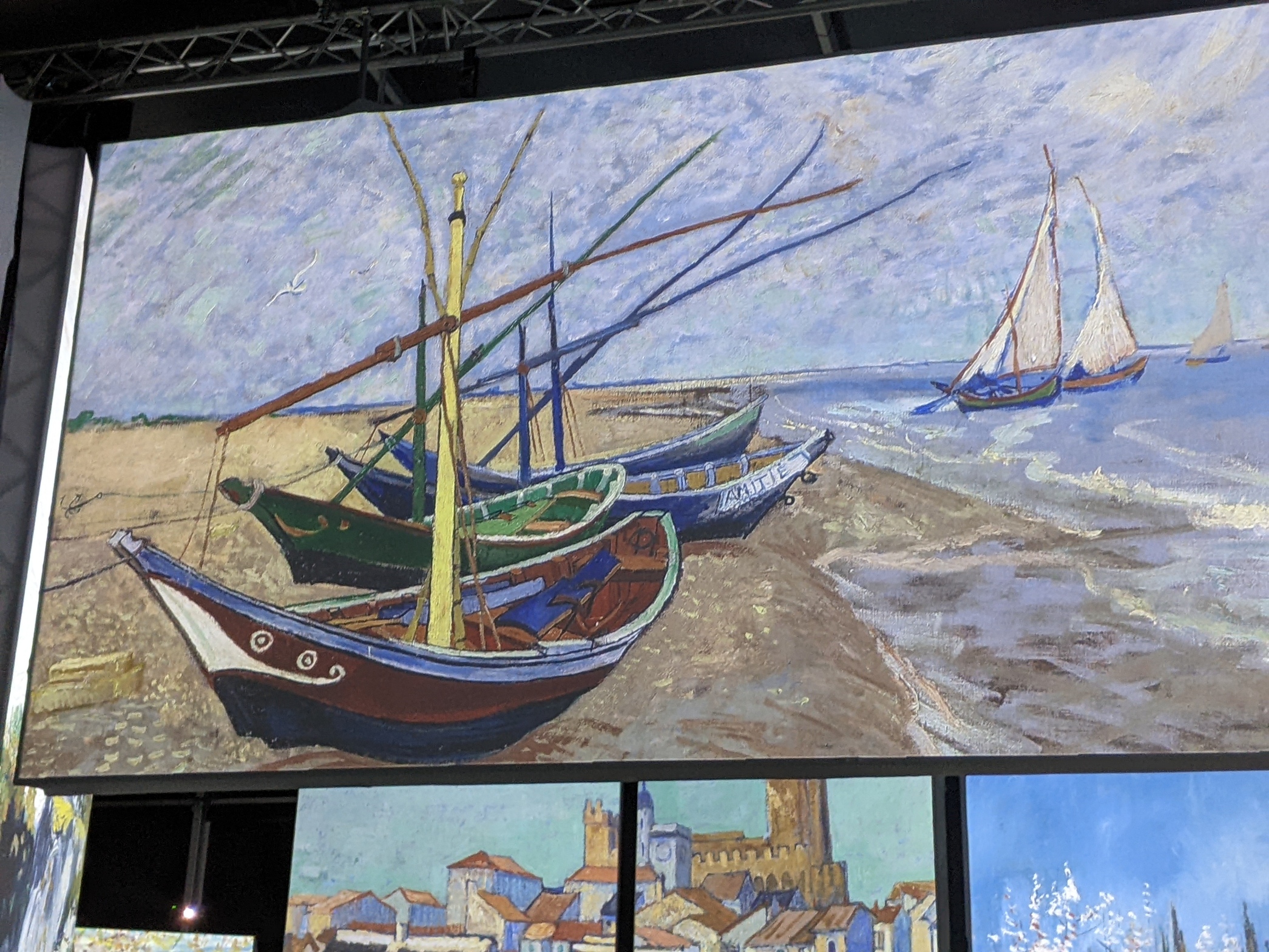
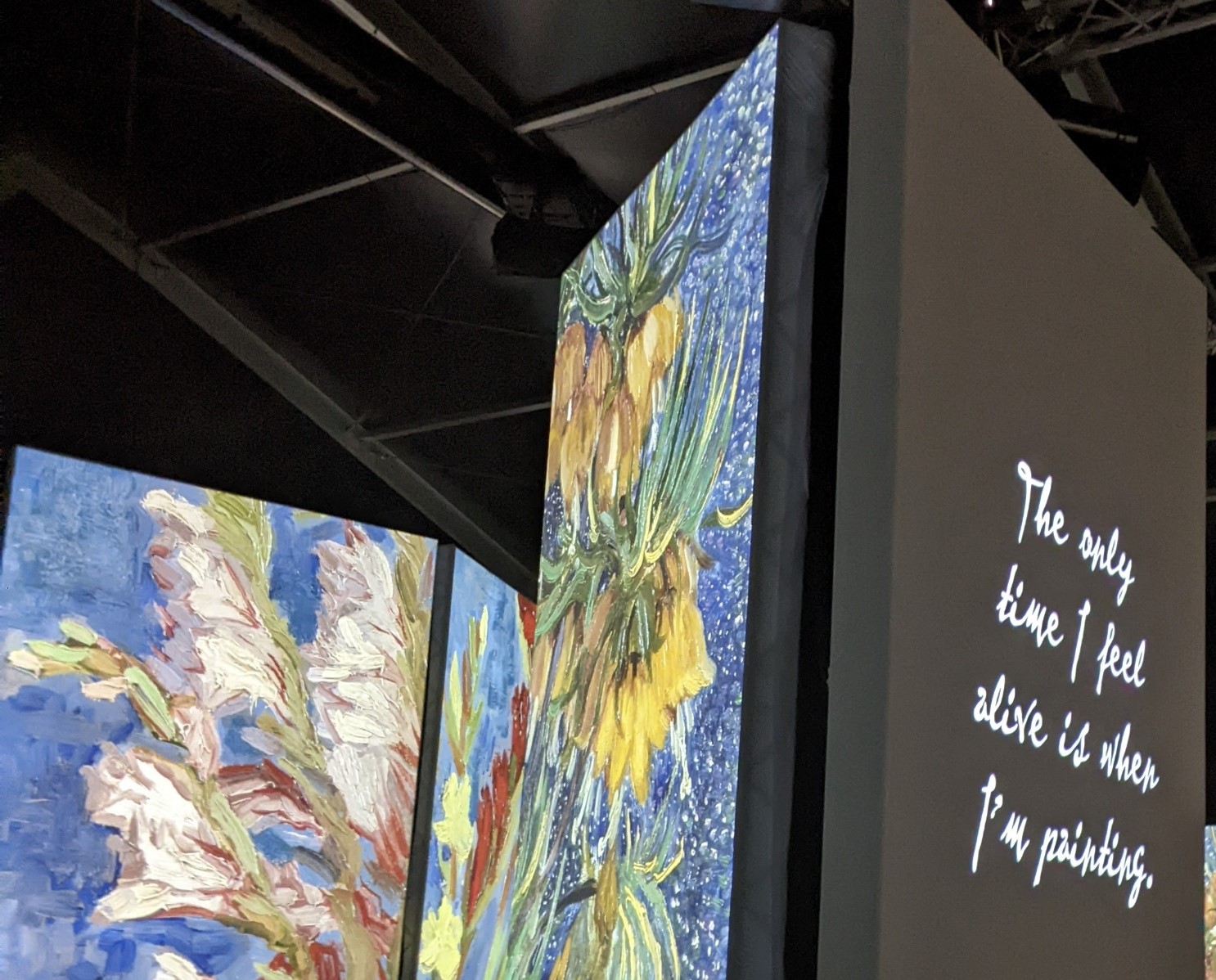
I visited this exhibition on Thursday, and found it interesting but not stunning. Paintings and quotes were projected onto screens, on the walls and in the centre of the exhibition space to a background of classical music. Although there was some seating, this was not generous. However, the length of the exhibition made it less important than it could have been . People of all ages sat on the carpeted floor, and appear to have had a satisfactory view from there. People observed social distancing, and many wore masks. The latter were encouraged. However, even after lengthy experience with glasses and a mask I have not mastered the art, so ensured that I observed social distancing, which was not difficult.

On the positive side, it is unlikely that such a range of Van Gogh’s paintings would be exhibited in the usual format. The active format of this exhibition has brought a huge example of this artist’s work to large audiences.

However, for people who like to sit and savour a painting and walk around an exhibit at their own pace, this style of exhibition, while a wonderful introduction to an artist’s work, it has its limitations.

On the other hand, it is fantastic to read the positive accounts of experiences and intentions to make repeat visits in Facebook discussion. Although the photos above are truncated because I wanted to omit visitors’ images, I have them in full in an album and shall get my pleasure from the static reminders of a pleasurable experience.

Cindy Lou visits a venue under new ownership and is impressed, an older one was not!
Brieze, Ainslie Shopping Centre

After a couple of negative experiences at Brieze, admittedly in contrast to the usual positive reviews it received from some customers, I was forced to try the café again recently. I was under the duress of greed – because, despite the resident chef on request for tea and toast having provided a succulent honey smothered piece with a lovely hot cup of tea at 4.00 in the morning, I was hungry by 11.00 am. My usual go to at Ainslie, Edgar’s, stops serving breakfast at 11.00 so hunger pangs uppermost, I decided to retry Brieze.

Caramelised onion and potato omelette

What a joy. The service was friendly and efficient, the food excellent, and the coffees hot and made to my capricious order. Breize has a delightful out door setting in a comfortably wide corner of the Ainslie shops, with attractive tables and chairs. There is a blackboard menu, and a staff member promptly brought us menus, glasses and fresh water. The menu has not changed much from the past, but I feel that the atmosphere is friendlier and I shall be pleased to patronise Breize as a pleasant alternative to Edgar’s in the future.

Buckwheat gallate with kale, cheese, pine nuts and pumpkin
National Portrait Gallery Café

The meal today was rather disappointing, despite the pleasant venue and efficient service. Both the vegetarian roll and the caramelised onion quiche looked delightful – the salad was plentiful and fresh, the pastry crisp and the meals were well presented. However, all I could think was what a bland meal!

At the moment the ANG Café is closed. The weather was not suitable for the outdoor venue where I dined on a rather nice vegetarian pie and my companions relished their meat pies a few weeks ago.

The National Portrait Gallery Café is much closer than the Café at the National Library.

As the café is obviously popular, there were many reserved tables, perhaps I shall try it again. However, the walk to the National library looks rather pleasant too.

Follow up: The National Portrait Gallery Café Manager responded to my review, saying that the staff would be advised of my disappointment. What a great response – the Café certainly deserves another visit.

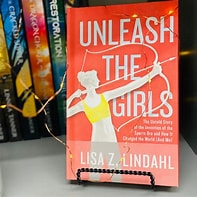
Unleash the Girls Lisa Z. Lindahl follows the story of the invention of the sports bra, development of Lisa Z. Lindahl’s business with her partner and its sale, together with Lisa Z. Lindahl’s personal journey. See Books: Reviews, March 9 2022. The following story from the The Economist March 19 – 25 2022 adds another facet to the impact of the sports bra business.

It no longer suits you sir

Britain’s statistics office rejigged the basket of goods that make up its consumer price index. Out go men’s suits (because of remote working) single donuts (because people scoff them in packs, presumably becasue of remote working and probably why men cannot fit into suits) and coal (no one likes it), in come sports bras (covid’s effect on fashion) and antibacterial wipes (because of sticky fingers after those donuts).

Thank you, Bob McMullan for alerting me to this story.

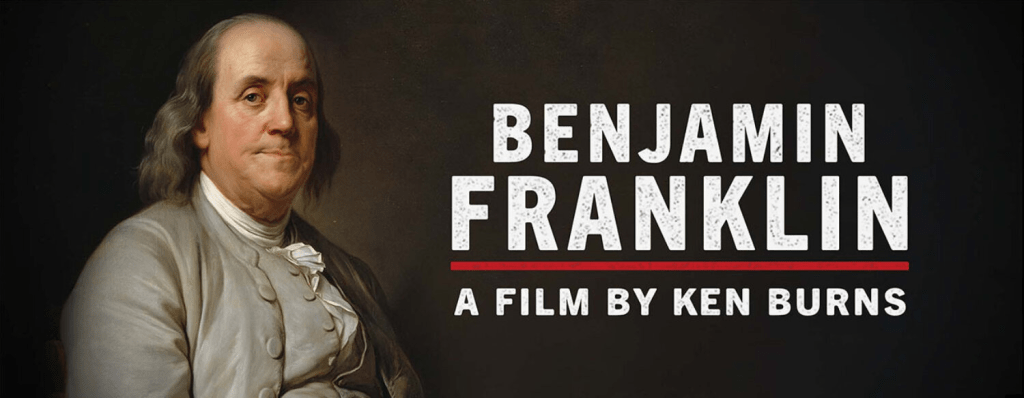
Ken Burns’s four-hour documentary, Benjamin Franklin, explores the revolutionary life of one of the 18th century’s most consequential figures.

About the Film

Ken Burns’s two-part, four-hour documentary, Benjamin Franklin, explores the revolutionary life of one of the 18th century’s most consequential and compelling personalities, whose work and words unlocked the mystery of electricity and helped create the United States. Franklin’s 84 years (1706-1790) spanned an epoch of momentous change in science, technology, literature, politics, and government — fields he himself advanced through a lifelong commitment to societal and self-improvement.

On 29 March 2022 Emmy Award-winning documentary filmmaker Ken Burns joined Morning Joe to discuss his new two-part PBS film ‘Benjamin Franklin’. This sounds like another ‘must watch’ Ken Burns documentary.

Week beginning 23 March 2022

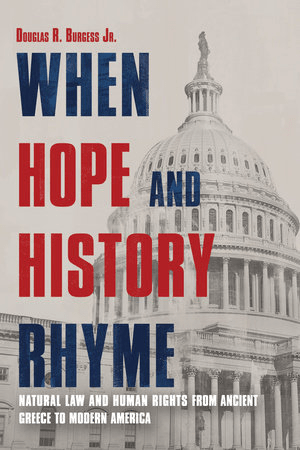
Two non-fiction books are reviewed this week. One, Alison Ripley Cubitt’s Misadventures in the Screen Trade was an easy read. The other, When Hope and History Rhyme Natural Law and Human Rights from Ancient Greece to Modern America by Douglas Burgess was not so easy, but introduced such a wealth of ideas and engrossing analysis it was well worth the effort. NetGalley provided me with both uncorrected proofs in exchange for honest reviews.

Alison Ripley Cubitt Misadventures in the Screen Trade How Not to Make It In The Media BooksGoSocial  Feb 2022 

This book lacks the liveliness that might be expected from a story of a strong, opinionated woman, who dared to take her own path through the intricacies of the world of media. Alison Ripley Cubitt’s story of her misadventures in the screen trade follows her path from her home in Malaysia, and then New Zealand, to her travel, work that is sometimes freelance, often on short contracts, eventually to a permanent home with Disney in London, and its aftermath. From her recall of seeing the German version of snow White and the Seven Dwarfs with her father in Malaysia the story leaps to London, 1996. See Books: Reviews for the complete review.

Douglas Burgess When Hope and History Rhyme Natural Law and Human Rights from Ancient Greece to Modern America Charlesbridge, Imagine, 2022.

Douglas Burgess has written a dense book that requires careful and sustained reading. Although I found that I needed to read it in between easier works, I always returned and found it truly worth the effort. When Hope and History Rhyme presents a compelling discussion, replete with a philosophical framework, in which historical and political events are placed in context. See Books: Reviews for the complete review.

Articles and comments which appear after the Covid in Canberra Report: No War Protestor, Russia; Dr Kevin Rudd on MNSBC; Niki Savva on the forthcoming Australian Federal Election, SMH; The New Daily and polling on trusted and mistrusted Australian Federal Parliamentary Members.

Covid in Canberra

New cases recorded on 17th March reflect the increasing figures in this period – 1,311. There were 39 people in hospital , with three in ICU and one ventilated.

The 18th March figures were similar, with 1,123 new cases , 37 people in hospital with four in ICU and one ventilated. Vaccinations are now : Aged 5 – 11 years : one dose 79.5%, the same age group with two doses is 27%; over five years 95.5% of the Canberra population has had two doses; 16+ years with three doses – 71.2%.

On the 19th March there were 1,122 new cases with 34 in hospital, and one ventilated. New case numbers dropped to 926 on the 20th, with 38 people in hospital and four in ICU. Another decrease in new case numbers was recorded on the 21st March, with 898 new cases. An increase to 1,014 on the 22nd March , but 38 in hospital and three in ICU, of whom one was ventilated.

On the 23rd March it was reported that the distribution of RATs in schools will now be provided to staff and students on an as-needed basis, or in response to increased cases in a school. This change also applies to Early Childhood Services. Previously all staff and students were given two RATs per week. The government-funded RATs has supported a safe return to on-campus teaching at ACT schools in 2022.

New reports of cases has again increased, to 1,314. There are now 5,760 active cases in the ACT. Cases in hospital have also increased with 42 Covid patients, three of whom are in ICU, with one ventilated.

Tuesday, March 15
ANTI-WAR PROTESTER STORMS RUSSIAN STATE-RUN TV BROADCAST Marina Ovsyannikova, an editor at Russian state-run Channel One television, stormed an evening news broadcast with a sign reading, “Stop the war. Don’t believe the propaganda. They are lying to you.” She’s been arrested and, under a new law could potentially face up to 15 years in prison. She left a prerecorded a video explaining her motivations. [HuffPost

Dr Kevin Rudd, former Prime Minister of Australia, talks to Chris Hayes about China’s potential role in the war against Ukraine.

Sydney Morning Herald OPINION
Blame-shifting and stunts won’t win Morrison an election
Niki Savva
Niki Savva

Award-winning political commentator and author

When Scott Morrison came under frenzied, sustained assault last week over his handling of the flood emergency, there was one person who did not come out swinging. Anthony Albanese.

The Opposition Leader’s response was – by conventional political standards – restrained. He encouraged people to heed the warnings, while urging governments to provide whatever support people needed wherever it was needed.

Prime Minister Scott Morrison came under fire for his response to the floods.
Prime Minister Scott Morrison came under fire for his response to the floods.CREDIT:RHETT WYMAN

He stopped being his own attack dog.

While he was lauding the achievements of women on International Women’s Day – then promising in speeches on the economy and foreign policy to be part Bob Hawke, part John Howard and part Kevin Rudd – the person spearheading Labor’s assault on the Prime Minister’s handling of the crisis, and landing direct hits, was his disaster and emergency management spokesman, Queensland Senator Murray Watt.

It was the culmination of a deliberate strategy to lift Albanese above the fray. To make him look prime ministerial. The lost weight, the new glasses, the tamed hair, the sharper suits was part of the transformation process, and this more measured reaction in a crisis, criticism delivered with a skewer rather than a meat axe, just as people are beginning to pay more attention, built on that.

If you believe the polls, it’s working.

PM tests positive for COVID-19

Anthony Albanese talked to Karl Stefanovic for a 60 Minutes interview.

Senior members of the government, and Morrison particularly, have spent the best part of three years convincing themselves that Albanese was their best asset, that no one knew who he was and even if they did, they would never vote to make him prime minister because they could never picture him in the role. Added to that, COVID-19 not only prevented Albanese from defining himself early on, it also blocked the government from doing it for him.

The basic mistake of underestimating an opponent bred complacency.

Despite history showing that opposition leaders seldom match incumbents when it comes to preferred prime minister and despite Morrison’s own chequered performance, the view peddled within the government, relayed by obliging commentators, was that Morrison’s higher personal ratings would transport the Coalition to another victory.

When Labor’s lead solidified, frantic efforts were unleashed to brand Albanese as a risk, to paint him as a threat to national security because he was China’s preferred candidate and to cast him as the most left-wing leader of the Labor Party since Gough Whitlam. So far they have not registered.

Now, according to an increasingly desperate Morrison, Albo has gone from being brainwashed by the Chinese to being programmed by Jenny Craig.

Clearly confusing himself with Shakespeare’s Caesar, Morrison struck on the bizarre tactic of mocking Albanese’s new lean and hungry look to argue it was another reason not to trust him.

“I’m not pretending to be anyone else. I’m still wearing the same glasses. Sadly, the same suits … and I weigh about the same, and I don’t mind a bit of Italian cake either,” Morrison said on Sky, referring to Albanese’s refusal to even take a bite of cannoli for the 60 Minutes cameras on his birthday.

“So I’m happy in my own skin, and I’m not pretending to be anyone else. And when you, when you’re Prime Minister, you can’t pretend to be anyone else. You’ve got to know who you are because if you don’t know who you are, then how on earth are other people going to know. And I think that’s what the choice is at this election.”

Scott Morrison has laid into Anthony Albanese’s “glow-up”.
Analysis
Australia votes
Morrison gets personal as he puts down the Albanese glow-up

This from the man who created the daggy dad persona – a character his colleagues had never previously seen – for the 2019 election, then ever since has pretended to be everything from a hairdresser, to a welder, to a lab technician, confident that goofy pictures would grab voters’ attention. They have. At great cost to his dignity and authority.

Liberals who a few months ago rattled off a list of up to a dozen gettable seats in NSW as their pathway to victory are in despair. They are convinced the election is lost. They are furious with Morrison and Alex Hawke for deliberately stalling preselections and incensed by briefings to media against Dominic Perrottet over management of the flood crises claiming it’s a repeat of the undermining by Morrison’s surrogates of Gladys Berejiklian during the Black Summer fires.

They say Andrew Constance could regain Gilmore, but after that it’s a struggle. They believe North Sydney, held by Trent Zimmerman, is under serious threat from independent Kylea Tink, that Dave Sharma could lose Wentworth to another independent Allegra Spender and the way things are going, not even Berejiklian could reclaim Warringah from Zali Steggall.

They say they could lose five seats in Western Australia, one in South Australia, four in Victoria and two in Tasmania. Another plugged-in Liberal has drawn up a list of 24 seats at risk across the country. That is much more optimistic than Labor dares to be. Labor’s key players, incredulous that Morrison could muck up another disaster, are doing their utmost to keep expectations in check.

Unsurprisingly the deep gloom inside the government has triggered more than the usual academic internal canvassing of the nuclear option. Removal of Morrison. This week, one Liberal MP cautioned against discounting the possibility of a change before the election then named a cabinet minister he believed was slyly scheming against the Prime Minister. MPs backing both likely contenders – Peter Dutton and Josh Frydenberg – have also privately accused their opponents of canvassing votes in preparation for a contest either before the election or after.

The truly depressed say it is too late. Too late for it to make a difference and too late to engineer it. The optimists – and there are still a few around – say there is no such thing as an unwinnable election. That is true. All the government needs is clear air, a responsible budget and a faultless campaign during which Albanese implodes.

Above all it needs Morrison to behave like a prime minister, to forgo stunts and blame-shifting, leave the sledging to others or to negative advertising and construct a compelling argument for his re-election. Not too much to ask, is it?

The Morning Edition newsletter is our guide to the day’s most important and interesting stories, analysis and insights. Sign up here.

Niki Savva

Niki Savva is an award-winning political commentator and author. She was also a staffer to former prime minister John Howard and former treasurer Peter Costello.

The New Daily 6:00am, Mar 23, 2022 

New research reveals Australians’ distrust of Scott Morrison is turning them off government

Labor politicians emerged as largely the most trusted, with the Coalition the least trusted. Photo: TND/Getty

EXCLUSIVE

James Robertson

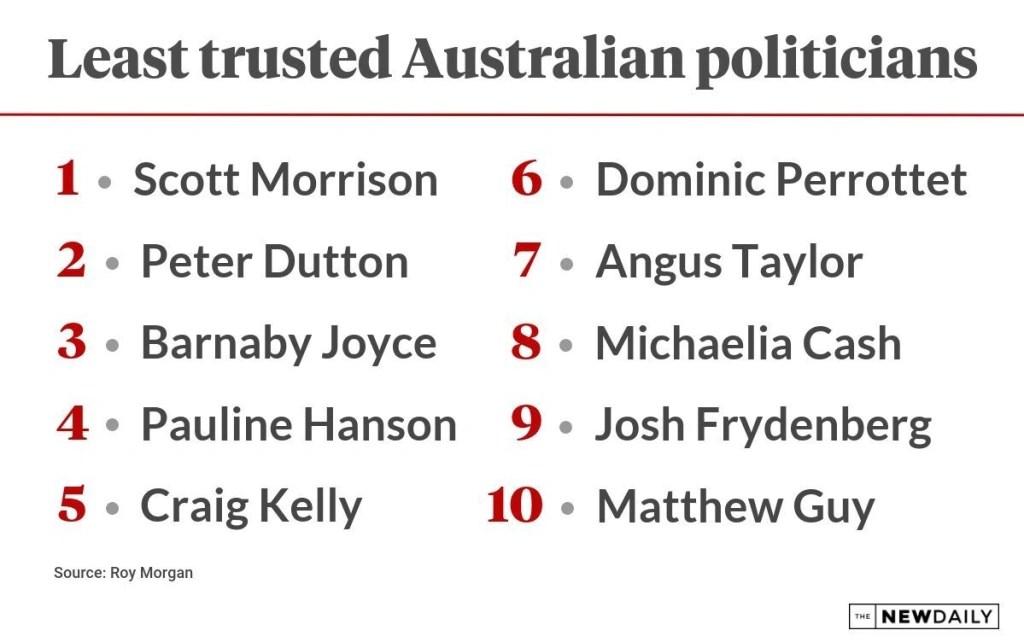
Australians say Scott Morrison is the nation’s least trustworthy politician, as new figures show he is presiding over a nation losing trust in the Prime Minister but also government more broadly.

The role Mr Morrison has played personally in attracting public criticism, but also the way in which his polarising leadership has changed the way many Australians view politics is outlined in new Roy Morgan research released this week.

Contained within a wider analysis of public sentiment to government, the study showed which MPs are least trusted by Australians.

Many are on the Coalition leadership team.

Prime Minister Scott Morrison is the nation’s most distrusted, with  Deputy Prime Minister Barnaby Joyce in second and Defence Minister Peter Dutton rounding out the ‘winner’s’ circle.

Labor, by contrast, dominated most trusted in the snap survey, taken by Roy Morgan in March.

South Australian Senator Penny Wong came in first.

Party leader Anthony Albanese is now in second place, up from eighth in 2020 research.

But the MP trust poll, conducted across more than 1400 Australians via phone this month, is only one piece of an analysis that has spent two years steadily tracking how Mr Morrison has changed relations between the government and the governed.

Australian voters have progressively lost trust in the Australian government since Mr Morrison became PM .

The Roy Morgan tracking data on public confidence in government dates back to 2007.

The data shows that Mr Morrison has upended what was a rule of Australian politics for 15 years,

When researchers first posed the question, voters – except during Kevin Rudd’s time in office – overwhelmingly expressed critical views about government but broad support for public services.

But in his relatively short tenure Mr Morrison has turned this upside down.

A lack of faith in the government has stuck around at previous highs.

But support for the work that the government does has spiked immensely.

“When Scott Morrison won the ‘unwinnable’ election things changed – more people believed the government was doing a good job and fewer people distrusted the government,” Roy Morgan CEO Michele Levine said.

“But by June 2021 it all went into reverse – Black Summer bushfires, the end of JobKeeper, parliamentary sex scandals, COVID vaccination delays – all sent trust plummeting and distrust climbing,” Mr Levine said.

“Australian political contests are no longer purely won on trust, they are lost on distrust.”

A little more than one year after winning the top office, Mr Morrison’s government would overturn public perceptions while navigating political challenges.

In the earliest days after his election, Mr Morrison and the broader government enjoyed popularity gains, which intensified during the earliest days of COVID-19 in 2020.

But in the following year, 2021, things soon fell apart.

A sexual assault case in Parliament highlighted a dangerous workplace culture and reports emerged about vulnerable aged-care residents receiving shocking treatment.

Scepticism returned in force and continues to prevail before the election.

Roy Morgan’s rolling analysis of trust in government and government services in Australia is based on methodology used in its ongoing Risk Monitor analysis.

For Roy Morgan’s 2020-2022 analysis of trends in public trust about 21,000 Australians were interviewed to obtain data for a 12-month rolling average.

Ms Levine will discuss the findings of the latest research in a webinar on Thursday.

The Washington Post https://www.washingtonpost.com/lifestyle/2022/03/12/famous-women-friendships-history/
These famous women were friends? Read 5 stories of sisterhood and support.

By Janay Kingsberry

March 12, 2022 at 10:00 a.m. EST

If you ask Sam Maggs, female friendships don’t get enough credit in history. It’s why the author decided to write a book about them: A band of gal pals who became the first women admitted to medical school in the United Kingdom. The musicians who defied laws to become Afghanistan’s first all-female orchestra. Two female pirates who sailed the seven seas together.

In “Girl Squads: 20 Female Friendships That Changed History,” Maggs recounts the stories of friend groups who helped change the world. “I think it’s important, especially as we look back on history, to see where women were able to fight back against the patriarchy,” she said.

Particularly during periods of racial and gender inequality, Maggs believes there are key lessons to learn about how women supported each other, because “no one is successful on their own, and especially with women, the more we work together, the stronger we are.”

Kaila Story, an associate professor in the departments of Pan-African studies and women’s, gender and sexuality studies at the University of Louisville, adds: “If we’re trying to eradicate such monumental structural institutional things, we need our homegirls to hold our hand, to give us a hug and to see us and let us know that we’re not only capable, but that we’re more than capable.”

In recognition of Women’s History Month, we talked with authors and professors to highlight five friendships between women leaders in politics, art, literature and activism.

‘Listen to Black women’: A Women’s History Month playlist by music journalist Danyel Smith

Eleanor Roosevelt and Pauli Murray

First lady Eleanor Roosevelt in July 1933. (Everett/Shutterstock)

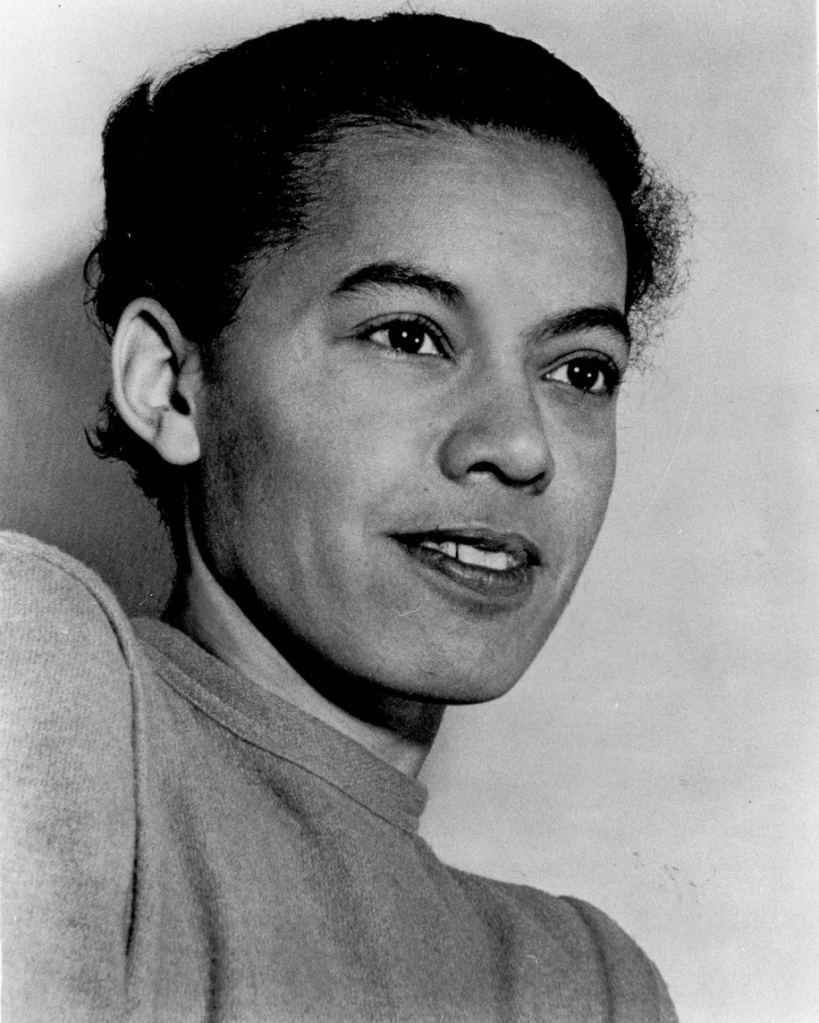
The unlikely friendship between Eleanor Roosevelt and activist and legal scholar Pauli Murray began as a confrontation, said Patricia Bell-Scott, who wrote about the pair in her book “The Firebrand and the First Lady.” In 1938, frustrated by the South’s racial segregation in higher education, Murray penned a letter to President Franklin D. Roosevelt and first lady Eleanor Roosevelt. The first lady wrote back within two weeks, Bell-Scott said, “and that opened a conversation that continued for nearly three decades.”

Pauli Murray, winner of a 1946 Mademoiselle Merit Award for signal achievement in law, on Dec. 31, 1946. (AP)

Over time, they moved from disagreement to allyship, Bell-Scott said. And following Franklin D. Roosevelt’s death in 1945, their correspondence shifted from political issues to genuine concerns about personal family matters. “So it became one of mutual caring and friendship,” Bell-Scott said. “They had very busy lives, but rarely were they out of touch for more than six months.”

Roosevelt and Murray’s friendship demonstrates a willingness to have difficult discussions and listen to other viewpoints, said Bell-Scott, who was also a consulting producer for the 2021 documentary “My Name is Pauli Murray.” For instance, in one letter to Roosevelt, Murray explained how she was being threatened with eviction from a White neighborhood in California where residents felt she didn’t belong.

“From that day in the ’40s through the end of her life, fair housing and housing discrimination remained a priority for Eleanor,” Bell-Scott said, “because she had, through her friendship with Pauli, a vicarious sense of how painful that experience was — the denied opportunity on the basis of race.”

Pauli Murray applied to be a Supreme Court justice in 1971. 50 years later, a Black woman could make history.


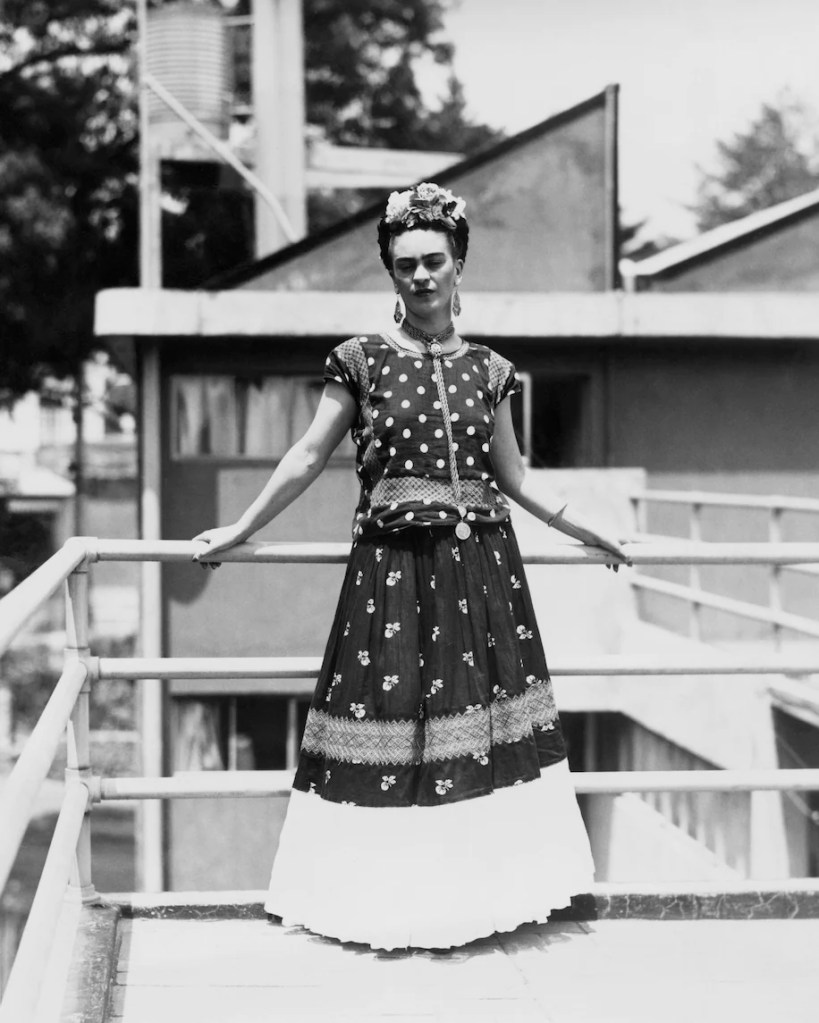
Frida Kahlo and Georgia O’Keeffe

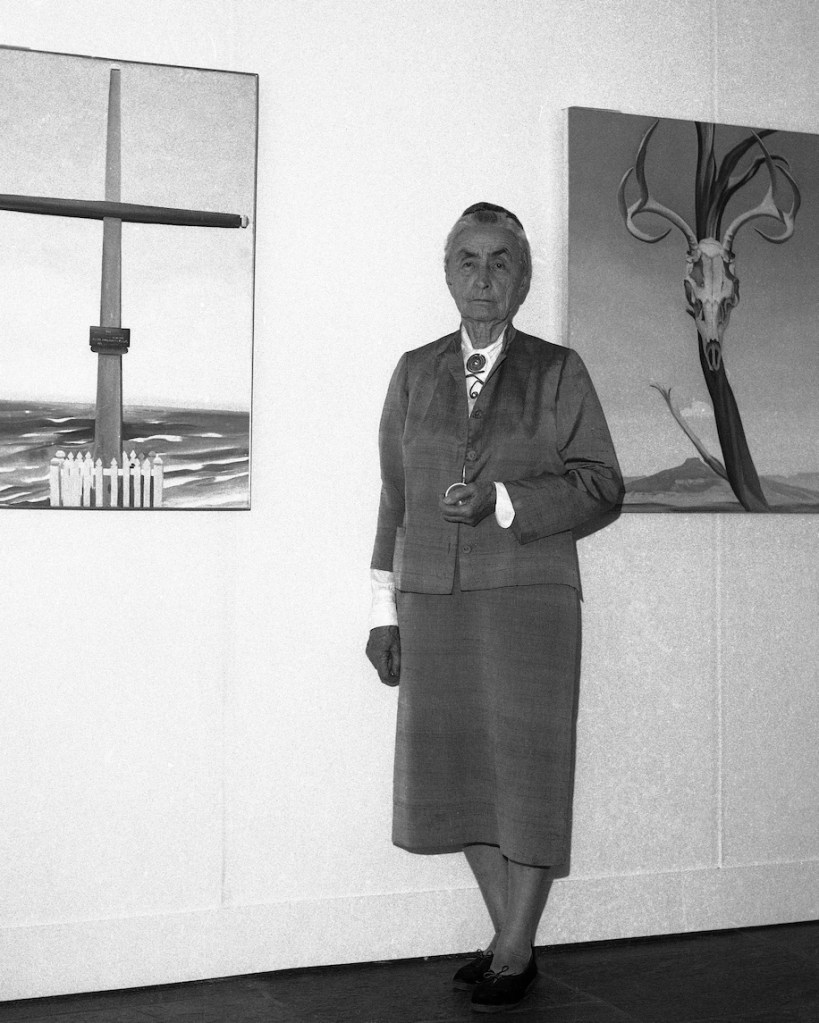
Georgia O’Keefe

When Mexican painter Frida Kahlo traveled to America in 1930, she was a 23-year-old budding artist trying to figure out her place as the wife of well-known muralist Diego Rivera, said Celia Stahr, an art historian and professor at the University of San Francisco. “She was really starting out,” Stahr said. “And she meets a number of women artists who I think really inspired her and helped her with her first breakthrough.” Among them was modernist painter Georgia O’Keeffe.

Frida Kahlo

They met the following year in New York when O’Keeffe was 44 and at the height of her career, Stahr said. But while O’Keeffe was thriving professionally, she was falling apart emotionally over her husband’s infidelity. “In some ways, Diego Rivera wasn’t that different from [O’Keeffe’s husband] Alfred Stieglitz,” Stahr said of the two male artists who were both known to have had affairs. “So I think that [Kahlo and O’Keeffe] must have bonded over that as well.”

In a male-dominated community, “women artists didn’t typically have a lot of support systems,” Stahr added.

While they both grappled with relationships and mental health in their lives, their brief time together in New York was marked with fun memories, too, including one unforgettable tequila-filled night, said Stahr, who wrote a book about Kahlo’s time spent in America.

More broadly, Stahr said the friendship also influenced some of Kahlo’s work, which was known for self-portraits, vibrant colors and honoring Indigenous cultures of Mexico. For instance, in her 1932 painting, “Self Portrait Along the Boarder Line Between Mexico and the United States,” Kahlo includes jack-in-the-pulpit flowers — which O’Keeffe had previously devoted an entire series to in 1930.

“As far as I could find, I don’t think jack-in-the-pulpit really grow typically in the Mexican desert landscape,” said Stahr, adding that the portrait is also one of the first times Kahlo is seen painting with flowers.

“I do think that’s directly connected to Georgia O’Keeffe,” Stahr said.


Audre Lorde and Pat Parker

Audre Lorde and Pat Parker had a lot in common. Not only were they both Black lesbian poets, mothers and activists, they also each battled cancer, said Story, the University of Louisville professor. In 1974, five years after they first met, they began exchanging letters regularly, discussing their writing and sharing intimate details about their personal lives, according to the book “Sister Love: The Letters of Audre Lorde and Pat Parker 1974-1989.″

“These are letters being exchanged with two of the greatest poets of the 20th century,” Story said. “And both of them used their lived experiences as these springboards for change.”

Lorde was central to many liberation movements, including second-wave feminism, civil rights and Black cultural movements, as well as struggles for LGBTQ equality, according to the Audre Lorde Project. Her friendship with Parker served as inspiration for a number of poems, but Parker also wielded influence of her own as an unsung hero of the Black Arts Movement, Vice reports.

While Parker was based in Oakland, Calif., Lorde split her time between New York and traveling abroad. But they sustained their friendship through correspondence that lasted for 15 years, ending the year before Parker’s death.

“They were both such incredible women who really formulated a lot of our current ideas around justice, transformative education, critical race theory,” Story said. “All the things we’re grappling with now as a nation, these women were talking about in their letters to one another and in their work.”

‘Queering Black history’: Here are 5 LGBTQ pioneers to know


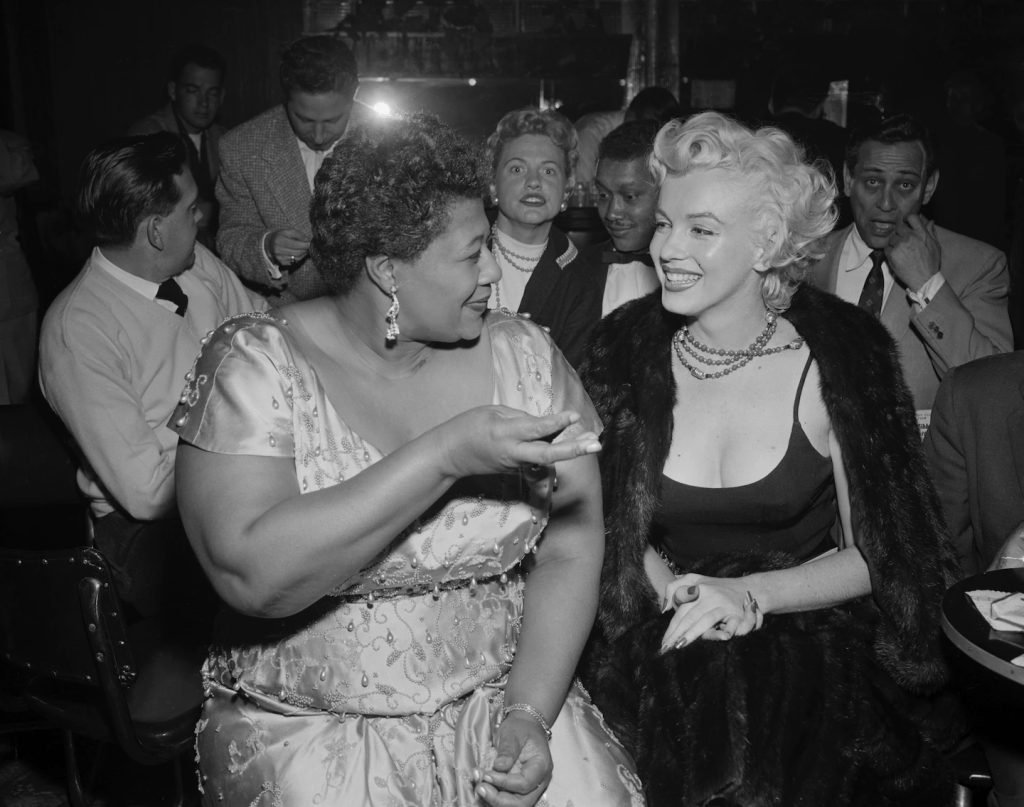
Marilyn Monroe and Ella Fitzgerald

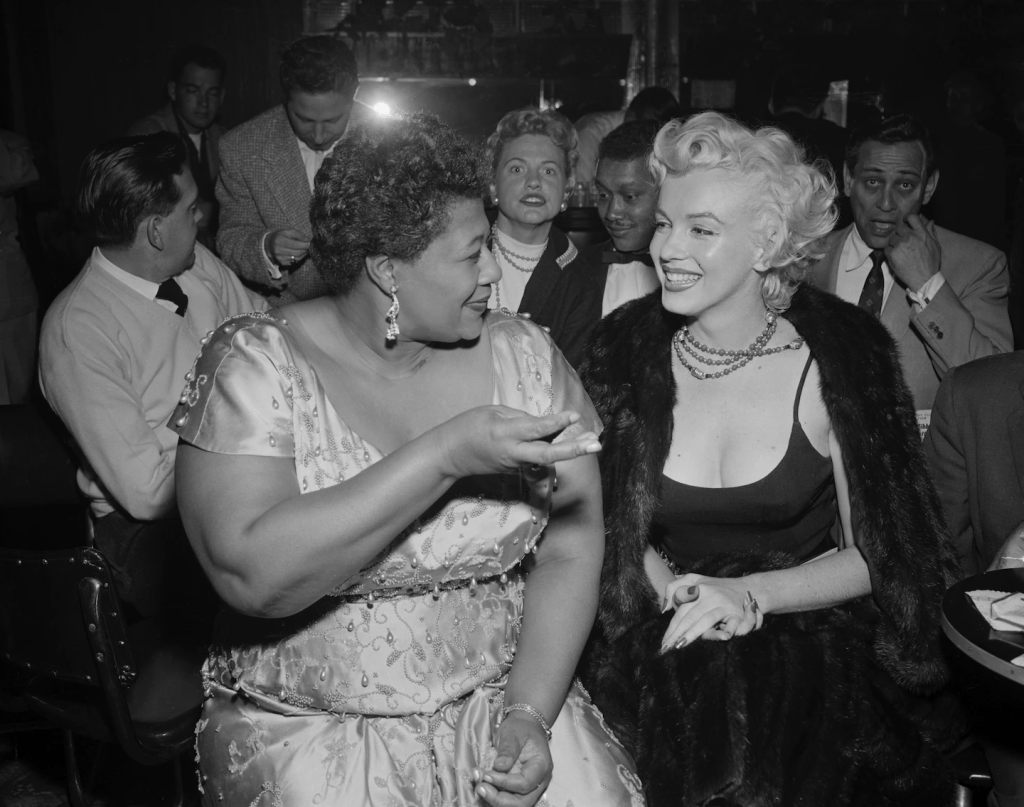
Ella Fitzgerald and Marilyn Monroe

Before Marilyn Monroe ever became a friend of Ella Fitzgerald, she was a fan. Like other iconic stars of the 1950s, Monroe turned to music by the “Queen of Jazz” whenever she felt down or troubled, said Geoffrey Mark, who wrote the book “Ella: A Biography of the Legendary Ella Fitzgerald.”

“Marilyn greatly admired Ella,” Mark said. “So much so that Marilyn’s singing is kind of based on how [she] thought Ella sang things.” Eventually, Monroe began showing up to different venues where Fitzgerald was performing, he said, “and they got to know one another.”

A key event in their friendship occurred in 1955 in Los Angeles. While Fitzgerald often played concert halls with big bands, she struggled to land nightclub gigs, said Mark, who also hosts a radio show celebrating the singer’s music. One popular venue in particular, Mocambo, wouldn’t book Fitzgerald. That’s when Monroe stepped in, reportedly telling the club owners that if they booked Fitzgerald for 10 days in a row, Monroe would show up every night with celebrities.

“Ella got booked, and Marilyn was true to her word,” Mark said. On opening night, Frank Sinatra and Judy Garland were reportedly among the famous friends who showed up. The club was sold out for 10 days, Mark said, and from then on, Fitzgerald never had an issue booking nightclubs anywhere.

“That’s, I think, a wonderful early example of women power — one woman helping another to achieve her goals,” Mark said.

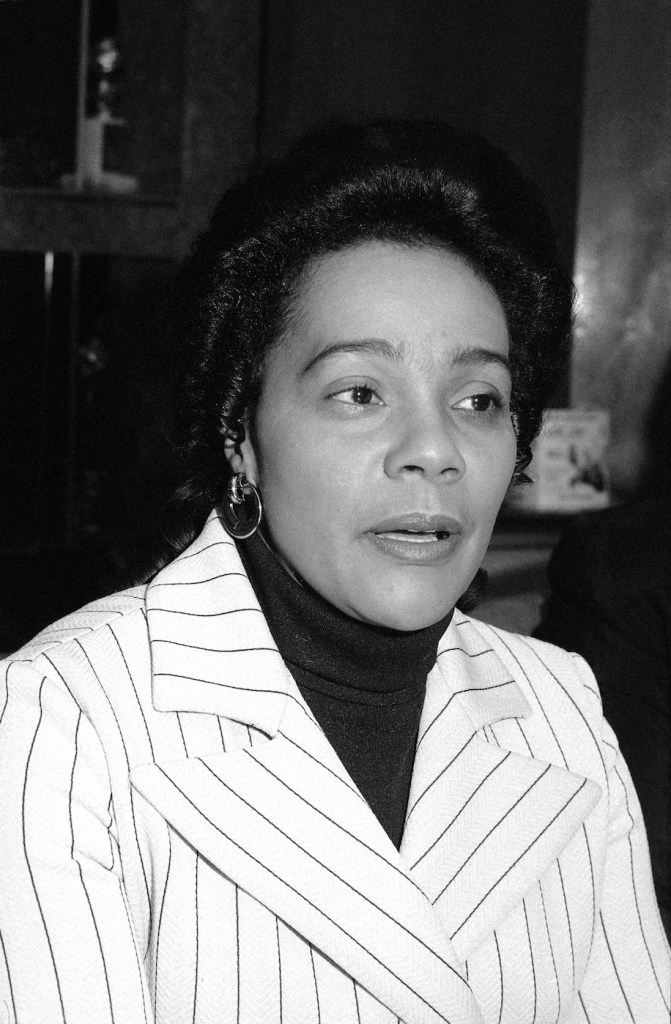
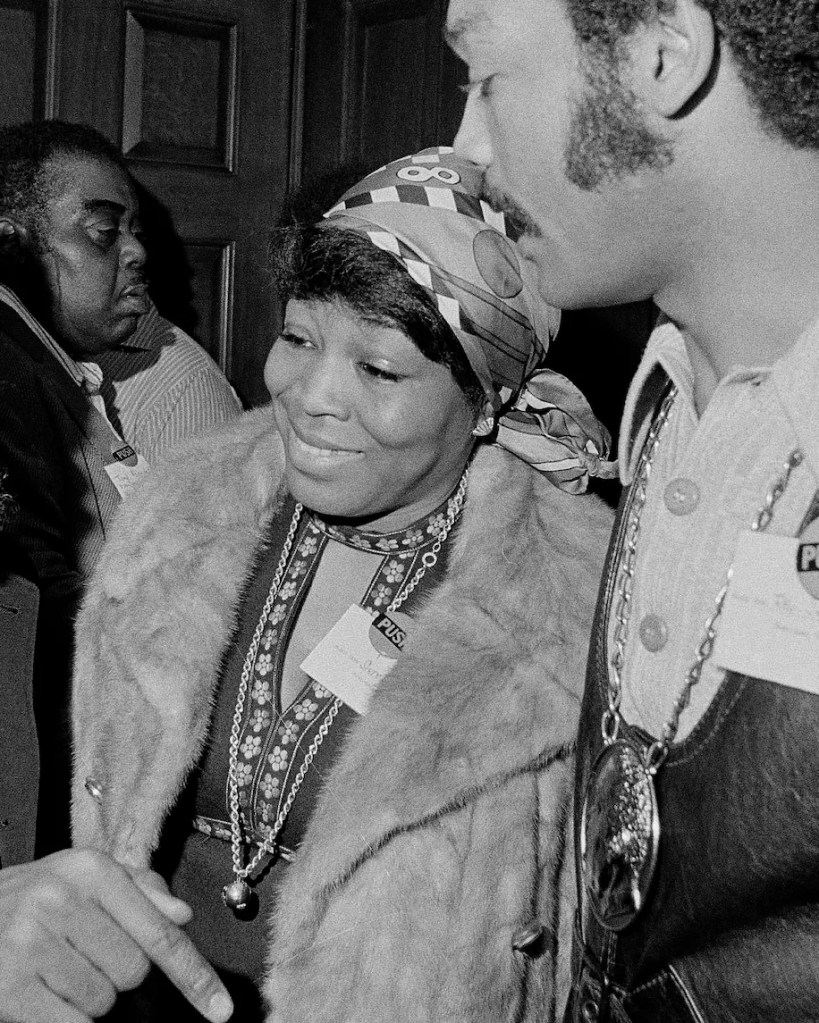
Coretta Scott King and Betty Shabazz

Coretta Scott King speaks about the TV release of Ely Landau’s film “King” on Jan. 17, 1972. (Jim Wells/AP)

Both wives of slain civil rights leaders, Coretta Scott King and Betty Shabazz’s friendship was born out of tragedy following the assassinations of Martin Luther King Jr. and Malcolm X. And while the media often cast them as “the widows,” the women were activists and leaders in their own right, author and minister Barbara Reynolds wrote in The Washington Postin 2013.

Shabazz gave public lectures on the African American condition and fought for education and human rights causes in her own style. King, meanwhile, devoted her life to social justice. Just four days after her husband’s death in 1968, she picked up where he left off in leading a silent march in Memphis to support sanitation workers.

Betty Shabazz, center, at the Operation PUSH Soul Picnic at the 142nd Street Armory in New York, March 26, 1972. (Jim Wells/AP)

In 2013, Lifetime released the film “Betty and Coretta” to recount their achievements and the sisterhood they forged together. “Lifetime brings them out of the shadows for a renewed examination, appreciation and recognition of their leadership,” Reynolds wrote at the time, though members of both King and Shabazz’s families later flagged inaccuracies in the biopic.

“Nevertheless they were truly spiritual sisters,” Reynolds wrote. “That is one truth I am certain of.”

Betty and Coretta: Debunking the drama in Lifetime’s TV movie about the two widowed legends

washingtonpost.com © 1996-2022 The Washington Post

Week beginning 16 March 2022

The books reviewed this week are both fiction. They were sent to me by NetGalley for review. Lisa Unger’s Last Girl Ghosted and the inspiring story of the women’s march to Washington by thousands of women after the election of former President Trump have feminist themes. On the March by Trudy Krisher is a particularly enthralling read.

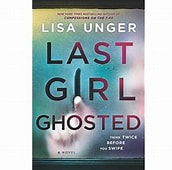
Lisa Unger Last Girl Ghosted HQ Digital An Imprint of Harper Collins Publishers Ltd 2021.

Lisa Unger has always written novels that are totally engrossing, with their multi layered characters, gripping plots, and eye to the broader aspects of human relationships and society’s problems. Last Girl Ghosted drew me in once again to a novel that kept me reading well after the light should have been out. See Books: Reviews for a complete review.

Trudy Krisher On the March: A Novel of the Women’s March on Washington The Social Justice Press, 2022.

Reading this poignant, yet uplifting novel, was an absolute joy. More than that, I learnt so much, not just about the Women’s March to Washington after the Inauguration of the former president, Donald Trump, but about the issues raised by the main characters.

Henrietta, Birdie, Lou, Emily, Jenny, Katie and inspiring women leaders gather on a bus to travel to Washington from Kansas. The trip is punctuated with practicalities, such as where to sit, stopping for food and rest rooms, tiredness and general discomfort, lack of space, and, more dramatically, the bus lurching into a mud patch. It also involves listening to conversations that offend and enlighten, being enthused by a leader, making friends and learning new skills. Behind all this observable activity is the complexity of several characters’ inner thoughts, their background stories, the events that they cannot bear to think about, and hide from themselves as well as others. See Books: Reviews for the complete review.

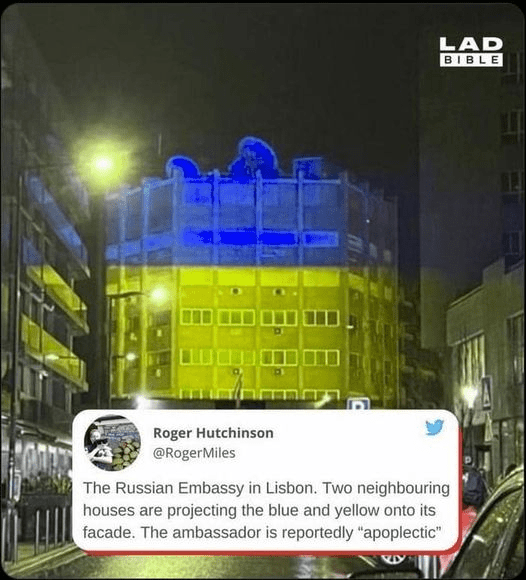
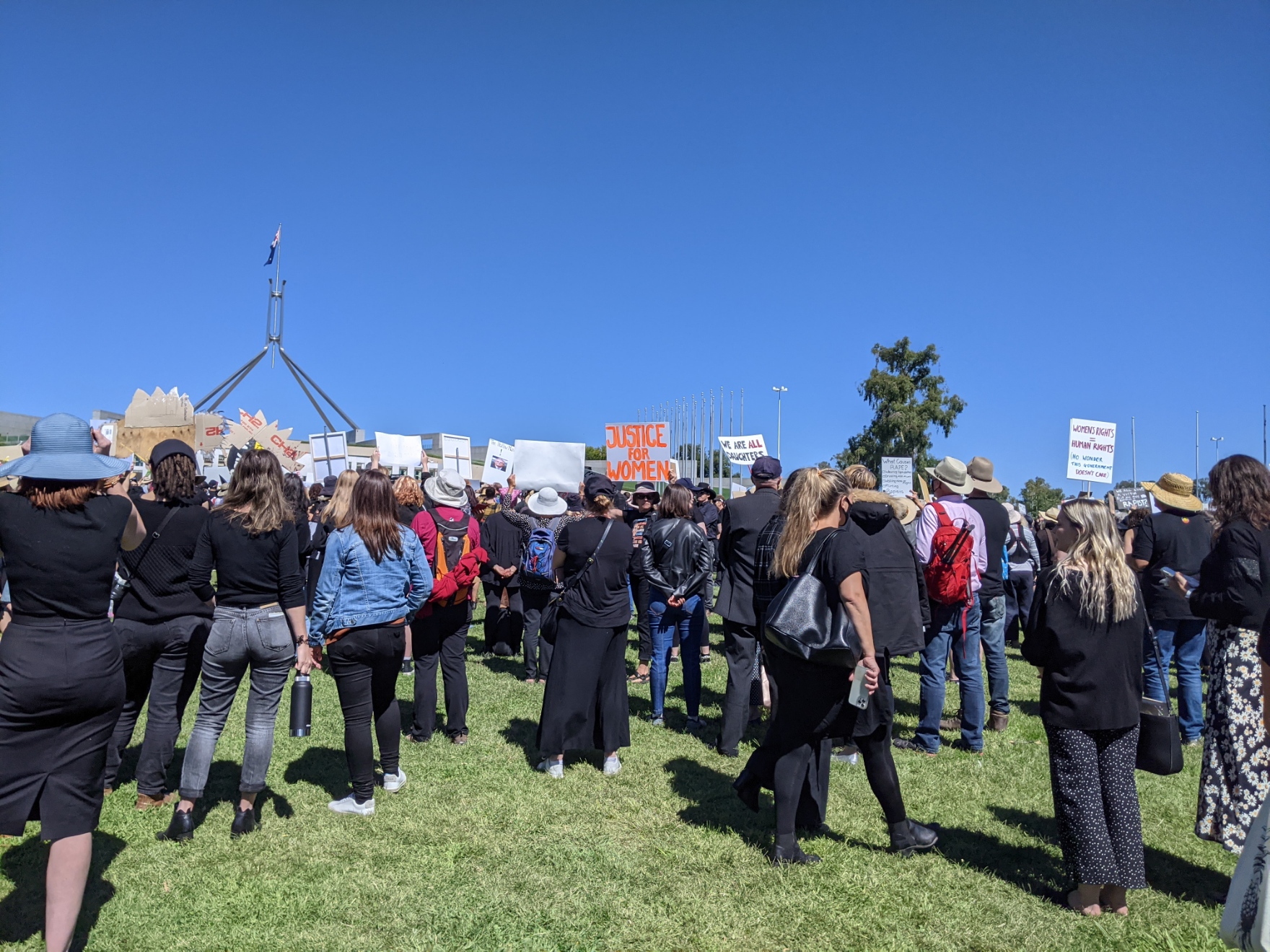
After the Covid Report: Cindy Lou at Black Fire; Russian Embassy in Lisbon lit up in blue and yellow; Sydney Harbour Bridge find; Barbara Pym’s Novels Resonate; Outrage Sign a reminder of the women’s march to Parliament a year ago; Paul Borngiorno – article about Anthony Albanese.

Covid in Canberra

New cases recorded on 9th March – 838; 10th march – 821 cases; 11th March – 791 cases. Although there were thirty seven [people in hospital on the 9th, with two in ICU, one of whom was ventilated, the numbers were static or improved over the three days with the same numbers on the 10th, and thirty one in hospital with one in ICU and ventilated on the 11th.

Sadly, three more deaths have been recorded with one occurring in February and the others in March. The total number of lives lost in Canberra is 37. Total cases recoded since March 12 2020 is 58,021. Vaccination numbers continue to improve, with 79.0% five to eleven year olds having received one dose. Second doses have begun for this age group. Boosters have been given to 70.0% of Canberra’s population over sixteen.

New cases recorded on 15th and 16th March – 786; and 1, 226 new cases. There were forty people in hospital, with four in ICU on the 15th, and one life lost. Although there was a dramatic increase in cases on the 16th, there were no more people in hospital.

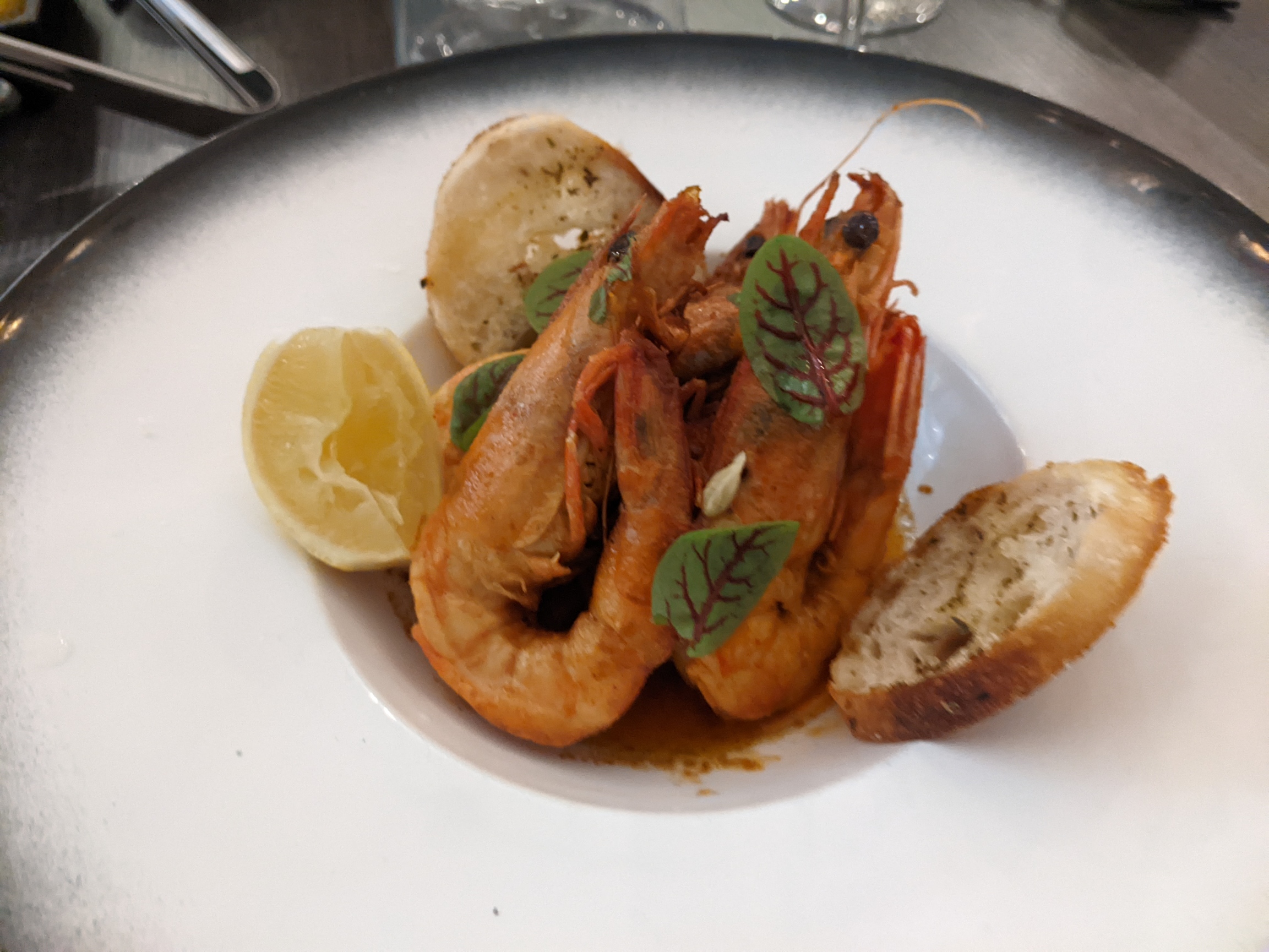
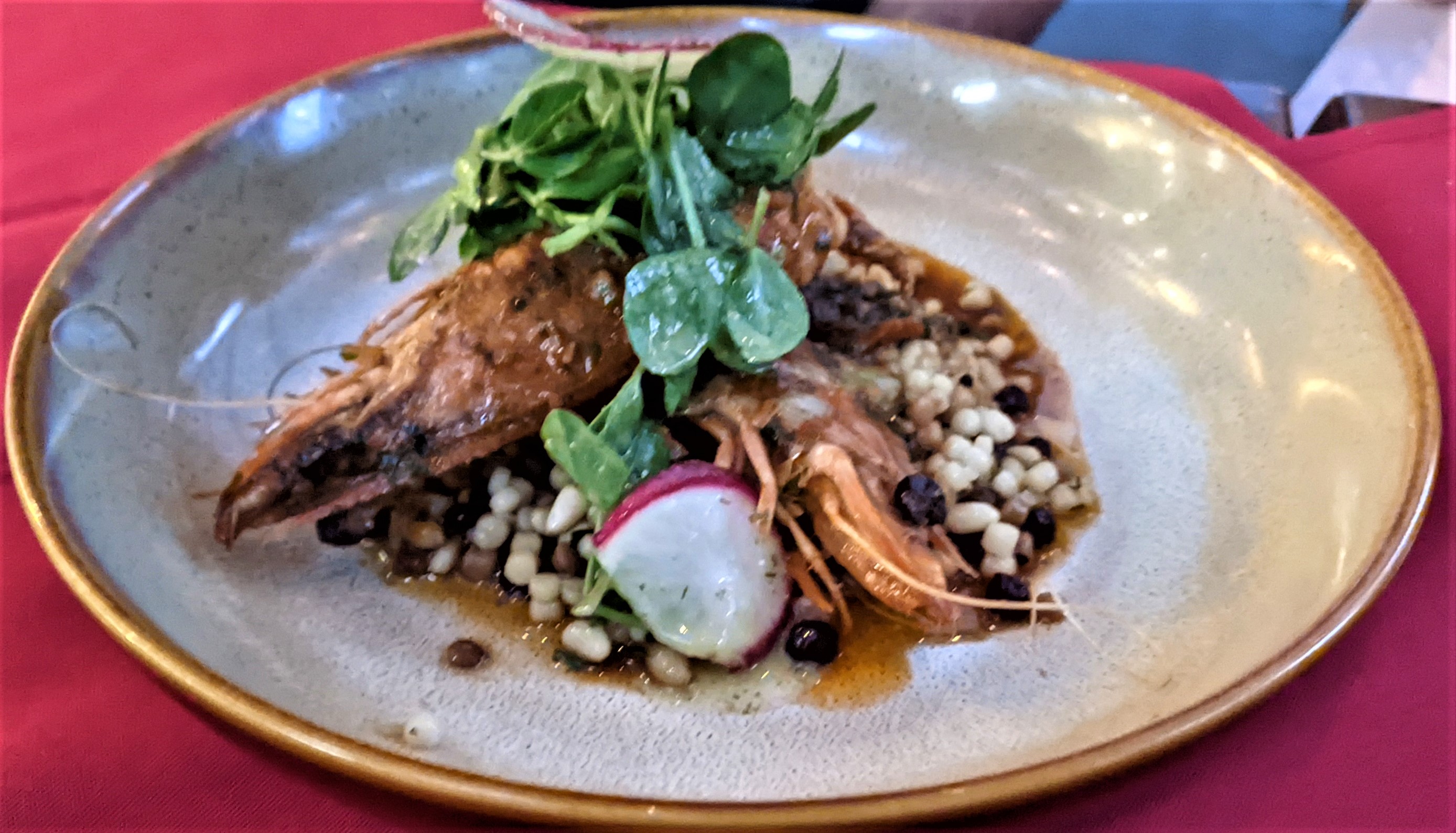
Cindy Lou at Black Fire – Again!

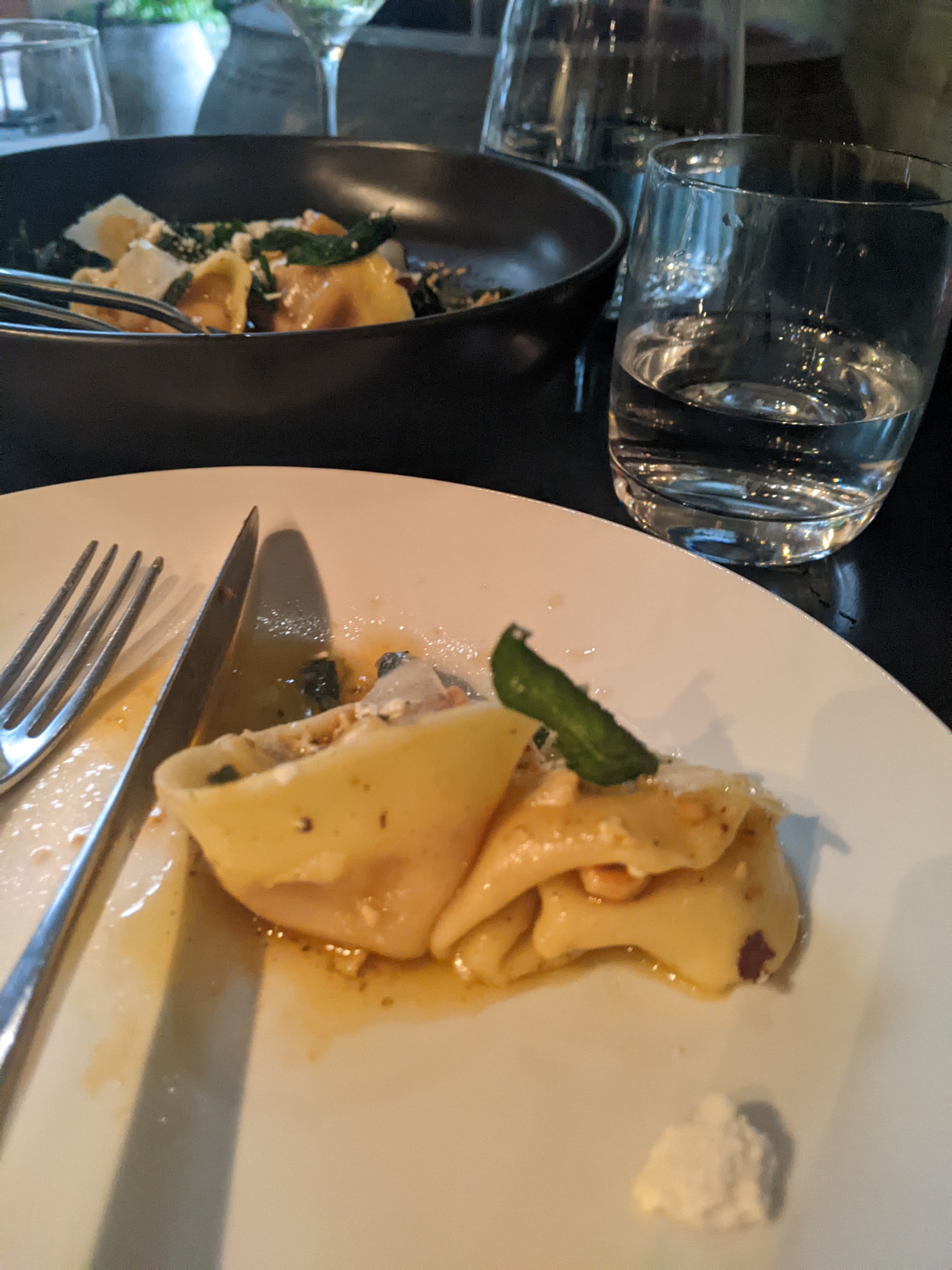
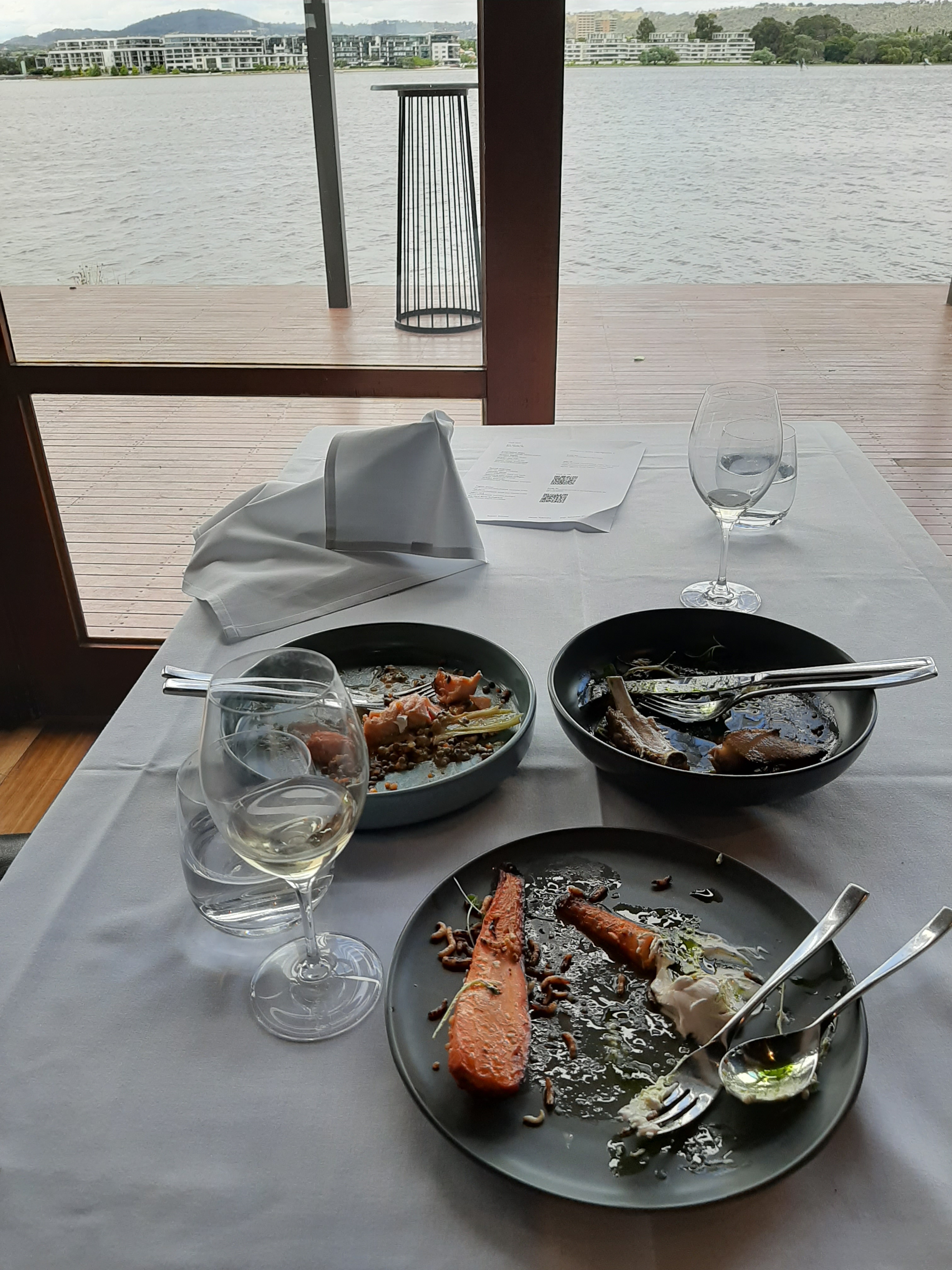
I was thrilled to find that, unlike many restaurants on Canberra Day, Black Fire was open for lunch. This meant that the meal that I was keen to have with my friends and grandson could be arranged before I must succumb to eating pap after dental treatment. It was such a pleasant surprise I checked on when this restaurant is closed – rarely is the answer. Christmas Day and one other (possibly New Years, but I shall check next time I am eating there). As usual, the food was delicious, the service efficient and friendly, the space between the tables generous. And no noisy music! A tremendous start.

We had three courses, as well as a bread smothered in fresh tomatoes to begin. The bell peppers stuffed with crab were delicious, as were the panzarotto and the prawns. The last is my favourite dish, with the stuffed bell peppers a close second. Mains also included prawns (I love the prawns and the bell peppers as a meal), a beautifully cooked strip loin steak, one friend’s favourite Maltagliato and the ravioli.

The desserts were all tempting but we decided on the fig gelato, the cheese cake, the chocolate coulant and the crema catalana. With a reasonable variety of wines available by the glass and coffee, this was an excellent Monday holiday lunch.

Copied from Facebook – Thank you, Roger Hutchinson
From The Sydney Morning Herald – a fascinating story: Rare Harbour Bridge photos prompt search for woman missing from history
Photo from Bing photos

Julie Power  15 hrs ago

A rare album of photographs by a woman documenting construction of the Sydney Harbour Bridge was lost in the State Library of NSW for nearly 90 years, a victim of poor cataloguing.

Known only by her married name, Mrs Frank Smith was a talented prize-winning amateur who documented the five-year period before the bridge opened on March 19, 1932.

The images reveal she had rare access. “I stood on the bridge at midday,” she writes, describing a page of photos in which she is perched on the unfinished structure surrounded by male workers.

Photo from Bing photos

Now the library is trying to solve the mystery of who Mrs Frank Smith was. Her photo album, donated in 1937, will go on display from March 19 in the library’s Amaze Gallery to mark the 90th anniversary of the bridge opening.

Celebrations begin on March 17, with a light show beamed on the eastern and western sides of the bridge. On Saturday, locomotive 3801 will leave Central Station through the city underground line and travel up onto the bridge’s main deck.

State Library curator Margot Riley found Mrs Smith’s album in a category called printed books after the library’s collection was relocated during the pandemic.

“I thought, ‘wow, this is totally new’,” Ms Riley said.

The photos were “beautiful” for an amateur, some similar in style to the moody images with cloudy skies shot by professional photographer Harold Cazneaux.

The album is prefaced with a poem about the bridge, which Mrs Smith describes as an “arch of strength and beauty”. The poem describes the bridge as majestic, and far-flung across the sky, and gives thanks to the men “who thought you” and “wrought you”.

There are similar albums by male photographers in the library’s collection, but this is the only known album by a woman, Ms Riley said.

She was delighted to find it because so little attention had been paid to the contribution of women to the building of the bridge “beyond the occasional glimpse of a cloche hat or silk stockinged limb among the many booted and suited men photographed at the milestone moments”.

The album proved women were as caught up in the “excitement of the spectacle, witnessing the engineering marvel that was taking place before their eyes, as their fathers, brothers, husbands and sons”, she said.

Today in Australia, only 13 per cent of engineers are women. During construction of the bridge, women were involved in the clerical side of the public service, engineering and construction industries.

They included Kathleen Butler, secretary of chief engineer John Bradfield. Ms Butler helped Bradfield prepare the bridge’s specifications, managed the tenders for the £5 million contract, and is understood to have written most of the legislation.

“If Mr Bradfield is the father of the bridge, Ms Butler is the godmother,” wrote the Blue Mountain Echo.

She was acknowledged by Bradfield for her “invaluable assistance”. Because of public service rules, she had to leave her job when she married in about 1927, Ms Riley said.

Vera Lawson worked as a comptometer operator for Dorman Long (the British engineering company that won the tender to build the bridge). She calculated pay, invoices, workers’ compensation and quantity estimates for the company.

Not much is known about Mrs Smith. Ms Riley said there were some clues. Unlike the public, she had frequent access to the bridge during construction. She was well dressed and travelled by ferry frequently to the city, taking photos of the bridge as its arms inched together. In those days, photography was an expensive pastime, suggesting she was well off.

The album includes autographs from engineers, including those brought to Australia by the British Construction Engineers company for construction. She may have been married to one.

It is also signed by Lawrence Ennis, engineer, managing director of Dorman Long & Co., Ltd and construction supervisor of the Sydney Harbour Bridge, Sydney, 1929.

If you know more, please contact the State Library or jpower@smh.com.au

Note: the photos are Bing photos, added for interest. They are not from the discovered album.

Barbara Pym’s Novels Resonate

Above in Cindy Lou’s Review of Black Fire and its delicious menu offerings I mentioned the ‘pap’ I might have to eat instead after some dental treatment. I was reminded of one of Barbara Pym’s wonderful vignettes of the men that at times she viewed with affectionate weariness. In A Few Green Leaves Dr Gellibrand complains about the food at the Hunger Lunch, asking for another slice of bread he originally dismissed as “pappy” . The Hunger Lunch brings out the worst in the men, with the older doctor’s querulous behaviour; the young doctor’s having opted for a hearty casserole at home and the rector refusing to provide a “pious bromide” in agreement with Miss Lee’s statement that people cannot always have what they want .  The women, in this rare case adopting nurturing qualities, deal more easily with a charitable event that depends on their own restraint. (Robin Joyce, Barbara Pym’s Troublesome Women).

A year ago – a great start, followed by Grace Tame and Brittany Higgins at the Press Club. We want and need more. Action!
Wonderful sign at the March for Women and speeches outside Parliament House

The New Daily

Paul Bongiorno: Not being Scott Morrison gets better by the day for Anthony Albanese

OPINION

Paul Bongiorno

SHARE

TWITTERFACEBOOKREDDITPINTERESTEMAIL

By now few on either side of politics are convinced Scott Morrison will repeat his death-defying victory at this year’s federal election most likely to be held in just 60 days.

All hope of something turning up to reverse their fortunes is evaporating for Coalition MPs and senators.

The latest Newspoll is merely confirmation of the feedback they are getting in their electorates, best summed up by the comment “Morrison’s lost the mob. They have given up listening to him”.

Labor has had an extraordinary run in the poll this year. It has led all four by 10 points or more – landslide territory if repeated at the election.

Of course, borrowing from Italian opera, it’s not over until the fat lady sings, or more pertinently, till the last vote is cast.

But Labor insiders are more confident, albeit nervous that Anthony Albanese won’t be the stumbling block for voters in the same way Bill Shorten was last time.

Mr Albanese has taken a very different path to voters ahead of the election. Photo: Getty

The findings of Newspoll are very encouraging for Labor in this regard: In February 2021 Morrison led Albanese as preferred PM by 35 points. Thirteen months later, that lead has vanished.

In the same period, approval of Morrison’s performance has dramatically eroded as Albanese’s has steadily grown.

Here there has been a 55-point turnaround, with the Prime Minister now 14 points in negative territory, and the Labor leader in the positive by two points.

Albanese believes voters are far more cynical of his opponents “this time around”.

The revamped, lean and hungry “Albo” as he was portrayed in the 60 Minutes profile on Sunday night said voters know what “Scott Morrison is, they’ll be more sceptical”.

Indeed, the producers of Nine’s flagship current affairs show used a telling graphic at the beginning of Karl Stefanovic’s report.

It had a spruced-up Albanese resplendent in a business suit, shirt and tie, wearing his new “serious glasses” and looking prime ministerial while over his shoulder was Scott Morrison in a polo shirt playing the ukulele.

Albanese, like his campaign advisers, believes the photo ops, the hair shampooing, the mopping an already cleaned basketball court are working against Morrison.

The Opposition Leader quipped to Stefanovic that the ukulele playing that featured in the show’s profile of the PM a couple of weeks back, was unforgettably bad: “I’ve seen and heard it. It now cannot be unseen.”

The Albanese camp is thrilled their man’s appearance on the program drew 60,000 more viewers than Morrison and won its timeslot in the five mainland state capitals.

This could suggest voters are curious to know more about Albanese, who self-describes as a straight shooter “what you see is what you get”, whereas he doesn’t quibble with the description of Morrison as “a liar” because he has “said things to me that are simply untrue”.

Not being Scott Morrison is a huge leg up for Labor on the cusp of the election campaign.

Governments do tend to lose elections rather than oppositions win them and the signs are this is happening.

nsw flood recovery
Mr Morrison has been criticised for his response to the floods in NSW and Qld. Photo: AAP

Scott Morrison’s response to the flood catastrophe is being likened to his equally tin-eared blame shifting over the Black Summer bushfires.

How the Prime Minister thinks hiding behind bureaucratic process can protect him from flood victims’ angry sense of abandonment is a mystery.

Former treasurer Wayne Swan will not have a bar of it.

He recalls how quickly then prime minister Julia Gillard responded to the 2011 Brisbane floods, earning the gratitude of the Queensland premier for Canberra taking the initiative.

And that was before Morrison’s much-touted new emergency measures were brought in on the promise to cut red tape.

The budget at the end of the month is the government’s last best chance for a reversal of its fortunes.

The tactic of bringing forward a big-spending budget and then quickly going to the election worked like a treat last time, but the task is now much more daunting.

On Morrison’s watch government gross debt hit a record $866 billion last week, undermining his attacks on Labor and throwing into bold relief the contradiction of talking small government and free markets while at the same time proudly touting massive interventions with the promise of more to come.

Albanese is unsaddled by this ideological straitjacket, he says Morrison “adheres to a rigid ideological view that if governments just get out of the way, market forces can meet all the challenges”.

Voters have had three years to see what the Prime Minister means and they are clearly unimpressed. They see him shirking the job they have entrusted to him.

Albanese is promising a different style of leadership, he says “government can make it easier for business and communities to respond to crisis”.

A real choice is galvanising for voters.

Paul Bongiorno AM is a veteran of the Canberra Press Gallery, with 40 years’ experience covering Australian politics.

Week beginning 9th March 2022

NetGalley provided me with the uncorrected proof of Lisa Z. Lindahl’s Unleash the Girls The Untold Story of the Invention of the Sports Bra and How It Changed the World (And Me) in exchange for an honest review.

Lisa Z. Lindahl Unleash the Girls The Untold Story of the Invention of the Sports Bra and How It Changed the World (And Me) BooksGoSocial, 2019.

Lisa Z. Lindahl’s story is inspiring. Not only because of the success of the business she founded from her invention of the Jogbra but for two other powerful reasons. Lindahl has combined her business story with enlightening personal reflections on her epilepsy which influenced her view of herself, and the way in which others saw her. At the same time, we are drawn into a thoroughly engaging debate about the way in which women may take characteristics traditionally considered female successfully – and at times, unfortunately, unsuccessfully – into business. This debate permeates the relationships Lindahl has with her partner, Hindi Schreiber, and her long-term friend, Polly Smith, as well as colouring her attitudes to developments in the business, and the business world. In part the immediacy of these internal and external debates about the ideals associated with women’s relationships, personal and in business in this instance, reflect the period in which Lindahl began her business. Books: Reviews for complete review.

Articles and commentary after the Canberra Covid Report: Cindy Lou celebrates birthdays at Canberra restaurants; Bob McMullan – Green Preferences could decide the results for Independents; Jocelynne Scutt and Women’s Parliament, Cambridge IWD event; Heather Cox Richardson – a short and snappy round up of American political events to March 4.
Covid in Canberra since lockdown

There were 690 new cases reported on 3 March and 39 people in hospital with Covid with two in ICU, but none ventilated. On 4 March the numbers increased slightly to 794, but fewer people are in hospital (35) and two in ICU.

The figures improved for the next two days, with 696 new cases recorded on 5 March; 39 people in hospital and two in ICU. One person was on ventilation. On March 6th, 562 new cases were recorded, with 36 people in hospital, two in ICU, and one ventilated. On 8 March 658 new cases were recorded; 43 people were in hospital with 2 in ICU and ventilated.

Figures rose on 9 March, with 838 new cases recorded. Thirty seven people are in hospital and one is ventilated. Vaccinations are proceeding, with two doses having been given to 5.0% of five to eleven year olds; two doses to those over five – 93.2%; and three doses for those 16+ years, 69.7%.

Cindy Lou celebrates birthdays at Canberra restaurants

We spent a rainy evening in the outside terrace at The Italian Place. Although there is protection, and plenty of attention to ensuring that it works as well as possible, we were a little rain spattered. This could have been avoided if there had not been four of us. Despite the rain, we thoroughly enjoyed our meal. Bread and oil is on the table as one arrives, and the offer of water was made as soon as we were seated. After that prompt treatment, the service suffered a little, and as we were ordering coffees we were warned about the two hour limit. I was left feeling that staff need to work more efficiently with customers to ensure that the limit can be met without any problems.

Our meals were delicious. The prawns make a wonderful entrée, and the eggplant parmigiana always looks delicious. Unfortunately my plan to have that and the prawns was thwarted by the mouth watering description of the fish. With its crisp skin, succulent flesh, and flavoursome accompaniments, this was a wonderful dish. Tomatoes that tasted home grown made a gorgeous salad beautifully presented with a smooth cheese and basil. The pastas were good, a thick pork neck and fennel ragout, and a seafood with squid linguine pleased my friends.

Eighty Six

86 has been one of my favourite restaurants for the past few years. A very welcome recommendation from my daughter has more than surpassed expectations. The staff are friendly, well informed and efficient. They know their menu, and I am always grateful that requests for my Orange Blossom, no longer on the drinks menu, are always met pleasantly. I always get my favourite drink.

The menu is particularly good for my tastes at the moment. I can always find four share dishes to enjoy, but choices were abundant on this occasion. Fortunately we were seated at a table that gives one a view from the restaurant to the outside, and effectively hid my joy in eating the delicious charred corn with its togarashi sour cream sauce (fingers, dripping sauce, oh dear!). New plates, cutlery and table napkins were brought after this. The fried chicken with two different sauces is new and delicious. Then we enjoyed the freshness of the figs, peaches and prosciutto dish, followed by an old favourite, the pumpkin tortellini with sage and burnt butter sauce. Desserts looked lovely, but good coffees made a nice ending to a great meal.

I returned with a larger group and added the broccolini and kale dish, and the curry cauliflower to the meal. Both were delicious, although the broccolini and kale dish is not consistently appealing. No mint tea was available, which is a real pity, but affogatos (not on the menu) were served on request.

This was another great night at 86, and we appreciated the fair warning (20 minutes) in a pleasant manner about the next sitting at 8.15. If you want a quiet meal, it is probably better to sit outside, although most of the time were could hear each others conversation.

The Boat House

A wonderful end to the birthday celebrations was enjoyed at The Boat House. I recently ate lunch there, and for years this has been a restaurant I have enjoyed, from a celebration of Bob Hawke’s Prime Ministership, to a birthday party where the Rugby Choir sang lustily. The Boat House deserves to host such a range of functions, and four of us were pleased to have ours here as well.

The set menu offers an excellent range of choices, the dishes were delicious and generous, and the service was friendly, informative and efficient. Dietary requirements were treated with respect, and marvellous alternatives offered where necessary.

Chef’s choice to start – beetroot puffs (for want of a better name, sorry, Chef) smoked butter and warm bread.

Examples from the first and second courses were a beetroot terrine (looked at with envy by those who did not order it), crown of chicken (delicious, but I should have chosen something lighter as the courses are generous), the set choice, a fish dish which was an excellent start to the meal (but we looked at the alternative vegetarian greens which was a magnificent meal), and lovely succulent fish finished in picturesque manner with radish rounds).

Salmon with a crisp skin, a luxuriant sauce, pumpkin and greens; the vegetarian mushroom and sweet potato wellington; beautifully presented and delicious beef; the wellington resplendent with its greens. Wonderful choices all round. The honey carrots and labneh side served as an excellent accompaniment to each meal. And then to dessert…

Each was delicious. However, the white chocolate yoghurt was my choice, and very appropriate for a very generous three earlier courses. It was light, tasted wonderful, and looked beautiful.

The Boat House has lovely views, day or night; well spaced tables that are nicely set; fresh cutlery for each course; and comfortable seating.

Bob McMullan

Bob McMullan pictured at Parliament House

Green Preferences could decide the results for Independents

Analysis of the last federal election results in seats with strong independent candidates and the recent NSW by-elections suggest Green preferences could decide whether Independent candidates can win key seats.


It is dangerous to read too much into any by-election. When they are for state seats while the forthcoming election will be federal it makes detailed assessment even more risky.


The recent NSW by-elections produced a wide range of different results which give only a weak sign of the standing of the NSW government and even less insight into the Morrison government’s standing in NSW.
The only serious indication of potential federal implications was the big swing to an Independent candidate in Willoughby.

While there is a lot of water to flow under the bridge before the federal election, particularly while the drums of war are beating around Ukraine, the Willoughby result does appear to be an indicator of an important trend.
The result in Bega must be encouraging for Labor in Gilmore, but the impact of Andrew Constance as the Liberal candidate is an unknown there. The result in Strathfield will probably encourage the Liberals to feel they have a chance of holding on in Reid but local factors may have been in play here. The result in Monaro is ambiguous and really provides no insight into a likely federal result in Eden-Monaro, if and when the Liberals finally choose
a candidate.


Therefore, the potentially important trend to examine is the upsurge in votes for Independent candidates in otherwise safe coalition seats. This is not a new phenomenon but it has taken on new strength with a conjunction of
circumstances generating support for a growing number of “Voices of” candidates with real chances of success in the next federal election.
While some of the seats of most interest are in other states, such as Curtin in WA and Goldstein in Victoria, the Willoughby result can only be taken as an indication of possible trends in urban NSW.


In Willoughby, the Liberal vote was down by 18%, the same independent candidate as last election lifted her vote by 20%, the Greens were up slightly and Labor, which won 14% last time chose not to contest the by-election.
Even after discounting for the fact that there is always potential for a protest vote in by- elections and recognising that Gladys Berejiklian was the premier at the general election this is a result that should worry Scott Morrison.
Applying a rough formula which tries to take into account the discounting factors from Willoughby and the results in 2019 the seats which appear most at risk to Independents in Sydney are Mackellar and North Sydney with more distant possibilities in Berowra and Bradfield.

The impact on Wentworth is more difficult to assess as the Kerryn Phelps vote was so strong last election. However, it will obviously be a hard-fought election between Dave Sharma and Allegra Spender.

The other two wild-card seats are Bennelong and Hughes. The ALP put in a big effort in Bennelong last time and if they do as well again (34%) no Independent will have a chance. However, if a strong Independent emerged it could prove interesting. The other seat to look at in Sydney is Hughes. The current member, Craig Kelly, is now running for the UAP. The Liberals are unable to agree upon a candidate and may even drop in a North Shore
candidate over the wishes of the locals. There are two Independents running strongly here but it is impossible to predict what will happen. At the last election Kelly received 53% of the primary vote and Labor got 30%.
A key factor in all these seats may be what the Greens do with their preferences. Relevant results from 2019 suggest that they may well come 4 th on the primary vote. In 2019 the Greens primary vote was down by7% in Wentworth and 6% in Warringah compared to 2016. This is a rational voter response for those concerned with issues like climate change. If this happens in the key seats again in 2022 the Greens will come 4th . Should their
preferences flow to the Independents this raises the prospect of the Independent getting ahead of Labor. This would then mean that Labor’s preferences would flow to the independent and generate a serious chance of upsetting the sitting Liberal.

Given the slim majority the coalition holds in this parliament and the slightly negative impact on their chances of the redistribution of boundaries, as soon as the Morrison government loses a single seat, they are in minority territory. This makes seats such as North Sydney and Wentworth very important at this election and potentially for years to come.

Current trends in Queensland and Western Australia do not suggest that Australia is heading for a hung parliament, but the possibility exists. Whether this happens or not the fate of independents in safe coalition seats will be an important medium-term influence on policies
like climate change and corruption. This may lead to more attention being paid to issues of concern to affluent suburbs in the cities. It may even lead to a break with the Nationals until they can rid themselves of the extreme climate denialists and pork barrellers who seem to dominate the Nationals at the moment.

Cambridge – the Seat of the Women’s Parliament 8 March 2022

Jocelynne Scutt Convened Women’s Parliament in the Guildhall Council Chamber in Cambridge for IWD

This is the follow up to last week’s information about the meeting. The following comments were made by speakers and observers at the Women’s Parliament.

“In light of International Women’s Day, I’m pleased to have been able to deliver a speech about women in education at the Women’s Parliament held at the Guildhall Council Chamber in Cambridge this morning.
The event consisted of 28 female speakers bringing light to women’s issues in support of the motion of a Women’s Bill of Rights.”
“#IWD spent with 28 brilliant women speaking in support of a Woman’s Bill of Rights to fully implement #CEDAW in UK domestic legislation @ today’s Women’s Parliament, convened by Jocelynne Scutt in Cambridge Guildhall & by YouTube livestream. Here’s to a future that is #accessible, #intersectional, and leaves no woman behind.”
Courage calls to courage, and its voice cannot be denied.” 
“I was honoured to speak at this Women’s Parliament in the Cambridge Guildhall council chamber for International Women’s Day. #IWD2022
Nearly 30 incredibly inspiring, passionate and talented women speaking on different women’s issues including Eleanor Redshaw (see pic) who wore her grandmother Nelly’s suffragette outfit – it’s over 100 years old! ☺️Nelly took part in women’s suffrage, she was manhandled by police and spent 4 months in prison, taking part in the thirst and hunger strikes, so women like me could have a voice.
The CEDAW (Convention on the Elimination of All Forms of Discrimination Against Women) motion was passed unanimously in support of The Women’s Bill of Rights ✊
Thanks to – Jocelynne Scutt for an amazing event, Selina Norgrove who came to support and all women (and men) who stand in solidarity with women and girls.
Happy International Women’s Day 😄

The proceedings are on YouTube on Justice4Women.

Heather Cox Richardson

March 4, 2022 (Friday)

Just a few quick markers tonight because I need some sleep.

Russia’s war against Ukraine continues. Fourteen wide-bodied aircraft from the U.S. and the European Union delivered anti-tank missiles, rocket launchers, guns, and ammunition to Ukraine today to help it hold on against Russia. The extra aid was approved less than a week ago, and the munitions began flowing two days later.

Russia’s economy continues to nosedive. The Russian stock market has been closed all week, and yesterday, a Russian stock market analyst took out a bottle and drank to the death of the stock market on live television. According to CNN’s global affairs analyst Bianna Golodryga, the Moscow Stock Exchange will remain closed through next Wednesday, and possibly beyond. Russians are fleeing their country into Finland.

Britain’s Queen Elizabeth, who is bound to be strictly neutral on political matters, withdrew invitations for a diplomatic reception issued to Russian and Belarusian diplomats to show her disapproval of the attack on Ukraine. She also gave from her private funds a “generous donation” to Ukraine humanitarian aid.

The U.S. has swung against Russia after years in which members of the Republican Party in particular have spoken admiringly of Russian president Vladimir Putin’s strength and commitment to so-called conservative values. Former vice president Mike Pence was expected to try to open up some space between Putin and the Republicans, telling a gathering of Republican donors tonight, “There is no room in this party for apologists for Putin. There is only room for champions of freedom.”

Former president Trump, who still commands loyalty from party members, has spoken admiringly of Putin’s attack on Ukraine. Pence’s statement appears to be an attempt to recenter the party away from Trump.

And, speaking of Trump, a legal filing by the House Select Committee to Investigate the January 6th Attack on the U.S. Capitol on Wednesday said that advisors repeatedly told the former president that he had lost the 2020 election and that he nonetheless insisted on pursuing the lie that he had won. In Salon, Amanda Marcotte pointed out that Trump apparently felt comfortable pursuing the lie because he did not believe there would be any consequences for his illegal behavior.

That conviction that the former president and his cronies were above the law clearly influenced Trump advisor Roger Stone, who permitted a Danish film crew to follow him around for more than two years, including during the days before January 6, 2021.

A stunning exposé in the Washington Post today by Dalton Bennett and Jon Swaine shows that Stone helped to coordinate the “Stop the Steal” protests and met before the January 6 riot with a member of the far-right Oath Keepers group who has since pleaded guilty to seditious conspiracy. Stone refused to let the filmmakers see him for about 90 minutes during the height of the violence on January 6—an aide said he was napping—but when the extent of the crisis became clear, he slipped out of Washington on a private plane, claiming he was afraid incoming attorney general Merrick Garland would prosecute him.

Stone then lobbied hard for a presidential pardon for himself and a number of Trump supporters in Congress for trying to overturn the election. When White House counsel Pat Cipollone opposed the requests, Stone texted a friend, “See you in prison.”

Stone has categorically denied all the conclusions drawn from the film footage.

On this date in 1789, the first U.S. Congress met for the first time, operating under the U.S. Constitution and cementing it into existence.

Pretty cool we’ve kept it going for 234 years.

Sunflowers for Ukraine

Week beginning 2 March 2022

Reviewing Tom Stoppard A Life was an interesting process – looming large was the question ‘How did I enjoy the plays of this conservative person who, in my opinion, dined too many times with Margaret Thatcher? The closest I could come to recalling any sense of political unease was at the end of seeing Night and Day. Travesties was the first of Stoppard’s plays that I saw, and loved it. I found The Real Thing poignant, rather than something to gnash my teeth at. And after finishing the biography I wanted to see the plays again, and add a few more to my list of Stoppard plays to be seen. On a lighter note, the second book reviewed, the stories and drawings by Emily Carr in Unvarnished are full of fun, and some good politics as well.

Hermione Lee Tom Stoppard A Life Knopf Doubleday Publishing Group, 23 Feb 2021.

Tom Stoppard A Life is an immense book – in concept, execution, and size. In case the last detail is daunting, Hermione Lee has used every bit of content, each word, the descriptions and observations with meticulous intent and elegance.  Stoppard’s childhood, leaving behind the Nazi threat, escape to Singapore and early life in India, then to England which became a beloved haven and home; his family relationships, friendships and marriages; conservative politics, so often at odds with friends, partners and this reviewer; the peripatetic life following production of his plays; his plethora of other writing; and – so much joy here – descriptions of so many of the plays, the backgrounds, the rewriting, the highs and the lows. Books: Reviews

Kathryn Bridge ed. Unvarnished by Emily Carr Royal BC Museum 2021.

Kathryn Bridge has brought Emily Carr’s delightful drawings and prose to a wider audience than the papers from which they have been culled would have been able to do. Bridge has been meticulous in drawing attention to the significance of the works, in explaining the background to some of the awkwardness in the prose and providing an important context. She also provides an excellent explanation for her approach to transcribing the work. As an academic approach to her book, none of this can be faulted.

However, there is a distinct difference between the biographical and explanatory material and the beautiful and deceptive simplicity of Emily Carr’s work. The interwoven nature of Bridge’s explanatory and bridging material between examples of Carr’s writing is valuable and provides a biography that relies not only on Carr’s work, but knowledge of her circumstances and the context. However, the disadvantage of this approach is that it unfortunately highlights the difference between the deftness of Carr’s prose and illustrations and Bridge’s information. While the academic standard Bridge has achieved is exemplary, I feel the book would have benefitted from a lighter touch and more engaging presentation of the biographical material. Books: Reviews

Articles after the Covid report are related to Ukraine and International Women’s Day: Past American President’s observations on Putin; Heather Cox Richardson and Anne Applebaum write about Ukraine and the Russian invasion; IWD and CEDAW, Jocelynne Scutt; NFSA IWD films; UN Women Australia event; Ketanji Brown Jackson.

Covid since lockdown ended in Canberra

Student returns and O Week lead to a spike in numbers
Sunflowers for the marvellous Ukrainian woman who faced Russian soldiers with sunflower seeds

With the return of students to ANU and orientation activities the number of Covid infections has risen, including amongst more than 200 students who were recorded on the 23rd. Students are now in self- solation at ANU facilities or their homes. On the 25th Canberra recorded 773 new cases, but on the positive side, boosters hit a milestone, so that two thirds of the eligible Canberra population has received their third dose. There are now more than 600 cases at ANU. Fourteen people are in hospital, three in ICU but none are ventilated.

On 26th February the following statistics for vaccination were recorded: Five to eleven year olds – 78% 1 dose; over twelve – 98.6% 2 doses; over sixteen – 66.6% 3 doses. New cases recorded – 478; people in hospital – 41; in ICU – 2; and no-one is ventilated.

New cases recorded on 27th and 28th February – 495 and 464. On March 1 and 2 new cases recorded were 692 and 1,053 with 45 people in hospital on March 1, and none in ICU; and on March 2 40 in hospital and none in ICU.

The total number of lives lost to Covid since March 2020 is 34. There have been 51,244 total cases since 12 March 2020. Vaccination rates continue to increase in the Canberra community.

Australian Parliament House

Ukraine

Copied from Twitter:

Past American Presidents’ observations:

Clinton: Brazen violation; GWB: The gravest security crisis on the European continent since World War 11; Obama: A brazen attack on the people of Ukraine, in violation of International Law; Trump: That’s pretty smart.

Heather Cox Richardson

February 26, 2022 (Saturday)

We are in what feels like a moment of paradigm shift.

On this, the third day of Russia’s 2022 invasion of Ukraine, it appears the invasion is not going the way Russian president Vladimir Putin hoped. The Russians do not control the airspace over the country, and, as of tonight, despite fierce fighting that has taken at least 198 Ukrainian lives, all major Ukrainian cities remain in Ukrainian hands. Now it appears that Russia’s plan for a quick win has made supply lines vulnerable because military planners did not anticipate needing to resupply fuel and ammunition. In a sign that Putin recognizes how unpopular this war is at home, the government is restricting access to information about it.

Russia needed to win before other countries had time to protest or organize and impose the severe economic repercussions they had threatened; the delay has given the world community time to put those repercussions into place.

Today, the U.S. and European allies announced they would block Russia’s access to its foreign currency reserves in the West, about $640 billion, essentially freezing its assets. They will also bar certain Russian banks from the Society for Worldwide Interbank Financial Telecommunication system, known as SWIFT, which essentially means they will not be able to participate in the international financial system. Lawmakers expect these measures to wreak havoc on Russia’s economy.

The Ukrainian people have done far more than hold off Putin’s horrific attack on their country. Their refusal to permit a corrupt oligarch to take over their homeland and replace their democracy with authoritarianism has inspired the people of democracies around the world.

The colors of the Ukrainian flag are lighting up buildings across North America and Europe and musical performances are beginning with the Ukrainian anthem. Protesters are marching and holding vigils for Ukraine. The answer of the soldier on Ukraine’s Snake Island to the Russian warship when it demanded that he and his 12 compatriots lay down their weapons became instantly iconic. He answered: “Russian warship: Go f**k yourself.”

That defiance against what seemed initially to be an overwhelming military assault has given Ukraine a psychological edge over the Russians, some of whom seem bewildered at what they are doing in Ukraine. It has also offered hope that the rising authoritarianism in the world is not destined to destroy democracy, that authoritarians are not as strong as they have projected.

President Volodymyr Zelensky of Ukraine has stepped into this moment as the hero of his nation and an answer to the bullying authoritarianism that in America has lately been mistaken for strength. Zelensky was an actor, after all, and clearly understands how to perform a role, especially such a vital one as fate has thrust on him.

Zelensky is the man former president Donald Trump tried in July 2019 to bully into helping him rig the 2020 U.S. election. Then, Trump threatened to withhold the money Congress had appropriated to help Ukraine resist Russian expansion until Zelensky announced an investigation of Joe Biden’s son Hunter.

Since the invasion, Zelensky has rallied his people by fighting for Kyiv both literally and metaphorically. He is releasing videos from the streets of Kyiv alongside his government officers, and has been photographed in military garb on the streets. Offered evacuation out of the country by the U.S., he answered, “I need ammunition, not a ride.” His courage and determination have boosted the morale of those defending their country against invaders and, in turn, captured the imagination of people around the world hoping to stem the recent growth of authoritarianism, who are now making him—and Ukraine—an icon of courage and principle.

In a sign of which way the wind is blowing, today Czech president Miloš Zeman and Hungary’s prime minister Viktor Orbán, both of whom have nurtured friendly relations with Putin, came out against the invasion. Zeman called for Russia to be thrown out of SWIFT; Orbán said he would not oppose sanctions. Even Fox News Channel personality Tucker Carlson has begun to backpedal on his enthusiasm for Russia’s side in this war.

Trump lawyer Rudy Giuliani, who was part of the scheme to get Zelensky to announce an investigation of Hunter Biden, today got in on the act of defending Ukraine. He tweeted: “The Ukrainian People are fighting for freedom from tyranny. Whether you realize or not, they are fighting for you and me.” But then he continued: “And our current administration is doing the minimum to support them, even though Biden’s colossal weakness and ineptitude helped to embolden Putin to do it.”

The right-wing talking point that Biden is weak and inept and therefore emboldened Putin to invade Ukraine is belied by the united front the western world is presenting. After the former president tried to weaken NATO and even discussed withdrawing from the treaty, Biden and Secretary of State Antony Blinken have managed to strengthen the alliance again. They have brought the G7 (the seven wealthiest liberal democracies), the European Union, and other partners and allies behind extraordinary economic sanctions, acting in concert to make those sanctions much stronger than any one country could impose.

They have managed to get Germany behind stopping the certification of Nord Stream 2, the gas pipeline from Russia to Germany that would have tied Europe more closely to Russia, and in what Marcel Dirsus, a German political scientist and fellow at the Institute for Security Policy at Kiel University, told the Washington Post was possibly “one of the biggest shifts in German foreign policy since World War II,” Germany is now sending weapons to Ukraine and has agreed to impose economic sanctions.

Biden has facilitated this extraordinary international cooperation quietly, letting European leaders take credit for the measures his own administration has advocated. It is a major shift from the U.S.’s previous periods of unilateralism and militarism, and appears to be far more effective.

Asked tonight what he would do differently than Biden in Ukraine, former president Trump answered: ​​“Well, I tell you what, I would do things, but the last thing I want to do is say it right now.”

For all the changes in the air, there is still a long way to go to restore democracy.

There is also a long way to go to restore Ukraine. Tonight the Russians are storming Kyiv.

Anne Applebaum

The article below was first published in The Atlantic FEBRUARY 24, 2022:

Calamity Again

No nation is forced to repeat its past. But something familiar is taking place in Ukraine.

A religious woman holds a cross as she prays on Independence Square in Kyiv.
Daniel Leal / AFP / Getty

Dear God, calamity again!
It was so peaceful, so serene;
We had just begun to break the chains
That bind our folk in slavery
When halt! Once again the people’s blood
Is streaming …

The poem is called “Calamity Again.” The original version was written in Ukrainian, in 1859, and the author, Taras Shevchenko, was not speaking metaphorically when he wrote about slavery. Shevchenko was born into a family of serfs—slaves—on an estate in what is now central Ukraine, in what was then the Russian empire. Taken away from his family as a child, he followed his master to St. Petersburg, where he was trained as a painter and also began to write poetry. Impressed by his talent, a group of other artists and writers there helped him purchase his freedom.

By the time Shevchenko wrote “Calamity Again,” he was universally recognized as Ukraine’s most prominent poet. He was known as Kobzar or “The Minstrel”—the name taken from his first collection of poems, published in 1840—and his words defined the particular set of memories and emotions that we would now describe as Ukraine’s “national identity.” His language and style are not contemporary. Nevertheless, it seems suddenly important to introduce this 19th-century poet to readers outside Ukraine, because it seems suddenly important to make this same set of memories and emotions tangible to an audience that isn’t going to read Shevchenko’s romantic ballads. So much has been written about Russian views of Ukraine; so many have speculated about Russian goals in Ukraine. The president of Russia on Monday even informed us, in an hour-long rant, that he thinks Ukraine shouldn’t exist at all. But what does Ukraine mean to Ukrainians?

The Ukrainians emerged from the medieval state of Kyivan Rus’—the same state from which the Russians and Belarusians also emerged—eventually to become, like the Irish or the Slovaks, a land-based colony of other empires. In the 16th and 17th centuries, Ukrainian noblemen learned to speak Polish and participated in Polish-court life; later some Ukrainians strived to become part of the Russian-speaking world, learning Russian and aspiring to positions of power first in the Russian empire, then in the Soviet Union.

Yet during those same centuries, a sense of Ukrainianness developed too, linked to the peasantry, serfs, and farmers who would not or could not assimilate. The Ukrainian language, as well as Ukrainian art and music, were all preserved in the countryside, even though the cities spoke Polish or Russian. To say “I am Ukrainian” was, once upon a time, a statement about status and social position as well as ethnicity. “I am Ukrainian” meant you were deliberately defining yourself against the nobility, against the ruling class, against the merchant class, against the urbanites. Later on, it could mean you were defining yourself against the Soviet Union: Ukrainian partisans fought against the Red Army in 1918 and then again in the dying days of the Second World War and the early years of the Cold War. The Ukrainian identity was anti-elitist before anyone used the expression anti-elitist, often angry and anarchic, occasionally violent. Some of Shevchenko’s poetry is very angry and very violent indeed.

Because it could not be expressed through state institutions, Ukrainian patriotism was, like Italian or German patriotism in the same era, expressed in the 19th century through voluntary, religious, and charitable organizations, early examples of what we now call “civil society”: self-​­help and study groups that published periodicals and newspapers, founded schools and Sunday schools, promoted literacy among the peasants. As they gained strength and numbers, Moscow came to see these grassroots Ukrainian organizations as a threat to the unity of imperial Russia. In 1863 and then again in 1876, the empire banned Ukrainian books and persecuted Ukrainians who wrote and published them. Shevchenko himself spent years in exile.

Still, Ukrainianness survived in the villages and grew stronger among intellectuals and writers, remaining powerful enough to persuade Ukrainians to make their first bid for statehood at the time of the Bolshevik revolution in 1917. Though they lost that chance in the ensuing civil war, the Bolsheviks immediately realized that Ukraine should have its own republic within the Soviet Union, run by Ukrainian Communists. Ukrainian mistrust of authority, especially Soviet authority, remained. When Stalin began the forcible collectivization of agriculture all across the Soviet Union in 1929, a series of rebellions broke out in Ukraine. Stalin, like the Russian imperial aristocracy before him, began to fear that he would, as he put it, “lose” Ukraine: Even Ukrainian Communists, he feared, did not want to obey his orders. Soon afterward, Soviet secret policemen organized teams of activists to go from house to house in parts of rural Ukraine, confiscating food. Some 4 million Ukrainians died in the famine that followed. Mass arrests of Ukrainian intellectuals, writers, linguists, museum curators, poets, and painters followed.

There are no simple lines to be drawn between the past and the present. There are no direct analogies; no nation is forced to repeat its past. But the experiences of our parents and grandparents, the habits and lessons they taught us, do shape the way we see the world, and it is perhaps not an accident that in the late 20th century, Stalin’s greatest fear came to pass and the Ukrainians once again organized, this time successfully, a grassroots civic movement that won independence from the Soviet Union in 1991. Nor, perhaps, is it an accident that many Ukrainians remained wary of the state, even of their own state, in the ensuing years. Because the state—the government, the rulers, the “power”—had always been “them,” not “us,” there was no tradition of Ukrainian civil service or military service; there was no tradition of public service at all. If the cancer of corruption, which afflicted all of the weary, cynical, exhausted republics formed in the wreckage of the Soviet Union, was particularly virulent in Ukraine, this is a part of the explanation.

But, in the long tradition of their parents and grandparents, millions of Ukrainians did continue to resist both corruption and autocracy. And precisely because it was opposed to the post-Soviet kleptocracy, Ukrainianness in the 21st century became intertwined with aspirations for democracy, for freedom, for rule of law, for integration in Europe. By the beginning of the 21st century, Ukrainians began to object to the post-Soviet establishment, linked by financial interests to Russia, and began once again agitating for something more fair and more just.

Twice, in 2005 and 2014, self-organized Ukrainian street movements toppled kleptocratic, autocratic leaders who, backed by Russia, had tried to steal Ukrainian elections and override the rule of law. In 2005, Russia responded with a renewed effort to interfere in Ukrainian politics. In 2014, Russia responded with the invasion of Crimea and multiple assaults on eastern-Ukrainian cities. The only attacks that succeeded were in the far east, in Donbas, because the Russian-created “separatist” movement could be backed up by the Russian army.

But Ukraine’s character remained unchanged. In 2019, 70 percent of Ukrainians once again voted against the establishment. A total outsider became president: a Jewish actor born in eastern Ukraine with no political experience but a long history of making fun of those who are in power—the kind of humor that Ukrainians value the most. Volodymyr Zelensky was famous for playing a downtrodden schoolteacher who rants against corruption and is filmed by a student. In the television series, the clip goes viral, the teacher accidentally wins the presidency, and then everyone—his unpleasant boss, his unsympathetic family, rich strangers—is suddenly sycophantic. Zelensky the actor makes fun of them, outsmarts them. Ukrainians wanted Zelensky the real-life president to do the same.

During his election campaign, Zelensky also promised to end the war with Russia, the ongoing, debilitating conflict along the border of eastern Ukraine that has taken more than 14,000 lives in the past decade. Many Ukrainians hoped he would achieve that too. He did seek to establish links to the inhabitants of occupied Crimea and Donbas; he asked for meetings with the Russian president, Vladimir Putin; meanwhile, he kept seeking Ukrainian integration with the West.

And then, calamity again.

It was so peaceful, so serene;
We had just began to break the chains
That bind our folk in slavery
When halt! Once again the people’s blood
Is streaming …

Ukraine is now under brutal attack, with tens of thousands of Russian troops moving through its eastern provinces, along its northern border and its southern coast. For like the Russian czars before him—like Stalin, like Lenin—Putin also perceives Ukrainianness as a threat. Not a military threat, but an ideological threat. Ukraine’s determination to become a democracy is a genuine challenge to Putin’s nostalgic, imperial political project: the creation of an autocratic kleptocracy, in which he is all-powerful, within something approximating the old Soviet empire. Ukraine undermines this project just by existing as an independent state. By striving for something better, for freedom and prosperity, Ukraine becomes a dangerous rival. For if Ukraine were to succeed in its decades-long push for democracy, the rule of law, and European integration, then Russians might ask: Why not us?

I am not romantic about Zelensky, nor am I under any illusions about Ukraine, a nation of 40 million people, among them the same percentages of good and bad people, brave and cowardly people, as anywhere else. But at this moment in history, something unusual is happening there. Among those 40 million, a significant number—at all levels of society, all across the country, in every field of endeavor—aspire to create a fairer, freer, more prosperous country than any they have inhabited in the past. Among them are people willing to dedicate their lives to fighting corruption, to deepening democracy, to remain sovereign and free. Some of those people are willing to die for these ideas.

The clash that is coming will matter to all of us, in ways that we can’t yet fathom. In the centuries-long struggle between autocracy and democracy, between dictatorship and freedom, Ukraine is now the front line—and our front line too.

Anne Applebaum is a staff writer at The Atlantic, a fellow at the SNF Agora Institute at Johns Hopkins University, and the author of Twilight of Democracy: The Seductive Lure of Authoritarianism.

International Women’s Day

Cambridge Guild Hall Council Chamber – Women’s Parliament … International Women’s Day 8 March 2022 … 25 spectacular women debate a Motion for a Women’s Bill of Rights … Women’s Rights Today – ‘if not now, when!’ https://www.youtube.com/channel/UCQXsMUvfbeuJZbRah_NV_uA (activate 10am Tuesday 8 March 2022 … 10-1pm Women’s Parliament)

Dr Jocelynne Scutt

Ian Rothwell A Bit of Everything, Salford City Radio

Yesterday at 09:45  · 

This Tuesday we welcome back the Hon Dr Jocelynne Scutt AO President of the CEDAW People’s Tribunal. In the run up to International Women’s Day on 8th Jocelynne will be informing us about the Women’s Parliament & the Convention on the Elimination of All forms of Discrimination Against Women (CEDAW) & associated issues. Also 1950’s Women talk about how the rise in the State Pension has affected them. Plus music from Stace Cohen, Keelin Rose & Charm of Finches. Join us just after 6pm.

This year for International Women’s Day, for the entire month Arc Cinema will focus on films by women and women’s contributions to cinema.

NFSA Arc Cinema International Women’s Day March Program

Beginning this month is the first episode of Mark Cousins’ epic 14-part series Women Make Film (2018), accompanied by Samira Makhmalbaf’s Blackboards (2000) on 35mm film.

CANBERRA SCREENINGS AND EVENTS

BY MATT KEMP (edited)

Autumn has arrived and brings a spectacular line-up of films this March at Arc Cinema!

This year for International Women’s Day, for the entire month Arc Cinema will focus on films by women and women’s contributions to cinema. Beginning this month is the first episode of Mark Cousins’ epic 14-part series Women Make Film (2018), accompanied by Samira Makhmalbaf’s Blackboards (2000) on 35mm film.

To celebrate our Australians & Hollywood exhibition, join us for a selection of films that helped catapult some of Australia’s finest female actors into Hollywood stardom. Throughout the month, we’ll be showing Margot Robbie as Tonya Harding in I, Tonya (2017), Toni Collette as a concerned and protective mother in The Sixth Sense (1999), Cate Blanchett’s commanding lead role in Elizabeth (1998), Naomi Watts’ heart-wrenching performance in 21 Grams (2003) and Nicole Kidman as a scheming weather reporter in To Die For (1995).

The Films That Made Them Famous: I, Tonya – 4 March, 7pm

The Films That Made Them Famous: The Sixth Sense – 5 March, 6pm

Arc Out Loud: Tank Girl – 11 March, 8pm

The Films That Made Them Famous: Elizabeth – 25 March, 7pm

The Films That Made Them Famous: 21 Grams – 26 March, 2pm

The Films That Made Them Famous: To Die For – 26 March, 6pm

» Full line-up here

Canberra IWD celebrations

UN Women Australia will be celebrating under the IWD theme, Changing Climates: Equality today for a sustainable tomorrow – recognising the contribution of women and girls around the world, who are working to change the climate of gender equality and build a sustainable future.
Date: 11.30am-3pm, 4 March
Location: National Convention Centre & online
RegistrationHumanitix

President Biden’s Supreme Court Judge nomination – Ketanje Brown Jackson

Article from The White House (edited)

Since Justice Stephen Breyer announced his retirement, President Biden has conducted a rigorous process to identify his replacement. President Biden sought a candidate with exceptional credentials, unimpeachable character, and unwavering dedication to the rule of law. And the President sought an individual who is committed to equal justice under the law and who understands the profound impact that the Supreme Court’s decisions have on the lives of the American people.

That is why the President nominated Judge Ketanji Brown Jackson to serve as the next Justice on the Supreme Court. Judge Jackson is one of our nation’s brightest legal minds and has an unusual breadth of experience in our legal system, giving her the perspective to be an exceptional Justice.

About Judge Ketanji Brown Jackson

Judge Jackson was born in Washington, DC and grew up in Miami, Florida. Her parents attended segregated primary schools, then attended historically black colleges and universities. Both started their careers as public school teachers and became leaders and administrators in the Miami-Dade Public School System. When Judge Jackson was in preschool, her father attended law school. In a 2017 lecture, Judge Jackson traced her love of the law back to sitting next to her father in their apartment as he tackled his law school homework—reading cases and preparing for Socratic questioning—while she undertook her preschool homework—coloring books.

Judge Jackson stood out as a high achiever throughout her childhood. She was a speech and debate star who was elected “mayor” of Palmetto Junior High and student body president of Miami Palmetto Senior High School. But like many Black women, Judge Jackson still faced naysayers. When Judge Jackson told her high school guidance counselor she wanted to attend Harvard, the guidance counselor warned that Judge Jackson should not set her “sights so high.”

That did not stop Judge Jackson. She graduated magna cum laude from Harvard University, then attended Harvard Law School, where she graduated cum laude and was an editor of the Harvard Law Review.

Judge Jackson lives with her husband, Patrick, and their two daughters, in Washington, DC.

Experience

Judge on the U.S. Court of Appeals for the D.C. Circuit

Judge on the U.S. District Court for the District of Columbia

Vice Chair of the U.S. Sentencing Commission

Public defender

Supreme Court Clerk

The White House
1600 Pennsylvania Ave NW
Washington, DC 20500

Ukrainian Ambassador and Dr Jill Biden at the State of the Union Address
The Lincoln Project

For the first time ever, a female Vice President, Kamala Harris, and a female Speaker of the House, Nancy Pelosi, sat behind the President for the #SOTU address.

Tonight, history was made on the first evening of #WomensHistoryMonth.

May be an image of 2 people and people standing
Vice President, Kamala Harris and Speaker, Nancy Pelosi

Week beginning 23 February 2022

Clare Chambers The Editor’s Wife Arrow Books, Penguin Random House 2021.

Image result for The Editor's Wife Clare Chambers. Size: 120 x 170. Source: www.ebay.com

The Editor’s Wife is a complex novel, with some seemingly simple elements that add to the storyline so successfully that it is not until later that their wider impact becomes clear. Contrary to the title, which foreshadows one woman as the focal point, another and her relationship to her sons, Gerald and Christopher, provides the complexities that pervade their behaviour and interactions.

Image result for The Editor's Wife Clare Chambers. Size: 116 x 170. Source: www.penguin.co.uk

The novel begins with several observations by Christopher, from whose perspective the novel is narrated. His parents’ philosophy that one should ‘aim low, keep your head down, don’t make a fuss’ and ‘don’t get above yourself’ suggests that the brothers’ shortcomings which are manifested throughout the novel may have their beginnings in this bleak perspective. On the other hand, as the brothers’ lives unfold, despite obvious problems of homelessness, redundancy, thwarted creativity, partnerships that fail, floundering responses to social niceties on the part of Gerald, and resentment toward him on the part of Christopher, there are glimmerings of recognition that these brothers might have a future that overcomes their apparent lack of compassion for each other. See Books: Reviews for the complete review.

Sian Lye The Architecture Lover’s Guide to London Pen & Sword, White Owl, 2022.

I was thrilled to begin reading this thorough and fascinating book about a city I love – and have not been able to visit for over two years because of Covid. Nothing can replace being there but having Sian Lye’s guide is a very close second. Indeed, how much better my next trip will be with the knowledge from Lye’s book, even if many of the buildings are familiar already.

This is a valuable resource, written in the familiar Pen and Sword style with detailed research presented in an engaging and accessible approach. I particularly enjoyed the early discussion in the introduction which covered the Roman’s first settlement and a wonderful historical tour through Tudor times and afterwards, the Great Fire of 1666 and its consequences, through the Georgian, Regency periods to the Second World War, through to today. Some wonderful photographs (listed clearly) accompany this material. See Books: Reviews for the complete review.

Articles that appear after the Covid report- Heather Cox Richardson with four stories related to American politics; Heather Cox Richardson and Fiona Hill – an anticipated post for next week; Cindy Lou Dines in Downer; Upcoming at the NGA; and equal pay for American woman soccer players .

Covid in Canberra after the end of lockdown

The total number of cases in Canberra from the start of the pandemic is 42,720, with 31 deaths. In Australia the numbers are 2.97M with 4,726 deaths. The borders are now opening to international travel. Western Australia has retained its recently re-closed border to the other states and territories. However, Premier Mark McGowan has announced that it will open on 3 March, with restrictions to be applied in the state.

On the 17th February 98.6% of Canberrans over twelve have been vaccinated, of whom 62.9% have received boosters. Children five to eleven who have now received their first dose is 76.8%. There have been 537 new cases reported, and there are forty seven people in hospital.

A heartening drop in the number of cases reported on 18th February – 355. However, this number increased for February 20th, with 560 cases , and thirty five people in hospital. On February 21st there were 458 cases recorded, with thirty seven people in hospital, with one in ICU and ventilated, and more death. There have now been thirty three deaths related to Covid 19 in the ACT. There were 583 cases reported on 22 February, with forty four people in hospital , one in ICU, but none ventilated. Vaccinations for children five to eleven are now at 77.6%, and boosters for those over sixteen are at 65.3%.

Today, 23 February, 946 new cases have been reported, so there are now 3,185 active cases in the ACT. Forty people are in hospital, with two in ICU, and none ventilated. Boosters are increasing, with 65.8% of Canberrans over sixteen having received three doses of the vaccine. Vaccinations for children aged five to eleven are now at 77.7% for one dose. Mandatory masks for some inside venues will ease from 6.00pm on Friday.

Heather Cox Richardson – four stories of note: National Archives; John Durham; US District Court and the former president, Donald Trump; Biden and Ukraine

February 18, 2022 (Friday)

There are four big stories today.

The first is that the National Archives and Records Administration (NARA) has confirmed that it found classified documents among those its staff recovered from former president Donald Trump’s residence at Mar-a-Lago.

David S. Ferriero, Archivist of the United States, wrote in a letter to Representative Carolyn B. Maloney (D-NY), chair of the House Committee on Oversight and Reform, that NARA is in the process of inventorying the 15 boxes of material Trump took out of the White House and that it has found “items marked as classified national security information within the boxes.” Because Trump removed classified information from its required security protection, NARA staff have alerted the Department of Justice to that national security breach.

There is more. Ferriero said that NARA has identified social media records that the Trump administration neglected to preserve. NARA “has also learned that some White House staff conducted official business using non-official messaging accounts that were not copied or forwarded into their official electronic messaging accounts,” as the law required. In addition, even after news reports of Trump tearing up records led NARA to remind the White House that records must be preserved, it nonetheless received records that were torn into pieces.

But her emails.

(Sorry. Willfully destroyed records make historians a bit salty.)

Meanwhile, the second story is that John Durham, whose court filing in a case drove the story about Trump’s mishandling of presidential records out of the news this week, has responded to the accusation that he deliberately politicized and exaggerated a story to inflame Trump loyalists. Durham’s filing presented information in such a misleading way that right-wing media and lawmakers have howled incorrectly that it proved Hillary Clinton was spying on Trump both before and after he took office. The defendant in the case asked the court to strike from that filing the inflammatory paragraphs.

Today, Durham responded that “if third parties or members of the media have overstated, understated, or otherwise misinterpreted facts contained in the Government’s Motion, that does not in any way undermine the valid reasons for the Government’s inclusion of this information.” In other words, the right-wing media frenzy misrepresents what happened, but that misinterpretation is not Durham’s problem.

The third story is that U.S. District Court Judge Amit P. Mehta rejected Trump’s attempt to dismiss three lawsuits that blame him for inciting the January 6 riot. Eleven members of the House of Representatives (in their personal capacities) and two Capitol Police officers have accused former president Trump, Donald J. Trump Jr., Trump lawyer Rudy Giuliani, Representative Mo Brooks (R-AL), and right-wing militia groups including the Proud Boys, the Oath Keepers, the Warboys, and so on, of conspiring to prevent them from performing their official duties. This is a federal crime thanks to a law first passed in 1871 to stop Ku Klux Klan members from preventing Black legislators and their Republican allies from doing their jobs.

After reviewing the events of January 6 and the days leading up to it, the judge concluded that those launching the lawsuits “establish a plausible conspiracy involving President Trump.” He noted that the president and others worked together to disrupt Congress and stop the counting of the certified Electoral College ballots on January 6. The president undermined faith in the election, falsely claiming it was stolen, and urged supporters to go to Washington, D.C., on January 6, telling them it would be “wild.” He planned the rally, and at it he gave a barn-burning speech that concluded: ““We fight like hell, and if you don’t fight like hell, you’re not going to have a country anymore.”

Trump’s role in a potential conspiracy was “to encourage the use of force, intimidation, or threats to thwart the Certification from proceeding, and organized groups such as the Proud Boys and the Oath Keepers would carry out the required acts.” The judge also noted a pattern of “call-and-response” between the president and his militia followers. When he told the Proud Boys to “stand back and stand by,” for example, one of their leaders tweeted: “Standing by sir.”

The court concluded that it was plausible that Trump was part of a conspiracy to stop the performance of official duties.

The fourth story is that this evening, President Joe Biden addressed the nation to update us on the threat of Russia’s launching another invasion of Ukraine. He emphasized that we and our allies stand behind Ukraine and pledge to continue diplomatic efforts to prevent a war, and yet will deliver “massive costs on Russia should it choose further conflict.” He urged Russia “to de-escalate and return to the negotiating table.”

Political scientist and journalist David Rothkopf tweeted that Biden is speaking as the leader of the free world. “It has been a long time since a U.S. president filled that role. His remarks were concise and pointed…and underscored Western resolve. But the headline: He is convinced [that] Putin has decided… to invade.”

Indeed, that was the big takeaway from the speech: Biden said that intelligence sources think Putin has made his decision. Biden said: “we have reason to believe the Russian forces are planning to and intend to attack Ukraine in the coming week—in the coming days. We believe that they will target Ukraine’s capital, Kyiv, a city of 2.8 million innocent people.”

Former director of the U.S. Cybersecurity and Infrastructure Security Agency Chris Krebs pointed out that the advances the United States intelligence community has made in the last few years in counteractive measures have enabled the U.S. to head off plans “before they’re set in motion.” U.S. officials are alerting Putin to the fact there are leaks in his team, putting his plans at risk. This can cause strife and perhaps make leaders rethink their policies. As Krebs tweeted, it “[p]uts some sand in their gears, creates mistrust, and can slow down planning and operations…. The deliberate approach by western gov[ernmen]ts to anticipate Russian disinfo[rmation] & get in front of it is a positive evolution.”

We do not know where the next several days will lead, of course, but it is notable that the solidarity of the countries allied against authoritarianism, strengthened by U.S. diplomacy, is holding strong.

Heather Cox Richardson will be ‘doing an event’ with Fiona Hill (Russia expert). She will report back, and I shall include her observations and information from the talk in next week’s blog.

There is Nothing For You Here by Fiona Hill, which refers to Hill’s period as a former official at the U.S. National Security Council specialising in Russian and European affairs was reviewed on December 8 2021.

Cindy Lou Dines in Downer

I noticed Gang Gang quite a while ago – when I was handing out how to vote cards in the last federal election. It looked charming, and I had always meant to eat there. At long last I have, and as imminent as the 2022 federal election might be, I shall be returning well before I hand out how to vote cards for that. The environment is lovely, the staff pleasant, and the food delicious. I had the spiced carrot and chickpea fritters with labneh, pickled fennel salad and a poached egg. It could not be faulted for size, taste and quality. Three delicious fritters rested on a generous serve of labneh.

The pickled fennel salad was an excellent accompaniment, and the poached egg cooked to perfection. I was pleased that the latter came as part of the dish, as if it had been an option I probably would not have chosen to add it to what appeared to be a well designed dish. I would have been wrong: it was an excellent part of the whole.

Attention to Covid requirements was good, with mask wearing, fresh utensils brought the table, and a reasonable space between tables.

From this to …
this – an immodest clean plate.
National Gallery logo

Plan a year of creativity and inspiration at the National Gallery. Explore a range of exhibitions, contemporary projects from around the globe and freshly curated collection displays at the Gallery and on tour. Highlights include Cressida Campbell4th National Indigenous Art Triennial: CeremonyEnlighten: Daniel CrooksJudy Watson & Helen Johnson: the red thread of history, loose endsJeffrey Smart and more.

2022 PROGRAM

Cressida Campbell, Japanese Hydrangeas 2005, private collection, © Cressida Campbell.

MORE

Upcoming

Helen Johnson, A feast of reason and a flow of soul (detail) 2016, Museum of Contemporary Art Australia and Tate, with support from the Qantas Foundation in 2015, purchased 2018, courtesy the artist
The Balnaves Contemporary Series JUDY WATSON
& HELEN JOHNSON:the red thread of history, loose ends
19 Feb — 5 Jun 22 Free

On Tour

Monash University Museum of Art, VIC
10 Sep – 12 Nov 22 MORE
Images:  Cressida Campbell, Japanese Hydrangeas (detail) 2005, private collection, © Cressida Campbell  Helen Johnson, A feast of reason and a flow of soul (detail) 2016, Museum of Contemporary Art Australia and Tate, with support from the Qantas Foundation in 2015, purchased 2018, courtesy the artist  Architect Col Madigan’s renders of the National Gallery of Australia building
The Balnaves Contemporary Series DANIEL CROOKS

4 — 14 Mar 22 Daily from 8pm Free, National Gallery façade MORE

Hayley Millar Baker, Gunditjmara and Djabwurrung people, Nyctinasty (still, detail), 2021, image courtesy and © the artist
Major Exhibition & Touring Exhibition
4TH NATIONAL INDIGENOUS ART TRIENNIAL: 
CEREMONY 26 Mar — 31 Jul 22 Free

On Tour

University of Queensland Art Museum, QLD
9 Aug – 26 Nov 22; SAM Shepparton, VIC
10 Dec 2022 – 26 Feb 23 MORE
Robert Rauschenberg, Booster; from Booster and 7 studies 1967,National Gallery of Australia, Kamberri/Canberra. © Robert Rauschenberg. VAGA/Copyright Agency
Exhibition & Touring Exhibition RAUSCHENBERG & JOHNS: SIGNIFICANT OTHERS

11 Jun — 30 Oct 22 Free On Tour Hazelhurst Art Gallery, NSW
7 Nov – 5 Feb 23 MORE

Kara Walker, © the artist
Project 2 KARA WALKER 2 Jul 22 — 5 Feb 23 Free MORE
Angelica Mesiti, still from ASSEMBLY, 2019, National Gallery of Australia, Kamberri/Canberra commissioned by the Australia Council for the Arts on the occasion of the 58th La Biennale di Venezia, courtesy of the artist and Anna Schwartz Gallery, © the artist, photo by Bonnie Elliot
Project 3 ANGELICA MESITI:ASSEMBLY 6 Aug 22 — 29 Jan 23  Free MORE
Cressida Campbell, Japanese Hydrangeas (detail) 2005, private collection, © Cressida Campbell
Major Exhibition CRESSIDA CAMPBELL 24 Sep 22 — 29 Jan 23 Ticketed MORE
Ramingining artists, The Aboriginal memorial (detail) 1987–1989, National Gallery of Australia, Kamberri/Canberra
Collection WORLDWIDE 10 Sep 22 — ongoing Free MORE
Justene Williams, Victory over the sun, 2016, National Gallery of Australia, Kamberri/Canberra, © the artist
Project 4 JUSTENE WILLIAMS: VICTORY OVER THE SUN Oct 22 MORE
Patricia Piccinini, Skywhale 2013 and Skywhalepapa 2020, National Gallery of Australia, Kamberri/Canberra, © Patricia Piccinini
Touring Exhibition SKYWHALES: EVERY HEART SINGS

Adelaide Festival, SA, 5 MAR 22; Walkway Gallery, SA, 19 MAR 22;
MPavilion, VIC, 2 APR 22; Hamilton Art Gallery, VIC, 14 MAY 22;
Art Gallery of Ballarat, VIC, 9 JUL 22;Cairns Art Gallery, QLD, 3 SEP 22
Araluen Arts Centre, NT, 24 SEP 22;Tamworth Regional Gallery, NSW 22 OCT 22

MORE

Ethel Spowers, School is out (detail) 1936, National Gallery of Australia, Kamberri/Canberra
Touring Exhibition SPOWERS & SYME

Western Plains Cultural Centre, NSW; 26 Feb — 1 May 22; Geelong Gallery, VIC
16 Jul — 16 Oct 22 MORE

Michael Cook, Bidjara people, Broken dreams #2 (detail) 2010, National Gallery of Australia, Kamberri/Canberra, © the artist
Touring Exhibition EVER PRESENT: FIRST PEOPLES ART OF AUSTRALIA

Art Gallery of Western Australia, WA; Until 18 Apr 22; National Gallery Singapore 28 May — 25 Sep 22 MORE

Yayoi Kusama, THE SPIRITS OF THE PUMPKINS DESCENDED INTO THE HEAVENS 2017, installation view, National Gallery of Australia, Kamberri/Canberra, © YAYOI KUSAMA
Touring Exhibition YAYOI KUSAMA:
THE SPIRITS OF THE PUMPKINS DESCENDED INTO THE HEAVENS
Art Gallery of South Australia, SA
From 1 April 22 MORE
Jess Johnson and Simon Ward, still from Terminus 2018, National Gallery of Australia, Kamberri/Canberra
Touring Exhibition TERMINUS: JESS JOHNSON & SIMON WARD MORE

Diena Georgetti, SUPERSTUDIO 2015–2017, installation view, Know My Name: Australian Women Artists: 1900 to Now, National Gallery of Australia, Kamberri/Canberra, 2021
Major Exhibition KNOW MY NAME: AUSTRALIAN WOMEN ARTISTS 1900 TO NOW PART TWO Until 26 Jun 22 Free
Good news for American women soccer players

Week beginning 16 February 2022

Alexandra Ocasio-Cortez is the subject of one of the books, Take Up Space The Unprecedented AOC, I review this week. Nan Sloane’s historical account of women who are unknown or have been forgotten, Uncontrollable Women, seemed a good companion as so many more such women are given a voice – sometimes a loud one. NetGalley provided me with both books in exchange for honest reviews.

The Editors of New York Magazine Take Up Space The Unprecedented AOC

Take Up Space: The Unprecedented AOC

Avid Reader Press, Avid Reader Press / Simon & Schuster 2022.

Take Up Space is a tremendous read.

Alexandria Ocasio-Cortez is an engaging political figure who has managed to find her way through the criticism that anyone with such star qualities usually faces, some mistakes and poor decision-making, the need to develop passionate beliefs into workable policy initiatives and engaging with the various political initiatives and their supporters (sometimes with star quality of their own) that make up the Democratic Party.  For anyone dealing with progressive politics and concerned with how to make them work for a largely moderate oriented constituency and with those who recommend them, this book is a valuable tool towards understanding how to achieve what seems insurmountable. See Books: Reviews for the complete review.

Nan Sloane Uncontrollable Women Radicals, Reformers and Revolutionaries Bloomsbury Academic, 2022.

This book is divided into four sections, Frantic ‘Midst the Democratic Storm; More Turbulent than the Men; Monsters in Female Form; and Women Without Masters. The historical context is laid out, beginning in Part One with The French Revolution; then moving to the British situation for parts two to four with the 1790s action in areas around Manchester and Leeds associated with the Industrial Revolution; the aftermath of the St Peter’s Field carnage, with particular attention to the treatment of women; and, lastly, women’s contribution to organising for parliamentary reform. The book ends with the success of the 1832 Great Reform Act. See Books: Reviews

A terrific review of Uncontrollable Women , which takes up some issues I do not raise, appears after the Covid update below, together with the following articles: KnowMyName Exhibition at the NGA; Brittany Higgins & Grace Tame’s Powerfully Damning Press Club Speeches In Full; The Darker Side of Jane Austen – rather a different perspective, and very intriguing; and Virginia Trioli on Grace Tame’s angry looks ( I think that they are fabulous).

Canberra Covid update

The Public health Emergency Declaration has been extended for ninety days as movement in the community increases when Canberrans return to work and school. By February 10 58.1% of Canberrans aged 16 and over had received their booster. Also, ACT residents aged five to eleven who have received one dose is now 74.9% New cases recorded were 500; 51 people were in hospital with Covid, of whom three were in intensive care, but none is ventilated.

New cases on February 11: 489; fifty patients are in hospital, including three in intensive cases with one ventilated.

New cases on February 12 : 428 with 2,618 active cases. Boosters are now at 58.9% and 75.1% Children five to eleven have received one dose. New cases 13 February – 458. New cases recorded on 14 February – 375. There have been no further deaths recorded, and patients in ACT hospitals now number fifty one . Four people are in intensive care. two of whom are ventilated. On the 15th February there were 455 cases recorded. Vaccinations for children five to eleven continue to increase with 76.2% having had their first dose. People in hospital – forty-nine; four in intensive care; two ventilated. There were 594 new cases on 16th February.

Uncontrollable Women by Nan Sloane – another review about history’s secret heroines

A compelling study celebrates the working class pioneers of female emancipation who have been overlooked.

Mary Fildes is among the Manchester reformers depicted in Mike Leigh’s film Peterloo.
Mary Fildes is among the Manchester reformers depicted in Mike Leigh’s film Peterloo. Photograph: Simon Mein/Film4/Allstar

Kathryn Hughes

Fri 4 Feb 2022 18.30 AEDT

In 1822 Susannah Wright stood before the Lord Chief Justice accused of blasphemy. Despite her limited education, she was determined to conduct her own defence and duly began to read out a carefully prepared statement. Her “blasphemy” had nothing to do with being a potty mouth. Rather, Susannah was found guilty of selling a pamphlet that challenged the right of the Established Church to meddle in secular matters. Infuriated by the effrontery of this young lacemaker from Nottingham, the judge attempted to cut her off. Sharply, she told him to be quiet: “You, sir, are paid to hear me.”

https://www.theguardian.com/email/form/plaintone/inside-saturday

Sign up to our Inside Saturday newsletter for an exclusive behind-the-scenes look at the making of the magazine’s biggest features, as well as a curated list of our weekly highlights.

It is a thrilling moment. It is also, suggests Nan Sloane, one that deserves to be far better known. The same goes for the many other occasions on which working-class women dared to speak truth to power during the first third of the 19th century, a time of bitter unrest when it looked as though Great Britain might follow France and America into revolution. There is, for instance, Mary Fildes, president of the Manchester Female Reform Society, who stood on the hustings alongside Henry Hunt at Peterloo in 1819 and only narrowly escaped death in the state-sanctioned carnage that followed. Or Jane Carlile who, like Susannah Wright, was found guilty of blasphemy for selling her husband’s newspaper The Republican, and was sentenced to two years inside Dorchester prison with her newborn baby.

One of the reasons why these women have been “hidden from history” to use Sheila Rowbotham’s seminal phrase from nearly 50 years ago, is because working-class women generally left less of a paper trail than well-to-do activists. Mary Wollstonecraft and Anna Laetitia Barbauld, who both get a chapter, published polemics that set off political fireworks and attracted vicious personal attacks in the process (Horace Walpole famously dubbed Wollstonecraft “a hyena in a petticoat”). With the likes of Wright, Fildes and Carlile, by contrast, all we get are oblique glimpses of them in narratives written by and about the men with whom they shared their lives.

Real women living in historical time will not always think and act in ways that we find easy to understand

The problem with this fragmentation is how difficult it makes it to recover a reforming woman’s particular journey, and see her full complexity. For instance, in 1832 Yorkshire woman Mary Smith presented parliament with a petition (or, rather, Henry Hunt did on her behalf) calling for the forthcoming Reform Bill to deliver female suffrage. In the process Smith tried to bolster her cause by dropping broad hints that William Cobbett, the great reformer who was a staunch advocate for male suffrage only, had recently been caught in a clinch with another man. As repugnant as this homophobia seems today, it is a reminder that real women living in historical time will not always think and act in ways that we find easy to understand.

There is another reason, suggests Sloane, that this early generation of female radicals still gets overlooked. All too often feminist history gets written exclusively in terms of the slow march towards female voting rights, which was not finally achieved for another 100 years. But many of the women from this earlier period were more concerned with the immediate challenge of keeping their families fed and warm. One of the saddest things about Sloane’s narrative is its heavy load of infant mortality, against which background desperately poor women march for bread and smash machinery in protest at the consequences of unregulated capitalism. The vote, for them, is a luxury that will have to wait.

 Uncontrollable Women: Radicals, Reformers and Revolutionaries by Nan Sloane is published by IB Tauris (£20). To support the Guardian and Observer, order your copy at guardianbookshop.com. Delivery charges may apply.

Visit to the NGA where the KnowMyName Exhibition continues

Brittany Higgins & Grace Tame’s Powerfully Damning Press Club Speeches In Full

Here Are Brittany Higgins & Grace Tame’s Powerfully Damning Press Club Speeches In Full
Grace Tame and Brittany Higgins at the National Press Club

Grace Tame is an outspoken advocate for survivors of sexual assault, particularly those who were abused in institutional settings. She was named the 2021 Australian of the Year.

From age 15, Grace was groomed and raped by her 58-year-old maths teacher, who was found guilty and jailed for his crimes. However, under Tasmania’s sexual-assault victim gag laws, Grace couldn’t legally speak out about her experience – despite the perpetrator and media being free to do so.  Grace has used her voice to push for legal reform and raise public awareness about the impacts of sexual violence.

She is a regular guest speaker for high-profile events and television programs and uses her media profile to advocate for other vulnerable groups in the community. In December 2021, she launched the Grace Tame Foundation, with an aim of driving cultural and structural change, with the ultimate goal of a future free from the sexual abuse of children and others.

Brittany Higgins is a former political staffer, and now a Visiting Fellow at the Global Institute for Women’s Leadership at the Australian National University.

She has been credited with sparking debate on gender-based violence and safety within Australian politics – and the workplace in general – following her brave decision to publicly allege she was raped by a colleague inside Parliament House.

She has continued to publicly advocate for change, notably at the March4Justice rally in Canberra in March 2021. 

On Wednesday, Brittany Higgins and 2021 Australian of the Year Grace Tame gave incredibly powerful speeches at the National Press Club.

They were responding to Prime Minister Scott Morrison‘s formal apology to victims of sexual harassment, assault and rape in Parliament, including Brittany Higgins, in Parliament on Tuesday afternoon.

Needless to say, Higgins and Tame didn’t buy it, and had a lot to say about Morrison’s inaction.

Here are the two speeches in full:

Brittany Higgins’ National Press Club Address:

I was raped on a couch in what I thought was the safest and most secure building in Australia. In a workplace that has a police and security presence 24 hours a day, 7 days a week. The parliament of Australia is safe — it is secure — except if you’re a woman.

If what happened to me can happen there, it can happen anywhere. And it does. It happens to women everywhere.

A little over a year ago, I sat down with my partner David, and I told him that I’d decided to speak publicly about my assault. Knowing that it would mean quitting my job and likely leaving Canberra, knowing it would mean subjecting myself to judgement, to vitriol, to political hit jobs and online hate.

I made my decision to speak out because the alternative was to be part of the culture of silence inside Parliament House. I spoke out because I wanted the next generation of staffers to work in a better place. To take up a dream job like I did. And for it to live up to their hopes and not betray them. And above all, I decided to speak out because I hoped it would make it easier for other women to speak out too.

It’s become my whole life mantra right through the past 12 months — to make it easier for other women to speak — so while I’m very grateful to take the chance to talk at the National Press Club, I want to stress that I don’t pretend to speak for all survivors. Not for a minute do I imagine that I could. Everyone’s trauma is personal. Everyone’s story of abuse and fear and betrayal and humiliation takes a different shape. I never wanted to be a spokesperson or a standard-bearer, but I do know that it’s easier to share your story if you recognise something of it in someone else’s. And above all, I believe it will be easier for women to share their stories if they see it makes a difference in the workplace, in our national life, and in our parliament.

That’s what keeps me speaking out — my determination to drive change.

Nearly a year after the March4Justice made its way to the threshold of federal parliament, too little has changed. If you go back and read articles from March 15, there was a sense of a national moment of reckoning. A feeling of unstoppable momentum. An irresistible force. A raging current that would not be turned aside by tired old platitudes from fathers of daughters.

But I stand here today fearful that this moment of transformative potential, the bravery of all those women who spoke up and stood up and said “Enough is enough” is in danger of being minimised to a flare-up, a blip on the radar, a month-long wonder in the national conversation.

Or, worse, just a political perception problem neutralised and turned into a net positive. Even beyond that, I’m worried what too many people beyond the government and the media took out of the events of last year was that we need to be better at talking about the problem.

In a lot of cases, that seems to have meant trading off offensive, tone-deaf statements for a convoluted mix of appeasing weasel-words. In the national conversation, we have this passive, anonymous language vaguely talking about “wrongs done” as if sexual violence falls out of the sky. As if it is perpetrated by no-one. As if it is inflicted on no-one.

For a start, recognising there’s a problem is 50 years short of what’s required.

And the women and girls of Australia deserve so much better than an improvement in the way that we publicly discuss the dangers that they face at home and in their daily lives. Put another way, last year wasn’t a march for acknowledgement. It wasn’t a march for coverage. It wasn’t a march for language. It was a march for justice.

And that justice demands real change in our laws, as well as in our language, in our national culture, as well as our national conversation.

That starts with the Prime Minister — yes, some of his language last year was shocking and, at times, admittedly, a bit offensive. But his words wouldn’t matter if his actions had measured up. Then, or since.

What bothered me most about the whole “imagine if it were our daughters” spiel wasn’t that he necessarily needed his wife’s advice to help contextualise my rape in a way that mattered to him personally. It’s all he could do — and that’s how he realised it was a bad thing.

I didn’t want his sympathy as a father. I wanted him to use his power as Prime Minister.

I wanted him to wield the weight of his office and drive change in the party and our parliament, and out into the country. And one year later, I don’t care if the government has improved the way that they talk about these issues.

I’m not interested in words anymore. I want to see action.

Late last year, we saw the final report from the Jenkins review, commissioned by Australia’s Sex Discrimination Commissioner, who very kindly is here today. It revealed what many of us in this room already know to be true. Sexual harassment and bullying is rife in the corridors of power, with over 51 per cent of participants reporting incidents of this nature.

I earnestly thank the Prime Minister and the Leader of the Opposition for their statements of acknowledgement and apologies offered yesterday to victims of abuse in our national parliament. In addition, I’d like to acknowledge Zali Steggall, who enabled a handful of us to actually attend in person.

It was encouraging, and an important sentiment, but I am cognisant that, at this point in time, they are still only words. Actions are what matter. And what will be the true test of whether the government is committed to creating systemic change.

Task forces are great. Codes of conduct are important. But only if it’s paired with institutional change.

There are 28 recommendations in the Jenkins review and, without their implementation, we will continue to see this toxic culture exist within our most powerful institution.

The cornerstone of which is the office of parliamentary staffing and culture, legislative reform to the MOP(S) Act, and an independent complaints mechanism for the entirety of Parliament House.

Without these changes, women will inadvertently continue to be discouraged from taking up rolls within parliament, or take a seat at the leadership table.

If we truly want a gender-inclusive society, we need more vocal women in rooms where key decisions are being made to ensure that there is a gender lens placed over national policy. This starts with the implementation of the Jenkins review.

The question is, if this moment doesn’t spark change in our parliament, what will?

I may have been naive but, up until 2021, I truly didn’t realise that gender was still a defining feature of my humanity. I thought of myself as a university student. A government employee. An Australian. But I have now been forced to come to terms with the fact that my gender is still a key feature of my personhood to some people.

That brings me to the National Action Plan. The release of the draft national plan to end violence against women and children has been hotly anticipated. More than a decade after it historic launch, rates of violence far too high. In fact, they’ve barely changed since the launch of the plan and, in some cases, they’ve actually increased.

This lack of action at the national level has seen the states go it alone. Victoria had the first royal commission into family violence, spurred on by the bravery of another former Australian of the Year, Rosie Batty.

For women over the age of 15, one in four have experienced intimate partner violence. One in two women have experienced sexual harassment in their lifetime. I bet you’ve heard those statistics rattled off at white-ribbon breakfasts and at the top of ministerial statements for a decade. I know I have. But recognising these horrific facts is no longer sufficient.

Women with disability across Australia experience significantly higher levels of all forms of violence. For example, nine out of 10 women with an intellectual disability report experiencing sexual assault. And Aboriginal and Torres Strait Islander women are 32 times more likely to be hospitalised, and 11 times more likely to die due to assault.

Any single one of these statistics should challenge us. They should confront us. They should spur us to do whatever it takes. But instead, they’ve become sort of this throat-clearing exercise that we all just kind of tolerate.

A mumbled performance before we get into some old talk about slow and difficult change is. To its credit, the national plan doesn’t aim low. Unfortunately, its aims are so lofty and vague that it’s impossible to disagree with and equally difficult to examine.

The plan talks about a future free from violence against women and their children, claiming that it will serve as a blueprint for change that sets out our collective ambitions, priorities and targets for how we will work to end violence against women and children over the next 10 years. It claims to integrate all we have learnt since 2010.

These aspirational statements are, indeed, ambitious, and equal to the scale of the challenge. But the question is — how will they be achieved? That is, unfortunately, where the draft plan has lost its way.

Instead, it is largely a collection of statistics describing the problem, filled with warm sentiments and platitudes attached to noble outcomes which lacks the promised learnings from the past decade towards a future free from violence against women and children, and clear targets to that end.

Without clearer action and firm targets, there can be no accountability. And without accountability, we are back to a world where we are describing the problem being seen as sufficient.

The draft plan does not even directly acknowledge the fact that we’ve failed on our first account. Out one single measure for success, a target to see a significant and sustained reduction in violence against women and their children during the next 12 years, we failed.

How can you speak on drawing on everything you have learned without confessing the failure of the one test we have set ourselves?

Instead, we have monitored acknowledgements that rates of domestic violence have remained stable and rates of sexual violence have increased.

In response, the planet laments wistfully that more needs to be done, but if it is more of the same compounded by a refusal to examine the past failures, let alone examine them, then this plan will not be worth the glossy paper it will eventually be printed on and Australian women and children will suffer through another decade of violence and abuse while politicians and policymakers bring their hands about the fact that we need to turn things around in 2040.

As I think you have gathered by now, my patient has run out.

I want to close by saying that for all the fear and anger and sadness that my time in politics has brought me, it did not take away my belief in Australia, my faith in democracy.

I know our country can do better for women and girls. I know our Parliament will be a better, stronger place if more women are ministers and members and senators and staffers. I know change is possible, and as long as there are people like Grace Tame and Rosie Batty and the amazing team at PAN you global Institute for women’s leadership, I know that change is coming.

It is up to us to keep those in power up to account. To take up the challenge, we each have a responsibility to one another and have a role to play in making things better for the next generation of women.

Grace Tame’s National Press Club Address:

Many of you know my story. I was targeted, stalked, isolated, groomed, and repeatedly raped as a minor by a known serial paedophile.

Child sexual abuse is the epitome of evil. It is also disturbingly common. Perpetrated not by monsters on the fringes of society, but by everyday citizens, hiding in plain sight. One in six boys and one in four girls is abused before their 18th birthday. We tend to think of child sexual abuse in terms of physical acts but in reality it is mostly invisible, characterised by calculated, insidious, systematic psychological manipulation that leaves its survivors with lasting internalised complex trauma.

Trauma that is not only reinforced by negative social attitudes, but also, ironically, by the very systems and institutions, the structures designed to protect us, to bring justice, like the courts, like the press. Such is the vicious cycle, or rather, tangled web of abuse culture, and thus we see the effects of abuse persist long after abuse itself stops, and wherever they can, abuses will turn its survivors and their supporters against each other.

One of the key objectives of perpetrators and their defenders is to maintain control of the narrative by denying, twisting or completely rewriting the truth. As a result, survivors remain trapped in a seemingly inescapable estate of repeated self-justification. By design, those who are already exhausted and traumatised to become exponentially so.

Taking more power in the process. Our pain is their strength. But by the same token, our strength is their pain. The higher we rise, the hideout they try to regain control. Why, just the other day, someone online called me a horrible, horrible person who aggressively pursued her teacher and then blamed everyone else.

I have lost count of how many times I have had to say this now, but the man who abused me was that my high school from 1992 until I reported him in 2011. His first successful target was in 1993, and the school knew this before I was born. I have spoken with three others he took advantage of it before my time, and countless other women and men who bore witness to his predatory behaviour during his 18 year tenure who, now wishing they hadn’t, turned a blind eye, who, now wishing they hadn’t, smiled through it, along with 28 multimedia files of child abuse material which included nine files of videos of adults penetrating children.

The police found a trophy file of students both in uniform and topless on his computer, all of whom either came from broken homes like me or lived in at the boardinghouse away from their families, and among the items that were assumed to be mine at that were given back to me after the investigation was an envelope full of my own hair.

But, sure, I was the predator. It was all my fault. If I can still be shamed into believing that today, it is no wonder that even amid this national reckoning, with all the empowerment it has generated for survivors, many still remain hesitant to publicly come forward with their stories. Sexual abuse and violence are all linked by this common thread of abuse with power, but each of these traumas is markedly different.

The benefit in relating them is that it connects us as a community, but the dangers in conflating them include a racing individual experiences and undermining the need for tailored solutions. One of the more complex challenges I have based in my work is walking the fine line between sexual assault and child abuse survivor advocacy. Sexual assault is a distinctly gendered issue, and while I happily lent my voice to it, I am not just an advocate for women.

I am an advocate for all survivors of child sexual abuse, many of whom are male. We must preserve that nuance. Every nuance in our discussions. We cannot forget our boys, and we cannot forget our men, not only as welcome, equal participants in this ongoing conversation, and without ignoring many negative patriarchal customs, we cannot forget our boys and men who are fellow survivors of abuse.

Yes, statistics say that perpetrators are more often than not men. Yes, statistics say that women are overrepresented in the survivor category, but statistics are not people. People are people – are not political footballs, not disposable news items – people. This year, I have seen how even the most seemingly common sense movements are lost in translation because others deliberately misrepresent them and then projected division onto them that isn’t even real.

For instance, certain members of the commentary have consistently labelled me as politically divisive, failing to mention that I spent most of last year having frank, productive meetings with politicians on all sides at both the state and federal level. So, after a year of being re-victimised, commodified, objectified, sensationalised, delegitimise, gas lit, thrown under the bus by the biased, mainstream media, despite my inclusive messaging.

I would like to take this opportunity to take a glass of water and remind you that I really have nothing to lose.

On the 17 August last year, not five months after being named Australian of the Year, I received a threatening fine call from a senior member of a government funded organisation, asking for my word that I would not say anything examining about the Prime Minister on the evening of the next Australian of the Year Awards.

“You are an influential person. He will have a fear,” they said. They fear? What kind of fear – I asked myself. I fear for our nation’s most vulnerable? A fear for the future of our plan? And then I heard the words,” with an election coming soon…”

And it crystallised a fear — eight fear for himself and no-one else, a fear that himself and no-one else, a fear he might lose his position or, more to the point, his power.

Sound familiar to anyone? Well, it does to me.

I remember standing in the shadow of a trusted authority figure, being threatened in just the same veiled way. I remember him saying, “I will lose my job if anyone hears about that, and you would not want that, would you? No.”

What I wanted in that moment he is at the same thing I want right now, and that is an end to the darkness, an end to sexual violence, safety, equity, respect, a better future for all of us — peace, a future driven by unity and truth, not one dictated authoritatively under the politics of division and spin.

The freedom of speech? I have not always had it. Many still don’t. So if those of us with a voice do not use it to fight for what is right, divide for those without a voice, then what hope is there? What is the point of life if not to connect and communicate honestly and openly with one another in the pursuit of progress aware that whatever means possible? What is the point of awarding someone who fought their work only to stifle them while they do it when it gets too real?

I am here because I made a conscious decision to stand up to evil, and I have been calling out injustice ever since. To retreat into silence now would be hypocritical. What’s more, we are still seeing it pervasively, subliminally weaponised as far as I am concerned. You either fight it, or you are a part of it.

Last time I was in this room, I was goaded into making a comment about Scott’s response to Brittany allegations, despite the MC’s stern warning that the topic was out of bounds. In the end, I said it should not take having children to have a conscience, and also having children does not guarantee a conscience.

Not long afterward, the Department of Prime Minister and Cabinet conducted a review into the National Australia Day Council — a selection process for the Australian of the Year Awards, a transparent intimidation tactic, designed to rattle the cage of an organisation whose funding it mostly comes from the Federal Government. 

The Australian of the Year Awards program is an institution. So, too, is our Parliament. So, too, is a democracy. I respect that wholeheartedly. But politicians — like all individuals — are available. Human.

And although we, the people, collect them as per the institution of democracy to be our leaders, our examples, it is ultimately up to them what they choose to be examples of, whether they respect the privilege and purpose of this power or whether they abuse it at our expense. They may either be constructive or destructive.

But every single one of them is, inarguably, replaceable. Like me. 

So, why put my reputation on the line? Because when we act with integrity, the tide rises with us. When we act with integrity, we set a more esteemed bar for those who take our place.

In any event, I would rather go down as a disappointment to an institution than sell out as a pandering political puppet to the corrupt forces that coercively control it.

Repeatedly this year, I have seen the patterns of deception and deceit performed by predators mimicked in our halls of power. And that’s just it.

The federal government’s approach to social issues seems to consist of nothing but empty announcements, placatory platitudes, superficial last-minute acknowledgements, and carefully staged photo ops. Facades and false hope. Reviews, reports, delays, and distractions — if not downright denials. All deliberate spin tactics designed to satiate the press and the general public.

And so, I conclude with something — hopefully — more constructive to take away. I conclude with three key asks to better our nation.

The first is for a government that takes the issue of abuse, in all its forms, seriously. 

In regards to the sexual abuse of children and others, there can be no progress without accountability — as Brittany said. Unless our leaders take full responsibility for their own failings, abuse culture will continue to thrive inside parliament, setting a corrupt standard for the rest of the nation. It rots from the top. And by “full responsibility”, I mean proactive, preventative measures — not these 

reactive, bandaid, electioneering stunts like acknowledging past harm at the last minute.

If you don’t take a strong stance to condemn abuse, you enable it.

Lest I mention the symbolism of promoting an alleged rapist, protecting him from an independent inquiry, and then allowing him to receive a million dollars worth of anonymous donations.

The second ask is for adequate funding to be actually implemented, not just announced or committed to, for prevention education to stop all of this before it actually starts.

The federal government is prepared to spend over $90 billion of taxpayers’ money on submarines that might be ready by 2040 to combat a potential offshore threat. $2.4 billion of that has already been wasted — gone.

Compare that to what they’re prepared to spend on the very real epidemic of violence against women and children affecting 1 in 4 today here at home. Just $1.1 billion in total. And if we just single out prevention education — which is where the real hope for change is — the numbers are even sadder.

In 2019, the federal government announced it would spend just $2.8 million over a three-year period, delivering a sexual and domestic violence prevention education program in schools called Respect Matters. But in reality, less than half of that amount was given, without explanation.

As my friend Shanna Bremner — founder of End Rape on Campus in Australia — pointed out, there’s around four million students enrolled in schools across the nation, according to the ABS.

So, from 2020 until 2022, if you divide the $1.36 million they actually gave by four million students, it works out that the federal government had planned to spend 11 cents per student per year on prevention education. 11 cents per student.

This is because we currently have a government that is primarily concerned with short-sighted, votes-based funding, not with long-term, needs-based funding. And what we need in order to create real change is meaningful investment in our children. In their education. Because they are the future of our nation.

And the third ask is for national, consistent, legislative change.

Still today, perpetrators of abuse find safety in outdated, inconsistent legislation which both protects them and perpetuates social ignorance.

For example, the man who abused me who I spoke about before was convicted of maintaining a sexual relationship with a person under the age of 17. In other jurisdictions, this exact same offence was called “the persistent sexual abuse of a child”. 

The former charge implies consent, while the latter reflects the gravity and the truth of an unlawful criminal act committed against an innocent child victim.

Piece by piece, we must correct the narrative and take control away from abusers who have, for so long, sought solace in our systems and institutions that shield them from the full extent of what they’ve done.

These changes are achievable.

LetHerSpeak, created and run by Nina Furnell, led to Tasmania not only reforming its gag law, but also the wording of the offence to “persistent child sexual abuse”. And, as a direct result of the Grace Tame Foundation’s Harmony campaign to create greater consistency between the state and territories on sexual assault legislation, this week, the ACT’s Attorney-General, Shane Rattenbury, is introducing the Family Violence Legislation Amendment Bill to the Legislative Assembly.

One of the key amendments in the bill, which we called for on the 12th of November, is to change the name of the offence “sexual relationship with a child” to “persistent sexual abuse of a child”. And that’s because of our work.

Now, whilst I commend the ACT on overhauling these laws, we need to ensure that every state and territory adopts the best-practice model of not only the charge itself, but the complete wording of the legislation.

Tasmania, New South Wales, Victoria and Western Australia have all adopted the wording of “persistent sexual abuse”. But Victoria and Western Australia are the only two jurisdictions in which the word “relationship” does not appear anywhere in the body of the legislation. We still have so much work to do.

It’s all well and good to change heart and minds with our conversations. But without structural change, we will continue to be at the mercy of systems that override them.

Now, let me restate those three key asks. The first is for a government that takes the issue of abuse in all its forms seriously. The second is for the implementation of adequate funding for prevention education to stop these things before they even start. The third is for national, consistent, structural change.

We still have so much work to do.

But in saying all of this, before we end today, we mustn’t forget how far we’ve come.

In just 12 short months, we’ve collectively shifted the dial towards survivor voices. We have amplified lived experience to unprecedented levels and, in doing so, restored courage and hope back to a previously disempowered community.

We are on the path to achieving nationwide safety, equity, and respect. An advocate is only as powerful as their supporters.

You see me here standing tall, if a little bit broken. Standing on the shoulders of giants. Side by side with Brittany. Side by side with all of you. Together, making change. Making history. But above all else, making noise!

This image has an empty alt attribute; its file name is outrage-cropped.jpg

March4Justice rally in Canberra in March 2021. 

THE DARKER SIDE OF JANE AUSTEN

Kristen Bird on the dark underbelly of Austen’s world and all those happy endings.

FEBRUARY 9, 2022 BY KRISTEN BIRD VIA MIRA BOOKS

As a suspense writer, I’m often diving headfirst into the less-palatable parts of the human psyche. Give me a manipulative genius or a villainous heartthrob any day. A social climber with a slightly-malicious agenda? Yes, please. This is the kind of stuff my debut novel, The Night She Went Missing, is made of.

I don’t often have the opportunity to teach contemporary thrillers in my classroom, so instead, I teach my seniors the importance of tilting a text on its axis, of examining characters from numerous angles, of using critical lenses to parse out the layers of a text. Through this process of turning texts upside down, I’ve found darkness lurking in some of the most unexpected places.

Take Jane Austen. It is a truth universally acknowledged that an Austen story will be in possession of a happy ending, but despite her penchant for happy endings, Austen also doles out her fair share of despicable villains, terrifying marriages, and even a few thriller-esque motifs.

I took my first foray into the stories of Jane Austen as a teenager by watching Emma Thompson’s adaptation of Sense & Sensibility, but it wasn’t until college that I dove headlong into her novels. Because my roommates and I were huge nerds, instead of partying on Saturday nights like normal undergrads, we preferred to eat ice cream, curl up on our ratty couch, and re-watch Gwyneth Paltrow’s depiction of Emma again and again, exulting in Mr. Knightley’s romantic conquest. Perhaps it was this love of all things Austen that kept me from seeing the bleaker side of her prose.

It took a pandemic, turning forty, and my own numerous attempts at writing complex characters to begin to see the darker hues of Austen’s novels, but now I notice how these elements undergird the plots of each of her books, making her characters terribly human and their motives sometimes disturbing enough to make me question whether I can ever read her stories through rose-colored, romantic glasses again.

Jane Austen satirizes the Gothic novels of her time through the imagination of Catherine Morland in Northanger Abbey. The young protagonist often confuses the dastardly motives and underhanded deeds of the characters in the novel she’s reading—Ann Radcliffe’s The Mysteries of Udolpho—with the actual lives of the people with whom she’s staying. Allusions to “black veils” and “skeletons” are meant to poke fun at the spooky vibes of Gothic tales, but some of Jane Austen’s own stories are even more unsettling.

In Mansfield Park, when Fanny’s uncle returns home from an extended time away, the young people are in the midst of a quasi-scandalous undertaking, rehearsing a play about love and sex and immorality: “Lover’s Vows.” But this isn’t the sordid part of Austen’s plotline. That comes in the form of Sir Thomas’ business undertakings as he travels to and from Antigua, an island bearing a history that Austen loosely references when Fanny remarks that she loves hearing her “uncle talk of the West Indies.” In fact, Fanny comments matter-of-factly that “last night” she “asked him about the slave-trade.”

Patricia Rozema’s 1999 film adaptation of Mansfield Park depicts Fanny also finding a sketchbook filled with images of Sir Thomas’ brutality against slaves, an eye-opening moment in the film. Though this specific scene is not detailed in Austen’s book, it’s not hard to imagine how the director made this leap, since multiple references to Sir Thomas’ business in Antigua leave the reader with no doubt about where he’s been or why.

Both the film scene and the novel’s references to Antigua shine light on the troubling truth that underpins the entire novel and its marriage plot: Colonization and oppression are major parts of the shaky foundation of Mansfield Park. The Bertram family’s wealth has been built on the backs of black men, women, and children—despite the fact that the British Empire outlawed the slave trade a year before this book is set. Knowing this reality takes a bit of the romance out of Fanny’s marriage to Sir Thomas’ son Edmund in the end. The astute reader will realize that when Fanny’s new husband inherits “the Mansfield living,” she is now a direct beneficiary of the Bertram’s tainted fortune.

In addition to troubling settings, readers meet a variety of unsettling characters in Austen’s universe, one of which is George Wickham, the villain of Pride and Prejudice. Because he’s the bad guy, we naturally expect bad behavior from him, and with seduction, kidnapping, and (in today’s terms) statutory rape, Wickham certainly doesn’t disappoint.

Wickham, a military man in his mid-to-late twenties, flirts with the heroine Elizabeth Bennet, earning her respect and goodwill. It’s not until the end of the novel that we find out Mr. Wickham has a habit of stealing away young women in hopes that the men in their lives will pay him off. Otherwise, he threatens to ruin the girls and, by extension, their families. Both of his victims—Lydia Bennet and Georgiana Darcy—are fifteen years old when this scoundrel weasels his way into their lives.

Pursuing girls of this age could be excused as a convention of the Regency Era except for the fact that most women married in their early to mid-twenties, not their teens. In fact, anyone marrying under the age of twenty-one legally needed parental consent. Knowing this makes Wickham’s crimes more cringeworthy than the simple theft of a lady’s heart or a family’s pocketbook. Instead, we see this reality: George Wickham gets away with seducing underage girls, essentially kidnapping them and then blackmailing their families. Today (I hope) these actions would land him in jail.

In Austen’s novels, marriage—age appropriate or not—is the aim of every female under forty. If we scratch the surface of the time period in which Austen lived, we soon hit the sad reason for this fixation on matrimony: in most families daughters were financial burdens. It’s true that Elizabeth Bennet’s best friend Charlotte Lucas at twenty-seven cannot be picky about men, but when she announces to Lizzy that she’s agreed to marry the awful Mr. Collins, readers everywhere want to jump through the pages and hold her back. We—like Lizzy—are appalled that Charlotte has settled for a loveless marriage to a ridiculous man, but Charlotte only expresses relief at the fact that she has ensured herself a proper home without burdening her family.

Perhaps it’s necessary for Austen’s main characters to be so focused on marriage, since most of these women are destined to be a drain on their families if they remain single. Of course, Austen gives us the exception to the rule in Emma through the form of wealthy Emma Woodhouse, who tells her friend Harriet that she’d be content as an old maid, since “it is poverty only which makes celibacy contemptible” because a “single woman, of good fortune, is always respectable.”

All of Jane Austen’s heroines, despite their unique ways of navigating the world, share one thing in common: they are highly marriageable. Although Lizzy Bennet laughs at Mr. Darcy’s extensive definition of an “accomplished woman,” Austen paints her heroines as physically capable, witty, and attractive, each in her own way. At times, side characters may exhibit physical ailments or limitations—consider Mrs. Bennet’s ‘nerves’ in Pride and Prejudice or Mary Musgrove’s recurring illness in Persuasion—but none of Austen’s main-stage ladies suffers from such maladies.

Let us consider for a moment those side characters who are ill, handicapped, or—dare I say—merely different? Why does Anne Elliot in Persuasion assume her father will not consider Mrs. Clay as an amiable match because she has “freckles,” “a projecting tooth,” and “a clumsy wrist”? Why does Mr. Bennet in Pride & Prejudice make fun of his bookish daughter Mary, sarcastically describing her as a “lady of deep reflection”? Why must Lizzy Bennet describe Anne de Bourgh as “sickly” and “cross”? In Austen’s world, those who aren’t beautiful or witty or well are denied their happy ending. Perhaps that’s because Austen herself observed this type of treatment within her own family.

I started researching Jane Austen’s life and family fifteen years ago while working on my master’s degree, so I was shocked to only recently realize that her second brother George was sent away due to a disability. How did I miss this? It could be because George has literally been eliminated from some family descriptions by lessening the number of children by one, or it could be that I never expected such behavior from a beloved author.

Though some speculate that George Austen may have been non-verbal, others believe he had a low intellect or suffered from epilepsy. It could be all of the above. George seems to be rarely visited and rarely mentioned in family letters, though the Austens did provide financial upkeep for him until his death in his seventies.

Okay, so slavery, kidnapping, loveless marriages, ableism, and family neglect. Not exactly the light reading some may hope for when picking up one of Austen’s six finished novels. I adore Austen, and I’m grateful to her for including conventions of her time period, especially giving a nod to the more troubling aspects of her society. Such inclusions make her characters dynamic and her plots complex, though I do occasionally wish that her heroines would spark a rebellion or start a revolution.

I believe that the darker elements of Austen’s novels were likely her blind spots, areas of society considered normal for her time, but I often tell my students that texts throughout time are in conversation with one another. Just as Austen couldn’t help but write through her specific worldview, we can’t help but read her books within our modern context. It is this more progressive context that allows me to see the problematic moments in Austen’s stories and characters, and while I will continue to appreciate that all of her heroines do receive their happy ending, I know that if I look closely enough, I can find the startling underbelly of Regency society.

The reaction to Grace Tame leads to a question: Why are so many of us uncomfortable with the face of an angry woman?**

ABC Radio Melbourne  / By Virginia Trioli

Posted Yesterday at 5:00amSat 12 Feb 2022 at 5:00am, updated Yesterday at 9:18amSat 12 Feb 2022 at 9:18am

A composite image showing three angles of Grace Tame look angry and determined
Grace Tame’s angry face glowered from everywhere this week as a woman with nothing to apologise for revealed her unvarnished fury.(ABC News, AAP)

There’s a face that we try not to make too often, a face we can’t really risk.

It’s an ugly face. It’s a frightening face — and it’s a face that glowered from every page this week as a woman with nothing to apologise for revealed her unvarnished fury.

It’s kind of shocking to realise how shocking it is: the clenched teeth, the thickly bitten bottom lip, the narrowed eyes, the contemptuous, gaping mouth.

We don’t mind it when a sportswoman in full flight shows us that face — aggression and competitiveness combining in a glorious glare — but the rest of us don’t like looking like that, and we sure as hell don’t want you seeing us like that either.

Grace Tame’s furious face, Brittany Higgins’ high-chinned disdain and unconcealed rage predictably upset all the usual members of the usual commentariat — nothing more confronting than the uncontrolled threat of an angry woman.

Change-making rage

But you know what was so subversive, so dangerous and so change-making about their rage, about that face? It was because it upset so many of us, so many other women — because we know what that face means and how much rage that face reveals, and its suppression goes to the heart of a deep, unexpressed fear: that once unleashed, we don’t know where or how that anger will end.

This week on Q&A the eternally brave Rosie Batty held that position for all of us. Before the show she told us of a dinner party of mostly 70-year old’s she attended after that incendiary Press Club event.

Grace’s anger had made her feel uncomfortable — and it turned out that it made all the women at that table terribly uncomfortable too.

Play Video. Duration: 2 minutes 41 seconds
Brittany Higgins and Grace Tame take aim at Federal Government

What was it about women being uncomfortable with such anger, she wondered? All those years of social conditioning, never asking for too much, never banging a fist on the table in rage?

“I grew up on a farm,” she told us, “and it was made obvious to me that I would never inherit the farm — it would go to my younger brothers. You’ve got all that conditioning of how to behave as a woman and how you should be behaving as a man. It’s given me food for thought.”

On the program Rosie, who has earned through gut-wrenching trauma and sorrow the right to be more enraged than most of us, acknowledged that maybe she had been wrong to criticise Grace Tame for her open contempt of the Prime Minister at the Lodge on Australia Day and that maybe there were other ways to advocate, other ways to prosecute your cause rather than the path of the reasonable diplomat. Rosie seemed to be saying that unbridled fury also had its place.

The forgotten echo here is the reaction, now perhaps lost in the mists of recent times, to Rosie Batty’s own passionate, unapologetic advocacy, stirring up angry, attacking salvos from blokes like Mark Latham and unionist John Setka. So it might not matter how you parse or mask your fury — those who don’t want to hear it will always find a way to reject it.

Unasked-for anger, a by-product of trauma

I hear from so many angry women on my show: women caring unpaid for elderly parents of disabled children; women who are paid less than a male colleague in the same role, women who have had their child’s NDIS package slashed with no explanation. Their voices tremble and sometimes they cry. I often wonder if listeners assume these callers are sad or nervous: I don’t think they are. I think they are shedding those hot tears of rage.

After hundreds of years of being raised in the arts of making nice — for safety, for self-preservation, for comfort and for the comfort of others — a new generation of women is stepping into their power fuelled by the unasked-for anger that is the by-product of their trauma. And they want you to see it on their face. And they don’t care if it makes you or makes me squirm.

We are going to have to get comfortable with seeing a woman’s rage. And if this generation is offering to teach us all the dark arts of refusing to make nice — I want to join their coven. *

*Edited to maintain the relevant part of this article.

** Many of us do not identify with this statement, whatever our age.

Week beginning 9 February 2022

Reviews for Bright Young Things by Jane A. Adams and All the Lights Above Us seem to have been lingering on my NetGalley shelf, without being transposed to this blog. So here they are – two fiction books sent to me by NetGalley for honest reviews.

Jane A. Adams Bright Young Things Severn House 2021.

57926227

Bright Young Things begins in a quietly menacing manner, an unknown person reads loving words from an admirer, and sneers at the correspondent. This sense of unease remains throughout the novel, even though the recipient, and probable murderer, is identified early.

Two detectives are brought into the case when a young woman’s body is publicly deposited on a beach. Henry Johnstone is introduced as a man ensconced comfortably in his sister’s pleasant home, reading the newspaper in which the story of the body, the way it was placed on the beach and the man who carried her is described. Henry has been bodily and mentally damaged from a previous case involving his niece – will he become involved in this one? Sergeant Mickey Hitchens arrives and solves this question. Although Henry is much his superior, Mickey decides for both. The two will take on the case, and together with an intelligent young officer from the local force, solve it. Read the full review at Books: Reviews

M B Henry All the Lights Above Us Alcove Press 2021

58856770. sy475

My first reaction to All the Lights Above Us was admiration for the cleverness with which M B Henry relates the political, personal, and military drama of June 5 to June 7, 1944. The narrative follows the events of the day before and following D Day in their horrors, passion, courage, foolishness, treachery, and self-deception through the experiences of five women. Flora, Adelaide, and Emilia are in Caen, France; Mildred in Berlin, Germany; and Theda in Portsmouth, England. Their stories are largely independent of each other, although Flora’s and Emilia’s stories converge in the last hours of the invasion of France by the Allies. This coming together is another intelligent device, not only providing a conclusion to Flora’s story, but adding to the characterisation of Emilia. Each woman’s story is told in short, but strong chapters, evoking their past, developing characterisation, and moving the story forward. This story is full of event, emotion, and social commentary, its impact makes it seem as though we have been with the women for far longer. As I stated at the beginning – so clever. Read the complete review at Books: Reviews.

Articles after the Covid update: Reinventing a way to deal with racist artefacts – Karla Dickens; Cindy Lou enjoys lunch at The Boathouse; Bob McMullan says Macron is more likely to be reelected than Morrison – read quickly in case the leadership rumours are true; Heather Cox Richards and a number of American political activities which are worthy of serious thought (in particular re the renaming of the insurrection at the Capitol) .

Post lockdown Covid in Canberra

February 3 showed another decline in the new cases reported – 549. Patients in hospital – 61, with one in intensive care and ventilated. ACT residents five t o eleven who have received their first dose of the vaccine – 70.3%. Boosters are now available for 16 and 17 year olds and 51% of ACT residents over 18 have received theirs. On 4 February 449 new cases were recorded, and there are now 2,954 active cases.

New cases recorded on 5 February – 372; and another drop in recorded cases on 6 February – 323. The number of hospital cases has also decreased to sixty, with two people in in intensive care, and one ventilated. The vaccination rate continue to rise with 53.2% people 18 and over having received their booster, and children five t o eleven to have received one dose is 71.9%.

On 7th February changes to the check in requirements were announced. The new requirements will better reflect new conditions, and will only be required for licensed bars and pubs, registered clubs, nightclubs, strip clubs abd brothels, organised events that are not ticketed or pre-registered, such as conferences, markets, music and cultural events, and schools and early childhood education and care. Other venues are encouraged to retain their QR codes so that people who wish to do so can keep a record of where they have been.

The figures for the 7th February are: 54.7% residents over 16 have received their booster; 73.1% children 5 – 11 have received one dose of the vaccine. O the 8th these figures increased again so that now boosters are at 56.3%; 5-11 are at 74.4%; and over16 fully vaccinated are 98.6%. One death was recorded. The number of cases recorded was 495, so that there are now 2,369 active cases, with 55 in hospital and one ventilated in intensive care.

On 9 February there were 475 new cases recorded. Vaccinations continue to increase with boosters for people over sixteen at 57.2%, and first doses for children five to eleven at 74.5%. There are fifty four patients in hospital, including four in intensive care, of whom one is ventilated. One death was recorded. The ACT has had a total of 39,613 cases and thirty one deaths.

Reinventing a way to deal with racist artefacts.*
The story below links to the story in the blog of 5 January 2022 (accessible at the link at the end of this post) Reenvisaging racist artefacts.

Karla Dickens’ work at the National Gallery of Australia was included in my visit there in the post for 2 February 2022.
Karla Dickens has spent years collecting racist vintage postcards, which she reframes and subverts to tell stories of First Nations resilience.

 By Smriti Daniel for The Art Show

Posted Wed 26 Jan 2022 at 6:22amWednesday 26 Jan 2022 at 6:22am, updated Thu 27 Jan 2022 at 1:18pmThursday 27 Jan 2022 at 1:18pm

A 50-something Aboriginal woman with a mullet crouches beside a white pole; behind her are letterboxes on a gate
Karla Dickens’s work has been exhibited as part of the Biennale of Sydney, The National: New Australian Art, and the National Indigenous Art Triennial. (Supplied: Carriageworks/Zan Wimberley)

When the tip shops closed during COVID-19, Karla Dickens turned to eBay.

For decades, the artist of Wiradjuri heritage has incorporated discarded or recycled objects into her mixed-media installations and sculptural collages.

She re-contextualises the objects by adding layers of drawing, painting or embroidery as a form of commentary and reframes the narrative for contemporary audiences.

During lockdown, Dickens found she could feed her obsession with vintage postcards in that giant tip shop of the internet.

What started out as a modest collection in a tin (with a koala on the lid) now numbers in the hundreds.

These postcards form the heart of her new exhibition, Return to Sender, at Carriageworks in Sydney until January 30.

Dickens came across the first postcard in her collection many years ago, sandwiched between the pages of a book she’d picked up at an op-shop.

That discovery inspired her to go looking for more examples of vintage Australian postcards depicting First Nations men, women and families.

The examples she unearthed ranged from dehumanising caricatures to beautiful portraits, but Dickens found the most revealing aspect was often the notes written on the back.

An image of an Aboriginal woman in an Australian flag dress superimposed on top of vintage postcards of Aboriginal people
One postcard caption compared an Aboriginal woman to a wildflower. “They were not even seen as people,” says Dickens.(Supplied: Carriageworks/Zan Wimberley)

“Some of the messages have got nothing to do with the postcard at all … but other ones are really derogatory comments about the women – ‘Check out this style!’ [under the image of a half-naked woman] and ‘How would you like to show up here?'” Dickens told ABC RN’s The Art Show.

One image, of a beautiful Aboriginal woman, shows her bare-chested. The caption on the front reads: Winnie, the belle of the camp.

Dickens pored over each postcard, trying to see the world through the eyes of someone who would choose to send something like this, and from the perspective of the person who received it.

“The fronts and backs [of the postcards] are kind of equally telling,” she says.

On a wall beside a staircase hangs an enlarged cartoon image taken from a vintage postcard of an Aboriginal child
“When I find these things I love looking at the handwriting and looking at the messages,” Dickens told ABC RN’s The Art Show.(Supplied: Carriageworks/Zan Wimberley)

Scanned and enlarged, the postcards are now part of large-scale wall collages in her Carriageworks exhibition.

Dickens says working with the postcards was difficult but she knew, ultimately, that she wanted to transmute them into art.

“It’s not just my responsibility to sit with this history. It’s a shared history,” she says.

“Healing isn’t always a cheery occupation. I’ve worked on change for many years. It’s not easy; you have to look at lots of hard things if you want to change.”

Return to the KKK and Aussie Sheila

“I had never used images of people before, and I sat with these objects for a long time. It’s probably the longest brewing and hardest work that I’ve created because of the respect that needs to be shown to these objects,” says Dickens.

She was also very aware of the families of the Aboriginal and/or Torres Strait Islander people represented in the photographs.

Many of the images she selected were over a century old, which meant the people in them had passed away many years ago.

“If somebody had passed away in the last 10 or 20 years, I would not want to use those photos, just out of respect to their living families,” she explains.

Many of the images had also been staged: “The person posed for a photographer and so would have given their permission.”

She chose to cover the eyes of each person depicted with a black bar.

“In the 60s and 70s they would cover the victim’s eyes in the newspaper — and if that was your ancestor, you would know regardless of whether the eyes were covered, but it was about giving some respect to these people.”

She also consulted with the Australian Institute of Aboriginal and Torres Strait Islander Studies (AIATSIS) to make sure none of the content in the images related to sacred or secret material.

In a final touch, Dickens stamped each postcard with a red circle bearing the words “return to sender”.

Within the exhibition, she installed a row of small personal letterboxes bearing the names of imagined senders: Mr Wally White, Karen, Racist Rick, Bob Bigot, KKK and Aussie Sheila.

Two metal letterboxes, one dark, one red, sit on top of an iron gate, one reading "Bob Bigot", the other "Racist Rick"
“The work is about returning it to those people who send it on,” explains Dickens.(Supplied: Carriageworks/Zan Wimberley)

Over each of the exhibition’s two collages of enlarged postcard images, she superimposed a photograph of a contemporary First Nations person: one of model Cindy Paden, wearing a sequined Australian flag mini dress and flipping the bird at the audience; the other of a man called Jeff, covered in tattoos and with his fists raised.

“There is vulnerability in those [postcard] images, and Cindy just steps it up and goes, ‘This is our past, and we’re still here, we’re still strong’,” says Dickens.

“It’s that strength, that resilience, and not cockiness but pride — and a little bit of f*** you — in both those people who are imposed over these postcards.”

‘I could not have filled the flag with enough crosses for the loss’

Since the lockdowns have lifted, Dickens is back to trawling the tip sites around her home in Lismore, in north-eastern New South Wales.

There are a good number, she reports, some of which are more than 50 years old.

Like an archaeologist, she is looking for clues about the society she lives in.

In this way, Dickens invites audiences to reflect on the enduring legacy of racism, and confront painful questions around identity and country.

An image of an Aboriginal man with his fists raised is superimposed on top of enlarged vintage postcards of Aboriginal people
“Genocide greetings with catchy captions / the mailer is now the jailer,” Dickens wrote in the poem which accompanies the exhibition.(Supplied: Carriageworks/Zan Wimberley)

This process of reflection is lifelong, and responds to her family history.

Karla Dickens: Return to Sender is showing at Carriageworks until January 30. 

Aboriginal and Torres Strait Islander Peoples are advised that the exhibition contains images of deceased persons, and the work includes images and themes that Aboriginal and Torres Strait Islander Peoples may find sensitive and distressing.

  • This article has been edited to concentrate on the reinvention through postcards which links to the previous articles on reenvisaging racist artefacts. For full interview see: abc.net.au/news/karla-dickens-interview-return-to-sender-carriageworks/100780016COPY LINKSHARE
Cindy Lou reviews The Boathouse

Cindy Lou has a delightful lunch at The Boathouse. The Boathouse has been a favourite in the past, and I am again relishing the excellent meals that are served here. The lunch menu provides for a two or three course meal, with three sides, and bread with smoked butter. Oysters are also on the menu. The wine menu is on a QR Code on the main menu. In keeping with the particular care this restaurant takes with Covid protocols menus are provided fresh to each table. The tables are set at an impressive distance, staff wore masks, as did patrons if they moved around the restaurant. I chose the two course meal, meaning to return for dessert. Alas, this was impossible – note the unfinished dishes at the end of a delicious meal.

The smoked butter was served with warm, crusty bread. Yes, the smoked butter is the attraction – as must be recognised by The Boathouse as the serve was generous. I chose a chicken with miso cabbage and eel sauce as an entrée – it could not have been more delicious; my friend’s heirloom tomatoes with a beautiful sauce and cheese was also a winner. My salmon was perfectly cooked with a crisp skin and beautifully moist. The carrots made a wonderful accompaniment. Next time perhaps we might have an entrée and dessert. I cannot miss out on the splendid choice offered again.

Sitting by the window was an extra bonus, and one of the reasons I choose the lunch option while there is sun (even if it is intermittent) over Lake Burley Griffin.

PS It seem that some lovely people are taking my friend and me there for dinner next month – and there is a four course menu! I am looking forward to that and the company.

Macron is more likely to be reelected than Morrison

Bob McMullan

Given their recent history, it is ironic that Macron and Morrison will come up for election at very
close to the same time.


The French presidential election is due to hold both rounds of voting in April. It is probable that the
next Australian election will be in May.
The main purpose of this article is to assess the probability of a Macron victory in the French Presidential election.


The comparison with Australia is principally to illustrate the French situation, but given their recent history it is also interesting to examine Macron and Morrison’s respective prospects of re-election.
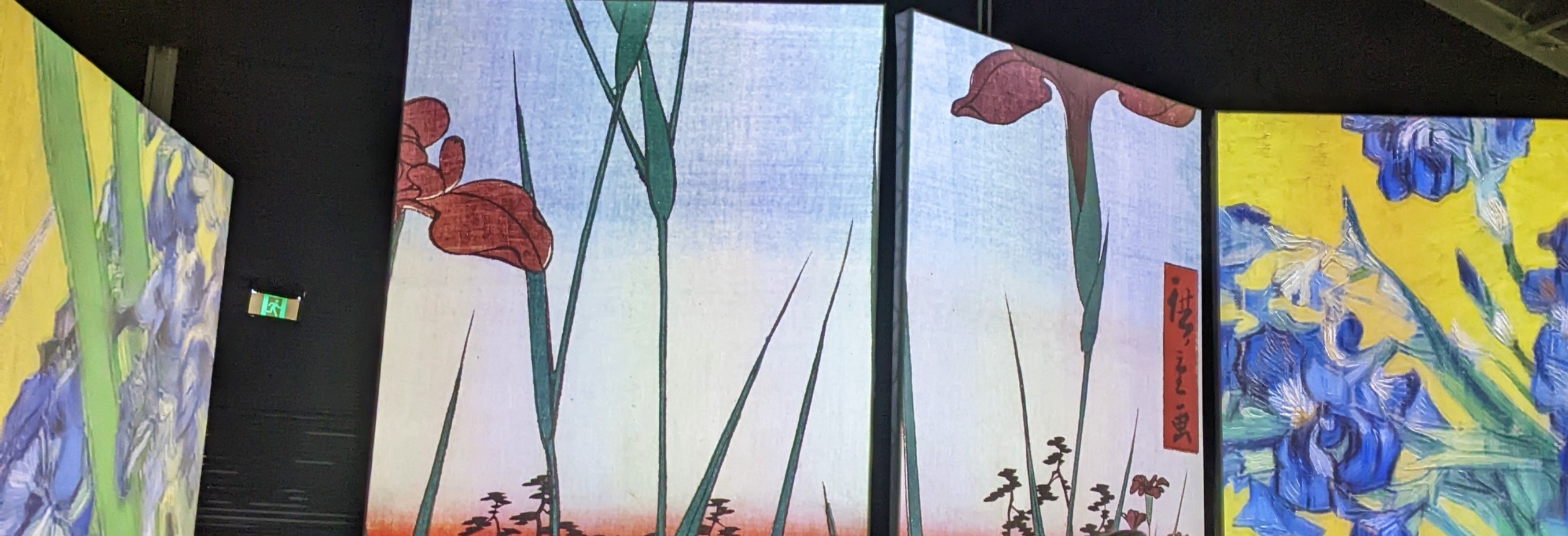

Of course, it is far too early to be very confident in either case. Polling is a notoriously imperfect guide to election prospects, but it remains the best guide we have.


In France, some trends are already clear. Macron is not outstandingly popular. His latest approval rating based on the Politico poll of polls
stood at 40%. His overall net rating was -18. However, Macron is blessed with a divided and divisive opposition. Last election he was fortunate enough to be in the second-round run-off against Marine Le Pen who
proved too extreme for mainstream French voters to support. In fact, Macron won in a landslide.


Until very recently it has looked most likely that the second-round this time would be a re-run of 2017, in which case the result would be likely to be similar. However, recently Ms. Le Pen has been outflanked from both the centre right and the extreme right! The emerging leading challenger from the extreme right is M. Zemmour, who has been described as
the French Trump. While this is in some way unfair it does illustrate the direction of travel. The other challenge to Ms. Le Pen comes from the candidate of the traditional right of centre party, Ms. Pecresse.
The latest poll numbers suggest that Ms. Le Pen’s standing as the right candidate is under serious threat. Although Zemmour is fading, Le Pen and Pecresse are neck and neck for second place behind Macron.


This matters because in the French electoral system if no one gets 50% in the first round of voting, a second round is held two weeks later in which only the first two candidates are included. This is effectively a similar method to the Australian ranked-choice voting system. In 2017,Macron and Le Pen were leaders after the first round with 24% and 21% respectively, Macron won the second round 66/34.


The current polling suggests that Macron would beat either of the most likely opponents in the second round. The current average of the polls suggest Macron would defeat Le Pen 57/43 and would beat Pecresse 53/47. The most recent poll had Macron and Pecresse much closer, but for the moment this appears to be an outlier.

There is a considerable amount of support for more left-wing candidates. Some analysts suggest as much as 25%. However, it is hopelessly split amongst 7 or more candidates, ranging from Trotskyists to the mainstream Socialist Party which elected Mitterrand and Hollande in the past. While they remain so divided none of them have even a remote chance of winning but their support will be important to Macron, particularly if he is up against Le Pen. So, it is probable but not certain that Macron will win, particularly if he is up against Le Pen, which remains the most likely outcome. As support for Zemmour continues to fade, logically this should help Le Pen more than Pecresse, although time will tell.

As an incumbent Macron (and Morrison) should be able to improve his position during the campaign as attention shifts from a referendum on the incumbent to a choice between alternative leaders.


Australian polling is not so positive for Morrison.


His approval ratings until recently have been a little better than those for Macron. However, his most recent approval rating is 39% and his overall net rating was -19. The Poll Bludgers poll trend suggests that Morrison is trailing Labor in two party preferred terms 44/56. If this were to be the actual result it would be the worst result for a major party at an Australian election since 1966 and the worst result for an incumbent government since WW2.
This is far from insuperable even if the polling is accurate(which I don’t believe it is), but as a starting point it is less encouraging than the polling for Macron.
The only safe answer to the question: “who will win?” in either country is to say it is too early to tell.

But a betting person would prefer to have his or her money on Macron rather than Morrison at this stage.

Image result for australian parliament house. Size: 210 x 160. Source: www.destination360.com

Heather Cox Richardson – RNC decision, insurrection renamed, archives material during the Trump administration, Hilary’s coffee mug

February 7, 2022 (Monday)

It appears that the Republican National Committee’s censure of Representatives Liz Cheney (R-WY) and Adam Kinzinger (R-IL), along with its declaration that the riot at the U.S. Capitol on January 6, 2021, was “legitimate political discourse,” has created a problem for Republican lawmakers as they try to position the party for the midterms and the 2024 election. Coming, as the statement did, just after former president Trump said that Pence had the power to “overturn the election” and that if reelected, Trump would pardon those who attacked the Capitol, it has put the Republican Party openly on the side of overturning our democracy.

Trump loyalists have been insisting that the rioters were “political prisoners,” and clearly the RNC was speaking for them. This wing of the party got a boost this evening when venture capitalist Peter Thiel, the libertarian whose wealth Forbes estimates to be about $2.6 billion, announced that he is stepping down from the board of Meta, the parent company of Facebook, to focus on electing Trump-aligned candidates in 2022. Thiel famously wrote in 2009 that he “no longer believe[s] that freedom and democracy are compatible,” and deplored “the vast increase in welfare beneficiaries and the extension of the franchise to women” after 1920.

It also got a boost today when the Supreme Court halted a lower court’s order saying that a redistricting map in Alabama violated the Voting Rights Act by getting rid of a Black majority district. Alabama’s population is 27% Black, which should translate to 2 congressional seats, but by the practice of “packing and cracking”—that is, packing large numbers of Black voters into one district and spreading them thinly across all the others—only one district will likely have a shot at electing a Black representative. The vote for letting the new maps stand was 5 to 4, with Chief Justice John Roberts siding with the liberals against the new right-wing majority, in control thanks to the three justices added by Trump.

But the backlash against the RNC’s statement suggests that most Americans see the deadly attack on our democracy for what it was, and Republican lawmakers are now trying to deflect from the RNC’s statement.

RNC chair Ronna McDaniel said that media quotes from the resolution are a “lie” and says the committee did not mean it to be taken as it has been. But other Republicans seemed to understand that the RNC has firmly dragged the Republican Party into Trump’s war on our democracy.

National Review called the statement “both morally repellent and politically self-destructive,” and worried that “it will be used against hundreds of elected Republicans who were not consulted in its drafting and do not endorse its sentiment.” If indeed the RNC simply misworded their statement, the editors said, “its wording is political malpractice of the highest order coming from people whose entire job is politics.”

Sunday, former New Jersey governor Chris Christie, who seems to entertain hopes for 2024, said on ABC’s This Week that “January 6 was a riot incited by Donald Trump in an effort to intimidate Mike Pence and Congress into doing exactly what he said in his own words—overturn the election.”

But others, like Senator Todd Young (R-IN), seem to be trying to split the baby. Young told Christiane Amanpour that those saying the attack was legitimate political discourse are “a fringe group,” although the RNC is quite literally the official machinery of the Republican Party. Young is up for reelection in 2022. He is also from Indiana, as is former vice president Mike Pence, who seems to be positioning himself to take over the party as Trump’s legal woes knock him out of the running for 2024.

On Friday, Pence told the Federalist Society that Trump was “wrong” to say that he, Pence, had the power to overturn the election. But he did not say that Biden won the election fairly. Then, on Sunday, Pence’s former chief of staff Marc Short seemed to try to let Trump off the hook for his pressure on Pence, telling Chuck Todd on Meet the Press that the former president “had many bad advisers who were basically snake oil salesmen giving him really random and novel ideas as to what the vice president could do.”
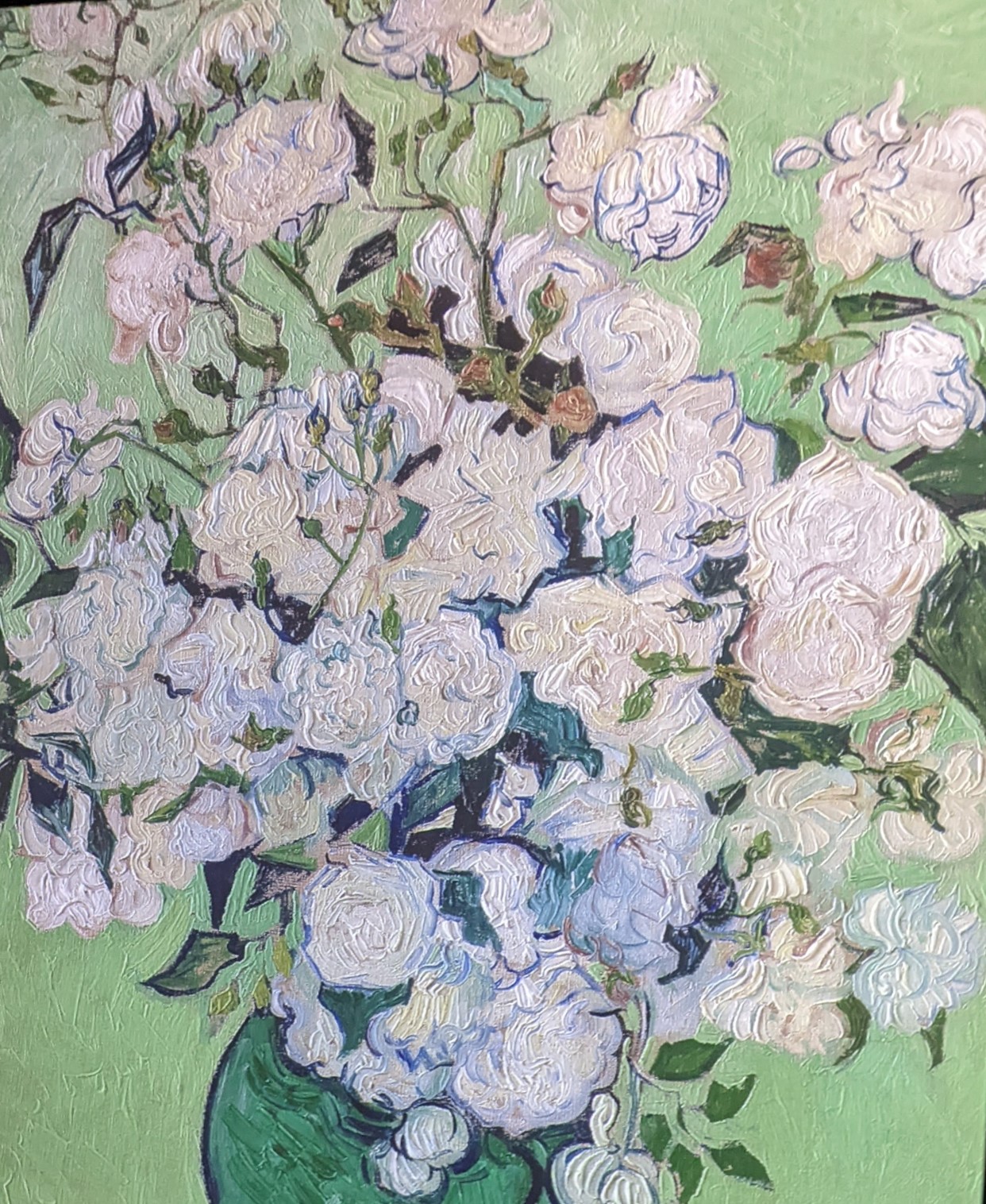
They seem to be trying to keep Trump’s voters while easing the former president himself offstage, hoping that voters will forget that the Republican leadership stood by Trump until he openly talked of overturning the election.
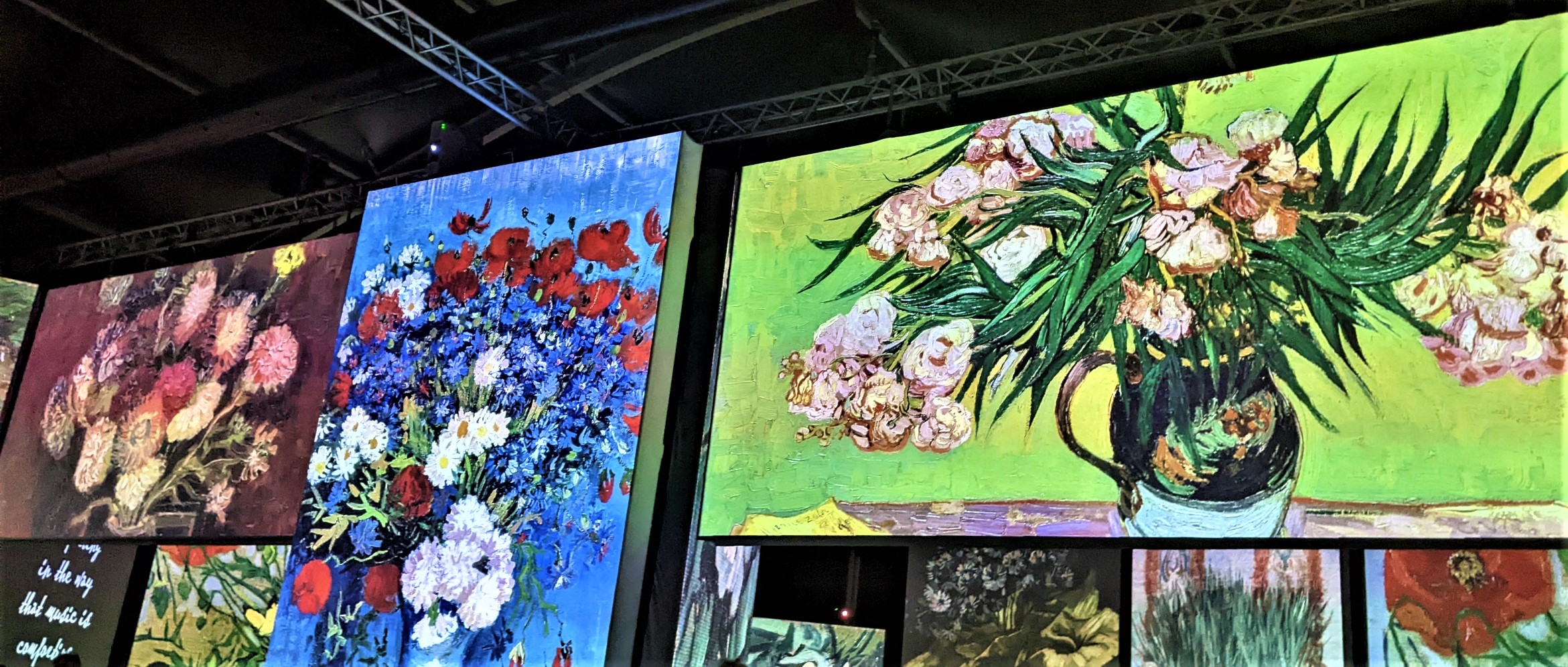
Representative Adam Schiff (D-CA), chair of the House Intelligence Committee and a member of the House Select Committee to Investigate the January 6th Attack on the U.S. Capitol, seems unlikely to stand by as the country moves on, as the National Review editors indicated they were hoping. As he said in his closing at Trump’s first impeachment trial: “History will not be kind to Donald Trump. If you find that the House has proved its case, and still vote to acquit, your name will be tied to his with a cord of steel and for all of history.”

The other big news of the past day is that it turns out that Trump and his team mishandled presidential records, suggesting that we will never get the full story of what happened in that White House.

By law, presidential records and federal records belong to the U.S. government. An administration must preserve every piece of official business. Some of the documents that the Trump team delivered to the January 6 committee had been ripped up and taped back together, some were in pieces, and some, apparently, were shredded and destroyed. Legal commentator Asha Rangappa noted that Trump’s impeachments mean that such shredding could have amounted to an obstruction of justice.

Today we learned that the National Archives and Records Administration had to retrieve 15 boxes of material from Trump’s Florida residence Mar-a-Lago, including correspondence with North Korean leader Kim Jong Un and the letter that former president Barack Obama left for Trump (which would have brought a pretty penny if it were sold). Trump aides say they are trying to determine what other records need to be returned.

Former Republican Kurt Bardella noted, “If this had happened during a Democratic Administration while Republicans were in the majority, I guarantee you [the Oversight Committee] would be launching a massive investigation into this and writing subpoenas right now to any and every W[hite] H[ouse] official that was involved in this.”

Former Secretary of State Hillary Clinton used the story to raise money for her progressive organization, Onward Together. She linked to the story as she urged people to “Take a sip from your new mug as you read the news.” With the tweet was the picture of a mug with her image and the caption “But Her Emails.”

House January 6 committee member Jamie Raskin (D-MD) says that the committee is planning to hold public hearings in April or May. They have been slowed down by the reluctance of the Trump team to cooperate.

Week beginning 2 February 2022

Thank you NetGalley for the two fiction uncorrected proofs sent to me for in exchange for honest reviews. Each must be given a star rating for NetGalley and I gave The Final Case 5* and The Watcher Girl 3*.

David Guterson The Final Case Alfred A Knopf 2022.

Image result for The Final Case Guterson. Size: 120 x 170. Source: www.barnesandnoble.com

How can my words, reviewing The Final Case, aspire in any way to catch all the wonderful the ideas, phrases, characterisations and plot of this amazing novel? They cannot, but here is my attempt to encourage you to read and reread David Guterson’s latest work. Even ‘work’ is too harsh word for this story that flows so beautifully, that reflects so warmly on the central character’s relationship with his father, Royal, his mother, sister and wife; and that so succinctly tells us how stringently the law should be interpreted. The bleak story of Abeba, the Ethiopian girl named Abigail by the American couple who adopted her, is woven into this landscape, with razor-sharp commentary raised by the legal case in which not only the behaviour of individuals but the insidious impact and extent of ideologies are laid bare. See complete review at Books: Reviews

Minka Kent The Watcher Girl Thomas & Mercer, Seattle, 2021.

The Watcher Girl: A Thriller

This novel has so much potential: a damaged main character, with a fascinating occupation; a plot woven around her potential redemption; family drama; and chance meetings that pose the possibility of solving at least one of the main character’s challenges. Grace McMullen tells the story in the first person, advancing her as the person with the strongest emotional tug on the reader. She is flawed, her attitude towards her family making this most apparent. However, she remains a character who is worthy of sympathy – we want Grace to win some sort of resolution to the challenges she has faced as a child and adult. See complete review at Books: Reviews

After the Canberra Covid update: Is America at risk of a civil war? Heather Cox Richardson and the American Constitution, 1776 and 2021; visit to the NGA; Cindy Lou eats out.

Post lockdown Covid in Canberra

There were 884 new cases recorded on 27 January and 73 people are in hospital with 4 in ICU, and one ventilated. Boosters are at 43.5% for those over eighteen; 60.3% five to eleven year olds have received their first dose; and 98.6% of the over twelve population are fully vaccinated.

Travel news is disappointing, as Australia has been taken off several countries’ lists of travellers who are welcome.

On January 28th the new cases recorded were 734, one death, and sixty six people in hospital with five in ICU and one ventilated. The one dose figure for children between five and eleven is now 63.3%. The January 30 new case figures show another improvement at 584 new cases; followed by another small improvement on January 31, with 537 new cases. On the day an anti-vax group demonstrated at Parliament House, amongst their claims that children should not be vaccinated, it was pleasant to note that the ACT rate for one dose for children five to eleven has climbed to 68.1%.

New cases recorded on 1 February – 522. Figures for children between five and eleven are heartening as the majority of them return to face to face teaching – 69.4% have had their first dose. There are now 3,750 active cases in the ACT, and twenty six deaths have been recorded since the beginning of the pandemic. There are now sixty four people in hospital including one in intensive care and being ventilated. The ‘low level public health social measures’ are being extended for a further four weeks.

There were 549 new cases of Covid recorded on 2 February. Boosters are at 51.2%. The percentage of children five to eleven who have been vaccinated with one dose is 70.9%. There are now 3,386 cases, with sixty one people in hospital, and one of those in intensive care and ventilated.

American Civil War?

Lawrence O’Donnell The Last Word MSNBC continued his series on whether there is a civil war brewing in America. A House Divided covered a critic of the ideas aired in last week’s episode.

Lawrence O’Donnell seemed to be more closely aligned with Fintan O’Toole’s reservations about the prognostications about another civil war in America at this time. In particular, the possibility that the prophecy could suit the aims of some of the insurrections at the Capitol was raised.

Heather Cox Richardson discusses the American Constitution, the reality of the historic events of 1776, and the poverty of the argument that it has anything to do with January 6 2021.

January 29, 2022 (Saturday)

I’ve thought a lot lately about Representative Lauren Boebert’s (R-CO) tweet on January 6, 2021, saying, “Today is 1776.” It’s clear that those sympathetic to stealing the 2020 election for Donald Trump over the will of the majority of Americans thought they were bearing witness to a new moment in our history.

But what did they think they were seeing?

Of course, 1776 was the year the Founders signed the Declaration of Independence, a stunning rejection of the concept that some men are better than others and could claim the right to rule. The Founders declared it “self-evident, that all men are created equal” and that ordinary people have the right to consent to the government under which they live.

But that declaration was not a form of government. It was an explanation of why the colonies were justified in rebelling against the king. It was the brainchild of the Second Continental Congress, which had come together in Philadelphia in May 1775 after the Battles of Lexington and Concord sparked war with Great Britain. At the same time they were declaring independence, the lawmakers of the Second Continental Congress created a committee to write the basis for a new government. The committee presented a final draft of the Articles of Confederation in November 1777. Written at a time when the colonists were rebelling against a king, the new government decentralized power and focused on the states, which were essentially independent republics. The national government had a single house of Congress, no judiciary, and no executive.

“Each state retains its sovereignty, freedom and independence, and every Power, Jurisdiction and right, which is not by this confederation expressly delegated to the United States,” it read. The organization of the new government was “a firm league of friendship” entered into by the states “for their common defence.” With the weight of governance falling on the states, the confederation languished. It was not until 1781 that the last of the states got around to ratifying the articles, and in 1783, with the end of the Revolutionary War, the government began to unravel. The Congress could make recommendations to the states but had no power to enforce them. It could not force the states to raise tax money to redeem the nation’s debts, and few of them paid up. Lacking the power to enforce its agreements, the Congress could not negotiate effectively with foreign countries, either, and individual states began to jockey to get deals for themselves.

As early as 1786, it was clear that the government was too decentralized to create an enduring nation. Delegates from five states met in September of that year to revise the articles but decided the entire enterprise needed to be reorganized. So, in May 1787, delegates from the various states (except Rhode Island) met in Philadelphia to write the blueprint for a new government. The Constitution established the modern United States of America. Rather than setting up a federation of states, it united the people directly, beginning: “We the People of the United States, in Order to form a more perfect Union, establish Justice, insure domestic Tranquility, provide for the common defence, promote the general Welfare, and secure the Blessings of Liberty to ourselves and our Posterity, do ordain and establish this Constitution for the United States of America.” It corrected the weakness of the previous government by creating a president with explicit powers, giving the government the power to negotiate with foreign powers and to tax (although it placed the power of initiating tax bills in the House of Representatives alone), and creating a judiciary. Those still afraid of the power of the government pushed the Framers of the Constitution to amend the document immediately, giving us the Bill of Rights that prohibits the government from infringing on individuals’ rights to freedom of speech and religion, freedom from unreasonable searches and seizures, and so on. The catch-all Tenth Amendment stated that “The powers not delegated to the United States by the Constitution, nor prohibited by it to the States, are reserved to the States respectively, or to the people.”

That reservation of powers to the states created a crisis by the 1830s, when state leaders declared they would not be bound by laws passed in Congress. Indeed, they said, if voters in the states wanted to take Indigenous lands or enslave their Black neighbors, those policies were a legitimate expression of democracy. To defend their right to enslave Black Americans, southern leaders took their states out of the Union after the election of 1860.In the wake of the Civil War, Americans gave the federal government the power to enforce the principle that all people are created equal. In 1868, they added to the Constitution the Fourteenth Amendment, which declared that “No state shall make or enforce any law which shall abridge the privileges or immunities of citizens of the United States; nor shall any state deprive any person of life, liberty, or property, without due process of law; nor deny to any person within its jurisdiction the equal protection of the laws.” It gave the federal government—Congress—the power to enforce that amendment.

It seemed that the Fourteenth Amendment would finally bring the Declaration of Independence to life. Quickly, though, state legislatures began to discriminate against the minority populations in their borders—they had always discriminated against women—and the American people lost the will to enforce equality. By the early twentieth century, in certain states white men could rape and murder Black and Brown Americans with impunity, knowing that juries of men like themselves would never hold them accountable.Then, after World War II, the Supreme Court began to use the due process and the equal protection clauses of the Fourteenth Amendment to overrule discriminatory laws in the states. It ended racial segregation, permitted interracial marriage, gave people access to birth control, permitted reproductive choice, and so on, trying to enforce equality before the law.

But this federal protection of civil rights infuriated traditionalists and white supremacists. They threw in their lot with businessmen who hated federal government regulation and taxation. Together, they declared that the federal government was becoming tyrannical, just like the government from which the Founders declared independence. Since the 1980s, the Republican Party has focused on hamstringing the federal government and sending power back to the states, where lawmakers will have little power to regulate business but can roll back civil rights.
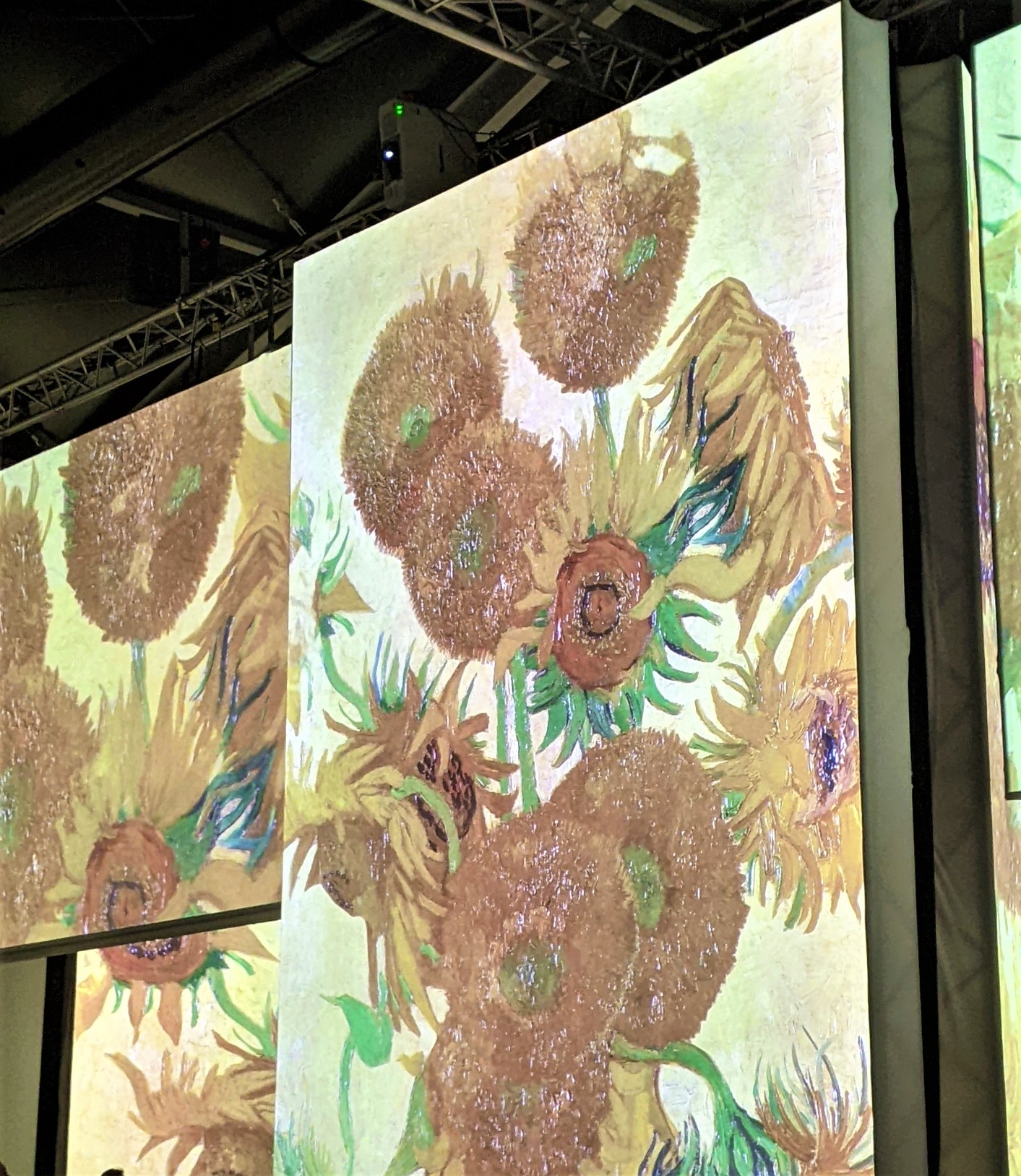
That effort includes rewriting the Constitution itself. In San Diego, California, last December, attendees at a meeting of the American Legislative Exchange Council’s policy conference announced they would push a convention to amend the U.S. Constitution to limit the power and jurisdiction of the federal government, returning power to the states. ALEC formed in 1973 to bring businessmen, the religious right, and lawmakers together behind legislation. So far, 15 Republican-dominated states have passed legislation proposed by ALEC to call such a convention. In another nine similar states, at least one house has passed such bills, and lawmakers have introduced such bills in 17 other states.

ALEC formed in 1973 to bring businessmen, the religious right, and lawmakers together behind legislation. So far, 15 Republican-dominated states have passed legislation proposed by ALEC to call such a convention. In another nine similar states, at least one house has passed such bills, and lawmakers have introduced such bills in 17 other states.

Image result for Insurrectionists at the Capitol. Size: 176 x 170. Source: www.politico.com
Image result for Insurrectionists at the Capitol. Size: 176 x 170. Source: billypenn.com
Image result for Insurrectionists at the Capitol. Size: 176 x 170. Source: www.npr.org

The insurrectionists’ cries of 1776 remind me not of the Founding era, but of 1860. In that time, too, people believed they were creating a new country and recorded their participation. In that time, too, the rebels wanted a country with a weak federal government, so they could be sure people like them would rule forever. *

  • I have added these photos from the insurrection.

This was a pottering visit , rather than one to see the Jeffery Smart Exhibition which is currently showing. Although I am disappointed at the loss of any significant contribution to children’s participation at the Gallery, the general exhibitions were thoroughly engaging.

Betty Muffler’s work makes an excellent introduction to the multitude of indigenous art works that now appear at the gallery.

The Know My Name exhibition continues to be a source of information and pleasure.

Cindy Lou Eats Out in Canberra

A visit to Milligram at Woden plaza was mixed – the coffees arrived promptly, the seating was pleasant enough, as were the staff. Amazingly, there were two pats of butter with the two slices of toast. However, the wait for that toast and eggs was a huge disappointment. Even worse was the wait for the avocado toast with tomatoes and an egg. The dish was also disappointing, with cold cut up tomatoes on a mash of avocado, small pieces of haloumi on one piece of toast and one egg. Sliced avocado, slices of succulent grilled haloumi and cooked tomato would have been so much more palatable. The lemon was a nice touch.

Disappointing cold tomatoes and rather dreary avocado after an even longer wait.
Nice toast with plenty of butter after a long wait

The positive part of this experience was the feeling that it had to be forgotten as soon as possible. At Espresso Room a caramel slice cut in half and a lovely hot coffee made to my order were brought promptly.

Here at the seating is varied, with comfortable lounge chairs at low tables, as well as conventional seating. With Julia Child’s admonition above what more could I have wanted? Perhaps less than perfect cafes exist just for the pleasure of finding an antidote!

A morning at Kingston Foreshore was a pleasant experience, with a long walk along the water ending a lovely chat with a coffee. The coffee was prompt, despite the café being fairly full, and delicious. The breakfasts I saw being brought to other tables looked immense – and beautifully fresh. I stuck with the coffee (The Cat’s Pyjamas brand) and a walk as a change from too much indulgence.

Edgars Inn Ainslie is a favourite, with its wooden tables, shelter and heating in the cold weather, and today with the heat, several excellent fans. The menu combines a range of smaller dishes, familiar fare, and several interesting salads. Today I enjoyed the fish and chips, served with a good wedge of lettuce with a pleasant dressing. Tartare, tomato sauce and a wedge of lemon were generous accompaniments. The only thing missing were the greedy seagulls which accompany any such meal in one of my favourite cities, Fremantle Western Australia. The few tiny birds who hop around hopefully do not compare with the predatory swoop of a seagull. My friend’s steak sandwich was replete with salad and served with chips.

In case anyone is concerned about the unhealthy nature of some of these outings, Cindy Lou eats a lot of salad, vegetables and fruit when she is at home. Oh, and the occasional chocolate bar. She loves the Julia Child quote too much, perhaps.