Week beginning 22 December 2021

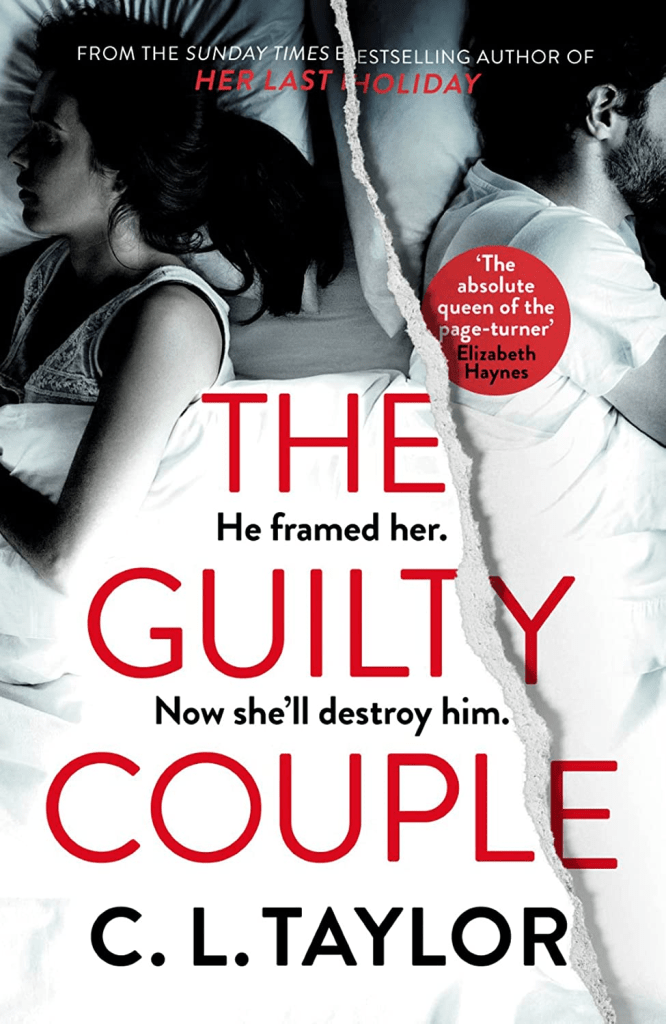
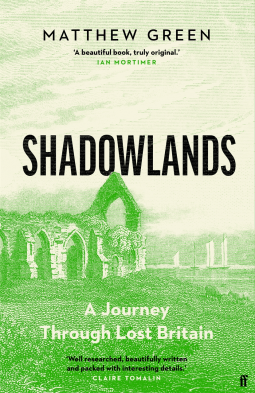
Book reviews this week include non-fiction – Christian Lamb’s Beyond the Sea A Wren at War ; John Marsden, Take Risks; and Elie Mystal Allow Me to Retort A Black Guy’s Guide to The Constitution and fiction – Kathleen McGurl’s The Girl from Bletchley Park. All of these books are uncorrected proofs provided to me by NetGalley in exchange for an honest review.

Christian Lamb Beyond the Sea A Wren at War Ad Lib Publishers Mardle Books, 2021

58566900

Christian Lamb has brought together three experiences in Beyond the Sea A Wren at War: her work as a Wren in a variety of capacities; her marriage with its beginning in wartime and its aftermath as a ‘sailor’s wife’; and experience as an interested, and later, expert gardener. I was pleased to read the material that went beyond Lamb being a Wren at war as some of this was familiar through my reading Peter Hore’s Secret Source Churchill’s Wrens and the Y Service in World War 11.   For the complete review (and the earlier one of Peter Hore’s book) see Books: Reviews

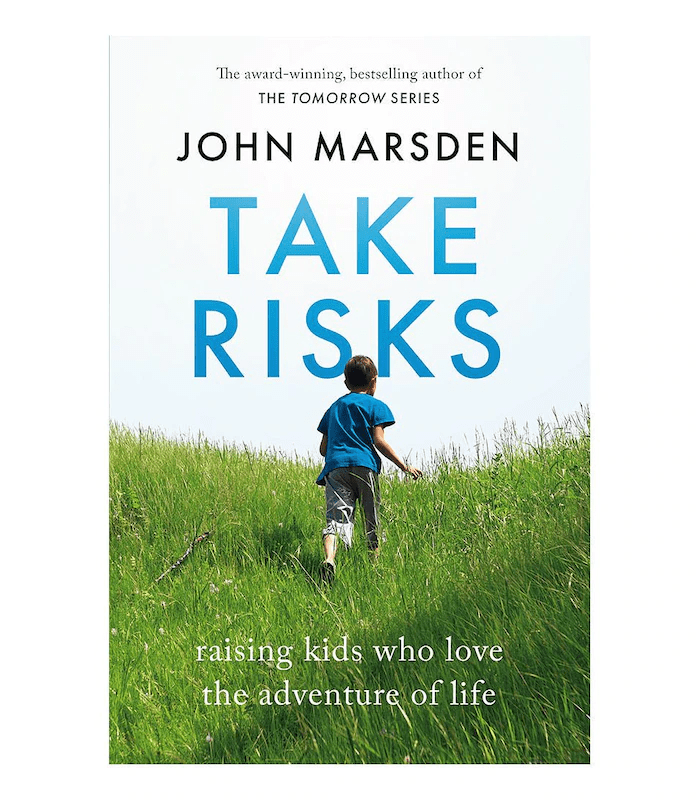
John Marsden Take Risks Macmillan Australia 2021

Take Risks - John Marsden

My knowledge of John Marsden is coloured by my reading of one of the most devastating novels I have read, So Much To Tell You, Letters From The Inside. I read to keep my daughter company, rather than for my job as an English teacher; Marsden did not feature in my particular classes. My grief at the end of the novel was so complete that perhaps it was as well he did not. Reflecting some of the distress at the end of that novel is my reading of the beginning of Take Risks, when Marsden describes his schooling at The Kings School in the 1960s. His resilience is remarkable; amongst the terror, authoritarianism, and mediocrity, he dreamed of a different type of education, with teachers of considerably dissimilar qualities, in surrounds suited to educating young people. See complete review Books: Reviews

Elie Mystal Allow Me to Retort A Black Guy’s Guide to The ConstitutionThe New Press New York, 2022.

Allow Me to Retort: A Black Guy’s Guide to the Constitution

Elie Mystal’s title is apt for this book which combines uncomfortable and sometimes abrasive language with arguments (or retorts) that certainly encourage a rethink of the American Constitution and the Amendments. Some readers will not like the abrasive quality of the language; others will find it energising. Mystal certainly maintains the forceful presence he radiates in television debate when it is translated to the page. I found myself having to pick my way through some of the debate. Regardless of my reservations, I found this book a worthy contribution to discussion of the American Constitution; the role of wealthy white men in its writing, interpretation, decisions about the Amendments and interpretations in the courts; and the way in which black and coloured Americans and women can be neglected in the law. And, indeed, Elie Mystal has every right to question my reservations about his language. With such a story to tell, with its horrific unpeeling of the discrimination that remains, despite the Amendments, his language cannot be other than strong. So, cast aside reservations, and read this illuminating, but distressing ‘Retort’. See complete review Books: Reviews

Kathleen McGurl The Girl from Bletchley Park HQ Digital, 2021.

58977519

The Girl from Bletchley Park is written from the perspective of two strong women, Pam and Julia, whose choice of partners and careers form the basis of the narrative. Their stories are told alternately, from Pam’s perspective during the second world war, and Julia’s in the present day. Both narratives involve the complexities both women face in dealing with romance, marriage, and paid work. Pam’s story raises the serious ramifications of choosing a partner from the beginning of her relationships with two distinctly different men. Julia’s story begins after years of happy marriage which has produced two teenage sons. Books: Reviews

Articles that appear after the Covid report are: Cindy Lou’s reviews of Melbourne eating; Willie Geist Interview with Hillary Clinton; Harold and Maude at 50 years of age; Alan Kohler, AEC; The National Gallery of Victoria; Heather Cox Richardson and the BBB Infrastructure Bill; and the link for her discussion with Ken Burns.

Covid in Canberra since lockdown ended

The big news this week is that Canberra once again has a mask mandate. Only inside venues are affected, so shopping, eating out except while seated, eating or drinking – all indoor settings, apart from a place of residence, will require masks. Not a hard requirement to follow. Aged Care facilities will also be impacted by the Omicron variant’s ‘taking a hold’ over the border in New South Wales. These facilities will reduce the number of visitors to residents to five per day; no restrictions are in place for end-of-life visits.

Another new feature of dealing with Covid is the opening of bookings for five to eleven year olds for vaccinations.

New cases recorded on the 15th, 16th and 17th were seven, eleven and twenty. After the decrease in numbers in past weeks this increase on the 17th is disheartening. A slight decrease was recorded on the 18th when there were eighteen new cases. This number was repeated on the 19th, and on the 20th and 21st December there were thirteen and sixteen cases recorded. Today, the 22nd December, there were fifty eight cases recorded. There are three people in hospital, but none in intensive care or on a ventilator. There are now 174 active cases in the ACT; 98.4% of Canberrans over twelve have been fully vaccinated; and the total number of cases for this outbreak is 2,241.

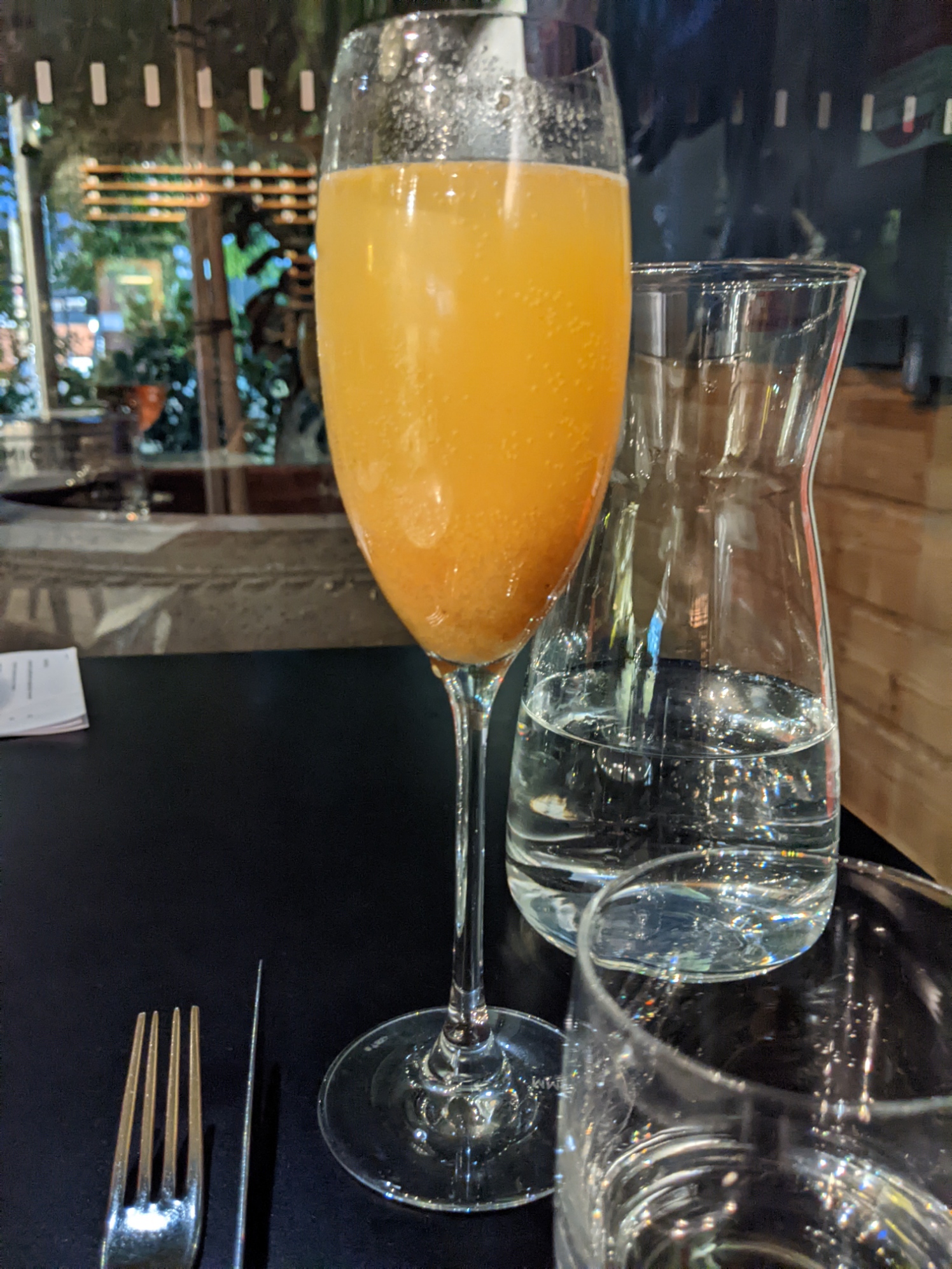
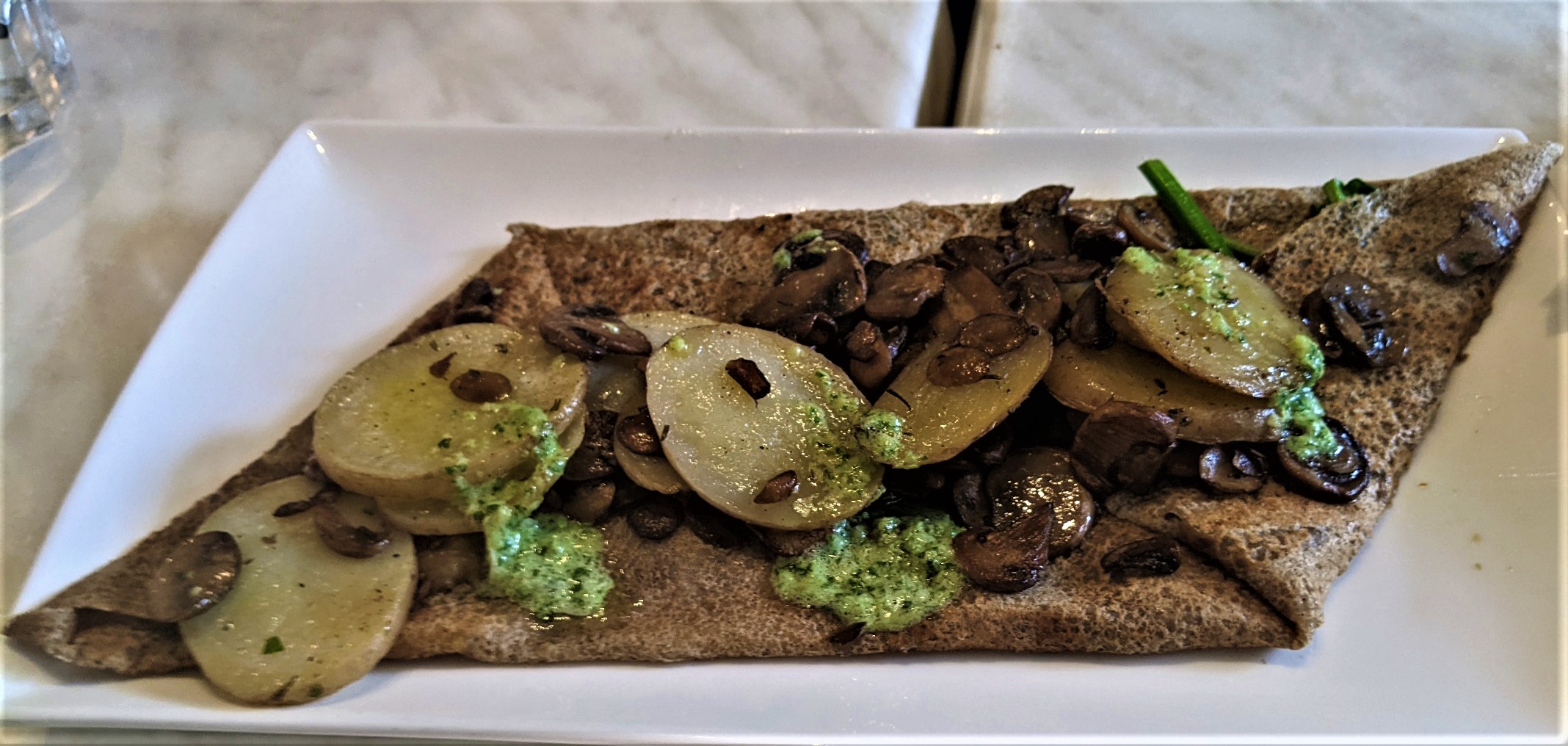
Cindy Lou’s Reviews of more Melbourne restaurants and cafes
Grand Hyatt, Collins Street

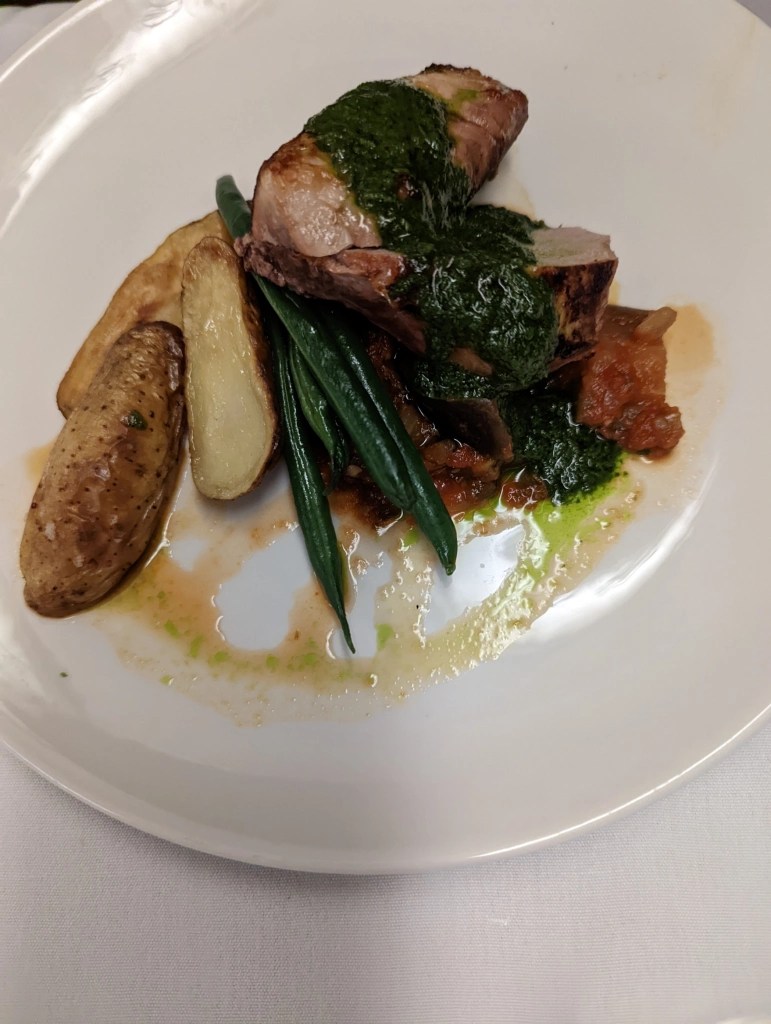
Breakfast at the Grand Hyatt, Collins Street, is generous and absolutely delicious. We chose from the a la carte menu, but on another occasion would love to try the glorious buffet. The prices are really reasonable, the service impeccable, and the setting very pleasant indeed.

Le Petit Chateau

A light lunch at Le Petit Chateau was another culinary delight. Smiling service, a pleasant environment, and nicely presented flavoursome baguettes made a lovely lunch.

Rumi Brunswick

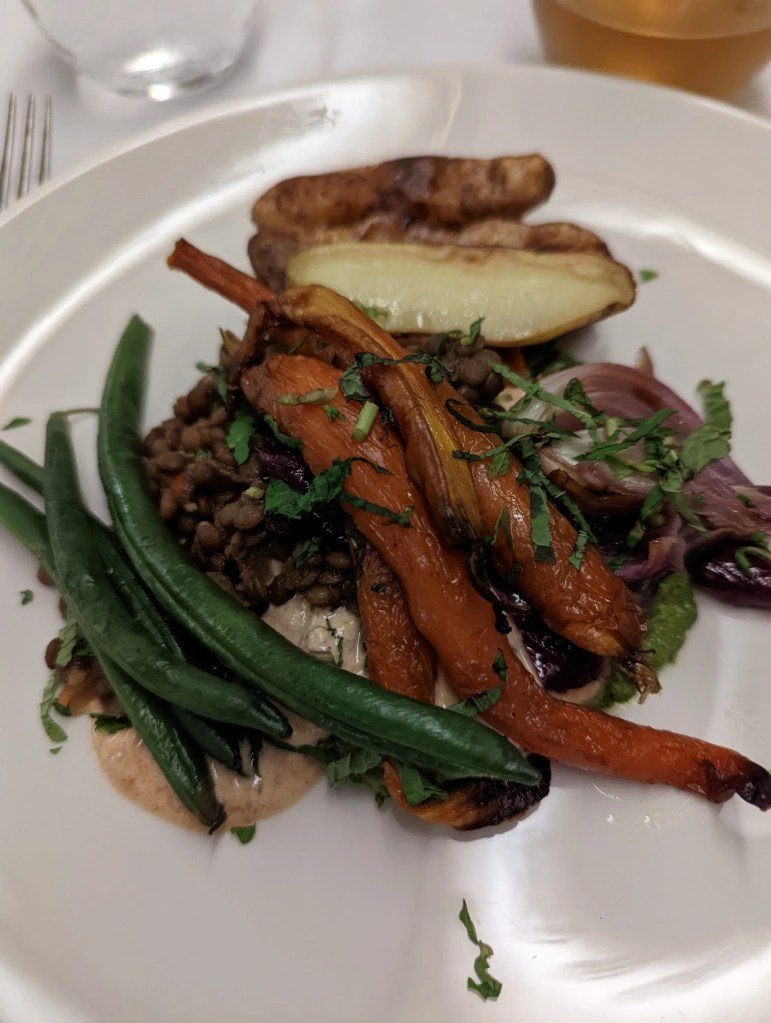
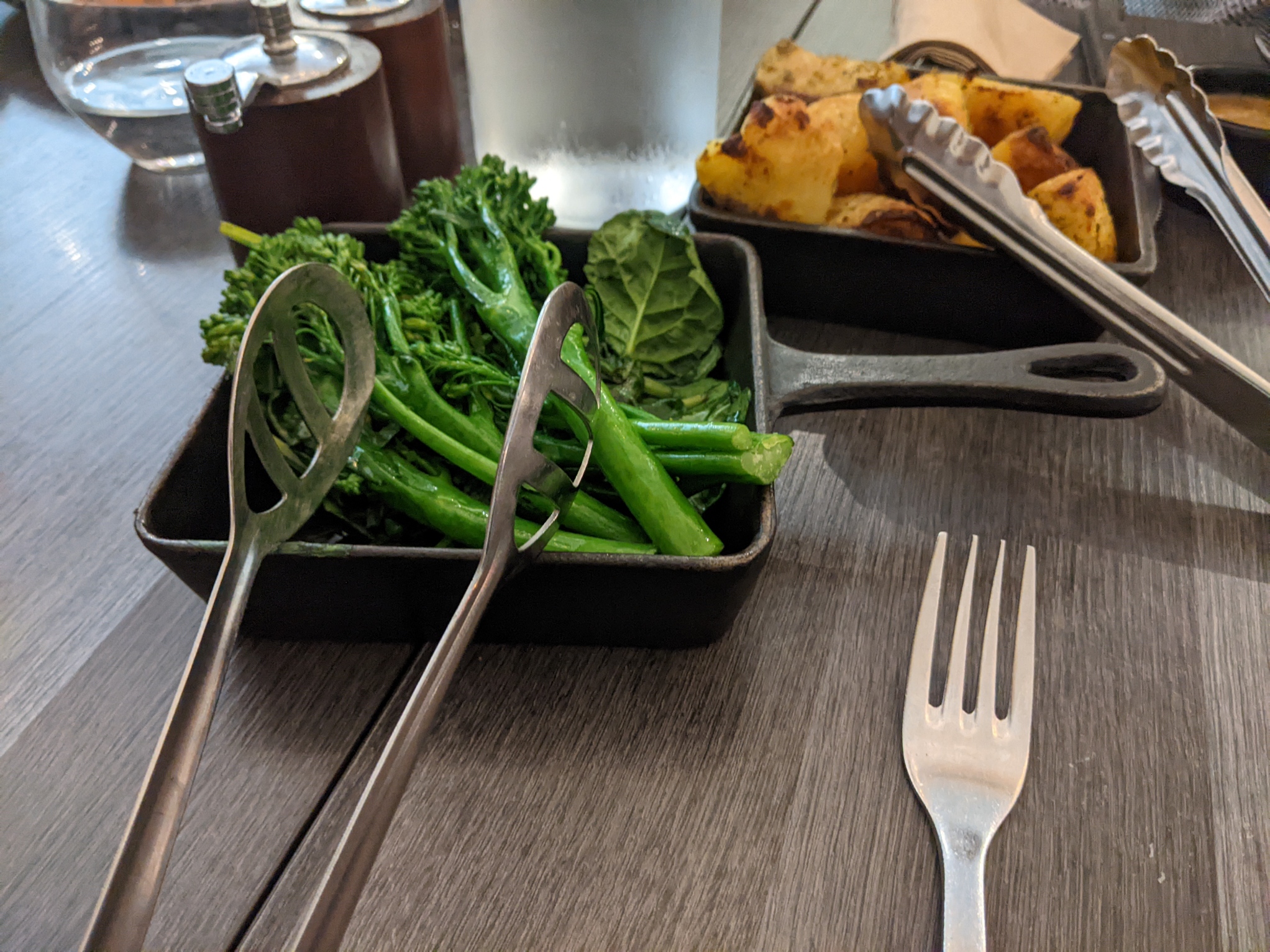
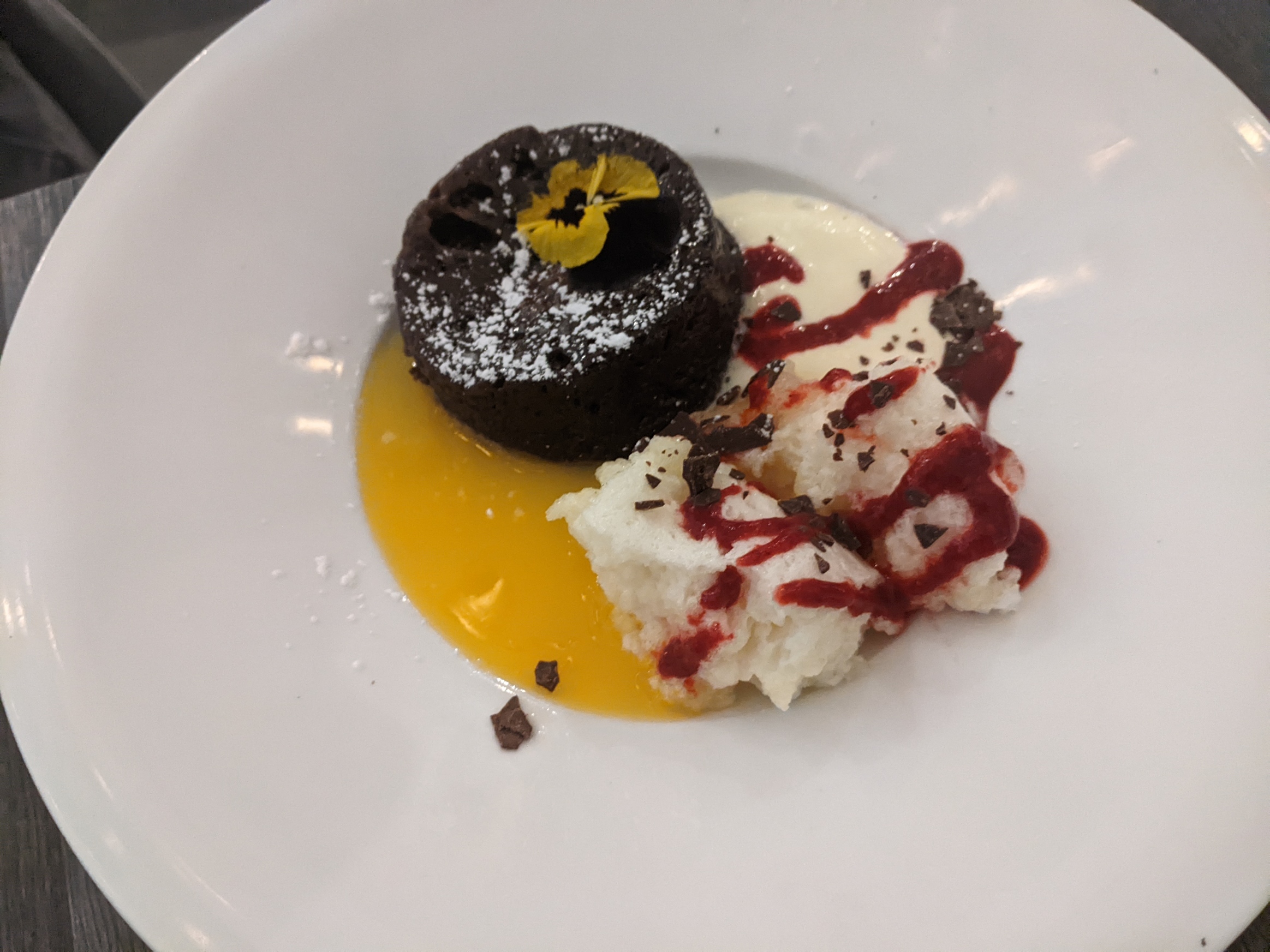
We had mixed experiences at Rumi. The restaurant was generous in allowing our small group to book outside the usual reservation time, and even more so when some of us were late. The menu is interesting, and the service was prompt. However, the restaurant is not suited to audible conversation, even in a group of six. The noise level was quite high – obviously people were enjoying themselves – and this encouraged us to have our savoury courses and leave to have huge gelatis a little further along the street. The food was pleasant, and clearly from the photos, we ate almost every scrap. But with no real stand out dishes, it was disappointing. Although the lamb was well received and the chicken succulent, some dishes were cold, and the anticipated cauliflower dish did not meet expectations.

Gelato – I did not look at the name, oh dear, I’ll have to return

We really loved our desserts. After a short walk from Rumi the gelato on display offered everything we wanted. We were encouraged by the friendliness of the staff, but I have to admit the variety of offerings in the gelato and cake cabinets was the real drawcard. It was immense. Of course, it was impossible to try only one flavour. My scoop of honey comb, and on top one of panna cotta, were delicious. To add to the decadence, they were served in a chocolate coated cone.

The Quarter, Degraves Street

The best eating experience on this visit to Melbourne was The Quarter in Degraves Street. This lane is the home of many cafes, some of which remain closed because of Covid – the closures are a sad reminder of the impact of closures and closed borders because of the dilatory nature if the Federal roll out of the vaccine. The menu combines the simple with the somewhat adventuresome, all nicely presented, generous in size, and delicious. Service is friendly and efficient. The Bao variety was excellent, with chicken, tofu and lamb (easily changed to suit dietary requirements); the lamb salad succulent; and the special order of a simple tomato and cheese sandwich (not on the menu) came with a smile. I loved the venue, the food and the atmosphere. A terrific end to my Melbourne culinary experiences.

It was lovely to visit Hosier Lane on our way to The Quarter.

Willie Geist Interview with Hillary Clinton

May be an image of one or more people and text that says "SUNDAY TODA with Willie Geis"

Willie Geist Willie Geist – Part One of my #Sunday TODAY conversation with Secretary Hillary Clinton.

Hillary Clinton shares the life lessons she learned after the 2016 election

In part one of this week’s Sunday Sitdown, former Secretary of State and Democratic presidential nominee Hillary Clinton sits down with Sunday TODAY’s Willie Geist to share the life lessons she learned and setbacks she overcame after her loss in 2016. Clinton reveals her thoughts during Donald Trump’s inauguration speech and opens up about the effects of showing her emotions in the public eye.Dec. 13, 2021

‘Harold and Maude’ at 50: An Oral History of How a ‘Harrowing’ Flop Became a Beloved Cult Classic

By Pat Saperstein Plus Icon

Alan Kohler: Why Donald Trump should make us thankful for the Australian Electoral Commission

Australian Electoral Commission Donald Trump Alan Kohler

As we watch the slow, momentous collapse of American democracy, a Scott Morrison-ism comes to mind: How good is the Australian Electoral Commission?

In Australia, Donald Trump would always have to win fair and square, and if he lost there would be no polls a year later showing that 80 per cent of his party still think the election was stolen, as 80 per cent of US Republicans apparently do of last year’s US election.

The latest American outrage is a PowerPoint presentation written by Trump’s Chief of Staff, Mark Meadows, entitled: “Election Fraud, Foreign Interference & Options for 6 Jan”.

It was a plan for overturning the 2020 result and installing his boss as the winner, and started with: “VP Pence delays the decision in order to allow for a vetting and subsequent counting of all the legal paper ballots”.

They would then go on to declare a “National Security Emergency”, based on the proposition that Venezuela, which is itself barely alive, interfered

in the US election for some reason, and then declare electronic voting in all states invalid because of that foreign influence and only “count paper ballots or revert to a constitutional remedy delegated to Congress”.

Bear in mind, the author of this insane sedition was the President’s Chief of Staff.

Pence refused to do it, which led to a mob storming the Capitol Building on January 6 shouting, among other things, “Kill Pence”.

Republicans are now preparing for the 2024 presidential election by launching campaigns to install Trump allies as the electoral officials in a number of key states.

That project is running in parallel with a Republican push across the country to enact voter suppression laws based on Trump’s election lies.

And now Donald Trump is favourite to win in 2024.

Thank God for the AEC

As I read about all this, all I can think is: Thank God for Tom Rogers.

Rogers is the Australian Electoral Commissioner and he wouldn’t stand for any of the nonsense going on the United States – in fact his mere presence and the existence of the AEC stand against both the perception and reality of electoral fraud in this country.

I’m not suggesting the AEC is perfect, and I’ll get to its imperfections later, but it’s worth remembering that the only serious challenge to the integrity of Australia’s electoral system occurred in 1977 when Reg Withers, the then Minister for Administrative Affairs, tried to change the name of the Gold Coast electorate to McPherson over the head of the Australian Electorate Office, as it then was.

There was a Royal Commission. And Reg Withers lost his job.

Seven years later, the Hawke government rewrote the electoral laws and turned the office into an independent statutory commission with powerful laws to both run and regulate elections.

The minister behind that was Mick Young, Special Minister of State, but he was forced to step down when he failed to declare a Paddington Bear in his wife’s luggage at the airport – which, as an aside, was a wonderful, nostalgic, affirmation of Australian political integrity, and something that would definitely not happen today.

Anyway, his key adviser, the future Treasurer Wayne Swan and an architect of the new electoral laws with Michael Maley of the AEO, kept the project going with Swan’s new boss, Kim Beazley.

Watching what’s going in the US now, it’s pretty clear that while that legislation is not usually remembered among the Hawke/Keating government’s most significant reforms, it might well have been the most important of all.

Australia takes for granted a network of strong federal and state electoral commissions that operate the elections, as well as their funding, and that stand as a bulwark against creeping modern fascism.

Solution in search of a problem

Lately we’ve been having a silly, unnecessary argument about voter IDs: They’re not required when voting in Australia and some bright spark in the Coalition persuaded the Prime Minister to back the Electoral Legislation Amendment (Voter Integrity) Bill 2021 to require them, but it expired due to lack of interest.

The system works fine, which we can now see more clearly by comparison with a certain democracy where it’s not working fine at all, except …

The AEC should get more involved in enforcing truth in political advertising and the transparency of political donations, preferably with a cap on federal election expenditure by parties and individuals.

South Australia has had truth in advertising laws since 1985, Queensland has real-time political donation disclosure, and New South Wales has a cap on spending.

The AEC doesn’t enforce any of those things, but it should.

Clive Palmer can spend any amount of cash he likes and in the process he and Craig Kelly can distort the election with lies.

Perhaps a better idea might be to have two federal bodies: One to operate elections and the other to regulate the behaviour of those involved, a bit like the Reserve Bank and APRA operate in the financial system, with the RBA running it and APRA watching the banks.

Either way, it’s time for another look at the way the Australian electoral system works.

Not that it’s broken – far from it – but it could do with a service.

Alan Kohler writes twice a week for The New Daily. He is also editor in chief of Eureka Report and finance presenter on ABC news

First published in The New Daily , December 16, 2021.

We had a short visit to the National Gallery of Victoria, visiting the highlight of the Pink Pool, and joining the enthusiastic audience of a dance group that combined hip hop moves with those of the Indigenous dancer who introduced the performance. On the way to the Gallery, moving bird silhouettes are a fine feature.

Moving birds are placed alongside the tram tracks – they are fantastic
The Pink Pool
Heather Cox Richardson – Build Back Better Infrastructure Bill: Joe Manchin and the Republicans

See also, Heather Cox Richardson’s discussion with Ken Burns.

https://www.facebook.com/UNUMKenBurns/videos/896518701227411/?tn=F

Week beginning 15 December 2021

This week the books reviewed include one fiction, and one non-fiction. Both uncorrected proofs were provided to me by NetGalley in exchange for an honest review.

Apples Never Fall

Liane Moriarty Apples Never Fall Macmillan Australia 2021

Apples Never Fall By Liane Moriarty

I am thrilled to have received this impressive new novel from Liane Moriarty. While I have enjoyed all her novels, I was a little disappointed with Nine Perfect Strangers. However, Apples Never Fall is such a triumph, my previous disappointment is irrelevant. Apples Never Fall is an engrossing and intelligent novel.

John Callow The Last Witches of England A Tragedy of Sorcery and Superstition Bloomsbury Academic 2022.

the-last-witches-of-england-lg.jpg

This is a well-designed narrative, following the steps by which the last witches in England became the victims of poverty and changing social and religious ideas. Both factors had an impact on the development of superstition in Bideford, England, where the women lived, and Callow’s narrative makes this case well.

The complete reviews are at Books: Reviews

Articles this week appearing after the Post lockdown Covid report for Canberra are: Kevin Rudd and the Senate Report into Rupert Murdoch; Cindy Lou’s remarks about several Melbourne restaurants she visited recently; Paul Mecurio’s tilt at state politics; Guardian Master class online with Maggie O’Farrell and Kate Mosse; and Brian William’s departure from The 11th Hour.

Post lockdown Covid results for Canberra for this week.

From the 9th December to the 11th there were four; six; an eleven new cases recorded. Pop up Pfizer clinics were established from Monday 13th December. One new case was recorded on the 12th December and three on the 13th. Some schools have recorded cases, and been closed; one has had to only require a class of students to self isolate. Tasting facilities are now making arrangements to accommodate changing needs. Masks remain a requirement on public transport, and restaurant staff wear masks. Cases recorded on the 14th and 15th numbered four and seven. Updates to requirements will occur at 11.59 tonight.

‘A rare example of political courage’, backed by half a million Australians

Kevin Rudd

It is a rare example of political courage — the sort we should see every day but has been made possible only with the backing of more than 500,000 ordinary Australians and their relentless demonstration that the public is demanding action to protect our democracy.

For more than a year, a cross-party panel of senators has been weighing all the evidence for and against a royal commission. Against the background of a ferocious bullying campaign by the Murdoch empire, the senators considered more than 5000 written submissions and conducted five days of open hearings. They interviewed Murdoch’s top executives, award-winning journalists, former politicians, media industry experts, academics and others. I was one.

Kevin Rudd goes full destroy the joint to hit Murdoch where it hurts

Read More https://www.dianomi.com/smartads.epl?id=3533

Media regulation in Australia is “weak, fragmented and inconsistent” with a patchwork of co-regulators, self-regulators and non-regulators responsible for enforcing standards that are frequently breached without consequence.

This has bred “corporate cultures” within large media companies — chiefly Murdoch’s News Corporation — that view themselves as beyond accountability for their actions, even when they spread deliberate disinformation.

The convergence of traditional media platforms — print, radio, television and online — into online platforms, including social media, and Murdoch’s rising influence across these domains has bolstered the case for a single platform-neutral regulator.

And the proper response is not more piecemeal reform but a judicial inquiry with the full powers of a royal commission. And this must be at arm’s length from the nation’s politicians who are, frankly, too vulnerable to Murdoch’s political manipulations. Several witnesses attested to this insidious influence as a major barrier to change.

I would expect this independent royal commission-style inquiry to examine every aspect of the media landscape — including the hurdles for smaller publishers, the state of public broadcasting, social media platforms and Murdoch monopoly which dominates our national conversations through its 70% domination of daily print readership.

Supporters of strong public broadcasting, including the ABC, should have confidence that a royal commission will investigate better funding models and enhanced protections for editorial independence. The fact that the Murdoch empire, which incessantly campaigns against supposed “left-wing” bias at the ABC and the “digital dystopia” of Facebook and Google, is willing to pass up the opportunity for a broad-based royal commission that would examine those claims speaks volumes. If Murdoch has nothing to hide from a judicial inquiry, he should have nothing to fear.

There is nothing in these recommendations that should surprise anyone. Australians know instinctively that it’s not right that we have the most concentrated media landscape in the democratic world. And they are sick to their back teeth with a public debate that is driven by the commercial objectives and ideological preoccupations of a 90-year-old American billionaire and his family.

What is most surprising to me is that the senators — including all Labor senators — demonstrated the courage to call out the problem and advance a solution. This would have been unthinkable to many only a year ago; it is a testament to the more than 500,000 Australians who signed the national petition for a royal commission last year, and the many more who have joined the campaign since then. I am grateful to each and every person who has raised their voice.

So what should happen now?

It would be unacceptable for Parliament to ignore the Senate’s detailed recommendations, including a judicial inquiry, a permanent trust to support new local news and journalism traineeships, and broadband upgrades to ensure fair access to digital media.

The Murdoch media is working overtime to discredit this report and pressure all political parties to throw it in the bin without even reading it. Some members of Parliament — particularly those who hold marginal seats, or whose political fortunes hinge on appeasing the Murdoch beast — will find themselves in the media firing line over the coming days.

If these recommendations are dismissed out of hand, it is not only an abrogation of responsibility to the Australian people but a show of disrespect to the senators who have poured a year of their life into producing this detailed report. They have scratched at the surface of Australia’s media diversity problem and decided, in good conscience, that there’s a lot more to investigate.

Murdoch’s cut-throat lobbying tactics can be intimidating. But thoughtful politicians should think carefully before siding with Andrew Bragg and Murdoch against their own colleagues and rank-and-file supporters who are now powering this movement.

The best way that Australians can achieve a royal commission is to continue to let the political class know that, if politicians have the courage to speak out, the Australian people will have their back. I’ve launched a community organisation, Australians for a Murdoch Royal Commission, to do just that and I’m delighted to have hired Sally Rugg as national director.

I’ve been a member of the Australian Labor Party for 40 years, and I’ve seen a lot of big debates in that time — economic policy, foreign affairs, marriage equality. Few campaigns start with widespread support political support on their first day, but the strongest ones are powered from the ground up.

Only by continuing to demonstrate widespread public support to rein in the Murdoch monopoly, and let diversity flourish, can we hope that public figures will gain the confidence to join the Senate committee majority in siding with the interests of our democracy.

The post ‘A rare example of political courage’, backed by half a million Australians appeared first on Crikey.

Cindy Lou visited restaurants in Melbourne- none of them posh, but an interesting range.

Lamb and Flag

One of the most interesting was the Lamb and Flag in Brunswick. This pleasant venue, with its simple menu, was a delight. We chose from the menu, and the specials. On this occasion these were a smoked salmon sandwich, and a roast beef sandwich. Both were fresh, and presented with potato crisps – a very British feature, which I found rather nostalgic. The main menu offerings included a bacon butty and a roll with bacon and extras. The coffee was good. The prices are commensurate with the food, which, while not glamourous, was filling and part of a lovely occasion with very dear friends. As well, making a contribution to this courageous venture amongst the multitude of Brunswick’s restaurants and cafes was a pleasure.

The Lamb and Flag provides a pleasant and relaxed social environment that fully meets the principle purpose of this restaurant as a community service. To be able to chat as long as we wanted, while another patron spent her time on her laptop, and people came and went provides the nucleus of a successful community social environment. In addition, free meals are provided on Thursdays, for anyone who arrives wanting something filling and tasty. In 2022 the Lamb and Flag intends to provide a venue for musicians who would like a receptive audience for their early endeavors.

Il Solito Posta

The Il Solito Posta is a lively, comfortable and fun Italian restaurant in a basement venue just off Collins Street. There was a buzz of conversation, with good humour obviously a huge feature of this friendly restaurant. At the same time, it was easy to hear the conversation at my table – an important feature in my view. The food was generally good, although the tiramisu was a little disappointing. The herb read was excellent – hot, full of flavour, crisp and generous. i enjoyed my chicken , fennel and rocket salad – particularly when paired with the crunchy garlic and rosemary potatoes. The pasta sauce from my companion’s dish was also a good accompaniment to the potatoes. The wine was good – and served in very generous portions! Overall, I would make this my ‘go to’ restaurant when staying in the vicinity in Melbourne. Although the food was not stunning, the ambience was everything it should be, and something to be enjoyed over again.

Starbucks

Yes, I had to have my Starbuck’s coffee and bun – another reminder of London in which I like to indulge when possible. The reminder is that without the free Wi-Fi available as drank my coffee I would have been out of touch for several weeks while the Wi-Fi was being installed at my apartment. On the chain coffee front, I received a notification from Costa that as I had not used my card for a long time it would be cancelled – together with the eighteen beans (!!!) I had accrued. I wrote to Costa, saying how much I missed their inviting venue in Cambridge, and that I would be returning as soon as possible. Their reply was so jolly – they will renew the card when I get back to Cambridge, and not only that, but my eighteen beans will be intact. So, these coffee shops are not part of the magnificence of London, but they provided a service when I was living there for which I am grateful. And, I wonder what I can buy with my eighteen beans?

Strictly Ballroom’s Paul Mercurio’s surprising career change revealed

Jesse Hyland For Daily Mail Australia  21 hrs ago (slightly edited in this post)


He’s a renowned actor and dancer who most famously starred in Baz Luhrmann’s classic film Strictly Ballroom.

But it was revealed on Saturday that Paul Mercurio is making a big career change to state politics from his usual work in the arts and as an entrepreneur. 

Mercurio is currently a councillor for the Mornington Peninsula Shire and runs his own company selling spices and chutney, according to News.com.au.

He is also an actor and a dancer in his spare time and appeared as a judge on this year’s Dancing with the Stars.

The 58-year-old has nominated to run for Labor in the seat of Hastings, which is in Melbourne‘s outer south east, for the 2022 Victorian state election. 

Mercurio is among four others to put their hand up for the seat of Hastings.

The battle for Labor preselection will be held on Monday. 

Guardian Master class online

While I was living in London I attended several of The Guardian masterclasses and found them great value. They were informative, well organised and lots of fun. It was thrilling to walk from Kings Cross station to The Guardian offices for the classes. Eating lunch together with the other participants was a particularly fine feature of being able to attend in person. I have not been to an online class, but this one looks excellent.

A masterclass in novel-writing with Kate Mosse and Maggie O’Farrell
In partnership with the Women’s Prize Trust, this novel-writing workshop will provide insights into the creative process of two global bestselling authors, and give you or your loved one the confidence to take your writing forward. Order your combined book and course ticket before 17 December and receive a copy of the Women’s Prize for Fiction Journal, packed with beautiful illustrations as well as inspirational quotes and writing tips, before Christmas.

Tuesday 11 January 2022
7pm–9pm GMT
Enrol now 

Brian Williams signs off with what no one else is willing to say…at least…

StellaRay Community (This content is not subject to review by Daily Kos staff prior to publication.) Saturday December 11, 2021 · 1:44 PM AEDT

The “darkness of the edge of town has spread to the main roads and highways and neighborhoods,” Williams lamented. “It’s now at the local bar, and the bowling alley, at the school board and the grocery store. And it must be acknowledged and answered for.”

“Grown men and women who swore an oath to our Constitution, elected by their constituents possessing the kinds of college degrees I could only dream of, have decided to join the mob and become something they are not while hoping we somehow forget who they were,” he continued.

“They’ve decided to burn it all down ― with us inside,” added Williams. “That should scare you to no end as much as it scares an aging volunteer fireman.”

Brian Williams

I have written other diaries about Williams, whose show I greatly enjoyed and I will miss.   I know there are those who will not ever forgive him his trespasses, but I see him as a man who redeemed himself, and did so in a way that benefited many, including me. I found his show the perfect end to an evening of big news. There was a smart calmness about it. He asked good questions and no one can ever accuse him of not listening to the answers. 

I think it is interesting that he also said on his sign off that he is not a “liberal or a conservative, but rather an institutionalist.” I get this, assuming the institutions are of our choosing and sturdy if not perfect—which clearly Williams is no longer sure of, nor am I.

I thought his words were well chosen and scary as hell. For as much as there are certainly others saying the same thing, there was something about Williams terse brevity, his choice to make these his last words on his show, that really rattled me. Not that I need to be more rattled than I am these days by what’s going on.

But I was struck by the idea that when we talk about “messaging” I think this is what it’s about. We need more people WITH A PLATFORM to step up and say, “hey folks, we’re on the ledge of loosing our  imperfect republic, our highly flawed but great democratic experiment. Open your eyes. We are hanging on by our freaking fingertips.  

There will be those who say this is hyperbolic—but I now think those are the same sort who didn’t see Hitler coming, even after the Brown shirts had arrived. And make no mistake about it, the Brown shirts have arrived in the United States of America. They just go by a different names these days. All sorts of  names, but most disturbing of all is this name: the Republican Party. There is no “both sides do it” in this ultimate game, despite my opinion on the many imperfections of the Democratic Party.  

I think there is no doubt this is who Williams was talking about. Yes, we are on the edge of destroying ourselves the way every great nation/culture from the beginning of time does: from the inside out. And maybe, while one side is worse than the other here—as in not both siderism— it is also true that the other side fails us when they don’t find the strength to fight, tooth and freaking nail.    

What we desperately need is more people with big voice to step up and do what Williams did—scare us out of our complacency. Because even in the midst of a culture grinding epidemic, so many in this country don’t get it—going about their ways as if nothing can touch us, not even a killer pandemic, because we’re just that special, and maybe just that spoiled. 

Whatever you think of Brian Williams—and I expect to hear from his detractors here too, as I have every time I’ve written about him—he spoke the dark truth boldly.

This content was created by a Daily Kos Community member. Make YOUR voice heard!Login or create an account.

A suitable photo for completing a lovely few days in Melbourne.

Week beginning 8 December 2021

Come Fly the World: The Jet-Age Story of the Women of Pan Am

One of the books I have reviewed features in the final round for the Goodreads Best Books of 2021, and another I reviewed, is a biography of Amanda Gorman. Marc Shapiro, Work Up: The Life of Amanda Gorman reflects upon the life of the finalist, writer of The Hill We Climb, An Inaugural Poem for the Country and was reviewed on 28 July, 2021. Come Fly the World The Jet-Age Story of the Women of Pan Am by Julia Cooke was reviewed on 17 March, 2021. See Books: Reviews

The Hill We Climb by Amanda Gorman
55959530. sy475

The book reviewed this week is Fiona Hill’s There Is Nothing For You Here Finding Opportunity In The 21st Century HarperCollinsPublishers Boston New York, 2021.

Fiona Hill’s father did readers of this book an immense favour when he told his daughter, ‘There is nothing here for you, pet’. That wise understanding of Fiona Hill, together with his and her nurse/midwife mother’s steadfast support, joined by various people along the way, gave this resilient, thoughtful, and intellectually astute woman the power to study and excel, find a range of a careers, and most effectively, a voice. See full review Books: Reviews.

Canberra post lockdown Covid

There has been one confirmed case of the Omicron variant in Canberra recorded, on December 3. On 2 December eight new cases of Covid were recorded, and on December 3, four cases, including the one of the new variant, were recorded. There were four people in hospital, with three in intensive care, although none is ventilated. At this stage the total number of cases for this outbreak in Canberra is 2,022; ACT residents over twelve who are fully vaccinated is 97.9%. Children have been back at school for four weeks.

On the 4th, 5th, and 6th December there were seven, six, and six new cases recorded. On the 7th and 8th there were three cases, and then eight, recorded. On the 8th there were 79 active cases, with 1,675 new negative tests recorded. Two dose vaccinations for people over twelve are now at 98.1%.

Cindy Lou eats out in a variety of venues in Canberra – and enjoys them all.

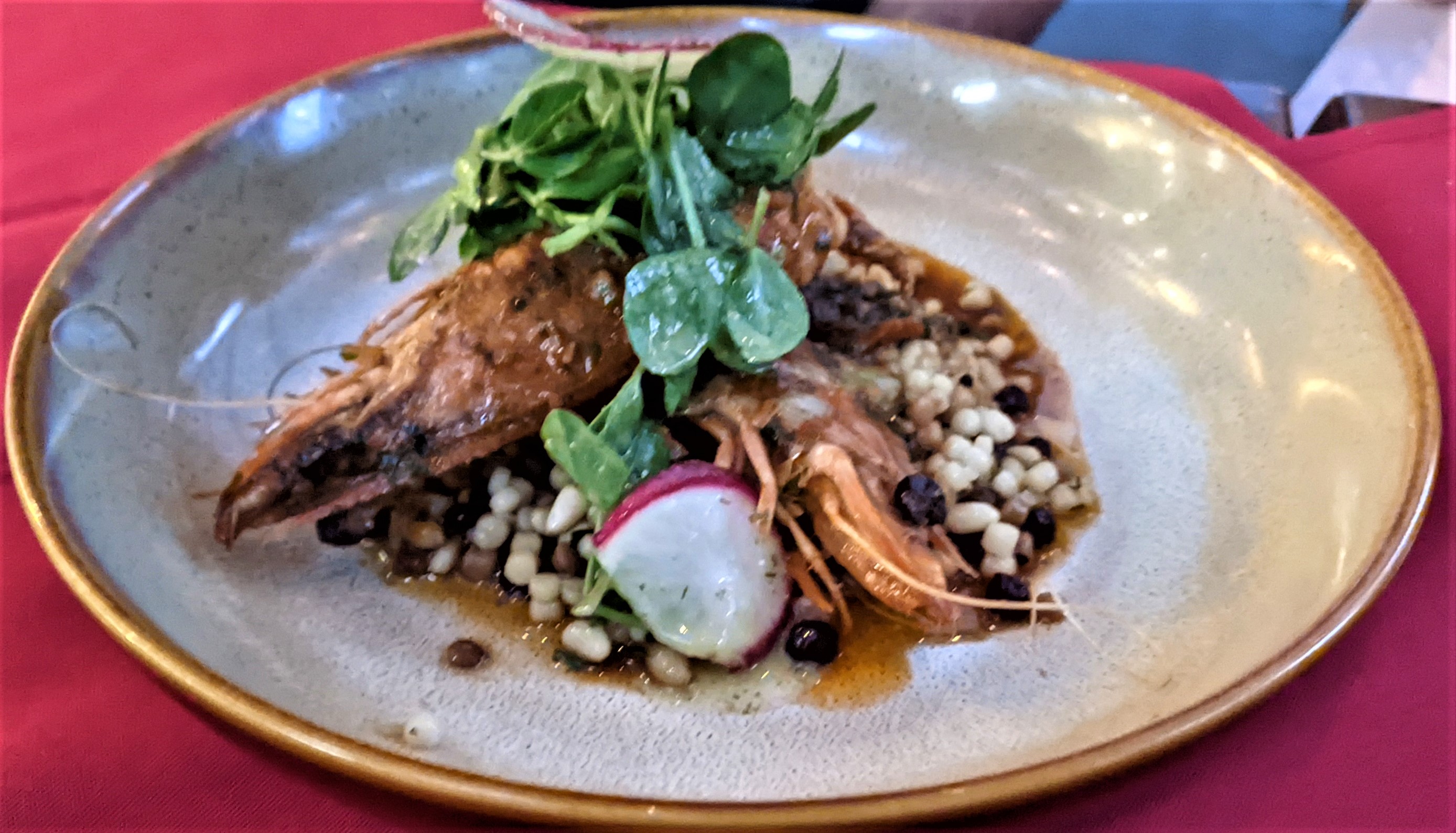
Blackfire

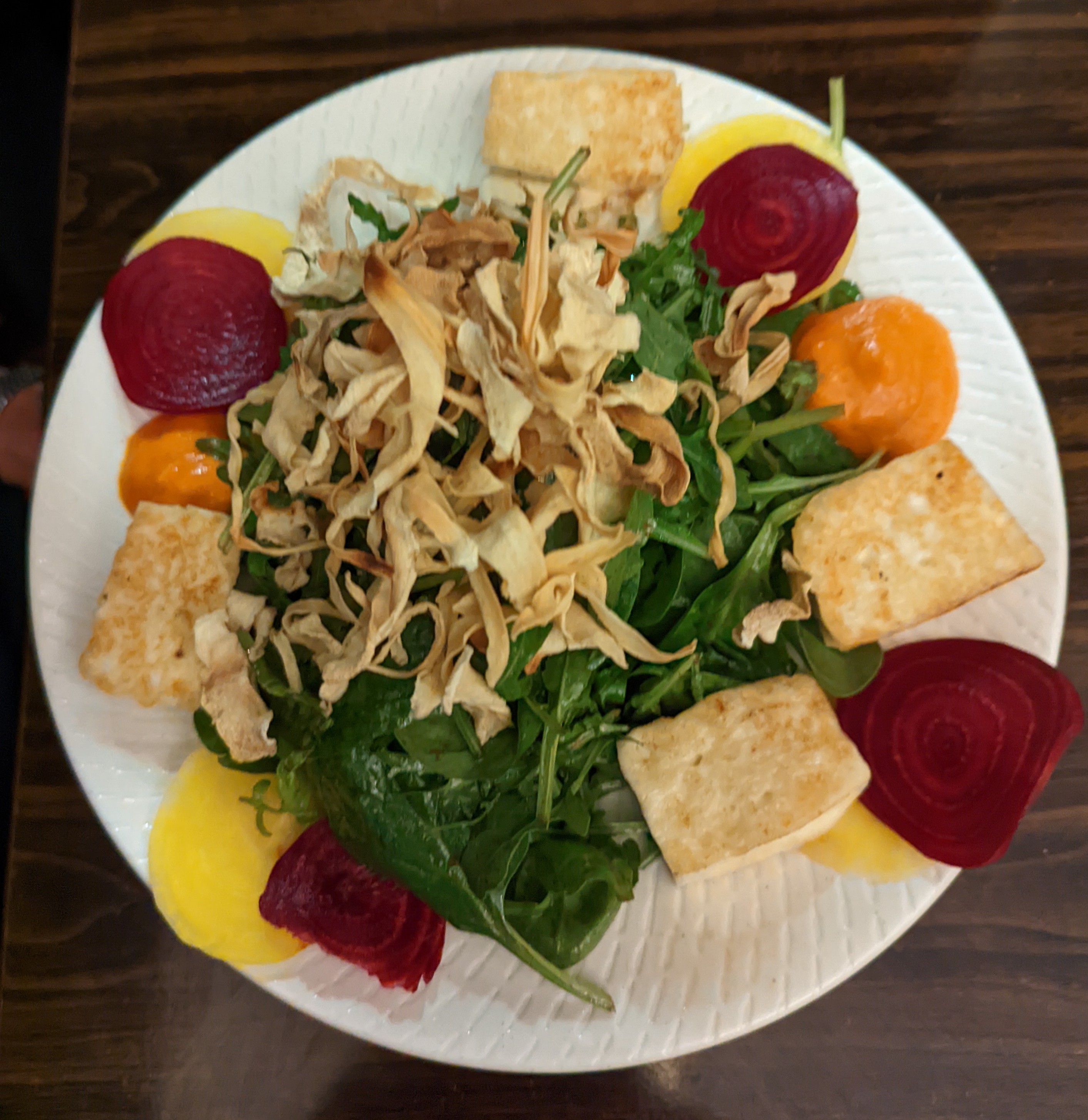
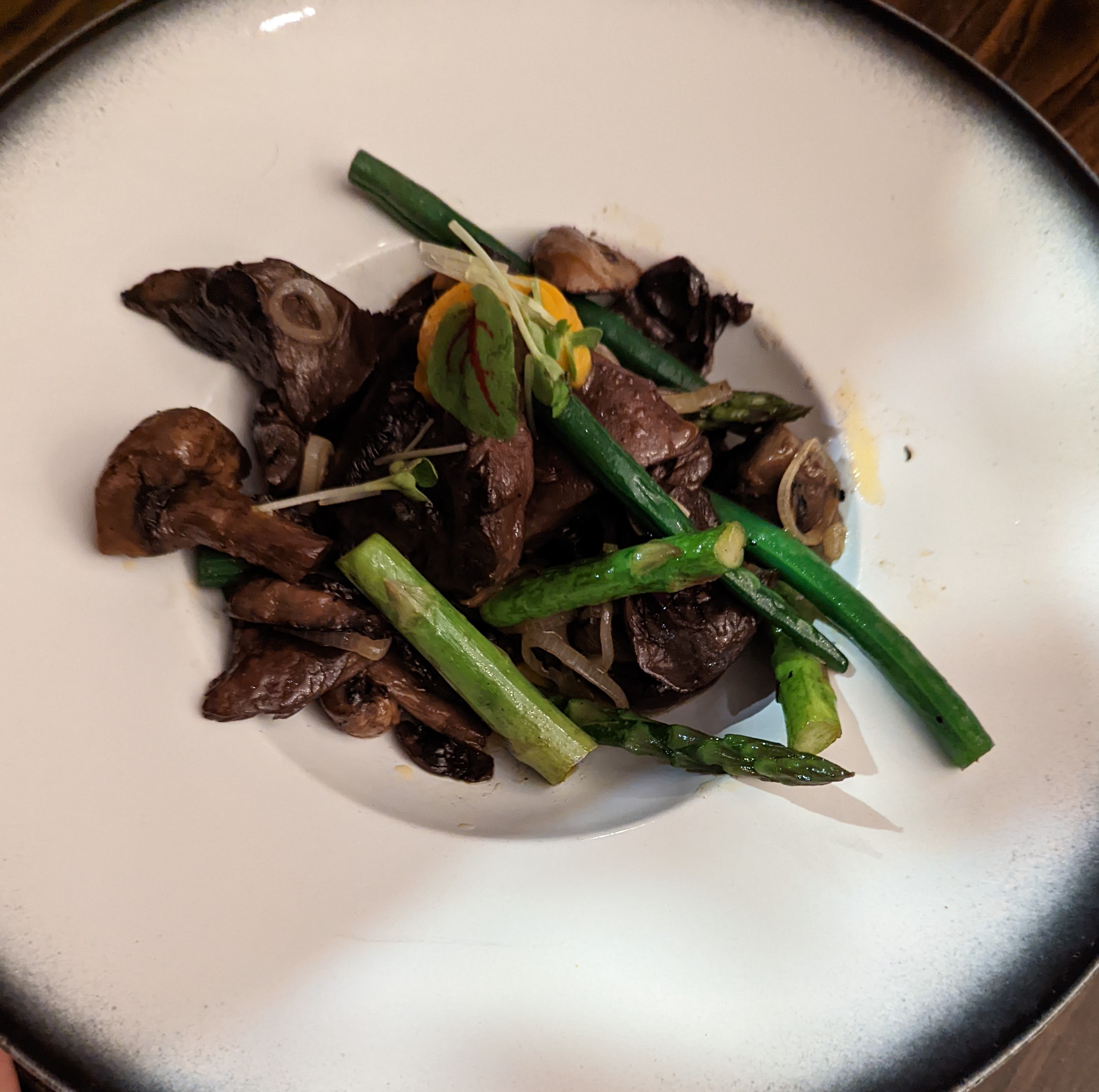
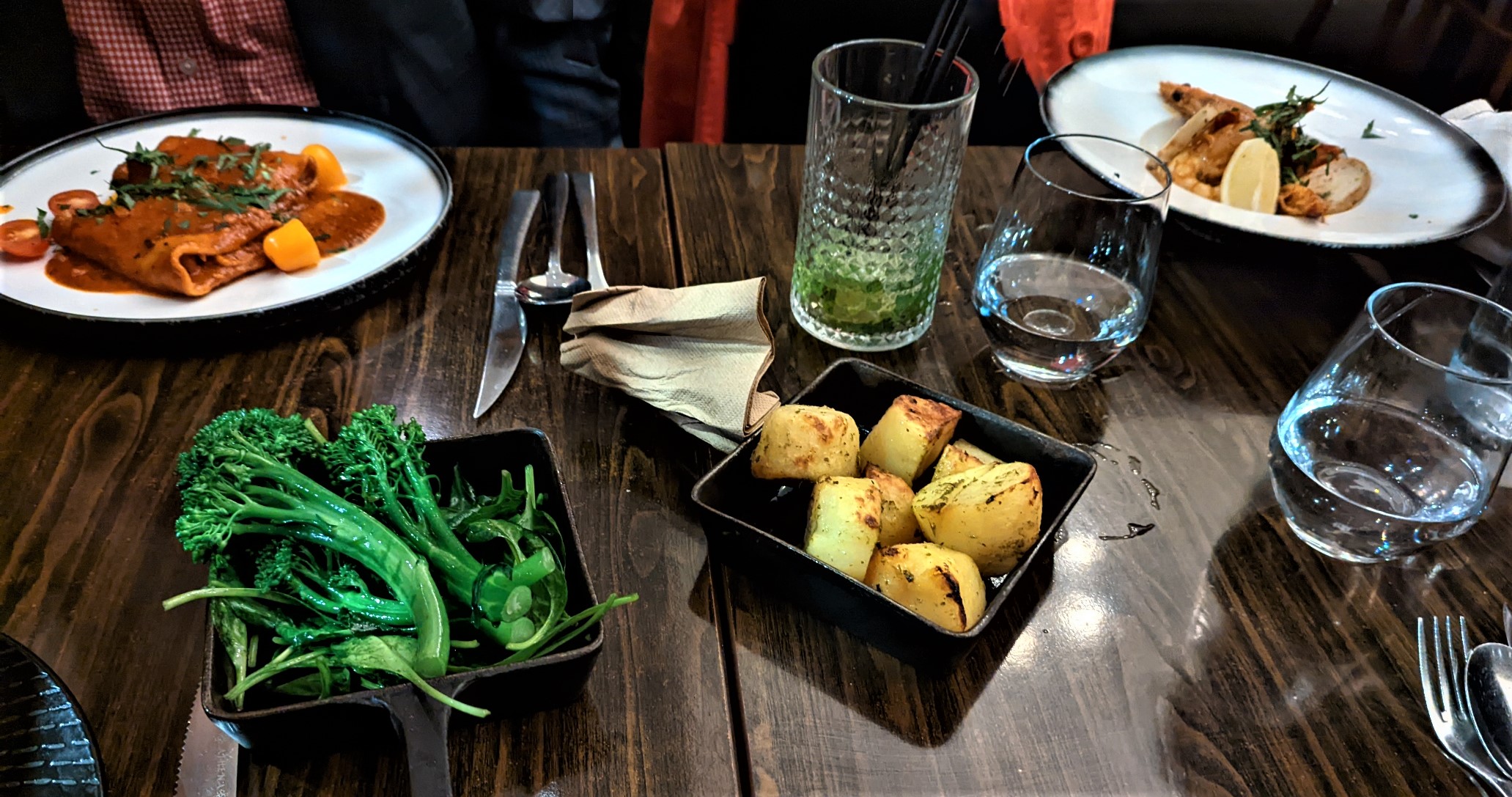
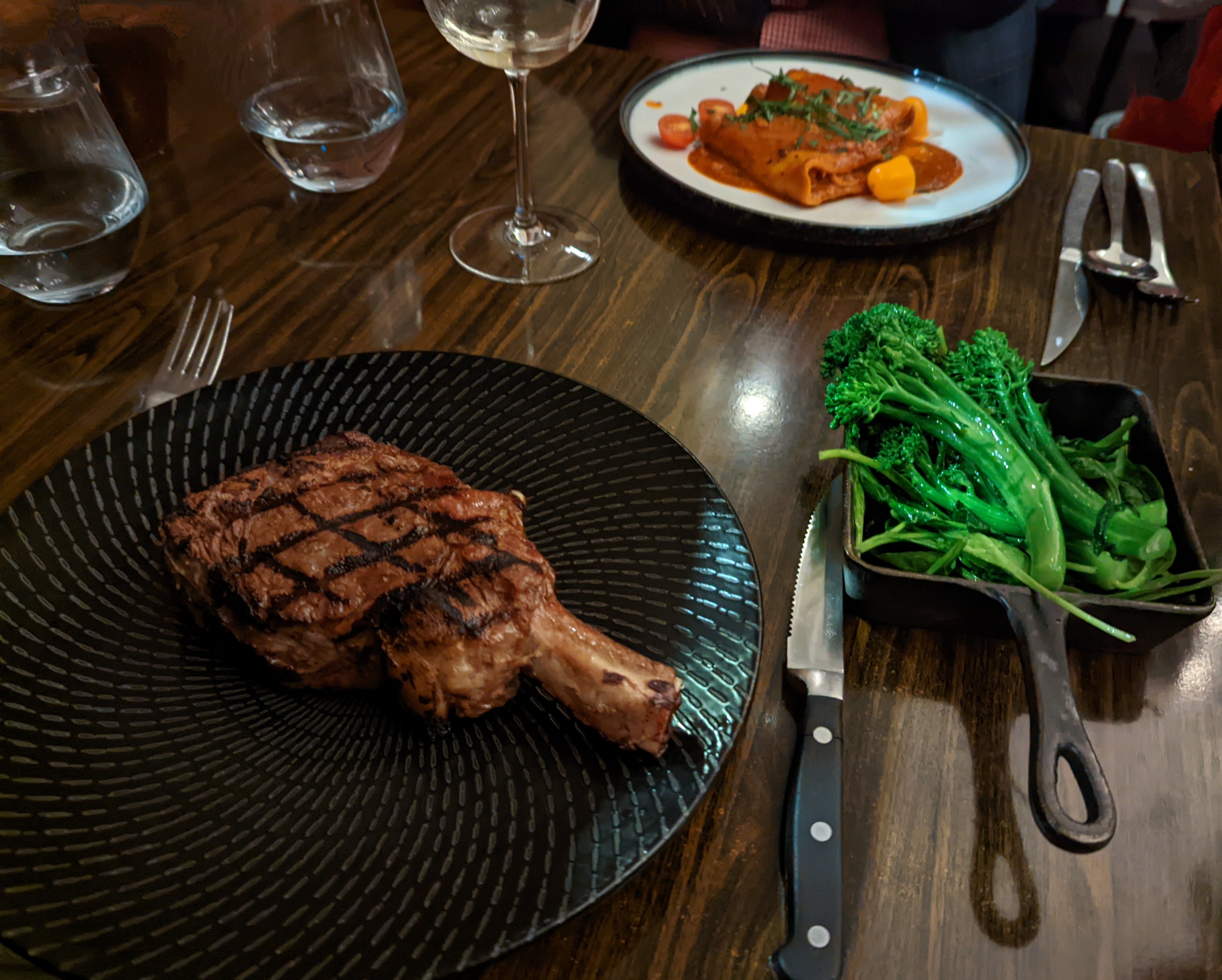
It was very pleasant to return to Blackfire with friends. Having enjoyed the prawns so much on the last occasion, I opted to have them again, with the crab and prawn filled peppers as an entrée. Again, because of my great experience with the crème caramel (of which I could only share a small portion) I took the opportunity to order a whole one this time. Two of my friends opted for the two entrées as well, and we ordered some bread to soak up the delicious sauce with the prawns.

As always, service was pleasant and efficient. The atmosphere is delightful, with the tables spaced well, and the noise level low. Covid protocols were observed.

Years ago we found Blackfire when looking for outside seating for breakfast, and were impressed. We have now enjoyed several lunches there, with large and small numbers, and several dinners. This is always a really enjoyable venue and I shall certainly return.

Soul Origin

Quite a contrast, but nevertheless, an enjoyable casual meal, was my huge salad at in Soul Origin in the Woden shopping centre.

A section has been set aside for eating in Covid aware circumstances, with good spacing, hand sanitiser and check in.

The food ranges over a variety of filled rolls and a large swag of salad choices. The portions are more than generous – and that was for the small dish.

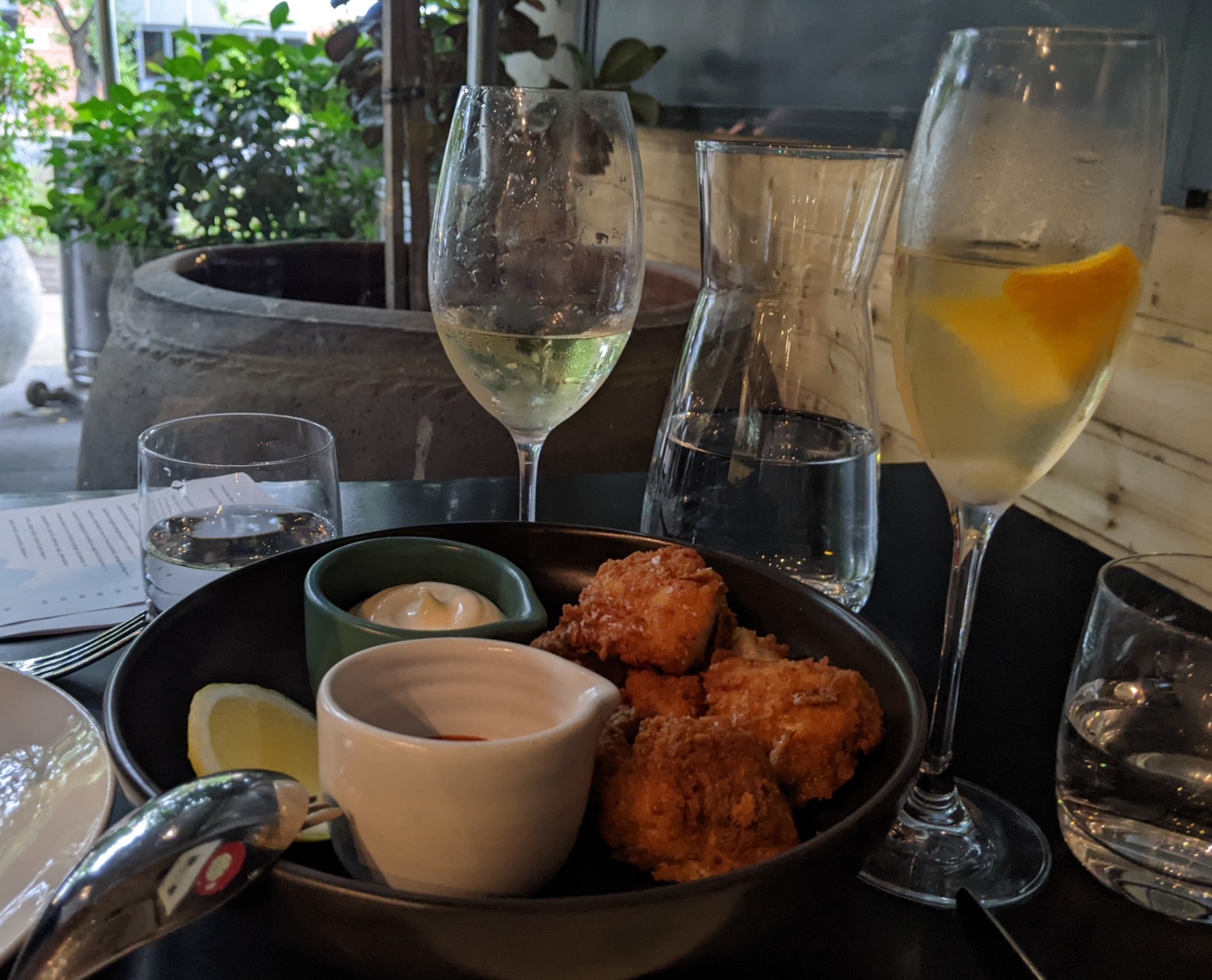
Tilley’s is always fun, not only is it a reminder of the success of a small business venture financed and encouraged under the Hawke Labor Government, but it provides good food and service, and a comfortable venue. This time I sat inside, and fumbled with ordering from the table – it worked! The music is low enough to hear conversation; the floor is carpeted, again helping keep any noise down; and families, couples and groups are all customers.

Drinks that arrived promptly; salt and pepper squid; lots of wicked sweet potato fries; and zucchini fritters. The sauces accompanying each dish were also very good indeed.

Heather Cox Richardson

All images
Heather Cox Richardson

Disconnect between the popularity of the Biden Administration policies and the President

November 27, 2021 (Saturday)

Today, Nate Cohn noted in the New York Times that the policies President Joe Biden and the Democrats are putting in place are hugely popular, and yet Biden’s own popularity numbers have dropped into the low 40s.

It’s a weird disconnect that Cohn explains by suggesting that, above all, voters want “normalcy.” Heaven knows that Biden, who took office in the midst of a pandemic that had crashed the economy and has had to deal with an unprecedented insurgency led by his predecessor, has not been able to provide normalcy.

In her own piece, journalist Magdi Semrau suggests that the media bears at least some of the responsibility for this disconnect, since it has given people a sense of the cost of Biden’s signature measures without specifying what’s in them, focused on negative information (negotiations are portrayed as “disarray,” for example), and ignored that Republicans have refused to participate in any lawmaking, choosing instead simply to be obstructionist. As Semrau puts it: “Democrats want to fix bridges, provide childcare and lower drug costs. Republicans don’t. These are political facts and voters should be aware of them.”

To this I would add that Republican attacks on Democrats, which are simple and emotional, get far more traction and thus far more coverage in the mainstream press than the slow and successful navigation of our complicated world. In illustration of the unequal weight between emotion and policymaking, Biden’s poll numbers took a major hit between mid-August and mid-September, dropping six points. That month saw the U.S. withdrawal from Afghanistan, which was widely portrayed as a disaster at Biden’s hands that had badly hurt U.S. credibility. In fact, Biden inherited Trump’s deal with the Taliban under which the U.S. promised to withdraw from Afghanistan by May 1, 2021, so long as the Taliban met several requirements, including that it stop killing U.S. soldiers. When Biden took office, there were only 3500 U.S. troops in Afghanistan, down from a high of 100,000 during the Obama administration. Biden had made no secret of his dislike of the U.S. involvement in Afghanistan and, faced with the problem of whether to honor Trump’s agreement or send troops back into the country, committed to complete the withdrawal, although he pushed back the date to September.

What he did not know, in part because Trump’s drawdown had taken so many intelligence officers out of the country, was that as soon as Trump’s administration cut the deal with the Taliban, Afghan troops began to make their own agreements to lay down their arms. The Biden administration appears to have been surprised by the sudden collapse of the Afghan government on August 15. As the Taliban took the capital city of Kabul, Afghans terrified by the Taliban takeover rushed to the Kabul airport, where an attack killed 13 U.S. military personnel who were trying to manage the crowd.

Republicans reacted to the mid-August chaos by calling for Biden’s impeachment, and the press compared the moment to the 1975 fall of Saigon. That coverage overshadowed the extraordinary fact that the U.S. airlifted more than 124,000 people, including about 6000 U.S. citizens, out of Afghanistan in the six weeks before the U.S. officially left. This is the largest airlift in U.S. history—the U.S. evacuated about 7000 out of Saigon—and evacuations have continued since, largely on chartered flights. By comparison, in October 2019 under Trump, the U.S. simply left Northern Syria without helping former allies; the senior American diplomat in Syria, William V. Roebuck, later said the U.S. had “stood by and watched” an “intention-laced effort at ethnic cleansing.” And yet, that lack of evacuation received almost no coverage.

Complicating matters further, rather than agreeing that the withdrawal was a foreign policy disaster, many experts say that it helped U.S. credibility rather than hurt it. According to Graham Allison, the former dean of Harvard Kennedy School, “The anomaly was that we were there, not that we left.” And yet, in mid-September, while 66% of the people in the U.S. supported leaving Afghanistan, 48% thought Biden “seriously mishandled” the situation.Aside from getting the U.S. out of Afghanistan, is it true that Biden has not accomplished much?

Biden set out to prove that democracies could deliver for their people, and that the U.S. could, once again, lead the world. He promptly reentered the international agreements Trump had left, including the Paris Climate Accords and the World Health Organization, and renewed those Trump had weakened, such as the North Atlantic Treaty Organization. Biden set out to lead the world in coronavirus vaccinations, making the U.S. the world’s largest donor of vaccines globally, although U.S. vaccinations, which started out fast, slowed significantly after Republicans began to turn supporters against them.

Under Biden, the U.S. has recovered economically from the pandemic faster than other nations that did not invest as heavily in stimulus. In March 2021, the Democrats passed the $1.9 trillion American Rescue Plan stimulus package to rebuild the economy, and it has worked spectacularly. Real gross domestic product growth this quarter is expected to be 5%, and the stock market has hit new highs, as did Black Friday sales yesterday. Two thirds of Americans are content with their household’s financial situation. The pandemic tangled supply chains both because of shortages and because Americans have shifted spending away from restaurants and services and toward consumer goods.

The Biden administration mobilized workers, industry leaders, and port managers to clear the freight piled on wharves. In the past three weeks, the number of containers sitting on docks is down 33%—and shipping prices are down 25%. Major retailers Walmart, Target, and Home Depot all say they have plenty of inventory on hand for the holiday season. With more than 5.5 million new jobs created in ten months, unemployment claims are the lowest they have been since 1969, prompting House Speaker Nancy Pelosi’s (D-CA) office to tweet, “Armstrong Walks the Moon!… Wait, sorry! That’s a headline from the last year unemployment claims were this low.” Workers’ pay has jumped as much as 13% in certain industries, and there are openings across the labor market.

The American Rescue Plan started the reorientation of our government to address the needs of ordinary Americans rather than the wealthy who have dominated our policymaking since 1981. It provided more than $5 billion in rental assistance, for example, and expanded the Child Tax Credit, so that by the end of October, $66 billion had gone to more than 36 million households, cutting the child poverty rate in half. Over the course of the summer, Biden negotiated an extraordinarily complicated infrastructure package, winning a $1.2 trillion bipartisan bill that will repair roads and bridges and provide broadband across the country, and getting the larger, $2.2 trillion Build Back Better bill through the House. Now before the Senate, the bill calls for universal pre-kindergarten, funding for child care and elder care, a shift from fossil fuels to renewable energy, and protection against climate change. Has the Biden administration accomplished anything? It has created a sea change in our country, rebuilding its strength by orienting the government away from the supply-side economics that led lawmakers to protect the interests of the wealthy, and toward the far more traditional focus on building the economy by supporting regular Americans.

BREAKING NEWS
Stacey Abrams, the prominent Georgia Democrat and voting rights activist, announced she would run again for governor in 2022.
Wednesday, December 1, 2021 3:56 PM EST
The move sets up a likely rematch with Gov. Brian Kemp, the Republican who narrowly defeated Ms. Abrams in 2018.
Rachel Interviews Stacey Abrams

Week beginning 1 December 2021

The books reviewed this week were provided to me by NetGalley. They both reflect upon women’s fight for the vote. The Accidental Suffragist and The Rebel Suffragette tell the stories of two rather different women, the first in fictional form, and the latter non-fiction. Both are worthy contributions to winning the vote for women in America and Britain. Well, at the time the stories end, for a particular group of women!

Galia Gichon The Accidental Suffragist Wyatt-Mackenzie Publishing 2021.

Image result for The Accidental Suffragist by Galia Gichon. Size: 115 x 170. Source: savoryourreads.com

Winning women’s suffrage in America and Britain was an arduous journey, and even then, in both instances the vote was limited to women over thirty, and in Britain a property condition imposed another restraint. Since the centenary of each, fictional accounts of both fights for women’s suffrage have been published in celebration of women’s achievement. The Accidental Suffragist by Galia Gichon is a very worthy fictional companion read to Sally Nichols’ Things a Bright Girl Can Do, a fictional account of the British women’s fight for the vote, won in 1918. In America, women’s suffrage was initially won state by state, but it was not until 1920 nationally women were given the right to vote through a federal amendment to the Constitution. Gichon is celebrating that achievement in her book.

Beverley Adams The Rebel Suffragette The Life of Edith Rigby Pen & Sword History 2021.

Image result for The Rebel Suffragette. Size: 120 x 170. Source: www.pen-and-sword.co.uk

I was drawn to this book by the title as I had not heard of Edith Rigby and was interested in what Beverley Adams believed made her a rebel suffragette. I had thought of all the women involved in fighting for the women’s vote as rebels, after all, they were seeking to undermine the political power men exerted (well, some men) through the ballot box, and ultimately in parliament. However, I soon realised that Adams was indeed right to describe Edith Rigby as a rebel, denoting her as special in her adoption of the cause for women’s voting rights, and others she espoused. I also regret having been in Preston for a conference and not realising that in that city there were remnants of a history that I would have been thrilled to learn.

The complete reviews are at Books: Reviews .

After lockdown Covid in Canberra

New cases of Covid on 25th, eight; 26th, eight; 27th, seven.

On the 27th November the ACT Government introduced precautionary measures in response to the emerging Omnicron variant of Covid 19. These are relevant only to travellers from South Africa, Lesotho, Botswana, Zimbabwe, Mozambique, Seychelles, Malawi and/or Eswatini. These travellers are subject to a Covid test and quarantine.

New cases on the 28th, 29th and 30th November are: seven, seven, and four.

I had a Pfizer booster on Tuesday and spent all Wednesday in bed, so this post is late. Great to have the booster, but bad to miss a deadline.

Erin Brockovich, Superman’s Not Coming, (Books: Reviews) hopefully would be pleased with the following outcome to deal with the immediate situation in Flint, and the long term resolution of the problem with lead pipes offered under the Build Back Better legislation enacted by Congress.

Michigan judge approves $626 million deal to settle Flint water crisis lawsuits

Paul Best  Fox News Report


A judge gave final approval on Wednesday to a $626 million settlement for residents of Flint, Michigan, who sued the state over contamination of their drinking water by lead and bacteria in 2014 and 2015. https://www.dianomi.com/smartads.epl?id=3533

“The settlement reached here is a remarkable achievement for many reasons, not the least of which is that it sets forth a comprehensive compensation program and timeline that is consistent for every qualifying participant,” U.S. District Judge Judith Levy wrote in the 178-page opinion. 

The state of Michigan will pay about $600 million for its role in the crisis, while Flint will pay $20 million, McLaren Health will pay $5 million, and Rowe Professional Services will pay $1.25 million.

In 2014 and 2015, regulators from then-Gov. Rick Snyder’s administration allowed Flint to use water from the Flint River without properly treating it. 

MICHIGAN’S WHITMER UNDER FIRE FOR SLUGGISH RESPONSE TO BENTON HARBOR LEAD WATER CRISIS

Residents started complaining of health issues such as hair loss and rashes, and a group of doctors found dangerous levels of lead in the blood of children in September 2015. The city switched back to a Detroit regional water agency the next month. 

Children who were ages 6 and younger will receive more than half of the settlement, while the rest will go to other affected children, adults who can show an injury, businesses, and anyone who paid water bills. Attorneys are seeking as much as $200 million from the settlement, but the judge said that will be decided in the future. 

“We hope this settlement helps the healing continue as we keep working to make sure that people have access to clean water in Flint and communities all across Michigan,” Michigan Governor Gretchen Whitmer said in a statement. 

The $626 million settlement was originally reached in August 2020 and received preliminary approval in January. 

Corey M. Stern, a partner at Levy Konigsberg who served as counsel for some plaintiffs, said that the settlement “would not have been possible without the children and families of Flint relentlessly taking a stand against those who failed to keep them safe.”

“Although this is a significant victory for Flint, we have a ways to go in stopping Americans from being systematically poisoned in their own homes, schools, and places of work,” Stern said. 

Rick Snyder, who was governor of Michigan from 2011 through 2018, was charged with two misdemeanor counts of willful neglect of duty in January related to the crisis. Eight other former state and local officials are also facing criminal charges. 

The Associated Press contributed to this report. 

Bob McMullan

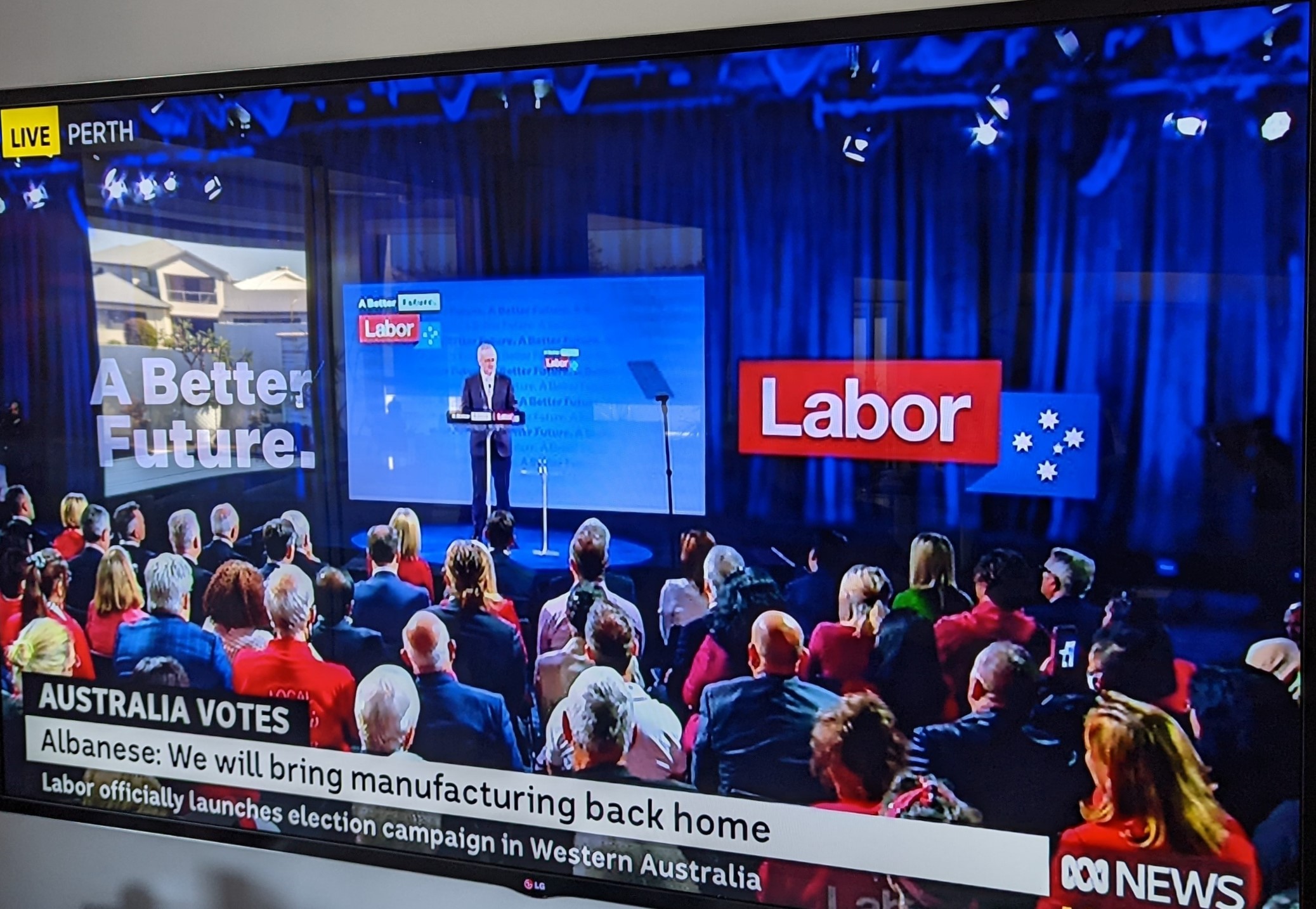
The small talk about Albanese and small targets is wrong

Anthony Albanese
(Image: AAP/Joel Carrett)

The notion that the federal Labor leader is running a small-target strategy ahead of next year’s election flies in the face of the facts.

When the prevailing orthodoxy doesn’t seem to fit the underlying facts, it is wise to question the orthodoxy rather than the facts. I don’t see the facts which back up the “small target” theory about Labor leader Anthony Albanese’s approach to the 2022 election.

With the latest NBN announcement the current opposition has more policy out there at this stage of an election cycle than any opposition I can remember in the past 50 years except those led by John Hewson in 1993 and Bill Shorten in 2019.

I understand that different people have different priorities which they would like a Labor opposition to campaign on. And, obviously, such people will be disappointed when the party displays priorities other than those they would like to see.

But with an election probably six months away it is ridiculous to expect a well-organised opposition to have all its policies laid out by now. Not because they will be stolen or attacked, but to ensure there is room for new announcements during the campaign.

Can you imagine the outcry should the Opposition leader get up and say at the campaign launch that “all our policies have already been announced”. However many policies had already been launched, the hue and cry about a small-target strategy would be off and running again.

Striking a balance between early announcements to give candidates and supporters something to campaign on and keeping enough back for the campaign is an art, not a science. I don’t know Albanese’s plans about this balance but I have been involved in running enough campaigns to understand the nature of the challenge.

I appreciate if you are a male over 60 you might not think the extensive policy Albanese announced some time ago on childcare is important. But thousands of women (and men) with children regard it as their number one priority. It is an important economic and social policy. It is also a major point of policy difference between the government and the opposition in the lead-up to the election.

If you are a comfortable middle-class citizen in secure housing, you may not regard social and affordable housing as a priority, but hundreds of thousands of Australians who are struggling to find adequate housing appreciate the priority it has received from the opposition. The announcement of a $10 billion fund to build new affordable housing is another important point of difference. It is also a policy with obvious social value and one that will create lots of working-class jobs.

Everybody regards domestic violence as an important issue but very little has been done about it. The current opposition has the strongest policy I have seen on the issue.

I have written about the Indigenous Voice to Parliament issue here before. I think it is the most important long-term issue that will be decided by the election outcome. And there is no equivocation from Albanese on this crucial and controversial issue.

The public is crying out for a national anti-corruption commission, but it is not an easy issue to get right. It seems to me Mark Dreyfus and the Opposition have done a pretty good job of getting the balance correct.

The latest NBN announcement is a big issue and a bold promise. The difference between the government’s destruction of the planned NBN rollout and the opposition’s commitment to provide $2.4 billion to renew a public NBN is stark.

Of course, there are issues close to my heart that the opposition has not been brave on yet. And maybe they never will make an announcement on the aid budget or arts funding. But the big picture is more important than any individual priority. By election time there will be plenty of issues of contrast between Labor and the Coalition — not about everything, but about a lot of very important issues.

The excellent review of the last Labor campaign by Jay Wetherill and Craig Emerson made it clear that policy discipline is important. In 2019 many fine policies went unnoticed because there were too many policies out there for the public to comprehend.

I am not aware of the Opposition’s intentions on future policy announcements. I know they will be somewhat constrained until they have seen the Pre-election Fiscal Outlook or, more probably, the Mid-year Economic and Fiscal Outlook. I hope and expect they will have a lot to say between now and the election, but the idea that they are running a small-target strategy flies in the face of the facts.

There are two cardinal rules to remember about policy announcements when running an election campaign from opposition. The first is you don’t have to be able to do everything before you do anything. The second is “gouvenir est choisir”. This is a famous quote from former French prime minister Pierre Mendes France which translates as “to govern is to choose”.

When judged against these two rules the Albanese-led opposition measures up quite well with six months to go. It is not perfect but that is not the standard I would set to judge it by. Time will tell if the strategy and the leadership style will be successful. But a small target it is not.

This article was first published in Pearls and Irritations.

THE WOMEN WHO MADE AUSTRALIAN TV PART 3

BY JEANNINE BAKER

WARNING: Aboriginal and Torres Strait Islander viewers are advised that the following program may contain images and/or audio of deceased persons.

This is the third article in a 4-part series on women’s contribution to early Australian television production.

A portrait of three people. A man is holding a film camera on a tripod. One woman is standing with her hand on her hip and the other woman is crouching down with papers on her lap. They are in a natural setting.
Director Marion Ord, continuity girl Betty Barnett (standing) and camera operator Bob Feeney filming Valley of the Sentinels in Newnes, NSW, 1971. Courtesy Australian Broadcasting Corporation – Library Sales

While key creative roles in Australian television in the 1950s to the 1970s were dominated by men, some women also forged careers as producers and directors, mainly in light entertainment, children’s, educational and documentary programs. The NFSA collection helps tell the stories of some of these groundbreaking women.

At the ABC, radio producer and accomplished musician Margaret Delves was one of the first 6 producers selected for ABC television in 1956. She produced live entertainment and game shows, and the ABC’s first educational TV program, Kindergarten Playtime. see the full article at Television: Comments

Week beginning 24 November 2021

Robin Fields, “I Love My Air Fryer” 5 – Ingredient Recipe Book, From French Toast Sticks to Buttermilk Chicken Thighs, 175 Quick and Easy Recipes Adams Media, An Imprint of Simon & Schuster, 2021 was provided to me by NetGalley.

Image result for I Love My Air Fryer Robin Fields. Size: 164 x 170. Source: www.target.com

Two weeks after she unwrapped her new air fryer my granddaughter told me how exciting it was to use, and how often she had cooked in it. I looked at mine, acquired several months before, and although I was impressed with it, barely used in comparison with my familiar appliances. Requesting “I Love My Air Fryer” from NetGalley seemed a logical conclusion. Would the cookbook serve both purposes? Those of the enthusiastic young cook and the ambitious but hesitant older cook moving from the familiarity of the microwave and small oven in her double oven just installed? My request was successful, and my review will include observations from my granddaughter about using an air fryer in general. 

The complete book review is at Books: Reviews

Post lockdown Covid in Canberra

New cases in Canberra on the 18th and 19th November are: twenty five, and seventeen. The vaccination rate for ACT residents over twelve is now 97% fully vaccinated! New cases on the 20th, 21st and 22nd were seventeen, sixteen and eleven. There were nineteen new cases recorded on the 23rd and fifteen on the 24th.

Two dose vaccinations for people over twelve in the ACT are now 97.4%.

Claudia Karvan is on the trail of the great Australian novel

By Melinda Houston Sydney Morning Herald

November 22, 2021 — 8.30am

One of the more surprising facts to emerge from a new documentary series about Australian fiction is that its host, Claudia Karvan, was not a big reader as a kid. “I just used to watch a lot of classic movies,” she says.

So it’s fitting that it’s a role in a classic movie – or at least a movie that became a classic, High Tide – that persuaded her of the importance of books.

By her own admission, Books That Made Us presenter Claudia Karvan wasn’t a big reader as a child.
By her own admission, Books That Made Us presenter Claudia Karvan wasn’t a big reader as a child.CREDIT:ABC

“Judy Davis [High Tide’s star] is so smart, she has such an extraordinary mind,” Karvan says. “When I went back to school I was at the bottom of my English class, and I thought if I want to be an actor I have to be smart and I have to be a reader and be literate and understand how to analyse texts. So I really started applying myself.”

Karvan is now an ambassador for the Stella Prize and our guide through the world of Australian literature, both highbrow and not so much, in Books That Made Us.

One of the pleasures of the three-part series is its broad canvas. Peter Carey, Tim Winton, David Malouf are, of course, represented. But so are Melissa Lucashenko, Tara June Winch, Sofie Laguna, Craig Silvey and Liane Moriarty.

Nor is it all about Karvan’s personal favourites (although she did lobby to have Laguna’s The Choke included). In the first episode, she’s obliged to confess that she couldn’t finish The Slap, so loathsome did she find all its characters. Imagine her dismay when the producers told her she was going to have to interview its author Christos Tsiolkas.

“I thought, how am I going to meet this author and talk about this book? I don’t even want to go back and try again. So that was a really honest conversation,” she says. (Tsiolkas, to his credit, takes her confession in his stride.)

That range of authors necessarily means the conversations are expansive. Karvan talks to people whose books vividly reflect the culture or subculture from which they spring – whether that’s Michael Mohammed Ahmad’s The Lebs or Lucashenko’s Too Much Lip. She also talks with authors who have written wildly outside their experience, like Craig Silvey with Honeybee.

One of the vexed 21st century questions – and not just in Australian literature – is who gets to tell the stories. Karvan says there should be no rules.

“But if you are delving into uncharted territory you have to be very aware of the responsibility you’re taking on,” she says.

“If you’re not telling a story that is innately yours, you’d want to have exceptional craft. You’d want to be doing a lot of research. A lot of thinking. A lot of consultation. And be sure it’s coming from a good place.”

Claudia Karvan (right) with Liane Moriarty in The Books That Made Us.
Claudia Karvan (right) with Liane Moriarty in The Books That Made Us.CREDIT:ABC

Karvan also rejects the notion that Australian literature has any kind of defining character: “These are utterly, utterly individual voices telling completely individual experiences and that’s what’s so beautiful about doing this series – appreciating the myriad different perspectives and voices.”

What all great Australian fiction has in common, though, is that – like all good fiction – it represents something true about the world and the people in it.

When Karvan was a mother to young kids, she went through a long non-fiction binge. She felt she needed to urgently educate herself. About everything. Now – and having worked on her first documentary – she wonders if fiction can be as truthful, if not more so, than fact.

“I think in fiction the truth can be more disguised and you tend to absorb it in a subconscious or unconscious way,” she says. “You sort of marinate in it.”

In non-fiction, it’s more out in the open, it’s more cerebral, it’s more a glaring statement. “But it’s not less manipulated,” she says. “The perception is that in non-fiction the truth just is. But I think it’s sometimes more manipulated than a drama.”

In the TV series Bump, on which Karvan is a producer and star, a lot of the team’s personal stories made it into the scripts. “You can kind of slip truths in there,” she says.

She rejects the idea that scripts and books are anything like each other. “I can’t compare them. A script is just part of a long process, whereas a book is complete,” she says, before adding that they do share crucial characteristics.

“Reading definitely does speak to my profession. Words and dialogue and psychology and storytelling … reading and writing and books have played a huge part in my life – I don’t think I’d be doing what I do today without them.”

Books That Made Us is on ABC, Tuesday, 8.30pm.

This article raises the question – what about The Fortunes of Richard Mahoney by Henry Handel Richardson? Is there some way that books of significance can be discussed without having an author interview? It seems a travesty to ignore this book (and possibly others) that surely belongs in a series referred to as in search of the great Australian novel.

The following slightly edited articles are from my Google alert – women and literature, weekly update 24 November 2021. The first raises one of the controversial issues flagged by Leslie Kern in Feminist City, reviewed September 15 2021 in Books: Reviews. The second was of particular interest to me after reading Nicci French’s House of Correction (Simon & Schuster, 2020). The central character’s most public image is the lack of any traditional feminine features. Her story is engrossing and she is a delight!

HOW IS IMMIGRANT LITERATURE DISMANTLING WHITE FEMINISM?

Dee Das Nov 19, 2021

This content contains affiliate links. When you buy through these links, we may earn an affiliate commission.

White feminism, with its exclusionary policies and parochial thought process, has not only exacerbated the condition of immigrant women of color but also has rendered them invisible by relegating their issues to the margin. However, with the advent of immigrant literature and more and more authors of color becoming vocal about the status of women of their communities, the anxieties, loneliness, and fears of abandonment of immigrant women are coming to the limelight. Again and again, immigrant literature poses the question of why immigrant women, with all the potential they carry, still don’t have the right to live a dignified life.

SELF-LIBERATION FOR ALL(?)
cover image of Dominicana by Angie Cruz

In Koa Beck’s White Feminism, she writes that the trope of the “white, depressed housewife” often overrides other cultural identities. Lack of financial autonomy, abusive marital dynamics, and prolonged stress and exhaustion are issues explicitly studied with respect to the ultra-feminine, dainty, middle-class, young white housewife. However, thanks to immigrant literature, this narrative is slowly changing. In Dominicana, Angie Cruz debunks this archetype of the white housewife being the ultimate victim of patriarchy by centering the story of a Dominican teenage bride named Ana. This novel is a bleak portrayal of a doubly disenfranchised female undocumented immigrant who has to battle with her brute of a husband and the fear of getting deported every day.

In the 1970s, “self-liberation” became a new mantra for white feminists. Asserting their humanity and value became quintessential to the preachers of white feminism. While encouraging women to become more self-interested and start existing as more than just a constant source of resources to others was imperative, this type of thinking prioritized individual ascension over collective female empowerment. Ana’s green eyes were considered “a winning lottery ticket”. Her family wanted her to settle down with her husband and eventually demand money, education, and papers facilitating her family’s rehabilitation to America. Cruz shows that for Ana, the goal of independence would come at the cost of her family’s ticket to a better life. Issues of education and political justice are of little impact to women like her because, in most cases, they don’t have access to dignified living conditions and public spaces, owing to their status as undocumented immigrants. 

THE ILLUSION OF CHOICE
cover of A Woman is No Man by Etaf Rum

Traditional women’s labor has never been considered as part of the economic equation. Performing rigorous labor, as we see in the cases of Adah in Buchi Emecheta’s Second Class Citizen and and Isra in Etaf Rum’s A Woman Is No Man, is thought of as women’s default state of being. Adah had to work outside her home in addition to executing domestic labor. Since Black women like Adah, to sustain themselves and their immigrant families, had to work, they didn’t fit into the white feminist archetype of the moneyed housewife advocating for her skincare regime and the importance of me-time. Her children are tended to by women from economically underprivileged backgrounds in the next room, so it’s easy for her to think the way she does. Adah couldn’t hire a nanny like her white counterparts, and courtesy of her dislocation, nor could she rely on her family members to help her raise her children. Isra’s domestic labor was thought of as a natural resource by her family that didn’t need to be accounted for. The way she was ill-treated, it felt like her labor didn’t need maintenance, replenishing, or acknowledgment of any kind, let alone appreciation. It seemed like she was brought to America by her husband’s family to slowly annihilate herself while taking care of them.

When economics think of women’s labor as “natural”, capitalism has coded it as “choice”. For white feminist ideologies like autonomy, agency, and self-empowerment to prosper, the barriers specific to women of color had to be left unacknowledged as white feminism catered to white women whose privilege of ‘choice’ didn’t come at the expense of their having a roof over their head. It excluded the narratives of women of color, like Adah and Isra, as their rebeling could lead to ostracization and physical harm. They couldn’t choose to stop laboring for their husbands because of their precarious positions as immigrant women. The men pushed them to vulnerable situations, leaving them no room to operate on their own terms. By bringing into fore the nuanced nature of the lives of these women, authors like Emecheta and Rum are preventing the dangers of the single-story enshrined by white feminism from doing more damage than it has already done.

White feminism has been the bane of women of color’s existence, but with the emergence of immigrant literature, the situation is bound to take a turn for the better. If you’re interested to venture into the world of immigrant literature further, check out Why You Need To Read More Black Immigrant Literature


Dear YA authors, I want my femininity back

By Aminah Malik

Published November 19, 2021

When I first checked out The Hunger Games from my middle school library, I excitedly dove into the story, ready to experience the thrilling novel I’d heard so much about. But I wasn’t even fifty pages into the book when I realized I had one rather large problem: I couldn’t stand Katniss. 

While her four-note whistle, three-fingered salute, and iconic French braid marked a new era of young adult literature finally dominated by women, the long wait for female representation allowed us to readily embrace heroines who were, at best, subpar. All these new depictions of strong female leads—women who sparked revolutions, held power, and were fierce and unstoppable—came at a price. Series after series, authors made their female characters “strong” by stripping them of traditionally feminine qualities.

This characterization perpetuates dangerous ideas about the relationship between femininity and strength, an occurrence we cannot afford in a literary world with so few female protagonists.

Take Katniss. She detests intimacy and is seemingly determined to avoid close relationships. In her mind, showing vulnerability or asking for help are nothing more than displays of weakness. She keeps herself from crying at all costs. She is a thinker over a feeler and a fighter over a lover. These aspects of her made her completely unrelatable—she was as cold as an ice cube and as expressive as a rock. I hated her personality, and having to read hundreds of pages narrated by her made my brain spin in circles inside my head.

I bitterly finished the novel and the rest of the series, holding out hope until the very end that it—and Katniss—would grow on me (they didn’t). My twelve-year-old self accepted the fact that maybe I just didn’t have the same taste in books, or characters, as everyone who had enjoyed the novel, and moved on to the next mainstream dystopian trilogy. But the other female leads, like Tris of Divergent and Teresa of The Maze Runner, were just as insufferable as Katniss.

The truth is, the traits these characters lacked, the ones treated as impediments to success, were exactly the ones associated with traditional femininity: emotionality, vulnerability, and empathy. My dislike for the protagonists stemmed from an inability to connect to them—an inability caused by the absence of typically feminine traits I value as part of my identity. Society often sees women as providers of comfort and warmth, and sees this softness as a limiting factor, so these female leads had to break this norm to make a name for themselves. These heroines sent the message that in order for women to be strong or achieve power, they must shed any qualities that make them traditionally feminine. But stripping female characters of these traits implies that womanhood is inherently incompatible with strength. 

The presence of this idea in YA novels poses a danger to the self-image of the young girls reading them. Classifying this depiction of strength as the definition of female power tells young women that they must sacrifice a portion of their womanhood if it conforms to societal norms to gain respect and validity as leaders.

Not only do these female characters reinforce harmful ideas of what it means to be strong, but they also fall short from a literary perspective; in effect, the women of these novels lack depth. The emotional sides of their personalities are left underdeveloped out of fear that focusing too much on them would make the women too “girly” and thus less powerful and fierce. YA authors’ method of creating unstoppable female characters by overcompensating for their femininity left them with characters who lacked the traits many women—and people in general—relate to.

In reality, the inclusion of such characteristics would have improved not just the books’ messages on womanhood, but also the depth of their personalities and the literary value of their novels as well—a truth evident in novels with male protagonists.

For example, emotionality, though a traditionally feminine trait, was ever present in perhaps the most well-known male YA lead: Harry Potter. His reckoning with his parents’ deaths and ability to mourn, miss, and remember them added purpose to his quest against Voldemort. Harry is in touch with his emotions, giving his story a personal meaning that readers could connect to. He is able to show vulnerability and ask for help when he needs it. He understands that he can’t do everything alone and recognizes the value of teamwork, allowing others to take the lead when necessary. 

Meanwhile, Katniss is the opposite. Since her emotional side is poorly developed, she is incapable of seeking out assistance and is hesitant to connect with others on an emotional level. However, a greater appreciation for these seemingly feminine qualities—vulnerability and sensitivity—could have been in her best interest. Had Katniss been more open to accepting help, perhaps she would not have had so many close encounters with death. If she had been more empathetic, maybe she could have avoided making so many enemies. The difference in the character-building highlights society’s double standards for women. Since men like Harry Potter are considered natural leaders, emotionality is not considered an obstacle to their success. But as women are consistently underestimated, they cannot afford the same luxury of vulnerability.

YA depictions of women fall short of their initial intentions. While many were created by female authors and stemmed from a valid desire to put women in the spotlight, they lack authenticity and range. We must question the validity of female representation if it fails to embody the traits many women relate to. Women can be emotionally expressive and vulnerable—both traditionally feminine traits—and still be independent and inspiring. They can be stereotypically feminine and still rise to positions of power. Unlike Katniss, they can be lovers and fighters.

While we still need more female representation in media and literature, we must be critical of the depictions we receive. If the price of a female character is femininity, are we really willing to pay?


Aminah Malik

Week beginning 17 November 2021

This week’s post concentrates on voting rights, in America, the UK and Australia. The most significant are the changes proposed in America to introduce voting legislation such as the Freedom to Vote Act and the John Lewis Voting Act designed to overcome discriminatory legislation already in place. In the UK and Australia the demands that voters provide identification, using the arguments used in America that fraud is a possibility, are again like in America, without any merit. The last post in this blog is a transcript referring to the ugly treatment of American electoral officials. These articles appear after the Canberra Covid update.

The book review this week, John Lewis: The Last Interview and Other Conversations, Melville House, 2021 begins the debate. This tremendous book was provided to me by Net Galley and Melville House, for review.

John Lewis: The Last Interview and Other Conversations

I have longed to know more about this remarkable man since seeing one of the MNSBC anecdotes about ‘who they are’ including commentary on John Lewis and his reference to ‘good trouble’. The footage includes reference to the march in Selma, Alabama when John Lewis, accompanied by black and white activists attempted to cross the Edmund Pettus Bridge. Until he died in 2020 John Lewis and supporters of his ideals rallied at the Bridge.  John Lewis, Congressman, is shown at the Bridge and recalls John Lewis, student activist from the 1960s. The original footage from the carnage enacted upon the marchers was instrumental in influencing policy makers, culminating in the 1965 Voting Rights Act, enacted during President Lyndon Johnson’s Presidency.

See the full review at Books: Reviews

Post Covid Lockdown

New cases recorded on 11 November – nine cases. There are no cases in hospital – for the first time since August 19. There remain 150 active cases in Canberra , with 1,769 cases associated with the Delta outbreak. On 12 and 13 November fifteen and eleven new cases were recorded. There are no cases in hospital. Again, on the 14th, there no people with Covid in hospital. However, there are fifteen new cases. Monday, 15 November, ten new cases recorded; Tuesday 16 November, twelve new cases; and on 17 November, six new cases. There are three people in hospital, with one in ICU on a ventilator. 96.6% of Canberrans over twelve have been vaccinated.

Voting rights – America, Australia, UK

After reviewing John Lewis: The last interview and other conversations it seems relevant to comment on voting rights and attempts to improve or restrict them. The following articles provide a brief reminder of what is proposed.

Heather Cox Richardson – Freedom to Vote Act

This image has an empty alt attribute; its file name is heather-cox-richardson-2-1.jpg

October 20, 2021 (Wednesday)

This afternoon, Senate Republicans blocked a discussion of the Freedom to Vote Act. The measure is the compromise bill put together by seven Democrats and one Independent after Senator Joe Manchin (D-WV) said he could not support the more sweeping For the People Act passed by the House of Representatives. Manchin maintained that a carefully crafted bill could attract the ten Republican senators it needed to break a filibuster. The Freedom to Vote Act would provide for automatic and same-day voter registration, and it would limit the culling of voters off voter rolls. It would provide for two weeks of early voting and allow anyone to vote by mail. It would make Election Day a holiday and make sure that there is a paper trail for ballots.

The Freedom to Vote Act would provide for automatic and same-day voter registration, and it would limit the culling of voters off voter rolls. It would provide for two weeks of early voting and allow anyone to vote by mail. It would make Election Day a holiday and make sure that there is a paper trail for ballots.At the state level, it would start the process of rolling back the legislation passed by 19 Republican-dominated state legislatures to skew elections hard in their favor. It would prohibit partisan gerrymandering, require transparency in advertising, and protect election officials from the attacks they’ve endured since the 2020 presidential election. It would rebuild the Federal Election Commission (FEC), which oversees our election process but which was gutted under former president Trump. These reforms are nonpartisan and are an attempt to push back against highly partisan state laws that voting rights experts say will essentially allow Republicans to declare their own outcomes for elections.

Today all Republicans voted no even to a discussion of the bill. All Democrats voted yes, but Majority Leader Chuck Schumer (D-NY) switched his vote to a no so that, as a member of the majority, he could bring the measure back up later. What is stopping the measure from coming to the floor for debate is the Senate filibuster rule. That rule is a holdover from the early days of Congress, when there was no way to stop a member from talking, so that anyone eager to make sure something could not pass could just talk until the other members of Congress gave up and moved to another piece of business. The House early on created a mechanism to move from debate to a vote, but the Senate did not. The filibuster is essentially a refusal to stop talking, although a series of reforms have changed it a bit from its early days. During Woodrow Wilson’s term in the early twentieth century, the Senate adopted the cloture rule, which permitted two thirds of the Senate to vote to stop the debate—but not immediately—and to move on to a vote. That’s where we get the concept that it takes 60 senators to break a filibuster. In the late twentieth century, the Senate also changed that idea of nonstop talking to a threat to talk, lowering the bar significantly for a minority to stop legislation it doesn’t like. Nowadays, they can just phone it in. It also exempted certain financial bills from the filibuster: those are the things that fall under “budget reconciliation” measures. In the early twenty-first century, the Senate exempted judicial nominations from the filibuster and then, under then–Majority Leader Mitch McConnell (R-KY), Supreme Court nominations. (That’s how Neil Gorsuch, Brett Kavanaugh, and Amy Coney Barrett got confirmed to the Supreme Court.) There is discussion now about removing voting rules from the filibuster as well, since we are in a bizarre situation where states that have heavily gerrymandered their districts to benefit Republicans are passing voting restrictions by simple majority votes while the federal government, charged with protecting voting rights, needs a supermajority of the Senate. Since the Republican Senate seats skew heavily toward rural areas, in this case, it is possible for 41 Republican senators, who represent just 21% of the population, to stop voting rights legislation backed by 70% of Americans.

If this is permitted to stand, more and more voters will be silenced, and the nation will fall under a system of minority rule much like that in the American South between about 1876 and 1964. The South always held elections…and the outcome was always preordained. Meanwhile, the Republicans who are demanding control of our elections are also doubling down on their support for the former president, knowing that their most reliable voters are his loyalists. Today the House Rules Committee passed a resolution to send the criminal referral for Trump adviser Stephen K. Bannon, who defied a congressional subpoena, to the House floor for a vote. That itself wasn’t much of a surprise—it was procedural—but more surprising was the loud fight Representatives Matt Gaetz (R-FL) and Jim Jordan (R-OH) put up against the resolution. Both men are fervent Trump supporters, and Jordan, at least, is himself likely to be a witness before the House Select Committee to Investigate the January 6th Attack on the United States Capitol. While they conceded that Joe Biden is indeed president, they refused to agree that he won the 2020 election, and they maintained that the investigation into the attack on the counting of the certified ballots on January 6—an attack that came close to pulling down our government—is simply an effort to distract voters from what they consider to be the failures of the Biden administration. When the Rules Committee took a vote on whether to advance the report to the House floor, all the Democrats voted yes, and the Republicans voted no. The vote was 9–4. But there was a new feeling in the room. When Gaetz and Jordan started in with their usual attacks to create sound bites, the Democrats pushed back. Representative Jamie Raskin (D-MD), a professor of constitutional law, actually said to Gaetz: “You know what, that might work on Steve Bannon’s podcast, but that’s not gonna work in the Rules Committee of the United States House of Representatives.”

Representative Jim McGovern (D-MA), the committee’s chair, pressed Jordan about his own conversations with Trump that day. Jordan has repeatedly changed his story about what he remembers about talking with the former president that day but has admitted that they spoke more than once. “Of course I talked to the president,” Jordan told McGovern. “I talked to him that day. I’ve been clear about that. I don’t recall the number of times, but it’s not about me. I know you want to make it about that.”Steny Hoyer (D-MD), the majority leader of the House of Representatives, says the House will vote on the committee’s criminal contempt report for Steve Bannon tomorrow. Republican leaders are urging House Republicans to vote no.A reminder: Bannon flat out refused to answer a congressional subpoena. Perhaps the Democrats are pushing back on the bullying of the Trump loyalists in part because some who have previously escaped legal jeopardy are now in trouble. In Florida, Gaetz’s former friend Joel Greenberg, who has pleaded guilty to sex trafficking, got an extension on sentencing Monday because he is still providing information to investigators. Assistant U.S. Attorney Roger Handberg told the court that Greenberg has made allegations that “take us to some places we did not anticipate.” There is a shorter timeline for Representative Jeff Fortenberry (R-NE), who was indicted yesterday for lying to the FBI about foreign campaign contributions (which are illegal under U.S. law). Fortenberry uploaded a video to YouTube, titled “I wanted you to hear from me first,” giving his version of events before the indictment dropped. In the video, filmed in a car with his wife and dog, he talked of the money in question but insisted he didn’t know it was from a foreign donor. Unfortunately, it appears there was a phone call between the congressman and the co-host of the fundraiser that brought in the illegal money. That individual was cooperating with the FBI, and in the call, he and Fortenberry discussed the illegal money in clear terms. At his arraignment hearing today, Fortenberry’s attorney said he would try to get the court to suppress statements made by the congressman “because he was misled.”

Dr. Martin Luther King, Jr. Memorial

23 October 2021

May be an image of one or more people, monument and outdoors

The Dr. Martin Luther King, Jr. Memorial serves as a reminder of how far we have come – and how far we have yet to go. We face an inflection point in this battle for the soul of America. And it is up to us – together – to choose who we are and what we want to be.I know progress may not come fast enough. And the process of governing can be frustrating and dispiriting. But I also know what is possible if we keep up the pressure. If we never give up. If we keep the faith.

President Joe Biden Statement On the John R. Lewis Voting Rights Advancement Act

May be an image of one or more people

@POTUS  · Government official

4 November 2021

Today, once again, Senate Republicans blocked debate on the bipartisan John R. Lewis Voting Rights Advancement Act. Provisions in the bill have passed the Senate with overwhelming bipartisan support five times. Let there be a debate and a vote.

Kamala Harris

@KamalaHarris  · Politician

6 hrs  · 

This year, at least 33 anti-voter laws have been passed in 19 states. These laws are designed to make it more difficult to vote. Congress must pass the Freedom to Vote Act and the John Lewis Voting Rights Advancement ACT.

5 November 2021

CNN NEWS – TEXAS VOTING RESTRICTIONS

News Alert: Justice Department sues Texas over new voting restrictions

The Justice Department is suing Texas over new voting restrictions that the federal government says will disenfranchise eligible voters and violate federal voting rights law.

The lawsuit filed Thursday in federal court in San Antonio challenges the law known as SB1 passed earlier this year to overhaul election procedures in the state.

The law, which bans 24-hour and drive-thru voting, imposes new hurdles on mail-in ballots and empowers partisan poll watchers, was signed by Texas’ Republican Gov. Greg Abbott in September.

Australia : October 20, 2021 (Wednesday)

Kevin Rudd: Morrison’s voter-ID laws are a backdoor assault on our democracy
Kevin Rudd
Photo: TND Kevin Rudd

Voter-ID laws will enhance the power of hardcore partisans at the expense of ordinary working families, Kevin Rudd writes. 

Scott Morrison’s plan to introduce US-style “voter ID” laws for Australian elections represents a stealth assault on compulsory voting that will radicalise our politics and stop ordinary working families exercising their sacred right to vote.

At first glance, demands that voters produce their papers may sound reasonable. But, as someone who has lived in America for most of the past decade, let me assure you: there is no formulation of these laws that won’t undermine universal suffrage and deliver a less representative parliament.

If this law is passed, expect to see polling booths crawling with partisan lawyers aggressively challenging the legitimacy of voters who – for whatever reason – they have profiled as being unlikely to vote for their party.

In America, voters have been blacklisted over inconsistencies including maiden names, slight variations in spelling, missing hyphens and even accent marks.

They pretend these laws are needed to defend elections against the possibility of double-voting – a risk that the Australian Electoral Commission describes as “vanishingly small”, with only about 20 irregularities referred to police from the last election and no prosecutions.

But this is a fig leaf.

More urgent things to fix

If Morrison really cared about protecting our democracy, he would demand real-time disclosure of political donations (donors can currently evade disclosure for more than a year).

He would insist on a powerful and independent federal anti-corruption commission to investigate and expose the abuse of taxpayer funds.

He would want tighter controls on pork-barreling in marginal seats, and laws to prevent MPs like Christian Porter accepting secret donations through so-called “blind trusts”.

That Morrison’s priority is voter ID – a solution in search of a problem – tells you this has everything to do with stealing elections for the Liberal Party.

I describe this as Morrison’s Law, but its mastermind is actually Queensland senator James McGrath – a disciple of the electoral dark arts championed by Donald Trump’s Republicans and Rupert Murdoch’s Fox News.

For political mercenaries like McGrath, mass participation in our democracy comes second to entrenching an undemocratic advantage for his side of politics.

Under McGrath’s take-no-prisoners bill, anyone who cannot produce certain types of matching government-issued identification would be refused an ordinary ballot. Instead, they would face a convoluted set of alternatives that risk clogging up polling places and extending queues.

When voting becomes an ordeal, only the most committed partisans are willing to suffer through it. And rather than appealing to the sensible centre, political parties will feel pressure to appeal to the fringes.

This is, of course, the point. McGrath is on the record as an opponent of compulsory voting.

He lamented in 2018 that the incentive to “offend the least number of voters” was having a “chilling effect” on pushing through extreme policy agendas.

He also opposes mass participation through optional early voting – a crucial lifeline for working families that also relieves pressure on booth-workers on election day.

Inevitable injustice

Some may ask, who doesn’t have matching ID? One of my good friends is an elderly Catholic nun who doesn’t drive and doesn’t have a passport. In states like South Australia and Queensland, drivers aren’t legally required to carry their licence. Many Australians don’t carry their Medicare card with them, or it doesn’t match their name on the electoral roll.

That’s even before we get to the particular challenges around people with unstable housing, survivors of domestic violence and our First Australians.

A master campaigner, McGrath’s slogans sound convincing. He rattles off European countries that require ID, but ignores that many of those governments issue compulsory national identity cards – an idea previously condemned by the Liberal Party as a “Stalin card”.

McGrath insists no voters would be frozen out, since they will be offered a “declaration vote” – a special ballot that takes longer to complete and won’t be considered until after election night.

But there are several flaws in this logic.

First is the capacity of the electoral system to handle large numbers of declaration votes. There were around 1.2 million of them at the last election, and this number would shoot up under McGrath’s bill.

Unless the government is proposing to fund extra polling booths in every electorate and more staff, the queues outside polling places will lengthen.

Queensland Senator James McGrath said the voter-ID laws are “sensible”. Photo: AAP

The results will also take longer to count. Where does that end? Look at Donald Trump, who last year insisted that votes counted after election night was illegitimate. These fraud conspiracies were amplified by Murdoch’s Fox News such that one-third of Americans believe Joe Biden didn’t actually win.

Murdoch’s print monopoly and Sky News Australia (which was probably even more strident than Fox in backing Trump’s claims) stand ready to do the same here.

Second is the fact that declaration votes are not necessarily counted. As University of Queensland professor Graham Orr has warned, declaration votes enter a “black box” and voters never actually learn if their choice was registered. It’s not hard to imagine voters diligently turning up every three years to cast declaration votes that, unbeknownst to them, aren’t actually counted.

Third is the effect on vulnerable populations, especially Indigenous people. When the conservatives proposed similar laws in Queensland last decade, the former social justice commissioner, Mick Gooda, warned Indigenous voters “may feel intimidated by the requirements to fill in extra paperwork and being treated differently to other voters”.

This is understandable; white Australia doesn’t have a great history of singling out Indigenous folks for special treatment.

“I worry that intending voters may not continue to complete their ballot if required to go through the declaration vote procedure,” Gooda said.

This is, once again, part of the plan. These laws are born from the same deeply undemocratic instinct among Queensland conservatives, who governed under a corrupt gerrymander for more than two decades.

In those days, Aboriginal communities were carved out of marginal electorates and, like West Berlin, counted as detached exclaves of safe Labor seats.

Of course, McGrath’s record of sensitivity to racial inequity is infamous. In 2008, he was sacked by London mayor Boris Johnson for telling a journalist that residents of Afro-Caribbean heritage offended by racist slurs: “Let them go if they don’t like it here”.

The bottom line is that McGrath’s law is designed to enhance the voting power of hardcore partisans at the expense of ordinary working families and vulnerable Australians.

It is a backdoor assault on our democracy, and I urge senators to reject it.

Kevin Rudd is a former prime minister of Australia.

What does the UK elections bill set out?

Tue 7 Sep 2021 20.55 AEST

Government says plan will ensure polls remain secure while critics argue it is unfair and undemocratic

A woman arrives at a polling station
The elections bill would introduce mandatory voter IDs across the UK. Photograph: Vickie Flores/EPA

Peter Walker Political correspondent@peterwalker99

The elections bill, which will be debated in the Commons for the first time on Tuesday, is, according to the government, an ambitious and timely set of plans to ensure elections remain fair and secure. To critics, it is undemocratic and intended to rig elections in favour of the Conservatives. So what does the bill set out?

Mandatory voter ID

After a series of small-scale trials, anyone who votes in person at a general election across the UK, or in local elections in England, will have to show photo ID first. Ministers argue this is necessary to prevent voter impersonation, improve confidence in elections, and that ID has been needed to vote in Northern Ireland since 1985, and photo ID since 2003. If people do not have the necessary ID, they can apply to their council for a free “voter card”.Advertisementhttps://36e76e70210cb1566d6d8ba9a16d406d.safeframe.googlesyndication.com/safeframe/1-0-38/html/container.html

But critics say the plan is an illiberal and expensive overreaction to an almost nonexistent problem and could put off many thousands of people from voting, with some likening it to US Republican-style voter suppression tactics. In the last seven years there have been just three convictions for voter impersonation, while a government analysis has said up to 2 million people may lack the necessary ID to vote. In the small-scale trials, hundreds of voters were turned away.

Opponents also argue Northern Ireland is a separate issue since voter ID was introduced due to evidence of large-scale, sectarian-connected campaigns of voter impersonation, with 149 arrests at the 1983 general election alone.

Allowing long-term expats to vote and donate

Currently, British nationals who have lived abroad for more than 15 years are barred from voting or donating to UK parties. The bill would scrap this time limit. Labour say the rule change is intended purely to benefit the Conservatives, given the number of major donors the party has who live overseas. The party’s biggest donor at the 2019 election, the theatre producer John Gore, is based in the Bahamas.

New spending rules for non-party campaigners

This could affect groups such as charities, but is particularly seen as likely to impact trade unions, given their strong links to Labour. Under the plans, election spending declarations on joint campaigning would be changed so that, according to unions, it is possible that the same spending limits would have to be shared around every group involved. In theory, they say, Labour’s 12 affiliated unions – who had been able to spend up to £390,000 per election – would be limited instead to £30,000.

Powers over the Electoral Commission

While the Electoral Commission will remain independent, the bill will introduce a new “strategy and policy statement”, which the commission must take account of, which will be put together by the Cabinet Office’s secretary of state, currently Michael Gove. Critics say this could allow political interference in the commission’s work and its enforcement priorities – for example obliging a particularly tough interpretation of rules such as those for non-party campaigners.

New rules for postal and proxy votes

On postal voting, a new rule will bar political campaigners from handling people’s postal vote, a move which is not controversial – Labour already advises its election teams not to do this. People who use postal votes regularly will need to reapply every three years, something Labour does oppose, as they say it could suppress voting. On proxy votes, there will be a new limit on how many people someone can act as a proxy for.

A new punishment for intimidatory behaviour

Under the bill, if someone is convicted of electoral intimidation, for example towards a candidate, a new form of disqualification order, imposed by a court, would bar them from standing for or filling an elected office for five years.

Plan for ‘digital imprints’

Campaigners must already state on printed election material who is behind the document or flyer. This would extend this rule to online campaign material.

Ugly treatment of American Electoral Officials discussed on The Last Word Lawrence O’Donnell, MNSBC

Interview with Democratic secretary of state of Arizona, Katie Hobbs. Interview with Sen. Amy Klobuchar (D-MN). Interview with Rep. Eric Swalwell (D-CA). In Texas, the Republican Party`s vision for America is taking shape. No access to abortion, vaccination is discouraged, voting rights diminished and books banned. President Biden will have a very important bipartisan bill-signing ceremony on Monday at the White House for the bipartisan infrastructure, the biggest bill of its kind in decades. For transcript go to Television: Comments

Week beginning 10 November 2021

This image has an empty alt attribute; its file name is pro_reader.png

Susan, A Jane Austen Prequel by Alice McVeigh is the fiction book reviewed this week. Clive Aslet’s The Story of the Country House seemed an appropriate companion review. Both were provided to me by NetGalley.

Following the book reviews are articles/comments about Canberra and Covid; Cindy Lou Restaurant Review; Infrastructure Legislation; COP26; UK Health and Tory Government neglect.

Alice McVeigh Susan, A Jane Austen Prequel Warleigh Hall Press, 2021

Image result for Susan, A Prequel. Size: 123 x 170. Source: www.amazon.com.mx

Susan Smithson, with luxuriant black curls and acknowledged as the prettiest girl in the school, is expelled because she flirted with the music master and did not cry out when he kissed her hand. She must return to her aunt and uncle’s house in London, but under far more intrusive guard than in the past. Her reputation for beauty, flirtation, achieving her own desires, despite her poverty and low expectations of a grand marriage set the scene for this forerunner of Jane Austen’s Lady Susan. McVeigh establishes her own guidelines for the way in which her Susan will proceed, from her rejection of the fairness with which Lady Susan is endowed, to the liveliness and ingenuity rather than malice which abounds in the latter’s correspondence and behaviour in Austen’s character, and, unlike Lady Susan, her success in winning her own way by the end of the novel.

Image result for The Story of The Country House Clive Aslet. Size: 126 x 170. Source: www.amazon.com

Clive Aslet The Story of the Country House Yale University Press, 2021 This is a fascinating amalgam of history, architecture, biography, and description of the way in which the British country house developed. My reading was seriously impeded by the nature of the uncorrected copy, where on each page I was confronted by words missing letters. However, I wanted to persevere, as the list of contents was so enticing. The periods covered by this densely written book are: Medieval; Tudor and Elizabethan; Early Stuart; Commonwealth to Queen Anne; Early Georgian; Mid-Georgian; Regency to William 1V; Early and High Victorian; Turn of the Century; Between the Wars; Post -War and Recovery country houses. There is an index and further reading.

For the complete reviews see: Books: Reviews

Canberra Covid Update Since Lockdown Ended

Cases, testing and vaccination

On the 4th November thirteen new cases were recorded. We continue to wear masks while inside, and check in when we enter shops or other enclosed buildings. The vaccination rate is now 94%, *with two doses for over twelve year olds. There are 144 active cases, and people remain reasonably keen to be tested, with 1,312 negative tests over the past 24 Hours. Six new cases were recorded on the 5th November and, a significant increase to eighteen on the 6th. Results were down again on the 7th November when thirteen new cases were recorded. The ACT is now 95% fully vaccinated – the first Australian state or territory to do so. One person is in hospital, and that person is on ventilation in intensive care. Thirteen cases were again recorded on the 7th. Again one person is in intensive care on a ventilator. There were eighteen new cases recorded on 9 November and ten new cases on 10 November.
ACT Pathway Brought Forward by two weeks

Now that over 95% of the eligible population (those over twelve years of age) has been fully vaccinated – one of the highest levels of vaccination in the world – the next stage of the ACT’s Pathway Forward has been brought forward to 11.59pm on Thursday 11 November 2021. This means that there will be no more limits on home visits or informal outdoor gatherings. Indoor and outdoor entertainment areas with fixed seating will be able to host events at 100% capacity. Restrictions on cinemas and swimming pools will be relaxed. There are further relaxations of rules, but the above provides the general picture for the ACT.

Facemasks will continue to be essential in high risk settings such as hospitals, aged care facilities, on public transport, and in schools and some business settings.

More than 370,000adult and teenage Canberrans have been fully vaccinated.

Schools

Nine schools are being actively supported to manage cases of Covid and to minimise transmission. All schools have health and safety measures in place to limit the spread of Covid.

*Vaccination rates are recorded for vaccines being administered at the ACT Covid-19 clinics. It does not include vaccinations administered by GP service providers , or to staff and residents in disability and aged care residential units which are being managed by the Australian Government.

Cindy Lou eats at Blackfire – and once again is impressed

Fortunately Black Fire had a table for two available when I booked on line. This was a simple process, offering several suitable times, and access to the menu. Although the restaurant filled up, even the large table of people celebrating a birthday did not increase the noise to an unpleasant level – the carpet may be one factor in this, and something that I appreciated. Tables were at a distance that met Covid 19 rules, and the wait people wore masks. When entering and leaving we did too, as did most patrons. The seating is comfortable, and tables a reasonable size. I liked the fabric napkins, the prompt seating, and arrival of water. The menu is quite delightful – with plenty of choice without being such a large range it becomes incoherent. A set menu with tapas, a meat main, and dessert was also available.

My meals were close to perfect. The prawns were generous in size and portion, with a delicious sauce. The fish, John Dory, was cooked with a lovely crisp skin, and an amazing salsa. A light mustard sauce was an excellent accompaniment. The dish was served with a choice of side, and I chose the winter vegetables – carrots, pumpkin and parsnip. A little more caramelisation would have enhanced this dish, but that aside, I enjoyed it. Dessert is always a pleasure at Blackfire, my choice of fig gelato is one I make each time. The Chef’s four tastes were also attractive – I tried the crema and mousse – excellent! As can be seen from the photos, these were partially demolished before I recalled the need for photos for this review. Also in the photos, the generosity of pasta lamb ragu is clear.

The Infrastructure Bill Passes and will be on President Joe Biden’s desk for signing.

Watching the numbers mount for the Bill, and that it can be called bi-partisan with ten Republicans joining the Democrats, was interesting.

At around 2.00 am Australian time on the 7th November I was fortunate to be awake, and contemplated another episode of Spooks. Instead President Joe Biden and Vice President Kamala Harris were on television and provided much more than a fictional program could offer. Biden’s speech about the Infrastructure Act and the proposed Build Back Better Bill was sincere, informative, inclusive and well worth watching. He thanked everyone involved in the process and will sign the document when all contributors are available to witness the successful adoption of the legislation.

Australians travel to Glasgow to join Greta Thunberg and thousands at youth-led protests at COP26 climate conference By Europe correspondent Isabella Higgins in Glasgow.

It is entirely possible that one prominent Australian very much regrets being at the conference. Reports on The Prime Minister’s gaffes at the conference , and the problems with the climate change plan the Government has adopted are far from positive.

Labor has been criticised for having no public plan on climate change as yet. Sky News has been particularly prominent in this. Sky News’ partisanship without fail helps one save a lot of time, it is a news outlet that can be ignored as the stance they will take is obvious.

Labor is not the government. Some ideas are being discussed, see belo for one example.

Tougher climate change disclosure laws under Labor
Shane Wright
By Shane Wright

November 3, 2021 — 5.58pm

Businesses would have to reveal more of the financial risks they face due to climate change under a policy move being considered by the federal Labor party aimed at providing more certainty to investors.

Shadow treasurer Jim Chalmers on Wednesday signalled Labor wanted much clearer guidance from companies – including those in the finance sector – about the problems climate change could pose to their business models.

Shadow treasurer Jim Chalmers has signalled a Labor government may upgrade climate change disclosure laws to protect investors.
Shadow treasurer Jim Chalmers has signalled a Labor government may upgrade climate change disclosure laws to protect investors.CREDIT:ALEX ELLINGHAUSEN

Some nations have already moved to mandatory and comprehensive reporting systems for climate change issues, including New Zealand and Great Britain.

While Australian law requires companies to report material risks and issues, there has been ongoing concern some businesses have failed to report adequately the financial implications of climate change.

Ethical investor organisations have been pushing for a mandatory disclosure system that would start with the nation’s largest publicly-listed businesses.

Mr Chalmers, addressing the ACTU’s Virtual Super Trustees Forum, made clear there would be change to disclosure requirements around climate change.

“We know that there’s only so much that you can do in relation to climate risk disclosure when the existing reporting framework is insufficient, inconsistent and inadequate,” he said.

“We agree that regulators and government should provide clearer guidance on this and what companies should be reporting – and we’ll have more to say about it.

“Like the Reserve Bank, we’d like to see disclosures that are usable, credible and comparable, so that there is a baseline, all around the world, that we can measure against.”

Closing the Glasgow gap

With the national leaders departing, the climate talks are commencing in earnest. And the optimists see grounds for hope.

MICHAEL JACOBS GLASGOW 4 NOVEMBER 2021 

The world is watching: delegates inside the COP26 venue in Glasgow. 

Paul Ellis/AFP via Getty Images

An optimist, someone once said, is a pessimist not in full possession of the facts. The estimated 25,000 people attending COP26 in Glasgow could be forgiven for wondering if it might not be the other way round.

The case for pessimism was made eloquently — if perhaps unintentionally — by Sir David Attenborough in a powerful address to the Leaders’ Summit that opened the conference on Monday. Tracing the precipitous rise in the concentration of carbon in the atmosphere over the past hundred years, the ninety-five-year-old naturalist reached a simple conclusion: “We are already in trouble.”

The prime minister of Barbados, Mia Mottley, was even more brutal in her speech in response. The developed world had failed to meet its promises to cut emissions and provide financial assistance to the poorest countries. The cost, she said, would be measured in lives, and in livelihoods. “It is immoral, and it is unjust.”

Both Attenborough and Mottley insisted humanity can still turn things around. But listening to the rhetoric of the 119 leaders whose speeches filled the next two days — all of them stressing how much their countries were doing, despite most of the facts showing otherwise — it was hard for the rational brain not to feel overwhelmed by pessimism.

The facts are pretty simple. To have a reasonable chance of limiting global heating to the UN goal of 1.5°C above pre-industrial times, global emissions need to be cut by 45 per cent by 2030. On current trends they will rise by 16 per cent.

And yet COP26 is strangely a place of extraordinary optimism. This is mainly a function of its structure. Most of the 25,000 attendees aren’t country negotiators here for the UN climate talks, who probably number around 2500. The rest are people who work professionally on climate change, for businesses, charities and activist groups, universities, city and regional governments, and myriad others. They are here not to negotiate but to sell their wares, meet their international colleagues and network tirelessly.

For a COP is never just — or even mainly — a UN negotiating meeting. It is the world’s annual global climate expo and conference. And almost everyone who comes has a positive story to tell about how they are tackling climate change in some way. For some reason the climate sceptics and the opponents of climate action don’t seem to regard themselves as welcome, and they don’t show up.

So walk among the country and business “pavilions” in the middle of the conference centre — a slightly grandiose name for a series of pop-up stalls and exhibits — and the good news is relentless. Every country is doing so much to tackle the problem, from renewable energy to flood defences, sustainable transport to overseas aid. Every business is committed to “net zero,” engaging its eager workforce in meeting the goal. Every technology company has a world-leading solution, from green hydrogen to drought-resistant crops.

And every hour of the day all the side rooms are full, hosting hundreds of fringe meetings on every possible aspect of climate change. And here too the mood is powerfully feel-good. Of course most of them start with speakers recounting how dire the climate situation is. But they quickly move on to what can be done to tackle it; indeed what their organisation is already doing, in partnership with local communities and local businesses, supported by benevolent financiers and researched by concerned academics. The poorest people in the world may be suffering from severe climate impacts, but a lot of people claim to be helping them.

Observing all this it is easy to be cynical. But it’s also hard not to be affected. It can only be a good thing that a global climate industry of this scale and variety exists. There will surely be no solutions without it. And it has contributed to the remarkably upbeat mood of the official COP proceedings in the first few days.

The negotiations themselves have barely started. An agenda was agreed on the first day — you might think that this would be routine, but plenty of seasoned negotiators saw it as something of a triumph — and the committees and working groups on key issues have held their opening sessions. But most of the attention has been taken up by a series of side agreements carefully choreographed by the British hosts. And the extent and ambition of these have taken many by surprise.

The first was on deforestation. A new pact was announced between more than a hundred governments, representing over 85 per cent of the world’s forests and including Brazil, Indonesia and the Democratic Republic of Congo, pledging to halt and then reverse deforestation and land degradation by 2030. Donor countries would give US$12 billion for forest protection and restoration; many of the countries, companies and financial institutions most involved in trading forest products, including timber, pulp and palm oil, would eliminate deforested areas from their supply chains.

After forests, methane. US president Joe Biden announced that ninety countries had agreed together to cut methane emissions by 30 per cent by the end of the decade. Methane, produced from agriculture, oil and gas, and landfill sites, is a much more potent greenhouse gas than carbon dioxide: if fully implemented, the pledge could limit global heating by about 0.2°C by 2050.

Green technologies were next in the spotlight. Forty countries, including the United States, China, India, the European Union, Britain and Australia, signed up to a “Breakthrough Agenda” to coordinate the global introduction of clean technologies, starting with zero-carbon electricity, electric vehicles, green steel, hydrogen and sustainable farming. The governments said they would align standards and coordinate investments to scale and speed up production. The aim is to bring forward the tipping point at which green technologies are more affordable and available than fossil-fuelled alternatives.

Then it was the turn of finance. Mark Carney, former governor of the Bank of England and Britain’s climate finance envoy, announced that financial institutions holding US$130 trillion of assets under management had committed to hitting net zero emissions targets by 2050. Including more than 450 banks, insurers and asset managers across forty-five countries, the Glasgow Financial Alliance for Net Zero said it could deliver as much as US$100 trillion of financing to help economies decarbonise over the next three decades.

Not everyone applauded all this. Observers noted that a very similar agreement on forests had been announced at the UN Climate Summit in 2014. Nothing much had happened since then; would this time really be any different? It was pointed out that China, one of the world’s largest sources of methane, had not joined the new agreement. Several other green technology initiatives over the last ten years, including a “Mission 2020” platform announced with great fanfare in Paris six years ago, had proved disappointing.

The finance announcements attracted the most criticism. Non-government organisations quickly pointed out that the financial institutions were not promising that all the financing would be focused on environmentally friendly companies. Many of the banks and pension funds would only be greening a small proportion of their portfolios while happily continuing to invest in fossil fuels. The “net zero” commitments of the firms whose shares they owned were in many cases pretty dubious, resting on “offsetting” mechanisms (such as buying trees in developing countries) that can’t be guaranteed to have any effect.

And yet these agreements can’t be wholly dismissed. Many involved a large number of countries that had not previously signed up to such pledges; and most came with a lot more money — both public and private — than previous attempts. A specific agreement between South Africa, the United States and several European countries to help South Africa move away from coal particularly impressed observers: it included both significant policy reform and serious financial support.

These side agreements have a slightly strange relationship to the main negotiations. Formally, they have nothing to do with them: they do not involve the universal participation of the 197 parties to the UNFCCC (the Framework Convention that governs the talks) but rather are “coalitions of the willing.” Most of them involve private sector partners that have no formal place in the UNFCCC.

Yet in another sense they are clearly part of the process of cutting global emissions and increasing climate-related finance, which are the two main goals of COP26. Indeed, they are rather more concrete manifestations of this than anything negotiated in the conference hall. So the British government is trying to find a way of bringing them into the final COP agreement. In particular it wants to show how these agreements will help close the emissions gap between the 1.5°C trajectory demanded by the science and the current total of country pledges. Initial analysis has been uncertain: it’s possible that these sector-specific emissions reductions will be the means by which the “nationally determined contributions” of the participating countries will be achieved. Or it could be that they will enable those contributions to be exceeded.

And the nationally determined contributions themselves have also received a welcome boost in the first few days. China and India were the only two major countries who came to the COP without having announced new commitments for 2030. When it did come, China’s statement added nothing to what it had already pledged. Coupled with president Xi Jinping’s non-appearance at the Leaders’ Summit, it has made many observers question China’s current stance: a country that once prided itself on being the champion of the developing world is appearing to absent itself from this crucial moment.

India, by contrast, announced a much more ambitious contribution than anticipated. Speaking in his leader’s slot, prime minister Narendra Modi declared that India would commit to net zero emissions by 2070, and half of its electricity production from renewables by 2030. The former — a later date than China (which has committed to net zero by 2060) and apparently too late to be compatible with the 1.5°C goal — seemed disappointing to some. But scientific observers noted that this was not necessarily the case: it was indeed too late if Modi meant net zero carbon dioxide, but not if he meant net zero from all greenhouse gases. And the renewables pledge was truly ambitious: with India’s proportion of renewable electricity currently under 20 per cent, a more than doubling in less than ten years is a startlingly radical goal.

And so the early feeling in Glasgow is considerably happier than many had feared. More side agreements are still to be announced, including on phasing out coal and electrifying cars. No one will admit to expecting that COP26 will be a raging success. But some are allowing themselves a small boost of optimism.

Michael Jacobs is Professor of Political Economy at the University of Sheffield and a former climate adviser to British prime minister Gordon Brown.

Australian PM’s contribution to the Cop26.

Scott Morrison’s nerves showed as he squibbed net zero target and staged a climate farce

The PM should be taking a higher 2030 emissions reduction target to Cop26. No ifs, buts or maybes. Yet he squibbed it

Prime minister Scott Morrison
Prime minister Scott Morrison’s government ‘doesn’t have the climate policies to actually deliver’ what Australia will pledge to do at Cop26 in Glasgow. Photograph: Mike Bowers/The Guardian

Sat 30 Oct 2021 06.00 AEDT

786 (click for full story)

Greater Sydney Local Land Services – a great story

Greater Sydney Local Land Services 

Yesterday at 09:49  · We’re excited to share these images captured by our monitoring cameras of native critters making use of Western Sydney’s first ever wildlife crossing!We installed the crossing in Glenmore Park in partnership with Penrith City Council and Mulgoa Valley Landcare to give local wildlife safe access from Surveyors Creek into Mulgoa Nature Reserve. Our cameras recorded more than 1,360 animals using the structure in just four months! Such a great result

UK Health under Tories

Return of scurvy under Tory rule as cases of Victorian illness double in decade

Shadow Health Secretary Jonathan Ashworth said the huge rise in cases of Victorian illness scurvy, along with the tripling of hospital admissions for malnutrition since 2010, was ‘a shameful indictment on a decade of the Tories’.

By Geraldine McKelvie Investigations Editor17:07, 6 Nov 2021 UPDATED18:36, 6 Nov 2021

Cases of scurvy – a widespread illness in Victorian times – have more than doubled in a decade.

NHS Digital statistics also reveal hospital admissions for malnutrition have tripled since the Conservatives came to power in the 2010 election.

The increases coincide with soaring numbers of people relying on food banks in the wake of austerity policies.

In 2010-11, 61,000 people needed food handouts but a decade on this figure now stands at 2.5 million.

Week beginning 3 November 2021

With the serious issues around the shooting on the set of Rust the book reviewed this week seems particularly pertinent. The uncorrected proof of A Doctor For All Seasons was provided to me by NetGalley for review. There will be the equivalent of the author, Dr John Gayner, associated with the insurance agreement for Rust, and for health and safety matters related to cast and crew. This read provides some of the experiences that such a person will have had so far. Dr Gayner could not relate anything as serious as appears to have happened on the set of Rust but the events he describes range over funny, glamourous, and dangerous incidents.

Dr John Gayner A Doctor For All Seasons Silverwood Books, 2021.

Thank you, NetGalley, for this uncorrected proof for review.

I found this rather different from expected, having in mind the possibility that Dr Gayner had been involved with television and film productions by contributing to the veracity of medical events as depicted by scriptwriters and actors. Instead, Dr Gayner has written about his time in his medical capacity assessing actors for insurance coverage; attending to medical incidents on set; advising on the safety properties of costume, cosmetics, and settings; and maintaining various actors’ health while they worked. See Books: Reviews for the complete review.

Covid 19 after lockdown in Canberra
Coffee at Clay – tables and chairs again

Ten new cases were reported on Thursday 28th, and eight on the 29th. Ten people are in hospital, with seven in intensive care and five requiring ventilation.

Masks no longer need to be worn outside, so this morning’s walk and coffee was particularly pleasant. On the other hand, continuing to wear them inside and on public transport is not particularly onerous.

The new case numbers continue to fall, with nine on the 30th, and seven on the 31st October. Nine people are in hospital, five of whom are in intensive care, with five ventilated. On 1 November five new cases were recorded. Full vaccination for over twelve year olds is now 92.6%. Booster shots are now available for Canberrans over eighteen.

New case numbers for the 2nd and 3rd of November are: eight new cases and fifteen new cases. The vaccination level for Canberrans over twelve is 93.6% two doses. There are now 141 active cases , and there were 1,365 negative tests in the past 24 hours.

Flower banks outside Clay -casual seating for patrons, and nooks for dogs to search for sausage roll bushes and crumb flowers.

Namatjira family strikes ‘stunning and historic’ deal to win back copyrights

By Fran Kelly on RN Breakfast

Download Namatjira family strikes ‘stunning and historic’ deal to win back copyrights (8.59 MB)

The family of the world-famous Aboriginal artist — Albert Namatjira — are celebrating the end of their decades-long battle to win back control of his legacy.

They’ve struck a deal with Legacy Press, who’ve held the rights to Albert Namatjira’s since the 1980s, and bought them back for the nominal sum of one dollar.

The deal was expedited by entrepreneur Dick Smith — who also made a $250,000 donation to the Namatjira trust.

It’s a massive win for the family, many of whom are living in poverty and haven’t gotten a cent from Albert Namatjira’s work in 34 years.

It’s also likely to mean the end of tight restrictions on the circulation and reproduction of his work.

Joanna Penn and writing
you are a writer. intellectual property rights

Joanna Penn sent the following information in one of her regular emails:

You are a Writer. You Create and License Intellectual Property Rights, Plus How to Write For Markets That Sell, and Writing True Crime Memoir

joanna@thecreativepenn.com

​Hello Creatives,

Language is powerful.

We choose words carefully in our written works because we understand their impact. They carry a message from one mind to another. They shape ideas. They can change lives.

But writers often use language carelessly when it comes to the business side of being an author, and it shows that many still don’t understand copyright, and how rights licensing can impact your publishing choices, as well as your financial future.

I’ve run across several examples of this recently in discussion with author friends and also online, so I thought it was time for a refresh on intellectual property (IP).

I’ve run across several examples of this recently in discussion with author friends and also online, so I thought it was time for a refresh on intellectual property (IP).

Click here to read the article: You are a Writer. You Create and License Intellectual Property Rights

true crime memoir

Who Killed My Mother? Writing and Podcasting True Crime Memoir

On July 4, 2020, Kory Shrum received two phone calls. One from her uncle, saying her mother was found dead in her bedroom from an overdose. A second from a homicide detective saying he believes it was murder—and her uncle is the suspect.

In this interview, Kory talks about how she turned her trauma into a true-crime podcast and memoir and how writing helped her process the experience.

Click here to listen or read the transcript

k-lytics webinar

How to Write for Markets That Sell: Webinar with Alex Newton from K-lytics

You will know by now that I am not a data person!

But I do know the importance of understanding data about Amazon in particular in order to pick the right categories and keywords, understand competition in the niche, and reach more readers.

Luckily, Alex Newton IS a data geek and loves sharing his analysis in his regular K-lytics genre reports. He’s doing a free webinar next week and I know it will be packed full of useful insights.

Thurs 4 Nov at 4 pm US Eastern / 8 pm UK

Click here to register for your free place (and you will also get the replay if you can’t attend live.)

The webinar will cover:

  • What drives genre trends and how to spot them
  • Genre winners and losers in the current environment
  • The fundamentals and pitfalls of Amazon sales ranks, categories, and writing-to-market
  • How the right Amazon data can help you save time, money, creative resources – AND sell more books
  • The simple steps that let you find and utilize the best categories and trends that are right for YOU
  • Live Q&A with Alex

​[Note: I am an affiliate of K-lytics. The webinar is free but if you go on to purchase anything from Alex, I will receive a percentage of the sale at no extra cost to you.]

Cindy Lou Reviews The Italian Place and PJs in the City

The Italian Place

Eating out has resumed at a fast pace, with restaurants filling their allocated numbers of patrons well before the date of the booking. The Italian Place was offering only outside seating when I booked – and I was happy to take the opportunity. The outside section is extremely pleasant, under a cover (cleverly open in one section to allow a tree to grow through it), and with protective walls. There are heaters for each table. Masks were worn by staff, and patrons when we arrived and departed. The tables are attractively set, with bread and oil in place. Menus arrived promptly, and the water with them.

The menu is clear and comprehensive, with a select range of entrees, including the ever popular antipasti; main courses, including several pastas; and desserts, including a $6 scoop of gelati. For entrees, we thoroughly enjoyed the eggplant parmigiana and gamberoni. The latter were on the shell, but very easy to extract. The salsa served with them was delicious – a real success. Our main courses (fish of the day and a pork and fennel pasta dish) were pleasant, and generous. Despite the generosity of the previous courses the tiramisu could not be resisted. However, we had to share. It certainly deserves the two photos.

This was a very pleasant night out, enhanced by the care that The Italian Place is making to ensure the safety of its patrons as lockdown finishes.

I was really pleased to receive an email for The Italian Place asking for comments on the restaurant. What an excellent innovation!

PJs in the City

I had to collect a parcel from the GPO in Alinga Street and immediately thought of making this a pleasant occasion with a meal at PJs. There was parking nearby, I collected the parcel (my first time using the locker service – very efficient), and went over the road to choose a meal. There is inside and outside seating, and we chose the latter. The seats are bench style for large numbers, and there are also cosier tables for two available. The outdoor seating is pleasantly protected from the traffic, with abundant creepers.

The menu is a great mix of favourites, such as fish and chips, hamburgers and pizzas, with three attractive salads, pepper and salt calamari, and more, expanding the choices. Service was friendly and efficient, the drinks prompt, and the meals generous. The hamburger with mustard, bacon, a succulent meat patty and salad looked marvelous. My grilled chicken with coleslaw was equally attractive. This is one of the few places that offers a freshly grilled chicken breast in a hamburger – I was thrilled. However, do not despair if you want crumbed chicken – that is also available. The chip servings were huge. Sauce and mayonnaise were brought to the table when we accepted the offer – again, generous serves (and no extra cost). My lime and soda was served with fresh lime and very refreshing. I don’t know that anything much can be said about my friend’s Diet Coke!

Build Back Better and Infrastructure Bill

31st October – CNN and Jason Eastley, I Watch Rachel Maddow, quoting POLITICSUSA.COM, are reporting that the vote on both pieces of legislation will take place on Tuesday.

2 November – the vote did not take place on Tuesday, and it is not clear when it will occur.

Heather Cox Richardson – Democracy under threat, and the implications for the American economy

Heather Cox Richardson is a political historian who uses facts and history to put the news in context.

heather.richardson@bc.edu

November 1, 2021 (Monday)

Americans appear to be waking up to the reality that our democracy is on the ropes. Emerging details about how hard Trump lawyer John Eastman pushed his memo with the plan of how Trump could steal the 2020 election, along with the chronology of the events surrounding the January 6 insurrection compiled by reporters for the Washington Post, show that we came perilously close to a successful coup d’état.

New polls show that 82% of people who watch the Fox News Channel believe the Big Lie that President Joe Biden did not win the 2020 election; 30% of Republicans think violence might be warranted to reclaim America. And tonight, Fox News Channel personality Tucker Carlson claimed that he had heard a tape of a phone conversation between far right activist Ali Alexander and members of Congress, as well as state legislators, about descending on Washington, D.C., for the “Stop the Steal” rally on January 6. This information appeared to be an attempt to get ahead of the story. Carlson said that there was “no talk of insurrection.” (But why were lawmakers on any such call in the first place?)Still, while there is increasing focus on the attempt to overturn the 2020 election and keep former president Trump in power, there has been little discussion of what the destabilization of our democracy means for the economy. This is no small thing, because since the late nineteenth century, it has been the stability of our nation that has attracted investment. That investment, in turn, has built our economy.

An October 27 article by Courtney Fingar, Ben van der Merwe, and Sebastian Shehadi in Investment Monitor warns that “efforts to undermine the integrity of US elections carry a heavy cost for businesses and could weaken investment in the country.” The authors put a price tag on U.S. political strife. Drawing on a study by Texas-based economic analysts The Perryman Group, they estimate that Texas’s voter suppression measures will cost the state $14.7 billion in annual gross product by 2025 and $1.5 trillion over the next 25 years. The Perryman Group’s study itself warned that Texas would lose 73,249 jobs by 2025 as businesses and investment flee the state and as voter suppression is correlated to declining wages. “For the first time since the Cold War, there is now concern about medium and long-term political stability of the US business environment,” Jonathan Wood, lead analyst for North America at global political risk consultancy Control Risks, told the reporters. “And what we are seeing in voter suppression acts and political gerrymandering, etc, is undermining that perception of the US as a very predictable and stable environment.”

Dr Ruth Ben-Ghiat, an expert on authoritarianism, explains that when the rule of law, which treats every business equally, has been replaced by the whims of a dictator, success depends on closeness to the leader rather than on quality. “One of the biggest myths of authoritarianism is that it is ‘good for business,’” she said. “[Russian President Vladimir] Putin has jailed over 100,000 business people on trumped-up charges of tax evasion, financial irregularities, etc. Anyone with a profitable enterprise becomes a target, regardless of their political sentiments. This practice goes on in Hungary and Turkey too. Business people should know that this can happen anywhere, to anyone, if autocrats take power.” The Perryman Group concluded: “While there are many other important advantages to, and compelling reasons for, encouraging political participation by all eligible citizens, the economic ramifications are substantial and worthy of significant attention as restrictions on voter access are considered.”

An example of what it looks like economically when we lose the rule of law came last week in a story about Senator Richard Burr (R-NC) and his brother-in-law Gerald Fauth. Both men apparently dumped stock after Burr was part of a private official briefing in February 2020 about the looming coronavirus pandemic. After Burr sold more than $1.6 million in stocks, he called Fauth and talked for 50 seconds. A minute later, Fauth called his broker and sold between $97,000 and $280,000 in stocks. The next week, the market began a drop of what would eventually be more than 30%. Burr claims he relied on public information when he decided to sell and that he did not coordinate with Fauth.

Meanwhile, the culture wars in which the Republicans are engaged at home keep focus off the damage the debt ceiling fight is doing to us in the world. In October, Republican senators allowed the Democrats to pass a measure to raise the debt ceiling to pay for measures Congress already enacted, but the Treasury will hit that new ceiling no later than mid-December. Republicans have vowed they will not vote to raise the debt ceiling despite the fact that a default would send shockwaves around the world and would likely remove the U.S. permanently from its powerful position among other nations. Treasury Secretary Janet Yellen urged Democrats to raise the debt ceiling by themselves if necessary. “If Democrats have to do it by themselves, that’s better than defaulting on the debt to teach the Republicans a lesson,” she told the Washington Post. ​​Today, Time magazine ran a story by Molly Ball about business leaders who are starting to stand up for democracy. The lower taxes and less regulation Republicans promise aren’t much good without a stable democracy, some business leaders told Ball. “The market economy works because of the bedrock foundation of the rule of law, the peaceful succession of power and the reserve currency of the U.S. dollar, and all of these things were potentially at risk,” former Thomson Reuters CEO Tom Glocer said. “CEOs are normally hesitant to get involved in political issues, but I would argue that this was a fundamental business issue.”

Republicans disagree. Today, in a remarkable op-ed in The American Conservative, Senator Marco Rubio (R-FL) called “corporate America… the instrument of anti-American ideologies.” He accused Wall Street of “devoting hundreds of billions of dollars to advance corporate propaganda” that promotes Marxist tactics. Rubio wants to “require that the leadership of large companies be subject to strict scrutiny and legal liability when they abuse their corporate privilege by pushing wasteful, anti-American nonsense.”In a passage that sounds much like that of a political purge, he warned readers of “the current Marxist cultural revolution among our corporate elite,” and said that “the ultimate way” to stop them “is to replace them with a new generation of business leaders who consider themselves Americans, not citizens of the world…. That is how we defeat this toxic cultural Marxism and rebuild an economy where America’s largest companies were accountable for what matters to America: new factories built in America, good jobs for American families, and investments in American neighborhoods and communities.”

In the op-ed, Rubio played to the Republican base by bashing China, but he could not outdo his colleague Representative Matt Gaetz (R-FL), who said yesterday at a political rally that the U.S. should demand $5 trillion in reparations from the Chinese for “unleashing” the novel coronavirus and if they would not pay up, we should simply seize their assets in the U.S.

It is long past time we stop permitting these people to call themselves “conservatives.”

Week beginning 27th October 2021

Articles/comments in this post which appear after the introduction to the book reviews and short comment on Canberra post lockdown: Bob McMullan, A better way to compete with China in the region; Cindy Lou’s restaurant reviews; Dr Gladys West; TRMS; On Tyranny, Timothy Snyder; Fran Kelly; Heather Cox Richardson.

Thank you, NetGalley, for providing these uncorrected proofs for review. The first is a fascinating contribution to a series. The second book is part of the very accessible publications by Pen & Sword. Although I found something to enjoy in both, Sticker, as well as being really thoughtful, was such fun!

Henry Hoke Sticker Bloomsbury Academic, January 2022

Image result for henry hoke sticker

Sticker is a publication under the aegis of Object Lessons, ‘about the hidden lives of ordinary people’. Object Lessons is published in partnership with an essay series in The Atlantic (from the description with this book on the NetGalley site).

I was initially intrigued by the title – Sticker? Those items that I collect for my grandson? Those things that adorned files in school? The political ones that smothered university files? My refrigerator? Bumper stickers? Yes, although Hoke’s stickers did not include slogans such as ‘How dare you assume I’d rather be young?’ or ‘Keep Uranium in the Ground’, two of my Australian stickers, what a wealth of social commentary is covered in this truly engaging book.

Image result for Mary Ward first Sister of Feminism. Size: 120 x 160. Source: www.pen-and-sword.co.uk

Sydney Thorne Mary Ward: First Sister of Feminism Pen & Sword History 2021

The theme of this book has its beginning in Mary Ward’s walk to Rome in 1621 – the mark of a woman who was different from most of her Catholic companions, different from the people she met and attempted to cajole into seeing matters her way, and different from those who sought to diminish her. A rather modern tale in many ways. Where it has its roots in historical events is in her family background as a member of the family responsible for the Gunpowder Plot, her support from powerful people, her life during the Inquisition and the English Civil War.

The complete reviews are at Books: Reviews

Covid 19 after lockdown in Canberra

New cases 22 October and 23 October were 13 and 24. At 23 October there are nineteen patients in hospital, with twelve in intensive care and four ventilated. ACT residents over twelve are 85.9% fully vaccinated.

On 24, 25 and 26 October nine, nine and twelve new cases were recorded. the total number of people being tested has also fallen, but vaccination rates are high, with pop up clinics offering Pfizer shots to anyone over twelve who walk in with a guardian.

Ten new cases were recorded today. The figure for fully vaccinated Canberra residents over twelve is now 90.5%.

Bob McMullan

A better way to compete with China in the region

Whatever your view about the recent Australian AUKUS submarine deal, two things are clear. It
costs a lot of money and the submarines won’t be available for decades. We could use a very small portion of that money to cooperate with our friends in a cost effective
and quicker form of competition with China.

The Chinese Belt and Road Initiative (BRI) has left many countries in the region with huge debts to China while they still have major needs for support for infrastructure, Covid response, climate change adaptation and basic development needs.

In the Pacific Australia’s aid budget is almost big enough to compete with China. In the broader Indo-Pacific we would need the cooperation of the USA, Japan, the EU, the UK, France and South Korea.

When Kevin Rudd was Prime Minister we sought cooperative arrangements with other donors in the Pacific. We gained agreement from all of them except China. It is time to repeat the effort, in the Pacific initially where Australia can take a lead, but more broadly across the region as well.
The Aid Data website and the Centre for Global Development (CGD) both report on the extraordinary level of direct and indirect indebtedness to China of many countries in the Indo-Pacific region.

Going forward the combined financial firepower of the countries and organisations above and their associated Development Finance Institutions (DFIs) would be sufficient to provide the infrastructure and other funds required in the region on better terms than the relatively high rates charged by China and its institutions.

A key question is: what to do about the very large debts already incurred. AidData found that 42 low-to middle income countries had debt exposure to China exceeding 10% of their GDP. This list includes PNG, Laos, Cambodia and Myanmar in our region. It may be possible to establish a consortium of DFIs and similar national organisations to buy some of this debt by providing funds as grants or at lower interest rates. This would enable some or all of these countries to free themselves of excessive and possibly security threatening indebtedness to China.

I have never regarded the Australian Infrastructure Finance Facility for the Pacific as the best structure to provide development finance to our region. It is a second-best form of DFI. But at the moment it is all we have and it could do some of the job that is required in our region. Of course, this will require an increase in our aid budget, but by much less than the cost of a submarine.
Analysis by AidData and others does not support the thesis that all the BRI projects are wasteful or inefficient. It is arrogant to suggest that they are. But the financing is relatively expensive and the debt burdens are becoming excessive.

CGD suggests a three-pronged approach for the USA:

Confront China over harmful lending practices; cooperate with China on Covid and climate change; and compete with China to offer development finance.

This seems a very good basis for approaching the issue for the USA.
Australia is not in a position to do all that. It could cooperate with the US on the approach to China’s lending practices, it could and should cooperate on Covid and climate change.

The biggest question is how are we going to compete on development finance?

The idea that we should cooperate with like-minded countries to offer a path out of the excessive debt trap many in our region find themselves in as well as offering alternative resources for future financing requirements seems a serious option which whoever wins the next Australian election
should consider.

Cindy Lou Restaurant Reviews

I was fortunate to slip into a restaurant just before lockdown – and then, when the restrictions were modified, to be able to find a booking so as to enjoy another meal out.

Mezzalira was a good choice, accompanied by three friends, before lockdown. It was a pleasant experience, not least because I felt safe: tables were at an excellent distance from each other and staff were masked. We had our masks in case we needed them for entering, leaving, and moving around.

The menu is a delight. There is a wide variety of choice, but the authentic Italian theme is maintained. It was refreshing to choose different main courses, with shared accompaniments which were delicious with each individual meal. The zucchini fritters cannot be bettered – order them, you will be able to eat every scrap, whatever else you leave. The Wood Roast Pork Cutlet, Rosemary, Baked Fennel and Apple with Pork Jus was generous beyond measure; the entre of Grilled WA Octopus, Chilli, Smoked Eggplant and Lemon excellent; and yes, we had to try the wonderful traditional tiramisu. It met our expectations.

Service was friendly and efficient. The wine list is very good. The seating really comfortable. The four of us had a wonderful last evening, before going into lockdown.

Tonight I went to Trev’s at Dickson for my first post lockdown meal. Trev’s is a really good choice for a generous and delicious meal, served efficiently, to be enjoyed as a quick and easy occasion.

The rules that apply are : check in; masks to be worn on arrival and exit; hand sanitising; and maintaining a mandated distance. The tables are at a very comfortable distance from each other, adding to the security that we felt in this Covid 19 period of modifications to lockdown.

The halloumi pops are back on the menu which is wonderful. My salmon could have been a little less well cooked, but the crispy skin and accompaniments were delicious. Salads at Trev’s are always excellent, and the pumpkin salad with pine nuts, fetta, rocket and balsamic was a good choice. I also love the Pomme Salad which unfortunately was not available on this occasion. The New Zealand house white was very good indeed, served with generosity. It was delightful to see the pleasant and efficient staff again.

The next time I am fussed about Google’s knowledge of my activities I shall think about Dr Gladys West. I shall not even fulminate about Google’s demands for a review of even my most mundane activities – does anyone really care about how I felt about grocery shopping?

Rachel Maddow on TRMS 22 October 2021

On TRMS Rachel was upbeat about several issues related to voting rights – she suggested that there are some glimmers of hope. One of these is the bipartisan report from the Florida Supervisors of Elections. Excepts appear below.

This made good reading after watching discussion between Ari Melber (The Beat) and the author of On Tyranny, Timothy Snyder.

Exerpt from ON TRYANNY by Timothy Synder

Do not obey in advance.

Most of the power of authoritarianism is freely given. In times like these, individuals think ahead about what a more repressive government will want, and then offer themselves without being asked. A citizen who adapts in this way is teaching power what it can do.

Anticipatory obedience is a political tragedy. Perhaps rulers did not initially know that citizens were willing to compromise this value or that principle. Perhaps a new regime did not at first have the direct means of influencing citizens one way or another. After the German elections of 1932, which brought Nazis into government, or the Czechoslovak elections of 1946, where communists were victorious, the next crucial step was anticipatory obedience. Because enough people in both cases voluntarily extended their services to the new leaders, Nazis and communists alike realized that they could move quickly toward a full regime change. The first heedless acts of conformity could not then be reversed.

(A section from the excerpt on NetGalley).

Excerpt from Heather Cox Richardson, October 23, 2021 (Saturday)

heather.richardson@bc.edu

Only the third story is repeated here in full.

There are three stories in the news today that seem to me to add up to a larger picture. First is the story of money laundering, which seems suddenly to be all over the news. Today we learned that federal prosecutors in Detroit have broken into a massive money-laundering operation between the United States and the United Arab Emirates called “The Shadow Exchange.” They confiscated $12 million and suggest this is the tip of the iceberg…

The second story that caught my attention today is the continuing news dropping from Facebook whistleblower Frances Haugen. Today we learned that a Facebook researcher created a profile that appeared to be of a political conservative North Carolina mother and that within five days, Facebook’s algorithm was steering the profile toward QAnon, a conspiracy theory touting then-president Trump as a secret warrior against a widespread pedophilia ring in the highest levels of government…

Tonight’s third story is that former president Trump’s loyalists set up a “command center” in mid-December at Washington, D.C.’s famous Willard Hotel to try to overturn the election. Those meeting to come up with a scheme to overturn the will of the voters included John Eastman, who wrote the memo outlining how Vice President Mike Pence could refuse to count the electors for certain states and thus throw the election to Trump; Trump lawyer Rudy Giuliani; adviser Stephen K. Bannon; former New York City police commissioner Bernard Kerik, a convicted felon pardoned by Trump; One America News reporter Christina Bobb; and Trump adviser Boris Epshteyn.It is significant that as this story has hit the news, Eastman, the author of the infamous memo, is running from it. He went to the respected conservative magazine National Review to argue, quite preposterously, that his memo was simply a thought exercise that he did not endorse. The very choice of the Willard, rather than Trump’s own hotel, suggests an attempt to create distance from the president, but Kerik, who rented the rooms, billed the Trump campaign for the $55,000 hotel bill. (Those participating are likely to discover that campaign activity is not part of official duties and so cannot be covered by executive privilege.)

RN Breakfast host Fran Kelly announces she’s leaving the program after 17 years

By Backstory editor Natasha Johnson

Woman in radio studio with headphones and microphone on head.

Posted Thu 21 Oct 2021 at 7:37amThursday 21 Oct 2021 at 7:37am, updated Thu 21 Oct 2021 at 11:49am

For full story see Television: Comments


Week beginning 20 October 2021

Two fiction books are reviewed this week. Both are an excellent read, with my rating of four (The Perfect Family) and five stars (The Tulip Tree) on Goodreads. They were provided to me by NetGalley for honest reviews.

Suzanne McCourt The Tulip Tree The Text Publishing Company 2021

The Tulip Tree by Suzanne McCourt (9781922330550) - PaperBack - Historical fiction

I was drawn to this novel because of the connection between Poland and the Snowy Mountains of south-eastern Australia. That the story also includes a period with which I was familiar through the Polish film, Cold War, was enticing. I was rewarded: the resilience, love, small facets of humour that glimmered through that film, along with the fear and cruelty, are abundant in this novel. The strength of the people, and complexity of the events was brought home to me when reference is made to the Royal Palace in Warsaw being opened to the community by the communists – a venue where during my visit to Poland I saw two of the most remarkable Rembrandts (recently authenticated). The public opening did not take place in a vacuum, or apart from suffering. It is the way in which McCourt takes the characters through so many multifaceted situations, complete with ironies, personal conflicts and world events that makes this novel a thoroughly rewarding and valuable read.

Robyn Harding The Perfect Family Simon & Schuster, 2021.

See the source image

What a wonderfully smart writer I have found in my first reading of a Robyn Harding novel. Usually, I feel reluctant to accept the short comings of a character and resist becoming thoroughly involved in their world. Each of the characters in The Perfect Family is flawed, sometimes egregiously so, but with this author’s deftness, sense of humour and good plotting I found them too enthralling to consider whether they are likeable.

Full reviews available at Books: Reviews

Six Feet Under: 20 years on, the drama set in a family funeral home still feels ahead of its time – see Television: Comments for complete story.

Articles in this post: Hillary Clinton and Louise Penny, State of Terror; London Tube Map marks Black History Month; Heather Cox Richardson on voting rights in America; John Lewis quotes.

Day 62 Lockdown

Forty six new cases have been recorded, bringing the total number of cases for this outbreak to 1,359. Thirty of the new cases are linked to known cases or ongoing clusters. Twenty two are household contacts. Sixteen are a risk of transmitting to others in the community. The number of lives lost during this outbreak is now seven , and ten since the start of the pandemic. Sixteen people are in hospital, including six in intensive care, five of whom require ventilation.

Canberra is well on the way to being the most vaccinated city in the world and is the most vaccinated in Australia.

Day 62 lockdown walk

Pathway forward

Lockdown finishes at midnight. We shall need to wear masks, maintain good hand hygiene, maintain the physical distance rules and check in with the CBR app. A meal out, hairdresser, and fewer stories here about our walks.

Coffee shop during lockdown – and now, tables to sit at for our coffees (still takeaway cups, but that’s fine); construction Covid restrictions remain in place, but do not prevent construction proceeding.

The ACT will shift its focus from daily case numbers to vaccine coverage as the territory tentatively emerged from more than two months in lockdown at 11.59pm Thursday.

Restrictions have been eased allowing cafes, pubs and restaurants to open while Canberrans can have up to five people in their homes, however retail cannot serve customers in store until October 29.

Health authorities are predicting a rise in case numbers in the days and weeks ahead, but the increase is not expected to be sharp and their public focus will shift towards vaccinations.

During the nine weeks of lockdown, there were 1359 COVID-19 cases reported — including 46 on Thursday — and seven deaths.

The latest figures show 98.8 per cent of Canberrans aged over 12 have received one dose of the vaccine, while almost 75 per cent are fully vaccinated.

“We want to see our world-leading first dose vaccination rate translate into a word-leading, fully vaccinated rate,” Chief Minister Andrew Barr said.

“The statistic that matters and the one we will focus on is the percentage of our community which is fully vaccinated.”

Canberrans are also now able to enter Victoria, provided they apply for an exemption and isolate until they get a negative test result.

On the first Day After Lockdown finished there were twenty new cases, fourteen of them linked to known cases. We walked, had coffees sitting at a table, and noticed people taking advantage of the opportunity to meet with twenty five people outdoors as they enjoyed picnics in the park.

First weekend out of lockdown: seventeen recorded new cases, with eleven linked to a known source; there are seventeen people in hospital, with nine in intensive care. More than 79.5% of Canberrans over twelve have been fully vaccinated.

News on Tuesday, 19th October 2021 — 80% full vaccination rate for people over twelve (unlike sixteen as in the other jurisdictions) was met by mid-afternoon on Monday; non-essential retail with density limits and masks will open at 11.59 on Thursday; the ACT will no longer record vaccination rates over 95% up to 100% as anomalies begin to appear after that level of record.

Wednesday 20th October –twenty four new cases reported. Twenty people are in hospital with Covid 19, and eight are in intensive care.

Hillary Clinton’s Nightmares Inspired New Thriller with Louise Penny: Read an Excerpt

State of Terror hits bookstores on Tuesday

By Sandra Sobieraj Westfall October 08, 2021 12:31 PM Products in this story are independently selected and featured editorially. If you make a purchase using these links we may earn commission.

Hillary Clinton and Louise Penny, the bestselling mystery writer, formed a close bond after devastating losses. The result is their first thriller together, State of Terror — drawn straight from the former secretary of state’s own nightmares.

“My husband died in 2016. Then Hillary lost the election,” Penny, 63, tells PEOPLE in a joint interview in this week’s issue of PEOPLE. “We connected so deeply — two wounded women who understood that deep hurt we both had.”

State of Terror, which will be published on Tuesday, follows the fictional Secretary of State Ellen Adams, who has been recently appointed by a mercurial new president despite the fact that she’s his political rival.

When Adams realizes that terrorist attacks are actually part of a larger international conspiracy, she teams up with a young foreign service officer and a journalist to combat the threat to the nation.ADVERTISING

RELATED: Hillary Clinton and Louise Penny Dish on the Bawdy Good Time They Had Writing New Thriller

Hillary Clinton State of Terror
CREDIT: SIMON & SCHUSTER/ST. MARTIN’S PRESS

“In the summer of 2019 we were throwing ideas back and forth [when] Louise said, ‘As secretary of state, what kept you up at night?’ ” explains Clinton, 73. “I told her a couple things. One was the threat of nuclear weapons in the hands of terrorists.”

Keep reading for an exclusive excerpt from State of Terror.

After a tumultuous period in American politics, a new administration has just been sworn in, and to everyone’s surprise the president chooses a political enemy for the vital position of secretary of state. There is no love lost between Doug Williams, the president of the United States, and Ellen Adams, his new secretary of state. But it’s a canny move on the part of the president. With this appointment, he silences one of his harshest critics, since taking the job means Adams must step down as head of her multinational media conglomerate. Ellen Adams now returns from her first overseas diplomatic mission, which has been an unqualified failure, and must face the anger of her new boss.

First, she meets at the state department with her Chief of Staff Charles Boynton, a Williams loyalist who was assigned to work with Ellen.

Together Ellen and her Chief of Staff rushed down the wood-paneled corridor of Mahogany Row toward the Secretary of State’s office, trailed by aides and assistants and her Diplomatic Security agents.

“Don’t worry,” said Betsy, racing to catch up. “They’re holding the State of the Union address for you. You can relax.”

“No, no,” said Boynton, his voice rising an octave. “You can’t relax. The President’s pissed. And by the way, it’s not officially a SOTU.”

“Oh, please, Charles. Try not to be pedantic.” Ellen stopped suddenly, almost causing a pileup. Slipping off her mud-caked heels, she ran in stocking feet along the plush carpet. Picking up her pace.

“And the President’s always pissed,” Betsy called after them. “Oh, you mean angry? Well, he’s always angry at Ellen.”

Boynton shot her a warning glance.

He didn’t like this Elizabeth Jameson. Betsy. An outsider whose only reason for being there was because she was a lifelong friend of the Secretary. Boynton knew it was the Secretary’s right to choose one close confidante, a counselor, to work with her. But he didn’t like it. The outsider brought an element of unpredictability to any situation.

And he did not like her. Privately he called her Mrs. Cleaver because she looked like Barbara Billingsley, the Beaver’s mother in the TV show. A model 1950s housewife.

Safe. Stable. Compliant.

Except this Mrs. Cleaver turned out to be not so black-and-white. She seemed to have swallowed Bette “Fuck ‘Em If They Can’t Take a Joke” Midler. And while he quite liked the Divine Miss M, he thought perhaps not as the Secretary of State’s counselor.

Though Charles Boynton had to admit that what Betsy said was true. Douglas Williams had no love for his Secretary of State. And to say it was mutual was an understatement.

It had come as a huge shock when the newly elected President had chosen a political foe, a woman who’d used her vast resources to support his rival for the party nomination, for such a powerful and prestigious position.

It was an even greater shock when Ellen Adams had turned her media empire over to her grown daughter and accepted the post.

The news was gobbled up by politicos, pundits, colleagues, and spit out as gossip. It fed and filled political talk shows for weeks.

The appointment of Ellen Adams was fodder at DC dinner parties. It was all anyone at Off the Record, the basement bar of the Hay-Adams, could talk about.

Why did she accept?

Though by far the greater, more interesting question was why had then President-Elect Williams offered his most vocal, most vicious adversary a place in his cabinet? And State, of all things?

The prevailing theory was that Douglas Williams was either following Abraham Lincoln and assembling a Team of Rivals. Or, more likely, he was following Sun Tzu, the ancient military strategist, and was keeping his friends close but his enemies closer.

Though, as it turned out, both theories were wrong.

For his part Charles Boynton, Charles to his friends, cared about his boss only to the extent that Ellen Adams’s failures reflected badly on him, and he was damned if he’d be clinging to her coattails as she went down.

And after this trip to South Korea, her fortunes, and his, had taken a sharp turn south. And now they were holding up the entire fucking not–State of the Goddamned Union.

“Come on, come on. Hurry.”

“Enough.” Ellen skidded to a stop. “I won’t be bullied and herded. If I have to go like this, so be it.”

“You can’t,” said Boynton, his eyes wide with panic. “You look—”

“Yes, you’ve already said.” She turned to her friend. “Betsy?”

There was a pause during which all they could hear was Boynton snorting his displeasure.

“You look fine,” Betsy said quietly. “Maybe some lipstick.” She handed Ellen a tube from her own purse along with a hairbrush and compact.

“Come on, come on,” Boynton practically squeaked.

Holding Ellen’s bloodshot eyes, Betsy whispered, “An oxymoron walked into a bar . . .”

Ellen thought, then smiled. “And the silence was deafening.”

Betsy beamed. “Perfect.”

She watched as her friend took a deep breath, handed her big travel bag to her assistant, and turned to Boynton.

“Shall we?”

While she appeared composed, Secretary Adams’s heart was pounding as she walked in stocking feet, a filthy shoe dangling from each hand, back down Mahogany Row to the elevator. And the descent.

From State of Terror, by Hillary Rodham Clinton and Louise Penny. Copyright (c) 2021 by the authors and reprinted by permission of St. Martin’s Press and Simon & Schuster.

London’s Tube map has been powerfully recreated to honour hundreds of people who helped shape black history in Britain.

The 272 station names have been replaced by notable black figures from pre-Tudor times to the present day.

They include the first black woman to serve in the Royal Navy, who disguised herself as a man called William Brown.

Other people featured are Victorian circus owner Pablo Fanque, who inspired the Beatles song Being for the Benefit of Mr Kite!, and composer and poet Cecile Nobrega, who led a 15-year campaign to establish England’s first permanent public monument to black women in Stockwell.

The map was produced by Transport for London in partnership with Black Cultural Archives, a cultural centre in Brixton, south London.

The names of Tube lines have also been changed to link them by common themes.

The Bakerloo line represents sports stars, like Olympic runner Harry Edward, while the Central line relates to those in the Arts, the Circle line remembers Georgians and the District line honours trailblazers.

Undated handout image issued by Transport for London (TfL) of a Black history Tube map where 272 station names have been replaced by notable black figures from pre-Tudor times to the present day. Issue date: Tuesday October 12, 2021. PA Photo. People featured are Victorian circus owner Pablo Fanque; composer and poet Cecile Nobrega who led a 15-year campaign to establish England's first permanent public monument to black women in Stockwell, south London; and Jamaican-born settler to Edinburgh John Edmonstone, who taught naturalist Charles Darwin taxidermy. See PA story TRANSPORT Black. Photo credit should read: TfL/PA Wire NOTE TO EDITORS: This handout photo may only be used in for editorial reporting purposes for the contemporaneous illustration of events, things or the people in the image or facts mentioned in the caption. Reuse of the picture may require further permission from the copyright holder.
London’s Tube map has been powerfully recreated to honour hundreds of people who helped shape black history in Britain (Picture: PA)
Undated handout image issued by Transport for London (TfL) of a Black history Tube map where 272 station names have been replaced by notable black figures from pre-Tudor times to the present day. Issue date: Tuesday October 12, 2021. PA Photo. People featured are Victorian circus owner Pablo Fanque; composer and poet Cecile Nobrega who led a 15-year campaign to establish England's first permanent public monument to black women in Stockwell, south London; and Jamaican-born settler to Edinburgh John Edmonstone, who taught naturalist Charles Darwin taxidermy. See PA story TRANSPORT Black. Photo credit should read: TfL/PA Wire NOTE TO EDITORS: This handout photo may only be used in for editorial reporting purposes for the contemporaneous illustration of events, things or the people in the image or facts mentioned in the caption. Reuse of the picture may require further permission from the copyright holder.
The Northern line represents campaigners such as civil rights activist Marcus Garvey (Picture: PA)

The Jubilee line marks LGBTQ+ idols, the Hammersmith and City recognises vanguards, the Metropolitan line medics, the Northern line campaigners, the Piccadilly line performers, the Victoria line literary stars and finally the Waterloo and City line honours cultural heroes.

Modern names on the list include novelist Andrea Levy, comedian Felix Dexter, the Hot Chocolate singer Errol Brown and footballers Laurie Cunningham and Justin Fashanu.

The map also pays tribute to community figures such as Claudia Jones, a political activist who co-founded Notting Hill Carnival, and Paulette Wilson, who fought her own deportation to Jamaica and brought media attention to the human rights violations of the Windrush scandal.

Some stations were renamed after historic inhabitants. Tottenham Hale has been renamed Bernie Grant Centre, after the building in honour of the former Labour MP, while Battersea Power Station is John Archer, the first black mayor in London.

Meanwhile, West Brompton station has been renamed Ivory Bangle Lady, the name given to the remains of a high-status North African woman from fourth-century Roman York.

Her remains were found with jet and elephant ivory bracelets, helping archaeologists discover that wealthy people from across the Roman empire were living in the UK at the time.

Undated handout image issued by Transport for London (TfL) of a Black history Tube map where 272 station names have been replaced by notable black figures from pre-Tudor times to the present day. Issue date: Tuesday October 12, 2021. PA Photo. People featured are Victorian circus owner Pablo Fanque; composer and poet Cecile Nobrega who led a 15-year campaign to establish England's first permanent public monument to black women in Stockwell, south London; and Jamaican-born settler to Edinburgh John Edmonstone, who taught naturalist Charles Darwin taxidermy. See PA story TRANSPORT Black. Photo credit should read: TfL/PA Wire NOTE TO EDITORS: This handout photo may only be used in for editorial reporting purposes for the contemporaneous illustration of events, things or the people in the image or facts mentioned in the caption. Reuse of the picture may require further permission from the copyright holder.

The central line represents people in the arts, while the district line represents ‘Firsts and Trailblazers’ (Picture: PA)

Undated handout image issued by Transport for London (TfL) of a Black history Tube map where 272 station names have been replaced by notable black figures from pre-Tudor times to the present day. Issue date: Tuesday October 12, 2021. PA Photo. People featured are Victorian circus owner Pablo Fanque; composer and poet Cecile Nobrega who led a 15-year campaign to establish England's first permanent public monument to black women in Stockwell, south London; and Jamaican-born settler to Edinburgh John Edmonstone, who taught naturalist Charles Darwin taxidermy. See PA story TRANSPORT Black. Photo credit should read: TfL/PA Wire NOTE TO EDITORS: This handout photo may only be used in for editorial reporting purposes for the contemporaneous illustration of events, things or the people in the image or facts mentioned in the caption. Reuse of the picture may require further permission from the copyright holder.

The work honours Black History Month, which happens every October (Picture: PA)

London mayor Sadiq Khan said: ‘Black history is London’s history and this reimagination of the iconic Tube map celebrates the enormous contribution black people have made, and continue to make, to the success of our city.

‘I’m determined to create a more equal city where black lives truly matter.

‘This starts with education and that’s why this new black history Tube map is so important.

‘It gives us all the chance to acknowledge, celebrate and learn about some of the incredible black trailblazers, artists, physicians, journalists and civil rights campaigners who have made such significant contributions to life in the capital, as well as our country as a whole.’

The work honours Black History Month, which happens every October and aims to celebrate the enormous contribution Black Britons have made to UK society

Black Cultural Archives managing director Arike Oke said: ‘London’s black history is deeply embedded in its streets and neighbourhoods.

‘We’re delighted, as part of our 40th anniversary celebrations, to use this opportunity to share new and old stories about black history with Londoners and visitors to London.

‘We hope that the map will be an invitation to find out more and to explore.’

Get in touch with our news team by emailing us at webnews@metro.co.uk.

For more stories like this, check our news page.

Voting Rights in America Heather Cox Richardson

heather.richardson@bc.edu
Heather Cox Richardson is a political historian who uses facts and history to make observations about American Politics

October 15, 2021 (Friday)

Yesterday, Senate Majority Leader Chuck Schumer (D-NY) told his colleagues that on Monday evening he plans to bring up the Freedom to Vote Act and to try to get it through the Senate. The Republicans are determined not to let Democrats level the electoral playing field. While Democrats in the House, where legislation can pass with a simple majority vote, have passed voting rights laws, Democrats in the Senate have to deal with the filibuster, which enables senators in the minority to block legislation unless the Democrats can muster 60 votes. Republicans are dead set against voting rights laws. Senate Minority Leader Mitch McConnell (R-KY) has called voting reform “a solution in search of a problem,” driven by “coordinated lies about commonsense election laws that various states have passed.”

Are the 33 election laws 19 states have passed to restrict the vote really “commonsense election laws”?

Today, Meridith McGraw at Politico reported that America First Policy Institute (AFPI), a think tank of former Trump officials, says the priority for a second Trump administration would be new election laws. The president of AFPI, Brooke Rollins, who was in the Trump White House, said election reform would be top priority. Trump argues, without evidence, that the 2020 election was stolen. But, Rollins said, Trump might not have to push voting restrictions because the states have passed them already. In 1776, the Founders declared “that all men are created equal, that they are endowed by their Creator with certain unalienable Rights, that among these are Life, Liberty and the pursuit of Happiness.–That to secure these rights, Governments are instituted among Men, deriving their just powers from the consent of the governed….”There have always been fights over who should have a say in our society, and until 1870, most voters in the United States were white men. After the Civil War, in 1870, the Republicans then in charge of Congress expanded the pool of voters to enfranchise Black men attacked by white gangs and undermined by white legislators. In that year, the Fifteenth Amendment to the Constitution declared that “the right of citizens of the United States to vote shall not be denied or abridged by the United States or by any State on account of race, color, or previous condition of servitude.” That amendment also gave Congress power to enforce that amendment.

Almost immediately, white southerners determined to prevent their Black neighbors from affecting society through their votes began to keep Black Americans from the polls. By the early 1960s, fewer than 5% of eligible Black voters were registered in Mississippi, and when organizers tried to help them enforce their right to vote, white gangs and government officials harassed them, occasionally to the point of murder.

Appalled at the violence playing out on the streets and then again on the evening news, lawmakers in 1965 passed the Voting Rights Act. It required that states with a history of discrimination get preapproval from the Department of Justice to change state election laws. The measure passed on a bipartisan basis. But the impulse to expand voting rights in America would face a backlash in 1986, when Reagan Republicans realized they were in danger of losing control of the government and thus losing the 1986 tax cuts. Republicans began to talk of cutting down black voting under a “ballot integrity” initiative in 1986, and new voter restrictions in Florida paid off in the 2000 election, when Republican George W. Bush won by a handful of votes there after many more votes had been suppressed. When Democrats tried to shore up voting with an expansion of voter registration at certain state offices in 1993, with the so-called Motor Voter Law, Republicans exploded. A New York Times writer said Republicans saw the measures “as special efforts to enroll core Democratic constituencies in welfare and jobless-benefits offices.” As Democrats began to focus on expanding voting rights, Republicans focused on restricting the vote.

By 1994, losing Republican candidates were charging that Democrats won elections with “voter fraud.” In 1996, House and Senate Republicans each launched yearlong investigations into what they insisted were problematic elections, helping to convince Americans that voter fraud was a serious issue and that Democrats were winning elections thanks to illegal, usually immigrant, voters.

When voters nonetheless reelected Democratic president Bill Clinton in 1996, Republicans did their best to undermine his presidency—and eventually impeached him—but the elevation of biracial Democrat Barack Obama to the White House in 2008 prompted a new level of attacks on the electoral system. The Supreme Court in the 2010 Citizens United decision permitted a flood of corporate money to flow into the electoral system, and then, in the 2013 Shelby v. Holder decision, it gutted the 1965 Voting Rights Act. With Justice Department preclearance out of the way, states promptly began to pass discriminatory election laws. In 2021, in Brnovich v. Democratic National Committee, the Supreme Court said such laws were not prohibited, thus greenlighting the new election laws passed by Republican-dominated states after voters choose Democrat Joe Biden in 2020. And so, here we are. Republicans are trying to regain control of the government by making sure their opponents can’t vote, while Democrats are trying to level a badly tilted playing field. If the Democrats do not succeed in passing a voting rights law, we can expect America to become a one-party state that, at best, will look much like the American South did between 1876 and 1964. Our nation will no longer be a democracy.

There are currently three voting measures before Congress. The For the People Act is a sweeping measure that cuts back on voter suppression, ends partisan gerrymandering, curbs dark money in politics, and combats corruption. The House of Representatives passed this measure in early March 2021 and sent it to the Senate, where Republicans blocked it using a filibuster.

The John Lewis Voting Rights Advancement Act would restore the protections of the 1965 Voting Rights Act that the Supreme Court gutted in the 2013 Shelby County v. Holder decision. The House of Representatives passed this measure in late August 2021 and sent it to the Senate, where it sits under threat of a filibuster. In the Senate, Joe Manchin (D-WV) expressed misgivings about the voting measures and vowed to hammer out a voting rights bill that could attract the votes of ten Republicans and thus break a filibuster. He and a number of Democratic colleagues announced the Freedom to Vote Act in mid-September 2021. If there are ten Republicans to support the measure, we have not yet seen them.

The Senate will vote on the Freedom to Vote Act on Wednesday.

John Lewis and Getting Into Good Trouble

John Lewis quotes

“The vote is the most powerful nonviolent tool we have.”

“The vote is precious. It’s almost sacred, so go out and vote like you never voted before.”

“You must be bold, brave, and courageous and find a way… to get in the way.”

“Never give up. Never give in. Never become hostile… Hate is too big a burden to bear.”

“The scars and stains of racism are still deeply embedded in the American society.”

“Sometimes I hear people saying, ‘Nothing has changed.’ Come and walk in my shoes.”

“Some of us gave a little blood for the right to participate in the democratic process.”

“We must continue to go forward as one people, as brothers and sisters.”“You have to be optimistic in order to continue to move forward.”

“Too many of us still believe our differences define us.”