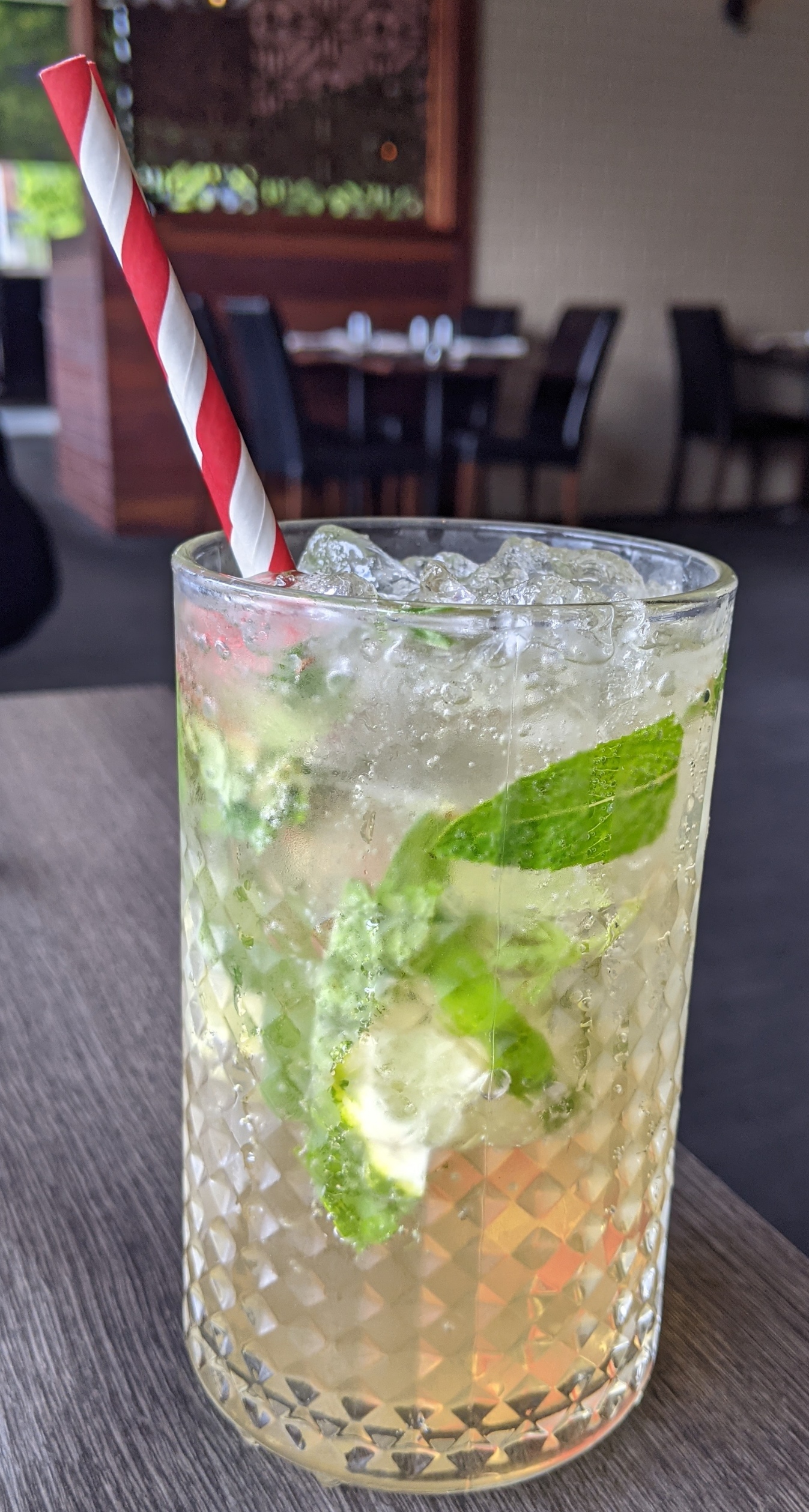
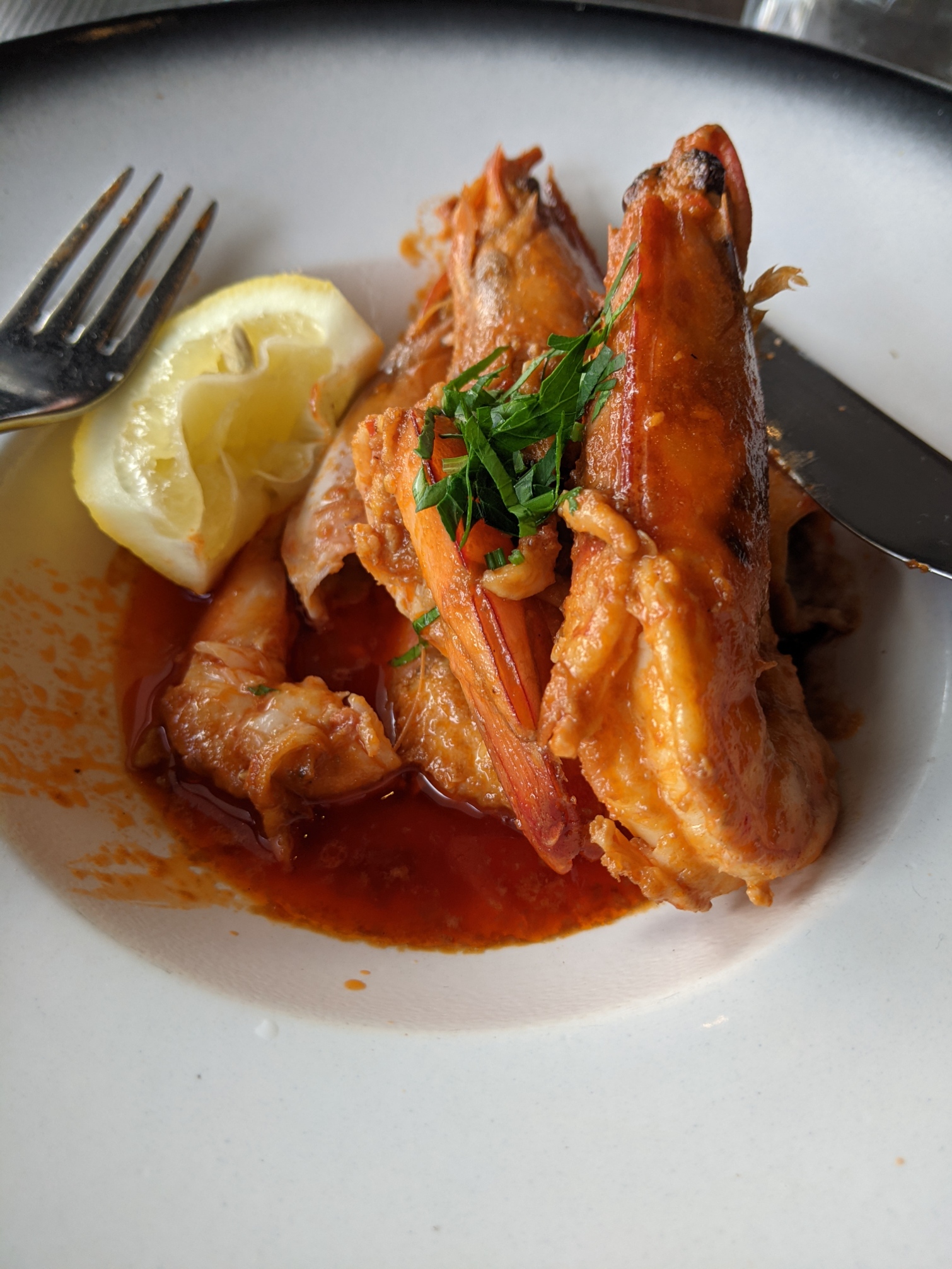
Week beginning 4 August 2021

This week I am catching up with reviews that I have written for NetGalley, posted to Goodreads, and other social networks, but not included in this blog. Both are fiction. The first, Waiting To Begin, by Amanda Prowse was a disappointment, but Louise Candlish’s The Heights was a very satisfying read.

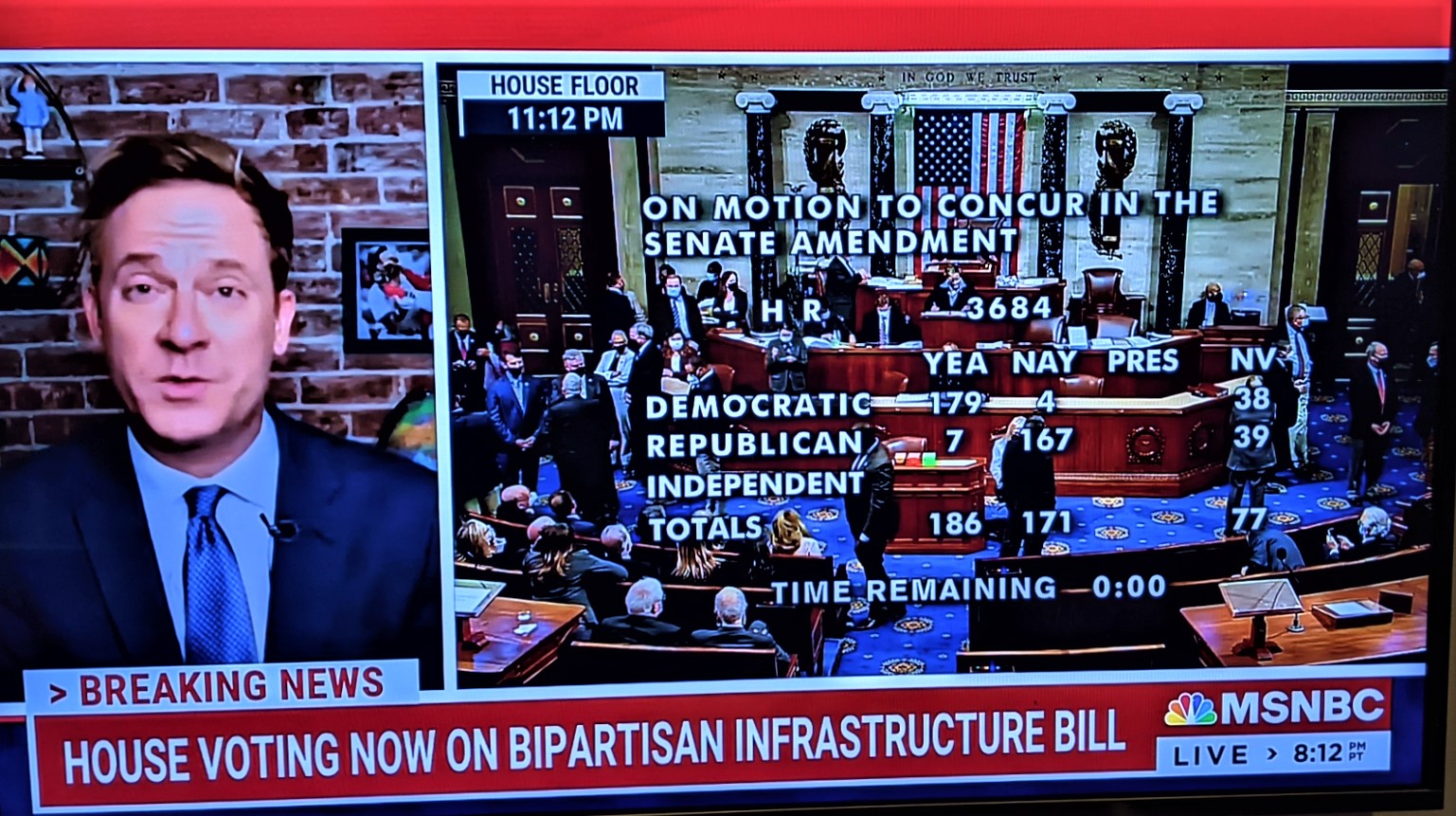
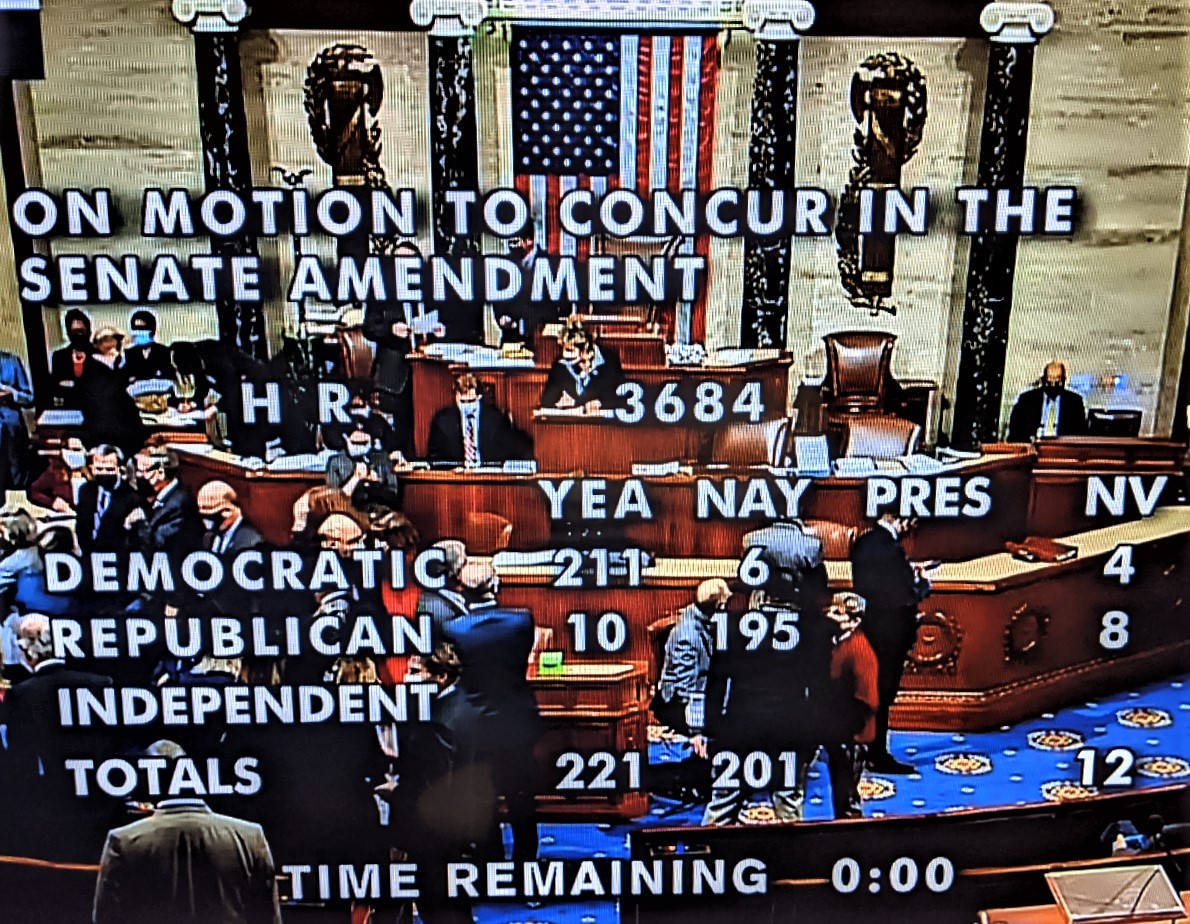
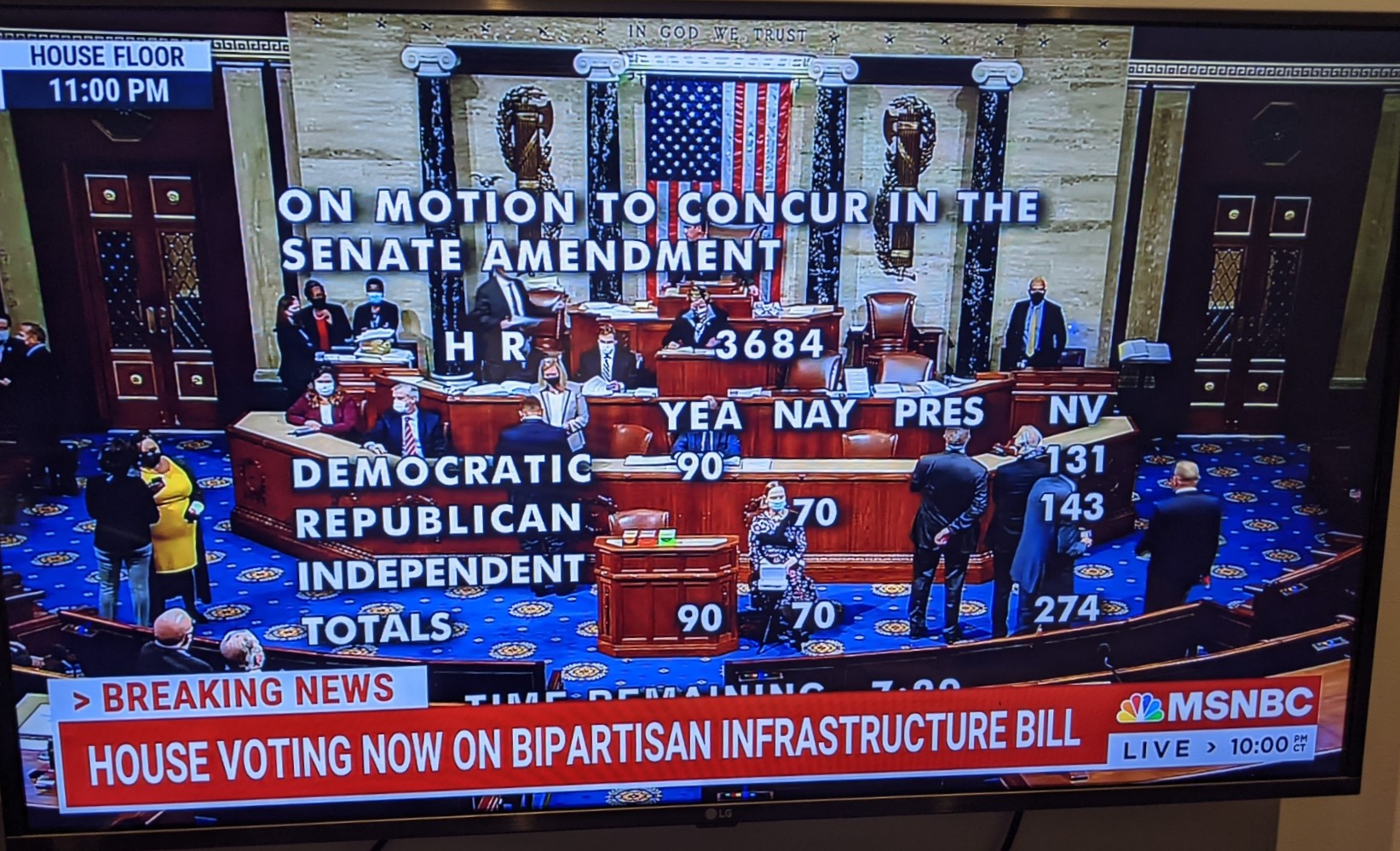
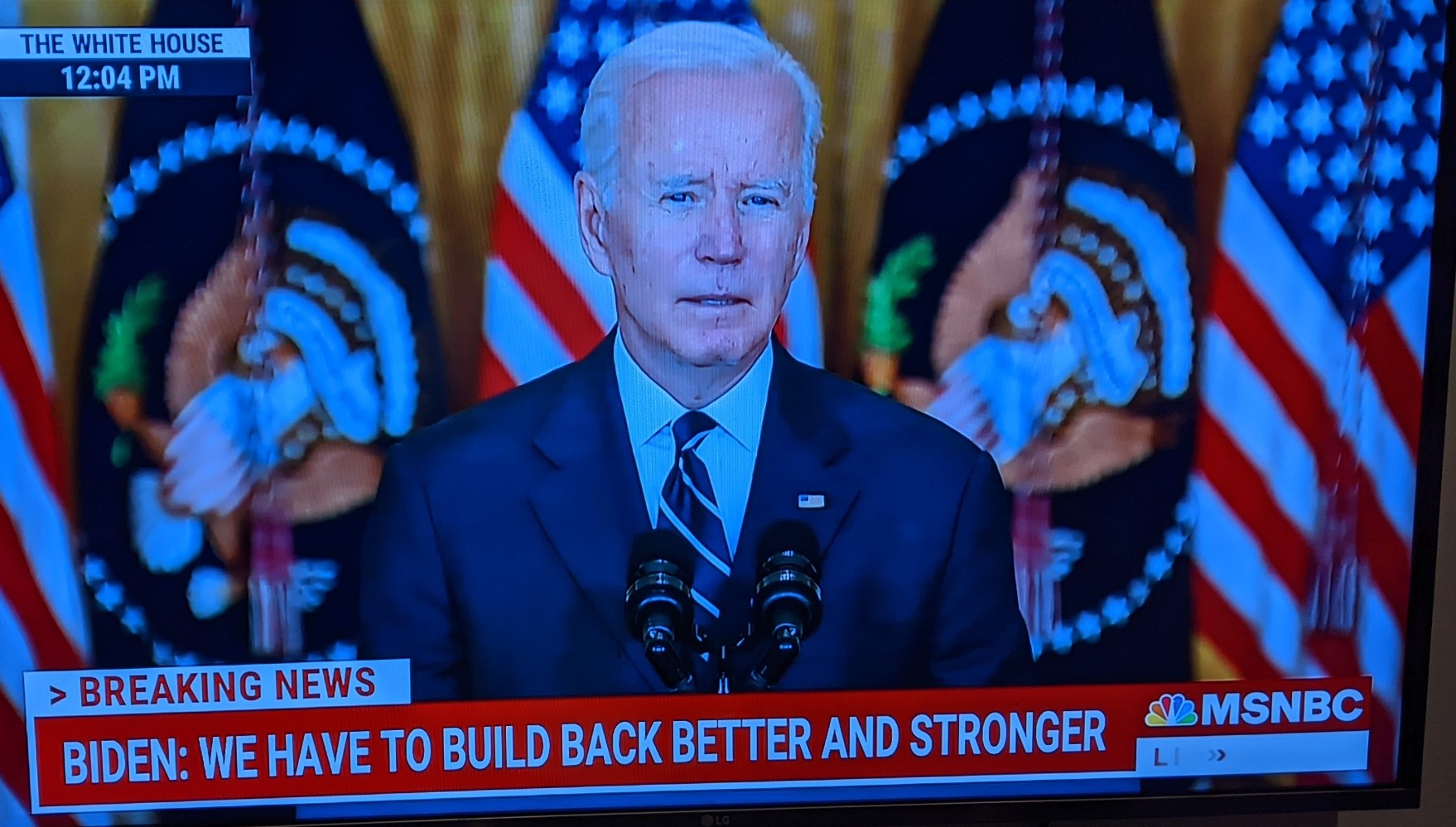
‘The Bipartisan Infrastructure Deal will put plumbers and pipefitters to work replacing all of the nation’s lead water pipes so every American can drink clean water’ President Joe Biden.

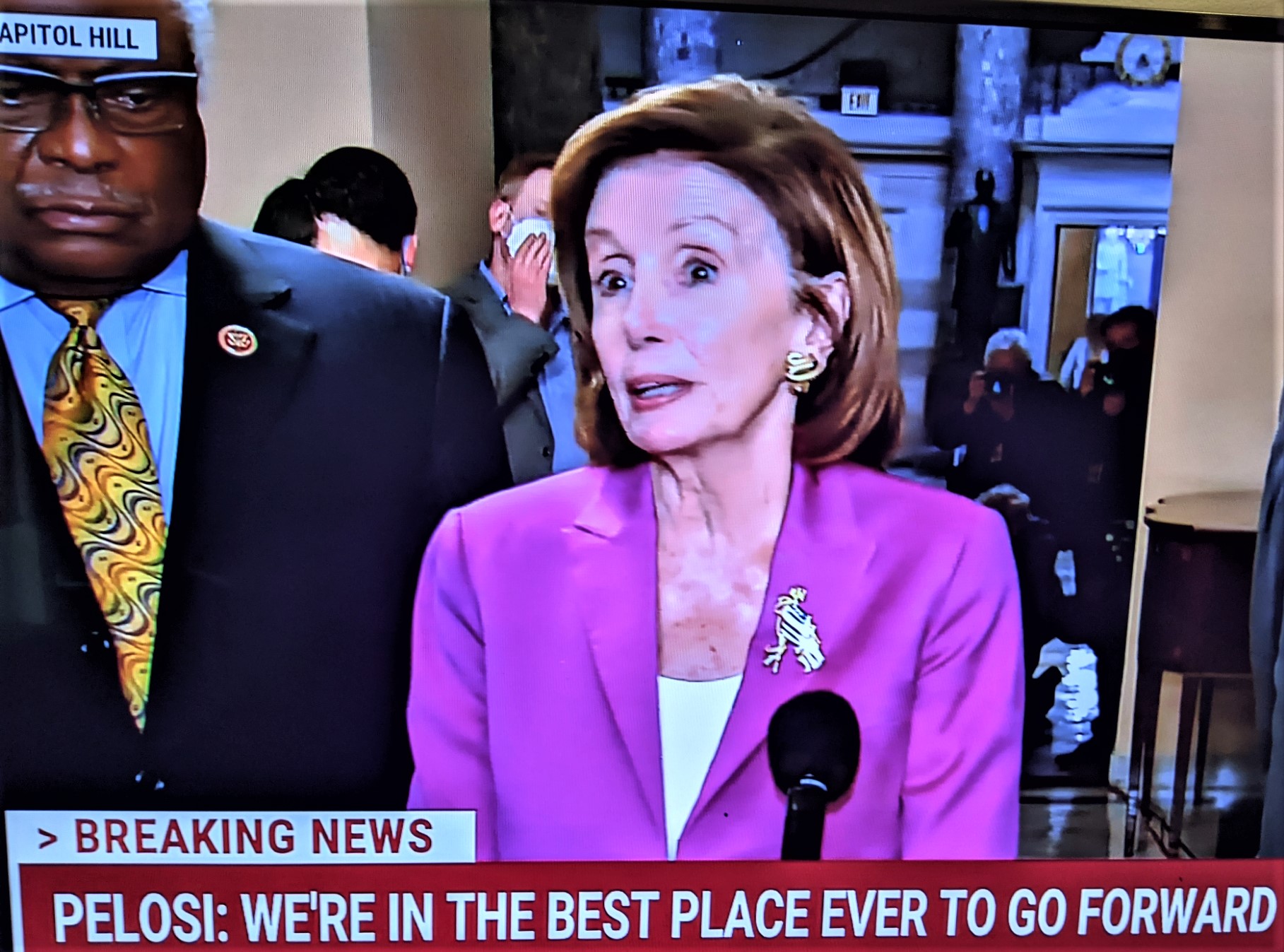
This quote and the work undertaken on the Infrastructure Bill resonates with Brockovich’s concerns about lead pipes raised in her book Superman’s Not Coming , so I draw attention to the review of that book at Books: Reviews , June 9 2021. Also relevant is the Heather Cox Richardson post from Facebook, below, where she discusses the Infrastructure Bill.

Amanda Prowse, Waiting To Begin, uncorrected proof, Lake Union Publishing, on sale June 2021.


In the works of most prolific writers, it is likely that a reviewer reads work that stands out, as well as that which is disappointing. I have mixed feelings about this novel. While it does not stand out, there are some delightful nuggets of humour and characterisation, and the story line is feasible. However, I could not warm to the main character, despite her harrowing story with which I would expect to have sympathy. 


Louise Candlish The Heights Simon & Schuster, 2021


Louise Candlish has had me immersed in her fictional worlds from when I was introduced to her work through Our House. Now I have had the pleasure of engagement in such novels as Those People, The Sudden Departure of the Frasers, and The Other Passenger. Of course, there are more, but one of the pleasurable features of opening yet another  Louise Candlish novel is that each has something different to recommend it.  Although they are often introduced with comments about the twists and turns, this phrase has become overused. What I want is a twist that is smooth, is logical, and has a background in the information I already have about the plot and characters. In The Heights Louise Candlish has accomplished this once again. 
Heather Cox Richardson: Oh, and here’s this week’s podcast. It’s on infrastructure, and what that really means, and has meant, in our history: apple.co/3BKM2cu
The Human Toll of InfrastructureNow & Then
  • History

Listen on Apple Podcasts 

On this episode of Now & Then, “The Human Toll of Infrastructure,” Heather and Joanne discuss the historical precedents for President Biden’s infrastructure proposals. What role did river infrastructure play in spurring the Constitutional Convention? What was the revolutionary impact of the Transcontinental Railroad and President Eisenhower’s championing of the Interstate highway system? What were the consequences of the Nixon administration’s veto of national childcare legislation? And turning to today, how does the congressional wrangling over Biden’s plans reflect a long-standing debate over the role that the government should play in how Americans connect to one another?

Join CAFE Insider to listen to “Backstage,” where Heather and Joanne chat each week about the anecdotes and ideas that formed the episode. And for a limited time, use the code HISTORY for 50% off the annual membership price. Head to http://www.cafe.com/history

Join us each Tuesday for new episodes of Now & Then, and keep an eye out for live events with Heather and Joanne and the rest of the CAFE Team.

For references & supplemental materials, head to: cafe.com/now-and-then/the-human-toll-of-infrastructure

This image has an empty alt attribute; its file name is heather-cox-richardson-infrastructure.jpg

Learn more about your ad choices. Visit podcastchoices.com/adchoices

Received from Joanna Penn, The Creative Penn: The Creative Penn. Writing, Publishing, Book Marketing and Making a Living with your Writing

Writing And Publishing Literary Fiction With Roz Morris

The first part of the transcript of this talk appears below. It begins with a discussion about literary and genre fiction – a question and discussion that Roz Morris suggests can be particularly emotional. The links to read the whole transcript or listen to the podcast are below.


Writing And Publishing Literary Fiction With Roz Morris

Posted: 25 Jul 2021 11:10 PM PDT

How do you know when the seed of an idea is enough for a novel? What makes literary fiction different from other genres? Roz Morris is a best-selling author as a ghost writer and an award nominated author with her own literary novels. She writes writing craft books for authors under the Nail Your Novel brand, and is also an editor, speaker, and writing coach.
Today, we’re talking about writing literary fiction and Roz’s latest novel, Ever Rest. You can listen above or on your favorite podcast app or read the notes and links below.

The difference between literary fiction and genre fiction
How to know when an idea is right for exploring in literary fiction
How Roz incorporates music into her writing process
Research and preparation before the writing begins
Revising a book the way music is mixed
Giving a novel space to breathe while it is evolving
How do you design a book cover that doesn’t fit into a genre?
You can find Roz Morris at RozMorris.org
 and on Twitter @Roz_Morris

Transcription of interview with Roz Morris

Joanna: Roz Morris is a best-selling author as a ghost writer and an award nominated author with her own literary novels. She writes writing craft books for authors under the Nail Your Novel brand, and is also an editor, speaker, and writing coach. Today, we’re talking about writing literary fiction and Roz’s latest novel, Ever Rest.


Welcome back to the show, Roz.

Roz: Hi, Jo. It’s great to be back again. I love these shows.

Joanna: We’ve literally been doing these on and off for over a decade now. You’re one of the regulars on the show. I’m excited to talk about this. So, as I said, you’ve been on the show a lot. People can go back and listen to your history, so we’re just going to dive into the topic. I wanted to start with a definition. What is literary fiction as compared to genre fiction? And why is it such an emotional question?

Roz: Usually literary fiction is bigger than just the story and the characters. There’s usually a sense of universality. The writing is often more nuanced than…maybe sometimes poetic than genre fiction, if we’re comparing with the genre fiction. And if we are comparing it with genre fiction, it might not conform to genre tropes. So if you’ve got a murder in your book, for instance, in certain kinds of genres it’s very clear what must happen about that murder. In a cozy mystery, it’s got to go a certain way. It’s all got to be solved and it’s got to be put right. In something much darker, it might end with a much darker, more uncertain note. But usually, it would be very clear for each genre what has to happen about that murder. In literary fiction, almost anything goes. The murder might not be solved at all. And solving murder won’t necessarily be the point. It will be something else. So literary fiction doesn’t really conform to many genre tropes. However, this is where it gets quite fuzzy, genre novels might have certain literary qualities. And I think it has a continuum. Each writer might be very genre or very literary or somewhere along the whole rainbow that goes through the middle. I suppose you could say literary tends to be bigger, deeper, perhaps more mining for individual truths, more enigmatic than just being about the plot and the characters. And it’s an emotional question, as you say, and I think that’s because there are all sorts of issues that people might have with literary fiction or non-literary fiction. There’s a sense of superiority sometimes one over the other that literature is worthwhile and other kinds of books are ‘entertainment.’ You can hear the air quotes in my voice there. And indeed, you have to think about what entertainment is. These ideas changed drastically over the years anyway. In certain academic circles, Charles Dickens was not taught as literature because he was an entertainer. So tastes change all the time. It really depends what you like. Another example is that, again, if you talk to literary people about plot, they think that’s an absolutely filthy word. And, in fact, some very literary writing courses, I was talking to somebody I’m helping with her novel. She said she’s never taught about structure and pace, and she’s been on numerous writing courses. There is just very different values, I think, between certain factions of the writing world. But really, as far as I’m concerned, I write the kind of story that I hope has got great depth as well as entertainment value.

Joanna: I like the idea of the continuum. I think that’s really good. And it’s that idea of you don’t have to be 100% one or the other. For example, I read a lot of horror, and horror suits literary writing very well, I think, because they’re so often standalone books. A lot of literary works are standalone. Would that be right?

Roz: Yes, that’s true. Actually, I’ve never thought of that. But, yes.

Joanna: And the other thing you did say bigger books. And you don’t mean bigger in terms of word count because obviously epic fantasy is going to probably be the biggest in terms of word count. Actually, often, literary books are a lot shorter.

Roz: Yes, that’s a good point too. It’s not about word count. It’s bigger in terms of the scope of the writers’ imagination and the scope of the experience they’re trying to take you through. It’s not the mileage and the number of pages.

Joanna: Now, you are very successful with ghost-written thrillers and you’re an official ghost so we don’t know the name. But now you’re writing your own literary fiction. And obviously, you know how to write these best-selling thrillers. See Writing And Publishing Literary Fiction With Roz Morris for the complete transcript.

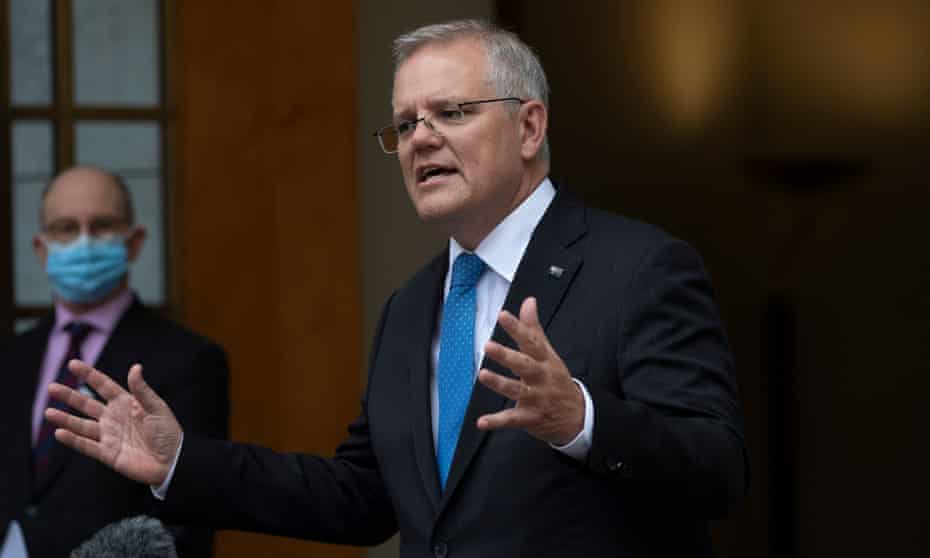
An aspect of Australia’s response to the upsurge in Covid 19 cases, particularly in New South Wales, is the suggestion by Anthony Albanese, Australian Labor Party Leader, that monetary incentives should be offered to encourage vaccination. A lively discussion on Facebook includes a wealth of judgmental comments about the proposal. Some focus on those who remain unvaccinated at the moment, and others on the use of tax payer’s money for such a proposal.

One economic argument for the proposal is the following:

Paying Australians $300 to get fully vaccinated would be value for money, The New Daily 6:00am, Aug 4, 2021

ANALYSISPeter Martin

I reckon Anthony Albanese on the right track. The Opposition Leader wants to pay $300 to every Australian who is fully vaccinated by December 1.

The Grattan Institute is on a similar theme. It has proposed a $10 million lottery, paying out $1 million per week from Melbourne Cup day.

Everyone who has been vaccinated once gets one ticket. Anyone vaccinated twice gets double the chance.

The costs are tiny compared to what’s at stake. Treasury modelling released on Tuesday puts the cost of Australia-wide lockdown at $3.2 billion per week.

Paying people to get vaccinated fits the government’s criteria of a response that’s “temporary, targeted and proportionate“.

And the published research on small payments shows they are extraordinarily effective, often more effective than big ones.

A few years back, Ulrike Malmendier and Klaus Schmidt of US National Bureau of Economic Research discovered that a small gift persuaded the subject of an experiment to award contracts to one of two fictional companies 68 per cent of the time instead of the expected 50 per cent.

Small incentives can be more effective than big ones

A gift three times as big cut that response to 50 per cent, which was no better than if there had been no gift at all.

The effect of small payments to pregnant British smokers has been dramatic.

Offered £50 in vouchers for setting a quit date, plus £50 if carbon monoxide tests confirmed cessation after four weeks, £100 after 12 weeks and £200 in late pregnancy in addition to the counselling and free nicotine replacement therapy given to the other pregnant smokers, those offered the payment were more than twice as likely to quit – 22.5 per cent compared with 8.6 per cent.

Never mind that these small sums ought to have made no financial sense.

The gifts were minuscule compared with the money the recipients would have saved anyway by not smoking, yet they worked so well that the researchers estimated the cost of the lives saved at just £482 per quality-adjusted year.

About 5000 British miscarriages each year are attributable to smoking during pregnancy.

The participants randomly assigned the offer of a payment not to smoke gave birth to babies that were on average 20 grams heavier.

The incentives can be even smaller.

Morrison urged to bring in incentives to be fully vaccinated
Labor on Monday called on Scott Morrison to bring in cash incentives.

Mai Frandsen at the University of Tasmania has trialled offering smokers half as much – a $10 voucher on signing up, then $50 per checkup in addition to support from a pharmacist.

The results are encouraging.

Lotteries are cheaper still. The Grattan Institute’s suggestion of a $1 million per week payout sounds like a lot, but it isn’t when divided by Australia’s population.

A preliminary analysis of Ohio’s Vax-a-Million lottery found it increased takeup by 50,000 to 80,000 in its first two weeks at a cost of $US85 per dose.

 Beer, doughnuts, dope

Other incentives offered with apparent success in the US include free beer, donuts and (in Washington state) free cannabis.

They needn’t work for everyone.

A survey conducted by the Melbourne Institute in June found that of those who were willing to get vaccinated but hadn’t got around to it, 54 per cent would respond to a cash incentive.
Of those who weren’t willing or weren’t sure, only 10 per cent would respond to cash.
But the important thing about vaccination is that not everyone needs to do it.

The Grattan Institute believes 80 per cent of the population needs to be vaccinated before we can reopen borders.

The national cabinet has adopted a lower target: 80 per cent of Australians over 16, which is 65 per cent of the population.

Vaccination expert Julie Leask says when it comes to child vaccines, most non-vaccinating parents are simply “trying to get on with the job of parenting”.

If it’s made easy for them, they’ll do it.

There’s not a lot to be gained by trying to reach these who actually don’t want to be vaccinated. Try too hard, and you’ll get their backs up.

The tragedy of the government’s COVID vaccine rollout (aside from the difficulties with assuring supply) is that the government hasn’t made it easy.

Vaccination ought to be easy

The government could have made it easy.

When it sought advice last year from departments including the treasury, it was told to do what’s done for the flu vaccine – to distribute it through employers and pharmacies as well as general practitioners, so as to make it almost automatic.

The best part of a year later, it’s a view the Prime Minister is coming round to. Most of us don’t go to the doctor very often – it’s out of our way.

For a government that came to office promising to slash red tape
for business and offered businesses incentives to invest, this government appears not to have fully grasped the importance of red tape and incentives when it comes to health.

It might yet.

Prime Minister Scott Morrison said on Tuesday he had investigated something along the lines put forward by Mr Albanese. General Frewen, in charge of the COVID taskforce, said it wasn’t needed “right now”.

When the time comes, if we remain under-vaccinated, Mr Morrison can reach for it.

________________________________________________________

Peter Martin is Business and Economy Editor of The Conversation and a visiting fellow at the Crawford School of Public Policy at the Australian National University

This article is republished from The Conversation under a Creative Commons licence. Read the original article.

Week beginning 28 July 2021

The books reviewed this week include one that is pertinent to the debate about democracy and voting rights in America today. Included this week is also Heather Cox Richardson’s commentary on these events. The book is Democracy, Race and Justice The Speeches and Writings of Sadie T.M. Alexander, edited by Nina Banks and published by Yale University Press. The other book to be reviewed this week is about Amanda Gorman, whose riveting reading at President Joe Biden’s inauguration deserves this early recognition in Work Up: The Life of Amanda Gorman by Marc Shapiro, Avenue Books, 2021. Both books were sent to me by NetGalley for review.

Work Up: The Life of Amanda Gorman by Marc Shapiro, Avenue Books, 2021.

Marc Shapiro has penned numerous biographies, some with contributions from the subject, others unauthorised, and, in this case, although the subject or her associates did not take part, apparently accepted by them as a contribution to Amanda Gorman’s fame. The dedication is instructive in that it applauds powerful women who are smart and encourages them to flourish. Shapiro sees Amanda Gorman’s voice as an essential contribution to those with gravitas re- envisioning an America after the former president’s four years in the White House. Shapiro began the book after watching Amanda Gorman provide a lightning strike for hope in her poem ‘The Hill We Climb’ at President Biden’s Inauguration. He states that the outcome of his research was a rarity. He found nothing negative, in both the minor and major senses of the word, in his work on the Amanda Gorman excursion. The complete review appears at Books: Reviews.

Nina Banks (ed.), Democracy, Race, and Justice The Speeches and Writings of Sadie T.M. Alexander, Yale University, 2021.

This image has an empty alt attribute; its file name is cover-sadie.png

What an opportune time for a collection of papers such as these to be published. The speeches and writing reach so much into the past that it seems beyond belief that in 2021 Congress is having to consider voting rights as a right as well as an antidote to the various state legislators’ introduction of laws which limit the voting rights of black and brown Americans. This collection, adroitly introduced by Nina Banks, would be a worthy read at any time, I am pleased to be able to review the book when voting rights in America are under attack after the major contribution black and brown Americans made to the election of President Joe Biden. The full review can be found at: Books: Reviews

MSNBC The Rachel Maddow Show

Heather Cox Richardson heather.richardson@bc.edu

This image has an empty alt attribute; its file name is heather-cox-richardson-2-1.jpg

July 13, 2021 (Tuesday)

“Are you on the side of truth or lies; fact or fiction; justice or injustice; democracy or autocracy?”

In a speech at the National Constitution Center in Philadelphia today, President Joe Biden asked his audience to take a stand as he called defending the right to vote in America, “a test of our time.” Biden explained that the 2020 election has been examined and reexamined and that “no other election has ever been held under such scrutiny and such high standards.” The Big Lie that Trump won is just that, he said: a big lie.

Nonetheless, 17 Republican-dominated states have enacted 28 laws to make it harder to vote. There are almost 400 more in the hopper. Biden called this effort “the 21st-century Jim Crow,” and promised to fight it. He pointed out that the new laws are doing more than suppressing the vote. They are taking the power to count the vote “from independent election administrators who work for the people” and giving it to “polarized state legislatures and partisan actors who work for political parties.”

“This is simple,” Biden said. “This is election subversion. It’s the most dangerous threat to voting and the integrity of free and fair elections in our history.”

While Biden was on his way to Philadelphia, more than 50 members of the Texas House of Representatives were fleeing the state to deny the Republicans in the legislature enough people to be able to do business. They are trying to stop the Republicans from passing measures that would further suppress the vote, just as they did when they left the state in May. Along with voting measures, the Texas Republicans want to pass others enflaming the culture wars in the state: bills to stop the teaching of Critical Race Theory in public schools (where it is not taught) and to keep transgender athletes from competing on high school sports teams. Both of these issues are part of a wider program pushed by national right-wing organizations. When the Democrats left the state two months ago, Republican governor Greg Abbott was so angry he vetoed funding for the legislature (that effort is being challenged in court). This time, he has vowed to arrest the Democratic members and hold them inside the Capitol until the special session of the legislature ends in late August. This threat has no effect outside of Texas, where state authorities have no power, and even within the state it is unclear what law the legislators are breaking.

But it does raise the vision of a Republican governor arresting Democratic lawmakers who refuse to do his bidding. What is at stake in Texas at the local level is that Abbott is smarting from two major failures of the electrical grid on his watch: one in February and one in June. What is at stake at the national level is that the electoral math says that Republicans cannot expect to win the White House in the future unless they carry Texas, with its 40 electoral votes, and the state seems close enough to turning Democratic that Abbott in 2020 ordered the removal of drop boxes for ballots. The electrical crisis of February, which killed nearly 200 Texans and in which Republican senator Ted Cruz was filmed leaving the state to go to Cancun, has hurt the Republican Party there. And so, Abbott and his fellow Republicans are consolidating their power, planning to “win” in 2022 and 2024 by making sure Democrats can’t vote. Biden today went farther than he ever has before in calling out Republicans for what they are doing. He described the attempt to cast doubt on the 2020 election and to rig the vote before 2022 for what it is: an attempt to subvert democracy and steal the election. “Have you no shame?” he asked his Republican colleagues.

But as strongly as Biden worded his speech, the former speechwriter for Republican President George W. Bush, David Frum, in The Atlantic today went further.

“Those who uphold the American constitutional order need to understand what they are facing,” Frum wrote. “Trump incited his followers to try to thwart an election result, and to kill or threaten Trump’s own vice president if he would not or could not deliver on Trump’s crazy scheme to keep power.”

Since the insurrection, he noted, Trump supporters have embraced the idea that the people who hold office under our government are illegitimate and that, therefore, overturning the election is a patriotic duty. “It’s time,” Frum said, “to start using the F-word.” The word he meant is “fascism.” “We are facing the most significant test of our democracy since the Civil War,” Biden said today…. I’m not saying this to alarm you; I’m saying this because you should be alarmed.” We must, he said, have “the will to save and strengthen our democracy.”

‘Brazen Hussies’ film screening & panel discussion

Presenter/s: ANU Film Group; ANU Gender Institute

Event type: Film screening

Event date: Saturday, 14 August 2021 – 5:00pm

Event venue: Cinema, Cultural Centre Kambri (ANU Building 153), University Avenue

Further informationRegistration

Join the ANU Gender Institute and the ANU Film Group, alongside a panel of trailblazing women, for a FREE Q+A screening of Brazen Hussies!

Screening on ANU Open Day 2021 at the Kambri Cinema, this inspiring doco introduces contemporary audiences to Australia’s pioneering second-wave feminists.

Stick around after the film for an exclusive panel discussion, chaired by ANU Gender Institute Convenor Fiona Jenkins, featuring two stars of the women’s movement, Elizabeth Reid AO and Biff Ward.

» Register here

About Brazen Hussies

Brazen Hussies introduces contemporary audiences to the Australian second-wave feminists, who declared war on ‘male chauvinism’, traditional sex roles and demanded that women be set free from the ‘chains of femininity’. This feature documentary traces how the Australian Women’s Liberation Movement was born amidst the tumultuous politics of the 1960s, influenced by the anti-war, anti-imperialist, and civil rights movements worldwide. The film combines a treasure trove of startling archive footage with interviews from key activists from around Australia.

» Watch trailer

Where does the next Australian federal election stand?

We now know the redistribution framework for the federal election expected in 2022. With the redistributions in Victoria and Western Australia completed a number of skilled analysts have attempted to draw the revised pendulum based on the new boundaries.

At the most fundamental they agree. The Liberals have lost one seat, the former seat of Stirling in WA has been abolished, and the ALP has gained one, the newly created safe Labor seat of Hawke.

The various analysts also agree that unlike the 2019 election, no seat has notionally changed hands as a result of the boundary changes. The margins for a number of seats have changed, but they have all stayed on the same side of the line.

This means the LNP go into the election with 76 seats (if we include Hughes which is only temporarily classified as Independent), Labor with 69 and 6 Independents. Therefore, Anthony Albanese needs to win 7 seats if he is to win a Labor majority. If we assume that at least two of the Independents Adam Bandt (Melbourne, Vic) and Andrew Wilkie (Clark, Tas.) would support a Labor government in the event of a hung parliament then 5 seats would be enough for a change of government. Some of the other Independents, and any new ones which might be elected are wild cards which could change the equation. However, a 7-seat target and a 5-seat minority government target are a good enough basis for subsequent analysis.

Within those parameters a number of seats were significantly changed, most of which will have little impact on the likely election outcome, although they are of course significant to the members concerned. In WA, on the Labor side the seat of Cowan was made slightly better for the sitting member, Anne Aly. The margin seems to have gone from a microscopic 0.8% to a wafer thin 1.5%. Conversely, the seat of Perth has been reduced from 4.9% to 3.4%. Given how bad the last election was in WA this should still be won by Patrick Gorman, but it will be tighter. In Victoria, none of the marginal Labor seats seem to have been significantly affected. A notable change is the relative strengthening of the Labor vote in Hotham from 5.9% to 12% while the reverse applies to Bruce (14.2% down to 7.1%).

On the conservative side, the most significant change seems to be to Chisholm. However, the different analysts have very different assessments of the likely impact of the changes. I will go into this in more detail later in this analysis. However, what is agreed is that it remains the key marginal seat target for the ALP in Victoria. After the redistribution in WA several key marginals have got more difficult for Labor, while another has become a serious prospect. The margin in Swan has blown out from 2.7% 3.3%. This doesn’t seem a lot but it makes the task more difficult. Similarly, the margin in Hasluck has increased a little, from 5.5% to 5.9%. The more significant change was in Pearce, where the margin for Christian Porter, if he runs again, has collapsed from 7.5% to 5.5%.

The overall outcome of the last election and the recent redistribution suggests the ALP needs a 3.3% swing to win, which would mean 51.7% of the two-party preferred vote. Of course, this means that Labor could win more than 51% of the vote and still not win. However, a look at state-by-state prospects could change this assessment.

Recent elections in Australia and overseas have made clear that polling is an imprecise predictor of likely outcomes. However, it remains the best guide we have of the overall picture. So, what does the polling show and how much notice should we take? The recently released consolidated Newspoll results paint a very interesting picture. Those results are an aggregation of polls taken from April to June. This gives sufficiently large samples to allow a reasonable state-by state breakdown for every state except Tasmania. While these results are taken over a period which would undoubtedly contain week-to week variations the results are as good a guide as we will get. They show a very interesting stability, which tends to suggest such changes as it shows are quite well established. And the results overall are not contrary to what a reasonable observer might expect.

In NSW, where Labor polled a disappointing 48% in 2019, Newspoll suggests a 50/50 result. Such a uniform swing would put the seat of Reid on a knife edge. The swing would need to be more than 4% to bring more seats such as Robertson and Lindsay into serious contention. Local factors tend to impact which seats will perform above or below statistical expectations, but these tend to cancel each other out from an overall party point of view.

For Victoria, the results look like the status quo. This is not surprising given the very strong result in 2019 (53-47). If this were to be the result it would not be likely that any seats would change hands. This brings me to the interesting case of Chisholm. After the last election the Liberals held the seat with a 0.6% margin. Antony Green and the Poll Bludger differ about the impact of the redistribution. Green suggests that the Liberal vote has become worse, the other says it has improved. But it is still very close whichever is correct. 1.1% is the most generous assessment. In truth, it is impossible to judge the consequences of redistributions with that degree of precision. Both analysts are credible and do a good job, but once you get down to dividing the results in polling booths there is always an element of guesswork involved at the margin. Add to that the controversy around the use of misleading information at the last election and this seat would have to be likely to be very close even with no swing in Victoria.

The really interesting movements in the Newspoll aggregation are in Queensland and Western Australia. These were states in which the ALP did very badly in 2019, so there is significant room for improvement. The data suggests a swing of 5.5% in Queensland. A uniform swing of this magnitude would mean a Labor gain of 4 seats. Of course, swings are never uniform, but the local variations tend to even out such that the pendulum is a reasonable predictor of the number of seats, but not of which individual seats will change hands. In Western Australia the Newspoll results suggest a swing of 8.5%. This would seem incredible if it were not for the very low base from which Labor will be starting this election in WA. Such a swing could deliver as few as three seats, but a number of others would be on the cusp. This would mean enough seats for Anthony Albanese to win a majority could be won in Queensland and Western Australia alone.

Newspoll also suggests that Labor could gain one seat in South Australia. It has nothing to say about Tasmania, the ACT or the Northern Territory as the samples would be too small even on a quarterly basis.

Taken at face value this polling indicates that Labor is in a winning position, albeit with a long way to go until the next election. This is without taking into account the most recent Newspoll which showed Labor leading 53/47, which would mean a 4.5% swing to Labor. How much faith should we put in these polls? After all they got it seriously wrong in 2019 and in the USA in 2016. A recent article by Murray Goot in the Australian Journal of Political Science reinforces the view that we should proceed with caution, although he does not suggest that there is evidence of a systemic bias in favor of the ALP within Australian polling organisations. This is based on a study of the last ten elections in Australia. 2019 was the first time that all the polls picked the wrong winner! In 2019 the error was 2.9%, compared to a long-term average error of 1.8%. However, this was not the biggest average error. In 2004 it was 3.2%. The Poll Bludger’s tracking poll suggests a swing to labor of 2.9% since the last election and an upwards trend since September last year.

Even allowing for a small discount in case of any emerging pro-labor bias in the polling the results indicate a very winnable election for the ALP with the trends going in the right direction. Add to this the emerging perception of the “Prime Minister for NSW”, which could be a very potent weapon in WA, for example, the seats required to win are within reach.

The next few months will determine whether Anthony Albanese and his team can finalise the deal.

Week beginning 21 July 2021

The books reviewed this week are part of the Pen & Sword series of publications. Earlier reviews from the series were A Visitor’s Guide to Jane Austen’s England by Sue Wilkes; London and the Seventeenth Century by Margarette Lincoln and Michelle Higgins’ A Visitor’s Guide to Victorian England. This is a series that makes history accessible, at the same time as being well researched and complete with bibliographies, citations and indexes. Net Galley and Pen& Sword have been generous in providing me with early proofs of the books. The two that I review this week are biographies: The Real George Eliot by Lisa Tippings and The Real Diana Dors by Anna Cale. I found the biographies less satisfying than the guides, but both had some positive features. To illustrate the breadth of the biographies covered by this imprint, I have just finished reading The Rebel Suffragette, The Life of Edith Rigby by Beverley Adams, which will be reviewed later.

Lisa Tippings, The Real George Eliot, Pen & Sword History, 2021.

When I read the introduction to this book, I felt a surge of enthusiasm for Lisa Tippings’ similar enthusiastic embrace of her material, evidenced by her early introduction to George Eliot’s work, her journeys to relevant sites and her commentary on the early stages of her research. She begins with a George Eliot quote from Middlemarch, ‘What do we live for, if it is not to make life less difficult to each other?’ Following is a warm introduction to Lisa Tippings, her Welsh childhood, including watching BBC costume dramas, and the way in which her imagination was caught by Maggie Tulliver, and remembered discussions unhampered by academic demands. Then, the travelling associated with the work – including Nuneaton, The Red Lion (Bull Inn), The George Eliot Hotel, the George Eliot statue in Newdegate Square, Arbury Hall (closed) and Astley. All these locations are beautifully realised so that the reader joins Tippings’ journey into the life of George Elliot. 

For complete review see Books: Reviews
Anna Cale, The Real Diana Dors, White Owl, Pen & Sword Books Ltd, 2021.

I have mixed feelings about this story of Diana Dors’ life. While reading I wondered if her life was significant enough to sustain a full-length book and must admit to feeling a sense of despair as the love affairs, marriages, money troubles rolled out, seemingly unendingly. I have looked beyond these to try to see what was remarkable enough for Anna Cale to argue that there is a ‘real’ Diana Dors we do not know. The feature of the book that sustained my interest was the history of the British film industry in the period in which Dors made her early career. In addition, Cale’s perceptiveness in her discussion in Chapter 12 ends the book well.

For complete review see Books: Reviews 
Amanda Lohrey wins Miles Franklin prize for The Labyrinth. The Guardian Thu 15 Jul 2021 16.31 AEST

About this contentKelly Burke

The 74-year-old Tasmanian writer collected the prize for her seventh novel, described as eerie, unsettling and soaked in sadness

Amanda Lohrey has won the 2021 Miles Franklin Literary Award for The Labyrinth.
Amanda Lohrey has won the 2021 Miles Franklin literary award for The Labyrinth. Composite: Text Publishing

Supported by

Balnaves Foundation

Tasmanian writer Amanda Lohrey has collected her first Miles Franklin Literary Award, at the age of 74.

Although a nominee on a number of occasions, and the recipient of other notable gongs over the years such as the Patrick White prize and the Victorian premier’s literary award, it has taken a lifetime for Lohrey to snag what is arguably the most prestigious prize for Australian writing, with her seventh novel The Labyrinth.

The $60,000 win was announced on Thursday via live stream for the second year in a row, due to Covid-19 restrictions.

Illustration by Ana Yael.

Miles Franklin judge and Mitchell Librarian of the State Library of NSW, Richard Neville, described The Labyrinth as “an elegiac novel, soaked in sadness”.

It tells the story of a woman who moves to a remote rural community to be closer to her son, who is serving time in jail for homicidal negligence. She comes to know her neighbours, but not necessarily like them, when she embarks on building a stone labyrinth, in an attempt to make sense of the loss and isolation in her life.

“It is a beautifully written reflection on the conflicts between parents and children, men and women, and the value and purpose of creative work,” Neville said.

Speaking to Guardian Australia, Lohrey said while she was drawn to political themes in her earlier works of fiction, as she has matured as a writer she has become more intrigued with the internal journeys people make in their lives.

“I’ve called [The Labyrinth] a pastoral, because I wanted to explore the tree change and the sea change [phenomena] which is actually a centuries-old move,” she said.

“People have always tried to escape into some kind of primeval landscape of rural virtue, in order to restore some damaged part of themselves.”

The fact that Lohrey’s central character of Erica Marsden chooses to build a stone labyrinth – as opposed to a maze – to repair the broken part of herself is significant.

“A maze is a puzzle, it’s a test of your intellect, it has a lot of dead ends, you can get lost,” she said.

“A labyrinth has one path in and the same path out. It can be a very complex path that loops around and takes you a while to get to the centre – and a while to get back out – but you can’t get lost … you will always find your way out.”

Guardian book reviewer Bec Kavanagh describes The Labyrinth as a “sharply tuned novel” and a “sprawling narrative that resists rigid expectations”.

The Labyrinth offers a pull towards the unknown and a comfort in solitude,” Kavanagh wrote in August last year.

“Despite sometimes eerie loneliness, the book is quietly compelling, a carefully planned reflection on the many ways that we might retrace and remake ourselves and our relationships.”

Australian author Amanda Lohrey with her 7th novel The Labyrinth

Lohrey said the novel, published by Text Publishing, had been well received widely, but declined to say whether she believes The Labyrinth is her best work yet.

“I have had a tremendous amount of positive feedback, particularly from book groups and book clubs, they can often be very critical,” she said.

“But my novels are all very different, and it’s very hard to be objective about your own work.

“And of course the reader is the co-creator of the book, they bring 50% to it. And so the book is different for each reader.

“It’s fascinating when you go to book clubs as a guest and you hear them argue about your book and you think, ‘was that the book I wrote?’, because people reading fiction, it’s such a deeply subjective experience.”

Female writers have dominated the Miles Franklin Literary award for the past decade. Only one male writer, Serbian-born A S Patrić [Black Rock White City], has been awarded the prize in the past 10 years – in 2016.

“Funnily enough, since the Stella prize [introduced in 2013 to recognise female writers, and a response to the traditional male dominance in Australian literary prizes], more women have won the Miles Franklin than men,” said Lohrey.

“I don’t think anyone now in the current climate would bother setting up any more gender-specific prizes, we’ve got one, and that’s enough,” she said.

“But good on the Stella, the more prizes the better. We need all the prizes we can get in Australia, it’s a small market, and even writers that are well reviewed and sell moderately well are still not making a good living.

“A dollar prize really sets you up to write your next book.”

Like most writers, Lohrey is loth to discuss the book she is now working on, although she is happy to reveal it is already half-finished.

“Writers are deeply superstitious creatures, and also what you think the novel is about often times [it] turns out to be about something else,” she said.

“It kind of evolves as you go along and that’s that’s the fun of it, you never know where you’re going end.

“It’s a very playful exercise, even though there’s a lot of anguish along the way because, like a maze, you can go up a lot of your own dead ends, before you get where you need to go.”

Event at Wigmore Hall

Watch again: Lady Antonia Fraser in conversation with Hugo Vickers
Hugo Vickers © Nicola Vivian

Lady Antonia Fraser in conversation with Hugo Vickers

Acclaimed biographer and historical writer Lady Antonia Fraser discusses her life-long love of music and literature with the author and broadcaster Hugo Vickers. Their conversation will touch on the life of Caroline Norton, a pioneering women’s rights activist and the subject of Lady Antonia Fraser’s new book ‘The Case of the Married Woman’. This event also includes a performance from Kitty Whately and Simon Lepper of ‘Lady Antonia’s Songs’, a collection of four new songs composed by Stephen Hough, setting verse by Lady Antonia Fraser.WATCH

Heather Cox Richardson heather.richardson@bc.edu

July 17, 2021 (Saturday)

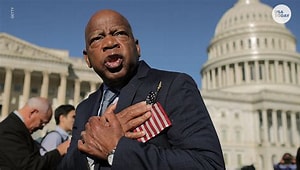
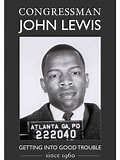
A year ago tonight, Georgia Representative John Lewis passed away from pancreatic cancer at 80 years old. As a young adult, Lewis was a “troublemaker,” breaking the laws of his state: the laws upholding racial segregation. He organized voting registration drives and in 1960 was one of the thirteen original Freedom Riders, white and Black students traveling together from Washington, D.C., to New Orleans to challenge segregation. “It was very violent. I thought I was going to die. I was left lying at the Greyhound bus station in Montgomery unconscious,” Lewis later recalled.

An adherent of the philosophy of nonviolence, Lewis was beaten by mobs and arrested 24 times. As chairman of the Student Nonviolent Coordinating Committee (SNCC—pronounced “snick”), he helped to organize the 1963 March on Washington where the Reverend Martin Luther King, Jr., told more than 200,000 people gathered at the foot of the Lincoln Memorial that he had a dream. Just 23 years old, Lewis spoke at the march. Two years later, as Lewis and 600 marchers hoping to register African American voters in Alabama stopped to pray at the end of the Edmund Pettus Bridge in Selma, mounted police troopers charged the marchers, beating them with clubs and bullwhips. They fractured Lewis’s skull.

To observers in 1965 reading the newspapers, Lewis was simply one of the lawbreaking protesters who were disrupting the “peace” of the South. But what seemed to be fruitless and dangerous protests were, in fact, changing minds. Shortly after the attack in Selma, President Lyndon Baines Johnson honored those changing ideas when he went on TV to support the marchers and call for Congress to pass a national voting rights bill. On August 6, 1965, Johnson signed the Voting Rights Act authorizing federal supervision of voter registration in districts where African Americans were historically underrepresented.

When Congress passed the Voting Rights Act, just 6.7 percent of Black voters in Mississippi were registered to vote. Two years later, almost 60% of them were. In 1986, those new Black voters helped to elect Lewis to Congress. He held the seat until he died, winning reelection 16 times.Now, just a year after Representative Lewis’s death, the voting rights for which he fought are under greater threat than they have been since 1965. After the 2013 Shelby County v. Holder decision of the Supreme Court gutted the Voting Rights Act by taking away Department of Justice supervision of election changes in states with a history of racial discrimination, Republican-dominated state legislatures began to enact measures that would cut down on minority voting.

At Representative Lewis’s funeral, former President Barack Obama called for renewing the Voting Rights Act. “You want to honor John?” he said. “Let’s honor him by revitalizing the law that he was willing to die for.” Instead, after the 2020 election, Republican-dominated legislatures ramped up their effort to skew the vote in their favor by limiting access to the ballot. As of mid-June 2021, 17 states had passed 28 laws making it harder to vote, while more bills continue to move forward.

Then, on July 1, by a 6-3 vote, the Supreme Court handed down Brnovich v. Democratic National Committee, saying that the state of Arizona did not violate the 1965 Voting Rights Act when it passed laws that limited ballot delivery to voters, family members, or caregivers, or when it required election officials to throw out ballots that voters had cast in the wrong precincts by accident.

The fact that voting restrictions affect racial or ethnic groups differently does not make them illegal, Justice Samuel Alito wrote. “The mere fact that there is some disparity in impact does not necessarily mean that a system is not equally open or that it does not give everyone an equal opportunity to vote.”

Justice Elena Kagan wrote a blistering dissent, in which Justices Stephen Breyer and Sonia Sotomayor joined. “If a single statute represents the best of America, it is the Voting Rights Act,” Kagan wrote, “It marries two great ideals: democracy and racial equality. And it dedicates our country to carrying them out.” She explained, “The Voting Rights Act is ambitious, in both goal and scope. When President Lyndon Johnson sent the bill to Congress, ten days after John Lewis led marchers across the Edmund Pettus Bridge, he explained that it was “carefully drafted to meet its objective—the end of discrimination in voting in America.” It gave every citizen “the right to an equal opportunity to vote.”

“Much of the Voting Rights Act’s success lay in its capacity to meet ever-new forms of discrimination,” Kagan wrote. Those interested in suppressing the vote have always offered “a non-racial rationalization” even for laws that were purposefully discriminatory. Poll taxes, elaborate registration regulations, and early poll closings were all designed to limit who could vote but were defended as ways to prevent fraud and corruption, even when there was no evidence that fraud or corruption was a problem. Kagan noted that the Arizona law permitting the state to throw out ballots cast in the wrong precinct invalidated twice as many ballots cast by Indigenous Americans, Black Americans, and Hispanic Americans as by whites.

“The majority’s opinion mostly inhabits a law-free zone,” she wrote.

Congress has been slow to protect voting rights. Although it renewed the Voting Rights Act by an overwhelming majority in 2006, that impulse has disappeared. In March 2021, the House of Representatives passed the For the People Act on which Representative Lewis had worked, a sweeping measure that protects the right to vote, removes dark money from politics, and ends partisan gerrymandering. Republicans in the Senate killed the bill, and Democrats were unwilling to break the filibuster to pass it alone.

An attempt simply to restore the provision of the Voting Rights Act gutted in 2013 has not yet been introduced, although it has been named: the John Lewis Voting Rights Advancement Act. Only one Republican, Alaska senator Lisa Murkowski, has signed on to the bill. Yesterday, the chair of the Congressional Black Caucus, Representative Joyce Beatty (D-OH), was arrested with eight other protesters in the Hart Senate Office Building for demanding legislation to protect voting rights.

After her arrest, Beatty tweeted: “You can arrest me. You can’t stop me. You can’t silence me.”

Last June, Representative Lewis told Washington Post columnist Jonathan Capehart that he was “inspired” by last summer’s peaceful protests in America and around the world against police violence. “It was so moving and so gratifying to see people from all over America and all over the world saying through their action, ‘I can do something. I can say something,’” Lewis told Capehart. “And they said something by marching and by speaking up and speaking out.”

Capehart asked Lewis “what he would say to people who feel as though they have already been giving it their all but nothing seems to change.” Lewis answered: “You must be able and prepared to give until you cannot give any more. We must use our time and our space on this little planet that we call Earth to make a lasting contribution, to leave it a little better than we found it, and now that need is greater than ever before.”

“Do not get lost in a sea of despair,” Lewis tweeted almost exactly a year before his death. “Do not become bitter or hostile. Be hopeful, be optimistic. Never, ever be afraid to make some noise and get in good trouble, necessary trouble. We will find a way to make a way out of no way.”

Heather Cox Richardson’s commentary on voting rights and democracy will be followed up in next week’s blog. In addition, Next week’s blog will include a review of the first published major writings and speeches of civil rights activist Sadie T.M. Alexander. She was the first Black American economist, and her works have been brought together by Nina Banks.

Week beginning 14th July 2021

This week’s nonfiction review is Rebecca, an analysis of the film.

Patricia White, Rebecca, BFI Bloomsbury Publishing Plc London and New York, 2021.

I was thrilled to receive this thorough interpretation of Rebecca from NetGalley. Rebecca is a film with which I have grappled. I became reacquainted with the novel and its author during a tour of Cornwall visiting locations with which Daphne Du Maurier was associated. A visit the Daphne Du Maurier Literary Centre in Fowey dedicated to her and her writing provided me with a wealth of information to which I shall gladly add this book. I have also read Sally Beauman’s afterword to the Virago Modern Classics with great interest. Rebecca, the novel, and Rebecca, the film, have been interpreted in Patricia White’s book. However, I must be honest and acknowledge that I feel more sympathetic to Sally Beauman’s commentary on the novel than I do with the glimpses White provides of her interpretation of the Du Maurier original. At the same time, I feel that it is possible to consider the film and the novel separately, and in doing so, find White’s understanding of Alfred Hitchcock’s portrayal of Du Maurier’s work, persuasive. See the full review at Books: Reviews

Ash Barty (2021) and Evonne Goolagong (1971) hold up their Wimbledon trophies.

Anthony Albanese, Leader Australian Labor Party: ‘You’ve got to love this imagery – Ash Barty has lifted the whole country up, not just the Wimbledon trophy.’

Juneteenth: A new federal holiday in America

A rather late comment on in celebrating this change in attitude towards Juneteenth implemented under the Biden Administration. Further information is available on a Heather Cox Richardson podcast. Details below.

Creating Federal Holidays, July 4th to Juneteenth: Podcast by Heather Cox Richardson and Joanne Freeman
Now & Then
  • History

Listen on Apple Podcasts 

On this episode of Now & Then, “Creating Federal Holidays, July 4th to Juneteenth,” Heather Cox Richardson and Joanne Freeman discuss the recent debate over making Juneteenth a Federal holiday. Then, Heather and Joanne look at the earlier debates that accompanied the creations of July 4th, Columbus Day, and Election Day, with a focus on the economic, moral, and political considerations that went into the formations of these iconic American celebrations.

Parliament as a gendered workplace
Date: 15-16 July, 2021
Time: see program for session times
Location: this event will be livestreamed via Zoom webinar. If you would like to attend, please register here. If you would like to attend in person, please register through Eventbrite. Please note there is limited capacity for in person attendance. REGISTER NOW
The Global Institute for Women’s Leadership founded by the Hon Julia Gillard AC is partnering with the Australian Political Studies Association to bring together the latest research and evidence on parliament as a gendered workplace. This discussion will inform a submission to the Independent Inquiry into Commonwealth Parliamentary Workplaces led by Sex Discrimination Commissioner Kate Jenkins.You are invited to attend a livestreamed workshop entitled ‘Parliament as a gendered workplace: Towards a new code of conduct’, hosted by The Australian National University.Over two days, leading academics from Australia and overseas, politicians and political staffers will come together to reflect on new research on gendered norms and practices in parliamentary institutions. They will look at international best practice, and consider how it can be applied or adapted for the Australian context.The workshop will combine the latest research with the experiences of those working in Parliament House to develop a code of conduct that is highly practical and can make Australia a leader in gender equity. The model code of conduct developed at the workshop will then be formally submitted to the Independent Inquiry into Commonwealth Parliamentary Workplaces.Confirmed speakers include the Hon Kate Ellis, the Hon Sharman Stone, Senator Larissa Waters, Anne Aly MP, and ANU alumni Elizabeth Lee MLA (BAsianStudies ’04, LLB ’04, LLM ’18), Helen Haines MP (BEc ‘03, BSc ’05), Emerita Professor Marian Sawer AO FASSA (BA ’68, MA ’70, PhD ’75), Caitlin Figueiredo (Bachelor of Development Stud ’20) and a range of other experts and academics.You can find the full program with more details online.
For further information about the event, please do not hesitate to get in touch or visit our event website.

Voting legislation in America- is it possible that there will be a federal move?

Rachel Maddow talks with Jim Clyeburn on TRMS on MSNBC 14 July 2021

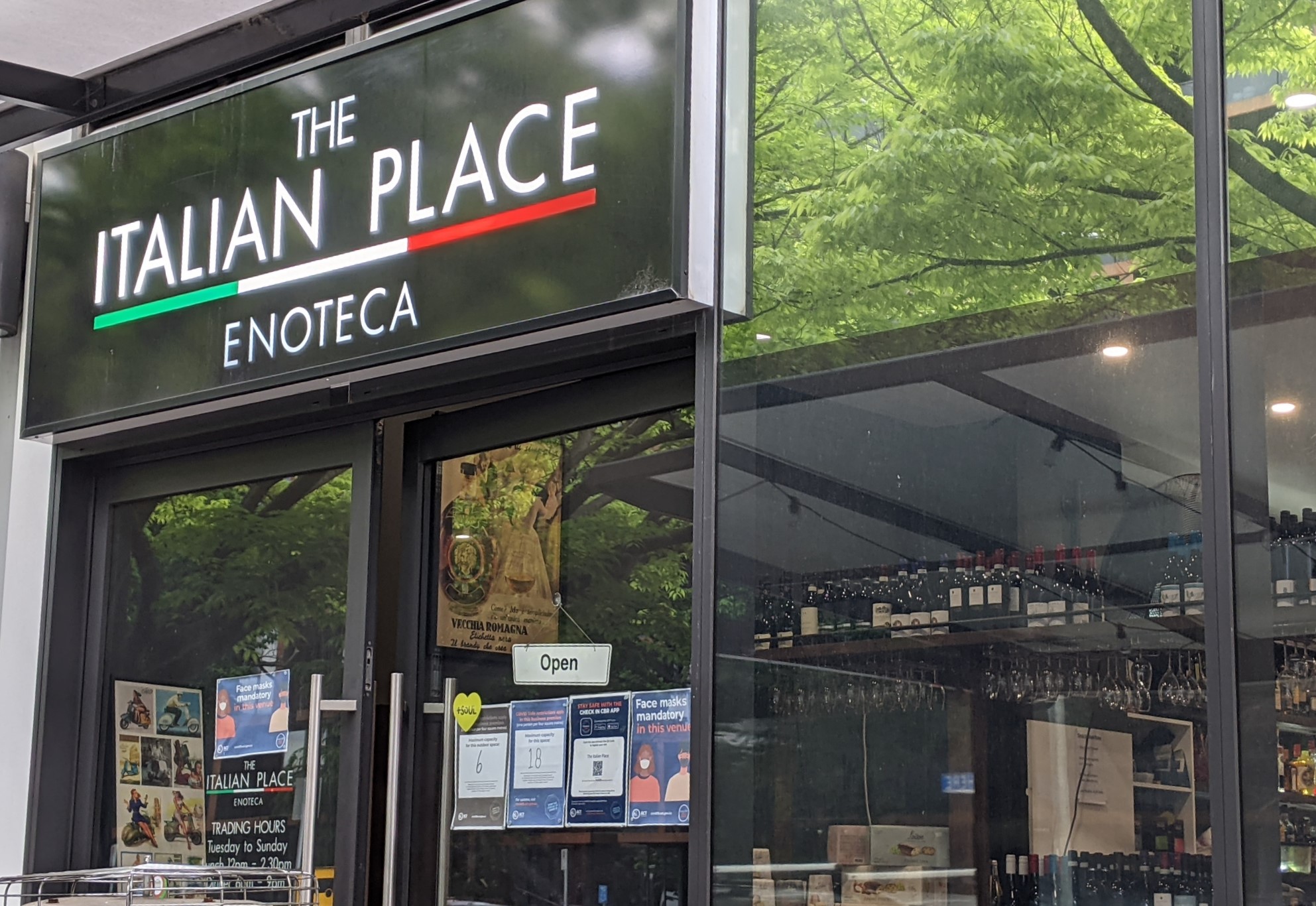
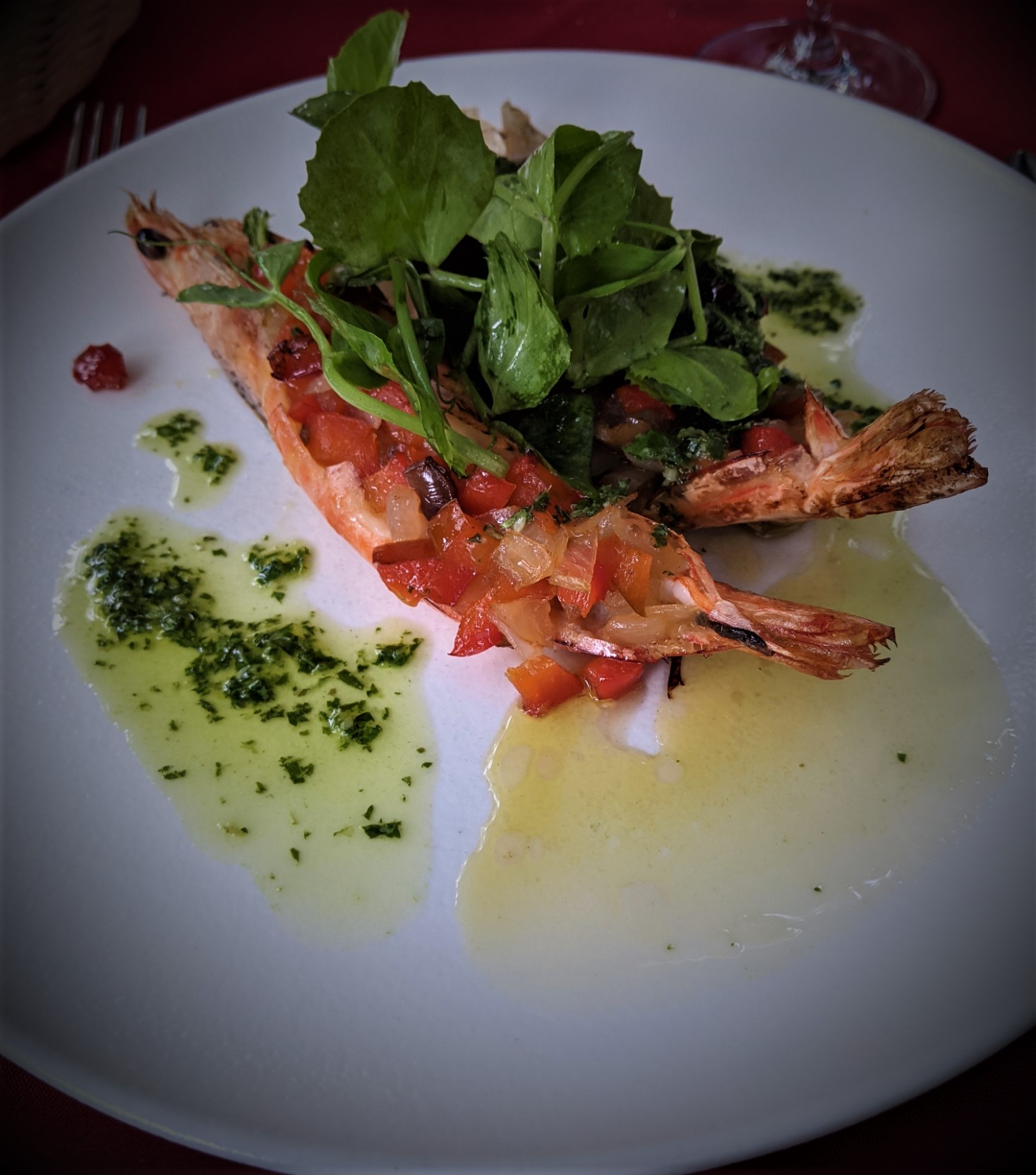
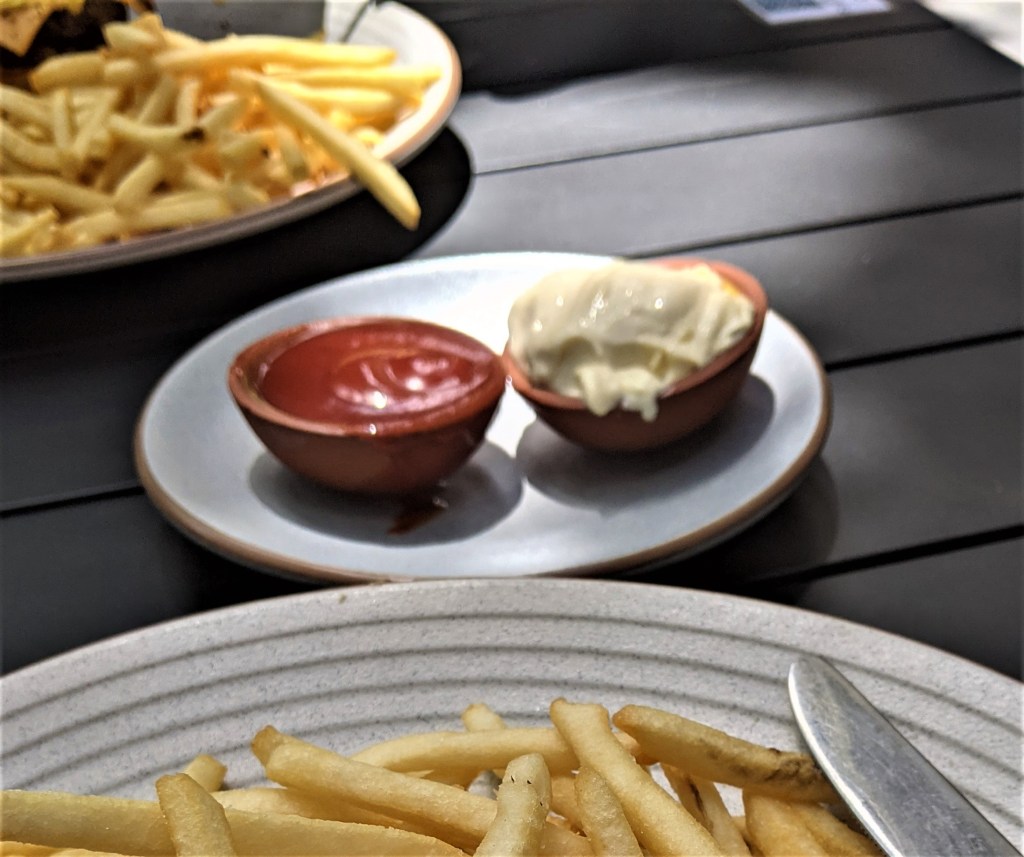
Cindy Lou reviews restaurants and cafes around Canberra and close by.
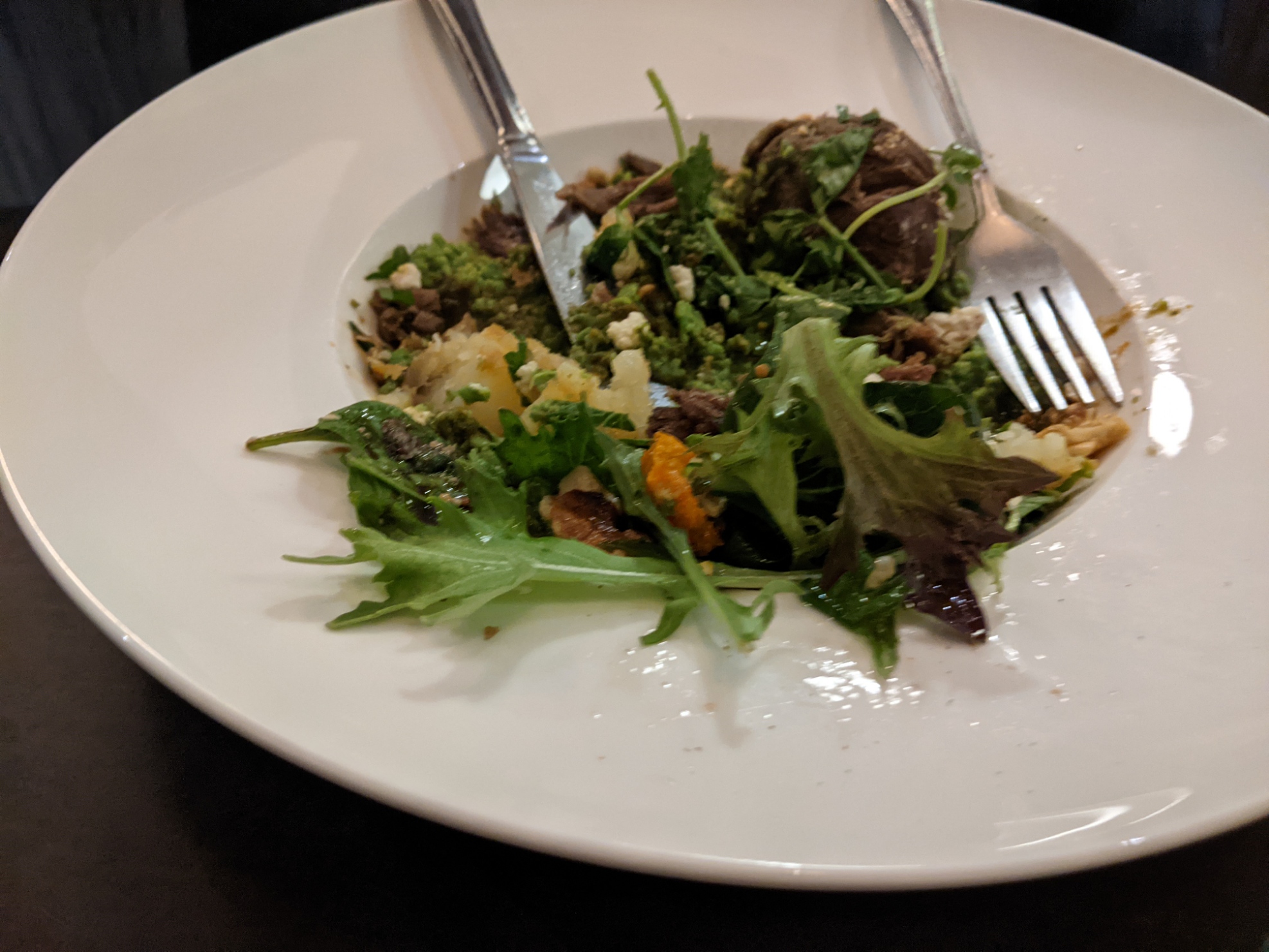
Courgette Restaurant, Canberra

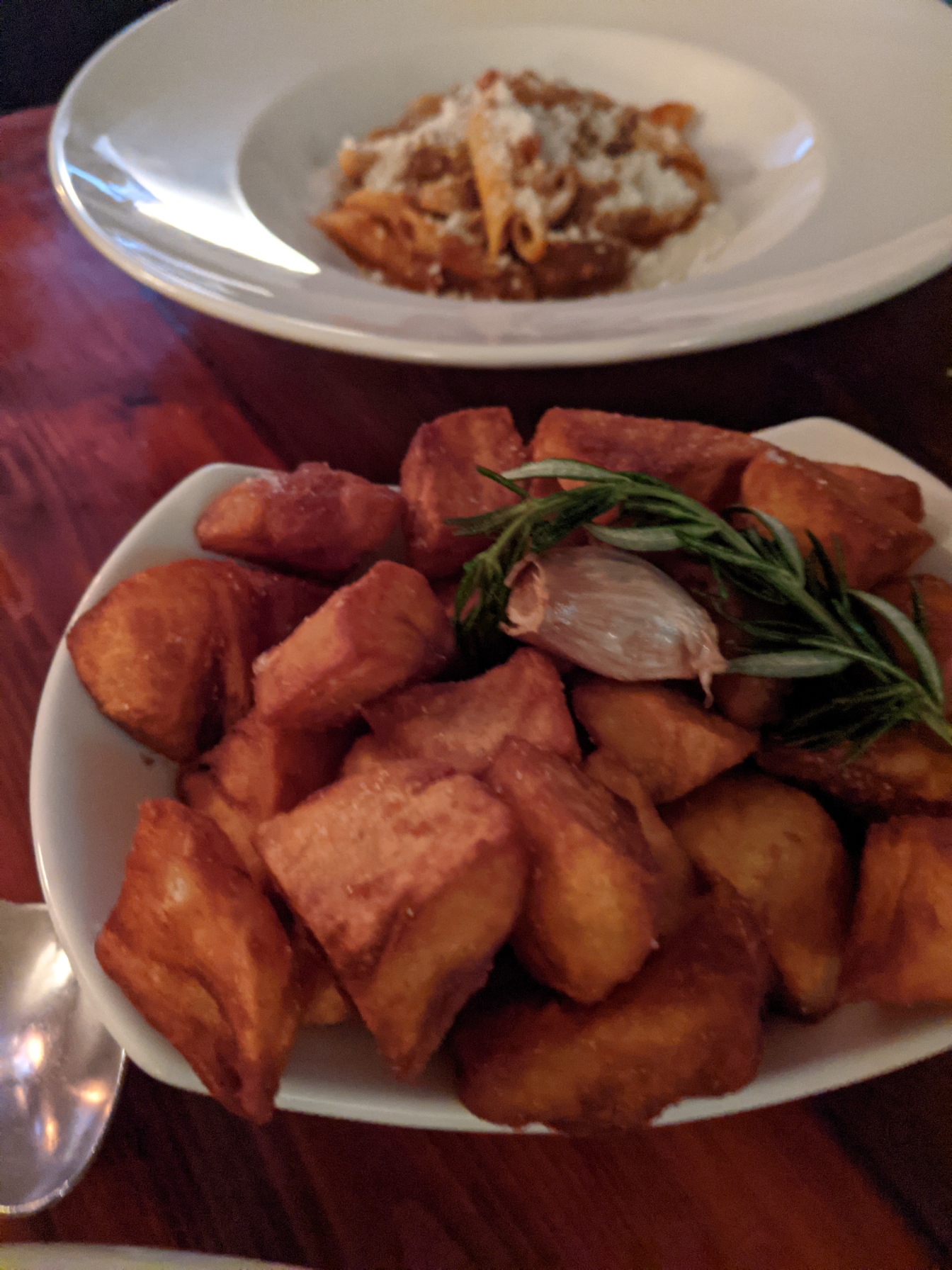
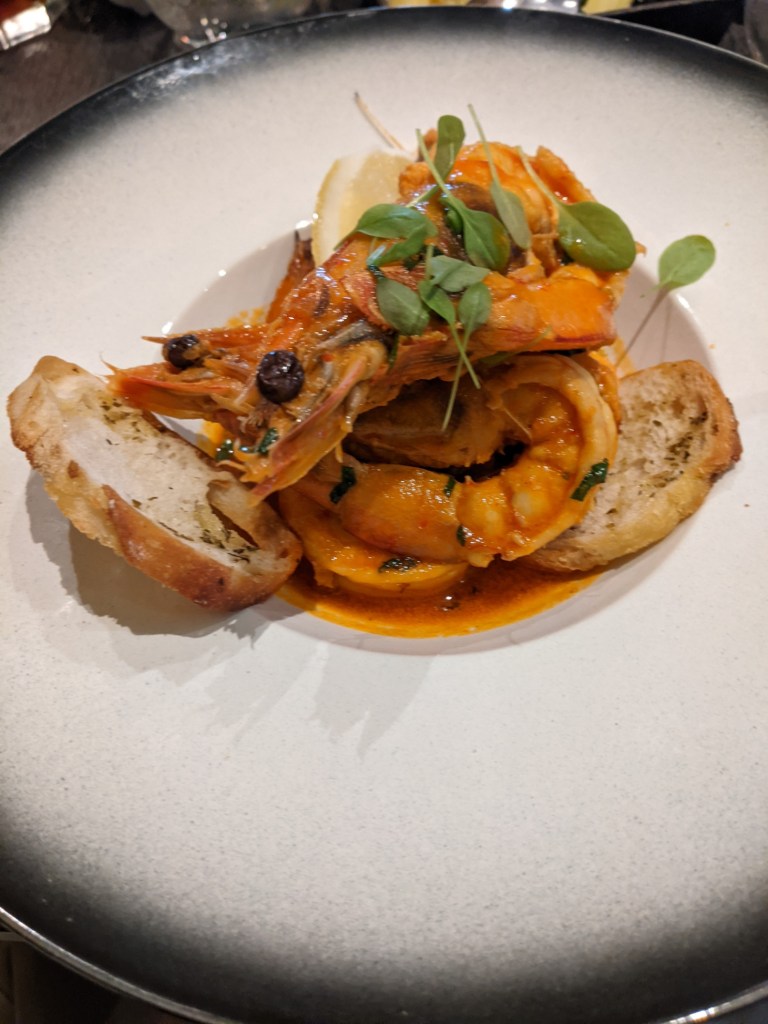
Courgette is a delightful restaurant, with white tablecloths, linen napkins, attractive silverware, and a lovely ambience. The tables are at a pleasant distance, even before Covid regulations, and conversation is easy. Staff are well informed, pleasant, and attentive.

The hand sanitser is available at the front entrance, and on the table (placed behind the lovely lamp usually), tables are also at a safe distance.

I chose the four-course menu.  This is served over a period that allows for conversation and unhurried dining, without one looking around to see when the food is coming. The hot rolls to start are served with smoked butter. On this occasion I was not as impressed by the butter as in the past. Not enough ash or smoke, so not what I expected. I did comment to the waiter but thought that the response although polite could have been improved.

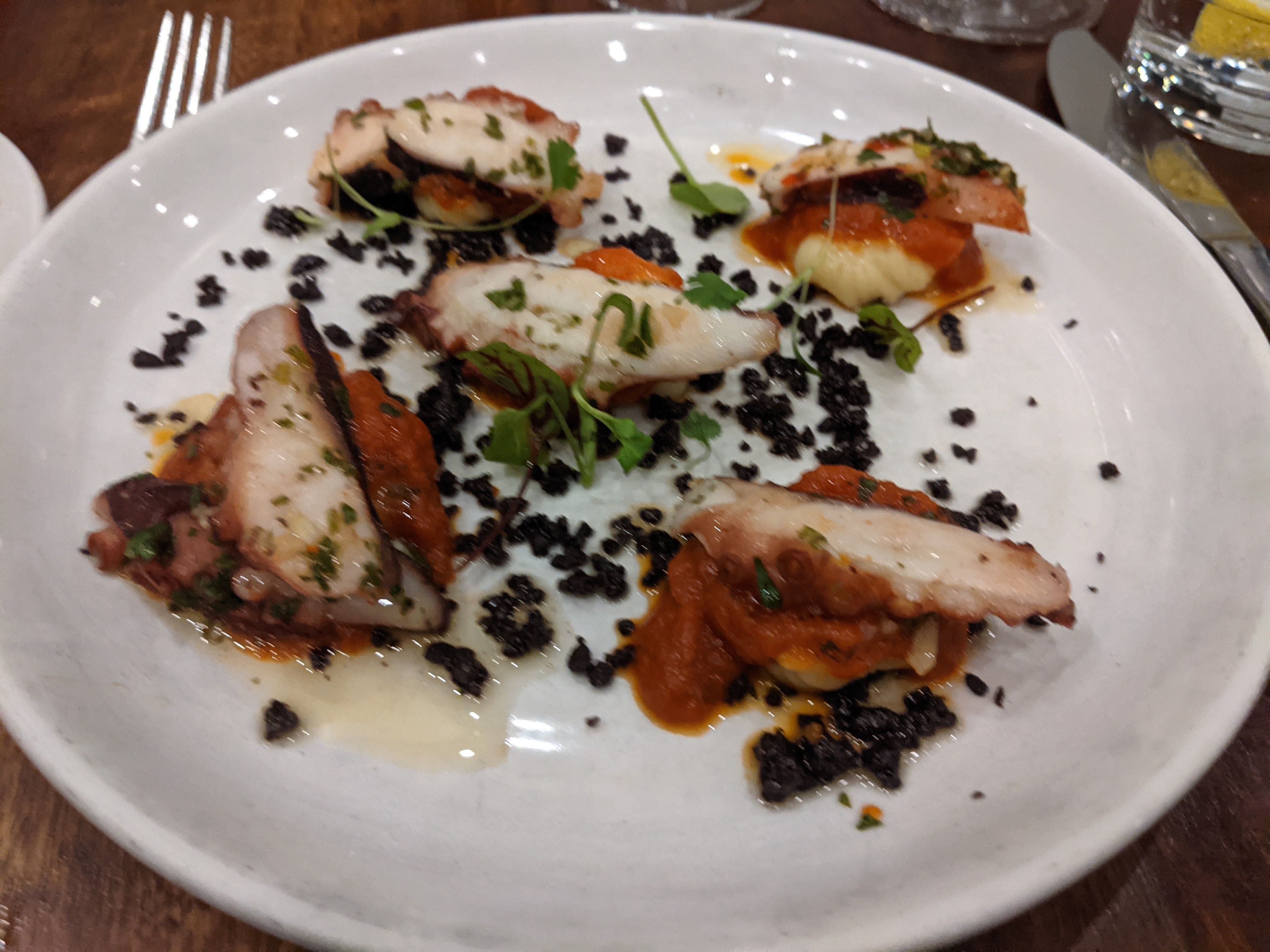
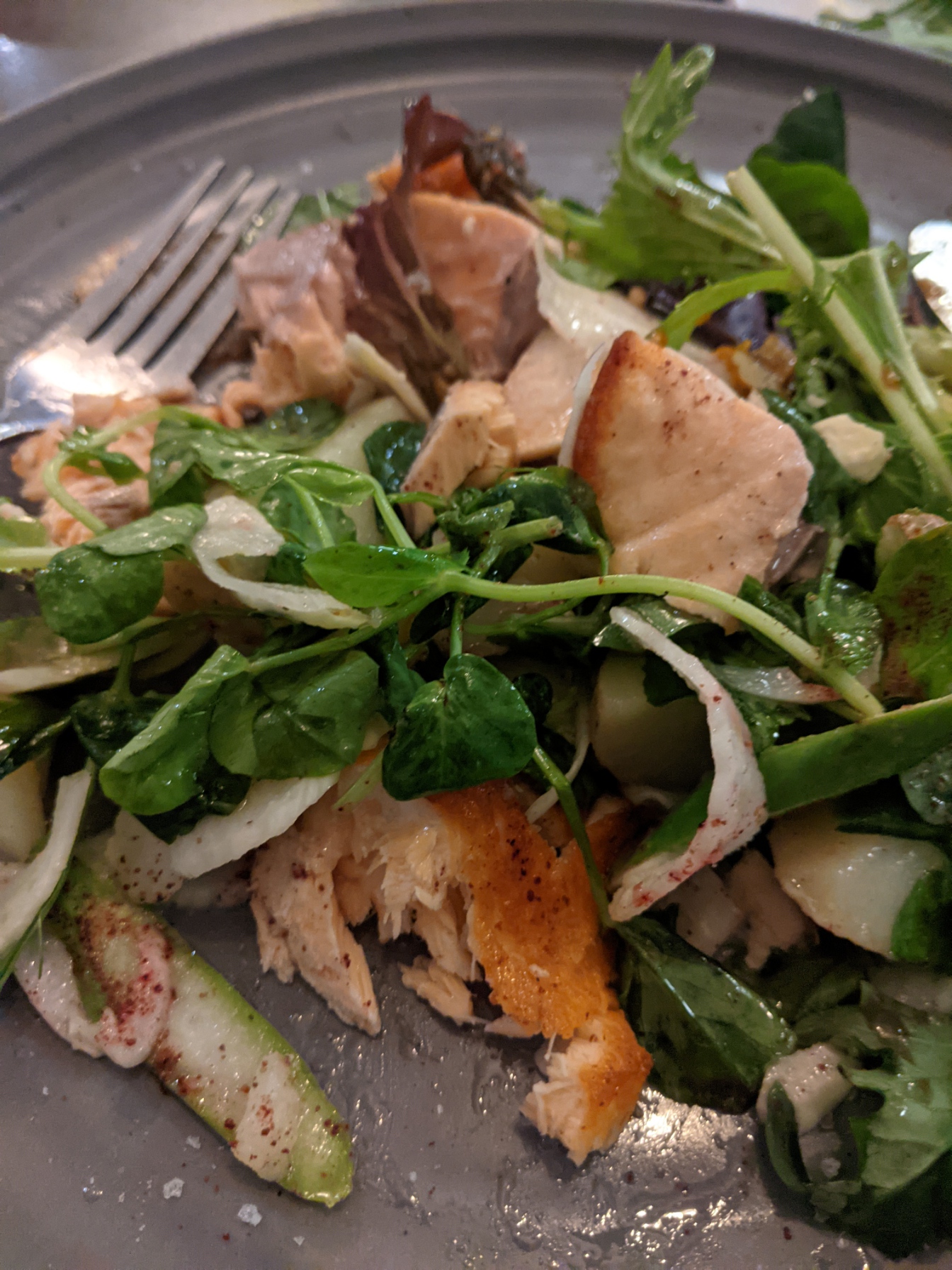
The food, as always, was delicious. Although the servings appear small, they are judiciously devised with flavour, textures and creativity combining to ensure that each course is entrancingly satisfying.

Although the dessert photos show that these were demolished before they could be photographed this was not the result of hunger. They looked so appetising; it was far too difficult to wait!

The menu changes periodically, and although I have always found a well-designed choice in each of the four courses, people with particular favourites might find it worthwhile looking at the menu online. Courgette has always been extremely accommodating with diet requirements. For example, there has never been a problem with finding a gluten free option, or being offered an alternative.

Lazy Su Restaurant, Canberra 

Lazy Su Restaurant, Canberra

Firstly, this is a noisy restaurant. However, with its comfortable seating and delectable food perhaps the need for conversation is at a minimum!

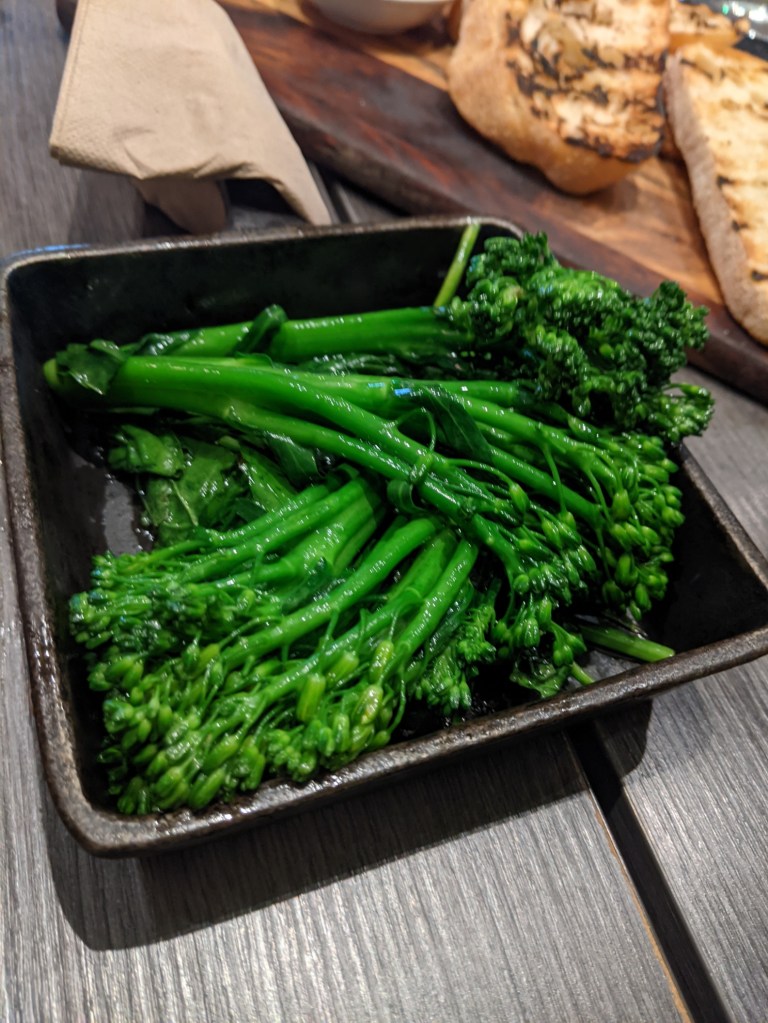
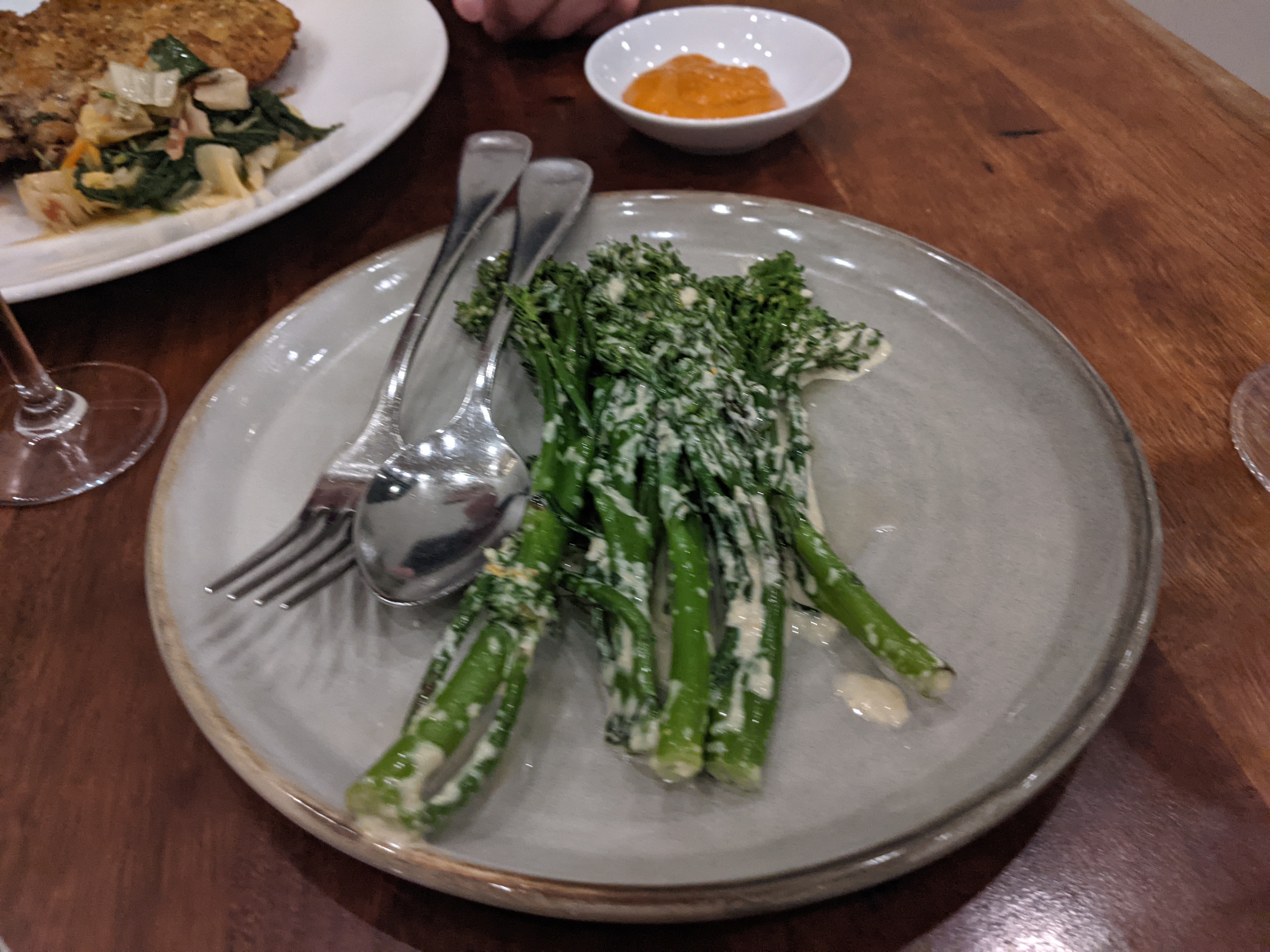
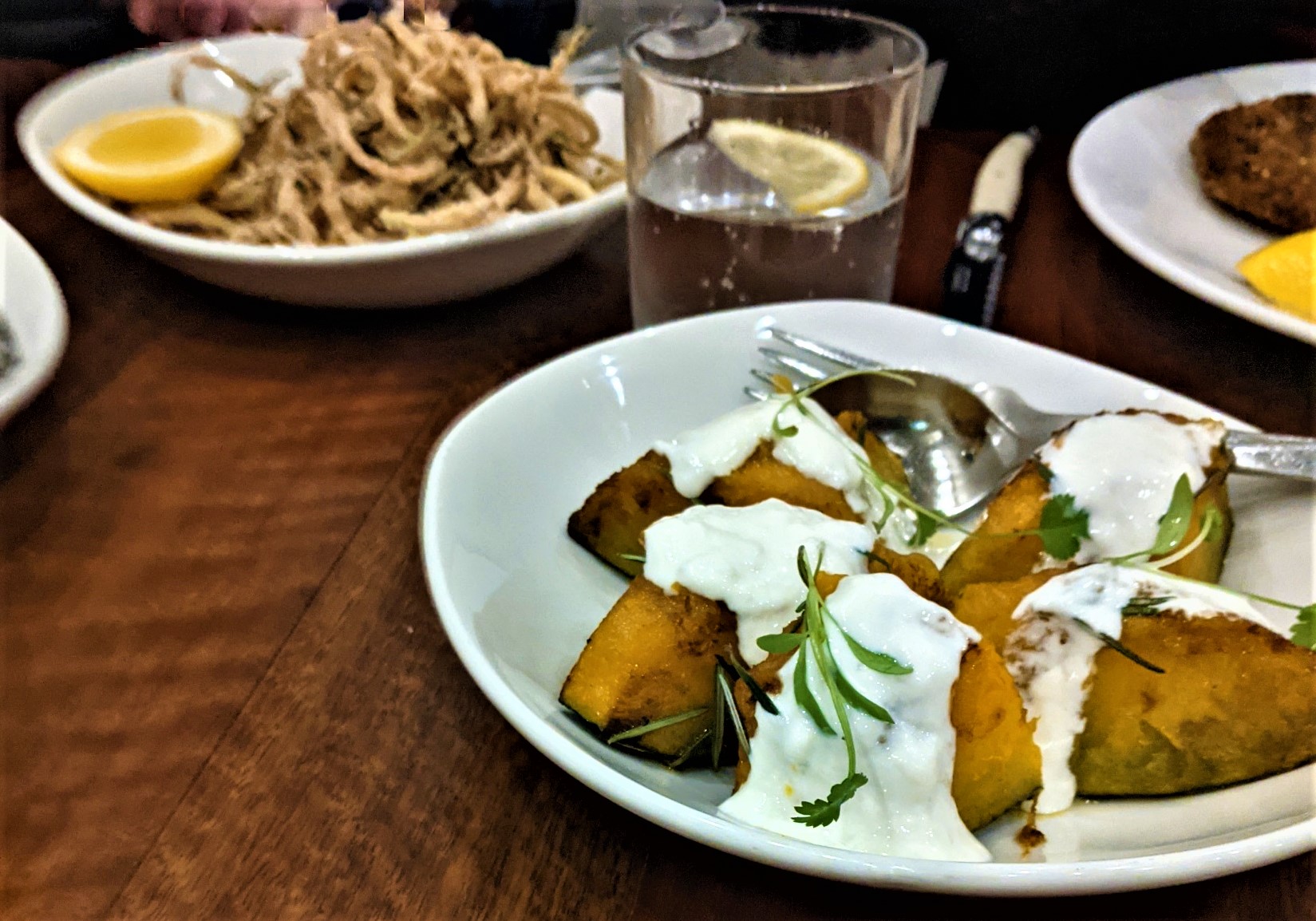
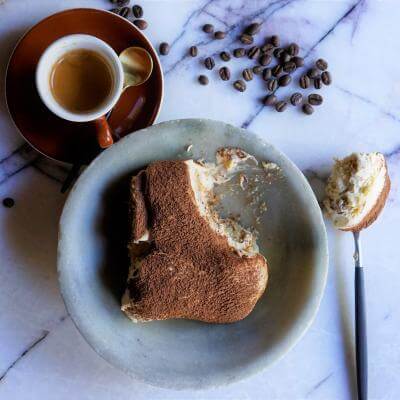
I went at the behest of a friend who eats only vegan food and was happy to adapt to this dietary requirement for most of the courses. The chicken course we nonvegans added was as delicious as the vegan courses. However,  although I was pleased to try yet another recipe, would have been happy with an entirely vegan menu. By chance, the dessert I chose, matcha tiramisu, was also vegan.  The restaurant offers banquets, one vegan and one with meat. However, we chose from the menu, enjoying dishes such as the Korean Pancake, charred broccolini, salt and pepper tofu bites, a spicy noodle dish and a persimmon dish. The pumpkin and walnut dumplings were a little disappointing – but not too much.

I thoroughly enjoyed this meal and look forward to trying some different dishes as well as what I am sure will become ‘old favourites’.

The Greengrocer, Goulburn

This is a pleasant, spacious café, with large windows letting in the sunshine on the day on which I chose to lunch there.

The meals are both generous and flavoursome. The dishes we ordered were the keto frittata, grilled chicken, pastitsio (lasagna) and a pie of the day. These meals were served with a salad of choice and chips. My pumpkin salad was delicious, the chips crisp, and the rotisserie chicken, although not as succulent as I would have liked, a good meal from the rotisserie.

Many of the customers seemed to be ordering the pizzas so we felt that perhaps these were a specialty. Certainly, the range of toppings is wide, and once again, generosity was key to the meals that passed us.

Water is available to serve oneself, and there is also a good coffee, tea, milk shake, fruit juice and soft drink menu.

Week beginning 7 July 2021

This post has been updated to include information about a zoom meeting, Brilliant & Bold! at which From Women to the World Letters for a New Century (one of the reviewed books) will be discussed.

Books reviewed this week are: Kelly Heyman’s Build Back Better. The First Hundred Days of the Biden Administration, and Beyond and From Women to the World Letters for a New Century, edited by Elizabeth Filippouli.

NetGalley provided me with the following uncorrected proofs for review.

Kelly Heyman Build Back Better. The First 100 Days of the Biden Administration, and Beyond, Amplify Publishing, 2021

As I finished reading Build Back Better, Brian Williams began The 11th Hour on MNSBC, with his familiar phrase enumerating the day of the current Presidency. Tonight, it was ‘Day 147 of the Biden Administration’. That Kelly Hyman has written in detail about only the first 100 days, and that the story continues, is not a defect. This is particularly so when her approach is that of a thoughtful observer and sometime advocate, rather than a writer who is ticking off the good and bad points of the administration, arriving at a number, and leaving the scene for someone else to analyse.

Elizabeth Filippouli From Women to the World Letters for a New Century I.B. Taurus, Bloomsbury Publishing Plc, 2021.

What better way to introduce a book of letters to women of importance to their correspondent than with a letter to the reader? Elizabeth Filippouli does so, explaining the way in which she came to developing a technique that reaches out women, from the women she has met, to the recipients of the letters some of them have written. She wanted their untold stories, written from the heart.  Her introduction begins with International Women’s Day, 2018 when Athena 40 was announced at UNESCO in Paris to promote a ‘“global” conversation’.  Filippouli sees her book of letters as a way of conversing with the writers, recipients, and readers, across ages, races and cross gender with familiarity.  

I shall be discussing From Women to the World on Brilliant & Bold! Sunday 11th July at 8.00 pm Canberra time and 11.00 am UK time. Brilliant & Bold! is a Zoom meeting presented by Dr Jocelynne Scutt. The topic this Sunday is Let’s Hear It From The Women. The details for joining are:

Jocelynne Scutt is inviting you to a scheduled Zoom meeting.

Topic: Brilliant & Bold! Bold & Brilliant!
Time: Jul 11, 2021 11:00 AM London
        Every month on the Second Sun, 3 occurrence(s)
        Jul 11, 2021 11:00 AM
        Aug 8, 2021 11:00 AM
        Sep 12, 2021 11:00 AM
Please download and import the following iCalendar (.ics) files to your
calendar system.
Monthly:
https://us02web.zoom.us/meeting/tZwtfuGhqj8rEt1t7UBRyY_QxfBHu3fnL3ku/ics?icsToken=98tyKuGgrjIiE9CRsRGORpw-Aor4WfPwiClcj7cMiEjQIRJKWzzHLuRgGqcsFtb8

Join Zoom Meeting
https://us02web.zoom.us/j/88098944189?pwd=dVhhOCtKREkvcmpoRWs1NHJENXNBUT09

Meeting ID: 880 9894 4189
Passcode: 645991

Meeting ID: 880 9894 4189
Passcode: 645991
Find your local number: https://us02web.zoom.us/u/kqRC6o3Tc

Independents Rising?

Bing Photo

Bob McMullan

The re-emergence of Barnaby Joyce as Deputy Prime Minister raises a number of issues. Some of these are major policy issues which affect the future of the nation and the planet. However, his reinstatement will also have an impact on electoral politics.

Joyce is possibly an electoral asset in some constituencies. But he is a polarizing figure. As a consequence, he raises the possibility that more independents will be elected to the federal parliament. Some are likely to be rural, driven by the alienation of some part of the National Party base. Some inner-city seats could see Liberals in trouble, particularly as a result of climate change policy.

Before I look at specific seats, I want to make clear my assumption, perhaps unwelcome to some Labor people, that all the minor party and independent members of the current House of Representatives will be re-elected. That means six seats in the Independents and minor party tally: Indi; Warringah; Mayo; Clark; Melbourne and Kennedy. I am not convinced the Labor Party should squander precious resources trying to turn these around. Whoever governs after the next election will not be influenced by any possible change in the representation in these seats.

There is inevitably a subjective element in any assessment of potential outcomes in seats. However, I have attempted to apply some common criteria in addition to some subjective assessments which will be made clear.

The first criterion is the percentage of Labor vote at the last election. If there is a realistic chance of the ALP winning a seat there is unlikely to be a prospect for any independent or minor party candidate as Labor preferences are unlikely to be distributed. I know that this is not universal. Some inner-city seats are three-way contests between Liberal, Labor and the Greens. I have included one or two of these seats in my list of potential Independent wins based on other criteria.

The second criterion is the unpopularity or controversial character of the sitting member. This is not relevant in every case but will influence the inclusion of some seats in the list.

The third criterion is the history of State or Federal support for Independent candidates in the past. This indicates a propensity to vote for such candidates if the circumstances are right.

Seat1: Barker (SA)

Barker is very much open to an Independent based on the Nationals policy on the Murray-Darling Plan since Barnaby took over. I think this will put a number of seats in play, but from an Independent candidate perspective Barker is a key opportunity. The future of many communities within the Barker electorate are very dependent on the flow of environmental water from the Northern Murray- Darling system. Current National Party policy puts this at risk. This is a seat in which the ALP took just 21% of the vote in 2019., so there is a reasonable chance that Labor preferences could come into play. A key population centre in the Barker electorate, Mt Gambier, has a long history of sending Independent members to the South Australian parliament. The local member, Tony Pasin, is a Liberal not a National so that gives him a little cover. However, he will have to lift his performance to resist a strong challenge. Given the right candidate Barker is a strong prospect to return an Independent member at the next election.

Seat2: Hume (NSW)

Hume is a different case. The possibility of an Independent challenge is driven by the record of the local member, Angus Taylor. There are a number of local issues in the background, but the key driver of any challenge is the continuing controversy concerning the local member. Should the government move on an Integrity Commission Taylor would be likely to be the subject of several serious allegations. Whether they are proven or not remains to be seen but the airing of the allegations could be damaging. If there is no such Commission the allegations will linger and the lack of a Commission will be another issue. There is already someone lining himself up to run as an Indi-type Independent in Hume. This should be worth watching. The Labor vote in Hume last time was stronger than in the other seats I am considering (26%) but it remains at serious risk with some tactical voting.

Seat3: Mallee (Vic)

This is a normally safe National Party seat under potential challenge from an Independent because of the Barnaby factor. The current member, Anne Webster, has expressed concern about her new Leader’s impact on the votes of rural women. This is a view which has also been expressed by the Deputy Leader of the Victorian Nationals and the Leader of the WA Nationals. In 2019 the ALP vote was 15% while two Independents got 18% between them. Furthermore, the State seat of Mildura has a proud history of electing Independents, including the current State member. Ms. Webster is a first term MP selected after the previous member was caught out in a sex scandal. She may be able to inoculate herself from the Barnaby factor but it is an interesting prospect.

Seat 4: Curtin (WA) or Higgins (Vic)

These two seats have some things in common that could make them vulnerable to an Independent candidate.

They are both traditional safe Liberal seats which have been represented by a series of high-profile Liberal party figures. However, they both now face the changing political landscape reflected in the emerging trend to more progressive social views amongst high income, well-educated voters. This has seen a number of similar seats around the democratic world come under threat. In the UK it is described as a potentially crumbling “Blue Wall”, the mirror image of the UK Labour Party’s loss of its so-called “Red Wall”

In 2019 this trend saw significant challenges in Higgins and Kooyong. I think Kooyong is too hard but these two are interesting possibilities. There is no doubt that Barnaby Joyce will be a significant negative for the coalition in seats like these. Time will tell if his undoubted unpopularity with well-educated women will translate into votes against the coalition.

One key difference between these two seats is the fact that there is a long history of electing Independents to the state parliament from within the federal seat of Curtin.

Seat 5: Riverina or Parkes (NSW)

The potential to elect Independents in these two seats is directly related to the Barnaby Joyce effect.  Both sitting members, Michael McCormack and Mark Coulton, were dropped from the Ministry in the leadership transition. Should either, or both, of them decide to walk away at the next election, or before, there would be a distinct possibility of the Nationals losing either or both seats. There have been significant Independent victories at state level in both seats.

Wildcards: Hughes (NSW) and Moore(WA)

I don’t expect either of these to return an Independent, but the political profile of the sitting members means it is possible.

The issues surrounding Craig Kelly, the member for Hughes, are well known and would have rendered him a chance of a serious Independent challenge. As he has left the Liberal party it is unlikely his successor will have the same problem. But Kelly is a wildcard and anything could happen.

The member for Moore, Ian Goodenough, is not so well known. However, he has been controversial within the Western Australian branch. There have been serious allegations of branch-stacking from a religious group with which he is associated and allegations of conflict of interest which may have interested an Integrity Commission if there was one. He has faced ex-Liberals running as Independents in the past without significant problems. He would only be in trouble if an individual emerged who could mobilise disaffected Liberals and more progressive voters.

Conclusion

Nothing is certain in politics, but the reinstatement of Barnaby Joyce to the Deputy Prime Minister’s position combined with demographic trends certainly means there will be some unusual seats demanding attention on election night.

NAIDOC WEEK

Happy #NAIDOC2021Labor is committed to the Uluru Statement in full. Voice. Treaty. Truth. We will get it done. Penny Wong Senator for South Australia

Week beginning 7 July 2021

Books reviewed this week are: Kelly Heyman’s Build Back Better. The First Hundred Days of the Biden Administration, and Beyond and From Women to the World Letters for a New Century, edited by Elizabeth Filippouli.

NetGalley provided me with the following uncorrected proofs for review.

Kelly Heyman Build Back Better. The First 100 Days of the Biden Administration, and Beyond, Amplify Publishing, 2021

As I finished reading Build Back Better, Brian Williams began The 11th Hour on MNSBC, with his familiar phrase enumerating the day of the current Presidency. Tonight, it was ‘Day 147 of the Biden Administration’. That Kelly Hyman has written in detail about only the first 100 days, and that the story continues, is not a defect. This is particularly so when her approach is that of a thoughtful observer and sometime advocate, rather than a writer who is ticking off the good and bad points of the administration, arriving at a number, and leaving the scene for someone else to analyse.

Elizabeth Filippouli From Women to the World Letters for a New Century I.B. Taurus, Bloomsbury Publishing Plc, 2021.

What better way to introduce a book of letters to women of importance to their correspondent than with a letter to the reader? Elizabeth Filippouli does so, explaining the way in which she came to developing a technique that reaches out women, from the women she has met, to the recipients of the letters some of them have written. She wanted their untold stories, written from the heart.  Her introduction begins with International Women’s Day, 2018 when Athena 40 was announced at UNESCO in Paris to promote a ‘“global” conversation’.  Filippouli sees her book of letters as a way of conversing with the writers, recipients, and readers, across ages, races and cross gender with familiarity.  

I shall be discussing From Women to the World on Brilliant & Bold! Sunday 11th July at 8.00 pm Canberra time and 11.00 am UK time. Brilliant & Bold! is a Zoom meeting presented by Dr Jocelynne Scutt. The topic this Sunday is Let’s Hear It From The Women. The details for joining are:

Jocelynne Scutt is inviting you to a scheduled Zoom meeting.

Topic: Brilliant & Bold! Bold & Brilliant!
Time: Jul 11, 2021 11:00 AM London
        Every month on the Second Sun, 3 occurrence(s)
        Jul 11, 2021 11:00 AM
        Aug 8, 2021 11:00 AM
        Sep 12, 2021 11:00 AM
Please download and import the following iCalendar (.ics) files to your
calendar system.
Monthly:
https://us02web.zoom.us/meeting/tZwtfuGhqj8rEt1t7UBRyY_QxfBHu3fnL3ku/ics?icsToken=98tyKuGgrjIiE9CRsRGORpw-Aor4WfPwiClcj7cMiEjQIRJKWzzHLuRgGqcsFtb8

Join Zoom Meeting
https://us02web.zoom.us/j/88098944189?pwd=dVhhOCtKREkvcmpoRWs1NHJENXNBUT09

Meeting ID: 880 9894 4189
Passcode: 645991

Meeting ID: 880 9894 4189
Passcode: 645991
Find your local number: https://us02web.zoom.us/u/kqRC6o3Tc

Independents Rising?

Bing Photo

Bob McMullan

The re-emergence of Barnaby Joyce as Deputy Prime Minister raises a number of issues. Some of these are major policy issues which affect the future of the nation and the planet. However, his reinstatement will also have an impact on electoral politics.

Joyce is possibly an electoral asset in some constituencies. But he is a polarizing figure. As a consequence, he raises the possibility that more independents will be elected to the federal parliament. Some are likely to be rural, driven by the alienation of some part of the National Party base. Some inner-city seats could see Liberals in trouble, particularly as a result of climate change policy.

Before I look at specific seats, I want to make clear my assumption, perhaps unwelcome to some Labor people, that all the minor party and independent members of the current House of Representatives will be re-elected. That means six seats in the Independents and minor party tally: Indi; Warringah; Mayo; Clark; Melbourne and Kennedy. I am not convinced the Labor Party should squander precious resources trying to turn these around. Whoever governs after the next election will not be influenced by any possible change in the representation in these seats.

There is inevitably a subjective element in any assessment of potential outcomes in seats. However, I have attempted to apply some common criteria in addition to some subjective assessments which will be made clear.

The first criterion is the percentage of Labor vote at the last election. If there is a realistic chance of the ALP winning a seat there is unlikely to be a prospect for any independent or minor party candidate as Labor preferences are unlikely to be distributed. I know that this is not universal. Some inner-city seats are three-way contests between Liberal, Labor and the Greens. I have included one or two of these seats in my list of potential Independent wins based on other criteria.

The second criterion is the unpopularity or controversial character of the sitting member. This is not relevant in every case but will influence the inclusion of some seats in the list.

The third criterion is the history of State or Federal support for Independent candidates in the past. This indicates a propensity to vote for such candidates if the circumstances are right.

Seat1: Barker (SA)

Barker is very much open to an Independent based on the Nationals policy on the Murray-Darling Plan since Barnaby took over. I think this will put a number of seats in play, but from an Independent candidate perspective Barker is a key opportunity. The future of many communities within the Barker electorate are very dependent on the flow of environmental water from the Northern Murray- Darling system. Current National Party policy puts this at risk. This is a seat in which the ALP took just 21% of the vote in 2019., so there is a reasonable chance that Labor preferences could come into play. A key population centre in the Barker electorate, Mt Gambier, has a long history of sending Independent members to the South Australian parliament. The local member, Tony Pasin, is a Liberal not a National so that gives him a little cover. However, he will have to lift his performance to resist a strong challenge. Given the right candidate Barker is a strong prospect to return an Independent member at the next election.

Seat2: Hume (NSW)

Hume is a different case. The possibility of an Independent challenge is driven by the record of the local member, Angus Taylor. There are a number of local issues in the background, but the key driver of any challenge is the continuing controversy concerning the local member. Should the government move on an Integrity Commission Taylor would be likely to be the subject of several serious allegations. Whether they are proven or not remains to be seen but the airing of the allegations could be damaging. If there is no such Commission the allegations will linger and the lack of a Commission will be another issue. There is already someone lining himself up to run as an Indi-type Independent in Hume. This should be worth watching. The Labor vote in Hume last time was stronger than in the other seats I am considering (26%) but it remains at serious risk with some tactical voting.

Seat3: Mallee (Vic)

This is a normally safe National Party seat under potential challenge from an Independent because of the Barnaby factor. The current member, Anne Webster, has expressed concern about her new Leader’s impact on the votes of rural women. This is a view which has also been expressed by the Deputy Leader of the Victorian Nationals and the Leader of the WA Nationals. In 2019 the ALP vote was 15% while two Independents got 18% between them. Furthermore, the State seat of Mildura has a proud history of electing Independents, including the current State member. Ms. Webster is a first term MP selected after the previous member was caught out in a sex scandal. She may be able to inoculate herself from the Barnaby factor but it is an interesting prospect.

Seat 4: Curtin (WA) or Higgins (Vic)

These two seats have some things in common that could make them vulnerable to an Independent candidate.

They are both traditional safe Liberal seats which have been represented by a series of high-profile Liberal party figures. However, they both now face the changing political landscape reflected in the emerging trend to more progressive social views amongst high income, well-educated voters. This has seen a number of similar seats around the democratic world come under threat. In the UK it is described as a potentially crumbling “Blue Wall”, the mirror image of the UK Labour Party’s loss of its so-called “Red Wall”

In 2019 this trend saw significant challenges in Higgins and Kooyong. I think Kooyong is too hard but these two are interesting possibilities. There is no doubt that Barnaby Joyce will be a significant negative for the coalition in seats like these. Time will tell if his undoubted unpopularity with well-educated women will translate into votes against the coalition.

One key difference between these two seats is the fact that there is a long history of electing Independents to the state parliament from within the federal seat of Curtin.

Seat 5: Riverina or Parkes (NSW)

The potential to elect Independents in these two seats is directly related to the Barnaby Joyce effect.  Both sitting members, Michael McCormack and Mark Coulton, were dropped from the Ministry in the leadership transition. Should either, or both, of them decide to walk away at the next election, or before, there would be a distinct possibility of the Nationals losing either or both seats. There have been significant Independent victories at state level in both seats.

Wildcards: Hughes (NSW) and Moore(WA)

I don’t expect either of these to return an Independent, but the political profile of the sitting members means it is possible.

The issues surrounding Craig Kelly, the member for Hughes, are well known and would have rendered him a chance of a serious Independent challenge. As he has left the Liberal party it is unlikely his successor will have the same problem. But Kelly is a wildcard and anything could happen.

The member for Moore, Ian Goodenough, is not so well known. However, he has been controversial within the Western Australian branch. There have been serious allegations of branch-stacking from a religious group with which he is associated and allegations of conflict of interest which may have interested an Integrity Commission if there was one. He has faced ex-Liberals running as Independents in the past without significant problems. He would only be in trouble if an individual emerged who could mobilise disaffected Liberals and more progressive voters.

Conclusion

Nothing is certain in politics, but the reinstatement of Barnaby Joyce to the Deputy Prime Minister’s position combined with demographic trends certainly means there will be some unusual seats demanding attention on election night.

NAIDOC WEEK

Happy #NAIDOC2021Labor is committed to the Uluru Statement in full. Voice. Treaty. Truth. We will get it done. Penny Wong Senator for South Australia

Week beginning 30 June 2021

Book reviews this week are fiction. Each depicts a woman under duress as the main character. In the first, The Good Samaritan by C.J. Parsons, Carrie has facial expression blindness and is on the spectrum. The second book, Keep Me Close by Jane Holland features Kate who works in a misogynist environment, has suffered the deaths of her brother and father and later, the suicide of her partner, and is responsible for her mother who has dementia. K.L. Slater’s The Evidence again depicts a woman juggling paid work and domestic responsibilities. My response to these novels was remarkably different, based largely on my understanding and reaction to the main characters. I actively seek out strong women characters with a story line that resonates with feminist ideas. One interesting feature of these novels, is that while Jane Holland’s refers directly to feminist phrases (‘Me Too, etc.) her depiction of the main woman character compares badly with K.L. Slater’s Esme Fox and C.J. Parson’s Carrie. While Parsons does not consciously engage with feminist ideas, and Slater’s theme of domestic violence does, both novels are feminist reads, portraying women characters who fit more aptly into that of a strong, resourceful woman.

C.J. Parsons, The Good Samaritan, Kindle edition, Headline publishing Group, 2020.

A simple plot: a child is kidnapped, and eventually returned, two people assist – which of them, if either, is the perpetrator? Include amongst the possibilities a random kidnapping or add to the possible culprits an unstable divorced husband, and co-workers. One of the Samaritan’s mother has died in a fire; the other speaks of a possibly non-existent child. And, for good measure, increase the stress and possibilities when another kidnapped child is found by a person unrelated to the original kidnap – as far as we know. 

Jane Holland Keep Me Close Lume Books. 2021.

Kate has suffered the deaths of her father and brother and the suicide of her partner, David. However, she has a promising career, working full time as an editor in a publishing company. Despite her mother having dementia, Kate is enabled in her career as a carer and a house cleaner deal with many of her mother’s needs.  The novel begins with Kate observing David’s friend, Logan, in the street as she hastily purchases items for her mother after a hard day at work. Failing to avoid this reminder of the past, she soon welcomes Logan into her life. 

K.L. Slater The Evidence Bookouture 2021

The Evidence is another novel that enlists the reader’s sympathy with a mother juggling paid work and domestic responsibilities. At the same time, it draws upon the social issues around coercion between men and women in its most severe terms when considering Simone’s situation, and the questions arising from Esme and Owen’s relationship. The reader is forced to understand Esme’s reluctance to act as we know she ‘should’, at times becoming almost fed up with her inability to acknowledge her situation. This is a clever device indeed when the negative public responses to Simone’s situation are considered.

See Books: Reviews for the complete reviews.

Coffee, masks and Covid in Canberra

As we are eating the masks can be off for a short time. It’s amazing how slowly one can eat when freedom from the mask is the reward. But, how lucky we are to have governments and businesses who care enough to have such rules as appropriate. It was fantastic to see how well people were responding to the new rules while shopping. Although the rule is to wear a mask in an enclosed space, all the people I saw on the street were wearing them.

The venue was Edgar’s Inn where the check in is evident in several places and hand sanitiser is at the door. Social distancing is in keeping with the rules. On a culinary note, our coffees were excellent, the food and service were good, and Leah enjoyed her breakfast. We had salads and Leah had home made pumpkin and peanut butter biscuits, a toothbrush, kibble and some coffee froth.

Voting rights in America were dealt another blow by the Supreme Court.

Image from President Joe Biden’s Facebook page
President Joe Biden had this to say:

I am deeply disappointed in today’s decision by the United States Supreme Court that undercuts the Voting Rights Act, and upholds what Justice Kagan called “a significant race-based disparity in voting opportunities.”

In a span of just eight years, the Court has now done severe damage to two of the most important provisions of the Voting Rights Act of 1965 – a law that took years of struggle and strife to secure. After all we have been through to deliver the promise of this Nation to all Americans, we should be fully enforcing voting rights laws, not weakening them. Yet this decision comes just over a week after Senate Republicans blocked even a debate – even consideration – of the For the People Act that would have protected the right to vote from action by Republican legislators in states across the country.

While this broad assault against voting rights is sadly not unprecedented, it is taking on new forms. It is no longer just about a fight over who gets to vote and making it easier for eligible voters to vote. It is about who gets to count the vote and whether your vote counts at all. Our democracy depends on an election system built on integrity and independence. The attack we are seeing today makes clearer than ever that additional laws are needed to safeguard that beating heart of our democracy. We must also shore up our election security to address the threats of election subversion from abroad and at home.

Today’s decision also makes it all the more imperative to continue the fight for the For the People Act and the John Lewis Voting Rights Advancement Act to restore and expand voting protections. The Court’s decision, harmful as it is, does not limit Congress’ ability to repair the damage done today: it puts the burden back on Congress to restore the Voting Rights Act to its intended strength. That means forging a coalition of Americans of every background and political party – from advocates, activists, and business executives – to raise the urgency of the moment and demand that our democracy truly reflects the will of the people and that it delivers for the Nation. That is what Vice President Harris and I will continue to do. This is our life’s work and the work of all of us. Democracy is on the line. We can do this together.

Vice President Kamala Harris, on Facebook:
The right to vote is fundamental. It gives Americans a voice in what happens in our nation. When more people have a voice, our democracy becomes more representative, and our nation becomes stronger. We won’t give up the fight to strengthen our right to vote.
Heather Cox Richardson’s commentary on voting rights:

July 1, 2021 (Thursday)Today, by a 6 to 3 vote, the Supreme Court handed down Brnovich v. Democratic National Committee saying that the state of Arizona did not violate the 1965 Voting Rights Act (VRA) with laws that limited ballot delivery to voters, family members, or caregivers, or when it required election officials to throw out ballots that voters had cast in the wrong precincts by accident.

The fact that voting restrictions affect racial or ethnic groups differently does not make them illegal, Justice Samuel Alito wrote. “The mere fact that there is some disparity in impact does not necessarily mean that a system is not equally open or that it does not give everyone an equal opportunity to vote.” The court also suggested that concerns about voter fraud—which is so rare as to be virtually nonexistent—are legitimate reasons to restrict voting. We are reliving the Reconstruction years after the Civil War. That war had changed the idea of who should have a say in American society. Before the war, the ideal citizen was a white man, usually a property owner. But those were the very people who tried to destroy the country, while during the war, Black Americans and women, people previously excluded from politics, gave their lives and their livelihoods to support the government.

After the war, when white southerners tried to reinstate laws that returned the Black population to a position that looked much like enslavement, Congress in 1867 gave Black men the right to vote for delegates to new state constitutions. Those new constitutions, in turn, gave Black men the right to vote. In order to stop voters from ratifying the new constitutions, white southerners who had no intention of permitting Black Americans to gain rights organized as the Ku Klux Klan to terrorize voters. While they failed to prevent states from ratifying the new constitutions, the KKK continued to beat, rape, and murder Black voters in the South. So, in 1870, Congress established the Department of Justice to defend Black rights in the South. It also passed a series of laws that made it a federal crime to interfere with voting and with the official duties of an elected officer. And it passed, and the states ratified, the Fifteenth Amendment to the Constitution, declaring that “The right of citizens of the United States to vote shall not be denied or abridged by the United States or by any State on account of race, color, or previous condition of servitude.”

Immediately, white Americans determined to stop Black participation in government turned to a new argument. During the Civil War, the Republican Party had not only expanded Black rights, but had also invented the nation’s first national taxation. For the first time, how people voted directly affected other people’s pocketbooks. In 1871, white southerners began to say that they did not object on racial grounds to Black voting, but rather on the grounds that formerly enslaved men were impoverished and were electing to office men who promised to give them things—roads, for example, and schools and hospitals—to be paid for with tax dollars. Because white men were the only ones with property in the postwar South, such legislation would redistribute wealth from white men to Black people. It was, they charged, “socialism.” In 1876, white southerners reclaimed control of the last remaining states they had not yet won by insisting they were “redeeming” their states from the corruption created when Black voters elected leaders who would use tax dollars for public programs. In 1890, a new constitution in Mississippi, which at the time was about 58% Black, restricted voting not on racial grounds but through a poll tax and a “literacy” test applied against Black voters alone. Mississippi led the way for new restrictions across the country. Although Black and Brown Americans continually challenged the new Jim and Juan Crow laws that silenced them, voting registration for people of color fell into single digits. These laws stayed in place for 75 years. Then, in 1965, Congress passed the Voting Rights Act, designed to undo voter suppression laws once and for all. The VRA worked. In Mississippi in 1965, just 6.7% of eligible Black voters were registered to vote. Two years later, that number was 59.8%, although there was still a 32-point gap in registration between Blacks and whites. By 1988, that gap had narrowed to 6.3%, and in 2012, 90.2% of eligible Black residents were registered compared to 82.4% of non-Hispanic whites. The Voting Rights Act was considered so important that just 15 years ago, in 2006, Congress voted almost unanimously to reauthorize it. But the Supreme Court under Chief Justice John Roberts, who has long disliked the VRA, has chipped away at the law, cutting deeply into it in 2013 with the Shelby County v. Holder decision. And now, with three new justices appointed by former president Trump, the court has weakened it further.

To what end are we returning to the 1890s?The restrictive voting measures passed by Republican-dominated legislatures are designed to keep Republicans in power. Today that means allegiance to former president Trump, whose Trump Organization and Trump Payroll Corporation were indicted by a New York grand jury today, along with Trump Organization chief financial officer Allen Weisselberg, on 15 felony counts, including a scheme to defraud, conspiracy, grand larceny, criminal tax fraud, and falsifying business records. The indictment alleges that the schemes involve federal, as well as state and local, crimes. New York Attorney General Letitia James emphasized that the investigation is not over.Republican lawmakers are lining up behind the former president so closely that last night, House Minority Leader Kevin McCarthy (R-CA) threatened to take away the committee assignments of anyone agreeing to work on the select committee to investigate the events of January 6 that House Speaker Nancy Pelosi (D-CA) is putting together after Senate Republicans filibustered the creation of a bipartisan independent committee. (McCarthy’s declaration prompted Representative Adam Kinzinger (R-IL), who appears appalled at the direction his party has taken, to respond “Who gives a s–t?” He added: “I do think the threat of removing committees is ironic, because you won’t go after the space lasers and white supremacist people but those who tell the truth.”)Representative Liz Cheney (R-WY) nonetheless said she was “honored” to join the committee, along with seven Democrats. While it is unclear if McCarthy will add more Republicans, it will now get underway. The committee includes House Intelligence Committee chair Adam Schiff (D-CA), and Representative Jamie Raskin (D-MD), both of whom showed extraordinary ability to assess huge amounts of material when they managed Trump’s impeachment trials. That the Republicans have fought so hard against an investigation of the January 6 insurrection suggests we might well learn things that reflect poorly on certain lawmakers. So, today’s news puts the American people in the position of watching as a political party, lined up behind a man now in legal jeopardy, who might be involved in an attack on our government, tries to cement its hold on power. “Today’s decision by the Supreme Court undercuts voting rights in this country,” President Biden said, “and makes it all the more crucial to pass the For the People Act and the John Lewis Voting Rights Advancement Act to restore and expand voting protections.”“Our democracy depends on it.”

The Atlantic Daily, July 1, 2021,also responded:

The Atlantic <newsletters@theatlantic.com

Week beginning 23 June 2021

Book reviews this week include a thriller, a domestic drama, and a non-fiction book. The following books were provided to me as uncorrected proofs from NetGalley for advance reviews.

Bill Clinton; James Patterson, The President’s Daughter, Random house UK, Cornerstone Century, 2021.

My usual choice of reading does not include thrillers such as The President’s Daughter, but of course I was tempted by the thought of reading a novel with a clear political component contributed to by Bill Clinton. If you are like me, make sure that on this occasion you too are tempted. The President’s Daughter is an excellent read: it is well plotted; features nuanced and broad ranging political elements; gives women agency; and has a riveting major story line, with thoughtful sub plots.

Kerry Fisher, Other People’s Marriages, bookoutre, 2021.

Kerry Fisher is one of a small group amongst the writers of domestic drama with a feminist foundation that I admire and enjoy. Yes, there are others who attempt to write in this genre and succeed well enough to provide a satisfying and, at times, likeable read. However, Kerry Fisher does more. Her use of a familiar device, some older women friends, a secret, chapters that alternate between characters and past and present, is particularly well developed. Slices of the women’s lives, and secondary characters, brought together over time insist that the reader becomes drawn into the deliberations and lives enacted on the page. These lives are so full of comic moments, heartache, drama, friendship, enmity, and reality with which it is so easy to engage, that the women, likeable or not, with whom it is easy to agree or not, become a familiar part of the reader’s life, at the time, and after the book is finished. 

Danielle J. Lindemann, True Story What Television Says About Us, Farrar, Strauss and Giroux, 2021

True Story is an amusing, as well as academic, romp through American reality television programs. Some of the programs will be familiar to readers from other countries: Keeping Up with the Kardashians, Big Brother and Survivor; make over programs; televised cooking competitions; The Apprentice; modelling, singing, and dancing competitive shows; and The Real Housewives. Some are American programs televised worldwide, others are home grown on the same model as the American programs. Some are entirely new to me, and possibly other readers will find the same. However, unfamiliar in their particulars they may be, but all reality television watchers will recognise the ‘rules’; the catch cries that belong to the genre – the television ‘characters’ and their audience; and, although we may need Danielle J. Lindemann to alert us, the way in which the shows play into the audiences’ lives while teaching new ways of looking at other people.

See Television: Comments for my article on Australian Big Brother and Britain’s The Apprentice in Jocelynne A. Scutt (ED.) Women, Law and Culture Conformity, Contradiction and Conflict. An abstract appears below.

‘It’s Time To go!’ ‘You’re Fired!’: Australian Big Brother (2005) and Britain’s The Apprentice (2014)

Different cultures, programmes and years. However, a comparison of the way in which women are treated in Big Brother Australia (BB) and The Apprentice UK (TA) provides an insight into two examples of reality television and the prognosis for women who seek advancement through the process. Do the different formats and programme aspirations affect female contestants? How are they treated? Are women winners? Direct outcomes, such as the winner’s prize, are markedly different between the programmes. There is a greater similarity in the indirect benefits, which include media appearances in other reality shows and making radio and television programmes or appearances. Winners of BB are chosen by audiences, on which the programme relies entirely. While other experts’ opinions are sought, Lord Sugar delivers the final judgement on TA. The different processes have garnered both female and male winners, but the gender imbalance on BB is significant, both in numbers and in comparison with TA results. Both programmes rely on elements of drama as well as reality. Editing is inevitable and naturally the dramatic events with the purpose of ‘making good television’ influence what is aired. Audiences are familiar with reality television and its features and are adept at reading what they are seeing. In comparing Australian BB 2005, with so much of its emphasis on women displaying traditional feminine traits and The Apprentice 2014 demanding women demonstrate business acumen and traits traditionally male, it is ironic that women are more likely to win TA.

For the complete book reviews see: Books: Reviews.

‘It’s the real deal’: James Patterson and Bill Clinton discuss the true-life details of The President’s Daughter

In this exclusive interview transcript, the co-authors Lee Child called ‘the dream team’ discuss how the former president’s life, both in the White House and after, informed the plot of their latest novel.

New post on Women’s Film and Television History Network – UK/Ireland
Ellen O’Mara Sullivan
Raiding the Lost Archive: Finding the Irish Film Pioneers Ellen O’Mara Sullivan and Mary Rynne by daisyrichards7

My university’s archive collection is vast. The National University of Ireland, Galway (NUIG)[1] , is the only university on the west coast of Ireland. The majority of its archival materials relate to Galway and Ireland, with a specialisation in archives relating to the people and places of the west of Ireland. I love this archive and it has provided me with a wealth of original documents for my research. On a typical day I order boxes from the catalogue with reference to the people or places that have a bearing on my research. I go through these boxes of documents, letters, bills, photographs, books and leaflets in the hope that they will shine a light on the topic in hand. Usually they do. The process is logical, a listing in the catalogue leads to an archive. Or so I thought!
My most recent archival find came via a recommendation from a colleague who works in the archives. She recommended that I should check out the archive of the retired Professor of Archaeology at NUIG, Etienne Rynne, for documents relating to the Film Company of Ireland. I followed her advice and discovered a document that sheds light on the finances of this early Irish film company and brings forth the story of two sisters and their support of and investment in this company.
I research early and silent cinema and the Film Company of Ireland (1916-1920) is my current focus. Established by James Mark Sullivan and Henry Fitzgibbon, it was Ireland’s first significant fiction film company. Research indicates that James Sullivan’s wife Ellen O’Mara Sullivan played an important role in the running of the company. There is evidence to show that she invested money in the company and saved it from collapsing twice in 1917, the year they made their first feature length film Knocknagow (Fred O’Donovan, 1918).
Evidence also shows that she worked with her husband in the offices of the film company and that they travelled to America together in 1918 to promote their films to various distributors in an attempt to break into the American market. All of this evidence comes from a variety of sources and has been built up by many researchers over many years. It is based on private letters from Ellen O’Mara Sullivan and her relations, interviews with her descendants, newspaper reports and archival documents. Thanks to this work the contribution of Ellen O’Mara Sullivan to Irish film history is being made known, although what we know about her is hampered by the fact that as a woman her existence was not often officially recorded. We have birth, marriage, death and newspaper reports of her financial investment in the company.
In contrast, the record we have for her husband is more extensive: we have birth, marriage and death, along with records of his employment, his name on the registration of the Film Company of Ireland, his interviews about the films being made. The public life of a business man leaves a record that is not matched by the private life of a woman, even if she is involved with the running of a business. Any new information about women in early and silent cinema gives us a more rounded picture of the industry at that time and helps us to slowly reclaim the historical forgetting of their contribution to the development of the film industry. 
The archive my colleague directed me to, the Rynne Archive, contains documents relating to the retired Professor of Archaeology Etienne Rynne, his work and his family. Professor Rynne’s grand-aunt was Ellen O’Mara Sullivan. Letters in this archive from Professor Rynne’s father Michael confirmed Ellen O’Mara’s significant role in the Film Company of Ireland. This was wonderful; given the dearth of information regarding women in early cinema, any confirmation of existing knowledge makes that knowledge more secure, less tentative.
This archive, however, offered a new insight, a legal document showing the purchase of shares in the company by Ellen’s sister Mary Rynne. This document showed that Mary invested in the company in March 1917 at a time when the finances of the company were in peril and Henry Fitzgibbon the co-director was uncontactable in America. Mary Rynne’s investment, alongside Ellen’s financial support for the company probably saved the company from financial ruin and most likely gave it the funds it needed to make its first feature film Knocknagow.
In one document we can learn so much more about the history of Irish cinema and the contribution of women to that history. We have learned that the financial investment of two uncredited women kept the first significant Irish fiction film company afloat to allow it to move from making shorts to making feature length films. We have learnt more about Ellen’s role in the company, from investing her own money to securing other investors for the company. We learn too the name of a new woman to add to the people involved in the Film Company of Ireland, Mary Rynne, who not only made this investment in the company but who also had a bit part in the film that she helped fund. 

Veronica Johnson teaches Film Studies at the National University of Ireland, Galway. She is currently working on a history of the Film Company of Ireland (1916-1920). Veronica is a former Irish Research Council Awardee and a winner of the International Association for Media History (IAMHIST) Challenge 2020. This blog is based on her most recent article is “Seeking Traces of Women in Early Irish Filmmaking: The O’Mara Sisters and the Archive” Alphaville: Journal of Film and Screen Media, no. 20, 2020, pp. 28-37, DOI: https://doi.org/10.33178/alpha.20.03. She thanks Dr Geraldine Curtin for directing her to the treasures of the Rynne Archive at NUIG.WFTHN note: there is an entry in the Women Film Pioneers Project on Ellen O’Mara Sullivan – Women Film Pioneers Project; and Knocknagow (1918) can see seen, free, on the BFI website : Watch Knocknagow – BFI Player.

Week beginning 16th June 2021

Kindred Spirits , Bailick Park Midleton, County Cork Ireland – Bing Image

Book reviews this week include a non-fiction book on movie makers, and far more impressive, two historical fiction novels by Philippa Gregory, which begin in England, with the struggle between the monarchy and parliamentary government providing the background to Tidelands.  Class and gender are a focus of the local story set on the coast of Sussex. In the sequel, Dark Tides, the trade links between London and Venice and the return of the monarchy with its consequences for Cromwell’s supporters, and their acquisition of American land with its impact on Native Americans are exposed. The story reflecting a positive relationship between Ireland and the Choctaw Indian tribe, appearing on Facebook at the same time as I read the second of the novels was interesting.

Bing Images of the Choctaw Memorial, Kindred Spirits.

The pictured sculpture was built because in 1847 the Choctaw people sent money to Ireland when they learned that Irish people were starving due to the potato famine. The Choctaw themselves were living in hardship and poverty, having recently endured the Trail of Tears. Thank you Devin O’Branagan for sharing this story on Facebook.

Another follow up, although not dedicated to Native Americans, worth watching for further insight into events after those described by Philippa Gregory in Dark Tides is the documentary directed by Ken Burns, Lewis & Clark: The Journey of the Corps of Discovery, set in 1804.

Book Reviews

Philippa Gregory Tidelands Simon & Schuster 2021

As usual Philippa Gregory places women at the centre of her well researched, engrossing historical novel. In Tidelands the descriptive prose introducing the setting is particularly evocative. The tidelands are far from Gregory’s depiction of the palaces and seat of the Tudors’ governance and intrigue established by famous figures. The Sussex coast, where water and land intermingle, creating danger for those who do not know the area, and mastery of the environment for those who do, is the location of much of the novel.

 
Philippa Gregory, Dark Tides, Simon & Schuster, 2021.

Please do not read this review if you do not want to see possible spoilers for Tidelands, to which this is the sequel. 

In some respects, Dark Tides is a disappointing sequel to Tidelands. The poetic language associated with the ebb and flow of the water and land in Tidelands is missing. Instead, the Thames, dark and odoriferous, swills around the docklands of Shad Thames, the wrong side of the river where small warehouses, mean dwellings, and the thought of poverty prevail. However, despite these surrounds, Alinor and Alys appreciate their escape from the physical and emotional assaults they have left behind in Sealsea Island, Sussex and are making new lives for themselves and the children, Sarah, and Johnnie, in London. 
George Thomas Clark, They Make Movies BooksGoSocial 2
They Make Movies is a combination of fiction, real events, and interpretations of the protagonists’ attitude towards the films in which they appeared or directed. Some of the events are seemingly told by the subject of the chapter, others appear to be based on reality or the author’s interpretation, described as if they are addressed directly by the subject. As exciting as this presentation could be, I found that I could not warm to the execution of this style in They Make Movies, although some of the observations are well made.

See Books: Reviews for the complete reviews.

In conversation with Julia Banks

ANU/The Canberra Times Meet the Author series »Register now

Julia Banks and Virginia Haussegger will be in conversation on Julia’s new book Power Play. Breaking Through Bias, Barriers and Boys’ Clubs, an honest guide for women who aspire to leadership in the workplace and in the world.

Having won the ‘unwinnable’ seat that secured the Coalition Government majority in 2016, Julia Banks shocked Australia when she announced she would stand as an independent MP in 2018, having experienced a toxic workplace culture in the country’s centre of power – designed by men for their dominance. Julia doesn’t just know what power looks like in a political sense; she made it to the top of her game in the legal and corporate sectors before running for parliament. And at every level, she had to navigate through the bias, barriers and boys’ clubs that aim to silence women or deter them from leadership roles.

Power Play reveals the unvarnished realities of any workplace where power disparities and gender politics collide: from the unequal opportunities, casual sexism and systemic misogyny, to pressures around looks, age and family responsibilities, and the consequences of speaking out. Julia shares personal stories, practical advice, and a resounding argument for why women aren’t the problem – but why more women in decision-making positions will help us find the solution.

Julia Banks has unique leadership experience spanning a career in law, the corporate business world and as a Member of the Federal Parliament of Australia. Julia graduated in Arts and Law from Monash University, and is a Graduate of the Australian Institute of Company Directors. She worked in global companies for over twenty years, in senior executive director roles and as General Counsel. She was elected to the House of Representatives in 2016 as the only candidate to win a seat from the Opposition, resulting in the Coalition returning to government with a one-seat majority. Amidst controversy in 2018, she resigned from the Coalition Government’s Liberal Party and stood as an independent MP. Julia is now the principal consultant in her own business and a public speaker in the areas of governance, workplace culture, and women in leadership.

Virginia Haussegger AM, a passionate women’s advocate and communication specialist, is the former Chair and Founding Director of the 50/50 by 2030 Foundation, at the University of Canberra, where she is an Adjunct Professor. The Foundation has a singular focus on improving the representation of women in leadership and key decision making roles across all levels of government and public administration. Virginia anchored the ABC’s flagship TV News in Canberra from 2001-2016. She was the 2019 ACT Australian of the Year. In 2020 Virginia launched the popular podcast series BroadTalk, which takes a deep dive into contemporary debate around Women, Power and the wayward World.

Award-winning author and ABC Insiders regular Niki Savva will give the vote of thanks. Niki was Peter Costello’s press secretary for six years, and was on John Howard’s staff for four. Her political columns have appeared in The Australian since 2010. Niki’s book The Road To Ruin: How Tony Abbott and Peta Credlin destroyed their own government, won the 2017 best non-fiction book of the year by the Australian Book Industry Association.

This event is in association with Harry Hartog Bookshop and books will be available for purchase on the evening in the Cultural Centre foyer. Pre-event book signings will be available from 5.30pm, and available again after the event until 7.30pm.

Week beginning 9 June 2021

Book Reviews this week are the non fiction, Superman’s Not Coming, and a novel that features some of the same issues, Patricia Hunt Holmes’ Crude Ambition.

Erin Brockovich with Suzanne Boothby, Superman’s Not Coming Our National Water Crisis and What We the People Can Do About It, Pantheon Books 2021

I saw the film, Erin Brockovich, while travelling and fully immersed myself in the fight for the people of Hinkley. Now, having read Erin Brockovich and Suzanne Boothby’s book, which investigates the water crisis in America more generally, I feel as enthusiastic about Brockovich’s journeys, not only fighting on people’s behalf, but providing them with the tools and encouragement to act for themselves.

Patricia Hunt Holmes Crude Ambition River Grove Books Austin, TX, 2021. Is a fictional account of landowners’ greed in responding to oil companies’ offers to drill their land for oil. Fracking and its impact on water, leading to deaths, and the complicity of legal firms, lawyers and law enforcement officer’s in hiding the truth provide a strong political statement. Women’s role is also explored, with some mixed commentary and conclusions, but on the whole a largely feminist account.

Centre for Stories

The Annual Report, 2020, for the Centre for Stories landed on my desk this week. The Centre for Stories is the West Australian initiative of Caroline and John Wood. The Centre for Stories ‘cultivates stories that inspire thought, spark empathy and challenge intolerance…empowering people whose experiences and perspectives are often marginalised’.

The Chair, Coralie Bishop, points to significant achievements in her message. These include: expanding reach and impact in Perth’s art and culture community; suburban, regional and international work and recognition; and a diverse program of ‘ public lectures, personal interviews, mentoring of emerging writers and storytellers, providing hot desks and book clubs’.

More information can be found at:

http://www.facebook.com/CentreforStories

http://www.twitter.com/Centre4Stories

http://www.instagram.com/centrefor stories

Forgotten Australian TV Plays: The Shifting Heart

by Stephen Vagg appears in his series on forgotten Australian TV plays, at https://www.filmink.com.au/forgotten-australian-tv-plays-the-shifting-heart/

The journal, FilmInk, at https://www.filmink.com.au, is a great source of information on what is happening now, and what happened in the past in the film and television worlds. More at Television: Comments

Why Kate Winslet lobbying for ‘a bulgy bit of belly’ matters
Garry Maddox
By Garry Maddox

June 4, 2021 — 12.19pm https://www.smh.com.au/culture/tv-and-radio/why-kate-winslet-lobbying-for-a-bulgy-bit-of-belly-matters-20210603-p57xnr.html

All is not doom and gloom for Labor Voters

By Bob McMullan Jun 4, 2021Vote scrabble feature

Credit- Unsplash

The published polling data does not support the prevailing orthodoxy that the ALP is trailing, failing to catch up and headed to inevitable defeat.


A recent article in The Economist about Australia’s Covid travel restrictions asserted that PM Morrison “is well ahead in the polls”. This appears to reflect the prevailing orthodoxy, even amongst Labor voters. Some media reports suggest that this may also be the view of many Labor MPs and Senators. This is a puzzle to me.

The facts suggest otherwise.  The most reliable consolidated reporting of Australian published polling is by the Poll Bludger and can be found on his website. This data shows the Labor party has been either level or ahead in the polls all year, and the long-term trend in the primary vote has been up since last September. The two-party-preferred trendline has put Labor ahead all year. In fact, the current headline of the website’s analysis has the ALP on 51.7%, a swing of 3.2% since the last election.

Recent experience tells us to be wary of any polling. The methodological challenges and variable response rates suggest caution, but those problems are constant. If the trend is up, then that should not be affected by the challenges faced by pollsters. Yet, one then hears of the awful result in the Upper Hunter by-election and speculation about its consequences for Labor federally. No serious analyst would base an assessment of likely federal election results on a state by-election. Everyone was quick to assert that the strong results for Labor in State elections in WA and Queensland were not indicators of the likely federal outcome. I think that is probably correct. But if it is, why on earth would you seek to place any national significance on a state by-election? I understand why a local member whose seat overlaps with the relevant State seat might be concerned. But to project beyond that is either stupid or wilfully misleading. 

Of course, it is never a safe option to argue against the prevailing orthodoxy. It is possible that the doom-sayers are right. But the numbers don’t support the thesis that Labor is trailing, not catching up and inevitably headed for defeat. Let’s look at the numbers over the last twelve months. From Newspoll, Labor’s primary vote reached a nadir of 34% on several occasions up to 7 November. Since that time, it has been consistently higher, ranging from 36% to 41%. Essential polls have shown a similar pattern. They reached a low point of 31% in September 2020 and since that time have been consistently higher, although lower than Newspoll numbers.

It is too early to establish any pattern from the new kid on the block, Resolve Strategic. Two-party-preferred numbers tell a similar story. Across Newspoll, Essential and Roy Morgan, Labor has been equal with the coalition or ahead in every poll included in the Poll Bludger tables since Australia Day. By no means do I take this data as gospel. The fundamental problems with contemporary polling are too well known. However, I take polling more seriously than self-serving “gut feelings”, which always seem to coincide with the prejudices or preferences of the people concerned. What I think it is safe to conclude is that the ALP’s position is clearly improving and on the face of it Labor is in a position to be competitive in any election held in the next few months. Politics is a volatile business, and anything can happen between now and the election, but nothing will be gained by taking actions based on a fundamental misunderstanding of the objective circumstances. 

This article originally appeared in Pearls and Irritations. NB The title attributed to this article by Pearls and Irritations has been corrected.