Week beginning 30 April 2025

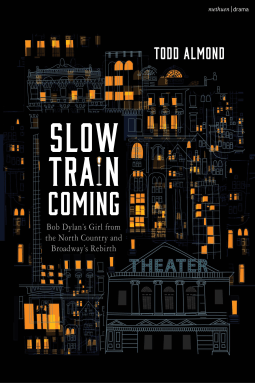
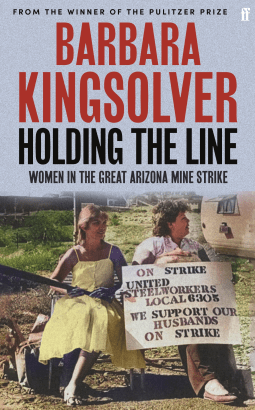
Barbara Kingsolver Holding the Line Women in the Great Arizona Mine Strike Faber and Faber Ltd, October 2024.

Thank you, NetGalley, for providing me with this uncorrected proof for review.

Barbara Kingsolver has written a non-fiction book that echoes the skill she demonstrates in her fiction. The preface is a wonderful insight into the author as well as her subject. Kingsolver’s future as a writer of impactful fiction is one of the joys to realise through this, one of her early works as a journalist. Here, we see the woman who has written so masterfully about issues while drawing the reader into a fictional world from which it is difficult to emerge unchallenged. Now, to the content of this non-fiction example of her work. The women portrayed in Holding the Line are engaging and confronting, at the same time as demanding awareness and empathy. They provide a valuable history of women’s contribution to this particular strike, while presenting a thoughtful understanding of the way in which so many women, their contributions unrecorded, may have contributed to industrial action.

Kingsolver sees the women’s stories as promoting hope, that they recognised that the goal should be seeking justice rather than revenge and their contribution to demonstrating that people who see themselves as ordinary can scale impregnable heights. She also has a word of warning – no-one is necessarily exempt from what happened during these women’s fight for justice. See Books: Reviews for the complete review.

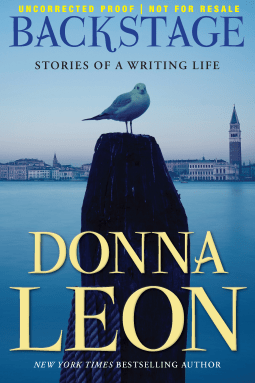
Donna Leon Backstage Stories of a Writing Life Grove Atlantic | Atlantic Monthly Press, August 2025.

Thank you, NetGalley, for providing me with this uncorrected proof for review.

Donna Leon’s Wandering through Life: A Memoir was a satisfying enough collection, particularly where she reflects upon her teaching English in Iran, China, and Saudi Arabia. Although this experience is also recalled in Backstage, I found the whole of this collection far more engaging. Here, another part of Donna Leon’s world is revealed, in sharper recall, more wholly reflecting her fictional work. Like Wanderings her welcome into this further world is open and honest. However, the attention it commands and, at times, background knowledge to fully appreciate it adds a valuable dimension. This world is introduced through opera, her own writing, others’ writing, her love for Venice and her work that seems so remote from Brunetti’s Venetian world but is indeed hers too. See Books: Reviews for the complete review.

American Politics

100 Days of the Trump Presidency

Since taking office, Trump’s has made extensive use of executive orders, some of which have tested the limits of executive authority, and others faced immediate legal challenges. A major focus has been on immigration reform, deportations, tariffs, limiting DEI practices, cutting federal spending, reducing the federal workforce, increasing executive authority, and implementing changes to foreign policy. (edited from Wikipedia).While the chaos of the Trump Presidency continues toward the important 100 days that is a significant marker of a presidential term it is worth reflecting upon the first 100 days of the Biden Presidency written about by Kelly Hyman in Build Back Better. The First 100 Days of the Biden Administration, and Beyond.

My review of this book appears below. The first 100 days of a presidential term took on symbolic significance during Franklin D. Roosevelt’s first term in office, and the period is considered a benchmark to measure the early success of a president.

In the meantime, the first 100 days of the second Trump Presidency began on January 20, 2025. The 100th day of his second presidency ends on April 30, 2025. As of March 16, 2025, President Trump has signed 92 executive orders, 22 memorandums, 17 proclamations and signed the Laken Riley Act: his first and so far, only legislation of his second term.

Adam Schiff Destroys Trump For 100 Days Of Crime, Lies, And Failure

Sen. Adam Schiff (D-CA) marked Trump’s first 100 days in office by calling out the president’s lies, false promises, and failures.

Few people have more direct experience investigating Donald Trump as a member of Congress than Sen. Adam Schiff. As chair of the House Intelligence Committee, Schiff led the first impeachment investigation of President Trump. After Trump was impeached the first time, Schiff was the lead House prosecutor to argue the case before the Senate, and he later served on the 1/6 Committee.

Promised during the campaign, in fact, to the degree that they were written about during the campaign in Project 2025, he tried to run away and disavow them. So, he doesn’t have a mandate to do what he’s doing, and I think it’s reflected in the already enormous voter dissatisfaction in his first a hundred days.

Yeah, no, people are just starting to feel the tariffs. They’re gonna feel them a lot more, which I imagine is going to be worse for him.

Schiff also talked about the purpose of Trump’s arresting judges:

I think it is, yeah. In a normal, rational world, you would have immigration authorities work with a courthouse.

And decide, okay, how do we work together? Or how do we at least not interfere with what each other are doing? You wouldn’t have the kind of confrontation and arrest that we saw, but the administration relishes this. They relish the opportunity to go after judges. They relish the opportunity to try to intimidate and shock people.

They talk, just gleefully about impeaching judges they disagree with. So it is part of a broader assault on the rule of law, a broader effort to intimidate. They’re intimidating. The universities, they’re intimidating the law firms. They’re intimidating corporations forcing them to come hat in hand, begging for exemptions from tariffs, and now they’re trying to intimidate the judiciary as well.

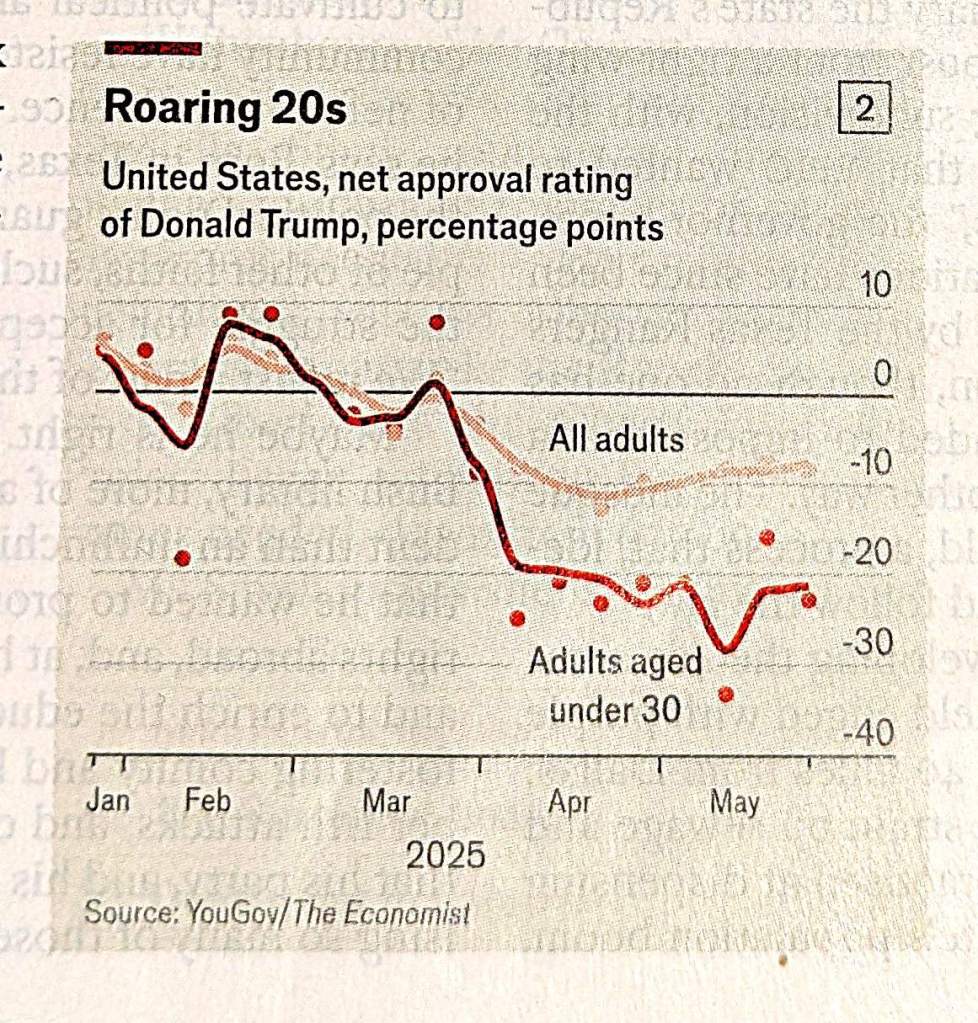
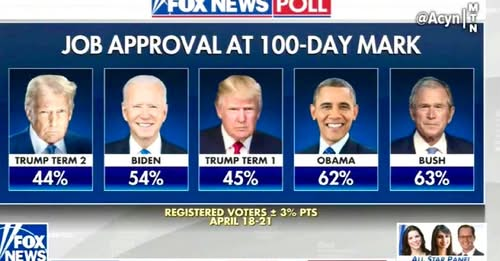
Trump’s first 100 days have been a historic failure, with the majority of Americans turning against him faster than any president in the history of polling.*However, as Sen. Schiff pointed out, Democrats cannot rely solely on Trump’s failure to regain power.

Democrats also need to devise an agenda that voters will want to support. However, it will probably be enough for Democrats to run on Trump’s failure to win back the House.

Republicans have hitched their wagons to a flaming dumpster, and the rest of the country is trying to prevent the blaze from spreading.

*realclear polling.com/poll

President Trump Job Approval

Biden Job Approval | Trump First Term Job Approval | Obama Job Approval | Bush Job Approval

Trump Approval on Issues: Economy | Foreign Policy | Immigration | Inflation | Russia/Ukraine | Direction of the Country See Further Commentary and Articles arising from Books* and continued longer articles as noted in the blog. for the table.

RealClearPolitics Poll Average 45.3 Approve 52.4 Disapprove -7.1

There were numerous books written about the first 100 days of the first Trump presidency. However, the latest information on the Trump Presidency appears to be in news articles and polls, rather than anyone having written a book about it. If anyone has the details of any book written about this presidency I would appreciate being able to make a comparison of that with the review I wrote of Kelly Hyman’s Build Back Better. The First 100 Days of the Biden Administration, and Beyond. See below.

Kelly Hyman Build Back Better. The First 100 Days of the Biden Administration, and Beyond Amplify Publishing, 2021.

Thank you NetGalley for providing me with this uncorrected proof for review.

As I finished reading Build Back Better, Brian Williams began The 11th Hour on MNSBC, with his familiar phrase enumerating the day of the current Presidency. Tonight, it was ‘Day 147 of the Biden Administration’. That Kelly Hyman has written in detail about only the first 100 days, and that the story continues, is not a defect. This is particularly so when her approach is that of a thoughtful observer and sometime advocate, rather than a writer who is ticking off the good and bad points of the administration, arriving at a number, and leaving the scene for someone else to analyse. Not that this work dwells on analysis. As is appropriate, Hyman provides a useful dialogue reflecting some of her thoughts and evaluation, some of the responses to President Biden and Vice President Harris initiatives, and at times, her hopes for the future.

Hyman provides a clear record of what has happened, including detail on the Executive Orders signed by President Biden, where policies have been introduced or changed between this administration and the last, and reflection on some of the proposed policies being devised and debated in Congress and between the Democratic and Republican Parties.

I admit that I had some misgivings about this author. Kelly Hyman appears on Fox and Friends, Newsmax, OAN and local Sinclair outlets at times and would accept invitations to speak on other right wing news outlets. At the same time, she is an acknowledged Democrat, has donated her time to working for the Party, and is a Democratic strategist, ‘a voice for the hope and values of the new administration’. She believes that conservative media consumers deserve to hear more than one opinion – and offers it. Indeed, she says, ‘This book is an open letter to my viewers on conservative media. Independents and Democrats are welcome as well’. I am glad that I decided to join her audience too.

Build Back Better provides a clear, authoritative account of the start of Joe Biden’s Presidency. It is a useful read for those interested in American politics in general, and for those who wish to follow this Presidency in particular. I found Kelly Hyman’s book a sound accompaniment to watching MSNBC political news, American political historian, Heather Cox Richardson’s column and podcasts, and local (Australian) news sources.

Rachel Maddow reflects on the 100 days

The real lesson… https://www.facebook.com/reel/666427602789738

Women’s work – historical insight into industrial relations: Frances Perkins

Heather Cox Richard’s historical newsletters are always valuable. This one seemed an appropriate newsletter to follow the book review for this week.

Heather Cox Richardson from Letters from an American <heathercoxrichardson@substack.com> Unsubscribe

Forwarded this email? Subscribe here for more

March 25, 2025Heather Cox RichardsonMar 26  

On March 25, 1911, Frances Perkins was visiting with a friend who lived near Washington Square in New York City when they heard fire engines and screams. They rushed out to the street to see what the trouble was. A fire had broken out in a garment factory on the upper floors of a building on Washington Square, and the blaze ripped through the lint in the air. The only way out was down the elevator, which had been abandoned at the base of its shaft, or through an exit to the roof. But the factory owner had locked the roof exit that day because, he later testified, he was worried some of his workers might steal some of the blouses they were making.

“The people had just begun to jump when we got there,” Perkins later recalled. “They had been holding until that time, standing in the windowsills, being crowded by others behind them, the fire pressing closer and closer, the smoke closer and closer. Finally the men were trying to get out this thing that the firemen carry with them, a net to catch people if they do jump, the[y] were trying to get that out and they couldn’t wait any longer. They began to jump. The…weight of the bodies was so great, at the speed at which they were traveling that they broke through the net. Every one of them was killed, everybody who jumped was killed. It was a horrifying spectacle.” By the time the Triangle Shirtwaist Factory fire was out, 147 young people were dead, either from their fall from the factory windows or from smoke inhalation.

Perkins had few illusions about industrial America: she had worked in a settlement house in an impoverished immigrant neighborhood in Chicago and was the head of the New York office of the National Consumers League, urging consumers to use their buying power to demand better conditions and wages for workers. But even she was shocked by the scene she witnessed on March 25.

By the next day, New Yorkers were gathering to talk about what had happened on their watch. “I can’t begin to tell you how disturbed the people were everywhere,” Perkins said. “It was as though we had all done something wrong. It shouldn’t have been. We were sorry…. We didn’t want it that way. We hadn’t intended to have 147 girls and boys killed in a factory. It was a terrible thing for the people of the City of New York and the State of New York to face.”

The Democratic majority leader in the New York legislature, Al Smith—who would a few years later go on to four terms as New York governor and become the Democratic presidential nominee in 1928—went to visit the families of the dead to express his sympathy and his grief. “It was a human, decent, natural thing to do,” Perkins said, “and it was a sight he never forgot. It burned it into his mind. He also got to the morgue, I remember, at just the time when the survivors were being allowed to sort out the dead and see who was theirs and who could be recognized. He went along with a number of others to the morgue to support and help, you know, the old father or the sorrowing sister, do her terrible picking out.” “This was the kind of shock that we all had,” Perkins remembered. The next Sunday, concerned New Yorkers met at the Metropolitan Opera House with the conviction that “something must be done. We’ve got to turn this into some kind of victory, some kind of constructive action….” One man contributed $25,000 to fund citizens’ action to “make sure that this kind of thing can never happen again.” The gathering appointed a committee, which asked the legislature to create a bipartisan commission to figure out how to improve fire safety in factories. For four years, Frances Perkins was their chief investigator.

She later explained that although their mission was to stop factory fires, “we went on and kept expanding the function of the commission ’till it came to be the report on sanitary conditions and to provide for their removal and to report all kinds of unsafe conditions and then to report all kinds of human conditions that were unfavorable to the employees, including long hours, including low wages, including the labor of children, including the overwork of women, including homework put out by the factories to be taken home by the women. It included almost everything you could think of that had been in agitation for years. We were authorized to investigate and report and recommend action on all these subjects.” And they did. Al Smith was the speaker of the house when they published their report, and soon would become governor. Much of what the commission recommended became law.

Perkins later mused that perhaps the new legislation to protect workers had in some way paid the debt society owed to the young people who died in the Triangle Shirtwaist fire. “The extent to which this legislation in New York marked a change in American political attitudes and policies toward social responsibility can scarcely be overrated,” she said. “It was, I am convinced, a turning point.”

But she was not done. In 1919, over the fervent objections of men, Governor Smith appointed Perkins to the New York State Industrial Commission to help weed out the corruption that was weakening the new laws. She continued to be one of his closest advisers on labor issues. In 1929, when Franklin Delano Roosevelt replaced Smith as New York governor, he appointed Perkins to oversee the state’s labor department as the Depression worsened. When President Herbert Hoover claimed that unemployment was ending, Perkins made national news when she repeatedly called him out with figures proving the opposite and said his “misleading statements” were “cruel and irresponsible.” She began to work with leaders from other states to figure out how to protect workers and promote employment by working together. In 1933, after the people had rejected Hoover’s plan to let the Depression burn itself out, President-elect Roosevelt asked Perkins to serve as Secretary of Labor in his administration. She accepted only on the condition that he back her goals: unemployment insurance, health insurance, old-age insurance, a 40-hour work week, a minimum wage, and abolition of child labor. She later recalled: “I remember he looked so startled, and he said, ‘Well, do you think it can be done?’” She promised to find out.

Once in office, Perkins was a driving force behind the administration’s massive investment in public works projects to get people back to work. She urged the government to spend $3.3 billion on schools, roads, housing, and post offices. Those projects employed more than a million people in 1934.In 1935, FDR signed the Social Security Act, providing ordinary Americans with unemployment insurance; aid to homeless, dependent, and neglected children; funds to promote maternal and child welfare; and public health services.

In 1938, Congress passed the Fair Labor Standards Act, which established a minimum wage and maximum hours. It banned child labor. Frances Perkins, and all those who worked with her, transformed the horror of the Triangle Shirtwaist fire into the heart of our nation’s basic social safety net. “There is always a large horizon…. There is much to be done,” Perkins said. “It is up to you to contribute some small part to a program of human betterment for all time.”—*

Notes: https://chroniclingamerica.loc.gov/lccn/sn83045462/1933-02-19/ed-1/seq-23/https://francesperkinscenter.org/life-new/https://trianglefire.ilr.cornell.edu/primary/lectures/https://www.ssa.gov/history/perkins5.html

*See also, Blog – May 15, 2024, Ruth Cashin Monsell, Frances Perkins Champion of American Workers.

A Mighty Girl’s post

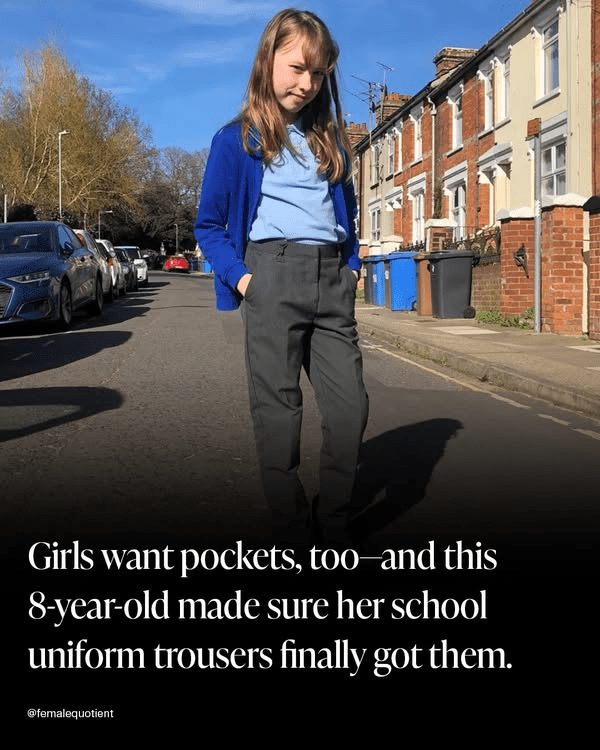
Congratulations to 8-year-old Georgia for her successful campaign to have functional pockets added to girls’ school trousers! While shopping for school clothing at Sainsbury’s in Ipswich, England, she was frustrated to see that the girls’ pants “didn’t have real pockets; they just had fake ones and then we went in the boys’ and they had pockets and I thought it was unfair, so I bought boys’ trousers.” Determined to speak up, Georgia first wrote a letter to the store explaining that “girls need to carry things too!” While she received a reply, no action appeared to have been taken so she decided to start a petition at her school and collected 56 signatures from her fellow students.

Her persistence has paid off splendidly! A representative from Sainsbury’s initially responded to her letter with a candid admission: “I’m sorry currently girls’ school trousers do not have pockets. I agree they should.” When Georgia returned to the store this year, she discovered the girls’ pants now featured the deep, functional pockets she had campaigned for. While Sainsbury’s hasn’t explicitly confirmed Georgia’s influence on their decision, they acknowledged that “customer feedback is really important to us and we share Georgia’s passion for offering a choice in style of school uniform.”

Thank you to this Mighty Girl for showing the change that can happen when we refuse to accept “that’s just how it is” and speak up about everyday inequalities!

For a fun picture book about a Mighty Girl on a quest to find the perfect dress for her outdoor adventures – one with pockets! – we recommend “A Dress With Pockets” for ages 4 to 8 at https://www.amightygirl.com/a-dress-with-pockets

For adult readers interested in the history of pockets and women’s clothing, there’s also a fascinating book “The Pocket: A Hidden History of Women’s Lives, 1660–1900” at https://bookshop.org/a/8011/9780300253740 (Bookshop) and https://amzn.to/32ce8wF (Amazon)

For an inspiring picture book about a girl who stood up to make change in her school, check out “Raise Your Hand” for ages 5 and up at https://www.amightygirl.com/raise-your-hand

For an excellent guide for girls on how to make real change on the issues they can care, we highly recommend “A Smart Girl’s Guide: Making A Difference” for ages 8 to 12 at https://www.amightygirl.com/smart-girl-s-guide-making-a…

For kids in general, we also recommend “How to Make a Better World: For Every Kid Who Wants to Make a Difference” for ages 7 and up at https://www.amightygirl.com/how-to-make-a-better-world

And to inspire children and teens with stories of real-life girls and women who made a difference on the issues they cared about, visit our blog post, “50 Books About Women Who Fought for Change,” at https://www.amightygirl.com/blog?p=14364

For an excellent guide for girls on how to make real change on the issues they can care, we highly recommend “A Smart Girl’s Guide: Making A Difference” for ages 8 to 12 at https://www.amightygirl.com/smart-girl-s-guide-making-a…

A Smart Girl's Guide: Making A Difference

AMIGHTYGIRL.COM

Last day in Perth – visit to the Western Australian Art Gallery and Heathcote Arts Centre

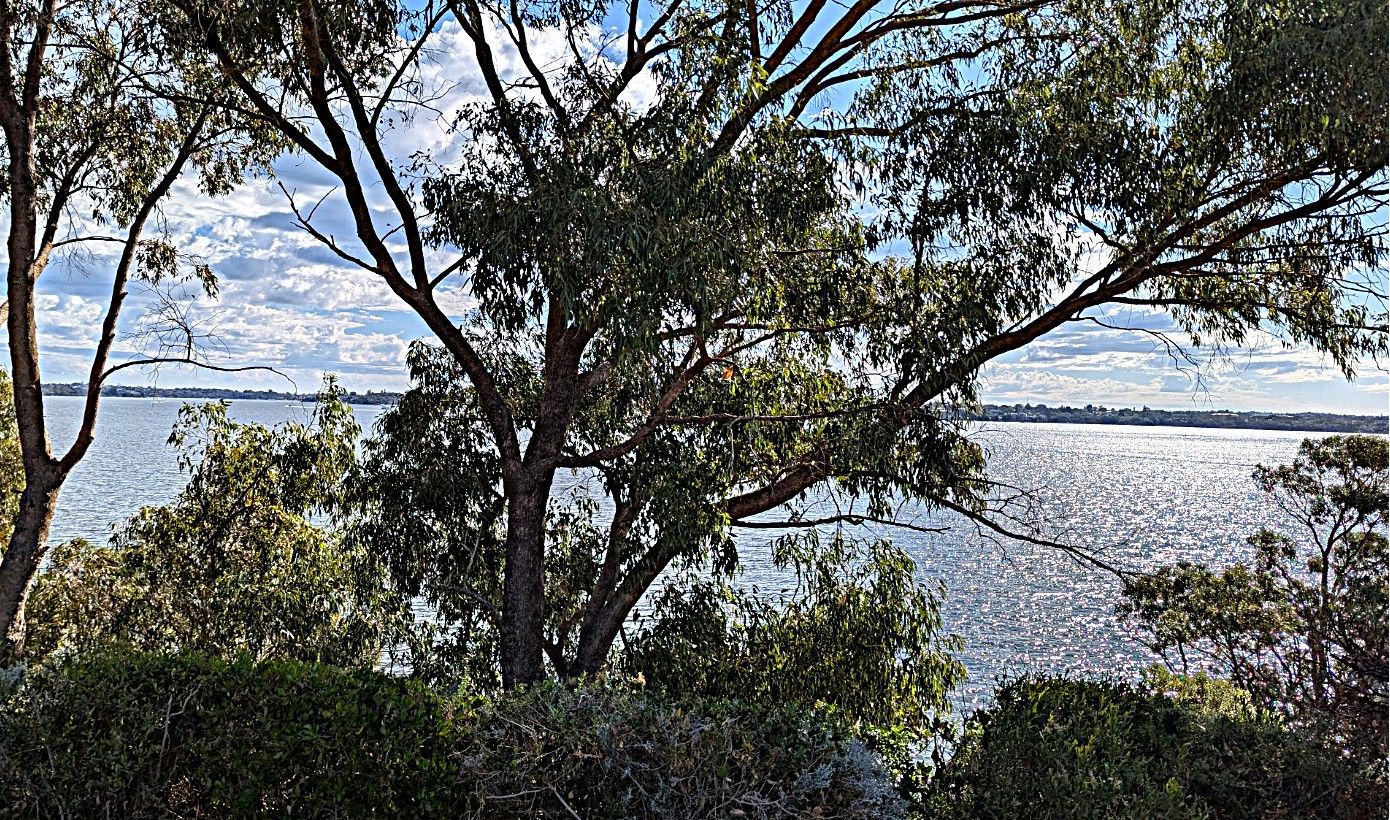
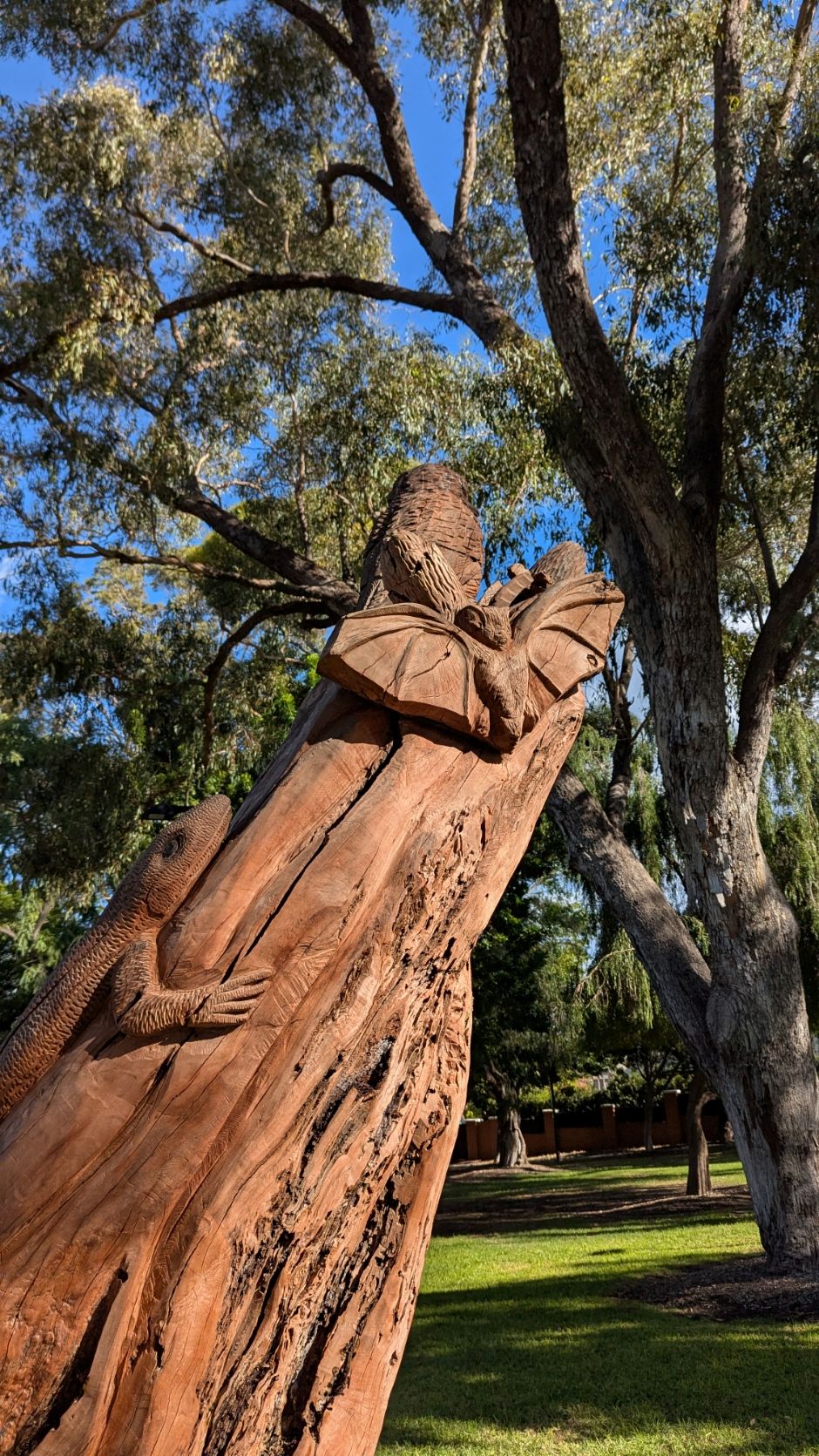
On the way to the gallery, I passed the old James Street Technical School where I was an art student, and consumer of jam donuts. The building is being refurbished, but the donuts are still there. Uneaten by me on this occasion, although fondly remembered together with my wonderful donut eating companion. I went to the Kimberly virtual reality exhibition which was uplifting and amazing. No photographs, of course, but none would provide the thrill (and shock as I teetered on cliffs) of the exhibition. Heathcote was less thrilling, despite the monument to Heath Ledger, but certainly more comfortable! The exhibition space was closed but some magnificent views and woodwork on dead trees made up for this.

James Street

Heathcote

Returning to Canberra – Leah, First Coffee and politics

The joy of picking up Leah and having a coffee in beautiful surrounds speak for themselves.

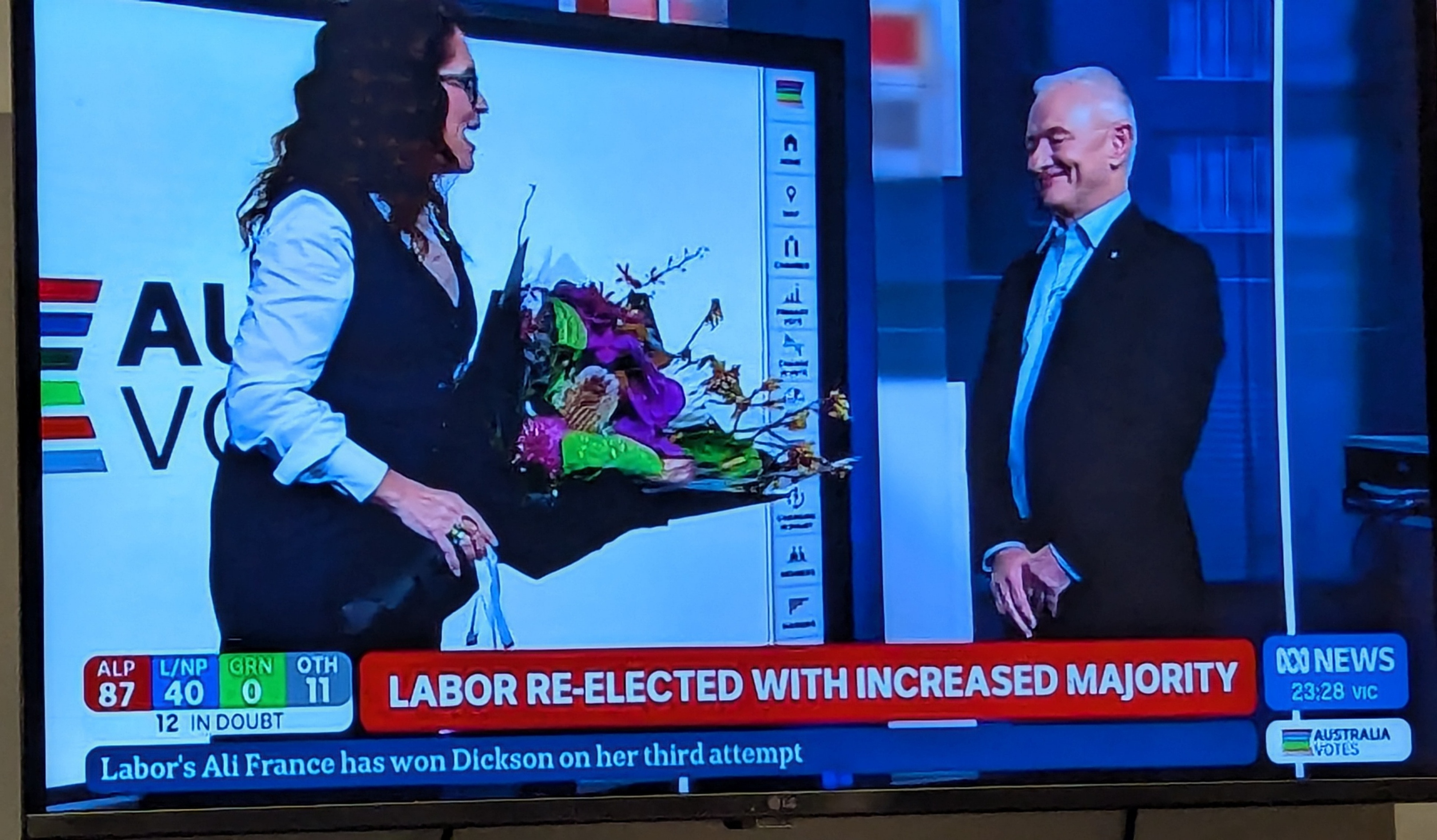
The Australian Electoral Commision statistics may be of interest. In particular, the commitment to early voting centres and overall number of polling places demonstrate the commitment to democracy, unlike the threat to democracy shown daily through the American media -despite themselves in some cases, unfortunately.

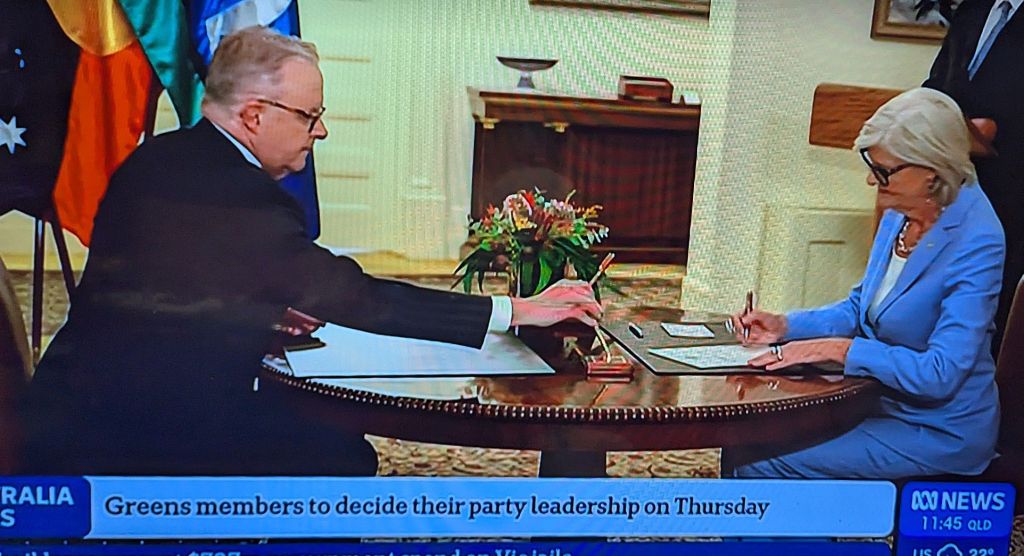
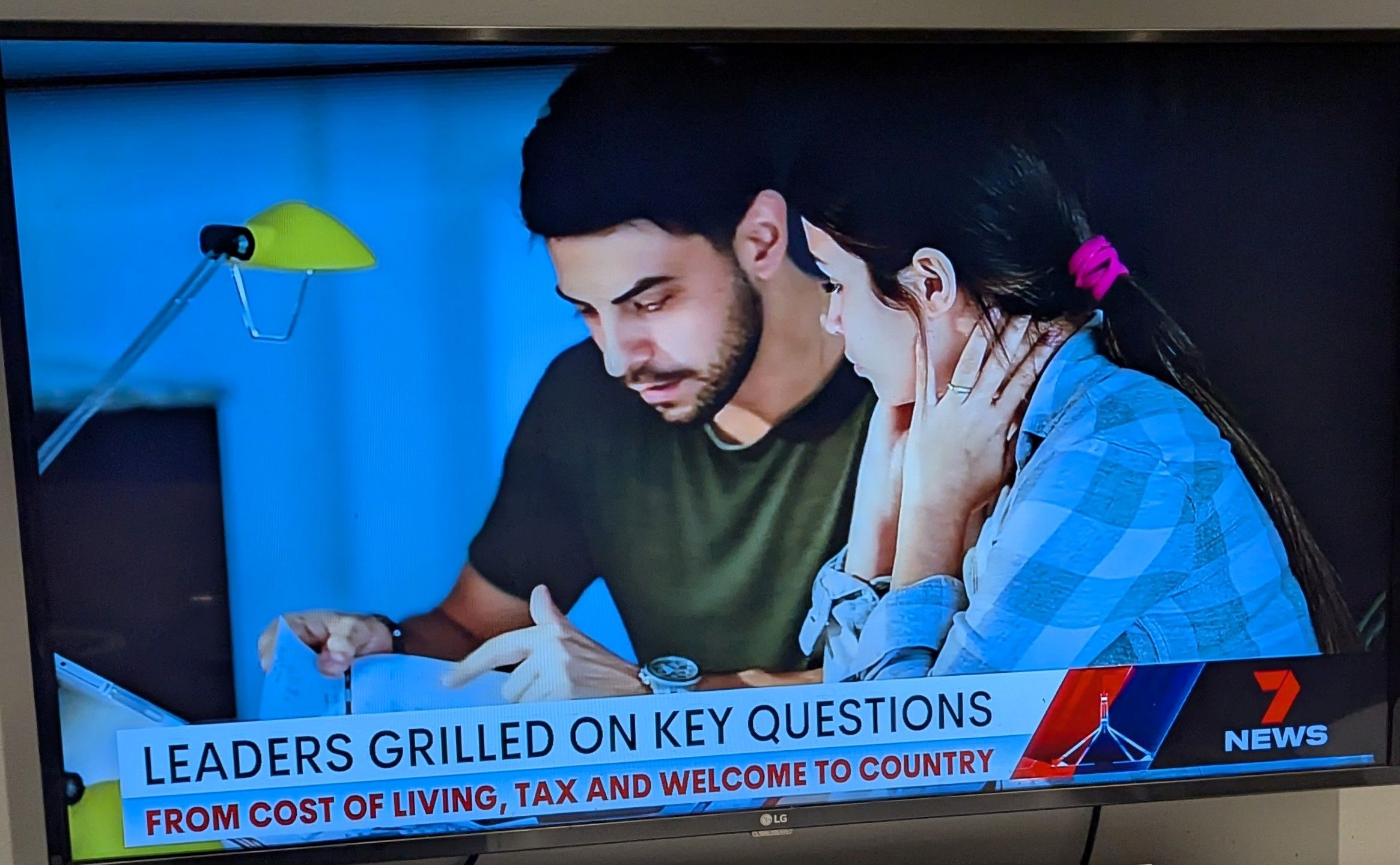
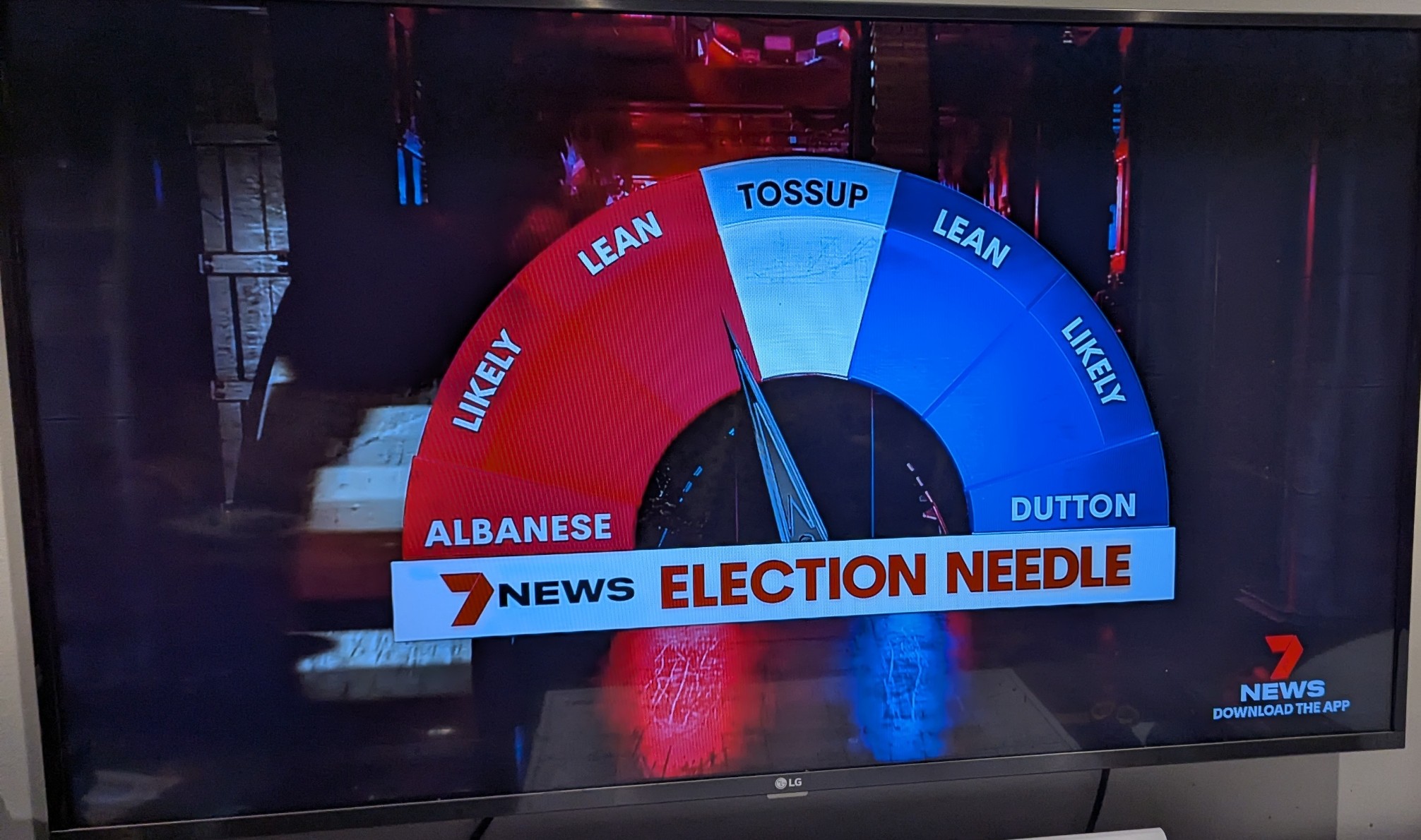
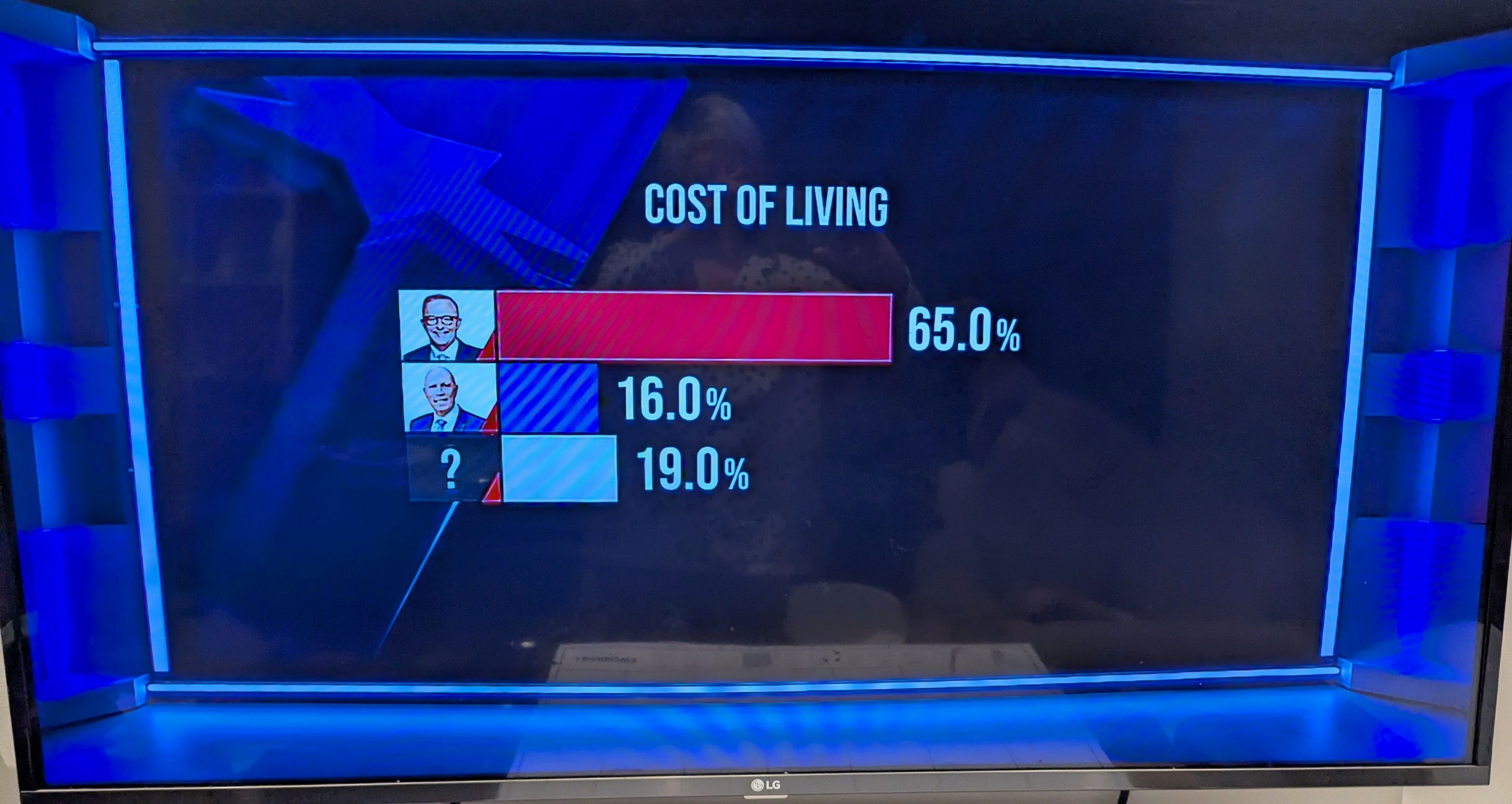
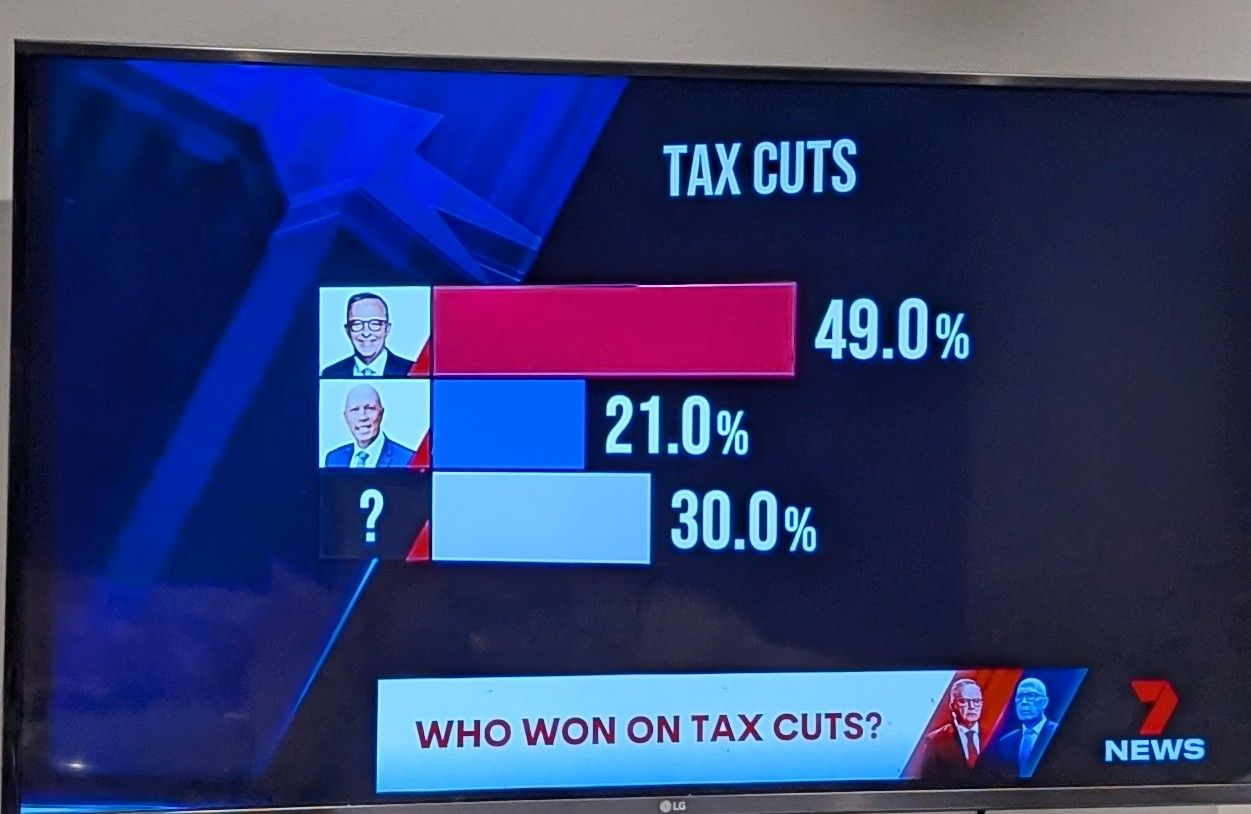
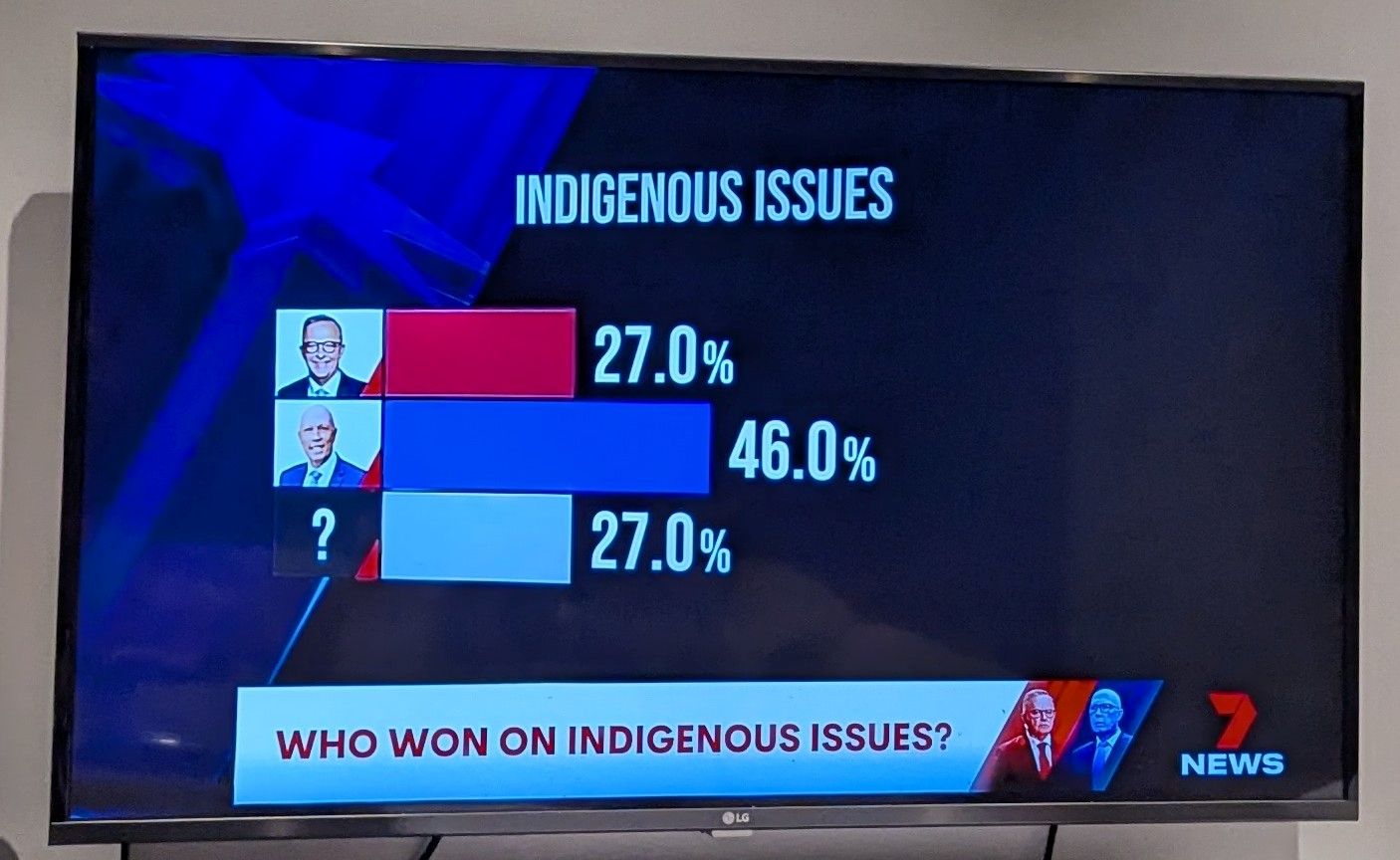
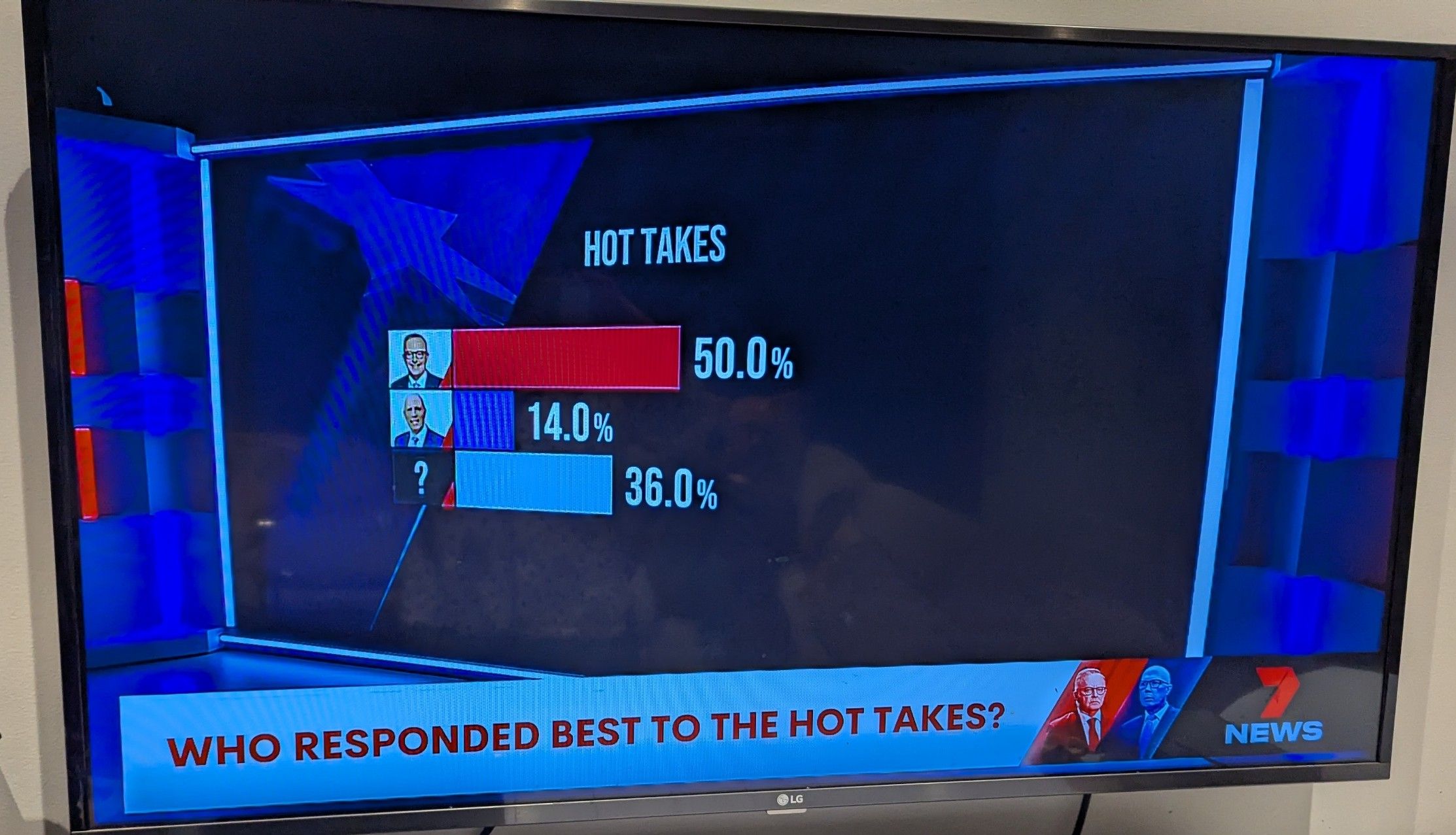
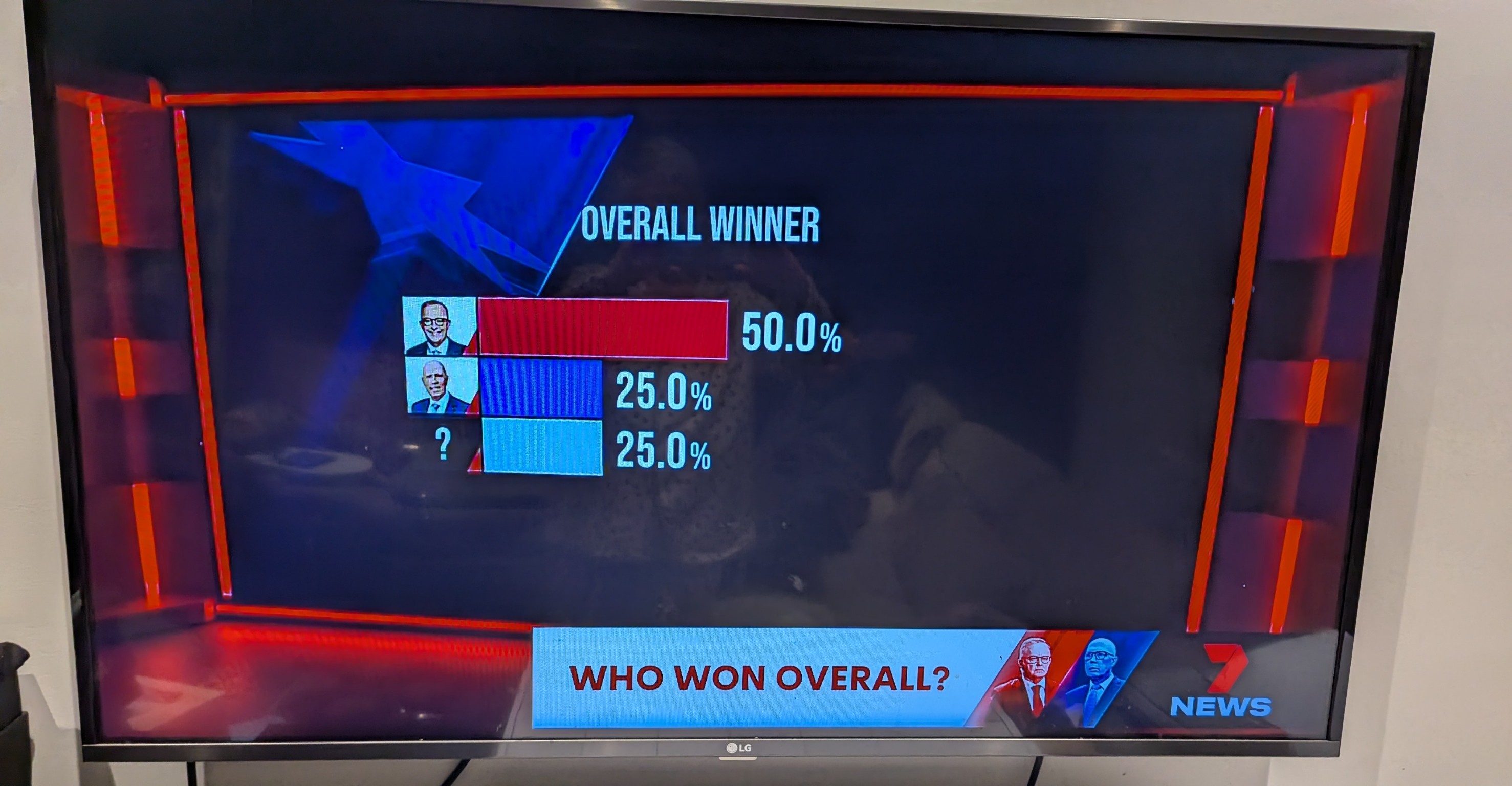
The debates – in this campaign four – are also an essential part of the Australian election campaign. David Speirs on the ABC, was deadly dull, helping create an uninspiring program despite some spirited debate. The best feature for me was that we were watching it with Western Australian friends, reminiscent of our watching President Joe Biden’s inauguration together. The debate moderated by Ally Langdon, was far better example of a good debate, with pithy questions and pleasant moderating. The last debate was an entertaining production, with an historical introduction of previous debates from their beginning. It has been criticised by other networks. However, the moderator, Mark Riley, clearly had a far better knowledge of his subject and subjects than the earlier moderators. Although Prime Minister Anthony Albanese won overall, his loss on Indigenous Issues was a sad moment. Another loss was on Defence. However, his response to the question about threats to Australia was appropriately Prime Ministerial. A good win for the PM was on cost of living, demonstrating that the audience understood the issues. The closeness of the result on housing is understandable, although Housing Minister, Clare O’Neil’s explanations of the Labor policy are strong. See https://www.facebook.com/reel/1264866738303889

Australia’s largest ever federal election kicks off

Updated: 28 March 2025

The 2025 federal election has been announced for Saturday 3 May 2025.

Australian Electoral Commissioner Jeff Pope said the announcement serves as the starter’s gun for the AEC’s work to deliver Australia’s largest ever election.

“There are more voters on the electoral roll than ever before, there’ll be more voting venues than ever – both within Australia and overseas, there’ll be greater accessibility options than we’ve ever had, and we again need around 100,000 staff to deliver it,” Mr Pope said.

Key statistics:

  • 710,000 more people on the electoral roll (2022 federal election – end 2024)
  • 570 early voting centres
  • 7,000 polling places
  • 100+ overseas voting centres
  • 100,000 staff needed, 240,000 vests
  • 250,000 pencils, 250,000 lengths of string
  • 40,000 transport routes, 90,000 transport containers, 5,000 rolls of tamper proof tape
  • 80,000 ballot boxes, 1.4 millions security seals

“We’re ready to go. You also need to be ready as well – check your enrolment now and please consider putting up your hand for paid election work. aec.gov.au allows you to do those things in just minutes.”

Week beginning April 23, 2025

Tasma Walton I am Nannertgarrook Simon & Schuster (Australia) | S&S Bundyi, April 2025.

Thank you, Net Galley, and Simon & Schuster, for providing me with this uncorrected proof for review.

Tasma Walton’s I am Nannertgarroock is so far removed from my recall of her as the pleasant enough young police officer in Blue Heelers that I suffered elements of the dissonance that, at a level far beyond my experience, must impact indigenous Australians at levels unimaginable every day of their lives. It was a good way to begin reading this heartbreaking novel with its beautiful images of Nannertgarrook’s life in her own setting, where indeed she is Nannertgarrook, and the revulsion for a vastly different life after her captivity when her being is brutally questioned with her renaming as Eliza or no-one.  

The first half of the book is a revelation that bears rereading. Walton’s rendition of indigenous life is beautifully woven, with women’s business in the forefront, but the coming together of families after their individual activities are completed, warm, loving, and full of humour. Walton draws us into lives that are complete with domestic and public tasks and events, together with the overarching world of Indigenous spirituality, the land and sea, and its inhabitants. On the outskirts of these lives, harmonious with the environment and with each other, hover the sealers. They bludgeon the seals with little concern for anything but their livelihood, and eventually bludgeon an Indigenous mother and child, leaving their bodies for the Indigenous community to care for and mourn.

The second half of the book takes place in the sealers’ environment – brutal, uncaring, with values far removed from those experienced though Nannertgarrook’s early life. She and other women from her community are captures, enslaved, bear the sealers’ children and are given English names. Although I would have been satisfied with less of this period, its brutality being well described throughout Nannertgarrook’s lengthy life on various islands with her sealer captor. However, some of the detail provides valuable insight into the superior Indigenous hunting practices, their links with the land and their family and community feelings and beliefs. Records of the time, taken by an insensitive white researcher who appears on the island, provide yet more material about relationships between white and Indigenous people. Unsurprisingly, although outwardly benign in contrast with the sealers’ behaviour, they are brutal in their own way. Nannertgarrook’s eventual departure from the island when her captor falls ill is far from the return home she dreamed about, again demonstrating the benign brutality of white denial of her personhood.

There is a glossary of indigenous words, which is useful. However, the words become part of the reader’s language long before this. As awkward as I found this sometimes, the words being so far from my knowledge, they played a part in drawing me into the novel. After all, the Indigenous groups brought together on the sealers’ islands, being from different communities also had to communicate in unfamiliar language. They ached to understand each other well beyond any desire to be part of the language that would give them entry to the sealers’ world. Walton says that the next novel she writes will not be so harrowing, and I look forward to it. However, I feel privileged to have been invited into this one, with its mixture of beauty and suffering.

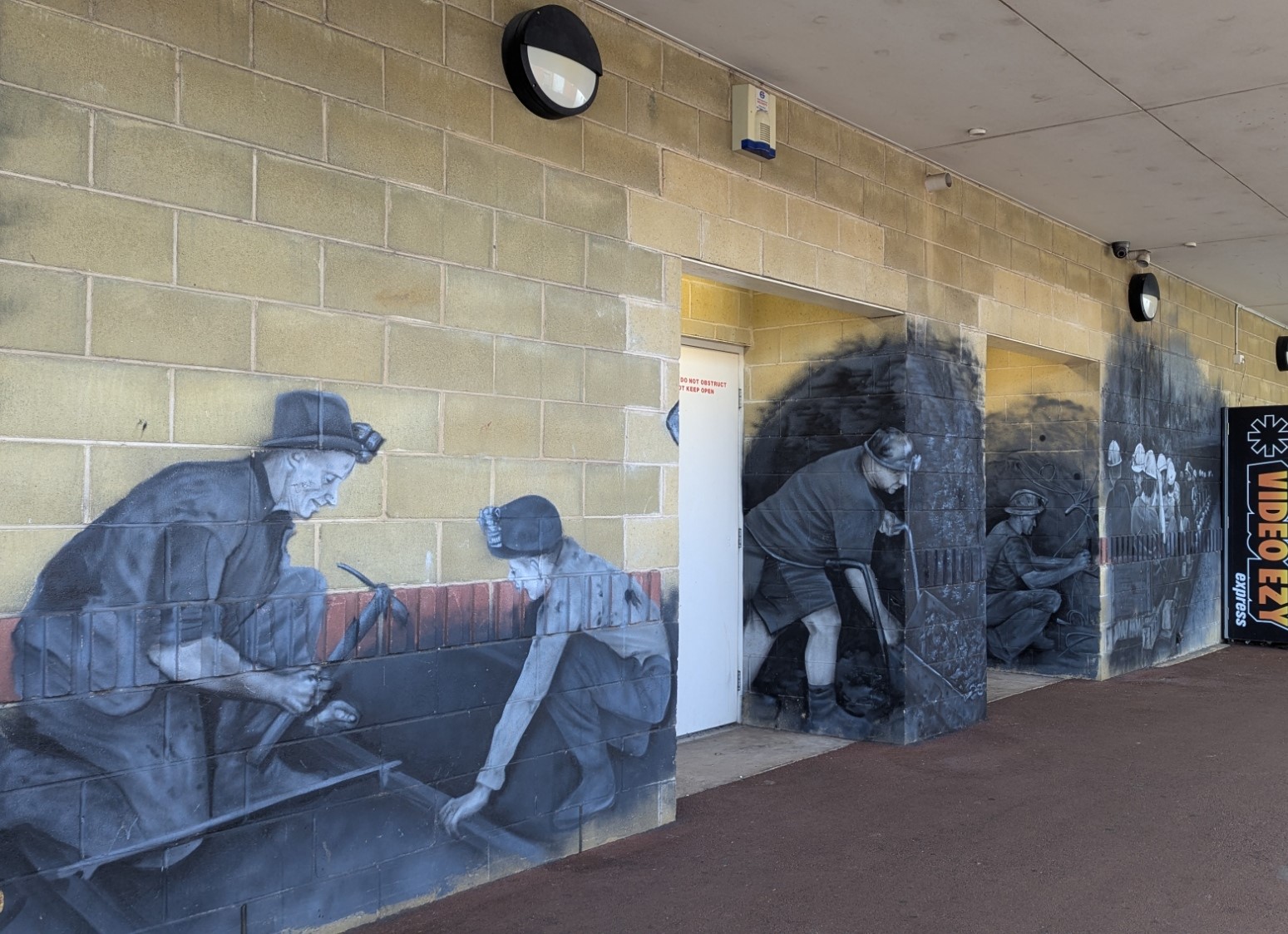
It seems appropriate to place the photo of this mural, from a high school wall in Collie after this review of Walton’s book. In addition, I have concentrated on some of the indigenous sites and interests I experienced in Perth.

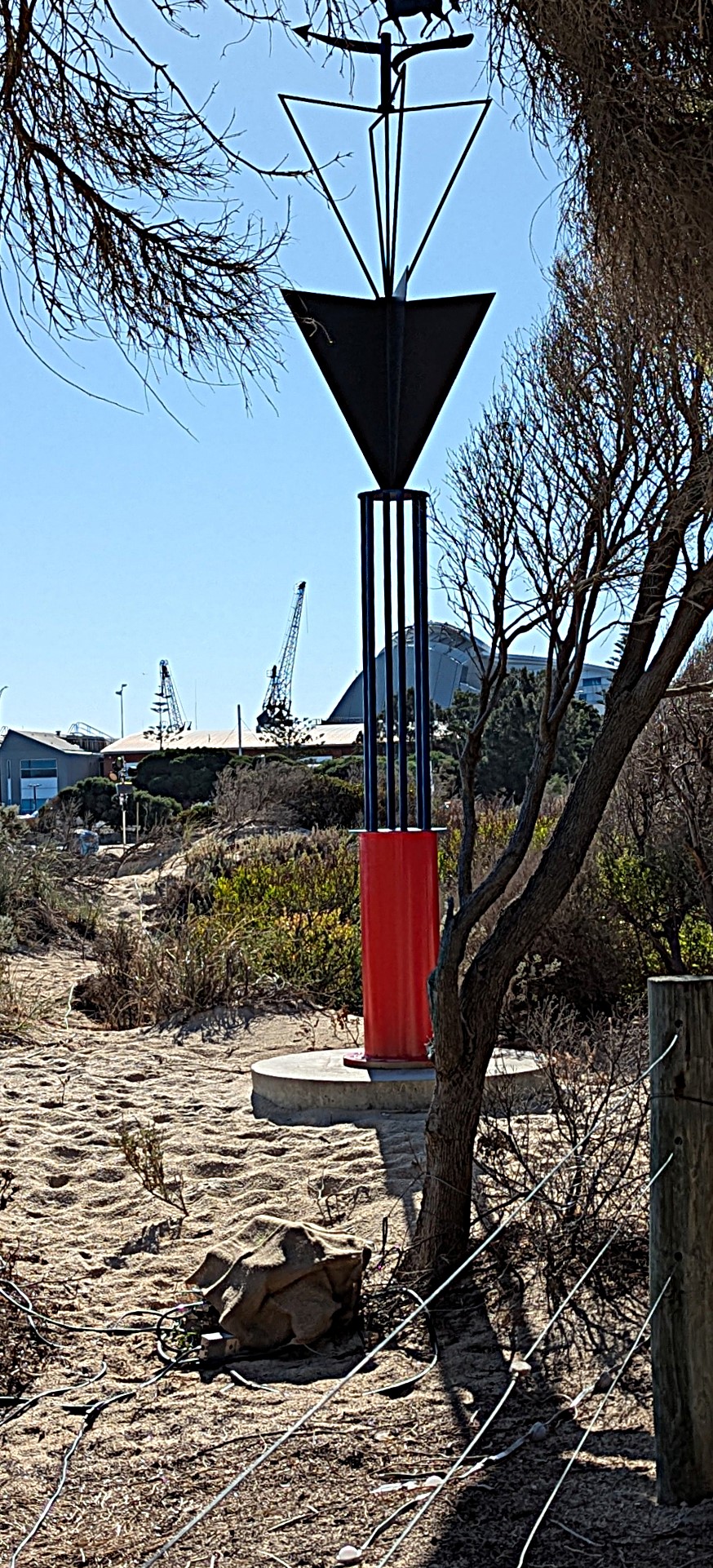
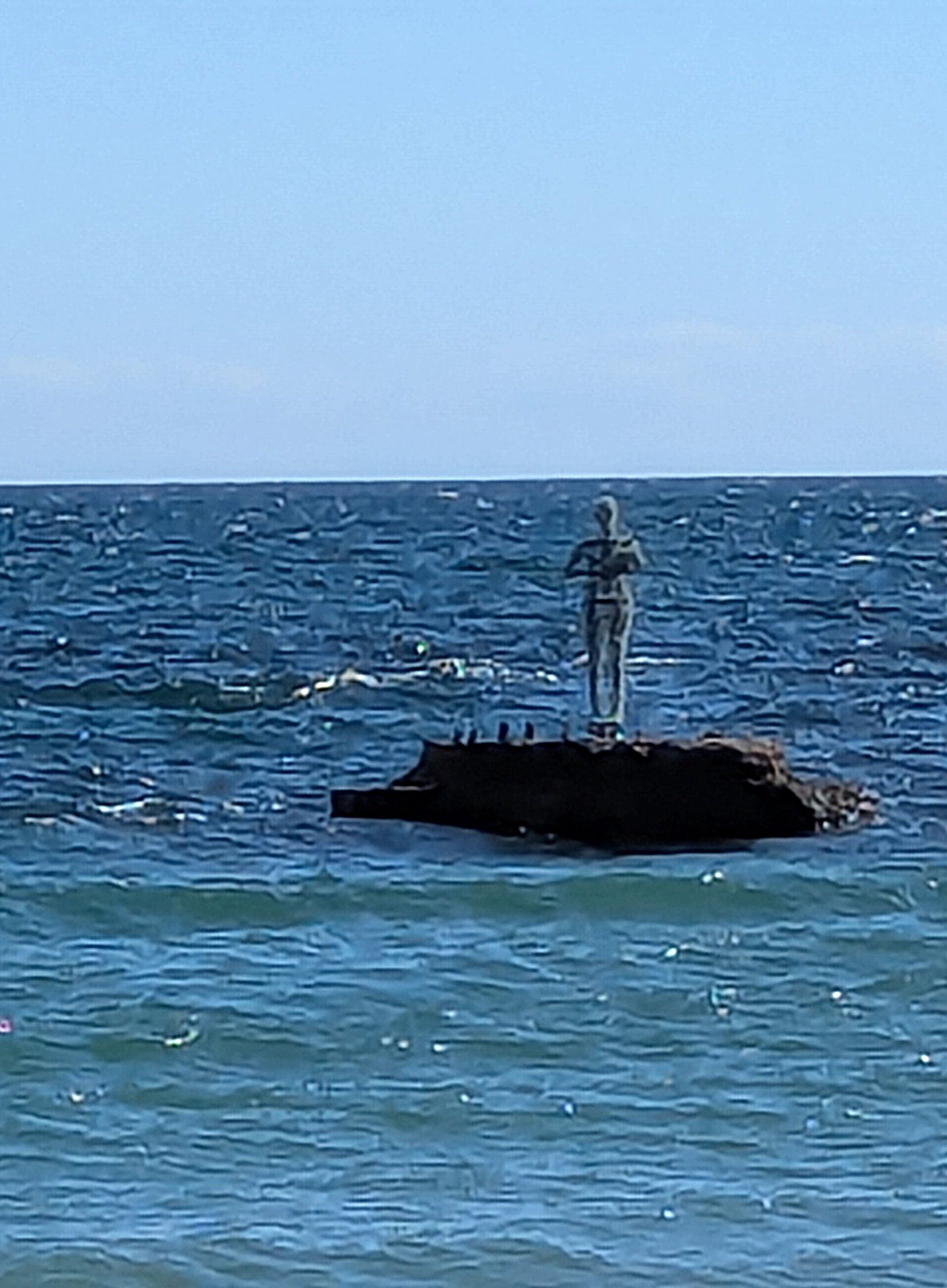
Sculptures on the beach, Fremantle Western Australia

The first sculpture pictured demonstrates the role of Indigenous culture in this exhibition.

Sculptures pictured above are: Alan Seymour – Nyaung-gan; Tony Jones – Rottnest Blues; Sakura Motomura – Dazzle; Melanie Maclou – Ocean Dancer: crimson allure; MM- OD; Johannes Pannekoek – Elegy in Motion 1; Mandy Hawkehead – Intonation (musical sound tubes, depicting an ocean melody); Sam Hopkins – Beyond the surface.

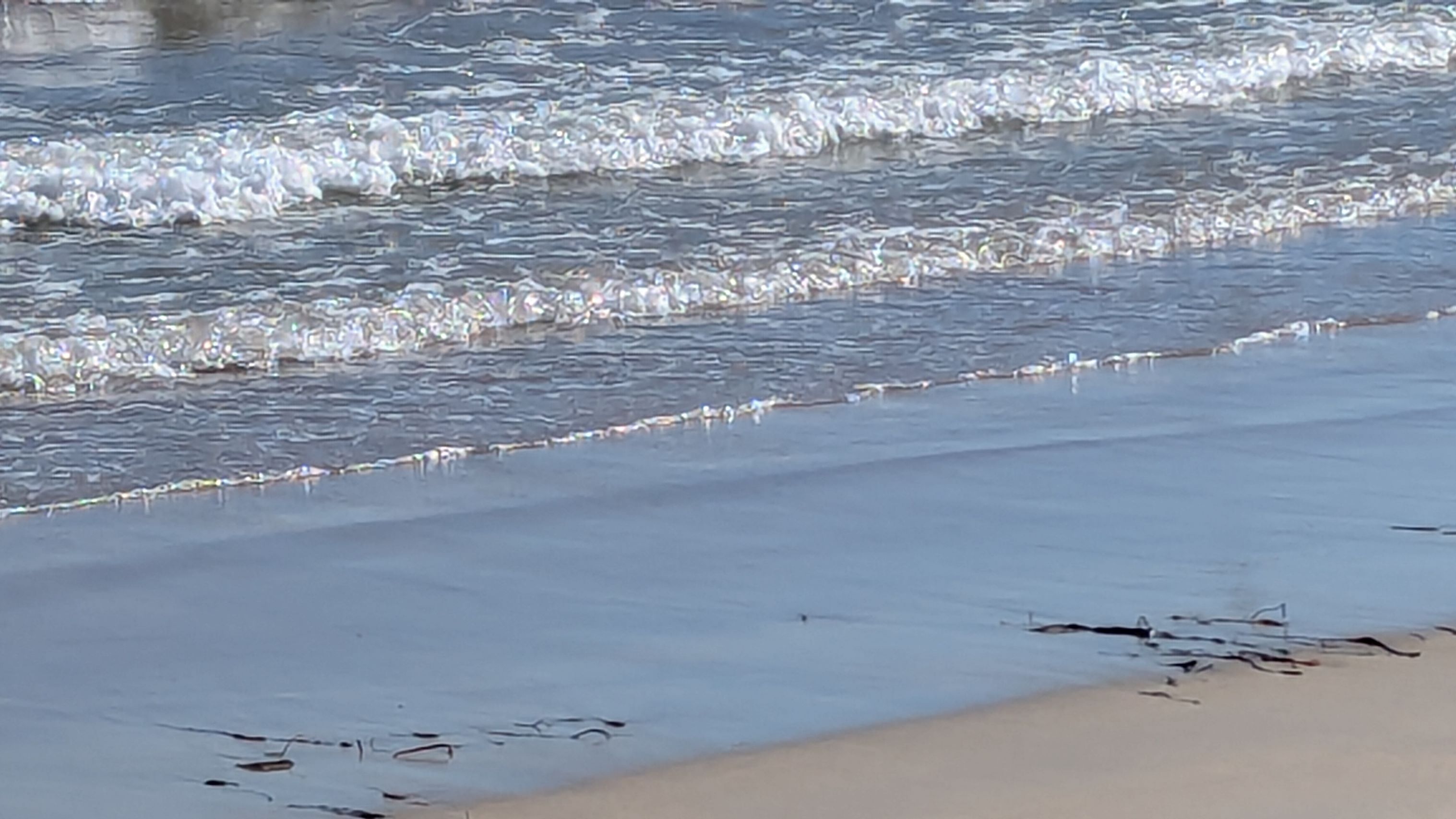
Beach scenes nearby

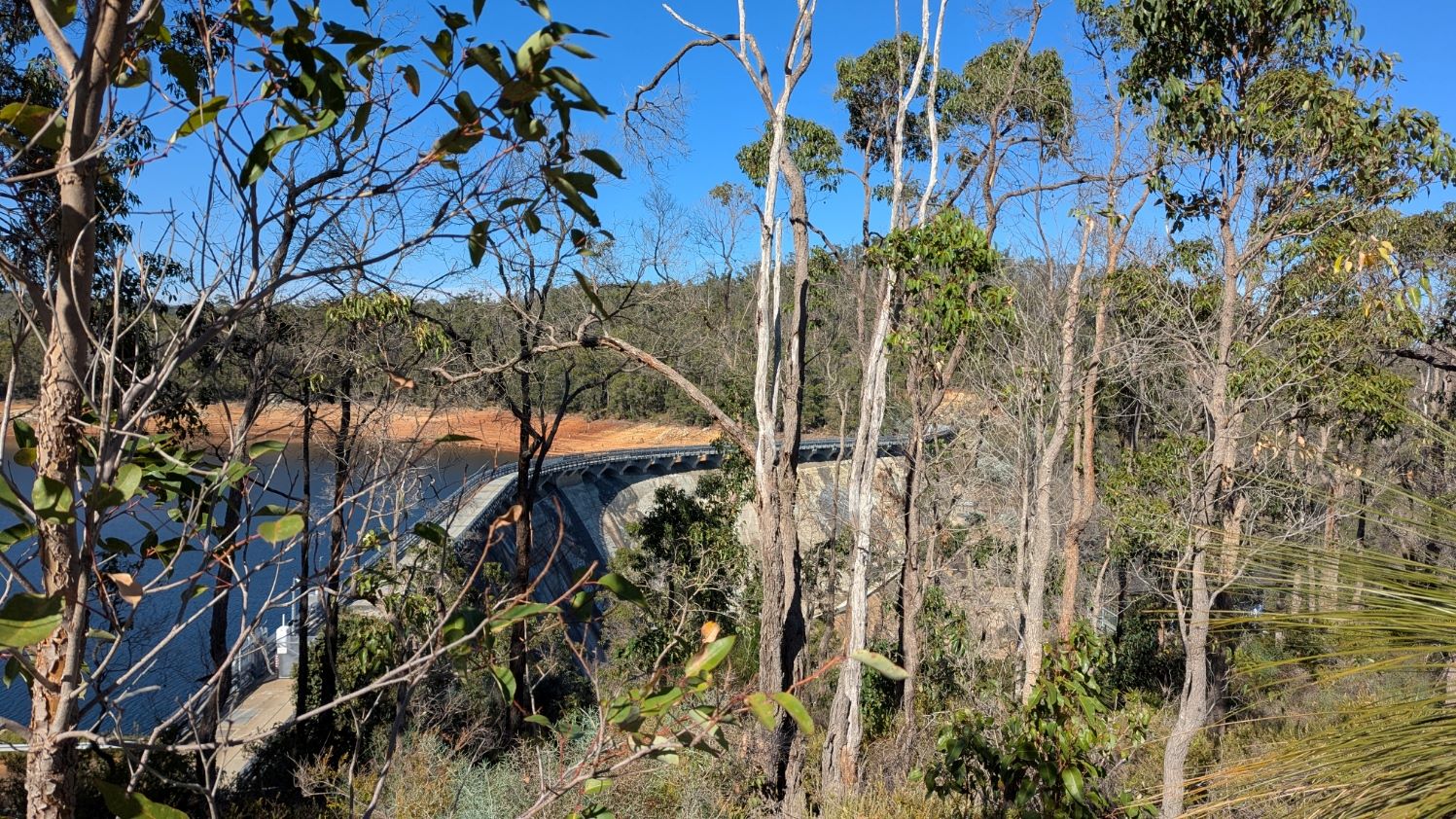
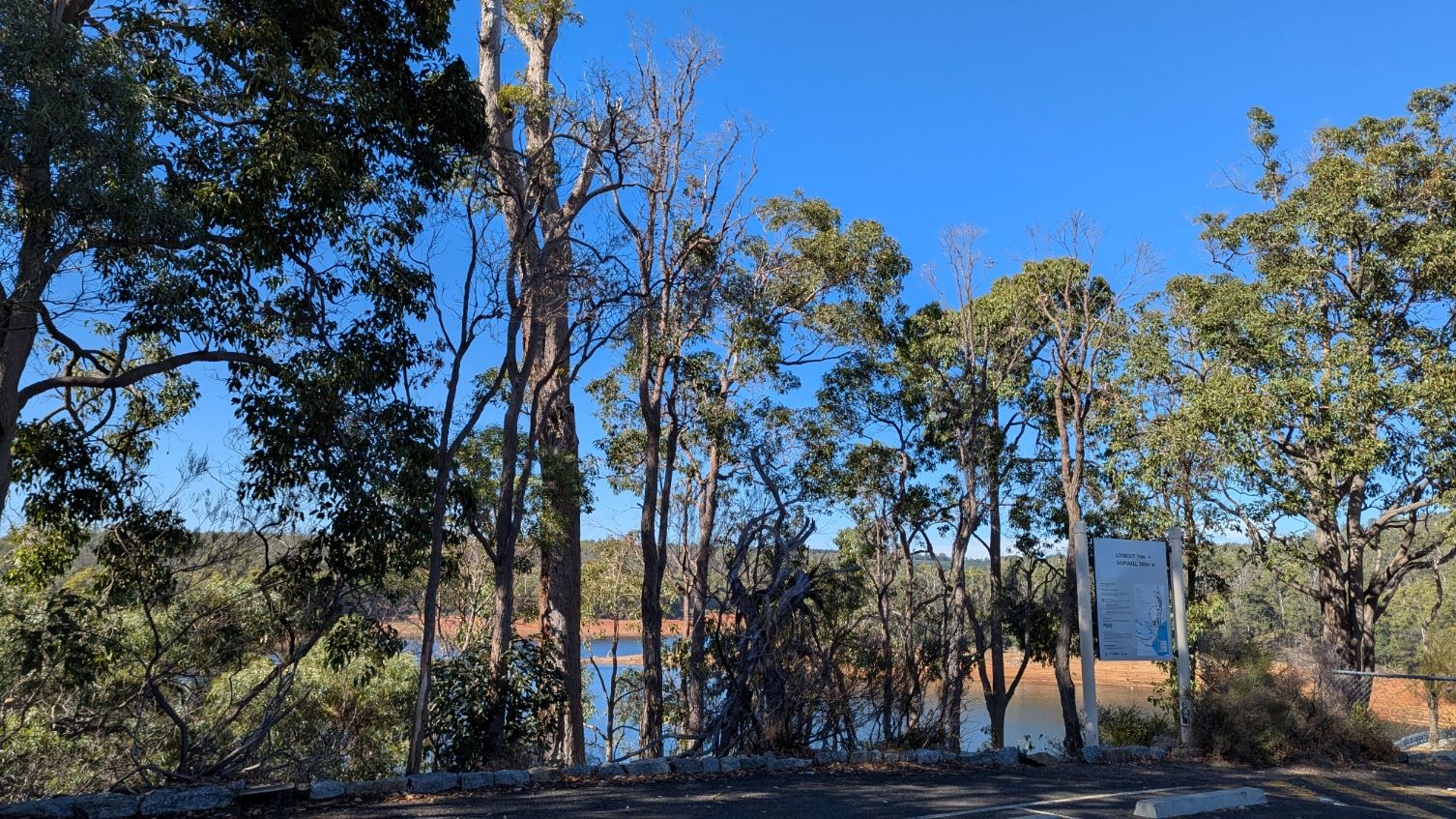
Wellington Dam – with the largest dam mural, as then Premier Mark McGowan introduced it in February 2021.

Collie Murals

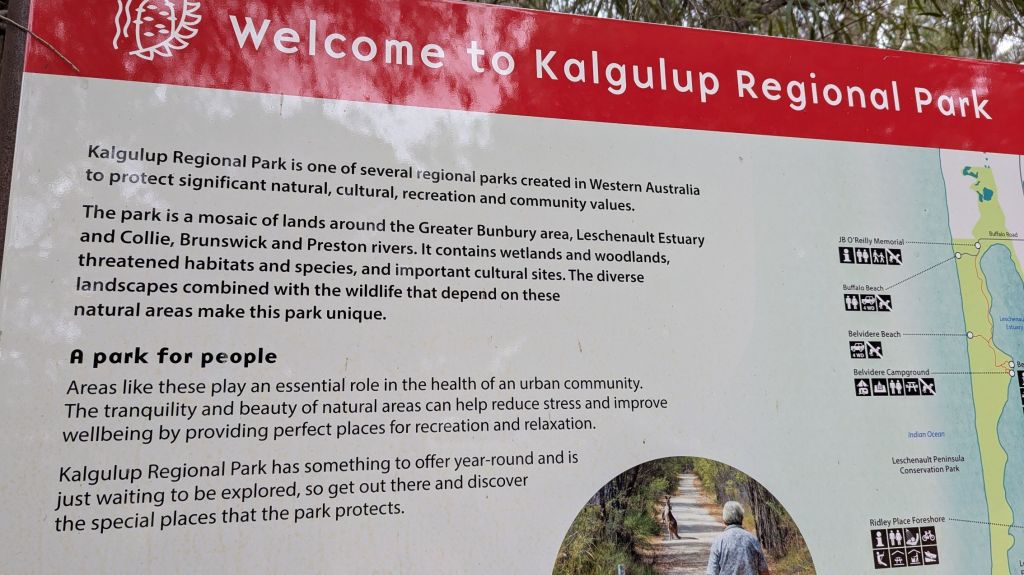
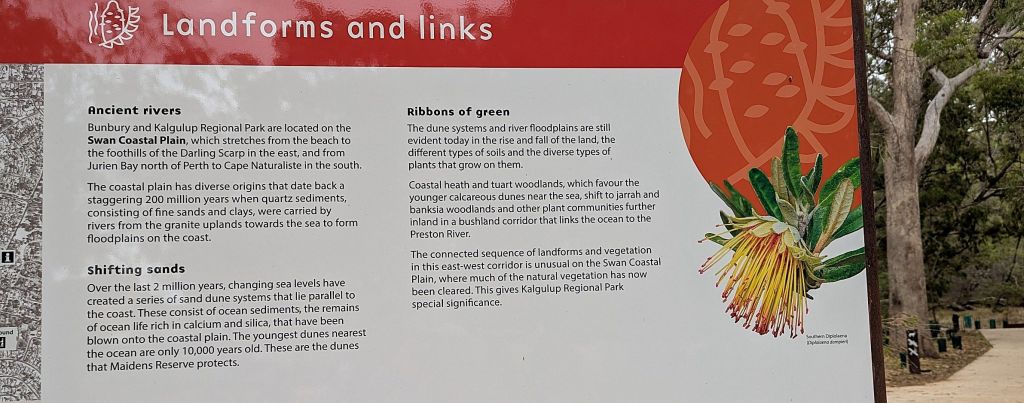
Kalgulup Regional Park, Bunbury

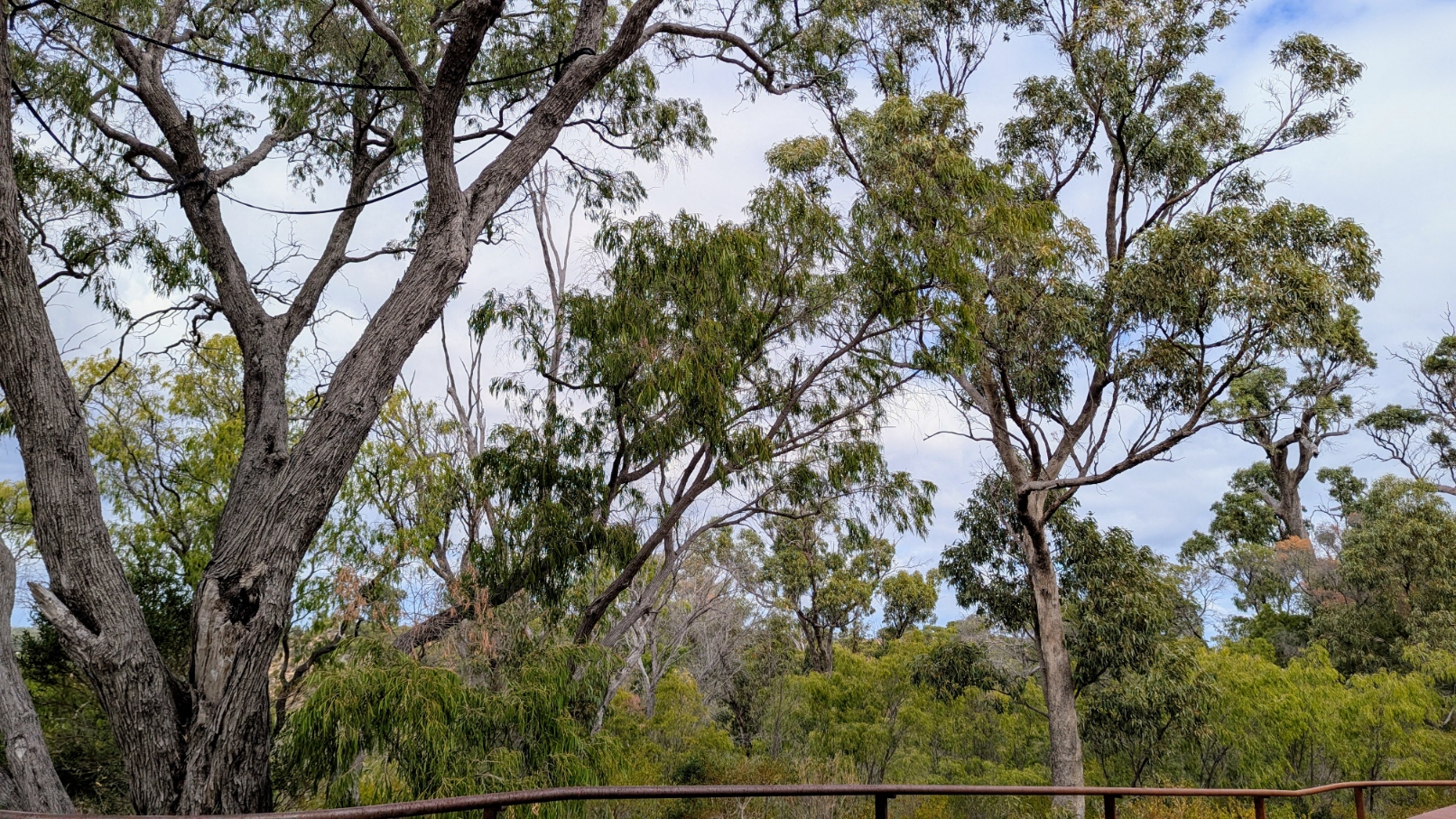
Bush walk to the Two Maidens

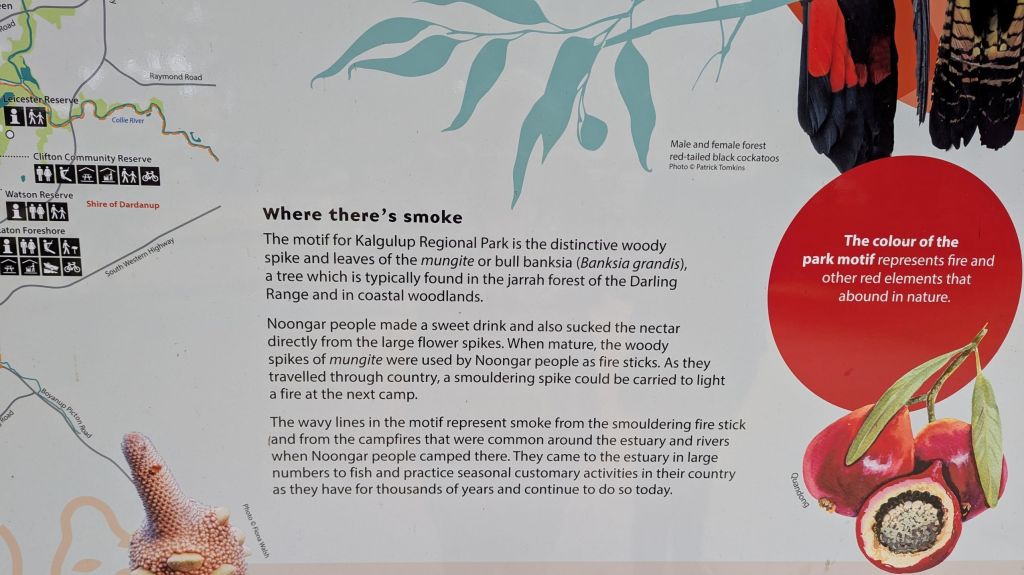
Information about the indigenous use of the trees passed on the walk to the top

National Indigenous Times

Indigenous TAFE numbers skyrocket on back of government’s fee-free enrolments

Dechlan Brennan – October 4, 2024

First Nations enrolments in TAFE courses now make up more than 5 per cent of all enrolments, with the federal government saying their Fee-Free TAFE initiative continues to exceed targets.

As of July this year there were 500,000 TAFE enrolments, with 26,500 enrolments being First Nations people – accounting for 5.3 per cent of all enrolments.

This is despite Aboriginal and Torres Strait Islander people accounting for 3.8 per cent of the population.

Speaking exclusively to National Indigenous Times, Labor Senator Jana Stewart said the importance of an education couldn’t be underestimated.

“The data tells us that high levels of education are linked to improve health outcomes, better literacy, better health literacy and overall wellbeing,” the Mutthi Mutthi and Wamba Wamba woman from North-West Victoria said.

“It leads to better economic opportunities; so not just your employment outcomes, but also your ability to be able to negotiate income and working conditions improve.”

Ms Stewart said it was also vitally important to give young mob vision and inspiration for what is possible.

“When you see more Blak nurses or more Blak aged care workers…it just really cements the path about what’s possible for you,” the Senator said.

Ad

“I think setting the bar high for our mob is a really important thing, because I’ve got every confidence that they reach it every time.”

The Senator currently chairs the Joint Standing Committee on Aboriginal and Torres Strait Islander Affairs, taking over from Pat Dodson, where she fronted an inquiry considering barriers and opportunities to support economic prosperity for First Nations people.

The Inquiry into economic self-determination and opportunities for First Nations Australians comes after the release of the Murru Waaruu economic outcomes report, which called for a critical shift in public policy to effectively support the economic empowerment of Indigenous Australians.

Senator Stewart said when it came to the benefits of education, there were no surprises.

“It means you’re also able to make more informed decisions about how you preserve and protect culture and cultural knowledge,” she said.

“And it also means that…you kind of [are] more empowered and feel more confident in taking on the world.”

Originally from Swan Hill on the south bank of the Murray River, the youngest First Nations woman to be elected in Federal Parliament espoused the benefits of TAFE courses, saying she remembers her Nan, Aunties and Uncles completing such qualifications in her former years.

“I think the other factor for me that I think about is that for a long time, our Mob have thought that university and getting qualifications for university have felt unattainable,” she said.

“And so then for lots of our mob, they’ve gone through the TAFE system.”

She noted the courses are more accessible, as well as not going for as long as traditional university courses.

“They’re not as expensive; and in this case, we’re talking about fee-free TAFE. So, it’s free,” she said.

Furthermore, courses are often run by Aboriginal-Community-Controlled Organisations (ACCOs), allowing prospective future First Nations students the peace of mind that they will receive a culturally safe education.

As a result, many students are being trained by other successful First Nations people who have excelled in their role.

“How deadly is it for our mob to actually be the trained professional in that situation?” Senator Stewart said.

Cindy Lou eats out in Bunbury, Western Australia

Barn- Zee

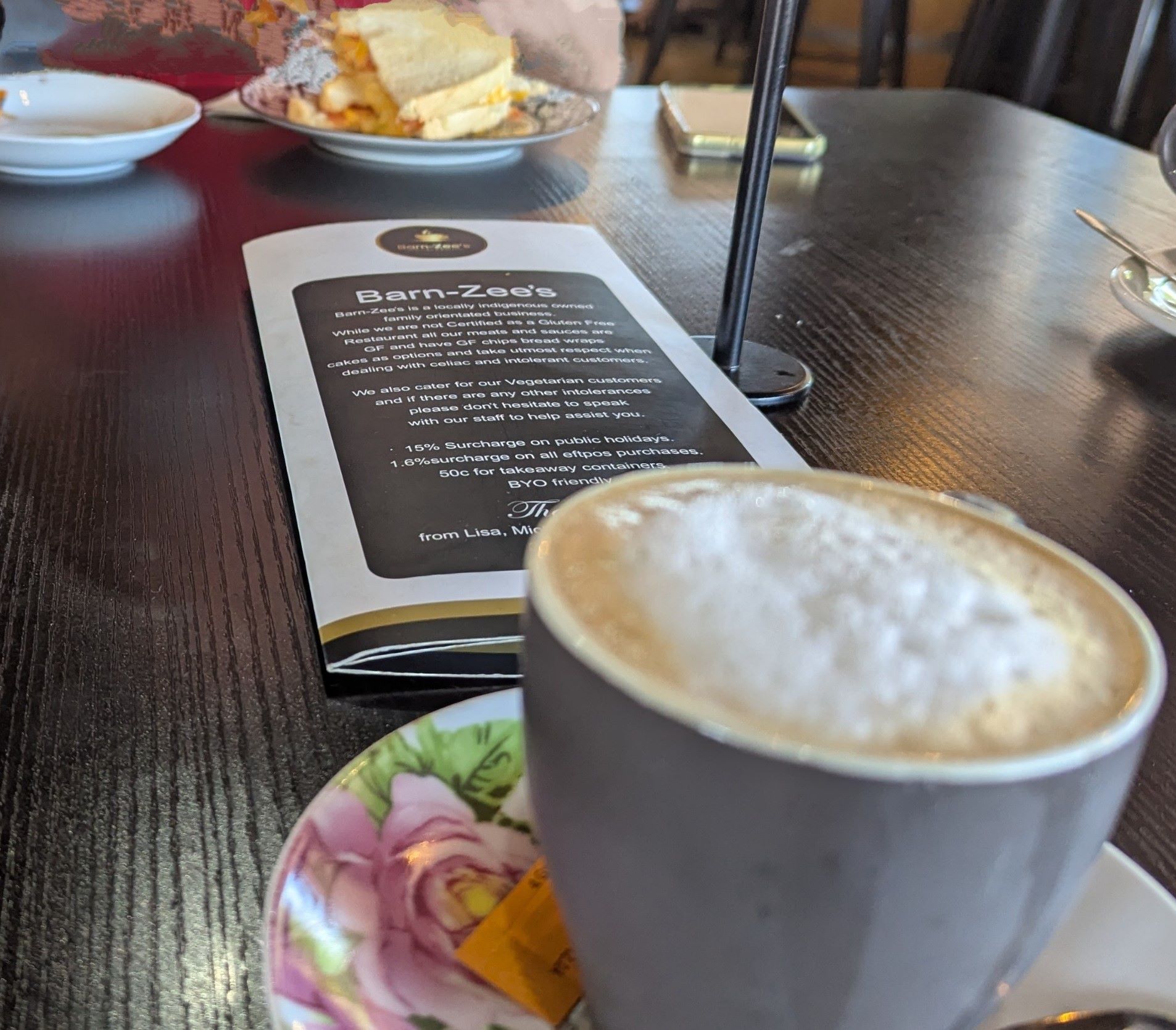
Barn- Zee is a successful – not only is the food delicious but the staff are friendly and efficient – indigenous owned and operated cafe. We had coffees, a toasted sandwich with beautifully melted cheese, and vanilla slices. The last were too tempting. I am glad that I do not live nearby.

Hello Indian

Hullo Indian is a pleasant restaurant which relies on the flavour and quality of its food – and rightly so. Our dishes were excellent, the butter chicken with its distinctive flavour – generous succulent portions of chicken combined with a delicious sauce was my favourite. The vegetable curry was also a winner, and the beef curry was returned to again and again. The samosas to begin were large and served with tamarind sauce and greens – another success. Staff were pleasant and the chef, as well as his culinary skills, was friendly .

Little Spencer Street Bakehouse

Amongst the many coffee places open on Good Friday, Spencer Street Bakehouse offered indoor and outdoor seating, and provided good coffees, and a generous well-cooked breakfast from and extensive menu..

Full of Beanz Coffee

This is a drive through coffee place with a good menu, and lovely staff. The coffees were great, and the savoury muffin very filling and pleasant. Even better, the walk was similar to our regular Canberra walk, as far as distance goes. Alas, our Canberra walk does not include lakes and pelicans.

The Water’s Edge

We had some delicious pastas- the special, chicken Carbonara (the request for chili was agreed immediately and the portion provided, generous); spaghetti and meat balls; and spaghetti, garlic and prawns (the request to omit the chili was granted without fuss). This is a friendly restaurant, in a lovely location, with a good menu and readiness to meet customers’ requests that is exemplary. The wagtail was a bonus.

Benesse

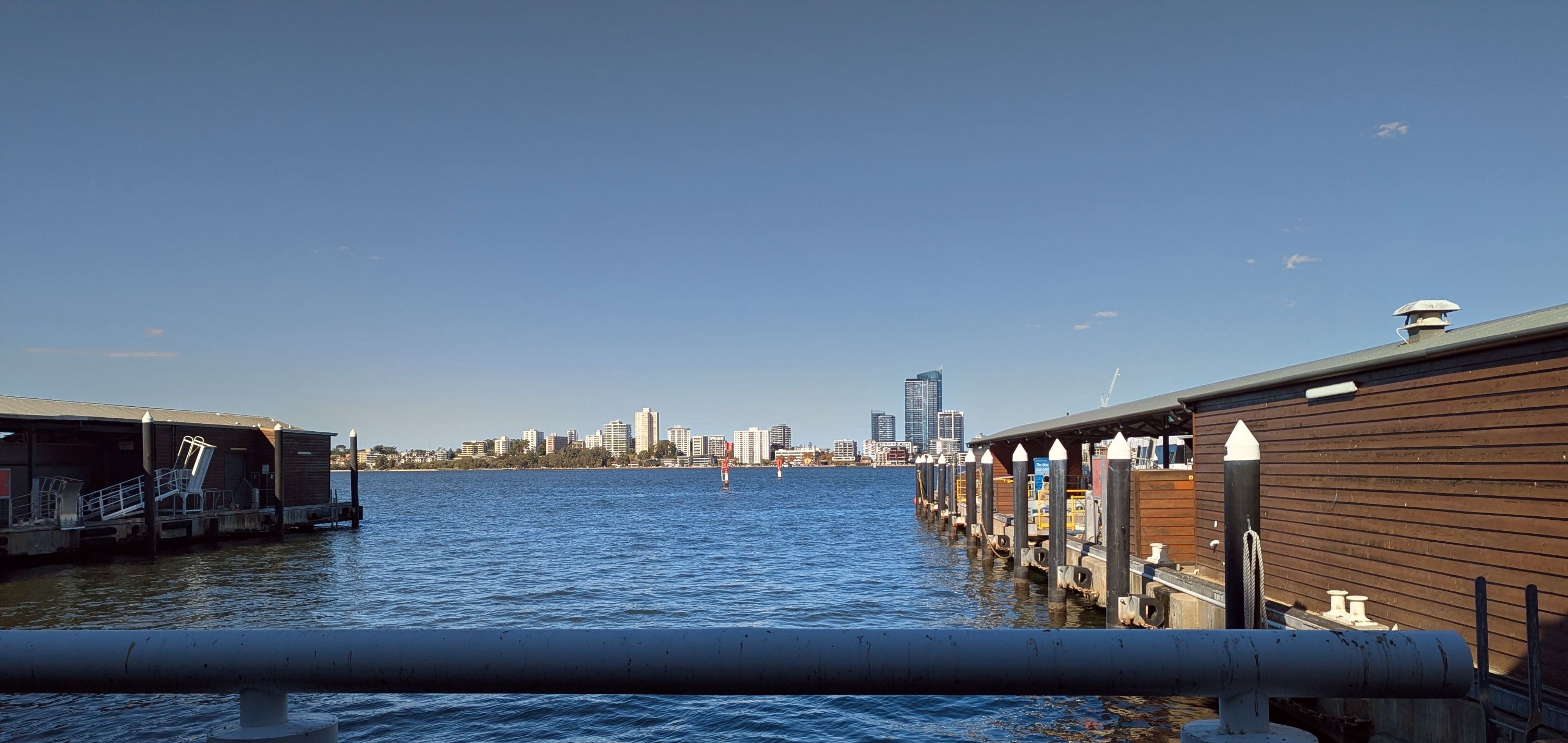
Our last coffees in the Bunbury area, before returning to Perth on the superb train trip from Mandurah to Perth.

Cindy Lou eats out in Perth

Petition

This restaurant has attracted me for several years. However, I’ve not eaten there, so when it was open on Easter Sunday, it was even more of a wonderful surprise.

The food was delicious, starting with olives, fetta and warm bread with a whipped flavoured butter. We then had octopus- marinaded with chili and other ingredients, so the chili was delicate rather than overwhelming and ham hock croquettes, roast pumpkin and broccolini. The atmosphere was casual and friendly, with people ordering by choice, rather than adhering to entree, main etc. Next to us two oysters, followed by chicken was ordered. On the other side, more oysters, a ceviche and roast pumpkin. The noisy men, further afield, went through the whole menu probably. We left before they would have ordered dessert.

I can see Petition being a restaurant we go to on future trips to Perth.

Samuels on Mill

Last time we were here, we ate with friends. This time, we chose a little more wisely from the small dishes. Service is friendly, and the food very good, although I thought that the risotto could have been more flavoursome. It was enhanced by the goats cheese and zucchini on top, but the rice portion was rather bland. The standout was the pumpkin. The prawns, and the stracciatella dishes with which we began were also excellent.

Samuels Bar

A shared club sandwich and chips at Samuels bar was generous and delicious. The mocktails were pleasant but not inspiring.

Riverside Cafe

Coffee on the Swan River is always a treat. On this occasion we celebrated PM Anthony Albanese’s success in ensuring that Canadians can continue to enjoy vegemite from an Australian business there.

Picnic at Kings Park

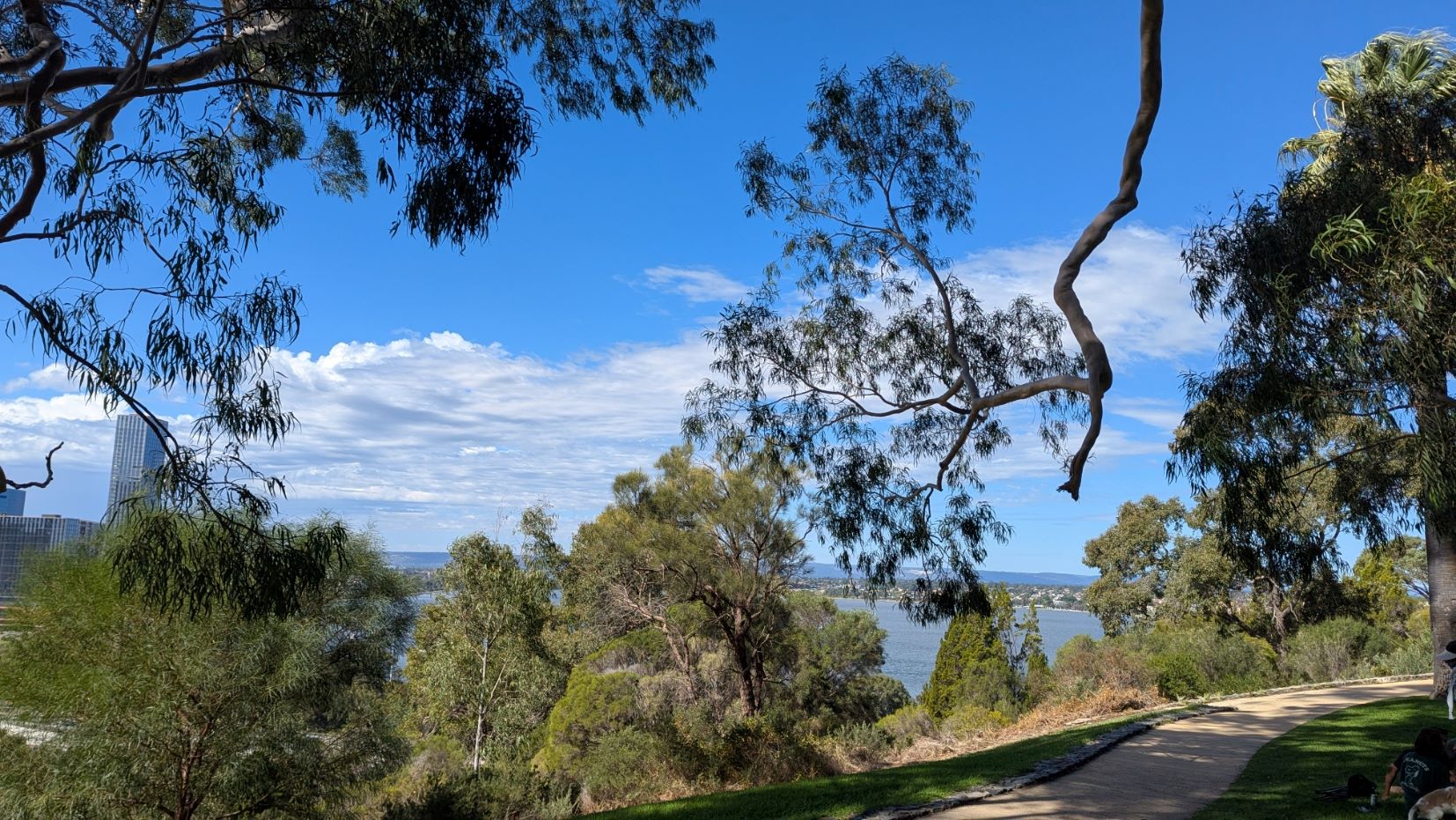
The Blue Cat took us to Kings Park where we had simple picnic in beautiful surrounds. The latter are far more picturesque than the former.

One Sixty, Murray Street

This was a simple breakfast before going to the Western Australian Museum to see a virtual reality exhibition of the Kimberley. The service was quick and pleasant, the coffees good, and the food tasty.

WA Museum Cafe

This was a mixed experience. The quiches and toasties were pleasant and the coffees good. However, a badly heated pie (the recipient’s first for forty years) was a disappointment.

Our last coffees in Perth were at Basilica. The service was very friendly and efficient, and the atmosphere lively. Basilica is set just off St Georges Terrace, near Mill Street.

Art Gallery Bunbury

An exhibition by indigenous artists was a highlight of our trip to Bunbury.

Galleries’ commitment to children’s art is always an aspect that I believe is essential, and this gallery has promoted children’s art through provision of materials and a wall display.

Photograph on our hotel bedroom wall

Little Salmon Bay, Rottnest Island, Jodie D’Arcy

Jodie is the daughter of a woman with whom I worked illustrating correspondence school material years ago. It is wonderful to see Jodie’s work find a larger audience!

Heather Cox Richardson from Letters from an American <heathercoxrichardson@substack.com> Unsubscribe1 9 Apr 2025, 15:35 (2 days ago)to me

Tonight I had the extraordinary privilege of speaking at the anniversary of the lighting of the lanterns in Boston’s Old North Church, which happened 250 years ago tonight. Here’s what I said:

Two hundred and fifty years ago, in April 1775, Boston was on edge. Seven thousand residents of the town shared these streets with more than 13,000 British soldiers and their families. The two groups coexisted uneasily.

Two years before, the British government had closed the port of Boston and flooded the town with soldiers to try to put down what they saw as a rebellion amongst the townspeople. Ocean trade stopped, businesses failed, and work in the city got harder and harder to find. As soldiers stepped off ships from England onto the wharves, half of the civilian population moved away. Those who stayed resented the soldiers, some of whom quit the army and took badly needed jobs away from locals.

Boston became increasingly cut off from the surrounding towns, for it was almost an island, lying between the Charles River and Boston Harbor. And the townspeople were under occupation. Soldiers, dressed in the red coats that inspired locals to insult them by calling them “lobsterbacks,” monitored their movements and controlled traffic in and out of the town over Boston Neck, which was the only land bridge from Boston to the mainland and so narrow at high tide it could accommodate only four horses abreast.

Boston was a small town of wooden buildings crowded together under at least eight towering church steeples, for Boston was still a religious town. Most of the people who lived there knew each other at least by sight, and many had grown up together. And yet, in April 1775, tensions were high.

Boston was the heart of colonial resistance to the policies of the British government, but it was not united in that opposition. While the town had more of the people who called themselves Patriots than other colonies did—maybe 30 to 40 percent—at least 15% of the people in town were still fiercely loyal to the King and his government. Those who were neither Patriots nor Loyalists just kept their heads down, hoping the growing political crisis would go away and leave them unscathed.

It was hard for people to fathom that the country had come to such division. Only a dozen years before, at the end of the French and Indian War, Bostonians looked forward to a happy future in the British empire. British authorities had spent time and money protecting the colonies, and colonists saw themselves as valued members of the empire. They expected to prosper as they moved to the rich lands on the other side of the Appalachian Mountains and their ships plied the oceans to expand the colonies’ trade with other countries.

That euphoria faded fast.

Almost as soon as the French and Indian War was over, to prevent colonists from stirring up another expensive struggle with Indigenous Americans, King George III prohibited the colonists from crossing the Appalachian Mountains. Then, to pay for the war just past, the king’s ministers pushed through Parliament a number of revenue laws.

In 1765, Parliament passed the Stamp Act, requiring the payment of a tax on all printed material—from newspapers and legal documents to playing cards. It would hit virtually everyone in the North American colonies. Knowing that local juries would acquit their fellow colonists who violated the revenue acts, Parliament took away the right to civil trials and declared that suspects would be tried before admiralty courts overseen by British military officers. Then Parliament required colonials to pay the expenses for the room and board of British troops who would be stationed in the colonies, a law known as the Quartering Act.

But what Parliament saw as a way to raise money to pay for an expensive war—one that had benefited the colonists, after all—colonial leaders saw as an abuse of power. The British government had regulated trade in the empire for more than a century. But now, for the first time, the British government had placed a direct tax on the colonists without their consent. Then it had taken away the right to a trial by jury, and now it was forcing colonists to pay for a military to police them.

Far more than money was at stake. The fight over the Stamp Act tapped into a struggle that had been going on in England for more than a century over a profound question of human governance: Could the king be checked by the people?

This was a question the colonists were perhaps uniquely qualified to answer. While the North American colonies were governed officially by the British crown, the distance between England and the colonies meant that colonial assemblies often had to make rules on the ground. Those assemblies controlled the power of the purse, which gave them the upper hand over royal officials, who had to await orders from England that often took months to arrive. This chaotic system enabled the colonists to carve out a new approach to politics even while they were living in the British empire.

Colonists naturally began to grasp that the exercise of power was not the province of a divinely ordained leader, but something temporary that depended on local residents’ willingness to support the men who were exercising that power.

The Stamp Act threatened to overturn that longstanding system, replacing it with tyranny.

When news of the Stamp Act arrived in Boston, a group of dock hands, sailors, and workers took to the streets, calling themselves the Sons of Liberty. They warned colonists that their rights as Englishmen were under attack. One of the Sons of Liberty was a talented silversmith named Paul Revere. He turned the story of the colonists’ loss of their liberty into engravings. Distributed as posters, Revere’s images would help spread the idea that colonists were losing their liberties.

The Sons of Liberty was generally a catch-all title for those causing trouble over the new taxes, so that protesters could remain anonymous, but prominent colonists joined them and at least partly directed their actions. Lawyer John Adams recognized that the Sons of Liberty were changing the political equation. He wrote that gatherings of the Sons of Liberty “tinge the Minds of the People, they impregnate them with the sentiments of Liberty. They render the People fond of their Leaders in the Cause, and averse and bitter against all opposers.”

John Adams’s cousin Samuel Adams, who was deeply involved with the Sons of Liberty, recognized that building a coalition in defense of liberty within the British system required conversation and cooperation. As clerk of the Massachusetts legislature, he was responsible for corresponding with other colonial legislatures. Across the colonies, the Sons of Liberty began writing to like-minded friends, informing them about local events, asking after their circumstances, organizing.

They spurred people to action. By 1766, the Stamp Act was costing more to enforce than it was producing in revenue, and Parliament agreed to end it. But it explicitly claimed “full power and authority to make laws and statutes…to bind the colonies and people of America…in all cases whatsoever.” It imposed new revenue measures.

News of new taxes reached Boston in late 1767. The Massachusetts legislature promptly circulated a letter to the other colonies opposing taxation without representation and standing firm on the colonists’ right to equality in the British empire. The Sons of Liberty and their associates called for boycotts on taxed goods and broke into the warehouses of those they suspected weren’t complying, while women demonstrated their sympathy for the rights of colonists by producing their own cloth and drinking coffee rather than relying on tea.

British officials worried that colonists in Boston were on the edge of revolt, and they sent troops to restore order. But the troops’ presence did not calm the town. Instead, fights erupted between locals and the British regulars.

Finally, in March 1770, British soldiers fired into a crowd of angry men and boys harassing them. They wounded six and killed five, including Crispus Attucks, a Black man who became the first to die in the attack. Paul Revere turned the altercation into the “Boston Massacre.” His instantly famous engraving showed soldiers in red coats smiling as they shot at colonists, “Like fierce Barbarians grinning o’er their Prey; Approve the Carnage, and enjoy the Day.”

Parliament promptly removed the British troops to an island in Boston Harbor and got rid of all but one of the new taxes. They left the one on tea, keeping the issue of taxation without representation on the table. Then, in May 1773, Parliament gave the East India Tea Company a monopoly on tea sales in the colonies. By lowering the cost of tea in the colonies, it meant to convince people to buy the taxed tea, thus establishing Parliament’s right to impose a tax on the colonies.

In Boston, local leaders posted a citizen guard on Griffin’s Wharf at the harbor to make sure tea could not be unloaded. On December 16, 1773, men dressed as Indigenous Americans boarded three merchant ships. They broke open 342 chests of tea and dumped the valuable leaves overboard.

Parliament closed the port of Boston, stripped the colony of its charter, flooded soldiers back into the town, and demanded payment for the tea. Colonists promptly organized the Massachusetts Provincial Congress and took control of the colony. The provincial congress met in Concord, where it stockpiled supplies and weapons, and called for towns to create “minute men” who could fight at a moment’s notice.

British officials were determined to end what they saw as a rebellion. In April, they ordered military governor General Thomas Gage to arrest colonial leaders Samuel Adams and John Hancock, who had left Boston to take shelter with one of Hancock’s relatives in the nearby town of Lexington. From there, they could seize the military supplies at Concord. British officials hoped that seizing both the men and the munitions would end the crisis.

But about 30 of the Sons of Liberty, including Paul Revere, had been watching the soldiers and gathering intelligence. They met in secret at the Green Dragon Tavern to share what they knew, each of them swearing on the Bible that they would not give away the group’s secrets. They had been patrolling the streets at night and saw at midnight on Saturday night, April 15, the day before Easter Sunday, that the general was shifting his troops. They knew the soldiers were going to move. But they didn’t know if the soldiers would leave Boston by way of the narrow Boston Neck or row across the harbor to Charlestown. That mattered because if the townspeople in Lexington and Concord were going to be warned that the troops were on their way, messengers from Boston would have to be able to avoid the columns of soldiers.

The Sons of Liberty had a plan. Paul Revere knew Boston well—he had been born there. As a teenager, he had been among the first young men who had signed up to ring the bells in the steeple of the Old North Church. The team of bell-ringers operated from a small room in the tower, and from there, a person could climb sets of narrow stairs and then ladders into the steeple. Anyone who lived in Boston or the surrounding area knew well that the steeple towered over every other building in Boston.

On Easter Sunday, after the secret watchers had noticed the troop movement, Revere traveled to Lexington to visit Adams and Hancock. On the way home through Charlestown, he had told friends “that if the British went out by Water, we would shew two Lanthorns in the North Church Steeple; & if by Land, one, as a Signal.” Armed with that knowledge, messengers could avoid the troops and raise the alarm along the roads to Lexington and Concord.

The plan was dangerous. The Old North Church was Anglican, Church of England, and about a third of the people who worshipped there were Loyalists. General Thomas Gage himself worshiped there. But so did Revere’s childhood friend John Pulling Jr., who had become a wealthy sea captain and was a vestryman, responsible for the church’s finances. Like Revere, Pulling was a Son of Liberty. So was the church’s relatively poor caretaker, or sexton, Robert Newman. They would help.

Dr. Joseph Warren lived just up the hill from Revere. He was a Son of Liberty and a leader in the Massachusetts Provincial Congress. On the night of April 18, he dashed off a quick note to Revere urging him to set off for Lexington to warn Adams and Hancock that the troops were on the way. By the time Revere got Warren’s house, the doctor had already sent another man, William Dawes, to Lexington by way of Boston Neck. Warren told Revere the troops were leaving Boston by water. Revere left Warren’s house, found his friend John Pulling, and gave him the information that would enable him to raise the signal for those waiting in Charlestown. Then Revere rowed across the harbor to Charleston to ride to Lexington himself. The night was clear with a rising moon, and Revere muffled his oars and swung out of his way to avoid the British ship standing guard.

Back in Boston, Pulling made his way past the soldiers on the streets to find Newman. Newman lived in his family home, where the tightening economy after the British occupation had forced his mother to board British officers. Newman was waiting for Pulling, and quietly slipped out of the house to meet him.

The two men walked past the soldiers to the church. As caretaker, Newman had a key.

The two men crept through the dark church, climbed the stairs and then the ladders to the steeple holding lanterns—a tricky business, but one that a caretaker and a mariner could manage—very briefly flashed the lanterns they carried to send the signal, and then climbed back down.

Messengers in Charlestown saw the signal, but so did British soldiers. Legend has it that Newman escaped from the church by climbing out a window. He made his way back home, but since he was one of the few people in town who had keys to the church, soldiers arrested him the next day for participating in rebellious activities. He told them that he had given his keys to Pulling, who as a vestryman could give him orders. When soldiers went to find Pulling, he had skipped town, likely heading to Nantucket.

While Newman and Pulling made their way through the streets back to their homes, the race to beat the soldiers to Lexington and Concord was on. Dawes crossed the Boston Neck just before soldiers closed the city. Revere rowed to Charlestown, borrowed a horse, and headed out. Eluding waiting officers, he headed on the road through Medford and what is now Arlington.

Dawes and Revere, as well as the men from Charleston making the same ride after seeing the signal lanterns, told the houses along their different routes that the Regulars were coming. They converged in Lexington, warned Adams and Hancock, and then set out for Concord. As they rode, young doctor Samuel Prescott came up behind them. Prescott was courting a girl from Lexington and was headed back to his home in Concord. Like Dawes and Revere, he was a Son of Liberty, and joined them to alert the town, pointing out that his neighbors would pay more attention to a local man.

About halfway to Concord, British soldiers caught the men. They ordered Revere to dismount and, after questioning him, took his horse and turned him loose to walk back to Lexington. Dawes escaped, but his horse bucked him off and he, too, headed back to Lexington on foot. But Prescott jumped his horse over a stone wall and got away to Concord.

The riders from Boston had done their work. As they brought word the Regulars were coming, scores of other men spread the news through a system of “alarm and muster” the colonists had developed months before for just such an occasion. Rather than using signal fires, the colonists used sound, ringing bells and banging drums to alert the next house that there was an emergency. By the time Revere made it back to the house where Adams and Hancock were hiding, just before dawn on that chilly, dark April morning, militiamen had heard the news and were converging on Lexington Green.

So were the British soldiers.

When they marched onto the Lexington town green in the darkness just before dawn, the soldiers found several dozen minute men waiting for them. An officer ordered the men to leave, and they began to mill around, some of them leaving, others staying. And then, just as the sun was coming up, a gun went off. The soldiers opened fire. When the locals realized the soldiers were firing not just powder, but also lead musket balls, most ran. Eight locals were killed, and another dozen wounded.

The outnumbered militiamen fell back to tend their wounded, and about 300 Regulars marched on Concord to destroy the guns and powder there. But news of the arriving soldiers and the shooting on Lexington town green had spread through the colonists’ communication network, and militiamen from as far away as Worcester were either in Concord or on their way. By midmorning the Regulars were outnumbered and in battle with about 400 militiamen. They pulled back to the main body of British troops still in Lexington.

The Regulars headed back to Boston, but by then militiamen had converged on their route. The Regulars had been awake for almost two days with only a short rest, and they were tired. Militiamen fired at them not in organized lines, as soldiers were accustomed to, but in the style they had learned from Indigenous Americans, shooting from behind trees, houses, and the glacial boulders littered along the road. This way of war used the North American landscape to their advantage. They picked off British officers, dressed in distinct uniforms, first. By that evening, more than three hundred British soldiers and colonists lay dead or wounded.

By the next morning, more than 15,000 militiamen surrounded the town of Boston. The Revolutionary War had begun. Just over a year later, the fight that had started over the question of whether the king could be checked by the people would give the colonists an entirely new, radical answer to that question. On July 4, 1776, they declared the people had the right to be treated equally before the law, and they had the right to govern themselves.

Someone asked me once if the men who hung the lanterns in the tower knew what they were doing. She meant, did they know that by that act they would begin the steps to a war that would create a new nation and change the world.

The answer is no. None of us knows what the future will deliver.

Paul Revere and Robert Newman and John Pulling and William Dawes and Samuel Prescott, and all the other riders from Charlestown who set out for Lexington after they saw the signal lanterns in the steeple of Old North Church, were men from all walks of life who had families to support, businesses to manage. Some had been orphaned young, some lived with their parents. Some were wealthy, others would scrabble through life. Some, like Paul Revere, had recently buried one wife and married another. Samuel Prescott was looking to find just one.

But despite their differences and the hectic routine of their lives, they recognized the vital importance of the right to consent to the government under which they lived. They took time out of their daily lives to resist the new policies of the British government that would establish the right of a king to act without check by the people. They recognized that giving that sort of power to any man would open the way for a tyrant.

Paul Revere didn’t wake up on the morning of April 18, 1775, and decide to change the world. That morning began like many of the other tense days of the past year, and there was little reason to think the next two days would end as they did. Like his neighbors, Revere simply offered what he could to the cause: engraving skills, information, knowledge of a church steeple, longstanding friendships that helped to create a network. And on April 18, he and his friends set out to protect the men who were leading the fight to establish a representative government.

The work of Newman and Pulling to light the lanterns exactly 250 years ago tonight sounds even less heroic. They agreed to cross through town to light two lanterns in a church steeple. It sounds like such a very little thing to do, and yet by doing it, they risked imprisonment or even death. It was such a little thing…but it was everything. And what they did, as with so many of the little steps that lead to profound change, was largely forgotten until Henry Wadsworth Longfellow used their story to inspire a later generation to work to stop tyranny in his own time.

What Newman and Pulling did was simply to honor their friendships and their principles and to do the next right thing, even if it risked their lives, even if no one ever knew. And that is all anyone can do as we work to preserve the concept of human self-determination. In that heroic struggle, most of us will be lost to history, but we will, nonetheless, move the story forward, even if just a little bit.

And once in a great while, someone will light a lantern—or even two—that will shine forth for democratic principles that are under siege, and set the world ablaze.

Notes:

https://boston1775.blogspot.com/2007/07/bostons-population-in-july-1775.html

https://www.battlefields.org/learn/articles/british-army-boston

https://www.masshist.org/database/viewer.php?item_id=98

https://www.masshist.org/database/99

Rule of Law – Joyce Vance

People value the Rule of Law because it takes some of the edge off the power that is necessarily exercised over them in a political community. In various ways, being ruled through law, means that power is less arbitrary, more predictable, more impersonal, less peremptory, less coercive even.”

In his 2010 book, The Rule of Law, Tom Bingham wrote that, at bottom, the rule of law provides much-needed predictability in the conduct of our lives and businesses. In other words, the rule of law is far more than just a matter of legal philosophy. It has a practical impact on the economy and our financial well-being, for instance. People can invest and do business because they understand the rules that will be applied to those transactions. Understanding the practical importance of the rule of law should perk up some people who might otherwise be nodding off, given the title of this post. Bear with me; I promise there is more than an academic point to what you’re about to read.

Bingham is more properly Sir Thomas Bingham. He was a high-ranking British civil judge, the Master of the Rolls, before becoming Lord Chief Justice of England and Wales, the head of the judiciary. He also served as the Senior Law Lord of the United Kingdom. In other words, he was well situated to discuss the rule of law. His book is readable and accessible for people of all backgrounds, should you want more of his thinking.

Unlike many terms we deploy with precision in our legal system, terms like “due process” or “equal protection,” there isn’t a single commonly accepted definition of the rule of law. To Bingham, “the Rule of Law is one of the ideals of our political morality and it refers to the ascendancy of law as such and of the institutions of the legal system in a system of governance.” Less formally, I would suggest that it means people who live under a rule of law system are protected by the law because everyone, including government officials and government offices, has to follow it. In a rule of law system, people know what the law is—it’s publicly available in written form, and everyone is on notice of the rules. It’s enforced equally against all people and administered by an independent judiciary. No kings. As we used to say with certainty pre-Trump, no man is above the law.

That’s the problem. Even this high-level explanation of the rule of law is sufficient to illustrate what we already know: that Trump is attacking it. He has been from the get-go, and encouraged along by some regrettable Supreme Court rulings, he’s now out in full force. It’s more than just an attack on some pretty words lawyers use; it’s a fundamental attack on our way of life. Legal principles that seem removed from our daily lives can matter, and here, they matter deeply. It’s why we should all have a baseline understanding of them. And it’s why I was so encouraged to see people out protesting on Saturday for “due process” and the rule of law, something I wouldn’t have expected to see so widely a few months ago.

The English philosopher John Locke (1632-1704) also wrote about the rule of law. In a 1689 volume of his Two Treatises of Government, he emphasized the public’s right to know what the law is, writing in an era where the law was more whimsical than the stability, for instance, the advance knowledge of what constitutes a crime, that we take for granted today. He wrote that “established standing Laws, promulgated and known to the People” were critical, contrasting them with a government that ruled through “extemporary Arbitrary Decrees.” That’s something we all understand in this moment.

Locke used the word arbitrary in this context to mean laws that weren’t fixed and established so that everyone knew what they were and there could be no fudging when it came to what people could and could not do. In Locke’s view, a ruler was arbitrary if he imposed measures with no notice, just making up the law as he went along. When there is no firm law to refer to, only the unpredictability of arbitrariness, people have nothing to rely on for conducting their daily affairs. Locke put it like this in 1689: Without the rule of law, people were subject to “sudden thoughts, or unrestrain’d, and till that moment unknown Wills without having any measures set down which may guide and justifie their actions.” In Locke’s view, predictability and certainty were essential if people were to live together. It made sense in the 1600s and it makes sense today.

What are citizens’ obligations in a rule of law system? Each of us has to follow the rules, even when we don’t agree with them, and be accountable if we violate them.

In a functioning rule of law system, the law protects everyone equally because people know what the law is, understand what they are obligated to do and refrain from doing, and can have confidence in how they will be treated when they have disputes with others. It’s the framework that lets people live and prosper together without resorting to violence to resolve every dispute, Hatfield and McCoy style. It’s why people from other countries come to the U.S. to invest, do business, and live. The rule of law is something we simultaneously take for granted and can’t live without, at least not in the way we are used to living.

One significant feature of the rule of law in our country is that it isn’t only available to the wealthy and the powerful. In the United States, criminal defendants in felony cases are guaranteed the right to counsel under a 9-0 1963 decision, Gideon v. WainwrightAlthough there is nothing equivalent in civil cases, legal aid groups and pro bono organizations sponsored by bar associations provide some access to counsel for people who cannot afford it. Lawyers often take plaintiffs’ cases, everything from car accidents to mass torts, expecting to be paid only if they’re able to recover on behalf of their clients. We could do better, but there is broad access to the legal system and it has greatly improved over time.

Our system, although imperfect, has largely worked well enough to hold people’s trust and to give us the confidence and certainty that we needed to reap the benefits of the rule of law. The courts work if people trust them to take the rule of law seriously and protect it. That means having an independent judiciary that is transparent and that conducts itself with integrity.

All of this, of course, explains the seismic shift of Trumpism. It explains why presidents shouldn’t exceed their constitutional powers and why courts and Congress should act expeditiously to hold them accountable when they do. It also underscores why the courts, and individual judges, should always act with unquestionable integrity, so that in a moment where confidence in the courts is essential, it is there in abundance. The judiciary must be independent, not beholden to private interests or under the thumb of others in government. Its rulings and reasoning should be transparent. Otherwise, how can people who are removed from the courts trust them to uphold the rule of law?

That is the danger of the moment we live in. There are some encouraging signs—Democrats in Congress are rallying. The lower courts, and this past weekend the Supreme Court are imposing checks on the administration, but only when they are warranted. But there are still serious concerns about the supine Congress and Trump’s efforts to stifle dissent in government, the press, private businesses, and public organizations. The institutions, it turns out, are only as strong as the people who populate them. In some places we see courage and determination to protect the rule of law. Other places, not so much.

If the rule of law fails, it’s not just words. It’s the bedrock stability that protects our way of life. In other words, it’s not just a shoulder shrug and a time to look away. We are, thankfully, not there yet. There are ups and downs, but the most encouraging development is public awareness, particularly focused on due process, and the understanding of how important all of this is. “Hands off my rule of law!”

Americans are increasingly doing the hard work of understanding how democracy works. You cannot save something you do not understand. Understanding why it matters is as important as understanding how it works. Share this newsletter via email, or better yet, in conversations with friends. And make sure your elected officials know that you’re paying attention, that you understand what’s happening and what’s at stake. Democracy really does die in darkness, and it’s our job to keep that from happening.

If Civil Discourse has been valuable to you, becoming a paid subscriber is the best way to support the work it takes to produce each piece. Your subscription helps keep this newsletter independent, thoughtful, and focused on what truly matters, not on clicks or outrage. If you’re able, I’d be honored to have you join the paid community. Either way, I’m delighted that you’re reading the newsletter and that we are all here together, committed to keeping the Republic.

We’re in this together,

Joyce

Week beginning 16 April 2025

Scott Turow Presumed Guilty Swift Press, February 2025.

Thank you, NetGalley, for providing me with this uncorrected proof for review.

This is not ‘just’ a legal procedural, although under Scott Turow’s experienced hand that would be enough.  Presumed Guilty is an empathetic analysis of relationships and ageing as well as an insightful consideration of racism and the way in which status through familiarity and hierarchy can grant benefits to some while challenging others’ claims to justice.  Although when I read Presumed Innocent many years ago, I was impressed, Presumed Guilty exceeds my expectations. It really is a dazzling encounter with the law and complex characters, and notable for its social commentary.  

Rusty Sabich, who was introduced in Presumed Innocent, is now in his seventies, has a congenial partner, and with her has responsibility for her adopted son. Aaron has a criminal record and is now under investigation in a case biased against him as an African American in an almost exclusively white county. Rusty Sabich accepts the job of defending him, putting all his relationships, personal and professional, at risk. The legal exposition of the case Sabich and his investigator conduct is informative, so much so that it could undermine the momentum of the novel. Not so, it is engrossing. At the same time, the personal relationships are explored, in their grittiness, sensitivity, and pain.  Truth telling and suspicion are pivotal throughout the narrative. See Books: Reviews for the complete review.

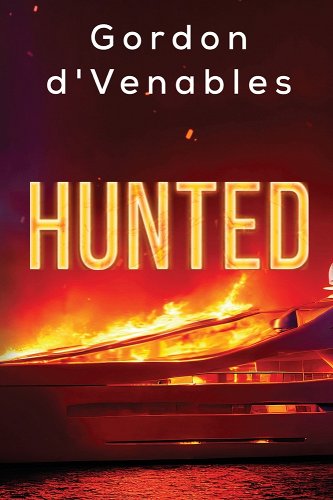
Gordon d’ Venables Hunted Vanguard Press, April 2023.

Gordon d’ Venables continues to combine an engrossing story line with a strong element of social commentary, characters who becoming increasingly engaging and writing that is a pleasure to read. Hunted is the third of d’ Venables’ novels, and having been impressed with his first, The Medusa Image, and thoroughly engrossed with the empathy he shows in Star of the South, I was pleased to have the opportunity to read yet another work. Hunted reintroduces Rhys Curtis and Rat, a MI6 agent. Again, they meet in Thailand at Noi’s restaurant, also familiar territory. Once more, the activities, food and surrounds are narrated in such detail that the reader could well be there. A tuk tuk seems to be just around the corner – if one could bear to leave the pages and hail it!

Hunted is a courageous work, taking as it does real life events, and weaving them into a narrative that resonates with political unease. These fears, looking from 2025 after the result of the Presidential election of 2016 has been repeated, are well worth revisiting. The racism, white supremacy and misogyny are all there in the events of Charlottesville and afterwards, the enthusiasm for guns and freedom of speech that destroys rather than uplifts – the latter is tamped down without mercy – the backdrop to today’s American political environment. See Books: Reviews for the complete review.

American Politics


Civil Discourse with Joyce Vance

Why We Have Due Process

Joyce Vance from Civil Discourse <joycevance@substack.com> Unsubscribe

Forwarded this email? Subscribe here for moreWhy We Have Due Process Joyce Vance Apr 2 

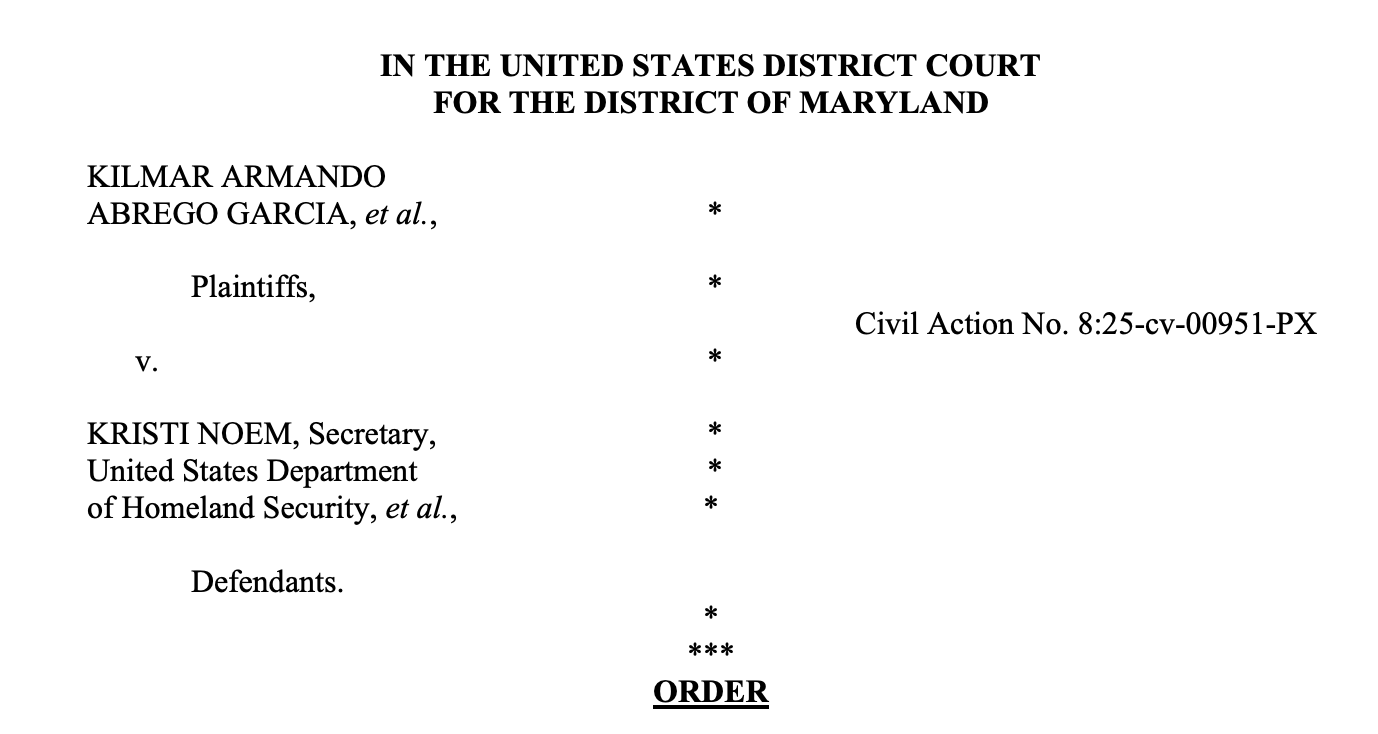
Here’s a textbook explanation for why due process is so important: the case of Kilmar Armando Abrego Garcia, a native of El Salvador, who was included on the third plane full of aliens the Trump administration deported to that country on March 15. Only one problem, as the government now concedes in an affidavit filed in the case by Robert L. Cerna, the Acting Field Office Director for Enforcement and Removal Operations at ICE, “this removal was an error.”

Why was it an error? Because in 2019, an immigration judge entered an order that, while acknowledging Abrego Garcia was removable, granted a “witholding of removal” under a law that provides, “the Attorney General may not remove an alien to a country if the Attorney General decides that the alien’s life or freedom would be threatened in that country because of the alien’s race, religion, nationality, membership in a particular social group, or political opinion.” That order is still valid today—the government doesn’t contest that fact and Cerna acknowledges it in his affidavit. But Abrego Garcia was mistakenly added to a flight manifest as an alternate, and when others were removed from the list and he moved up, “The manifest did not indicate that Abrego Garcia should not be removed.”

So, now he’s in a hellhole of a prison in El Salvador at taxpayer expense. That’s your money and my money at work. The affidavit calls it “an administrative error,” an “oversight,” and says that “the removal was carried out in good faith.” I doubt that’s much consolation to Mr. Abrego Garcia and his family.

How many others were made? That’s what happens when you hustle people—yes, people, because those who are here without legal status are still human beings, no matter what this administration would have you believe—onto a plane and dispense them into a prison in a foreign country from which they have little, if any, recourse.

Press Secretary Karoline Leavitt claimed today that there was “a lot of evidence” Abrego Garcia was a convicted member of the gang MS-13, saying that “I saw it this morning.” But he has not been convicted or even prosecuted—a case a local U.S. Attorney would have likely been eager to take if it had merit—and reporting suggests that what the government has is little more than an informant’s claim he belonged to the gang. No one is suggesting Abrego Garcia isn’t deportable and shouldn’t be in ICE proceedings, but he was entitled to at least minimal due process given the pending withholding order before he was consigned to prison, and perhaps much worse, in violation of an immigration judge’s order.

If anyone can be swept up and taken away without recourse to a lawyer and court proceedings to determine the validity of the removal, then you or I could share Abrego Garcia’s fate. And according to the government, it’s too late. Once you’re in El Salvador’s custody, neither a habeas petition nor the order of a federal judge is sufficient to release you. You are at the mercy of the authorities of that foreign country.

Due Process.

It’s one of the foundations of the legal system that makes our democracy great. People are entitled to due process regardless of their citizenship or immigration status under the Fifth and Fourteenth Amendments of the U.S. Constitution. Today’s events help us understand why.

The press secretary insisted that she must be believed when she said that Abrego Garcia was affiliated with the MS-13 gang: “Fact No. 2, we also have credible intelligence proving that this individual was involved in human trafficking. Fact No. 3, this individual was a member, actually a leader, of the brutal MS-13 gang, which this president has designated as a foreign terrorist organization.” Maybe. But given that they made an admitted “clerical” error in deporting him despite the immigration judge’s order, I’d rather let due process take its course than trust the press secretary before the government takes irrevocable steps. You can see why this situation is a textbook explanation of the need for due process.

If you skipped Sunday night’s The Week Ahead post, you may want to go back and read the immigration section to put this into context. Why the rush and hurry on the part of ICE? Why did flights, as the New York Times has reported, fail to turn around and return to the United States after a federal judge ordered them to? One possible answer is the imposition of quotas that require ICE to detain and deport a set number of people every month. As I wrote to you Sunday night: There is a real cost in human terms when the law is disregarded. I’m a former federal prosecutor. I believe in enforcing the laws and keeping our communities safe. I also believe in following the law and believe that obligation falls on the government just as sharply, if not more so, than it does on private citizens.

The Trump administration uses the law to its advantage when it can, ignores it when it can’t, and makes the lines between the two muddy in hopes they can get away with it. But the judiciary has been holding the administration accountable so far, and continues to offer hope that we can hold on until the midterm elections. Today, a federal judge in New Jersey ruled that the government couldn’t defeat former Columbia student and immigration detainee Mahmoud Khalil’s ability to challenge his detention in court by moving him to Louisiana from New Jersey after his petition was filed. It is the small, precise, even mundane, steps like this that force compliance with the rule of law and forge a chance of protection for Americans and people without legal immigration status alike. Due process.

Today, New Jersey Senator Cory Booker, on his way to delivering the longest filibuster ever in the Senate and breaking the record held by South Carolina’s Strom Thurmond, asked if Americans thought they were better off than they were 72 days ago when Trump took power. There is little doubt that the answer is no. Trump is damaging our economy and our foreign partnerships in ways that feel inexplicable for someone who claims to be making America “great again.” Booker went beyond that, saying that this was our moral moment and that inaction was not enough: “Where does the Constitution live? On paper, or in our hearts?”

Here at Civil Discourse, it lives in our hearts and stays on our minds. Thank you for being here with me. I know you have lots of choices about where to get your facts, what’s most important, and how to process what this administration is doing to our democracy. I appreciate that you’re spending some of that time with me. Your paid subscriptions help me devote the necessary time and resources to writing the newsletter, and I’m very grateful. Thank you to everyone who cares about holding onto the American experiment and keeping the Republic. Our strength comes from being in community.

We’re in this together, Joyce

The Abrego Garcia Case: A Quick Update

Joyce Vance from Civil Discourse <joycevance@substack.com> Unsubscribe

I usually try to avoid riding the waves of the news cycle on a minute-by-minute basis, but for the reasons we’ve discussed, the Abrego Garcia case is important not just for his future but for all of us. So I wanted to update you on what has happened following last night’s post about the Supreme Court’s decision.

Shortly after it was issued, Judge Paula Xinis got to work, filing an order requiring the government to give her an update on Abrego Garcia’s location, custodial status, what efforts the government was making, and when it planned to return him. She ordered them to provide her with that information by 9:30 a.m. in advance of a 1 p.m. status conference in court.

You can find the Judge’s order here. She didn’t waste any time helping the Supreme Court understand what she intended when she ordered the government to “effectuate” Abrego Garcia’s return to the U.S. She wrote that the Supreme Court had “directed that on remand, [that] this Court clarify its use of the term ‘effectuate,’ according proper deference to the Executive Branch in its conduct of foreign affairs…To this end, the Court hereby amends the Order to DIRECT that Defendants take all available steps to facilitate the return of Abrego Garcia to the United States as soon as possible.”

But the Trump administration, which has already conceded that it acted unlawfully when it deported Abrego Garcia, showed no signs of remorse in responding to Judge Xinis, even with the Supreme Court’s new order on the books. This morning, they wrote, “The initial deadline contained in the Amended Preliminary Injunction, which requires Defendants to provide the Court with a plan for diplomatic engagement a mere 30 minutes into the business day following the Supreme Court’s decision last night, is inconsistent with the Supreme Court’s instruction that this Court ‘clarify its directive[] with due regard for the deference owed to the Executive Branch in the conduct of foreign affairs.’”

Far from being impressed by the Supreme Court’s unanimous pronouncement (or at least one lacking any dissents), the government is emboldened by it. Clearly, they are contemplating resort to “diplomatic engagement” as a way around restoring Abrego Garcia. And that means they could do the same for any of us, as long as they managed to spirit us out of the country before we have due process. Sure, the Supreme Court says you have those rights, but as long as the government has a way around, those rights exist only on paper. The government may be headed there.

“It would also be impracticable for Defendants to comply with the Court’s 9:30AM deadline only a few hours after the Supreme Court issued an order in this case…Defendants propose that the Court modify its order to allow Defendants until 5:00 p.m. on Tuesday, April 15, 2025, to submit its supplemental declaration, and to reschedule any hearing on this matter until Wednesday, April 16, 2025.”

Judge Xinis gave the government until 11:30 a.m. ET to respond. She still intends to hold her hearing. She advised the government that:

  • Its “act of sending Abrego Garcia to El Salvador was wholly illegal from the moment it happened, and Defendants have been on notice of the same. Indeed, as the Supreme Court credits, ‘the United States acknowledges that Abrego Garcia was subject to a withholding order forbidding his removal to El Salvador, and that the removal to El Salvador was therefore illegal.’”
  • The government’s “suggestion that they need time to meaningfully review a four-page Order that reaffirms this basic principle blinks at reality.”
  • Nothing the Supreme Court did prohibits the district court from acting quickly. “As the Supreme Court plainly stated, ‘the Government should be prepared to share what it can concerning the steps it has taken and the prospect of further steps,’…all against the backdrop of this Court’s needing to ‘ensure that the Government lives up to its obligations to follow the law.’”

The battle lines are drawn. As we discussed last night, the government is likely to go through another cycle of delay and appeal. In the meantime, Abrego Garcia continues to sit in a place far worse than any American prison, a place the district judge wrote, has “some of the most inhumane and squalid conditions known in any carceral system.”

There will be more news on this during the day, and we’ll follow it closely. I really appreciate that you’re here with me at Civil Discourse. As Americans, we’re all trying to answer the question, “What can we do to save our democracy?” right now. I try to address that question in different ways every time I write to you, whether it’s by keeping you informed or with specific suggestions. And the archive of older posts is available to paid subscribers, so you can go back and read through them when you need a little inspiration. Again, thank you all for your support. More than 635,000 people subscribe to Civil Discourse, and that number grows every day.

We’re in this together,

Joyce

Below is Joyce Vance’s Five Questions which is usually behind the pay wall. She felt that this interview was so important that it should be free to anyone who follows her column. I was fortunate to be one of those people and received the discussion below:


Five Questions with Olivia Troye

Former Pence advisor explains Trump’s EO’s targeting his own people

Joyce Vance , April 12, 2025.

Share

Olivia Troye served as Vice President Mike Pence’s Homeland Security and Counterterrorism Advisor and in other leadership and advisory roles at the U.S. Department of Homeland Security until she resigned in June 2020 over concerns about how the administration was handling the Covid pandemic. Since leaving the administration, Troye has become an outspoken critic of Trump and campaigned on behalf of his Democratic rival Kamala Harris in 2024.

From her time in the first Trump administration, Troye is acquainted with others who became critical of the administration, or who, like her, were merely committed to telling the American people the truth and fell out of Trump’s good graces as a result. This week, two of those people, Miles Taylor and Chris Krebs, were targeted by Trump with executive orders.

The only thing a president can do in an executive order is order an executive branch agency to take or withhold specified actions. Trump has wielded them in an aggressive way, for instance, in an EO designed to suppress voter participation, directing executive agencies to withhold funding from states that don’t fall in line with his plans. But this use of EOs to target individuals Trump has decided are enemies because they didn’t support his fake narrative of voter fraud when he lost the 2020 elections is entirely new. There is no possible way to justify it as democratic. It is paradigmatic of a president who has set his sights on being a dictator.

There is no one better to help us understand this landscape than Olivia, and I’m delighted to have her as our guest for “Five Questions” tonight!

Olivia with her dogs Ringo (Starr) and Stevie (Nicks).

Olivia graduated from the University of Pennsylvania, the National Defense University’s College of International Security Affairs, and the Naval Postgraduate School’s Center for Homeland Defense and Security. She was raised in El Paso, Texas, and although she resides in and has spent most of her career traveling in and out of Washington, D.C., she still refers to El Paso as home. Olivia has started her own Substack, Olivia of Troye Unfiltered, if you want to stay in touch.

“Five Questions” is a feature for paid subscribers to Civil Discourse. The rest of my posts are available to free subscribers as well. This is my way of thanking people who are able to support my work financially so I can devote more time and resources to it. I value having all of you here. Subscribe

Joyce: Trump has issued two separate executive orders targeting your former colleagues, Christopher Krebs and Miles Taylor. Help us understand who they are, what roles they played in the first Trump administration, and why each of them ended up running afoul of Trump.

Olivia: Christopher Krebs led the Department of Homeland Security’s (DHS) Cybersecurity and Infrastructure Security Agency (CISA) during the first Trump Administration. After the 2020 election, Krebs stood up and said the quiet part out loud: that the election was secure and there was no widespread fraud. All he did was do his job, and Trump fired him via a tweet.

Miles Taylor worked at DHS as the chief of staff—he had a front-row seat to some of the most troubling and dangerous ideas being pushed during the first Trump administration. He saw a president who was unfit, erratic, and willing to use the Department of Homeland Security to further his personal agenda. I was witness to many of the policies and endeavors that Taylor expressed concerns about. And when Taylor began to speak out, Trump made him a target.

I served alongside Krebs and Taylor. I was at DHS at the start of the Trump administration and later served in the Vice President’s office. I saw firsthand how hard they worked and how committed they were to public service. They’re not radicals. They’re not partisans. They’re professionals who took their oaths seriously.

Both of these men were Republicans appointed by Trump. But when they put country first and refused to carry out his personal vendettas or lies—they became enemies. Clearly Trump is still holding on to his resentment, and it speaks to his ongoing obsession with the 2020 election.

Joyce: We understand that executive orders are tools presidents can use for compelling action or inaction within the executive branch, but not beyond it, at least not directly. What is Trump doing with each of these orders, and how will they impact Krebs and Taylor?

Olivia: Executive orders are tools meant to guide the executive branch—not to settle political scores. But what Trump is doing here is a dangerous abuse of power. He’s issuing executive orders that single out two former officials—Chris Krebs and Miles Taylor—not because they broke the law, but because they told the truth and wouldn’t bend to his will.

What’s most disturbing is the projection. Trump keeps accusing others of “weaponizing the government,” but this is exactly what that looks like. These orders direct agencies to dig into their records, imply criminality, and call for investigations—based on nothing more than personal grievance.

This kind of move doesn’t just impact Krebs or Taylor. It impacts their families, and potentially their careers, even their friendships. The stress, the potential reputational damage of just being “investigated,” the financial burden of defending yourself—it’s immense. I’ve lived through lawfare from Trump loyalists. It’s exhausting. And it’s meant to be. What they’re facing is an even graver abuse of power, one with potentially lasting consequences for their lives. Knowing that the president of the United States is actively using the power of the federal government to go after you—that’s not governance. That’s intimidation. And if this is what he’s doing out in the open, we have to ask ourselves: what else is happening behind the scenes? What are they planning? Who’s next? That’s what many who are potentially future targets of President Trump’s retribution are wondering. These aren’t isolated incidents–this is part of a broader strategy Trump is enacting.

Joyce: As a former DOJ employee, it’s shocking to me that a president would direct an attorney general to investigate people for what he views as their political opposition to him. He has perhaps dressed it up in the language of law enforcement, but it’s clear this action by Trump is motivated by revenge. It’s even more shocking that an attorney general who received a directive like this wouldn’t rebuke the president for issuing it and refuse to obey, resigning if not fired if it weren’t withdrawn. But of course, that’s not going to happen with Pam Bondi in office. What do you think happens next, and is this dangerous for democracy more broadly in addition to the people Trump has singled out?

Olivia: It’s deeply dangerous—both for our democracy and for every individual he targets. A president weaponizing the Department of Justice to punish those he sees as political enemies is the hallmark of an authoritarian regime. I worked in government. I know how serious it is when the machinery of federal law enforcement is turned inward—not to serve the country, but to serve one man’s grievances.

Pam Bondi won’t push back. She was selected precisely because she won’t. That’s the point. Trump has surrounded himself with loyalists, not rule-of-law leaders. And when the top law enforcement official refuses to draw a line, where are the checks within the system?

So what happens next? I worry we’ll see more of this—additional executive orders, expanded “investigations,” and increasingly chilling attempts to silence truth-tellers. And the broader danger is that we normalize it. That Americans become numb to the erosion of accountability. This isn’t just about Chris Krebs or Miles Taylor. It’s about whether anyone who disagrees with Trump or does something that is seen as noncompliant with his demands is safe from state retaliation. This pattern—targeting political opponents with the justice system—is a signature of deteriorating democratic systems worldwide. It’s what we’ve historically condemned in other nations while claiming American exceptionalism.

Joyce: Trump has used the word “treason” in discussing these executive orders. What are the implications of his framing the issue this way, and how does it impact your level of concern about what’s happening here?

Olivia: When the President invokes “treason” against his critics, he’s not just using harsh rhetoric—he’s wielding a loaded term with serious constitutional significance. It reframes honest dissent as an act of betrayal against the nation itself. The consequences go far beyond legal jeopardy—they invite public targeting, harassment, and even potential violence. This is a calculated attempt to silence legitimate criticism. By leveling such a grave accusation against these two individuals, Trump is sending a broader message—meant to instill fear not just across society, but within the government itself. It’s about making an example of them to keep others quiet.

When leaders label critics as traitors, they aren’t operating within democratic norms—they’re following the authoritarian playbook. This is Putin’s language, not America’s. Our system depends on debate, dissent, and whistleblowers holding our government accountable.

Trump has crossed a critical line by coupling accusations of treason with formal executive orders. This isn’t just rhetoric anymore—it’s state retaliation against critics, dressed in the language of national betrayal. The full weight of federal authority is now being deployed against those whose only offense was upholding their oath to the Constitution rather than pledging personal loyalty.

Joyce: Earlier this week, you posted on Threads that “Not one reporter asked about the Executive Orders targeting Chris Krebs & Miles Taylor during today’s Cabinet press conference. Not one. A sitting president abusing & using the power of DOJ to punish former officials who spoke out against him? That’s the stuff of banana republics. I waited. And waited. But the question never came. Why? Has the fear they want to instill already taken hold?” How concerned are you that Trump has created a culture where the last guardrails, including the press and lawyers, are becoming afraid to check him?

Olivia: That silence shook me. I watched that Cabinet press conference and waited for someone—anyone—to ask the question. But no one did. Not one. And that felt like a warning sign. Because if the press—the very people whose job it is to speak truth to power—are already hesitating to challenge him, then the fear he wants to instill may already be working.

When lawyers start giving in to Trump’s demands, when reporters pull punches, when public servants look the other way out of fear of being the next target—that’s when the system of checks and balances begins to collapse. These institutions are our last line of defense against presidential abuse.

If I had been in that press gaggle during the meeting, my questions would’ve gone straight to Attorney General Pam Bondi: What happened to the statements you made under oath during your confirmation hearing? You stated you would not politicize the Justice Department—that you wouldn’t use it to target people based on their politics. So what’s your response to these two executive orders targeting Republican appointed national security officials from the first Trump Administration?

I’ve lived through this once before. I’ve seen how intimidation works inside that administration. I’ve seen capable officials shrink from speaking uncomfortable truths out of fear of retribution. And I know how much courage it takes to speak out. But I also know this: if we shrink back now, there may soon be nothing left to protect. These executive orders aren’t abstract political theater—they’re the retribution Trump promised. He meant every word. Today it’s Krebs and Taylor, tomorrow it could be you, me, or anyone who dares criticize him. This calculated intimidation strategy aims to break our will—they want to make examples of the truth-tellers so the rest of us fall in line—we can’t let that work. If we normalize this, we lose more than our rights—we lose the courage to defend them. I, for one, will not be silenced. I will be here advocating for them and for others.


In a week where so much happened that it was impossible to focus on all of the important developments, let alone everything, the story of Trump’s revenge orders seemed too important to ignore. I’m grateful to Olivia for her courage and for helping us understand this issue at both a personal level and in the larger context of what it means for democracy. As with the deportation cases we’ve been studying this week, where this starts is not where this ends. Trump may have started with these orders pointed at two individuals, part of the cohort of revenge executive orders that have targeted law firms and others. But it will not end here.

We’re in this together,

Joyce

It’s that time of year, when Bendigo Art Gallery unveils its blockbuster exhibition. From now until July 13 fans of iconic Mexican artist Frida Kahlo are in for a treat.

Taking a different approach to telling the story of one of the most influential artists of the 20th century, the Frida Kahlo: In her own image uses artefacts, photographs and documents to explore her work and the artist’s life.

Sealed in a bathroom at her family home for 50 years, her make-up, clothing, accessories, medical items and personal belongings are on display in Australia for the first time, in a Bendigo exclusive.

The show was conceived and curated by Circe Henestrosa, fashion curator and head of the School of Fashion at LASALLE College of the Arts in Singapore.

Come for the exhibition, but stay for the Fiesta, a celebration of Kahlo and Mexico taking place at restaurants, galleries and public places across the region for the duration of the exhibition. If you’re not a Kahlo fan, you’ll leave one. And even if you don’t, you’ll still find something fabulous to do, see or eat.

Two articles from Women and Reading

The Best Literary Fiction Picks From Reese’s Book Club
BY DAMI KIMMARCH 26, 2025 1:00 PM EST

For avid readers, there’s nothing like getting lost in a beautifully crafted piece of fiction. The emotional rollercoaster, the lifelike characters you meet, and the captivating storytelling are some of the reasons you can’t stop turning the pages. As soon as you finish the book that left you in awe, you’re rushing to find the next good one, but with all of the books published year after year, finding your next amazing read can be a bit overwhelming. 

That’s where book club picks and recommendations like those from Reese’s Book Club come in. Since its launch in 2017, Reese’s Book Club has become a trusted source for finding the next amazing book for readers from all demographics. Reese and her book club have mastered the art of selecting novels that amplify diverse voices, which are used to tell thought-provoking narratives. With a keen eye for literary fiction, her book club’s picks offer fresh and compelling perspectives that readers can resonate deeply with. And though you’re guaranteed a good read if you choose any book from Reese’s list, there are five literary fiction picks that we believe stand out above the rest.

The Henna Artist by Alka Joshi

Not only was Alka Joshi’s debut novel “The Henna Artist” one of May 2020’s historical fiction picks from Reese’s Book Club, but it was also nominated for Readers’ Favorite Debut Novel and Readers’ Favorite Historical Fiction of the Goodreads Choice Awards. The book gained worldwide recognition and earned spots on multiple best-seller lists, on top of being a New York Times best seller. This book is the beginning of the author’s Jaipur Trilogy series, and maintains a 4.18-star average with nearly 200,000 reviews on Goodreads.

“The Henna Artist” is set in 1950s Jaipur and tells the story of seventeen-year-old Lakshmi, who escaped an abusive marriage and built a new life as a skilled henna artist. She’s worked hard to pave her own path and is now the most sought-after henna artist by the wealthy women of the pink city. Not only has she won over their hearts with her captivating henna, but she’s also become a right-hand woman to some of them, offering well-grounded advice. Things seem to be going quite well for Lakshmi. But it might be too good to be true as her haunted past shows up on her doorstep — her abusive husband appears with a woman he claims is her sister. Will Lakshmi be able to protect the life she has built? Or will her haunting past unravel everything?

Throwback by Maurene Goo

When Maurene Goo’s “Throwback” was chosen as a Winter 2024 pick for Reese’s Book Club, their Book-Lover-In-Chief said, “We loved the blend of heart and humor in highlighting mother-daughter relationships, and we can’t wait to hear what you think about our Winter YA Pick!” The novel is a unique portrayal of life as an Asian American immigrant, a good mix of humor and heartfelt emotion, and time travel. It brilliantly captures the highs and lows, as well as the generational clashes, of a Gen Z teenager and her relationship with her mother.

Samantha Kang has a hard time understanding her mother, Priscilla. They see things too differently and have never really gotten along, and it sometimes even feels as if her mother is trying to live out her own high school wishes through her daughter. That is, until they get in a huge argument. Despite Samantha’s wishes to move forward, she’s taken back in time. Samantha wakes up to find herself in the ’90s, where she meets her mom as a high schooler. The craziest part is that Samantha feels like she could be friends with ’90s Priscilla. Her time-traveling journey helps her begin to understand her mother in a way she could never before. Will she be able to return to the present and mend their broken relationship for the future, with the understandings she’s gained from the past? 

Eleanor Oliphant is Completely Fine by Gail Honeyman

Of all the books that receive buzz, one novel that is consistently named over and over again on reader top 10 lists is May 2017’s pick “Eleanor Oliphant is Completely Fine.” One kind deed changes Eleanor Oliphant’s carefully composed world. When she and Raymond, the scruffy and kind IT guy from work, help an elderly man named Sammy get back on his feet after a fall, the most unlikely friendship begins to form. Eleanor has spent years keeping human connection at bay, avoiding small talk and sticking to rigid routines. But her new bond with Raymond and Sammy brings her out of her shell of solitude, and she realizes the only way to heal from your past is by opening your heart.

With one Reddit user saying, “…it was one of the best books I’ve read in 20 years!” as they recommended it to users, this story will have you binge reading. What’s even more impressive is that Gail Honeyman wrote this debut novel while working a full-time job. The novel has been nominated for countless awards, such as the Lucy Cavendish Fiction Prize, and like many other popular BookTok titles, it’s in the works to be adapted into a film.

The Giver of Stars by Jojo Moyes

While “Me Before You” may be Jojo Moyes’s most famous book, “The Giver of Stars” was one of Reese’s picks for November 2019. In this work of historical fiction, Moyes explores compelling themes like female friendships, resilience, and the transformative power of books. This book will take you to 1930s Kentucky and delve into the lives of a group of women who come together to do something special and meaningful for people. Moyes writes an emotionally rich narrative and crafts a telling story about hope and purpose.

In 1930s Kentucky, there’s a group of women who deliver books on horseback, known as the Packhorse Librarians of Kentucky. Through these book deliveries, they not only deliver literature but also deliver courage, hope, and knowledge. Among these women is an Englishwoman named Alice Wright. She married an American man, hoping marriage would set her free. Instead, she finds herself feeling trapped in a small town and suffocated with her controlling father-in-law breathing down her neck. Desperate for another escape, she jumps at the opportunity to join Eleanor Roosevelt’s travel library and comes to discover an unexpected sisterhood with the other four women librarians. Together, these courageous women will go above and beyond to help people understand that stories can transform people’s lives. This story is a mighty tribute to the resilience of women, their powerful friendships, and their ability to overcome the most unthinkable adversities.

The Island of Missing Trees by Elif Shafak

Award-winning author Elif Shafak’s “The Island of Missing Trees” was a November 2021 pick for Reese’s book club, and it’s obvious why. Shafak works magic with her literary prose and tells a story of rich cultural history, the deepest emotional connections, and the intricacies of self-identity, which are sure to resonate with readers. The narrative will take you on a journey of love, loss, grief, and the power of memory.

Long ago, on an island, there stands a taverna with a beautiful tall fig tree. This tree was anything but an ordinary fig tree, as it could remember the past and observe the emotions many humans have felt. One day, the tree watches two teenagers, Kostas, a Greek Cypriot, and Define, a Turkish Cypriot, meet by chance and fall in love. The tree witnesses the two teens’ secret meetings and their unfortunate departures as war engulfs their lives. The war-torn island is changed forever, but the tree remains, holding people’s memories. Decades later, Ada is the daughter of Greek Cypriots and lives in the bustling city of London. In her garden is a beautiful ficus tree, and that tree and its roots are Ada’s only link to the dark secrets of her family’s past. The ficus tree will become an anchor in Ada’s life as she navigates years of history that unravel secrets to understand her family’s story, identity, and place in the world.

How we came up with this list

Reese’s Book Club has done an exceptional job at representing diverse voices from around the world, giving readers a glance into a wide range of cultures and perspectives. When selecting works for this list, we prioritized books that readers might consider unexpected, going beyond the more familiar picks by well-known authors. Of course, there were some already famous titles we just couldn’t resist and had to include.

With this list, we hope to introduce stories that will challenge our readers and expand their horizons. To that end, we reviewed each book’s synopsis, and opted for the ones that had compelling and intriguing narratives. After narrowing our list down to fifteen books, we combed through reader reviews on literature subreddits to gauge how each title was received, allowing us to determine our top five. 

Read More: https://www.women.com/1819228/best-literary-fiction-picks-reese-book-club/

Here are the finalists for the Women’s Prize for Nonfiction.

Literary Hub

By Literary Hub


March 26, 2025, 9:00am

Today, the Women’s Prize for Nonfiction—founded last year “to amplify female voices, whilst celebrating books that inform, challenge, disrupt, and offer solace and connection”—announced its 2025 shortlist: six books, whittled down from a longlist of 16, that span subjects from history to science to memoir.

“It’s an absolute pleasure to announce six books on our 2025 shortlist from across genres, that are united by an unforgettable voice, rigour, and unique insight,” said Kavita Puri, Chair of Judges, in a statement. “Included in our list are narratives that honour the natural world and its bond with humanity, meticulously researched stories of women challenging power, and books that illuminate complex subjects with authority, nuance and originality. These books will stay with you long after they have been read, for their outstanding prose, craftsmanship, and what they reveal about the human condition and our world. It was such a joy to embrace such an eclectic mix of narratives by such insightful women writers – we are thrilled and immensely proud of our final shortlist.”

The winner will be announced on June 12, and will receive £30,000 and a limited-edition artwork known as the “Charlotte,” gifted by the Charlotte Aitken Trust.

Here’s the shortlist:

Neneh Cherry, A Thousand Threads

Citation from judge Kavita Puri: “A story of a remarkable life and the many threads that made it. This is a book about belonging, family, how we find our place in society and, of course, music. The writing is exceptional, and effortless. It’s a complex portrayal full of warmth, honesty and integrity, and how Neneh came to be who she is today.”

Rachel Clarke, The Story of a Heart

Citation from judge Dr Elizabeth-Jane Burnett: “This book combines the author’s expertise with the emotional resonance of the subject to bring together an extraordinary story. It shows how advances in medical science and nursing care made it possible for one family to donate to another a gift that can never be repaid – the gift of life. It moves effortlessly between disciplines and is meticulously researched and superbly written.”

Chloe Dalton, Raising Hare

Citation from judge Elizabeth Buchan: “This is a beautiful meditation on the interactions between the human and the natural world that takes you under its spell. I really like how the book opens up questions of wildness; how do we let the wild into our lives, and what can we do in our own spaces to cultivate a relationship between us and the natural habitat?”

Clare Mulley, Agent Zo: The Untold Stories of Courageous WW2 Resistance Fighter Elżbieta Zawacka

Citation from judge Dr Leah Broad: “This is a masterfully written biography that brings Elżbieta’s extraordinary story to life in exceptional detail. Phenomenally well researched, it’s a window into World War Two stories that aren’t often told, seen through the life of an inspiring and powerful protagonist. The book follows Elżbieta right into the 21st century, showing the complexity of post-war politics – this is history that still resonates today.”

Helen Scales, What the Wild Sea Can Be: The Future of the World’s Ocean

Citation from judge Emma Gannon: “A heartfelt exploration of the deep sea, from coral to whales, to emperor penguins to kelp. The writing is urgent, spellbinding and gripping, showing the ways humans have accelerated climate change and how we can fight for a better future. This book is a delight and will make you appreciate how magical and fragile life is – and how we need to appreciate the life-giving nature of the Earth’s oceans.”

Yuan Yang, Private Revolutions: Coming of Age in a New China

Citation from judge Kavita Puri: “This book traces a moment of transition in China through the lives of four women who were growing up in the years after Tiananmen Square. These coming-of-age stories are ones you rarely hear of: individuals who want different lives from their parents and who are battling the system in the hope of a better life. It’s eye-opening, beautifully written and carefully researched.”

Babe at 30: Why this much-loved Australian film is one of the best cinematic adaptation of a children’s book

Kiera Vaclavik Apr 04, 2025, updated Apr 04, 2025

Actor James Cromwell never ate meat again after making Babe.

Actor James Cromwell never ate meat again after making Babe. Photo: Universal Pictures

This autumn, Babe is returning to selected cinemas to mark the 30th anniversary of its release in 1995.

The much-loved family film tells the deceptively simple but emotionally powerful story of a piglet who saves his bacon through intelligence, kindness and hard work.

So, what exactly is so special about Babe?

It was one of the first films which, thanks to the then-cutting edge combination of animatronics and visual effects, delivered convincing talking animals who, endowed with the gift of speech, could themselves “look like movie stars”.

But with all the jaw-dropping technological advances of the last 30 years, how has this film managed to stand the test of time so well?

The answer in part is that its source material is exceptionally strong. The Sheep Pig is written with restraint and economy, but also great warmth and relish.

King-Smith has immense fun, wallowing in words like the proverbial pig in muck, and putting it all to the service of a story whose core values are easy to get behind.

Babe becomes the trusted ally of both farmer and farmyard animals and, like so many Hollywood heroes before and since, he refuses to stay in his lane.

It’s a film which, on paper, really shouldn’t work and which sounds alarm bells to any self-respecting children’s literature scholar like me.

Directed by Chris Noonan – who also co-wrote the screenplay with George Miller – Babe was filmed in the Australian town of Robertson with a predominately Australian cast, including Magda Szubanski.

It takes an expertly crafted English children’s book with tasteful black-and-white illustrations – Dick King-Smith’s The Sheep Pig (1983) – and turns it into an all-singing, all-dancing technicolour extravaganza.

The film inserts new episodes and characters – an evil cat, a plucky duck and (most alarmingly) a brace of brattish kids. And it replaces a perfectly good, does-what-it-says-on-the-tin book title with the cutesy moniker of the piglet star.

It shouldn’t work … but it really, really does. In fact, I’d go so far as to say that it’s one of the most successful film adaptations of a children’s book of all time.

It met with both commercial and critical success, making over US$254 million ($400 million) at the box office and being nominated for no less than seven Academy Awards, one of which it secured for visual effects.

But the excellence of a film’s bookish bedrock is no guarantee of success.

Indeed, the brilliance of a book can often be something of a liability. Think of Tim Burton’s Alice in Wonderland, or any of the film and TV adaptations of Noel Streatfeild’s superb Ballet Shoes.

With Babe, though, the book is catalyst rather than straitjacket, an enabling prompt which initiates a new work of equal strength and quality.

The pacing is well judged, the look of the film lush, and there are several actual laugh-out-loud moments – including the duck’s panicked realisation that “Christmas means carnage!”

Above all, it’s a film with immense emotional intelligence and power.

Recognised for its visual effects, it also succeeds in large part because of the strength of its soundscape and score.

There’s one scene in particular which really soars, and which takes on the elephant in the room: the human habit of eating pigs.

Babe is so shocked and upset on learning this fact from the evil cat (who else?) that he loses the will not just to win in the sheepdog trial, but to live at all.

The supremely taciturn Father Hoggett must act to make amends and save his pig protégé.

In an astonishingly moving act of love, this man of few words takes the sickly and sick-at-heart pig onto his lap and sings to him.

At first a gentle crooning, the farmer’s expression of care and affection soon swells to an out-and-out bellow, accompanied by a wild, caution-to-the-wind dance.

It’s difficult to imagine a more lyrically apt song than the 1977 reggae-inflected hit based on the powerful tune of Camille Saint-Saëns’ Symphony No. 3 in C Minor: If I had words, it begins.

It’s a moment of huge emotional force and intensity, in which the gaping abyss of age and species difference are bridged through music and dance.

James Cromwell as Farmer Hoggett, here and throughout the film, is tremendous, his reserved performance a key factor in its success.

The role – which he almost didn’t take because of the paucity of lines – was career-defining, and prompted personal epiphanies which flow naturally from this scene.

First, Cromwell never ate meat again. Second, he has spoken (with visible emotion) of the delivery of the film’s final pithy-but-powerful line of approbation – “That’ll do pig, that’ll do” – as a moment of communion with his father on catching sight of his own artificially aged reflection in the camera lens.

“My life changed, and I owe it to a pig,” the actor concludes.

Babe is a film and an adaptation with many qualities. It’s wholesome without ever being sickly. But above all, it has an emotional force which worked on actors and audiences alike and which, 30 years later, remains undiminished.

Kiera Vaclavik is Professor of Children’s Literature & Childhood Culture at Queen Mary University of London.

  • Babe is showing at selected cinemas across Australia and available to stream on Binge

Special Correspondent travelling from Canberra to Perth

We are back on the road again, heading north to Geraldton and then back to Perth for a family gathering. Weather is fabulous, while chilly mornings are becoming a reality at home, here it is warm and balmy and definitely swimming weather. Days are flying by and fully occupied with driving, finding dump points and potable water filling stations as well as the more holiday aspects of exploring, beach walks and lots of reading. I have picked up all my books from community libraries along the way, finding a fair amount of dross of course as well as some rippers by familiar and unfamiliar authors. So life is pretty blissful really.

 I actually hate those prints of sunsets you can buy so I’ve no idea why I feel compelled to take photos of same but they are just so incredible can’t help it.

Note from editor – I am glad that you succumbed!

Greenough historic village was really good to visit

Cindy Lou enjoys some casual meals in Western Australia – Midland and Fremantle

Dome, Midland

Dome is always worth a visit, and on this occasion, Dome Midland provided us with some very generous and flavoursome meals. I had the falafel salad – a good choice, with delicious falafel with crisp crusts and a soft inside. The burgers were enormous, with a generous serve of excellent chips. The bruschetta was a small meal but enhanced with a taco from someone else’s prawn taco order.

Briscola, Midland

This is a friendly pizza place, with great pizzas. Although they were a rather long time coming, the popularity of Briscola was evident as it was filled to capacity, with us having to take a seat in the back. Briscola has outdoor and indoor seating.

Breakfast – The Colony Coffee House and Turquoise, Midland

Coffee choices are abundant, and we chose Turquoise for coffee on two occasions. Their meals were large and very fancy, so not quite right for our breakfast. The simple offerings at The Colony were great for one morning.

Breakfast New Ritual, Midland

Meals here are generous, and there is indoor and outdoor seating. The staff is very efficient, smiling and helpful. Some of us enjoyed a lovely breakfast, and others had excellent coffees made to order -matcha, weak skinny latte and the popular flat white (large because we are in Australia, not London where they only serve small ones). The lunch menu is also very attractive.

Pasta at Vin Populi, Fremantle

Vin Populi is a lively restaurant with a pasta, risotto and dessert menu. The drinks menu is comprehensive, and our friends enjoyed some excellent reds. The clam pasta was a difficult eat, with its long linguine . Fortunately, I did not have to look at myself. My friends chose wisely, with a lovely looking risotto, and beef pastas with pasta shapes that were easy to devour – very neatly, indeed.

Coffee at Ginos

What a lovely place to sit in the sun, drinking a coffee made to my taste, and served by a pleasant smiling staff member. I mention the latter as usually there is no table service for coffees, but on this occasion as the crowd had not arrived, she brought our coffees to us.

Week beginning 9 April

Marie Bostwick The Book Club for Troublesome Women HarperCollins Focus | Harper Muse, April 2025.

Thank you, NetGalley, for providing me with this uncorrected proof for review.

Marie Bostwick’s book begins with her revelation about her inspiration for it – a conversation with her ninety-one-year-old mother in which Bostwick learnt that Betty Freidan’s The Feminine Mystique had, in her mother’s words, changed her life. She then describes the research she undertook, often arousing feelings of anger, but also admiration of the women facing egregious discrimination. She recognises what Freidan, and those moved by her, did for women – an excellent start to a work of fiction that introduces courageous characters who respond to the discrimination they faced. The women’s coming together, through a book club based on reading extensively and eventually sisterhood, is an engaging topic and Bostwick’s book is a fine vehicle. See Books: Reviews for the complete review.

N.J. Mastro Solitary Walker A Novel of Mary Wollstonecraft Black Rose Writing, February 2025.

Thank you, NetGalley and Black Rose Writing, for providing me with this uncorrected proof for review.

Solitary Walker A Novel of Mary Wollstonecraft is an ideal start to learning more about this complex feminist, the writer of important documents; accommodating and helpful sister; a friend of women of worth, and also a critic of many; mother of Mary Shelley; and friend, lover and wife of men of merit – and, unfortunately, some who do not deserve this accolade.  As with any worthy writer of historical fiction, Mastro concludes her work with an explanation of where fiction and fact mix; where the former overtakes the reality, or fictional characters comprise several real people; and reference to the biographical works and Wollstonecraft’s texts that she uses.

This novel admirably blends the woman who wrote so convincingly about the rights, first of men, and in a later treatise, of women, fiction and adjurations about the way in which women should be educated and measured, with the flawed person who gave far more attention to the opinions of some men, together with her imprudent emotional attachments. Mastro convincingly argues that much of the emotional dilemmas to which Wollstonecraft was prey arise from her childhood. This is not dwelt upon, but is made apparent through clever, but brief, references to the past and Wollstonecraft’s continuing sense of responsibility to sometimes unappreciative. See Books: Reviews for the complete review.

Australian Politics

Bob McMullan

Some thoughts on the recent WA election

The recent victory of the Labor party in WA was remarkable in a number of ways.

First, it was more of a rout than a landslide. The Liberal party had a disastrous election in 2017. 2025 was worse. 2021 can be considered a post-covid anomaly, but measured against 2017 the Liberals have gone backwards.

The smallest swing to the Liberals was in Churchlands. This was the seat they selected for their “saviour”, Perth Lord Mayor, Basil Zempilas. The swing to him was only 2.2% against a state-wide average of more than 10%. It is a very weak basis for a new leadership contender to mount a challenge.

It may not come as a surprise to many that I find the internal workings of the Liberal Party hard to understand sometimes.

However, their response to another drubbing at the WA state election is baffling to say the least.

Why on earth would you choose someone who was demonstrably the worst candidate of the 59 Liberal candidates at the election to be the new Leader?

This is not just my opinion. It is very clear. Of all the seats contested between the Liberals and Labor, the smallest swing was in the seat of Churchlands.

The swing in this seat was a mere 2.2% from the disastrous result of 2021.

The range of swings away from the historically high ALP 2021 result ranged from a high of 26.4% to a miserably low 2.2%.

The 26.4% result may have been an outlier, but more than half of the coalition candidates achieved a swing of 12% or more.

This shows up the Churchlands result as disastrously bad.

Perhaps more importantly, the election outcome shows that candidate Zempilas failed to win back the traditional Liberal voters in this affluent and previously very safe seat.

The best way to judge this issue is by a comparison with the 2017 result.

Remember, this was considered a Labor landslide at the time. However, the Liberal candidate in Churchlands managed to gain a very healthy 63.2%. This was well down on previous results but a solid and safe win all the same.

This time, Mr. Zempilas won only 50.7%.

Therefore, almost a quarter of the rusted on Liberal voters who stayed with the Liberals in 2017 did not support the Zempilas candidature in 2025.

At the end of the day, he won the seat of Churchlands, if only just. However, by any measure it was a highly unsatisfactory performance.

Given all the publicity about his potential as a future leader he should have won handsomely.

This constitutes a failure of major proportions. Not a very sound basis on which to build future leadership.

The federal implications of the strong Labor result will obviously not be finally understood until the federal election is concluded.

However, history does suggest some probable consequences.

First, it can’t be a bad thing that the Labor brand is strong in WA.

Second, the results in the seats that constitute Tangney suggest the sitting member, Sam Lim, is in with a strong chance.

Third, although there were strong swings against Labor, particularly in the outer suburbs the overall results in those suburbs were still strong. This is a potential vulnerability for the Albanese government but the data suggests all of the held seats will be within reach if the national and local campaigns are strong enough.

Bullwinkel is the wildcard. This is a new seat and notionally Labor based on the very strong result in Perth in 2022. The Nationals candidate, Mia Davies must have been disappointed with their showing in this area. However, it will be difficult for Labor to hold this seat.

The strong showing of Teal candidates in Cottesloe and Fremantle certainly suggest Kate Chaney has a strong chance of retaining her seat of Curtin at the forthcoming election. While the Liberals won back Nedlands, which is the heart of the federal seat of Curtin which Chaney currently holds, they must have been disappointed with the result across the Curtin area as a whole.

Overall, the result in the 2025 State election was surprisingly stable given the previous two state elections.

This suggests the potential for a status quo result at the federal election in May.

American Politics

Heather Cox Richardson from Letters from an American <heathercoxrichardson@substack.com> Unsubscribe

Forwarded this email? Subscribe here for more April 1, 2025Heather Cox Richardson Apr 2 

Today Senator Cory Booker (D-NJ) made history. For more than 25 hours he held the floor of the Senate, not reading from the phone book or children’s literature, as some of his predecessors have done, but delivering a coherent, powerful speech about the meaning of America and the ways in which the Trump regime is destroying our democracy.

On the same day that John Hudson of the Washington Post reported that members of Donald Trump’s National Security Council, including national security advisor Michael Waltz, have been skirting presidential records laws and exposing national security by using Gmail accounts to conduct government business, and the same day that mass layoffs at the Department of Health and Human Services gutted the Centers for Disease Control and Prevention (CDC), the National Institutes of Health (NIH), and the Food and Drug Administration (FDA), Booker launched a full-throated defense of the United States of America.

Booker began his marathon speech at 7:00 on the evening of March 31 with little fanfare. In a video recorded before he began, he said that he had “been hearing from people from all over my state and indeed all over the nation calling upon folks in Congress to do more, to do things that recognize the urgency—the crisis—of the moment. And so we all have a responsibility, I believe to do something different to cause, as John Lewis said, good trouble, and that includes me.”

On the floor of the Senate, Booker again invoked the late Representative John Lewis of Georgia, who had been one of the original Freedom Riders challenging racial segregation in 1961 and whose skull law enforcement officers fractured on the Edmund Pettus Bridge in Selma, Alabama, in 1965 as Lewis joined the marchers on their way to Montgomery to demand their voting rights be protected.

Booker reminded listeners that Lewis was famous for telling people to “get in good trouble, necessary trouble. Help redeem the soul of America.” Booker said that in the years since Trump took office, he has been asking himself, “[H]ow am I living up to his words?”

“Tonight I rise with the intention of getting in some good trouble. I rise with the intention of disrupting the normal business of the United States Senate for as long as I am physically able. I rise tonight because I believe sincerely that our country is in crisis and I believe that not in a partisan sense,” he said, “because so many of the people that have been reaching out to my office in pain, in fear, having their lives upended—so many of them identify themselves as Republicans.”

Standing for the next 25 hours and 5 minutes, without a break to use the restroom and pausing only when colleagues asked questions to enable him to rest his voice, Booker called out the Trump administration’s violations of the Constitution and detailed the ways in which the administration is hurting Americans. Farmers have lost government contracts, putting them in a financial crisis. Cuts to environmental protections that protect clean air and water are affecting Americans’ health. Housing is unaffordable, and the administration is making things worse. Cuts to education and medical research and national security breaches have made Americans less safe. The regime accidentally deported a legal resident because of “administrative error” and now says it cannot get him back.“

These are not normal times in America, and they should not be treated as such,” he said. “This is our moral moment. This is when the most precious ideas of our country are being tested…. Where does the Constitution live, on paper or in our hearts?”

Throughout his speech, Booker emphasized the power of the American people. He told their stories and read their letters. And he urged them to stand up for the country. “In this democracy,” he said, “the power of people is greater than the people in power.”

He emphasized the power of the people by calling out South Carolina Senator Strom Thurmond, who until today held the record for the longest Senate speech: a filibuster he launched in 1957 to try to stop the passage of that year’s Civil Rights Act. Thurmond spoke for 24 hours and 18 minutes, but unlike Booker, who used his time to make a powerful and coherent case for reclaiming American democracy, Thurmond filled time with tactics like reading from an encyclopedia.

But, Booker noted, Thurmond’s attempt to stop racial equality failed. After he ended his filibuster, Congress passed the Civil Rights Act of 1957, and Black Americans and their allies used it to demand the equal protection of the law, including the right to vote. “I’m not here…because of his speech,” Booker said. “I’m here despite his speech. I’m here because as powerful as he was, the people were more powerful.”

“It is time to heed the words of the man I began this whole thing with: John Lewis. I beg folks to take his example of his early days when he made himself determined to show his love for his country at a time the country didn’t love him, to love this country so much, to be such a patriot that he endured beatings, savagely, on the Edmund Pettus bridge, at lunch counters, on freedom rides. He said he had to do something. He would not normalize a moment like this. He would not just go along with business as usual. He wouldn’t know how to solve it, but there’s one thing that he would do, that I hope we all can do, that I think I did a little bit of tonight.

“He said for us to go out and cause some good trouble, necessary trouble, to redeem the soul of our nation. I want you to redeem the dream…. Let’s be bolder in America with a vision that inspires with hope. It starts with the people of the United States of America—that’s how this country started: ‘We the people.’ Let’s get back to the ideals that others are threatening, let’s get back to our founding documents…. Those imperfect geniuses had some very special words at the end of the Declaration of Independence…when our founders said we must mutually pledge, pledge to each other ‘our lives, our fortunes, and our Sacred Honor.’ We need that now from all Americans. This is a moral moment. It’s not left or right, it’s right or wrong.

Let’s get in good trouble.

“My friend, madam president, I yield the floor.”

According to Washington Post technology reporter Drew Harwell, before he was through, Booker’s speech had been liked on TikTok 400 million times.

Let’s Get in Good Trouble see review of John Lewis The Last Interview, in Blog November 17, 2021.

Hillary Clinton warns Trump ‘stupidity’ will leave US ‘feeble and friendless’

Former presidential candidate writes op-ed excoriating Signal leak and White House’s ‘dangerous’ actions.

Hillary Clinton on Friday called the Trump administration’s approach to governing both dumb and dangerous in an essay excoriating the Signal chat scandal and the Elon Musk-led mission to slash the federal workforce, and concluding that Trump would make the US “feeble and friendless”.

The former secretary of state and Democratic presidential candidate wrote an op-ed for the New York Times that has been given the headline: “How much dumber will this get?” and opens: “It’s not the hypocrisy that bothers me; it’s the stupidity.”

Clinton starts with the Signal chat group scandal, when Donald Trump’s national security adviser, Mike Waltz, mistakenly added a top US journalist to a small group of government leaders on the encrypted but unclassified app and then the defense secretary, Pete Hegseth, proceeded to discuss intricate details of a forthcoming airstrike on Houthi militants in Yemen and report back to the group on the deadly results.

The US vice-president, JD Vance, was included, who took another swipe at European reliance on US military security, and so was the director of national intelligence, Tulsi Gabbard. Hegseth relayed times that US fighter jets would take off and his updates on death and destruction on the ground elicited triumphant comments and emojis from some others in the group.

Clinton wrote: “Top Trump administration officials put our troops in jeopardy by sharing military plans on a commercial messaging app and unwittingly invited a journalist into the chat. That’s dangerous. And it’s just dumb.”

She went on: “This is the latest in a string of self-inflicted wounds by the new administration that are squandering America’s strength and threatening our national security.”

Clinton sharply criticized the slashing of the federal workforce that has been under way since the first days of the new administration, overseen by the top Trump adviser and tech billionaire Elon Musk, although she did not mention the mogul by name or comment on the growing oligarchy that is alarming many outside the White House.

Clinton especially criticized the dismantling of the US Agency for International Development – a so-called soft power program introduced by John F Kennedy as president to help spread American influence around the world through human rights work, in contrast to military and diplomatic power alone.

“In a dangerous and complex world, it’s not enough to be strong. You must also be smart. As secretary of state during the Obama administration, I argued for smart power, integrating the hard power of our military with the soft power of our diplomacy, development assistance, economic might and cultural influence,” she wrote.

“None of those tools can do the job alone. Together, they make America a superpower. The Trump approach is dumb power. Instead of a strong America using all our strengths to lead the world and confront our adversaries, Mr Trump’s America will be increasingly blind and blundering, feeble and friendless.”

She slammed “swagger” over competence and wisdom in Trump and Hegseth’s attacks on diversity policies in the military and called the administration’s overall approach reckless.

Clinton concluded that the administration appeared not to know its way, was putting the US in danger and mused that perhaps Trump “is in way over his head”.

“If there’s a grand strategy at work here, I don’t know what it is … He’s gambling with the national security of the United States. If this continues, a group chat foul will be the least of our concerns, and all the fist and flag emojis in the world won’t save us,” she said.

Joyce Vance from Civil Discourse <joycevance@substack.com> 

All across the country, people got out and protested today. Big rallies and small ones. In some places, people lined city streets and waved at passing cars. Elsewhere, people gathered in parks or in front of state office buildings.

Birmingham, Alabama, was one of those cities. I was excited to see some friends who confided they had never been to a protest before, but thought it was important to be there today. Because we are a community where the economy is fueled by doctors and research done at the University, there were a lot of medical professionals in the crowd, protesting cuts in research work and in the provision of medical care. The LGBTQ community turned out even though they were fearful, as did people protesting Trump’s immigration policies. And there were some Trump voters there too, people who voted for a better economy and got this, whatever this is, instead. Like people across the country, we gathered.

Some of my favorite signs were simple and elegant in expressing their message, like this one.

My favorite sign was carried by some close friends. I feel the same way when I think about my Grandfather.

It was a crowd full of angry people. We are southerners, so we were polite about it as we visited with neighbors and made new friends, but the anger was palpable.

If Donald Trump thinks we’re going back quietly, he’s wrong.

I ran into not one, but two people wearing the fabulous re-SIS-tence tee-shirts from the Sisters in Law podcast.

There were some seriously artistic people in the crowd.

It was a gorgeous day here and people enjoyed themselves, but it was also deadly serious.

Friends tagged in from across the country.

Americans understand what’s at stake.

And, from Chattanooga.

So many people referred to Cory Booker when they talked about why they were there, a reminder that our own acts can inspire other people to stand for democracy too. Booker told Aaron Parnas in an interview shortly after he finished his tremendous 25-hour filibuster on the Senate floor that we each have to be “little points of ignition” now. “Demanding more of ourselves,” that’s what Cory Booker says comes next. But for today, it was enough to march and to be with friends and fellow American.

Courage is contagious. Marching provides encouragement for people who aren’t in the thick of things in Washington or New York. Big protests, little protests, it’s all part of the great cacophony of democracy and a reminder that we still have rights and power, if we are willing to exercise them.

Today, Americans marched. We made it clear: We have no intention of sitting down and accepting the end of democracy.

If you marched today, tell us about it.

Leave a comment

We’re in this together,

Joyce

AI and the future of literature.

A debate with Sam Khan.

Henry Oliver and Sam Kahn Feb 14 

When Sam Kahn asked if I wanted to have a written debate about AI and literature (after my recent piece ‘Literary Culture Can’t Just Dismiss AI’) I immediately agreed. What a good idea!

We conducted the discussion over email for the last couple of weeks. As you’ll see, we don’t agree at all (though we do have some overlap), and so it was a very stimulating discussion. My thanks to Sam for suggesting this!

Sa: Hi

Henry: Nice to have this exchange!

We can start with AI, and start with the exchange we’ve already had, and branch out from there. I imagine the terrain we’ll really want to get to is the sort of moral obligation of literature to keep pace with the times (which is something that I certainly have mixed feelings about).

So — for readers joining us — the jumping off point for this is this fiery manifesto that the editors wrote up for The Metropolitan Review, in which we denounced AI (in addition to denouncing many other things). You wrote on your Substack that you liked the general idea of the publication but that something struck you as wilfully atavistic about our stance here. “But the most significant thing happening to writing and culture right now is Artificial Intelligence,” you wrote. “It is changing everything. Suddenly [by rejecting AI], they [The Metropolitan Review] are not racing to the future anymore.”So, first of all, I think of you as such a classicist that I was surprised to see you leap to AI’s defense! Do you want to lay out how you think the literary community should view AI and where there can be some sort of harmonious interaction between literature and whatever is coming out of AI?

All best!- Sam

Henry: Hello Sam,

Many thanks for suggesting this! I am always interested to have these discussions. Let me start by reiterating my enthusiasm for your attitude at The Metropolitan Review, which is not only one of opposition to the dreariness of much modern culture, but a willingness to do something new in response.

I will try and answer your question, but I want to fill in a few relevant points that come prior to what you asked.

I am a classicist in the sense that I promote the value of old books, but not, alas, in the sense that I can read Latin and Greek. So in the longer view, I am a modern. (Obviously, I venerate the ancients.) The old debates, from the time of Shakespeare and running through Swift and Johnson, were about the ancient classics versus the modern classics. It’s a debate we still have: traditional literature or modernism and its inheritors? Like Swift, I want to take an ambivalent position. I like both. I want both. I choose abundance. I love Shakespeare and Helen DeWitt.

One reason why we are able to have the luxury of this discussion is technology. Without the printing press, there would be no First Folio, no Paradise Lost. As John Pistelli so lucidly discussed (I would give my fingernails to be able to write like that), many other technologies, such as the typewriter, have been instrumental to the production of literature. Of course, yes, there would still be literature without these technologies, but not the same sort of literature.

Art is often the result of technology: Shakespeare and the indoor theatre, Hollywood and celluloid. The essence of poetry, said Samuel Johnon, is invention. He was describing the way poets found new ways to say old things, but he knew full well that in the modern world (the world of innovation in technology) that has meant new ways of saying new things as well. He saw the rise of the novel, which is still shifting and changing as a form.

The biggest change technology has inflicted upon literature was the invention of the radio. That produced a break with the past unlike anything else. Voices in the air! From there on, entertainment technology became an alternative to print: film, television, videogames, computers, the internet, social media, and smartphones. AI is the latest in that line. See Further Commentary and Articles arising from Books* and continued longer articles as noted in the blog for the complete transcript.

A guest post by Sam Kahn – Sam Kahn writes the Substack Castalia. Subscribe to Sam

Henry Oliver from The Common Reader <commonreader@substack.com> U

Rewind: Ted Kotcheff On Wake in Fright

With the release of the outback shocker The Royal Hotel this week, we revisit our interview with director Ted Kotcheff.

By Dov Kornits

38 years after he completed his masterpiece Wake in Fright, director Ted Kotcheff finally returned to Australia for the first time to present the restored classic at the Sydney Film Festival. He proudly confesses that his busy schedule could only allow for one trip in the first half of 2009, and instead of going to The Palais for the Cannes Classics presentation of the film, he instead chose to return to the scene of the crime. “There are two things about a film,” the surprisingly animated and enthusiastic 78-year-old starts. “There’s the film itself, and then there’s the whole experience of making it. I had the greatest time here. I really loved the Australian crew. They were young, enthusiastic, and unspoiled. Prop men helped the electricians move the lights; electricians helped the prop men move the furniture. You’d never find that in America or in England, where there are strict union lines. The crew here worked together, and they wanted to make the best film possible. There was this tremendous energy, and I adored them. I remember it with great fondness.”

The Canadian-born Kotcheff should know a thing or two about international film crews, having worked all around the globe on films as diverse as North Dallas FortyFirst Blood and Weekend at Bernie’s. “I love the gypsy quality about directing,” he says. “I made a film in Israel [Billy Two Hats], I made a film in France [Who Is Killing The Great Chefs Of Europe?], and I made a film in Thailand [Uncommon Valor]. I love making films around the world. It’s the joy of being a director. That appealed to me about taking on Wake in Fright. I made this film called The Apprenticeship of Duddy Kravitz about a Jewish boy growing up in Montreal. Someone says to him, ‘Kravitz, why do you always run around like you’ve got a red hot poker up your ass?’ I’m always interested in characters that don’t know themselves, and in the process of the film discover the truth about themselves. That was the other quality about Wake in Fright that was so entrancing for me. There was this teacher who has no idea how he’s going to behave at extremis, and he finds that he is no different from all these people that he’s had total contempt for.”

It may seem strange today that Kotcheff got the gig of telling a distinctly Australian story, but this was 1970, before Australia’s New Wave, and around the same time that Brit Nicolas Roeg was shooting another Australian classic in Walkabout. “I made a film in London called Two Gentleman Sharing,” says Kotcheff by way of explaining how he became involved. “It was about the race situation in London in the sixties, and the script was written by a Jamaican named Evan Jones, who did a lot of Joseph Losey’s films. As a result of working together, we’d developed this friendship, and he said, ‘I’ve got this job adapting a book, and it’s written by an Australian called Kenneth Cook. It’s fabulous.’ He said that I’d love it, and that it was right up my alley.”

Wake in Fright quickly opened and closed without much fanfare in the US and, more disturbingly, Australia. In the US, it was re-cut and retitled Outback, and in Australia the powers that be thought that it wasn’t an image that they wanted to promote of the country. What’s worse, a print of Wake in Fright has been impossible to find for more than thirty years. It must be an amazing feeling for a director to have their film rediscovered after so many years in the wilderness. “Two things are amazing,” says Kotcheff. “Firstly, that the film is being re-released in Australia, but secondly that it was declared a Cannes Classic. In 1971, it was invited into the competition at Cannes. At the screening, there was a voice behind me that kept saying, ‘Wow, that’s great! What a sequence!’ When it came to the climax, he was going, ‘He’s gone all the way!’ When the lights went up, I realised that it was a lad about 23-years old. I went outside and asked the PR guys who it was. They said, ‘Oh, that’s a young American director who’s only done one film…his name’s Martin Scorsese.’ 38 years later, and who happens to be in charge of the classics department that chose Wake in Fright as a Cannes Classic? Martin Scorsese. He remembered my film after 38 years. I felt so great about that.”

A 2009 screening at Cannes and the Australian re-release would not have been possible if, as has been widely documented, the negatives of the film hadn’t been discovered in Pittsburgh USA, only weeks away from heading to the garbage dump. “I consider the film to be one of my finest achievements,” Kotcheff says. “Had those negatives been discovered two weeks later, they would have been burned. That would have been like a knife into my heart. I love that film,” gushes Kotcheff. “When you make a film, you’re always aiming for a hundred. Out of all the films that I’ve made, Wake In Fright comes closest to achieving almost the full hundred that I aimed for.”

This article appeared in FilmInk Magazine in 2009. Wake in Fright 4k Restoration is screening in cinemas on 20 March 2025

And, In Australia, the following sign as we walked to coffee this morning. As Joyce says, ‘We’re in this together’.

Queanbeyan’s Sleepbus is back from the brink 26 March 2025 | James Coleman

New sleepbus

Queanbeyan Night Podz Service. Photo: Kelli Rixon.

The same charity that originally brought the ‘Sleepbus’ to Queanbeyan has swooped in at the last moment to save it from extinction.

Residents will know it as the big bus parked up by the town’s Visitor Information Centre on Farrer Street a few nights a week, designed to provide a safe place for locals experiencing homelessness.

Inside, it’s kitted out with 14 separate bed ‘pods’ (each with a mattress, pillows, sheets, blankets, USB charging, a lockable door and a television), two toilets, personal storage lockers, pet kennels, security and an intercom system.

It first rolled into town in March 2021 as one of several similar Sleepbuses around the country designed by Melbourne businessman Simon Rowe.

Mr Rowe had found himself homeless for several months at the age of 19 after his car’s engine unexpectedly blew up and he had to spend his rent money on repairs in order to keep his job. He started the charity so others didn’t have to go through the same experience.

The Terry Campese Foundation, founded by former Canberra Raiders captain Terry Campese (who grew up in Queanbeyan), is credited with bringing the Sleepbus to Queanbeyan after it united several local charities under a Queanbeyan Housing Action Collective (Q-HAC) and raised thousands of dollars to launch it.

Over the years, however, the bus has struggled to attract volunteer drivers or caretakers and dropped down to only run on Friday nights and weekends.

Earlier this year, Mr Rowe announced he was winding up the Sleepbus business due to financial issues.

“As many of you would know if you’ve followed me for any of this 10-year journey … we’ve really been struggling financially as a very small organisation for the past 18 months,” he said in a video shared to his Facebook page in January.

“It’s just become impossible and I don’t see any improvement coming in this 2025 … We’ve just run out of money and we can’t do this anymore.”

He said he would try to find local charities in each of the locations to “take ownership of the vehicles and get the services up and running” before the end date of 30 June 2025. He added he was “very confident” Queanbeyan’s bus could continue.

As of last Friday (21 March), the Sleepbus is back, now under the name of Queanbeyan Night Podz Service, run by the Terry Campese Foundation and open seven nights a week.

Long-time volunteer Kelli Rixon hopes the new approach will bring an end to its staffing issues and provide better outcomes for people experiencing homelessness.

“Sleepbus was run very separately from all the other local organisations – they were very standalone and didn’t really engage a whole lot with us,” she says.

“I think that’s probably part of the reason why it doesn’t succeed … So now it’s come back … owned by the local community. All those local services, like St Benedict’s Community Centre, are now wrapped around the service to provide support.

“Ideally, this service shouldn’t exist – it’s a bit of a stopgap to give them a safe place to sleep, but now it’s linked in with local services, these services will be able to get engaged early with guests and help provide them a pathway out of homelessness.”

The rest of the service remains largely the same, with the exception of the brighter, whiter bus.

“It’s fully air-conditioned for summer and heated for winter, which is obviously the important part, and there are toilets in each of the pods, so people don’t need to get off the bus during the night.”

Ms Rixon says the foundation is in talks with the Queanbeyan-Palerang Regional Council (QPRC) about a more permanent home for the bus.

“There’s just some work being done with council at the moment. The local bus company CDC Canberra have been super supportive of looking after the bus for us mechanically and accommodating it when it’s not in service, but they’re expanding and need more space, so we’re working with the council at the moment to get a permanent place where the bus can park.”

Sleepbus founder Simon Rowe at the arrival of the Queanbeyan Sleepbus in March 2021. Photo: Michael Weaver.

Volunteers from the foundation’s youth programs will also help staff it, but more are always welcome.

“Getting those shifts filled for seven nights a week is where we definitely want some more volunteers,” she says.

“We’ve definitely had a lot of interest in the last few weeks since we’ve had the changeover … with people putting their hand up and wanting to help out.”

Contact the Terry Campese Foundation if you’re interested in volunteering for the Queanbeyan Night Podz Service.

I really enjoy this site, and usually make plans to visit some of the locations suggested by the writers. Saffron Walron is a town we visited years ago (because it was mentioned as a location in a novel) but it sounds as though it is due for another visit.

This Charming Town In Essex Has Been Recognised As The Best Place To Live In The UK

London may have missed out on the crown, but it turn out the best place to live in the UK isn’t too far from our fair city.

 Sam Barker – Staff Writer • 28 March, 2025

Facade of old colourful Tudor timber framed British cottages in Saffron Walden
Credit: Eagle_Watch, via Shutterstock

Recently, the Times released its annual list of the best places to live in 2025. Naturally, we initially honed in on the list and scoured it for mentions of areas in London. After all, we have to make some claim to London being among the best places to live in the UK. We’ve got a reputation to uphold over here! But the highest anywhere in London managed to rank was 11th position – which went to East London’s Walthamstow. Taking the top position, though, was Saffron Walden – making it officially the best place to live in the UK.

To create their list of the best places to live, The Times assessed places all over the country based on a variety of factors. They looked at everything from schools to transport, culture, and even broadband speed. And after combing through all the of the information, The Times decided that Saffron Walden in Essex is the cream of the crop.

the impressive Audley End House and Gardens on a sunny day
Audley End House. Credit: Alasdair Massie, via Flickr. CC BY-NC-SA 2.0

Now, before you start complaining, I get it. We’re Secret London. Saffron Walden is in Essex. And Essex is not in London. (At least, not last time I checked…) But do you really think we’re not going to cover the reveal of the very best place to live in all of the UK? Of course not! Especially when it’s so damn charming and picturesque? Just look at it – this picture-perfect town looks like it could have been plucked straight from the front of a postcard! Plus, it’s not even that far from London.

Saffron Walden

So what is it about Saffron Walden that makes it such an aspirational place to live? The Times praised the area for combining “knockout historic looks with excellent state schools, a rich cultural offering and an exploding foodie scene that’s defying the Essex stereotypes one aperitif and spicy gordal olive at a time”.

Saffron Walden also boasts a convenient proximity to the countryside as well as Cambridge and London. It’s just 15 miles and 45 miles away from each place, respectively. And while newcomers to the area are bringing fresh ideas and businesses, tradition still holds on strong in the town. One example is the market, “which has been going strong since 1141 and is now held twice a week.”

Saffron Walden High Street with traditional old buildings and countryside view in the background
Credit: Nigel A Messenger, via Shutterstock

If the name suggests anything, you’d think it would be a pretty pricey place to live! And it is, with an average property price of £607,100. But that’s clearly skewed by expensive properties in the area. After all, according to The Times, “Two-bedroom cottages in the medieval centre, many of which are listed, start at about £350,000”.

 Join the free Open Iftar celebration in Trafalgar Square

a sea of people in trafalgar square in the evening with their phone lights turned on, in front of the national gallery
Ramadan Tent Project – Open Iftar Trafalgar Square

Experience the vibrant community spirit of Ramadan at the Open Iftar event in Trafalgar Square. The event, hosted by the Ramadan Tent Project, will feature engaging speakers, prayers, and a communal meal to break the fast. When the sun sets, attendees will join together to break the day’s fast with a wonderful community experience. Everyone is welcome, regardless of faith, to join this joyful celebration of community, inclusivity and cultural exchange, which includes delicious food, prayers, spiritual reflection, engaging speakers and, no doubt, great conversations.

Magna Carta memorial aerial view
Credit: Alexey Fedorenko, Shutterstock

Looking to escape the hustle and bustle of London already? Surround yourself with the rolling green hills of England on one of the best country walks near London. From exploring the birthplace of the Magna Carta in Runnymede to hiking through the iconic Seven Sisters cliffs, these trails offer stunning landscapes, historical landmarks, and even cosy pubs to warm up in. Bundle up and enjoy Instagrammable views, wildlife sightings, and peaceful countryside vibes.

Henry Oliver: The common Reader

Does Jane Austen undermine her own endings? No. No she does not.

An unconvincing new study.

So says Henry Oliver, who produces an Austen Book club on zoom for paid subscribers. See below:

Henry Oliver Apr 4∙ Preview READ IN APP The next Austen book club is this Sunday, 19.00 UK time. The zoom link is sent to paid subscribers over the weekend. Upgrade to paid.

I choose not to upgrade to paid – for a start, I am not convinced by the review below:

Because this is the year of Jane Austen’s anniversary—two hundred and fifty years since her birth—we are being treated to several new books about her work. I shall not review all of them, but some of the more promising critical options will be covered here for paid subscribers. This is a review of Jane Austen and the Price of Happiness by Inger Brodey, a book which I thought was quite poorly argued.

The first part is free. To read the rest, and to read all my work about Austen such as whether Jane Austen hates youMr. Bennet’s not-so-bad parenting, or why Lizzie Bennett will never be poor, become a paid subscriber. You’ll be able to come to the book clubs (Austen and Shakespeare), as well as read through the archives about Victorian novelsShakespeare’s plays, and my irregular review of reviews, along with all the other things I write.

Why do Jane Austen’s novels end the way they do? No wedding ceremony, no profusions of romance, no sunset scenes. A new book this year, Jane Austen and the Price of Happiness, argues that Austen’s endings subtly undermine the idea of marriage. Inger Brodey argues that Austen’s endings are “artificial”. It is the arrival of poultry thieves that prompt Mr. Wodehouse to give Emma permission to marry Mr. Knightly. A mysterious viscount appears at the end of Northanger Abbey, allowing a resolution. I shan’t give more example, for fear of spoiling the plots. But Brodey argues there are many “sudden resolutions” which feel “artificial, gratuitous, and anti-romantic.”

This is, of course, the Austen we want. Critics often go hunting for a feminist Austen and are often able to fashion one. Brodey has no qualms about telling us, based on a single rather thin quote in a letter, that “Austen clearly feared the loss of time and independence involved in marriage.” In fact, we know no such thing. The general critical point that Austen not only promoted the happy ending of marriage but also challenged its conventions and strictures is over-stated. You can present marriage in the ambivalent terms which Austen often does (how few of her marriage couples of set a shining example, other than the Crofts?) without that being a means of challenging the institution.

When you are steeped in the jargon and tropes of modern criticism, it is easy to see these ideas in Jane Austen: when you look at her in her own time, on her own terms, the challenge she presents to marriage seems much less theoretical and absolute. …

My perspective differs from that of Henry Oliver and is more in tune with Inger Brody’s the ideas. It appears below. JANE AUSTEN: WAS SHE A TROUBLESOME WRITER? was first published in the Women’s History Network Blog, March 22, 2016.

JANE AUSTEN: WAS SHE A TROUBLESOME WRITER?

Jane Austen, was indeed, a troublesome writer. Troublesome for whom? Although the historical context in which she wrote has some relevance, Austen is often troublesome in a way that reflects feminist writing since the 1970s. She is quintessentially an observer of her society. She asks difficult questions about what she observes and produces confronting writing based on them. Most confronting to her contemporaries and later are those she asks about the nature of marriage and its economic significance for women. In turn, the answers raised questions about women’s position. Austen was a social observer who, by interposing herself between the reader and the narrative, used her authorial voice to emphasise particular points or debates about discrimination against women.

Austen’s novels establish a template for the writer who seems to conform, but in reality challenges the society in which she writes. Although her fictional accounts are the most telling, with their carefully crafted narratives and characters which embrace her observations Austen’s (Jane Austen’s Letters, 1995) and biographies provide additional evidence of the purposely troublesome nature of her work.

Gilbert and Gunbar’s suggestion that Austen used her characters’ dilemmas to explore her own problems (The Madwoman in the Attic, pp.154-155) raises the question of the links between writers’ lives and their fiction. The answer can only be speculative. Writers’ non-fictional accounts are, like their fiction, often written for the public gaze. Austen’s letters were written for a wider audience than the acknowledged recipient and many of her presumably more confidential letters were destroyed.

Austen’s contribution to the study of marriage and economics and what it means for women is impressive. The questions she raises demonstrate that whatever the constraints, she is at heart an uncompromising woman against and within the society in which she wrote, her portrayal of women characters being influenced, but not controlled, by the cultural and social context. While writing in a landscape that included political writers such as Mary Wollstonecraft, Austen did not overtly join their cause on behalf of women. Nonetheless, her clear-eyed observation of her society is apparent through her letters, and in her fictional accounts she brings her observations to a larger audience in a more accessible form. Park Honan’s biography, Jane Austen Her Life (1997) provides an explanation of Austen’s ability to defy convention, however genteelly. Through Honan’s synthesis Austen naturally emerges as an unconventional woman whose public persona often belied that description. Honan’s work complements the representation of Austen who has been reassessed by commentators such as Gilbert and Guber (The Madwoman in the Attic, 1984).

Although she could be expected to approach feminism with more caution than writers from the 1970s and later, to suggest that Austen did not respond to feminist non-fiction writers such as Wollstonecraft, would be to ignore an important part of the cultural landscape of the 1800s and a writer’s sensitivity to her environment. However, the extent to which this influence can be detected in simple terms is limited. After all, in the 2000s many of Austen’s women characters would be seen as little more than irksome. However, it is rare that they do not have a powerful impact on their fictional environment and other characters. Most importantly, they provide Austen’s readers with alternative views of marriage. Women as diverse as Marianne (Sense and Sensibility, 1811), Elizabeth Bennett (Pride and Prejudice, 1813), Maria Bertram and Mary Crawford (Mansfield Park, 1814), Anne Elliot and Mary Musgrove (Persuasion, 1818) and Lady Susan (Lady Susan, 1871) [1] all undermine fairy tale images of marriage.

Although recognising that all authors are subject to a variety of understandings the commentary on Austen arises in part from her gender. It is certainly her gender that has rendered descriptions of her as “a nasty old maid”, suggesting that her depictions of marriage in particular have offended. The subversive nature of Austen’s cynicism also denotes her as troublesome. One commentator considered her cynicism so radical he called Austen “the most merciless, though calmest, of iconoclasts” (Quoted in Johnson, p.49). Despite these clear indications of the challenges presented by Austen her reputation at the time was unsullied. Sales of her novels suggest that they were popular and they were widely considered suitable reading.

[1] These publication dates refer to the first publication of each of the novels. Northanger Abbey and Persuasion were published posthumously in 1818. James Edward Austen-Leigh published Lady SusanThe Watsons and Sanditon in the second edition of his Memoir of Jane Austen in 1871.

Part 2 appears at Further Commentary and Articles arising from Books* and continued longer articles as noted in the blog.

Week beginning 2 April 2025

Bonnie Garmus Lessons in Chemistry Penguin, Kindle edition, 2024.

Bonnie Garmus has skilfully woven together comedy, whimsy, engaging characters, and a story line that draws attention to a series of notions that, seemingly relatively benign initially, reach their logical conclusion with the terror of sexual harassment and a well-argued case that discrimination against women is endemic and supported by even the pinnacle of expression of freedom, ideas and merit – a university. Only a writer with spirit and elegance can make this uneasy amalgam work, and Bonnie Garmus has done so. Like the chemistry she writes about in her depiction of scholarly laboratory work, the chemistry she introduces into the kitchen and cooking, and the chemistry between the beautiful and intellectual Elizabeth Zott and the plain and intellectual Calvin Evans this book is an exercise in chemistry – putting together the disparate pieces to form a successful whole.

Elizabeth Zott’s attention is focussed on doing the best she can – working hard, raising questions about the validity of findings to ensure scientific excellence, accepting that she is less able than those ahead of her in the university hierarchy. However, even her best will never achieve her the accolades and distinction she deserves, let alone a job and income to which such best entitles her equally with the ‘best’ demonstrated by her male coworkers and superiors. Meeting Calvin gives her domestic happiness, along with a leisure activity he pursues – rowing. Although the former is short lived, rowing becomes an important part of her life, together with her dog, daughter, and alternative chemistry world.

This world takes the idea that women’s traditional tasks are only one manifestation of a group of activities and ideas, and in women’s case the domestication of these, to a remarkable level. Cooking under Elizabeth’s guidance to the women watching, becomes a scientific task as she prepares meals on her television program, Supper at Six. The program provides Elizabeth with status, income, and security. However, her preferred world is the one that is Calvin’s, rowing on the river and his laboratory. The book ends in the laboratory, bringing together disparate parts that having been moving towards each other from the beginning of the novel, a school family tree project becoming yet another stimulus for successful resolution.

Lessons in Chemistry is an absorbing read, with harsh lessons making poignant social commentary. At the same time, the characters, humour, and warmth provide a comfortable vehicle for expression of those lessons. Storytelling that combines lessons to be learnt – unfortunately where discrimination based on sex, they seem unending – and an engaging read is a real accomplishment. Bonnie Garmus has excelled in doing so in this work.

This review is dedicated to the late Bill Wood AM (4 November 1935 – 19 May 2024). Bill recommended Lessons in Chemistry to me on a visit around Easter 2024. Not only did Beverly Wood provide us with easter buns and coffee in the sunshine in the hospital courtyard but Bill recommended this book. He provided me with a lasting memory of a wonderful person who certainly knew his audience.

Barbara Pym

For lovers of Barbara Pym connections with ideas, people and books are always a pleasure to find. They abound, and Green Leaves, the Barbara Pym Newsletter, often records them. I noticed that a commentator I often see on MSNBC’s Morning Joe has such a connection. Katty Kay, like Barbara, studied at St Hilda’s College, Oxford. She also has a BA from St Hilda’s (1988). Another connection with Barbara is that, like Barbara’s younger sister, Hilary, Katty Kay worked at the BBC.

Another connection is that Katty Kay was born in Wallingford. While I was researching my PhD (with Barbara Pym as the topic of course) in the Bodleian Library in Oxford, I stayed with Australian friends, and later when they returned home, English friends, in Wallingford.

From Wikipedia, the free encyclopedia

Katherine “Katty” Kay (born 14 November 1964) is a British-Swiss journalist, author and broadcaster. She has anchored BBC coverage of two Presidential elections. She also appears weekly on NBC News and Morning Joe.

Kay has co-written two books with Claire Shipman, Womenomics (2009)   and The Confidence Code: The Science and Art of Self-Assurance—What Women Should Know (2014). Kay is a board member at the International Women’s Media Foundation.

As a child, she spent time in various Middle Eastern countries where her father was posted as a British diplomat. 

Kay anchored coverage of US Presidential Election nights across all BBC platforms in 2016 and 2020 and in 2021, she anchored the BBC’s coverage of the Presidential inauguration of Joe Biden. In April 2024, it was announced that Kay would host The Rest is Politics: US Edition alongside Anthony Scaramucci (former White House Director of Communications for Donald Trump).

Barbara Pym set upon a rather different path, graduating with her BA from St Hilda’s in the early 1930s, although returning to assist a lover with his thesis in 1936. Barbara had written plays, short stories and novels from the mid-1920s. Her first novel, Some Tame Gazelle, was published in 1950, followed by Excellent Women (1952), Jane and Prudence (1953), Less Than Angels (1955), A Glass of Blessings (1958) No Fond Return of Love (1961), Quartet in Autumn (1977), The Sweet Dove Died (1977), An Unsuitable Attachment (1982) A few Green Leaves (1980), An Academic Question (1982), and several novellas in Civil to Strangers (1987).

Barbara Pym: A Quiet Social Historian, first published in the Women’s History Network blog, November 2, 2013.

 Barbara Pym’s novels provide a social history of the period over which she wrote from the 1920s to 1980. ‘Young Men in Fancy Dress’, written when she was sixteen, inspired by the 1920s, is unpublished.  Unlike the novels that follow it depends on its 1920s setting for its story. In comparison, the later novels are subtle historic accounts. From her first published novel, Some Tame Gazelle (written 1935-50, published 1950) to her posthumously published An Academic Question (written 1970, published 1986), Pym’s work is a social history of England from the 1930s to 1980. Although her novels are seen as stories of middle class village life, largely featuring spinsters and vicars, they cover some of the big questions of the era as well as deft descriptions of life in villages, the suburbs and city communities.  Her approach to feminist issues, most clearly enunciated in  Quartet in Autumn (written 1973-76, published 1977) and  An Academic Question permeates her work from the 1930s; class and race, although less fundamental to her reflections, appear in particularly strong terms in An Unsuitable Attachment (written 1960-65, published 1982) in which class is central to the suitability of the attachment at the heart of the novel; in Less Than Angels (written 1953-54, published 1955) the racist elements of anthropological endeavour are probed;  and An Academic Question in which the strong reference to race issues apparent in the original draft is moderated but not entirely lost. See the complete article in Further Commentary and Articles arising from Books* and continued longer articles as noted in the blog.

From CNN 5 things

Faux masterpieces

Italy’s arts and culture police uncovered a workshop in Rome that had been used to produce hundreds of fraudulent works sold online. They said the fake Picassos and Rembrandts were part of a “clandestine painting laboratory.”

This was one of the topics in Karen Brook’s The Good Wife of Bath (2021), reviewed 21 April 2021.

Matisse, Tea in the Garden, 1919 

Dear Friends,
We have enjoyed several brilliant live online courses already this year, with more starting soon, followed by our Virginia Woolf Summer Course in July.

Coming up: Comedy and Irony in the Young Jane Austen course, May 2025
Jane Austen’s writing career began in her early teens, with a series of spoofs and pastiches of contemporary fiction that were written to entertain her family and herself. Before she reached her mid-twenties, she had already drafted the first three of the published novels, Northanger Abbey, Sense and Sensibility, and Pride and Prejudice. Those novels were revised later, but the texts we have still show the spirit of those early writings: playful, comedic, irreverent, and ironic. We will study:

• The unpublished teenage writings
Northanger Abbey
Pride and Prejudice
Sense and Sensibility

Four sessions, weekly on Sundays, from 4 May to 25 May 2025.

Katherine Mansfield: Stories of Life and Death, Wednesdays, 14 May to 18 June 2025.

Katherine Mansfield was a shrewd observer of human relations and human betrayals. She brought pioneering, wide-ranging creative energies to the art of the short story, showing how this concise form could convey a wealth of ideas and emotion. She is often described as a writer who says much through what is not on the page. How does this work? Her writing, though often simple to read on the surface, conveys a complexity of meanings.
With Gerri Kimber, Claire Davison, Karina Jakubowicz, and Trudi Tate

Virginia Woolf Summer Course 2025
The summer course will run twice: first, live online (10-14 July) then in person in Cambridge (20-25 July). Our theme is Virginia Woolf: Writing Life. We study five of her greatest works over five days, with lectures, tutorials, talks, and more. It’s an intensive, brilliant week; unforgettable.
We study: Mrs Dalloway, To the LighthouseOrlando, The Waves, and Flush. Plus talks on the life writings of Leslie Stephen, Leonard Woolf, Jane Harrison, and more.
• Live online summer course, 10-14 July.• Summer course in Cambridge, 20-25 July.

New: Woolf in August 2025 

We repeat some popular lectures on Woolf on Sundays in August at 10.00 am or 6.00 pm British Summer Time.
10 August 2025. Women in A Room of One’s Own (1929) with Trudi Tate. 10.00am-12.00 noon British Summer Time. 17 August. War Trauma in Mrs Dalloway (1925) with Trudi Tate. 10.00am-12.00 noon British Summer Time. 17 August. War Trauma in Mrs Dalloway (repeat session) with Trudi Tate. 6.00-8.00 pm British Summer Time.24 August. Politics in Mrs Dalloway with Mark Hussey. 6.00-8.00 pm British Summer Time.31 August. Sapphic Love in Orlando (1928) with Alison Hennegan. 6.00-8.00 pm British Summer Time. 
Later in the year, we have courses on Doris LessingLondon in Literature, Women and Power in Twentieth-Century Fiction, George Orwell, and more.
We look forward to seeing you soon.

Trudi

Dr Trudi Tate, Director, Literature Cambridge Ltd
www.literaturecambridge.co.uk

Women Writers Season 2025


Our Women Writers Season continues with great women writers of the 19thC and 20thC. One session per month on Saturdays until December 2025, with a break over summer.

• 26 April. Clare Walker Gore on George Eliot, Middlemarch (1872)

• 24 May. Trudi Tate on Elizabeth Bowen, To the North (1932)

• 28 June. Lisa Mullen on Inez Holden, Night Shift (1941)

• 20 Sept. Alison Hennegan on Sylvia Townsend Warner, Summer will Show (1936)

• 25 Oct. Valerie Waterhouse on Malachi Whitaker, The Journey Home and Other Stories (1920)

… and more

The Female Quotient – Facebook post

They were called “the book women” and they delivered books every single week, rain or shine.

Their inventory depended on donations, so they set up collection points at post offices, stores, and homes, helping them serve thousands of isolated residents with literature that improved literacy. Like if you’d LOVE to be a book woman.

And, thinking of Appalachian readers, I reviewed Barbara Kingsolver’s novel, Demon Copperhead, Faber and Faber 2022, on my blog December 7, 2022. My feelings were mixed, with the review beginning:

Barbara Kingsolver has been one of my favourite authors since reading The Poisonwood Bible. However, this has not been consistent – some of her books I have really enjoyed; others I have admired; and yet others have disappointed. I came to Demon Copperhead with this history so was prepared for any of my three reactions. I am left wondering, perhaps the most honest I can be is that my reaction is a mixture of the three.

And ending: So many reviewers loved this novel, and I am disappointed that I did not. With the provisos noted, it just was not for me.

Australian Politics

Anthony Albanese and Peter Dutton in prime ministerial battle that’s been decades in the making By Brett Worthington (edited – photos deleted)

There’s little Anthony Albanese and Peter Dutton don’t know about each other’s political instincts.

Federal election 2025 live: Follow our coverage as the campaign unfolds

Veterans of the parliament, they’ve sat opposite each other for decades.

This last three years, sitting just a sword’s length apart in parliament, they’ve had even a closer look. 

Having sized each other up, they now face the ultimate test. 

Come May 3 only one can be prime minister.

For Albanese, the stakes seem even higher. His job security is on the line. A loss in the coming weeks will likely stain the end of an almost 30-year federal political career.

The Albanese-Dutton contest is one that seemed unlikely two years ago. 

Albanese and Labor charged into government and enjoyed a protracted honeymoon.

At his first caucus meeting he told colleagues that if Labor lived up to what it told voters before the 2022 election, the party should get at least two terms in power. 

Soaring in the polls, the ALP defied history and became the first government to win a seat from an opposition at a by-election in more than 100 years.

Fast-forward to today and Labor finds itself facing the prospect of defying history again — but not in a good way. 

Not since 1931 has a federal government failed to win a second term. If the polls are to be believed, another once in a 100 year political event could be on the cards.

Peter Dutton was facing open questions about his leadership after his party lost the once safe Liberal seat of Aston, in Melbourne’s outer eastern suburbs in early 2023.

The ex-cop turned political strongman was always going to need to win seats in Victoria if he was to become prime minister. 

Liberals wondered if he was unelectable in Victoria. 

Within months though, he’d silenced those critics.

Dutton gambled his leadership on the Voice referendum. Just 90 minutes after the polls closed on October 14, the proposal was dead, the opposition leader the biggest political winner.

He capitalised on the pain households were experiencing from inflation savaging budgets and hasn’t looked back since.

Dutton too has a safety net underneath him that Albanese isn’t afforded.The seats that will determine the federal election

Australians could head to the polls in a federal election within months. So when will it be and what are the key seats in the battle to lead the country?

Unrivalled within the caucus, losing looks different for him. 

History suggests oppositions don’t win after one term. It’s why Tony Abbott and Bill Shorten were able to hold onto their leaderships after losing close elections.

Should the Coalition fall short, Dutton is widely tipped to remain leader. A two-term strategy worked for Abbott, less so for Shorten. 

A loss for Albanese would trigger generational renewal for Labor and likely see him retire from politics.

Campaign far from decided

It’s not like Labor is without achievements.

An anti-corruption commission has been established, climate targets have been pledged and soured relationships with world leaders repaired. 

Anthony Albanese looks into the distance at a press conference at parliament house
It’s been almost 100 years since a government failed to win a second term. (ABC News: Adam Kennedy)

Labor has delivered two budget surpluses, something that hadn’t happened in Australia for almost two decades.

Medicines have been made cheaper, energy bill relief has flowed, taxes have been cut, wages have risen, unemployment has remained steady and record numbers of jobs created.

The ability to offer pre-election cash splashes that have long dominated federal politics haven’t been an option this time, amid fears it would likely make inflation worse. The electorates home to nation’s most indebted households

Labor has long held these outer-suburban electorates in Australia’s mortgage belts. They might not be the most marginal but they will likely determine the election.

The Reserve Bank’s decision to cut rates injected life into Labor’s campaign.

In the days before that decision, one Labor MP insisted it was crucial just to keep the government in the fight. 

Albanese has often been underestimated but has achieved something his predecessors Kevin Rudd and Julia Gillard could not achieve — a publicly united team.

His political opponents arrive at an election day having been light on for policy announcements. But that’s not something that stopped John Howard from becoming prime minister in 1996.

A complicated electoral map

Notionally, Labor enters the campaign with 78 of the 150 seats in the House of Representatives. The Coalition is on 57, with 15 crossbench and minor party MPs. ABC Politics in your inbox

The Coalition needs another 18 seats to form majority government. If it’s unable to win back the seats it lost to the so-called teal independent MPs, the Liberals will need to win long-held Labor seats.

Scott Morrison hoped to win those seats at the last election but was unsuccessful.

Rising interest rates have made Peter Dutton’s task a bit easier, especially in outer suburban Melbourne, which is home to electorates with some of the highest proportions of mortgages in the country. 

For Dutton, his message boils down to reminding households about the pain they’re feeling, openly questioning if they’re better off than they were three years ago.

For Albanese, he’ll argue the dice was cast at the last election and that life was always going to be hard this term. 

But he will point to falling interest rates as a sign that brighter days are ahead, reminding voters too that inflation is falling but not at the expense of jobs. 

These two men have spent three years looking into each other’s eyes.

Voters are about to see what they’ve learned. 

Guardian Podcast, relevant to the points made below regarding the possible impact of the Trump Presidency on Australian politics. Bridie Jabour talks with the editor, Lenore Taylor, head of newsroom, Mike Ticher and deputy editor Patrick Keneally about text leaks, tariffs, and Trump’s looming threat #auspol#election2025#trump. These journalists appear to recognise the importance of being ‘between a rock and a hard place’ when they say:

With the prime minister expected to call the election at any moment, the impact of American politics on our security, economy and defence cannot be underestimated. Australian politics has been dominated by a pre-election budget, but has this overshadowed our ability to guard ourselves against a much more volatile geopolitical climate?

British Politics

The world has changed since Rachel Reeves’ first budget as chancellor back in October. Global tensions, tariffs and borrowing costs are up, while growth expectations are down by half. But in terms of making the country’s finances add up, Reeves is still stuck between a rock and a hard place. For a Labour chancellor, this place is about as rocky as it gets. Her spring statement, delivered yesterday, came across as a trade-off between welfare and defence spending. Like other European countries, Britain is coming to terms with its new relationship with the US and scrambling for money to up its defence spend. Taken alone, that might not have been a tricky sell. But delivered alongside detail on yet more cuts to sickness and disability benefits, it becomes very difficult indeed.

Our experts pointed to the strict fiscal rules Reeves set for herself, intended as assurances on responsibility but now blamed for making unpopular cuts necessary. And, as one of our panel argues, the bind she finds herself in has led to some spending smoke and mirrors. Meanwhile, another of our experts got stuck into the defence figures. After years of cutbacks, he says this new spending will be little more than a drop in the ocean. Reeves may have found herself between a rock and a hard place, but that doesn’t mean she was without choices. As it all begins to shake down, she’ll have to be ready to answer for them.

As Britain ponders the future of its defence, officials will no doubt be watching the intelligence fiasco that’s emerging in the US. It’s hard to imagine a bigger one. A group of America’s most senior national security officials got together for a group chat on an unsecured commercial platform to discuss bombing Yemen hours before it happened with operational details including the what, where and when, plus a scathing critique of America’s “pathetic” European allies. And they inadvertently invited along a journalist. Intelligence and security expert Robert Dover believes that whatever action Donald Trump takes in response, America’s allies in Europe and elsewhere will be considering the future of intelligence sharing with the US…

Sarah Reid, Senior Business Editor

David Blunkett: the world has changed since Liz Truss’s mini budget, so what is Labour still so scared of?

Published: March 28, 2025 4.20am AEDT

Much has been said about UK chancellor Rachel Reeves’ self-imposed fiscal rules, and her repeated assertion – which she included in the spring statement – that they are “non-negotiable”. Of course, this is true if you’re not prepared to listen to alternatives, but in the real world there is no set economic template with which people cannot argue.

Put simply, the chancellor’s rules demand that day-to-day expenditure should be covered by government income at the end of the five-year economic cycle. This is what has led to the current need to cut spending – including to health and disability benefits – so drastically. The length of this cycle is determined by the government as part of their “rule”.

All of this is predicated on the government’s belief that economic policy will be undermined if the international financial markets (including the bond markets on which governments depend for borrowing) react badly. Which, it is commonly asserted, would significantly push up the cost of borrowing. Other factors, such as US president Donald Trump’s extraordinary threats to trade, and the borrowing requirements of other countries, will also have an immediate impact.

Underpinning all of this is the split between capital investment – spending on things like roads and hospitals – and day-to-day revenue to keep services operating.

Therefore, the chancellor imposes rules to avoid the financial markets hitting the UK in the way they did when former prime minister Liz Truss and her chancellor Kwasi Kwarteng introduced a “mini budget”. The unfunded tax cuts it contained led to the markets losing confidence in the UK’s financial stability.

This is the spectre at the feast. Everything being done by the present government is with the backcloth of what happened in 2022. We are, in effect, binding ourselves to a moment in time.

Many economists disagree with the rigidity (or what is known as “Treasury orthodoxy”) about how the economy works. Leading international economist Mariana Mazzucato, along with a group of other renowned academics, published a letter in the Financial Times spelling out their concerns about the imposition of the “rules”.

In practice, while public spending over the next two years will not be hit drastically (other than the welfare budget), the following three years will see a massive tightening of what is available for most public services. This includes local government and the criminal justice system – which have seen eye-watering cuts in previous years.

The average 1.2% increase in departmental budgets projected over the three years from 2027 is far less than this for many government departments and for local government. This is because spending in areas such as health and for schools (but not education more broadly) is predicated to rise much more substantially.

This is why people are starting to use the word “austerity” – they are seeing a reflection of the years between 2010-2017, when many felt that public services were decimated.

Scorecard for government spending plans

During that austerity period, the body known as the Office for Budget Responsibility (OBR) was brought in by the then-chancellor George Osborne. Now being carried through even more rigidly by Reeves, this is intended to be an independent group which “scores” the government’s likely success against its predictions. I use the word “likely”, because just three members are charged with the analysis, by the Treasury, of how successful the policy is likely to be.

The OBR has come to have massive influence over what the government believes it can undertake, confining the options even beyond the self-imposed rules.

Just before her spring statement, the chancellor altered the amount that would have to be saved from changes in the welfare system. This was in order to take account of the analysis by these three individuals who believed that the reforms as proposed would not achieve the savings required.

So, we go round in a circle – with one set of economists double-checking the calculations and projected analysis of another set of economists. But they have such enormous influence that they can change government policy.

You might believe that the OBR (being full of experts) is pretty much infallible. You would be wrong. Since its inception, it has often been wide of the mark. Even when only marginally, this has had an impact on both policy and perceptions, including by those financial markets that have such a stranglehold on nation states.

In 2012, the OBR projected that over the five years ahead, growth would average 2.8%. In fact, it was 1.7%. In 2020, their prediction was that gross domestic product (GDP) would fall by 11.3% when in fact the drop was 9.8%. Most recently, in 2023, it projected a fall in GDP of 0.3% – which sadly turned out to be 0.8%.

I use these stats merely to illustrate that forecasts and scorecards as to whether the government has got its sums wrong are highly subjective. For politicians to place their economic and political policies in the hands of a group of disparate individuals with their own political and economic outlook and personal experiences is, in my view, bizarre.

This is why some of us who know about the difficulties of government from having been there, and who are not in any way dismissive of the huge power of the international markets, are challenging this economic orthodoxy.

We are simply asking whether rigid economic respectability is truly more important than long-term investment and sustaining essential public services.

Labour List, a British Labour newsletter reports even handedly on Party reflections on the difficulties faced by Rachel Reeves:

One side, little reported on in the media, totally respects the Chancellor’s predicament, however much they might wish it were different. One MP tells us the “overwhelming majority” of MPs support the Chancellor. Another suggests colleagues are being naive over the need to make difficult choices.

The other side warns any perception of austerity will be devastating, having been partly elected as the antidote to austerity, and wants some kind of wealth tax or revision of the fiscal rules. It is clear plenty of MPs baulk at Reeves’ planned keyhole surgery on the state, with significant cuts looking likely in multiple departments even if overall spending nominally keeps rising. 

American Politics – a range of views and responses.*

It is a rather large rock and a very hard place for Rachel Reeves, Chancellor, Britain. Far easier for Sarah Reid, Senior Business Editor of The Conversation, to make the point then ignore it. What does she mean by ‘came across’ – does she suggest that the interpretation to which she refers is valid? If so, give some more detail. If not, ditto. The new relationship with the United States, based on the transcript below, the background story, and the continuing story surely suggests the serious nature of this change. David Blunkett, Chair in Politics in Practice, Department of Politics and International Relations, University of Sheffield, refers only to the difficulties imposed by ‘international markets’.

The Signal conversation:

Nothing about the release of the actual text messages in which senior Trump officials discussed strikes in Yemen has changed the White House’s belief that this will all blow over soon, Axios’ Marc Caputo tells me.

  • The Atlantic today released specific texts from the Signal chain on which its editor-in-chief, Jeffrey Goldberg, was inadvertently included.
  • White House communications officials quickly downplayed the release, noting that the new Atlantic headline used the phrase “attack plans” rather than “war plans.”
  • Defense Secretary Pete Hegseth has said, unequivocally, that “nobody was texting war plans.”

Screenshot: The Atlantic

 What they were saying: Screenshots released by The Atlantic show Hegseth providing the group with a timeline of the attack,

  • Just CONFIRMED w/CENTCOM we are a GO for mission launch,” one update said.
  • Another said, “THIS IS WHEN THE FIRST BOMBS WILL DEFINITELY DROP.”

From Facebook – Americans Against the Republican Party

It’s terrifying that the only competent, knowledgeable, and ethical person on that Signal thread was the guy they added by mistake.

Cory Booker Condemns Trump’s Policies in Longest Senate Speech on Record

Senator Cory Booker, his voice still booming after more than a day spent on the Senate floor railing against Trump administration policies, surpassed Strom Thurmond for the longest Senate speech on record.

MSNBC cohosts get into heated argument over Bernie Sanders and AOC’s ‘tone-deaf’ tour

Story by Alexa Cimino For Dailymail.Com

 MSNBC’s Symone Sanders-Townsend pushed back against co-host Michael Steele’s criticism of Sen. Bernie Sanders and Rep. Alexandria Ocasio-Cortez‘s ‘Fight Oligarchy’ tour.

Sen. Bernie Sanders, I-Vt., and U.S. Rep. Alexandria Ocasio-Cortez, D-N.Y., have drawn large crowds during their “fighting oligarchy” tour.

The tour, which began in Las Vegas and includes stops in several major cities, made its way to Denver on Friday. 

While Steele acknowledged the lawmakers’ efforts, he questioned whether the term ‘oligarchy’ truly resonates with everyday Americans.

‘The oligarchy tour, I think, kind of misses middle America because, again, Democrats, in my view, being tone deaf from what the American people are saying, you know, folks sitting at the local pub aren’t using the term oligarchy,’ Steele said on The Weekend.

Sanders-Townsend quickly pushed back. ‘OK, wait, but I’m sorry, they’re in middle America. He launched a tour in Omaha. They were in Denver,’ she countered.

Steele held firm, arguing that the issue wasn’t where the tour took place but how its message was framed. 

‘It doesn’t matter where you launch it. It’s what you say when you launch it. And if you’re using terms and phraseology that is not directly connecting people, then that becomes a concern in the process,’ he explained.

While Steele acknowledged the lawmakers’ efforts, he questioned whether the term ‘oligarchy’ truly resonates with everyday Americans’The oligarchy tour, I think, kind of misses middle America because, again, Democrats, in my view, being tone deaf from what the American people are saying, you know, folks sitting at the local pub aren’t using the term oligarchy,’ Steele said on The Weekend.

Sanders-Townsend quickly pushed back. ‘OK, wait, but I’m sorry, they’re in middle America. He launched a tour in Omaha. They were in Denver,’ she countered.

Steele held firm, arguing that the issue wasn’t where the tour took place but how its message was framed. 

‘It doesn’t matter where you launch it. It’s what you say when you launch it. And if you’re using terms and phraseology that is not directly connecting people, then that becomes a concern in the process,’ he explained.

Eugene Daniels added that his conversations with Democrats largely echoed Steele’s concerns.

Meanwhile, Sen. Elissa Slotkin (D-MI), a former House representative, took aim at Ocasio-Cortez during a town hall as she faced questions about her approach to Donald Trump.

Slotkin pushed back against calls for her to take a more aggressive stance, distancing herself from progressives. ‘Things require me to be more than just an AOC,’ she told the crowd.

‘I can’t do what she does because we live in a purple state and I’m a pragmatist.’

In another exchange, when a constituent referenced Sanders, Ocasio-Cortez, and Rep. Jasmine Crockett (D-TX), Slotkin delivered another jab at progressives.

‘Everyone you mentioned has a lot of words, but what have they actually done to change the situation with Donald Trump?’ she asked.

At the same time, a new poll suggests that former Vice President Kamala Harris is the Democratic Party’s clear frontrunner for 2028—despite her crushing loss to Donald Trump just months ago. Former Transportation Secretary Pete Buttigieg lags behind at 10 percent. Harris has kept a low profile since her defeat in November, but the poll results raise questions about whether Democrats have truly reckoned with their 2024 loss — or if they even have an alternative.

Once seen as the future of the party, Harris watched her presidential bid collapse as Trump reclaimed the White House. Despite raising nearly $1.8 billion — outpacing even Joe Biden — she failed to convert that funding into momentum in key battleground states.

* In my view the range of views and responses is a positive at this stage of the second Trump presidency. Clearly some voters are in a turmoil about what is happening. Likewise, until it affects them, others are ecstatic. Democrats are appealing to the wide range of responses from electors, and until they are necessarily geared up to fight the mid-terms all these activities seem valid. One proviso, while I really like Bernie Sanders Alexandria Ocasio-Cortez’s approach in general, I believe that Michael Steele has a valid point about the language.

News just in (edited)

Wisconsin Supreme Court election results: Susan Crawford defeats Brad Schimel in most expensive judicial race in US history

Alison DirrDaniel BiceLaura SchulteMary Spicuzza

Milwaukee Journal Sentinel

Liberal Dane County Judge Susan Crawford scored an unexpectedly easy victory in the high-stakes race for a crucial seat on the state Supreme Court in the most expensive judicial race in U.S. history.

Crawford, 60, had received 55% of the vote to conservative Waukesha County Judge Brad Schimel’s 45% with 82% of the vote in, according to unofficial results. Decision Desk HQ called the race less than an hour after polls closed at 8 p.m.

At Crawford’s election night party in Madison, supporters cheered in response to calls that she had won the race early in the night. Groups in justice’s robes and cow-printed cowboy hats flooded the party to celebrate, while others dressed in America-themed outfits broke out in dance.

When Crawford took the stage, she called the campaign an “incredible, life-altering experience.”

“As a little girl growing up in Chippewa Falls, I never could have imagined that I’d be taking on the richest man in the world for justice in Wisconsin. And we won!” she said to cheers, referring to the $20 million-plus billionaire Elon Musk in an attempt to defeat her…

At stake in the race was not solely a seat on the state’s seven-member high court but also its ideological control. Crawford’s victory effectively locks out conservatives from retaking the majority until at least 2028.

Those high stakes contributed to the bitterness — and record spending — that defined the race…

Conservatives also said her election to the court would allow liberals to redraw congressional districts in a way that is more favorable to Democrats, a contention that Democratic U.S. House Minority Leader Hakeem Jeffries confirmed last week.

But Crawford has said she has never discussed the issue of congressional redistricting either publicly or privately.

Florida special elections

While Democrats pointed to the fact that Republicans in both races underperformed Trump’s 2024 general election performance, Republicans celebrated the victories after voicing concerns about a much tighter race in Florida’s 6th Congressional District.

Both Florida seats were won by Republicans, although by smaller margins than the GOP would have liked.

Some lighthearted eating –

Cindy Lou eats out on a wet and cold Canberra Day

Fortunately, we were joined by friends so did not eat all that was before us at Smith’s Bookshop.

Sunny day eating at Kopiku – no friends to help eat these generous portions

Feminist Films??*

15 movies that are surprisingly feminist©Paramount Pictures

While most audiences just want to grab some popcorn and be entertained when they sit down to watch blockbusters like Barbie or Legally Blonde, in the hands of the right filmmakers these movies not only deliver just that, but they carry refreshing feminist perspectives that are both relatable and digestible. Like Mary Poppins, some films can deliver a spoonful of sugar with doses of feminist themes, like financial independence, reproductive rights, positive body image, and the multi-dimensionality of identity—without being advertised as such. These films challenge stereotypes and celebrate gender equality all while winning the applause and attention of mass audiences.

Here are 15 surprisingly feminist movies you’ll want to add to your must-watch list.

Alien (1979)©20 Century Fox

While audiences are more accustomed to women and gender-diverse leads kicking butt in action or science-fiction films nowadays, that wasn’t always the case. When Sigourney Weaver battled hostile extra-terrestrials as the slightly reluctant heroine of the 1979 sci-fi thriller Alien, it was considered the first feminist blockbuster. While it wasn’t the first film to feature feminist themes, it certainly ended up shattering the glass ceiling, making way for more women to lead mainstream action and sci-fi films.

Barbie (2023)©Warner Bros. Pictures

While Mattel’s Barbie doll did more damage to women’s body image over the years than any other toy, the company did try to make amends with its involvement in the 2023 Barbie movie, directed by Greta Gerwig. Poking fun at radical feminism and the crushing impact of the patriarchy on all genders, it’s a conversation starter about power and success. Accidentally or not, it used an iconic toy to underline the weight of contradictory social norms and expectations women face today—just check out America Ferrera’s Barbie monologue.

The ‘Resident Evil’ (2002–2021) and ‘Underworld’ (2003–2016) movies©Constantin Film / Impact Pictures

Although horror films aren’t typically crammed with feminist themes, the Resident Evil franchise and its close cousin, the Underworld movies, are notable exceptions. Based on popular video games, Resident Evil’s unlikely feminist icon Milla Jovovich and Underworld’s Kate Beckinsale have been compared to the likes of Alien’s Sigourney Weaver. If anything, these long-running franchises accidentally prove that movies with strong—and weapon-slinging—women in the lead are good for business and for on-screen representation.

The ‘Scream’ movies (1996–2023)©Dimension Films

The Scream movies are campy popcorn horrors with often laughable characters, one-liners, and plot lines. But there is no doubt that Scream still steals the show for the way it has portrayed strong female leads and rewritten age-old storylines for women in horrors. Rather than being punished for their individuality, sexual independence, and wit, which was the fate of many women in horrors like HalloweenScream’s leads are determined to outsmart the killers.

The Silence of the Lambs (1991)©Orion Pictures

The award-winning Silence of the Lambs tells the chilling story of an FBI agent who is trying to catch a serial killer. With a Rotten Tomatoes score of 95%, it is considered a feminist fable with its searing commentary on sexual assault, misogyny, and voyeurism. Agent Clarice Starling, played by Jodie Foster, battles chauvinism and casual workplace sexism all while facing the horrors of humanity, from a psychotic serial killer to a self-absorbed cannibal.

The Color Purple (1985)©Warner Bros./Amblin Entertainment/The Guber-Peters Company

Based on Alice Walker’s Pulitzer Prize-winning novel of the same name, The Color Purple masterfully tackles themes of racism, gender inequality, sexual assault, and injustice. Now a staple of American literature and a feminist classic, The Color Purple tells the story of a Black girl who survives sexual assault. At the intersection of race and gender, the story has had such a lasting impact on our culture and portrayed women of colour in such important ways that it was remade in 2023.

Clueless (1995)©Paramount Pictures

While the characters in this romantic comedy may not be immediately relatable with their Beverly Hills lifestyle and pastimes, what makes Clueless an enduring classic—and a surprisingly feminist movie—is the way it unapologetically handles certain themes. From body autonomy and freedom of gender expression to the value of friendships among women, Cher and her glam gang model positive traits for women in the most realistic and stylish manner.

Queen of Katwe (2016)©Walt Disney Pictures

What has made Disney’s Queen of Katwe an accidentally iconic feminist movie is how it depicts the inspiring true story of the chess champ who hailed from the slums of Kampala and defied the odds to win the junior championship in Uganda. Women, gender-diverse folks, and girls who bootstrap with perseverance, intellect, and determination are the kind of positive role models portrayed in this film. The film is directed by Mira Nair, known for centring women’s stories in films like Monsoon Wedding.

Crouching Tiger, Hidden Dragon (2000)©Asia Union Film and Entertainment Ltd.

With stunning visuals evoking the Chinese Qing dynasty era, Ang Lee’s Crouching Tiger, Hidden Dragon challenges traditional gender roles with its lasting feminist legacy. With surprising twists, supernatural martial arts, and women warriors at the centre, this award-winning movie tells the story of multi-dimensional women in the most empowering and artistic way.

Mad Max: Fury Road (2015)©Warner Bros.

Laser-focused on survival, Mad Max’s Furiosa character is a femme fatale who skillfully navigates the wasteland and oppressive system that is trying to trap her into domestic subordination. In true feminist fashion—albeit with a dash of white saviourism—Furiosa helps other women escape this fate. Women’s leadership, solidarity, and resistance are in full force for this instalment of the Mad Max sci-fi movies.

The Hours (2002)©Paramount Pictures / Miramax / Scott Rudin Productions

The constraints of domestic life are central to the resistance portrayed throughout The Hours. Starring Hollywood juggernauts Meryl Streep, Nicole Kidman, and Julianne Moore, the film centres around three women whose stories are interconnected through Virginia Woolf’s novel, Mrs. Dalloway. A feminist icon, Woolf wrote novels and stories that may have inspired women to step into their independence and sexuality amid the confines of duty and obligation.

Legally Blonde (2001)©Facebook @LegallyBlondeMovies

“What? Like it’s hard?” is the iconic line from Legally Blonde when ditzy lead Elle Woods, played by Reese Witherspoon, confronts her ex-boyfriend after getting into Harvard Law School. This mission to win her ex back becomes a journey of self-discovery, making this movie a feminist classic in recent years. Staying true to herself, Elle Woods may not be for everyone, but she helps us shed our biases, proving that stilettos and pink suits won’t stop a woman from winning cases in the courtroom.

Dear White People (2014)©Lionsgate

Thanks to the success of shows like Insecure, fearless Black women are more frequently depicted with authority and autonomy on screen these days. That wasn’t always the way, especially when Dear White People came out in 2014. At the time, it offered a refreshing look at sexuality, self-actualization, and autonomy at the intersection of gender and race. Emphasizing the importance of taking control of one’s desires and destiny, the film influenced how women and gender-diverse characters of colour are depicted on screen.

Sister Act (1992)©Touchstone Pictures

When a disco lounge singer, played by Whoopi Goldberg, witnesses a murder, she is put into witness protection as a nun in a convent. What makes this movie so remarkable is that, as a Black woman, Goldberg headlined not one but two movies (Sister Act 2 came out in 1993) that were box-office smashes. This comedy thrives on the power of women’s friendships, their journey to self-discovery, and the transformative role of faith.

The Stepford Wives (1975)©Columbia Pictures

From women of influence to domestic slaves overnight, the wives in the town of Stepford are transformed into robots in this chilling tale. The Stepford Wives is a commentary on the power dynamics of the patriarchy and traditional gender roles. Based on the feminist horror novel by Ira Levin, this movie claps back at domesticity and is considered a battlecry for second-wave feminism. The film’s long-lasting legacy emphasizes the power of women’s agency, financial independence, and autonomy.

*See also Corrina Antrobus I Love Romcoms and I am a Feminist A manifesto in 100 romcoms, reviewed in blog September 4, 2024.

Week beginning 26 March 2025

Susan Smocer Platt Love, Politics, and Other Scary Things A Memoir Bold Story Press|Independent Book Publishers Association (IBPA), Members’ Titles, December 2024. 

Thank you, NetGalley, for providing me with this uncorrected proof for review.

Susan Smocer Platt was unknown to me. However, with Senator Amy Klobuchar’s endorsement of her book I decided it could be well worth reading. Senator Klobuchur was a candidate for the American presidency when eventually the man who was to become president in 2020, Senator Joe Biden, was endorsed. She withdrew with grace, and supported him with warmth, a combination that has remained throughout the Biden/Harris presidency, and since. My feeling that her endorsement provided a good reason to read this book was justified. It begins with gentle and warm stories about the love for each other, and for a political life of decent endeavour, of two American political figures, Susan Smocer Platt, and her husband, Ron Platt.

The first chapter explains, with a colourful title, ‘Fried Okra and Halsuki or Chicken Fried Steak and Hoagies? the differences between the couple, Susan from Pittsburgh, Pennsylvania and Ron from Ada, Wyoming. The introduction to the couple is lively, descriptive and while short, not lacking in the detail that makes them into a couple about whom you would like to know more. This follows into Chapter 2, where Washington D.C. is presented as a capital worth knowing and appealing. One which the couple obviously loved, housing an ideal of government that they also clearly endorsed. This positive attitude permeates the book, giving life to the political process, depicting it as worthwhile, its values worth thoughtful consideration and its representatives worth evaluating with care. See Books: Reviews for the complete review.

Jackie French The Whisperer’s War Harlequin Australia, HQ (Fiction, Non Fiction, YA) & MIRA, March 2025.

Thank you, NetGalley, for providing me with this uncorrected proof for review.

The Whisperer’s War begins with revelations that, while startling, are demonstrated to be a possible scenario as the supporting material at the end of the book suggests. What is even more important is the underlying philosophy that gives the claims gravitas. Jackie French is writing about more than World War 2 as it was experienced in Britian, and in less detail, in Australia. She bravely puts class, race, the environment, the causes of war and the secrets that are endemic, with cruelty a predominant feature as the foundation to that secrecy, at the forefront of her novel. At the same time, she introduces engaging characters, a storyline that goes beyond the allied victory, and a pleasing, but with  complexities intact, resolution.

Lady Deanna of Claverton Castle is a spy, providing information about fascist sympathisers for British intelligence. She is also an inveterate farmer of potatoes, enmeshed in digging manure and doing her best to avoid becoming a recipient of child evacuees. When she cannot evade the three homeless, voiceless sisters who emerge as leftovers after the careful planning and housing of all the other children, Deanna takes them home. Thus, she begins a life coming to terms with the mystery of the girls’ identities and past, the secrecy that she must continue to assume, the mystery around an Australian pilot, Sam, whom they befriend, and the return of her cousin and his clandestine activities. See Books: Reviews for the complete review.

Despite some key milestones since 2000, Australia still has a long way to go on gender equality

Published: March 24, 2025 6.10am AEDT

Janeen Baxter. Director, ARC Life Course Centre and ARC Kathleen Fitzpatrick Laureate Fellow, The University of Queensland

The Conversation, article republished under

Australia has a gender problem. Despite social, economic and political reform aimed at improving opportunities for women, gender gaps are increasing and Australia is falling behind other countries.

The World Economic Forum currently places Australia 24th among 146 countries, down from 15th in 2006. At the current rate of change, the forum suggests it will take more than 130 years to achieve gender equality globally.

Australia has taken important steps forward in some areas, while progress in other areas remains painfully slow. So how far have we come since 2000, and how much further do we have to go?

The good stuff

There are now more women in the labour market, in parliament, and leading large companies than at any other time.

Over the past 25 years, there have been major social and political milestones that indicate progress.

These include the appointment of Australia’s first female governor-general in 2008 and prime minister in 2010, the introduction of universal paid parental leave in 2011, a high-profile inquiry into workplace sexual harassment in 2020, and new legislation requiring the public reporting of gender pay gaps in 2023.

Timeline of equality milestones
  • 2000Child Care Benefit introduced, subsidising cost of children for eligible families
  • 2008First female Governor-General (Dame Quentin Bryce)
  • 2010First female Prime Minister elected (Julia Gillard)

    First Aboriginal woman from Australia elected to UN Permanent Forum on Indigenous Issues (Megan Davis)

    Australia’s first national paid parental leave scheme
  • 2012Julia Gillard misogyny speech

    Workplace Gender Equality Act becomes law, Workplace Gender Equality Agency established
  • 2013Dad or Partner Pay Leave commenced
  • 2016First Indigenous woman elected to House of Representatives (Linda Burney)
  • 2017Launch of Women’s Australian Football League

    #metoo movement spreads globally to draw attention to sexual harassment and assault
  • 2020Respect@Work National Inquiry into sexual harassment in the Australian workplace chaired by Kate Jenkins released.
  • 2021Grace Tame named Australian of the Year for her advocacy in sexual violence/harassment campaigns

    Independent review into Commonwealth parliamentary workplaces launched
  • 2022National plan to end violence against women is finalised
  • 2023Closing the Gender Pay Gap Bill passes parliament
  • 2024Superannuation on government-funded paid parental leave from July 1, 2025

    Parental leave to be increased to 26 weeks from July 2026.

There are, however, other areas where progress is agonisingly slow.

Violence and financial insecurity

Women are more likely to be in casual and part-time employment than men. This is part of the reason women retire with about half the superannuation savings of men.

This is also linked to financial insecurity later in life. Older women are among the fastest-growing groups of people experiencing homelessness.

The situation for First Nations women is even more severe. The most recent Closing the Gap report indicates First Nations women and children are 33 times more likely to be hospitalised due to violence compared with non-Indigenous women.

They are also seven times more likely to die from family violence.

A young Indigenous woman marches in a protest
Outcomes for Indigenous women in Australia are worse across the board compared with their non-Indigenous counterparts. SOPA Images/Getty Images

Improving outcomes for Indigenous women and children requires tackling the long-term effects of colonisation, removal from Country, the Stolen Generations, incarceration and intergenerational trauma. This means challenging not only gender inequality but also racism, discrimination and violence.

At work, the latest data from the Workplace Gender Equality Agency suggests the gender pay gap is narrowing, with 56% of organisations reporting improvements.

On average, though, the pay gap is still substantial at 21.8% with women earning only 78 cents for every $1 earned by men. This totals an average yearly shortfall of $28,425.

There are also some notable organisations where the gender pay gap has widened.

The burden of unpaid work

Another measure of inequality that has proved stubbornly slow to change is women’s unequal responsibilities for unpaid domestic and care work.

Without real change in gender divisions of time spent on unpaid housework and care, our capacity to move towards equality in pay gaps and employment is very limited.

A woman with a baby in a carrier on her front folds washing
Australian women do more unpaid and domestic work after having children. Shutterstock

Australian women undertake almost 70% of unpaid household labour. The latest Australian Bureau of Statistics time use data show that of those who participate in domestic labour, women spend an average of 4.13 hours per day on unpaid domestic and care work, compared with men’s 2.14 hours.

This gap equates to more than a third of a full-time job. If we add up all work (domestic, care and paid), mothers have the longest working week by about 10 hours. This has changed very little over time.

These charts, based on analyses of data from the Households, Income and Labour Dynamics in Australia (HILDA) study, show what drives this gap.

Women respond to increased demand for care and domestic work by doing more, while men do not. Parenthood significantly increases the time women spend on unpaid care and housework, while also reducing their time in employment.


Men increase their time in unpaid care after a birth, but the jump is minor compared with women, and there is no change to men’s employment hours.

Not surprisingly given these patterns, parenthood is associated with substantial declines in women’s employment hours, earnings, career progression, and mental health and wellbeing.

The way forward

Current policy priorities primarily incentivise women to remain in employment, while continuing to undertake a disproportionate share of unpaid family work, through moving to part-time employment or making use of other forms of workplace flexibility. This approach focuses on “fixing” women rather than on the structural roots of the problem.

There is limited financial or cultural encouragement for men to step out of employment for care work, or reduce their hours, despite the introduction of a two-week Dad and Partner Pay scheme in 2013 and more recent changes to expand support and access.

Fathers who wish to be more actively involved in care and family life face significant financial barriers, with current schemes only covering a basic wage. If one member of the family has to take time out or reduce their hours, it usually makes financial sense for this to be a woman, given the gender earning gap.

The benefits of enabling men to share care work will not only be improvements for women, but will also improve family relationships and outcomes for children.

Research shows relationship conflict declines when men do more at home. Time spent with fathers has been found to be especially beneficial for children’s cognitive development.

Fixing the gender problem is not just about helping women. It’s good for everyone.

Gender inequality costs the Australian economy $225 billion annually, or 12% of gross domestic product.

Globally, the World Bank estimates gender inequality costs US$160.2 trillion. We can’t afford to slip further behind or to take more than a century to fix the problem.


This piece is part of a series on how Australia has changed since the year 2000. You can read other pieces in the series here.

Wage Rage for Equal Pay – new publication from Jocelynne A. Scutt

From the back cover:

This book makes a major contribution to the continuing legal and historical struggle for equal pay in Australia, with international references, including Canada, the UK and the US. It takes law, history and women’s and gender studies to analyses and recount campaigns, cases and debates. Industrial bodies federally and around Australia have grappled with this issue from the late nineteenth to early twentieth century onwards. This book traces the struggle through the decades, looking at women’s organisations activism and demands, union ‘pro’ and ‘against’ activity, and the ‘official’ approach in tribunals, boards and courts.

Chapter 16, Alarums and Excursions: Fictions, Fallacies and Fancies, covers just the type of material I love. Beginning with quotes from Ruth Parks’ Missus and Dorothy Hewitt’s Bobin Up, this chapter is a delightful read – as well as almost a horror story. After all, when Park writes:

Knowing she had no means of support and was desperate for work, the manager offered her less than the single girls, who were receiving only half the male rate anyway. The pittance was enough for food, but not for lodging. Josie set her teeth and accepted it.

And as if this were not enough, Hewitt’s stark comment: There’s a name for men who live off women.

Mary Parker’s ‘oh, such commonplace story’ (p.366) such a graphic and heartrending recall of women’s parlous position as depicted in Come in Spinner introduces yet another of the challenges to women receiving equal pay. Come in Spinner provides much more material, interspersed with non-fiction events such as the National Wage Case 1988, Maternity Leave Cases and Family and Parental and Leave Cases, Equal Opportunity Cases, the Nurses Comparable Worth Case 1985 -1986, Equal Pay Cases 1969 and 1972, the Minimum Wage Case 1974, National Wages Cases 1983 and 1988,  books such as The Dialectic of Sex and Exiles at Home and newspaper articles. But, back to the fiction: Ride on Stranger, The Fortunes of Richard Mahoney, My Brilliant Career Goes Bung, Fugitive Anne: A Romance of the Unexplored Bush, Up the Murray, A Marked Man, The Three Miss Kings, Sisters, The Bond of Wedlock, The White Topee, My Brilliant Career  – all have their place in Jocelynne Scutt’s Wage Rage for Equal Pay.

This is not an easy read, but this ingenious weaving together of fact and fictionalisation of fact makes an exceptionally interesting chapter.

Australian Politics

More about reality television! Below is an article that demonstrates the way in which some contestants on reality television programs make a valuable contribution to public debate after the reality program is long over. Abbie Chatfield was the runner up in The Bachelor and, departing with wonderfully bad grace, has left the hapless bachelor behind and launched into her own media career.

Abby Chatfield Interview with

PM Anthony Albanese

The good, the bad and the downright ugly: Our media is broken

By Jenny Hocking Mar 5, 2025

We have become accustomed, not too happily, to a form of political journalism in which opinion and news have increasingly merged, blunting the essential distinction between political commentary and detached objectivity. With journalists now routinely writing both news and opinion, this distinction has become impossibly blurred, undermining the impartiality and accuracy on which political journalism depends.

Nowhere is this decline more apparent than in the response to two very different, yet equally significant, events in our election-tuned political landscape recently. Firstly, the much-anticipated interest rate cut of .25%, the first in four years, and second, the Albanese Government’s announcement of its signature health policy with the largest investment in Medicare and bulk-billing since the Hawke Labor Government created Medicare 40 years ago. Both these announcements, you might think, would be considered unalloyed good news for the Albanese Government and covered extensively given their importance. Well, think again.

The interest rate cut had barely been announced, let alone acknowledged as a welcome relief for mortgage holders, before it was promptly swept away in a tide of confected media negativity. This “line-ball decision” as the Australian Financial Review incorrectly termed it, it was a unanimous Reserve Bank board decision, was quickly depicted as a “one off” or, as the ABC proclaimed “miserly, as good as it gets”. The long-awaited rate cut soon became lost in reports of the Reserve Bank governor, Michele Bullock, having “ruled out another pre-election interest rate cut” – which she had not actually said. Bullock, quite properly, refused to be drawn on when the next interest rate cut might be. To do otherwise would have risked the markets acting in advance. If anything, Bullock’s speech left open the prospect of further interest rate cuts this year, which the markets are already pricing in. Not so for our troubled media, whose perennial fear of appearing “biased” by reporting good news objectively as just that — good news — had created a negative out of a positive.

And, as if that wasn’t bad enough, the media’s response to the government’s Medicare expansion announcement was even worse – perverse to the point of surreal. Albanese announced a centrepiece of the government’s re-election campaign, a $8.5 billion commitment to extend bulk-billing from 11 million to 26 million people, with nine out of 10 GP visits to be bulk billed by 2030. This is the largest investment in Medicare in its 40-year history. The government’s policy not only expands bulk-billing rates and availability, but also increases GP training and nursing scholarships. It was fully costed and articulated over the next five years. The Coalition, on the other hand, is a policy void and in health policy it had done nothing – there has been no policy development, no consultation with medical providers about best practice, and no budget details.

Nevertheless, despite the absence of policy work, the Coalition immediately claimed it would match the government’s Medicare expansion “dollar for dollar” – note the careful wording, a dollar value not the individual elements in it. This reflex political response, designed only to head off the obvious electoral positive for the government in prioritising universal health care, was scarcely worth a journalistic footnote. Yet it was this, not the government’s announcement but the Coalition’s five-word response to it, that became the story – not just in one or two media reports, but in all. The same framing, the same wording, and — hey presto! — the Albanese Government’s Medicare announcement had been “neutralised”, “the wind taken out of its sails”, and the government’s policy on Medicare was gifted to the Coalition by a media struggling to maintain any semblance of independent thought. “Labor and the Coalition have pledged to raise GP bulk billing,” The Conversation generously “both-sided” what was, in fact, the government’s policy. Opposition Leader Peter Dutton has since promised to fund the Coalition’s putative Medicare expansion by sacking 36,000 public servants.

What should have been a day of focused media coverage and analysis of the largest financial commitment to Medicare since it was created became instead a false equivalence between Labor’s detailed and costed policy, and the Coalition’s cheap knock-off, devoid of any substance other than Dutton’s own hot air. To equate those two — one a carefully designed policy and the other a five-word political response to it — is a shameful derogation of journalistic responsibility, even more so as we approach an election. Little wonder that a recent opinion poll showed most people are unaware of the Albanese Government’s policy achievements in office – a poll commented on without a hint of self-reflection by the same media that had failed to report them.

And so, it was a breath of fresh air to hear an informed and engaged conversation with Albanese from an entirely unexpected quarter, radio presenter and podcaster, Abbie Chatfield. It was a smart move by Albanese to sit down for a 1½-hour with Chatfield, whose podcast It’s a lot is one of the most popular in Australia, and within 24 hours more than 30,000 people had already listened in. Chatfield puts every jaded, cynical, tired old legacy journalist to shame. She’s interested, she wants to hear more, she doesn’t interrupt, she’s not trying to get a gotcha moment, and as a result Albanese is at his best – clear about the government’s policies and direction, aware of what more needs to be done, and full of hope for the future.

At last, media worth listening to.

Pearls and Irritations, John Menadue’s Public Policy Journal Republished from The Echo, February 27,2025

American Politics

Heather Cox Richardson from Letters from an American <heathercoxrichardson@substack.com> 

Lately, political writers have called attention to the tendency of billionaire Elon Musk to refer to his political opponents as “NPCs.” This term comes from the gaming world and refers to a nonplayer character, a character that follows a scripted path and cannot think or act on its own, and is there only to populate the world of the game for the actual players. Amanda Marcotte of Salon notes that Musk calls anyone with whom he disagrees an NPC, but that construction comes from the larger environment of the online right wing, whose members refer to anyone who opposes Donald Trump’s agenda as an NPC.

In The Cross Section, Paul Waldman notes that the point of the right wing’s dehumanization of political opponents is to dismiss the pain they are inflicting. If the majority of Americans are not really human, toying with their lives isn’t important—maybe it’s even LOL funny to pretend to take a chainsaw to the programs on which people depend. “We are ants, or even less,” Waldman writes, “bits of programming to be moved around at Elon’s whim. Only he and the people who aspire to be like him are actors, decision-makers, molding the world to conform to their bold interplanetary vision.”Waldman correctly ties this division of the world into the actors and the supporting cast to the modern-day Republican Party’s longstanding attack on government programs. After World War II, large majorities of both parties believed that the government must work for ordinary Americans by regulating business, providing a basic social safety net like Social Security, promoting infrastructure projects like the interstate highway system, and protecting civil rights that guaranteed all Americans would be treated equally before the law. But a radical faction worked to undermine this “liberal consensus” by claiming that such a system was a form of socialism that would ultimately make the United States a communist state.

By 2012, Republicans were saying, as Representative Paul Ryan did in 2010, that “60 Percent of Americans are ‘takers,’ not ‘makers.’” In 2012, Ryan had been tapped as the Republican vice presidential candidate. As Waldman recalls, in that year, Republican presidential candidate Mitt Romney told a group of rich donors that 47% of Americans would vote for a Democrat “no matter what.” They were moochers who “are dependent upon government, who believe that they are victims, who believe the government has a responsibility to care for them, who believe that they are entitled to health care, to food, to housing, to you-name-it.”

As Waldman notes, Musk and his team of tech bros at the Department of Government Efficiency are not actually promoting efficiency: if they were, they would have brought auditors and would be working with the inspectors general that Trump fired and the Government Accountability Office that is already in place to streamline government. Rather than looking for efficiency, they are simply working to zero out the government that works for ordinary people, turning it instead to enabling them to consolidate wealth and power.Today’s attempt to destroy a federal government that promotes stability, equality, and opportunity for all Americans is just the latest iteration of that impulse in the United States.

The men who wrote the Declaration of Independence took a revolutionary stand against monarchy, the idea that some people were better than others and had a right to rule. They asserted as “self-evident” that all people are created equal and that God and the laws of nature have given them certain fundamental rights. Those include—but are not limited to—life, liberty, and the pursuit of happiness. The role of government was to make sure people enjoyed these rights, they said, and thus a government is legitimate only if people consent to that government. For all that the founders excluded Indigenous Americans, Black colonists, and all women from their vision of government, the idea that the government should work for ordinary people rather than nobles and kings was revolutionary.

From the beginning, though, there were plenty of Americans who clung to the idea of human hierarchies in which a few superior men should rule the rest. They argued that the Constitution was designed simply to protect property and that as a few men accumulated wealth, they should run things. Permitting those without property to have a say in their government would allow them to demand that the government provide things that might infringe on the rights of property owners.

By the 1850s, elite southerners, whose fortunes rested on the production of raw materials by enslaved Black Americans, worked to take over the government and to get rid of the principles in the Declaration of Independence. As Senator James Henry Hammond of South Carolina put it: “I repudiate, as ridiculously absurd, that much lauded but nowhere accredited dogma of Mr. Jefferson that ‘all men are born equal.’”

“We do not agree with the authors of the Declaration of Independence, that governments ‘derive their just powers from the consent of the governed,’” enslaver George Fitzhugh of Virginia wrote in 1857. “All governments must originate in force, and be continued by force.” There were 18,000 people in his county and only 1,200 could vote, he said, “[b]ut we twelve hundred…never asked and never intend to ask the consent of the sixteen thousand eight hundred whom we govern.”

Northerners, who had a mixed economy that needed educated workers and thus widely shared economic and political power, opposed the spread of the South’s hierarchical system. When Congress, under extraordinary pressure from the pro-southern administration, passed the 1854 Kansas-Nebraska Act that would permit enslavement to spread into the West and from there, working in concert with southern slave states, make enslavement national, northerners of all parties woke up to the looming loss of their democratic government.A railroad lawyer from Illinois, Abraham Lincoln, remembered how northerners were “thunderstruck and stunned; and we reeled and fell in utter confusion. But we rose each fighting, grasping whatever he could first reach—a scythe—a pitchfork—a chopping axe, or a butcher’s cleaver” to push back against the rising oligarchy. And while they came from different parties, he said, they were “still Americans; no less devoted to the continued Union and prosperity of the country than heretofore.” Across the North, people came together in meetings to protest the Slave Power’s takeover of the government, and marched in parades to support political candidates who would stand against the elite enslavers.

Apologists for enslavement denigrated Black Americans and urged white voters not to see them as human. Lincoln, in contrast, urged Americans to come together to protect the Declaration of Independence. “I should like to know if taking this old Declaration of Independence, which declares that all men are equal upon principle and making exceptions to it where will it stop?… If that declaration is not the truth, let us get the Statute book, in which we find it and tear it out!”

Northerners put Lincoln into the White House, and once in office, he reached back to the Declaration—written “four score and seven years ago”—and charged Americans to “resolve that…this nation, under God, shall have a new birth of freedom—and that government of the people, by the people, for the people, shall not perish from the earth.”

The victory of the United States in the Civil War ended the power of enslavers in the government, but new crises in the future would revive the conflict between the idea of equality and a nation in which a few should rule.In the 1890s the rise of industry led to the concentration of wealth at the top of the economy, and once again, wealthy leaders began to abandon equality for the idea that some people were better than others. Steel baron Andrew Carnegie celebrated the “contrast between the palace of the millionaire and the cottage of the laborer,” for although industrialization created “castes,” it created “wonderful material development,” and “while the law may be sometimes hard for the individual, it is best for the race, because it insures the survival of the fittest in every department.”

Those at the top were there because of their “special ability,” Carnegie wrote, and anyone seeking a fairer distribution of wealth was a “Socialist or Anarchist…attacking the foundation upon which civilization rests.” Instead, he said, society worked best when a few wealthy men ran the world, for “wealth, passing through the hands of the few, can be made a much more potent force for the elevation of our race than if it had been distributed in small sums to the people themselves.”

As industrialists gathered the power of the government into their own hands, people of all political parties once again came together to reclaim American democracy. Although Democrat Grover Cleveland was the first to complain that “[c]orporations, which should be the carefully restrained creatures of the law and the servants of the people, are fast becoming the people’s masters,” it was Republican Theodore Roosevelt who is now popularly associated with the development of a government that took power back for the people.

Roosevelt complained that the “absence of effective…restraint upon unfair money-getting has tended to create a small class of enormously wealthy and economically powerful men, whose chief object is to hold and increase their power. The prime need is to change the conditions which enable these men to accumulate power which it is not for the general welfare that they should hold or exercise.” Roosevelt ushered in the Progressive Era with government regulation of business to protect the ability of individuals to participate in American society as equals.

The rise of a global economy in the twentieth century repeated this pattern. After socialists took control of Russia in 1917, American men of property insisted that any restrictions on their control of resources or the government were a form of “Bolshevism.” But a worldwide depression in the 1930s brought voters of all parties in the U.S. behind President Franklin Delano Roosevelt’s “New Deal for the American people.”

He and the Democrats created a government that regulated business, provided a basic social safety net, and promoted infrastructure in the 1930s. Then, after Black and Brown veterans coming home from World War II demanded equality, that New Deal government, under Democratic president Harry Truman and then under Republican president Dwight D. Eisenhower, worked to end racial and, later, gender hierarchies in American society.

That is the world that Elon Musk and Donald Trump are dismantling. They are destroying the government that works for all Americans in favor of using the government to concentrate their own wealth and power.

And, once again, Americans are protesting the idea that the role of government is not to protect equality and democracy, but rather to concentrate wealth and power at the top of society. Americans are turning out to demand Republican representatives stop the cuts to the government and, when those representatives refuse to hold town halls, are turning out by the thousands to talk to Democratic representatives.

Thousands of researchers and their supporters turned out across the country in more than 150 Stand Up for Science protests on Friday. On Saturday, International Women’s Day, 300 demonstrations were organized around the country to protest different administration policies. Senator Bernie Sanders (I-VT) is drawing crowds across the country with the “Fighting Oligarchy: Where We Go From Here” tour, on which he has been joined by Shawn Fain, president of the United Auto Workers.“

Nobody voted for Elon Musk,” protestors chanted at a Tesla dealership in Manhattan yesterday in one of the many protests at the dealerships associated with Musk’s cars. “Oligarchs out, democracy in.”—

Notes:https://www.nytimes.com/2025/02/16/opinion/ezra-klein-podcast-congress-audio-essay.htmlhttps://www.salon.com/2025/02/24/what-elon-musks-on-workers-owes-to-gamergate/

What ‘Harriet The Spy’ Taught Me And Other Millennials Who Could Not Be Silenced

Story by Molly Wadzeck Kraus

 At 11 years old, I was a victim of a secret three-way call. My so-called friend at the time kept pressuring me to reveal what I really thought about our mutual friend. After a lengthy interrogation, frustrated and cornered, I finally blurted out an offhand comment about how her constant giggling and “sunshine” personality were annoying. 

The response was immediate and brutal: laughter — not from one, but two sixth-grade girls — echoed down the landline. I was devastated. My private thoughts, which I never intended to share, were weaponized against me. They were exposed, ridiculed and used as ammunition. That betrayal cut deep.

It wouldn’t be the last time my unfiltered observations about the world or people would get me into trouble. Have you ever read the comment section of a woman’s writing on the internet? Or checked her inbox after sharing an honest, vulnerable thought? It’s often an unforgiving place. As an adult, online responses to my thoughts have pushed me away from online spaces for months at a time. 

Around the same time as that tween hazing ritual, “Harriet the Spy” — a classic coming-of-age film starring Michelle Trachtenberg as the film’s namesake — was released. The film, based on the 1964 novel by Louise Fitzhugh, follows 11-year-old Harriet M. Welsch, an aspiring writer whose early craft is as an amateur spy. She spends her days observing the lives of the people around her, taking notes on their behaviors and secrets in a notebook. However, when her private thoughts and observations are accidentally revealed to her friends, they turn against her.

Trachtenberg, 39, was found dead in her New York City apartment on Wednesday; her co-stars Rosie O’Donnell, Blake Lively, Kenan Thompson and more have paid tribute online. Fans have flooded social media with appreciation for her work — especially other millennials like me who recognized themselves in her characters.

Harriet, like so many girls at that age, craved to understand the world around her. She wasn’t merely a nosy girl; she sought understanding — of strangers and of the people in her life. I was no different. I had my diaries, journals and secret binders, each one a place I tried to untangle the mess of adolescence. It was in those notebooks that I began to make sense of the chaos, interrogating the conversations I transcribed and the behaviors I described, searching for clues about my acceptance, my place in the world and the shifting tides of friendship and identity. In those pages, I began to piece together who I was — or at least who I hoped to become.

After bullying escalated in sixth grade, I transferred to a new school; my mom was a teacher there. As the new girl, my only power was my ability to observe and reflect, carefully walking a tightrope between cliques, watching for subtle signs of loyalty or discord, taking note of jean choices or jewelry or shoes. What would it take to fit in here? Who did I need to look out for? Who could I trust?

So, like Harriet, I began my own secret spy career. Like Harriet, I was an observer — insatiably curious, easily obsessed and stubborn to fault. For me, writing became a way to process the complexities of human behavior.

Over the years, I learned the importance of being discerning with my language. How much of a story should I tell? Which details should I leave out, and which should I highlight? These decisions shape the narrative, just as our interpretations of the people in our lives shape the characters in our stories. This was what felt so real about Harriet: She simply wrote what she saw, what she thought, and what she felt. She was the epitome of a first draft.

As an adult, I understand the deeper question Harriet was really grappling with: Are girls allowed to be their authentic selves and still be valued? To observe the world around us, to question, to write, and to express those thoughts — can we truly do that and avoid fallout?

The summer before seventh grade, I typed up a dossier on every significant peer from the past two school years. Each section was filled with raw, unfiltered thoughts — good, bad, innocuous and boring. I printed it on dot matrix paper and folded it accordion-style into a storage bin where it has stayed ever since (currently in my basement in a larger storage container with other adolescent creations). It wasn’t intended for anyone else to read. It was my personal record, my way of processing how my friend groups had fallen apart and how the people around me had become unpredictable.

Occasionally, I remember it, I come back to it for nostalgia’s sake, and I’m always shocked at how accurate my memory is of the events I wrote down right as or after they happened. Or is this just part of the same story I’ve always been telling? My memory is clear and accurate because it’s what I want to remember. Because I made it part of my story when I was writing it. It’s true to me, but it’s not necessarily true to those I wrote about.

It is a harsh lesson Harriet has to learn: that just because something she wrote is true to her doesn’t make it the end of the story. 

As Harriet navigated the fallout from her revelations, she began to reflect on whether she could have both friends and be a spy. “If I had to choose,” she wondered, “I’d pick spy. Maybe you’re not allowed to have both.”

Special correspondent travelling from Canberra to Perth

I have travelled the Nullabor several times now, from and to Perth, starting with my 9th birthday and it is only now i have realised one thing and learnt a new thing about it. The stretch from Ceduna to the border is really not that big or hard to do – last time we made the mistake of shopping up in Ceduna in prep for there being no shops for a while, but hit the border within a day so had to camp up and cook or peel or freeze everything to be allowed to take it across the border. This time we knew and made sure we had nothing we couldn’t take over. However, what I realised then is that the stretch from the border to Norseman, the next big place is in fact the longer and more boring stretch. It seemed to take ages to get there. Luckily this time we arrived when the one supermarket was open, and we could stock up again. The new thing I now know is that you DO NOT have to go via either Esperance or Kalgoorlie – there IS in fact a road straight through the middle from Norseman to Hyden along the Granite Woodlands trail. It is not sealed but in the dry, is perfectly fine in a 2WD and despite being unsealed it is quicker than either of the regular routes. What is strange is that looking on maps you cannot see the road! However, if you put in Norseman to Perth it shows up. Very weird but we are so glad we took the road, as it runs through the biggest remaining Mediterranean climate woodlands on earth (16m hectares – size of England), the breakaways and Wave Rock.

The Special Correspondent has named all the photos, or described the circumstances under which they were taken. I have not done this in most cases as the images are often self-explanatory. However, this batch includes a rain spotted windshield where: ‘Of course having read that the Norseman Hyden road is fine in the dry, it started to rain.’

The hippos yawn at Katter Kich (Hyden Rock). Wave Rock, one part of Katter Kich. Bit muddy by now! First time we’ve seen Aboriginal cave painting first hand.

Boddington – a fabulous playground, park and art, these are made from tyres! Mama chook personified!

The smell of these trees was wonderful, different from the gums over east.

The free campsites where the magnificent bus can be parked – alone on one site – until someone parked right next to them in the middle of the night!

VARIETY Mar 18, 2025 6:00am PT

Banijay U.K. Signs Development Deal With Ellie Wood’s Clearwood Films, Sets Adaptation of Barbara Pym Novel ‘Excellent Women’ as First Project

By Alex Ritman

Ellie Wood, Barbara Pym
Supplied by Banijay

Banijay U.K. has signed a development deal with award-winning producer Ellie Wood (“The Dig,” “Stonehouse”) and her company Clearwood Films and, as the first project, acquired rights to Barbara Pym’s classic 1953 novel “Excellent Women” with an option to develop further Pym books.

Under the terms of the deal, Clearwood will have access to funding to develop ideas and treatments as well as support from central Banijay U.K. resources including finance, legal and business affairs. Once greenlit, Clearwood has the option to partner with Banijay U.K. companies to co-produce. It follows on from a first look deal between Banijay Rights, Banijay’s distribution arm, and Clearwood Films, which ran from 2019. Banijay Rights will continue to distribute Clearwood projects.

“Ellie is a brilliant producer with an established reputation for creating standout, high quality drama,” said Banijay U.K. CEO Patrick Holland. “Banijay Rights have had a successful first look deal in place with Clearwood, working with Ellie on projects including Stonehouse, and we are delighted to be backing her vision.”

https://imasdk.googleapis.com/js/core/bridge3.688.0_en.html#fid=goog_767445738The video player is currently playing an ad.

Added Wood: “I’m thrilled to be working with Patrick and continuing Clearwood Films’ partnership with the wider Banijay family. I’m particularly excited to be developing the novels of one of my favourite authors, the inimitable Barbara Pym. Just as Jilly Cooper’s Rivals gave us a ‘Cooperverse’, I look forward to creating a ‘Pymverse’ and bringing this iconic author’s uniquely British tales of comic observation and unrequited love not only to her legions of fans but also to a wider TV audience.”

Upcoming Clearwood projects include an as-yet unannounced single scripted project for a linear broadcaster while Wood is executive producer on Film4‘s adaptation of Deborah Levy’s novel “Hot Milk,” starring Emma Mackey, Fiona Shaw and Vicky Krieps, which recently premiered at the Berlinale. Meanwhile, “49 Days,” a political drama by acclaimed writer John Preston, based on the tumultuous short-lived premiership of Liz Truss, backed by Banijay is also in development.

Wood previously produced the multiple BAFTA-nominated Netflix film “The Dig,” starring Carey Mulligan, Ralph Fiennes, Lily James and Johnny Flynn. In 2023, she produced “Stonehouse,” starring Matthew MacFadyen and Keeley Hawes, for ITV/Britbox.

Courgette Again

Another lunch with different company, and a few different meals to record – sides of broccoli, and mashed potato – both delicious; the steak, and beautifully served peppermint tea.

Maud Page becomes first woman to be appointed director of Art Gallery of New South Wales

By Hannah Story

Woman with shoulder-length brown hair smiles widely, seen from shoulders up, with colourful print behind her.
Maud Page has just been announced as the new director of the Art Gallery of NSW, the first woman in the gallery’s 154-year history to hold the position. (Supplied: AGNSW/Anna Kucera)

Maud Page has been announced as the next director of the Art Gallery of New South Wales (AGNSW), the first woman to lead the state institution in its 154-year history. 

“To be the first woman is pretty fantastic,” Page tells ABC Arts.

Page, who is currently the gallery’s deputy director and director of collections, takes on the role next week, replacing Michael Brand, who resigned in October, after 13 years at the helm. She is only the 10th director in the gallery’s history.

Page partly attributes the 154-year wait for a woman to lead the gallery to the long tenures of former directors, including Edmund Capon, who ran the gallery for more than 33 years.

“I think the times are also right,” she says. “It’s our time.”

Page has worked at AGNSW since 2017, after previously working as deputy director and senior curator of Pacific art at the Queensland Art Gallery/Gallery of Modern Art (QAGOMA) in Brisbane, and as a lecturer in museum studies at the University of Sydney.

Her appointment as director follows a marked shift in the number of women leading state galleries across Australia.

According to the second Countess Report, released in 2019 and charting the period 2014–18, only 12.5 per cent of the director or CEO-level roles at state galleries were held by women. By 2024, with the release of the third report, charting 2018-22, that number had improved to 50 per cent.

Page also notes in the past it was rare to see internal candidates considered for the top job.

Early media speculation raised Page as a potential frontrunner, as well as Lisa Slade from the Art Gallery of South Australia, and international candidates Melissa Chiu from the Smithsonian’s Hirshhorn Museum in the US, and Australian Suhanya Raffel from M+ in Hong Kong.

“People coming in from the outside are always shinier, and I know that the competition was fierce,” Page says.

Woman stands against wall with Art Gallery NSW logo, wearing white pant-suit and smiling widely.
As deputy director, Page has been interested in engaging children with art, opening the Children’s Art Gallery and creating the Hive Children’s Festival. (Getty Images: Brendon Thorne)

Particularly so because of the gallery’s status among art-lovers worldwide: it’s in the world’s top 30 most visited art museums.

“It’s an institution that’s just opened a new building,” she says. “We’ve got an incredible collection, such a great staff base … So, I knew [the directorship] would be really, really contested. I had to really work very hard at it.”

The power of art

As the leader of AGNSW, Page wants to emphasise the “transformative power” of art.

“I really do think that museums and galleries are social spaces, and I really believe in the civic nature of institutions,” she says.

“I would just love for more people to use it in that way, so that people can walk through our threshold and really see the value of art.”

Page recently worked on the Djamu Youth Justice program, which, since 2017, has seen artists conduct workshops with young people in the justice system in NSW.

“Initially, [the young people] were a bit like, ‘Why would we do this?'” she says.

But by the end of the workshops they were “experiencing something different and valuing it”.

“Seeing what has happened to those young [people] has been, for me, a life-changing experience. I really love seeing those very real instances where art can make a difference.”

Page’s own appreciation of the power of art stems from being taken by her family to galleries and museums when she was growing up. She recalls being amazed by the work of 18th-century French painter Jean-Antoine Watteau, as well as Bull’s Head by Picasso — a found object artwork made from a bicycle seat and handlebars.

“I think when you’re younger, you gravitate towards those big names, and you see the incredibleness of [their work],” she says. “And then as you get older, that expands out.”

Colourful tapestry showing a lion and a unicorn on either side of two women in flowing dresses.
Page was responsible for bringing the medieval Lady and the Unicorn tapestries to Sydney in 2018 — works she first saw in Paris at eight years old. (Supplied: Museé Cluny/Wikimedia Commons)

Now, Page is particularly invested in the work of local artists at all stages of their careers, from emerging to established.

“They’re people that are making a difference and that are creating incredible work, aesthetically, subject-wise, materially,” she says.

“The breadth of our industry is so fantastic; that’s what makes it exciting. There’s never a dull moment.”

She’s particularly excited by the gallery’s diversity of spaces — with its new building Naala Badu and its restored neoclassical original building Naala Nura — and how it celebrates both historical and contemporary collections.

She’s excited about the way those spaces showcase new work from contemporary NSW artists, for example Archibald-winning Sydney artist Mitch Cairns; or the works of women artists who have been overlooked, such as 83-year-old abstract painter Lesley Dumbrell.

Week beginning March 19, 2025

Sue Watson Wife, Mother, Liar Bookature, January 2025

Thank you, NetGalley, for providing me with this uncorrected proof for review.

Sue Watson has combined a narrative of mysteries and twists with the development of relationships over almost twenty-five years of neighbourly friendships. There is also clever characterisation, provided though two friends’ recall of the past, their friendship and the flaws that are only glimpsed at the time, but become more apparent under the stress when a child goes missing. The picture of women having coffee and talking, each on her own back step symbolises the closeness, not only of their properties, but the ties they have woven through proximity and similar events in their lives. One that stands out and provides yet another vignette is the birth of Leo to Jill, and Olivia to Wendy. The two babies kick side by side, then go together to school, admired by doting mothers. The fathers have a presence, but it is seen through the eyes of the women, and quite often the men are missing.

Significantly, the four, although forming a foursome as neighbours and socially, are quite different. Wendy is attractive, flirtatious, and untidy. She is a hands-off parent. In contrast, Jill is depicted as plainer, a neat dresser with little flair, house proud and very much a hands-on parent. The men, Robert, Wendy’s husband, is a doctor who spends a great deal of time practising medicine overseas; Jill’s husband, Tim is also often away, at play rather than work: his affairs are a longstanding feature of their marriage.

The prologue establishes a sensational objective that Jill intends to pursue but is followed by the benign picture of a cottage in Wales where she and Wendy are to spend the weekend, a reminder of their past friendship, including friendly joking around their differences. See Books: Reviews for the complete review.

Another aspect of women’s friendship is a worthwhile read when reflecting upon the friendship depicted in Sue Watson’s novel: the friendship depicted in Elspeth.

What ‘Elsbeth’ Taught Me About Friendship

Story by Blake Turck

I didn’t start watching “Elsbeth” until May 2024 ― a few months after its premiere, but its timing was perfect. 

After I had my first child prematurely, she was in the NICU for a month. While she was being cared for, I stayed home, pumped milk every three hours, and shuttled back and forth to the hospital. I was up during parts of the night and morning while the world slept, binge-watching “Elsbeth.”

The CBS crime procedural series — a spinoff of “The Good Wife”— moved its well-liked, unconventional lawyer Elsbeth Tascioni (Carrie Preston) from Chicago to New York City and gave her a new purpose. She was overseeing the NYPD homicide cases after the department was sued for a wrongful arrest. Elsbeth isn’t received well initially, but she quickly charms her co-workers, especially Captain C.W. Wagner (Wendell Pierce), and the more serious, straight-laced officer Kaya Blanke (Carra Patterson), with whom she forms a fast connection. See Television,Film and Popular Culture: Comments for the complete story.

Cézanne to Giacometti

Highlights from Museum Berggruen / Neue Nationalgalerie

Major Exhibition
31 May – 21 Sep 2025
Level 1, Gallery 12
Charges apply

Painted portrait of a woman
Paul Cézanne, Portrait of Madame Cézanne, c 1885, Museum Berggruen, Neue Nationalgalerie – Staatliche Museen zu Berlin, on loan from the Berggruen family, photo: ©bpk/ Nationalgalerie, SMB, Museum Berggruen/Jens Ziehe
About

Cézanne to Giacometti: Highlights from Museum Berggruen / Neue Nationalgalerie marks the first time works from this internationally significant collection will be seen in Australia. The exhibition presents a journey through the dynamic changes in European and Australian art in the twentieth century.

This exhibition examines the moments of contact and exchange between groundbreaking European artists and their Australian counterparts. The avant-garde visions of Paul Cézanne, Pablo Picasso, Georges Braque, Henri Matisse, Paul Klee and Alberto Giacometti shaped twentieth-century modern art in Europe. Australian artists such as Russell Drysdale, Grace Cossington Smith, John Passmore and Dorrit Black brought their ideas and style back to Australia, transforming Australian art in parallel.

Bringing together over 80 works from the Berggruen collection with over 75 works from the National Gallery’s collection, this exhibition illustrates how social connection and networks acted as driving forces during the development of international and Australian Modernism. This conversation will offer an expansive exhibition experience, introducing audiences to the artistic revolutions in perspective, colour, subject matter and materials that occurred over a 100-year period in Europe and Australia.

This exhibition is presented in partnership with Museum Berggruen, Berlin. One of the most significant hubs of modern art in Germany, the Berggruen collection originates from the prominent gallerist and passionate collector Heinz Berggruen (1914–2007). Berggruen, born and raised in Berlin, spent more than half a century living in Paris, building a truly unique collection.

The exhibition is accompanied by a publication celebrating the significant works from Museum Berggruen and National Gallery collections. It features a major curatorial essay by David Greenhalgh, Curator, National Gallery, Natalie Zimmer, Curator, Museum Berggruen and Deirdre Cannon, Assistant Curator, National Gallery.

Exhibition organised in partnership with Berlin’s Museum Berggruen / Neue Nationalgalerie.

National Gallery Curators: David Greenhalgh, Curator, International Art, Deirdre Cannon, Assistant Curator, Australian Art and Simeran Maxwell, Curator, Australian Art

Museum Berggruen Curators: Dr Gabriel Montua, Head of the Museum Berggruen and Natalie Zimmer, Curator, Museum Berggruen

‘A Revolution in March 11the Nursery’: Celebrating 80 Years of Pippi Longstocking

By Emma Kantor March 11, 2025

On March 7, the Swedish residence in New York City opened its doors to librarians and other members of the children’s book community for a gathering in honor of International Women’s Day and the 80th book birthday of the strongest girl in the world: Pippi Longstocking. The event was held in partnership with the Astrid Lindgren Memorial Award and Astrid Lindgren Company, PEN America, and the Swedish Institute.

Erik Ullenhag, Consul General of Sweden to New York City, kicked off the afternoon festivities by citing the tremendous impact of Lindgren’s storytelling. He noted that from the time of its publication in 1945, Pippi Longstocking was a cultural sensation, with some critics praising it as “a revolution in the nursery,” while others decried the nonconforming heroine as “an unpleasant thing.” Ullenhag remarked that, in addition to being “a goldmine of quotes,” the story is a beacon of “an independent childhood”; Pippi and her author are “feminist icons,” embodying the courage of all women.

Next, children’s literature historian Leonard S. Marcus led a panel on the enduring relevance and resonance of the Pippi Longstocking books. The speakers were Johan Palmberg, Lindgren’s great-grandson and member of the ALMA jury; Laurie Halse Anderson, 2023 recipient of the Astrid Lindgren Memorial Award; Jonathan Friedman, Sy Syms managing director of U.S. free expression programs at PEN America; and Jamia Wilson, feminist activist, writer, and VP and executive editor at Random House.

‘Obstinate, Headstrong Girl’

Marcus opened the discussion with a brief overview of Pippi’s publication history, including its translation into more than 80 languages worldwide. The book has also come up against its share of critics and censors. It was banned outright in Iran, and Marcus referenced how an early French translation downsized the horse that Pippi lifts to a pony, in a misguided attempt to make the tale more plausible—itself a form of censorship.

After reading aloud quotations from Lindgren underscoring how she centered the child’s point of view in her work, Marcus asked Palmberg about his first memories of encountering his grandmother’s creation. “Pippi was like the rain or the wind; she was always there,” Palmberg said. He recalled listening to the stories on cassette tape over and over as a boy.

Anderson said that as a child she struggled to read, and when she finally learned, “It was like this huge treasure cave had opened to me.” Lindgren’s book marked a turning point: “Pippi picked up a horse—not a pony!—and that changed me.” Anderson was drawn to the protagonist’s “brazenness and absolute joyfulness,” noting how she “dispatches with bullies” but immediately resumes her characteristic kindness. Pippi embodies the golden rule of courage and comedy: punch up, not down. Another one of Anderson’s childhood heroines was Wonder Woman, and she mused about the possible influence of the comic book on Lindgren’s imagination. “Can you think of another superhero who is a child?” she asked.

Wilson’s early experience with Pippi Longstocking highlights the book’s global reach. At the age of six, Wilson moved with her family from South Carolina to Saudi Arabia, where she said she spent a lot of her time in the library. When she found Lindgren’s book—which skirted the censors—it offered a way for her to connect with her classmates. And when a family from Stockholm moved in next door, she instantly bonded with her new neighbors over Pippi. “I see her as someone who brings people together,” she said. Pointing to her braids, Wilson said that as a young woman of color, she related to the feisty redhead and her pigtails, realizing, “It’s okay that I’m different from everyone else.”

Friedman of PEN America said that he was more of a “book-skimmer” than an avid reader as a kid, but he was always aware of Pippi Longstocking. Growing up in Canada, he found that a lot of his cultural references came from the U.S.; still, he was interested in other global influences. Lindgren’s stories show children that “there’s something more to the world,” Friedman said, adding that Pippi is “part of the echelon of global characters. Powerful, rebellious, opinionated—boy, do we need that right now.”

Pivoting to speak about Lindgren’s work from an adult perspective, Marcus posed the question of whether the book would be published today. Wilson replied, “We need fiction [like Pippi Longstocking]” that foregrounds “the visionary leadership of the child… to expand ourselves.”

Anderson agreed that the book is essential, adding that the heroine “carries within her the powers and strengths of all children. It’s earth-shaking.” However—and perhaps for the very reason of its radical empowerment—she said, “I’m not sure it would be published today.”

Marcus raised the issue that as the book moves through history, certain aspects are now seen as objectionable, including racial and cultural stereotypes. When the 1960s television series based on the books re-aired in 2014, parts were edited out, causing some uproar in Sweden. Marcus asked the panelists, “When is it okay to change a text?”

Forrest- A sneak peek from the Swedish Cottage Marionette Theatre.

Friedman pointed out that there are many problematic classics in the children’s canon and suggested that the approach to altering or reframing a text depends on whether the author is alive, the family oversees the estate, or it’s being managed by a larger company. He warned that the urge to update older works by smoothing over the offensive parts and the movement by conservatives to ban books may represent “different sides of the same coin.” He wondered, “Why can’t we reckon with the problems instead of hiding them?”

Wilson agreed, saying, “I believe that the conversation should be about media literacy and cultural competency.” Rather than shelter the reader, “We need to teach young people to engage with nuance and context and give kids the tools to come to their own critical evaluation.” For Wilson, there’s no single solution; “the conflict must be generatively confronted.”

Passing the Torch

When asked what Pippi Longstocking represents for the Swedish people, Palmberg replied that her influence is so large “she almost symbolizes Sweden itself.” She stands for the values the country hopes to present to the world: “anti-authoritarianism, free thinking, and free-spiritedness.” A key part of honoring and extending that legacy is the Astrid Lindgren Memorial Award, which was founded by the Swedish government in 2002, the year of Lindgren’s death, with the mission “to promote every child’s right to great stories.” It is the largest award for children’s literature, with a prize of five million Swedish kronor (just under $500,000 at present exchange rates).

Reflecting on how the award had changed her life, Anderson said, “It might have saved my soul.” When she received the call from the committee two years ago, she said, “I was deeply depressed” by the current political climate. She felt that everything she had worked for in her writing “was under attack.” The prize validated her efforts in the fight for authentic representation and free expression. “I’ve never felt more seen than when I read the judges’ description of my work. We are family,” she said of the extended ALMA community, gesturing to fellow laureate Jacqueline Woodson, who was also in attendance. Looking ahead, Anderson hopes to see Pippi Longstocking paired with the “spiritual descendants” of Lindgren—books by contemporary children’s authors such as Meg Medina, Linda Sue Park, and Kelly Yang—in classrooms and libraries.

During the q&a that followed, a member of the audience asked, “Will Pippi be banned?” While Friedman stressed that titles with BIPOC and LGBTQ+ authors and characters are primarily under fire, Wilson pointed out that another book starring a redheaded girl, Freckleface Strawberry by Julianne Moore, has been banned. Friedman acknowledged the librarians who are on the frontlines of the battle against censorship, saying, “It takes so much bravery.” Let’s bring it back to Pippi—full circle.”

The birthday celebration continues throughout 2025, with 60 performances of a new Pippi Longstocking play by the Swedish Cottage Marionette Theatre in all five boroughs of New York City, among other events. Also in honor of Lindgren, Penguin Random House and the Swedish Women’s Educational Association are donating a total of 7,500 books, which will be distributed across New York Public Library branches.

This year’s Astrid Lindgren Memorial Award laureate will be announced at the Bologna Children’s Book Fair on April 1.

AMERICAN POLITICS

Joyce Vance from Civil Discourse <joycevance@substack.com

Forwarded this email? Subscribe here for more

First They Came For…Joyce Vance March 12 2025

 Mahmoud Khalil is a household name at the moment. A recent graduate of Columbia’s School of International and Public Affairs, he is a permanent resident of the United States, a green card holder, with an American citizen wife who is eight months pregnant.

Khalil was detained Saturday by federal immigration agents in New York. They came to his door, originally, according to reporting, telling him his student visa was being revoked. When advised he was a green card holder, agents reportedly said that was being revoked too. He is being held in an immigration facility in Louisiana.

A federal judge in New York has ordered the government to keep Khalil in the United States and refrain from deportation until it can resolve the issues in front of it. Protests against his arrest have sprung up.

Khalil has not been charged with any crimes, the most frequent reason a green card is revoked. Instead, the Department of Homeland Security says his custody is a result of Trump’s executive orders that prohibit anti-Semitism. Khalil was involved in pro-Palestinian protests at Columbia. It is not known if they plan to bring charges now.

That’s a very thin veneer. Executive orders do not alter constitutional rights.“

This is the first arrest of many to come,” Donald Trump posted on social media. “We know there are more students at Columbia and other Universities across the Country who have engaged in pro-terrorist, anti-Semitic, anti-American activity, and the Trump Administration will not tolerate it.” If there is evidence protestors have committed crimes, they can be charged and have their day in court.

Let’s be clear about what this isn’t. This is not an attempt to protect Jewish Americans from antisemitism. That is a complicated problem that requires education and a long-term commitment. If they were actually concerned about it, Trump’s white supremacist, pro-Nazi supporters, including the guy who threw a couple of Nazi salutes recently would meet a similar fate. This is about using anti-Semitism to justify unconstitutional actions, and no one, least of all the Jewish community, benefits when a dictator begins to seize people who have not been charged with any crime. This is the classic lament of Pastor Martin Niemöller over what happened in Nazi Germany:

First they came for the socialists, and I did not speak out—because I was not a socialist.

Then they came for the trade unionists, and I did not speak out—because I was not a trade unionist.

Then they came for the Jews, and I did not speak out—because I was not a Jew.

Then they came for me—and there was no one left to speak for me.

Public discourse in America around the October 7 attack on Israel by Hamas and Israel’s response has been deeply divisive. Rather than trying to heal those wounds, the Trump administration is seizing upon them to divide us further. Whatever you think of Khalil’s views, we would tolerate his arrest at our own peril. We should oppose his detention because it’s wrong, without regard to the content of his speech. We should oppose it because it is one more step towards taking away more people’s First Amendment rights. Perhaps your Christian beliefs run afoul of Christian nationalist designations of some sects as heterodox—maybe you’re suddenly the “wrong kind” of Protestant. Or could it be that this week’s attack is against labor unionists, LGBTQ people, or pro-democracy advocates? Once you accept the arrest of a person for no reason other than their speech, we are all in danger.

Khalil’s detention means we are just a hop, skip, and jump away from political persecutions. It’s a steep, slippery slope from here to “speak out against Trump and go to jail.” Being different, unpopular, or “other” will get you removed from your home in this new world.

Trump’s efforts to strip people of their rights, whether they are people we align with and agree with or not, are a danger to democracy. This is the moment where we must all stand up for what we believe in. If we are willing to turn a blind eye when other people are at risk, we lose. If we cede our democracy to the Trump administration out of fear—fear that what they are doing to other people, they might do it to us—we lose. There is no reason to believe they will stop; they will be emboldened. For people who believe they have the ability to sit it out without being affected personally, just how much are they willing to watch happen to others while they continue on with their own lives? Freedom is worth the hard work it’s going to take to keep it. We have to all pull together. This is one of those moments.

We’re in this together,

Joyce

Heather Cox Richardson from Letters from an American <heathercoxrichardson@substack.com> 

Forwarded this email? Subscribe here 

Lately, political writers have called attention to the tendency of billionaire Elon Musk to refer to his political opponents as “NPCs.” This term comes from the gaming world and refers to a nonplayer character, a character that follows a scripted path and cannot think or act on its own, and is there only to populate the world of the game for the actual players. Amanda Marcotte of Salon notes that Musk calls anyone with whom he disagrees an NPC, but that construction comes from the larger environment of the online right wing, whose members refer to anyone who opposes Donald Trump’s agenda as an NPC.

In The Cross Section, Paul Waldman notes that the point of the right wing’s dehumanization of political opponents is to dismiss the pain they are inflicting. If the majority of Americans are not really human, toying with their lives isn’t important—maybe it’s even LOL funny to pretend to take a chainsaw to the programs on which people depend. “We are ants, or even less,” Waldman writes, “bits of programming to be moved around at Elon’s whim. Only he and the people who aspire to be like him are actors, decision-makers, molding the world to conform to their bold interplanetary vision.”Waldman correctly ties this division of the world into the actors and the supporting cast to the modern-day Republican Party’s longstanding attack on government programs. After World War II, large majorities of both parties believed that the government must work for ordinary Americans by regulating business, providing a basic social safety net like Social Security, promoting infrastructure projects like the interstate highway system, and protecting civil rights that guaranteed all Americans would be treated equally before the law. But a radical faction worked to undermine this “liberal consensus” by claiming that such a system was a form of socialism that would ultimately make the United States a communist state.

By 2012, Republicans were saying, as Representative Paul Ryan did in 2010, that “60 Percent of Americans are ‘takers,’ not ‘makers.’” In 2012, Ryan had been tapped as the Republican vice presidential candidate. As Waldman recalls, in that year, Republican presidential candidate Mitt Romney told a group of rich donors that 47% of Americans would vote for a Democrat “no matter what.” They were moochers who “are dependent upon government, who believe that they are victims, who believe the government has a responsibility to care for them, who believe that they are entitled to health care, to food, to housing, to you-name-it.”As Waldman notes, Musk and his team of tech bros at the Department of Government Efficiency are not actually promoting efficiency: if they were, they would have brought auditors and would be working with the inspectors general that Trump fired and the Government Accountability Office that is already in place to streamline government. Rather than looking for efficiency, they are simply working to zero out the government that works for ordinary people, turning it instead to enabling them to consolidate wealth and power.Today’s attempt to destroy a federal government that promotes stability, equality, and opportunity for all Americans is just the latest iteration of that impulse in the United States.The men who wrote the Declaration of Independence took a revolutionary stand against monarchy, the idea that some people were better than others and had a right to rule. They asserted as “self-evident” that all people are created equal and that God and the laws of nature have given them certain fundamental rights. Those include—but are not limited to—life, liberty, and the pursuit of happiness. The role of government was to make sure people enjoyed these rights, they said, and thus a government is legitimate only if people consent to that government. For all that the founders excluded Indigenous Americans, Black colonists, and all women from their vision of government, the idea that the government should work for ordinary people rather than nobles and kings was revolutionary.

From the beginning, though, there were plenty of Americans who clung to the idea of human hierarchies in which a few superior men should rule the rest. They argued that the Constitution was designed simply to protect property and that as a few men accumulated wealth, they should run things. Permitting those without property to have a say in their government would allow them to demand that the government provide things that might infringe on the rights of property owners.

By the 1850s, elite southerners, whose fortunes rested on the production of raw materials by enslaved Black Americans, worked to take over the government and to get rid of the principles in the Declaration of Independence. As Senator James Henry Hammond of South Carolina put it: “I repudiate, as ridiculously absurd, that much lauded but nowhere accredited dogma of Mr. Jefferson that ‘all men are born equal.’”

“We do not agree with the authors of the Declaration of Independence, that governments ‘derive their just powers from the consent of the governed,’” enslaver George Fitzhugh of Virginia wrote in 1857. “All governments must originate in force, and be continued by force.” There were 18,000 people in his county and only 1,200 could vote, he said, “[b]ut we twelve hundred…never asked and never intend to ask the consent of the sixteen thousand eight hundred whom we govern.”

Northerners, who had a mixed economy that needed educated workers and thus widely shared economic and political power, opposed the spread of the South’s hierarchical system. When Congress, under extraordinary pressure from the pro-southern administration, passed the 1854 Kansas-Nebraska Act that would permit enslavement to spread into the West and from there, working in concert with southern slave states, make enslavement national, northerners of all parties woke up to the looming loss of their democratic government.A railroad lawyer from Illinois, Abraham Lincoln, remembered how northerners were “thunderstruck and stunned; and we reeled and fell in utter confusion. But we rose each fighting, grasping whatever he could first reach—a scythe—a pitchfork—a chopping axe, or a butcher’s cleaver” to push back against the rising oligarchy. And while they came from different parties, he said, they were “still Americans; no less devoted to the continued Union and prosperity of the country than heretofore.” Across the North, people came together in meetings to protest the Slave Power’s takeover of the government, and marched in parades to support political candidates who would stand against the elite enslavers.

Apologists for enslavement denigrated Black Americans and urged white voters not to see them as human. Lincoln, in contrast, urged Americans to come together to protect the Declaration of Independence. “I should like to know if taking this old Declaration of Independence, which declares that all men are equal upon principle and making exceptions to it where will it stop?… If that declaration is not the truth, let us get the Statute book, in which we find it and tear it out!”

Northerners put Lincoln into the White House, and once in office, he reached back to the Declaration—written “four score and seven years ago”—and charged Americans to “resolve that…this nation, under God, shall have a new birth of freedom—and that government of the people, by the people, for the people, shall not perish from the earth.”

The victory of the United States in the Civil War ended the power of enslavers in the government, but new crises in the future would revive the conflict between the idea of equality and a nation in which a few should rule.In the 1890s the rise of industry led to the concentration of wealth at the top of the economy, and once again, wealthy leaders began to abandon equality for the idea that some people were better than others. Steel baron Andrew Carnegie celebrated the “contrast between the palace of the millionaire and the cottage of the laborer,” for although industrialization created “castes,” it created “wonderful material development,” and “while the law may be sometimes hard for the individual, it is best for the race, because it insures the survival of the fittest in every department.”

Those at the top were there because of their “special ability,” Carnegie wrote, and anyone seeking a fairer distribution of wealth was a “Socialist or Anarchist…attacking the foundation upon which civilization rests.” Instead, he said, society worked best when a few wealthy men ran the world, for “wealth, passing through the hands of the few, can be made a much more potent force for the elevation of our race than if it had been distributed in small sums to the people themselves.”

As industrialists gathered the power of the government into their own hands, people of all political parties once again came together to reclaim American democracy. Although Democrat Grover Cleveland was the first to complain that “[c]orporations, which should be the carefully restrained creatures of the law and the servants of the people, are fast becoming the people’s masters,” it was Republican Theodore Roosevelt who is now popularly associated with the development of a government that took power back for the people.

Roosevelt complained that the “absence of effective…restraint upon unfair money-getting has tended to create a small class of enormously wealthy and economically powerful men, whose chief object is to hold and increase their power. The prime need is to change the conditions which enable these men to accumulate power which it is not for the general welfare that they should hold or exercise.” Roosevelt ushered in the Progressive Era with government regulation of business to protect the ability of individuals to participate in American society as equals.

The rise of a global economy in the twentieth century repeated this pattern. After socialists took control of Russia in 1917, American men of property insisted that any restrictions on their control of resources or the government were a form of “Bolshevism.” But a worldwide depression in the 1930s brought voters of all parties in the U.S. behind President Franklin Delano Roosevelt’s “New Deal for the American people.”

He and the Democrats created a government that regulated business, provided a basic social safety net, and promoted infrastructure in the 1930s. Then, after Black and Brown veterans coming home from World War II demanded equality, that New Deal government, under Democratic president Harry Truman and then under Republican president Dwight D. Eisenhower, worked to end racial and, later, gender hierarchies in American society.

That is the world that Elon Musk and Donald Trump are dismantling. They are destroying the government that works for all Americans in favor of using the government to concentrate their own wealth and power.

And, once again, Americans are protesting the idea that the role of government is not to protect equality and democracy, but rather to concentrate wealth and power at the top of society. Americans are turning out to demand Republican representatives stop the cuts to the government and, when those representatives refuse to hold town halls, are turning out by the thousands to talk to Democratic representatives.

Thousands of researchers and their supporters turned out across the country in more than 150 Stand Up for Science protests on Friday. On Saturday, International Women’s Day, 300 demonstrations were organized around the country to protest different administration policies. Senator Bernie Sanders (I-VT) is drawing crowds across the country with the “Fighting Oligarchy: Where We Go From Here” tour, on which he has been joined by Shawn Fain, president of the United Auto Workers.“

Nobody voted for Elon Musk,” protestors chanted at a Tesla dealership in Manhattan yesterday in one of the many protests at the dealerships associated with Musk’s cars. “Oligarchs out, democracy in.”—Notes:https://www.nytimes.com/2025/02/16/opinion/ezra-klein-podcast-congress-audio-essay.htmlhttps://www.salon.com/2025/02/24/what-elon-musks-on-workers-owes-to-gamergate/

1 big thing: Axios

🦁

 Liberals in lion’s den

Deprived of all levers of federal power, and with their party’s popularity at rock bottom, some Democrats are taking a polarizing new tack: Engaging with the enemy, Axios’ Neal Rothschild and Zachary Basu write.

  • Why it matters: Backlash against cultural elitism — and a reluctance to take risks — fueled the party’s loss in 2024. Ambitious Democrats are reckoning with the need to reach beyond their base as they try to claw out of the wilderness.

 None has been as daring as California Gov. Gavin Newsom, who has rankled the Democratic base by hosting a trio of hardline MAGA voices for the first three episodes of his new podcast.

  • Other party favorites are itching to take the fight to Republicans on their home turf, sensing opportunity as President Trump’s honeymoon fades and DOGE cuts grow more unpopular.
  • Rep. Alexandria Ocasio-Cortez (D-N.Y.), Sen. Bernie Sanders (I-Vt.) and former VP nominee Tim Walz are touring red districts, filling a vacuum where some Republicans have refused to hold town halls.

 The intrigue: Far from staging combative debates, Newsom — who’s widely expected to run for president in 2028 — struck a conciliatory tone and sought middle ground in his debut podcast episodes.

  • In a discussion with MAGA activist Charlie Kirk, Newsom broke with his party on trans athletes and owned up to “the dumbest bonehead move of my life” — dining maskless indoors at a French restaurant during COVID.
  • With former Trump strategist Steve Bannon, Newsom was cordial and polite while giving Bannon ample time to promote his economic populist views — and his false claims that Trump won the 2020 election.

 Between the lines: Other prominent liberals have ventured into the belly of the beast with a different mindset — engage in fierce but respectful debate with the goal of publicly exposing MAGA’s flaws.

 The big picture: Most Democrats have kept conservative media at arm’s length, shunning the biggest MAGA platforms and personalities to avoid “normalizing” fringe rhetoric such as election denialism.

  • “I think Democrats are afraid to talk to Trump voters,” Sen. Ruben Gallego (D-Ariz.), whose victory was one of the party’s few bright spots in 2024, told the N.Y. Times’ Lulu Garcia-Navarro (gift link).
  • With little to lose and a lot of ground to make up, that’s beginning to change — for podcasters and politicians alike.

 The bottom line: The right has built some of the country’s most potent megaphones. Now Dems are using them to try to climb their way out of a deep political hole.

Heather Cox Richardson from Letters from an American <heathercoxrichardson@substack.com> 

Forwarded this email? Subscribe here for more

March 14, 2025 Heather Cox RichardsonMar 15 

Today the Senate passed a stopgap measure from the House of Representatives to fund the government for six months through September 30. The measure is necessary because the Republican-dominated House has been unable to pass the appropriations bills necessary to fund the government in 2025. Congress has kept the government open by agreeing to pass a series of continuing resolutions, or CRs, that fund the government at the levels of the previous budget.

The most recent continuing resolution to keep the government funded expires at midnight tonight. The Republicans in the House passed a new measure to replace it on Tuesday and then left town, forcing the Senate either to pass it or to kill it and leave the government unfunded.

The new measure is not a so-called clean CR that simply extends previous funding. Instead, the Republican majority passed it without input from Democrats and with a number of poison pills added. The measure increases defense spending by about $6 billion from the previous year, cuts about $13 billion from nondefense spending, and cuts $20 billion in funding for the Internal Revenue Service. It forces Washington, D.C., to cut $1 billion from its budget, protects President Donald Trump’s ability to raise or lower tariffs as he wishes, and gives him considerable leeway in deciding where money goes.

House Democrats stood virtually united against the measure—only Jared Golden of Maine voted yes—and initially, Republican defectors on the far right who oppose levels of funding that add to the deficit appeared likely to kill it. But Trump signed on to the bill and urged Republicans to support it. In the end, on the Republican side, only Representative Thomas Massie (R-KY) voted against it.

Like the House, the Senate is dominated by Republicans, who hold 53 seats, but the institution of the filibuster, which requires a two-thirds majority of the Senate to end it, gave Democrats room to stop the measure from coming to a vote. Whether they should do so or not became a heated fight over the past three days. To vote on the measure itself, Republicans needed 60 votes to end the potential for a filibuster. To get to 60 votes, Republicans would need some Democrats to agree to move on to a vote that would require a simple majority.

The struggle within the Democratic Party over how to proceed says a lot about the larger political struggle in the United States.

House Democrats took a strong stand against enabling the Trump Republicans, calling for Democratic senators to maintain the filibuster and try to force the Republicans to negotiate for a one-month continuing resolution that would give Congress time to negotiate a bipartisan bill to fund the government.

But Senate minority leader Chuck Schumer (D-NY) said he would support advancing the spending bill. He argued that permitting the Republicans to shut down the government would not only hurt people. It would also give Trump and his sidekick billionaire Elon Musk full control over government spending, he said, because under a shutdown, the administration gets to determine which functions of the government are essential and which are not.

In an op-ed in the New York Times yesterday, Schumer noted that Musk has said he was looking forward to a government shutdown. Jake Lahut, Leah Feiger, and Vittoria Elliott reported in Wired on Tuesday that Musk wanted a government shutdown because it would make it easier to get rid of hundreds of thousands of government workers. During a shutdown, the executive branch determines which workers are essential and which are not, and as Josh Marshall of Talking Points Memo highlights, Trump has issued an executive order calling for the government to stabilize at the skeleton crew that a government shutdown would call essential. Yesterday was the government-imposed deadline for agencies to submit plans to slash their budgets with a second wave of mass layoffs, so at least part of a plan is already in place.

Schumer said that Trump and the Republicans were forcing Democrats into a choice between a bad bill and a shutdown that would hand even more power to Trump. “[T]he Republican bill is a terrible option,” he wrote. “It is deeply partisan. It doesn’t address this country’s needs. But…Trump and Elon Musk want a shutdown. We should not give them one. The risk of allowing the president to take even more power via a government shutdown is a much worse path.”

There appeared to be evidence this morning that Trump and Musk wanted a shutdown when before the vote had taken place, Trump publicly congratulated Schumer for voting to fund the government, seemingly goading him into voting against it. “[R]eally good and smart move by Senator Schumer,” he posted.

But as Schumer and a few of his colleagues contemplated allowing the Republicans to pass their funding measure, a number of Democrats called on them to resist the Trump administration and its congressional enablers. House Democrats urged their Senate colleagues to take a stand against the destruction Trump and Musk are wreaking and to maintain a filibuster. At the forefront, Representative Alexandria Ocasio-Cortez (D-NY) mobilized her large following to stop Schumer and those like him from deciding to “completely roll over and give up on protecting the Constitution.”

Representative Nancy Pelosi (D-CA), the former speaker of the House, backed Ocasio-Cortez, issuing a statement calling the choice between a shutdown and the proposed bill a “false choice.” She called instead for fighting the Republican bill and praised the House Democrats who had voted against the measure. “Democratic senators should listen to the women,” she wrote, who have called for a short-term extension and a negotiated bipartisan agreement. “America has experienced a Trump shutdown before—but this damaging legislation only makes matters worse. Democrats must not buy into this false choice. We must fight back for a better way. Listen to the women, For The People.”In the end, Schumer voted to move the measure forward. Joining him were Democratic senators John Fetterman of Pennsylvania, Catherine Cortez Masto of Nevada, Brian Schatz of Hawaii, Dick Durbin of Illinois, Kirsten Gillibrand of New York, Gary Peters of Michigan, Maggie Hassan of New Hampshire, and Jeanne Shaheen of New Hampshire, and Independent Angus King of Maine. One Republican—Senator Rand Paul of Kentucky—voted against moving the measure forward.

Once freed from the filibuster, Senate Republicans passed the bill by a vote of 54 to 46, with New Hampshire’s Shaheen and Maine’s King joining the Republican majority and Republican Rand Paul voting against.

And so, the government will not shut down tonight. But today’s struggle within the Democratic Party shows a split between those who lead an opposition party devoted to keeping the government functioning, and a number of Democrats who are stepping into the position of leading the resistance to MAGA as it tries to destroy the American government. Praise for those resisters shows the popular demand for leaders who will stand up to Trump and Musk.

In a similar moment in 1856, newly elected representative from Massachusetts Anson Burlingame catapulted to popularity by standing up to the elite southern enslavers who had dominated the government for years. Blustering, threatening, and manipulating the mechanics of the government, southern lawmakers had come to expect their northern political opponents, who valued civil discourse and compromise, to cave. Southern leaders threw their weight around to gather more and more power over the country into their hands. Finally, in 1854, they overreached, forcing through Congress the Kansas-Nebraska Act that permitted them to spread human enslavement into the American West. In the following elections, northerners sent to Congress a very different breed of representatives.

On May 22, 1856, pro-slavery representative Preston Brooks of South Carolina came up behind Massachusetts senator Charles Sumner and beat him nearly to death on the floor of the Senate after Sumner had given an antislavery speech Brooks found objectionable. But rather than pleading for calm and compromise in the wake of the attack, Burlingame had had enough. On June 21 he rose and gave a speech about his colleague and his state, calling it “Defence of Massachusetts.”

Burlingame stood up for his state, refuting the insults southerners had thrown at Massachusetts in recent speeches and insulting southerners in return. And Burlingame did something far more important. He called out the behavior of the southern leaders as they worked to attack the principles that supported “the very existence of the Government itself.”“[T]he sons of Massachusetts are educated at the knees of their mothers, in the doctrines of peace and good will, and God knows, they desire to cultivate those feelings—feelings of social kindness, and public kindness,” Burlingame said. But he warned his southern colleagues that northerners were excellent soldiers and that “if we are pushed too long and too far,” northerners would fight to defend their lives, their principles, and their country.

Burlingame provoked Brooks, and he, temperamentally unable to resist any slight, challenged Burlingame to a duel. Brooks assumed all Yankees were cowards and figured that Burlingame would decline in embarrassment. But Burlingame accepted with enthusiasm, choosing rifles as the dueling weapons. Burlingame was an expert marksman.

Burlingame also chose to duel in Canada, giving Brooks the opportunity to back out on the grounds that he felt unsafe traveling through the North after his beating of Sumner made him a hated man. The negotiations for the duel went on for months, and the duel never took place. Burlingame had turned Brooks, known as “Bully” Brooks, into a figure of ridicule, revealing that when he faced an equal opponent, his bravado was bluster.

Forgotten now, Burlingame’s speech was once widely considered one of the most important speeches in American history. It marked the moment when northerners shocked southerners by standing up to them and vowing that the North would fight for democracy. Northerners rallied to Burlingame’s call and, in so doing, reshaped politics.

Notes: https://www.wsj.com/politics/policy/gop-house-spending-bill-vote-shutdown-a73f7f14https://www.nbcnews.com/politics/congress/schumer-senate-democrats-votes-gop-funding-bill-shutdown-rcna196029 https://talkingpointsmemo.com/edblog/looking-squarely-at-a-shutdownhttps://www.reuters.com/world/us/us-agencies-face-thursday-deadline-submit-mass-layoff-plans-2025-03-13/ https://www.nytimes.com/2025/03/13/opinion/trump-musk-shutdown-senate.html https://www.cnn.com/2025/03/13/politics/ocasio-cortez-schumer-democratic-shutdown-plan/index.html https://www.newsweek.com/full-list-democrats-voted-trump-gop-spending-bill-2045209 https://www.wired.com/story/elon-musk-has-wanted-the-government-shut-down/ https://quod.lib.umich.edu/m/moa/AAR7990.0001.001/7https://marktwainstudies.com/the-calculated-incivility-of-anson-burlingame-the-only-congressman-mark-twain-could- tolerate/ https://clerk.house.gov/Votes/202570 Bluesky:kenklippenstein.bsky.social/post/3lkdrksntnk2isahilkapur.bsky.social/post/3lkdz4z4alk27

Gender Institute Newsletter – 13 March 2025

The Unliterary Eighteenth Century: Gender and Marginal Texts

Friday 11 April, 8.45am-7.15pm

This one-day symposium hosted by the Gender Institute at the Australian National University, and in collaboration with the Centre for Early Modern Studies, explores texts of the long eighteenth century that, despite their popularity and cultural centrality in their own time, have been marginalised because of their resistance to contemporary categories of literary genre, and, whatever else they might be called, are rarely if ever considered to be literary.

Their marginalisation has implications not only for our understanding of literary history but our knowledge of the history of gender and sexuality. Not only did women and anonymous writers work within “unliterary” forms, but these ephemeral and sometimes pornographic texts challenge contemporary understandings of bodies and gender. How might we better understand and appreciate the impact of these texts on eighteenth-century culture? How do they invite, and how might they resist methods of close reading? What does eighteenth-century literary studies do with the disjunction between contemporary definitions of our discipline, based around “literature” as a category, and what “literature” was understood as being in the eighteenth century?

This one-day symposium explores texts of the long eighteenth century that, despite their popularity and cultural centrality in their own time, have been marginalised because of their resistance to contemporary categories of literary genre, and, whatever else they might be called, are rarely if ever considered to be literary. 


Keynotes by Professor Kathleen Lubey, St. John’s University and Professor Gillian Russell, The University of York.
Register here (in person only)

See Maria Teresa Hart Doll Bloomsbury Academic 2022, reviewed November 30, 2022. There is a section on Barbie dolls which, while going over old ground at times, is an important part of this worthwhile read.

See Marc Shapiro Work Up: The Life of Amanda Gorman Riverdale Avenue Books, 2021, reviewed July 23, 2021. This is an accessible and enlightening short biography of Amanda Gorman, who made an uplifting contribution to President Joe Biden’s Inauguration.

The captivating story behind the iconic Blue Poles – the painter, the process, the patronage, the politics and the national scandal.

Is reality TV ‘harmful’? We asked 5 experts – including an ex-reality TV participant

Published: February 24, 2025 6.05am AEDT

Reality TV – love it or hate it, there’s no denying it’s addictive. From explosive arguments to over-the-top love triangles, it can be hard to look away. But is all this drama just for fun, or might it do more harm – to watchers and participants – than we realise?

We asked five experts, and most of them said it might, especially when it comes to promoting negative body image and leaving contestants emotionally scarred.

But one expert argued reality TV is a valuable form of entertainment overall, which reflects modern culture and sparks important conversations.

Here are their detailed responses:

Rebecca Trelease Senior Lecturer in Communication Studies and former reality TV contestant

Yes

Watching reality TV content created at the expense of participants is harmful. Different reality TV formats have varying levels of participant immersion. Shows that isolate contestants from support systems – banning phones and internet so they’re completely reliant on the crew – are the most harmful.

It’s unacceptable that any number of former reality TV participants have passed away from suicide. As a former participant of The Bachelor New Zealand, I spent six and a half weeks either in an isolated mansion, or overseas with no return flight until eliminated. With no running water, food kept under lock and key and chicken served from a rubbish bin, we were reminded of how we could not choose to leave and how “worth it” the bachelor was (he wasn’t).

We were taped to mics the entire time, including when we went to the bathroom. After returning home, I found myself automatically reaching for a mic that wasn’t there to distort the recording of family conversations. I had panic attacks and lost 12% of my body weight in two weeks.

As an academic studying reality TV, I think these shows must be informed by research into defining “post-traumatic reality show syndrome”. Participants’ experiences have long-lasting effects, but technically can’t be labelled PTSD due to a requirement of “exposure to actual or threatened death, serious injury or sexual violation”.

There are also wider effects, particularly for participants’ family members, who effectively lose a loved one for a period of time and then must support their return back to the world.

Jessica Ford Senior Lecturer in Media

No

The idea that there is a direct correlation between what we consume and how we behave (often called the “media effects” model) has long been disproven.

Yes, reality TV has a social and cultural impact, but it is not as simple as watching antisocial behaviour on a screen and then being more likely to repeat it in real life. Despite watching many hours of Real Housewives, I have never flipped a table or thrown a drink in someone’s face.

I have, however, spent many hours defending the cultural value of reality TV. Why is the gossip, manipulation and political struggles of Westeros or the Roy family considered “art”, but the same power games in the Bachelor mansion considered a “guilty pleasure”? Is it because the stakes are lower in the latter? Surely not, as they’re both constructed.

It’s usually media aimed at women which ends up being labelled as “trashy” or a “guilty pleasure”. Reality TV’s perceived lack of cultural value reflects a long history of classed, raced and gendered taste cultures.

Reality TV is a space where contemporary cultural debates play out – whether its questioning problematic relationship dynamics in Married at First Sight, the boundaries of heteronormativity in The Bachelorette, or the norms and demands of parenting in Parental Guidance. These conversations continue into homes and workplaces.

The negative impacts of reality TV largely land with those involved in production. Our cultural devaluing of these shows has led to horrendous working conditions being excused because contestants “knew what they were getting into”. See Television,Film and Popular Culture: Comments for the complete article, including links to panelists’ profiles.

See Robin Joyce, ‘It’s Time to Go!’ ‘You’re Fired’: Australian Big Brother (2005) and Britain’s The Apprentice (2014), in Jocelynne Scutt, ed. Women, Law and Culture, Conformity, Contradiction and Conflict, Palgrave Macmillan, 2016.

Special Correspondent Travelling from Canberra to Perth

From the Eyre Peninsula to Mundrabilla, WA, via sleeps at Perlubie Beach and Mexican Hat Beach. We saw caves, the Tub, and did the clifftop sculpture tour at Elliston, where the artworks have no info to tell you the artist or rationale for the work! We also found the biggest windmill in the world (apparently) in Penong and camped on the beach for the first time – absolute luxury. Since Ceduna we have had to pay for water at water stations which has been novel and very efficient – only $4 for about 130 litres.

SA had some fabulous beaches and sunsets but the water tastes absolutely disgusting. I can’t say I would rush back to the Eyre Peninsula, but def plan to check out the Yorke and Fleurieu to compare on our way back if poss.

Week beginning March 12, 2025

Victoria Scott The Storyteller’s Daughter Boldwood Books, January 2025.

Thank you, NetGalley, for providing me with this uncorrected proof for review. 

In this story that weaves together a narrative from the past with one from the present day, Victoria Scott combines World War 11 historical events, the role of women in work and family environments and their stories. This is a quiet page turner rather than a gripping read. However, quietly though the pages might be turned, turned they must be. The Story Teller’s Daughter begins slowly, but as the stories of Nita and her great niece, Beth, evolve it is impossible to leave them. Partly it is the evocative writing about the house and surrounds that have impacted the two women’s lives that is so engaging. The women whose stories combine their gathering strength, their preparedness to question their lifestyle and readiness to make change are also appealing. Nita resists expectations to marry and uses her voluntary work as a journalist on a local paper to change her life. Beth in an age where while her being employed is expected, as is a commitment to the domestic duties that remain to be done, lead to her making changes too. Some are forced upon her, others she chooses. Both women’s stories show them questioning themselves and the choices they have made that might need to be adapted to new ideas and events. See the complete review at Books: Reviews.

International Women’s Day

“The future of our world is only as bright as the future of our girls.”- Michelle Obama

“We realize the importance of our voices only when we are silenced.” – Malala Yousafzai

‘Above all, be the heroine of your life. Not the victim.’ –Nora Ephron

‘Well-behaved women rarely make history.’- Eleanor Roosevelt

“I stand on the sacrifices of a million women before me thinking what can I do to make this mountain taller so the women after me can see farther – legacy” – Rupi Kaur

“Women are always saying, ‘We can do anything that men can do.’ But men should be saying, ‘We can do anything that women can do.” – Gloria Steinem

‘I write only for Fame’, Jane Austen, 1796.

And the rewriting of history by her nephew:

1478061502626austen-quote

‘No accumulation of fame would have induced her, had she lived, to affix her name to any production of her per […] In public she turned away from any allusion to the character of an authoress’ Henry Austen, 1817

I would advise no woman to give up anything she has managed to win. I would advise every woman to work as she can, and gain what she can, and keep it. No woman should be made to surrender her goods or herself. A wise woman will enrich herself as if she were the equal of a man, and a good law would protect her rights, not rob her like an envious husband.’  He smiles at me, very charming, and he shakes his head. ‘You would suggest a sisterhood of queens, a sisterhood of women,’ he says. ‘You would suggest that a woman can rise from the place where God has put her – below her husband in every way. You would overthrow the God-given order.’ ‘I don’t believe that God wants me ill-educated and poor,’ I say staunchly. ‘I don’t believe that God wants any woman in poverty and stupidity. I believe that God wants me in his image, thinking with the brain that He has given me, earning my fortune with the skills He has given me, and loving with the heart that He has given me.’Fictionalised discussion between Margaret Tudor and the Papal Ambassador, Three Sisters Three Queens (2016) Philippa Gregory.

Rowena Cade, creator of Minack Theatre, Cornwall.

Rowena Cade: A Fragile Woman?

Rowena Cade is remembered by Tom Angrove, her ‘builders mate’, as :

‘carrying single handed twelve 15 foot (4.5 metres) wooden beams from the shoreline right to the theatre. Customs men, looking for salvage from a Spanish freighter, met her on the beach.

Challenged about whether she had seen the timber Rowena admitted that she had taken up some wood that morning. She suggested that the officers should come and see it. But, thinking that such a frail looking woman couldn’t have lifted what they were looking for, they went on their way’

1477911781207abroad-brontes

Mary’s letter spoke of some of the pictures and cathedrals she had seen…I hardly know what swelled in my throat as I read her letter – such a vehement impatience of restraint and steady work. Such a strong wish for wings …

Happy International Women’s Day!

For inspiration this March, head to our online resources and explore women artists and sitters from our Collection, including our Lens Talk page, kindly supported by the CHANEL Culture Fund. On our social media, we will focus on self-portraiture with our #PortraitOfTheDay series and a short film series with our incoming Curatorial and Collections Director, Dr. Flavia Frigeri. 

You can also be inspired in person by visiting the Gallery, which has many events, exhibitions and displays to discover throughout the month. 

“Women artists. There is no such thing – or person. It’s just as much a contradiction in terms as ‘man artist’ or ‘elephant artist’.”

Dorothea Tanning

INTERNATIONAL WOMEN’S DAY

Philippa Mowbray & Malvina Stone The renovation of a modest 1960s house on a stunning cliff block in Mosman Park is both dramatic and architecturally significant. A seamless composition of muted tones, austere lines, and stunning outlooks, it is a family home that is both warm and sophisticated.

Read More

Mariia Gabriel A sanctuary and escape to nature were what this owner hoped to evoke in her Karrinyup haven. Set on a long narrow site overlooking lush parklands, the modern stone, timber and iron home makes a strong statement yet is understated in its elegance. Read More

Read the complete article at Further Commentary and Articles arising from Books* and continued longer articles as noted in the blog.

International Women’s Day in Cambridge 2018 – encouraging women to register to vote.

A wonderful memory of time spent in Cambridge.

Friday, March 7, 2025

Tom Nichols Staff writer

The Pentagon’s DEI Panic

What are the nation’s warfighters so afraid of?

I loved the 1980s, when I was a college student, and I especially loved the music. Lately, I’ve been thinking of a classic ’80s anti-war song by Orchestral Manoeuvres in the Dark, a British new-wave band, whose lyrics were an angry ode to the airplane that dropped the first nuclear weapon on Japan:

Enola Gay

It shouldn’t ever have to end this way

Enola Gay

It shouldn’t fade in our dreams away

The Enola Gay was named for the mother of its pilot, Colonel Paul Tibbets. It will not fade away:  The plane and its mission will always have an important place in military history. But people working in the United States Department of Defense might have a harder time finding a reference to it on any military website, because of an archival sweep of newly forbidden materials at the Pentagon.

Secretary of Defense Pete Hegseth has ordered a massive review of DOD computer archives in an attempt to “align” the department with President Donald Trump’s directive to eliminate anything on government systems that could be related to DEI. At the Defense Department, this seems to mean scrubbing away any posts or images on military servers that might highlight the contributions of minorities, including gay service members. So far, according to the Associated Press, some 26,000 images have been flagged for deletion, including a photo of the Enola Gay, because … well, gay.

International Women’s Day and Democratic Party Responsibilities?

Below are two articles that raise questions about how the Democrats should proceed for the next four years.

I have included the second because, in my opinion, Sarah Jones heartfelt commentary on International Women’s Day was undermined by her references to Democrats and her suggestion that they have been asked to be civil to the Republican Party. I have not seen this advice to Democrats from the leadership and would like to have had the claim confirmed by quotes. I appreciated most of Sarah Jones’ article, particularly the references to Rep. Alexandria Ocasio-Cortez (D, NY)* and Rep. Jasmine Crockett (D, TX).

However, the claim does encourage me to publish an alternative view about the way in which Democrats should have approached the recent Trump speech in Congress. The criticisms in this article also have their flaws. For example, the claim that Michigan Sen. Elissa Slotkin, who delivered the official Democratic response was almost unnoticed because of the coverage given to other aspects of the Democratic Party members’ response is questionable. It was given solid coverage and Slotkin’s ability was demonstrated beyond doubt.

Grieving on International Women’s Day

The Daily with Sarah Jones <politicususa@substack.com> 

March 8 2025

The Daily is 100% independent and committed to delivering opinion and analysis that protects democracy and freedom.

I look at people with whom I interact a little different now. I wonder, do you, too, hate women so much that you’d vote for a felon who incited an insurrection against our country?

International Women’s Day is an op-ed by Sarah Reese Jones.

International Women’s Day is a global holiday meant to celebrate women’s accomplishments and commemorate their fight for equality. It used to be called International Working Women’s Day, in fact.

And there is so much to honor and of which to be proud, but if I’m being honest with you all, the biggest emotion I have this Women’s Day is grief.I’m still grappling with the fact that two incredibly competent and hard-working women have been beaten in a presidential election by a now known adjudicated sex assaulter and felon.

I look at people with whom I interact a little differently now. I wonder, do you, too, hate women so much that you’d vote for a felon who incited an insurrection against our country?

The way I allowed myself to imagine and to hope both times to see a woman finally in the Oval Office, to see someone a bit like half of the population holding that office of power and esteem (at least, formerly) – this is the worst part.

Both times when I voted, I included photos of my grandmother and great-grandmother, both of whom fought hard in their own lives to be treated with dignity and some measure of mattering.

Then I think of my mother: A woman I admire as much as I love — fiercely forever — and I see her broken heart. This is not what I wanted for her.

I see my women friends and how shattered they are. Some couldn’t speak for weeks after the election. Some are still in post-election shell-shocked agony. I see my friends with young daughters grappling with how to protect their children. I see my female mentors and women who protested in the 1960s gutted to find themselves here, with less rights.

This kind of hate aimed at your entire class changes you. It changes the way you see the world. It’s undeniable.

And while it’s certainly not insurmountable and it’s not the last story, it’s the story of today. Women have lost rights over their own bodies. And so I grieve. I cannot stop grieving.

Women are being hated on internationally by hugely popular alt-right male influencers, some of whom have been accused of heinous crimes against girls and women, and for whom our president reportedly encouraged the lifting of their travel ban so they could come to the U.S.

He has a cabinet full of the worst kinds of men, men who hate women so viscerally they have been accused of violent crimes against women. These men are seemingly chosen because of this trait, not in spite of it. After all, the big boss is a “rapist” who bragged about sexually assaulting women.

It’s also near-impossible to imagine the grief of Black women, who worked so hard to uphold former presidential candidate and V.P. Kamala Harris — these women were there from the first moment of her presidential run, they led the way when everyone else was lost. They have been the mainstay of the Democratic Party, and instead of being honored for this, a mostly white male chattering and consultancy class spoke over them, down to them, and around them.

Even now, we hear white male Democrats telling their elected members they need to be civil, they need to show respect for the people who have stolen the right to live from women. What kind of message is this? Who is creating these messages? And more importantly, how out of touch does a person have to be to think that’s the message women – who ARE the Democratic Party – need to hear or even should hear right now.

No, sirs. That’s not it.

Be civil to the party that is trying to cut Medicaid that will hurt children, children being still largely under the purview of women? Single mothers undercut yet again. Rape victims forced to give birth to their rapist’s baby and then unable to feed their child.

Be civil, they say. What they mean is be quiet.

So instead, I turn to women like Rep. Alexandria Ocasio-Cortez (D-NY) and Rep. Jasmine Crockett (D-TX), who aren’t trying to get along with civility politics as Republicans break and violate essential tenets of the social contract.

I’ve been covering politics for 15 years, and I’ve been an institutionalist. I’ve been an incrementalist. I’ve been covering women’s rights this entire time, long before that brief flicker during which it was cool. After all of that, I find myself on this International Women’s Day completely radicalized by the cruel dismissal of the most basic rights of women and girls. The way this is being discussed in the media as if it’s a mere policy disagreement, when in fact it is a basic human right.

If there is any takeaway from today for me, it’s that I vow with everything in my being to never stop speaking up for women and girls. We have gone backwards, but I won’t let that stop me. This International Women’s Day is the day for white women to pledge to do the work that Black women have been doing consistently, throughout history, without the rewards. We need to be there for our sisters and take up the workload. That is our mission now: Solidarity with our sisters.

We need to turn inward to one another and to our allies, because the majority of the political class doesn’t get it.

A majority of Americans seem to hate women so much that dealing with their contempt is a part of our lives. Misogyny and internalized sexism are a part of our daily existence. We encounter it everywhere, in every space, we are objects and not human beings. And too often, the darker the skin, the worse the treatment.

This is unacceptable. It’s inhumane. And it certainly has no place in the Democratic Party. It is also most definitely not “civil.” So when they talk about civility politics, we know they are not talking about being civil to us.

Rather, they are talking about appearing civil to powerful white men and the institutions they run. They cannot be complicit in the face of violence against our bodies while expecting us to show up to empower them. We will not support those who lecture us about civility while our right to live is stripped away from us. Stop asking us for money while “crossing the aisle” to enable the violent men who comprise this administration. Enough.

*I reviewed Take Up Space The Unprecedented AOC some time ago and cannot find the reference for the blog. I have repeated it on the Book Reveiw page for this week. See Books: Reviews.

Fighting Trump Requires Focus. Democrats Didn’t Show It.

The president’s policies could rekindle the resistance, but House members put the focus on themselves.

Rep. Mary Miller (R-Ill.) implores Democratic lawmakers to stand in the House chamber.

Rep. Mary Miller (R-Ill.) implores Democratic lawmakers to stand during President Donald Trump’s address to a joint session of Congress in the House chamber at the U.S. Capitol in Washington, on March 4, 2025. | Pete Kiehart for POLITICO

By Rachael Bade

03/05/2025 03:20 AM EST

Rachael Bade is POLITICO’s Capitol bureau chief and senior Washington columnist. She is a former co-author of POLITICO Playbook and co-author of “Unchecked: The Untold Story Behind Congress’s Botched Impeachments of Donald Trump.” Her reported column, Corridors, illuminates how power pulses through Washington, from Capitol Hill to the White House and beyond.

Congratulations, attention-hungry House Democrats: You stole the spotlight from Donald Trump on Tuesday night.

Your reward? Undercutting your own message in the fight against Trump, making your party look small and desperate, and making Trump look like the commanding figure he desperately wants to be.

I’ve covered a few of these spectacles over the years, but the scenes from this joint session were unlike anything I have seen before: Dozens of lawmakers heckled and booed the president. Others held up signs, many more walked out in protest. One, Rep. Al Green (D-Texas), was escorted out of the chamber after interrupting Trump, refusing to sit down and shaking his cane in outrage.

There’s a reason House Minority Leader Hakeem Jeffries warned his members yesterday morning to offer a “solemn” response to Trump’s address. It’s the same reason former speakers Kevin McCarthy and Nancy Pelosi also advised their members to keep their cool in previous years under different presidents.

By making a scene, members become the story — but also become an easy target. And more importantly, they take the focus away from where their party wants it — in this case, on Trump proudly owning his most controversial policies.

The president, after all, gave Democrats plenty of material to work with. He boasted about gutting the federal workforce and upending U.S. foreign alliances and agreements. He acknowledged that his tariffs, levied against some of America’s closest allies, would cause pain for farmers, a big chunk of his loyal base. (“It may be a little bit of an adjustment period,” he said. “Bear with me.”)

He admitted his vaunted Department of Government Efficiency “is headed by Elon Musk,” inadvertently undercutting his administration’s arguments in several pending lawsuits challenging DOGE’s authority to slash government programs. And while he blamed predecessor Joe Biden for the “economic catastrophe and inflation nightmare” he said he inherited, Trump barely offered any solutions to bring down prices himself — something voters of both parties say he’s not addressing enough.

Democrats, alas, couldn’t let that be the focus.

Democratic lawmakers, including Rep. Rashida Tlaib (D-Mich.), hold signs of protest during President Donald Trump’s address to a joint session of Congress.
Democratic lawmakers, including Rep. Rashida Tlaib (D-Mich.), hold signs of protest during President Donald Trump’s address to a joint session of Congress in the House chamber at the U.S. Capitol in Washington, on March 4, 2025. | Pete Kiehart for POLITICO

Green, known for his repeated attempts to impeach Trump, started the night off by interrupting Trump and shouting, “You have no mandate!” As Trump talked about tax cuts, Rep. Rashida Tlaib (D-Mich.) scribbled notes to Trump on a whiteboard, telling him “start by paying your taxes.”

When Trump talked about cutting waste, fraud and abuse, Rep. Gil Cisneros (D-Calif.) shouted, “What about the $400 million Tesla contract?” Others held up signs reading “FALSE” as he ran through the litany of cuts DOGE had made to allegedly wasteful government programs.

At one point, Rep. Maxwell Frost of Florida and several other Democrats took off their jackets and walked out, their backs imprinted with messages like “RESIST” and “NO MORE KINGS.” Rep. Melanie Stansbury (D-N.M.) fundraised off a photo taken of her holding a sign that read “This Is NOT Normal” as Trump walked by her.

“Hi that’s me,” she wrote on X, retweeting the image and linking to a donation page. “We will not be silent. Join me in the fight.”

Once upon a time, this sort of behavior wouldn’t have even been imagined, let alone tolerated. Sixteen years ago, the scandal du jour centered around Rep. Joe Wilson (R-S.C.) shouting, “You lie!” at then-President Barack Obama. More recently, Reps. Marjorie Taylor Greene (R-Ga.) and Lauren Boebert (R-Colo.) were widely mocked after heckling Biden — and according to much of the coverage, playing right into his hands.

Last night, it wasn’t one or two members — it was too many to count.

The White House was positively giddy over the split-screen Democrats served them on a silver platter. In the moments after the speech ended, top Trump operatives were gleefully pointing out how Democrats sat stone-faced, or worse, as the president:

  • Awarded an honorary Secret Service badge to a young boy with brain cancer — who dreams of becoming a police officer — his surprise and glee plastered all over his face;
  • Renamed a wildlife refuge after a young girl murdered by undocumented immigrants, with her tearful mom sitting in the audience;
  • Informed a young man in the gallery he’d been accepted into West Point so he could follow in the footsteps of his late father, a fallen police officer who had dedicated his life to service;
  • And announced to the nation that a terrorist who allegedly helped mastermind the murder of 13 U.S. troops during the Afghanistan withdrawal was being extradited to the U.S. to face justice.

As one White House ally told my colleague Dasha Burns mid-speech, Trump’s speech was “good” but Democrats are “making it look even better by behaving like petulant children.” Speaker Mike Johnson added on X: “The way the Democrats behaved was unserious and embarrassing. That contrast between our forward looking vision and their temper tantrums was on display for all of America to see.”

What was more surprising to me was that Trump, never one to resist throwing a punch, mostly refrained from rolling in the mud with the protesting Democrats — a testament, perhaps, to the influence of his strategy-minded chief of staff, Susie Wiles. (OK: He couldn’t resist a “Pocahontas” dig after spotting Massachusetts Sen. Elizabeth Warren clapping in support of Ukraine.)

One final observation: The biggest loser of all might well have been Michigan Sen. Elissa Slotkin, who was tapped to deliver the official Democratic response — and did so competently, on message and without incident — only to be overshadowed by the antics of her old House colleagues.

Green, the Democrat who kicked it all off last night, said it was all “worth it to let people know that there are some people who are going to stand up,” as he told reporters after getting escorted from the chamber.

But if Democrats think standing up and walking out is their best path back to power, rather than adopting a more strategic approach to their Trump resistance, it could be a long four years — and possibly beyond.

Labor Win on March 8,2025

The Australian Labor Party had a resounding win in the Western Australian election. Although the final result is not yet known, the photos above show the huge Labor majority. For my American friends, red is a positive in Australia as it is Labor; blue is the conservatives’ colour.

Special Correspondent on her way to Western Australia

Week beginning 5 March 2025

Jodi Bondi Norgaard More Than a Doll How Creating a Sports Doll Turned into a Fight to End Gender Stereotypes Post Hill Press, January 2025

 Thank you, NetGalley, for providing me with this uncorrected proof for review.

Jodi Bond Norgaard begins with numerous examples of the sexism that drove her to create a sports doll. These include personal and friends’ anecdotal accounts of the sexism they experienced at school, work and socially. These accounts are augmented by published reports, and one unpublished report – Equal Play? Analyzing Gender Stereotypes, Diversity and Inclusion in Advertising and Marketing for the Most Popular Toys of 2022 for The toy Foundation. Bond Norgaard’s aim to produce a sports doll arose from the detailed information in the first section of the book.

 Comparing Bond Norgaard’s first entrepreneurial experience, producing baskets of baked goods and chocolates, with that of producing Go! Go! Sports Girls is instructive. While both enterprises depended on the positive responses and assistance from other women, the latter required her to deal producing a product that conflicted with traditional responses to girls and dolls and the cultural environment. The practical features of production, for example where could the dolls be produced at a reasonable cost; legal issues; safety standards; marketing; competition from other brands; the role of large toy companies; changing doll images to meet demand; testing girls’ preferences; the importance of social media; and dealing with sexism, personal and public are canvassed. See Books: Reviews for the complete review.

After the review: Heather Cox Richardson- a peaceful healthy world that has allowed the seeds of destruction to flourish; Raw Story – female astronomer; Lost Ladies Who Feel Extra Relevant Right Now; The Last Showgirl: Pamela Anderson is perfectly cast in this intimate portrait of womanhood; Cindy Lou eats out in Sydney; Belvoir Theatre- Song of First Desire; Special Correspondent driving from Canberra to Perth; Joyce Vance – comment on State of the Union Address.

Heather Cox Richardson

Heather Cox Richardson from Letters from an American <heathercoxrichardson@substack.com> 

On Monday [last week, not the 3rd March], James Marriott of The Times, published in London, noted that the very stability and comfort of the post–World War II liberal order has permitted the seeds of its own destruction to flourish. * A society with firm scientific and political guardrails that protect health and freedom, can sustain “an underbelly of madmen and extremists—medical sceptics, conspiracy types and anti-democratic fantasists.”

“Our society has been peaceful and healthy for so long that for many people serious disaster has become inconceivable,” Marriott writes. “Americans who parade around in amateur militia groups and brandish Nazi symbols do so partly because they are unable to conceive of what life would actually be like in a fascist state.” Those who attack modern medicine cannot really comprehend a society without it. And, Marriott adds, those who are cheering the rise of autocracy in the United States “have no serious understanding of what it means to live under an autocratic government.”

Marriott notes that five Texas counties that make up one of the least vaccinated areas in the U.S. are gripped by a measles outbreak that has infected at least 58 people and hospitalized 13. It may be, Marriot writes, that “[t]he paradise of fools is coming to an end.”

The stability of the U.S.-backed international rules-based order apparently meant that few politicians could imagine that order ending. When President Trump threatened to take the United States out of the North Atlantic Treaty Organization (NATO), a key guarantor of global security, Congress responded by passing a law in December 2023 that prohibits a president from withdrawing the U.S. from NATO without the approval of two thirds of the Senate or separate legislation passed by Congress. Then-senator Marco Rubio (R-FL) was a co-sponsor of the bill.

Now, with Secretary of State Marco Rubio overseeing the dismantling of U.S. support for our allies and a shift toward Russia, Republican senators appear to be discombobulated. As Joe Perticone reported Tuesday in The Bulwark, there appears to be consensus in Congress that “Russian President Vladimir Putin is a war criminal, NATO is critical to European and global security, and the United States has led the common defense. But Republicans just backed a presidential candidate and voted to confirm several key cabinet officials who do not accept those realities. Confronted with the consequences of their support for Trump and votes for his nominees, Perticone notes, Republican lawmakers are apparently shocked.

At home, the relative stability of American democracy in the late twentieth century allowed politicians to win office with the narrative that the government was stifling individualism, taking money from hardworking taxpayers to provide benefits to the undeserving.

Although the actual size of the federal workforce has shrunk slightly in the last fifty years even while the U.S. population has grown by about 68%, the Republican Party insisted that the government was wasting tax dollars, usually on racial, religious, or gender minorities. That claim became an article of faith for MAGA voters and reliably turned them out to vote. Now, political scientist Adam Bonica’s research shows that the firings at DOGE are “a direct push to weaken federal agencies perceived as…left-leaning.”

But the Trump administration’s massive and random cuts to the federal workforce are revealing that the narrative of government waste does not line up with reality. According to Linda F. Hersey of Stars and Stripes, about one third of all federal workers are veterans, while veterans make up only about 5% of the civilian workforce. In fiscal year 2023, about 25% of the federal government’s new hires were veterans, and they have been hit hard by the firings that cut people who were in their first year or two of service. “Let’s call this what it is—it is a middle finger to our heroes and their lives of service,” said Senator Tammy Duckworth (D-IL) who sits on the Senate Veterans’ Affairs and Armed Services committees and is herself a disabled veteran.

Meredith Lee Hill of Politico reported today that Republican lawmakers are panicked over this weekend’s firings, concerned about the fired veterans and the firings of USDA and CDC employees who were dealing with the spreading outbreak of bird flu that is threatening the nation’s poultry, cattle, house cats, and humans.

Since Trump took office just a month ago, cuts to government spending have also hit Republican voters hard, and those hits look to be continuing. In June 2024, Ella Nilsen and Renée Rigdon of CNN reported that nearly 78% of the announced investments from the Inflation Reduction Act in initiatives that address climate change went to Republican congressional districts. Today the Financial Times noted that House Republicans are in the position of cutting the law that brought more than $130 billion to their districts.

Now Republicans are talking about cutting Social Security, Medicare, Medicaid, and supplemental food programs, although Republican-dominated counties rely on those programs more than Democratic-dominated counties do. Yesterday, on the Fox News Channel, Trump’s commerce secretary, Howard Lutnick, praised the Department of Government Efficiency because it was “going to cut a trillion dollars of waste, fraud, and abuse.” Lutnick told personality Jesse Watters, “You know Social Security is wrong, you know Medicare and Medicaid is wrong, so he’s going to cut one trillion.”

The administration and the Department of Government Efficiency insist they are getting rid of “massive waste, fraud, and abuse” that they claim has lurked in the government for decades; House speaker Mike Johnson (R-LA) said that Congress has not been able to make those cuts in the past because “the deep state has hidden it from us.”

In fact, neither the administration nor DOGE has produced evidence for their claims of cutting waste. Instead, fact-checkers have pointed out so many errors and exaggerations in their claims that observers are questioning what they’re really doing. Former Maryland governor Martin O’Malley, who ran the Social Security Administration under Biden, told Jane C. Timm of NBC News: “There’s unelected people that are being given powers to go through and rummage through our personal data for reasons that nobody can quite figure out yet. It’s not for efficiency.”

Indeed, federal government spending since Trump took office is actually higher than it’s been in recent years.

Finally, it appears that the strength and stability of American democracy have also meant that lawmakers somehow cannot really believe that the U.S. is falling into authoritarianism. Today, in a 51–49 vote, all but two Republican senators voted to confirm Kash Patel as director of the Federal Bureau of Investigation. Senators Susan Collins (R-ME) and Lisa Murkowski (R-AK) voted with all the Democrats and Independents to oppose Patel’s confirmation. In a 2023 book, Patel published a list of more than 50 current or former U.S. officials that he claims are members of the “deep state” and are a “dangerous threat to democracy.” Opponents worry he will use the FBI to target those and other people he thinks are insufficiently loyal to Trump.

The reason Americans created the government that the Trump administration is now dismantling was that in the 1930s, they knew very well the dangers of authoritarianism. On February 20, 1939, in honor of President George Washington’s birthday, Nazis held a rally at New York City’s Madison Square Garden. More than 20,000 people showed up for the “true Americanism” event, which was held on a stage that featured a huge portrait of Washington in his Continental Army uniform flanked by swastikas.

Just two years later, Americans went to war against fascism.

Over the next century they worked to build a liberal order, one that had strong scientific and political guardrails.

Notes:

“22,000 Nazis Hold Rally in Garden,” The New York Times, February 21, 1939; Ryan Bort, “When Nazis Took Over Madison Square Garden,” Rolling Stone, February 19, 2019.

Bluesky:

carlquintanilla.bsky.social/post/3lime3waaa22t

volts.wtf/post/3limysb6gcc2g

adambonica.bsky.social/post/3lil7yl2jvk26

*This world was worth whatever comes next.

Raw Story

‘Absolutely furious’: Pioneering female astronomer’s legacy rewritten amid diversity purge

Lisa Song, ProPublica January 31, 2025 5:34PM ET

During his first presidential term, Donald Trump signed a congressional act naming a federally funded observatory after the late astronomer Vera Rubin. The act celebrated her landmark research on dark matter — the invisible, mysterious substance that makes up much of the universe — and noted that she was an outspoken advocate for the equal treatment and representation of women in science.

“Vera herself offers an excellent example of what can happen when more minds participate in science,” the observatory’s website said of Rubin — up until recently.

By Monday morning, a section of her online biography titled, “She advocated for women in science,” was gone. It reappeared in a stripped-down form later that day amid a chaotic federal government response to Trump’s campaign against diversity, equity and inclusion programs.

While there are far more seismic changes afoot in America than therevision of three paragraphs on a website, the page’s edit trail provides an opportunity to peer into how institutions and agencies are navigating the new administration’s intolerance of anything perceived as “woke” and illuminates a calculation officials must make in answering a wide-open question:

How far is too far when it comes to acknowledging inequality and advocating against it?

“Vera Rubin, whose career began in the 1960s, faced a lot of barriers simply because she was a woman,” the altered section of the bio began. “She persisted in studying science when her male advisors told her she shouldn’t,” and she balanced her career with raising children, a rarity at the time. “Her strength in overcoming these challenges is admirable on its own, but Vera worked even harder to help other women navigate what was, during her career, a very male-dominated field.”

That first paragraph disappeared temporarily, then reappeared, untouched, midday Monday.

That was not the case for the paragraph that followed: “Science is still a male-dominated field, but Rubin Observatory is working to increase participation from women and other people who have historically been excluded from science. Rubin Observatory welcomes everyone who wants to contribute to science, and takes steps to lower or eliminate barriers that exclude those with less privilege.”

That paragraph was gone as of Thursday afternoon, as was the assertion that Rubin shows what can happen when “more minds” participate in science. The word “more” was replaced with “many,” shifting the meaning.

“I’m sure Vera would be absolutely furious,” said Jacqueline Mitton, an astronomer and author who co-wrote a biography of Rubin’s life. Mitton said the phrase “more minds” implies that “you want minds from people from every different background,” an idea that follows naturally from the now-deleted text on systemic barriers.

She said Rubin, who died in 2016, would want the observatory named after her to continue her work advocating for women and other groups who have long been underrepresented in science.

It’s unclear who ordered the specific alterations of Rubin’s biography. The White House, the observatory and the federal agencies that fund it, the National Science Foundation and the Department of Energy, didnot respond to questions from ProPublica.

The observatory’s page on diversity, equity and inclusion was also missing Thursday afternoon. An archived version from Dec. 19 shows that it described the institution’s efforts “to ensure fair and unbiased execution” of the hiring process, including training hiring committee members “on unconscious bias.” The DEI program also included educational and public outreach efforts, such as “meeting web accessibility standards” and plans to build partnerships with “organizations serving audiences traditionally under-represented” in science and technology.

Similar revisions are taking shape across the country as companies have reversed their DEI policies and the Trump administration has placed employees working on DEI initiatives on leave.

If the changes to Rubin’s biography are any indication of what remains acceptable under Trump’s vision for the federal government, then certain facts about historical disparities are safe for now. But any recognition that these biases persist appears to be in the crosshairs.

The U.S. Air Force even pulled training videos about Black airmen and civilian women pilots who served in World War II. (The Air Force later said it would continue to show the videos in training, but certain material related to diversity would be suspended for review.)

One of Rubin’s favorite sayings was, “Half of all brains are in women,” Mitton said. Her book recounts how Rubin challenged sexist language in science publications, advocated for women to take leadership roles in professional organizations and declined to speak at an event in 1972 held at a club where women were only allowed to enter through a back door.

Jacqueline Hewitt, who was a graduate student when she met Rubin at conferences, said she was inspired by Rubin’s research and how she never hid the fact that she had kids. “It was really important to see someone who could succeed,” said Hewitt, the Julius A. Stratton professor of physics at the Massachusetts Institute of Technology. “It felt like you could succeed also.”

Rubin was awarded the National Medal of Science by then-President Bill Clinton in 1993. The observatory, located in a part of Chile where conditions are ideal for observational astronomy, was named after her in 2019 and includes a powerful telescope; it will “soon witness the explosions of millions of dying stars” and “capture the cosmos in exquisite detail,” according to its website.

Mitton said the observatory is a memorial that continues Rubin’s mission to include not just many people in astronomy, but more of those who haven’t historically gotten a chance to make their mark.

“It’s very sad that’s being undermined,” she said, “because the job isn’t done.”

Lost Ladies Who Feel Extra Relevant Right Now

Kim Askew and Amy Helmes from Lost Ladies of Lit <lostladiesoflit@substack.com> 

History Keeps Repeating—Let’s Make Sure We’re Paying Attention

 Author Kay Dick, Dear Lost Ladies of Lit Listeners

Some books refuse to stay in their century. They creep into the present, tapping on our shoulders, whispering, “Hey, haven’t we been here before?” And some of the women we’ve covered on Lost Ladies of Lit feel less like historical figures and more like people we should be texting for advice.Lately, we’ve been thinking about some of our past episodes that feel extra resonant right now—women who saw the future a little too clearly, who spoke truths people weren’t ready to hear, and whose words still pack a punch.

Sigrid Schultz – with Pamela Toler, author of The Dragon from Chicago– A journalist who covered the rise of fascism in real time, at great personal risk. If she were around today, she’d be throwing some serious side-eye at current events.

Frances Harper – Iola Leroy with Dr. Koritha Mitchell – A groundbreaking novel by one of America’s first Black women authors tackling race, identity, and freedom.

Mary Wollstonecraft – A Vindication of the Rights of Woman with Susan J. Wolfson – Because somehow, we’re still having the same arguments she was making in 1792.

Christine de Pizan – The Book of the City of Ladies with Kathleen B. Jones – A medieval woman imagining a utopia where women don’t have to justify their existence. Sound familiar?

Rose Macaulay – What Not with Kate Macdonald – A dystopian novel about government control of speech and thought, published before Orwell, but somehow left out of the conversation.

Kay Dick – They with Lucy Scholes – A chilling, overlooked dystopian novel about a world where artists and intellectuals are silenced. It reads like it was written yesterday.And speaking of voices that refuse to be silenced… we’ve got an upcoming episode on Frances Wright, a Scottish-born reformer who was loudly and unapologetically ahead of her time—advocating for abolition, women’s rights, and free thought long before the world was ready to listen. We have a feeling she’d be right at home in (and alarmed by) 2025.

So, if you’re looking for a few radical thinkers to add to your bookshelf, start with these. The conversation isn’t over yet.

Restack © 2025 Kimberley D Askew 548 Market Street PMB 72296, San Francisco, CA 94104

The Last Showgirl: Pamela Anderson is perfectly cast in this intimate portrait of womanhood

Published: February 13, 2025 1.23am AEDT

Daisy McManaman

Disclosure statement

Daisy McManaman does not work for, consult, own shares in or receive funding from any company or organisation that would benefit from this article, and has disclosed no relevant affiliations beyond their academic appointment.

CC BY ND We believe in the free flow of information
Republished under Creative Commons licence.

Director Gia Coppola’s The Last Showgirl captures the bittersweet reality of a dreamer who has given everything to a career that will never love her back.

Pamela Anderson’s Shelley has devoted the past 30 years of her life to the Las Vegas revue Le Razzle Dazzle, a show she proudly describes as embodying “breasts and rhinestones and joy”. But as the show’s run comes to an end, Shelley is forced to confront an uncertain future, aged out of the career she so desperately loves.

Shelley is a woman out of time. From her pink Motorola Razr phone to her disbelief at the rising price of lemons, she clings to a romanticised vision of the showgirl as an ambassador of Las Vegas glamour.

But as Le Razzle Dazzle prepares to close and her co-stars, Jodie (Kiernan Shipka) and Mary-Anne (Brenda Song), audition for raunchier, neo-burlesque-inspired productions, both Shelley and the audience question whether the traditional showgirl still has a place in today’s cultural landscape.

The Last Showgirl explores the multifaceted nature of womanhood, offering an intimate portrait of the women of Las Vegas. It peeks into dressing rooms where, among tables scattered with false eyelashes and stray rhinestones, a performer struggles to balance single motherhood, her cultivated show community and a dream that may no longer have space for her.


Screenwriter Kate Gersten wrote The Last Showgirl after seeing the Las Vegas revue Jubilee! shortly before its closure in 2016.

As the last traditional showgirl revue on the Vegas strip, Jubilee! was a tribute to glamour and femininity. Jubilee!’s costume designers were Bob Mackie and Pete Menefee, and their original designs also feature in the film. They’re adorned with brightly coloured feathers and shimmering rhinestones so extravagant that they once caused an international Swarovski shortage.

In The Last Showgirl, these archival Jubilee! costumes become characters in their own right. Their opulent feathers and dazzling crystals create a spectacle on screen, embodying the larger-than-life fantasy of the showgirl.

As the title card plays, we see close-ups of the craftsmanship behind the showgirl aesthetic – hands caressing plumes, rich fabrics and expanses of rhinestones.

The Pamela renaissance

The true star of the film, however, is the woman whose performance shines brighter than the crystals she is adorned in. Anderson’s portrayal of Shelley cuts to the heart of the character, imbuing her with vulnerability that transcends the glittering surface of the showgirl persona.

The Last Showgirl marks Anderson’s first leading film role since the critically panned 1996 film Barb Wire, which earned her a Golden Razzie nomination for worst actress.

The casting of Anderson as Shelley feels almost kismet. One of the most notable sex symbols of our time, Anderson has recently undergone a cultural renaissance. This has been driven by the Hulu series Pam and Tommy (2022), which focused on the nonconsensual release of Anderson and her then-partner musician Tommy Lee’s sex tape (the series was ironically made without her consent).

But also Anderson’s own work in the 2023 Netflix documentary Pamela, A Love Story and her memoir, Love, Pamela, which was released the same year.


Anderson’s status as a sex symbol frequently stripped her of autonomy. In Love, Pamela, she states that she views her multiple appearances in Playboy as “an honour”, but also acknowledges that they’ve led some to treat her without respect.

She recalls being told in a deposition regarding her sex tape that she had “no right to privacy because I’d appeared in Playboy”. Both Anderson and Shelley refuse to be shamed for embodying feminine sexuality.

Subverting the showgirl

While The Last Showgirl paints a bleak image of the future of traditional Las Vegas revue, real burlesque dancers like Dita Von Teese offer a modernised alternative. Their performances honour showgirl glamour while breaking restrictive industry norms.

In 2024, Von Teese opened her own homage to Jubilee! by featuring the revue’s original Mackie and Manefee costumes (which she lent to The Last Showgirl). Von Teese’s Las Vegas revue features a diverse cast of showgirls, challenging stereotypes of gender, thinness and youth.

Dita Von Teese discusses her evolving show.

Performing at 52 – a similar age to Shelley – Von Teese invited 63-year-old retired showgirl Paula Nyland to perform on stage in the latest season of the Netflix show, Queer Eye. On the show, she explains: “We have to evolve and change and get rid of some of the unpleasant rules like height requirements, age requirements … I look to women older than me that can be examples of beauty and glamour.”

Perhaps, we could imagine an alternate timeline where Shelley finds a new home in Von Teese’s modernised showgirl revue, one that honours the glamour of the past while embracing a more inclusive future.

While The Last Showgirl paints a melancholic portrait of an ageing performer left behind by a changing industry, performers like Von Teese suggest that the showgirl can evolve rather than disappear. In a different version of Shelley’s story, she might have found a stage where rhinestones still sparkle, but the rules no longer dictate who gets to wear them.

Cindy Lou eats out in Sydney

Basket Brothers

Having enjoyed an exciting breakfast (sweeps of delicious sauces and sprinkles of seeds surrounding an interesting array of breakfast items) on an earlier trip, we decided upon plainer fare as a quick evening meal on our first night in Sydney. The fish was delicious and the chips too tempting. The gnocchi was a far fancier dish of delicious tastes, and the accompanying broccolini was the star of the meal. The staff here are friendly, and the service is always good. This is a go to place to eat – a good menu, nice meals, close to the hotel, and friendly.

Seeing this bus going past was quite reminiscent of being in London when a red bus also displaying this environmentally responsible sign was driven through Paddington.

Aria

It was lovely to be at our favourite restaurant once again. Seated so that we could see both the Sydney Harbour Bridge and the Opera House was a benefit shared by most (if not all) of the customers – this is a brilliant feature of Aria. The dishes that we chose from the three-course menu were enhanced by the warm crusty bread and butter and the Amuse Buche of compressed melon and a zucchini ball with parmesan cheese (a very plain description of the Chef’s treat). The first courses were a tomato tart – heirloom tomato, artichoke, basil & buckwheat; and a spanner crab dish -K’gari spanner crab, corn, avocado & sorrel; followed by fish – barramundi, zucchini, tomatillo & basil and steak – O’Connor pasture fed angus fillet, kohlrabi, shallot, green peppercorn. The side of potato with burnt butter was amazing. Desserts – peach, hazelnut & earl grey ice-cream and a passionfruit souffle, liquorice & white chocolate were very special.

The tables are set well apart, feature white linen, comfortable seats and beautiful views. The staff are excellent, know the menu, and are friendly and efficient. I received a birthday cake with candle – and extra friands in an attractive box to take home.

Toast

Toast is an excellent cafe, with a wide range of sweet and savoury offerings and lovely coffee. The service is friendly, and the environment, with indoor and outdoor seating, pleasant.

Sophia

This is a delightful restaurant, with shared plates, small and large. Three small, the octopus, beetroot salad and eggplant and three large, the lamb ribs, chicken and cauliflower were just right for four of us. Coffees were very pleasant indeed and ended a lovely meal and excellent discussions.

Belvoir Theatre- Song of First Desire

In my experience Belvoir offers plays that leave one thinking about the layers of emotion and story telling that take the stage for a short time but have lasting impact. The reviews below are more positive than the feelings I had when I left the theatre. However, this was an evening of horror, ideas, and feelings that were exposed through the excellent performances and script. Much was made of the phrase ‘ Choose one’, referring to a mother being forced to choose one child with whom to escape. For me, the cruelty exhibited in that story was enough and did not need the embellishment of introducing the further shame of what happened to the child who was left behind. For me, the play would have been stronger with less domestic drama. The images evoked by the garden, Camilia’s feet covered with earth, the greenery that was shown at times, and at others hidden in shadows were powerful. I loved the Lorca references as they recalled my travels in Spain with a friend for whom he was a favourite poet.

From the inimitable Andrew Bovell (When the Rain Stops Falling, Things I Know to Be True) comes a superb new play of passion, history and politics, intimate in its detail and epic in its storytelling.

Camelia is losing her grip, lost between the past and the present as she passes her days in the garden of her Madrid home. Her children employ Alejandro, a Colombian migrant, to look after her. But this house isn’t what it seems, keeping the terrible secrets of history in its stones. As Alejandro’s presence begins to unlock the past, it shakes a family that has buried its pain – and its country’s – for too long.

It’s an honour to take on Andrew’s new play, Song of First Desire. It’s five years since our collaboration on his marvellous Things I Know to Be True (my last production for Belvoir) and it’s thirteen years since we began work on a stage adaptation of Kate Grenville’s The Secret River. Writing a play from Australia about the inheritance of fascism in Spain might seem to be a massive reach, but Andrew’s fractal poetics come from a place with its own history of forgetting, of silence, of lies erasing a shameful past. If Spain enacted its Pacto del Olvido (Pact of Forgetting) to try to bury the heinous crimes committed under Franco, in Australia we didn’t need to – we already had the lie of Terra Nullius. – Neil Armfield

This is a dazzling piece of writing. Set in 1968 and the present, it unpicks the instincts that drive individuals and whole societies towards fear and violence – and perhaps, also, reconciliation. Andrew wrote it with and for an acclaimed theatre collective in Madrid, where it premiered, in Spanish, in 2023. We’ve invited Jorge Muriel and Borja Maestre from that original cast to join the great Kerry Fox and Sarah Peirse for the English premiere. I think you can call it a must-see. – Eamon Flack

The surface tensions are tremendous, but it is what lies beneath, buried in recent history and perhaps in the dirt of the garden itself that gives the play an added layer. Australian Stage.

Special Correspondent driving from Canberra to Perth

The following photographs depict the first part of the journey. The first, with some information below, is Yanga Homestead. Agatha Christie visited here, on her trip with her first husband, Archie Christie.

Yanga was a pastoral station established by William Wentworth in the 1830s. In July 2005, it was purchased by the New South Wales Government for the creation of a national park. The Yanga National Park is now part of the larger Murrumbidgee Valley National Par, created in 2010. It has an Aboriginal heritage, as the National Park lies within the traditional tribal areas of the Muthi Muthi people. There is a register of Aboriginal sites, such as mounds, sacred trees, historic sites, burials and middens.

Week beginning February 26 2025

Rebecca Wilson Georgian Feminists Ten 18th Century Women Ahead of their Time Pen & Sword | Pen & Sword History, February 2025.

Thank you, NetGalley and Pen & Sword, for providing me with this uncorrected proof for review.

The introduction to Georgian Feminists is an impressive weaving together of the underlying philosophy and social context which impacted the individual lives of the ten women who feature in this book. Rebecca Wilson has adopted an accessible style without neglecting a scholarly approach to ensuring that the women’s stories are seen as the outcome of the ideological foundations impacting the period. Wilson frames the women’s lives and their rebellion in the society that depicted them as inferior, worthy of little respect or economic independence and the chattels on whom men might rely, but unworthy of credit or even acknowledgement. She returns to this approach throughout the book, making it a worthy intellectual endeavour as well as promoting easily absorbed information.

The ten women, some well-known, others about whom little has been recorded are well chosen. Sarah Pennington is followed by more familiar figures such as Mary Wollstonecraft, Jane Austen, Elizabeth Fry and Ada Lovelace. Dido Elizabeth Belle, Hester Stanhope, Mary Fildes, Ann Lister, and Mary Anning round out the group so that the themes that might be familiar from other authorities and Wilson’s work on familiar characters can be applied readily to new stories and actors. See Books: Reviews for the complete review.

Following the book review: Cindy Lou; American politics – Bob McMullan – USAID, Joyce Vance- being in community, Heather Cox Richardson – sea change; in American and global history; Kamala Harris, Atlantic Daily – Donald Trump and Elon Musk – free speech; and Australian politics – international, national and ACT local.

Cindy Lou at Courgette

This time I took note of the menu, and the details are worth recording for this wonderful restaurant which is (obviously) one of my favourites in Canberra.

The sourdough bread rolls, warmed and served with smoked cultured butter are always a delightful start to the meal. On this occasion I had my warm roll with the oysters. These are served beautifully plain, accompanied only by lemon and a sweetly sharp vinegar.

Entrees that we often choose are the Meredith goats cheese cloud with tomatoes, avocado ash brioche and micro basil; and the Atlantic salmon tartare with popcorn prawns (on this occasion the chef added many more to the dish which was ordered as a main), baby capers, cukes and a brandy Rose Marie sauce. Favourite main dishes are the White Pyrenees lamb cutlets and rump with hummus, Persian fetta, salt baked carrots, and beetroot vingerette; the market fish (John Dory and a huge prawn on both recent occasions), baby spinach, marinated vegetables, basils pesto and aloili. The desserts are beautifully presented and have been accompanied by candles for the several birthdays we have celebrated. Choices have been white chocolate cheesecake, burnt butter crumb, spring berries, lemon balm and chocolate sorbet; Kensington mango semi-freddo, pistachio biscuit, coconut and raspberry gel, black berries; and Cherry chocolate bon bon, yoghurt sorbet, chocolate soil, meringue and cherry compote. Images of the meals described above appeared in last week’s blog.

American Politics

Bob McMullan

USAID

Too many commentators are looking at the administrative changes Donald trump is making at USAID rather than focusing on the tragic human consequences of the underlying policy changes.

I don’t agree with the decision of the Trump administration to abolish the independent international aid agency, USAID, and fold its remaining activities into the State department.

It undervalues the skills required to administer aid programs efficiently and effectively.

However, Trump’s initiative is a conventional conservative government policy. It was implemented by Stephen Harper in Canada and has subsequently been adopted by New Zealand, the UK and, of course, by Tony Abbott in Australia.

I think it is a stupid conservative triumph of prejudice over good governance.

But it is essentially a bureaucratic fight. It is perfectly possible to run a sound aid program in a combined foreign policy and aid department. If the funding and the will is there, good results can be delivered.

The real crisis with what is happening to USAID relates the drastic changes to its funding and personnel.

Of course, I expected Donald Trump to cut the US aid program. Such an essentially narcissistic man would always find it difficult to understand the humanitarian roots of the aid program which has been supported by every US president since Truman. It is also unlikely that the subtle diplomatic and strategic benefits of a modestly generous aid program such as that of the United States before Trump would appeal to the transactional character of the current US president.

Any new government is entitled to review programs and expenditures to ensure that they are consistent with the governments priorities and values.

But to suspend lifesaving expenditures while the review is conducted is entirely unacceptable and that should be apparent to anyone with a modicum of compassion.

It may make business sense to stop everything and rebuild from the ground up, but to do so in government in this indiscriminate manner will inevitably mean that the poorest and neediest will suffer while the review is undertaken.

It is the casual cruelty of this approach which I find difficult to stomach.

It is far too early to gain a comprehensive assessment of the damage to lives, health and economic opportunities which will flow from the disastrous cuts already outlined.

But even the early signs are sufficient to justify genuine alarm at the damage which the changes have already made and will continue to make.

The Washington Post reports that” …in the besieged capital (of Sudan) more than two thirds of soup kitchens have closed in the last week.” And further that “It means that over eight million people in extreme levels of hunger could die of starvation.”

And this is only one of the dozens of countries which will be losing life-saving assistance.

In Mali, a school that served 500 students was told to suspend classes.

Clean water, food, health, education, employment are all in jeopardy.

It is difficult to credit that the world’s richest man, Elon Musk, can take actions which will have such a devastating impact on the world’s poorest people.

The cuts will have consequences for Australia’s region as well.

There are already reports of a halt to mine clearance in Laos, a legacy of US carpet-bombing of the country as an ancillary to their war in Vietnam. I have seen the consequences of such bombs and mines on people form the elderly to babies. How anyone could think it is good policy to stop funding the removal of unexploded ordinance for which your country is directly responsible is beyond my comprehension.

The reported death of a woman from Myanmar who was in the border camp and died when her essential oxygen supply was unavailable is just the tip of a very large iceberg.

While the USA is not a major aid provider in the Pacific its contribution is important in such an aid dependent region.

It is too early to assess the consequences of the budget cuts for the Asian Development Bank and the World Bank which are so important to countries in our wider region, from India and Pakistan to Samoa and Kiribati. What we know is, it can’t be good for the funding of either institution or the other multilateral institutions which play such an important role in our region.

We may never know the total human cost of this inhuman approach to governance.

But we can be sure is that the poorest and neediest will suffer the most.

As noted earlier there are profound strategic and foreign policy implications of this abandonment of US responsibility in international development issues. These are important but we need to focus also on the profound human consequences of the proposed cuts to USAID.

This would have been a terrific event.

On Being in Community Joyce Vance

Feb 20, 2025

Sunday night, I mentioned that Stacey Abrams and I would be speaking together at a Fair Fight event today. We just finished up, and for those of you who weren’t there—the audience was 1500 strong and from all across the country, including Alaska—it was exhilarating. We were honest about the challenges the country faces and our fears, but it was also a night to discuss the reasons for us to have hope and optimism. Most of all, it’s a reminder to me that all across the country, there are people who care deeply about what is happening to our democracy and want to make sure we hold onto it. We have no intention of going quietly.

Image

For those of you who weren’t able to join us, our chat will be on Fair Fight’s YouTube channel in the next day or two. I’ll post a link when it’s ready.

Stacey and I share the belief that the way we get through Trump 2.0 is together. We don’t get through it by pretending it isn’t happening or hoping it will go away. It’s time. Time for us to get up and be loud about our opposition to Trump’s view of America. In Stacey’s words, “resist, persist, and insist.”

What can you do? Show up at school board meetings, work on a community garden, read to school kids, protest at your state capitol, let your elected representatives hear your voice, work on a campaign, volunteer as a poll worker, and run for office. Whatever it is that matters to you the most, do your research about how to have an impact and get to work. Nothing beats back fear and anxiety over our future like exercising the muscle of democracy.

Today, Donald Trump posted this on Truth Social. Apparently, it’s no longer enough to be a dictator on day one. Now, he wants to be king. It’s no surprise.

Donald Trump’s success at forever changing our democracy is not inevitable. He wants you to think it is, but it’s not. Already, he is starting to sink in the polls. Reuters reports that Trump’s “approval rating has ticked slightly lower in recent days as more Americans worried about the direction of the U.S. economy.” It’s a small, measured decline from an approval rating of 47% in January to 44% today, but it’s a start.

The hard reality is that we are not going to get a quick fix. We will not wake up one morning this month and find that Trumpism is over. And we can’t throw our hands up in the air in disgust and walk away in the absence of instant success. The fight for democracy is going to be long and hard and slow, and there are going to be setbacks along the way. Our job is to commit to the fight, even and especially when things look bleak. It’s a marathon, not a sprint.

As a community, we can work all the angles of democracy. Some of us will focus on our city councils and school boards, others on state government, and some on the White House, Congress, and the courts. Some of us will work to support the free press and other democratic institutions. We will keep up the fight for fairness and justice at federal, state, and local levels of government. We will continue to demand that our civil rights be protected. Democracy occupies a lot of space, not all of it on Capitol Hill and in the White House. Make some of it yours. Build a community around you that supports democracy.

It’s been a long and serious few weeks, so I’ll leave you with this picture of the friends who greet me every morning when I walk outside. Don’t forget to surround yourself with a supportive community.

We’re in this together,

Joyce

Heather Cox Richardson from Letters from an American <heathercoxrichardson@substack.com> Unsubscribe

The past week has solidified a sea change in American—and global—history.

A week ago, on Wednesday, February 12, Secretary of Defense Pete Hegseth announced at a meeting of the Ukraine Defense Contact Group in Brussels, Belgium, that President Donald Trump intended to back away from support for Ukraine in its fight to push back Russia’s invasions of 2014 and 2022.Hegseth said that Trump wanted to negotiate peace with Russia, and he promptly threw on the table three key Russian demands. He said that it was “unrealistic” to think that Ukraine would get back all its land—essentially suggesting that Russia could keep Crimea, at least—and that the U.S. would not back Ukraine’s membership in the North Atlantic Treaty Organization (NATO), the mutual security agreement that has kept Russian incursions into Europe at bay since 1949.Hegseth’s biggest concession to Russia, though, was his warning that “stark strategic realities prevent the United States of America from being primarily focused on the security of Europe.” Also on Wednesday, President Donald Trump spoke to Russia’s president, Vladimir Putin, for nearly an hour and a half and came out echoing Putin’s rationale for his attack on Ukraine. Trump’s social media account posted that the call had been “highly productive,” and said the two leaders would visit each other’s countries, offering a White House visit to Putin, who has been isolated from other nations since his attacks on Ukraine.

In a press conference on Thursday, the day after his speech in Brussels, Hegseth suggested again that the U.S. military did not have the resources to operate in more than one arena and was choosing to prioritize China rather than Europe, a suggestion that observers of the world’s most powerful military found ludicrous.

Then, on Friday, at the sixty-first Munich Security Conference, where the U.S. and allies and partners have come together to discuss security issues since 1963, Vice President J.D. Vance attacked the U.S.A.’s European allies. He warned that they were threatened not by Russia or China, but rather by “the threat from within,” by which he meant the democratic principles of equality before the law that right-wing ideologues believe weaken a nation by treating women and racial, religious, and gender minorities as equal to white Christian men. After Vance told Europe to “change course and take our shared civilization in a new direction,” he refused to meet with Germany’s chancellor Olaf Scholz and instead met with the leader of the far-right German political party that has been associated with neo-Nazis.While the Munich conference was still underway, the Trump administration on Saturday announced it was sending a delegation to Saudi Arabia to begin peace talks with Russia. Ukrainian officials said they had not been informed and had no plans to attend. European negotiators were not invited either. When U.S. Secretary of State Marco Rubio and Russian foreign minister Sergei Lavrov spoke on Saturday, the Russian readout of the call suggested that Russia urgently needs relief from the economic sanctions that are crushing the Russian economy. The day before, Hungarian prime minister Viktor Orbán, an ally of both Putin and Trump, assured Hungarian state radio on Friday that Russia will be “reintegrated” into the world economy and the European energy system as soon as “the U.S. president comes and creates peace.”Talks began yesterday in Riyadh, Saudi Arabia. In a four-and-a half-hour meeting, led by Rubio and Lavrov, and including national security advisor Mike Waltz, the U.S. and Russia agreed to restaff the embassies in each other’s countries, a key Russian goal as part of its plan to end its isolation. Lavrov blamed the Biden administration for previous “obstacles” to diplomatic efforts and told reporters that now that Trump is in power, he had “reason to believe that the American side has begun to better understand our position.”

Yesterday evening, from his Florida residence, Trump parroted Russian propaganda when he blamed Ukraine for the war that began when Russia invaded Ukraine’s sovereign territory. When reporters asked about the exclusion of Ukraine from the talks, Trump answered: “Today I heard, ‘Oh, well, we weren’t invited.’ Well, you’ve been there for three years. You should have ended it three years ago. You should have never started it. You could have made a deal.” He also said that Zelensky holds only a 4% approval rating, when in fact it is about 57%.Today, Trump posted that Zelensky is a dictator and should hold elections, a demand Russia has made in hopes of installing a more pro-Russia government. As Laura Rozen pointed out in Diplomatic, former Russian president Dmitry Medvedev posted: “If you’d told me just three months ago that these were the words of the US President, I would have laughed out loud.”“Be clear about what’s happening,” Sarah Longwell of The Bulwark posted. “Trump and his administration, and thus America, is siding with Putin and Russia against a United States ally.”To be even clearer: under Trump, the United States is abandoning the post–World War II world it helped to build and then guaranteed for the past 80 years.The struggle for Ukraine to maintain its sovereignty, independence, and territory has become a fight for the principles established by the United Nations, organized in the wake of World War II by the allied countries in that war, to establish international rules that would, as the U.N. charter said, prevent “the scourge of war, which twice in our lifetime has brought untold sorrow to mankind, and to reaffirm faith in fundamental human rights.” Central to those principles and rules was that members would not attack the “territorial integrity or political independence” of any other country. In 1949 the North Atlantic Treaty Organization (NATO) came together to hold back growing Soviet aggression under a pact that an attack on any of the member states would be considered an attack on all.The principle of national sovereignty is being tested in Ukraine. After the breakup of the Soviet Union in 1991, Ukraine held about a third of the USSR’s nuclear weapons but gave them up in exchange for payments and security assurances from Russia, the United States, and the United Kingdom that they would respect Ukraine’s sovereignty within its existing borders. But Ukraine sits between Russia and Europe, and as Ukraine increasingly showed an inclination to turn toward Europe rather than Russia, Russian leader Putin worked to put his own puppets at the head of the Ukrainian government with the expectation that they would keep Ukraine, with its vast resources, tethered to Russia.

In 2004 it appeared that Russian-backed politician Viktor Yanukovych had won the presidency of Ukraine, but the election was so full of fraud, including the poisoning of a key rival who wanted to break ties with Russia and align Ukraine with Europe, that the U.S. government and other international observers did not recognize the election results. The Ukrainian government voided the election and called for a do-over.To rehabilitate his image, Yanukovych turned to American political consultant Paul Manafort, who was already working for Russian billionaire Oleg Deripaska. With Manafort’s help, Yanukovych won the presidency in 2010 and began to turn Ukraine toward Russia. When Yanukovych suddenly reversed Ukraine’s course toward cooperation with the European Union and instead took a $3 billion loan from Russia, Ukrainian students protested. On February 18, 2014, after months of popular protests, Ukrainians ousted Yanukovych from power in the Maidan Revolution, also known as the Revolution of Dignity, and he fled to Russia.Shortly after Yanukovych’s ouster, Russia invaded Ukraine’s Crimea and annexed it. The invasion prompted the United States and the European Union to impose economic sanctions on Russia and on specific Russian businesses and oligarchs, prohibiting them from doing business in U.S. territories. E.U. sanctions froze assets, banned goods from Crimea, and banned travel of certain Russians to Europe.

Yanukovych’s fall had left Manafort both without a patron and with about $17 million worth of debt to Deripaska. Back in the U.S., in 2016, television personality Donald Trump was running for the presidency, but his campaign was foundering. Manafort stepped in to help. He didn’t take a salary but reached out to Deripaska through one of his Ukrainian business partners, Konstantin Kilimnik, immediately after landing the job, asking him, “How do we use to get whole? Has OVD [Oleg Vladimirovich Deripaska] operation seen?”

Journalist Jim Rutenberg established that in 2016, Russian operatives presented Manafort a plan “for the creation of an autonomous republic in Ukraine’s east, giving Putin effective control of the country’s industrial heartland.” In exchange for weakening NATO and U.S. support for Ukraine, looking the other way as Russia took eastern Ukraine, and removing U.S. sanctions from Russian entities, Russian operatives were willing to help Trump win the White House. The Republican-dominated Senate Intelligence Committee in 2020 established that Manafort’s Ukrainian business partner Kilimnik, whom it described as a “Russian intelligence officer,” acted as a liaison between Manafort and Deripaska while Manafort ran Trump’s campaign.

Government officials knew that something was happening between the Trump campaign and Russia. By the end of July 2016, FBI director James Comey opened a counterintelligence investigation into Russian interference in the 2016 election. After Trump won, the FBI caught Trump national security advisor Lieutenant General Michael Flynn assuring Russian ambassador Sergey Kislyak that the new administration would change U.S. policy toward Russia. Shortly after Trump took office, Flynn had to resign, and Trump asked Comey to drop the investigation into Flynn. When Comey refused, Trump fired him. The next day, he told a Russian delegation he was hosting in the Oval Office: “I just fired the head of the F.B.I. He was crazy, a real nut job…. I faced great pressure because of Russia. That’s taken off.”

Trump swung U.S. policy toward Russia, but that swing hit him. In 2019, with the help of ally Rudy Giuliani, Trump planned to invite Ukraine’s pro-Russian president, Petro Poroshenko, to the White House to boost his chances of reelection. In exchange, Poroshenko would announce that he was investigating Hunter Biden for his work with Ukrainian energy company Burisma, thus weakening Trump’s chief rival, Democrat Joe Biden, in the 2020 presidential election.

But then, that April, voters in Ukraine elected Volodymyr Zelensky rather than Poroshenko. Trump withheld money Congress had appropriated for Ukraine’s defense against Russia and suggested he would release it only after Zelensky announced an investigation into Hunter Biden. That July 2019 phone call launched Trump’s first impeachment, which, after the Senate acquitted him in February 2020, launched in turn his revenge tour and then the Big Lie that he had won the 2020 election. The dramatic break from the democratic traditions of the United States when Trump and his cronies tried to overturn the results of the 2020 presidential election was in keeping with his increasing drift toward the political tactics of Russia.

When Biden took office, he and Secretary of State Antony Blinken worked feverishly to strengthen NATO and other U.S. alliances and partnerships. In February 2022, Putin launched another invasion of Ukraine, attempting a lightning strike to take the rich regions of the country for which his people had negotiated with Manafort in 2016. But rather than a quick victory, Putin found himself bogged down. Zelensky refused to leave the country and instead backed resistance, telling the Americans who offered to evacuate him, “The fight is here; I need ammunition, not a ride.” With the support of Biden and Blinken, NATO allies and other partners stood behind Ukraine to stop Putin from dismantling the postwar rules-based international order and spreading war further into Europe.When he left office just a month ago, Biden said he was leaving the Trump administration with a “strong hand to play” in foreign policy, leaving it “an America with more friends and stronger alliances, whose adversaries are weaker and under pressure,” than when he took office.Now, on the anniversary of the day the Ukrainian people ousted Victor Yanukovych in 2014—Putin is famous for launching attacks on anniversaries—the United States has turned its back on Ukraine and 80 years of peacetime alliances in favor of support for Vladimir Putin’s Russia. “We now have an alliance between a Russian president who wants to destroy Europe and an American president who also wants to destroy Europe,” a European diplomat said. “The transatlantic alliance is over.”

This shift appears to reflect the interests of Trump, rather than the American people. Trump’s vice president during his first term, Mike Pence, posted: “Mr. President, Ukraine did not ‘start’ this war. Russia launched an unprovoked and brutal invasion claiming hundreds of thousands of lives. The Road to Peace must be built on the Truth.” Senate Armed Services Committee chair Roger Wicker (R-MS) said, “Putin is a war criminal and should be in jail for the rest of his life, if not executed.” Courtney Kube and Carol E. Lee of NBC News reported that intelligence officials and congressional officials told them that Putin feels “empowered” by Trump’s recent support and is not interested in negotiations; he is interested in controlling Ukraine.

A Quinnipiac poll released today shows that only 9% of Americans think we should trust Putin; 81% say we shouldn’t. For his part, Putin complained today that Trump was not moving fast enough against Europe and Ukraine.

In The Bulwark, Mark Hertling, who served as the Commanding General of the United States Army Europe, commanded the 1st Armored Division in Germany, and the Multinational Division-North in Iraq, underlined the dramatic shift in American alignment. In an article titled “We’re Negotiating with War Criminals,” he listed the crimes: nearly 20,000 Ukrainian children kidnapped and taken to Russia; the deliberate targeting of civilian infrastructure, including hospitals, schools, and energy facilities; the execution of prisoners of war; torture of detainees; sexual violence against Ukrainian civilians and detainees; starvation; forcing Ukrainians to join pro-Russian militias.“

And we are negotiating with them,” Hertling wrote. Josh Marshall of Talking Points Memo points out that the talks appear to be focused on new concessions for American companies in the Russian oil industry, including a deal for American companies to participate in Russian oil exploration in the Arctic.

For years, Putin has apparently believed that driving a wedge between the U.S. and Europe would make NATO collapse and permit Russian expansion. But it’s not clear that’s the only possible outcome. Ukraine’s Zelensky and the Ukrainians are not participating in the destruction of either their country or European alliances, of course. And European leaders are coming together to strengthen European defenses. Emergency meetings with 18 European countries and Canada have netted a promise to stand by Ukraine and protect Europe. “Russia poses an existential threat to Europeans,” President Emmanuel Macron of France said today. Also today, rather than dropping sanctions against Russia, European Union ambassadors approved new ones.

For his part, Trump appears to be leaning into his alliance with dictators. This afternoon, he posted on social media a statement about how he had killed New York City’s congestion pricing and “saved” Manhattan, adding “LONG LIVE THE KING!” White House deputy chief of staff Taylor Budowich reposted the statement with an image of Trump in the costume of an ancient king, with a crown and an ermine robe. Later, the White House itself shared an image that imitated a Time magazine cover with the word “Trump” in place of “Time,” a picture of Trump with a crown, and the words “LONG LIVE THE KING.”The British tabloid The Daily Star interprets the changes in American politics differently. Its cover tomorrow features Vladimir Putin walking “PUTIN’S POODLE”: the president of the United States.—Notes:https://www.defense.gov/News/Speeches/Speech/Article/4064113/opening-remarks-by-secretary-of-defense-pete-hegseth-at-ukraine-defense-contact/https://www.defense.gov/News/Transcripts/Transcript/Article/4066734/secretary-of-defense-pete-hegseth-press-conference-following-nato-ministers-of/https://rationalpolicy.com/2025/02/13/on-the-russian-navy/https://apnews.com/article/us-russia-rubio-lavrov-ukraine-saudi-arabia-94bc4de5ecc86922d6ea4376e38f1cfdhttps://www.un.org/en/about-us/un-charter/preambleMatt Apuzzo, Maggie Haberman, and Matthew Rosenberg, “Trump Told Russians That Firing ‘Nut Job’ Comey Eased Pressure From Investigation,” The New York Times, May 19, 2017.https://edition.cnn.com/2022/02/26/europe/ukraine-zelensky-evacuation-intl/index.htmlhttps://www.axios.com/2025/01/13/biden-foreign-policy-speech

Thursday, February 20, 2025

David A. Graham, Staff Writer *

Donald Trump and Elon Musk never believed in anyone’s free speech except their own…

It may not be good for America, but it’s damn good for CBS,” then–CBS President and CEO Leslie Moonves cackled in February 2016, as Donald Trump’s presidential campaign churned forward. “The money’s rolling in and this is fun … It’s a terrible thing to say. But, bring it on, Donald. Go ahead. Keep going.”

Moonves appeared merely ghoulish then. He now looks both ghoulish and wrong. Trump has not been good for CBS, and the steps and statements he’s made since returning to the White House show that his campaign promises to restore and defend free speech were balderdash. His goal is to protect the speech that he likes and suppress what he doesn’t.

On Sunday, Unelected Bureaucrat in Chief Elon Musk attacked CBS’s flagship program. “60 Minutes are the biggest liars in the world! They engaged in deliberate deception to interfere with the last election,” he posted on X. “They deserve a long prison sentence.” This would seem less threatening if Musk weren’t running roughshod over the federal government, or if the president disagreed. But earlier this month, Trump said that “CBS should lose its license” and 60 Minutes should be “terminated.”

The source of their anger is an interview that the program conducted with Kamala Harris—remember her?—during the presidential campaign last year. Trump alleges that 60 Minutes improperly edited the interview. CBS denies any wrongdoing and declined to comment on Musk’s post. CBS said in a filing this week that it intended to seek information on Trump’s finances if the lawsuit proceeds. Even so, CBS’s parent company, Paramount, is considering whether to pay a multimillion-dollar settlement with Trump to resolve a suit seeking $20 billion in damages. Interpreting such a move as anything other than paying off Trump to leave CBS alone is very difficult—in other words, it’s a protection racket. Indeed, The Wall Street Journal reports that executives are concerned they could be sued for bribery if they settle. (Moonves is long gone; he was forced out in 2018 over a series of accusations of sexual assault and harassment. He denies any wrongdoing.)

Trump initially filed his suit last October and has since amended it. The crux of the claim is that CBS aired two different snippets from the same Harris answer about Israeli Prime Minister Benjamin Netanyahu. Like many past lawsuits from Trump, this one reads more like a political memo than a legal brief. He claims, without any evidence, that CBS edited the interview to help Harris’s electoral prospects. (Like other MAGA lawsuits, it was filed in a specific Texas court so as to draw Judge Matthew Kacsmaryk, a Trump appointee who has delivered sweeping fringe rulings in the past.) The suit doesn’t make a great deal of sense. If CBS was trying to hide something Harris said, why did it broadcast the clip?

The Federal Communications Commission initially rejected a complaint about the interview, but Brendan Carr—Trump’s newly appointed FCC chair—reopened it and demanded that CBS release the transcript of the interview. CBS did so, and to my read, the transcript establishes that CBS’s use of the clips was not manipulative. (Judicious editing is essential. I’ve interviewed many politicians, and much of what they say is incurably dull, nonsensical, or both, sometimes by design.)

The charge of “election interference” doesn’t make any sense, either—especially coming from Musk, who both is the owner of a major media platform and spent nearly $300 million to back Trump and other Republican candidates. The position of the Trump GOP appears to be that spending any amount of money on politics is free speech, but press outlets covering the campaign are interfering with it.

The bombardment of CBS is part of a wide-ranging assault on free speech. Last week, the White House barred an Associated Press reporter from the Oval Office because editors there have opted not to adopt Trump’s renaming of the body of water long known as the Gulf of Mexico. In December, ABC settled a defamation suit with Trump even though almost no media lawyers thought the network would have lost; critics charged that ABC was trying to curry favor with the president-elect. (ABC did not respond to a request for comment.)

Carr, the FCC chair, recently wrote a letter to NPR and PBS suggesting that by airing sponsors’ names, they may have violated rules against noncommercial stations accepting advertising, although the FCC has not objected to this practice in the past. He noted that the answer could help Congress in deciding whether to defund NPR and PBS. That’s a tight vise grip: Don’t take funding or we might take your funding.

Not all criticism of the press is media suppression. Politicians are free to criticize the press, just as all Americans are free to criticize their elected officials. And besides, if political leaders aren’t upset about at least some of the coverage they’re receiving, journalists probably aren’t holding them to account. At times during the Trump era, some members of the media have overreacted to flimsy provocations, like Trump’s posting a silly GIF that superimposed the CNN logo over someone being body slammed. Vice President J. D. Vance snarkily replied to the journalist Mehdi Hasan on Monday, “Yes dummy. I think there’s a difference between not giving a reporter a seat in the WH press briefing room and jailing people for dissenting views. The latter is a threat to free speech, the former is not. Hope that helps!”

Even if you’re willing to grant Vance’s premise that banishing the AP is no big deal—I am not—there’s a lot of territory between that and jailing people, and that’s the ground that Trump is occupying: using the power of the government to intimidate. Paramount, for example, is currently awaiting FCC approval for a merger with Skydance Media. A Paramount Global spokesperson told me the lawsuit is “separate from, and unrelated to” the merger, but the company’s leaders would be reasonable to be afraid that Trump might block the deal if they don’t cooperate. During his first term, Trump tried to block the acquisition of CNN’s parent company. Speaking about the AP’s banishment, one journalist told CNN’s Brian Stelter, “Everyone assumes they’re next.”

Threats to the press are not new for Trump, who has been critical of press freedom for years. But during his most recent campaign, he criticized “wokeness” and argued that he would be a voice for free speech by pushing back on what he characterized as attacks on constitutional rights from, for example, social-media companies that blocked or throttled content (such as suspending his accounts after January 6). On the first day of his new term, Trump signed an executive order purportedly “restoring freedom of speech and ending federal censorship.” Musk purchased Twitter in 2022 and announced that he was a “free speech absolutist,” but quickly disproved that, suspending reporters who criticized him and cooperating with foreign governments to suppress speech.

A news outlet that is afraid of the government is an outlet whose speech is only partly free. When media companies are afraid that the president will use regulators to punish their business, owners are anxious to protect non-media commercial interests. When journalists are wary of becoming targets for petty retribution, they may pull punches or shape coverage in ways that do not—and are not intended to—serve the public interest. Jeff Bezos’s decision to spike a Washington Post endorsement of Kamala Harris and Patrick Soon-Shiong’s attacks on his own newspaper, the Los Angeles Times, both look a lot like this, though the two owners insist otherwise.

Over the past few years, Trump, Vance, and others complained loudly about the government studying mis- and disinformation or pointing out instances of disinformation to social-media companies. They charged that this was censorship because even if the government wasn’t requiring those companies to do anything, its power made this an implied threat. Now that they are in office, they’ve had a change of heart. They’re perfectly happy for the government to try to tell private companies what opinions are acceptable and which ones aren’t.

They never believed in anyone’s free speech except their own. * Slightly edited.

Australian Politics -international, national and ACT stories

Australia joins world leaders in backing Ukraine after Trump blast

The New Daily
Feb 20, 2025, updated Feb 20, 2025

Australia has joined other Western leaders in standing by Ukraine after US President Donald Trump’s astonishing attack on the war-torn nation’s leader.

Trump slammed Ukrainian President Volodymyr Zelensky as a “dictator without elections” and falsely claimed Kyiv had “started” the Russian war.

He also incorrectly stated Zelensky had approval ratings of only 4 per cent.

Asked on Thursday if Zelensky was a dictator, Defence Minister Richard Marles said “no”.

From the Sydney Morning Herald

All Australians to get bulk-billing boost under Labor’s $8.5b plans for health reform

Natassia Chrysanthos

By Natassia Chrysanthos

Updated February 23, 2025 — 9.46 am first published February 22, 2025 — 10.30pm

Prime Minister Anthony Albanese will make it cheaper for Australians to see a doctor by paying GPs more if they bulk-bill all adult patients, in an $8.5 billion Medicare boost aimed at middle Australia that will be a key plank of Labor’s re-election campaign.

Albanese will on Sunday unveil Labor’s plan for major health reform, which will extend bulk-billing bonuses to all adults – not just children and concession cardholders – while giving clinics that bulk-bill all patients extra funding and boosting the GP workforce. It will be the largest single investment in Medicare since it was created more than 40 years ago.

Health Minister Mark Butler and Prime Minister Anthony Albanese will unveil Labor’s health plans on Sunday.
Health Minister Mark Butler and Prime Minister Anthony Albanese will unveil Labor’s health plans on Sunday. Credit: Alex Ellinghausen

As the average out-of-pocket cost for a standard GP visit surpasses $46, and a rising number of Australians delay doctors’ appointments due to cost, Labor’s plan to reduce the fees for working adults will raise the stakes in an election contest over healthcare and the cost of living.

It gives Albanese a clear pitch to voters struggling with living costs in marginal seats that will decide the election and will force Opposition Leader Peter Dutton to match his offer or cede ground on a crucial issue while the Coalition fights Labor’s renewed “Mediscare” attack ahead of the federal poll to be held by May.

“Labor built Medicare. We will protect it and improve it for all Australians. I want every Australian to know they only need their Medicare card, not their credit card, to receive the healthcare they need,” Albanese said.

“No Australian should have to check their bank balance to see if they can afford to see a doctor. That is not who we are. That is not the future we want for Australia. This is a policy that lifts up our entire nation and ensures no one is held back, and no one is left behind.”

Bulk-billing rates for Australians have been declining since 2021 as Medicare rebates have failed to keep up with health inflation, Australians’ health needs have become more complex, and doctors stopped performing bulk-billed pandemic services such as vaccinations.

While 89 per cent of all GP services were bulk-billed in 2021 – meaning Medicare covered the full cost of a patient’s visit, and they did not pay any out-of-pocket costs – this had dropped to 77 per cent by 2023.

Labor’s injection of $3.5 billion to triple the bonus GPs are paid for bulk-billing children, pensioners, and concession cardholders lifted this to 78 per cent in 2024. For children, the bulk-billing rate lifted from 88 per cent to 90 per cent in a year, while for over 65s, it lifted from 86 per cent to 87 per cent.

General adult patients, however, have fared worse, with bulk-billing rates declining from 70 per cent to 69 per cent in a year.

But Sunday’s election commitment aims to turn things around for the millions of Australians who have historically not been eligible for bulk-billing incentives.

How the new payments will work

From November this year, if Labor is re-elected, doctors will get bonuses for bulk-billing all adult Australians – not just children and concession cardholders – while clinics that sign up to bulk-bill every patient will get even larger payments from the government.

The bonuses involve an extra $21.50 payment for each appointment that a GP bulk-bills in metropolitan areas. This lifts to $32.50 in regional centres and keeps increasing until it hits $41.10 per appointment in the most remote communities.

Labor’s free fee TAFE helping thousands in the ACT

Release Date: Thursday 13 February 2025, Media release

The Albanese Labor Government is building Australia’s future by investing in training, with new data showing there have been more than 3,700 enrolments across the ACT since the Free TAFE program began in January 2023.

We are continuing to deliver cost of living relief while encouraging more Australians into construction courses.

That’s why we’re making Free TAFE permanent.

It’s also why we’ve announced a $10,000 incentive payment for Australians in construction apprenticeships.

The Liberals voted to oppose making Free TAFE permanent and have confirmed their plans to cut funding for Free TAFE.

The most popular sectors across the ACT are:

  • Care sector (more than 880 enrolments)
  • Technology and Digital sector (more than 790 enrolments)
  • Early Childhood Education and Care sector (more than 380 enrolments)
  • Hospitality and Tourism sector (more than 200 enrolments)

Examples of student fee savings in the Australian Capital Territory include:

  • A student studying a Certificate IV in Cyber Security can save up to $3,467
  • A student studying a Certificate III in Early Childhood Education and Care can save up to $2,519
  • A student studying a Certificate III in Business can save up to $1,375
  • A student studying a Certificate IV in Community Services can save up to $2,438
  • A student studying a Certificate IV in Mental Health can save up to $2,282

The Albanese Government has also provided $1.5 million in extra funding to the ACT to deliver an additional 340 new Free TAFE places in housing and construction from January 2025. This includes up to 80 pre-apprenticeship places to make it easier for Canberrans to train to get jobs in industries essential to the housing and construction sectors.