WEEK BEGINNING 15 JANUARY 2025

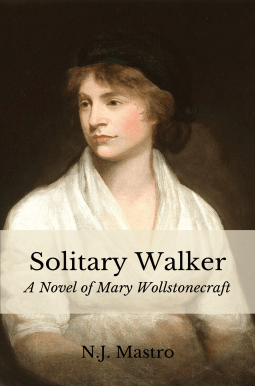
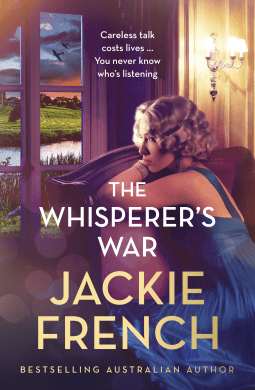
Nicci French The Last Days of Kira Mullan Simon & Schuster (Australia)|Simon & Schuster UK, January 2025.

Thank you, NetGalley, for providing me with this uncorrected proof for review.

I had just finished rereading Nicci French’s Frieda Klein series, and joy of joys, “The Last Days of Kira Mullan” became available. This book did not disappoint. Like the many Nicci French novels already published, this one also deserves the accolades they have garnered. “The Last days of Kira Mullan” reintroduces Detective Inspector Maud O’Connor from the earlier novel, “Has Anyone Seen Charlotte Salter?” However, before she arrives to investigate the Kira Mullan case anew, Nancy North’s story takes centre stage. This is an excellent device, reflecting a similar experience in the earlier novel where the detective also entered the narrative where the build-up gave Charlotte Salter’s story priority. At the same time, Maud O’Connor’s story moves forward, not only does she investigate but she makes a new friend and deals with old enemies.

Nancy North, would be restaurateur, has had a breakdown. Felix, her partner, is determined to care for her and ensure that there is no recurrence. Economic circumstances force them to move from their familiar flat and environment to a new area and into an inadequate and poorly located flat. The neighbours include a constantly crying baby, her young mother and overworked doctor husband, two male friends, and Kira Mullan. Next door is a similar house, which has remained intact, belonging to a mature married couple. Their superior economic situation creates an unequal power relationship with the flat dwellers despite fraternisation between them. See Books: Reviews for the complete review.

After the book review: Brief discussion of two books making a similar point on the way in which accusations of poor mental health can be used to diminish women’s autonomy – The Yellow Wallpaper and The Little House; Ethel Carrick | Anne Dangar at the NGA; American Politics: Joyce Vance, The Atlantic – Trump’s Sentencing Made No One Happy, Andrew Weissman’s podcast, Liz Cheney’s opinion; Lawrence O’Donnell interviews Neal Katyal and Andrew Weissmann; Huffington Post Commentary; London Activities in January.

The treatment of Nora North’s statements and evidence by her neighbors, police and her close friends reminded me of The Yellow Wallpaper by Frances Perkins Gilman. * In this story, a woman’s remedy, acknowledging her ability to decide upon her treatment for what is seen as her mentally unstable behaviour, is rejected. With the kindness exhibited by Felix, in The Last Days of Kira Mullan, the woman’s pleas are ignored by her husband. He, and her male doctors, know best. This woman finds her succour in writing, but she must do this in secret – her husband and doctors do not approve. The energy she must use to hide her writing becomes an important theme in the story. Her ennui is the inevitable outcome of the energy she must use to stave off madness in an environment where her word is nullified. The pressure of her male ‘supporters’ that she is incapable of choosing a beneficial lifestyle, makes it impossible for her to make that choice.

*There is a range of interpretations of the story advanced in Wikipedia that make interesting reading.

I found The Yellow Wallpaper and Herland by Charlotte Perkins Gilman on Amazon for 99p. Herland features in another book I shall be reviewing in a few weeks’ time, The Book Club for Troublesome Women.

The Little House Philippa Gregory, available on Amazon and secondhand – a great buy.

Philippa Gregory is more well known for her historical fiction. However, her earlier fiction is also well worth reading. The Little House, like The Yellow Wallpaper, and this week’s reviewed book, The Last Days of Kira Mullan, also looks at the impact of seeming kindness to obliterate a woman’s knowledge about herself and her abilities.

The little house is at the end of a road leading to the manor farm of yellow Bath stone. It is Ruth and Patrick’s, and later, Thomas’s house – or is it? Does it really belong to Elizabeth? Do Patrick and Thomas also belong to her? Just where does Ruth feature in the Cleary family?  Frederick, Elizabeth’s husband is sometimes shadowy, sometimes benign, at others the friend of powerful people who can control what happens to Ruth.

This story is one of control, the powerful people will only be brought to bear if Ruth does not adhere to the plans the Clearys have for her and Thomas. Central to these are Elizabeth’s friendly dismissal of Ruth’s abilities, thoughts and identity; Frederick and Patrick’s concurrence; and Ruth’s initial gratitude to the Clearys for providing her with a family. As an orphan with unacknowledged overwhelming grief, Ruth is easy fodder. At least until she rebels, accepts that she is in a fight for survival as Thomas’s mother, and acts.

Ruth is committed to psychiatric care, considered a blot on her character and ability, by the Clearys and used to continue their dismissal of her identity as an able, although struggling, new mother. Recognising that only dramatic action can change her situation, Ruth plans.

In this novel Ruth and the control exerted upon her, undermining her mental health, is the focus. This is like the situation in The Yellow Wallpaper. However, the result is dramatically different in Gregory’s hands. And very satisfying.

Ethel Carrick | Anne Dangar

Ethel Carrick, The quay, Milsons Point 1908, National Gallery of Australia, Kamberri/Canberra, purchased 1975.
7 Dec 2024 – 27 Apr 2025
Level 1, Gallery 12
Free

This summer, the National Gallery explores the lives and artistic legacies of Ethel Carrick and Anne Dangar.

Ethel Carrick was a gifted painter and colourist who was among the first artists to introduce a post-impressionist approach to Australia. An intrepid traveller, Carrick had a fascinating life and this retrospective brings new insights into her remarkable artistic legacy, nationally and internationally.

Anne Dangar places the artist at the forefront of modern art in Australia. Living in France, she worked and exhibited alongside European cubists as their artistic peer, all the while exerting an irrevocable influence on the course of Australian abstraction.

These simultaneous exhibitions are Know My Name projects, the National Gallery’s initiative celebrating the work of all women artists to enhance understanding of their contribution to Australia’s cultural life.

Listen to the audio tour through exhibitions Ethel Carrick and Anne Dangar, narrated by Katy Hessel.

Anne Dangar, Plate 1934 -1935, National Gallery of Australia, Kamberri/Canberra, Gift of Ruth Ainsworth 1998.

American Politics

Sentenced

Joyce Vance

Jan 11, 2025

And just like that, what was once thought to be impossible happened. Donald Trump was sentenced on the 34 counts of conviction against him in Manhattan.

There were no surprises. Trump did not demonstrate remorse like many defendants do at this point. He didn’t apologize for the harm he’d done or the worry he’d caused his family. But then, we did not expect him to. Instead, he painted himself as a victim of political lawfare.

Judge Juan Merchan imposed the sentence of unconditional discharge he had said he would impose. Trump signed off from the hearing a convicted felon. But, he was also a free man. Trump has no further obligations to the court—no sentence, no fine, no supervision.

The Judge’s decision to forego imprisonment, or even a fine, did not sit well with some people. And after years of watching Trump delay, twist, and outrun the legal system for the most part, it’s easy to understand why.

Trump outran the reach of the criminal justice system, both in the two federal cases against him and the Fulton County, Georgia, prosecution. There will be no jury verdict in a criminal prosecution of Donald Trump for January 6. That is an unescapable fact that leaves Americans wondering, rightly, what comes next in our system of justice, where everyday Americans must face a jury and judgment if they commit crimes and are indicted, while Trump avoids that outcome.

Against that backdrop, today’s sentencing hearing, as strange as this may sound, gives me hope more than it gives me pause. It leads me to believe the damage Donald Trump has done and will continue to do to our system can be repaired through individual acts of conscience and courage. Hear me out.

The system is severely stressed at the moment. But the fact that this sentencing took place at all and that Trump now stands as a convicted felon, something that should have happened as a matter of course but was far from certain in this case, is a testament to what we can reclaim. The Judge and prosecutors in court today were American heroes. They put themselves squarely in the sights of a very powerful man. Their sacrifice and willingness to stand up for the rule of law is something we should all honor. They acted with true courage. They refused to obey in advance.

“This defendant has caused enduring damage to the public perception of the criminal justice system,” said prosecutor Joshua Steinglass. “He thinks he is above the law and not responsible for his actions.”

But Steinglass went on to acknowledge reality; that Trump would be the president in a few days and that Americans deserved a president who took office without a tail of obligations resulting from a sentence in a criminal case. What would have been fair to impose of citizen Trump would have harmed a country about to be led by President Trump. It is the ultimate unfairness, but it is also reality. And so, the court did the best it could in a bad situation.

The sentencing might not have happened but for Judge Merchan’s decision to announce in advance that he would proceed with an unconditional discharge. The Supreme Court narrowly signed off on it, in a 5-4 vote where Chief Justice Roberts and Justice Barrett joined Justices Sotomayor, Kagan, and Jackson to deny Trump the result he wanted.

The five justices in the majority briefly explained Trump wasn’t entitled to postpone sentencing because his arguments could be addressed in the course of the appeal following sentencing (this is the process that applies to every other defendant) and that since Judge Merchan had already said he wouldn’t impose time in prison, any burden on “the President-Elect’s responsibilities” would be “relatively insubstantial.” Sentencing was on, the result a rare one in a Trump case that led to him being treated like other people. Trump got sentenced. He was not entirely above the law.

Now, Trump will take office in 10 days as a convicted felon. We should not gloss over how shocking it is to have a criminal for an American president. But it’s also a start. In the end, in this one case in Manhattan, Donald Trump was held accountable.

To those disappointed by the sentence, I’d encourage you to continue to consider the rationale. Insisting on a longer sentence would have meant there would be no sentencing at all based on what we know of the Supreme Court’s reasoning. First offenders convicted of similar crimes in New York don’t typically face jail time. The explanation for the sentence that Judge Merchan offered makes sense, even if its not the outcome people wanted: Trump got this treatment because of the office that the American people elected him to. It’s the office that merits these protections, not the man. The man was held accountable. The jury verdict that he continues to criticize was enforced.

As Judge Merchan said, “It is the legal protections afforded to the OFFICE of the president of the United States that are extraordinary, not the occupant of the office.” In an imperfect situation, men and women committed to the rule of law found a way to hold Donald Trump accountable when it would have been easier to give up. Ultimately the Judge did the right thing. He stood for the rule of law, and his fidelity will, perhaps, be viewed in the sweep of history as the first small step toward restoring it. Judge Merchan followed the law: He protected the presidency, but he held the man accountable. Donald Trump will walk up on the day of the inauguration and embark upon the presidency as a convicted felon.

Trump should, of course, have faced accountability before a jury for his conduct in regards to January 6 and for mishandling classified documents and lying about it. It’s a travesty that he didn’t. The Supreme Court has much to answer for. Those cases were not before Judge Merchan and he could not do anything about them. But he did do something about the case in front of him.

At a low point like this, it might be tempting to think that the rule of law is dead. That Donald Trump killed it. There is no doubt that the rule of law is battered, but this can still be a starting point; a low moment during which the only place we can permit ourselves to consider going is up. We will have to measure progress in imperfect, small steps. But making the effort is better than the alternative. Giving up is not an option.

If we abandon the rule of law and democracy because their weaknesses have been exposed, where does that lead? Autocracy is not a pretty place. When we look back years down the road, perhaps we’ll be able to see this as the moment that democracy got a jump start and that people began to find ways to solve the problems, even as Trump regained office. Perhaps it will be the case that Americans saw that decent people who act in a forthright manner in the face of corruption can make a difference, even if it’s a small one, and that what happened in a Manhattan courtroom gives people hope. We need that as we enter upon the second Trump presidency.

While we live through these moments, my heart remains with friends and family in Los Angeles. The other night, MSNBC host Lawrence O’Donnell, who also has Angeleno roots, said that everyone who is from Los Angeles, no matter where they are now, is living in Los Angeles again. My thoughts are with the people who are living through this tragedy. I know there are many of you among our readers at Civil Discourse, and I hope that as you can, you will let us hear from you and help us understand if there is anything we can do. Until then, we are here.

We’re in this together,

Joyce

Trump’s Sentencing Made No One Happy *

But it still mattered for the rule of law. By David A. Graham

Donald Trump, the first convicted felon to be elected president, was sentenced today in his New York hush-money case, pleasing virtually no one.

Justice Juan Merchan sentenced the president-elect to an unconditional discharge, meaning Trump will face no penalties other than the stigma of a conviction. Trump was furious that he was sentenced at all, and had mounted a campaign in the courts of law and public opinion to stop it. His critics won’t be happy with the sentence itself, which is less than a slap on the wrist.

This mutual unhappiness was perhaps the only point of agreement at the hearing in Manhattan. “This defendant has caused enduring damage to public perception of the criminal-justice system and has placed officers of the court in harm’s way,” the prosecutor Joshua Steinglass said. Trump, meanwhile, said the case had “been a tremendous setback” for the New York courts. “This has been a very terrible experience,” he said.

The fact that someone could commit the crimes that Trump has and still win a presidential election remains galling, but the difficulty of getting to this moment, and the ways the other criminal cases against him stalled out, shows how significant the sentencing is, even considering its leniency. Trump’s criminal trials have demonstrated that there is not equal justice for all, but there is some justice…* This is only the beginning of the article, but the point made already is significant.

Andrew Weissman’s opinion

I was unable to find Andrew Weismann’s opinion before posting this week. However, his podcast with Mary McCord will surely include this in the coming weeks. The podcast can be accessed through the renamed podcast, Main Justice. See below:

Jan. 9, 2025, 6:20 AM GMT+11

As the political landscape transforms and Donald Trump’s criminal cases wind down, MSNBC legal analysts Andrew Weissmann and Mary McCord shift focus to keep watch on the incoming president and how his Department of Justice will use the law to move his agenda forward. With this realignment comes a new name: Main Justice. In this episode, Andrew and Mary explain what Main Justice is before breaking down the barrage of incoming news, from Trump’s pending New York sentencing to his attempt to stop the public release of Special Counsel Jack Smith’s final report. They also give a taste of the broader scope they plan to cover, with analysis of Trump’s unusual filing in the Supreme Court, urging a pause in the TikTok ban until he takes office.

Lawrence O’Donnell MSNBC 14 January 2025

Neal Katyal and Andrew Weissmann, interviewed by Lawrence O’Donnell, gave excellent commentary on Jack Smith’s work, the outcome and the decision. There was also commentary on the response of one elector nominee (related to the fraudulent list of nominees for the Electoral College vote for the President) and that of the proposed Attorney General whose hearing will begin on the 15th of January 2025.

Liz Cheney’s Opinion

Republican former U.S. Rep. Liz Cheney, who served as vice chair of the House Select Committee on the January 6 Attack, on Tuesday cited the Special Counsel’s just-released, 174-page report on Donald Trump’s involvement with the January 6 insurrection, and his efforts to overturn the 2020 election, to deliver a prescient warning to members of the Senate. Starting today, the Senate begins confirmation hearings on the President-elect’s highly-controversial cabinet nominees. Focusing on Justice Department nominees, she warned Senators that those “compromised by personal loyalty to a tyrant” should not be confirmed.

Jack Smith, who resigned as Special Counsel on Friday ahead of the President-elect’s inauguration next week, emphasized in his report that there was sufficient evidence to warrant prosecuting Donald Trump. He also noted that if those cases had proceeded to a jury trial, the evidence was strong enough to secure convictions.

Smith wrote, “after conducting thorough investigations, I found that, with respect to both Mr. Trump’s unprecedented efforts to unlawfully retain power after losing the 2020 election and his unlawful retention of classified documents after leaving office, the [Principles of Federal Prosecution] compelled prosecution.”

READ MORE: LA Mayor a ‘Communist’ Alleges Fox News Host With Ties to Trump Nominee

Cheney says that Smith’s report makes clear that Trump’s nominees, specifically, Justice Department nominees, had anything to do with his efforts to overturn the election, they must not be confirmed by the Senate: “if those nominees cooperated with Trump’s deceit to overturn the 2020 election, they cannot now be entrusted with the responsibility to preserve the rule of law and protect our Republic.”

“The Special Counsel’s 1/6 Report,” her statement begins, “made public last night, confirms the unavoidable facts of 1/6 yet again. DOJ’s exhaustive and independent investigation reached the same essential conclusions as the Select Committee. All this DOJ evidence must be preserved.”

READ MORE: Senator Suggests Unusual Interpretation of ‘Advice and Consent’ Responsibility

“But most important now, as the Senate considers confirming Trump’s Justice Department nominees: if those nominees cooperated with Trump’s deceit to overturn the 2020 election, they cannot now be entrusted with the responsibility to preserve the rule of law and protect our Republic. As our framers knew, our institutions only hold when those in office are not compromised by personal loyalty to a tyrant.”

“So this question is now paramount for Republicans: Will you faithfully perform the duties the framers assigned to you and do what the Constitution requires? Or do you lack the courage?”

Sarah Longwell, a Republican and the publisher of The Bulwark, responded, writing: “This. Donald Trump has revealed how shallow the vast majority of the current GOP’s commitment is to the constitution and the American experiment. These confirmation hearings will be another inflection point for the few who claim they value their oath. I hope some rise to the occasion.”

Huffington Post Commentary on Jack Smith’s Report

Why Donald Trump Wasn’t Charged With Insurrection

Prosecutors had a mountain of evidence — but a series of key obstacles got in their way.

Brandi Buchman

By Brandi Buchman

Jan 14, 2025, 06:57 PM EST

It fully investigated and completely cleared so you think you are completely cleared because you committed no crime

What happened at the U.S. Capitol on Jan. 6, 2021, according to many of the nation’s courts and judges, was an insurrection by the very definition of the word. So why, at the end of a yearslong probe, did special counsel Jack Smith ultimately forgo charging Donald Trump with inciting one?

The answer was spelled out in Smith’s charging report to Attorney General Merrick Garland that went public on Tuesday. The report was an unambiguous presentation of why Trump’s alleged criminal effort to unlawfully retain power left prosecutors no choice but to charge him with four felonies. A federal judge (and Smith) only agreed to dismiss the case because Trump won the election in November and prosecutions against sitting presidents are against long-standing Justice Department policy.

Smith’s report could be the final word any prosecutor ever has on Trump and Jan. 6. However, if prosecutors or congressional lawmakers can convince courts (and each other) in the coming years that an existing five-year statute of limitations for federal cases isn’t on pause while Trump is president, then Smith’s report may not be the end of one story, but the beginning of another.

First, to understand where Smith ended up, a bit of history is necessary.

The Mile-High Road To Nowhere

In November 2023, Colorado District Court Judge Sarah Wallace ruled that Trump engaged in an insurrection against the Constitution in violation of Section III of the 14th Amendment.

The judge’s ruling stemmed from a lawsuit brought by six Republicans in Colorado and one unaffiliated voter who wished to remove Trump from the ballot ahead of the 2024 election. They argued that Trump’s remarks from the Washington Ellipse on Jan. 6, his alleged intimidation of voters and election and state officials, his failure to immediately call down the mob, and his alleged pressure campaign on then-Vice President Mike Pence to overturn the results of the 2020 election amounted to insurrectionary acts, and therefore his ouster from the ballot in Colorado was warranted.

The voters argued that while Trump may not have engaged in violence personally on Jan. 6, that element did not need to be proven in order for him to be disqualified from the ballot.

They claimed it was simpler than that, because Trump violated his oath to uphold and defend the Constitution and spent “three hours watching [the events] unfold on television without doing a single thing even though he was the most powerful person in the world,” a lawyer for the voters argued in court.

In her 2023 ruling, Wallace said she was convinced Trump had “engaged” in insurrection, based on the harrowing evidence and testimony she’d considered. But she could not disqualify him.

Disqualification hung on a persnickety distinction: Section III, or the insurrection clause, did not actually consider whether the president of the United States was considered an “officer” of the United States, Wallace found.

Section III of the 14th Amendment states: “No person shall be a Senator or Representative in Congress, or elector of President and Vice-President, or hold any office, civil or military, under the United States, or under any State, who, having previously taken an oath, as a member of Congress, or as an officer of the United States, or as a member of any State legislature, or as an executive or judicial officer of any State, to support the Constitution of the United States, shall have engaged in insurrection or rebellion against the same, or given aid or comfort to the enemies thereof. But Congress may, by a vote of two-thirds of each House, remove such disability.”

For “whatever reason,” Wallace wrote in her ruling, the drafters of the Constitution’s insurrection clause “did not intend to include a person who had only taken the presidential oath,” and it wasn’t for her court to decide what the drafters meant.

Trump fought the ruling all the way up to the Colorado Supreme Court, which ruled against him in December 2023. In a 4-3 decision, the state justices concluded that Trump was an officer of the United States, that he engaged in insurrection and that he must be removed from the ballot on those grounds. Trump appealed to the U.S. Supreme Court, and in March 2024 — one day before Super Tuesday primaries — the nation’s most powerful court ruled for the first time in its history on how to apply the insurrection clause.

They reversed the Colorado Supreme Court’s ruling and declared that Colorado’s secretary of state had no authority to remove Trump from the ballot. While states could disqualify a person from running for office or holding it, the insurrection clause was something Congress alone had the power to enforce or modify, the court ruled.

Trump’s lawyers recoiled at the notion that he could be charged with providing rioters “aid or comfort” because, his attorney Scott Gessler argued, not a single Jan. 6 rioter was charged under the Insurrection Act. The fact that more than a dozen people were charged (and later convicted) of seditious conspiracy, or plotting to stop the nation’s transfer of power, was not acknowledged by Trump’s defense.

As Smith alluded to in his final report, Trump’s regular defense of his conduct around Jan. 6 hinged on claims that his words at the Ellipse — where he called on his supporters to “fight” — were broadly protected under the First Amendment.

But there is a difference between speech and incitement, and Smith wrote Tuesday that while the special counsel’s office had “reasonable arguments to be made that Mr. Trump’s Ellipse Speech incited the violence at the Capitol on Jan. 6 and could satisfy the Supreme Court’s standard for ‘incitement’… particularly when the speech is viewed in context of Mr. Trump’s lengthy and deceitful voter fraud narrative that came before it,” there was never any “direct evidence” that prosecutors were able to develop proving an explicit admission or communication with co-conspirators.

To succeed in trying Trump for inciting an insurrection, they would have to prove subjective intent showing that Trump meant to cause the full range of violence that day.

With other, more “solid” charges available to prosecutors that would allow them to forgo clearing any “rigorous” hurdles for speech, dropping pursuit of the insurrection charge was the most legally sound choice.

Unprecedented, Unparalleled, Uncertain

Wallace and the Colorado Supreme Court have not been the only parties in the legal system to characterize Jan. 6 as an insurrection.

As Smith pointed out Tuesday, judges in several Jan. 6-related cases have described the attack on the Capitol as an insurrection. This happened even when the charges were misdemeanors and the individual’s conduct was in no way connected, or described as being connected, to part of a “rebellion.”

For example, when a Chicago police officer and his sister, Karol and Agnieszka Chwiesiuk, were headed to trial for Jan. 6 misdemeanor offenses, they asked a federal judge to quash any reference to an “insurrection” or being among “insurrectionists” during proceedings. The judge refused.

These were “accurate descriptors,” because “what occurred on Jan. 6, 2021, was in fact an insurrection and involved insurrectionists,” the judge wrote.

This also happened in the case of Jan. 6 rioter Sara Carpenter, a former New York police officer who, prosecutors said, ignored orders to leave the Capitol and at one point used a tambourine to slap away a police officer’s arm. She spent 30 minutes inside the Capitol building that day. When she emerged, tambourine in the air, she exclaimed: “The breach was made and it needs to calm down now. Congress needs to come out, they need to certify Trump as president, and this is our house.”

Smith noted that in Carpenter’s case, the judge made it plain when writing that “what occurred on Jan. 6 was in fact a riot and an insurrection and it did in fact involve a mob.”

But in these and other instances, the courts were never obligated to resolve how to define an insurrection under Section III.

Before even touching the question of whether Trump incited an insurrection, prosecutors at minimum needed guidance on exactly what proof is required to establish that an insurrection took place, and how to distinguish an insurrection from a riot.

The special counsel’s office didn’t have that.

Dictionary definitions of “insurrection” sometimes make a distinction between an insurrection and a “rout, riot, or offense connected with mob violence” when it features both an organized and armed uprising against the government, Smith wrote.

But doubt began to creep in when prosecutors considered the very limited amount of case law regarding insurrection in the U.S.

Some U.S. courts have already defined “insurrection” as something that occurs when it involves “overthrowing a sitting government, rather than maintaining power.”

This dynamic posed “another challenge to proving beyond a reasonable doubt that Mr. Trump’s conduct on Jan. 6 qualified as an insurrection given that he was sitting president at that time,” the report states.

There was not a single case, Smith said, in which a criminal defendant in America had been charged with attempting to overthrow the U.S. government from the inside.

Prior to Jan. 6, such attacks had only ever come from the outside.

According to Smith, applying incitement for insurrection in the context of Trump’s case “would have been a first, which further weighed against charging it, given the other charges available, even if there were reasonable arguments that it might apply.”

London Activities in January

Citra Sasmita, Act One (detail), 2024, from Into Eternal Land, The Curve, Barbican, 2025 © Citra Sasmita

This exhibition was made possible thanks to Lead Support from the Bagri Foundation, additional support from the MENAEA Collection, Kuala Lumpur, the Henry Moore Foundation, and Natasha Sidharta, as well as a residency in partnership with Delfina Foundation. 

In January 2025, Indonesian artist Citra Sasmita will transform The Curve for her first solo exhibition in the UK: a new commission titled Into Eternal Land. Working fluidly across painting, sculptural installation, embroidery and scent, Sasmita will invite visitors on a symbolic, multi-sensory journey through the 90-metre-long gallery to explore ideas of ancestral memory, ritual and migration.   

An interdisciplinary artist, Sasmita’s practice challenges fixed ideas in relation to gender roles, hierarchies of power, systems of oppression, and more. Her work refuses categorisation both in terms of materials and iconographies, questioning reductive, colonial conceptions of traditional Indonesian art and the historic marginalisation of craft traditions. Into Eternal Land speaks to universal and urgent concerns: connecting with ancestral traditions, grappling with the power and precarity of the natural world, and proposing the possibility of feminist resistance. 

Sasmita’s practice often engages with the Indonesian Kamasan painting technique. Dating from the fifteenth century, and traditionally practiced exclusively by men, Kamasan was used to narrate Hindu epics. Reclaiming this masculine practice, Sasmita is interested in dismantling misconceptions of Balinese culture and confronting its violent colonial past. Underpinning her work is a dedication to alternative narratives, particularly the experiences of women who have been fetishised, suppressed or erased. Reinventing inherited mythologies – from indigenous Indonesian histories to Dutch colonial narratives, to contemporary society – her protagonists are powerful women who populate a post-patriarchal world.    

For her Barbican commission Into Eternal Land, the artist draws inspiration from a rich range of sources. These include centuries-long histories of displacement and migration across the Indonesian archipelago, as well as the symbolism of heaven, earth and hell across cultures – from the story of Bhima Swarga crossing hell to save his parents, as recounted in the Balinese epic Mahabharata, to Dante’s Inferno and beyond.  

Panoramic scroll paintings – Sasmita’s reinterpretation of Kamasan paintings – unfurl along the curved walls of the gallery, depicting women undergoing transformation and reincarnation: becoming trees or bird spirits, emitting flaming auras, pouring forth water and blood. Shrine-like installations encircled by long braids of hair reference deep genealogies and memories held in the body, while paintings on python skin nod to rituals of sacrifice. Textiles hang from the ceiling like flags, conceived of as symbolic portals to another realm. They feature hybrid woman-plant beings, who hold powerful knowledge of herbal medicine. These works are made in collaboration with women artisans in west Bali, whose knowledge of this specific embroidery technique is in danger of disappearing. A mandala (circle) of ground turmeric serves as the focal point of the final chapter of the exhibition, offering a space for meditation. An ambient soundscape by Indonesian composer Agha Praditya Yogaswara offers a sonic response to Sasmita’s cosmologies.  

Citra Sasmita said: “Facing the majestic space of The Curve makes my heart tremble, but at the same time it invites me to explore possibilities that I had never imagined before. As a Balinese person, I believe in the ability to be embodied in space and time. The Curve has allowed me to present a ritual for the space itself, along with the cosmology and cultural roots that I bring from Bali. I am very much looking forward to how visitors will feel when they experience this exhibition.”

About Citra Sasmita 

Citra Sasmita (b. 1990, Bali, Indonesia) is a self-taught artist. She studied literature and physics, then worked as a short story illustrator for the Bali Post before she began developing her expanded artistic practice. Major group exhibitions include to carry, Sharjah Biennial (United Arab Emirates, forthcoming 2025); Precarious Joys, Toronto Biennial of Art (Canada, 2024); After Rain, Diriyah Contemporary Art Biennale (Saudi Arabia, 2024); Ten Thousand Suns, 24th Biennale of Sydney (Australia, 2024); Choreographies of the Impossible, 35th São Paulo Biennale (Brazil, 2023); The Open World, 3rd Thailand Biennale, Mae Fah Luang Art and Cultural Park, Chiang Rai (Thailand, 2023); Garden of Ten Seasons, Savvy Contemporary, Berlin (Germany, 2022); Kathmandu Triennale (Nepal, 2021-2022); ARTJOG MMXXII, Time To Wonder, Jogja National Museum, Yogyakarta (Indonesia, 2021); and the Biennale Yogyakarta (Indonesia, 2019). Solo shows include Atlas of Curiosity, Yeo Workshop (Singapore, 2023); Ode To The Sun, Yeo Workshop (Singapore, 2020); and Tales of Nowhere, Museum MACAN, Jakarta (Indonesia, 2020

Week beginning 8 January 2025

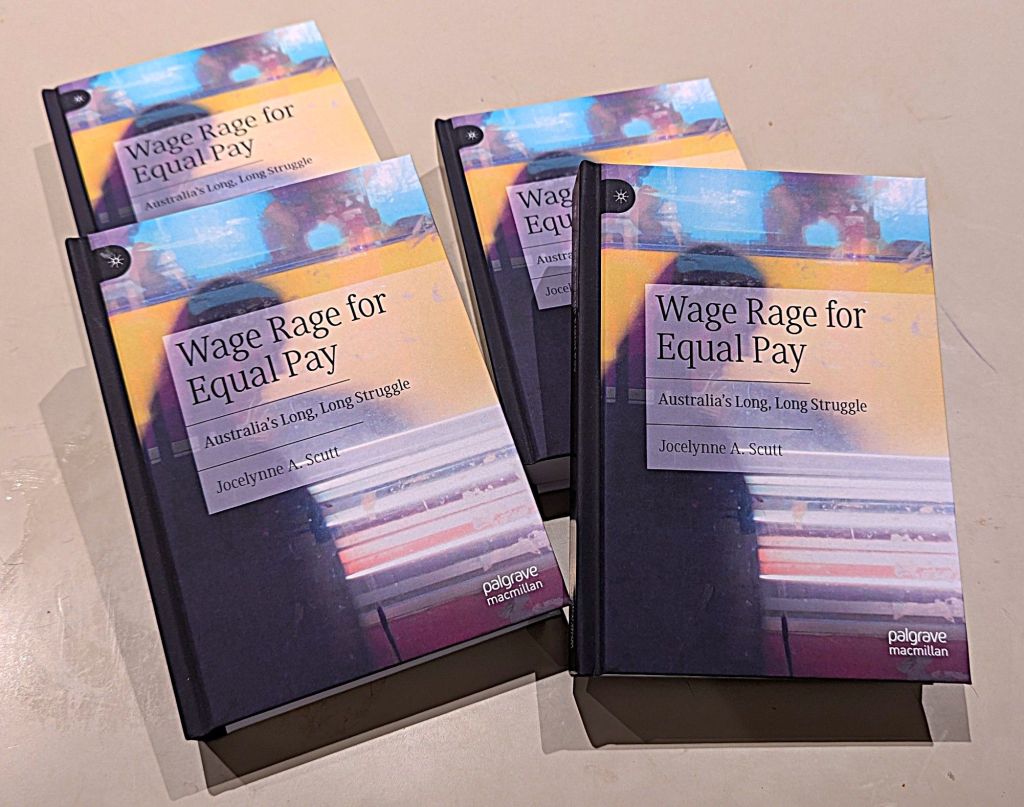
Elie Mystal Bad Law Ten Popular Laws That Are Ruining America The New Press, March 2025.

Thank you, NetGalley, for providing me with this uncorrected proof for review.

Elie Mystal does not disappoint in this fiercely passionate, but so cleverly analytical, exposure of the inherent inequality espoused in the ten laws he addresses in this volume. Some of Mystal’s language, as for the first of his books I read, Allow Me to Retort: A Black Guy’s Guide to the Constitution could possibly offend. But, how on earth can his language be more offensive than the laws he opens to scrutiny? Let us try to be fair at least in this small contribution to fairness amongst the appalling unfairness Mystal exposes and read with as open a mind as possible. There is plenty to offend, and it is certainly not Mystal and his arguments. He asserts that the facts he presents are correct – he has no problem with having a fact checker! He also acknowledges that this being so, that a reader who disagrees is doing so because of the conclusions he draws from the facts. Although this statement is made in the acknowledgements, I believe it is imperative that it forms part of this review and underpins the reading of this book. See Books: Reviews for the complete review.

Following articles: Louisa Anne Meredith; American Politics – The Daily -humorous quote, Raw Story articles -Jack Smith Report, Washington Post cartoon; The Danger of Miseducation, Jess Piper.

Hidden women of history: the Australian children’s author who captured the bush – before May Gibbs’ Australiana empire

Republished here under –

CC BY NDWe believe in the free flow of information
Republish our articles for free, online or in print, under Creative Commons licence.

Published: January 7, 2025 6.03am AEDT

Authors
  1. Lauren A. Weber Lecturer in Literature, Language and Literacy, University of Wollongong
  2. Sara Fernandes Lecturer in English and Theatre Studies, The University of Melbourne
Disclosure statement

The authors do not work for, consult, own shares in or receive funding from any company or organisation that would benefit from this article, and have disclosed no relevant affiliations beyond their academic appointment.

Partners: University of Melbourne provides funding as a founding partner of The Conversation AU; University of Wollongong provides funding as a member of The Conversation AU.

May Gibbs is a household name in Australia. Her most famous book, Tales of Snugglepot and Cuddlepie, published in 1918, has never been out of print. Chances are you have read her work, or had it read to you. You’ll almost certainly have seen her personified native flora illustrations, which these days adorn everything from tea towels to pyjamas.

But have you heard of her predecessor, Louisa Anne Meredith? Like Gibbs, who began to publish in the decades following Meredith’s death in 1895, she drew her literary inspiration from the Australian landscape and crafted her own “brand” in its image.

Unlike Gibbs, though, Meredith’s illustrations were naturalistic. She rendered native Australian flora and fauna as characters for children’s literature, arguably beginning this tradition. But she didn’t “cutesify” them, or give them human features.

As researchers, we believe Meredith’s work for children should be recognised today for its innovations in genre: blending science writing, travel writing, poetry, and fairy tale. It is also anchored in a desire to shape the Australian child into the ideal young colonialist, by framing the land as unoccupied and in need of European care and management.

Louisa Anne Meredith’s illustrations were naturalistic, unlike May Gibbs’. University of Melbourne
Dedicated to her craft

Louisa Anne Meredith (born Twamley in 1812) was an author and illustrator, born to a precariously middle-class family in Birmingham. Her father, Thomas Twamley, was a hard-working corn miller and dealer. Louisa’s mother (who shares her name) married him much to the dismay of her prominent family, the Merediths. They were descended from Welsh nobility.

At 22, Twamley’s first collection, Poems (1835), was positively received. English critic Leigh Hunt sang her praises in his 1837 poem, Blue-Stocking Revels, or The Feast of the Violets:

Then came young Twamley,
Nice sensitive thing,
Whose pen and whose pencil
give promise like spring.

By her mid-20s, Twamley had a handful of books in print under her maiden name, as well as a series of prints, sketches, paintings, colour plates and miniatures. She was entirely dedicated to her craft. Her fresh style of publishing original poems alongside accomplished naturalistic illustrations was something new.

Tasmanian life, for English readers

Twamley’s accomplishments were numerous by the time she married her maternal cousin, Charles Meredith. The couple emigrated to Australia in 1839. Meredith’s first book published from the colony, Notes and Sketches of New South Wales (1844), offered readers a “small fund of information on common every-day topics relating to these antipodean climes”. Louisa’s prose was accompanied by her original illustrations of colonial life.

By 1840, she settled in Tasmania and made the island her chief literary concern. She published a series of books depicting Tasmanian life, intended for readers there and back in England. In addition to her writing, Louisa was an active conservationist, as a member of the Society for the Prevention of Cruelty to Animals.

While Meredith is largely remembered for her botanical illustrations and travel writing, she was prolific as a children’s writer. She published a range of books for children set in Tasmania, created from her colonial perspective. Public knowledge of her contributions to Australian children’s literary history is scarce outside Tasmania.

Meredith’s writing for children includes Loved and Lost! The True Story of a Short Life (1860), Grandmamma’s Verse Book for Young Australia (1878), Tasmanian Friends and Foes, Feathered, Furred, and Finned (1880), and Waratah Rhymes for Young Australia (1891).

Her work found young readers in both Australia and England. Her writing often dramatises this connection. Waratah Rhymes, for example, features a dedication in which she signs off from London in 1891 “to the young Colonists of to-day”, inviting their “warm welcome”.

Meredith’s contribution to the history of Australian children’s literature rests in her desire to write an account of “island life” for the white Australian colonial child. On the one hand, she reconfigured familiar European genres, such as the adventure novel (she was a fan of Gulliver’s Travels) and fairy tale. On the other, her aesthetic was distinctively colonial, expressed through Tasmanian fauna and flora.

In these books, the settler child is positioned as inquisitor and mini colonialist. Their discovery of the landscape through fictional encounters positions them to craft the nation in their image.

They reflect the “recurring narratives of nation-building” identified by Goorie and Koori critic and poet, Evelyn Araluen, as typical of Australian children’s literature. Araluen actively dismantles those narratives in her Stella prize-winning collection, Dropbear.

‘Cutesifying the bush’ vs naturalism
Meredith’s illustrations for children are naturalist. University of Melbourne

There is a striking resemblance between the works and interests of Meredith and Gibbs, who was also a member of the Society for the Prevention of Cruelty to Animals. Yet there are also significant differences.

Meredith was interested in science. She wanted to render scientific concepts legible for young readers by, as she explained in Our Wild Flowers (1839), giving “a little pleasant information, without any difficult terms, or unexplained names”.

While Gibbs had her own successful career as a botanical illustrator, in her writing for children she concocted a magic formula for cutesifying the bush. Her style exemplifies what Araluen calls “intricate forms of kitsch”. Where Meredith’s illustrations for children take inspiration from naturalists such as John Gould, Gibbs puts bums on gumnuts and reins on seahorses.

Left: Meredith, Tasmanian Friends and Foes (2nd Ed. 1881); Right: Gibbs, Little Ragged Blossom (1920). State Library NSW

While their aesthetics are very different, the work of both Meredith and Gibbs reflects a settler-colonial view of the environment that aims to domesticate the bush and manage land.

Illustration by Lousia Anne Meredith. University of Melbourne

Meredith does this by importing the British-colonial apparatus of taxonomy, scientific vocabulary and botanical illustration, to order and explain a landscape perceived as being both wild and ripe for cultivation.

Many scholars, including Araluen, have argued Gibbs’ work embodies some of the worst aspects of colonisation. Her imagery and narrative, argues childhood researcher Joanne Faulkner, “reimagined the bush as a ‘home’ for colonizers, essentially ‘indigenising’ them in the image of white gumnut babies”.

These national emblems, embraced by many non-Indigenous Australians, were crafted on stolen land.

Exporting Australia’s children’s stories

In 1884, the Tasmanian government awarded Meredith a pension of £100 (the equivalent of around A$17,000 today) for “distinguished literary and artistic services” to the island.

Since Meredith, Australian children’s books and media have become lucrative exports. Typically, they sell an optimistic image of the sun-drenched “lucky country” to local and international audiences.

Meredith was cannily attuned to the importance of trading a desirable image of her colonial setting. She referenced Australia’s “sunny clime” and “fertile hill[s] and glade” in Waratah Rhymes.

May Gibbs was successful in marketing her work, now a merchandising empire. Perth Mint/AAP

Both Meredith and Gibbs were successful in the business of their writing, explicitly considering their work’s marketability. Meredith had her own monogram branding. She advertised the availability of Grandmama’s Verse Book for international distribution.

Gibbs commissioned a set of Gumnut Babies postcards, anticipating what would become a merchandising empire (the royalties support the works of The Northcott Society and Cerebral Palsy Alliance). It now includes crockery, bedspreads, plushies, pyjamas, stationery and more.

Last year, the Royal Society of Tasmania established the Louisa Anne Meredith Medal to be awarded every four years to a “person who excels in the field of arts or humanities, or both, with outstanding contributions evidenced by creative outputs”.

The Australian children’s literary market is just as internationally saleable as it was in Meredith’s time. Today, the global phenomenon of Bluey continues her legacy of charming children (and adults) around the world through personified Australian animals.

American Politics

From: The Daily

Republicans in Congress want guidance from Trump, but that is like asking your socks where your shoes are.

From: The Raw Story

David Badash, The New Civil Rights Movement

January 7, 2025 11:51AM ET

Special Counsel Jack Smith, set to leave his office before Donald Trump is sworn in as President in less than two weeks, has indicated that he will deliver his report to Attorney General Merrick Garland Tuesday afternoon. The two-volume report details the findings of his investigations into the now-President-elect, which resulted in felony charges against Trump. These charges stem from his alleged efforts to overturn the 2020 election, including his role in the January 6 insurrection, as well as the alleged unlawful removal and retention of highly classified documents from the White House.

By law, Special Counsels are required to send a report of their findings to the Attorney General. Even Trump Attorney General Bill Barr released a highly redacted version of the Mueller Report, although he did so after mischaracterizing the findings in a letter he published ahead of the release. (A federal judge later said the letter was a “distorted” and “misleading” account of Mueller’s report.)

Critics, including legal experts, are demanding Attorney General Garland release Smith’s report to the public.

“Follow the law, release the reports,” urged conservative Bill Kristol of The Bulwark. “Just as AG Garland released special counsel Hur’s report on Biden’s handling of classified documents, the AG should now release Weiss’s report on Hunter Biden and Smith’s report on Trump and Jan. 6, and Trump and classified documents.”

But Trump is in court attempting to block its release. Trump’s attorneys were allowed to review the draft report, and reportedly spent three days in Jack Smith’s office doing so, Politico reported.

How the groveling Washington Post got it so terribly wrong

D. Earl Stephens

January 5, 2025 11:10PM ET

How the groveling Washington Post got it so terribly wrong

Rough of Ann Telnaes’ cartoon killed by the Washington Post

On Thursday, October 25, 2024, I pronounced The Washington Post to be dead.

That was the day their wormy, billionaire owner, Jeff Bezos, crashed through the wall separating news from business — fact from fiction — and had his henchman in the newsroom pull an editorial that was set to run that weekend endorsing the person who didn’t lead an attempted coup, Kamala Harris, for president of the United States of America.

As I said in my piece:

Their failure to make this endorsement goes beyond a catastrophic lack of judgment, because we know they know that what they are doing is nothing but a gutless attempt to appease a would-be dictator, Trump.

On Friday, WaPo was at it again, and this time it cost them the services of Ann Telnaes, the newspaper’s Pulitzer Prize-winning editorial cartoonist, who said she was leaving the newspaper because it killed her cartoon (above) depicting Bezos of doing what he does best these days: falling at the fat, little feet of the despicable Trump.

Here’s how Telnaes put it on her Substack piece Friday night:

I’ve worked for the Washington Post since 2008 as an editorial cartoonist. I have had editorial feedback and productive conversations—and some differences—about cartoons I have submitted for publication, but in all that time I’ve never had a cartoon killed because of who or what I chose to aim my pen at. Until now.


The cartoon that was killed criticizes the billionaire tech and media chief executives who have been doing their best to curry favor with incoming President-elect Trump. There have been multiple articles recently about these men with lucrative government contracts and an interest in eliminating regulations making their way to Mar-a-lago. The group in the cartoon included Mark Zuckerberg/Facebook & Meta founder and CEO, Sam Altman/AI CEO, Patrick Soon-Shiong/LA Times publisher, the Walt Disney Company/ABC News, and Jeff Bezos/Washington Post owner.


While it isn’t uncommon for editorial page editors to object to visual metaphors within a cartoon if it strikes that editor as unclear or isn’t correctly conveying the message intended by the cartoonist, such editorial criticism was not the case regarding this cartoon. To be clear, there have been instances where sketches have been rejected or revisions requested, but never because of the point of view inherent in the cartoon’s commentary. That’s a game changer…and dangerous for a free press.

The Danger of Miseducation

Dylann Roof and January 6th

Jess Piper

Jan 08, 2025

In 2015, Dylann Roof murdered nine Black congregants at the Emanuel African Methodist Episcopal Church, in Charleston, South Carolina. Roof has never expressed remorse for the murders. He remains on death row in Terre Haute Federal Prison in Indiana.

Our nation asked the question then and now…why?

Here is an explanation from Ethan Kytle and Blain Roberts, the authors of Denmark Vesey’s Garden:

“Americans soon learned Roof’s flawed understanding of slavery, among other factors, fueled his racial hatred and attack. In his online manifesto, Roof claimed that ‘historical lies, exaggerations, and myths’ about how poorly African Americans had been treated under slavery are today being used to justify a black takeover of the United States.”

This is the radicalizing effect of misremembering history. Of disinformation. The terror and hate and death dealt by a young man turned conspiracy theorist turned white supremacist turned murderer.

I understand miseducation — I received one myself.

I grew up learning that the Civil War was fought because of “northern aggression.” It was the Lost Cause. Slavery was just a peculiar institution.

I don’t remember learning Black History in high school, but if it were taught, I imagine it a side note when we studied the Civil War. History was dominated by white men and I grew up hearing excuses for slavery.

Black folks were enslaved but don’t forget about white indentured servants.

The enslaved were taken care of by benevolent masters.

Black folks were content with their lot in life and happy to be in America.

I learned these things from the textbooks I studied.

We know some former slaveholders and their descendants worked to construct a romanticized memory of the antebellum South…they started writing their revisionist histories almost as soon as the ink was dry on the papers at Appomattox.

A major player in the whitewash movement was the United Daughters of the Confederacy. This group of Rebel apologists put up monuments to the Confederacy and wrote poisonous curriculum for public school children.

This is an actual description of the “benevolent Master” from a Georgia textbook from the 1950s:

As a rule the slaves were comfortably clothed, given an abundance of wholesome food, and kindly treated. Occasionally some hard-hearted master or bad-tempered mistress made the lot of their slaves a hard one, but such cases were not common.

Cruel masters and cruel mistresses were scorned then just as men and women who treat animals cruelly are now scorned. These slaves were brought into the colonies fresh from a savage life in Africa and in two or three generations were changed into respectable men and women. This fact shows, better than any words can, how prudently and how wisely slaves were managed.

Ah, the civilizing effects of brutality. Of manacles. Of beatings. Of family separation.

And did this textbook entry compare enslaved men and women and children to animals? Of course it did. The word “chattel” is defined as “moveable property” and shares a common origin with the word “cattle.”

Years ago, I worked in a building with a History teacher who taught students that slavery was just a part of the many causes of the Civil War.

This teacher talked about economics.

Yes, the Southern economics of free labor in the form of slavery.

This teacher talked about territorial expansion.

Yes, whether slavery would be expanded West.

This teacher talked about the election of Abraham Lincoln.

Yes, the election signaled the end of Southern rule and the beginning of secession in order to hold onto slavery.

Slavery. The Civil War was principally fought over slavery and watering it down, whitewashing the cause of the Civil War, has had devastating effects on students. That miseducation matters. Pseudohistory is dangerous.

And, it continues.

Yesterday was the four-year anniversary of the insurrection. The riot turned mob that stormed the US Capitol.

Most of us watched it live. Traitors pushed back the police line and beat officers with our flag and entered our Capitol to block our peaceful transfer of power.

Some of the insurrectionists broke into the Capitol with the intent of murdering lawmakers. They built gallows on our Capitol lawn.

I watched my own Senator raise a closed fist in solidarity with the mob.

We all watched it unfold. We have seen irrefutable evidence for years. We saw the worst of the offenders sent to prison and hundreds given probation.

We saw it happen. We know what happened. We can’t deny what happened.

And yet the January 6th apologists have already started to revise history. They started just days after the attack. Just like the United Daughters of the Confederacy. They need to revise history — it is a common theme among right-wing Christian nationalists. A common theme among traitors.

On #ThisDayInHistory in 2021, thousands of peaceful grandmothers gathered in Washington, D.C., to take a self-guided, albeit unauthorized, tour of the U.S. Capitol building. Earlier that day, President Trump held a rally, where supporters walked to the Capitol to peacefully protest the certification of the 2020 election. During this time, some individuals entered the Capitol, took photos, and explored the building before leaving. ~Mike Collins, (R, Georgia)

That is a bold-faced lie and Collins has repeated it often.

I was teaching on January 6, 2021. I couldn’t keep up with the attack minute by minute, but I checked the news during passing period. When the bell for 7th hour rang, my Department Chair walked down and said, “Turn on the news.”

I was horrified to see the smoke and people scaling the walls and the mob attacking the Capitol. I turned my computer off and taught the next 50 minutes trying to hold it together. I told my students that our Capitol was under attack and it looked like Americans were responsible.

That night, every teacher in my district received an email from our Superintendent. She instructed us not to talk about the insurrection the next day. I was enraged…were we just going to remain mute on an attack on democracy?

And here is something worse — the revisionists are already on school boards. A Kansas school board recently refused to adopt a teacher-created social studies curriculum because some on the board viewed the curriculum as biased and “anti-Trump.”

My god…

I find the similarities in revisionist history stunning. The same Confederate flag was carried by Dylann Roof and some of the insurrectionists on January 6th. It even feels like the same sort of people who revised history for the Civil War are revising the history of the insurrection.

Confederates turned MAGA.

Though it is very recent history, the insurrection revisionists are already seeing the fruits of their labor.

I have family members who claim the FBI and Antifa were responsible for the attack — that the friendly grandmas on a tourist visit had nothing to do with the mob. That January 6, 2021 was set up. That it was rigged to make Republicans and Trump look bad.

Dylann Roof pointed his angry miseducation at Black folks. He murdered the innocent in part because of his miseducation.

The next angry person will likely target Democrats. The revisionists on Capitol Hill are inspiring acts of violence against an entire party.

We are in the early days of the revisions. We still have time to stop the sane washing. The whitewashing. The lies.

The miseducation of a nation.

~Jess

The Emanuel Nine. May they rest in peace.

Clementa C. Pinckney

Cynthia Graham Hurd

Susie Jackson

Ethel Lee Lance

Depayne Middleton-Doctor

Tywanza Sanders

Daniel L. Simmons

Sharonda Coleman-Singleton

Myra Thompson

My name is Jess and I was a high school Literature teacher for 16 years until I decided to run as a Democrat in a rural, red district in Missouri. I bring you news and politics from Missouri and beyond from a rural progressive point of view.

Week beginning 1 January 2025

Angela Youngman The Dark Side of Jane Austen’s World Pen & Sword|Pen & Sword History, August 2024.

Thank you, NetGalley and Pen & Sword, for providing me with this uncorrected proof for review.

Angela Youngman’s detailed and absorbing exploration of Jane Austen’s world, through her own narratives and additional material, is a valuable read. Although Austen has portrayed the period faithfully in the novels, even if not in great depth, Youngman’s choice to research beyond an analysis of the novels provides authenticity to the work, adding valuable insights into Austen’s world. Written in an accessible style, with so many references to the novels we know, or would like to know more about, this work is a delight to add to the Pen & Sword publications that I appreciate.

Much of the dark side of the way in which women’s relationship to marriage and property differed from men’s can be gleaned from the novels. However, Youngman’s exploration of additional information not only supports the fiction but shows the stark adverse reality of primogeniture as it impacts the younger children in a family. She shows that where the sexism lies is in women’s poor chances of benefitting through primogeniture that favoured the male line, but also the lack of options available to them. No religious, military, or legal career was open to a woman. Her future was in marriage or, if a spinster, dependence on her male relatives, becoming a governess or a companion. Youngman’s references to coverture rely on legal material rather than the novels, one example of the additional sources used in this volume. Where adoptions are discussed, Youngman draws upon Austen’s family experience; she looks more widely when referring to marriage agreements. See Books: Reviews for the complete review.

Sarah C. Williams When Courage Calls: Josephine Butler and the Radical Pursuit of Justice for Women John Murray Press|Hodder  & Stoughton, September 2024. |

Thank you, NetGalley, for providing me with this uncorrected proof for review.

Reading the first three chapters raised a question for me – could I respond positively to this biography coming as I do from a feminist rather than theological perspective? For the emphasis on theological thought and Josephine and George’s religious commitment at this point in the book is vast. The feminist points that have been made, the couple’s commitment to an equal marriage and Josphine Butler’s disappointment that the Oxford thinkers she met were without any feminist understanding, are addressed only briefly. I persevered as I was particularly interested in Butler’s response to the Contagious Disease Act, an Act that really makes for thorough feminist thought and examination. *

Chapter 4, seeing justice, Liverpool, 1866-69, provides a welcome change. Highlighting the city’s features, combined with the couple’s professional life (George) and the life Josephine sought outside her family duties, widens the perspective of the biography. Josephine’s connection with the workhouse remains religious, but the move into recognising her language as different from that of other middle-class women who became involved with ‘fallen women’ is not only based in religion, but in feminist principles. She rejects the stereotype that places women into categories (moral and immoral) based on their sexuality. Significantly, she argues that the categorisation that placed some women into an impure category had its basis in neither religion nor science. From here she becomes actively involved with the Contagious Disease Acts, in place since 1864. See Books: Reviews for the complete review.

After the reviews: comment on fictional account related to the Contagious Disease Act; Singapore stopover; four days at the south coast; Are Young Men Really Becoming More Sexist?; Jimmy Carter; Portia Zvavahera Art Exhibition, Cambridge; Cambridge walk; Plays between air raids and songs in shelters: How cultural life is thriving in wartime Ukraine.

* The Contagious Disease Act, and the complications arising from grappling with its implications are debated in Stand We At Last, by Zoe Fairbairns. This is a feminist historical novel, set mainly in Britain, but with a long and informative period in Australia. It is on kindle, and also available second hand in paperback and hard cover. I cannot bear to let either of my paperbacks go as they have different covers. One as above, and the other more contemporary. The kindle version is with me whenever I want to reread when travelling.

A leafy stopover in Singapore on the way home

In the past the idea of a stopover has been anathema to me. I just want to get to London. Or, on my return, wonderful Canberra. However, I enjoyed this break in the flight, with an overnight at a hotel outside the airport, relying on a taxi ride, and returning on the hotel shuttle bus. The view from the hotel window was attractive, and there was a food market close by. Wandering around Changi Airport is a pleasant thing to do.

Four days at the south coast – as delightful as the Amalfi Coast

This was no Capri, Sorrento or Positano, or guide but the wonderful beaches, bushland, home cooked meals, and barbeque with delicious prawns and haloumi as well as the regular barbecue feast items were delightful. An attempt at making a pavlova with monk fruit for sweetening was not a total success, but it will be worked upon. In the meantime, covering it with plenty of fruit was an improvement. We began the family and friends’ jigsaw marathon with a panorama of the Grand Canal, Venice. This is where we spent two Christmases in the past, but a family Christmas at the coast cannot be equaled. This was a wonderful holiday as usual. The weather was hot and sunny most of the time, and the sea breeze very welcome also. The drive home was enhanced by a coffee at Batehaven bakery (and a takeaway cream bun reminiscent of Rottnest, and Cafe Nero in Glasgow) and a pie and milkshake at Bungendore Pie Shop. Now back to a diet …of sorts. The agapanthus in full bloom welcomed us home.

From The Atlantic, December 24, 2024.

Are Young Men Really Becoming More Sexist?

What the research says about the gender divide across the world By Jerusalem Demsas – Atlantic staff writer

It’s conventional wisdom that young people will be more progressive than their forebears. But although young people can often be counted upon to be more comfortable with risk and radicalism, that doesn’t mean they will always express that through left-leaning politics.

Young men may have helped hand President-Elect Donald Trump his victory, fueling the narrative about a growing gender gap among young voters. But this is not just an American trend. In South Korea, young men have been radicalized against feminism, opening up a large gender gap; in Poland, gender emerged “as a significant factor … with young men showing a strong preference” for the far-right political alliance; and in Belgium, the anti-immigrant and separatist Vlaams Belang party received significantly more support from young men than young women.

Could the Gen Z political gender gap be an international phenomenon?

Today’s episode of Good on Paper is with Dr. Alice Evans, a senior lecturer at Kings College London who is writing a book on the root causes of gender inequality across the world. Originally published in June, this episode helps untangle some of the reasons young men may be feeling disaffected and reacting differently than young women to macroeconomic and political trends.


The following is a transcript of the episode:

Jerusalem Demsas: Following the election, there have been many many arguments made about the growing gender gap between young men and young women. That women are more likely to vote for Democrats has been a consistent feature of my entire life, but this wasn’t always the case.

In the year 2000, the political scientists Ronald Inglehart and Pippa Norris released a paper establishing “gender differences in electoral behavior.” Basically, they showed that women had become a liberal force in small-d democratic politics.

That was a notable finding, because in the postwar era, women were, on average, seen as a more conservative electoral factor. Norris and Inglehart looked at more than 60 countries around the world and found that, from the early ’80s through the mid-’90s, women had been moving to the left of men throughout advanced industrial societies. They conclude that “given the process of generational turnover this promises to have profound consequences for the future of the gender cleavage, moving women further left.”

[Music]

My name’s Jerusalem Demsas, I’m a staff writer at The Atlantic, and this is Good on Paper, a policy show that questions what we really know about popular narratives.

While we’re waiting for the sort of definitive data that can help researchers untangle exactly which men were more likely to vote for Donald Trump and why, I wanted to revisit one of my favorite conversations of the year, with Dr. Alice Evans. Alice is a senior lecturer at King’s College London, whose newsletter, The Great Gender Divergence, has followed research and her own personal travels across the world to understand the root causes of gender inequality.

Trying to understand why it is that relations between young men and women seem so fraught can help us begin to understand the downstream political consequences of these cultural shifts.

Here’s our conversation, originally published back in June.

[Music]

Alice, welcome to the show.

Alice Evans: Thank you so much. It’s a real pleasure to talk to you because I think we corresponded for a long time, and this is a treat.

Demsas: Yes, yes. Twitter DM-to-podcast pipeline. I feel like that’s what we’re creating right here. So we’re here to talk about the divergence between young men and women’s political views, particularly on sexism. But before we get into that, I just want to ask you: What determines whether someone is sexist? What determines whether they hold sexist beliefs?

Evans: Wow, okay, big question. So, I think, generally, the entire of human history has been incredibly patriarchal. So to answer that question, I need to explain the origins of patriarchy. For thousands and thousands of years, our culture has vilified, blamed disobedient, naughty women. You know, they were witches. They were terrible people. A woman who was disobedient or who wasn’t a virgin was shamed and ostracized. So there is a long history. Sexism is nothing new. And actually over the 20th century, much of the world — Latin America, North America, Europe, and East Asia — have become rapidly more gender equal. So in terms of human history, the big story is the rise of gender equality in much of the world. But certainly sexism persists, and we do see in Europe, in South Korea, in China, in North America, young men expressing what we call hostile sexism. Now, it’s worth distinguishing between hostile sexism and benevolent sexism.

So let’s suppose I’m a patriarch in a conservative society, and I think Women are incompetent, and we don’t want to ruin their little heads, and they can’t take care of these things, so I’ll manage these things for the women who just don’t know any better. So that’s benevolent sexism. Hostile sexism is a sense of resentment of women’s gains. So when we ask questions like, women’s rights are expanding at the expense of men, or women are getting these handouts, or men are the ones who are discriminated against. It’s a sense of resentment, the thing that feminism has gone too far, that women are getting all these perks, and so you know, every day as a woman, I wake up with a free fruit basket, right?

Demsas: Wait, I didn’t get mine this morning. I’ll have to check in.

Evans: Yeah, exactly. But this is a real, I think—so I’ve done interviews across the U. S., in Chicago and Stanford and in Montgomery, in California, in New Haven, in New York, in Toronto, in Poland, in Warsaw, in Krakow, in Barcelona, in London. And a lot of young men do feel this sense of resentment. And you can understand it. If you feel that life is hard, if you feel that you’re struggling to get ahead—so we know as college enrollment increases, it’s become really, really hard to make it into a top college place.

Demsas: Let’s step back for a second, This question, though, that I have is, you’re raising this question of young men feeling this resentment. Are young men becoming more sexist? Is that what you’re seeing in the data?

Evans: I think it depends on how we phrase it. So, in terms of, yes, young men are much more likely to say, Yes, women could work, they can go out to clubs, they can do whatever they like, they can be totally free, and young men will support and vote for female leaders. So in terms of support for recognizing women’s capabilities, absolutely, younger generations tend to be much more gender equal, and that holds across the board. The only exceptions are places like North Africa, the Middle East, and South Asia where there’s no difference between young men and their grandfathers. But in culturally liberal economically developed countries in the West and East, young men are more supportive. But, sorry, I should have been more clear, they do express this hostile sexism, so this sense of resentment that women’s rights are coming at men’s expense. But that’s not all men, right? And so it’s only a small fraction of young men. You know, many young men are very, very progressive and they’ll vote for Hillary Clinton, et cetera.

Demsas: I just want to drill down into what exactly we’re talking about, right? Because I think most people know there’s a gender gap between men and women, and let’s start in the American context here. People know that with Trump—you have almost 60 percent of women are supporting Biden, while a majority of men back Trump.What’s actually happening here in the U. S. context that’s new, that’s interesting, that’s driving this conversation?

Evans: It’s difficult to know why people do stuff, so everything I say is speculative. What I’m trying to do is when I look at the data, I try to understand, you know, what are structural trends affecting one particular generation that distinct from other generations and why would it be happening in particular parts of the world and not others? So here are three big structural drivers that I’m not a hundred percent sure about, but I would suggest them as likely hypotheses. One is that men care about status. Everyone cares about status. Big examples of status goods include getting a great place at university, being able to afford a nice house, and also having a beautiful girlfriend. Those three things—good education because that matters for signaling for credentials; good place to live; and a pretty, pretty wife or girlfriend—those are your three status goods. Each of those three things has become much, much harder to get. So if we look, as university enrollment rises, as it has, it becomes much harder to get to the top, to get to the Ivy League, right? So only a small percentage of people will get to the top, but those getting to the Ivy League is so important for future networks. Meanwhile, those who don’t even have bachelor’s degrees will really struggle to get higher wages. So one is that men are struggling to get those top university places, which are important for jobs. Then on top of that, housing has become much more expensive. And the gap between wages and house prices has massively increased. Especially if you don’t have inherited wealth. So for the guy whose parents were not rich, it becomes so much harder to get onto the property ladder. So it’s especially hard for these young men to get status. Now, a third and really important factor is that it’s become harder to get girlfriends. So as societies become more culturally liberal, open minded, and tolerant, women are no longer shamed, derided, and ostracized for being single without a boyfriend. You know, in previous decades or centuries —

Demsas: I don’t know. Some women are, some women are. See the full ( very long, and provocative) transcript at Television, Film and Popular Culture: Comments.

Former President Jimmy Carter has passed away, and the way that Carter led his life both before his presidency and after is a role model for every American.

The Daily <politicususa@substack.com> 
Sarah Jones & Jason Easley Dec 30

The Daily is a newsletter written by ordinary people for ordinary people. Please support our work by becoming a subscriber.

Jimmy Carter’s Legacy Is So Much More Than The Presidency

James Earl Carter was a person of deep Christian faith. He was one of the few presidents who lived his life guided by that faith. To detail Jimmy Carter’s political accomplishments would be a disservice to the man and his life.

The biggest impacts that Carter had on his country and the world aren’t measured by legislative or foreign policy accomplishments. Carter will always be politically remembered for the Iran Hostage Crisis that ended up consuming and ending his presidency, but Carter may have saved the nation by winning the presidency itself.

Jimmy Carter won the first presidential election after the foundation-shaking Watergate scandal. The nation had yet to find its footing as Gerald Ford served out the rest of Richard Nixon’s second term.

Ford’s pardon of Richard Nixon tainted his presidency. In 1976, America needed someone who would restore stability and faith in the presidency, and Jimmy Carter did exactly that.

Carter’s presidency did not go the way that he would have wanted, but instead of fading into ex-presidential obscurity, Jimmy Carter became the most prominent ex-president in the world.

Carter strived endlessly for peace and lived his values by building homes for the needy well into his 90s through Habitat For Humanity.

Jimmy Carter got something that most one-term presidents don’t get. Carter became more respected and beloved after his presidency than he was while in office.

The Current Decent President Remembers Jimmy Carter

The only president comparable to Carter in terms of decency is the current president. Joe Biden, and First Lady Jill Biden said in a statement after President Carter’s passing:

Today, America and the world lost an extraordinary leader, statesman and humanitarian.

Over six decades, we had the honor of calling Jimmy Carter a dear friend. But, what’s extraordinary about Jimmy Carter, though, is that millions of people throughout America and the world who never met him thought of him as a dear friend as well.

With his compassion and moral clarity, he worked to eradicate disease, forge peace, advance civil rights and human rights, promote free and fair elections, house the homeless, and always advocate for the least among us. He saved, lifted, and changed the lives of people all across the globe.

Art Exhibition in Cambridge

Portia Zvavahera’s paintings are quite disturbing in it concept and execution. However, the exhibition was certainly worth a look and gave rise to a great deal of thought, although it was a bit too heavy for discussion.

A peaceful walk after the exhibition!

Edited article from CNN (some photographs have been omitted)

This article reflects some of the mindset and activities discussed in Anton Rippon, Nicola Rippon Wartime Entertainment How Britain Kept Smiling Through the Second World War, reviewed in my blog on October 16, 2024.

Plays between air raids and songs in shelters: How cultural life is thriving in wartime Ukraine

By Svitlana Vlasova, CNN, published 12:01 AM EST, Sun December 29, 2024

Since the Ivan Franko Drama Theater reopened six months after Russia's full-scale invasion, it has staged more than 1,500 performances, attended by more than half a million spectators.

Since the Ivan Franko Drama Theater reopened six months after Russia’s full-scale invasion, it has staged more than 1,500 performances, attended by more than half a million spectators. Yulia Weber/Ivan Franko Drama Theatre, Kyiv, CNN — 

Olha Mesheryakova doesn’t know what the next year will bring for her life in the capital of war-torn Ukraine, for her family or her business. She is confident, however, that in 2025 she will attend a dozen performances in the theaters of Kyiv. The thought gives her a sense of hope.

“This creates a certain expectation, gives a kind of structure, great support at a time when the world around me has gone crazy, and I know exactly what I’m going to do on December 23, for example, because I bought tickets in the summer. Honestly, it gives me hope and faith in the future. It’s some kind of magic,” said Mesheryakova, an entrepreneur.

She is far from alone in her passion for theater. To get tickets to a popular performance, she, along with thousands of other Ukrainians, has to hunt for them months in advance.

On a blacked-out street in the center of Kyiv in mid-December, cars move slowly, as hundreds of people descend on the small, historic building of the Ivan Franko National Academic Drama Theater, located just a few hundred meters below the presidential residence.

Since the theater reopened six months after the start of Russia’s full-scale invasion in 2022, it has been packed almost every day.

Over that time, the theater itself, its actors and its audience have changed. Its director, Yevhen Nyshchuk, volunteered in the military in 2022, as did many of his colleagues. For example, all three actors who played the main roles in “Three Comrades,” adapted from the post-World War I novel by the German writer Erich Maria Remarque, ended up at the front and were able to return to the stage only a year later.

“Remarque sounded completely different. The reality of the war, which has already affected everyone, has changed us. I felt the audience had changed its perception of the theater, had more appetite for it, for this exchange of energy,” Nyshchuk, also an actor, told CNN.

Theater director and actor Yevhen Nyshchuk volunteered in the military in 2022, as did many of his colleagues. He often addresses the audience before performances to thank them for their commitment.

Theater director and actor Yevhen Nyshchuk volunteered in the military in 2022, as did many of his colleagues. He often addresses the audience before performances to thank them for their commitment. Yulia Weber/Ivan Franko Drama Theatre

Nyshchuk felt this altered appreciation for Remarque’s writing so keenly in part because he and his colleagues continued to serve in the Armed Forces. To perform the plays, they received permission from their command to take short leaves.

Since the war began, the Ivan Franko Drama Theater has staged more than 1,500 performances attended by more than half a million spectators. Seventeen plays have been premiered. One of them is “The Witch of Konotop,” a mystical play that explores themes of love and power. Tickets were sold out in minutes for the entire run and many Ukrainians have joined a waitlist for any that become available.

Its director, Ivan Uryvskyi, said he was astonished by the play’s success and the influx of new theater-goers.

“Thousands, tens of thousands of spectators wanting to be at the theater. I can’t find an explanation for this,” he told CNN. Full houses and sold-out performances are typical at most of Kyiv’s theaters, according to their websites and e-ticket services.

Uryvskyi says not all come to the theater to escape from the sad reality of war. It is often the opposite.

“Someone needs to plunge into the present day and understand themselves. And he/she doesn’t need to go to a comedy, they don’t need to be distracted. He needs some serious dialogue. Maybe he needs to cry it out in the theater,” said Urivskyi.

Even if people want to escape from the war, they often cannot, as performances are regularly interrupted by air raid sirens. The audience has to leave the theater building and take shelter at the nearest metro station. If the danger passes within an hour, the performance resumes. Otherwise, the show continues on another day.

Both new plays and those that have been in the theater’s repertoire for years get loud applause from the audience.

“When people applaud for 10 to 20 minutes, they give some part of their applause to the artists for the performance, and looking at each other they give another part to themselves, for the fact that, for example, today everyone survived a missile attack of more than 120 missiles and more than 100 drones, and in the evening they came to the performance, which was not canceled,” Nyshchuk said.

The Ukrainian book store Sens, which opened earlier this year, offers more than 57,000 books as well as a café and an event space.

The Ukrainian book store Sens, which opened earlier this year, offers more than 57,000 books as well as a café and an event space. Sens Bookstore

A thriving book scene

The number of bookstores in Ukraine has increased from 200 pre-war to almost 500 now. The largest of them, Sens, opened on Kyiv’s main street in the midst of the war. Offering over 57,000 books, it is crowded at any time of the day and says it had more than half a million customers this year. The store’s event plan is scheduled for months in advance.

For its founder, Oleksiy Erinchak, the launch of such a large-scale project in wartime seemed logical. He began the war as the owner of a small bookstore, opened on the eve of the invasion. It became a volunteer hub in the first months of the conflict and grew so popular that Erinchak started thinking about a new, larger space. Meanwhile, the book market and the needs of the audience had changed due to the impact of the war.

“(A) book is the most convenient way to spend time during the war when it is impossible to predict anything. Many people have switched to the Ukrainian language (from Russian). They are trying to understand what it means to be Ukrainian. And books make it much easier to do that,” Erinchak told CNN.

According to the Ukrainian Book Institute, the number of adult Ukrainians reading books every day has doubled during the war to 16%.

“Maybe it’s just war, or stress, and a person just hides under the covers, under the bed, opens a book and travels to other worlds to get away from it all. Or not traveling to other worlds, but delving deeper to understand why did this happen in our lifetime? And books actually have many answers, and you can feel them, understand them, and feel better,” Erinchak explained.

He argues that the current popularity of books should be maintained in the future.

“Local culture always flourishes during wartime… If people are bringing money to the Ukrainian bookstore, it means that we need to invest this money further in Ukrainian books, in Ukrainian culture,” he said, which in turn will help build resilience to future potential Russian disinformation. “We need to build this foundation in our book and cultural sphere as strongly as possible and build a semantic shield around it, a dome so that it would be much more difficult for others to break in and influence the minds of Ukrainians.”

A few songs before the end of an anniversary concert this fall by one of the most popular Ukrainian bands, Okean Elzy, an air raid was announced in Kyiv.

Part of the audience went down to the subway to take shelter, joined by the band. There, on the subway stairs, the performance resumed, with a speaker instead of a professional sound system, with only guitars – and hundreds of voices singing along to every hit.

“Okean Elzy’s 30th-anniversary concerts are a mirror of our history. We have been together for 30 years: at big concerts and in shelters, in stadiums and in dugouts… But it’s not the place that matters, it’s our togetherness,” the band later posted on their Instagram account.

In the almost three years since the full-scale invasion, Okean Elzy’s frontman Svyatoslav Vakarchuk has performed more than 300 concerts for the military, including at positions near the front lines. In some videos posted on the band’s social media pages, what sounds like artillery fire can be heard while Vakarchuk sings for the military. Okean Elzy has donated almost 280 million UAH ($6.7 million) to the Defence Forces of Ukraine, a spokesperson for the band said.

The Ivan Franko Drama Theater also regularly organizes charity performances and says it has already raised more than $1.2 million for the Armed Forces. Additionally, it offers its stage to troupes that have lost their theaters to Russian occupation or can no longer perform in them due to adverse security conditions.

“The Witch of Konotop,” which premiered in April 2023, became one of the most popular theater performances in Ukraine.

“The Witch of Konotop,” which premiered in April 2023, became one of the most popular theater performances in Ukraine. Yulia Weber/Ivan Franko Drama Theatre

The vibrant cultural life in cities to the rear contrasts with the situation in the frontline areas of Ukraine, where Russia keeps seizing territory.

Yegor Firsov, a chief sergeant who has been fighting against the Russians since 2022, says he is generally sympathetic to an active cultural life, even if some of those on the front lines may be fighting in “real hell.”

“When it comes to women and children, I and my brothers-in-arms, and everyone, supports it,” he told CNN. “Because people are distracted from stress and in such difficult times they want to experience something genuine, and bookshops and theaters are about the real thing, about life.”

And on those rare days when Firsov manages to come to Kyiv from the front, he too goes to concerts.

“Culture is a part of our lives, it is both about war and partly about leisure, because even we, military men, need mental healing, need to be distracted, to be resilient.”

Week beginning 25 December 2024.

Diana Wilkinson The Girl in the Window Boldwood Books, December 2024.

Thank you, NetGalley, for providing me with this uncorrected proof for review.

I was disappointed in this novel, despite some clever writing and twists.

Starting with those, the way in which the main character, Izzie, moves between watching her husband, using her column to investigate his and others’ motivations together with an attempt to unravel the truth is absorbing. The way in which Izzie demands truth and explanations from those she investigates but persists in maintaining her own silence and lies is an excellent insight into her character as well as those from whom she makes such demands. The way in which the various characters were exposed as innocent or guilty, contrary to Izzie’s assumptions (or what we think are her assumptions) is clever. However, I found Izzie quite unappealing, and none of the other characters is particularly engaging. The continual references to Izzie’s angst about her past, although that past was horrendous, dragged. Overall, the writing was not engaging enough to sustain the rather long-drawn-out narrative. See Books: Reviews for the complete review.

After the review: Gender Institute event; John Marsden – obituary and commentary on the two schools he founded; Cindy Lou eats in Canberra and Cambridge; American Cable Television suffers after the Presidential Election; Cambridge – Castle Mound; Cambridge Black Creatives Art Exhibition.

Gender Institute Signature Event
‘Taking back our stories’: Talking about Indigenous Women’s Family History Research Thursday 6 February 2025, 5-6.30pm

This panel explores opportunities and barriers for Indigenous women to ‘take back’ their stories. It will consider issues of archival access; barriers to Indigenous family history; the limits of academic history practices and the importance of Indigenous family history for individuals, families, communities and nation-building. This discussion will be led by Aunty Dr Judi Wickes and Dr Kath Apma Penangke Travis, with contributions from program convenor Dr Beth Marsden, collaborator Professor Kat Ellinghaus and participants in the Research Centre for Deep History Indigenous Family History Research Residency. 
Register here

Newswire – John Marsden

Legendary Australian author dies aged 74

Story by Blake Antrobus

The award-winning author published more than 40 books – including the best-selling Tomorrow series, which chronicled a fictional invasion and occupation of Australia.

The young adult series has been described as “the best series for Australian teens of all time”, selling millions of copies and sparking a successful movie and TV series.

Legendary Australian author dies aged 74

The Tomorrow books have become a staple of Australian libraries and young adult reading.

Businessman Simon Holmes a Court paid tribute to Mr Marsden in a touching post on X (formerly Twitter).

“He was one of the standout teachers through my schooling — in many ways similar to the character of John Keating in Dead Poets Society,” Mr Holmes a Court wrote.

“His 1st book So Much to Tell You was based on my year group — many identifiable characters. A gift to our year!

“Complex man, but I’m so glad to have crossed paths.”

Letters from the Inside by John Marsden is one of the most devastating books I have read. Of a more optimistic bent, and a fascinating read is Take Risks, reviewed in my blog of December 22, 2021. The following article is about the schools that Marsden founded and are described in Take Risks.

After ‘surviving’ negative experiences in the classroom, author John Marsden founded his own school to try to improve the system

Story by Judd Boaz and Sarah Lawrence

John Marsden was an acclaimed author who turned his talents to teaching. (ABC News: Dave May)

When interviewed by the ABC about the schools he spent the last decades of his life building, author John Marsden shared some insights into his hiring policies.

“I didn’t want teachers whose main interest in life was the colour of their next dishwasher,” he said. Marsden hoped to find staff who had lived life to the fullest and were as passionate about teaching young people as he was.

The Victorian author had dropped out of three different university courses before finding teaching, a calling he said he fell in love with almost immediately.

Marsden’s passion for education stemmed from his own difficult experiences at school.

“I got in trouble all the time,” Marsden said of his time at The King’s School in Sydney during the 1960s.

“I found it a pretty tough experience and it took all my survival skills to get through the years I had there.”

Sarah Mayor Cox is a literacy expert and long-time friend of John Marsden, and said the author’s own experiences at school drove him to provide a better environment for his students. See Further Commentary and Articles arising from Books* and continued longer articles as noted in the blog.

Cindy Lou indulges in Canberra

Oliver Brown

Oliver Brown’s chocolate drinks are a marvellous indulgence – they are generous, delicious, and a reasonable price. The cake display was tempting, but for us the drinks were enough. Our young chocolate lover was also unable to finish his hot chocolate, and some of the freshly cooked churros had to be taken away. The staff were delightful.

Ginger and Spice

This is a terrific Chinese restaurant, with lunch specials and a splendid menu. The service is pleasant, the food generous and delicious, and it is adjacent to the Gungalin tram spot. We had a lunch special of sweet and sour chicken (note that the large portion of chicken is partly hidden by the rice) and cumin beef, and from the menu the smaller portion of fried rice and some wonderful prawns with a garlic sauce, served with vegetables. One of the fortune cookies was particularly appreciated!

Cindy Lou Eats in Cambridge

Namaste Village

A new find in Castle Street, Namaste Village, is an excellent Indian vegetarian restaurant. The street food in particular was excellent – generous, delicious and delightfully different.

Stir

Stir is a lively coffee place on Chesterton Road. It has indoor and outdoor seating, pleasant service and a range of breakfast and brunch items, as well as pastries and coffee. It can be quite noisy, but the outdoor tables when the weather is fine, are usually available – some people must like the noise inside.

The poached eggs were nicely cooked, the beans (to a special recipe) delicious, and the chili jam a hit.

American Cable Television suffers after the Presidential Election

This is an interesting report on the cable television programs that, until the American Presidential election I watched. Clearly, I am not alone.

The idea that MSNBC is being arrogant, and incorrect, with its suggestion that viewers will return is at odds with the comment in the article that 2016 saw the same result after Hillary Clinton lost to Donald Trump. Certainly, viewers have expressed their disdain for Joe Scarborough and Mika Brzezinski visiting Trump. Others have defended them, one stating ‘We are traumatized by the loss’ (of the Presidential Election to Donald Trump). These discussions have raised a debate about whether people such as Mika Brzezinski and Joe Scarborough (they are joined by others on the show, some presenting, and others as MSNBC analysts of law, policy and business matters) are journalists or ‘just’ presenters…or commentators? I shall be interested to see whether there is some analysis of why viewers have left the shows, and the debate about journalists/presenters.

Morning Joe Hits Record Low Ratings, But MSNBC Thinks Viewers Will Be Back

MSNBC and its flagship shows Morning Joe and The Rachel Maddow Show are struggling through record. low ratings, but MSNBC thinks viewers will be back after Trump’s inauguration – Sarah Jones & Jason Eastley, December 18.

MSNBC And Morning Joe’s Woes Continue

There has been a change in the political media landscape since Election Day 2024. Viewers have fled MSNBC and CNN, and so far, they have not come back. The hosts of Morning Joe made the situation even worse by going to Mar-a-Lago and making nice with Donald Trump.

This act was viewed as a betrayal by many MSNBC viewers who have expressed themselves by not watching the morning show.

The result has been record-low ratings for the morning show.

MSNBC’s other flagship brand, The Rachel Maddow Show, has also experienced its own record-low ratings. Some Maddow viewers have expressed on social media that they can’t stomach Maddow’s tendency toward negativity in her storytelling.

If anyone thought that this experience would teach MSNBC and other corporate media not to take their audiences for granted, the network does not seem to be getting the message.

The Independent reported:

At the same time, MSNBC executives feel that the network’s loyal viewers will return after the sting of Kamala Harris’ loss fades away and Democratic anger over Trump’s policies grows. This happened in 2016 when MSNBC’s audience fell by 41 percent immediately after Hillary Clinton’s loss, only for the channel to experience a sustained “resistance” surge in 2017 after Trump took office.

“A post-election dip in viewership was always projected and internal thinking is that it will pick up in the New Year, post-inauguration,” a network source told The Independent.

See also Raw Story <newsletter@m.rawstory.com> for coverage of American politics.

Cambridge

The last part of our trip was spent having a lovely break in Cambridge where we caught up with family and friends. Having lived in Cambridge for over 6 months, and returning there on each trip to the UK, it is a joy to walk into the city, visit familiar cafes, and find new ones, have a sandwich at John Lewis (and recharge our phones at their convenient stations) and visit art galleries. On this occasion we visited Kettle’s Yard on Castle Street, and I was thrilled to be at a private viewing of a project for experienced artists and aspiring artists. This was held at a very familiar spot, near Garden Walk, in which I canvassed for the British Labour Party for several years while in the UK.

A walk up Castle Mound

This is a lovely walk, and only possible because two Labour Councillors, the late Claire Richards and Jocelynne Scutt fought to save it from a misguided attempt to sell it. Unfortunately, the County Council chambers in the distance were not saved. Cambridge is in the far distance.

Nov 15, 2019 · Labour County Councillors Jocelynne Scutt and Claire Richards have stepped up their campaign to have Castle Mound registered as a town green and save it for future generations of local residents and visitors to the city.

Private Viewing – Cambridge Black Creatives

This “unique arts group [supports] black creative people in Cambridge. We are creating a transformational space for art making and honest discussion on racial issues.” Reclaiming Narrative pamphlet.

Below, in the top row: Sandra Scott- Untitled, Fabric painting, quilting and applique; Selena Scott – Bajan Man, German’s Boy and The Thinker.

http://www.cambridgeblackcreatives.co.uk

More on Cambridge next week – another art gallery and another lovely, but not so politically important, walk around this lovely city.

Week beginning 18 December 2024

Margaret Ann Spence Cold War in a Hot Kitchen Wakefield Press, September 2024.

Thank you NetGalley for providing me with this uncorrected proof for review.

Cold War in a Hot Kitchen is a special read from beginning to end. It is a social history; a commentary on a sometimes unique, at others familiar, domestic life; a magic blend of feminism and loyalty to family beyond shared ideology; and a fascinating story of gold mining in Australia. With its references to Ballarat and Bendigo gold fields, to those in Western Australia, the story of management and miners, company houses and Indigenous communities, a truly Australian story emerges. With its broad sweep over world events that drew Margaret Ann Spence as a child into debates, or quiet thoughtful speculation and the Spence family move from Australia to different cultural, social and political environments the autobiographical features of this eminently readable book, almost merge into the fictional devices of ‘a good yarn’. Written in the most engaging style, in language that is almost musical at times, a strong story of robust characters in a history replete with social commentary emerges. See Books: Reviews for the complete review.

After the book review: Heather Cox Richardson – Obama speech; Duchess of Malfi; Oedipus; Iran: hijab ‘treatment clinics’ echo historical use of mental illness to control women

Heather Cox Richardson Letters from an American: Barack Obama Speech

<heathercoxrichardson@substack.com> 

On Thursday, December 5, in Chicago, Illinois, former president Barack Obama gave the third in an annual series of lectures he has delivered since 2022 at his foundation’s Democracy Forum, which gathers experts, leaders, and young people to explore ways to safeguard democracy through community action.

Taken together, these lectures are a historical and philosophical exploration of the weaknesses of twenty-first century democracy as well as a road map of directions, some new and some old, for democracy’s defense. In 2022, Obama explored ways to counteract the flood of disinformation swamping a shared reality for decision making; in 2023 he discussed ways to address the extraordinary concentration of wealth that has undermined support for democracy globally.

On Thursday, Obama explored the concept of “pluralism,” a word he defined as meaning simply that “in a democracy, we all have to find a way to live alongside individuals and groups who are different than us.”

But rather than advocating what he called “holding hands and singing ‘Kumbaya’” as we all tolerate each other, Obama described modern pluralism as active work to form coalitions over shared issues. His argument echoed the concepts James Madison, a key framer of the Constitution, explained in Federalist #10 when he was trying to convince inhabitants of a big, diverse country that they should endorse the newly written document.

In 1787, many inhabitants of the fledgling nation objected to the idea of the strong national government proposed under the new constitution. They worried that such a government could fall under the control of a majority that would exercise its power to crush the rights of the minority. Madison agreed that such a calamity was likely in a small country, but argued that the very size and diversity of the people in the proposed United States would guard against such tyranny as people formed coalitions over one issue or another, then dissolved them and formed others. Such constantly shifting coalitions would serve the good of all Americans without forging a permanent powerful majority.

Obama called the Constitution “a rulebook for practicing pluralism.” The Bill of Rights gives us a series of rights that allow us to try to convince others to form coalitions to elect representatives who will “negotiate and compromise and hopefully advance our interests.”

Majority rule determines who wins, but the separation of powers and an independent judiciary are supposed to guarantee that the winners “don’t overreach to try to permanently entrench themselves or violate minority rights,” he said. The losers accept the outcome so long as they know they’ll have a chance to win the next time.

Obama noted that this system worked smoothly after World War II, largely because a booming economy meant rising standards of living that eased friction between different groups: management and labor, industry and agriculture. At the same time, the Cold War helped Americans come together against an external threat, and a limited range of popular culture reinforced a shared perspective on the world—everyone watched the sitcom Gilligan’s Island.

Most of all, though, Obama noted, American pluralism worked well because it largely excluded women and racial, gender, and religious minorities. He pointed out that as late as 2005, when he went to the Senate, he was the only African American there and only the third since Reconstruction. There were two Latinos and fourteen women.

In the 1960s, he noted drily, “things got more complicated.” “[H]istorically marginalized groups—Blacks, Latinos, Asians, Native Americans; women and gays and lesbians; and disabled Americans—demanded a seat at the table. Not only did they insist on a fair share of government-directed resources, but they brought with them new issues, born of their unique experiences that could not just be resolved by just giving them a bigger slice of the pie. So racial minorities insisted that the government intervene more deeply in the private sector and civil society to root out long-standing, systemic discrimination.”

Women wanted control over their own bodies, and gays and lesbians demanded equality before the law, challenging religious and social norms. “[P]olitics,” Obama said, “wasn’t just a fight about tax rates or roads anymore. It was about more fundamental issues that went to the core of our being and how we expected society to structure itself. Issues of identity and status and gender. Issues of family, values, and faith…. [A] lot of people…began to feel that their way of life, the American way of life, was under attack” just as increasing economic inequality made them think that other people were benefiting at their expense.

Increasingly, that economic inequality cloistered people in their own bubbles as unions, churches, and civic institutions decayed. “[W]ith the Cold War over, with generations scarred by Vietnam and Iraq and a media landscape that would shatter into a million disparate voices,” he said, Americans lost the sense of “a common national story or a common national purpose.” Media companies have played to extremes, and “[e]very election becomes an act of mortal combat.”

With that sense, there is “an increasing willingness on the part of politicians and their followers to violate democratic norms, to do anything they can to get their way, to use the power of the state to target critics and journalists and political rivals, and to even resort to violence in order to gain and hold on to power.”

For all that he was speaking in 2024, Obama could have been describing the realization of the fears of those opposed to the Constitution in 1787.

But he did not agree that those anti-Federalists had won the debate. Instead, he adapted Madison’s theory of pluralism to the modern era. Obama stood firm on the idea that the way to reclaim democracy is to build coalitions around taking action on issues that matter to the American people without regard to personal identities or political affiliations. Pluralism, Obama said, “is about recognizing that in a democracy, power comes from forging alliances, and building coalitions, and making room in those coalitions not only for the woke but also for the waking.”

And that, in many ways, identified the elephant—or rather the donkey—in the room. In the 2024 election, the Democratic Party under Vice President Kamala Harris and Minnesota governor Tim Walz very deliberately moved away from so-called identity politics: the idea that a person builds their political orientation around their pre-existing social identity. During the campaign, Harris rarely referred to the fact that if elected, she would be the first woman, as well as the first woman of color, to hold the presidency: when attendees at the Democratic National Convention wore white in honor of the suffragists, Harris wore black.

Instead, Harris and Walz embraced investing in the middle class and supporting small businesses. But that shift to the center did not translate into a presidential victory in 2024, and those on the political left, as well as progressive Democrats, are not convinced it was a good move.

Since the rise of Donald Trump, the MAGA party has been the one championing identity politics, rejecting American pluralism in favor of centering whiteness, a certain kind of individualist masculinity, Christianity, and misogyny. Making common cause with Republicans, even non-MAGA Republicans, in the face of such politics seems to the left and progressive Democrats self-defeating.

Obama disagrees. “[I]t’s understandable that people who have been oppressed or marginalized want to tell their stories and give voice fully to their experiences—to not have to hold back and censor themselves, especially because so many of them have been silenced in the past,” he said, “But too often, focusing on our differences leads to this notion of fixed victims and fixed villains.”

He stood firm against compromising core principles but said: “In order to build lasting majorities that support justice—not just for feeling good, not just for getting along, to deliver the goods—we have to be open to framing our issues, our causes, what we believe in in terms of ‘we’ and not just ‘us’ and ‘them.’”

And he emphasized that such cooperation works best when it’s about action, rather than just words, because action requires that people invest themselves in a common project. “It won’t eradicate people’s prejudices, but it will remind people that they don’t have to agree on everything to at least agree on some things. And that there are some things we cannot do alone.” “It’s about agency and relationships.”

Then Obama addressed the political crisis of this moment, the one the anti-Federalists feared: “What happens when the other side has repeatedly and abundantly made clear they’re not interested in playing by the rules?” When that happens, he said, “pluralism does not call for us” to accept it. “[W]e have to stand firm and speak out and organize and mobilize as forcefully as we can.” Even then, though, “it’s important to look for allies in unlikely places,” he said, noting that “people on the other side…may share our beliefs in sticking to the rules, observing norms,” and that supporting them might help them “to exert influence on people they’ve got relationships with within the other party.”

The power of pluralism, he said, is that it can make people recognize their common experiences and common values. That, he said, is how we break the cycle of cynicism in our politics.

Obama’s argument has already drawn criticism. At MSNBC, Ben Burgis condemned Obama’s “centrist liberalism” as inadequate to address the real problems of inequality and warned that his political approach is outdated.

But it is striking how much Obama’s embrace of pluralism echoes that of James Madison, who had in his lifetime witnessed a group of wildly diverse colonists talk, write letters, argue, and organize to forge themselves into a movement that could throw off the age-old system of monarchy in favor of creating something altogether new.

Notes:

https://avalon.law.yale.edu/18th_century/fed10.asp

https://www.obama.org/democracy-forum-2024/president-obama-remarks/

https://www.msnbc.com/opinion/msnbc-opinion/barack-obama-democracy-forum-speech-trump-era-rcna183127

https://barackobama.medium.com/my-remarks-at-the-2023-democracy-forum-32609c7ec237

https://barackobama.medium.com/my-remarks-on-disinformation-at-stanford-7d7af7ba28af

Back to London

The Trafalgar Theatre was close to where we were staying in London, and so an easy walk to see The Duchess of Malfi – something I read many years ago but had not seen staged. Like this reviewer I had mixed feelings about the production. However, how ever mixed the execution, the theme was clear and achingly familiar. A novel I recently read for review and the second act of this play in which every effort is made to send a woman mad, using her intelligence and refusal to succumb to norms as enunciated by her brothers, as well as incarcerate her are reminiscent of The Yellow Wallpaper by Charlotte Perkins Gilman, first published in 1892. Also, see article from The Conversation below.

The Duchess [of Malfi] at Trafalgar Theatre review: it’s thrilling to see Jodie Whittaker back on stage

This updating of John Webster’s brutal Jacobean tragedy is uneven but comes together in the second half.

Marc Brenner

Nick Curtis @nickcurtis 17 October 2024

Review at a glance

Jodie Whittaker makes a bold return to the stage after 12 years away, in Zinnie Harris’s uneven updating of John Webster’s brutal Jacobean tragedy. It’s an overblown peach of a role for the star of Doctor Who and Broadchurch, packed with passion, grandeur, and the gamut of life from birth to death. But Harris’s adaptation only comes into its own in the second half. Throughout the first, I wondered what the point was.

Harris, who also directs – bad move – keeps the bones of the story: a noble widow secretly marries her servant and has children by him. She is ruthlessly persecuted for this “sin” against the family name (and fortune) then killed by her brothers; one of them her twin Ferdinand, who then goes mad; the other a Cardinal who also kills his own mistress.

But she ditches Webster’s macabre poetry and shifts the action to round about the 1950s – though neither the mannered language nor the setting of her version feels evocative of any particular era. Tom Piper’s set of white metal gantries and grilles looks like something knocked up for a touring production of Prisoner: Cell Block H. The message is that patriarchal violence, often driven by a fear of female agency and desire, is eternal. Ditto, religious hypocrisy.

But man, it’s a mess at the start. Characters are introduced by fuzzy captions, bursts of static and reverberating swamp guitar chords played by a white-clad musician who sometimes strolls through the action.

Harris goes out of her way to make the steward Antonio (Joel Fry) a meek, mousy contrast to his imperious lover, here named Giovanna after the original’s historical source. “’Consummate’, what’s that?” he says after their covert marriage. “F*** each other’s brains out,” she replies.

Hannah Visocchi, Jodie Whittaker, Flor Gandra-Lobina and Matti Houghton in The Duchess [of Malfi] Marc Brenner

Rory Fleck Byrne as Ferdinand, meanwhile, is psychotically over the top from the get-go, making explicit the incestuous undertones in Webster. Paul Ready is enjoyably loathsome as the cardinal, propositioning Elizabeth Ayodele’s supplicant Julia when she’s kneeling in prayer. Jude Owusu is impressive as henchman Bosola but lumbered with acres of verbiage.

It all comes together in the horrific, absurd second half where the indomitable Duchess is psychologically tortured in scenes that recall Abu Ghraib abuses. Whittaker exudes battered nobility as she declares Webster’s famous line: “I am the Duchess of Malfi still.”

Oedipus, deservedly, received a different reception, both from the critics and me. I have seen many fine adaptations. However, this production of Oedipus cannot be surpassed. It was stunning. The review below is interesting, in that I take issue with the reviewer’s concern that at first the ‘dusting of contemporary relevance seems too heavy’. Perhaps being a political junkie has its compensations at times like this – I loved these scenes.

Oedipus at Wyndham’s Theatre review: Mark Strong and Lesley Manville are spellbinding in this wrenchingly tense Greek tragedy

Strong is superb and surely there’s no better actress working today than Manville.

Manuel Harlan

Oedipus play Mark Strong Lesley Manville at Wyndham’s Theatre

Nick Curtis @nickcurtis16 October 2024

Review at a glance

Lesley Manville and Mark Strong are spellbinding in Robert Icke’s wrenchingly tense reworking of Sophocles’ Greek tragedy. Here Oedipus is an insurgent political wunderkind, a bit Macron and a bit Obama. His promise to govern openly and honestly opens up the worst possible cache of family secrets, from patricide to incest.

Strong’s smart, passionate, utterly believable relationship with the luminous Manville as his older wife Jocasta roots the unravelling suspense as a rear-stage digital clock ticks down to Oedipus’s election victory.

A fine supporting cast, and the familiar Icke tools of dialogue that sounds both antique and modern, and a dislocating soundtrack, are used to brilliant effect. At the risk of blurting out the worst-kept spoiler in theatre history, this show is mother**in’ good.

At first, Icke’s dusting of contemporary relevance seems too heavy. We see Oedipus on screen amid placard-waving admirers, calling out fake news and promising to publish his birth certificate. Then the curtain rises and we’re plunged into the credible milieu of a nervously excited campaign headquarters.Manuel Harlan

Oedipus play Mark Strong Lesley Manville

Oedipus is surprised by soothsayer Tiresias, here imagined as a blind, homeless savant, and takes it out on his campaign manager, Creon (Michael Gould), Jocasta’s brother.

A bit unfair. But then, Oedipus’s father is dying and his mother Merope (magisterial June Watson) has something vital to impart that he doesn’t have time to hear. Then his and Jocasta’s boisterous adult children burst in and we’re engulfed in the reality of a tight, fraught family about to enter the political spotlight.

Strong has superb pacing and physical awareness, his lithe, shaven-headed form switching from loose daddish warmth to vulpine alertness and stricken anguish in a heartbeat. And surely there is no finer actress working today than Manville, who’s excelled at the Royal Court, National Theatre and Royal Shakespeare Company, and conquered Hollywood (The Phantom Thread), British sitcom (Mum) and lockdown binge-watch (Sherwood).

Icke provides a devastating speech for Manville’s Jocasta about her first husband Laius that makes sense of the tragedy’s troubling timeline. Her performance of this is as profound as the physical intimacy she brings to her relationship with Strong’s Oedipus, and her sardonic asides as both a wife and a mother.

As in his previous free adaptations of plays by the Greeks and Chekhov, Icke invokes a sense of the past in a vivid contemporary milieu: his Shakespeare productions stick to the original text.

Daanika Kamal

Lecturer in Law, Royal Holloway University of London

Iran: hijab ‘treatment clinics’ echo historical use of mental illness to control women

Published: December 11, 2024 4.34am AEDT in The Conversation, and republished here under –

The opening of a “hijab removal treatment clinic” to “offer scientific and psychological treatment” for Iranian women who refuse to wear a hijab was announced in November.

There is international concern about what will happen at these centres. The news follows reports suggesting that women protesters are being tortured and forcibly medicated in state-run psychiatric services.

The moves by the Iranian authorities come shortly after student Ahou Daryaei walked onto the street in her underwear as an act of protest after being assaulted by state forces enforcing Iran’s hijab laws.

In response, the spokesperson for the university where Daryaei is studying posted on X (formerly Twitter) saying that she had a “mental disorder”, and news reports said that she had been taken to a psychiatric ward.

In Iran, the mandatory hijab law has been a contentious point of resistance ever since the Islamic Revolution in 1978. But it has become much more widespread in the past two years after the killing of Mahsa Amini, who was arrested by the morality police for not wearing a hijab correctly, and died in custody.

Women have been at the forefront of this resistance, engaging in protests as part of the Woman, Life, Freedom movement. It has called for the abolition of compulsory hijab laws and an end to gender-based oppression.

But rather than acknowledging these acts as legitimate political protests, the Iranian state has increasingly sought to frame them as symptoms of individual mental illness.


In 2023, three actresses, Afsaneh Bayegan, Azadeh Samadi and Leila Bolukat, were arrested for appearing in public without the hijab. Iranian judges labelled them as “mentally ill” and imposed a sentence which required them to attend bi-weekly psychological counselling sessions.

In another instance, a protester, Roya Zakeri, was taken to a psychiatric hospital in Tabriz after footage emerged of her shouting “death to the dictator” when harassed for not wearing a hijab. After being released on bail, she posted a video to say that “the Islamic Republic has tried to portray me as mentally ill; I am in complete physical and mental health”.Many women have protested against being forced to wear the hijab in Iran.

The political use of psychiatry is not uncommon, but rather part of a broader historical strategy employed by repressive states to counter dissent.

In the Soviet Union, up to a third of political dissidents were arbitrarily branded as suffering from “sluggish schizophrenia” and incarcerated in psychiatric hospitals.

And in China, political nonconformists and activists were subjected to psychological evaluations by police officers and then forcibly detained in “special” psychiatric hospitals in the 1990s. (Some suggest that these tactics continue today).


The specific misuse of psychiatry to “treat” those women who challenge the system, however, is particularly relevant. It echoes feminist concerns about how psychiatry has labelled certain behaviour by women as mental illnesses throughout history. It has also unfairly categorised them as “mad women”.

In my research, I argue that labelling women who challenge accepted ways of doing things as “mad” is a form of control. This strategy pressures women to conform to certain sets of expectations of how women “should” behave.

Controlling women who fail to comply

In Iran, the hijab is not simply about modesty or religious observance. It is about women’s compliance to traditional roles. Women who reject the hijab are seen as rejecting these, and, by extension, rejecting the authority of the state. In response, the state reframes that rejection not as an act of civil disobedience but as a form of psychological instability.

Women’s choice to not wear a headscarf is presented to the public as a symptom of mental illness, such as an “antisocial personality disorder”“histrionic disorder” or “bipolar disorder”.

Legal scholar Amita Dhanda describes this as “psychologising”. This is a technique through which dissent is converted from a protest against society, to a reaction that originates solely from the dissenter’s troubled mind. This shifts the underlying problem – and the legitimacy of that dissent – away from being about the institution or society to being about the individual.

Iran’s reframing of women’s protests as manifestations of mental illness is an attempt to switch focus away from the issues that prompted those acts, such as the hijab laws, portraying them instead as “mad” women in need of correction.

The implications are immense. When women’s protests are dismissed as symptoms of mental illness, it reinforces patriarchal values as well as structures and laws that seek to maintain control over women’s bodies and voices.

Framing women as “mad” and sending them to “hijab removal treatment clinics” not only attempts to undermine the power of those that protest and the legitimacy of their political and social grievances, but also perpetuates the same systems of oppression that Iranian women seek to dismantle.

Literature Cambridge Summer Course 2025

Dear Friends,

Virginia Woolf: Writing Life – 5-day summer course 2025

We are really looking forward to our summer course in July 2025. This will run twice; first, live online, 10-14 July 2025.

The course will run again in person in Cambridge, 20-25 July 2025.

We will study 5 novels

Mrs Dalloway (1925)
To the Lighthouse (1927)
Orlando (1928)
The Waves (1931)
Flush (1933)

Plus talks on the life writings Leonard Woolf, Leslie Stephen, Jane Harrison, and more, and readings from Woolf’s writings.

Visits

In Cambridge, we will visit Newnham College (est. 1871) and Trinity Hall (est. 1350), with a talk and tour of both colleges.

Further details on our website

Virginia Woolf: Writing Life. Live Online summer course 2025
Virginia Woolf: Writing Life. Summer course in Cambridge 2025

Blog posts

You can read accounts of our summer courses on our Blog page.

I do hope you can join us.

Best wishes,

Trudi

 —


Dr Trudi Tate

Director, Literature Cambridge Ltd
www.literaturecambridge.co.uk

Cindy Lou eats at Briscola

It was great to return to Briscola after the success it turned out to be when chosen by chance. On that early occasion, we were seated promptly, the menu was good, with pastas, risottos and courses of meat and fish; attractive entrees; and lovely desserts. The service was slow, and this was replicated this time, with less excuse as we had an early seating. On the other hand, the food is worth the wait and the service if slow, is pleasant. The atmosphere is vibrant, rather noisy in fact, but there is outdoor seating which would be quieter.

We chose to have only main courses, and this was quite enough as they are generous as well as being flavoursome. The two fish dishes, barramundi – one with a tomato sauce and the other with pesto, were excellent. The chicken and prawns looked delicious and was pronounced as not too spicey – I shall choose it next time. The beef ragu had a generous sauce and the pasta was nicely cooked.

Week beginning 11 December 2024

Minette Walters The Players Allen & Unwin, October 2024.

Thank you, NetGalley, for providing me with this uncorrected proof for review.

Minette Walters has moved beyond the familiar historical fiction featuring the fight for power in court circles, to giving one such person a life outside the court where he meets and pursues a woman whose intelligence, and physical disability would make her eminently unsuited to the superficial life at court. Beginning with the Duke of Monmouth’s attempt to take the throne, the spying and intrigue as well as the blood stained, and tragic warfare enacted in his name Walters propels the reader into the familiar. However, with the introduction of Althea Ettrick the story moves into unique territory which gives the novel an exciting alternative to the established history. See Books: Reviews for the complete review.

A find worth pursuing if you like spy thrillers

The first two Ava Glass books appeared on Book Bub initially and were so good I bought the third at full price!

From the blurb: ‘Ava Glass is a former crime reporter and civil servant. Her time working for the government introduced her to the world of spies, and she’s been fascinated by them ever since…’

Ava Glass – The Chase, The Trap and The Traitor

Spy thrillers

A new find

Emma Makepeace is the spy who dominates the narrative but leaves space for the character development of her co-protagonists and those they pursue. She works for an unnamed agency, with Russian spies in Britian as its main target. Charles Ripley is her mentor and boss. The Chase features Emma’s fraught journey across London with the son of spies who does not want to be saved. Four Russian scientists under the protection of the British government have already been murdered. Dimitri and Elena Primalov are seen as the key to why the murders have taken place, are assumed to be under threat, and plans are in place to send them to safety. Mikhail Primalov, their son and a successful doctor, objects to leaving his life behind. Emma must persuade him to do so and get him to safety. The chase across London is thrilling, breathtaking at times, and an insight into Emma’s work, the heartbreak of leaving a known life behind, and the challenges faced by both spy and the man she is bound to protect.

The Traitor begins with fear – an exhausted computer numbers analyst is coming to a conclusion that will provide valuable information to British intelligence. Emma Makepeace must find out why he was murdered and catch those responsible. At the same time, she must outwit a traitor.

The Trap has an Edinburgh setting, the location for a meeting of the Group of Seven Summit. It begins with some excellent coverage of what the G7 is, and its impact on the city and international relations, cleverly establishing the novel at the same time as providing readers with the information they might need to understand events. A new character is introduced, a police officer Kate Mackenzie. The expansion of the narrative to include a partner for Emma is clever way of developing her character, as well as highlighting more of the intricacies of her work.

After the book reviews: Naples; CNN – Democracy is hard; Women’s History Network call for papers – Women and the Making of Art History; NGA current exhibition details; National Portrait Gallery, London, exhibition.

Naples streetscapes

The churches we visited were beautiful. However, the nativity scenes in one while popular, were quite a contrast.

Food in Naples

Naples food on display in the street featured various pastas, very thick crust pizzas with a small amount of topping, arancini balls and luscious pastries.

The hotel at which we stayed served a delightful breakfast with all the usual bacon, eggs, tomatoes, sausages, toast etc. as well as an irresistible array of pastries. The bar snacks were not so refined but served us well when we returned precipitately from a trip to a very tempting restaurant. A successful pickpocket who took advantage of our waiting for the restaurant to open hastened our return to the hotel to begin the laborious task of sorting out the stolen cards. The rather plain sandwiches that had to serve instead of the attractive items on the restaurant menu were a disappointing alternative. However, the meal was served in a rather attractive space! And there were no pickpockets.

Naples restaurant

This was close to our hotel, a pleasant walk and no pickpockets!

Bus ride around Naples and the coast

The tour began at the castle, below, went through very salubrious suburbs and some not quite so. The photos of the pristine area around the rubbish bins compares well with the state of the bins in areas closer to the city. These bins suggest that the area is as well cared for as those served by Westminster council in London.

The sea front was near the end of our bus trip – for us, this Hop on Hop off was the only way to see the outskirts of Naples and made an excellent late afternoon and morning trip. The castle in the photos below is described in Wikipedia, and I am grateful to one of my friends for alerting me to the following information. I am a bit inclined to take photos, enjoy, and not do enough research when travelling!

From Wikipedia, the free encyclopedia

The castle seen from the west

Castel dell’Ovo (“Egg Castle”) is a seafront castle in Naples, located on the former island of Megaride, now a peninsula, on the Gulf of Naples in Italy. The castle’s name comes from a legend about the Roman poet Virgil, who had a reputation in the Middle Ages as a great sorcerer and predictor of the future. In the legend, Virgil put a magical egg into the foundations to support the fortifications. It remains there along with his bones, and had this egg been broken, the castle would have been destroyed[1] and a series of disastrous events for Naples would have followed. The castle is located between the districts of San Ferdinando and Chiaia, facing Mergellina across the sea.

This is the end of our Italian sojourn. I found the tour group organisation, guide, and companions a positive experience. The eight days was enough, as i feel that too many early mornings and rushing spoil the experience (I’ve been on a tour like that, and the organisation and guide might have something to do with my negative feelings about the length of time). The What’s App group has continued to function, with updates on further travel and kind messages between members. I appreciate being in messenger and email contact with a particularly interesting woman from Virginia.

Next week I’ll post photos and comments of our few days in Cambridge, before we returned home.

Meanwhile in AmericaCNNDecember 5, 2024   Stephen CollinsonCaitlin Hu and Shelby Rose
‘Democracy is hard’
ImageLeft: French National Assembly President Yael Braun-Pivet announces  approval of no-confidence vote against the French government on Wednesday in Paris. Right: Protests erupt outside South Korea’s National Assembly in Seoul after opposition parties submitted a motion to impeach the president. (CCTV+ via Reuters)
----------President Joe Biden made the preservation of global democracy a top goal of his White House term.

But as he prepares to leave office, much of the democratic world is in turmoil and strongman leaders and far-right populists have governing institutions under assault.

In France, Michel Barnier has become the country’s shortest-serving prime minister in history, after Marine Le Pen’s far-right National Rally party helped left-wing lawmakers topple the government in a no confidence vote. President Emmanuel Macron, who helped trigger the crisis by calling snap elections this year, now must somehow find a new prime minister who can survive — otherwise the last two years of his presidential mandate will be consumed by chaos. It’s hardly the backdrop Macron wanted as he prepares to welcome world leaders including US President-elect Donald Trump this week for the reopening of the reconstructed Notre Dame cathedral.

When France is weak, it often falls to the other great European power, Germany, to lead the European Union. But political uncertainty is also rocking Berlin and a badly weakened Chancellor Olaf Scholz is likely to face an election early next year after his coalition fell.

Instability also stalks US ally South Korea, where President Yoon Suk Yeol stunningly declared martial law before backtracking under pressure from parliament. Now Yoon is facing calls for his impeachment and the main opposition Democratic Party is formalizing treason charges against the president, as well as the defense and interior ministers.

One nation where stability has returned — after years of political pandemonium that saw prime ministers come and go like the seasons — is Britain. But despite the huge majority he won in this year’s election, Prime Minister Keir Starmer is yet to hit his stride.

Uncertainty in Western democracies comes at a perilous moment, since weak leaders will find it harder to stand up to Trump. The incoming president will likely amp up pressure on America’s friends next year, and has already sparked infighting in Canada, where a weakened Prime Minister Justin Trudeau is desperate to head off the president-elect’s tariff threats that could rock the economy ahead of next year’s election.

You could argue that global democratic instability is a symptom of democratic societies working through their problems. In Seoul, for instance, the strong push back to Yoon suggests that a comparatively young democracy is in good shape. “South Korea’s democracy is robust and resilient,” Biden’s national security advisor Jake Sullivan said on Wednesday, after the White House was caught by surprise by the political crisis.

And even in France, the far-right leaders who are closer to ultimate power than ever before won their new influence through democratic elections. The same is true of Trump, though his hardline Cabinet picks and lust for revenge against political foes suggests he’ll test US democratic guardrails as never before when he’s back in office.

Recent political uproar has shattered years of complacency about the endurance of Western democracy. As Biden put it at a White House global democracy summit in 2023, “Democracy is hard work.  The work of democracy is never finished.”

“We have to continually renew our commitment, continually strengthen our institutions, root out corruption where we find it, seek to build consensus, and reject political violence and give hate and extremism no safe harbor. “

Women’s History Network Call for papers

CFP Women’s History Today Special Issue: Women and the Making of Art History

Since the publication of Linda Nochlin’s groundbreaking ‘Why Have There Been No Great Women Artists?’ (1971), feminist art historians have led a revolutionary movement to review women’s and gender roles in art practices. However, many other women during, and before, the twentieth century had contributed to the (re)shaping of art history as a discipline.

To celebrate women working in art history, Women’s History Today invites
contributions to the topic of Women and the Making of Art History. We particularly encourage submissions on historical discussions of women as pioneering and/or distinctive art historians, curators, collectors, critics and educators.

We welcome articles on the topic from a global perspective and from a variety of historical eras. Women’s History Today also encourages and supports submissions from PhD students new to publishing. Contributions can be either academic articles (6000 to 8000 words), or shorter contributions (1500 to 3000 words) on funded research projects, on archives or public history activities and events.

Abstracts (250 words) for proposals should be submitted to Catia Rodrigues at crodrigues@womenshistorytoday.org by 10 January 2025, with initial drafts of papers due on 28 March 2025.
ETHEL CARRICK | ANNE DANGAR 7 Dec 2024 – 27 Apr 2025, free 
Now showing, Ethel Carrick and Anne Dangar are major retrospectives presenting the work of two ground-breaking women artists who deserve to be better known.

Working in parallel in the first decades of the twentieth century, Carrick and Dangar pushed against convention, made France their base and forged unique artistic paths. The outlooks of both artists were shaped by developments in French art, and they shared their experiences and new ideas with their Australian networks.

Explore the lives and artistic legacies of these important women artists this summer.
[IMAGE] A painted self-portrait where the face and neck appear to float on a dark background. The face is distorted with a swirl of movement rushing through the shades of light pink and blue.

Last chance to see!

★★★★★ – The Guardian ★★★★★ – The i Paper

“The modern master at his most raw and revealing.” – The Telegraph

“A stirring show…confirms the artist as Britain’s greatest postwar painter.” – Financial Times

“Breathtaking” – The Observer

The ★★★★★ exhibition showcases Bacon’s life story and deep connection to portraiture. It features more than 55 artworks from both public and rarely seen private collections. 

Closes 19 January 2025

Book now

Week beginning 4 December 2024

Dava Sobel The Elements of Marie Curie How the Glow of Radium Lit a Path for Women in Science Grove Atlantic | Atlantic Monthly Press, October 2024.

Thank you, NetGalley, for providing me with this uncorrected proof for review.

The Marie Curie who emerges from this book would appreciate the way in which it is organised to give other women status in the unique scientific world she created. She would also be pleased with the position given her husband. That her scientific mind and ambitions were intertwined so convincingly with affection for her family and delight in partnership is a theme which gives this work a warmth and depth that is striking. Continuing the pattern in which scientific women are given status is the connection made with the elements which provide the headings for each chapter.

The preface, Formula for an Icon: Marie Curie 1867-1934, combines the outline of Marie Curie’s story as is to be expected. However, early on Sobel demonstrates her commitment to illuminating the vagaries of the sexist world in which this icon of a sphere seen as masculine excelled. The Nobel Prize medals, of which she won two is described in its emphasis on the perceived difference between the feminine and masculine spheres. Cleverly she moves on to the impact of the first prize on the Curie’s lives – no dwelling on her assertion, just a fine depiction of the world in which Cuire moved, and then the practicalities that embraced her, one of the few, equally. See Books: Reviews for the complete review.

Barbara Kingsolver, Holding the Line Women in the Great Arizona Mine Strike, Faber and Faber Ltd, October 2024.

Thank you, NetGalley, for providing me with this uncorrected proof for review.

Barbara Kingsolver has written a non-fiction book that echoes the skill she demonstrates in her fiction. The preface is a wonderful insight into the author as well as her subject. Kingsolver’s future as a writer of impactful fiction is one of the joys to realise through this, one of her early works as a journalist. Here, we see the woman who has written so masterfully about issues while drawing the reader into a fictional world from which it is difficult to emerge unchallenged. Now, to the content of this non-fiction example of her work. The women portrayed in Holding the Line are engaging and confronting, at the same time as demanding awareness and empathy. They provide a valuable history of women’s contribution to this particular strike, while presenting a thoughtful understanding of the way in which so many women, their contributions unrecorded, may have contributed to industrial action.

Kingsolver sees the women’s stories as promoting hope, that they recognised that the goal should be seeking justice rather than revenge and their contribution to demonstrating that people who see themselves as ordinary can scale impregnable heights. She also has a word of warning – no-one is necessarily exempt from what happened during these women’s fight for justice. See Books: Reviews for the complete review.

George Orwell and The Founding Fathers

Joyce Vance

Dec 03, 2024

You may want to prepare yourself for the coming Trump administration by rereading George Orwell’s “1984” if it’s been a while. I know many of you, like me, read it at the beginning of Trump’s first term in office. For me, it was right after Kellyanne Conway coined the term “alternative facts” in response to Trump’s lies about the size of his inauguration day crowd. Trump’s first press secretary Sean Spicer (who only lasted six months in the job), quickly backed up Trump’s obvious lie.

The parallel to Orwell’s book, which is about the manipulation of truth and facts as an aid to government control in a totalitarian society, was unavoidable. In “1984,” the dictator, Big Brother, rules through his cult of personality, perpetuated by the “Thought Police.” Independent thinking is no longer allowed. 2+2=5. Trump’s crowd size, we were told, was enormous—and his followers accepted it despite the proof before their own eyes that he was lying. The satire hit presciently close to the mark.

“For, after all, how do we know that two and two make four? Or that the force of gravity works? Or that the past is unchangeable? If both the past and the external world exist only in the mind, and if the mind itself is controllable – what then?”

What happens when people give up the right to think for themselves? 1984. It’s a warning, not just an instruction manual for would-be dictators.

“Every record has been destroyed or falsified, every book rewritten, every picture has been repainted, every statue and street building has been renamed, every date has been altered. And the process is continuing day by day and minute by minute. History has stopped. Nothing exists except an endless present in which the Party is always right.”

In July of this year, Kevin Roberts, president of the Heritage Foundation, a conservative think tank, and one of the chief architects of Project 2025, proudly announced on Steve Bannon’s podcast, “We are in the process of the second American Revolution, which will remain bloodless if the left allows it to be.” What happened after that stunning pronouncement? Trump disclaimed all knowledge of Project 2025. Within 24 hours, if even that, the news cycle moved on. Four months later, Americans returned Donald Trump to office.

“One does not establish a dictatorship in order to safeguard a revolution; one makes the revolution in order to establish the dictatorship.”

That is how it begins. Of course, as in 2016, saying this out loud provokes dismissive laughter and claims that anyone concerned about dictatorship is being dramatic. “It’s about the price of gas and groceries,” people—even those who didn’t vote for Trump—say. Now that the final vote tallies are in and we know how slim Trump’s margins were, it’s become popular to point out that he doesn’t have a mandate—as though that matters to Trump.

“And if all others accepted the lie which the Party imposed—if all records told the same tale—then the lie passed into history and became truth. ‘Who controls the past’ ran the Party slogan, ‘controls the future: who controls the present controls the past.’”

“In a way, the world−view of the Party imposed itself most successfully on people incapable of understanding it. They could be made to accept the most flagrant violations of reality, because they never fully grasped the enormity of what was demanded of them, and were not sufficiently interested in public events to notice what was happening. By lack of understanding they remained sane. They simply swallowed everything, and what they swallowed did them no harm, because it left no residue behind, just as a grain of corn will pass undigested through the body of a bird.”

How did people like Orwell and Margaret Atwood, who wrote “The Handmaid’s Tale,” get it so right from a distance of years? Atwood has even said she stopped writing “The Handmaids Tale” repeatedly because it seemed “too far-fetched.” But the Founding Fathers saw this possibility too, and they tried to create a system of government that would resist a slide into monarchy or dictatorship.

To encourage the adoption of the new Constitution, Alexander Hamilton, James Madison, and John Jay wrote The Federalist Papers, 85 essays, from 1787 to 1788. They defended their vision of government against claims made by anti-federalists that the country was too big, that a president would become a dictator, and that a national army would crush any possibility of dissent.

To protect against those prospects, Madison argued in Federalist No. 10 that the system of government under consideration contained checks and balances to protect individual liberties. The legislative branch and the judicial branch would act as checks on the executive, and there would be a balance of power shared between states and the federal government.

Those are the checks that Trump wants to undo, whether it is through the substantive plans contained in Project 2025 that consolidate and centralize the powers of government in the presidency, or nominees for key positions in the cabinet whose loyalty is to Trump, not the Constitution.

Monday afternoon, Senators Blumenthal and Warren wrote to President Biden, urging him to take action designed to prevent, or at least call attention to, potential efforts by Donald Trump to quell domestic protest using the military, precisely the type of thing the Founding Fathers were concerned about.

“We write to urge you to issue a policy directive that prohibits the mobilization of active duty military or federalizing National Guard personnel to be deployed against their fellow Americans unless specifically authorized. The Posse Comitatus Act ‘outlaws the willful use of any part of the Armed Forces to execute the law unless expressly authorized by the Constitution or an act of Congress.’”

The senators point to the narrow exception to the prohibition against using the military for domestic law enforcement under the Insurrection Act, which, they explain, “allows the President to deploy military personnel within U.S. borders under narrow circumstances of insurrection, rebellion, or extreme civil unrest,” but even then, use of the military is “strictly” limited “to emergency needs” and the purpose behind its use must be reestablishing civilian control as soon as possible. The senators asked President Biden to issue guidance that would clarify the Insurrection Act can only be used when state or local authorities are overwhelmed and that even then, the President “must consult with Congress to the maximum extent practicable before exercising this authority, as well as transmit to the Federal Register the legal authorities.”

Why are Senators Warren and Blumenthal writing this letter, and why are they writing it now? They explain that it’s because “President-elect Trump’s comments have indicated he could invoke the Insurrection Act ‘on his first day in office.’ He has called his political opponents ‘the enemy from within’ and said they ‘should be very easily handled by — if necessary, by National Guard, or if really necessary, by the military.’’ They point out that Vice President-elect J.D. Vance said that Trump would use force against Americans when asked about it and refer back to Trump’s efforts to use the military against protestors during his first term in office. They are concerned that members of the military need guidance to understand that despite the Supreme Court’s presidential immunity decision, there are still limits on presidential power because, “unaddressed, any ambiguity on the lawful use of military force, coupled with President-elect Trump’s demonstrated intent to utilize the military in such dangerous and unprecedented ways, may prove to be devastating.”

It is shocking, but not surprising, that an effort to educate the public and members of the military about the limits on a president’s use of the Insurrection Act is necessary as we approach Trump 2.0. But even without in-depth understanding of the law, we all know that in this country, the military cannot be turned loose on citizens who have assembled to exercise their First Amendment rights. If Trump does that, it may well be too late. The Senators are correct that every possible step must be taken to prevent it from happening in advance.

Back to “1984”: “In the end the Party would announce that two and two made five, and you would have to believe it. It was inevitable that they should make that claim sooner or later: the logic of their position demanded it. Not merely the validity of experience, but the very existence of external reality, was tacitly denied by their philosophy. The heresy of heresies was common sense. And what was terrifying was not that they would kill you for thinking otherwise, but that they might be right. For, after all, how do we know that two and two make four? Or that the force of gravity works? Or that the past is unchangeable? If both the past and the external world exist only in the mind, and if the mind itself is controllable—what then?”

In other words, stay informed. That is our most fundamental duty as Americans right now. Don’t look away. Don’t hope it won’t happen. Educate yourself, and prepare for the days ahead. “Do not obey in advance,” Yale Professor Tim Snyder’s advice, has become something of a mantra these days. It rests on the premise that dictators demand obedience. If it is not given voluntarily, if there are protests, even completely peaceful and lawful ones—the right of assembly granted to us by the Constitution—the dictator will come at us with his military. As Atwood wrote, “Nothing changes instantaneously: in a gradually heating bathtub you’d be boiled to death before you knew it.” Let’s not be the ones who get boiled because they can’t be bothered to pay attention.

We’re in this together,

Joyce

The Week Ahead

December 1, 2024

Joyce Vance

Dec 02, 2024

This week, two important legal developments:

  • First, there was the Sunday night announcement of President Biden’s decision to pardon his son Hunter. The cases against him are over.
  • Second, the Supreme Court will hear oral argument this week in U.S. v. Skremetti, a case involving the right of transgender minors to receive gender affirming medical care. *

Hunter Biden

Hunter Biden departs from federal court, June 4, 2024, in Wilmington, Delaware.

Instead of two sentencing hearings scheduled for later this month, Hunter Biden got a pardon. People have reacted strongly. On the one hand, people are concerned about a president issuing a pardon for his child, especially because Hunter Biden pled guilty to the tax case against him. On the other hand, people have expressed the belief the Joe Biden did the right thing and that the family has endured enough.

I come down closer to the latter side of that equation. The pardon process is supposed to be used to do justice. And this is justice. Hunter Biden would likely not have been charged on these facts if he was anyone else.

The gun charge is possession of a firearm by someone who is a user of or addicted to illegal drugs. Absent aggravating facts, like evidence the person is a danger to the community, this type of charge is not usually brought. It’s easy to understand why. Almost 10% of Americans struggle with drug addiction, and many more use drugs. Prosecuting every one of them would force the Justice Department to abandon far more serious cases. Hunter Biden possessed a gun briefly and never used it in connection with violent crime. He’s been in recovery for more than five years. It’s not the kind of case that gets charged if your name is John Smith.

The tax case involves amounts Hunter Biden acknowledged he owed but said he didn’t pay while he was in the grips of addiction. He pled guilty to the charges. While people who fail to pay taxes are frequently charged under the same provision used for Hunter Biden, the argument here is that given the extenuating circumstance of his addiction and his repayment of amounts owed plus interest and penalties, the prosecution was unwarranted. Hunter Biden’s lawyers argued persuasively that similarly situated cases were handled with administrative or civil penalties, not criminal prosecution. Again, the Justice Department doesn’t have unlimited resources, and they are reserved for the most serious cases—tax cheats who execute complicated schemes, cheat the public, and refuse to pay the amounts they owe. John Smith probably wouldn’t have been charged like Hunter Biden was.

No one loves the optics of a president pardoning his child, especially after he said he wouldn’t. But President Biden was in between the proverbial rock and a hard place, with sentencings in both the gun and the tax cases coming up later this month and the prospect of his son being at the mercy of Trump’s Justice Department after he had already been targeted. The Constitution gives the president a largely unrestricted pardon power. Article II, Section 2, Clause 1 provides that:

The President shall be Commander in Chief of the Army and Navy of the United States, and of the Militia of the several States, when called into the actual Service of the United States; he may require the Opinion, in writing, of the principal Officer in each of the executive Departments, upon any Subject relating to the Duties of their respective Offices, and he shall have Power to grant Reprieves and Pardons for Offences against the United States, except in Cases of Impeachment.

Joe Biden exercised that power; he did not abuse it. He did not accept a bribe in exchange for a pardon. He has not tried to pardon himself. He issued a pardon he was entitled to give. But it is a departure for this president, who has been so careful to avoid even the appearance of impropriety and who had said he would not pardon his son, to reverse course. That is reason to pause and reflect on this pardon, but Biden seems to have taken the least bad option, given the situation.

Virtually every president issues pardons that are questioned. Bill Clinton pardoned his brother, Roger, after he completed a sentence for trafficking cocaine. Donald Trump famously pardoned or granted clemency to a number of people, including his son-in-law’s father and future ambassador to France, Charles Kushner, Roger Stone, who was accused of interfering in an investigation that involved Trump himself, Paul Manfort, Trump’s former campaign manager, and former General Michael Flynn. Like the younger Biden, Flynn pled guilty to the charges before he received a pardon.

But it’s not a particularly productive exercise to compare the Hunter Biden pardon to those that have and will be issued by Donald Trump. Joe Biden operates within the law. Donald Trump has explicitly said he will use the criminal justice system for revenge. That has to have weighed heavily on President Biden’s mind, knowing that his son would be in the control of a man who has used him to try and score political points for years. Trump could have ordered more charges against Hunter Biden absent the pardon, or even made his life in federal prison extremely difficult—he would have been imprisoned during a Trump Administration in facilities under Trump’s control. President Biden’s decision is justifiable in those circumstances.

In his statement accompanying the pardon, President Biden wrote, “I have watched my son being selectively, and unfairly, prosecuted. Without aggravating factors like use in a crime, multiple purchases, or buying a weapon as a straw purchaser, people are almost never brought to trial on felony charges solely for how they filled out a gun form. Those who were late paying their taxes because of serious addictions, but paid them back subsequently with interest and penalties, are typically given non-criminal resolutions. It is clear that Hunter was treated differently.” All of that is spot on.

He also writes, “No reasonable person who looks at the facts of Hunter’s cases can reach any other conclusion than Hunter was singled out only because he is my son – and that is wrong. There has been an effort to break Hunter – who has been five and a half years sober, even in the face of unrelenting attacks and selective prosecution. In trying to break Hunter, they’ve tried to break me – and there’s no reason to believe it will stop here. Enough is enough.”

With his typical candor, Biden writes that he believes in telling the American people the truth because he believes they are fair-minded. He writes, “Here’s the truth: I believe in the justice system, but as I have wrestled with this, I also believe raw politics has infected this process and it led to a miscarriage of justice…I hope Americans will understand why a father and a President would come to this decision.” I do understand, particularly since, in my judgment, these cases would not have been indicted absent a political motivation to attack a political rival’s son. Look at how quickly MAGA dropped its focus on Hunter Biden once Joe Biden left the ticket.

Just because the trial judges didn’t find selective/vindictive prosecution to the high legal standard required before they can dismiss a case when Hunter Biden’s attorney asked them to do so doesn’t mean the prosecutions weren’t actually tainted by political animus. My office would not have brought these charges, and other former federal prosecutors feel the same way. Former Attorney General Eric Holder tweeted, “Here’s the reality. No US Atty would have charged this case given the underlying facts.” Barb McQuade posted on BlueSky, “Pardon of Hunter Biden is in the best interests of justice. Based on the facts, most federal prosecutors would have declined to charge him.” Former Delaware U.S. Attorney Charlie Oberley, who joined us for “Five Questions” in September 2023 when Hunter Biden’s plea deal fell apart in court said he would not have indicted the case.

There is certain to be political fallout. Trump will use the pardon to justify anything he does down the road. But the reality is, whatever he is going to do—blanket pardons for January 6 defendants and perhaps every single person in federal prison anywhere who is a supporter of his—he would have done anyhow. Charges of politics and corruption will fly for the next few days. But the reality is that Biden lawfully exercised the powers given to him by the Constitution and whether people approve or not, he was within his rights to do so.

*I have not included the second part of this article.

Amalfi Coast Trip

Bus trip to catch the ferry to Capri – an early start

Boat trip to Capri

Capri and care for cats

Walking around Capri

Bus trip returning to the village, Bomerano

Havenist is a Western Australian publication which I thoroughly enjoy receiving online. Following is a feature about a Western Australian artist. It is exciting to see this work. However, the regular articles and photographs of Western Australian architecture and houses gives the magazine its particular edge.

STORY FEATURED IN HAVENIST ISSUE #6 <hello@havenist.com.au>Havenist

Visual Geometry

DESIGNPEOPLEART

Artist Miik Green describes his work as both reflexive and reactive, mirroring his family background in mathematics.

In partnership with LINTON & KAY GALLERIES • Interview ELIZABETH CLARKE • Imagery JODY D’ARCY

Western Australian artist, Miik Green represented by Linton & Kay Galleries


“I view each painting as an experiment rather than anything calculated, and that’s the way I prefer it.” —Miik Green, WA Artist

Describe your childhood. I moved from Albany, Western Australia, to Canada when my father decided to study to be a reverend. My three sisters and I travelled the world twice – we each got to pick a country to visit. When we arrived back in Australia, I was awarded a scholarship to Kalamunda Senior High School for the gifted and talented program. It was called ‘Special Art’, and is one reason I still think I’m special.

How would you describe your work being seen for the first time? It’s work you need to see in person. Screen and print don’t do justice to the depth and reflective (and reflexive) qualities of the glossy surfaces. When you stand in front of these works, your image and the image of those around you wax and wane; you’re part of it. Often the paintings appear like landscapes viewed from above, alternate seascapes, or contain a gradient of sunrises or sunsets.

How have your life experiences influenced your aesthetic style? Completing a PhD had the biggest impact on my work. I completed my written work in 2014, following years of integrating my own practice, researching the field and also rationalising the ideas behind my sculptural works and paintings. During this time, I not only had to consider my work (studio and academic) from various perspectives but also the philosophy that underpinned my making and processes. If I could go back and do it all again, I would.

What materials do you use to create your art? I use a mix of resins, chemicals and pigments. These combinations often dictate what happens in the surface, whether a blending of opposing colours or highlights containing pigments that delineate. I’m also always looking for new materials and substances that allow the reactions I’m searching for.

What is the process of creating your art? I pour sections of colour onto large panels of aluminium and inject them back into the artwork. This process sets up a material reaction, and the outcome of the process forms the work. Once the resin sets, the forms in the painting are sealed in motion. I open the studio doors 48 hours later to view the results. It’s always surprising that a pinpoint injection can become a tennis-ball sized bloom.

How have you built trust in your process? I trust that I’ll always be surprised with the results. I view each painting as an experiment rather than anything calculated, and that’s the way I prefer it. There are certainly elements of the process that require planning and design, but the outcome of that more deliberate stage changes each time.

Which stage of creating artwork do you spend the most time on? I spend a lot of time planning, specifically for in-situ sculptures. A few years ago, for example, when the Ritz-Carlton [hotel] was still in the project phase, I was commissioned to create a series of wall-based works for their restaurant on level 1. Most of the time spent on that project was figuring out how my pieces would present in the environment and react within that space. I love workshopping ideas, discussing new possibilities of traditional materials with fabricators and experimenting with new methods and ways of making.

Your work feels intuitive, not forced. Yes, I’m interested in the organic nature of the work. I start the process and the work emerges of its own accord. I rarely enter the studio with a pre-planned approach; it’s about the journey, not the destination! My role as the artist is to allow and enable the process, not control it if I can help it. In a way, this manner of making frees me up to enjoy the result as a bystander.

Western Australian artist, Miik Green represented by Linton & Kay Galleries

“I learn that I’m never truly in control of the result, and that each work is a step in a different direction.” —Miik Green, WA Artist

What did you have to develop, try or learn to create your unique style of artwork? I’ve carried out a lot of testing over the years and the goal was to create things that always looked fresh, evolving. There’s a great Frank Stella quote along the lines of ‘trying to create something that looks as good as it does in the can’. I read this as Stella trying to recreate the experience of, say, popping a fresh tin of paint and catching that first glimpse of glossy pigment. Resin traps the movement and evolution of the colours in my works, and testing various surfaces and epoxies over the years has led to the current series of works.

You are inspired by the microscopic aspects of nature and cross-disciplinary artistic collaborations that integrate science, mathematics, chemistry, biology and physics. Where does this interest stem from? Having a parent who was a maths teacher ruined mathematics for me early on (thanks, mum), yet I persisted in later life and embraced at least the visual side of mathematics. The recurring forms in the microscopic of fractals, diatoms and pollens have always been a source of inspiration for my work. The further you delve into these forms, the more you realise there is a boundless visual geometry. My role became about bringing these forms to life, not by recreating them but by finding ways to allow their emergence. I agree with art historian James Elkins, who likens art and science to a drunken conversation between the two.

Do you learn anything once you have completed a piece? I learn that I’m never truly in control of the result, and that each work is a step in a different direction. Some paintings feel like they mimic the cosmos, others are like something you might view through a microscope. I also learn more about the works when they’re exhibited together. As a collection they tell a specific story – one I’m not often privy to while working on the pieces individually.

What colours do you like to use? As many as I can get my hands on. I’m interested in the interaction of colour and material, and I use a wide range of pigments to explore this. I also love playing around with the finishes on my works. For example, the majority of the three-dimensional works have a matte finish, so they strike up a visual relationship with the 2D pieces. I also experimented with the powdercoating process for these sculptures, with some having a two-toned, metallic pearl sheen, some I feel I got carried away completing.

What sort of reaction does your art get? People are always surprised at the depth of the works, and the way the reflective property of the work allows them to become immersed in it. You can view my work in print or online, but the experience of standing in front of the piece, of becoming a part of it, is what viewers respond to.

Tell me about our cover art, a piece from your latest show, Convergence. My work is about the resistance and opposition in materials, and this painting is a good example of this process. There is a contagious vibrancy in the work; when I had it hanging in my studio, I’d walk in and smile at its exuberance.

How do you know when a work is finished? My work is designed to be engaged with, so I think of it as being finished (or fully realised) when it is in situ, reflecting its surrounds and the various elements of the new space.

What are you working on at this time? I’m working on a new set of large paintings that will be shown at Holly Hunt [design studios] in Miami and New York in late November. I’m also planning on a trip to Chicago to meet the Holly Hunt design team and talk possibilities and projects!


Follow Miik’s art @miikgreen

Cindy Lou back at 86

It is quite a while since I ate at 86, not because I did not want to, after all it is one of my favourite places, but travelling and its aftermath has kept me away. I was particularly pleased to have with me (as well as my usual companion) a young, sporting couple whose work involves physical labour. All these features made choosing five dishes, as well as dessert a welcome change from the difficulty of choosing limited dishes from the exciting menu.

There are two mocktails and a lengthy alcoholic beverage list. The ones we chose were Elderflower soda and Rhubarb soda – both were delicious, and the alcoholic Sicilian Hit – also deemed delicious by our guests.

The favourite eggplant dish was not on the menu on this occasion. However, another – Pumpkin and mascarpone tortellini with a sage burnt butter sauce was. Also, the charred corn was there, and the duck buns also made a pleasant start. Our other main courses were the fried chicken with two accompaniments; nectarine salad with prosciutto, basil and mozzarella; spiced cauliflower with goat curd and dates; and cone bay barramundi with shitake, salted cucumber and yoghurt. Both couples shared their desserts – banoffee pie and strawberry cheesecake.

Week beginning 27 November 2024

Charlotte Booth and Brian Billington The Crime Movie and TV Lover’s Guide to London Pen & Sword | White Owl, November 2024.

Thank you NetGalley and Pen & Sword for providing me with this uncorrected proof for review.

The Crime Movie and TV Lover’s Guide to London provides yet another source for understanding and exploring London through a popular and, at times, familiar, gateway. Previous books published by Pen & Sword have used other entry points, all of which were instructive, interesting, and worth following. This guide follows in their footsteps as a well thought out way of viewing London. The information can be used in two ways – as a wonderful instruction manual about the films and television series that have been made in London, and the localities and as a way of understanding the way in which films and television series may impact the environment in which they are made. See Books: Reviews for complete review.

Some interesting post American election observations

Senator John Fetterman, Democrat of Pennsylvania, in Washington this year. Eric Lee/The New York Times

Fetterman to Democrats: You need to calm down

Jess Bidgood

Senator John Fetterman wasn’t in Washington for the first Trump administration. But he has a few ideas about how Democrats should handle the second.

He wants his party to accept its losses. He wants his party to chill out a little. And he wants his party to please stop with all the hot takes about what went wrong in November, since Democrats have four long years to figure it out.

Fetterman has some experience taking on President-elect Donald Trump’s G.O.P. He won his seat in 2022 after overcoming a near-fatal stroke and beating the Trump-endorsed Dr. Mehmet Oz, who has since become the president-elect’s pick to run Medicare. As the Democratic Party reckons with its losses in places like Pennsylvania — where Trump beat Vice President Kamala Harris by 1.7 percentage points and Bob Casey, a third-term Democratic senator, lost his seat — I called Fetterman.

Our conversation was the first in a series of interviews I’ll do in this newsletter about the path forward for the Democratic Party. Drop me a line and tell me about others you want to hear from.

This interview was edited for length and clarity.

Incumbent parties struggled or lost elections around the world this year, particularly in Western democracies. Do you think the Democrats’ losses in November were inevitable?

That’s a question worth asking. I had a lot of concern — there was a couple of one-offs. One of them was the assassination in Pennsylvania. I think some people seem to forget that, or how incredibly dangerous that was for a nation, God forbid, if he would have been mortally wounded. But the kind of imagery and the kinds of energy that emerged from that, absolutely, I witnessed that on the ground in Pennsylvania. I thought, well, that might be ballgame.

Then, Musk was involved. He was described as moving to Pennsylvania. And sometimes that doesn’t really mean much, but he was an active surrogate — and I mean, his checkbook was helpful. That wasn’t really the defining facet for me. I was concerned that he’s going to have a lot of sway with a part of the demographic that the Democrats have to win, and we’ve struggled with.

You’re talking about the tech billionaire Elon Musk, but what’s the demographic in question?

Whether it’s the “bros,” that negative term that perhaps even your publication uses, as a negative — it’s the bros, or, you know, males, blue-collar guys, just people. It’s very rare, in my opinion, that surrogates have “fanboys.” Making fun of him or make light of it, you do that at your peril, because it is going to matter.

How do you think Democrats should be talking to bros, and should be talking to men, and should be talking to working-class voters?

Have a conversation. Have a conversation with anyone that’s willing to have an honest conversation. That’s always been the rule, and that’s what I’m going to continue. I’ve had conversations on Fox News, and they’ve played me straight. I’ve shown up on Newsmax, and they’ve played it straight. And Rogan. Rogan was great. He was cordial and open and warm.

Why was it important to you to go on Joe Rogan?

I’m a fan. I’m a huge fan of Bill Maher, a huge fan of Colbert.

Why do you think Democrats have struggled with men?

It’s already migrated. In 2016, I was doing an event with the steel workers, across the street where I live, and I was noticing different kind of energy with this, with Trump. It was clear at that time that people were voting for Trump. And the Democrats’ response was, “Aren’t they smart enough to realize they’re voting against their interests?” And that’s insulting, and that’s, I mean, that’s, that’s just not helpful. It’s condescending. And if anything, that reinforces that kind of stereotype.

Telling them that “I know better than you do,” that’s not helpful.

In 2022, you won your Senate race by almost five points. It wasn’t particularly close. Why do you think you did so much better in 2022 than Democrats in Pennsylvania did in statewide races in 2024?

A lot of different kinds of things converged in this cycle. So, in some sense, it’s not perfectly analogous to compare ’22 to ’24. Trump absolutely is a much more compelling top of the ticket than Dr. Oz, or, you know, the ultimate Democratic candidate dream of Doug Mastriano.

Is there something that you think you understand, though, about the recipe for success in Pennsylvania or the voters you need to talk to, that other Democrats don’t?

I don’t have “You should, you should, you should.” This is “I do, I do, I do.”

The opinions and the hot takes from the safety of, like, a deep blue seat or state, that doesn’t really count for much.

The things that they say, and those kinds of positions, are filling the clips that the Republicans unload on us in states like Pennsylvania.

How do you think the Democratic Party needs to change right now?

I don’t give advice except on fashion. Again, I want to thank your publication for putting me on the best-dressed list, so you understand why I am a fashion plate.

Do Democrats need to do an analysis of what went wrong? And, if so, who should do it?

We’re not even at Thanksgiving, and Democrats just can’t stop losing our minds every fifteen minutes. We really need to pace ourselves, or, you know, for FFS, just grab a grip. Realize that this is how elections go. At least for the next two years, they’re going to have the opportunity to write the narrative and to drive the narrative.

Trump is assembling a cabinet of people many Democrats find deeply objectionable. How do you think Democrats should respond?

I’m just saying, buckle up and pack a lunch, because it’s going to be four years of this. And if you have a choice to freak out, you know, on the hour, then that’s your right. But I will not. I’m not that dude, and I’m not that Democrat. I’m going to pick my fights. If you freak out on everything, you lose any kind of relevance.

Do you think Democrats have done too much freaking out when it comes to Trump?

It’s symbiotic. One feeds off the other. The Democrats can’t resist a freakout, and that must be the wind under the wings for Trump.

I saw a quote from you where you referred to, the Matt Gaetz pick, as “God-tier-level trolling.”

Obviously! The response or the opinions on the Democratic side aren’t interesting. They’re not. They’re not surprising. The real interesting ones are going to come from my colleagues on the Republican side.

It sounds like you want Democrats to be quiet and let Republicans have their own fight.

All I’m saying is, the freakout and all the anxiety and all that should have been before Nov. 5.

Does clutching the pearls so hard — does that change anything? Did it work? Did it change the election? Was it productive? And, like, I can’t believe the outrage. That has to be candy for Trump.

You said Democrats needed to pick their battles. What’s one you’d choose?

I’m not going to pick one before Thanksgiving.

One analysis of the election that we’ve heard from your colleague Senator Bernie Sanders is that Democrats failed to recognize how bad people were feeling about the economy, about the country generally, and failed to name a villain. Do you agree with that analysis?

I do not.

Why?

I think there was a lot of other issues. I would even describe them as cultural. Walk around in Scranton, tell me what an oligarch is. I think it’s like, “Whose argument is the closest match to the kinds of things that are important to me?” And I think some of them are rooted in gender and worldviews, and even backlash of things like cancel culture.

I witness people, now there’s specific kinds of clothing. They call it Blue Collar Patriots. I’m willing to bet you know who they’re voting for.

And why is that? I don’t think it’s because we haven’t talked enough about oligarchs, and how it’s rigged.

What do you think Democrats need to do to bring about the kind of cultural shift you’re talking about?

For a party that’s had way too many bad takes, we should take our time.

Dismissed
Joyce Vance Nov 26

I had plans to write about a number of things tonight, most importantly, the not-unexpected but still deeply disturbing dismissal of the federal criminal cases against Donald Trump. Instead, I’m going to just share a few quick thoughts with you, and then I’m going to turn in. Thanksgiving preparation is not for the weak, and I’m exhausted from it! It’s only Monday, and today, I went to three stores looking for the broccolini a recipe I’m making calls for, only to be shut out at the first two places and disappointed by the quality at a third. I need some sleep before I try to process what happened today in a serious way.

I may not have accomplished everything I needed to today, but I did make these amazing fresh-squeezed orange juice ice cubes for use in Thanksgiving morning Mimosas.

But I did want to leave you with a quick and hot-ish take on the dismissals. The most important thing is this: Donald Trump is not innocent.

Often, when prosecutors dismiss criminal cases that have been indicted, it’s because they’ve learned a defendant is actually innocent or at least discovered they do not have sufficient evidence to prove guilt. That is not the case here. Special Counsel Jack Smith wrote that his view of the merits of his case—in other words, his ability to obtain and sustain convictions against Donald Trump, has not changed.

Trump outran the justice system by winning the election. It is DOJ policy, not a lack of evidence, that compelled Smith to move to dismiss the cases. That is no small thing. Trump won’t face juries in these cases. But that does not mean Trump can claim he has been exonerated. He has not been. Full stop.

Smith will write a report and it’s extremely likely it will be public. How fulsome it will be and what it reveals remains to be seen. The question is whether it will make a difference in some meaningful way in the future.

I continue to think it will. We have lived through one of the most difficult months our democracy has endured. But our democracy has endured. We don’t get to quit just because it isn’t easy. Sometimes, you give it your all and it still doesn’t go your way. But if you believe the Constitution and the rule of law mean something, mean a better way of life for us and our children—and I do—then you can’t just give up and walk away. You have to keep going.

So even as I’m getting ready to spend the rest of the week with friends and family, I’m thinking about what we are going to do, how we are going to be prepared to do the big things and the small things necessary to prevent Donald Trump from controlling our futures. We will have work to do.

Trump has threatened to fire and prosecute investigators and prosecutors who followed the law, took their evidence to a grand jury, obtained indictments, and proceeded against him, while providing him with every measure of due process. His Attorney General nominee Pam Bondi said in August of 2023 that when Trump returned to office, “the prosecutors will be prosecuted — the bad ones — the investigators will be investigated.” That’s unconscionable for a person who aspires to be the country’s top law enforcement officer. Bondi, unless she changes her tune, and that seems unlikely since she Donald Trump’s pick, is precommitted to using the Justice Department as a political tool to please a president.

But that’s easier said than done. Former FBI acting Director Andrew McCabe won his lawsuit against the Trump Administration after he was wrongfully fired. And it’s easy to see how efforts like this could backfire. If Trump’s DOJ goes after Smith’s team, claiming their prosecutions were political, the ensuing litigation would almost certainly reveal the full scope of the Special Counsel’s office investigation and the evidence that was compiled against Donald Trump and others. Defending themselves against claims their prosecution wasn’t legitimate would necessarily call for a full account of the investigation and the basis for prosecutors’ decision to indict. Trump should remember that old adage: Be careful what you ask for.

There is much more to come. I’m not giving up and I hope you won’t either.

We’re in this together,

Joyce

Heather Cox Richardson – letters from an American

Since the night of the November 5, election, Trump and his allies have insisted that he won what Trump called “an unprecedented and powerful mandate.” But as the numbers have continued to come in, it’s clear that such a declaration is both an attempt to encourage donations— fundraising emails refer to Trump’s “LANDSLIDE VICTORY”—and an attempt to create the illusion of power to push his agenda. 

The reality is that Trump’s margin over Democratic nominee Vice President Kamala Harris will likely end up around 1.5 points. According to James M. Lindsay, writing for the Council of Foreign Relations, it is the fifth smallest since 1900, which covers 32 presidential races. Exit polls showed that Trump’s favorability rating was just 48% and that more voters chose someone other than Trump. And, as Lindsay points out, Trump fell 4 million votes short of President Joe Biden in 2020. 

Political science professor Lynn Vavreck of the University of California, Los Angeles, told Peter Baker of the New York Times: “If the definition of landslide is you win both the popular vote and Electoral College vote, that’s a new definition” On the other hand, she added, “Nobody gains any kind of influence by going out and saying, ‘I barely won, and now I want to do these big things.’”

Trump’s allies are indeed setting out to do big things, and they are big things that are unpopular. 

Trump ran away from Project 2025 during the campaign because it was so unpopular. He denied he knew anything about it, calling it “ridiculous and abysmal,” and on September 16 the leader of Trump’s transition team, Howard Lutnick, said there were “Absolutely zero. No connection. Zero” ties between the team and Project 2025. Now, though, Trump has done an about-face and has said he will nominate at least five people associated with Project 2025 to his administration. 

Those nominees include Russell Vought, one of the project’s key authors, who calls for dramatically increasing the powers of the president; Tom Homan, who as acting director of Immigration and Customs Enforcement (ICE) oversaw the separation of children from their parents; John Ratcliffe, whom the Senate refused in 2019 to confirm as Director of National Intelligence because he had no experience in intelligence; Brendan Carr, whom Trump wants to put at the head of the Federal Communications Commission and who is already trying to silence critics by warning he will punish broadcasters who Trump feels have been unfair to him; and Stephen Miller, the fervently anti-immigrant ideologue.

Project 2025 calls for the creation of an extraordinarily strong president who will gut the civil service and replace its nonpartisan officials with those who are loyal to the president. It calls for filling the military and the Department of Justice with those loyal to the president. And then, the project plans that with his new power, the president will impose Christian nationalism on the United States of America, ending immigration, and curtailing rights for LGBTQ+ individuals as well as women and racial and ethnic minorities.

Project 2025 was unpopular when people learned about it. 

And then there is the threat of dramatic cuts to the U.S. government, suggested by the so-called “Department of Government Efficiency,” or DOGE, headed by billionaires Elon Musk and Vivek Ramaswamy. They are calling for cuts of $2 trillion to the items in the national budget that provide a safety net for ordinary Americans at the same time that Trump is promising additional tax cuts for the wealthy and corporations. Musk, meanwhile, is posturing as if he is the actual president, threatening on Saturday, for example: “Those who break the law will be arrested and that includes mayors.”  

On Meet the Press today, current representative and senator-elect Adam Schiff (D-CA) reacted to the “dictator talk,” with which Trump is threatening his political opponents, pointing out that “[t]he American people…voted on the basis of the economy—they wanted change to the economy—they weren’t voting for dictatorship. So I think he is going to misread his mandate if that’s what he thinks voters chose him for.”

That Trump and his team are trying desperately to portray a marginal victory as a landslide in order to put an extremist unpopular agenda into place suggests another dynamic at work. 

For all Trump’s claims of power, he is a 78-year-old man who is declining mentally and who neither commands a majority of voters nor has shown signs of being able to transfer his voters to a leader in waiting. 

Trump’s team deployed Vice President–elect J.D. Vance to the Senate to drum up votes for the confirmation of Florida representative Matt Gaetz to become the United States attorney general. But Vance has only been in the Senate since 2022 and is not noticeably popular. He—and therefore Trump—was unable to find the votes the wildly unqualified Gaetz needed for confirmation, forcing him to withdraw his name from consideration. 

The next day, Gaetz began to advertise on Cameo, an app that allows patrons to commission a personalized video for fans, asking a minimum of $550.00 for a recording. Gaetz went from United States representative to Trump’s nominee for U.S. attorney general to making videos for Cameo in a little over a week. 

It is a truism in studying politics that it’s far more important to follow power than it is to follow people. Right now, there is a lot of power sloshing around in Washington, D.C. 

Trump is trying to convince the country that he has scooped up all that power. But in fact, he has won reelection by less than 50% of the vote, and his vice president is not popular. The policies Trump is embracing are so unpopular that he himself ran away from them when he was campaigning. And now he has proposed filling his administration with a number of highly unqualified figures who, knowing the only reason they have been elevated is that they are loyal to Trump, will go along with his worst instincts. With that baggage, it is not clear he will be able to cement enough power to bring his plans to life.

If power remains loose, it could get scooped up by cabinet officials, as it was during a similarly chaotic period in the 1920s. In that era, voters elected to the presidency former newspaperman and Republican backbencher Warren G. Harding of Ohio, who promised to return the country to “normalcy” after eight years of the presidency of Democrat Woodrow Wilson and the nation’s engagement in World War I. That election really was a landslide, with Harding and his running mate, Calvin Coolidge, winning more than 60% of the popular vote in 1920.

But Harding was badly out of his depth in the presidency and spent his time with cronies playing bridge and drinking upstairs at the White House—despite Prohibition—while corrupt members of his administration grabbed all they could. 

With such a void in the executive branch, power could have flowed to Congress. But after twenty years of opposing first Theodore Roosevelt, and then William Howard Taft, and then Woodrow Wilson, Congress had become adept at opposing presidents but had split into factions that made it unable to transition to using power, rather than opposing its use.

And so power in that era flowed to members of Harding’s Cabinet, primarily to Treasury Secretary Andrew Mellon and Secretary of Commerce Herbert Hoover, who put into place a fervently pro-business government that continued after Harding’s untimely death into the presidency of Calvin Coolidge, who made little effort to recover the power Harding had abandoned. After Hoover became president and their system fell to ruin in the Great Depression, Franklin Delano Roosevelt took their lost power and used it to create a new type of government. 

In this moment, Trump’s people are working hard to convince Americans that they have gathered up all the power in Washington, D.C., but that power is actually still sloshing around. Trump is trying to force through the Senate a number of unqualified and dangerous nominees for high-level positions, threatening Republican senators that if they don’t bow to him, Elon Musk will fund primary challengers, or suggesting he will push them into recess so he can appoint his nominees without their constitutionally-mandated advice and consent. 

But Trump and his people do not, in fact, have a mandate. Trump is old and weak, and power is up for grabs. It is possible that MAGA Republicans will, in the end, force Republican senators into their camp, permitting Trump and his cronies to do whatever they wish. 

It is also possible that Republican senators will themselves take back for Congress the power that has lately concentrated in presidents, check the most dangerous and unpopular of Trump’s plans, and begin the process of restoring the balance of the three branches of government.

Notes:

https://www.cfr.org/blog/transition-2025-did-trump-win-unprecedented-and-powerful-mandate

https://www.mediamatters.org/russ-vought/trump-set-appoint-project-2025-architect-russ-vought-office-management-and-budget

https://www.politifact.com/article/2024/nov/14/in-context-tom-homans-comments-that-fam/

https://www.washingtonpost.com/national-security/senate-confirms-john-ratcliffe-as-next-director-of-national-intelligence/2020/05/21/81a9f0be-9ada-11ea-ac72-3841fcc9b35f_story.html

https://www.nbcnews.com/politics/politics-news/matt-gaetz-on-cameo-platform-rcna181565

https://www.thedailybeast.com/vances-failed-first-test-fuels-doubts-about-white-house-power/

https://www.theguardian.com/us-news/2024/nov/21/matt-gaetz-withdraws-ag-nomination

https://www.washingtonpost.com/politics/2024/11/20/trump-project-2025-second-administration/

https://apnews.com/article/trump-project-2025-administration-nominees-843f5ff20131ccba5f056e7ccc5baf23

X:

elonmusk/status/1860425033450975678

Bluesky:

atrupar.com/post/3lbpdhkn5722f

bernybelvedere.bsky.social/post/3lbq5fdhzls2m

Amalfi Coast

Drive to Sorrento

Positano

Positano is undeniably touristy – but thoroughly delightful in my opinion. The walks through the town are attractive, with domestic attributes as well as churches, glimpses of the ocean from the heights, and beach walks, ocean side eateries and picturesque ceramics amongst the stonework. The care for cats, although not as wholehearted as on Capri, is a lovely feature.

Eating in Positano

Morning tea on the square was lovely – coffees came with a jug of milk and the pastries were delicious. Lunch was close to the beach, but not right on the beach – after all the claim that Nureyev had a connection to the cafe was incentive enough. The meals were fresh, plentiful and served with pleasant smiles.

Trip back up the mountain in traffic jam – narrow road, parked cars and us looking down to wither cars that risked being scraped or a steep incline.

Eventually the bus started moving at a brisker pace!

Capri will be covered in the next post, together with Naples – the end of our Amalfi Coast experience.

Week beginning 20 November 2024

Carol Ann Lloyd Courting the Virgin Queen Elizabeth I And Her Suitors Pen & Sword | Pen & Sword History, July 2024.

The great strength of this account of Queen Elizabeth and her suitors is its commitment to providing a broad account of marriage in the period, the context in which a woman, and a queen, was courted and the significance both personally and politically. Elizabeth is drawn as a woman, and a queen; a person with agency, as well as being at the mercy of a patriarchal structure enhanced by the political nature of the courting; a woman with personal ambitions for love and comradeship at the same time as having political ambitions and no need to seek companionship, which was hers by dint of her status. While maintaining the accessibility at which the Pen & Sword publications excel, Carol Ann Lloyd compiles a pleasingly complex discussion of marriage, politics, personal ambition, and human frailty in this book. See Books: Reviews for the complete review.

Valerie Keogh The Wives Boldwood Books, November 2024.

Thank you, NetGalley and Boldwood Books for providing me with this uncorrected proof for review.

What a clever novel this is, with its hints of being a domestic drama with familiar themes to becoming a thriller, with touches of comedy and a graphic punishment for the most heinous character in the book. The latter makes uncomfortable reading but also fulfills the desire to see the ‘villain’ suffer – all too often not given enough space for the reader who seeks imaginary revenge. Possibly deplorable but thank you Valerie Keogh for indulging this fault!

The wives are three, until Natasha meets Daniel who is charming, attractive, and wealthy. He provides a pleasant way out of Natsha’s increasing dissatisfaction with her work. She would like to retire, have children, and like her friends lead a more domesticated life. Daniel appears to be ideal husband material. He even approves Natasha’s married friends, dull though Natasha thinks they might be in comparison with her highflyer partner. Daniel and Natasha marry after a short courtship, and the four couples enjoy outings as couples, as well the men meeting when the wives pursue their outings at which Natasha was once the spinster friend. The highlight of this togetherness is the cruise for the four couples with Daniel footing the bill. At the same time, Daniel ensures that he and Natasha have superior accommodation and the diverse benefits that go with this. See Books: Reviews for the complete review.

After the book reviews: Amalfi Coast; Civil Discourse by Joyce Vance.

Bus ride to hotel, arrival at village and a lovely balcony to our room

Sorrento, Capri and Positano

The tour followed the tourist sites of the Amalfi coast – Sorrento, Capri and Positano. each had its distinctive features, each had its touristy aspects, and each was fun. Although travelling in an organised group for eight days has its challenges, it also has benefits. This was particularly the case with this tour company and group. Some people, like us, had chosen the Amalfi Coast Tour because it was organised through The Guardian – surely the way to meet likeminded people? And indeed, we did. There were British Labour Party members and supporters, most of the Americans were Democrats, some members of the group were nonpolitical, four supported Trump. A credit to the group was that we all enjoyed ourselves, forming small groups, walking around as couples, being part of a large group. The What’s App group continues to be a source of interest and kindness to each other. There was plenty of free time, and plenty or organised activities. Twenty-one people in a group for eight days was enough, but a tremendous way in which to visit the Amalfi Coast, stay at a pleasant hotel, and meet a well-informed and friendly guide.

Photos from Capri and Positano will be in next week’s blog.

In the first section of her article, Joyce Vance discusses X and Blue Sky. The topic has been raised on Facebook and Vance makes some worthwhile observations.

Joyce Vance from Civil Discourse <joycevance@substack.com>

The Week Ahead, November 24, 2024*

A number of you have written to ask my thoughts about social media and whether I’ll be part of the exodus from X. I feel the same way about this issue that I felt about breastfeeding and cloth diapering as a young mom. They worked great for us in our household. But I had lots of friends who used formula or disposable diapers with great success. I’m a big fan of people doing what works best for them on these sorts of issues, and that’s how I feel here. Different options make sense for different people. As for me, I’m keeping a toehold on Twitter because I don’t believe in making it easy for them. Nolite te bastardes carborundum,as fans of Margaret Atwood’s novel “The Handmaid’s Tale” say. But I am posting more often on BlueSky, and I’m liking it there. The tone is respectful, and more and more interesting people, including journalists so you can find breaking news, are there. Also, the knitters, chicken and other animal people, and liberal Alabamians (yes, there is such a thing), seem to be out in full force. I like the respectful conversations and the tone so far. You can find me here if you’re considering heading in that direction, too.

Looking towards the week ahead, I’ve been forced to confront the past. It’s that feeling of déjà vu—we’ve been here before—and honestly, I have no clue how so many Americans could have thought it was a good idea to go back. My tweet from 2018 fills me with such a sense of sadness and naivete. At the time, a lot of people dismissed me as an overly dramatic female type. But I understood that Trump was pushing the country into klepto- and kakistocracy (a government whose corruption benefits its leaders and a government of incompetence, respectively) and stacking the Court to gain power, even though I couldn’t yet contemplate that Court would one day give Trump absolution for his crimes and Americans would return him to power nonetheless…

So many of us are stuck in that place of sadness and wondering what more we could have done. That’s understandable. But we cannot let it prevent us from getting back to work. We teach our children that when you fail, you pick yourself up and get back to work. I intend to remain relentlessly in favor of democracy.

Donald Trump was scheduled to appear in a New York courtroom this week, on Tuesday, November 26, to be sentenced for his conviction on 34 counts of falsifying business records to keep Americans from learning he’d paid hush money to adult film star Stormy Daniels on the eve of the 2016 election to keep her from making their sexual encounter public. Trump denies it ever happened. A Manhattan jury didn’t believe him and found him guilty of cooking the books to conceal the payment.

Now, that sentencing has been delayed indefinitely. It’s not clear it will ever happen. Trump’s lawyers have suggested evidence that the Supreme Court said is protected as part of his presidential immunity was improperly used against him, and the Judge has given them until December 2 to file a motion to dismiss based on the fact that Trump is now the president-elect. We don’t even whisper that no man is above the law in this country anymore.

It’s not clear what the DA’s position is, although they’ve suggested they may argue that sentencing could be continued until after he leaves office, although Trump’s lawyers say the threat of that sentencing would be an unlawful impediment on his performance while in office. In a practical sense, for those who fear Trump will not leave once reinstalled in the White House, it would be yet another incentive to cling to power.

At this point, it does not appear that Trump will face justice in a criminal court, despite being indicted in four of them and convicted in one. Future historians will undoubtedly assess this era as a dark time where the rule of law was under attack and a demagogue rose to power. But it does not have to be the final chapter in the American experiment. Already, as Trump prepares his next administration, there is work for us to do.

Last week saw the announcement of people who were absolutely unfit to hold office to take cabinet positions, including some who made it clear that Trump’s effort to separate himself from Project 2025 last summer was a farce. As you doubtless recall, Project 2025 was so stunningly unpopular that Trump lied and said he knew nothing about it to keep the association from dampening his chances. To put it down where the hogs can get it, he lied to the American people, unsurprisingly and again, about what he was committed to doing if he became the president. Let’s not let him get away with that. There is still value in the truth, and this is a big one: the truth that Project 2025, which frightened and disgusted many Americans, is Trump’s plan.

Project 2025 was 900+ pages of anti-American authoritarianism and Christian nationalism brought to life under the rubric of conservatism. But I have never known conservatives who thought it was a good idea to have Russia-friendly people like Tulsi Gabbard as the Director of National Intelligence, or a man like Seth Hegseth, who has been accused of sexual assault and who paid off his accuser, in charge of the Department of Defense. Conservatism is out, even more so than during the first Trump administration, and Trumpism is in—firmly and exclusively in place.

Sometimes it’s the “little” things that take your breath away, like this from Marjorie Taylor Greene [ who has threatened the funding for National Public Radio].

National Public Radio (NPR) was founded in 1970. According to the MacArthur Foundation, it serves as a major source of news and cultural programs for more than 60 million Americans each week, with 260 local member stations and more than 50 podcasts. Its mission from the outset: To be a “source of information of consequence,” “celebrate the human experience,” help citizens be “enlightened participants” in society and “speak with many voices and many dialects.” So, of course, that means it’s on the chopping block with Trumpism. I wonder how many of you share my experience of having learned important details about daily news and democratic principles while commuting to or from work and listening to NPR? Greene would take aim at that free flow of information in our society.

Then there is Federal Communications Commission nominee Brendan Carr, who wrote the FCC chapter in Project 2025. The mission statement sounds good, “The FCC should promote freedom of speech, unleash economic opportunity, ensure that every American has a fair shot at next-generation connectivity, and enable the private sector to create good-paying jobs through pro-growth reforms that support a diversity of viewpoints, ensure secure and competitive communications networks, modernize outdated infrastructure rules, and represent good stewardship of taxpayer dollars.” But it goes downhill fast, for instance early on, where he lays out the the tradition of bipartisanship on the FCC is a matter of tradition, not law, suggesting without coming out and saying it that Trump could change that.

The FCC regulates radio, television, wire, satellite, and cable networks. In response to an LA Times tweet, suggesting Carr might “make life more difficult” for media companies, Carr confirmed it, suggesting he could take away broadcast licenses from media companies that don’t “operate in the public interest.” That’s preparation for authoritarianism.

So many people on both sides of the political equation have checked out, and, for entirely different reasons, are unaware of the truth. But these are facts that people need to be aware of, and we are the people who can do that. Make sure you share what Carr has threatened or that Trump’s nominee for Secretary of Defense is a TV presenter who paid off a woman who filed a police report accusing him of rape.

We live in times where courage is called for. We already see signs that some people will not be brave, that some people will obey in advance. But I take heart from the following quote, a line from the film “The Hobbit: An Unexpected Journey”—that speaks forcefully to how I am feeling as we enter this holiday week: “Some believe it is only great power that can hold evil in check, but that is not what I have found. It is the small everyday deeds of ordinary folk that keep the darkness at bay. Small acts of kindness and love.”

What small acts of kindness or truth-telling can you plan for yourself this week? I’d love to hear about your ideas. Let’s make a difference, even when that seems challenging.

We’re in this together,

Joyce

*Some twitter comments have been omitted

Week Beginning 13 November 2024

Marc Wanamaker and Steven Bingen Hollywood Behind the Lens Treasures from the Bison Archives Globe Pequot Lyons Press, May 2024.

Thankyou, NetGalley, for providing me with this uncorrected proof for review.

This is the story of loss and an amazing effort to redeem this loss – the accumulation of Hollywood memorabilia undertaken through the Bison Archives. The focus of this non-fiction book is an archive replete with fascinating material, collected through diligence, imagination, and love. The story of how this collection has grown is so convincingly told that it almost leaps off the page. I enjoyed reading about the way in which Marc Wanamaker and Steven Bingen began collecting the missing items that tell us about Hollywood, the films that were made, and the actors, writers, directors – everyone involved in film making – in the Bison Archive. Both authors have impeccable backgrounds in the industry – but more importantly, both seem to have a deep affection for the work they have undertaken on behalf of the industry. See Books: Reviews

Articles following: American Politics; Civil Discourse, Joyce Vance – 3 articles related to the election and outcome; Vice-President Kamala Harris, President Joe Biden, and President Barack and Michelle Obama – posts; Heather Cox Richardson; Tom Nichols, The Atlantic; Amalfi Coast Trip – Herculaneum and Pompeii; articles about Pompeii; Archeological Museum, Naples.

American Politics

The devastating decision was not predicted in Bob McMullan’s article on this blog last week, although it was part of the three scenarios he out lined. I am grateful that his high regard for voters, and hope for the best outcome, contributed to maintaining the democratic ideal. Wrong this time, but this is a rare occasion. Some of the cynical posts on Facebook, in their rush to predict the outcome as votes were being counted or demonstrate their ‘knowledge’ about why the vote went the way it did, ignore what this outcome will mean for not only America but the world. See comment by Rep. Debbie Dingell (D-Mich.), ‘who campaigned for Harris every single day the House was out of session, ‘ below.

In contrast with some of the cynicism Joyce Vance wrote with optimism on 4 November, and then when the results became increasingly ominous, with hope for the future of democracy, while acknowledging the threat.

Joyce Vance ended her optimistic article on November 4 as follows:

I’ll vote first thing this morning with friends from my neighborhood. Our polling place has been combined with another polling place. Instead of a school, we now vote at a library. It’s a little bit further from our house, but not significantly so. We’ve been wondering what the lines will be like with the combined precincts. It feels festive, important, and very American to be preparing to vote in this most crucial of all elections…

In many ways, this campaign has been a form of slow torture. But I have also learned something important in the past few months: We still have what it takes. We are strong. We care deeply about our democracy. We can build community. Of course, that’s not true for everyone. Some people have gone astray and have given in to the allure of easy money, snake oil and a would-be-strongman who gives them permission to blame all of their woes on immigrants and communist-Democrats. But there are enough of us who still care about democracy and about having the ability to live our lives in freedom and with dignity. And we are going to prevail.

We’re in this together,

Joyce

A Tough Election Day

Joyce Vance

It’s not the election day we were hoping for, but it’s also not over yet. I’m writing at 11 p.m. and while it looks dark at the moment, key states remain close and undecided. We likely won’t know the result for certain before tomorrow. But my heart is heavy, thinking that so many people in our country, knowing exactly who Donald Trump is, have voted for him again.

While we all continue to watch the votes come in and worry about the ultimate result, I want to make sure you were aware of a really disturbing development: the plethora of bomb threats at polling places that broke out today…

Only cowards call in bomb threats. I know this because I used to prosecute bombings and bomb threats, and the common thread in the crimes and the criminals is that they want people to be afraid and they want to use that fear to manipulate them. In this situation, they are the antithesis of what our elections are about. They are foreign terrorism. It is an outrage, and the entire country should be jumping up and down about it. But we all know that it’s unlikely that Donald Trump will…

This is a difficult night, and it’s made more difficult still by news of Russia’s attempted attack on our election. Russia doesn’t want Americans to be able to vote. There is a sustained attack on democracy at work on multiple fronts, from people who object to our freedom.

We’re in this together,

Joyce

It was a difficult night, followed by a hard day. I’m not far enough away from the reelection of Donald Trump to have much in the way of perspective yet, and I’ll leave the post-mortems about what went wrong to others. It doesn’t feel important or valuable to me right now to have someone to blame. What I realized when I woke up this morning was that my concern had already turned towards what we’re going to do. What comes next?

After the election in 2016, which feels like a very like time ago—I was still at the Justice Department when Trump won—people like me knit the ubiquitous pink pussy hats and joined the Women’s March on January 21, the day after Trump was inaugurated. We prepared for the fight we knew was coming for civil rights, without knowing precisely what it would consist of or what we would be called to do.

In that moment, I learned something really important—that there is great value in community, fellowship, and sisterhood. That, when times are tough, you need to circle the wagons and be with the people you care about, the people who lift you up. There is nothing wrong with recharging your batteries by laughing with friends or enjoying a beautiful fall day. You can do that online or in person; it’s all good. The important thing is, Nolite te Bastardes Carborundorum. As Margaret Atwood’s novel, The Handmaid’s Tale says, don’t let the bastards get you down.

That’s not to say we should forget about the fact that this is bad, that a Trump 2.0 administration has the potential to be devastating. But living in a difficult time doesn’t mean that we are powerless. It means we have to be thoughtful about organizing and using our power, and that means we need to prepare, because we have work to do. I had hoped we would be talking about fixing democracy, repairing institutions that had been stretched out of shape, in 2025. Sadly, that is not where we are going to be.

Donald Trump won the election, and he won the popular vote. But he won it with almost ten million fewer people participating (71,725,928) than when Joe Biden won in 2020 (81,284,666). What that means about the level of support for his policies, as opposed to the general malaise of “prices are too high” that afflicted the country ahead of the election, remains to be seen. But if there are protests, and I suspect there will be, we are going to have to discuss how Trump will wield presidential powers, like those granted to him under the Insurrection Act, to quell any protest.

Earlier today, NBC’s Ken Dilanian reported that Jack Smith is consulting with DOJ officials about closing the two federal criminal cases against Trump since DOJ policy doesn’t permit prosecution of a sitting president. The reports painted a picture of prosecutors who had concluded their only option was to close up shop because Trump prevailed in the case. It’s possible that is what is happening, but there is another possibility, too.

At the conclusion of a special counsel’s investigation, section 600.9(a)(3) of the Special Counsel Regulations requires the Attorney General to provide Congressional leadership with “a description, and explanation of instances (if any)” where the Attorney General overruled an action the special counsel wanted to take. That requirement would be triggered if Smith proposed moving forward despite DOJ policy against prosecuting a sitting president (there were earlier reports he intended to continue his work through inauguration day), and the Attorney General countermanded him because of existing policy. It’s hard to assess what value a report like that might have, beyond information and evidence Smith’s court filings have already made public. It would at least guarantee there would be a permanent public record that would survive Trump’s certain demand that the Justice Department kill the cases against him. This is one potentially intriguing possibility in a day that didn’t have much optimism to offer. It bothers me deeply, nonetheless, that Trump has avoided accountability at the hands of a jury that would consider the evidence against him and decide whether to convict him or not. I know I’ll struggle with that for a long time.

Whatever the next days and weeks hold, the most important thing is not to let Donald Trump take away your sense of power as an American. Do not, as Tim Snyder says, obey in advance. We did not quit during Trump’s first four years in office and we are not going to quit now. We will pick our priorities and marshal our resources to do what must be done. Make sure you take the time now to nurture yourself for what is ahead. There will be a role for each of us.It is very hard to lose an election, and this one more than most. I don’t know yet what specific challenges we’ll face and what we’ll be called upon to do. But I am confident we will meet those challenges just like we always have.

We’re in this together, Joyce

Kamala Harris

Vice-President Kamala Harris Post

My heart is full today—full of gratitude for the trust you have placed in me, full of love for our country, and full of resolve.

The outcome of this election is not what we wanted or what we fought for, but hear me when I say: The light of America’s promise will always burn bright—as long as we never give up, and as long as we keep fighting.

Earlier today, I spoke with President Trump. I told him that we will help him and his team with the transition, and we will engage in a peaceful transfer of power.

In our nation, we owe loyalty not to a president or party, but to the Constitution of the United States, our conscience, and our God. My allegiance to all three is why, while I concede this election, I do not concede the fight that fueled this campaign: the fight for freedom, for opportunity, and for fairness and the dignity of all people.

That is a fight I will never give up.

I will never give up the fight for a future where Americans can pursue their dreams, ambitions, and aspirations; a future where women have the freedom to make decisions about their own bodies and not have their government telling them what to do; where we protect our schools and our streets from gun violence.

We will never give up the fight for rule of law, equal justice, and for the sacred idea that every one of us, no matter who we are or where we start out, has certain fundamental rights and freedoms that must be respected and upheld.

To the young people watching, it is okay to feel sad and disappointed. On the campaign, I would often say: When we fight, we win. Sometimes the fight takes a while, but that doesn’t mean we won’t win. The important thing is to never stop trying to make the world a better place.

There is an adage: Only when it is dark enough can you see the stars. I know many people feel like we are entering a dark time. For the benefit of us all, I hope that is not the case. But, America, if it is: Let us fill the sky with the light of a billion brilliant stars.

May the light of optimism, faith, truth, and service guide us—even in the face of setbacks—toward the extraordinary promise of the United States of America.

President Joe Biden post

What America saw today was the Kamala Harris I know and deeply admire.

She’s been a tremendous partner and public servant full of integrity, courage, and character.

Under extraordinary circumstances, she stepped up and led a historic campaign that embodied what’s possible when guided by a strong moral compass and a clear vision for a nation that is more free, more just, and full of more opportunities for all Americans.

As I’ve said before, selecting Kamala was the very first decision I made when I became the nominee for president in 2020. It was the best decision I made. Her story represents the best of America’s story. And as she made clear today, I have no doubt that she’ll continue writing that story.

She will continue the fight with purpose, determination, and joy. She will continue to be a champion for all Americans. Above all, she will continue to be a leader our children will look up to for generations to come as she puts her stamp on America’s future.

President Barack Obama and Michelle Obama post

Here’s our statement on the results of the 2024 presidential election:

Heather Cox Richardson

Heather Cox Richardson from Letters from an American <heathercoxrichardson@substack.com>

Yesterday, November 5, 2024, Americans reelected former president Donald Trump, a Republican, to the presidency over Democratic candidate Vice President Kamala Harris. As of Wednesday night, Trump is projected to get at least 295 electoral votes to Harris’s 226, with two Republican-leaning states still not called. The popular vote count is still underway.

Republicans also retook control of the Senate, where Democrats were defending far more seats than Republicans. Control of the House is not yet clear. 

These results were a surprise to everyone. Trump is a 78-year-old convicted felon who has been found liable for sexual assault and is currently under indictment in a number of jurisdictions. He refused to leave office peacefully when voters elected President Joe Biden in 2020, instead launching an unprecedented attack on the U.S. Capitol to stop the counting of electoral votes, and said during his campaign that he would be a “dictator” on his first day in office.  

Pollsters thought the race would be very close but showed increasing momentum for Harris, and Harris’s team expressed confidence during the day. By posting on social media—with no evidence—that the voting in Pennsylvania was rigged, Trump himself suggested he expected he would lose the popular vote, at least, as he did in 2016 and 2020. 

But in 2024, it appears a majority of American voters chose to put Trump back into office. 

Harris and her running mate, Minnesota governor Tim Walz, offered a message of unity, the expansion of the economic policies that have made the U.S. economy the strongest in the world in the wake of the coronavirus pandemic, and the creation of an “opportunity economy” that echoed many of the policies Republicans used to embrace. Trump vowed to take revenge on his enemies and to return the country to the neoliberal policies President Joe Biden had rejected in favor of investing in the middle class.

When he took office, Biden acknowledged that democracy was in danger around the globe, as authoritarians like Russian president Vladimir Putin and China’s president Xi Jinping  maintained that democracy was obsolete and must be replaced by autocracies. Russia set out to undermine the North Atlantic Treaty Organization (NATO) that enforced the rules-based international order that stood against Russian expansion. 

Hungarian prime minister Viktor Orbán, who overturned democracy in his own country, explained that the historical liberal democracy of the United States weakens a nation because the equality it champions means treating immigrants, LGBTQ+ individuals, and women as equal to men, thus ending traditionally patriarchal society.

In place of democracy, Orbán champions “illiberal democracy,” or “Christian democracy.” This form of government holds nominal elections, although their outcome is preordained because the government controls all the media and has silenced opposition. Orbán’s model of minority rule promises a return to a white-dominated, religiously based society, and he has pushed his vision by eliminating the independent press, cracking down on political opposition, getting rid of the rule of law, and dominating the economy with a group of crony oligarchs. 

In order to strengthen democracy at home and abroad, Biden worked to show that it delivered for ordinary Americans. He and the Democrats passed groundbreaking legislation to invest in rebuilding roads and bridges and build new factories to usher in green energy. They defended unions and used the Federal Trade Commission to break up monopolies and return more economic power to consumers. 

Their system worked. It created record low unemployment rates, lifted wages for the bottom 80% of Americans, and built the strongest economy in the world in the wake of the coronavirus pandemic, setting multiple stock market records.  But that success turned out not to be enough to protect democracy. 

In contrast, Trump promised he would return to the ideology of the era before 2021, when leaders believed in relying on markets to order the economy with the idea that wealthy individuals would invest more efficiently than if the government regulated business or skewed markets with targeted investment (in green energy, for example). Trump vowed to cut taxes for the wealthy and corporations and to make up lost revenue through tariffs, which he incorrectly insists are paid by foreign countries; tariffs are paid by U.S. consumers. 

For policies, Trump’s campaign embraced the Project 2025 agenda led by the right-wing Heritage Foundation, which has close ties to Orbán. That plan calls for getting rid of the nonpartisan civil service the U.S. has had since 1883 and for making both the Department of Justice and the military partisan instruments of a strong president, much as Orbán did in Hungary. It also calls for instituting religious rule, including an end to abortion rights, across the U.S. Part of the idea of “purifying” the country is the deportation of undocumented immigrants: Trump promised to deport 20 million people at an estimated cost of $88 billion to $315 billion a year. 

That is what voters chose.

Pundits today have spent time dissecting the election results, many trying to find the one tweak that would have changed the outcome, and suggesting sweeping solutions to the Democrats’ obvious inability to attract voters. There is no doubt that a key factor in voters’ swing to Trump is that they associated the inflation of the post-pandemic months with Biden and turned the incumbents out, a phenomenon seen all over the world.

There is also no doubt that both racism and sexism played an important role in Harris’s defeat. 

But my own conclusion is that both of those things were amplified by the flood of disinformation that has plagued the U.S. for years now. Russian political theorists called the construction of a virtual political reality through modern media “political technology.” They developed several techniques in this approach to politics, but the key was creating a false narrative in order to control public debate. These techniques perverted democracy, turning it from the concept of voters choosing their leaders into the concept of voters rubber-stamping the leaders they had been manipulated into backing. 

In the U.S., pervasive right-wing media, from the Fox News Channel through right-wing podcasts and YouTube channels run by influencers, have permitted Trump and right-wing influencers to portray the booming economy as “failing” and to run away from the hugely unpopular Project 2025. They allowed MAGA Republicans to portray a dramatically falling crime rate as a crime wave and immigration as an invasion. They also shielded its audience from the many statements of Trump’s former staff that he is unfit for office, and even that his chief of staff General John Kelly considers him a fascist and noted that he admires German Nazi dictator Adolf Hitler.

As actor Walter Masterson posted: “I tried to educate people about tariffs, I tried to explain that undocumented immigrants pay billions in taxes and are the foundation of this country. I explained Project 2025, I interviewed to show that they supported it. I can not compete against the propaganda machines of Twitter, Fox News, [Joe Rogan Experience], and NY Post. These spaces will continue to create reality unless we create a more effective way of reaching people.” 

X users noted a dramatic drop in their followers today, likely as bots, no longer necessary, disengaged. 

Many voters who were using their vote to make an economic statement are likely going to be surprised to discover what they have actually voted for. In his victory speech, Trump said the American people had given him an “unprecedented and powerful mandate.” 

White nationalist Nick Fuentes posted, “Your body, my choice. Forever,” and gloated that men will now legally control women’s bodies. His post got at least 22,000 “likes.” Right-wing influencer Benny Johnson, previously funded by Russia, posted: “It is my honor to inform you that Project 2025 was real the whole time.” 

Today, Trump campaign press secretary Karoline Leavitt said Trump would launch the “largest mass deportation operation” of undocumented immigrants, and the stock in private prison companies GEO Group and CoreCivic  jumped 41% and 29%, respectively. Those jumps were part of a bigger overall jump: the Dow Jones Industrial Average moved up 1,508 points in what Washington Post economic columnist Heather Long said was the largest post-election jump in more than 100 years. 

As for the lower prices Trump voters wanted, Kate Gibson of CBS today noted that on Monday, the National Retail Federation said that Trump’s proposed tariffs will cost American consumers between $46 billion and $78 billion a year as clothing, toys, furniture, appliances, and footwear all become more expensive. A $50 pair of running shoes, Gibson said, would retail for $59 to $64 under the new tariffs.

U.S. retailers are already preparing to raise prices of items from foreign suppliers, passing to consumers the cost of any future tariffs. 

Trump’s election will also mean he will no longer have to answer to the law for his federal indictments: special counsel Jack Smith is winding them down ahead of Trump’s inauguration. So he will not be tried for retaining classified documents or attempting to overthrow the U.S. government when he lost in 2020. 

This evening, Hungarian prime minister Viktor Orbán posted on social media that he had just spoken with Trump, and said: “We have big plans for the future!” 

This afternoon, Vice President Kamala Harris spoke at her alma mater, Howard University, to concede the election to Trump. 

She thanked her supporters, her family, the Bidens, the Walz family, and her campaign staff and volunteers. She reiterated that she believes Americans have far more in common than separating us.

In what appeared to be a message to Trump, she noted: “A fundamental principle of American democracy is that when we lose an election, we accept the results. That principle as much as any other distinguishes democracy from monarchy or tyranny, and anyone who seeks the public trust must honor it. At the same time in our nation, we owe loyalty not to a president or a party, but to the Constitution of the United States, and loyalty to our conscience and to our God. 

“My allegiance to all three is why I am here to say, while I concede this election, I do not concede the fight that fuels this campaign, the fight for freedom, for opportunity, for fairness and the dignity of all people, a fight for the ideals at the heart of our nation, the ideals that reflect America at our best. That is a fight I will never give up.”

Harris urged people “to organize, to mobilize and to stay engaged for the sake of freedom and justice and the future that we all know we can build together.” She told those feeling as if the world is dark indeed these days, to “fill the sky with the light of a billion brilliant stars, the light of optimism, of faith, of truth and service,” and to let “that work guide us, even in the face of setbacks, toward the extraordinary promise of the United States of America.” 

Notes:

https://www.vox.com/2024-elections/383208/donald-trump-victory-kamala-harris-global-trend-incumbents

https://www.wilsoncenter.org/publication/virtual-politics-and-the-corruption-post-soviet-democracy

https://www.cbsnews.com/news/trump-victory-china-tariffs-taxes-inflation/

https://www.washingtonpost.com/national-security/2024/11/06/trump-trials-disappear-new-york-sentencing/

https://www.newsweek.com/donald-trump-day-one-election-victory-karoline-leavitt-1981319

https://abcnews.go.com/Politics/trump-mass-deportation-program-cost/story?id=115318034

X:

TheTNHoller/status/1854361581234065723

JStein_WaPo/status/1854026321841549636

Tom Nichols, Staff Writer

Donald Trump won a significant victory in both the popular vote and the Electoral College because he offered a majority of Americans what they wanted: anger, drama, and a renewal of their favorite political reality-TV show.

Democrats and liberal pundits are already trying to figure out how the Trump campaign not only bested Kamala Harris in the “Blue Wall” states of the Midwest and the Rust Belt, but gained on her even in areas that should have been safe for a Democrat. Almost everywhere, Donald Trump expanded his coalition, and this time, unlike in 2016, he didn’t have to thread the needle of the Electoral College to win: He can claim the legitimacy of winning the popular vote.

Trump’s opponents are now muttering about the choice of Tim Walz, the influence of the Russians, the role of the right-wing media, and whether President Joe Biden should not have stepped aside in favor of Harris. Even the old saw about “economic anxiety” is making a comeback.

These explanations all have some merit, but mostly, they miss the point. Yes, some voters still stubbornly believe that presidents magically control the price of basic goods. Others have genuine concerns about immigration and gave in to Trump’s booming call of fascism and nativism. And some of them were just never going to vote for a woman, much less a Black woman.

But in the end, a majority of American voters chose Trump because they wanted what he was selling: a nonstop reality show of rage and resentment. Some Democrats, still gripped by the lure of wonkery, continue to scratch their heads over which policy proposals might have unlocked more votes, but that was always a mug’s game. Trump voters never cared about policies, and he rarely gave them any. (Choosing to be eaten by a shark rather than electrocuted might be a personal preference, but it’s not a policy.) His rallies involved long rants about the way he’s been treated, like a giant therapy session or a huge family gathering around a bellowing, impaired grandpa.

Back in 2021, I wrote a book about the rise of “illiberal populism,” the self-destructive tendency in some nations that leads people to participate in democratic institutions such as voting while being hostile to democracy itself, casting ballots primarily to punish other people and to curtail everyone’s rights—even their own. These movements are sometimes led by fantastically wealthy faux populists who hoodwink gullible voters by promising to solve a litany of problems that always seem to involve money, immigrants, and minorities. The appeals from these charlatans resonate most not among the very poor, but among a bored, relatively well-off middle class, usually those who are deeply uncomfortable with racial and demographic changes in their own countries.And so it came to pass: Last night, a gaggle of millionaires and billionaires grinned and applauded for Trump. They were part of an alliance with the very people another Trump term would hurt—the young, minorities, and working families among them.

Trump, as he has shown repeatedly over the years, couldn’t care less about any of these groups. He ran for office to seize control of the apparatus of government and to evade judicial accountability for his previous actions as president. Once he is safe, he will embark on the other project he seems to truly care about: the destruction of the rule of law and any other impediments to enlarging his power.

Americans who wish to stop Trump in this assault on the American constitutional order, then, should get it out of their heads that this election could have been won if only a better candidate had made a better pitch to a few thousand people in Pennsylvania. Biden, too old and tired to mount a proper campaign, likely would have lost worse than Harris; more to the point, there was nothing even a more invigorated Biden or a less, you know, female alternative could have offered. Racial grievances, dissatisfaction with life’s travails (including substance addiction and lack of education), and resentment toward the villainous elites in faraway cities cannot be placated by housing policy or interest-rate cuts.

No candidate can reason about facts and policies with voters who have no real interest in such things. They like the promises of social revenge that flow from Trump, the tough-guy rhetoric, the simplistic “I will fix it” solutions. And he’s interesting to them, because he supports and encourages their conspiracist beliefs. (I knew Harris was in trouble when I was in Pennsylvania last week for an event and a fairly well-off business owner, who was an ardent Trump supporter, told me that Michelle Obama had conspired with the Canadians to change the state’s vote tally in 2020. And that wasn’t even the weirdest part of the conversation.)

As Jonathan Last, editor of The Bulwark, put it in a social-media post last night: The election went the way it did “because America wanted Trump. That’s it. People reaching to construct [policy] alibis for the public because they don’t want to grapple with this are whistling past the graveyard.” Last worries that we might now be in a transition to authoritarianism of the kind Russia went through in the 1990s, but I visited Russia often in those days, and much of the Russian democratic implosion was driven by genuinely brutal economic conditions and the rapid collapse of basic public services. Americans have done this to themselves during a time of peace, prosperity, and astonishingly high living standards. An affluent society that thinks it is living in a hellscape is ripe for gulling by dictators who are willing to play along with such delusions.

The bright spot in all this is that Trump and his coterie must now govern. The last time around, Trump was surrounded by a small group of moderately competent people, and these adults basically put baby bumpers and pool noodles on all the sharp edges of government. This time, Trump will rule with greater power but fewer excuses, and he—and his voters—will have to own the messes and outrages he is already planning to create.Those voters expect that Trump will hurt others and not them. They will likely be unpleasantly surprised, much as they were in Trump’s first term. (He was, after all, voted out of office for a reason.) For the moment, some number of them have memory-holed that experience and are pretending that his vicious attacks on other Americans are just so much hot air.

Trump, unfortunately, means most of what he says. In this election, he has triggered the unfocused ire and unfounded grievances of millions of voters. Soon we will learn whether he can still trigger their decency—if there is any to be found.

Rep. Debbie Dingell (D-Mich.), who campaigned for Harris every single day the House was out of session, told us that if you were out there listening to union members, to Black voters, to men, to young people, to working women and men struggling to pay for groceries … you knew what was coming. “Democrats shouldn’t do the blame game,” she said. “They should do: ‘What aren’t we doing right — all of us?'”

Amalfi coast trip

The highlights of this trip, as interesting as all the other activities were, were the excursions to Pompeii and Herculaneum. These were undertaken one after the other, with a break for lunch, so really made for a very full and energetic day. We all survived very well, despite uneven pathways, staircases, distressing sights and the warm weather.

Herculaneum

Long-held beliefs about ancient residents of Pompeii debunked by DNA testing

DNA testing of some inhabitants of the buried city of Pompeii has found popular narratives around their identities and relationships are largely wrong, a study finds.

The eruption of Mount Vesuvius in 79 AD buried the ancient Roman town in ash, leaving behind an entire archaeological site almost perfectly preserved before its rediscovery in 1748.

Published in scientific journal Current Biology, the study was lead by researchers at the University of Florence in Italy and Harvard University in the US, and is part of a wider project to map the DNA of over 1,000 human remains uncovered at the site.

Pompeii’s status as a port city influenced a wide range of eastern Mediterranean, Levantine and North African DNA samples found, representing a wider range of ethnicities than originally assumed, the authors said.

A 2015 restoration of some plaster casts of remains found many had been significantly altered by the first archaeologists and restorers who found them, meaning interpretations based on the final pose or shape of the victims’ bodies were impacted, as well as assumptions around proximity and gender roles.

The study’s authors took samples from individual bone fragments mixed with plaster from 14 casts and analysed the nuclear and mitochondrial DNA left behind after thousands of years preserved in ash.

Jewellery’s associations found to be false

A group found in 1974 in the House of the Golden Bracelet, named for the piece of jewellery found on the arm of one resident, was previously assumed to be a family group that included a mother, based on the bracelet and child in close proximity.

However, the researchers concluded the four individuals were unrelated and all were male, with “considerable variation” in their genetic diversity.

One of the people found had black hair and dark skin, which alongside genetic markers indicated eastern Mediterranean or North African ancestry.

“These discoveries challenge longstanding interpretations, such as associating jewellery with femininity or interpreting physical closeness as an indicator of biological relationships,” the authors wrote.

“Instead of establishing new narratives that might also misrepresent these people’s lived experiences, these results encourage reflection on conceptions and construction of gender and family in past societies as well as in academic discourse.”

Nuclear genetic testing showed one of the pair was a young adult male, meaning the first two theories were excluded, and the pair were not related through the maternal line.

The young man’s ancestry was also Mediterranean, and consistent with modern day Turkish populations, the study showed.

The researchers were unable to determine the sex of the second individual, though CT skeletal scans suggested they were aged in their mid to late teens.

Pompeii

The Independent

‘Fragile’ Pompeii to cap daily tourist numbers at 20,000 to protect the site

Story by Alexander Butler

 The Roman archaeological site of Pompeii will limit the number of daily visitors to the site after a steep rise in visitors.

The Pompeii archaeological park plans to limit visitor numbers to 20,000 a day and introduce personalised tickets starting next week.

It comes after a record high 36,000 tourists visited the site on the first Sunday of October, when entry was free, according to local media.

The ancient Roman city in southern Italy was buried under ash and rock following the eruption of Mount Vesuvius in 79 AD.

Nearly four million people visited the main Pompeii site in 2023, a third more than the previous year, according to authorities. The site is one of the best-preserved Roman cities anywhere in the world (Parco Archeologico di Pompei/Handout via REUTERS)

The site is one of the best-preserved Roman cities anywhere in the world (Parco Archeologico di Pompei/Handout via REUTERS)

Visitor counts had been climbing in the run up to the 2020 pandemic and in 2023 were above pre-Covid levels.

“We are working on a series of projects to lift the human pressure on the site, which could pose risks both for visitors and the heritage that is so unique and fragile,” the park’s director Gabriel Zuchtriegel said.

The park’s management is also trying to attract more tourists to visit other ancient sites connected to Pompeii by a free shuttle bus under the “Greater Pompeii” project, including Stabia, Torre Annunziata and Boscoreale sites.

“The measures to manage flows and safety and the personalisation of the visits are part of this strategy,” Mr Zuchtriegel said.In October 2024, there were more than 480,000 visitors, putting the average at about 15,500 a day (Giorgio Cosulich/Getty Images)

In October 2024, there were more than 480,000 visitors, putting the average at about 15,500 a day (Giorgio Cosulich/Getty Images)

“We are aiming for slow, sustainable, pleasant and non-mass tourism and above all widespread throughout the territory around the Unesco site, which is full of cultural jewels to discover,” he added.

Post-pandemic, the influx of millions of visitors to tourist-strewn towns has, in some cases, risen to levels above those seen in 2019.

Archeological Museum Naples

Artifacts from the Pompeii and Herculaneum sites are housed in the Alcohological Museum in Naples. We visited Naples for three days at the end of the Amalfi trip and visited the museum.