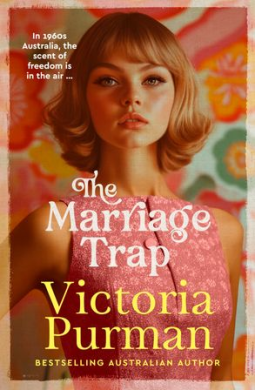
Victoria Purman The Marriage Trap Harlequin Australia, HQ (Fiction, Non Fiction, YA) & MIRA | HQ, April 2026
Thank you, NetGalley, for providing me with this uncorrected proof for review.
I regret having come late to Victoria Purman’s historical fiction, and of the many books she has published I have read only two: The Radio Hour and The Marriage Trap. They both feature a limited number of characters, none of whom is a public figure. However, each is recognisable as representing someone whose story might dovetail easily into the reader’s experience or a group whose story demands to be told. While never neglecting her characters’ individual experiences, Purman weaves around them an absorbing social, economic, and political commentary which reflects Australia’s past. In reading The Marriage Trap this has been an immediate past, with enticing reminders of events with which I am relatively familiar. For younger readers, the narrative is likely to be astonishing at times, with glimmerings of recognition that provide them with the tools to understand their older relatives and the social environment with which they grappled. The Marriage Trap is followed by an insightful acknowledgment of the political changes which have taken place since the setting of this book, which takes place from 1960 to the early 1970s.
Olive, Cathy, and Evelyn are the main protagonists; the introduction of effective birth control, ‘the pill’, is the theme. Olive is a committed Catholic, whose marriage to Len includes dealing with his mother, widow of a Methodist Minister. The weekly Sunday roast is accompanied by her unappreciated lectures on how young women should behave. Cathy is unrepentantly resistant to them; Evelyn is rather in awe. But then, Evelyn at ten is rather in awe of many things – Cathy’s boyfriend, Ringo Starr, and words. The dictionary is Evelyn’s constant companion and adds information as well as gentle humour to the narrative.
Pregnancy, in and out of marriage, for Olive and Cathy is unexpected and the limits it imposes on them are subtly observed. Cathy’s marriage, two children and the end to her career foster her determination that Evelyn will not go into adulthood with as little knowledge as she had – and it becomes clear, as little as Olive knew about her body and ‘the change.’ For Evelyn, many years younger than her siblings, was an unwanted pregnancy resulting from Olive’s lack of knowledge, and her doctor’s incapacity to give her the information she needed. The same doctor, the agreeable old family doctor of Cathy’s childhood, becomes a sinister figure in her search for birth control as offered by the miraculous pill straightforwardly available to her non-Catholic friends. See Books Reviews 2026 for the complete review.

Thomas Doherty How Film Became History The Rise of the Archival Documentary in 1930s America Columbia University Press, April 2026.
Thank you, NetGalley, for providing me with this uncorrected proof for review.
This is a beautifully written narrative of an achievement that has made historical events accessible. This accessibility is reflected in Doherty’s writing, from the story about the early Russian influence on the form arising from the lack of current material to the vast amount that was available by the 1930s. By then a variety of sources were universally recognised for their value, and Doherty’s story draws us into the almost magical way in which raw material became documentaries – some propaganda, some authentic, some accepted into ‘picture houses’ and some denied to the public because of censorship. Although Thomas Doherty refers to well-known films, he also introduces largely unknown material, and in doing so makes another contribution to the knowledge about archival documentaries.
The story of documentaries becoming vehicles for exploring and reporting major political issues is not only exciting, but instructive. Doherty is a master at identifying the complications of censorship and detecting political propaganda plus contrasting it with politically astute and useful material. He also introduces vital discussion of the value of less obviously politically motivated information and its role in treating an audience to easily digested historical research. He is disarmingly honest about the way in which manipulated archival material could be manipulated to take in even the wariest researcher such as himself in a first encounter with one reenactment. The lengthy and detailed story is fascinating. It not only raises historical nature of alarm about reenactments, a well-worn debate about historical ‘truth,’ but the way in which historians work. See Books Reviews 2026 for the complete review.
National Gallery of Australia Exhibition
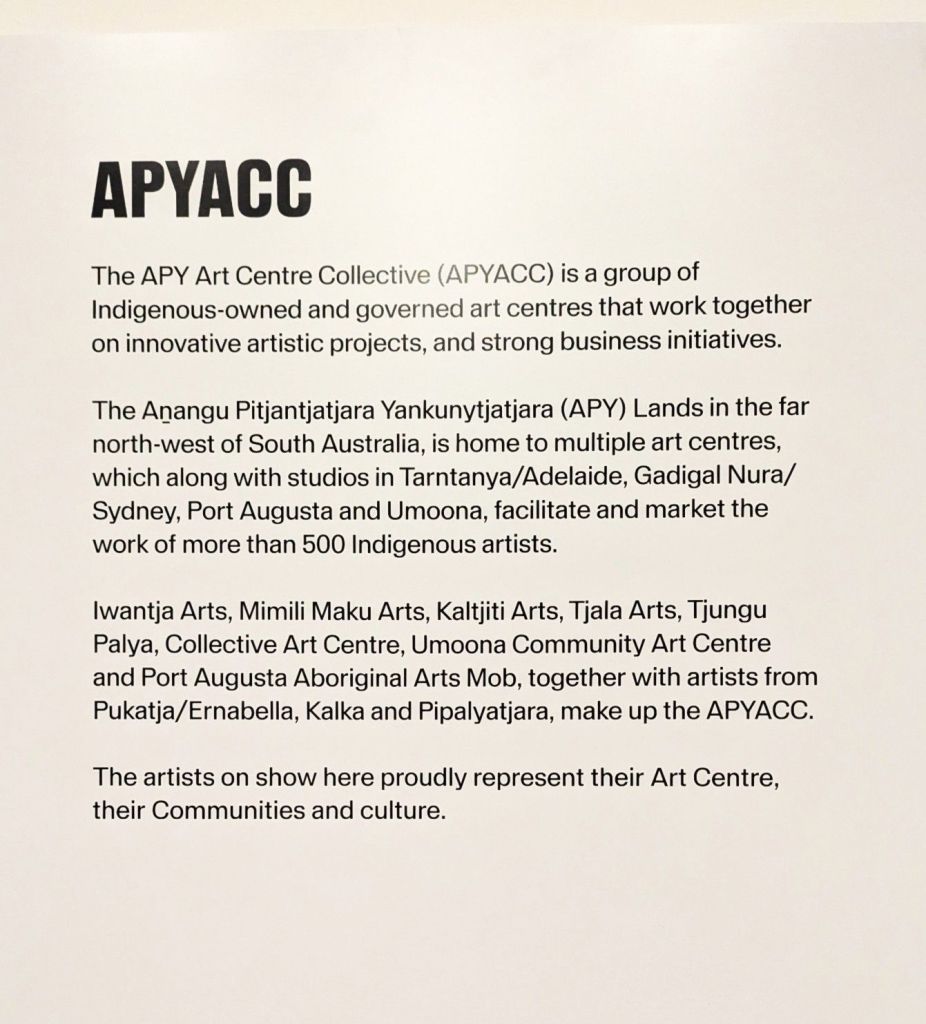










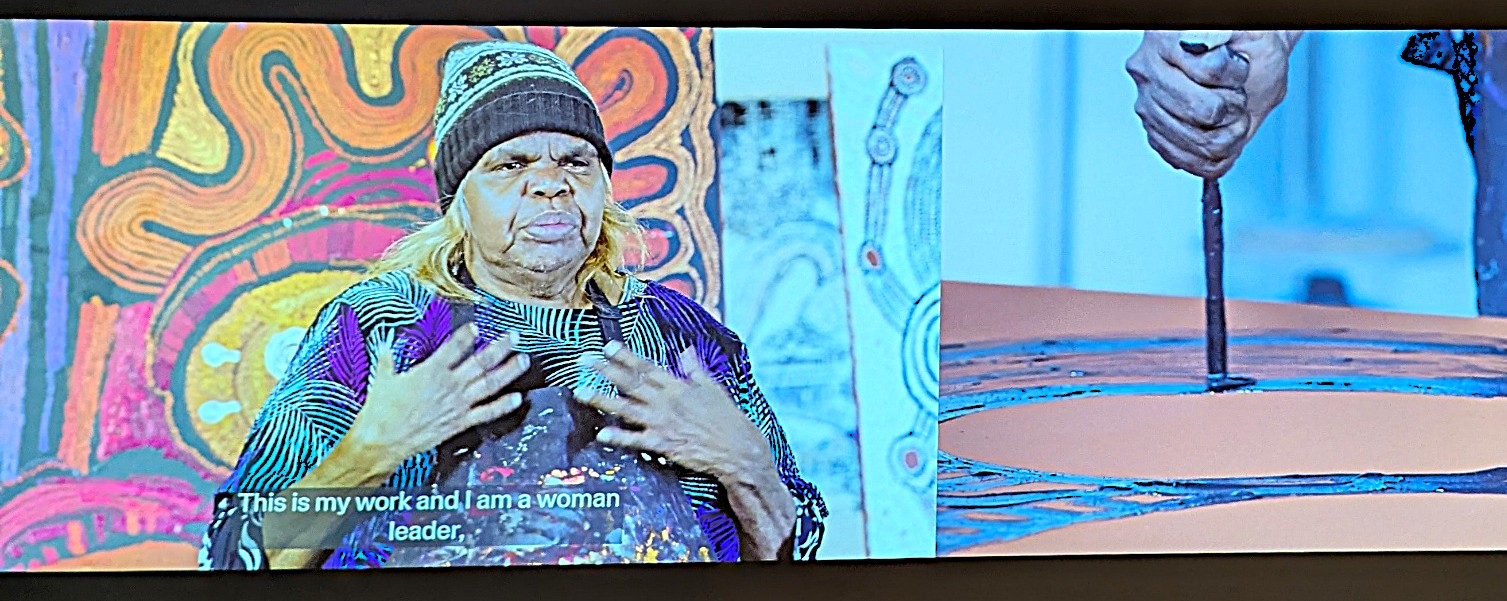






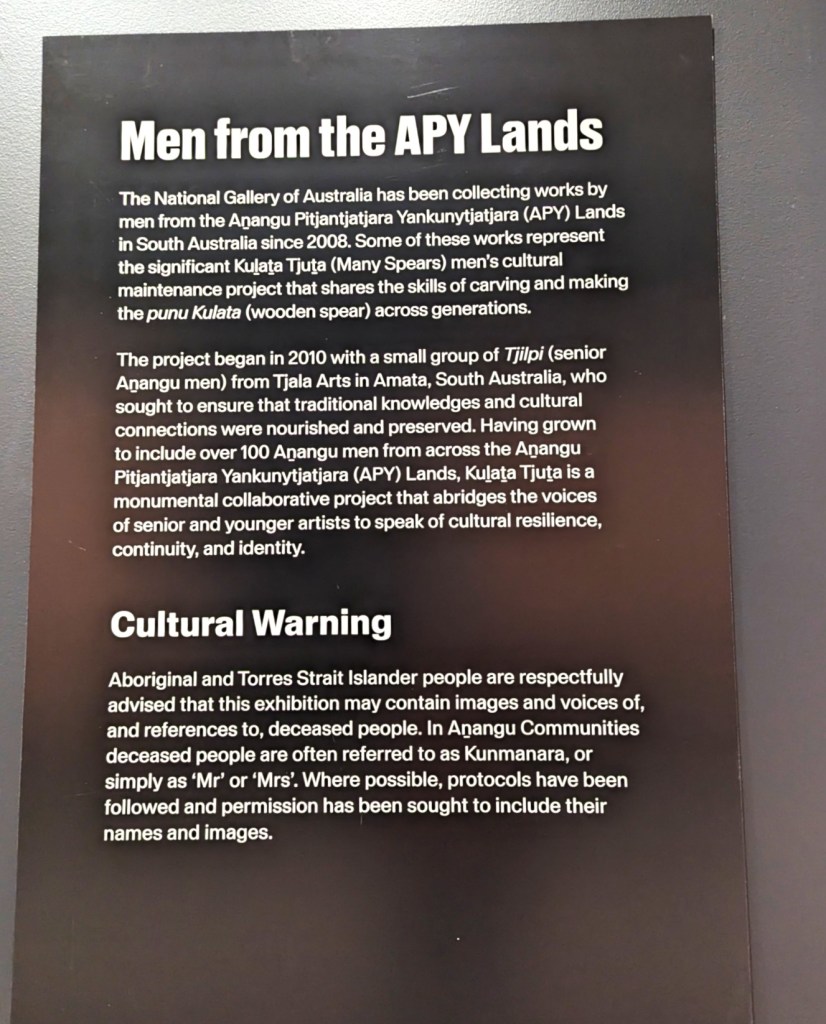
My photograph of the sign for Women from the Lands, which is at the entry to an exhibition of indigenous women’s art, was out of focus. However, these artists are central to the NGA’s contemporary Indigenous collection.
American Politics
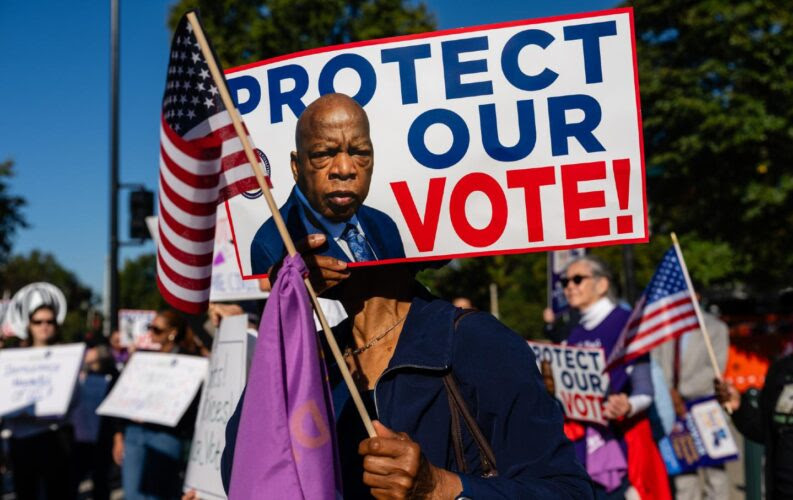
RIP Voting Rights (1965–2026)
The Nation <emails@emails.thenation.com> Unsubscribe
MAY 1, 2026 RIP Voting Rights (1965–2026) The Supreme Court Has Completed Its Quest to Kill the Voting Rights Act →
“The Voting Rights Act changed the face and the structure of American politics—and government,” justice correspondent Elie Mystal writes.
And “on Wednesday, Roberts and his cabal of ruling Republicans finally completed their quest to suppress the strength of the emerging non-white majority in this country.” Louisiana v. Callais “effectively ends any protection against racial gerrymandering and vote dilution, and opens the doors to redistricting across the South that will likely decimate Black and Latino representation in Congress, as well as state legislatures and municipal governments,” David Daley further explains.
And while this case is very much about Black people, “women should be concerned too,” argues Michelle Goodwin, “especially given state and federal efforts to disenfranchise women’s voting power.”
But it’s not time to give up. New York Attorney General Letitia James leaves us with a stirring call to action: “This institutional injustice will not deter our efforts to ensure that every American has the representation and resources they deserve. Despite the hardships the heroes of the civil rights movement encountered, they marched on. So must we. We cannot afford not to.” –
Alana Pockros Associate Editor, The Nation.
By Audra D. S. Burch Emily Cochrane and Jamie Leventhal, April 29, 2026
The Voting Rights Act, among the most consequential pieces of U.S. civil rights legislation, was signed into law in August 1965. It came nearly a century after the 15th Amendment outlawed racial discrimination in voting in 1870.
Despite the amendment, Black Americans had continued to face barriers to one of the nation’s most fundamental rights even after ratification, including violence and intimidation, poll taxes and literacy tests. For many decades before the federal law was passed, activists marched, protested and organized voter registration campaigns. Some were brutally beaten or murdered.
The act required some state and local governments, mostly in the South, to get federal approval before changing their voting laws. It also prohibited election or voting practices that discriminate based on race, which eventually led some states to draw new congressional maps with districts that have a majority of Black voters.
In recent years, the Supreme Court has chipped away at the federal law and its enforcement tools. On Wednesday, the court, which has had a conservative majority, dealt another blow to the historic legislation by throwing out Louisiana’s latest congressional map as an illegal racial gerrymander.
Here’s a look at some events that led to and followed the Voting Rights Act of 1965.
MAY TO DECEMBER 1961
The Freedom Rides challenge segregation in public transportation across the South.
The Freedom Rides of 1961 nonviolent strategy aimed to test whether state and local governments were complying with two Supreme Court rulings. One declared that enforcing segregated seating on interstate buses was unconstitutional. The other found that segregated lunch counters, bathrooms and waiting rooms in bus terminals were unconstitutional.
The first Freedom Riders included 13 men and women, both Black and white, who traveled and sat together on interstate buses. The group included 21-year-old John Lewis, who would go on to serve in the U.S. House of Representatives for more than 30 years.
The group planned to ride from Washington to New Orleans on two buses in May 1961. But during multiple stops, they were attacked and beaten and one of the buses was firebombed. The violence forced the Freedom Riders to finish their trip to New Orleans by plane.
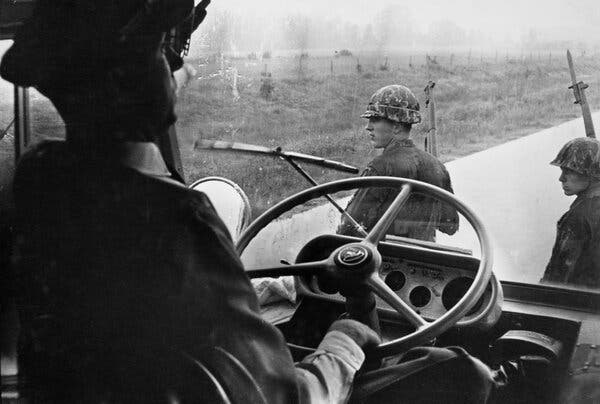
Circa 1961. Credit…Pictorial Parade Archives, via Getty Images
More than 400 volunteers participated in the rides, including Doratha Smith-Simmons, known as Dodie, now 82. As an 18-year-old, she rode a bus to a Greyhound station in McComb, Miss., where her group was attacked by a white mob. Ms. Smith-Simmons said recently that while the episode had been terrifying, she “was willing to die for the cause.”
Collectively, the rides — and the violent pushback from their opposition — helped expose the oppression of Jim Crow laws. They gained national attention and pushed the federal government to enforce desegregation laws.
June to August 1964
Freedom Summer helps register voters in Mississippi.
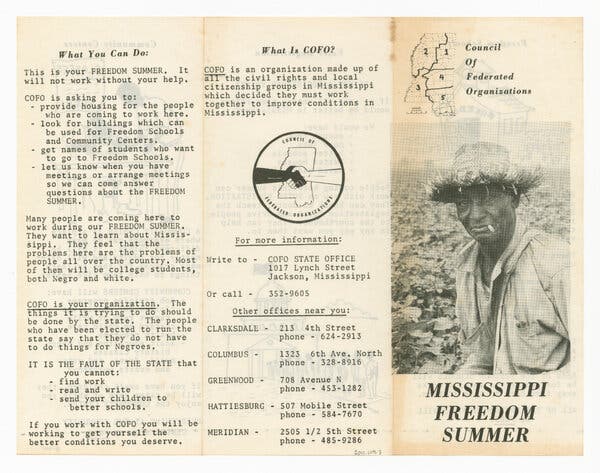
A leaflet from the Council of Federated Organizations, a coalition of civil rights groups, for its 1964 campaign to register Black voters in Mississippi. Credit…Heritage Art/Heritage Images via Getty Images
Freedom Summer was a 1964 campaign led by the Council of Federated Organizations, a coalition of civil rights groups, to register Black voters in Mississippi. More than 700 college students, mostly white and from Northern states, worked with local Black community members over 10 weeks to register voters.
The volunteers distributed registration information, assisted in filling out forms and escorted residents to the courthouses. It was not without risk: Some were beaten and arrested, and their cars were firebombed. Three voting rights activists — Andrew Goodman, Michael Schwerner and James Chaney — were abducted and murdered outside Philadelphia, Miss.
Of the estimated 17,000 African Americans who tried to register to vote that summer, according to the Lawyers’ Committee for Civil Rights Under Law, only 1,600 applications were accepted. That low number served as evidence of the state’s exclusion of Black voters.
FEBRUARY 1965
A Voting Rights Activist was killed in Alabama.
Jimmie Lee Jackson, a 26-year-old Black farmer, was shot by a white Alabama state trooper while participating in a voting rights march in Marion, Ala. His death spurred, in part, the major civil rights march from Selma to Montgomery. At the time, the Rev. Dr. Martin Luther King Jr. was leading a campaign in Alabama to fight for voter rights.
The Bloody Sunday march in Selma becomes a catalyst for voting rights.
What would become known as Bloody Sunday began as a march of about 600 activists in Selma, Ala., protesting the denial of voting rights and the killing of Mr. Jackson. The march was led by Mr. Lewis, who by then was chairman of the Student Nonviolent Coordinating Committee, and the Rev. Hosea Williams of the Southern Christian Leadership Conference.
As the group crossed the Edmund Pettus Bridge, they were met by Alabama state troopers and sheriff’s deputies wielding billy clubs, bullwhips and tear gas.
Mr. Lewis was beaten and his skull was fractured.
“My legs went out from under me,” he recounted in a 2012 Democracy NOW! interview. “I felt like I was going to die.”
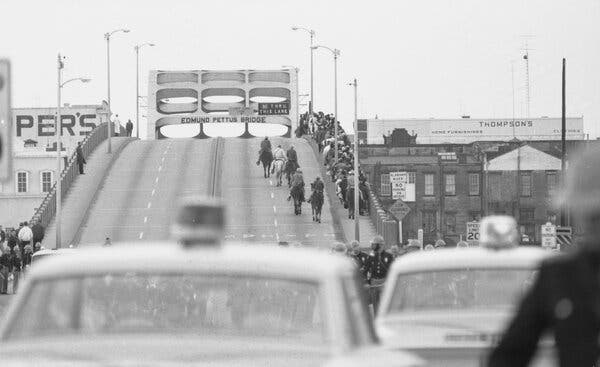
In March 1965. Credit…Charles Moore/Getty Images
The viciousness of the assault, captured in photos and footage, shocked the national consciousness and built support for the Voting Rights Act.
March 15, 1965
President Lyndon B. Johnson delivered a historic speech, asking Congress to act.
Just after Bloody Sunday, President Lyndon B. Johnson made his powerful “We Shall Overcome” speech to Congress. The televised address was watched by 70 million Americans, according to the White House Historical Association. Mr. Johnson argued that ensuring the right to vote was a fundamental principle of the American promise. He urged Congress to act immediately.
Aug. 6, 1965
The Voting Rights Act is signed into law.
Flanked by senior congressional leaders and leaders of the civil rights movement, Mr. Johnson signed the Voting Rights Act into law days after the House and the Senate approved the measure.
“Today is a triumph for freedom as huge as any victory that has ever been won on any battlefield,” he said at a signing ceremony on Capitol Hill.
The Justice Department quickly started enforcing the legislation, suing over poll taxes in Mississippi, Alabama, Texas and Virginia.
The first Black lawmakers are elected to Congress from the South since Reconstruction.
The first Black lawmaker was elected to the U.S. House of Representatives in 1870. But most Black Americans who have served in Congress were elected after the Voting Rights Act, though not all of those representatives were from states directly affected by the act.
The first two Black Southerners to win House seats after the law passed — in fact, since the late 1800s — both won after their districts were redrawn to follow the law.
Barbara Jordan, a former state senator, was elected to a Houston-area seat. Andrew Young, an aide to the Rev. Dr. King, was elected to a Georgia seat that included metro Atlanta. Both ran as Democrats.
The Voting Rights Act was signed into law on August 6, 1965, by President Lyndon B. Johnson.
1993-2013
Several civil rights leaders take office after winning in majority-minority House districts.
Representative Jim Clyburn of South Carolina, served as the No. 3 Democrat between 2007 and 2023, and Representative Bobby Scott of Virginia, who remains the top Democrat on the House Education Committee, both took office in January 1993.
Legal challenges under the Voting Rights Act were reshaping congressional maps across the South. New maps helped several civil rights leaders successfully run for office.
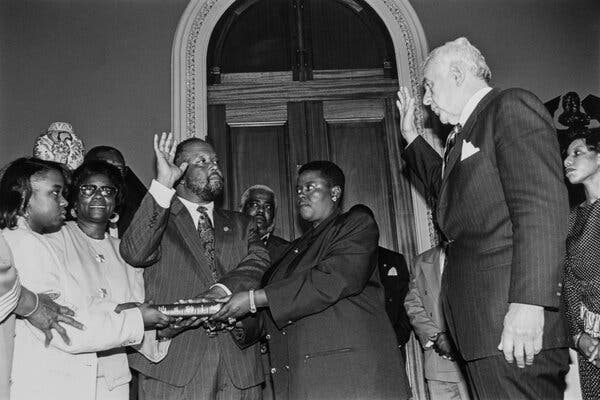
Bennie Thompson, center, won a special election in 1993 to represent a Mississippi district. Credit…Maureen Keating/Associated Press
That year, Bennie Thompson, now the top Democrat on the Homeland Security Committee, won a special election to represent a Mississippi district that includes the state capital and much of the Mississippi Delta.
June 25, 2013
The Supreme Court strikes down the core of the act with the Shelby v. Holder decision.
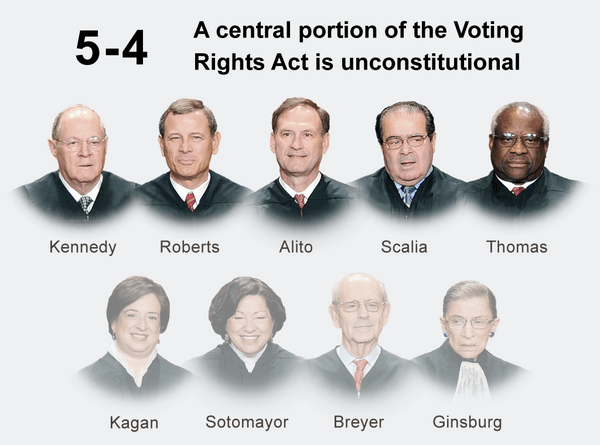
A Guide to the Supreme Court Decision on the Voting Rights Act
Analysis of notable passages from the justices’ opinions.
In 2013, the Supreme Court ruled that nine states, as well as some counties and municipalities elsewhere in the country, no longer had to receive federal approval to change their election laws.
The ruling effectively struck down the heart of the Voting Rights Act. The court split along ideological lines, with the conservative majority essentially finding that federal oversight was no longer needed.
“Our country has changed,” Chief Justice John G. Roberts Jr. wrote for the majority. “While any racial discrimination in voting is too much, Congress must ensure that the legislation it passes to remedy that problem speaks to current conditions.”
2023-2024
Alabama and Louisiana redraw their congressional maps, as court fights continue over redistricting.
Without federal enforcement, states could redraw their congressional maps in ways that diluted the voting power of Black and other minority residents. When a case challenging a new map in Alabama reached the Supreme Court in 2022, some legal experts expected the conservative majority to strike down what remained of the Voting Rights Act.
But the court rejected Alabama’s map, which included only one majority Black congressional district in a state where Black residents made up about 26 percent of the voting-age population.
That ruling led to a new map not just in Alabama, but in Louisiana, where a similar challenge was unfolding. Under the new maps, each state had two districts where a majority of voters were Black.
And in 2024, Alabama and Louisiana each sent two Black representatives to Congress.
Unlike Alabama, where a federal court oversaw the drawing of the new map, Louisiana lawmakers sought to draw their own.
A new map prompted a challenge from a small group of white voters in Louisiana, who argued that the state legislators had discriminated against them by impermissibly taking race into account when they drafted the new map. The Supreme Court heard arguments that fall in the case, Louisiana v. Callais.
Oct. 15, 2025
The Supreme Court again hears Louisiana v. Callais, focusing on the question of using race in redistricting.
Having delayed a clear ruling in Louisiana v. Callais earlier in 2025, the Supreme Court again heard arguments over the state’s new congressional map.
This time, the court focused on whether Section 2 of the Voting Rights Act was unconstitutional because it used race as a factor in redistricting.
On Wednesday, the Supreme Court ruled 6 to 3 on the case, effectively dealing another blow to the Voting Rights Act.
Audra D. S. Burch is a national reporter, based in South Florida and Atlanta, writing about race and identity around the country.
Emily Cochrane is a national reporter for The Times covering the American South, based in Nashville.
See more on: U.S. Supreme Court, U.S. Politics
The Voting Rights Act Isn’t Dead. A Lawyer Explains Why (edited)
Raw America <rawstory+sunday-wrapup@substack.com> Unsubscribe Monday may 4, 2026. John Byrne
Forwarded this email? Subscribe here for more
Trump wants us discombobulated and weak. We have to step up the fight.
Hey, Raw America family. Welcome to the Sunday Wrapup. I’m here with my cup of coffee after one of the harder news weeks I can remember. On Wednesday, the Supreme Court rolled back the Voting Rights Act. I’ve spent the morning thinking about what’s worth your panic. The answer is: less than the headlines suggest.
Big thanks to our newest paid subscribers. Your support made this week’s interviews with Congressman Ro Khanna and legal expert Anne Mitchell possible. We don’t have a billionaire owner. We have you.
If you’ve been reading for free, this is the Sunday to take the leap. We’ve got a small, fierce team going up against a media ecosystem MAGA billionaires control. The only way independent press survives this moment is if readers fund it.
The Voting Rights Act Isn’t Dead. A Lawyer Walked Us Through Why.
Wednesday’s Louisiana v. Callais ruling was bad. The Supreme Court voted 6-3 to strike down a Louisiana congressional map that included a second majority-Black district, and Justice Kagan’s dissent called the majority’s reading of Section 2 “all but a dead letter.” Most of the press ran with “gutted.” Civil rights groups called it devastating.
Raw America Editor Carl Gibson sat down with attorney Anne Mitchell this week to ask whether all of that’s actually true. Her answer surprised me. It doesn’t match what the rest of progressive media is telling you.“
I have to take issue with the word ‘gutted,’” Mitchell told Carl right out of the gate. The ruling didn’t strike down Section 2. What it did was shift the legal burden. Before Wednesday, plaintiffs could prove redistricting violated the Voting Rights Act by showing the effect was to disenfranchise voters of a particular race. Now they have to prove intent: that the legislators drawing the map meant to do it.That sounds impossible at first. But Mitchell pointed out something I hadn’t thought about. Lawyers prove intent in criminal court every single day. Defendants don’t typically announce their intentions out loud. Prosecutors prove intent through pretext analysis, through circumstantial evidence, through patterns. Civil rights litigators are now going to have to do the same in redistricting cases.“It’s a setback,” Mitchell said, “but it’s not a death knell.”
She also did something I haven’t seen anyone in the legal commentariat do this week, which is locate Wednesday’s ruling inside the broader strategy of the moment. The Trump administration, she told Carl, “wants you completely discombobulated” — chasing every outrage, screaming about every ruling, exhausted into paralysis by the time the midterms arrive.“
A confused, disturbed populace is a weak populace,” she said. The job of independent press right now is to push back on that exhaustion, not feed it.
She reminded Carl of something the administration would very much prefer you forget. More than 1,500 lawsuits have been filed against this administration since January 2025, and “they’re losing in the courts.”Losing them overwhelmingly. Mostly complying with orders, too — the lawless-administration narrative is, by Mitchell’s count, mostly wrong. The legal architecture of the country is bent. It isn’t broken.Liberal lawyers are going to have to roll up their sleeves and do harder work now. That’s a much closer description of what happened Wednesday than “the Voting Rights Act is dead.”…
A Few Things to Hold On To
The political ground keeps shifting in directions worth noting. Maine Governor Janet Mills dropped out Thursday, clearing the path for Graham Platner against Susan Collins. Progressive Analilia Mejía won New Jersey’s 11th seat by 20 points last month. Democrats have flipped 30 state legislative seats since Trump returned to office; Republicans have flipped zero. The Progressive Caucus rolled out a New Affordability Agenda this week: ten bills, every one polling above 60%. Don’t let one ugly Wednesday convince you the fight is over.
Australian Politics
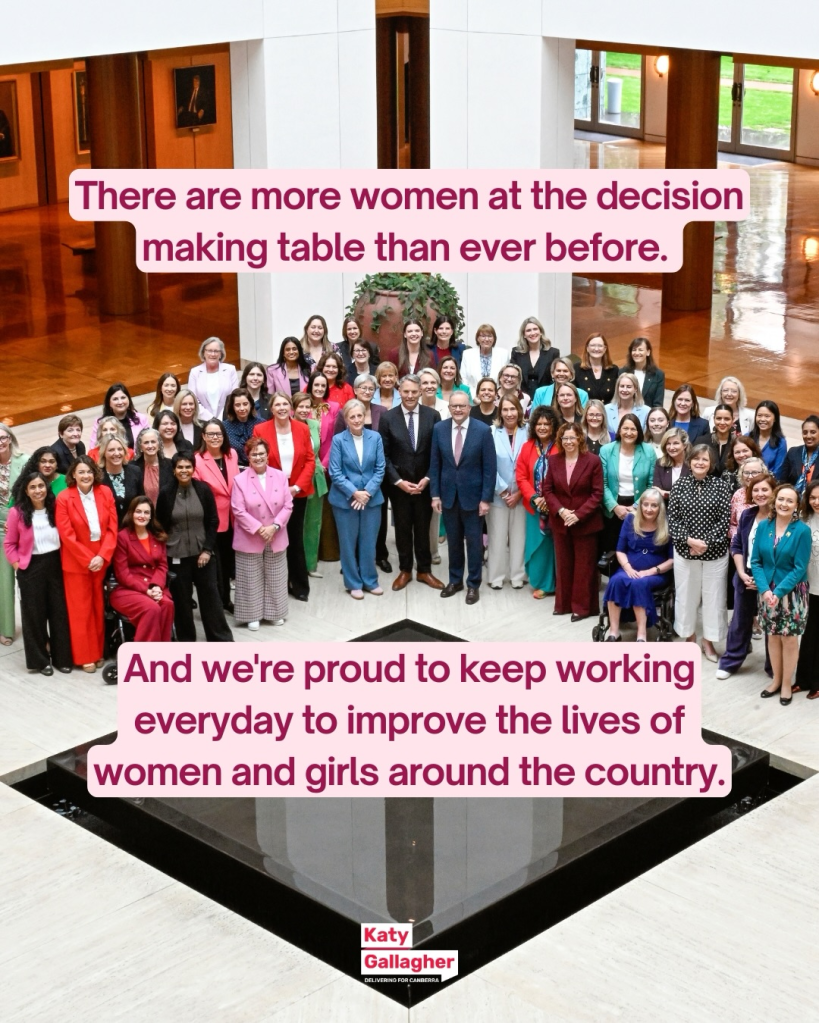
About the House – Australian House of Representatives ·Follow
Today is Baby Day *
*
Did you know? The floor of the Chamber was only accessible to elected members of Parliament, however in 2016, standing order 257 (Admission of visitors) was amended to allow infants in a member’s care in the Chamber!
In 2008, the House resolved to permit voting by proxy if a member is nursing an infant at the time of a division. The proxy is given to the Chief Government Whip or the Chief Opposition Whip. This provision is not extended to members unable to attend divisions for other reasons, and does not apply to the third reading of a bill that proposes an alteration to the Constitution.
#aboutthehouse#HouseOfRepresentatives
This Facebook post was followed by a video featuring babies, parents, and those holding others’ babies in parliament.
Although the following article was written over a year ago, it is worth sharing here as it relates to the phenomenon discussed below by Tom Watson in relation to British political behaviour. It has had to be edited because the graphics were unable to be shared. The article following is an up-to-date discussion of this trend.
Australia’s two-party system is in long-term decline: what does it mean for how we view elections?
Independents and minor parties now account for almost one in three primary votes. See how the major party share has changed in your electorate
Polls tracker; Election guide; Interactive seat explorer
Nick Evershed, Andy Ball and Ben Raue Tue 29 Apr 2025 10.02 AEST
Australia is known for its duopolies – Coles and Woolworths, Qantas and Virgin, Labor and the Coalition. However, at least one of these may be coming to an end.
In the 1980s, Labor and the Coalition shared more than 90% of the primary vote between them and independent politicians were rare.
In 2007 there were only three seats where the final two candidates weren’t in one of the major parties.
By 2022, there were a whopping 27 seats involving an independent or minor party candidate in the final two.
Not all of these seats are inner-city ‘teal’ challengers, either. The black lines here show the boundaries of what the AEC classifies as “inner metropolitan”. At least ten are outside these boundaries, either outer metropolitan like Ryan and Groom in Queensland, or rural, like Cowper in NSW or Wannon in Victoria.
This rise in the non-major party politicians is part of a long-running trend. Here’s how it looks over time:
This trend is also readily apparent when looking at the decline in the major party vote over time at the national level. The decline is not equal in all areas, with some seats dropping more than others, while other electorates show an increasing vote for the Coalition or Labor.
There has been a decline in the major party vote over time for every electorate since the 2004 election. The vote counts have been recalculated to the most recent electorate boundaries to make the data comparable over time for the same area:
In some seats, such as Kennedy and Clark, the election of a popular independent candidate resulted in the major party vote declining dramatically or staying low. In others, the major vote drops but then increases again, following the appearance and disappearance of minor parties at various elections, such as in some South Australian seats with Nick Xenophon’s party and in some Queensland electorates with the Palmer United party.
The other seats that stand out are Calare and New England – both regional seats where the major party vote has increased against the national trend. In both seats, independent politicians retired and were replaced by members of the Nationals.
So what are the consequences of this shift from a system dominated by two parties to one where voters are increasingly looking for a third option?
There are some obvious outcomes, such as parliament dealing with a broader crossbench in the lower house.
Australia may see minority governments more frequently. The move away from major parties has also occurred in other countries with similar systems of government. In the 2024 election in the UK, minor parties had their highest share of the vote since 1920; in Canada, minority governments were historically rare, but the country has now had four since 2004.
And although the major party leaders rail against minority government and characterise it as “chaotic” and “unstable”, Australia’s most recent minority government, led by Julia Gillard after the 2010 election, was efficient in passing legislation and was able to pass landmark bills such as the one establishing the NDIS.
The most immediate consequence of the declining major party vote may be in how we view politics, because our interpretation is based so firmly in the two-party paradigm. The Mackerras pendulum, our classic view of electorates and how many seats might switch given a national swing, shows movement only along the Coalition-Labor axis. Polling companies and the media emphasise the two-party-preferred vote above measures like primary vote or estimated seat share.
Antony Green, the ABC’s chief election analyst, says the increasing number of independent and minor party candidates makes election projections “more complex”. Nevertheless, he expects the 2025 vote to be slightly easier to project than in 2022.
“In a fair number of the seats where there are independents or Greens in the final pairing, this time we have historical figures for them,” he says.
“So last time, we had a Liberal versus an independent in seats like Mackellar, North Sydney, Kooyong, Goldstein, where we had no history of an independent being there before. So we couldn’t take the preference count coming in and compare it with a preference count from last time because it was a different pairing.”
A new candidate in the final two for a seat also complicates election models which rely on swing from the previous year, Green says.
And the pendulum? Green says that again, it’s now more complicated, with so many more seat competitions between Labor and the Greens, Liberals and independents, and other pairings.
“Since 2007 we’ve always had this election calculator we published, where you could put in a swing and we predict how many seats will fall.
“We haven’t bothered this time because you had to put in so many exceptions to two-party [contests].”

Simon Jackman, honorary professor of political science at the University of Sydney, says the two-party-preferred figure – both the one estimated from polling and the one on election night – is still relevant for a lot of seats.
“But the set of possible election outcomes turns on what’s happening in a lot of non-classic contests,” he says.
Jackman agrees the utility of the pendulum has diminished.
“We’re in a mixed setup now. Of the seats I think will or might change hands this election, we’re generally talking about classic ALP v Coalition contests, for which constructs like the pendulum and uniform swing have some utility.
“I also think a lot of state and candidate-specific factors limit the utility of the pendulum/uniform-swing model. One of the big stories of this election could well be the state-specific swings or moderation/amplification thereof by the campaigns.
“On election night there might be as many non-classic contests in the ‘changing hands’ column as classic contests – the pendulum has nothing to tell us about the former.”
It remains to be seen whether the major party vote will decline again on election night – and if it does, by how much.
The Guardian’s polling tracker, which aggregates most published opinion polls, currently has the primary vote for other parties and independents up by 3.1 percentage points compared with the 2022 election, and the Greens up by 1, while Labor and the Coalition are down by 2.5 and 2.1 respectively. (These are estimated for each group individually, so they do not sum together neatly.)
How the parties are doing relative to the last election
Showing the ‘swing’ to and away from each party, being the change in estimated median primary vote compared to their result at the last election. Last updated 3 May 2025-10%-5%2022 election+5%+10%-2.7Coalition-2.8Labor+4.2Other/independent+0.9Greens
Guardian Graphic | Poll averaging model by Dr Luke Mansillo and based on work by Professor Simon Jackman; poll data sourced from pollster websites and media reports. *The margin of error is a ‘credibility interval’, which is a range that we are 95% certain contains the estimated population support for each party
If this bears out on election night, we may see the non-major party vote go above one-third of the total vote for the first time.
As we increasingly turn to third options, the ways we view this data may have to change too. If the pendulum and other two-party views become less relevant, it may be that we have to start prioritising alternatives like looking at the swing on the major party to non-major party axis, or using triangles to view the vote in three dimensions.
And below, the most recent discussion of changes to the two-party system in Australia.
The Polls Keep Bouncing. The Destination Doesn’t Change.
One Nation is up. One Nation is down. What the weekly polling movements are actually telling us and what they are not.
Apr 22, 2026
In a single week, three separate polls, Resolve, Newspoll, and YouGov, told three separate stories about the state of Australian politics.
And yet, reading some of the commentary that followed, you would be forgiven for thinking Pauline Hanson’s movement had suddenly stalled, collapsed, or surging to new heights, depending on which headline you clicked on first. The dominant framing, as ever, was that something had shifted. Something was moving. Labor had “surged back.” The Coalition was in “stable.” The insurgency was fading, or perhaps accelerating, or perhaps both, simultaneously, in different households, reading different mastheads.
Most of this is the reflexive reporting of survey-to-survey movement as if each wave were a referendum in miniature and it reflects a profound misunderstanding of what is actually happening to the Australian electorate.
We are not in a normal political period. We are in the middle of a structural realignment, and the tools built for normal periods, including the habit of reading each poll as a discrete verdict on the state of political play, are not fit for purpose. If you want to understand what One Nation’s vote is doing, you have to stop staring at the weekly numbers and start looking at the shape of the thing beneath them.
What the surveys are actually measuring
Start with a simple observation that very few columnists seem willing to make: when the electorate is in flux, different sampling methodologies, different weighting schemes, and different question orders produce larger gaps than they do in stable periods. This is not a flaw in the polls. It is a feature of the moment. The country is in transition.
In a settled two-party system, where the overwhelming majority of voters are either rusted-on or weakly attached to one of two brands, polling is a relatively straightforward exercise. You sample, you weight against known preference flows and demographic benchmarks, and you produce a number that will be close to what every other reputable pollster produces, give or take a couple of points. That was Australia from the 1950s through to 2022. That was the environment in which most of our political journalism was professionally formed.
That Australia no longer exists.
In the current environment, a single respondent’s answer depends on a cascade of variables that have only become decisive in the last five or six years. Whether they are prompted with One Nation as a named option. Whether they are asked about the leader or the party. Whether the survey is conducted online or by phone. Whether the sample is drawn from a panel that over-represents politically engaged Australians or one that catches the soft, transactional voters who now decide elections. Whether the fieldwork was done during a news cycle dominated by fuel prices, or migration, or a terror attack, or another Trump post on social media.
In a settled period, all of these methodological choices produce small divergences. In a realignment period, they produce the two-to-five point gaps you are seeing between polls. The polls are not contradicting each other in any meaningful sense. They are each capturing a different cross-section of an electorate that is genuinely, ideologically, psychologically in motion, in a transition from a two party to multi party system.
This is not a novel observation. It is one of the most robust findings in comparative political science.
What the academics have been saying for forty years
Peter Mair, in ‘Ruling the Void’, documented the long decline of party attachment across Western democracies and warned that the erosion of stable partisan identities would produce electorates that were harder to read, harder to poll, and harder to govern. He was right. The Dassonneville and Hooghe work in the European Journal of Political Research, on electoral volatility and dealignment shows that as voter-party linkages weaken, electoral behaviour becomes more volatile and more unpredictable, not as a temporary aberration, but as the new equilibrium. Dalton and Wattenberg’s ‘Parties Without Partisans’, made the same argument for the advanced industrial democracies as a whole.
The measurement literature tells the same story. The Pedersen index, developed in the late 1970s, was the first rigorous attempt to quantify net electoral volatility between elections, the share of the vote that moves from one party to another. In stable Western European democracies, the Pedersen index historically ran somewhere between five and ten. In the period since the Global Financial Crisis, it has exceeded twenty in a number of cases and in the countries that have experienced the most dramatic realignments, it has pushed higher still. Recent European work has disaggregated this further: volatility is concentrated in the “left-behind” regions, in outer-metropolitan and regional electorates where the gap between lived experience and elite discourse is widest. Rodríguez-Pose’s work on the “places that don’t matter” is the best single summary of what is happening across the developed world. It is also a near-perfect description of the electoral geography fuelling One Nation.
When scholars of Western European democracy talk about dealignment and realignment, they are describing two overlapping processes that look, in the short-term, like one phenomenon. Dealignment is the loosening of traditional party attachments, voters becoming harder to pin to a brand, more willing to switch, more responsive to short-term cues. Realignment is the slower process by which new cleavages emerge and new party coalitions form around them. In a realignment period, you see both at once: dealigned voters bouncing around in the short term, while deeper structural shifts are quietly reshaping who ends up where when the music stops.
This is why polls diverge. This is why weekly movements can look dramatic but mean relatively little. This is also why the long-run trend is the only thing worth watching.
What the long run says about One Nation
The long-run trend is now unmistakable, and it is worth stating clearly, because it has been buried under months of spot-coverage.
Roughly 80% of One Nation’s growth since the 2025 federal election has come from the Coalition. The remainder has come, in smaller amounts, from Labor and from the other minor parties of the right. That is the structural story. Everything else is statistical noise around that central fact.
This is the same pattern we have watched unfold in every comparable democracy in the last decade.
In the United Kingdom, Reform UK has drawn a large chunk of its vote directly from the Conservatives, as nearly 80% of 2024 Reform voters had previously voted Conservative in 2019. The combined Labour-Conservative vote share in Britain has collapsed from over 80% in 2017 to the mid-thirties today. The Electoral Reform Society now describes Britain as a genuine multi-party system, with five parties clustered within fifteen points of each other. The party system that produced Thatcher and Blair is no longer the party system that governs Britain.
In Sweden, the 2022 election saw the Sweden Democrats become the second-largest party in parliament, drawing predominantly from the Moderates. In Italy, the old Christian Democratic/Communist duopoly has been replaced entirely. In France, the post-war structure has been shattered. In each of these cases, political scientists have documented the same sequence: a long period of dealignment, a triggering event (or series of events), a sudden acceleration in vote volatility, and then, eventually, the settling of a new structure.
In each of these cases, too, the polling through the transition was noisy. Individual surveys moved dramatically. Commentators regularly pronounced the insurgent party had “peaked.” Each time, the noise was misread as signal. And each time, the structural shift continued regardless.
The Australian specifics
Australia has two features that make its realignment both more predictable and more consequential than the European examples.
The first is preferential voting, which means that the bloc behaviour emerging in primary vote numbers is mechanically translated into two-party-preferred outcomes with minimal leakage. The second is compulsory voting, which means that the disengaged and economically stressed voters who would simply not turn out in the United States or the United Kingdom are obliged to participate and, critically, obliged to express their dissatisfaction through a vote rather than through abstention. One Nation is not just absorbing angry right-wing voters. It is absorbing voters who, in a voluntary system, would not be voting at all.
This is one of the reasons our realignment is expressing itself more sharply and more quickly than the equivalent processes in the US or the UK. It is also one of the reasons the polling is so volatile. The voters now driving the One Nation surge, outer-suburban, culturally conservative, economically stressed, low-information, are the voters pollsters have historically had the most trouble reaching, weighting, and capturing accurately. Their opinions are less fixed. Their turn out behaviour is not in question, but their partisan behaviour is genuinely in flux. When you sample them at different times, with different wording, through different local and global events, you will get different answers.
One Nation will continue to move between the low 20s and mid to high 20s, in successive polls over the coming months. Sometimes it will look like a surge. Sometimes it will look like a retreat. The honest answer is that neither is happening in any meaningful sense. What is happening is that the Coalition’s historic base is being reshaped, the two-party system that dominated Australian politics for the better part of a century is being slowly pulled apart, and a new structure is emerging underneath.
If you want to understand it, put down the weekly polls. Look at the arc.
British Politics
The bins, the bombs and the ballot box
Tom Watson <tomwatsonofficial@substack.com> Unsubscribe
Tom Watson tomwatsonofficial@substack.com
Local elections collide with national anger as voters walk away from the two-party system. Thursday’s elections will no doubt be reported as a referendum on Keir Starmer. That is partly true, as far as it goes. Governments always get the blame. Prime ministers always carry the can. That is one of the less attractive privileges of the office.
But it would be a mistake to stop there. The polls and projections suggest something larger is happening. This is not simply a judgement on Starmer, or even on Labour. It is beginning to look like a judgement on the two-party system, and on the Whitehall way of governing that has sustained it.
The figures are stark enough. Recent polling has Reform in the mid-twenties, Labour and the Conservatives in the high teens, the Greens in the mid-teens and the Liberal Democrats still very much in the field. Psephologists have pointed to heavy losses for both main parties. Some projections have Labour losing nearly 2,000 council seats, the Conservatives also going backwards, and Reform, the Greens and the Liberal Democrats making the gains.If it happens, it will represent a fissure in our two-party system.
The sad truth is that many people will not be voting on Thursday for the party they think will run local services best. They will be voting against. Against Labour. Against the Conservatives. Against Westminster. Against a system that feels remote, slow and incapable of doing the things it promises.
Local elections have always carried national messages. That is not new. What feels different this time is the extent to which the local has been crowded out altogether. Nigel Farage and Zack Polanski have helped turn the campaign into a vote about race, migration, Israel, Iran and a whole range of questions which have little to do with who collects the bins most efficiently, fixes the roads or keeps the libraries open.
That does not mean those issues are unimportant. It does mean that the poor councillor defending a record on social care, housing, libraries or potholes may find himself judged on matters over which he has no control at all. Local democracy is often unfair. This year it may be positively brutal.
I can remember two years of terrible results for Labour during the Gordon Brown years. They were a blow. They chipped away at his authority. They added to the sense of a government losing altitude. But they did not stop the daily flow of crises being dealt with in Number 10. The phones still rang. The papers still came in. The decisions still had to be made. Government carried on.
What feels different now is the shape of the punishment. In the Brown years, the system still made a kind of sense. Labour lost. The Conservatives gained. The pendulum moved. The shock was painful, but the mechanism was familiar.
This time, the vote is scattering. Reform gains here. Greens there. Liberal Democrats somewhere else. Independents in places where local anger has found its own candidate. The two-party system is not simply under pressure. It is nose down, hurtling towards the runway, while everyone in the cockpit insists the instruments are being reviewed.
In Wales, the polling tells the same story in a sharper form. YouGov’s MRP has Reform and Plaid Cymru effectively neck and neck, with Labour a distant third. Other polls point in the same direction.The striking point is not simply Labour’s weakness. It is the wider displacement of the old parties. Labour and the Tories are losing their place in the system. The Conservatives, already weak in much of Wales, risk becoming almost peripheral, while the main contest shifts towards Plaid and Reform.
That is the pattern across Britain. The governing party is being punished, but the official opposition is not the automatic beneficiary. In Wales, as in England, the protest is scattering. Reform takes one kind of discontent. Plaid takes another. Labour falls back. The Conservatives struggle to remain relevant.
That is why Thursday should not be read only as an anti-Starmer election. It is also an anti-Tory election, and a warning about the failure of the old alternation: Labour in, Conservatives out; Conservatives in, Labour out. Voters are not simply changing government. They are changing the terms of two-party politics.That raises a harder question than whether Starmer has had a bad week. It asks whether the old bargain still holds. Britain’s governing model rests on the idea that a party wins power, commands the Commons, controls Whitehall, sets the direction for local authorities and delivers change. But voters increasingly look at housing, the NHS, social care, migration, energy bills, transport, planning and policing, and conclude that the machine does not work as advertised.Whitehall still thinks in departments, consultations, reviews and efficiencies. The public thinks in broken appointments, rising bills, unanswered calls and things that never seem to get fixed. The gap between those two worlds is now a political fact.
Kemi Badenoch’s position is not easy either. I may be the only person who thought she was actually doing well as leader. She had begun to sound sharper and more settled. Then she disastrously called it wrong on the Iran conflict and overplayed her hand by calling Keir Starmer a liar. There are moments when an opposition leader must wound the Prime Minister, but the danger is that in doing so, they look less prime ministerial. I cannot help thinking Kemi is too addicted to social media moments rather than long-term strategic clarity.
Ed Davey, whom I like very much, appears to have been forced into chasing the daily media cycle, from Trump to Mandelson and whatever else happens to be passing across the screen. One assumes his team worry that the one-man media machine of Zack Polanski will steal the oxygen. They may be right. But it is not always wise to chase a populist, particularly for liberals.
And what of the potential winners, Polanski and Farage? Their success would tell us as much about the weakness of the old parties as about the strength of the new ones. Both have understood that attention now moves faster than organisation. The danger is that attention is not the same as trust, and noise is not the same as government.
Polanski is certainly a media sensation. No one can deny that. But short-term sensation is not the same as long-term strength. He has allowed his party to be drawn into the hands of people whose political style will be familiar to anyone who watched the autocratic grip placed on Labour under Corbyn. That may work well on TikTok, but he has already turned himself into the riskiest choice for PM in a generation.
And then there is Nigel Farage. He will claim victory on Thursday whatever the numbers say. It is hard to lose from a standing start, especially when you have spent years explaining that every setback proves the establishment is terrified of you. Whether this projects him towards office is another question. A reported £5 million personal gift from Christopher Harborne, now under scrutiny by the Electoral Commission and the parliamentary standards commissioner, ought to matter in the arguments ahead. These are unusual times, though. Perhaps in the new politics, £5 million is just a rounding error. Who knows, in the present climate?
Meanwhile, the people who deserve most sympathy are barely in the national story at all. There are some very fine civic leaders facing serious challenges this week. They will not all deserve the verdict they receive. Many will have worked hard, served decently and tried to hold together public services under impossible pressure.They are in my thoughts. I have always believed local parties are nothing without their councillors. They are the lifeblood. They are the glue. They keep the organisation alive when the national leadership is popular, and they keep it breathing when it is not.As commentators say this is going to be the worst night in human history for an incumbent government, one thing can safely be said: Labour has at least got its expectations management right!
Somewhere in Tory and Labour HQ, clever young men with lanyards are drafting lines saying they always knew the asteroid was coming and are pleased it has landed broadly within the expected blast radius.
But the more serious point is not the size of the defeat. It is the meaning of the fragmentation. Voters are no longer merely changing sides. They are losing faith in not just the main parties, but the whole system.
That is a much more dangerous thing.

 Robin's Room