
Jane Davis The Bookseller’s Wife The Chiswell Street Chronicles Volume 1, Rossdale Print Productions, March 2024.*
Thank you, NetGalley, for providing me with this uncorrected proof for review.
Dorcas Turton is an engaging character whose story takes place in the 1770s. She is the daughter of Samuel Turton, whom her mother married so as to keep the family name. She is the granddaughter of Sir John Turton. However, current family links are mainly through Samuel seeking financial assistance or using the relationship to obtain credit. Turton’s generous expenditure, largely on himself, for fine clothing and gambling has depleted not only his own fortune but that of his recently deceased wife. This is the family, father and situation Dorcas must navigate in a society where a woman is deprived of the skills to do so, as well as the environment in which, even if they are uniquely able, it is unacceptable. The Lackingtons arrive to rent the room Dorcas has been forced to advertise. They are to change her life…and she is to change theirs. See Books Reviews 2026 for the complete review.* Somehow this one was left behind in 2024!
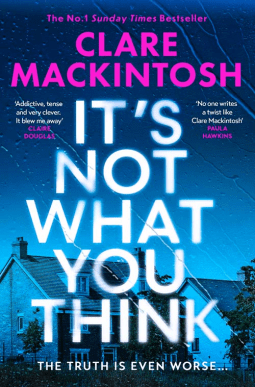
Clare Mackintosh It’s Not What You Think HarperCollins Publishers Australia | HarperCollins, March 2026.
Thank you, NetGalley, for this uncorrected proof for review.
Clare Mackintosh combines tension, twists, subtle characterisation, and social commentary in a thrilling, heartbreaking, and frightening read. Frightening because of its immediacy with its domestic and public threads woven throughout a strong narrative that resonates with current political tensions; heartbreaking because of its spotlight on relationships which may be ideal, maybe not; and thrilling because even when the clues seem to point to one outcome, another becomes readily apparent. The characterisation, adults, and children, sympathetic and unsympathetic, is well drawn. The narrative leaves the question, could that really happen? Under Mackintosh’s adept plotting the unbelievable becomes all too possible.
Nadeeka and her daughters Maya and Nish have welcomed Jamie into their home after Nadeeka’s marriage to Scott has failed. His serially faithlessness colours Nadeeka’s predominantly loving and contented relationship with Jamie. When she receives a phone call from Jamie in which she overhears a woman’s voice, Nadeeka drives home, being apprehended for speeding on the way. On her arrival, a police car and police officers are at her home – she eludes them and sees Jamie, bleeding on the floor. He is dead and the family liaison officer cares for her in the coming days. See Books Reviews 2026 for the complete review.
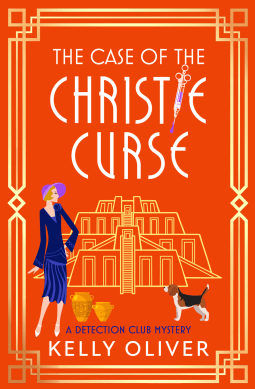
Kelly Oliver The Case of the Christie Curse Boldwood Books, February 2026.
Thank you, NetGalley and Boldwood Books, for this uncorrected proof for review.
I find Kelly Oliver’s Agatha Christie inspired mysteries attractive largely because of their clever use of Christie material. Together with the intrepid investigator, Eliza Baker and her friend, Theo Sharp, the novels offer enjoyable mysteries with a romantic touch. In this mystery, Agatha Christie’s visit to Ur and her work that was to become an enduring interest, collaborating with Max Mallowan on archaeological sites, makes an intriguing background to a straightforward mystery. The well-known archaeological couple, Leonard and Katherine Woolley are the leaders on the dig, and their characters are deftly drawn, providing interesting aspects of their personalities and work in the field.
Christie invites Dorothy L. Sayers, Eliza, and Theo of the Detection Club to help her deal with the curse that has impacted the dig, with illnesses, possible thefts and forgeries creating fear and tension amongst the workers. When a death occurs soon after their arrival, the detectives are also worried, disagreeing the archaeologists’ assessment of the incident. Is it an accident, or a precursor to something even more dangerous? How will the death impact the work at the dig? Will financial support, always hard to find, disappear if there has been a murder on the dig? The archologist and detectives are not as one in answering these questions and deciding upon solutions, adding to the tension. Also creating dissention is an elderly journalist and his grandson who has joined the group. At the same time as his presence adds to the tension, Theo finds an accomplished chess player in his grandson, forging an alliance between the newcomers to the dig. See Books Reviews 2026 for the complete review.
BBC ‘should stop straying from Agatha Christie’s storylines or come up with their own ideas’
Story by Frankie Elliott From: The Daily Mail, Australia
Broadcaster has changed the identity of the murderer in Ordeal by Innocence.
Also turned the protagonist into the killer in The Pale Horse
The BBC ‘should stop straying from Agatha Christie’s storylines or come up with their own ideas’, an award-winning author has said.
The broadcaster has gone as far as to change the identity of the murderer in Ordeal by Innocence and turn the protagonist into the killer in The Pale Horse, despite taking no ones life in the book.
In the most recent adaptation, Murder is Easy, the investigator was switched from a retired British policeman returning to London from the Far East to a young Nigerian man coming to take a job at Whitehall.
Wilson says Christie was ‘precious’ about her work and had objected to TV adaptations which departed from her storylines whilst she was alive.
He argues that the BBC should ‘write their own novels’ because their recent adaptations ‘haven’t been as good as they could be’ because they didn’t stick to Christie’s original plot.
The recent adaptation of Agatha Christie’s Murder Is Easy has seen David Johnson play a young Nigerian man who has come to England to take a job as an investigator.
Wilson told the Telegraph: ‘The last seven years on the BBC – some of them have been faithful, And Then There Were None was a brilliant production – but some of them are less faithful. I’m thinking of Ordeal by Innocence, in which the murderer was changed and the way they killed was changed.
‘And I just think if you want to do that, don’t adapt an Agatha Christie. Write your own novel. Because one thing about Agatha Christie that makes her so brilliant, and what makes her so enduring, is that she’s such an extraordinarily good plotter.
‘Screenplays, really, are all plot. It’s all about story, how character and story interact, and I think some of the adaptations, particularly the BBC ones, haven’t been as good as they could be.’
Wilson, who has written four books featuring Christie as a character, also recalled how she was ‘appalled’ by the 1960s films starring Margaret Rutherford as Miss Marple because they had strayed too far from the original stories.
He said: ‘She was ashamed that she’d done that for money, and it took her and her relatives such a long time before they trusted anyone.
‘That’s why there is quite a big gap before the big films like Death on the Nile and Murder on the Orient Express in the 1970s.’
The Ordeal by Innocence and The Pale Horse adaptations were both written by Sara Phelps, who also gave Hercule Poirot a backstory as a Catholic priest in her version of The ABC murders.
In the BBC’s adaptation of Ordeal by Innocence, starring Bill Nighy (right) and Alice Eve (left), saw the identity of the murderer changed © Provided by Daily Mail
Murder is Easy was adapted by writer Siân Ejiwunmi-Le Berre, who said the change to the investigator’s identity was in homage to her family.
She added: ‘But I always go for the beating heart of what she’s [Christie] getting at and she always throws you little clues, little quantum details.’
Christie’s great-grandson James Prichard, who also runs the novelist’s estate, said allowing Phelps to change the ending of Ordeal by Innocence was one of the hardest decisions of his working life.
Mythology in Christie | New Editions | Poirot Abroad
The Agatha Christie Newsletter <generalenquiries@agathachristie.com> Unsubscribe
View this email in your browser
Explore Greenway in style this summer
Spend an evening with Greenway’s head gardener, or discover Agatha after hours with a special tour.
Not local to Devon? Enjoy a historical audio trail from anywhere in the world with the new HistoryScapes app. Or, tune in to Hidden Treasures of the National Trust next Friday 15th May, to go behind the scenes to see crucial conservation work at the house.
Explore all eventsExplore our May Read Christie pick
Our theme this month is ‘Best Short Story Collection’, and we’ve picked The Labours of Hercules. Join Poirot’s adventure into Greek myths, where each of the twelve labours becomes a modern-day case. Read moreMythology in Agatha Christie
Hercule Poirot’s forename derives from the Greek god of strength! This inspired his twelve cases in The Labours of Hercules, but other ancient references can be found throughout Christie’s writing too. Read the article The Murder of Roger Ackroyd gets a new look
The Folio Society’s special slipcase edition is out now, marking 100 years of The Murder of Roger Ackroyd. This stunning new hardback comes complete with cover and full-colour page illustrations by Owen Gent. Order your copy“
I do not recognize the word impossible, Monsieur! I ask
myself only—is this affair sufficiently interesting for me to
undertake?” Agatha Christie, ‘The Apples of the Hesperides’
Have you played June’s Journey yet?
Hercule Poirot and June Parker are setting off on a new adventure… to the river Nile! Warm up your little grey cells with our new sun-soaked digital jigsaw puzzle featuring the detective duo.
Read more about the collaborationHow well do you know Poirot’s travels?
Our Read Christie pick this month sees Poirot solve cases across Europe, but of course, these aren’t his only adventures… Why not read our Poirot travel timeline, and then see how well you score in our quiz!
Test your knowledgeAgatha Christie on growing up
We’ve been reading An Autobiography this year as an optional extra to Read Christie, and Part III saw Christie embrace her teenage years. This month we’ll be reading Part IV: Flirting, Courting, Banns Up, Marriage. Download the PDF guides
Book now for Agatha Christie’s The Hollow
Hot off the heels of the much-loved Death on the Nile stage tour, The Hollow is now booking in Canterbury, London, Cardiff and Guildford. More dates are on sale soon, plus further venues to be announced! See dates and venuesMarple: Expert on Wickedness in paperback
This accessible and entertaining guide to Agatha Christie’s Miss Marple from ‘Agathologist’ Dr Mark Aldridge is now out in paperback in the UK. Investigate the world’s favourite female detective on page, stage, screen and beyond. Shop now Christie’s best short story collectionsLocals gather at The Tuesday Night Club to challenge Miss Marple to solve past crimes. Read more Mr Satterthwaite’s new friend Mr Quin is an enigma, who appears at the sight of mystery…Read more
The unique Parker Pyne is an unconventional investigator, on a quest to solve unhappiness. Read more
Join Agatha Christie Ltd on Instagram Forward to a friend

Aditi Upmanyu
PhD candidate in English Literature, University of Oxford

In his biography of Mary Wollstonecraft, written after her death, her husband William Godwin remarked of her travel writing: “If ever there was a book calculated to make a man fall in love with its author, this appears to me to be the book.”
Today, however, Wollstonecraft is best known for a different work: A Vindication of the Rights of Woman (1792). While this landmark text helped lay the foundations of western feminist thought, focusing solely on it risks narrowing our view of a writer who was far more radical and prolific than this single book suggests.
Wollstonecraft wrote across genres – from fiction, travel and children’s books to literary criticism, translations and political essays. Tracing this wide-ranging authorship reveals that her lifelong concerns – women’s education, gender inequality and resistance to political authority did not start or end with A Vindication of the Rights of Woman. Se the complete article at Further Commentary and Articles arising from Books* and continued longer articles as noted in the blog.
Australian Politics

Treasurer Jim Chalmers insists his fifth budget will deliver for younger voters, saying Labor could not dismiss the strain of generational inequity.By Karen Barlow.
Labor takes on ‘political risks’ with reforming budget

Treasurer Jim Chalmers admits the Albanese government is taking “political risks” in breaking a key election promise – and revisiting policies rejected by voters at two elections – to usher in reforms of a tax system that has favoured wealthier Australians.
With an eye to the rising support for One Nation, as well as rising inflation, war in the Middle East, and the now-powerful bloc of younger voters, Chalmers’ fifth budget is dismantling certain investor perks. It brings reforms to negative gearing and the 50 per cent capital gains discount, while reining in tax vehicles for the wealthy.
The biggest cost-of-living measure, worth $6.4 billion, is a recurring $250 tax cut – the Working Australians Tax Offset (WATO) – for 13.3 million workers starting next year. At tax time, workers will also get a $1000 instant deduction.
On the revenue side, there is no plan to increase taxation of gas export profits – a proposal that’s drawn considerable support from both progressives and the far right. The government aims instead for $63.8 billion in overall savings, including long-term structural adjustments such as the previously announced scaling back of the National Disability Insurance Scheme (NDIS), to save $199 billion over 10 years.
“There are political risks in there. There are a whole bunch in there on savings and restraints that you would not associate with a very political budget and economic strategy,” Chalmers tells The Saturday Paper from the budget lock-up.
“Putting together this economic strategy we are recognising and responding to the very real pressure people feel.”
Chalmers is moving on investor tax breaks – blamed for pushing home ownership out of the reach of younger generations – that were championed in 2016 and 2019 by then Labor opposition leader Bill Shorten. Negative gearing, which allows for losses on investment properties to be claimed as a tax deduction, will be limited from July 1, 2027, to newly built properties. The capital gains discount will return next year to the Keating-era system, indexed to inflation.
A 30 per cent minimum tax rate will apply to capital gains, and to family discretionary trusts from July 1, 2028, as the government curtails the use of tax vehicles for the wealthy to substantially reduce their payments.
The tax reform package is expected to raise $77.2 billion over 10 years and, according to government modelling, help 75,000 Australians to buy their first home.
We don’t dismiss or deny that there is a feeling out there that the economy is not working as well it can for ordinary people who work for a living, trying to save for a deposit, get a toehold in the market.
Treasury insists it will “not add to the outlook for inflation”.
Before the budget landed, Shadow Treasurer Tim Wilson accused Albanese of “deceit and betrayal” of voters, while the opposition’s Finance spokeswoman Claire Chandler said more houses needed to be built. The Coalition also points to younger generations now being locked out of the investor benefits.
The Greens will be pushing the government to go further, having long campaigned to abolish the two concessions.
“We don’t dismiss or deny that there is a feeling out there that the economy is not working as well it can for ordinary people who work for a living, trying to save for a deposit, get a toehold in the market. The budget is, in lots of ways, for them,” Chalmers says.
This budget was a significant challenge, however, landing in the midst of a historic supply shock due to the conflict in the Middle East and the closure of the Strait of Hormuz.
Treasury forecasts that the war will slow Australia’s economic growth to 1.75 per cent next financial year, from 2.25 per cent in 2025-26, with the scale of the impact subject to the conflict’s duration and the severity. Due to infrastructure damage and restart requirements for the region’s refineries, the economic impacts will “likely beyond the resolution of the conflict”.
The budget papers show the expectation that growth will return to 2.25 per cent in 2027-28, with the assumption that global oil prices “largely stabilise” from the middle of next year.
Headline inflation is forecast to rise from 4.6 per cent in March to be 5 per cent in the June quarter 2026, “largely due to the sharp rise in fuel prices”. Treasury forecasts it will ease to 2.5 per cent by the June quarter of 2027, but could remain “persistently high” if the conflict is more severe than expected.
Chalmers highlights a worst-case scenario where oil peaks at $US200 a barrel and takes three years to subside.
“We would still avoid a recession, but unemployment would rise to pre-pandemic levels and inflation would peak above 7 per cent,” the treasurer says.
Unemployment is expected to stay broadly stable, rising only a quarter of a percentage point by June next year.
Due to fuel crisis rush on electric cars, the EV fringe benefits tax discount will remain in place for another year, and then apply only to cars costing less than $75,000 until the start of April 2029.
The budget also confirms a $10 billion fuel and fertiliser security package to increase the national critical fuel reserves to at least 50 days, and investigate the feasibility of further storage.
There is a $31.5 billion deficit forecast for the coming financial year, easing to $31 billion in 2027-2028, while the long range projection has the budget in balance in the mid 2030s and a modest surplus in the year 2036-37.
Gross debt is expected to hit $1.051 trillion later this year.
Chalmers is talking up a $45 billion improvement to the bottom line since the mid-year update in December, due $64 billion in savings.
Much of that is due to the deep cuts to the National Disability Insurance Scheme to reduce the growth from the current rate of more than 10 per cent to around 2 per cent.
Against the backdrop of war in the Middle East, the invasion of Ukraine, ongoing regional tensions, and pressure from the Trump administration, there is extra significant peace time spend on defence – $53 billion over the next decade, including an extra $14 billion over the next four years.
In a smaller but significant move, the government is also spending $183 million to prevent the child support system being weaponised by family and domestic violence abusers.
The Finance Minister and Minister for Women Katy Gallagher tells The Saturday Paper it is a “huge piece of work” with Social Services Minister Tanya Plibersek, and there is more to come as it spreads to other government systems.
There is considerable spending that is not being explained right now. One of the key government figures is the always mystery column for “decisions taken but not yet announced and not for publication”.
Despite having called for policies to help younger voters, Tim Wilson told the ABC’s 7:30 program following the budget that the Coalition won’t be supporting the proposed changes to negative gearing and the capital gains tax discount. He said his party will support the $250 tax offset – declining to repeat the mistake of last year’s election in which then-treasurer Angus Taylor rejected Labor’s top-up tax cuts.
“We do support this measure because ultimately Australians need to be able to be protected from the consequences of Jim Chalmers’ inflation agenda,” Wilson said.
The opposition, resoundingly defeated by One Nation’s David Farley in the weekend Farrer byelection, has teased out that it is offering something “genuinely different” on Thursday in leader Angus Taylor’s budget reply speech.
Below is one perspective that links to Australian and British commentary on the failure of the two-party system. However, it concentrates on the failure, as Reich sees it, of the Democratic Party to adopt candidates who will restore faith in the party. The British commentary on the disastrous local government elections which took place on May 9th is focussed on the rise of new parties in a reaction to disappointment with the two-party system.
Jim Chalmers’ budget doesn’t fix everything – but it’s an overdue first payment to future generations
Ken Henry
The treasurer has shown economic reforms should not be left to the too-hard basket, and instead be pursued with a sense of urgency.
Finally, a budget of economic reform. It has been too long coming. At this stage of the economic cycle, the budget should be in surplus. It should not be adding tens of billions of dollars every year to the mountain of public debt. Sixteen years after the release of the tax review commissioned by the Rudd government, our tax system should be supporting much better budget outcomes. It should be underwriting much stronger productivity growth. It should be delivering a much better deal for young Australian workers. And it should be delivering to Australians a much bigger share of the resource rents being extracted by the foreign multinationals exploiting our finite natural resources.
So, this budget doesn’t fix everything.
But make no mistake. Jim Chalmers’ budget takes a very big step. And it is a step in the right direction. This feels like a budget crafted with the same policy disciplines that drove the reforms of the 1980s and 1990s, reforms that set Australia up for an extended period of prosperity that was the envy of the world. On this, the treasurer should be congratulated.
The most important thing about this budget is its confirmation that economic reforms must not be left in the too-hard basket but must be pursued with a sense of urgency in the interests of future generations.
Delivering better outcomes for future generations is not all about budget bottom lines and tax settings. Buried beneath the headline numbers and the political commentary of the last few days is a set of reforms that deserve far more attention than they have received.
n December, the government, with the support of Sarah Hanson-Young and colleagues in the Senate, passed sweeping, consequential reforms to the Environment Protection and Biodiversity Conservation Act. As with many legislative achievements, there is often a gap between what parliament intends and what happens. Last night, the Treasurer allocated the resources necessary to close that gap.
Buried beneath the headline numbers and the political commentary of the last few days is a set of reforms that deserve far more attention than they have received
The proposed investment in bioregional planning is a big deal. Australian governments have spent decades assessing environmental impacts one project at a time, in isolation, as if each were the first and the last. It is the most expensive and least effective way to make decisions about a landscape. And not surprisingly, the environment almost always pays the price. Bioregional plans can do the hard work up front, mapping where development can proceed, where it cannot, and where restoration investment will deliver the greatest return. They give industry the certainty it needs to invest. They give threatened species the connected habitat they need to recover. And they give communities a transparent basis for ensuring large-scale economic transformation, whether for renewables, mining or even carbon farming, will place the environment at the centre of decision-making, instead of an inconvenient afterthought.
Funding for Environment Information Australia matters just as much. Plans are only as good as the information underpinning them, and Australia’s biodiversity data has been chronically underfunded for decades. We have been making consequential decisions about irreplaceable landscapes using maps that are, in most cases, simply not good enough. Sign up for the Breaking News Australia email
And by standing up a properly resourced national Environment Protection Agency, with genuine independence and enforcement capability, we will have an institution capable of holding governments and proponents to account.
These reforms are the building blocks that can transform how we protect and restore the environment in the midst of massive economic change, driven by the best information, conservation planning at the level that makes the most sense – regionally – and enforced by a powerful and independent regulator. It is just what our country needs.

The next step on this path, and one the government should now commit to, is the delivery of a fully functioning market for nature restoration. Until now, the EPBC offsets system has been about development compliance rather than the delivery of flourishing landscapes and wildlife. But it is now possible to see serious private capital flowing towards the recovery of soil, water, habitat and species. This would give our kids and grandkids a chance to see a bandicoot or potoroo in the wild. But it would also mean the continent they inherit has the ecological foundations to sustain lives and livelihoods for all Australians. This moves us away from years of useless piecemeal and desultory funding packages focused on PR and simply triaging the loss of nature, and towards investing in real restoration through shifting the responsibility for nature repair to precisely those industries that have caused the damage.
Australia has spent many decades writing cheques against accounts it does not own, taking from the “natural capital” of future generations and the fiscal resources of people not yet born. This budget does not clear the debt. But it makes a long overdue and highly credible first payment.
Dr Ken Henry AC is a former Treasury secretary and chair of the Australian Climate and Biodiversity Foundation.
American politics
Meet the Future of the Democratic Party
Robert Reich <robertreich@substack.com> Unsubscribe
Forwarded this email? Subscribe here for more
Hint: It’s not Chuck Schumer or Rahm Emanuel
In Maine: Susan Collins vs. Graham Platner
Friends,
Last Thursday, populist Democratic candidate Graham Platner shook up the Democratic establishment when his primary competitor, Maine Governor Janet Mills, suspended her Senate campaign amid polls showing her badly trailing Platner, an oyster farmer who had come out of nowhere to win a national following.
Platner is the latest example of the rise of anti-establishment outsiders in the Democratic Party — a trend that also includes self-proclaimed democratic socialist Zohran Mamdani, who last year defeated former Gov. Andrew Cuomo for New York City mayor.
Yet the Democratic establishment — corporate Democrats, wealthy Democratic donors, entrenched Washington “centrists,” the Democratic Senatorial Campaign Committee, the Democratic Congressional Campaign Committee, the Democratic National Committee, and Hakeem Jeffries and Chuck Schumer — still don’t get it.
Hell, the Democratic establishment didn’t get it a decade ago when Hillary Clinton was the presumptive Democratic nominee (and, not incidentally, Jeb Bush was considered a shoe-in for the Republican nomination).I remember interviewing voters about their political preferences in the late spring of 2015, in the Rust Belt, Midwest, and South, for a book I was then writing. When I asked them whom they wanted for president, they kept telling me Bernie Sanders or Donald Trump. Often the same individuals offered both names. They explained they wanted an “outsider,” someone who would “shake up” the system, ideally a person who wasn’t even a Democrat or a Republican.The people I met were furious with their employers, with the federal government, and with Wall Street. They were irate that they hadn’t been able to save for their retirements, indignant that their children weren’t doing any better than they had at their children’s age, and enraged at those at the top. Several had lost jobs, savings, or homes in the financial crisis or the Great Recession that followed it.They kept reiterating that the system was “rigged” in favor of the powerful and against themselves. They didn’t oppose government per se; most favored additional spending on Social Security, Medicare, education, and roads and bridges. But they hated “crony capitalism” — large corporations using their political clout to gain special favors and changes in laws that often hurt average people.
The following year, Sanders — then a 74-year-old Jew from Vermont who described himself as a democratic socialist and wasn’t even a Democrat until the 2016 presidential primaries — came within a whisker of beating Clinton in the Iowa caucus and ended up with 46 percent of the pledged delegates to the Democratic National Convention from primaries and caucuses. Had the DNC not tipped the scales against him by deriding his campaign and rigging its financing in favor of Clinton, Sanders would probably have been the Democratic nominee in 2016.
Trump, then a 69-year-old egomaniacal billionaire reality TV star who had never held elected office or had anything to do with the Republican Party and who lied compulsively about almost everything, of course won the Republican primaries and went on to beat Clinton, one of the most experienced and well-connected politicians in modern America. Granted, he didn’t win the popular vote, and he had some help from Vladimir Putin, but he won.
Something very big was happening in America: a full-scale rebellion against the political establishment.That rebellion continues to this day. Yet much of Washington’s Democratic elite is still in denial. They prefer to attribute the rise of Trump and, more broadly, Trumpism — its political paranoia, xenophobia, white Christian nationalism, misogyny, homophobia, and cultural populism — solely to racism. Well, racism is certainly a part of it. But hardly all.In 2024, Democrats didn’t even get to choose their nominee from the primary process, since Biden dropped out after a dreadful debate performance and was replaced by Kamala Harris — leaving some Democrats feeling like higher powers were picking their nominee.
The anti-establishment groundswell has by now spread to independent voters — who are now a whopping 45 percent of the electorate and have moved sharply against Trump. It’s one of the most dramatic shifts in recent political history.
Trump’s approval rating among independents now stands at 25 percent, while 68 percent of independents disapprove of him. In 2024, independents were evenly divided, with 48 percent voting for Harris and 48 percent for Trump. In 2020, independents favored Biden by 9 percentage points.The Democratic establishment still doesn’t see the groundswell — or is actively fighting it. In Iowa, whose primary is June 2, the Democratic Senatorial Campaign Committee is quietly backing state Rep. Josh Turek against state Sen. Zach Wahls. That’s probably a mistake. Turek is a good candidate, but Wahls is a young, dynamic progressive — similar to Platner in his ability to inspire and rally. (In Iowa, independents who want to vote in the Democratic primary need only declare themselves Democrats by June 2.)
In California, whose primary is also June 2, the Democratic Congressional Campaign Committee just rejected Randy Villegas as its preferred nominee for the 22nd Congressional District and instead endorsed doctor and assemblywoman Jasmeet Bains. Villegas, known as a strong progressive, has been endorsed by the congressional progressive caucus and the congressional Hispanic caucus’s campaign arm. “This is about party leadership and D.C. elites putting their thumb on the scale for who they know will bend the knee to party leadership and corporate interests,” Villegas says.
In Arizona, whose primary is July 21, the DCCC has endorsed Marlene Galán-Woods in a Democratic primary to replace Representative David Schweikert, the Republican who is leaving Congress to run for governor. The DCCC rejected Amish Shah, a doctor and former state legislator who won the primary in 2024 and came within a few points of defeating Schweikert. (That year, Ms. Galán-Woods finished third in the primary.) Shah has been leading Galán-Woods by a 3-to-1 margin in the only public poll of the race. Shah says Democrats should stop backing the party apparatus if they want to win the House majority.
In Michigan, whose primary is August 4, the DSCC is backing Rep. Haley Stevens, who’s in a tight race against rival Abdul El-Sayed. Also probably a mistake. El-Sayed is another young progressive who’s showing a remarkable ability to galvanize Democrats and independents. (Michigan has open primaries in which any voter can participate.)I could go on, but you get the point.
If Democrats fail to connect with the frustrations of average hardworking Americans and decide instead to side with big corporations and Wall Street, they’ll have given up the most crucial opportunity in a generation both to take back control of Congress and to lead the way on a new progressive agenda.
What does this anti-establishment surge — including the remarkable growth of independents and their sharp rejection of Trump — mean for the presidential race in 2028?
For one thing, it suggests that the current presumed Democratic frontrunners — Kamala Harris and Gavin Newsom — are frontrunners only because of their name recognition. As voters find out more about the alternatives, it’s unlikely that either of them will make the cut.
For another, it suggests that anti-establishment candidates are the ones to watch.
Obama chief of staff and former Chicago mayor Rahm Emanuel told a packed crowd at the Milken Institute Global Conference this week that the biggest challenge both parties have faced over the last quarter-century has been the battle between establishment forces and anti-establishment forces.
Emanuel was correct. But he then went on to suggest, absurdly, that he’s anti-establishment. Emanuel’s cozy ties to corporate America, his closeness to Citadel founder Ken Griffin (who praised Emanuel from Milken’s main stage), and even Emanuel’s presence at the Milken conference, belie his claim.
But the mere fact that Emanuel thinks it important to claim anti-establishment creds underscores that the biggest force in American politics today — and in the Democratic Party — is anti-establishment rage at political insiders.
Despite the Democratic establishment, a younger and more charismatic generation of populist and progressive Democrats is on the way to winning primaries and general election races across America. If Graham Platner beats Republican Senator Susan Collins in Maine, which seems likely, he’s the kind of candidate who (in my humble opinion) will be the future of the Democratic Party.
British Politics
Peter Kellner from Peter’s Substack <kellnerp@substack.com>
Date: Sun, 10 May 2026 at 16:02
Subject: Mapping the future of multiparty politics
Forwarded this email? Subscribe here for more
The politics counter
Reform and the Greens now know where they can break through. Is Starmer the right leader to fend them off?
Thursday’s elections showed how multiparty competition is transforming British politics. Two of Thursday’s results illustrate its character. In Hackney Zoe Garbutt, the Green candidate was elected Mayor on a 19 per cent swing from Labour. A few miles to the East, Reform captured Havering Council, gaining 39 seats, most of them from the Conservatives. Two boroughs, two two-party contests, but completely different.
If they have one thing in common, it is that many voters from left and right have been deserting the traditional main parties for the insurgents towards the edge of the political spectrum. The last time Thursday’s seats were contested, almost 80 per cent of them elected Labour or Conservative councillor. This week, their combined tally is below 40 per cent. They are outnumbered by Green and Reform councillors, with Reform enjoying the largest share.
All that said, when we compare this year’s results with last year’s, we find that left and right have diverged. Reform’s shares of seats and votes are down, while the Tories have recovered some ground. To the left of centre, Labour is down, Green up. These are the projections of the Britain-wide share of the vote from Michael Thrasher for Sky News, compared with last year’s equivalent projection.
The fact remains that Reform is still out in front. If our only comparison was with the general election result two years ago, Nigel Farage could justly claim that Thursday’s results represent a revolution in British electoral history. But we do have figures from polls and last year’s local elections. They agree that Reform has slipped back from its peak. (Last year Reform won 41 per cent of all seats up for election. Last week their tally was down to 29 per cent.)
There is another feature of multiparty politics that the results have shown, and which Hackney and Havering also illustrate. We have five party politics across England (and six in Wales and Scotland) but in the great majority of localities the battle is essentially between two parties. This explains the huge variety of results. Normally, the movements in votes in one locality are broadly similar to those next door. No longer. In London’s 32 boroughs, they were all over the place. Kingston-on-Thames is a one-party borough: 44 of its 48 councillors are Liberal Democrats. Next door, Labour consolidated its control of Merton, with the Tories leading the opposition. Cross into Lambeth, and the Greens have thrashed Labour. In the great majority of London boroughs, either one party or two supplies at least 80 per cent of local councillors; it’s just that the identity of the two varies from place to place.
What we are witnessing is a local government version of tactical voting: enough people know which parties are locally strong, and which aren’t, to shape the outcome of each contest. This has potentially huge implications for the next general election. In the 1990s, the Lib Dems established local bridgeheads by winning council seats in different parts of Britain. These bridgeheads gave them credibility when the next general election came along. They helped the party make its big breakthrough in 1997, when their tally of MPs at Westminster jumped from 20 to 46, despite the fact that their national vote share actually dropped.
Something similar could boost Reform and the Greens at the next general election. Two years ago, they won only nine seats between them, despite winning a combined total of 22 per cent of the Britain-wide vote. The next general election is likely to see both a big rise in their total vote, and a greater concentration of that increased vote in their target seats. Thursday’s results have gone a long way to showing voters, and not just party strategists, where they are. The current parliament, in which Labour and the Tories won 532 out of 632 mainland seats, remains a bastion of two-party politics. It is at danger of crumbling as never before.Given the size of Labour’s landslide two years ago, Starmer has a double reason to worry. It’s not just the party’s terrible national support: 15 per cent on the basis of Thursday’s results, 18 per cent in the polls. It’s also that it is threatened by different parties in different constituencies. In the past, the Tories were the challengers in the vast majority of its vulnerable seats. Next time, Labour will need to fend off significant numbers of Green, Reform, SNP and Plaid Cymru candidates, not just Tories.Labour, then, is in deep trouble. No wonder its MPs are discussing whether to find a new leader. Starmer’s future was not any ballot paper on Thursday; but in a way it was on every ballot paper. The coming weeks might tell us if he will face a challenge. Catherine West, a former minister, has brought the issue into the open by threatening to stand against Starmer herself.While the uncertainty persists, we can at least address the question objectively: does changing prime minister in mid-term help or hinder a government’s prospects of recovery?
The two examples most commonly cited are 1976, when James Callaghan succeeded Harold Wilson, and 2007, when Gordon Brown succeeded Tony Blair. Labour went on to lose the subsequent election after both handovers. Starmer’s allies point to this history to warn MPs not to repeat the same mistake. However, as any competent social scientist will tell us, two data points are insufficient to give us a general rule. We can do better than that. There have been eight parliaments in the past seventy years when the prime minister at the end of the parliament was different from the one at the beginning. Here is the record of what happened at the subsequent general election.
In crude terms, four of those end-of-parliament prime ministers stayed in office, while the other four had were voted out. (Theresa May lost her overall majority in 2017, but stayed in office thanks to the Democratic Unionists. But the Conservatives, with 318 seats, remained well ahead of Labour, 262.)
On those figures, the case for or against a change of PM can be argued either way. However, we should note that both Callaghan and Brown had opportunities to remain in office by calling earlier elections: Callaghan in 1978, before the winter of discontent, and Brown soon after he entered Downing Street in 2007. We can’t be sure that either would have kept their jobs, but it is far from certain that they would have been defeated. Brown enjoyed a three-month honeymoon, when he was ahead in the polls. He considered calling an early election but backed out. In retrospect it was a clear mistake.
In only two of the eight parliaments was the incoming prime minister facing the near certainty of defeat: Alec Douglas-Home in 1964 and Rishi Sunak in 2024. Both of them took over when their party had been in office for 12 years and, unlike John Major in 1992, could not dispel the public mood that it was time for a change. Mind you, in Home’s case, the surprising thing was how close he came to keeping Wilson out. So there is no clear rule for deciding whether to change prime minister. It’s a risk either way. However, the record suggests some advice for Labour MPs pondering whether to move against Starmer.1. A new leader must be the champion of change, not the status quo. Major scrapped Thatcher’s poll tax; Johnson sorted out Brexit. (The price we have all paid for his “achievement” came later.) What change could a new leader offer? An ambition to rejoin the European Union? Replacing first-past-the-post with a fairer voting system?2.
A new leader must avoid carrying the lingering odour of their predecessor. Eden had been broken by the 1956 Suez crisis. Although Macmillan had initially backed the doomed venture, he ended up insisting on withdrawing British troops. He escaped blame for launching a doomed war. Major did not just scrap the poll tax, he presented a more emollient and consensual style than Thatcher. If Labour’s new leader is a current member of the cabinet, they will need to work harder on this than Andy Burnham, who is not even an MP let alone a minister or, say, Al Carns who, though a minister, is a fresh face and voice outside the cabinet. The more involved the new leader has been in running Britain for the past two years, the more vital it will be to admit the mistakes made since 2024.
A new leader must choose the right date for the next general election. Johnson got this right. Brown got it wrong; so, probably, did Callaghan. May would have got it right had her 2017 campaign not blown up over an unforced error on the politics of welfare reform. The Tories were stunningly successful in the local elections held shortly after the general election was announced; and they remained well ahead in the polls until the last fortnight of the campaign.
I know that this falls short of providing a simple answer to today’s exam question: should Starmer go? Either way, the crystal ball is murky. That’s politics for you. The one thing that is beyond doubt is that settling the leadership issue is just the start of the challenges that Labour MPs face.
This analysis was first published by ProspectThanks for reading Peter’s Substack! Subscribe for free to receive new posts and support my work.Pledge your support
Tom Watson <tomwatsonofficial@substack.com> Unsubscribe
Forwarded this email? Subscribe here for more
Reform has crossed a threshold, but Labour’s answer is not panic or a leadership psychodrama. It is growth through Europe, straight talk on tax and a credible plan for managed migration.
I’m not sure whether it was intentional that one of the first symbolic acts of “change” in Number 10 was appointing Harriet Harman to, as Pippa Crerar of the Guardian put it, “accelerate plans to tackle structural misogyny”.
Don’t get me wrong. I’m in favour of tackling structural misogyny. But I have a hunch that the message sent from Wakefield, Birmingham, the South Wales Valleys, North Wales, Grimsby, Kirklees, Sandwell, Wigan, Sheffield, Sunderland, Barnsley, Gateshead, South Tyneside, Hartlepool, Halton and much of Scotland was not: “Please accelerate plans to tackle structural misogyny.”
The voters Labour is losing are not crying out for another cross departmental co-ordination of something. They are asking whether anybody in power understands the cost of living, fraying public services, anti social behaviour, insecure work, immigration pressures and the sense that their towns have stopped moving forward.
Politics is partly about priorities and partly about signals. Too often Labour still signals upwards into professional metropolitan culture rather than outwards into the country it exists to represent.That does not mean abandoning progressive values. It means speaking the language of everyday life again.I think the recent elections show that the Reform party has crossed an important psychological threshold. Voters now see Reform as a potential party of government. Almost as importantly, Reform itself has started to behave as though it believes that too. Nigel Farage is no longer merely treated as a protest politician. Millions of voters can now imagine him entering Downing Street, though I suspect they want to know about the five million too.I may be wrong, but I do not think the same is true on the progressive side of politics. I do not think most voters see the Greens as a potential governing party, though some plainly do. And after a bruising few months, I suspect even many Green voters do not seriously imagine Zac Polanski walking into Number 10 as Prime Minister.
That asymmetry matters. The old two party system is broken, perhaps gone. Britain is increasingly organised around two broad blocs, one progressive and one right wing. Reform’s danger is that it can consolidate the right, hollow out the Conservatives and still raid Labour’s edges. That is why it can win in Labour areas: Labour leaks voters in several directions, while much of the anti Labour vote gathers behind Farage.So the blocs remain real, but they are not sealed containers. The party that best consolidates its own bloc while raiding the soft edge of the other one has the advantage. Right now, that party is Reform.
That is also why the next election is still there to be won by Labour. But Labour will not win it by pretending the old politics still exists. Before Labour MPs plunge themselves into a battle for the leadership of the party, they should take a breath and acknowledge the structural problems that any Labour Prime Minister would have to confront. Changing leader will not magic away low growth, the cost of Brexit, higher defence spending, rising welfare costs, broken public services, the politics of migration, the cost of net zero or the tax choices now closing in on the government.
That is why Labour also has to level with the country about the arithmetic.The manifesto tax pledge increasingly looks unsustainable. Labour inherited broken public services, soaring welfare costs, stagnant growth, demands for rearmament and a commitment to major capital investment, all while ruling out increases in the main rates of income tax.In retrospect, that was politically understandable but economically close to impossible.
Once you rule out the main rates of income tax, the pressure does not vanish. It moves. It turns up in higher employer National Insurance contributions, punishing business rates and net zero costs loaded onto bills rather than dealt with transparently through taxation.These are distortionary taxes because they change economic behaviour in damaging ways. Employer National Insurance discourages hiring. Business rates punish physical investment and productive high streets. Net zero levies hidden in energy bills raise industrial and household energy costs without an open fiscal debate about the trade offs involved.
A more transparent approach to taxation could also ease some of the cost pressures flowing through the economy, particularly in energy intensive industries and consumer prices. At the very least, it would allow the country to debate inflationary trade offs straight rather than hiding them in bills and payroll costs.That is bad economics and bad politics.So what should Labour do?First, it should stop treating Europe as an embarrassment.
Brexit still drags on growth. Estimates of the long term cost now run to around £100 billion a year in lost output. You do not have to relitigate the referendum to recognise economic reality.A closer relationship with Europe is part of a serious growth strategy. Labour should pursue practical alignment where it serves British jobs, investment and security: trade, standards, energy, science, mobility, defence and youth opportunity. If closer alignment makes Britain more prosperous, Labour should say so.Second, Labour should be straight about tax and growth.
There is a serious pro growth argument for reducing business rates and other business taxes. High streets, factories, warehouses and small firms are the visible economy of many towns. Tax them in ways that discourage investment and places will feel poorer.But if Labour cuts business taxes, it must say how they will be paid for. If the answer is higher income tax or National Insurance, say so. That is better than hiding hard choices in employer costs, property taxes and household bills.The same straightness is needed on net zero. If government is investing in the energy transition, why hide so much of the cost in energy bills? Direct taxation would make the trade offs visible. Energy subsidies and transition costs would sit alongside health, defence, education, welfare and transport. This is not an argument against net zero but it is an argument for paying for it plainly.
A sensible wealth tax may also have a place, if carefully designed and not used as a performative raid on aspiration. But the larger point is truthfulness. Modern states cost money. Ageing populations, insecure borders, rearmament, broken infrastructure and rising welfare bills will not be wished away.
Third, Labour has to build credibility on migration, citizenship and belonging.Given the scale and geography of Reform’s victory, it is striking how little plain discussion there has been about migration in the election aftermath. Voters can see that the post Brexit immigration system has not delivered what many Leave campaigners promised. Labour should not talk about that luridly but it should talk about it clearly. Small boats exist because of Brexit. We should say it more often.
The work on earned citizenship and managed migration is important and overdue. It speaks to people who feel the state lost control and the old rules stopped making sense.Labour also has to speak plainly about the post Brexit migration wave. Some call it the Boris wave. It could just as easily be called the Farage wave, because Brexit campaigners promised to end free movement from Europe and replace it with a global points based system. That is broadly what happened. EU migration fell sharply. Non EU migration rose sharply. Net migration then reached a record peak in the year to March 2023.
Most temporary migrants have no recourse to public funds. But many people on work and family routes can apply for Indefinite Leave to Remain after five years. Once granted ILR, they may become eligible for public funds if they meet the usual rules. Labour needs a policy that is firm, fair and intelligible before Farage turns the whole issue into a fiscal panic.
This means holding the progressive bloc together while sounding credible on crime, immigration, welfare, borders, streets and public spending. It means speaking to voters who want fairness and better public services, while also speaking to those who think the state has lost control.That is not easy. But it is the job.
Liam Byrne has argued for some time that Reform voters are reachable. I think he is right. Most are not extremists. They are often pessimistic, anxious, economically insecure and unconvinced that anybody in authority has a plan for the country. Sneering at them is morally lazy and politically disastrous.
Voters do not have to like a Prime Minister. They have to believe the Prime Minister understands the scale of the country’s problems and is prepared to make hard choices. That is the test now.Before Labour MPs plunge themselves into a leadership battle, they should ask whether any alternative Prime Minister would face different structural problems. They would not. The tax choices would remain. Brexit would remain. Defence spending would remain. Welfare reform would remain. Migration would remain. Net zero costs would remain. Business rates would remain. The need for growth would remain.
The question is not simply whether Labour changes leader. The question is whether Labour has the courage to tell the country the truth.
I still think this is heading towards a Stop Farage election. But Labour cannot assume anti Farage sentiment will carry it over the line. It will not. The lesson of Thursday is also that you can no longer just say ‘Stop Farage by voting Labour’.
The public mood is anxious, fragmented and impatient. People want competence, seriousness and candour. The election is still there to be won. But only if Labour understands the new blocs, faces the fragmentation inside them and remembers that the country is listening with its nerves, not just its intellect.I’d be genuinely interested in your views on this one.
Your thoughts are welcome in the comments and as ever, please share this newsletter with your friends and family.Upgrade to paid