Week beginning 15 May 2024

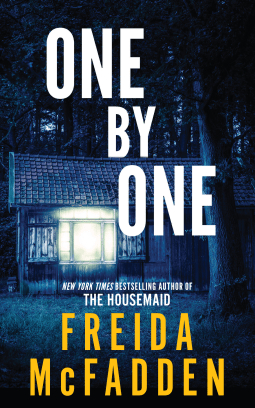
Freida McFadden One by One Poisoned Pen Press, April 2024.

Thank you, NetGalley, for providing me with this uncorrected proof for review.

One by One is a competent psychological thriller. The plot is an edgy combination of ill-assorted friends on a holiday jaunt that goes wrong with attempts to find the holiday hotel in which the group has booked thwarted by a compass that does not work, a map that is difficult to read and difficult terrain to traverse. Add to this large claw marks in trees and mobile phones with no signal, murders and blood-spattered disappearances and rising tension as disagreements erupt over leaving the first body in the forest while the group seeks  help, and it is inevitable that suspicion of friends and partners mounts. For Claire, the narrator,  the absence of her children becomes an even more immediate concern.

Interspersed with this present-day narration  is that of Anonymous. There is no clue to the identity of this person, even clues to their gender are cleverly obfuscated. However, their introductory account leaves the reader in no doubt: this person aims to be the only one alive at the end of the weeklong holiday.  See Books: Reviews for the complete review.

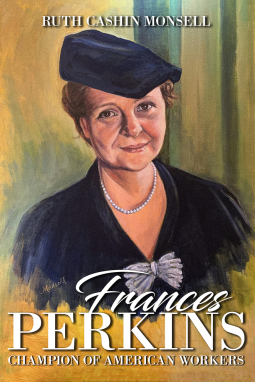
Ruth Cashin Monsell, Frances Perkins Champion of American Workers, Independent Publishers Group, April 2024.

Thank you, NetGalley, for providing me with this uncorrected proof for review.

There is a wealth of information in this biography written especially for Young Adult Readers. However, I am concerned that, although written for young people in a style that might have been engaging for past readers, this book will not resonate with the more sophisticated young reader. Some of the writing is overdone, with capitalised words or phrases, and the numerous exclamation marks have little role in an academic text, albeit for younger readers. Where characters engage in discussion, some of this, too, seems too simplistic. See Books: Reviews for the complete review.

Brilliant & Bold Sunday 19 May

11 am UK time

BRILLIANT & BOLD – BOLD & BRILLIANT

CONVERSATIONS WITH ‘ORDINARY’ & ‘EXTRAORDINARY’ WOMEN

 ‘Women’s Voices in a Time of Conservatism’

A series on women’s rights, challenges, perspectives, hopes and empowerment.

Brilliantly Bold Women! Invites all Bold and Brilliant Women to a monthly Zoom meeting – Women Worldwide Advancing Freedom & Equality … formerly the House of Lords/House of Commons, now a panel in global conversation, along with a global audience of engaging in discussion, debate, questions, answers, reflections and resounding demands for change.

As Mary Wollstonecraft said:

REFORM THE POSITION OF WOMEN, AND YOU REFORM THE WORLD

TBC: Jessica Williams is to speak about women in prisons

This zoom meeting is held at 11 am UK time. It is streamed to Facebook live but can also be watched after the meeting.

Mother’s Day

Letters from an American 11 May 2024

Heather Cox Richardson

Heather Cox Richardson from Letters from an American <heathercoxrichardson@substack.com> 

If you google the history of Mother’s Day, the internet will tell you that Mother’s Day began in 1908 when Anna Jarvis decided to honor her mother. But “Mothers’ Day”—with the apostrophe not in the singular spot, but in the plural—actually started in the 1870s, when the sheer enormity of the death caused by the Civil War and the Franco-Prussian War convinced writer and reformer Julia Ward Howe that women must take control of politics from the men who had permitted such carnage. Mothers’ Day was not designed to encourage people to be nice to their mothers. It was part of women’s effort to gain power to change society.

The Civil War years taught naïve Americans what mass death meant in the modern era. Soldiers who had marched off to war with fantasies of heroism discovered that newly invented long-range weapons turned death into tortured anonymity. Men were trampled into blood-soaked mud, piled like cordwood in ditches, or withered into emaciated corpses after dysentery drained their lives away.

The women who had watched their hale and healthy men march off to war were haunted by its results. They lost fathers, husbands, sons, and brothers. The men who did come home were scarred in both body and mind.

Modern war, it seemed, was not a game.

But out of the war also came a new sense of empowerment. Women had bought bonds, paid taxes, raised money for the war effort, managed farms, harvested fields, worked in war industries, reared children, and nursed soldiers. When the war ended, they had every expectation that they would continue to be considered valuable participants in national affairs, and had every intention of continuing to take part in them. 

But the Fourteenth Amendment, which established that Black men were citizens, did not explicitly include women in that right. Worse, it introduced the word “male” into the Constitution when it warned states against preventing “male inhabitants” from voting. In 1869, the year after the Fourteenth Amendment was added to the Constitution, women organized two organizations—the National Woman Suffrage Association and the American Woman Suffrage Association—to promote women’s right to have a say in American government.

From her home in Boston, Julia Ward Howe was a key figure in the American Woman Suffrage Association. She was an enormously talented writer who in the early years of the Civil War had penned “The Battle Hymn of the Republic,” a hymn whose lyrics made it a point to note that Christ was “born of woman.”

Howe was drawn to women’s rights because the laws of her time meant that her children belonged to her abusive husband. If she broke free of him, she would lose any right to see her children, a fact he threw at her whenever she threatened to leave him. She was not at first a radical in the mold of reformer Elizabeth Cady Stanton, who believed that women had a human right to equality with men. Rather, she believed strongly that women, as mothers, had a special role to perform in the world.

For Howe, the Civil War had been traumatic, but that it led to emancipation might justify its terrible bloodshed. The outbreak of the Franco-Prussian War in 1870 was another story. She remembered:

“I was visited by a sudden feeling of the cruel and unnecessary character of the contest. It seemed to me a return to barbarism, the issue having been one which might easily have been settled without bloodshed. The question forced itself upon me, ‘Why do not the mothers of mankind interfere in these matters, to prevent the waste of that human life of which they alone know and bear the cost?’”

Howe had a new vision, she said, of “the august dignity of motherhood and its terrible responsibilities.” She sat down immediately and wrote an “Appeal to Womanhood Throughout the World.” Men always had and always would decide questions by resorting to “mutual murder,” she wrote, but women did not have to accept “proceedings which fill the globe with grief and horror.” Mothers could command their sons, “who owe their life to her suffering,” to stop the madness.

“Arise, women!” Howe commanded. “Say firmly: ‘We will not have great questions decided by irrelevant agencies. Our husbands shall not come to us, reeking with carnage, for caresses and applause. Our sons shall not be taken from us to unlearn all that we have been able to teach them of charity, mercy and patience. We, women of one country, will be too tender of those of another country, to allow our sons to be trained to injure theirs.’”

Howe had her document translated into French, Spanish, Italian, German, and Swedish and distributed it as widely as her extensive contacts made possible. She believed that her Women’s Peace Movement would be the next great development in human history, ending war just as the antislavery movement had ended human bondage. She called for a “festival which should be observed as mothers’ day, and which should be devoted to the advocacy of peace doctrines” to be held around the world on June 2 of every year, a date that would permit open-air meetings.

Howe organized international peace conferences, and American states developed their own Mothers’ Day festivals. But Howe quickly realized that there was much to be done before women could come together on a global scale. She turned her attention to women’s clubs “to constitute a working and united womanhood.”

As Howe worked to unite women, she came to realize that a woman did not have to center her life around a man, but rather should be “a free agent, fully sharing with man every human right and every human responsibility.” “This discovery was like the addition of a new continent to the map of the world,” she later recalled, “or of a new testament to the old ordinances.” She threw herself into the struggle for women’s suffrage, understanding that in order to create a more just and peaceful society, women must take up their rightful place as equal participants in American politics.

While we celebrate the modern version of Mother’s Day on May 12, in this momentous year of 2024 it’s worth remembering the original Mothers’ Day and Julia Ward Howe’s conviction that women must have the same rights as men, and that they must make their voices heard.

Notes:

Julia Ward Howe Reminiscences, 1819-1899 (Boston: 1900).

The Saturday Read: #60

HARRY LAMBERT

Good morning. Welcome to the Saturday Read, the New Statesman’s weekly guide to politics, culture, books, and ideas. This is Harry, along with JasonPippaGeorge and Finn McRedmond, a regular contributor of ours who has joined the NS.


I went to Cambridge with George this week to visit its nascent protest movement. I found a microcosm of the neurotic internet brought to life on a small patch of grass. More below. First, Jason reports from DC, where he has been hanging out with Britain’s next foreign secretary. After that: this week’s picks. Also: summer is here.

I observed the continuing Tory pantomime – expertly analysed by my colleague Rachel Cunliffe in our magazine cover story – from afar this week as I have been in Washington DC, with David Lammy, Labour’s shadow foreign secretary. Britain’s politics, as we know, are juvenile: just reflect on the absurd antics in the House of Commons over recent days. But so is the way we treat our politicians.

Lammy arrived in Washington DC alone, having taken an early-morning connecting flight from Newark (parliamentary pressures meant he missed his planned flight to Dulles Airport). In DC he was met by Ben Judah, his adviser and ideas guru, who had travelled down from New York. Lammy had flown economy class and had no entourage, no diary secretary or personal assistant. No driver was waiting for him. His schedule in the Beltway was unrelenting but he used his time well – to network, to listen and to learn. He travelled around town in various Ubers.

A passionate liberal Remainer during the protracted Brexit wars – he was a prolific and belligerent tweeter – Lammy is also a self-described communitarian. As Britain’s chief-diplomat-in-waiting he wants to build bipartisan alliances in the national interest. And, as the first black Briton to attend Harvard Law School, Lammy has long-established family, personal and professional relationships in the United States. When he arrives in the capital senior politicians want to meet him, both Democrat and Republican.

Keir Starmer knows this, and it was one reason he wanted Lammy to lead for Labour on foreign affairs. Lammy was less sure when first approached. “I needed time to think about it. I have young children and there would be a lot of travelling,” he told me. But he was persuaded that it would be the right role for him at the right time: he is an Atlanticist and internationalist but accepts that the so-called liberal order has fragmented in what he calls “a newly dangerous world”.

On Wednesday morning Lammy gave a short speech at the Hudson Institute. He shared a platform with Jim Risch, a hard-line Republican right-wing senator and Beltway fixer. Before his right-leaning audience, Lammy described himself as a “good Christian boy” and a “conservative” Labour politician. He embraces ambiguity and paradox. In his recent Foreign Affairs essay he wrote that “progressive realism” would inform his approach to foreign policy. The phrase has resonated in Washington. “I like the realism,” Senator Risch quipped, “but not the progressive part.” The concept of progressive realism is inchoate. Is it a form of liberal universalism? Or an aspiration to have a foreign policy based on the social and economic rights of the British people? We shall find out before too long.

In his Hudson Institute speech, Lammy said: “I’m a man made of the Atlantic. My parents were from the Caribbean, their siblings spread out from New York to London. And I share something deep with millions of Americans. Because if I have the privilege to be foreign secretary, I will be the first to be able to trace his lineage back through the Atlantic slave trade.” The next afternoon, at a private meeting, Lammy was celebrated as a role model and inspiration by Hakeem Jeffries, who succeeded Nancy Pelosi as the minority party leader in the House of Representatives in 2023.

Lammy is an unusually interesting politician. He has what Paul Gilroy calls a kind of “double consciousness”: he knows who he is and where he is from and what he represents. And he is a realist: he wants to pursue liberal enlightened goals in a world that doesn’t follow liberal enlightened rules. “The world is what it is,” he said to me as we travelled in an Uber taxi to the White House. And then he repeated the statement: “The world is what it is.”

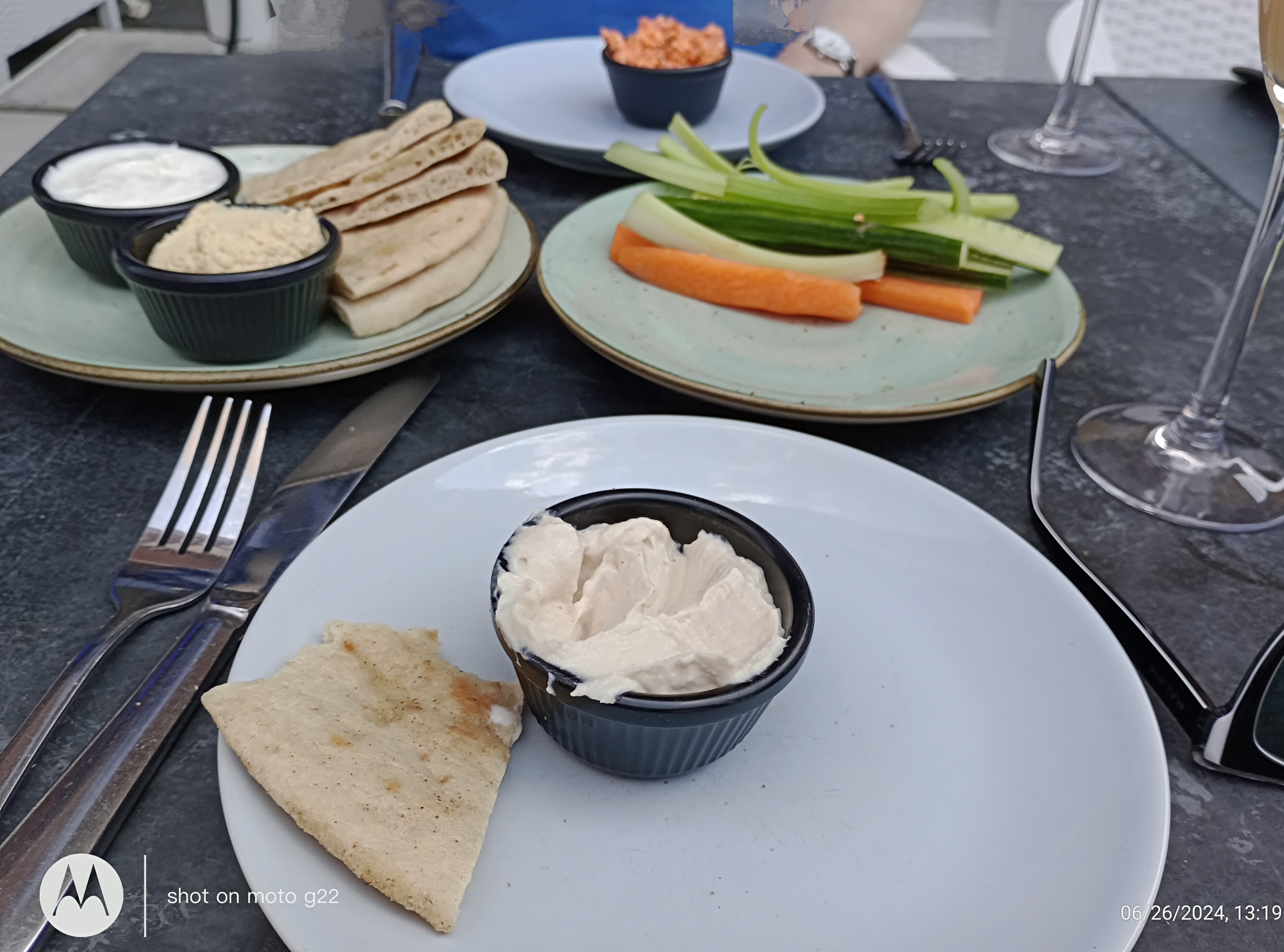
Cindy Lou has Mothers’ Day Lunch at PJs

Fortunately for me, and the other mothers who joined us at PJs, Heather Cox Richard’s story above has been replaced with honouring mothers. Of course, many of the women at PJs are feminists so the day for us was a combination of the recognition of women’s attributes apart from motherhood, and women as mothers.

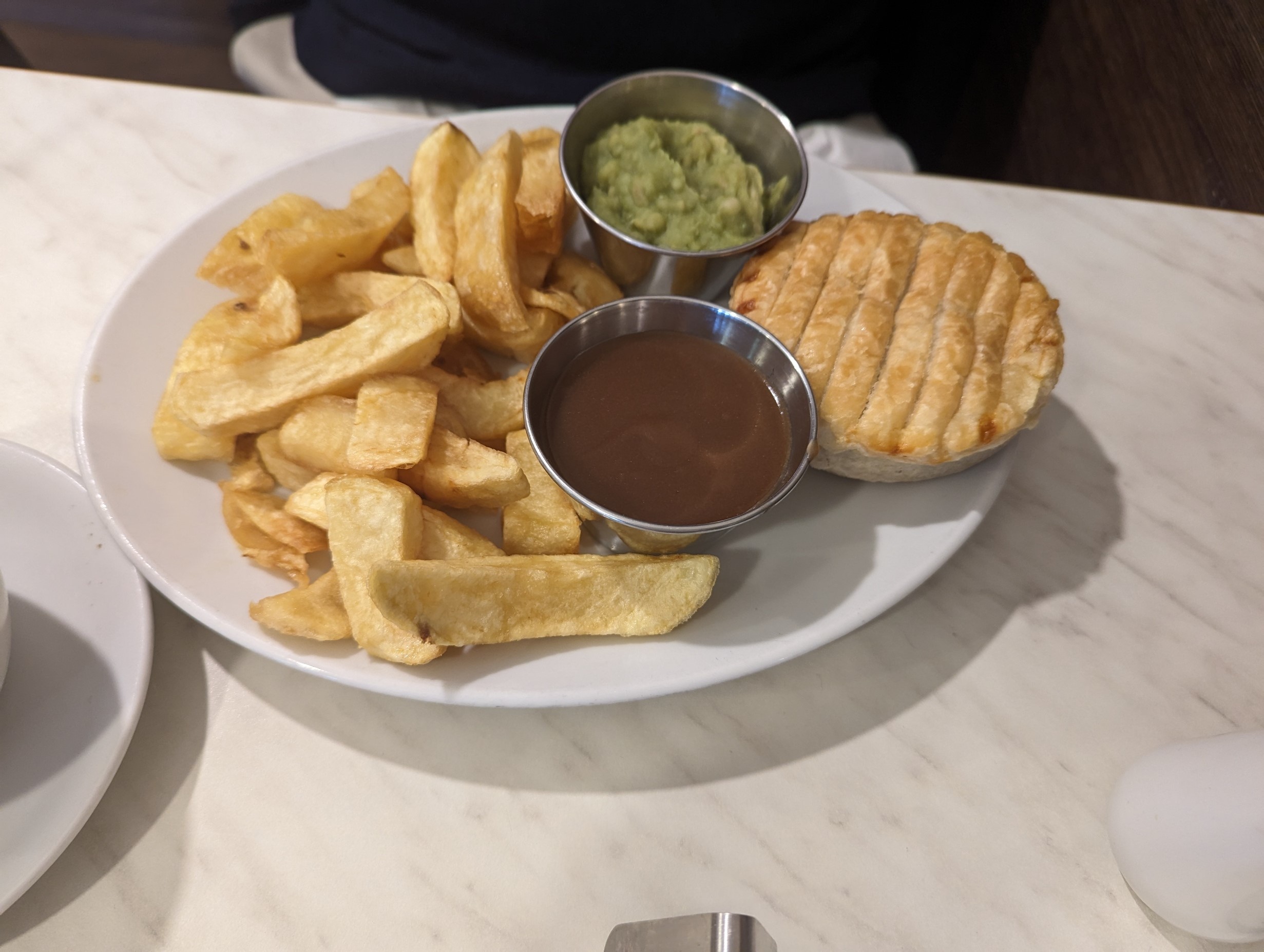
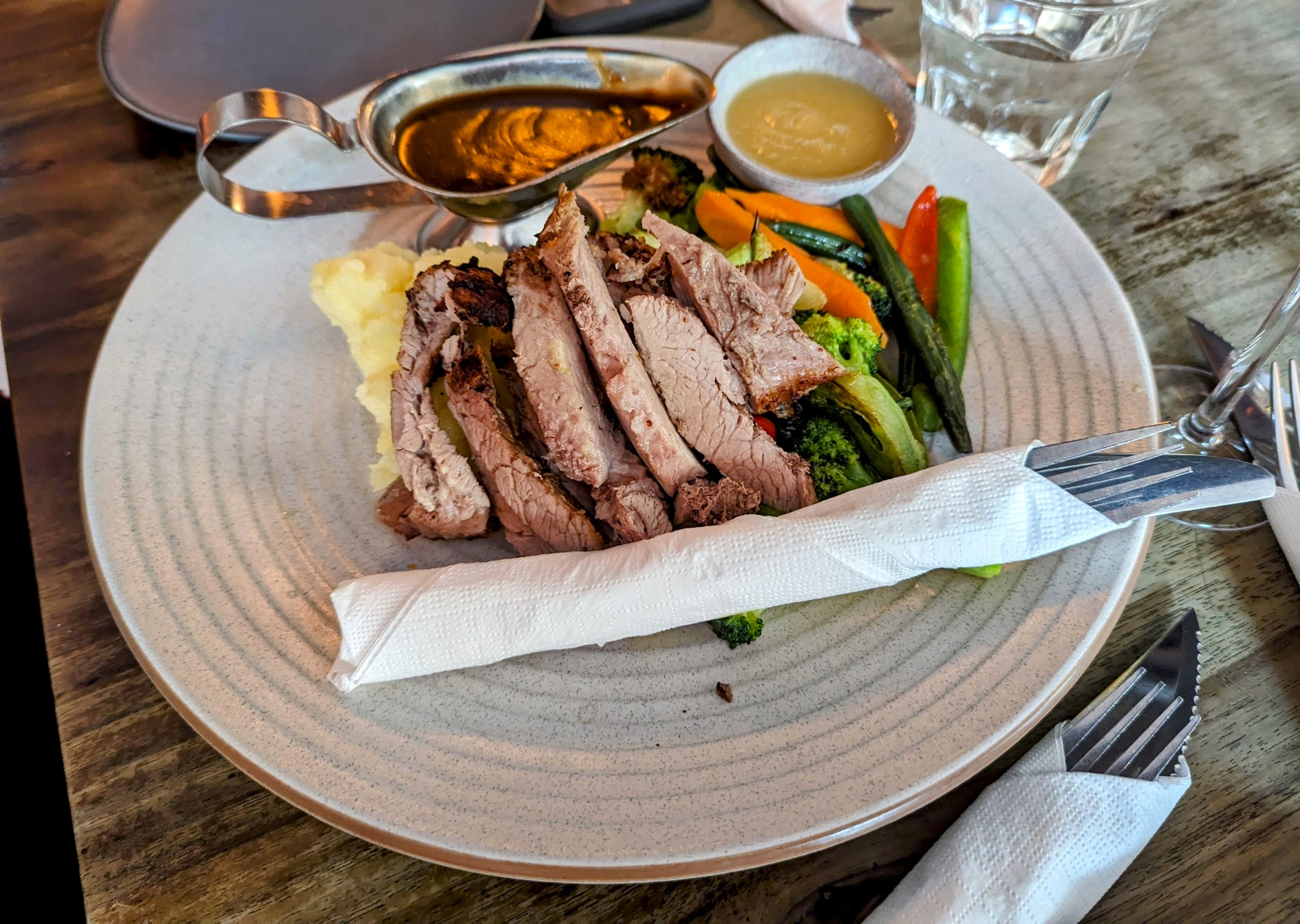
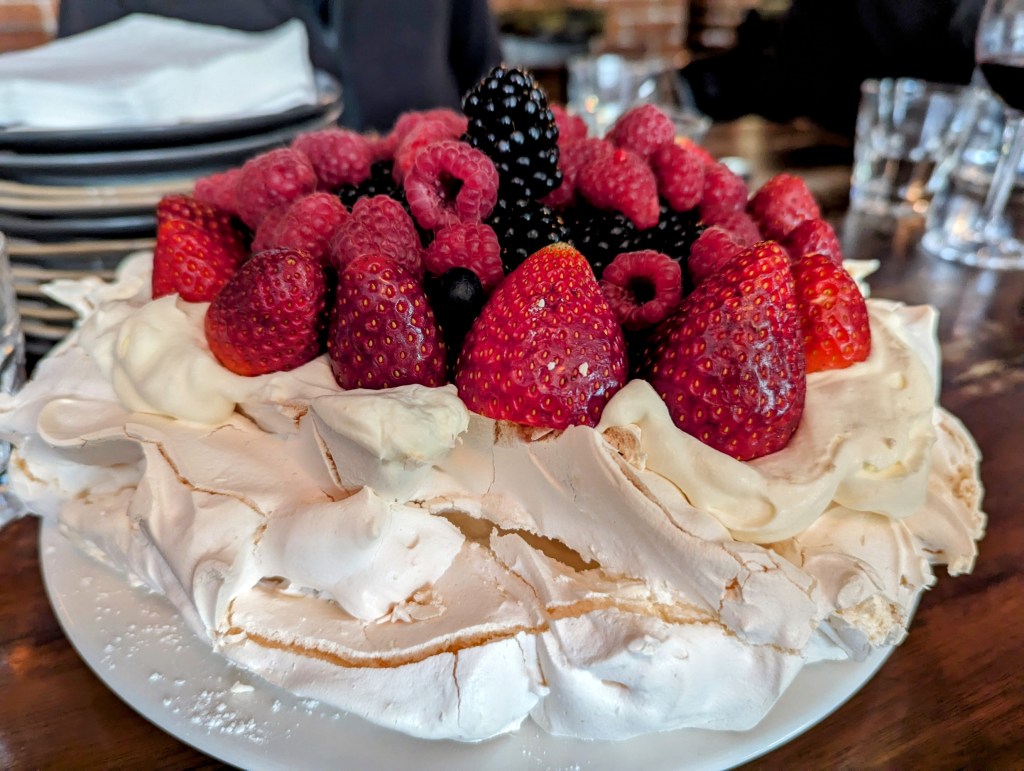
The special occasion was marked by PJs with a Mimosa for each mother on her arrival, an excellent roast pork meal, and the choice of the usual long and varied menu. Our lunch was followed by a wonderful mother’s pavlova (following in her mother’s footsteps). The pavlova was a delightful finish to a pub lunch that was reminiscent of those served in the British pub – something I am always glad to return to when there.

The Independent

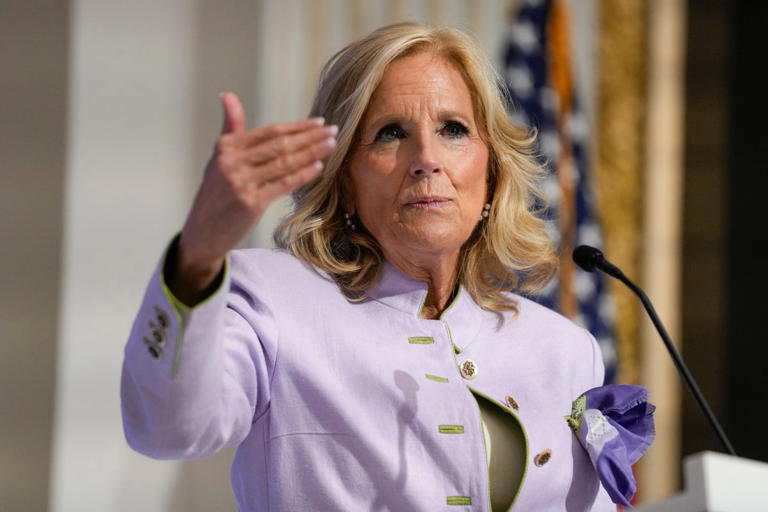
Jill Biden tells Arizona college graduates to tune out people who tell them what they ‘can’t’ do

Story by Darlene Superville

Jill Biden Commencement

Jill Biden Commencement© Copyright 2024 The Associated Press. All rights reserved.

Jill Biden on Saturday told Arizona community college graduates to tune out the people who like to tell them what they can’t do.

Then she got three more, including two master’s degrees and, at age 55, a doctorate in educational leadership. She went to school at night while raising three children and working full-time.

The first lady has been a teacher for more than 30 years, and since 2009 has taught English and writing at Northern Virginia Community College.

She encouraged the graduates to “drown out” the voices that say “can’t” and to remember the challenges they overcame to get to wear a cap and gown on Saturday.

“You’ve met life’s challenges before. And you know that on the other side of ‘can’t’ lies the beauty and joy and surprise of life, the adventure that changes us for the better,” she said, according to excerpts of her prepared remarks shared with The Associated Press. “And you are ready for it.”

Biden said the graduates should remember that they are strong and resilient, and shouldn’t be afraid to face the unknown.

“Expect anything and everything. Take the risks that scare you. Don’t hesitate when you see the chance for joy. Share your stories, too. Be kinder. Love harder. Dream bigger. Find your adventure and keep your courage to say ‘yes.,'” she said.

To the Class of 2024, she said, “Let the world feel your thunder!” The college mascot is the thunderbird and” feel the thunder” is the school slogan.

“And the next time that someone tells you that you ‘can’t,’ you’re going to say, ‘Oh yeah?…Watch me,’” Biden said.

Independent readers are independently-minded global citizens. They are not defined by traditional demographics or profiles, but by their attitudes. In today’s increasingly fragmented world, communities value real facts and frank opinions delivered first-hand from a non-biased news brand that they can trust. Armed with information and inspiration, Independent readers are empowered and equipped to take a stand for the things they believe in.

Milli Hill

MAY 08, 2024
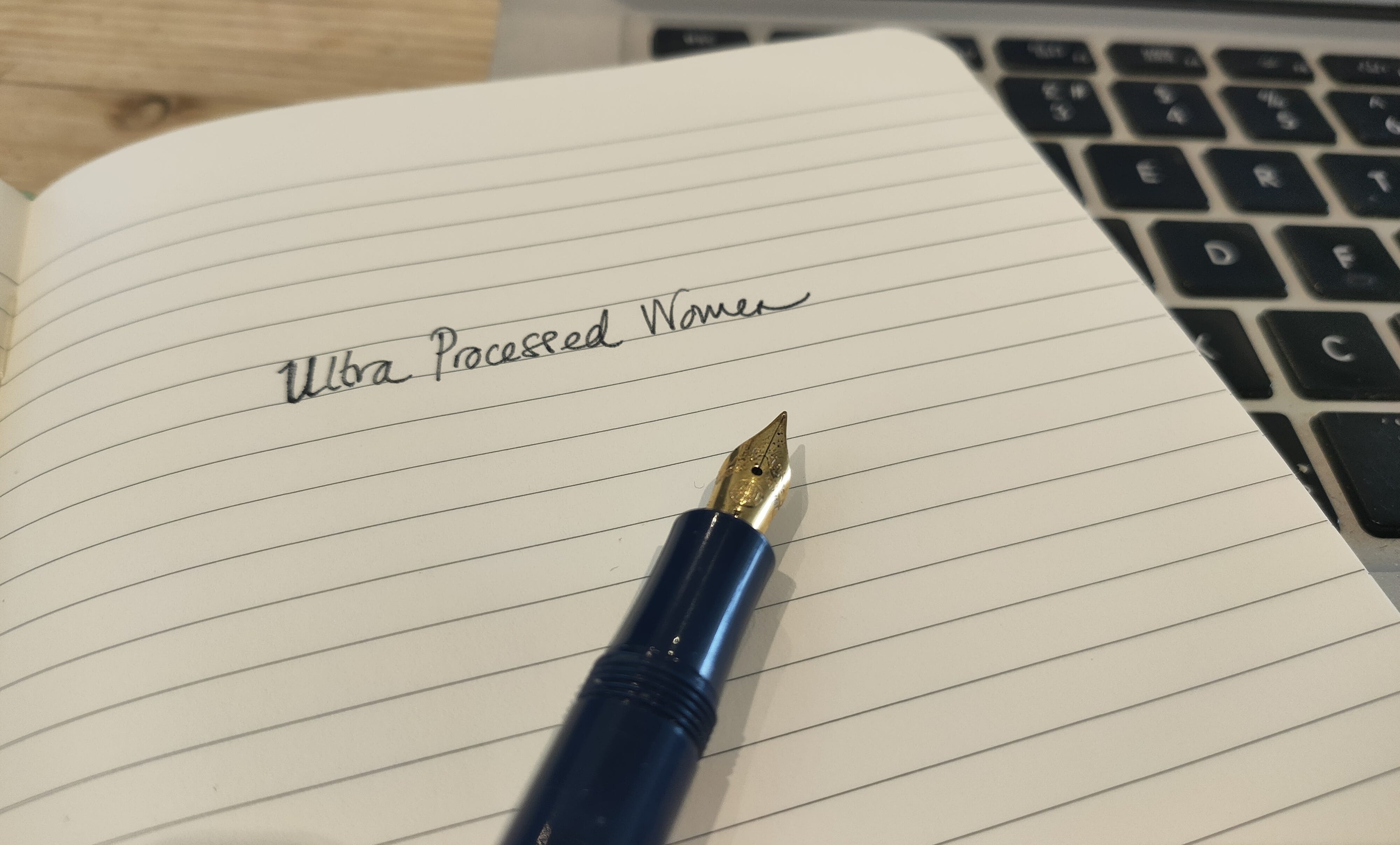
Announcing my new book: Ultra Processed Women – It will be published in February 2025.

Hi everyone, as you know, I’ve been desperate to tell you my book news over the past few weeks and NOW I FINALLY CAN!!

I’m really proud to announce that ULTRA PROCESSED WOMEN will be published by HQ (Harper Collins) in February 2025.

It will be a deep dive into the impact of ultra-processed food (UPF) on women’s health.

UPF is a hot topic right now but once again I’m noticing the impact on women being left off the table. This book will change that!

I have started a new section of my substack today where I will be keeping you all updated on progress of the book and some exclusive thoughts and ideas as I go.

As I’ve mentioned previously to some of you, I am looking for women to experiment with the impact of diet in small facebook groups. I would like to hear from you if you have either endometriosis or are struggling with menopause symptoms (with or without HRT), and would like to be involved. Please email me for more info. You can reply to this substack or message millihillwriter@gmail.com.

If you wish to you can preorder the book from today via Amazon!

Preorder Ultra Processed Women

I am beyond excited about this book and extremely grateful for the opportunity to write it. Yet another area where sex matters! Looking forward to sharing news with you over the coming months. Milli x

From the Gender Institue Newsletter 13 May 2024

Mentored to Perfection The Masculine Terms of Success in Academia

SIMONE DENNIS AND ALISON BEHIE

Mentored to Perfection: The Masculine Terms of Success in Academia examines how mentoring programs between women tend to replicate the hierarchical relations of patriarchy that they are meant to dismantle. Simone Dennis and Alison Behie argue that, while paradigmatic mentoring programs look like networking support services for neophytes, these mentorships nevertheless replicate the very institutional structures they seek to uproot. The generosity that senior women show to junior women as they share their tips and offer their support ironically obscures participants’ involvement in debt relations and the biases of replicating a particular type of success. This book considers the possibilities for disrupting our tendency to reproduce ourselves in the masculine terms of success.

Reviews

A challenging and persuasive provocation. The current “neoliberal” university is a patriarchal institution in which success is measured according to an “economy of knowledge” that favours men. What is called for, Simone Dennis and Alison Behie argue, in a lucid analysis closely tied to Australian ethnography, is mentorship as a form of what Roslyn Diprose calls “corporeal generosity,” whereby the mentee does not emulate or imitate the mentor but both open themselves to the radical alterity intrinsic to the embodied identity and capability of each. Through such sharing, the order of the same might be transcended and caring institutional forms introduced in which otherness—of women, of the precariat, of individuality itself—is recognised and respected.

— Nigel Rapport, University of St Andrews; author of Cosmopolitan Love and Individuality: Ethical Engagement beyond Culture

Last week I went to the Canberra Museum and Gallery exhibition of Backyard Archeology. This week I see that the Museum is hosting a Symposium on the topic. It will be held on 25 May 2024 12.30 – 3.30 pm. The venue is 176 London Circuit, Canberra ACT.

Event by Canberra Museum and Gallery

Tickets events.humanitix.com/backyard-archaeology-symposium-knrklqc6

Public:  Anyone on or off Facebook. 10 free places for full time students. 

From backyard dunnies and bunkers to the backyard of Blundells Cottage. Hear how backyard studies can reveal and inspire stories of everyday life through found and excavated objects and nurtured gardens.

The presenters are Steve Brown (Backyard Archaeology), Martin Rowney (Backyard Blundells), Nicola Hayes (Backyard Bunker), Doug Williams (Backyard Dunny), and Anne Claoue-Long (Backyard Garden).

The Symposium will appeal to people interested in family history research and creating place history narratives. The presentations aim to raise awareness of archaeology, history, and horticulture in local contexts and of personal importance (as opposed to the grand and the best).

The Symposium is supported by the Canberra Museum + Gallery, University of Canberra ‘Everyday Heritage Project’ and Australian Archaeological Association.

Part of National Archaeology Week.

Alice Ann Munro (nee Laidlaw) 10 July 1931, Wingham, Ontario – 13 May 2024, Port Hope, Ontario

May be an image of 1 person and text that says 'ALICE MUNRO the Senter tthe Youc Co You erter 0)"M erti slo acle gel, gels ₽ CANADA'

Week beginning May 8 2024

Kerry Wilkinson The Call Bookouture, April 2024.

Thank you, NetGalley, for providing me with this uncorrected proof for review.

I have been an avid follower of Kerry Wilkinson’s work, the stand-alone novels and the absorbing Whitecliff Bay series. The Call, however, has been a great disappointment. Admittedly, I was intrigued by the premise and the first part of the novel. It begins with a scene between two sisters in a beautiful location. Their father’s walking off his back pain from the flight is his familiar reaction to any health issue. Familiar holiday activities on the lake break the silence. Even as the loneliness and difficulty in getting to the holiday house by the lake on Vancouver Island establishes the gradual fear that will grow as the narrative proceeds, a comfortable atmosphere has been established. With a child fast asleep after the flight from England, one husband in bed using his laptop and two sisters reminiscing and drinking happily together, what can go wrong? See Books: Reviews for the complete review.

.

Kerry Fisher Escape to the Rome Apartment Book 3 of The Italian Escape, Bookouture, April 2024.

Thank you, NetGalley, for providing me with this uncorrected proof for review.

Kerry Fisher’s Italian Escape series is a pleasant combination of romance, social commentary and the most engaging descriptions of Italian towns, culture and life. With its two main characters, Ronnie and Marina, friends in their seventies who live in the apartments, some continuing secondary characters and the introduction of new ones, the Italian Escape series is an engaging read.  Although I found Books 1 and 2 more absorbing, Book 3 has a charm of its own, beginning with Sara’s escape from her life in England with a demanding husband and twin sons to a chance meeting on the plane with a woman whose joyous approach to life begins to work a change in Sara’s.

Sara, now in her fifties, is returning to Italy years after her romance with an Italian lover failed. Although this provides a background to her visit, most importantly she has returned to scatter the ashes of her best friend, Lainie, with whom she spent a summer in Italy. She has spent her life after this joyous time bowing to society’s expectations. However, even before she reaches the Rome apartment where Ronnie and Marina’s plans help women change their expectations of what life can offer them, Sara has rebelled. She has refused to bend to her tyrannical boss at the prestigious women’s magazine where she is lifestyle editor, giving her the opportunity to stay in Italy for as long as she wants.  It will take her longer to change her wife and mothering mode, but this at least is a start. See Books: Reviews for the complete review.

The Saturday Read: Bright green light

Harry Lambert @harrytlambert1 link

Staff writer, New Statesman | Editor, The Saturday Read https://saturdayread.substack.com/

…, here is a fascinating (sobering?) graphic for you, which I have annotated in crayon. It shows support for Trump and Biden split by how a voter gets their news. Trump’s superficial appeal is sustaining him, whatever it is exactly. He is thriving in news deserts, among people who don’t follow the news at all, or only follow events on YouTube and Google. Alphabet owns both companies. If Trump wins this year, expect a wave of think pieces attacking it for the way it has allowed these platforms to develop as sources of information, just as Facebook was attacked in 2016.

Remnants of a Legendary Typeface Have Been Rescued From the River Thames

Doves Type was thrown into the water a century ago, following a dispute between its creators.

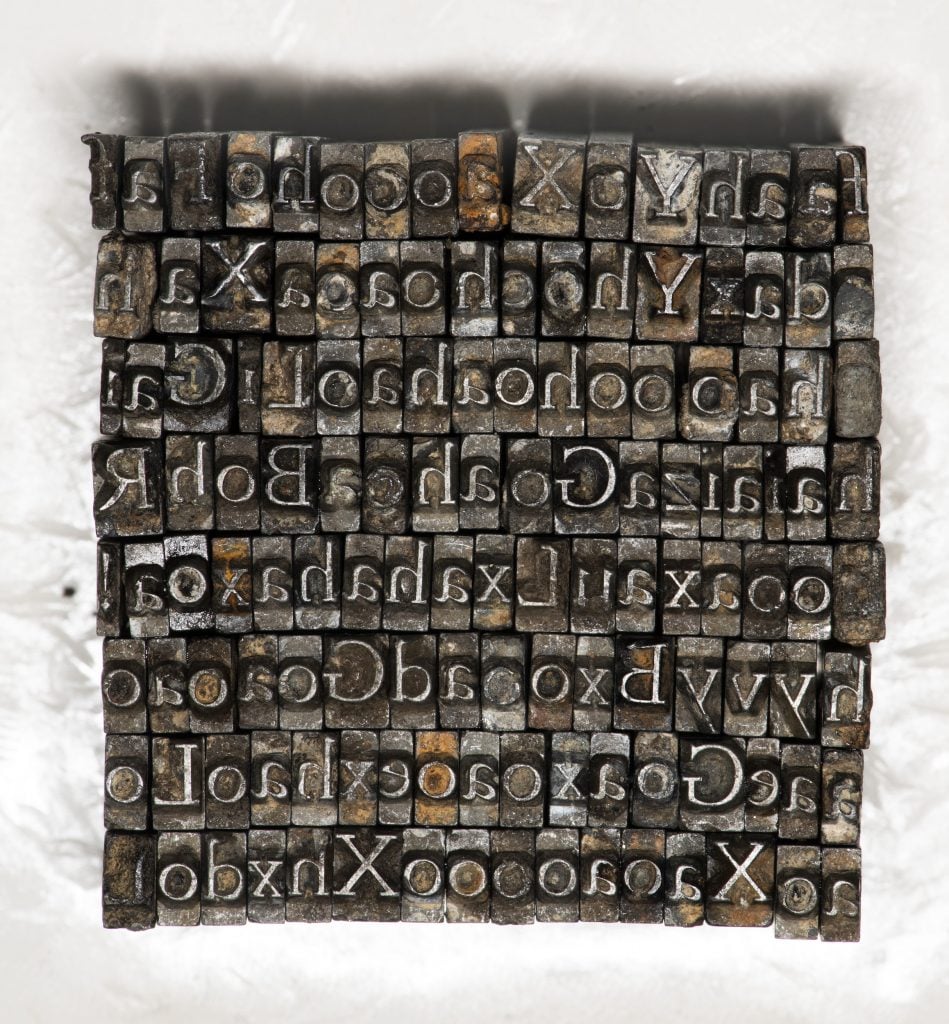
metal pieces of letterpress Doves Type in a pile
Doves Type recovered by Robert Green, 2014. Photo Matthew Williams Ellis

by Holly Black May 5, 2024 

The depths of the river Thames in London hold many unexpected stories, gleaned from the recovery of prehistoric tools, Roman pottery, medieval jewelry, and much more besides. Yet the tale of the lost (and since recovered) Doves typeface is surely one of the most peculiar.

A little over a century ago, the printer T.J. Cobden-Sanderson took it upon himself to surreptitiously dump every piece of this carefully honed metal letterpress type into the river. It was an act of retribution against his business partner, Emery Walker, whom he believed was attempting to swindle him.

The pair had conceived this idiosyncratic Arts and Crafts typeface when they founded the Doves Press in the London’s Hammersmith neighborhood, in 1900. They worked with draftsman Percy Tiffin and master punch-cutter Edward Prince to faithfully recall the Renaissance clarity of 15th-century Venetian fonts, designed by the revolutionary master typographer Nicolas Jensen.

metal pieces of the Doves type in a block

Doves Type recovered by Robert Green, 2014. Photo Matthew Williams Ellis

With its extra-wide capital letters, diamond shaped punctuation and unique off-kilter dots on the letter “i,” Doves Type became the press’s hallmark, surpassing fussier typographic attempts by their friend and sometime collaborator, William Morris.

The letterforms only existed as a unique 16pt edition, meaning that when Cobden-Sanderson decided to “bequeath” every single piece of molded lead to the Thames, he effectively destroyed any prospect of the typeface ever being printed again. That might well have been the case, were it not for several individuals and a particularly tenacious graphic designer.

Robert Green first became fascinated with Doves Type in the mid-2000s, scouring printed editions and online facsimiles, to try and faithfully redraw and digitize every line. In 2013, he released the first downloadable version on typespec, but remained dissatisfied. In October 2014, he decided to take to the river to see if he could find any of the original pieces.

lead pieces of letterpress held in an open palm at Emery Walker's House

Doves Type recovered and held here by Lukasz Orlinski at Emery Walker’s House. Photo: Lucinda MacPherson.

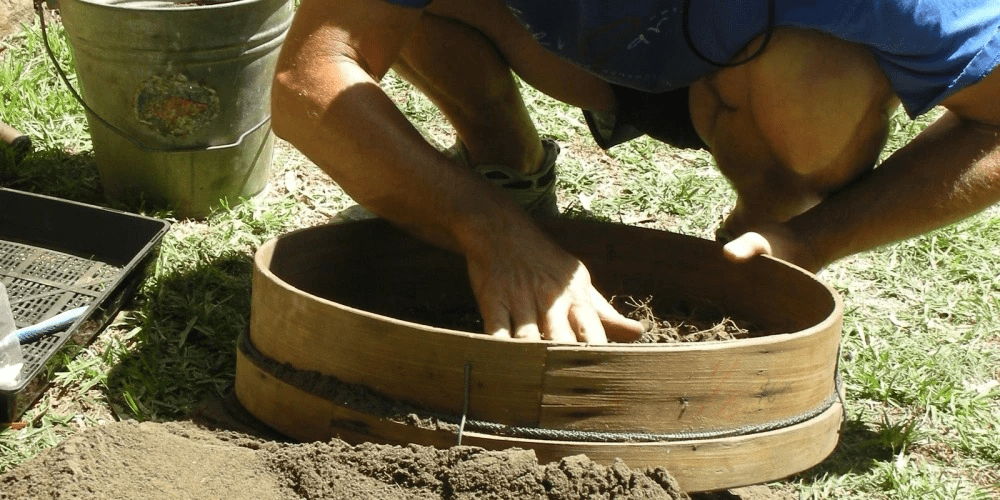
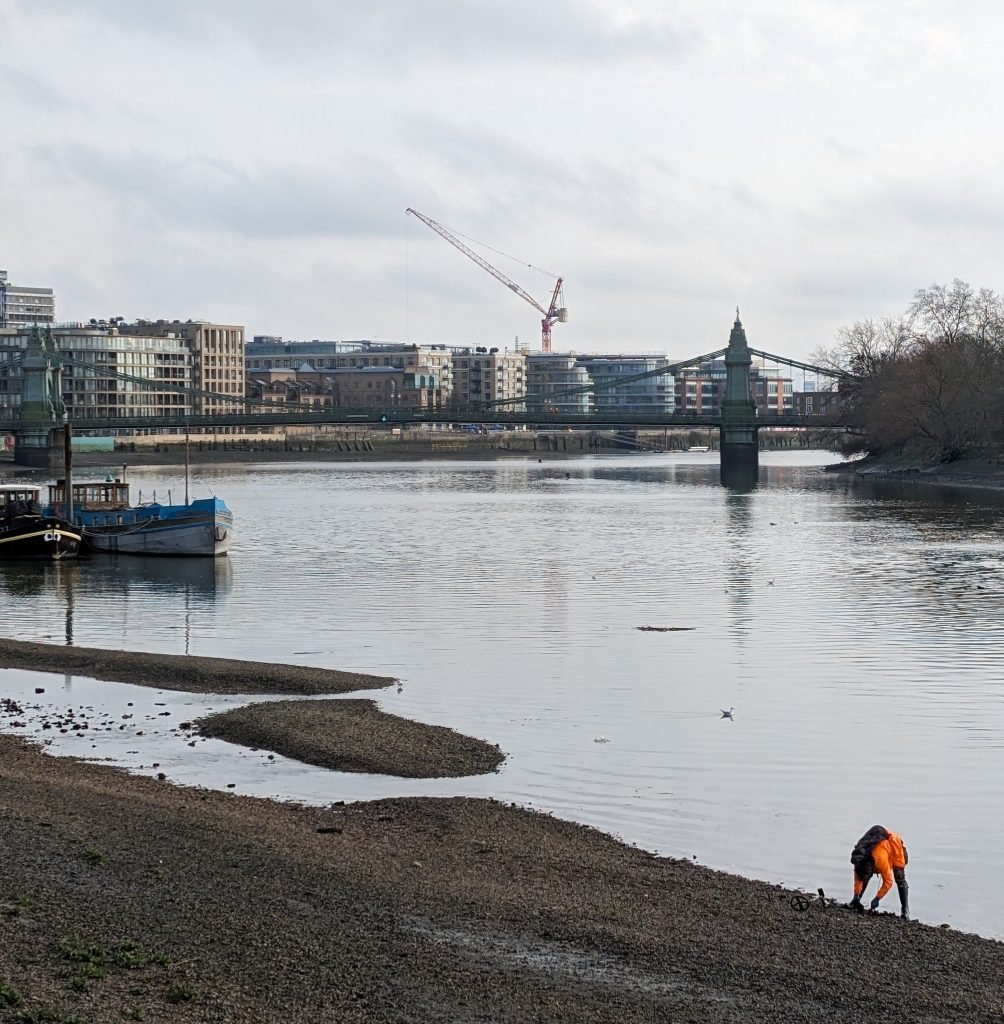
Using historical accounts and Cobden-Sanderson’s diaries, he pinpointed the exact spot where the printer had offloaded his wares, from a shadowy spot on Hammersmith bridge. “I’d only been down there 20 minutes and I found three pieces,” he said. “So, I got in touch with the Port of London Authority and they came down to search in a meticulous spiral.” The team of scuba divers used the rather low-tech tools of a bucket and a sieve to sift through the riverbed.

Green managed to recover a total of 151 sorts (the name for individual pieces of type) out of a possible 500,000. “It’s a tiny fraction, but when I was down by the river on my own, for one second it all felt very cosmic,” he said. “It was like Cobden-Sanderson had dropped the type from the bridge and straight into my hands. Time just collapsed.”

The finds have enabled him to further develop his digitized version and has also connected him with official mudlarks (people who search riverbanks for lost treasures, with special permits issued) who have uncovered even more of the type.

A mudlark by the Thames with Hammersmith Bridge in background. Photo: Lucinda MacPherson.

Jason Sandy, an architect, author and member of the Society of Thames Mudlarks, found 12 pieces, which he has donated to Emery Walker’s House at 7 Hammersmith Terrace. This private museum was once home to both business partners, and retains its stunning domestic Arts and Crafts interior.

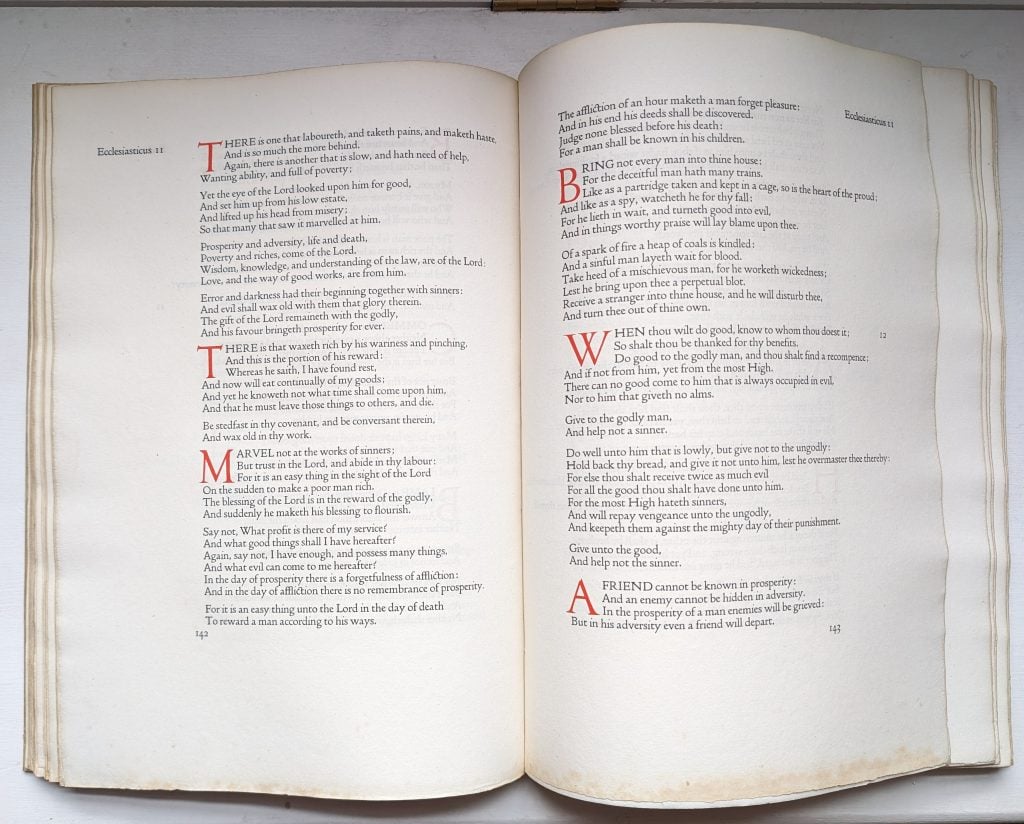
Much like Green, Sandy was captivated by the Doves Type story, and mounted an exhibition at the house that displays hundreds of these salvaged pieces, including those discovered by Green, as well as mudlarks Lucasz Orlinski and Angus McArthur. The show was supplemented by a whole host of Sandy’s other finds, including jewelry and tools. An extant copy of the Doves English Bible is also on display.

The Doves Bible returns to Emery Walker’s House. Photo: Lucinda MacPherson.

“It is not that unusual to find pieces of type in the river,” Sandy said. “Particularly around Fleet Street, where newspaper typesetters would throw pieces in the water when they couldn’t be bothered to put them back in their cases. But this is a legendary story and we mudlarks love a good challenge.” The community is naturally secretive about exactly where and how things are found. For example, Orlinski has worked under the cover of night with a head torch, to search for treasures at his own mysterious spot on the riverbank.

For Sandy, the thrill comes from the discovery of both rare and everyday artifacts, which can lead to an entirely new line of inquiry: “The Thames is very democratic. It gives you a clear picture of what people have been wearing or using over thousands of years. And it’s not carefully curated by a museum. The river gives up these objects randomly, and you experience these amazing stories of ordinary Londoners. It creates a very tangible connection to the past. Every object leads you down a rabbit hole.”

Mudlarking: Unearthing London’s Past” is at Emery Walker’s House, 7 Hammersmith Terrace, London, through May 30.

Kate Millett pioneered the term ‘sexual politics’ and explained the links between sex and power. Her book changed my life

Published: May 3, 2024 6.11am AEST

Barbara Caine

Professor of History

2011–2019 Professor of History and Head of the School of Philosophical and Historical Studies, University of Sydney

I am a historian interested in histories of feminism and in questions about history and the individual life. My publications include: Biography and History, Forthcoming April 2010, Palgrave Macmillan (History and Theory series)
“Destined to be Wives: The Sisters of Beatrice Webb”, Oxford University Press, 1986, “Victorian Feminists”, Oxford University Press, 1992,” English Feminism, c1780-1970, Oxford University Press”, 1997, Bombay to Bloomsbury: the Stracheys, c 1850-1950, Oxford University Press, 2005, Biography and History, Bloomsbury 2012, Women and the Autobiographical Impulse, Bloomsbury 2023. I was one of the editors of the Companion to Australian Feminism, Oxford 1998.

I still think of Kate Millett’s Sexual Politics as the book that changed my life. Its insistence on the importance of patriarchal structures and sexual hierarchies in literature and history, as well as in contemporary society, was eye-opening.

The 1970s saw the publication of several classic feminist texts, including Shulamith Firestone’s The Dialectic of Sex, Eva Figes’ Patriarchal Attitudes and Germaine Greer’s The Female Eunuch. For the most part, these books grew out of the discussions and consciousness-raising groups associated with the early stages of the Women’s Liberation movement.

Many women who became feminists in the 1970s still ask which of these books was most important to them. For me, the answer is unquestionably Sexual Politics.

I was a graduate student, just embarking on a PhD on a Victorian man of letters, when I first read Sexual Politics (or rather, a review of it that sent me racing for the book). It offered a whole new approach to history and to intellectual life.

Until I read it, I lacked the self-confidence – and even the language required – to address the history of the 19th century from the vantage point of a woman. I had believed in the notions of scholarly impartiality and “objectivity” that were dominant in the 1960s – and would come to be seen as expressing views reflecting the position of privileged white men.

Armed with a new critical stance, I went on to become a feminist historian, teaching and researching women’s lives and the history of feminism.

The term “sexual politics”, very widely used now, was then quite new. Millett was the first person to use it in print. Aware it was not only new, but controversial (and to some, incomprehensible), she explained at some length why she saw sexual relationships – and indeed the act of sex itself – as political.

She explained why we needed to move beyond using the term “political” just to refer to a narrow world of parties, chairmen and meetings. Its use, she argued, should be extended to describe “power-structured relationships, to all arrangements whereby one group of persons is controlled by another”.

Power, sex, Miller and Mailer

To emphasise the power structure in sexual relationships, Millet began the book with an extended passage from Henry Miller’s Sexus, which graphically depicts a cruel sexual conquest. It reads in part:

It happened so quickly that she didn’t have time to rebel or even to pretend to rebel. In a moment I had her in the tub, stockings and all […] I lay back and pulled her on top of me. She was just like a bitch in heat, biting me all over, panting, gasping, wriggling like a worm on the hook.

The brutal misogyny evident in Miller’s laudatory depiction of the way his hero, Val, sexually dominates and subdues Ida, the wife of his erstwhile friend, Bill Woodruff, is as shocking to read now as it was in 1970.

Back then, Millett’s insistence on discussing the misogyny in this widely admired text was striking. So was her refusal to privilege the book’s freedom and sexual explicitness as the topic of discussion. The “almost supernatural sense of power” and dominance a male reader might experience, she argued, was very different from what a female reader might experience.

In a chapter titled “Instances of Sexual Politics”, Millett turned from Miller to another iconic mid-20th-century male novelist, Norman Mailer, and his book, An American Dream. Her discussion underlined the extreme violence towards women the kind of sexual domination in Miller and Mailer’s work could encompass. (Ironically, perhaps, the current cover of the Modern Classics edition of Sexus carries a rave from Mailer.)

On hearing the wife he had separated from had engaged in sex with others (something he had done even during their marriage), Rojack, Mailer’s hero, first sodomises and then kills her. Both Rojack and his creator seem to feel this act is entirely justified. There is little motive for this killing, Millett notes, “beyond the fact that he is unable to master her in any other way”. Rojack is exhausted when he finishes – though he now feels triumphant and follows this act of mastery by buggering her maid.

At a time when there is so much awareness of the link between gender hierarchies and disrespect for women with rape and domestic violence, it is quite shocking to see how recent our consciousness of these connections are.

Both Miller and Mailer, as Millett shows, depict their violent, controlling men as heroes. They are entitled to project their masculinity and demand its recognition in ways that would be unthinkable in ostensibly serious literature now.

Her feminist critique of these immensely influential male novelists was unprecedented. The fact she began and ended her book with this critique illustrates how seriously she took literature and ideas. She saw them as the basis of political consciousness and conduct.

Kate Millett’s feminist critique of influential male novelists like Norman Mailer was ‘unprecedented’. Michael Ward/Getty Images

But not all literary depictions of sexual cruelty take this triumphalist tone, Millett argues. She cites the example of French writer Jean Genet, who was abandoned by his mother, spent part of his adolescence at a reform school and spent time as a homeless male prostitute. Drawing on his own painful personal experiences, Millett argues, Genet depicts sexual violence and brutality from the vantage point of those subjected to it.

Operating in a homosexual world, he sometimes chooses drag queen prostitutes brutalised by pimps, clients and lovers for this purpose. The abject drag queens at the bottom of this hierarchy show what it is to be female, in this “mirror society of heterosexuality”. Genet also wrote about women, in his play The Maids and other works, using them, too, to show that brutal sexual hierarchies both reflect and provide the foundations for other social hierarchies and structures.

For Genet, Millet argues approvingly, sex and the power structure around it is “the most pernicious of the systems of oppression”.

Naming and defining ‘patriarchy’

As she moved from discussing “instances of sexual politics” to articulating its theory, Millett, like many other feminists of the 1970s, framed her discussion in terms of the patriarchy. The naming and defining of “patriarchy” as a system “whereby that half of the populace which is female is controlled by that half which is male”, was seen at the time as a major step in understanding the nature of women’s oppression.

It offered a framework for showing how widespread the oppression of women was – and the many ways it was reinforced. It was not only a system of government, but an ideology that conditioned both men and women to accept a particular form of sexual hierarchy and to develop an appropriate understanding of their role, status and temperament within it.

Millett, like many feminists of the 1970s, framed her discussion in terms of the patriarchy. Women’s Lib March Washington DC 1970. Library of Congress/Warren K Leffler

The concept of patriarchy also offered a way of understanding the consequences of the biological differences between the sexes. It could be seen in sociological terms in the constitution of the family. There was an anthropological dimension, too, as it was reinforced through myth and religion.

Psychologically, it was reinforced through the infantilisation of women and in their internalised sense of inferiority and self-hatred. Patriarchy could also be seen in economic and educational systems that perpetuate women’s inferiority and economic dependence – and in the many ways force has been used in legal and cultural systems.

Intellectual courage and imaginative power

Millett’s discussion of sexual politics was extraordinarily wide-ranging. After introducing some of her key literary texts, she provided an extended historical discussion of the 19th and early 20th centuries, as historical background to the present.

Broadly linking Britain and America, she explored what she saw as the “first sexual revolution”: the 19th-century feminist campaigns for women’s education and political rights, and the texts, like John Stuart Mill’s essay The Subjection of Women, that delineated and critiqued the inferior position occupied by women.

In Millett’s historical sweep, the 19th-century sexual revolution was followed by a counterrevolution, comprising the attacks on women’s rights evident in Nazi Germany and the Soviet Union under Stalin, on one hand, and the impact on American women of Freudian psychoanalysis and the ideas of some of the post-Freudians, on the other.

The concept of “penis envy” was a particular target, showing so clearly how women’s inferiority was internalised. The counterrevolution provides the context for the more detailed discussion of the male novelists who are dealt with in more detail in the book’s final section – where D.H. Lawrence is added to Miller and Mailer. These three iconic male writers, who both reflect and shape cultural attitudes, are described by Millett as “counter-revolutionary sexual politicians”.

The scope of Millett’s discussion is impressive. Its breadth speaks both to her own intellectual courage and imaginative power, and to the limited state of scholarship on women at the time she was writing.

Kate Millett. Linda Wolf/Wikipedia, CC BY

This book began as a PhD at Columbia University. While Millett was allowed extraordinary latitude, she had to make do with very limited resources. If one were attempting to cover the historical span she dealt with now, one would be overwhelmed by the vast scholarship on gender in the history, literature and sociology of the 19th and 20th centuries that she addresses. But all of this was in the future, and she had to make do with a very small number of works, as her own bibliography makes clear.

‘A revelation’ or ‘like homework’?

It was the combination of this broad scope and her incredible intellectual freedom and independence that were most important to me when I first read her book.

Millett was a revelation, with her sharp (and sometimes funny) feminist critique of canonical texts and her critical reading of history that placed women at the centre. I was also struck by her endorsement of some historical figures, like John Stuart Mill, and ridiculing of others, like art critic John Ruskin or Tennyson.

Her analysis of the Victorian period was particularly appealing to me, but so too was her literary analysis. All these things would become central in feminist scholarship in the subsequent decades. But her work linked this scholarly dimension to a contemporary political critique and program.

For Millett, this critical reading of these canonical male texts was in itself a political act, demolishing a canon and allowing a new space for women to read. I found it exhilarating – though it did mean I ultimately abandoned that PhD.

Some found Sexual Politics hard to read and too abstract to be of use to contemporaries concerned about women. In the Guardian, Emily Wilson suggested it could feel “at times, just a wee bit like homework”. But its energy and sweep appealed to many – and Wilson herself concluded “you will undoubtedly be a better woman for it”. Sexual Politics was a sensation, an instant bestseller, and for a couple of years Millett found herself constantly giving university talks and lectures, and appearing in the media.

She was seen by some as the central intellectual figure in the women’s movement – not a status she ever sought or claimed. Shortly after the book was published, she featured on the cover of Time Magazine in August 1970, an extended and rather curious essay titled: “Who’s come a long way, baby?”.

The essay is curious because the author seems to have not quite decided whether to praise Millett or condemn her. Sexual Politics had then sold more than 15,000 copies and was in its fourth edition – despite being, as the essay noted, “a polemic suspended awkwardly in academic traction”. Alongside its presentation of Millett’s views, the essay offered facts and figures to confirm the subordinate status of women in the United States and an account of the lengthy battle waged for women’s rights.

At times, it seemed almost admiring – and to seek to support her overall argument. But it made the discomfort of some of her male readers very clear, quoting one of her thesis examiners, who said reading the book “is like sitting with your testicles in a nutcracker”. The sting was there from the start, however. Millett was described not only as an “ideologue”, but as “the Mao Tse-tung of Women’s Liberation” – which didn’t reflect her sense of intellectual freedom.

The essay also quoted several male anthropologists and medical specialists who questioned her scholarship in their particular area and deplored her lack of concern about motherhood. Some, like Canadian anthropologist Lionel Tiger, then became the subject of feminist criticism. But in the essay, their expertise is unquestioned.

Whatever admiration there was disappeared six months later, when Time published another article: Women’s Lib: a Second Look. This piece consisted entirely of criticisms of Millett’s views and “lack of intellectual sophistication”: from Irving Howe, Tiger (again), and some women, including Janet Malcolm.

In the earlier article, questions about lesbianism as a source of division within the women’s movement had been raised. Here, to seal Time’s disapproval – and make sure she was no longer acceptable –  the magazine outed her as “bisexual”. The discomfort Millett caused male readers became evident in other publications too, especially from literary men. She was subjected to a vicious critique from Irving Howe in Harper’s Magazine and became the central target of Norman Mailer’s extraordinary satirical outpouring of male woe, The Prisoner of Sex.

A forgotten feminist?

Millett’s initial popularity did not endure. She faced hostility from within the women’s movement, too. Some demanded a closer identification with lesbian women, both publicly and in print. Others felt no one should be allowed to occupy the position of intellectual leader in a movement so hostile to hierarchy and structure.

Much has been made of the fact that, by the mid-1990s, Sexual Politics was no longer in print. At this time, Millett was describing herself as “the feminist time forgot”. Sexual Politics continued to be read, however, and extracted for collections and anthologies.

The question of Millett’s continuing influence is a complex one and its form sometimes amorphous. Although it is academics who write most often about her, she did not – and indeed did not intend to – set a research agenda. Some of her ideas and approaches were directly challenged by the new feminist scholarship across the humanities and social sciences that developed in the 1970s and ‘80s. Her antipathy to Freud, for example, was rejected by feminists who saw psychoanalysis as offering important insights into femininity and how women understood and experienced it.

The concept of patriarchy, too, was being questioned by feminist scholars like Veronica Beechey and Joan Acker, who felt this notion of a global and almost universal system of male domination was unhelpful. It lacked specificity. On one hand, it made it hard to analyse the different kinds of sexual hierarchies that existed in different times and places. On the other, it seemed to deny women any kind of agency in negotiating the structures they lived under, or in determining their own lives.

Andrea Dworkin wrote that Kate Millett ‘woke up’ a sleeping world. Hachette

For many of those involved in feminist scholarship from the 1970s onwards, it was studying women’s lives and activities, their contribution to literature, history and society that seemed important – rather than focusing only on their oppression.

Quite apart from these specific issues, however, There is a very strong sense among many academics, journalists and feminist activists of the later 20th century that Millett who opened their eyes to the sexist world around them. “The world was sleeping,” Andrea Dworkin wrote, “and Millett woke it up.”

Sexual Politics may have been out of print in the 1990s, but it reappeared in 2000. And it was republished again, to much more acclaim, in 2016, with a foreword by noted feminist Catharine A. MacKinnon and an afterword by New Yorker writer Rebecca Mead. This time, it received serious attention from some of the mainstream liberal press (including The New Yorker and The New Republic) that had ignored it the first time round.

There is a strong sense in these articles that Sexual Politics was a product of its time. That emphasis on the importance of critical reading, its linking of cultural criticism with radical politics and its optimism about the possibility of a sexual revolution that would bring about a complete reordering of the sexual hierarchy all belong to the 1970s.

Millett’s death in 2017 led to more discussion of her importance to a whole generation of feminists. Her sense of the importance of ideas and her optimism now seem utopian. But for many of us who read Millett in the 1970s, these very qualities helped give us the courage to challenge the intellectual and political worlds we lived in. For some of us, it changed our lives.


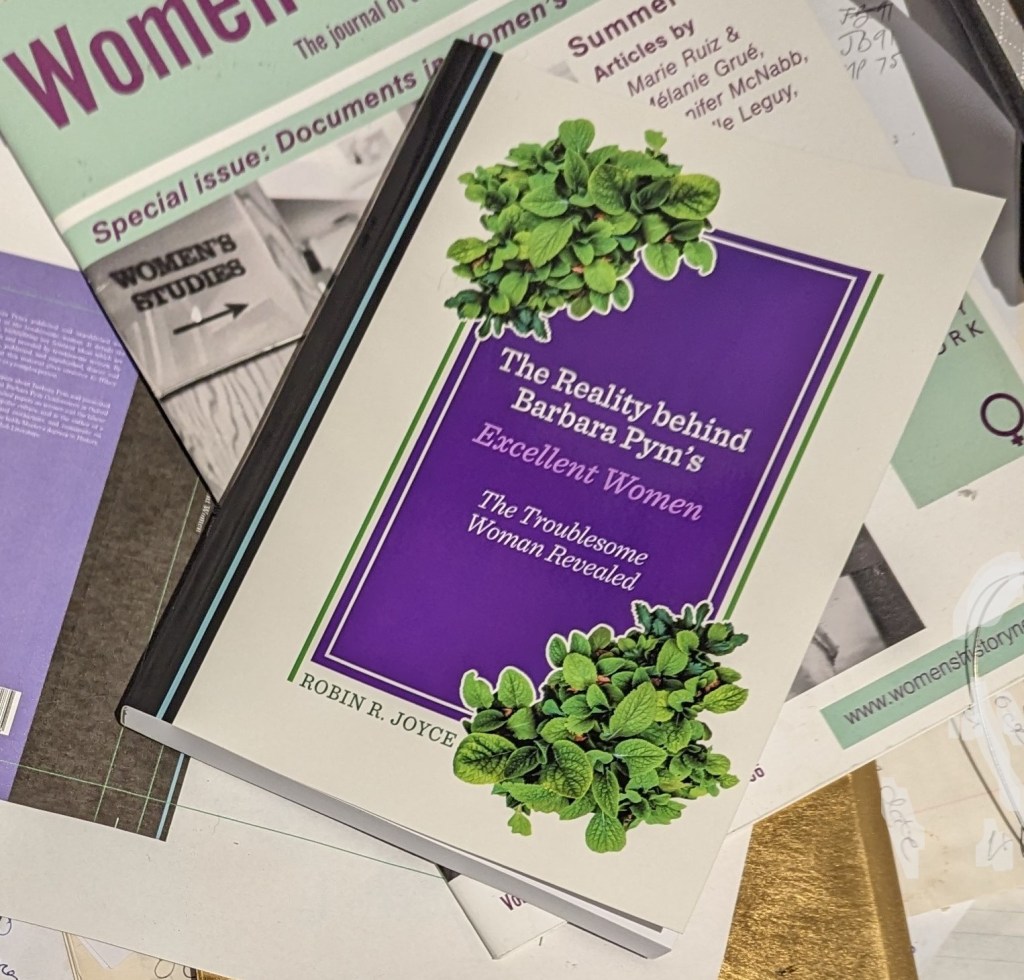
Kate Millett as a source in Chapter 6, “Seventies Success”, The Reality behind Barbara Pym’s Excellent Women The Troublesome Woman Revealed, Robin R. Joyce, Cambridge Scholars publishing 2023.

The cultural atmosphere of the 1970s was also more hospitable to the bolder language which was adopted by Weldon. Modern feminist debate provided the background to Weldon and Fairbairns’ first, and Pym’s last, novels. While the debate began with Friedan, whose 1960s work provided much of the impetus for the sort of ideas expressed in Pym’s early work, she wrote An Academic Question when a plethora of writers from Britain, America, Australia, and New Zealand began articulating feminist concerns. The 1970s theorists also concerned themselves with marriage, paid work, and economics. These writers included women such as Robin Morgan,[i] Juliet Mitchell,[ii] Germaine Greer,[iii] Kate Millett,[iv] and Sheila Rowbotham.[v] Simone de Beauvoir’s The Second Sex, first published in 1949, was reprinted in 1972. Some men were also interested in feminist topics, for example, Ross Davies published Women and Work[vi]in 1975 and Richard J. Evans[vii] produced a wide-ranging history of women’s movements, The Feminists in 1977.


[i] Robin Morgan, Sisterhood is Powerful (New York: Random House, A vintage Book, 1979).

[ii] Juliet Mitchell, Woman’s Estate (New York: Pantheon, 1971).

[iii] Germaine Greer, The Female Eunuch, (London: Paladin Press,1971).

[iv] Kate Millett, Sexual Politics, (New York: Doubleday, 1979).

[v] Sheila Rowbotham, Women, Resistance and Revolution, 1972, and Hidden from History, 1975.

[vi] Ross Davies, Women and Work (Beverly Hills: Sage Publications, 1975).

[vii] Richard J. Evans, The Feminists: Women’s Emancipation Movements in Europe, America and Australasia 1840-1920 (London: Helm, 1977).

Briefly Noted, from The New Yorker*

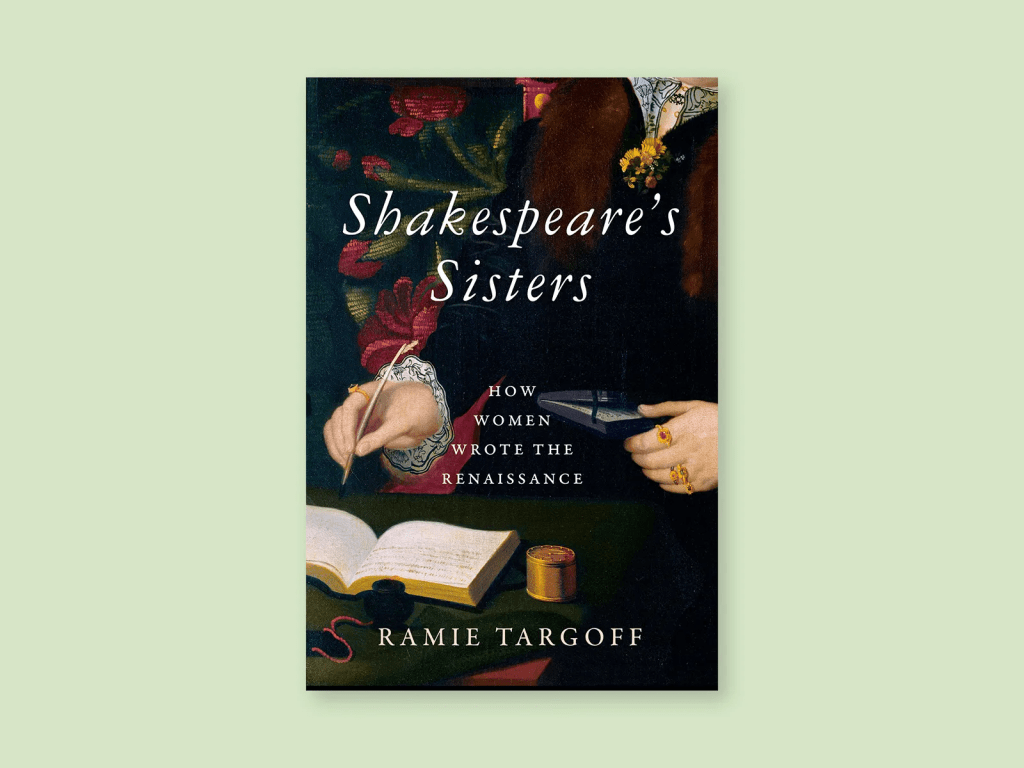
“Shakespeare’s Sisters,” [“Limitarianism,” “Rough Trade,” and “Leaving” – not included here.]

May 6, 2024

Shakespeare’s Sisters by Ramie Targoff (Knopf). In this thoughtful study, Targoff, a literary scholar, highlights four female contemporaries of Shakespeare, women who “weren’t encouraged” and rarely received “even a shred of acclaim,” but managed to write nonetheless. Mary Sidney (the sister of the poet Sir Philip Sidney) produced a noteworthy translation of the Book of Psalms. Elizabeth Cary wrote “The Tragedy of Mariam,” the first original play published by a woman in England. Aemilia Lanyer was the first published English female poet of the seventeenth century, thanks to her “Salve Deus Rex Judaeorum,” which mounted a “defense of women’s rights.” Anne Clifford, a voracious reader born to aristocrats, wrote a detailed journal; by “treating herself as a historical subject living an important life,” Targoff argues, she became the “most important female diarist” of her time.

See also, my review of Shakespeare’s Sisters in my blog, January 31, 2024.

Week beginning May 1 2024

Linda Stewart Henley Kate’s War She Writes Press, April 2024.

Linda Stewart Henley was inspired by an event in which her father featured when she wrote Kate’s War. In 1940, CORB was one plan of evacuation in which children and their voluntary escorts were sent overseas to safety.  It was short lived because the dangers proved too much. The SS Volendam on which Kate, the main character, travels with fifteen children under her care is a fictional representation of the one in which Stewart Henley’s father featured in  similar role. The book ends with that journey and a short aftermath in September 1940, just as the blitz begins. Leading up to this event is Kate’s life as a schoolgirl, a young woman with singing aspirations, a desire for freedom from her home, some romance and the early months of the second world war in a town close to London.

The diverse outcomes of evacuations to the country, the building of Anderson shelters and need for backouts and rationing provide the war time background to Kate’s personal story. This includes her battle with her mother, where she believes she is a second-best daughter; her work to overcome a nervous reaction when she sings in public; the impact of war on romance and decisions about marriage; and, a more public dilemma, where she becomes aware of the treatment of Jews in Britain and sympathy with Nazi Germany amongst the aristocracy.  See Books: Reviews for the complete review.


Charlotte Booth Tourism in Egypt Through the Ages A Historical Guide, Pen & Sword, Pen & Sword History, March 2024.

Thank you, NetGalley and Pen & Sword, for providing me with this uncorrected proof for review.

Charlotte Booth’s Tourism in Egypt Through the Ages, A Historical Guide, is an absolute joy to read. It is a guide, a history, a story of tourism, a narrative about those who have spent their time travelling in Egypt, and amongst these most engaging aspects, those who have used Egypt as the location for their fiction. Booth’s approach is not only accessible as the narrative moves along seamlessly, combining humour, perspicacity and attention to detail, but is clearly based on the most meticulous of wide-ranging research. See Books: Reviews for the complete review.

Covid Update for Canberra

For the period 19 to 25 April there were 75 cases (PCR) recorded; with 9 in hospital. None was in ICU or ventilated, and no lives were lost.

CMAG Exhibitions

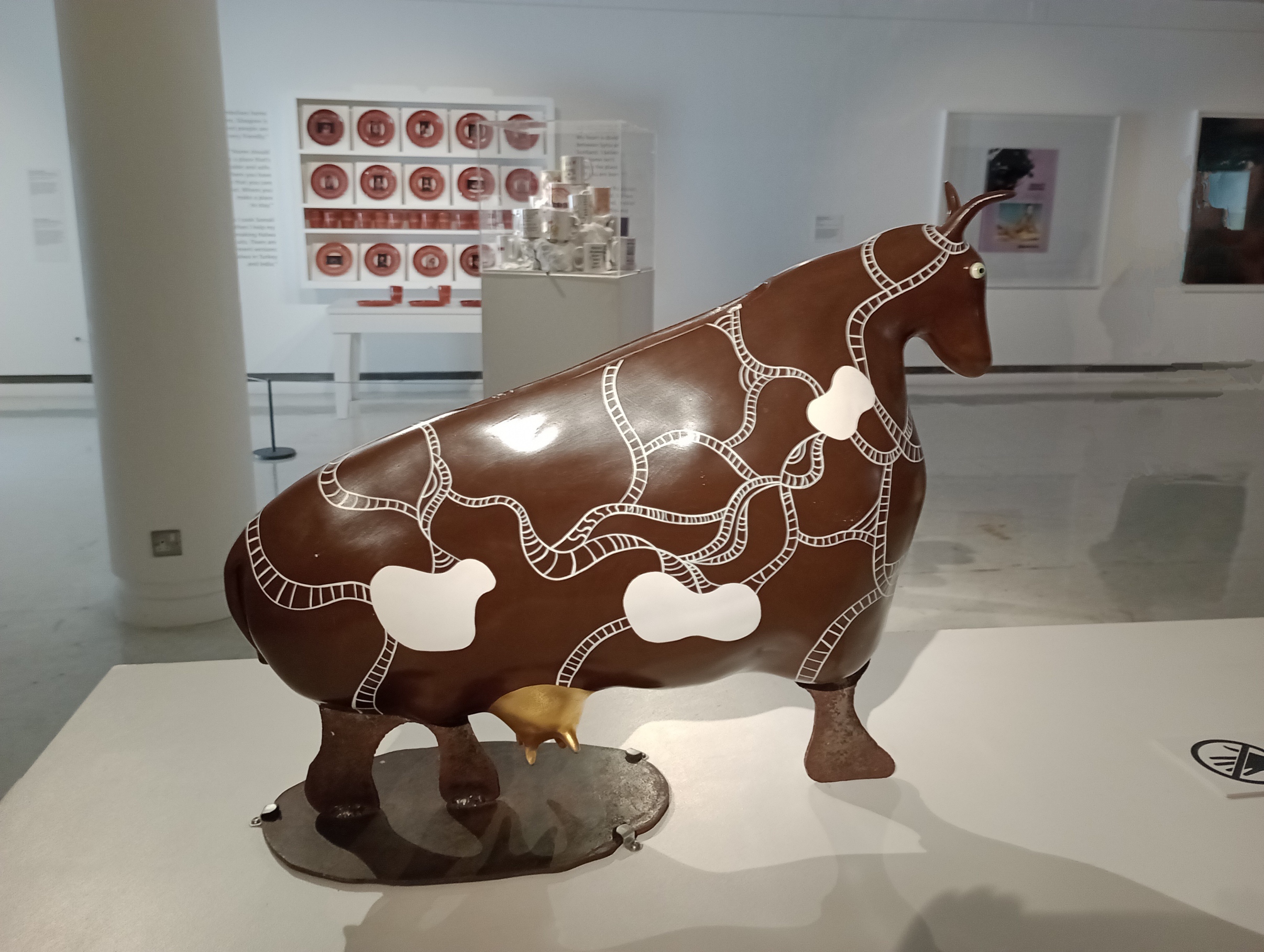
Whenever I visit CMAG I find something of interest. On this occasion there were several exhibitions.

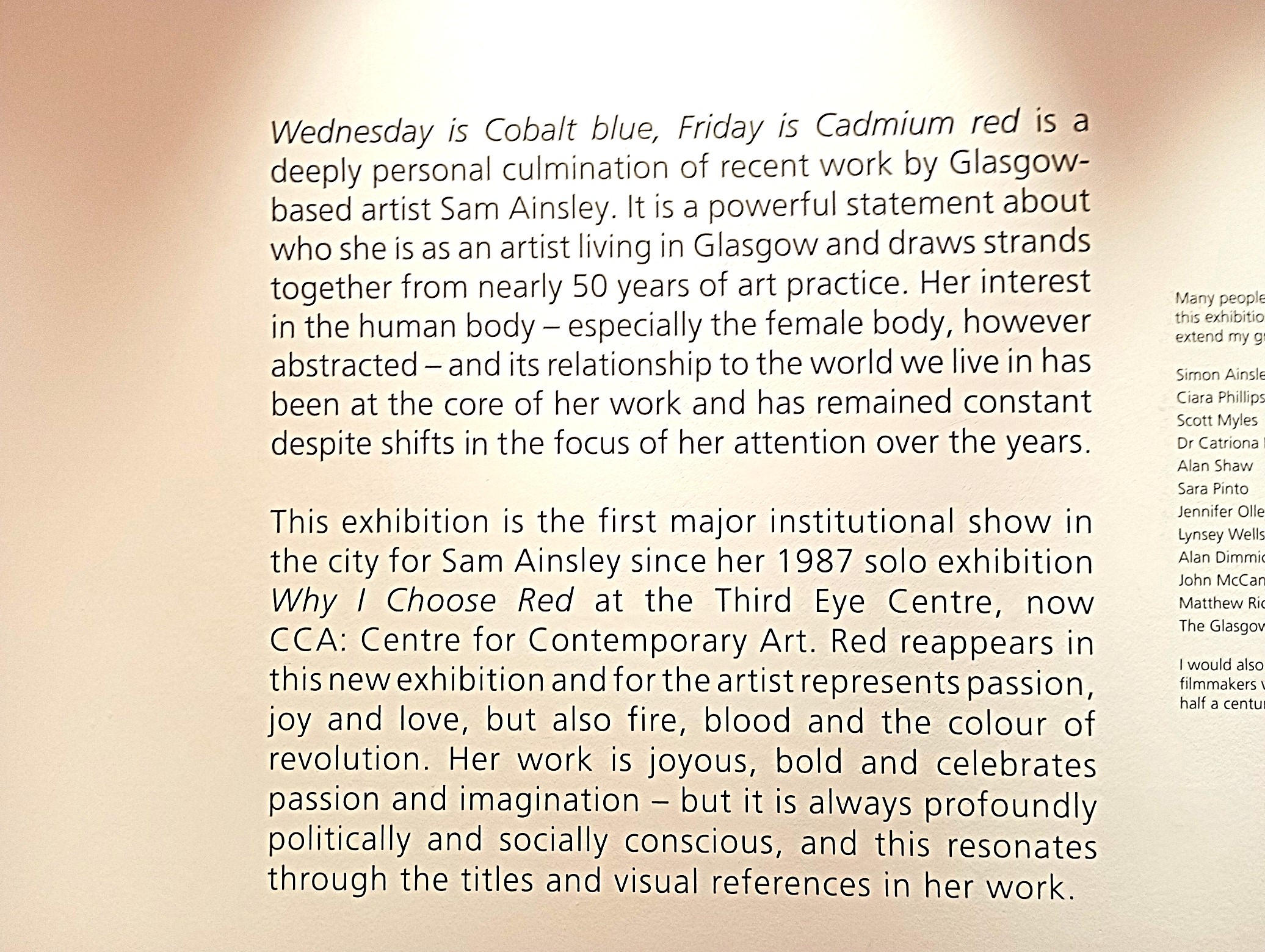
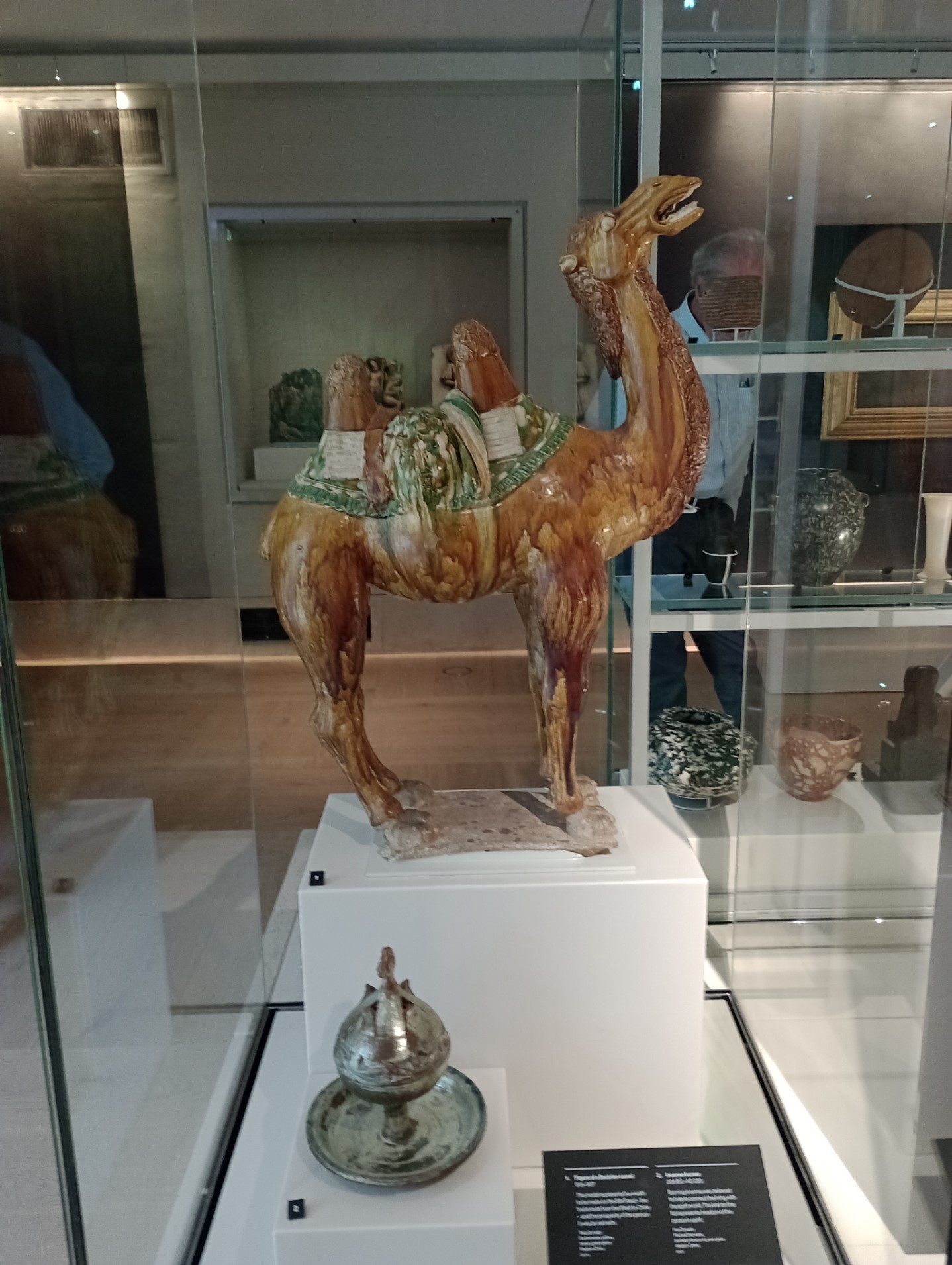
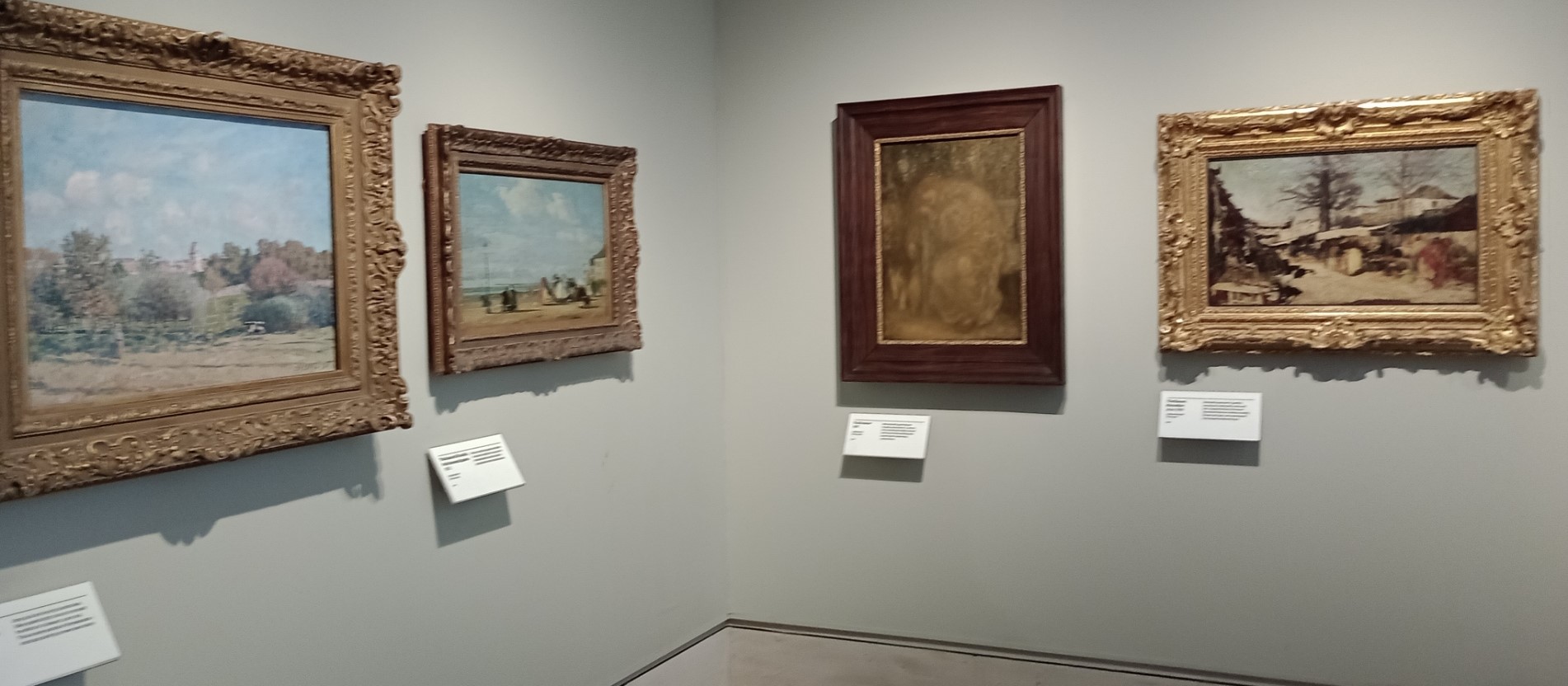
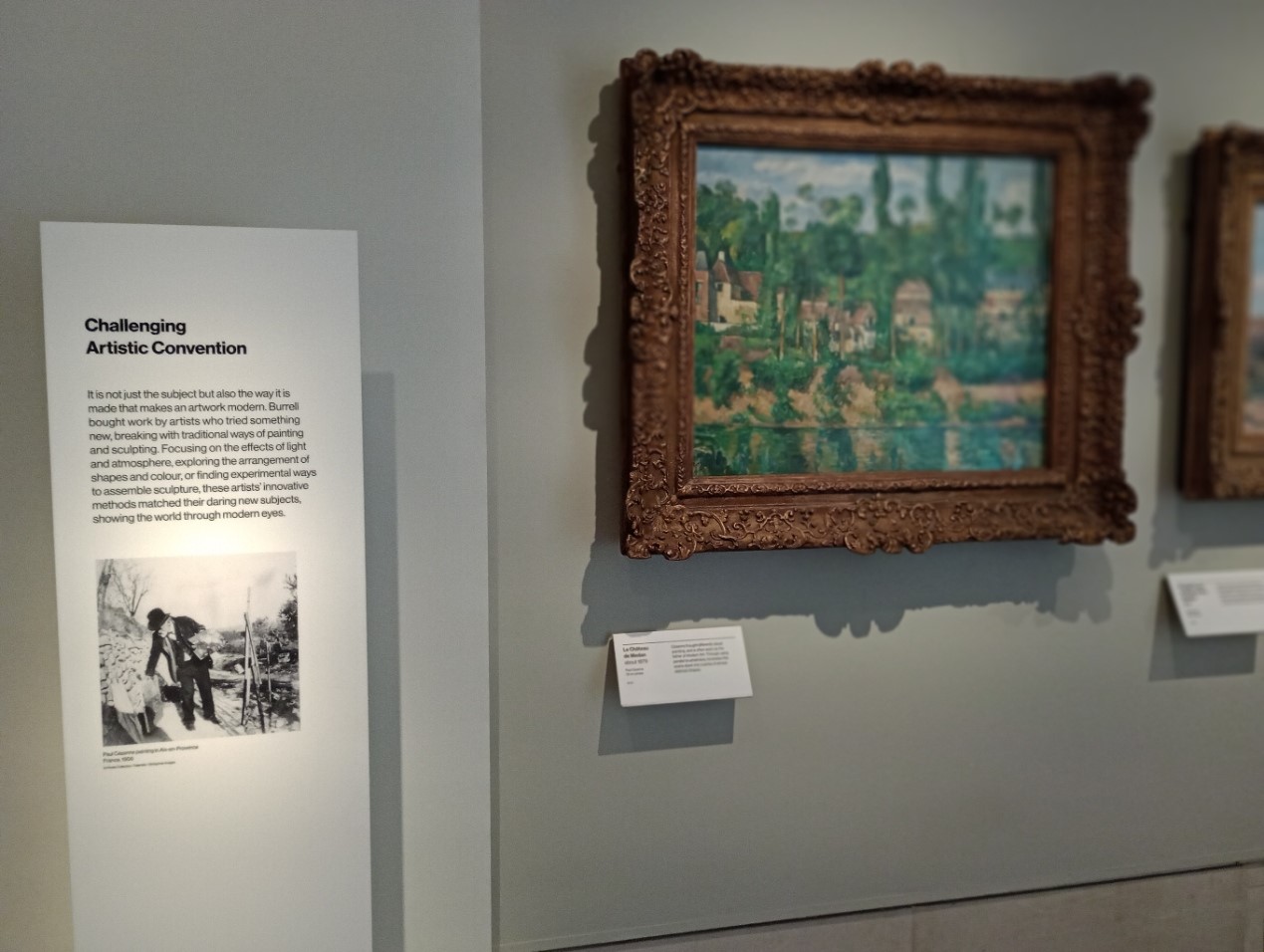
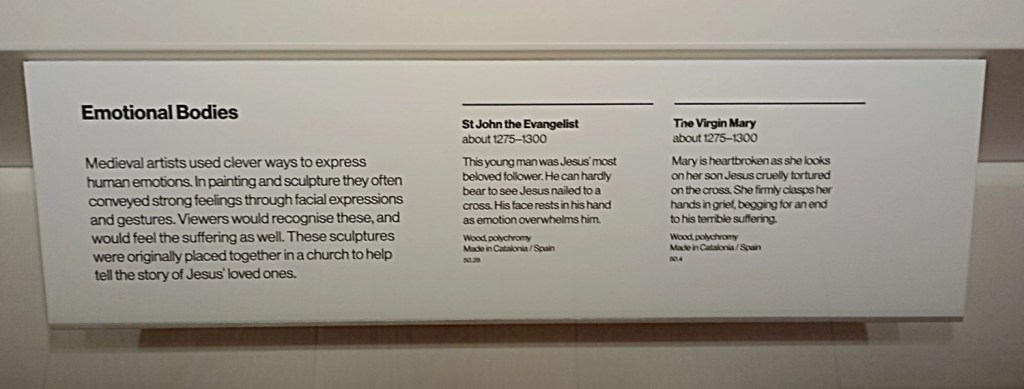
The local history section is always of interest. And, in conjunction with the domestic archeological exhibition demonstrated the variety of ideas that inform the gallery and interpretation of history, visual art and aspects of life deemed worthy of displaying in a museum. CMAG fulfils its brief with work that not only informs but encourages viewers to consider what they may contribute to the museum, in particular. One such idea occurred to me, as I still have a Maggie Sheperd garment, bought from her shop in Canberra soon after my arrival in the early 1980s.

And yes, before postingI know I should have ironed this example of the Maggie Sheperd line sold in Canberra in 1981!

I also found the following:

Robert Pengilley Maggie Shepherd at home

Maggie Shepherd is designer and managing director of a clothing company with outlets throughout Australia and America. She designed the Australian costumes for the 1990 Commonwealth Games and is an official designer for the Australian Chamber Orchestra.

Robert Pengilley says: ‘I painted her in her house which has a very pleasant leafy garden. I paint a lot of landscapes and so, in this picture, I was very concerned with the link between the figure and the landscape, and the way in which these two can be brought together compositionally.’

When creating his paintings, Pengilley continually redraughts and redesigns on the canvas rather than thinking everything out in advance. ‘The light was very complicated and constantly changing – this made it a challenging picture to paint. I wanted to keep the focus on Maggie and the light and the garden. It is a very happy painting.’

And, the opportunity to follow up this information at the National Library.

Maggie Shepherd at home, Canberra, 1995 [picture] / Robert Pengilley

Biography/History:

Maggie Shepherd was a fashion designer and business person of national renown. Her fashion company, which was founded in Canberra, grew from a home-based company to, at its height, operating eight stores in Australia and eleven in the United States. She was awarded the Small Buisness Award and a Bicentennial Achievement Award in 1988, and subsequently an Order of Australia and Advanced Australia Award–Information from acquisitions documentation. See Television, Film and Popular Culture: Comments: for the National Library information.

Canberra Exhibition at CMAG

Backyard Archelogy Exhibition at CMAG

Ruth Bader Ginsburg

Last week I wrote about my experience of the play, RBG, Of Many, One and added some reviews. That the play should go worldwide is worth serious consideration – after all, why shouldn’t everyone share the amazing presence of RBG as depicted by Heather Mitchell. MSNBC is playing the advertisement, above, which shows the American interest in RBG, and in this instance, the relationship between her and the first woman on the Supreme Court, referred to in the play, Supreme Court Justice Sandra Day O’Connor.

Hi Robin

The urgent National Cabinet meeting chaired by the Prime Minister to discuss gender-based violence has just wrapped up.
 
Men’s violence against women is an issue that I have received a lot of correspondence on in the past few weeks and I know continues to be an issue on the minds of many Canberrans.
 
I wanted to assure you that the government is doing its job and is taking action. Today the Prime Minister made some important announcements which I have summarised below for you:


1. The Albanese Government will invest $925.2 million over five years to permanently establish the Leaving Violence Program

We want women to know that if they want to leave a violent relationship, they will be supported to do so.

The new Leaving Violence Program will provide payments of up to $5000  along with referral services, risk assessments and safety planning.

The payment amount will be indexed annually to keep in pace with the rising cost of living, ensuring recipients are given the best support when leaving violent relationships.


2.  All governments will work together to strengthen accountability and consequences for perpetrators

This will involve work across governments and jurisdictions, with all states and territories agreeing that system responses need to be strengthened, with a focus on high-risk perpetrators and serial offenders to prevent homicides.

As Minister for Women, I’ll work with states and territories to improve information sharing about perpetrators across systems and jurisdictions.

And Police Ministers and Attorney Generals will develop options for improving police responses to high risk and serial perpetrators.

All of this work will be undertaken this year, with Premiers and Chief Ministers reporting back to National Cabinet later this year.


3. The Albanese Government will work to combat toxic male extremist views about women online.

We’ll run targeted campaigns in the places that these harmful views appear.

The campaign will run from mid-June to May next year and will counter the corrosive influence of online content targeted at teens that condones violence against women.

It will raise awareness about a rise of misogynistic influencers and content and encourage conversations within families about the damaging impact of the material.


4. The Albanese Government will ban deepfake pornography

Creating and sharing non-consensual sexually explicit material using AI technology will be subject to serious criminal penalties.

This content is deeply harmful towards women and girls and there should be zero tolerance for it.


5. The Albanese Government will reduce kids’ access to pornography and inappropriate material

We need to make sure our laws keep up with the digital age – which is why we’re piloting age assurance technology to protect children from harmful content, like pornography and other age-restricted online services.

The pilot will identify available age assurance products to protect children from online harm and test if they work.

The outcomes will inform the existing work of Australia’s eSafety Commissioner under the Online Safety Act – including through the development of industry codes or standards – to reduce children’s exposure to age-inappropriate material.
National Cabinet also agreed to strengthen prevention efforts through targeted, evidence-based approaches and to be informed by an expert led rapid review of best practice approaches. This will allow further and effective action on preventing gender-based violence, building on the considerable work under way.
 
We will continue to listen and learn from those with lived experience of violence.
 
We recognise they have intimate first-hand knowledge of services, systems, and structures that are meant to support. They know from experience the weaknesses and strengths of interventions in practice.
 
For some of us, this is deeply personal. But for all of us, this is incredibly important.
 
I can assure you that the determination around the National Cabinet table today was equal to the determination around the nation.
 
We are listening and acting with urgency to put an end to this crisis of violence against women and children.

_____________________
If you or someone you know needs support or assistance, there are several services available that are just a phone call away.

1800RESPECT
Call 1800RESPECT on 1800 737 732
Chat online via 1800RESPECT.org.au
Or text 0458 737 732

No to Violence
ntv.org.au

Men’s Referral Service
1300 766 491

13YARN
Call 13 92 76 (24 hours/7days)

This recital at the Albert Hall was a very pleasant part of the Canberra International Music Festival, and I was pleased to attend. The venue provided quite a contrast with Wigmore Hall in London with the beautiful Canberra skies seen through the windows.

Photo: Julien Hanck

C3 Trio Karénine

It was once said that Ravel picked up the first tune of his Piano Trio while watching ice-cream vendors dancing a fandango in the Basque border town of Saint-Jean-de-Luz. Whatever the origins, Ravel embraced this Basque connection as he worked feverishly on the piece throughout the summer of 1914. For a true Spaniard such as Turina, all of the many and varied sounds of Spain provided inspiration. In his Trio he forged a series of variations, each based on the musical footprint of a Spanish region.

At home in classic Parisian elegance, Julien, Louis and Paloma begin with the clearly chiselled melodic lines that are Sains-Saëns’ trademark.

Witness the consummate skill of this leading French ensemble on their first tour down under: the acclaimed Trio Karénine.

Le brio (brilliance) Karénine” – CHOC Classica

PROGRAM

Camille Saint-Saëns, Piano Trio No. 1 Op 18 (1863)

Joaquín Turina, Theme and Variations from Trio No. 1  Op 35 (1926)

Maurice Ravel, Trio in A (1914)

ARTISTS

Trio Karénine:
Julien Dieudegard (violin)
Louis Rodde (cello)
Paloma Kouider (piano)

Week beginning 24 April 2024

Malcolm Hislop A Guide to the Medieval Castles of England Pen & Sword, Pen & Sword History, January 2024.

This image has an empty alt attribute; its file name is image-26.png

Thank you, NetGalley and Pen & Sword for providing me with this uncorrected proof for review.  

A Guide to Medieval Castles of England must be packed in the luggage of anyone embarking on a tour that aims to include some of the most fascinating castles to be found in England. As I am familiar with the Wallingford Castle I thought a good test of the information in this book would be to investigate how this castle was covered. I was not disappointed. The overall assessment of the castle and grounds was honest and unlikely to lead to disappointment. But then, to the detail of the building that remains – what a delight. I felt as though I was back in Wallingford, climbing the uneven stairway, examining the door and its surrounds, looking out over the encompassing fields, and then walking back to the town through the cultivated land that is also part of this delightful spot. Reading this honest account suggests that there will be little to disappoint if this book is retained as  guide. Books: Reviews for the complete review.

Susan Tate Ankeny American Flygirl Citadel Press, Kensington Books, April 2024.

Thank you, NetGalley, for providing me with this uncorrected proof for review.

American Flygirl is a wonderful amalgam of stories associated with women and flying, from the main protagonist Hazel and her companions, including their leader Jackie Corcoran,  in the Women Airforce Service Pilots. All of these women battled prejudice, and some of the details are harrowing. At the same time, the women’s resilience and the personal face given this by is an impressive memorial to the women, those who supported them, and the changes they were able to inspire in women’s role in this most exciting and demanding occupation. Books: Reviews for the complete review.

Heather Cox Richardson from Letters from an American 

<heathercoxrichardson@substack.com>

On Wednesday,* President Joe Biden issued an executive order instructing the National Park Service to “highlight important figures and chapters in women’s history.” “Women and girls of all backgrounds have shaped our country’s history, from the ongoing fight for justice and equality to cutting-edge scientific advancements and artistic achievements,” the announcement read. “Yet these contributions have often been overlooked. We must do more to recognize the role of women and girls in America’s story, including through the Federal Government’s recognition and interpretation of historic and cultural sites.”

In a time when American women are seeing their rights stripped away, it seems worthwhile on this last day of Women’s History Month to highlight the work of Supreme Court Justice Ruth Bader Ginsburg, who challenged the laws that barred women from jobs and denied them rights, eventually setting the country on a path to extend equal justice under law to women and LGBTQ Americans.

Ginsburg was born in Brooklyn, New York, on March 15, 1933, in an era when laws, as well as the customs they protected, treated women differently than men. Joan Ruth Bader, who went by her middle name, was the second daughter in a middle-class Jewish family. She went to public schools, where she excelled, and won a full scholarship to Cornell. There she met Martin Ginsburg, and they married after she graduated. “What made Marty so overwhelmingly attractive to me was that he cared that I had a brain,” she later explained. Relocating to Fort Sill, Oklahoma, for her husband’s army service, Ginsburg scored high on the civil service exam but could find work only as a typist. When she got pregnant with their daughter, Jane, she lost her job.

Two years later, the couple moved back east, where Marty had been admitted to Harvard Law School. Ginsburg was admitted the next year, one of 9 women in her class of more than 500 students; a dean asked her why she was “taking the place of a man.” She excelled, becoming the first woman on the prestigious Harvard Law Review. When her husband underwent surgery and radiation treatments for testicular cancer, she cared for him and their daughter while managing her studies and helping Marty with his. She rarely slept.

After he graduated, Martin Ginsburg got a job in New York, and Ginsburg transferred to Columbia Law School, where she graduated at the top of her class. But in 1959, law firms weren’t hiring women, and judges didn’t want them as clerks either—especially mothers, who might be distracted by their “familial obligations.” Finally, her mentor, law professor Gerald Gunther, got her a clerkship by threatening Judge Edmund Palmieri that if he did not take her, Gunther would never send him a clerk again.

After her clerkship and two years in Sweden, where laws about gender equality were far more advanced than in America, Ginsburg became one of America’s first female law professors. She worked first at Rutgers University—where she hid her pregnancy with her second child, James, until her contract was renewed—and then at Columbia Law School, where she was the first woman the school tenured.

At Rutgers she began her bid to level the legal playing field between men and women, extending equal protection under the law to include gender. Knowing she had to appeal to male judges, she often picked male plaintiffs to establish the principle of gender equality. 

In 1971 she wrote the brief for Sally Reed in the case of Reed vs. Reed, when the Supreme Court decided that an Idaho law specifying that “males must be preferred to females” in appointing administrators of estates was unconstitutional. Chief Justice Warren Burger, who had been appointed by Richard Nixon, wrote: “To give a mandatory preference to members of either sex over members of the other…is to make the very kind of arbitrary legislative choice forbidden by the Equal Protection Clause of the Fourteenth Amendment” to the Constitution.

In 1972, Ginsburg won the case of Moritz v. Commissioner. She argued that a law preventing a bachelor, Charles Moritz, from claiming a tax deduction for the care of his aged mother because the deduction could be claimed only by women, or by widowed or divorced men, was discriminatory. The United States Court of Appeals for the Tenth Circuit agreed, citing Reed v. Reed when it decided that discrimination on the basis of sex violated the Equal Protection Clause of the Fourteenth Amendment to the Constitution.

In that same year, Ginsburg founded the Women’s Rights Project at the American Civil Liberties Union (ACLU). Between 1973 and 1976, she argued six gender discrimination cases before the Supreme Court. She won five. The first time she appeared before the court, she quoted nineteenth-century abolitionist and women’s rights activist Sarah Grimké: “I ask no favor for my sex. All I ask of our brethren is that they take their feet off our necks.”

Nominated to the Supreme Court by President Bill Clinton in 1993, she was confirmed by a vote of 96 to 3. Clinton called her “the Thurgood Marshall of gender-equality law.”

In her 27 years on the Supreme Court, Ginsburg championed equal rights both from the majority and in dissent (which she would mark by wearing a sequined collar), including her angry dissent in 2006 in Ledbetter v. Goodyear Tire & Rubber when the plaintiff, Lilly Ledbetter, was denied decades of missing wages because the statute of limitations had already passed when she discovered she had been paid far less than the men with whom she worked. “The court does not comprehend or is indifferent to the insidious way in which women can be victims of pay discrimination,” Ginsburg wrote. Congress went on to change the law, and the first bill President Barack Obama signed was the Lilly Ledbetter Fair Pay Act.

In 2013, Ginsburg famously dissented from the majority in Shelby County v. Holder, the case that gutted the 1965 Voting Rights Act. The majority decided to remove the provision of the law that required states with histories of voter suppression to get federal approval before changing election laws, arguing that such preclearance was no longer necessary. Ginsburg wrote: “Throwing out preclearance when it has worked and is continuing to work to stop discriminatory changes is like throwing away your umbrella in a rainstorm because you are not getting wet.” As she predicted, after the decision, many states immediately began to restrict voting.

Ginsburg’s dissent made her a cultural icon. Admirers called her “The Notorious R.B.G.” after the rapper The Notorious B.I.G., wore clothing with her image on it, dressed as her for Halloween, and bought RBG dolls and coloring books. In 2018 the hit documentary “RBG” told the story of her life, and as she aged, she became a fitness influencer for her relentless strength-training regimen. She was also known for her plain speaking. When asked when there would be enough women on the Supreme Court, for example, she answered: “[W]hen there are nine.”

Ginsburg’s death on September 18, 2020, brought widespread mourning among those who saw her as a champion for equal rights for women, LGBTQ Americans, minorities, and those who believe the role of the government is to make sure that all Americans enjoy equal justice under law. Upon her passing, former secretary of state Hillary Clinton tweeted: “Justice Ginsburg paved the way for so many women, including me. There will never be another like her. Thank you RBG.”

Just eight days after Ginsburg’s death, then-president Donald Trump nominated extremist Amy Coney Barrett to take her seat on the court, and then–Senate majority leader Mitch McConnell (R-KY) rushed her confirmation hearings so the Senate could confirm her before the 2020 presidential election. It did so on October 26, 2020. Barrett was a key vote on the June 2022 Dobbs v. Jackson Women’s Health Organization decision, the Supreme Court ruling that overturned the 1973 Roe v. Wade decision recognizing the constitutional right to abortion.

Ginsburg often quoted Justice Louis Brandeis’s famous line, “The greatest menace to freedom is an inert people,” and she advised people to “fight for the things you care about, but do it in a way that will lead others to join you.” 

Setting an example for how to advance the principle of equality, she told the directors of the documentary RBG that she wanted to be remembered “[j]ust as someone who did whatever she could, with whatever limited talent she had, to move society along in the direction I would like it to be for my children and grandchildren.”

Notes:

https://variety.com/2020/politics/news/ruth-bader-ginsburg-reactions-hollywood-celebrities-1234775380; https://www.washingtonpost.com/local/crowds-gather-at-supreme-court-to-remember-justice-ruth-bader-ginsburg/2020/09/18/895ee13c-fa18-11ea-be57-d00bb9bc632d_story.html; https://www.rollingstone.com/politics/politics-news/ruth-bader-ginsburg-dead-777835; https://www.whitehouse.gov/briefing-room/presidential-actions/2024/03/27/executive-order-on-recognizing-and-honoring-womens-history; https://www.npr.org/2020/09/18/100306972/justice-ruth-bader-ginsburg-champion-of-gender-equality-dies-at-87; https://www.pbs.org/newshour/show/justice-ginsburg-enough-women-supreme-court; https://www.radcliffe.harvard.edu/news-and-ideas/ruth-bader-ginsburg-tells-young-women-fight-for-the-things-you-care-about.

*Wednesday March 27, 2024.

RBG at the Canberra Theatre

Below is a review of the Sydney Theatre Company’s RBG: One of Many, staged in Sydney. I was fortunate to find tickets for the 5.00 performance at The Canberra Theatre on Sunday.

RBG: Of Many, One is a beautifully crafted, virtuosically performed play about Ruth Bader Ginsburg

Published: November 8, 2022 2.36pm AEDT

Author Penelope Crossley Professor of Law, The University of Sydney Law School, University of Sydney

Disclosure statement:

Penelope Crossley received complimentary tickets for the purpose of reviewing this performance.

Republished here through the generosity of The Conversation under Creative Commons.

Review: RBG: Of Many, One, directed by Priscilla Jackman, Sydney Theatre Company

Writing a play about the life and legacy of American Supreme Court Justice Ruth Bader Ginsburg was always going to be an ambitious task for playwright Suzie Miller.

Ginsburg (or “RBG” to her many fans) was only the second female judge to be appointed onto the bench of the court in its more than 200-year history, when elevated to the court in 1993, aged 60.

Throughout her life, she was much admired for her trailblazing legal career, her work advocating for gender equality and her considered dissenting judgements against the often-conservative majority decision.

At the same time, both during her life and after her death, RBG was attacked for openly criticising former US president Donald Trump during the presidential race and for not resigning from the court during Obama’s presidency, despite her advanced age and cancer diagnosis.

When RBG ultimately died during the Trump presidency, she was not able to be replaced by another Democratic appointee, leading to the court becoming even more conservative.

Miller’s new play is beautifully crafted, written from the perspective of RBG. She discusses her most famous cases throughout her life and her conversations with three of the presidents who served during her 27-year term on the bench. Over this journey, the play takes the audience through a roller-coaster of emotions.


Read more: Ruth Bader Ginsburg forged a new place for women in the law and society


The light and the dark

RBG: Of Many, One, follows RBG’s time as one of the few women at Harvard Law School, along with her work challenging gender-based discrimination including the ability of women to serve on juries and the cancer that repeatedly afflicted her family.

Miller seamlessly weaves quotes from RBG’s most famous cases and judgements into the script, so we hear her authentic voice. The play demonstrates a complex understanding of the legal cases, but Miller doesn’t assume familiarity with RBG: this play is equally accessible for the non-lawyer who knows little of RBG’s history.

Heather Mitchell in a red and white shirt.
Heather Mitchell gives a virtuosic performance. Prudence Upton/Sydney Theatre Company

Miller doesn’t skate over the criticisms of RBG. She humanises the decisions she made and her later reflections on those decisions. In particular, the audience gets to see, upon reflection, how deeply troubled RBG was by her decision to criticise Donald Trump during the Trump/Clinton presidential election.

RBG: Of Many, One’s ultimate success or failure turns on the strength of the acting. Heather Mitchell is a virtuoso, giving the performance of her life.

She shows us Bader Ginsburg from a young girl through to her physical frailty in old age, poignantly characterising the emotional depth of her character.

The inner strength, the anxieties, the love, and the fears are all expertly conveyed to the audience. At times I have to remind myself that she is indeed playing RBG.

Heather Mitchell in a cardigan
The play takes us from RBG’s childhood to her old age. Prudence Upton/Sydney Theatre Company

Read more: Ginsburg’s legal victories for women led to landmark anti-discrimination rulings for the LGBTQ community, too


A simple staging

David Fleischer’s set design is stripped back to a beautiful simplicity. For most of the play the main prop is a solitary armchair, sitting isolated on the big stage.

A big red stage with a single chair.
David Fleischer’s set gives room for Heather Mitchell to shine. Prudence Upton/Sydney Theatre Company

Paul Charlier’s composition and sound design is another strength. He juxtaposes some of the operas that RBG so loved with the music of the rapper the Notorious B.I.G. (from whom the nickname the Notorious RBG is derived). This deftly highlights the complexity of RBG’s character.

These simple design choices allow Mitchell to shine. This play will long be one that Miller and Mitchell will be remembered for.

RBG: OF MANY, ONE

by Suzie Miller
Directed by Priscilla Jackman 

“One of the all-time great performances” The Sydney Morning Herald

After a wildly popular, sold-out premiere season in 2022, this smash-hit production returns to the stage with the brilliant Heather Mitchell reviving her award-winning “virtuosic performance” (The Conversation) of the woman who changed the face of the American legal system: the indomitable Ruth Bader Ginsburg.

The second woman to be appointed to the US Supreme Court, Ruth Bader Ginsburg was both a trailblazer in the American judiciary and a fierce advocate for gender equality and reproductive rights. Now, her life is brought to the stage by the extraordinary pen of Olivier Award-winning Australian playwright Suzie Miller (Prima Facie), in a story that chronicles Ginsburg’s wins and dissents, traces her steps forward and the steps back, and brings you right into the room with Ruth at the most pivotal moments of her life.

Director Priscilla Jackman reunites with Mitchell to reconjure RBG in this once-in-a-generation theatrical event that is “magnificent from start to finish” (Limelight). Don’t miss your second chance to see this sublime production.

Approx. duration 1 hr 40 mins (no interval). Subject to change.
Content Adult themes, herbal cigarettes and complete theatrical blackout. Subject to change.

Discover more about playwright Suzie Miller’s captivating smash-hit RBG: Of Many, One.

As a young female law student, I looked up to women judges; they were groundbreakers for me, and they remain so. The more women in powerful legal positions, the more opportunity for the law to be influenced by women’s lived experiences. Ruth Bader Ginsburg, herself, brought all her intelligence and thoughtfulness to her judicial profession; she brought her feminism, her roles as mother, daughter, life-partner; she bought her Jewish background, her childhood of loss and socio-economic repression, she brought her incredibly flexible mind and her sharp senses. She brought herself as a woman completely and without apology. All of which has not only influenced the USA but women’s lives around the world – including women and lawyers in Australia.

Throughout her life, RBG felt strongly about democracy and the rule of law, and to ensure both of these, she applauded the strict separation of executive and judicial powers. The rule of law, in short, means that no one is above the law – including leaders and politicians. This accountability and transparency must never be taken for granted, and the separation of powers – that the government and the courts must never interfere with or seek to influence each other – is a way of keeping the checks and balances on both the government and judges of the day. This is democracy in action.

With RBG: Of Many, One, I was so warmly supported by Kip Williams, Artistic Director at STC in expressing my unique vision for the play. I wanted to focus on the incredible legacy of RBG, and specific conversations/ dialogues she had with three different US presidents: Clinton, Obama and Trump. In particular, I wanted to explore how even the mighty and most brilliant of us can make mistakes, and that what protects our way of life is the rule of law itself.

In writing RBG: Of Many, One it was always Heather Mitchell who was to play her. Her talent is astonishing. Heather’s love of the character and her full-bodied soulful investment is a gift. In Priscilla Jackman I have found a brilliant director, one I admire for her talent, intellect, commitment and sheer bloody-mindedness in getting it right.

In David Fleischer’s design there is a magnificent realisation of the sheer size and power of the institution Ruth served, and the big life she led. The lights and sound have created a landscape that I could only have dreamed of, operatic, moody, fun and exciting – I thank both Paul Charlier and Alexander Berlage for their vision and hard work, together with Stage Manager Katie Hankin. For their dramaturgy, I thank; Polly Rowe, Kip Williams, Caleb Lewis, Paige Rattray and Jessica Arthur from STC, who offered valuable thoughts and insights. I also thank Robert Beech-Jones (my partner), Marty McGrath (Heather’s partner); and Karen O’Connell, Nicole Abadee, Rochelle Zurnamer, Hilary Bonney, Lisa Hunt and Sam Mostyn – my sisters ‘in law’ – who all encouraged the telling of this very female-focused law story.

My reflections

Heather Cox Richardson’s comments on Ruth Bader Ginsberg in her Letters from an American, came at a fortuitous time. I did not have to wait long to post it as I was fortunate to be able to see the play on Sunday evening. Heather Mitchell, who gave this one-person show was outstanding. From teenager to a bent woman in her eighties; Presidents Clinton, Obama and Trump; people who featured in her rise to Supreme Court Judge – Mitchell was amazing.

Her depiction of RBG as a teenager was so subtle – just her feet swinging above the ground as she hunched in her chair; using the art of depicting a straight back, a slightly bent one, and then her old age fragility as she does her morning workout;  the voices of the other protagonists in her story as well as the simple reflections of a telling characteristic their repertoire of importance – Mitchell excelled at all. Sometimes she was so subtle, at others the audience responded to an almost farcical account of a self-important protagonist’s demeanour.

RBG’s reference to the support she received from the first woman appointed to the Supreme Court, Justice Sandra  Day O’Connor (March 26, 1930 – December 1, 2023) a Republican appointed by President Regan recalls the dialogue running on MSBC at the moment.

Quotes were used throughout the play, some which appear below. Others I have added as I could not resist doing so.

“The decision whether or not to bear a child is central to a woman’s life, to her well-being and dignity. It is a decision she must make for herself. When the government controls that decision for her, she is being treated as less than a full adult human responsible for her own choices.”
― Ruth Bader Ginsburg

“When I’m sometimes asked when will there be enough [women on the Supreme Court] and I say, ‘When there are nine,’ people are shocked. But there’d been nine men, and nobody’s ever raised a question about that.”
― Ruth Bader Ginsburg

“Fight for the things that you care about. But do it in a way that will lead others to join you.”
― Ruth Bader Ginsburg

“Reading is the key that opens doors to many good things in life. Reading shaped my dreams, and more reading helped me make my dreams come true.”
― Ruth Bader Ginsburg

“How to be Like RBG:
Work for what you believe in, but pick your battles, and don’t burn your bridges. Don’t be afraid to take charge, think about what you want, then do the work, but then enjoy what makes you happy, bring along your crew, have a sense of humor.
-Ruth Bader Ginsburg, Notorious RBG by
Irin Carmon”
― Ruth Bader Ginsburg

“My mother was very strong about my doing well in school and living up to my potential. Two things were important to her and she repeated them endlessly. One was to ‘be a lady,’ and that meant conduct yourself civilly, don’t let emotions like anger or envy get in your way. And the other was to be independent, which was an unusual message for mothers of that time to be giving their daughters.”
― Ruth Bader Ginsburg, My Own Words: Ruth Bader Ginsburg

“Never underestimate the power of a girl with a book.”
― Ruth Bader Ginsberg

“Another often-asked question when I speak in public: “Do you have some good advice you might share with us?” Yes, I do. It comes from my savvy mother-in-law, advice she gave me on my wedding day. “In every good marriage,” she counseled, “it helps sometimes to be a little deaf.” I have followed that advice assiduously, and not only at home through fifty-six years of a marital partnership nonpareil. I have employed it as well in every workplace, including the Supreme Court of the United States. When a thoughtless or unkind word is spoken, best tune out. Reacting in anger or annoyance will not advance one’s ability to persuade.”
― Ruth Bader Ginsburg, My Own Words

“the greatest menace to freedom is an inert people; that public discussion is a political duty; and that this should be a fundamental principle of the American government. Brandeis”
― Ruth Bader Ginsburg, My Own Words

Briscola Italian Restaurant

We had just enjoyed seeing RBG at the Canberra Theatre and, having had the good fortune to attend a 5.00 session were ready for a meal, to eat and, more importantly discuss this magnificent performance.

Briscola had been recommended and we were very fortunate that a table was available. The meals were delicious, from the warm bread to the generous portions of ravioli (a blackboard menu item -RAVIOLI DEL GIORNO {v} locally made ravioli of the day); LINGUINE DI MARE {df} king prawns / scallops / mussels / garlic / chilli / shallots / cherry tomato // in olive oil or napoli sugo; POLLO GAMBERI {gf*} chicken breast/ king prawns / garlic / chilli/ brandy / macchiato sugo / roasted veg & chats; and my BARRAMUNDI seared barramundi/ vongole / fregola / green beans / cherry toms / salmoriglio.

Cindy Lou dines at Compa

Aria is one of our favourite restaurants, and to hear that Matt Moran was bringing his style to Canberra with Sando, a sandwich outlet, and Compa, an Italian restaurant, was thrilling. I haven’t tried the sandwiches yet, as their popularity has led to queues in the street but was pleased to get a booking at 6.15 on a Tuesday night for Compa. There were six of us, and this is where I found the seating disappointing. The four person booths, or two person tables looked inviting. Where we were seated was at a long table, at which two smaller groups or one large group could be seated. As the restaurant was quite noisy, this was not ideal for conversation. On the other hand, the food could not be faulted. With several different steaks to assess, several sides and two whole trout dishes plus starting with olives and bread I feel that we are able to give Compa several stars for excellence. Although there was a slight glitch with service initially this was swiftly rectified by a very competent wait person. The service remained very good after that, we felt welcome and will return. However, this will probably be in numbers that ensure better seating.

Week beginning April 17 2024

Scott Ryan The Last Decade of Cinema Black Chateau Fayetteville Mafia Press, June 2024.

Thank you, NetGalley, for providing me with this uncorrected proof for review.

Scott Ryan has a distinct writing style that carries this serious, perceptive and analytical approach to a decade of film with a firm grasp of the need to engage with his audience. At the same time, he ensures that he maintains the obligation he has imposed on himself to utter raw truths. His fidelity to exposing the failings that largely mar the aftermath of 1990s film underlies the way in which he approaches his prime aim. The responsibility he feels for the task he has set himself – bringing the sheer wonder of 1990s film to a large audience – is demonstrated by the choices he makes, the language he uses, the additional material and his tenacity in acquiring relevant interviews.

Ryan chooses the films that fit his criteria – but then, oh joy, he adds a supplementary list that could have equally been chosen. He also adds ten films from the immediately previous decade, and the one after that demonstrating that some films that meet his criteria do fall outside the strict period he gave himself for the bulk of the book. The films are supplemented by some excellent interviews – a tribute to his thoroughness in getting the best for to meet the challenge he set for himself; notes for each chapter; a comprehensive index; and informative acknowledgements. See Books: Reviews for the complete review.

Articles below: Bob McMullan, Can Albo overcome/overturn the paradox of class?; Agatha Christie, Murder by the Book; Eleanor Coppola; Heather Cox Richardson from Letters from an American; Pompeii: Breathtaking new paintings found at ancient city; Gender Institute Events; Cindy Lou eats out in Canberra.

Bob McMullan

Can Albo overcome/overturn the paradox of class?

Boris Johnson did it, Donald Trump specialises in it, Peter Dutton is trying it.

All these conservatives whose economic policies serve the special interests of the highest income earners have based, or are trying to base, their political strategy on winning the votes of working class voters, particularly working class men, and even more specifically, white working class men.

Renowned US journalist, EJ Dionne, recently described it this way:

“It’s the paradox of Bidenism: The President sees himself as the champion of the working class but can’t rely on its support to win reelection. To prevail he’ll need a mountain of ballots from college-educated voters in metropolitan areas.

The flip side is the paradox of the Republican Party, which now depends on white working class votes, especially in small towns and the countryside. Yet its economic policies remain geared to the interests of high earners and investors, many of whom have fled the party.”

A similar pattern emerged in the UK election in 2019. The Conservative Party, under Boris Johnson’s leadership, wrested a large cohort of traditional Labour seats in the so-called ‘red wall’ into their column which contributed to the worst Labour result for a generation.

It is no secret that Peter Dutton seeks to follow the same path in Australia. He is targeting the outer suburban seats in the major cities to compensate for the loss of urban seats to Labor, Teals and Greens.

Why is this happening? Is it an irreversible trend?

Obviously, there is no single cause of a major realignment in political support. And despite their similarities, the societal composition, history, geography, electoral systems and economies of the USA, UK and Australia are sufficiently different to create different drivers of change.

But it does appear that there are some common elements.

EJ Dionne attributes the working class support for Trump to “… white racial backlash and the rise of new cultural and religious issues.” And:

“Trump has bundled together all the resentments felt by voters experiencing both economic decline and cultural estrangement.”

Dionne also points to an interesting breakdown of the recent Quinnipiac poll. The top-line result was Biden 49 Trump 45. However, amongst voters with college degrees Biden led 60/34 whilst voters without a college degree favoured Trump 58/37.

An interesting explanation of the UK 2019 paradox is provided by The Economist in a recent issue. The argument they quote suggests:” …that a group of voters who should already have been swing voters (because they were close to the Tories on cultural issues like immigration) finally did swing. They left Labour when it ceased to offer them much…”

This same class paradox is the obvious basis for Peter Dutton’s strategy on behalf of the Australian coalition.

Rather than focusing on winning back the traditional Liberal seats lost in 2022, his strategy is focused on the outer metropolitan seats in the cities. This is clearly based on an assessment that the alienation of working class voters in the USA and UK is also happening here. There is no doubt some of the same factors are at play in Australia as issues like the Yes campaign for indigenous recognition was seen by many in these regions as a distraction from what they see as the appropriate primacy of cost of living issues.

This is similar to the argument I put forward in a recent article on the Hasluck Test for the Labor Party.

However, the early indications are that this strategy is not working, or at least not working  yet. The recent Dunkley by-election was an opportunity to road test the strategy and it came up short.

Recent evidence from the UK suggests that the change is not irreversible.

The recent Economist article suggests the “classic ‘red wall’ voter is a white man aged between 55 and 64. In 2019 this kind of voter was more likely to vote Conservative than Labour. He is now twice as likely to back Labour.”

This analysis suggests that such voters have become swinging voters rather than part of an inevitable drift to the right side of politics.

It also suggests that there more factors than economic self-interest at play.

If the Australian Labor government can show genuine interest in the concerns of outer suburban voters, display the reasonable and competent government the Tories have so dramatically failed to do in the UK and have positive proposals for the future without promising to fix everything all at once they should be able to retain sufficient of these voters to retain the seats at risk.

Meanwhile, the coalition’s strategy of ignoring the interests of voters in the Teal seats is likely to guarantee most, if not all the “Teals” survive. They may even be joined by others either in the inner-city or regional seats similar to Indi.

Anthony Norman Albanese is an Australian politician serving as the 31st and current prime minister of Australia since 2022. He has been leader of the Australian Labor Party since 2019.

MURDER BY THE BOOK : NEW UK EXHIBITION

27th March 2024

A Celebration of 20th Century British Crime Fiction at Cambridge University Library

About The Exhibition

Cambridge University Library shines a spotlight on the UK’s most read, bought and borrowed genre : crime fiction. But of course, we didn’t need to tell Agatha Christie fans that… This free-to-visit exhibition celebrates some of the best books, classic and contemporary, that have captivated readers throughout the UK and beyond. Seize your chance to marvel at the Library’s remarkable collection of first editions, see rare manuscripts and curios from March 23rd to August 24th.

From Wilkie Collins to Charles Dickens, Arthur Conan Doyle to Agatha Christie, Ian Rankin to Val McDermid, award-winning crime writer Nicola Upson has curated a criminally good treat for visitors. Agatha Christie fans will get the chance to marvel at one of the author’s own typewriters, an original typescript for her final Poirot novel, Curtain, as well as notebooks and a Dictaphone which she used to plot her stories. Plus, there are almost 100 first edition crime classics in their original dust jackets from the library’s own collection, so you can rest assured that you’ll be coming away with a few new (or new to you) titles to add to your reading lists.

Key Info

Dates: Saturday March 23rd – Saturday August 24th 2024

Opening Times: Monday – Friday 9am – 6:30pm, Saturday 9am – 4:30pm

Tickets: Tickets are free. Simply book a date and timeslot to secure your visit. Book Now

Visit the exhibition website

Eleanor Coppola, artist and matriarch of filmmaking dynasty, dead at 87

By Dan Heching, CNN  2 minute read  Published 1:24 PM EDT, Sat April 13, 2024

Eleanor Coppola attends the tribute to Francis Ford Coppola during the 11th Film Festival Lumiere on October 18, 2019, in Lyon, France.

Eleanor Coppola attends the tribute to Francis Ford Coppola during the 11th Film Festival Lumiere on October 18, 2019, in Lyon, France. Stephane Cardinale/Corbis Entertainment/Getty ImagesCNN — 

Eleanor Coppola, award-winning film documentarian, artist, writer and wife of Francis Ford Coppola, has died. She was 87.

The news was confirmed by Francis Ford Coppola’s representative Nesma Youssef, who said in an email Eleanor Coppola was “surrounded by her loving family” at home in Rutherford, California, at the time of her death on Friday.

Eleanor and Francis Ford Coppola were married for 61 years, with Eleanor accompanying her husband on many of his film shoots throughout his illustrious career.

In 1992, she won a Primetime Emmy Award for her documentary “Hearts of Darkness: A Filmmaker’s Apocalypse,” about the making of Francis Ford Coppola’s 1979 war epic “Apocalypse Now.” She made several other documentaries about her family’s films and, according to an obituary sent by Youssef, was most recently editing a documentary about the making of her daughter Sofia Coppola’s 2006 film “Marie Antoinette.”

(From left) Roman Coppola, Eleanor Coppola, Francis Ford Coppola and Sofia Coppola attend the 43rd Directors Guild of America Awards on March 16, 1991, in Beverly Hills, California.

(From left) Roman Coppola, Eleanor Coppola, Francis Ford Coppola and Sofia Coppola attend the 43rd Directors Guild of America Awards on March 16, 1991, in Beverly Hills, California. Ron Galella Collection/Getty Images

Eleanor Coppola was a feature filmmaker in her own right, making her directorial debut at the age of 80 in 2016 with the Diane Lane-starring romance “Paris Can Wait.” She also wrote the movie, which followed the wife of a successful movie producer as she makes her way across France with a driver.

Her second feature, 2020’s “Love is Love is Love,” was selected to screen at the Tribeca Film Festival and the Deauville American Film Festival in France.

In addition to her pursuits in filmmaking, Eleanor Coppola was an accomplished artist and writer.

Along with her husband, she was at the helm of one of the most prolific and successful filmmaking families in Hollywood. Her children Roman Coppola (writer and producer on several Wes Anderson films) and Sofia Coppola (“The Virgin Suicides,” “Lost in Translation”) are both successful filmmakers. Nicolas Cage, Talia Shire and Jason Schwartzman are part of the extended Coppola family.

Shortly before her death, Eleanor Coppola completed her third book, a memoir. In the manuscript, she wrote: “I appreciate how my unexpected life has stretched and pulled me in so many extraordinary ways and taken me in a multitude of directions beyond my wildest imaginings.”

I reviewed Ian Nathan’s, The Coppolas A Movie Dynasty on October 6 2021. The beginning of the review appears below.

Ian Nathan The Coppolas A Movie Dynasty Palazzo, 2021.

This image has an empty alt attribute; its file name is image.png

Thank you NetGalley for providing me with this uncorrected proof for review.

Ian Nathan has written an insightful and exciting contribution to our understanding of writing, directing and producing films; the role of family and ability in a dynasty such as the Coppolas; the studio system, and the contribution of film finance, box office returns and reviews; to the success of a film that begins with an idea that impels people such as Francis Ford and Sofia Coppola toward creative endeavour. Francis Ford and Sofia Coppola are the stars of this book.

However, other members of the Coppola family also make contributions to the Coppola dynasty’s work, and they are also given a place in this absorbing story: wife and mother, Eleanor Coppola; sister, Talia Shire; brother, August; sons, Gio and Roman Coppola; cousin, Nicholas Cage (formerly Coppola); granddaughter, Gia Coppola. So, too, are the actors who took their place, successfully or sometimes perhaps not, in the films. Francis Ford’s father, Carmine, makes an appearance. Here a story Nathan relates about a prank played on him by Francis Ford Coppola is very sympathetic to him, rather than acknowledging the impact on the father – an interesting comment on the investment Nathan makes in his portrayal of the son. See Books: Reviews, 2021 for the complete review.

Heather Cox Richardson from Letters from an American <heathercoxrichardson@substack.com> 

April 13, 2024.

There are really two major Republican political stories dominating the news these days. The more obvious of the two is the attempt by former president Donald Trump and his followers to destroy American democracy. The other story is older, the one that led to Trump but that stands at least a bit apart from him. It is the story of a national shift away from the supply-side ideology of Reagan Republicans toward an embrace of the idea that the government should hold the playing field among all Americans level.

While these two stories are related, they are not the same.

For forty years, between 1981, when Republican Ronald Reagan took office, and 2021, when Democrat Joe Biden did, the Republicans operated under the theory that the best way to run the country was for the government to stay out of the way of market forces. The idea was that if individuals could accumulate as much money as possible, they would invest more efficiently in the economy than they could if the government regulated business or levied taxes to invest in public infrastructure and public education. The growing economy would result in higher tax revenues, enabling Americans to have both low taxes and government services, and prosperity would spread to everyone. 

But the system never worked as promised. Instead, during that 40-year period, Republicans passed massive tax cuts under Reagan, George W. Bush, and Trump, and slashed regulations. A new interpretation of antitrust laws articulated by Robert Bork in the 1980s permitted dramatic consolidation of corporations, while membership in labor unions declined. The result was that as much as $50 trillion moved upward from the bottom 90% of Americans to the top 1%. 

To keep voters on board the program that was hollowing out the middle class, Republicans emphasized culture wars, hitting hard on racism and sexism by claiming that taxes were designed by Democrats to give undeserving minorities and women government handouts and promising their evangelical voters they would overturn the Supreme Court’s 1973 Roe v. Wade decision recognizing the constitutional right to abortion. Those looking for tax cuts and business deregulation depended on culture warriors and white evangelicals to provide the votes to keep them in power.

But the election of Democrat Barack Obama in 2008 proved that Republican arguments were no longer effective enough to elect Republican presidents. So in 2010, with the Citizens United v. Federal Elections Commission decision, the Supreme Court freed corporations to pour unlimited money into U.S. elections. That year, under Operation REDMAP, Republicans worked to dominate state legislatures so they could control redistricting under the 2010 census, yielding extreme partisan gerrymanders that gave Republicans disproportionate control. In 2013 the Supreme Court’s Shelby County v. Holder decision greenlighted the voter suppression Republicans had been working on since 1986.  

Even so, by 2016 it was not at all clear that the cultural threats, gerrymandering, and voter suppression would be enough to elect a Republican president. People forget it now because of all that has come since, but in 2016, Trump offered not only the racism and sexism Republicans had served up for decades, but also a more moderate economic program than any other Republican running that year. He called for closing the loopholes that permitted wealthy Americans to evade taxes, cheaper and better healthcare than the Democrats had provided with the Affordable Care Act (also known as Obamacare), bringing manufacturing back to the U.S., and addressing the long backlog of necessary repairs to our roads and bridges through an infrastructure bill. 

But once in office, Trump threw economic populism overboard and resurrected the Republican emphasis on tax cuts and deregulation. His signature law was the 2017 tax cuts for corporations and the wealthy at a cost of at least $1.9 trillion over ten years. At the same time, Trump continued to feed his base with racism and sexism, and after the Unite the Right rally at Charlottesville, Virginia, in August 2017, he increasingly turned to his white nationalist base to shore up his power. On January 6, 2021, he used that base to try to overturn the results of the 2020 presidential election. 
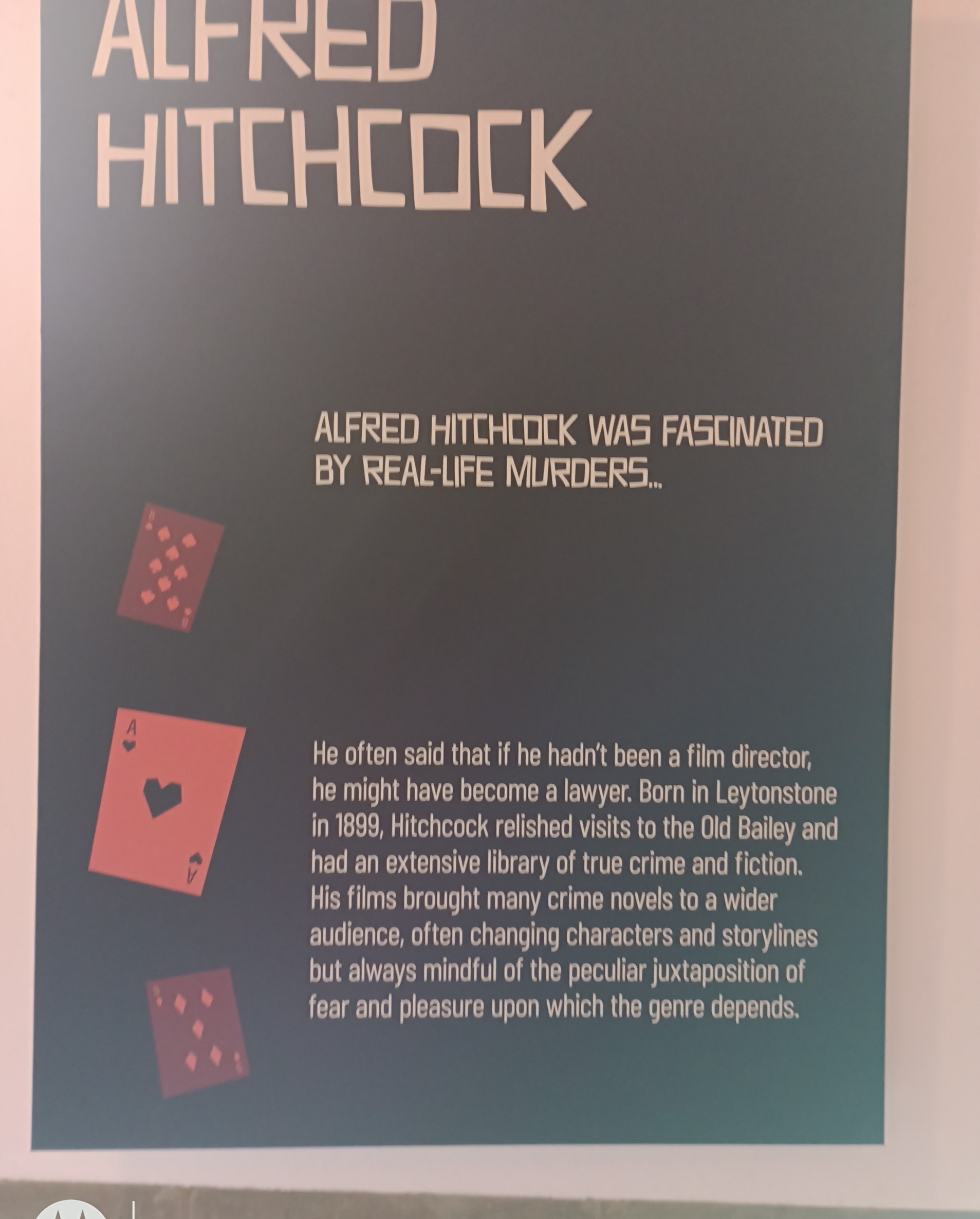
Republican senators then declined to convict Trump of that attempt in his second impeachment trial, apparently hoping he would go away. Instead, their acquiescence in his behavior has enabled him to continue to push the Big Lie that he won the 2020 election. But to return to power, Trump has increasingly turned away from establishment Republicans and has instead turned the party over to its culture war and Christian nationalist foot soldiers. Now Trump has taken over the Republican National Committee itself, and his supporters threaten to turn the nation over to the culture warriors who care far more about their ideology than they do about tax cuts or deregulation.
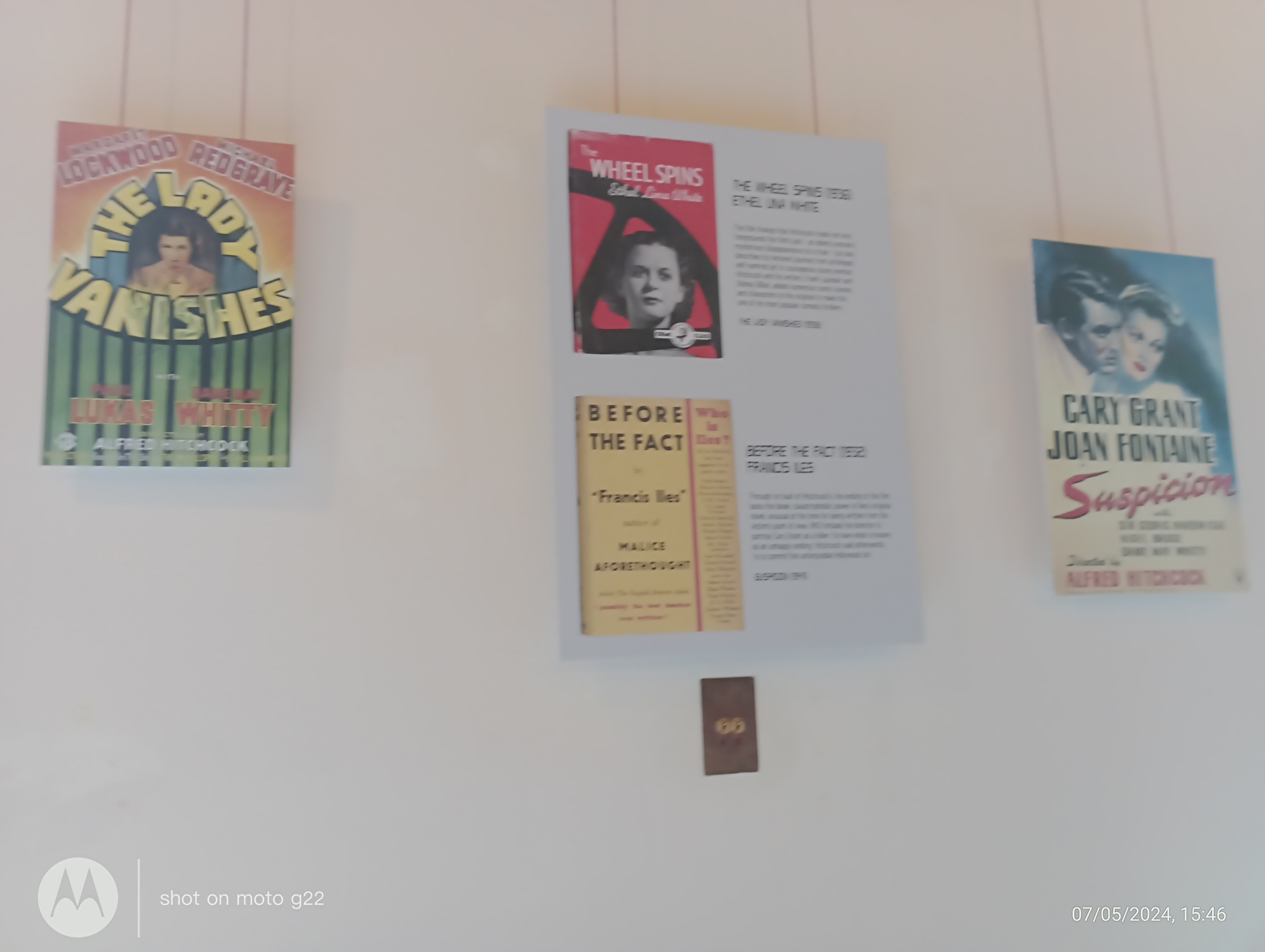
The extremism of Trump’s base is hugely unpopular among general voters. Most significantly, Trump catered to his white evangelical base by appointing Supreme Court justices who would overturn Roe v. Wade, and in 2022, when the court did so, the dog caught the car. Americans overwhelmingly support reproductive freedoms, and Republicans are getting hammered over the extreme abortion bans now operative in Republican-dominated states. Now Trump and a number of Republicans have tried to back away from their antiabortion positions, infuriating antiabortion activists. 

It is hard to see how the Republican Party can appeal to both Trump’s base and general voters at the same time. 

That split dramatically weakens Trump politically while he is in an increasingly precarious position personally. He will, of course, go on trial on Monday, April 15, for alleged crimes committed as he interfered in the 2016 election. At the same time, the $175 million appeals bond he posted to cover the judgment in his business fraud trial has been questioned and must be justified by April 14. The court has scheduled a hearing on the bond for April 22. And his performance at rallies and private events has been unstable. 
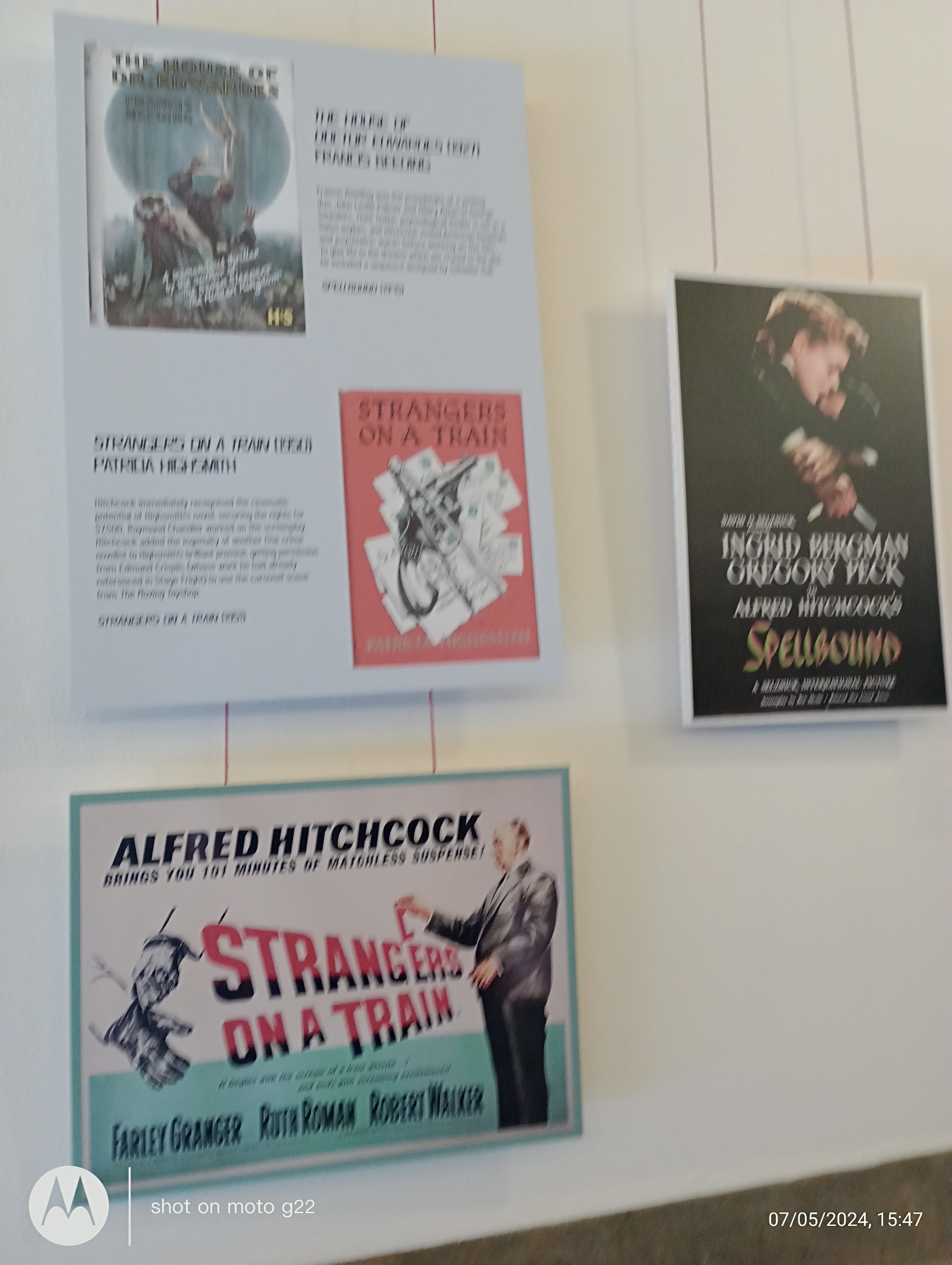
He seems a shaky reed on which to hang a political party, especially as his MAGA Republicans have proven unable to manage the House of Representatives and are increasingly being called out as Russian puppets for their attacks on Ukraine aid.  

Regardless of Trump’s future, though, the Reagan Era is over. 

President Biden and Vice President Kamala Harris have quite deliberately rejected the economic ideology that concentrated wealth among the 1%. On their watch, the federal government has worked to put money into the hands of ordinary Americans rather than the very wealthy. With Democrats and on occasion a few Republicans, they have passed legislation to support families, dedicate resources to making sure people with student debt are receiving the correct terms of their loans (thus relieving significant numbers of Americans), and invested in manufacturing, infrastructure, and addressing climate change. They have also supported unions and returned to an older definition of antitrust law, suing Microsoft, Amazon, and Apple and allowing the federal government to negotiate with pharmaceutical companies over drug prices.

Their system has worked. Under Biden and Harris the U.S. has had unemployment rates under 4% for 26 months, the longest streak since the 1960s. Wages for the bottom 80% of Americans have risen faster than inflation, chipping away at the huge disparity between the rich and the poor that the policies of the past 40 years have produced. 

Today, in an interview with Jamie Kitman of The Guardian, United Auto Workers president Shawn Fain, who negotiated landmark new union contracts with the country’s Big Three automakers, explained that the world has changed: “Workers have realized they’ve been getting screwed for decades, and they’re fed up.”

Notes:

https://time.com/5888024/50-trillion-income-inequality-america; https://www.cbpp.org/research/federal-tax/the-2017-trump-tax-law-was-skewed-to-the-rich-expensive-and-failed-to-deliver; https://www.theguardian.com/us-news/2024/apr/13/shawn-fain-president-uaw-union-interview; https://www.meidastouch.com/news/trump-glitches-yet-again-during-rally; https://www.cbsnews.com/news/donald-trump-175-million-civil-fraud-bond-valid-new-york; https://www.npr.org/2024/01/05/1222714145/jobs-report-december-labor-wages; https://www.salon.com/2024/04/10/theyre-still-playing-games-ex-prosecutor-warns-may-face-asset-seizure-over-invalid-bond

Pompeii: Breathtaking new paintings found at ancient city

By Jonathan Amos, Rebecca Morelle and Alison Francis,BBC Science News in Pompeii, southern Italy

BBC/Tony Jolliffe Helen meets Paris

BBC/Tony Jolliffe The frescos depict Greek mythology: Paris kidnaps Helen which triggers the Trojan War

Stunning artworks have been uncovered in a new excavation at Pompeii, the ancient Roman city buried in an eruption from Mount Vesuvius in AD79.

Archaeologists say the frescos are among the finest to be found in the ruins of the ancient site.

Mythical Greek figures such as Helen of Troy are depicted on the high black walls of a large banqueting hall.

The room’s near-complete mosaic floor incorporates more than a million individual white tiles.

BBC/Tony Jolliffe The Black Room

BBC/Tony Jolliffe The black room has only emerged in the last few weeks. Its white mosaic floor is almost complete

A third of the lost city has still to be cleared of volcanic debris. The current dig, the biggest in a generation, is underlining Pompeii’s position as the world’s premier window on the people and culture of the Roman empire.

Park director Dr Gabriel Zuchtriegel presented the “black room” exclusively to the BBC on Thursday.

It was likely the walls’ stark colour was chosen to hide the smoke deposits from lamps used during entertaining after sunset.

“In the shimmering light, the paintings would have almost come to life,” he said.

BBC Dig site planBBC

Two set-piece frescos dominate.

In one, the god Apollo is seen trying to seduce the priestess Cassandra. Her rejection of him, according to legend, resulted in her prophecies being ignored.

The tragic consequence is told in the second painting, in which Prince Paris meets the beautiful Helen – a union Cassandra knows will doom them all in the resulting Trojan War.

BBC/Tony Jolliffe One of the "black room" frescos discovered in Pompeii, showing Apollo trying to seduce the priestess Cassandra

BBC/Tony Jolliffe The god Apollo is depicted on one of the frescos trying to seduce the Trojan priestess Cassandra

The black room is the latest treasure to emerge from the excavation, which started 12 months ago – an investigation that will feature in a documentary series from the BBC and Lion TV to be broadcast later in April.

A wide residential and commercial block, known as “Region 9”, is being cleared of several metres of overlying pumice and ash thrown out by Vesuvius almost 2,000 years ago.

Staff are having to move quickly to protect new finds, removing what they can to a storeroom.

For the frescos that must stay in position, a plaster glue is injected to their rear to prevent them coming away from the walls. Masonry is being shored up with scaffolding and temporary roofing is going over the top.

BBC/Tony Jolliffe Fresco protection

BBC/Tony Jolliffe A plaster glue must be injected behind a fresco or it is likely to come away from the wall

Chief restorer Dr Roberta Prisco spent Tuesday this week trying to stop an arch from collapsing.

“The responsibility is enormous; look at me,” she said, as if to suggest the stress was taking a visible toll on her.

“We have a passion and a deep love for what we’re doing, because what we’re uncovering and protecting is for the joy also of the generations that come after us.”

BBC Map showing excavations in PompeiiBBC

Region 9 has thrown up a detective story for archaeologists.

Excavations in the late 19th Century uncovered a laundry in one corner. The latest work has now revealed a wholesale bakery next door, as well as the grand residence with its black room.

BBC/Tony Jolliffe Reception Hall

BBC/Tony Jolliffe In the reception hall, rubble in the far right corner is from renovation at the time of the eruption

The team is confident the three areas can be connected, physically via the plumbing and by particular passageways, but also in terms of their ownership.

“We know who ARV is: he’s Aulus Rustius Verus,” explained park archaeologist Dr Sophie Hay. “We know him from other political propaganda in Pompeii. He’s a politician. He’s super-rich. We think he may be the one who owns the posh house behind the bakery and the laundry.”

What’s clear, however, is that all the properties were undergoing renovation at the time of the eruption.

Escaping workers left roof tiles neatly stacked; their pots of lime mortar are still filled, waiting to be used; their trowels and pickaxes remain, although the wooden handles have long since rotted away.

Dr Lia Trapani catalogues everything from the dig. She reaches for one of the thousand or more boxes of artefacts in her storeroom and pulls out a squat, turquoise cone. “It’s the lead weight from a plumb line.” Just like today’s builders, the Roman workers would have used it to align vertical surfaces.

She holds the cone between her fingers: “If you look closely you can see a little piece of Roman string is still attached.”

BBC/Tony Jolliffe Plumb line

BBC/Tony Jolliff It’s possible to see a remnant piece of string around the neck of the plumb line

Dr Alessandro Russo has been the other co-lead archaeologist on the dig. He wants to show us a ceiling fresco recovered from one room. Smashed during the eruption, its recovered pieces have been laid out, jigsaw-style, on a large table.

He’s sprayed the chunks of plaster with a mist of water, which makes the detail and vivid colours jump out.

You can see landscapes with Egyptian characters; foods and flowers; and some imposing theatrical masks.

“This is my favourite discovery in this excavation because it is complex and rare. It is high-quality for a high-status individual,” he explained.

BBC/Jonathan Amos Ceiling fresco

The archaeologists have had to piece together a ceiling fresco that was shattered during the volcanic eruption

But if the grand property’s ceiling fresco can be described as exquisite, some of what’s being learned about the bakery speaks to an altogether more brutal aspect of Roman life – slavery.

It’s obvious the people who worked in the business were kept locked away in appalling conditions, living side by side with the donkeys that turned the millstones. It seems there was one window and it had iron bars to prevent escape.

It’s in the bakery also that the only skeletons from the dig have been discovered. Two adults and a child were crushed by falling stones. The suggestion is they may have been slaves who were trapped and could not flee the eruption. But it’s guesswork.

“When we excavate, we wonder what we’re looking at,” explained co-lead archaeologist Dr Gennaro Iovino.

“Much like a theatre stage, you have the scenery, the backdrop, and the culprit, which is Mount Vesuvius. The archaeologist has to be good at filling in the gaps – telling the story of the missing cast, the families and children, the people who are not there anymore.”

Additional reporting by Tony Jolliffe.

BBC/Tony Jolliffe Mosaic floor

BBC/Tony Jolliffe There are certainly more than a million tiles in the mosaic floor, possibly up to three million

BBC/Tony Jolliffe Roman lamp

BBC/Tony Jolliffe Boxes full of artefacts: One of the many oil lamps recovered during the excavation

BBC/Tony Jolliffe Fresco showing Leda and the Swan

BBC/Tony Jolliffe Another fresco depicts Leda and Zeus in the form of a swan, whose union would lead to Helen’s birth

BBC/Tony Jolliffe A piece of moulded cornicing painted in bright colours

BBC/Tony Jolliffe Brilliant colours: Ornate cornicing was also preserved under the volcanic debris

The three-part series, Pompeii: The New Dig, begins on Monday 15 April, 21:00 BST, on BBC Two and BBC iPlayer. It will become available internationally. There is also an Open University website connected with the series.

Gender Institute Events
Maternity and Art
Thursday 9 May, 6-7.30pm
The ANU Gender Institute and Maternal Health Matters Inc. invite you to join us online for the third in our seminar series that will explore the impact of maternity on women’s wellbeing and the transition to parenting.
The presenters are Emeritus Professor Denise Ferris and Dr Bianca Williams.

Register here

Many Strands, One
Wednesday 29 May, 11am-4.30pm
Focusing on Papua New Guinea, the Many Strands, One Basket Seminar & Dialogue aims to create an opportunity for conversations between people working in diverse spaces (Many Strands) who may have a common interest in the nexus between politics, gender, culture and history (One Basket).

Register here

Cindy Lou eats out in Canberra

China Tea Club

Having enjoyed a takeaway meal from the China Tea Club (delivered by their own staff) I was pleased to be able to experience the food in their restaurant. The menu is varied and delicious, the service prompt and friendly, the seating comfortable and the ambience very pleasant. The table was large enough to accommodate eight people, but the conversation was easy to follow although the restaurant was full of other lively groups. The prawn dishes were delicious, as was the crispy whitebait. The duck pancakes were an authentic touch; however, the San Choy Bow we had delivered were perhaps better. The beef dishes met the high expectations, the fried rice and plain rice were generous and the vegetable, and mushroom dishes excellent too.

The dessert menu was tempting and even more so when the chosen dishes, fried ice-cream, and two different flavours of ice-cream with a cream and strawberry topping arrived.

Kopiku

A simple cup of coffee the next morning at our favourite coffee place, Kopiku, was an excellent follow up to the copious meal served at the China Tea Club.

Bookplate

Bookplate at the National Library has changed its menu, so the sandwiches of the past are now provided at Paperplate, downstairs. Perhaps we’ll try that next time. The cooked meals, coffee and cakes at Bookplate are attractive, although I was disappointed that a brunch item (avocado and accompaniments) was not available at 11.45. I chose the pumpkin with miso salad. This was pleasant, but needed more miso, or possibly a different, tastier dressing. The coffees were fine, but not marvellous. An old-fashioned milk shake was a nice touch. Bookplate has a very attractive outdoor area with large umbrellas. But nothing can surpass being amongst the Leonard French panels around the indoors section.

Week beginning April 10 2024

Melissa Clark Bacon Through Her Lens Atmosphere Press, April 2024.

Thank you, NetGalley, for providing me with this uncorrected proof for review.

Through Her Lens is accomplished storytelling with several threads that move smoothly through the narrative. Seamless links intertwine the past, romance, detailed searches on the ground and in the air for signs of the rumoured German V1s and V2s, a woman’s determination to give women in wartime the graphic history they deserve and her own fight against public and private discrimination. Lady Millicent Trayford is not always a sympathetic character, as her story lines are complex, but she provides a valuable central figure, the motivation for her actions is worth engaging with and she affords an insight into the way in which women’s personal aspirations can be complicated by public demands. The chapters are bounded by a Prologue and Epilogue, each adding an enlightening addition to the narrative. I particularly liked the description of Picasso’s Guernica in the Prologue and the clever way it established the foundation for so much in the rest of the narrative. See Books: Reviews for the complete review.

Louise Milligan Pheasants Nest Allen & Unwin, March 2024.

Thank you, NetGalley, for providing me with this uncorrected proof for review.

Louise Milligan’s thriller is set in familiar Australian territory, drawing on well-known murders in the Belanglo State Forest to establish a context and then moving beyond those fearful memories to provide her mystery with new locales. One of these is Pheasant’s Nest Bridge where strong winds often shake a car venturing across, sheer sides lead to ominous water, less well-known deaths of a sad and gruesome nature are referred to, and a metal cage has been built to discourage suicides. But, before the reader gets to these ominous events and descriptions the exuberant and attractive main character is introduced. See Books: Reviews for the complete review.

After Covid update: Louise Milligan and Amy Remeikis – Canberra Times Meet the Author; Secret London; NGA; Discover the best things to do in Canberra this June, July, and August; Australia’s next governor-general: Who is she, and what has been the reaction?; Farewell to the Sydney theatre that gave Baz Luhrmann his start.

Covid update for Canberra

There have been 252,271 cases of Covid in Canberra since March 2020. Between 29 March and 4 April 2024 there were 42 new cases (PCR), with 13 in hospital and 1 in ICU. None is ventilated. There has been one life lost, with 307 lives lost since March 2020.

Louise Milligan and Amy Remeikis: Canberra Times – Meet the Author

I mentioned this program of presentations recently as I had reviewed Kathy Lette’s The Revenge Club and then attended her Meet the Author session. Louise Milligan and Amy Remeikis presented a lively to and fro, with a focus on journalism rather than going into a great amount of detail about the book. However, Louise Milligan was enthusiastic about her move into writing fiction, and this came through the discussion about the pitfalls and disappointments of contemporary journalism as seen by the speakers.

The follow up scribe feature was excellent, appearing as it did in a continuing theme of the discussion. Prominent is Milligan’s current work on 4 Corners. Her description of the process undertaken by that program to ensure that anything that goes to air has been meticulously researched was impressive. Milligan is clearly as dedicated to producing well researched scrupulous programs of fact as the fiction that she has so successfully debuted with Pheasants Nest.

I certainly liked Milligan’s reference to the importance of reading novels when young. She referred to their formative value, impressing upon the audience the role of novels in creating an understanding of and appreciation of nuances. This arose in the context of the journalists’ discussion of the negative aspects of living up on one side or the other of a debate. This, it was averred, led to attacks on those who have a different viewpoint and a desire to pick holes in arguments. This criticism, it was noted, is not to devalue the role of further investigation. An example is the Brittany Higgins coverage, where the presumption of innocence has been used to attack the complainant. *

*This is my understanding of the discussion. A podcast of the discussion and questions is available.

Beautiful image from Secret London

London is just COVERED in cherry blossom: @steven.maddison

Also, from Secret London

A Breathtakingly Immersive Blossom Experience Arrives In London This Week, And It’s Completely Free To Visit

Be transported into this blooming lovely blossom-scape and experience the joyful illusion of petals raining down on you with the most advanced floor to ceiling screens in the world.

 KATIE FORGE – STAFF WRITER • 2 APRIL, 2024

Screens covered in Blossom at the Outernet
Credit: National Trust x Outernet

Spring has (nearly) sprung, the sun is (almost) shining, and the beautiful (interactive) blossom is mere moments away from blooming at the Outernet, as their brand new immersive exhibitionNature’s Confetti, floats into London this week.

In an attempt to brighten up the capital city and bring the joy of blossom-season to more people; National Trust have transformed the UK’s most visited cultural attraction into a blossomy wonderland for Londoners to enjoy this Spring. And it won’t cost you a single penny.

Bringing some serious flower power to the immersive entertainment space; this bloomin’ gorgeous experience will allow visitors to admire the beautiful blossomy goodness on giant floor-to-ceiling, wraparound screens (the most advanced of their kind in the entire world, FYI).

Screens covered in Blossom at the Outernet
Credit: National Trust x Outernet

The three minute video has been designed by Outernet’s creative team and will give viewers the opportunity to experience a breathtaking illusion of petals raining down on them from above. Visitors will also be able to use their body movements to control the screens and see how blossom trees grow. The video will be accompanied by uplifting music, specially-composed by Father to perfectly complement the inspirational visuals on the screen.

The piece is set to be a sheer spectacle and aims to spread the message of how important it is for us to cherish the glory of nature and preserve it for future generations. Especially in the face of current environmental threats. Visitors will have the opportunity to donate to National Trust’s ‘Plant a Tree’ appeal, which aims to plant 20 million trees by 2030 (four million of which are expected to be blossom trees). A ‘tap to donate’ station will be installed in the space during the run of Nature’s Confetti.

Screens covered in Blossom at the Outernet
Credit: National Trust x Outernet

Nisha Nath, Head of Brand and Creative at the National Trust, said: “We hope over the next few weeks thousands, if not millions of people will have the chance to experience this colourful, joyful confetti – and that it will mark a high point of their day as they travel through the capital.”

Jessica Dracup-Holland, Chief Marketing Officer from Outernet, commented: “We want audiences to feel immersed in nature, to transport them through the beauty and magic of blossom. We want to encourage a sense of wonderment and rejuvenation, a haven in the centre of London that will transport and inspire.”

Nature’s Confetti will feature twice an hour at Outernet’s Now Building between April 4 – April 28.

BOOK NOW GAUGUIN’S WORLD:
TŌNA IHO, TŌNA AO
Open 29 Jun – 7 Oct
Tickets are now on sale for our major winter exhibition Gauguin’s World: Tōna Iho, Tōna Ao. This landmark presentation is a rare opportunity to follow Paul Gauguin’s artistic journey and global travel – from his Impressionist beginnings in 1873 to his final destination in French Polynesia.  
Featuring over 130 works, the exhibition includes some of Gauguin’s most recognised masterpieces, many of which were created in the Pacific region. The exhibition offers new perspectives on Gauguin’s life and work, his artistic influences and networks, as well as his historical impact and contemporary legacies.
Join as a new National Gallery Member and receive a complimentary ticket, the latest information on exhibitions, exclusive events and more.
BOOK

Discover the best things to do in Canberra this June, July, and August.*

Canberra celebrates each season in style and winter is no exception. Why not have a snow ball fight at Corin Forest, hunt for truffles, or cheer on your favourite rugby team?

Taste treasured truffles

Sample the delights of the Canberra region’s truffle growers from mid-June through to August. The prized Black perigord truffle is on the menu at restaurants, cafes and wineries across the capital thanks to the region’s cool climate growing conditions. Enjoy a paddock to plate experience or join a truffle hunt. The Truffle Festival is a must for all foodies.

Build a snowman at Corin Forest

You don’t have to travel to the ski fields to hit the slopes. Just 45-minutes from the city, Corin Forest has easy beginners’ slopes designed to show kids the snow ropes from tobogganing to the basics of snowboarding. Build snowmen or start an epic snowball fight before feasting on woodfired pizza and hot chocolate at the cosy café.

Find a moment of calm amongst 44,000 trees

Just six kilometres from the city centre, this living collection of endangered and rare species also features spectacular views and remarkable architecture. Each July trees are lovingly wrapped in colourful scarves to keep them warm during winter. With an impressive 94 forests and 20 kilometres of multi-purpose trails, stroll or cycle through the trails that crisscross the National Arboretum Canberra

Meet animals big and small

Diving, catching crustaceans, and racing each other through the water, the little penguins that call the National Zoo & Aquarium are always entertaining to watch. All named after famous rappers, these penguins are part of one of many breeding programs. Meet and feed giraffes, white lions, meerkats, owls and cheetahs. 

Indoor fun for the whole family

Head to Kingpin next where you’ll be spoiled for choice with laser tag, bowling, arcade games, escape rooms, and an impressive food and drink menu on offer.

Taste food flavoured by fire

Curl up by the fireplace and feast on seasonal produce at Canberra’s hottest new restaurants. In the heart of the city, enjoy ethically sourced Australian produce cooked over fire and coals with Asian barbeque specialists Wilma. With a menu that changes weekly but always features their woodfired oven, head to Onzieme in Kingston for fresh eats and a wonderful wine menu.

See sweeping views and endangered animals

Just a 45-minute drive from the city centre you’ll find Tidbinbilla Nature Reserve. Known for its amazing views and walks, the reserve helps protect and breed native, endangered animals. Winter is a great time to see superb lyrebirds, sight platypus in the sanctuary ponds, and listen to the calls of native frog species. 

Time it right and in nearby Namadgi National Park you’ll see snow capped mountains and ‘roos hopping through winter scenes.

Sip craft brews and local gins

Taste award-winning craft beers at Braddon brewpub BentSpoke Brewing Co, which took out top place in the Great Australasian Beer Spectacular 2021. Gin lovers flock to The Canberra Distillery famed for its collaborations and unique flavours. For those who fancy both, head to the Dairy Road precinct where you’ll find Capital Brewing Co neighbouring Big River Distilling. Join Dave’s Tours to taste all the capital’s best drinks.

*Attractive photos came with this information about things to do in Canberra. Unfortunately, copyright issues prevented me from loading them here. This seems to defeat the purpose of advertising Canberra…!

Sam Mostyn

Australia’s next governor-general: Who is she, and what has been the reaction?

Sezen Bakan
Apr 03, 2024, updated Apr 04, 2024

Just what does the governor-general do?

Source: TND

Australia’s next governor-general will be Samantha Mostyn – the second woman in the country’s history to take on the role.

Prime Minister Anthony Albanese announced on Wednesday that Mostyn had been approved by King Charles and will be sworn in as Australia’s 28th governor-general on July 1, replacing David Hurley.

“Ms Mostyn is a modern and optimistic leader for our modern and optimistic nation,” Albanese said.

“I am confident Ms Mostyn will discharge her duties as governor-general with her customary dedication, creativity and compassion – and an unwavering sense of service to our nation.”

Reaction to new governor-general

Mostyn’s appointment to the role of governor-general garnered broad cross-party approval and messages of support from a number of high-profile Australians and organisations.

Many pointed to her extensive background in leadership roles, which range from business to gender equality advocacy.

“She will bring a wealth of experience and compassion to the role of GG,” Minister for the Environment and Water Tanya Plibersek posted on X.

“She is an outstanding choice,” Independent MP Zoe Daniel wrote.

Liberal MP Kellie Sloane wrote on X that Mostyn was “one of the most impressive professionals of her generation” thanks to her influence across areas such as sport, climate change and women’s empowerment.

Nationals Senator Bridget McKenzie told Sky News Mostyn was a “great appointment”, and that McKenzie expected she would continue her advocacy in her new role.

Former prime minister Paul Keating, who Mostyn previously worked with as a communications policy adviser, said her experience in public, community and business life – along with her “innate ability” and values – qualified her for the “exalted position” of governor-general.

Opposition Leader Peter Dutton said Mostyn was well known to many people within the government and he wished her the “very best” in her new role.

Who is Samantha Mostyn?

Born in Canberra and having spent her childhood travelling around Australia and internationally thanks to her father’s army career, Mostyn gained an arts law degree at Australian National University and, years later, an honorary doctorate in laws from the same institution in 2018.

Her resume is long and wide ranging, but here are some highlights.

Mostyn began her professional career as an associate in the NSW Supreme Court of Appeal, and after a few years working as a solicitor, became a communications policy adviser for several Labor politicians.

In 2005 she became the first female AFL commissioner, a position she held until 2017, during which time she contributed to the development of the AFL’s Respect and Responsibility Policy and advocated for the creation of the AFL Women’s league.

Beyond sport, she has held senior roles in organisations advocating for women, international development, mental health, diversity, the arts and the climate.

These include, but are not limited to: Beyond Blue, the Climate Council, Ausfilm, and the Women’s Economic Opportunity Review.
Mostyn has held senior executive positions with the likes of IAG, Optus, and Aware Super, along with non-executive roles with Virgin Australia, Transurban and Mirvac.

In 2020, she received the United Nations Day Honour Award in recognition of her efforts to advance sustainable development and her leadership in diversity and inclusion in Australia.

The next year, Mostyn was awarded an AO for distinguished service to business, sustainability, the community, and women.

In her personal life, she has been described as “incredibly loyal” and modest; her long-time friend, playwright Suzie Miller, told Sydney Morning Herald in 2019 that Mostyn needed to celebrate her achievements more.

What is a governor-general?

The governor-general is a representative for the reigning British monarch.

They are Australia’s head of state and commander-in-chief of the Australian Defence Force.

The position carries a significant amount of power.

For example, a bill can only become a law if the governor-general agrees to it on behalf of King Charles, although no governor-general has ever refused to give Royal Assent.

The governor-general is also able to appoint a prime minister if an election has not resulted in a clear outcome, or dismiss a prime minister – as seen with the 1975 dismissal of Gough Whitlam.

Farewell to the Sydney theatre that gave Baz Luhrmann his start

Story by Lenny Ann Low  • 4h • 4 min read

Dwarfed by neighbouring buildings, its leadlight windows, black wooden front doors and 156-year-old stone structure tiny against Sydney CBD skyscrapers, the Genesian Theatre on Kent Street is moving on.

Named after St Genesius, the patron saint of actors, its long-time resident company, marking 70 years of continuous theatre shows in the 125-seat Victorian gothic church site this month, is preparing to transfer to a new home in Rozelle.

The Genesian Theatre in Sydney’s CBD is is moving to a new venue in Rozelle.

The Genesian Theatre in Sydney’s CBD is is moving to a new venue in Rozelle.© Wolter Peeters

“It’s been a long journey,” Barry Nielsen, Genesian Theatre director says. “Lots of people know it’s happening and many say, ‘It’s such a shame’.

Built in 1868 as St John’s Church and owned by the Catholic Archdiocese of Sydney, the building was sold in 2017 with plans to incorporate it into a multimillion-dollar hotel redevelopment.

Previously home to a poorhouse, the Kursaal Theatre and the first Matthew Talbot Hostel, the Genesian Theatre Company, which was founded in 1944, took residence in 1954 with a production of Murder in the Cathedral. There have been 464 major public productions since the company was founded.

(From left) Andrew Badger, Barry Nielsen, president of the Genesian Theatre Company, and members Michael Schell and Grant Fraser.

(From left) Andrew Badger, Barry Nielsen, president of the Genesian Theatre Company, and members Michael Schell and Grant Fraser.© Wolter Peeters

Nielsen anticipates the new 132-seat theatre space, in the parish hall of St Joseph’s Rozelle next to Sydney Community College, will be under way this year.

But first, the company must leave a lot behind. The theatre has two ghosts, regularly making appearances, members say, backstage and beside the proscenium arch.

They are also farewelling a stage trod by Genesian alumni such as actors Angela Punch McGregor, Bryan Brown, Peter Carroll and Judi Farr, actor and director John Bell, playwright and director Nick Enright and writer and academic Coral Lansbury, mother of former Australian prime minister Malcolm Turnbull. Michael Schell, who joined in 1973, recalls Baz Luhrmann performing at the Genesian.

“His first time ever on stage was in this theatre,” Schell says.

“His next-door neighbour dragged him in for The Winslow Boy around 1980, 81, and that was that.”

Taped on one wall is An Actor’s Prayer, spoken by company members before each show. The company’s lush red velvet curtains, prop stained-glass windows and rows of red velvet seats, all salvaged from the demolished Her Majesty’s Theatre in Haymarket, will also be left behind.

“There are incredible compliance issues with creating a performance space now,” Nielsen says. “It’s quite onerous and expensive.

“If anyone asks why are there no new small theatres, I can tell you that is why.”

But the Genesian Theatre Company’s passion and work ethic has never waned. Nielsen says the group’s loyal and diverse membership, about 120-strong and open to anyone aged 18 and over, allows people of all ages, backgrounds and theatre aspirations to participate.

“It’s not just acting,” he says, “It’s working as, and often learning to be, a stage manager, set or sound designer, lighting and sound operator or front-of-house administrator.

“We have members who are in their 90s who have been part of the company for most of their lives.”

The company, which calls itself unpaid or community theatre rather than amateur, survives entirely from ticket sales. Prices are kept low at $30 to $35. “People come because it’s affordable,” Nielsen says. “That’s a really big part of our philosophy. It’s also theatre most people are happy to see.

“You can bring your 12-year-old kid, you can bring your 90-year-old grandmother. It’s the sort of theatre everyone can enjoy.”

Show seasons, regularly sold out, can range from Tennessee Williams’ A Streetcar Named Desire to Agatha Christie mysteries, Neil Simons comedies, the canon of Oscar Wilde, William Shakespeare, Noel Coward, Jane Austen adaptations and Australian classics.

Andrew Badger, 22, the newest member, who discovered the company last year during a season of Steel Magnolias, recalls being impassioned immediately.

“The cast was amazing, the set dressing was amazing, the whole thing was phenomenal,” he says. “After the show, my friend and I discovered auditions for the next show, Plaza Suite, were the next day.

“So we auditioned, and I was cast in the play.”

This month, Badger has swapped acting to become stage manager for the Genesian’s current production, Strangers On a Train.

“No one is here for money,” he says. “We’re all here because of our love for the craft itself. You don’t get a lot of divas backstage.”

Nielsen is sad to leave the Kent Street home but keenly anticipates their fresh base welcoming the regular crowds and members old and new.

“There’s a role for anyone who wants to be involved,” he says. “This is a place you can learn skills, whether it’s acting, sound and lighting, publicity, management.

“You don’t have to be interested in being an actor; you just have be interested in being part of a group that absolutely loves theatre.”

Strangers On a Train is at the Genesian Theatre until April 20.

The Booklist is a weekly newsletter for book lovers from books editor Jason Steger. Get it every Friday.

Collection of theatre programs from the Genesian Theatre Company. See this lengthy list at:

Week beginning 3 April 2024

Jonathan Cott Let Me Take You Down Penny Lane and Strawberry Fields Forever University of Minnesota Press, April 2024.

Thank you, NetGalley, for providing me with this uncorrected proof for review.

Jonothan Cott combines a story of the Beatles’ commitment to touring aimed at giving their audiences access to them and their work with an insightful study of two of their most complex songs, Penny Lane and Strawberry Fields Forever. The Beatles’ touring ended in 1966 with the horrific experiences changing their lives. Penny Lane and Strawberry Fields Forever, both side A of a disc that is thought of as their best was an outcome of that change. The practicalities of one part of the Beatles’ lives as pop stars of the sixties and seventies makes a graphic background to the thoughtful way in which John Lennon and Paul McCartney approached their writing.

Cott provides a wealth of information about the group; their impact on popular culture; the development of their music through improvisation, mistakes used adroitly, their sheer ability to make sounds that people wanted to hear; and Paul McCartney and John Lennon’s writing of their lyrics. Most importantly, the Penny Lane and Strawberry Fields Forever are analysed, and in doing so Cott refers to other works and also provides clues to a wide range of material developed by Lennon and McCartney. See Books: Reviews for the complete review.


Miranda Rijks The Godchild Inkubator Books, March 2024.

Thank you, NetGalley, for providing me with this uncorrected proof for review.

Guilt, teenage angst, a nontraditional distribution of paid work and household responsibilities, bullying at school and secrets – and an appealing godchild at the front door seeking asylum from a drug addicted, uncaring mother. These issues feature in The Godchild, all to excellent effect. Alicia moves into the Ruff household of Carina, Don, Tegan, Arthur and baby Ethan, initially at Carina’s suggestion despite Don’s resistance. Tegan must share a room with this newcomer, adding to her unhappiness at home and at school. In contrast, the newcomer fascinates fourteen-year-old Arthur. Don eventually succumbs to Alicia’s charming assistance with household responsibilities and Ethan – after all, his main purpose is to write his book. His change from a job he disliked to freeing Carina for her high-powered job as head teacher at a prestigious school has not been as smooth as he envisaged. See Books: Reviews for the complete review.

Articles ahead: Paul McCartney reunited with lost bass; Song lyrics getting simpler, more repetitive, angry and self-obsessed – study; Monument at Sydney’s Earlwood Oval rededicated to honour traditional Bedigal owners; Sam Mostyn appointed Governor General; Cindy Lou has a casual lunch; Alliance Française to empower Ugandan women through literature discussions; The Female Experience in Jamaica, Puerto Rico, and Peru.


Paul McCartney reunited with lost bass after 52 years

Naomi Clarke
Feb 16, 2024, updated Feb 16, 2024SHARE

Sir Paul McCartney has been reunited with his bass guitar, which the Beatle used on famous tracks such as Twist And Shout and She Loves You, after it went missing more than 50 years ago.

A spokesman for the former Beatle said he is “incredibly grateful” for those who were involved in helping to locate the Hofner bass guitar, which went missing in 1972.

The Lost Bass Project launched a search to find the missing German violin-shaped bass in 2018, but traction picked up last year after further media attention.

The team, which included Nick Wass from Hofner and husband and wife team Scott and Naomi Jones, received more than 100 leads which they used to help track down the missing guitar.

Among the tip-offs, the project said they were given information that claimed the guitar had been stolen from the back of a van in 1972 in Notting Hill in London.

They later discovered the bass was allegedly sold to a landlord in the area before it was passed on until it ended up in the attic of a terraced house in the south coast of England.

The project said the owner realised they had the highly-sought-after item following the publicity last year.

The bass is still complete and in its original case but will need some repairs to make it playable again, the project added in their statement.

A post on Sir Paul’s official website read: “Following the launch of last year’s Lost Bass project, Paul’s 1961 Hofner 500/1 bass guitar, which was stolen in 1972, has been returned.

“The guitar has been authenticated by Hofner and Paul is incredibly grateful to all those involved.”

The bass had been purchased for 30 pounds in Hamburg, Germany, in 1961 by Sir Paul and was used during his time with The Beatles.

His career-long use of the guitar led to it to being dubbed the “Beatle bass”.

Sir Paul played the Hofner on the Fab Four’s first two albums, Please Please Me and With The Beatles, as well as on a slew of hits including Love Me Do.

A statement from The Lost Bass project said: “We are extremely proud that we played a major part in finding the Lost Bass.

“It has been a dream since 2018 that it could be done. Despite many telling us that it was lost forever or destroyed, we persisted until it was back where it belonged.

“We want to thank everyone who helped with the search, all those who sent us leads and ideas and many who just wanted to lend their support to us. Thank you all so very much. Very much indeed! We did it!”

– AAP

Song lyrics getting simpler, more repetitive, angry and self-obsessed – study.

Researchers analysed the words in more than 12,000 English-language songs across several genres from 1980 to 2020

Study finds song lyrics are getting simpler and more repetitive – and also less joyful Photograph: Artit_Wongpradu/Getty Images/iStockphoto

You’re not just getting older. Song lyrics really are becoming simpler and more repetitive, according to a study published on Thursday.

Lyrics have also become angrier and more self-obsessed over the last 40 years, the study found, reinforcing the opinions of cranky ageing music fans everywhere.

A team of European researchers analysed the words in more than 12,000 English-language songs across the genres of rap, country, pop, R&B and rock from 1980 to 2020.

Before detailing how lyrics have become more basic, the study pointed out that US singer-songwriting legend Bob Dylan – who rose to fame in the 1960s – has won a Nobel prize in literature.

Senior study author Eva Zangerle, an expert on recommendation systems at Austria’s University of Innsbruck, declined to single out an individual newer artist for having simple lyrics.

But she emphasised that lyrics can be a “mirror of society” which reflect how a culture’s values, emotions and preoccupations change over time.

“What we have also been witnessing in the last 40 years is a drastic change in the music landscape – from how music is sold to how music is produced,” Zangerle said.

Over the 40 years studied, there was repeated upheaval in how people listened to music. The vinyl records and cassette tapes of the 1980s gave way to the CDs of the 90s, then the arrival of the internet led to the algorithm-driven streaming platforms of today.

For the study in the journal Scientific Reports, the researchers looked at the emotions expressed in lyrics, how many different and complicated words were used, and how often they were repeated.

“Across all genres, lyrics had a tendency to become more simple and more repetitive,” Zangerle summarised.

The results also confirmed previous research which had shown a decrease in positive, joyful lyrics over time and a rise in those that express anger, disgust or sadness.

Lyrics have also become much more self-obsessed, with words such as “me” or “mine” becoming much more popular.

The number of repeated lines rose most in rap over the decades, Zangerle said – adding that it obviously had the most lines to begin with.

“Rap music has become more angry than the other genres,” she added.

The researchers also investigated which songs the fans of different genres looked up on the lyric website Genius.

Unlike other genres, rock fans most often looked up lyrics from older songs, rather than new ones.

Rock has tumbled down the charts in recent decades, and this could suggest fans are increasingly looking back to the genre’s heyday, rather than its present.
Another way that music has changed is that “the first 10-15 seconds are highly decisive for whether we skip the song or not,” Zangerle said.

Previous research has also suggested that people tend to listen to music more in the background these days, she added.

Put simply, songs with more choruses that repeat basic lyrics appear to be more popular.

“Lyrics should stick easier nowadays, simply because they are easier to memorise,” Zangerle said.

“This is also something that I experience when I listen to the radio.”

ABC News Homepage

Monument at Sydney’s Earlwood Oval rededicated to honour traditional Bedigal owners

Monument at Sydney’s Earlwood Oval rededicated to honour traditional Bedigal owners

By Ruby Cornish

A monument in Sydney has been rededicated to honour the Bedigal people.

Two years is a long time in the life of an eight-year-old, but Lionel Kennedy still remembers the afternoon during COVID lockdown when he and his four-year-old sister Ella read the inscription on a bicentennial memorial at Sydney’s Earlwood Oval.

“We came to the park for a play … and then we spotted the plaque,” he says.

A photo of a young boy with his arm around his younger sister. They both have brown hair and brown eyes.
Lionel and Ella Kennedy have been learning about Indigenous history at school.(ABC News: Ruby Cornish)

The inscription on the brass plate from 1988 dedicates the monument to “original landowner” John Parkes, an early European settler who was the recipient of a 50-acre land grant in 1816.

“We said, that’s not right,” Lionel explained.

“The first people here were the Bedigal people.”

After a conversation with their parents, the siblings collaborated on a handwritten letter to the Canterbury-Bankstown City Council asking for the sign to be changed.

A photo of a handwritten letter by the two children.
The two siblings wrote a letter to the Canterbury-Bankstown City Council.(Supplied)

“They’d been doing lots of learning in school about the land they were learning on,” said their mother Julia Kennedy.

“I said they could write a letter to the council because if you want to get something changed, that’s kind of the process.”

The council passed the letter on to its First Peoples Advisory Committee, where it reached Wiradjuri elder Jennifer Newman.

A photo of Jennifer Newman in front of the monument plaque. She has greying hair tied in a bun. She's wearing a yellow top.
Wiradjuri elder Jennifer Newman described the change as an important act of truth-telling.(ABC News: Ruby Cornish)

“My heart wells up with pride and joy when young people use the names of the clans of country,” she said.

“Ella and Lionel didn’t just ask for the plaque to recognise Aboriginal people, [they] asked for it to recognise Bedigal people … and that’s really significant.”

She described the process as an important act of truth-telling.

“The Uluru Statement from the Heart asks us to walk together for a better future, and re-writing this chapter with these young people really is the embodiment and the personification of that call.”

A photo of Aunty Lyn Martin. She has short white4 hair, blue eyes, and is wearing a blue top.
Dharug elder Aunty Lyn Martin says she was never taught Indigenous history at school.(ABC News: Ruby Cornish)

The committee’s co-chair, Dharug elder Aunty Lyn Martin, also volunteers with the Aboriginal Education Consultative Group, which helps schools deliver lessons about Indigenous history and culture.

“The fact that these children have learnt enough in school to be able to say that this is First Nations land … it was quite exciting for me,” she said.

“It’s a really amazing thing because you know, they enjoy the lessons … but you don’t really know that you’re getting through to them until something like this happens.

“I wasn’t taught any history at school about First Nations people … in those days if you put your hand up and said Cook didn’t discover Australia, you’d get the ruler, so you learned to keep your mouth shut.”

Ms Newman said the committee engaged in a series of long discussions about whether and how to rededicate the monument.

Ultimately, a decision was made to leave the original plaque where it was and install a new one on the adjoining side of the obelisk.

A photo of the old plaque.
The old plaque dedicates the monument to “original landowner” John Parkes who is an early European settler. (ABC News: Ruby Cornish)
A photo of a plaque.
The new plaque was installed on the adjoining side of the monument, honouring the Bedigal people as “enduring custodians”. (ABC News: Ruby Cornish)

“To repeat an act of erasure or cancelling of someone else’s story is not something we would like to do … John Parkes is part of the story,” Ms Newman said.

“So we thought carefully about how to take the words of 1988 and turn them into a new chapter.”

This month, the council unveiled a new plaque rededicating the memorial to honour the Bedigal as “enduring custodians”, as well as John Parkes, “descendants of the colony” and “people more recently arrived from around the world”.

Lionel and Ella are happy with the change.

“[The Bedigal] were the first here and it’s important to know about their culture,” Lionel said.

Their parents hope the process will leave a lasting impression on the young activists.

“To have them so positive, telling their friends and their school, is just awesome,” said their father Joe Kennedy.

“It shows what education does. It’s great.”

Sam Mostyn announced as next governor general of Australia

Business and community leader to be sworn into role as 28th governor general in July.

Australian Associated Press Wed 3 Apr 2024 09.36 AEDT

Sam Mostyn will become next governor general, Anthony Albanese has announced.

King Charles accepted the prime minister’s recommendation to appoint the business and community leader to the role.

She will be Australia’s 28th governor general – and the second woman to serve in the post.

Sam Mostyn is an exceptional leader who represents the best of modern Australia,” Albanese said on Wednesday.

She will be sworn into the role in July, taking over from David Hurley.

“I’m deeply honoured by this great privilege and look forward to representing the values, hopes and aspirations of all Australians,” Mostyn said. “I will never underestimate or take for granted the expectations that come with high office and I am ready to serve with integrity, compassion and respect.”

Mostyn was appointed an officer of the Order of Australia in 2021 for distinguished service to business, the community and women.

She described herself as the daughter of an army officer and a beneficiary of the public education system when she spoke to reporters on Wednesday, not far from the old Canberra hospital where she was born.

Mostyn studied arts and law at the Australian National University, starting her career as an associate in the New South Wales supreme court of appeal.

The ANU awarded her an honorary doctorate of laws in 2018.

She was the first woman appointed as commissioner of the Australian Football League has been and a driving force behind the AFLW competition.

“Millions of Australians know this to be true, that being of service is what often provides a person with their greatest happiness and sense of purpose,” Mostyn said. “That is certainly the case for me, and I can think of no greater purpose … than to serve this country I love as governor general.”

Governors general are the monarch’s representative in Australia – the nation’s highest office. They serve at the pleasure of the sovereign, typically for a term of five years.

Cindy Lou has a casual lunch

Flatheads at the O’Connor shops is always open, and I appreciate being able to take advantage of this on public holidays, as well as on other occasions when the temptation of unhealthy pastry is too much. The coffee, although served in takeaway cups, is very good; the selection of pastries, sweet and savoury is excellent; there are pizzas and, of course fish and chips in a great variety of choices. The lamingtons are huge and are not filled with jam – a dreadful accompaniment in a London Cafe where I was told the addition was authentically Australian. Not in my view, I prefer Flatheads’.

Thank you, JL, for the photos of the range of eats available in Flatheads.

Two articles from Women and Literature google alert

Alliance Française to empower Ugandan women through literature discussions

The Independent March 28, 2024 ARTSNEWS Leave a comment

Alliance Française de Kampala (AFK) officials announce the new project

Kampala, Uganda | PATRICIA AKANKWATSA  | The Alliance Française de Kampala, joining forces with the Fonds Médiathèque and the French Institute, launched a program that will tackle social issues and foster empowerment for underprivileged women in Ugandan communities by creating a bridge between them and established Ugandan women writers. The program hinges on exploring East African feminist literature, providing a platform for women’s voices to be heard and stories shared.

Eric Touze the director at Alliance Française de Kampala (AFK) said that the feminism and literature project is part of AFK’s commitment to participating in debates on the ideas that are shaking the world.

“We wish to take part in these debates by organizing events around social, societal, and environmental themes and by offering a stage to actors of contemporary ideas. AFK is particularly concerned with issues of equality, and inclusion, so it is only natural to develop this project, which corresponds to our values,”

The program unfolds in a three-part series, each delving into a critical theme with deep resonance within the Ugandan context. The themes explored are Afro-feminism (April 6th & 7th), Sexist and Sexual Violence (May 4th & 5th), and Health and Sex Education (June 1st & 2nd).

Each theme will be unpacked through a meticulously designed two-part approach. To initiate each session, renowned Ugandan women writers will deliver thought-provoking conferences at the Alliance Française media library. This lecture format allows them to not only share their literary works but also shed light on their insightful perspectives on the chosen themes.

Laure Ginestet the coordinator and principal librarian at AFK said that their first session will feature Irene Mutuzo a renowned poet who will immerse audiences in the captivating world of Afro-Feminism.

“We chose poetry because lyricism is much more than words strung together on a page, it is a form of expression that erects a passionate barrier, protecting what lives within us while exalting it,”

“I am thrilled to lead the Feminism and Literature program. At the heart of this event, we shed light on the profound- the connection between action and words underscoring the power of the latter to inspire us to work for causes beyond our interests,”

Irene Mutuzo a poet says that she believes in the power of poetry and its ability to shape perspectives and empower individuals.

“I am excited to be part of the Feminism and Literature initiative and through my words and poems, I hope to ignite a sense of strength, resilience and confidence in every woman,”

“By providing a platform for women to write and tell their stories, I believe that will enable women to voice their truths, articulate their experiences like never before,”

The program’s true strength lies in its unwavering commitment to fostering active engagement within the community. After each conference, specially designed workshops will be conducted for underprivileged women. These interactive sessions provide a safe space for these women to delve into the concept of intersectionality between literature and feminism. Through guided discussions, they will be empowered to draw connections between the explored themes and their own experiences, fostering a sense of shared understanding and solidarity.

The program culminates with a powerful finale. A short documentary titled “Literature & Feminism as a Tool of Emancipation” will be screened at the Alliance Française media library. This documentary will serve as a poignant culmination, showcasing the impactful discussions held throughout the program. A stimulating debate and Q&A session will be held with the three participating authors after the screening.

The Female Experience in Jamaica, Puerto Rico, and Peru

April 01, 2024

Daniella Fernandez

The history of women’s participation in literary culture and political life in Latin America is a history still in the making. From Sor Juana Inés de la Cruz and Luisa Capetillo to Silvia Rivera Cusicanqui and Rita Segato, women have shaped and reshaped history, culture, and politics but their contributions have often been forgotten. Join professors Erika Almenara, Lucy M. Brown and Violeta Lorenzo at 1 p.m. Wednesday, April 3, in Old Main 203, where they will highlight some of the women who transformed politics, labor, literature and daily life in Latin America.

Almenara, associate professor of Spanish and associate director of the Latin American and Latino Studies Program at the University of Arkansas, was a Fulbright Senior Scholar (Peru 2022-2023) and is the current president of the Peru Section of the Latin American Studies Association.

Her research and teaching interests include Andean oral, written, and visual culture; literary, critical, subaltern, and post-colonial theory, radical thought and avant-garde aesthetics in the Andes and the Southern Cone, as well as feminist and transfeminist theory. Along with her book, The Language of the In-Between. Travestis, Post-hegemoy, and Writing in Contemporary Chile and Peru published (University of Pittsburg Press, 2022) Almenara has published six book chapters, five articles in non-refereed journals, and twelve articles in refereed journals.

Brown, a clinical professor of advertising and public relations, is responsible for increasing students’ understanding and skills in marketing communications with an emphasis on media planning, advertising creative strategy and account planning. In addition to teaching, she is responsible for advising the student professional clubs (Ad Club and Public Relations Student Society of America) in the School of Journalism and Strategic Media.

Violeta Lorenzo earned her Ph.D. in Latin American literature from the University of Toronto in 2011. Her area of specialization is Latin American literature, with a primary research focus in the study of Hispanic Caribbean cultures and diasporas. Other research and teaching interests include coming of age narratives, cultural essays, film, and U.S.-Caribbean politics and cultures. Lorenzo’s book, A base de palos: modernidad, aprendizaje y formación en cinco Bildungsromane puertorriqueños (Ediciones Katatay, 2023) analyzes —from a historical and postcolonial perspective that focuses on discourses of racial, political, and national identities— five award-winning Bildungsromane or best-sellers written by Puerto Rican authors who began publishing between the 1940s and the 1970s. Lorenzo has also published articles in La Habana Elegante and in La Torre

CONTACTS

Erika Almenara, associate director of Latin American & Latina/o Studies
Department of World Languages, Literatures and Cultures
734-352-1481, almenara@uark.edu

Week beginning March 27 2024

Jackie French The Sea Captain’s Wife Harlequin Australia. HQ (Fiction, Non-Fiction, YA) & Mira, March 2024.

Thank you, NetGalley, for providing me with this uncorrected proof for review.

The Sea Captain’s Wife is an engaging amalgam of Jackie French’s knowledge of the intriguing historical hunt for marriageable shipwrecked sailors; meticulous attention to depicting an authentic social environment, and characters who realistically portray social mores of the period. Starting life on a remote island, where the community’s rules encourage social cohesion, to her sojourn in Australia, where the prevailing ideals are diametrically opposed to those of the island, Mair Rodrigues Lestrange McCrae is a strong, thoughtful and captivating character. At twenty-one, she is wedded to the idea of finding a beachie – a man thrown up by the sea and available for marriage – and she does so. Her courting takes place in her family’s cottage as Michael Dawson recovers from his near drowning after having been pushed off the ship he had captained on its journey between Australia and England. See Books: Reviews for the complete review.

Miranda Rijks Make Her Pay Inkubator Books, December 2023.

Thank you, NetGalley, for providing me with this uncorrected proof for review.

Miranda Rijks’ novels have been on my reading list since I reviewed What She Knew in July 2022. Since then, I have read several of her novels, including the very disappointing The Lodge in June 2023.  What a delight to see that she has moved into far more successful territory with Make Her Pay. This is a clever novel, with an intriguing prologue, a good plot that is plausible enough, characters who have a motivation for their behaviour, and a satisfying resolution. See Books: Reviews for the complete review.

After the Covid Canberra Update: Heather Cox Richardson, Letters from an American; Brilliant & Bold, Jocelynne Scutt; Gloria Steinem; Your reading list for Women’s History Month.

Covid Canberra Update

For the reporting period 15 to 21 March 2024 there were 65 new cases (PCR results only), with 10 people in hospital with Covid.

Heather Cox Richardson from Letters from an American <heathercoxrichardson@substack.com> 

In the past few weeks, Josh Kovensky of Talking Points Memo has deepened our understanding of the right-wing attempt to impose Christian nationalism on the United States through support for Trump and the MAGA movement. On March 9, Kovensky explored the secret, men-only, right-wing society called the Society for American Civic Renewal (SACR), whose well-positioned, wealthy, white leaders call for instituting white male domination and their version of Christianity in the U.S. after a “regime” change. 

On March 19, Kovensky explained how that power was reaching into lawmaking when he reported on a September 2023 speech by Russ Vought, a key architect of the plans for Trump’s second term, including Project 2025. In the speech, which took place in the  Dirksen Senate Office Building, Vought explained the right wing’s extreme border policies by explicitly marrying Christian nationalism and an aversion to the pluralism that is a hallmark of American democracy. Vought argued that the U.S. should model immigration on the Bible’s Old Testament, welcoming migrants only “so long as they accepted Israel’s God, laws, and understanding of history.”

These religious appeals against the equality of women and minorities seem an odd juxtaposition to a statement by United Auto Workers (UAW) union president Shawn Fain in response to the claim of the Trump campaign that Trump’s “bloodbath” statement of last Saturday was about the auto industry. Fain is also a self-described Christian, but he rejects the right-wing movement.   

“Donald Trump can’t run from the facts,” Fain said in a statement to CBS News. “He can do all the name-calling he wants, but the truth is he is a con man who has been directly part of the problem we have seen over the past 40 years—where working class people have gone backward and billionaires like Donald Trump reap all the benefits…. 

“Trump has been a player in the class war against the working class for decades, whether screwing workers and small businesses in his dealings, exploiting workers at his Mar a Lago estate and properties, blaming workers for the Great Recession, or giving tax breaks to the rich. The bottom line is Trump only represents the billionaire class and he doesn’t give a damn about the plight of working class people, union or not.” 

In the 1850s the United States saw a similar juxtaposition, with elite southern enslavers heightening their insistence that enslavement was sanctioned by God and their warnings that the freedom of Black Americans posed an existential threat to the United States just as white workers were beginning to turn against the system that had concentrated great wealth among a very few men. While white southern leaders were upset by the extraordinary popularity of Harriet Beecher Stowe’s Uncle Tom’s Cabin, the 1852 novel that urged middle-class women to stand up against slavery, it was Hinton Rowan Helper’s 1857 The Impending Crisis of the South: How to Meet It that made them apoplectic. 

Hinton Helper was a white southerner himself and showed no abolitionist sympathies in his deeply racist book. What that book did was to show, using the statistics that had recently been made available from the 1850 census, that the American South was falling rapidly behind the North economically.

Helper blamed the system of slavery for that economic backwardness, and he urged ordinary white men to overthrow the system of enslavement that served only a few wealthy white men. The cotton boom of the 1850s had created enormous fortunes for a few lucky planters, as well as a market for Helper’s book among poorer white men who had been forced off their land. 

White southern elites considered Helper’s book so incendiary that state legislatures made it illegal to possess a copy, people were imprisoned and three allegedly hanged for being found with the book, and a fight over it consumed Congress for two months from December 1859 through January 1860. The determination of southern elites to preserve their power made them redouble their efforts to appeal to voters through religion and racism. 

In today’s America, the right wing seems to be echoing its antebellum predecessors. It is attacking women’s rights; diversity, equity, and inclusion programs; immigration; LGBTQ+ rights and so on. At the same time, it continues to push an economic system that has moved as much as $50 trillion from the bottom 90% to the top 10% since 1981 while exploding the annual budget deficit and the national debt.

Yesterday the far-right Republican Study Committee (RSC), which includes about two thirds of all House Republicans, released a 2025 budget plan to stand against Biden’s 2025 budget wish list. The RSC plan calls for dramatic cuts to business regulation, Social Security, Medicaid, and so on, and dismisses Biden’s plan for higher taxes on the wealthy, calling instead for more than $5 trillion in tax cuts. It calls the provision of the Inflation Reduction Act that permits the government to negotiate with pharmaceutical companies over prices “socialist price controls.” 

Biden responded to the RSC budget, saying: “My budget represents a different future. One where the days of trickle-down economics are over and the wealthy and biggest corporations no longer get all the breaks. A future where we restore the right to choose and protect other freedoms, not take them away. A future where we restore the right to choose and protect other freedoms, not take them away. A future where the middle class finally has a fair shot, and we protect Social Security so the working people who built this country can retire with dignity. I see a future for all Americans and I will never stop fighting for that future.”

Biden’s version of America has built a strong economy in the last two years, with extremely low unemployment, extraordinary growth, and real wage increases for all but the top 20%. Inequality has decreased. Today the White House announced the cancellation of nearly $6 billion in federal student loan debt for thousands of teachers, firefighters, and nurses. Simply by enforcing laws already on the books that allow debt forgiveness for borrowers who go into public service, the administration has erased nearly $144 billion of debt for about 4 million borrowers. 

At the same time, the administration has reined in corporations. Today the Department of Justice, along with 15 states and the District of Columbia, sued Apple, Inc., for violating the 1890 Sherman Antitrust Act. They charge that the company, which in 2023 had net revenues of $383 billion and a net income of $97 billion, has illegally established a monopoly over the smartphone market to extract as much revenue as possible from consumers. The company’s behavior also hurts developers, the Department of Justice says, because they cannot compete under the rules that Apple has set. 

At the end of February, the Federal Trade Commission (FTC) sued to block the merger of Kroger and Albertsons, a $24.6 billion takeover affecting 5,000 supermarkets and 700,000 workers across 48 states. The merger would raise grocery prices, narrow consumer choice, and hurt workers’ bargaining power, the FTC said. The attorneys general of Arizona, California, the District of Columbia, Illinois, Maryland, Nevada, New Mexico, Oregon and Wyoming joined the FTC’s lawsuit.  

The benefits of the administration’s reworking of the government for ordinary Americans have not gotten traction in the past few years, as right-wing media have continued to insist that Biden’s policies will destroy the economy. But as Shawn Fain’s position suggests, ordinary white men, who fueled the Reagan Revolution in 1980 when they turned against the Democrats and who have made up a key part of the Republican base, might be paying attention. 

In June 2023 the AFL-CIO, a union with more than 12.5 million members, endorsed Biden for president in 2024 in its earliest endorsement ever. In January the UAW also endorsed Biden. Yesterday the United Steelworkers Union, which represents 850,000 workers in metals, mining, rubber, and other industries, added their endorsement.

Just as it was in the 1850s, the right-wing emphasis on religion and opposition to a modern multicultural America today is deeply entwined with preserving an economic power structure that has benefited a small minority. That emphasis is growing stronger in the face of the administration’s effort to restore a level economic playing field. In the 1850s, those who opposed the domination of elite enslavers could only promise voters a better future. But in 2024, the success of Biden’s policies may be changing the game.

Notes:

https://talkingpointsmemo.com/news/inside-a-secret-society-of-prominent-right-wing-christian-men-prepping-for-a-national-divorce

https://talkingpointsmemo.com/news/russ-vought

https://www.theatlantic.com/ideas/archive/2023/10/uaw-union-leadership-american-christian-culture/675741

https://docsouth.unc.edu/nc/helper/helper.html

https://rsc-hern.house.gov/about/membership

https://khqa.com/news/nation-world/republican-study-committee-presents-blueprint-to-save-america-budget-proposal-sparking-debate-on-program-cuts

BRILLIANT & BOLD – BOLD & BRILLIANT

CONVERSATIONS WITH ‘ORDINARY’ & ‘EXTRAORDINARY’ WOMEN

Brilliant and Bold is a series hosted by Dr Jocelynne Scutt each month. It appears on Facebook so that if you are unable to attend the zoom meeting yit can be watched later. This month the meeting was held on 24 March, a departure from its usual time at 11.00 am UK time on the 2nd Sunday of each month. At the moment, because of day light saving, that means joining at 10.00 pm Australian time. Several of us do so, and some even manage to contribute to the discussion! The information below provides an example of the topics in the series.

Women Standing Up for Women’s Rights – Local, National, International – For The World

A series on women’s rights, challenges, perspectives, hopes and empowerment

‘UP FROM UNDER – REACHING THE MOUNTAIN TOP – AND CLAIMING THE SKIES!’

Brilliantly Bold Women! Invite all Bold and Brilliant Women to December’s WWAFE on Zoom – Women Worldwide Advancing Freedom & Equality … formerly the House of Lords/House of Commons, now a panel in global conversation, along with a global audience primed for engaging in discussion, debate, questions, answers, reflections and resounding demands for change in a world where women’s role in it requires not only attention and reformation, but rebellion and revolution.  This Sunday Brilliant & Bold – Bold & Brilliant – brings together women globally, determined that women’s voices resound in the firmament – women ask what of the world now? How are our voices to be heard in it? From Climate Change to Violence Against Women – we say, we do not consent … to the destruction of the World, the Earth, the Universe and we will take whatever steps we can to stop it whilst demanding others do likewise, and we do not consent to the violence wrought upon women in the world, globally, universally – and we demand an end to it and its condonation. Wherever we are, our demands are clear, as we make our marks, changing the world!  

Each month, Brilliant & Bold – Bold & Brilliant hears from ‘ordinary’ and ‘extraordinary’ women – on the panel and participating … all of us – ‘ordinary’ and ‘extraordinary’! This Sunday, we ask the ever-present question … whether it is for women to advance boldly or to face the future with weary, wary eyes? Women’s lives count – must matter – as they matter to us, yet that we even must state this is indicative of a world somehow gone wrong. We work, we strive, we speak out, we speak up – and are our voices heard? Domestically, women work in local and national groups, aiming to ensure that women’s perspectives are in the foreground, or at least recorded in the minutes so that their essence and meaning is not lost. Internationally, women engage in discussions across borders – adhering to the philosophy stated by Virginia Woolf – as a woman I have no country, as a woman I want no country, as a woman my country is the whole word. Whether it is UN conferences, women’s international organisations, casual or organised discussions via Zoom or Teams or WhatsApp or Facebook or Twitter/X women enter into the arena voicing women’s concerns about women’s and girls’ rights and the wrongs done – and how to change the wrongs to rights. Everywhere, women work toward the creation of a fair and free world.   

Welcoming all Brilliant & Bold! Bold & Brilliant! Women … to Sunday’s ‘conversation’. Women not only want action, women demand action. Without women’s demands, the world will not change, women will not take our place on the globe as equal, whatever our class/status, race/ethnicity, nationality/citizenship, whatever our country. As Virginia Woolf said, reflecting upon the world and women’s role in it: ‘As a woman I have no country, as a woman I want no country, as a woman my country is the whole world’. Every one of us now, as Brilliant & Bold! Women … of today, of now, of the future … come join the conversation …

xxxxxxxxxxxxxxxxxxxxxxxxxxxxxxxxxxxxxxxxxxxxxxxxxxxxxxxxxxxxxxxxxxxxxxxxx

SPEAKERS – Sarah Johnson, Khatija Barday Wood – Biognotes overleaf

Thirty-seventh in a series on women’s rights, challenges, perspectives, hopes and empowerment.

Women Standing Up for Women’s Rights – Local, National, International – For The World

SPEAKERS

SARAH JOHNSON

The philosophy by which Antonio Gramsci lives:

The challenge of modernity is to live without illusions and without becoming disillusioned. I’m a pessimist because of intelligence, but an optimist because of will― Antonio Gramsci appeals to Sarah Johnson, too. An education consultant in further and continuing adult education, she is a Labour Party constituency Women’s Officer, being sufficiently resourceful and courageous to straddle two East of England CLPs (Constituency Labour Party) in possibly the most articulate, vociferous, argumentative and ambitious areas of that part of the country. A materialist socialist, Sarah campaigns with Woman’s Place UK and Labour Women’s Declaration to promote debate and critical thinking on the left of politics.

KHATIJA BARDAY WOOD

Khatija Barday Wood’s formative years, education and nurturing within a multi-cultural society in South Africa have shaped her. She regards herself as a by-product of Apartheid, not a victim, and is known to have broken boundaries at every step in her life including shattering the ceiling at UK CSW Alliance. Her parents, great grandfather and grandfather were her inspiration. After dedicating most of her life to working voluntarily as an ambassador advocating Women’s Rights and Justice Khatija is now converging all her skills and experience of +/- 50 years contributing at all levels of Society, Nationally and Internationally, taking a new path where she is dedicating a huge junk of her time to researching 330 Qur’anic verses on Women’s Rights to encapsulate with her passion for photography to create a published legacy inspiring laypeople on what are a Woman’s Rights. Alongside this, she is on a mission to be the catalyst for change in the world of photography where Equity is badly needed. Khatija sits on Equality Diversity and Inclusion (EDI) Committee of the Royal Photography Society and is utilising her varied and broad experiences of working alongside grassroots to decision makers, pivotal to inclusiveness.

What Does 90 Look Like?Just Ask Gloria Steinem

“We are living out the unlived lives of our mothers, because they were not able to become the unique people they were born to be.”

BY LORI SOKOL ● COMMENTARY ● MARCH 24, 2024 Women’s E News

This essay originally appeared in Ms. Magazine. 

Gloria Steinem at the Global Citizen NOW Summit at Spring Studios on May 23, 2022, in New York City. (Rob Kim / Getty Images)

I’m 90?!” my mother horrifyingly exclaimed the day I told her she reached this extraordinary birthday milestone. “Ooooh, don’t tell anybody!” she warned, cautioning me to keep quiet about what seemed, to her, to be a fate worse than death. Although her memory was already fading to where she could no longer remember what day, month or year it was, she remained steadfast enough to ensure that no one ever knew her real age.

And that brings me to a famous quote by the feminist icon, author and activist, Gloria Steinem who, upon turning the age of 40—50 years ago today—wittily responded to a reporter’s flattering comment of, “Oh, you don’t look 40,” with: “This is what 40 looks like. … We’ve been lying for so long, who would know?!” 

This is not the first time Gloria’s words served as antidotes to my mother’s way of thinking—or to so many of the ways women of her generation were taught to think.

So today, as Gloria Steinem herself turns 90, I will not flatter her with compliments about how she still doesn’t look her age or how considerate, clever and courageous she remains. What I’d like to do, instead, is celebrate her and the feminist movement she continues to devote her long life to, enabling me, and countless others of my generation to, as she once put it, “Live out the unlived lives of our mothers, because they were not able to become the unique people they were born to be.”

Lori Sokol and Gloria Steinem. (Courtesy)

But now I face a conundrum. When I recently told Gloria I wanted to write a book about her, she responded, in her usual modest and magnanimous way, that too much had already been written about her, encouraging me to write about other feminists instead. So, then, how do I write a birthday tribute to Gloria without it being all about her? Again, I found the antidote in another of her memorable quotes:

“Most writers write to say something about other people—and it doesn’t last. Good writers write to find out about themselves—and it lasts forever.”

Fortunately, my personal journey of self-knowledge has long included Gloria’s tenets—so I get to do both.

The first time I felt the freedom to connect with my true self was in 1973, a year after Ms. debuted, when I was 13—an age beset by turmoil, chaos and confusion, a bridge between a young girl’s innocence and ensuing teenage angst. For girls who believed, behaved and dreamed differently from their similarly-age peers, that angst can readily turn into agony—as it did for me.

The traditional values of the ’60s and early ’70s placed girls in positions of complacency, whereby the preferred sport was Hopscotch (“don’t move more than one of your two feet, or you’ll lose”), the popular card game was Old Maid (“be careful not to be left with the Old Maid card, or you’ll end up unmarried and alone forever”), and the preferred attire was a knee-length dress (preferably adorned with patent leather Mary Janes that should, just like your legs, never show a scratch).

I failed miserably at all of these, preferring to catch footballs from far afield (which required the use of both my feet), collect baseball cards (which I secretly swiped from my older brother’s collection), and wear muddied baseball cleats (which I proudly donned both on and off the field). But no one—not one relative, classmate or neighbor—understood me.

“If we are alone for long, we come to feel uncertain or wrong,” Gloria once said. And it was that one word, “wrong,” that my parents cast upon me daily, just as one would a favorite family nickname.

Yes, words have power, but just as they can be used to harm, they can also be used to heal. 

In fact, it was through that inaugural issue of Ms., and in Gloria’s first article published within, that I first learned how to use writing to “find out about myself,” just as she did.

In “Sisterhood,” Gloria recounted how joining a circle of strong women in the feminist movement, enabled her to feel like she had experienced “a revelation … as if I had left a small dark room and walked into the sun.” Finding it both “contagious and irresistible,” she discovered that it is only through a sisterhood, whereby “women get together with other women that we’ll ever find out who we are,” and that, finally, she no longer “[feels] like I don’t exist … I am continually moved to discover I have sisters.” She then closed the article with, “I am beginning, just beginning, to find out who I am.” 

So now, a half century later, as reporters have switched from primarily commenting about Gloria’s youthful appearance to asking the venerable activist, “Who will you be passing your torch to?”

Gloria continues to respond in a way that will help educate and empower others: “I’m not giving up my torch, but using it to light the torches of others, because if we each have a torch, there’s a lot more light.” 

And this is what 90 looks like, in the most enlightened way.

About the Author: Lori Sokol, PhD, is the Executive Director of Women’s eNews, and is currently writing her memoir.

Lori Sokol, PhD. is Executive Director and Editor–in-Chief of Women’s eNews, an award-winning, non-profit digital news service that provides coverage of the most crucial issues impacting women and girls around the world. An award-winning journalist, her articles have been published in Newsweek, The Baltimore Sun, Slate.com, Ms. Magazine and in The Huffington Post. She has also been interviewed on a variety of news outlets including MSNBC, CNBC, Forbes and the Wall Street Journal. Her most recent book, She Is Me: How Women Will Save The World, was the recipient of the IBPA’s Ben Franklin Award, and a finalist in the International Book Awards. She is currently writing her memoir.

Happy 90th to my friend, the one and only Gloria Steinem.

She has pushed open doors for so many women who have come after her, including me.

She became a leader in the women’s rights movement, a strong leader for the right to choose, and spoke out about having an abortion herself at age 22. She helped found Ms. Magazine, a revelation for young feminists. She fought for the Equal Rights Amendment. She’s been on the frontlines ever since.

She’s an extraordinary person with a gift for summing up what so many are feeling, but may not have the words to say. And one of my favorite Gloria-isms is “The truth will set you free, but first it will piss you off.”

Here’s to facing the truth, and fighting for what’s right—and here’s to you, Gloria!

The Cougar Chronicle, California State University San Marcos

Your reading list for Women’s History Month Nahomi Garcia Alarcon, Arts & Entertainment Editor

March 26, 2024

Your+reading+list+for+Womens+History+Month

March is a time to honor the achievements, struggles, and resilience of the women in our lives, from our mothers and grandmothers to our sisters, friends, and mentors. And what better way to commemorate this occasion than by delving into the rich literary landscape that celebrates womanhood in all its complexity.

In the pages of these books, we encounter women from all walks of life—bold adventurers, brilliant thinkers, fierce leaders, and everyday heroines whose stories show the depth of the female experience. 

So here’s to embracing our stories, our voices, and our collective strength, because, truly, I just love being a woman. Together, let’s celebrate the past, present, and future of womanhood, and continue to write our own stories of resilience, empowerment, and sisterhood.

“The Doctors Blackwell” by Janice P. Nimura 

A biography about Elizabeth and Emily Blackwell shattered societal norms by becoming pioneering physicians in a male-dominated field. Despite facing initial resistance, Elizabeth became the first woman in America to earn an M.D., with Emily following suit shortly after. Their journey, marked by challenges and triumphs, led to the founding of the New York Infirmary for Indigent Women and Children. Although their convictions sometimes clashed, their legacy paved the way for future generations of women in medicine.

“My Beloved World” by Sonia Sotomayor

A biography of the first Hispanic and third woman in the U.S. Supreme Court shares her inspiring journey from a Bronx housing project to the pinnacle of the legal profession. Despite a tumultuous childhood and a diabetes diagnosis, she persevered, teaching herself to administer insulin and pursuing her dream of becoming a lawyer. With determination and the support of mentors, she excelled academically and professionally, ultimately achieving her goal of serving on the federal bench. Her story, marked by resilience and self-discovery, reaffirms the power of believing in oneself and embracing life’s infinite possibilities.

“Hidden Figures” by Margot Lee Shetterly

This biography unveils the untold story of African American female mathematicians who were instrumental in NASA’s space program during the civil rights era. Segregated from their white counterparts, these talented women, known as ‘Human Computers’, calculated the crucial flight paths for historic space missions using only pencil and paper. Spanning from World War II to the civil rights movement, the book intertwines the history of space exploration with the personal narratives of five courageous women whose contributions reshaped.

“Daughter of the Moon Goddess” by Sue Lynn Tan

In this fantasy novel Xingyin, raised in solitude on the moon, discovers her hidden magical abilities and flees to the Celestial Kingdom to save her exiled mother. Disguised, she learns alongside the emperor’s son, even as their passion grows. To rescue her mother, she embarks on a dangerous quest, facing legendary creatures and enemies. However, when forbidden magic threatens the kingdom, she must confront the ruthless Celestial Emperor, risking all she loves. “Daughter of the Moon Goddess” is a captivating fantasy debut inspired by Chinese mythology, blending adventure, romance, and immortal power struggles.

“The Poppy War” by R. F. Kuang

In a gripping historical military fantasy set in a world inspired by China’s turbulent 20th century, Rin defies all odds by acing the Empire-wide test, earning a place at the prestigious Sinegard military school. But her triumph comes with challenges; as a dark-skinned peasant girl, she faces discrimination and hostility from her peers. Yet, Rin discovers a formidable power within herself—shamanism. As tensions rise between the Nikara Empire and the Federation of Mugen, Rin realizes her abilities may hold the key to saving her people. However, delving deeper into her powers comes with a price, and Rin grapples with the fear of losing her humanity. This is a thrilling tale of resilience, power, and sacrifice, where Rin’s journey to harness her abilities may determine the fate of nations.

“Kaikeyi” by Vaishnavi Patel

Kaikeyi, born under a full moon in the kingdom of Kekaya, faces the harsh reality of her worth being tied to marriage alliances. Desperate for independence, she discovers her own magic and transforms from an overlooked princess into a powerful queen. As evil threatens the cosmic order, Kaikeyi must choose between her forged path and the destiny the gods have chosen for her family. It’s an unforgettable tale of a woman defying expectations in a world dictated by gods and men, offering a fresh perspective on the vilified queen from the Ramayana.

“This Bridge Called My Back” by Cherrie L Moraga, Gloria E. Anzaldua and Toni Bambara 

This collection stands as a testament to women of color feminism in the late twentieth century. Through essays, poetry, and visual art, the anthology delves into the intersections of race, class, gender, and sexuality. Its fourth edition, featuring new introductions and contributions, continues to shape feminist discourse and activism. Praised by scholars and activists alike, it remains a vital resource for understanding the challenges and triumphs of women of color worldwide.

“The Radium Girls” by Kate Moore

 a gripping account of the courageous women who fought against America’s Undark danger. In the early 20th century, the Curies’ discovery of radium captivates the nation, promising beauty and medical wonders. Yet, behind the gleaming headlines, hundreds of factory workers—dubbed “shining girls”—fall mysteriously ill from radium exposure. Ignored by their employers, these women embark on a groundbreaking battle for workers’ rights. With sparkling prose and relentless pace, this book shines a light on their inspiring resilience and pivotal fight for justice, leaving a lasting legacy in history.

“Wordslut” by Amanda Montell

A fascinating exploration of language and its role in perpetuating gender biases. From the evolution of words like “bitch” and “slut” to the policing of women’s speech patterns, Montell delves into how language has been used to suppress women throughout history. With wit and insight, she uncovers the linguistic tactics that have hindered women’s progress and offers a compelling examination of how language shapes our perceptions of gender. Accessible and entertaining, “Wordslut” is a must-read for anyone interested in feminist linguistics and the power of words.

“When Women Invented Television” by Jennifer Kishin Armstrong

A captivating account of four remarkable women who shaped the early days of television. From turning real-life tragedies into daytime serials to breaking barriers as the first African American to host a national variety program, these visionary women defied the odds to revolutionize the way we watch TV today. Despite facing challenges like sexism and political turmoil, their enduring legacies deserve recognition. Illustrated with captivating photos, this book sheds light on a forgotten chapter in television history.

“Unmentionable: The Victorian Lady’s Guide to Sex, Marriage, and Manners” by Therese Oneill

A delightful journey into the secrets of Victorian womanhood. With humor and charm, this illustrated guide reveals the hidden truths behind the romanticized era, covering everything from fashion to personal hygiene. You’ll gain a newfound appreciation for the challenges faced by women of the past while laughing out loud at their quirks and customs. Perfect for fans of historical fiction and those curious about life in the 19th century, “Unmentionable” offers a refreshing perspective on the not-so-glamorous aspects of Victorian life.

“All the Women in My Brain” by Betty Gilpin

a hilarious and intimate collection of essays that navigates the complexities of modern womanhood. From candid reflections on depression to wild adventures in Hollywood, Gilpin’s witty storytelling will have you laughing out loud while also pondering life’s deeper questions. Perfect for fans of Jenny Lawson and Caitlin Moran, this book is a must-read for anyone who has ever felt like they were more, or at least weirder than society expected.

“Pandora’s Jar” by Natalie Haynes

a captivating retelling of Greek myths that puts the spotlight on the often-overlooked female characters. From Hera to Medea, Haynes brings the stories of powerful women like Helen, Clytemnestra, and Antigone to life, offering a fresh and empowering perspective on these ancient tales. Perfect for lovers of Greek mythology and anyone interested in exploring women’s roles in classical literature, it’s a must-read for the modern era.

“Good Talk” by Mira Jacob

a touching and humorous graphic memoir that explores the complexities of race, love, and family in America. Inspired by conversations with her mixed-race son and her own experiences as a first-generation immigrant, Jacob navigates difficult topics with honesty and wit. From discussions about the new president to reflections on her upbringing, it offers an insight into one woman’s journey through life. With heartfelt storytelling and engaging artwork, this memoir is a must-read for anyone seeking to understand the immigrant experience and the challenges of raising a family in today’s world.

“Crazy Brave” by Joy Harjo

A transcendent memoir that explores the journey of one of America’s leading Native American voices. From her upbringing in Oklahoma, marked by adversity and abuse, to her emergence as an award-winning poet and musician, Harjo’s story is a testament to resilience and the power of finding one’s voice. Through lyrical prose, she navigates themes of family, love, and self-discovery, offering readers a haunting and visionary narrative that honors tribal myth and ancestry. A unique and inspiring tale of transformation.

“Nevada” by Imogen Binnie

A cult classic and finalist for the Lambda Literary Award for Transgender Fiction, now back in print. Follow Maria Griffiths, a disaffected trans woman, as she embarks on a cross-country road trip after a breakup sends her into a tailspin. Set against the backdrop of punk culture and marginalized life under capitalism, “Nevada” is a blistering and heartfelt coming-of-age story that challenges traditional narratives. With a new afterword by the author, this novel offers a fresh perspective on the great American road novel for a new generation.

“Hood Feminism” by Mikki Kendall

Thought-provoking exploration of the blind spots in today’s feminist movement. Kendall argues that mainstream feminism often overlooks basic needs such as food security, education, and healthcare, which are critical feminist issues. She challenges the movement to prioritize these issues and confront the intersections of race, class, and gender. A compelling call to action for solidarity and inclusivity within feminism.

“Invisible Women” by Caroline Criado Perez

A groundbreaking exploration of gender bias in data. Perez reveals how our reliance on data that fails to account for gender perpetuates inequality, impacting women’s lives in profound ways. Drawing on extensive research from around the world, Perez offers a compelling exposé that will revolutionize your understanding of gender inequality.

“We Set the Night on Fire,” by Martha Shelley

A captivating memoir, from her upbringing as the daughter of refugees to her pivotal role in the gay and women’s movements of the 1960s and ’70s, Shelley shares her journey as a political activist. Her story sheds light on the struggles of coming out as a lesbian during a time when it was considered criminal, and her contributions to the fight for equality are both inspiring and essential to our understanding of history.

Week beginning 20th March 2024

Rosemary Hennessy In the Company of Radical Women Writers University of Minnesota Press, August 2023.

Thank you NetGalley, for providing me with this uncorrected proof for review.

Rosemary Hennessy’s stories from Black, Jewish, and white women who saw communism as an answer to the problems arising from the Great Depression is a riveting read. Perhaps most significant is Hennessey’s belief that these seven women’s stories provide a guide to dealing with similar problems in the current political environment where unfair labour practices, racial discrimination, and environmental concerns remain searing 2000s issues. Marvel Cooke, Louise Thompson Patterson, Claudia Jones, Alice Childress, Josephine Herbst, Meridel Le Sueur, and Muriel Rukeyser are women who were unknown to me before reading In the Company of Radical Women Writers. I am glad to have had this opportunity to become familiar with their work.

Hennessey’s writing is eminently accessible, and she generates a wonderful amalgam of the women’s stories, her speculations and research material. Chapter headings, I find, are an excellent pointer to the type of material as well as the ideas to be expressed in a text, and Hennessey’s are in this category. Titles that resonate are Centring Domestic Workers, Unsettling the Grass Roots, The Radical Ecology of Meridel La Suer, and Shadowing the Erotics of Race Work. Others open so well. For example, Life-Making Essentials, Life Writing Inventions, the first chapter title is such a broad statement. However, Muriel Rukeyser’s quote clarifies so beautifully – a clever device. The chapter in which Claudia Jones’ features opens with some of her poetry, later using material from Carole Boyce Davies’ biography to further contribute to knowledge of erstwhile hidden as aspects of Jones’ poetry. See Books: Reviews for the complete review.

Leah Mercer The Playgroup Bookouture, March 2024.

Thank you, NetGalley, for providing me with this uncorrected proof for review.

The Playgroup begins with the familiar domestic drama/psychological suspense thriller themes: a mother who is coming to grips with a distressing past associated with her child and a caring concerned husband. However, soon the familiar red flags are replaced with much wider aspects of a thriller. Alice, Beth and Georgie and working at The Nest widen Lenore and Florence’s horizons.

Lenore has left James behind in their home in London in an attempt to demonstrate that she can care for Florence alone. She is determined to regain the independence and some aspects of her former life as a teacher, lost when she suffered severe ante natal depression after Florence’s birth. The Nest offers her a return to a modified career as a trained educator, and Florence a play group in a professional setting that Lenore believes is in both their interests. James’s concerns about childcare are mitigated by Lenore’s presence at The Nest. See Books: Reviews for the complete review.

After the Covid update: Secret London – Become a Penguin Keeper for a Morning; Literature Cambridge Courses; Canberra Times Meet the Author; Kathy Lette – comment on Meet the Author Talk; Kamala Harris; Emily Kam Kngwarray Exhibition; Penny Wong marriage.

Covid in Canberra

The reporting period of 3 March to 14 March 2024 shows 50 new cases, with 16 people in hospital with Covid. One person is in ICU, no-one is ventilated. One life was lost in this period.

You Can Become A Penguin Keeper For A Morning At London Zoo

Feeding them their fishy food, undertaking their daily health check, and of course cleaning up their after this poopy colony.

 FRANCHESCA VILLAR – STAFF WRITER • 28 FEBRUARY, 2024

London Zoo's penguin keeper experience
Credit: London Zoo

Calling all penguin lovers and aquatic bird aficionados alike! A new penguin keeper experience is launching in the London Zoo where you’ll be able to jump in the shoes of a penguin keeper for a morning and learn all about what it takes to care for our waddling animal friends.

Starting on March 8, penguin enthusiasts will have the opportunity to accompany London Zoo experts alongside over 70 Humboldt penguins on the zoo’s Penguin Beach for a morning to see if they have what it takes to look after the flightless favourites.

London Zoo's Penguin Keeper Experience
Credit: London Zoo

As an honorary keeper, you’ll be diving into morning responsibilities which include carefully preparing the waddle’s (the name for a group of penguins) food before having fun feeding them their fishy breakfast. As you get hands-on performing the daily health checks on the penguins, you’ll get to learn all sorts of fascinating facts about the animals whilst you get up close and personal with them for a zoo experience unlike any other.

It won’t all be fun and games though, being a zoo keeper is tough work and comes with some mucky responsibilities. One of which includes helping out with the monumental task of cleaning up after the notoriously poopy colony.

London Zoo's Penguin Keeper Experience
Credit: London Zoo

Whilst you’re getting stuck in with the nitty-gritty of penguin keeper life, you’ll be able to make the most out of the zoo’s walking fountains of knowledge, otherwise known as zoo keepers, and ask them any burning questions they have on their favourite bird, before spending the rest of the day exploring the zoo.

London Zoo’s Head of Commercial, Lee Duffy said: “If you’ve ever dreamt of mucking in (or mucking out) with a team of Zookeepers, now is your chance. Adding this extra special moment to your visit to London Zoo will make it a unique experience; families and friends can come behind-the-scenes of our conservation zoo, creating incredible memories amongst nature together.”

The 90-minute penguin keeper experience will take place on Tuesdays, Fridays and Saturdays from Friday 8 March. A personalised experience is guaranteed with just four people per group, per day. Tickets to the exclusive experience start from £115 per person, plus admission to London Zoo. Find out more here.

LITERATURE CAMBRIDGE – COURSES 2024–2025

Literature Cambridge Ltd is an independent educational organisation providing top-quality courses on the best of Classical literature and literature in English. Our courses are taught by leading academics and are open to all. Email us: info@literaturecambridge.co.uk

LITERATURE COURSES 2024

We offer a range of live online courses which run weekly or fortnightly. Each course focuses on a particular writer or theme. Each session lasts for two hours, with an hour-long lecture by a leading scholar, followed by a moderated seminar.

FOR THE ONLINE COURSES AND SEASONS SEE THESE PAGES:

LITERATURE COURSES 2025

Passion and Violence in Greek and Shakespearean Tragedy, seven weekly sessions, January-February 2025.
• Iris Murdoch and Art course, 5 sessions, March-May 2025
Oscar Wilde course, 4 sessions, March-May 2025.
Doris Lessing: Women and Destiny course 2025 September-October 2025.
Elizabeth von Arnim: Women, Men and Dogs course, October-December 2025
• London in Literature II: 1950s-2023, autumn 2025

Live online lectures and seminars via zoom.

More courses for 2024-25 will be added in the coming months.

A list of past online lectures and seasons since May 2020 can be found here.

ANU/The Canberra Times Meet the Author series

The ANU Meet the Author Series has captivated the Canberra community for nearly three decades now, drawing some of the biggest names in literature, history and current affairs.  Talks are regularly podcasted and available through Soundcloud.

Kathy Lette book signing and talk at ANU as part of this series

Kathy Lette was a lively speaker, with a multitude of smart phrases which created bursts of laughter from many in the audience. There was some good material, although little to give an insight into her development of her work. This was a contrast with the time spent by Dervla McTiernan in her conversation last week. There was a good question and answer session, although I was disappointed with the somewhat superficial response to a man’s question about what he saw as the difficulties of dealing with a menopausal woman. In the same vein, a question about the American situation in relation to abortion laws was disappointing, although the point was made about the change to French abortion law to ensure women seeking abortions remained able to do so. Lette’s commentary on her former husbands and current partner was generous and worth thinking about – no friendships lost there, which is a positive. Her discussion of female friendships was informative and lively. It would be nice to be close by when they are having coffee! Although I wouldn’t want to do this too often. This is my takeaway from the presentation – a bit too much for me, and my sense of humour is nowhere near that of the woman seated beside me who obviously enjoyed every witty comment. However, I was pleased to have gone to the talk, and as is clear from my review (#TheRevengeClub#NetGalley) last week, I enjoyed the novel.

I have only recently become aware of this series but will be attending more in the future. Louise Milligan, author of Pheasant’s Nest (review on Goodreads and #Pheasant’sNest #NetGalley and in a future blog) will be a speaker in April.

20 Mar 2024, 6:00 pm – 7:00 pm

Meet the author – Ronli Sifris and Carla Wilshire March 20, 2024

25 Mar 2024, 6:00 pm – 7:00 pm

Meet the author – Julia Baird March 25, 2024.

27 Mar 2024, 6:00 pm – 7:00 pm

Meet the author – David Lindenmayer 27 March 2024.

2 Apr 2024, 6:00 pm – 7:00 pm

Meet the author – Louise Milligan 2 April 2024.
Location Tangney Rd Cinema, Cultural Centre Kambri (ANU Building 153) ACT Acton 2601

The vice president met with abortion providers and staff members in Minneapolis, a striking political move that shows how assertive Democrats have grown on the issue.

US Vice President Kamala Harris arrives to speak during her visit to a Planned Parenthood clinic in Saint Paul, Minnesota, on March 14, 2024. Harris toured an abortion clinic, highlighting a key election issue in what US media reported was the first such visit by a president or vice president.© STEPHEN MATUREN, AFP via Getty Images

We have to be a nation that trusts women”

National Gallery of Australia visit to the Emily Kam Kngwarray Exhibition

That’s why the old woman is famous.” Jedda Kngwarray Purvis and Josie Petyar Kunuth, June 2023

Penny Wong, veteran Labor senator and Australia’s Foreign Minister, has married her long-time partner Sophie Allouache in her home state of South Australia

Week beginning 13 March 2024

Kathy Lette, The Revenge Club, Aria and Aries, May 2024.

Thank you, NetGalley, for providing me with this uncorrected proof for review.

Kathy Lette has not let her joy in creating a comedy undermine her strong story line that promotes the abilities and strengths of women fast approaching their sixties, a continuing fight to break the glass ceiling, and the perfections and perils of friendship, partnerships and children. The Revenge Club is such a romp – but also such a marvellous insight into women’s friendships, partnering and dealing with children. It is Lette’s ability to combine joyous writing, graphic descriptions and serious content that makes this such a powerful and fun novel. See Books: Reviews for the complete review.

Meet the author – Kathy Lette
Wednesday 13 March, 6-7pm
Kathy Lette will be in conversation with Karen Hardy on her new novel The Revenge Club, a subversive, irreverent revenge romp.
This event is in association with Harry Hartog Bookshop. Books will be available for purchase on the evening in the Cultural Centre foyer. Pre-event book signings will be available from 5.30pm, and available again after the event.

Registration

The great trade union women of Australian history

Zelda D'Aprano

This International Women’s Day while debate rages about the latest gender pay gap figures, LNL looks back at the women of Australia’s history who led the fight for better wages and conditions, writing letters, leading protests and strikes, taking on male-dominated jobs and challenging our governments and our biggest employers to do better. 

Guests:  Sally McManus, Secretary of the ACTU; Wil Stracke, Assistant Secretary at the Victorian Trades Hall Council and Tik Tok star; Robynne Murphy, former steel worker, union delegate and producer and director of the documentary “Women of Steel.

This story contains an excerpt from the film FOR LOVE OR MONEY: A History of Women and Work in Australia by Megan McMurchy, Margot Nash, Margot Oliver & Jeni Thornley, 1983.

Guest Presenter Kylie Morris is also PRIMER’s gendered violence reporter. 

Credits

Kylie Morris, Presenter; Catherine Zengerer, Producer

Broadcast 7 Mar 20247 Mar 2024

IWD special: the great trade union women of Australia’s history
Illustrations of a koala, lighthouse, books and a radio on a blue background.

Duration: 55 minutes 59 seconds Broadcast Thu 7 Mar 2024 at 10:00pm

9 Incredible Women Who Shaped London, In Honour Of International Women’s Day *

To mark International Women’s Day, we’re celebrating the stories of nine incredible women who have left their mark on London.

 ALEX LANDON – EDITOR • 6 MARCH, 2024

Women who shaped London

International Women’s Day is a day to celebrate the power, achievements, and potential of all women, with an eye firmly on making the world a better and fairer place for all.

But it’s also a prime opportunity to look back into the past, and celebrate the work of the women who’ve come before us, and whose achievements still resonate loudly today.

Leaders, pioneers, visionaries – all feature in our list, and all made an impact on London in one way or another. Here are nine women who shaped London that you should know about!

1. Kate Hall

Here in 2023, the UK’s top visitor attraction (Tate Modern) is run by a woman, director Frances Morris. But back in 1893, no woman had ever ascended to the position of museum curator in England – until Kate Hall became the curator of the Whitechapel Museum.

A great lover of the natural world, Hall turned the museum into a popular community hub, adding plants and animals in order to help visitors learn about flora and fauna in a hands-on approach. She would go on to found her own museum – the Nature Study Museum, opened in 1904 – give lectures on the natural world at the Horniman Museum, write a book about London’s parks, and generally set a stellar example for female curators to follow in the years to come. The East End Women’s Museum has an excellent long read on Kate Hall, which you can read here.

2. Noor Inayat Khan

One can only blame the patriarchy for the fact that there’s no Hollywood blockbuster telling the tale of Noor Inayat Khan (she is, at least, a character in 2019 film A Call To Spy). A pacifist-turned-radio operator-turned WW2 spy, she helped organise the French resistance to Nazi rule, before being sold out by a double agent and executed – although not before she’d launched one last daring escape mission.

Though born in Moscow and raised mostly in Paris, she set off for her brave mission from London, and is honoured with both a statue and a blue plaque in BloomsburyYou can read more about her here.

See also: How To Celebrate International Women’s Day In London

3. Rhaune Laslett

Portrait from The Voice

What could you achieve with borrowed costumes from Madame Tussauds and one good idea? Rhaune Laslett used those, plus a large helping of community spirit, to lay the foundations for an event that still draws the crowds today: Notting Hill Carnival. Born in London’s East End to a Native American mother and a Russian father, Laslett realised the importance of bringing today the communities of Notting Hill, and did so with The Notting Hill Fayre and Pageant, which drew a reported crowd of 1,500. And the rest, as they say, is history…

4. Claudia Jones
Image source: Erik S. McDuffie, Sojourning for Freedom: Black Women, American Communism, and the Making of Black Left Feminism

Of course, if we’re going to give Rhaune Laslett credit for Notting Hill Carnival, then we’ll need to mention the other towering figure who helped create the modern festival: Claudia Jones.

She took a rather circuitous route to London – born in Trinidad, raised in the USA, and deported to Britain on account of her membership with the US Communist Party – but once she arrived here, her influence was indelible.

Even before founding and editing the short-lived but influential West Indian Gazette, she was a vocal activist in the growing British African-Caribbean community, and eventually set up the Caribbean Carnivals first held in London in 1959, which would eventually grow into the modern Notting Hill Carnival.

Further proof of her standing in London can be found at her gravestone; not only is it in Highgate Cemetery (final resting place for many an influential Londoner), but it’s right next door to the tomb of her hero, Karl Marx.

5. Phyll Opoku-Gyimah

The only woman on our list still amongst the living, Phyll Opoku-Gyimah is the co-founder of UK Black Pride, now Europe’s largest celebration of African, Asian, Middle Eastern, Latin American, and Caribbean-heritage LGBTQ+ people.

Founded in 2005 with an aim to cross racial and cultural lines, and celebrate the entire LGBTQ+ spectrum of identity, UK Black Pride is as much a movement as it is a London festival (which falls in early July in non-pandemic years), and does excellent advocacy work throughout the year. Opoku-Gyimah remains a powerful force for equality and love, both in her role at UK Black Pride, and as Executive Director for international NGO Kaleidoscope Trust.

6. Hannah Dadds

Pioneers tend to leave an indelible mark on the places and industries they inhabit, and Hannah Dadds was no exception. As the first female Tube driver, Dadds broke through one of London transport’s biggest glass ceilings, with thousands of women following her since.

She took control of a District line train in 1978, the beginning of a 15-year career as the network’s first female driver, and when her sister Edna joined the London Underground, the duo teamed up to become the first all-female crew on the Underground. In 2019, a commemorative plaque was unveiled at her home base, Upton Park station, to detail her career and achievements.

7. Millicent Fawcett

The only woman to be honoured with a statue in Parliament Square – yes, we have so much more work to do on recognising and honouring women – Millicent Fawcett was a leading figure in the suffragette movement.

Sixty years of campaigning for women’s rights helped lead to the Equal Franchise Act of 1928, passed just a year before Fawcett died. Her other accomplishments include co-founding Newnham College at Cambridge University, and her statue made history in one other way: it’s the first in Parliament Square to be designed by a woman, having been created by Turner Prize-winning sculptor Gillian Wearing.

8. Elizabeth Garrett Anderson

Millicent Fawcett wasn’t the only ground-breaking woman in her family, though. Elder sister Elizabeth Garrett Anderson made history of her own as the first woman to become a doctor and surgeon in Britain, and that is only the start of a long list of achievements.

With her gender preventing her from working in a hospital, she opened her first practice in Marylebone in 1865, tending to cholera patients in the outbreak of that year.

By 1873, she’d become the first woman appointed to a medical post in Britain, and the following year she co-founded the School of Medicine for Women (now part of UCL’s medical school) with fellow pioneer Dr Sophia Jex-Blake, before eventually serving as its dean. Oh, and she still found time to fight for women’s suffrage, and to serve as mayor of her hometown of Aldeburgh, becoming – you guessed it – the first female mayor in Britain.

9. Mary Seacole

‘Mother Seacole’ may not be as well known as her contemporary Florence Nightingale, but since she previously topped a poll to find the greatest Black Briton, she’s someone you really ought to know.

Born and raised in Jamaica, Seacole brought her nursing talents to British soldiers during the Crimean War, where she founded her ‘British Hotel’ to provide care for the wounded. Though her legacy faded after her death, historians and activists have helped raise awareness of her status and deeds over the past 40 years, bringing her back to the attention of the public. Now, hospital wards bear her name and NHS Seacole Centre at Headley Court in Surrey has been used to provide care for those recovering from Covid-19.

You’ll also find a blue plaque dedicated to her in Soho Square, and an impressive statue outside St Thomas’ Hospital – meanwhile, the Mary Seacole Awards recognise the outstanding work of people from Black and minority ethnic backgrounds.

*Some images edited to include those that appear to be not under copyright, replacing those from the article that appear to be copyright.

Here’s How You Can Stay Overnight Inside St Paul’s Cathedral For Just £7

Some lucky Londoners will get to peruse and snooze amongst the 22,000 books in the secret library nestled inside one of the capital city’s most iconic landmarks.

 KATIE FORGE – STAFF WRITER • 5 MARCH, 2024

Literary-lovers of London, listen up. St Paul’s Cathedral is hosting the ultimate pyjama party to mark World Book Day. For the very first time since World War II; the hidden library nestled within the legendary London landmark will be available for an overnight stay. And it will cost just £7 for the night. Yes, you read that correctly. You can have a sleepover at St Paul’s Cathedral for less than the cost of a pint in most London pubs.

Hosted by #BookTok’s Abby Parker and exclusively listed on Airbnb; this blissfully bookish break will take place on Friday, March 15. The hidden library boasts a carefully-curated collection of over 22,000 books, from timeless classics to the latest.

What’s included in the stay?

Kicking off with a climb up the famous Geometric Staircase (which was designed 300 years ago by Sir Christopher Wren, FYI), the literary itinerary will also involve dinner, breakfast, a tour of the cathedral from the Dean of St Paul’s, a climb up the cathedral’s dome and – of course – plenty of time to get stuck in to the gigantic to-be-read pile.

A reading nook within the hidden library at St Paul's
Credit: Simone Morciano

Although sleep will be low on the list of priorities during this stay; guests will be slumbering in the bedroom section of the hidden library but will have access to the reading room, the reading nooks and the library. The lucky pair will also receive signed and stamped copies of the upcoming Penguin Random House US unreleased books to take home with them.

This highly-coveted night at the museum cathedral will be available for one night only on Friday, March 15 and is suitable for two adults. Guests can request to book the stay on March 12 at 10am – so clear your diaries, bookworms and bibliophiles. May the odds be in your favour.

A plush green sofa in the middle of a huge bookshelf in the Reading Room at St Paul's Cathedral
Credit: Simone Morciano

Sandra Lynes Timbrell, Director of Visitor Engagement at St Paul’s Cathedral, said: “The recently restored library at St Paul’s has long been a secret gem of the Cathedral – cleverly concealed by the ingenious architecture of Sir Christopher Wren. Some very fortunate guests will now get the chance to delve deeper into the history and wonder of St Paul’s with this truly one of a kind stay.

Amanda Cupples, General Manager of Northern Europe at Airbnb, said: “The Hidden Library of St Paul’s Cathedral’s is truly a haven for book-lovers seeking the ultimate literary escape. Whether you’re a bookworm, a history enthusiast, or simply seeking a unique experience in London, we are thrilled to open up the doors to the library of your dreams, and one of the most iconic buildings in the world, exclusively on Airbnb.”

A bookshelf lines hallway inside the hidden library at St Paul's
Credit: Simone Morciano

Find out more information here.

This Is The Ultimate London Literary Walking Tour For Book-Lovers

We’ve created a walking tour that hits the very best literary spots that London has to offer (and trust us there’s a hell of a lot), so lace up those shoes and lets get walking.

 FRANCHESCA VILLAR – STAFF WRITER • 6 MARCH, 2024

Left: Sherlock Holmes museum Right: Walking tour map
Credit: (Left) Gimas / Shutterstock

London is a true dream for any bibliophile, it has been the home to some of the world’s most renowned writers and has been the subject and inspiration of endless authors, poets, and storytellers so it’s no surprise that it’s heaped in literary history. With that said, it also makes for the perfect place for a literary walking tour.

Considering that London is chock-full of places with literary leanings—whether it was where an author lived, establishments or pubs they would frequent, or places in London that have ended up immortalised in their writing—a walking tour with every single one of these spots would most probably wear the soles of your shoes clean off and take a week to get through. So instead, we’ve come up with a walking tour that hits the best literary spots in London but is still doable within a day. It is a pretty extensive route, so feel free to tailor the tour for the time you have and the distance you’re willing or able to go, or even throw in a cheeky bus ride in between some stops to give your legs a much-needed rest.

So without further ado, it’s time to get those steps in and discover the London of some of the world’s most beloved writers.

1. Highgate Cemetery
Karl Marx's grave in Highgate Cemetery
Credit: DrimaFilm / Shutterstock

We’re starting the walking tour off with a bang in North London’s Highgate Cemetery, the resting place of approximately 170,000 people most notably including Karl Marx and George Eliot. The tomb of the German philosopher and co-author of The Communist Manifesto stands in the Eastern Cemetery and consists of a large bust of Marx on a marble pedestal inscribed with the final words of the manifesto, ‘workers of all lands unite’. Marx’s tomb is one of the most famous tombs in the cemetery but has also had a history of vandalism and attacks by those who don’t agree with his theories. It’s definitely a must-see in any London literary walking tour, hence why it’s the starting point of our adventure!

The grave of George Eliot, or rather Mary Ann Stevens, is also found in the Eastern Cemetery and is inscribed with lines from her poem ‘The Choir Invisible’. She is known as one of the most celebrated novelists of the Victorian period, with her work including MiddlemarchAdam Bede, and The Mill on the Floss. Other influential literary figures can be found in Highgate Cemetery including Herbert Spencer whose political theories are the direct opposite of Karl Marx’s and whose ashes are interestingly found almost directly opposite from Marx’s grave. The tombs of the wife, parents, brother, and sister of Charles Dickens also reside in the cemetery.

Swain’s Lane, N6 6PJ

2. Keats House
John Keats' house in Hampstead
Credit: Alex_Mastro / Shutterstock

Making our way down from Highgate to the lovely Hampstead is the house of John Keats. This was the home of John Keats from 1818 to 1820 and was where he stayed until he left for Rome in the hope that the warmer weather would ease the pain of his tuberculosis. It was built around 1815 and was originally called Wentworth Place and was where Keats composed some of his most famous works including La Belle Dame sans Merci, The Eve of St Agnes, and Ode to a Nightmare. In the house next door lived Fanny Brawne who was the fiancee and muse to Keats, although they were never able to marry because of Keats’ untimely death. Now the house is open as a museum and is well worth a visit inside as it has numerous well-preserved artefacts including the engagement ring given to Fanny Brawne and a copy of Keats’ death mask.

10 Keats Grove, NW3 2RR

3. The Sherlock Holmes Museum
Sherlock Holmes Museum on Baker Street
Credit: Gimas / Shutterstock

A London literary walking tour simply would not be complete without a stop at our favourite detective’s house. Although the museum doesn’t technically stand on the actual 221b Baker Street address (a building society stands on it instead) we’re still happy to pretend the museum is where the fictional Sherlock Holmes once resided. The museum has been vamped up to look like a Victorian-era house, complete with gas lamps, authentic Victorian furniture and curiosities all fit for Arthur Conan-Doyles’ infamous detective.

The museum lets you step back in time to a bygone era and see where Holmes and Watson’s began. It’s probably the most immersive stop on the walking tour and although it’s a bit of a long walk from Hampstead, it’s definitely worth the trip and can easily be reached on a cheeky bus or tube detour to Baker Street.

22lb Baker Street although technically 237-241 Baker Street, NW1 6XE.

4. Platform 9 3/4
Platform 9 3/4 in Kings Cross
Credit: Julia Pobedynska / Shutterstock

In King’s Cross Station you’ll find a trolly embedded in the wall on the platform ready for you to start your journey to Hogwarts, or so we can hope. This stop is a non-negotiable for any Potterheads in London and even has a handy Harry Potter gift shop nearby for you to get your wand and stock up on any essentials before you head to Hogwarts.

Kings Cross Station, N1 9AP

5. The British Library
The British Library
Credit: Sun_Shine / Shutterstock

The British Library is any book lover’s absolute dream. It’s a mammoth of a building with hundreds and thousands of books for you to explore. Some highlights of the library include its first edition collections of the most well-known and oldest books, and original copies of letters and documents that you’ll have access to once you sign up for a reading pass. It’s a place on the tour that deserves a lot of time for you to explore all that it has to offer so it’s well worth a return visit for you to hunker down with the books.

96 Euston Road, NW1 2DB

6. Gordon Square
Lytton Strachey's home in Gordons Square
Credit: BasPhoto / Shutterstock

Now entering Bloomsbury which is definitely a literary hotspot in London, and hence why it’s got a few entries on our walking tour, this area was a favourite among many writers and was a bustling hub for intellectuals. So much so that they even produced a group called the Bloomsbury Group in the 20th century made up of writers, intellectuals, artists, and philosophers including Virginia Woolf, John Maynard Keynes, E. M. Forster, and Lytton Strachey. All around Bloomsbury, you’ll find endless plaques signposting places where the Bloomsbury Group lived, worked, and met, with Gordon Square being the best place to find this as it’s where several members of the Bloomsbury Group lived, including Virginia Woold.

7. Senate House

Just a very short walk away from Gordon Square is Senate House which is the administrative centre of the University of London and a library which occupies the fourth to 18th floors of the building. It has a place on our walking tour as it was George Orwell’s inspiration for the Ministry of Truth in one of literature’s greatest dystopian novels, Nineteen Eighty-Four.

Malet Street, WC1E 7HU

8. The Charles Dickens Museum
Inside the Charles Dickens museum
Credit: Julian Jean Zayatz / Shutterstock

Once Charles Dickens‘ from 1837 to 1839 and now a museum which remains just as he’s left it. It was whilst Dickens lived in this home with his wife and eldest son that he wrote The Pickwick PapersNicholas Nickleby, and most famous of all, Oliver Twist. The house became open to the public in 1925 and looks like a typical middle-class Victorian home decorated with items that belonged to Dickens.

48-49 Doughty Street, WC1N 2LX

9. Fitzroy Tavern
The Fitzroy Tavern
Credit: cktravels.com / Shutterstock

A popular watering hole among artists and intellectuals from the 1920’s to 1950’s was the Fitzroy Tavern, a perfect place for a mid-walking-tour drink. George Orwell and Dylan Thomas frequented the tavern, so if it’s good enough for them then it’s certainly good enough for us. The pub still has all the charms of its heyday and even has a photograph of Dylan Thomas drinking in the pub up on its walls.

16 Charlotte Street, W1T 2LY

10. The Old Curiosity Shop
The Old Curiosity Shop
Credit: Alexandre Rotenberg / Shutterstock

The Old Curiosity Shop is another Charles Dickens stop on the tour and is said to have been the inspiration for Dickens’ novel of the same name. The building dates back to the sixteenth century, specifically 1567, in an area known as Clare Market and is made using timber from old ships, remaining intact even through the bombing during World War Two. The shop looks as if it’s been taken right out of a storybook and has kept its charming old-timey look, selling antiques and high-end shoes.

13-14 Portsmouth Street, WC2A 2ES

11. Ye Olde Cheshire Cheese
Ye Olde Cheshire Cheese
Credit: Arndale / Shutterstock

Another historic watering hole on the list is Fleet Street’s Ye Olde Cheshire Cheese. The pub was rebuilt in 1666 after the Great Fire of London but there has been a pub at this location since 1538 so it’s been around for a long old time – the creaking of the floorboards can tell you as much. The likes of Oliver Goldfield, Mark Twain, Charles Dickens, Alfred Tennyson, Sir Arthur Conan Doyle, G.K. Chesterton, P.G. Wodehouse, and Samuel Johnson are all said to have been regulars of this humble pub. Oh if only walls could talk. Ye Olde Cheshire Cheese has also been featured in several fictional works including Agatha Christie’s The Million Dollar Bond Robberyand although not fictional but certainly quite random, in the Betty Crocker cookbook.

145 Fleet Street, EC4A 2BP

12. The Cockpit
The Cockpit pub
Credit: Chrispictures / Shutterstock

With another pub on the list, we may be in danger of turning this walking tour into a pub crawl (which wouldn’t be a bad idea) but we promise The Cockpit is here for good reason. As you can probably tell by now London is certainly not short of its historic pubs, and this quaint little boozer in Blackfriars is one of them. The Cockpit stands on the site of a house once bought by Shakespeare for the eye-watering sum of £140, *cries in 21st century London renting crisis*.

7 St Andrew’s Hill, EC4V 5BY

13. Shakespeare’s Globe
Shakespeare's Globe
Credit: Cowardlion / Shutterstock

Although it’s not the actual thing, Shakespeare’s Globe is a pretty excellent realistic reconstruction of the original Globe Theatre best associated with The Bard. The original theatre was built in 1599 but demolished in 1644 and is pretty much true-to-history as you can get, apart from its capacity of 1,400 spectators compared to the original theatre’s 3,000 which is due to modern safety requirements. Plays are on from May through to October with tours available all year round so we definitely recommend a visit during summer for your best chance to get a taste of Shakespeare’s plays in action in the space he intended it – sort of.

21 New Globe Walk, SE1 9DT

14. The George Inn
The George Inn
Credit: Alan Kean / Shutterstock

The final stop on this hefty walking tour is The George Inn, London’s last remaining galleried inn, for a well-deserved rest and a well-deserved drink. It’s been known to be a popular haunt of two of England’s most legendary writers; Charles Dickens and William Shakespeare. There are definite records of Charles Dickens drinking at The George and even mentions it by name in the Little Dorrit. Shakespeare also mentioned the pub in one of his plays, living in Southwark it’s not hard to imagine that he enjoyed many a local beer in this pub. Even Geoffrey Chaucer has ties with The George Inn, as it was just outside where he began his pilgrimage to Canterbury with his journey being canonised in The Canterbury Tales which is regarded as the birth of English literature.

75 Borough High Street, SE1 1NH

Read more: Literary Spots In London That Every Book Lover Needs To Visit

There is nothing here about one of my favourite authors, Barbara Pym. A member of the Barbara Pym Society has devised a Barbara Pym walk, based on her workplace and environs. This will be a treat for another post.

Starting today for International Women’s Day, each Friday in March we’ll be bringing you a different blog article from our expert authors that sheds light on women’s experience and celebrates womanhood – with topics ranging from what we can learn globally from African matriarchitarian societies to how women in China are rejecting marriage and academic women’s experiences in religion.
Head over to the blog right now to find out why women are key to improving city life.
Read the blog

Heather Cox Richardson – Letters from an American, response to the State of the Union address

Last night, Republicans and Democrats offered very different visions of the roles and rights of women in American society. 

In the State of the Union address, President Joe Biden thanked Vice President Kamala Harris “for being an incredible leader defending reproductive freedom and so much more.” Biden condemned “state laws banning the freedom to choose, criminalizing doctors, forcing survivors of rape and incest to leave their states to get the treatment they need,” and he called out Republicans “promising to pass a national ban on reproductive freedom.”

Biden quoted back to the right-wing majority on the Supreme Court, sitting in front of him in the chamber, their words when in June 2022 they overturned the 1973 Roe v. Wade decision that recognized the constitutional right to abortion.

The justices wrote: “Women are not without electoral or political power.” 

Biden responded: “You’re about to realize just how much you were right about that.” “Clearly, those bragging about overturning Roe v. Wade have no clue about the power of women. But they found out. When reproductive freedom was on the ballot, we won in 2022 and 2023. And we’ll win again in 2024.” Biden promised to restore Roe v. Wade if Americans elect a Congress that supports the right to choose.

Senator Katie Britt (R-AL) gave the Republican rebuttal to the State of the Union address. Sitting in a kitchen rather than in a setting that reflected her position in one of the nation’s highest elected offices, Britt conspicuously wore a necklace with a cross and spoke in a breathy, childlike voice as she wavered between smiles and the suggestion she was on the verge of tears. 

“What the hell am I watching right now?” an unnamed Trump advisor asked Nikki McCann Ramirez and Asawin Suebsaeng of Rolling Stone.

Britt’s performance was the logical outcome of right-wing demonization of women’s rights advocates since the 1960s. That popular demonization began soon after women calling for “liberation” from the strict gender roles of the post–World War II years protested the 1968 Miss America pageant in Atlantic City, New Jersey. The protesters tossed items related to women’s roles as homemakers and sex symbols—bras, girdles, pots and pans, and Playboy magazines—into a trash can. That act so horrified traditionalists that a journalist likened the women to young men burning their draft cards, starting the myth that the protesting women had burned their bras. 

Two years later, with his popularity dropping before the 1972 election, President Richard Nixon wooed Catholic Democrats by abandoning his support for abortion rights. The following March, Congress passed the Equal Rights Amendment to the Constitution, declaring that “[e]quality of rights under the law shall not be denied or abridged by the United States or by any state on account of sex,” and sent it off to the states for ratification. 

Advocates of traditional gender roles used abortion as a proxy to attack women’s rights in general. Railing against the Equal Rights Amendment in her first statement on abortion in 1972, activist Phyllis Schlafly did not mention fetuses, but instead attacked “women’s lib”—the women’s liberation movement—which she claimed was “a total assault on the role of the American woman as wife and mother, and on the family as the basic unit of society.” 

The Supreme Court decided Roe v. Wade in 1973, including women in the ranks of marginalized Americans whose civil rights were protected by the federal government. Since the 1950s, opponents of such federal protection for Black and Brown Americans had tied such federal action to communism because it meant the government used tax dollars for the benefit of specific groups. In their minds, this amounted to a redistribution of wealth from hardworking taxpayers to undeserving special interests. 

The cultural backlash to the idea of women’s equality strengthened. In 1974 the television show Little House on the Prairie, based on Laura Ingalls Wilder’s books, began its nine-year run. It portrayed western women as wives and mothers cared for by menfolk, complementing the image of the cowboy individualist championed by the antigovernment right wing. 

As historian Peggy O’Donnell noted in Jezebel in 2019, prairie dresses, with their image of “traditional” femininity and motherhood, the female version of cowboy clothing, became fashionable, even as the era’s popular televangelists railed against feminists. 

Constantly evoking the image of the western cowboy, Ronald Reagan won the White House. Four years later, sociologist Kristin Luker discovered that “pro-life” activists believed that selfish “pro-choice” women were denigrating the roles of wife and mother and were demanding rights they didn’t need or deserve.

Increasingly, Republicans portrayed women who demanded equality as a special interest made up of feminist scolds who wanted federal support they did not deserve. In 1984, when Democratic presidential candidate Walter “Fritz” Mondale tapped the very well qualified Representative Geraldine Ferraro of New York as his running mate, opponents circulated fake campaign buttons backing “Fritz and Tits,” and even 60 percent of Democrats thought Ferraro was there only because Mondale was under pressure from women’s groups who wanted special legislation. 

Powerful women either fell out of public view or were pilloried for intruding on a man’s world as those opposing women’s equality portrayed women either as wives and mothers, who looked to their husbands for financial security and safety, or as sex objects available for men’s pleasure. 

By 1988, talk radio host Rush Limbaugh had begun to demonize women’s rights advocates as “feminazis” for whom “the most important thing in life is ensuring that as many abortions as possible occur.” After the 1993 siege of the headquarters of a religious cult near Waco, Texas, that left 76 people dead and inspired the rise of right-wing militias to resist the federal government, Limbaugh emphasized that the attorney general who ordered the operation was the first female attorney general: Janet Reno.

Such rhetoric turned out Republican voters, especially the white evangelical base, and after it launched in 1996, the Fox News Channel (FNC) reinforced the idea that individualist men should be running society. Most FNC personalities were older men; the network’s female personalities were young, beautiful, and deferential. (FNC chair and chief executive officer Roger Ailes resigned in 2016 after accounts emerged of alleged sexual harassment.) 

By 2016 the competing ideologies concerning the role of women in American society were encapsulated by the contest between Donald Trump and Secretary of State Hillary Clinton. Clinton was highly educated and extremely well qualified. She advocated protecting the rights of women and minorities and warned that Trump would pack the Supreme Court with extremists who would undermine abortion rights. She provided detailed policy papers. 

Trump, in turn, bragged of sexual assault and called for Clinton to be arrested: “Lock her up!” became the call and response at his rallies. Ending access to abortion had become the rallying cry for the evangelicals who supported Trump, and he promised to end those rights, even flirting with the idea of criminal punishments for women seeking abortions. Far from being disqualifying, Trump’s denigration of women embodied the sort of traditional gender roles fundamentalists embraced.

Once in office, Trump nominated and the Republican-dominated Senate confirmed three radical Supreme Court justices who in June 2022 overturned Roe v. Wade, taking away the recognition of a constitutional right Americans had enjoyed for almost 50 years. 

When Britt delivered the Republican rebuttal to the State of the Union from a kitchen, wearing a cross and using a submissive speaking style, she represented the outcome of the longstanding opposition to women’s equal rights in the United States.

The Democrats’ position last night was a sharp contrast. Biden stood in front of the nation’s first female vice president as he denounced the Republican assault on women’s rights. He warned the country: “America cannot go back.”

Perfect timing for today’s celebration of International Women’s Day.

Notes:

https://www.whitehouse.gov/state-of-the-union-2024

The following is an informative paper about the reply to President Biden’s State of the Union Address made by Republican Senator Katie Britt.

Jess Piper @jesspiper

Executive Director for Blue Missouri. Former nominee for State Rep, ‘22. Rural mom fighting for public schools. Host of “Dirt Road Democrat”.

The View from Rural Missouri by Jess Piper

The Fundie Baby Voice

I was about to head to bed after the State of the Union last night, when I heard a voice coming from my television that stopped me in my tracks. I didn’t know who was speaking, but it really didn’t matter—I recognized the voice. It was so many voices from my childhood. It was so many Sunday mornings and Wednesday evenings. It was potlucks, and baby show…

It was Senator Katie Britt using her well-practiced fundie baby voice.

Senator Katie Britt, (R) Alabama

I threw so many folks for a loop last year when I discussed the voice in a video. I used my “training” as a former Evangelical, a Southern Baptist, to describe the breathy cadence and the soft, child-like high pitch. Folks outside of Fundamentalist culture had never heard the term—they just knew the voice made them uncomfortable.

I know that voice well…in fact I can’t shake it myself. It was engrained in every woman I knew from church and every time I speak about it, folks will point out that I sound that way myself. Yes, friends. That’s the point.

Be sweet. Obey. Prove it by speaking in muted tones. See Further Commentary and Articles arising from Books* and continued longer articles.

Axios AM – Mike Allen March 10, 2024

🔬

 Charted: Rise of women inventors

Data: Invention, Knowledge Transfer, and Innovation report from the National Center for Science and Engineering Statistics. Chart: Danielle Alberti/Axios

Women’s participation in scientific patents has increased since 2000 — but there’s a large, lingering gender gap, Axios managing editor Alison Snyder writes from a National Center for Science and Engineering Statistics report.

  • Why it matters: Gender influences what’s invented. In biotech, fewer women inventors resulted in fewer health products for women. (The reminder of this information is behind the pay wall. However, what is available is instructive and worthwhile recording in International Women’s Month.)